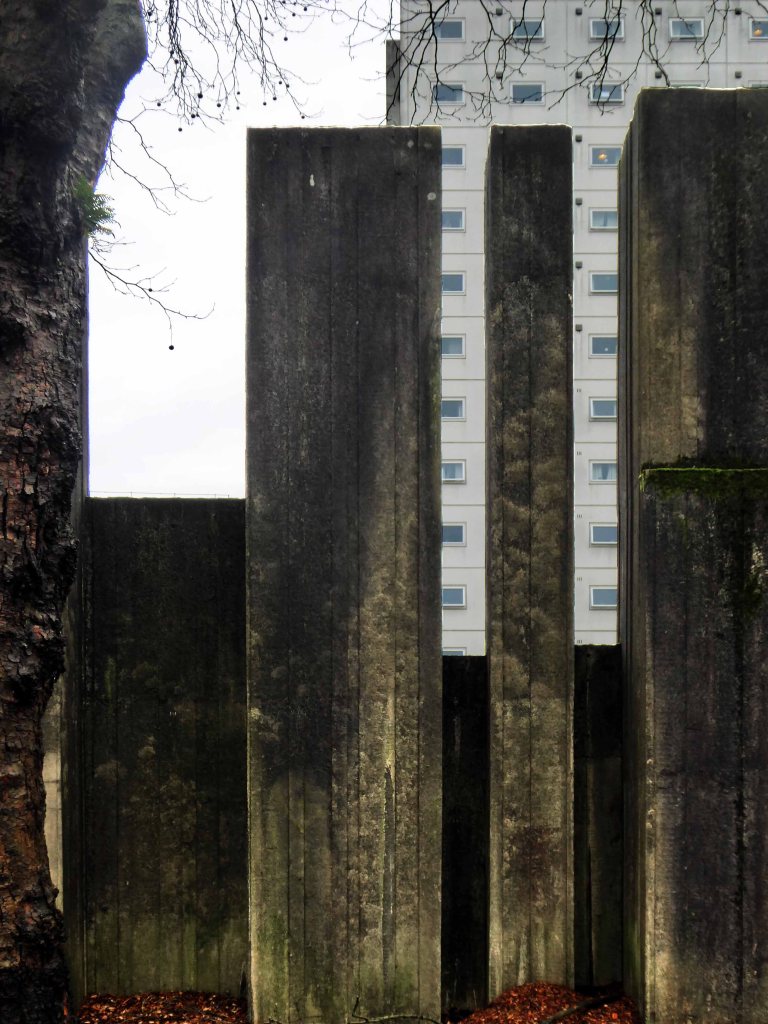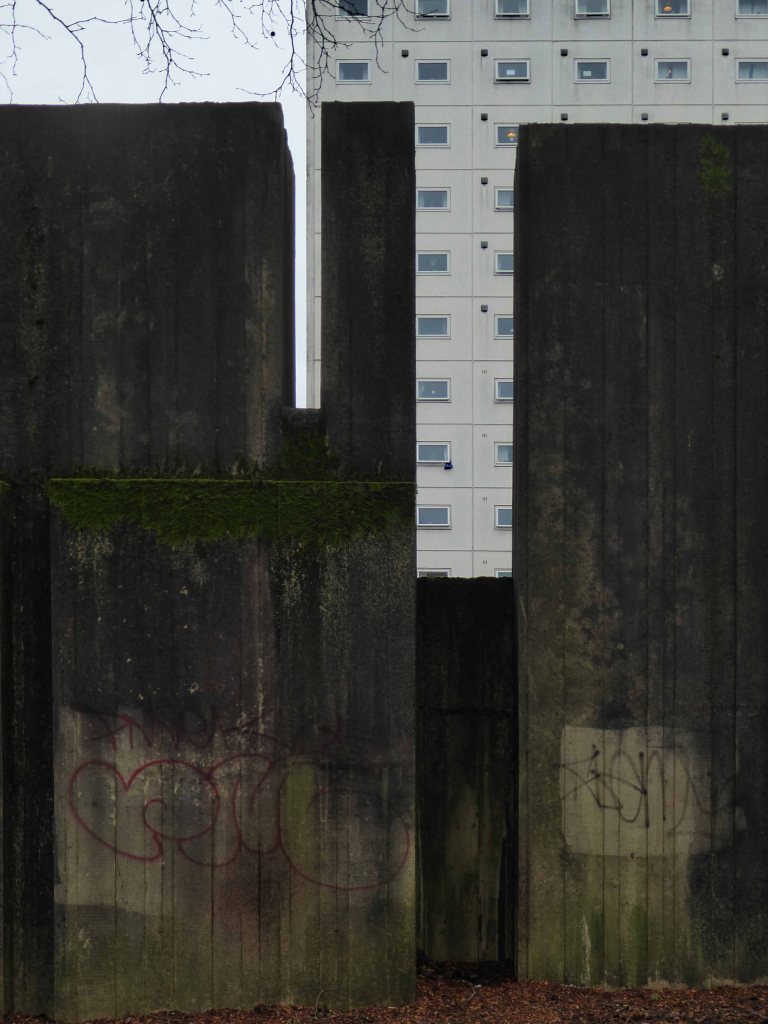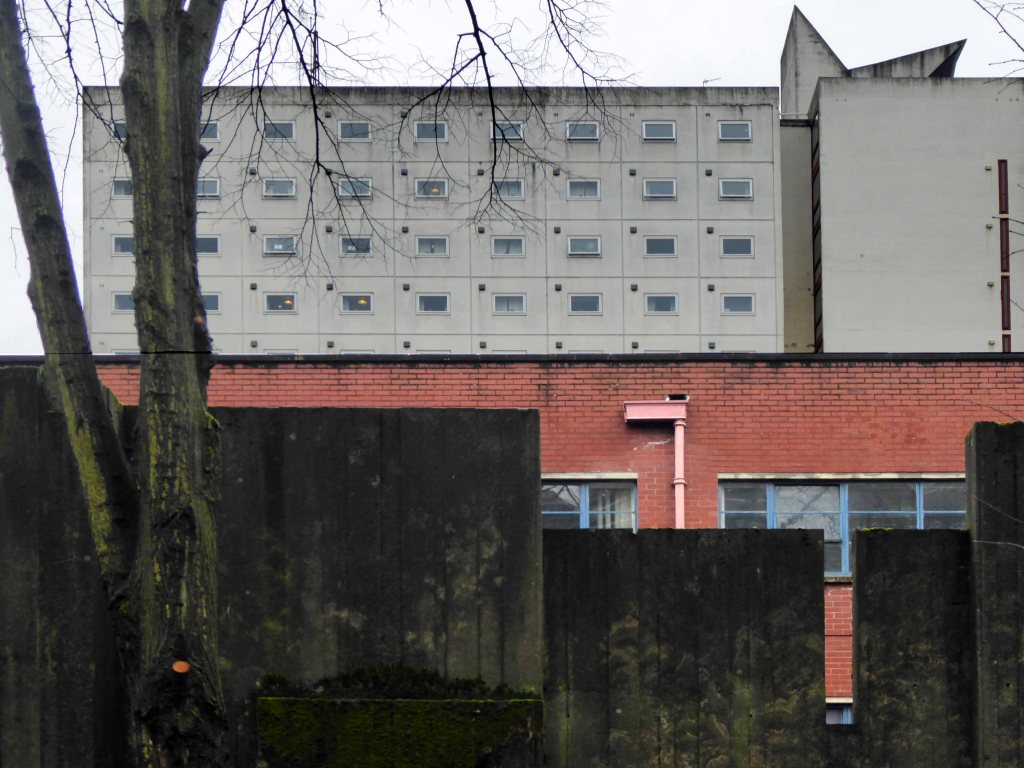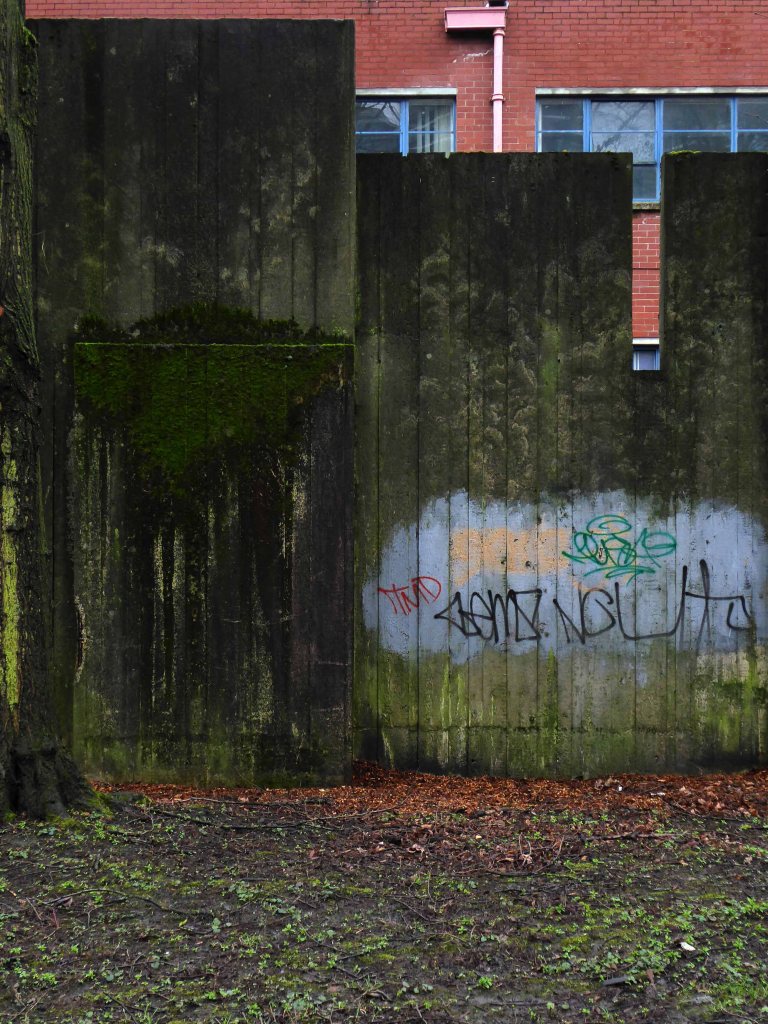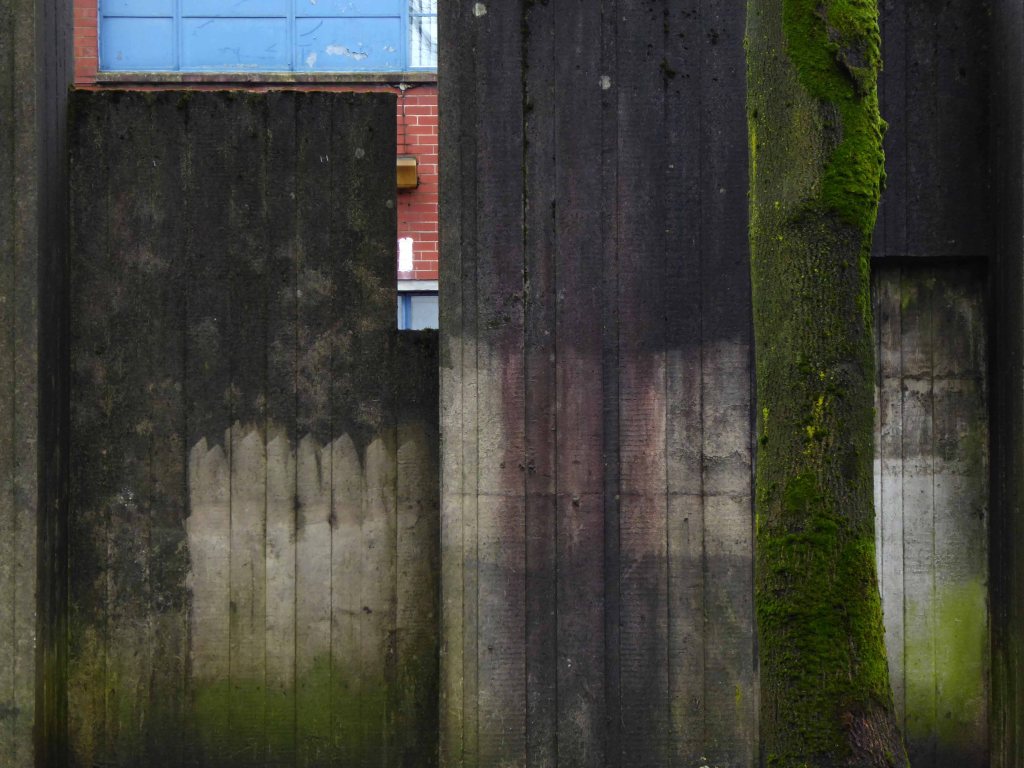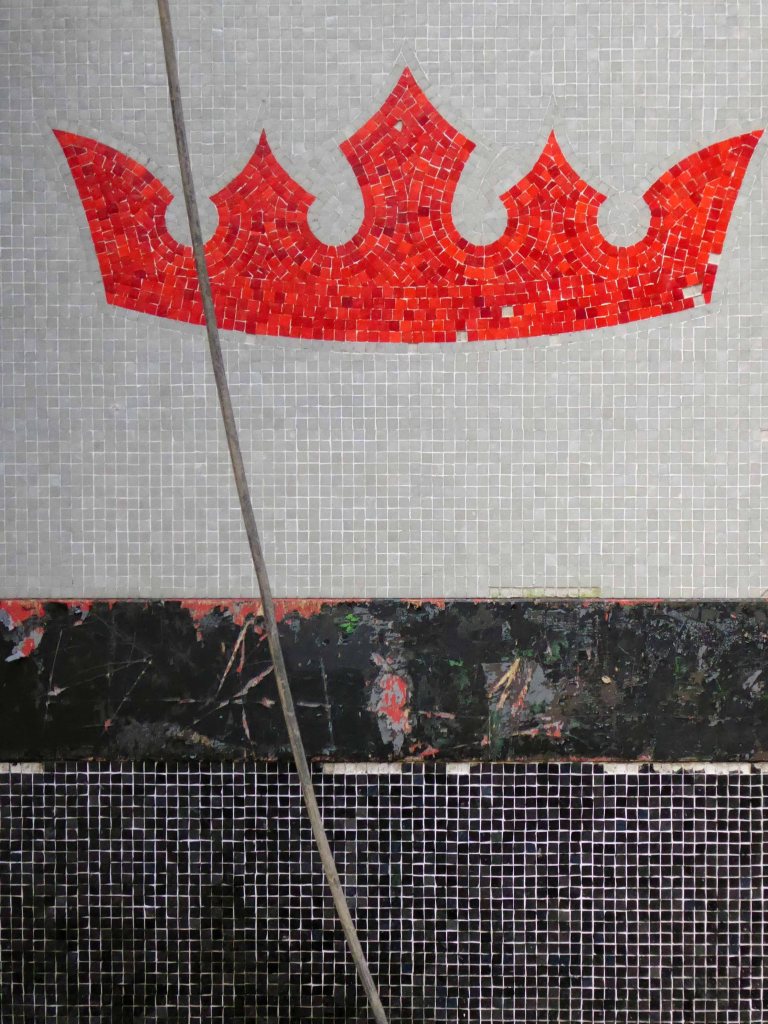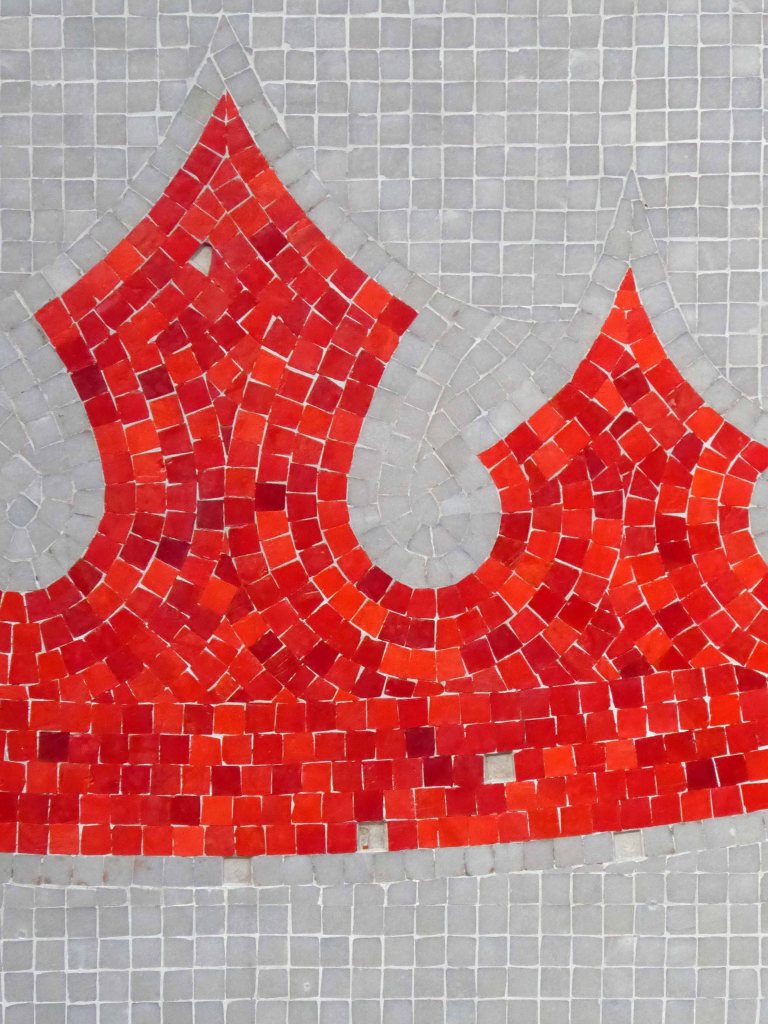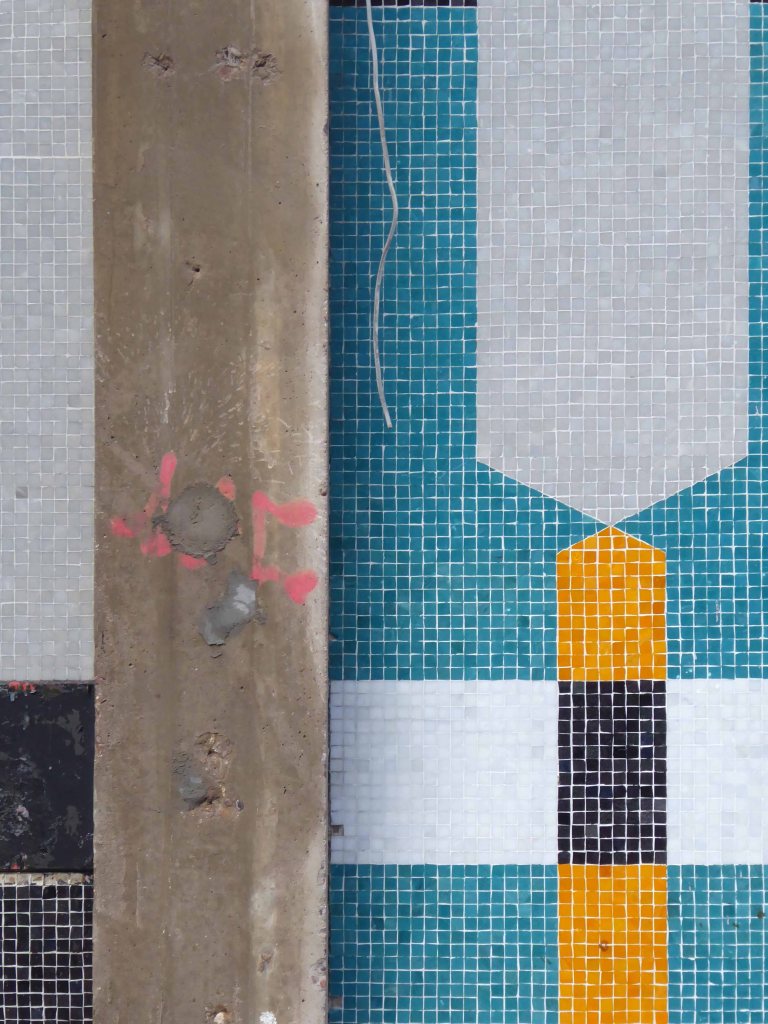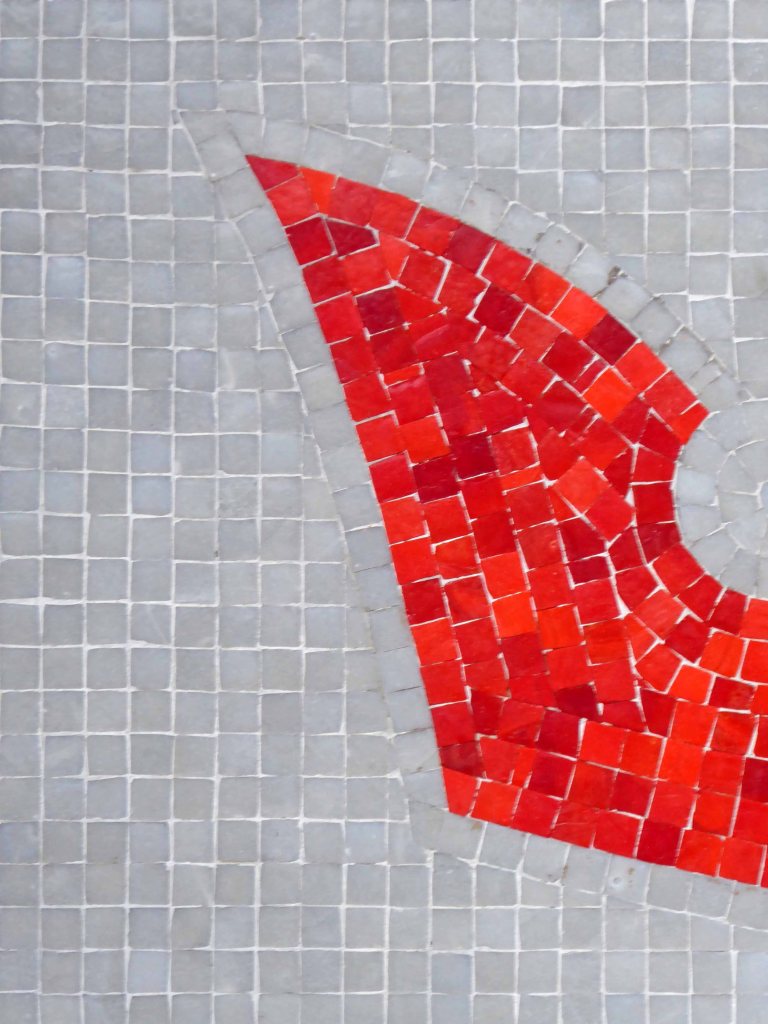
Southend to Clacton

Day three Wednesday 3rd September – leaving Southend under a cloud.

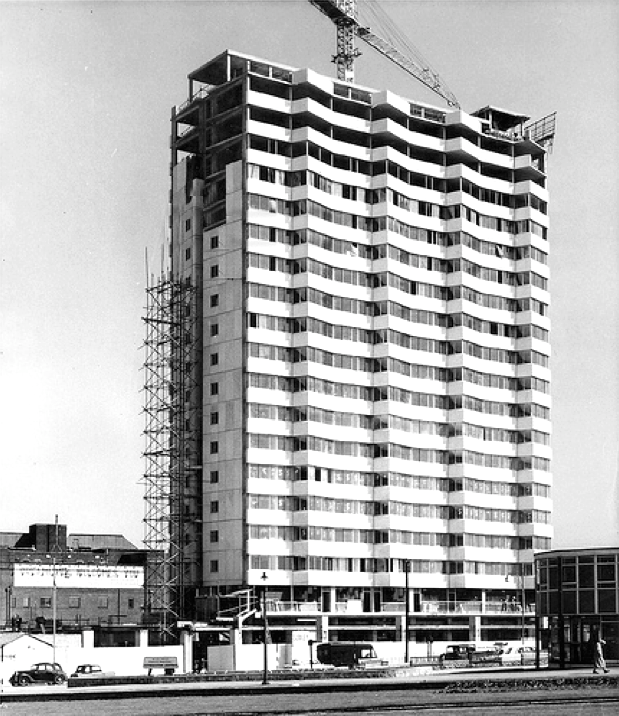
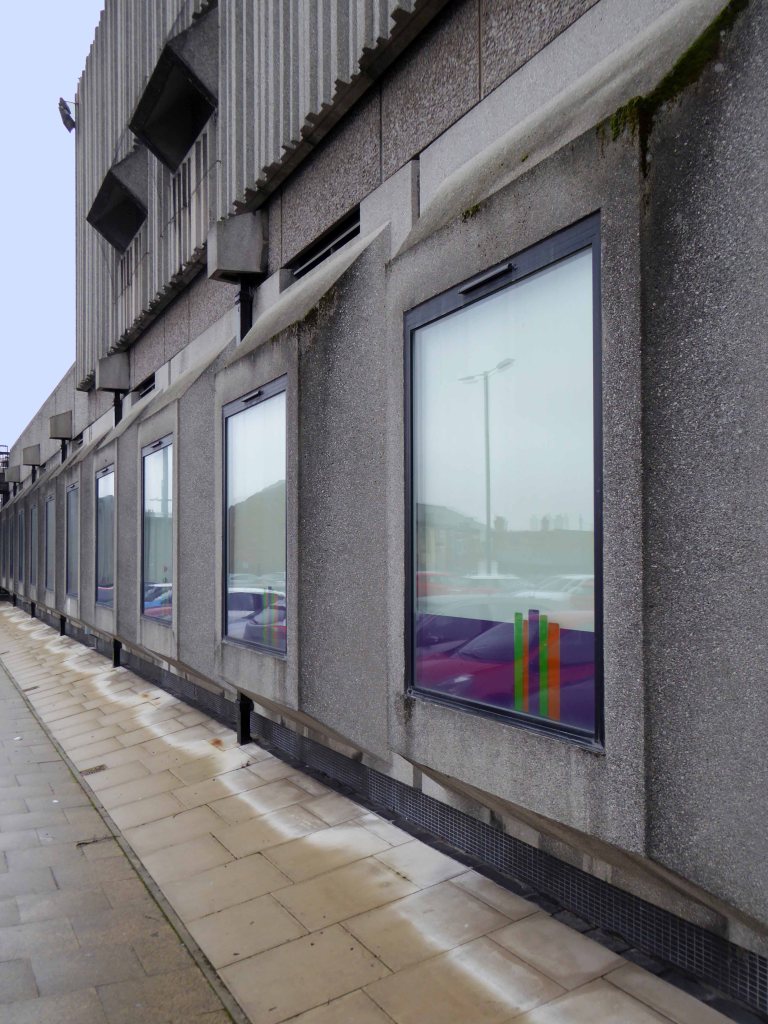
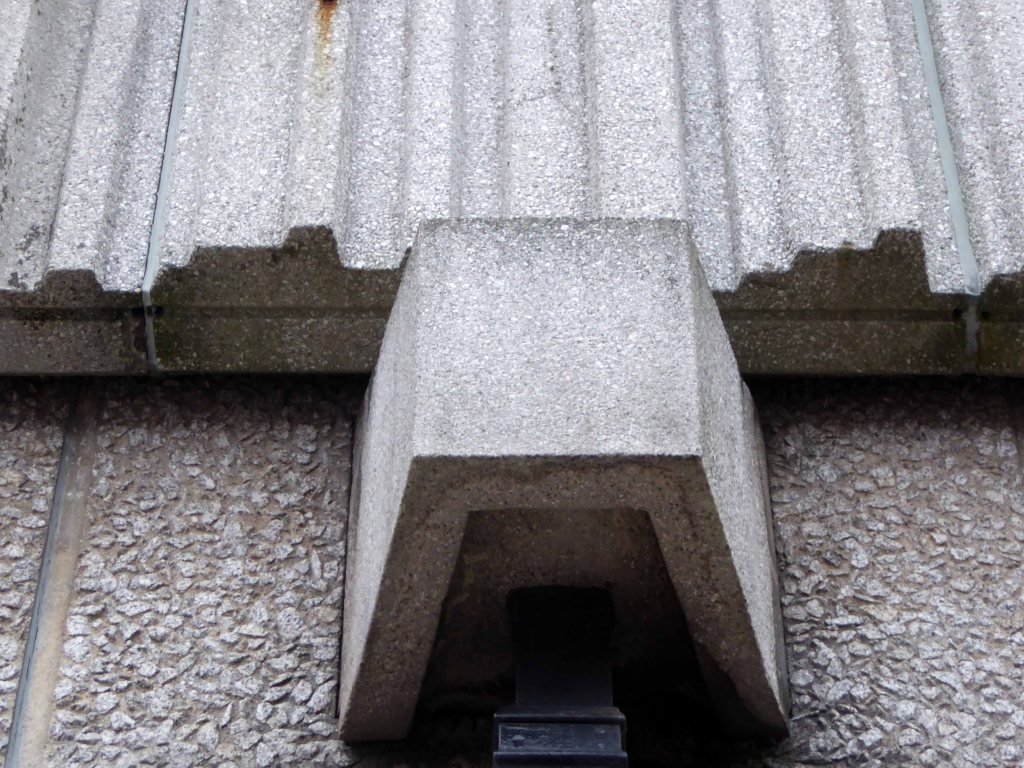
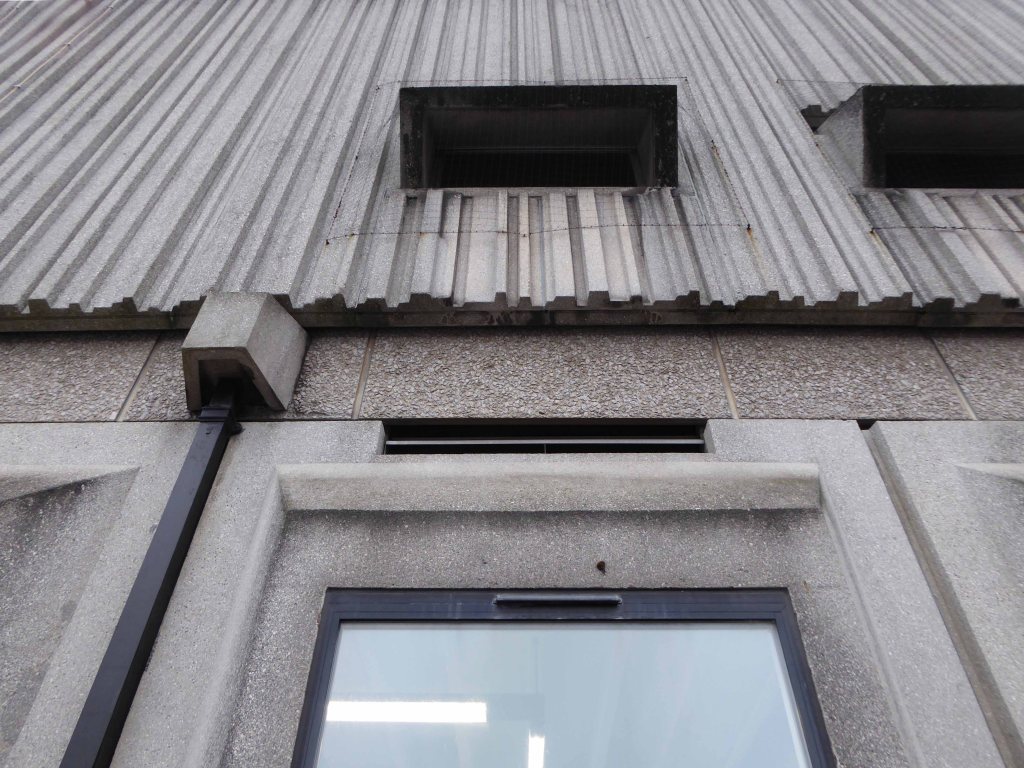
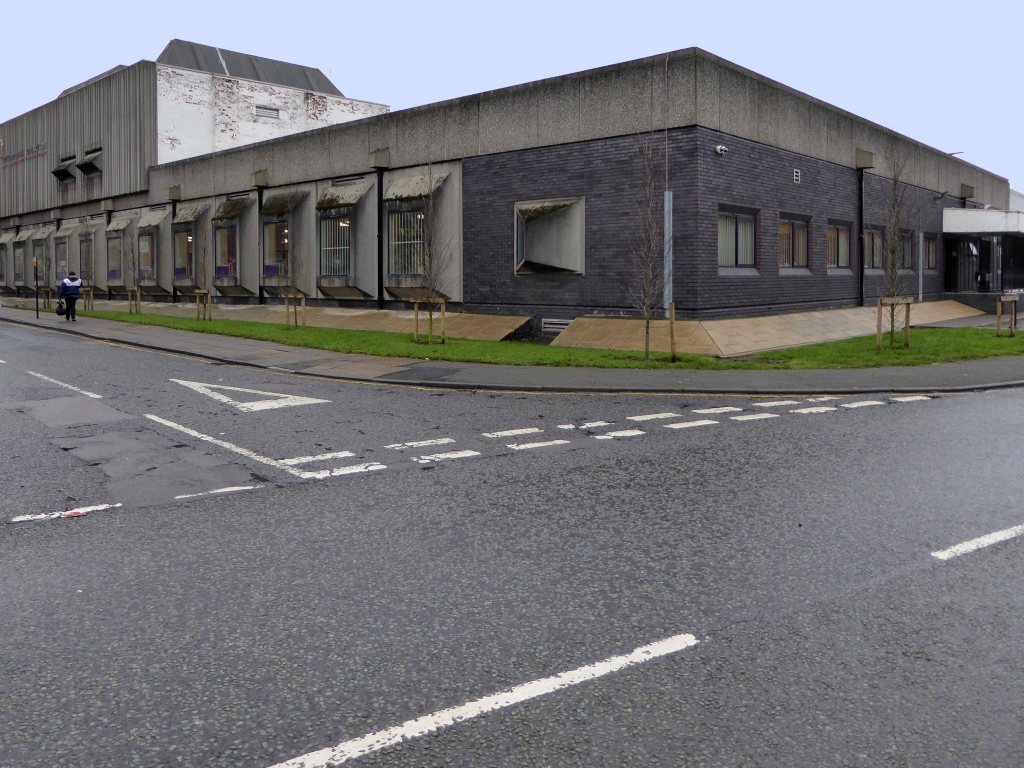
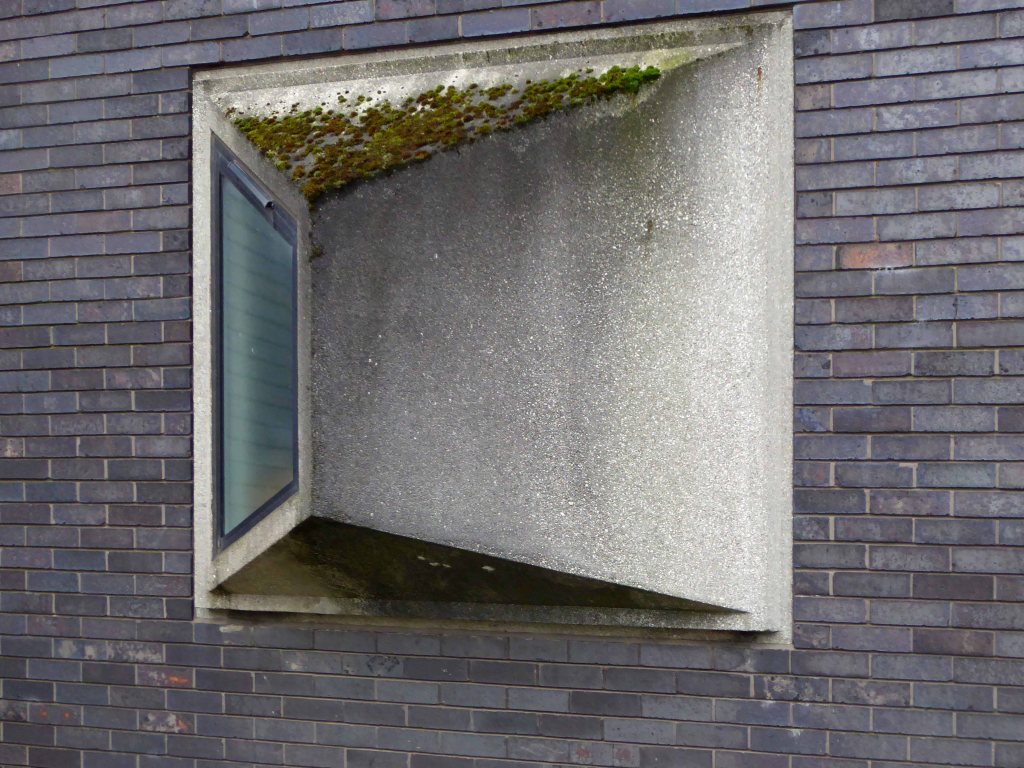
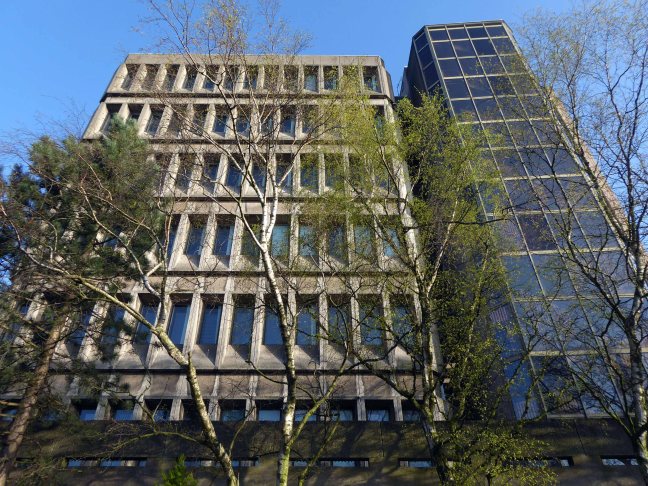
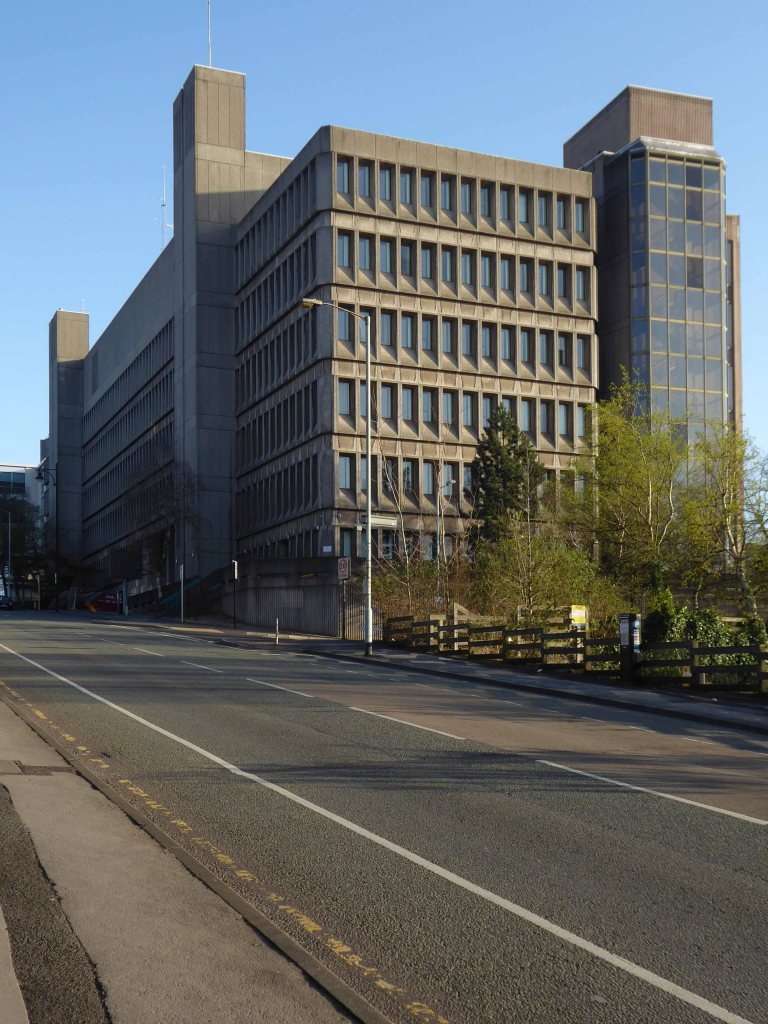
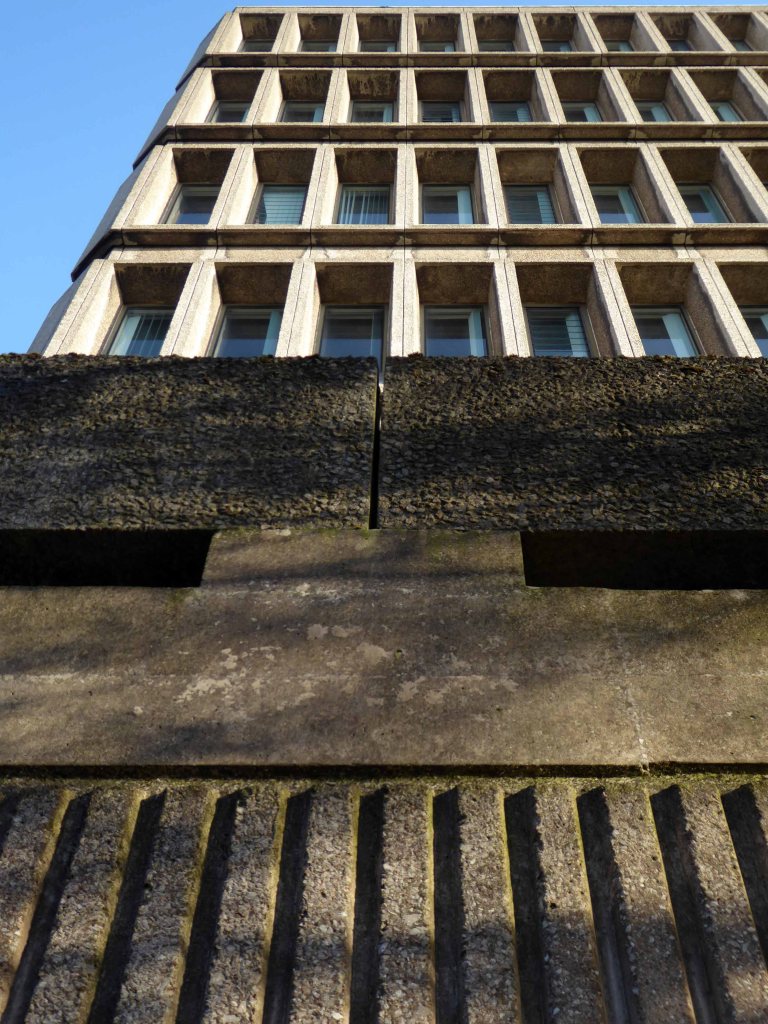
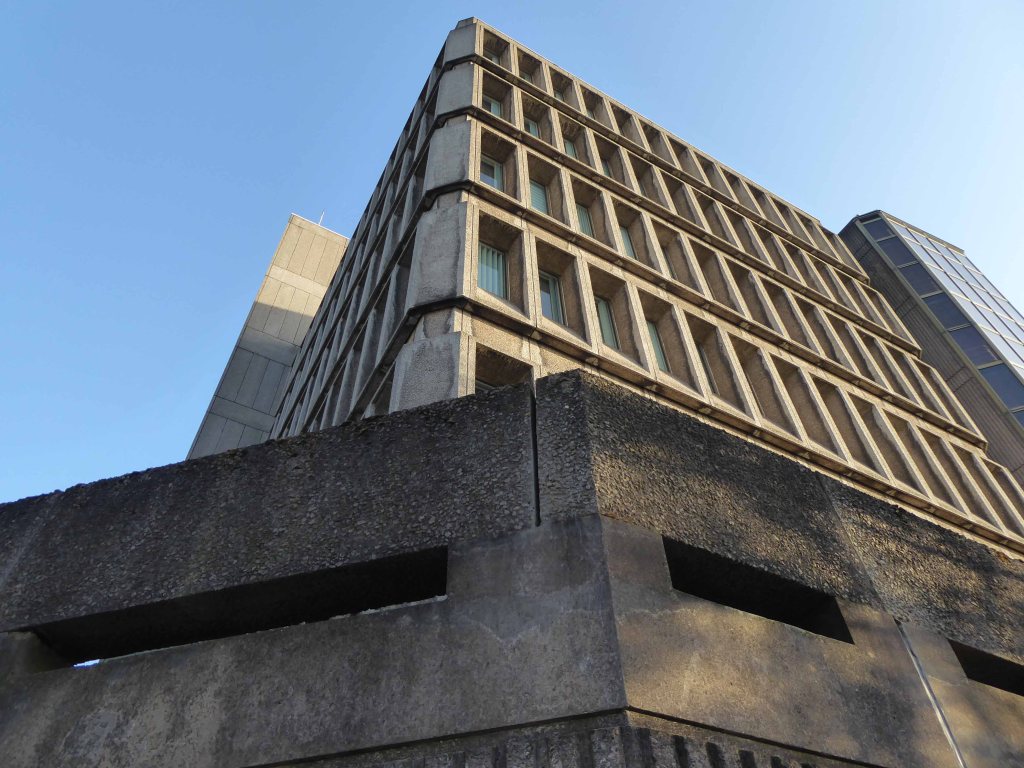
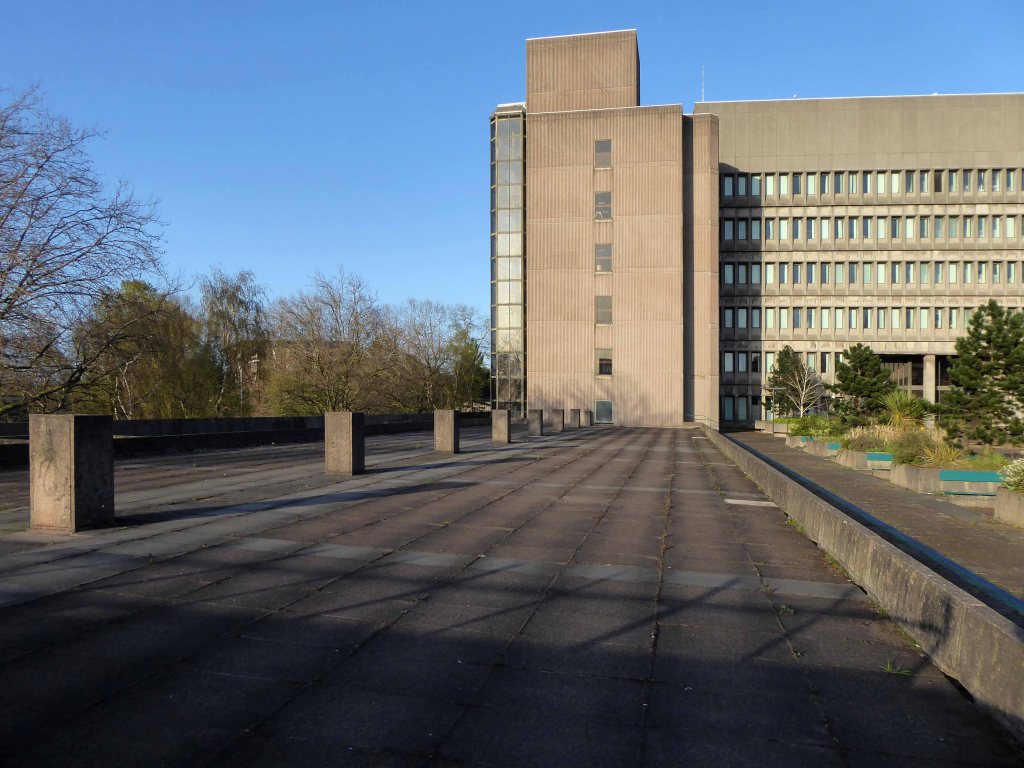
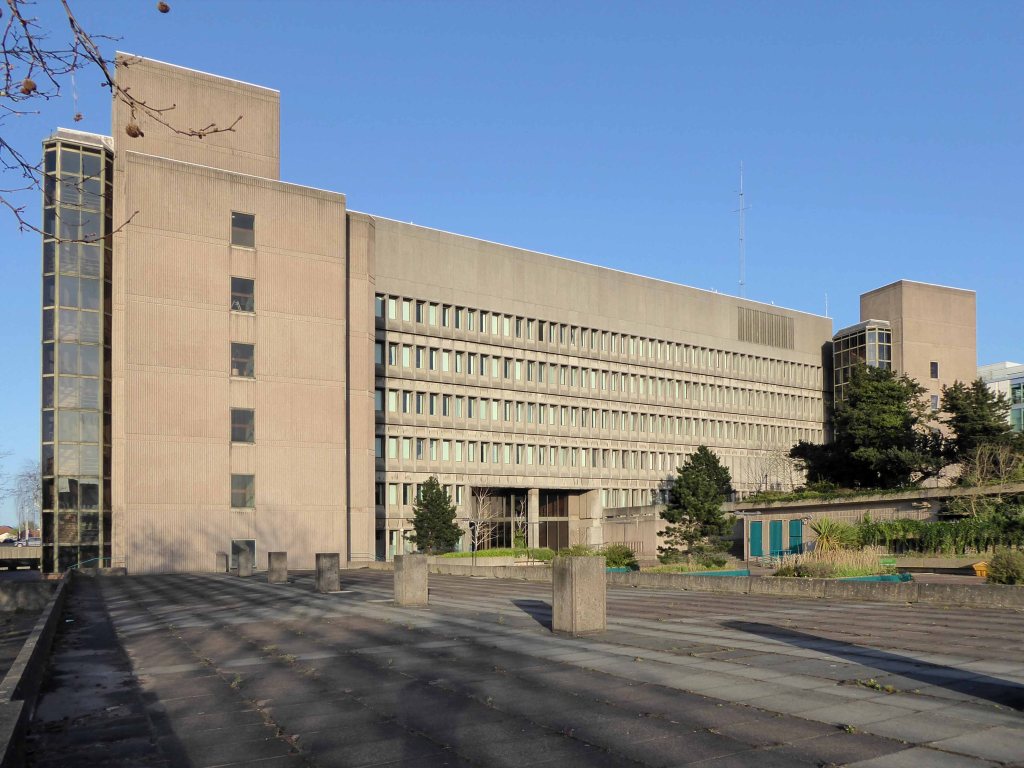
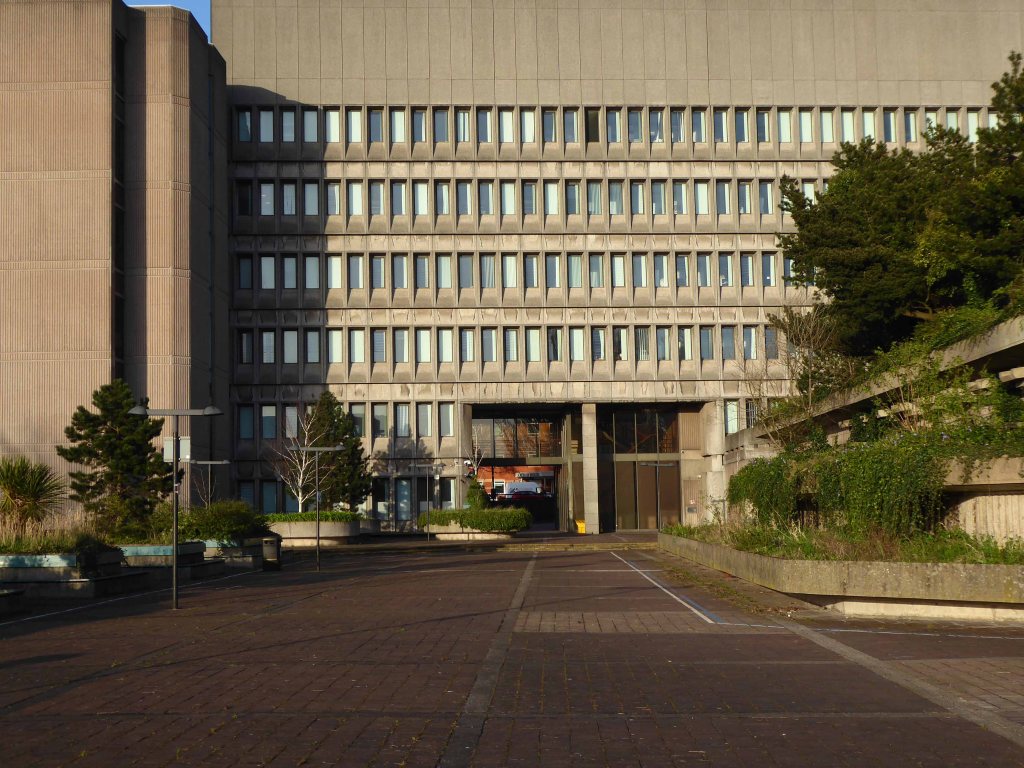
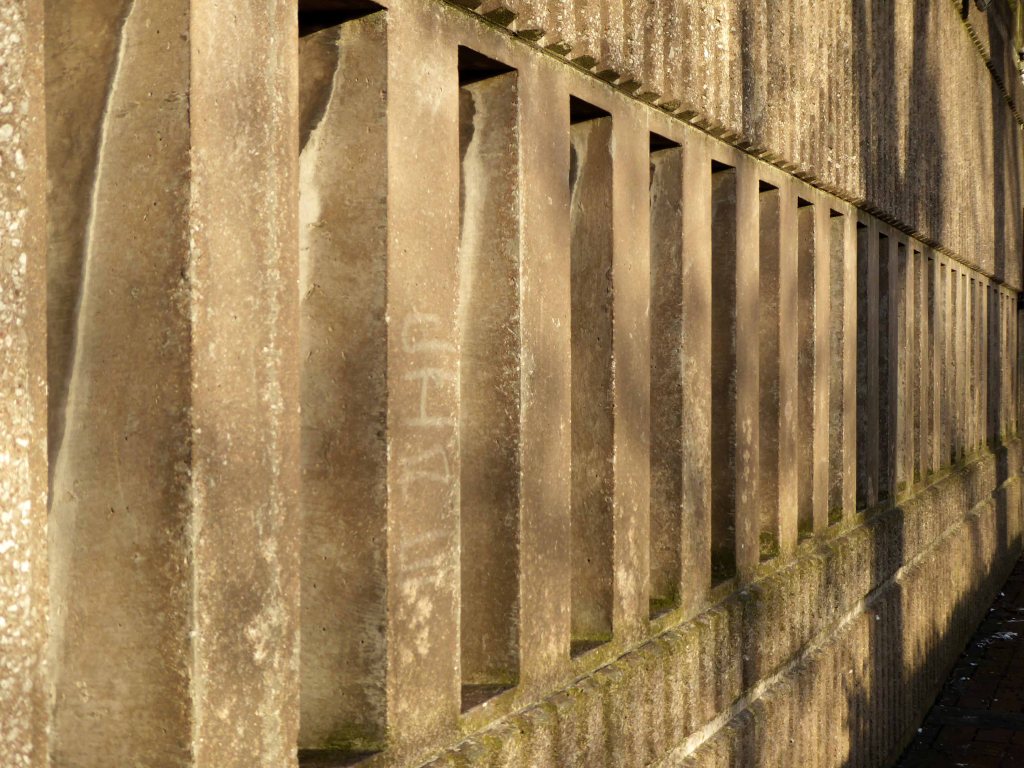
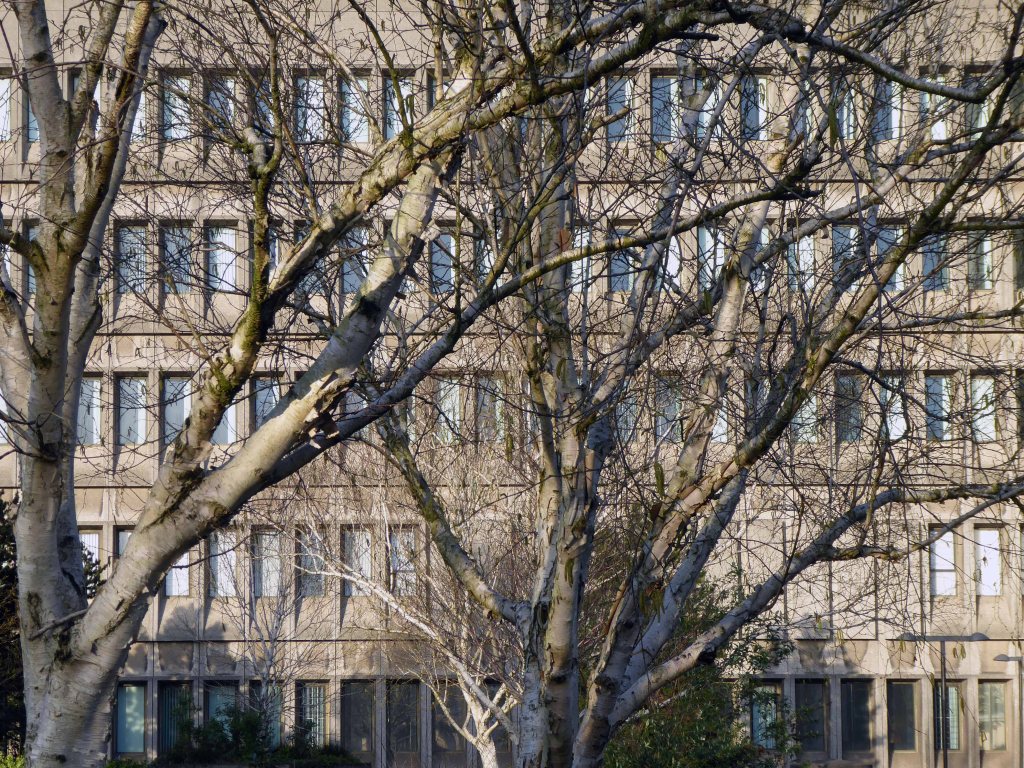
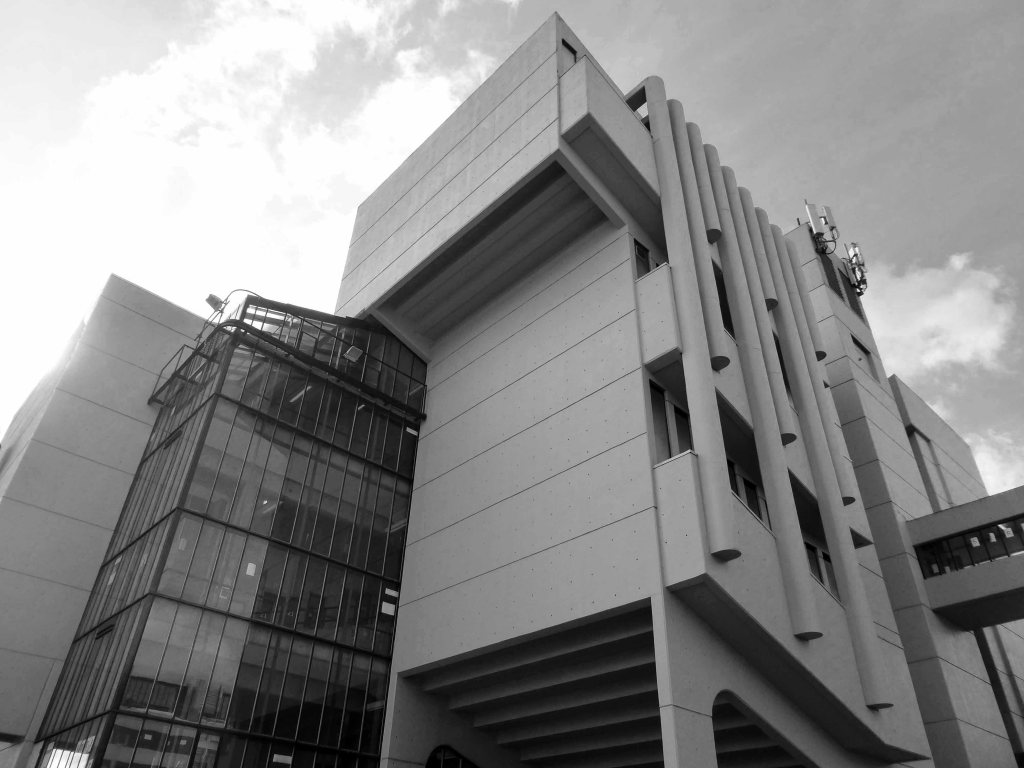
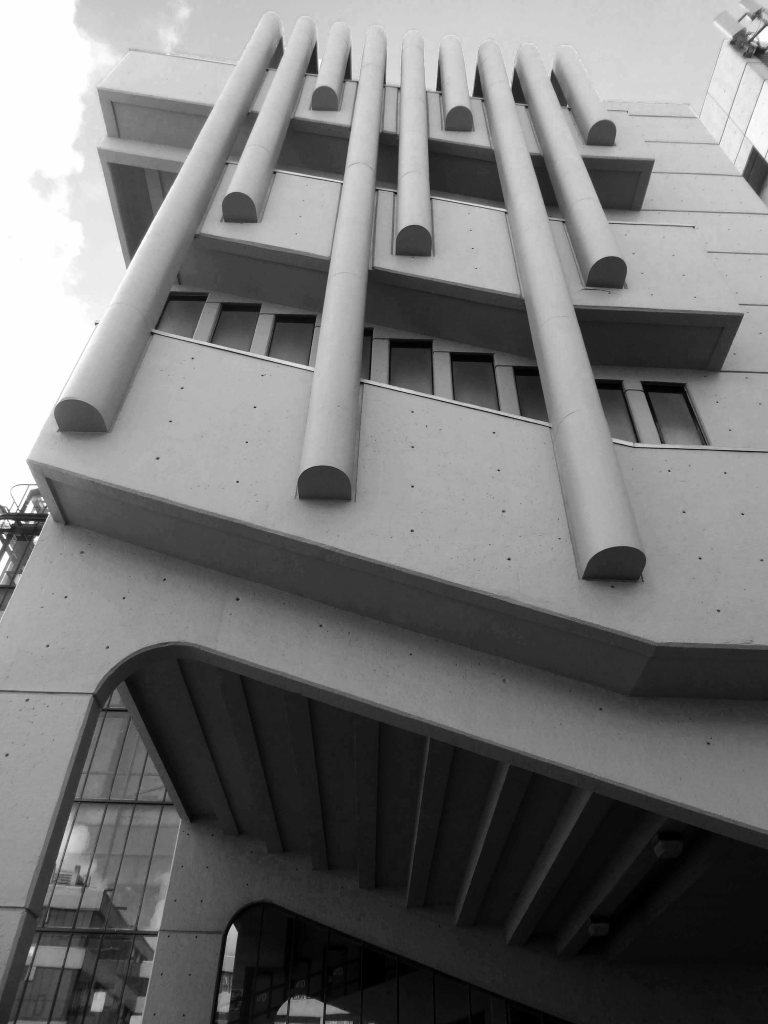
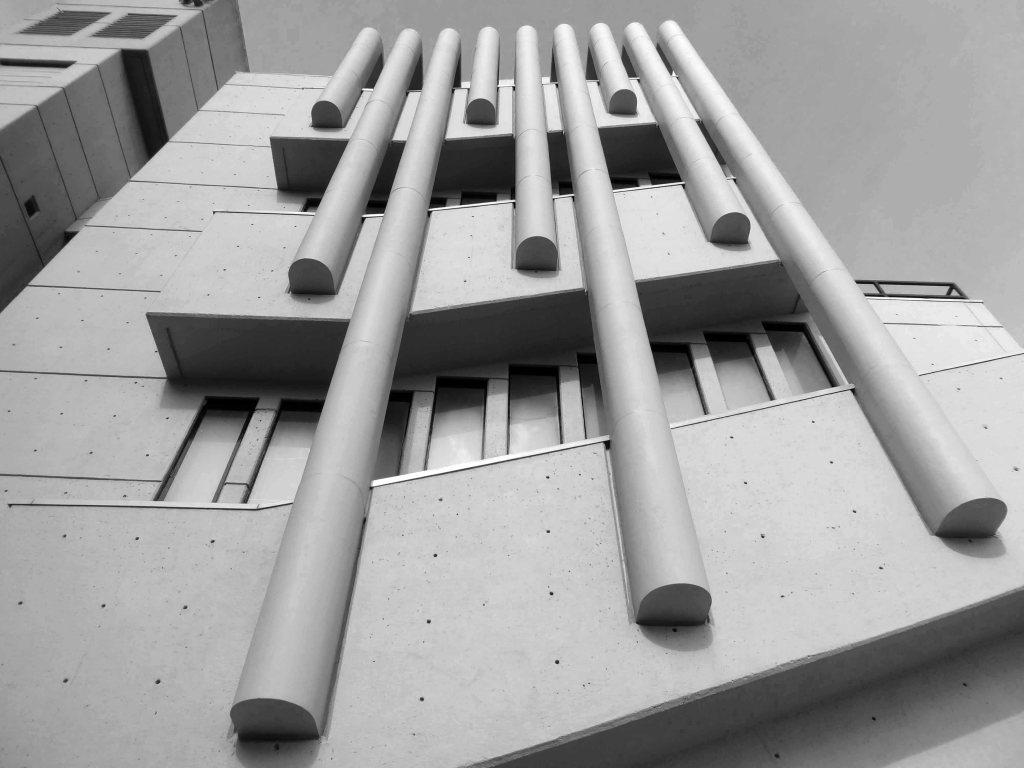
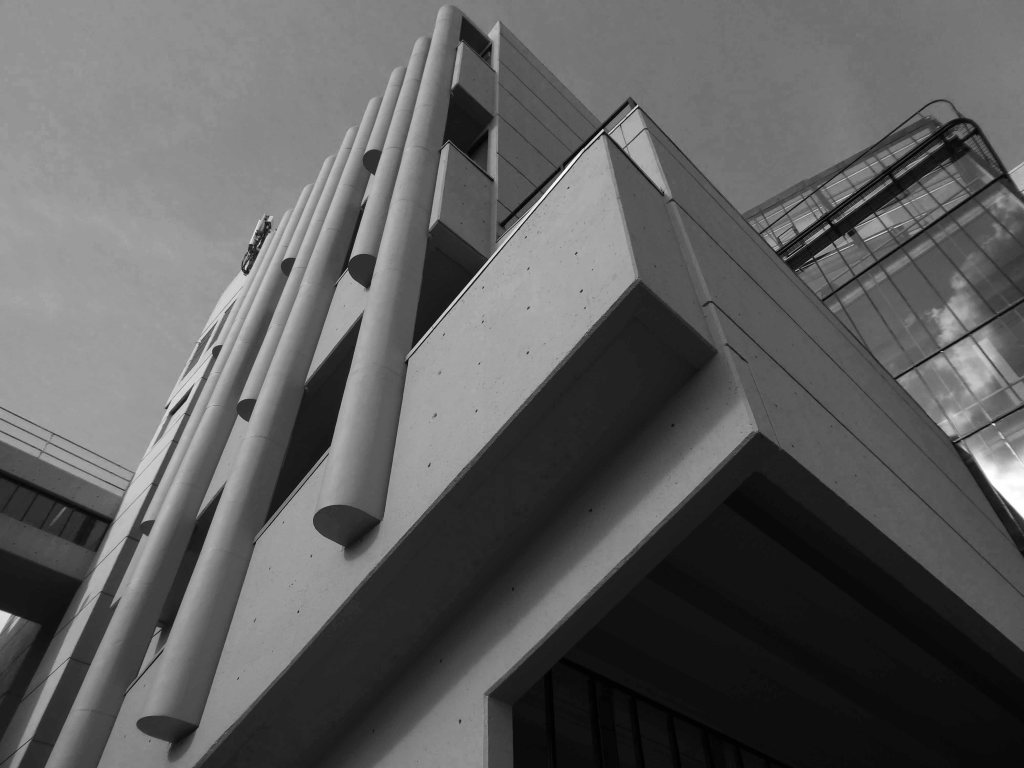
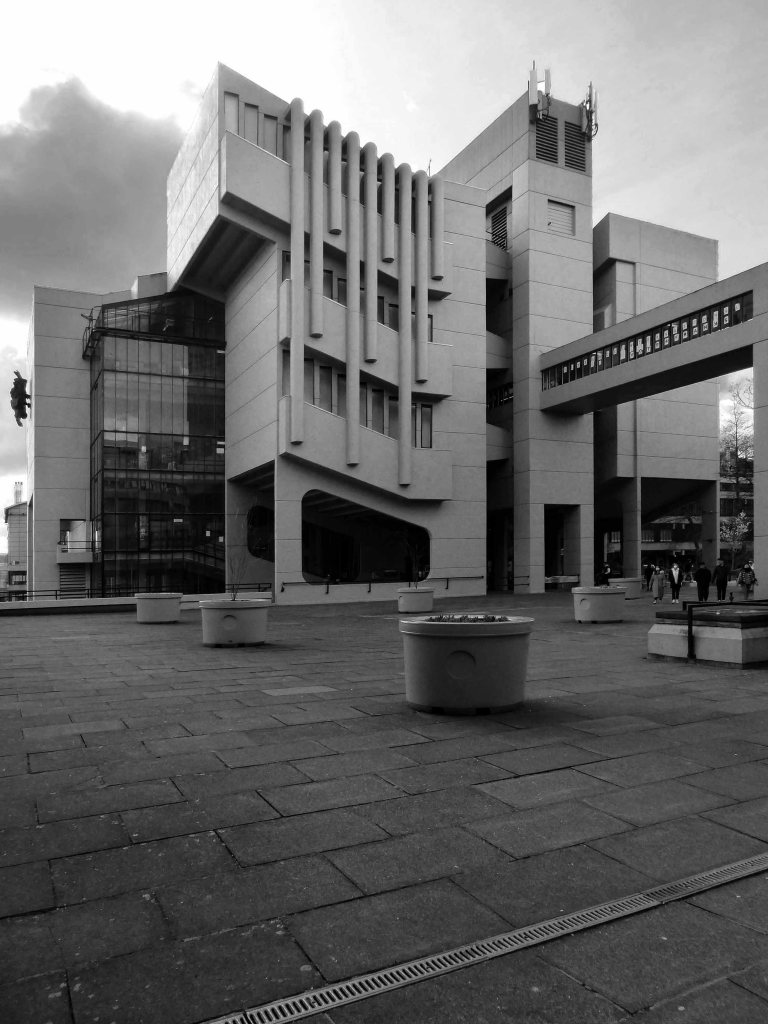
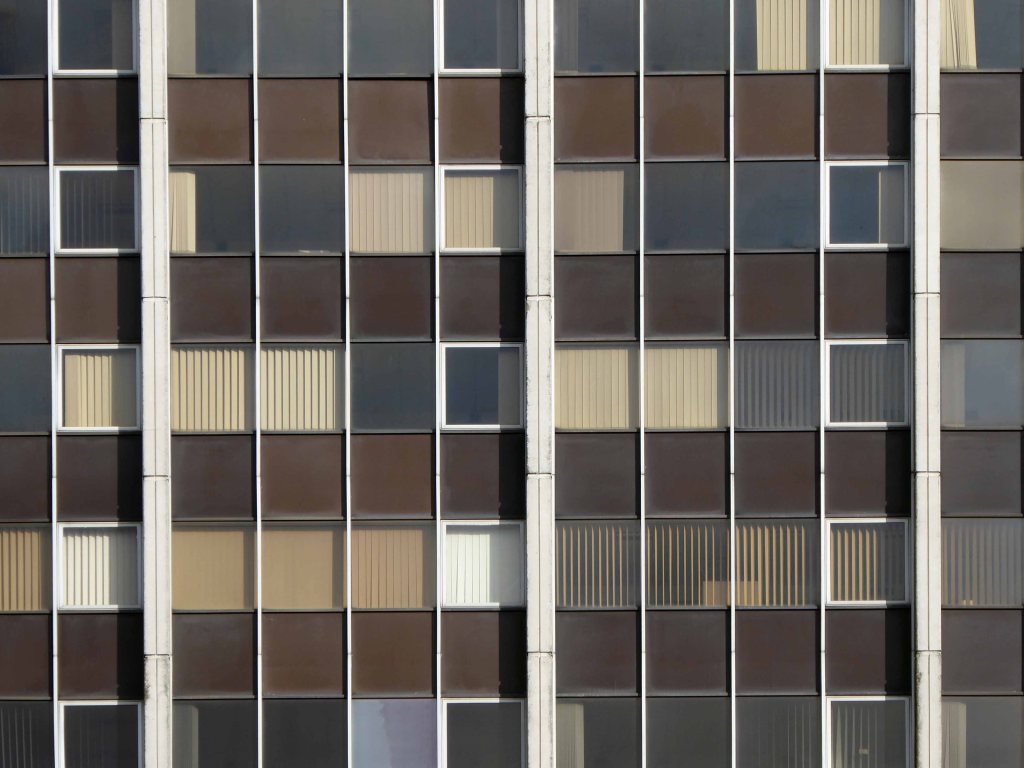
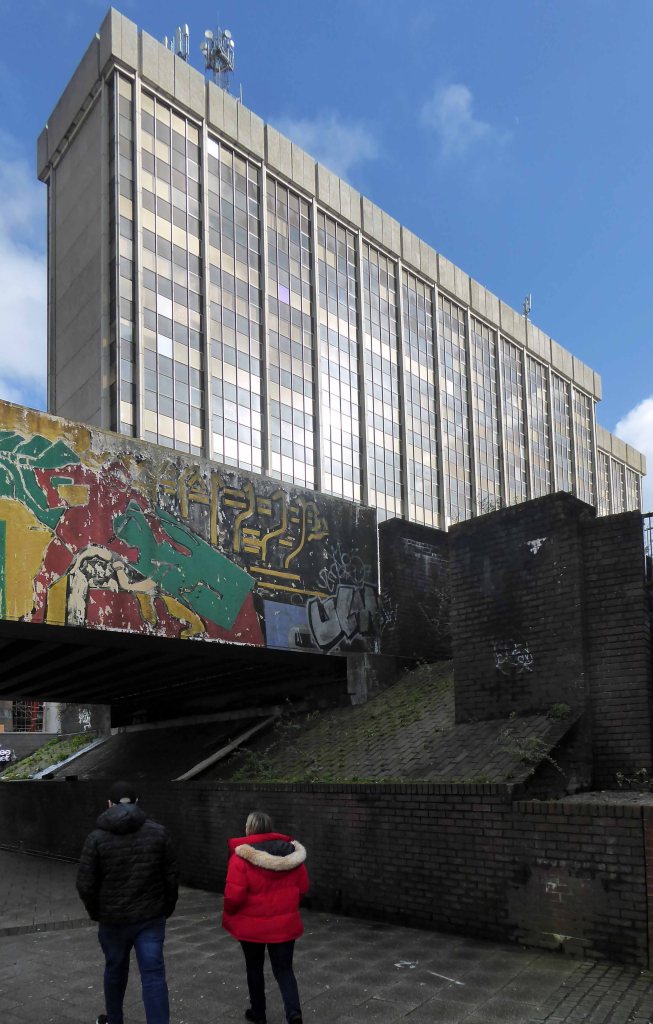
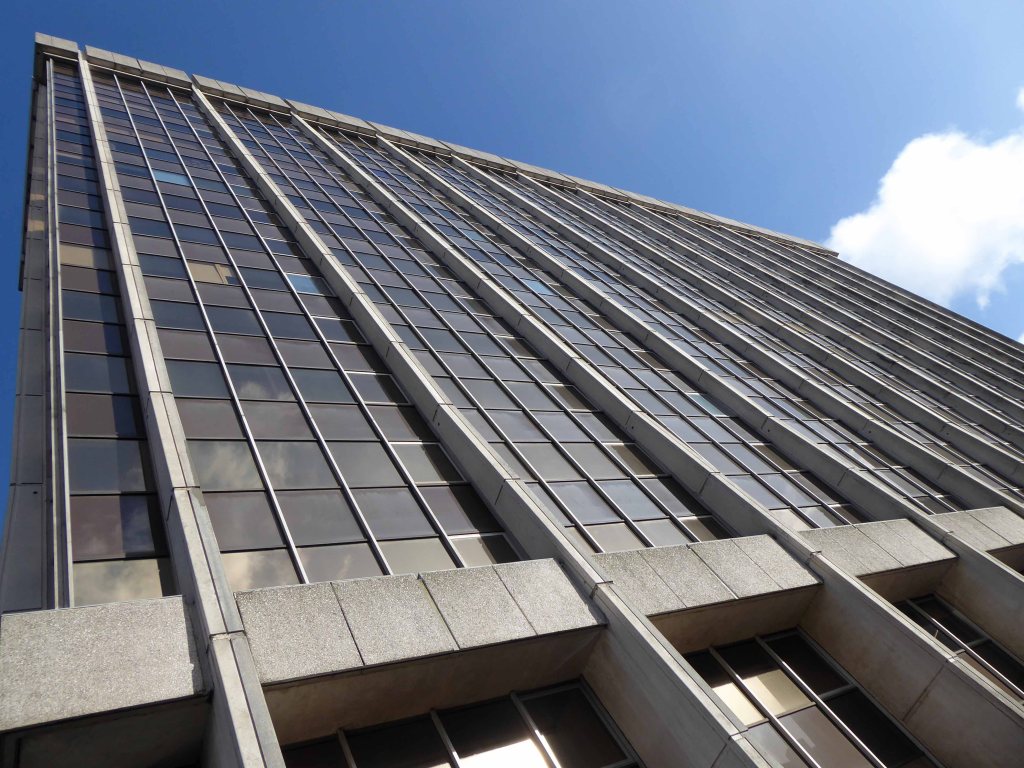
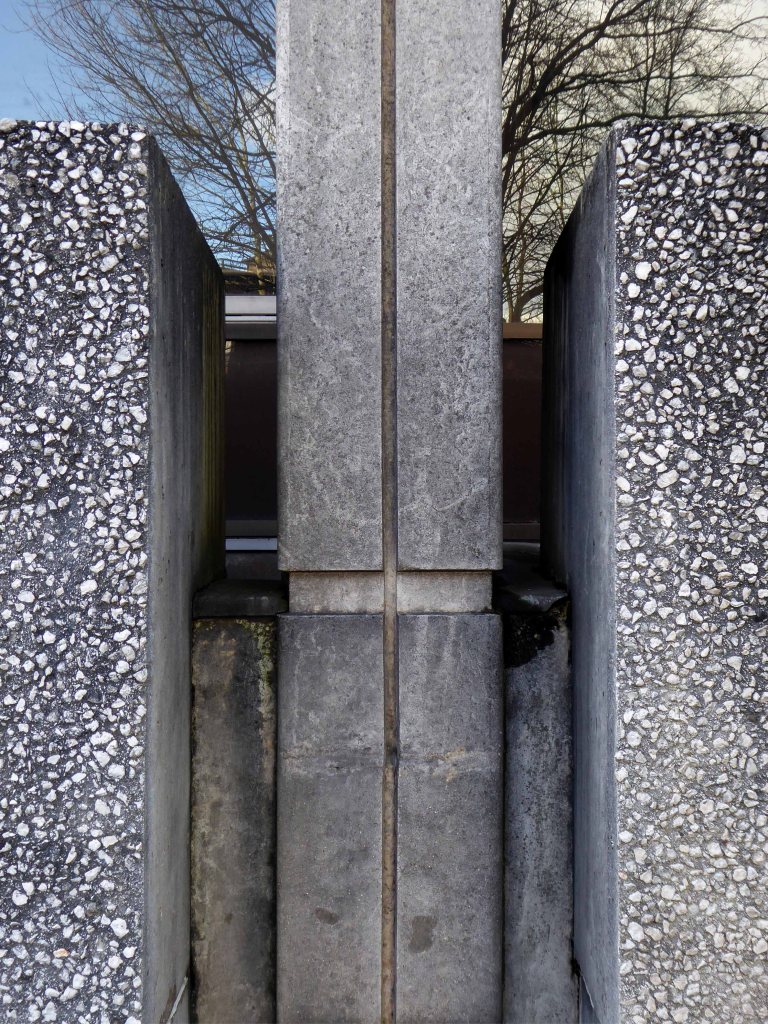
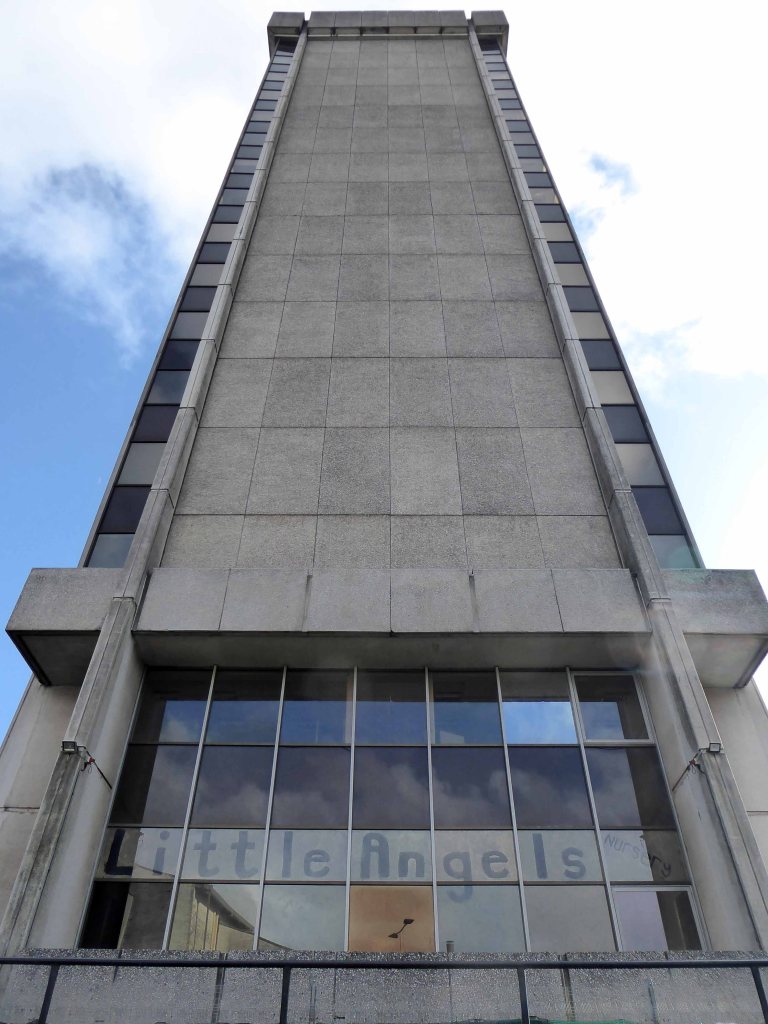
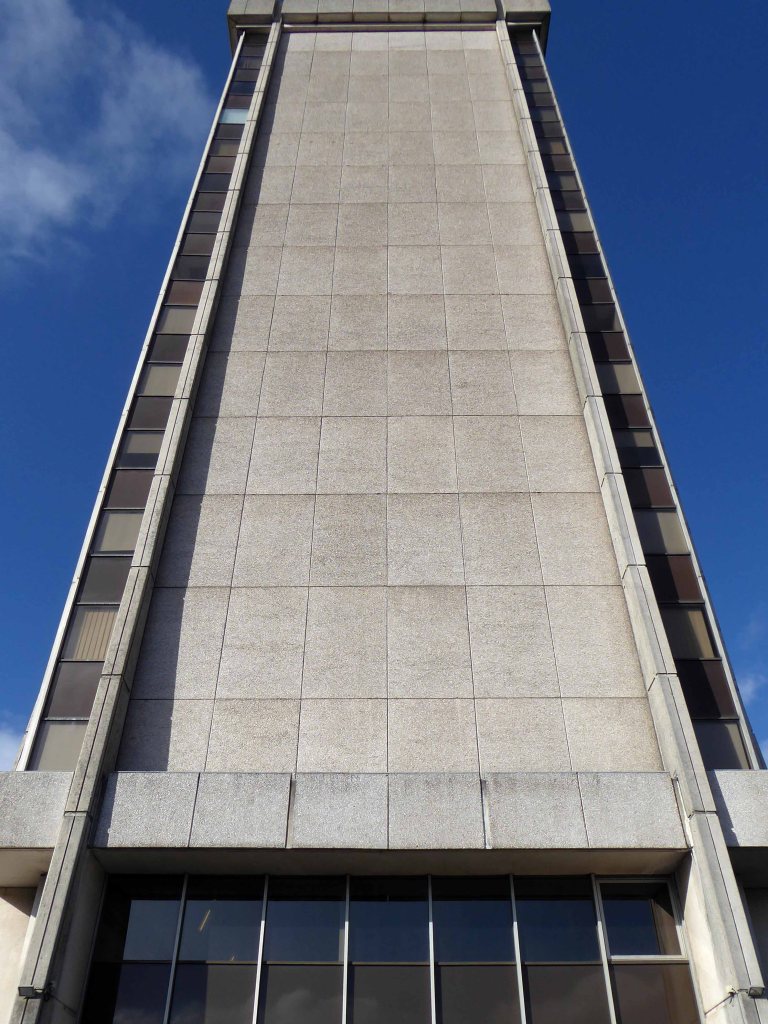
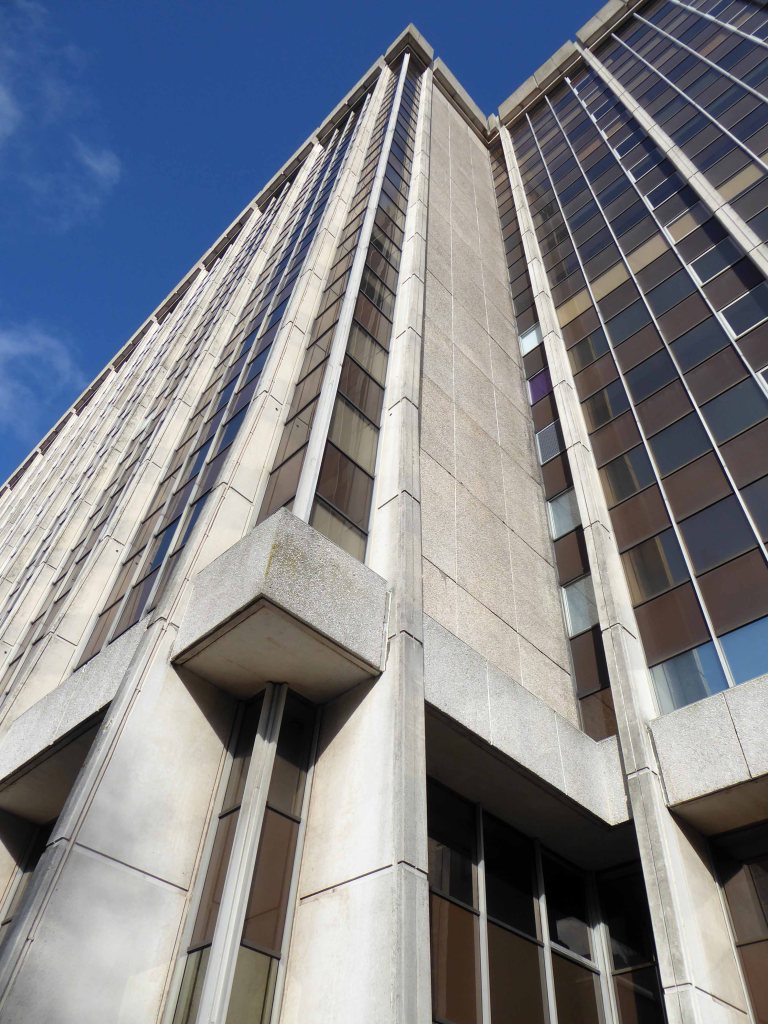
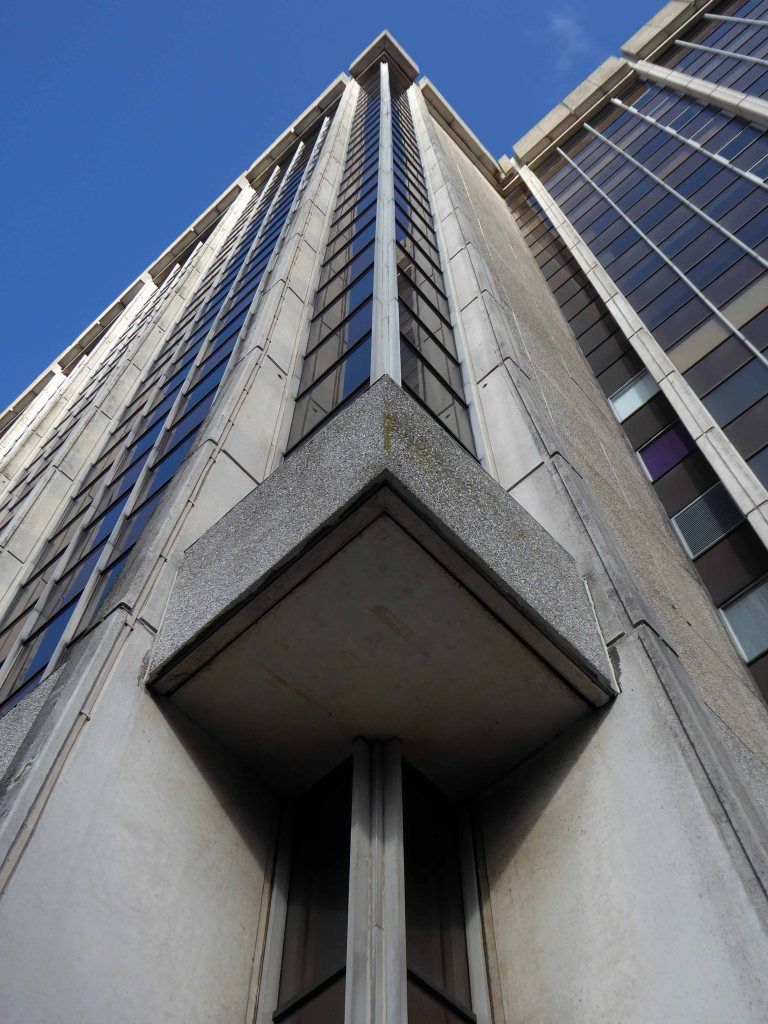
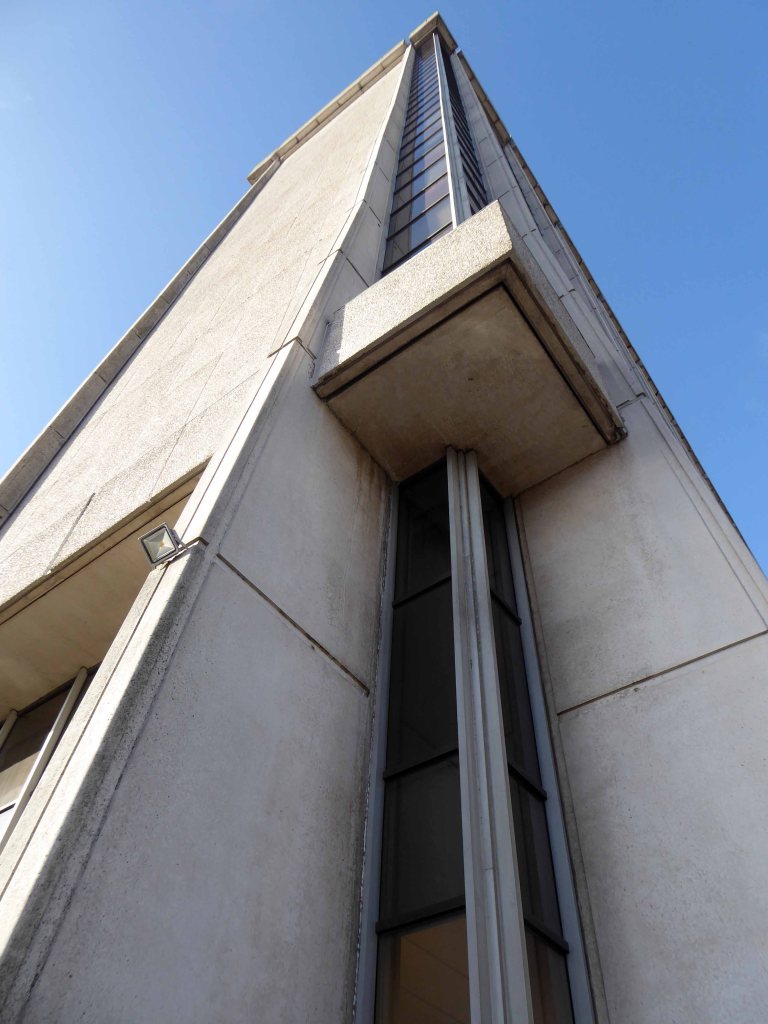
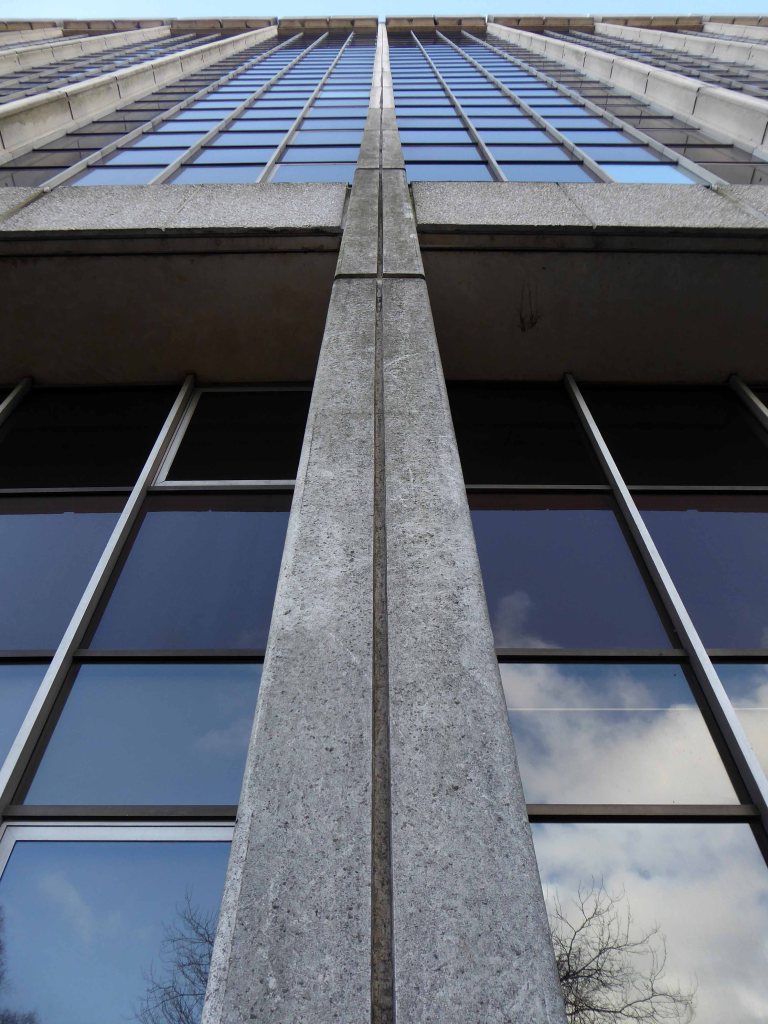
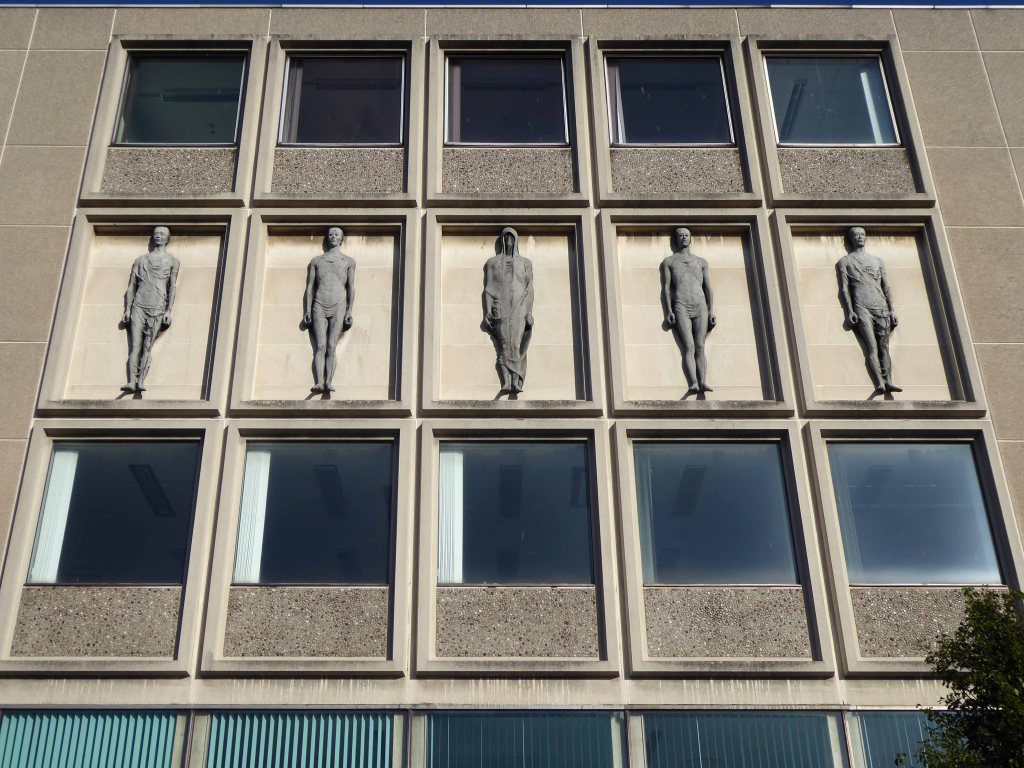
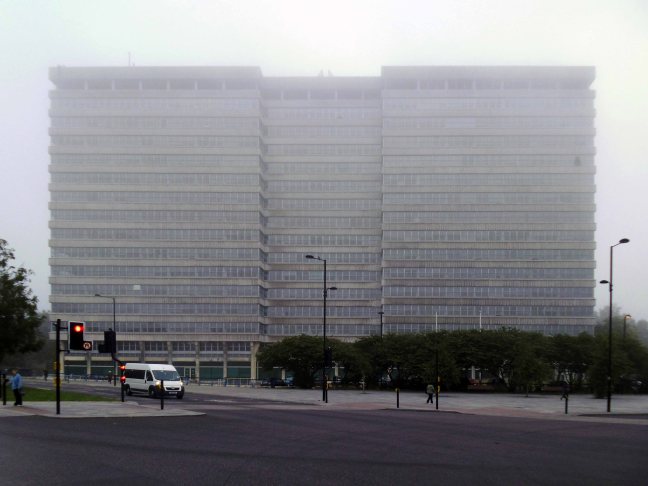
The huge slab of the Civic Centre shrouded in sea mist

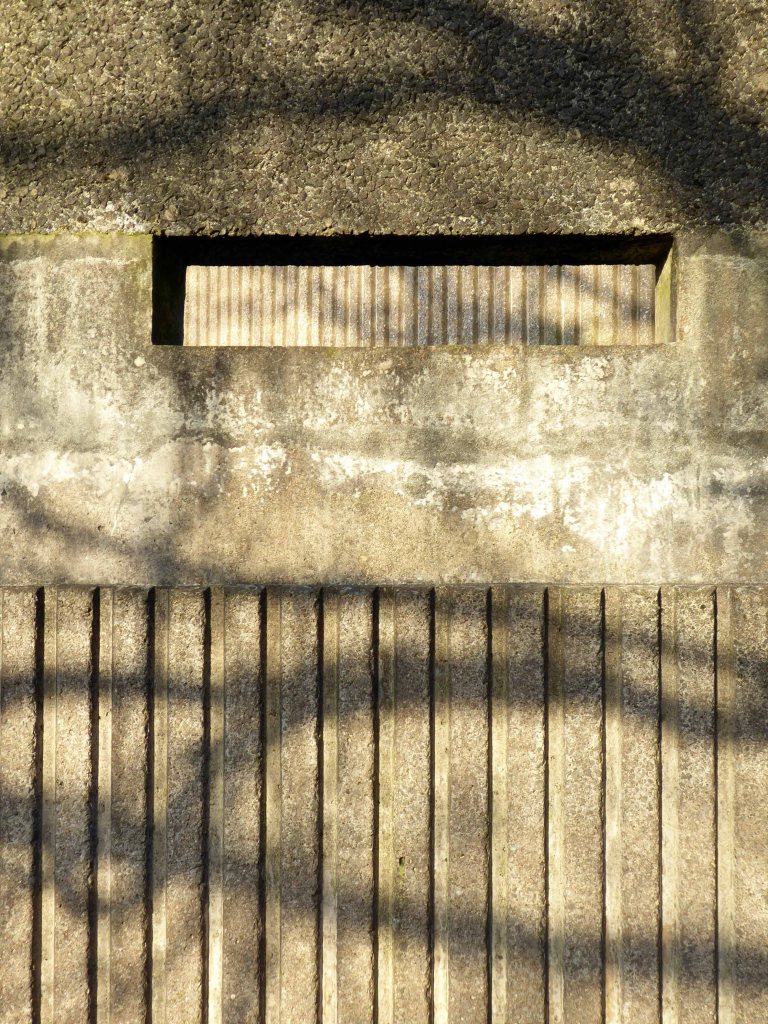
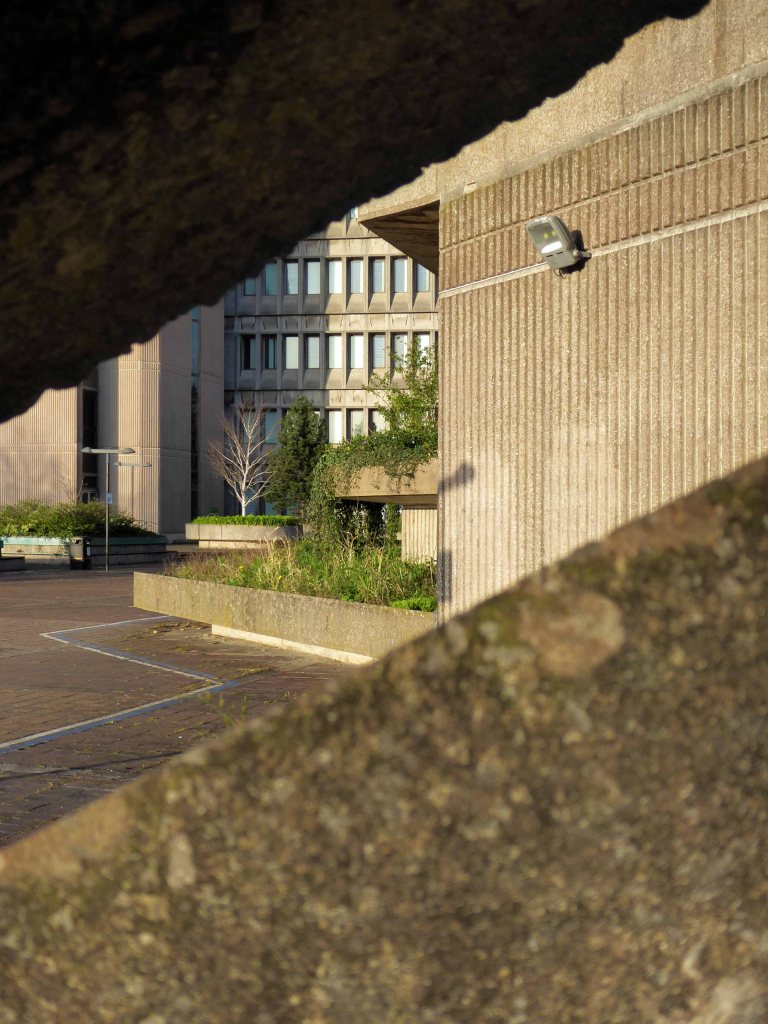
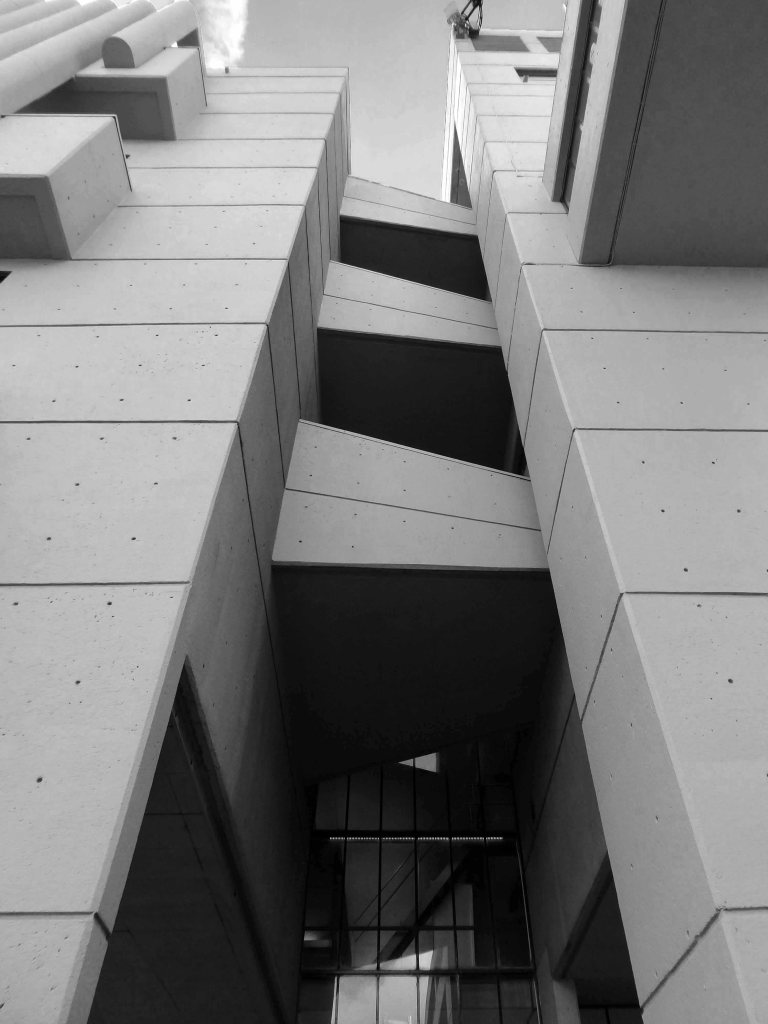
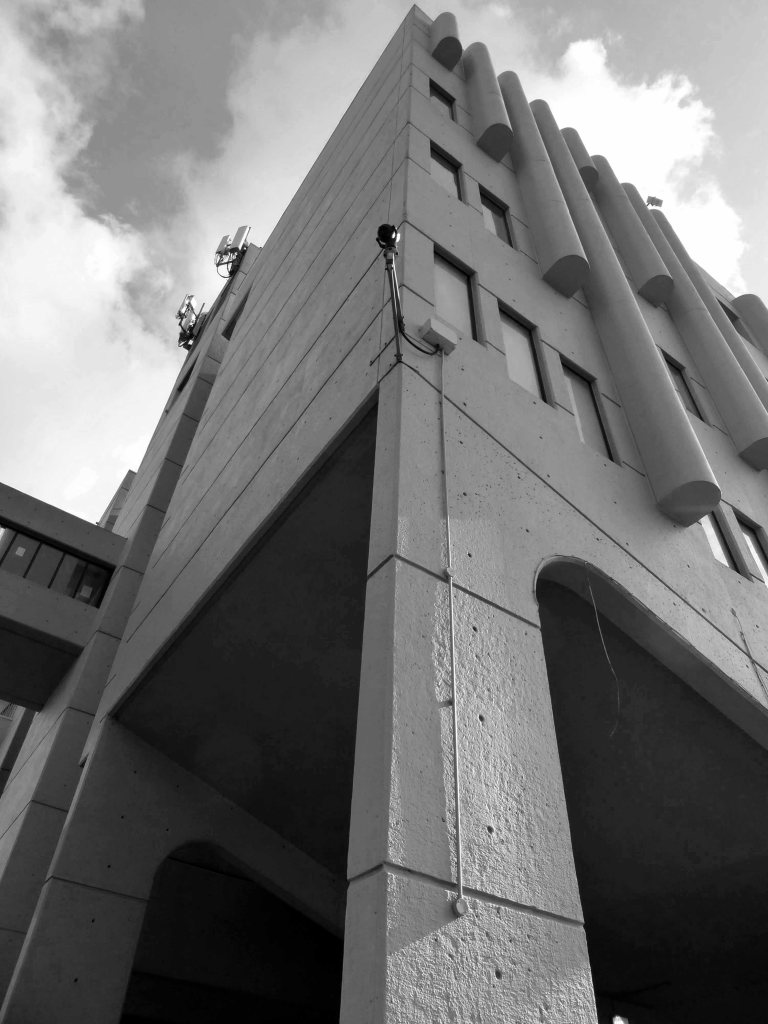
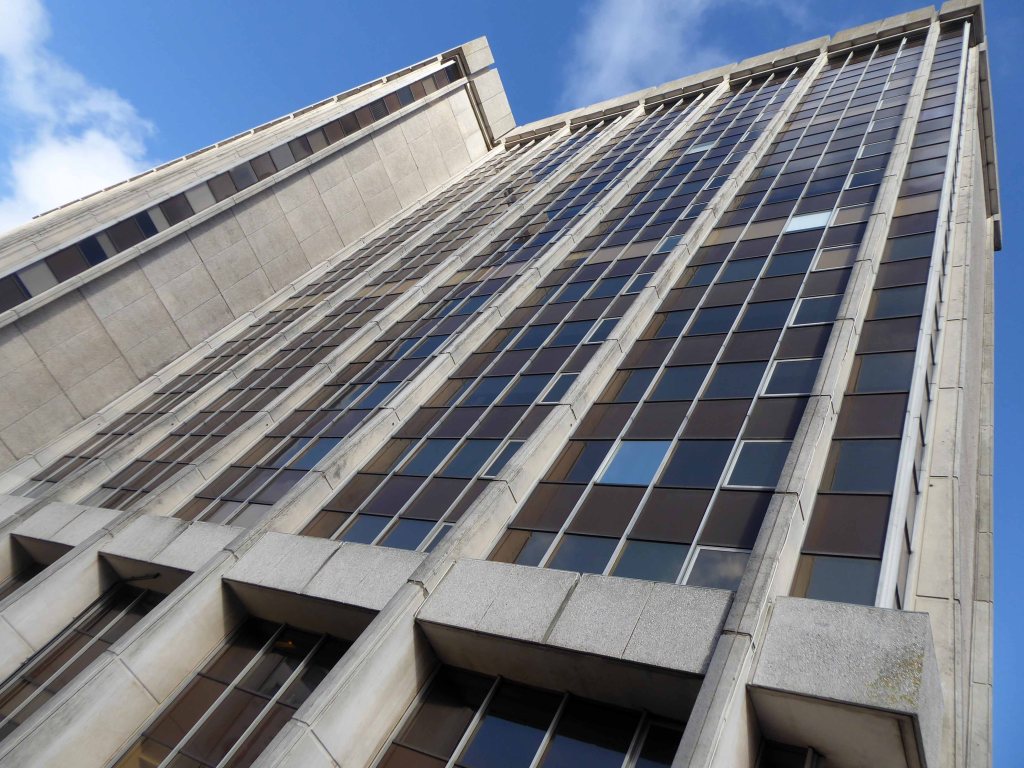
Oops actually Alexander House – built around 1970 to house the then new V.A.T. HQ.

Designed by borough architect – PF Burridge.

Queen Mum Opens Civic Centre – It took a while to get there, since 1958 when the council agreed to embark on a quest to build a new home for itself;  but on 31st October 1967 HRH the Queen Mother did the honours and formally opened the spanking new Civic Centre.  During its build Southend was classed as being in the top ten in the country for full employment, due to this workers were hard to come by and bus loads of workers were brought in to complete this and the many other projects shooting up along Victoria Avenue at the same time. 

Cllr Beryl Scholfield commented later on the day – The Queen Mother opened the Civic Centre in 1967, when my husband was chairman of the town hall committee, and we had lunch with her at Porters.  We were presented to her when she came in. There were no more than about 30 of us there.  It was a most exciting day.

She was as natural as you see her on the television.

Postscript 2002

A Union Jack lowered to half-mast in tribute to the Queen Mum has been stolen from Southend’s Civic Centre. A council spokeswoman today denounced the theft as – a despicable act at a time of great sadness and national mourning.

The outrage has caused extra sadness for royalist residents in the town because of the Queen Mother’s special place in the history of the Civic Centre.

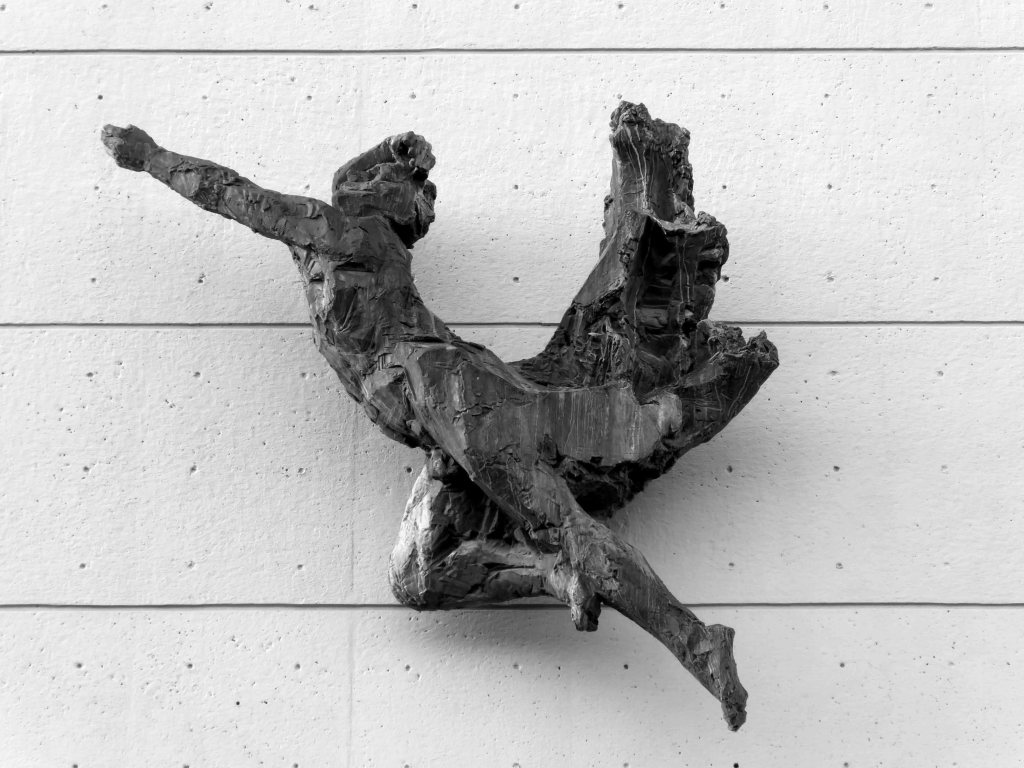
The Leda and the Swan statue by Lucette Cartwright, which used to be in the Civic Centre atrium, gets a polish in May 1987.

A bronze statue depicting a mythological rape has finally found a new home at the mayor of Southend’s official residence. The controversial statue of Leda and the Swan was specially commissioned by Southend Council in the Sixties and first stood outside the courthouse in Victoria Avenue.

Later it was moved to the Civic Square and then to the courtyard of the Palace Theatre, in Westcliff. Later, it was moved to the Civic Centre when it caused outrage among staff. Workers claimed the statue, representing the rape of Leda by the Greek god Zeus disguised as a swan, glorified rape as an art form.

Last week, the statue was removed from the Civic Centre and is now at the mayor’s residence, Porters, in Southend.

Rob Tinlin, Southend Council’s chief executive and town clerk said – The statue of Leda and the Swan was located at the Civic Centre until a suitable location was found. The statue is permanently on display in the garden of the mayor’s residence, Porters in Southchurch Road.

It is in an appropriately landscaped area next to the pond.

Photo Phil Parsons

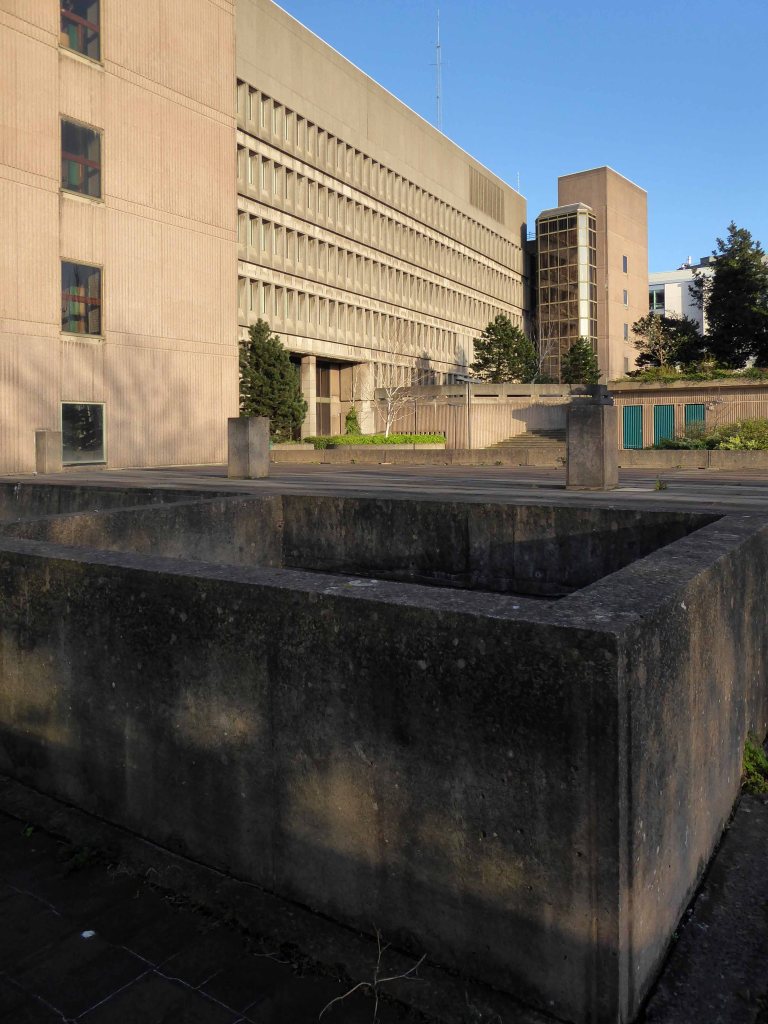
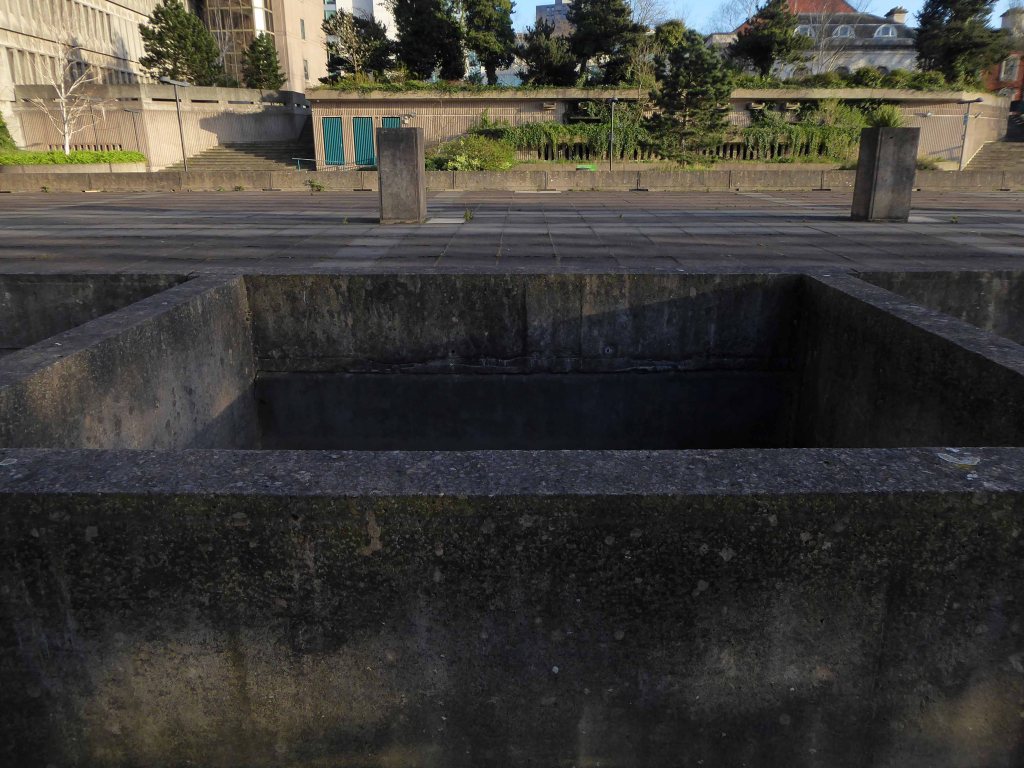
Misty eyed I missed the sculptural fountain – William Mitchell I presume?

Said farewell to Neptunes unilluminating assorted fish.

Heading out of town past noisy scenes of quiet despair, no more fancy goods, no more confectionary – shake that.

Heading inland, away from the wibbly wobbly estuarine coast of higgledy piggledy Essex, through freshly mown pasture and solitary haywains.

This is Constable country:

Like many artists practising at the time, Constable used sketches as source material for fully worked-up compositions. He did not find the production of finished paintings easy, which probably contributed to his late recognition by the art establishment.

V&A

Passing by solitary bus shelters, patiently awaiting passengers.

Waterworks works in the palatial neo-classical manner, with a restrained nod to incipient Art Deco.

Encountering the occasional leafy lane.

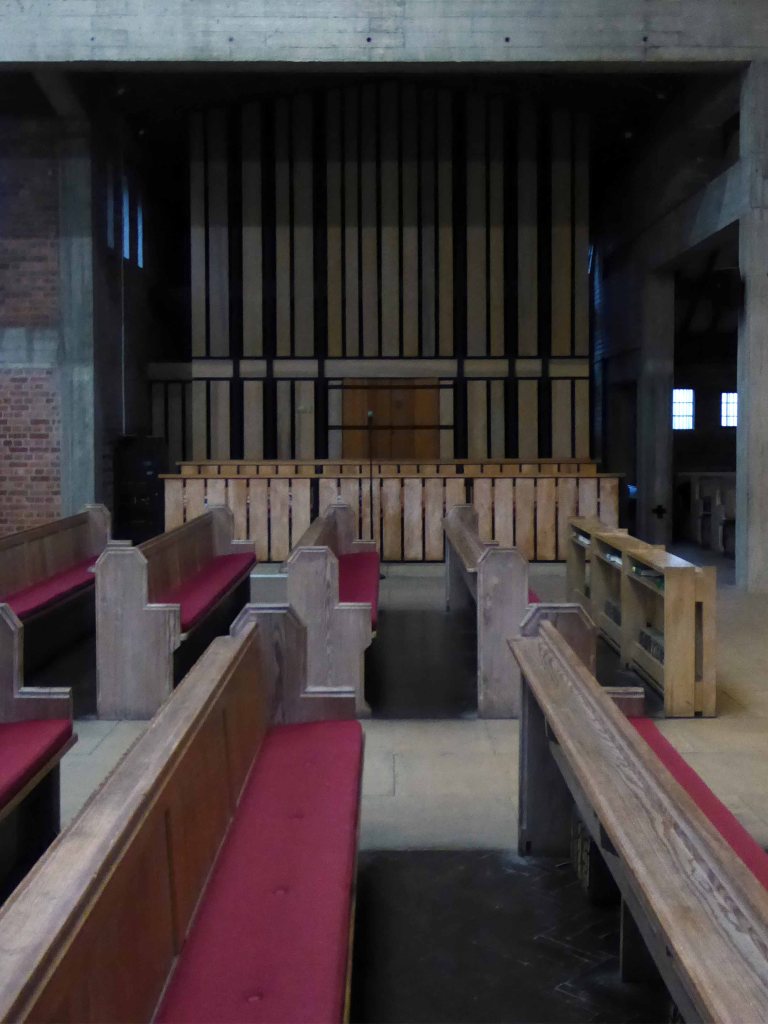
I eventually found myself on the outskirts of Colchester, outside St Theresa Of Lisieux .

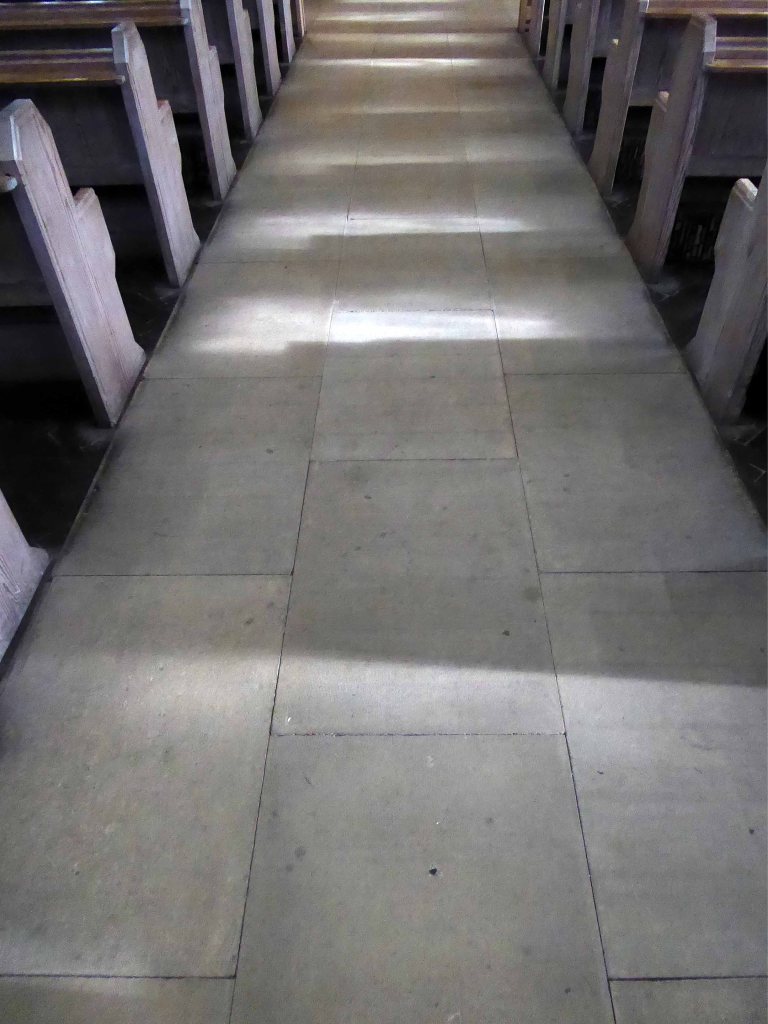
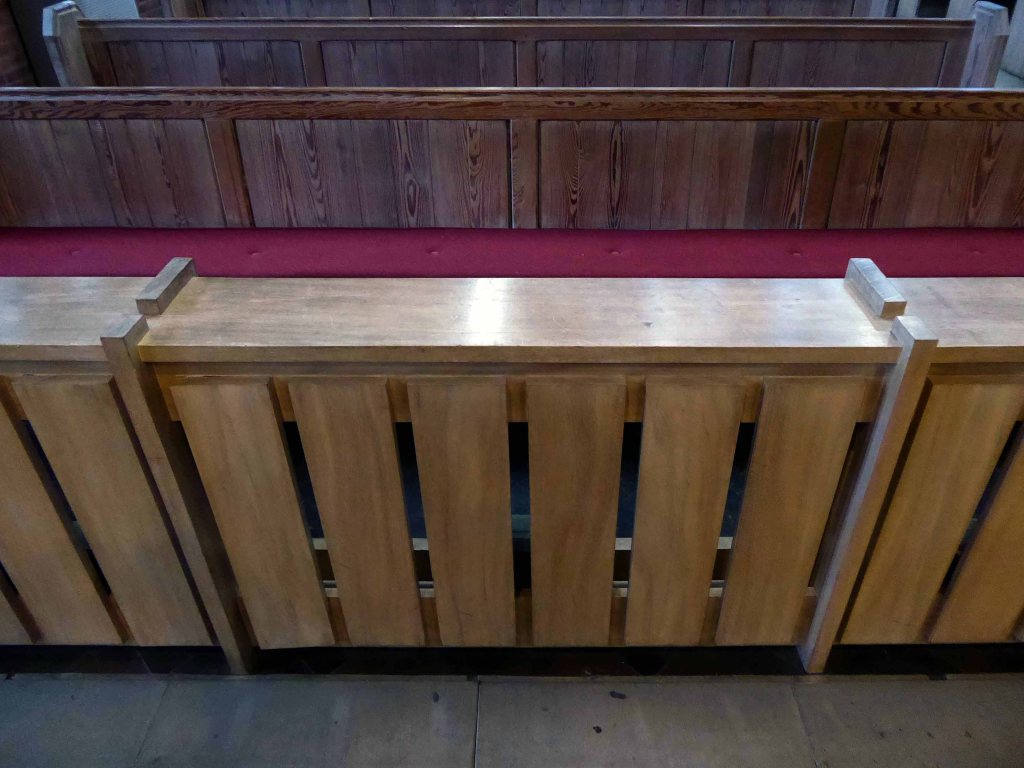
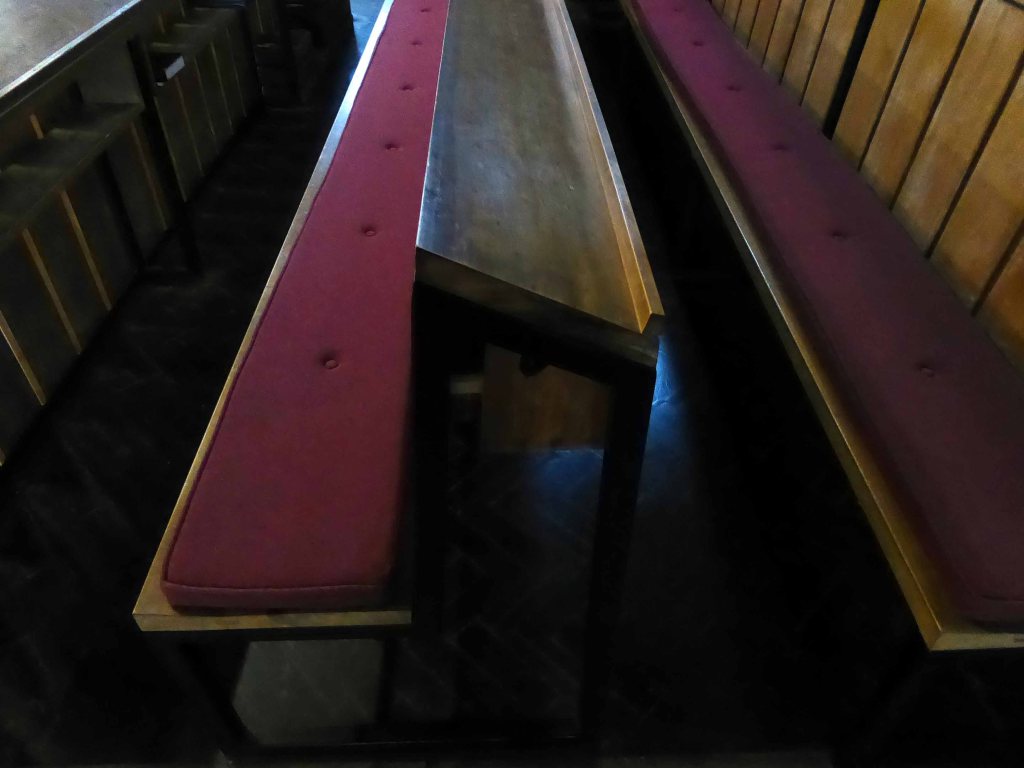
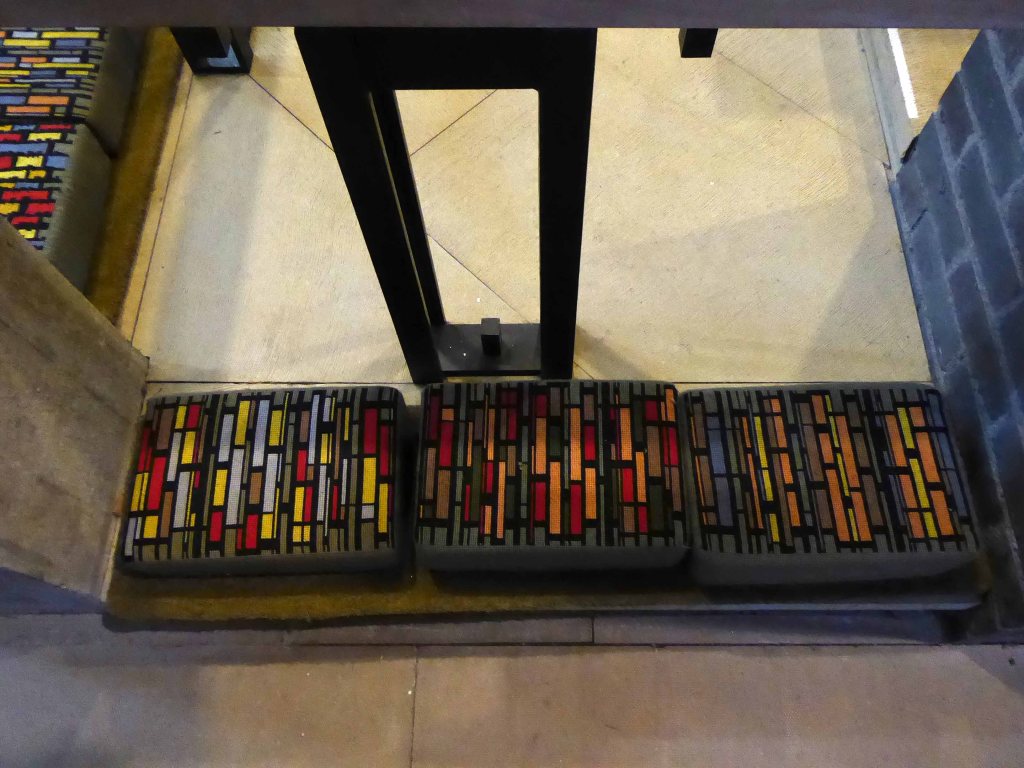
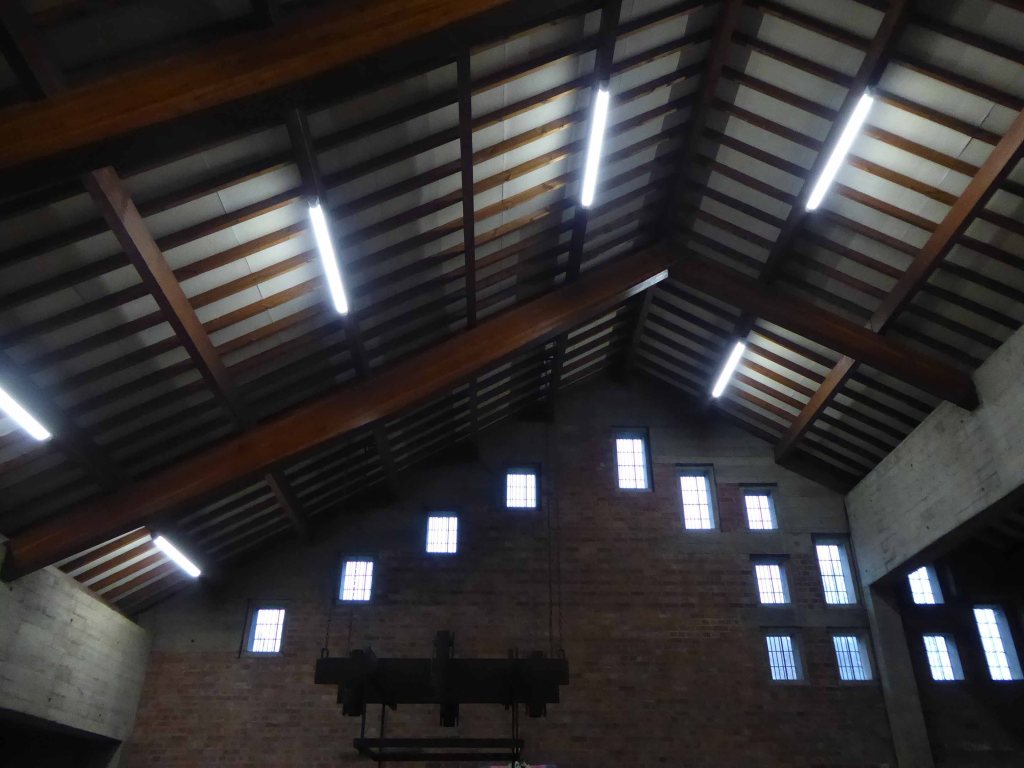
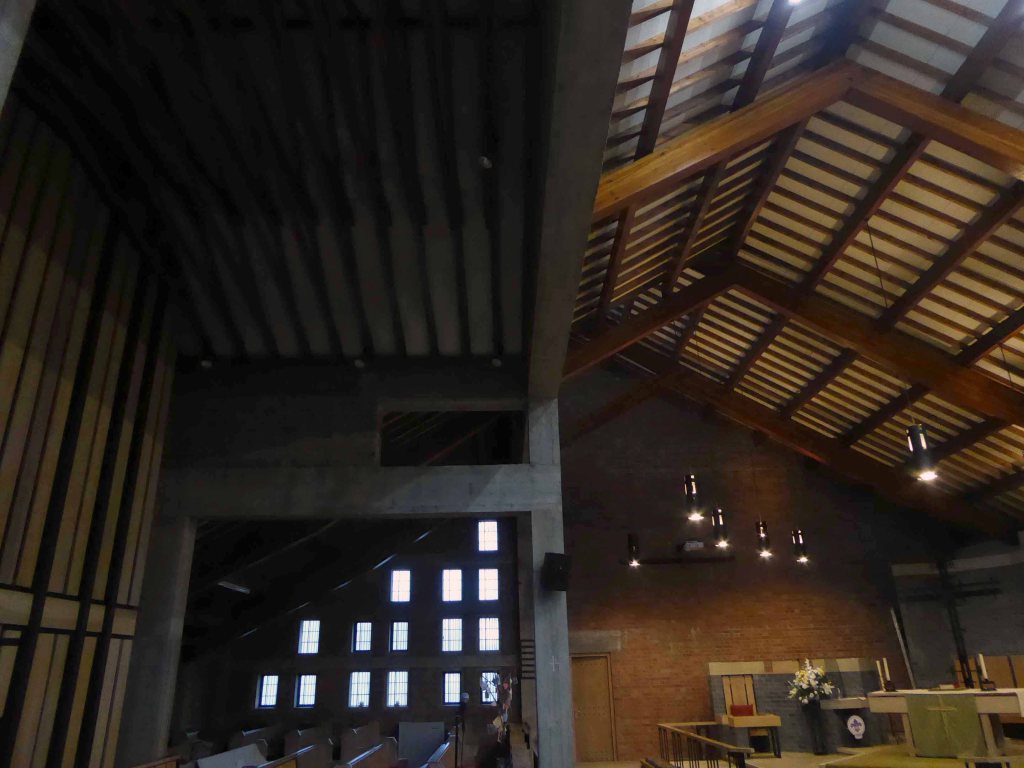
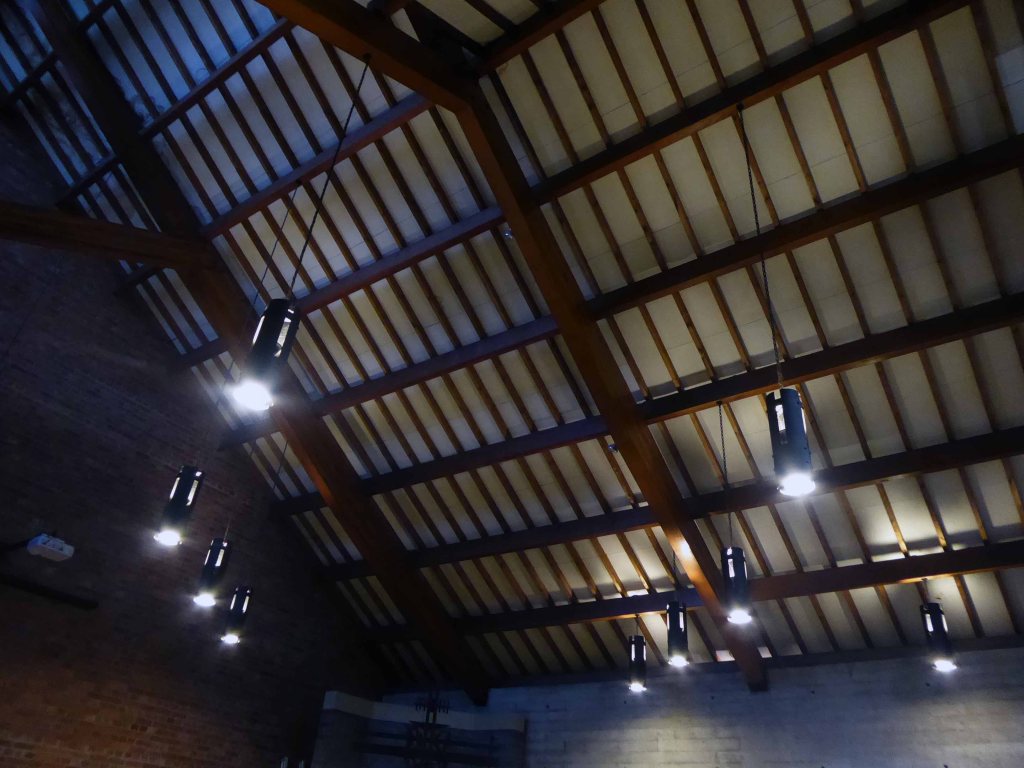
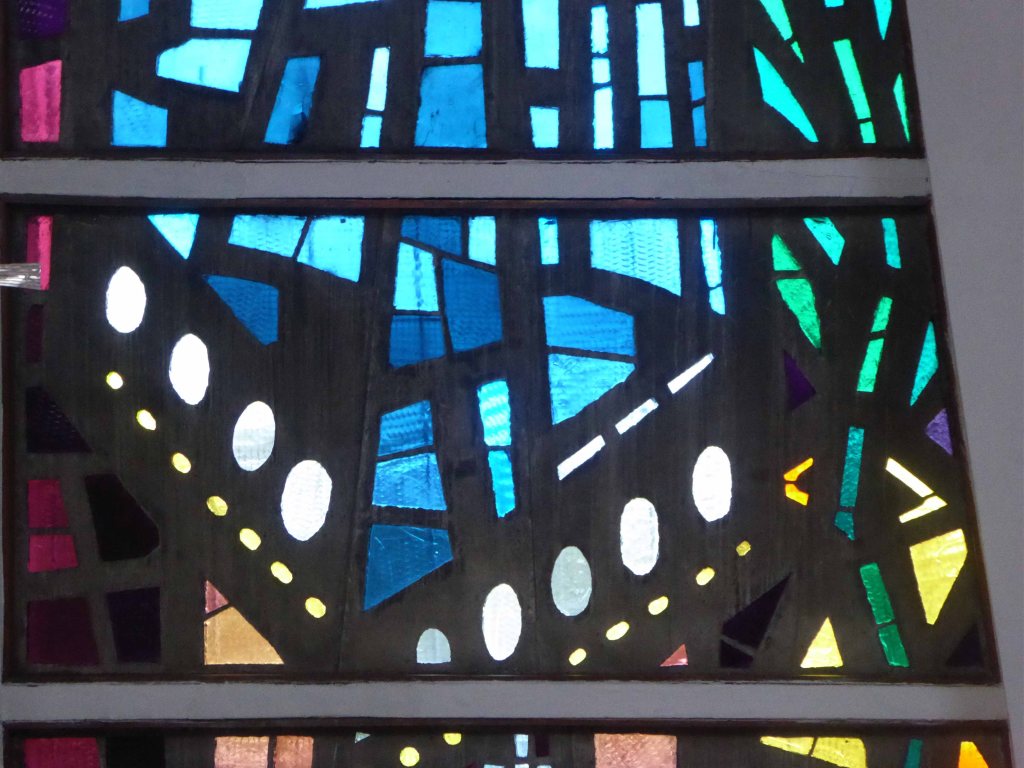
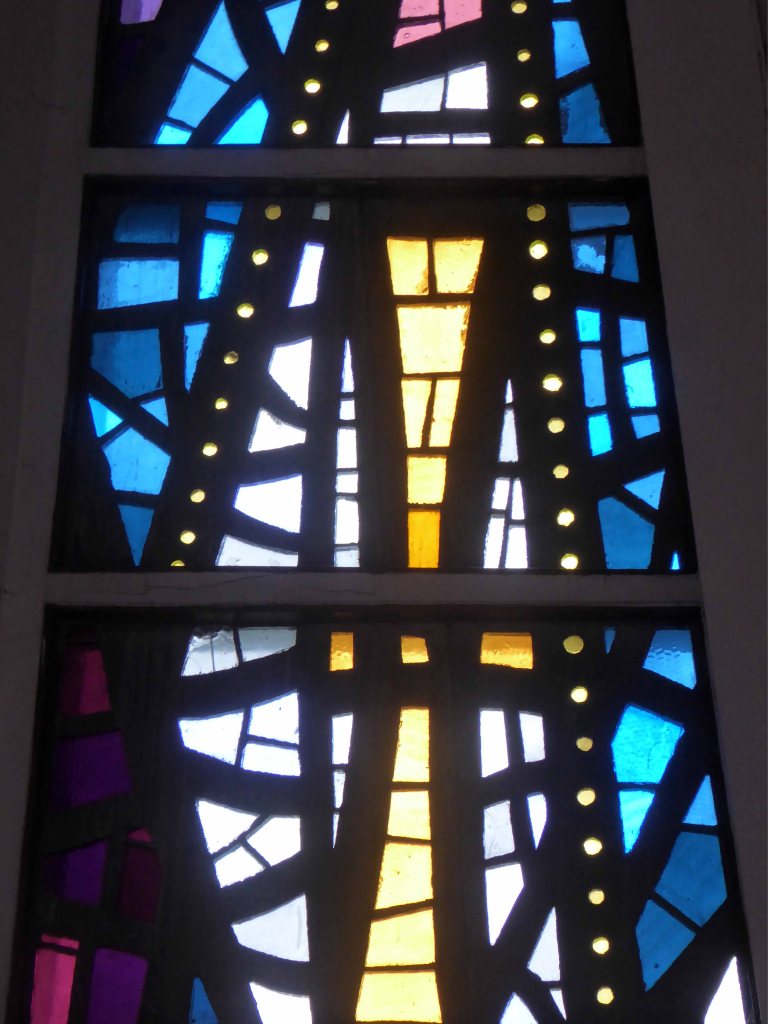
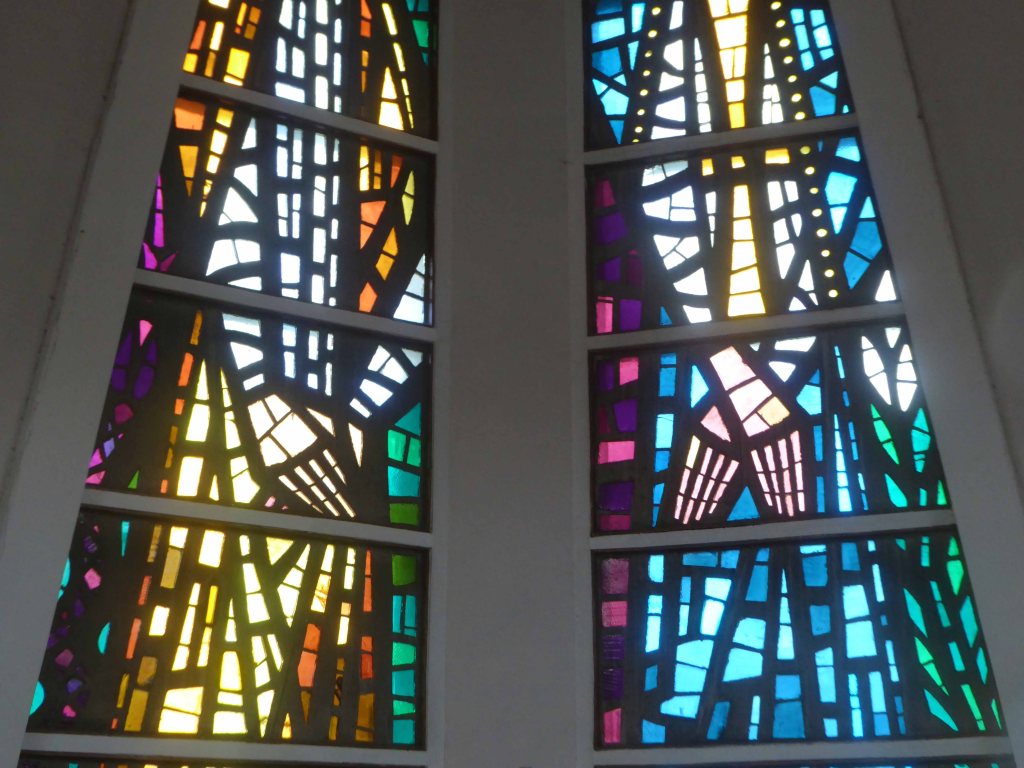
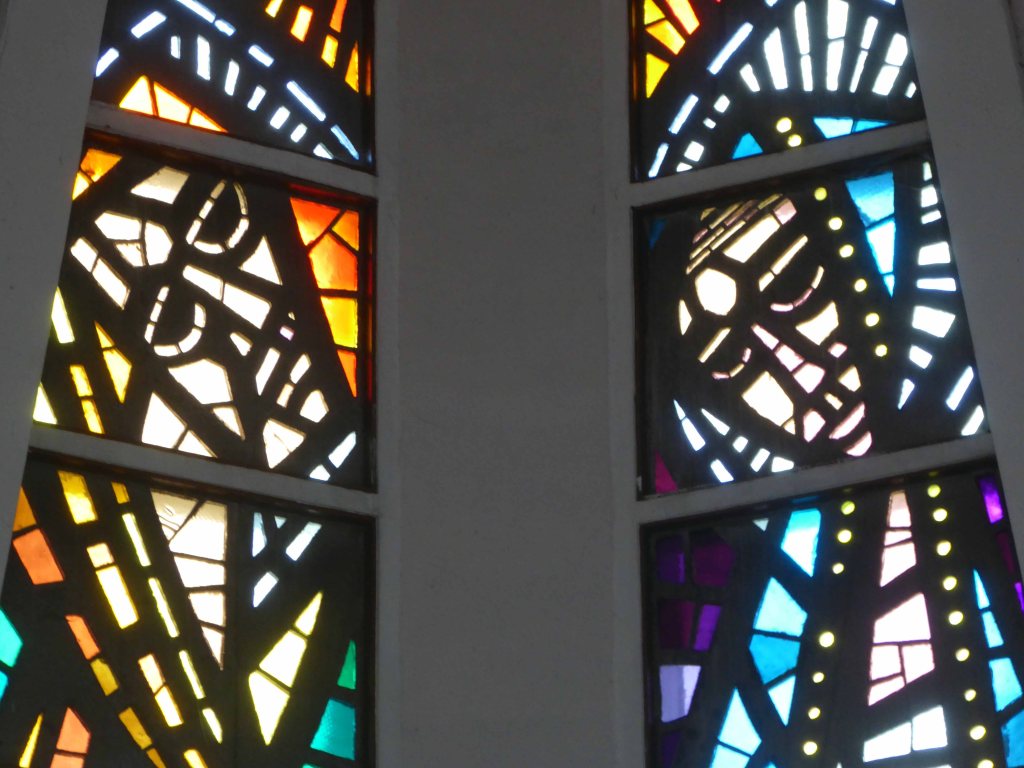
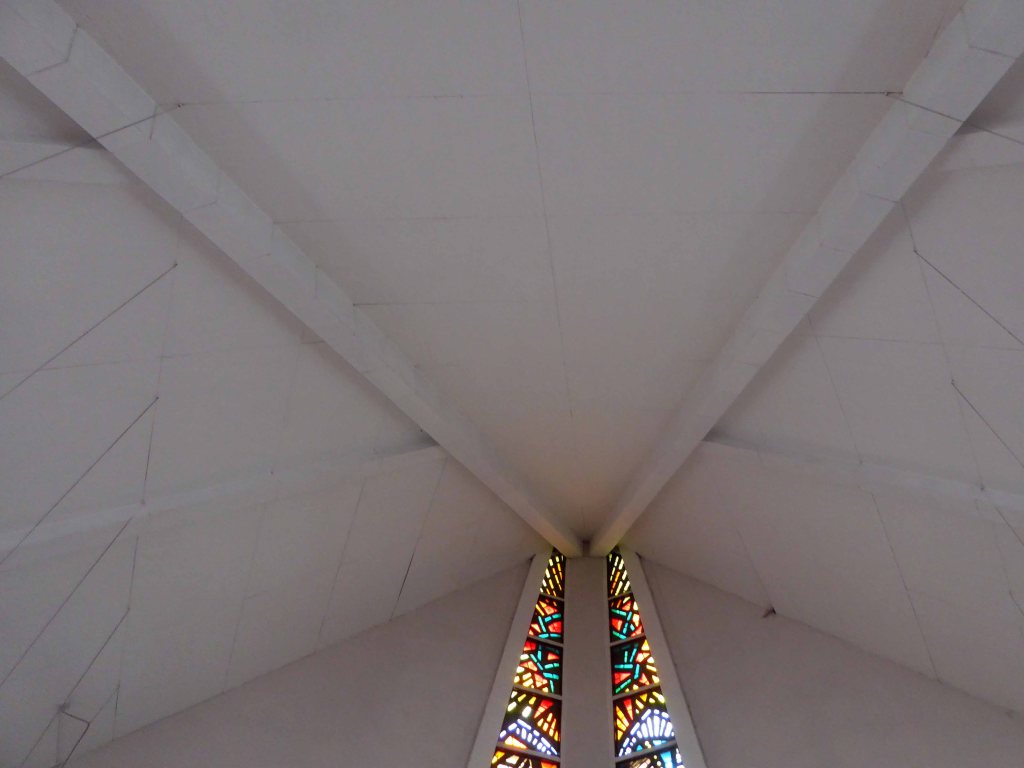
A striking pre-cast concrete frame design of 1971, with a dramatic and well-lit interior, lively modulation of wall surfaces and some furnishings and artworks of note.

Architect – JH Dabrowski 

The entrance façade has a large gable and projecting entrance canopy, above which is a bronze statue of the Risen Christ, by local artist Tita Madden – 1977

This is a large modern church, built with a pre-cast concrete frame with a crossover roof beam system, allowing for dramatic internal effects. Within the bays created by the frame, the walling is mostly brick, with some pre-cast concrete panels, and large areas of glazing. Concrete is also used for the window mullions and surrounds. Each bay has the brickwork slightly angled or faceted, giving the design a great sense of movement and liveliness, both inside and out.

Taking Stock

Struggling to go around a Straight Road.

£240,000 will get you an Art Deco maisonette in Vint Crescent from Wowhaus:

This one is a ground floor apartment, which has undergone a complete refurbishment, but with one on keeping those period features to the fore – period features such as original radiators and those distinctive windows and doors are intact, rubbing shoulders with some new, high-end finishes like oak floors and updated kitchen and bathroom.

Foolishly I became more than somewhat lost and on making enquiries concerning my whereabouts and destination, I was met with gently derisive laughter. Therefore, I bypassed Colchester, took the wrong route along a mainly main road and ended up much too quickly in Clacton.

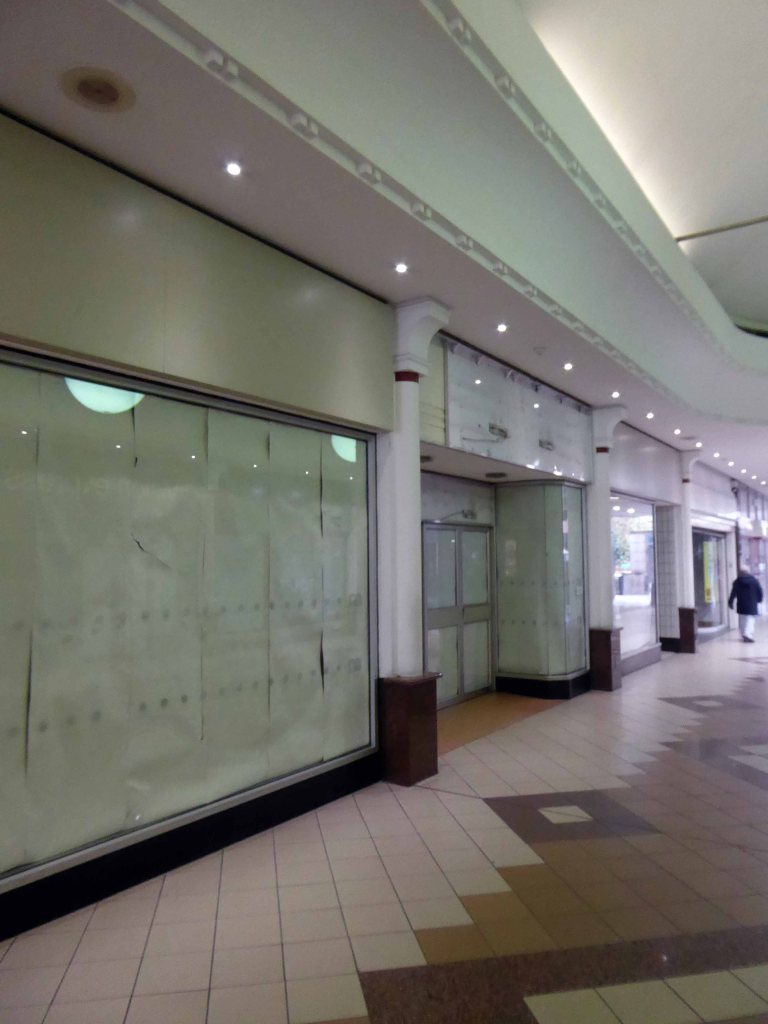
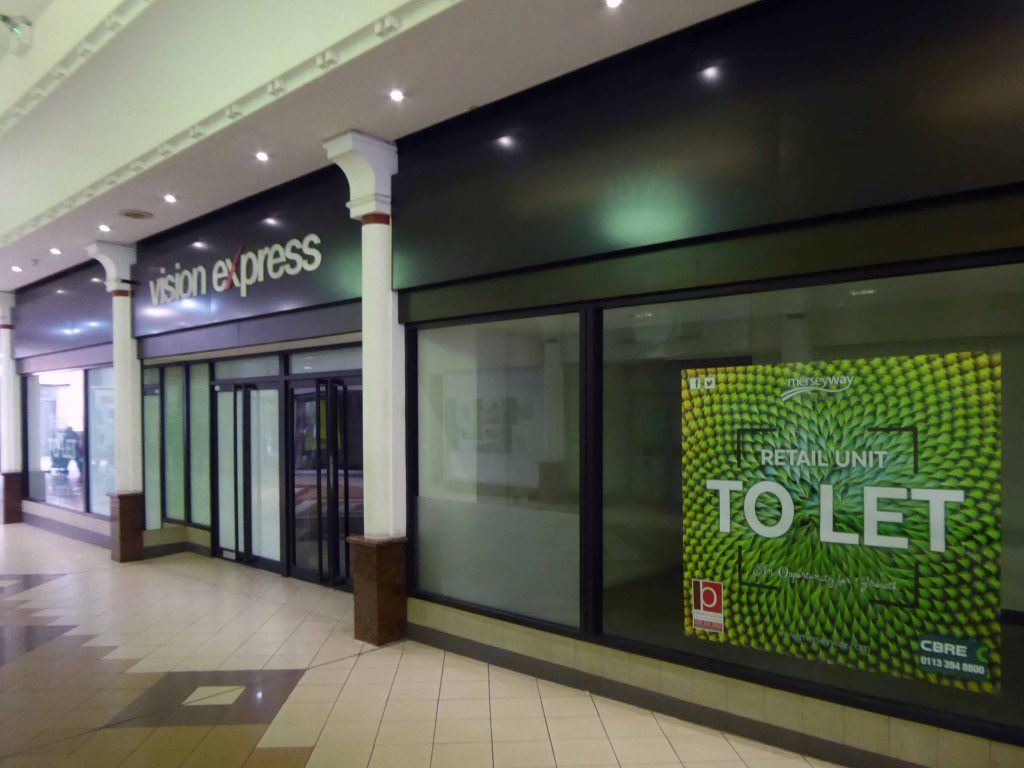
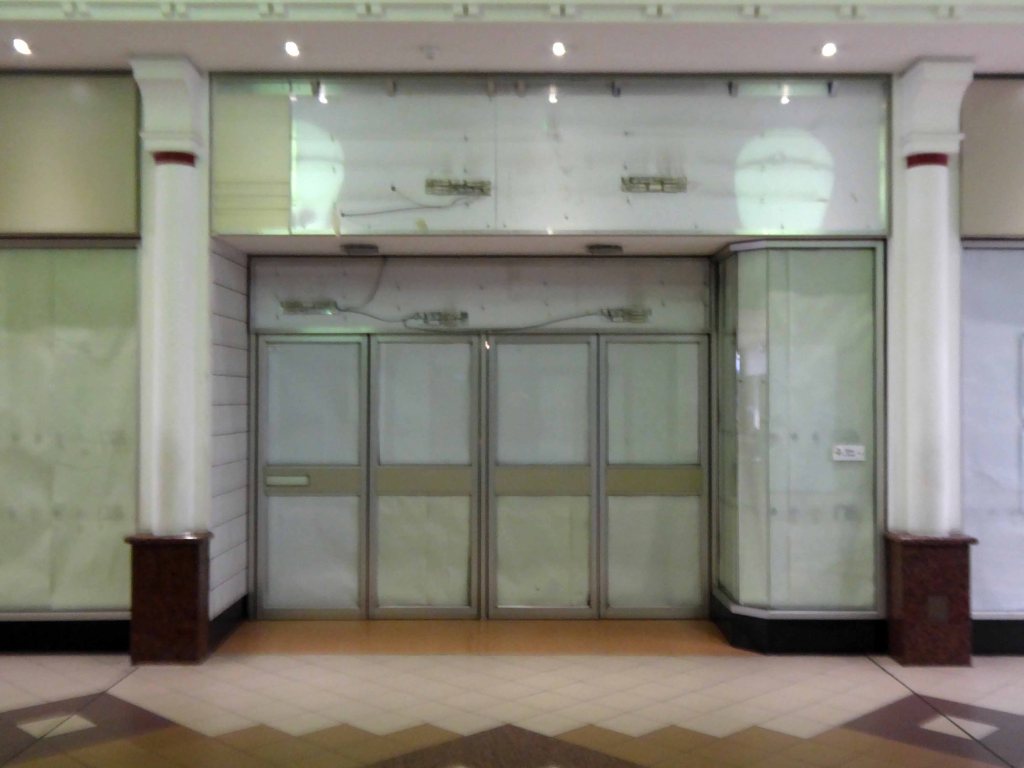
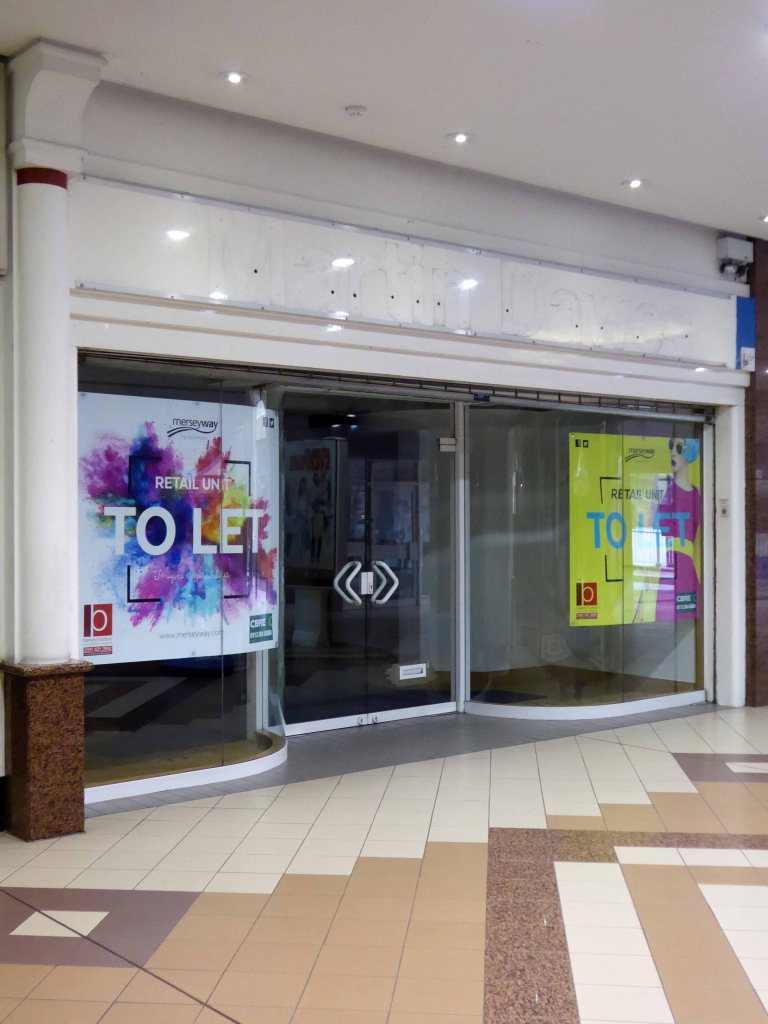
Home to several shops to let, as we shall subsequently see.

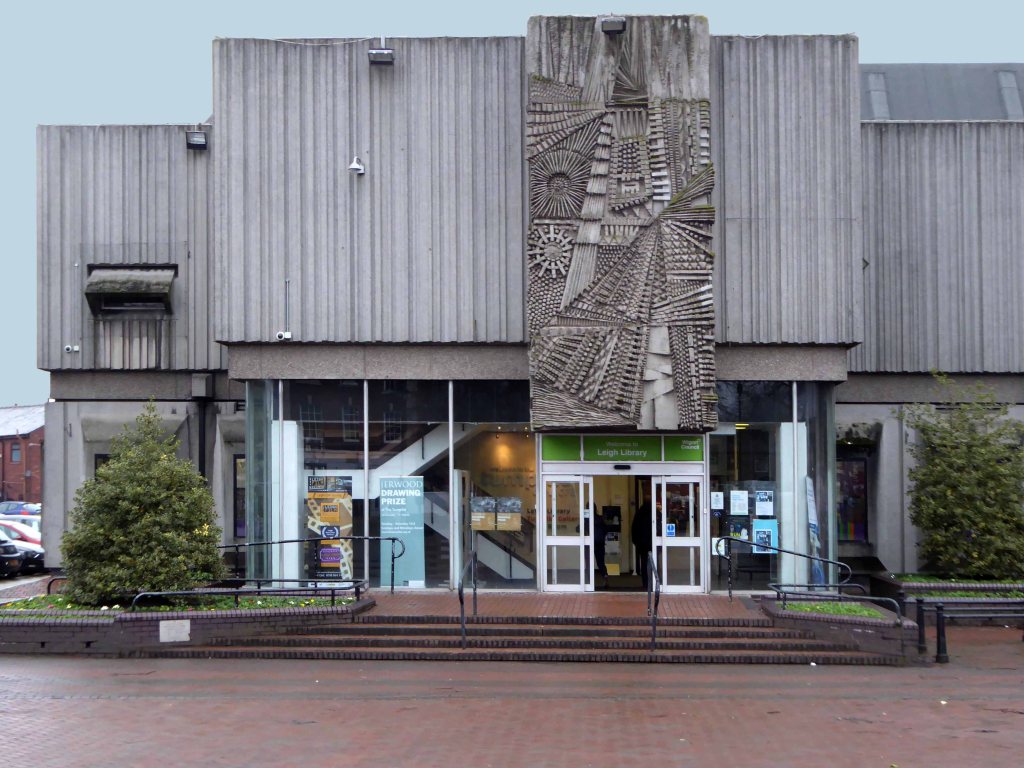
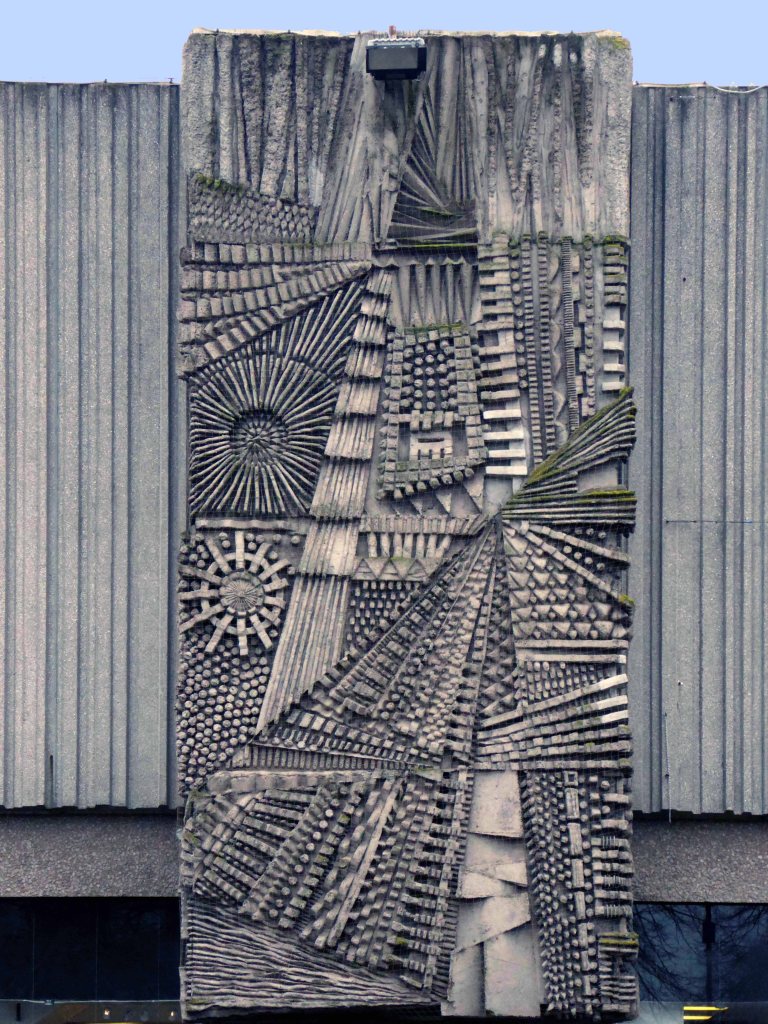
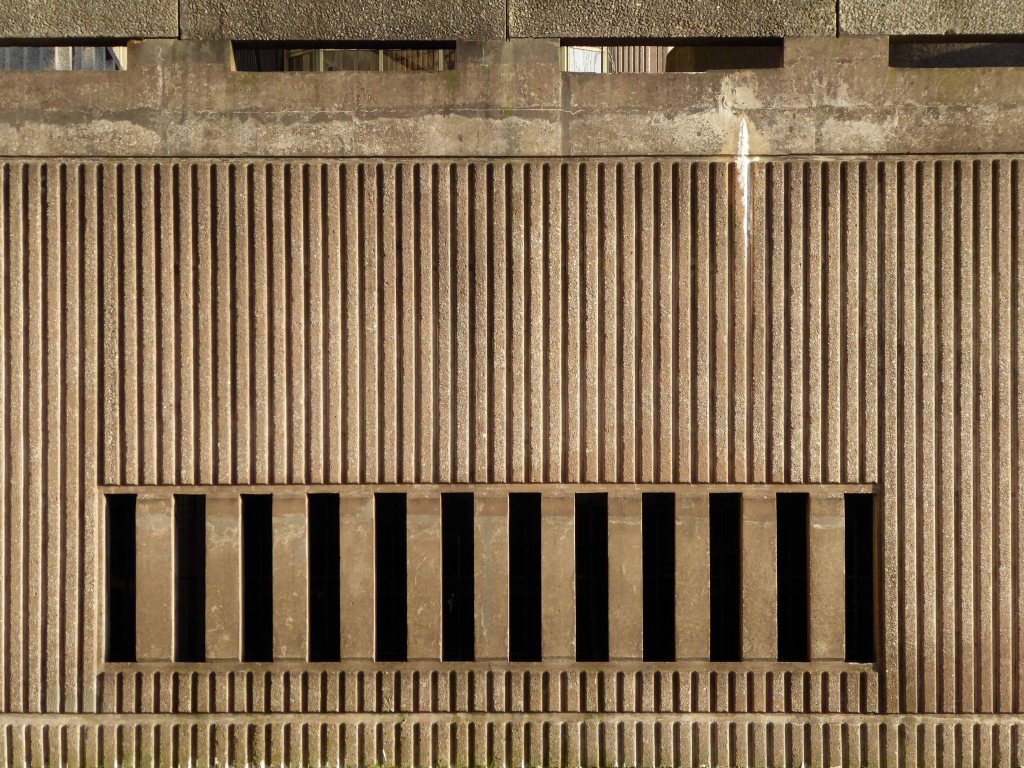
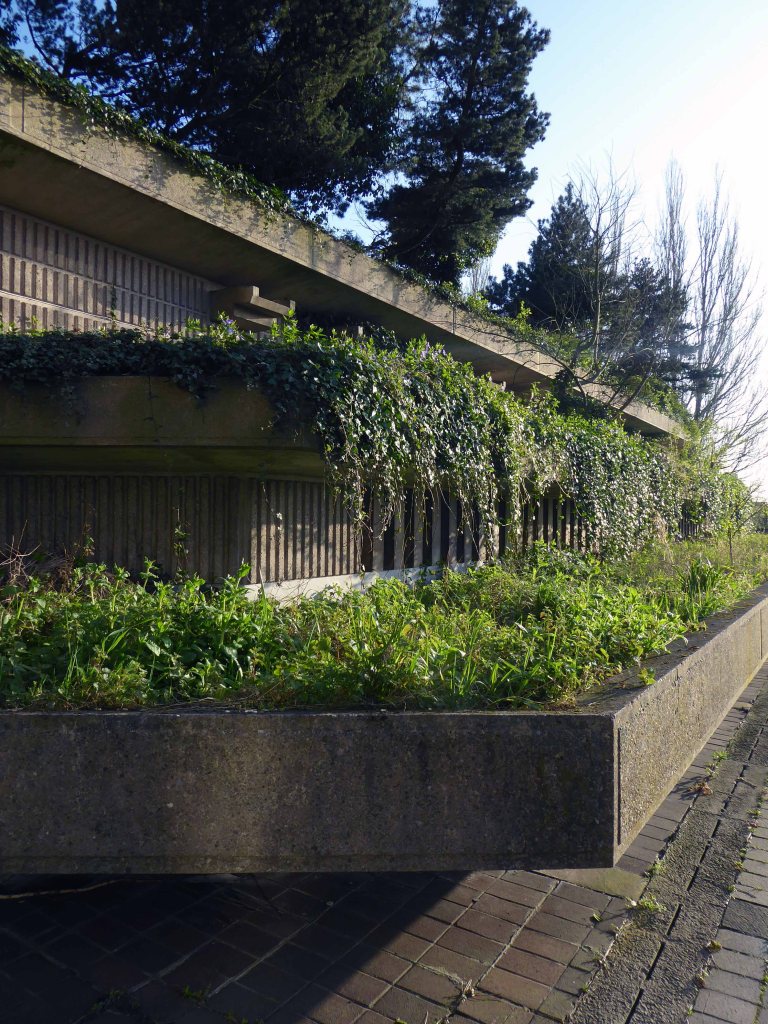
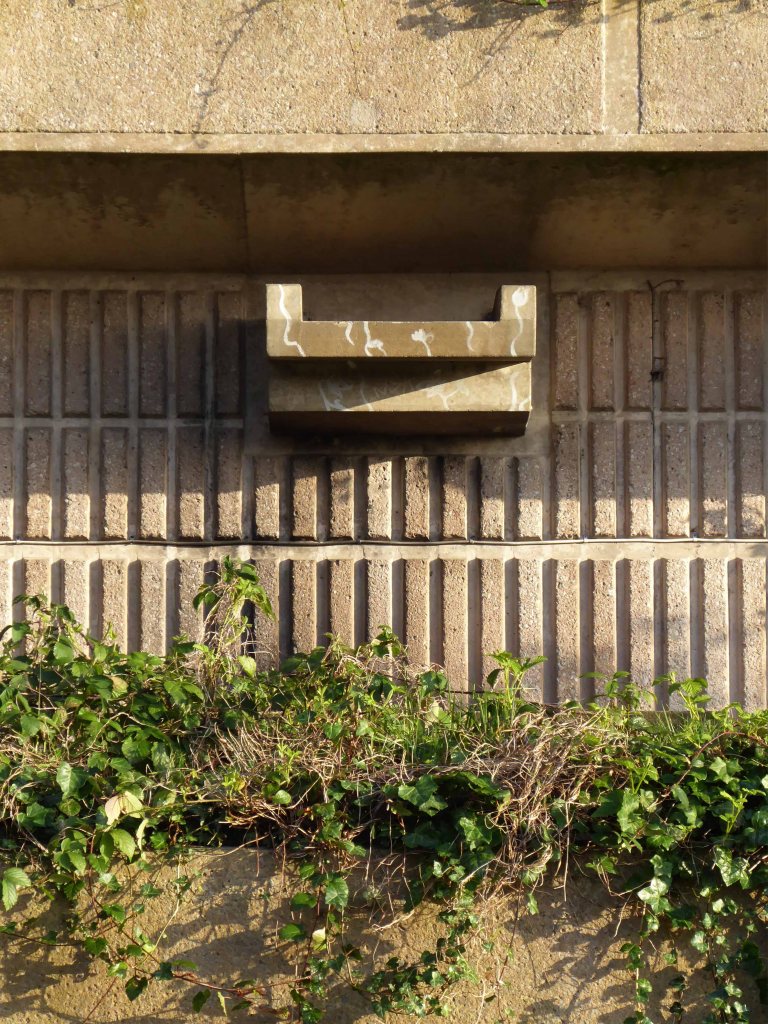
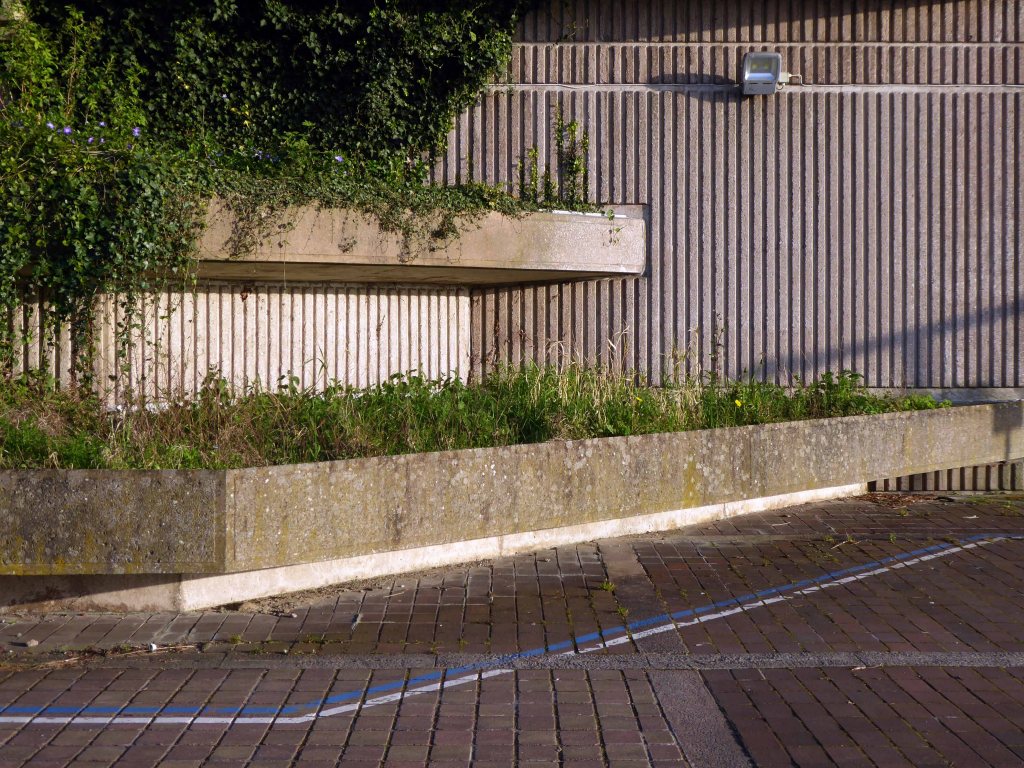
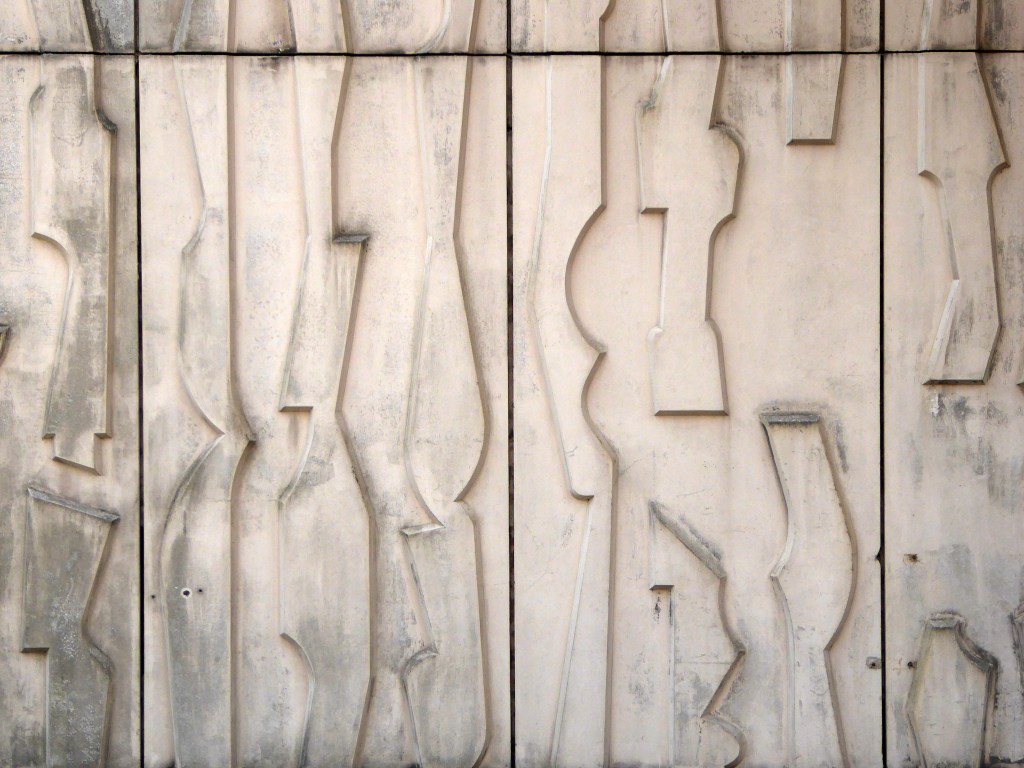
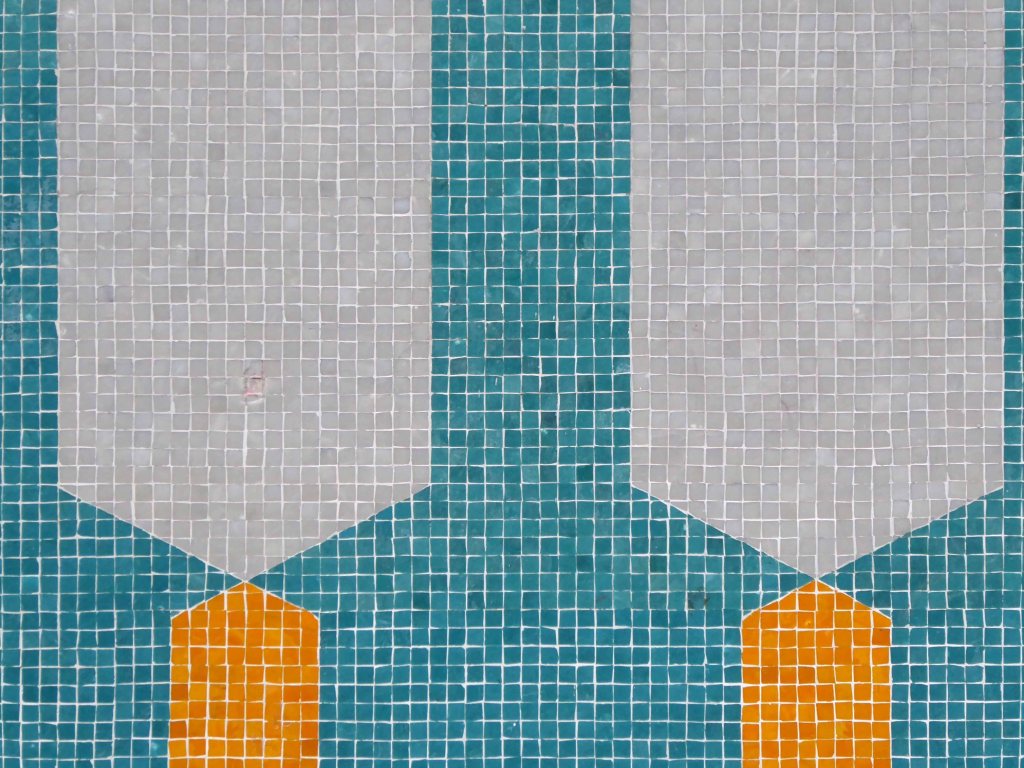
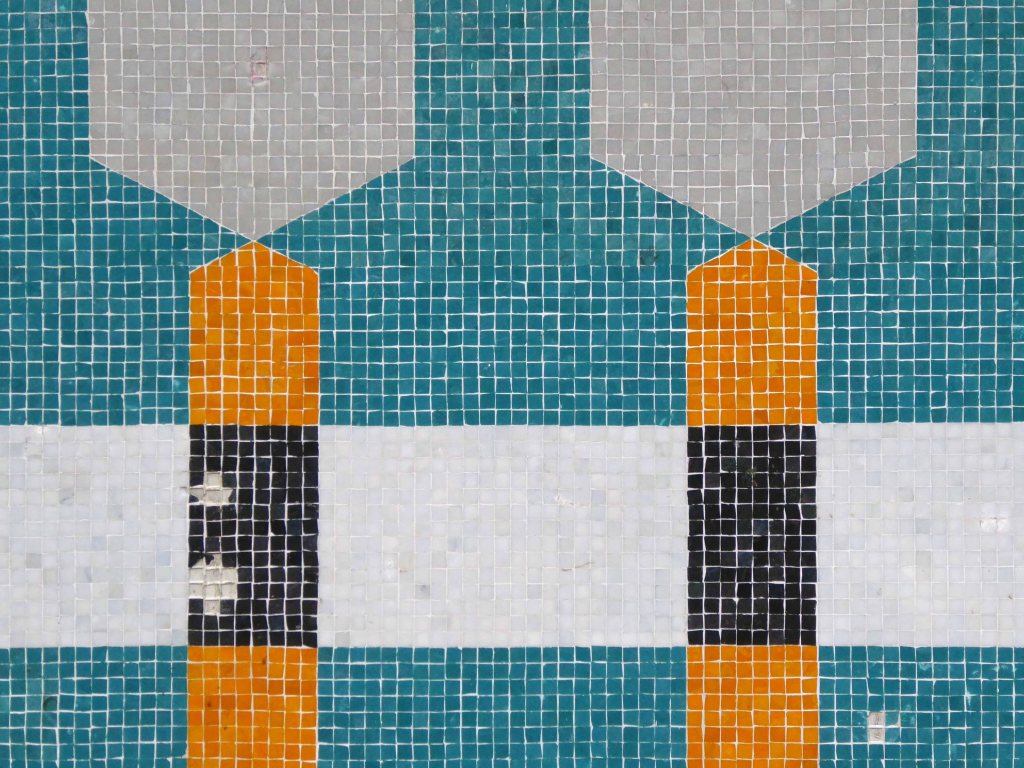
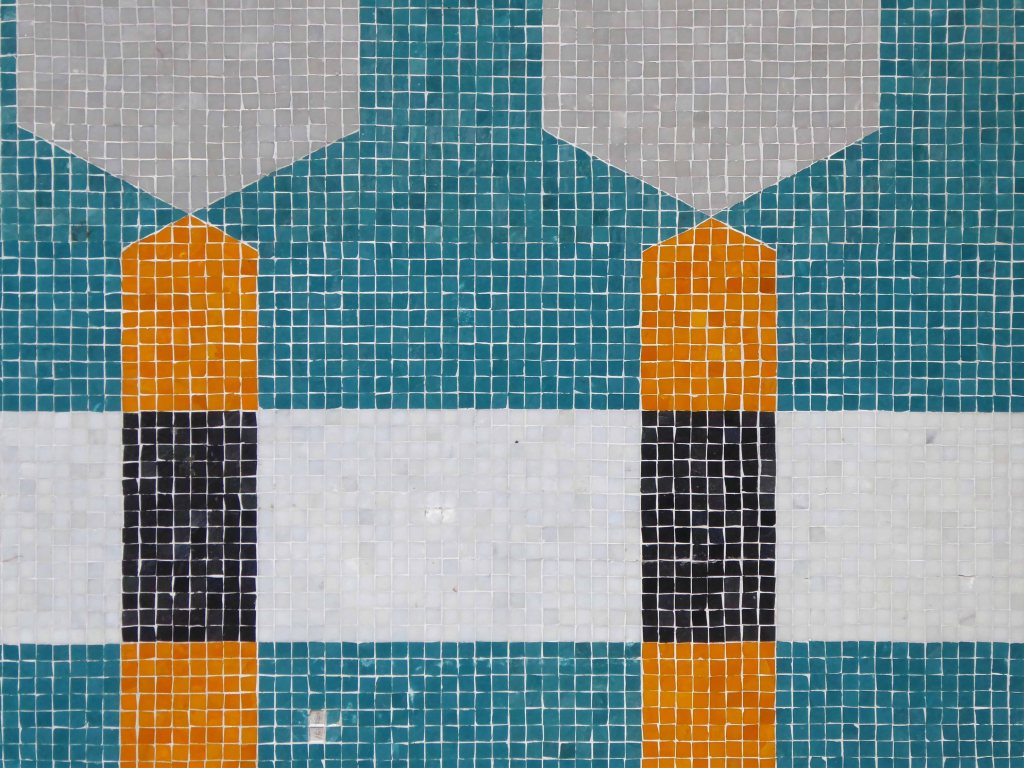
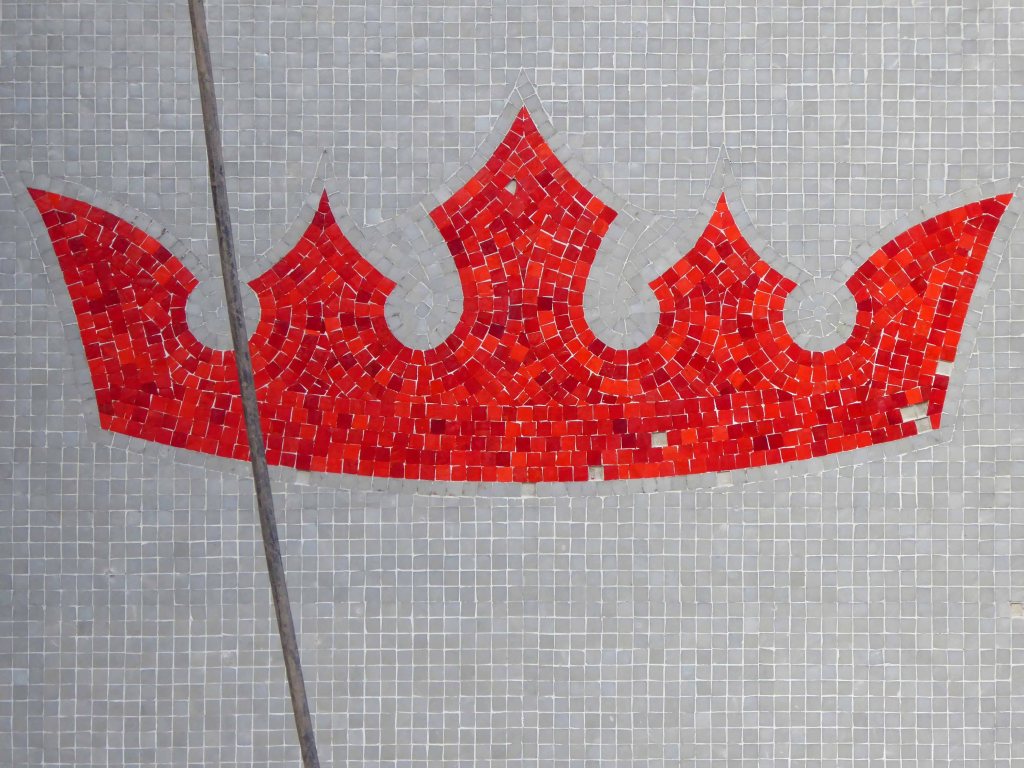
Also home to a fabulous concrete frieze on the exterior wall of the library.

Quickly ensconced in my bijou digs – I hit the town to take a look around.

I was staying right opposite this here boozer – a little too early for a pint, I’ll pop back in a bit.

Seaside shelter in a faux vernacular manner, calm seas ‘neath an azure sky – perfect.

Artifice and authenticity the sunbathing citizens sit beside an inflatable pool – perched above the sea on the pier.

Clacton Pier, which opened on 27 July 1871 was officially the first building erected in the then-new resort of Clacton-on-Sea. A wooden structure 160 yards in length and 4 yards wide, the pier served as a landing point for goods and passengers, a docking point for steamships operated by the Woolwich Steam Packet Company, and a popular spot for promenading. By 1893, Clacton had become such a popular destination for day trippers that the pier was lengthened to 1180 ft (360m) and entertainment facilities, including a pavilion and a waiting room, were added to accommodate them.

Wikipedia

The pier seems to have changed hands several times, as is the way with such things, subjected to fires, storms and pestilence – yet still prevails.

Key attractions include Stella’s Revenge – a family Galaxi rollercoaster. Formerly operated at Barry Island Pleasure Park as Galaxy, and later Viper.

Pause to consider the prospect of magical fun, fun, fun.

Let’s return to dry land, where we find certain signs of decline in these uncertain times.

Hope springs eternal in the Arcade hairdressers.

We place our trust in the tried and tested condiments of this most sceptered of isles.

Life goes on at the Linen Shop – yet another Profil/Stymie gem!

A limited choice is widely available from the far from extensive menu, though mushrooms do come with princely, premium price tag attached.

Another long day closes with a well deserved pint – God bless the Old Lifeboat House and all who sail in her.

Night night.
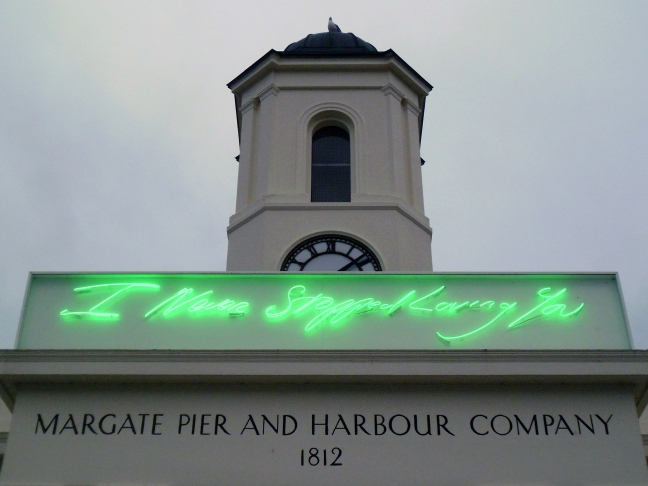
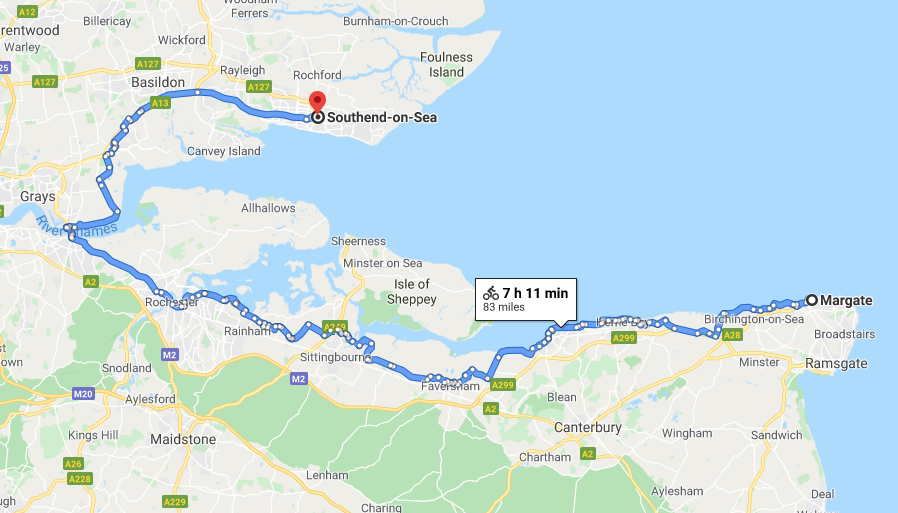
Margate to Southend

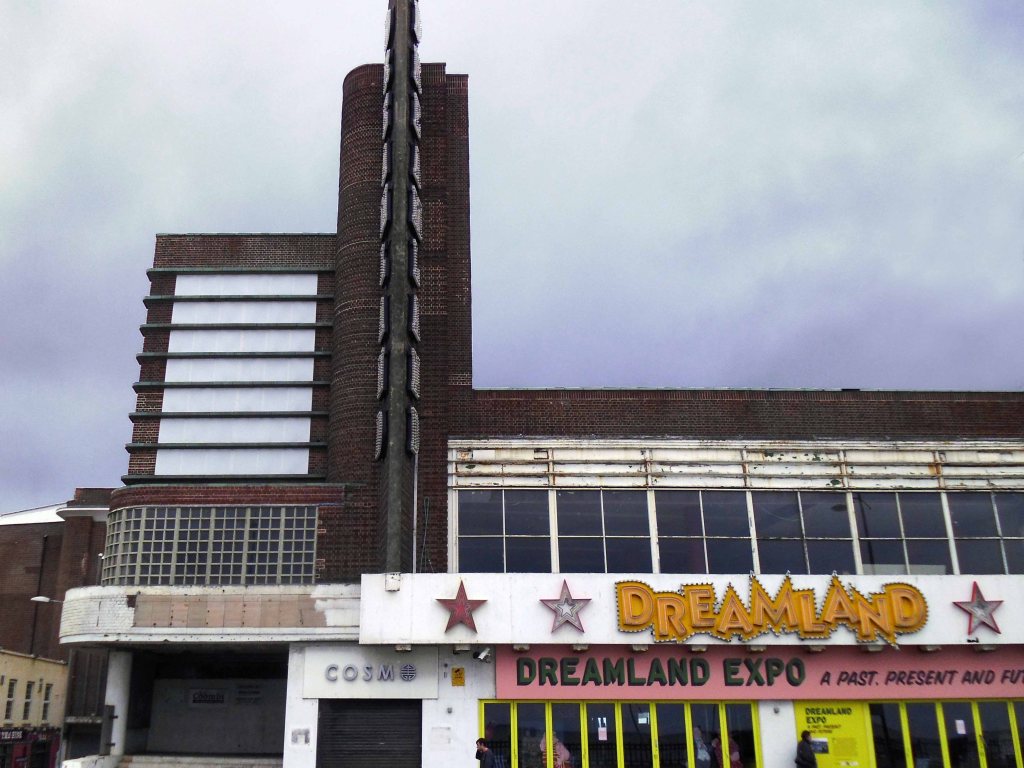
Early morning passing by the yet to be reopened Dreamland, back then just a work in progress, it has had a more than somewhat chequered past.

Dogged persistence has assured its future:

Just before Christmas 1919, and almost exactly one year after the end of the Great War, John Henry Iles purchased Margate’s The Hall By The Sea, thus initiating the history of what would become Dreamland.

The Dreamland cinema replaced a smaller cinema on the site, with this modernist masterpiece opening in 1935. The super-cinema, designed by architects Julian Leathart and WF Granger.

After several years of campaigning to save the Dreamland site from redevelopment, and successful funding bids to the Heritage Lottery Fund and Department for Culture Media and Sport’s SeaChange Scheme, the Dreamland restoration project went live in January 2010, appointing a professional team to deliver The Dreamland Trust’s vision for a reimagined Dreamland, however, the battle was not over.

After a long restoration project, Dreamland opened its doors to the public on June 19 2015. The park was further reimagined and expanded in 2017 following additional investment, with new thrill rides, a much bigger events space, fresh designs, and a new welcome for a new generation of visitors.

Dreamland

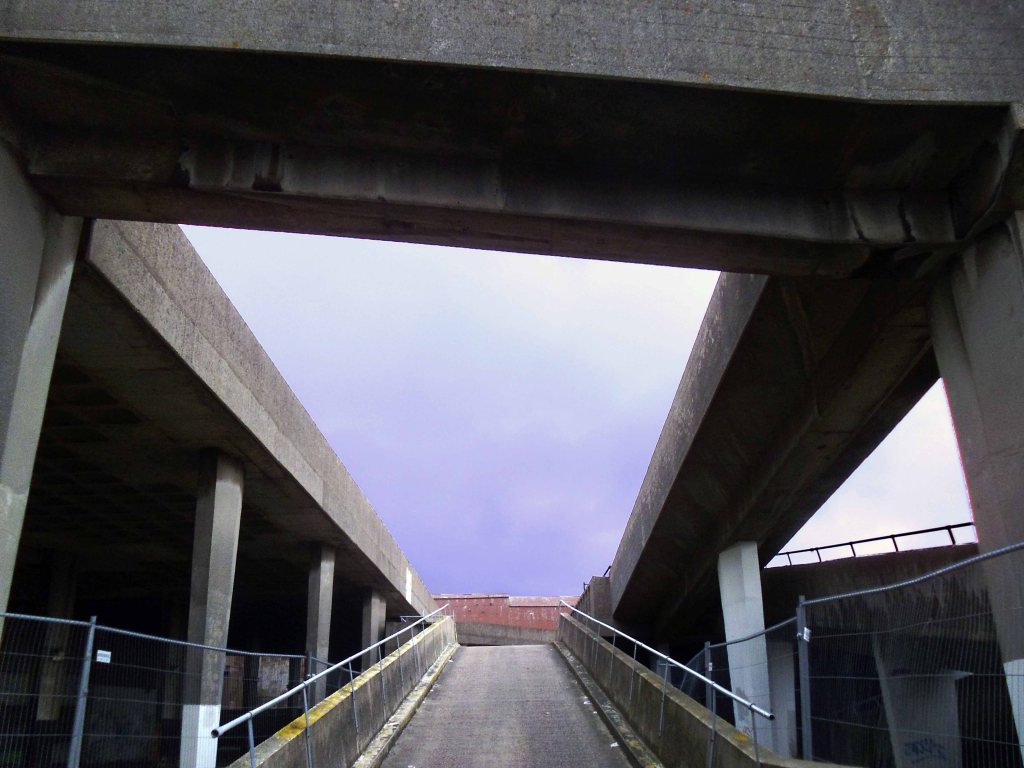
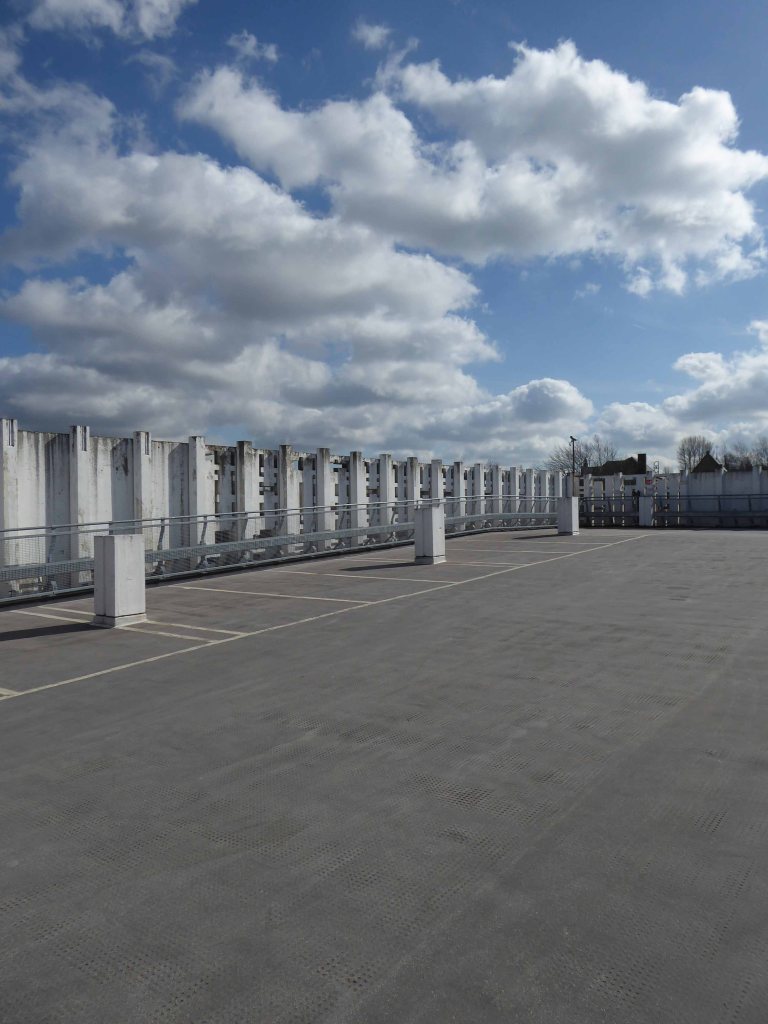
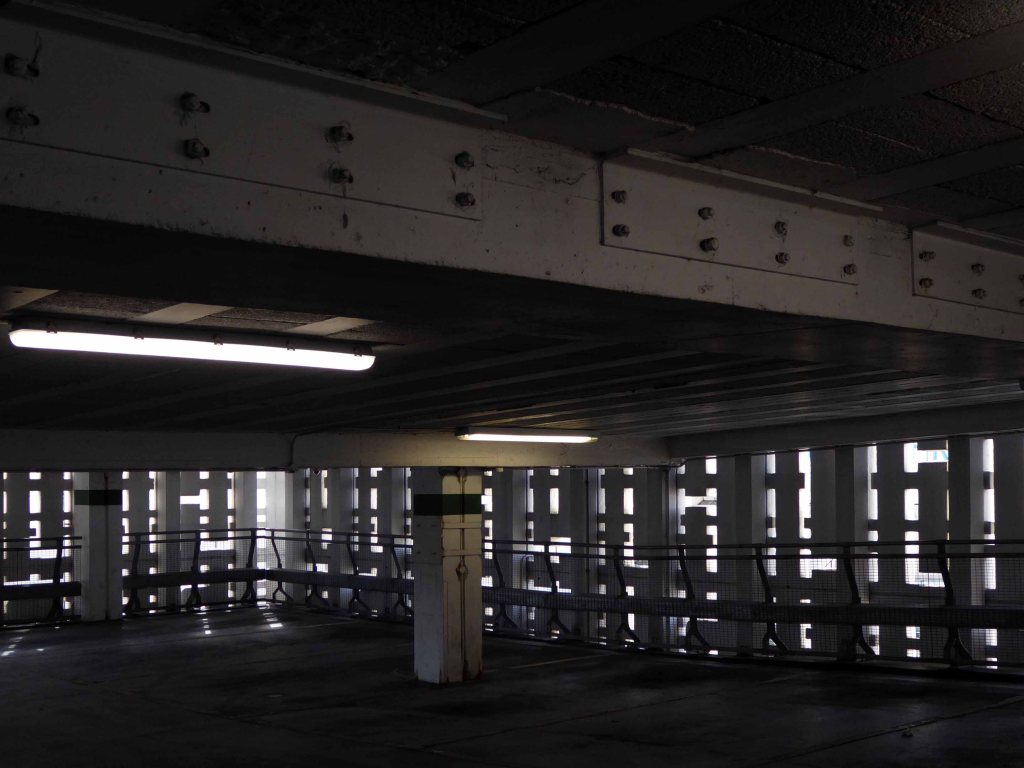
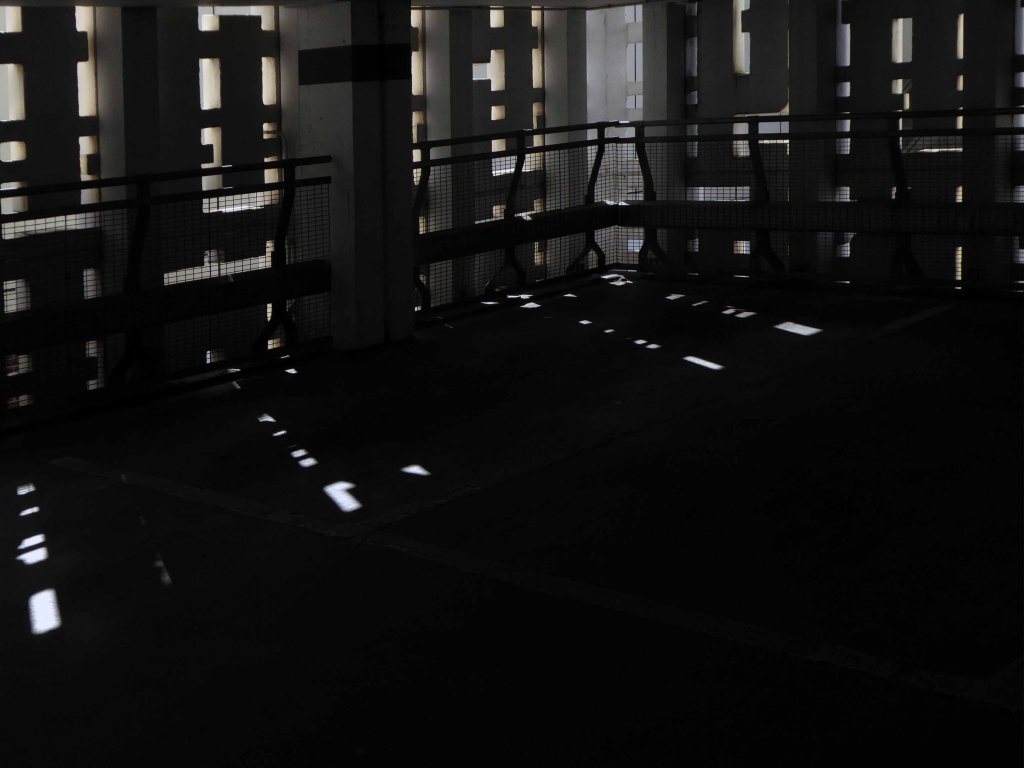
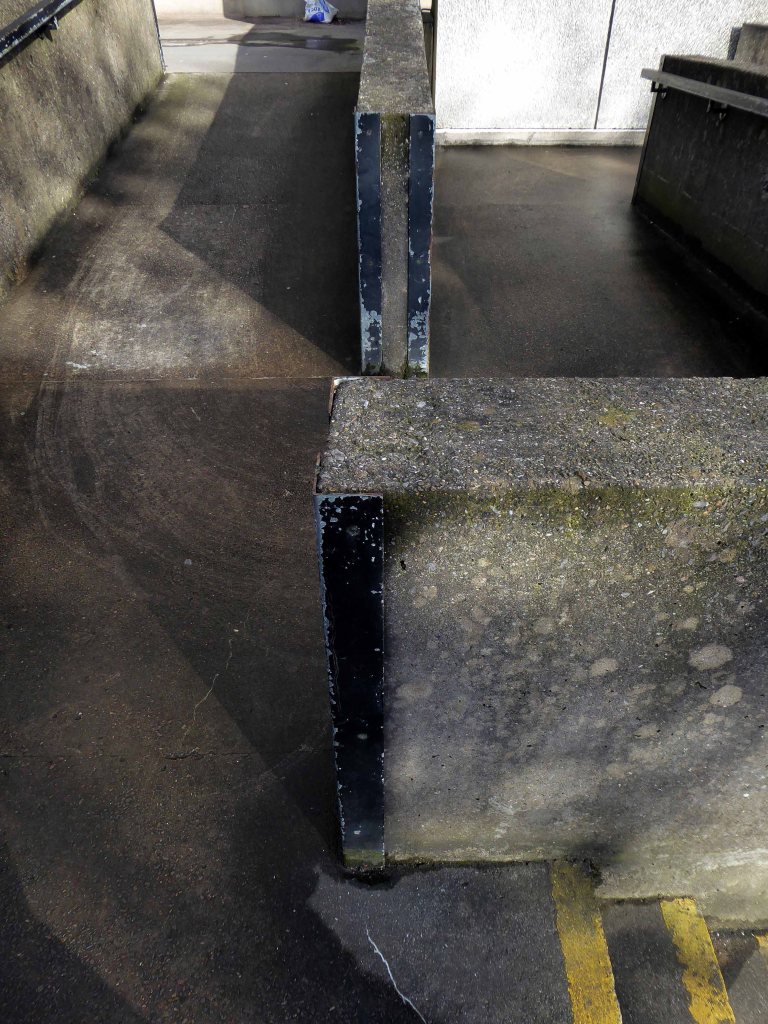
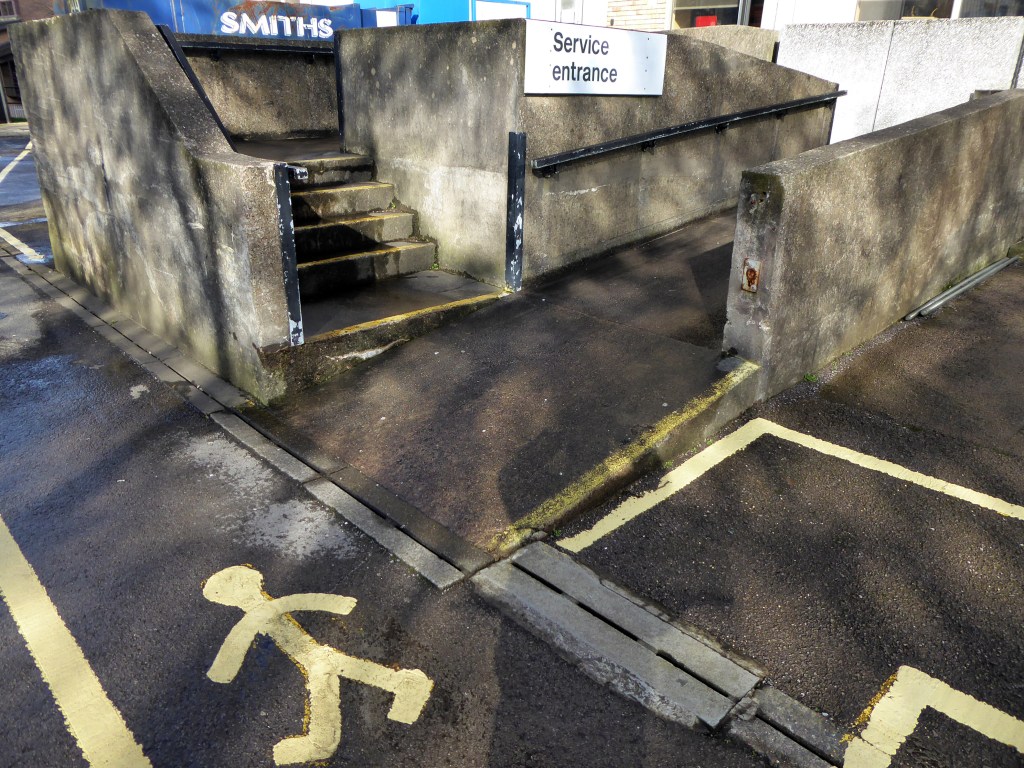
Just enough time to take a quick look inside the Arlington House car park then off we go again.

Tuesday 2nd September leaving Margate and cycling along the North Kent Coast.

Hotter than July and into a headwind.

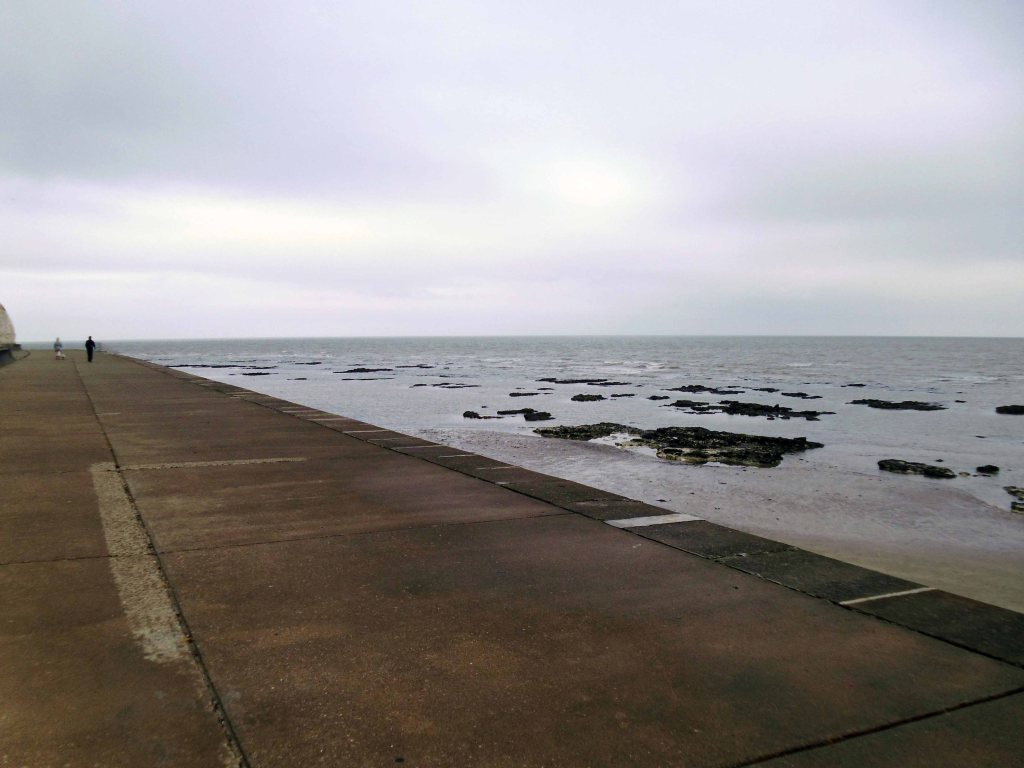
A flat concrete surface raised above the oyster beds.

The Whitstable Oyster Fishery Company traces its roots back to 1793, but oysters have been a part of Whitstable’s history for far longer.

The Romans loved Whitstable oysters and documentation proves that they were sending oysters back to Rome in around 80AD.

Whitstable Oyster Company

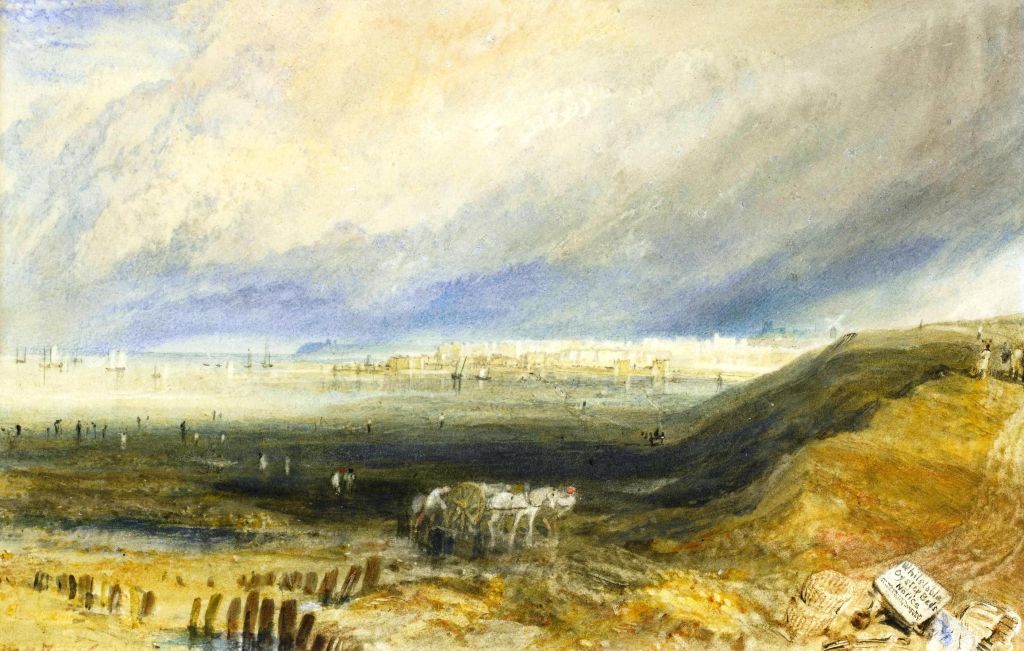
JMW Turner also found time to record the area.

Sold for £ 252,000 inc. premium

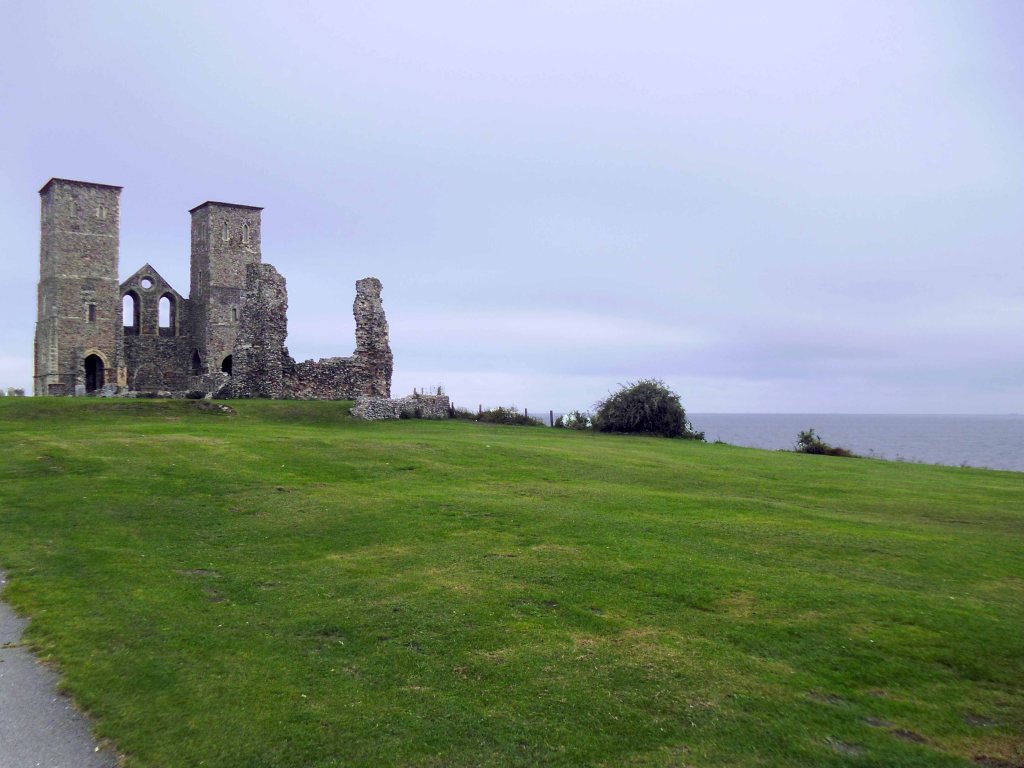
Along the long straight coastline the distinctive and distinguished silhouette of Reculver Castle can be seen in the distance.

Two thousand years ago the geography of this area was very different. The Wantsum, a sea channel up to 3 miles wide, cut off the Isle of Thanet from the mainland, and the Roman fort of Reculver stood on a promontory at the north end of the channel where it joined the Thames estuary. Today the Wantsum has silted up and become dry land.

By the 5th century the Romans had abandoned their defence of Britain and the fort at Reculver had fallen into disuse.

An Anglo-Saxon monastery was founded on the site in 669, reusing the existing defences, and the church of St Mary was built near the centre of the earlier fort. Documentary evidence suggests that the site had ceased to function as a monastic house by the 10th century, after which time the church became the parish church of Reculver.

Remodelling of the church in the 12th century included the addition of tall twin towers.

The medieval church was partly demolished in 1805, when much of the stone was reused to construct a new church on higher ground at Hillborough, but the twin towers were left. They were bought, repaired and underpinned by Trinity House in 1809.

English Heritage

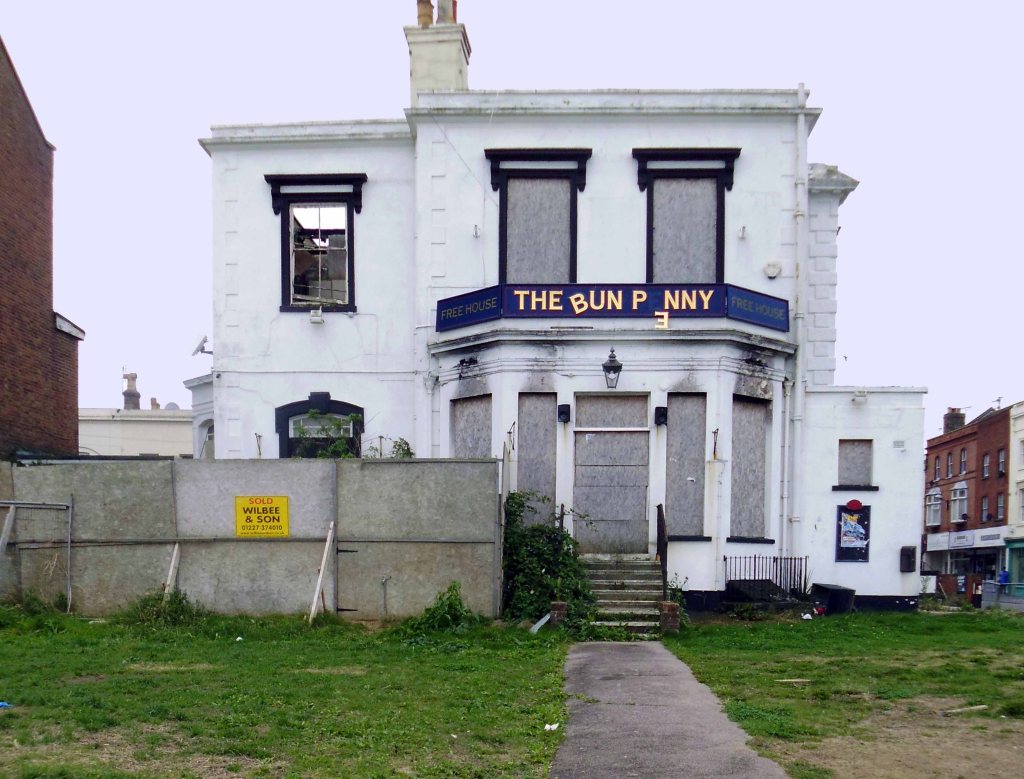
I breezed through Herne Bay past the curiously named Bun Penny pub

Burnt down in 2011 – the subject of ever changing plans and possibilities.

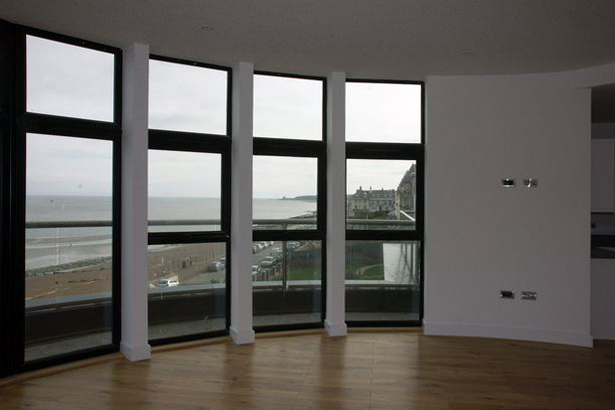
A derelict Herne Bay pub has been transformed into luxury seafront apartments and this is how much they cost.

We would encourage owners of other empty properties in the Herne Bay area to get in touch as we find new ways to rejuvenate the town and attract new people to work, live and visit.

Kent Live

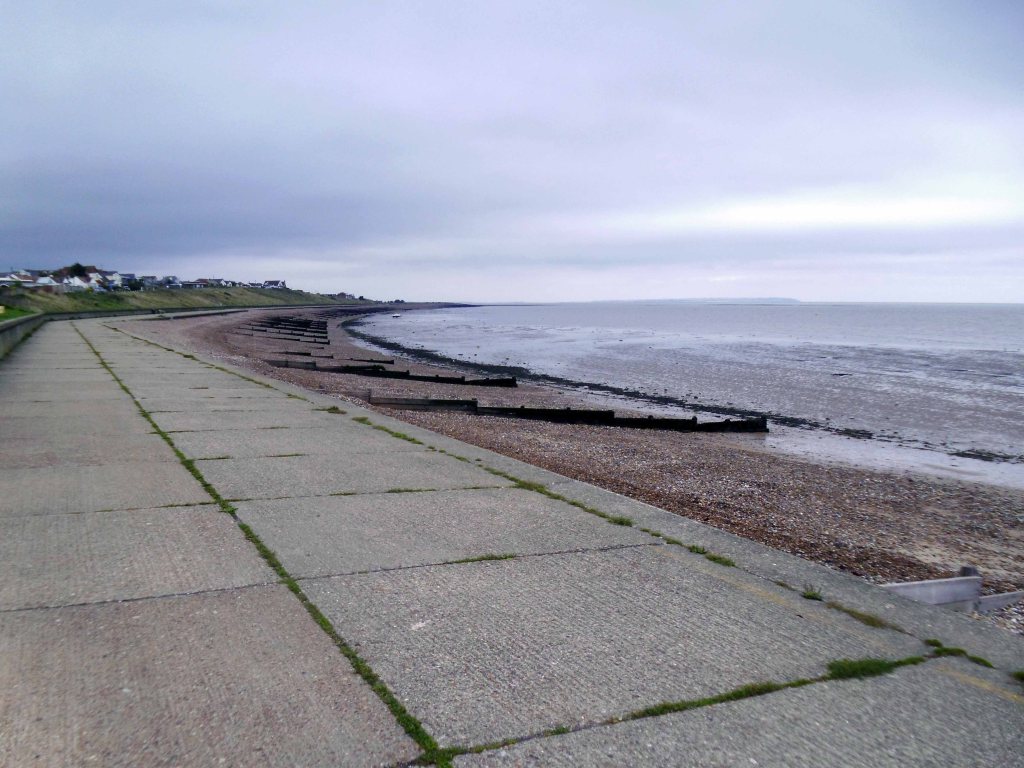
Further along the unstable concrete coast we approach Whitstable.

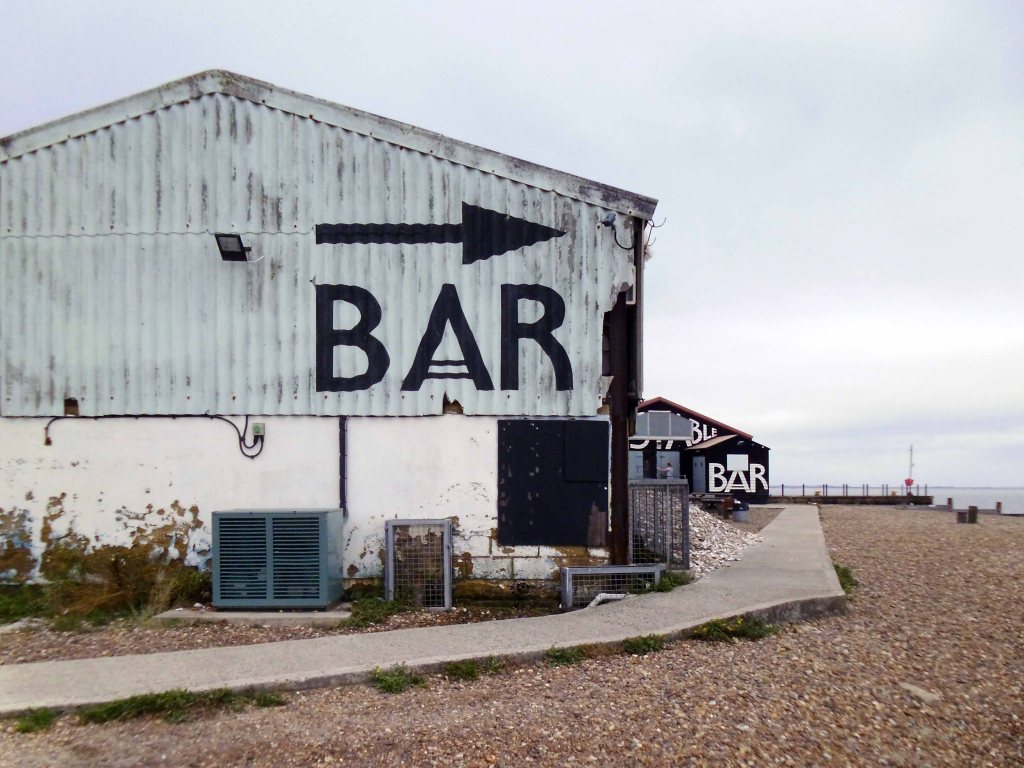
With its chi-chi cafes and bars, tastefully ramshackle shacks and snacks.

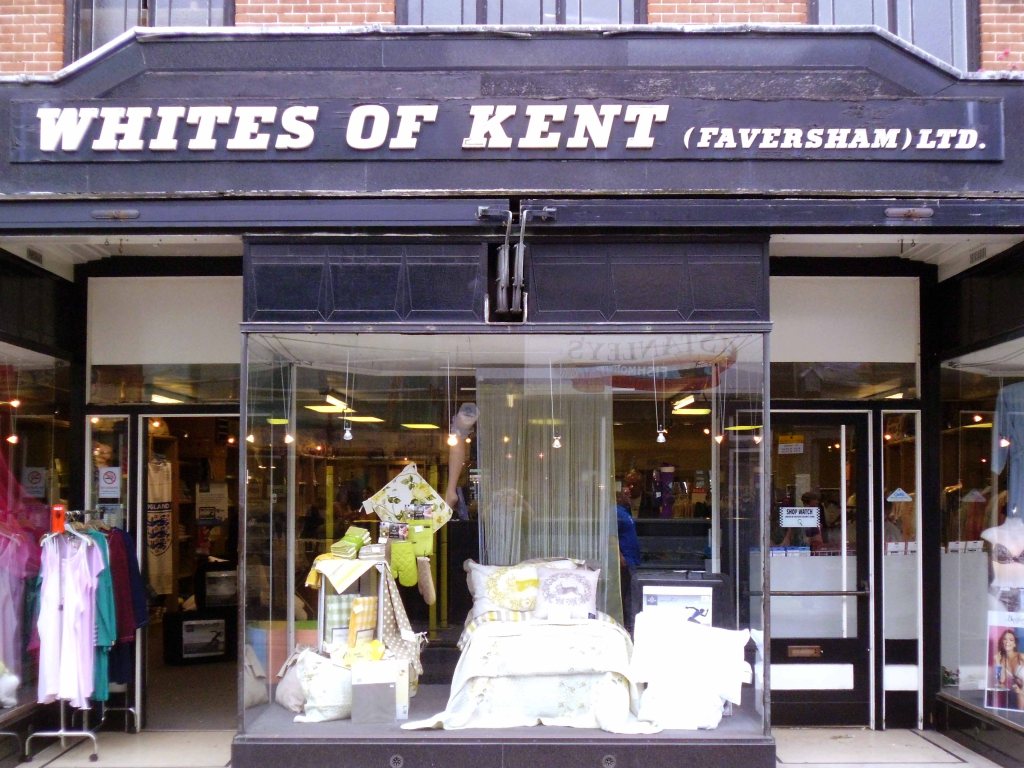
Profil fronted fascias for family run department stores.

Whites of Kent is a family company now into the third generation of close family members. The original story begins with a young ambitious girl of 18 who knew all about stocking repair machines. She travelled to Australia by boat then on to Switzerland and Paris where she trained women and gave demonstrations on the stocking machines.

In 1954 the retail side commenced again with a ladies underwear shop in Faversham’s Market Street, followed by a fashion shop in Market Street and then our current shop in Court Street.

We have in the past had shops in Sandwich, Sittingbourne, Herne Bay, West Malling, Folkestone and Cliftonville. Currently we have Whites of Kent shops in Faversham, Whitstable and Dover selling lingerie, linen, hosiery, underwear, slippers and more. See our Shop page for addresses, phone numbers and opening times.

Whites of Kent

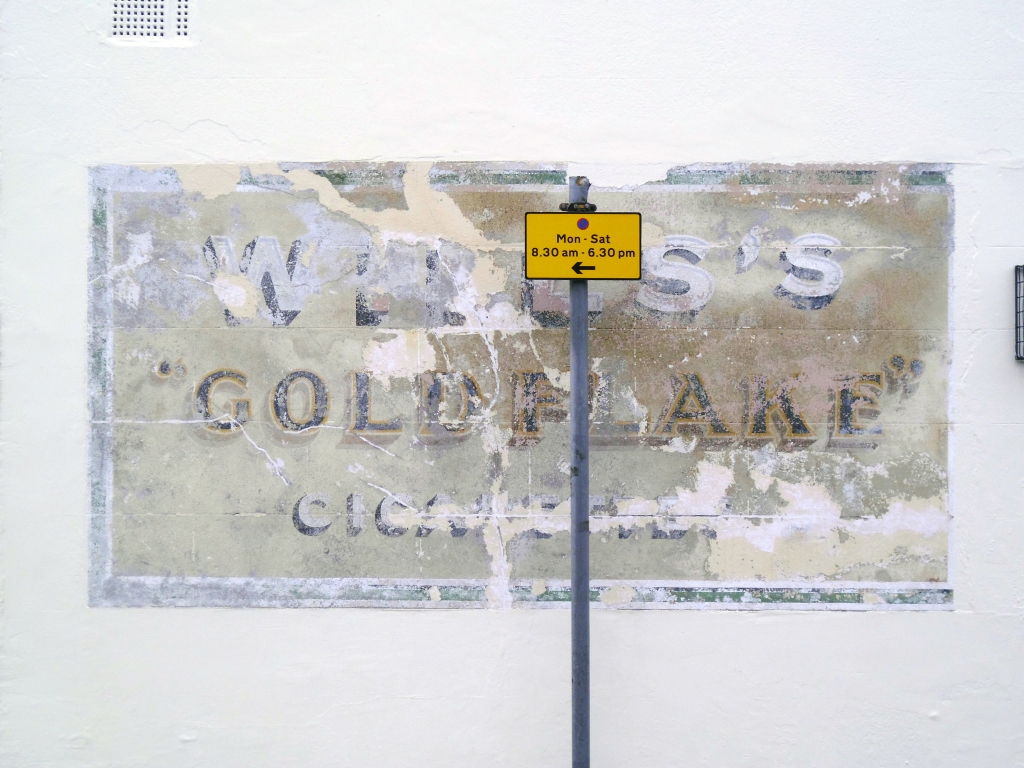
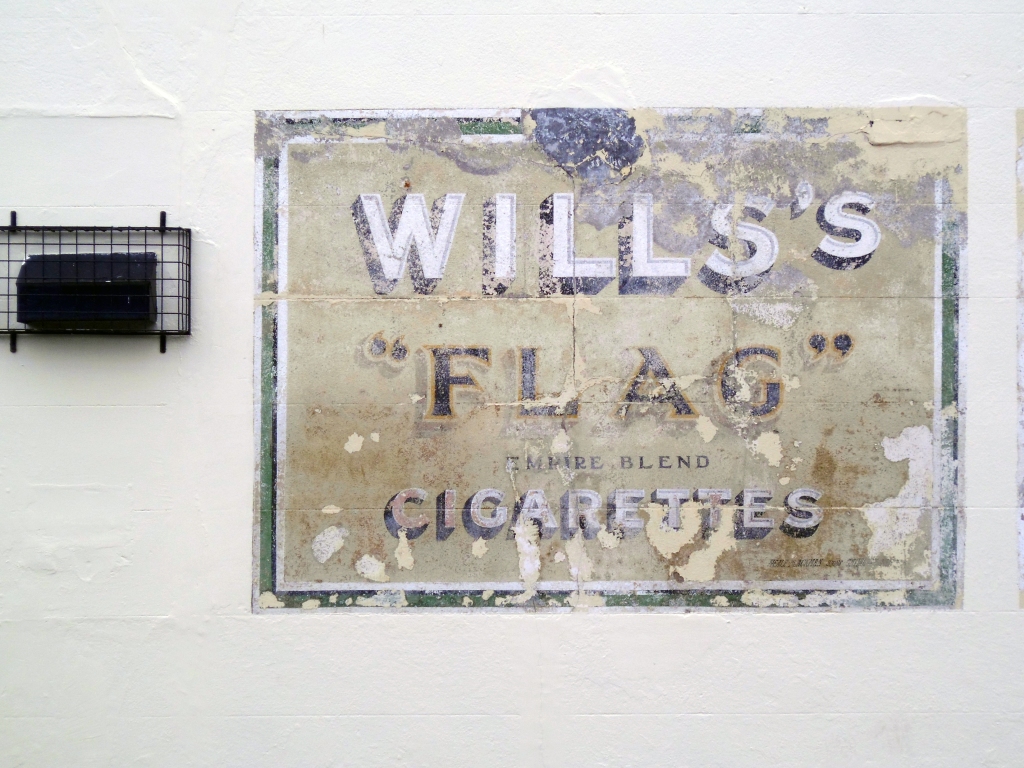
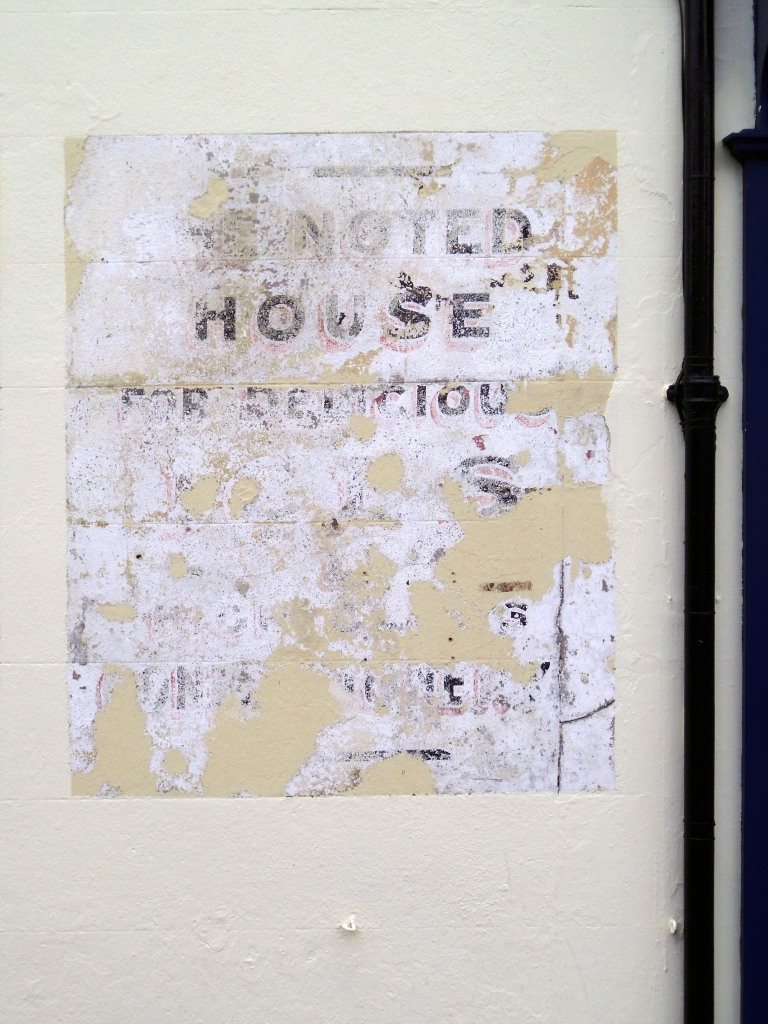
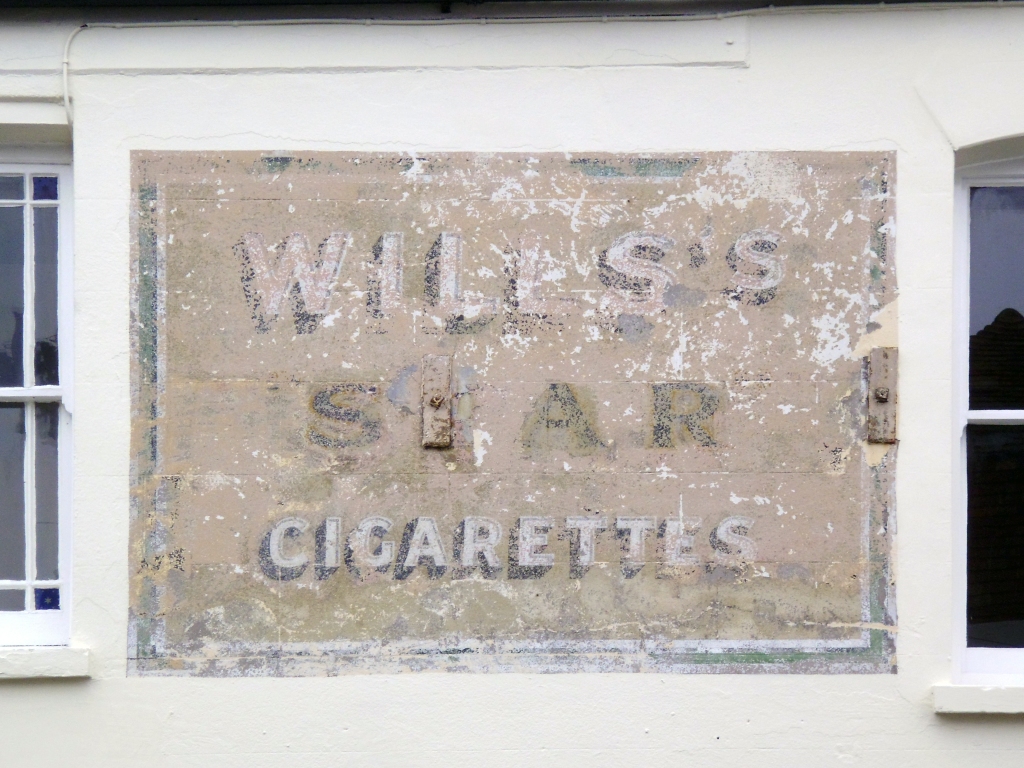
A fine display of tobacconist’s ghost signs.

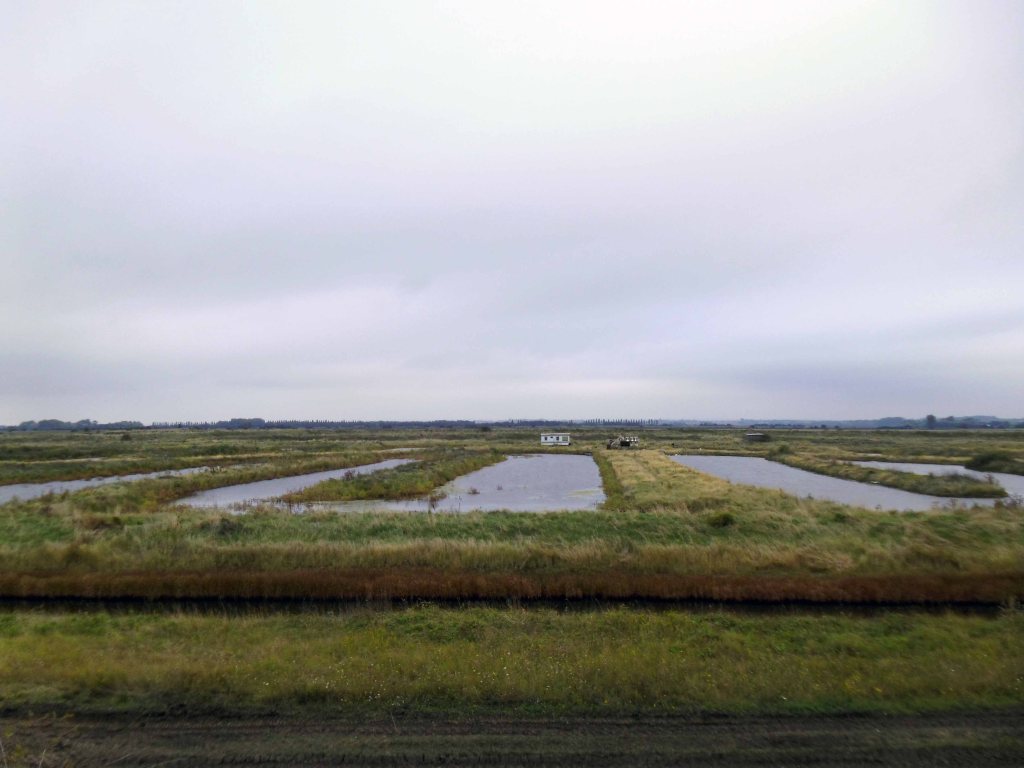
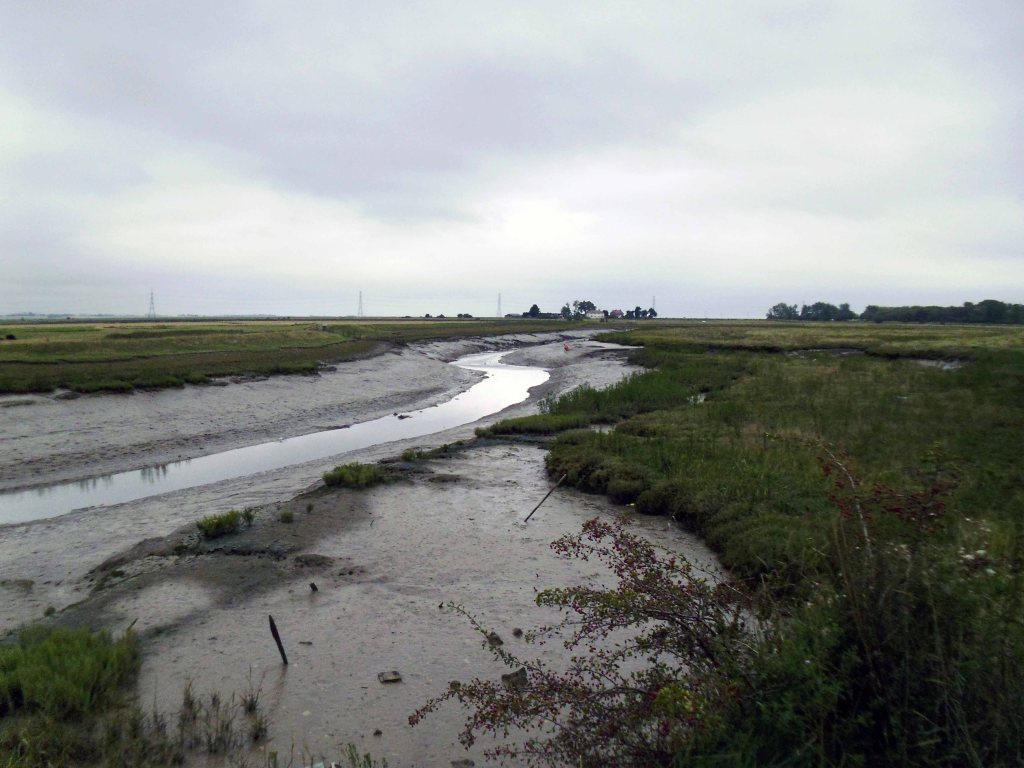
The road winds through the low marshes, across estuaries and inlets, between Seasalter and Graveney.

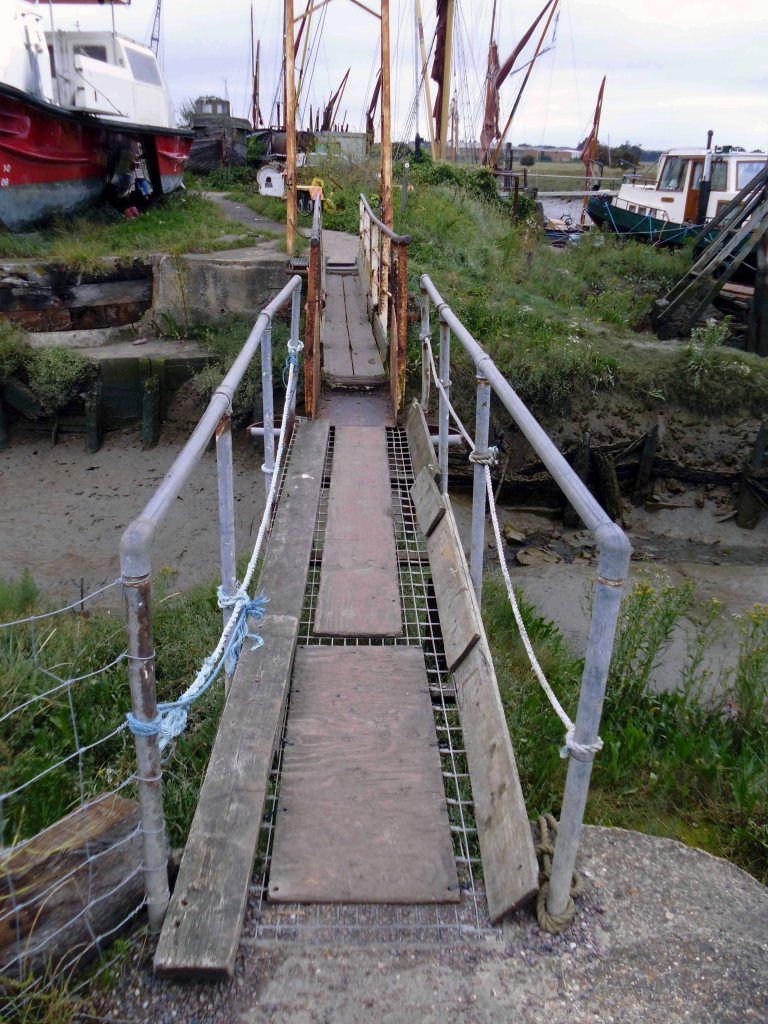
Home to a down home, home made fishing fleet.

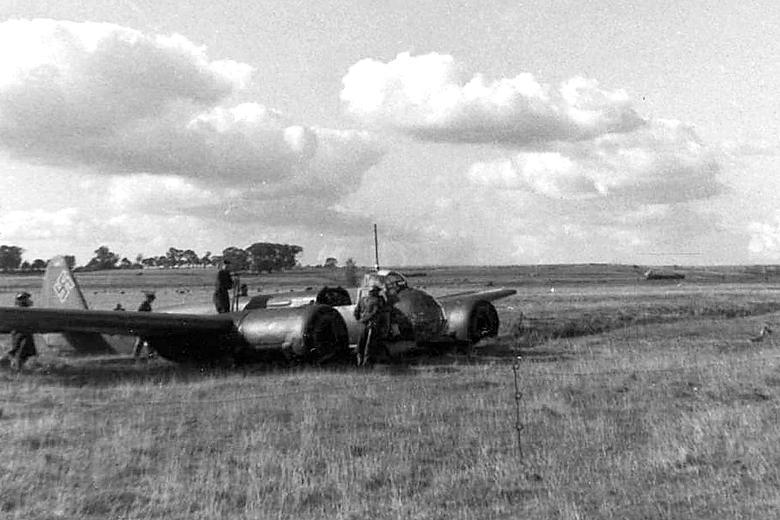
Members of the 1st Battalion London Irish Rifles guarding the downed Junkers Ju 88A1

On September 27 1940 – a Luftwaffe bomber was shot down by two Spitfires over Graveney Marsh after a raid on London. This was the last ground engagement involving a foreign force to take place on the mainland of Great Britain.

Wikipedia

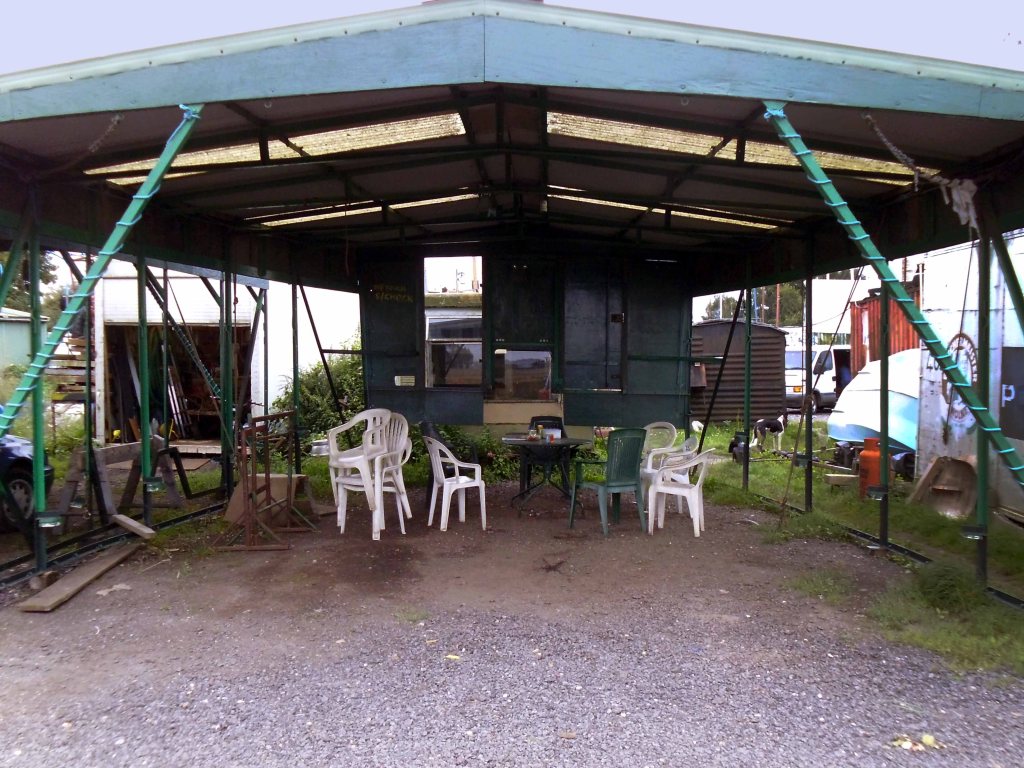
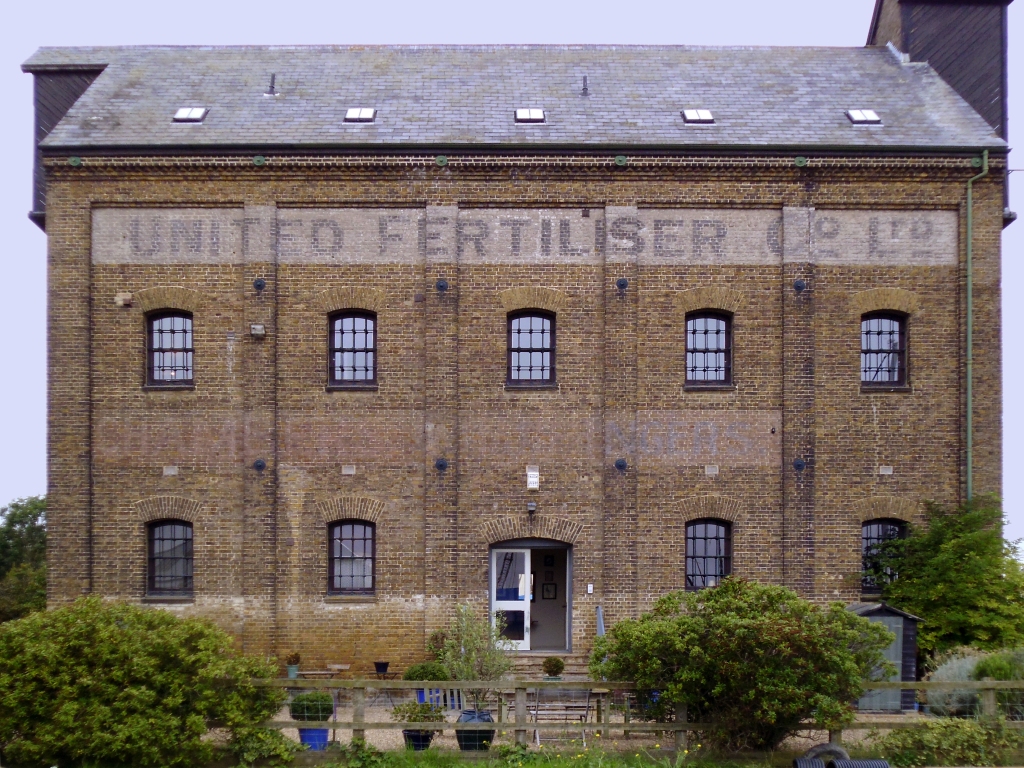
As is common in post-industrial England industrial buildings become executive homes, busy ports become marinas or moribund marshes.

Ready for conversion to a bijou des-res.

It was time to make time through the garden of England – pressing on past hillbilly hideaways.

Housing late Ad Reinhardt’s.

My painting represents the victory of the forces of darkness and peace over the powers of light and evil.

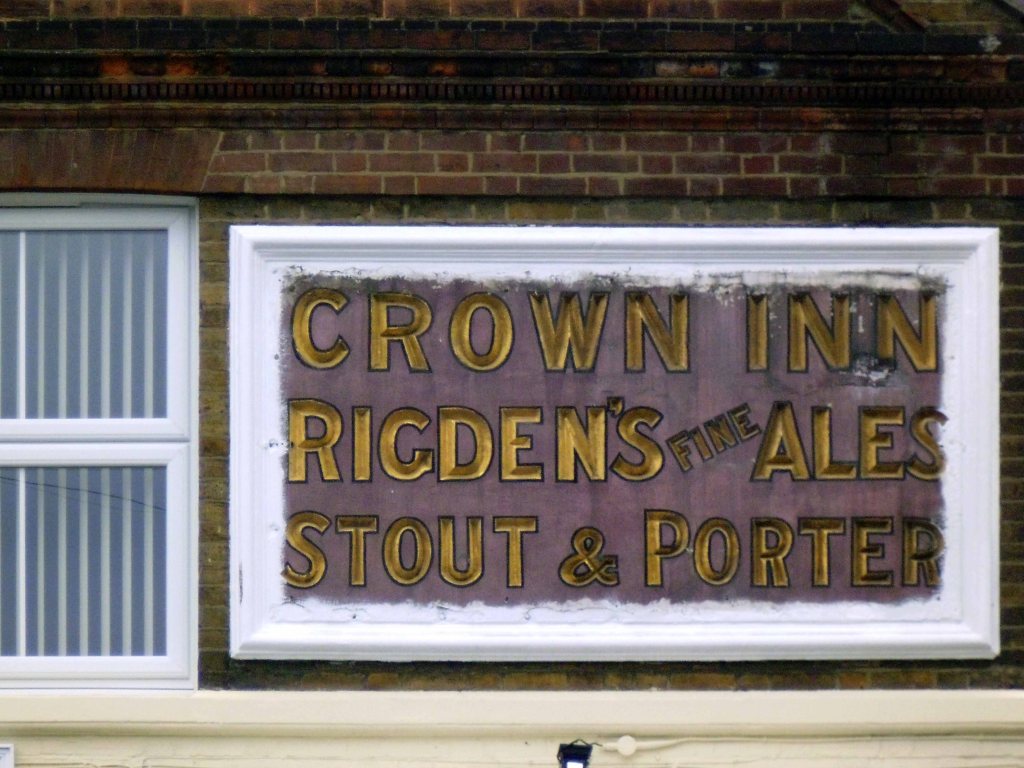
Founded in the early 1700s by Edward Rigden. Registered in 1902 as Rigden & Co. Merged with George Beer & Co. Ltd in 1922 to form George Beer & Rigden, not being limited until 1927.

Was acquired by Fremlins Ltd in 1948 and brewing ceased 1954.

Brewery History

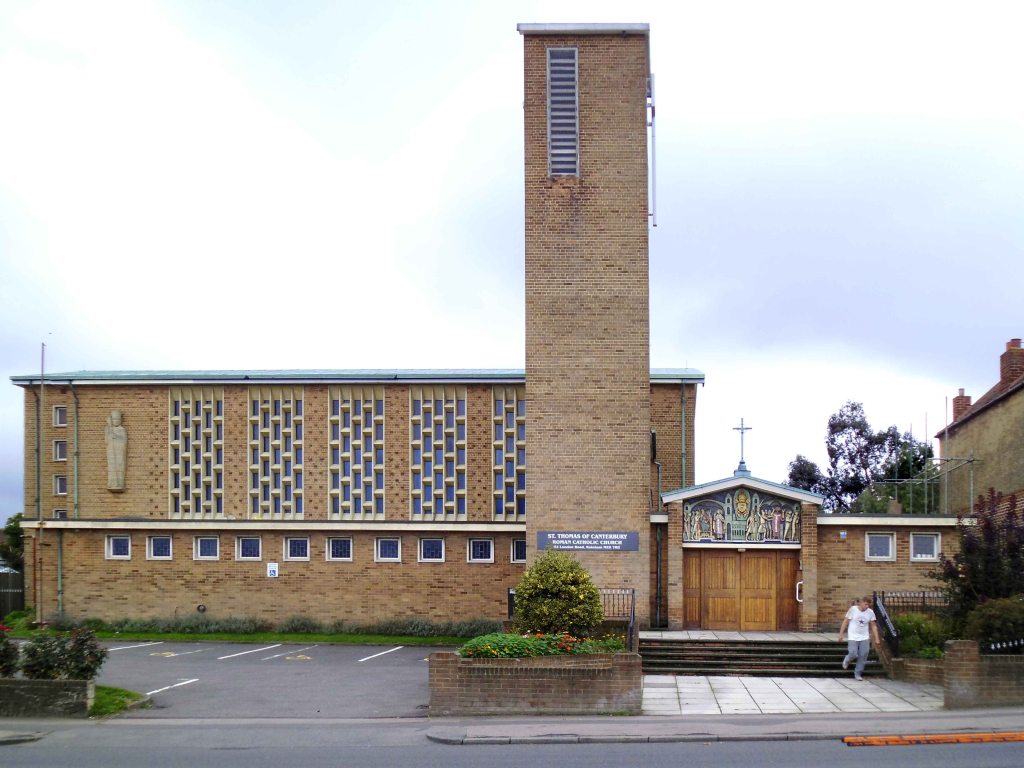
Dulled by dual carriageways and the dirty urban dust of a sunny late summer’s day – I was more than happy to discover this Modernist church in Rainham.

St Thomas of Canterbury RC

A  modern  church  of  1956-58  by  Eduardo  Dodds.  The  atmospheric interior is decorated with fine sculpture by Michael Clark, and ceramic panels by Adam Kossowski. The tower is a local landmark. The former temporary church of 1934 survives as the Parish Centre.

Taking Stock

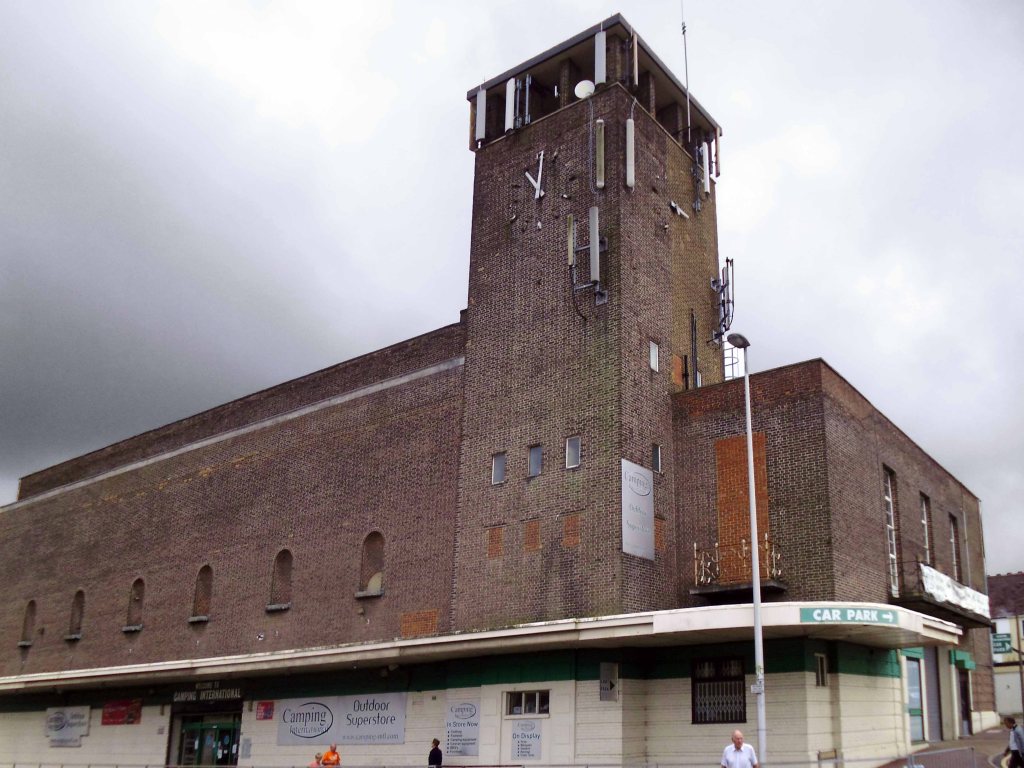
Followed by another brick behemoth the Gaumont Chatham.

The Palace Cinema was built by a subsidiary of the Gaumont British Theatres chain, and opened on 30th November 1936. The exterior had a tall square clock tower, which was outlined in neon at nightArchitect Arthur W. Kenyon

Re-named Gaumon from 18th December 1950, closed by the Rank Organisation on 2nd February 1961 with John Gregson in The Captain’s Table.

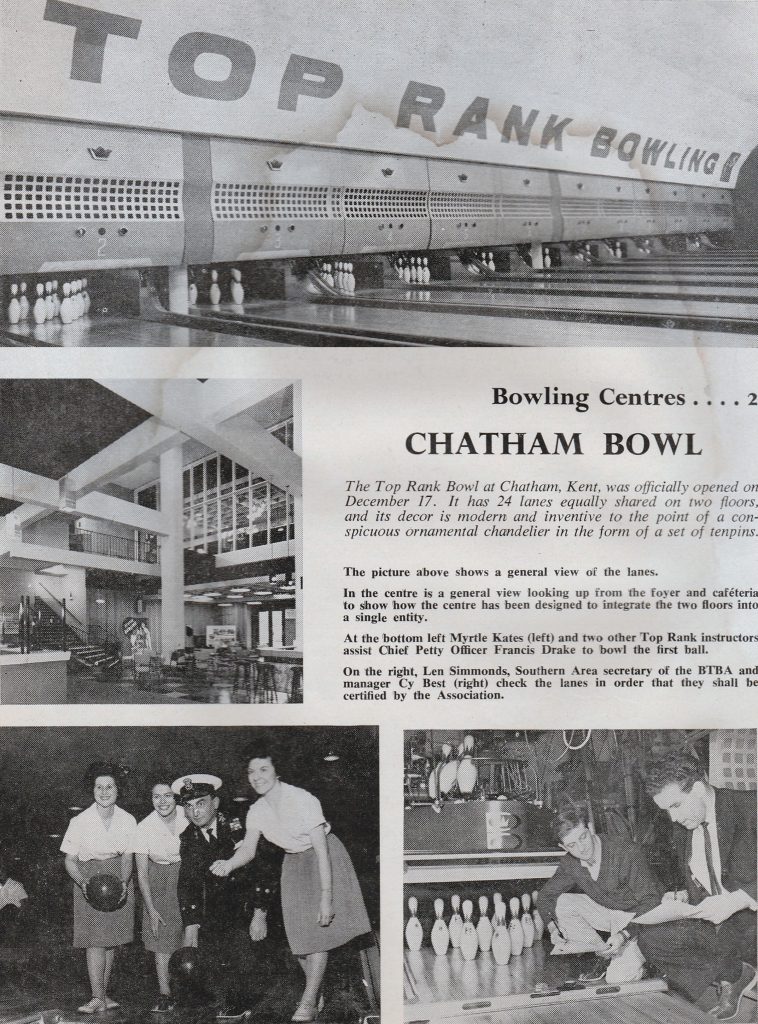
It was converted into a 24-lane Top Rank Bowling Alley, which opened in December 1961. Eventually, this was the last of the Top Rank Bowls to close, closing on 31st October 1970.

The building was converted into a B&Q hardware store, and the interior has been gutted. It was later in use as a camping centre, which remains open in 2010 as Camping International. The building is now known as Clock Tower House.

Cinema Treasures

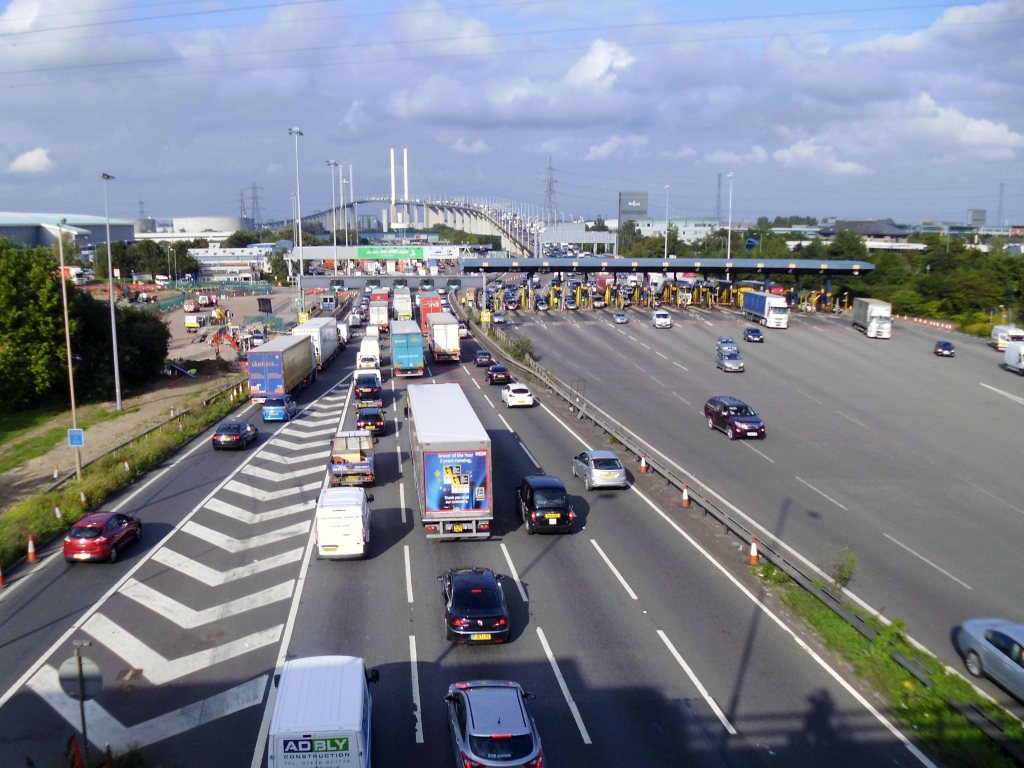
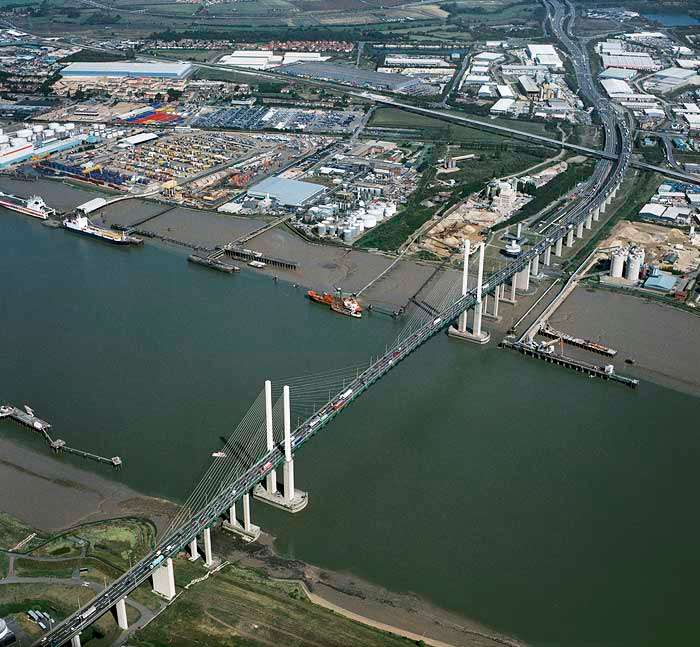
Queen Elizabeth II Bridge Toll.

Designed by German civil engineer Hellmut Homberg, the two main caissons supporting the bridge piers were constructed in the Netherlands. ] The bridge deck is about 61 metres high, and it took a team of around 56 to assemble its structure.

The bridge was opened by Queen Elizabeth II on 30 October 1991. The total cost of construction was £120 million. The proposed name had been simply the Dartford Bridge, but Thurrock residents objected and suggested the Tilbury Bridge, leading to a compromise. At the time of opening, it had the longest cable-stayed span of any bridge in Europe.

Wikipedia

I arrived at the Dartford Crossing hot and hungry – wandering towards the tunnel entrance, only to be apprehended by the authorities.

What are you doing here?

I pleaded for a glass of water and directions, happily I received both from a friendly member of staff.

Picked up by Range Rover and driven over to Essex free of charge.

Wearily I made my way across the county, no time for snaps it seems, simply wishing to hit town before nightfall. None of my B&Bs were booked ahead of time and I’ve never had a ‘phone. Finding a bed for the night proved troublesome – knocking on the door of a minor hotel, I was rebuffed by a Beatle suited, be-wigged figure:

Are you to take the vacancies sign down then – says I.

No – says he.

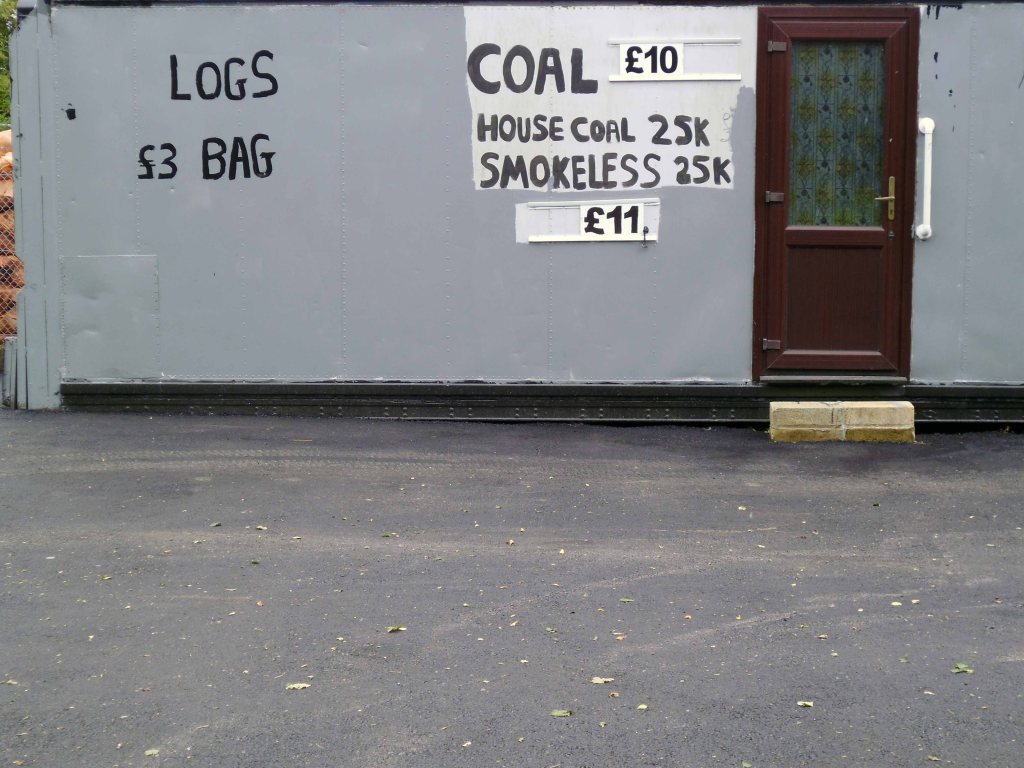
Under cover of darkness I holed up in a contractors’ flop house on the front, no-frills communal showers, short shrift and cold linoleum, but a welcome repose none the less.

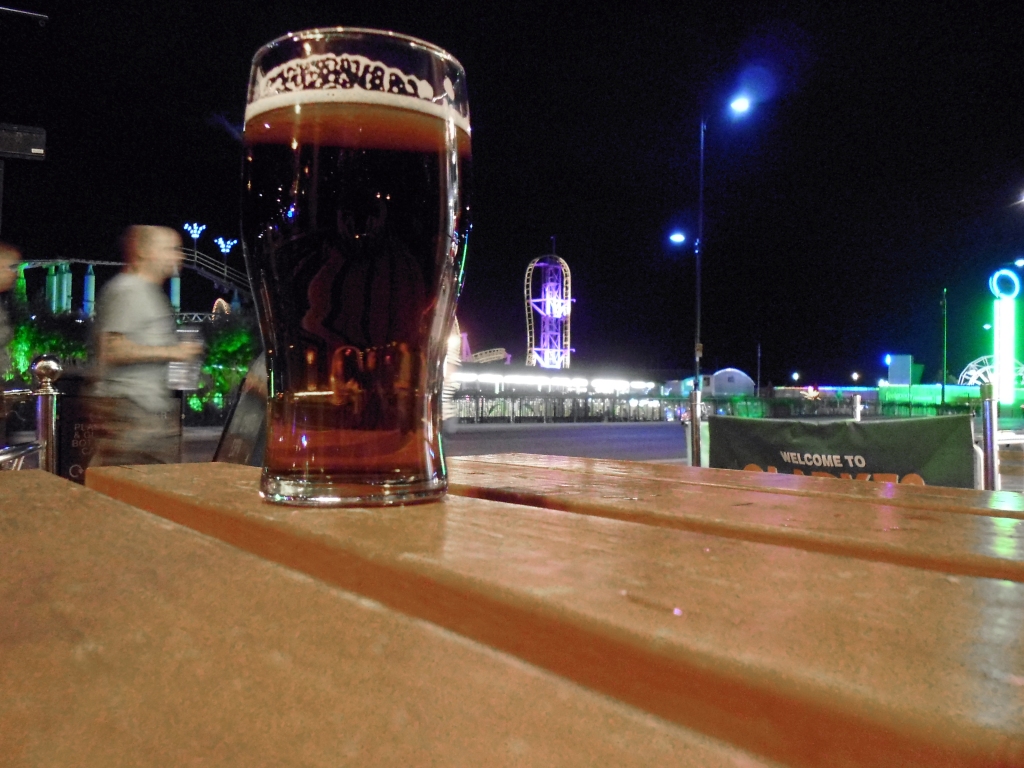
Some pints don’t touch the sides – this and several others didn’t, ‘neath the flickering lights of Southend by night.

A wobbly walk along the prom.

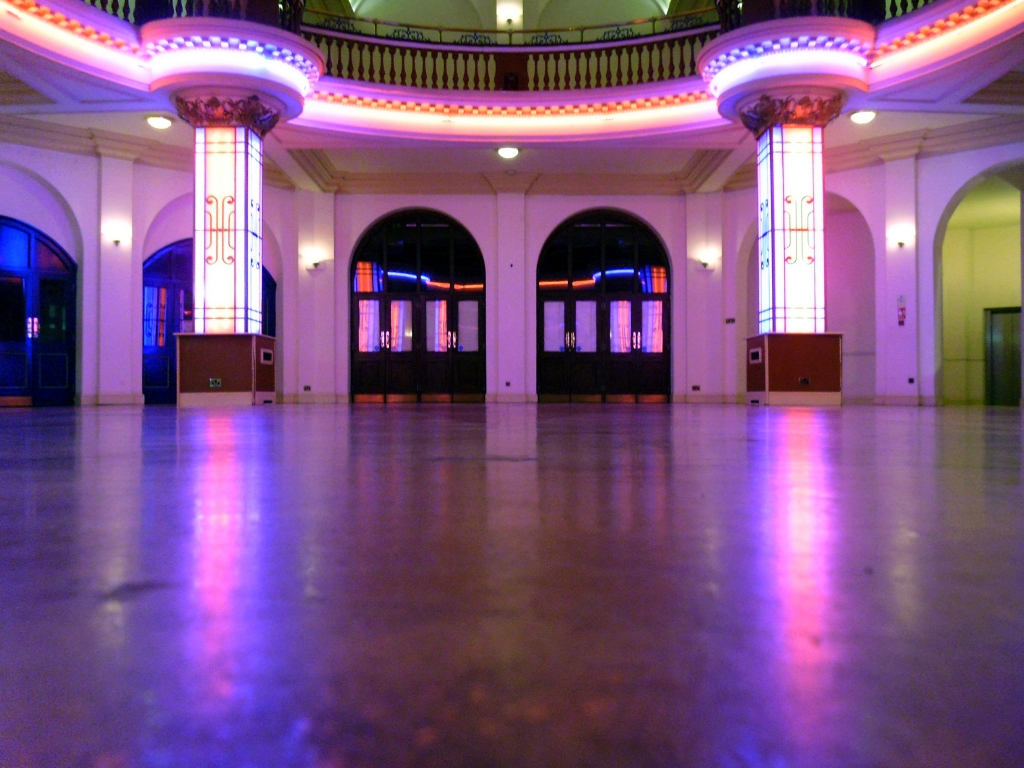
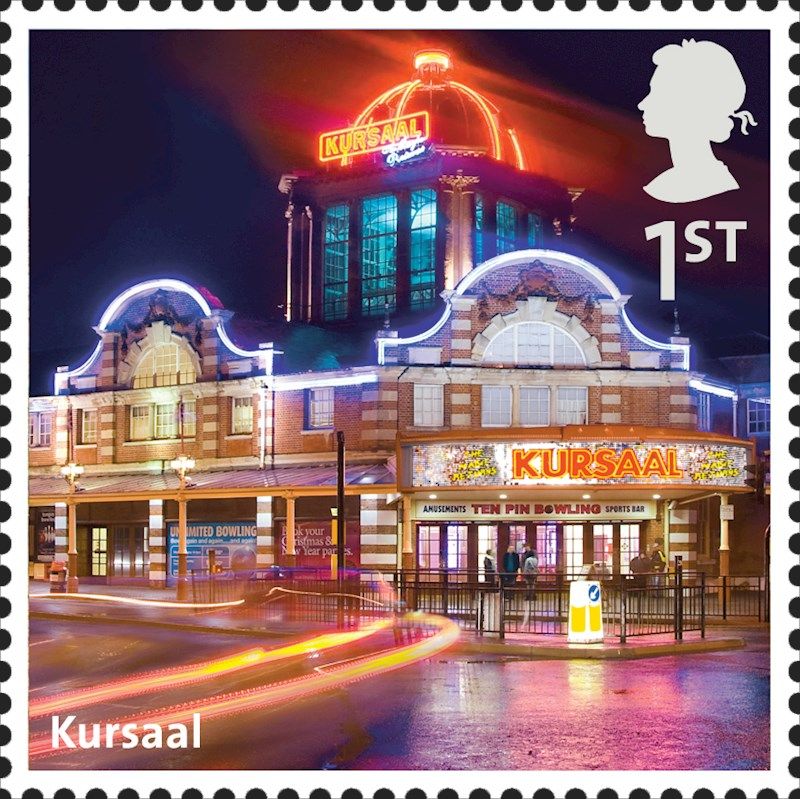
Fetching up with pic of the Kursaal.

The Kursaal is a Grade II listed building in Southend-on-Sea which opened in 1901 as part of one of the world’s first purpose-built amusement parks. The venue is noted for the main building with distinctive dome, designed by Campbell Sherrin, which has featured on a Royal Mail special edition stamp.

Wikipedia

Night night.
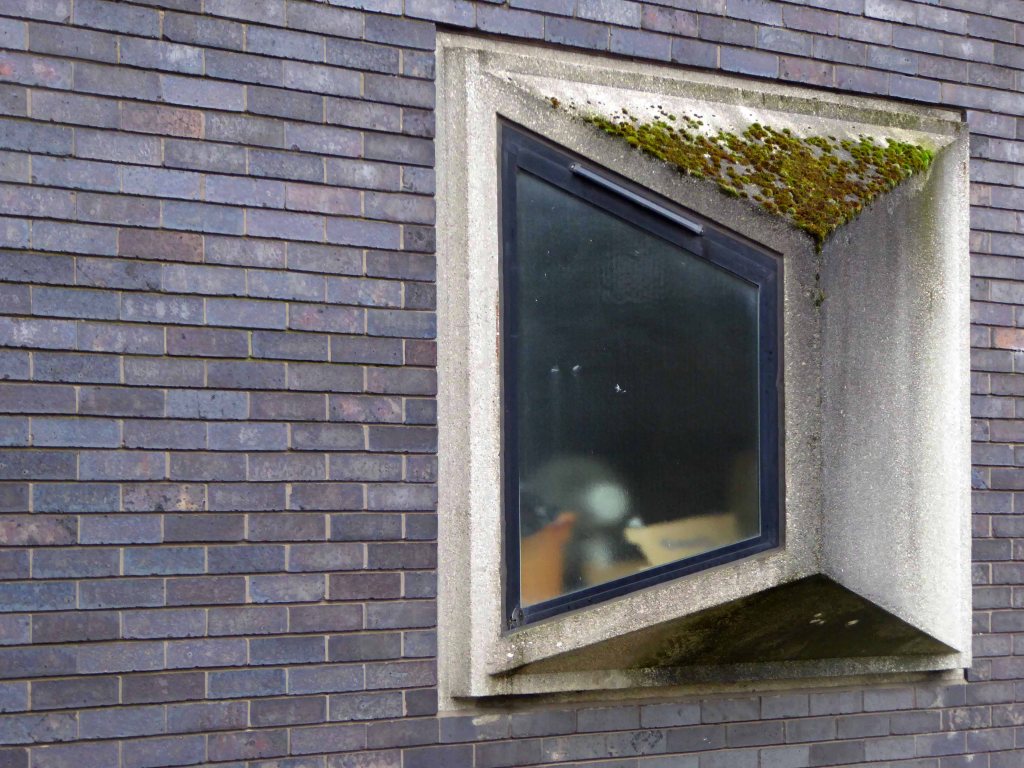
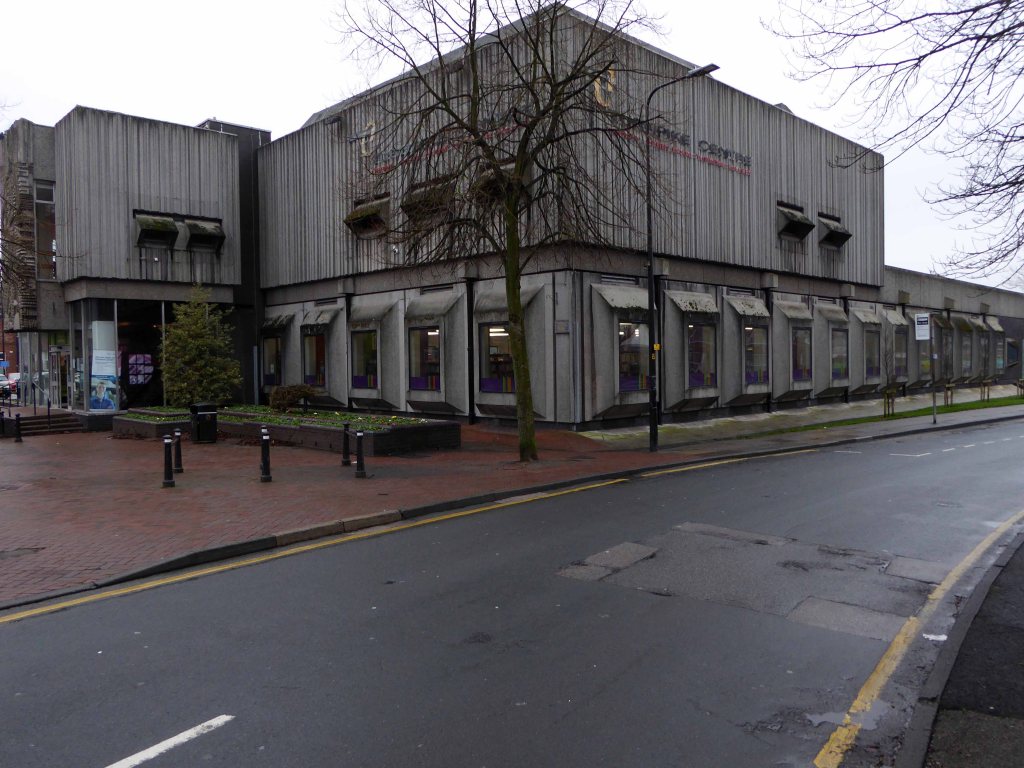
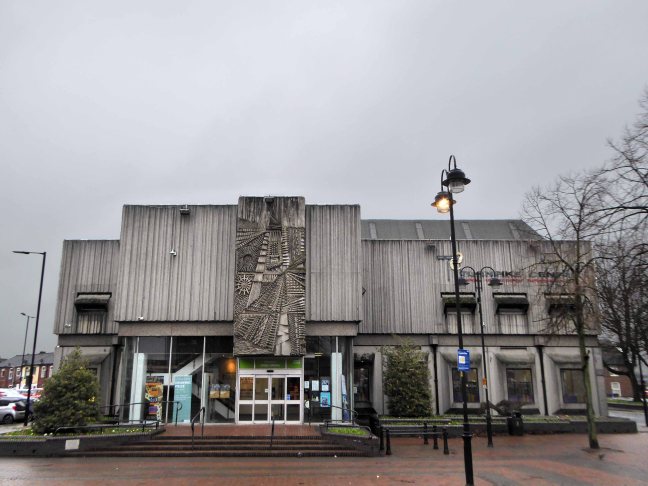
Turnpike Centre – Leigh

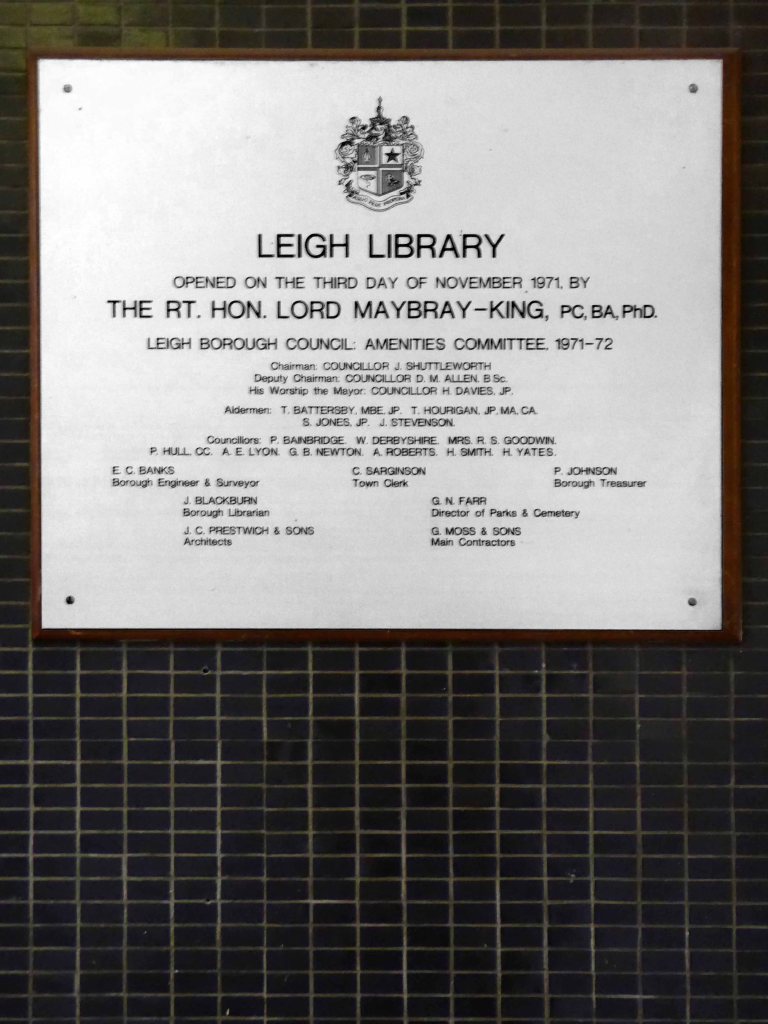
The Turnpike Centre was designed by J C Prestwich and Sons architects, who, incidentally, also designed Leigh Town Hall nearly 70 years earlier.

Since its opening in 1971, the bustling library, thriving art gallery and popular meeting rooms have seen a phenomenal 12 million people walk through the doors, while staff have answered almost 400 thousand questions and issued more than 17 million books, cassettes and CDs.

The fascia is graced by a grand cast concrete relief the work of William Mitchell.

All but abandoned by the cash-strapped local council in 2013, Turnpike Gallery in the former mining town of Leigh near Wigan, is entering a new stage in its history with the creation of a community interest company to run its programme.

Natalie Bradbury a.n

Helen Stalker has curated and promoted a series of fine exhibitions in the interim period – sadly arrested by current circumstances.

Let’s take a look around the exterior of a building which reflects the confidence and pride of a very individual town.

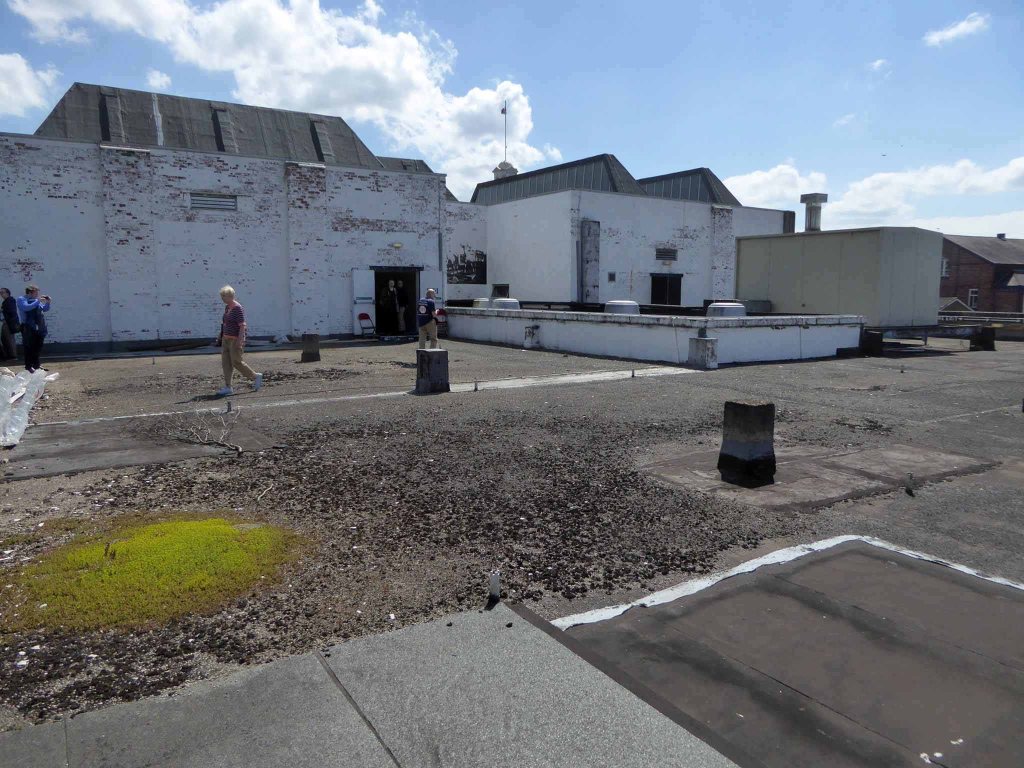
On our last visit we even got to look up on the roof.

So post lockdown, when you feel it’s safe and socially acceptable to do so travel to Leigh – take a look.

Car Park Ramp – Stockport

We recently took a look around Redrock, today we visit the next door neighbour – the car park ramp.

Replacing the old Debenham’s ramp.

Linking the old world of Merseyway with the shiny new NCP.

I don’t drive no car so I have to make do with the ecologically sound and ever so affordable means of pedestrian trespass, proceeding incautiously I recorded my journey into the unknown.

Returning safely to Basecamp I investigated further, circumnavigating the drainage area.

I have to admit that I am over fond of this small sacred space, a modern impenetrable temple of Brutalism. My ambition is to stage an art/music event within, just wait and see/hear if I don’t!

Concrete Island – Stockport

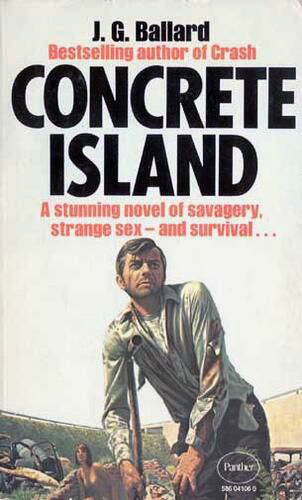
He reached the foot of the embankment, and waved with one arm, shouting at the few cars moving along the westbound carriageway. None of the drivers could see him, let alone hear his dry-throated croak, and Maitland stopped, conserving his strength. He tried to climb the embankment, but within a few steps collapsed in a heap on the muddy slope.

Deliberately, he turned his back to the motorway and for the first time began to inspect the island.

Maitland, poor man, you’re marooned here like Crusoe – If you don’t look out you’ll be beached here for ever. He had spoken no more than the truth. This patch of abandoned ground left over at the junction of three motorway routes was literally a deserted island.

JG Ballard Concrete Island

I’m in a different place – the same but different, whilst out walking I went through an open gate, following a well worn path, for the very first time.

Leading who knows where.

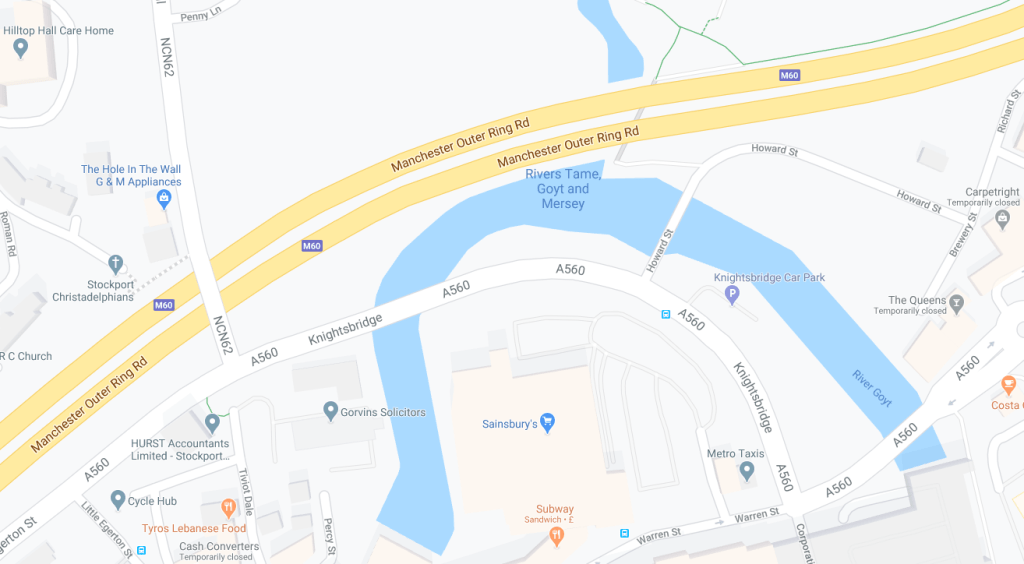
The confluence of three rivers, the meeting of motorway and main road.

I ventured further – where if anywhere are we going?

This tight tree lined and paint daubed triangle offers no answers.

Tamed thirty years or so ago, with concrete and steel.

Further and further.

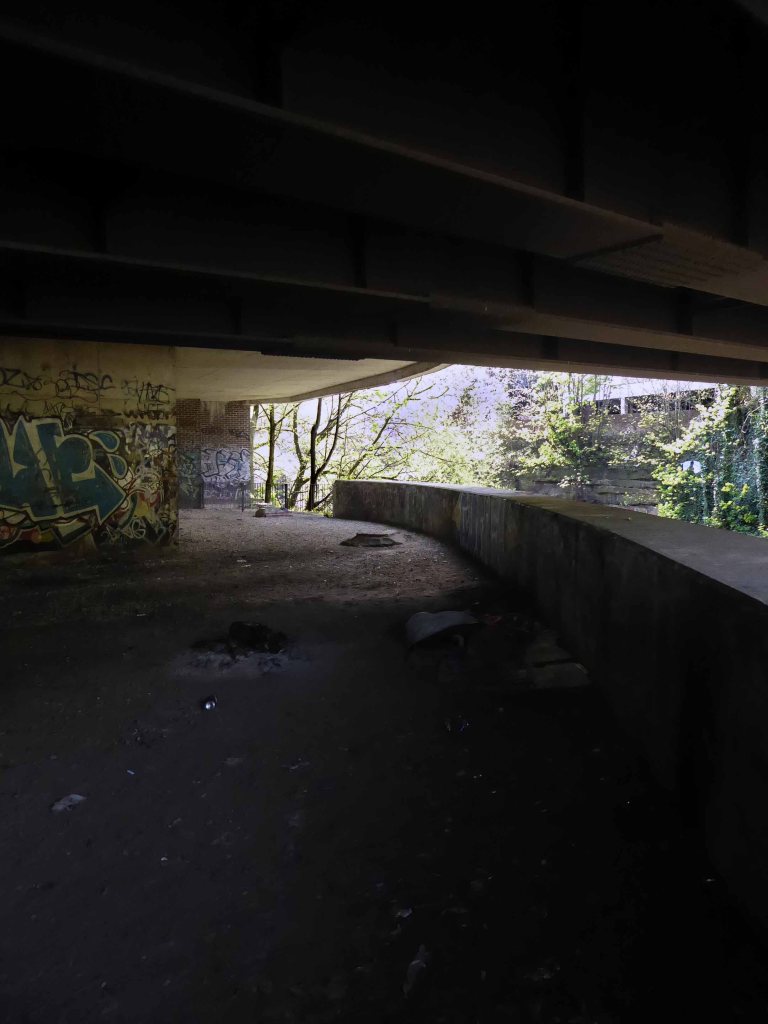
Into an underground world.

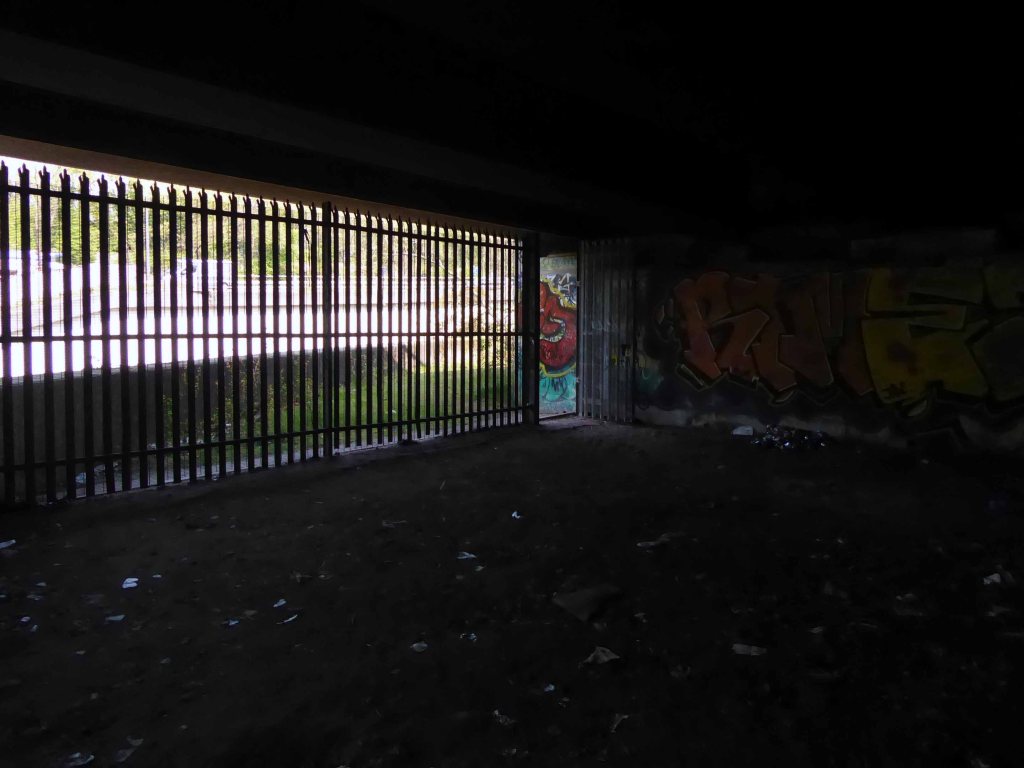
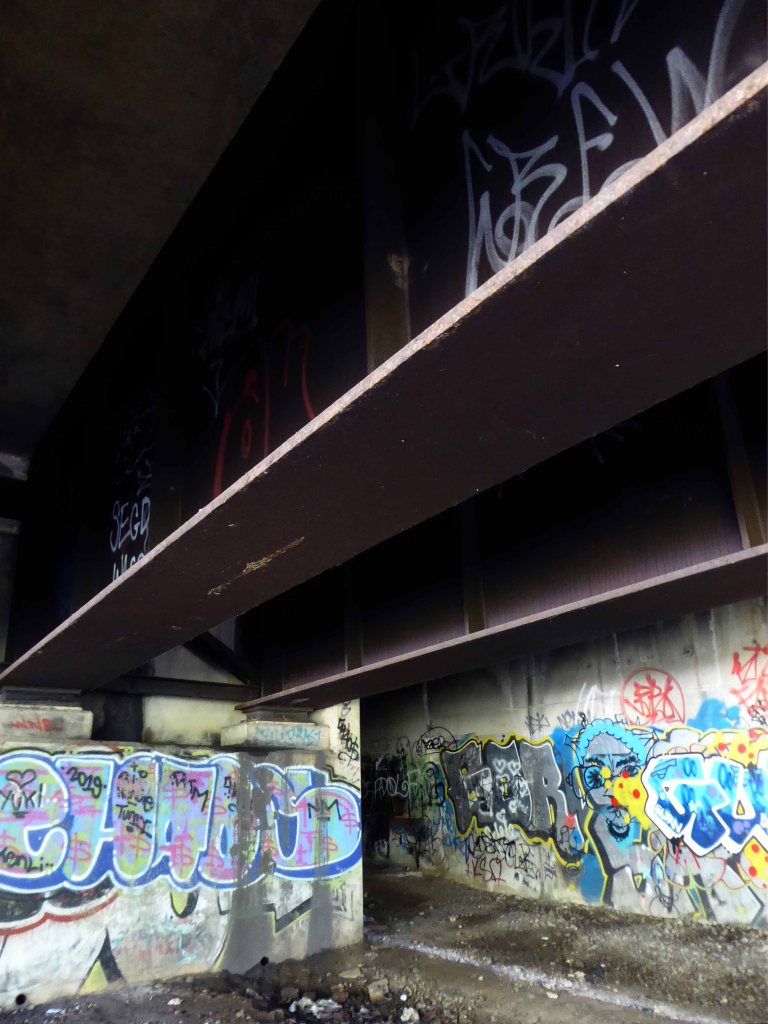
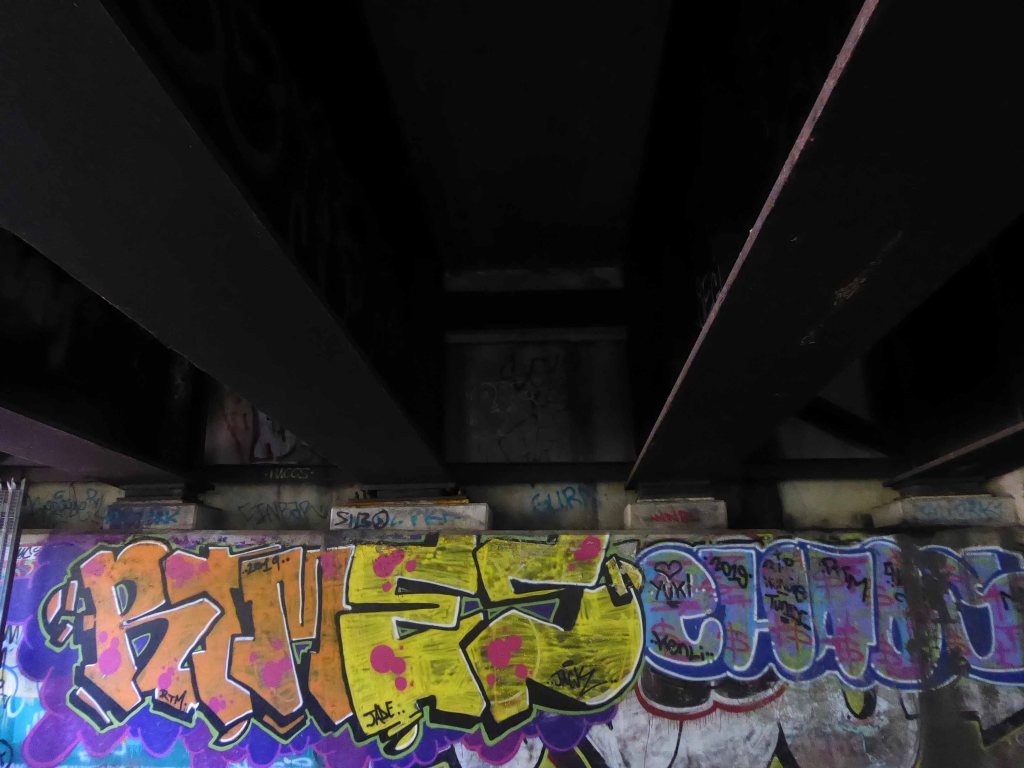
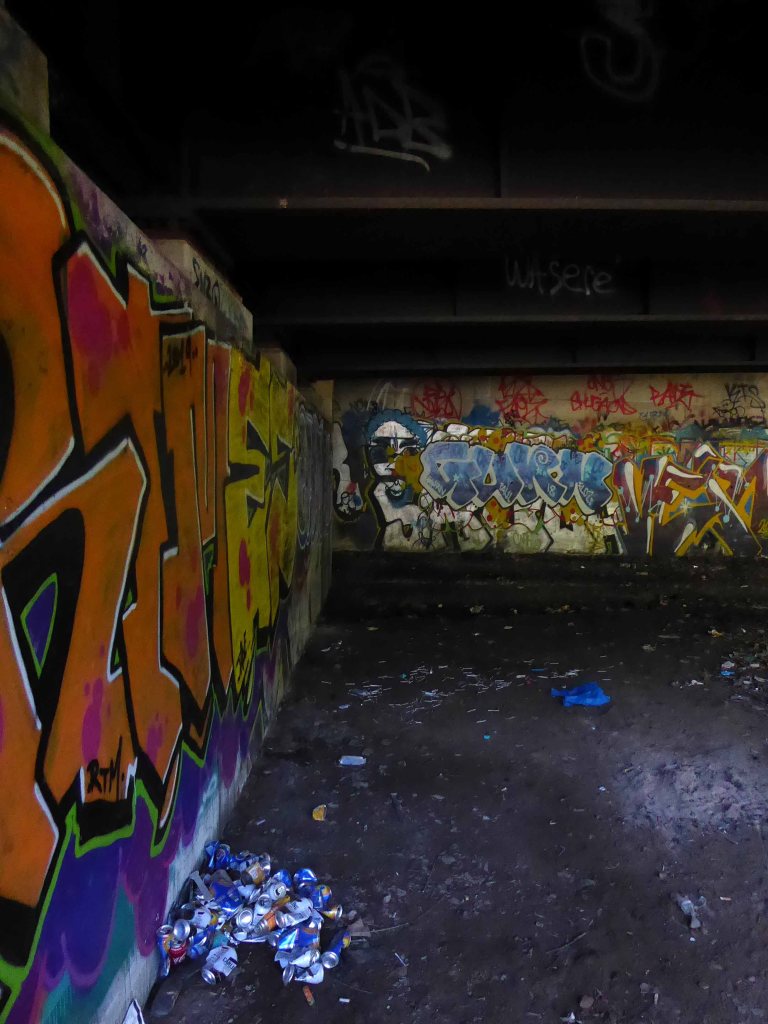
Through the railings and into a void – a void that had become home to the otherwise engaged, seeking solace somewhere, finding shelter from the storm. A storm of Twenty First Century austerity, man made – moving money around until those without are out, out in the open, nowhere else to go but here.

How often have I lain beneath rain on a strange roof, thinking of home. 

William C. Faulkner

Stopford House – Again and Again

Third time around – on a late lockdown April evening.

I’ve been here before and before, yet I come back again and again.

It’s different every time, deserted at the best of times, during the worst of times it seems even more so – not a soul in sight. The low warm sun affords the bare concrete a pale pink and orange glow.
The mix contained coarse aggregate from the Scottish Granite Company of Creetown, a fine Leemoor sand from the Fordamin Company, together with white cement.

So here we are again, again:

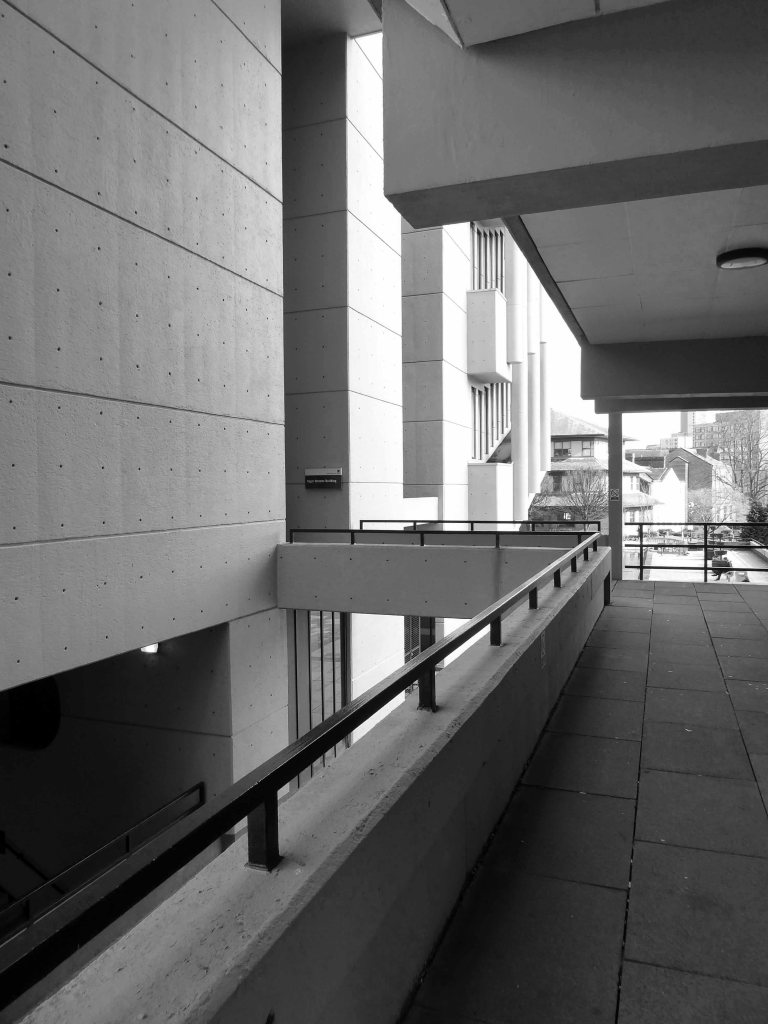
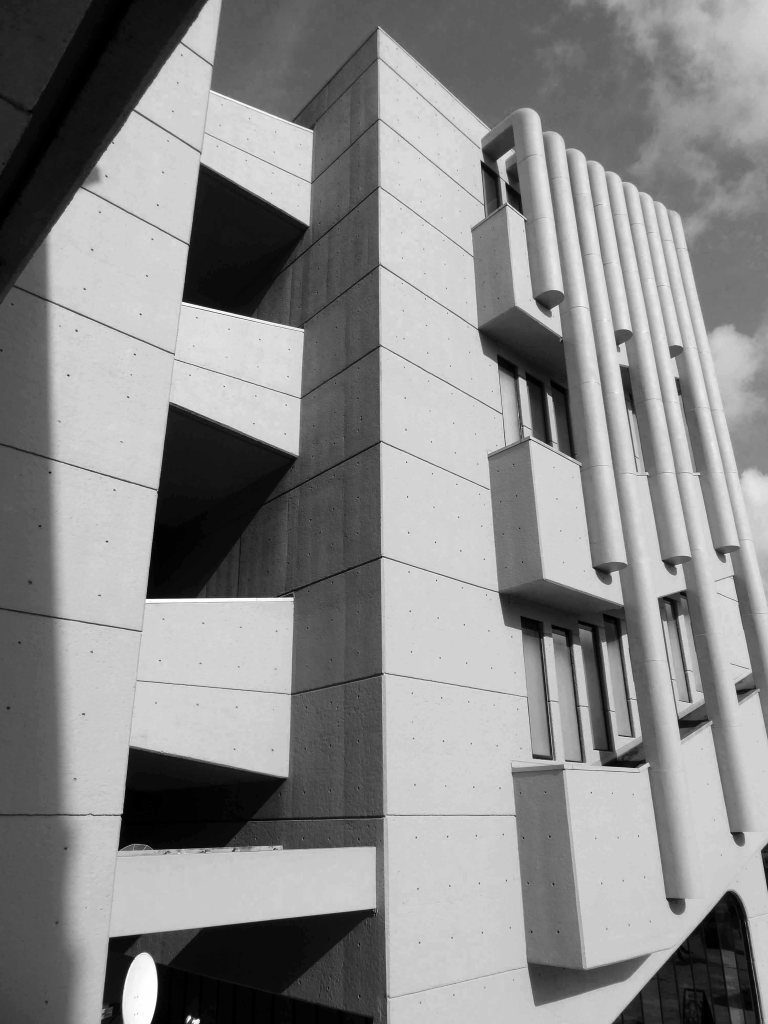
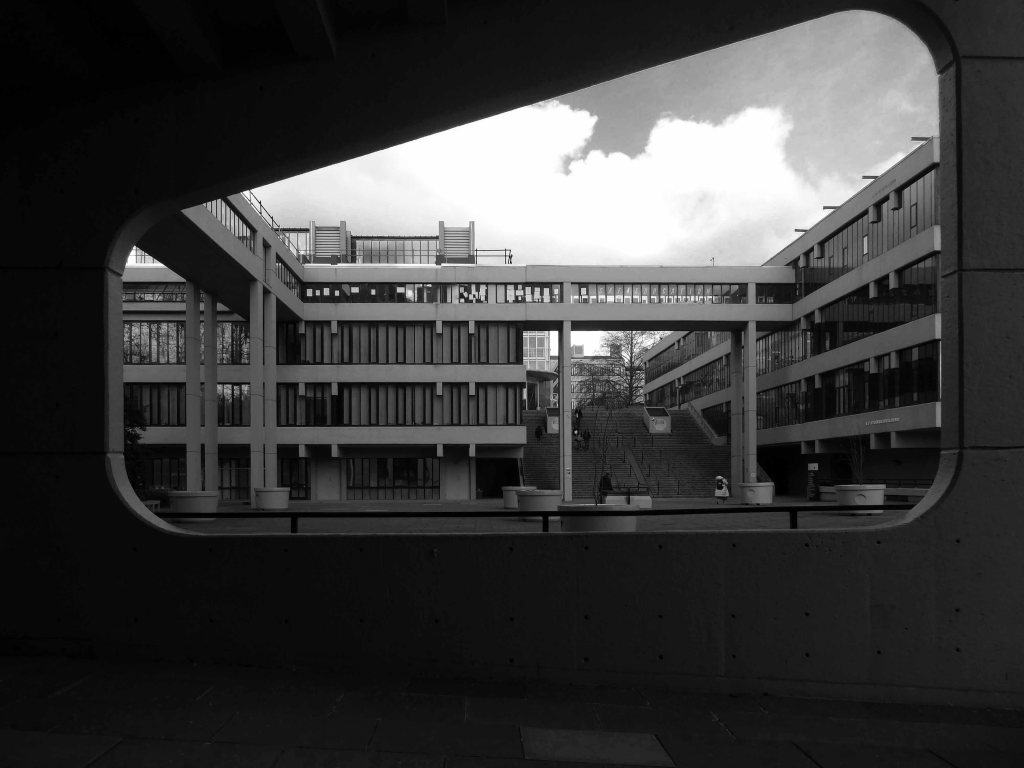
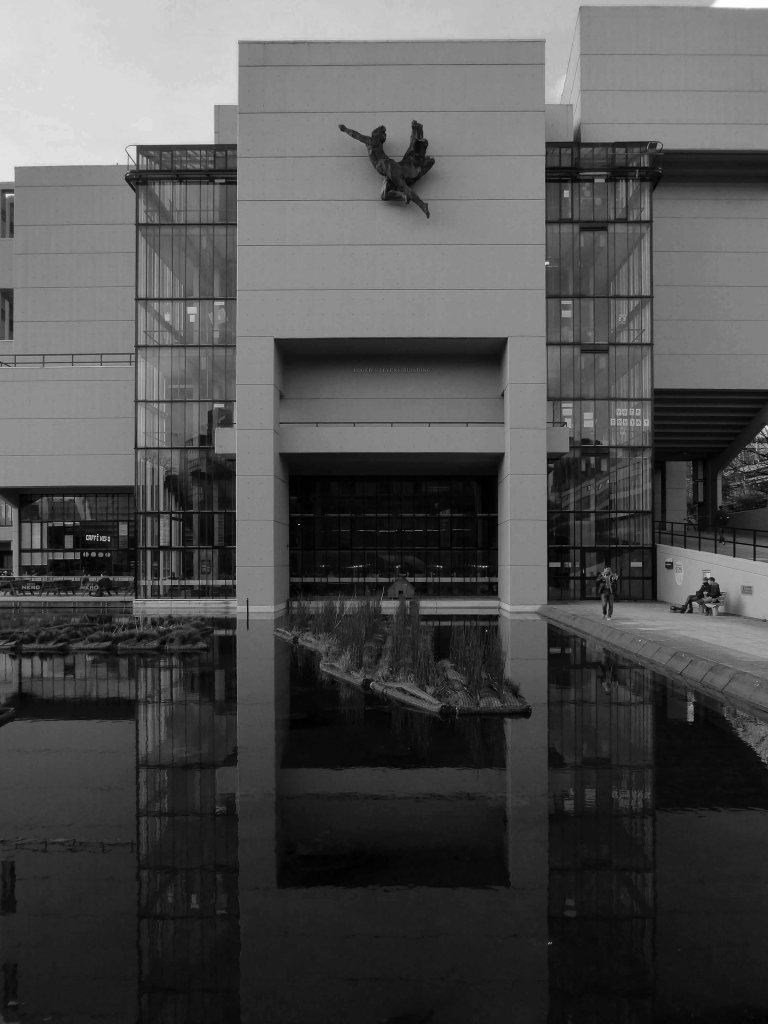
Leeds University – Roger Stevens Building

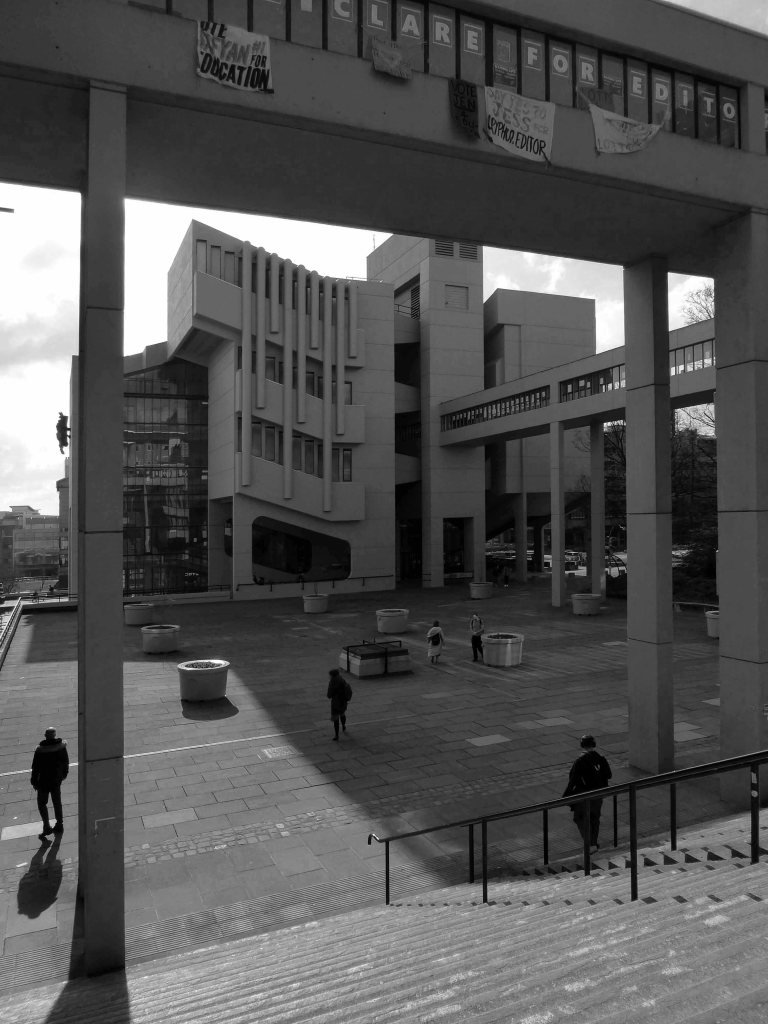
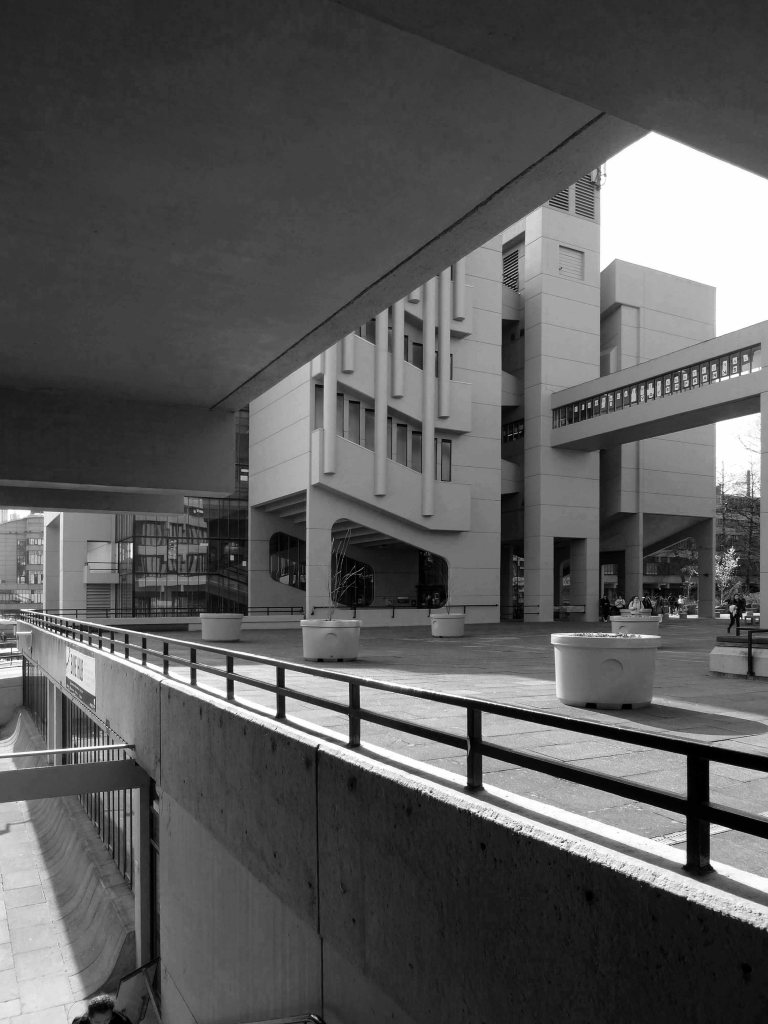
The Roger Stevens Building 1970 – by Chamberlin, Powell and Bon for Leeds University South Campus is designated at Grade II

The building represents the high point of their Leeds University work.

Architecture: the building is an outstanding and individual design with bold external shapes and carefully designed interiors

Planning: the internal spaces are the result of extensive research on the requirements of the university and introduce innovative and influential features such as individual doors into the lecture theatres, and external links intimately with other buildings on the campus by means of multi-level walkways

Intactness: despite the changing requirements of universities, the building has remained largely unchanged, proving the success of its design

Group Value: the building provides a fitting centrepiece to the group of university buildings on the South Campus at Leeds, also recommended for designation.

Historic England

I was asked by the Leeds Modernists to put together a walk which avoids the the Roger Stevens Building, so I did just that.

That didn’t stop me visiting the site on the day of my visit.

This is what I saw:

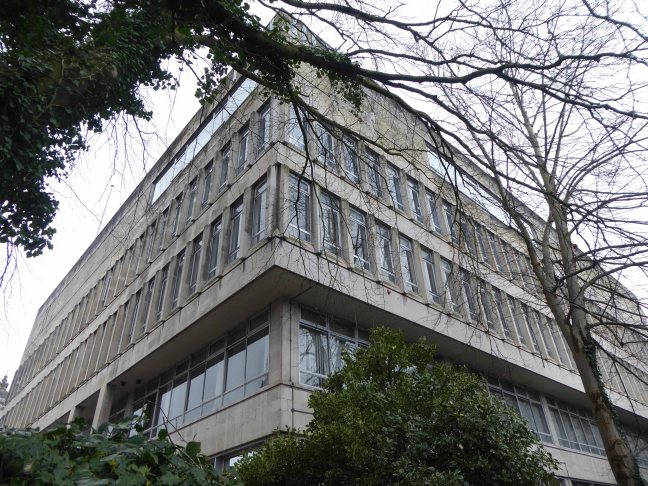
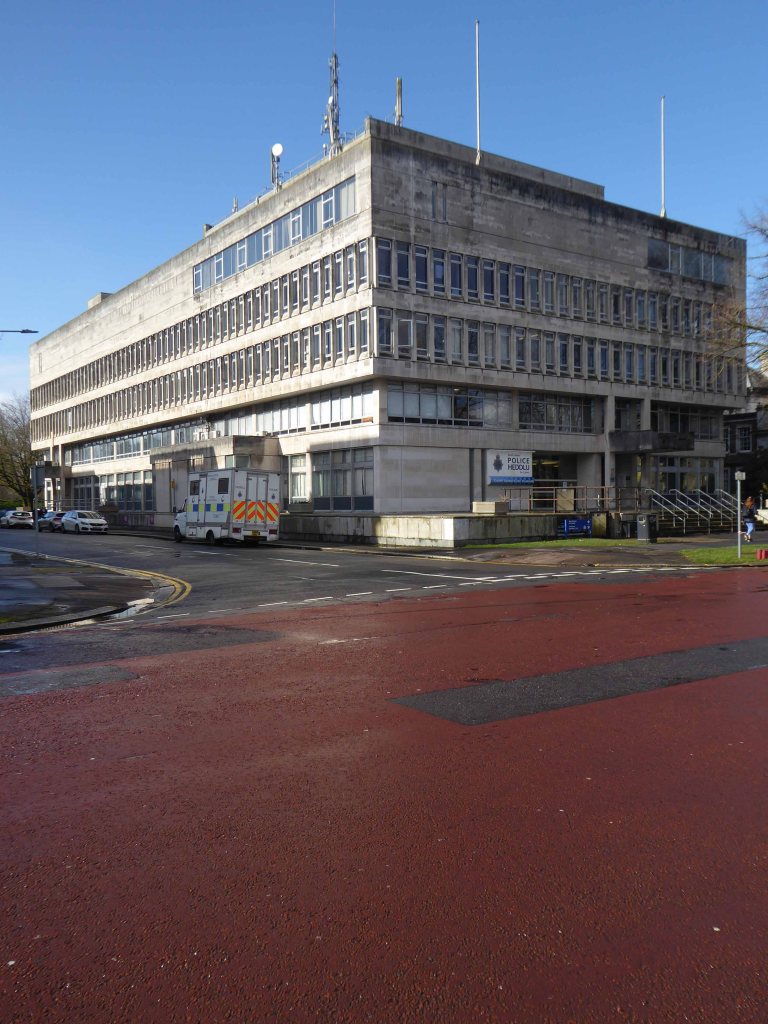
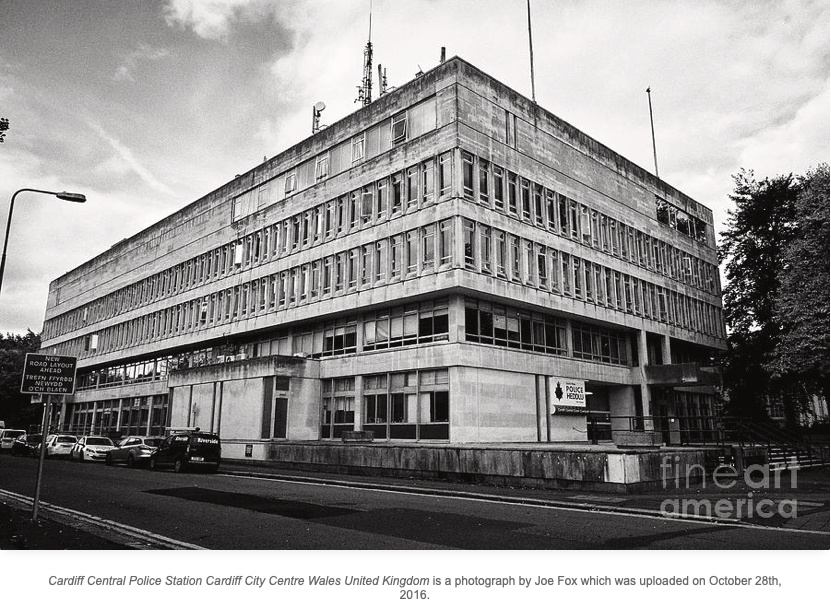
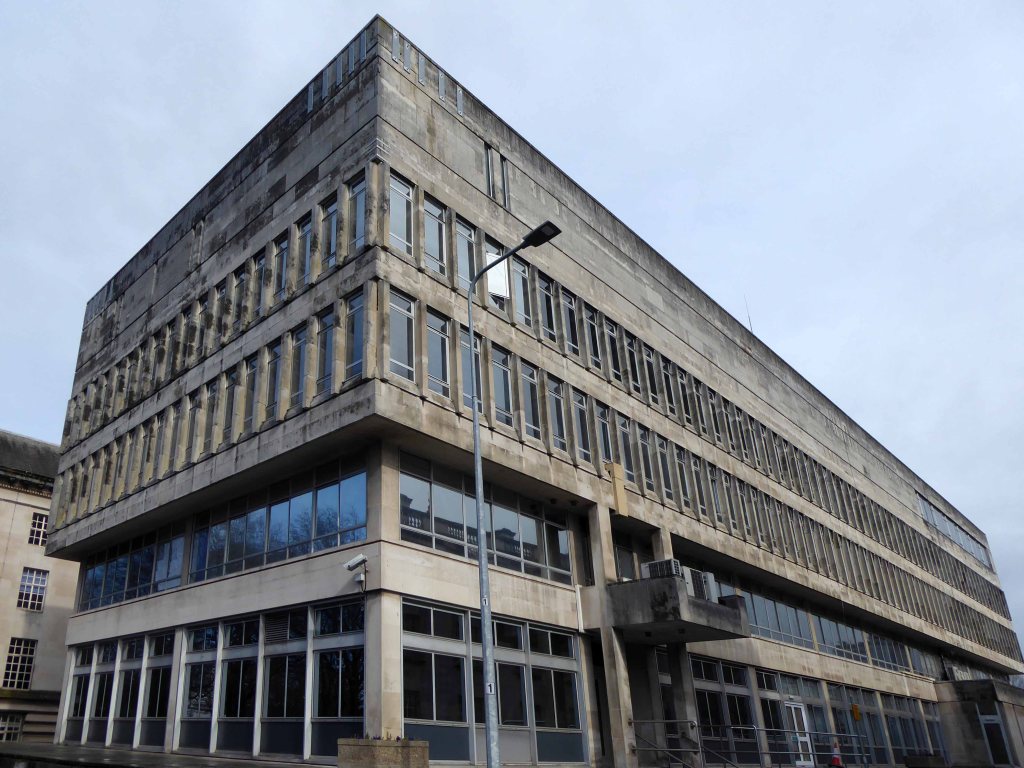
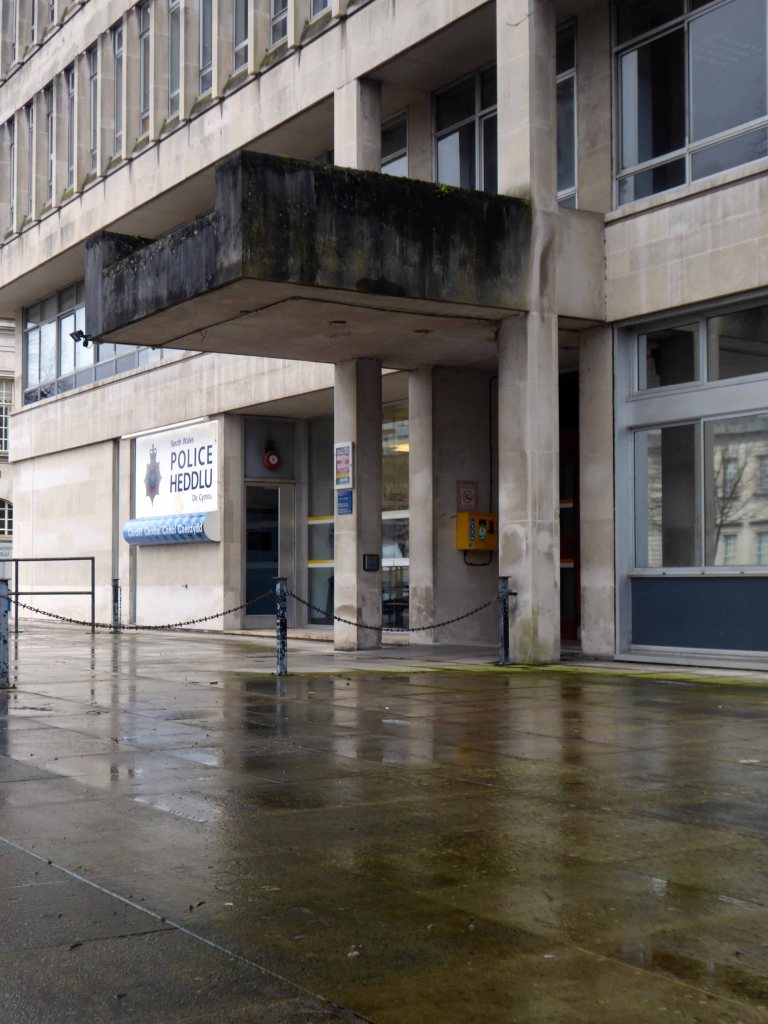
Cardiff Central Police Station

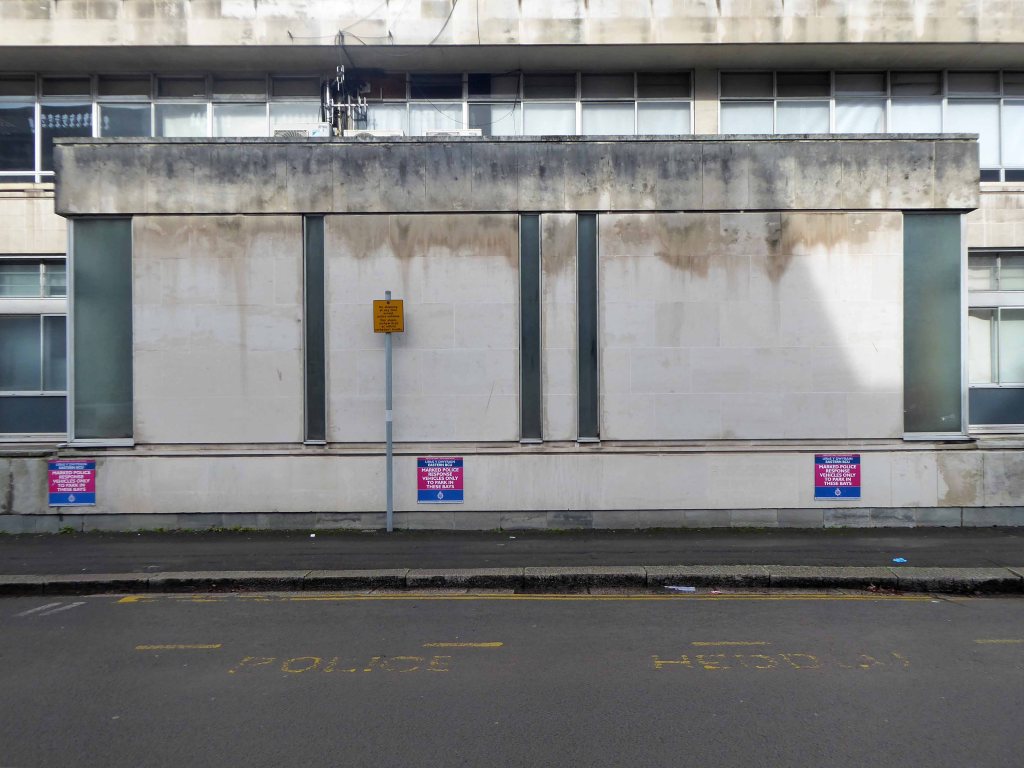
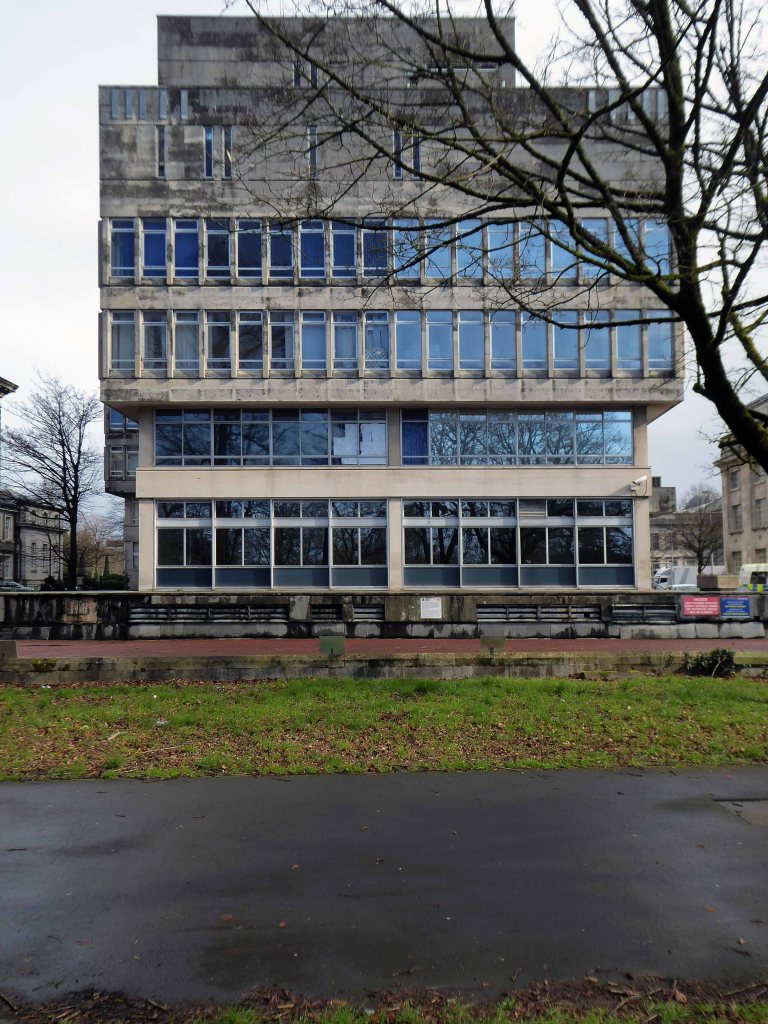
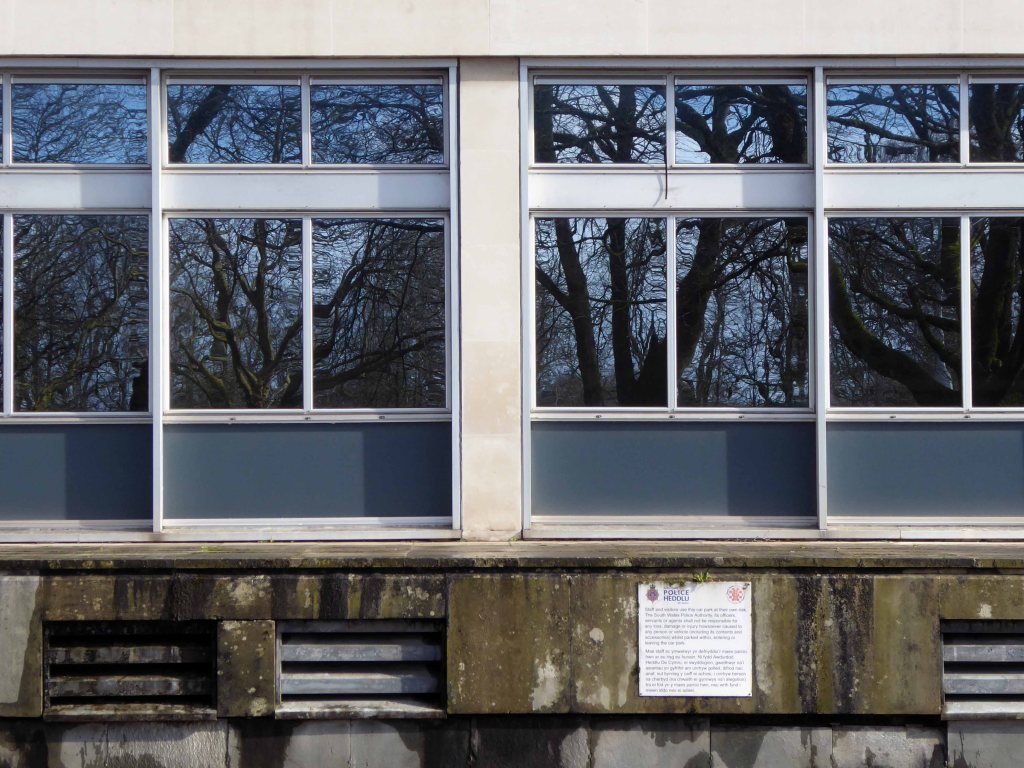
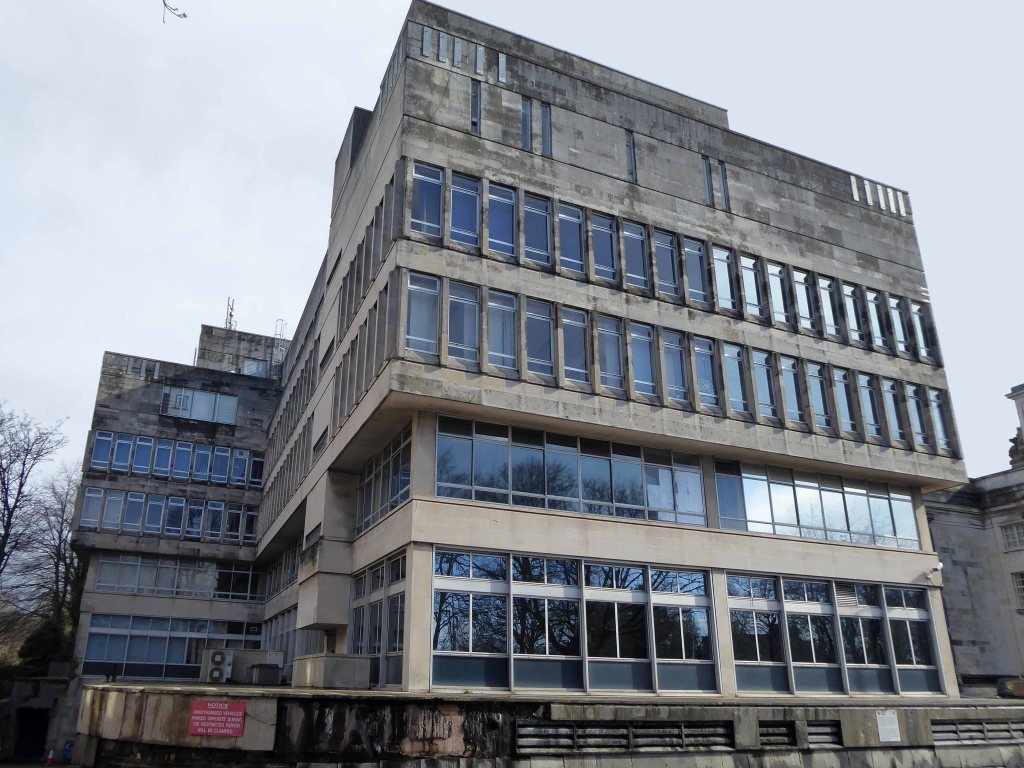
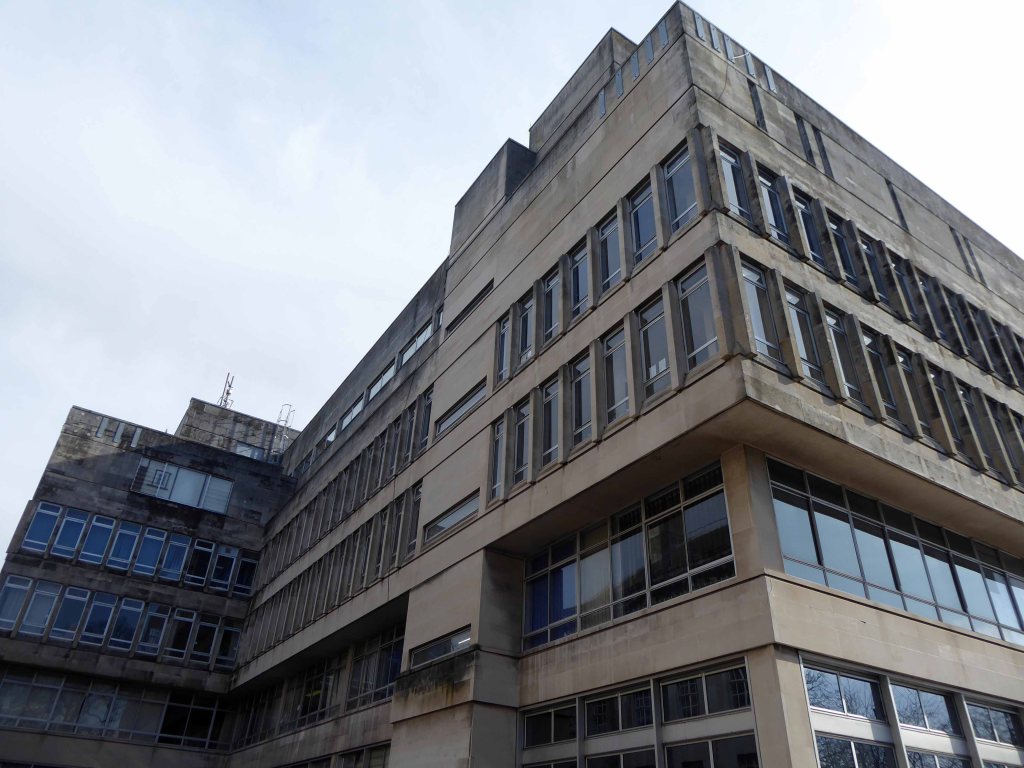
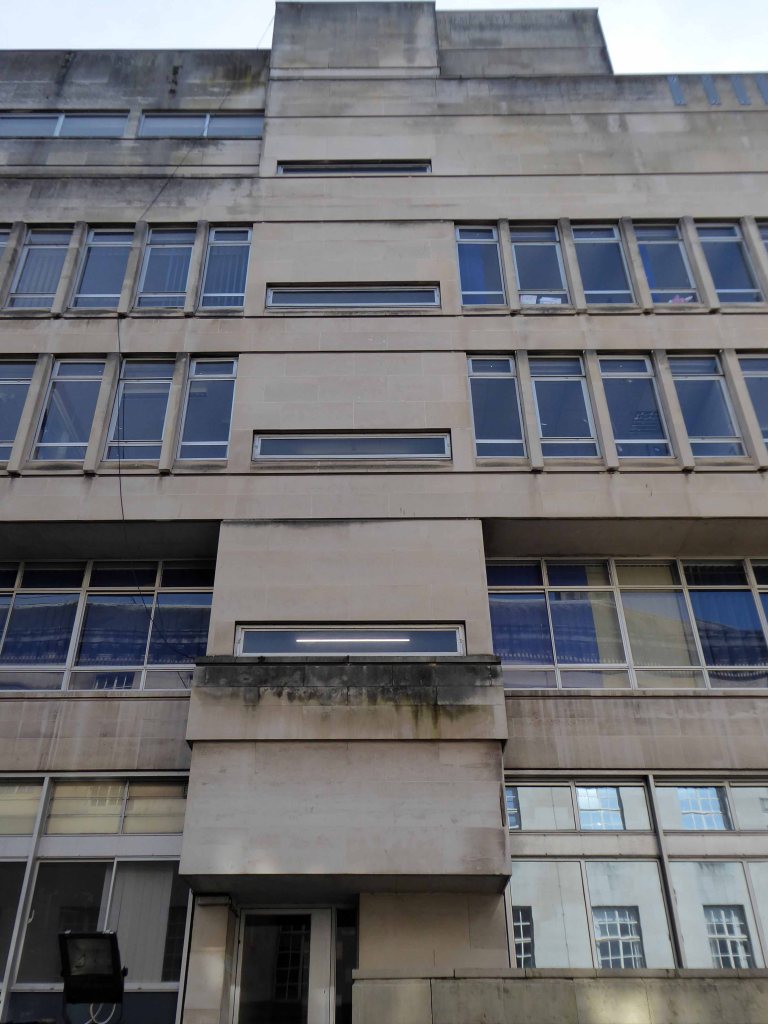
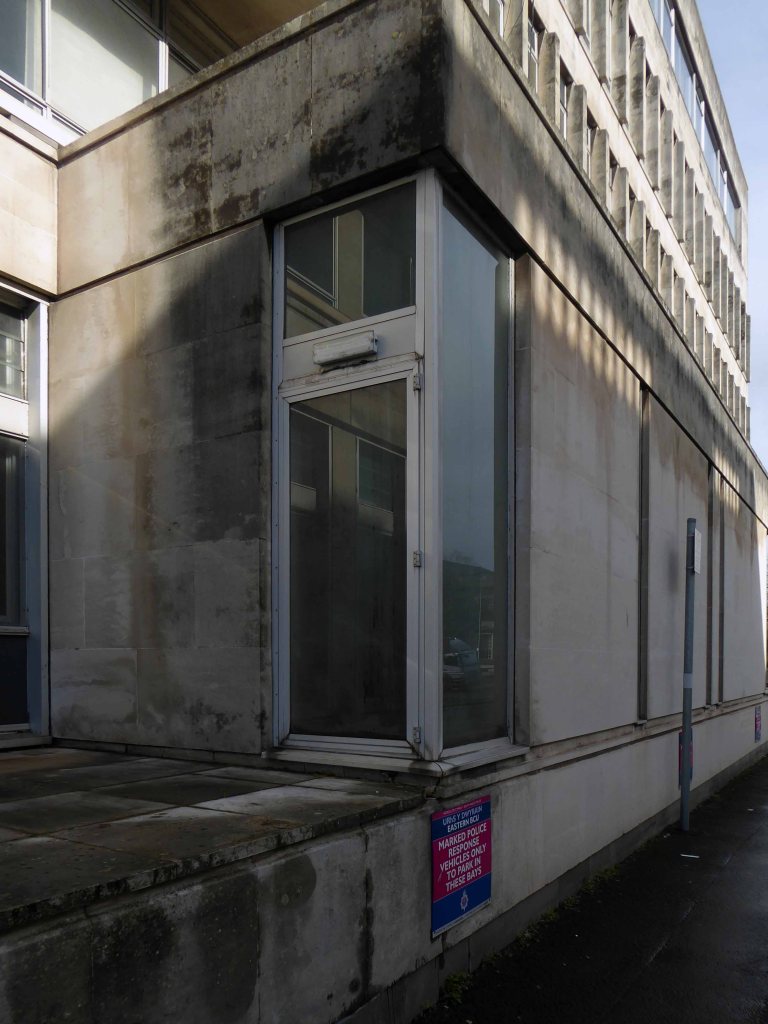
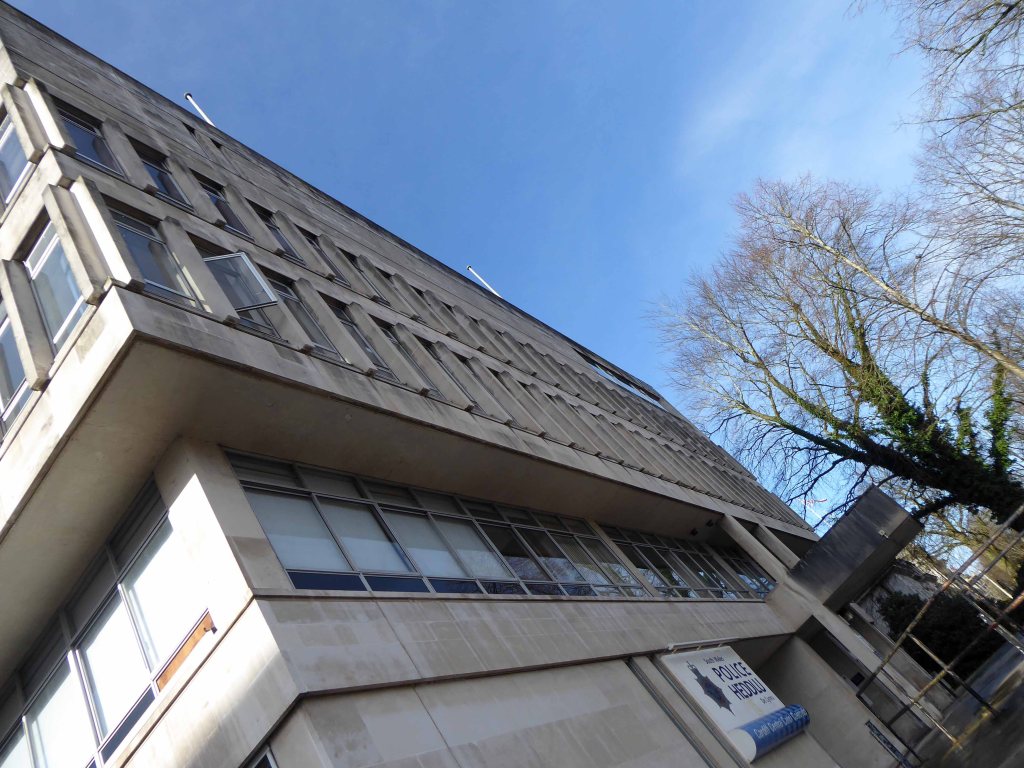
The current five storey Cardiff Central police station was designed by Cardiff’s city architect John Dryburgh and built on the southern corner of Cathays Park between 1966 and 1968. It is described as: The most successful post-war building in Cathays Park and the only post-war building in the area: To be both modern and majestic

The detention facilities at the station were inadequate with only four cells. These were replaced by sixty cells at the new Cardiff Bay police station, which opened in 2009.

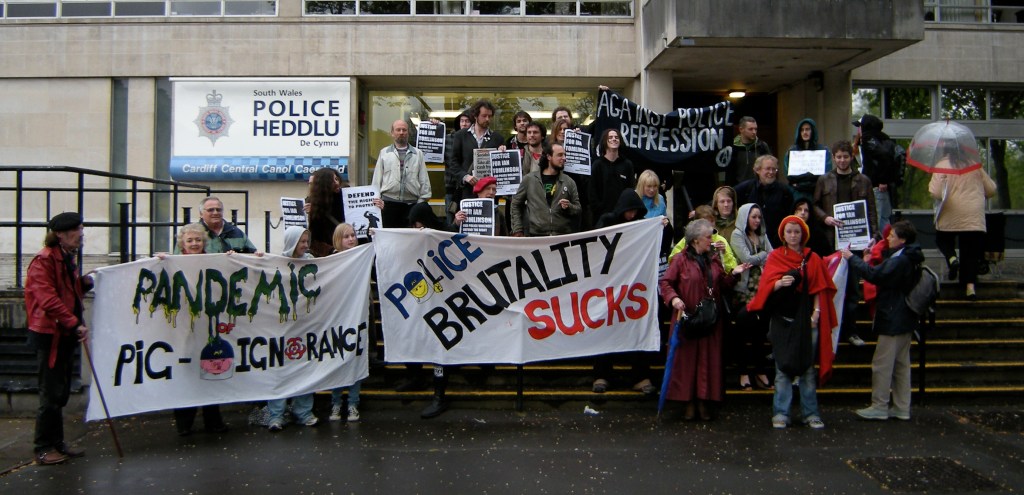
This year’s Mayday protests in Cardiff took place outside Cardiff Central Police Station to show the opposition to the increasing criminalisation of public protest.

No Borders South Wales activists were in attendance to show solidarity with fellow protesters and register our opposition to repressive police tactics at all forms of public demonstrations.

The protest was good natured and lively, with lots of music and singing. 

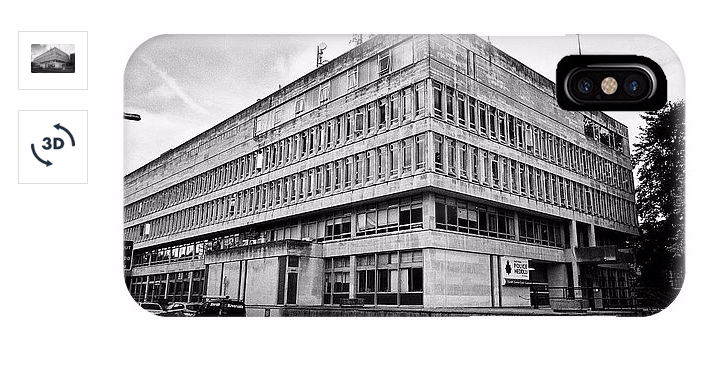
The building is celebrated by photographer Joe Fox via Fine Art America

Who are happy to reproduce the image in the form of this delightful phone case, for the princely sum of twenty two pounds.

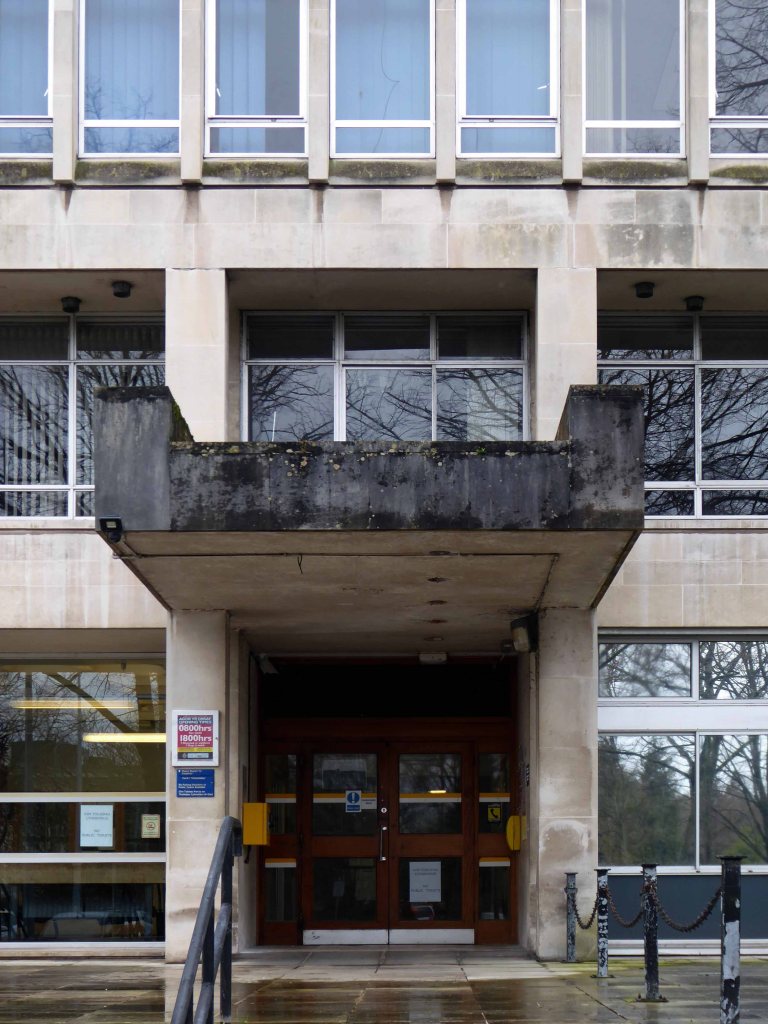
I myself was taken by its unapologetic system built panelling, all-round convivial confidence and cantilevered porch.

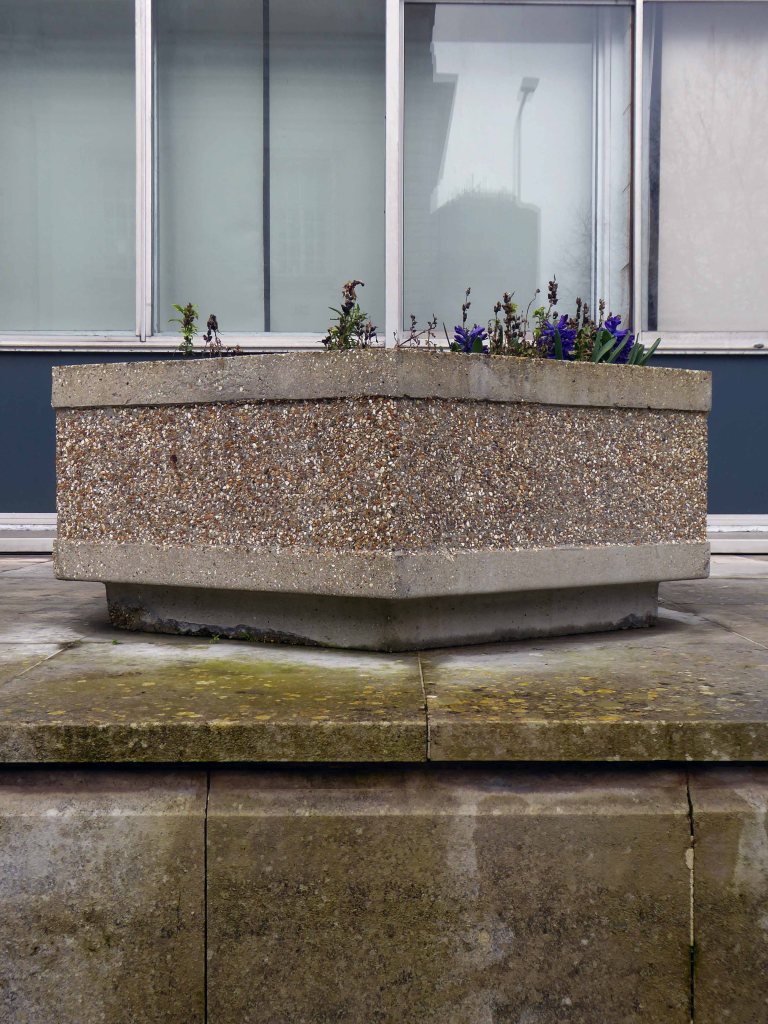
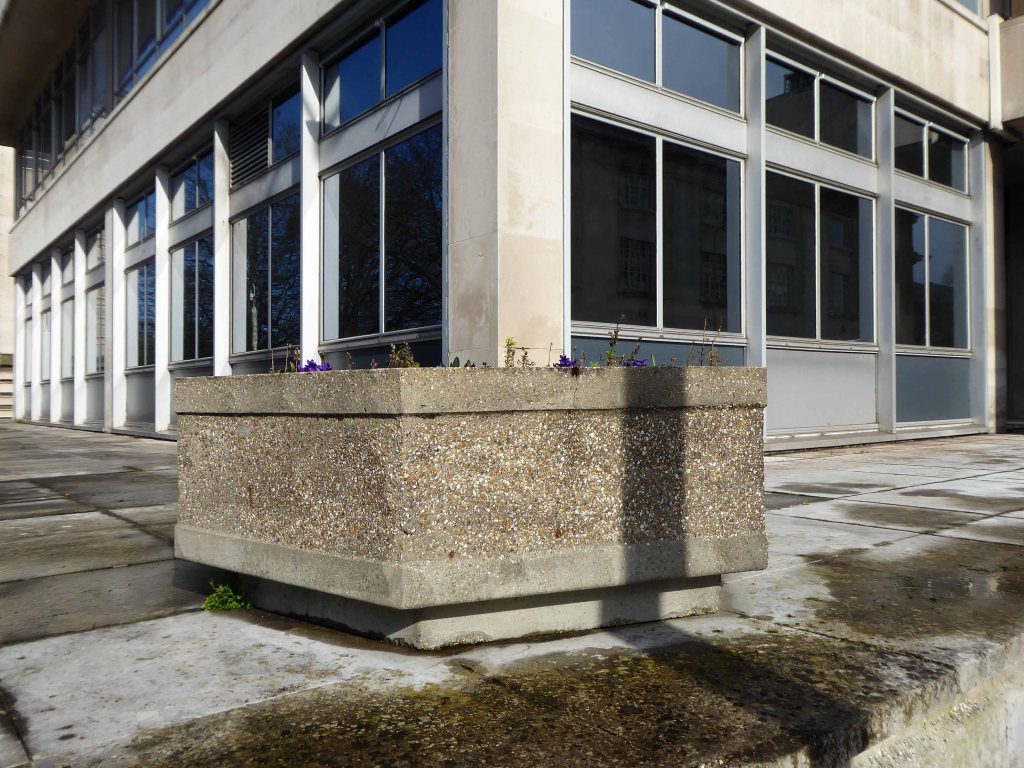
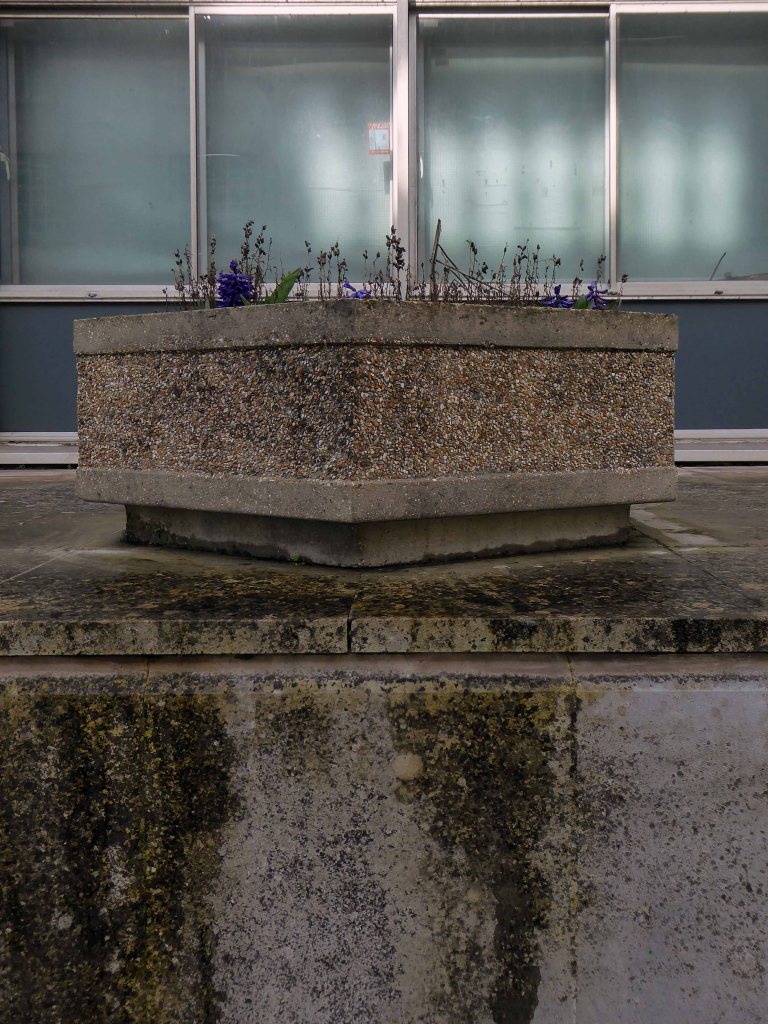
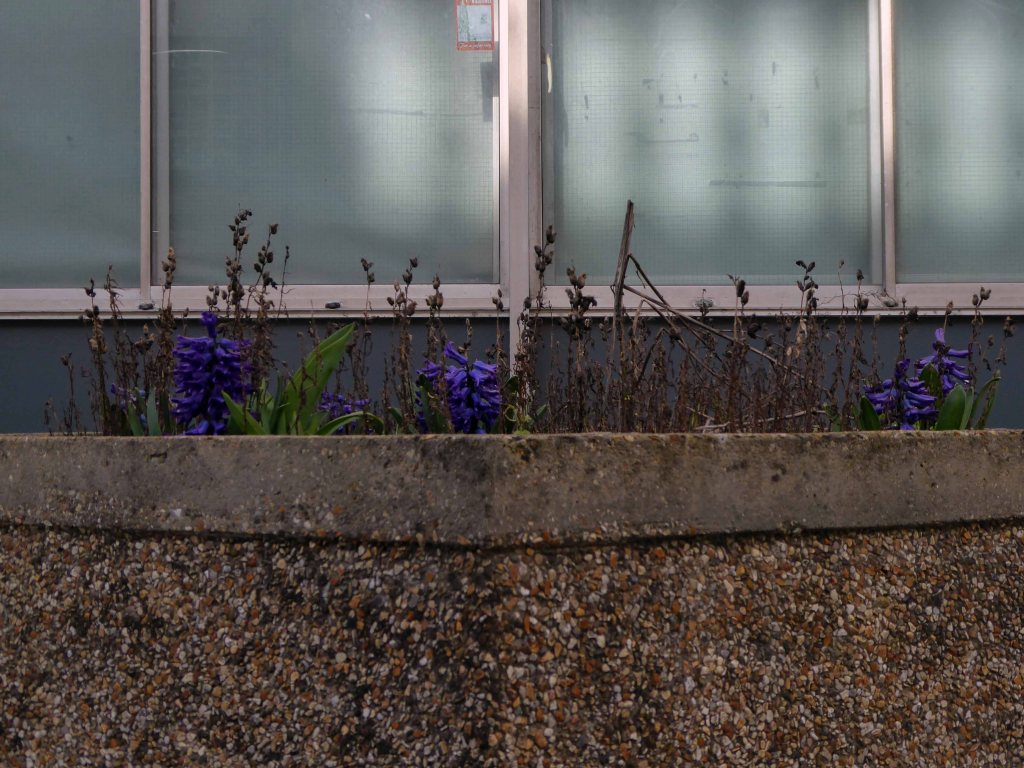
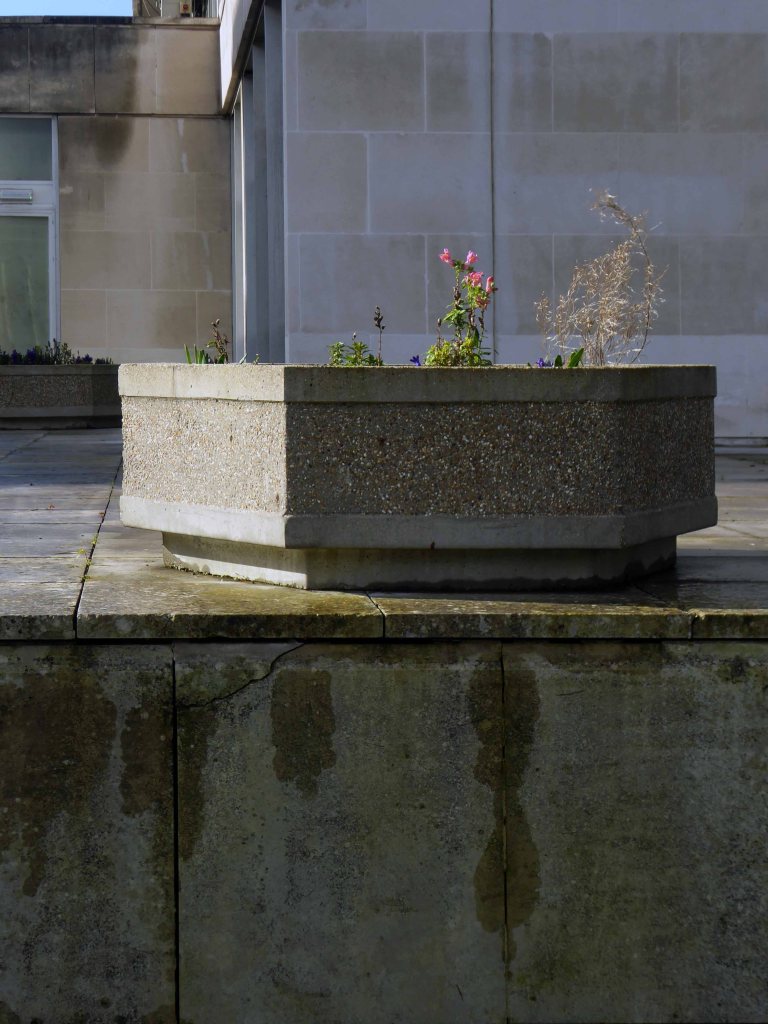
Plus an exciting array of concrete planters – exhibiting an exciting array of seasonal planting schemes.

Well with a wander around should you find y’self down that end of town.

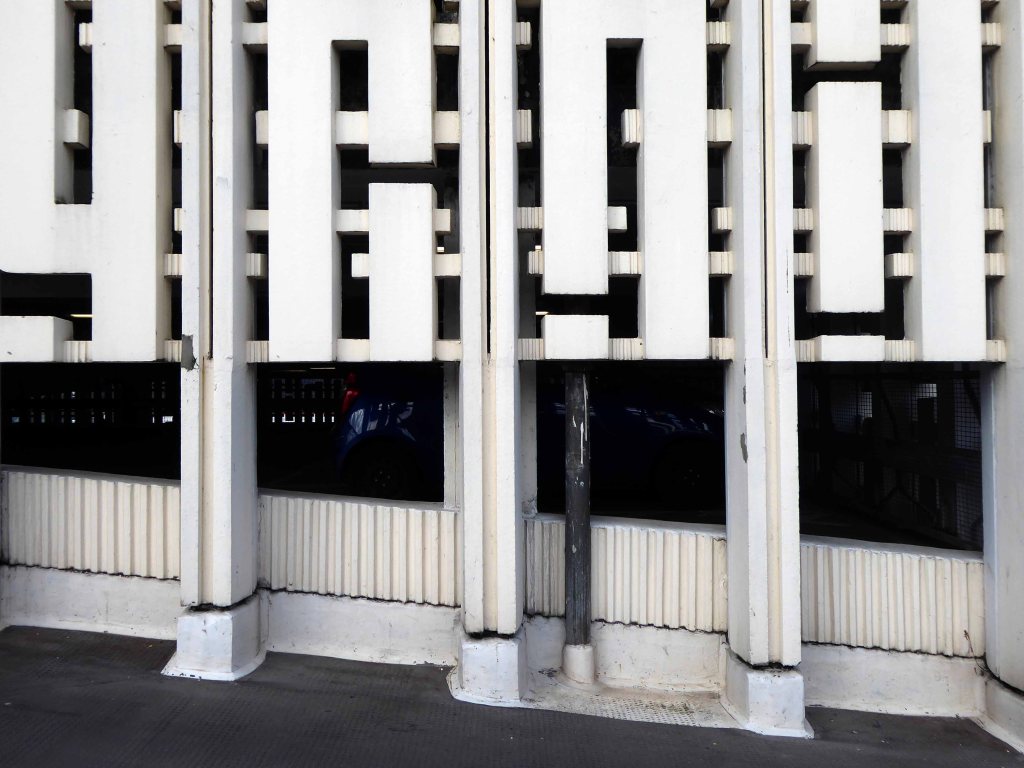
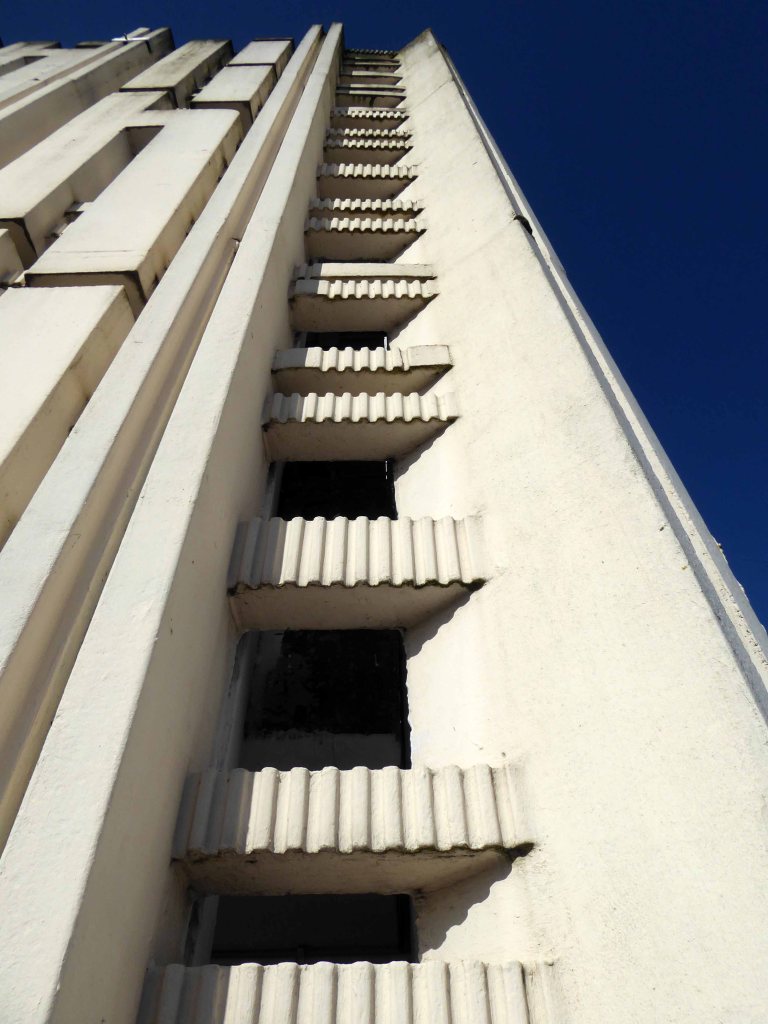
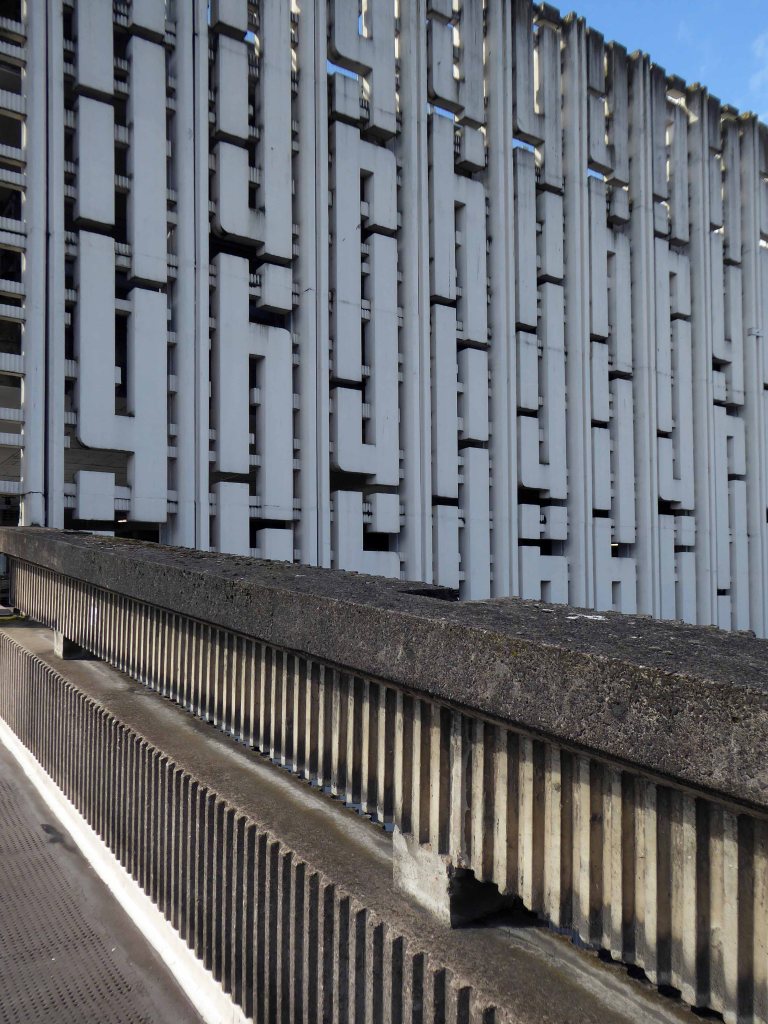
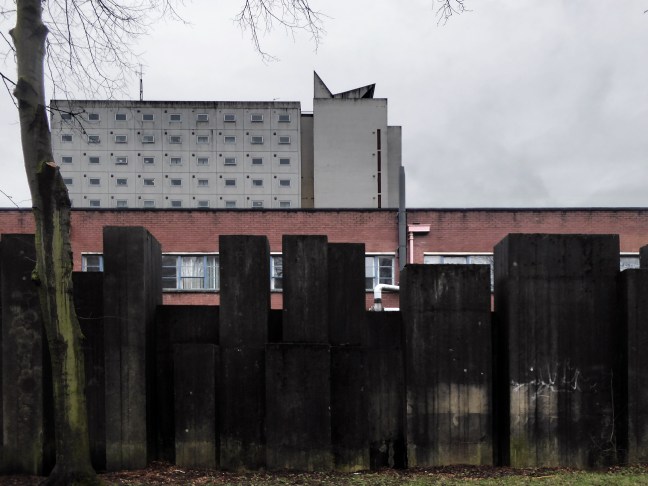
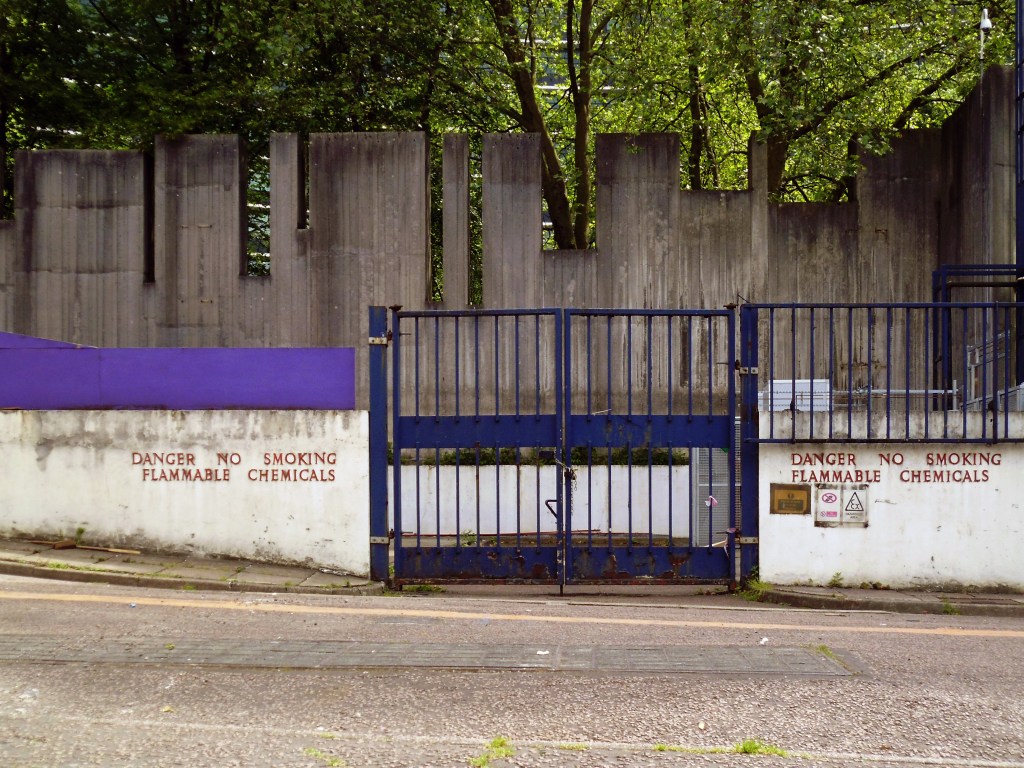
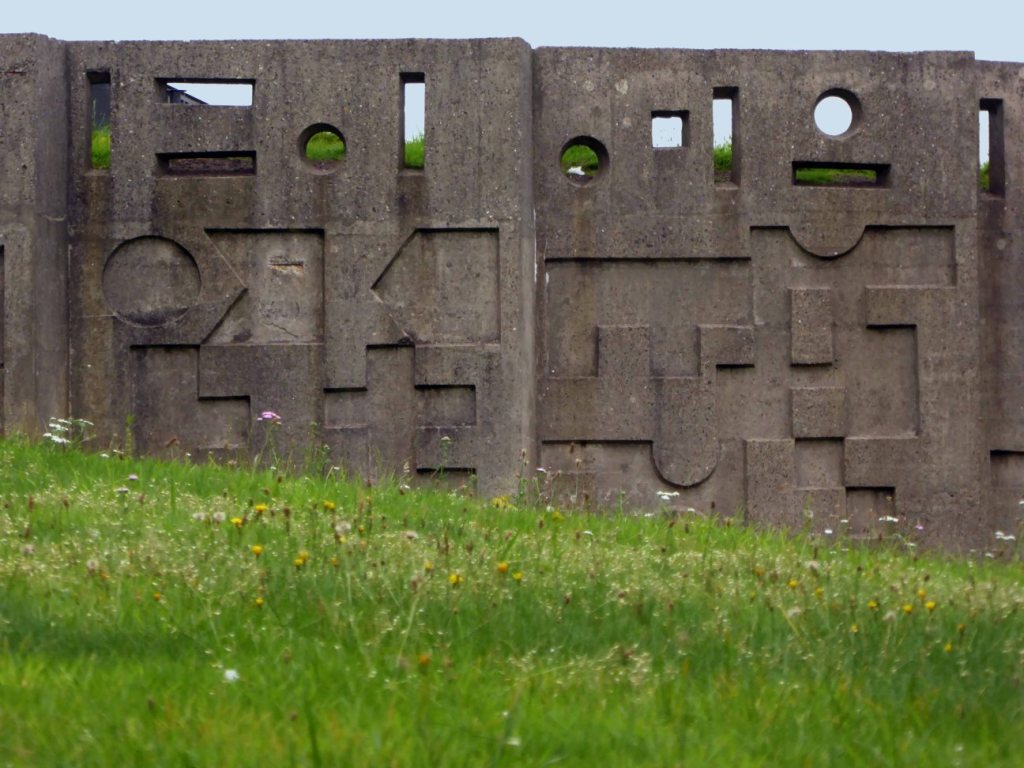
Merseyway – Alan Boyson Screen Wall

Deep in the heart of Stockport at the centre of our very own shopping centre – Merseyway.

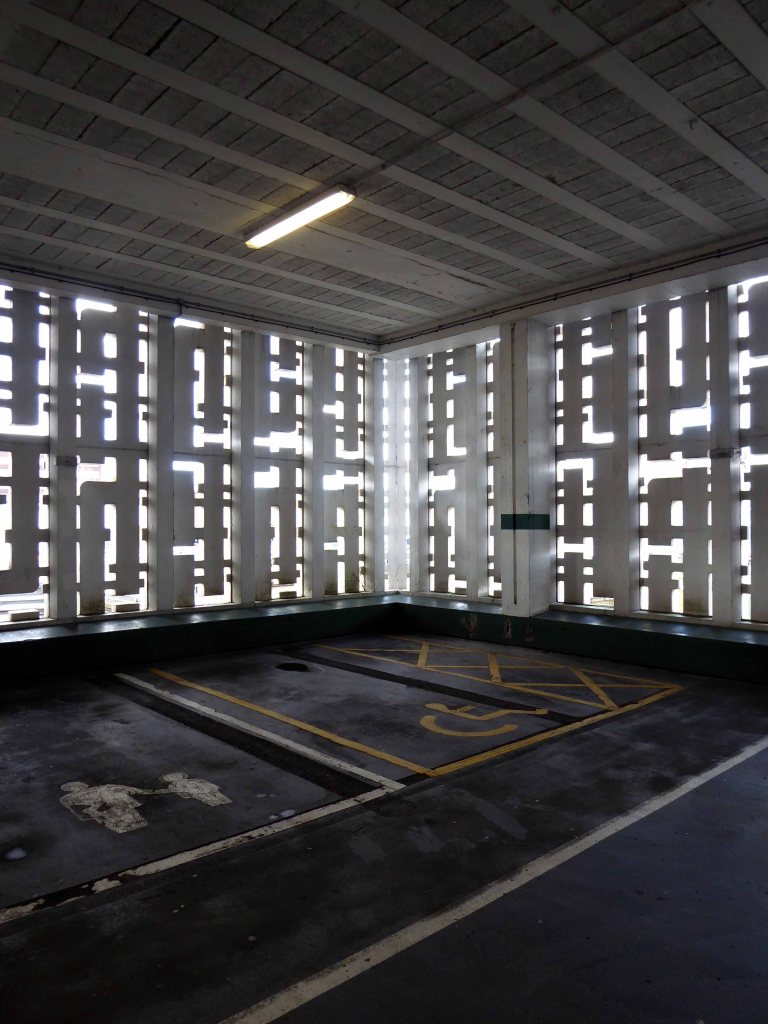
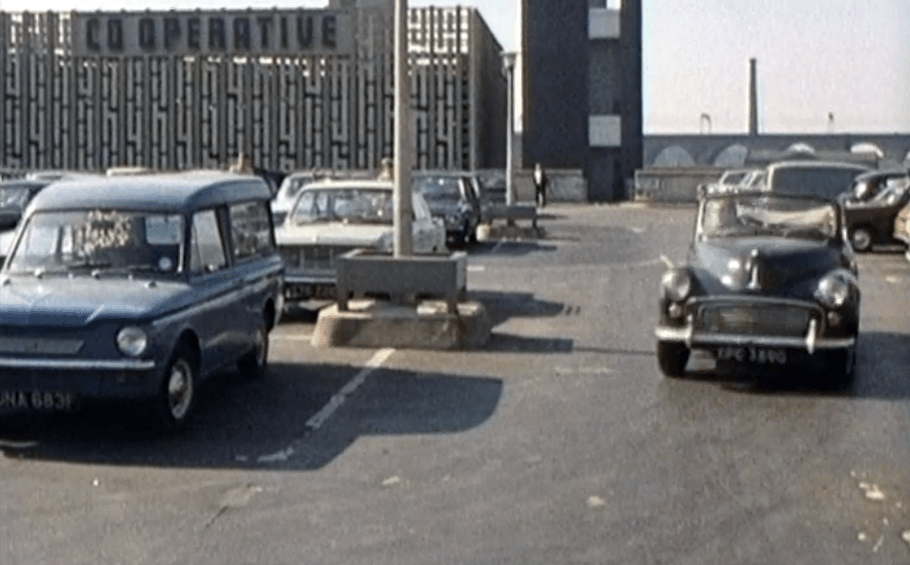
A pierced concrete relief screen wall surrounds the former Co-op, currently Primark, car park.

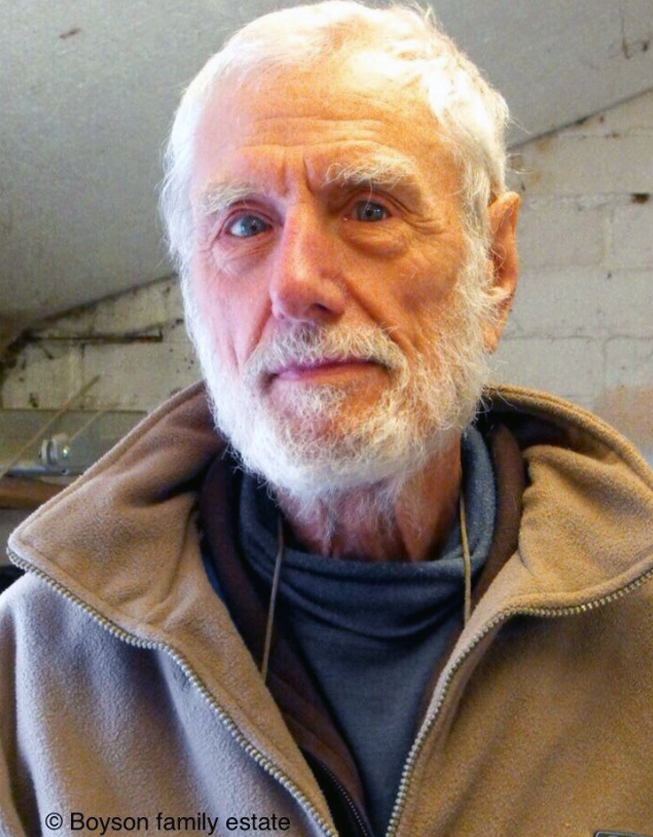
The work of Alan Boyson – today the 16th of March 2020 would have been his ninetieth birthday.

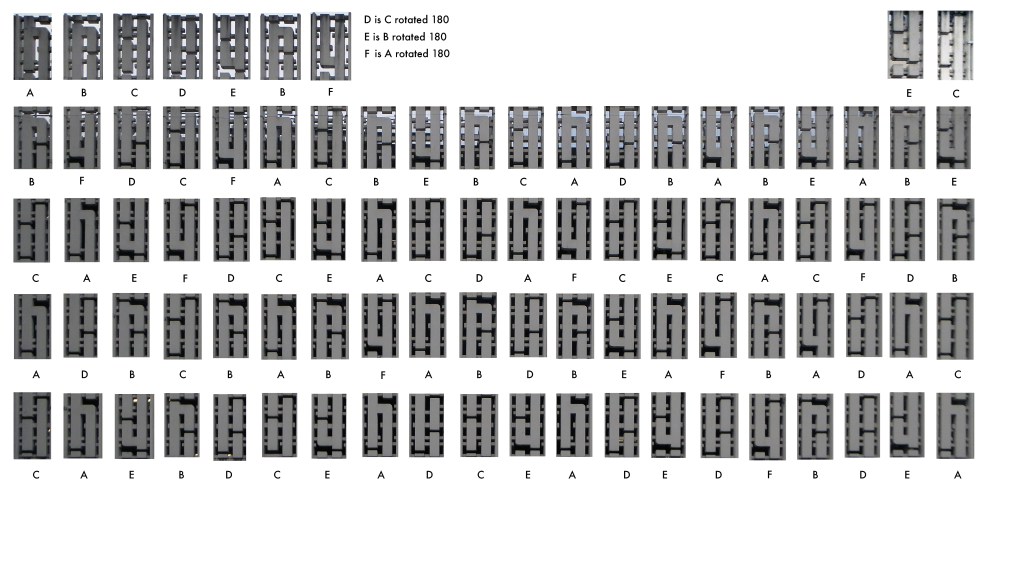
I’ve even gone so far as to analyse its structure:

So I went for a walk this morning, as I have on several previous occasions, to take a look around the site – inside and out.

Tony Holloway Sculptural Wall – Manchester

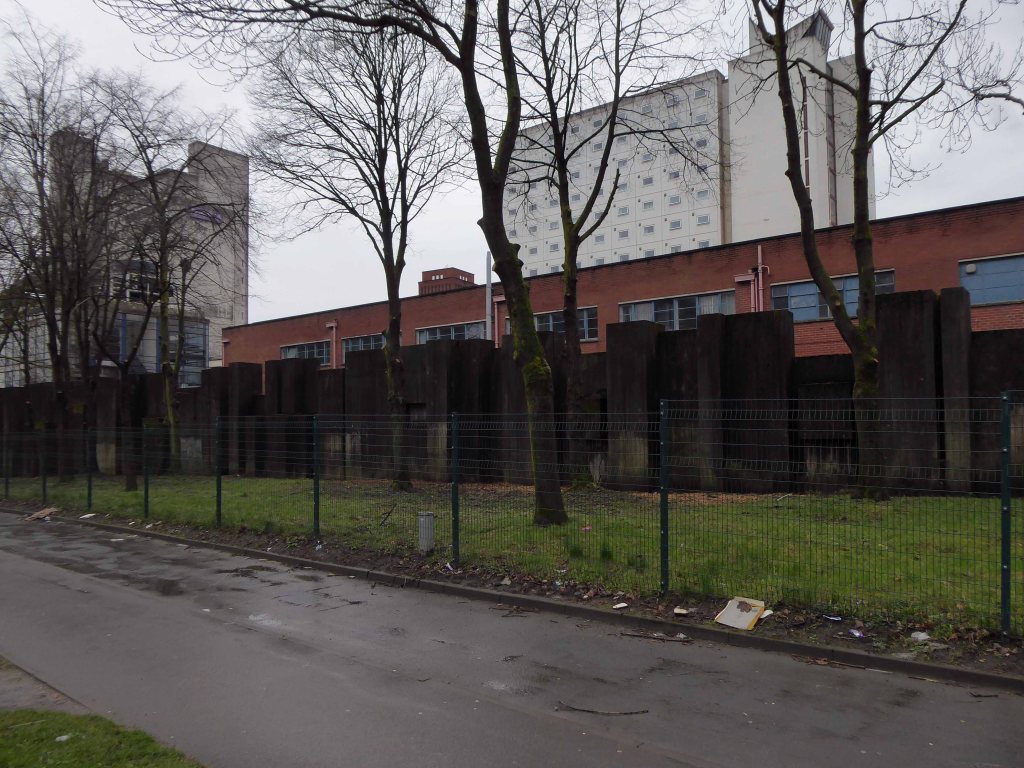
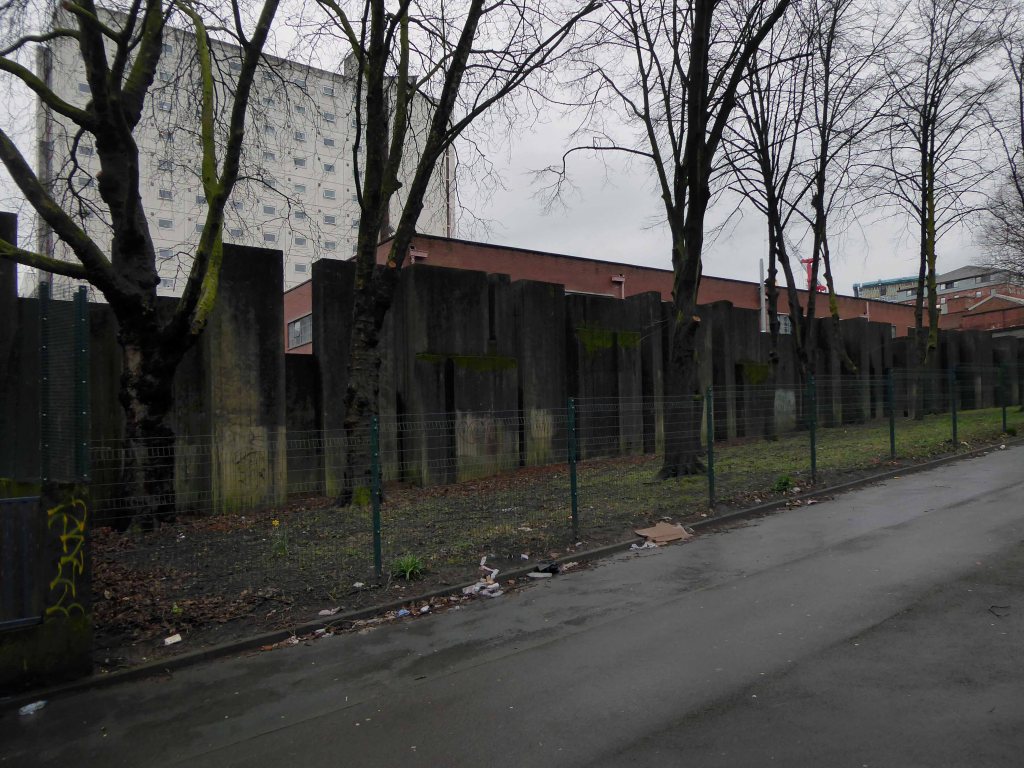
Sculptural wall and sound buffer – 1968 by Antony Holloway in collaboration with architect Harry M Fairhurst.

Concrete approximately 68 metres long and between 4.5 and 6 metres high – Brutalist style.

Grade II Listed June 10th 2011 – Historic England

The only structure on the former UMIST site, now part of the extensive University of Manchester estate.

Regularly visited on our Manchester Modernist walks, along with his nearby architectural panels.

I have even ventured as far afield as Huyton in search of other exemplars.

This is work of the highest order and importance.

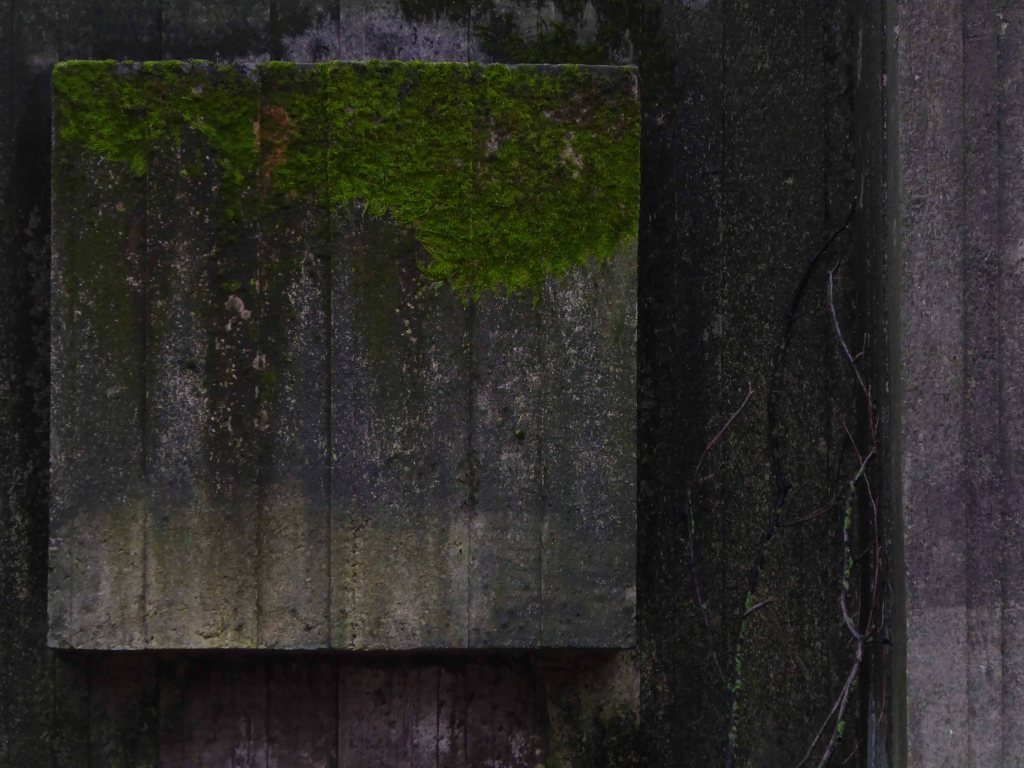
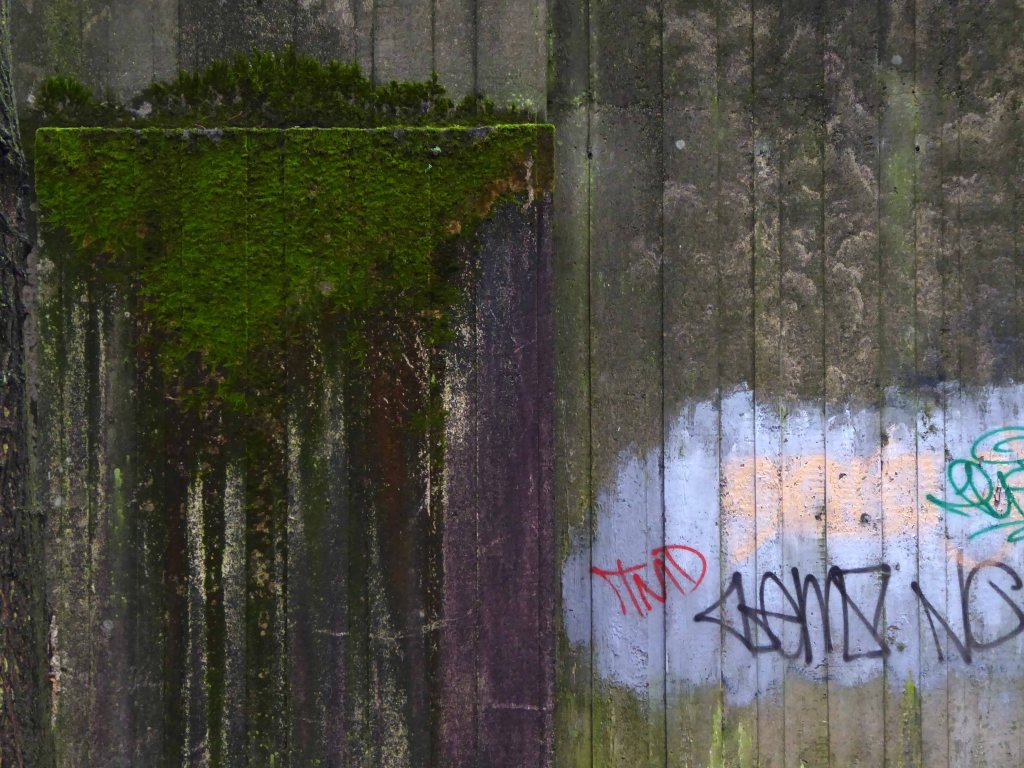
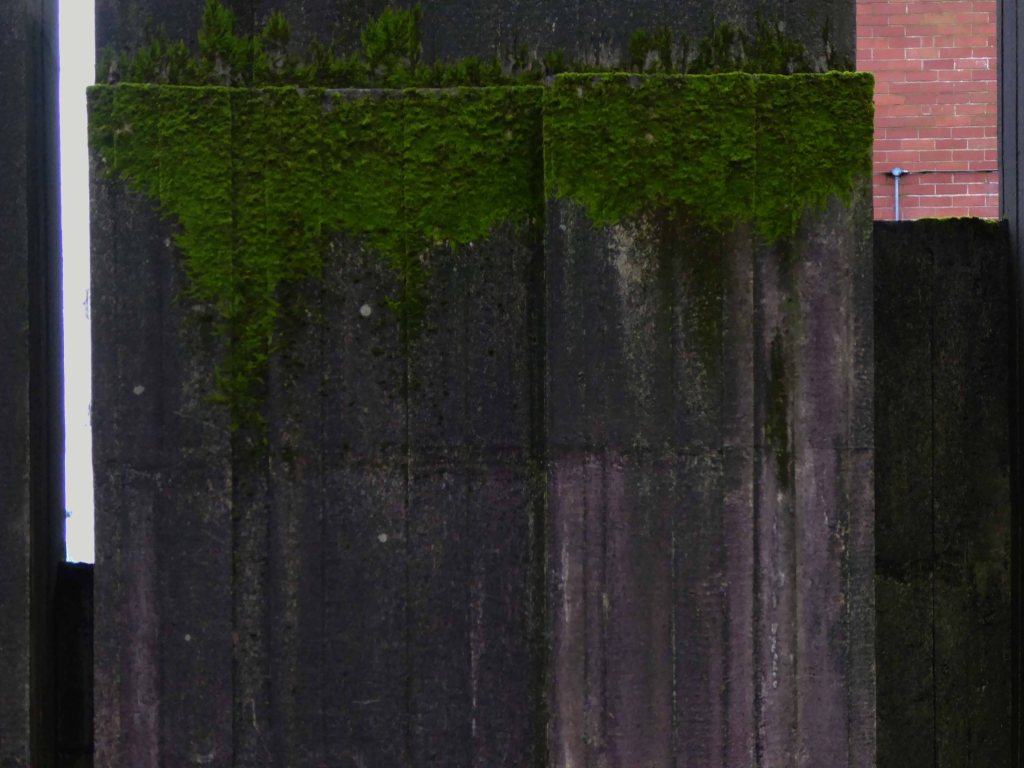
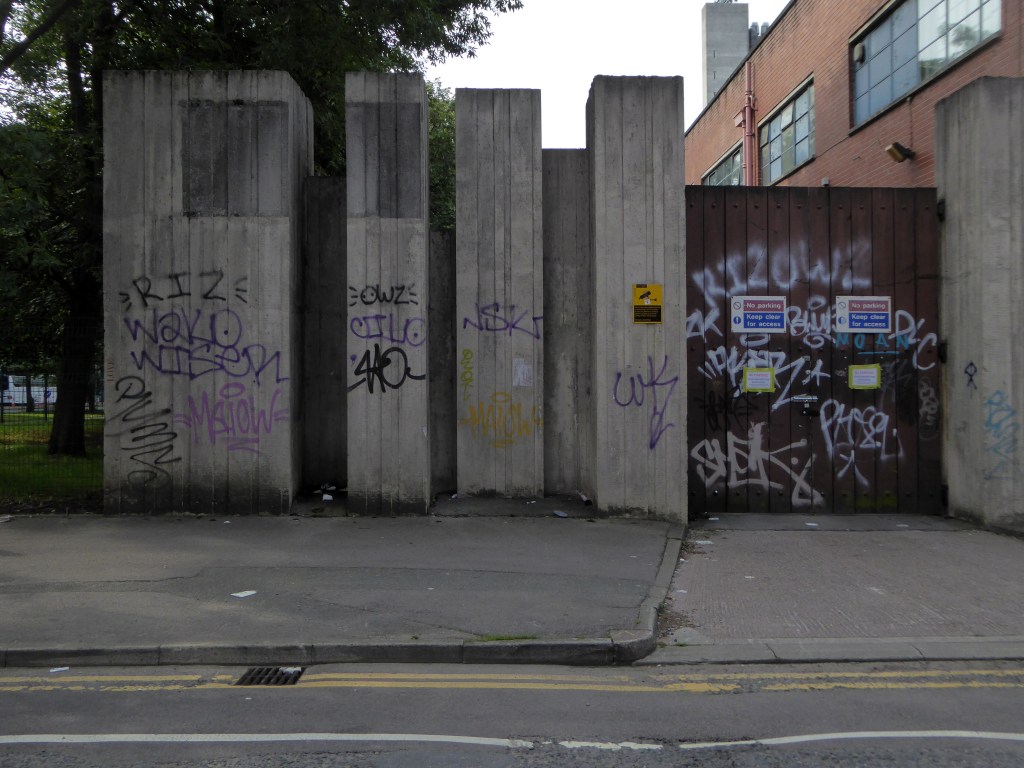
It sits by a busy London Road, behind an intrusive green steel fence, slowly acquiring a green patina – as moss and lichen attach themselves to the well weathered concrete.

Receiving occasional visits from the errant urban tagger.

It deserves much better – a lush grassed apron, discrete public seating, regular tree maintenance – respect.

We do not suffer from a surfeit of significant mid-century public art – its guardians should straighten up and fly right.
Right?

Brunel House – Cardiff

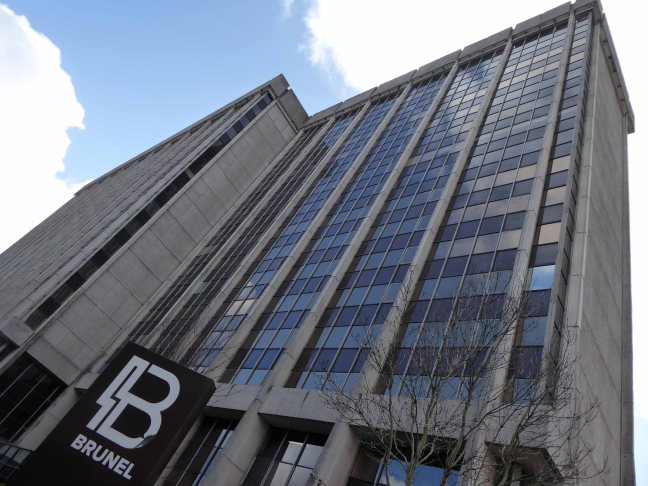
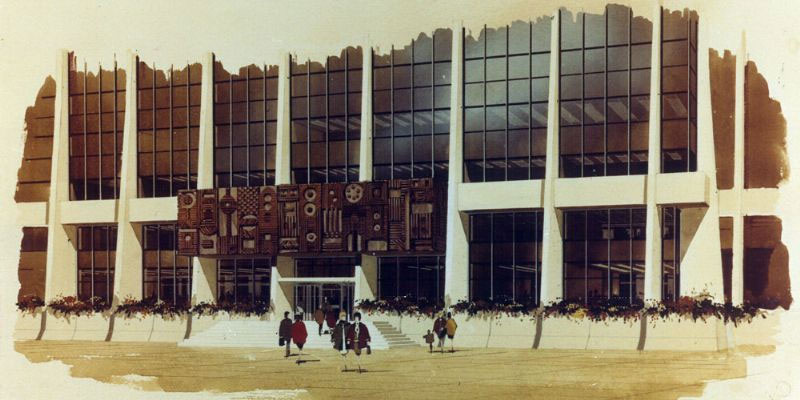
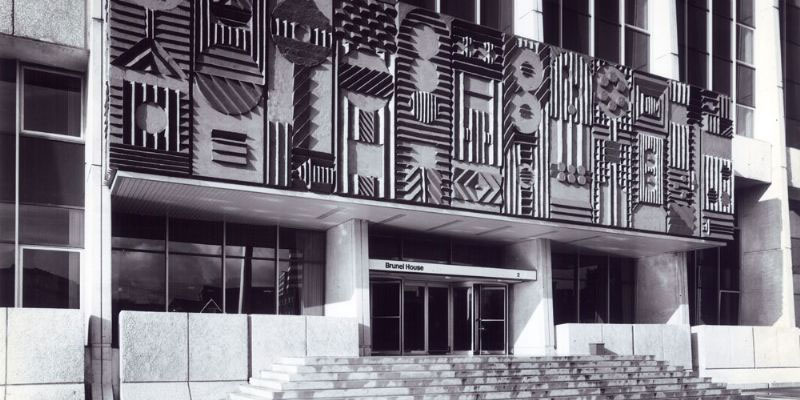
Originally built to house the regional British Rail offices – it seems that Great Western House has always been Brunel House.

Designed by Seymour Harris – who have also been responsible for the recent refurbishment.
The building is now in multiple occupancy, used for a wide range of services and uses, bringing new life to fine mid-century structure.
Sadly its entrance relief is now nowhere to be seen.

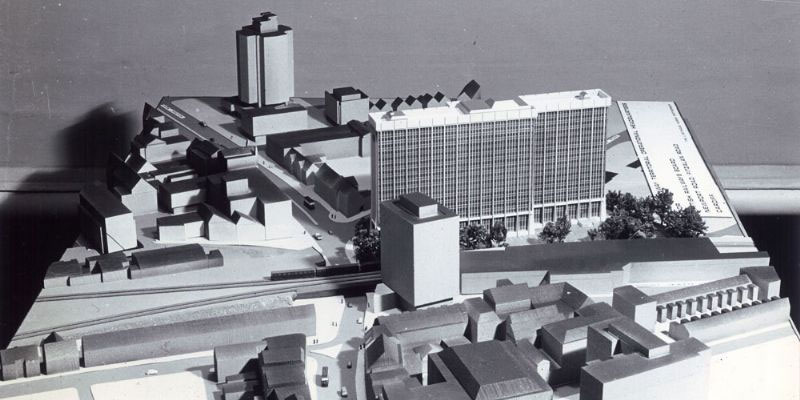
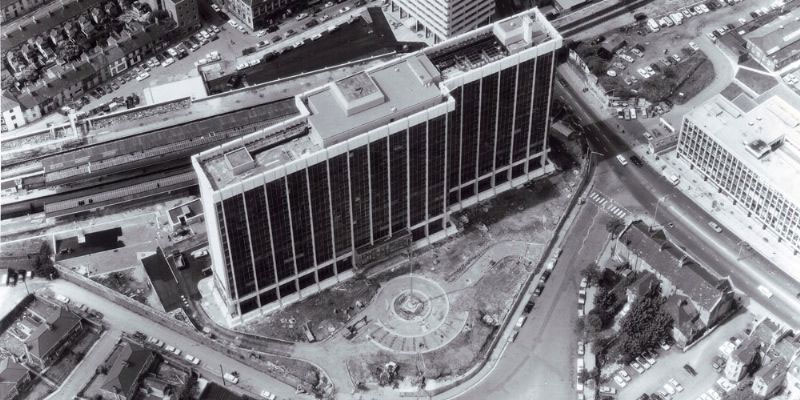
Archive photographs Seymour Harris Architects

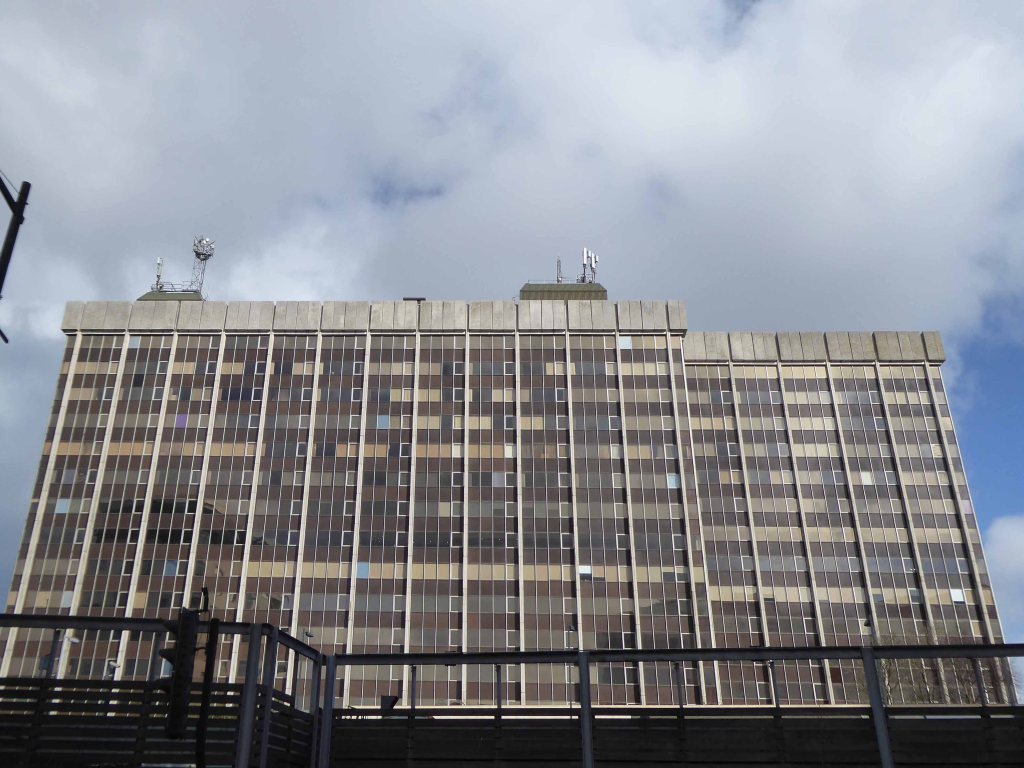
Sixteen floors standing at 190 feet, two enormous interlocking slabs – it is the largest commercial property in Wales.

Seen from afar your are hit by its impressive rear elevation, with a distinctive grid defined by the slender window frames and a restrained yet earthy palette.

This is then broken up by strong vertical concrete columns.

With bold structural detailing, using a variety of aggregates and finishes.

Side elevations are brut concrete, with limited window space.

Where surfaces and volume conjoin there is further interesting structural detail.

Service areas to the rear.

An exciting encounter with a building of substance and quality – go take a look for y’self.

Bernhard und Hilla Becher – Cardiff

I have admired the work of Bernhard and Hilla Becher ever since seeing their photographs in the one and only Tate at the time, in old London town.

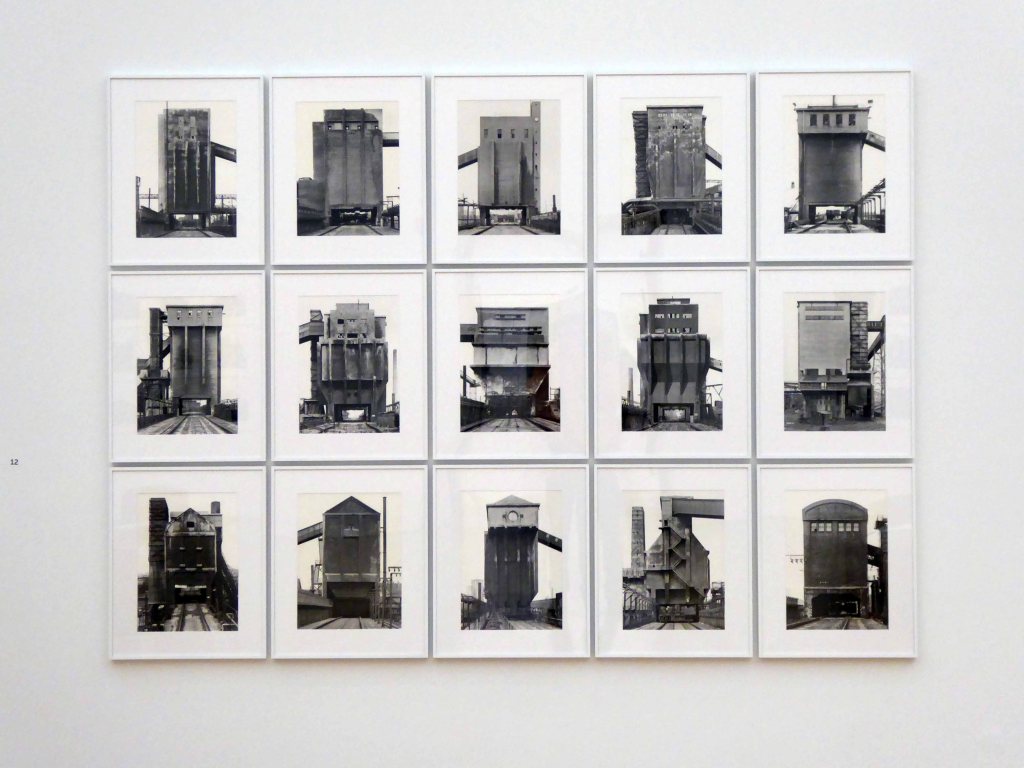
An early example, possibly twelve small black and white prints of pit head winding gear, assembled in a three by four grid.

I became intrigued by the notion of serial art and typology, later in the seventies working as a Systems printmaker.

Very much in the tradition of Max Bill and Richard Paul Lohse.

In more recent years I have worked as a documentary photographer, at time paying homage to Bernhard and Hilla.

By placing several cooling towers side by side something happened, something like tonal music; you don’t see what makes the objects different until you bring them together, so subtle are their differences.

So on hearing of their exhibition at the National Museum of Wales in Cardiff, I excitedly booked my train ticket from Manchester.

Saturday 29th February 2020 – an auspicious Leap Year – knowingly taking a leap into the known unknown.

Braving the imminent threat of Storm Jorge.

I was given the warmest of welcomes by the gallery staff, spending a good while chatting to James, a fellow enthusiast.
My first surprise was the Bechers’ drawings, painting and notebooks.
A revelation.

Then onwards into two large, light spaces, with the work – actual Becher archive prints, displayed with the reverence that they deserve.

Given space to breath, in a calm contemplative area.

With a quiet attentive audience.

So here that are in situ – worth the wait, worth the train ticket, worth the two way seven hour rail trip. Seeing the prints close up reading the exposure, the thrill of the dodge and burn, a lifetime’s ambition realised.

Thanks to all.

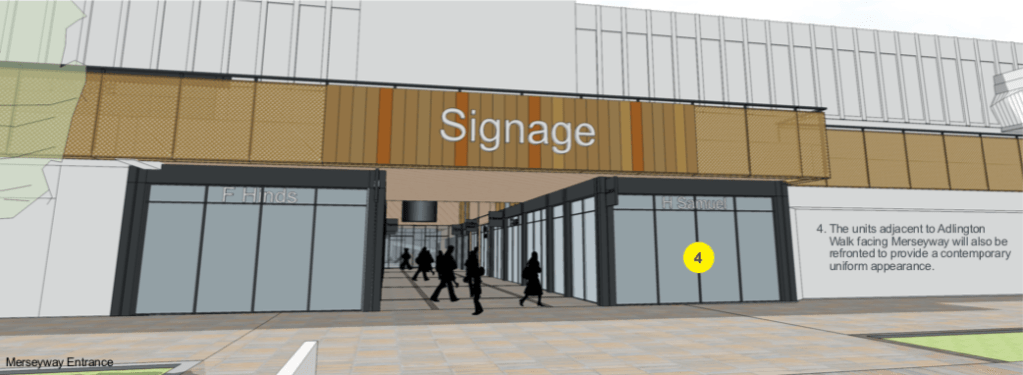
Merseyway – Adlington Walk

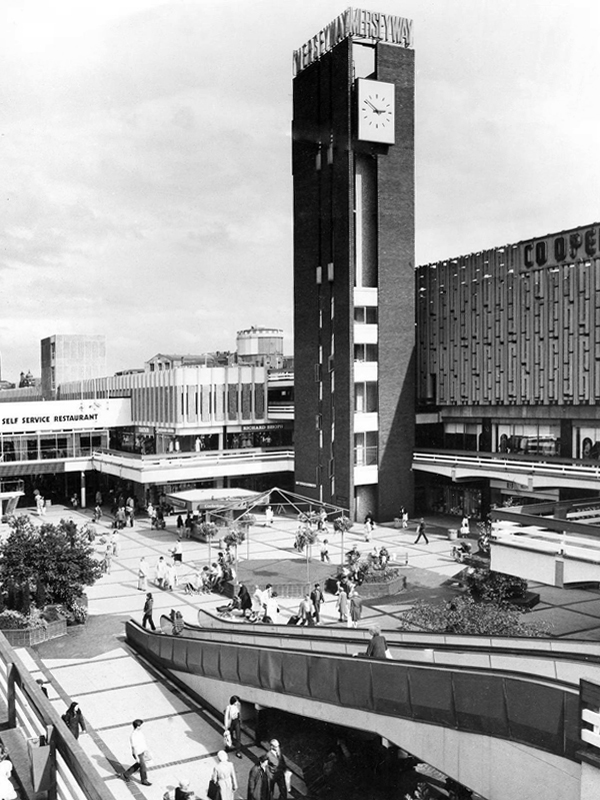
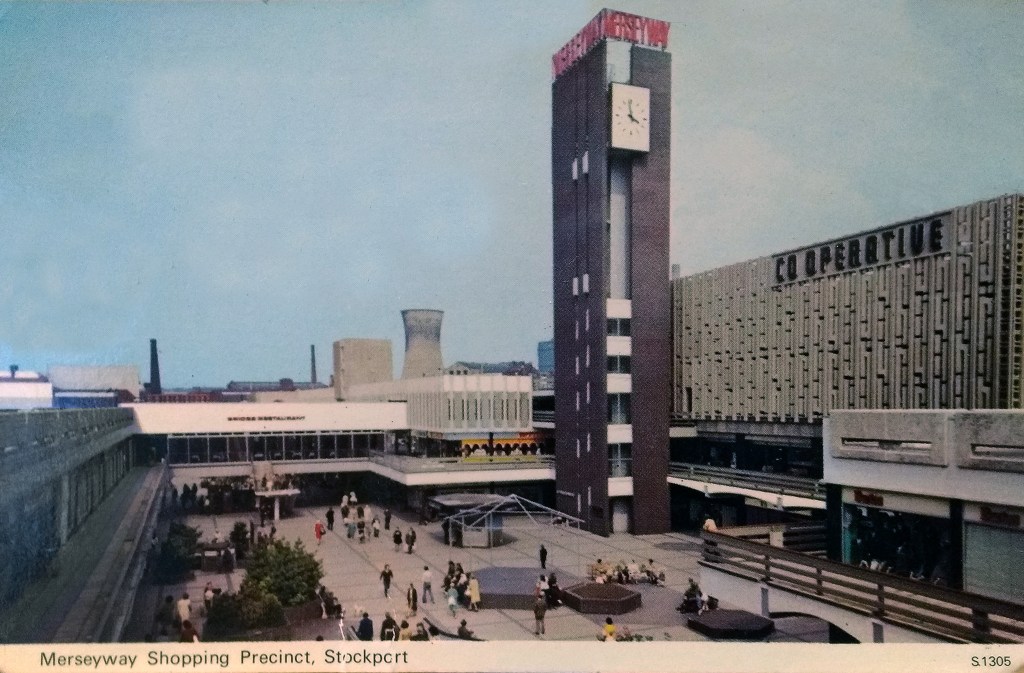
Once widely admired, Ian Nairn esteemed architectural writer, thought it an exemplary exposition of modern integrated shopping and parking, sitting perfectly in its particular topography – way back in 1972.

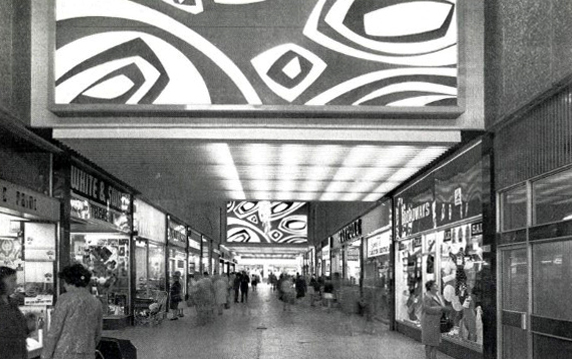
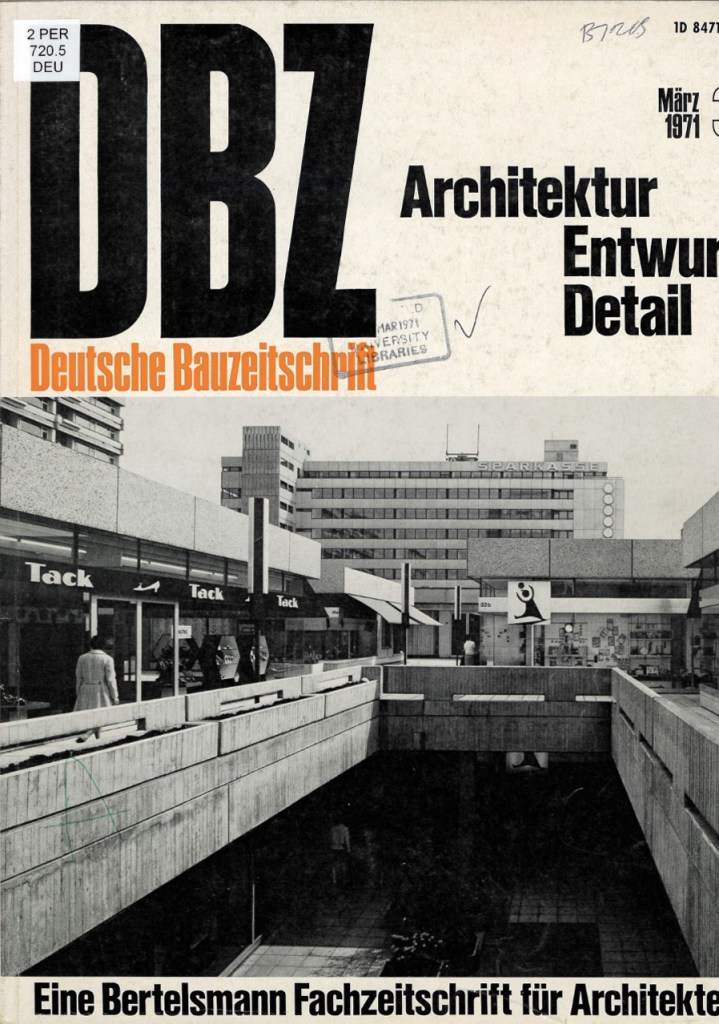
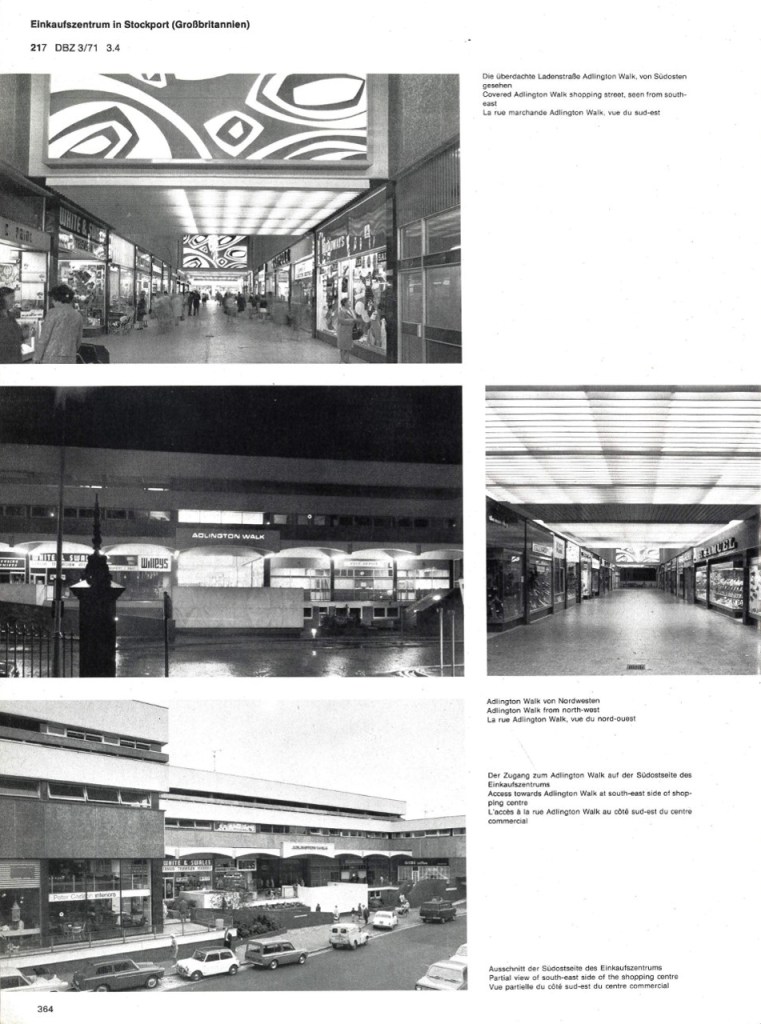
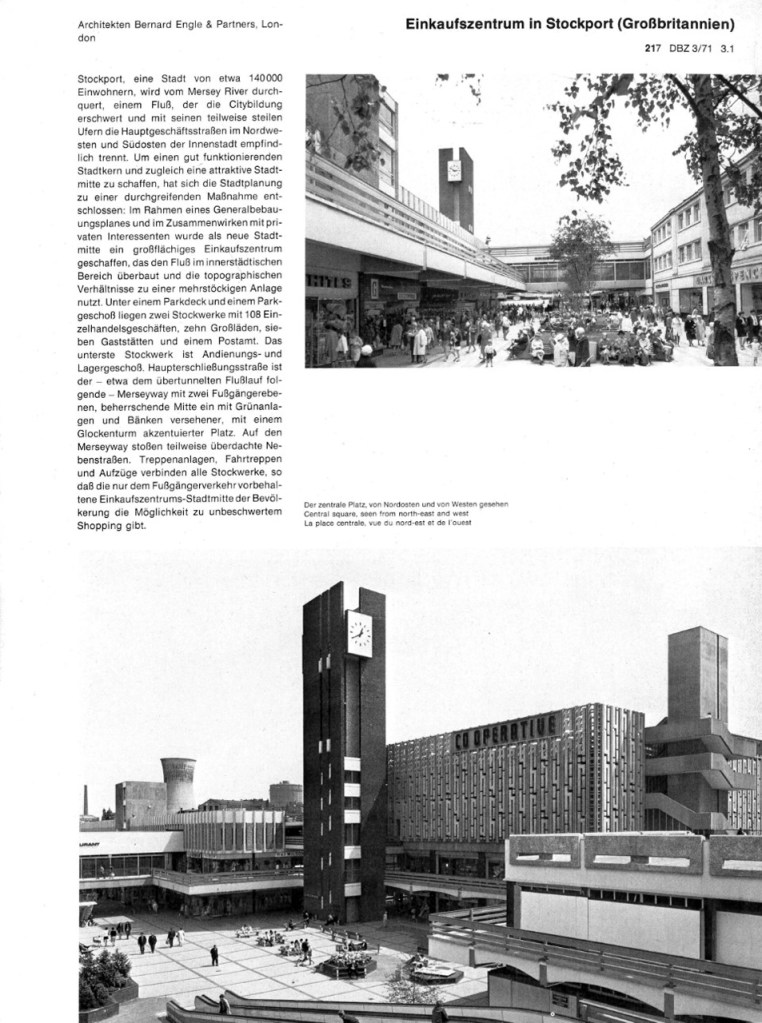
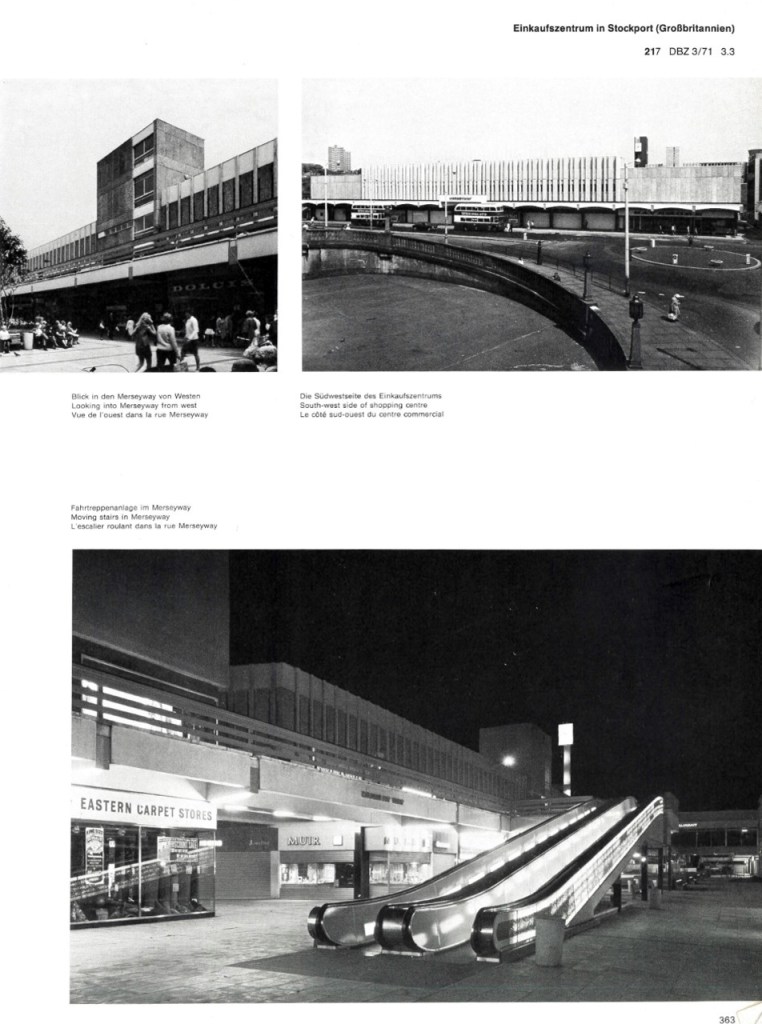
This German magazine dedicated several pages to coverage of Merseyway back in 1971.

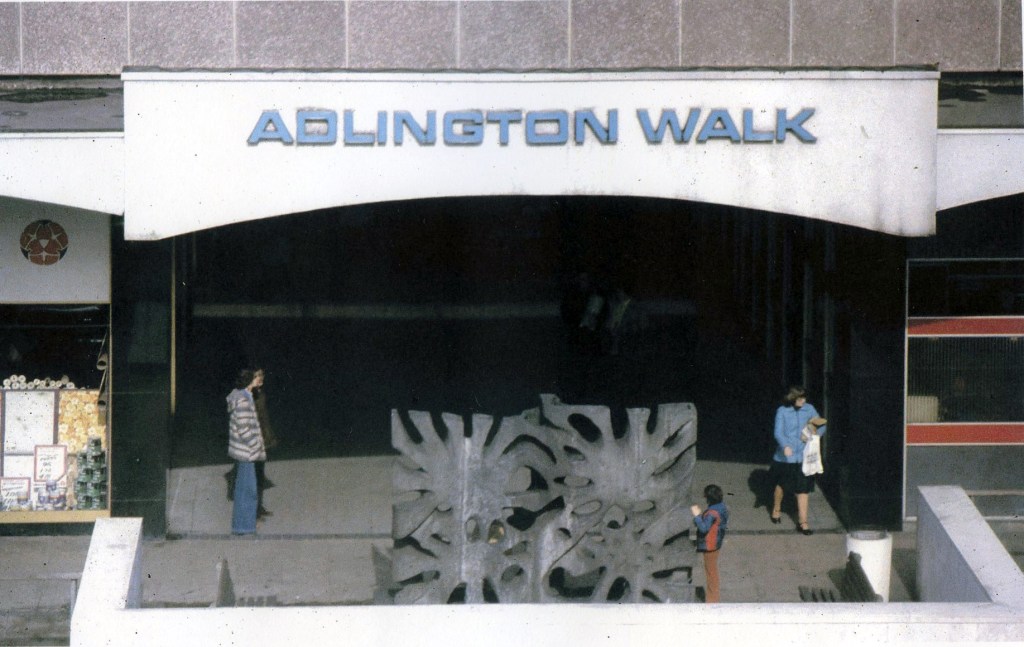
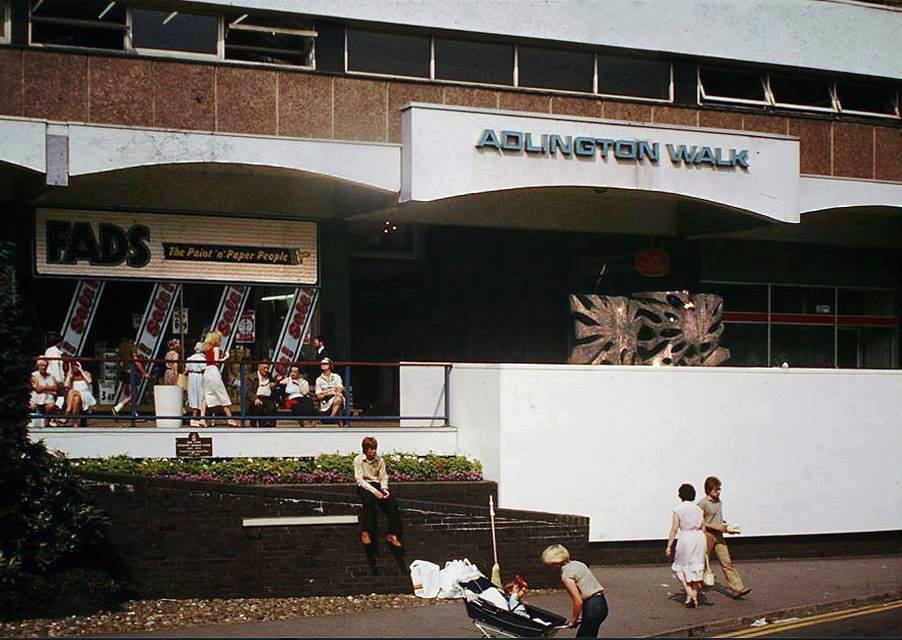
Note the long lost decorative panels of Adlington Walk.

Many thanks to Sean Madner for these archive images.

Mainstream Modern has recorded its conception and inception, as part of a wider appreciation of Greater Manchester’s architecture.

The architects were Bernard Engle and Partners in conjunction with officers of Stockport Corporation and the centre opened in 1965. The separation of pedestrians and cars, the service areas, the multi level street, the city block that negotiates difficult topography to its advantage, are all planning moves that are of the new, ordered and systemised, second wave modernism in the UK. The aggregate of the highways engineering, the urban planning and the shifting demands of retailers frequently arrived at a form and order such as this. In this way Merseyway is unremarkable, it’s like many other centres in many other towns – consider the rooftop landscape of Blackburn. It is, however, typical and has been typically added to and adjusted during its life and presents perhaps the face of the last retail metamorphosis before the out-of-town really made the grade.

Each successive remaking and remodelling has seriously compromised the integrity of the development. We are left with dog’s dinner of poorly realised Post Modern and Hi-Tech additions, along with a failure to maintain the best of the original scheme.

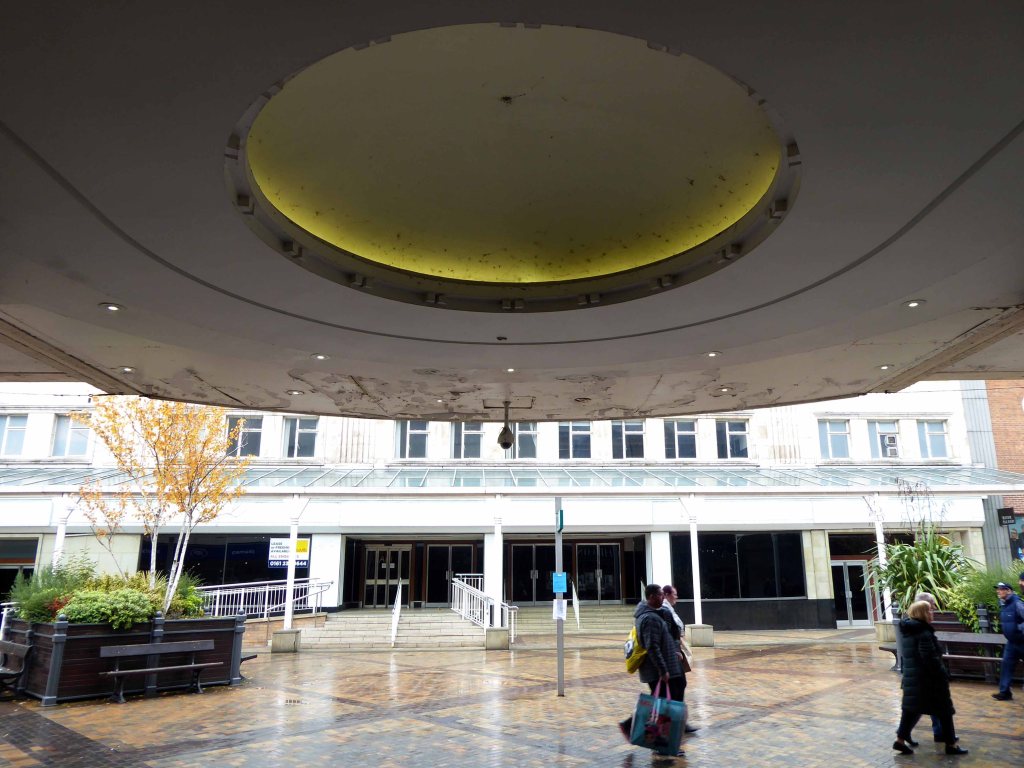
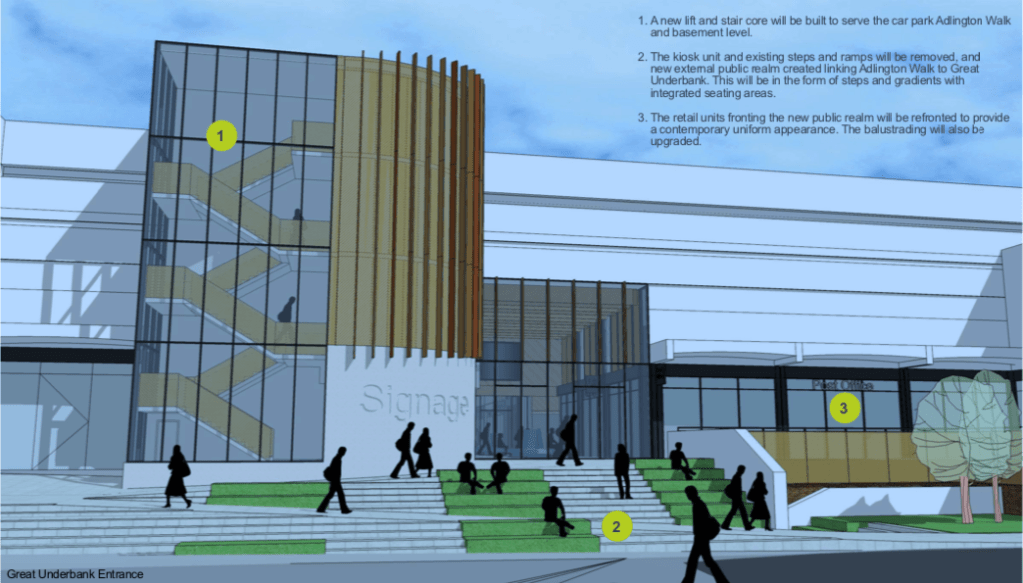
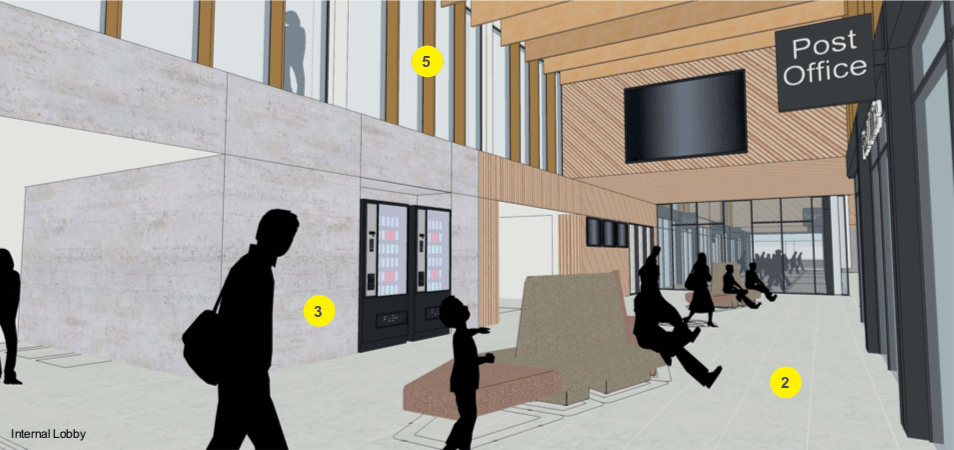
Plans are now afoot to revamp the precinct – starting with Adlington Walk.

Proposed facilities include a soft play space, new seating, buggy stores, high grade toilets, parent and child facilities and a multi faith prayer room.

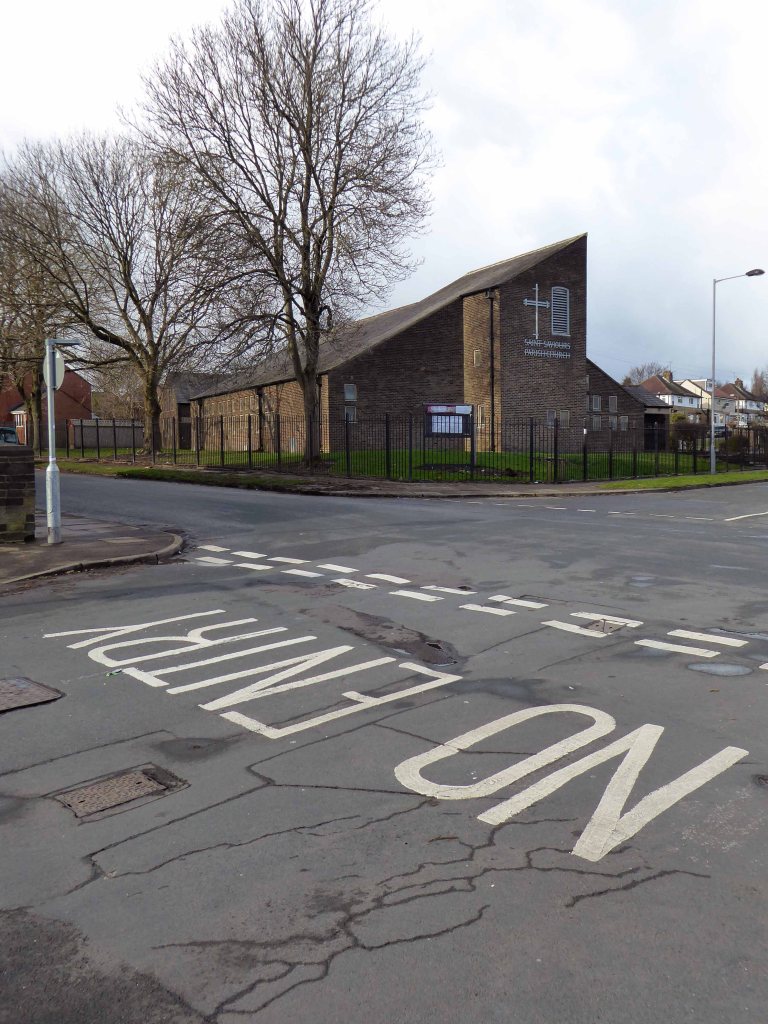
St Saviour’s Church – Bradford

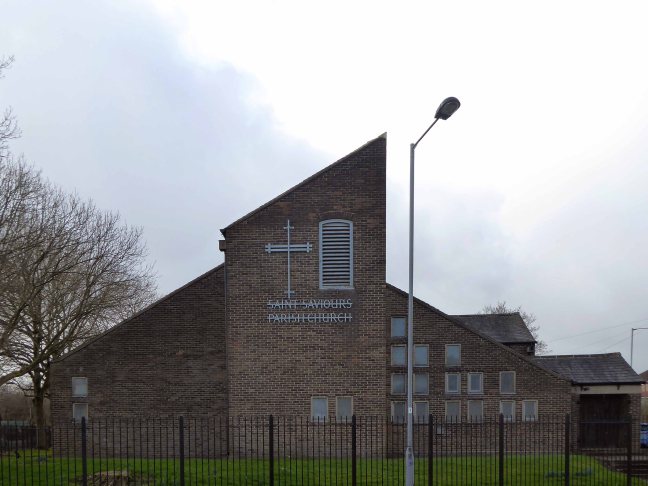
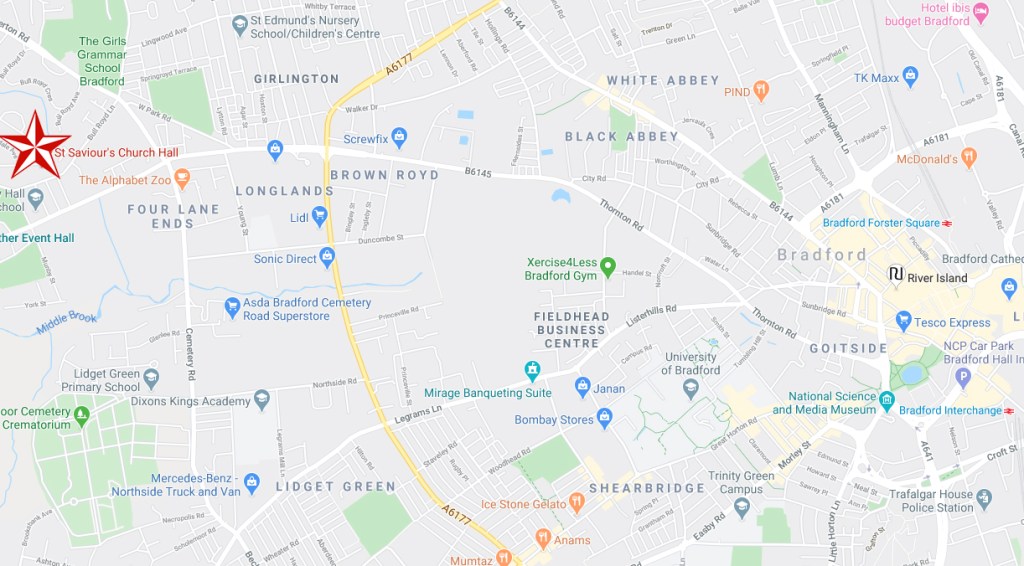
St Saviours 25 Ings Way Bradford BD8 0LU

What a delight – the stunning surprise that awaits you, around one particular suburban corner of Bradford.

I had called ahead, to arrange the visit – the Reverend Dorothy Stewart had gracefully invited me to join members of the community and herself, one wild and windy Wednesday.

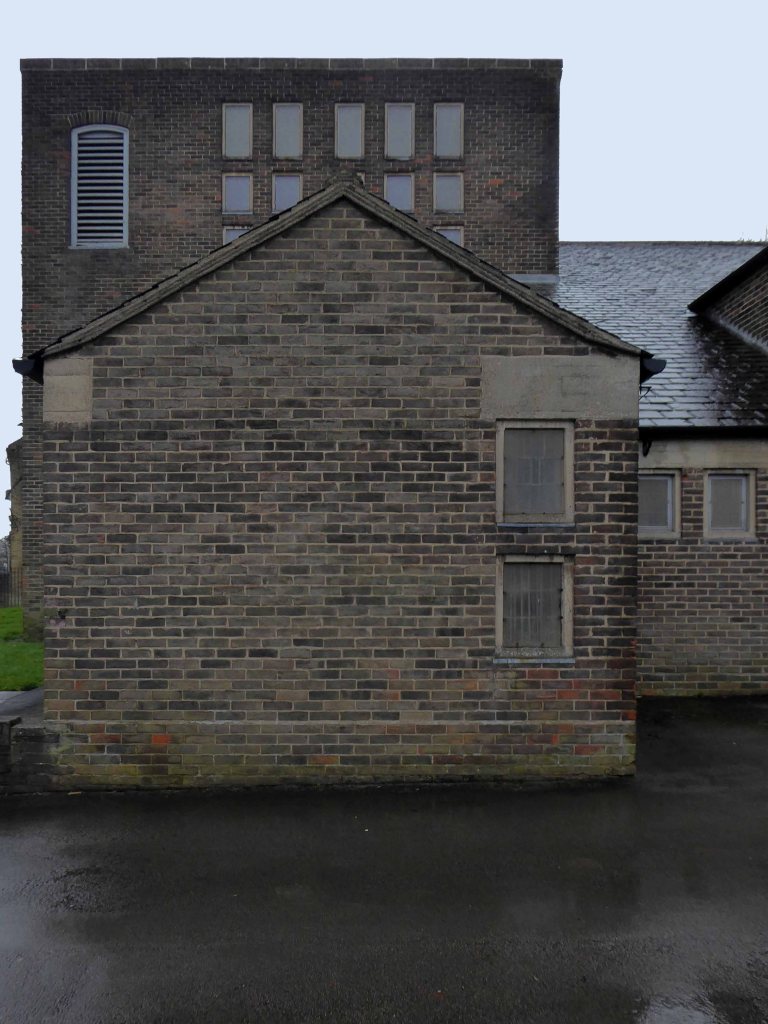
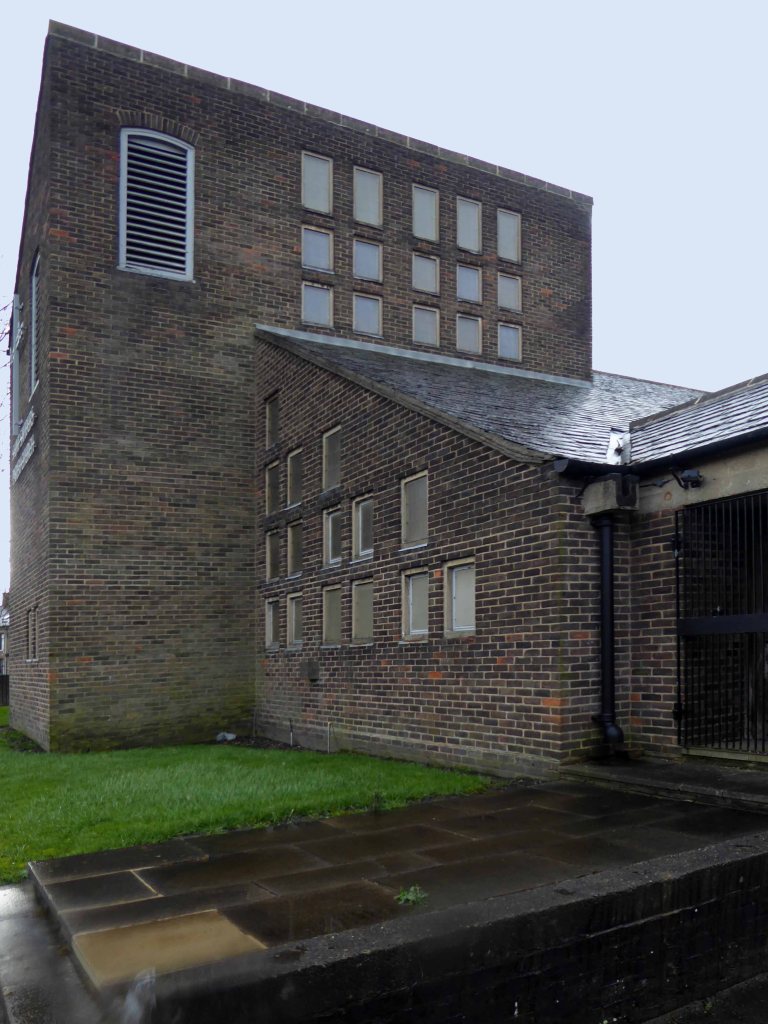
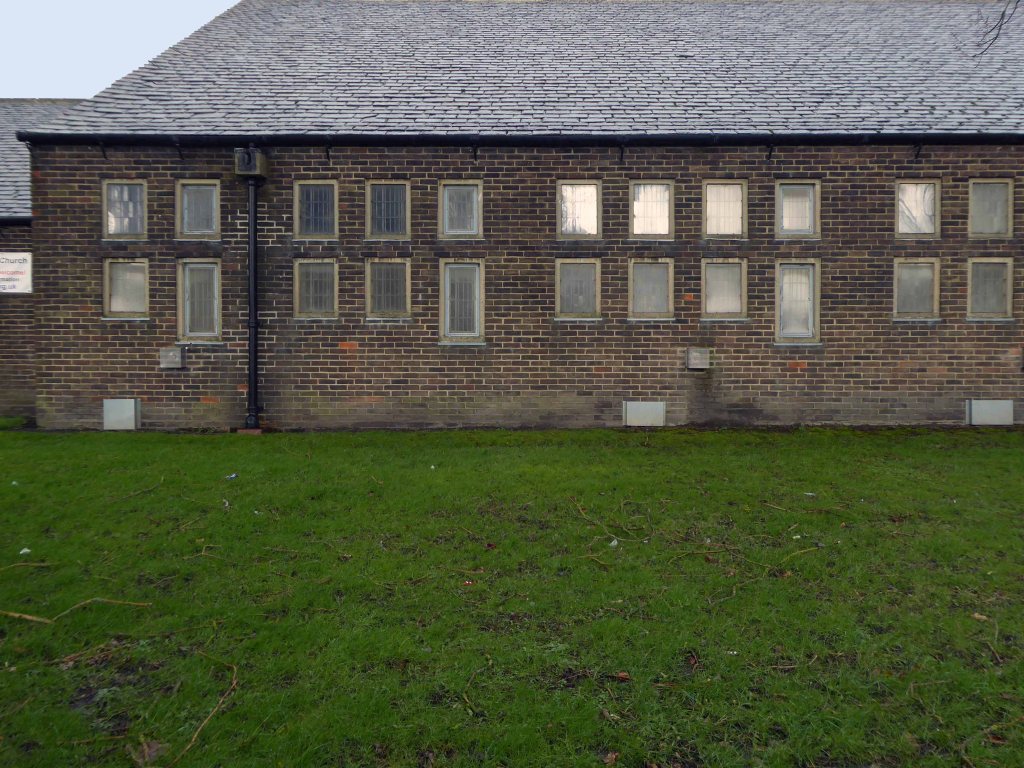
Steel frame and shuttered concrete with dark red brick walls in stretcher bond, and slate roofs.

Church of 1966 with attached hall of 1971, both designed by architect George Pace. Characterised by asymmetric arrangement of roofs, exposed structure and juxtaposition of materials, this is a complete and largely unaltered example of Pace’s work. The asphalt roof and windows are in very poor condition. Repair works to the roof were carried out in 2016 with funding from the National Lottery Heritage Fund’s former Grants for Places of Worship scheme.

Listed November 2007

The exterior is stark and angular, the body of the church is a broad rectangle with no division between nave and chancel, with a bell tower to the east, vestries to the north-west and a chapel to the west. At the western end is the church hall, added in 1971. Externally a single asymmetric roof covers the main body of the church, rising at the east end to form a mono-pitch section over the altar area and incorporating the bell tower. There is a porch at the east end of the north side, and a transept with a double pitch roof. To the west is a single storey, flat roof section with an entrance to the north, extending to the transept. West of the main body of the church on the south side is a separate roof, housing a chapel. To the west is the church hall, with a north-south asymmetric roof. All the windows are rectangular, of varying sizes, with plain glass in rectangular leaded lights. Lintels over the doors and the parapet of the flat roofed block are of shuttered concrete, as are the window surrounds.

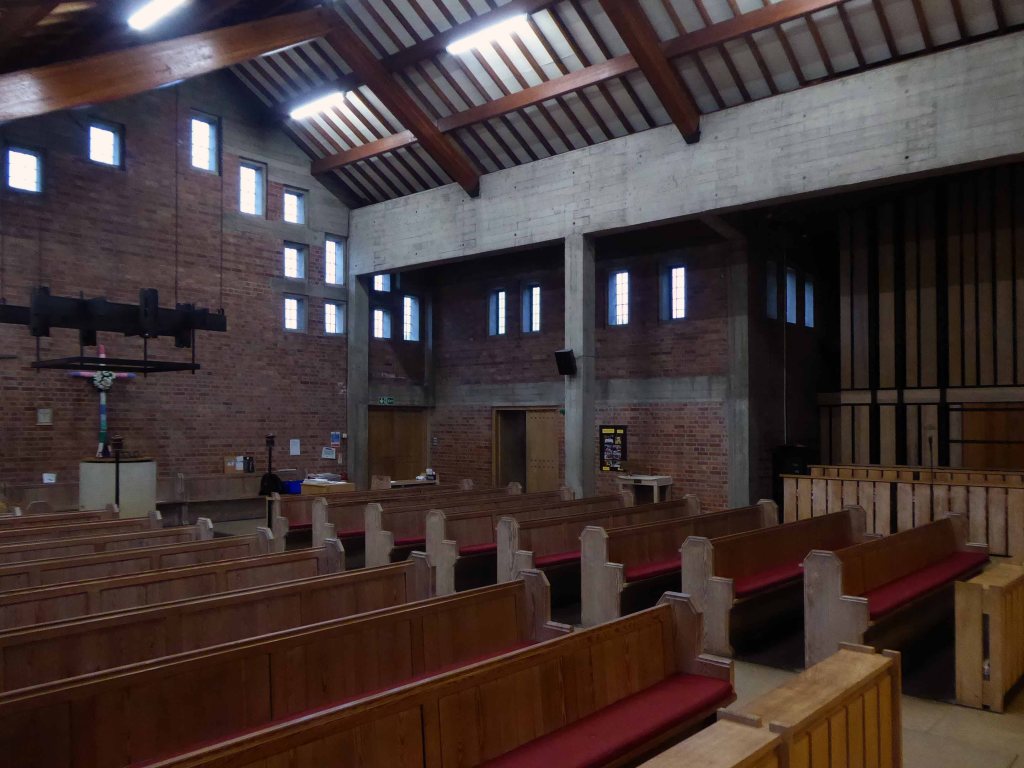
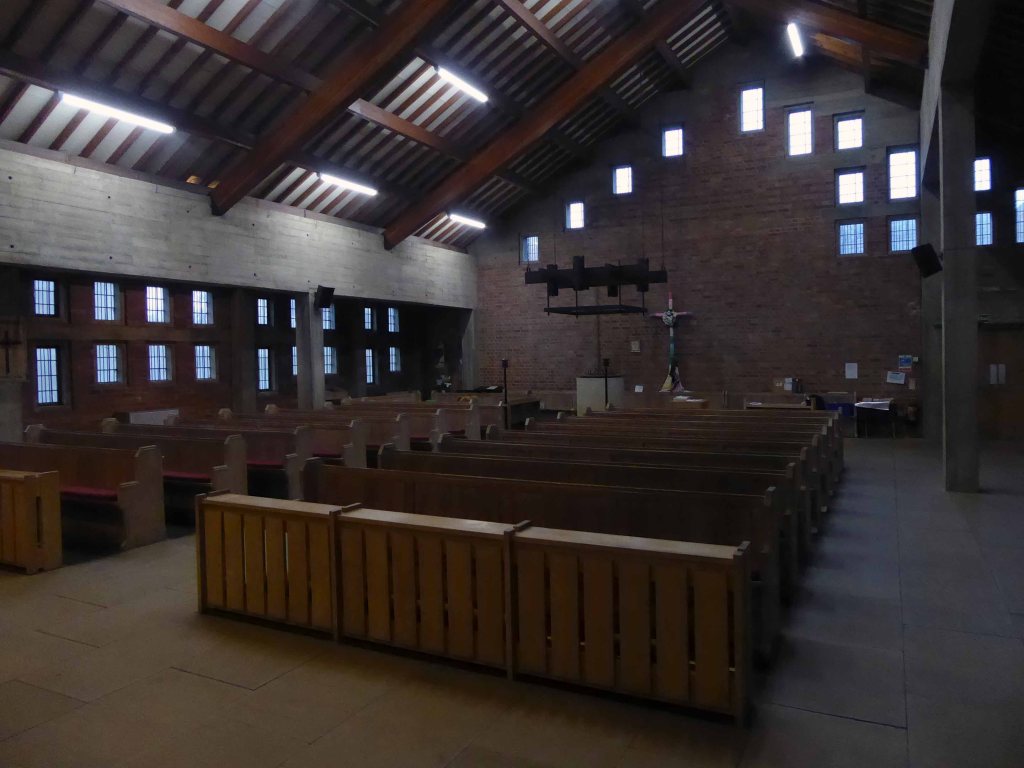
The body of the church contains Victorian stripped oak bench pews derived from St John’s church in Little Horton, arranged with a central aisle. To the north side is a range of contemporary pews in wood with vertical slatted fronts, in front of the organ, recovered from St. Chrysostom’s Bradford , by Driver and Haigh of Bradford, which is housed in the transept with a matching front of vertical wooden slats.

Let’s take a look.

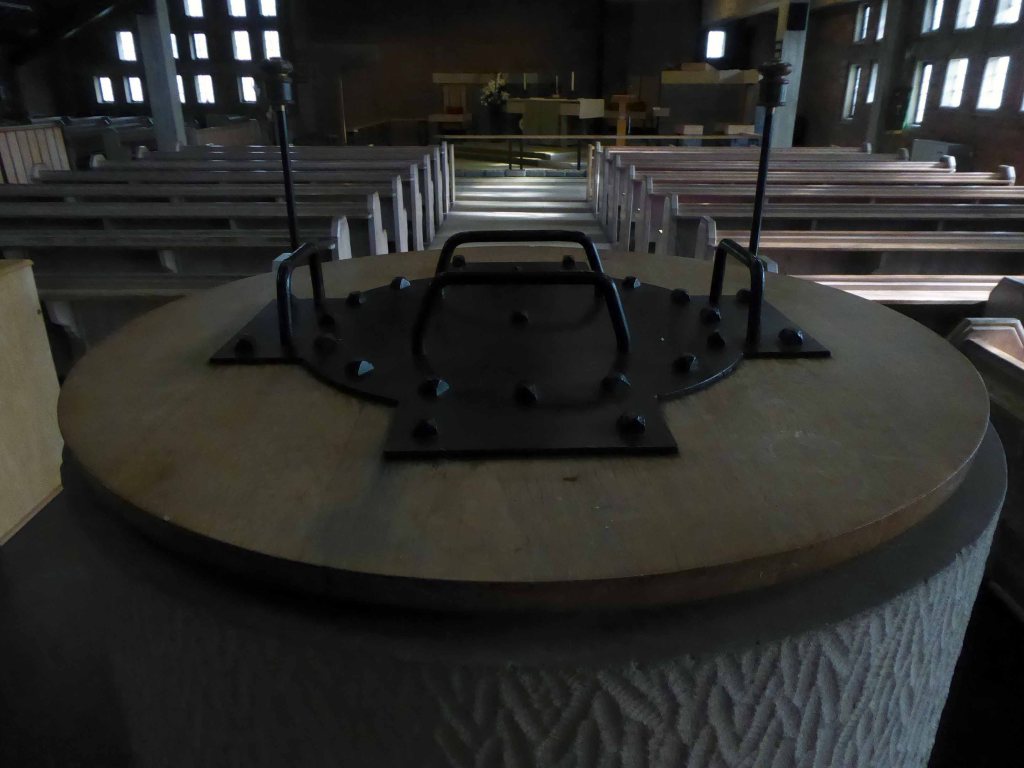
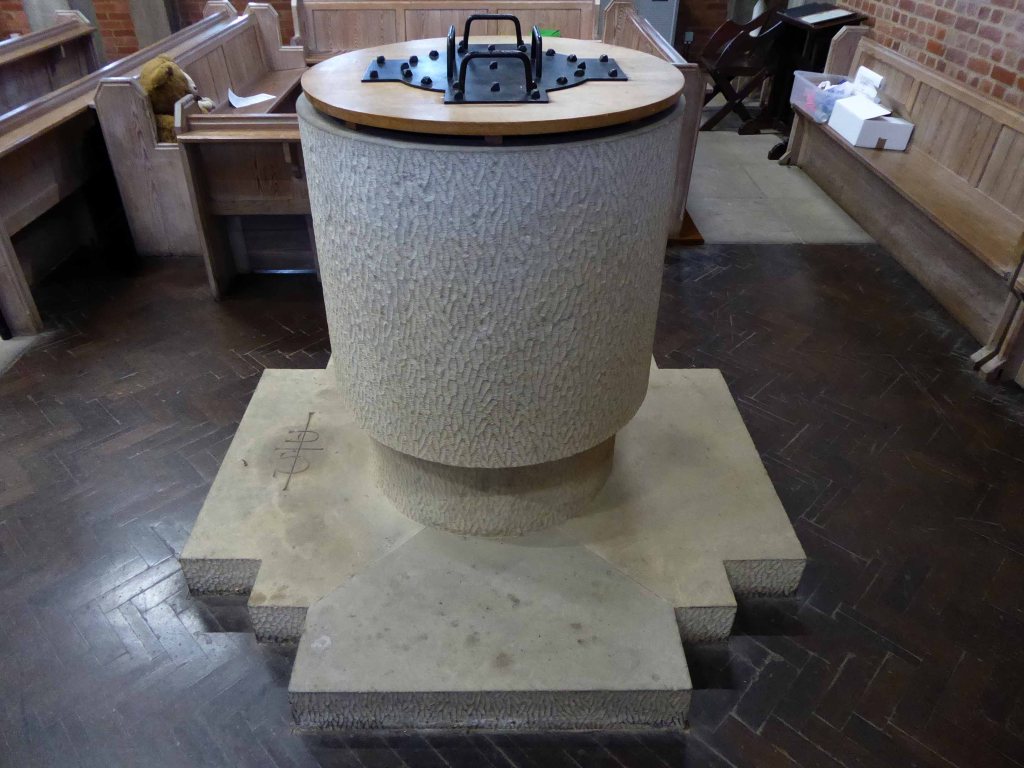
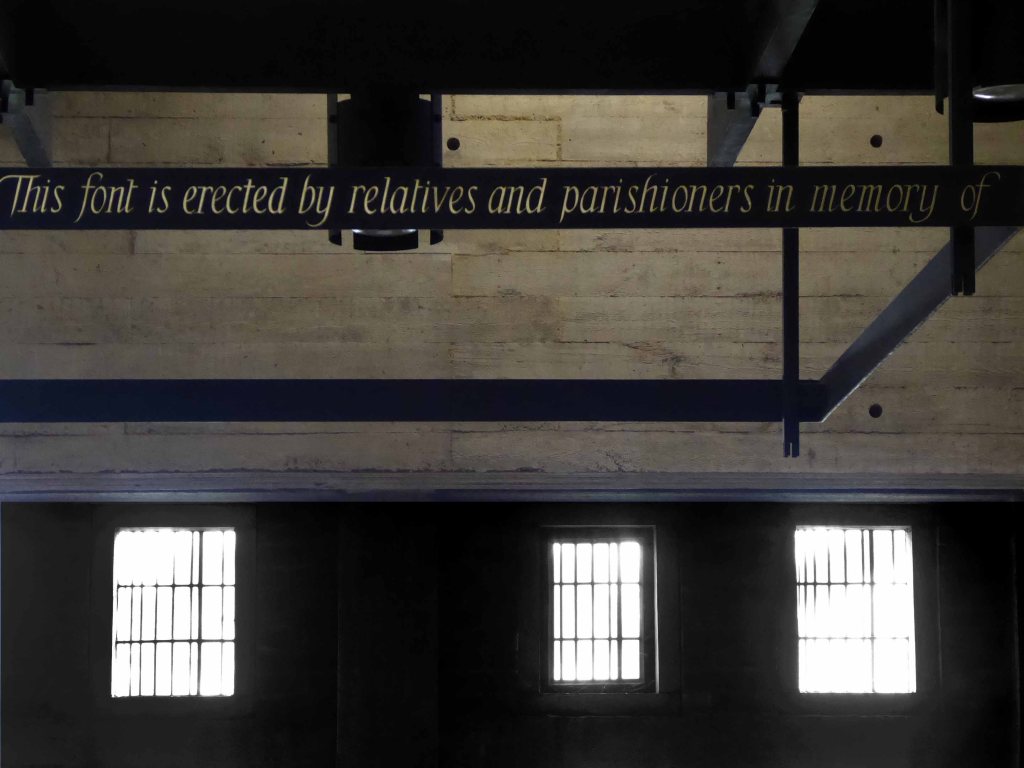
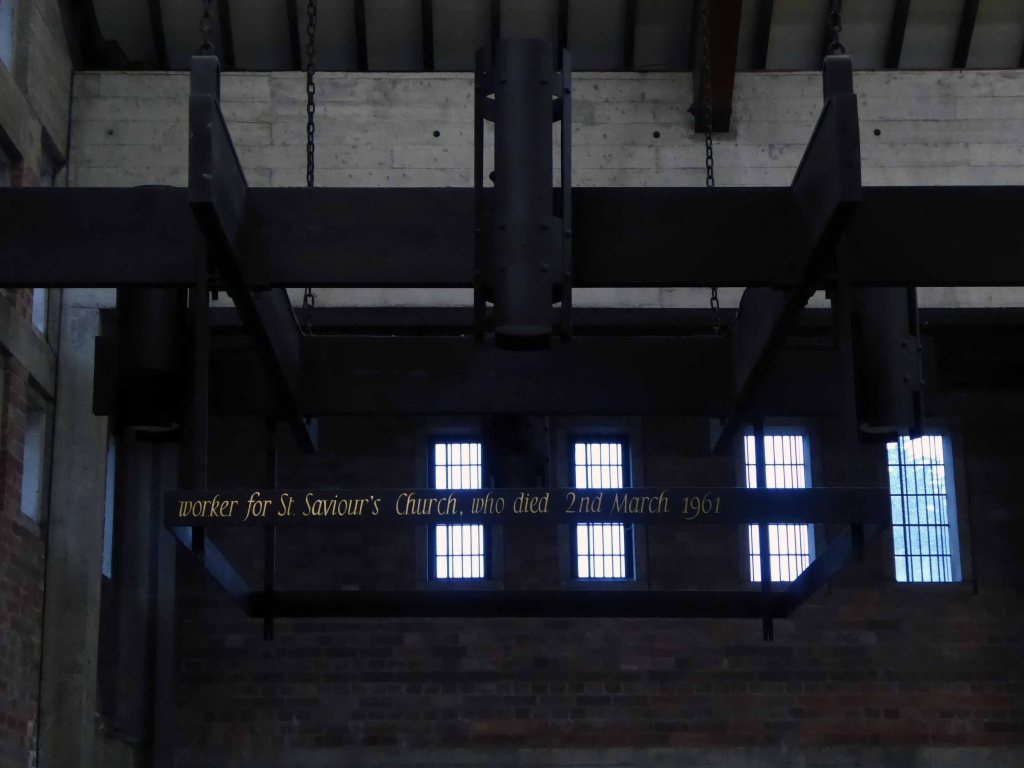
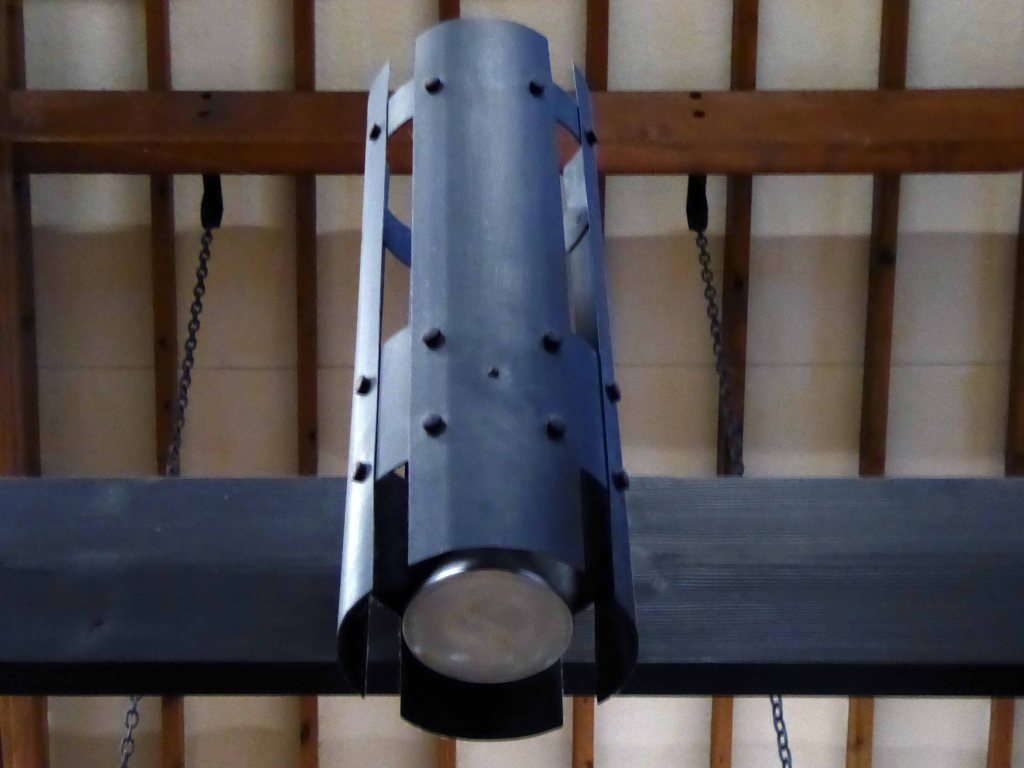
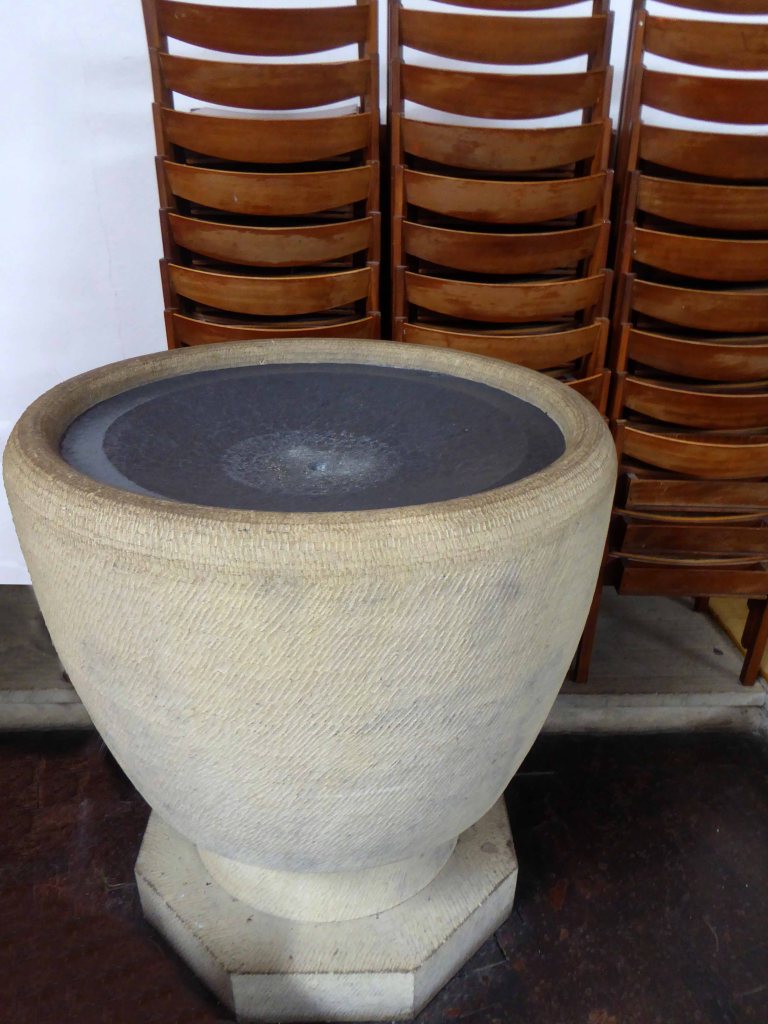
To the rear is the cylindrical font in white concrete with a wooden lid, set on a raised platform. Suspended above it is a large light fitting in black metal, inscribed around the edges with the words: “This font is erected by relatives and parishioners in memory of/ Beatrice May Parkin, for over forty years a Sunday School teacher and/ worker for St Saviour’s Church, who died 2nd March 1961”.

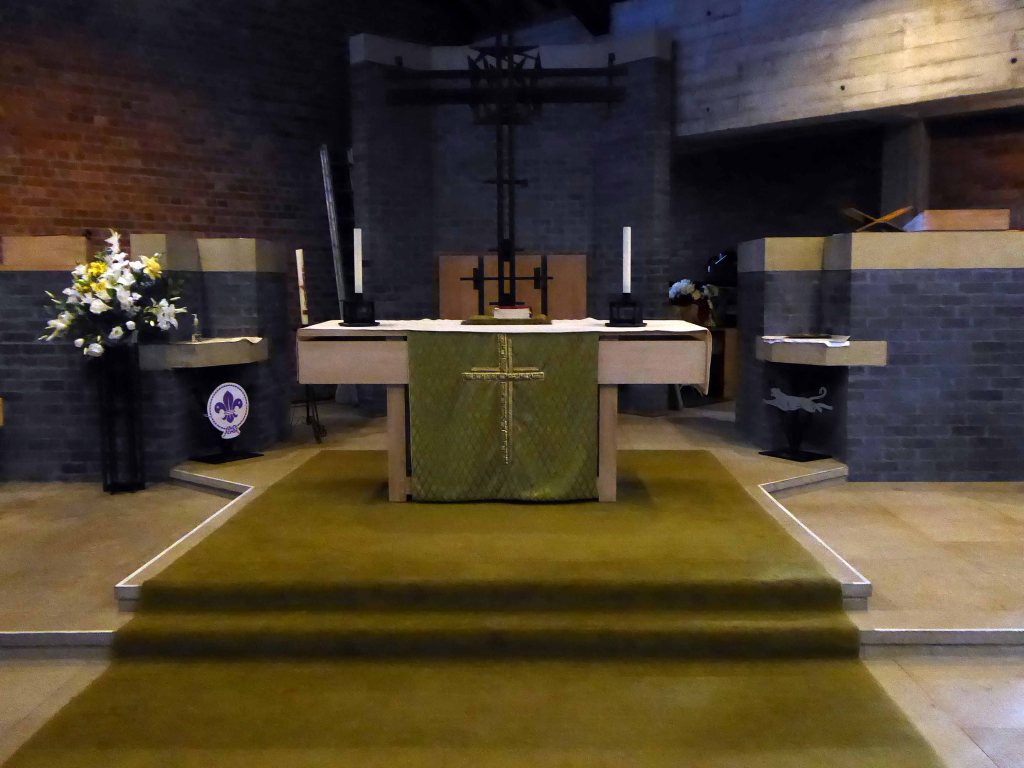
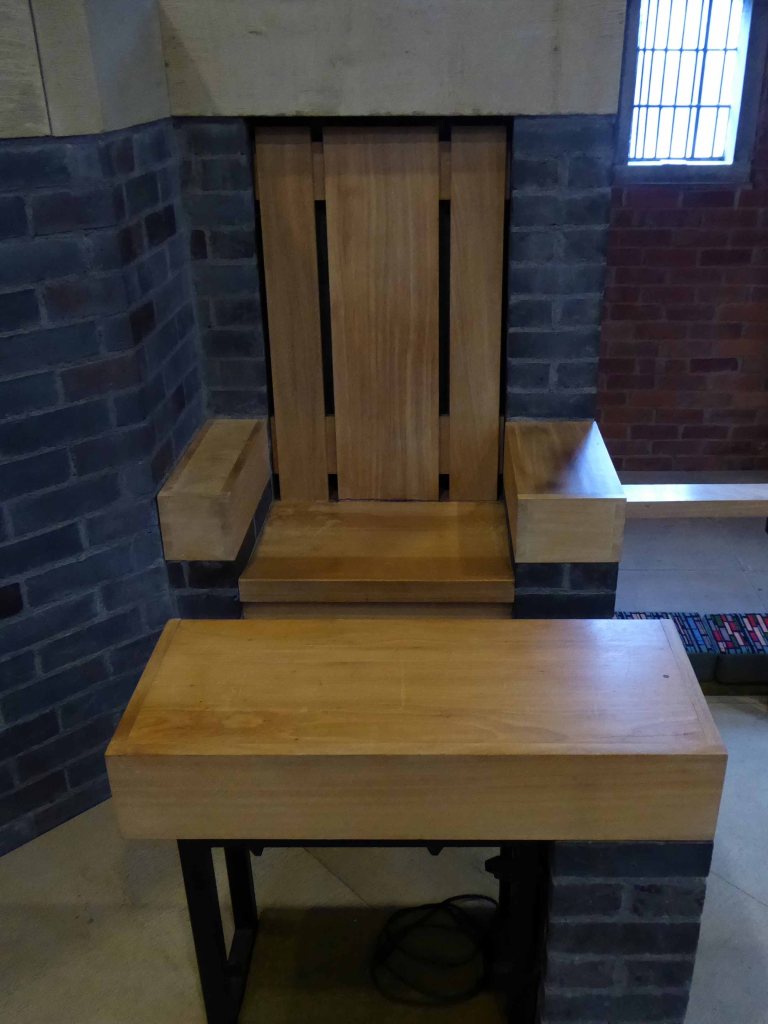
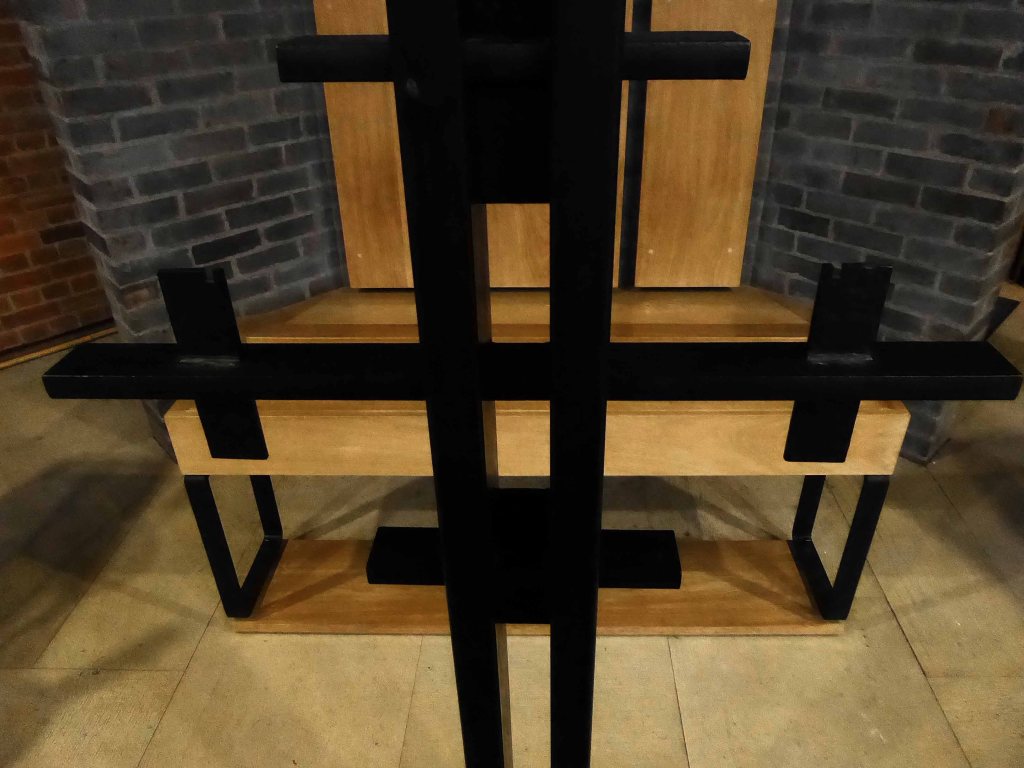
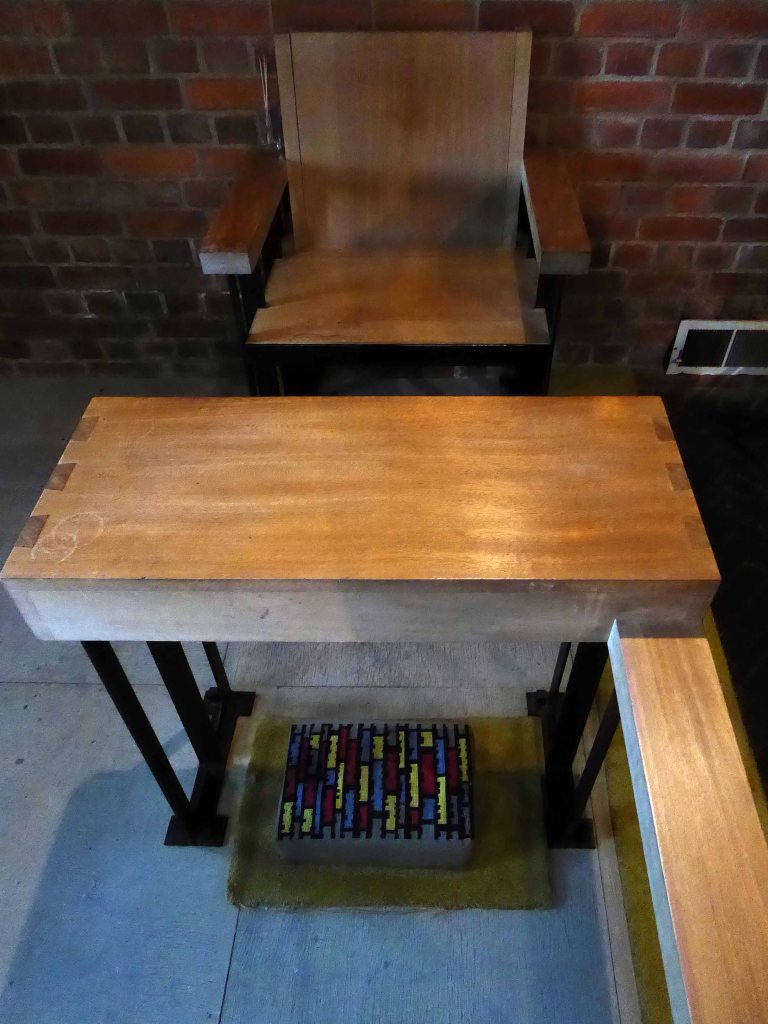
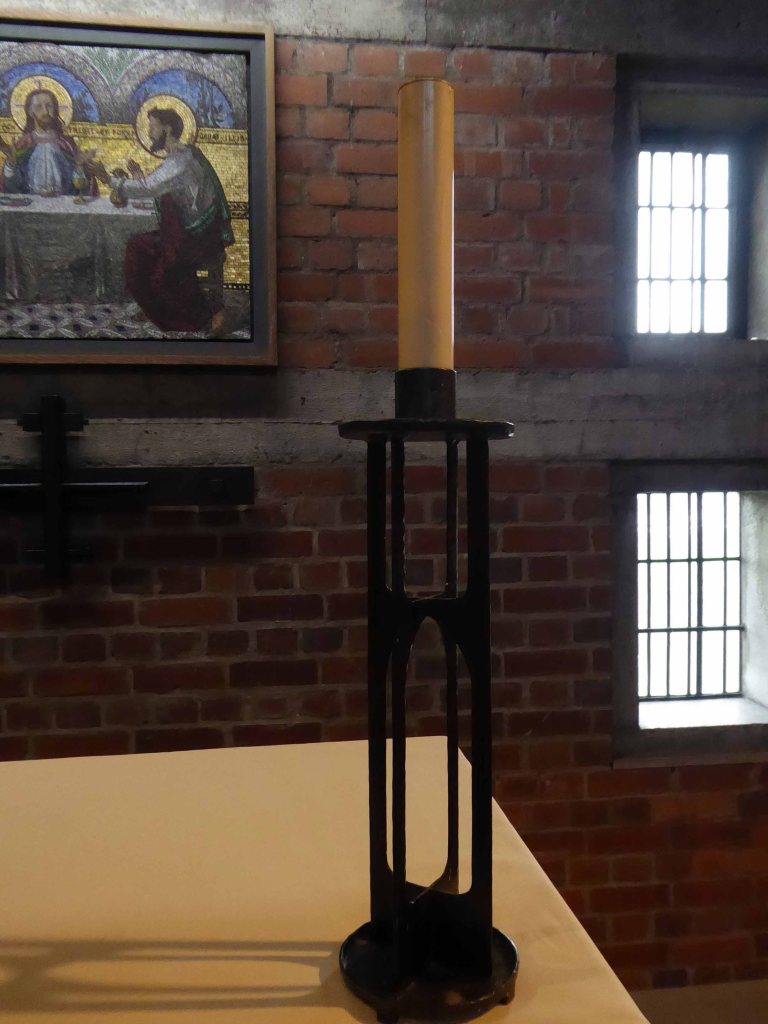
There is no separate chancel, and the finishes throughout are exposed brick, shuttered concrete and limed oak. The sanctuary area is in the south-east corner and consists of a tall angled purple brick reredos, topped with concrete, and a lower detached, angled purple brick pillar to each side each holding a shelf and incorporating a wooden seat. In front of the central reredos is an integral wooden bench with three backs, and a large black metal cross in the same style as those on the exterior but with more elaboration, fixed to the floor on a raised concrete block. To the fore is the altar table on a low raised platform. The whole is enclosed within an altar rail of iron and wood, open to the centre.

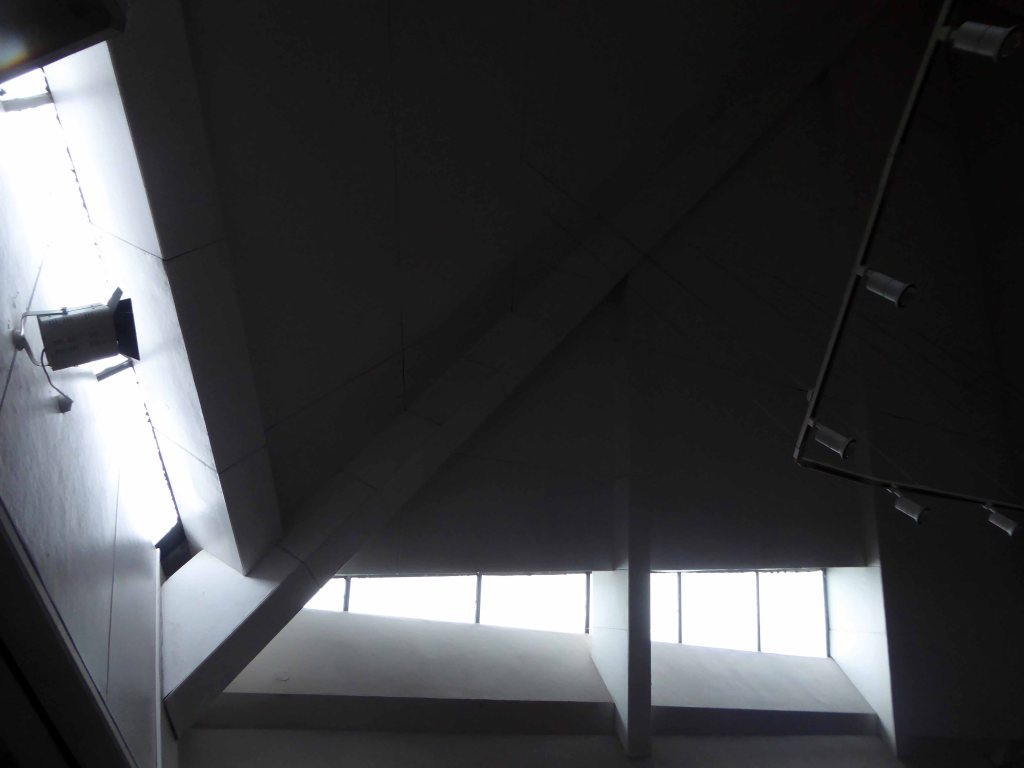
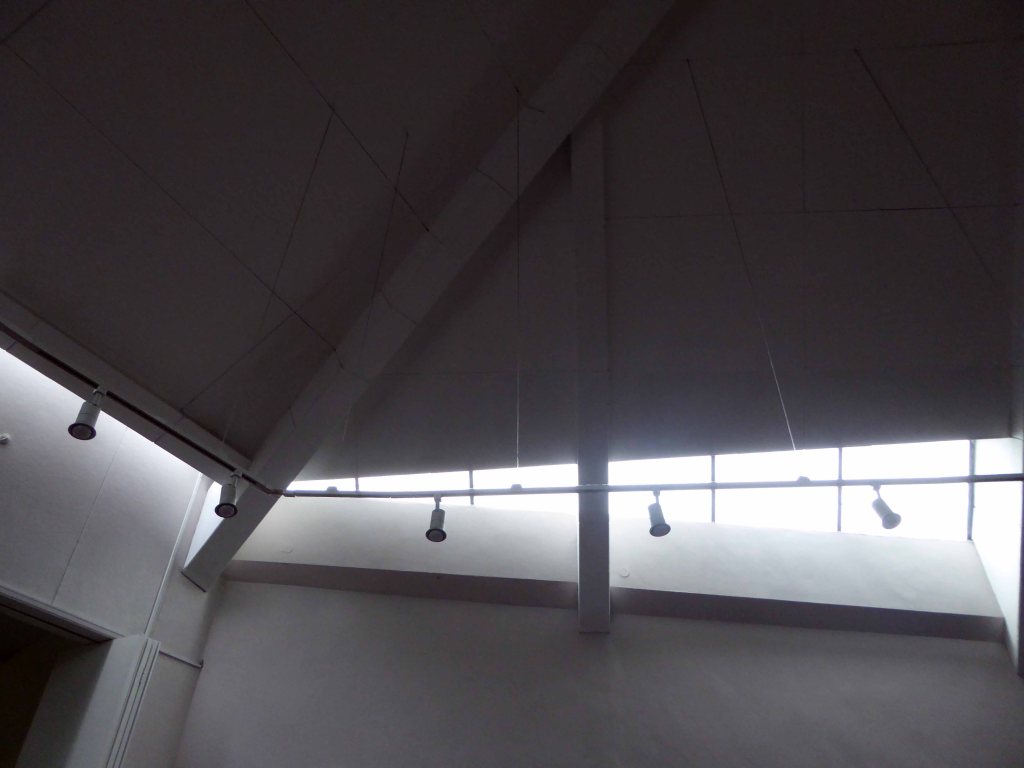
The main roof has exposed wooden trusses supported on concrete pillars and beams, with rafters and purlins also exposed creating a latticework pattern.

The whole interior order is orderly, calm and coherent, a simple consistency of materials and architectural intent.

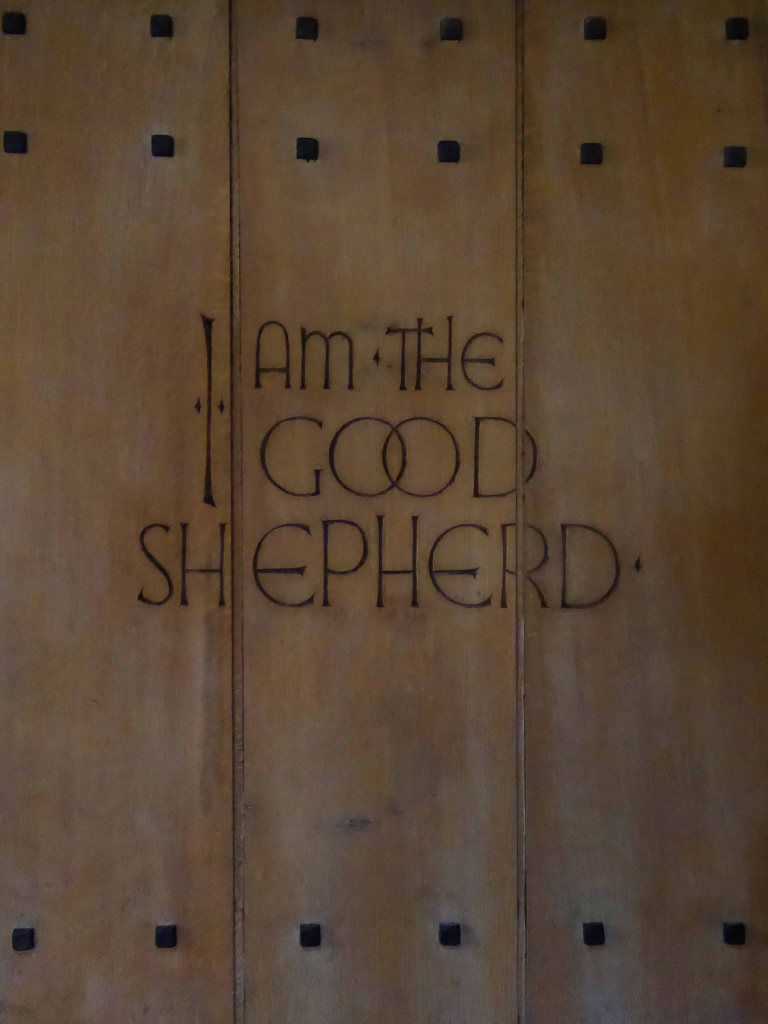
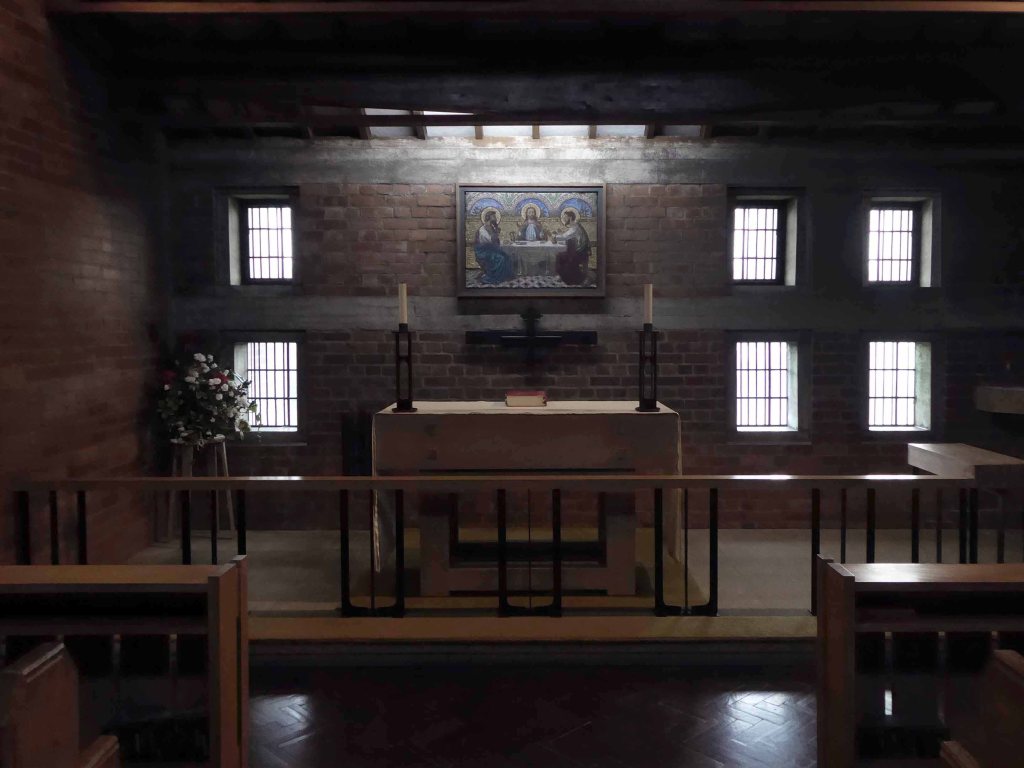
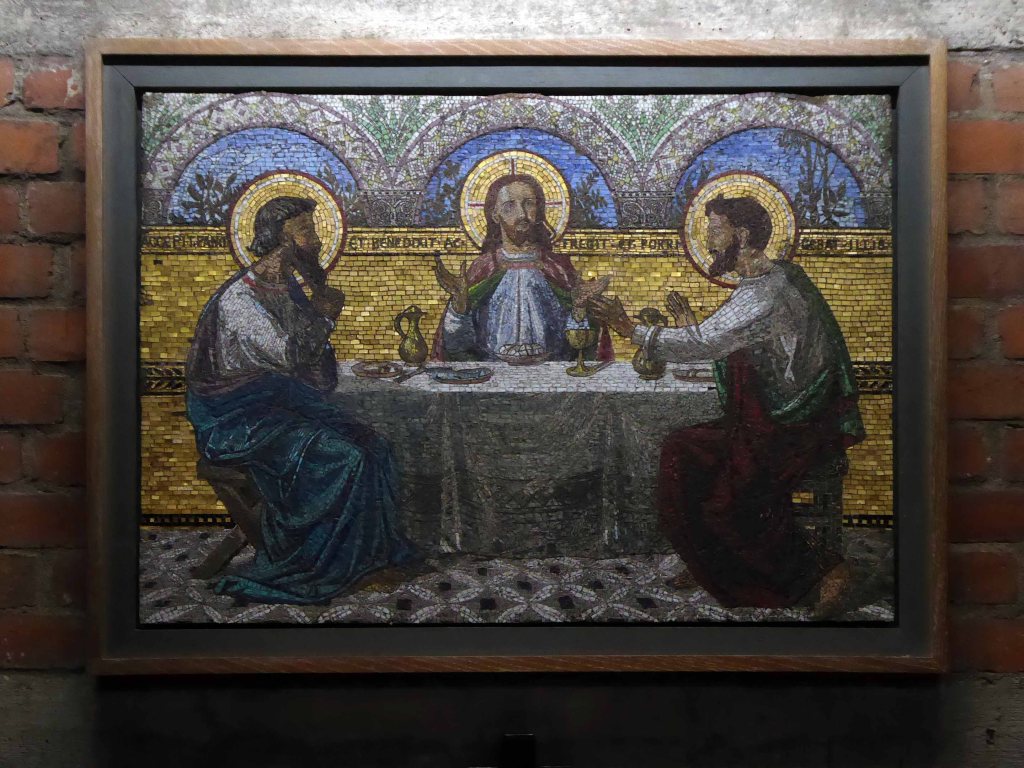
The solid wood, studded chapel door has the words “I am the Good Shepherd” engraved on it. The chapel has exposed beams and rafters, and an altar to the north with iron and wood altar rail in front. Pews are as in the church. There is a mosaic plaque behind the altar which came from St John’s church in Little Horton.

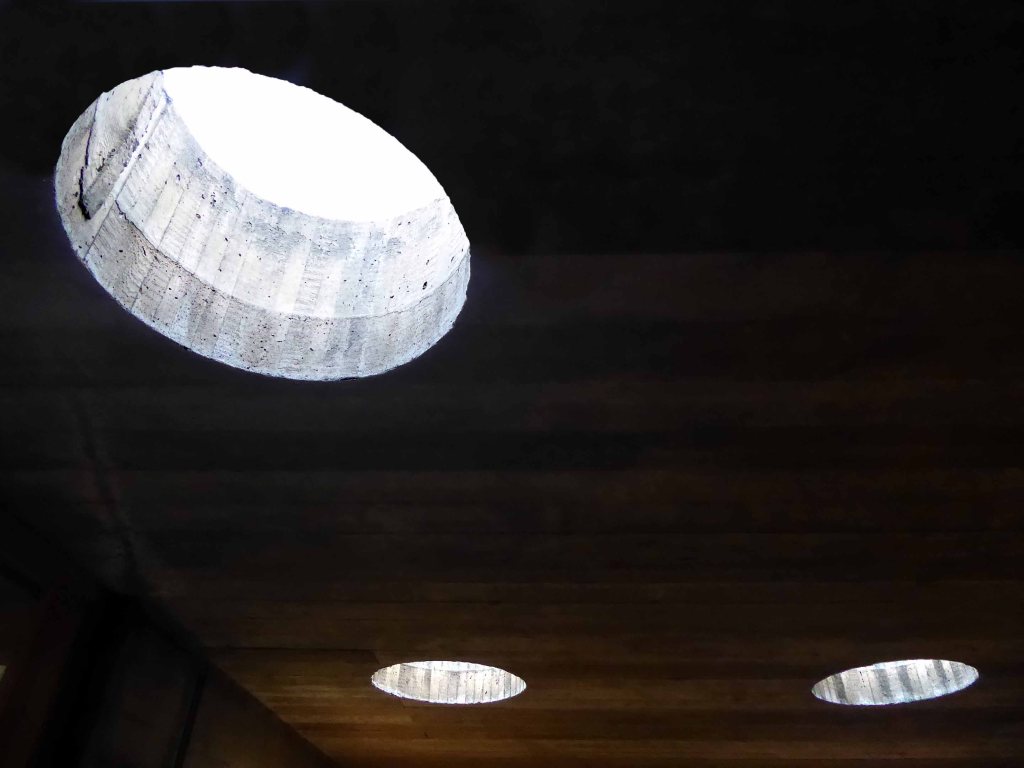
Beyond to the west is the narthex, with shuttered concrete ceilings pierced by circular skylights, exposed brick walls and doors to the chapel, service rooms and hall. 

Such a pleasure to visit such an enchanting church – it was a precious privilege to be welcomed by the congregation, warden and Reverend Dorothy.

Once again – many sincere thanks.

See also: William Temple Church of St Mark’s and St Mark’s Broomhill

Humber Bridge

The  Humber Ferry was a ferry service on the Humber between Kingston upon Hull and New Holland in Lincolnshire which operated until 1984, after the completion of the Humber Bridge in 1981.

I walked from Hull to Hessle – but you were always on my mind.

Glimpsed once or twice from a train, I’d never been up close and personal.

The Humber Bridge was opened by Her Majesty Queen Elizabeth II in 1981.

It is one of the marvels of modern engineering and was, until 1998, the longest single span suspension bridge in the world but there are now five other longer bridges of this type. However it is still the longest that can be used by pedestrians.

The bridge is 2,220 metres long and the towers, which are farther apart at the top than the bottom to compensate for the curvature of the earth, are 155 metres high.  It was built at the narrowest point of the estuary known as the ‘Hessle Whelps’ and when completed it was admired for its design and elegance, but reviled by others as a bridge from nowhere to nowhere, the crossing comprises a dual carriageway with walkways for pedestrians and cyclists on both sides.

Although approval to build the bridge was granted in 1959 work did not begin until 1972 due to difficulties in financing the project. In 1966 Harold Wilson, the Prime Minister of the day, allowed Barbara Castle, the Minister for Transport, to give permission for the bridge to be built, hoping that the announcement would be a vote winner in the forthcoming Hull North by-election.

Construction Team

The consulting engineers for the project were Freeman Fox & Partners . Sir Ralph Freeman had produced the first ideas in 1927 and in the early 1930s the cost of the project was estimated at £1.725 million and that the bridge would be unlikely to recoup the construction or maintenance costs. In 1935 he had an idea for a 4,500-foot suspension bridge for the Humber Tunnel Executive Committee. Sir Gilbert Roberts produced more ideas in 1955 for a bridge with a 4,500-foot central span, costing £15 million, to be paid for by East Riding County Council and Lindsey County Council. Once it was likely that a bridge would be constructed,  Bernard Wex  produced the design in 1964 that was actually built. The bridge was built to last 120 years. 

The architect was R. E. Slater ARIBA. The administration building for the tolls, was designed by Parker & Rosner. The landscaping was designed by Prof Arnold Weddle. Wind tunnel testing took place at the National Maritime Institute at Teddington and the road deck is designed for wind speeds up to 105 miles per hour (170 km/h).

Wikipedia

Even on the calmest of days the power and sway, push and pull of wind and tide is an uplifting, hair-raising and visceral experience.

The elegantly engineered giant towers above as you gaze from the shore.

An elegy to human endeavour in concrete and steel.

The bridge is of necessity firmly anchored to the ground.

The walkway wide and high astride the estuary.

The tall towers towering above.

The whole structure tied down, anchored and suspended securely.

The mid brown waters of the Humber flowing gently below.

I walked back and to in the company of a handful of fellow travellers, on foot and bike, one of life’s best ever free rides, and reluctantly bade farewell as I headed home to Hull.

But just like just like General MacArthur I came through and I shall return.

George Street Car Park – Hull

My previous Hull walk was was linear, along the Humber Estuary open and expansive.

This was a very different kettle of fish – spiralling out of control, rising and falling, walking the ramp, a journey into one’s inner self.

Possibly the worst multi storey I have been in for years.

Spooky, filthy, bays too small, machines remote, access tortuous.

Avoid.

So says Nick Shields

Dark, Gloomy and Rotting .

Looks a good candidate for a location for a crime watch reconstruction.

Quoth Peter Campbell

It’s a multi story multi Storey and no mistake

I couldn’t possibly pass comment, I walk can’t drive, won’t drive – though simply can’t resist exploring car parks.

Though the local paper has identified an issue of fitness to fit.

Heard the one about a city centre car park where you can’t easily park your car? It might sound like a joke but it’s no laughing matter for drivers trying to squeeze into vacant spaces at Hull City Council’s multi-storey car park in George Street. For motorists are finding it increasingly difficult to manoeuvre into its tight parking bays.

I myself navigated the bays with ease, though not without that unique sense of foreboding and unease, generated by an empty concrete carapace where car space, decay and ingress are issues.

It was designed and developed by Maurice Weston in the 1960s. He had two companies, Multidek and Dekotel, and built circular continuous ramp car parks in Hull, Nottingham, Leicester, Bristol and Bournemouth, some of them also involving circular hotels on the upper floors. In its day, the bays were easily wide enough for most cars. When I used George Street myself, it felt great to use, because you could easily reverse into the pitches and there were no tight corners to negotiate. But car widths have probably got the better of it, these days, and you can’t widen the pitches because of the position of the pillars.

The plans were very complicated to get approved because the George pub was a listed building and the car park had to be built around it. Incidentally, Maurice Weston also had an option to develop the wasteland on Ferensway in the 60s, but his hotel and entertainment centre project didn’t get past the council.

Thanks to David Sugarman

Let’s take a look.

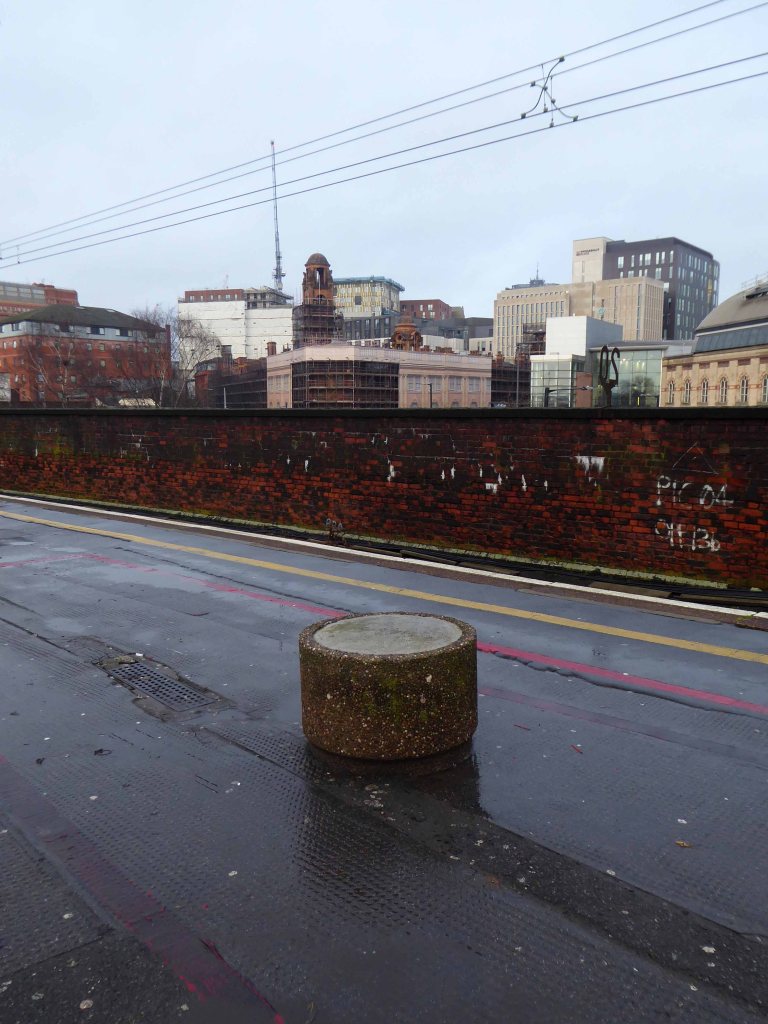
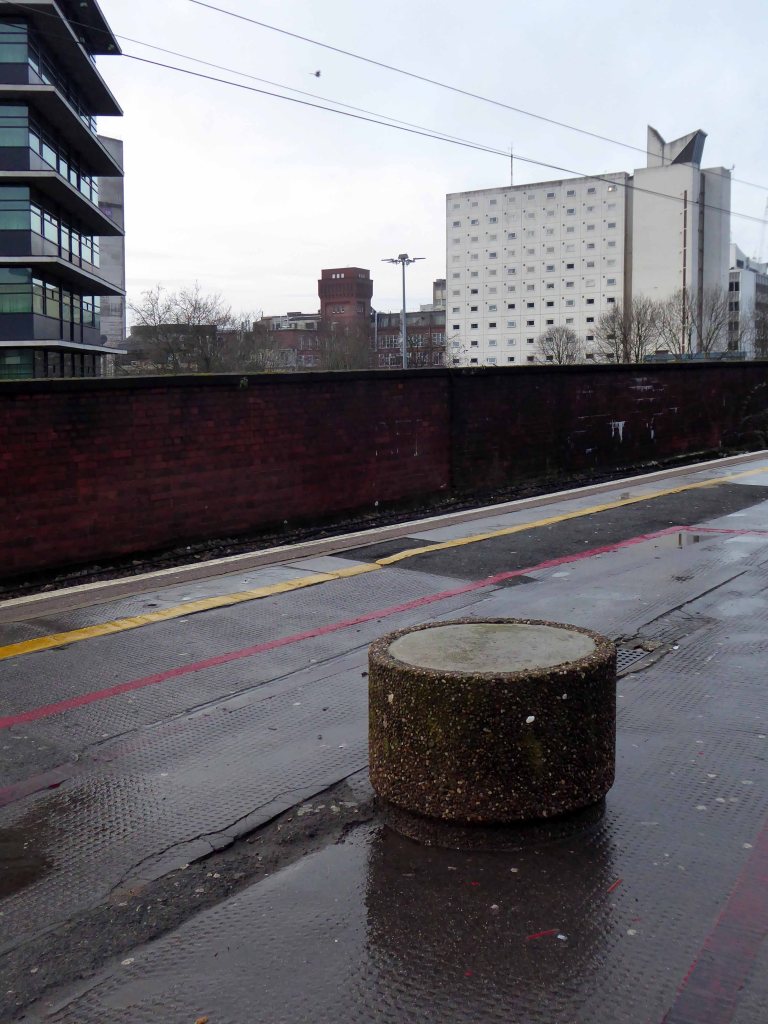
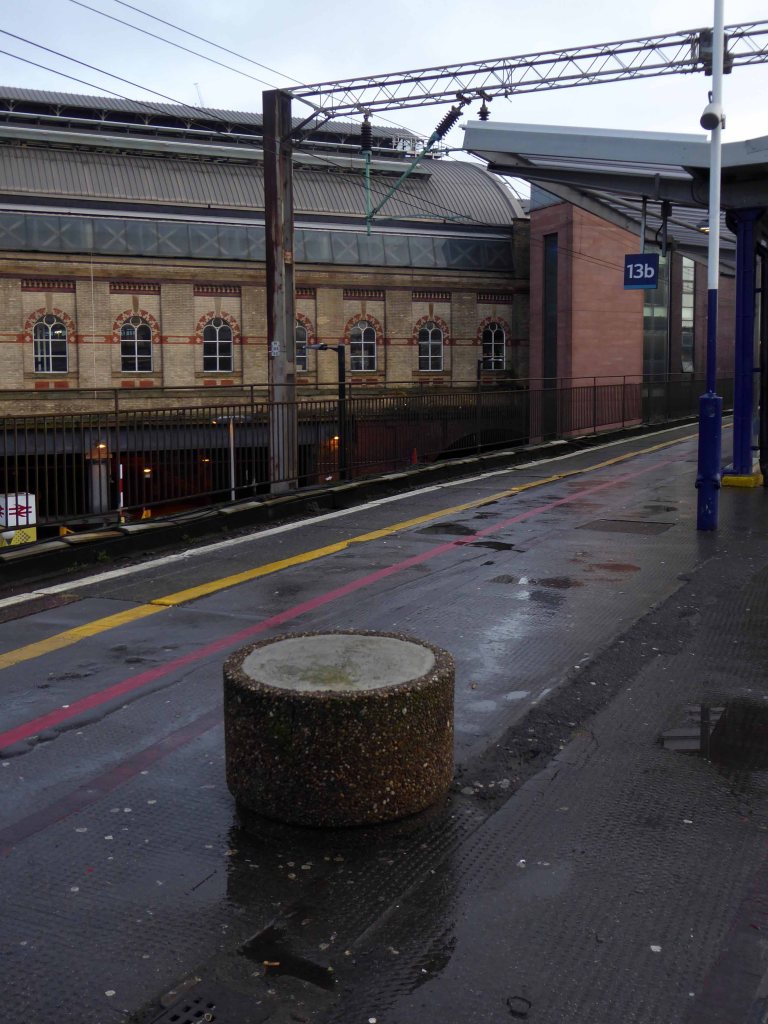
Platform 13/14 Piccadilly – Concreter Planter

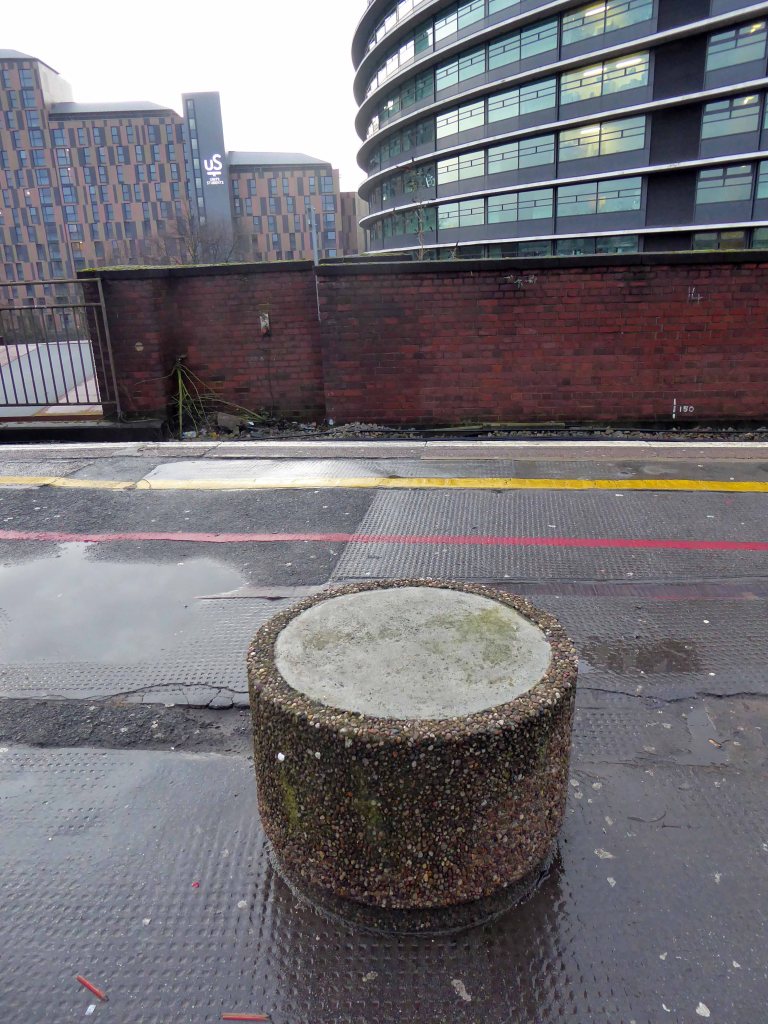
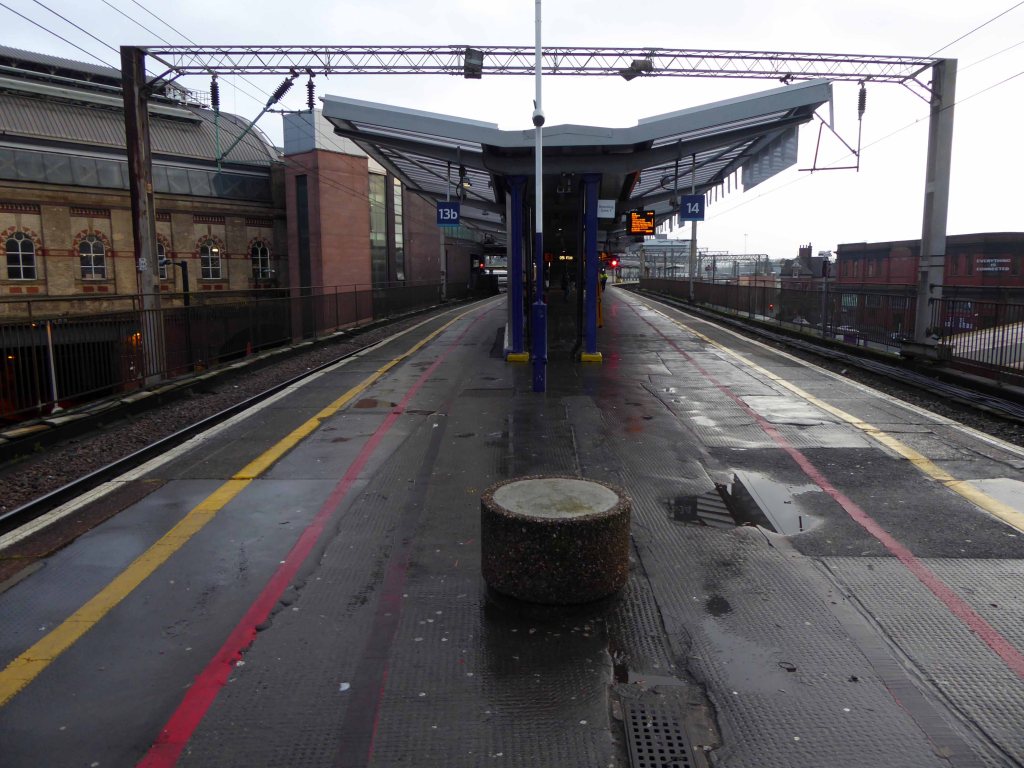
So here we are again at Piccadilly Station – stood standing at the western end of Platforms 13 and 14, waiting on a Southport train.

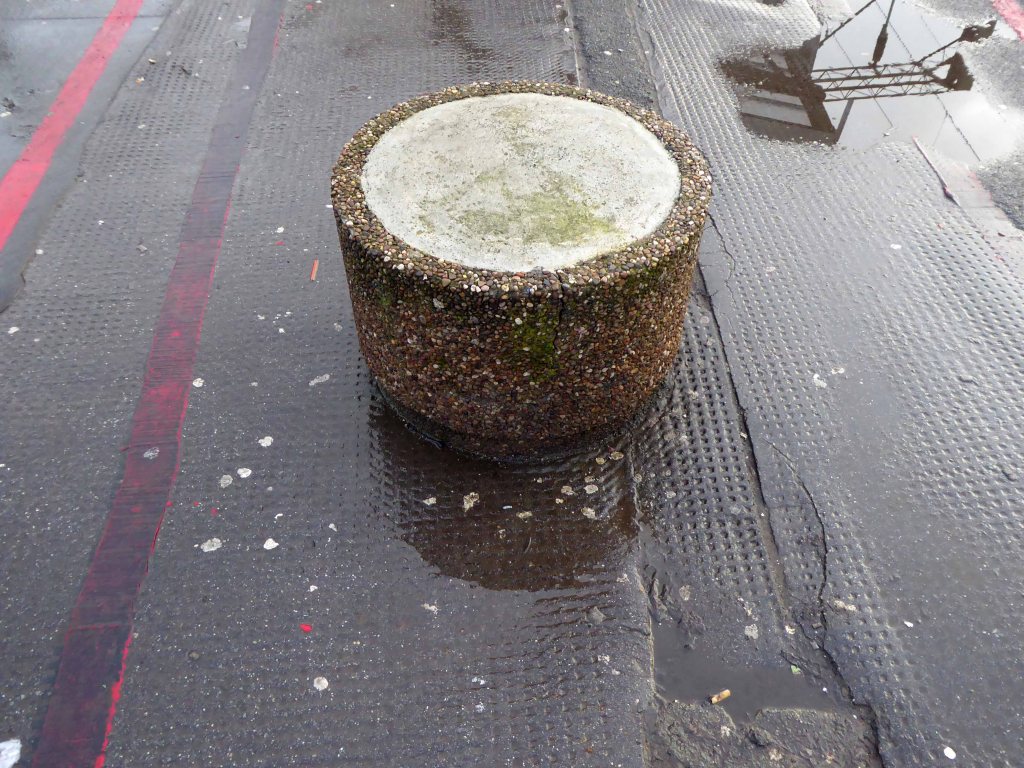
Time to spare and spend a few more magic moments with an old and trusted friend.

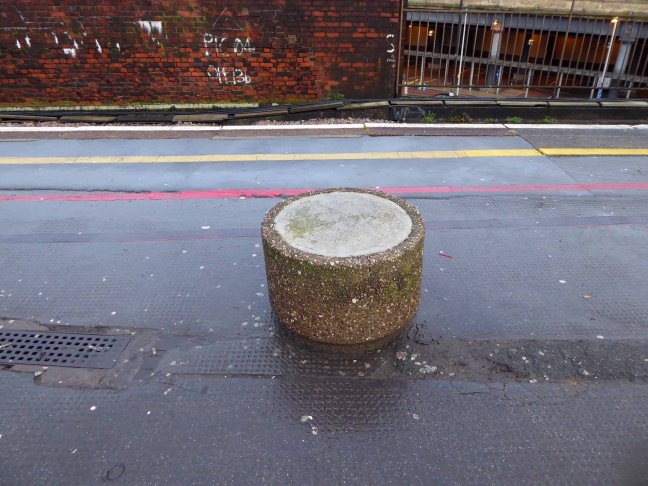
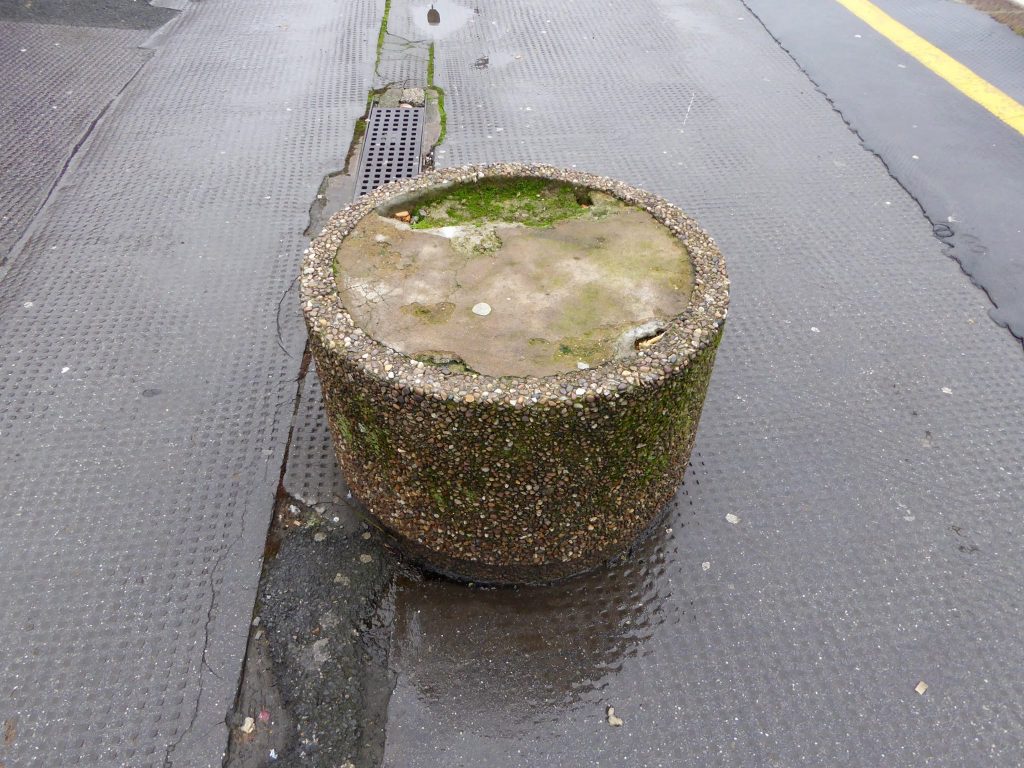
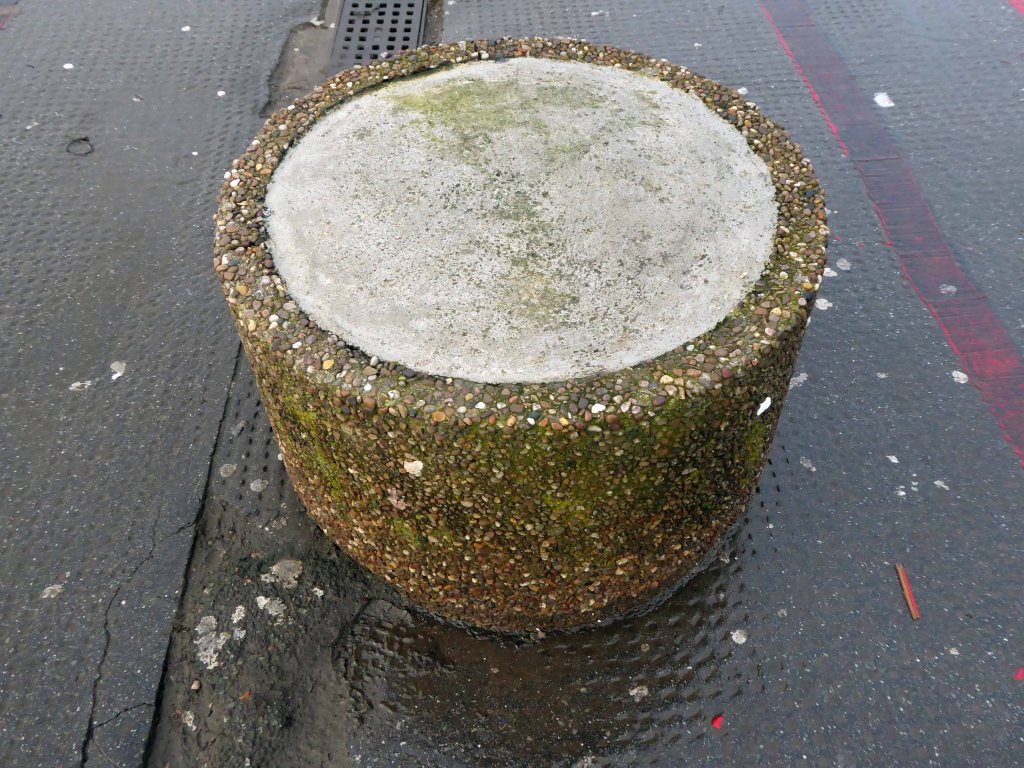
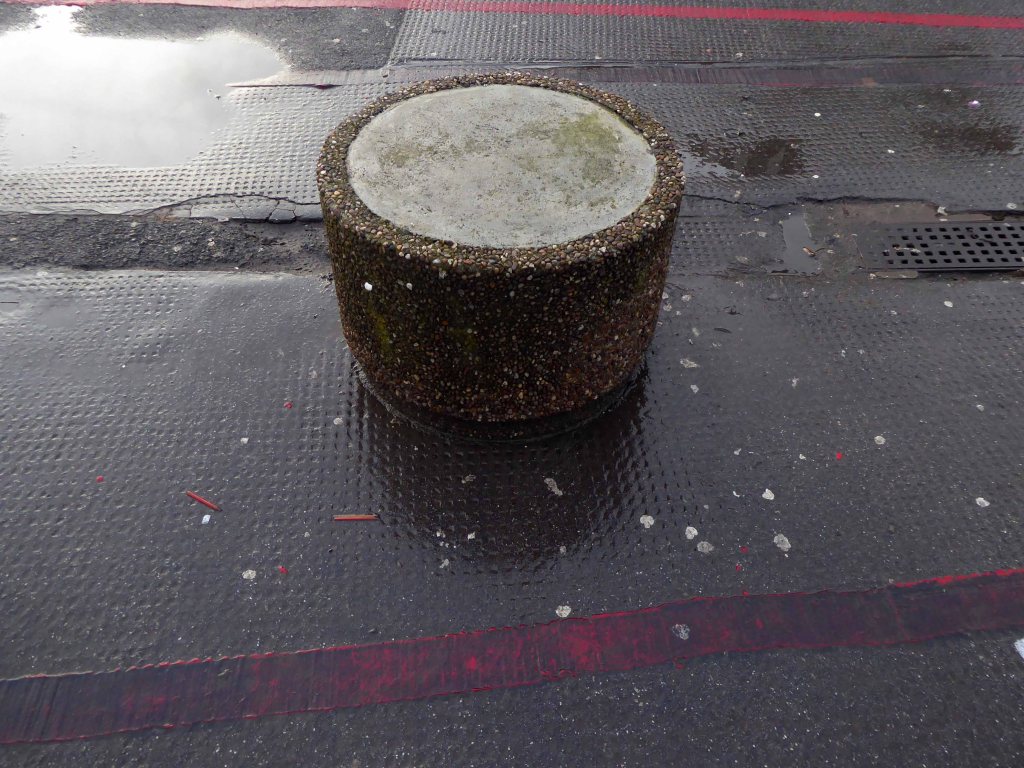
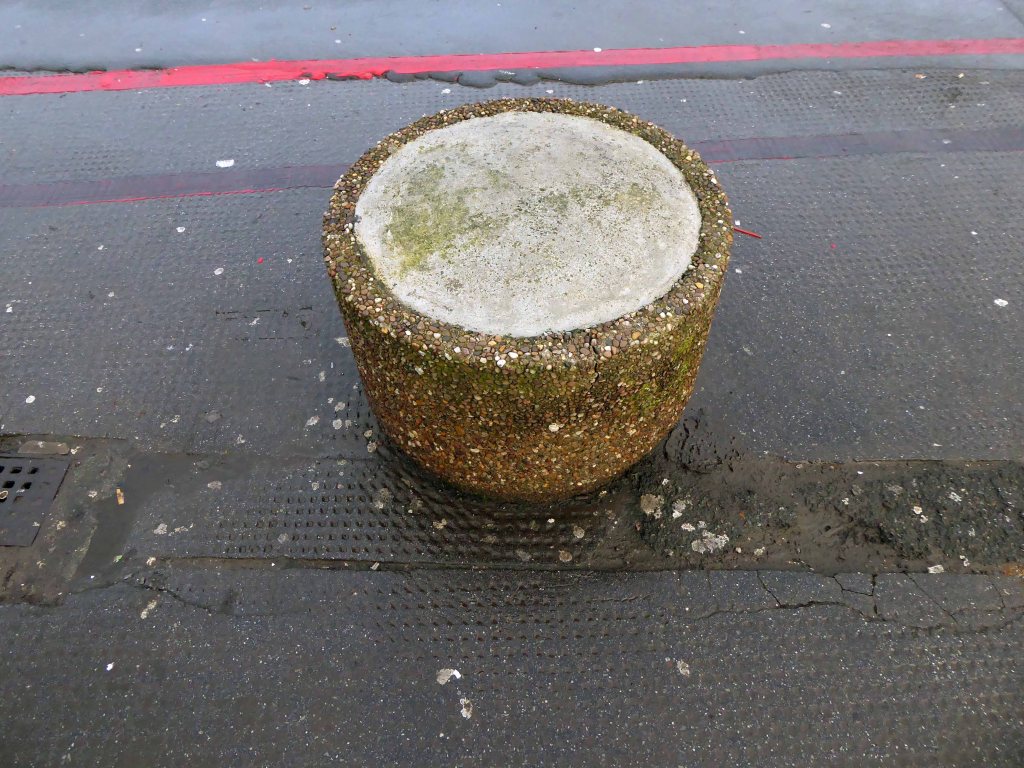
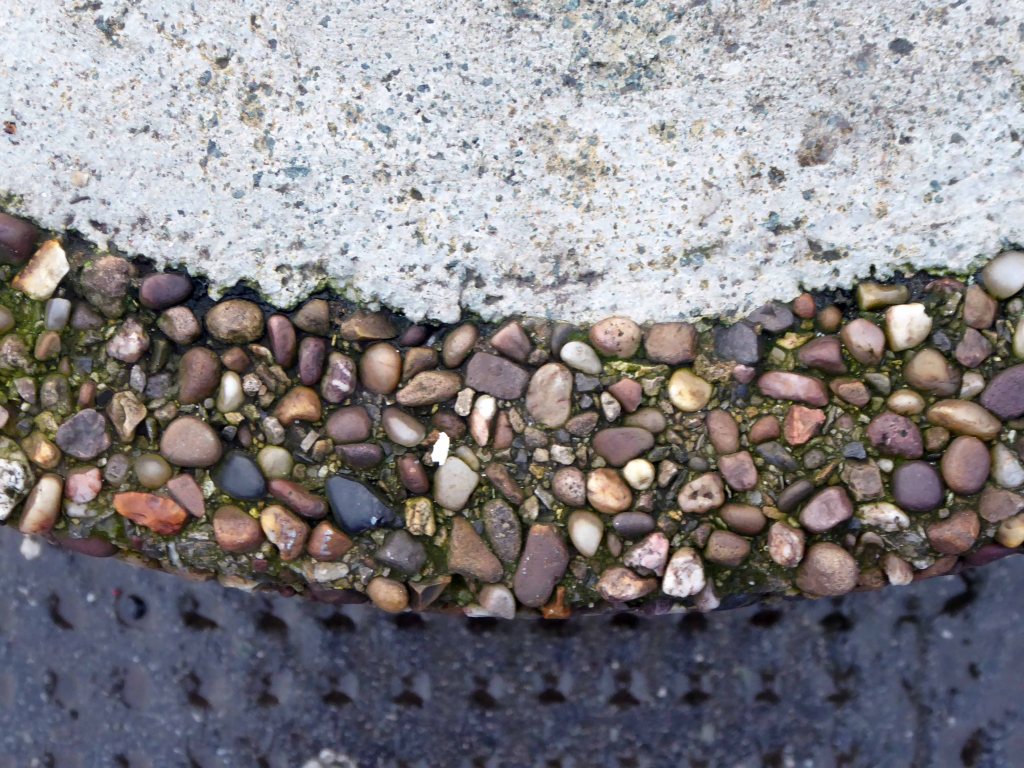
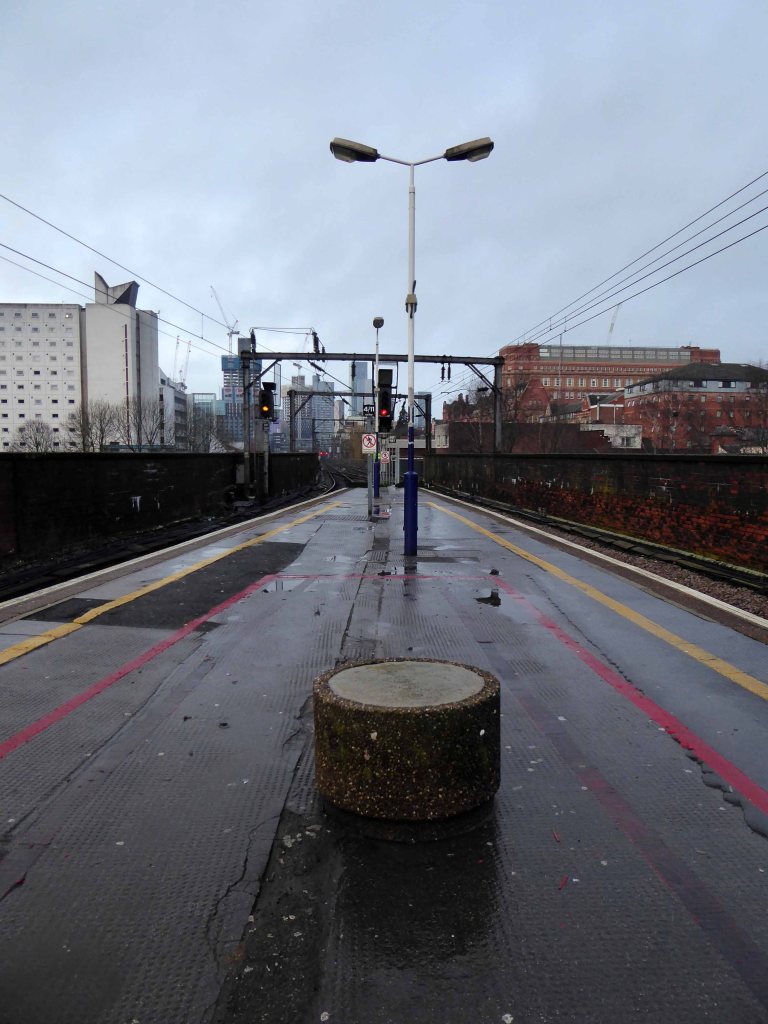
The back-filled concrete planter.

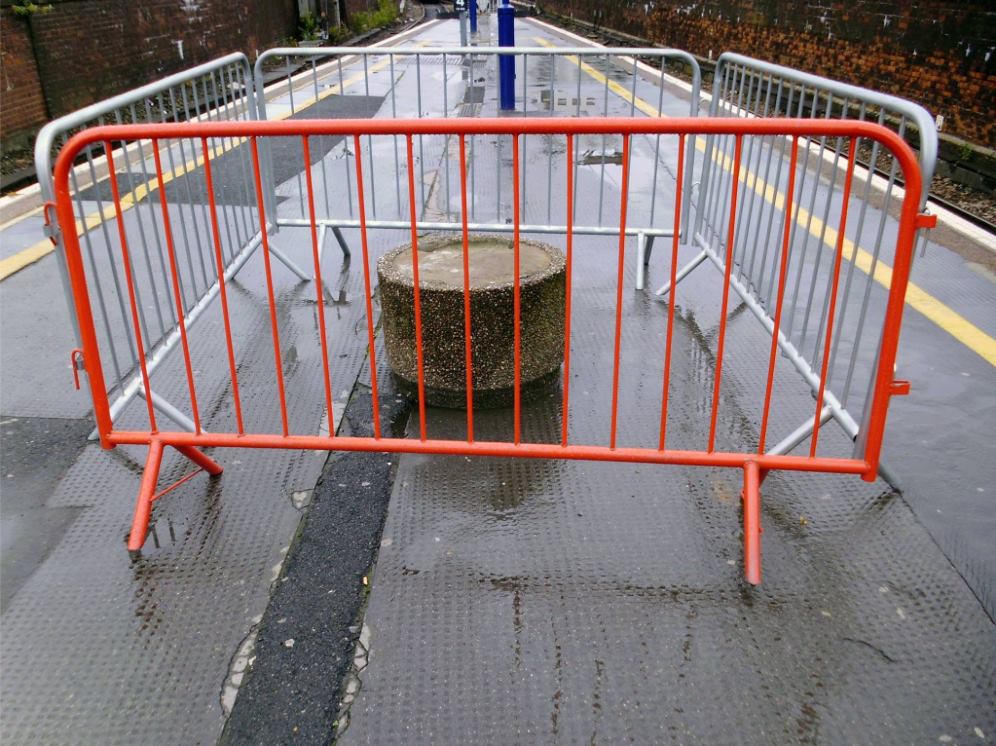
Seen here in a neglected and forlorn state, awaiting minor repairs to its upper sealed surface.

Once incarcerated and seemingly set for demolition, our diminutive concrete pal has lived to fight another day.

Standing alone in all elements, disabused by illicit smokers, grabbing a serruptitious chuff, whilst avoiding the ubiquitous Network Rail CCTV.

Sat upon by the indolent leg weary traveller, having missed yet another cancelled train.

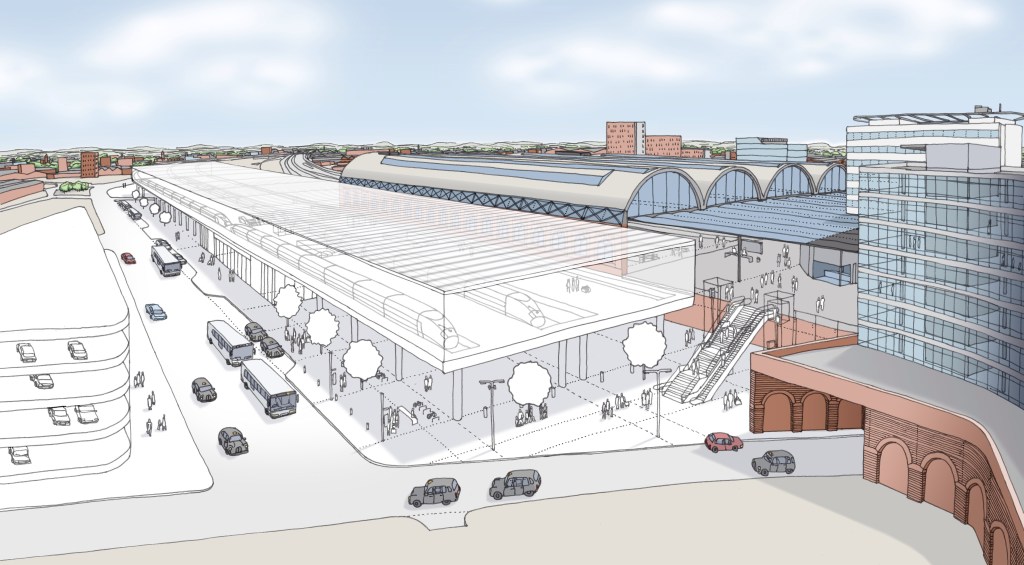
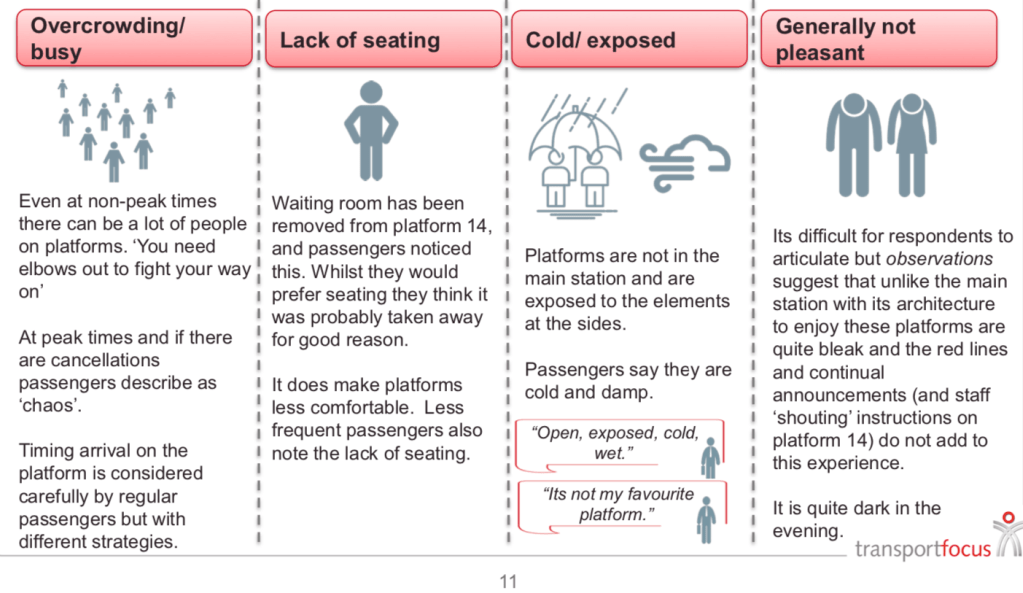
Your days may yet be numbered, as the platforms are part of a Station upgrade – the platforms are not thought to be commodious by the majority of train users.

I for one shall campaign for your preservation and reinstatement – right at the heart of matters.

My personal, totemic modernist work of public art.

Somethings are worth fighting for!

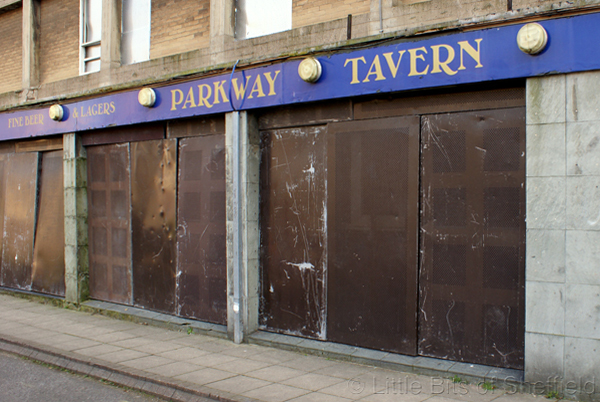
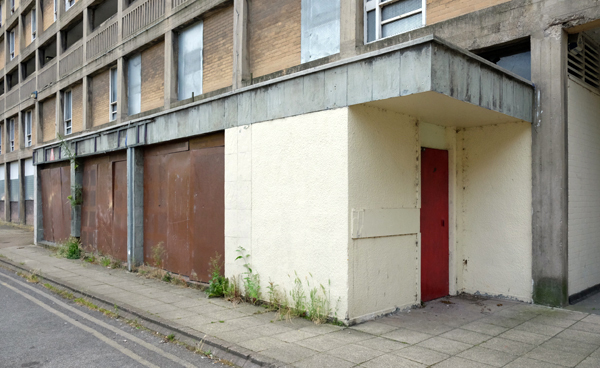
The Parkway Pub – Park Hill Sheffield

I’ve been here before, virtually – in my online guide to Park Hill Pubs.

I’ve been here before, actually – on my visits to Park Hill Estate

But hark, what news of the Parkway pub?

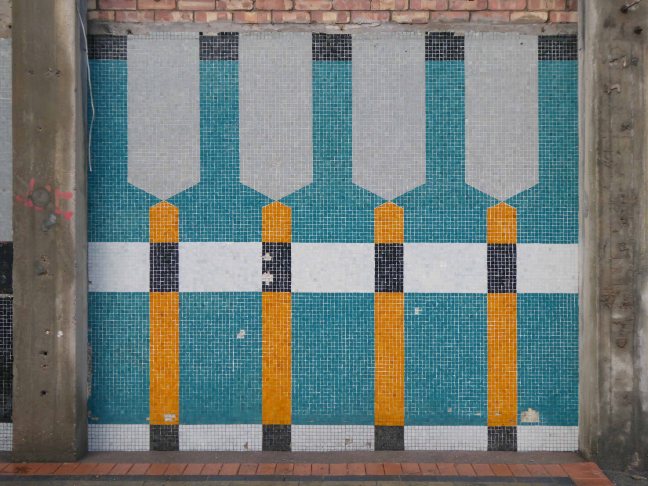
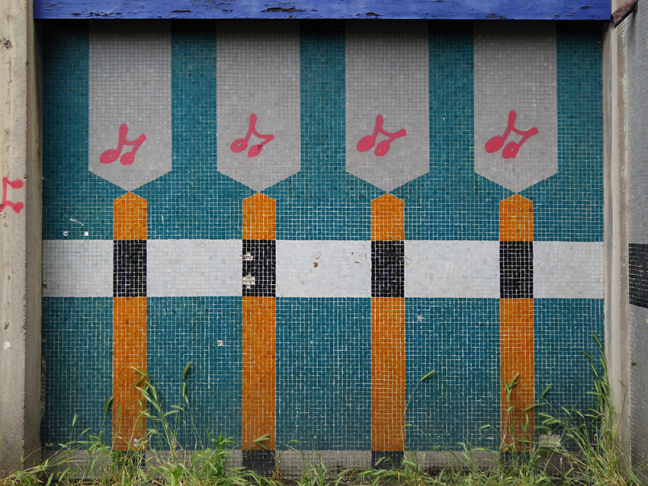
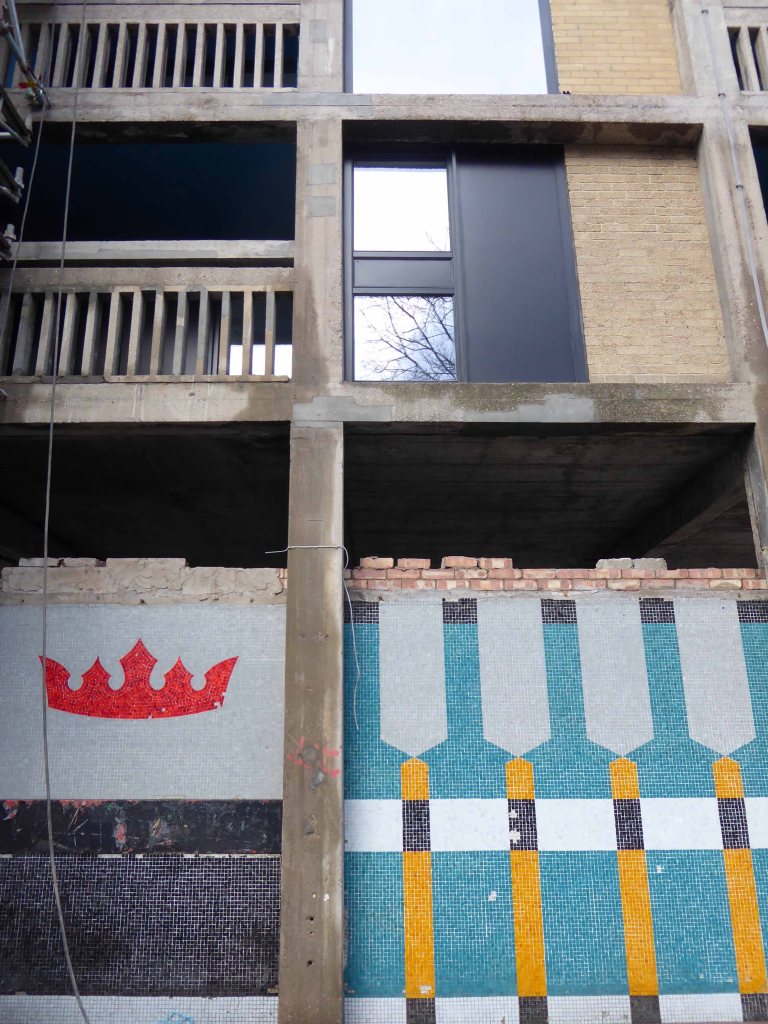
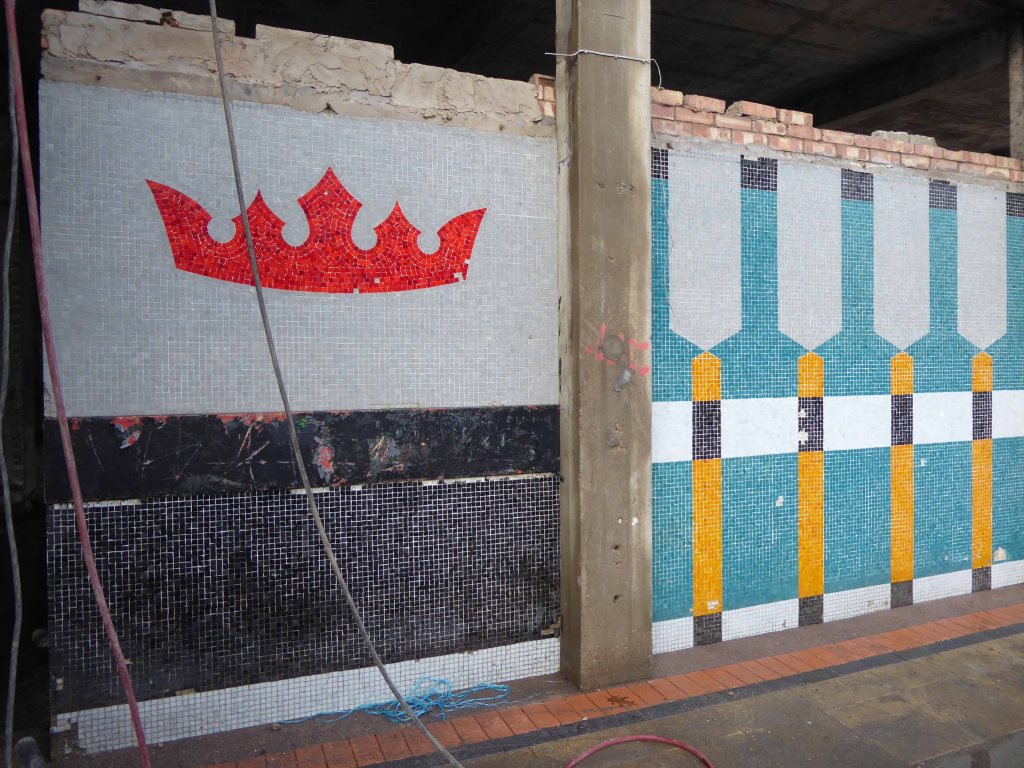
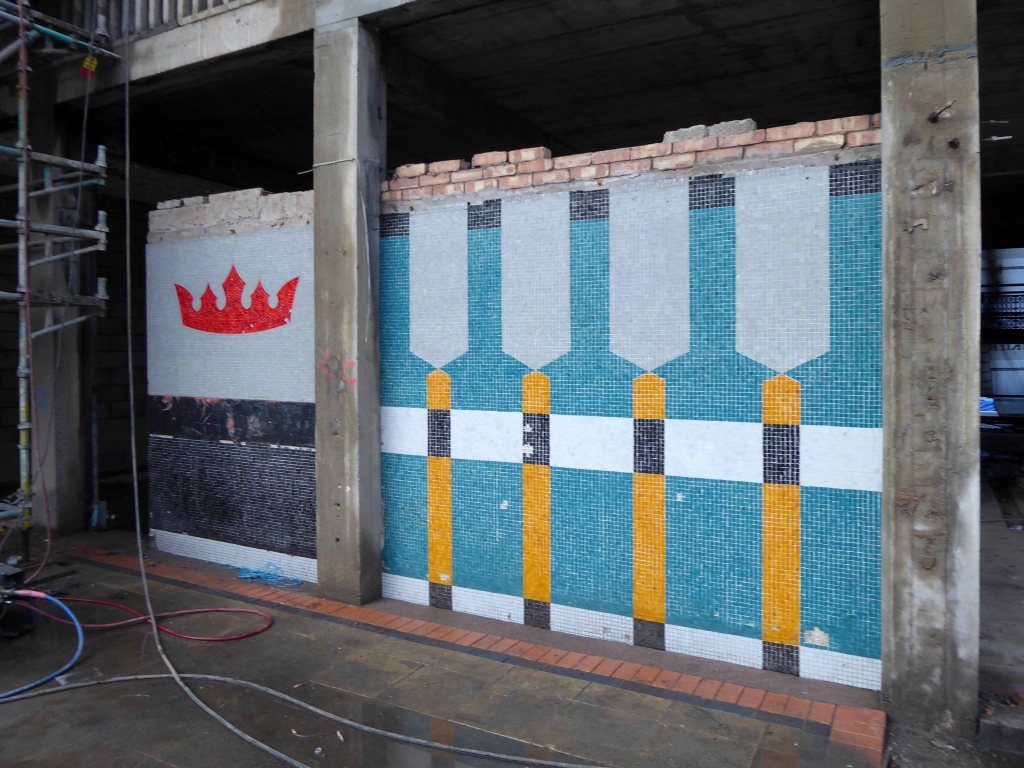
Your bold mosaic whilst once exposed, was sadly disabused, then unthinkingly covered.

Has subsequently been uncovered, steam cleaned and proudly on view, as a central part of the most recent of the estate’s phases of redevelopment.

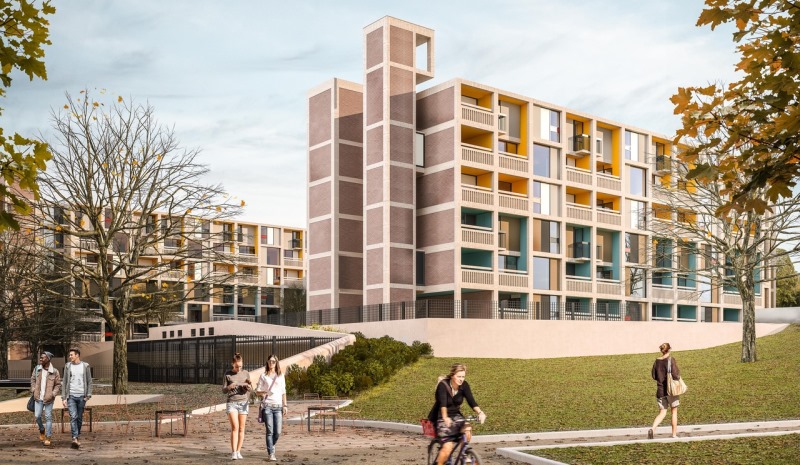
The block is to become student housing, the distinctive tan, turquoise blue and bold red colours of the mosaic, integrated into the banding of the newly refurbished building.

My face was a picture of delight, viewing the multicoloured tesserae – as we were privileged to be guided around the site by Kier Construction, Matthew Borland from Whittam Cox Architects, who are working with Alumno on Béton House and Urban Splash – my thanks to all and particularly PR Surriya Falconer.

So here it is living and breathing the South Yorkshire air once more.

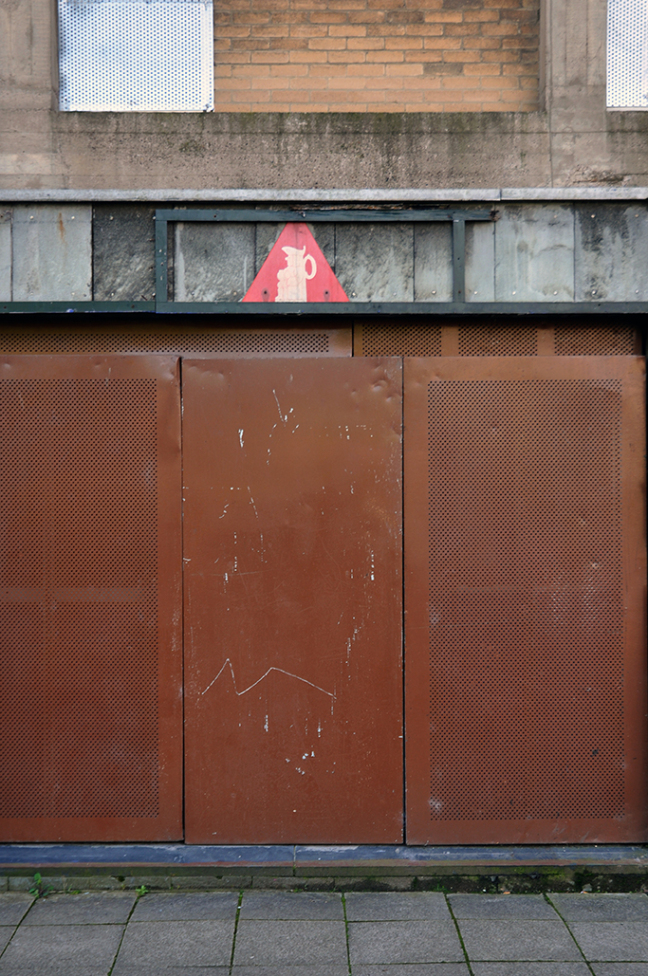
Alas the Parkway is a pub no more – simply an empty shell.

But hush – can you not catch the chink of pint pots and gales of merry laughter, carried gently on the passing breeze?

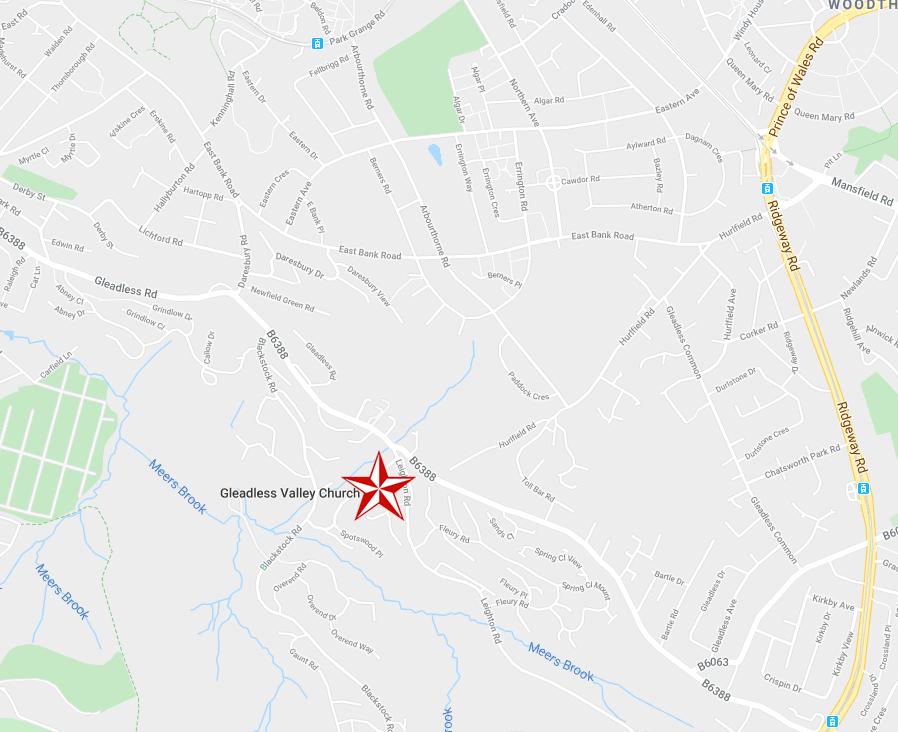
Holy Cross Church – Gleadless Valley Sheffield

Spotswood Mount, Sheffield S14 1LG

Constructed between 1964 and 1965 and designed by the architects Braddock & Martin-Smith.

Completed in 1936 John Keble Church in Edgware was also designed by DF Martin Smith 1900-84.

Martin Smith later went into partnership with Henry Braddock and together designed St. Mary’s church in Crawley. 

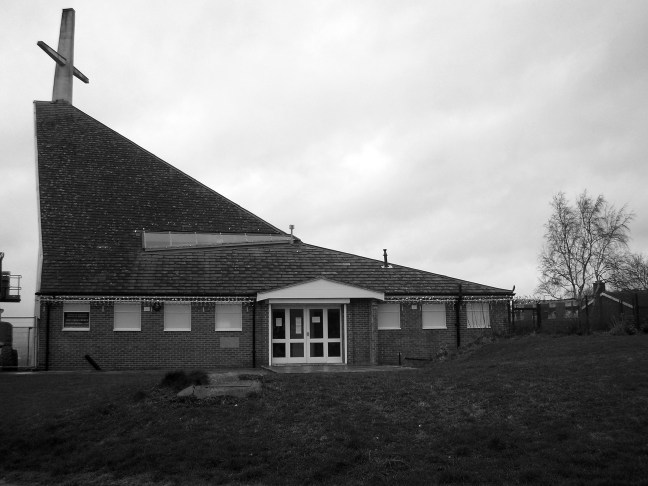
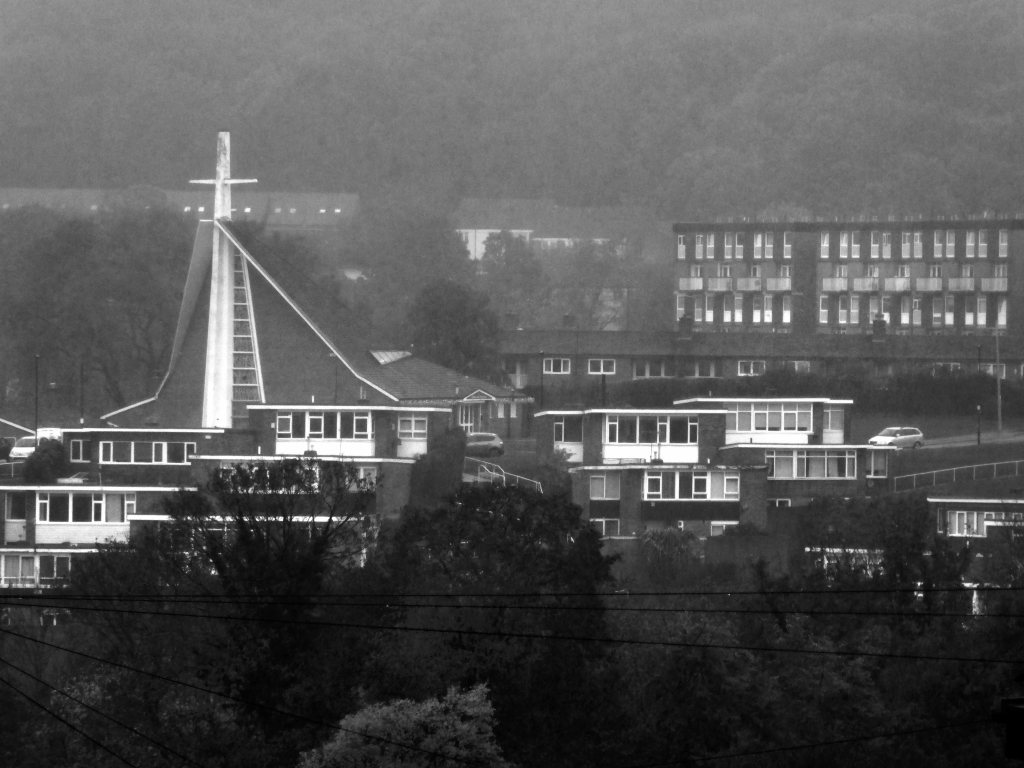
Holy Cross is positioned in a spectacular position among the houses on the Rollestone hillside.

Holy Cross is a church for people of all ages and stages of life.

Apart from the warm welcome at Holy Cross, you will always find something that is relevant to your age and stage in life – however old you are and whatever walk of life you come from.

Built to serve the Gleadless Valley Estate perched high above the Sheffield city centre.

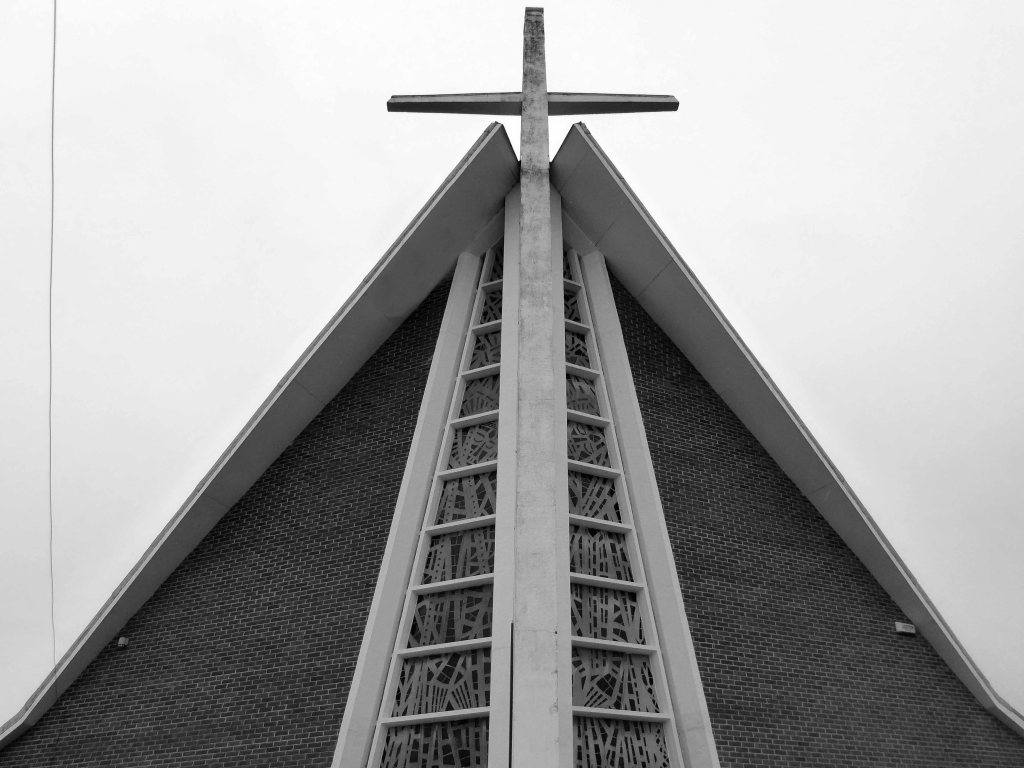
It has a canted front which is triangular in shape which has a large white cross at its apex.

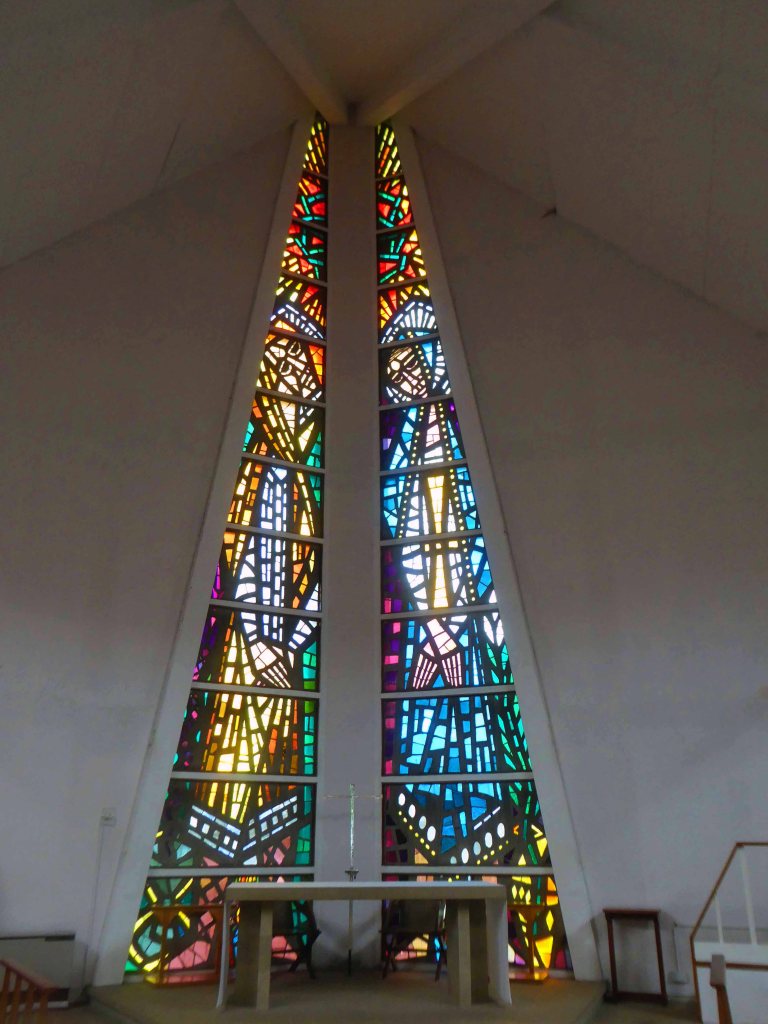
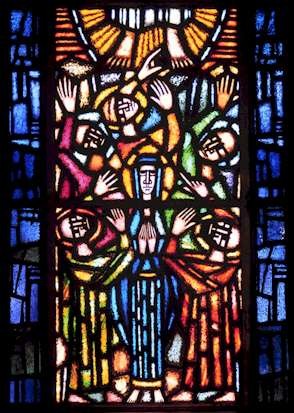
The interior features full height stained glass windows of the Virgin Mary and St John by John Baker Ltd.

Born in 1916, John aka Jack studied at the Central School in London and worked under James Hogan at the Whitefriars stained-glass studios before joining Samuel Caldwell junior at Canterbury Cathedral in 1948 to help reinstate the medieval glass removed for safekeeping during the Second World War.

He subsequently authored English Stained Glass; the revised edition of this work, English Stained glass of the Medieval Period , which was to become one of the most popular soft back books on English medieval glass ever published.

Apart from his conservation skills, John was also an inspired teacher at Kingston College of Art. He produced windows for a number of churches, including eleven windows for the church of the Holy Name, Bow Common Lane, Mile End; two windows and a brick sculpture for the church of Little St Peter, Cricklewood; eighteen windows for St Anne’s church, East Wittering, Sussex; two large abstract windows for Broomfield Chapel, Abbots Langley; ten large concrete and glass windows for the new parish church, Gleadless Valley, Sheffield; and twenty-two glass windows for the Convent Chapel, St Michaels, Finchley. He also created a huge Jesse window for the church at Farnham Royal. The church was demolished in 2004, but the glass is now in storage, and some of the panes will be installed in the welcome are of the new church.

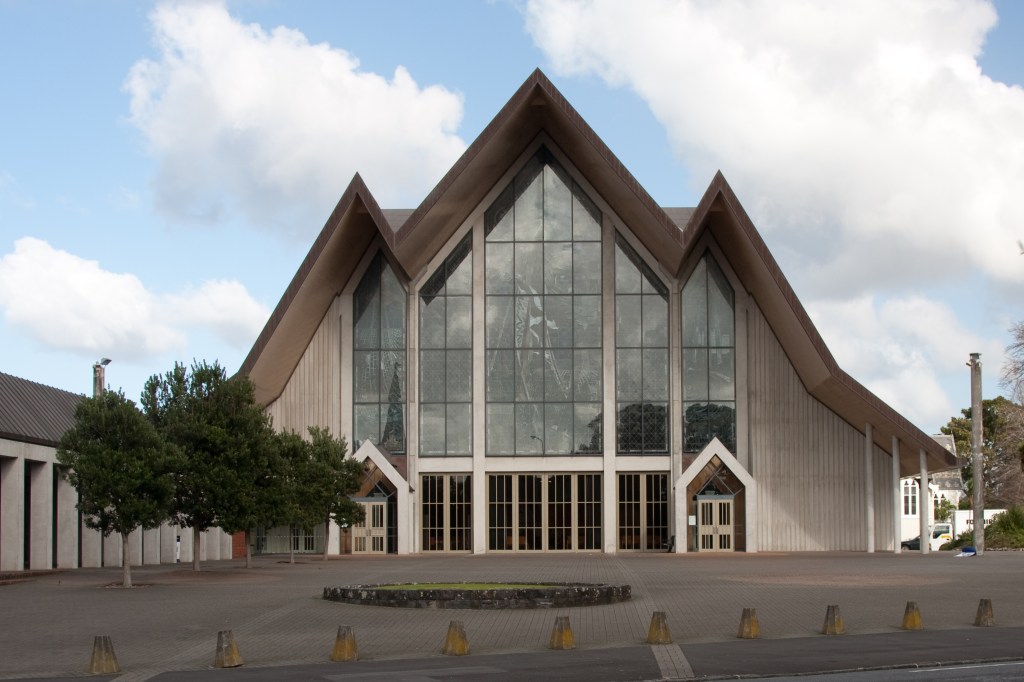
His favourite works were the windows he produced for Auckland Cathedral, New Zealand – as seen above.

John Baker, born Birmingham, 11 March 1916, died Hastings, 20 December 2007.

Vidimus

The concrete altar is set on a raised paved podium, complemented by a silver cross and distinctive Arts and Crafts style oak chairs.

The original seating seems to be no longer in use, replaced by a newer more comfortable alternative.

There is a large carved stone font.

The main body of the steeply pitched roof space is illuminated by slotted windows.

Many thanks to the key holders and parishioners at Holy Cross, our Sheffield guide Mick Nott and Claire Thornley at Eleven Design – for making our visit possible.

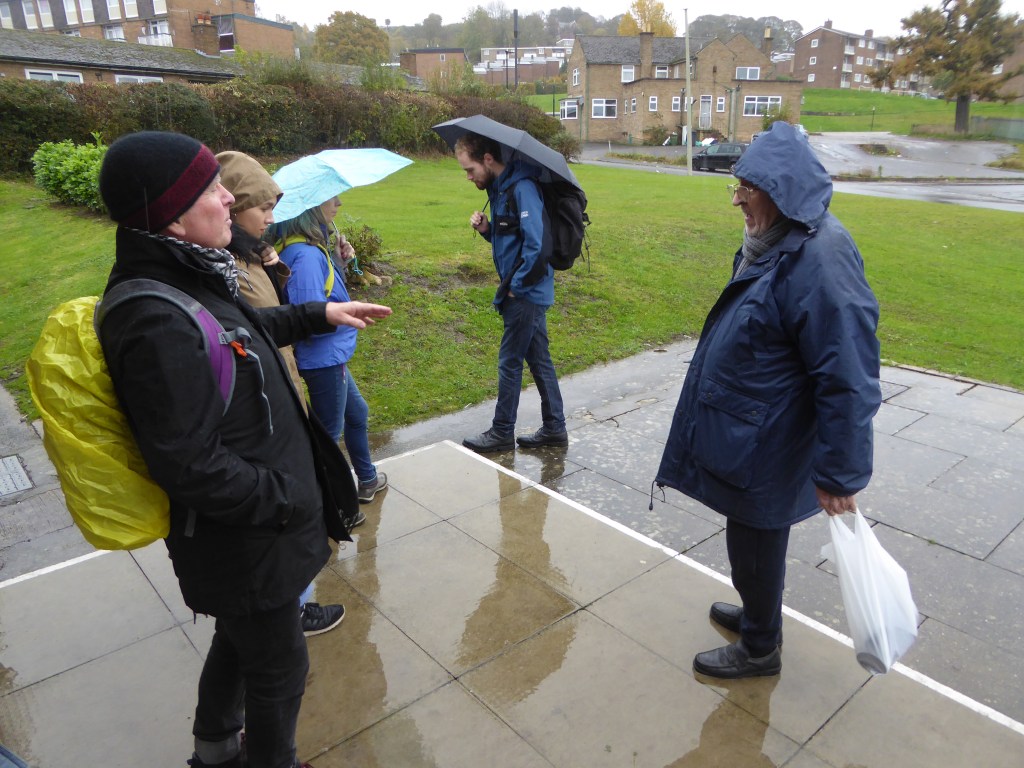
Thanks also to all those who turned up on Saturday to walk a very, very wet Gleadless Valley.

Central Library – Grimsby

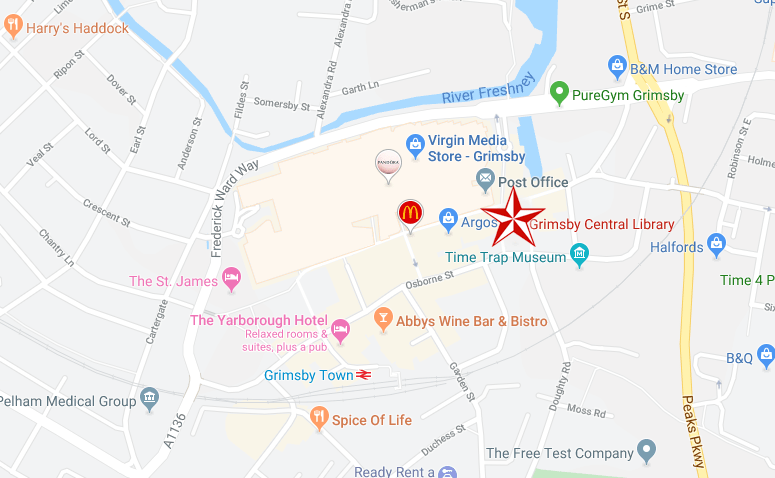
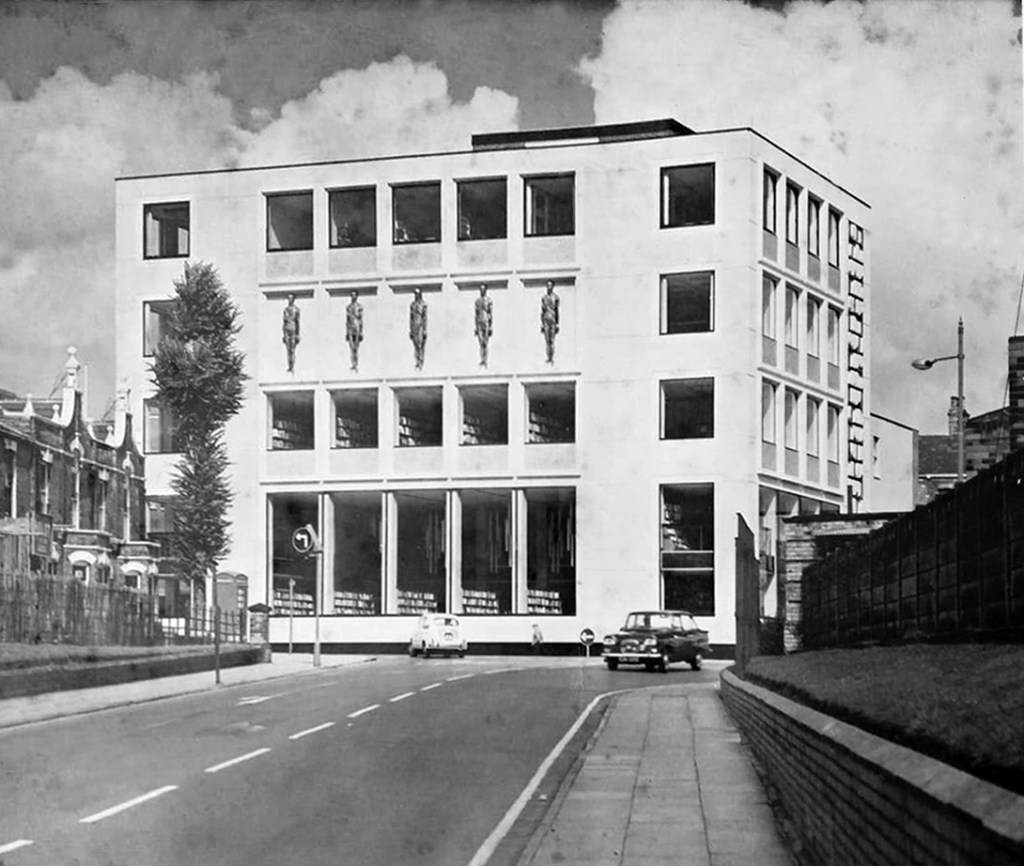
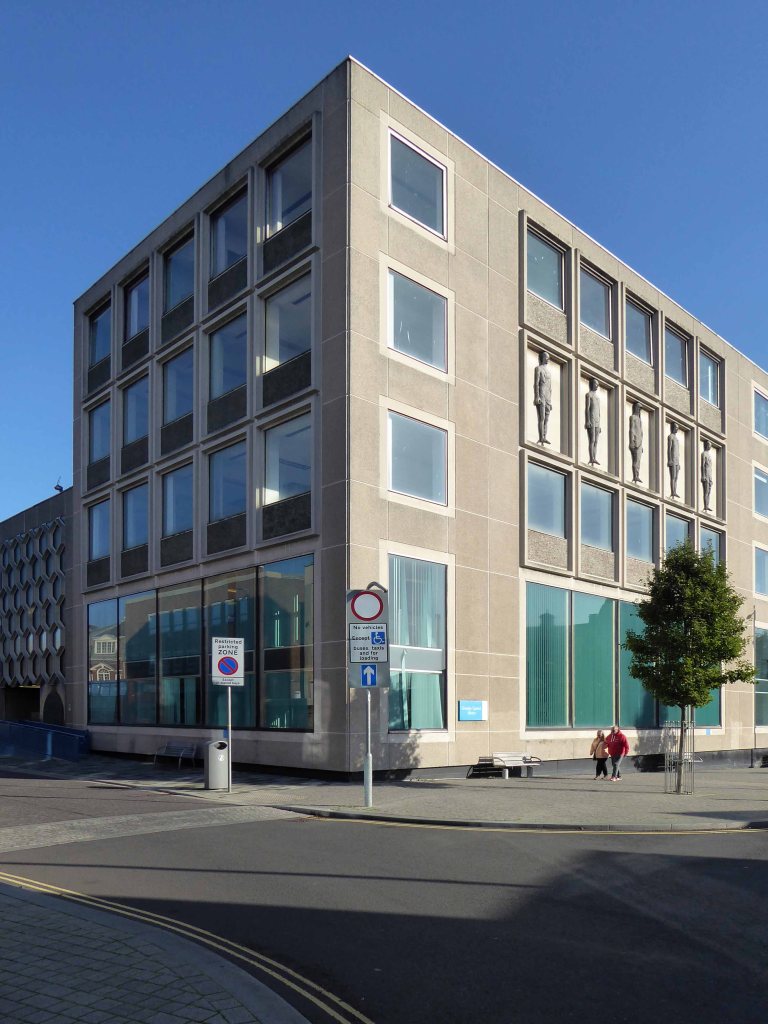
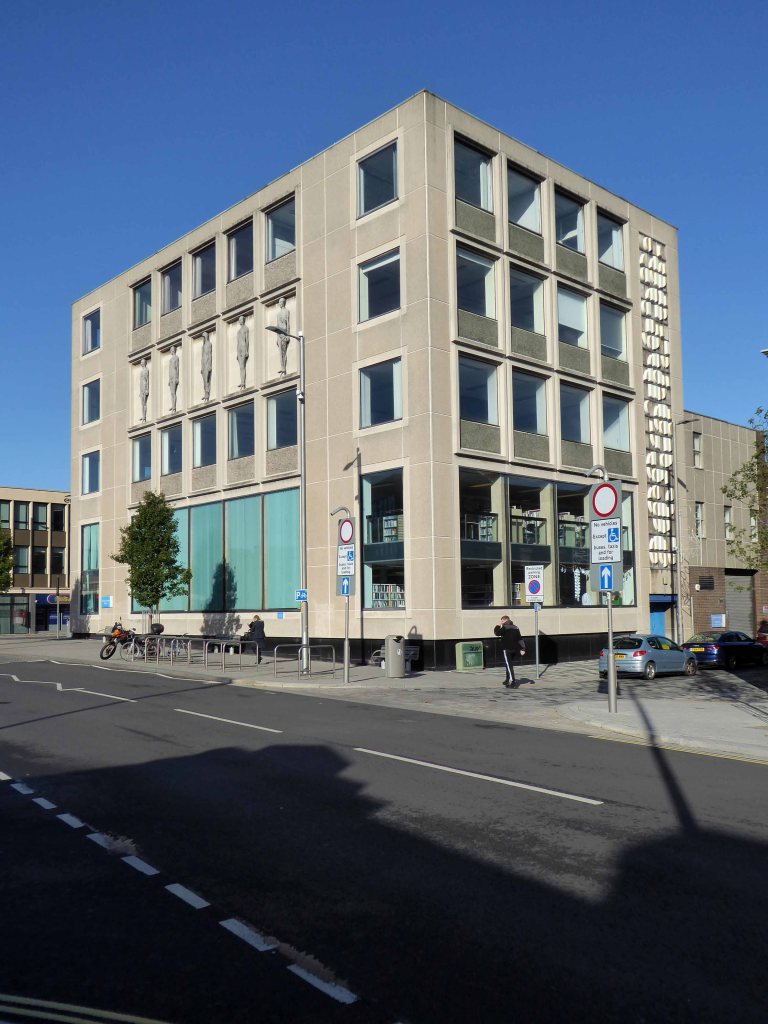
This is Grimsby Central Library – a proud public building of real quality, reflecting the cautious optimism and fierce civic pride of the Sixties. Built to last, in the modern manner – gently monumental, softened by the easy grace of the restrained decoration and a refined palette of stone, glass and concrete.

By the Borough Architect – JM Milner ARIBA assisted by E L Shepherd 

This image was used as the Mayor’s Xmas card in 1969.

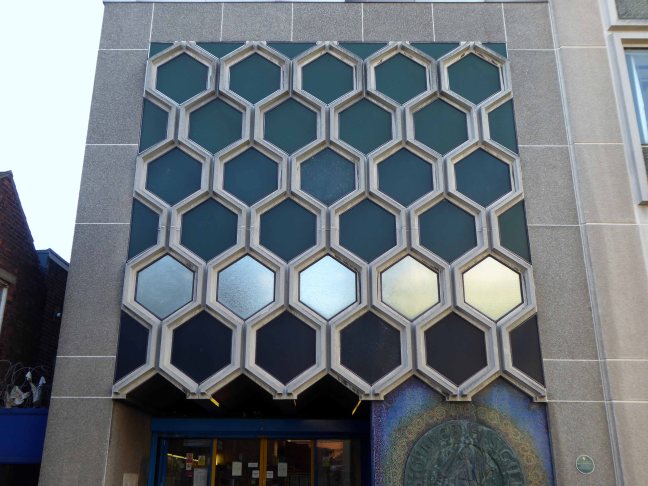
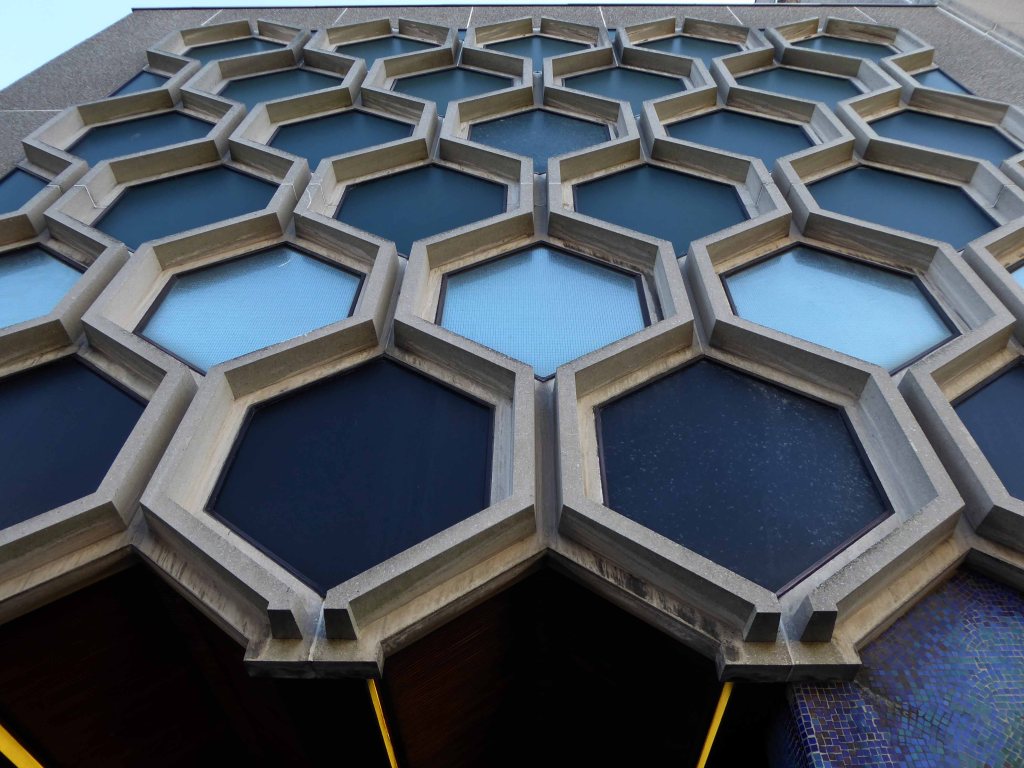
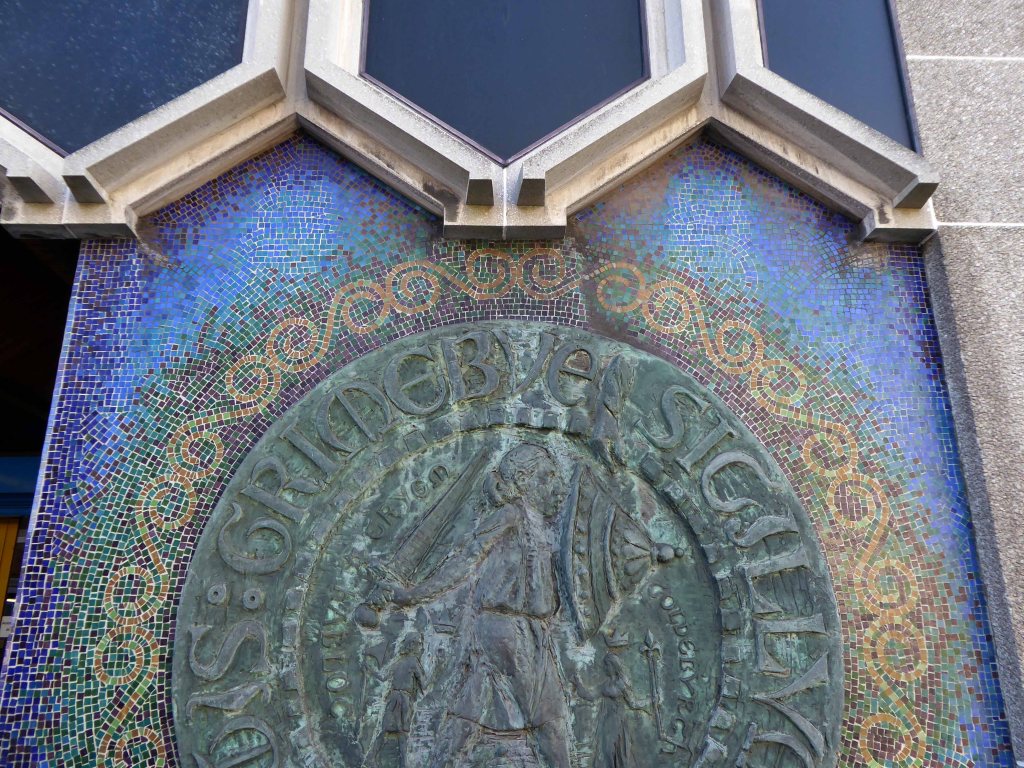
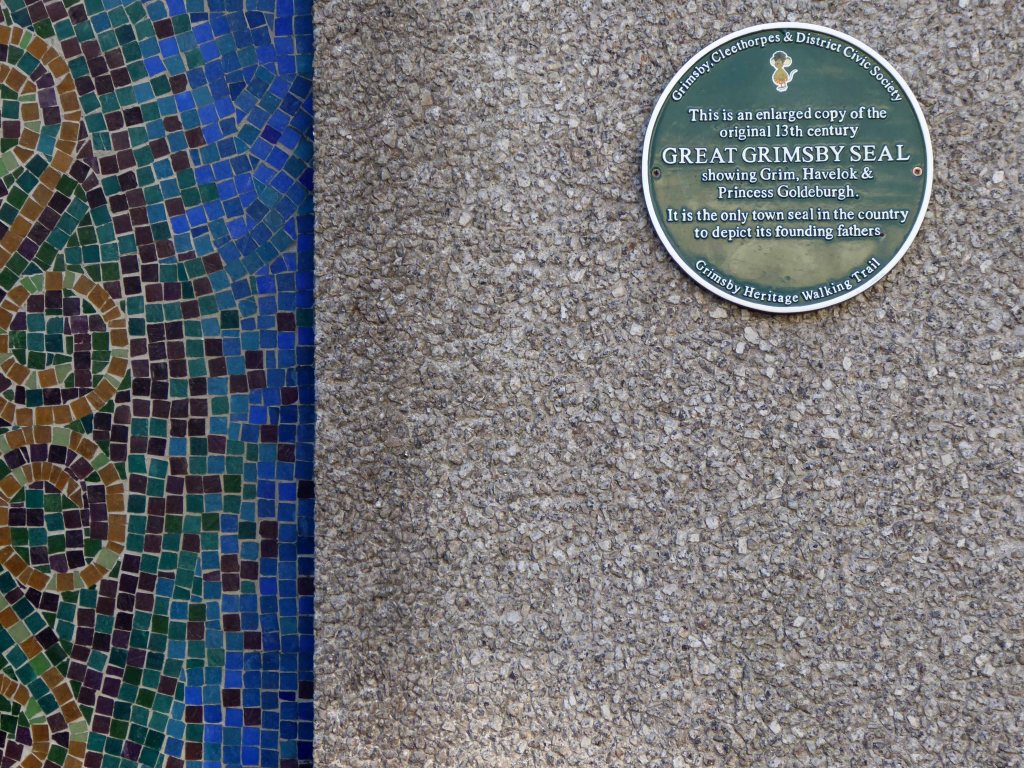
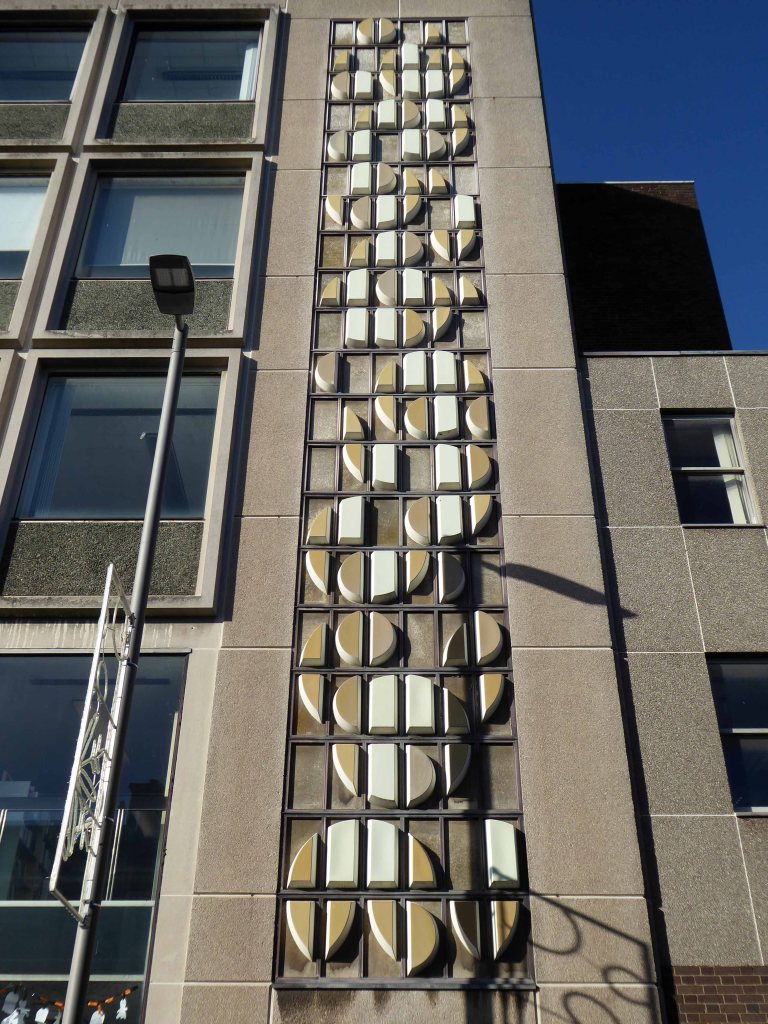
The bold exterior grid is enhanced by a honeycombed grille above the entrance, along with a mosaic depicting the town’s seal.

The mosaic is the work of Harold Gosney – who is also responsible for the Abbey Walk reliefs

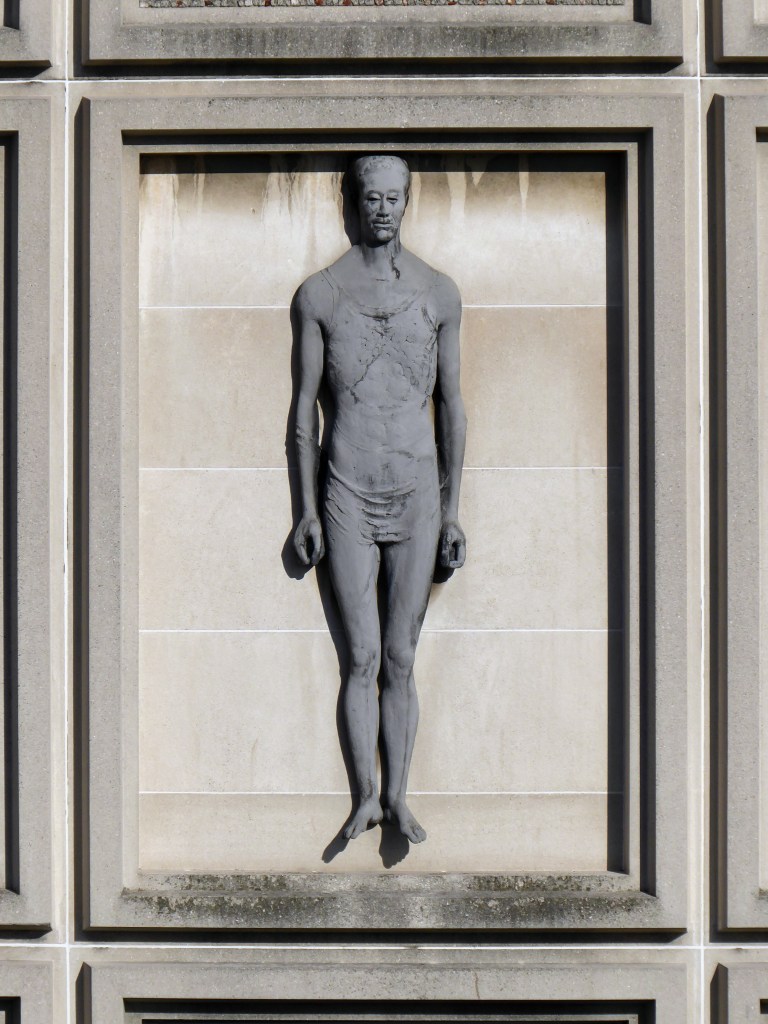
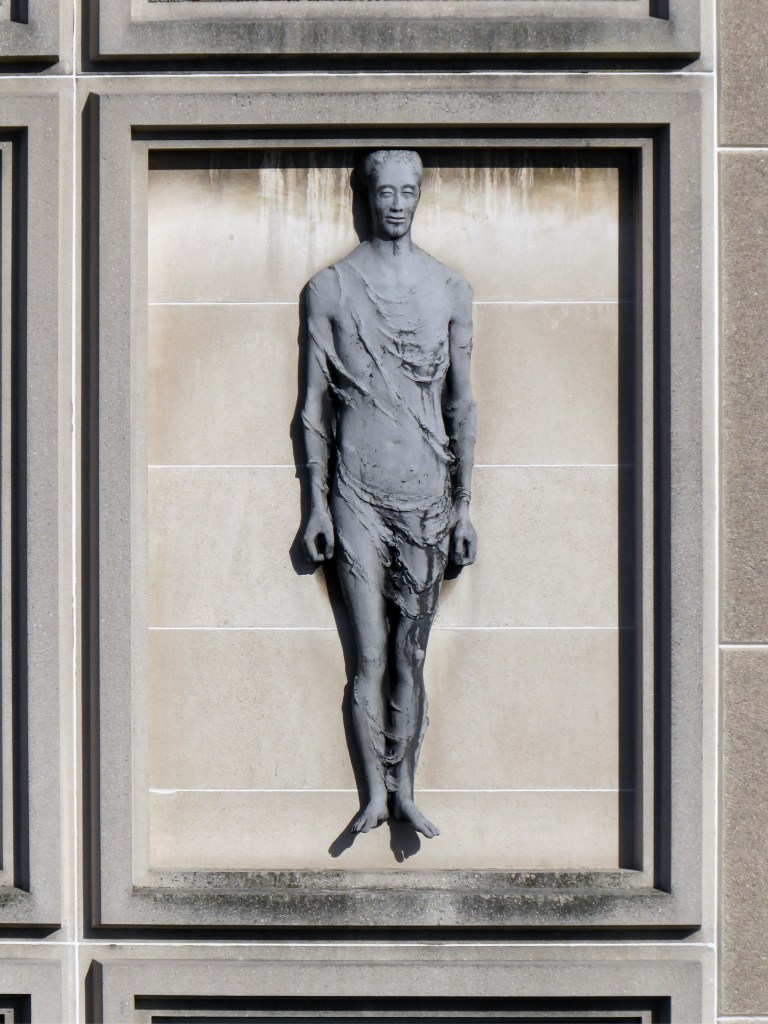
The Guardians of Knowledge which adorn the south facing elevation of the library are the work of Peter Todd former head of Grimsby Art School

To the rear of the building is a modular relief.

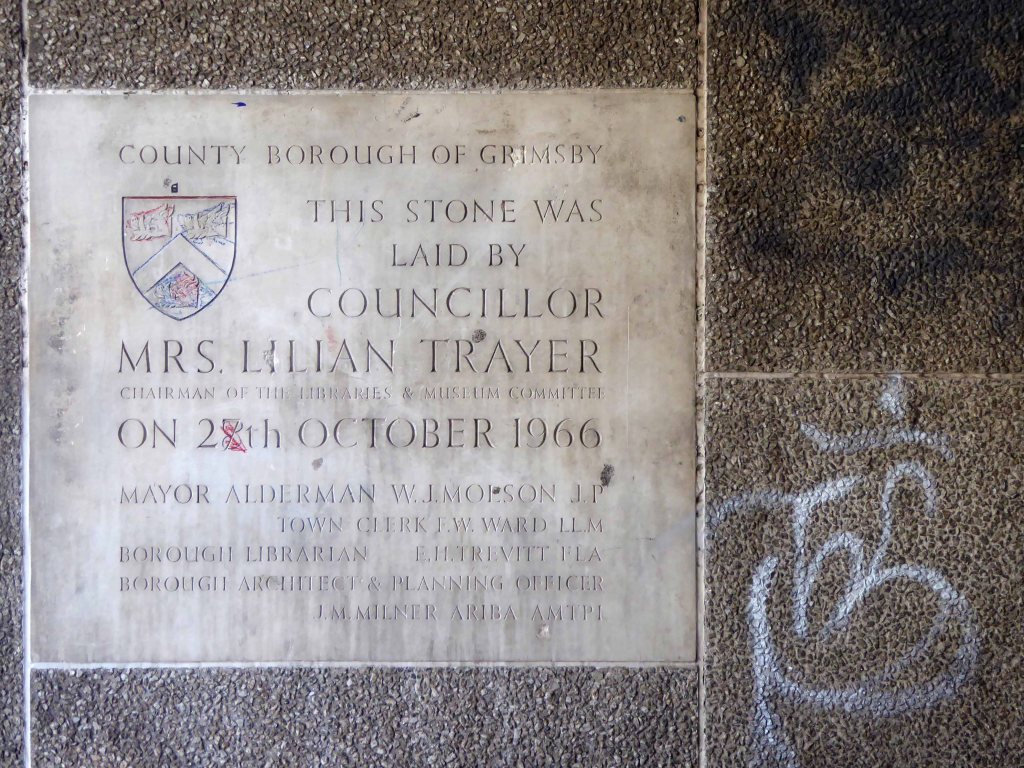
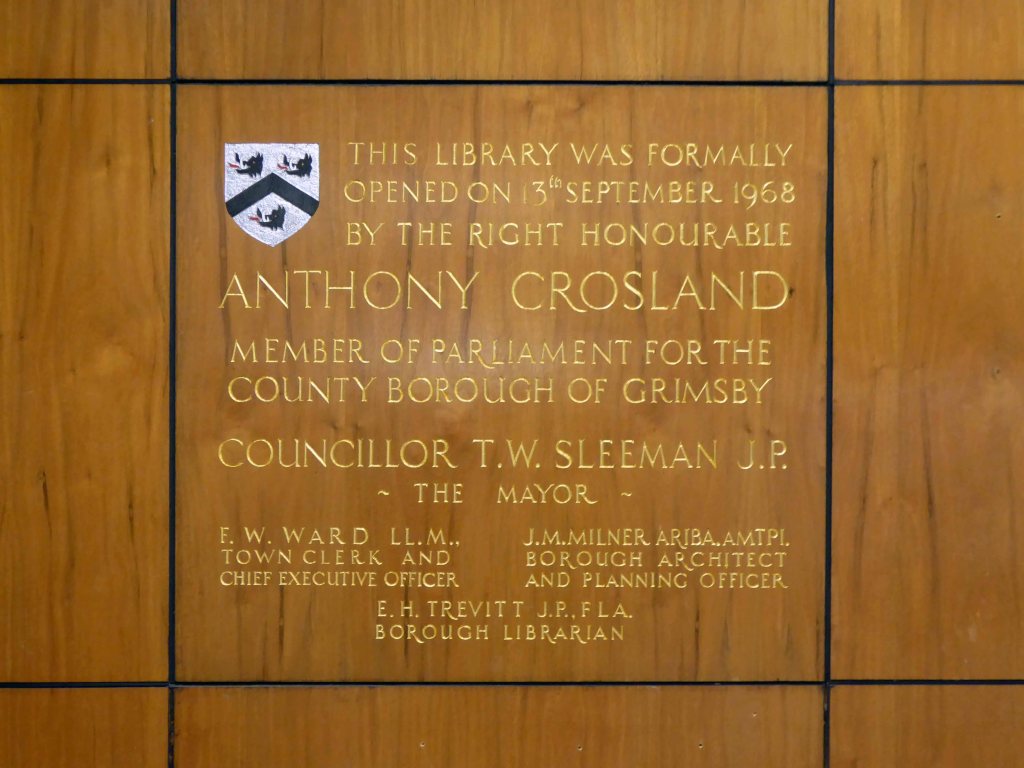
Inside the entrance porch a commemorative plaque.

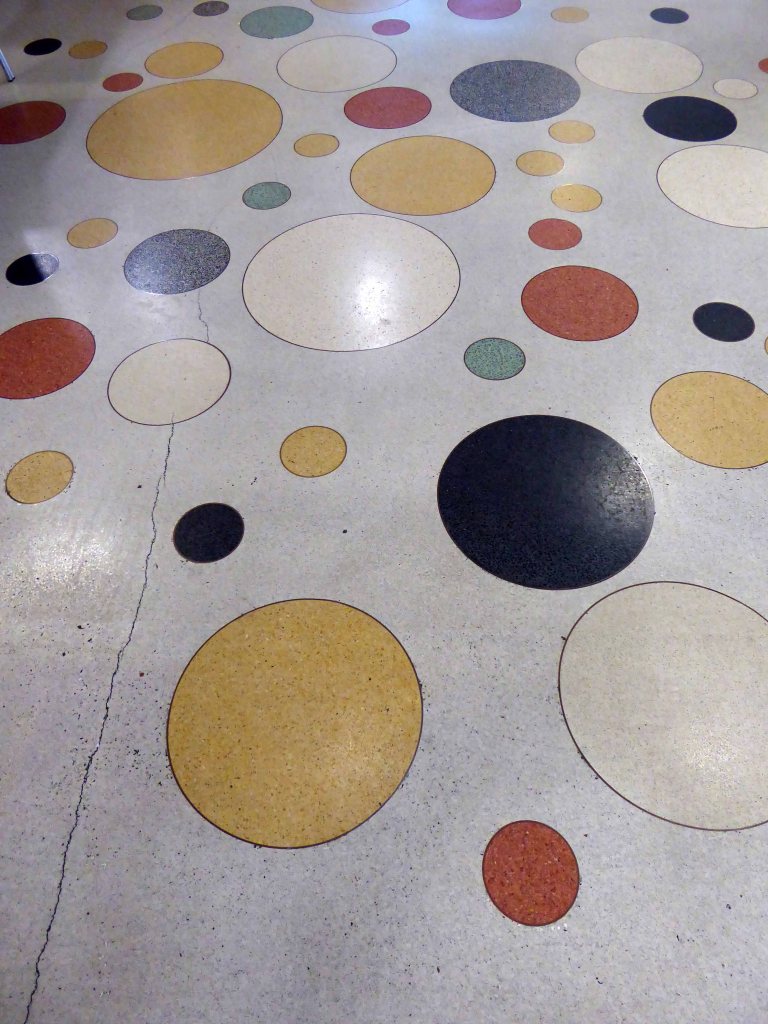
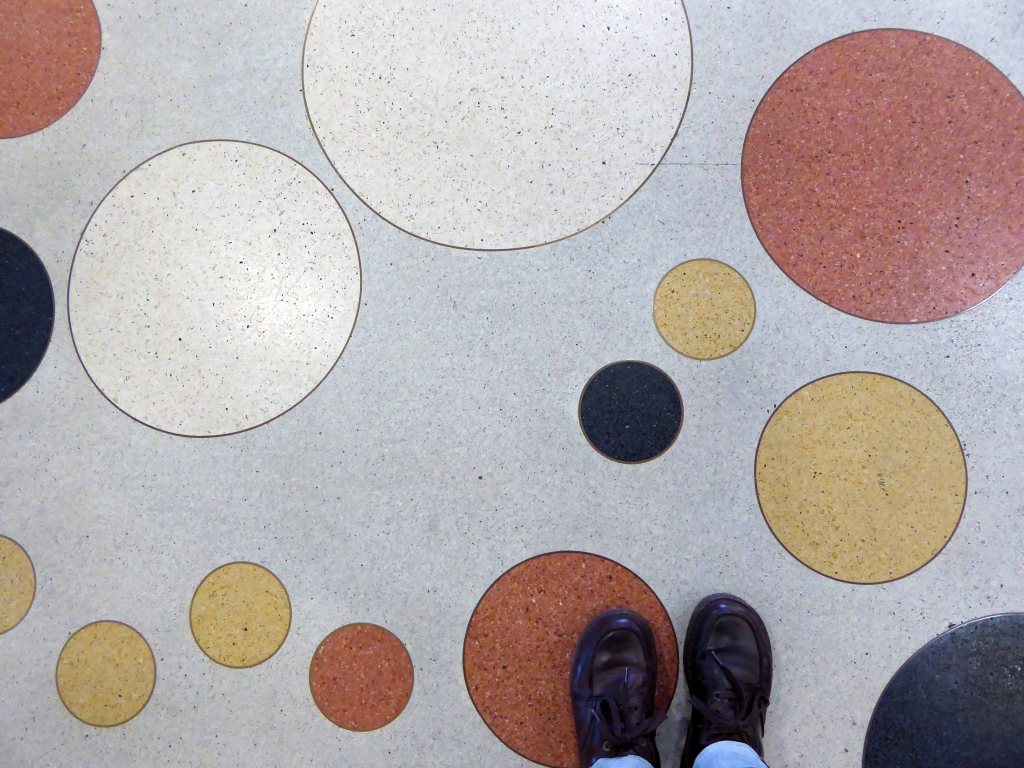
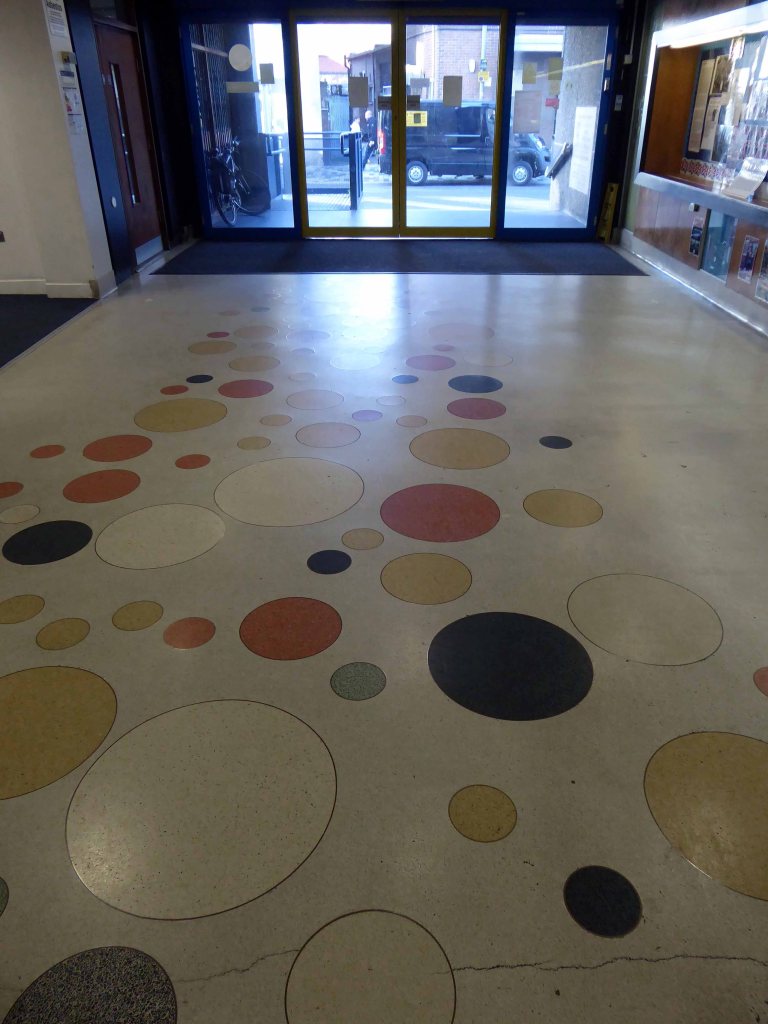
Once inside, what a pleasure it is tread upon this interstellar inset stone flooring.

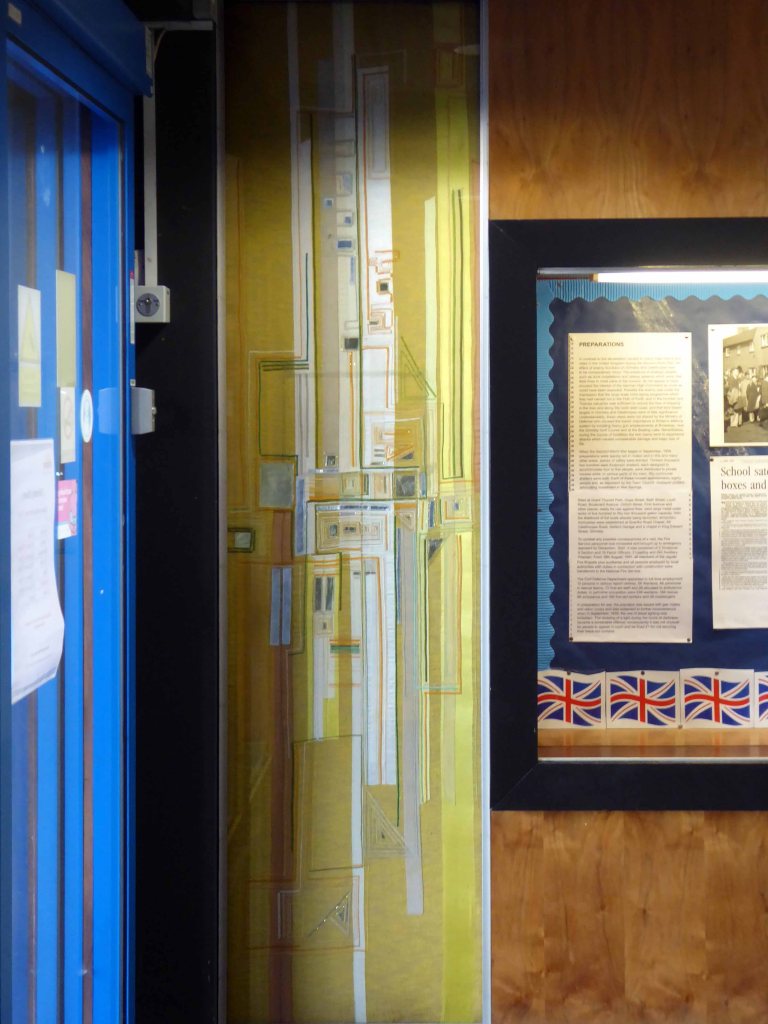
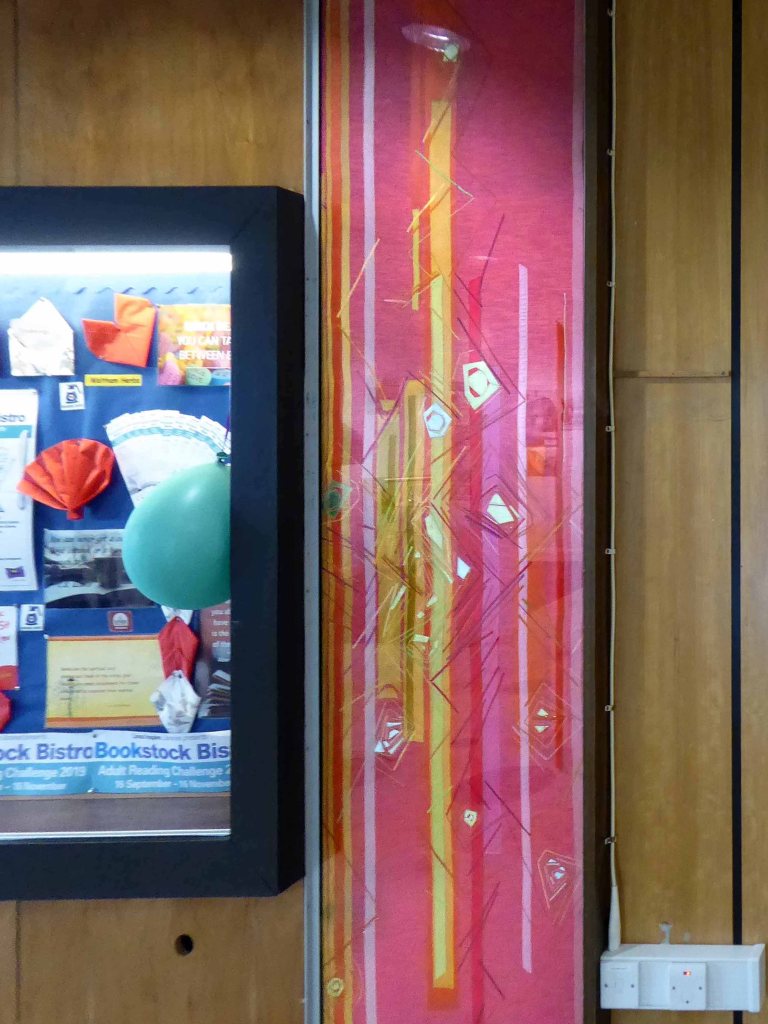
Either side of the lobby display case there are two vertical tapestries.

Along with a further plaque commemorating the opening on the 3rd September 1968 – by the then local MP Anthony Crosland.

Crosland looked ahead to a time where “personal freedom, happiness and cultural endeavour; the cultivation of leisure, beauty, grace, gaiety and excitement… might be pursued.” After he was elected MP for Grimsby in 1959, he referred to the above passage in an early speech, insisting – to much laughter, cheering and applause from the audience, that “it is possible to achieve all these things in Grimsby, and especially at Blundell Park.”

May I take this opportunity to thank the ever so helpful library staff – for kindly granting me permission to photograph the main body of the library.

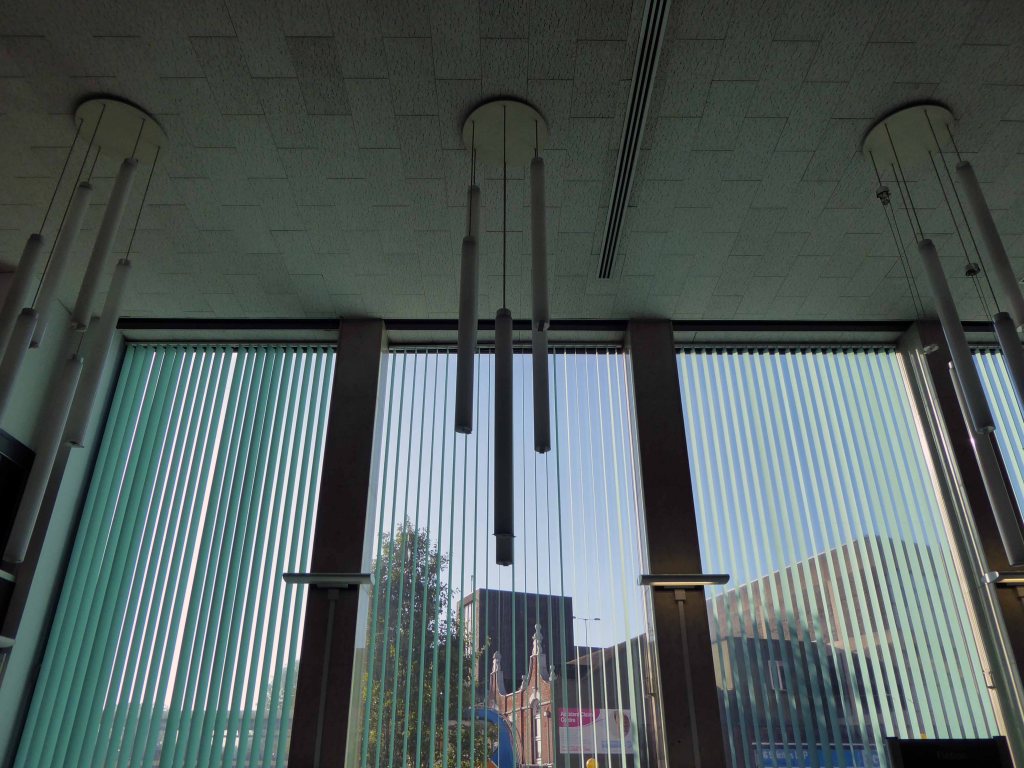
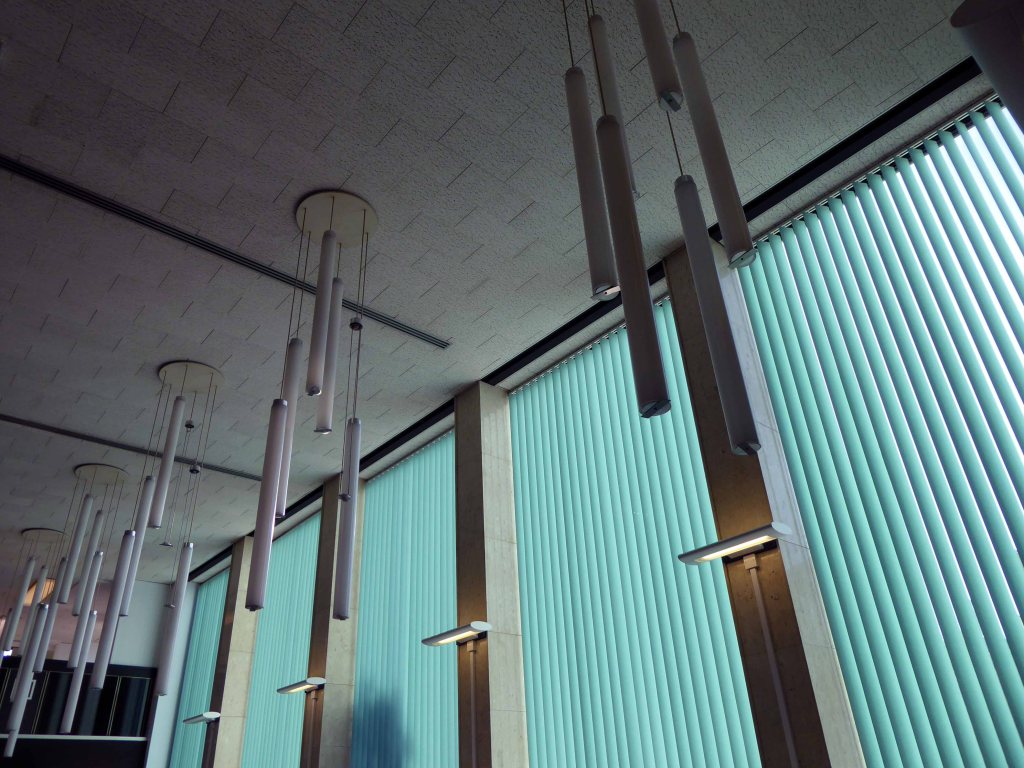
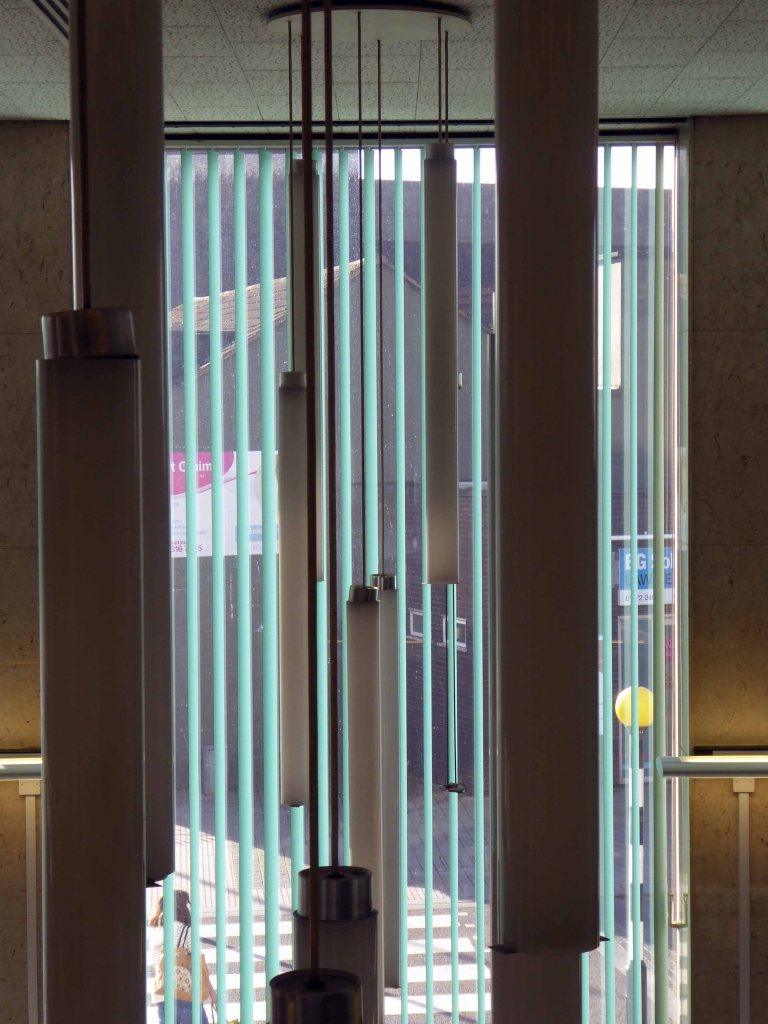
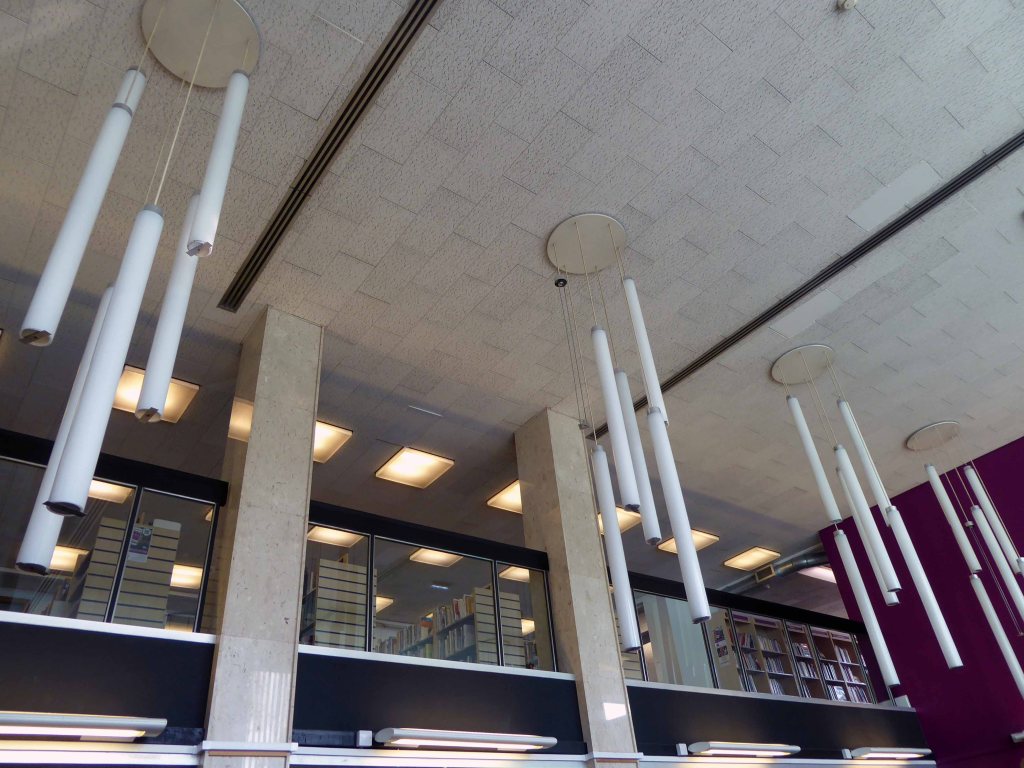
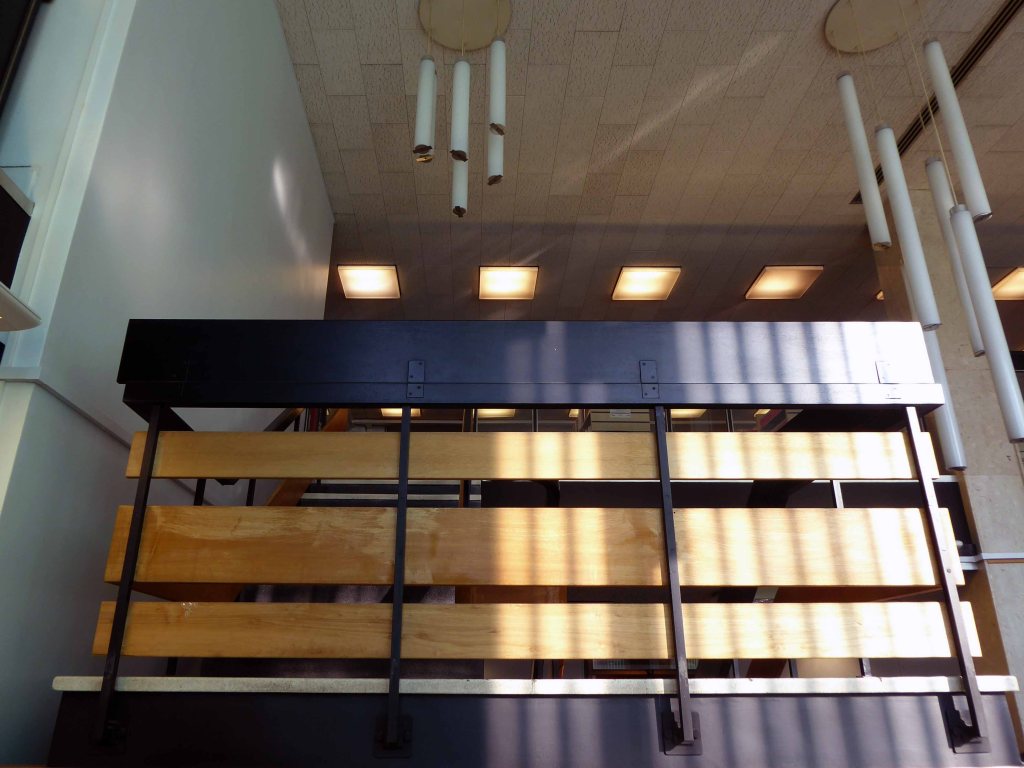
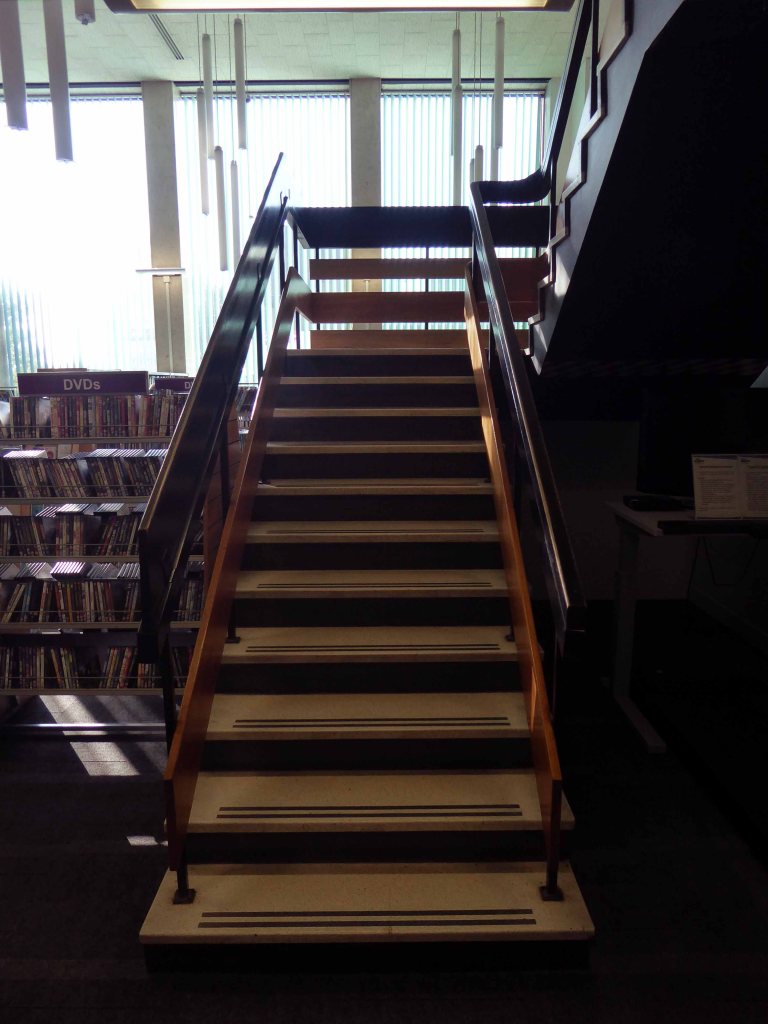
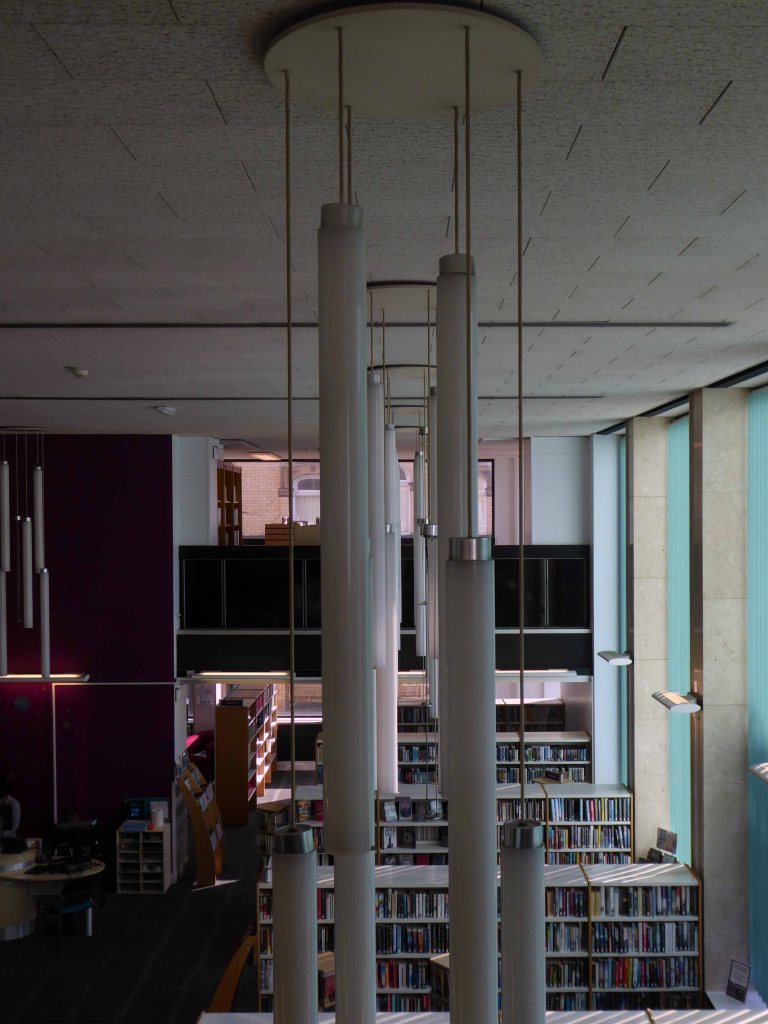
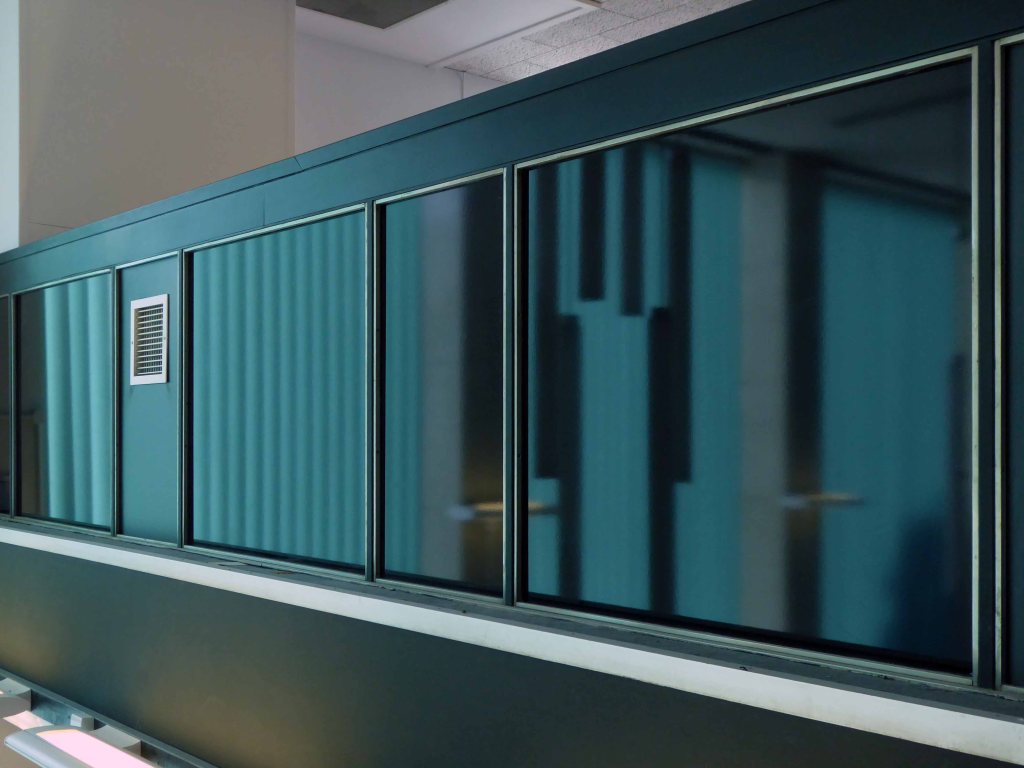
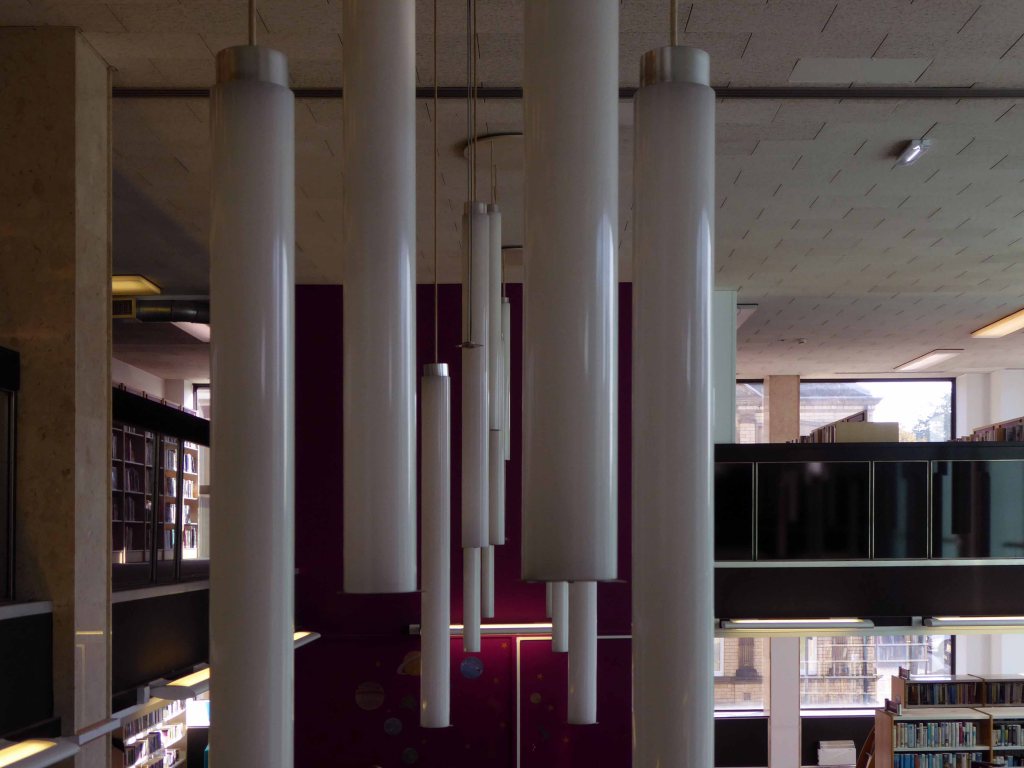
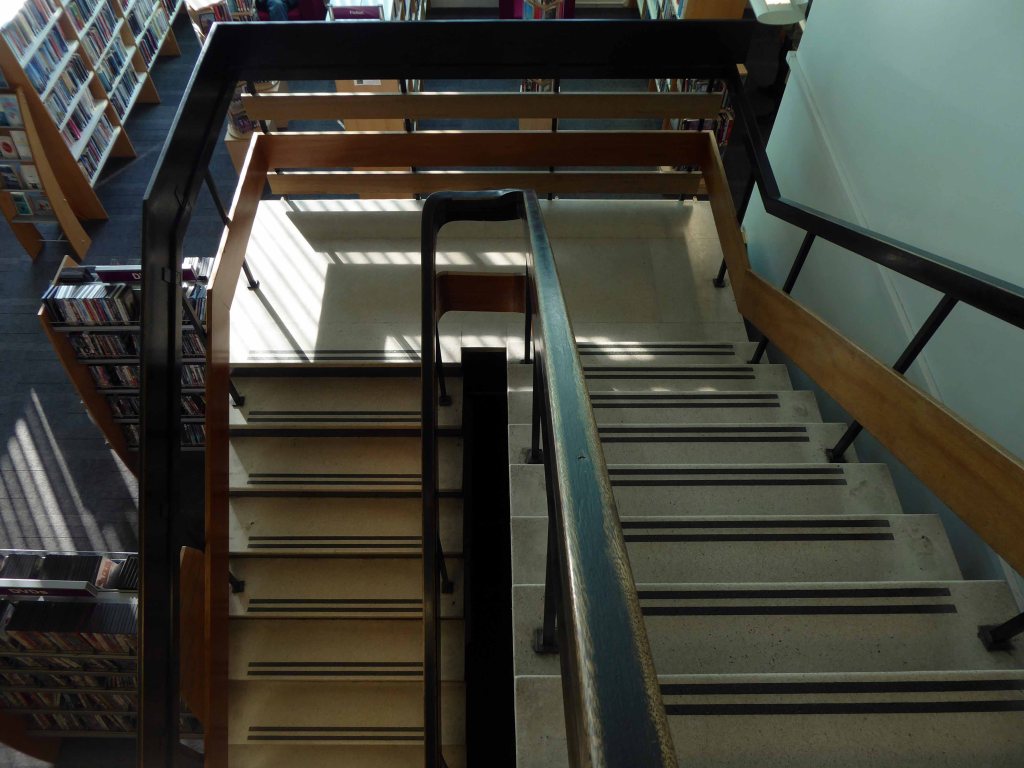
Many original fittings and fixtures are intact – particularly the distinctive vertical suspended lighting system and the steel and wood stairways.

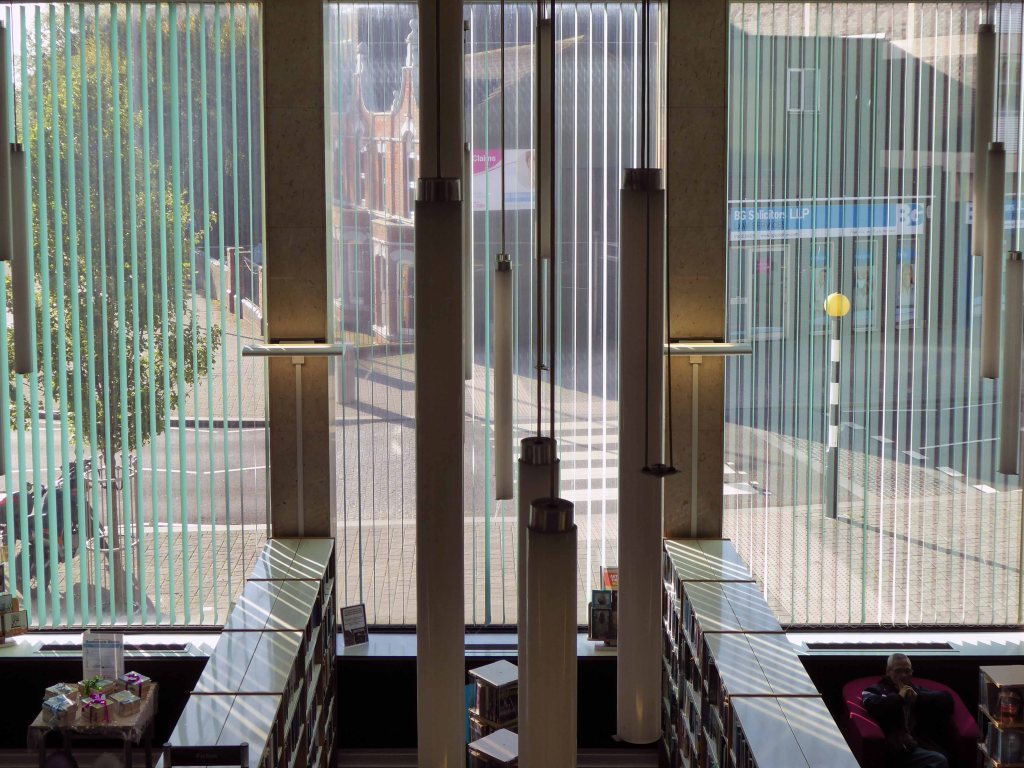
The facilities were well used and lit by the expansive window space.

Let’s take another final look outside, and say a fond farewell to this fine building – go on treat yourself, take a trip to the East Coast and feast your eyes, heart and mind on this beauty.

Ta-ra Grimsby!

I’ll be back real soon.