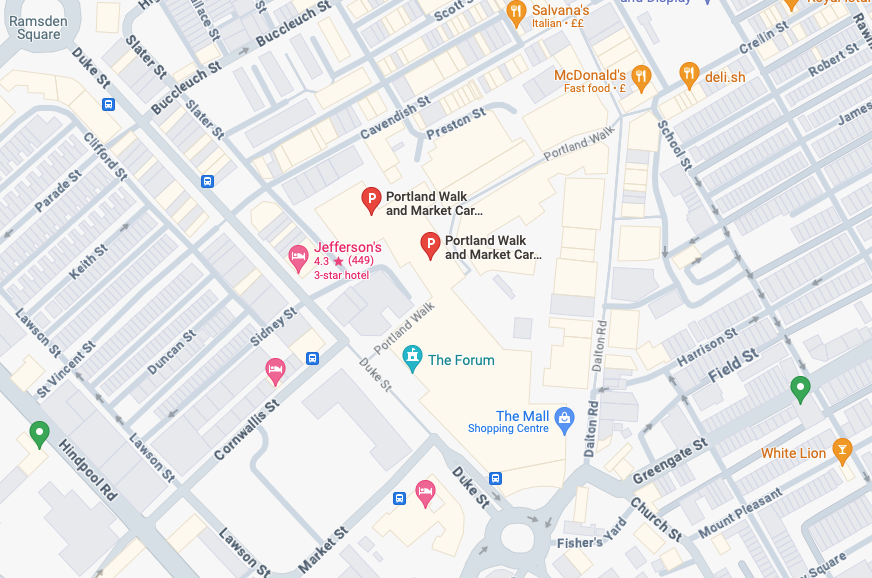
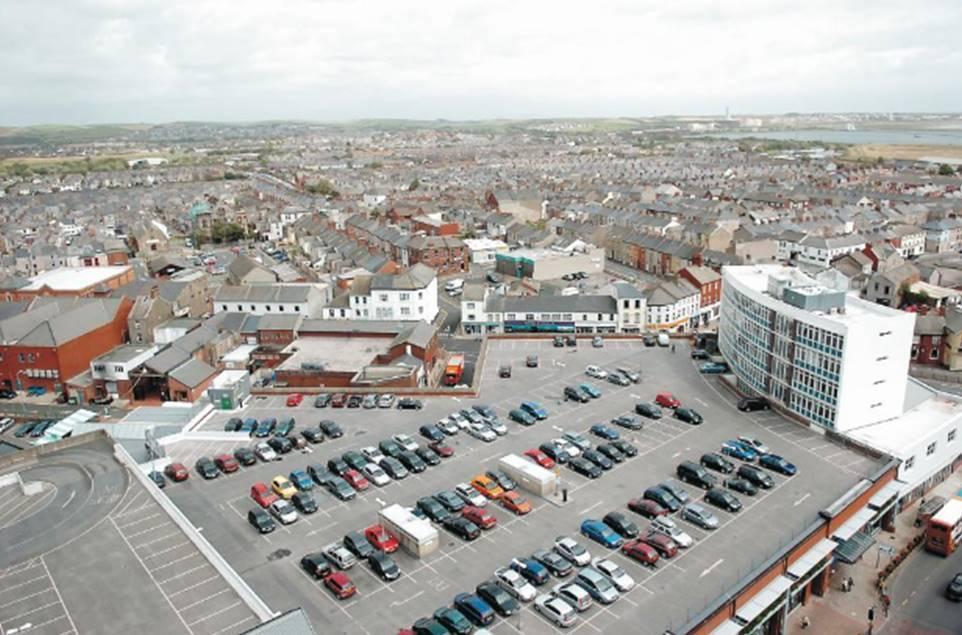
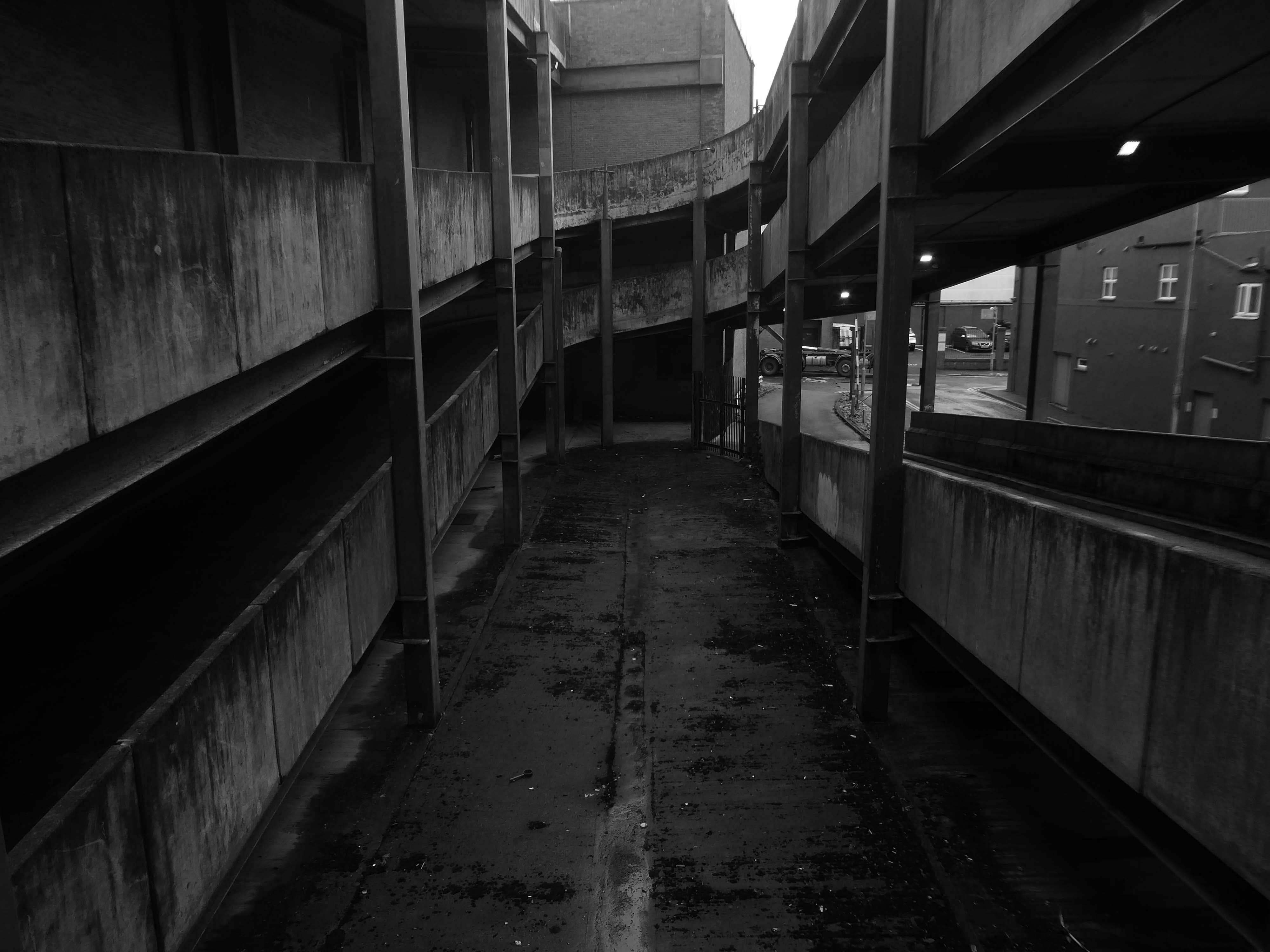
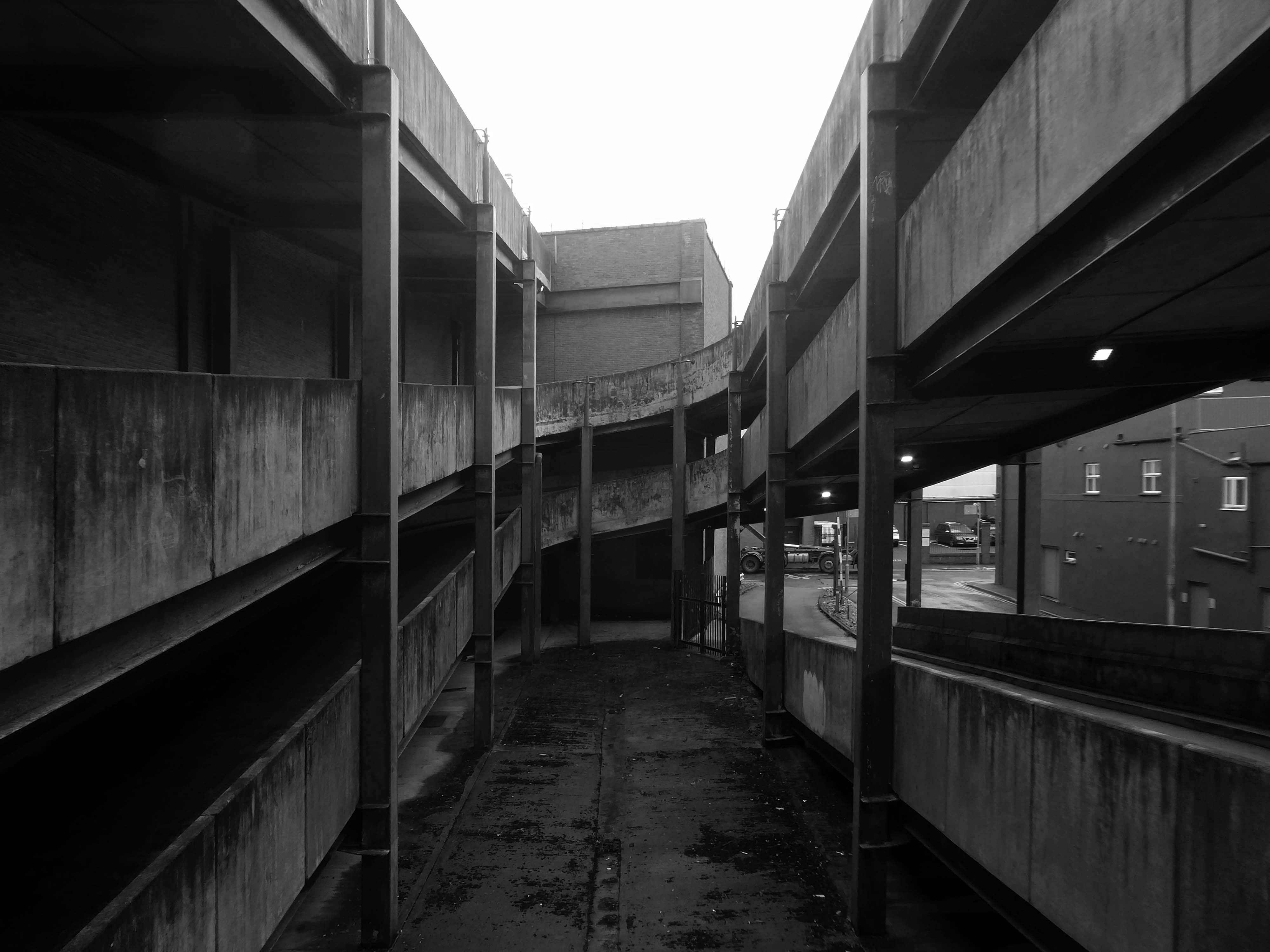
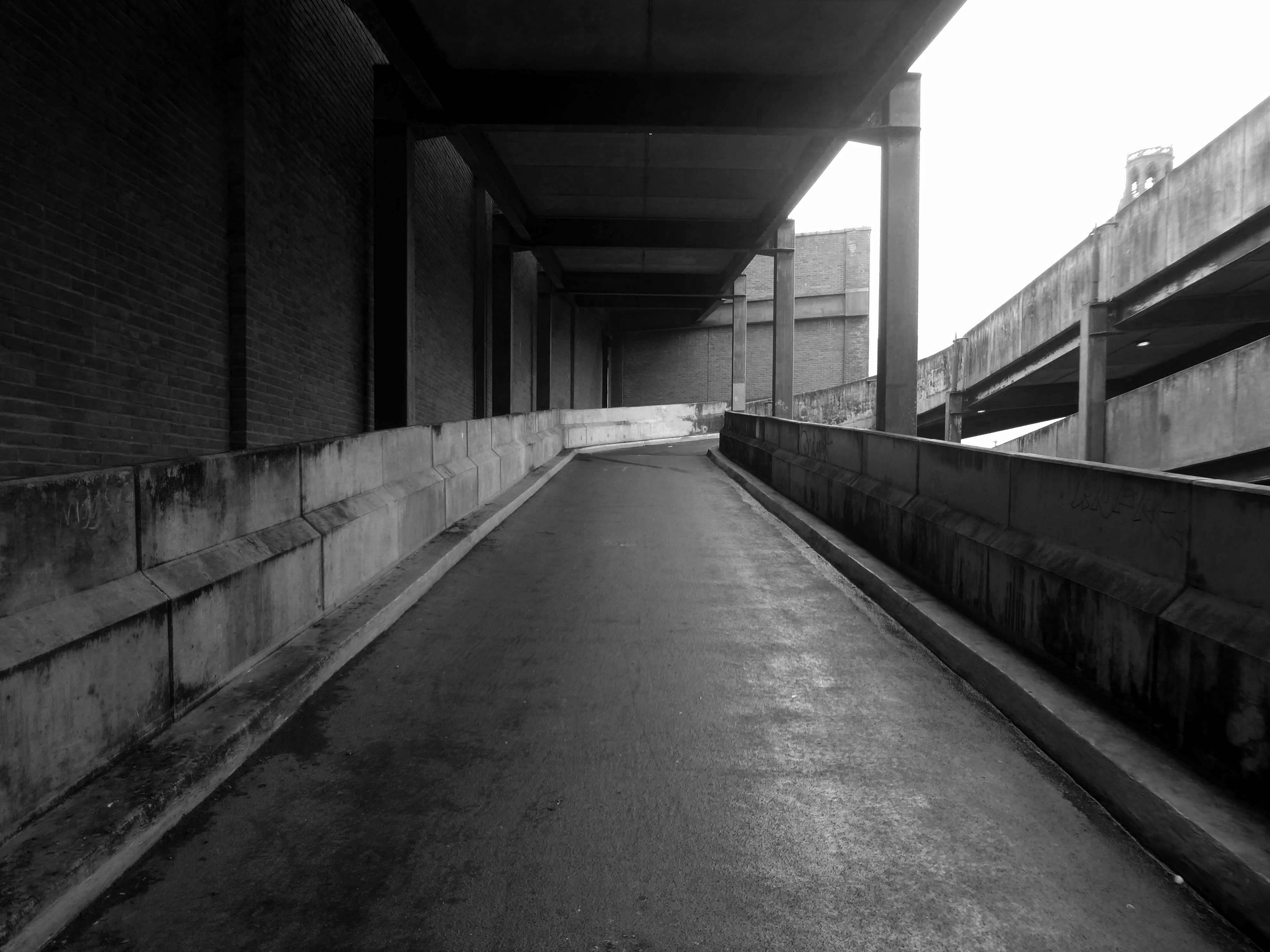
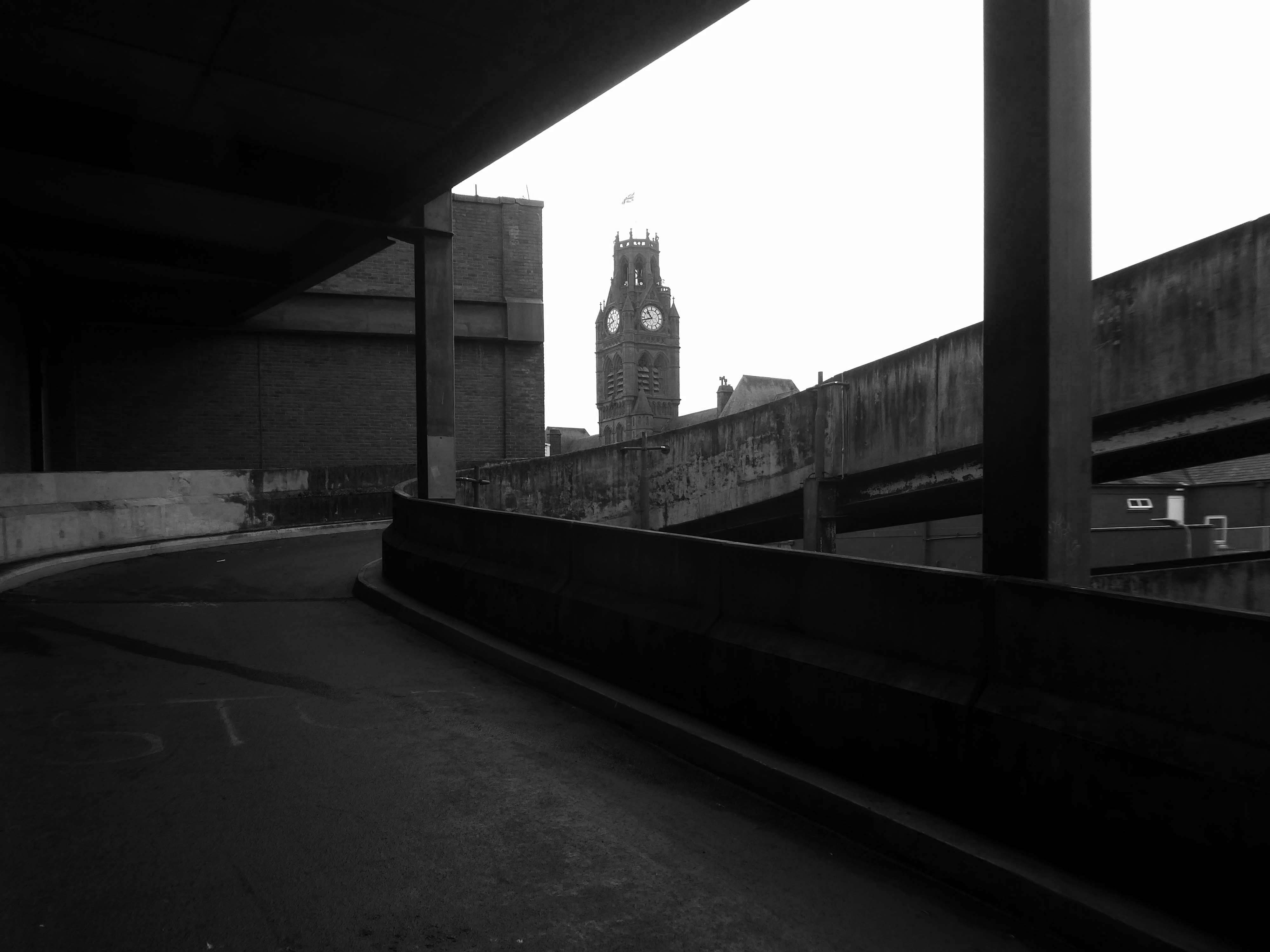
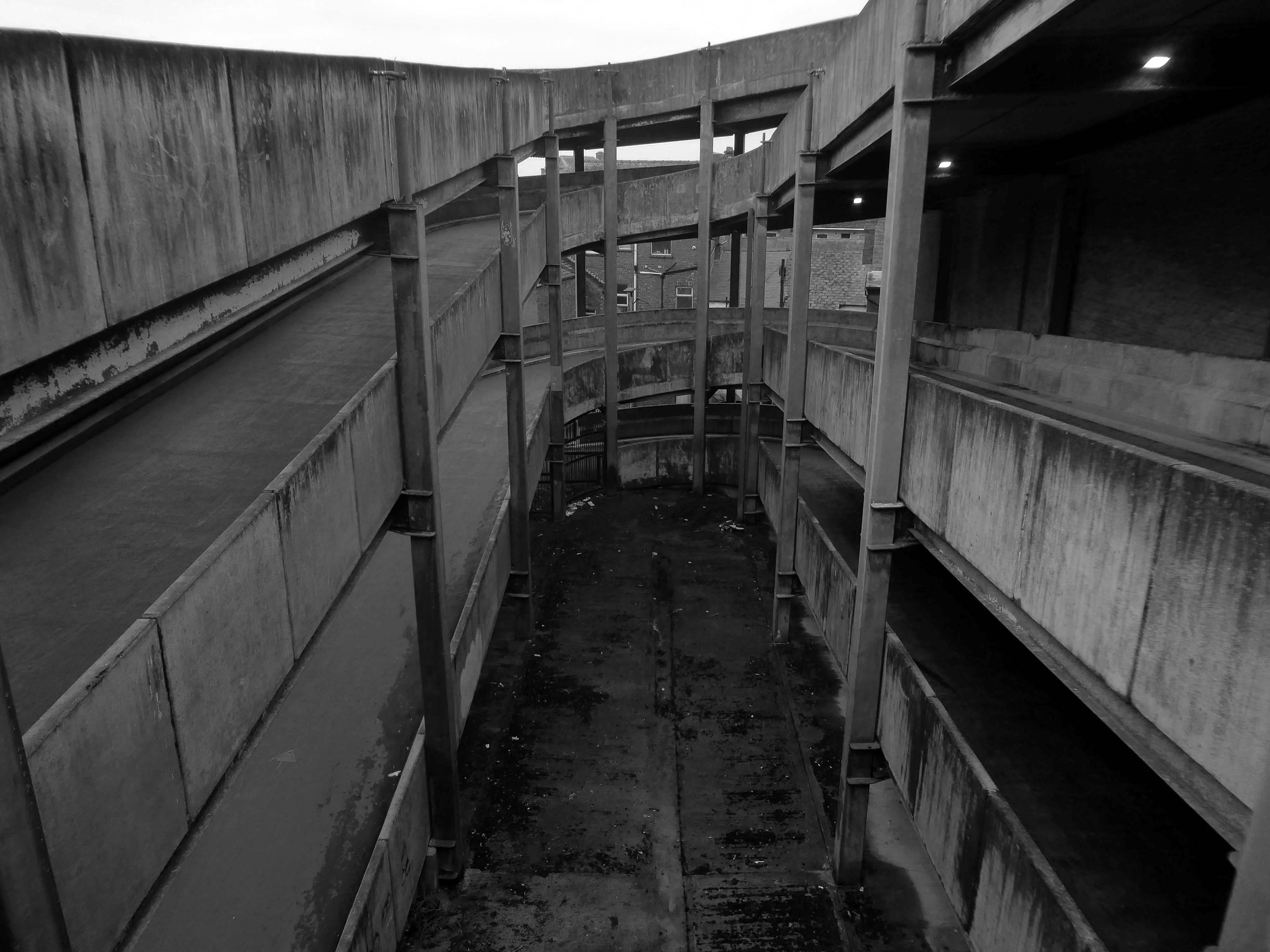
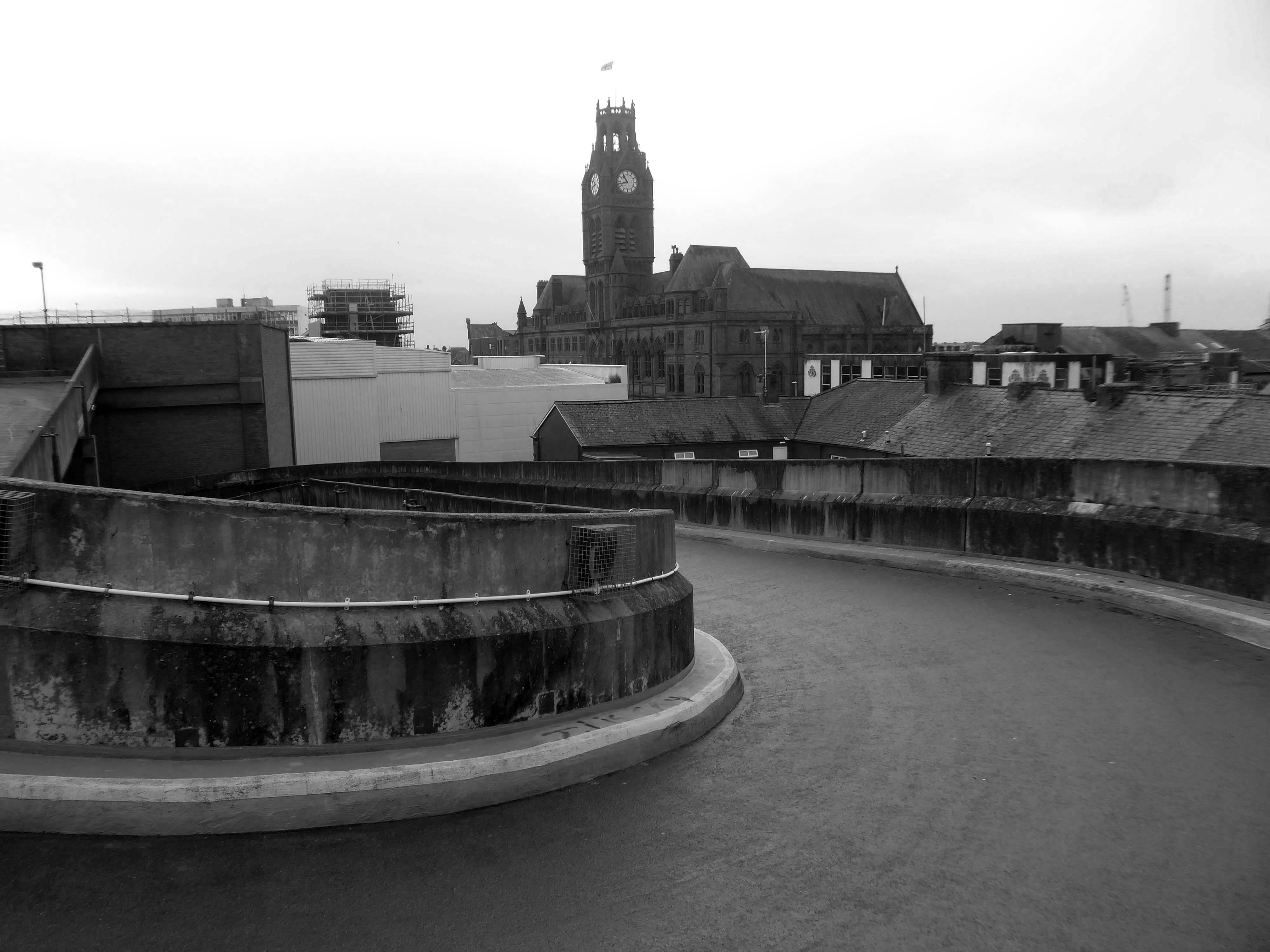
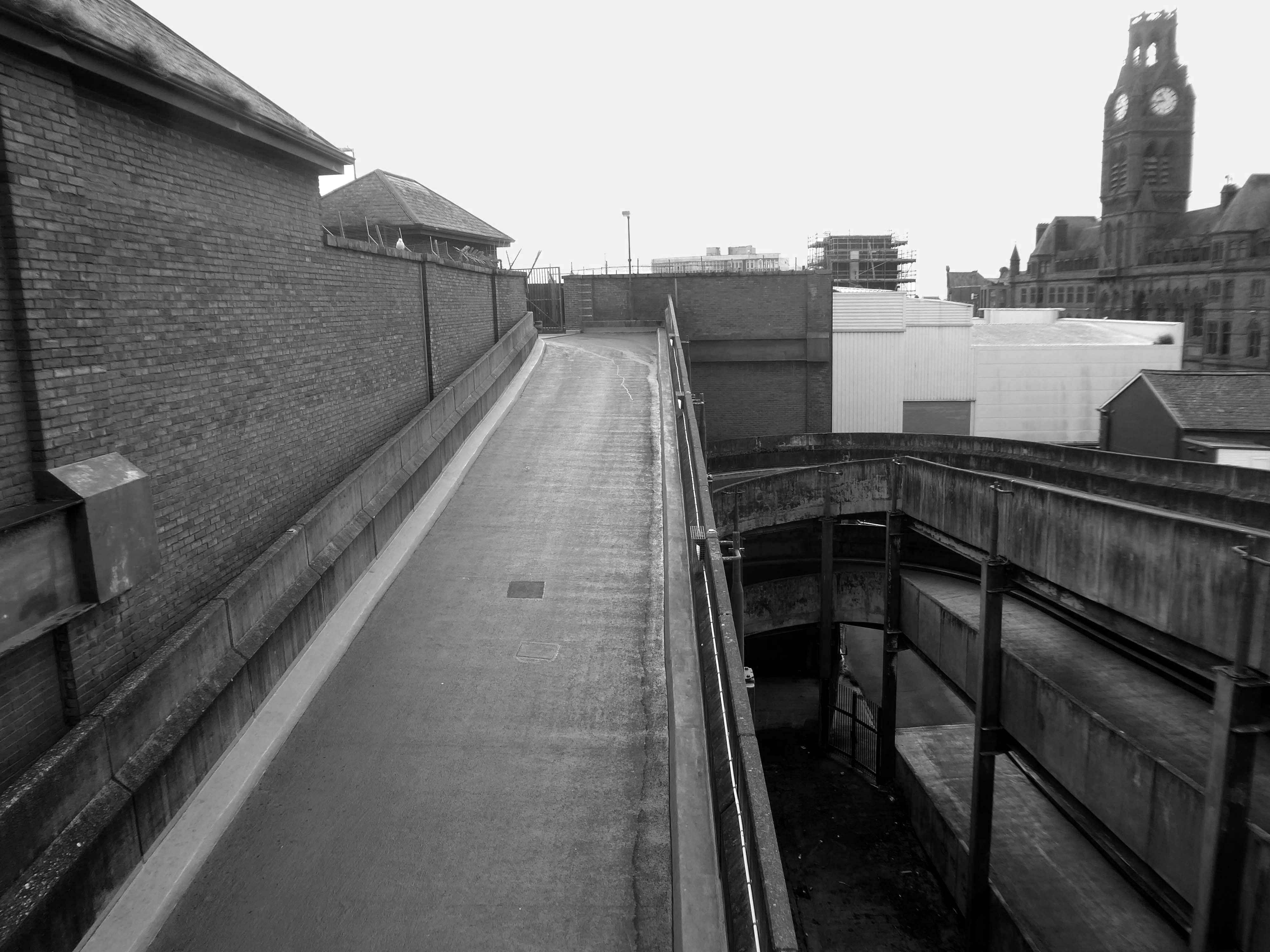
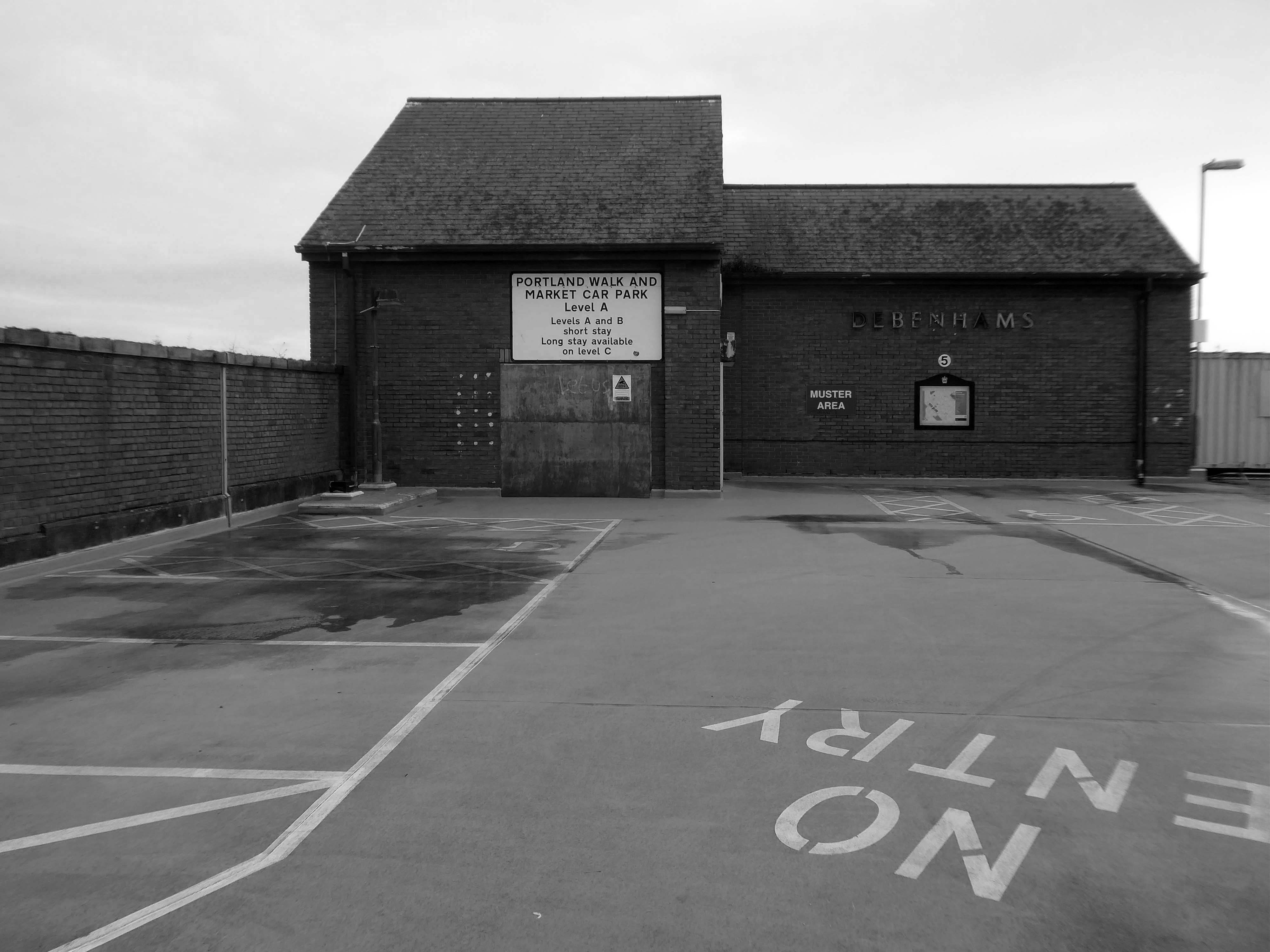
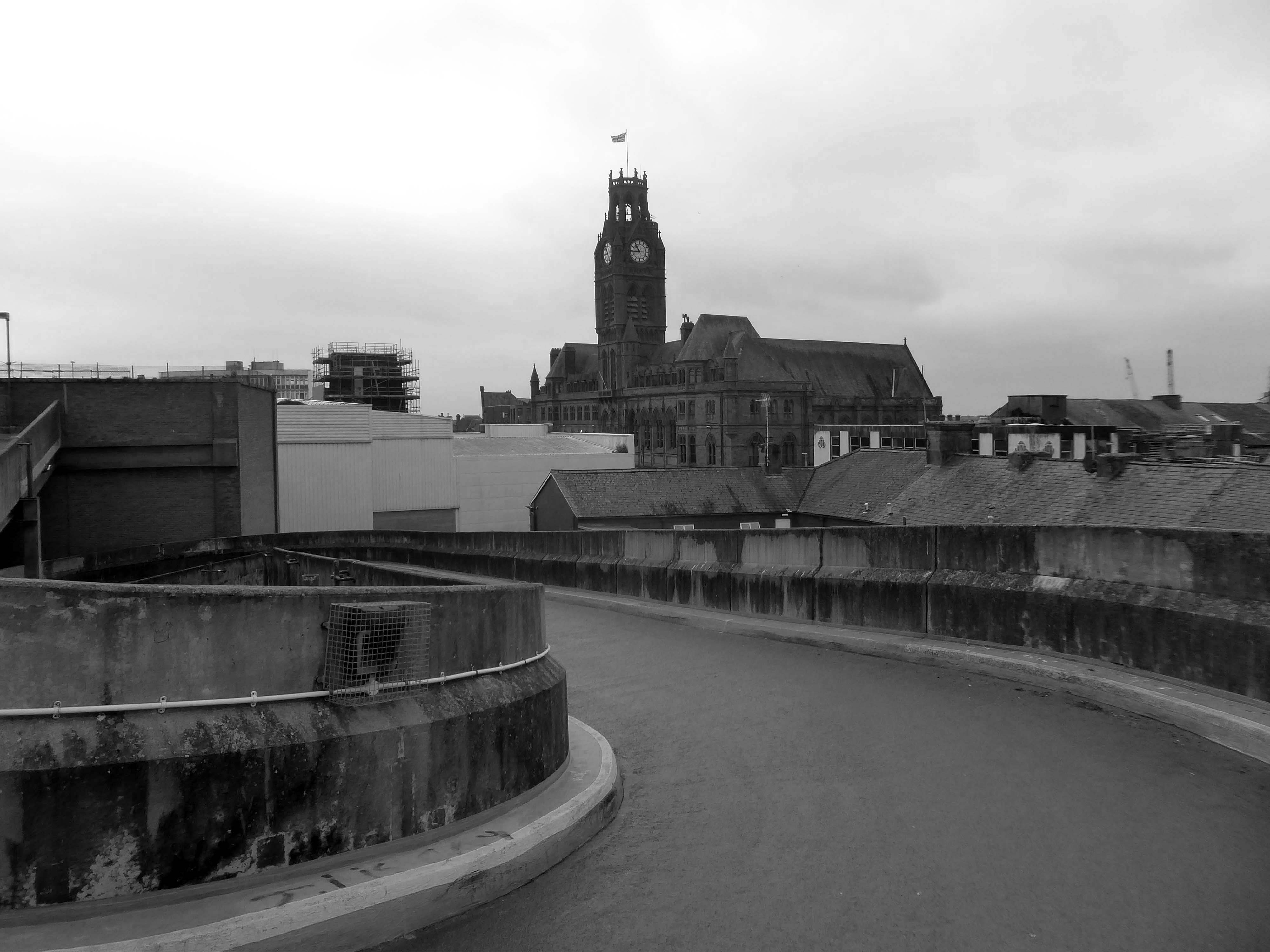
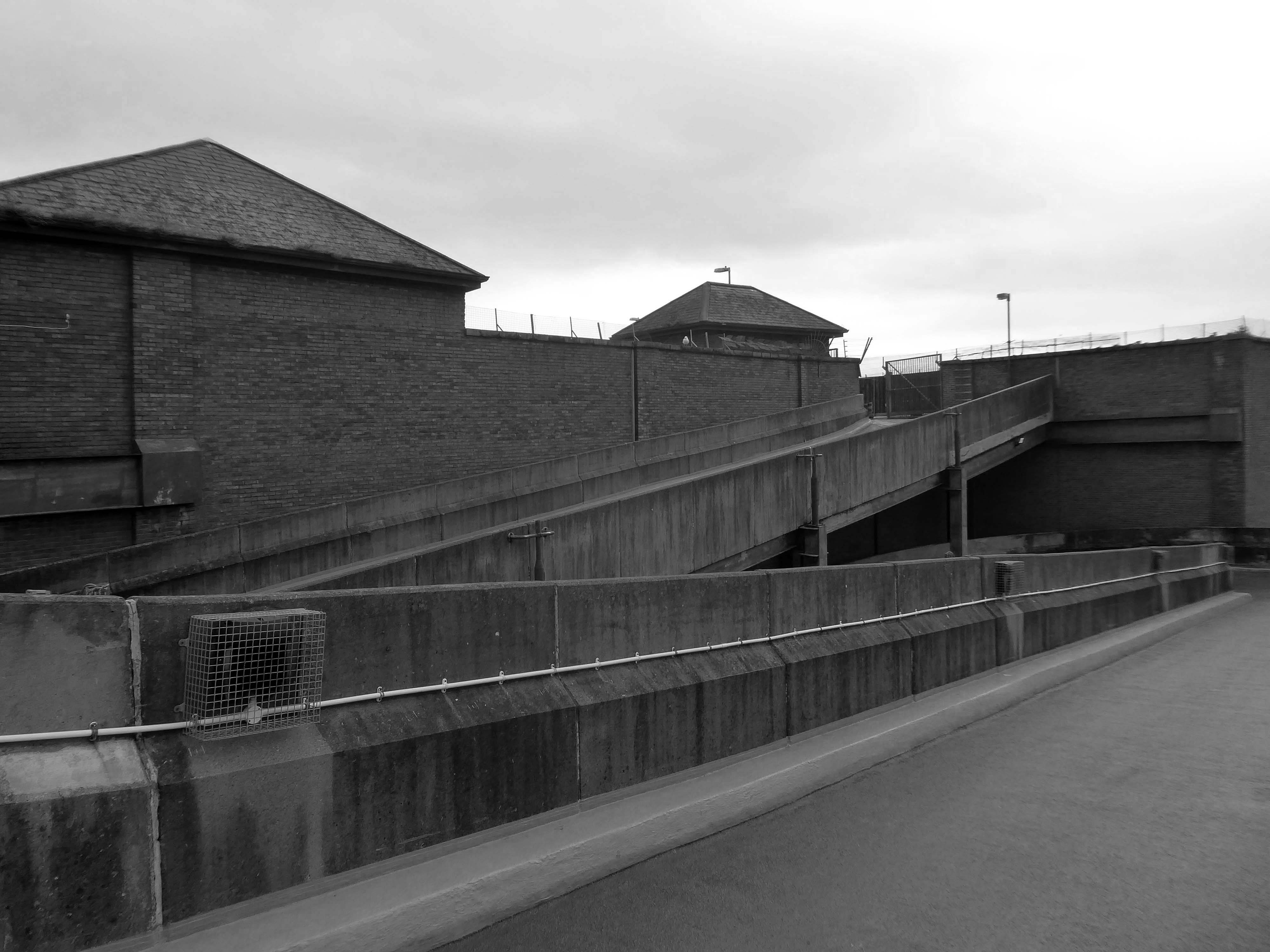
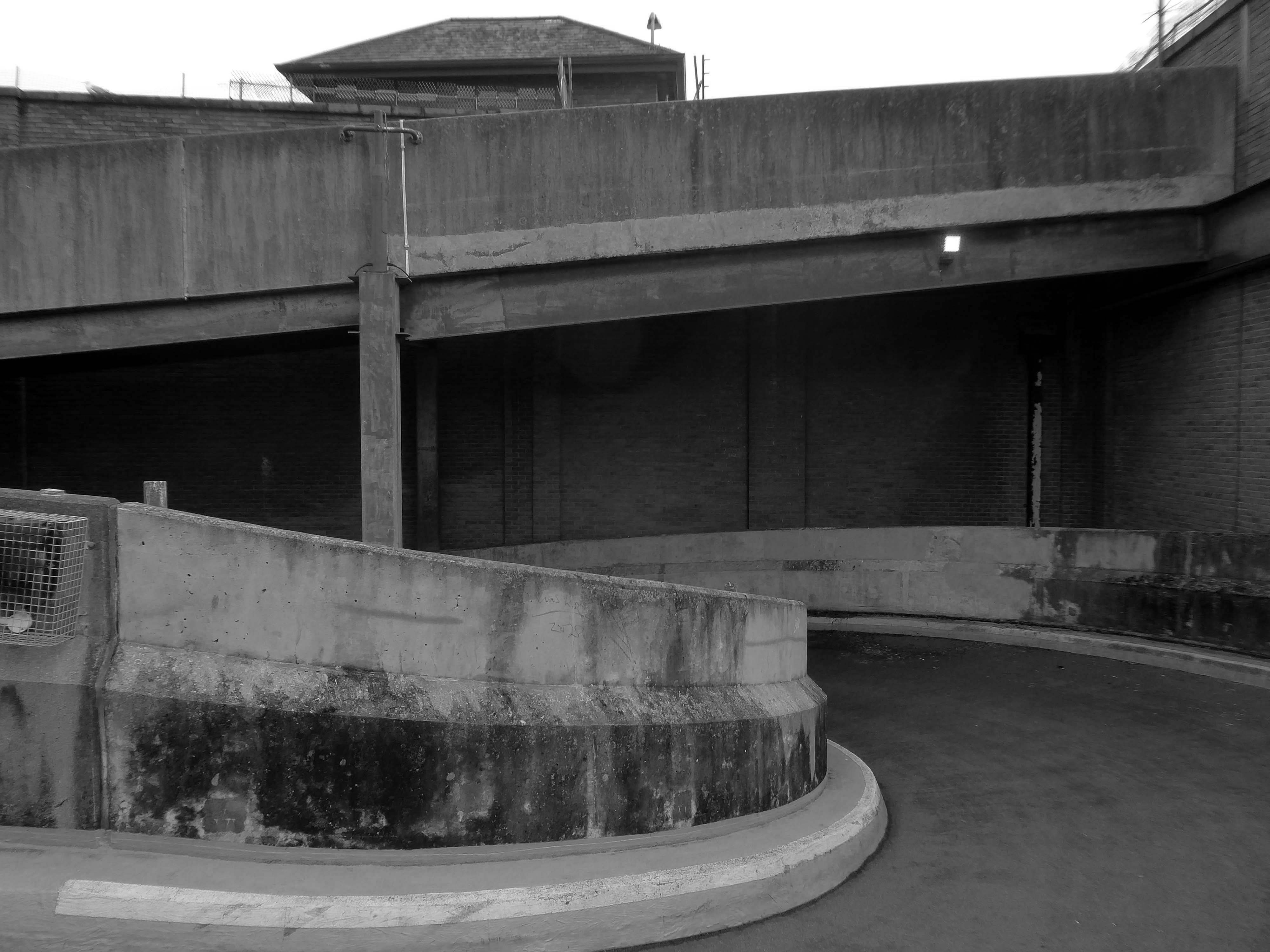
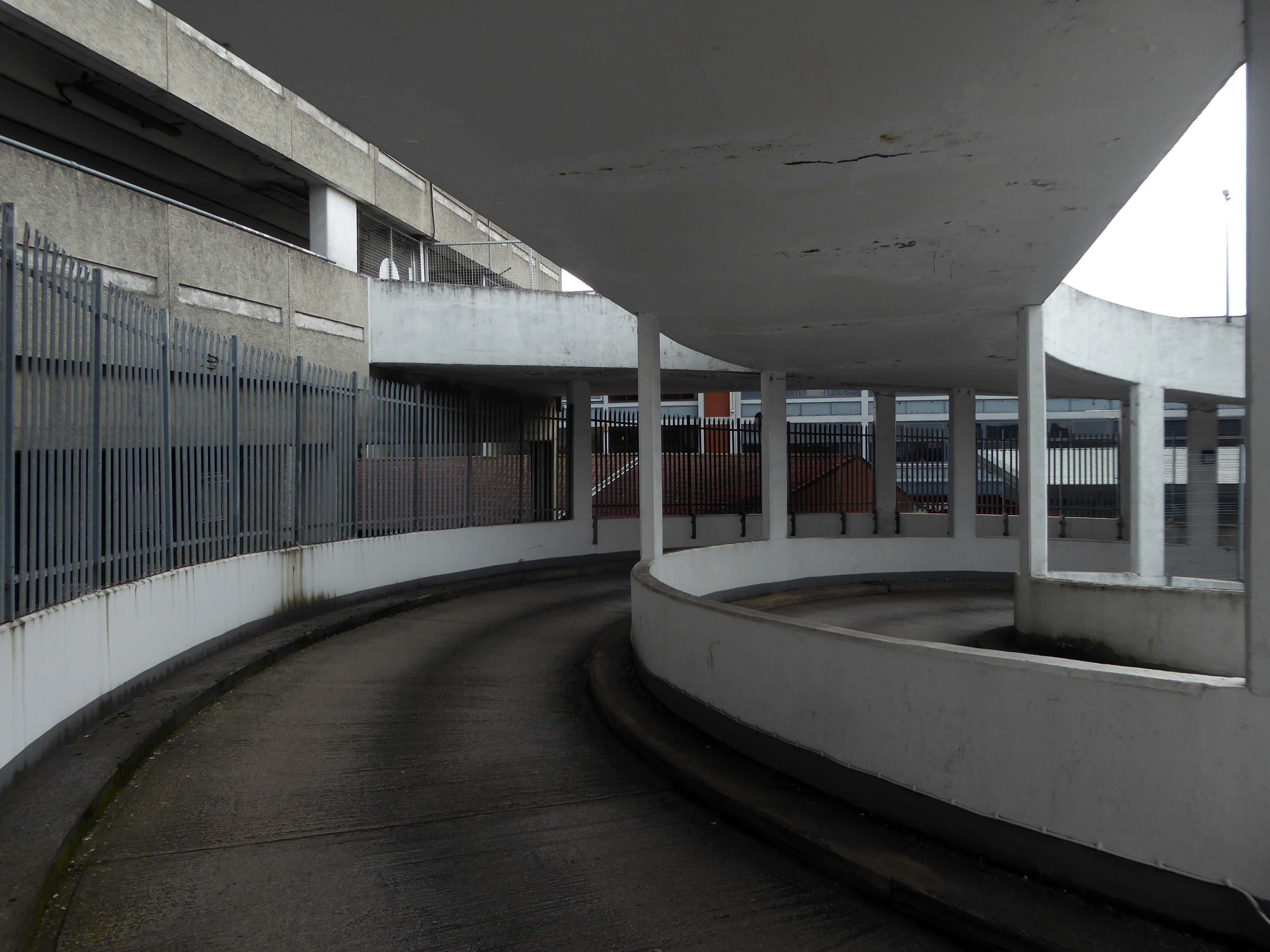
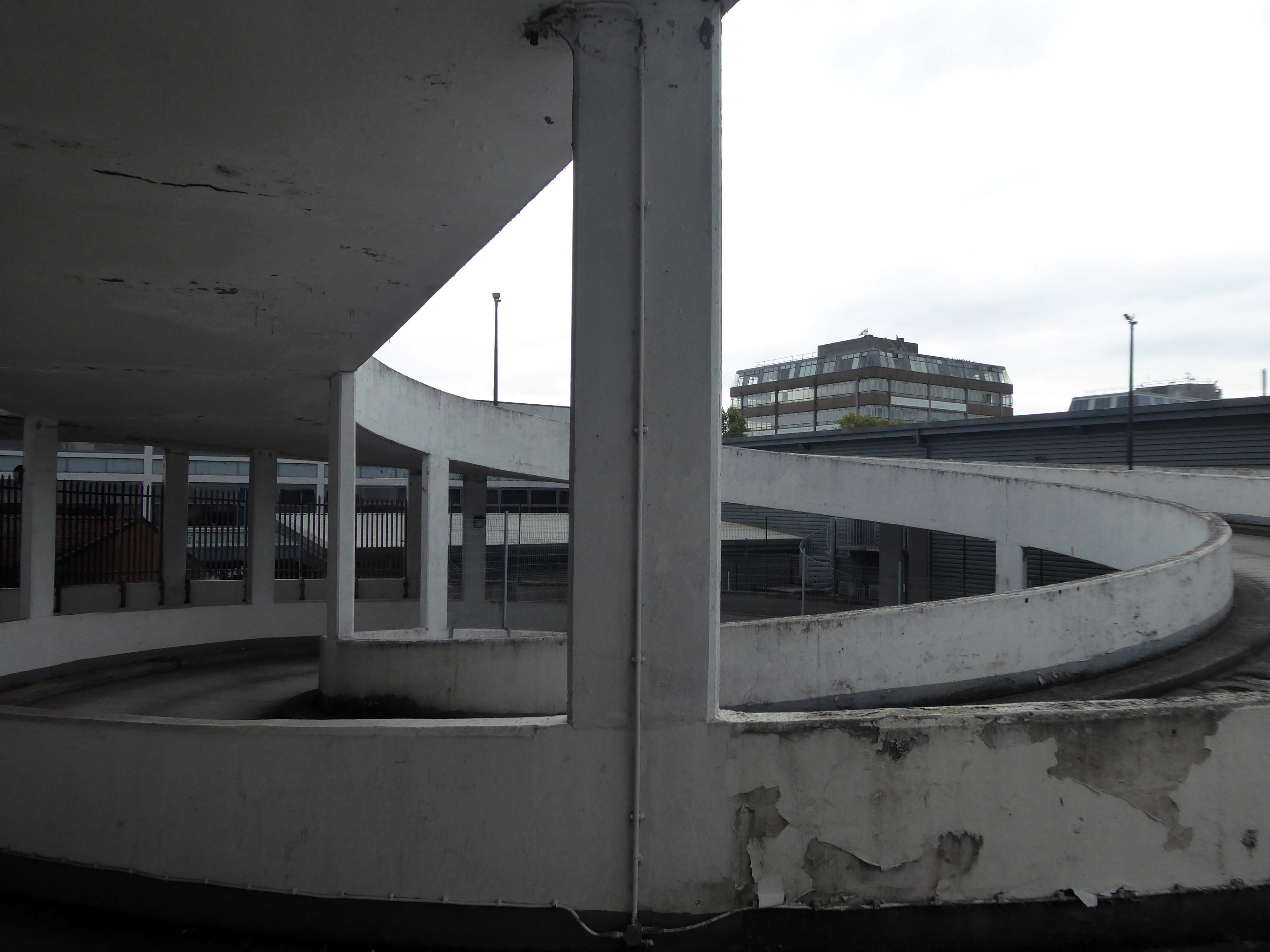
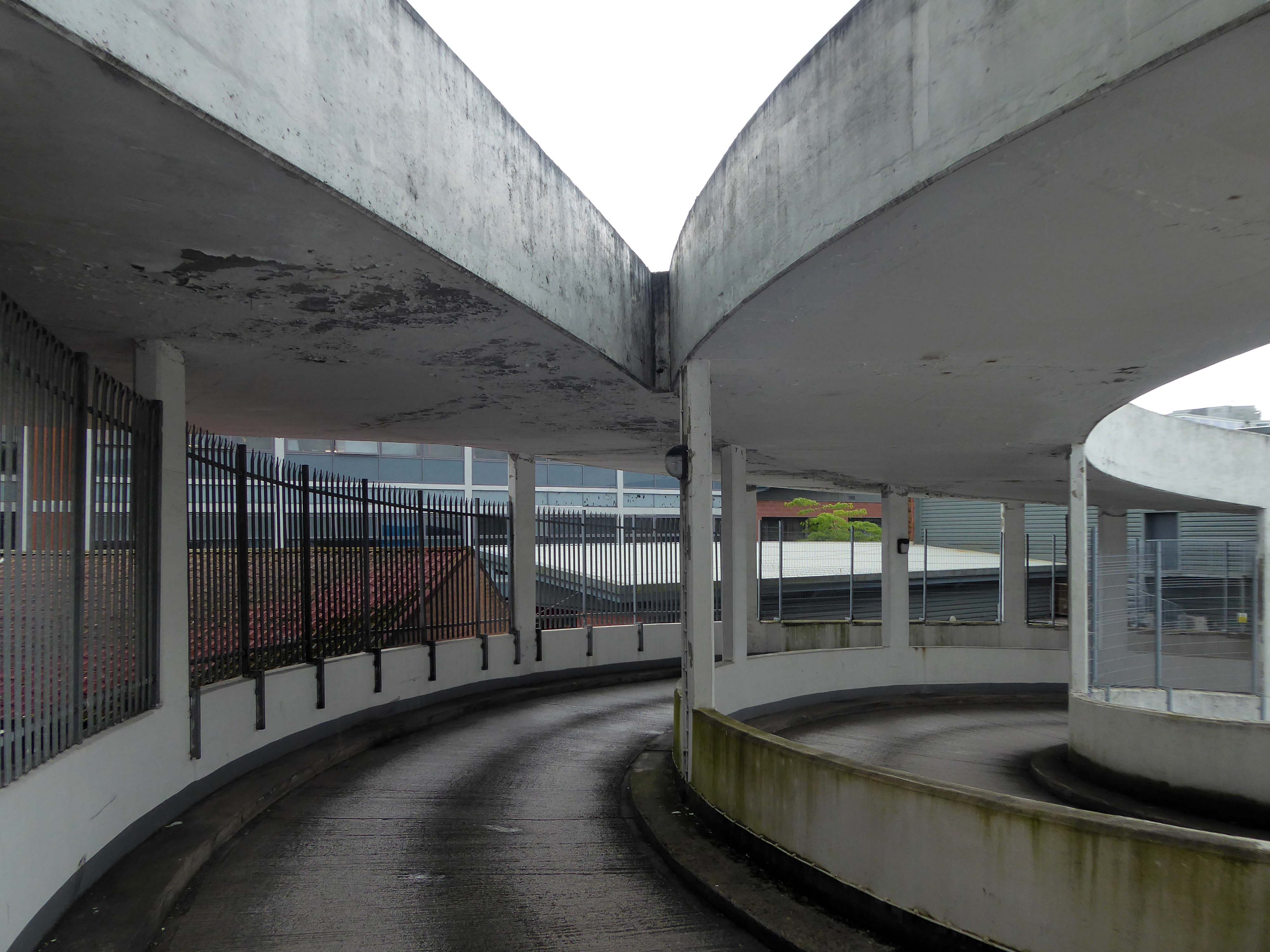
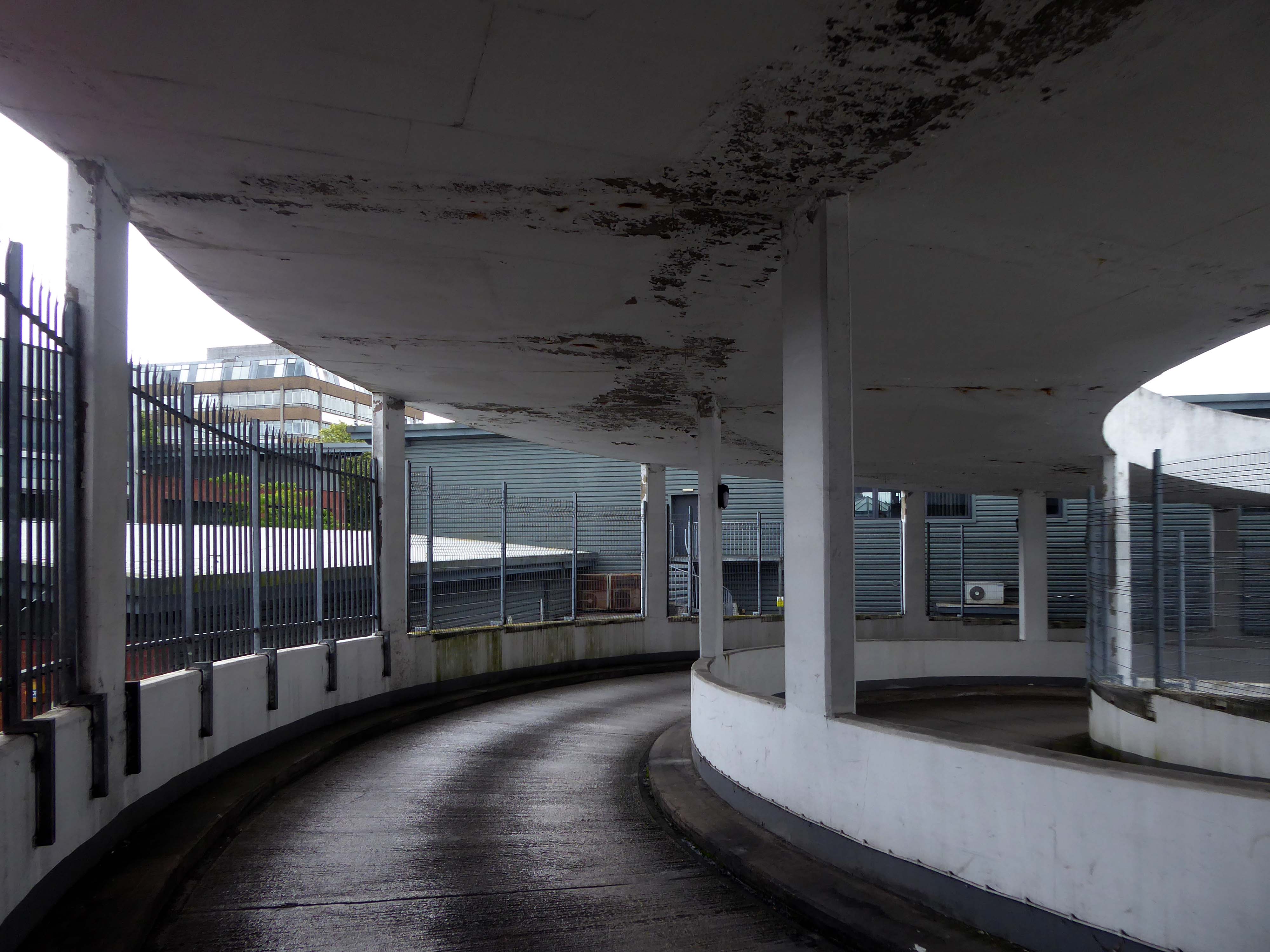
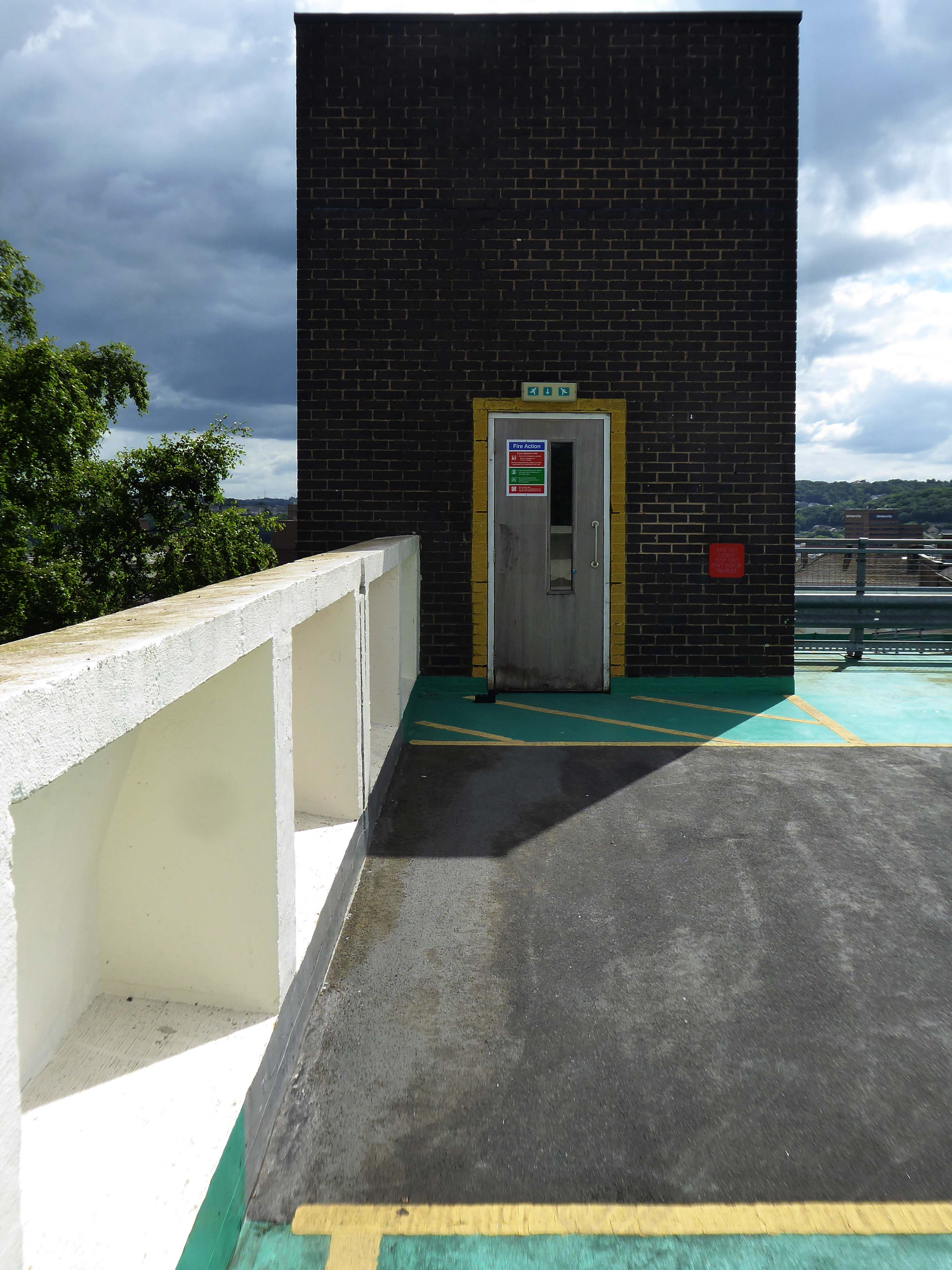
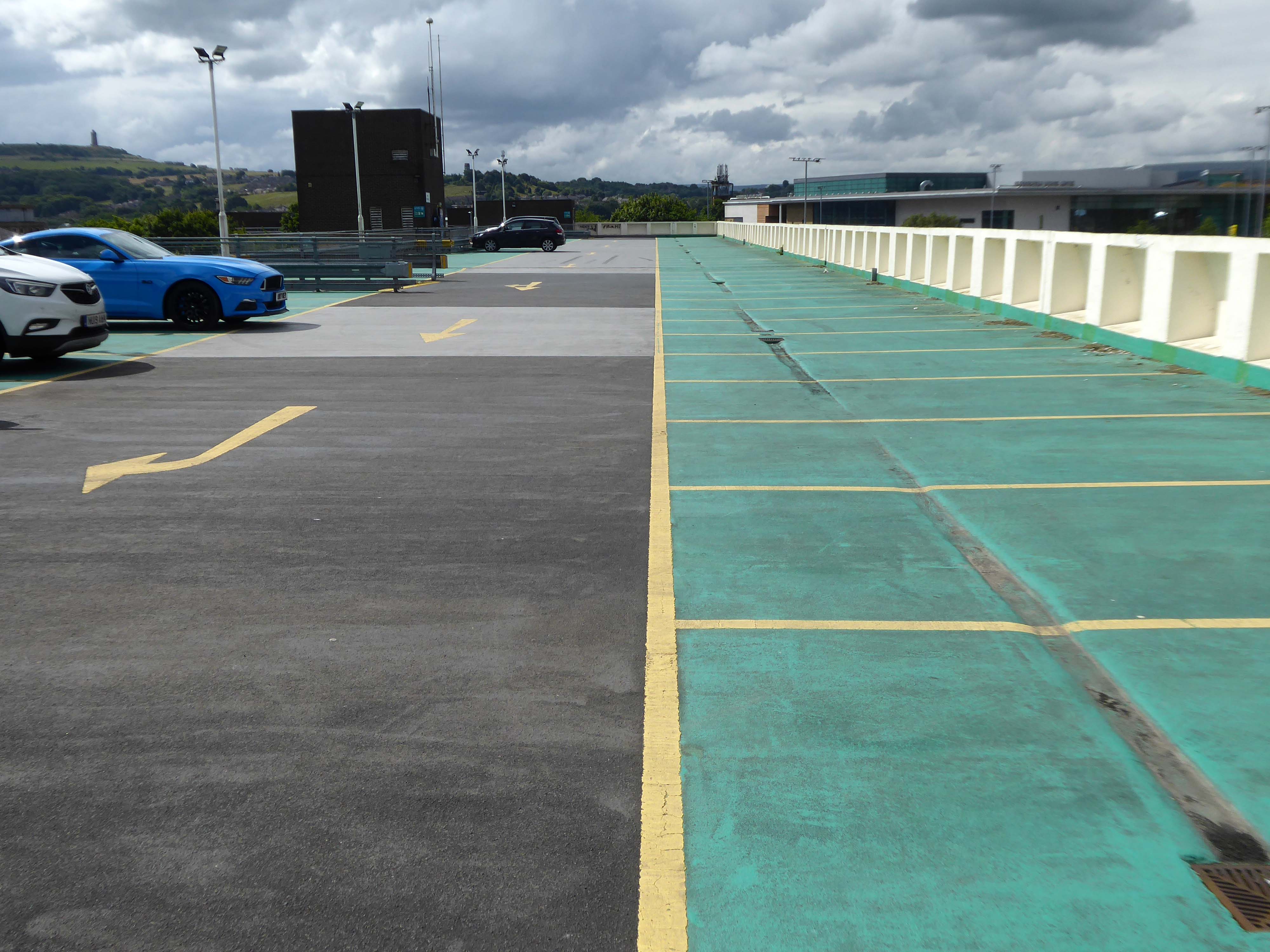
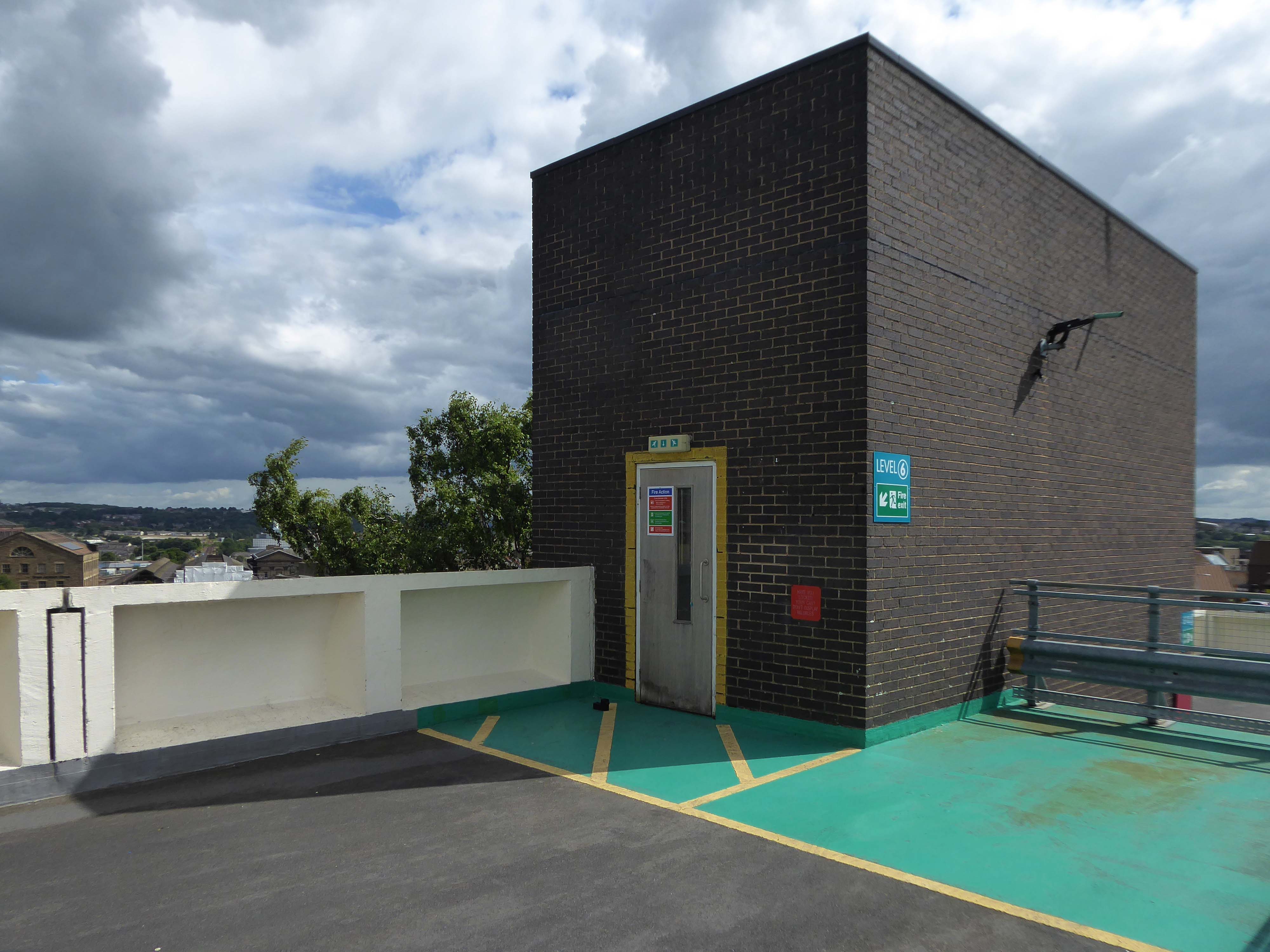
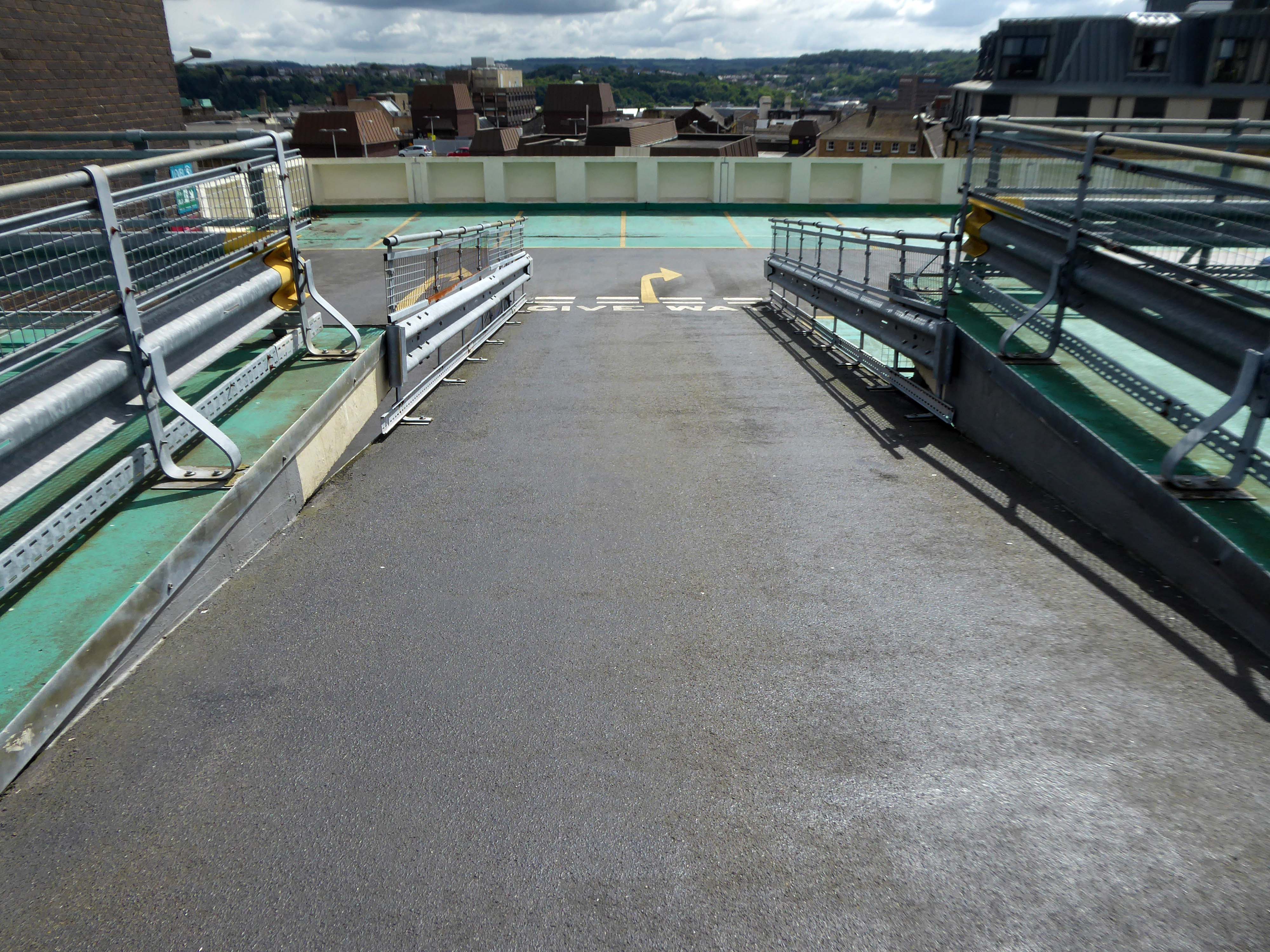
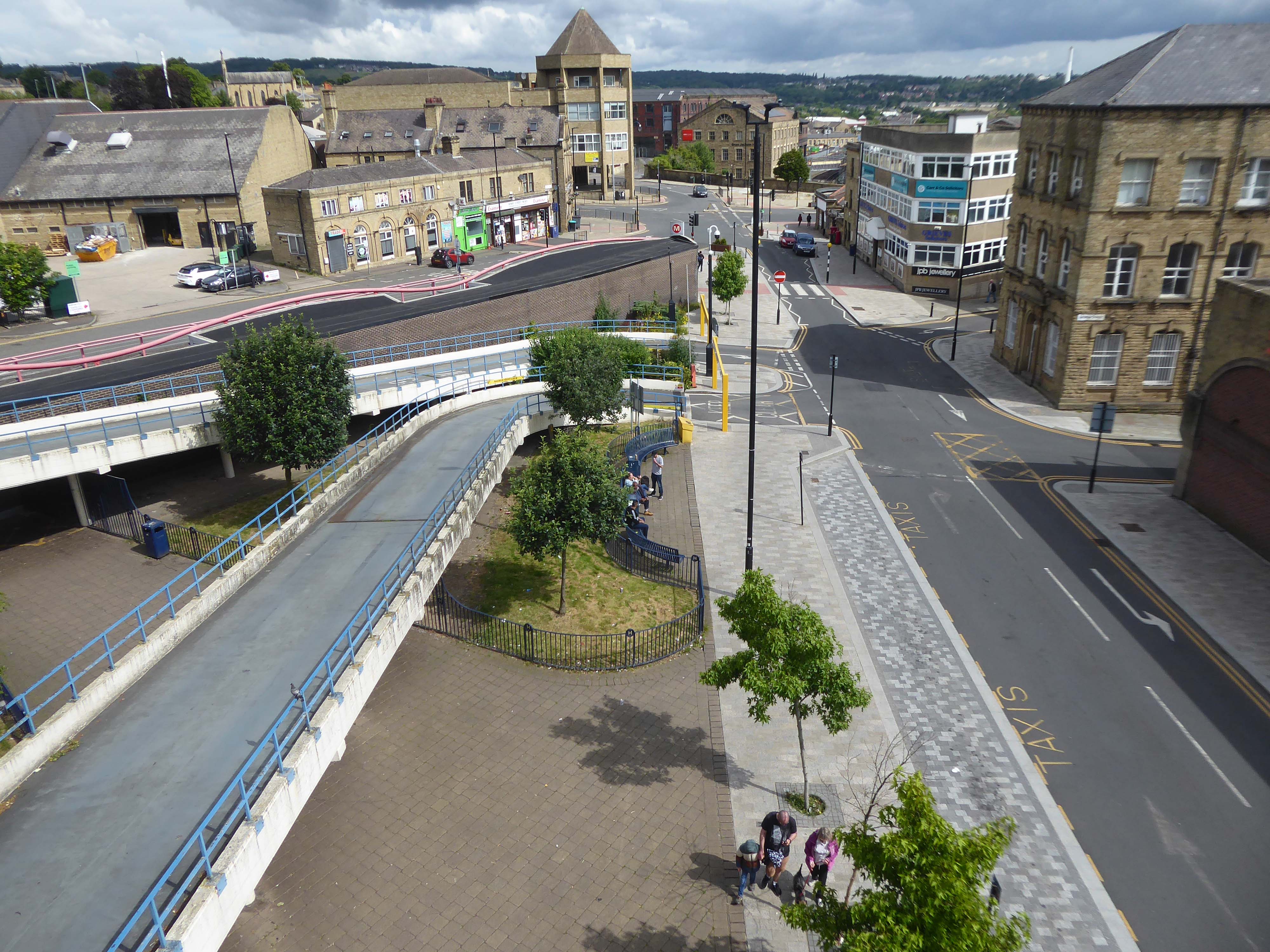
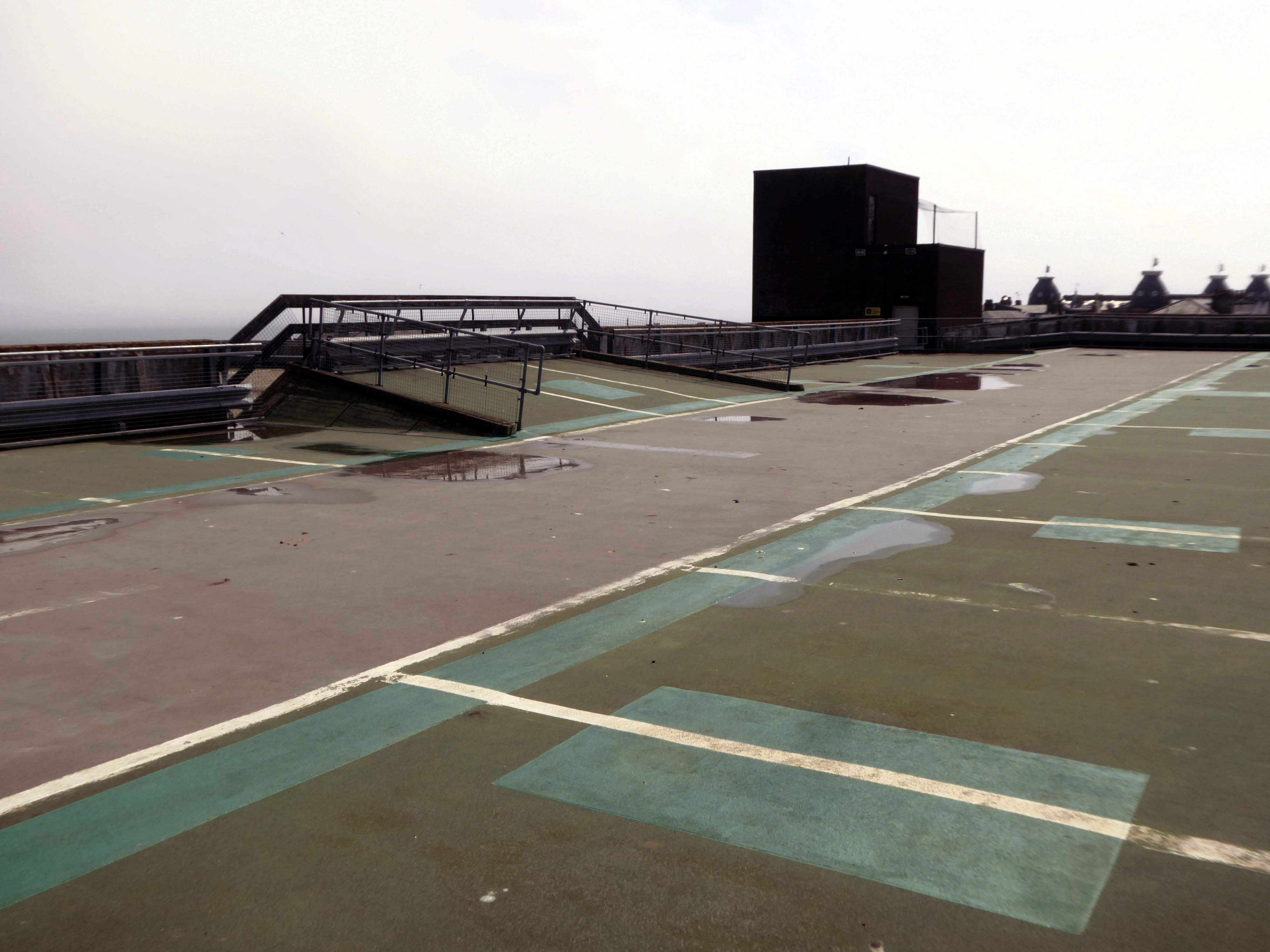
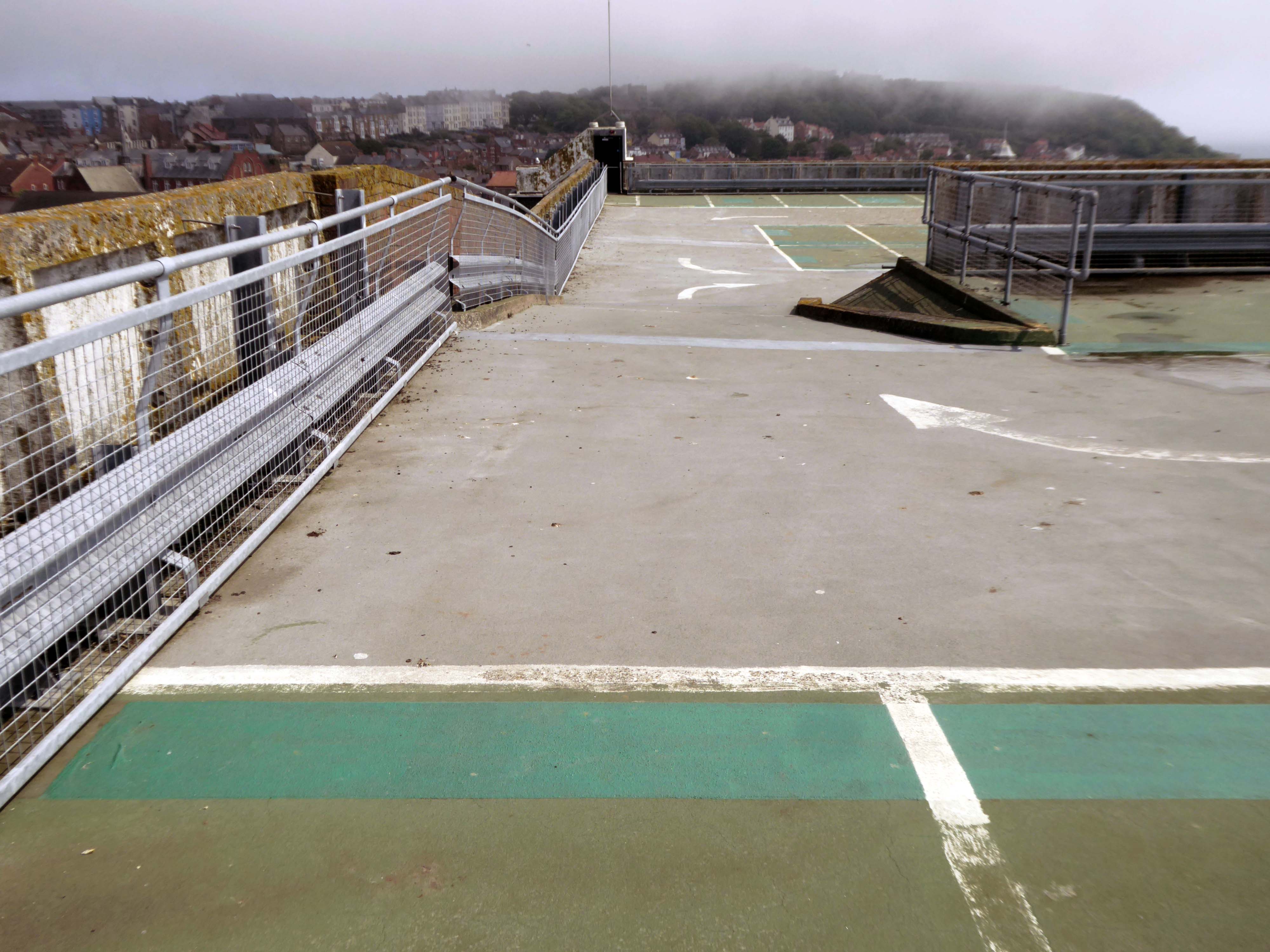
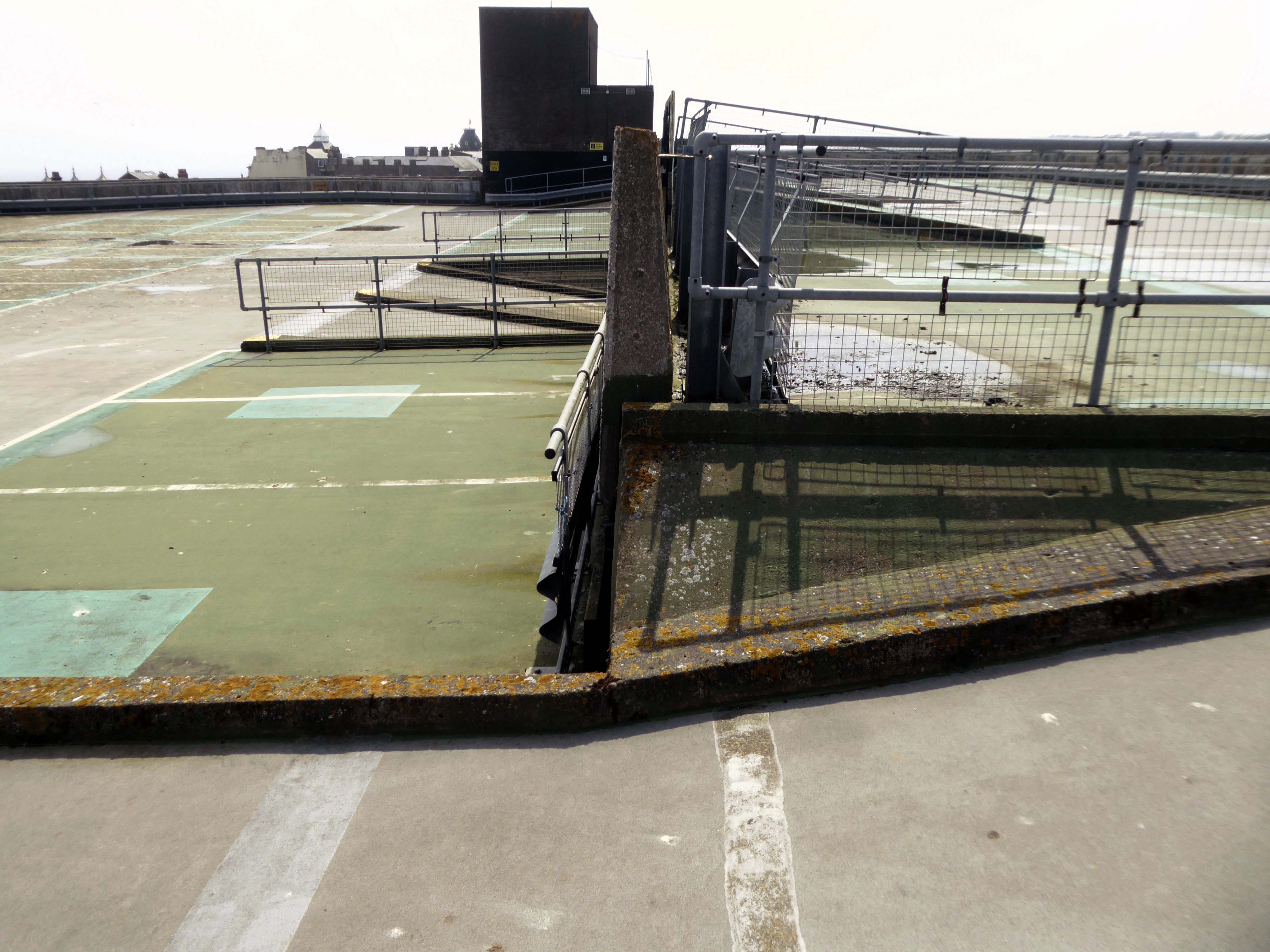
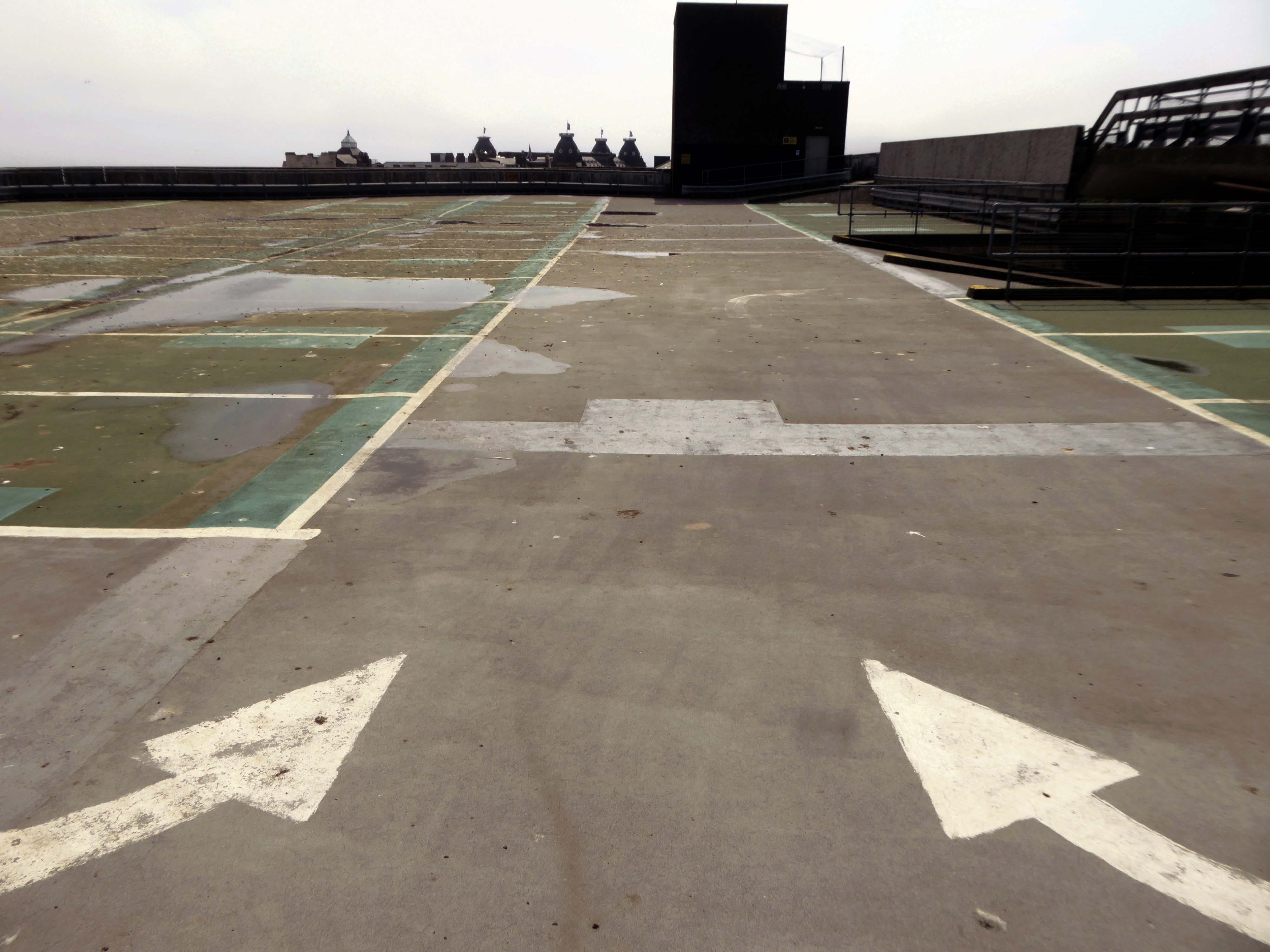
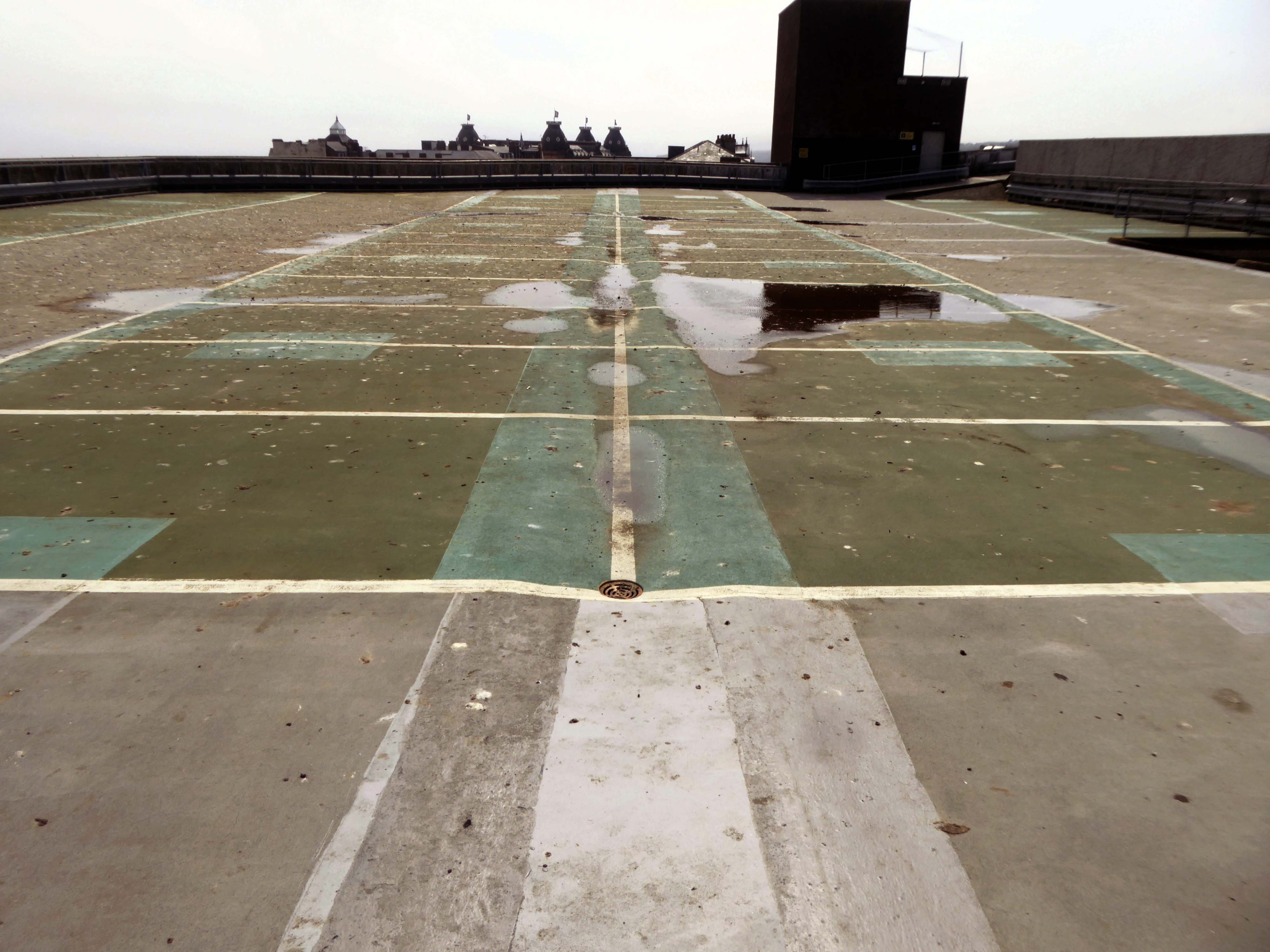
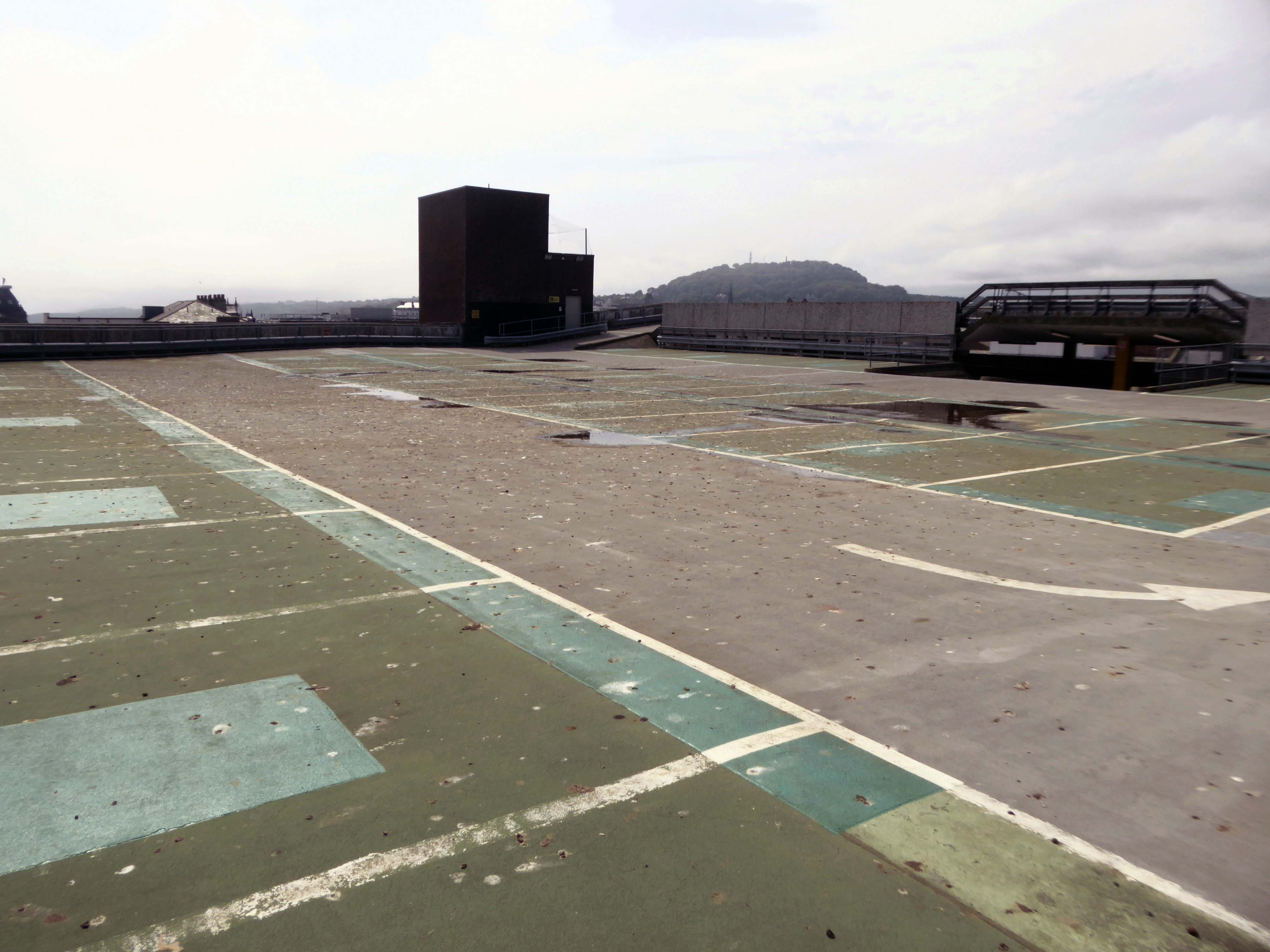
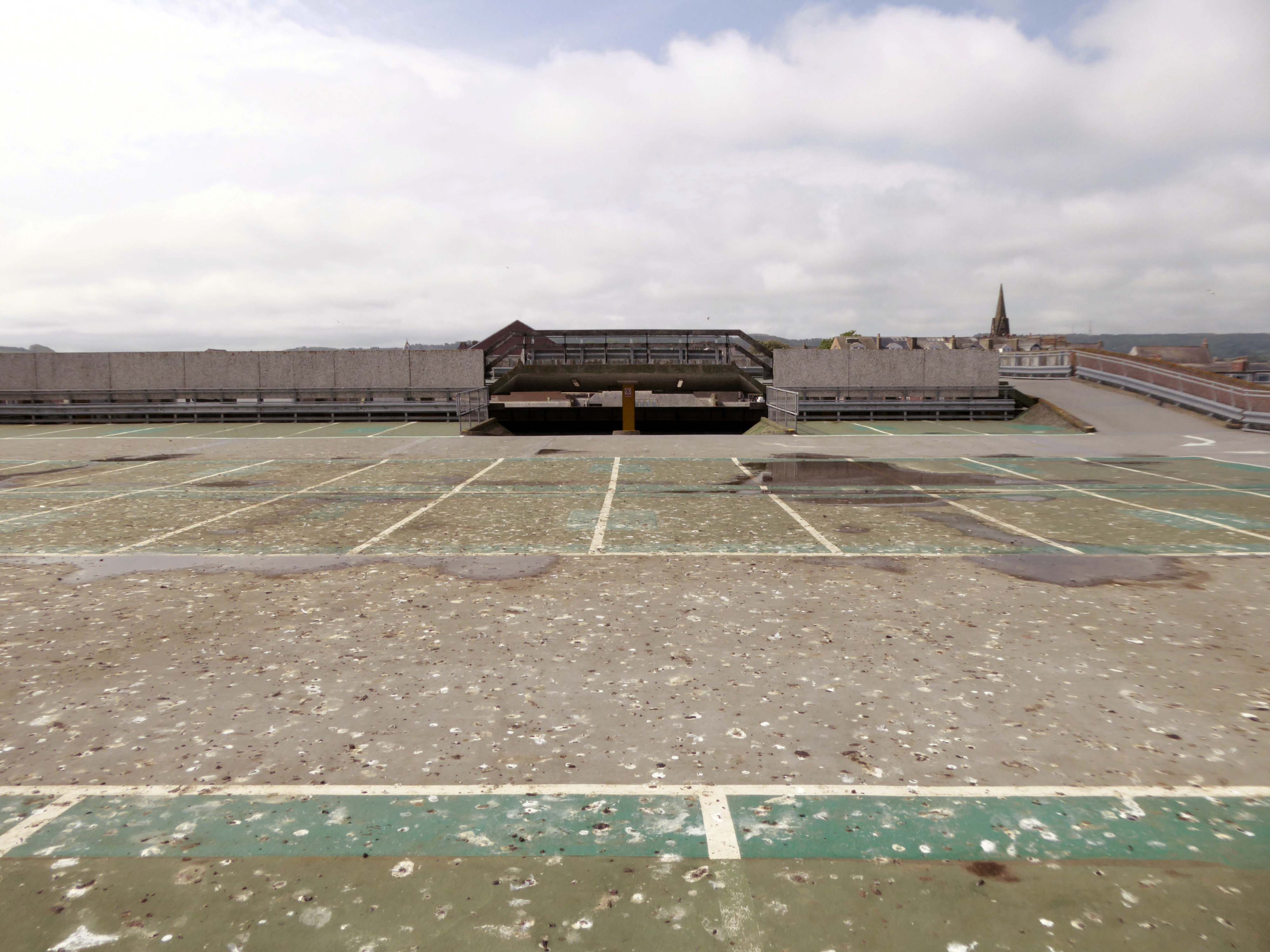
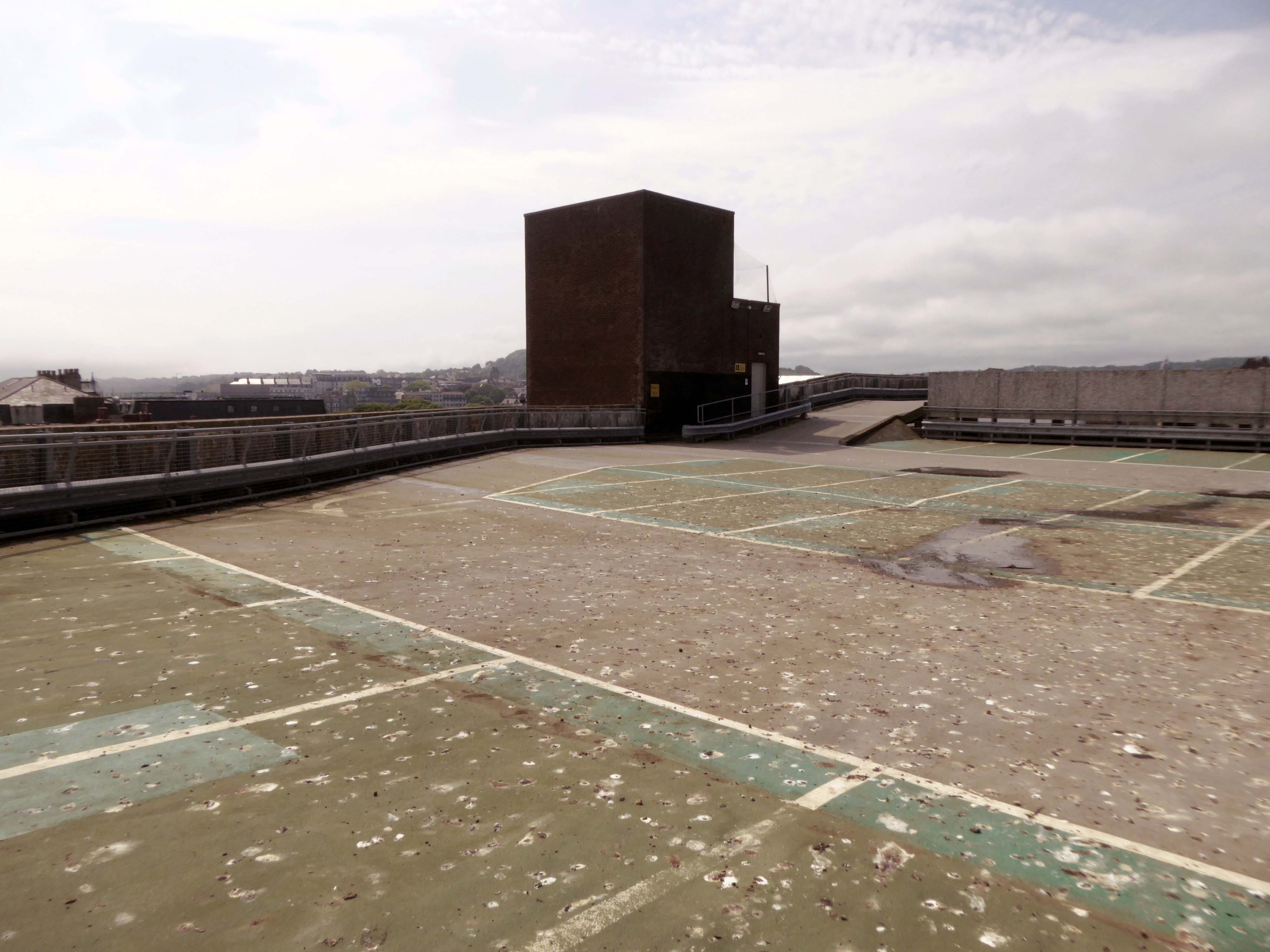
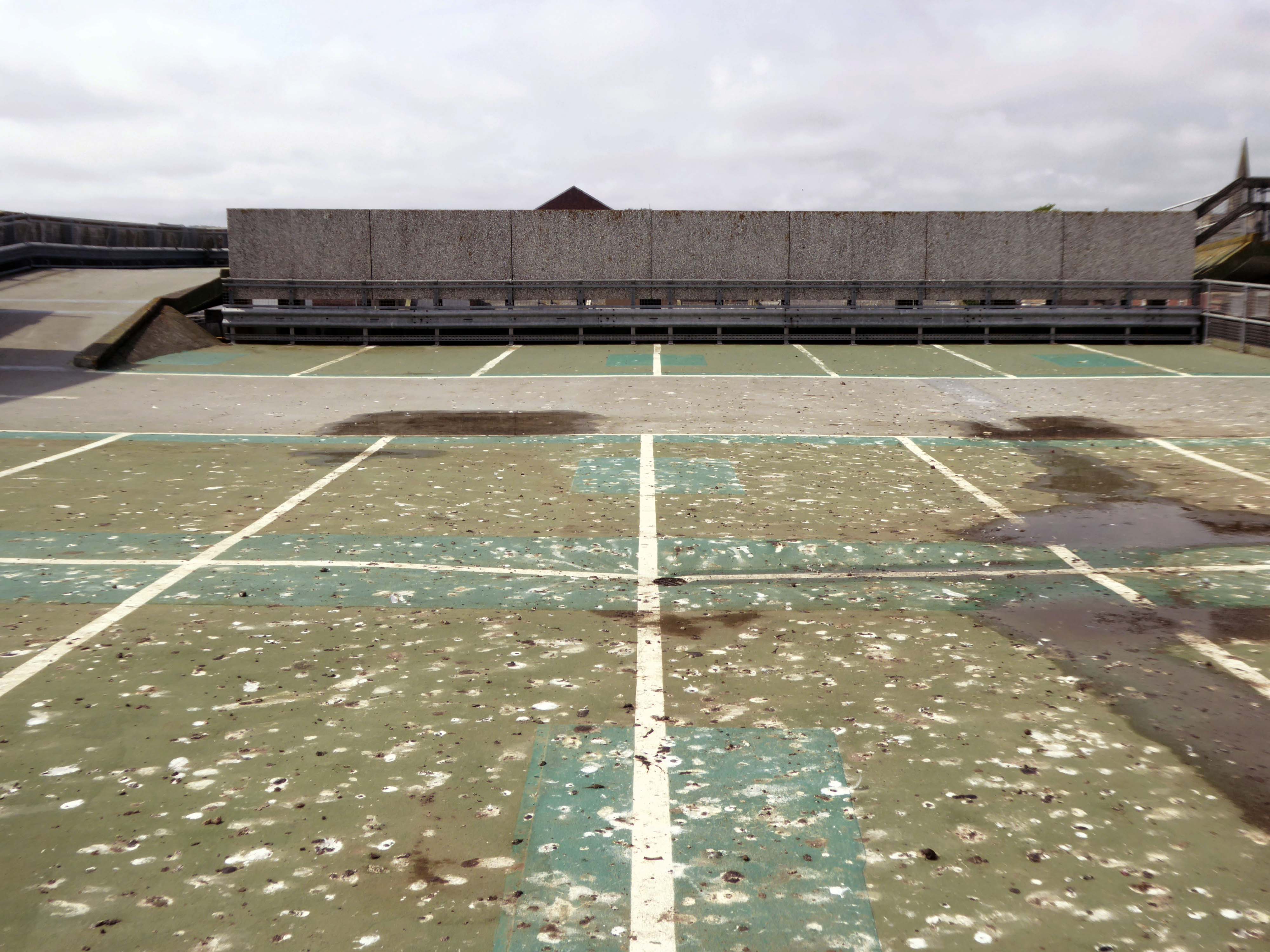
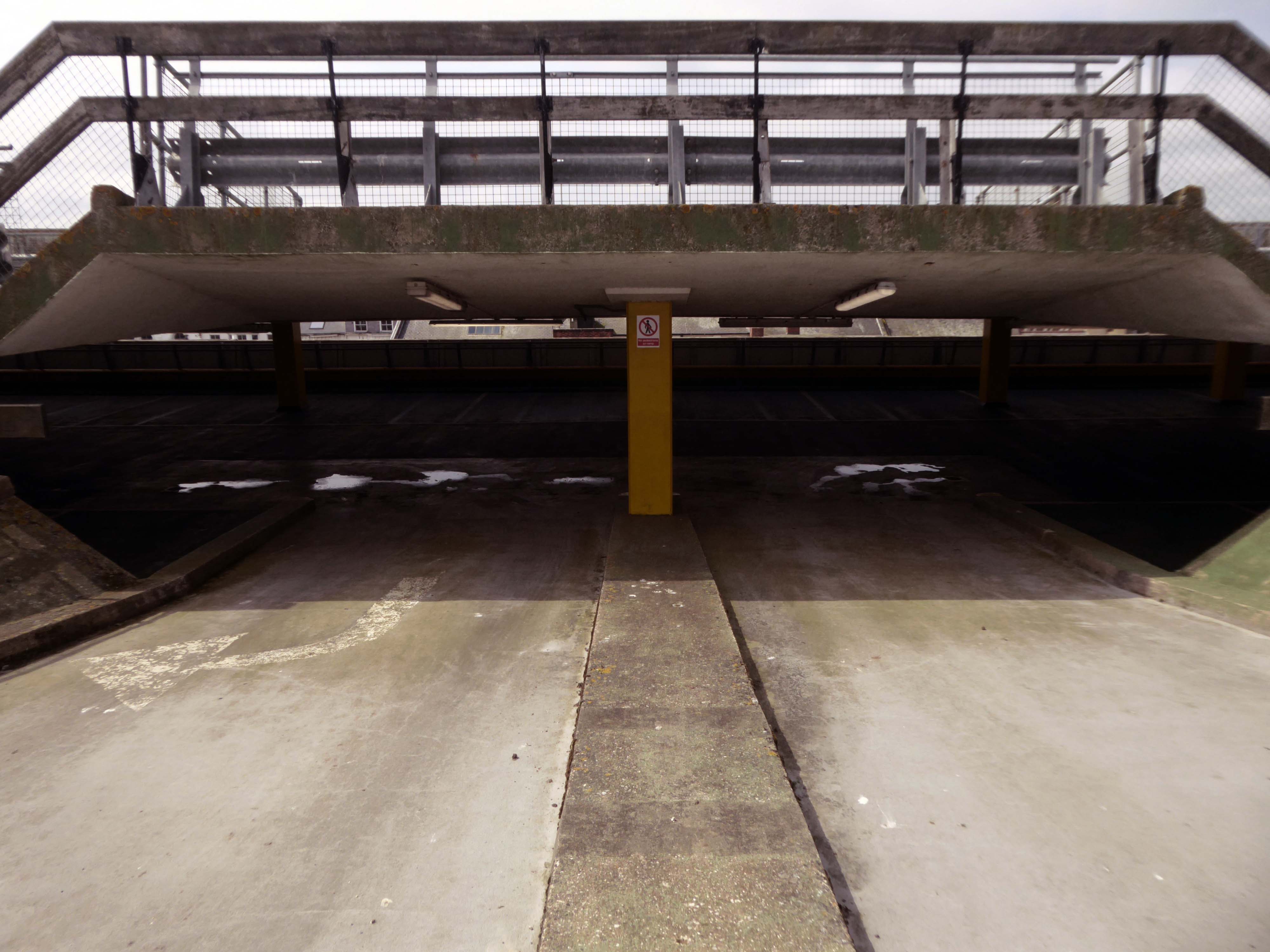
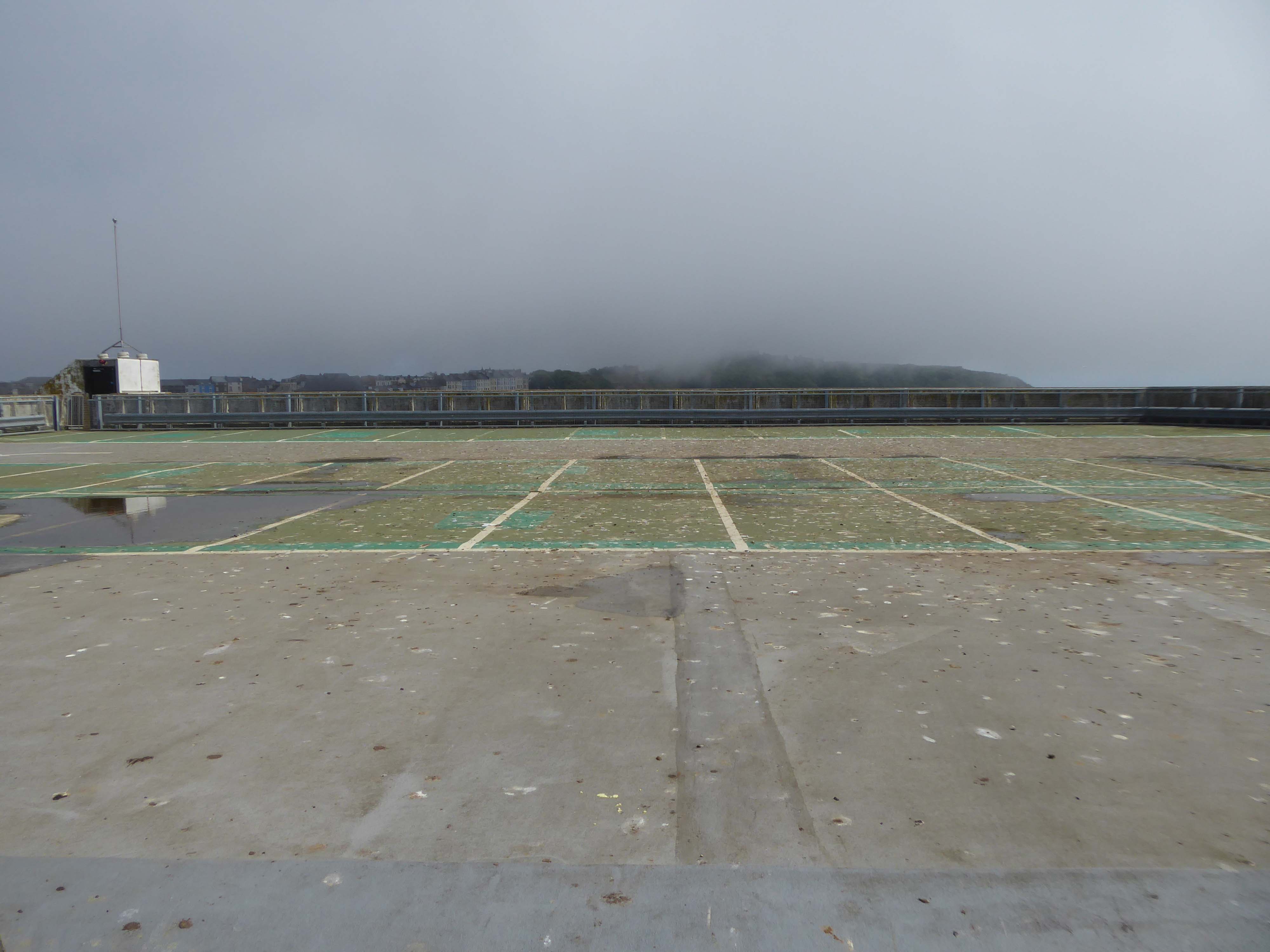
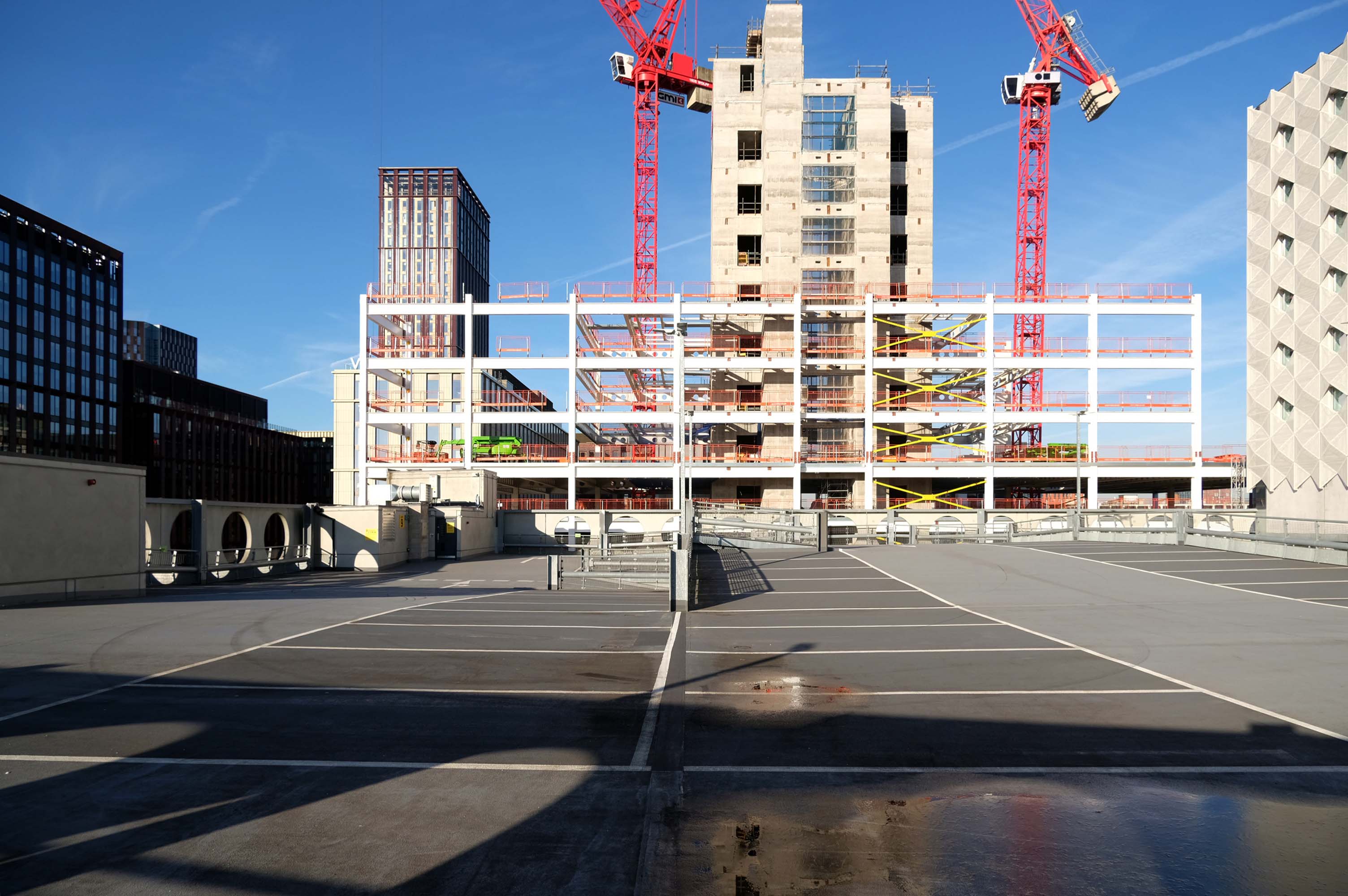
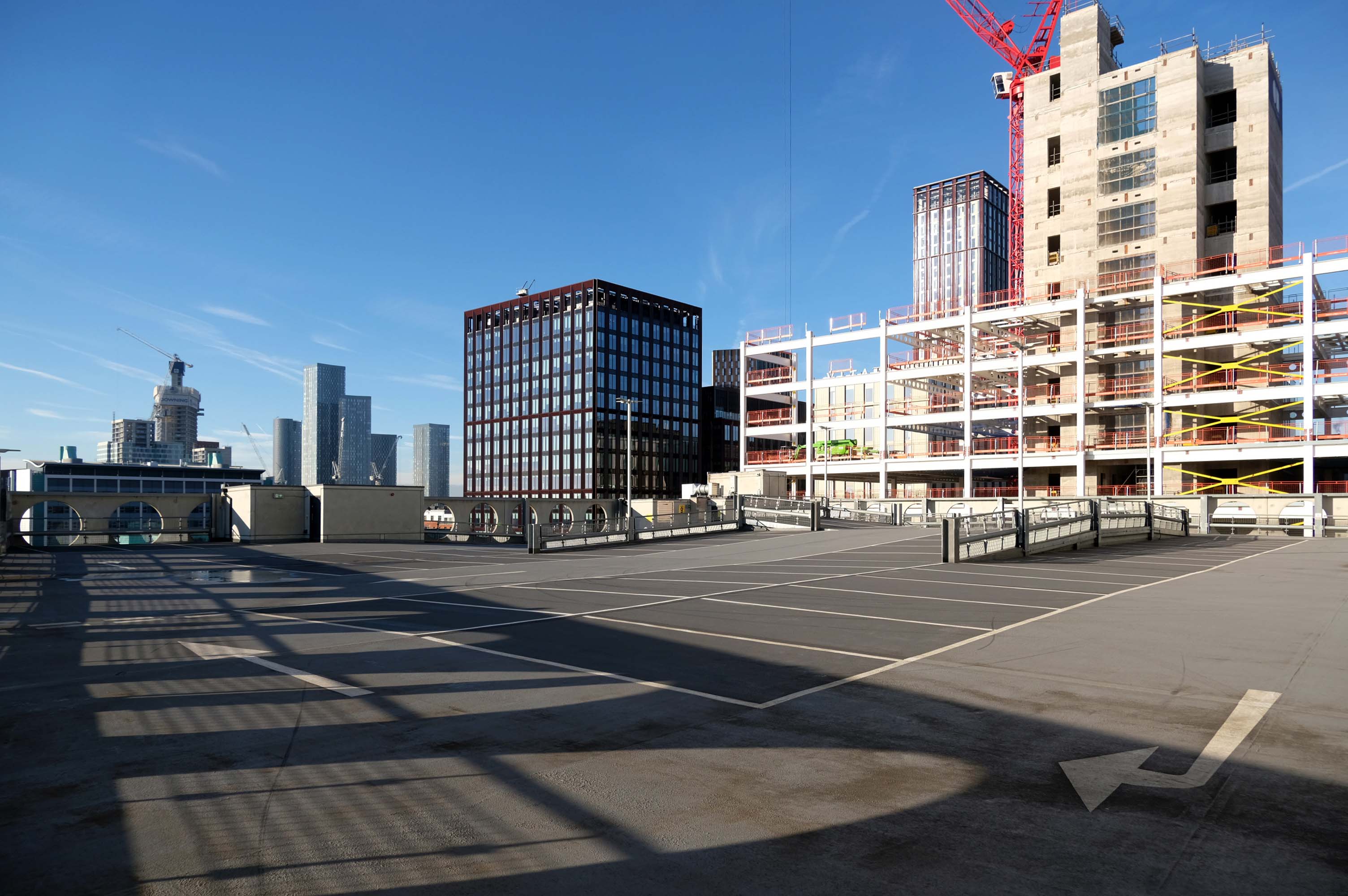
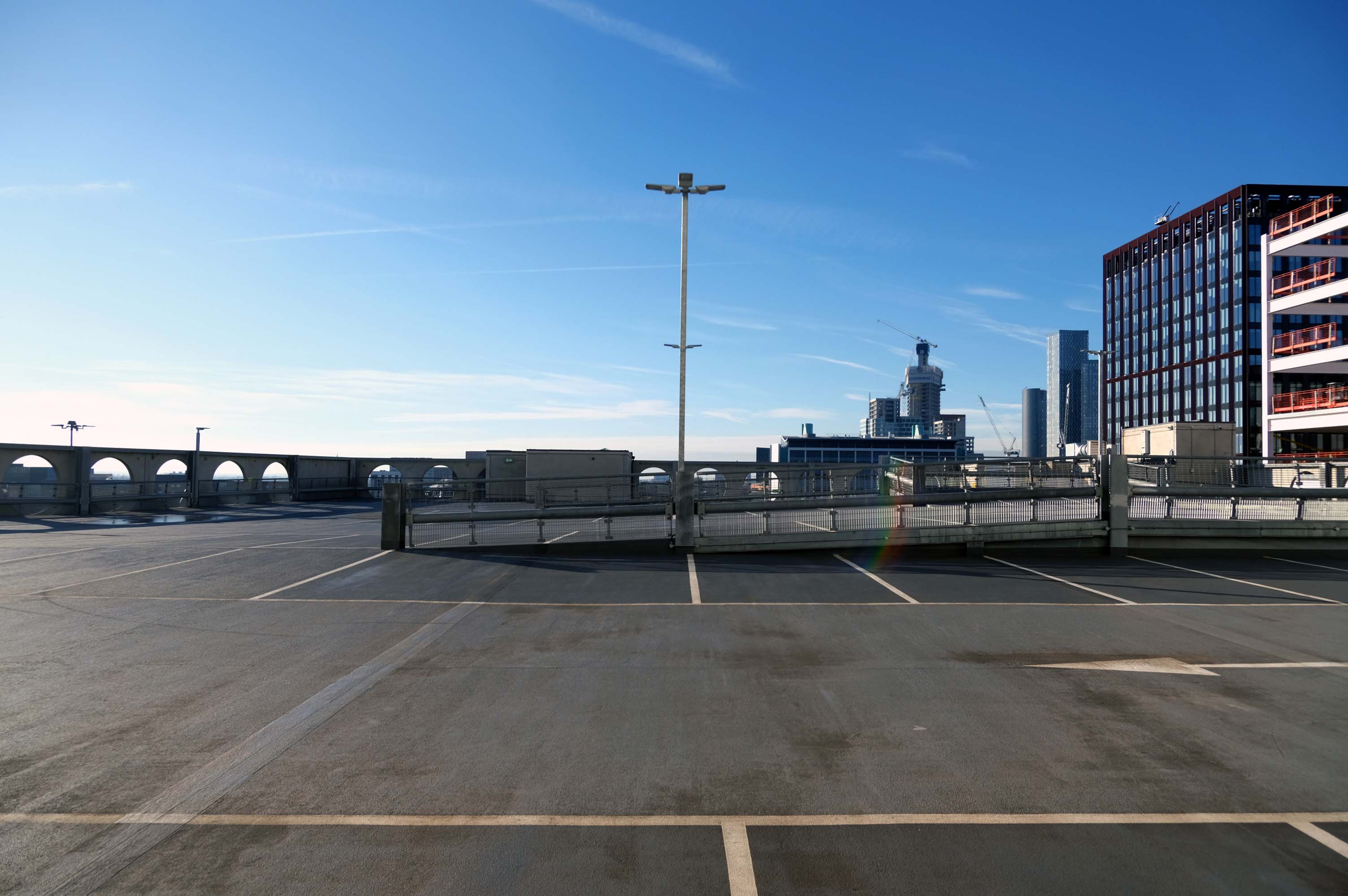
Westmorland and Furness Council said Portland Walk car park will close from the start of July.
In a statement the council revealed the rooftop car park will permanently close from July 1 following a review which found said it had ‘very low usage’.
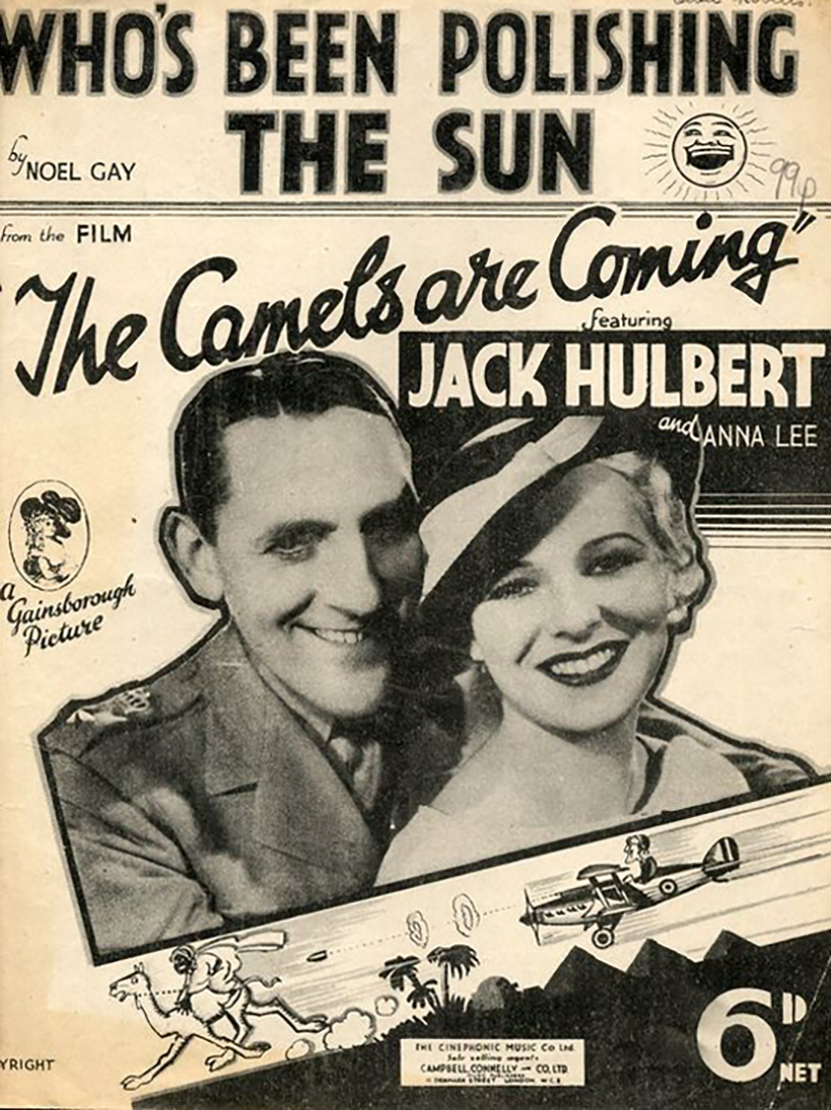
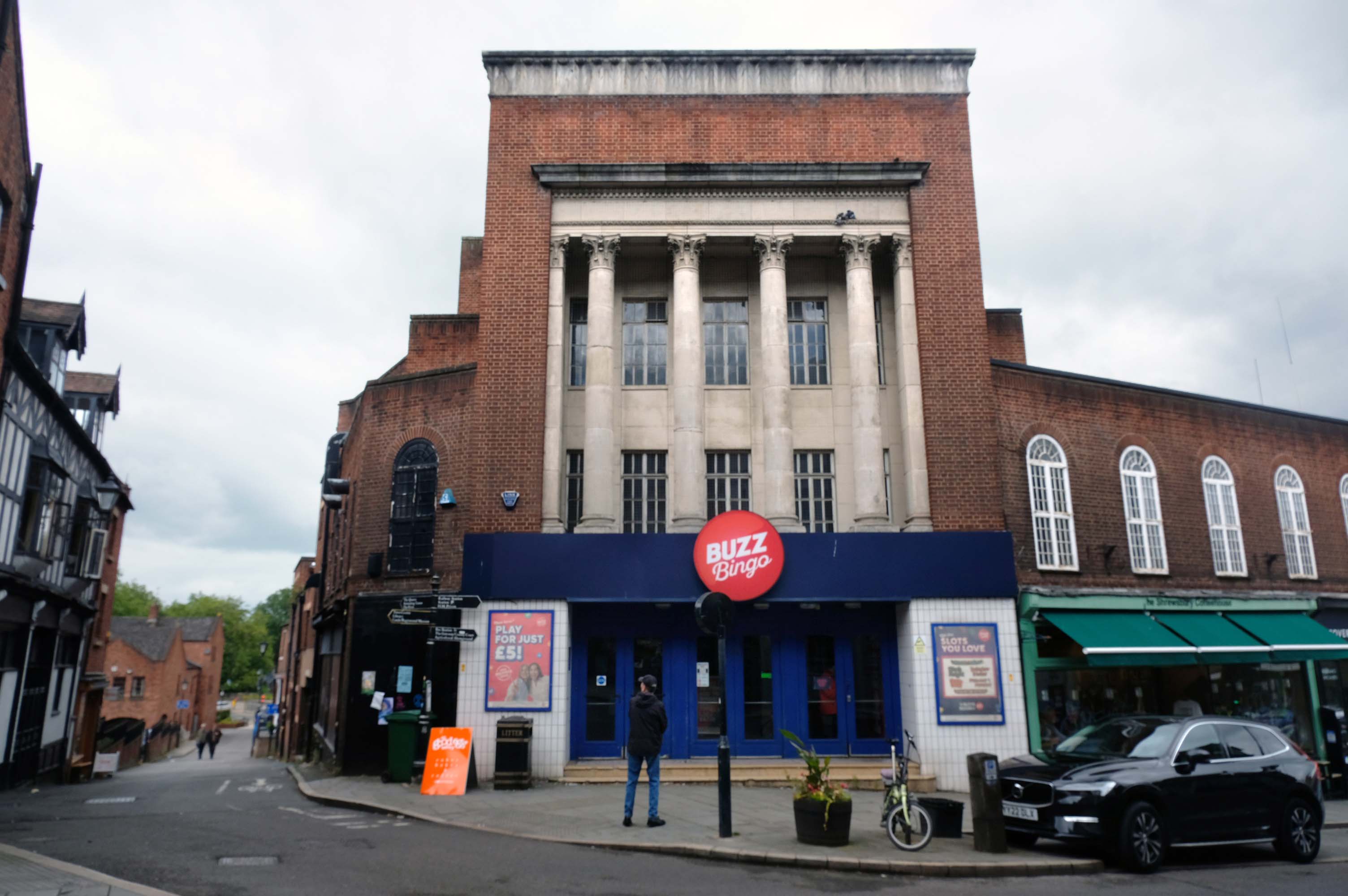
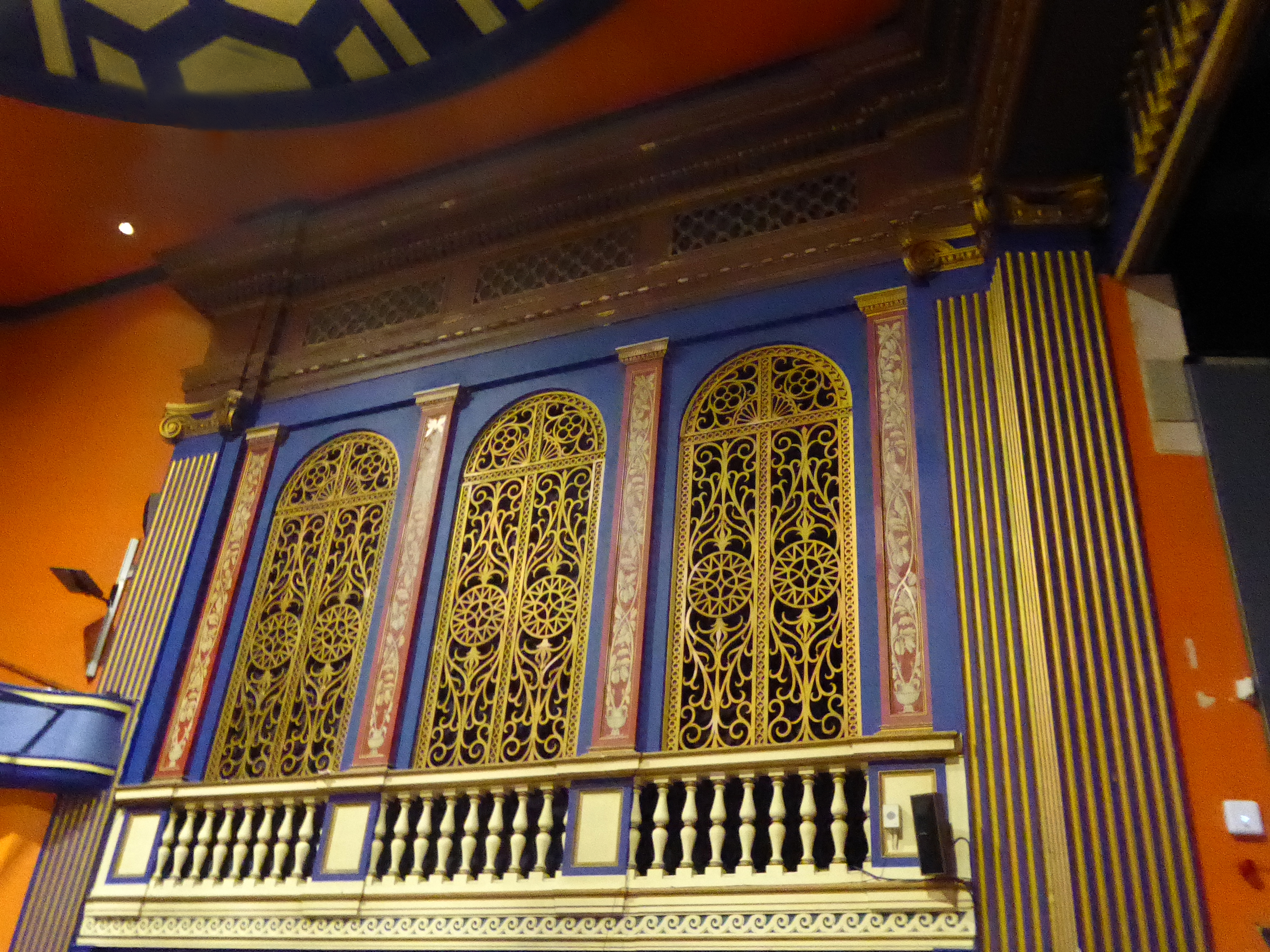
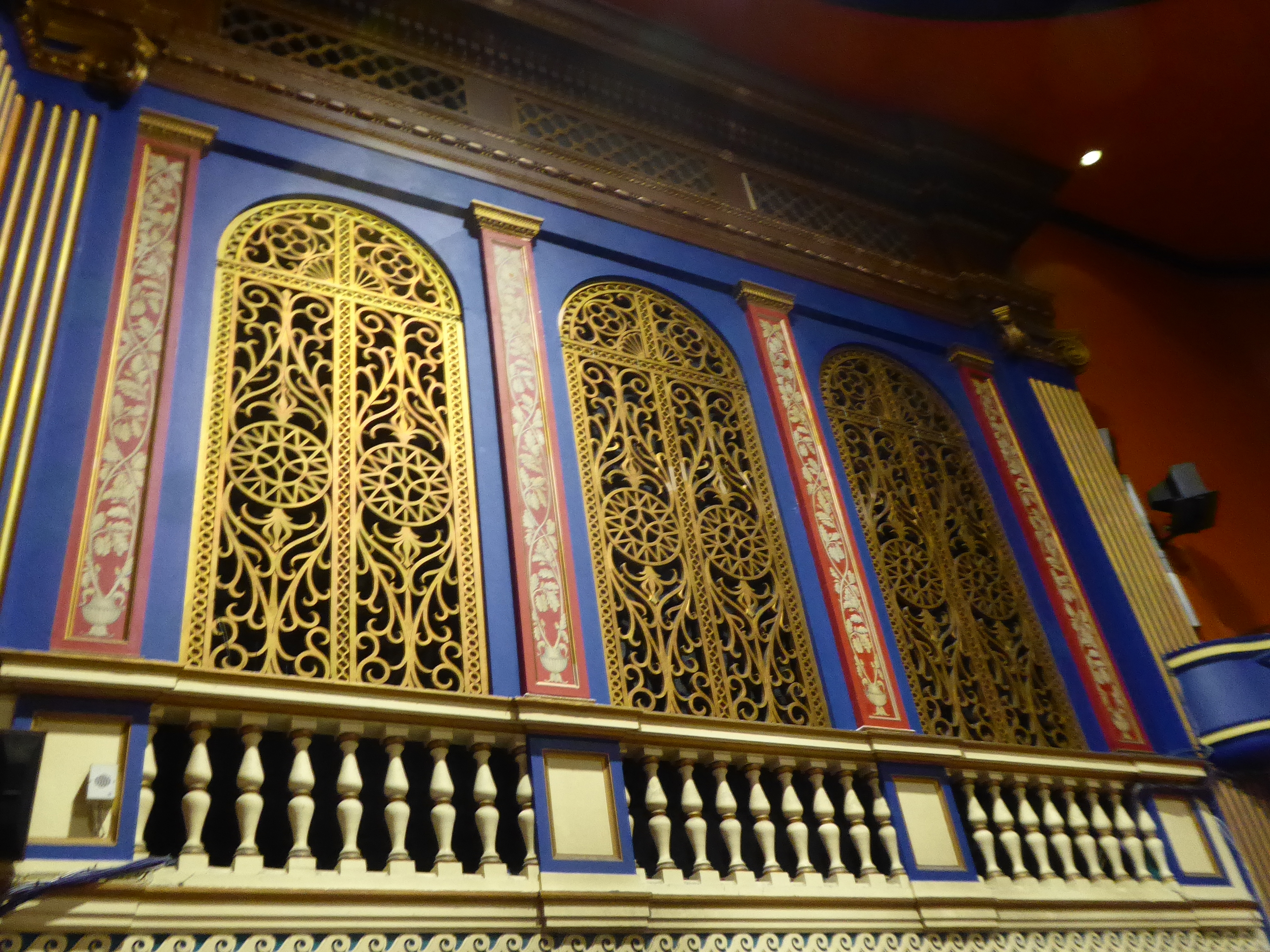
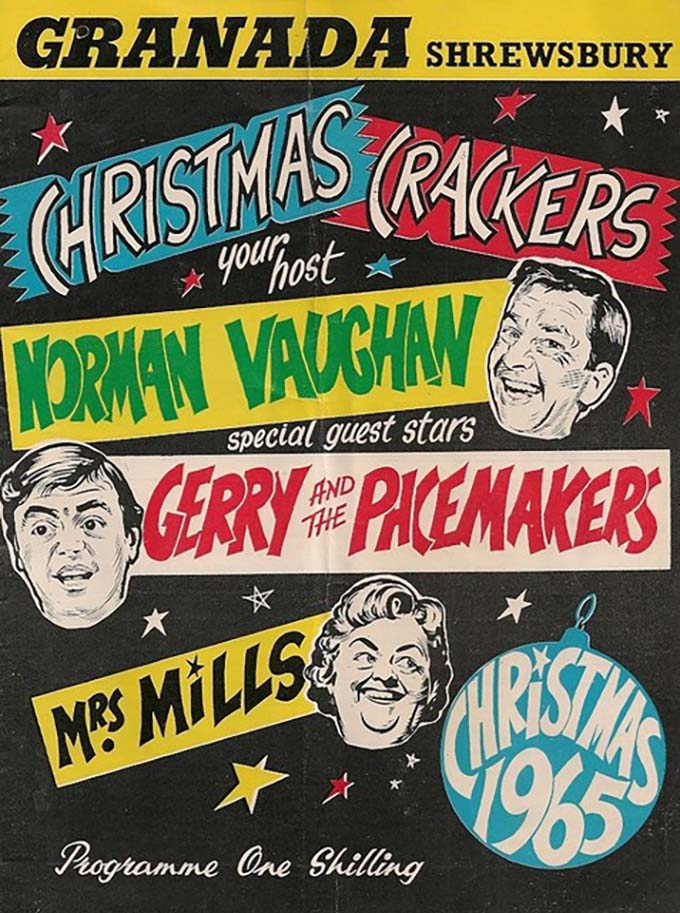
Built and operated by Shrewsbury Empires Ltd, the Granada Theatre opened on 14th November 1934 with Jack Hulbert in The Camels Are Coming.
It closed as a cinema on 31st March 1973 with Charles Bronson in The Valachi Papers and Anatomy of a Pin-Up.
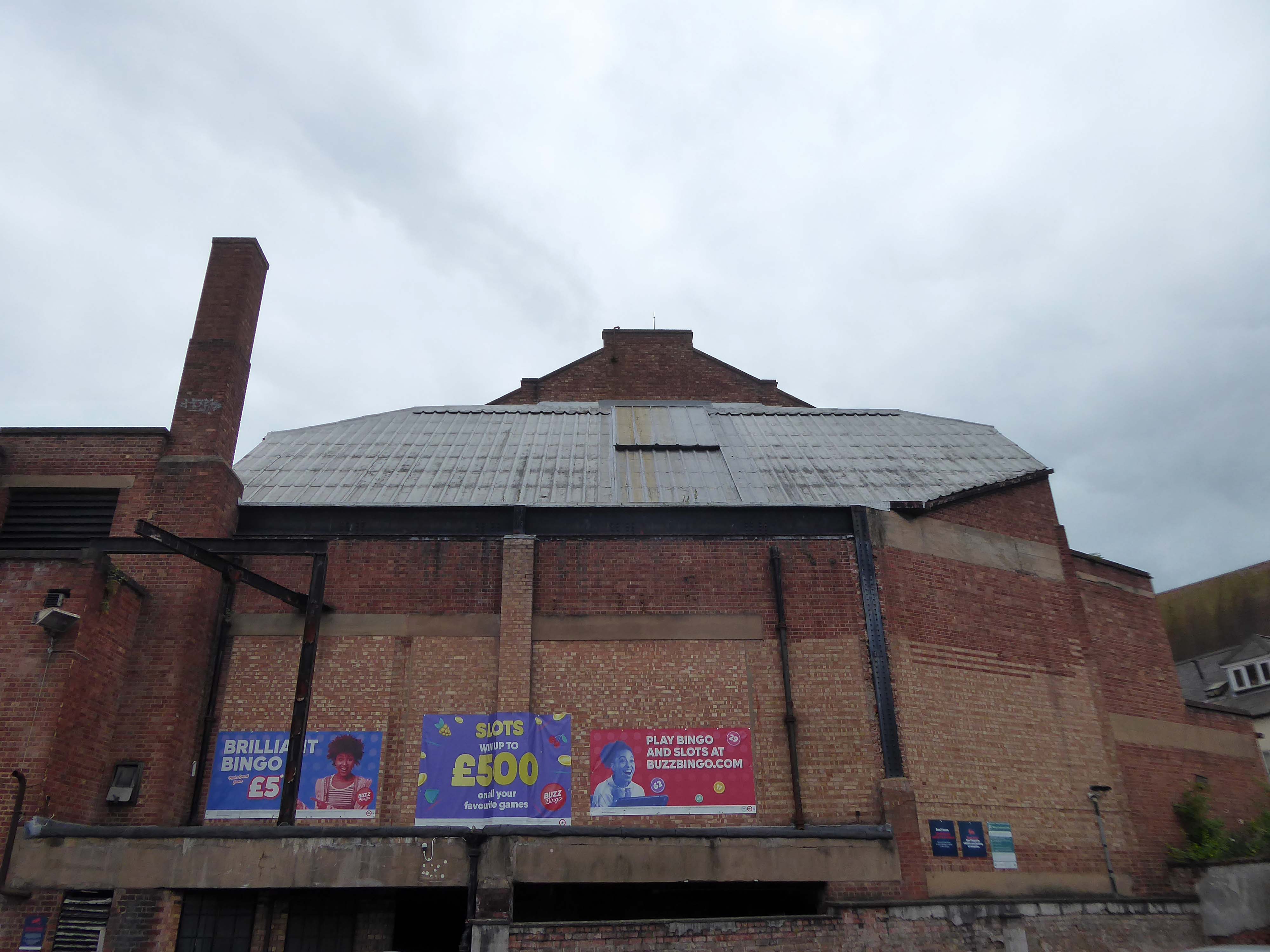
The Granada circuit was famous for its lavishly decorated interiors created by a Russian émigré called Theodore Komisarjevsky, the most famous examples of which are at Woolwich and Tooting – both now operate as bingo halls. The Shrewsbury Granada was by far the best cinema in the area, and in addition to Komisjarevsky, the scheme was designed by Cecil Massey, with some work being carried out by a local architect called Arthur Williams. The architecture of the Shrewsbury hall is often referred to as being a “standard” Granada, and the interior was very similar to the Granadas at Bedford now demolished and Maidstone which wasdestroyed by sub-division. There were less than 20 theatres built for the circuit, of which Shrewsbury was number five, although many existing cinemas were taken over and renamed, making the Granada Theatres an important group, although in numbers they were far behind Odeon and ABC.
On 17th November 1995, the Granada Theatre was designated a Grade II Listed building by English Heritage.
Many thanks to the staff of Buzz Bingo for allowing us access.
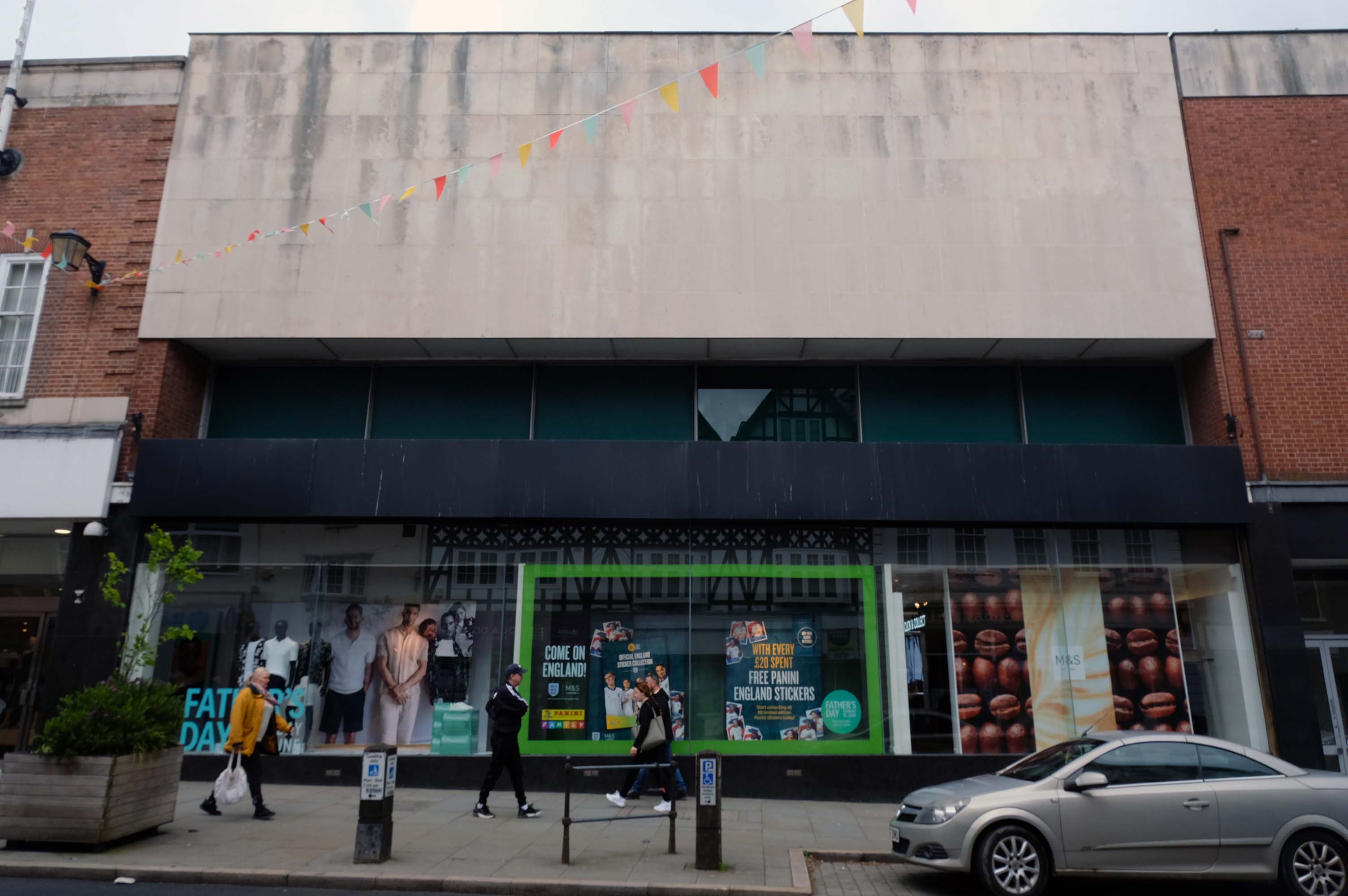
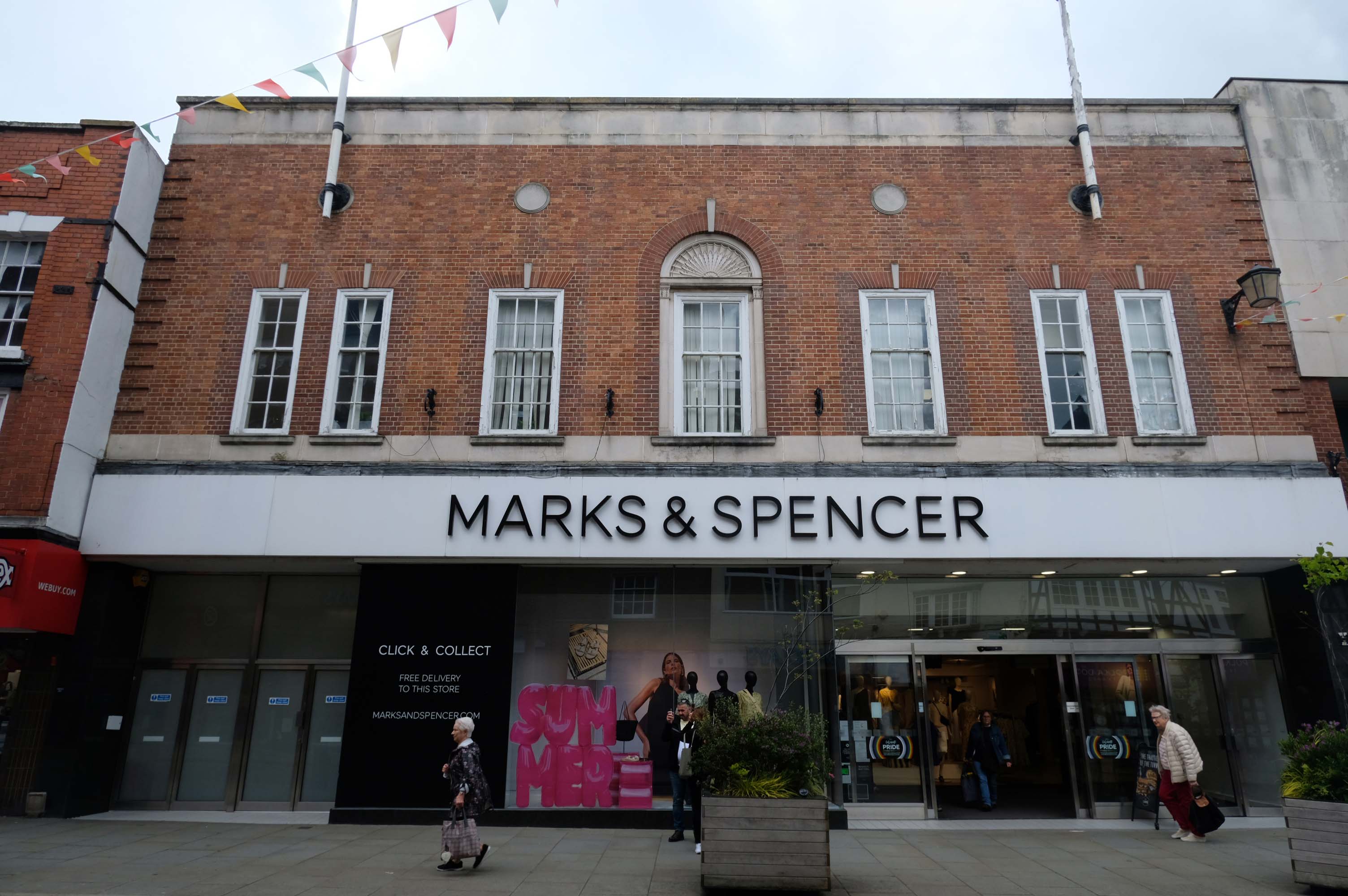
Next up is a Marks & Spencers store very much a shop of two halves – marrying post-war Brutalism with interwar Classicism, unified by a glazed ground floor.
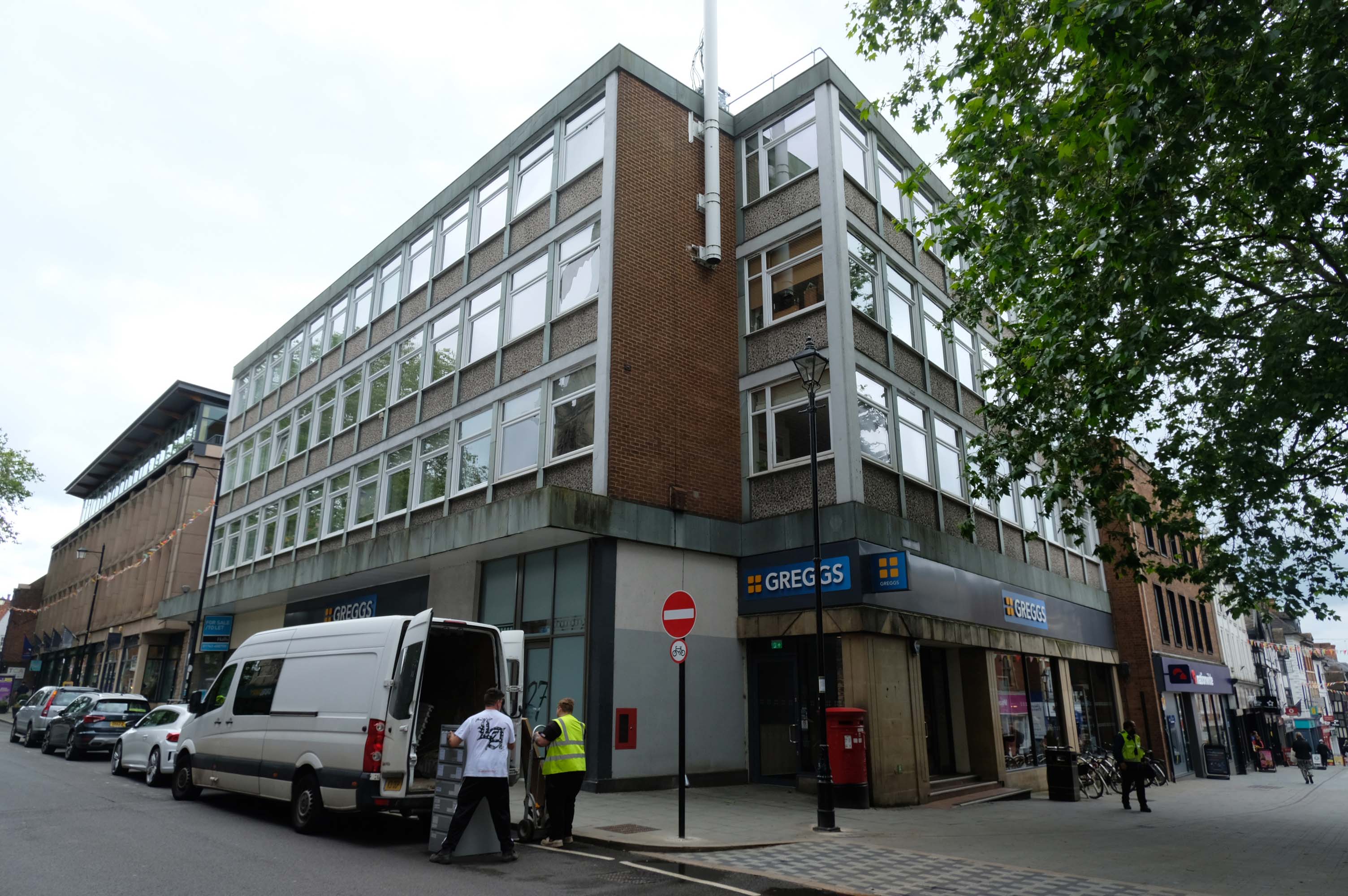
Across the way, a 60s corner site development, with a dual-entry Greggs.
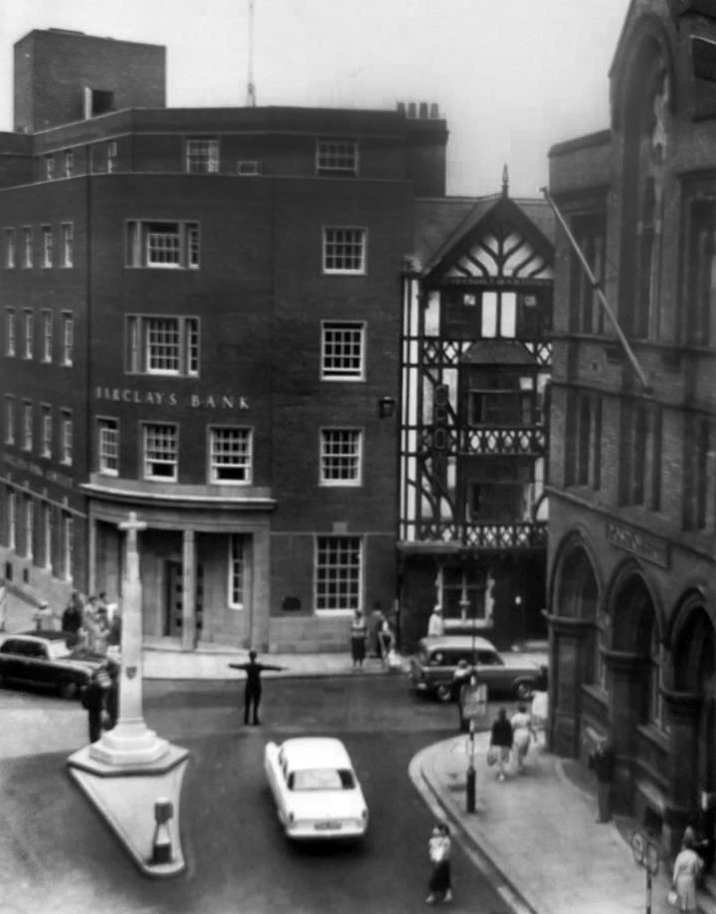
Formerly the site of the Post Office – demolished in 1959, and next to the Barclays bank the long gone Crown Hotel.
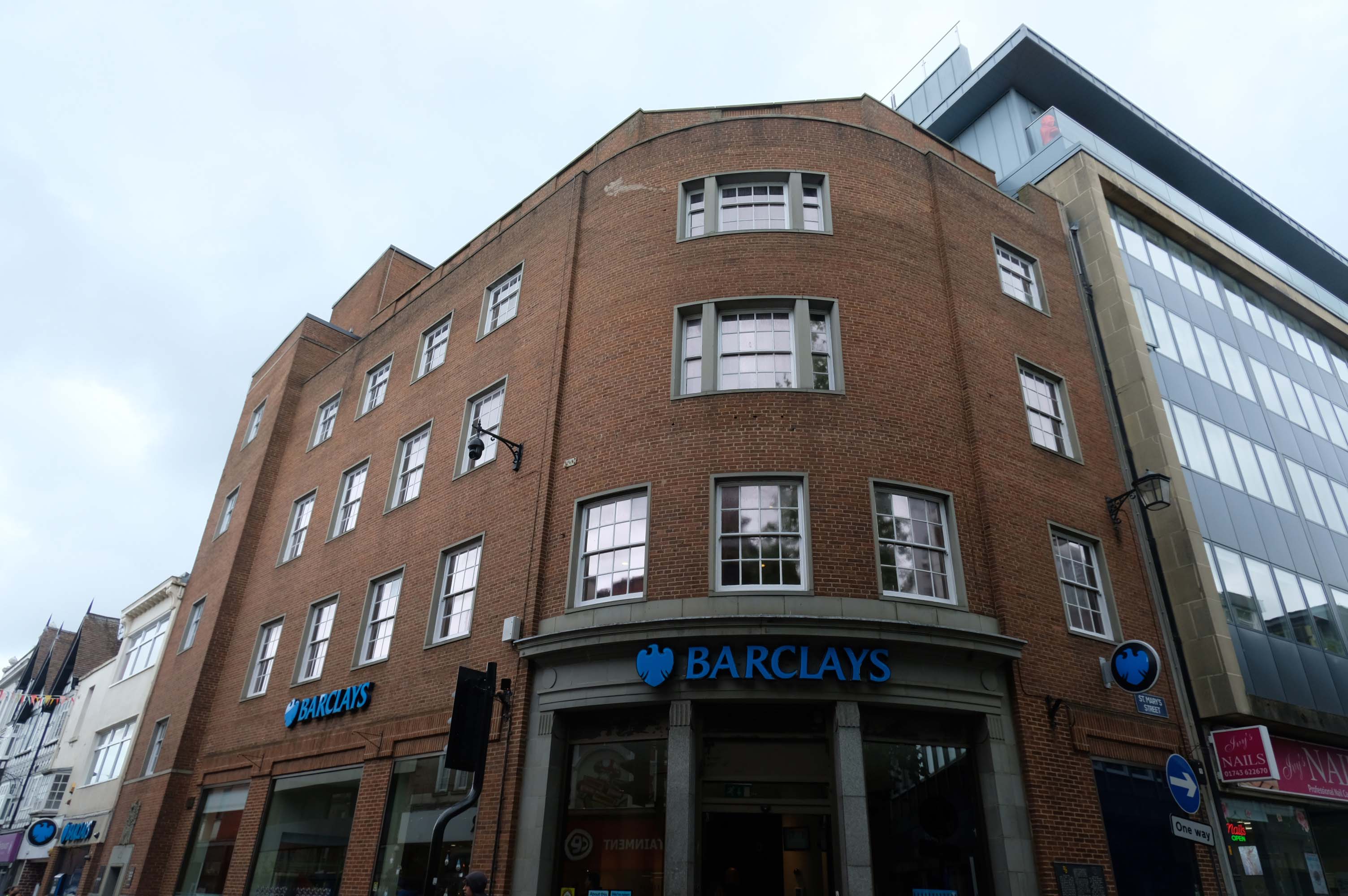
On the adjacent corner a curvaceous Barclays Bank, built in the post war Ministry of Works manner.
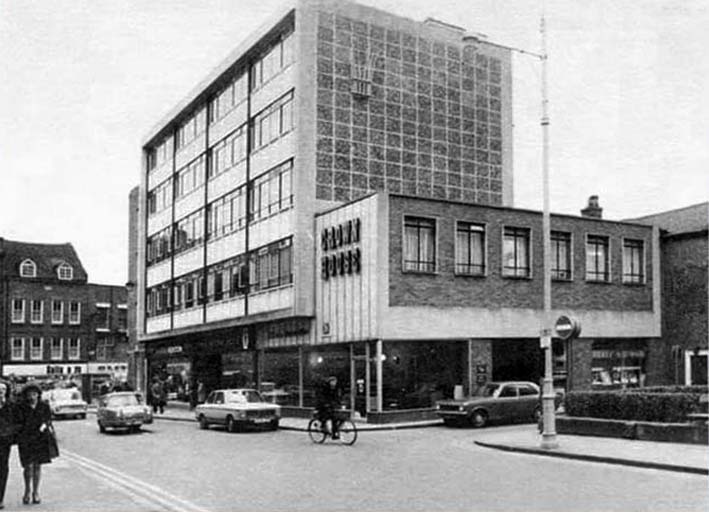
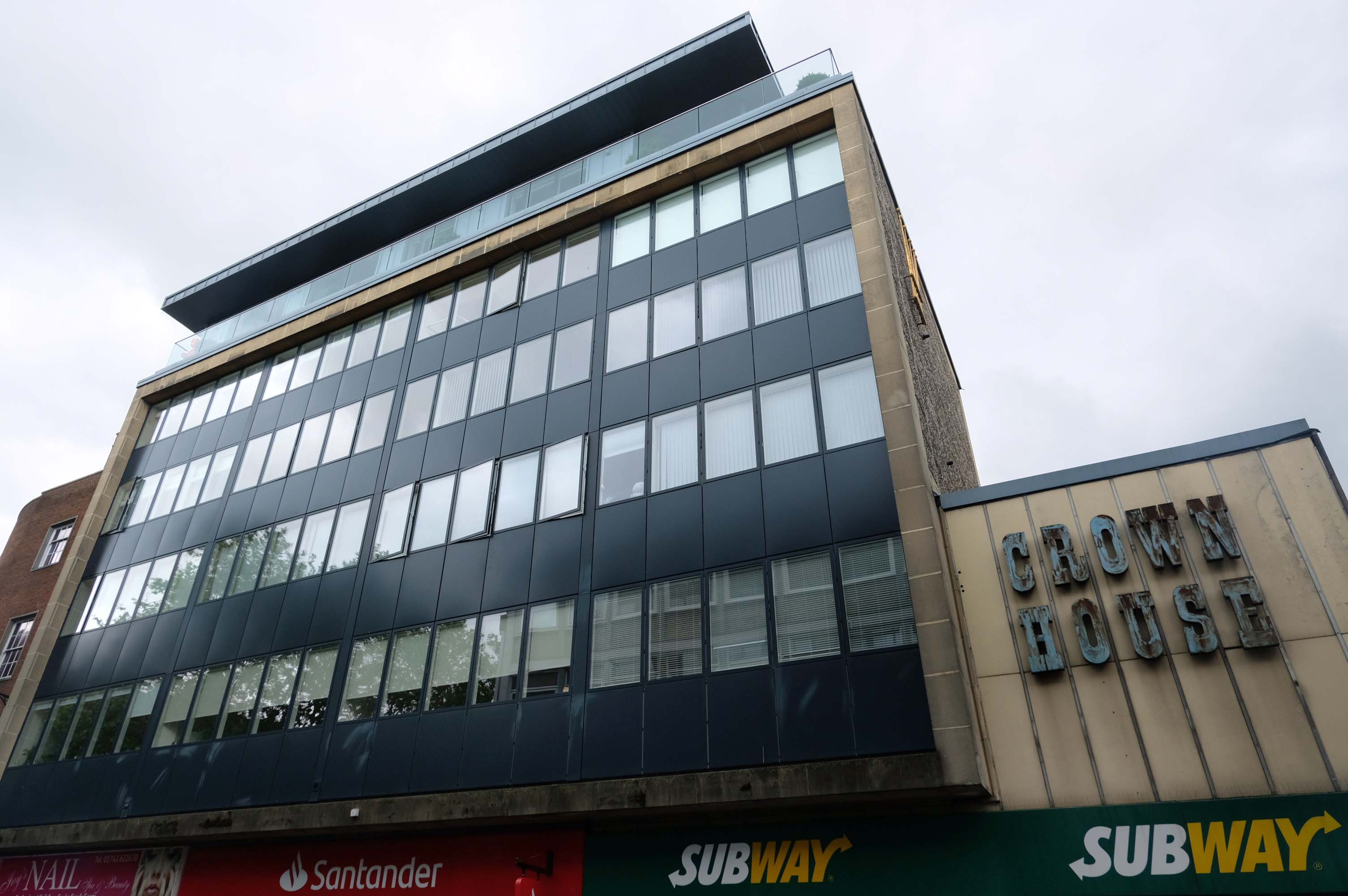
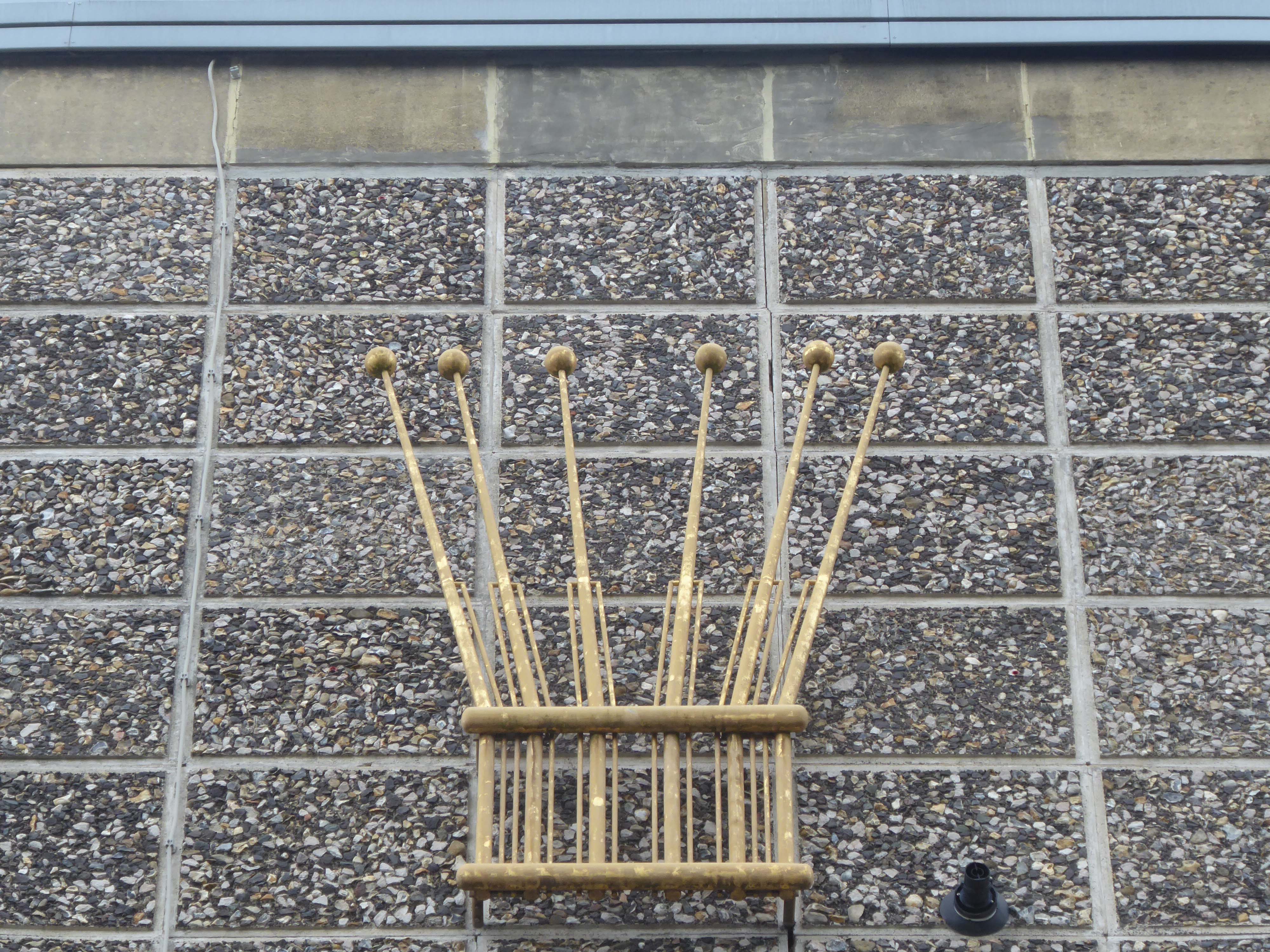
Next door is Crown House – refurbished but with it’s architectural type intact.
One of Marshall Structures’ biggest projects to date was the conversion of Crown House from a tired office block to a complex featuring 14 luxury apartments, providing a much-needed improvement to the site. The work involved in this project included large amounts of steel work and timber design.
The biggest challenge faced during the completion of this project was trying to fit an additional storey without loading quite an old existing structure. To do this, the new storey was designed out of a lightweight timber frame. By doing this, the client’s brief could be met while also ensuring that the existing 1950s building wasn’t overloaded in the process.
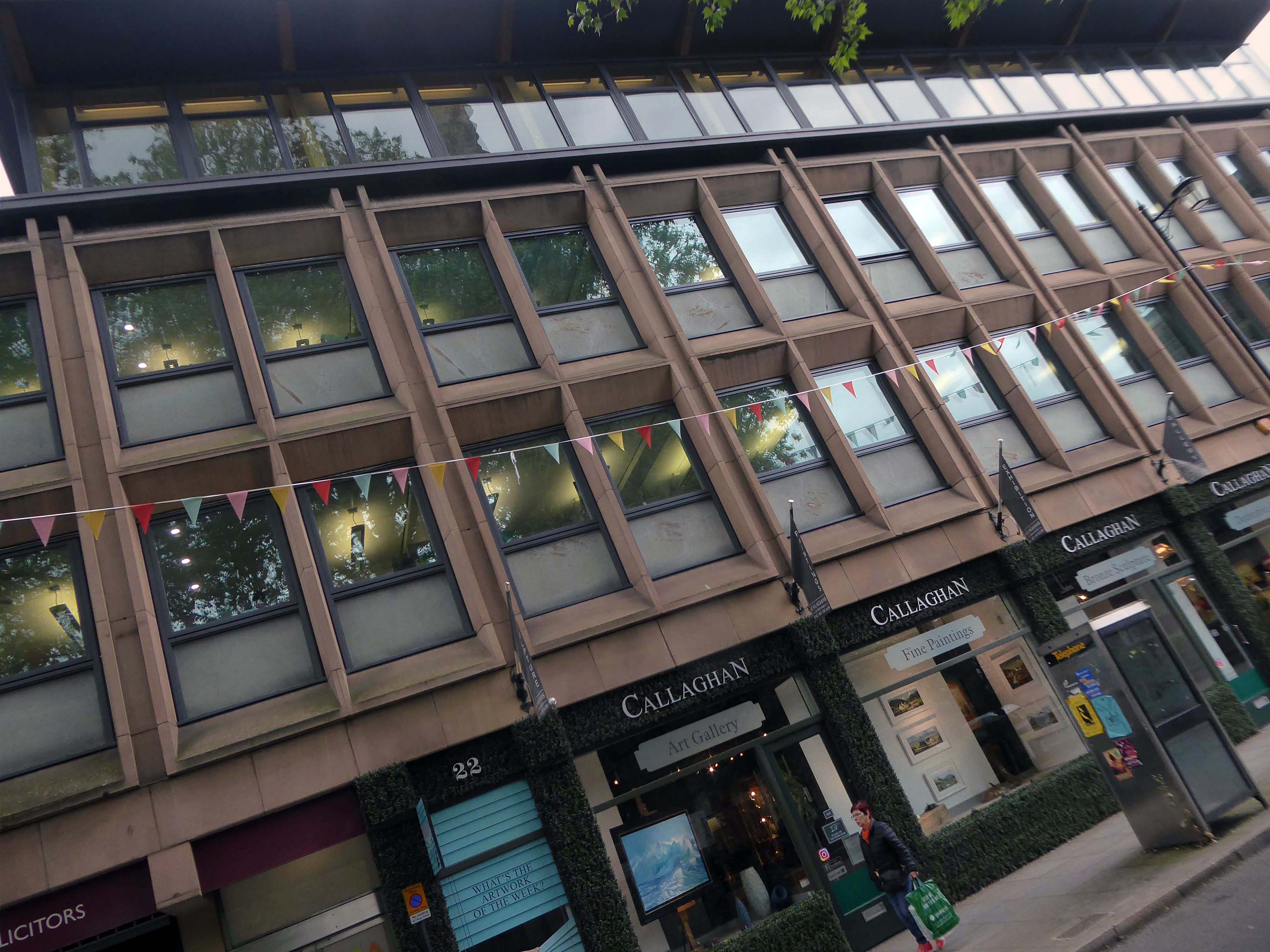
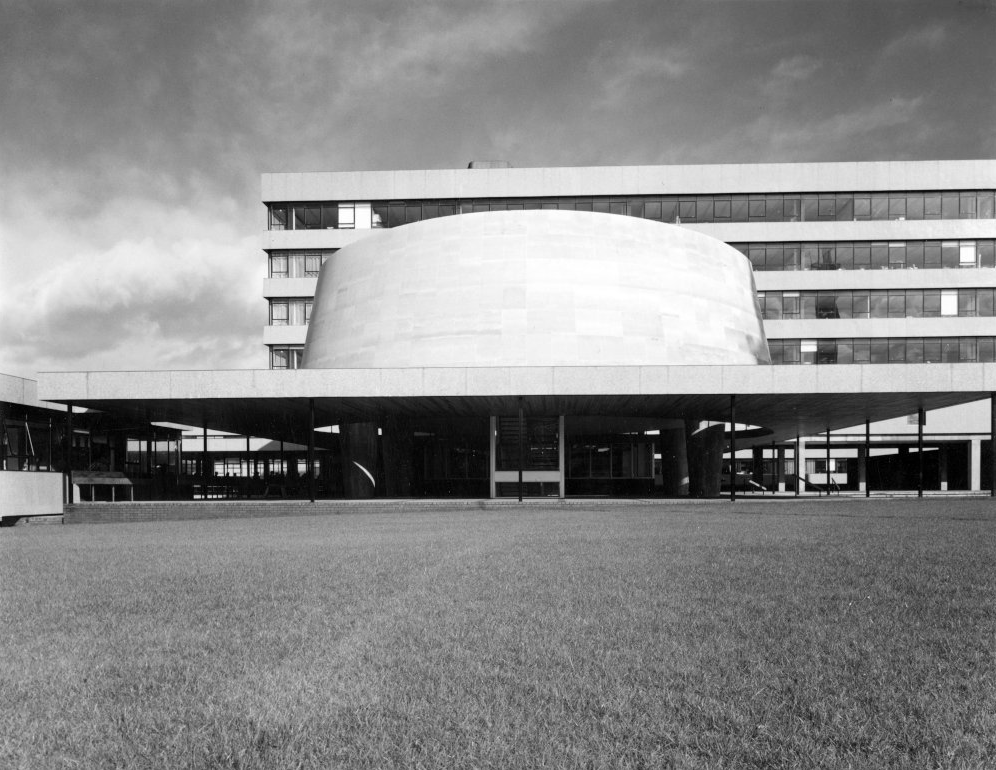
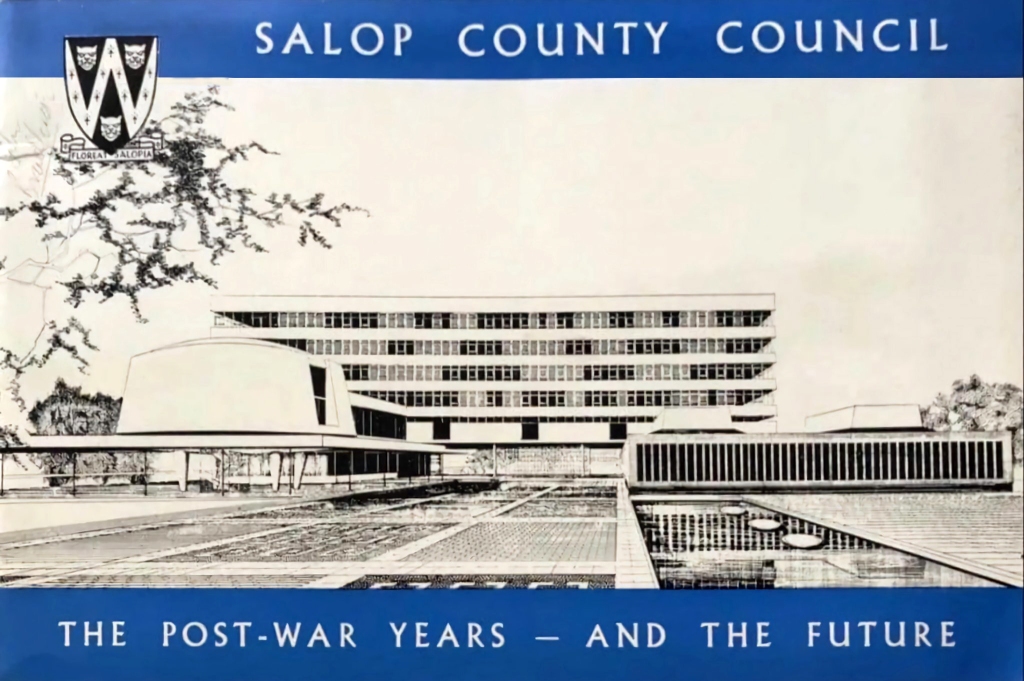
The foundation stone for the new building was laid by Sir Offley Wakeman, a former chairman of the county council, on 25 July 1964. It was designed by Ralph Crowe, the County Architect, in the Modernist style, built at a cost of £1.8 million and was completed in April 1966.
Pevsner described the building as – the major monument to post-war modernism in the county.
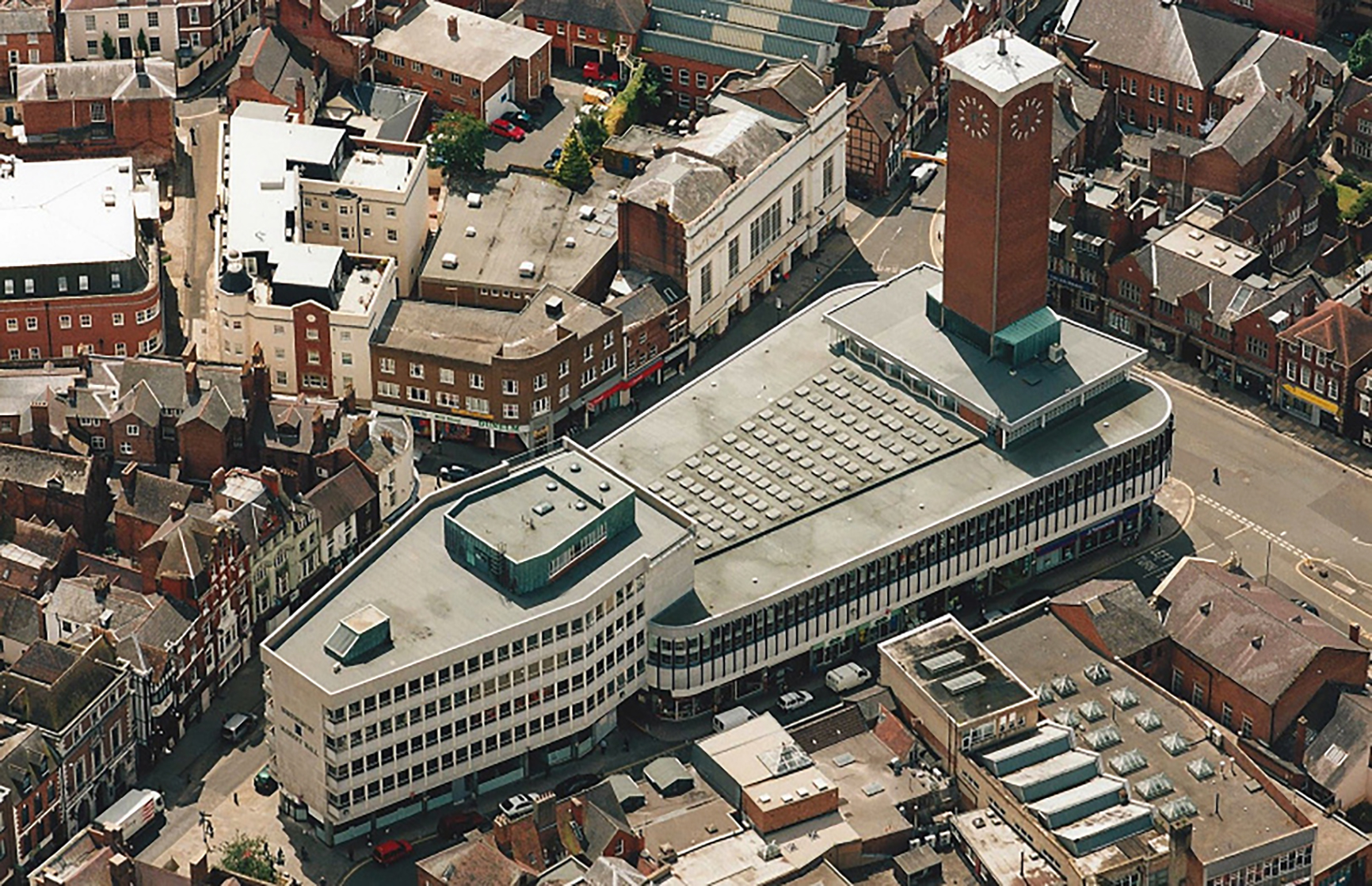
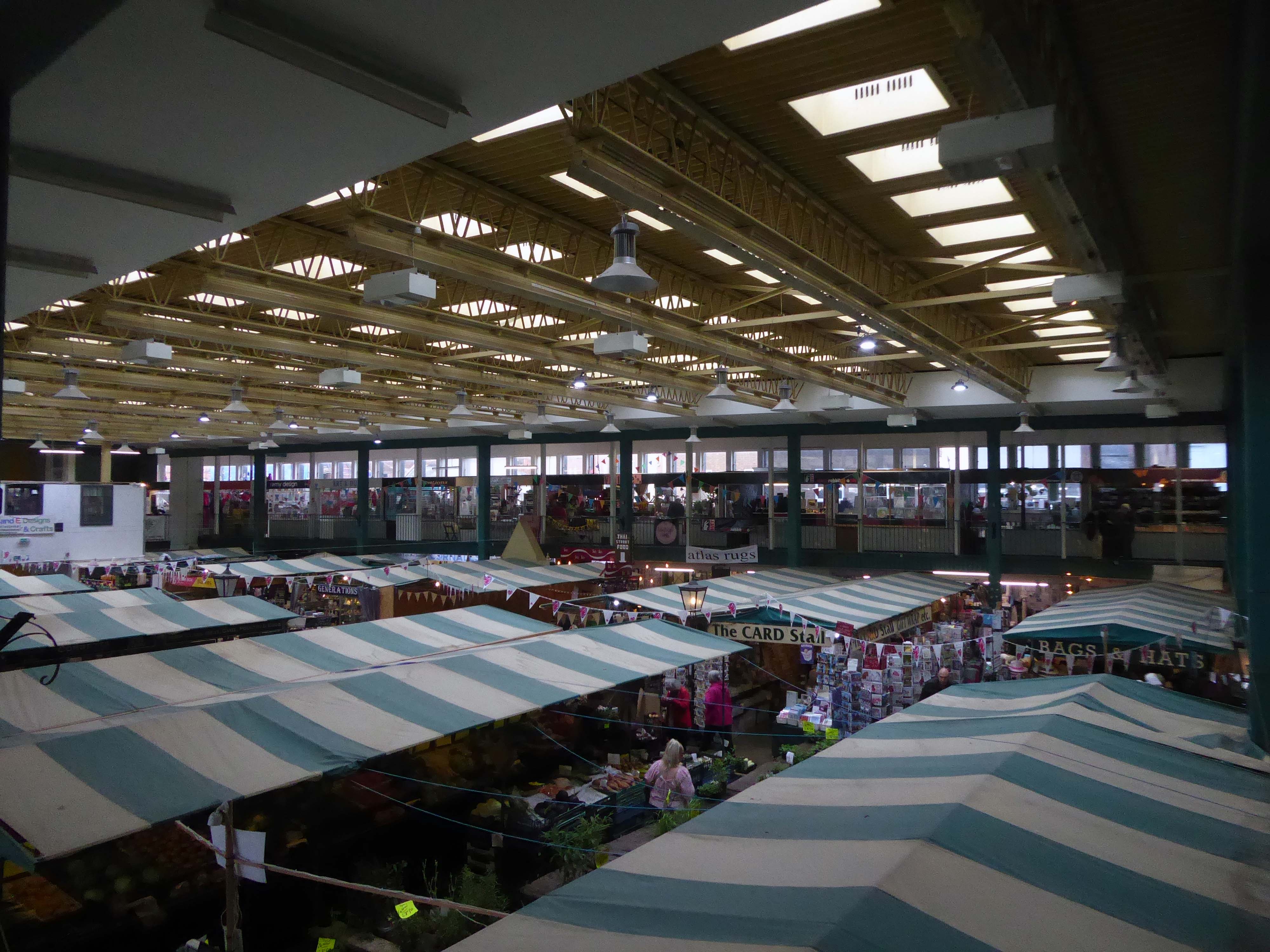
The Market Hall, which includes the town’s 240ft clock tower, an indoor market and a ground-floor shopping centre, was hailed the most modern building in Shropshire when it opened in September 1965.
Developed by the Second Covent Garden Property Company Ltd to replace an ailing Victorian market hall, it cost £1 million to build and was designed by award-winning architect David du Roi Aberdeen who also famously designed the Trade Union Congress headquarters, Congress House, in London, and the Swiss Centre in Leicester Square.
Today the Market Hall’s 1960’s architecture might not be to everyone’s taste, but its indoor market is thriving with over 70 small businesses ranging from popular contemporary cafes and gift retailers to artisan producers and traditional market stalls selling fresh produce.
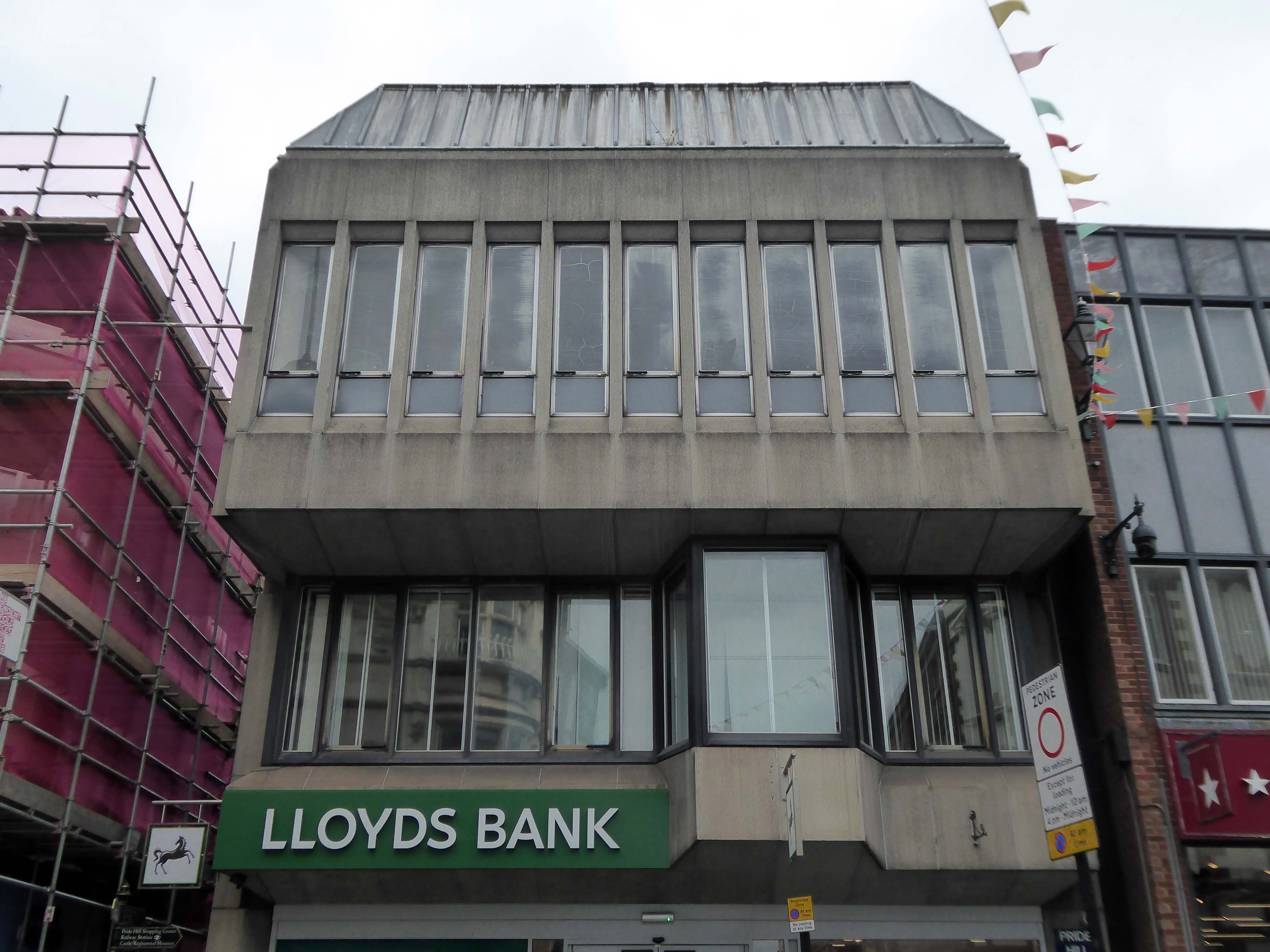
Bobbing toward the centre – a striking Lloyds Bank.
A conscious effort to reflect the nearby Tudor architecture of Ireland’s Mansion and Pride Hill. Lloyds Bank is considered a good example of Brutalist architecture, and proof that bold modern buildings can be successfully slotted into traditional historic streets.
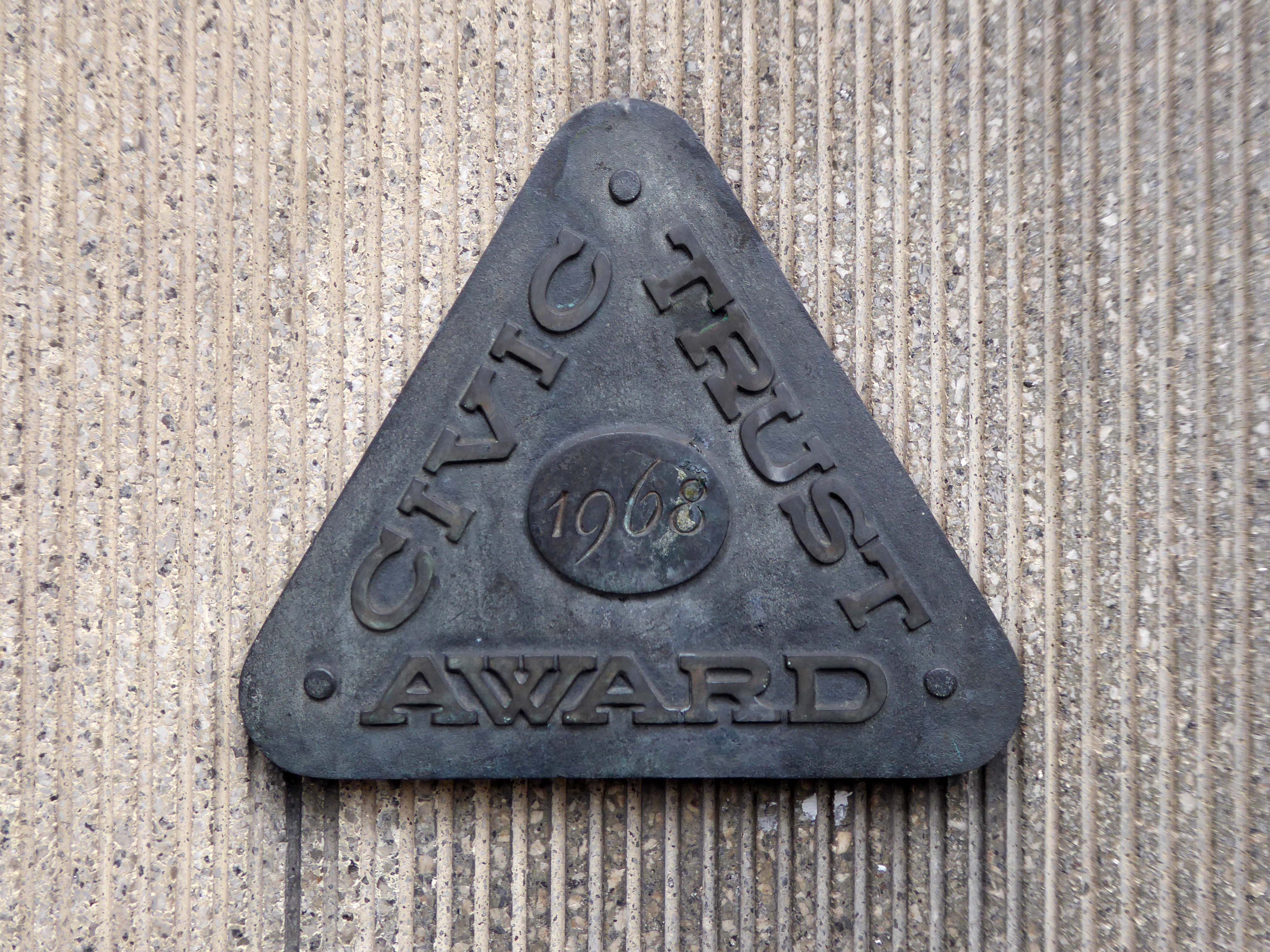
Possibly Shrewsbury’s finest post-war building, but of course it has its detractors. It was well received by critics of the period including the assessors for the Civic Trust who bestowed an award in 1968. They noted the quandary that the architects faced of building in such a historic setting and terminating the vista along one of the town centre’s main streets. In their opinion the architects ‘faced the problem squarely and their building, brave in its conception and immaculate in its detail’ and that it was ‘uncompromisingly of today but beautifully sympathetic to the great buildings it rests with’. Pevsner’s original assessment of it being the ‘boldest modern response to the town’s half-timbering’ was not shared by the authors who revised the Shropshire edition and viewed it as an ‘aggressive display of exposed and textured concrete’.
It was also shortlisted for the European Cement Association awards, one of only two British buildings to make the grade. Opting to draw on the Tudor traditions of the town, partner W Marsden, working with project architect W Allan Clark and assistants Malcolm Lovibond and Keith Maplestone, used cantilevered floors, vertical structural and sub-structural members, oriel windows and a black and white tonal palette deploying anodized aluminium window frames against finely ribbed concrete panels. The standing seam zinc roof adopted the town’s norm of pitched roofs without gables in order to blend with the street scene. Concrete Quarterly referred to it as ‘a skilful bridging of the centuries in a way that would not offend a purist’ . The main contractor was Henry Willcock and Company Limited.
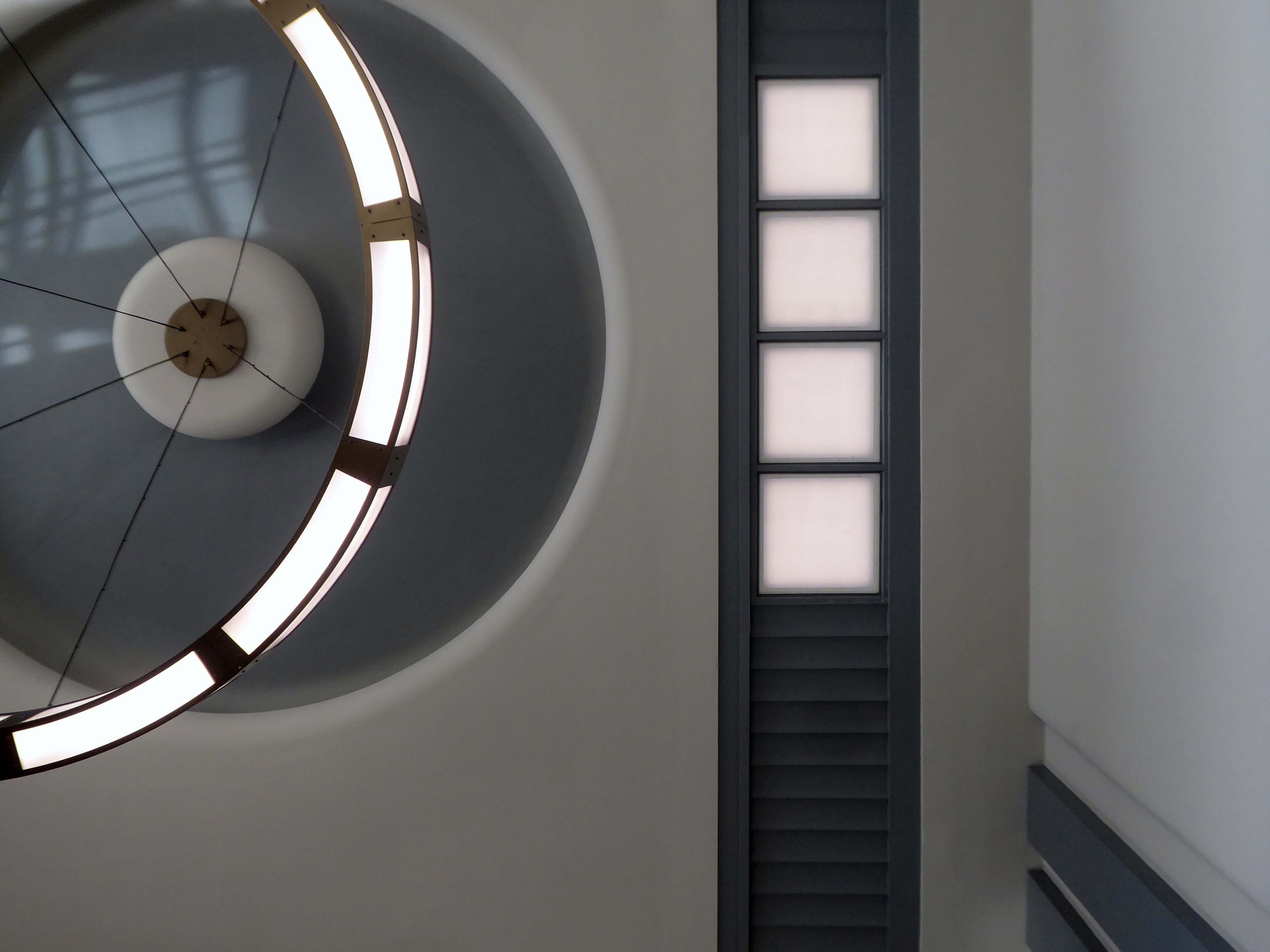
Arriving by train and ascending into the light – here’s the station lights.
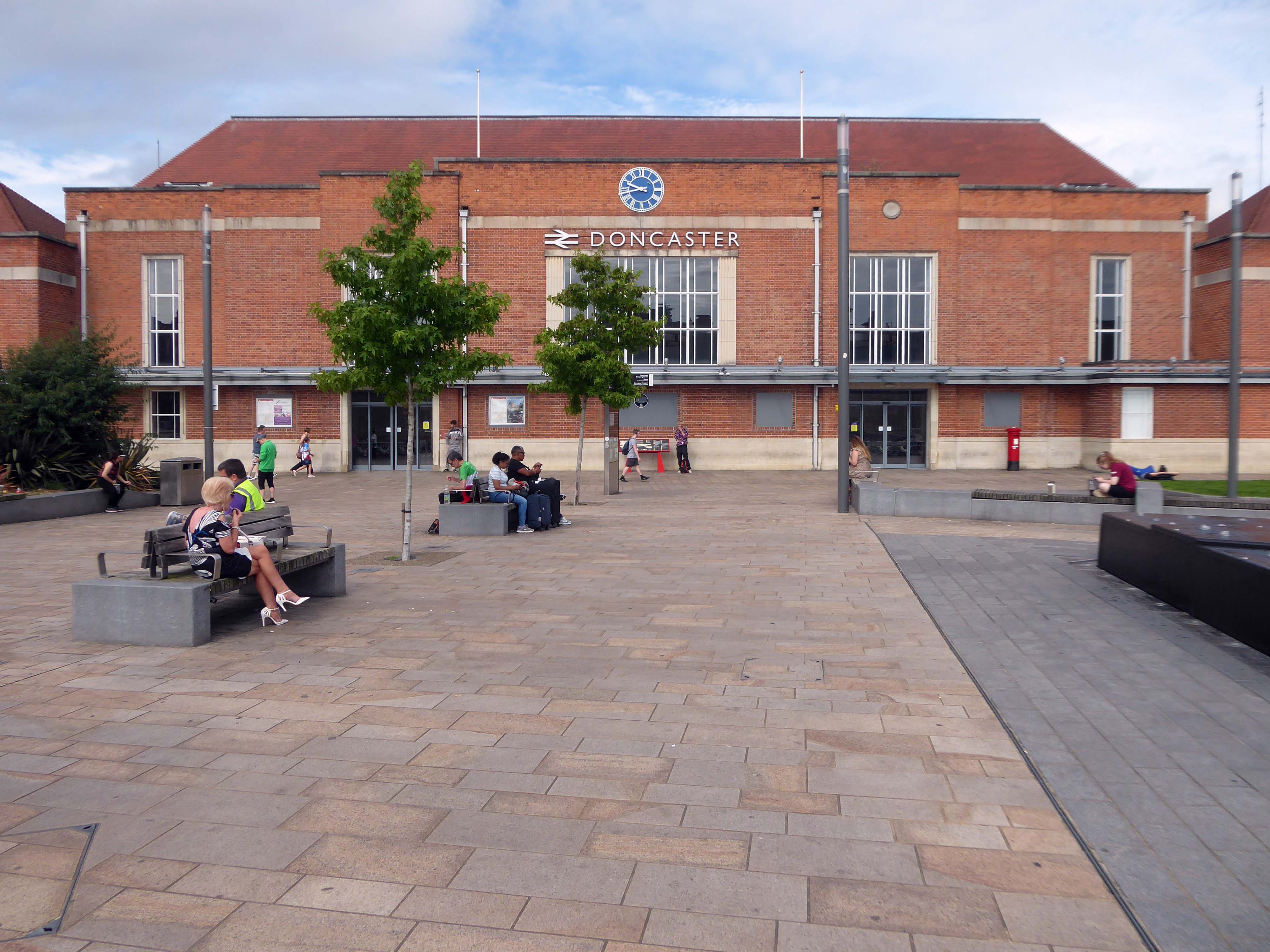
The railway station has sharpened up its apron and facade.
We have transformed the station forecourt. It has become a quality gateway which delivers a great first impression for visitors arriving in Doncaster by train. This will help stimulate interest from investors and developers, helping to attract new investment and create jobs for the borough and wider region.
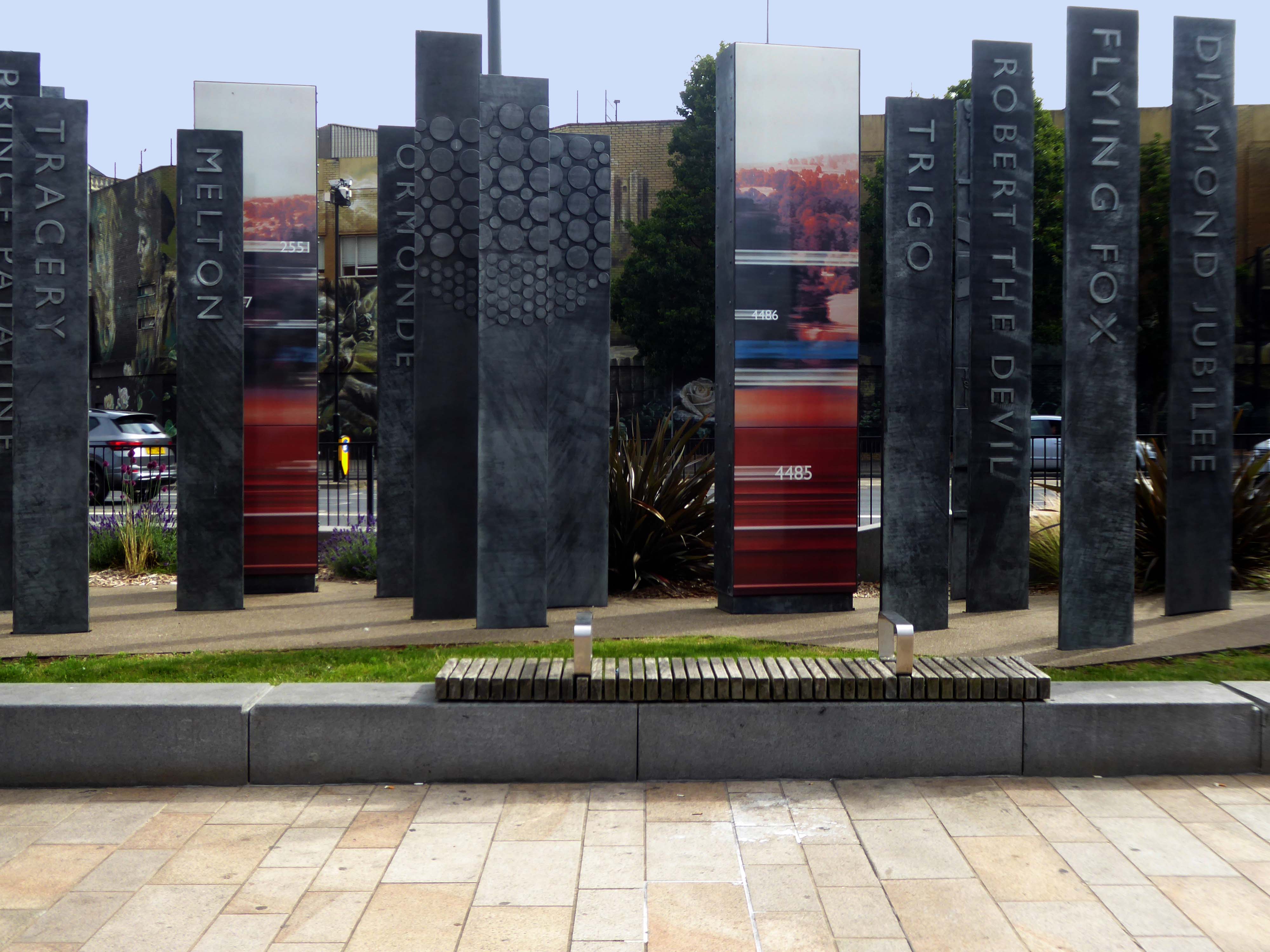
Celebrating engineering, speed and connectivity and stretching forty metres in length the public art at Doncaster Station consists of forty seven monoliths which are a nod to Doncaster’s past, present and future. With a fountain and three impressive water walls, the art takes centre stage in the new public space as you step out of the train station and head into the town centre.
The concept was devised by Doncaster Council and further developed by Chris Brammall.
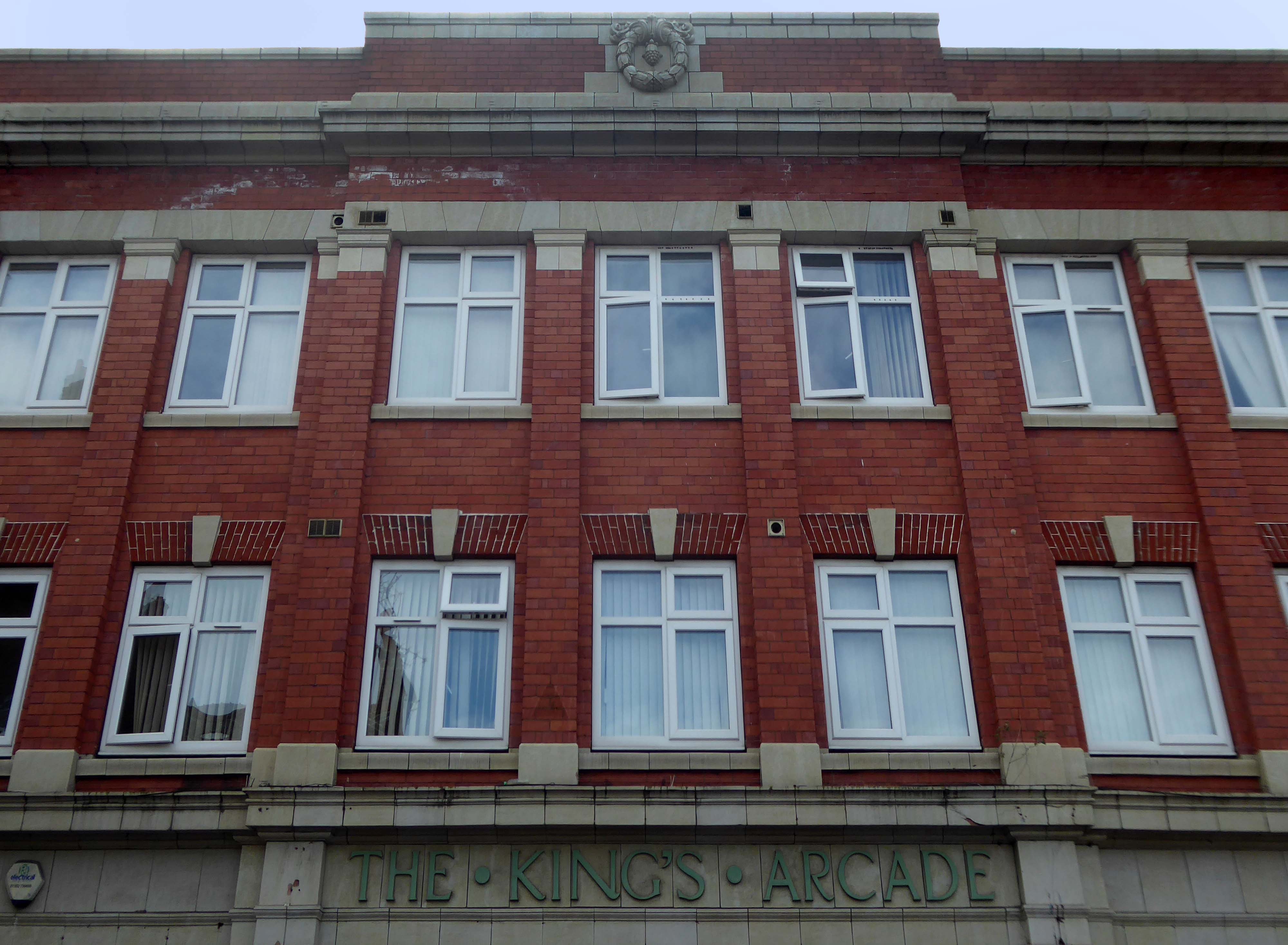
Typically the high and low streets of Britain’s industrial towns and cities, are an amalgam of architectural style and fashion, spanning at least two or three centuries.
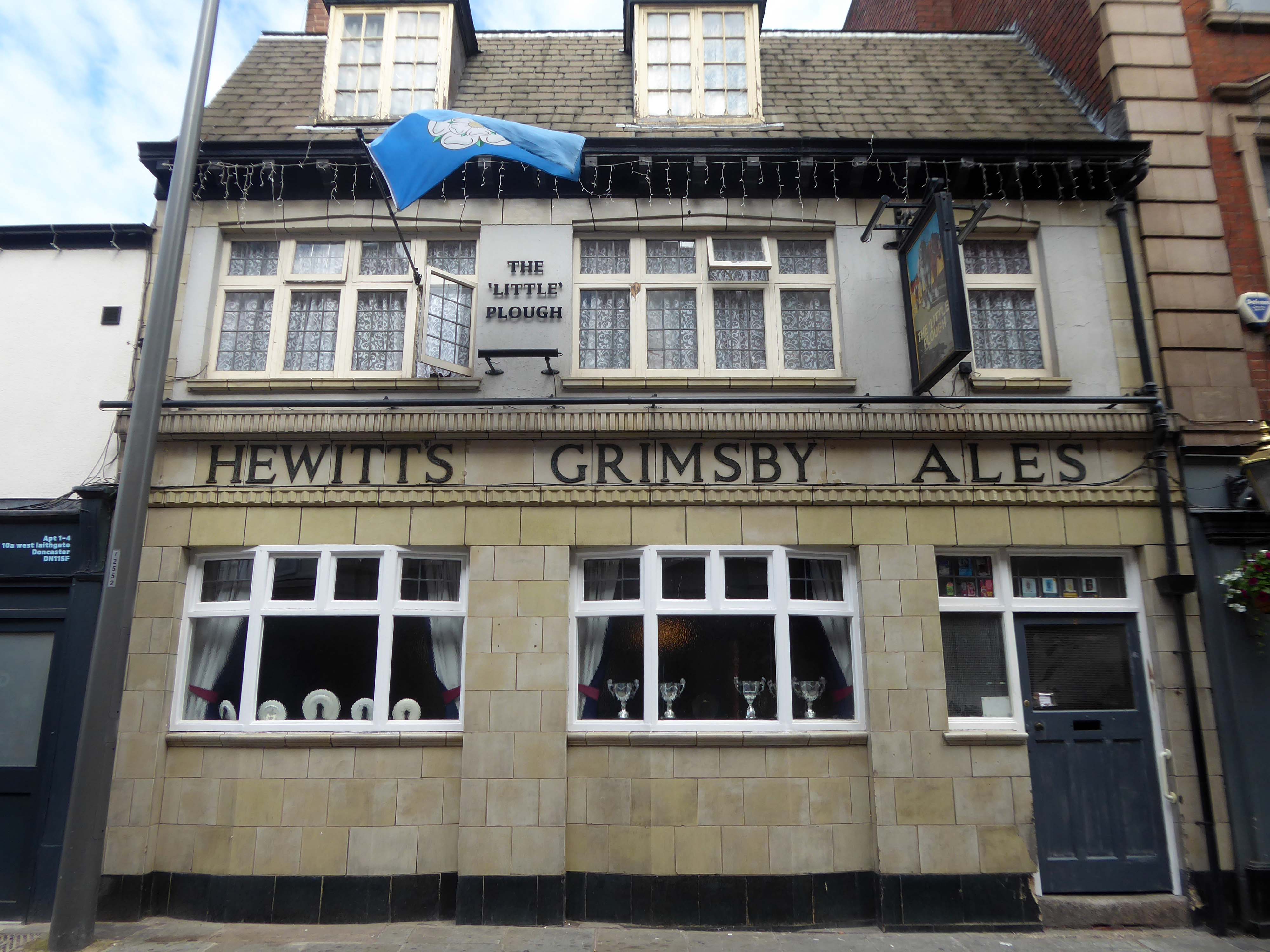
Behind the buff faience frontage is a lovely, small two-room pub with a well preserved interior created under plans of 1934. It was remodelled by the Grimsby brewers Hewitt Brothers Ltd who were Doncaster’s biggest pub owners for many years.
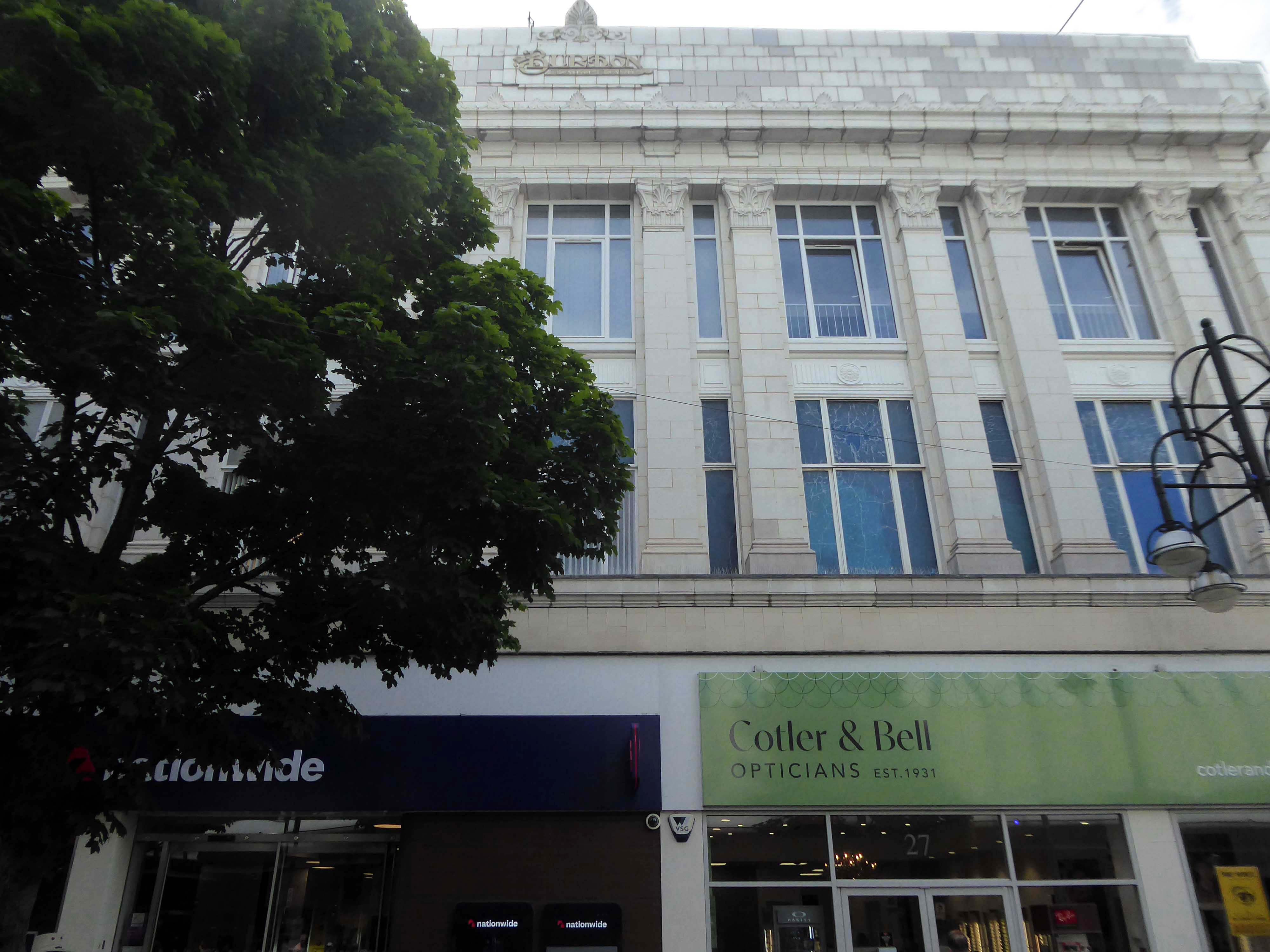
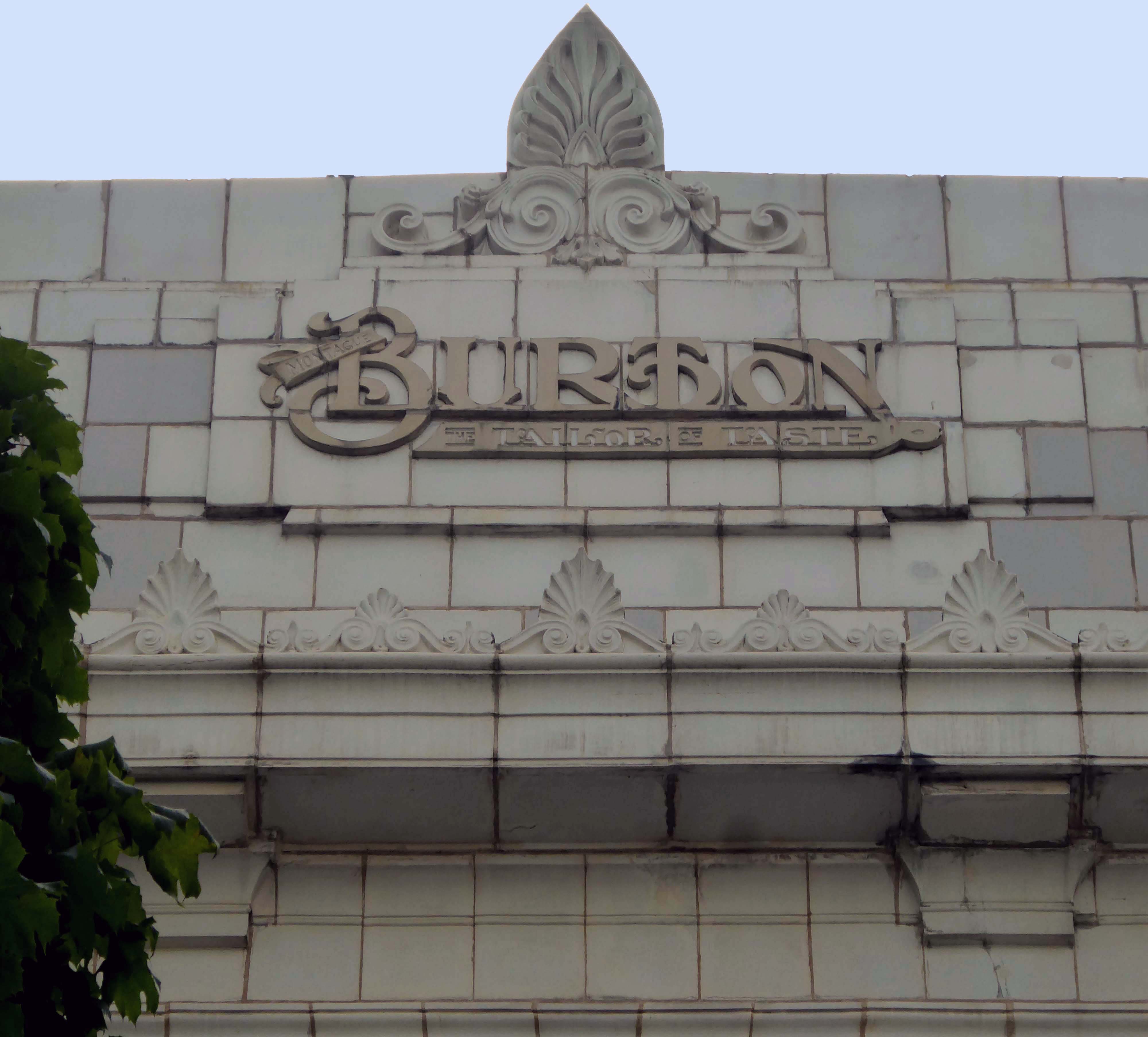
Of course, every town had a Burton’s – the tailor of taste.
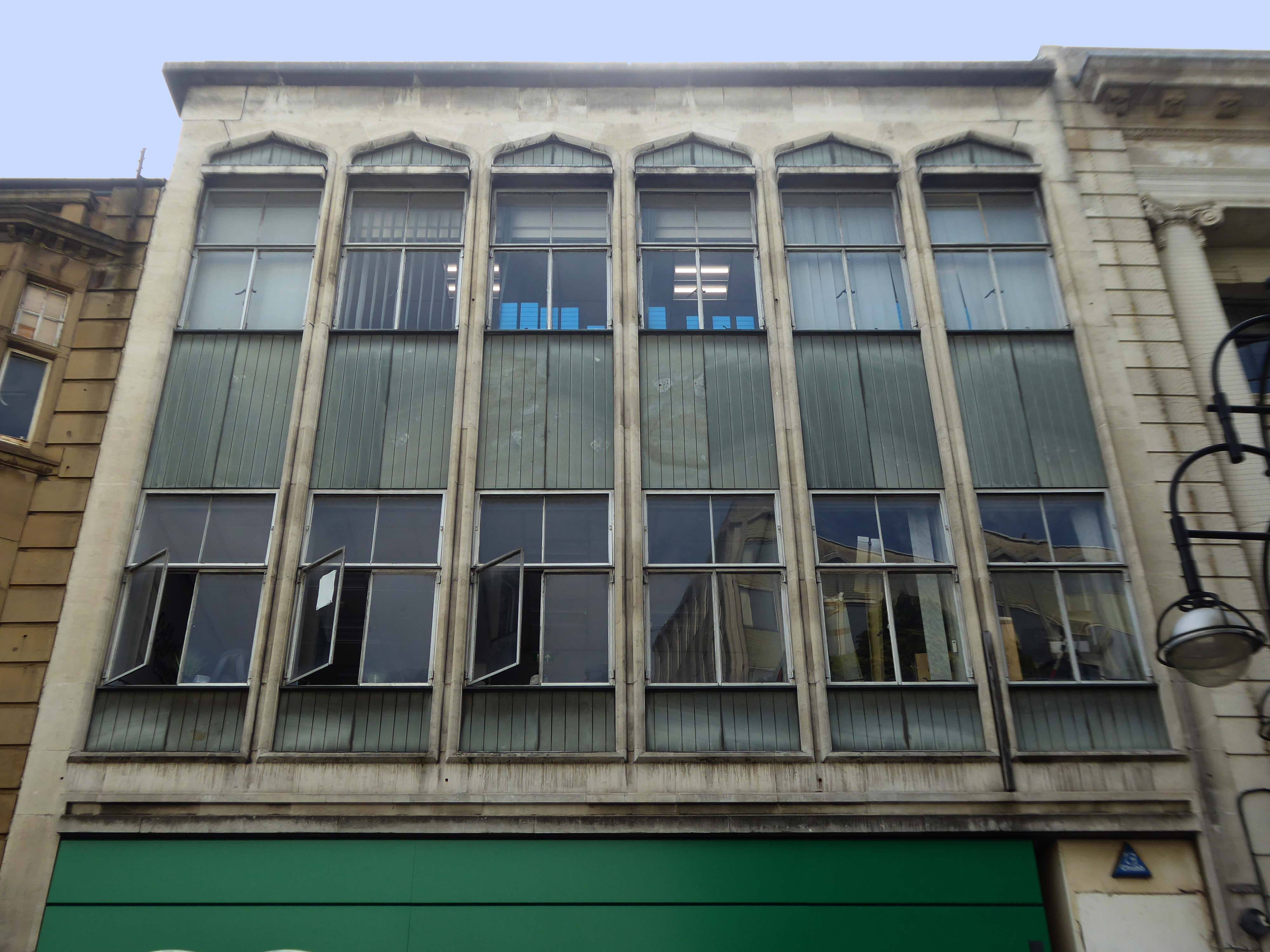
This post war infill has that distinctive Festival of Britain feel, original metal window frames, Portland stone and blueish slate like panels.
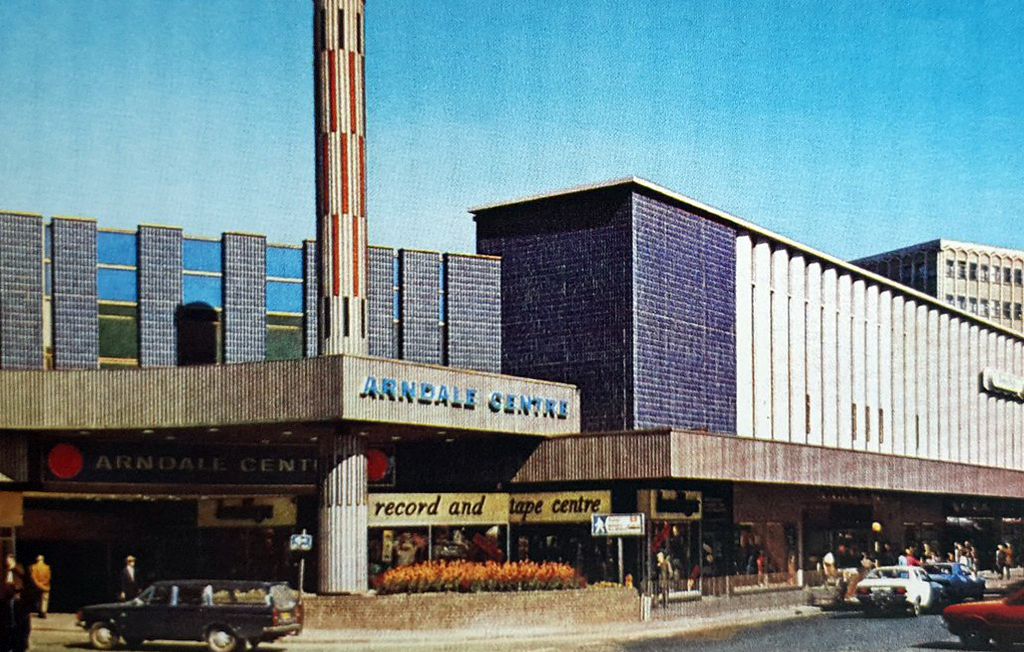
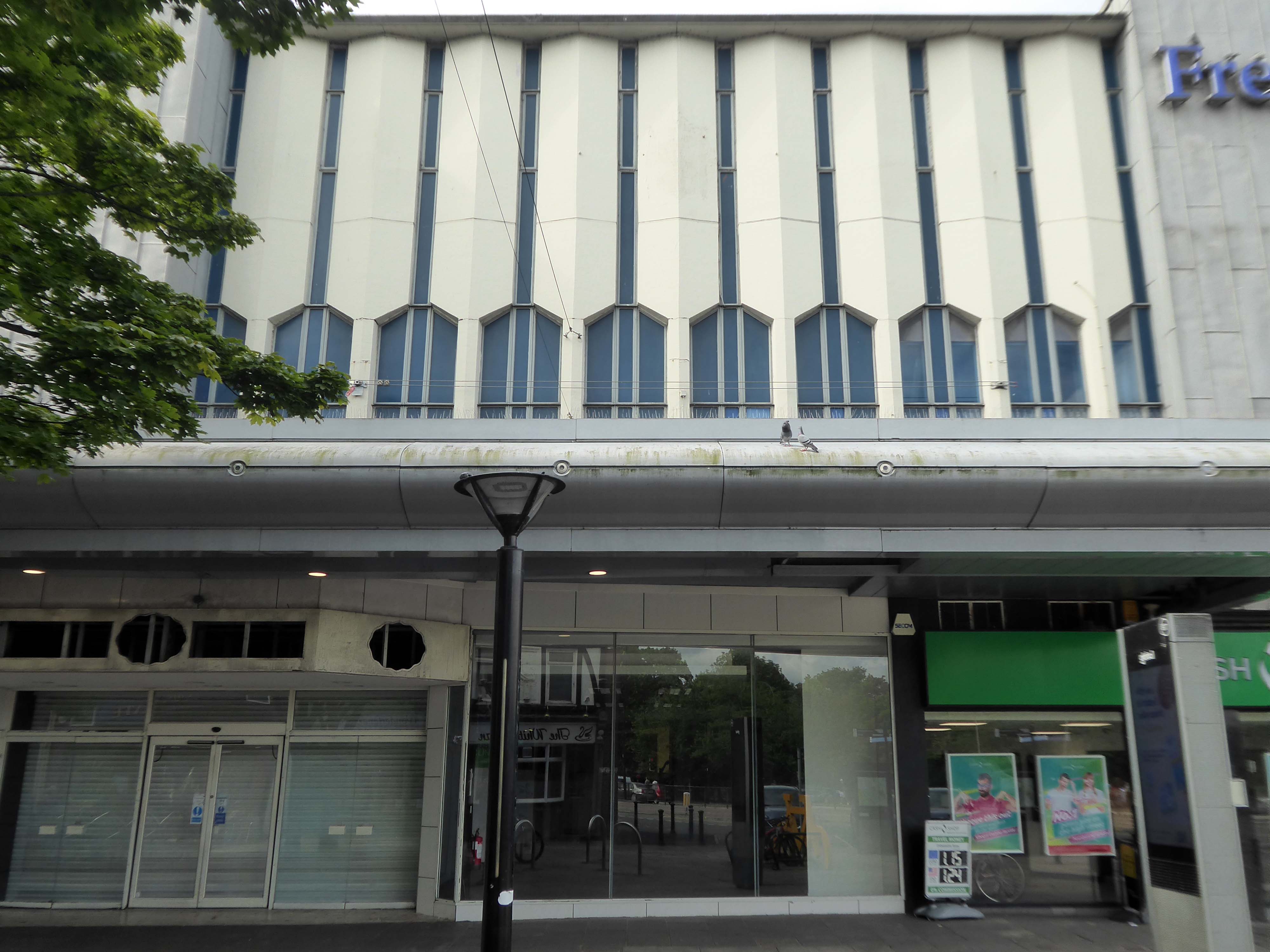
The revamped Frenchgate Shopping Centre, officially opened on October 4th 1968, has in places an upper tier, resistant to zinc over cladding.
The centre has been the heart of the city for over 40 years and was originally called the Arndale Centre because it was built, owned and managed by the Arndale Group. It was renamed in 1988 after a change of ownership, with the new name reflecting the name of the street which passes to the east of the centre and which is one of Doncaster’s main shopping streets.
The sale of the centre came just a year after Frenchgate had undergone a £200 million facelift to transform it into the country’s first shopping centre with integrated public transport and retail interchange.
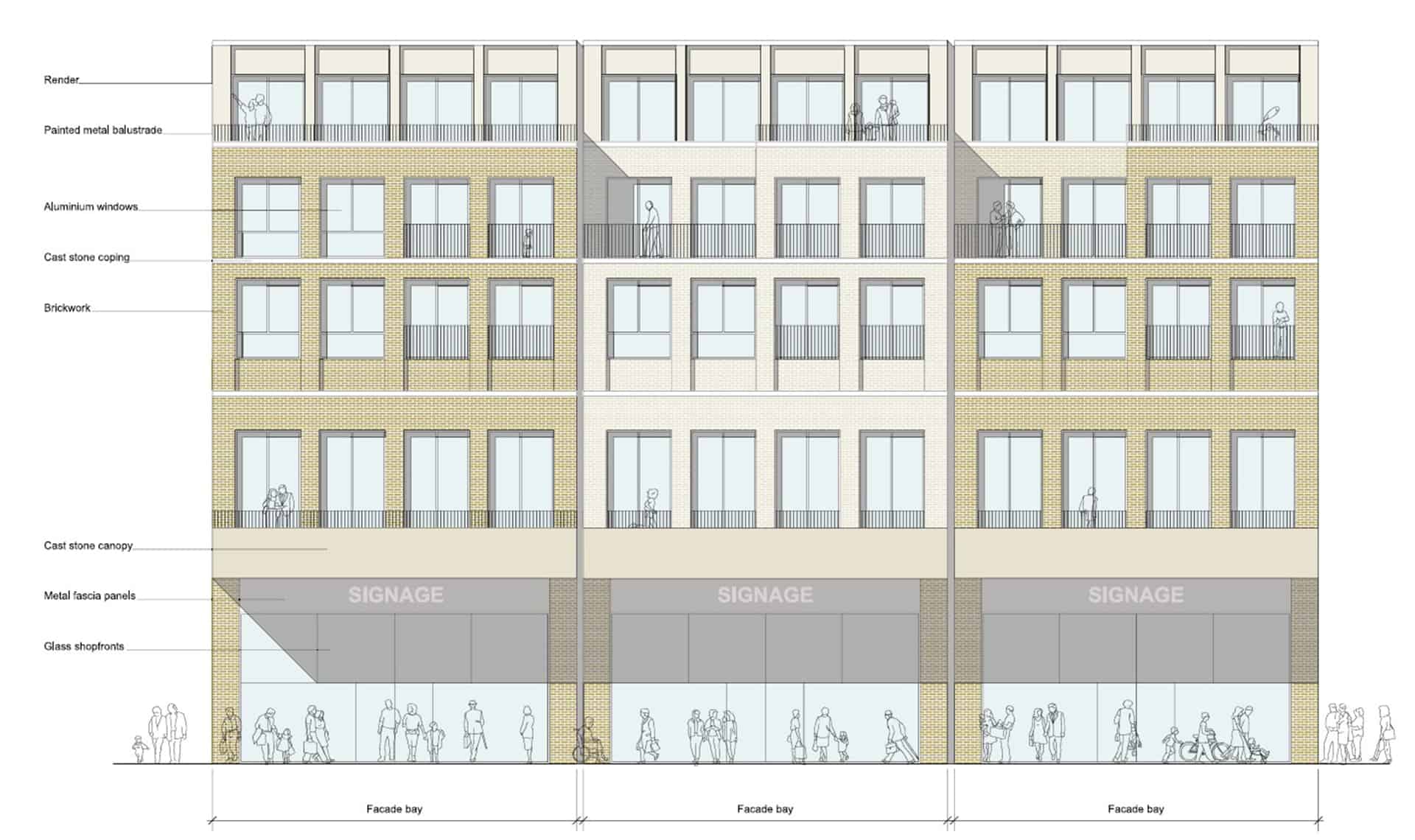
We propose this is fundamentally transformed though the addition of apartments that wrap along the back of the first-floor retail with a further 2.5 new storeys placed on top. We also feel additional height -up to seven or eight storeys, is justifiable to the corner of Frenchgate and Trafford Way.
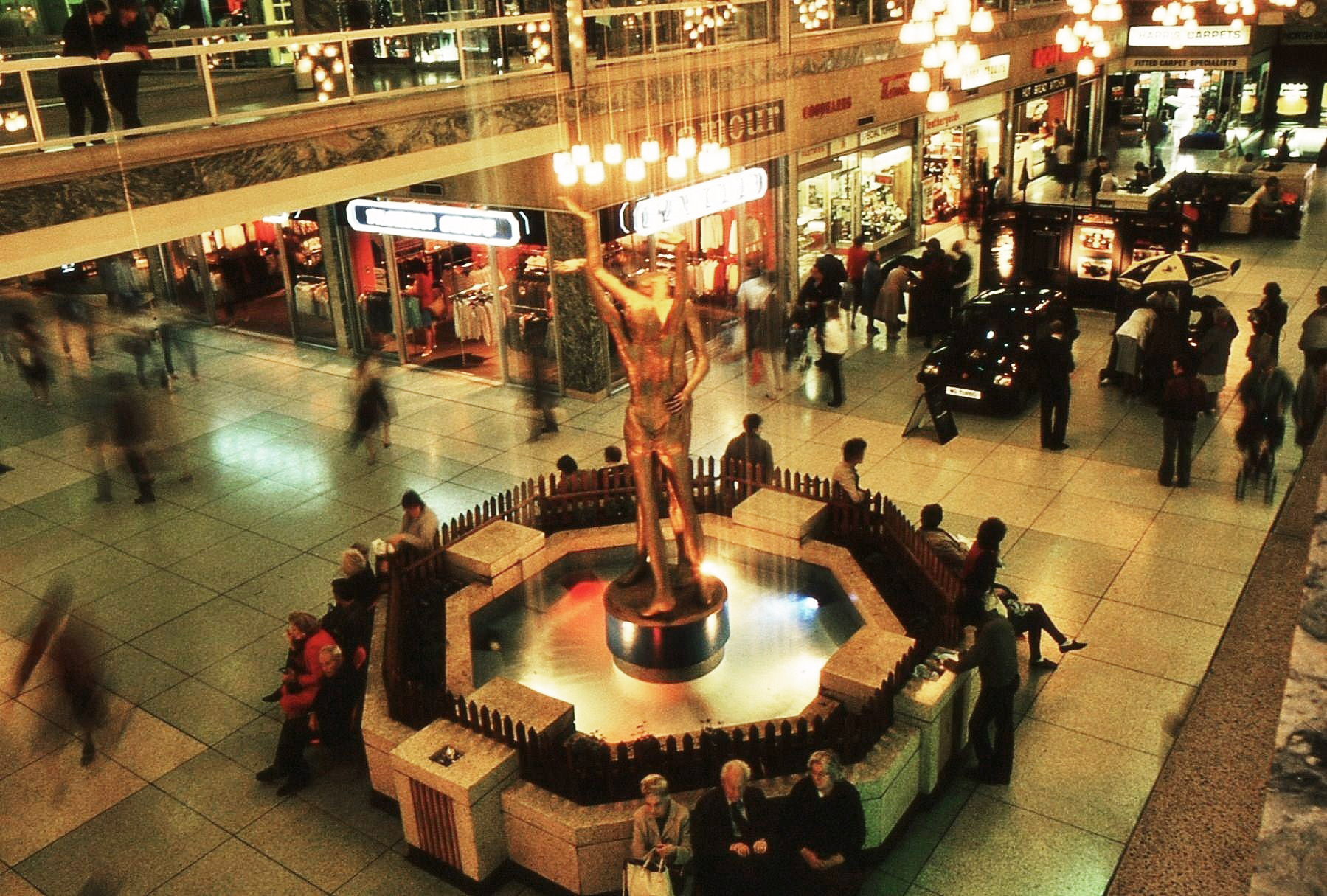
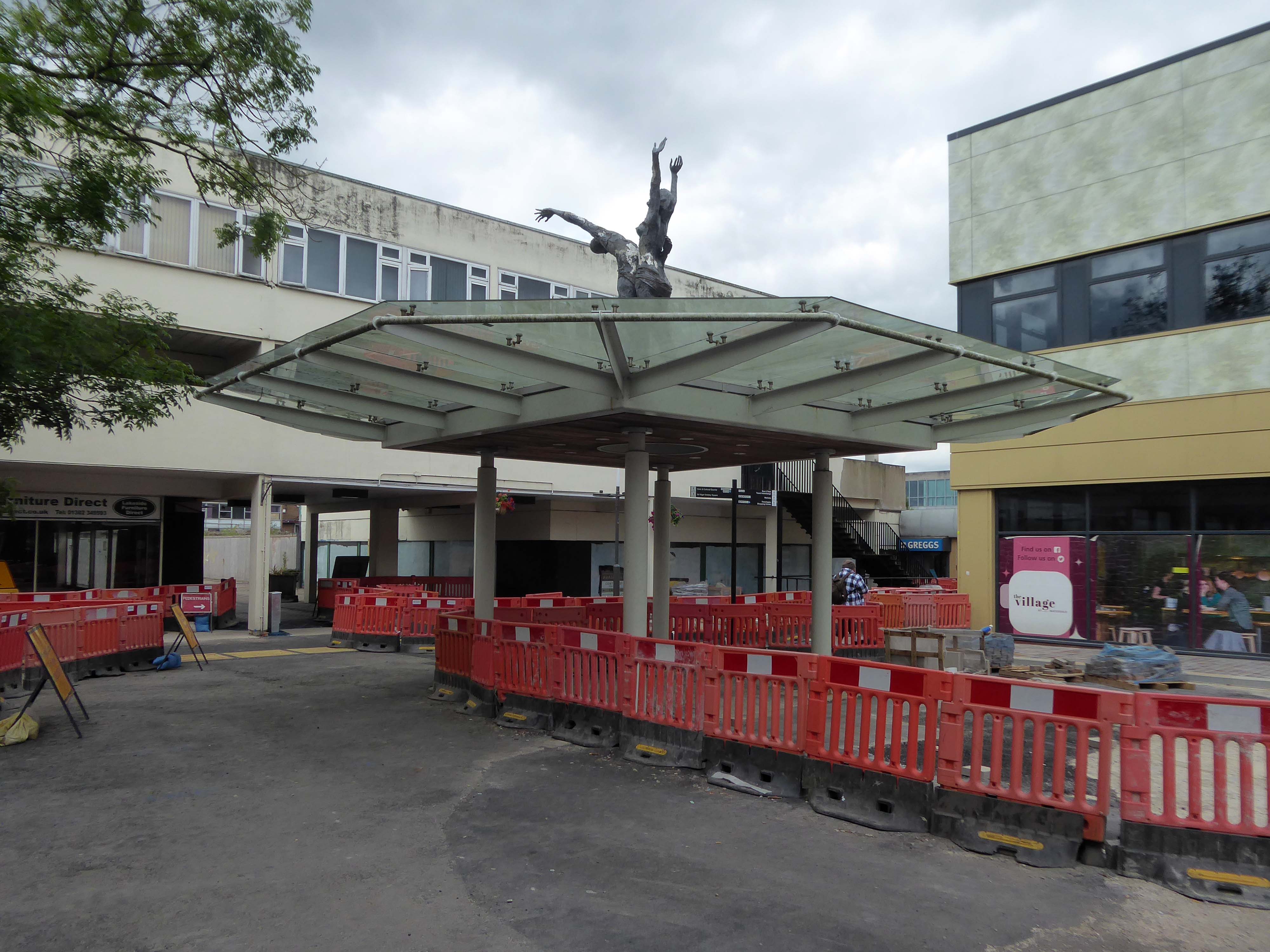
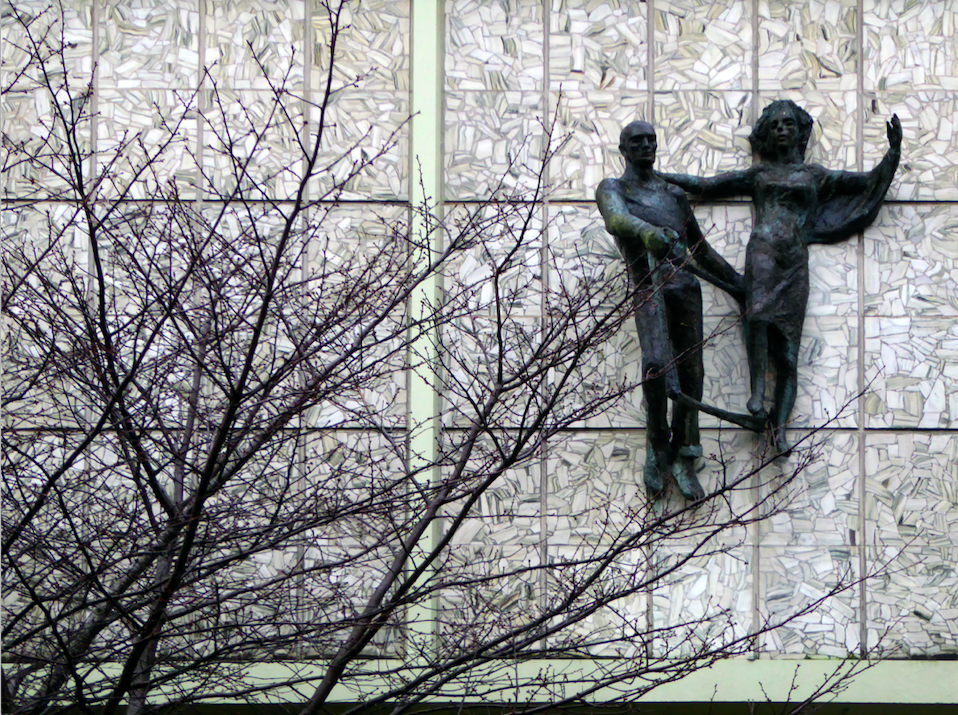
The Lovers were once located in the Arndale, removed to a local garden, unloved – then later reinstated in the Waterdale Centre, where we will embrace them a little later.
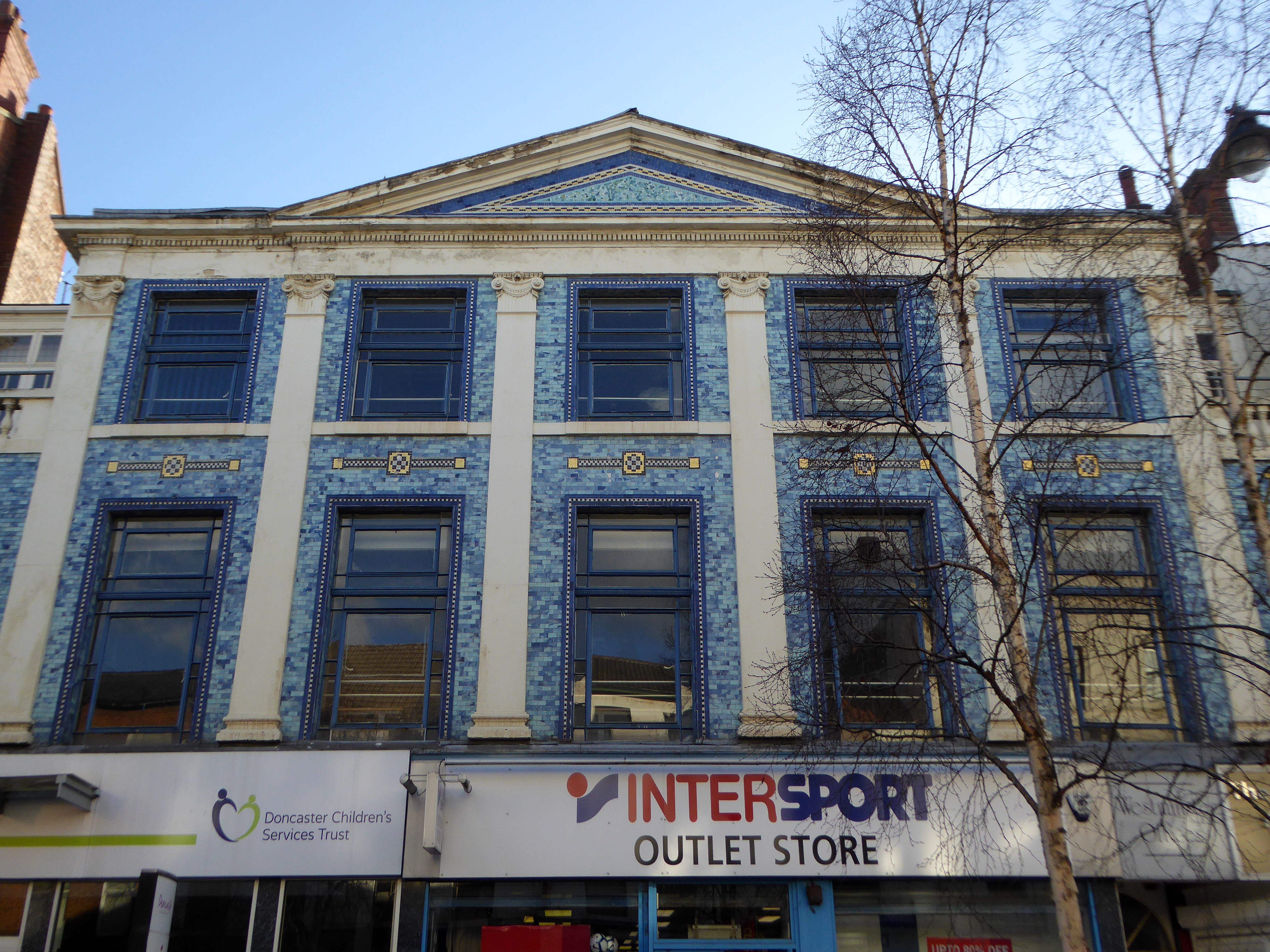
Turn right to take in the 1920s mosaic remake remodel of the Grade II listed Blue Building.
The Blue Building which used to be the Doncaster Design Centre and Tourist Information Centre was originally the home of John Whitaker, a wine merchant, and son of James Whitaker who was Mayor of Doncaster in 1758.
In 1925 the complete building was demolished apart from the facade which was retained and given a facing of decorative blue tiles. The intention was to build a shopping arcade from High Street to Printing Office Street. Only part of the arcade, known as the Westminster Arcade was built. It had a number of shops, the largest being that of Woodhouse & Co Furnishers.
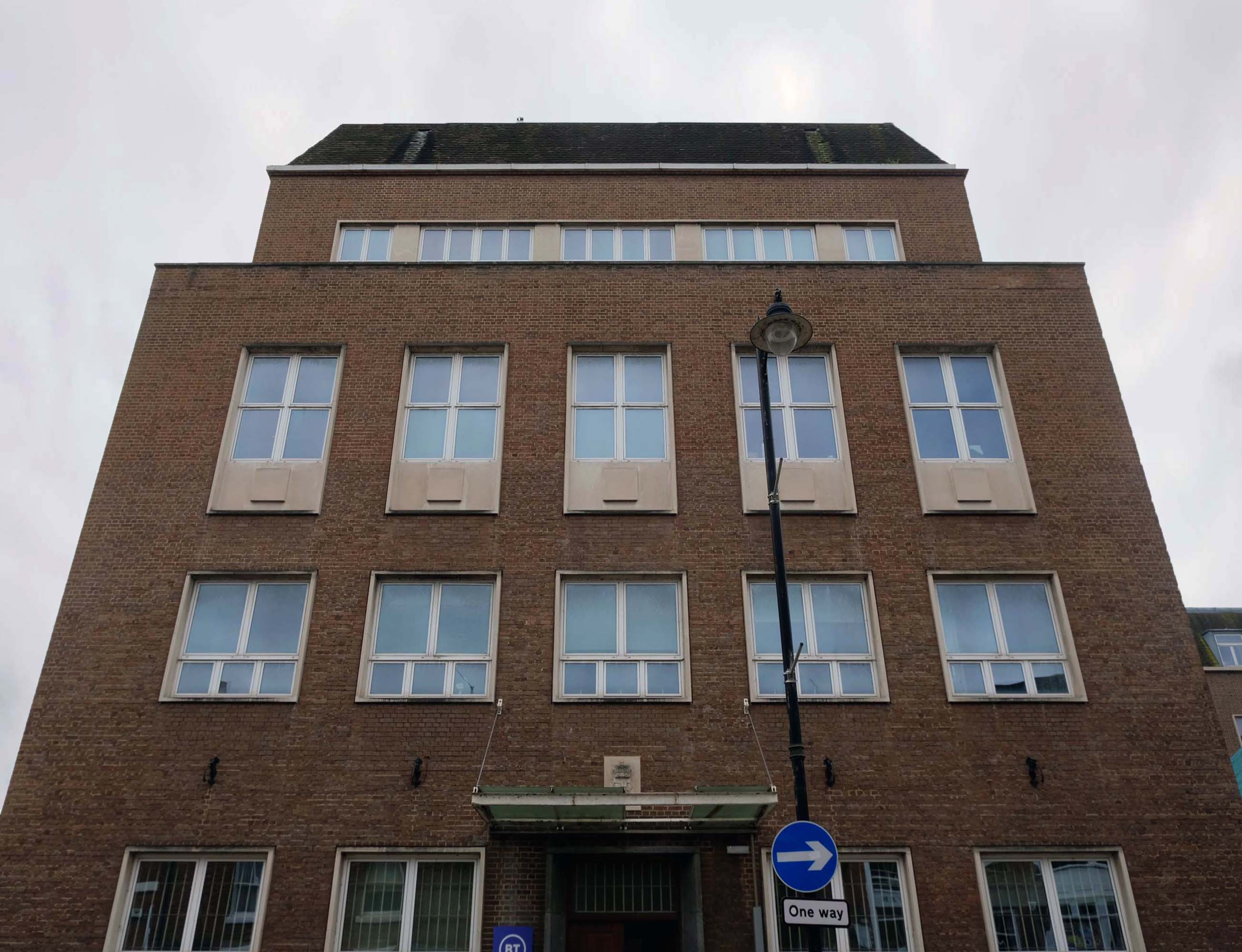
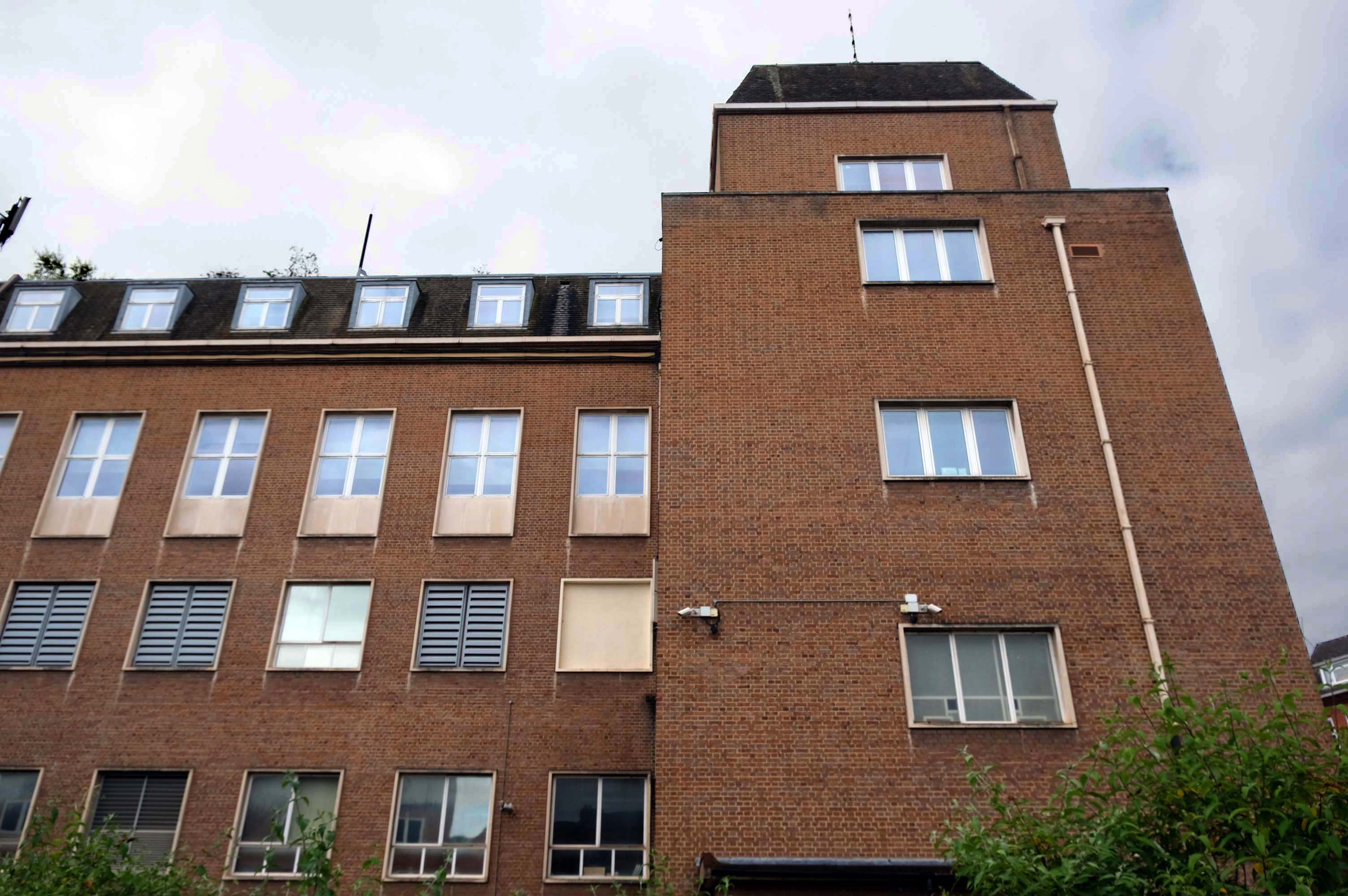
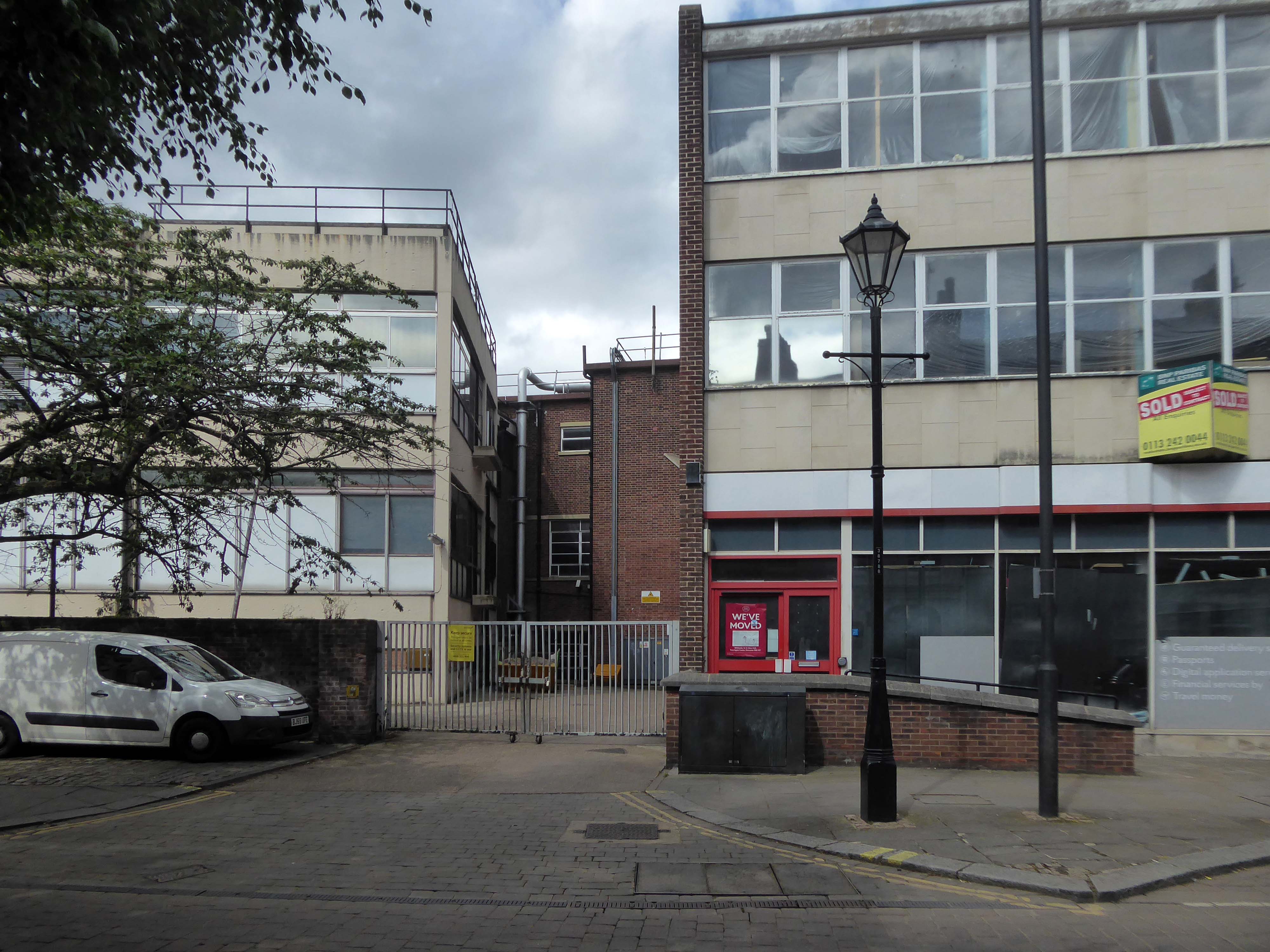
Two adjacent 60s extensions – to the right a redundant post office to the left an almost redundant telephone exchange, with the earlier brick built exchange in smack dab the middle.
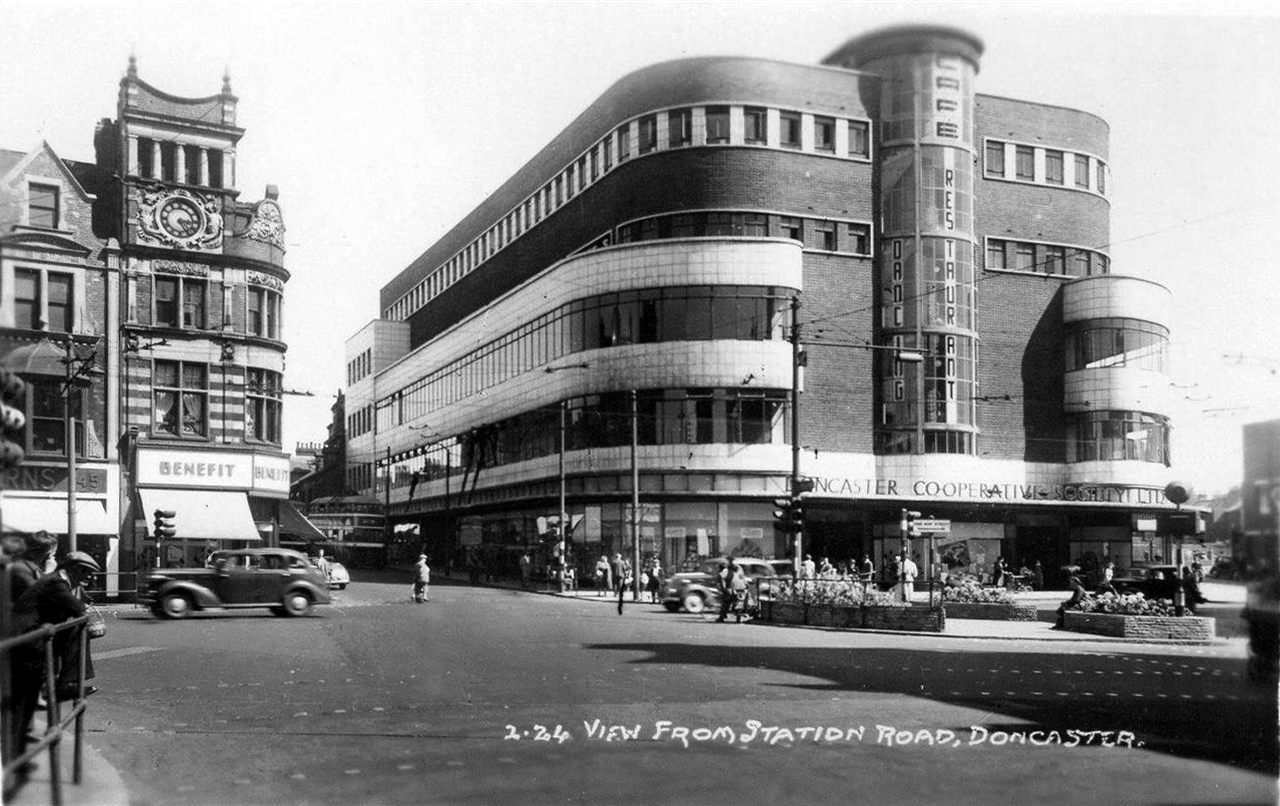
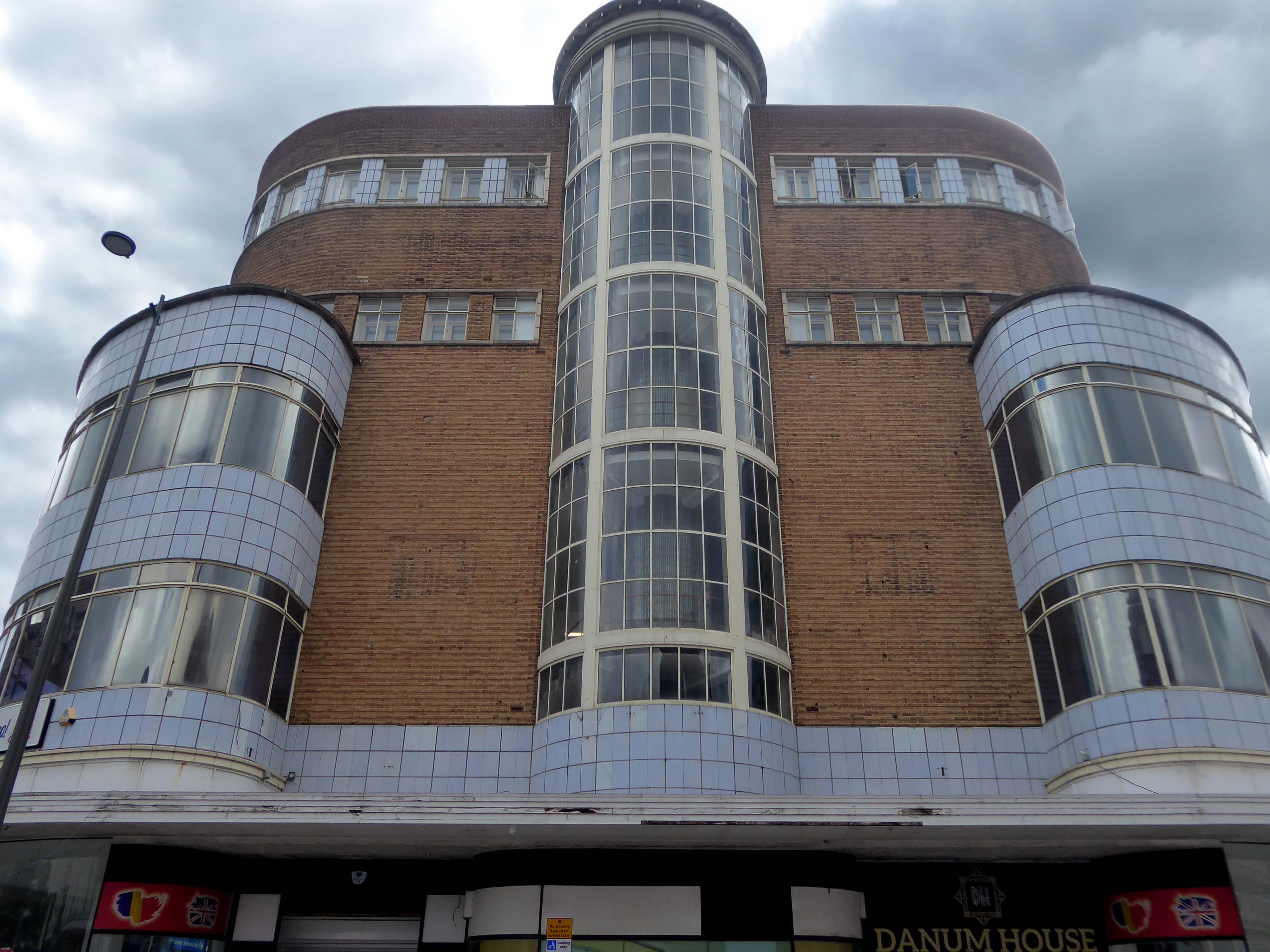
Turn another corner and it’s all at the Co-op now – the Grade II listed Danum Co-operativeBuilding, department store and offices: 1938-40 designed by T H Johnson & Son for the Doncaster Co-operative Society Ltd.
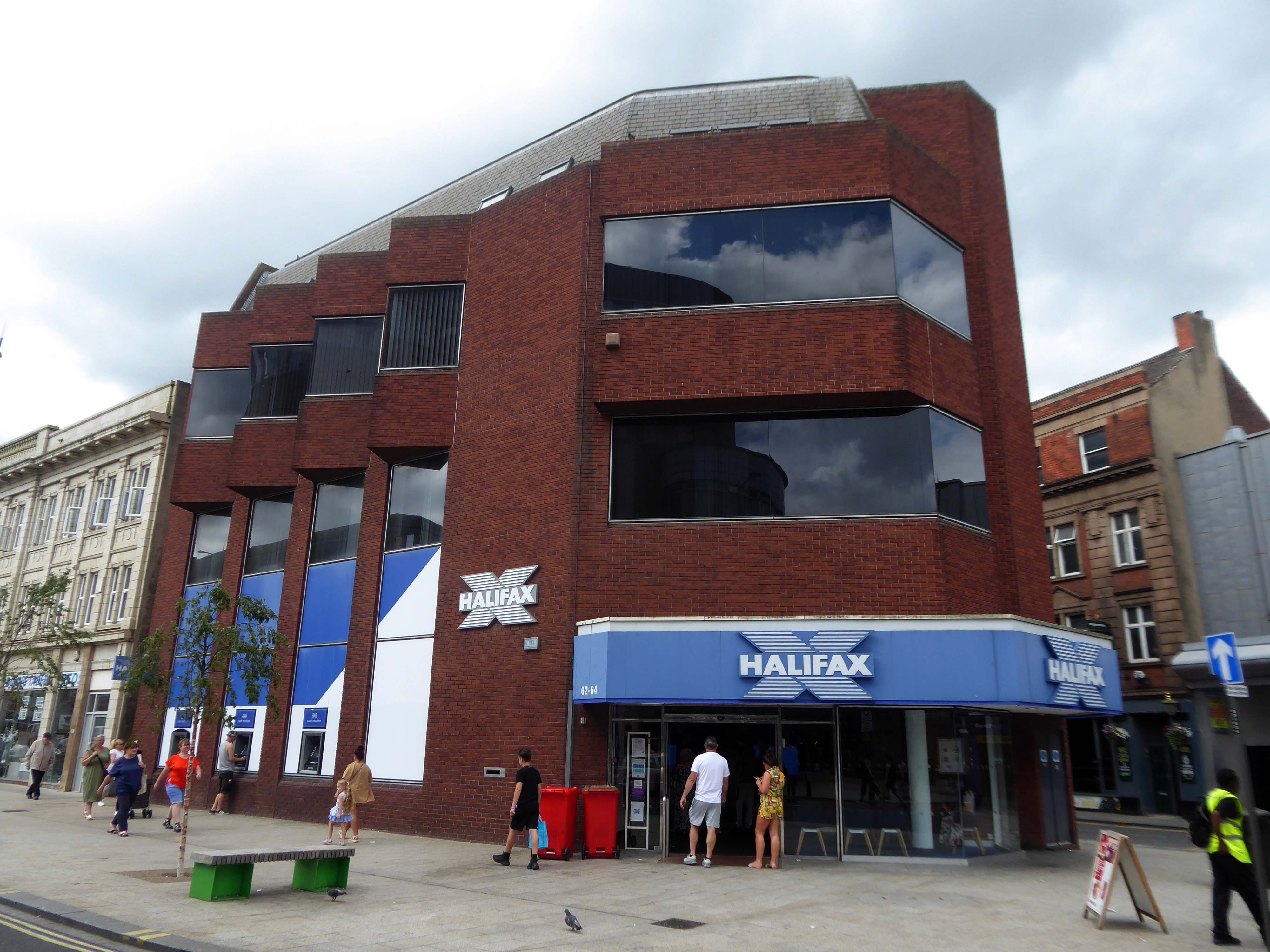
Over the road a zig-zag Halifax Building Society branch, tightly contorted by its corner footprint.
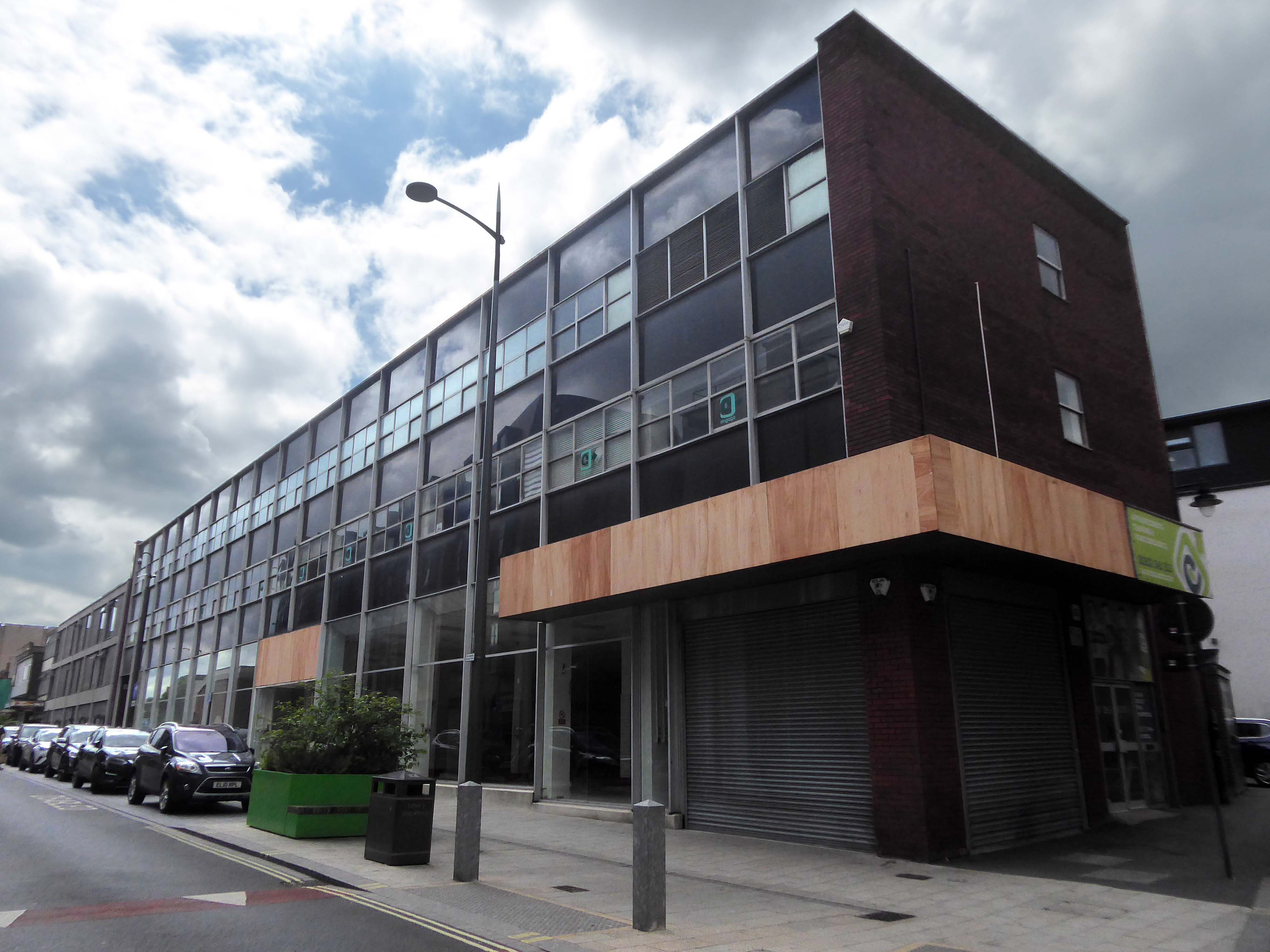
To the right of the Danum, this former Boyes store, having relocated to the Wilko site, the building is ripe for residential conversion.
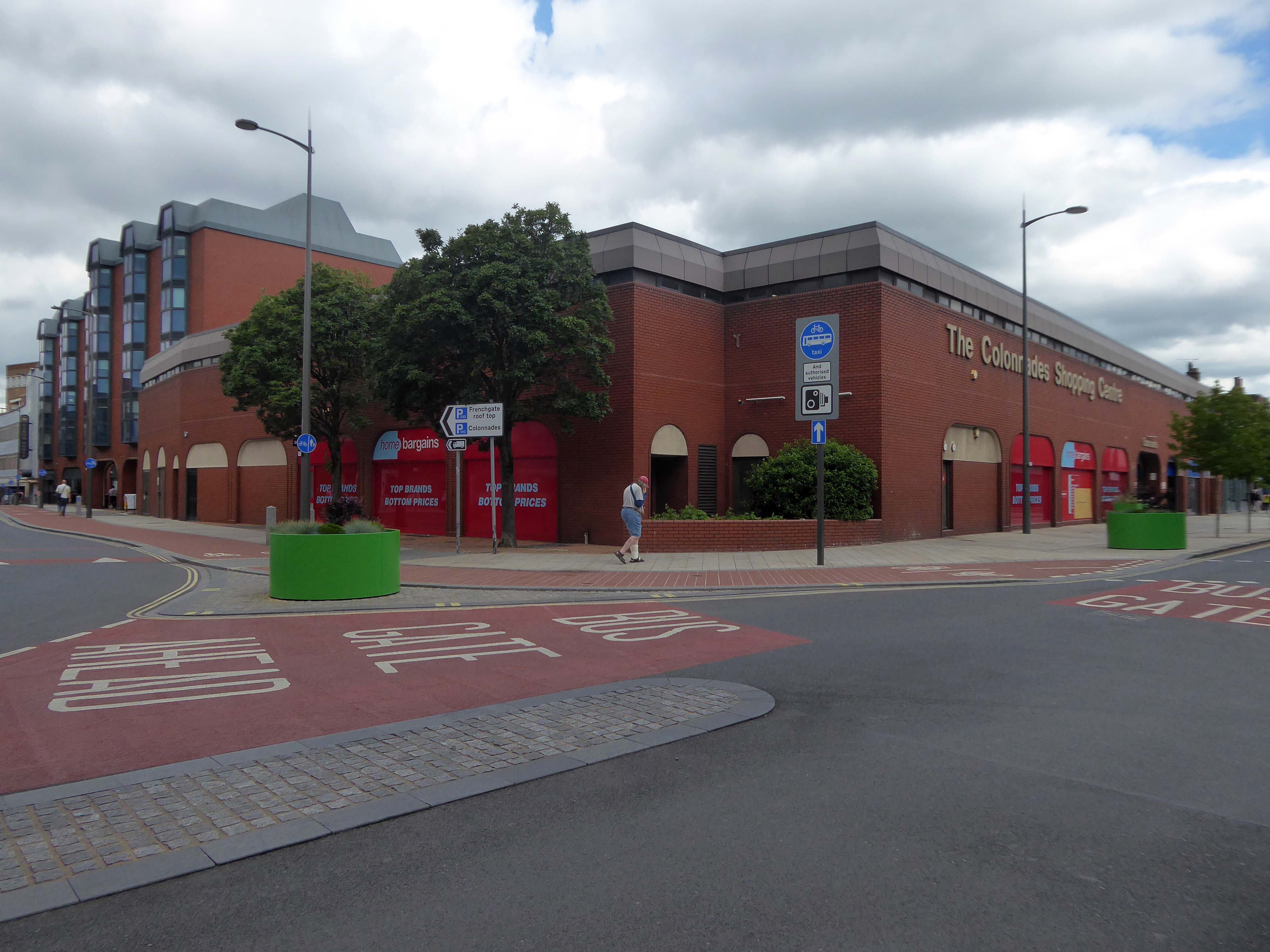
To the left the Colonnades Shopping Centre a fierce angular glass and brick bunker of mixed office and retail space – the sole occupant seeming to be Home Bargains.
A £3.3m makeover of the Colonnades shopping mall in Doncaster town centre was completed in 2019.
The scheme of works was co-ordinated by Doncaster Council and funded by the Sheffield City Region Local Growth Fund.
Built in the 1980s, the brick built building received a major overhaul. The investment saw the visual appearance enhanced inside and out. The five floors were transformed into the prime office space needed in the town centre and the enhancements to the retail area were also finished.
The shift in the town’s axis to the Frenchgate and Market areas, seems to have taken the wind out of its sails.
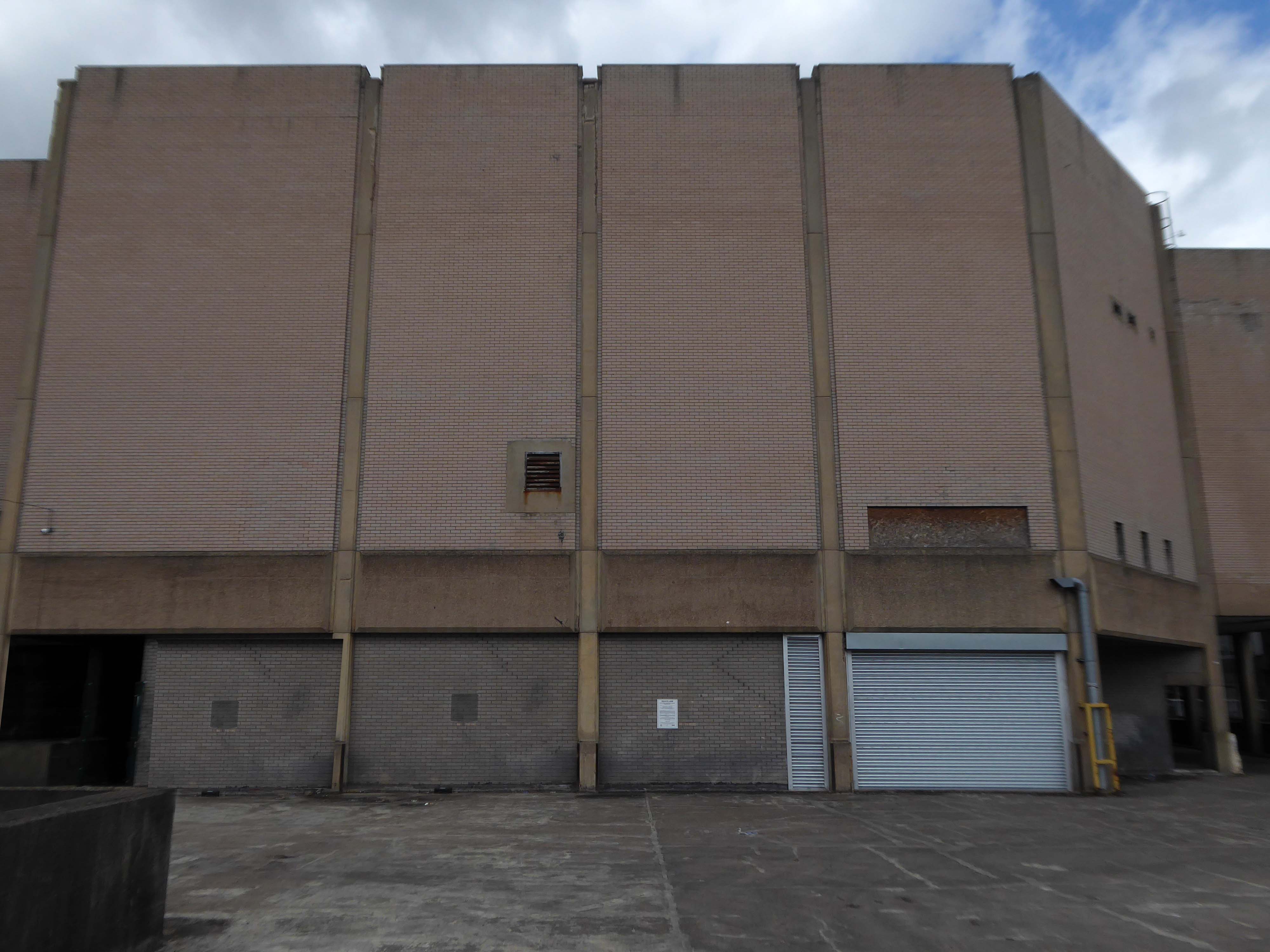
The former flicks now a redundant pale brick behemoth – no more and ABC.
Doncaster’s new £250,000 ABC cinema, part of the Golden Acres development near the town centre, was opened on May 18th 1967.
Closed in January 1981 for conversion into a triple screen it re-opened on 9th April 1981 with seating in the three screens for 477, 201 and 135.
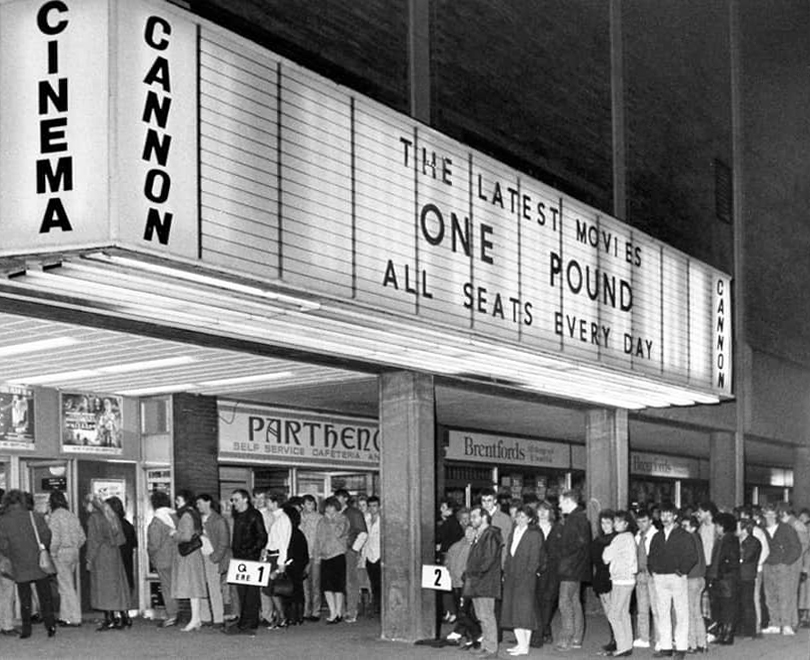
The Cannon Group took control in the mid-1980’s and it was re-named Cannon and it closed on 18th June 1992, screening its opening film Doctor Zhivago.
Cinema Treasures
The Golden Acres development seemed to have morphed into the Waterdale Centre.
It is currently being reshaped to provide a line of desire twixt the Civic and Cultural areas, from the town centre. There are still the remnants of homes, shops and a pub amongst the demolition – almost inevitably there is new paving.
Waterdale is a well-known part of Doncaster’s town centre. During its heyday it was a bustling area with people flocking to shops and the like – it was a place you had to visit while you were in town. However, it had suffered a steady decline which continued when the southern bus station closed – Frenchgate Interchange opening, and Doncaster College moved to the Hub at the Waterfront. With limited public transport entering the area and no student population on its doorstep, less people had reason to pass through.
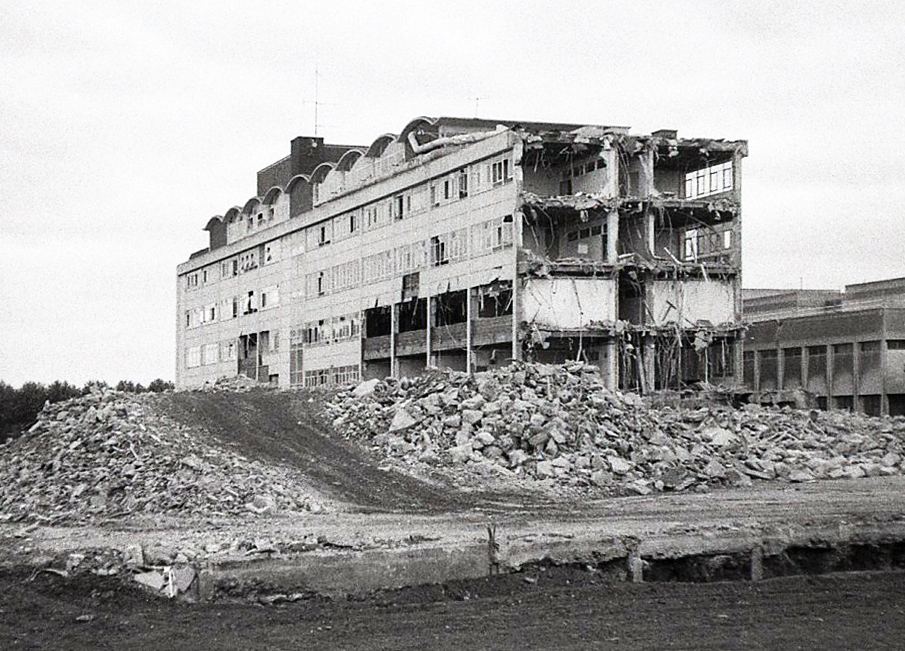
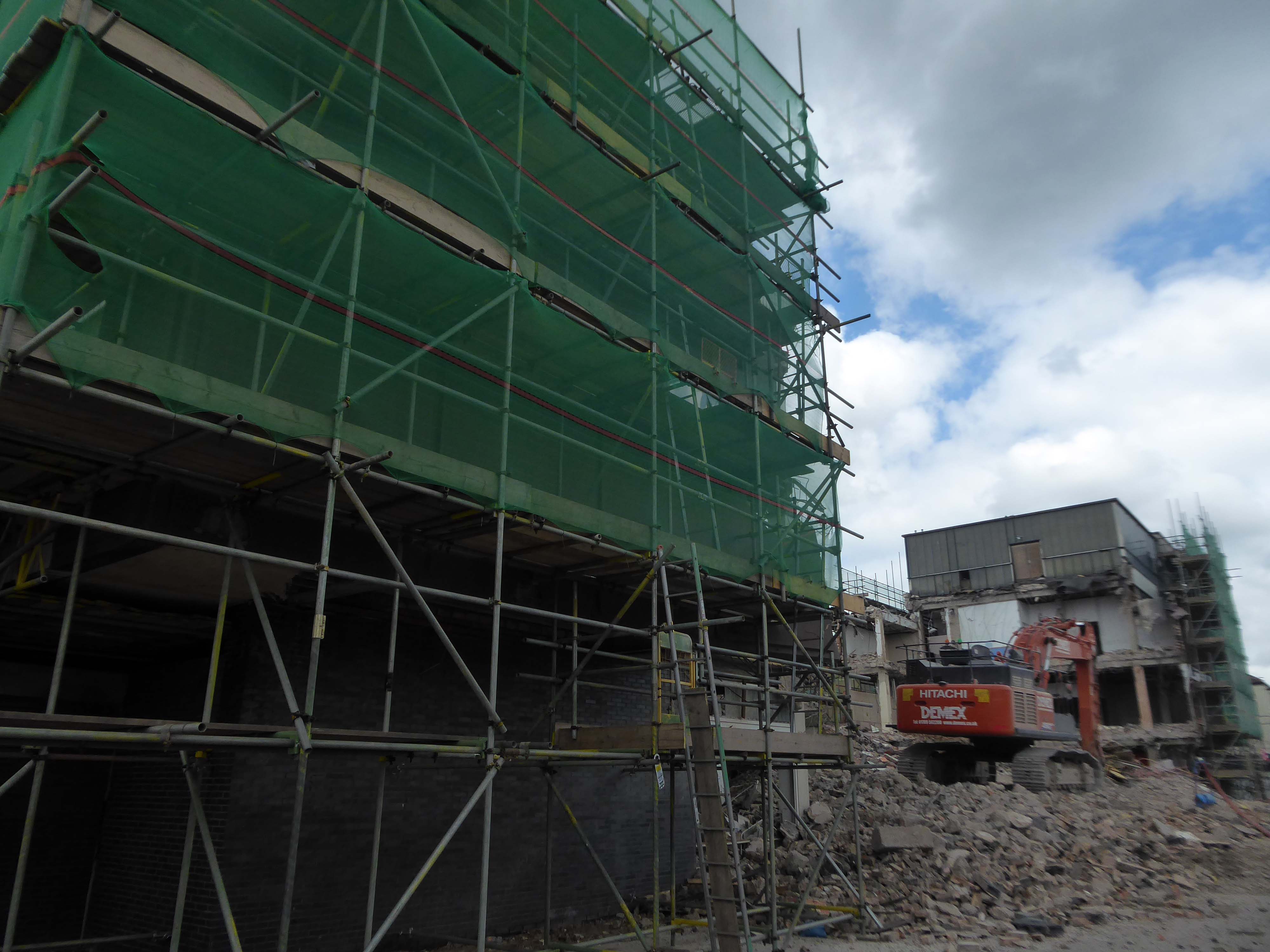
Demolition of the College.
The Civic and Cultural Quarter is transforming Waterdale reconnecting it to the town centre. The quality and content of the plans is raising the profile of this part of town to new levels. The carefully thought out layout and consistent building design is giving the area a clear identity. It is already becoming a big attraction that draws people in and encourages redevelopment in the neighbouring areas.
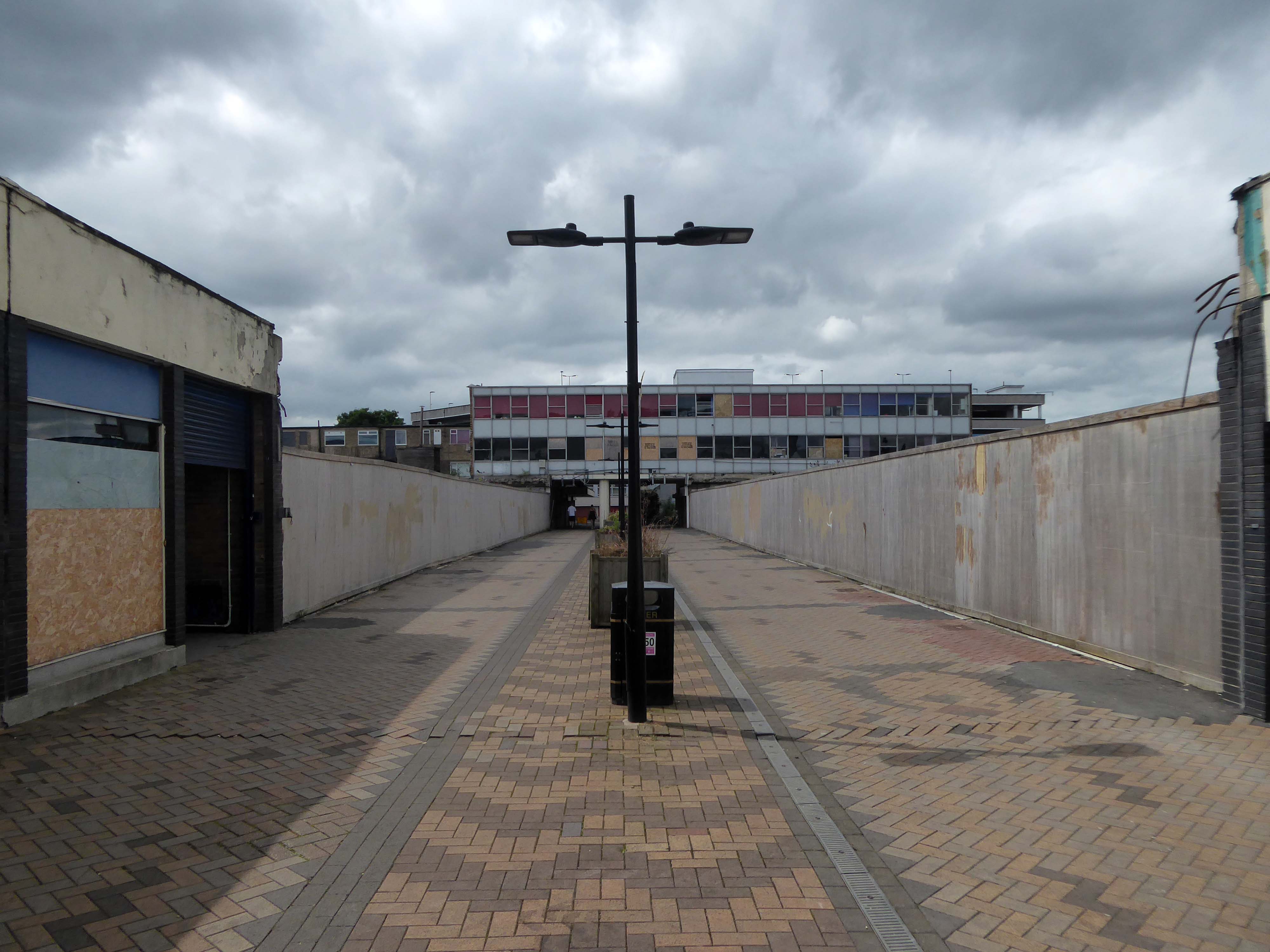
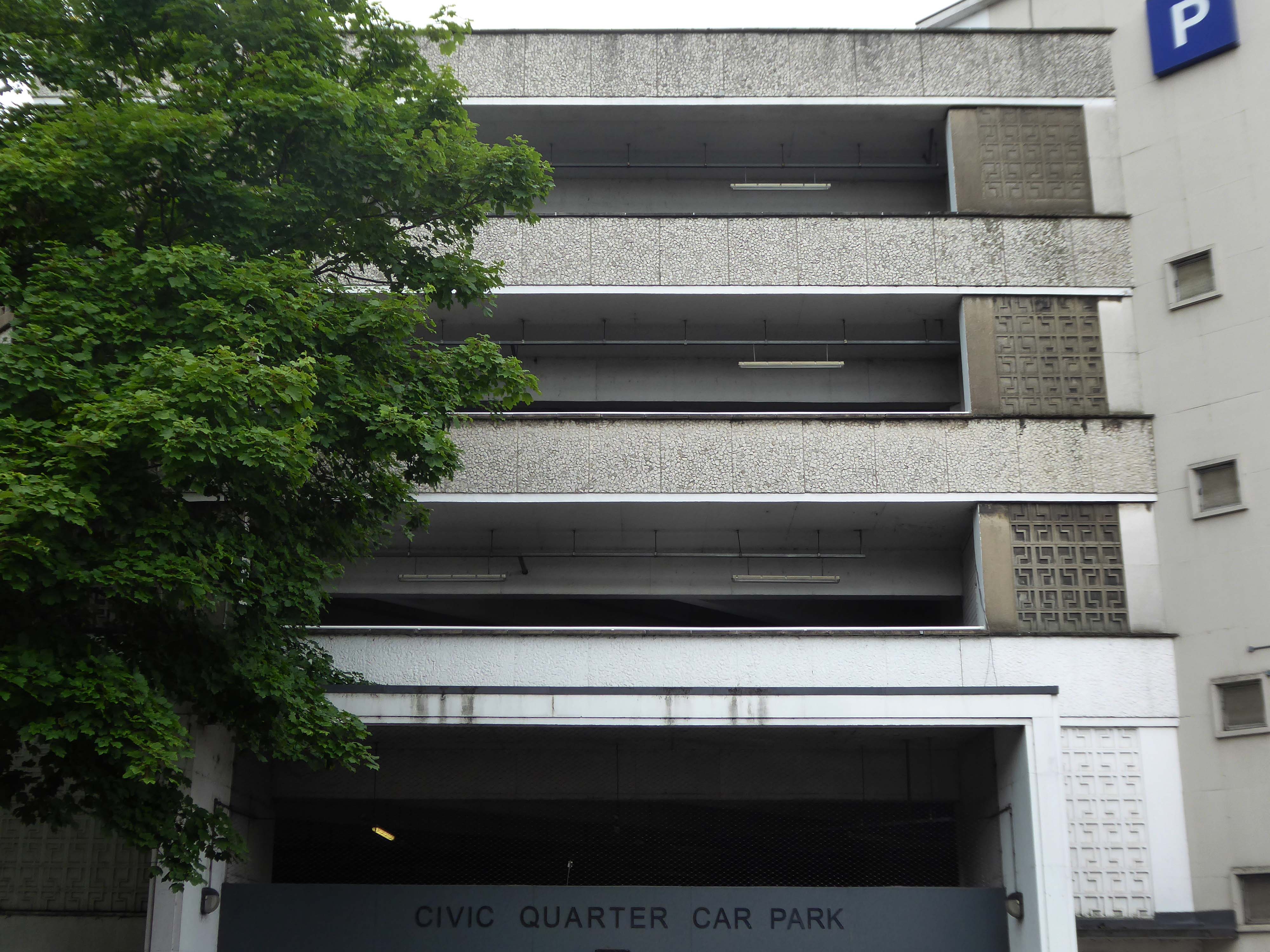
The weary walker is diverted toward the Civic Quarter Car Park.
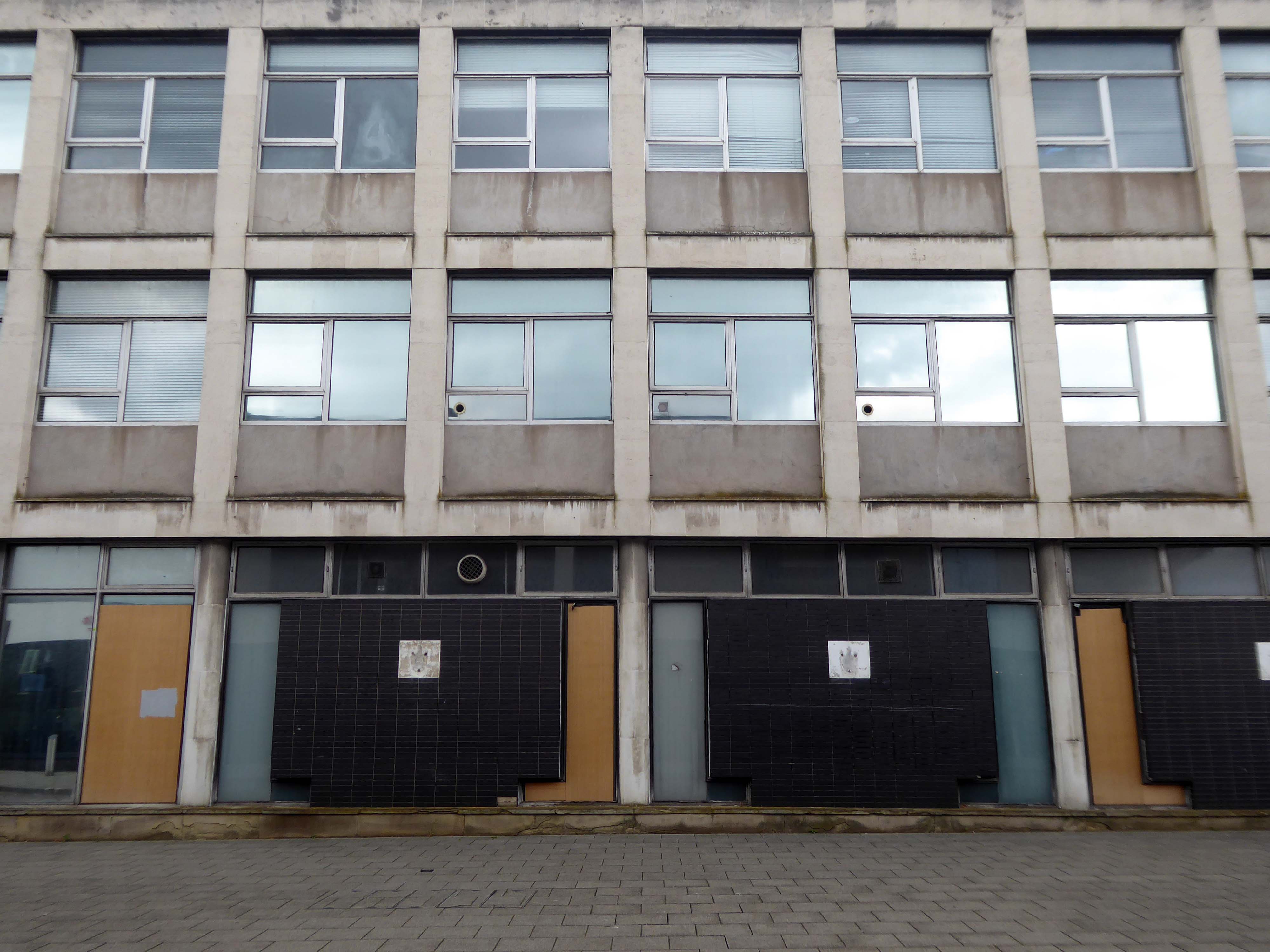
The former Civic Offices are to be demolished.
Demolition of the Central Library is well under way.
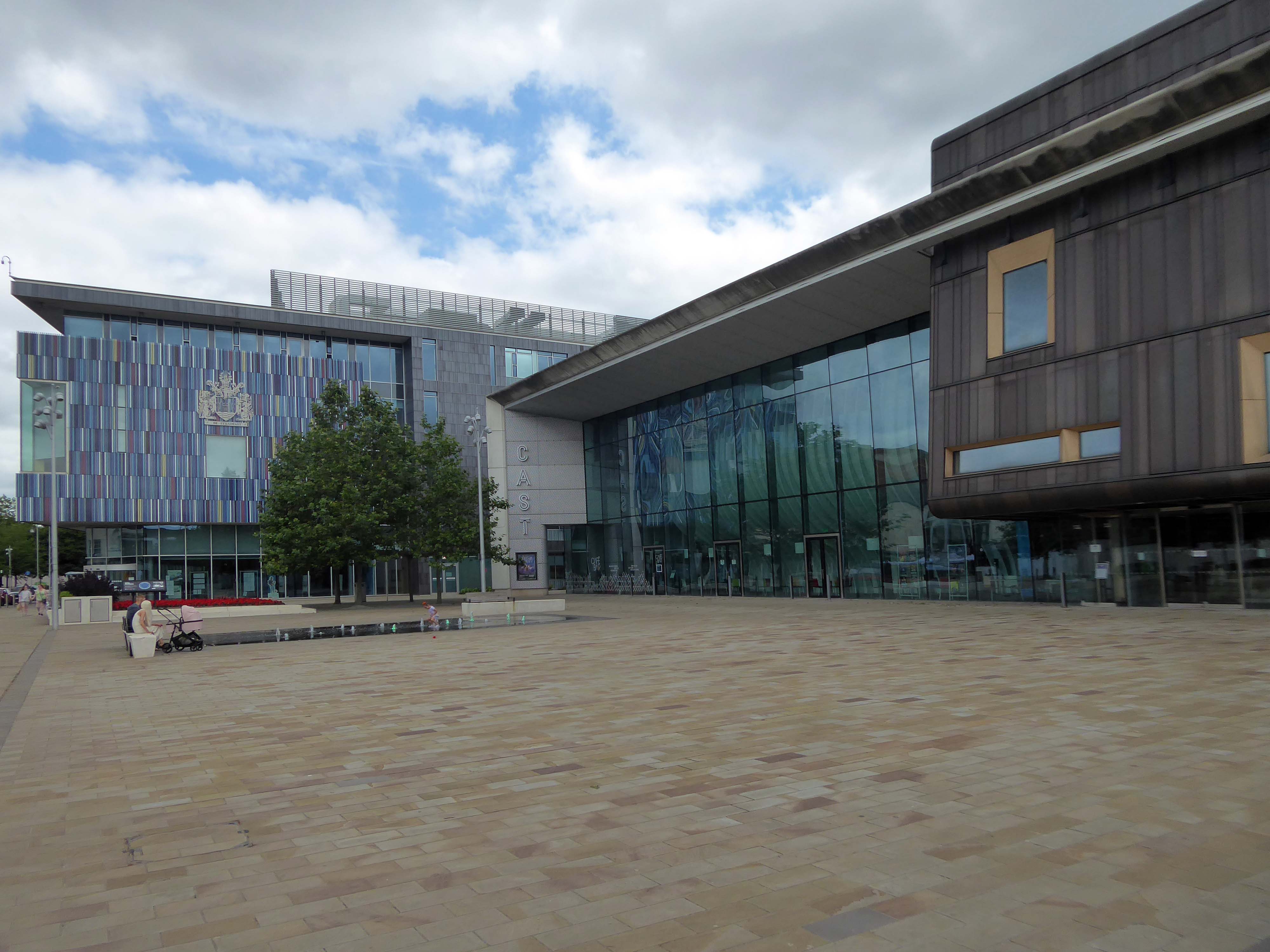
Facing the former library we find the CAST Theatre, Civic Buildings and Savoy Cinema, grouped around Sir Nigel Gresley Square.
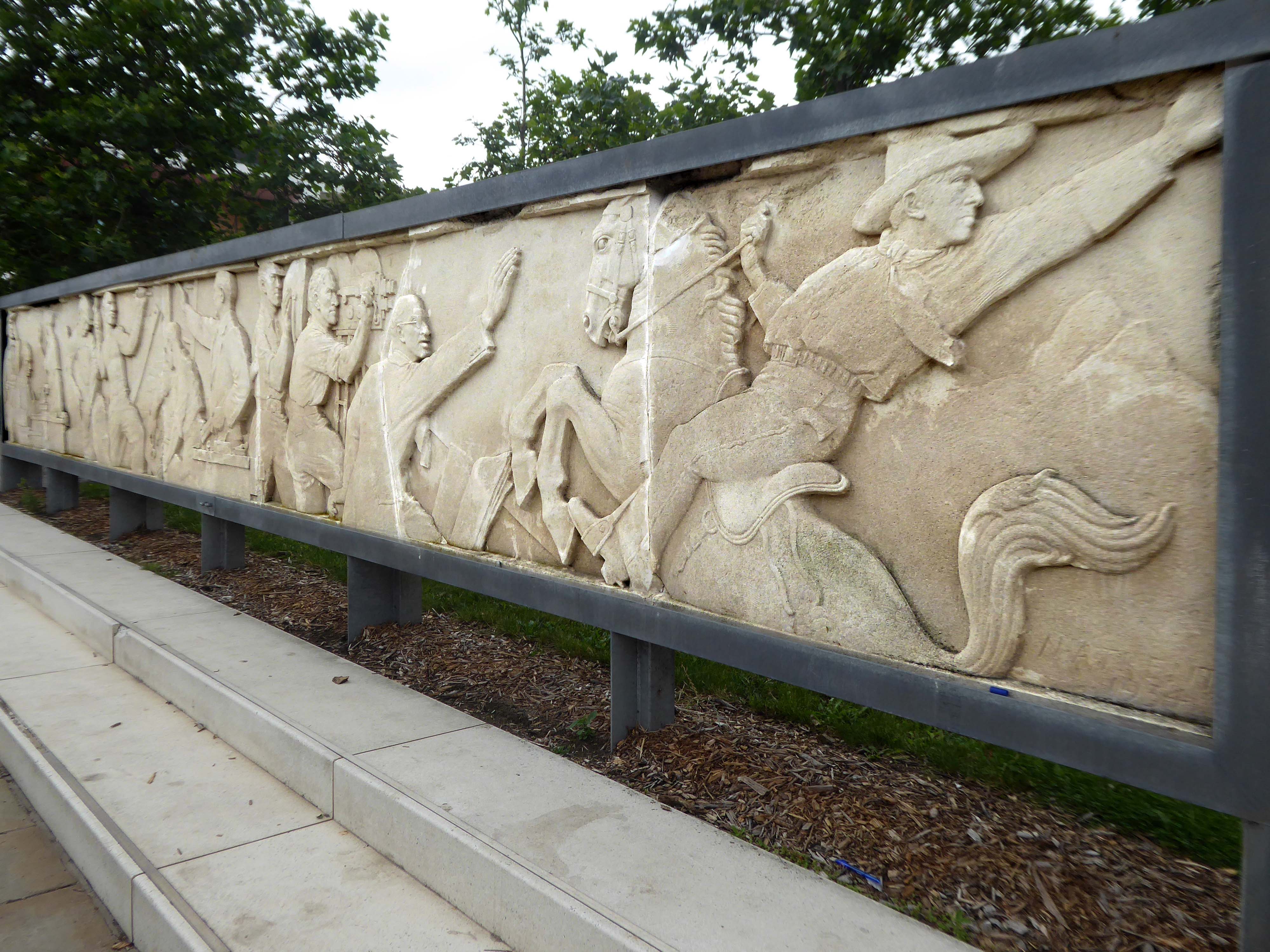
Within the square is a frieze, salvaged from the former Gaumont Cinema, the work of sculptor Newbury Abbot Trent.
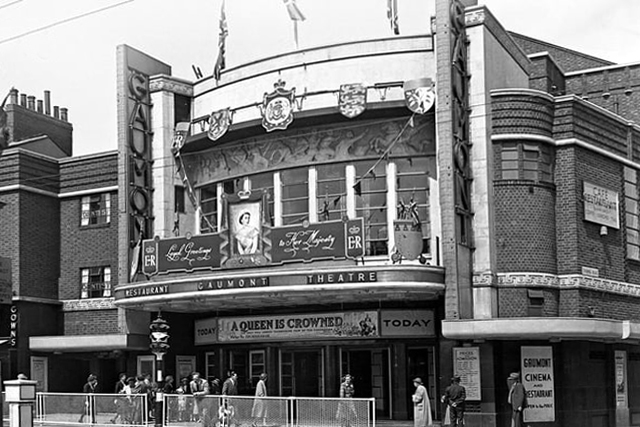
The Gaumont Palace Theatre in Hall Gate at the corner of Thorne Road, Doncaster opened on 3rd September 1934 with Jesse Matthews in Evergreen.
It was designed by architects WE Trent and W Sydney Trent.
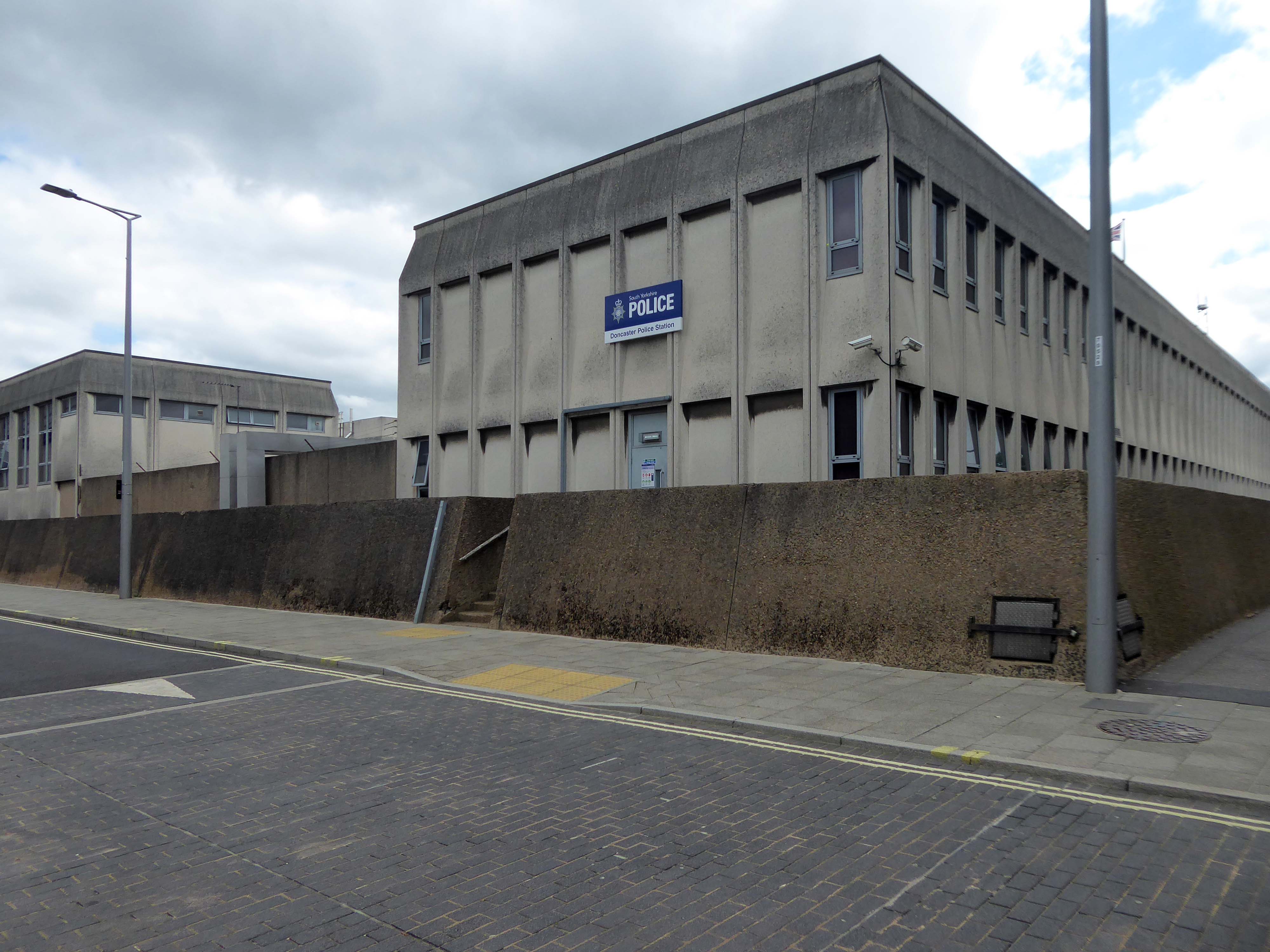
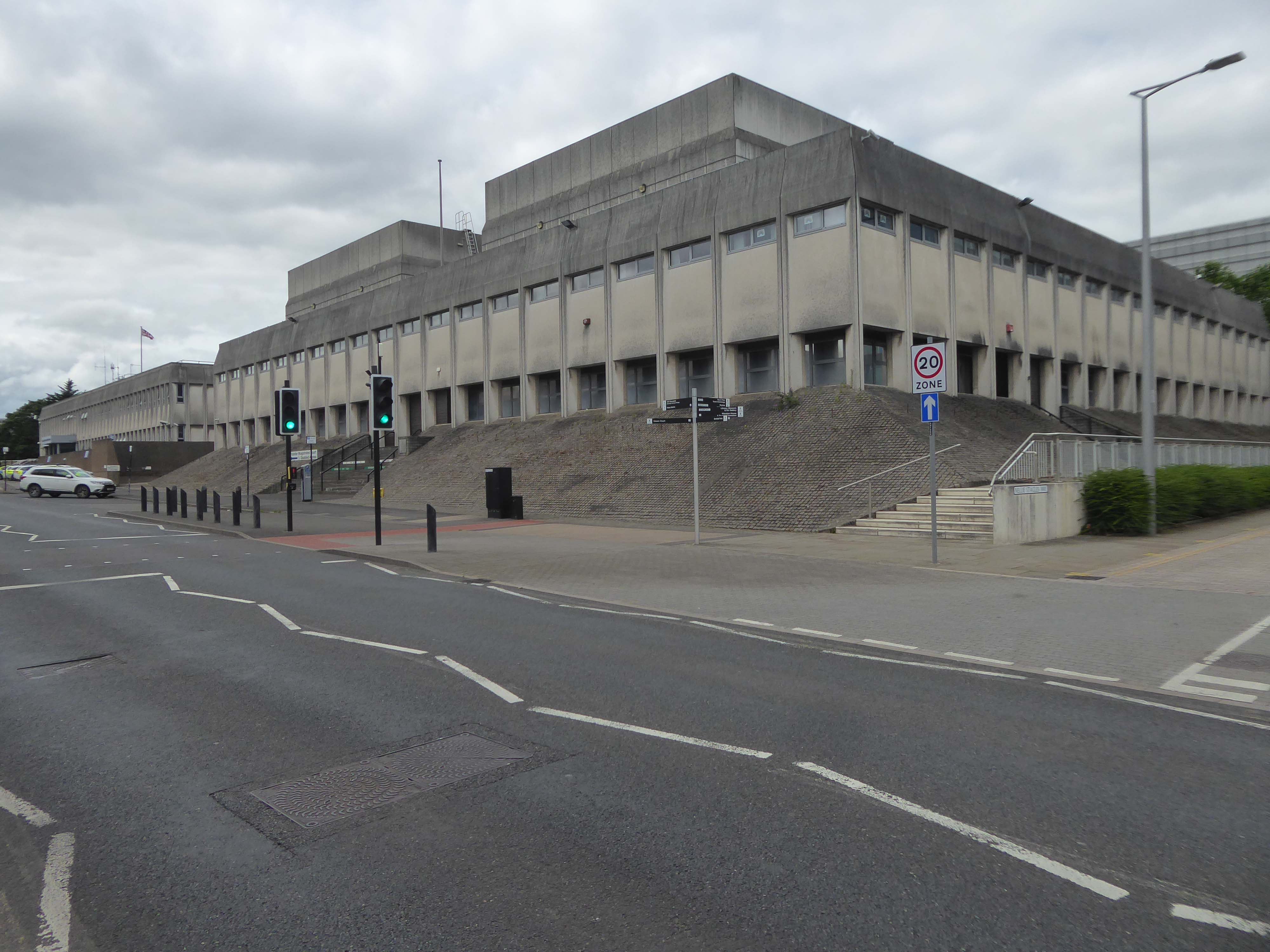
In 1949 WH Price the Borough Surveyor produced an outline plan for the area, with a green space at its heart, it was never realised. In 1955 Frederick Gibberd produced his plan to include a ten storey Town Hall, Art School, Technical College and Civic Theatre, revised and reduced in 1963 – eventually his Police Station and Law Courts were completed in 1969.
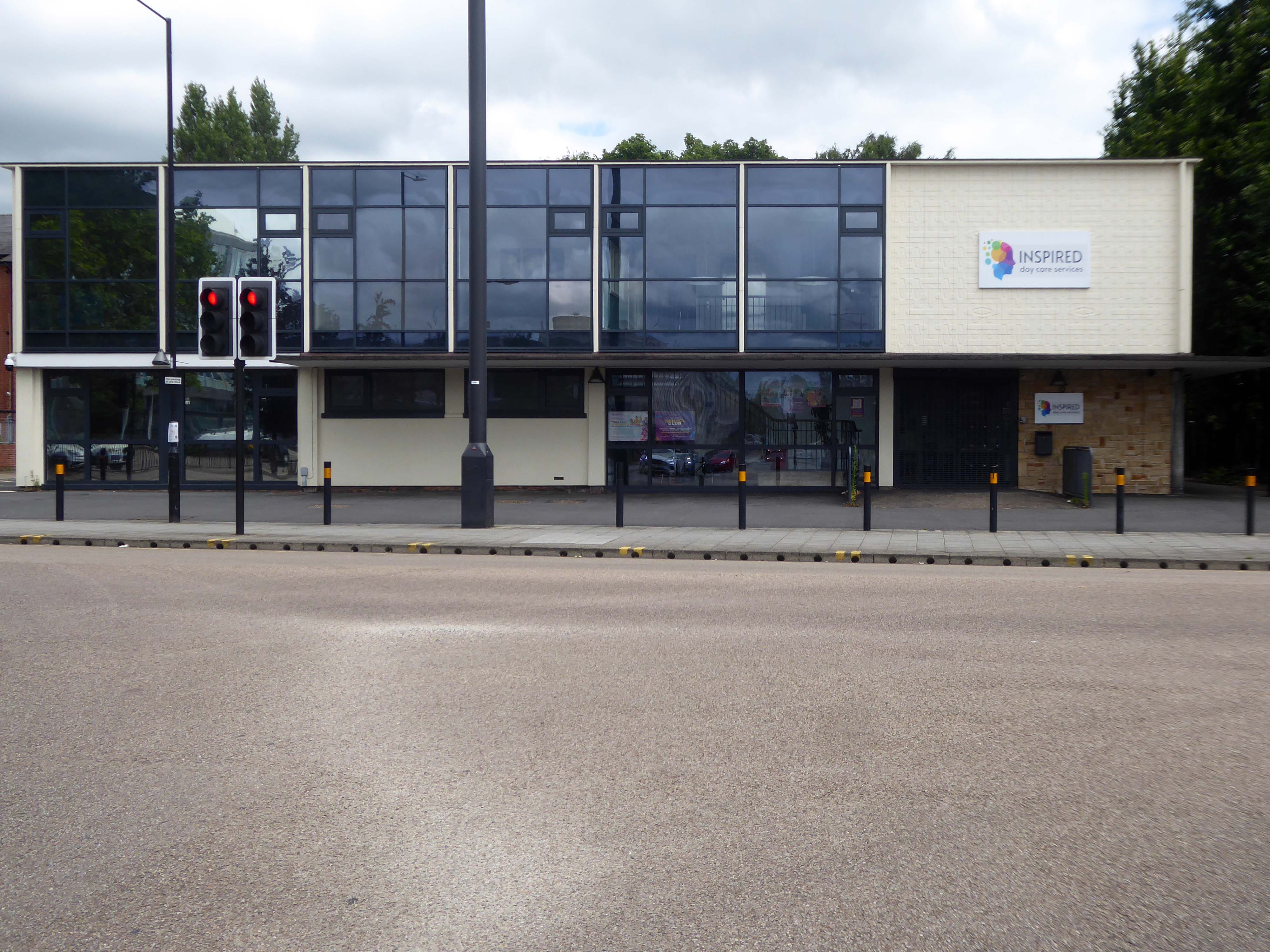
The former NHS Clinic at the ‘T Junction’ is transformed into a day care service.
The building was designed in the office of the Doncaster Borough Architect’s Department in a team led by borough architect Mr LJ Tucker.
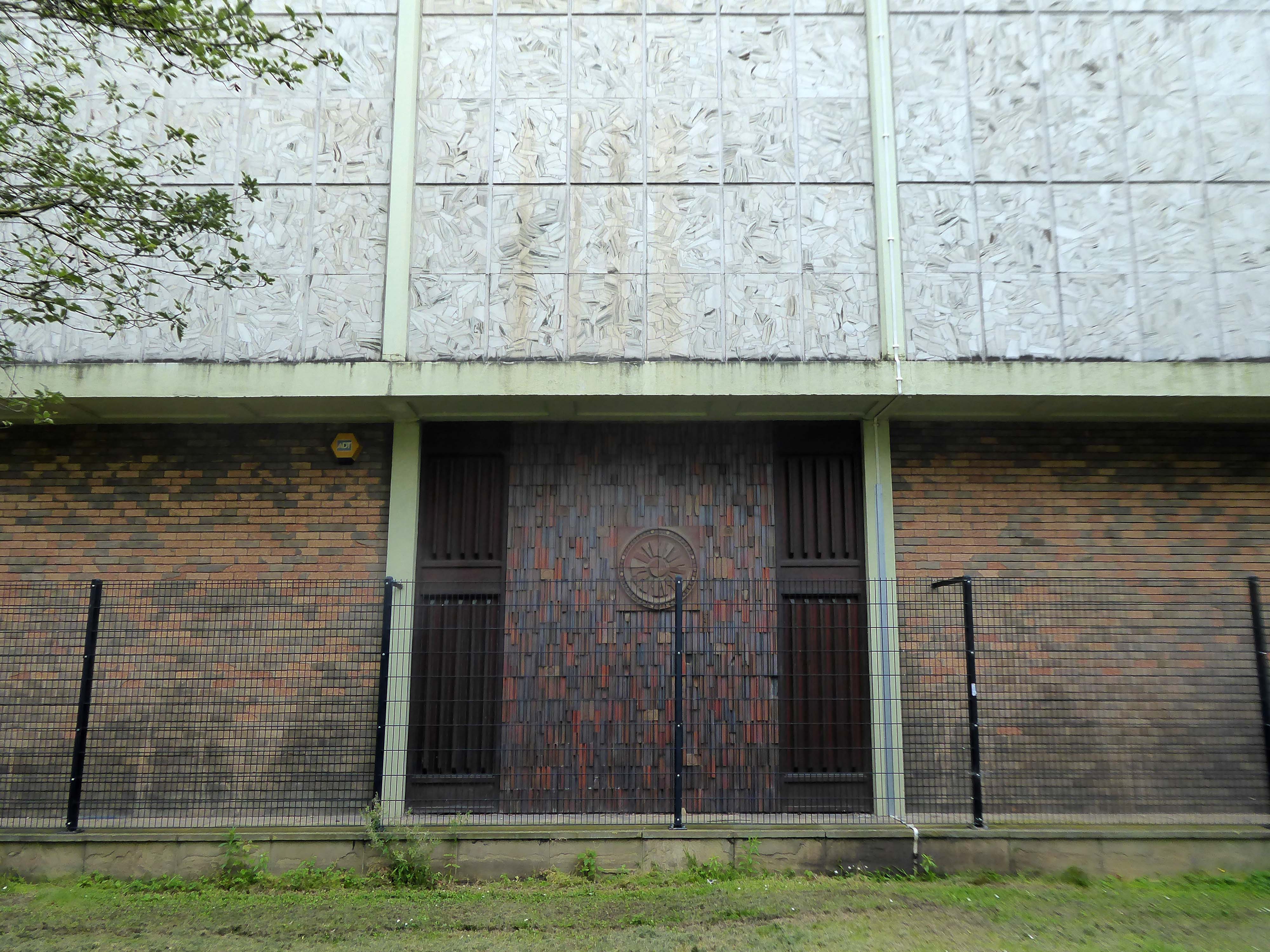
The ceramic designs were a later addition when it was discovered that the large open areas of glass overheated almost everything inside, the work was undertaken by LJ Tucker and family.
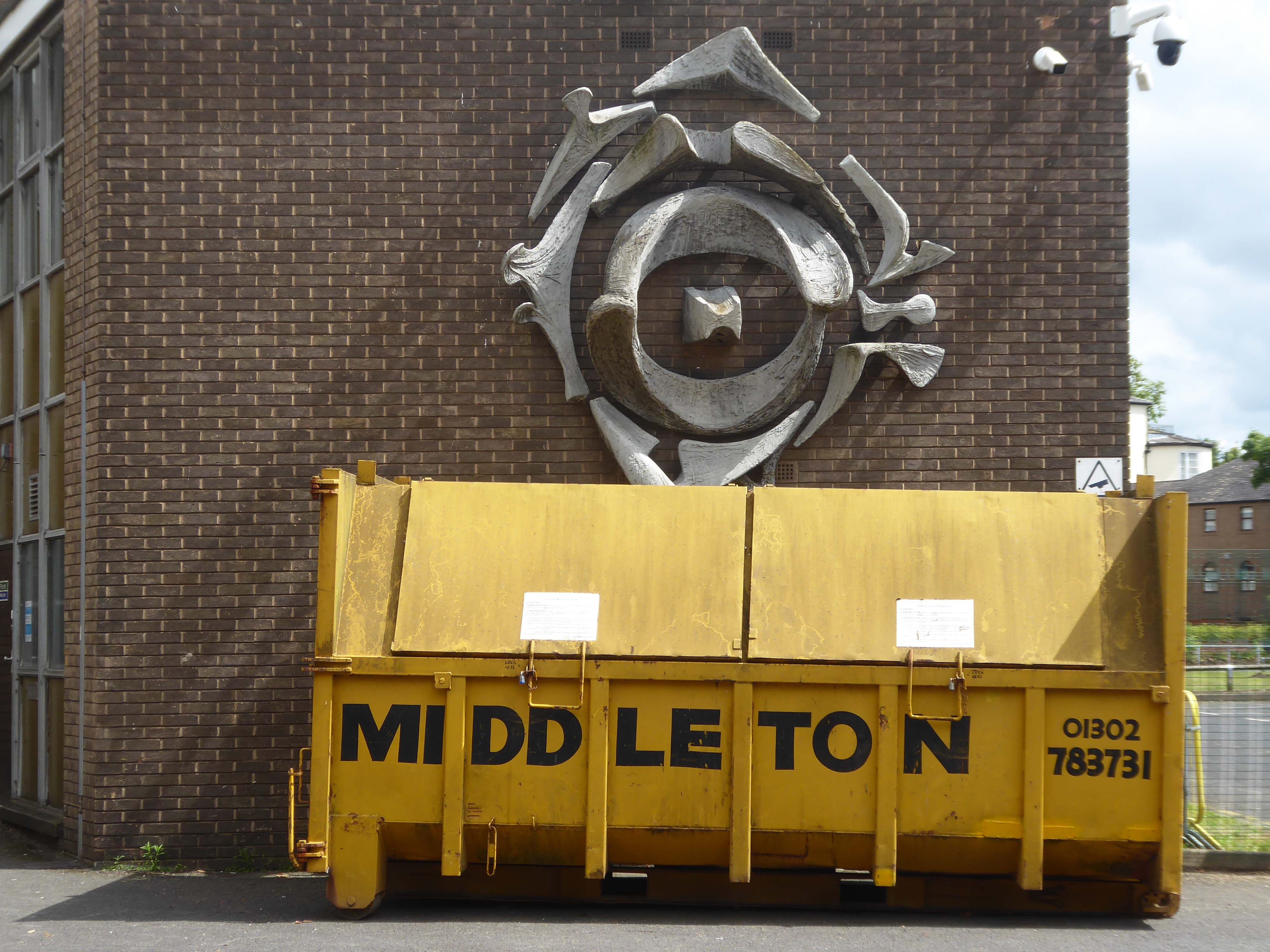
The sculptural work by Franta Belsky, now has a skip for company.
As a footnote the work by Fabio Barraclough reveals a murky past.
Barraclough was born in Madrid in 1923, to a Spanish mother and Yorkshire father who founded Madrid’s Chamber of Commerce. He moved to London with his family in the 1930s as a refugee from Francoist Spain. He taught fine art and sculpture at Rugby School, where colleagues considered him “highly entertaining, a most unorthodox and highly gifted” teacher. He established himself during the 1960s and early 1970s as an authority on sculpture, publishing in academic journals and becoming a member of the Royal British Society of Sculptors.
In 2000, it was revealed that Barraclough, while outwardly living the life of anti-apartheid activist since the 1970s, had been a paid informant of the South African state security police. The media was used to promote his image as a “brilliant, liberal artist with apparently impeccable credentials” in order to gain public trust, while he was funnelling money from anti-apartheid groups to the police. He died on 6th January 2019.
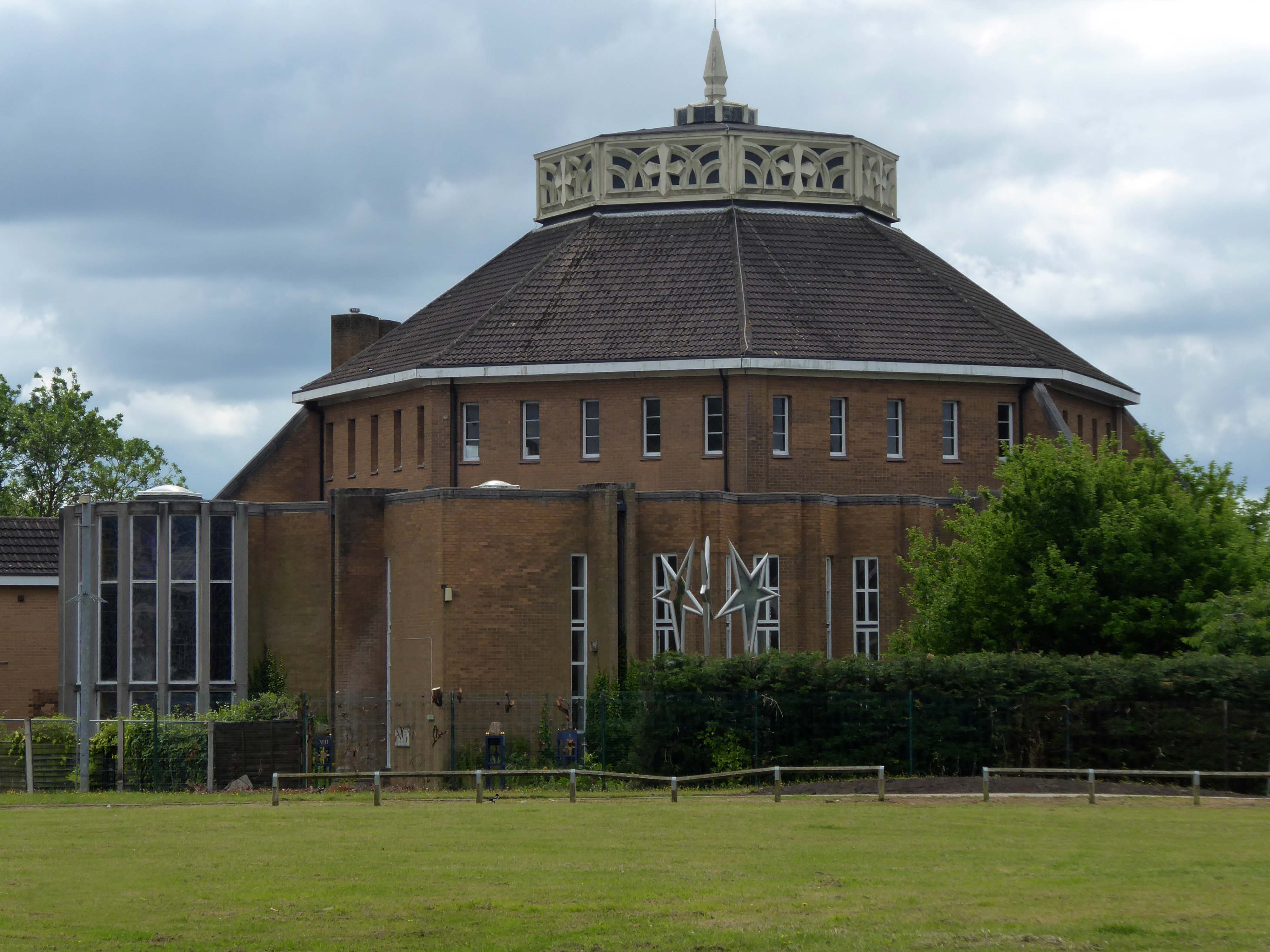
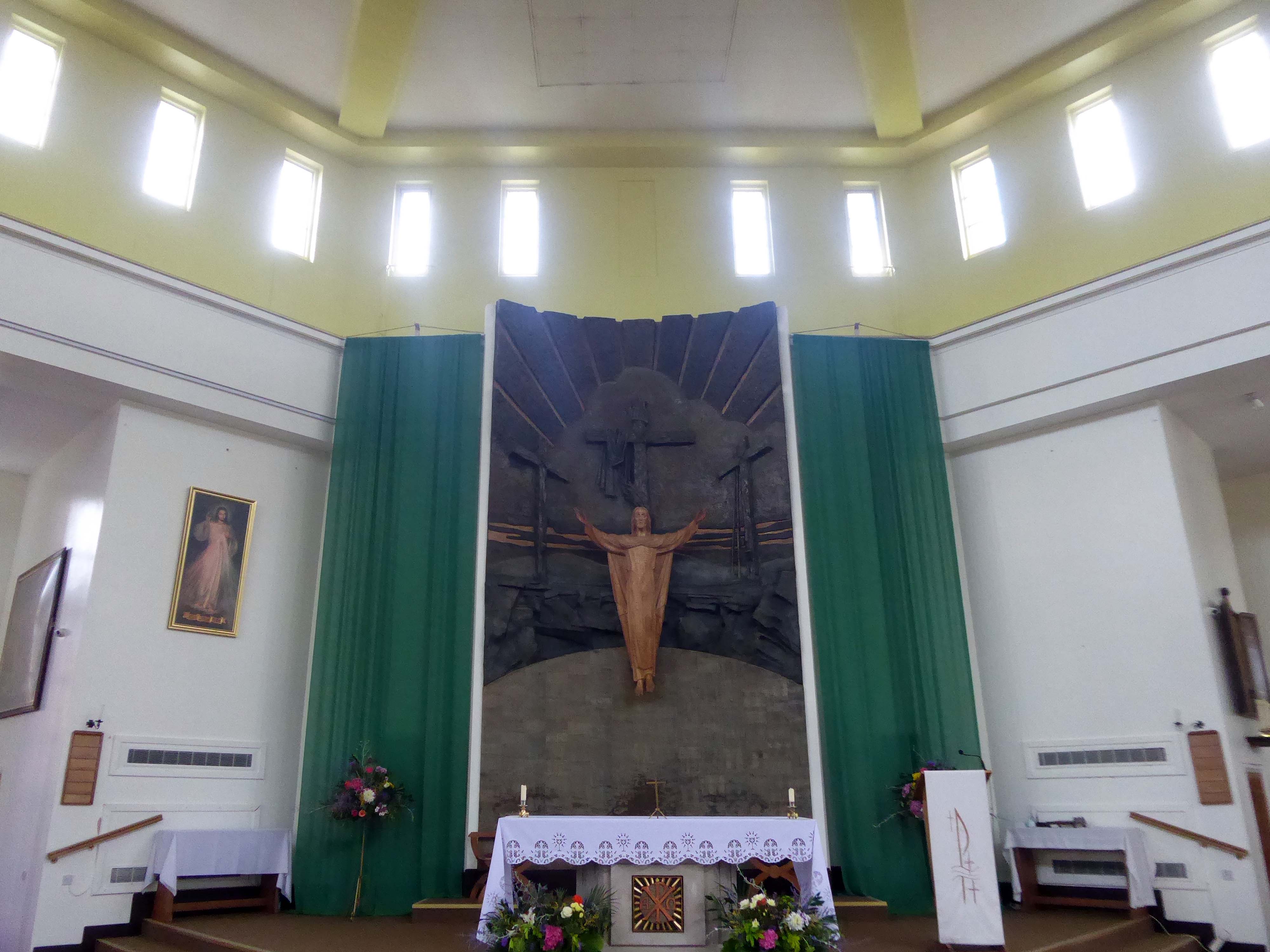
Over the way faros the green sward is St Peter in Chains RC – A large and striking design by JH Langtry-Langton, incorporating important furnishings by J F Bentley from the predecessor church, along with good furnishings of the 1970s. The churches houses the modern successor to the medieval shrine of Our Lady of Doncaster.
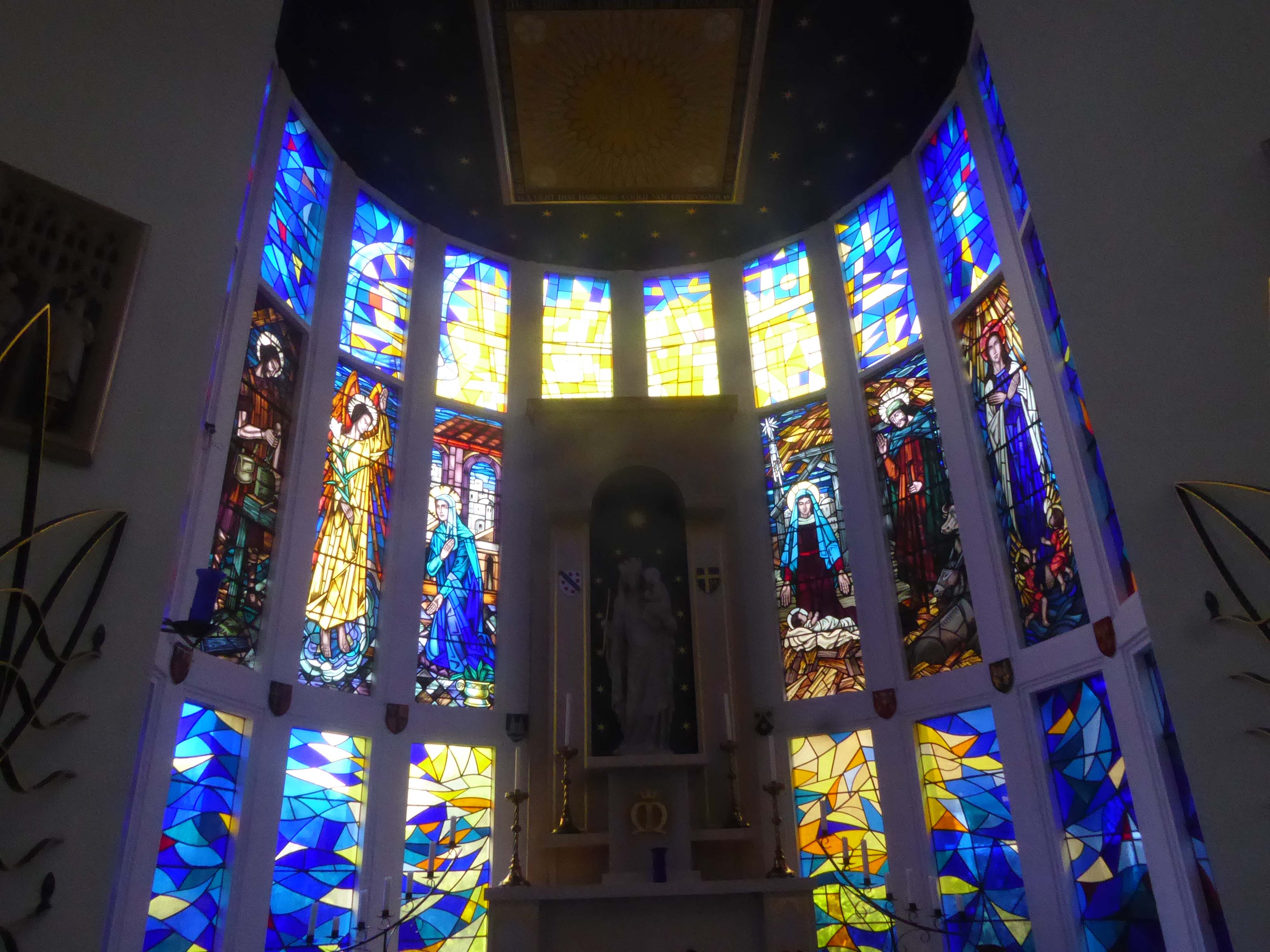
Figurative stained glass by Patrick Feeny for Hardman in 1973 and abstract glass fitted in 2000 as part of reordering and revival of the shrine.
Designed by architects Bond Bryan and built by main contractor Willmott Dixon, the new cultural and learning hub has been created following the restoration of four existing buildings.
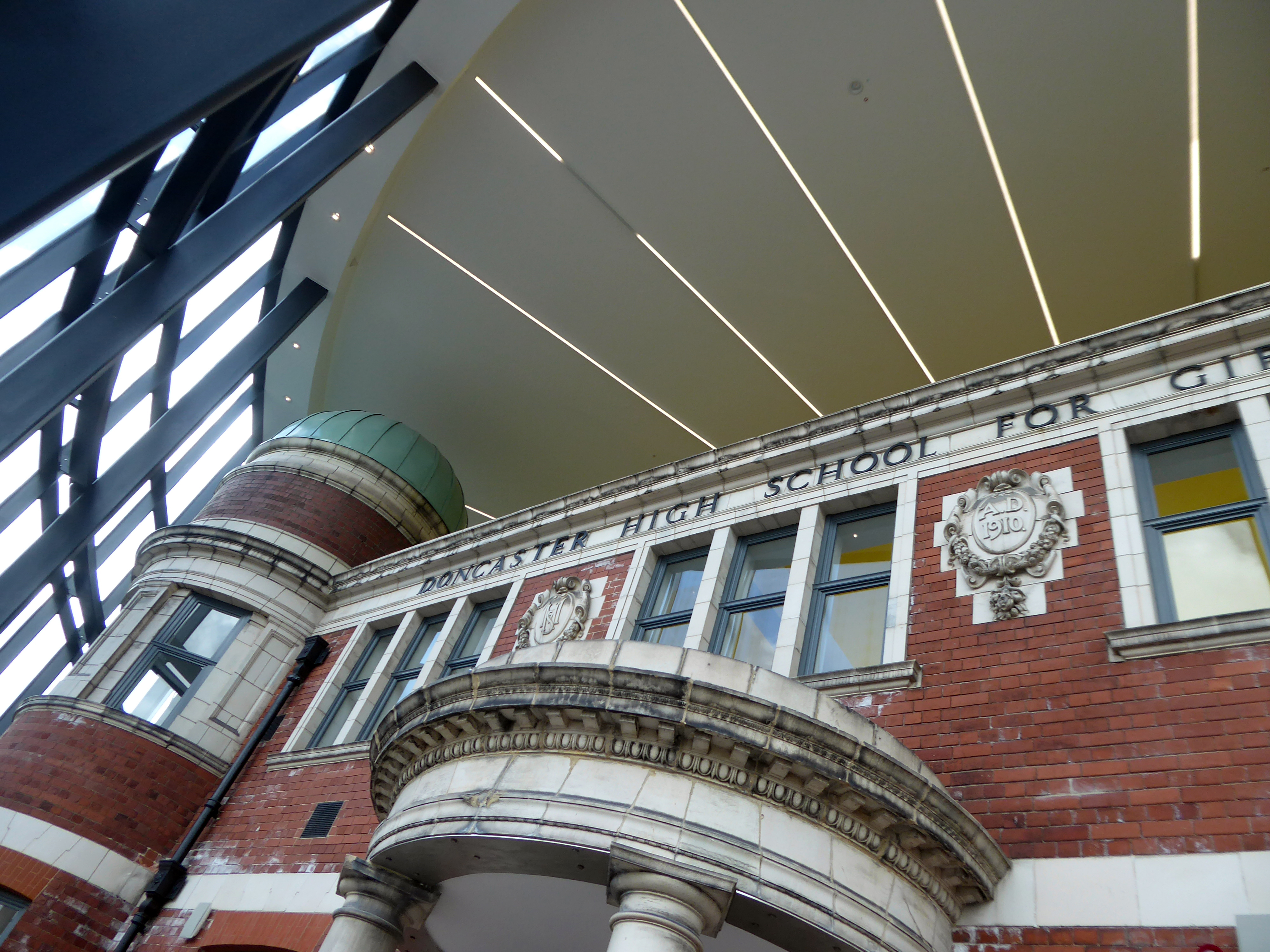
A key focal point of the scheme is the restored frontage of the Edwardian former Doncaster High School for Girls, which has been framed by Senior’s slimline SF52 aluminium curtain wall and showcased within a new steel-frame building. The glazed facade, which was fabricated and installed by Senior’s supply chain partner Chemplas, also features Senior’s aluminium commercial doors.
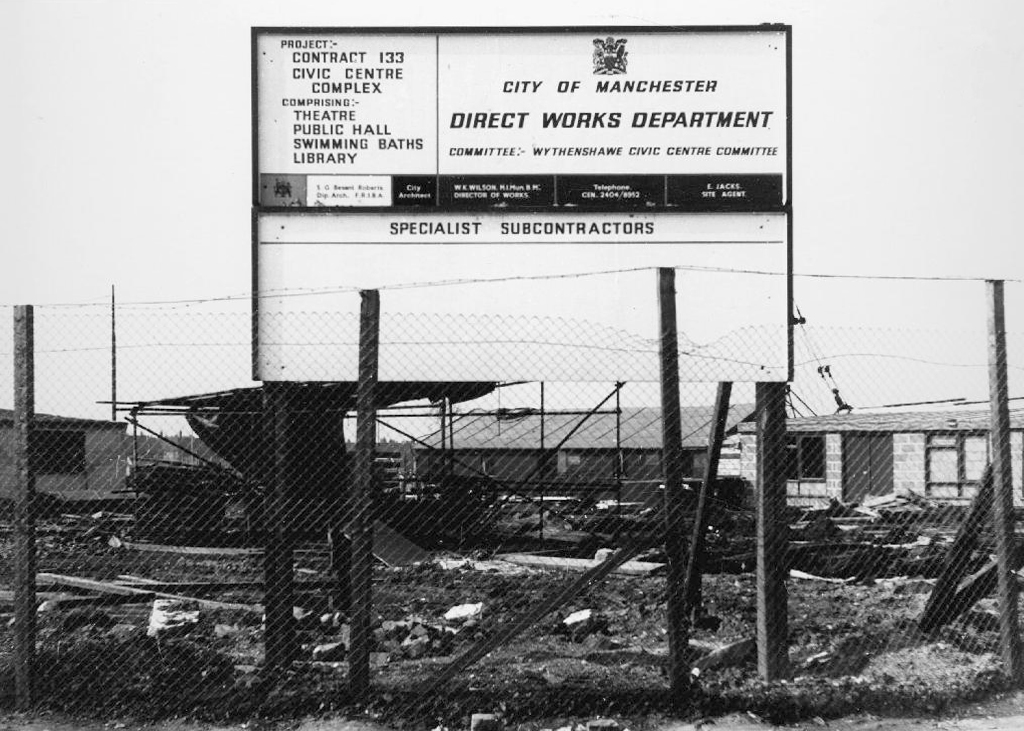
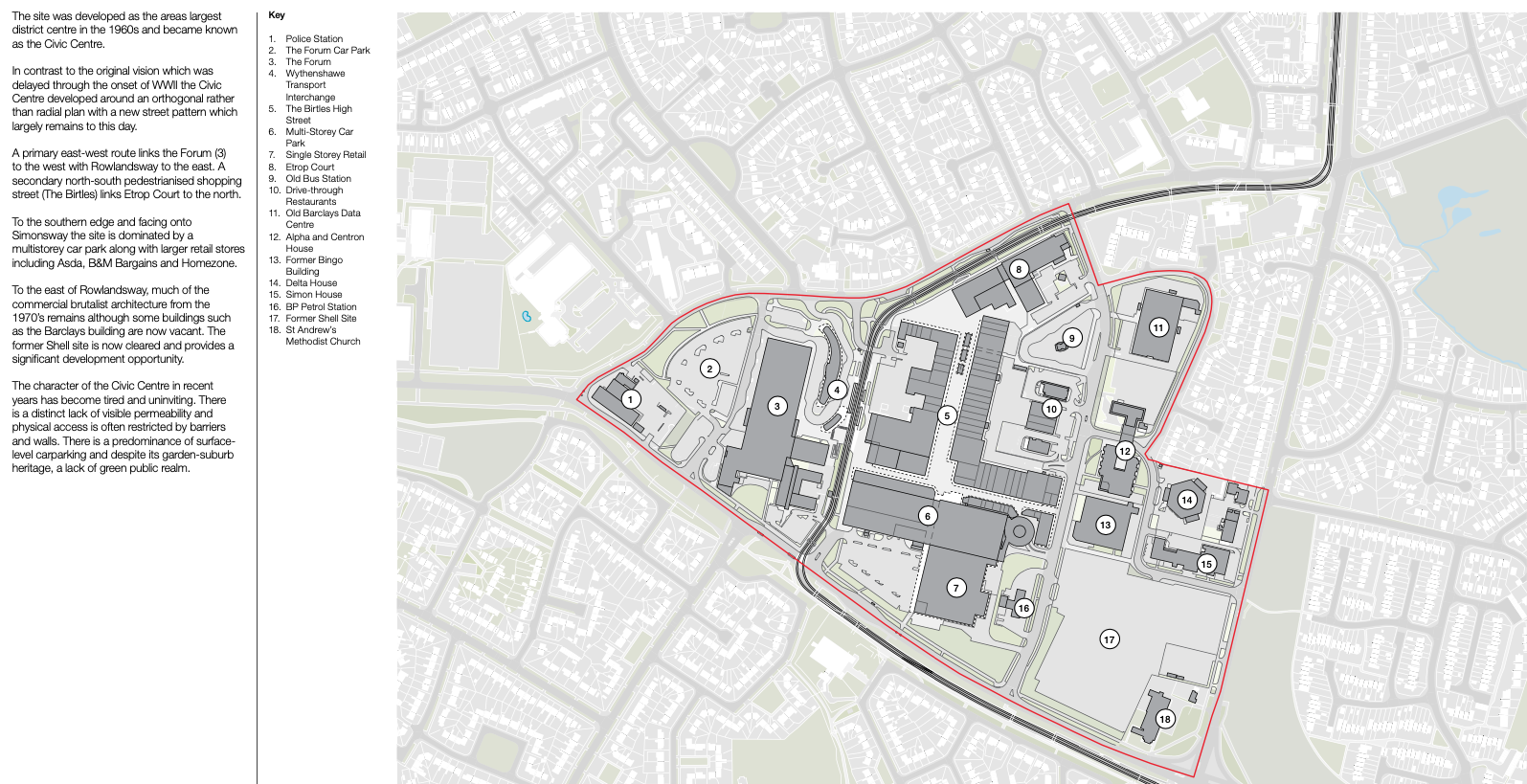
Work began in the interwar years, and continued following the hiatus of 1939-45. The shopping centre named the Civic Centre was open in 1963, the actual Civic Centre containing a swimming pool, theatre, public hall and library in 1971.
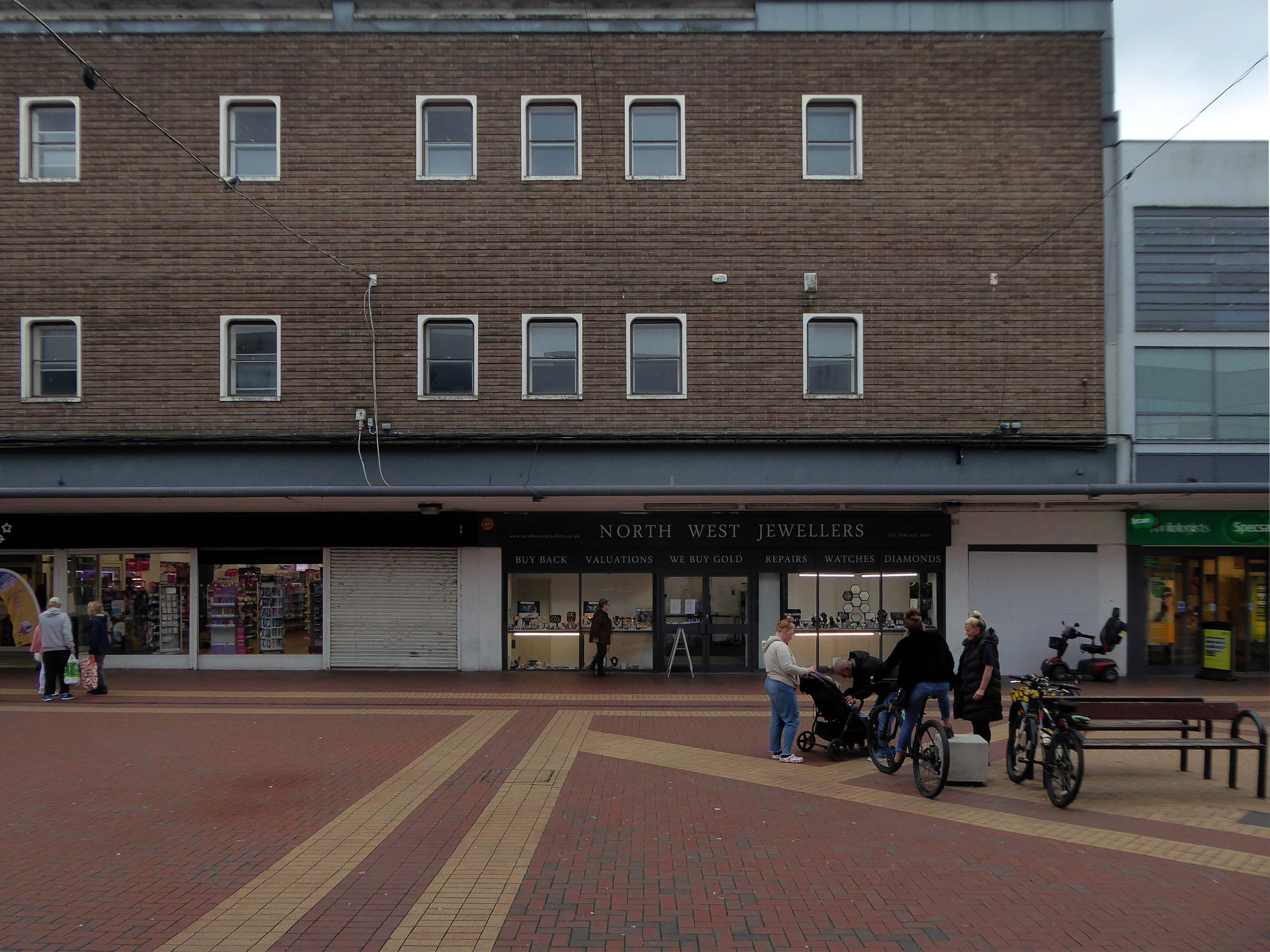
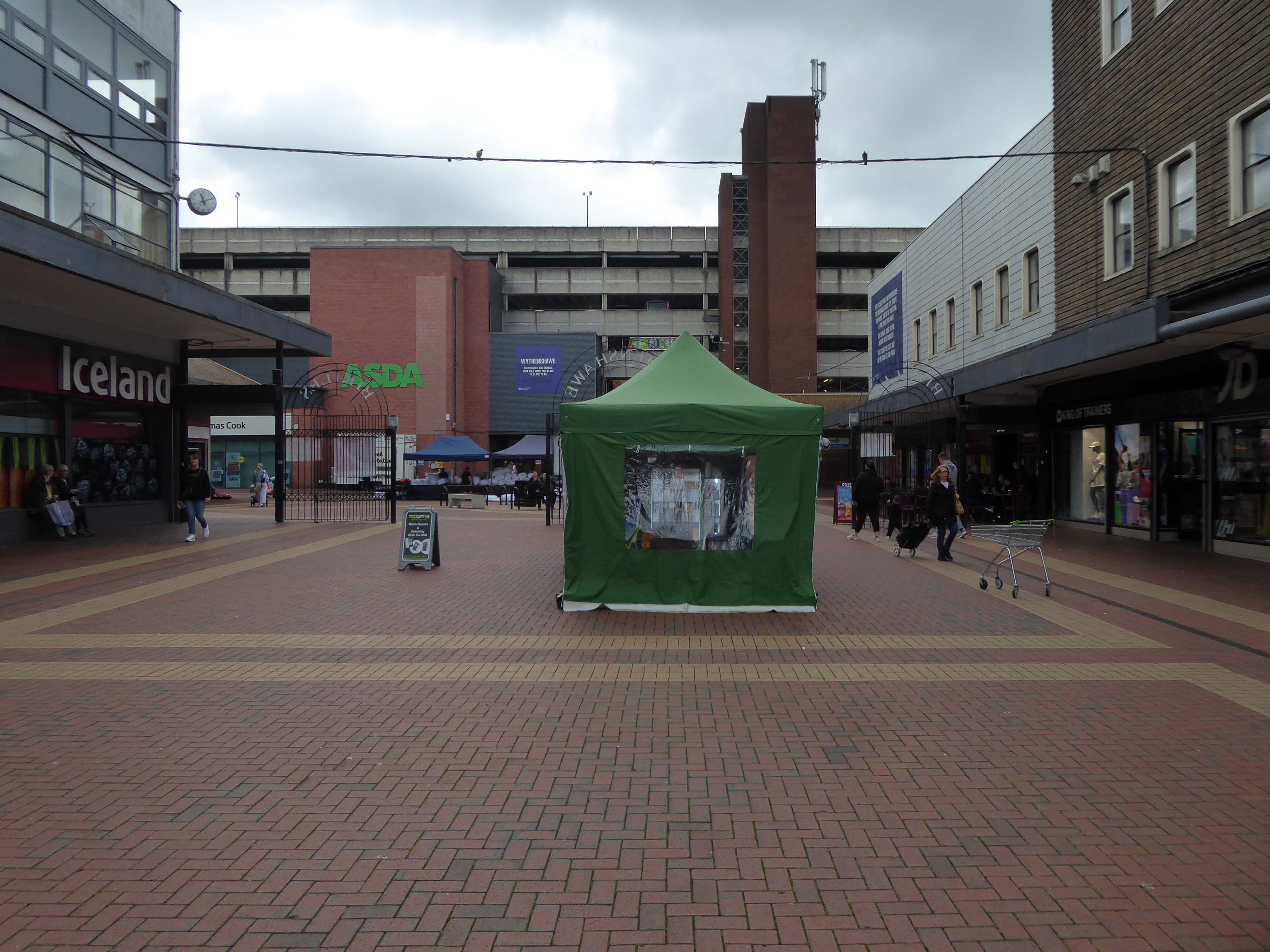
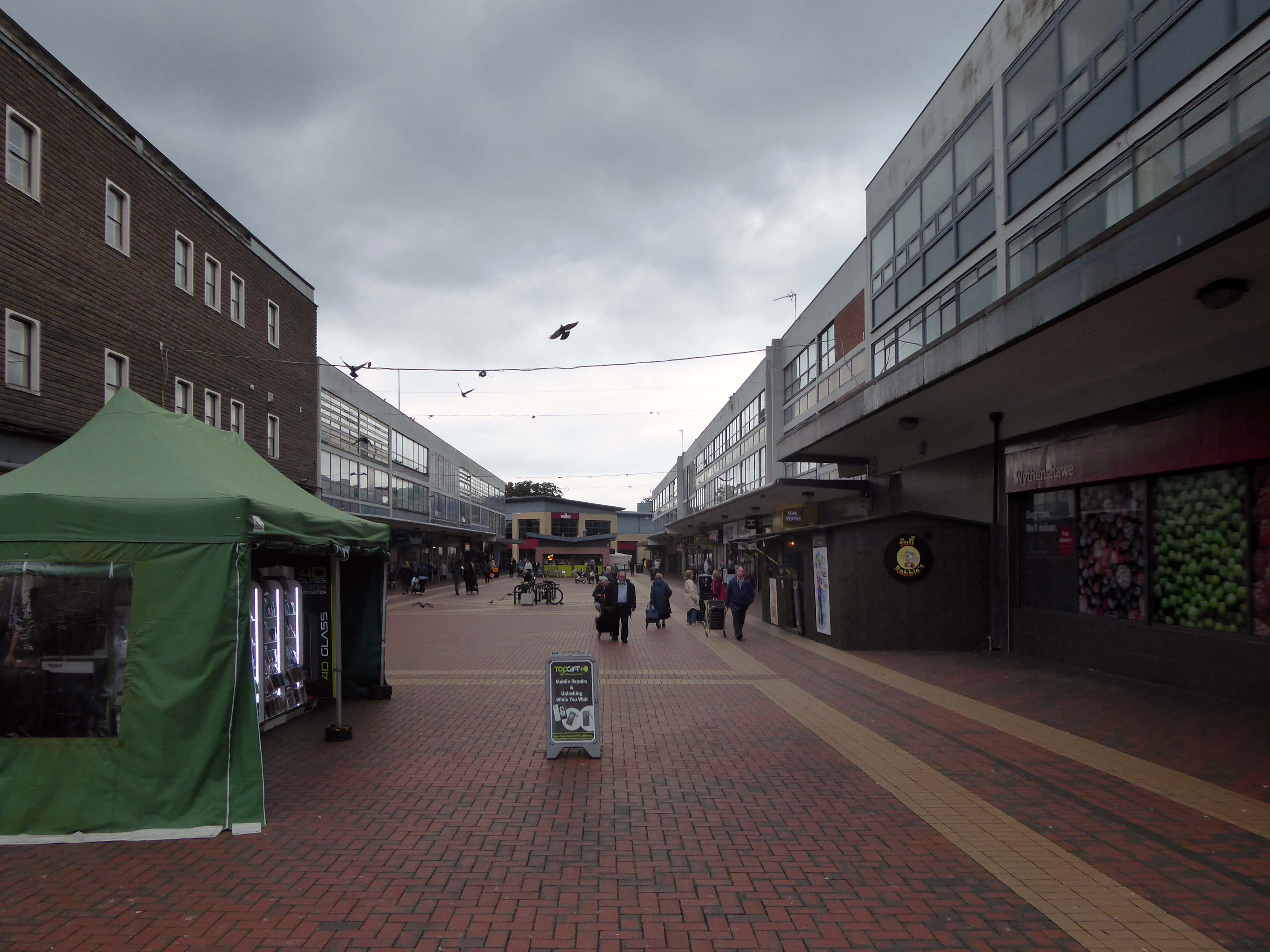
Here I am again four years later, taking a look at how it looks today.
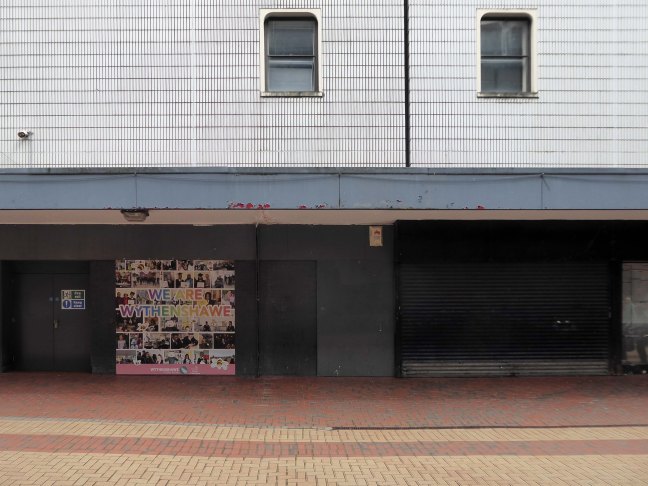
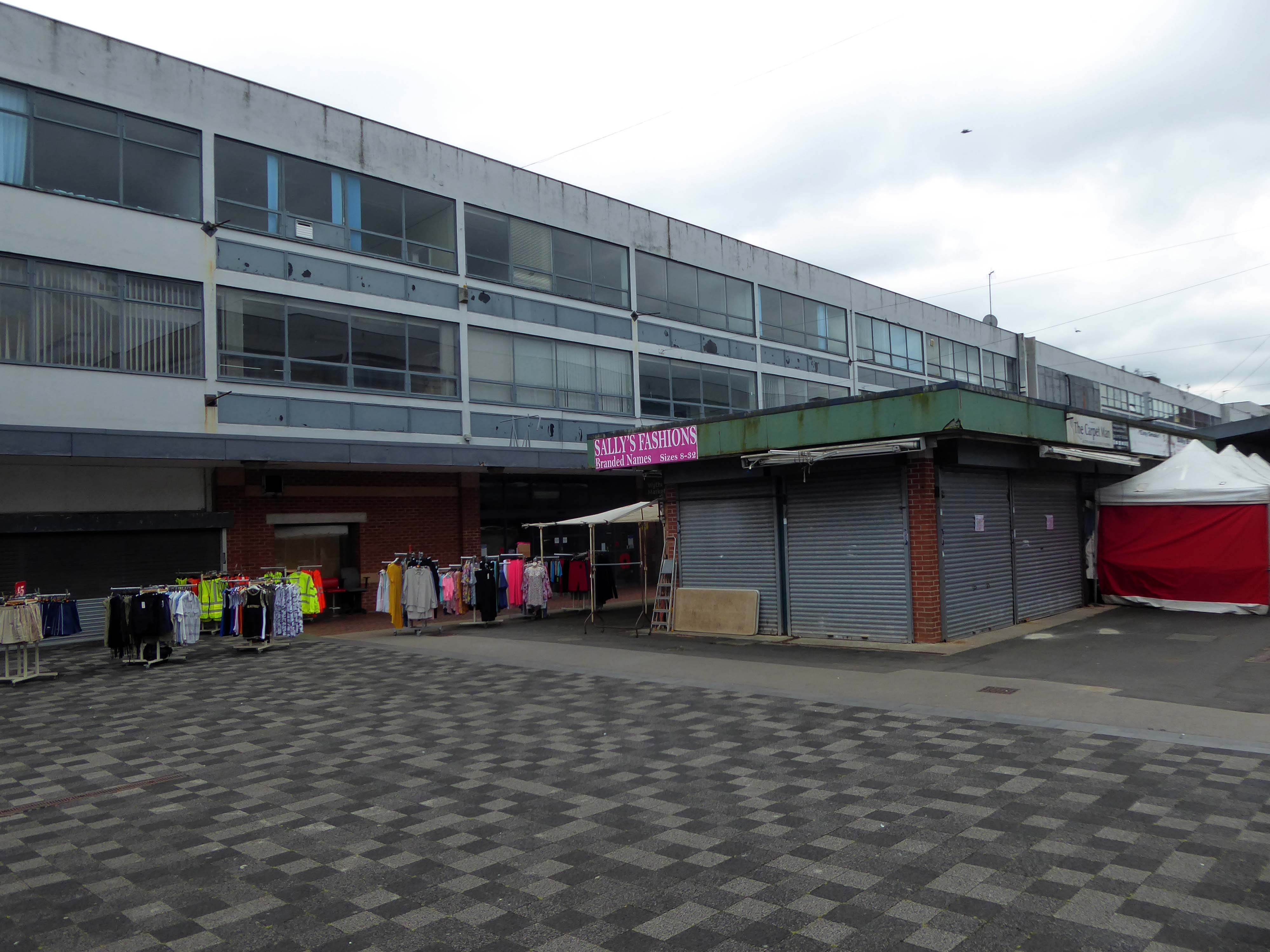
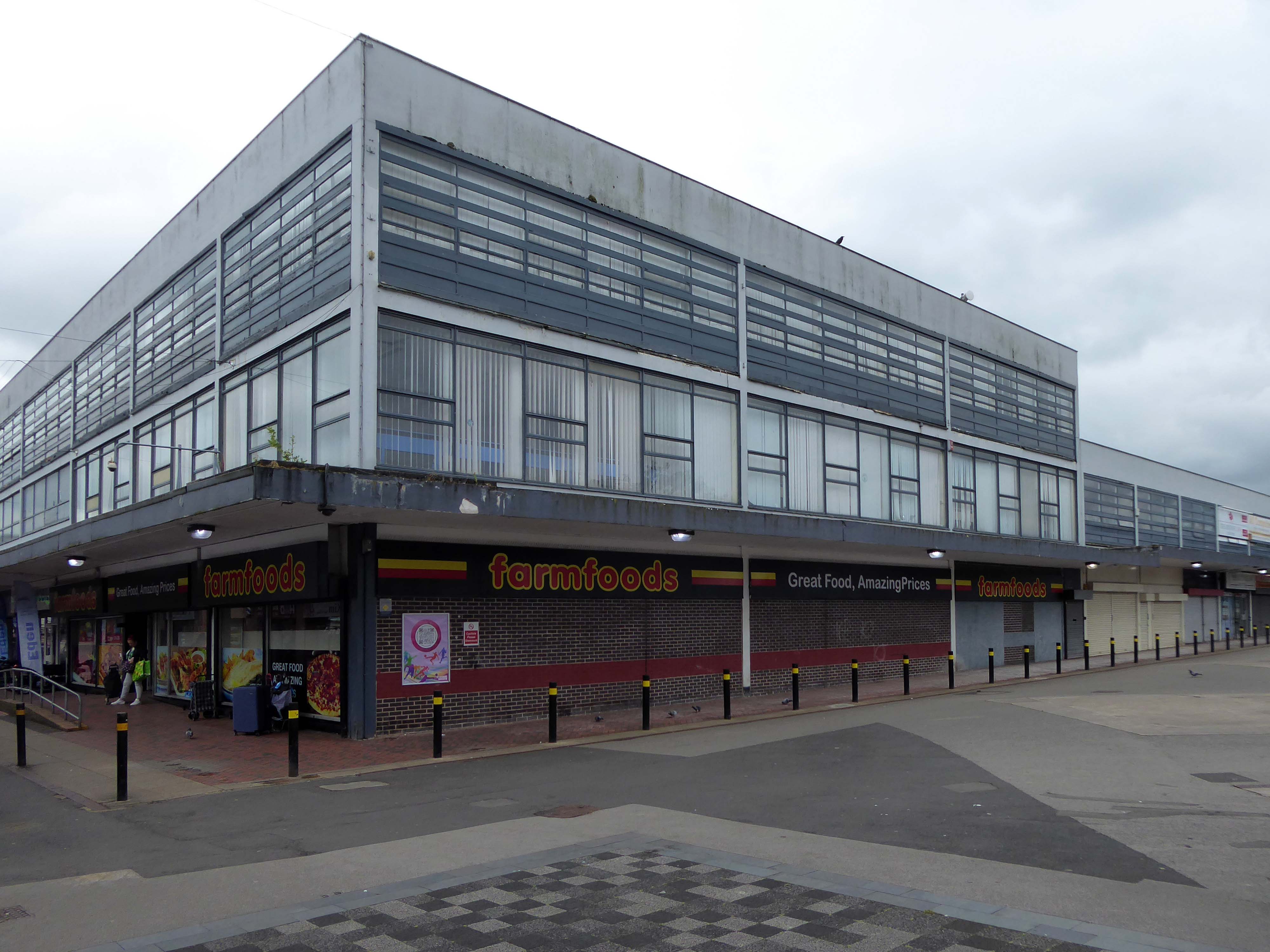
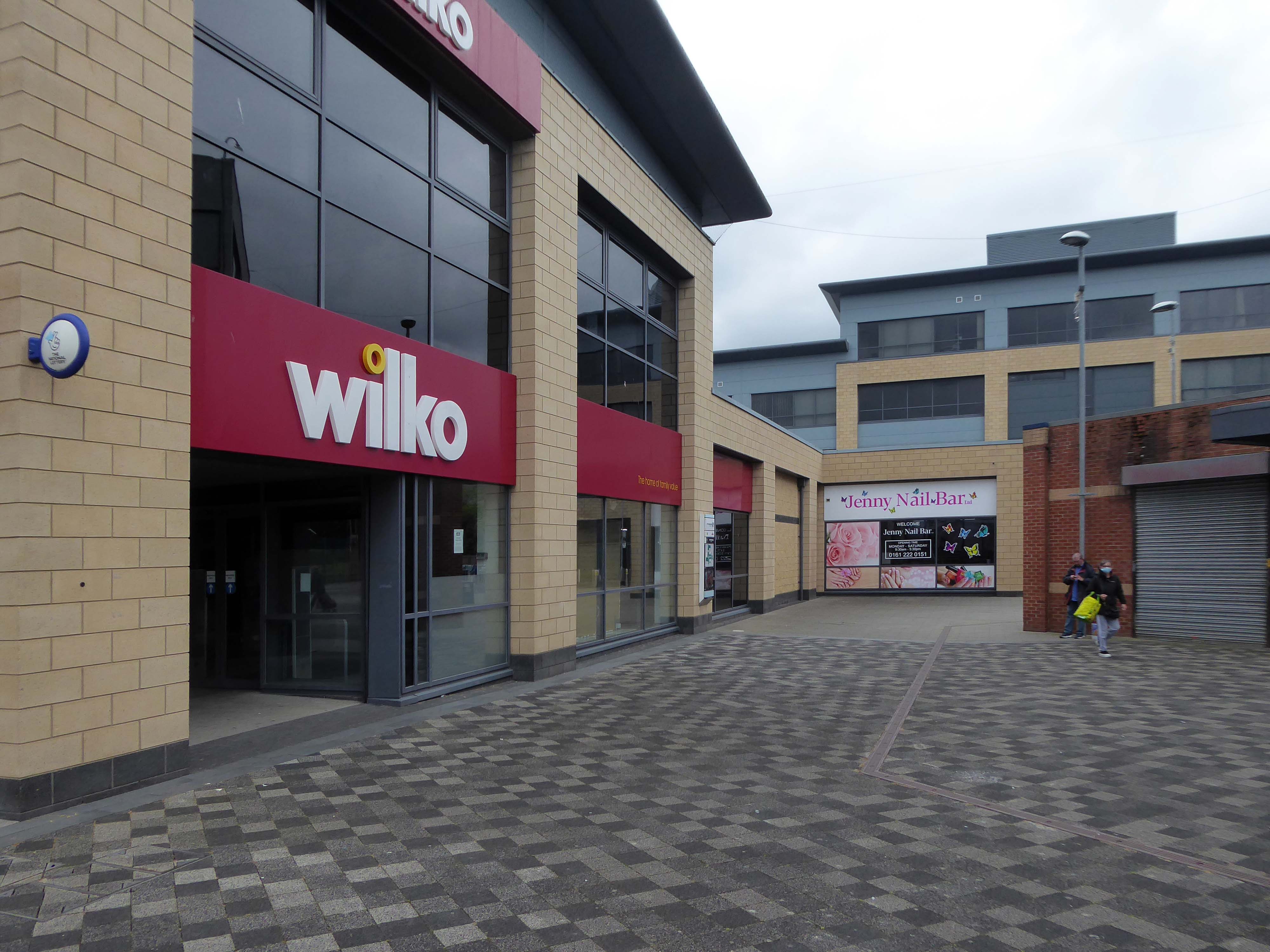
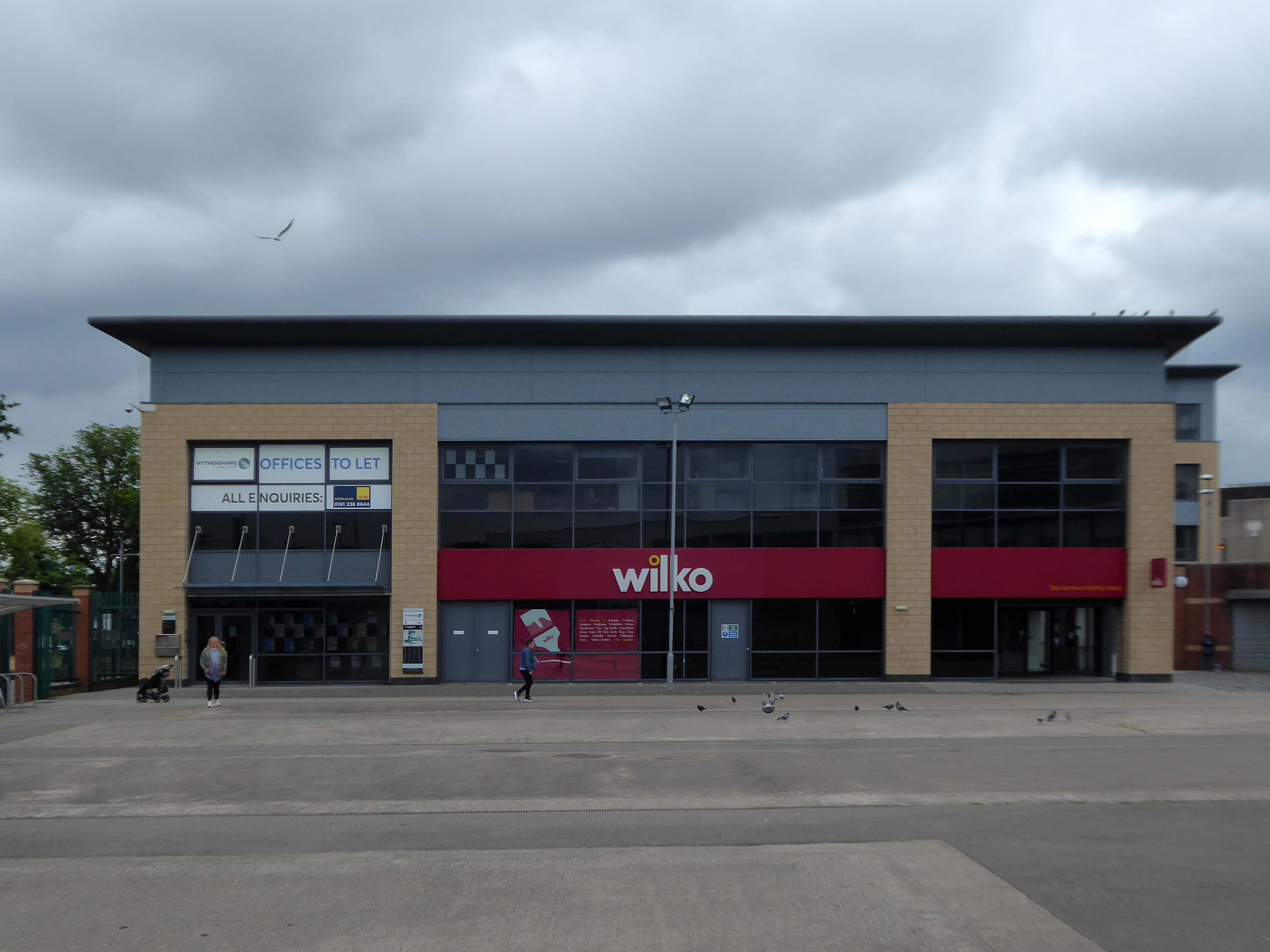
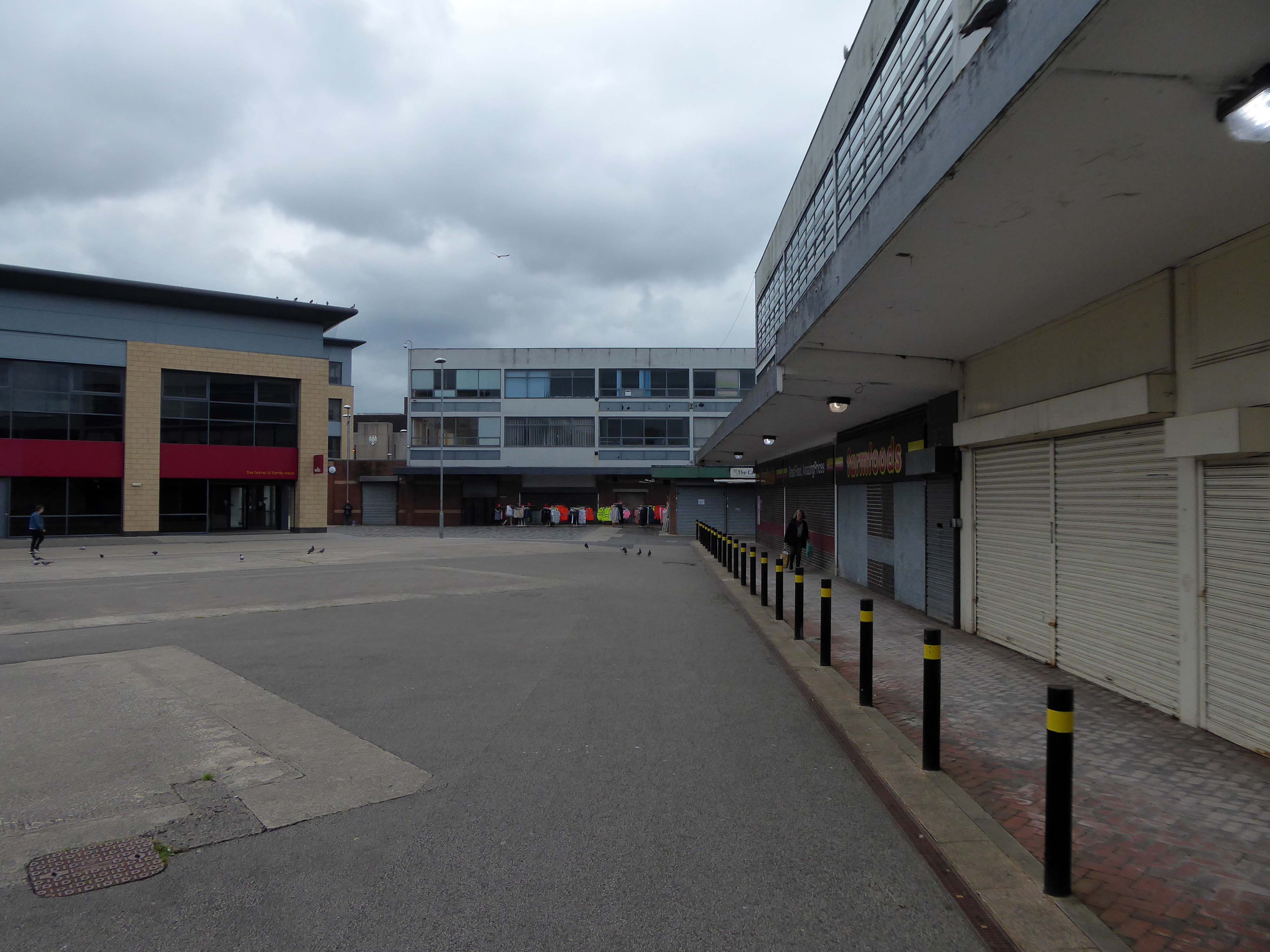
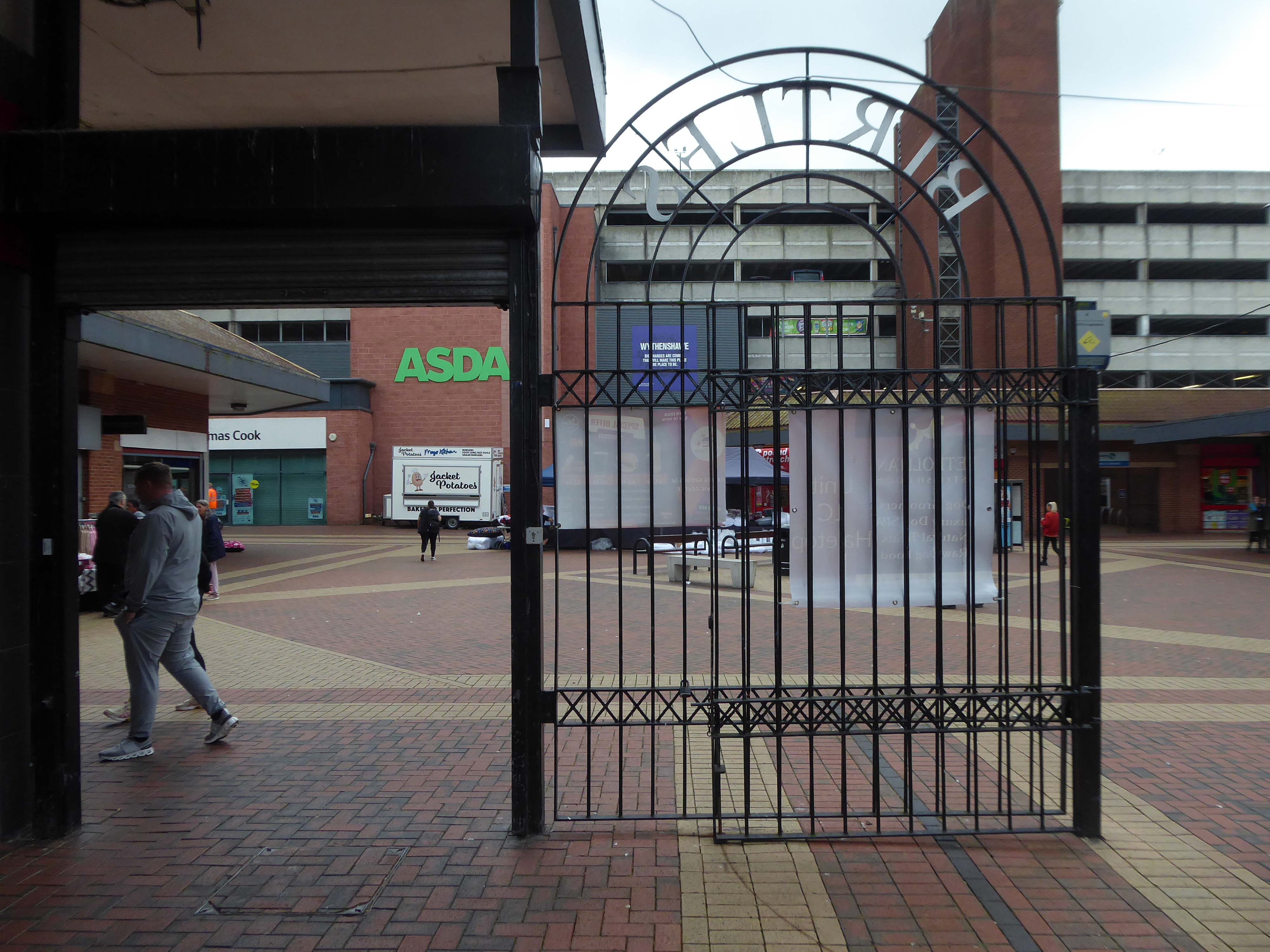
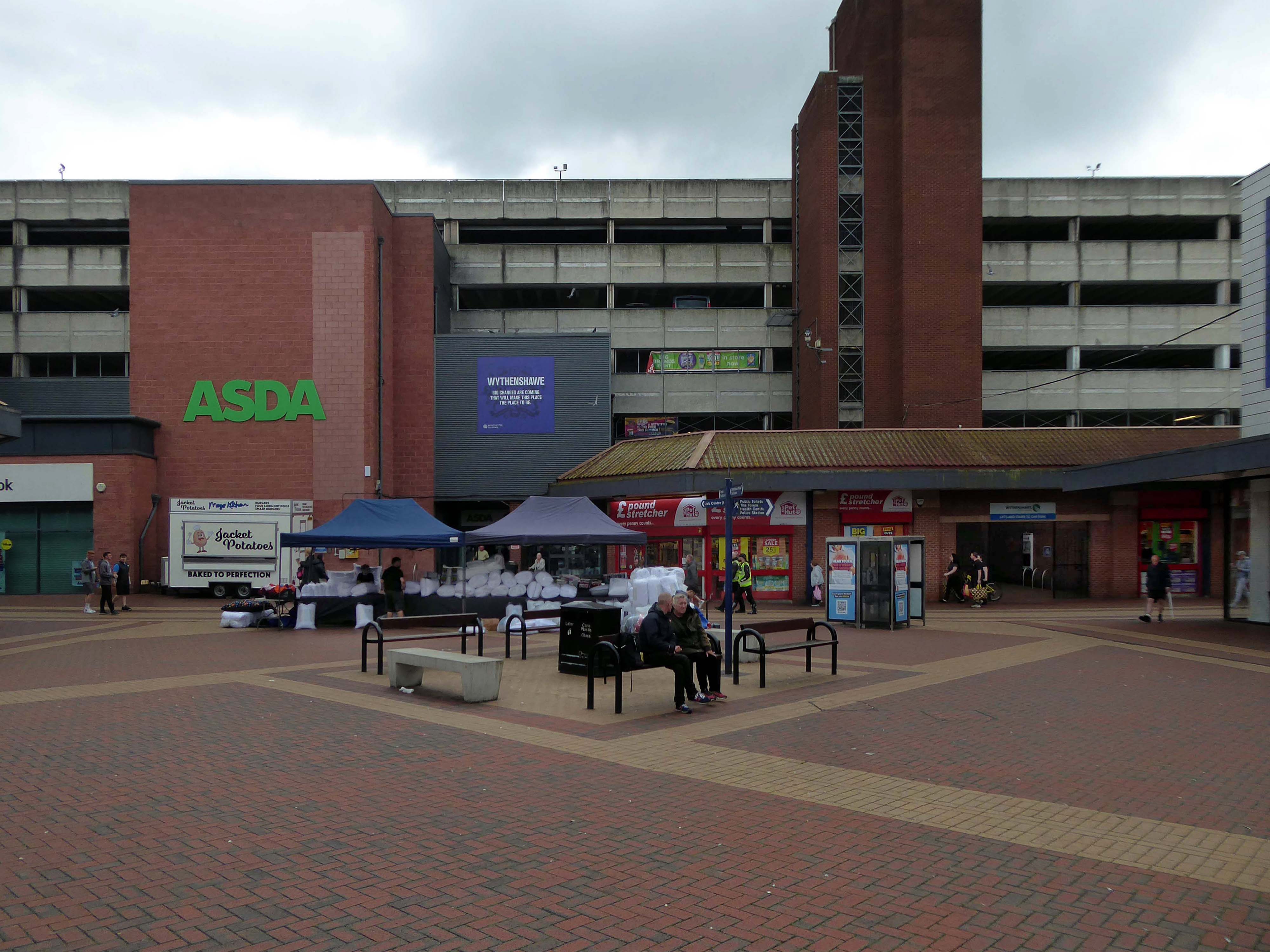
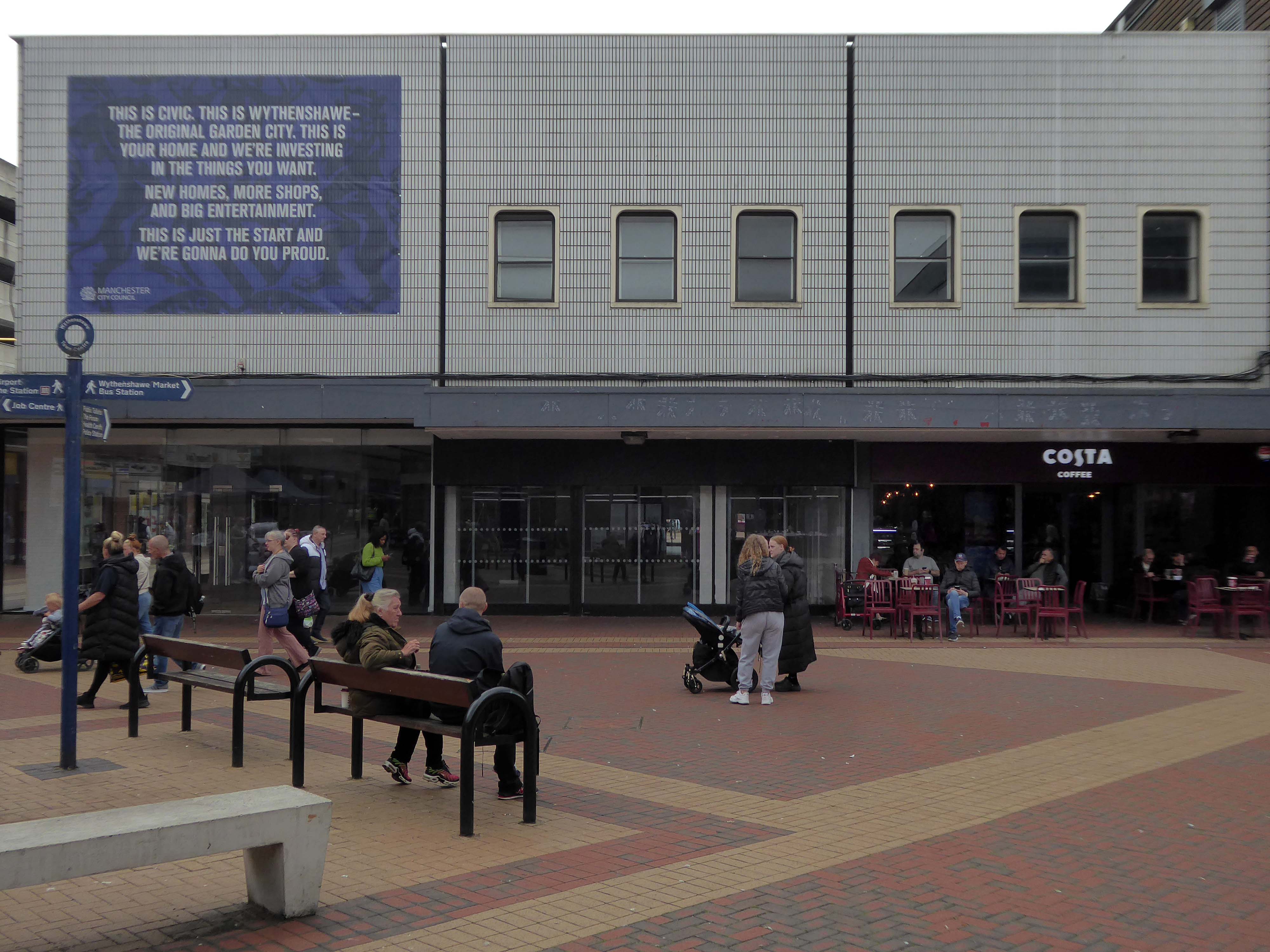
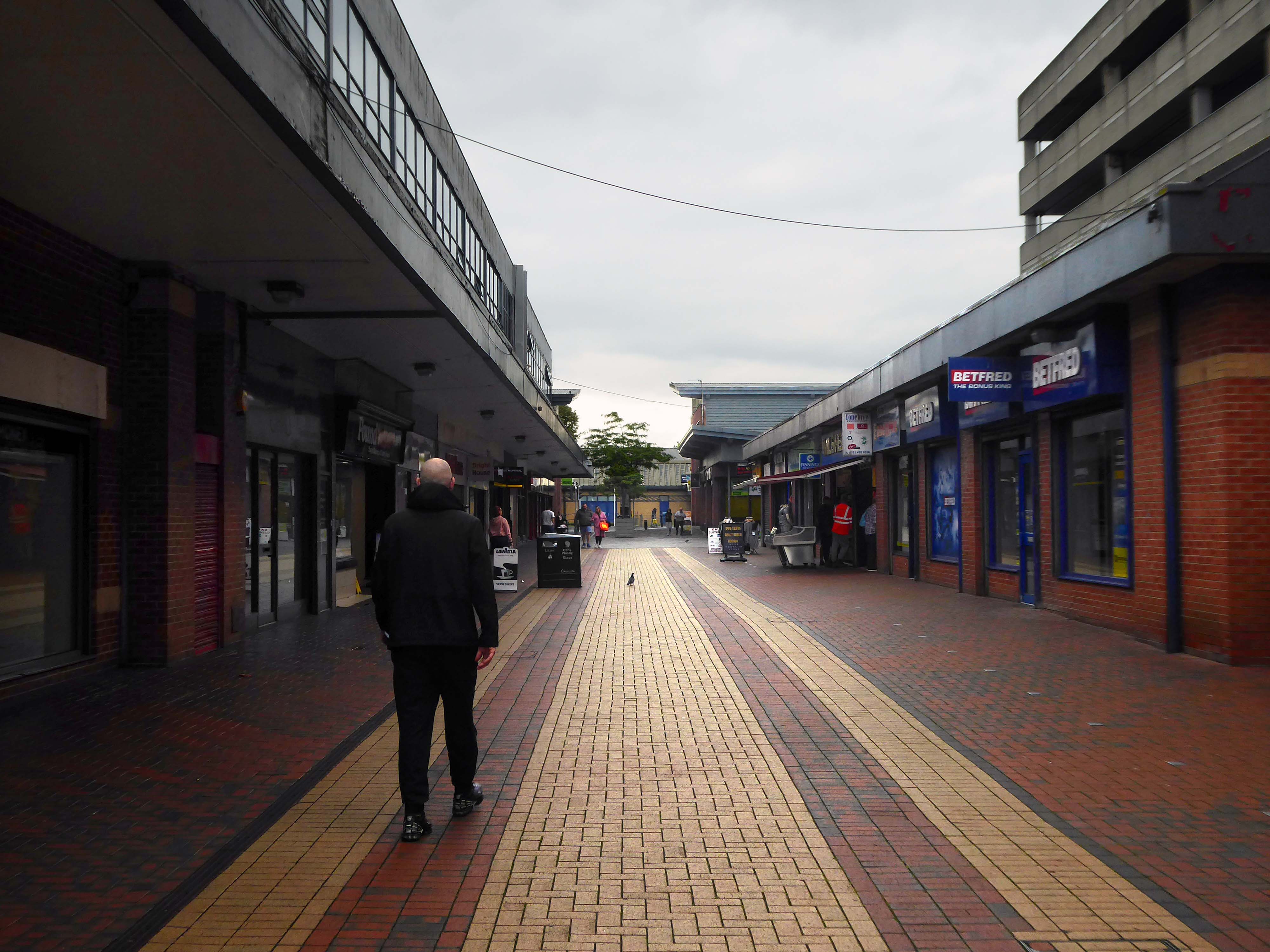
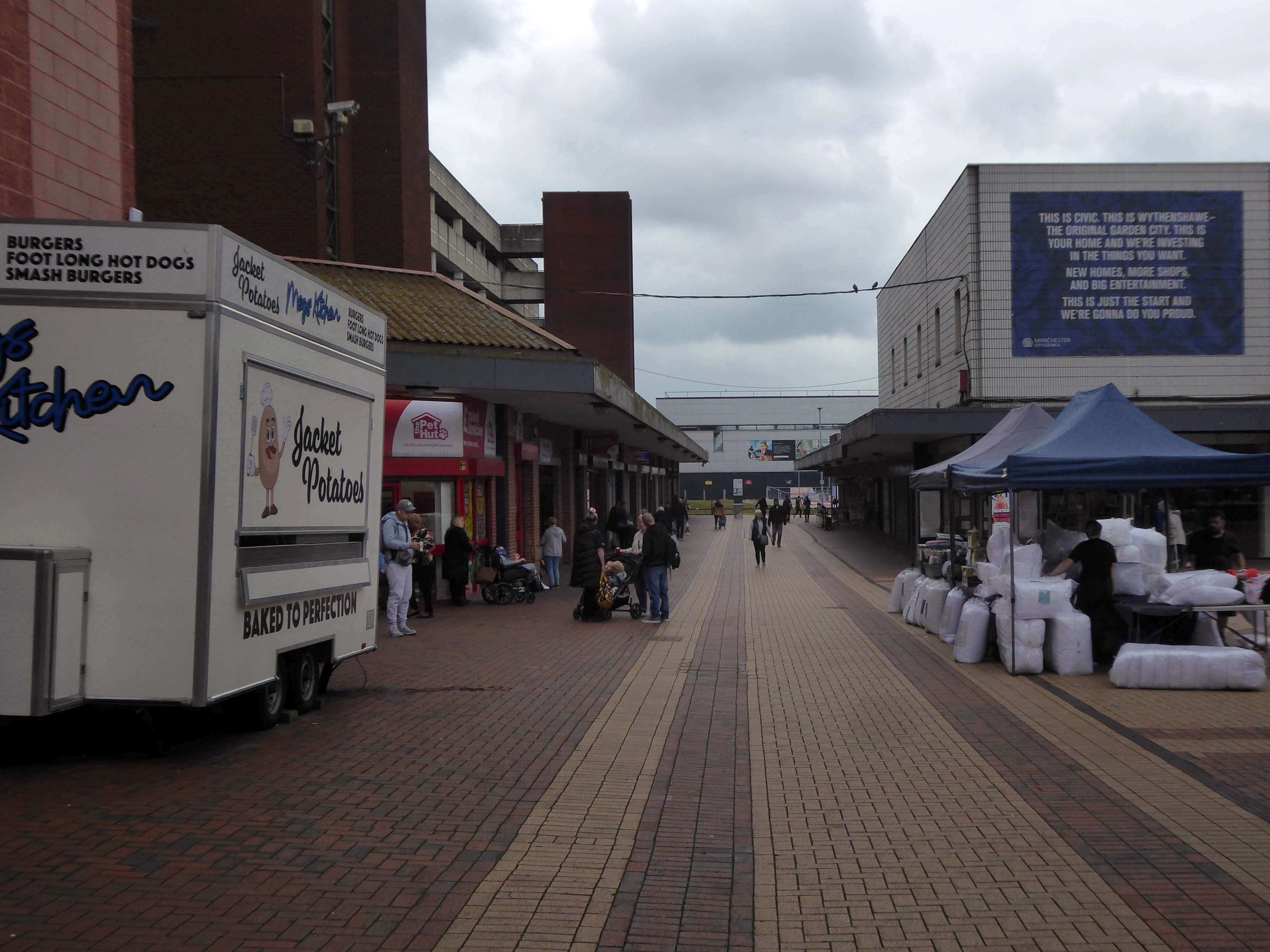
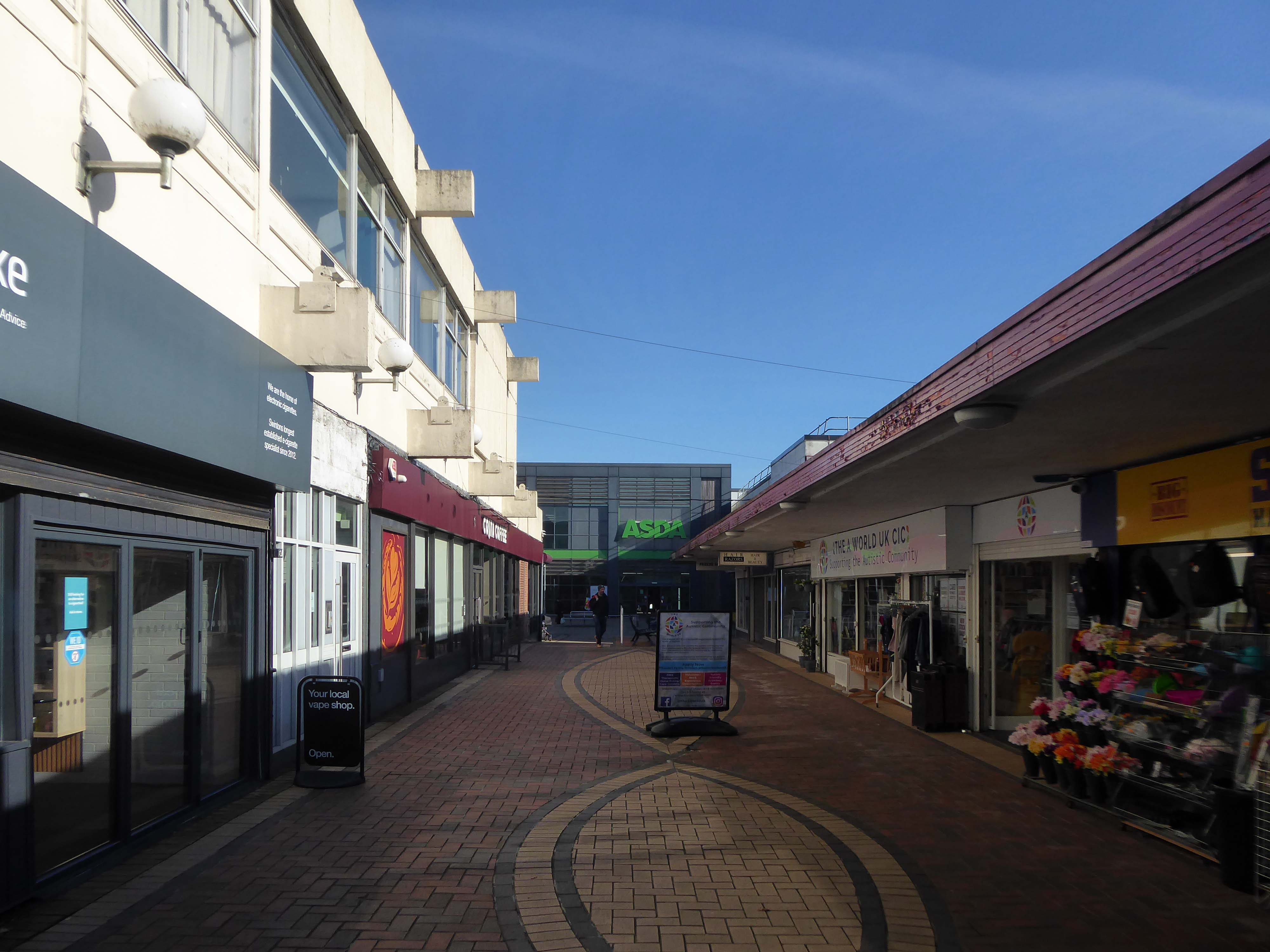
ASDA remains the anchor store, Wilko having left a Wilko sized hole in the precinct. On an overcast Friday morning there was sufficient footfall to sustain the wide variety of smaller shops and larger retail chains. As with many other towns within the central Manchester orbit, the easy proximity fills those busy trams and buses, which are leaving the area.
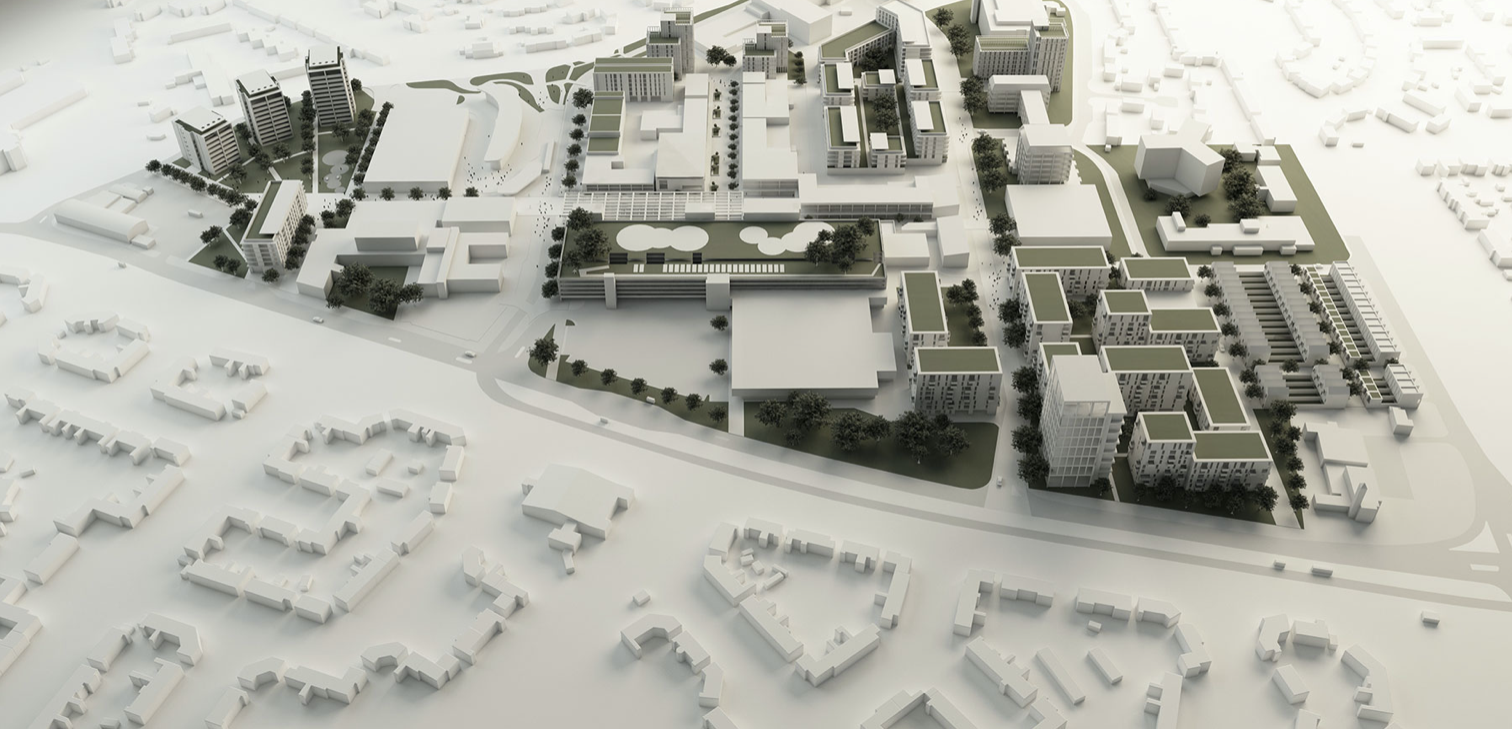
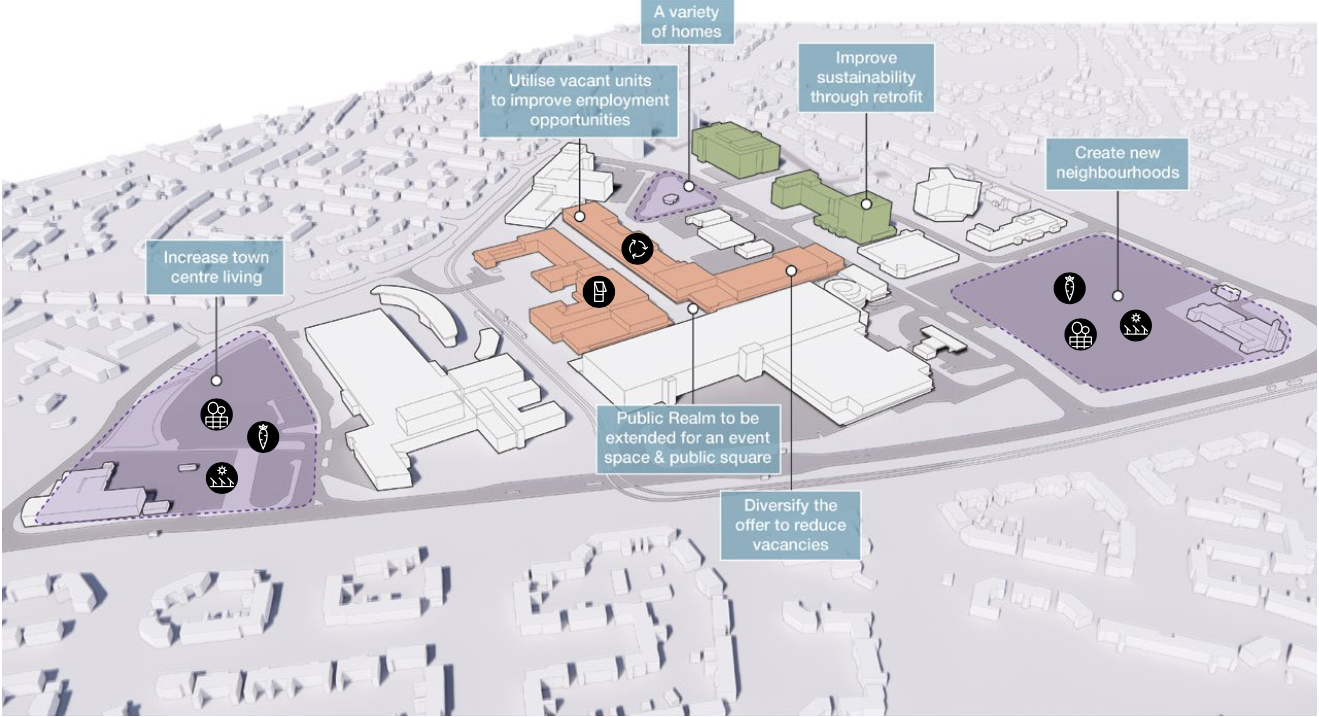
There are plans in place to regenerate the area, in the form of a Masterplan – which can be downloaded here.
Between 1991-2002 there have been some architectural changes, including new stores and office developments. Some of the interventions included significant adaptions which further increased retail into the existing buildings high street.
The interventions included significant adjustments to the multi-storey car park with the aim of reducing parking numbers whilst providing additional lettable space. Further Transport Hub Arrival commercial development was created to the north of the site with the construction of Etrop Court, despite there being significant commercial vacancy across other parts of the estate.
Whilst there has been significant incremental intervention, the character of the area has not fundamentally changed from its founding concept. However the cumulative impact of the various changes have had a negative impact on the functionality and suitability of place, so much so that the centre is in many ways no longer fit- for purpose.
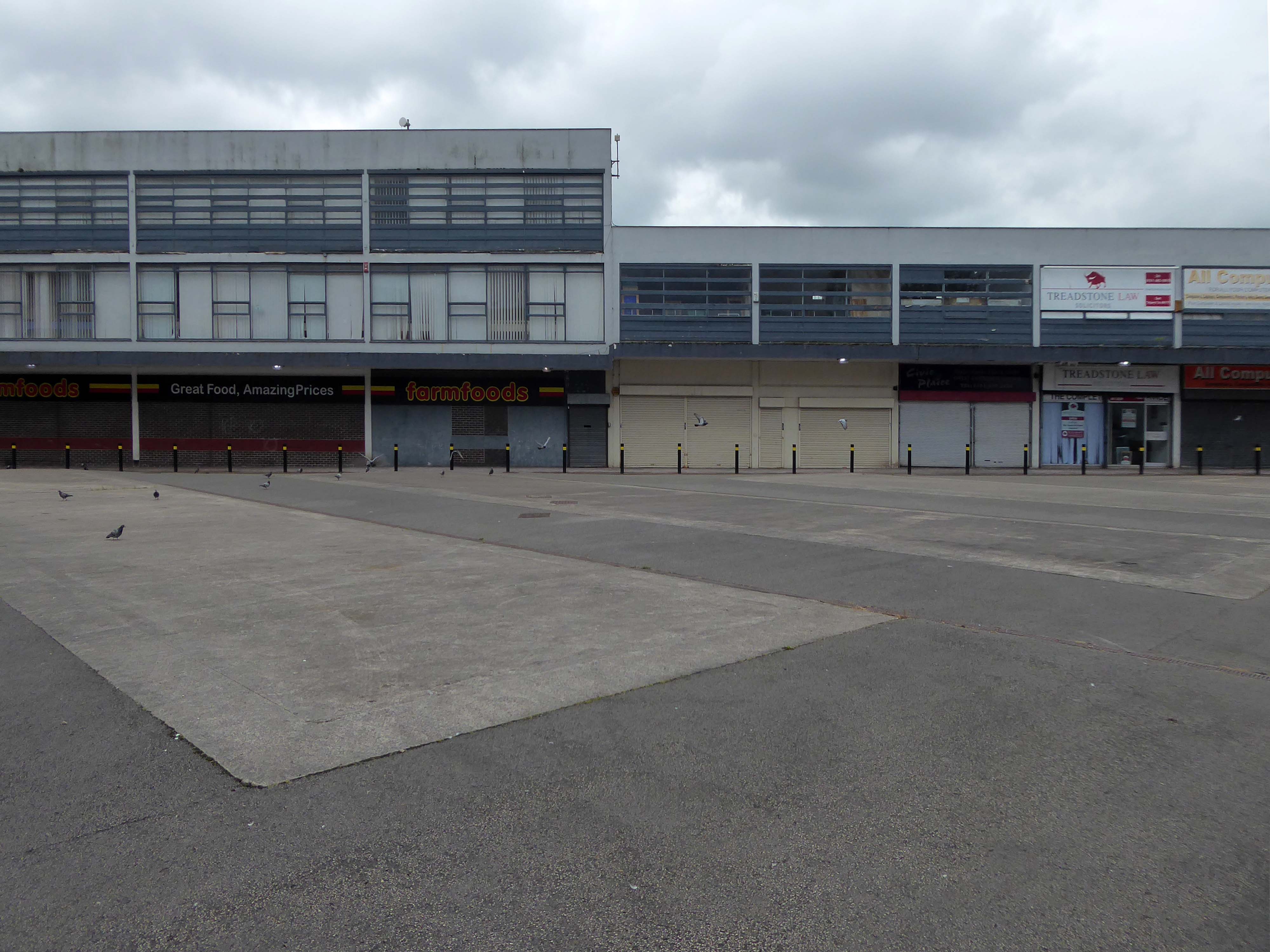
The site today is surrounded by surface car parks, with a total of around 2,500 car parking spaces, 1,700 of which are contained within the multi-storey car park. Many of the retail units, the upper floor office spaces along the Birtles and Hale Top, and buildings to the east are vacant.
Typically, the levels of vacancy are consistent with the changing demands of the high street, where typically modern and successful retail centres are now more diversified and focussed on creating a visitor or destination-based experience. In this sense, we anticipate a need to diversify the high street and to promote a smaller more concentrated retail core, whilst supplementing the offer with more meanwhile and permanent uses and activities based on culture, food and creative workplace.
The gateway to the Civic Centre on arrival from the Transport Interchange is very poor. Access to the high street isn’t obvious and the route through to the high street isn’t clear. Much of the site is surrounded by fencing, barrier and gates and whilst they are open during the day, they are locked at night to prevent vandalism. This barricaded aesthetic does nothing to promote an easily accessible and family friendly environment as well as preventing any opportunity to promote a much needed night- time economy.
Currently, the Civic Centre appears to only cater for those with a need to visit for a particular purpose, rather than capitalising on an opportunity to create a place to visit and dwell.
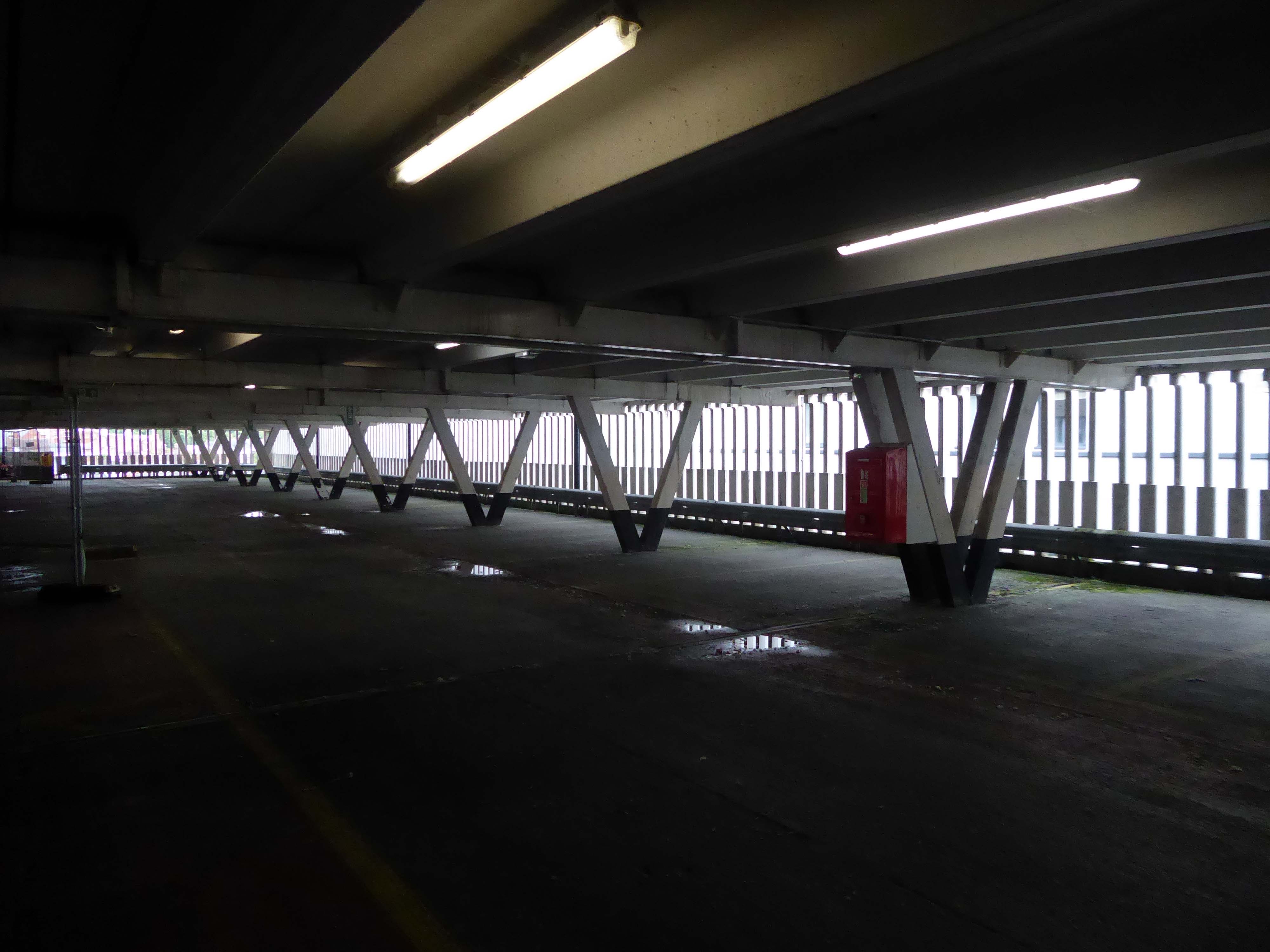
Multi Storey Car Park Rowlandsway Manchester M22 5RG
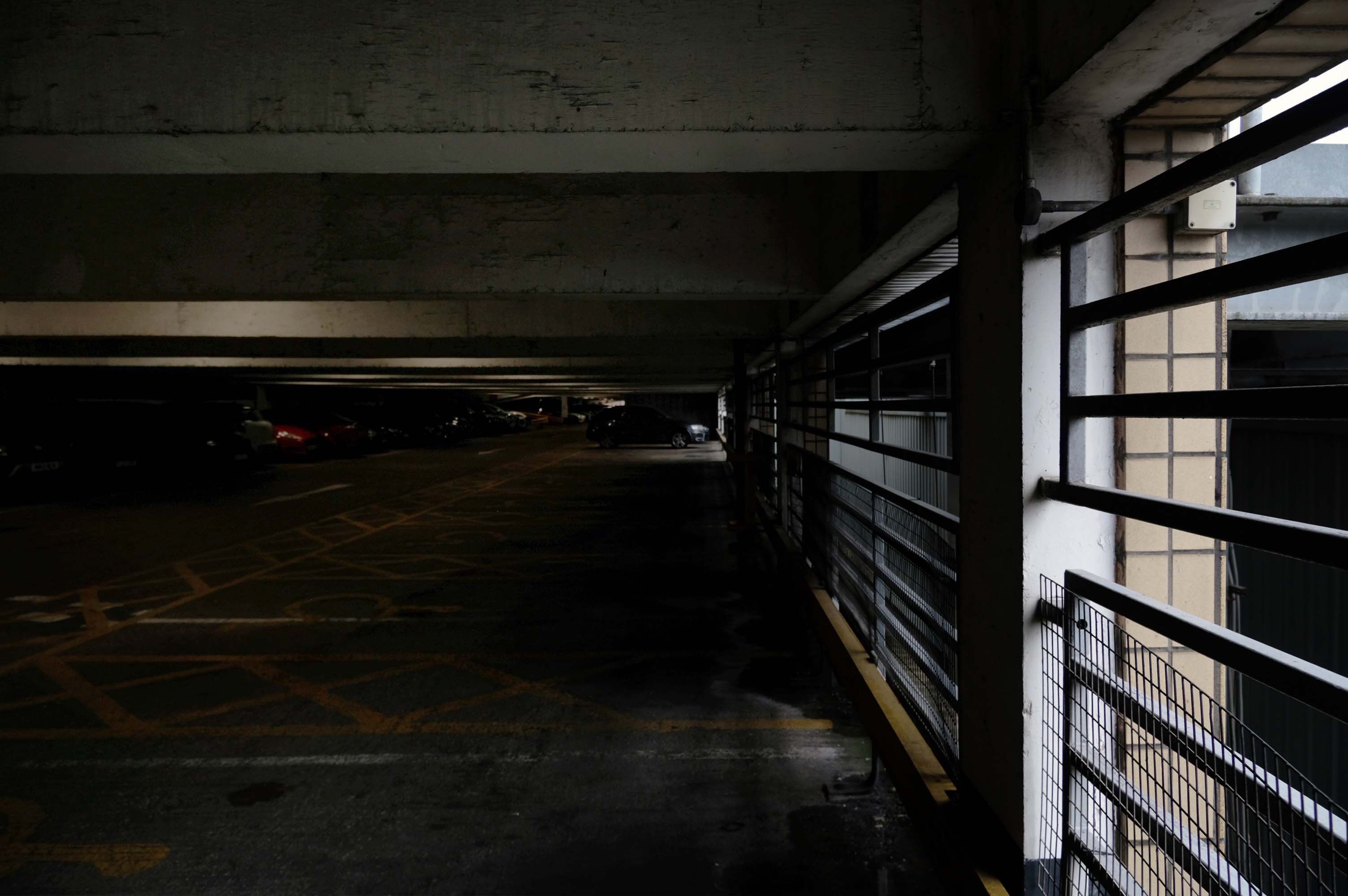
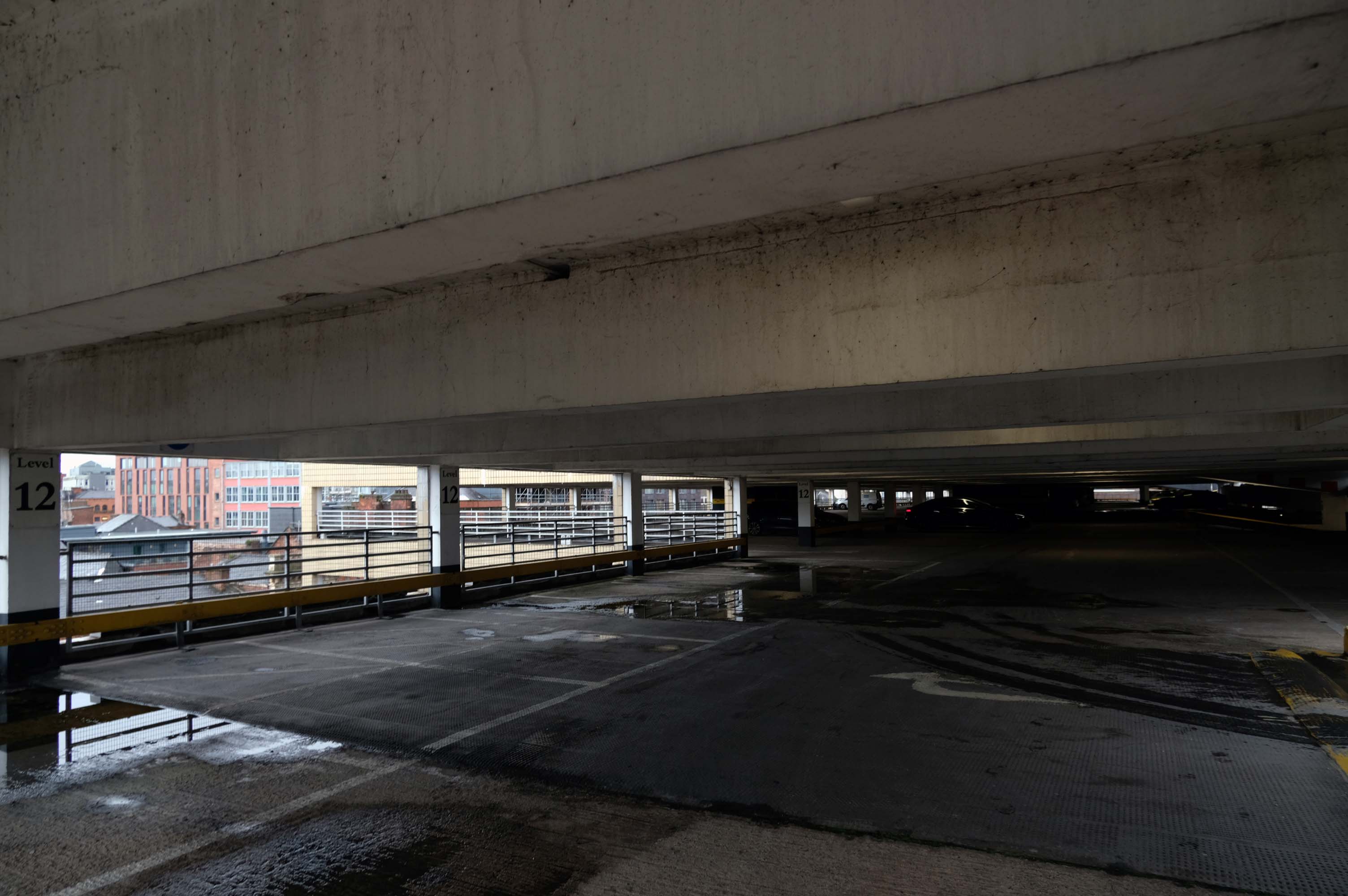
I’ve lost count of the countless times I have visited countless car parks.
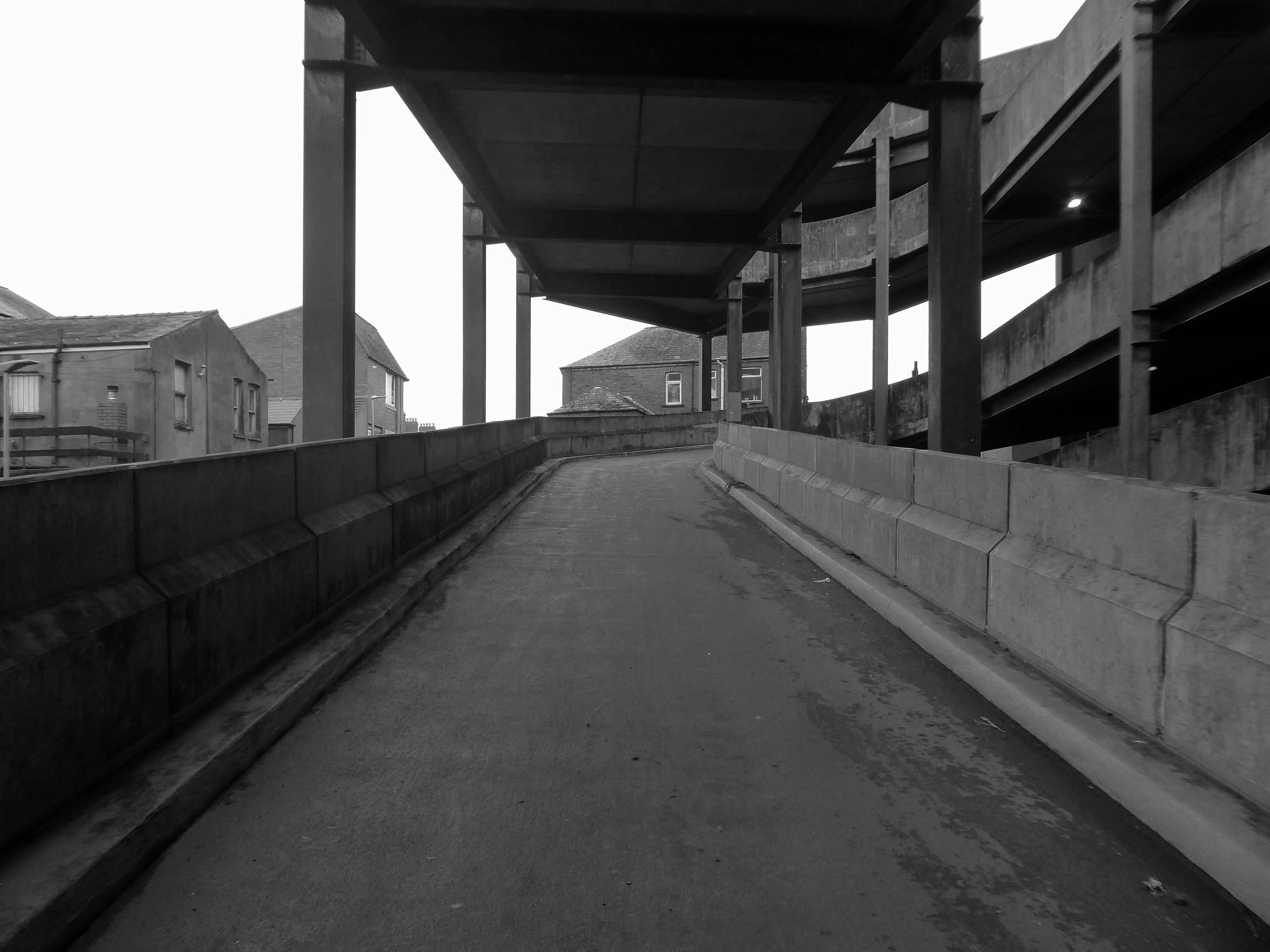
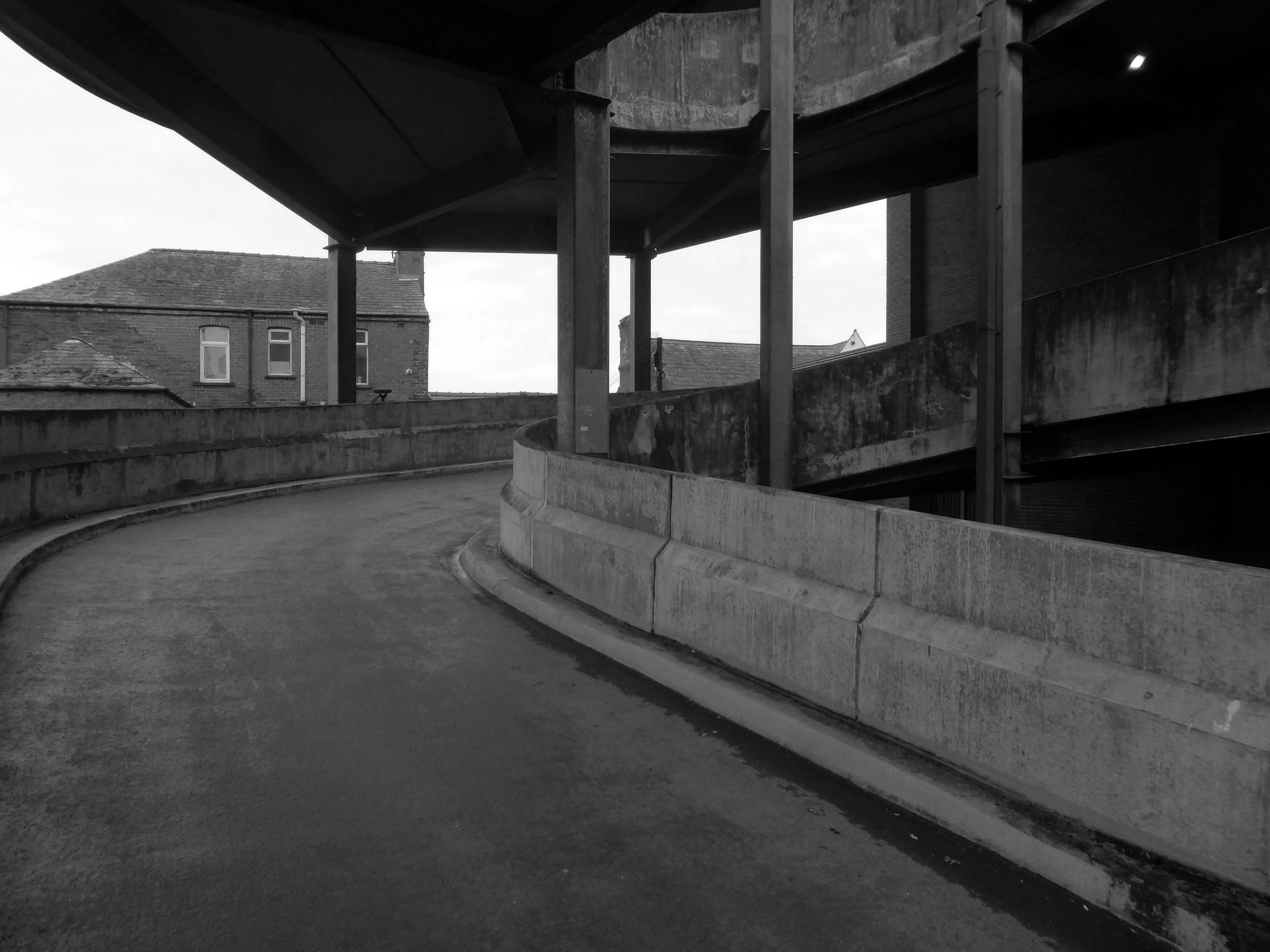
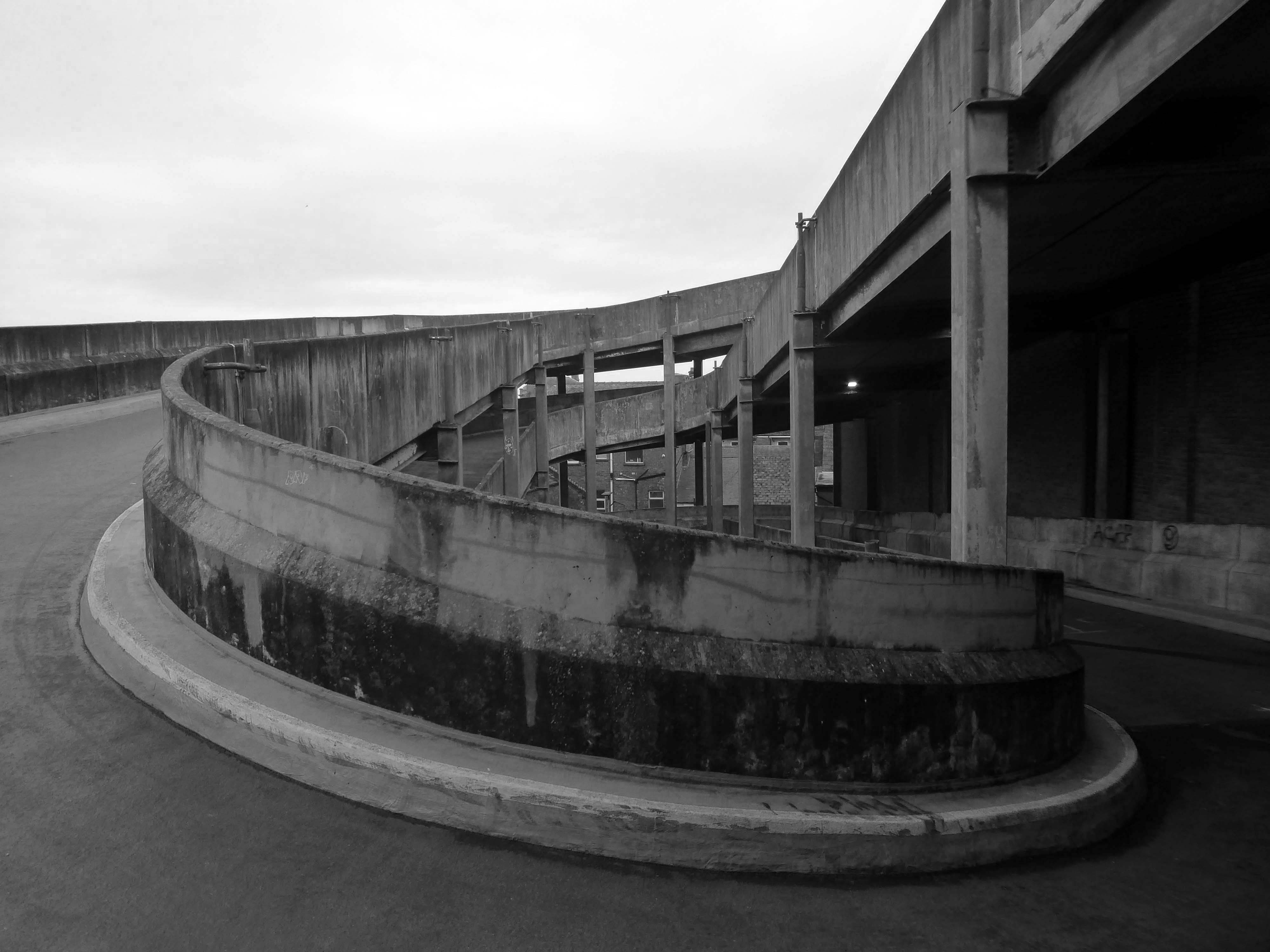
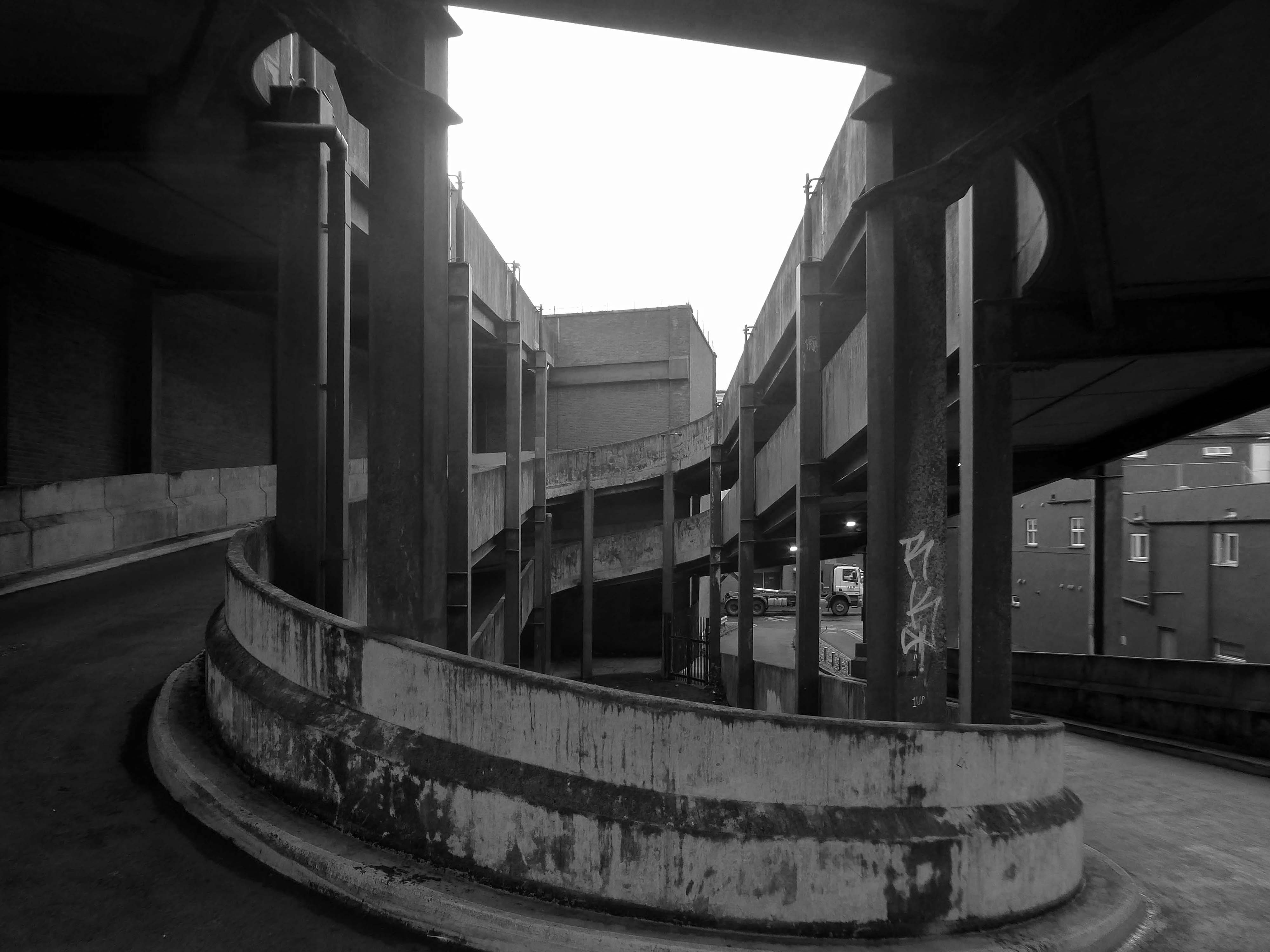
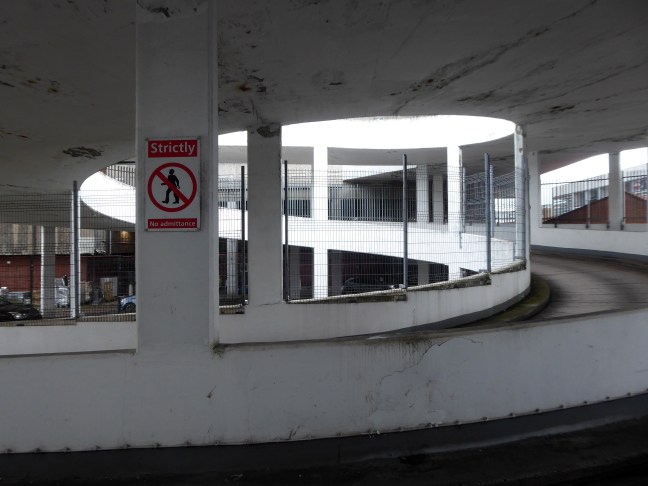
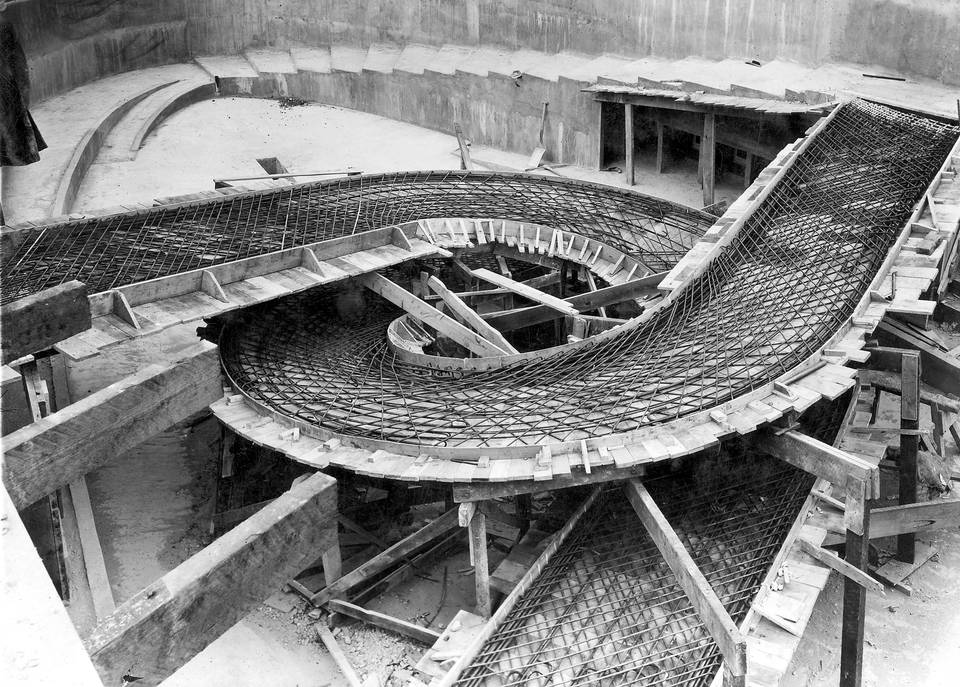
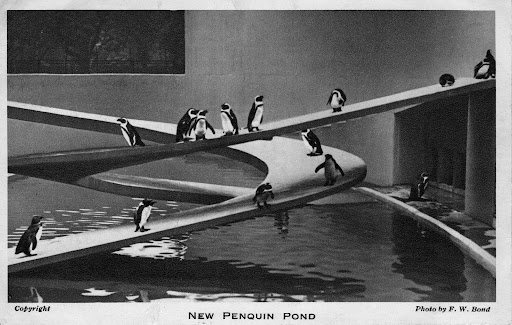
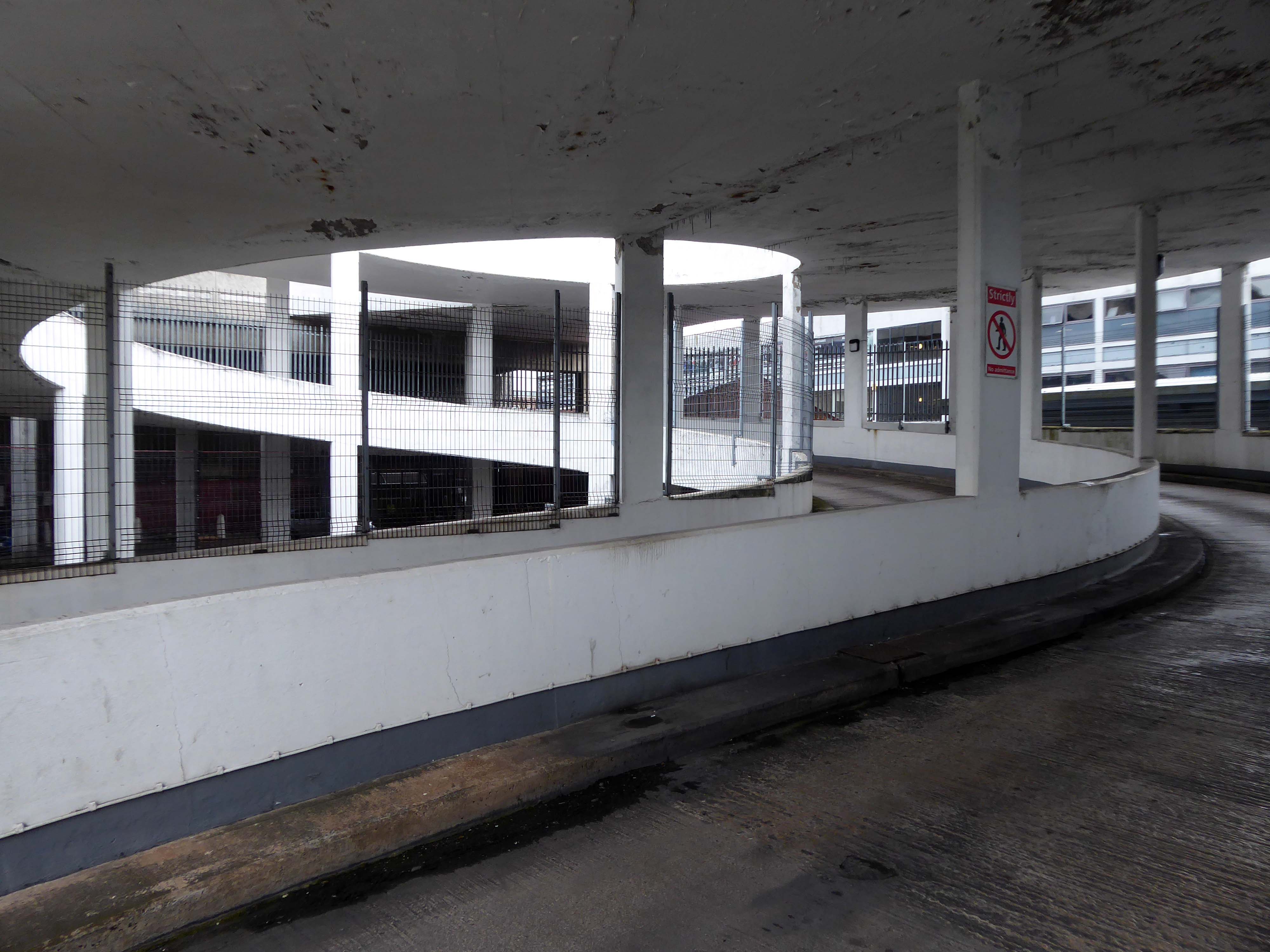
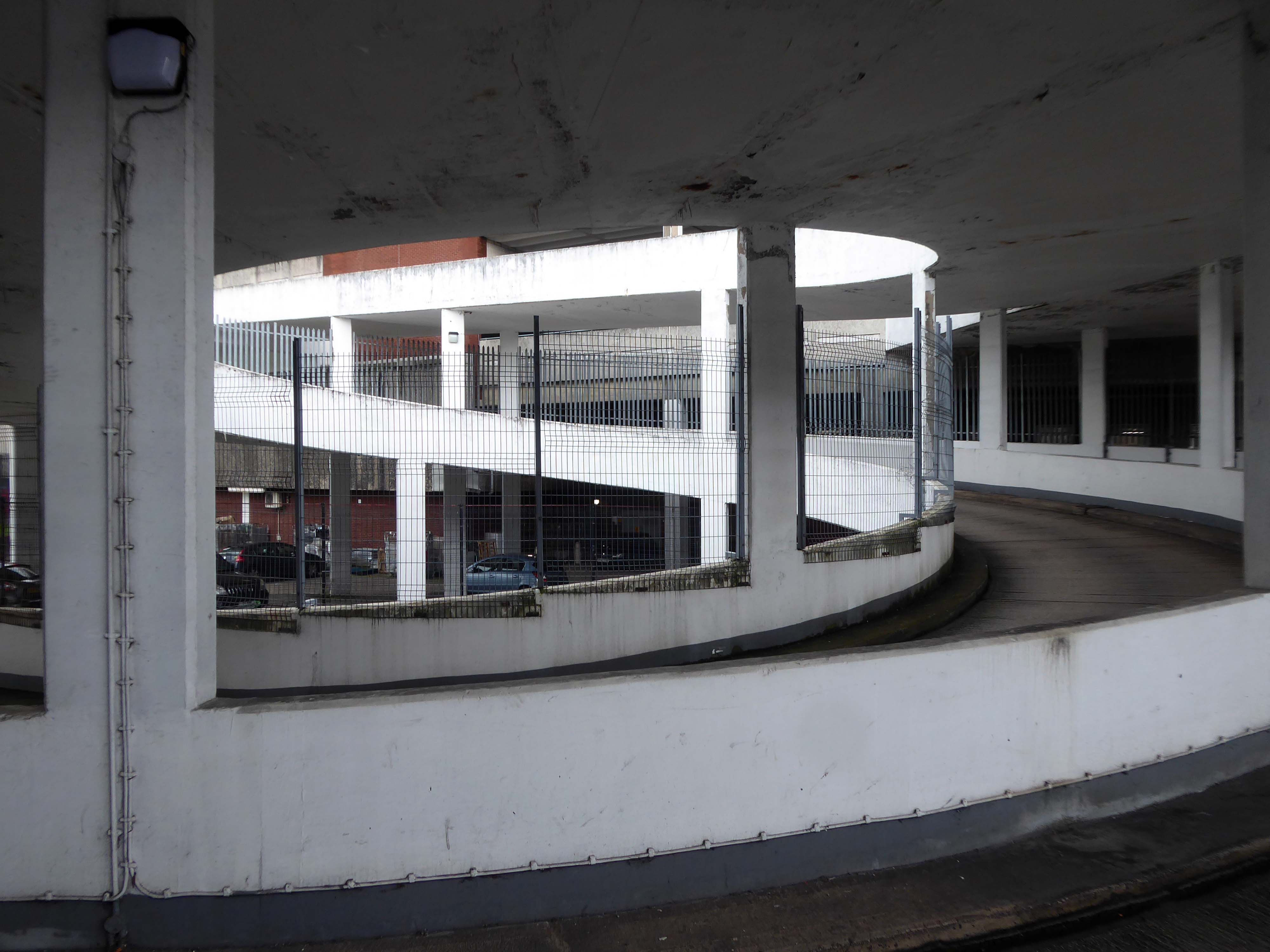
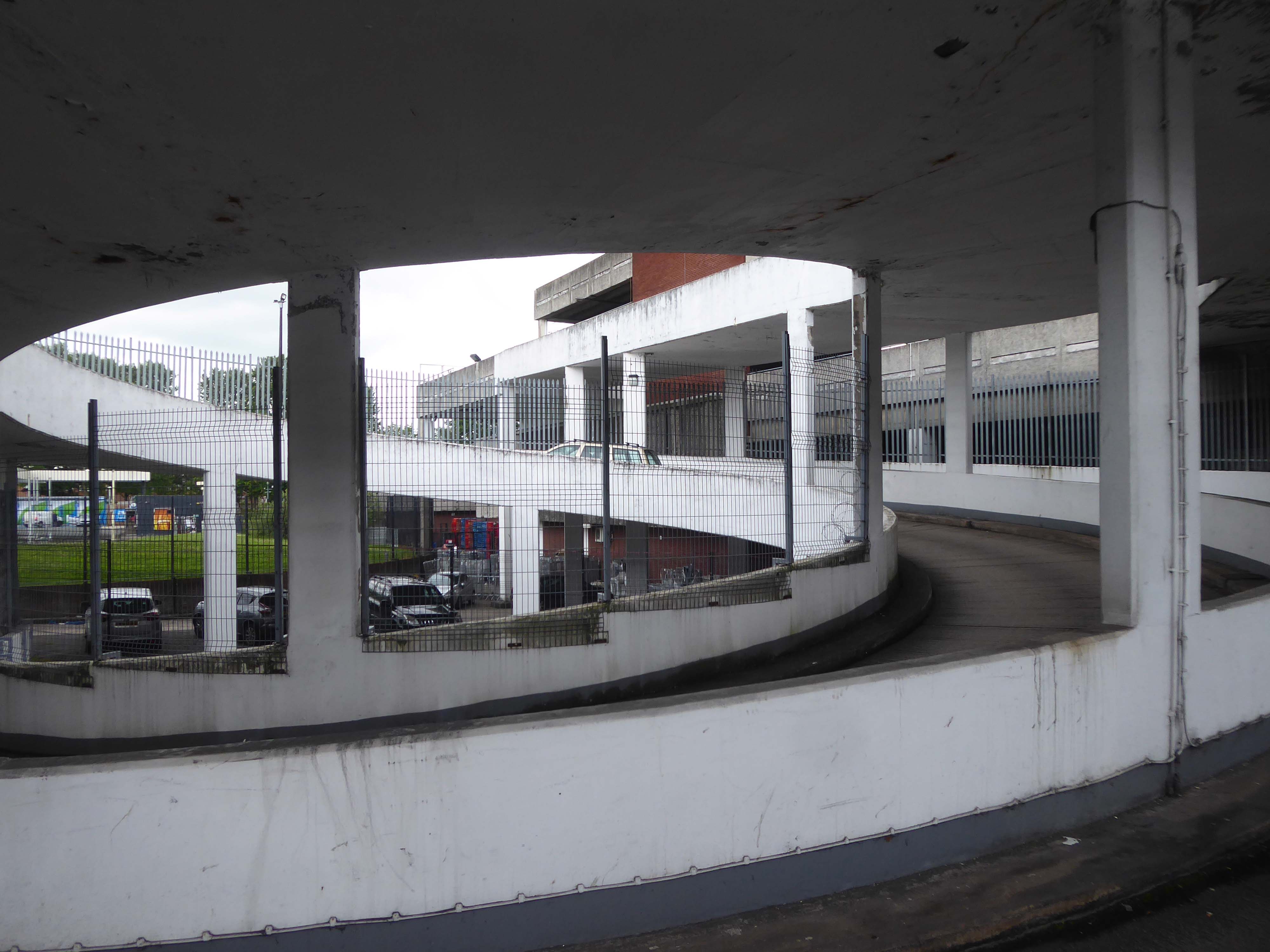
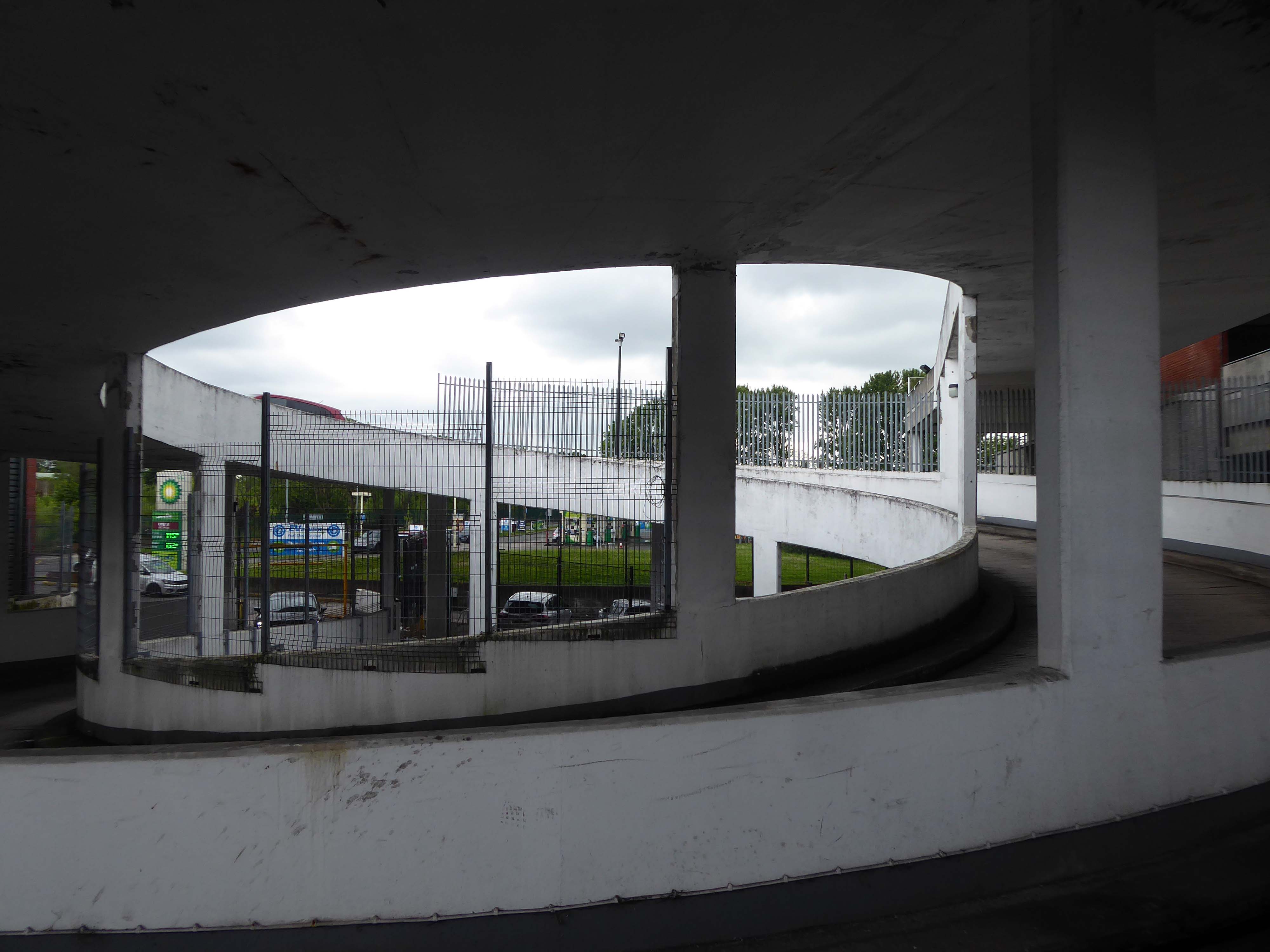
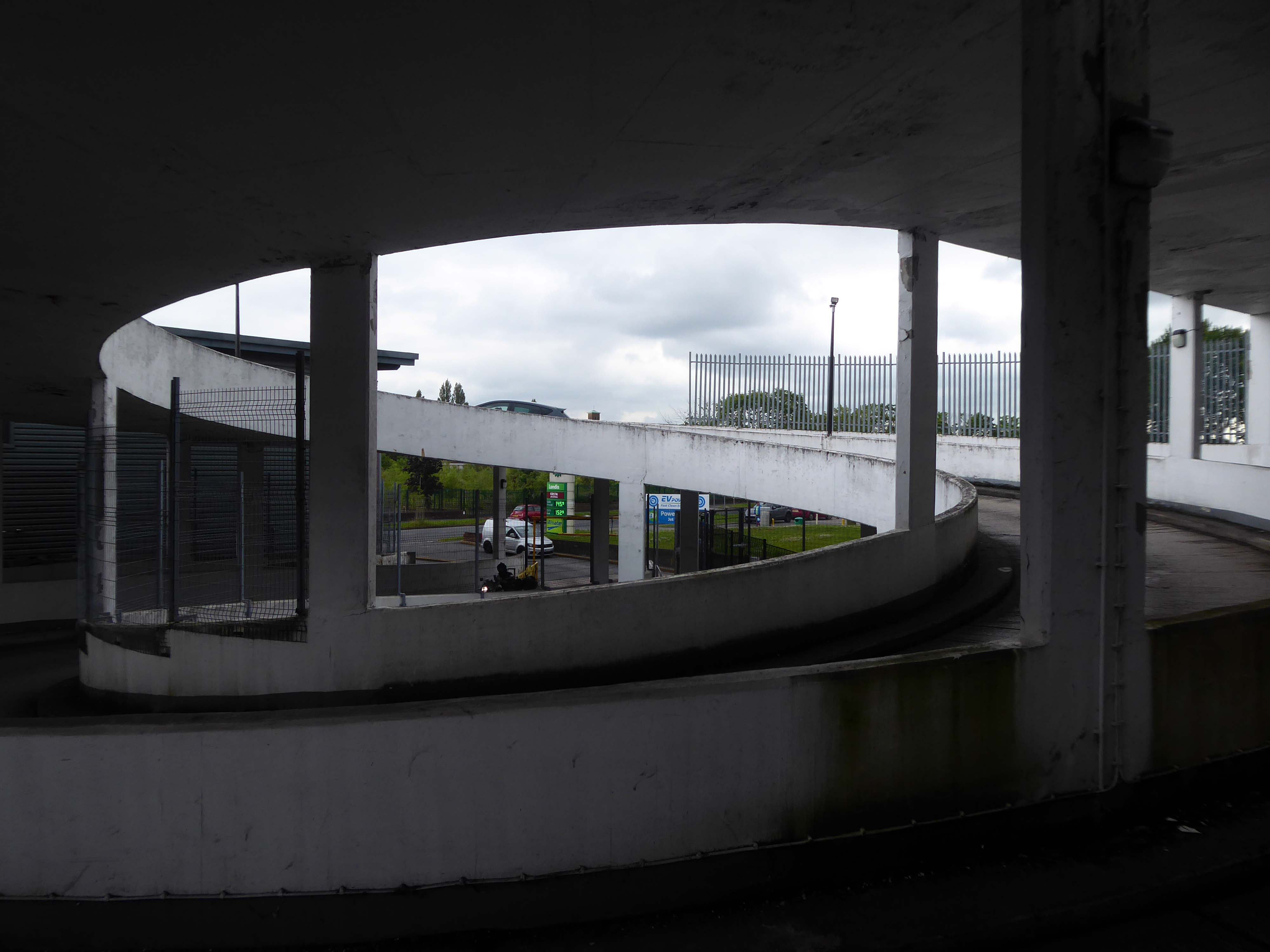
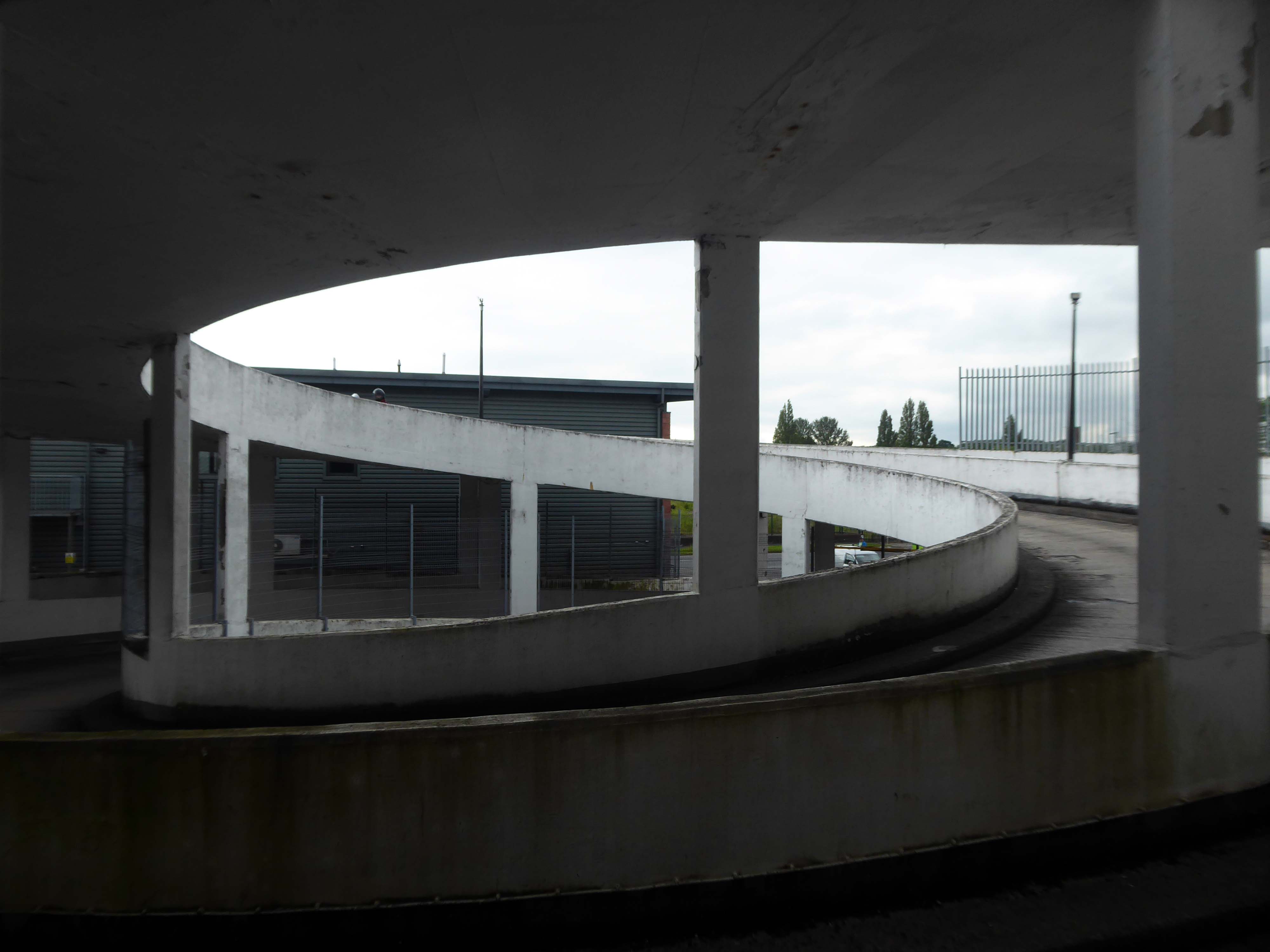
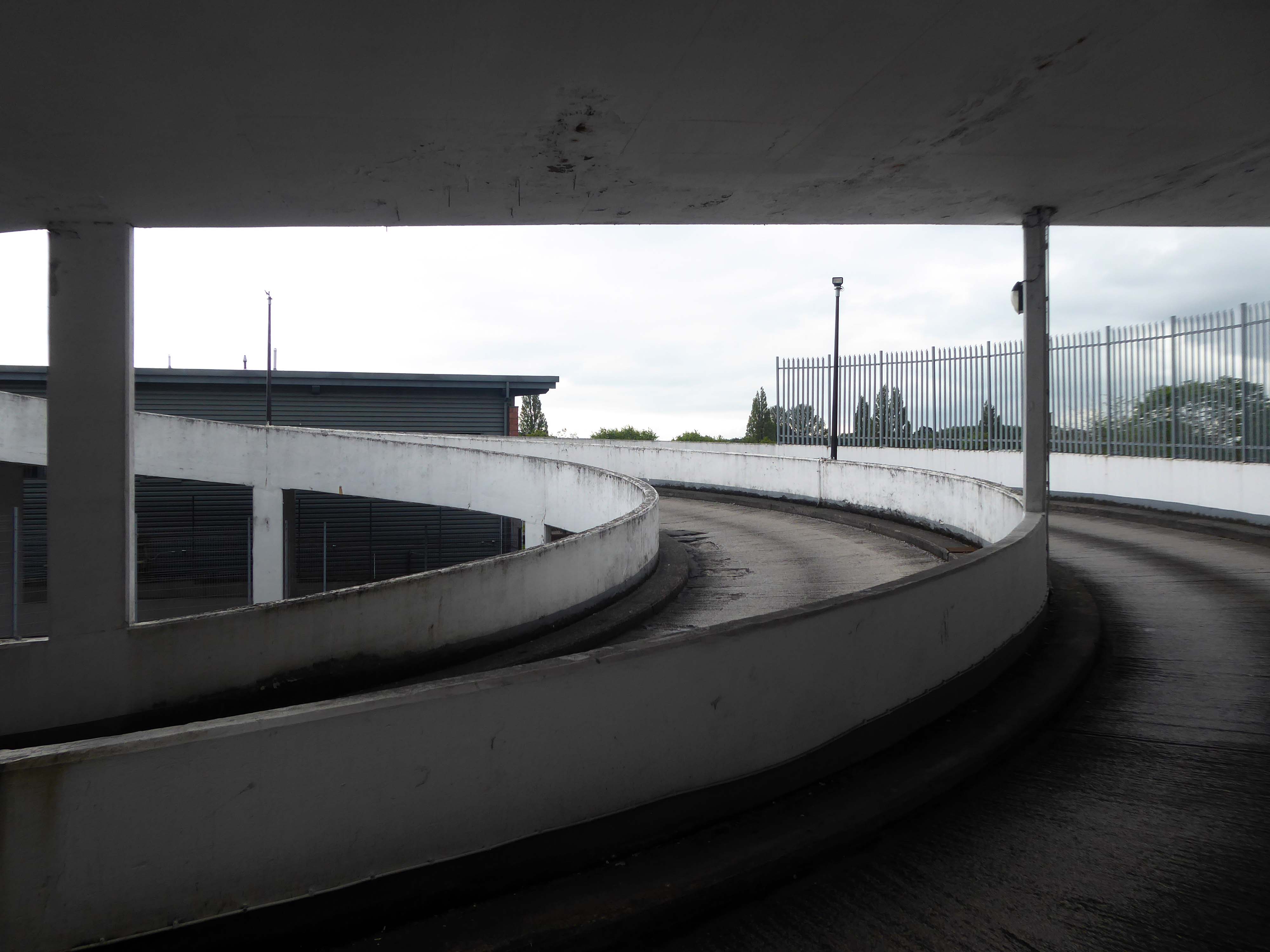
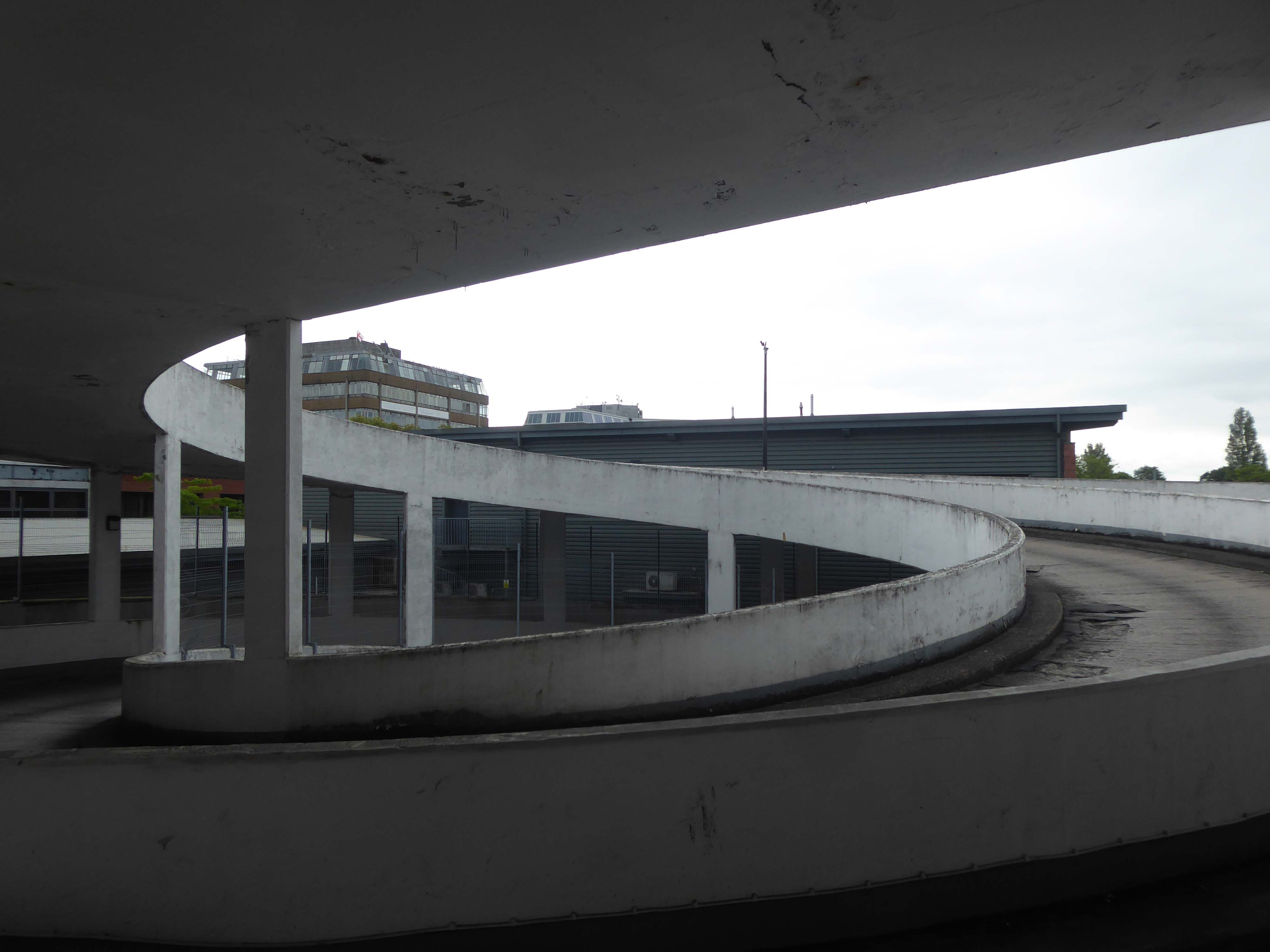
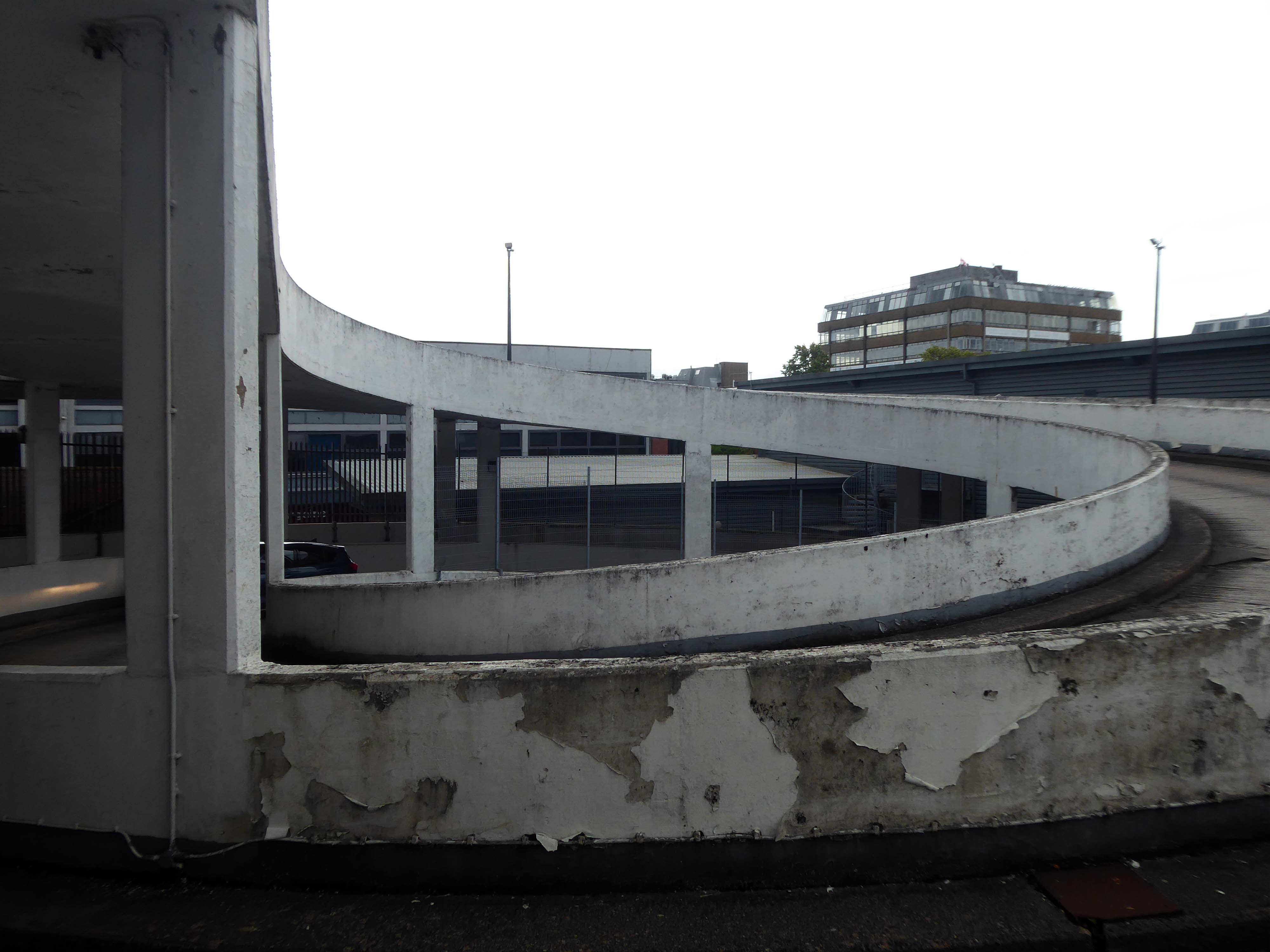
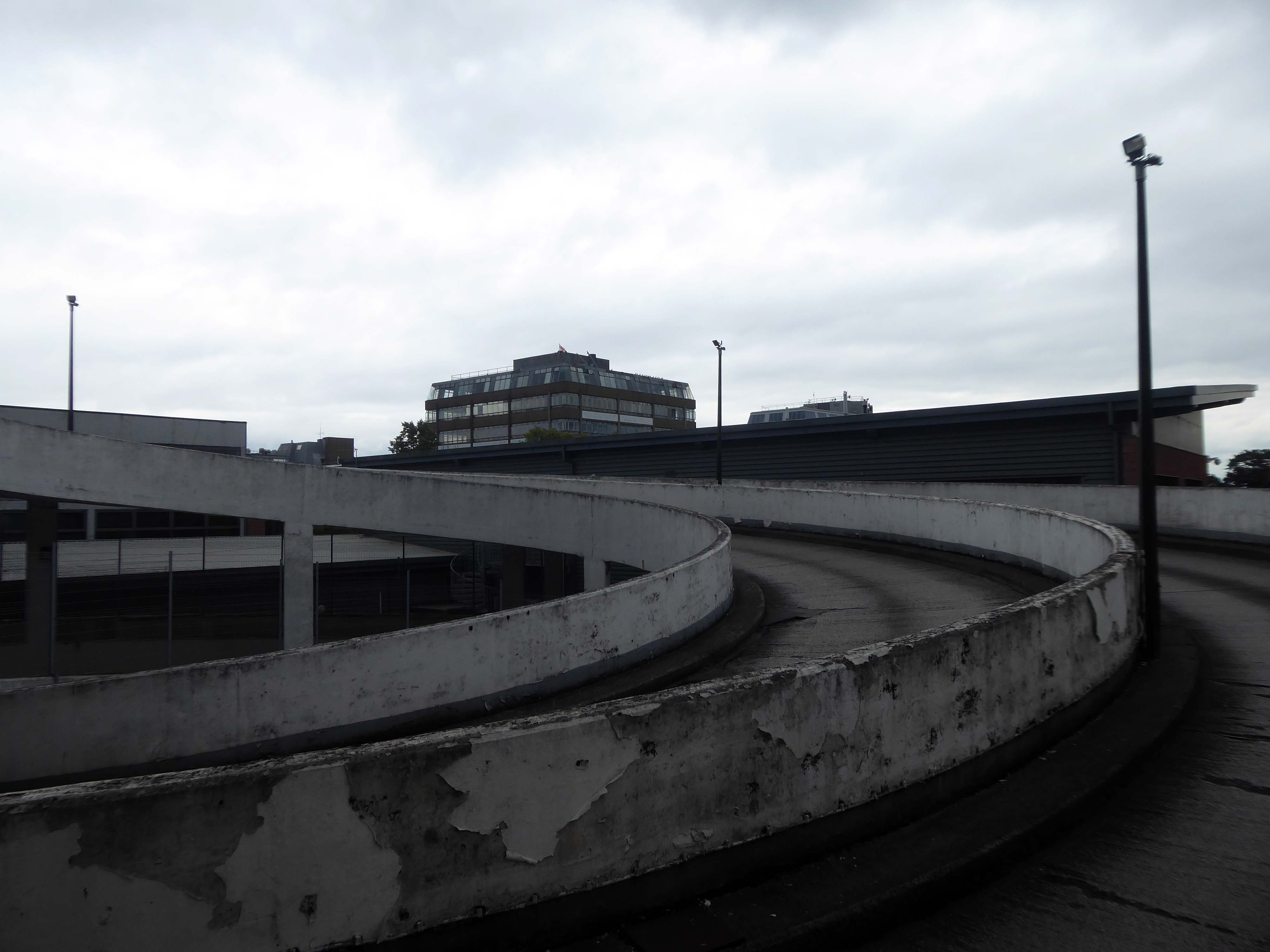
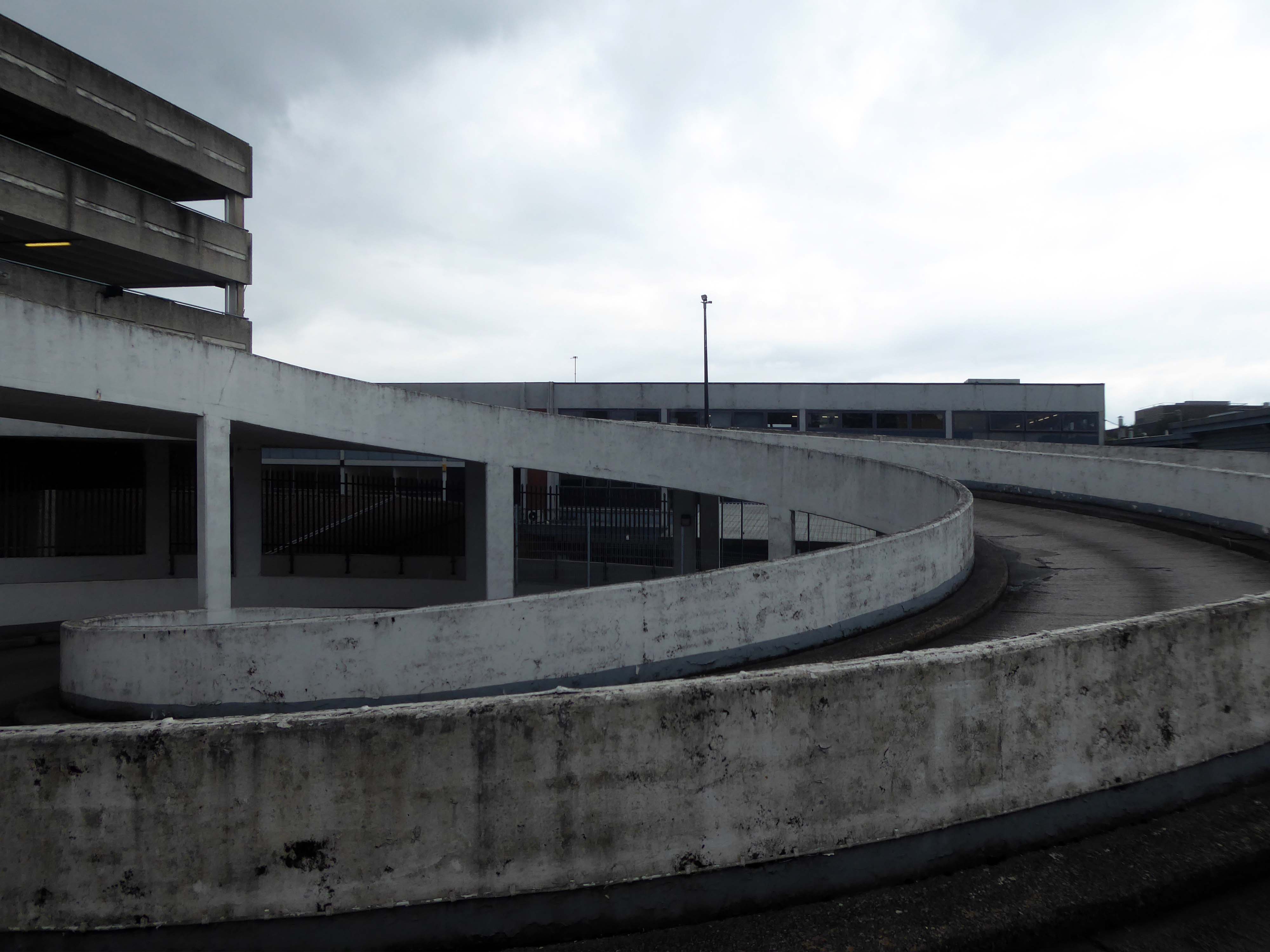
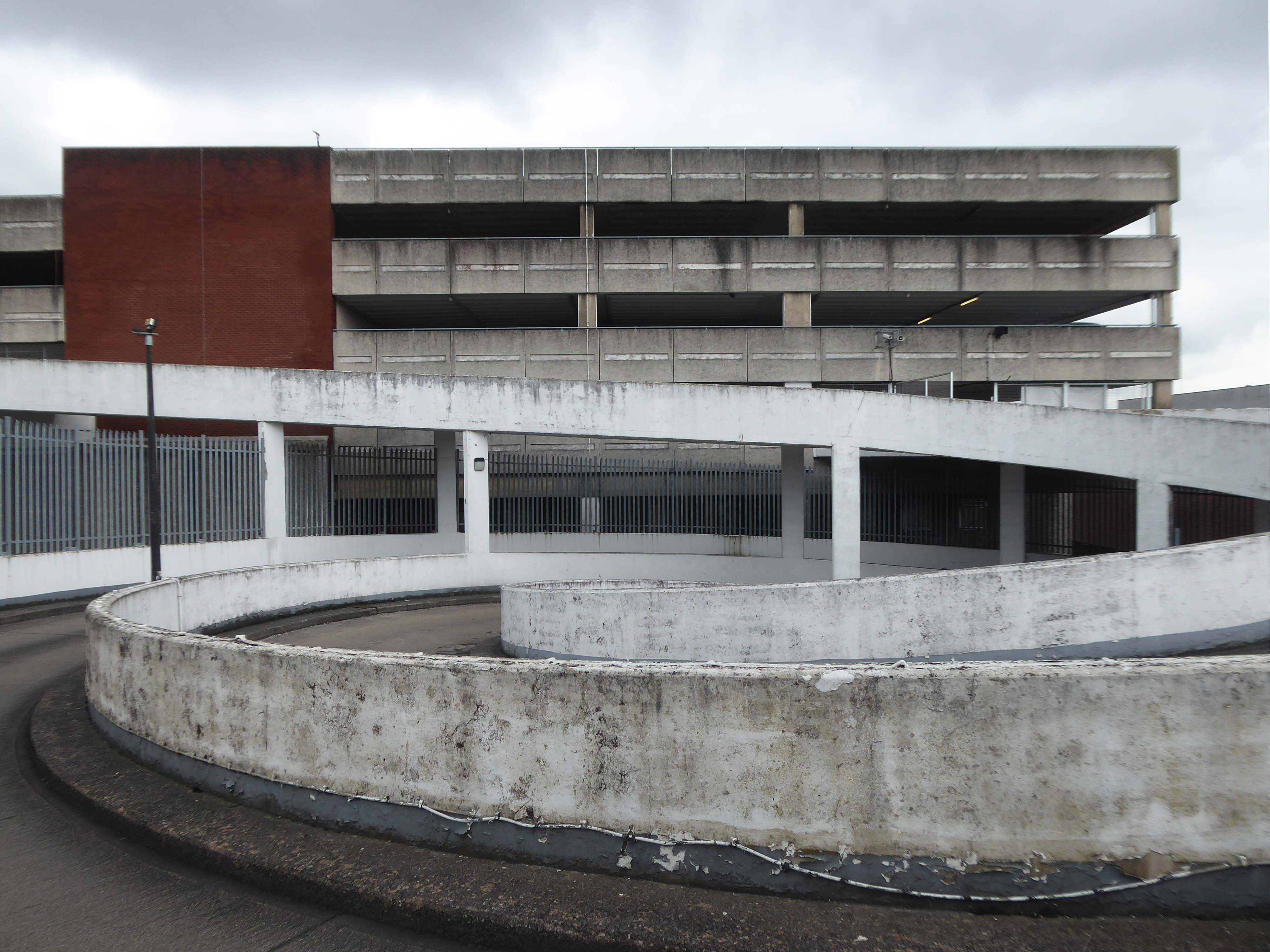
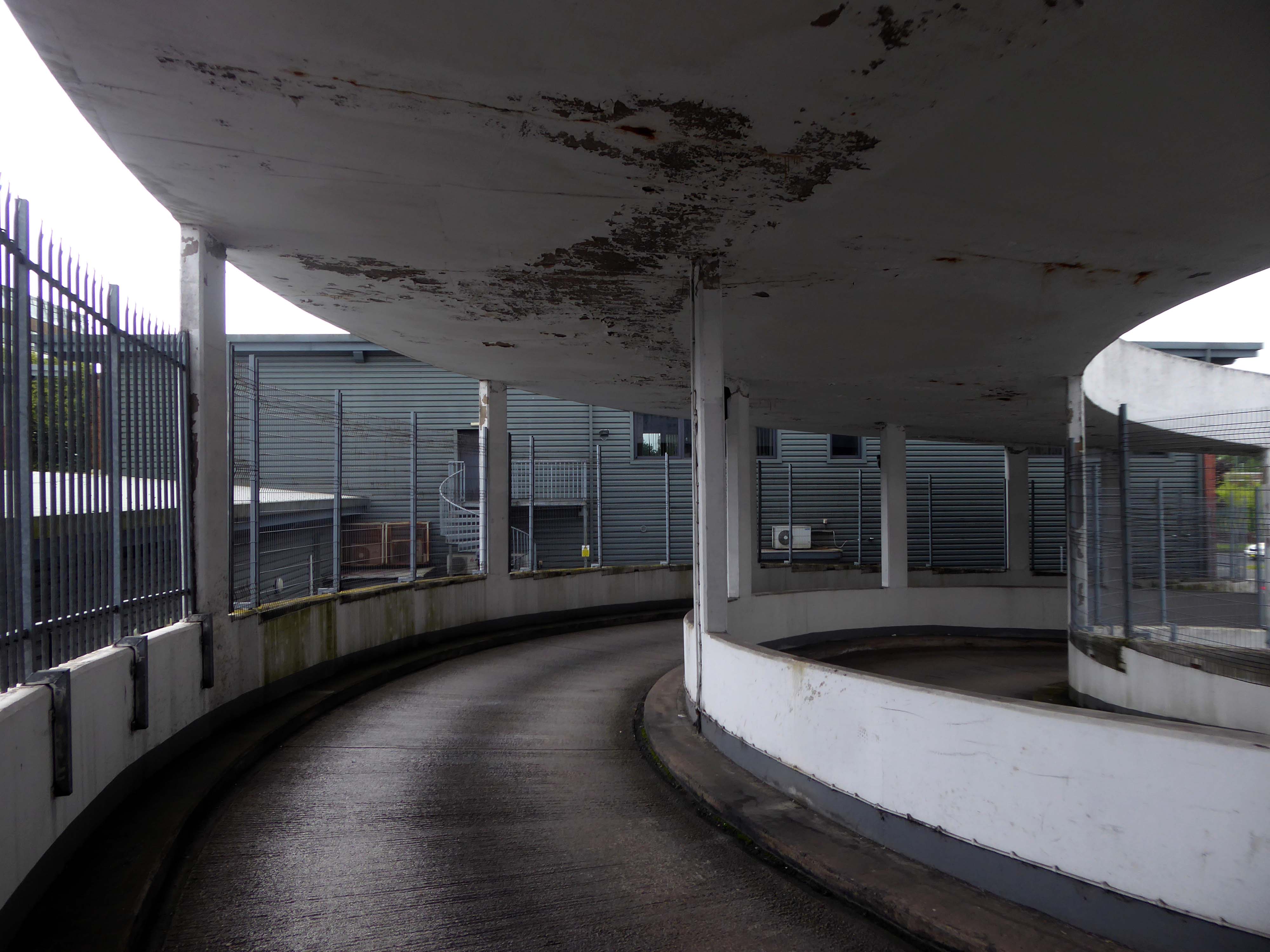
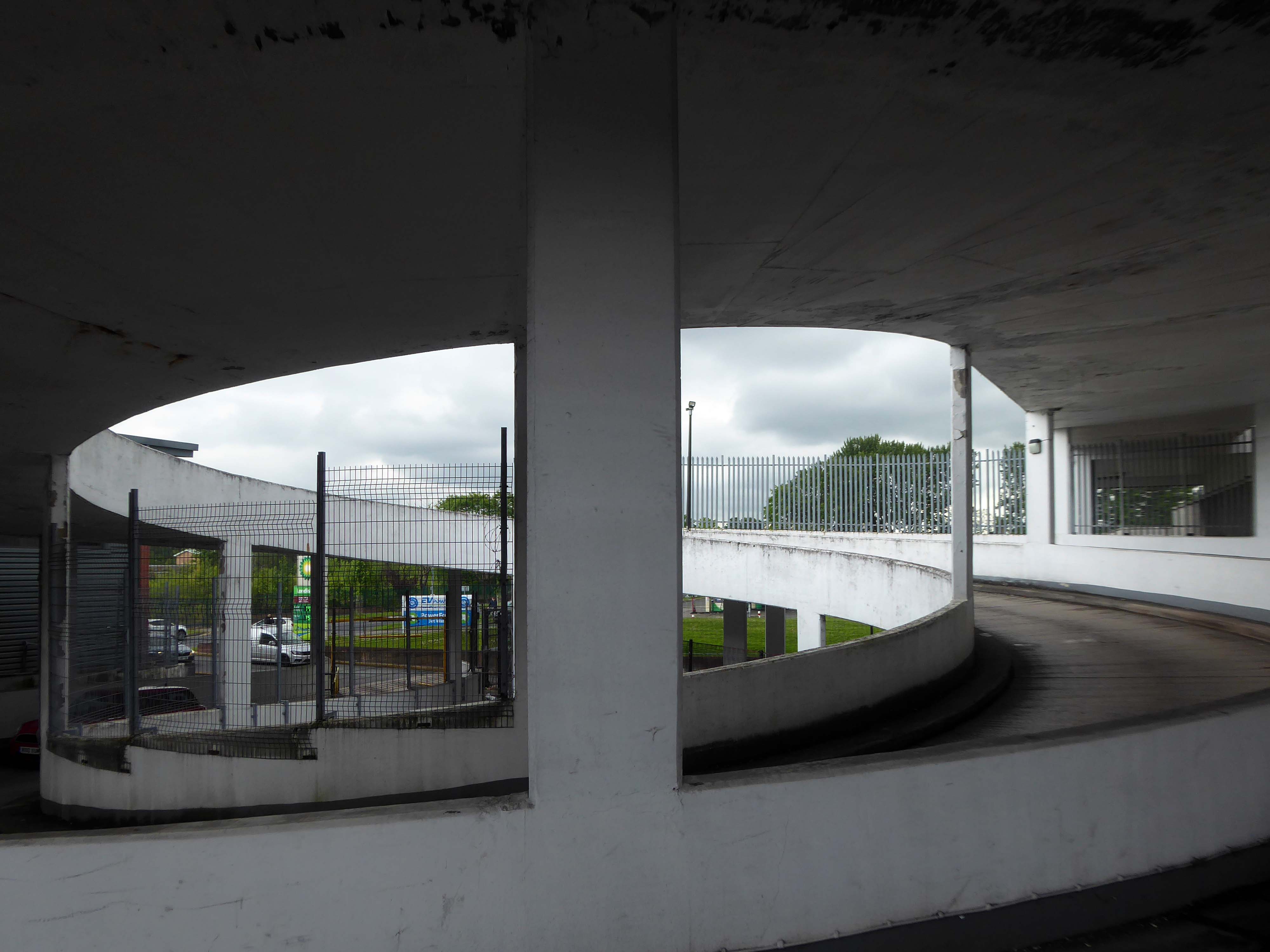
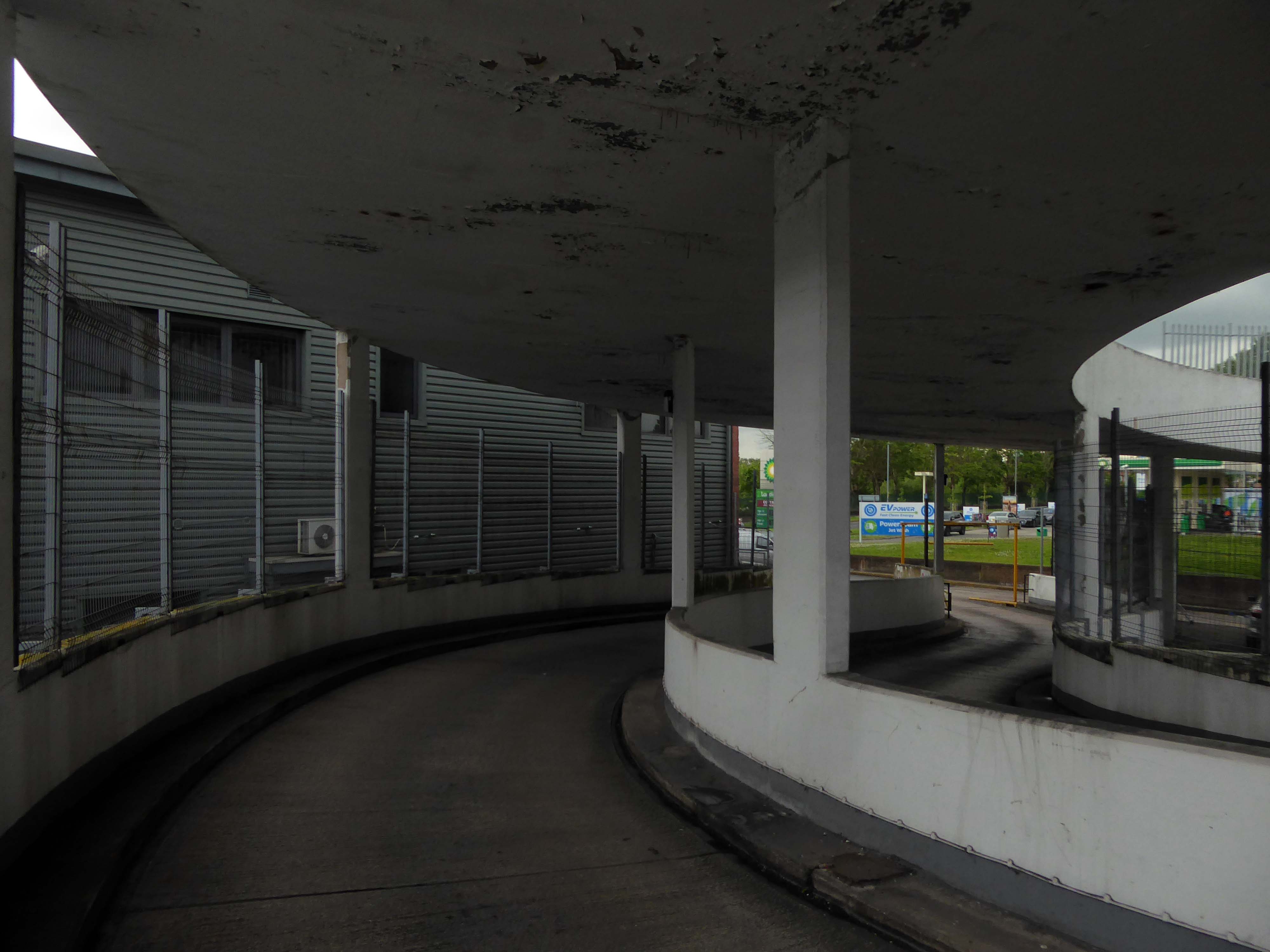
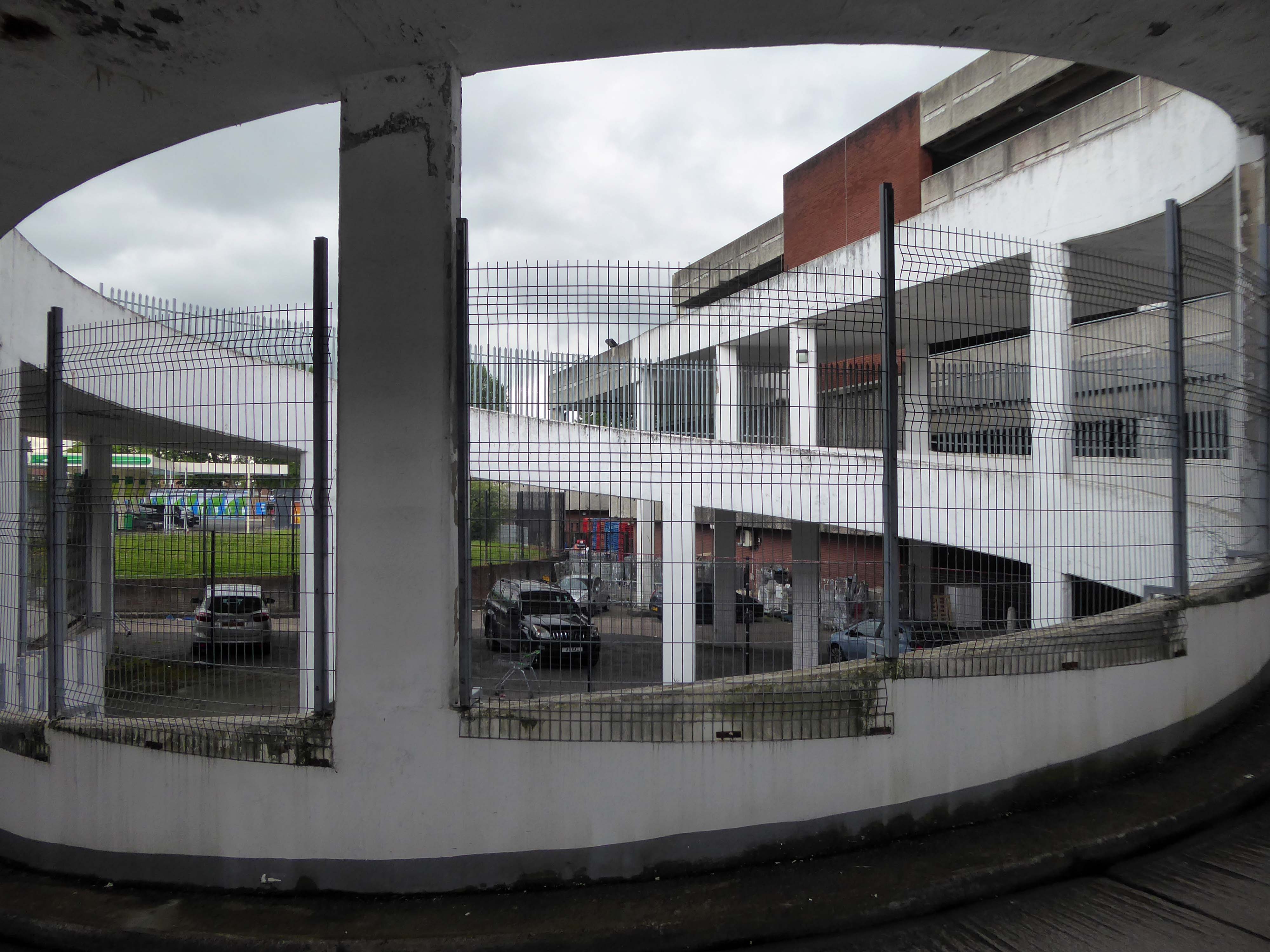
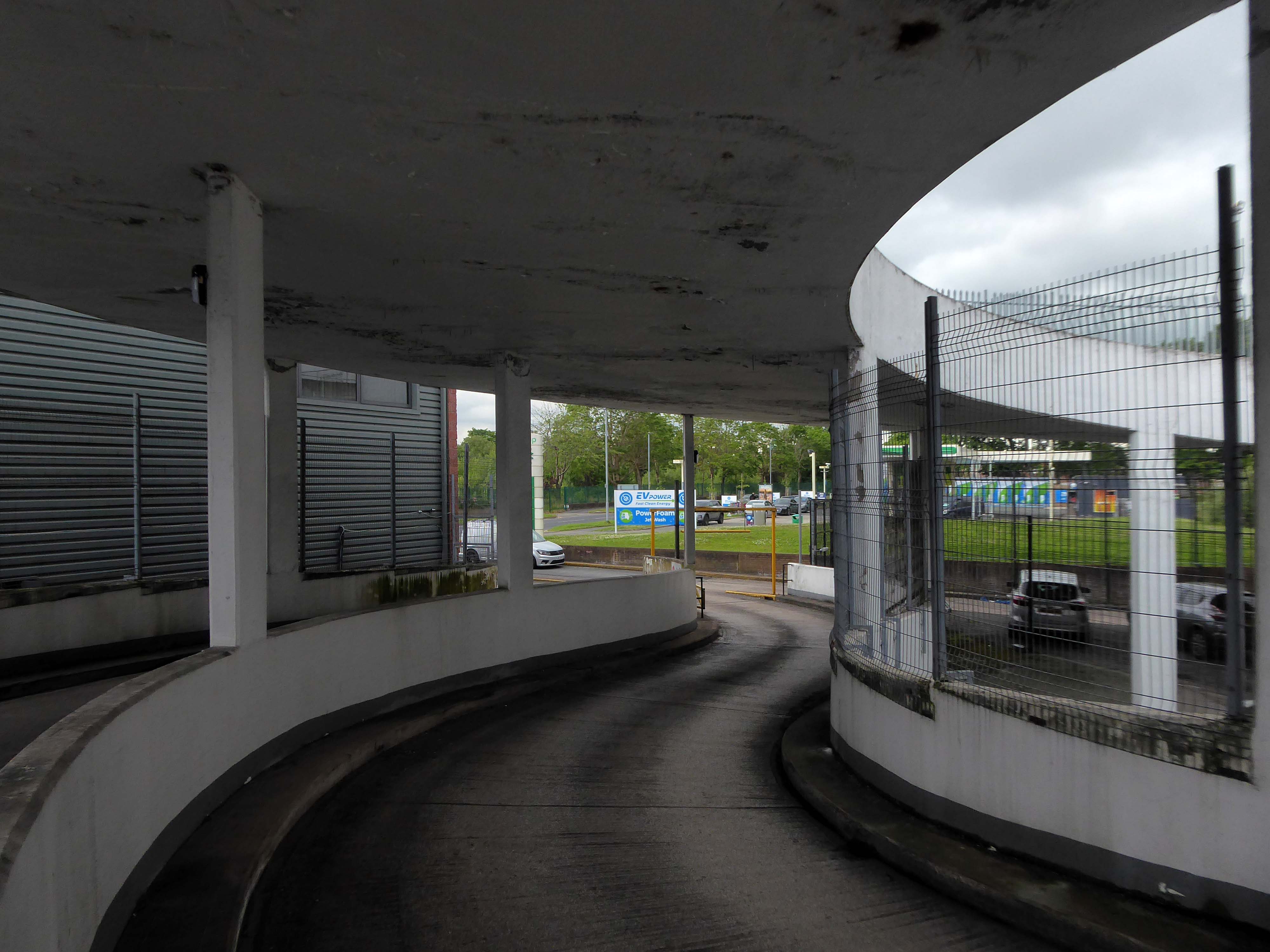
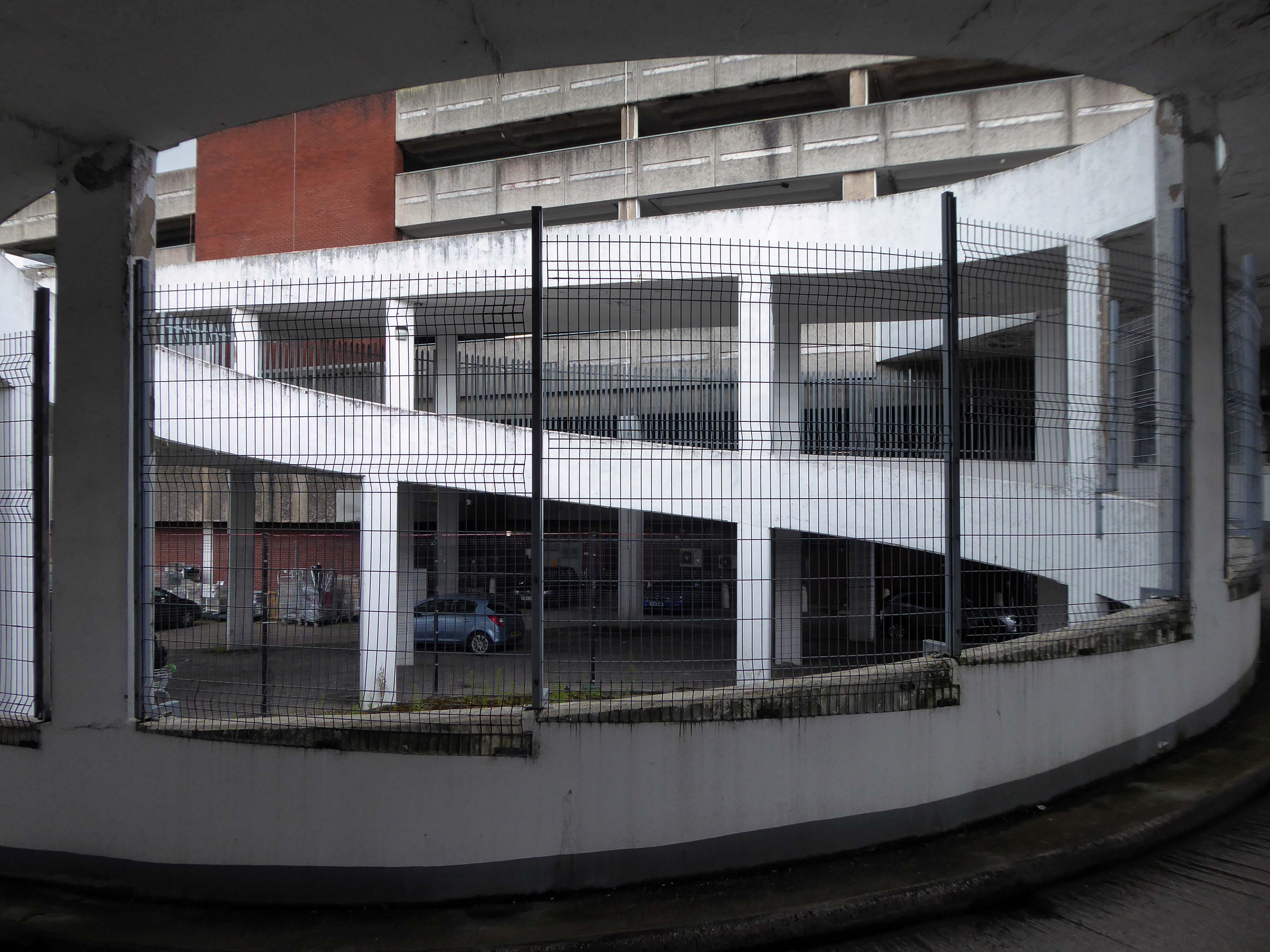
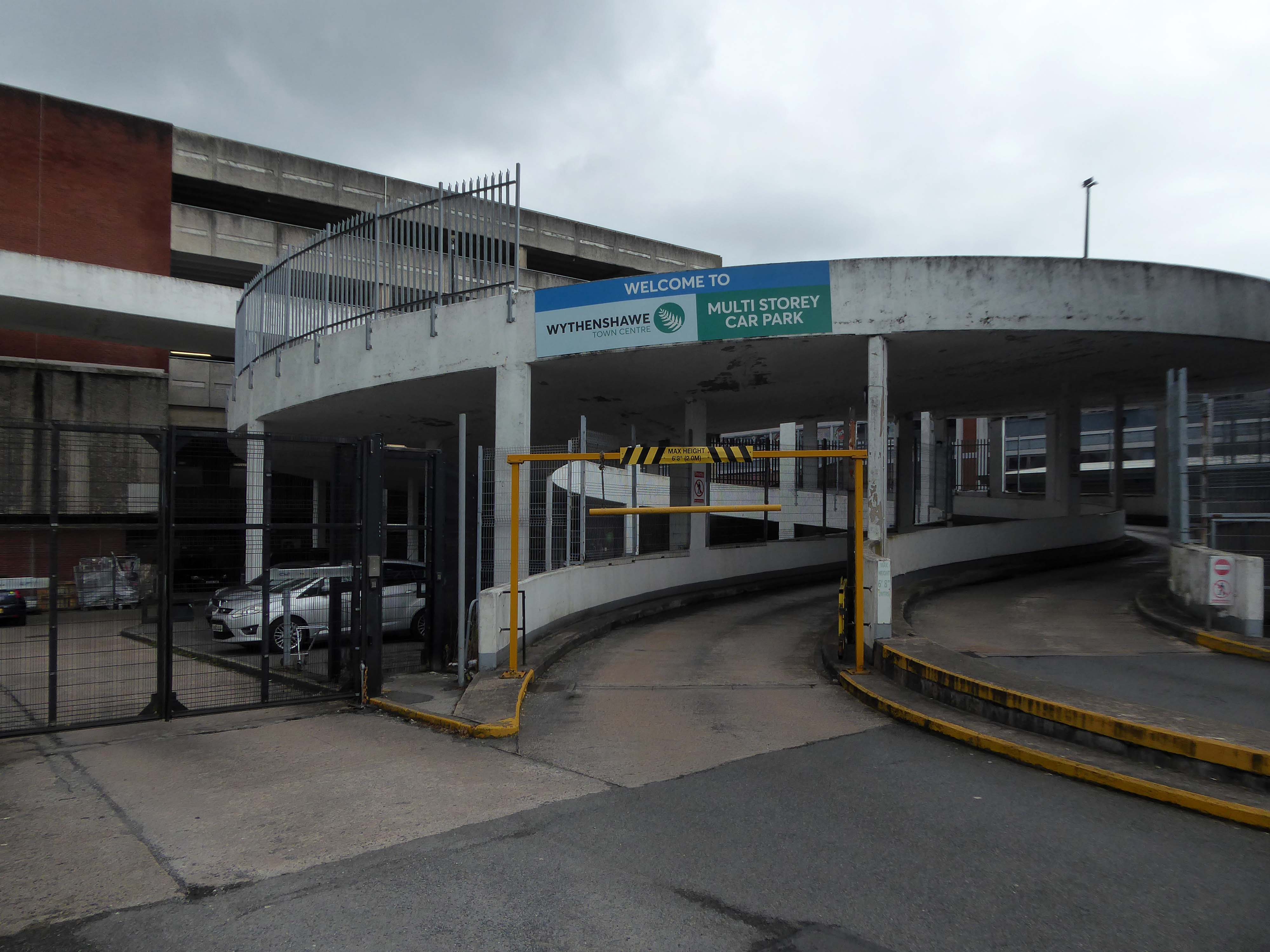
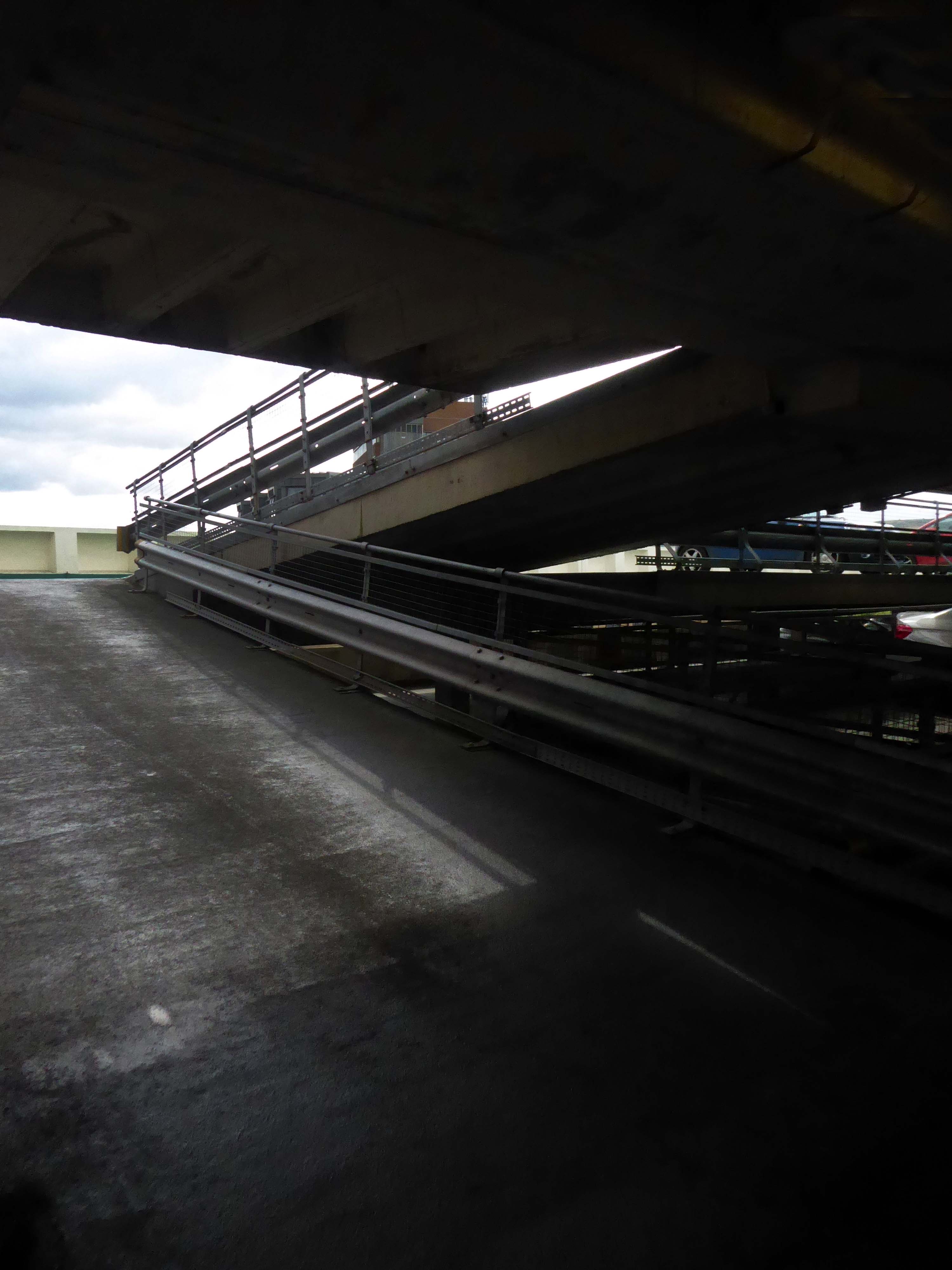
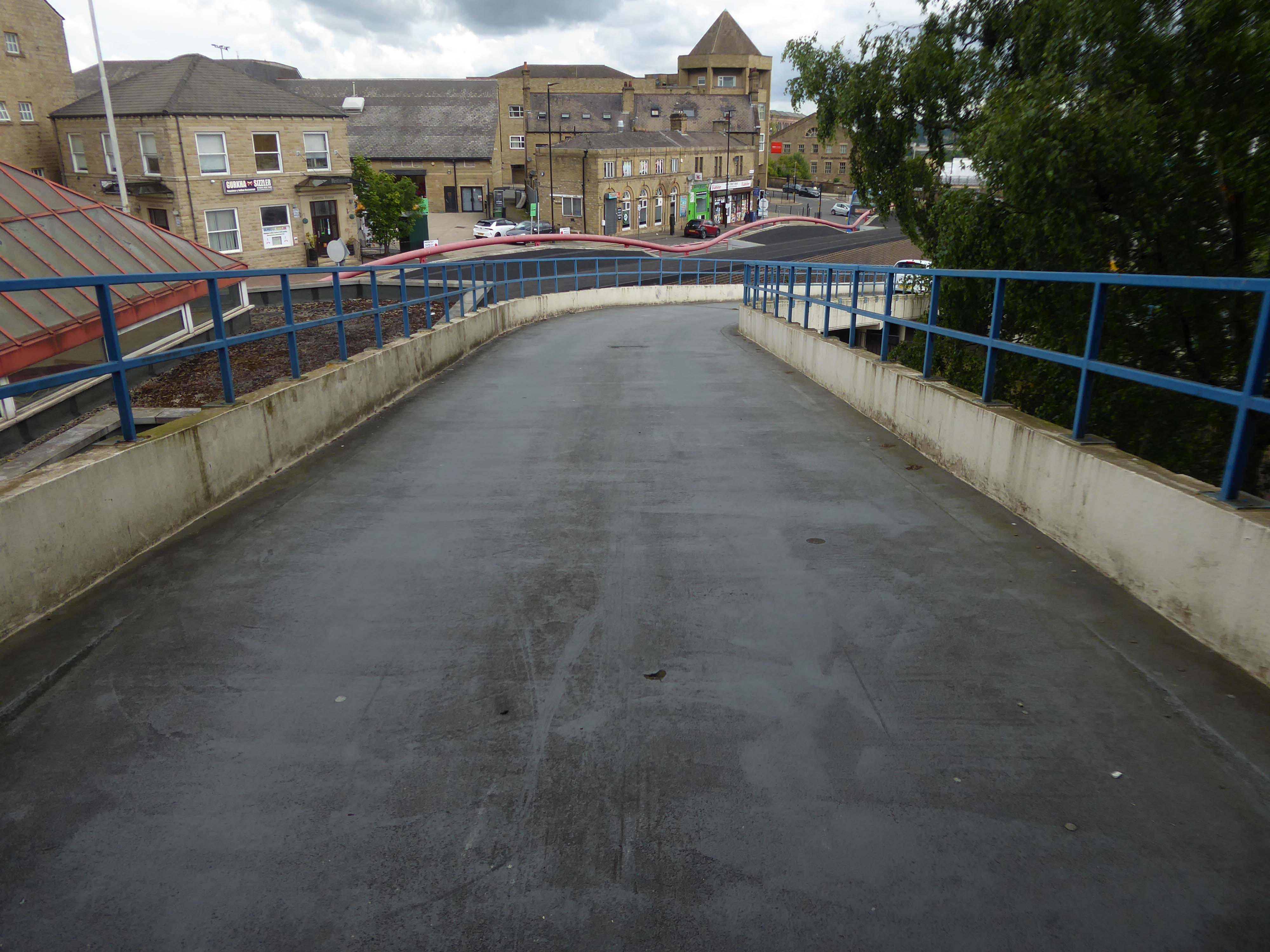
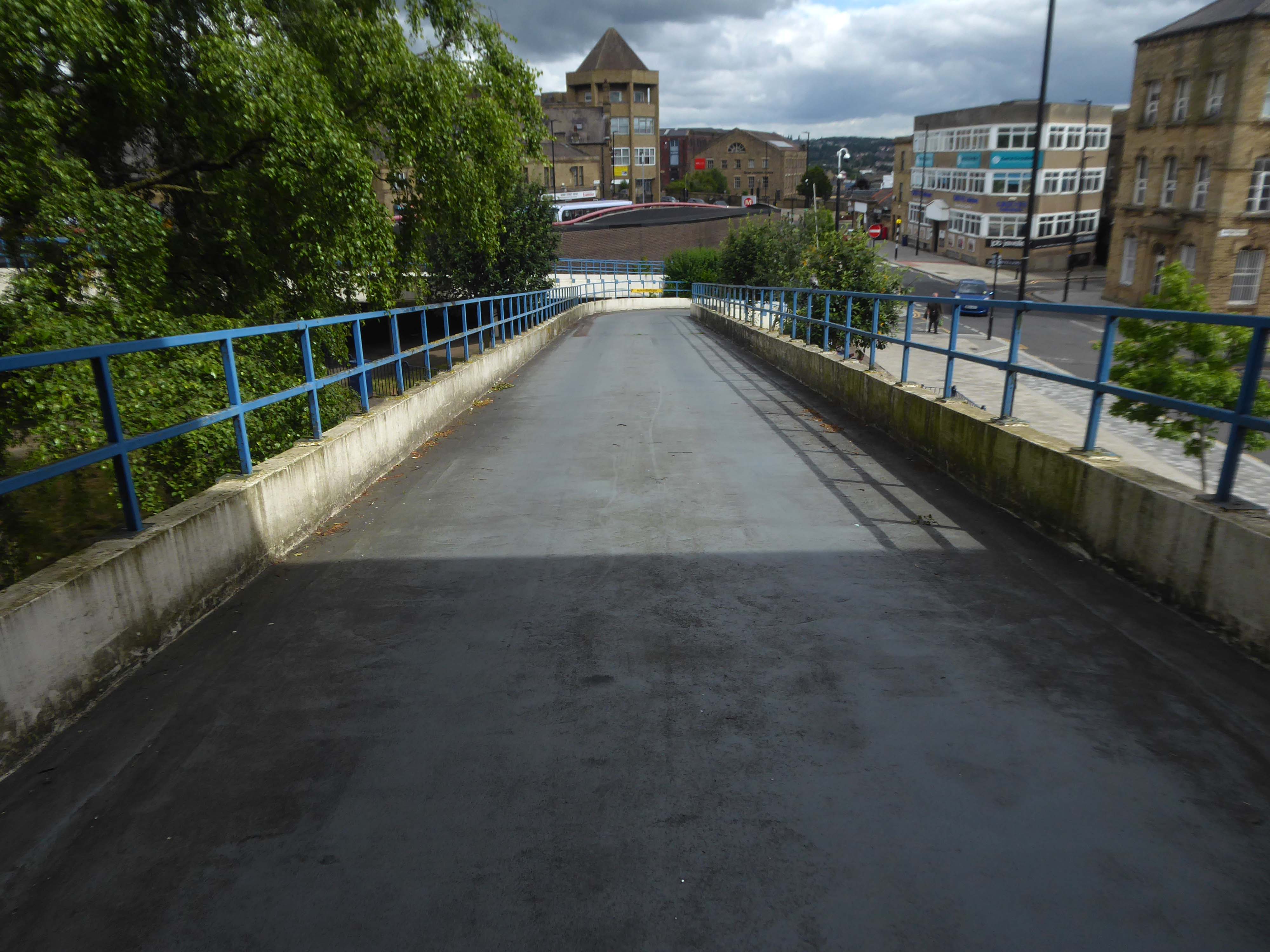
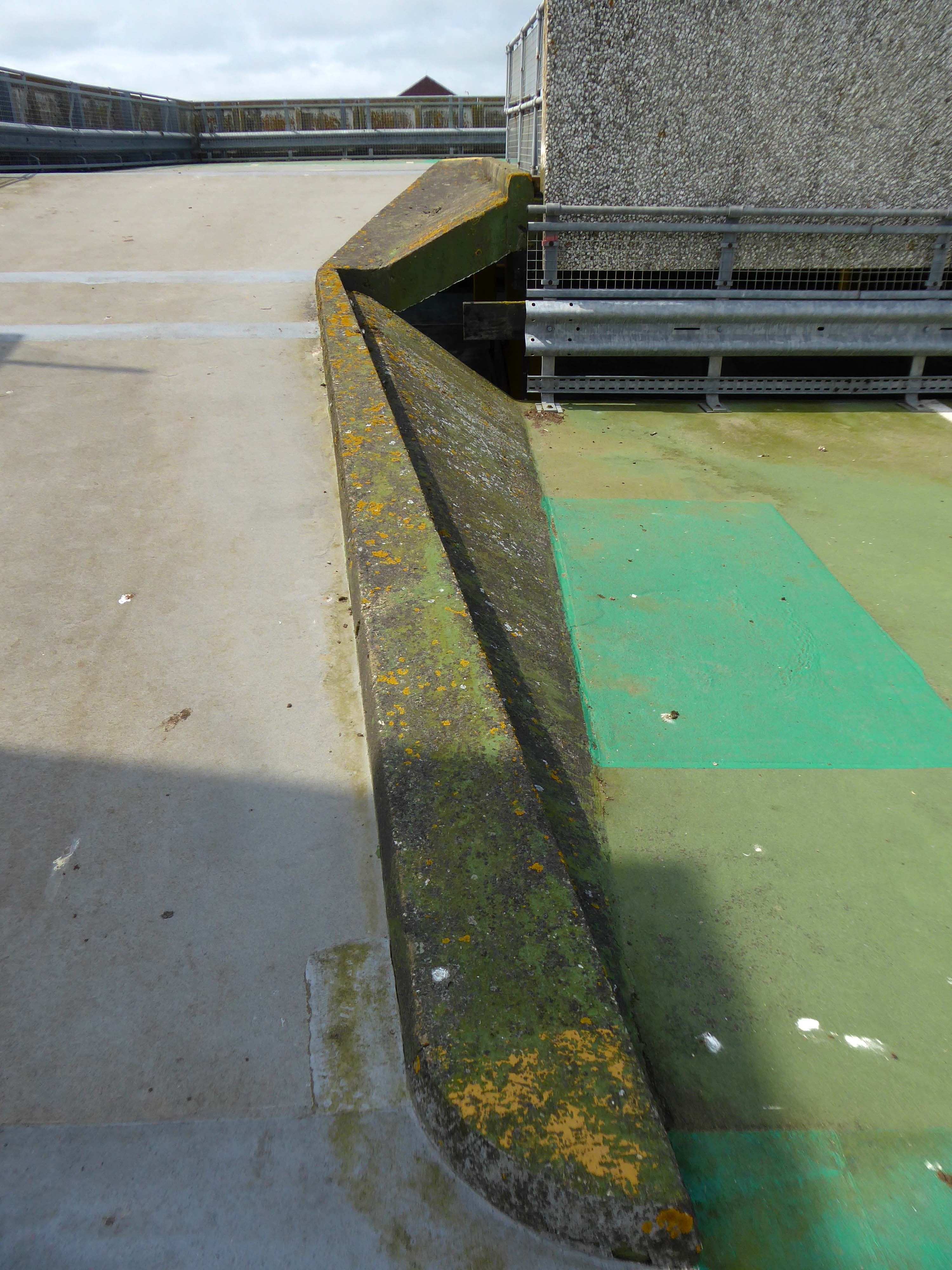
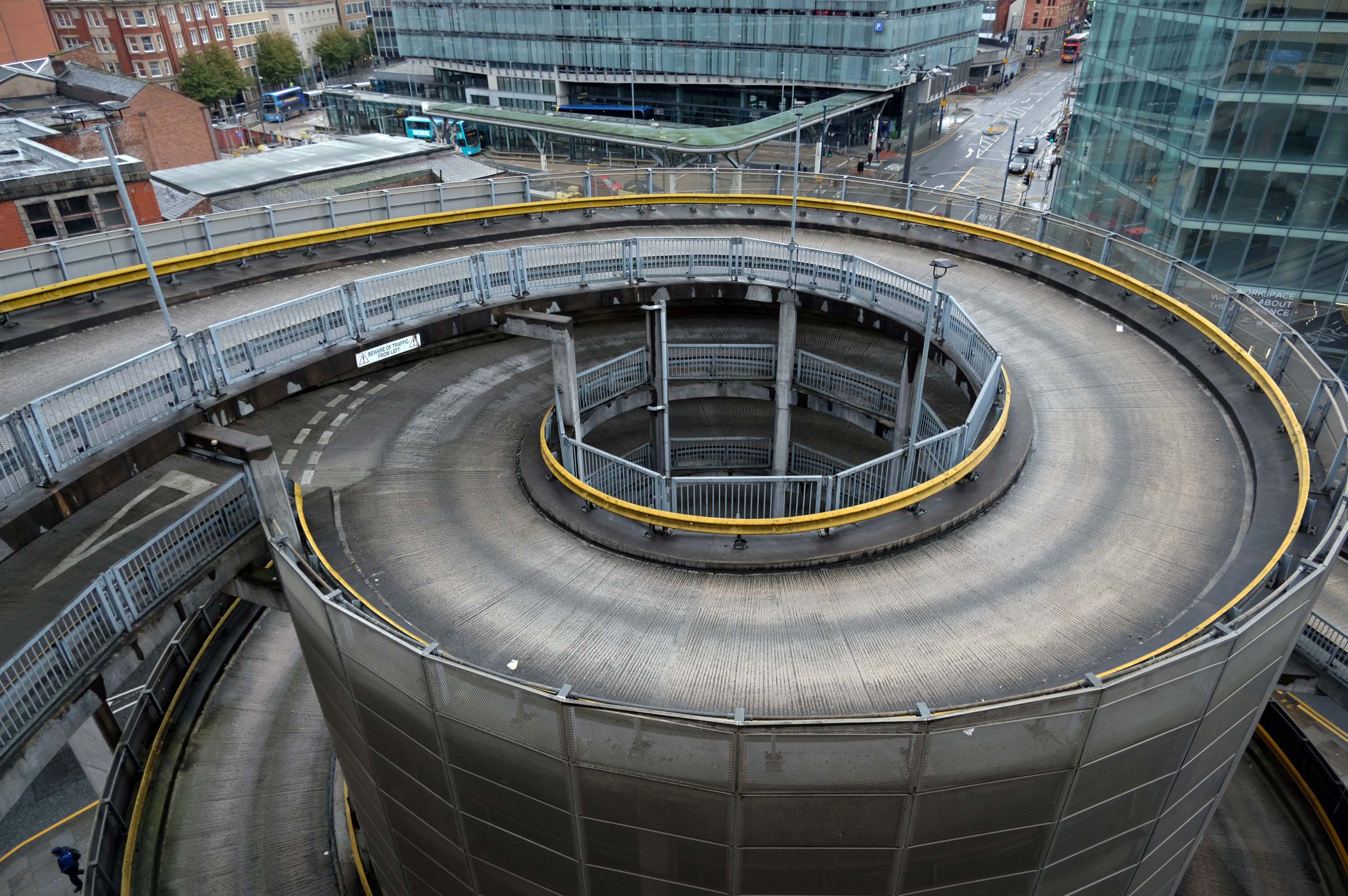
I do have a fondness for ramps – particularly helical ramps, one of my most memorable early modernist encounters, was with Lubetkin’s penguin pool.
The cast concrete taking on a truly sculptural dimension.
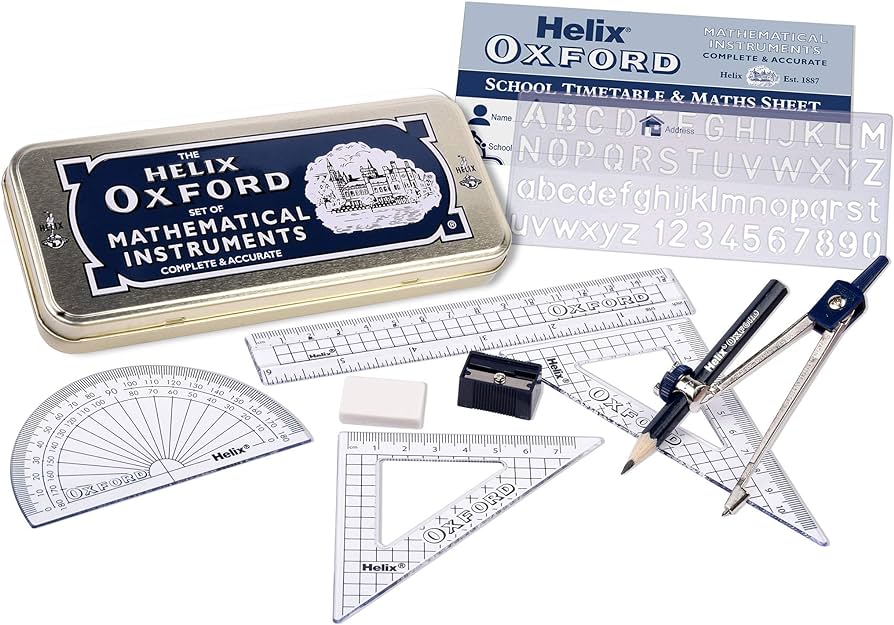
There is also the Proustian recollection of a collection of geometry lessons and Helix instruments.
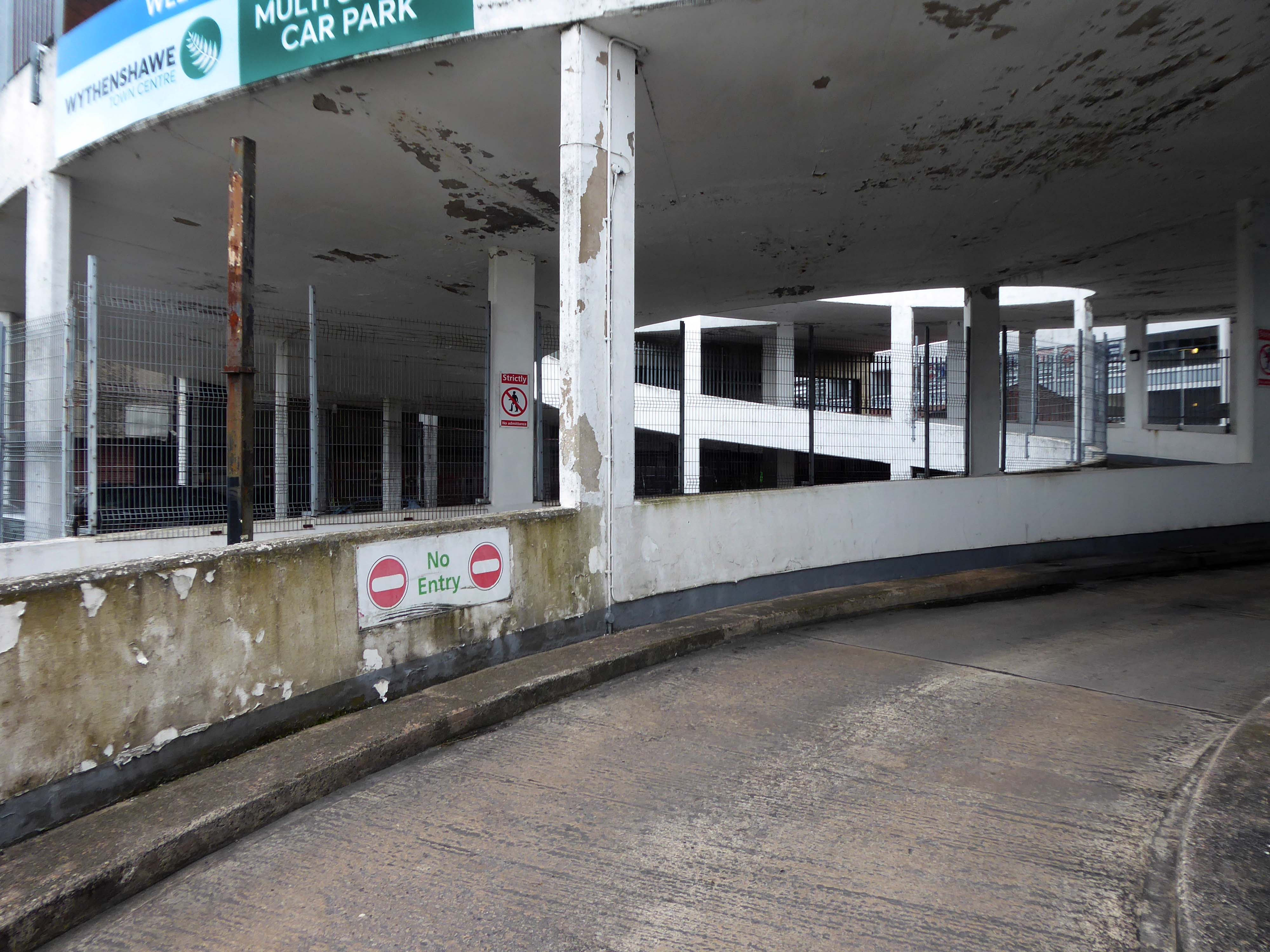
It has all left a lasting impression and I have subsequently taken every opportunity to waddle penguin like up and down several concrete car park ramps.
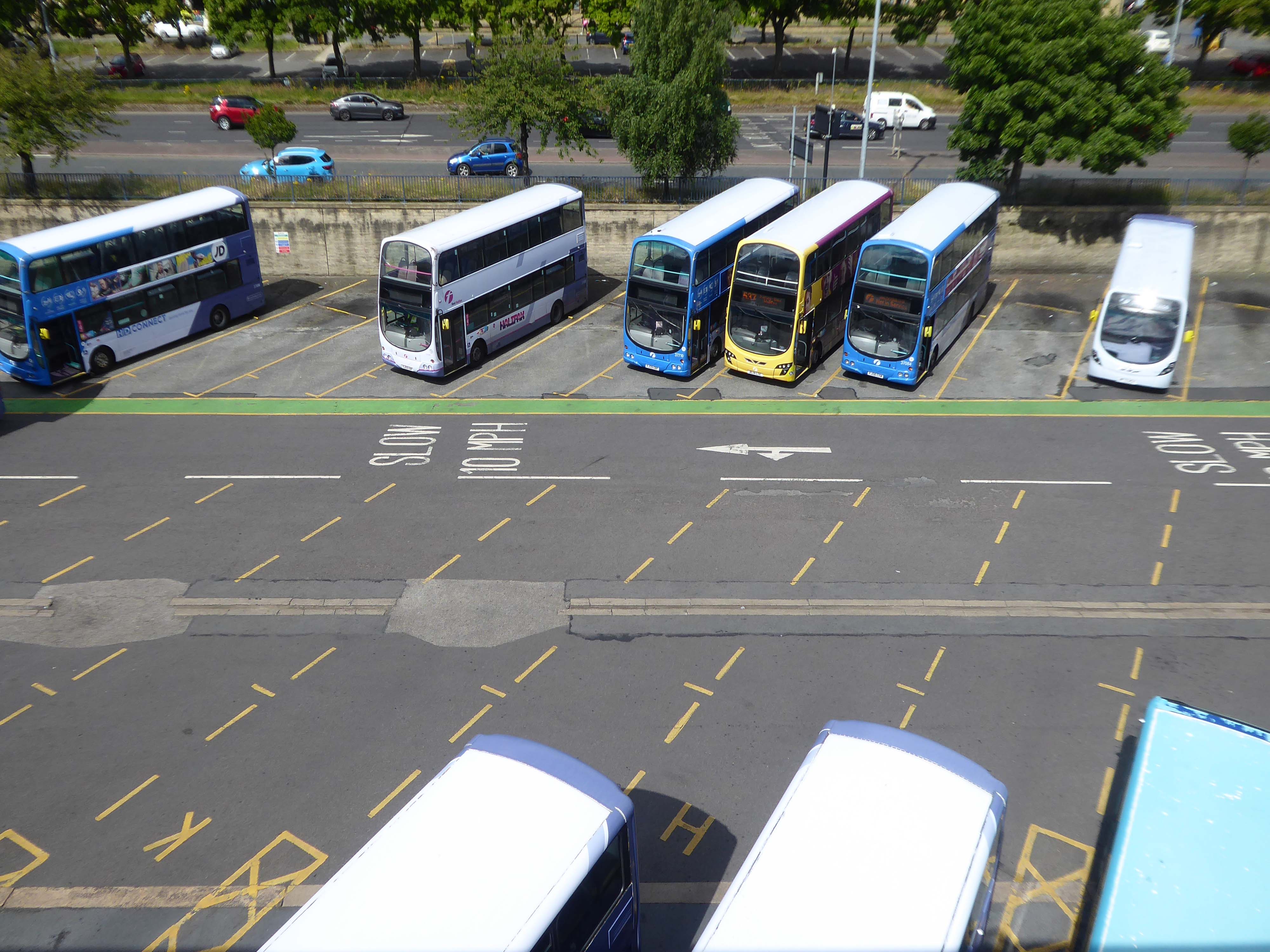
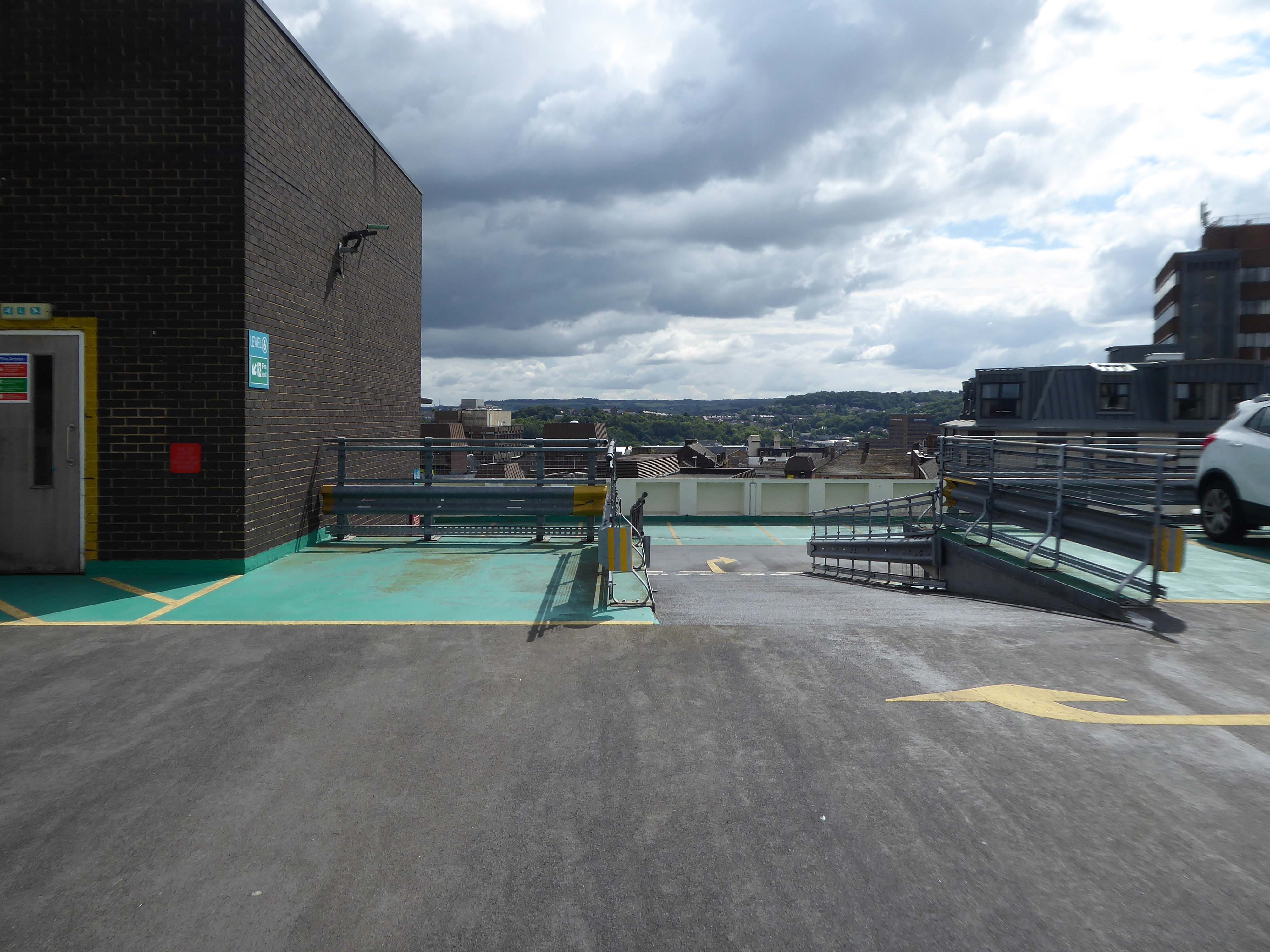
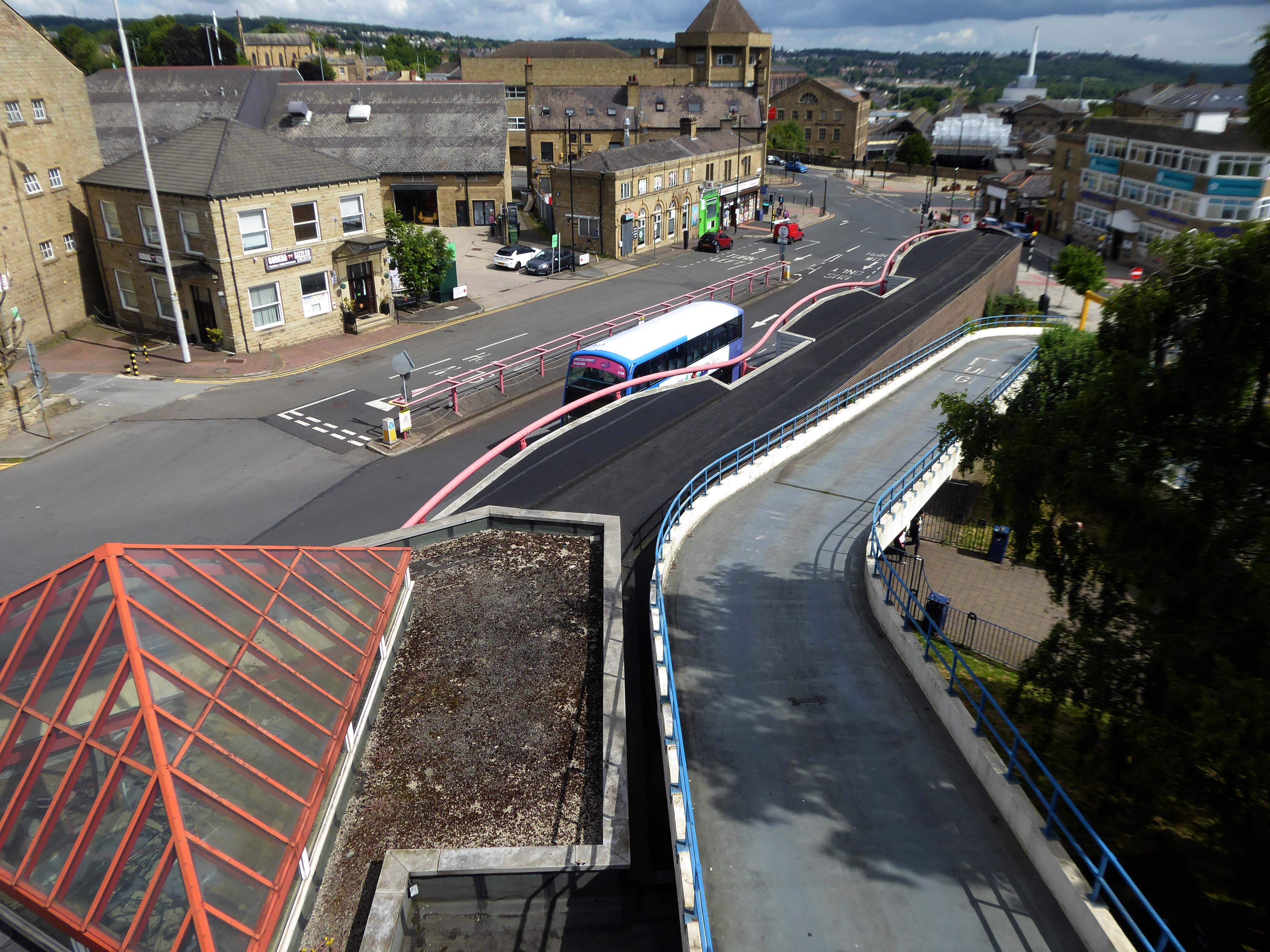
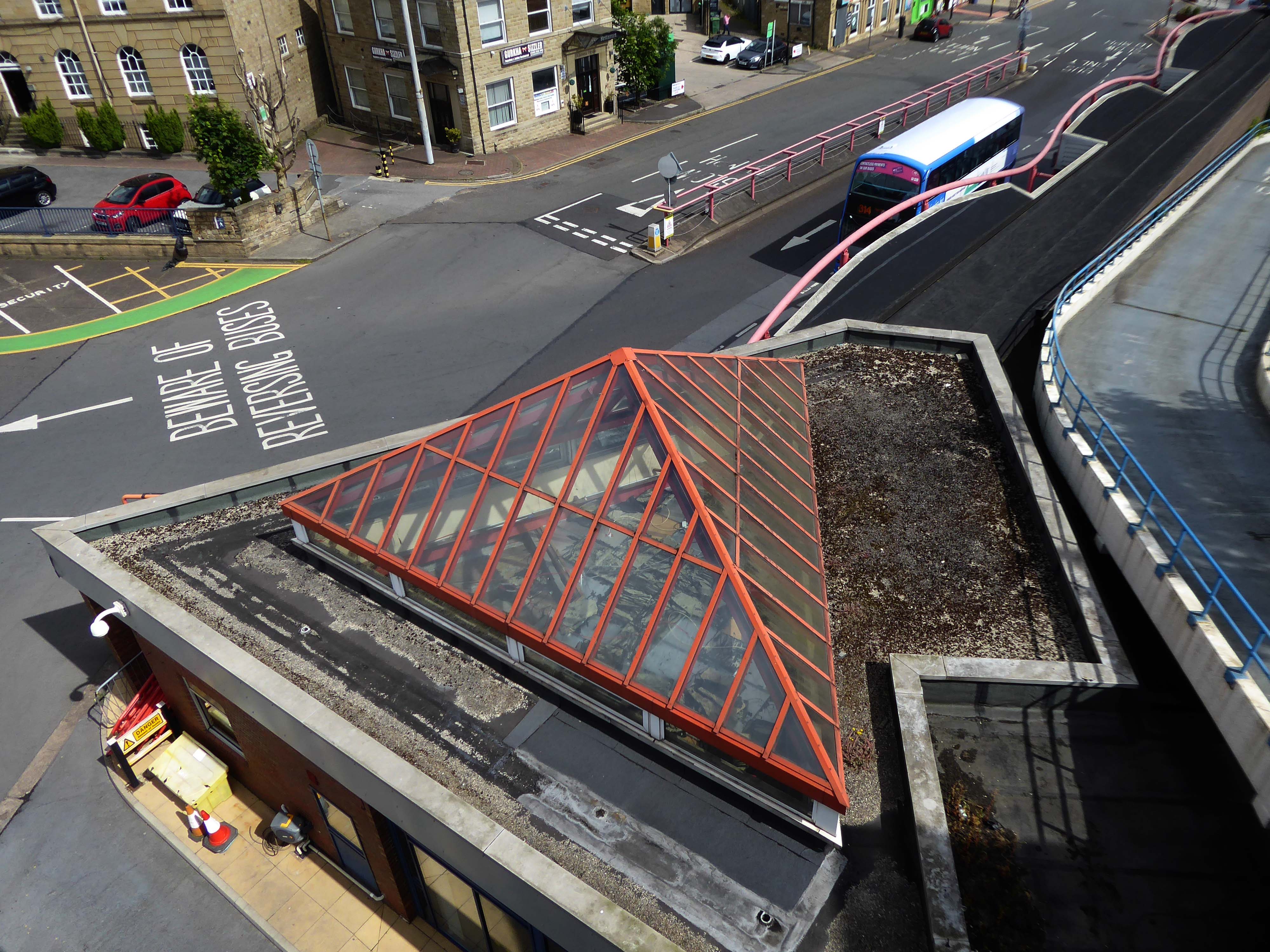
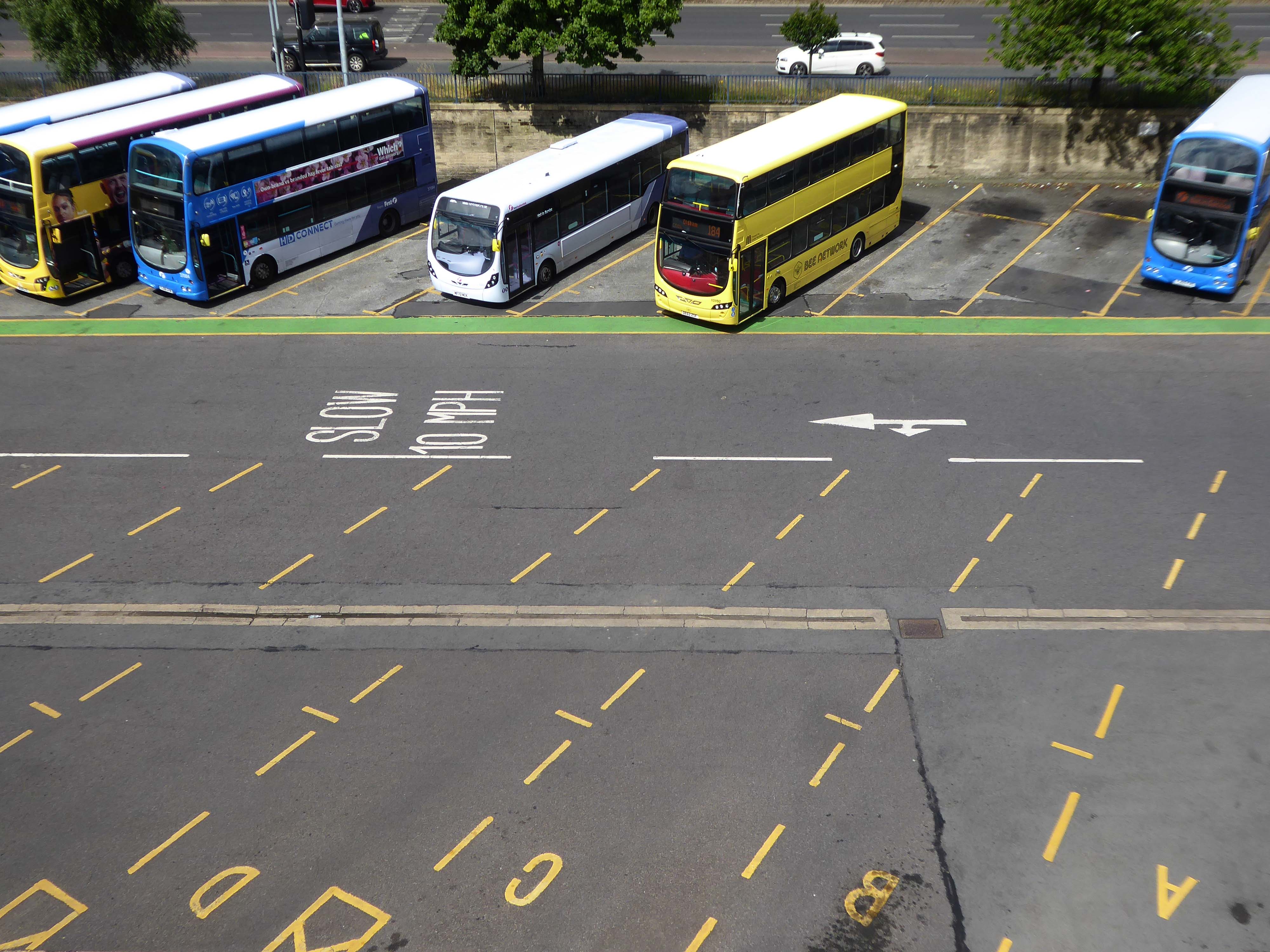
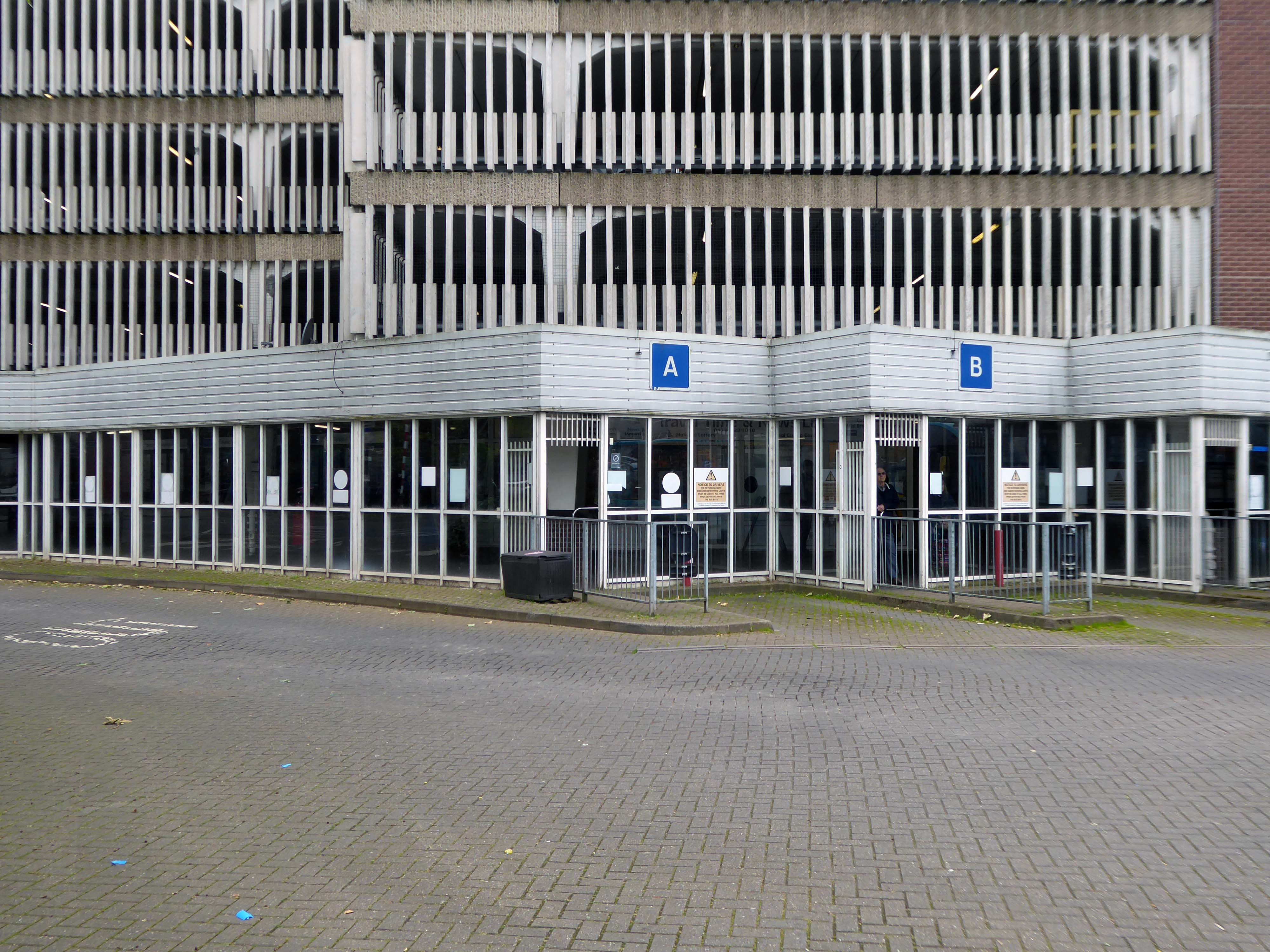
I was informed by the seriously erudite Christopher Marsden that the bus station and car park were the work of Derek C W Vane: Borough Architect 1972-1974.
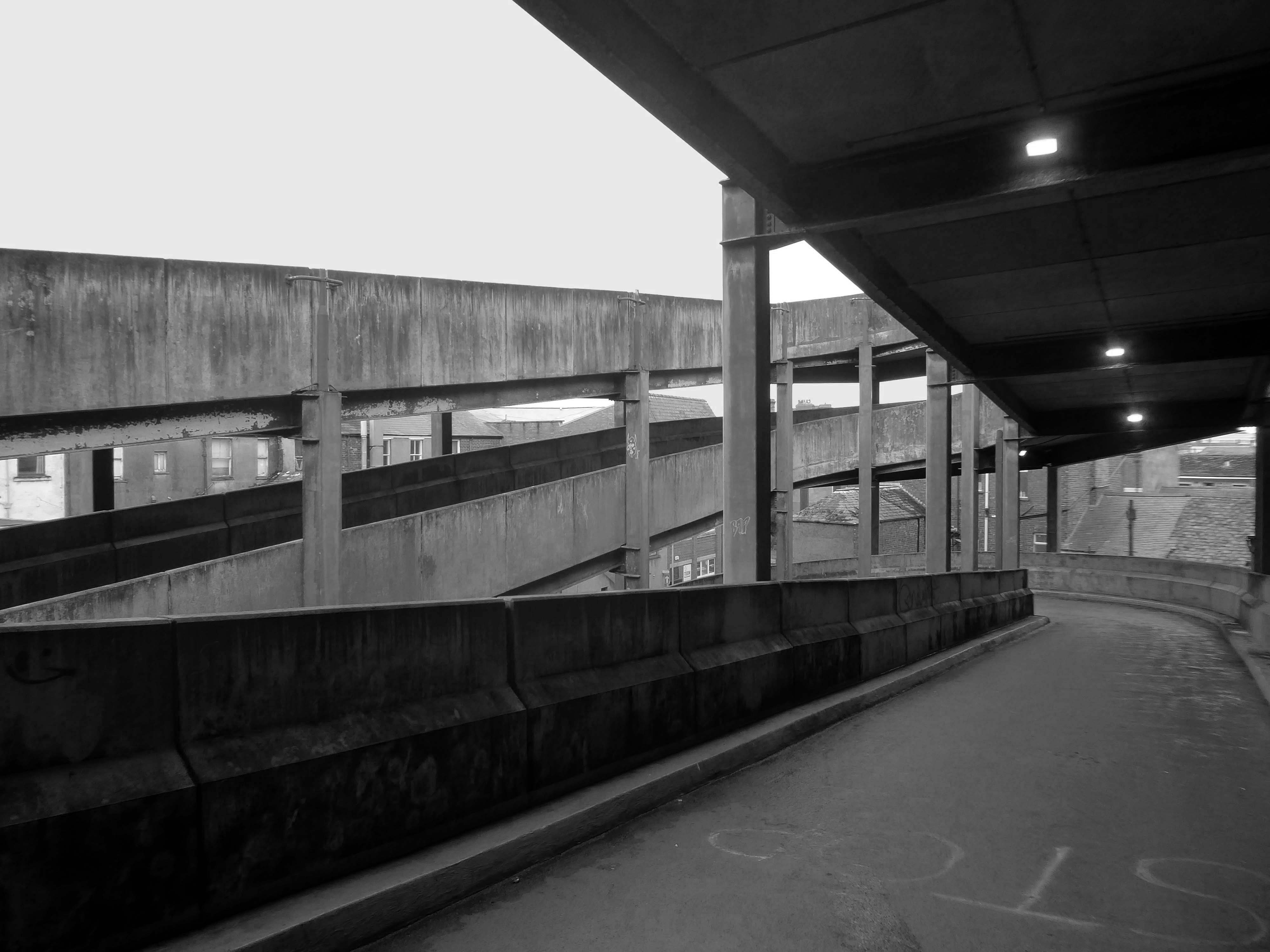
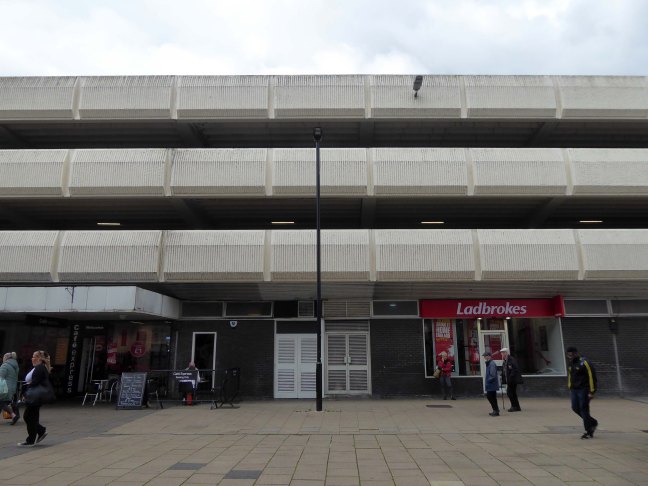
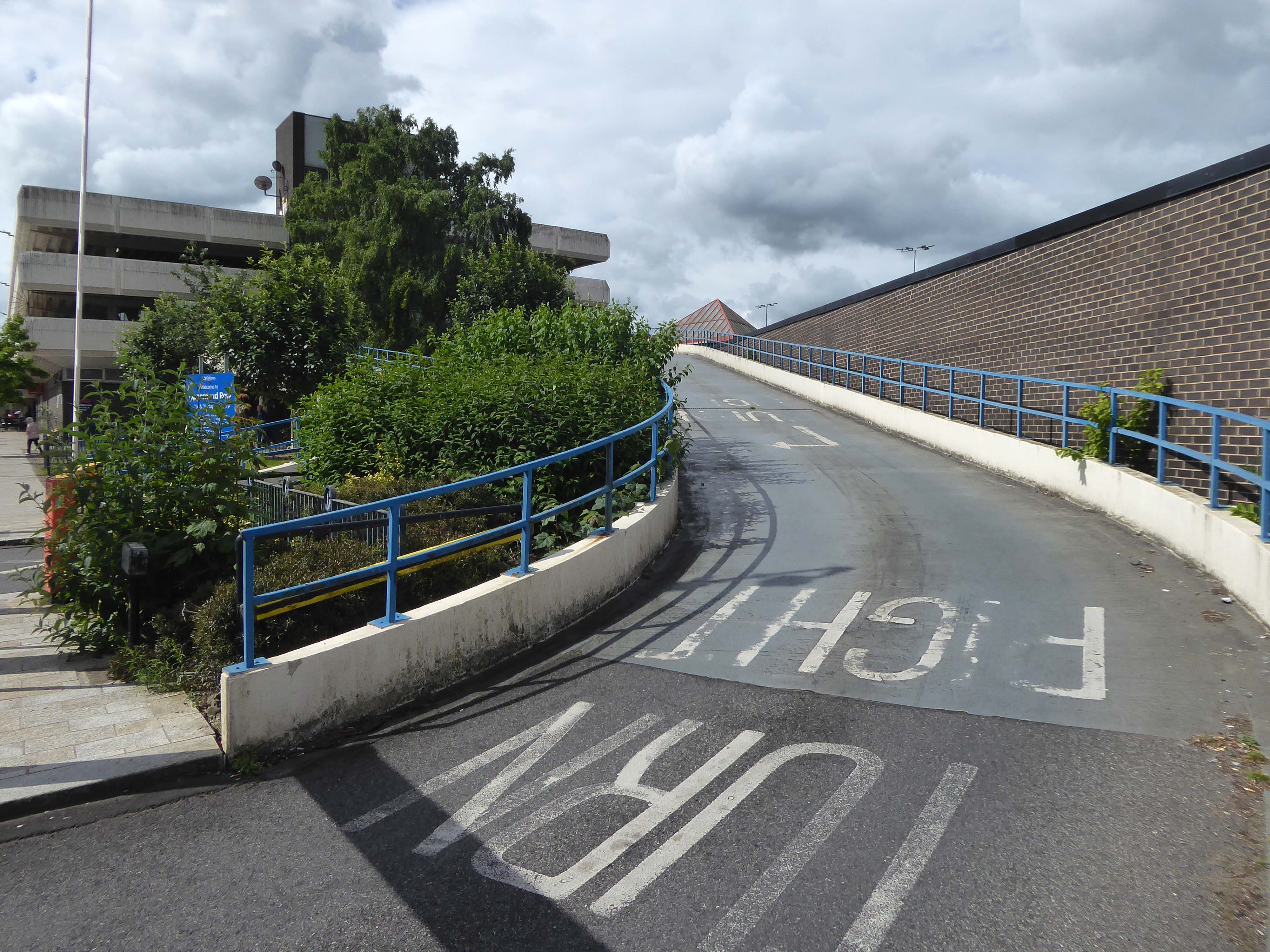
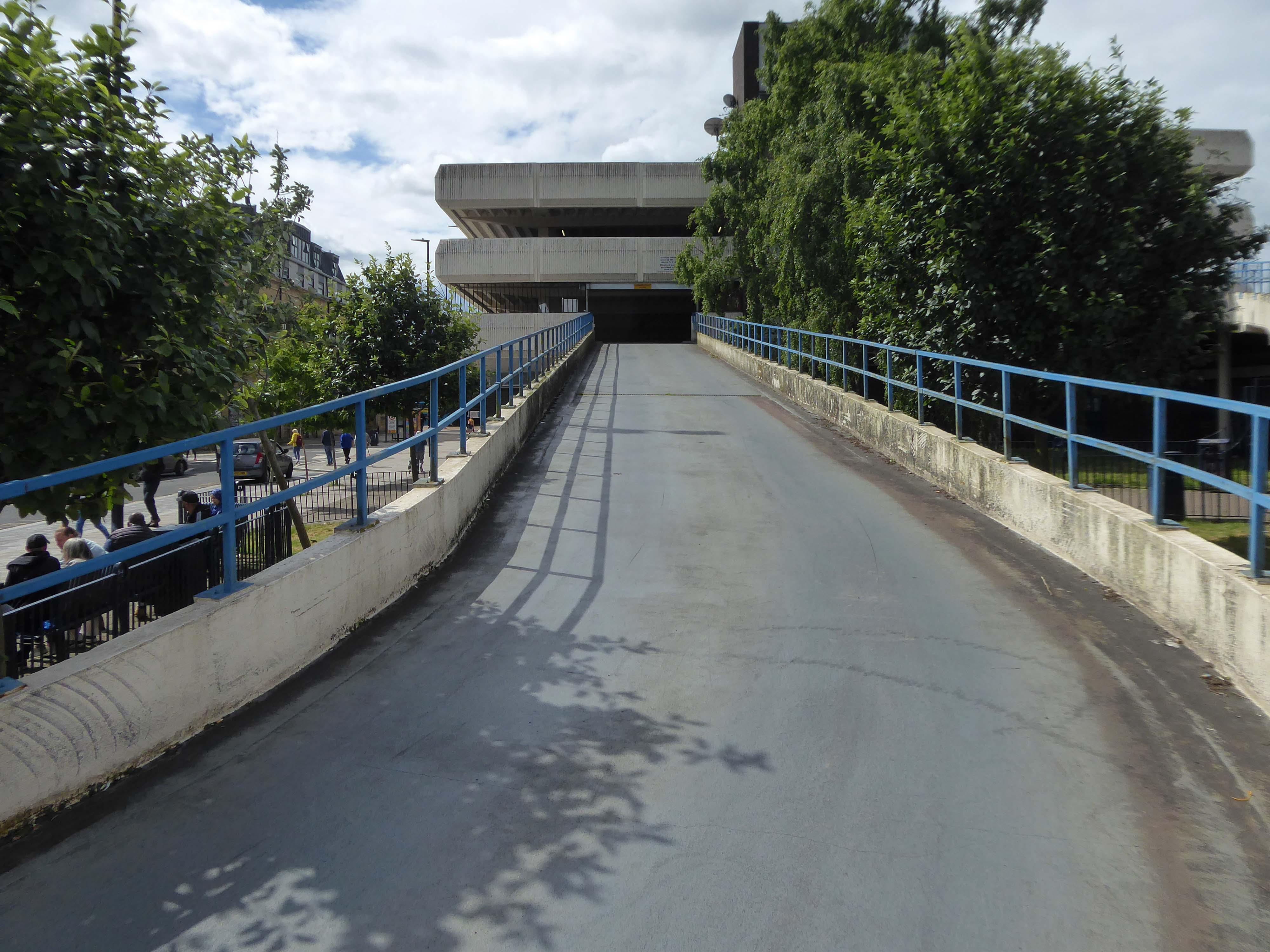
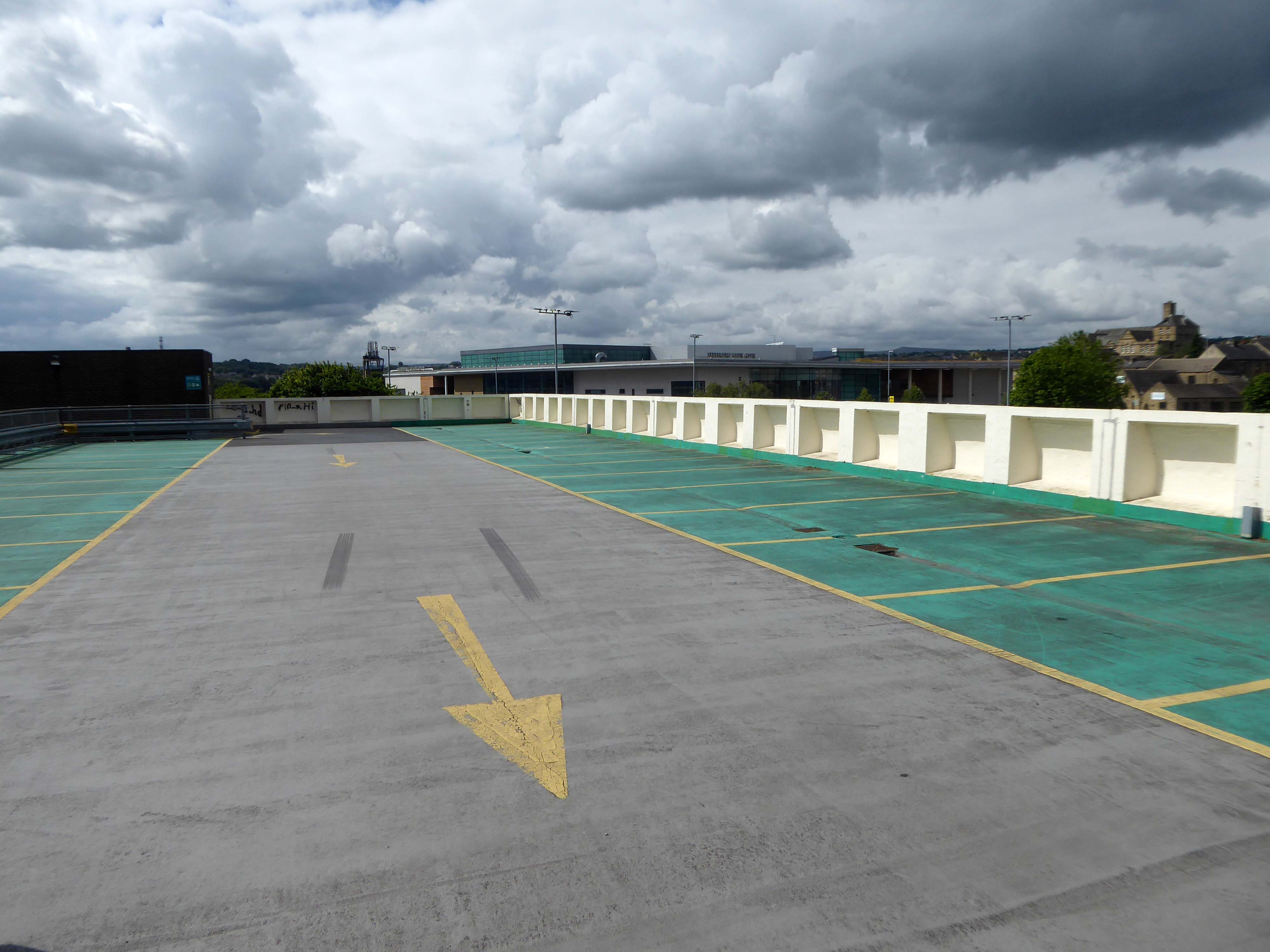
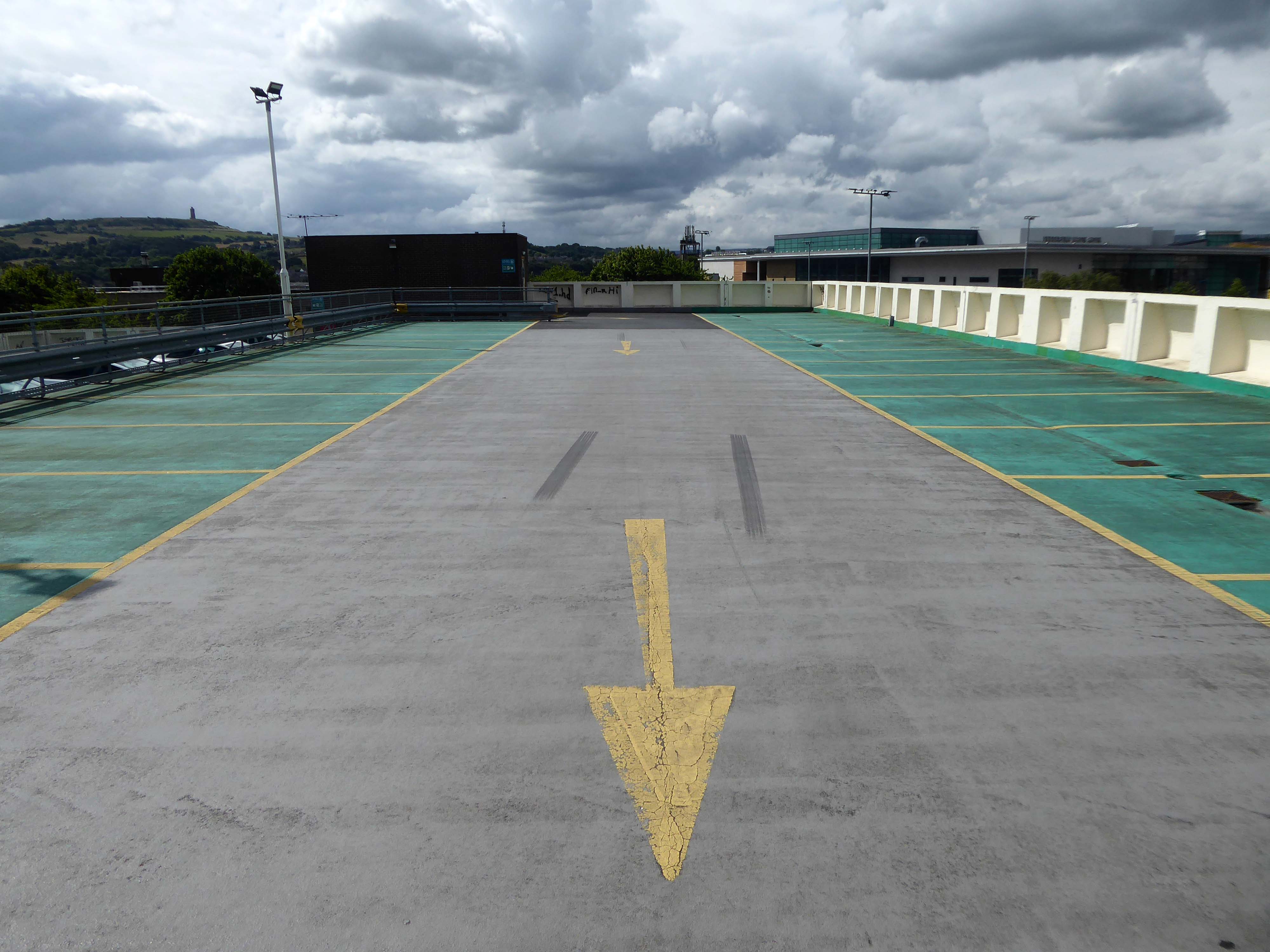
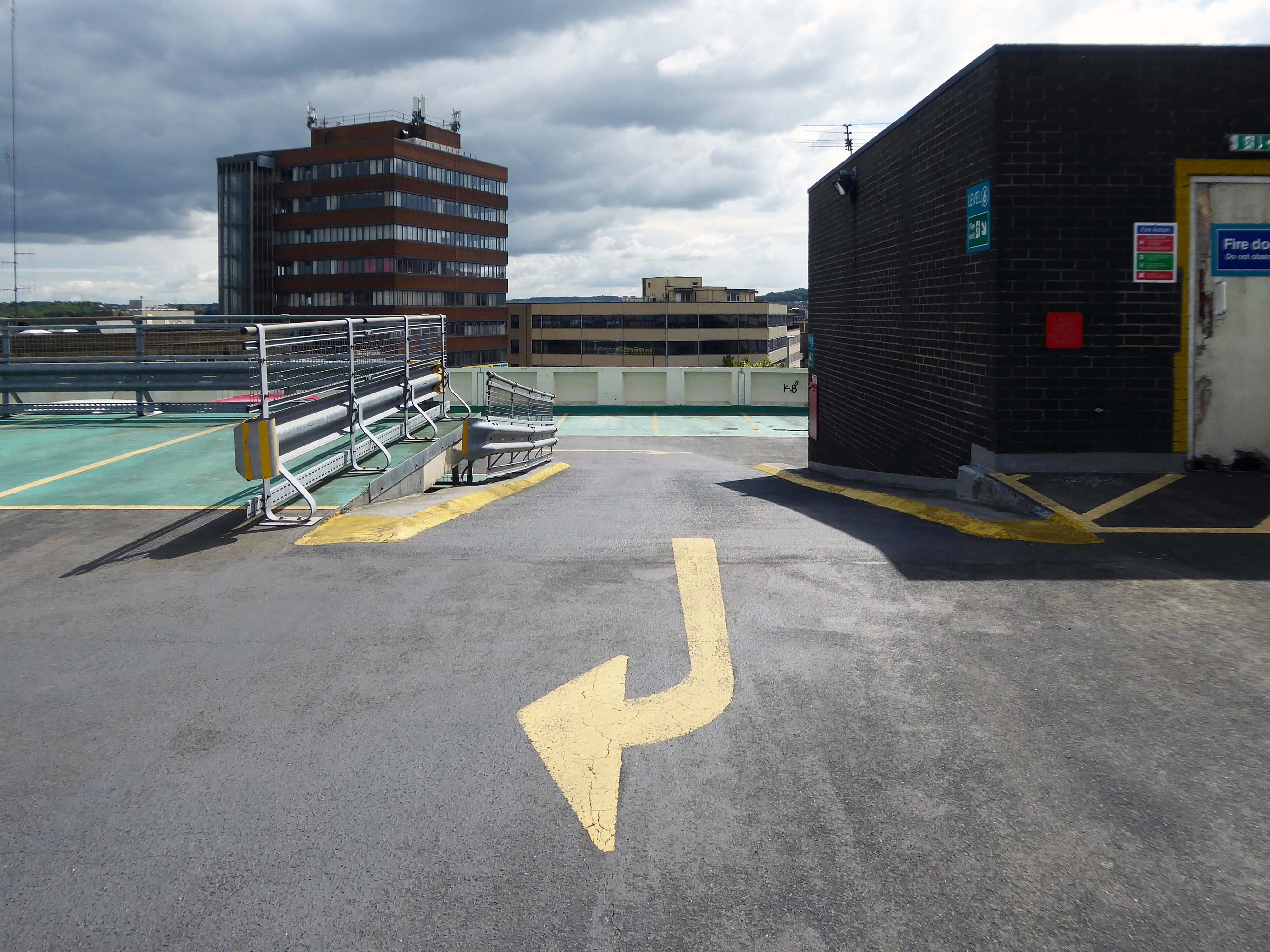
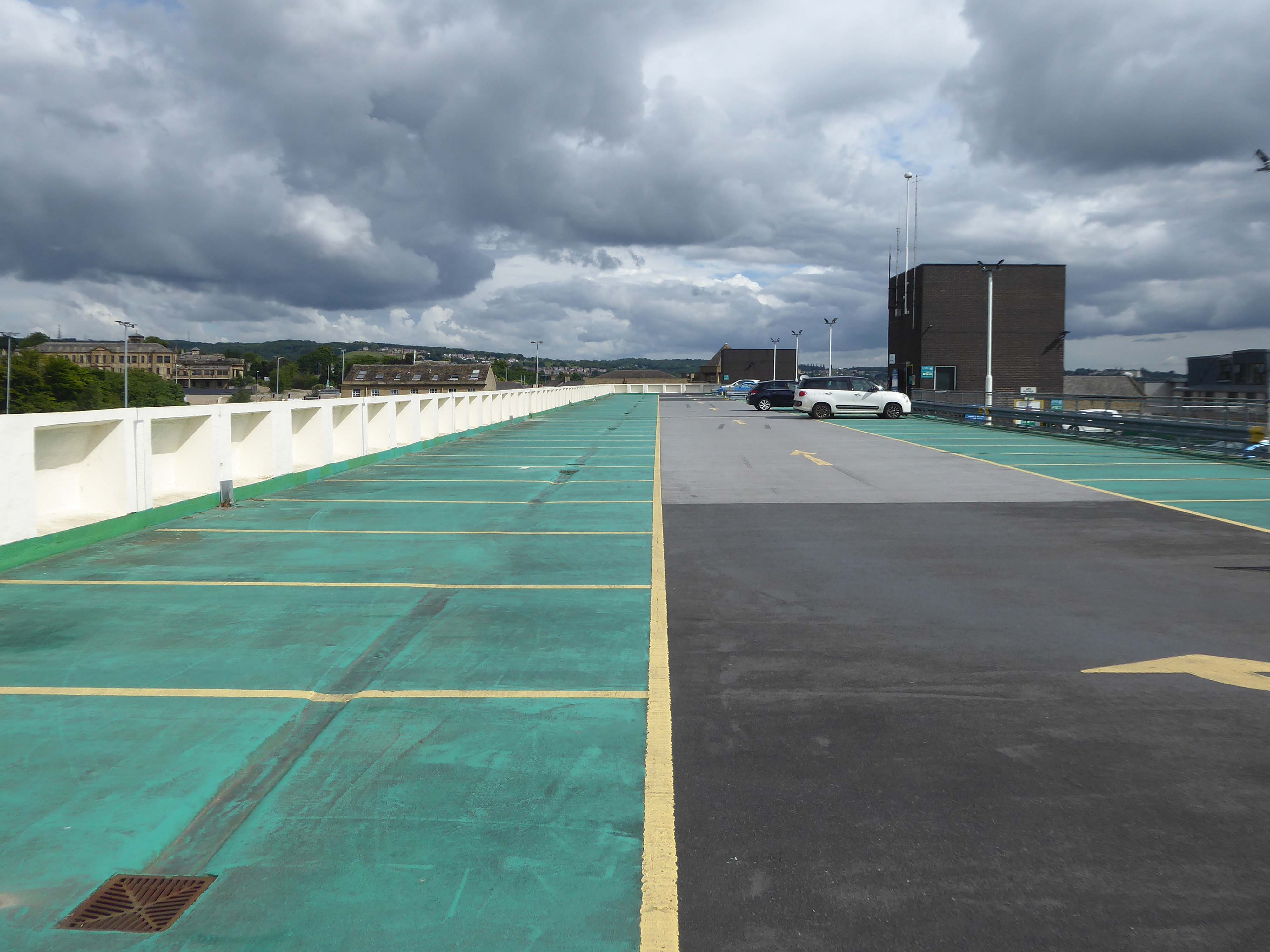
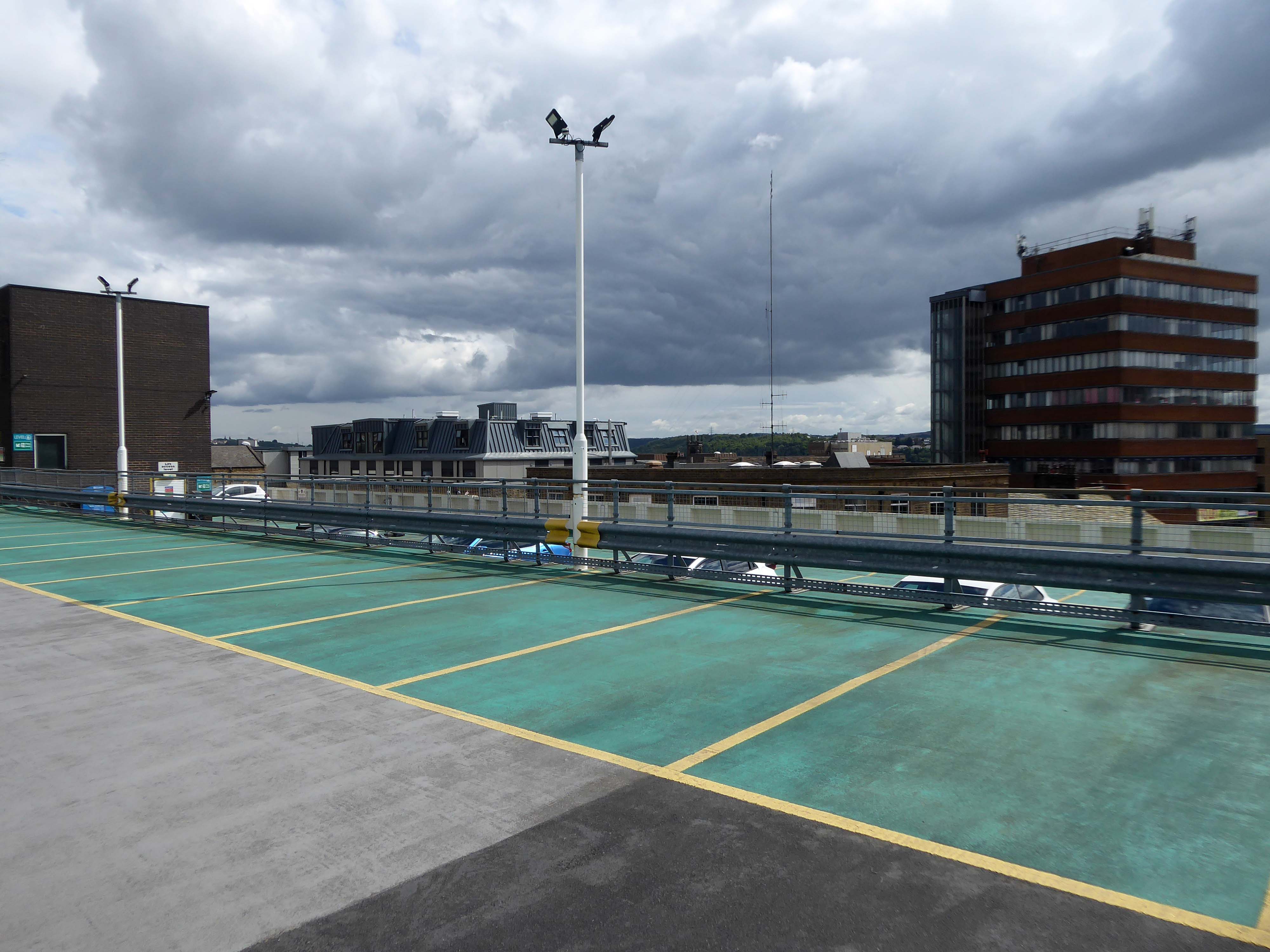
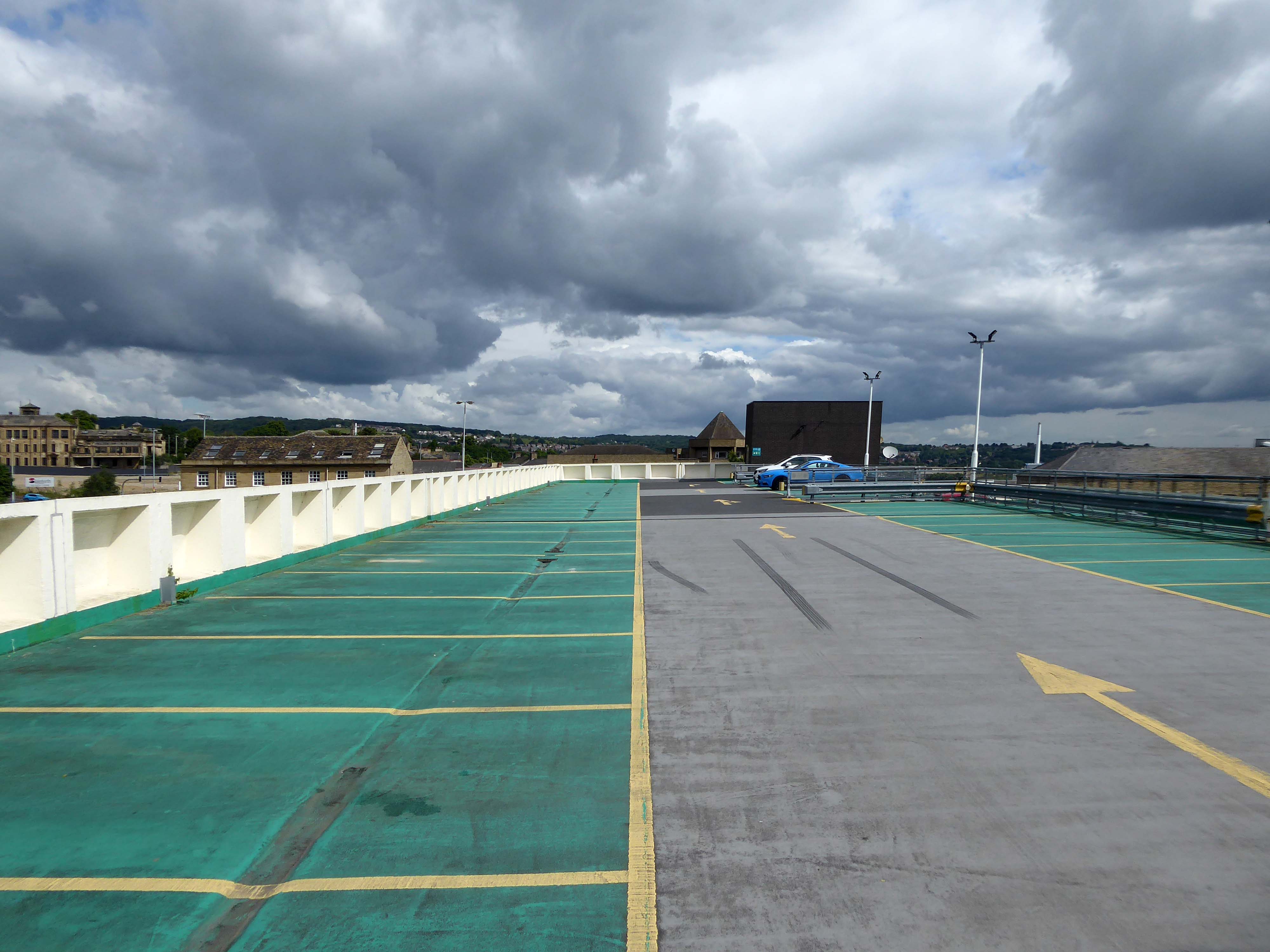
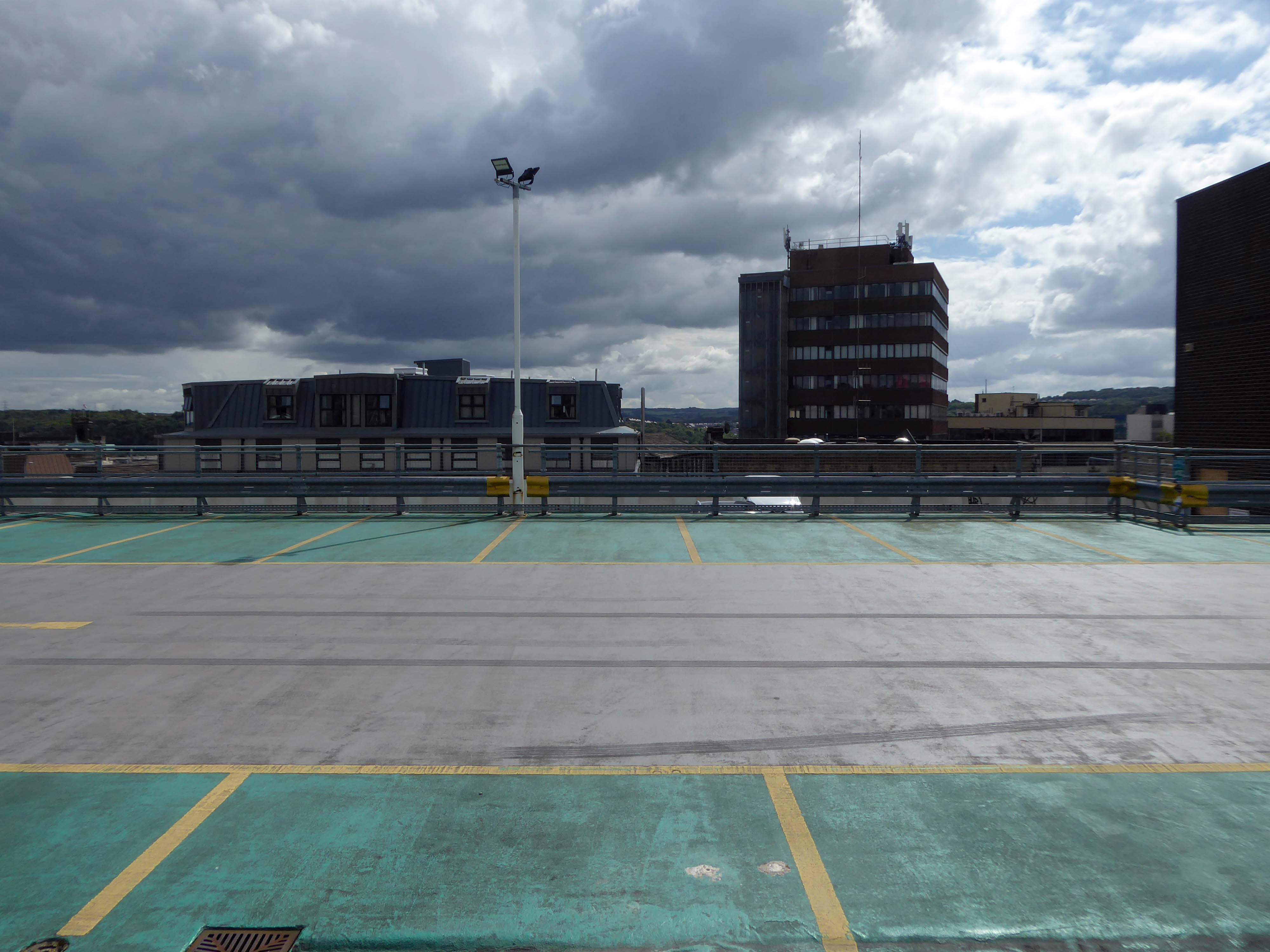
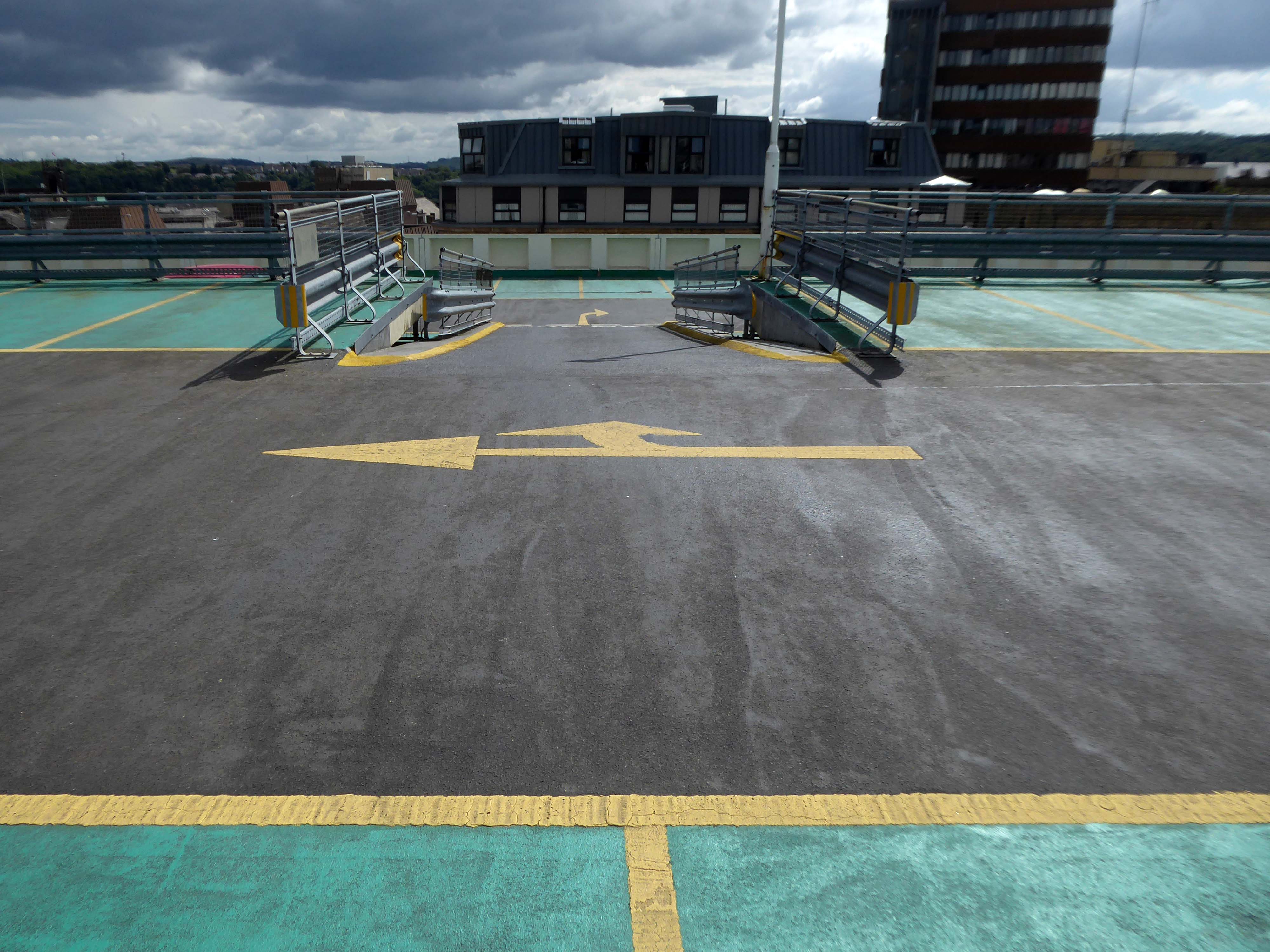
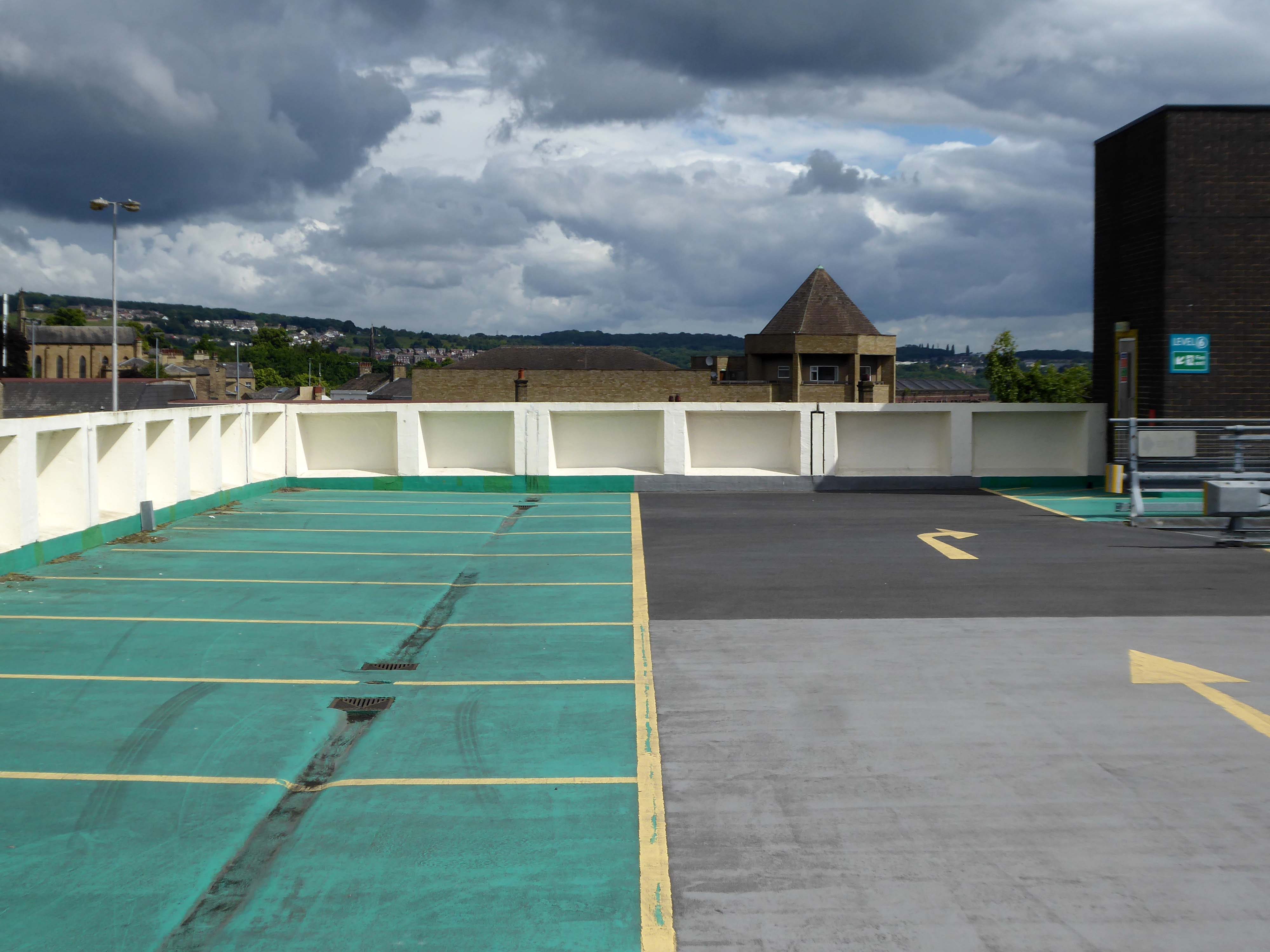
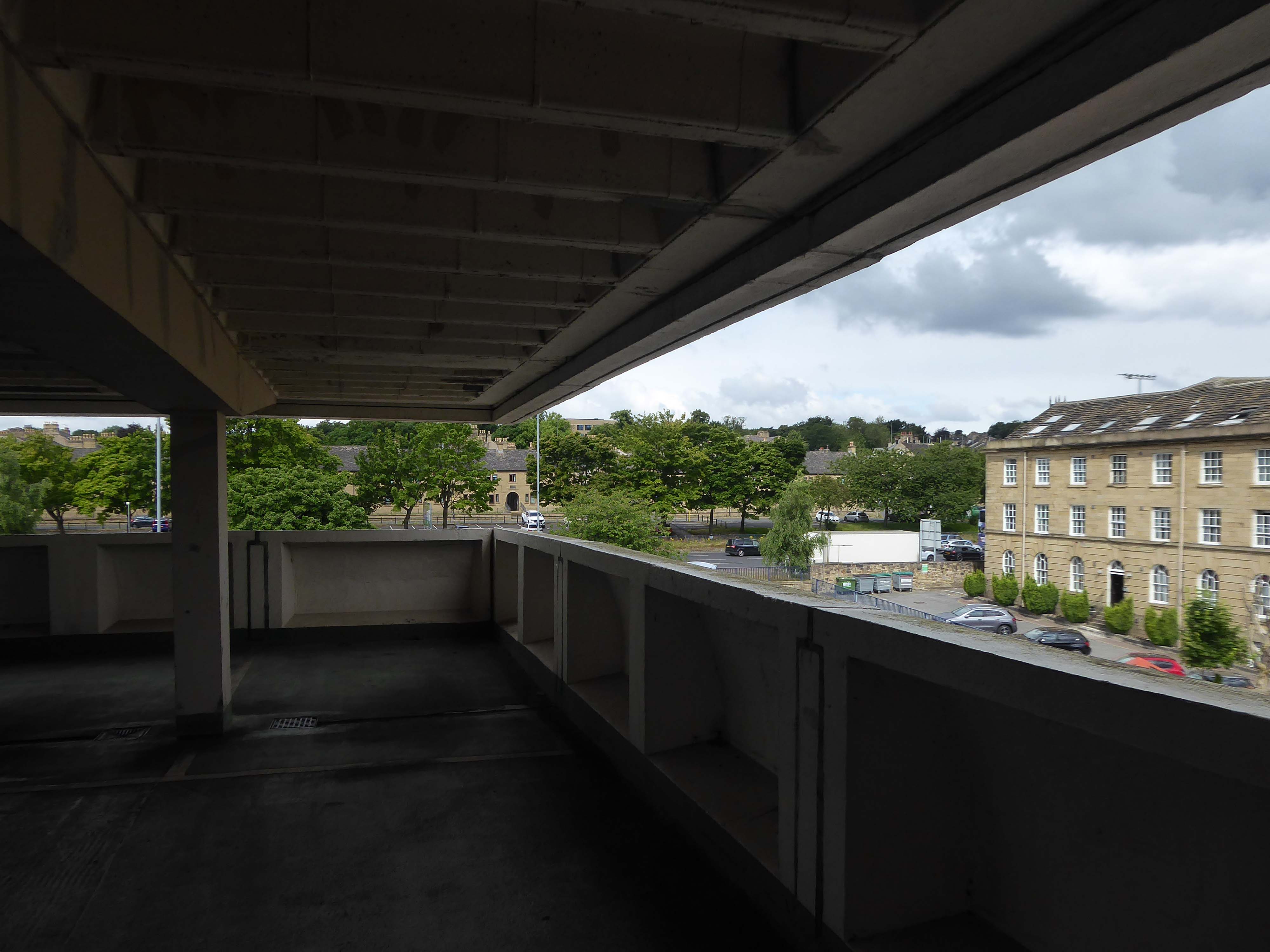
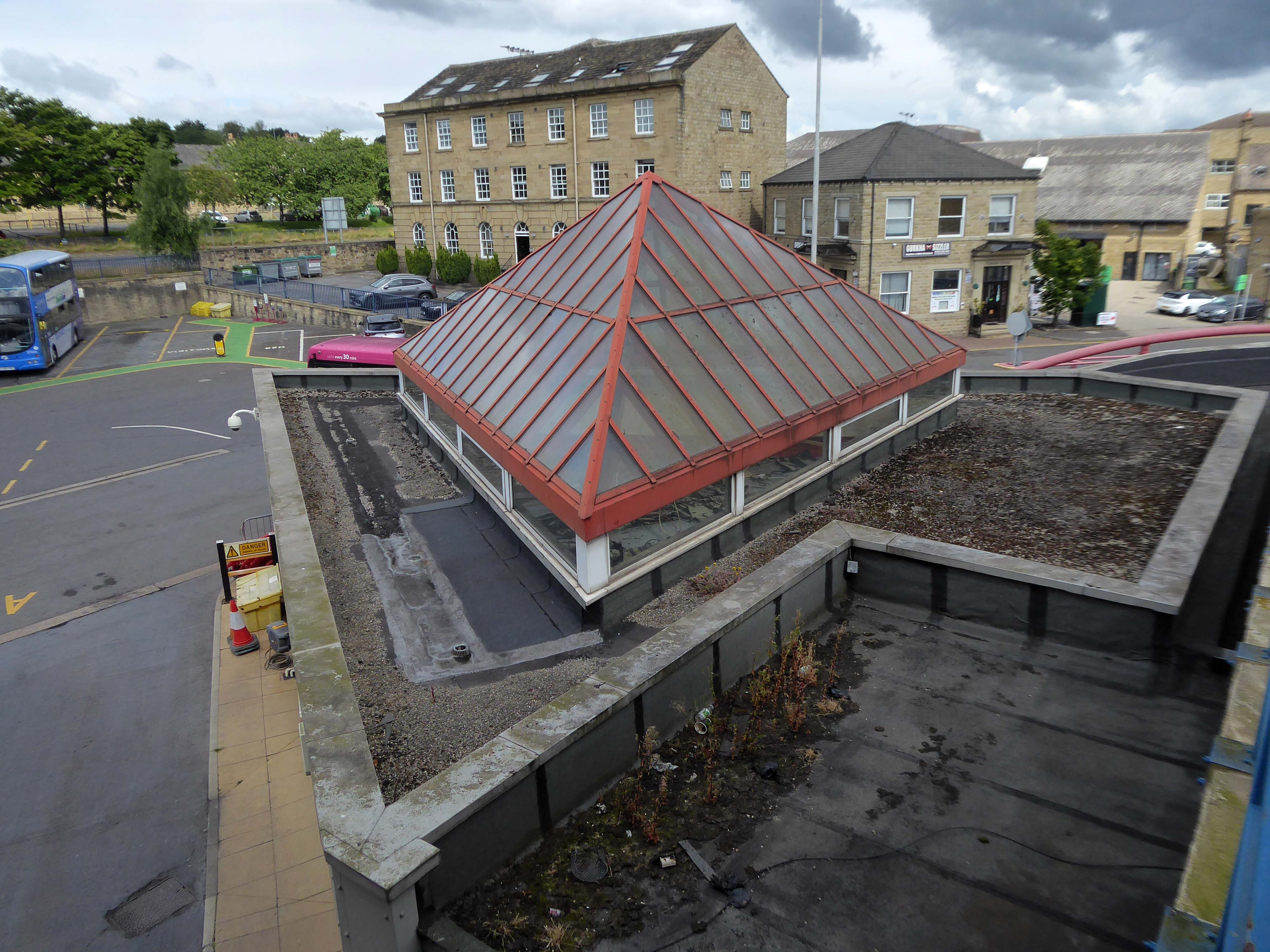
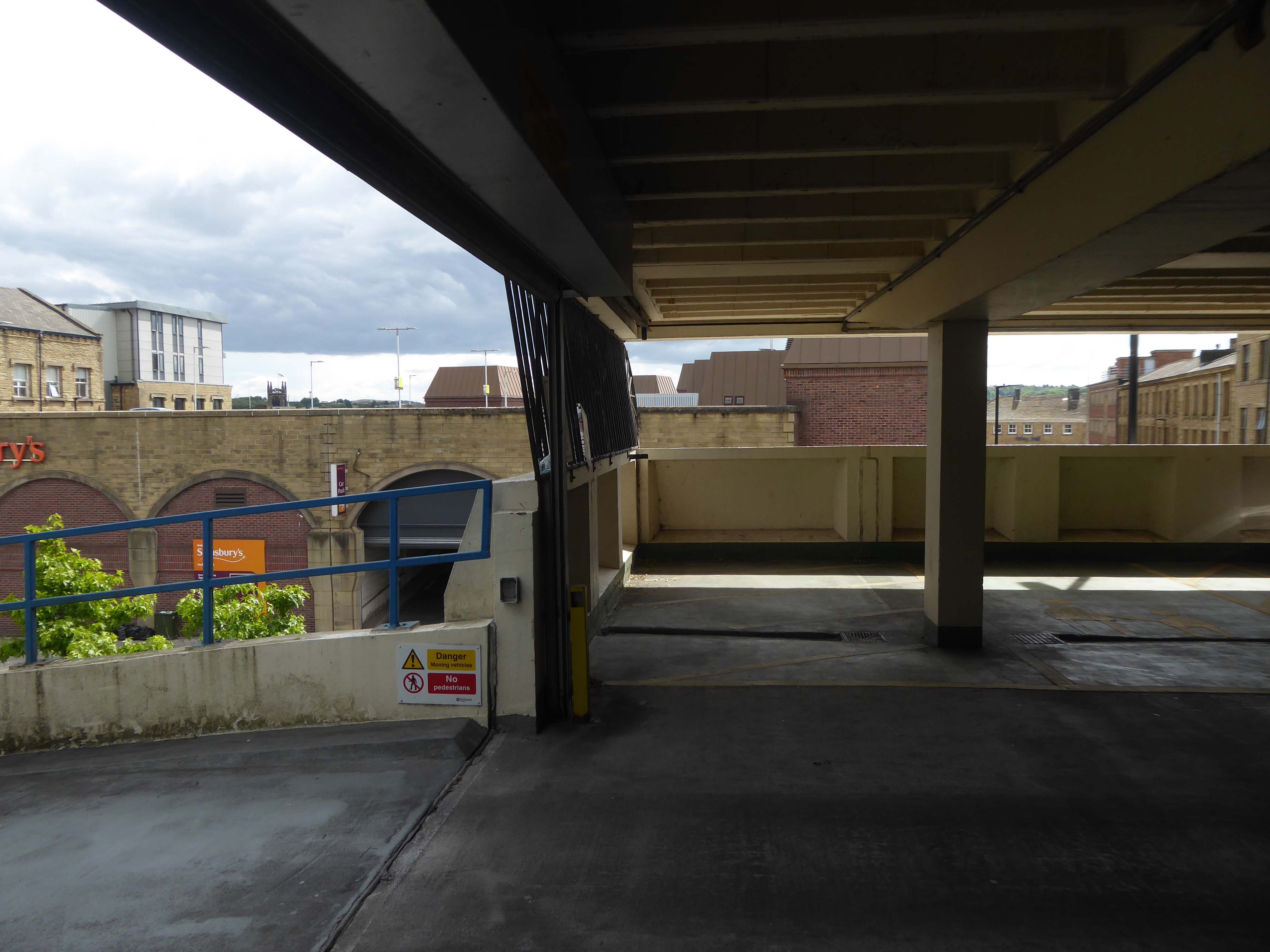
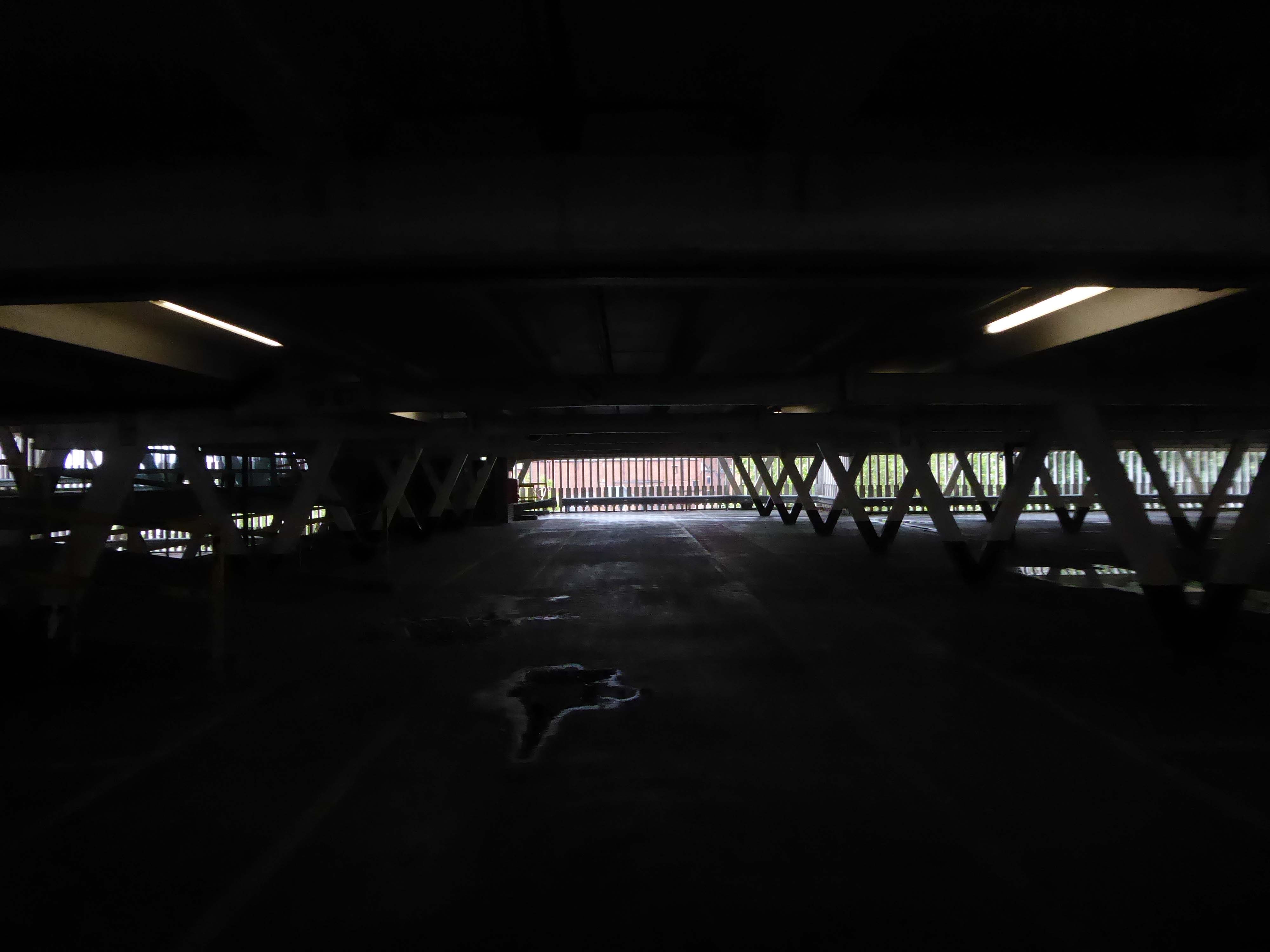
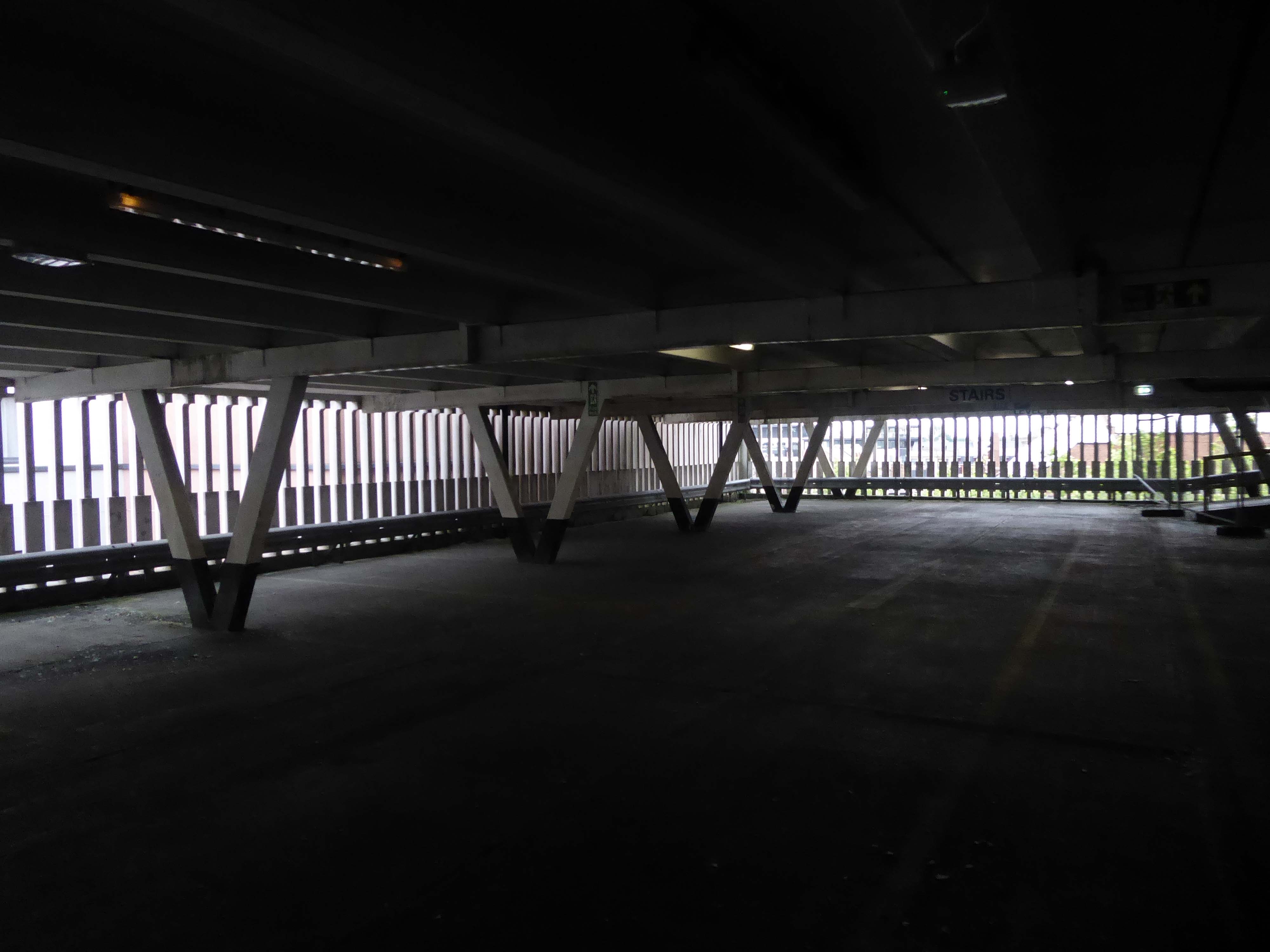
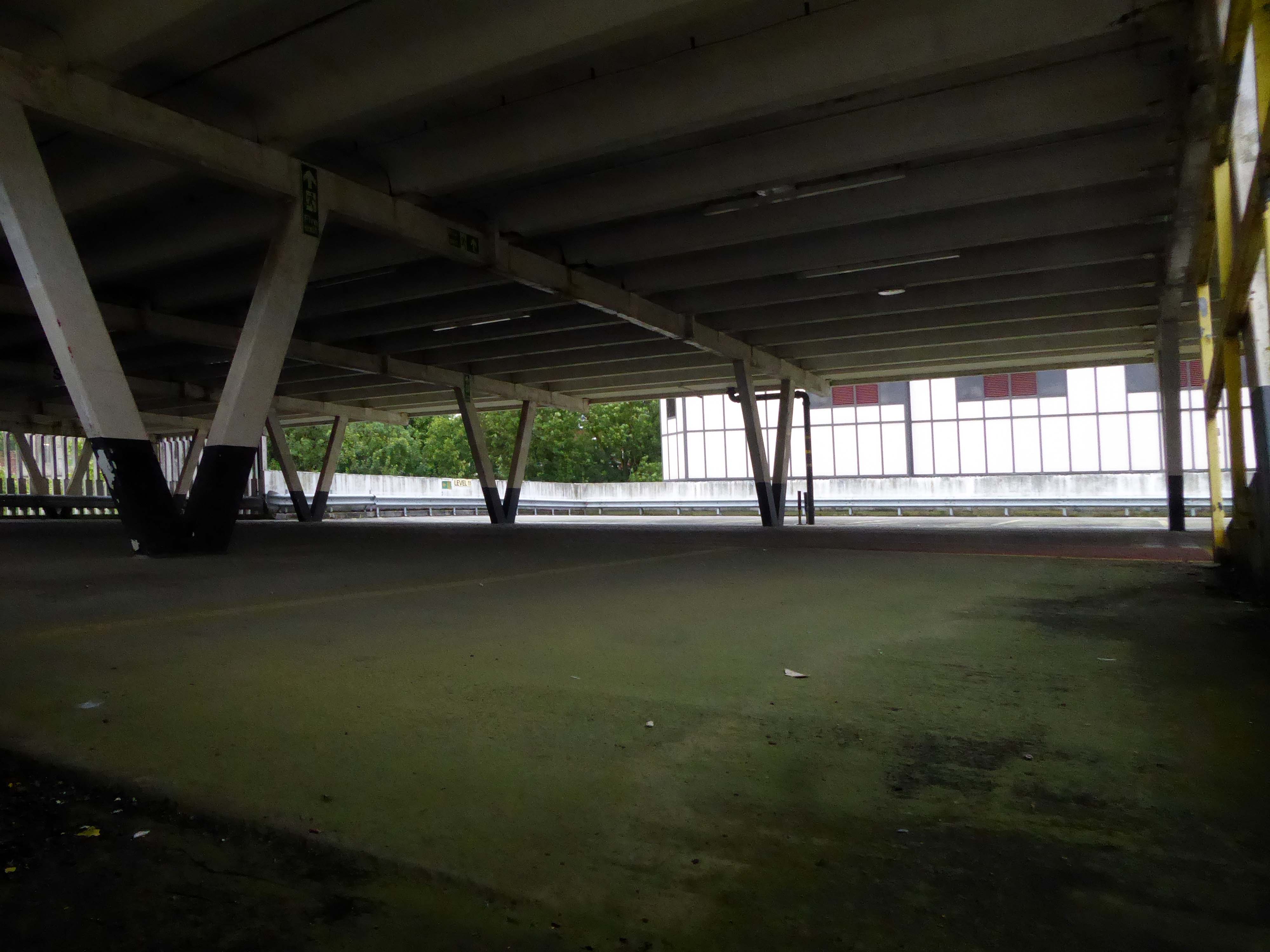
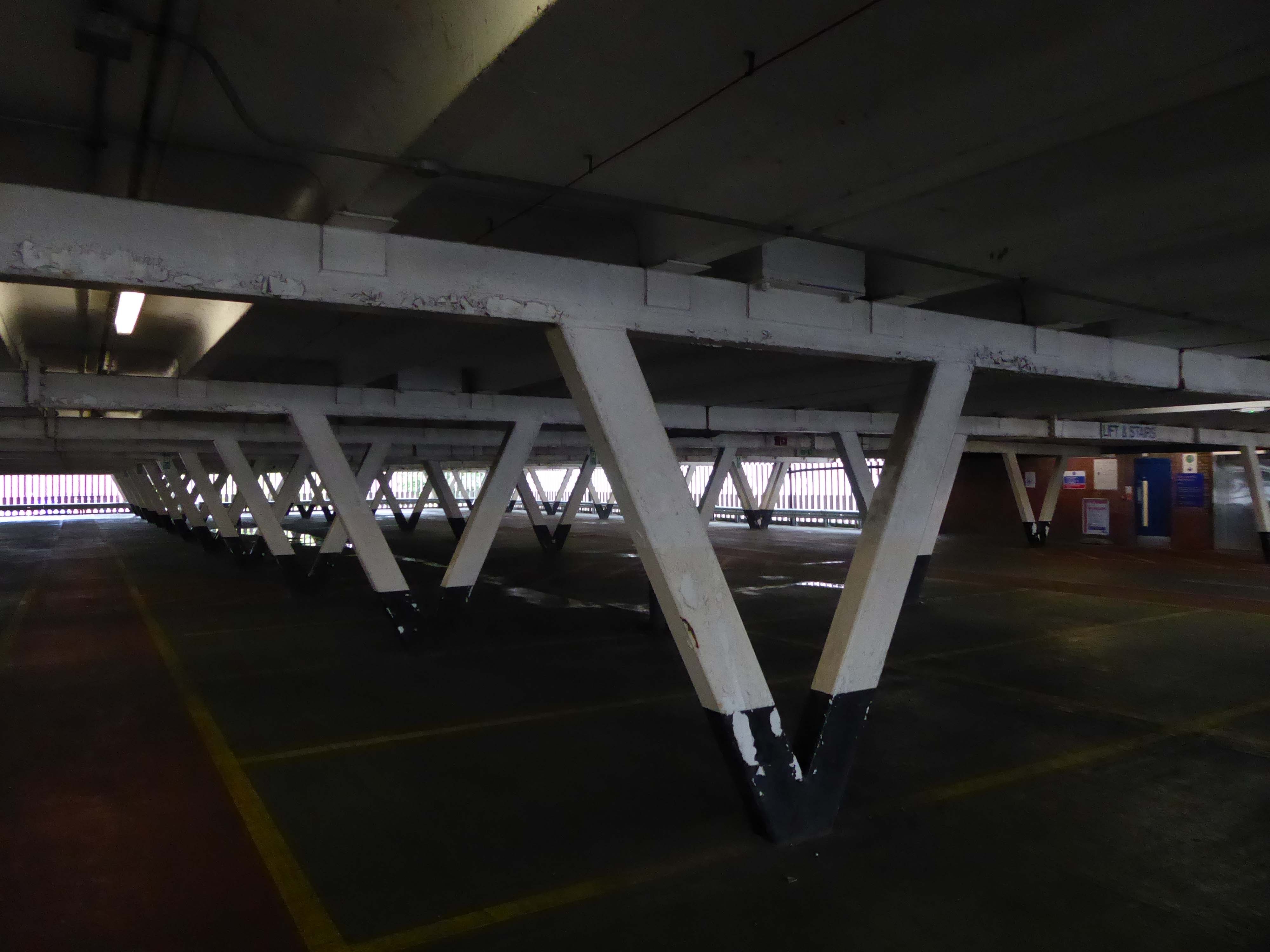
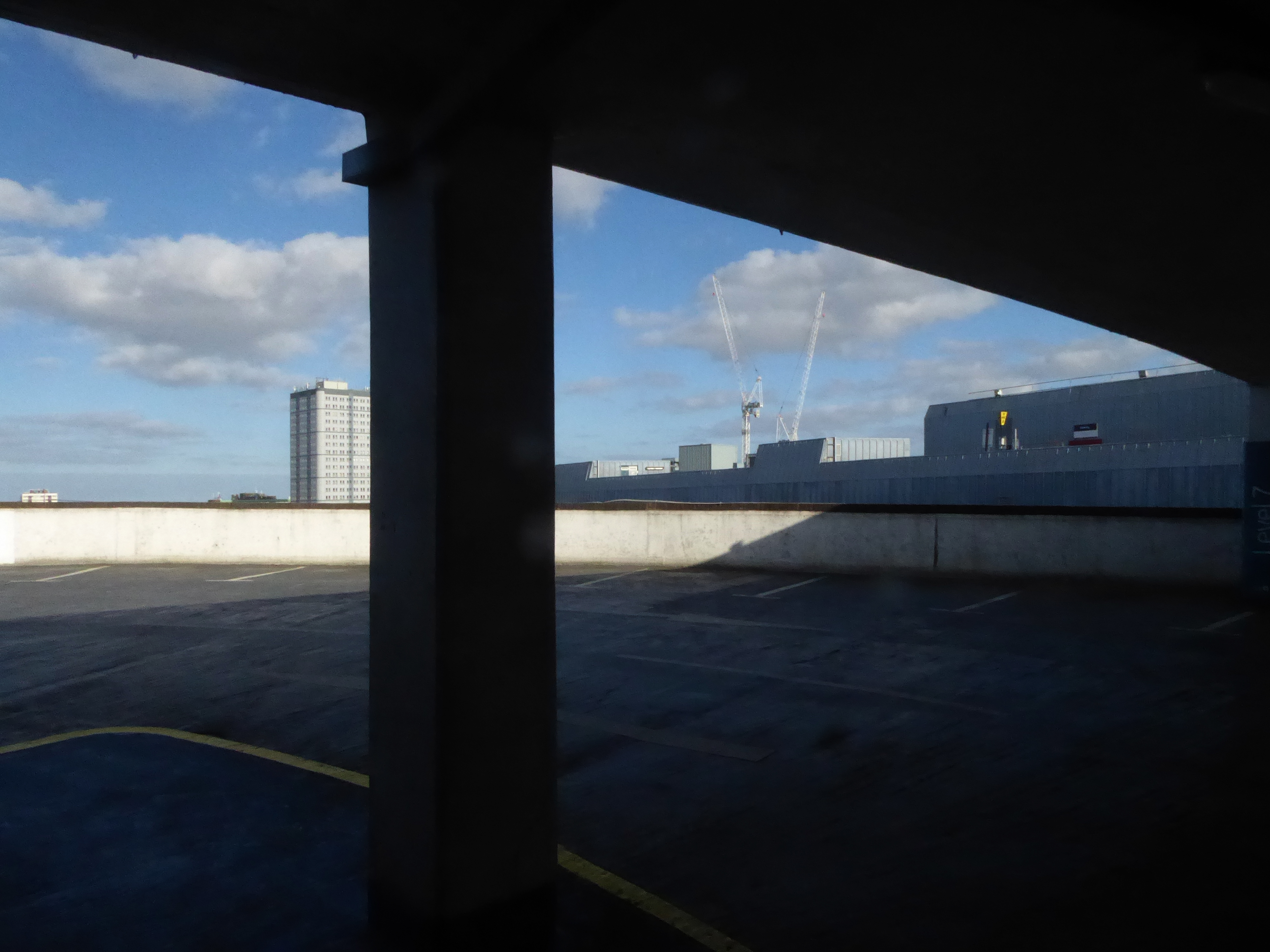
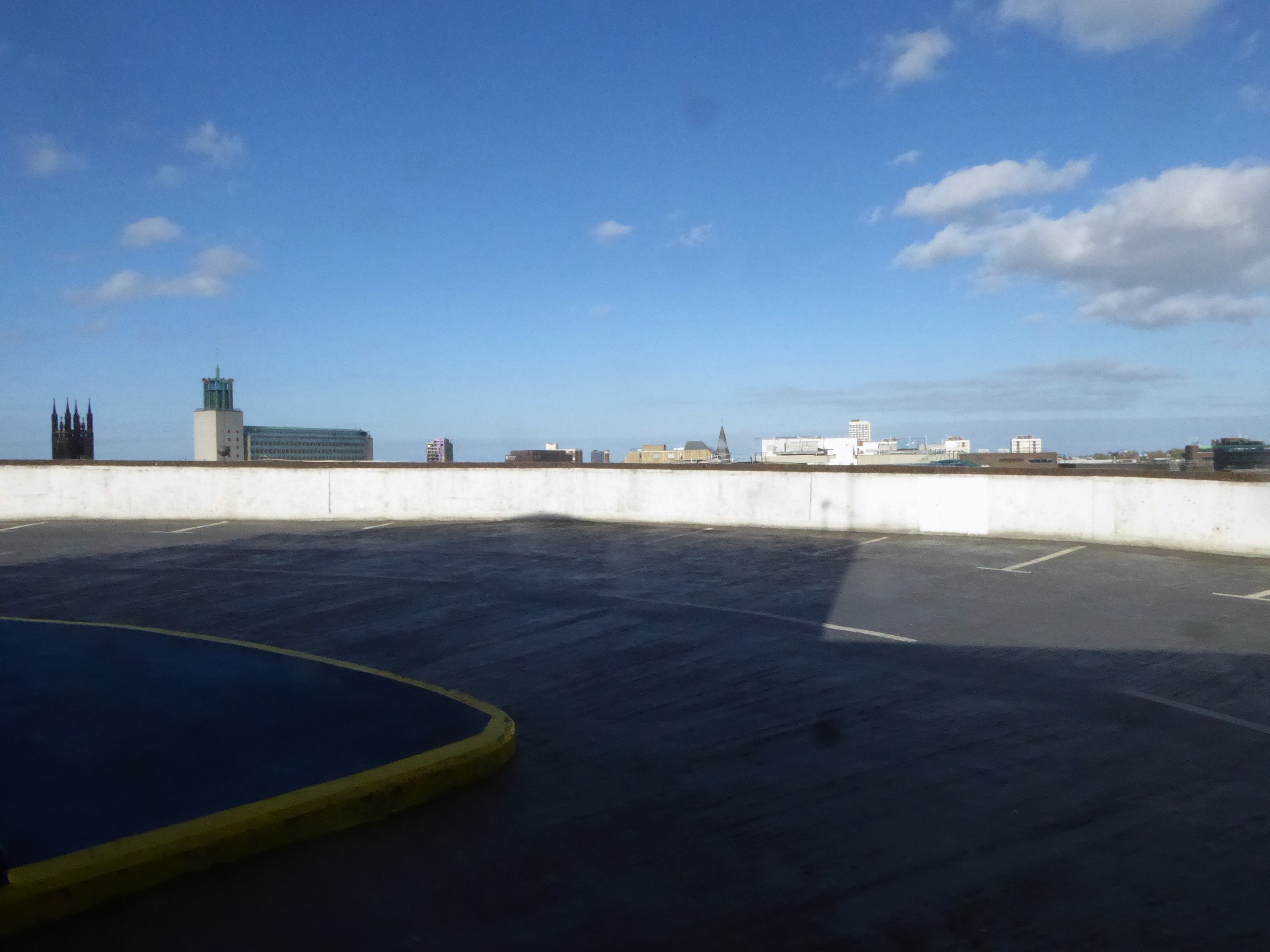
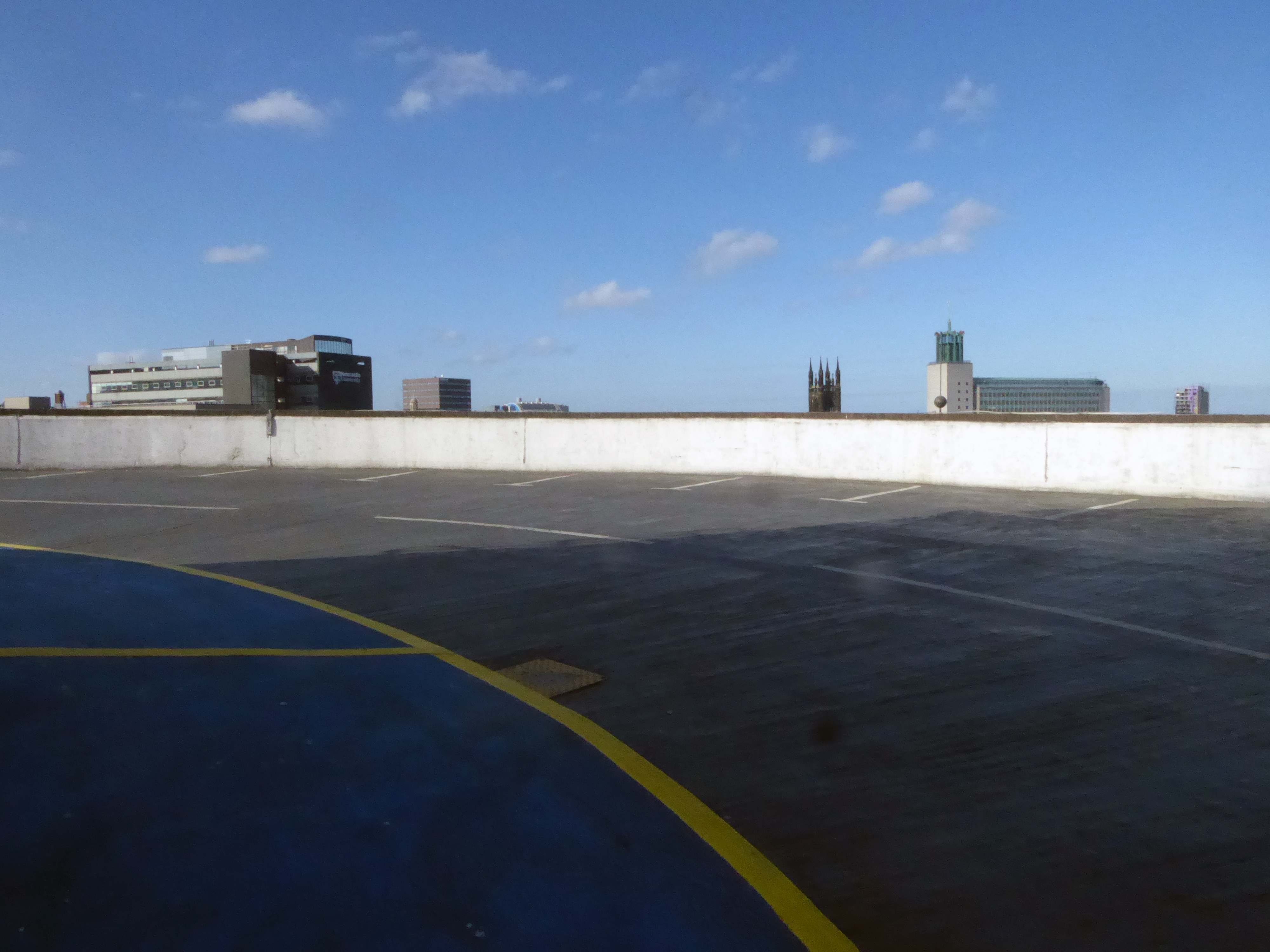
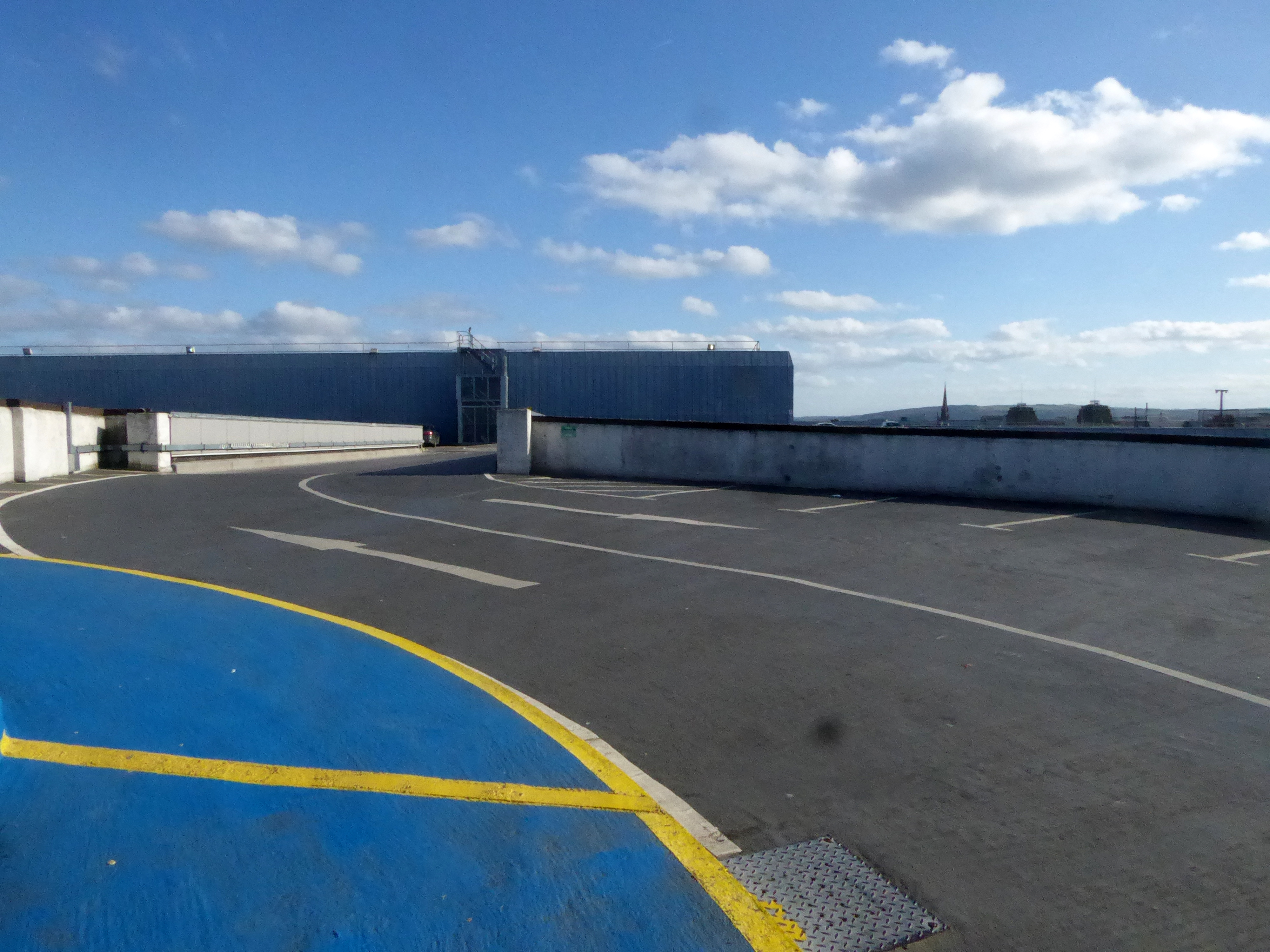
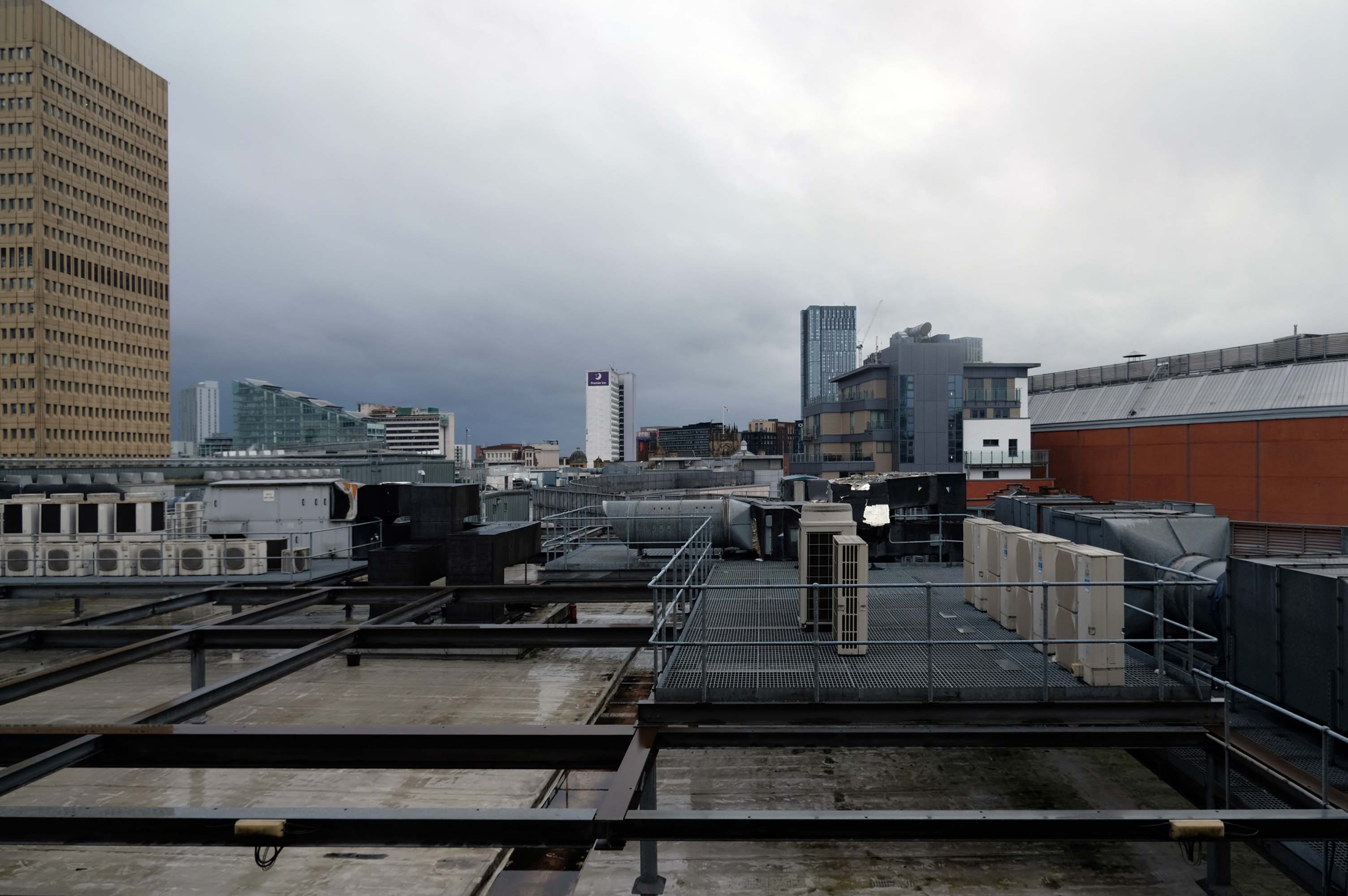
Having visited and photographed the bus station in 2016 I thought that it was about time I went up in the world, to the top level of the car park.
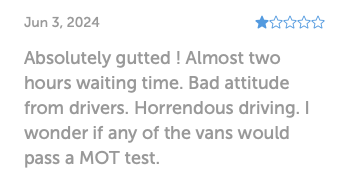
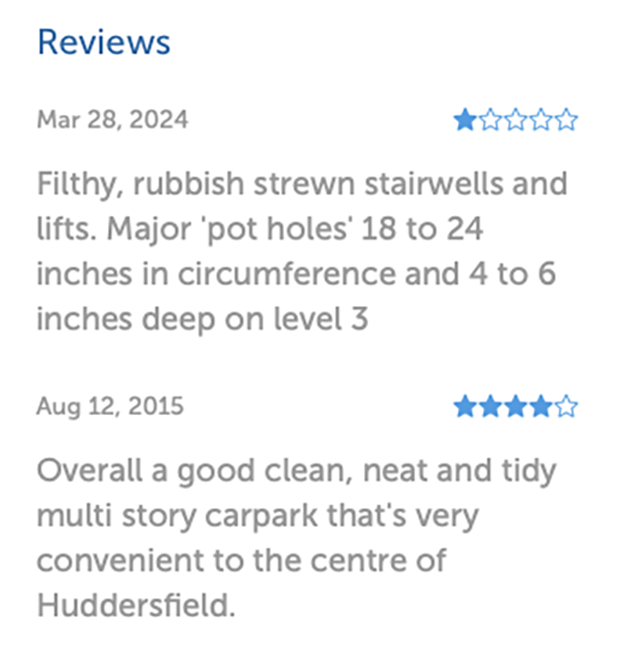
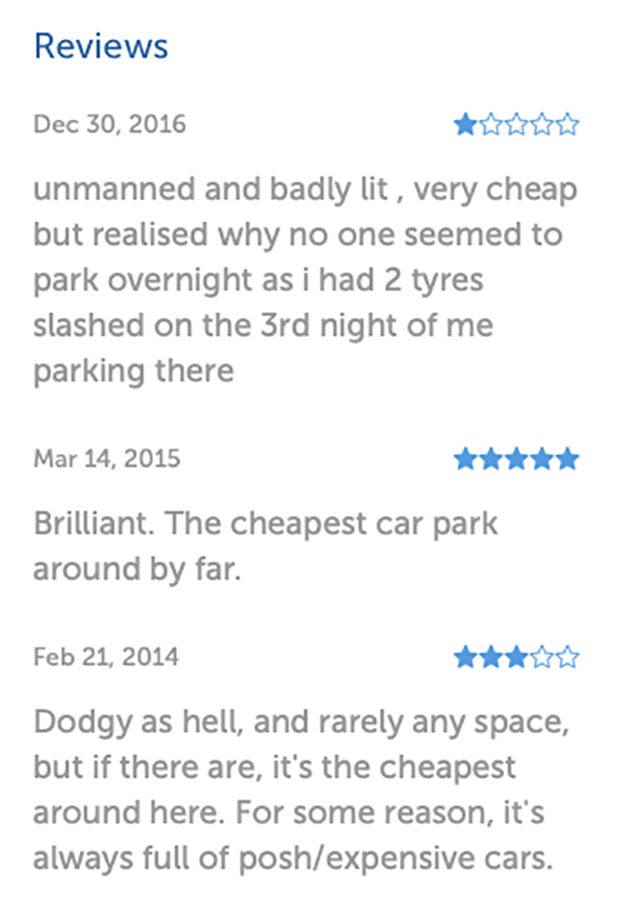
Mixed opinions from Parkopedia reviewers – let’s take a look around.
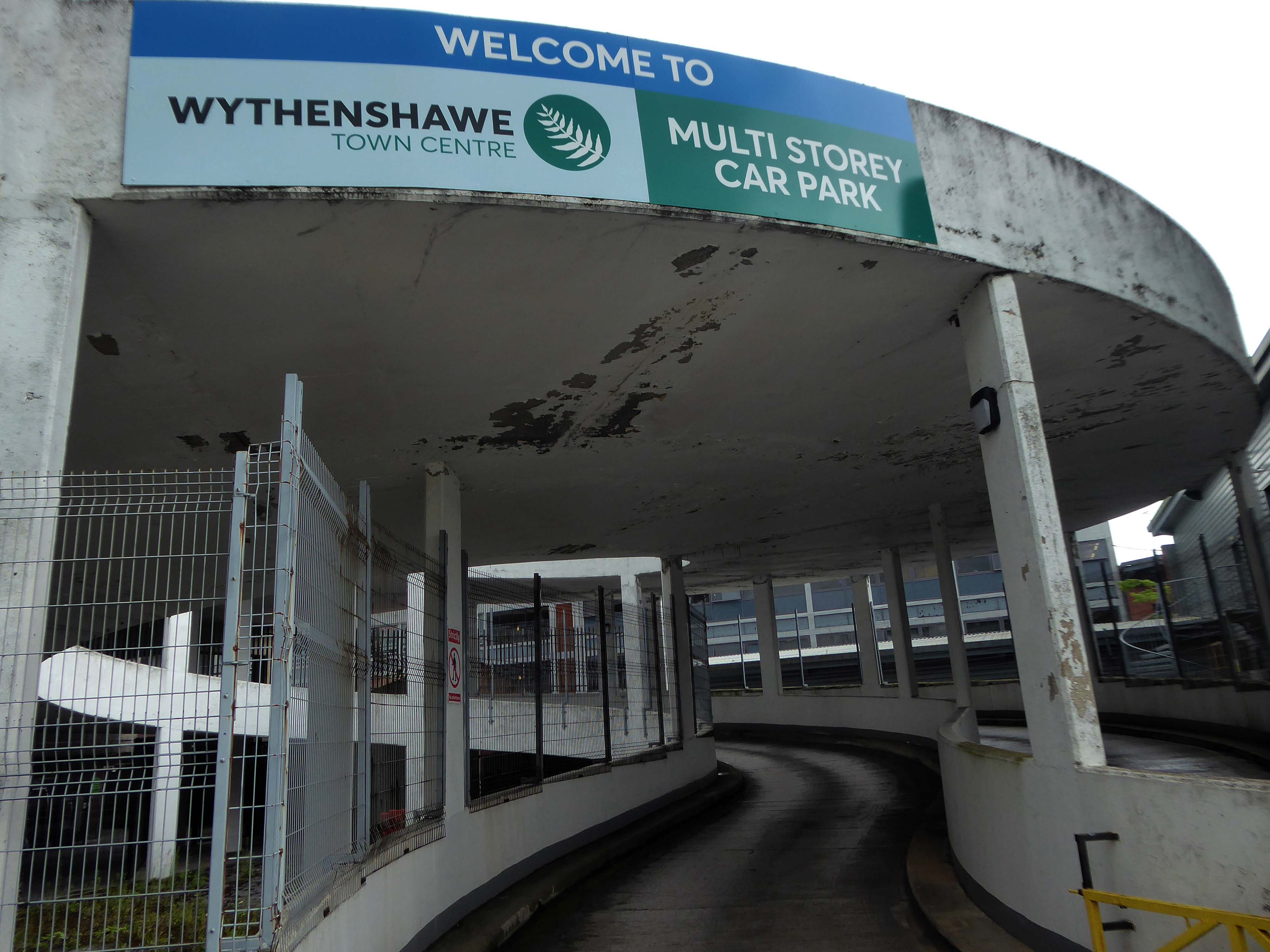
There are plans for refurbishment outlined in 2022 in the Huddersfield Hub.
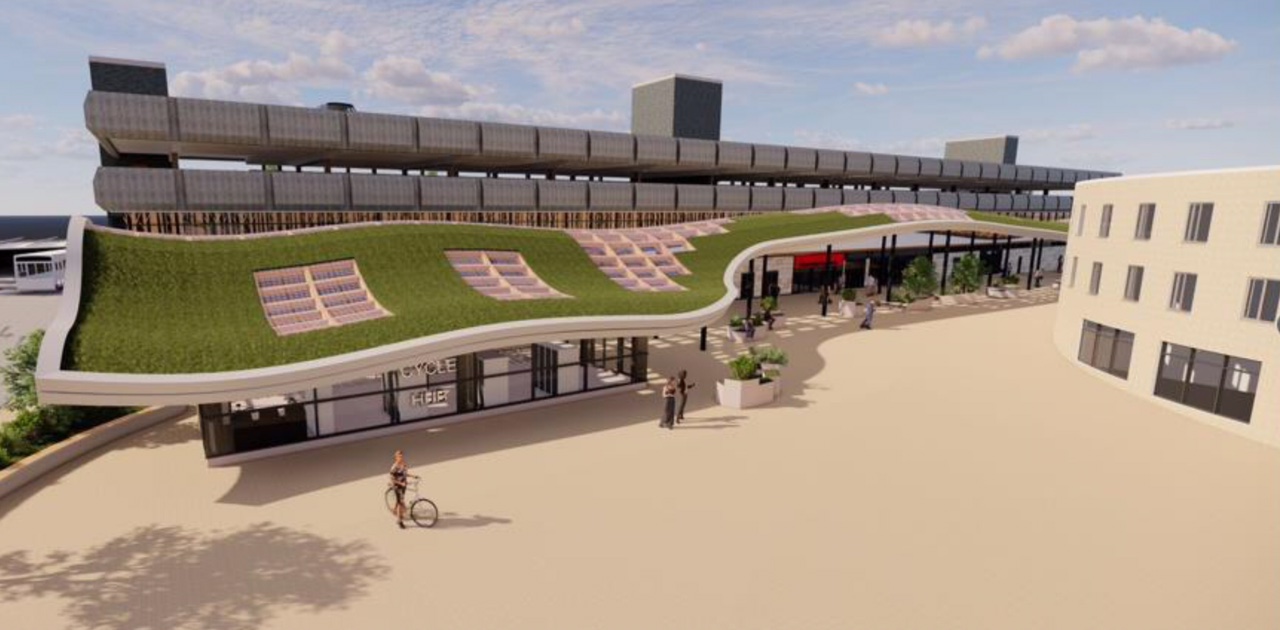
The bus station will undergo a major revamp both inside and out and the most striking feature will be a sweeping canopy with a living grass roof which will run right across the main frontage from Macaulay Square to Upperhead Row.
Also of note a project by Kate Matthews to seriously rethink the role and design of the space.
The starting point for this project was the Welcoming Water group scenario, involving the controlled flooding of areas of the town.
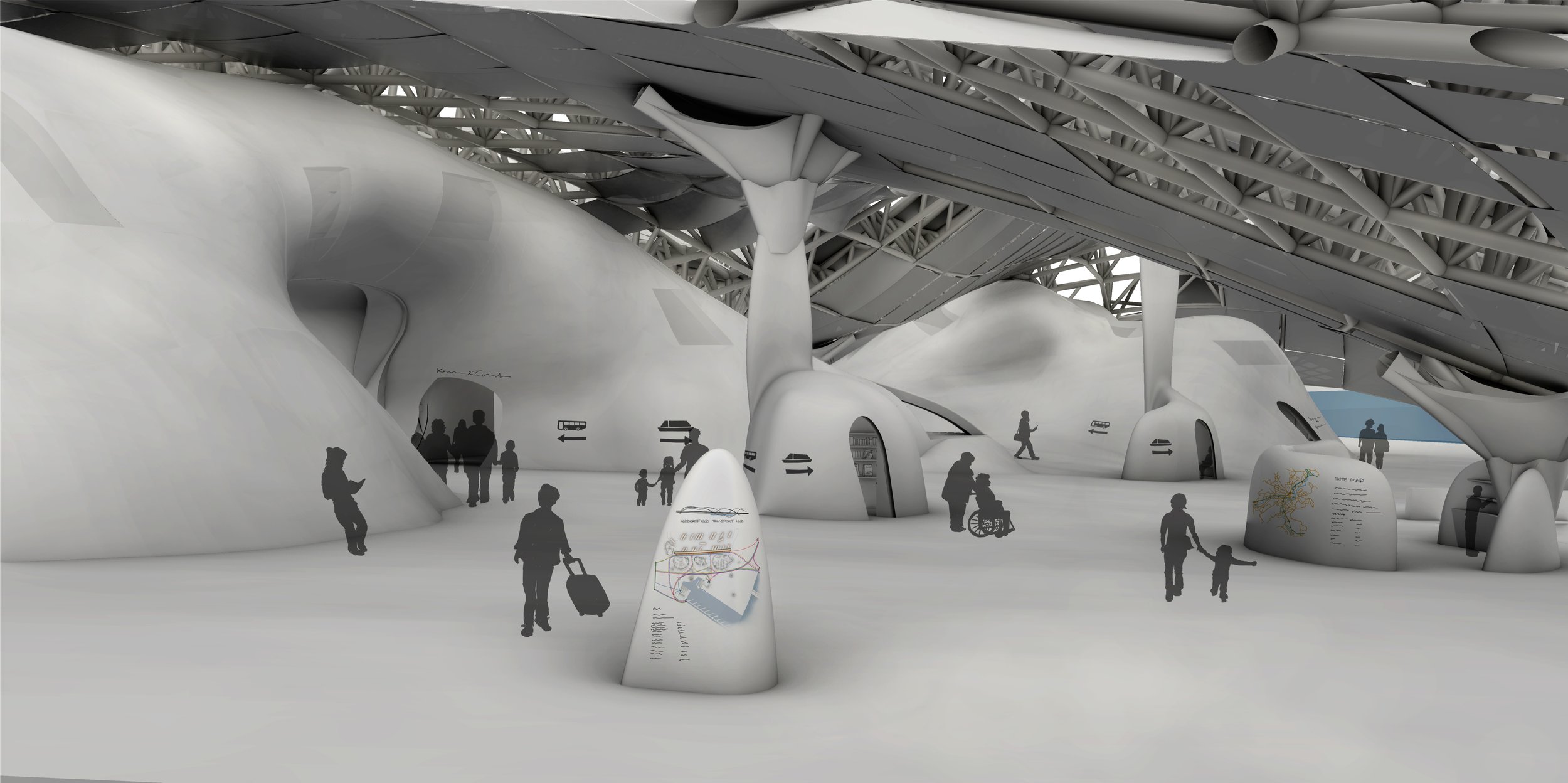
The new interchange includes facilities for cycling, walking, and public transit. The basin and marina on the new lake allow for an increased focus on water-based transport, including a new bus-boat. The main Transport Hub sits below an undulating roof and contains not only the bus bays and ticketing facilities, but also co-working and relaxation spaces. The curves of the roof, trying to confuse the binary of floor and ceiling, are just one example of the ambiguity throughout the scheme.
This project was nominated for the Architects for Health Student Design Award in 2021.
The Ferodo Factory was founded in Caernarfon in 1962, and officially opened by Princess Margaret.
However, the Ferodo Factory faced a significant setback in April 2001, when a lengthy industrial strike by the Transport and General Workers Union members began.
The strike lasted for an astonishing two and a half years.
Following the strike, the Ferodo Factory underwent a change in ownership. Bluefield Caernarfon Ltd acquired the site in 2007/08, with plans for redevelopment and revitalization. However, these plans did not come to fruition, and the factory’s buildings gradually fell into disrepair.
The site was identified as a potential location for a multi-million pound North Wales prison. This development would have created numerous job opportunities and breathed new life into the area.
Plans for this proposed redevelopment where rejected.
An appeal was launched in 2023 to find ex-strikers, in order to invite them to the premiere of a documentary to mark the 20th anniversary of one of Britain’s longest industrial disputes.
The hard-hitting film, Y Lein: Streic Friction Dynamics – The Line: Friction Dynamics Strike, has been made by Dïon Wyn, the grandson of one of the strikers, Raymond Roberts, who was determined the historic injustice should never be forgotten.
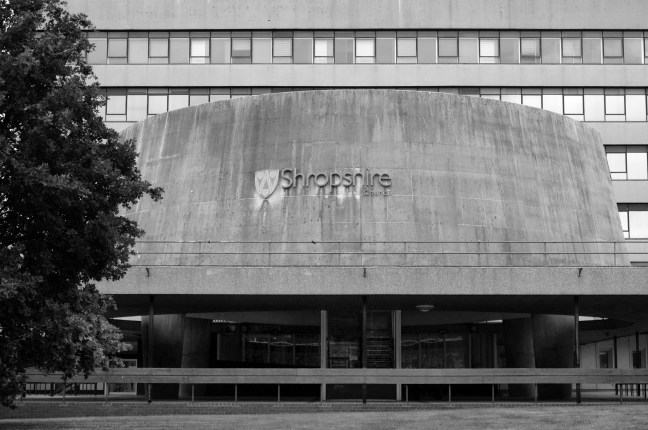
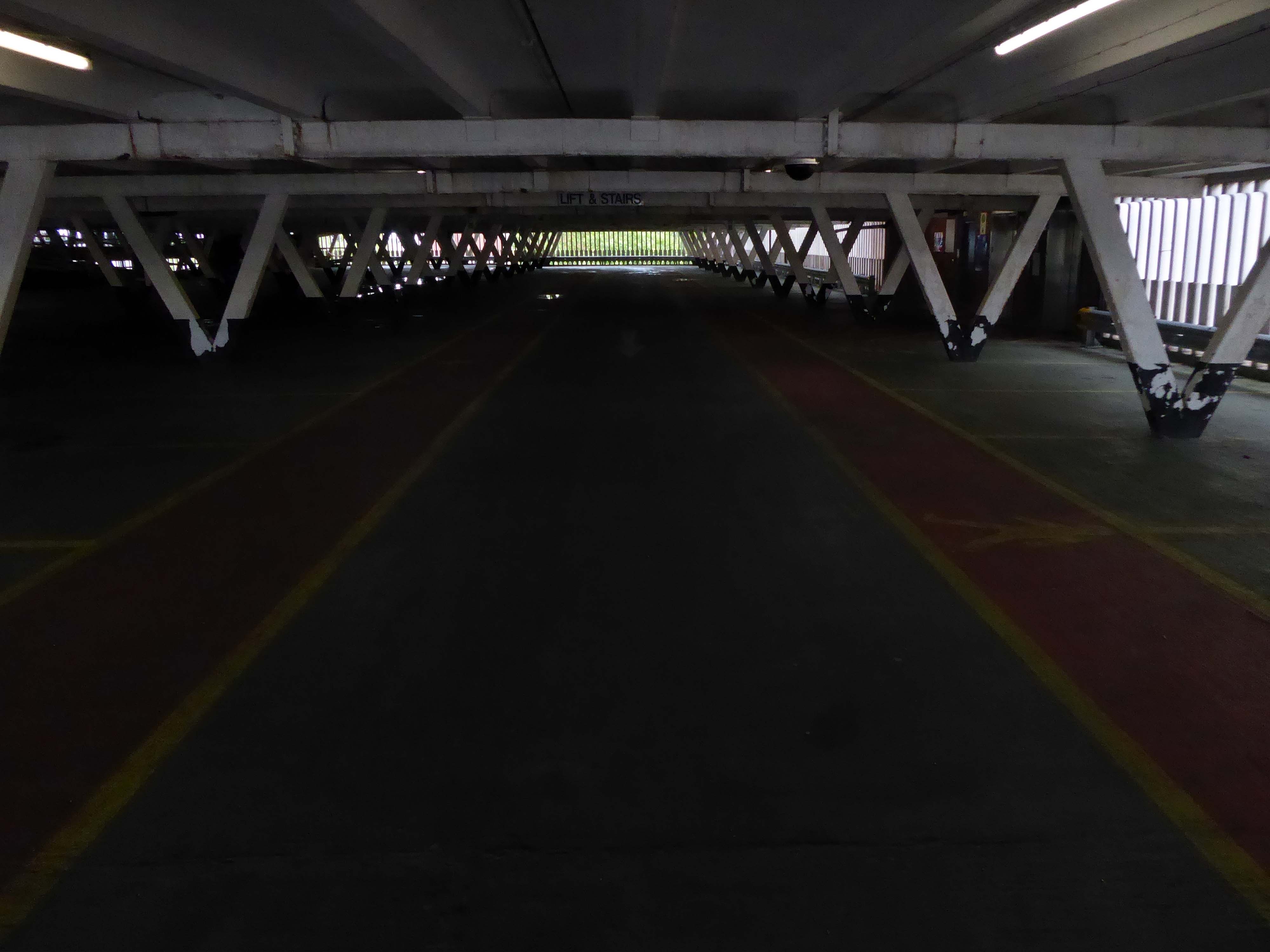
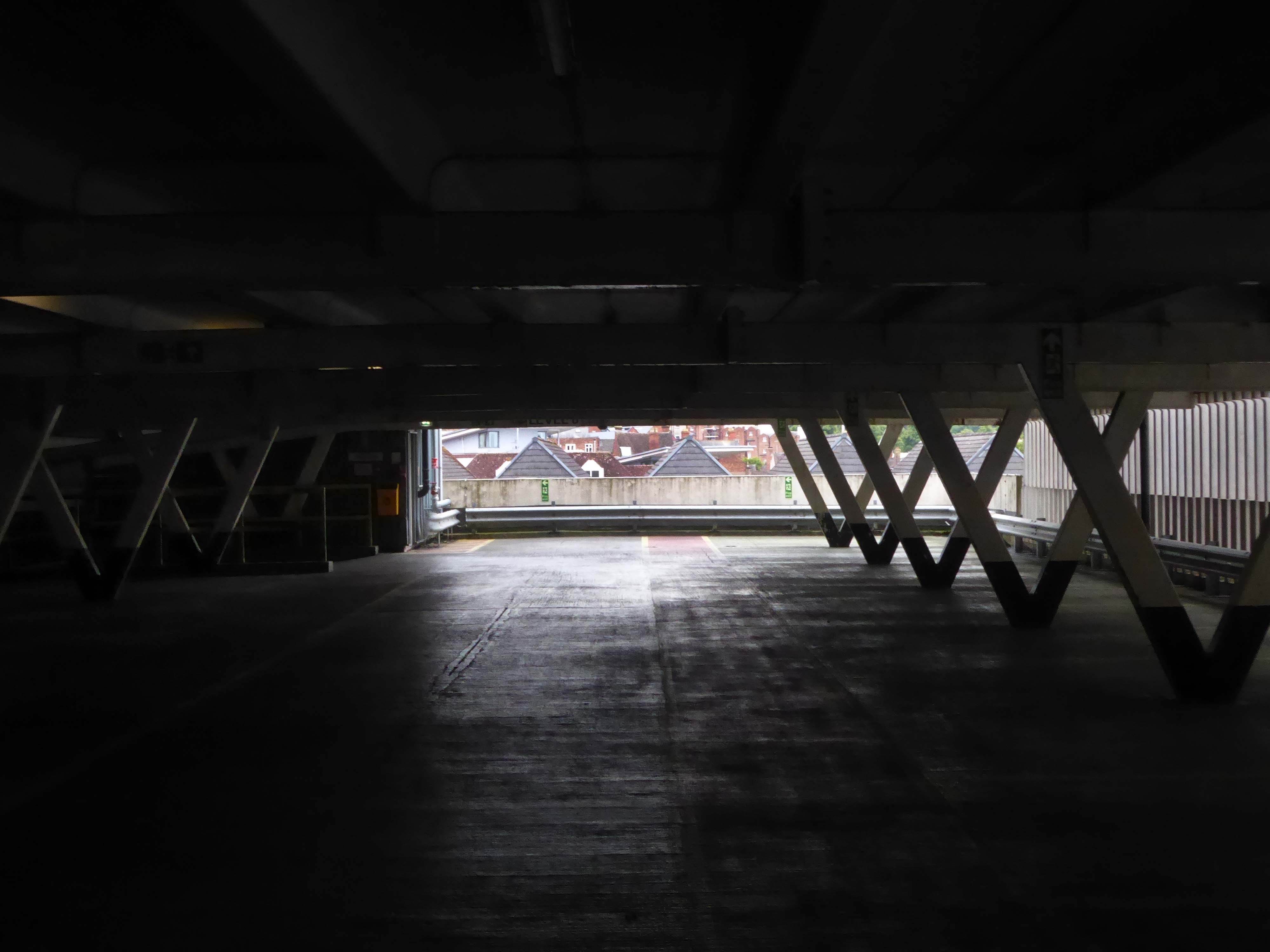
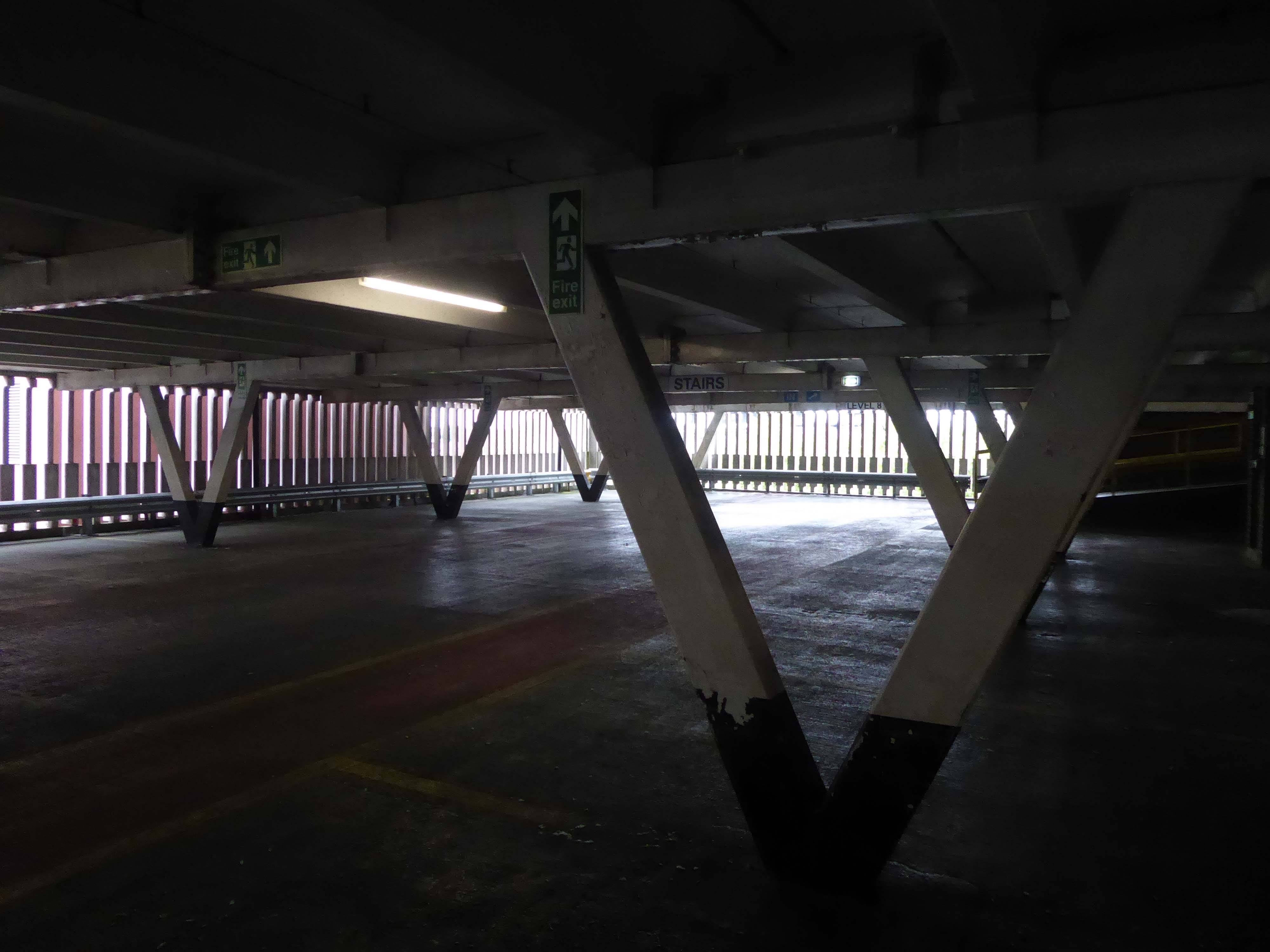
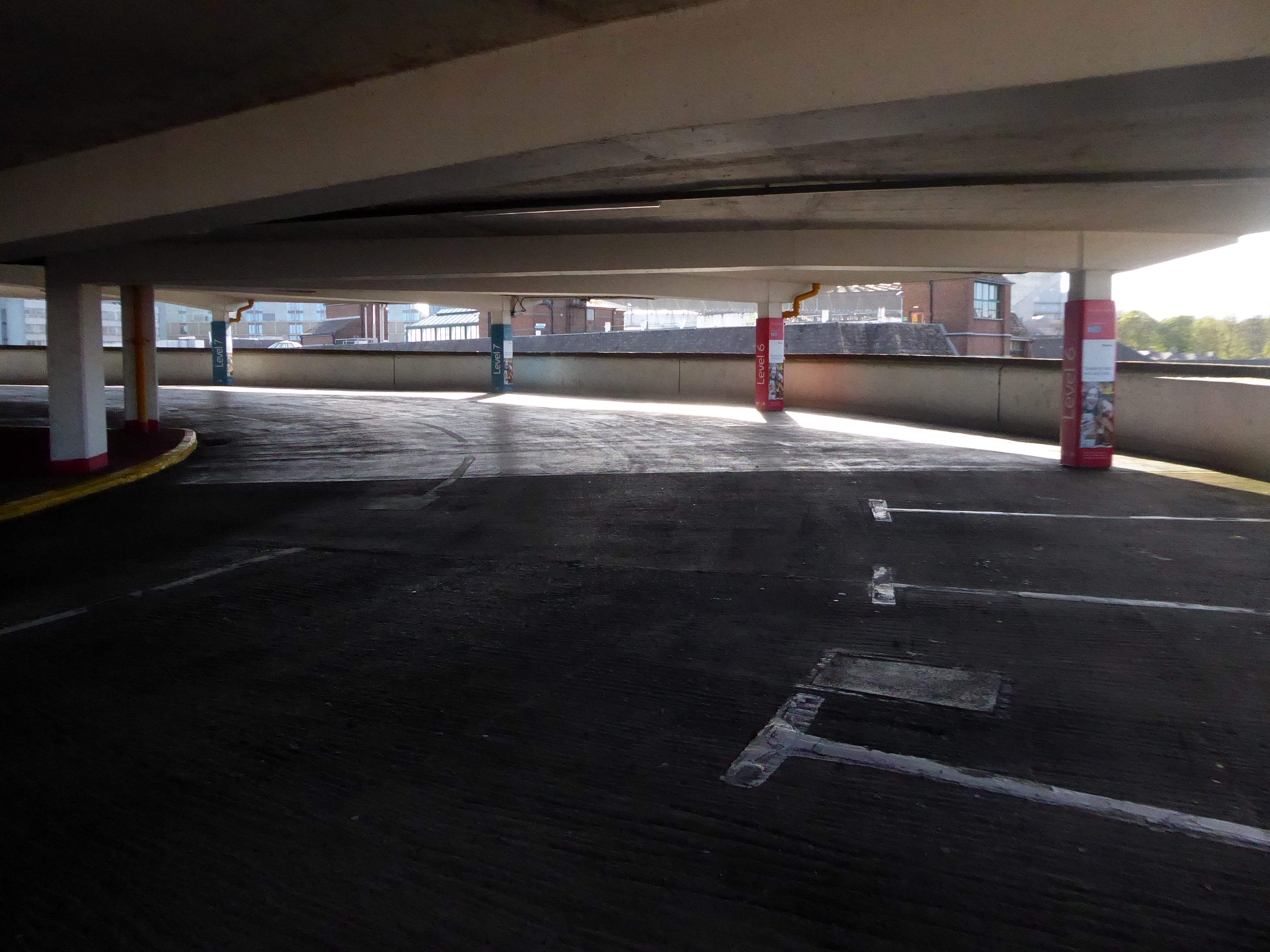
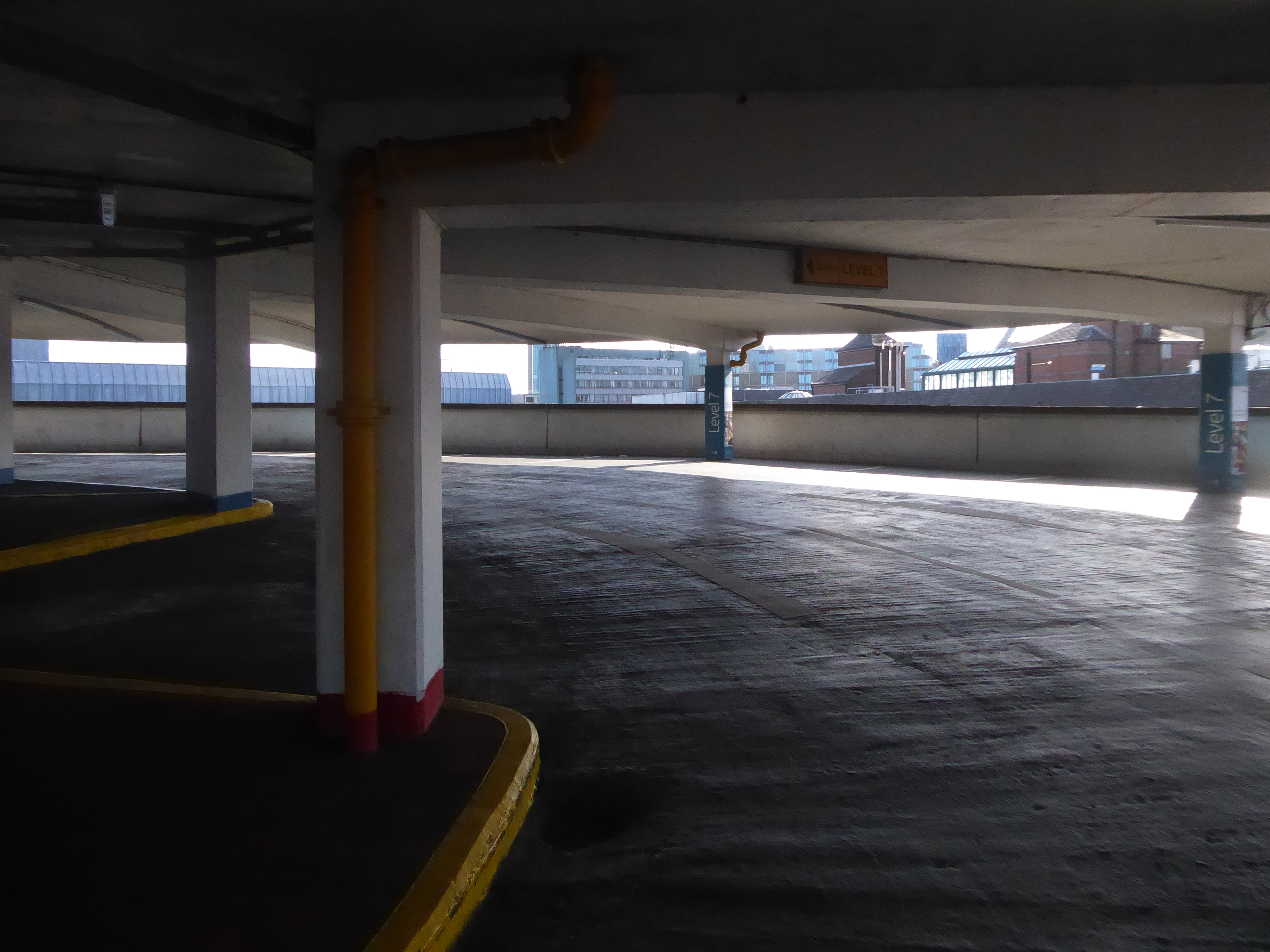
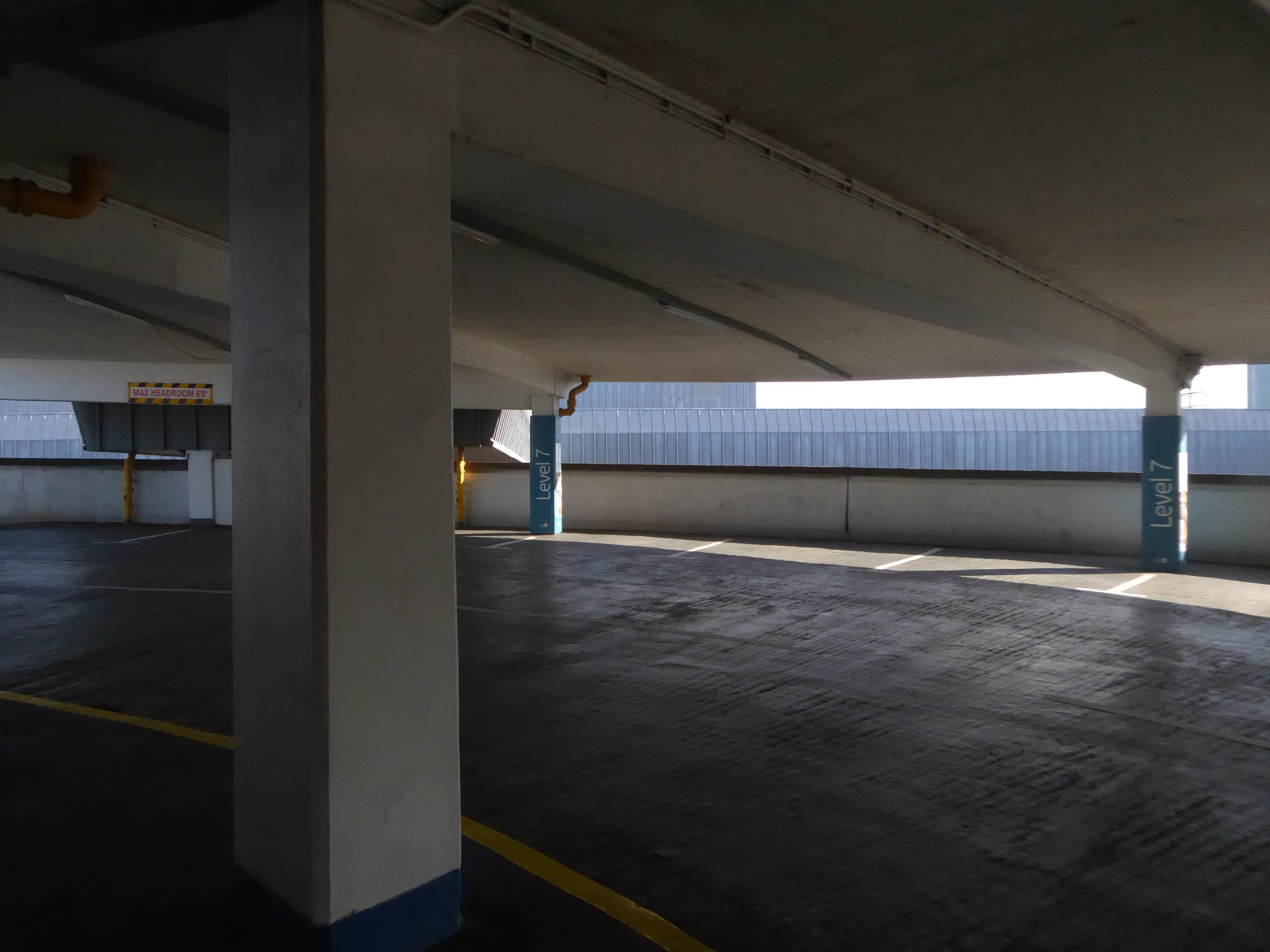
Shropshire Council Raven Meadows Shrewsbury SY1 1PL
Built by Truscon Ltd. – 1969
I am a disabled driver and found a lot of the direction signs worn away. When I came to leave I wanted to use the machine on the ground floor. This was out of order, as a lot of other people found. The office was empty as the staff were outside smoking. I then had to negotiate stars back to the 7th floor where the next machine was located. There was no sign on the ground floor machine telling it was out of use and where the next machine was located.
If staff want to have a smoke they should at least leave someone in the office.
Most of the parking spaces are very tight and I would not recommend the use of this car park unless you have a small car and a crystal ball to find the disabled parking and the payment meters.
The rudest man at the kiosk, that I have ever had an encounter with, over a ticket that was blurred. He had a go at me for not going to him straight away – I went when I went to leave and it wouldn’t work. He also had a go at me because I pressed the buzzer on the intercom. Very strange unhelpful man. Made an issue for no reason! Awful to deal with I never write reviews, but I hope this gets back to him and with hope he will gain some manners.
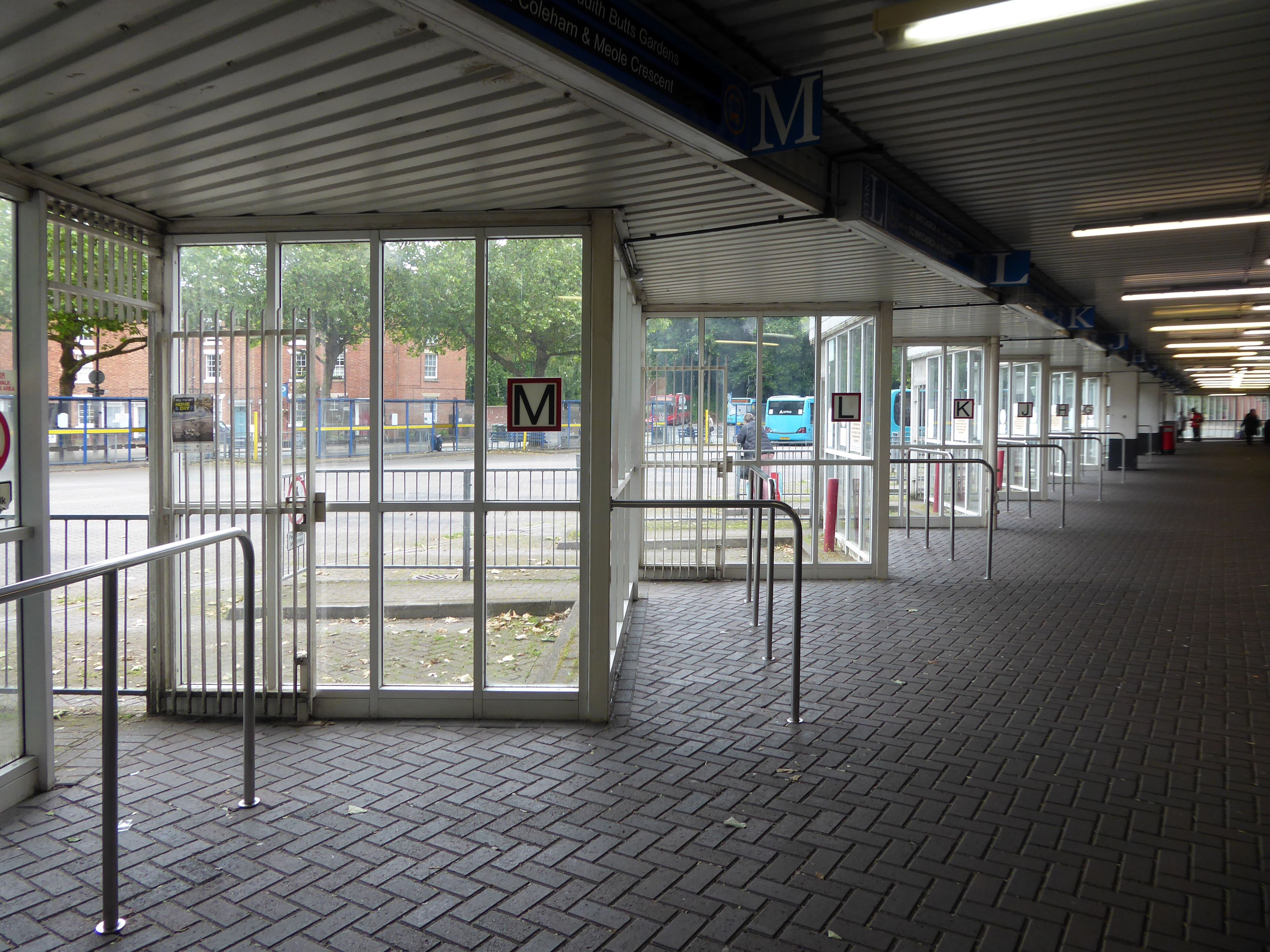
Being a pedestrian, I entered through the bus station on foot.
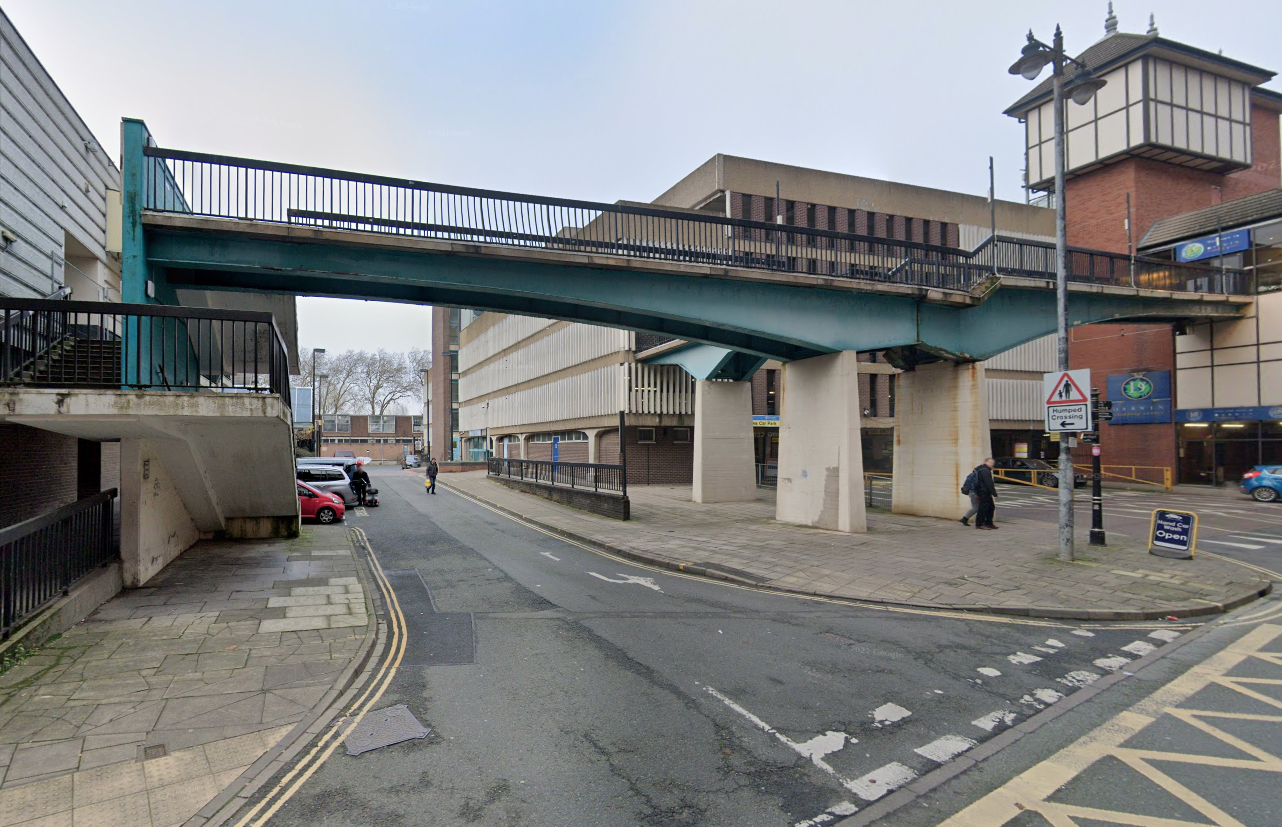
The station is considered to be dated due to its 1980s architecture partially under a 1960s multi-storey car park. There have been plans for the station to be modernised and rebuilt, or even demolished completely, as part of the town’s Big Town Plan. The demolition of the station would mean the town would not have a central bus terminus and would instead use smaller sites on the town’s Park and Ride routes.
Shrewsbury Bus Station is a disgrace. I am embarrassed to use it. I don’t feel comfortable with using it. Yet, it is the bus hub for our county. It is one of the main gateways into Shrewsbury and Shropshire for those travelling by public transport.
New bus hubs and interchanges have been developed around the country. Shropshire Council meanwhile ignores Shrewsbury Bus Station. It promises a new bus interchange, but that is in Phase 4 of its plans to redevelop Shrewsbury town centre between Pride Hill and the riverfront. In the current financial climate and with the council stretched to the limit on existing funding, Phase 4 is probably more than a decade away.
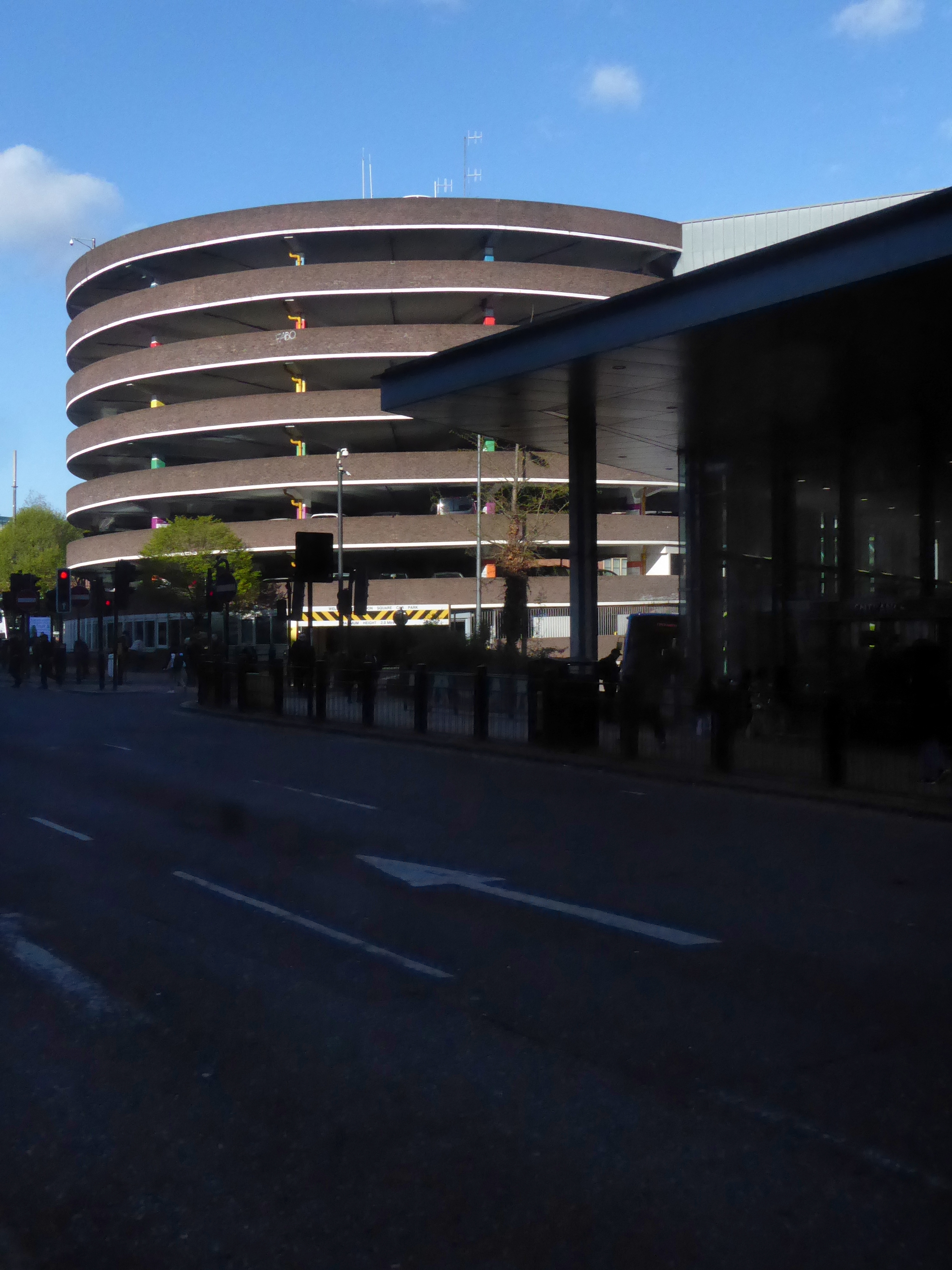
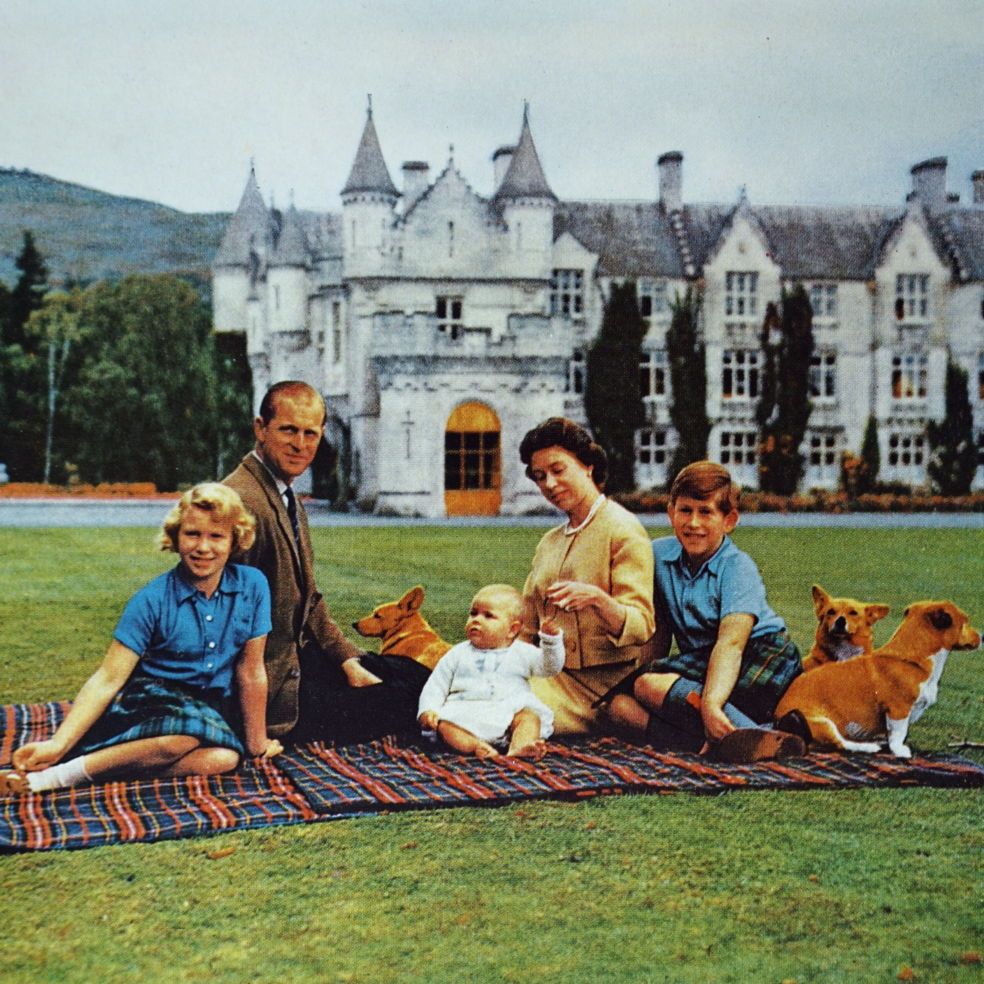
Last day of the holidays and we’re off to Balmoral!
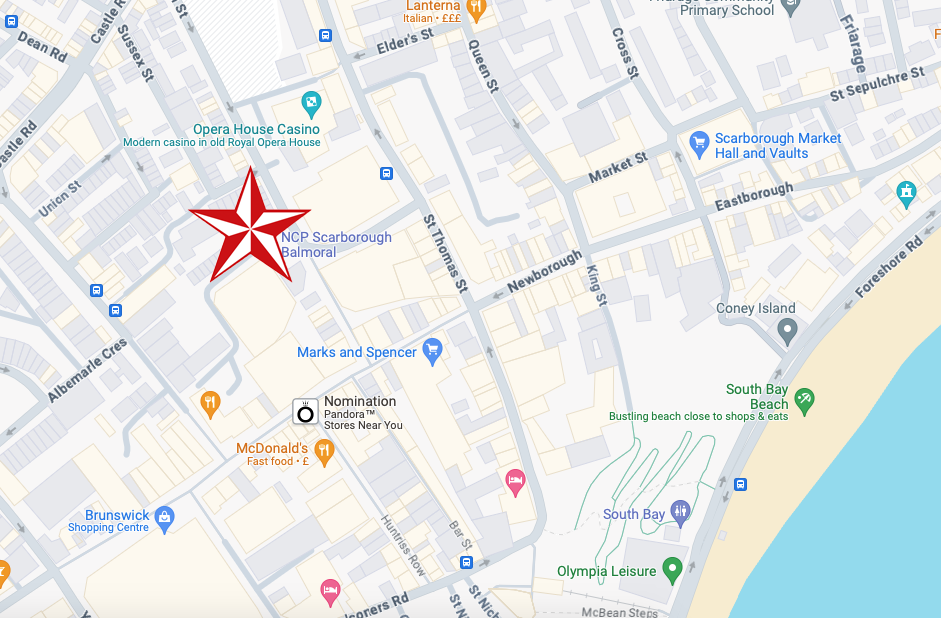
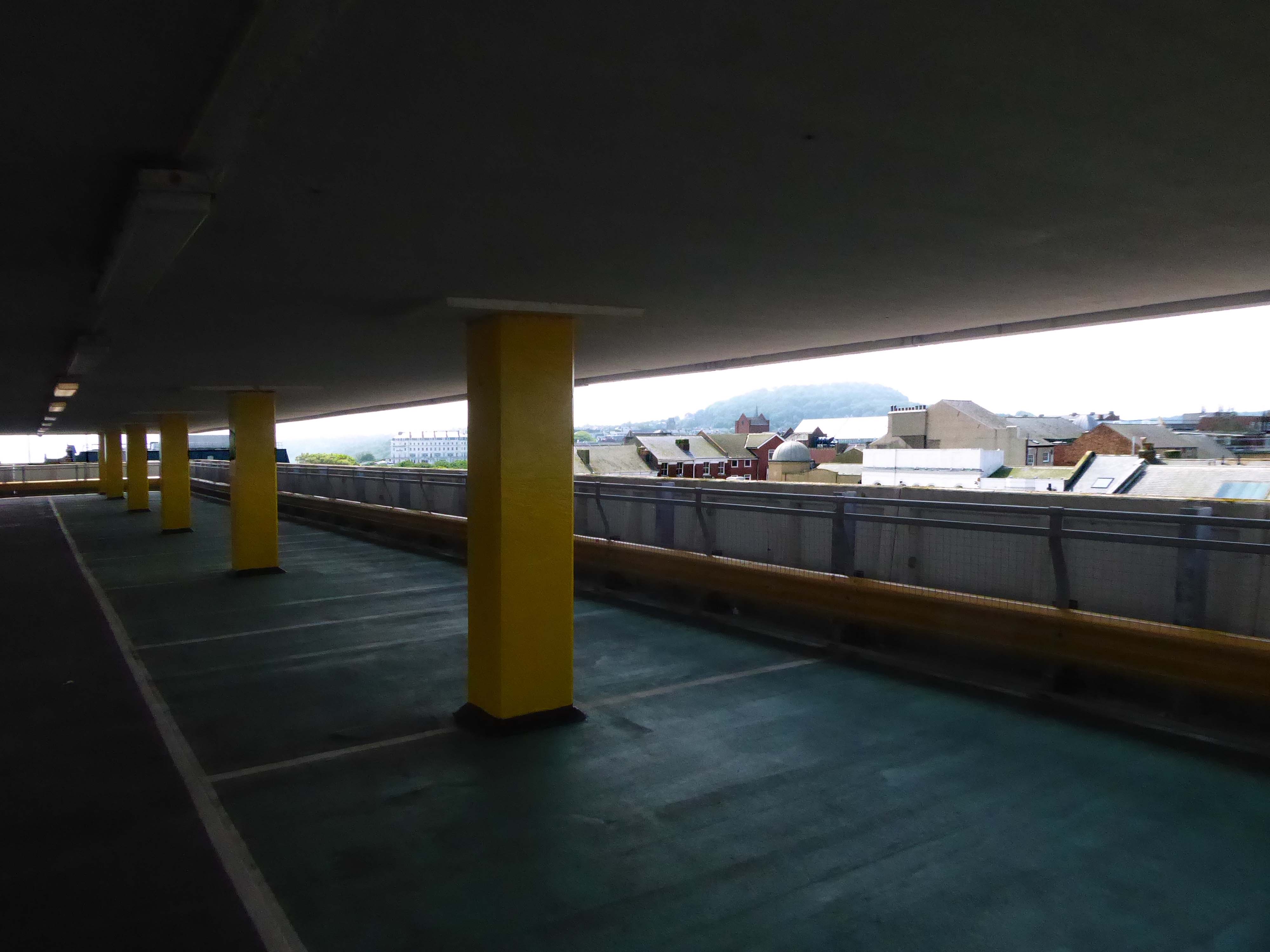
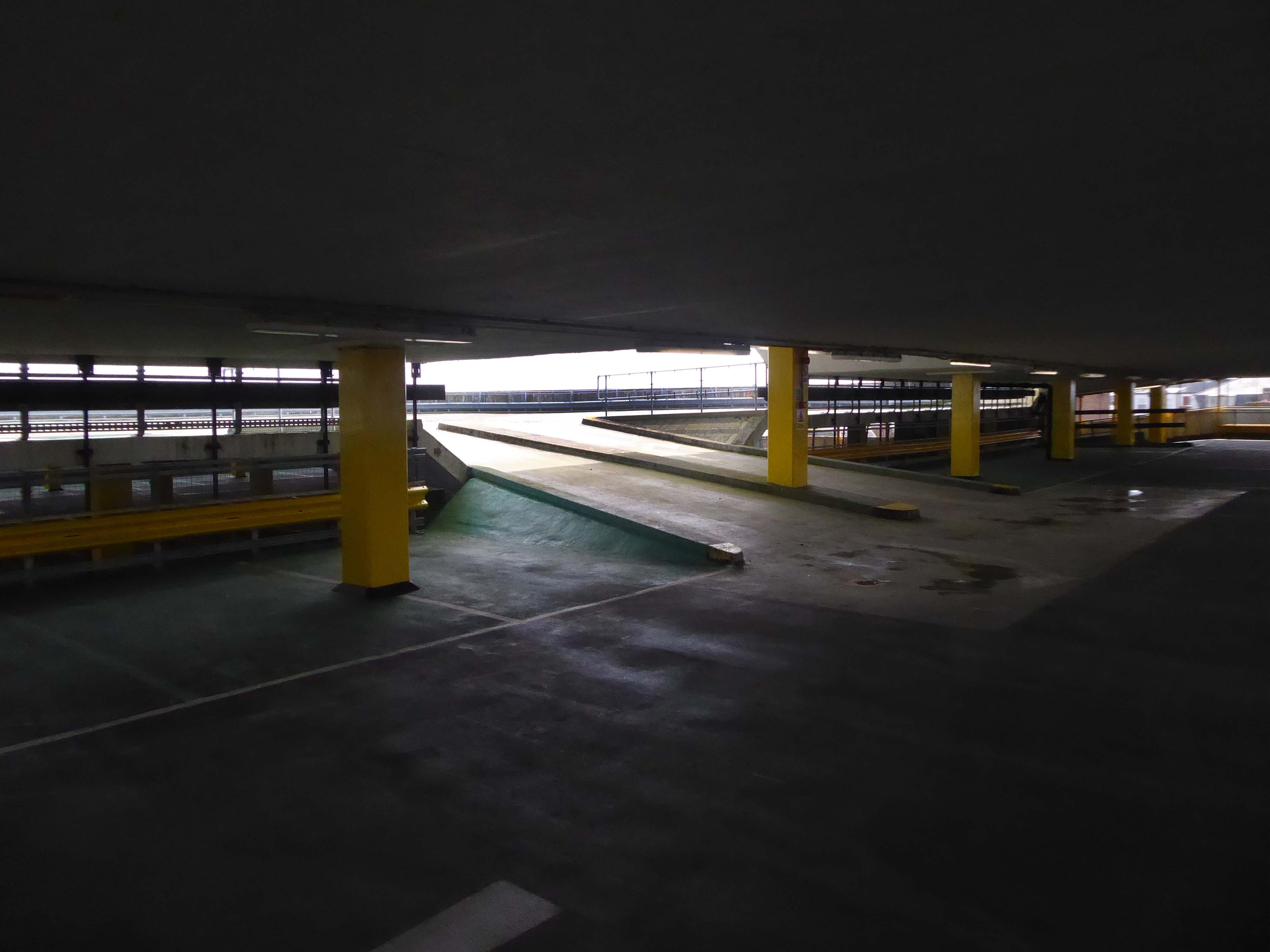
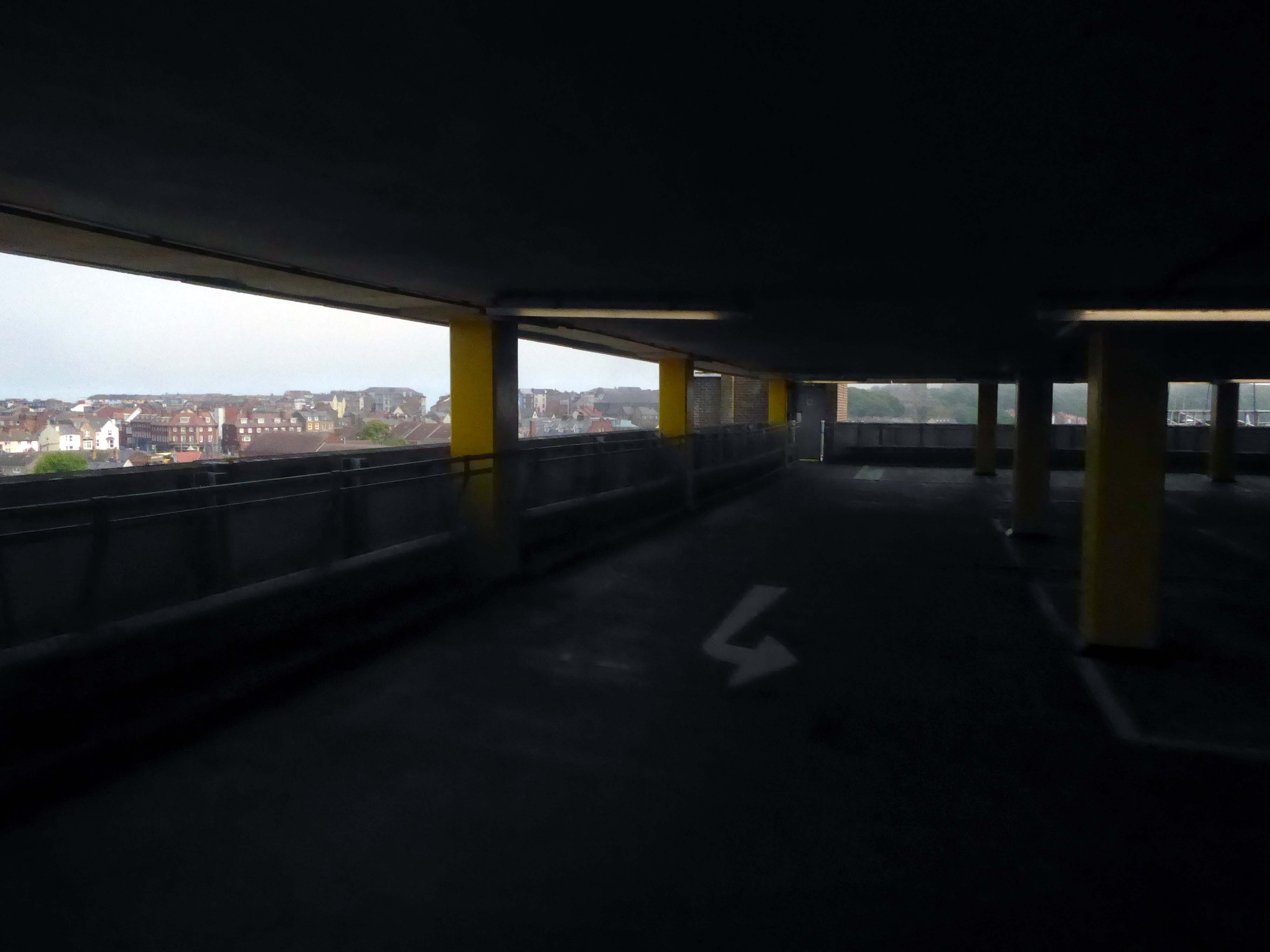
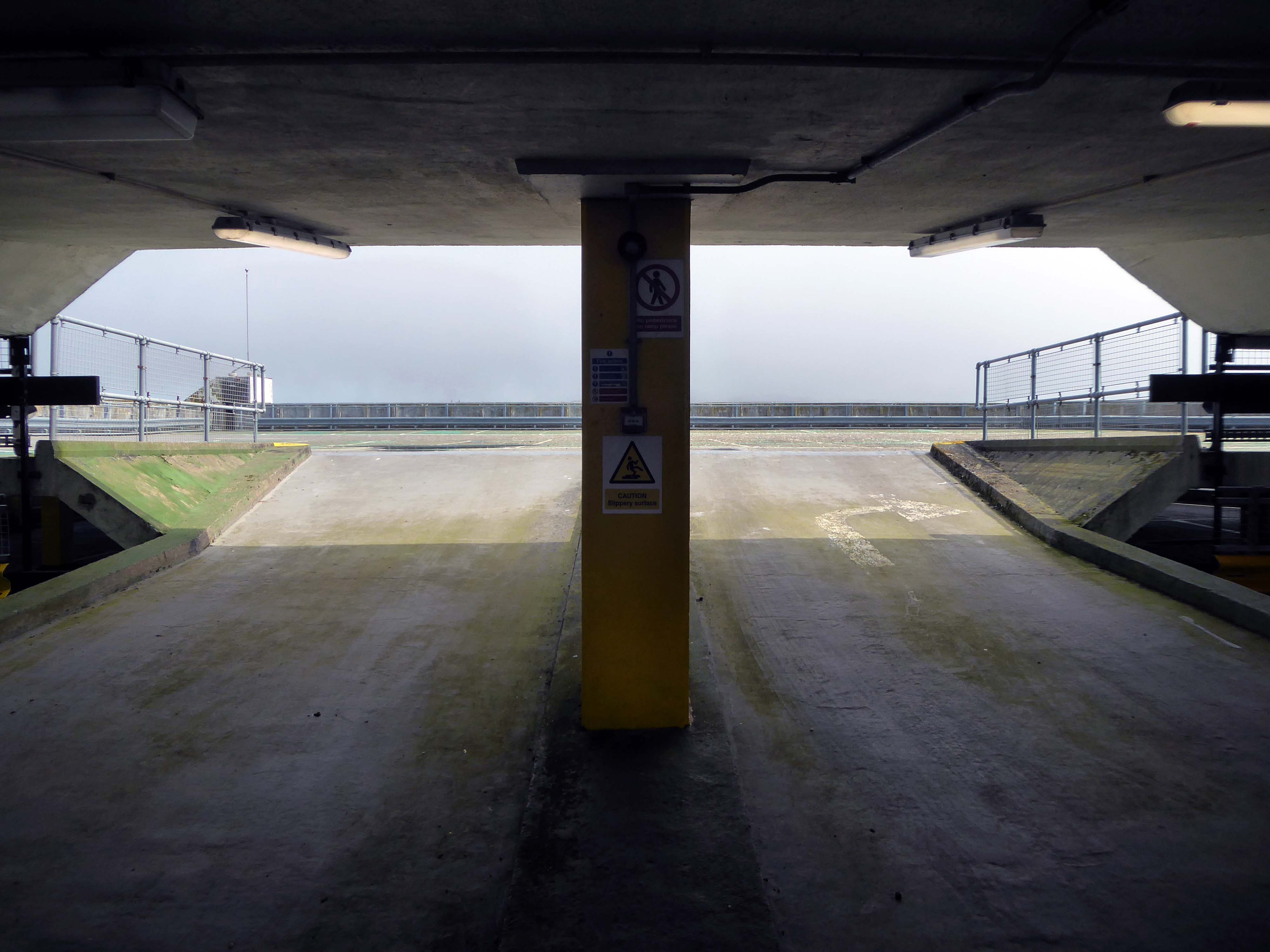
No not that Balmoral the other Balmoral, the car park attached to the Balmoral Centre, built in 1974 – with little or no reference to the Highland baronial.
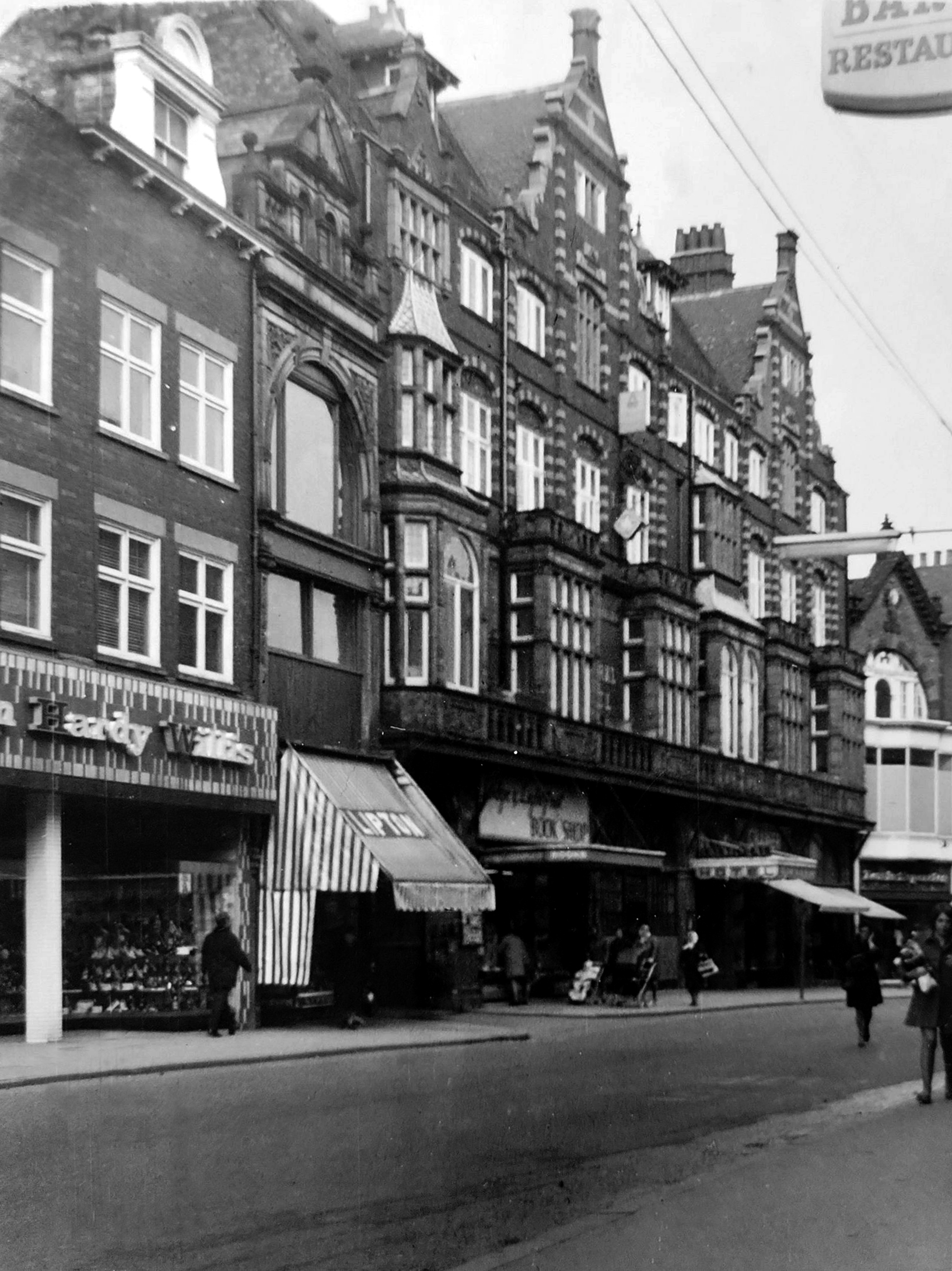
Though the old Balmoral Hotel had to be removed in 1973.
Scarborough is a beloved seaside resort and we’re pleased to have secured these well-known, popular parades, bringing them into our in-house portfolio.
We are committed to focusing our efforts on regional retail centres and neighbourhood parades where we can see there is incredible potential. The Balmoral Centre and Bar House provide us with significant opportunities to add significant value and we are already looking to identify how we can revitalise these centres further. We hope to make announcements on how we can achieve this over the next few months.
The staff at this car park are always friendly and really helpful.
You can tell they take pride in their car park.
We stay in this car park every time we come to Scarborough and stay in Britannia hotels, we find it safe and secure to park your car, the staff are very helpful and polite and keep the car park in tip top condition.
We will always park here great opening and closing times also five minute walk to Royal and Grand Hotel and shops.
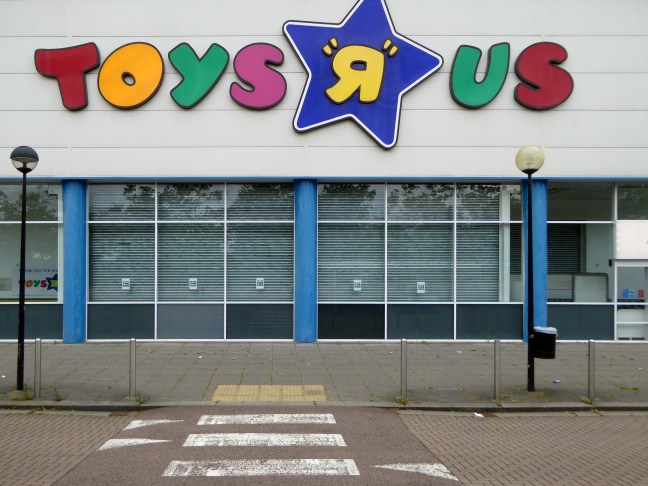
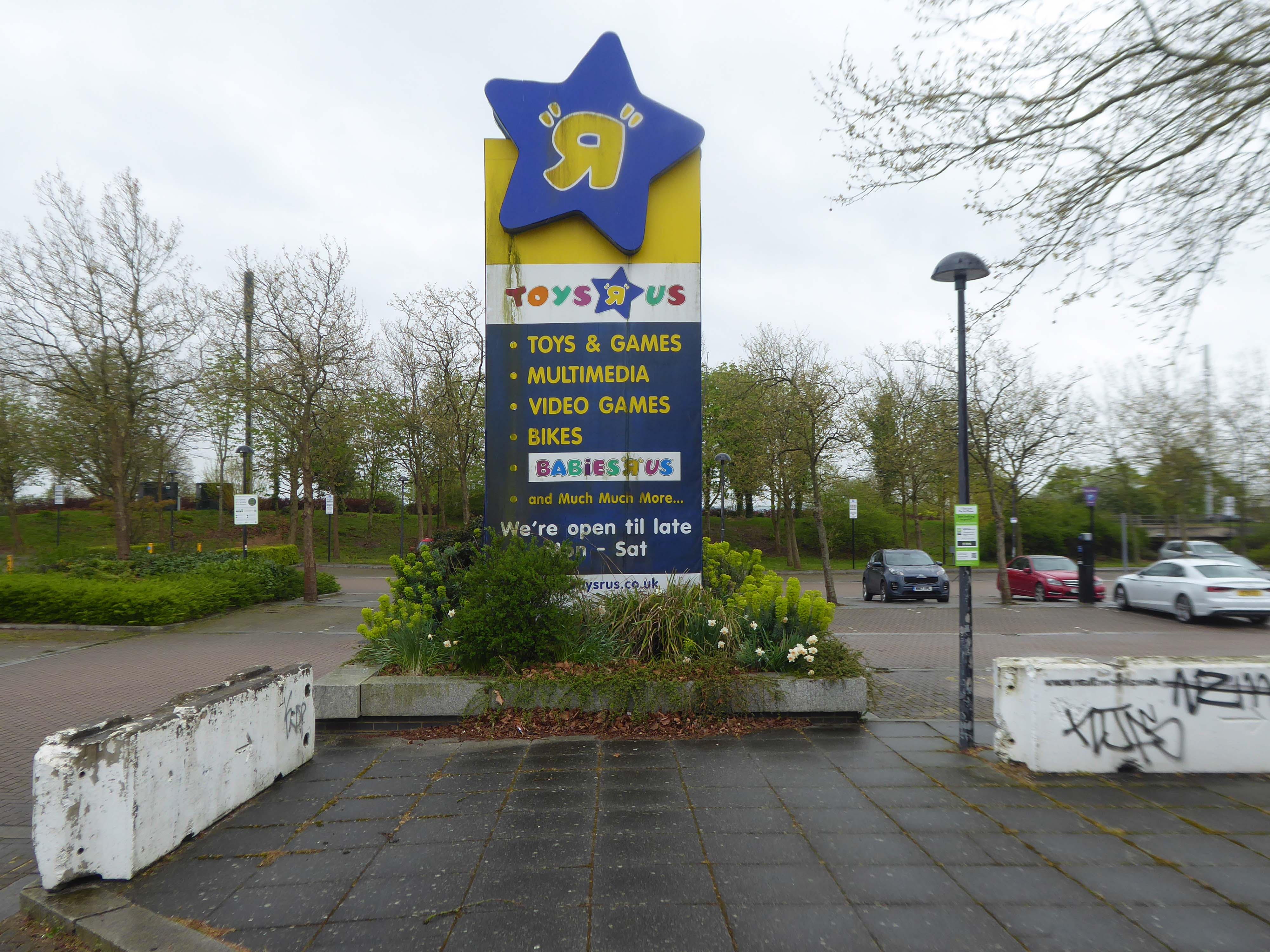
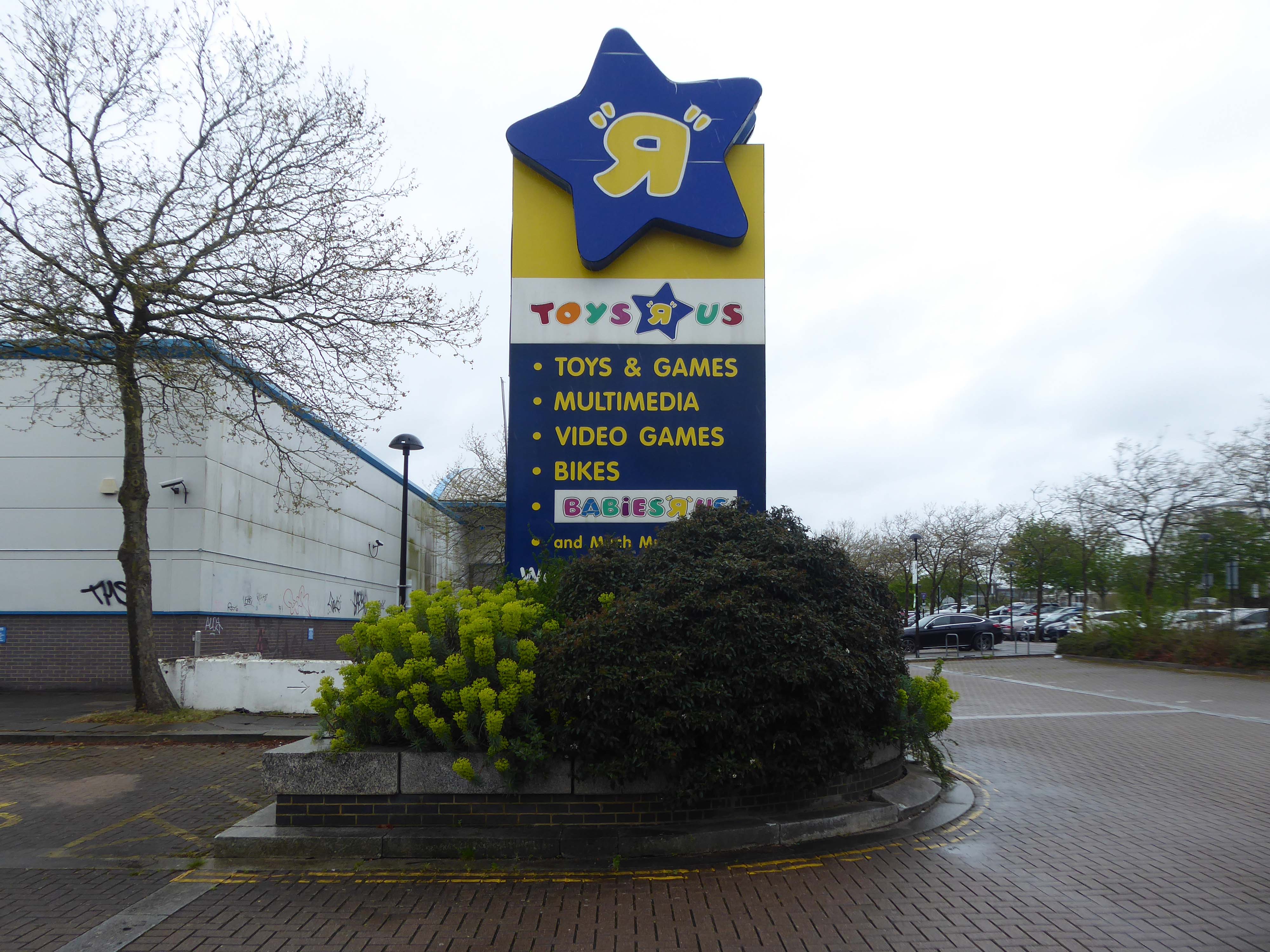
While originally considered a category killer, the rise of mass merchants and online retailers cost Toys “R” Us its share of the toy market. The company was further hampered by a significant debt load, the result of a leveraged buyout organized by private equity firms.
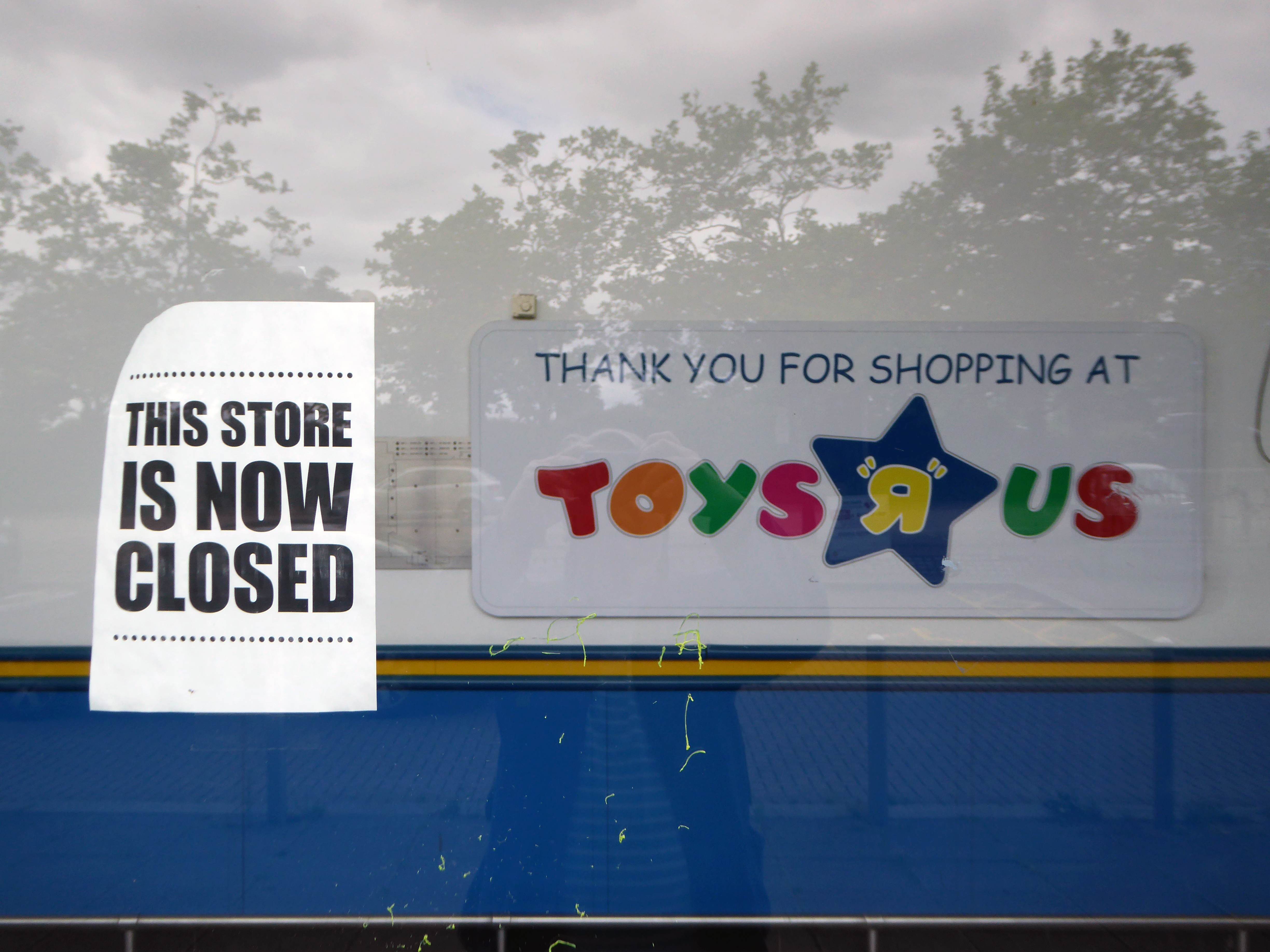
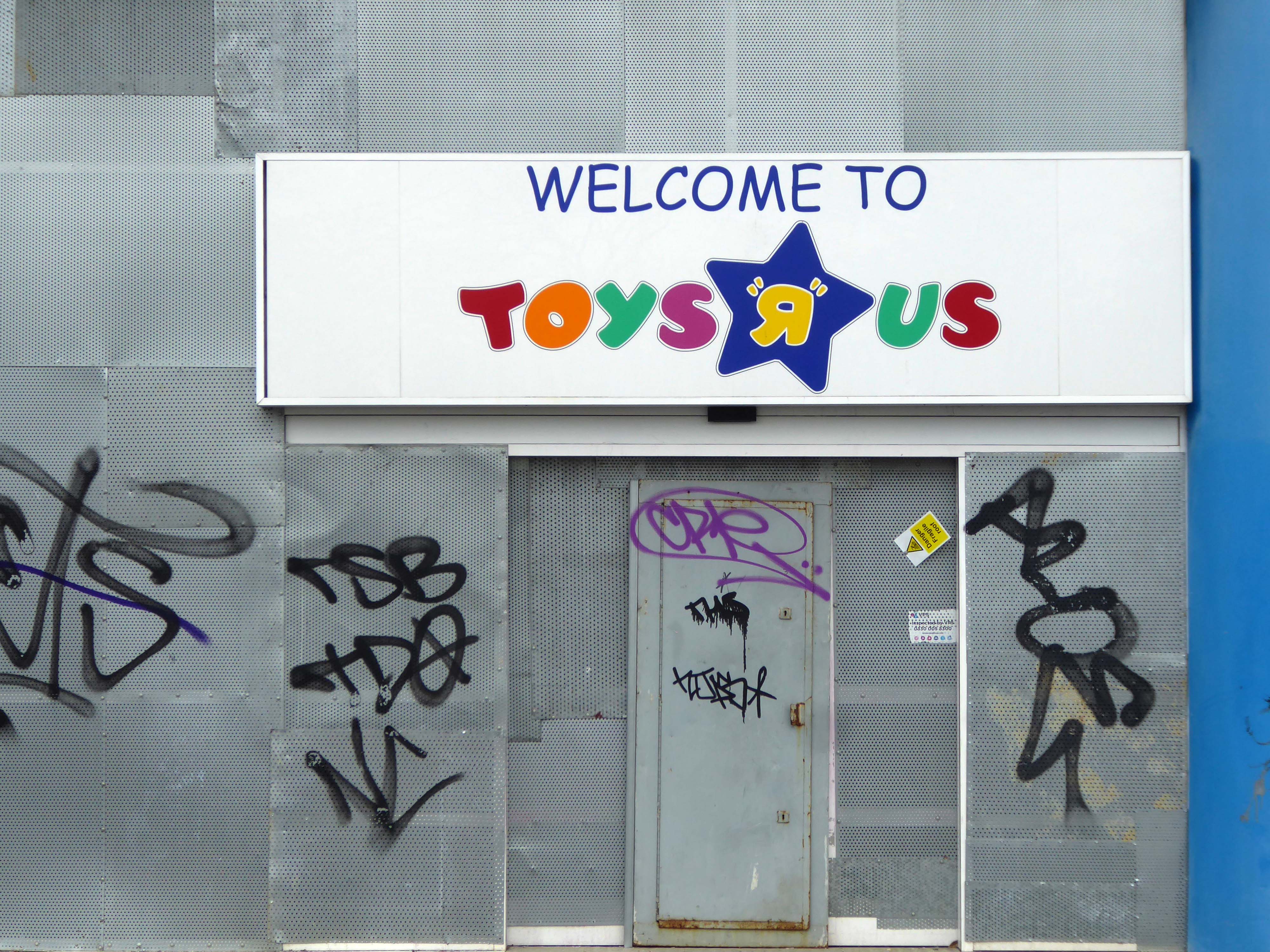
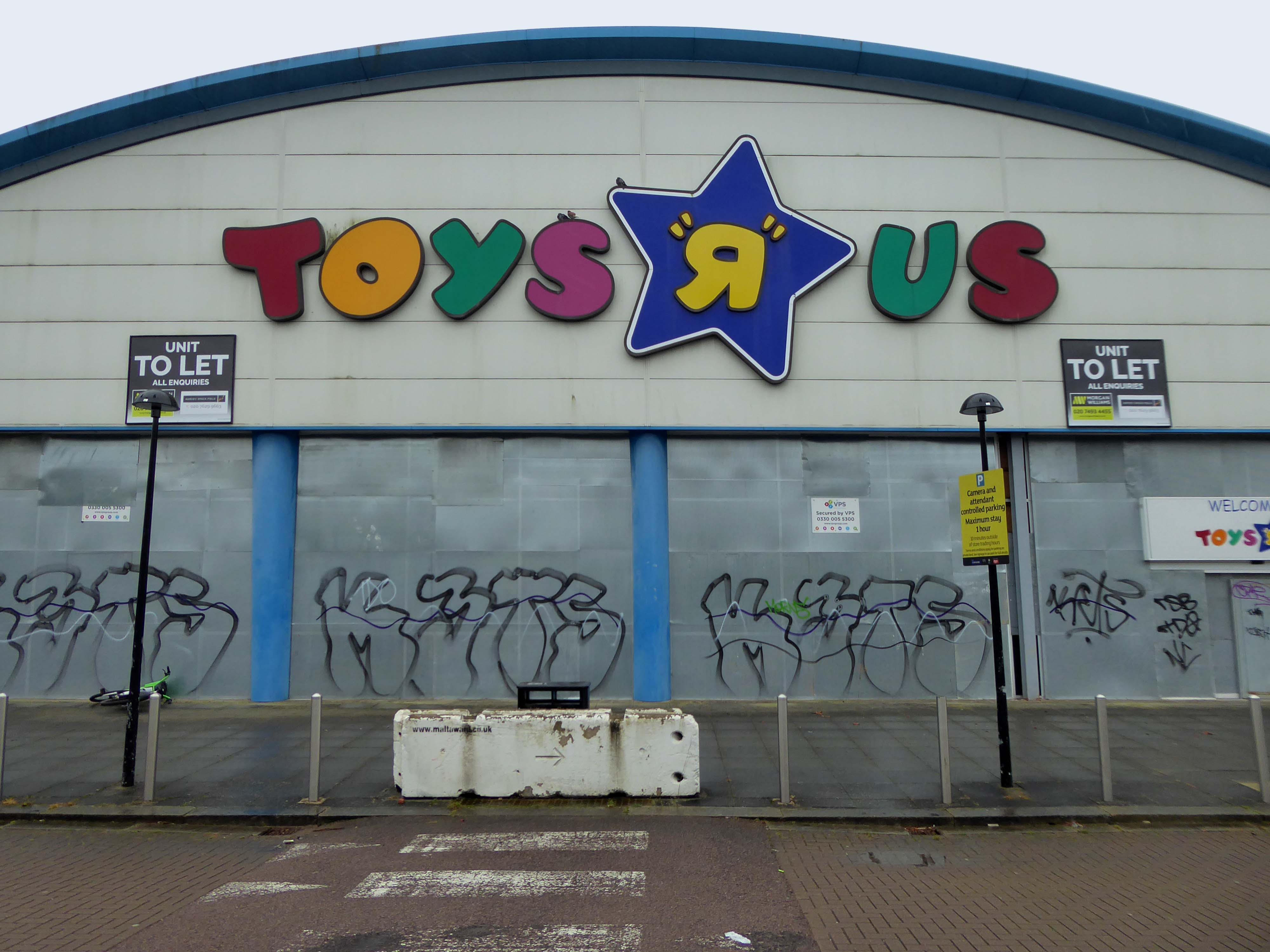
The toy retailer filed for bankruptcy in 2017 and in March 2018 announced it would be closing all its UK stores.
There were more than 100 Toys ‘R’ Us stores in the UK at the time.
A nipper, named only as Andrew penned a heartfelt 3-point letter to the judge handling the company’s bankruptcy case, and pleaded with him not to allow his fave shop to close down.
Andrew’s hand-written note to Judge Keith Phillips – which was put in the official court file – laid out exactly why he didn’t want the shops to shut.
In April 1948, Charles P Lazarus founded a baby-furniture retailer, Children’s Bargain Town in Washington DC, during the postwar baby boom. It was acquired in 1966 by Interstate Department Stores Inc.
The focus of the store changed in June 1957, and the first Toys “R” Us, dedicated exclusively to toys rather than furniture, was opened by Lazarus in Rockville Maryland. Lazarus also designed and stylized the Toys “R” Us logo, which featured a backwards “R” to give the impression that a child wrote it.
Having grown up in the days of the diminutive local toy shop – noses pressed against the widow admiring those treasures never ever owned, I find the present day retailers to be soulless industrial hangars – designed to extract every ounce of fun and currency from the hapless child and guardians.
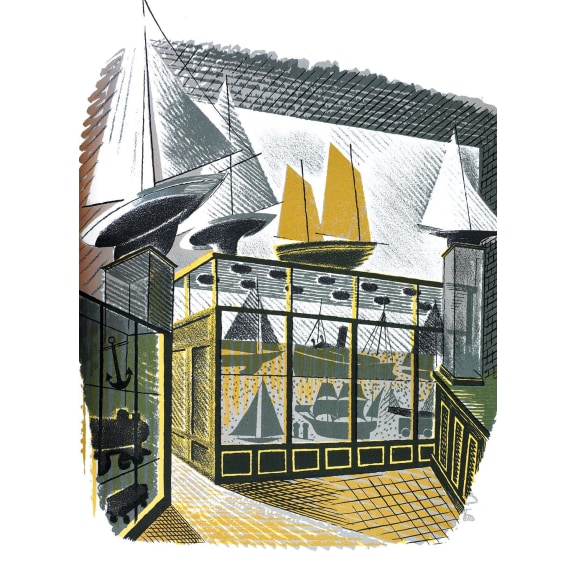
Eric Ravilious – inside the model shop.
I returned in 2024.
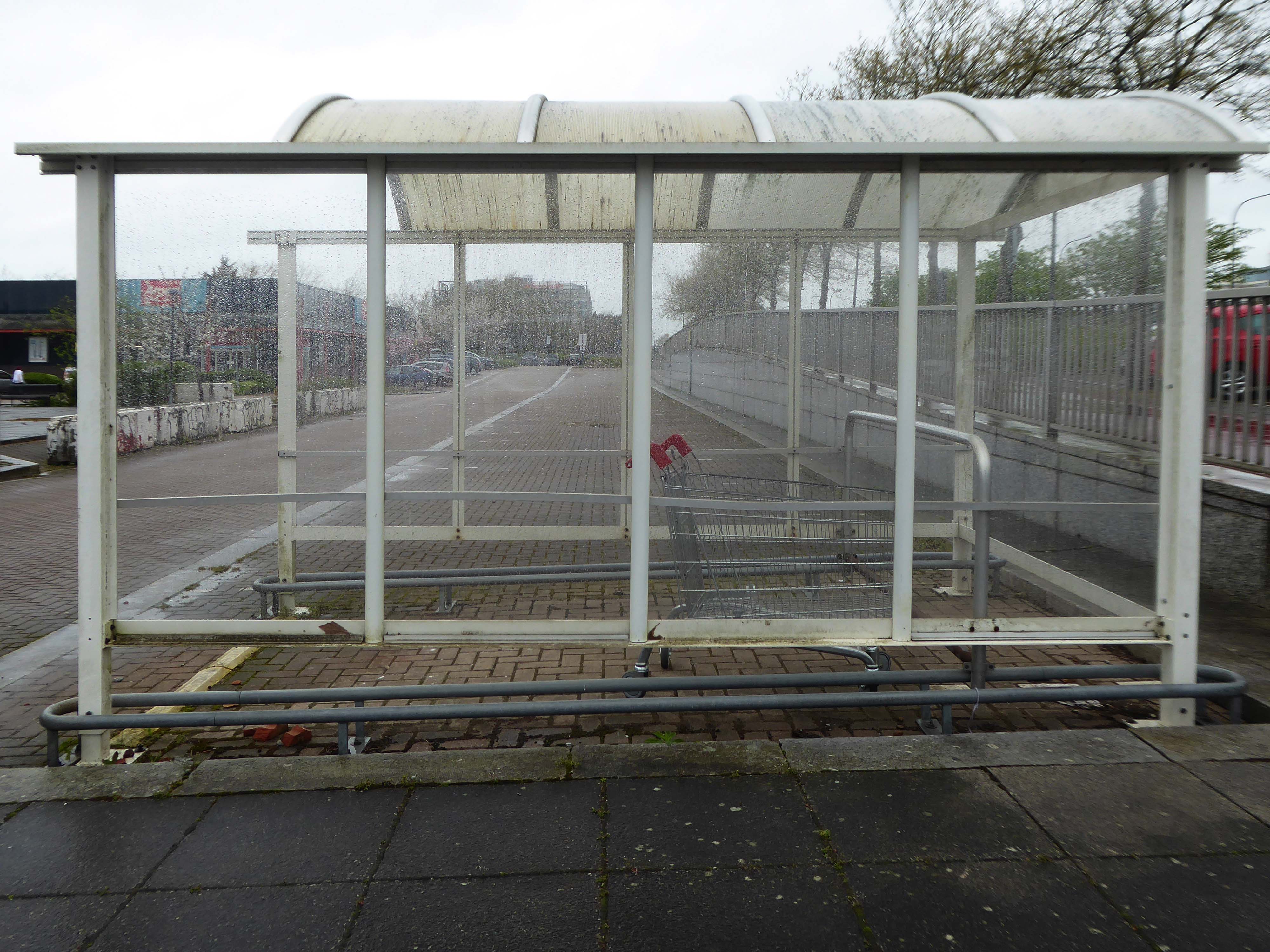
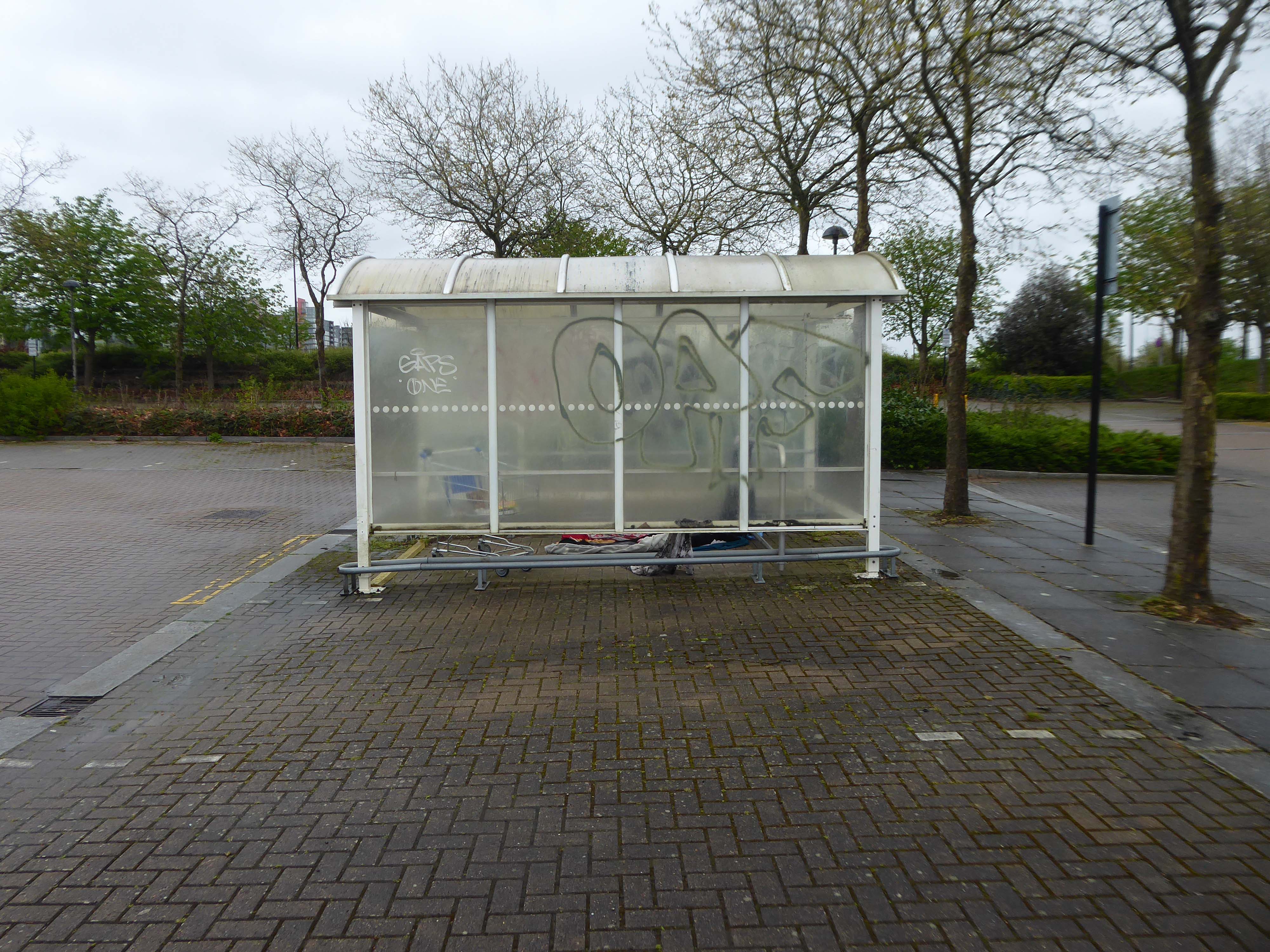
A large To Let sign is now visible above the store, with any interested parties invited to inquire about the large unit. The 47,500sq foot unit is available to lease – in whole or in part, and is described as being immediately available.
The news comes despite previous announcements that WHP Global, the owner of Toys R Us, had plans to re-open some UK stores during 2022. In February, the company said UK Toys R Us stores could open within months, although none have yet done so.
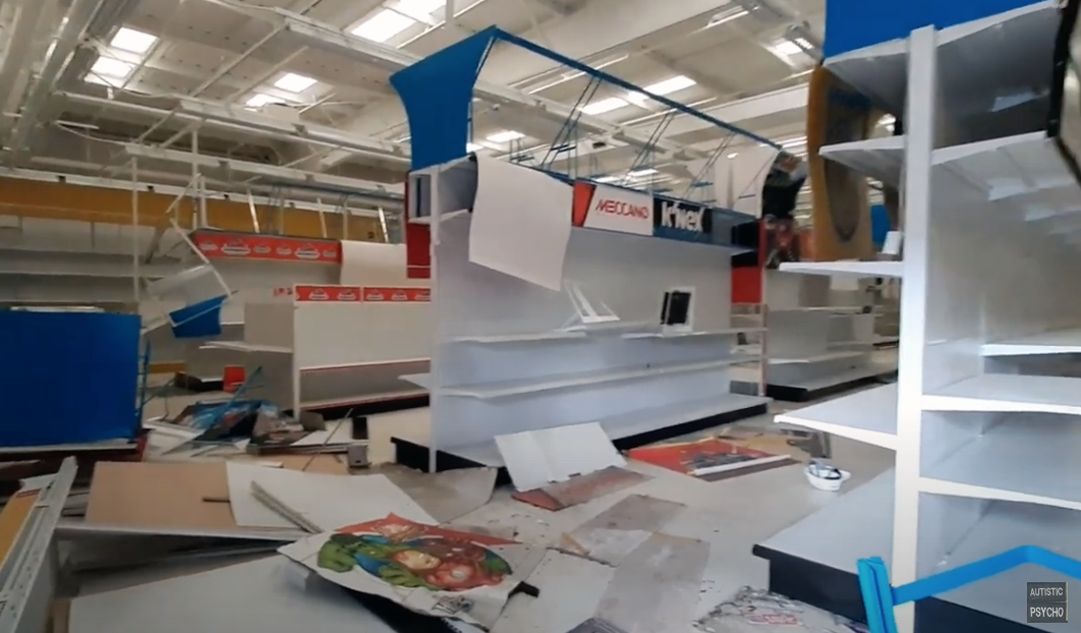
Here is Autistic Psycho’s tour around the deserted store,
So on a light bright sunny day, I took another look around.
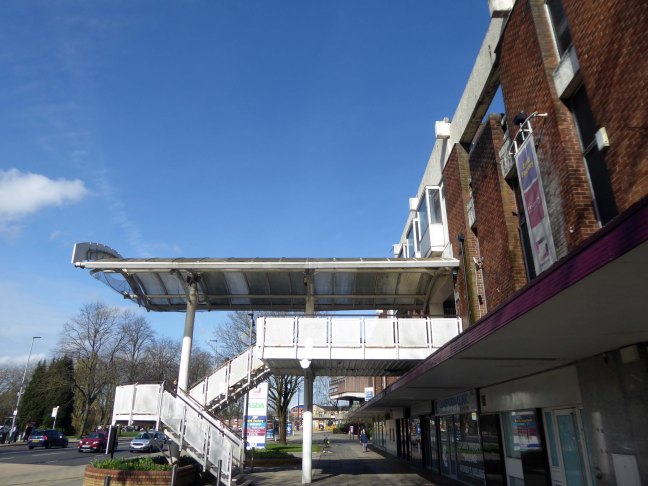
Salford’s town centres are important to the city’s future. They provide employment for local people, retail and leisure opportunities, homes, a sense of community, and a place for local people to interact. However, it is well known that town centres are changing and that they need to adapt and reposition themselves so that they can thrive and meet the needs of the local communities.
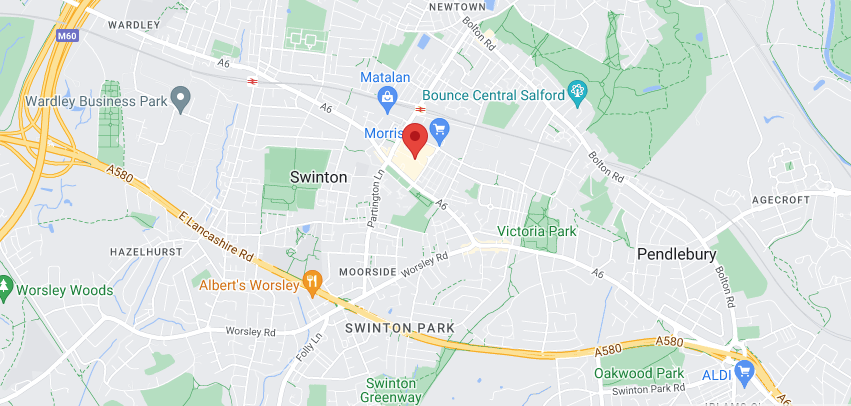
Despite Swinton’s many strengths, it faces similar challenges to other towns. The shopping centre and other buildings in the town centre are dated and in need of investment. Demand for local housing has grown by 23% in the last five years, but there is a lack of high-quality family and affordable housing in the right locations in the area.
The city council has identified Swinton town centre – along with Eccles, as a priority area for regeneration. On that basis, the council has engaged with the community and local stakeholders to establish a clear vision for the town that will help to guide change and future investment, whilst protecting what local people consider important for Swinton.
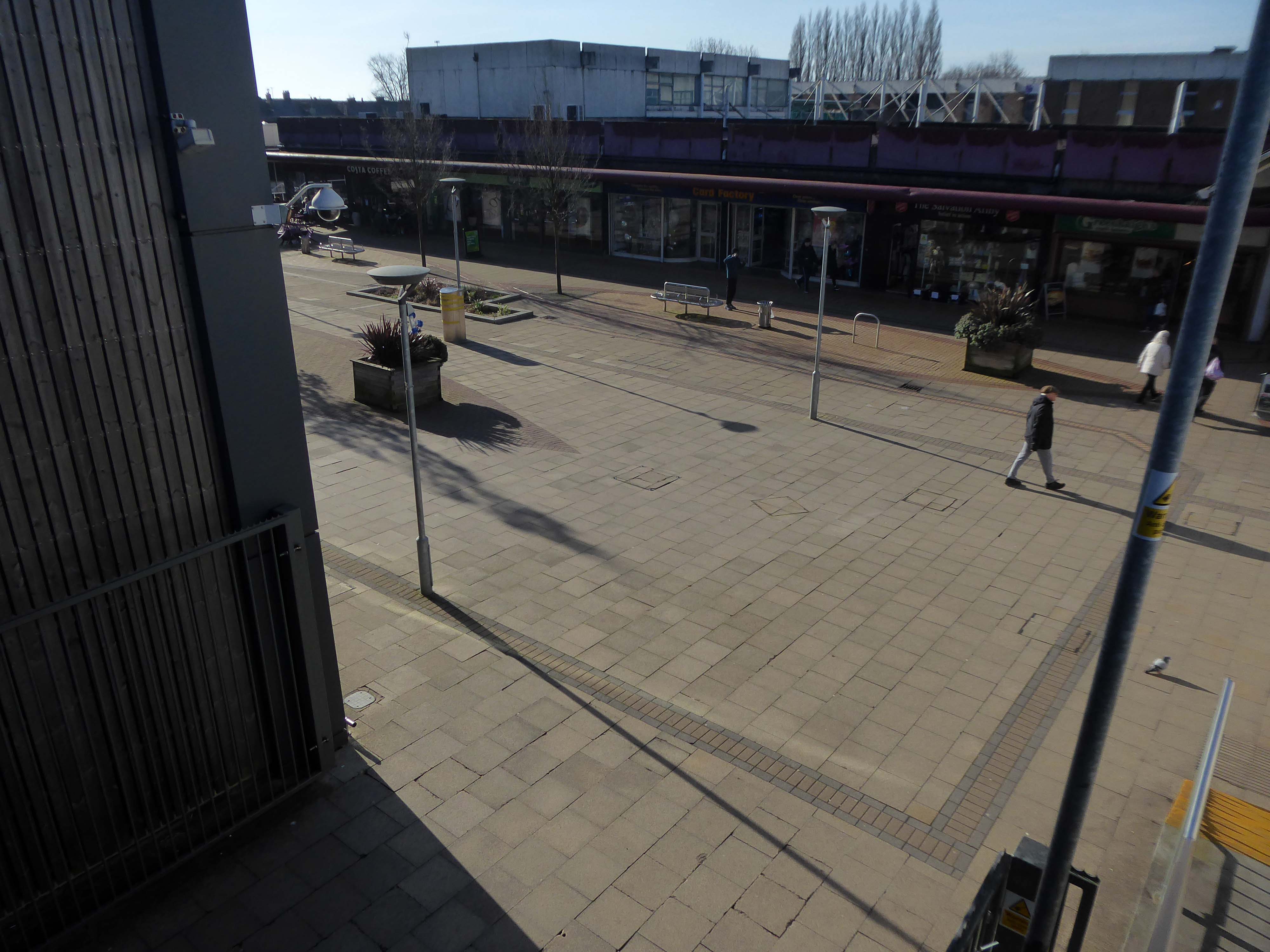
Swinton Square is in private ownership and therefore not something that the council has any direct control over. It is also important to acknowledge that the issues facing Swinton precinct are not unique to Swinton and those challenges are varied but linked to changing shopping habits, decline in the retail offer, competition from out-of-town centres as well as changes in the wider economy.
We do have an open dialogue with the owners of Swinton Square, the West Bromwich Building Society, who are aware of the vision and aspiration for Swinton.
One of the aims of the council’s events and animation programme is to encourage additional footfall and dwell time within the town centre.
The A34 is a major route from the ports on the South Coast of England to the Midlands and the North West, with the standard varying from rural dual carriageway sections in the south to urban single carriageway in the north, and everything else in between.
Slade Lane junction, Rushford Park to Parr’s Wood, East Didsbury – to connect to Manchester Road to Cheadle. It continued on to Laneside Road as a residential road. Opened on 11 April 1923 by Mary Cundiff, Lady Mayoress, and Margaret Turnbull, daughter of Alderman Turnbull, Chairman of Manchester Town Planning Committee. Width was 100 feet and it was designed for tram tracks in the central reservation. The dual road carriageways were 20 feet wide. Manchester’s tram system was closed in 1949. The carriageways were widened and central reservation grassed over. Originally opened as A5079.
Laneside Road, East Didsbury to Schools Hill/ Wilmslow Road junction, Cheadle. Opened on 12 October 1959. The official opening was on 15 October 1959. Planning for the bypass had been halted by the war. In December 1949 Manchester Corporation stated that it was not a priority since the Corporation was only responsible for the 200 yards to the proposed bridge over the River Mersey and Cheshire County Council had not asked for a joint approach to Ministry of Transport to build it. Work was finally authorised in January 1957 and started in the June. Width was 90 feet with dual 24 foot carriageways. Expected cost was £600,000 to £700,000.
The earliest known multi-story car park in the UK was opened in May 1901 by City & Suburban Electric Carriage Company at 6 Denman Street, central London. The location had space for 100 vehicles over seven floors, totaling 19,000 square feet.
It is estimated that there are between 17,000 and 20,000 non- residential car parks in Great Britain, including those run by councils, commercial parking companies, shops, hospitals, businesses, railway stations and airports, providing between 3 and 4 million spaces.
The Manchester Airport multi-storey car park is one of the largest car parks ever built; in fact, it’s the second largest in Europe. This mega-park was designed to house a staggering 8,000 cars, split over a six-level facility that stretches out over 330 metres.
In the city centre NCP has over 13,000 car parking spaces across 43 sites
Good location but the access to the shopping centre is dirty. Lifts dirty – discarded soiled underwear, urine, spit and rubbish in the lifts. Car park also full of litter.
The most unnecessarily complicated ticketing system I have ever seen for a car park. Designed to fail so that the system can fine you. Beware. Better avoided for overseas visitors
Immerse yourself in the eclectic vibe of the Northern Quarter, the heartbeat of art, culture, and urban lifestyle. Whether you’re heading to its vintage shops, art studios, or chic cafes, finding the cheapest, best parking is paramount.
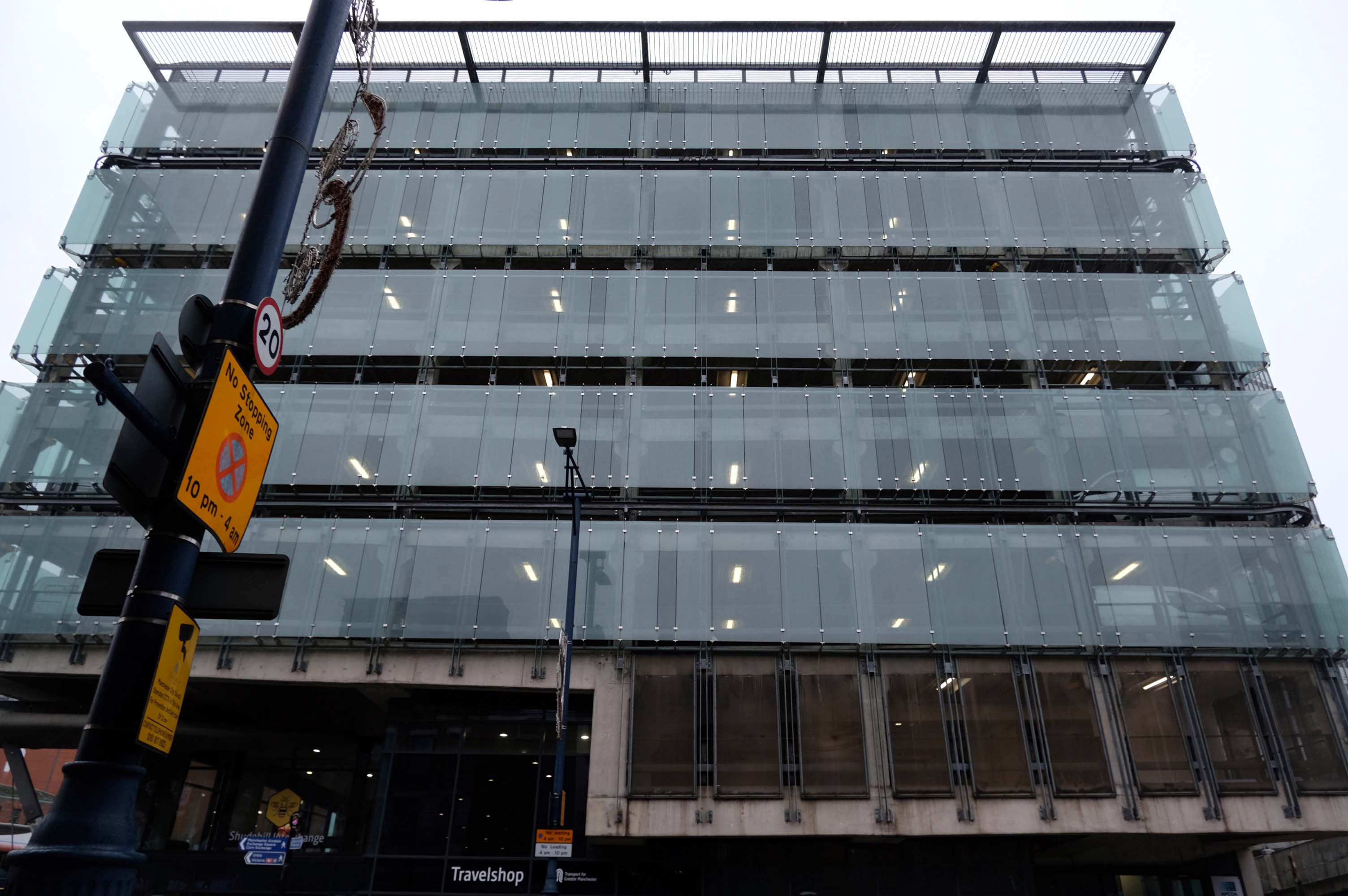
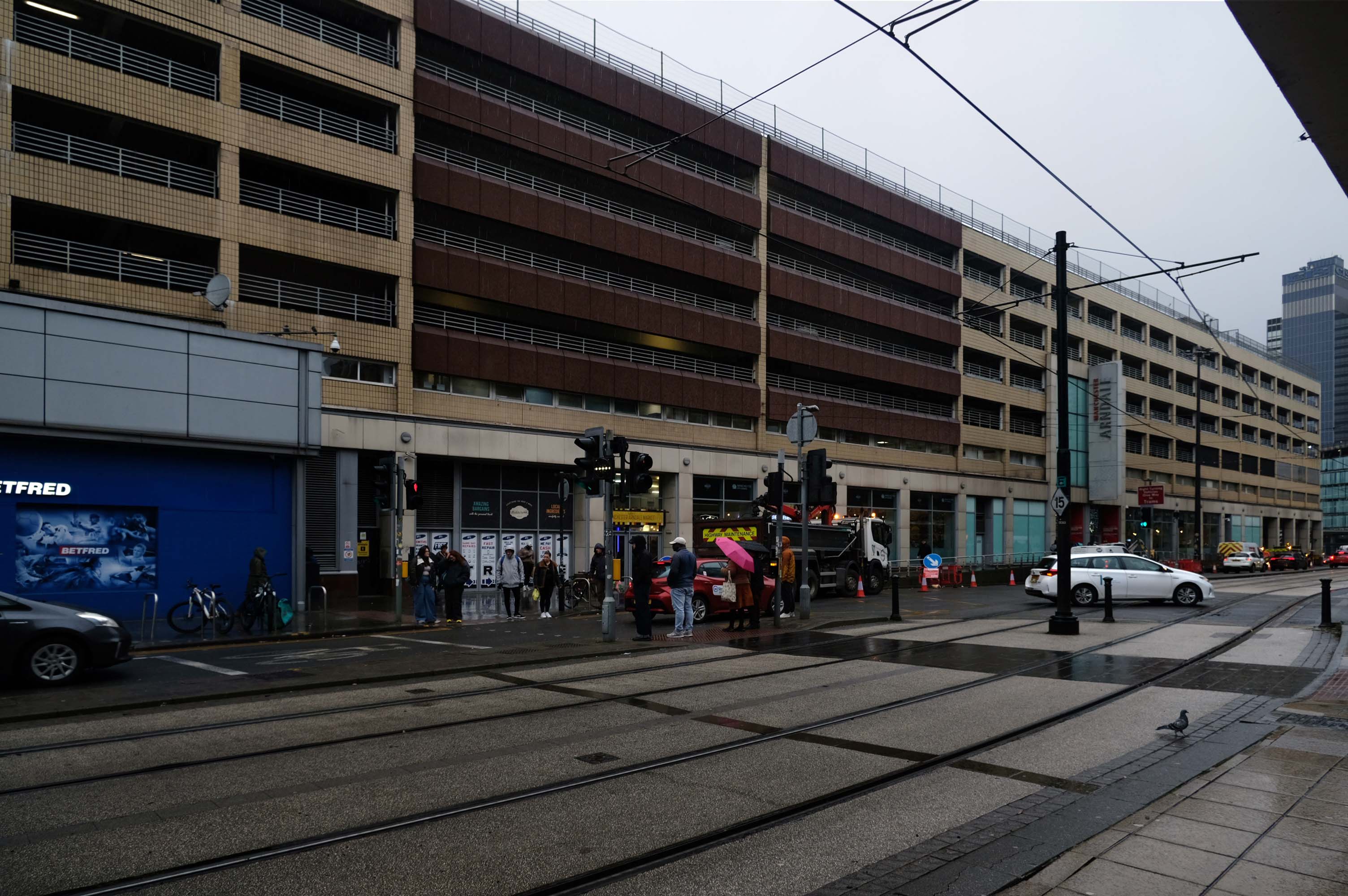
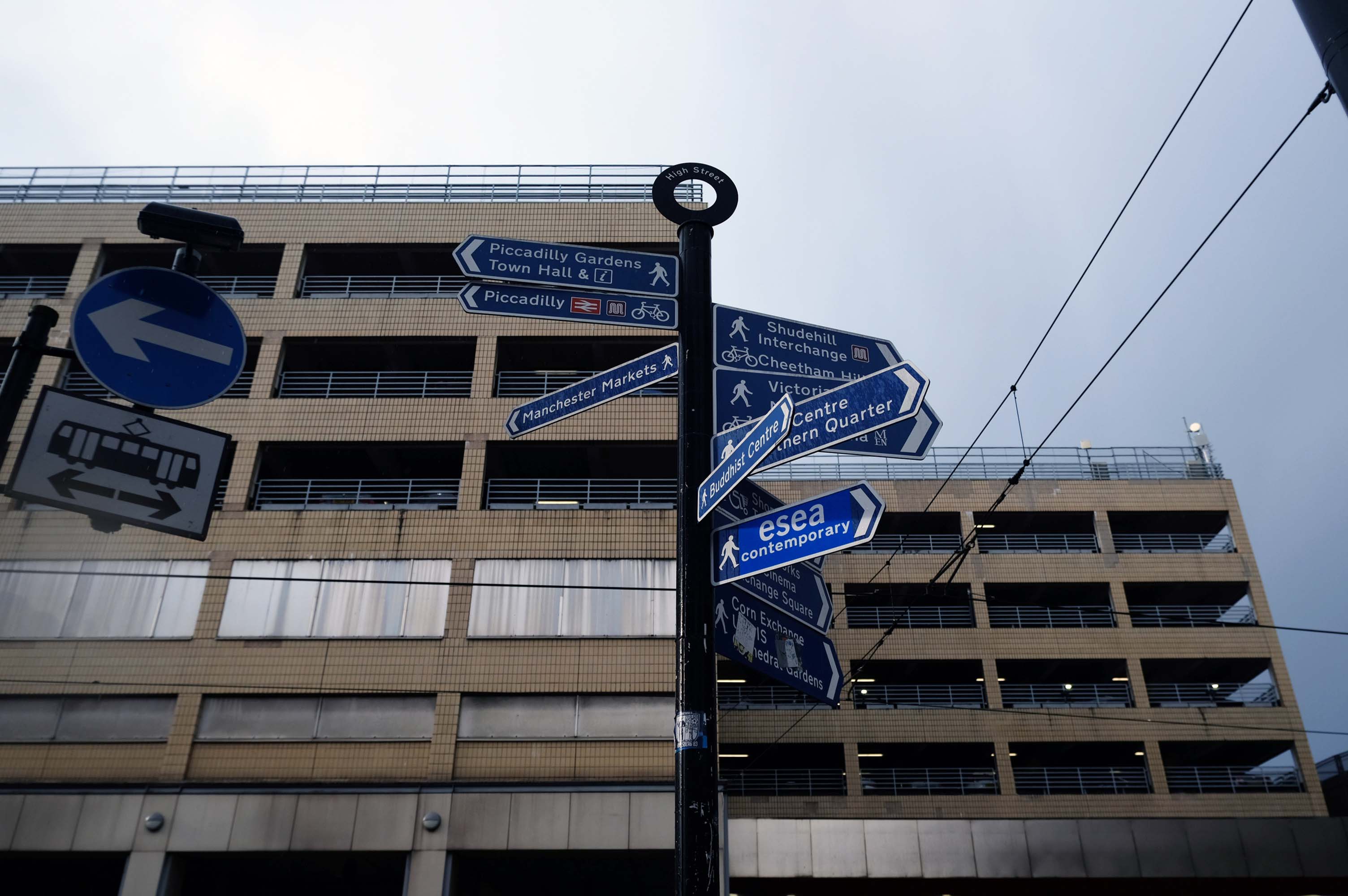
The Shudehill Interchange car park and bus station, designed by Jefferson Sheard Architects working with Ian Simpson, replaced the former Cannon Street bus station, under the Manchester Arndale; since the redevelopment of Manchester city centre, the latter has disappeared along with Cannon Street itself.
Great location but narrow roadway between floors. Pay in advance so you need to know how long you’re staying for.
£20.40 for 4 hours is expensive but you are minutes from Deansgate shops.
Only given one star because there wasn’t an option for zero. Not secure, car broken into theft of personal effects, pedestrian gate was un locked, no CCTV that I could see anywhere. Cost me over £25 to park for 6 hrs and lost over £200 of personal effects, complained to council, no response. Wouldn’t park here ever again.
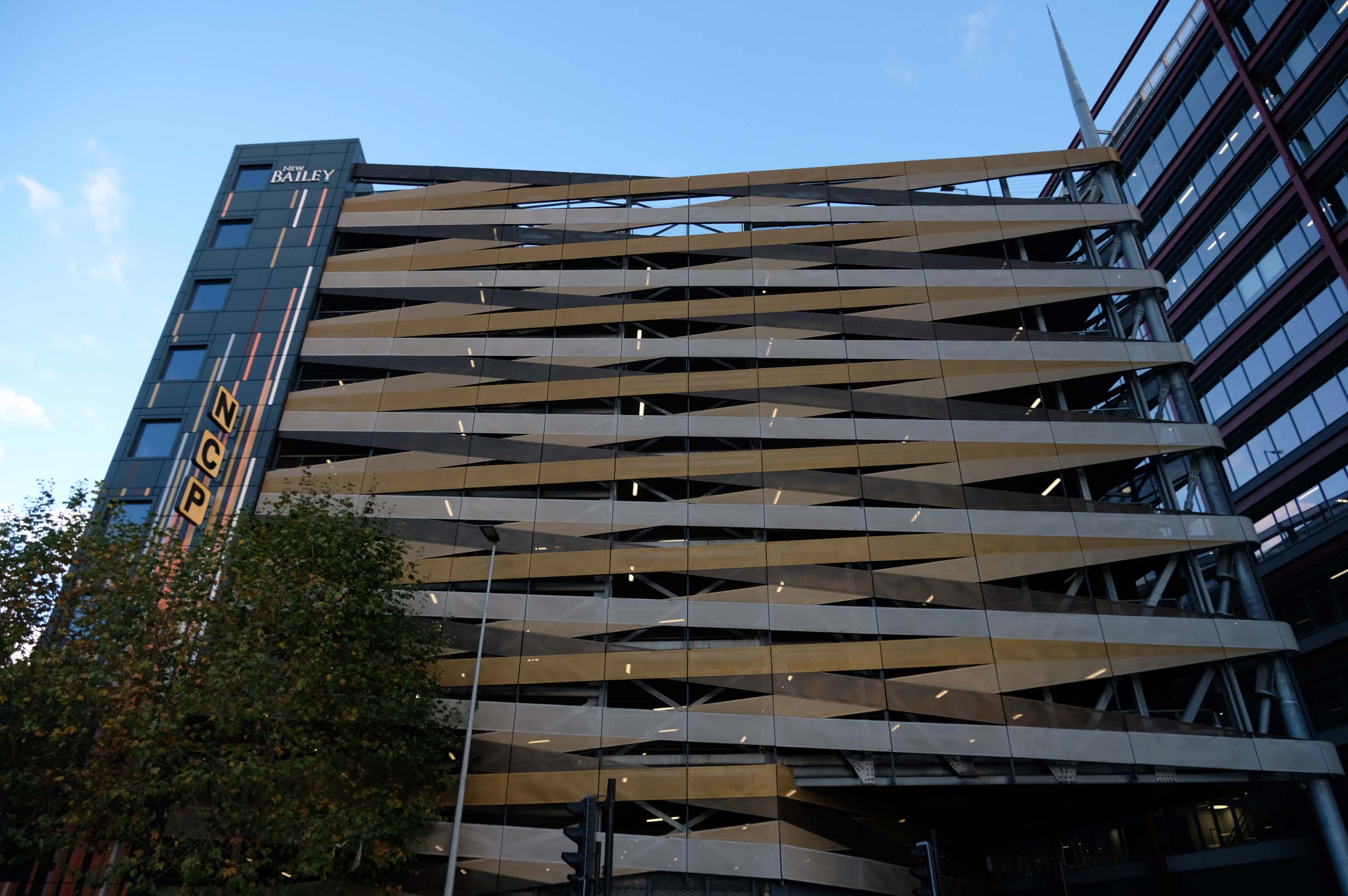
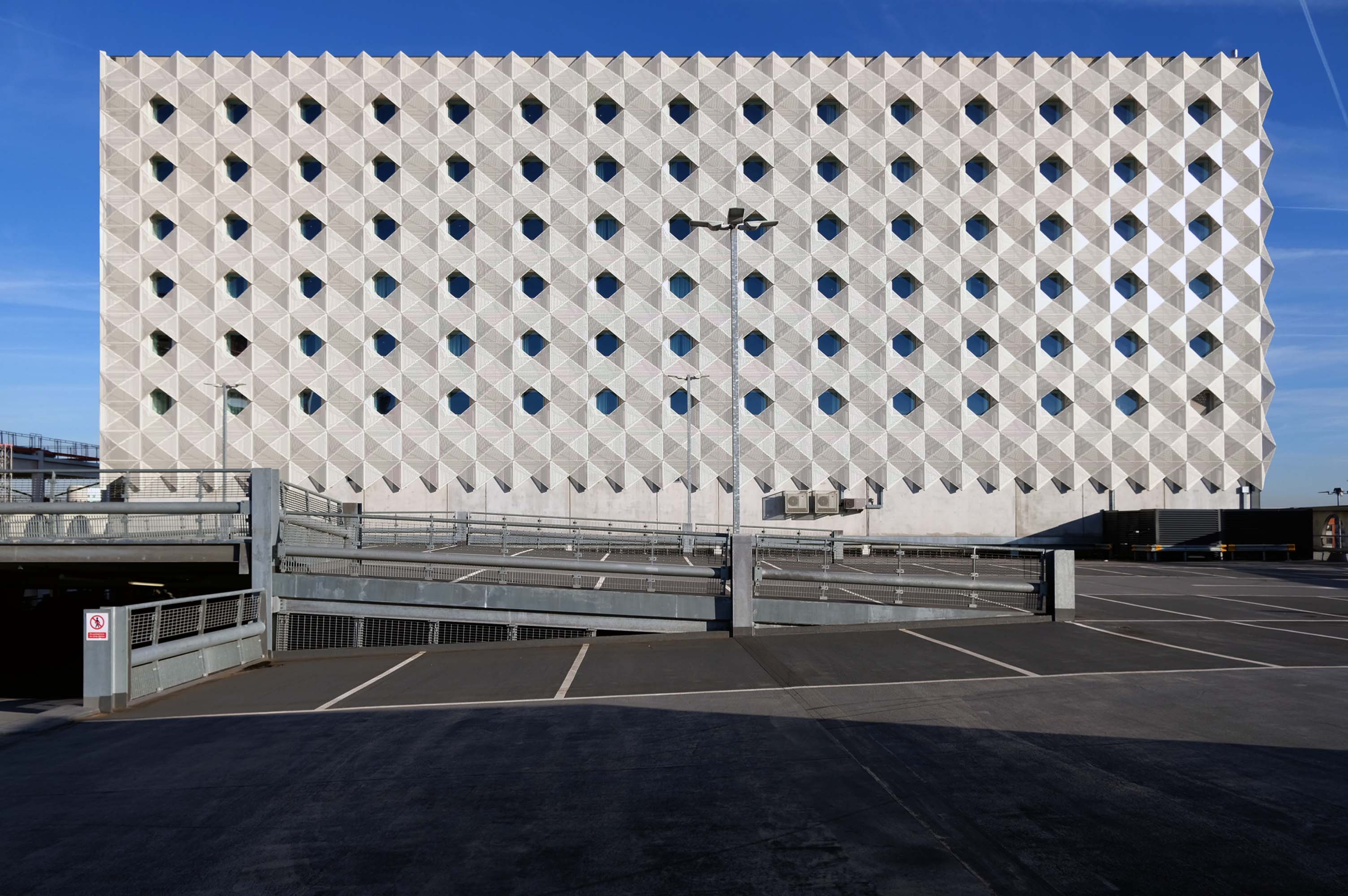
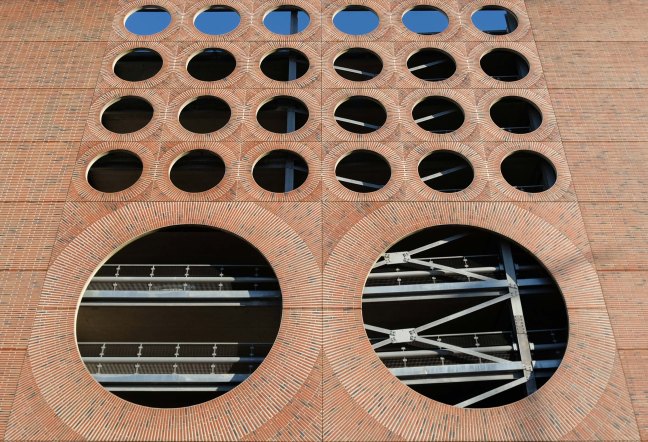
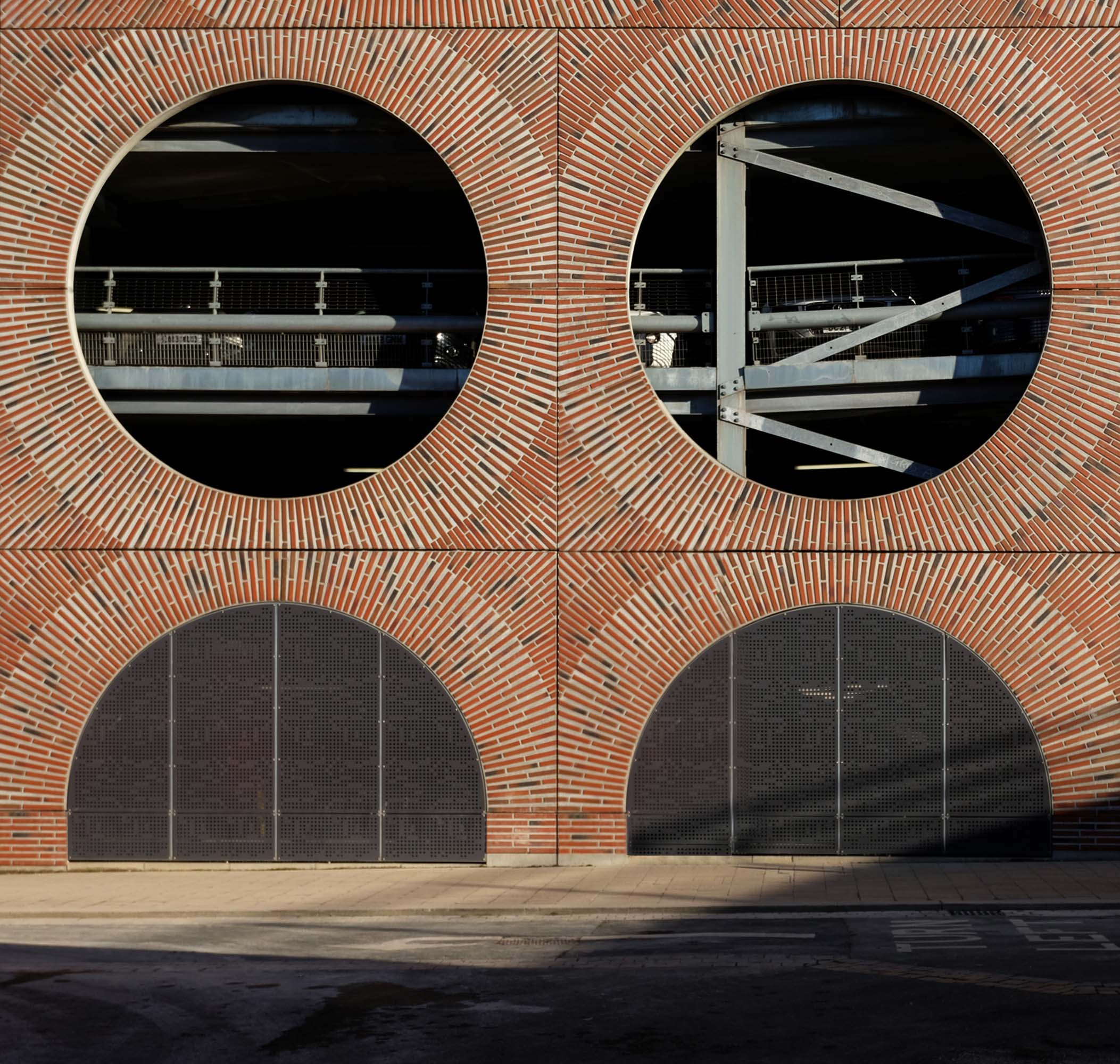
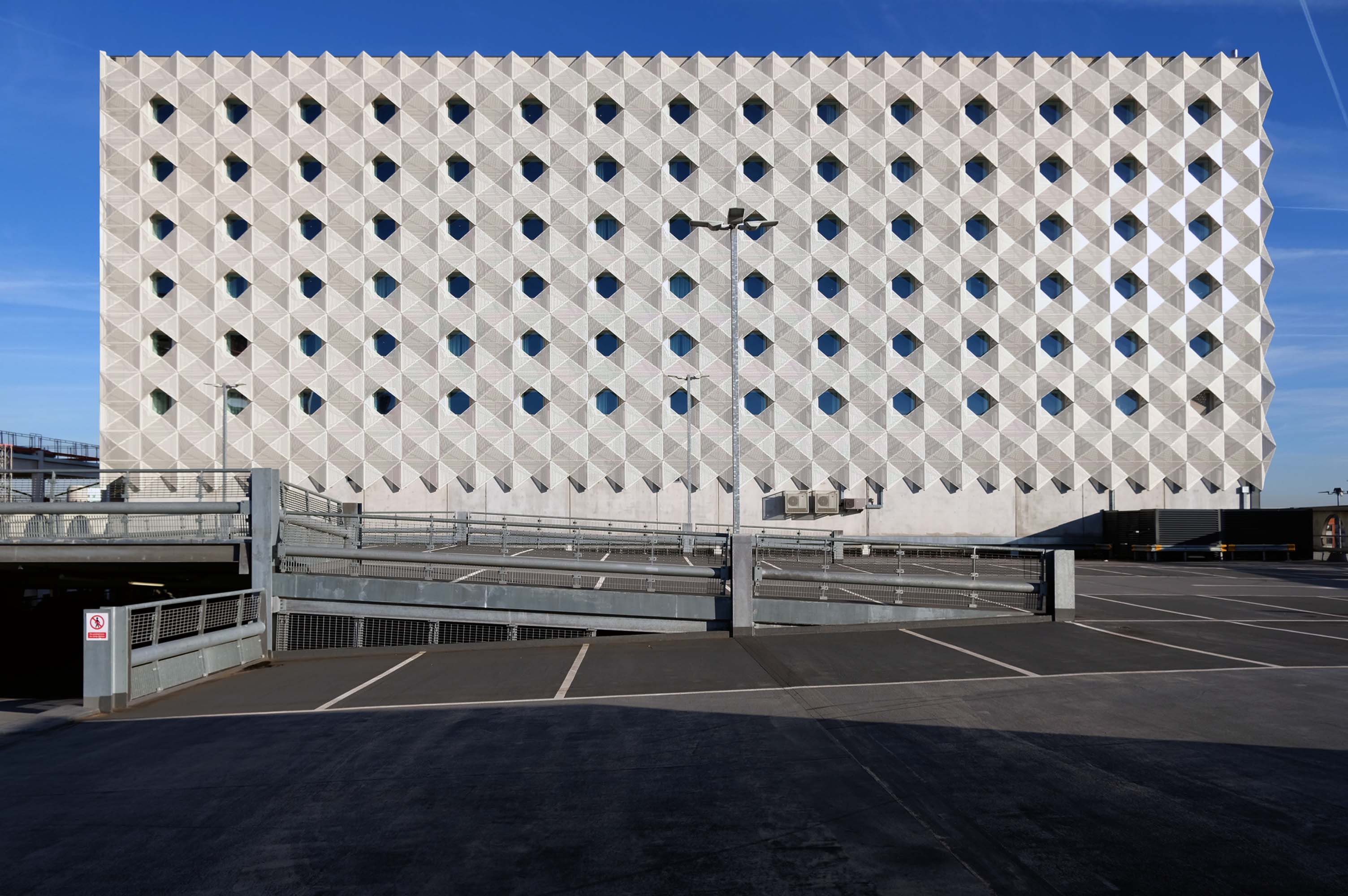
Maple gave architects Aedas RHWL the freedom to express themselves on a prominent multi-storey car park development in Salford. Their imaginative design created a great concept – the nine storey New Bailey car park appearing to be wrapped in ribbons that echo the lattice patterns and intersections in the ironwork of nearby Victorian bridges.
A good, clean and modern carpark. Easy to navigate and sensibly sized spaces. The only downsides are that it’s not cheap and getting into it from Trinity way is hard, as the traffic blocks the junction meaning it takes may cycles of the traffic lights to get across the junction.
Part of the Piccadilly Plaza development of 1965 by Covell Matthews and Partners
Nice central location with a large entrance so you dont have to risk scratching your car as you pull in. Found there was a lack of signage to direct to nearest pay machine or walkway exit. Also had trouble when it was time to pay. I typed in my registration and yet it wasnt recognised and so I had to estimate my time of arrival. I ended up paying £10.50 for around 3 hours, which probably is the going rate for city centre parking.
Sadly after seeing several reviews that cars were broken in to, I would certainly reconsider parking here in future. I got lucky here, I had suitcases locked in the car, with several hundreds of pounds worth of travel money.
Worst place to park on earth, we had our car broken int0, everything stolen, it’s common knowledge that the drunks in the town hang around the car park to steal and then use your cards to buy their booze
Secure and easy to find while driving, struggled to get back in through side door, had to walk up the ramp.
Expensive.
Stairwell stinks like piss and I’ve seen homeless people sitting in there. Doesnt feel safe.
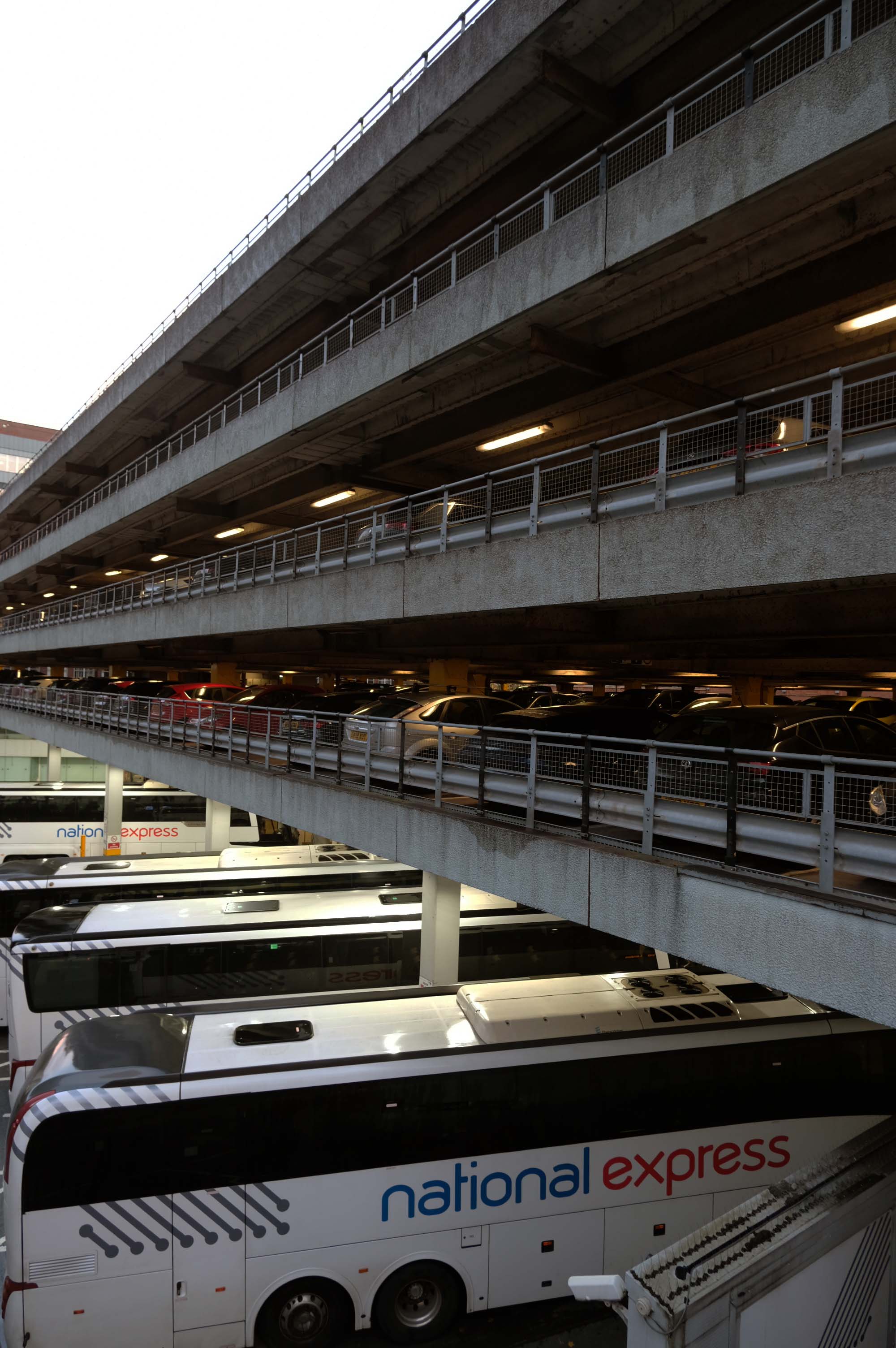
Great car park, security is great, right in the city centre above the bus station that goes Scotland to Cornwall, Wales to Norwich and many more, Manchester city centre literally with Piccadilly Gardens around the corner.
Great car park we use all the time in Manchester, easy to book online, no messing with cash machines. Takes your car reg by camera for easy access in and out. Plenty of spaces mainly upper floors, just tight around corners.
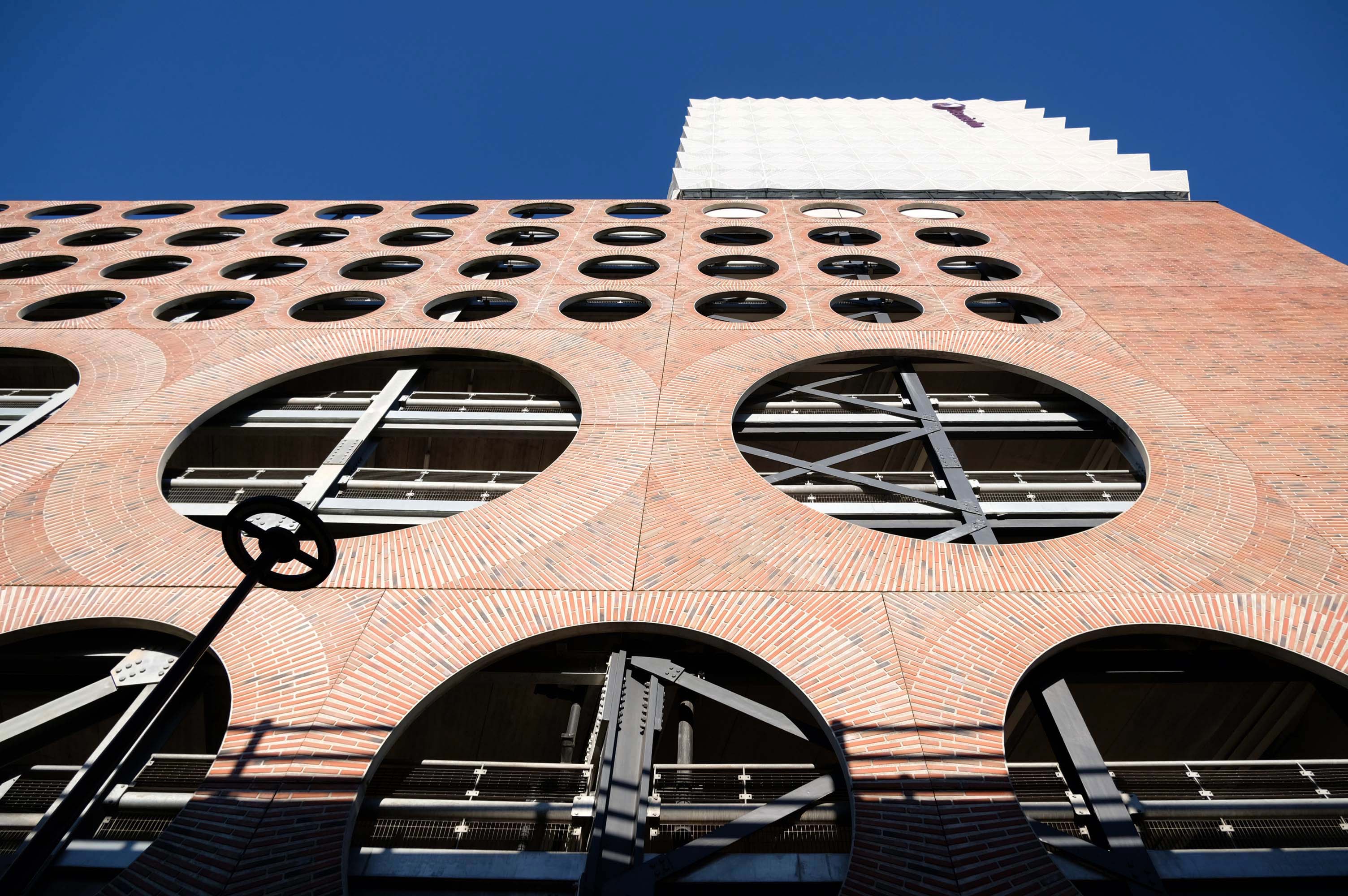
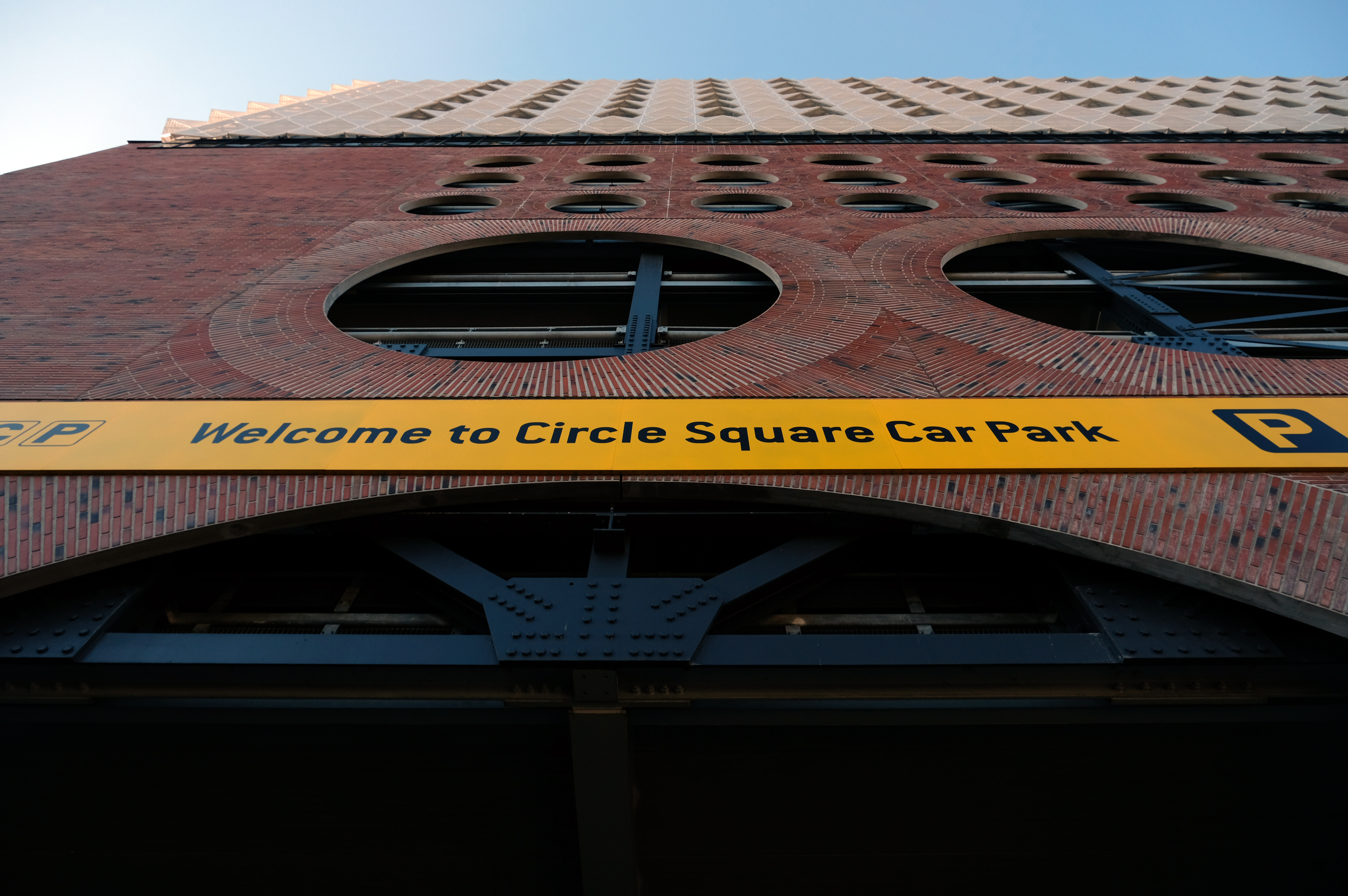
Fielden Clegg Bradley were concept architects while Leach Rhodes Walker were delivery architects.
A series of four × two-storey-deep lattice girders and a single one-storey girder, all measuring up to 27m-long, span over the zone where the underground pipes are located. In these parts, the car park has no first-floor level as the local water board needed a 5m ground-to-ceiling clearance in case they had to undertake any maintenance works. Consequently, the first floor is only a partial level and is set within the depth of the larger lattice girders, as is the second floor, while the third level is supported on top of these members.
Supporting a hotel would be challenging enough, however the design has also had to incorporate large bridging elements as there are two subterranean 600mm-diameter water pipes crossing the site. “It’s a very unusual design and one that was originally designed as a concrete-framed structure,” says James Killelea Senior Structural Engineer Charlie Twist. “However, the bridging parts would have proven to be too difficult to build and consequently a steel-framed solution was chosen for the car park, which in turn supports a precast concrete hotel.”
This car park is one of the cleanest and most well maintained in Manchester.
JHA Pulmannwere commissioned via network rail to deliver an extension to, and re-cladding of an existing 1970’s concrete frame carpark outside of Manchester Piccadilly station.
The carpark is fine but as a lone female arriving off the train in the early hours of the morning, I felt quite vulnerable getting back there. It’s in a very quiet dark place accessed by going through a tunnel going under a bridge.
Easy to find, plenty of spaces and only a short walk to Piccadilly station – great!
Itreplaced the former Cannon Street bus station, under the Manchester Arndale; since the redevelopment of Manchester city centre, the latter has disappeared along with Cannon Street itself.
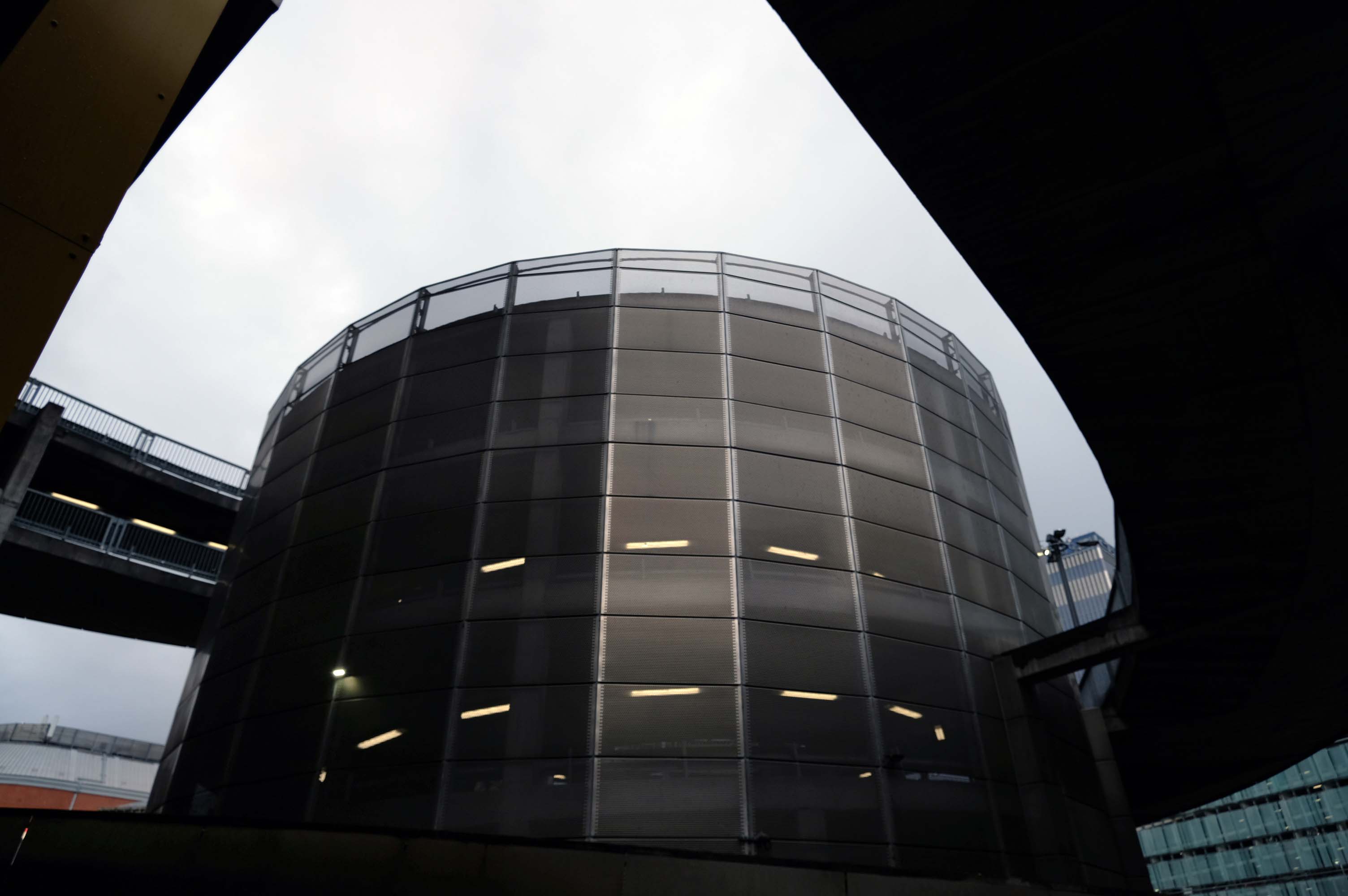
The project realises a strategy for integrating city centre circulation comprising an interchange for public and private transportation. It unifies stands for buses, a tram stop and multi-level parking for cars, to provide a convenient, attractive and safe public concourse. The high-quality contemporary design establishes a new positive identity for a transport interchange that complements the heritage values of the Shudehill conservation area.
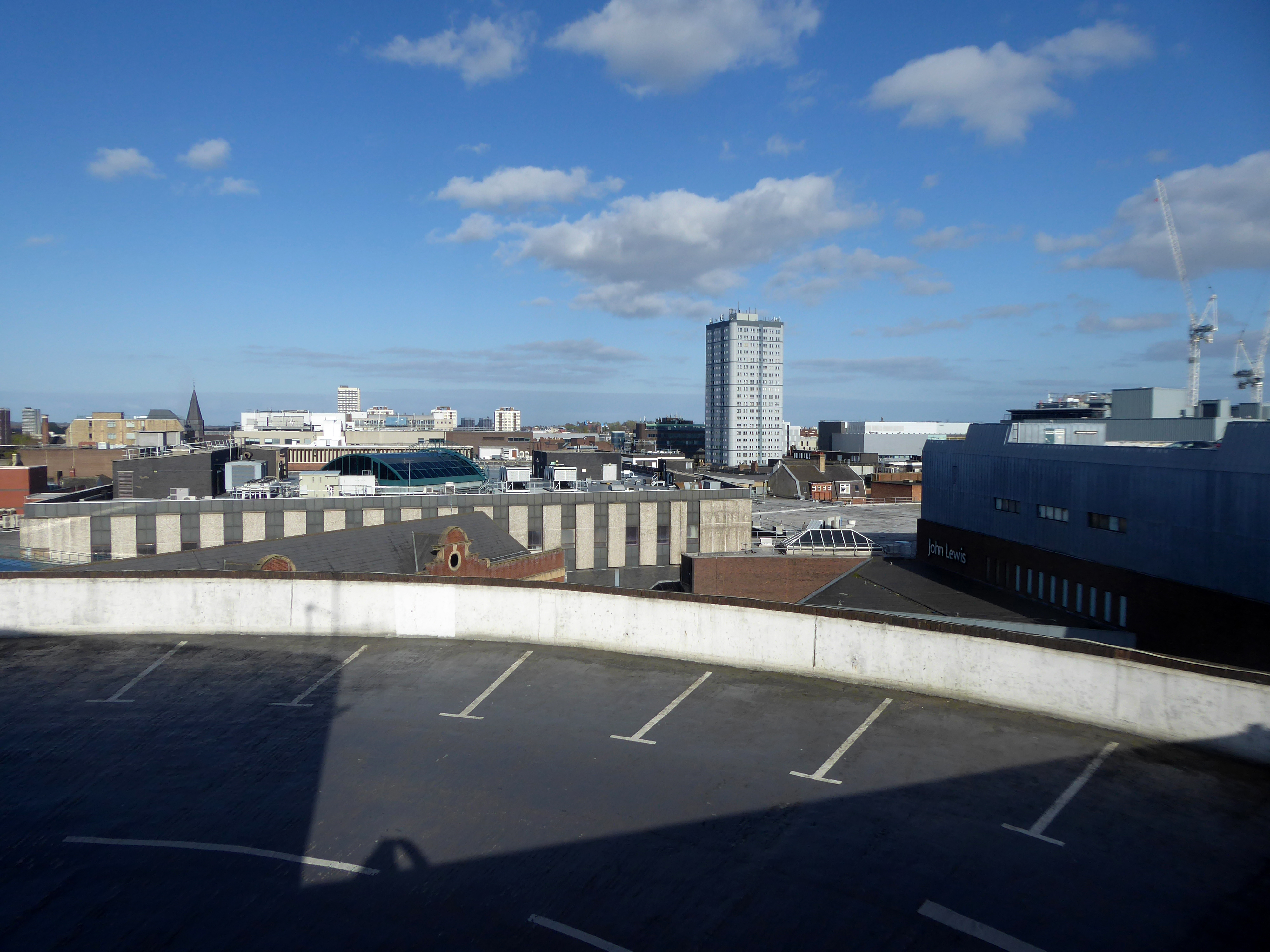
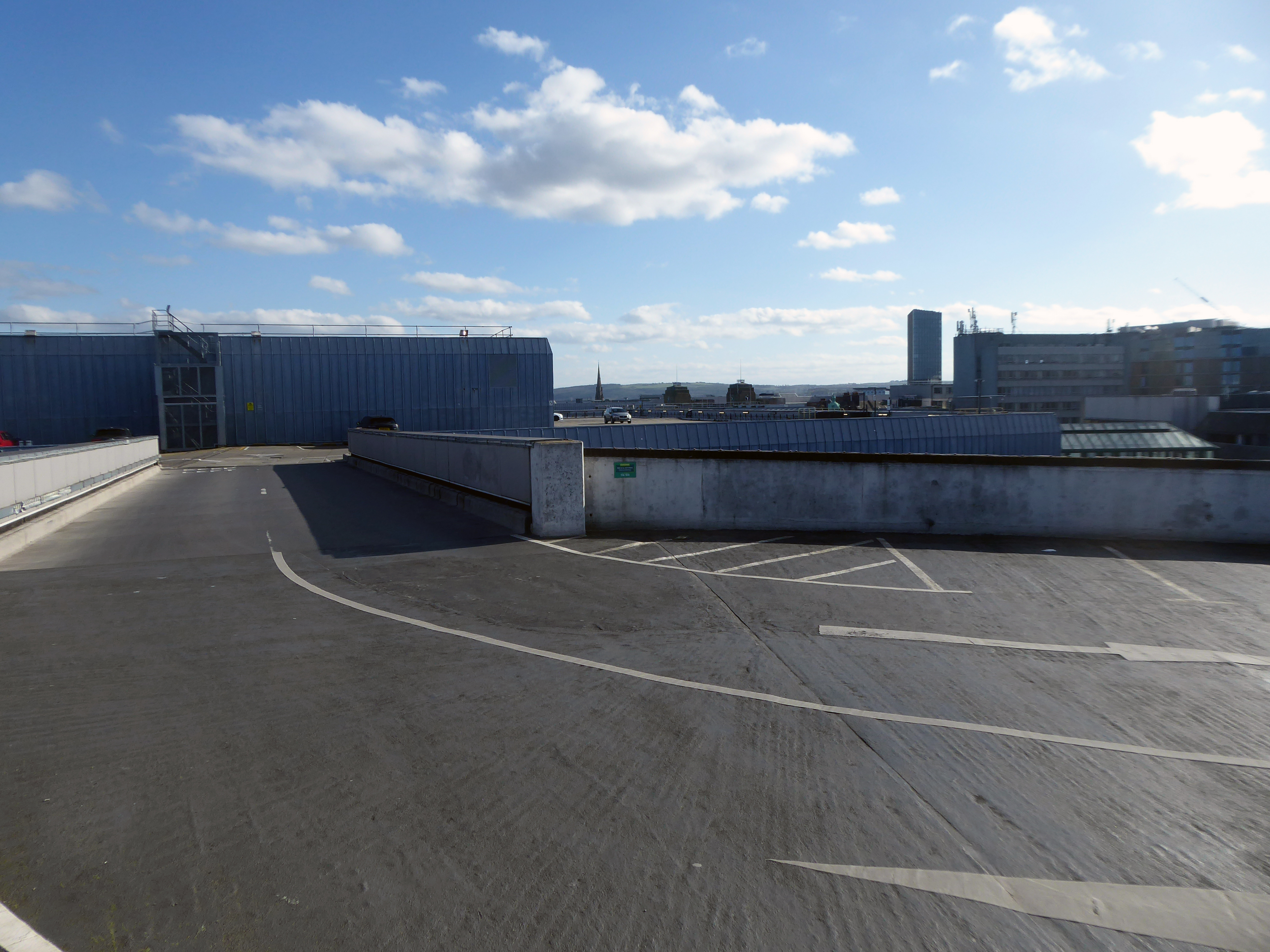
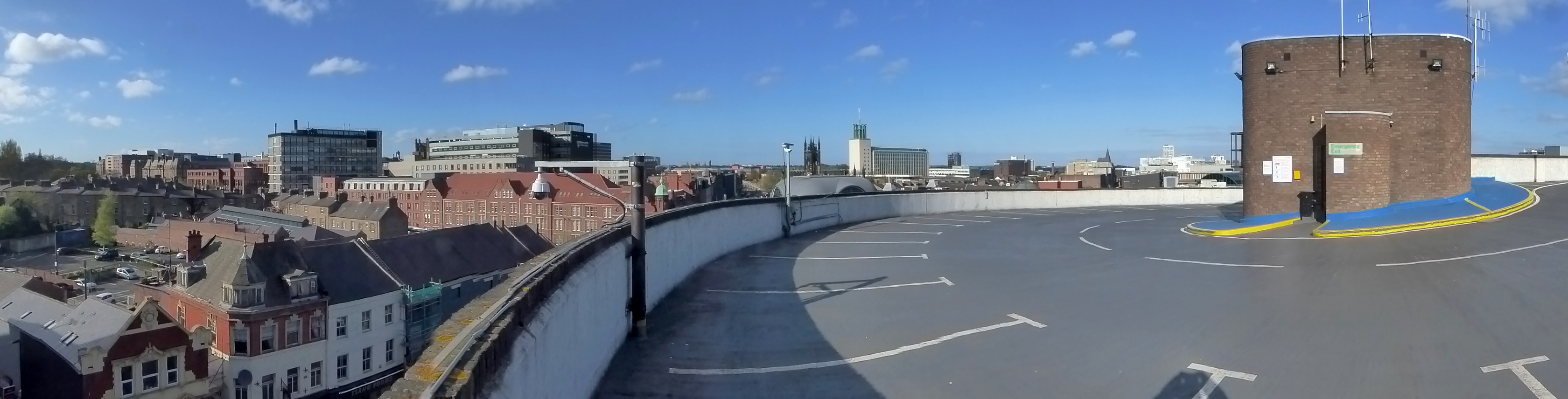
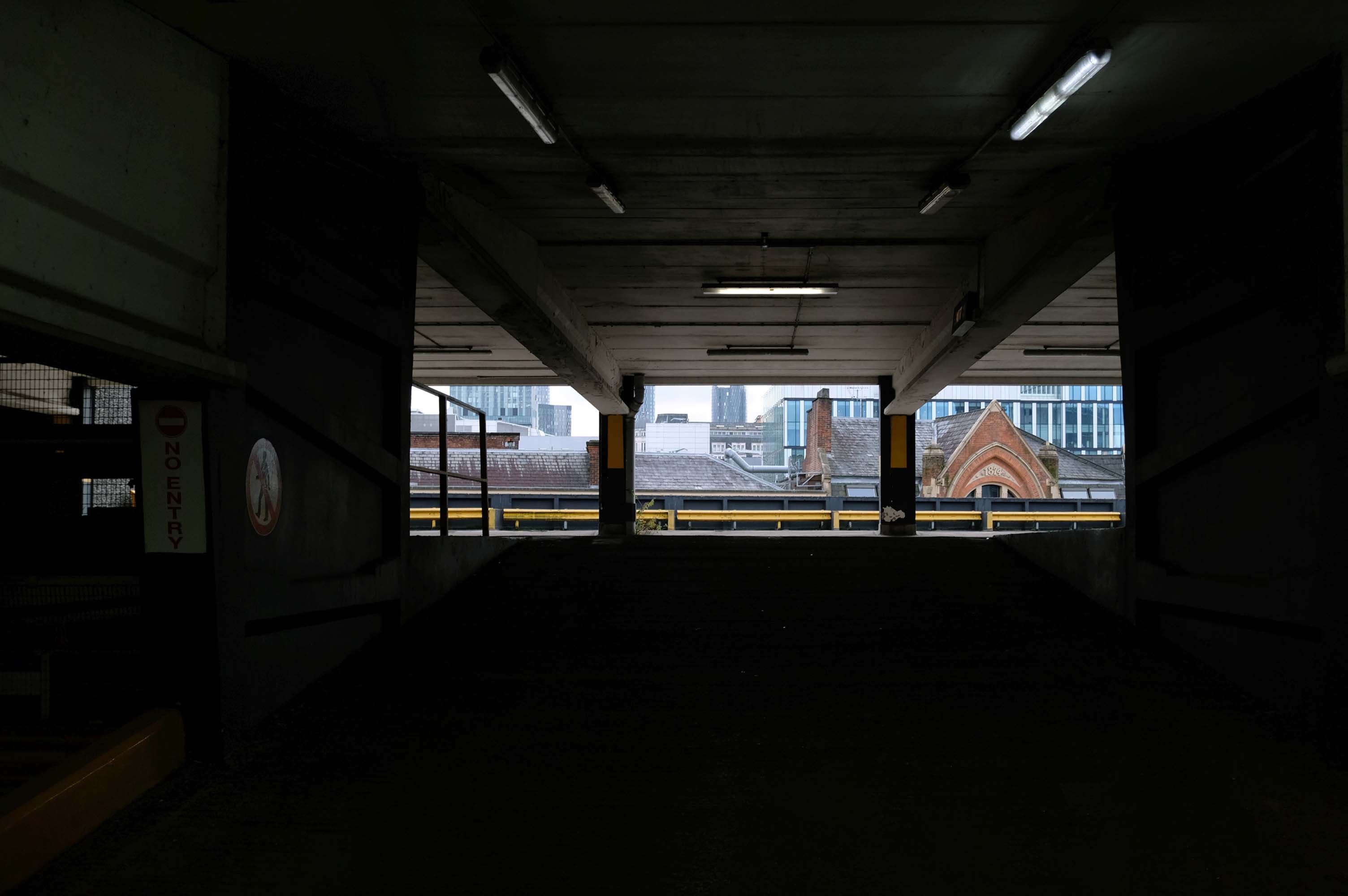
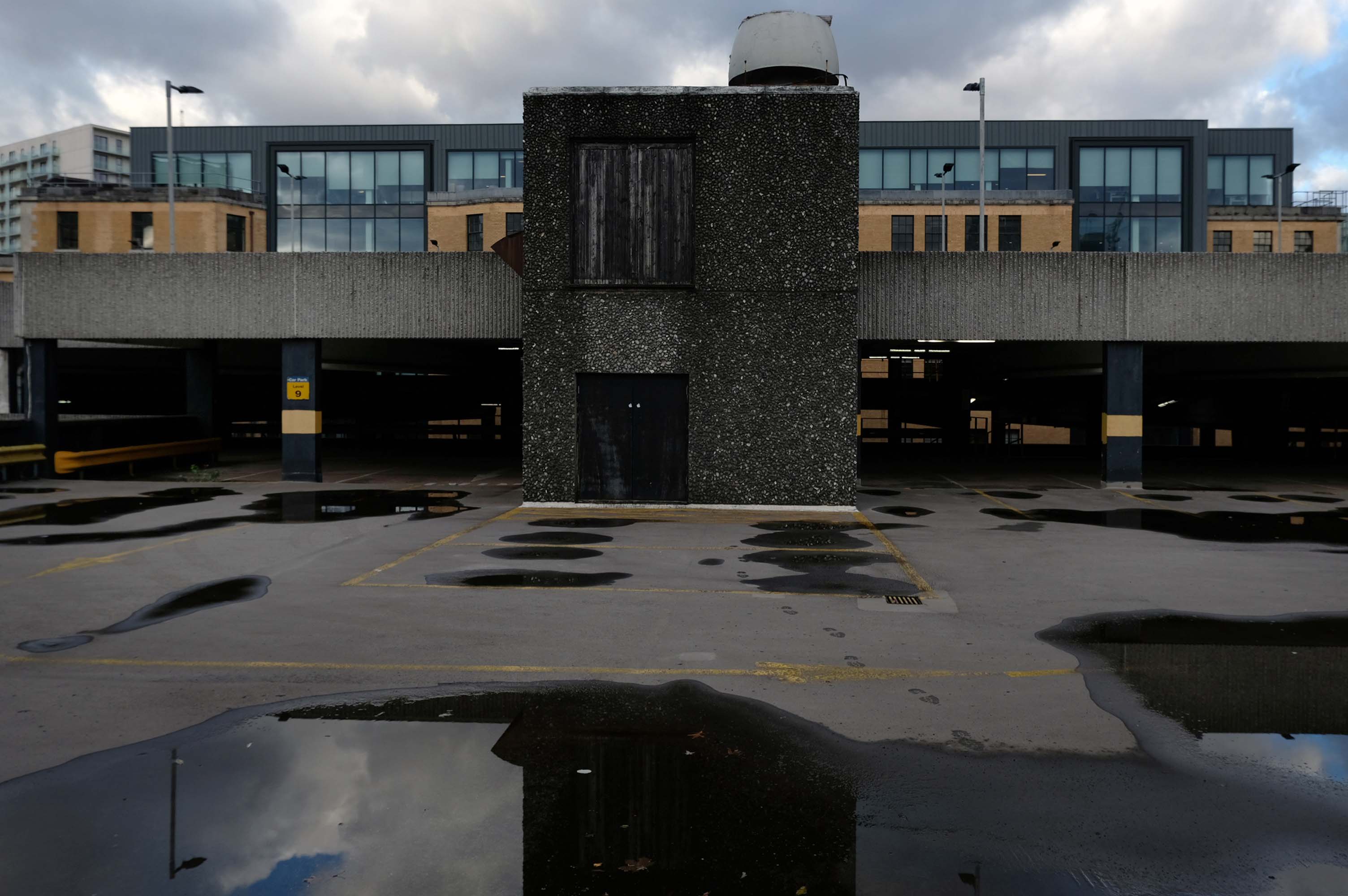
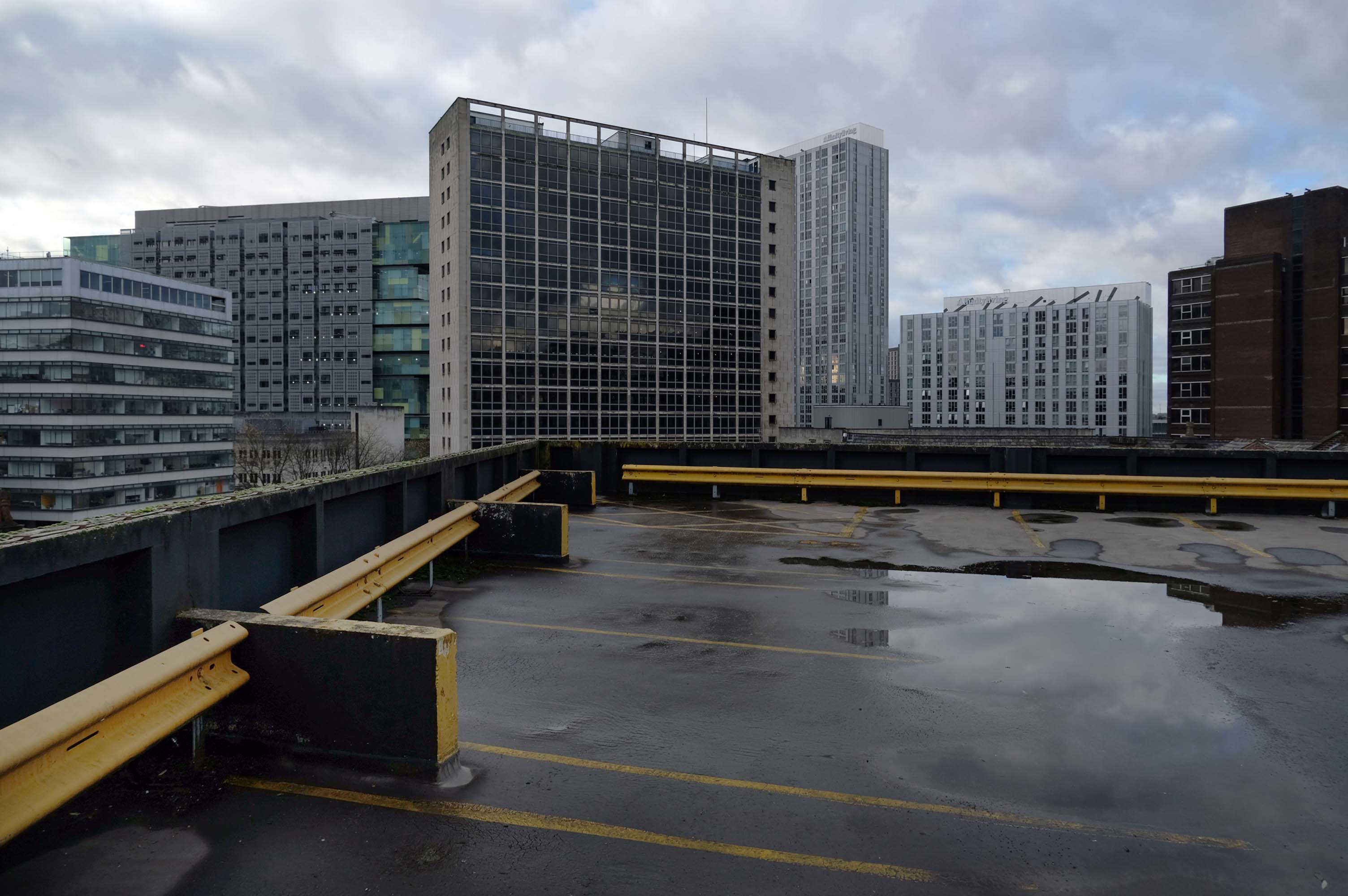
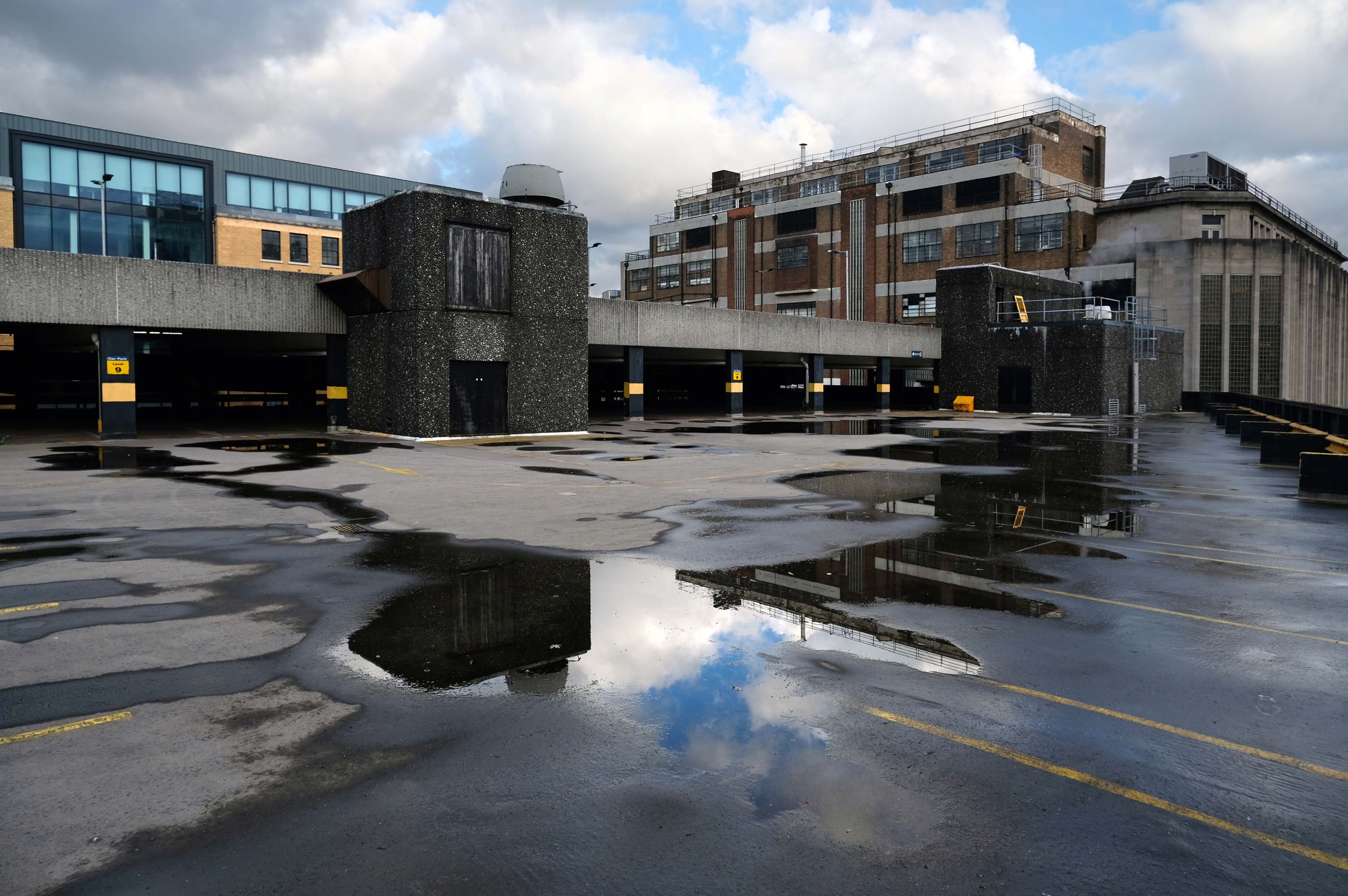
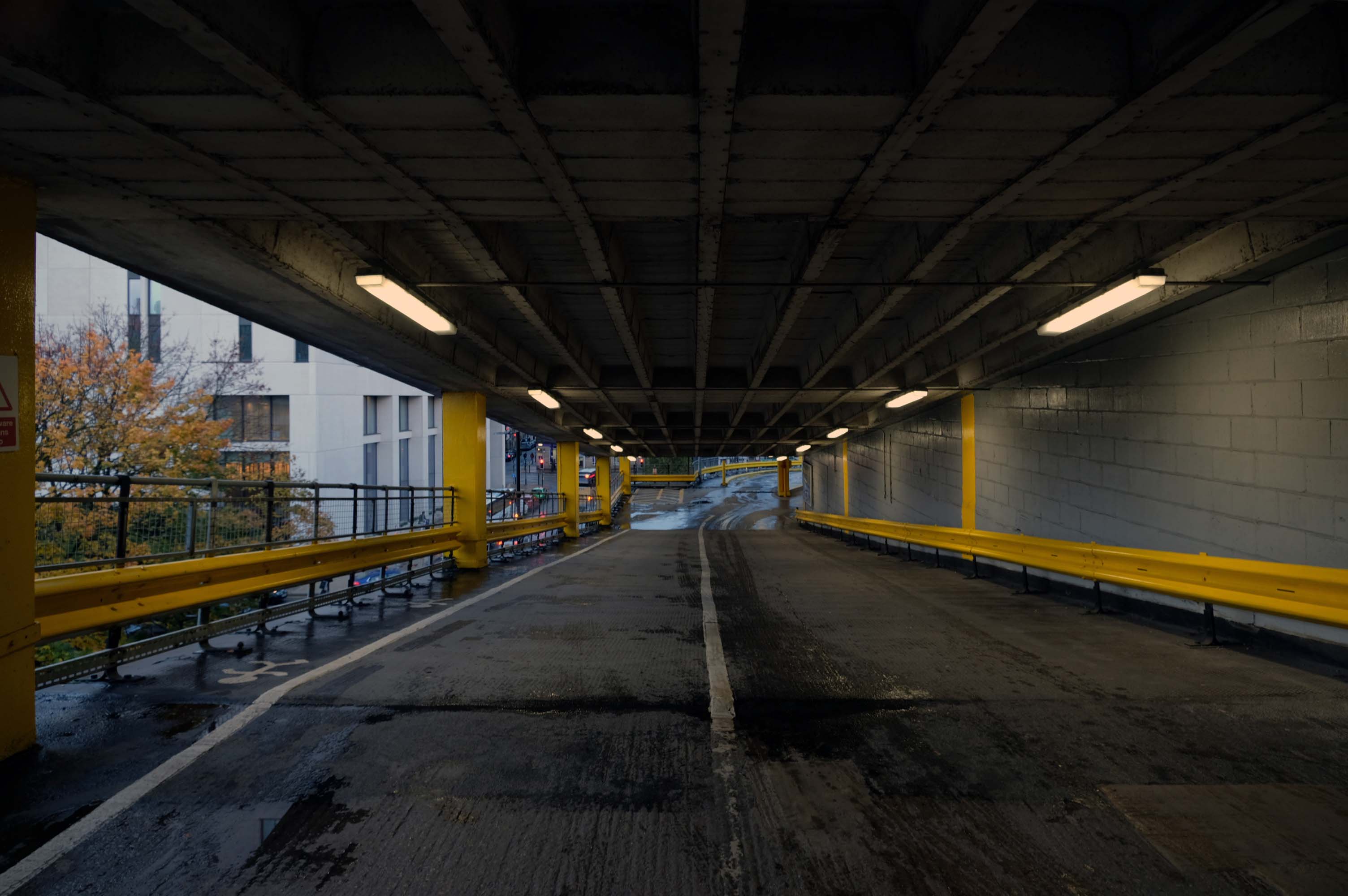
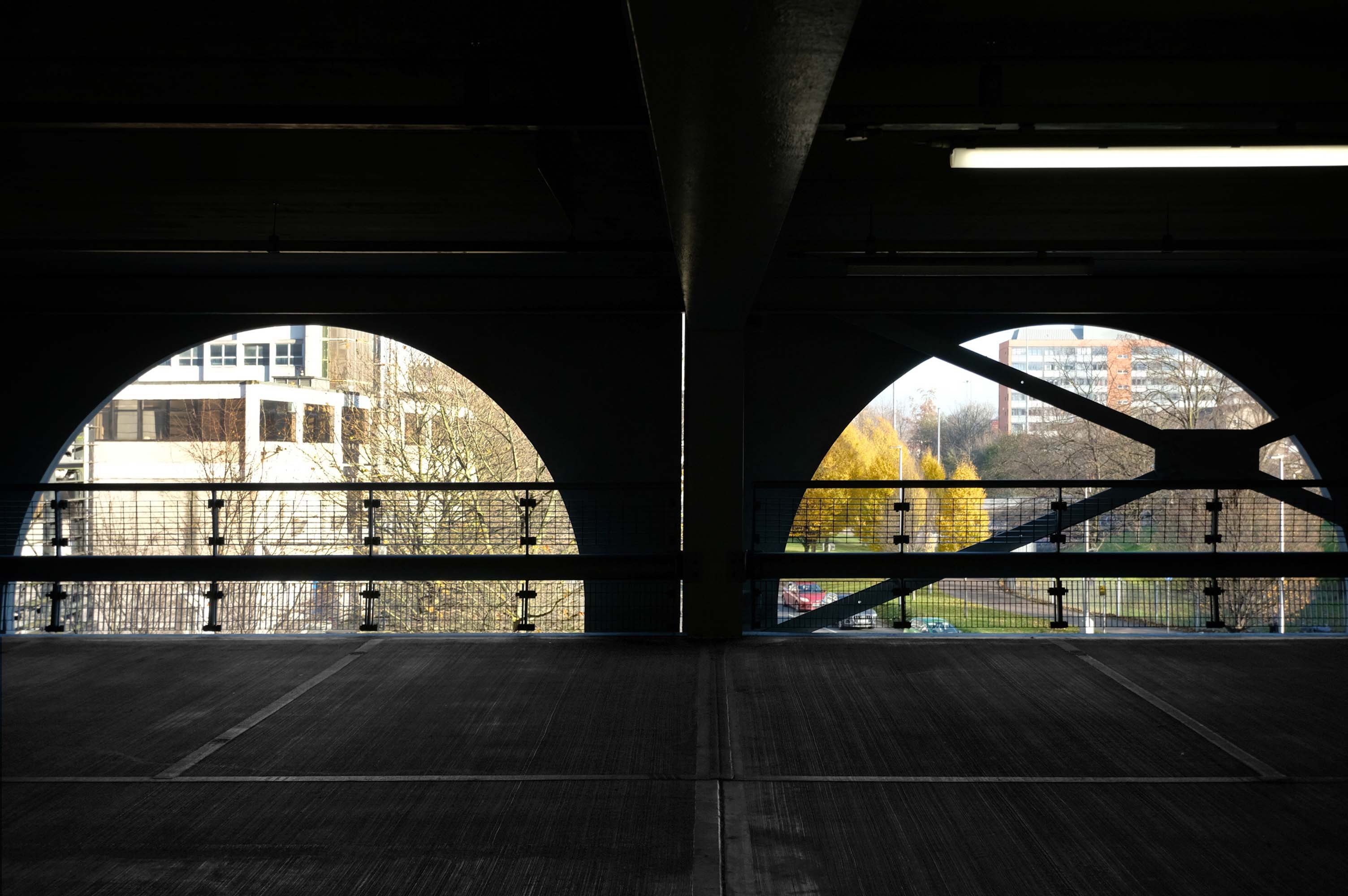
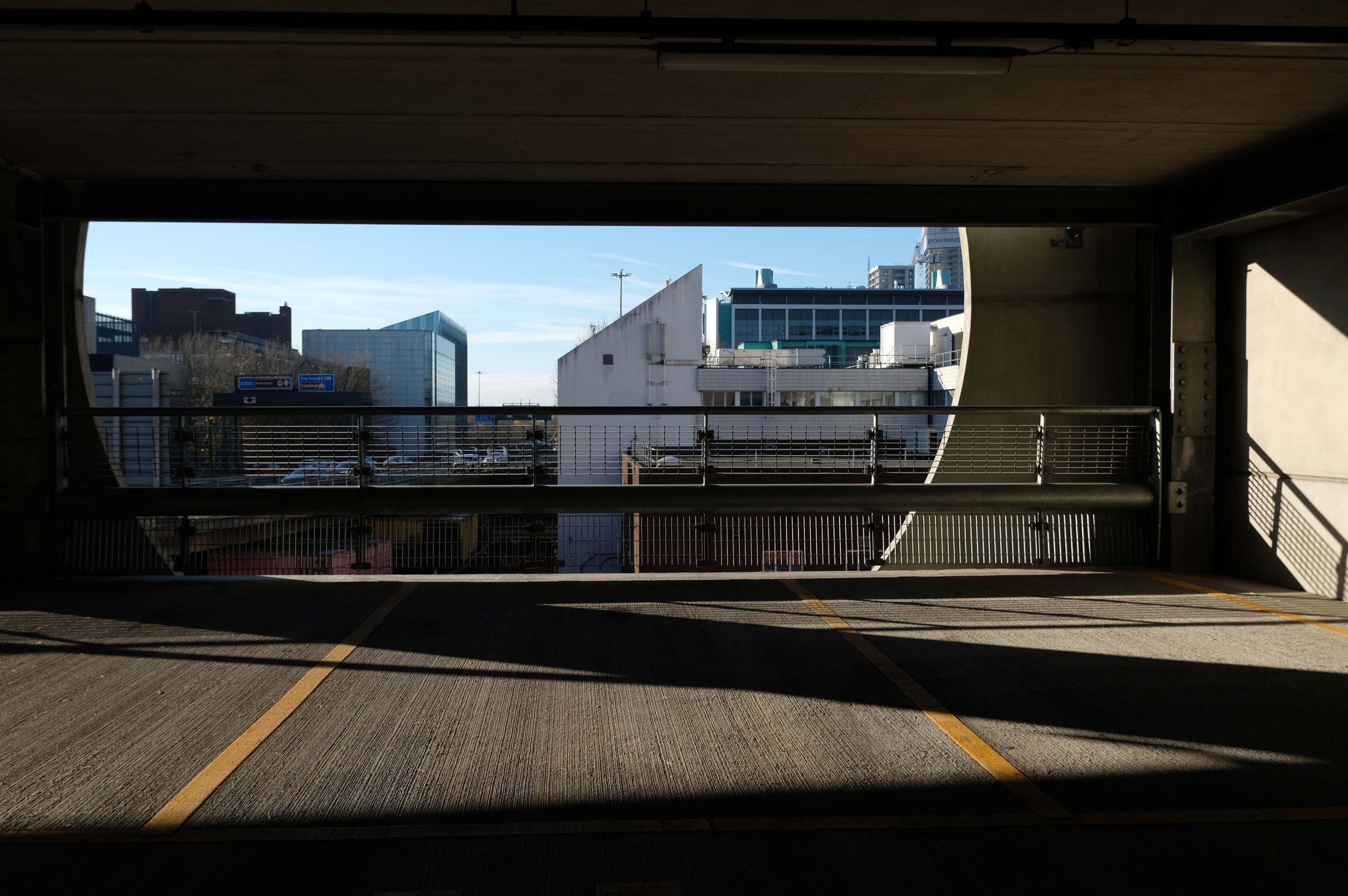
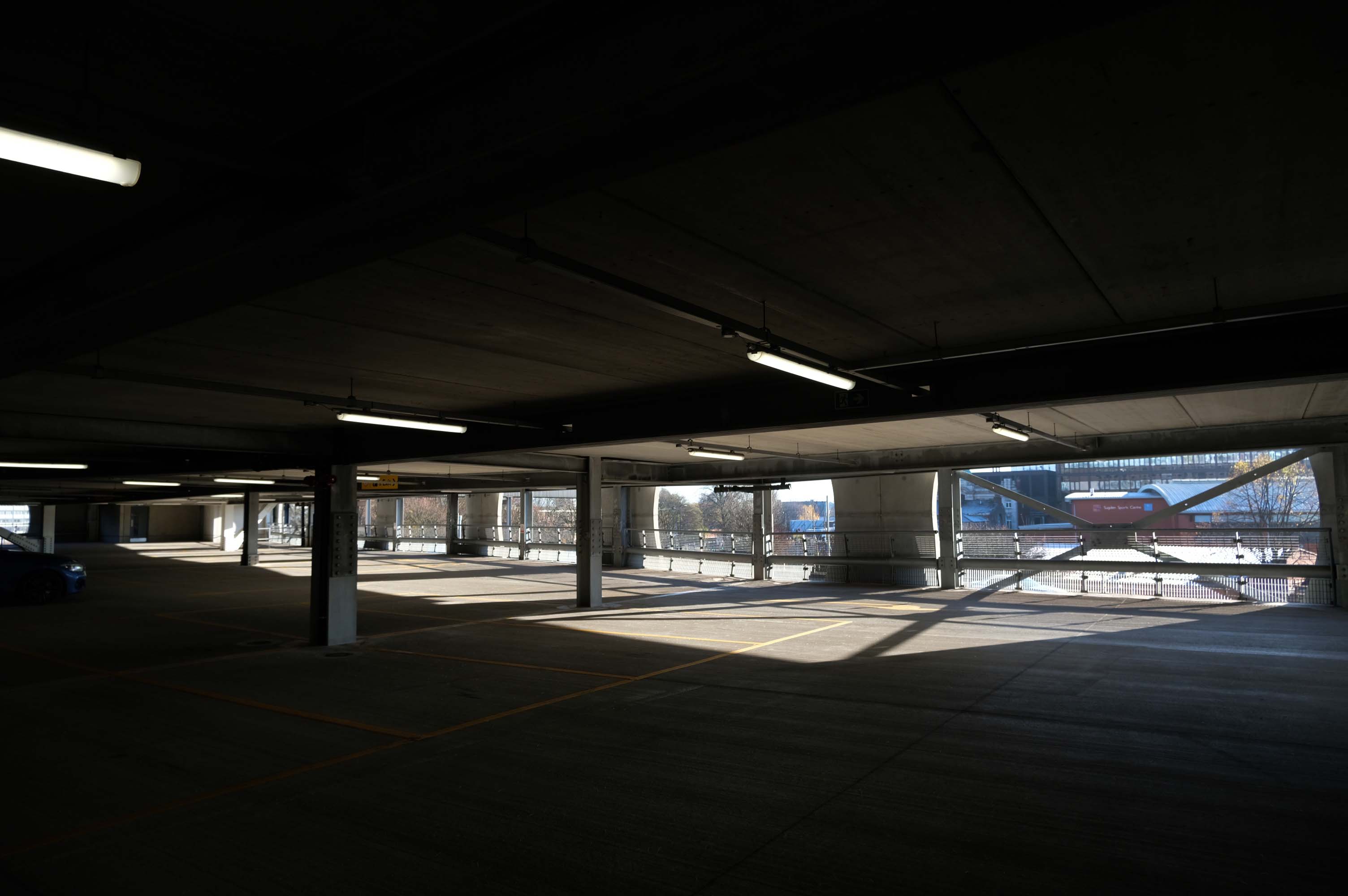
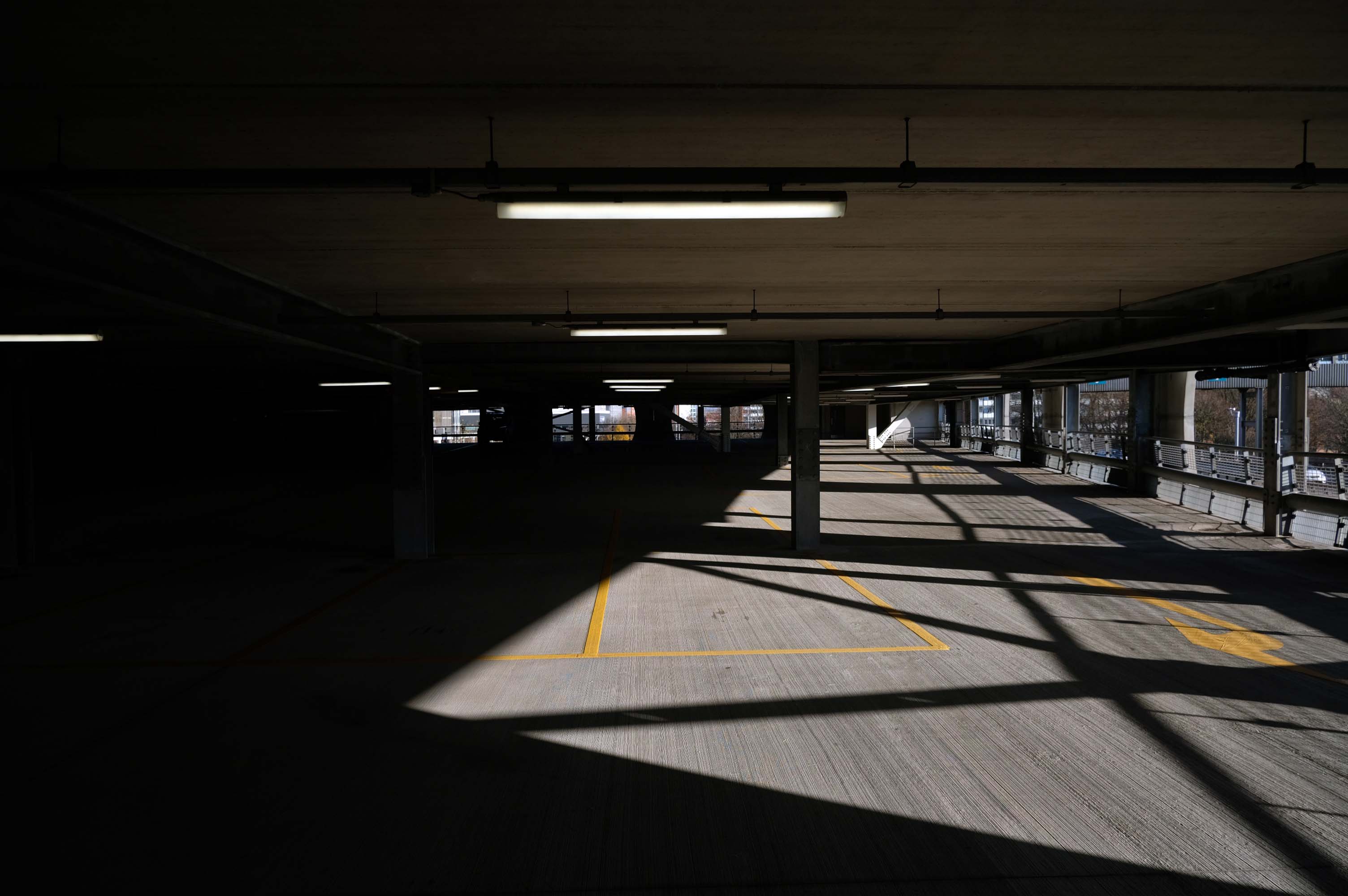
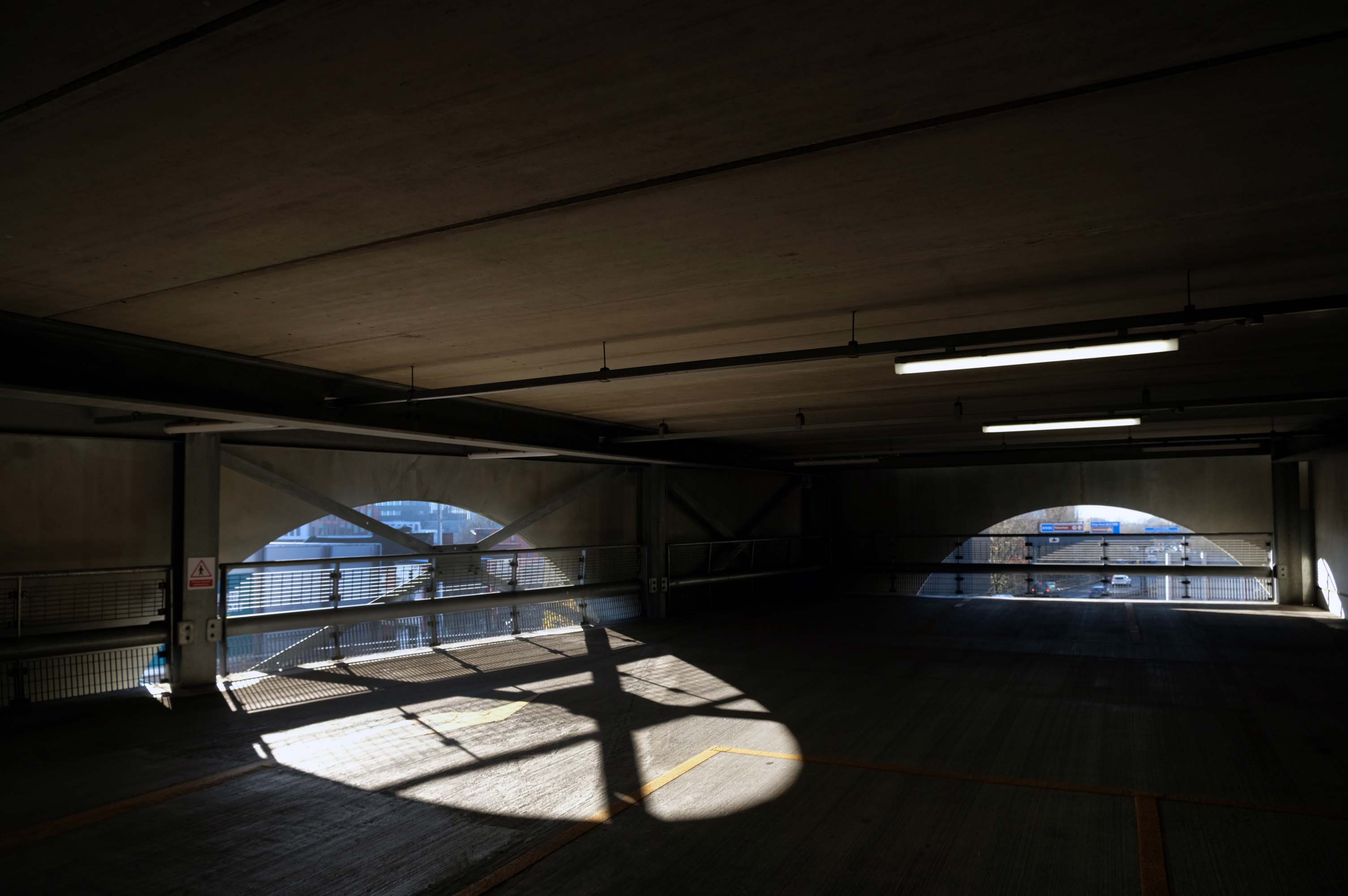
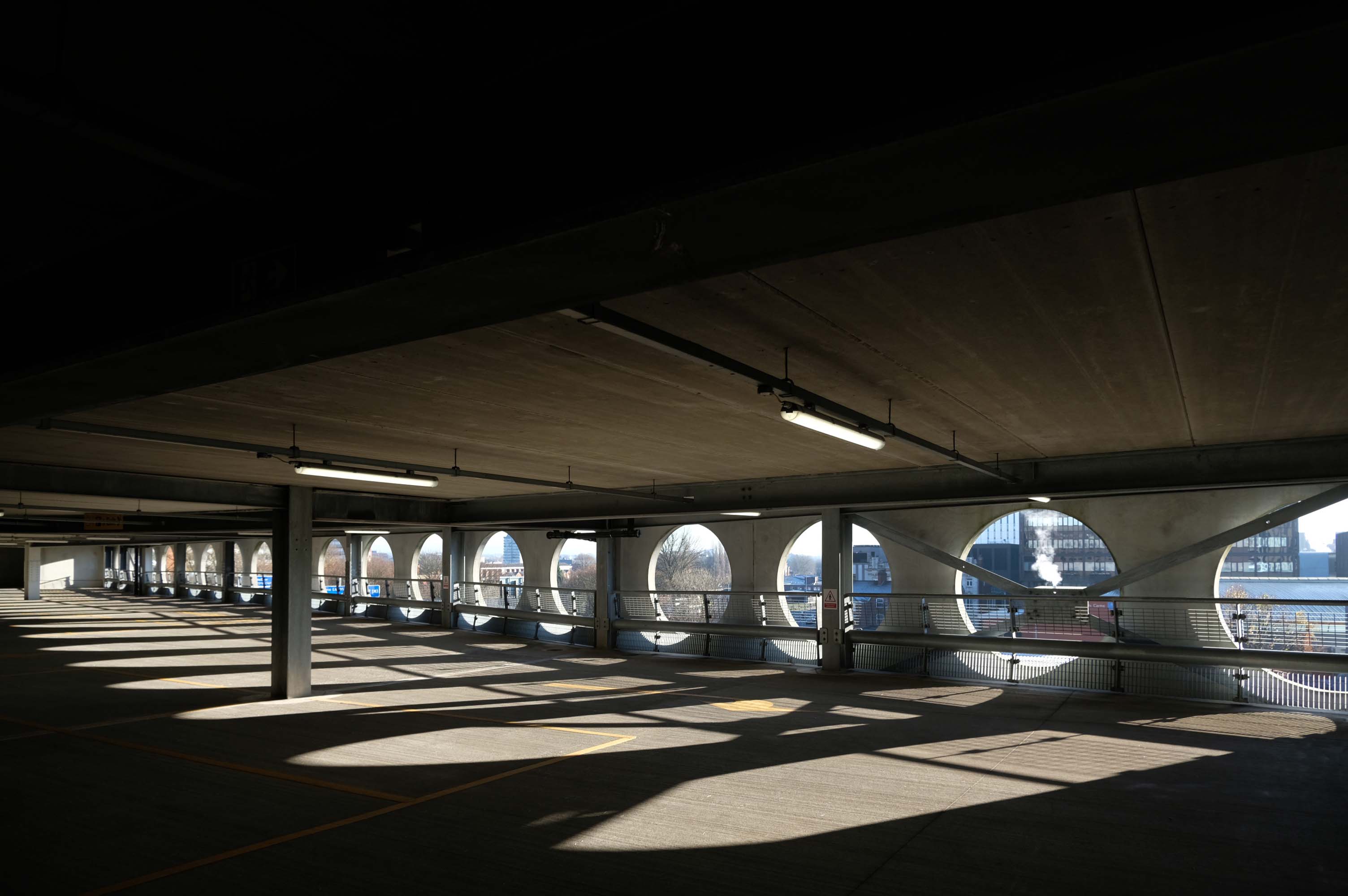
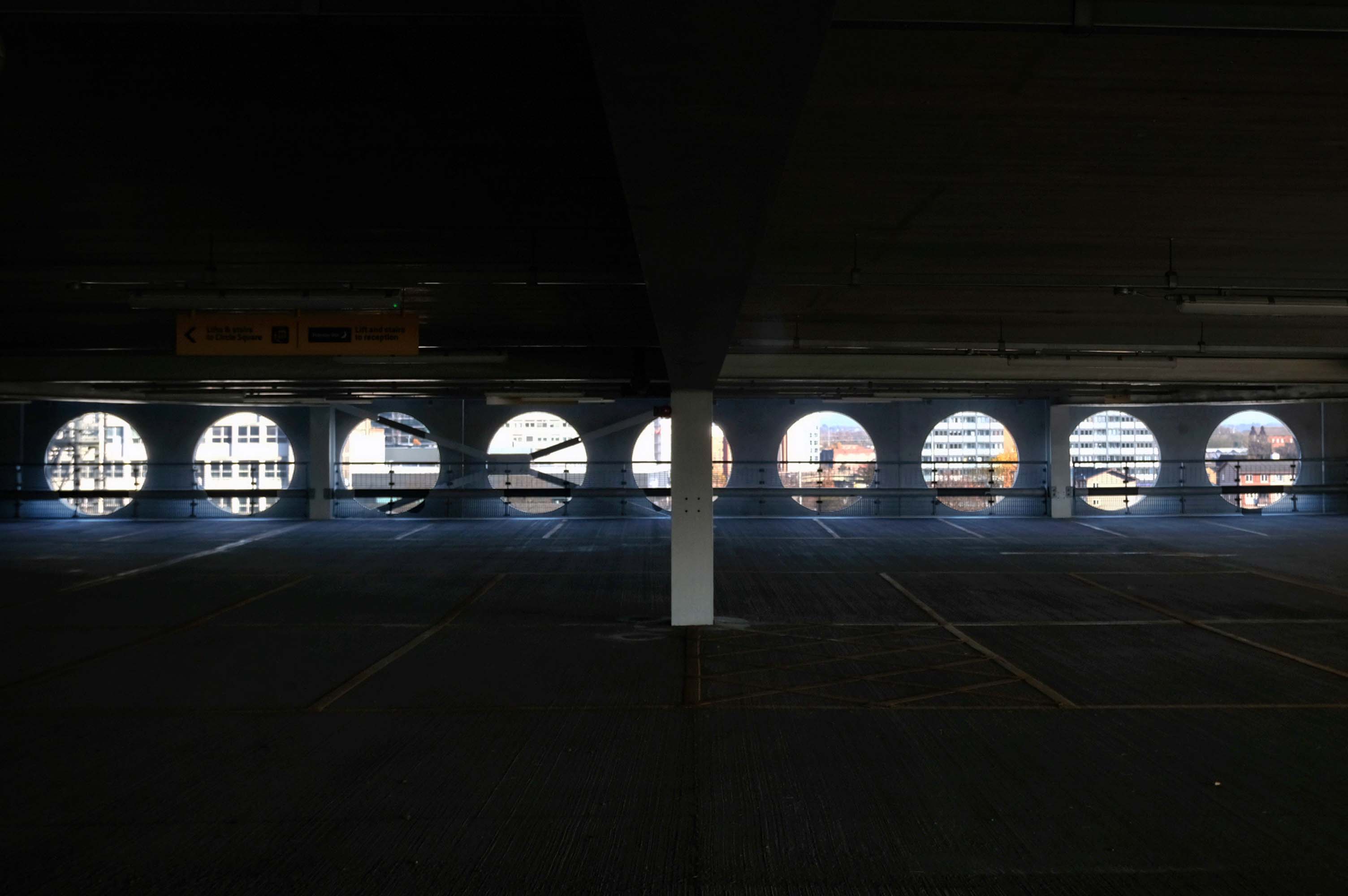
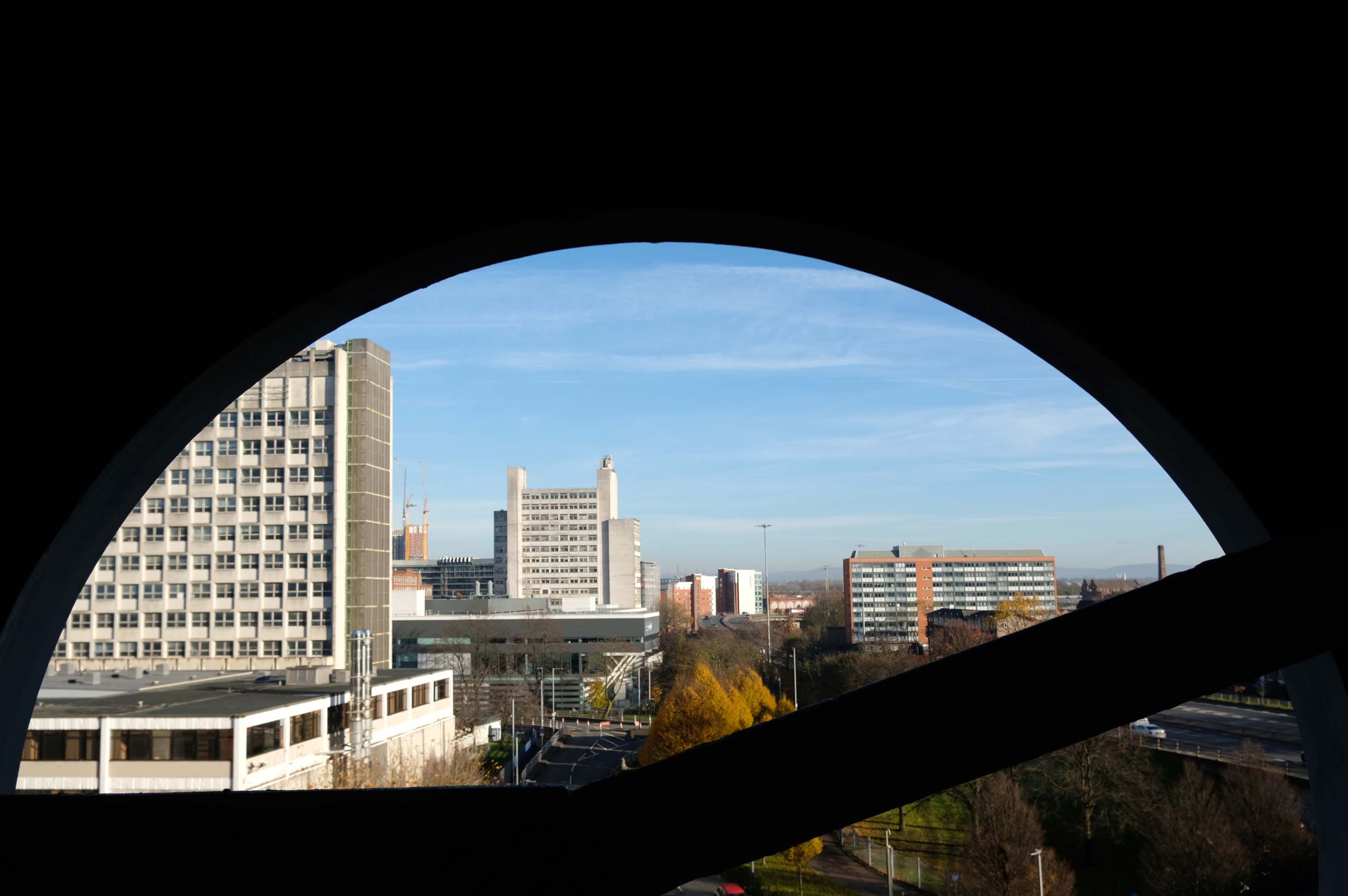
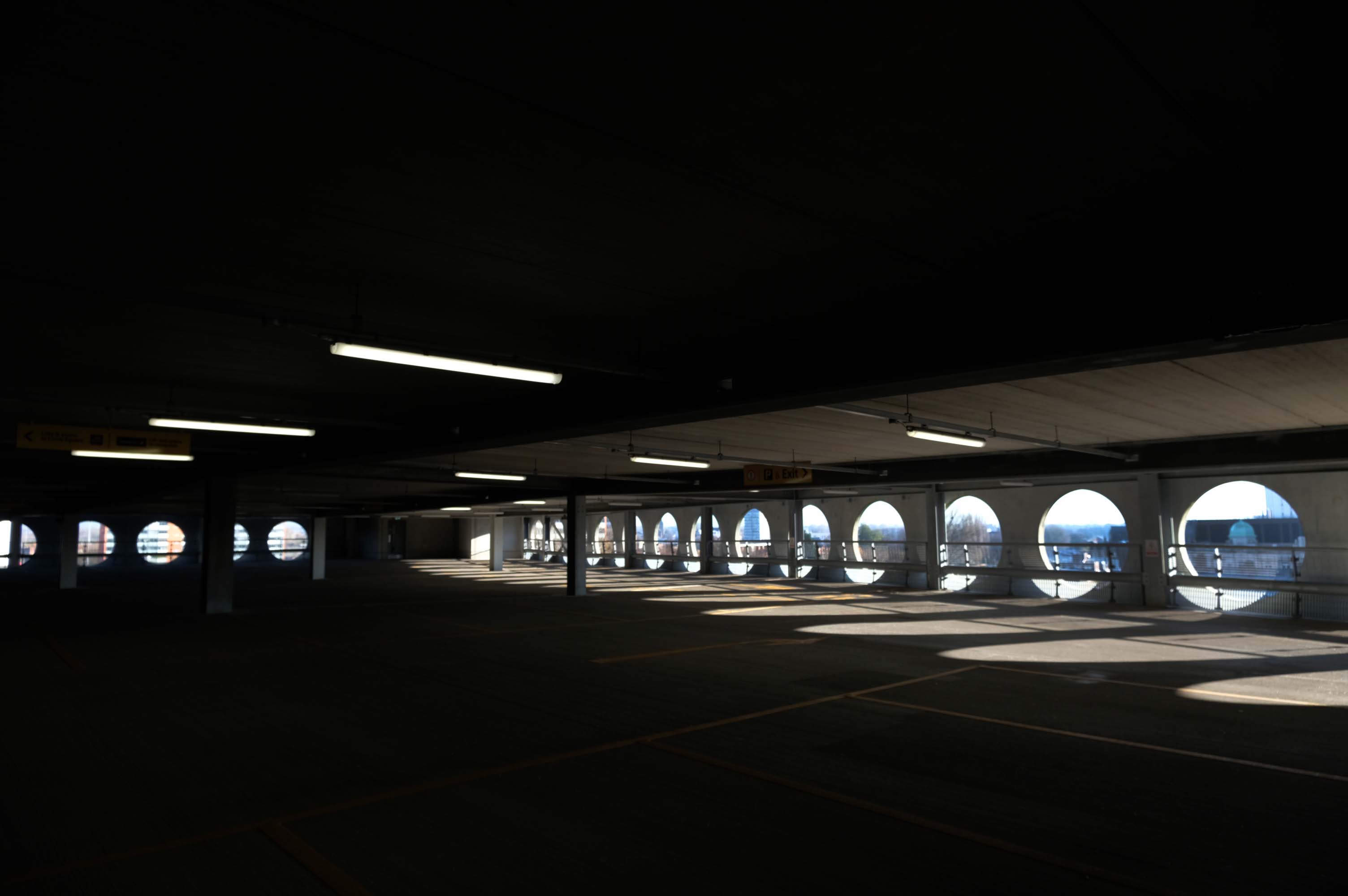
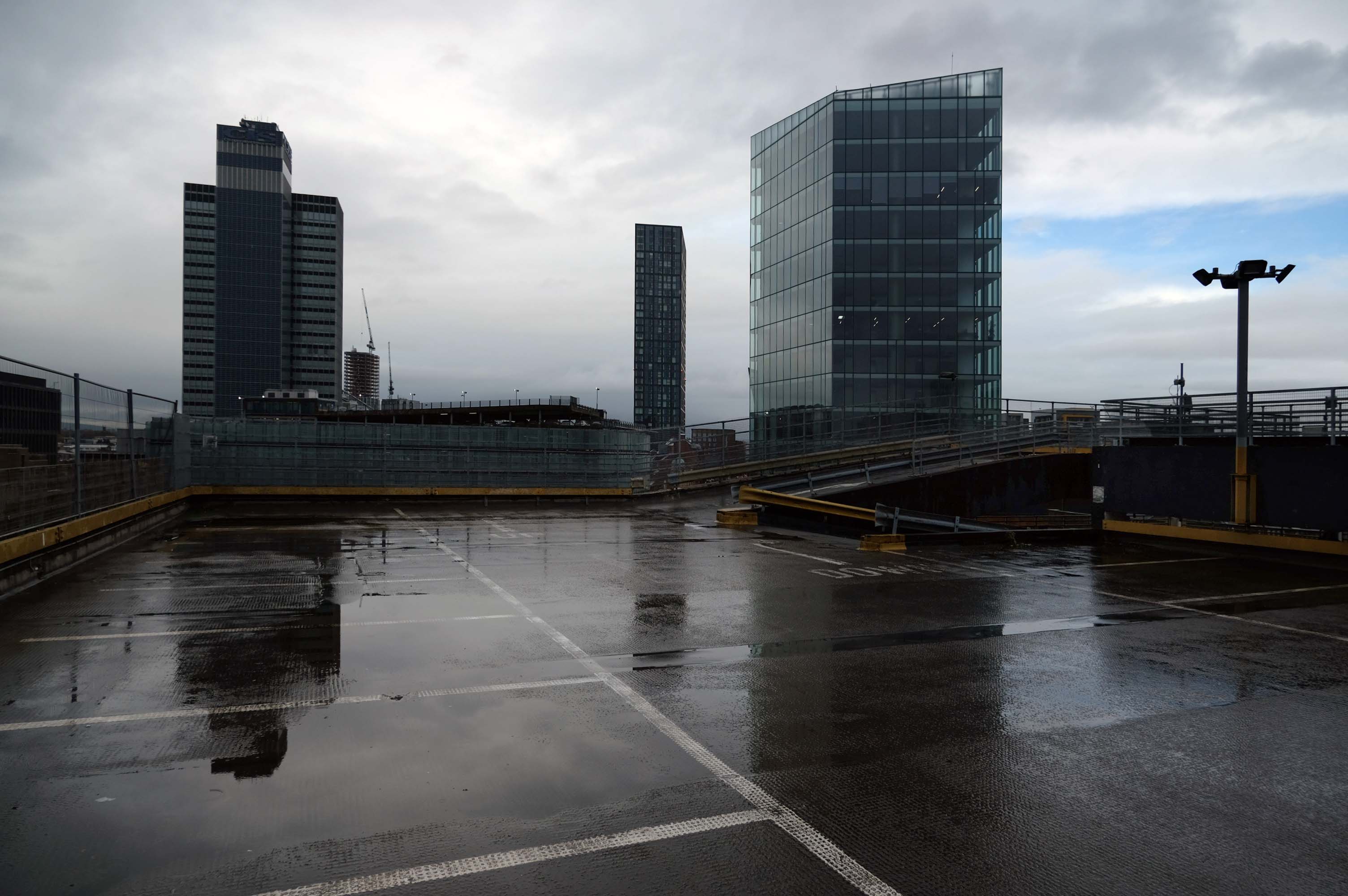
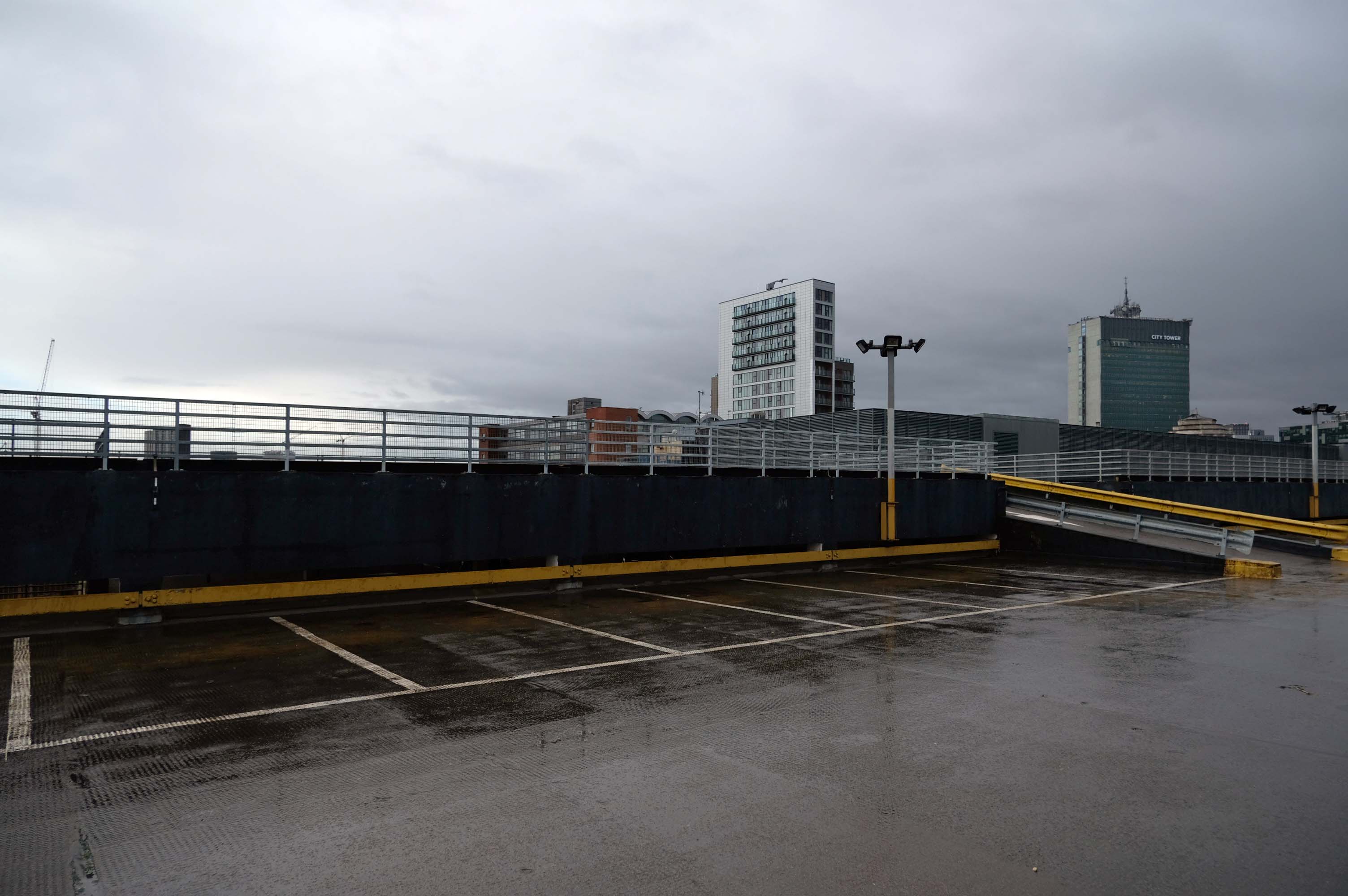
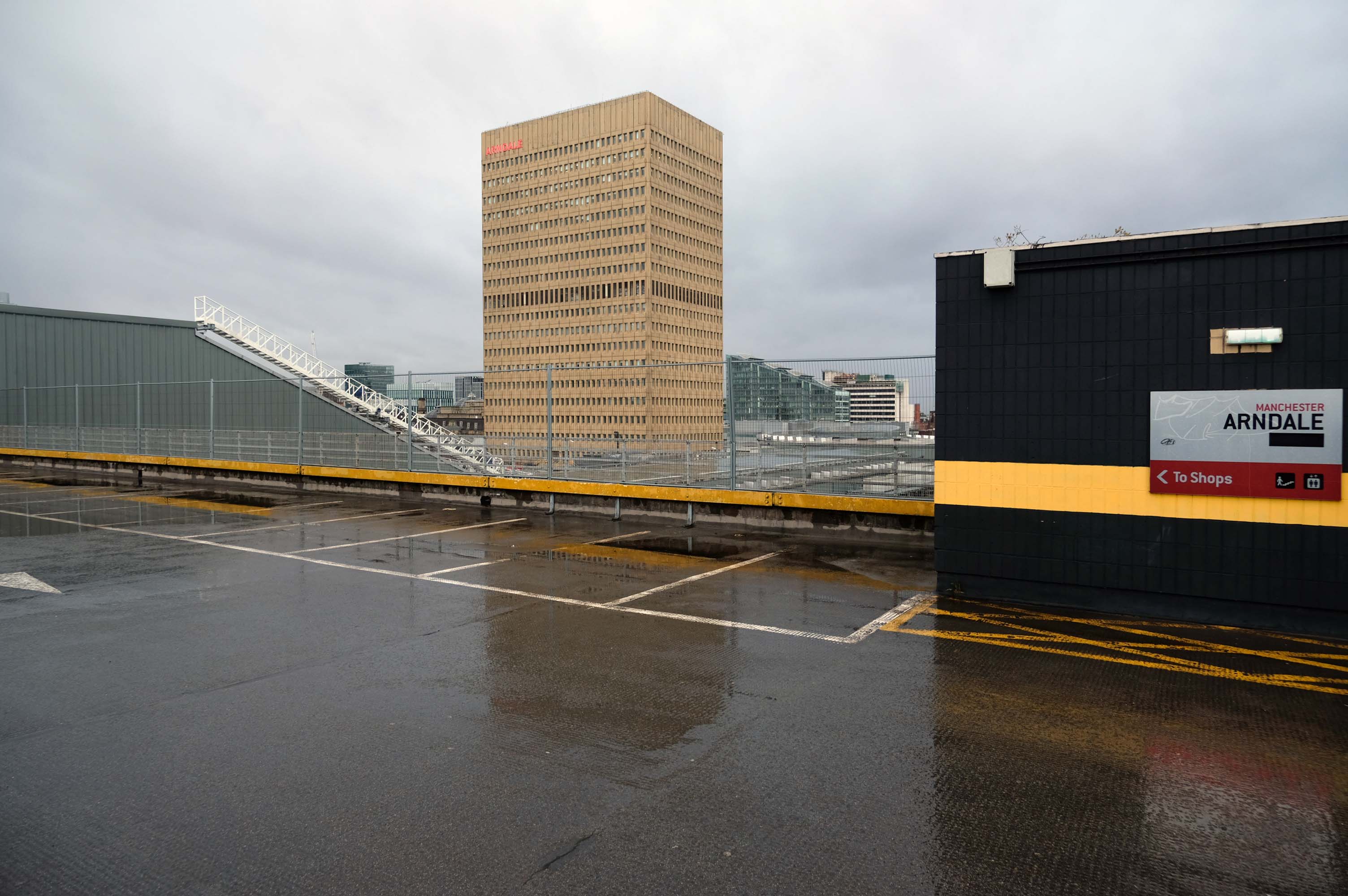
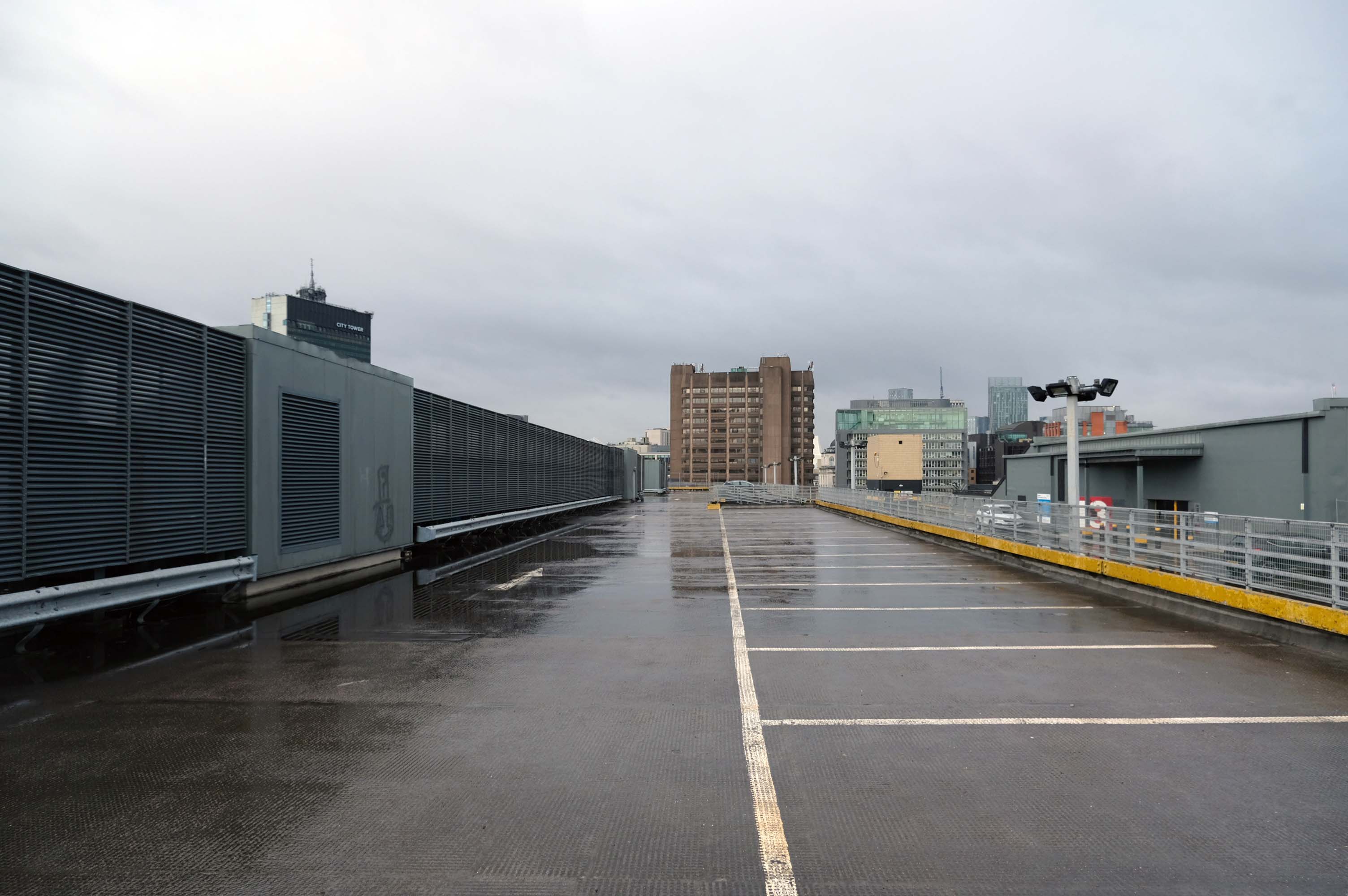
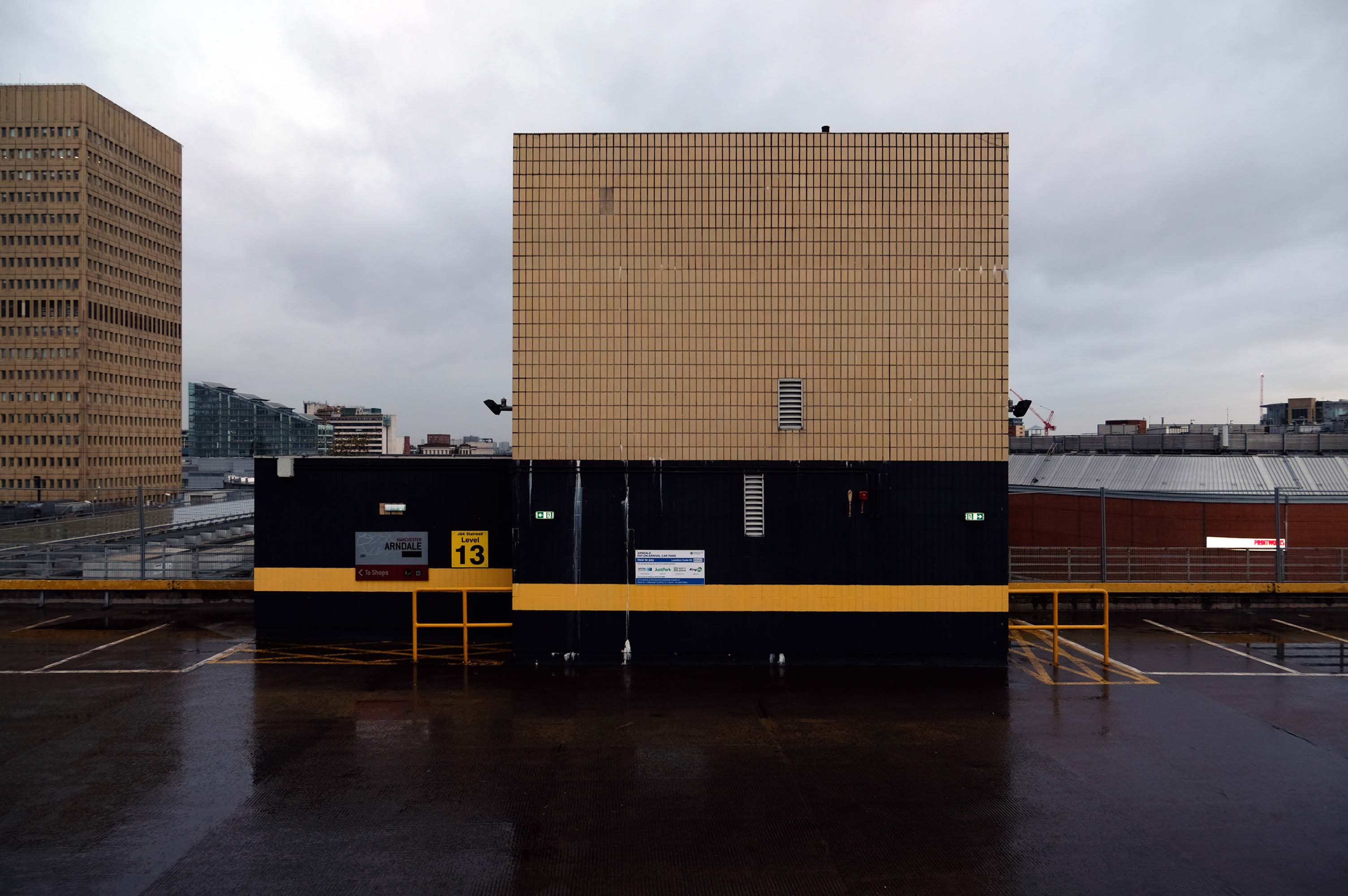
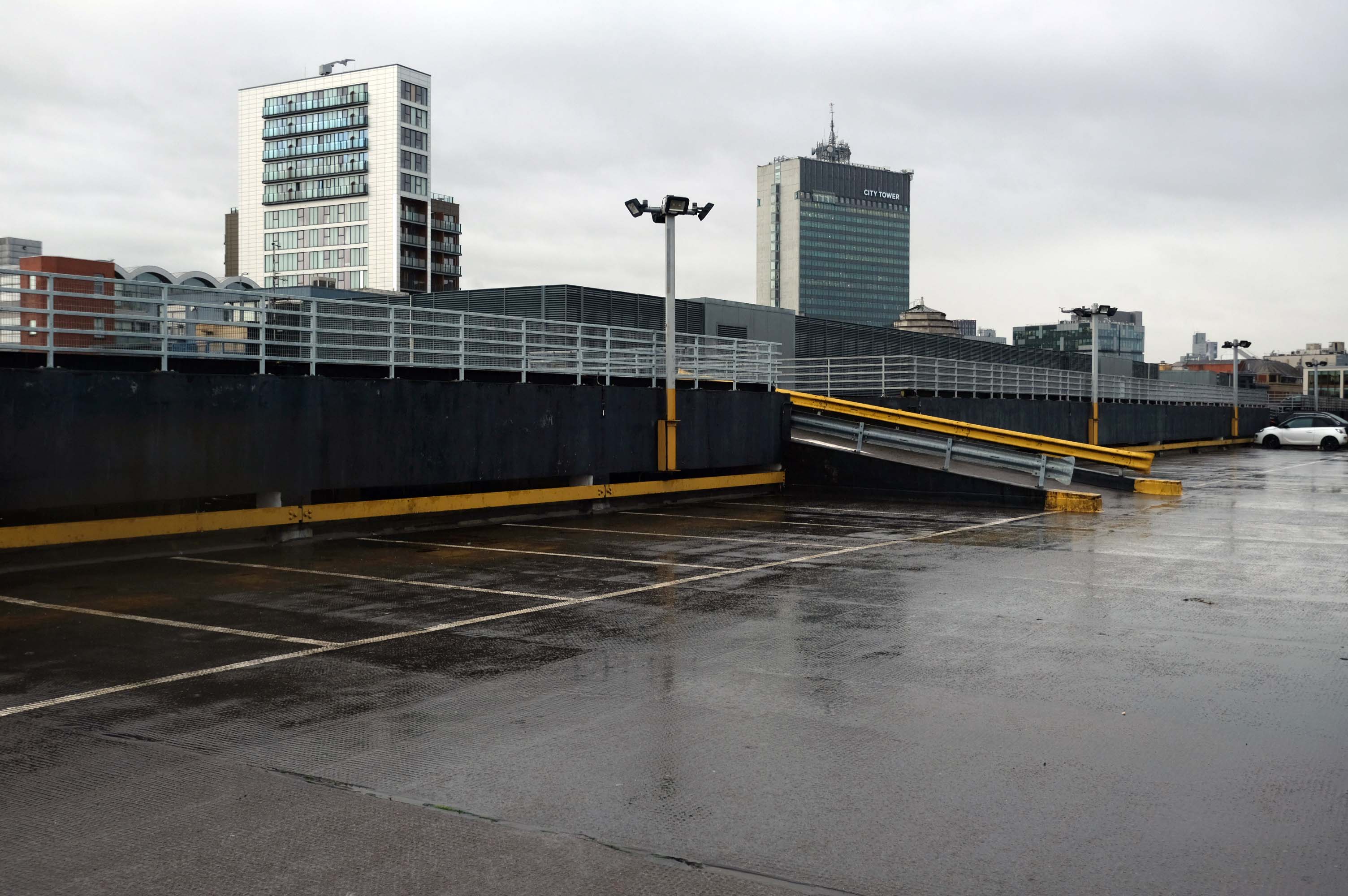
The pedestrian in a car park found it to be accessible and vaguely commodious – affording fine views across the city.
Sadly the decorative mosaic is woefully neglected, careworn and forlorn.
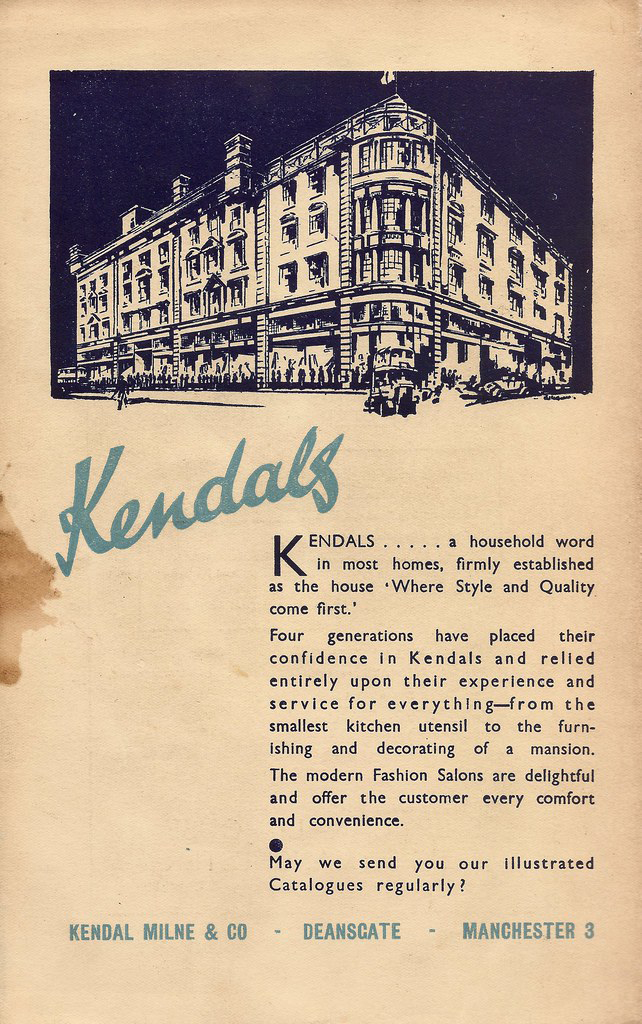
Kendals is of course long gone – absorbed by House of Fraser.
The store had previously been known during its operation as Kendal Milne, Kendal Milne & Co, Kendal Milne & Faulkner, Harrods or Watts.
The store was designed by Harrods’ in-house architect Louis David Blanc, with input from a local architect JohnS Beaumont, in 1938 and completed in 1939 – it is a Grade II listed building.
Great location but narrow roadway between floors. Pay in advance so you need to know how long you’re staying for.
£20.40 for four hours is expensive but you are minutes from Deansgate shops.
Only given one star because there wasn’t an option for zero.
Not secure, car broken into theft of personal effects, pedestrian gate was un locked, no CCTV that I could see anywhere. Cost me over £25 to park for six hrs and lost over £200 of personal effects, complained to council, no response. Wouldn’t park here ever again.
Get there whilst ye may.
The pedestrian in a car park presses on!
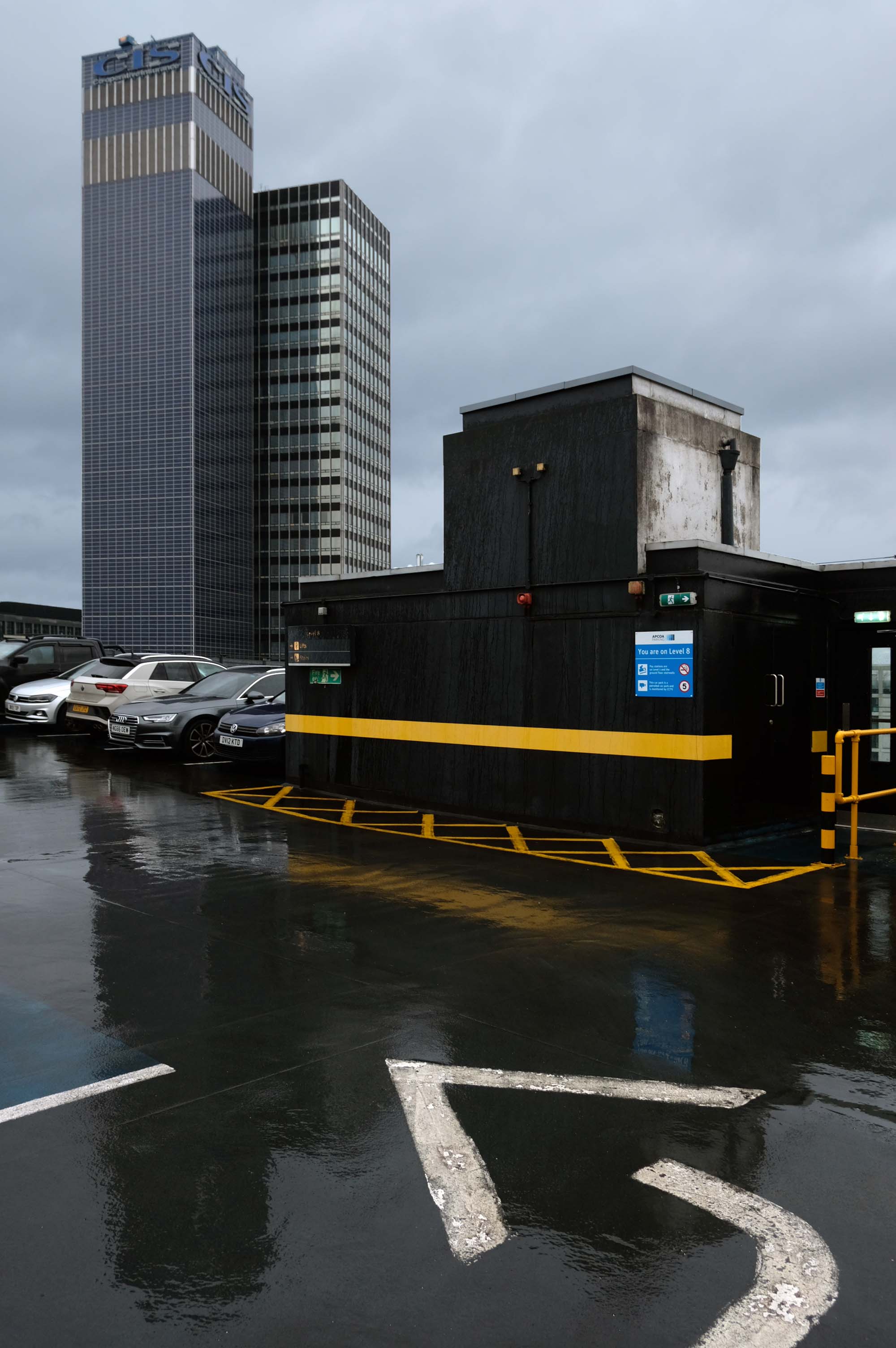
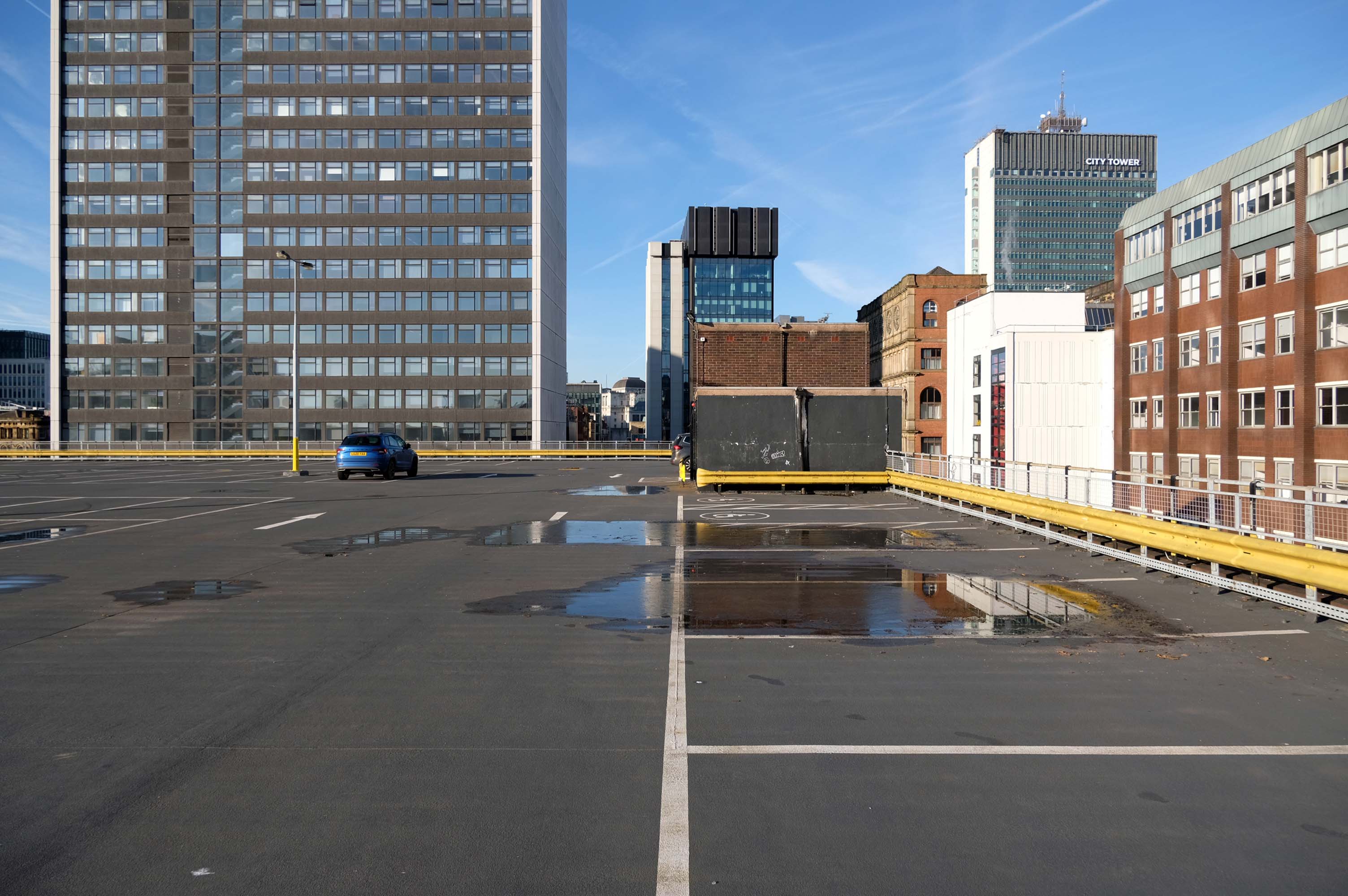
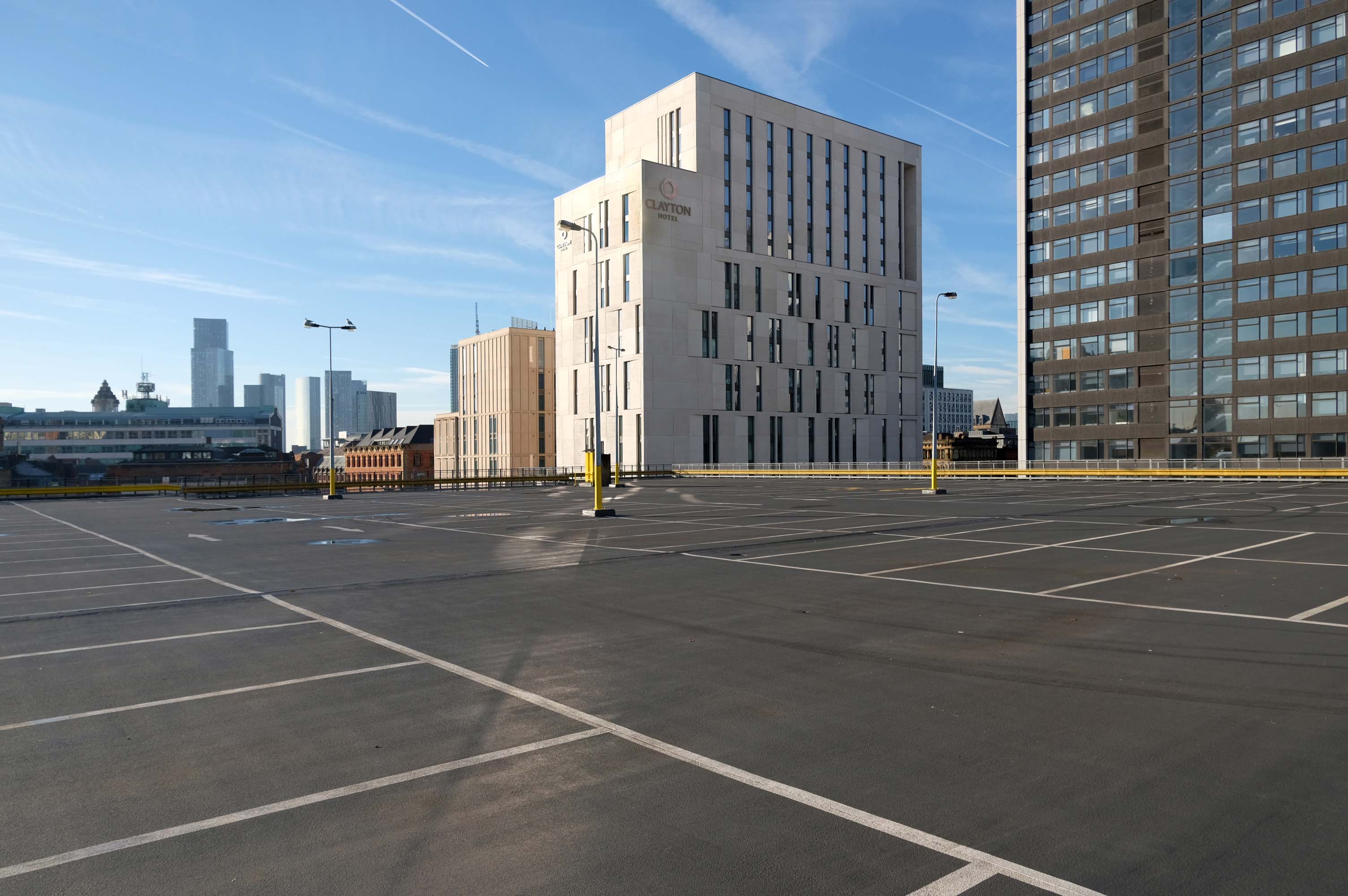
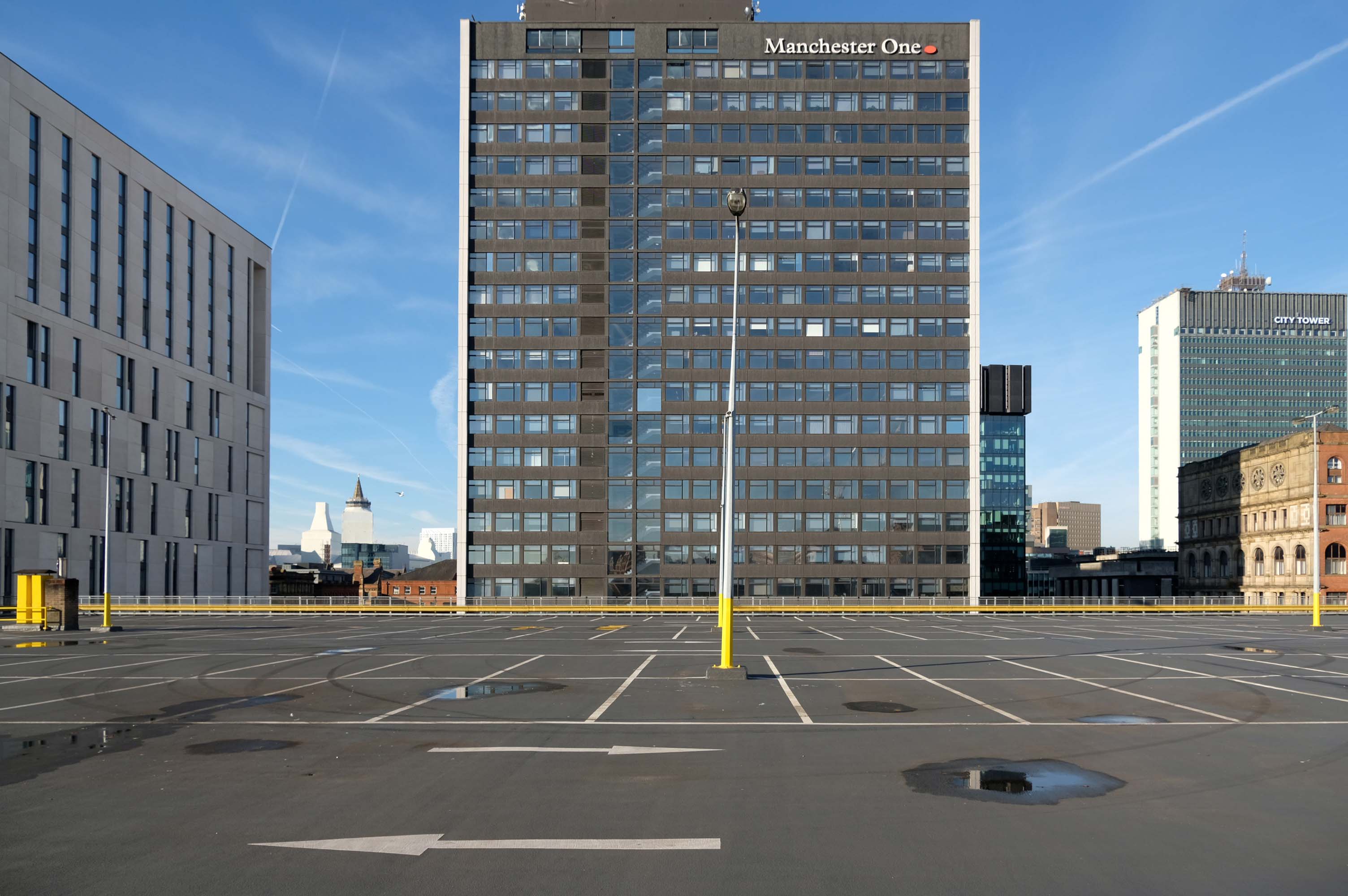
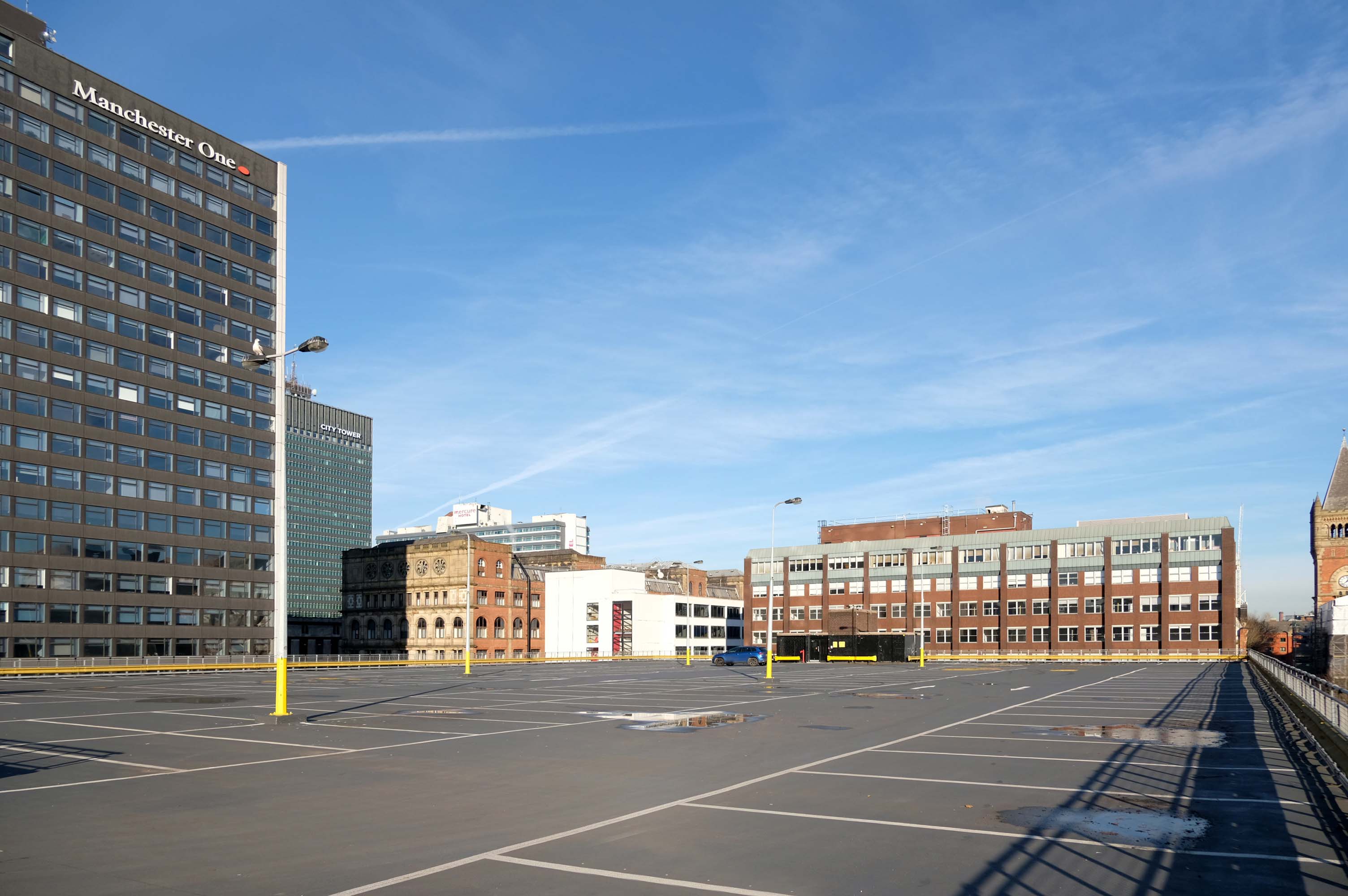
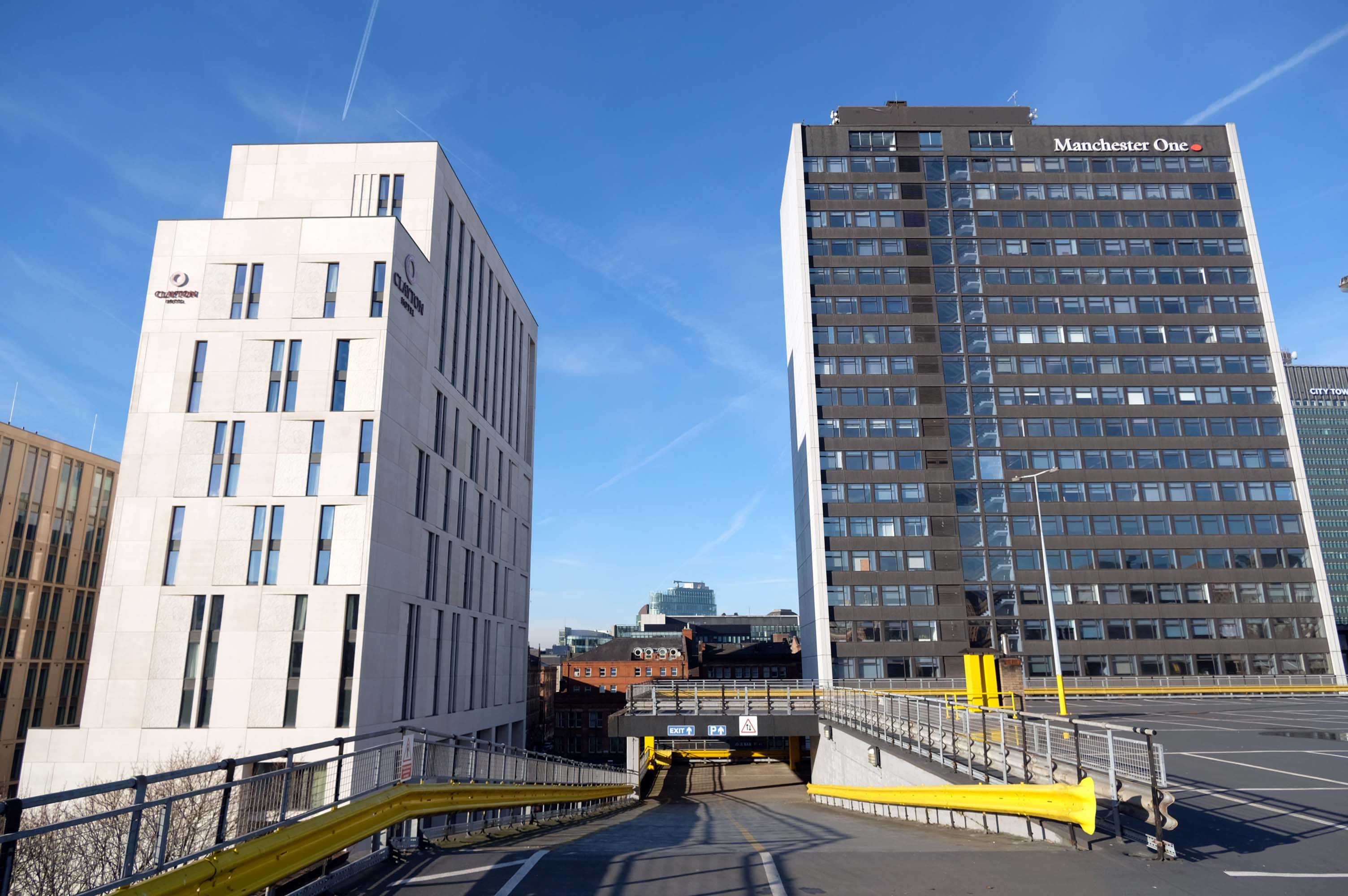
Manchester City Council is set to hand over a multi-storey car park and close a row of shops, including a Greggs and a barbers, in the hope of driving huge development in Deansgate. The multi-storey car park on King Street West, behind the iconic Kendals building, is set to be demolished if plans are passed by the council’s executive committee, with proposals to turn it into an office block.
The demolition of this car park and ground floor retailers would facilitate the redevelopment of the site, according to a report by the council’s strategic director, and will pave the way for the refurbishment of the adjacent grade II listed Kendals building, which currently has House of Fraser occupying it. Engagement with the retailers has been ongoing for some time, according to this report, with guidance being offered to them as to their next steps.
Plans were approved last year to transform the Kendals building into ‘high end’ offices with the car park to be turned into a 14-storey office block, along with improvements to the public realm. For this to go ahead the council will need to surrender the lease of the car park building, according to the report.
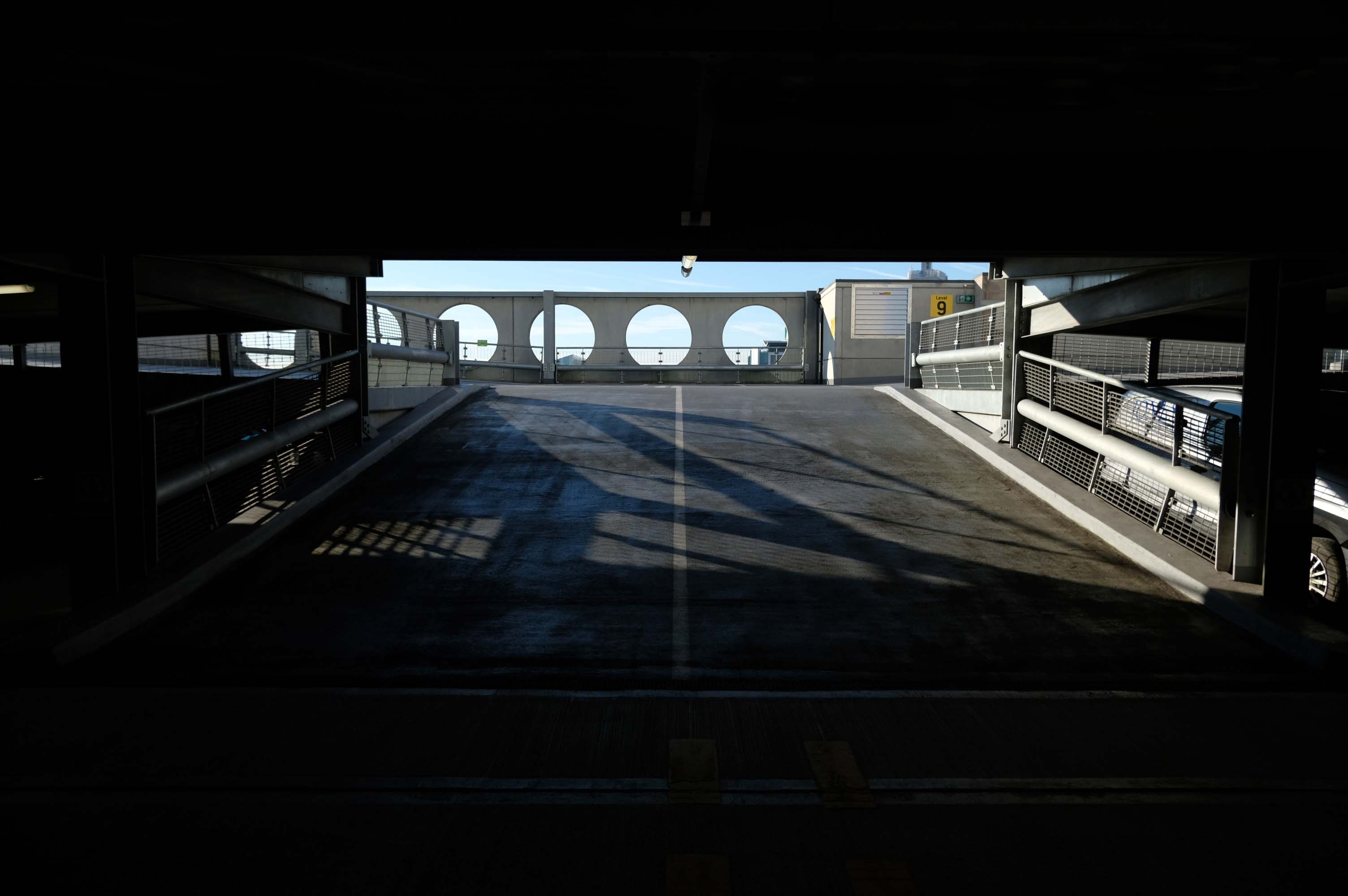
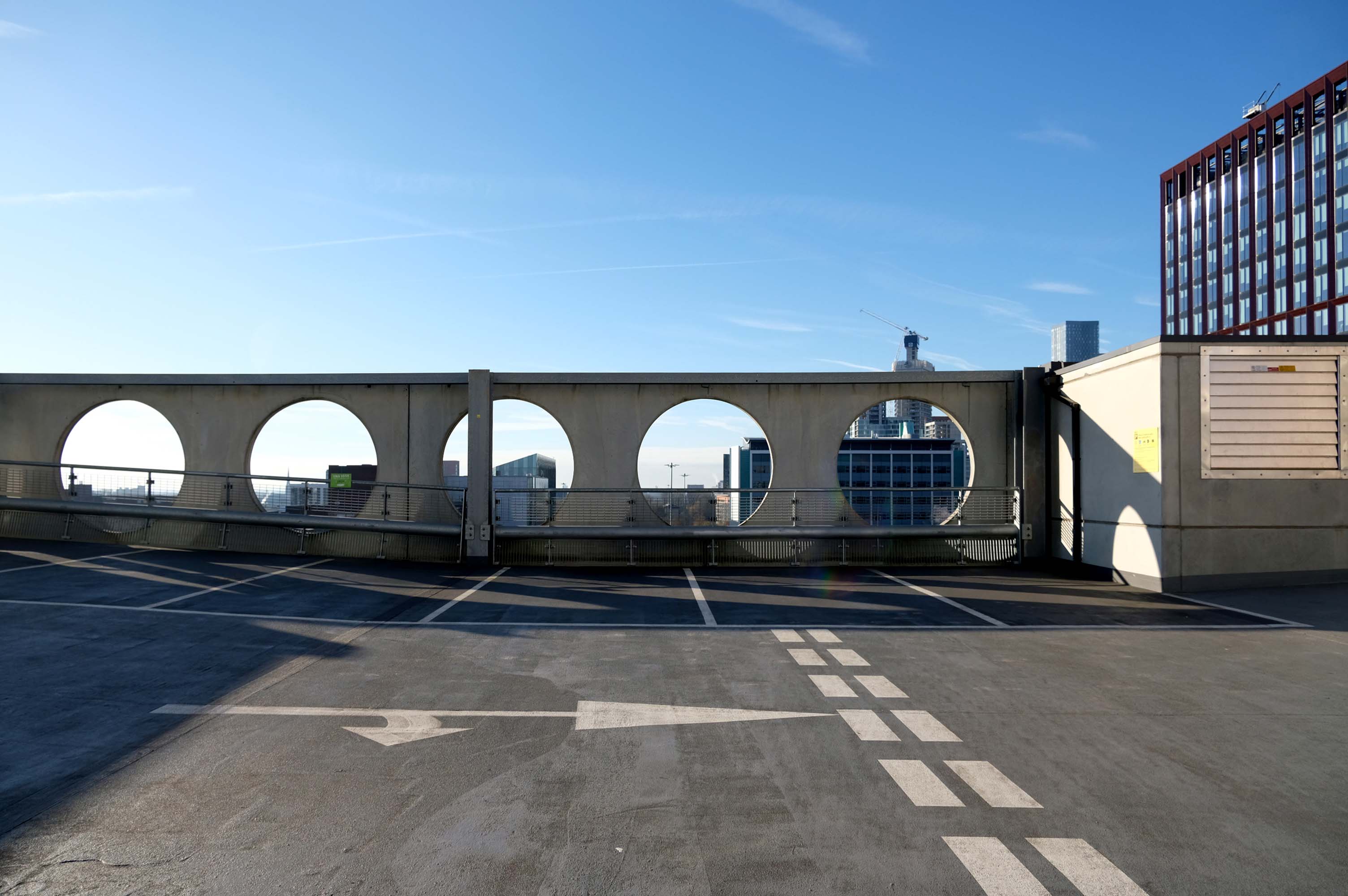
Maple gave architects Aedas RHWL the freedom to express themselves on a prominent multi-storey car park development in Salford. Their imaginative design created a great concept – the nine storey New Bailey car park appearing to be wrapped in ribbons that echo the lattice patterns and intersections in the ironwork of nearby Victorian bridges.
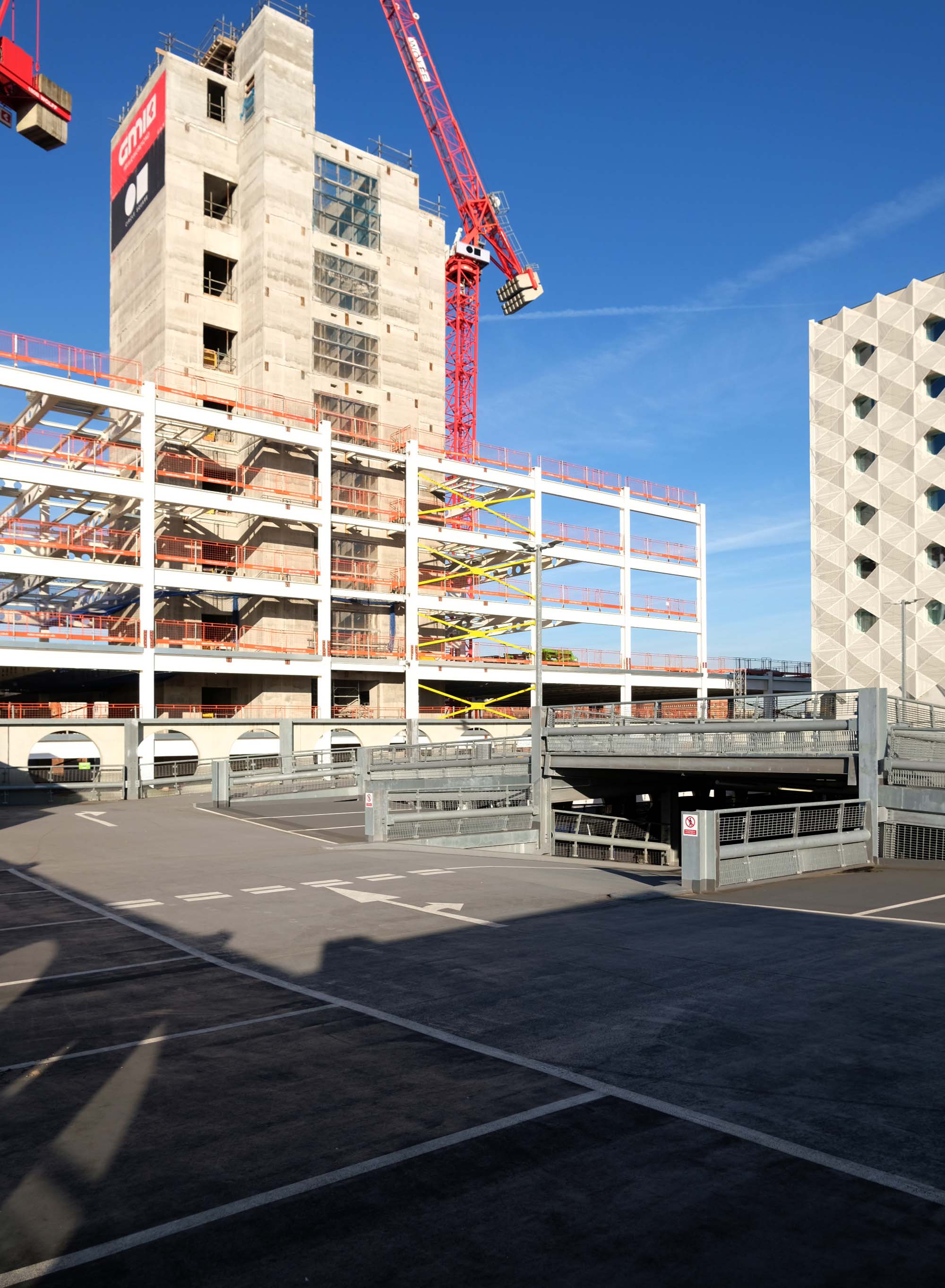
The pedestrian in a car park is happy to shine its tiny light on Salford’s regeneration – and has lead a Modernist Mooch around the area named Salford Nouveau!
English Cities Fund and National Car Parks have officially launched the new 615 space, nine storey car park at New Bailey, which is due to open in early December.
The £12 million car park, which was designed by architect Renton Howard Wood Levin Architects and constructed by Morgan Sindall has been forward funded by Legal and General and let to NCP on a 35 year lease.
This purpose built flagship multi-storey car park features a number of benefits for customers. These include state of the art larger and quicker lifts, energy efficient LED lighting and automatic number plate recognition. The online booking service includes pre booking facilities and level monitoring communicates to drivers which levels have available parking spaces. There are also direct links to the NCP customer contact centre via a number of help points throughout the car park, as well as 27 CCTV cameras for increased safety and six charging spaces for electric cars.
The car park is also conveniently located adjacent to Salford Central train station.
A good, clean and modern car park, easy to navigate and sensibly sized spaces.
The only downsides are that it’s not cheap and getting into it from Trinity way is hard, as the traffic blocks the junction meaning it takes may cycles of the traffic lights to get across the junction.
Secure and easy to find while driving, struggled to get back in through side door, had to walk up the ramp.
Expensive.
Stairwell stinks like piss and I’ve seen homeless people sitting in there, doesn’t feel safe.
Great car park, security is great, right in the city centre, above the bus station that goes Scotland to Cornwall, Wales to Norwich and many more, Manchester city centre literally, with Piccadilly Gardens, around the corner.
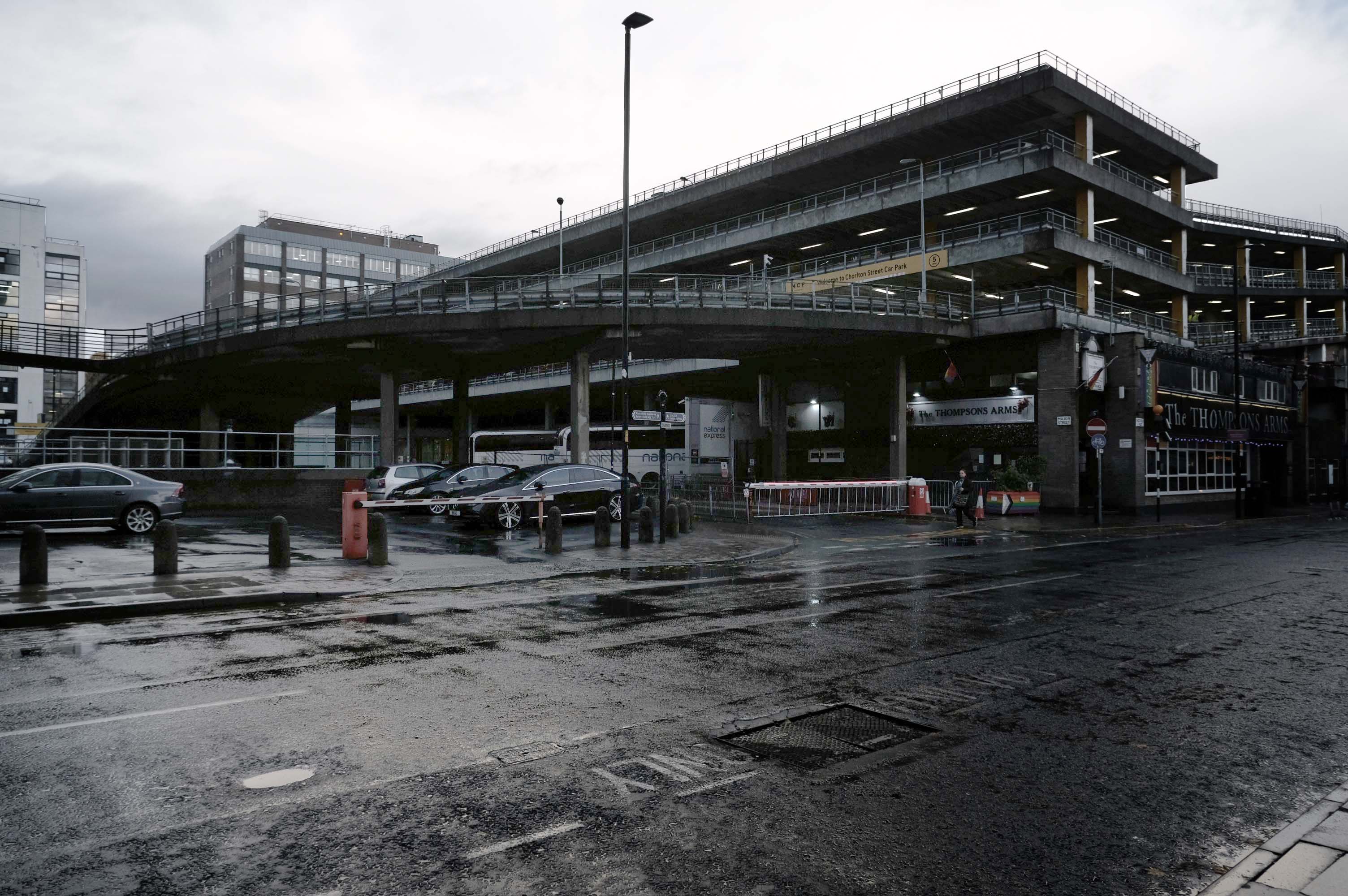
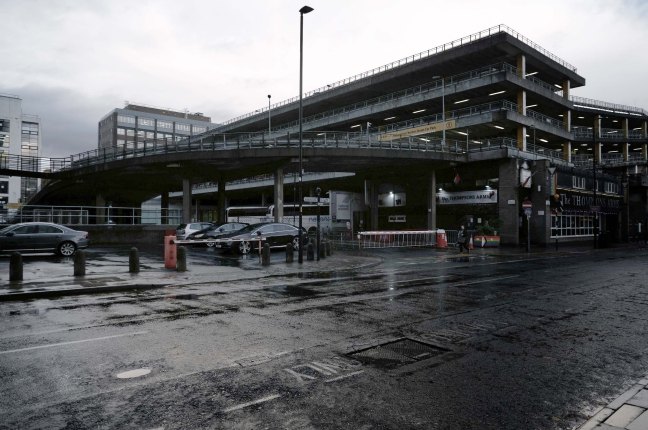
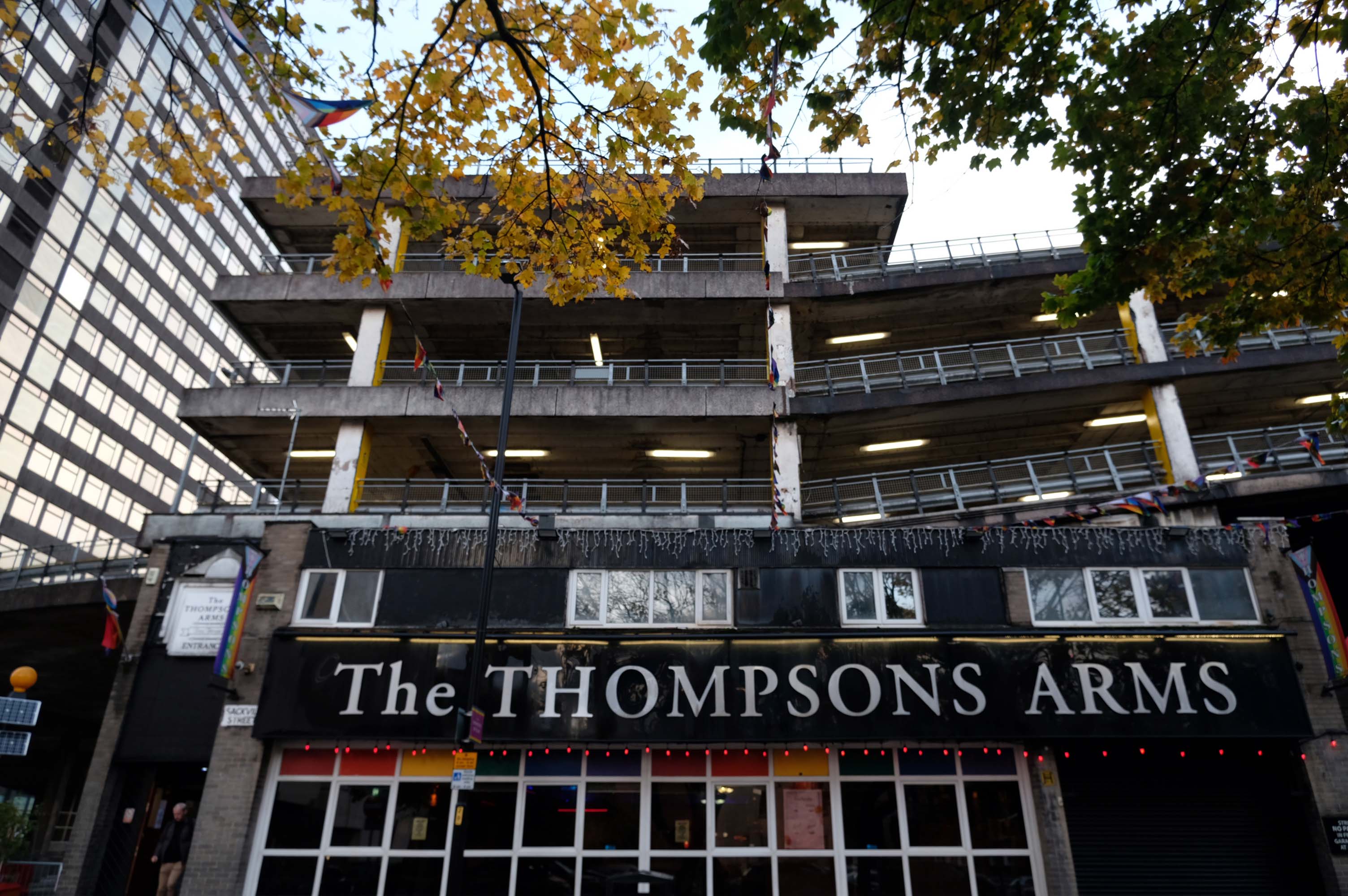
We have been snapping here afore in the guise of Mr Estate Pubs – checking out the Thompsons Arms.
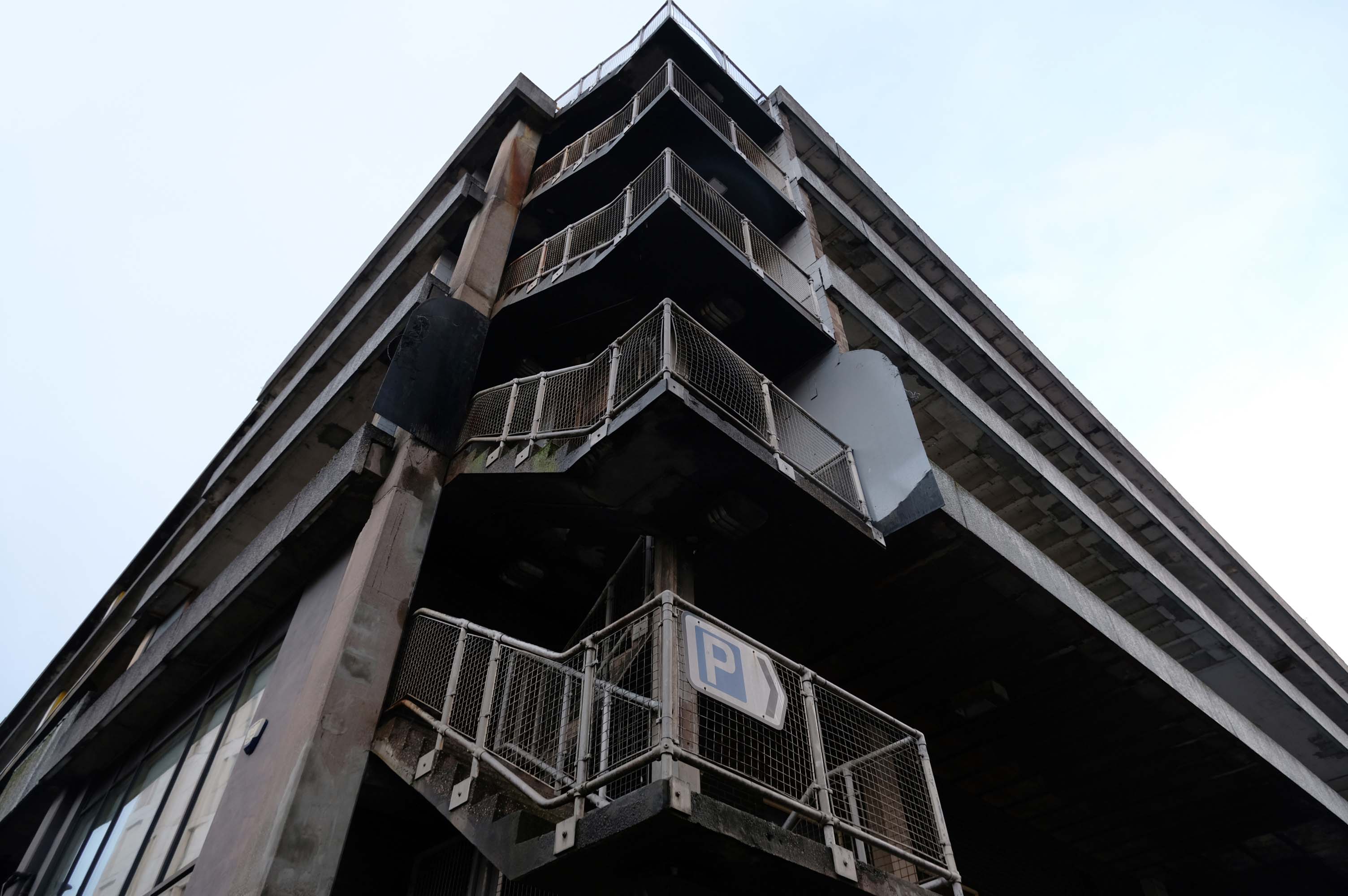
For this is a car park with coach station and boozer attached.
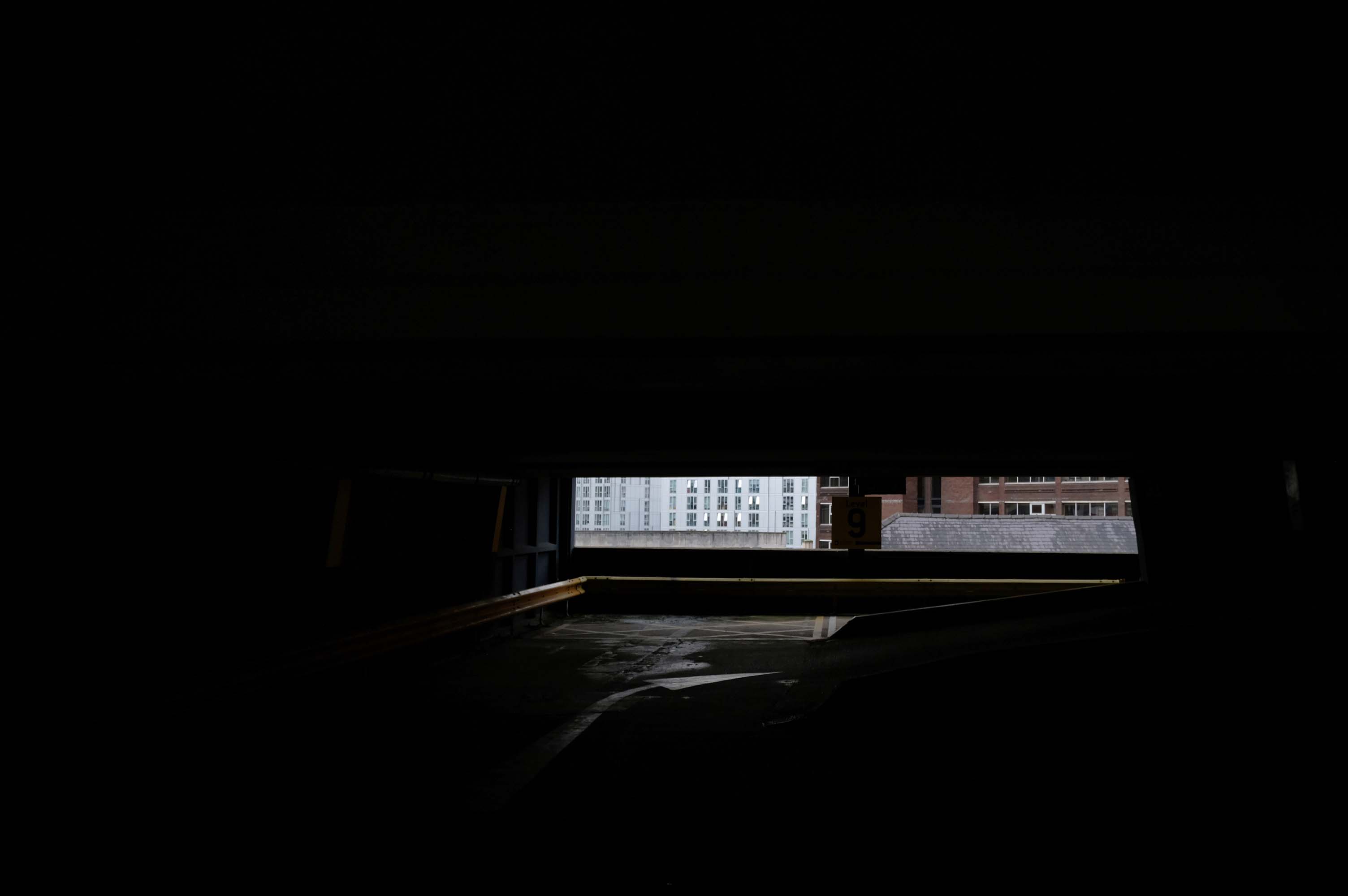
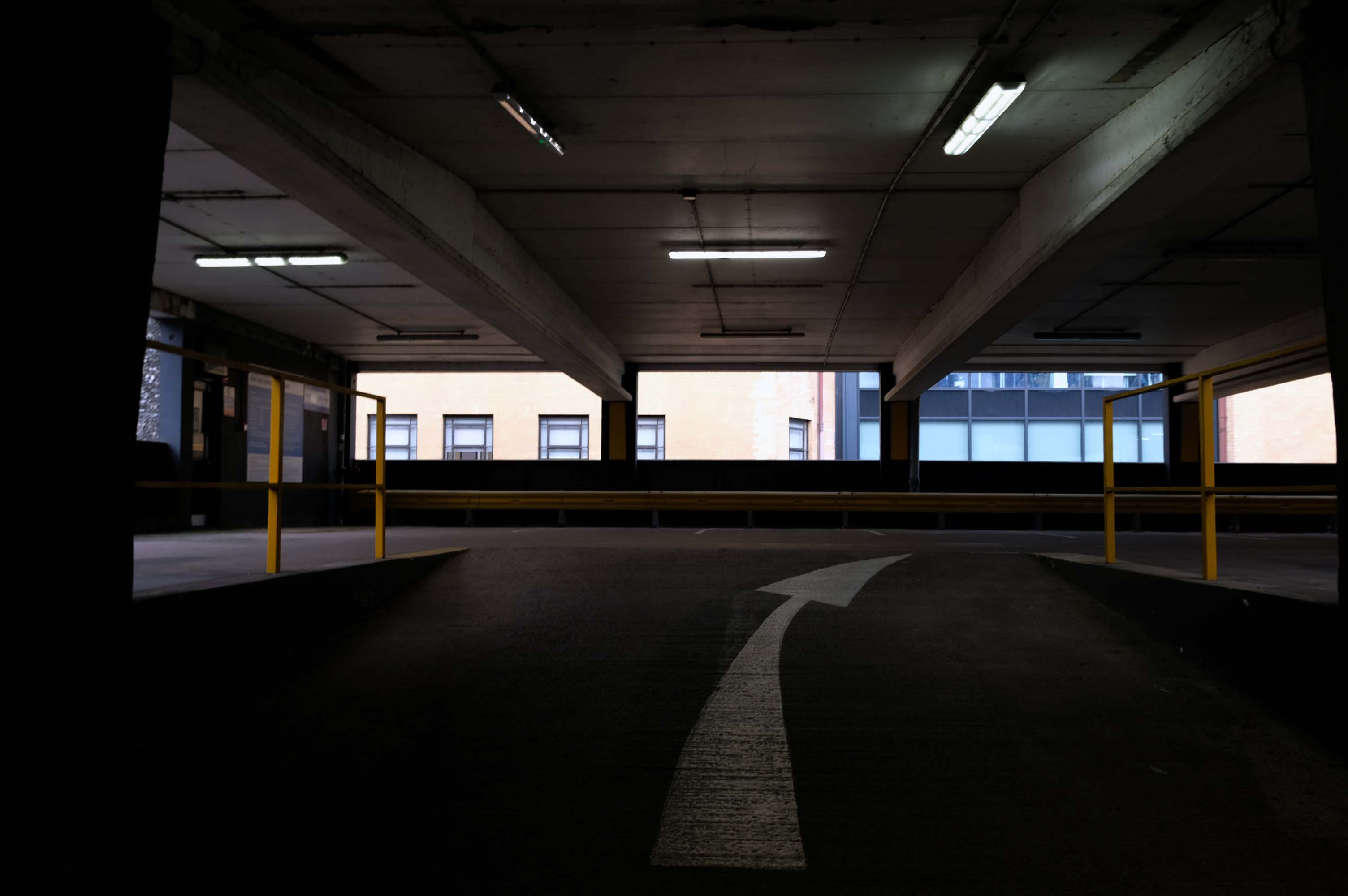
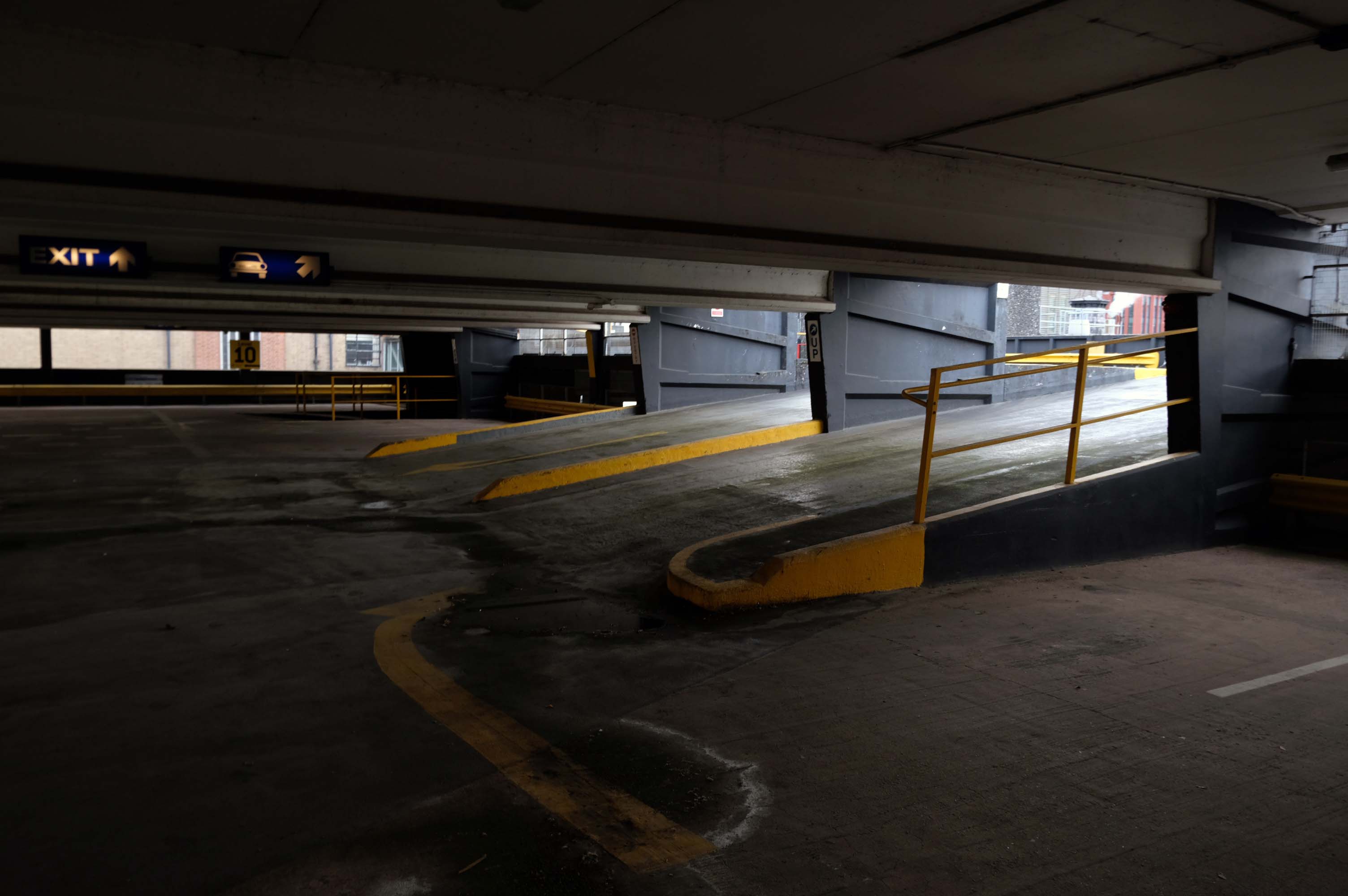
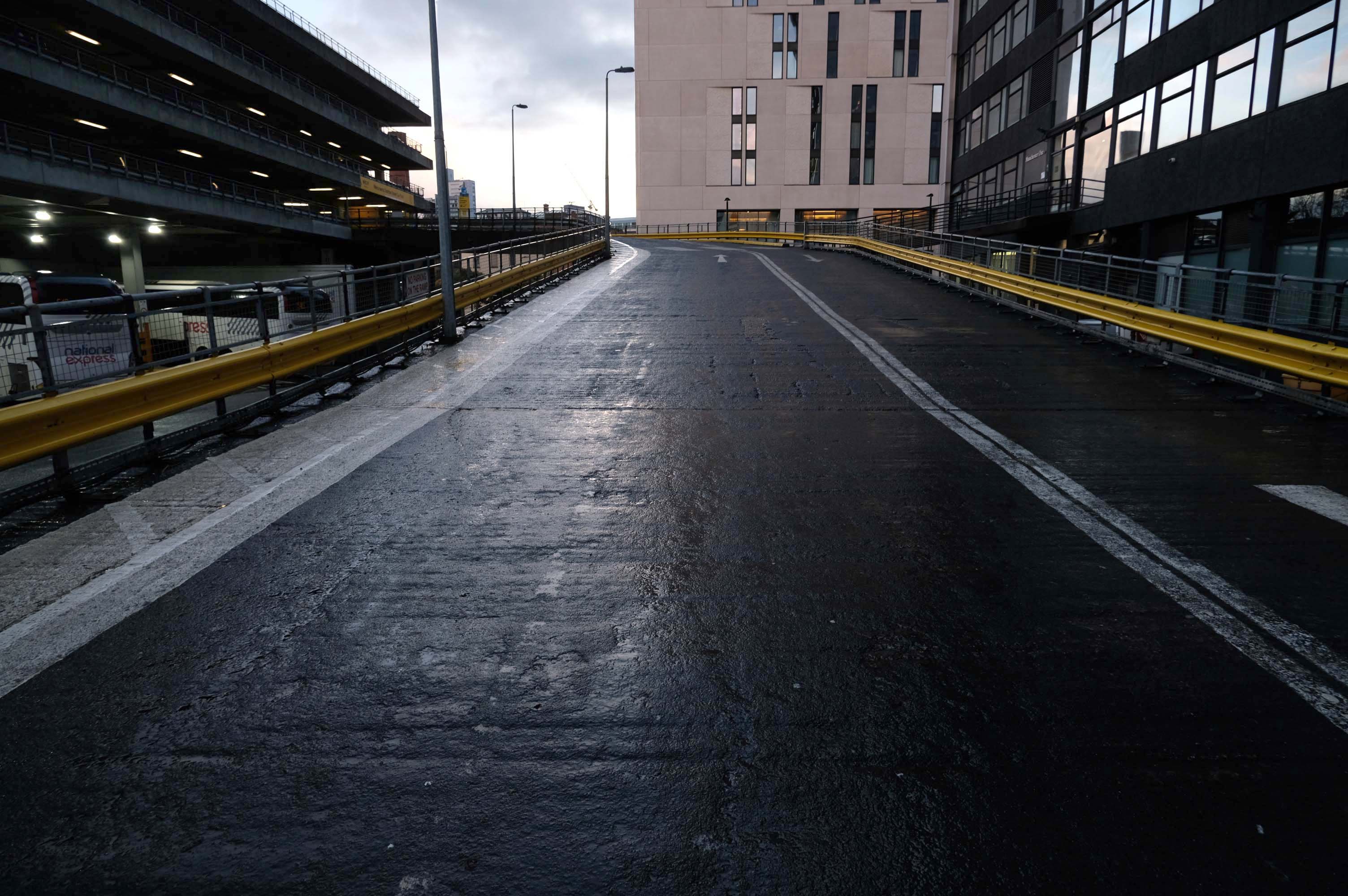
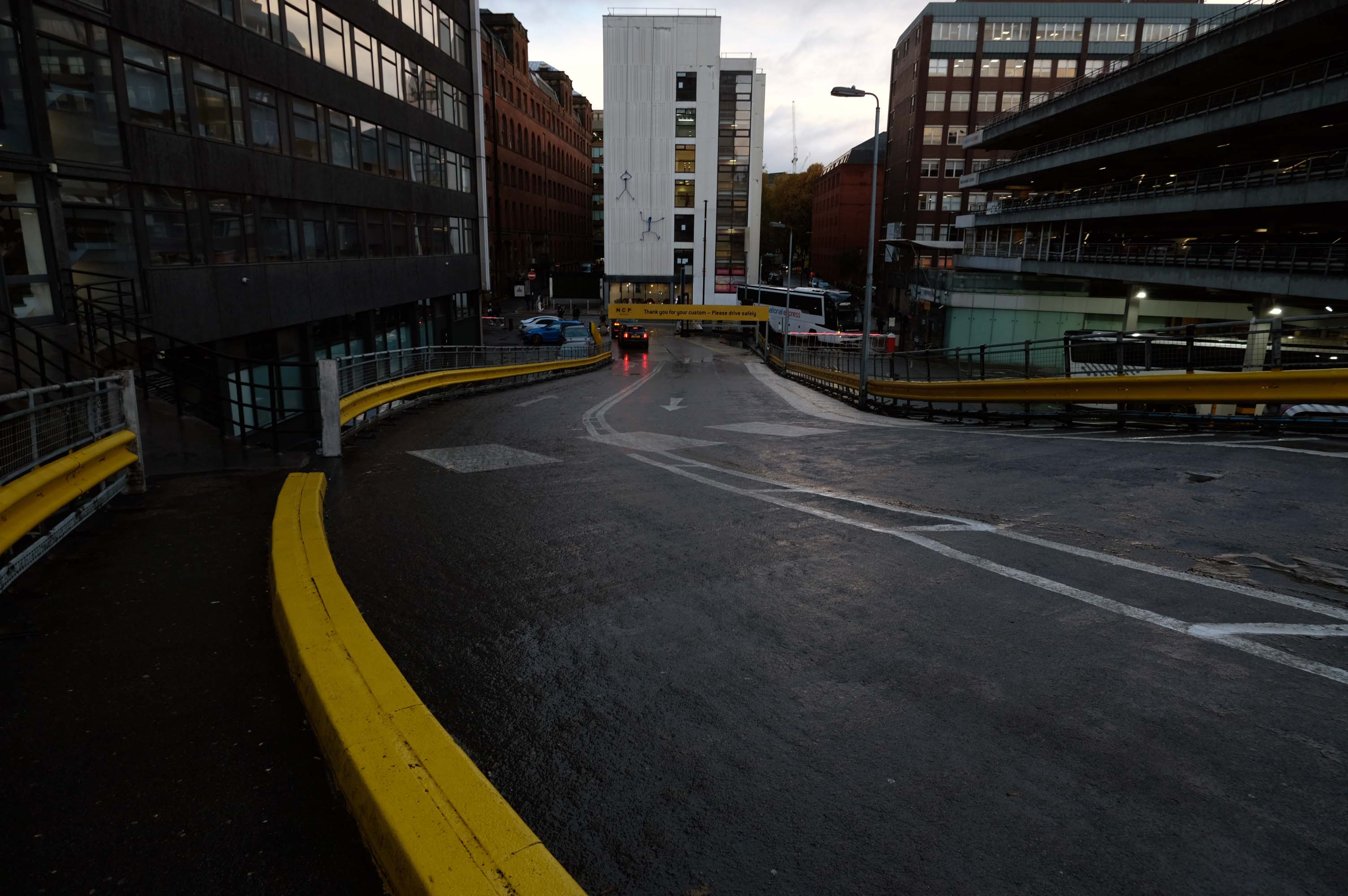
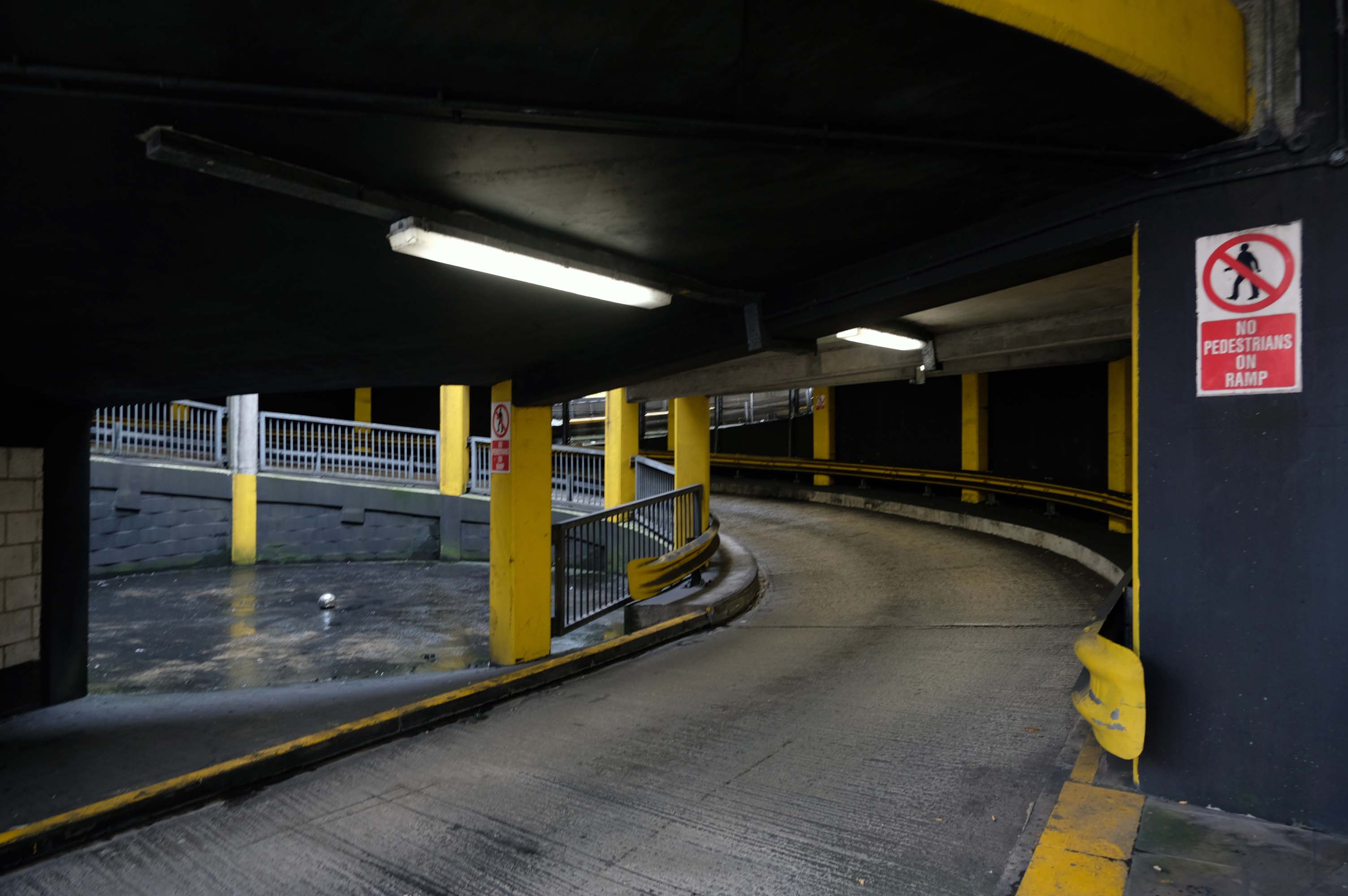
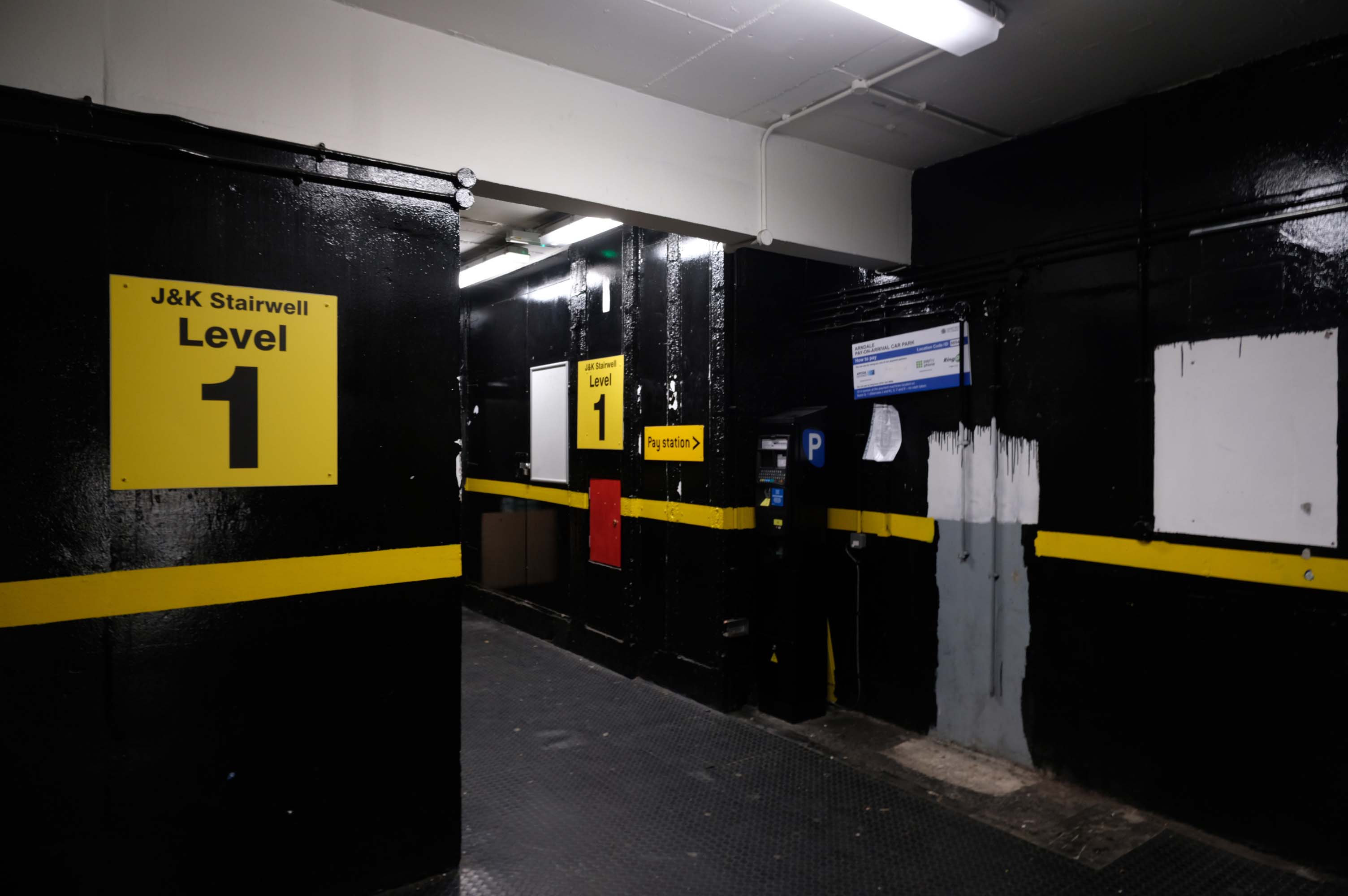
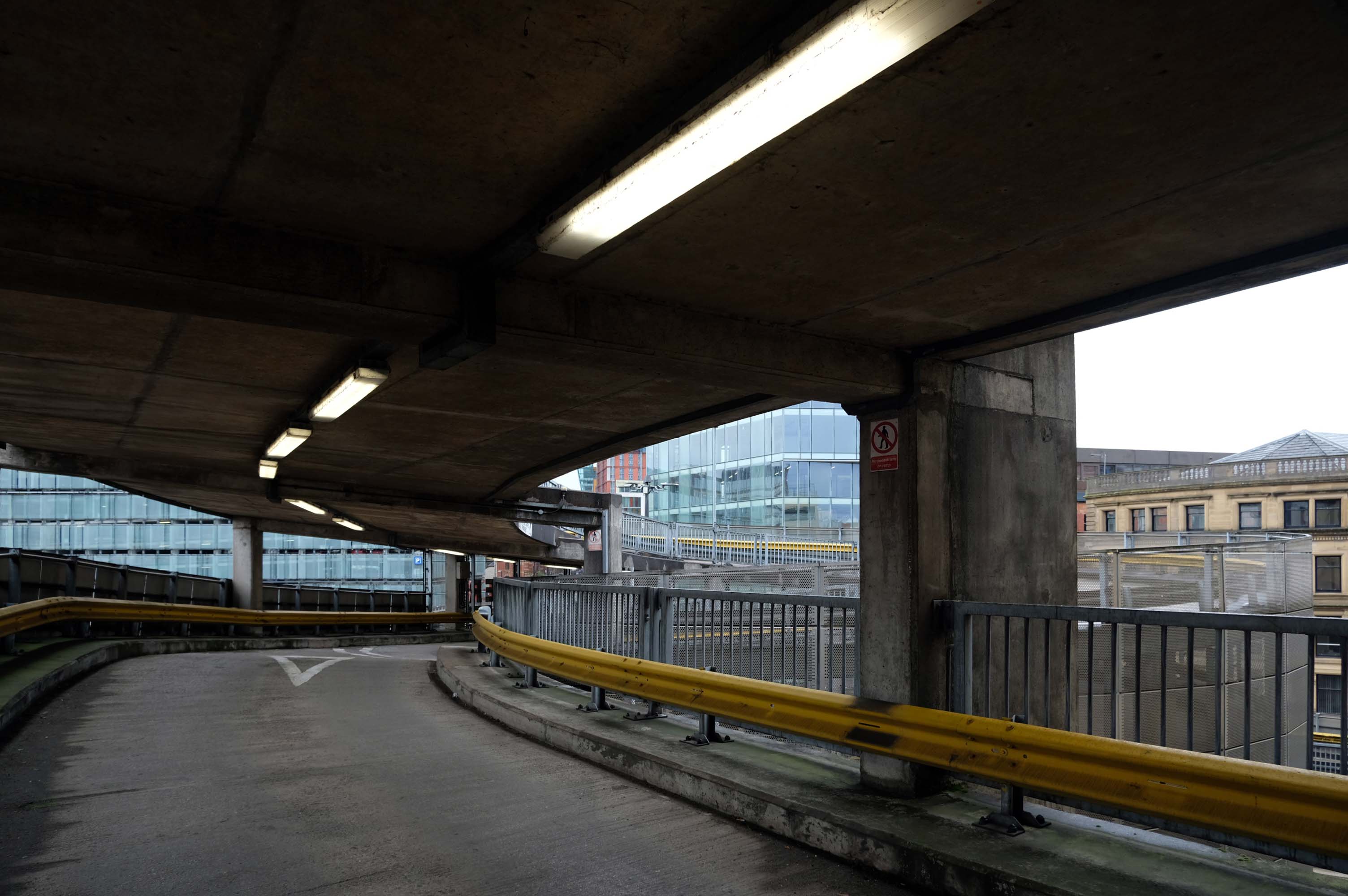
The pedestrian in a car park approaches cautiously – along the ramp.
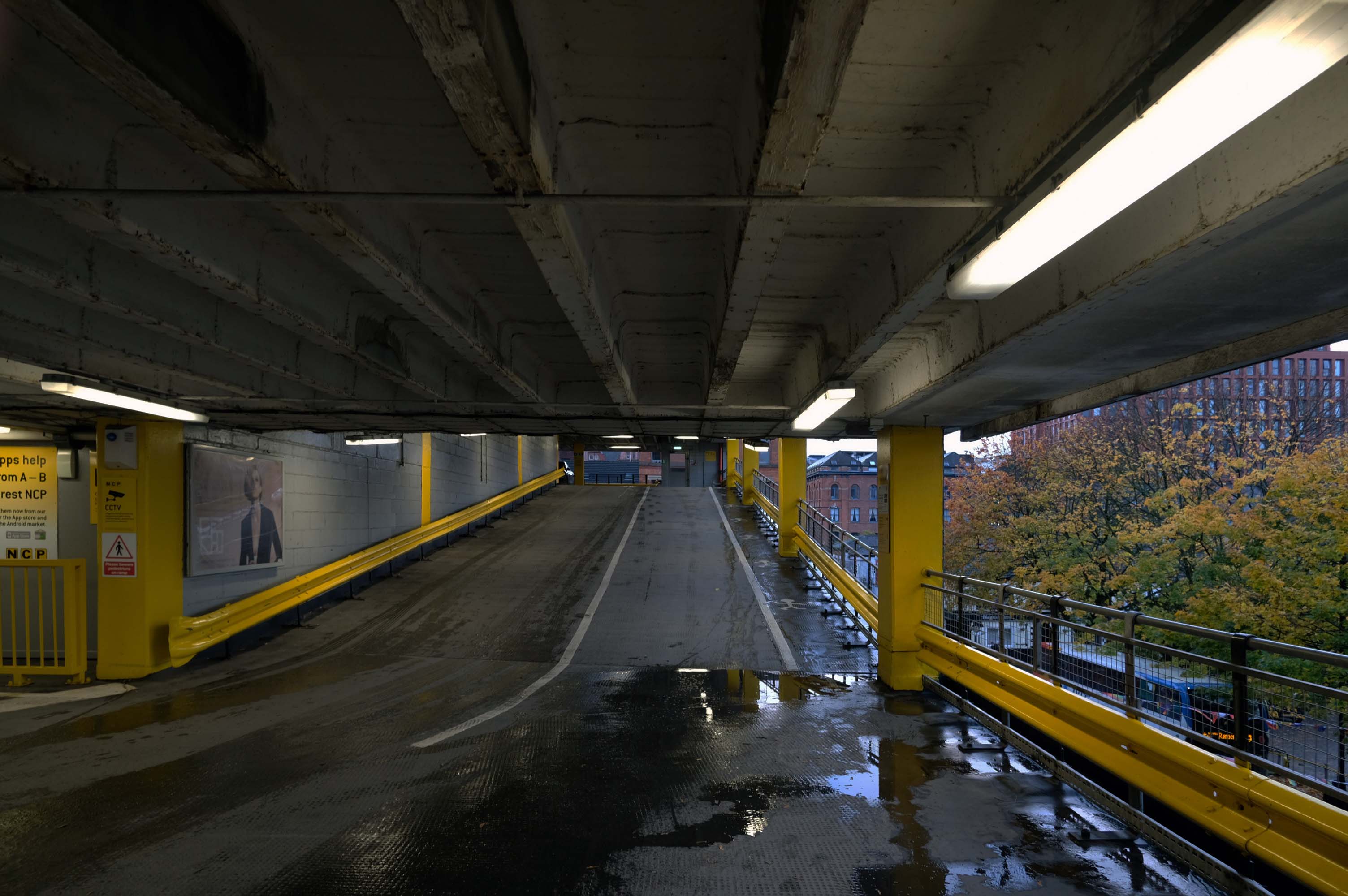
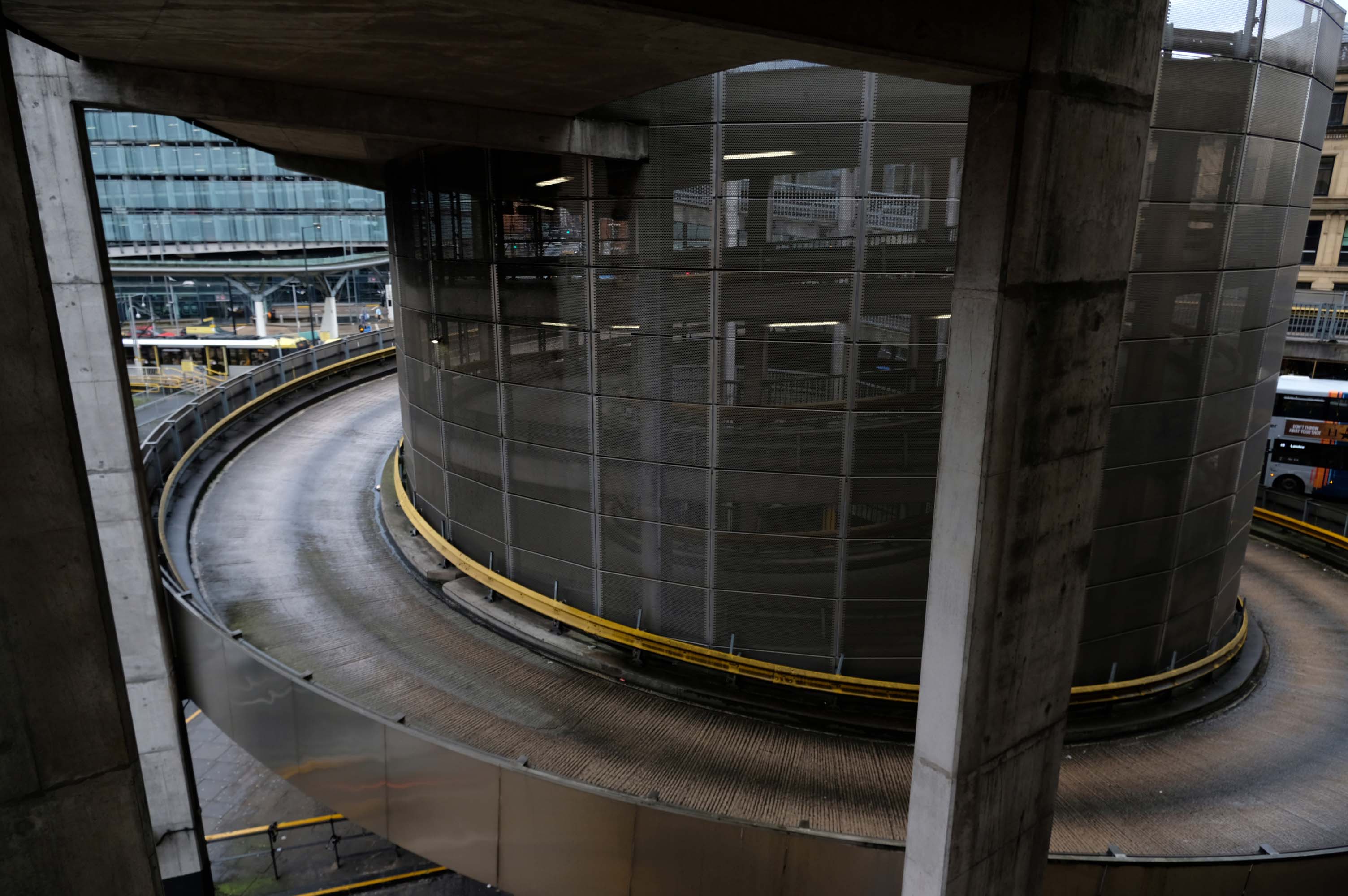
Retreating the better to circumnavigate the site.
I was quickly losing light – so I called it a day.
Fielden Clegg Bradley were concept architects while Leach Rhodes Walker were delivery architects.
A series of four × two-storey-deep lattice girders and a single one-storey girder, all measuring up to 27m-long, span over the zone where the underground pipes are located. In these parts, the car park has no first-floor level as the local water board needed a 5m ground-to-ceiling clearance in case they had to undertake any maintenance works. Consequently, the first floor is only a partial level and is set within the depth of the larger lattice girders, as is the second floor, while the third level is supported on top of these members.
Supporting a hotel would be challenging enough, however the design has also had to incorporate large bridging elements as there are two subterranean 600mm-diameter water pipes crossing the site. “It’s a very unusual design and one that was originally designed as a concrete-framed structure,” says James Killelea Senior Structural Engineer Charlie Twist. “However, the bridging parts would have proven to be too difficult to build and consequently a steel-framed solution was chosen for the car park, which in turn supports a precast concrete hotel.”
This car park is one of the cleanest and most well maintained in Manchester.
What a refreshing change for the pedestrian in a car park!
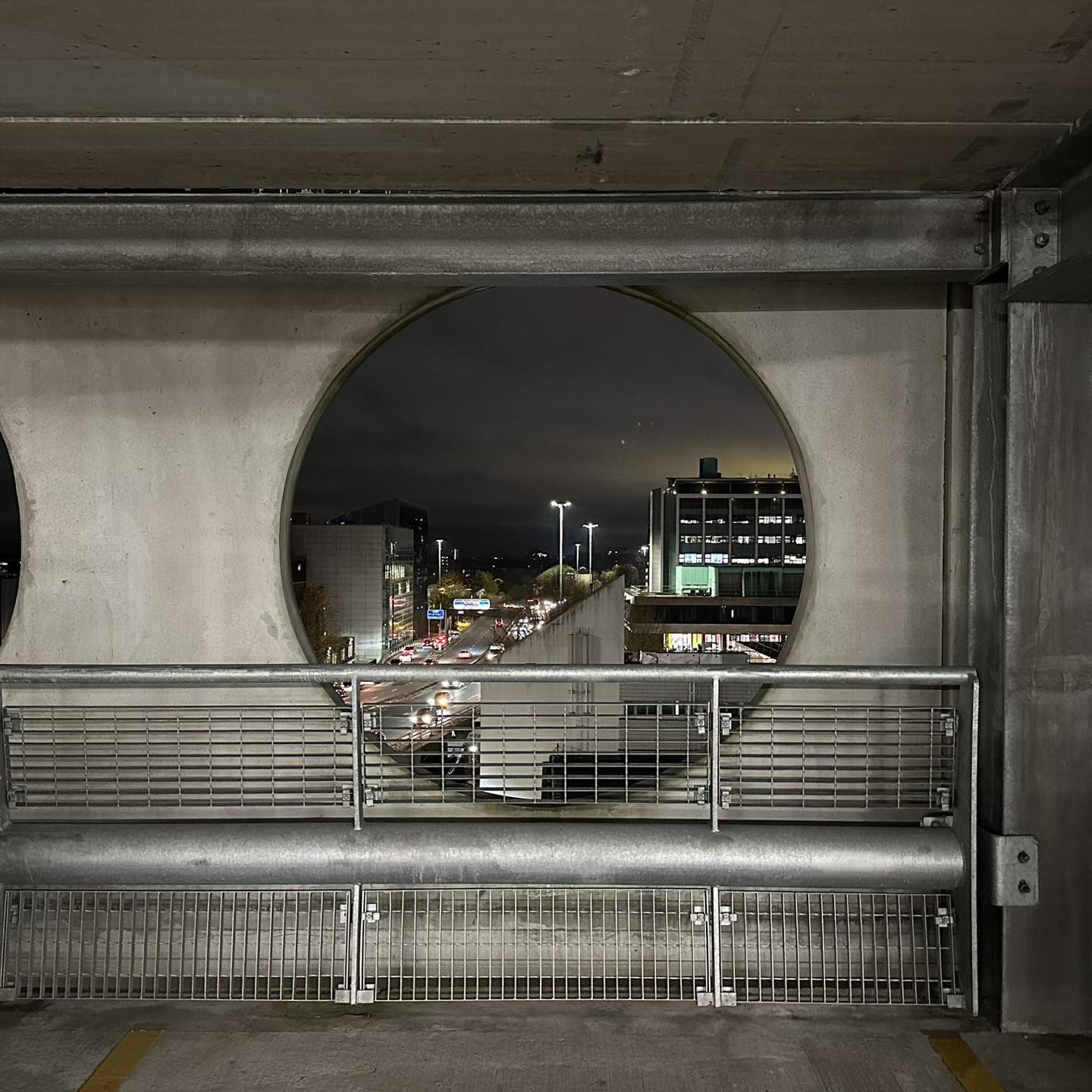
As a coda my hero Bob Mould late of Hüsker Dü posted this pic this week!
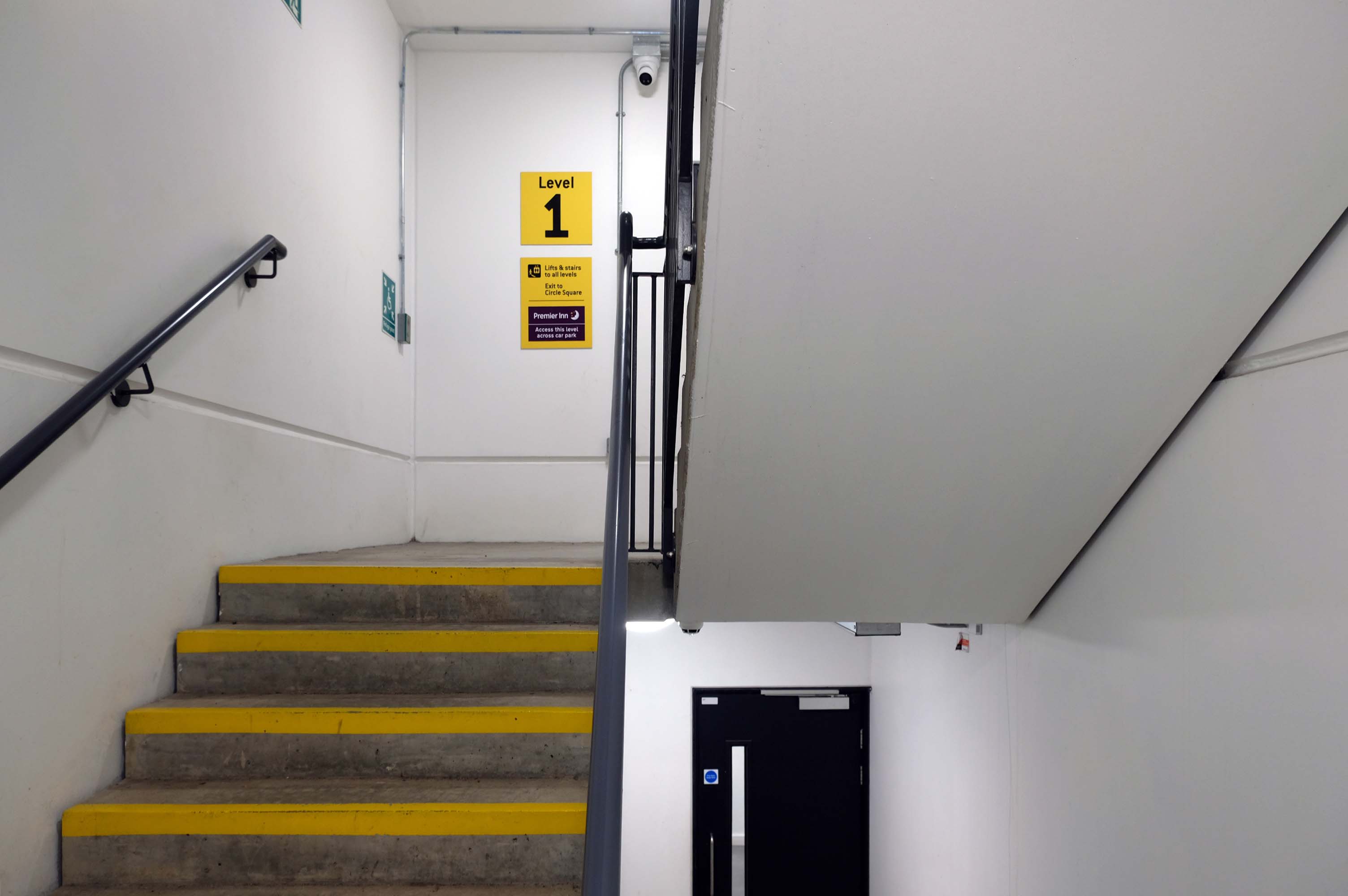
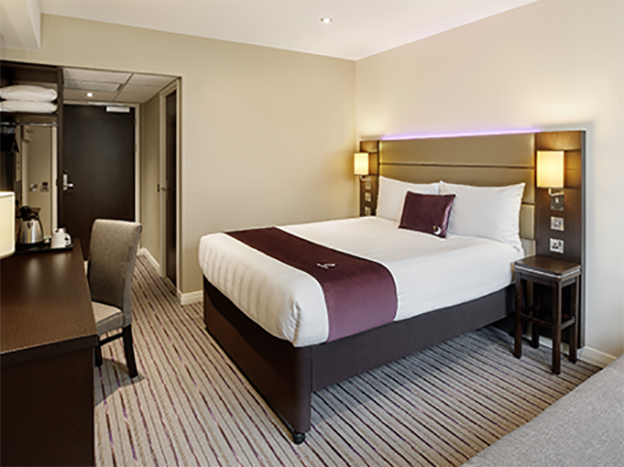
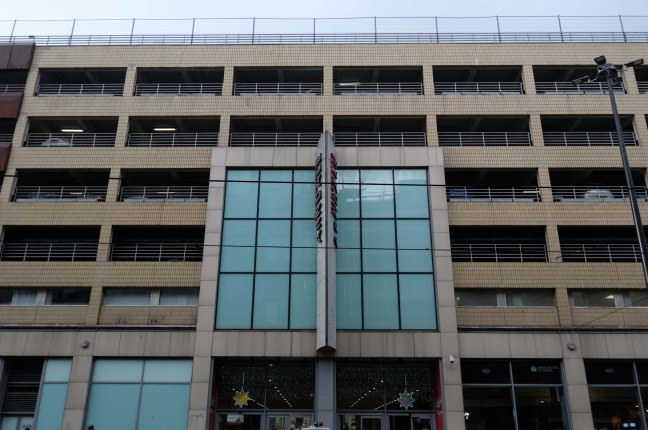
I assume that he was staying in the Premier Inn which sits atop the car park.
Good location but the access to the shopping centre is dirty. Lifts dirty – discarded soiled underwear, urine, spit and rubbish in the lifts, car park also full of litter.
The most unnecessarily complicated ticketing system I have ever seen for a car park. Designed to fail so that the system can fine you. Beware, better avoided for overseas visitors.
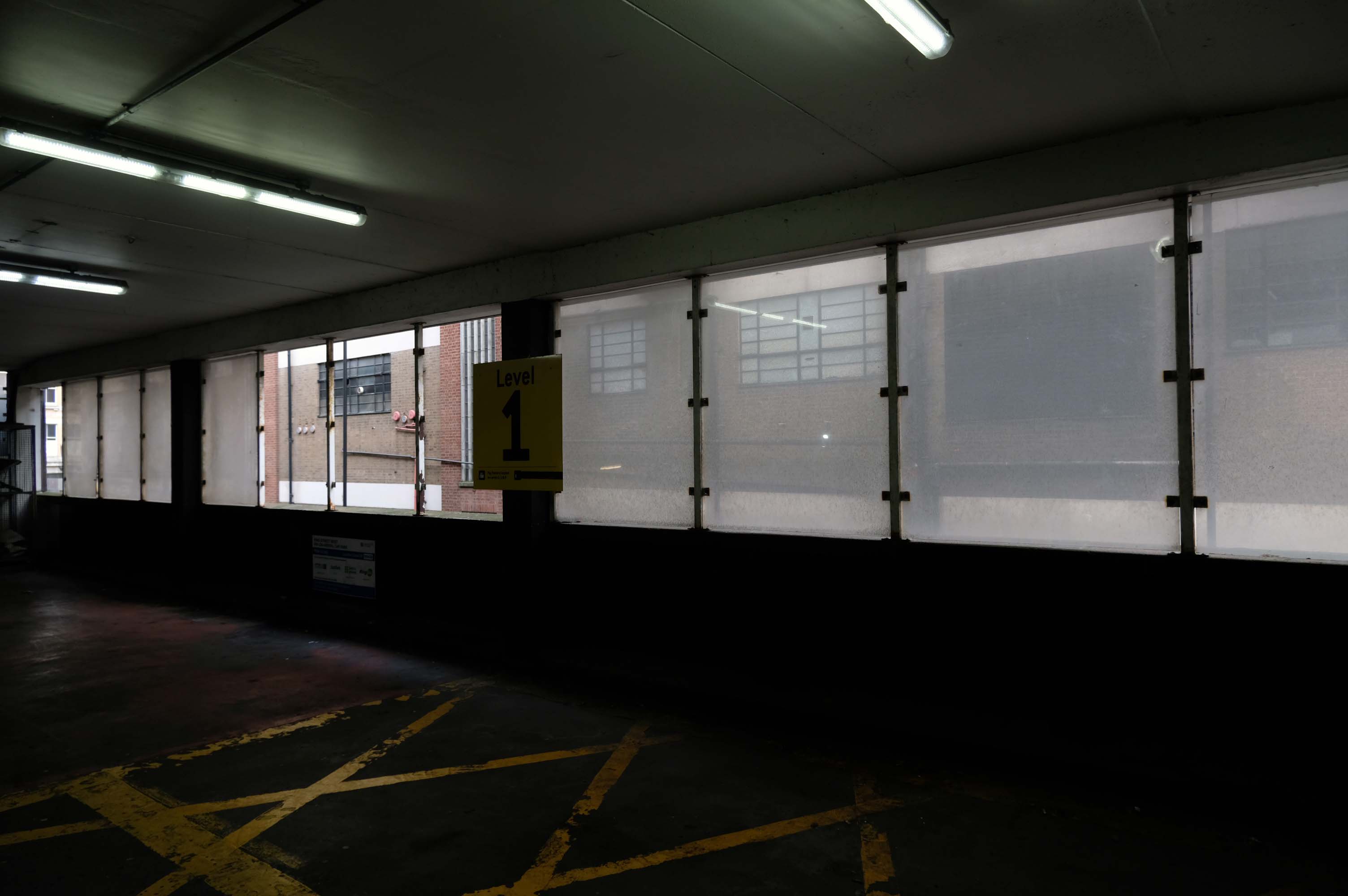
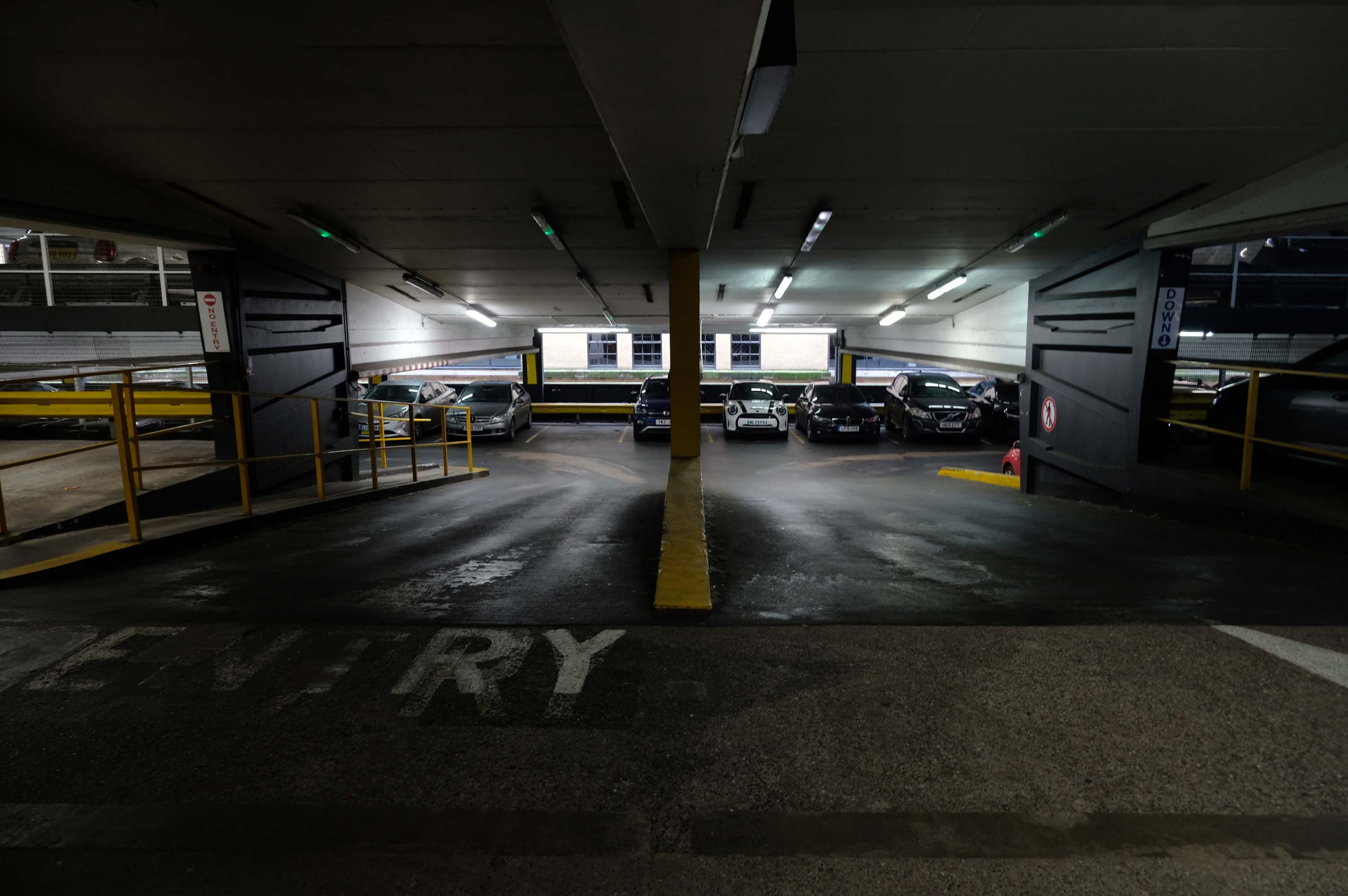
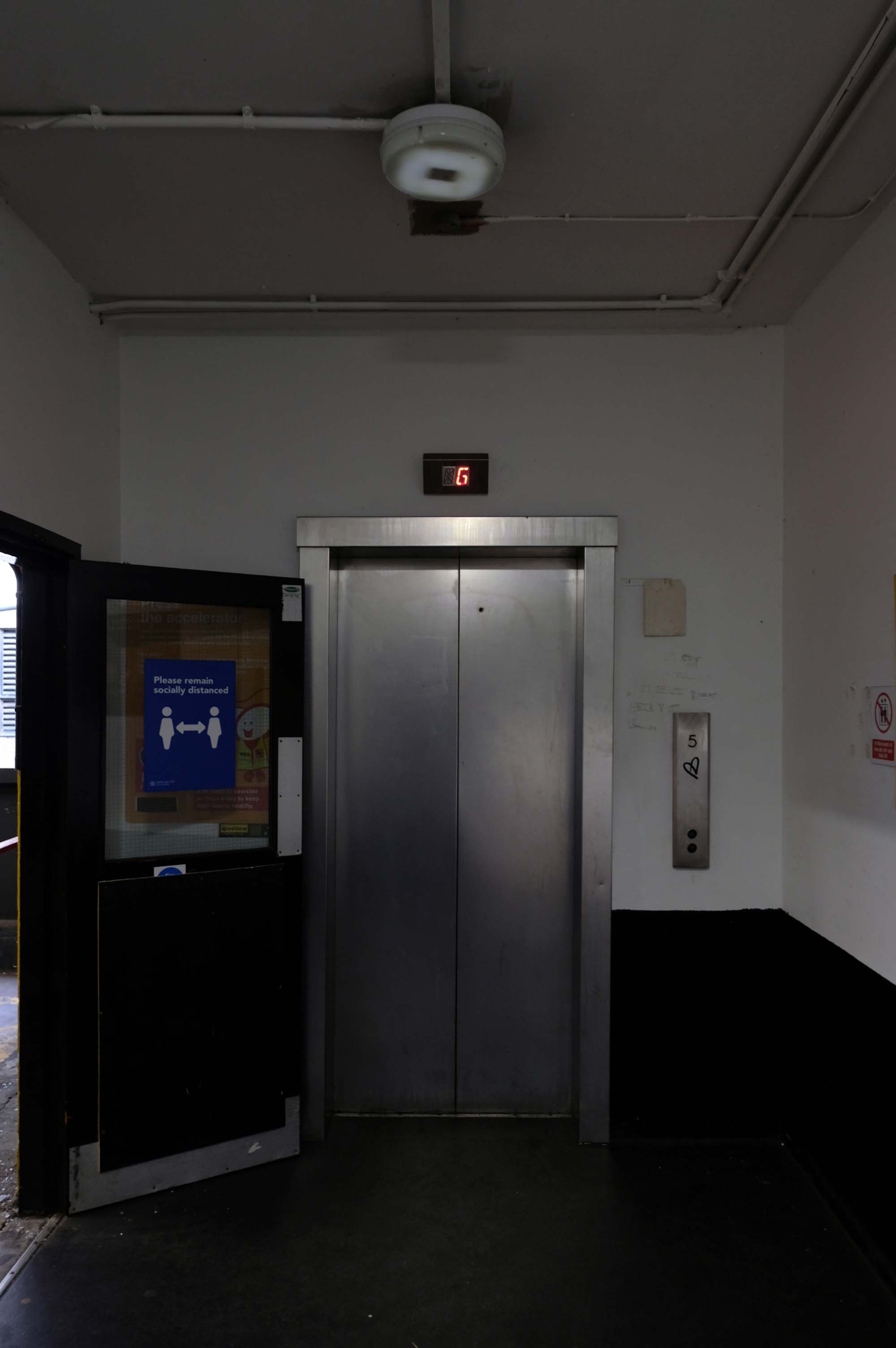
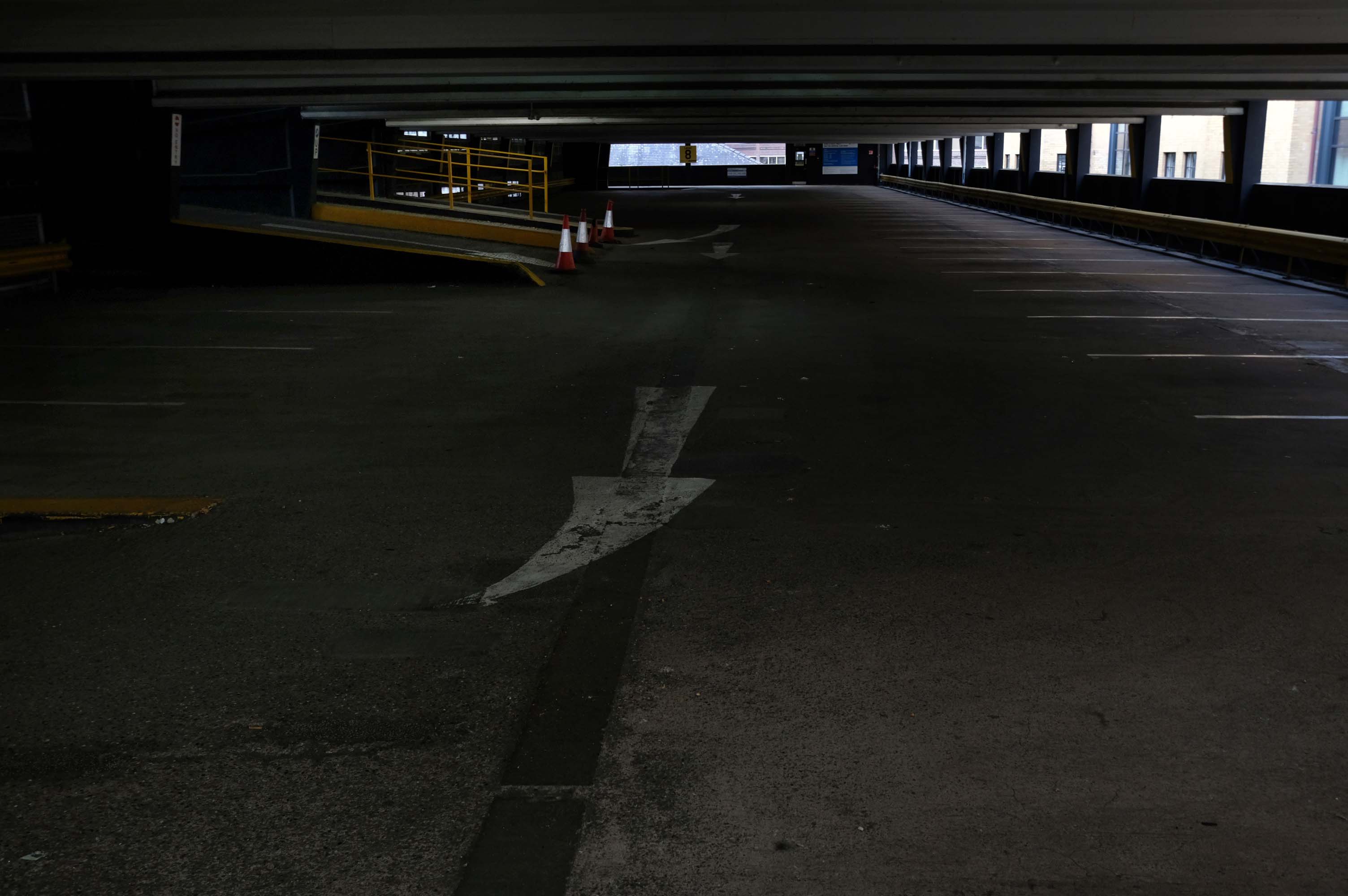
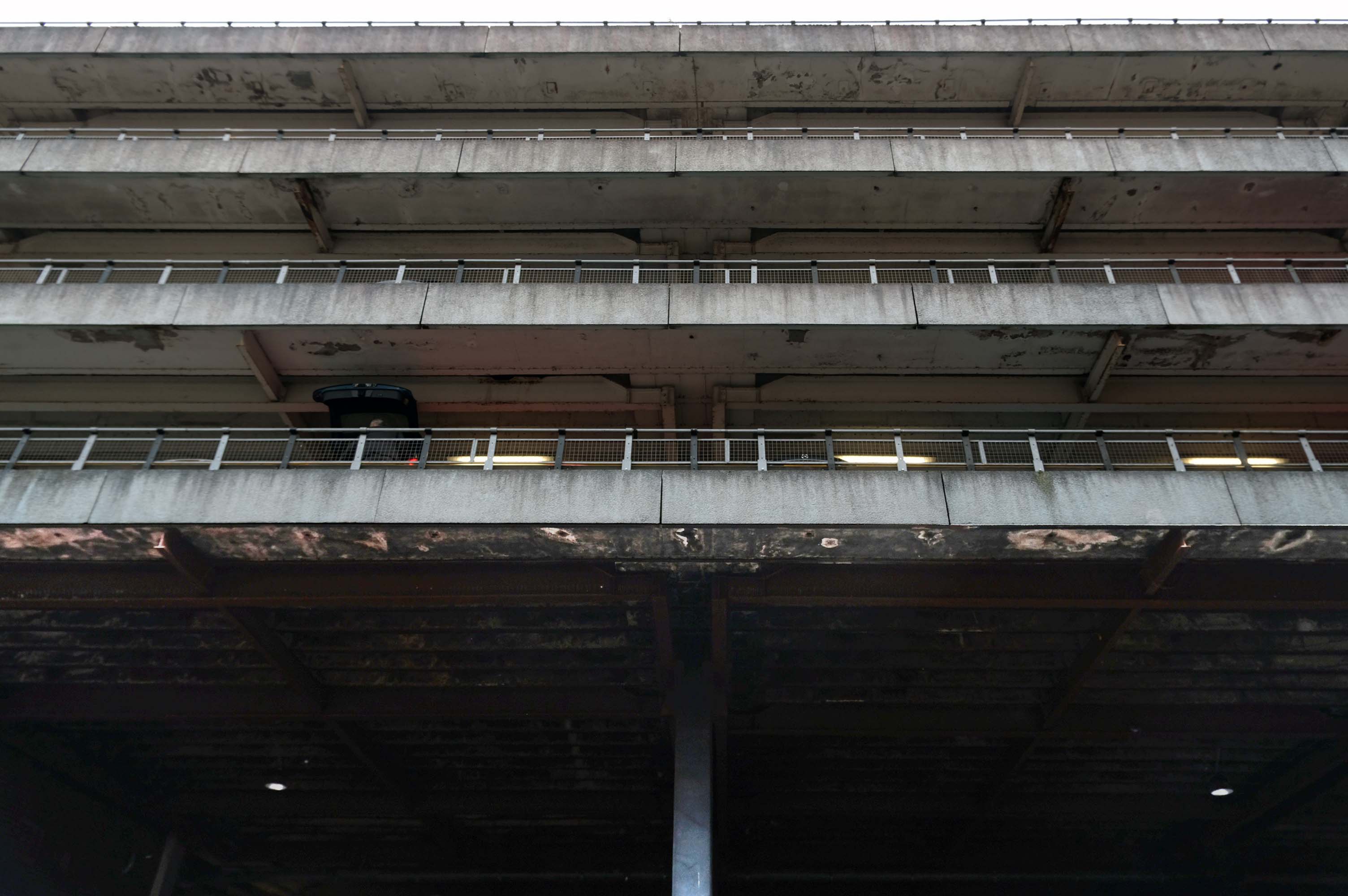
The pedestrian in the car park presses on – encountering structural engineers along the way, who have given the concrete construction a clean bill of health.



















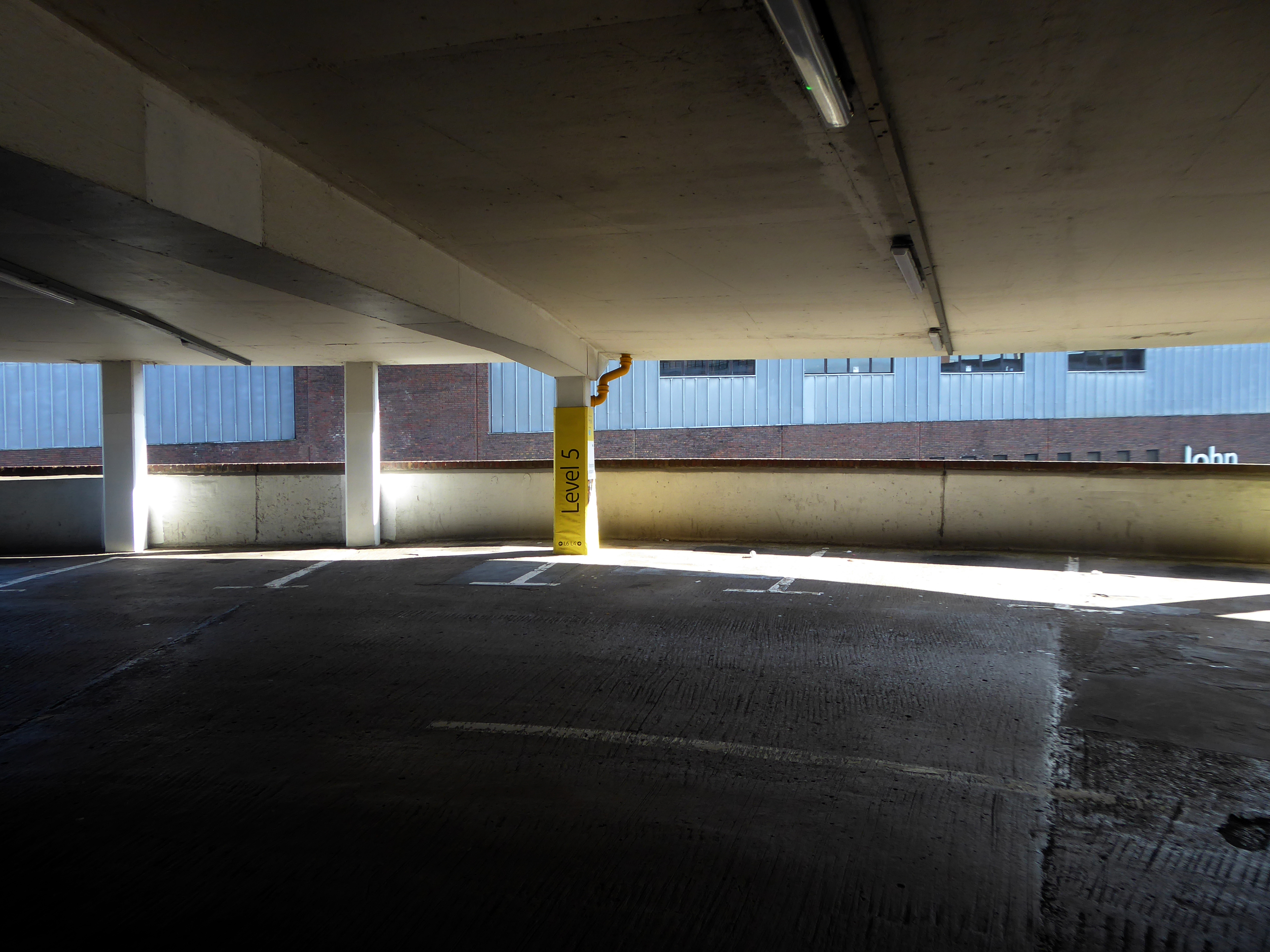
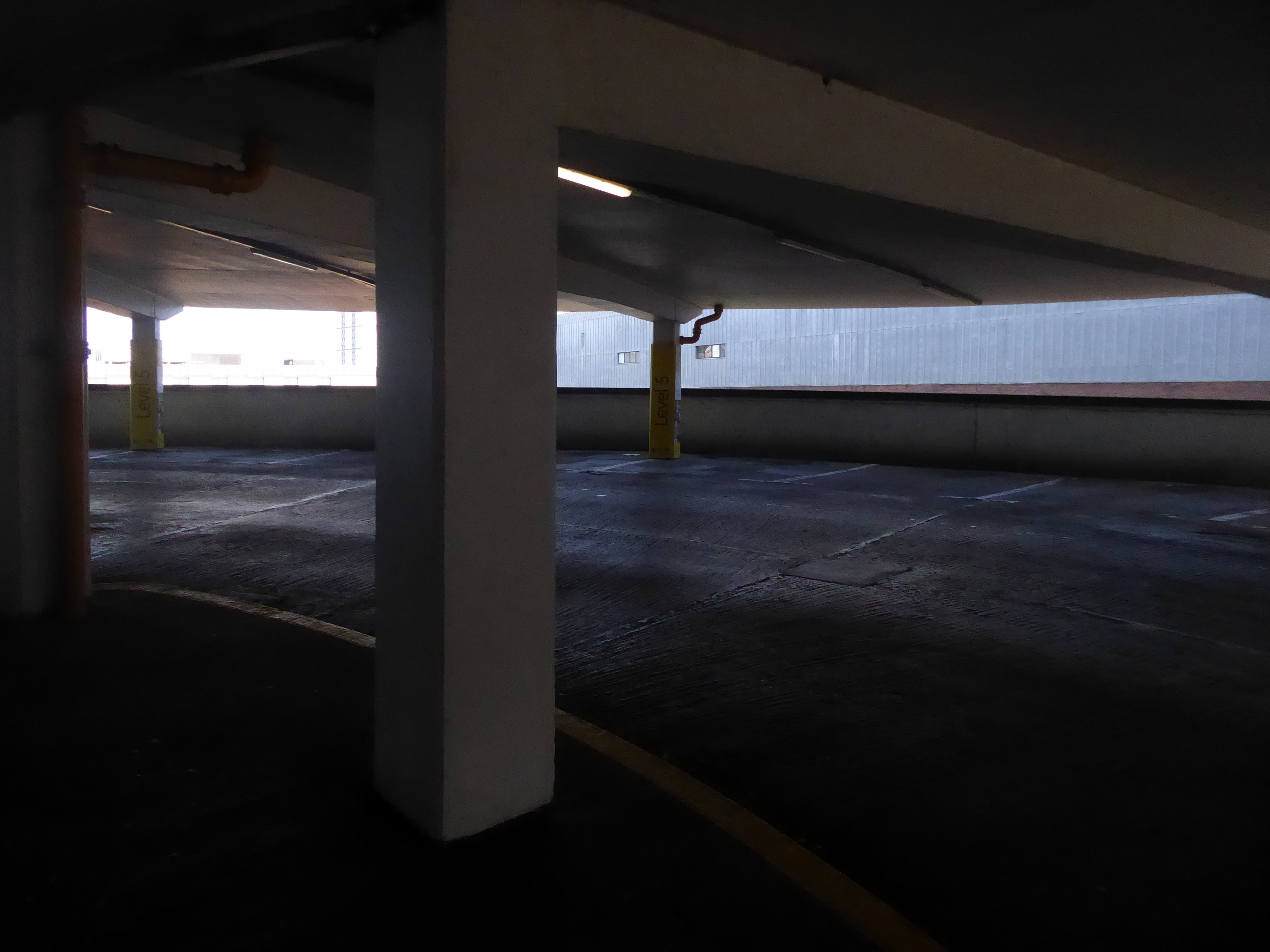
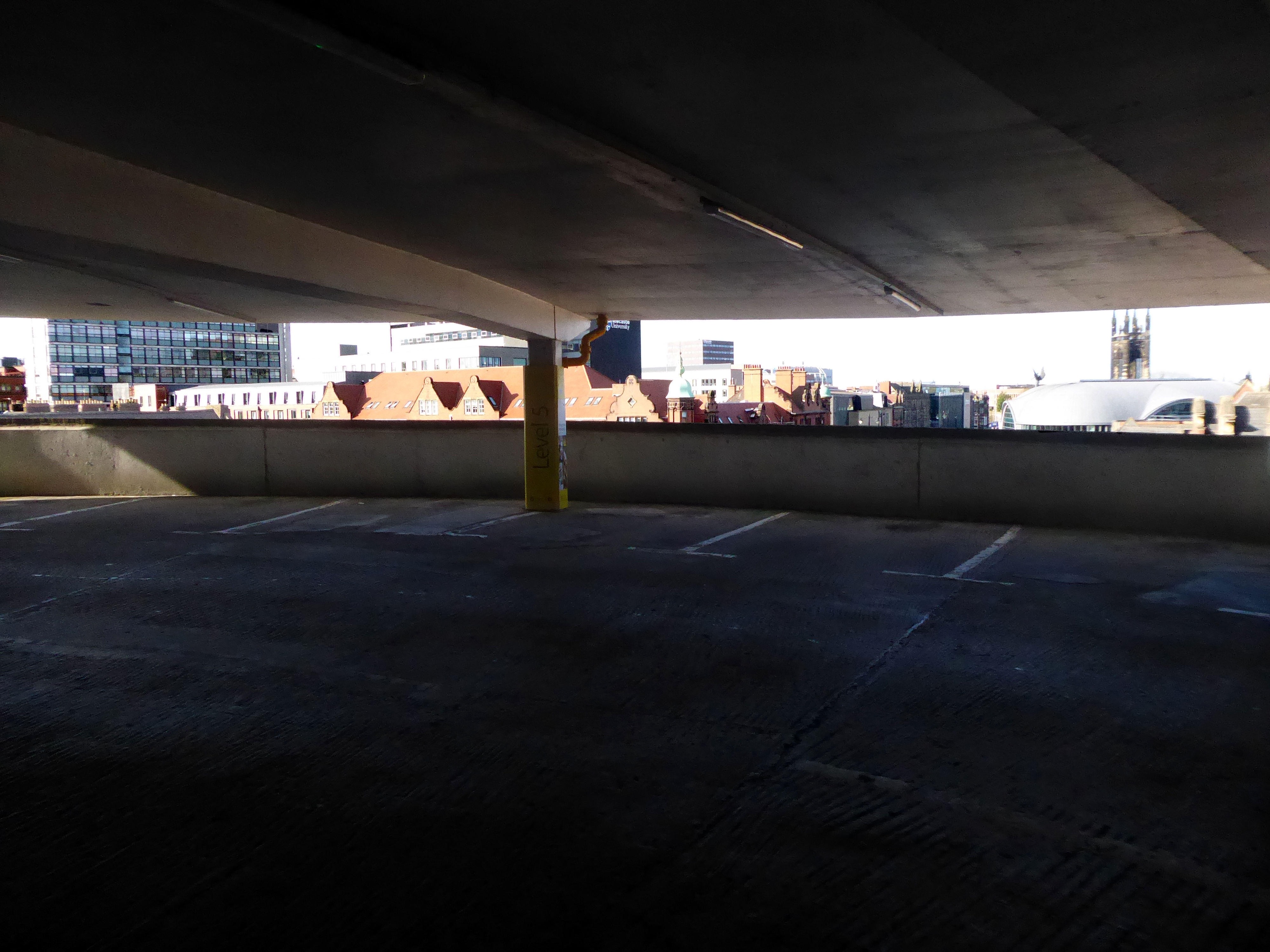
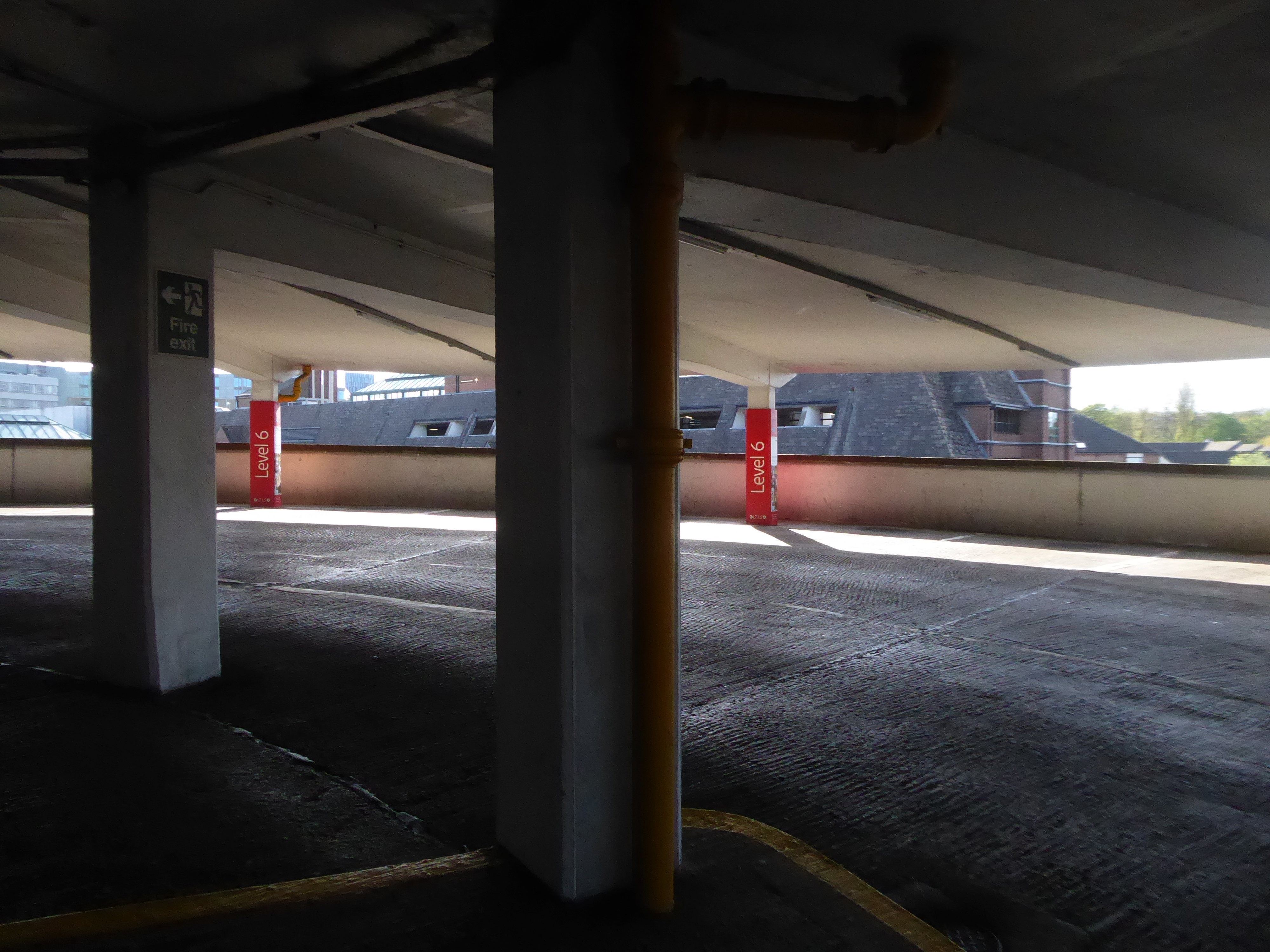
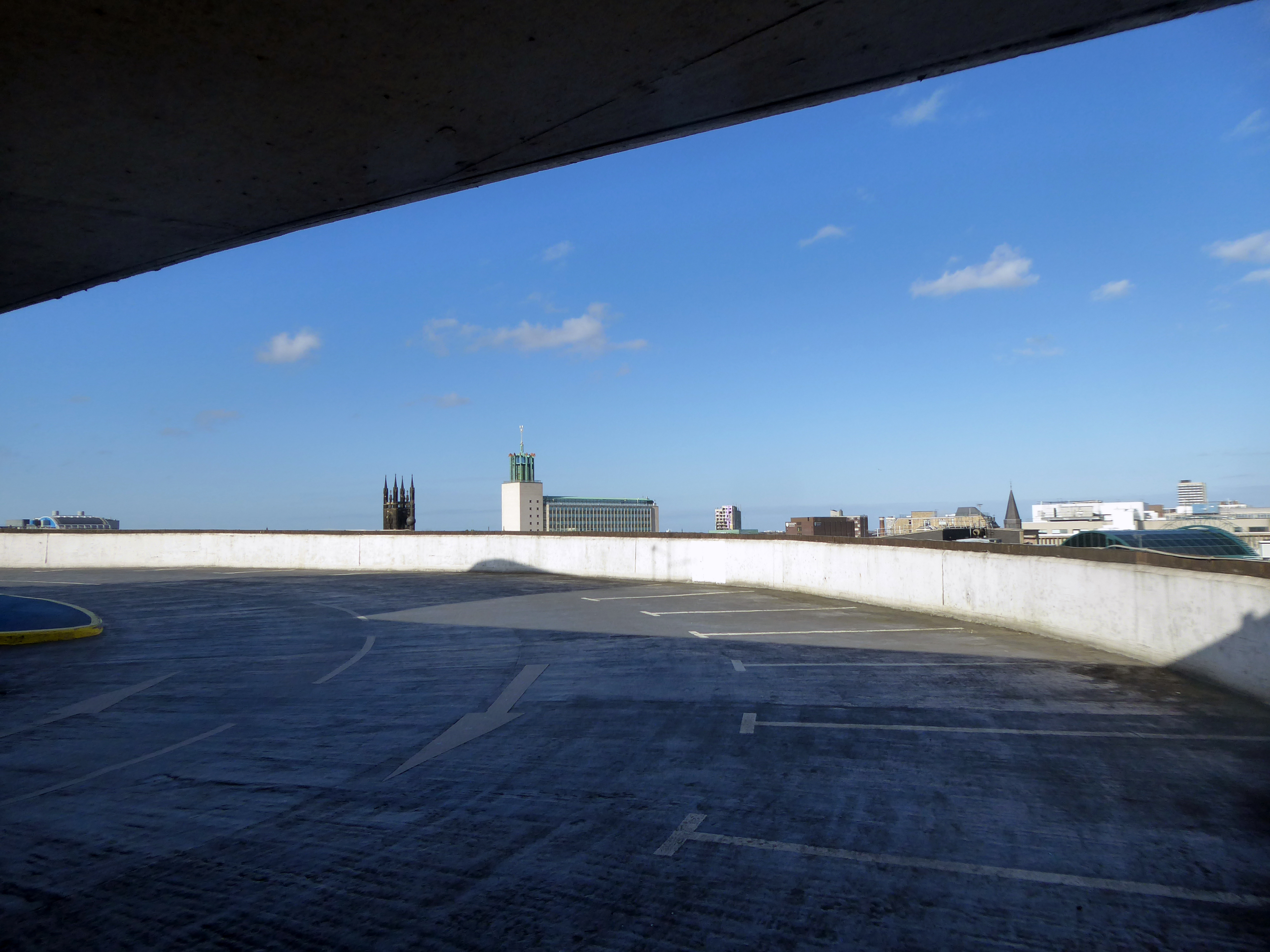
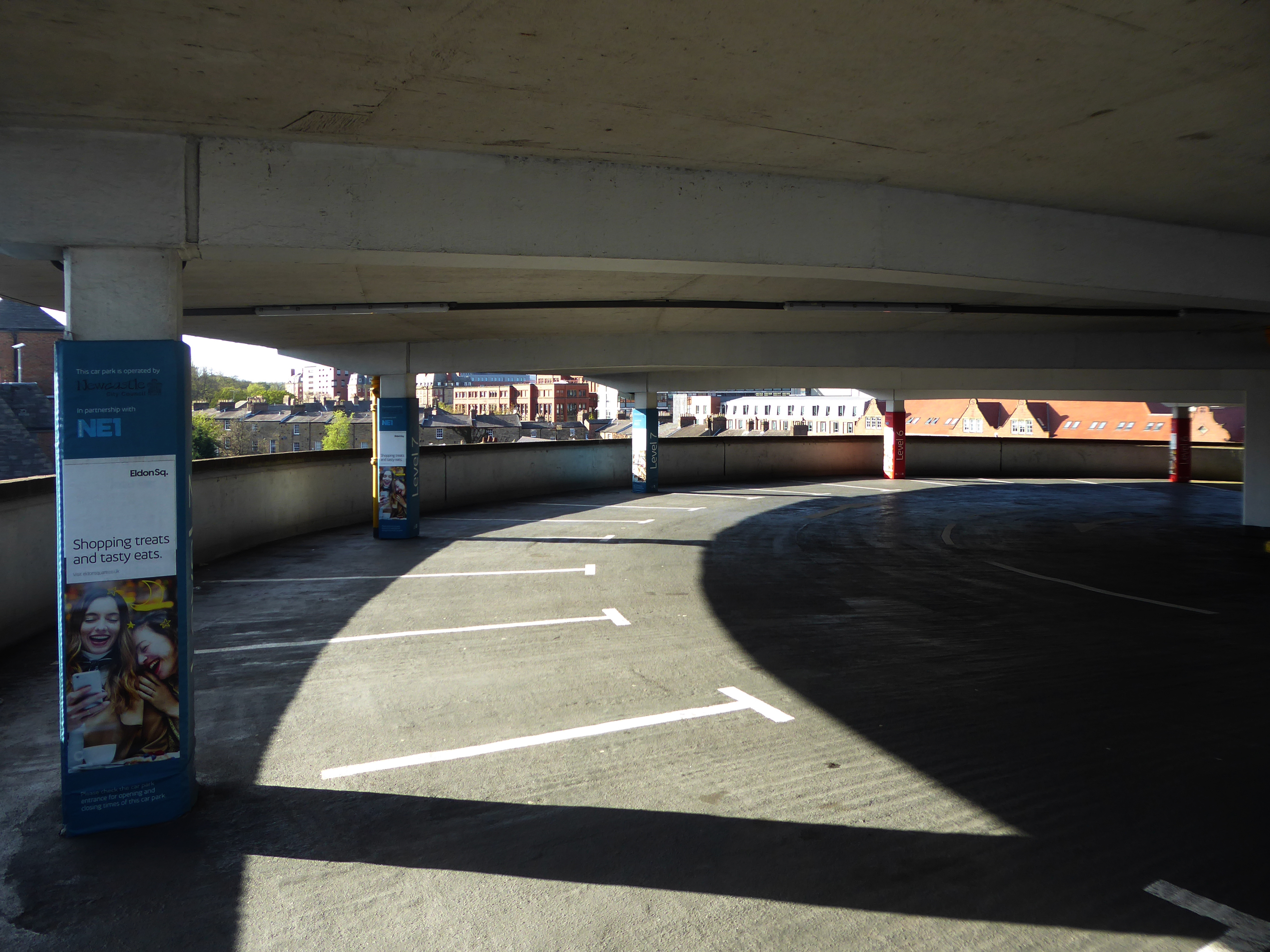
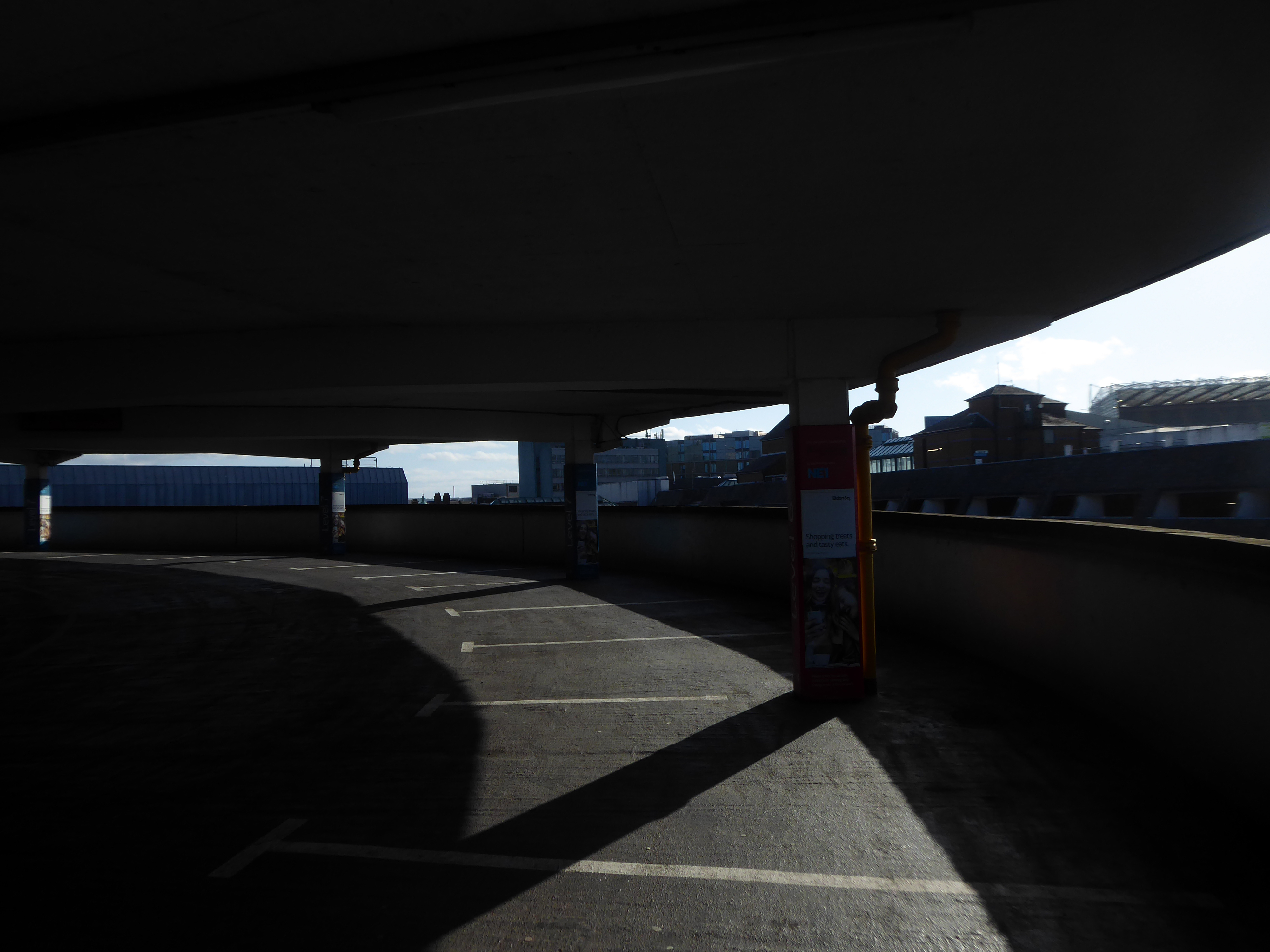
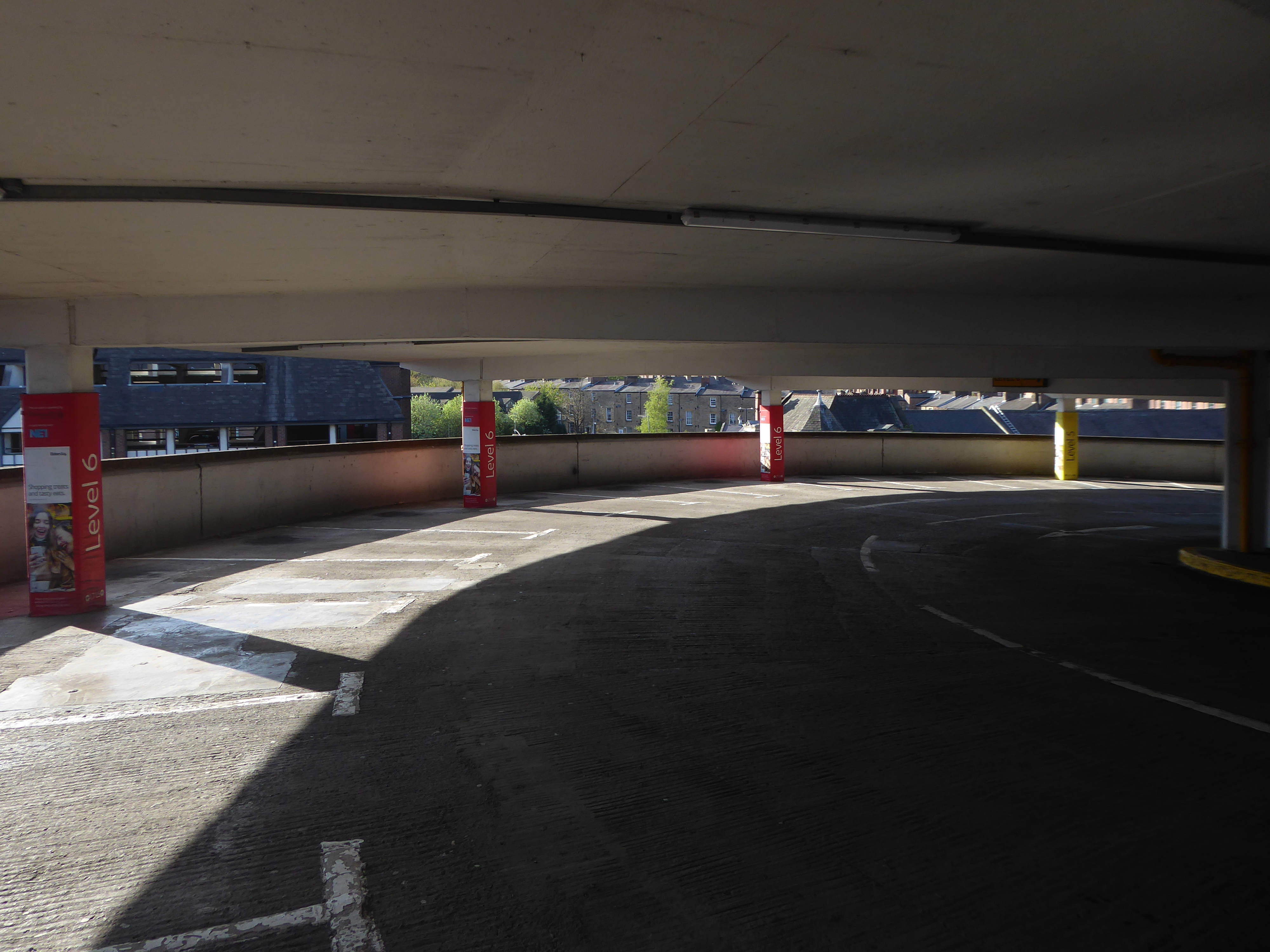














































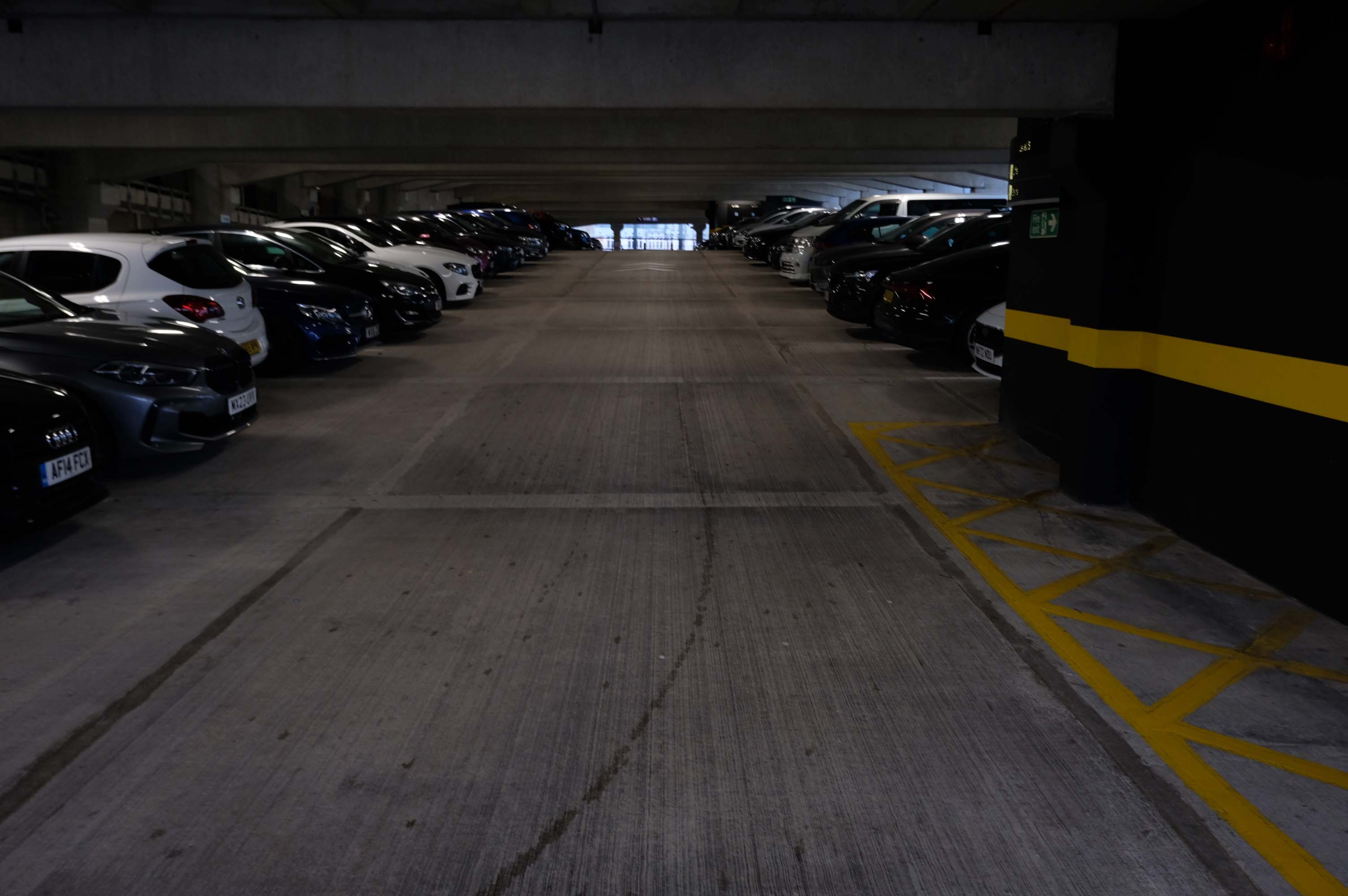

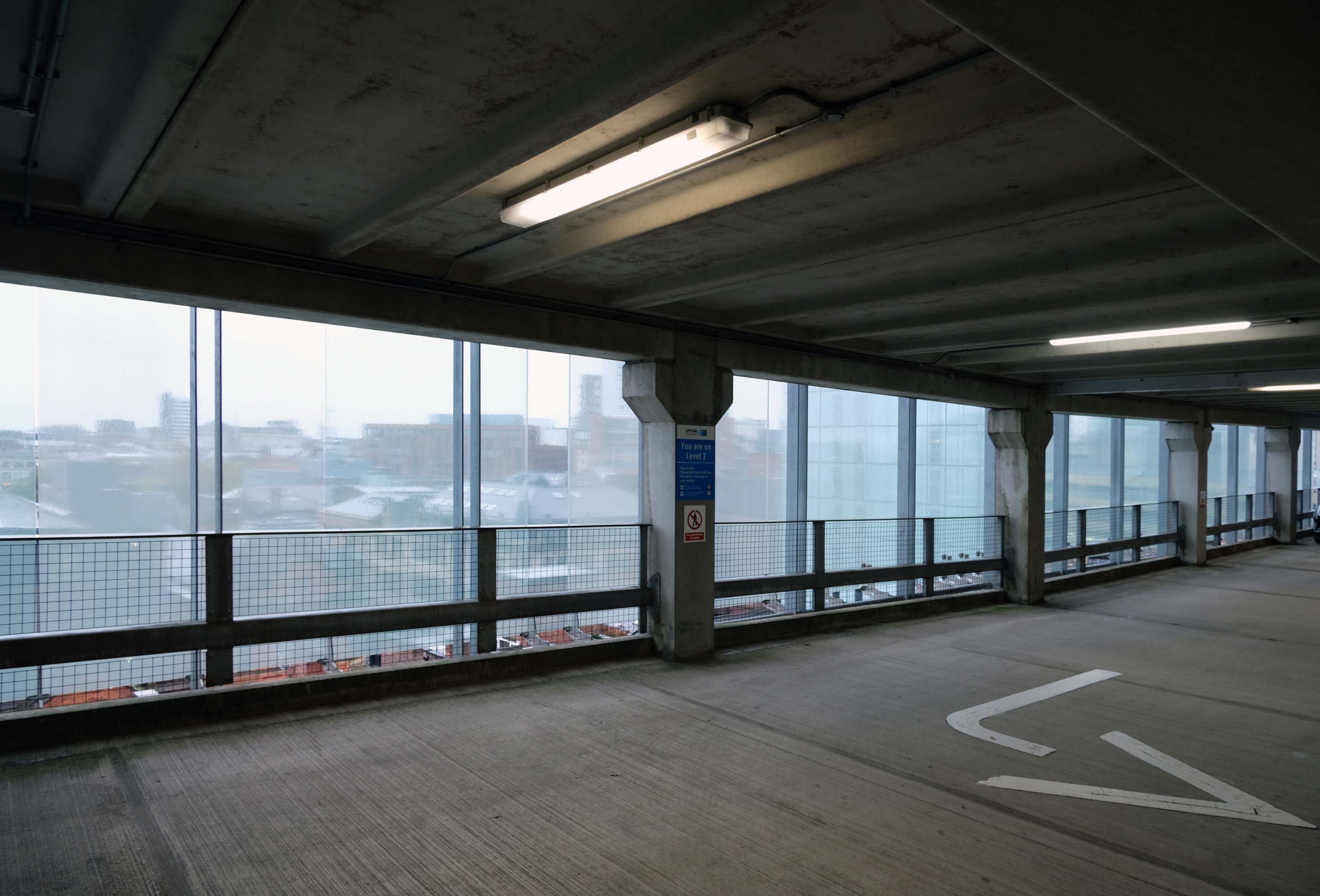
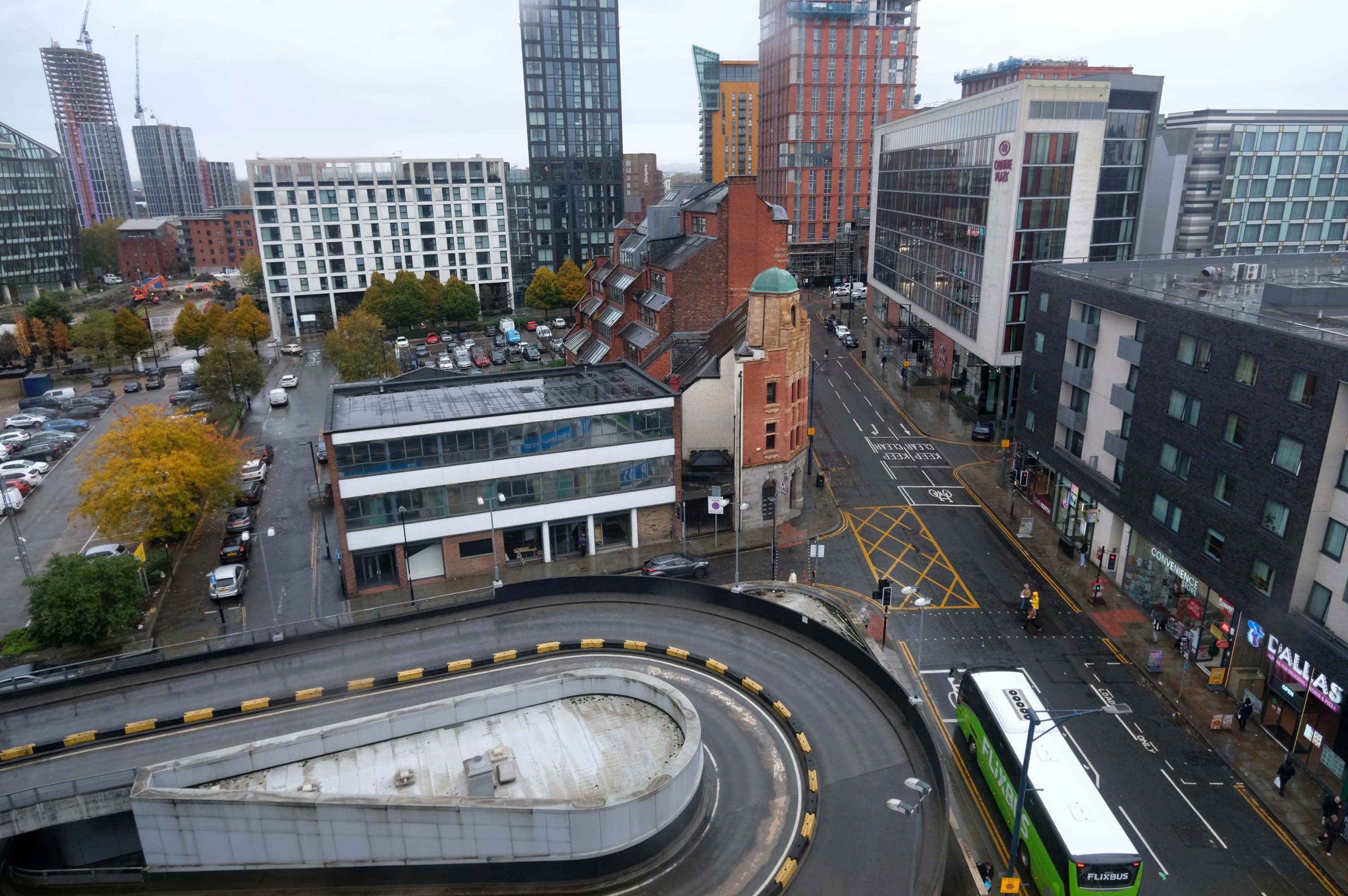
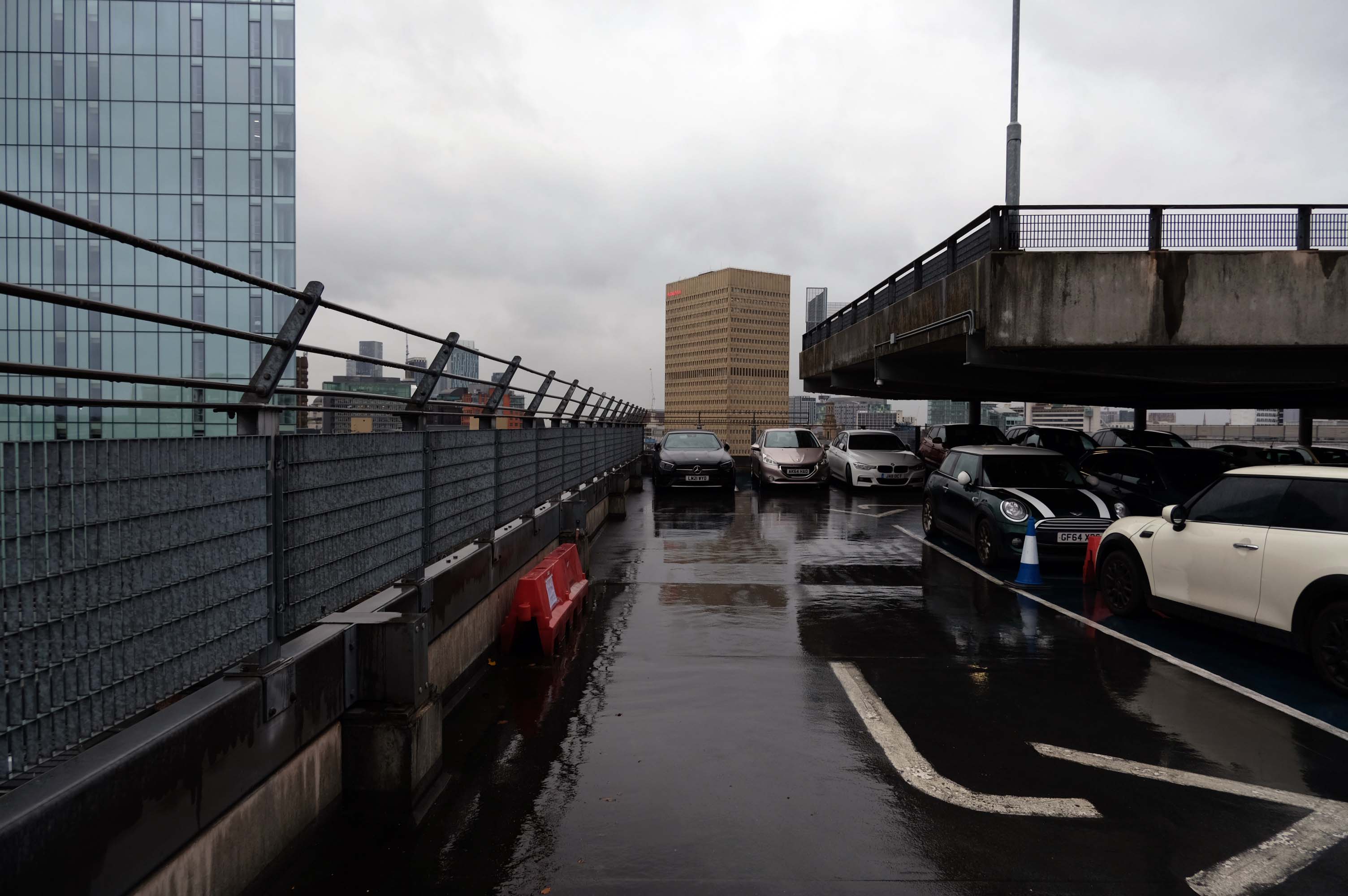















 Modern Mooch