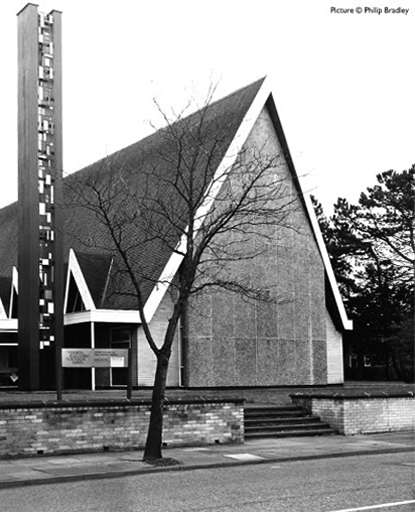
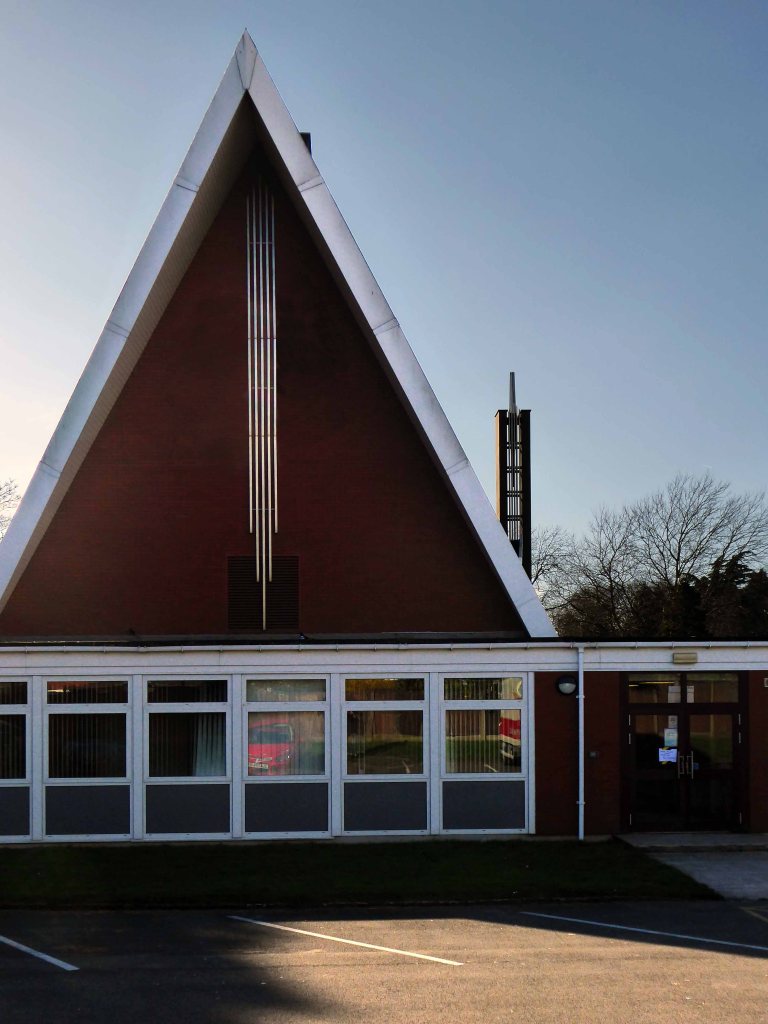
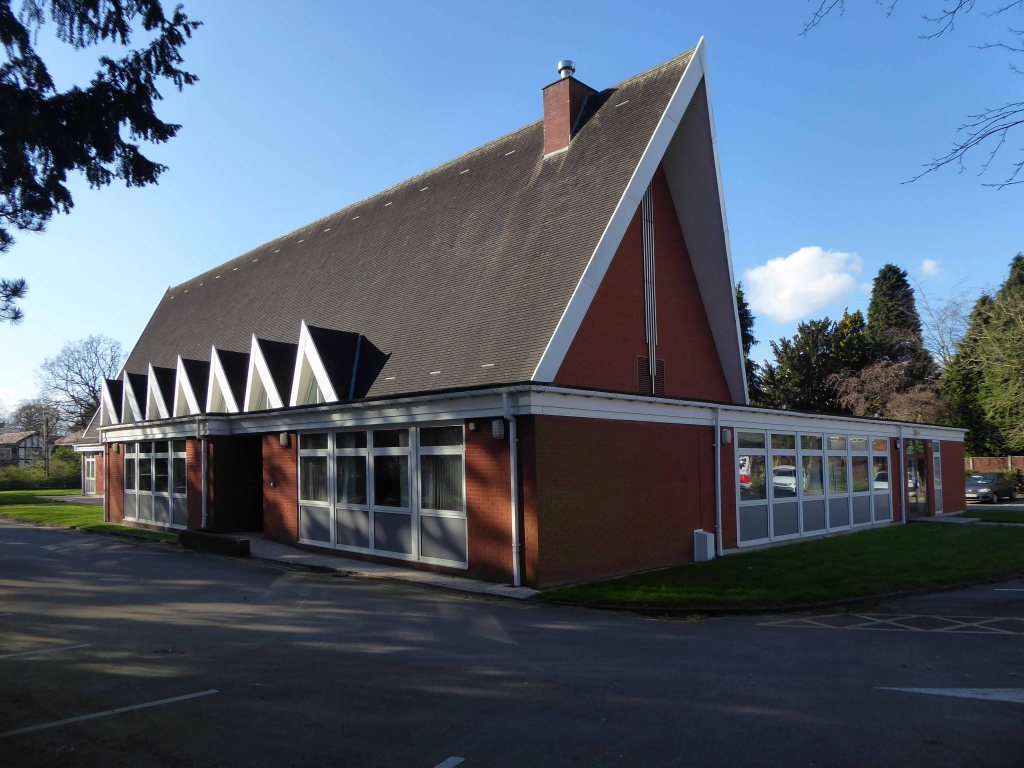
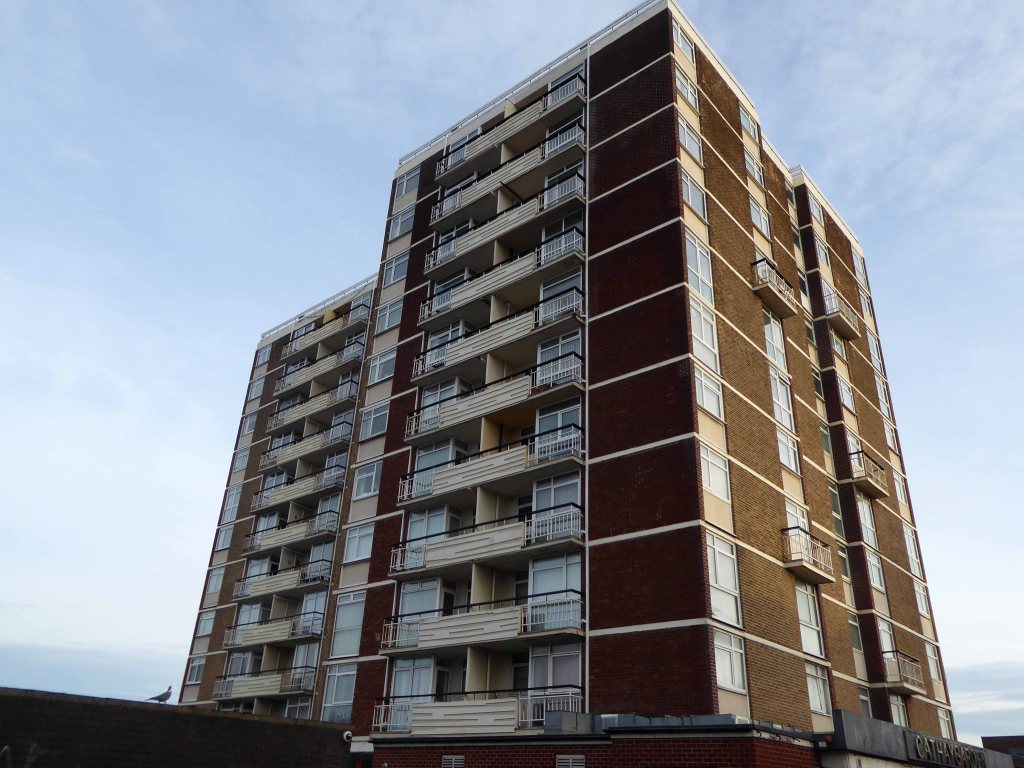
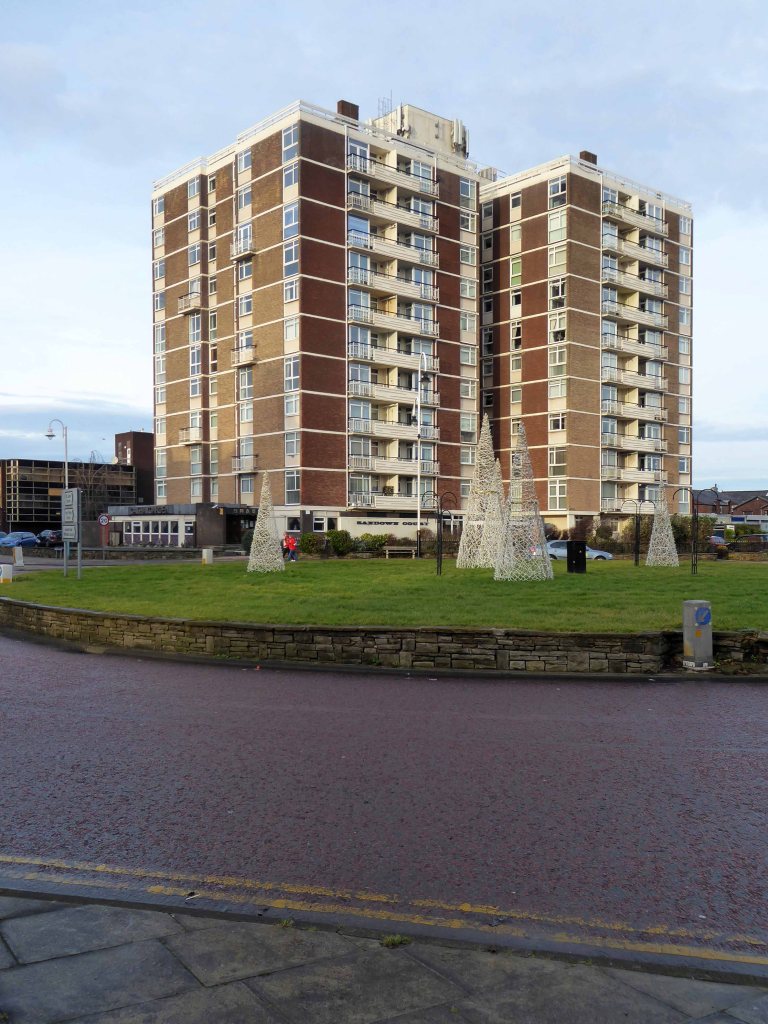
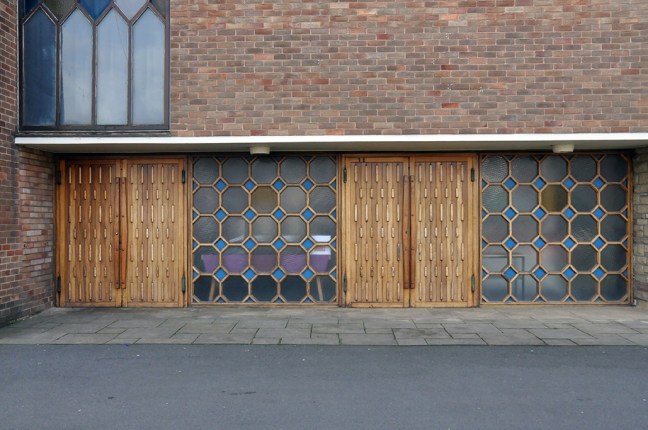
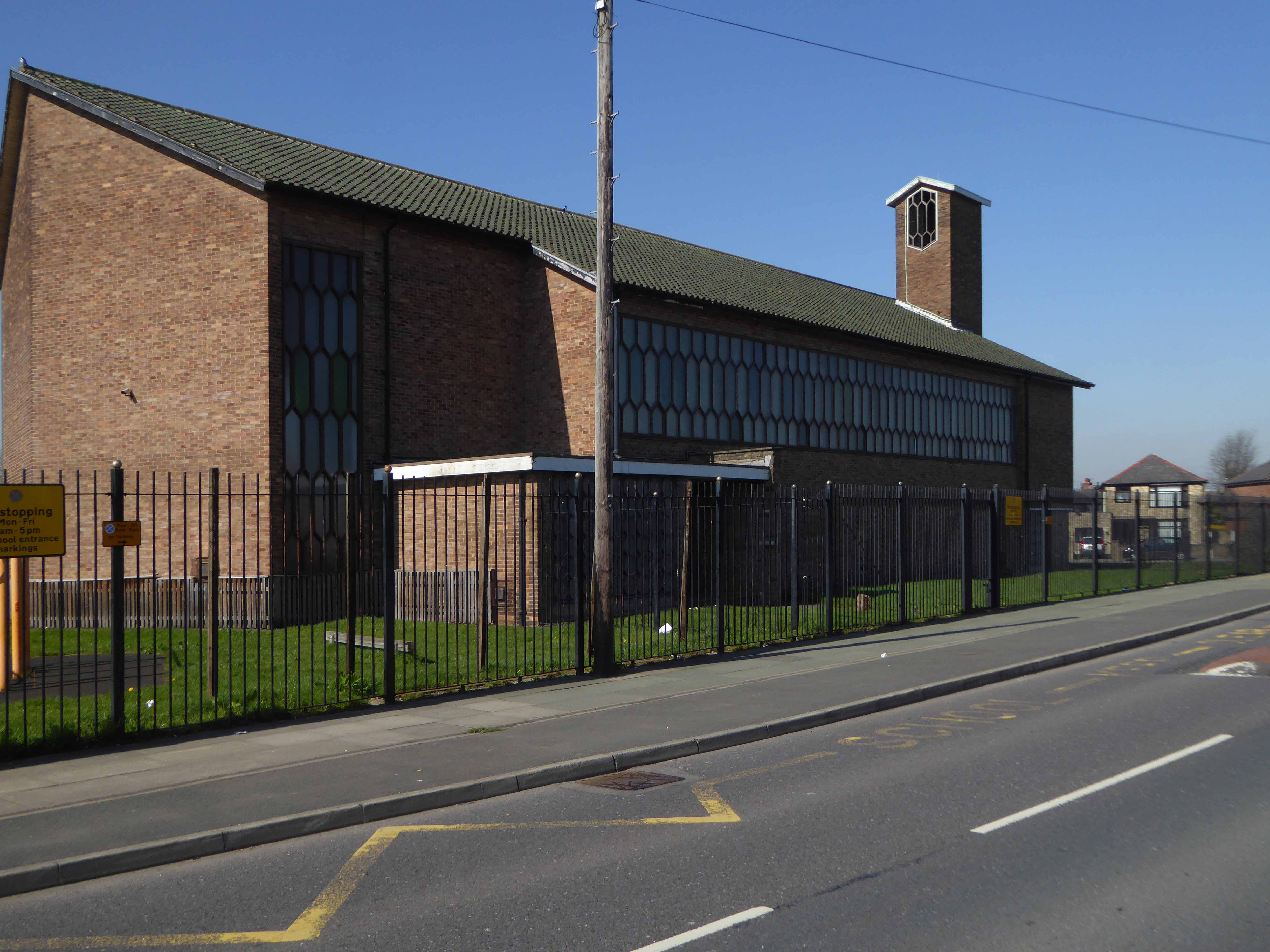
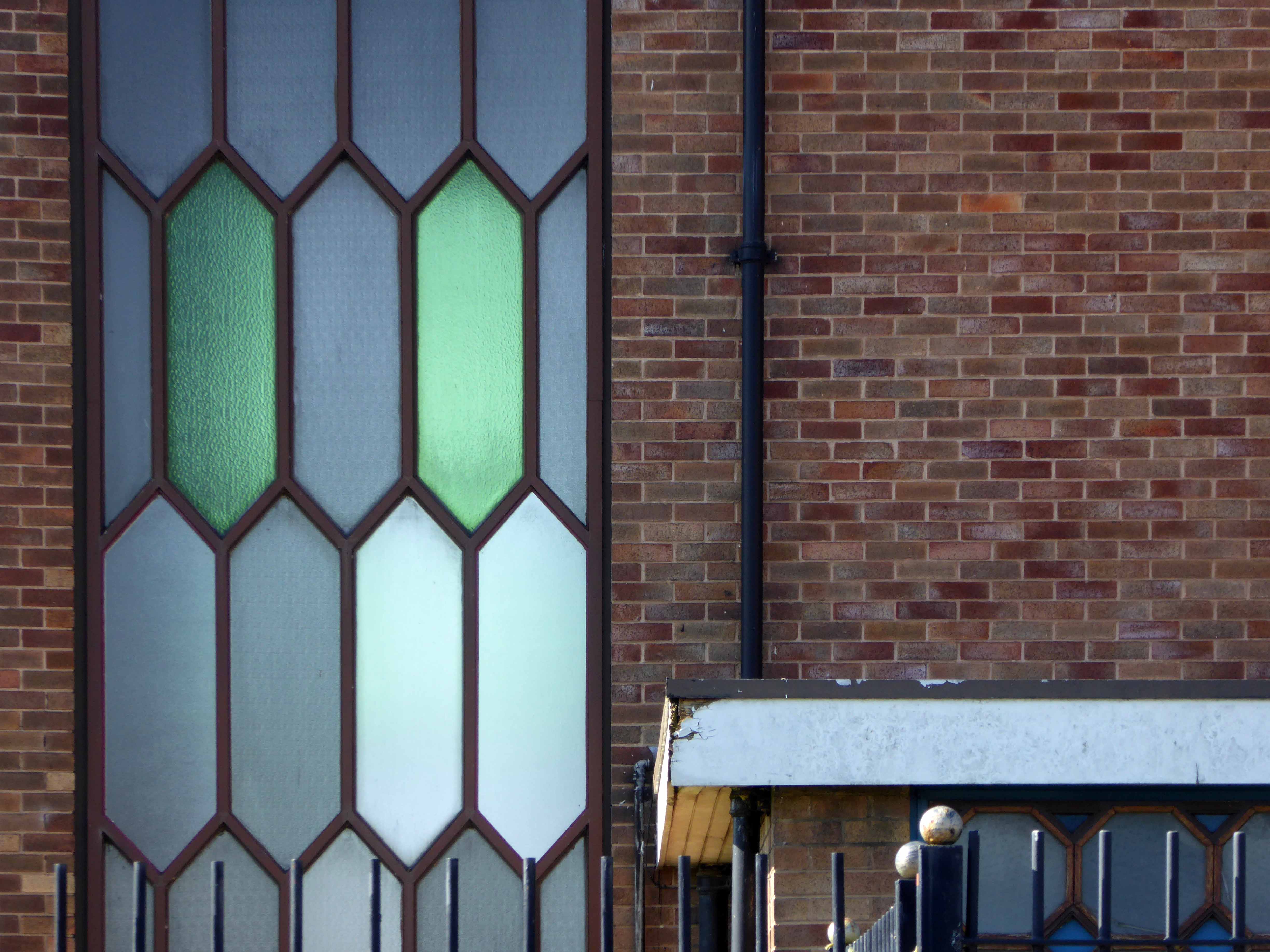
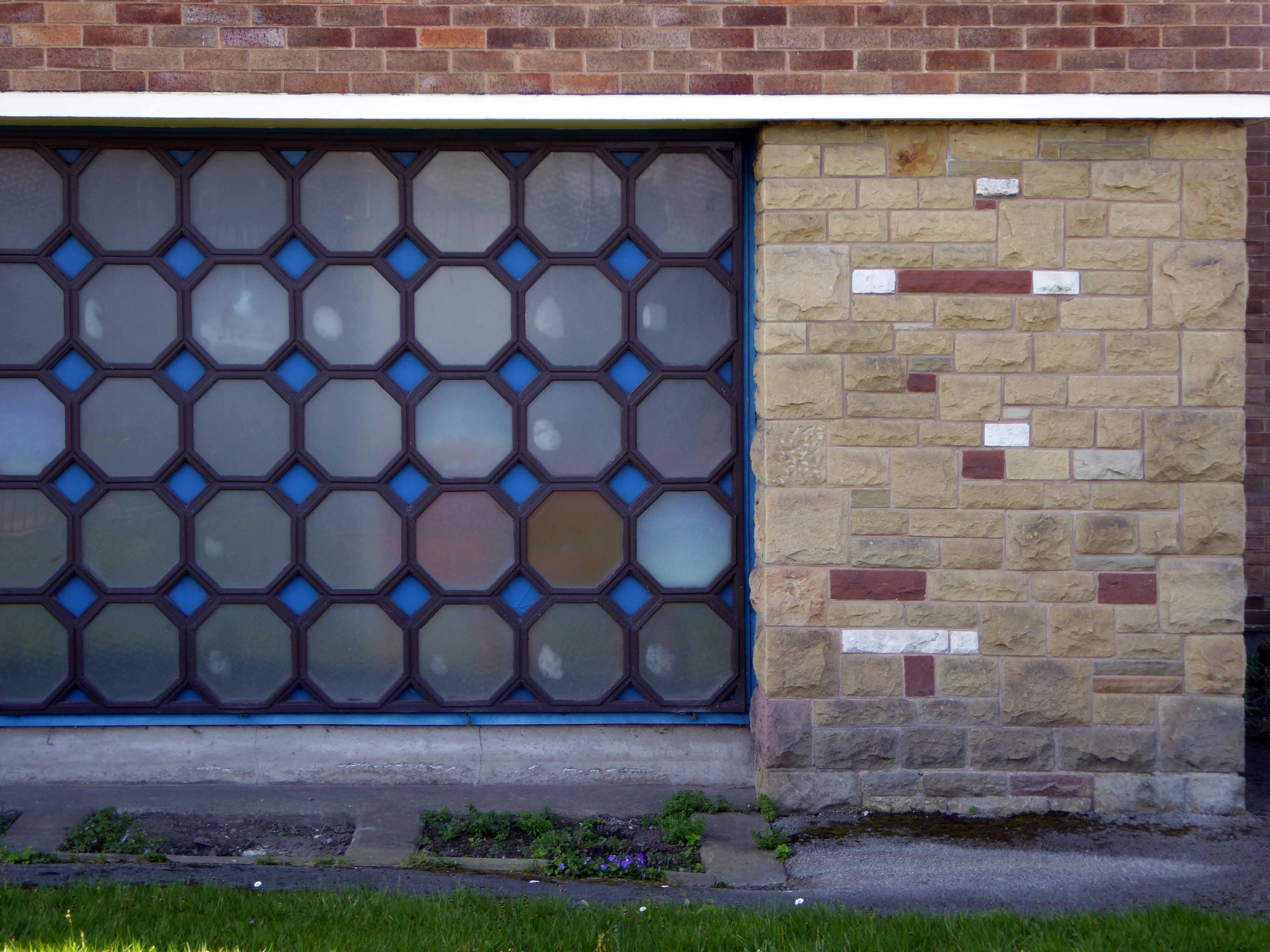
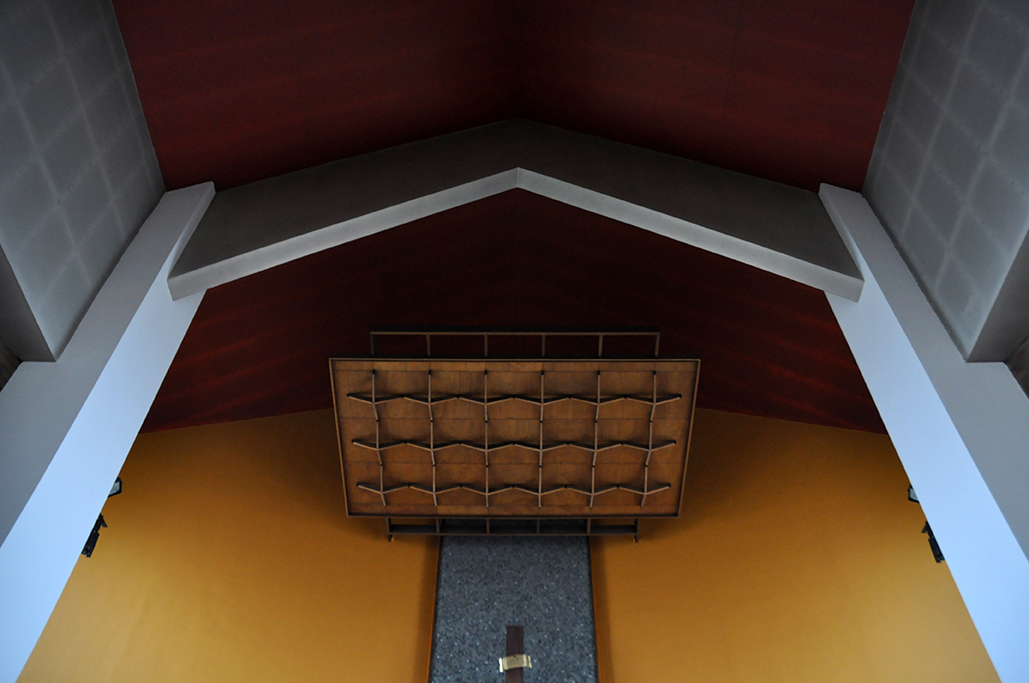
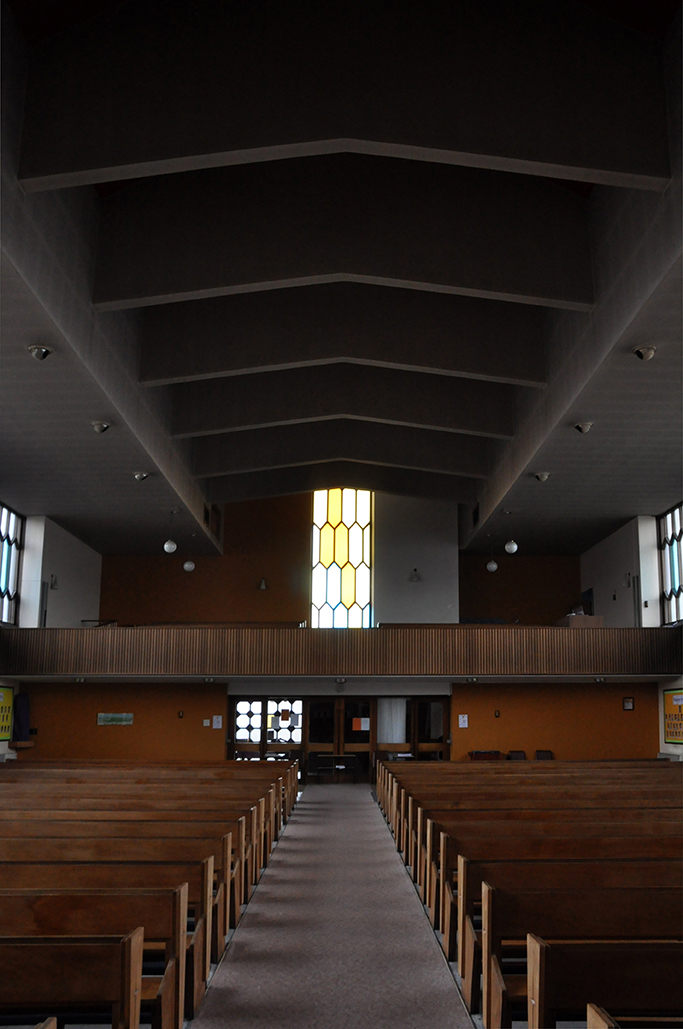
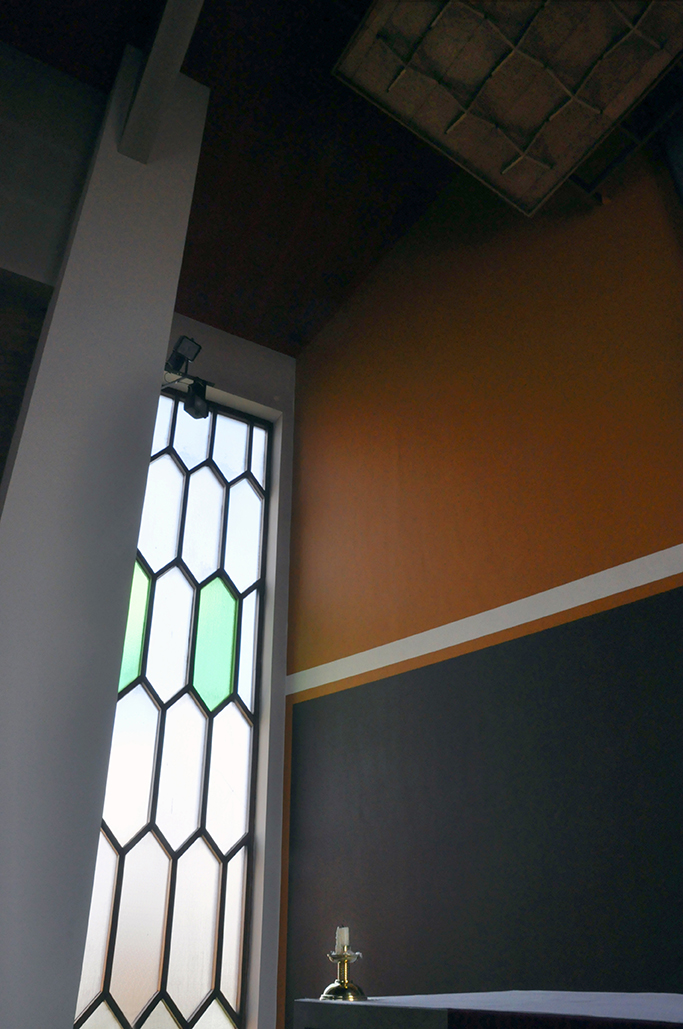
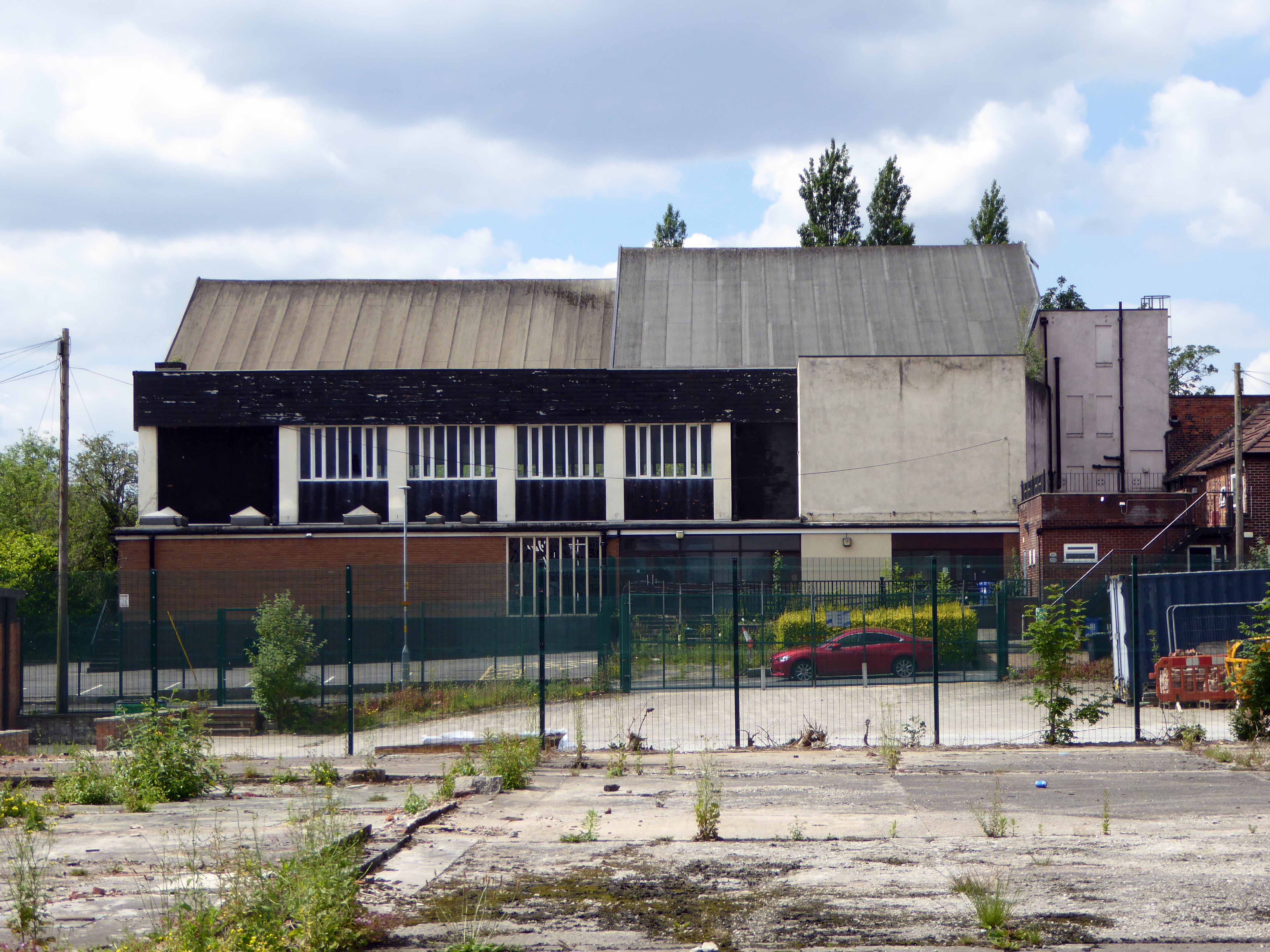
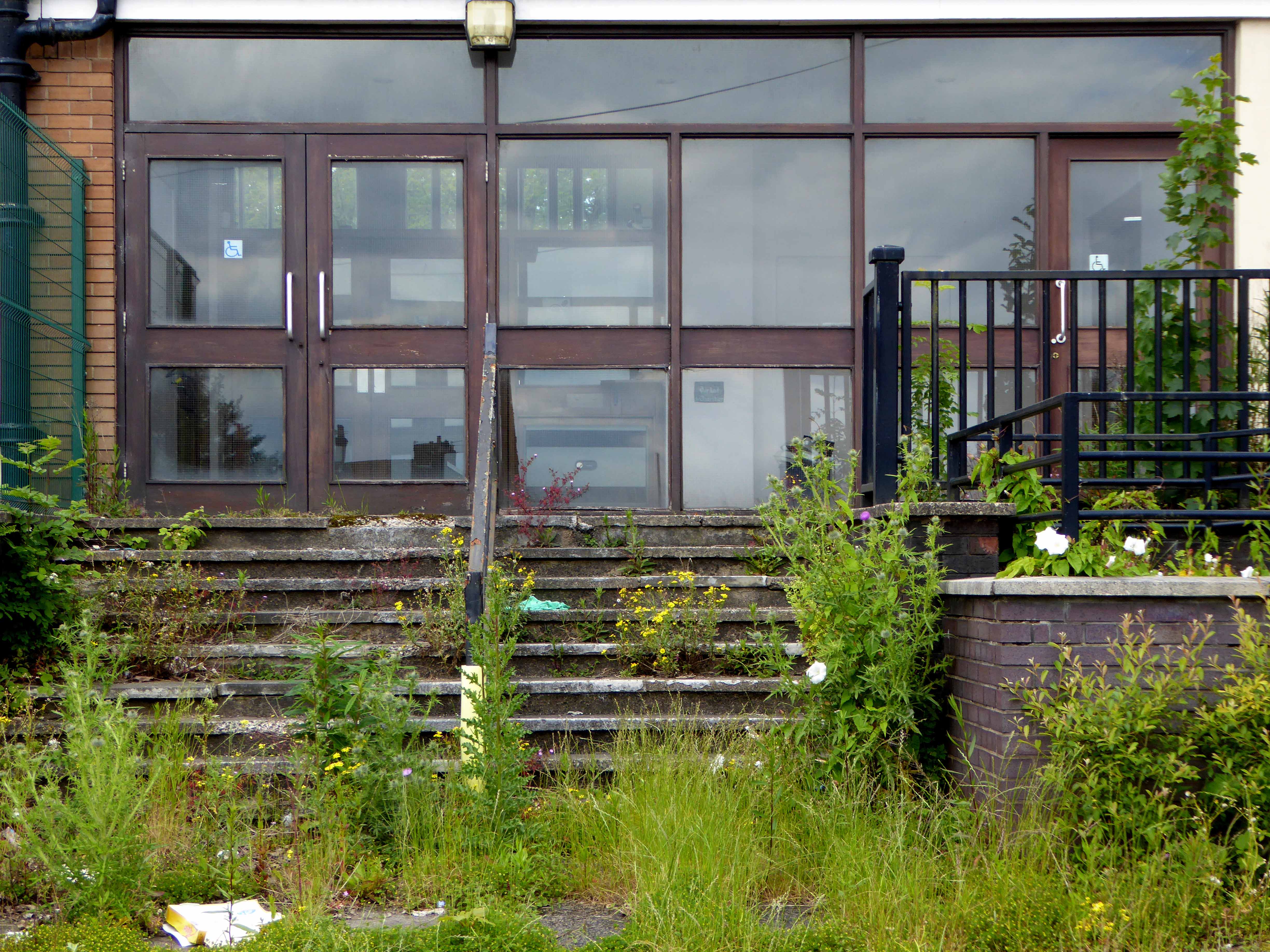
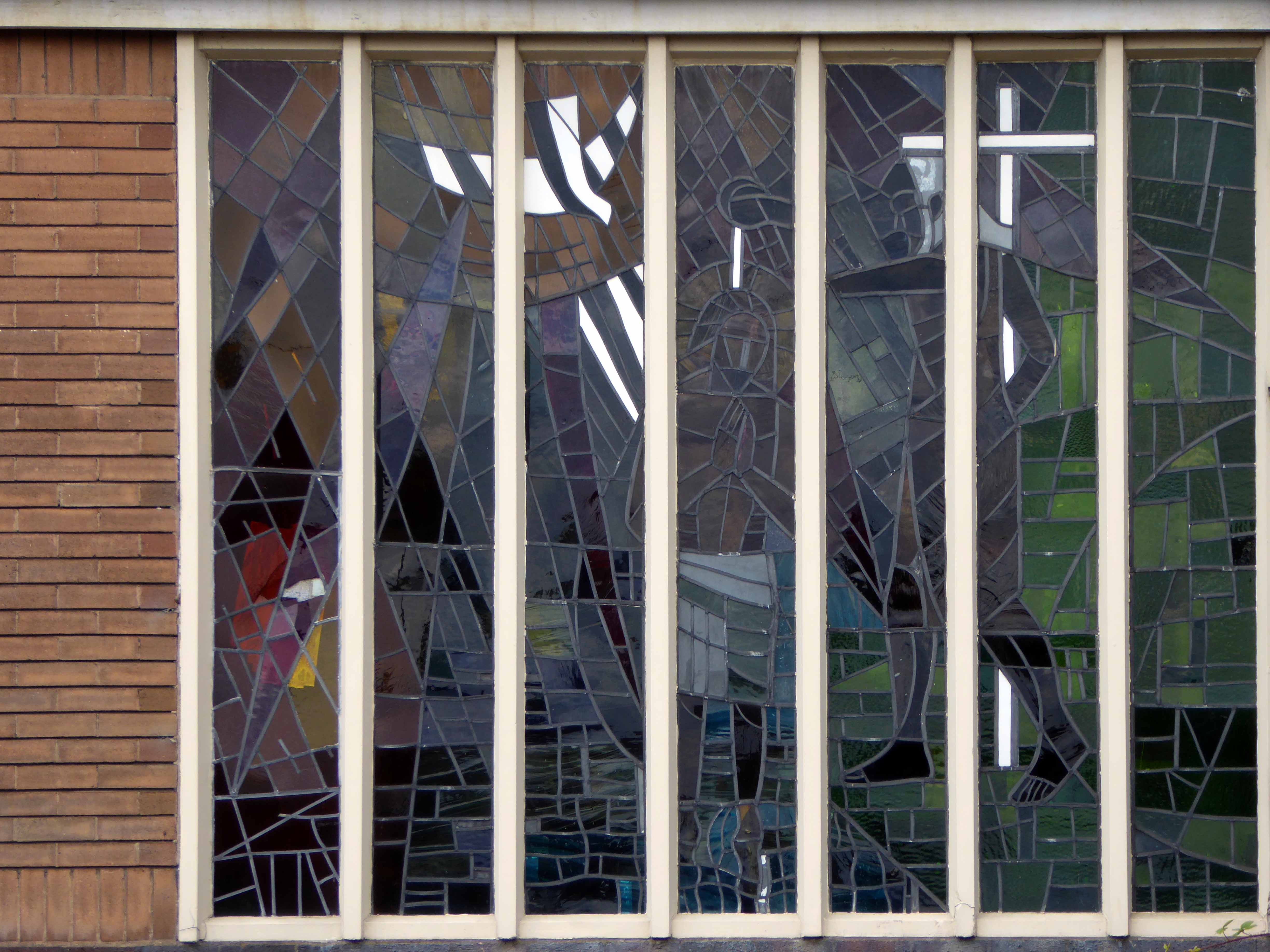
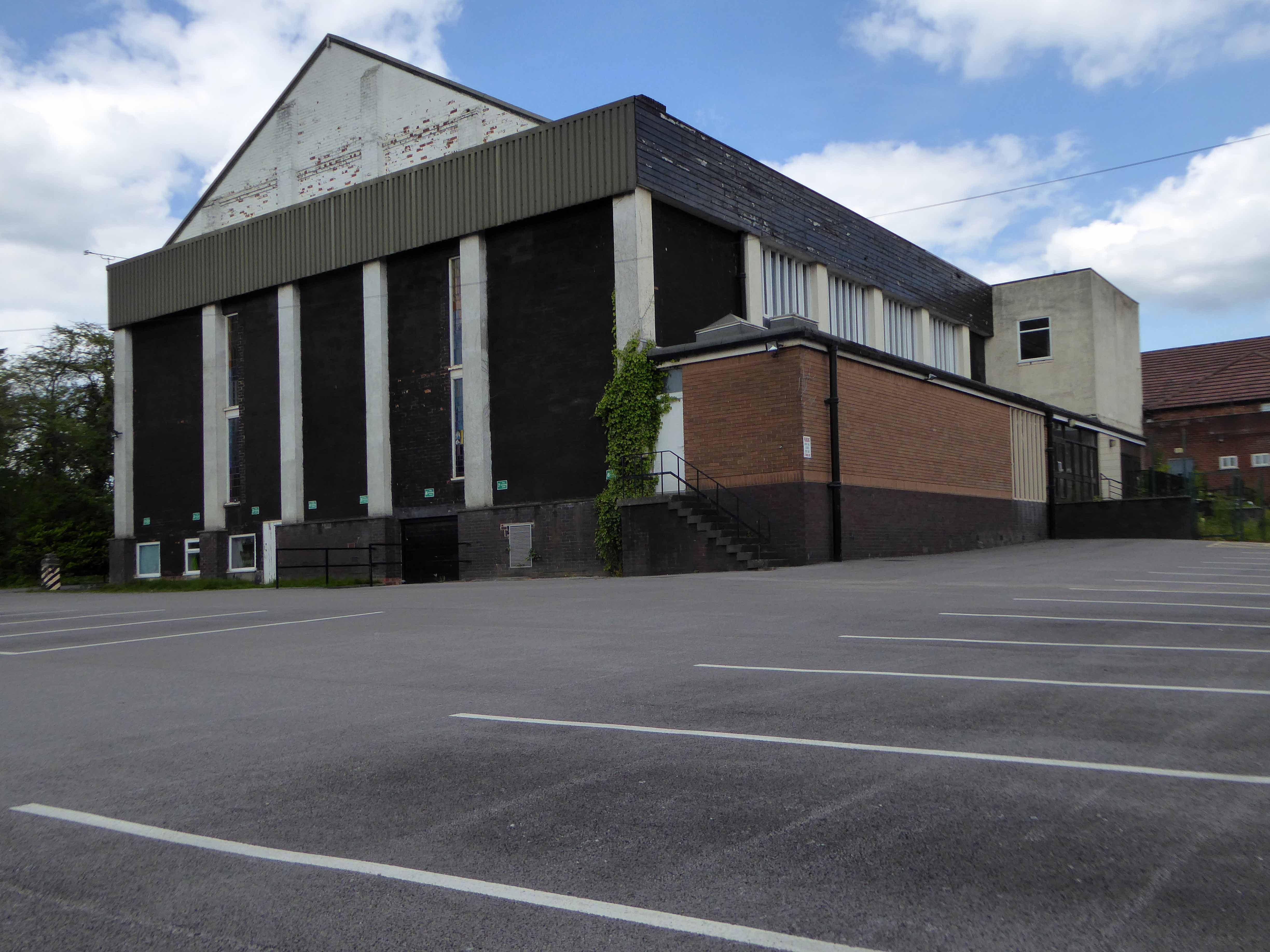
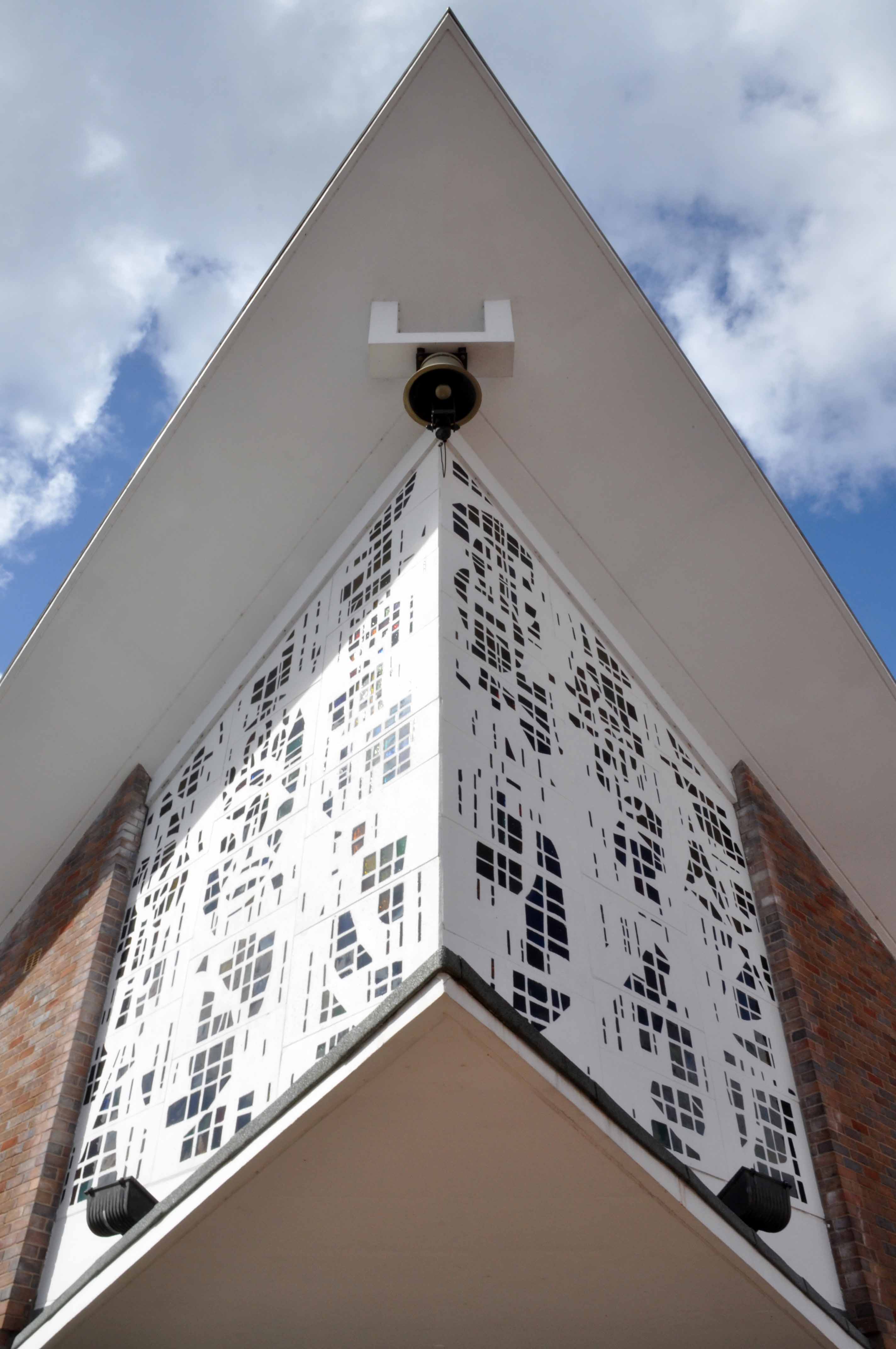
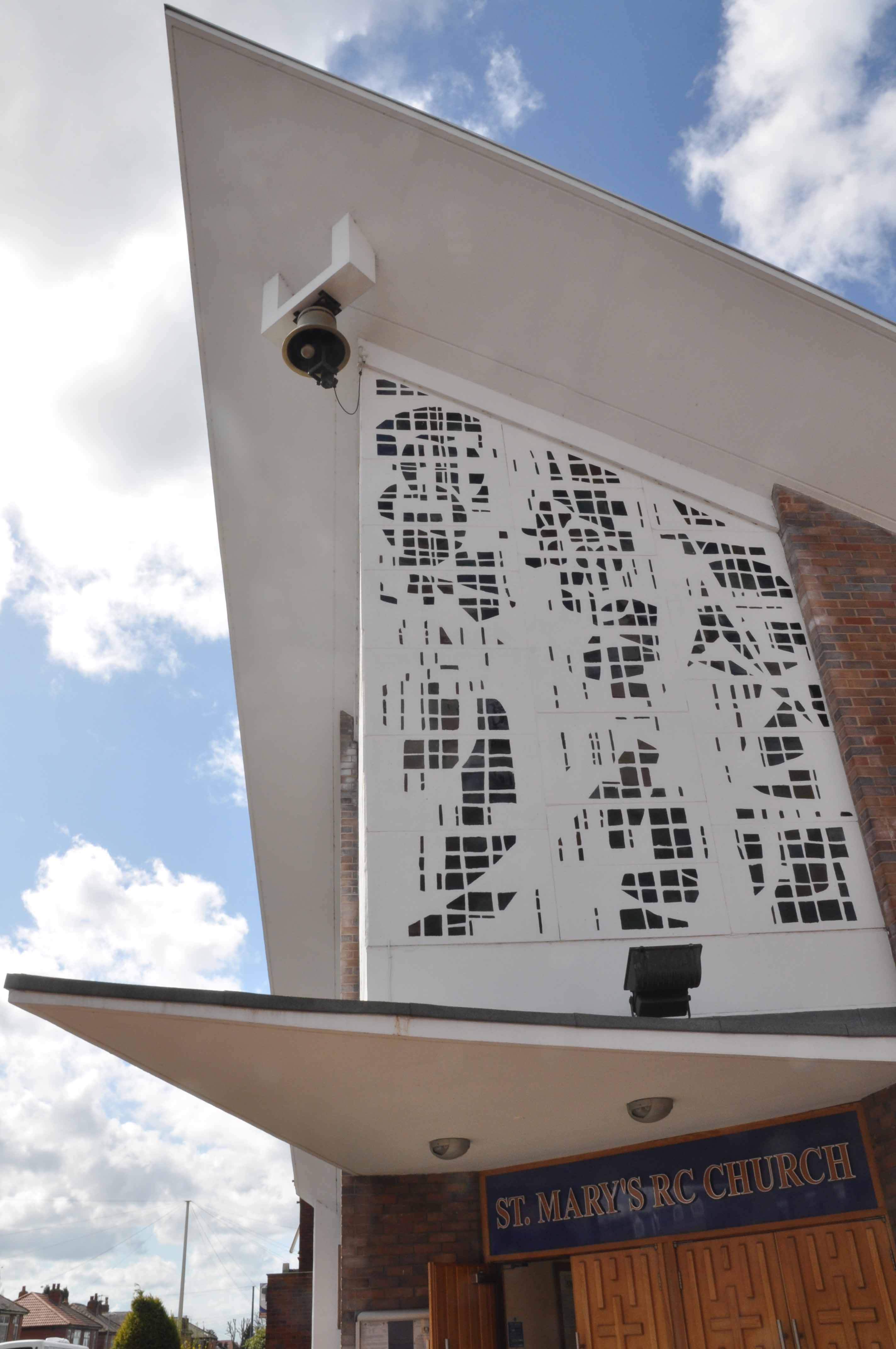
Built 1961-1963 – architects Ivan Johnston & Partners of Liverpool.
The proposed modernistic architecture of the building, caused some qualms among members of Stockport’s Planning and Development Committee, which was still discussing the plans early in 1962, but in the end it was built much as the architect had intended.
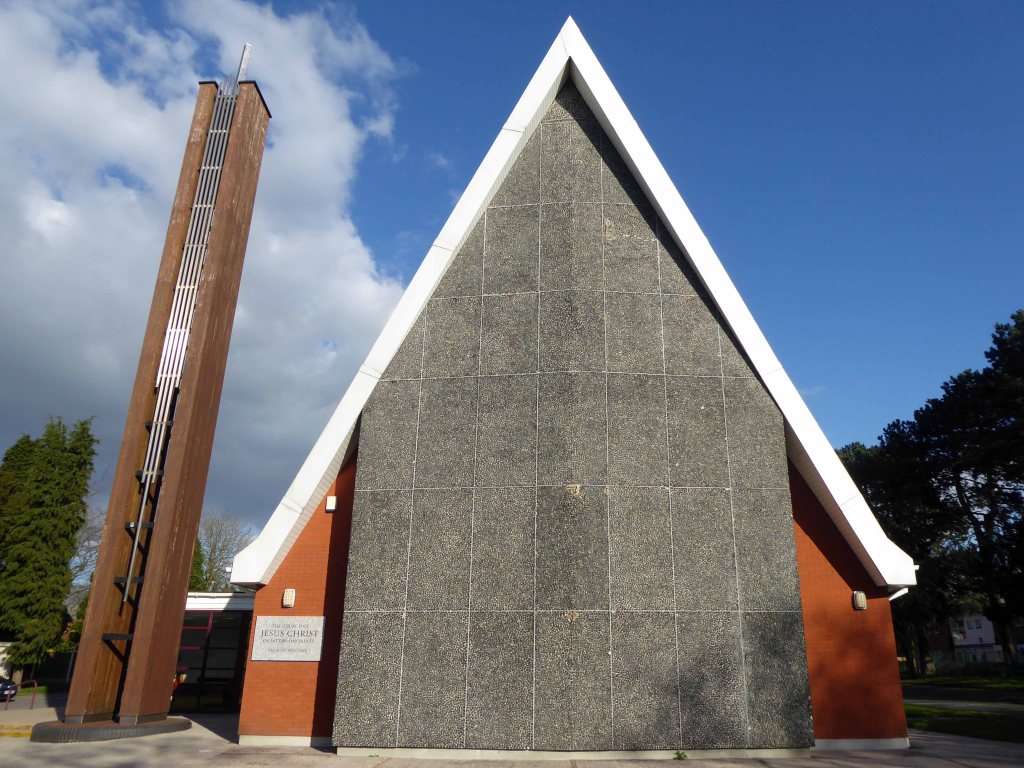
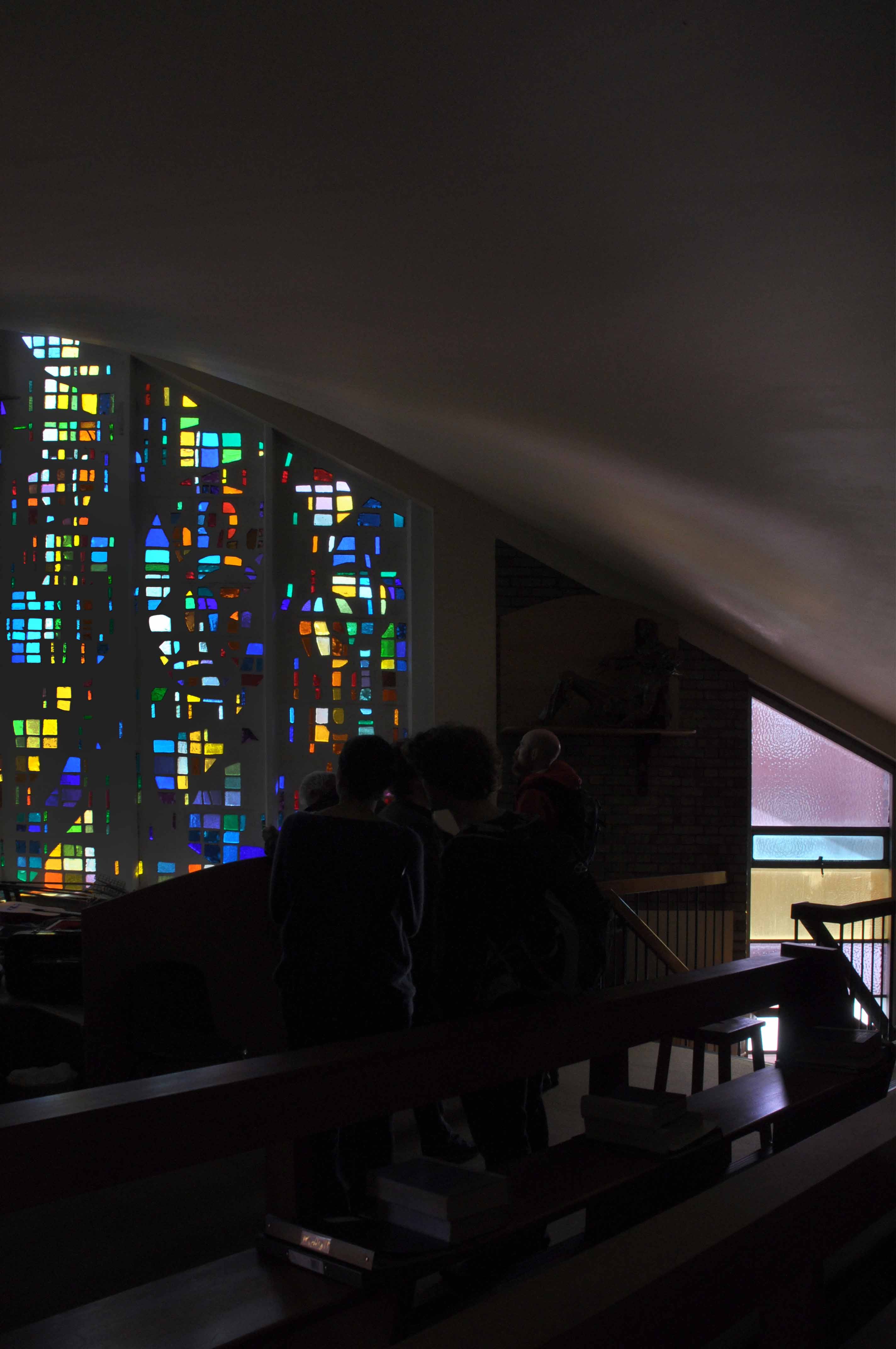
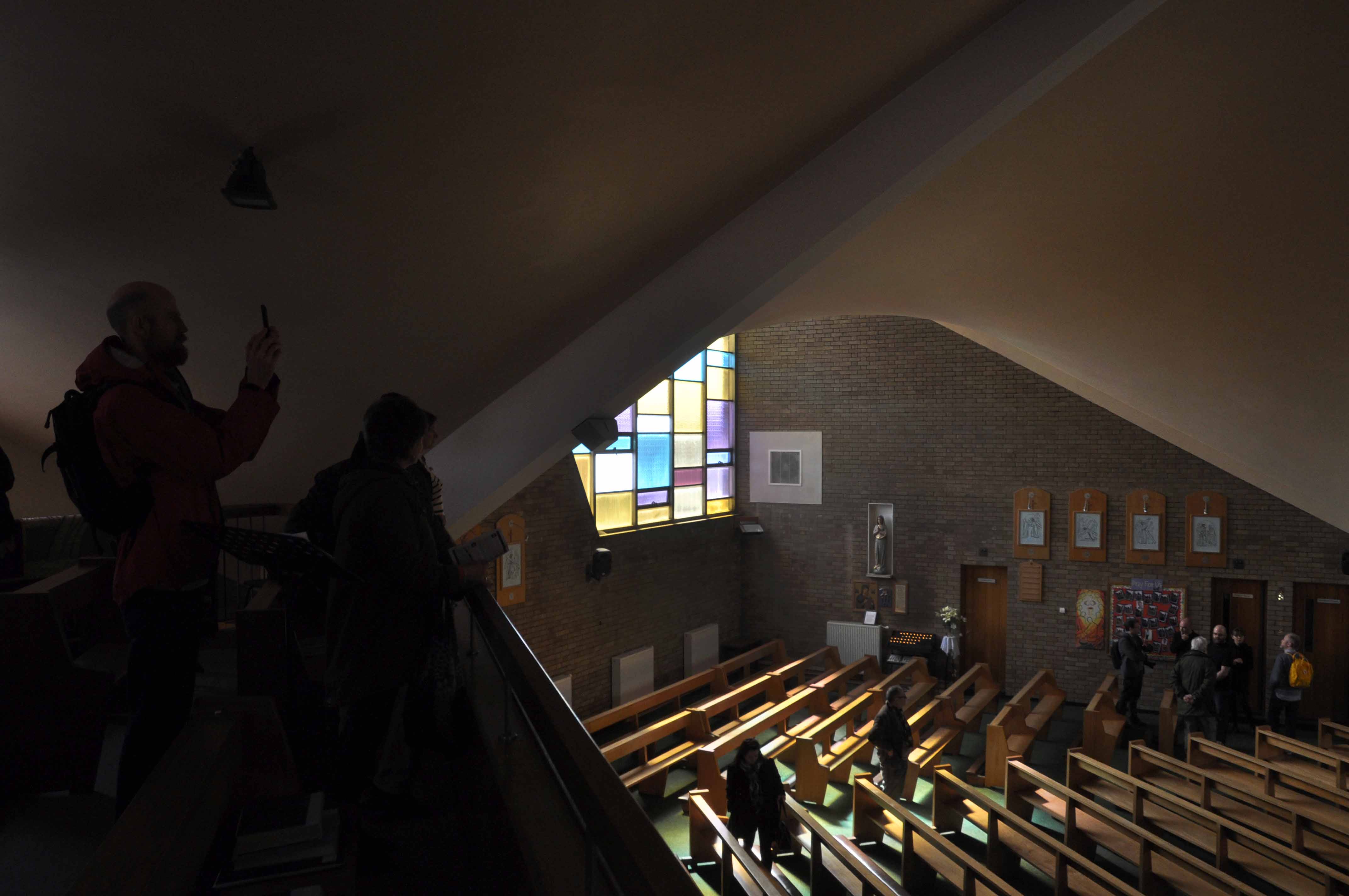
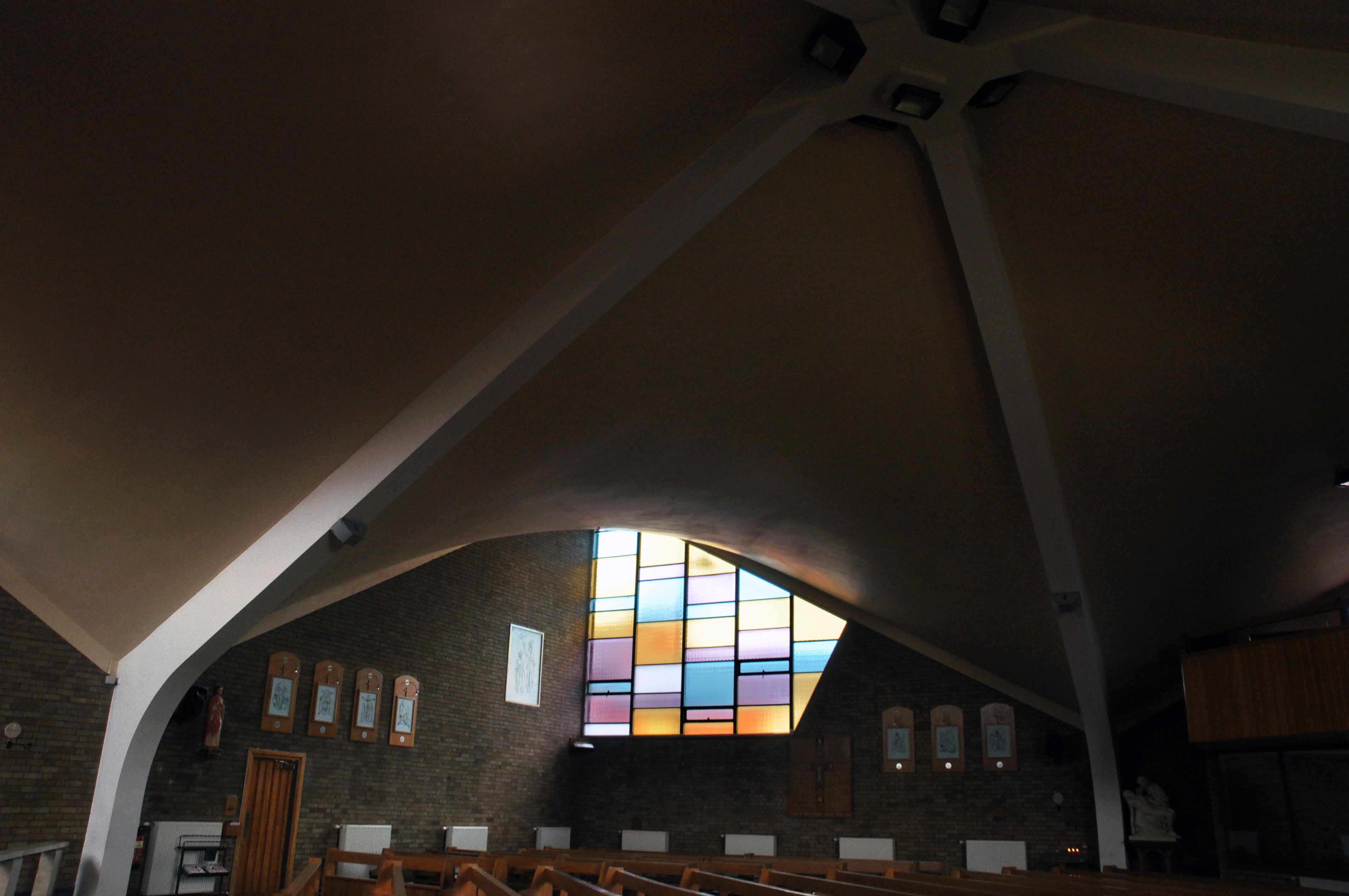
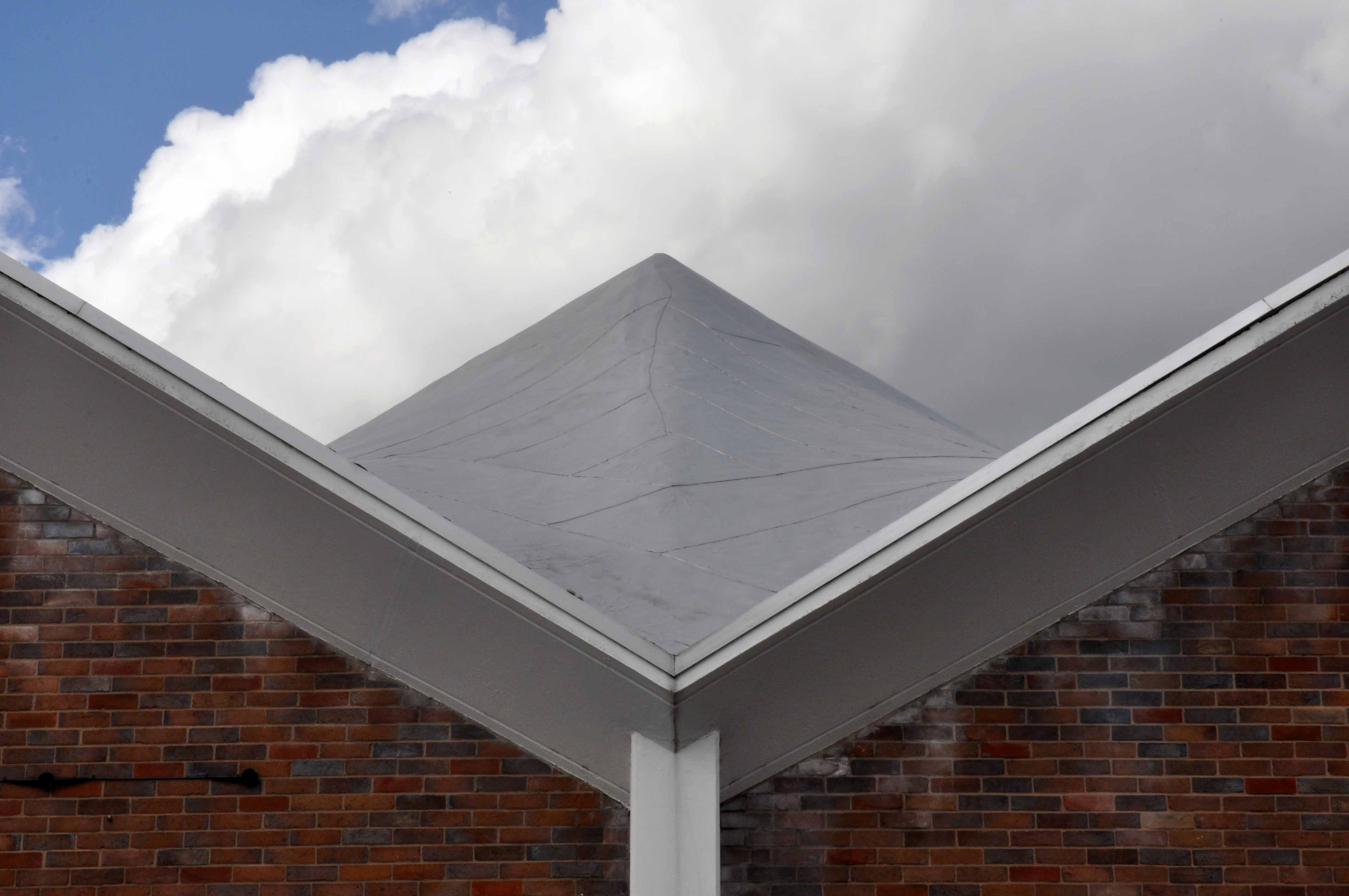
A 70ft. spire on Bramhall-lane Davenport, will be a new landmark in Stockport next year when the no-labour-cost £41,000 chapel of the Mormons – The Church of Latter-Day Saints, from America – is expected to be complete. The Stockport branch of 150 members will fund over £8000 of the cost and will provide food, shelter and pocket money for volunteer builders from all over the country.
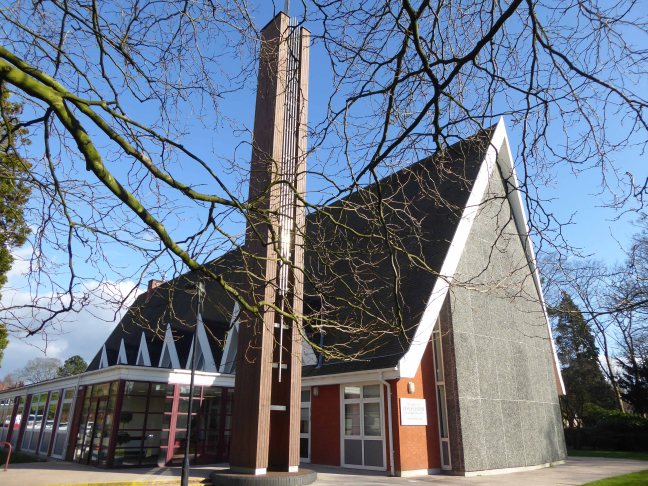
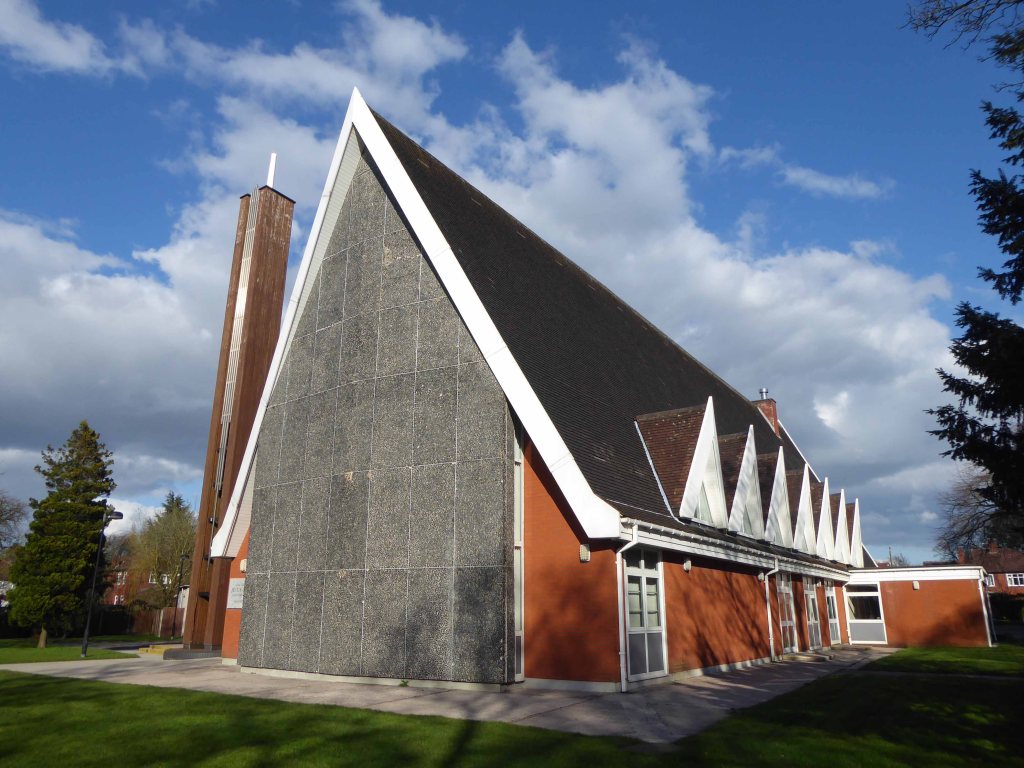
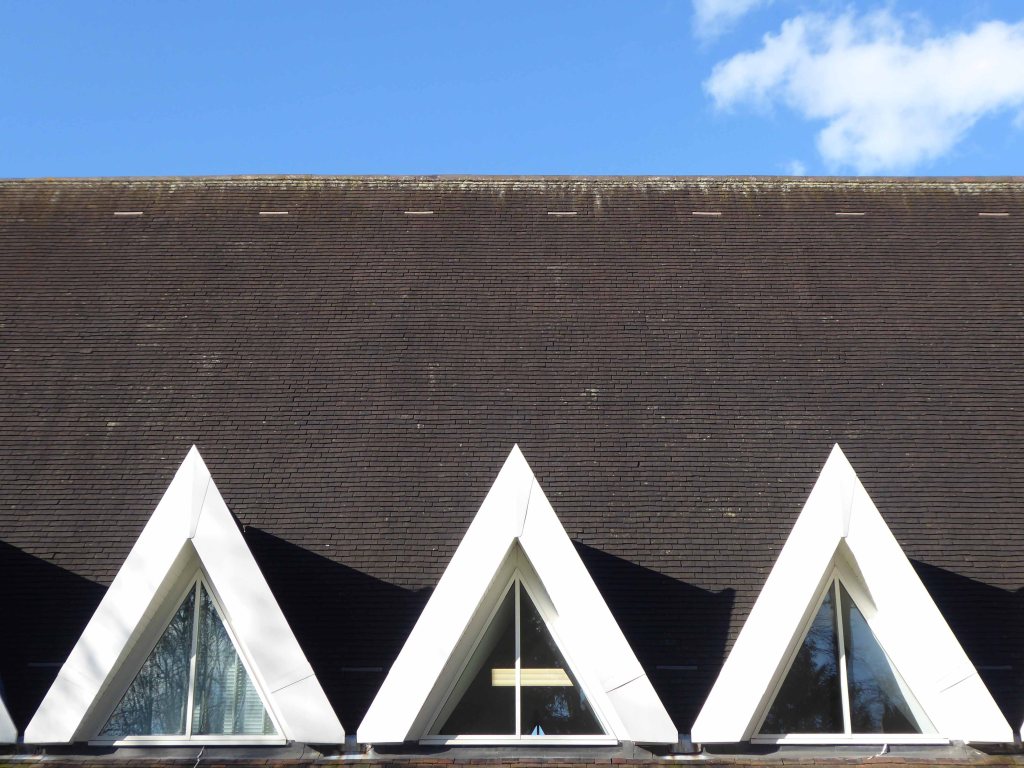
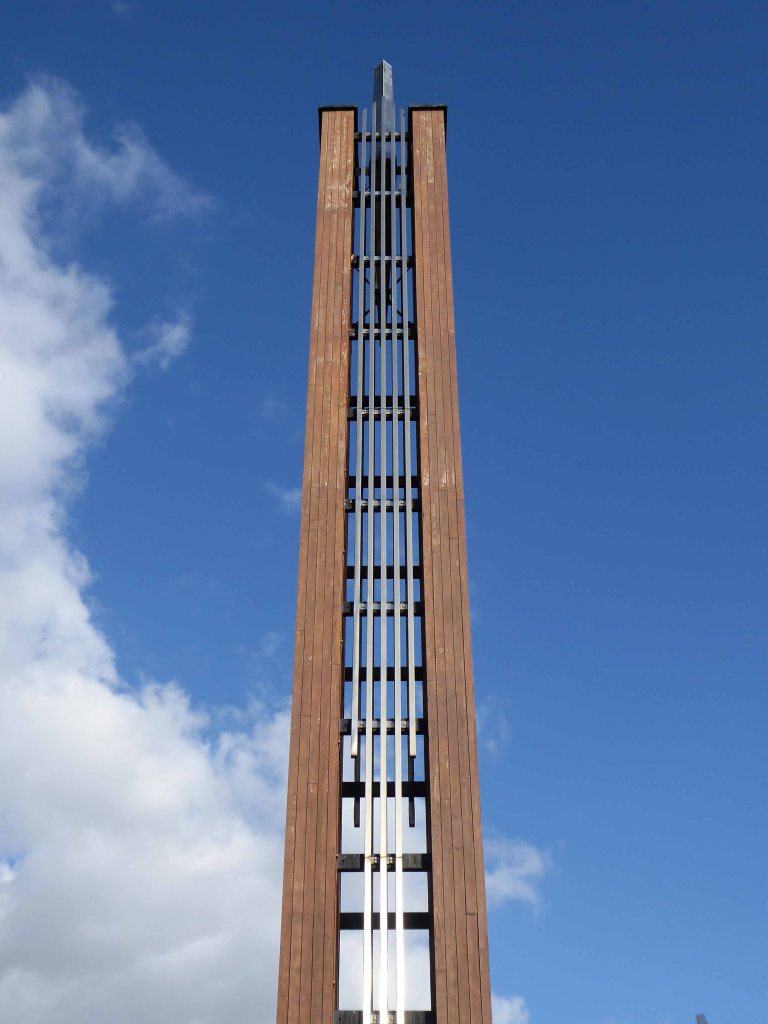
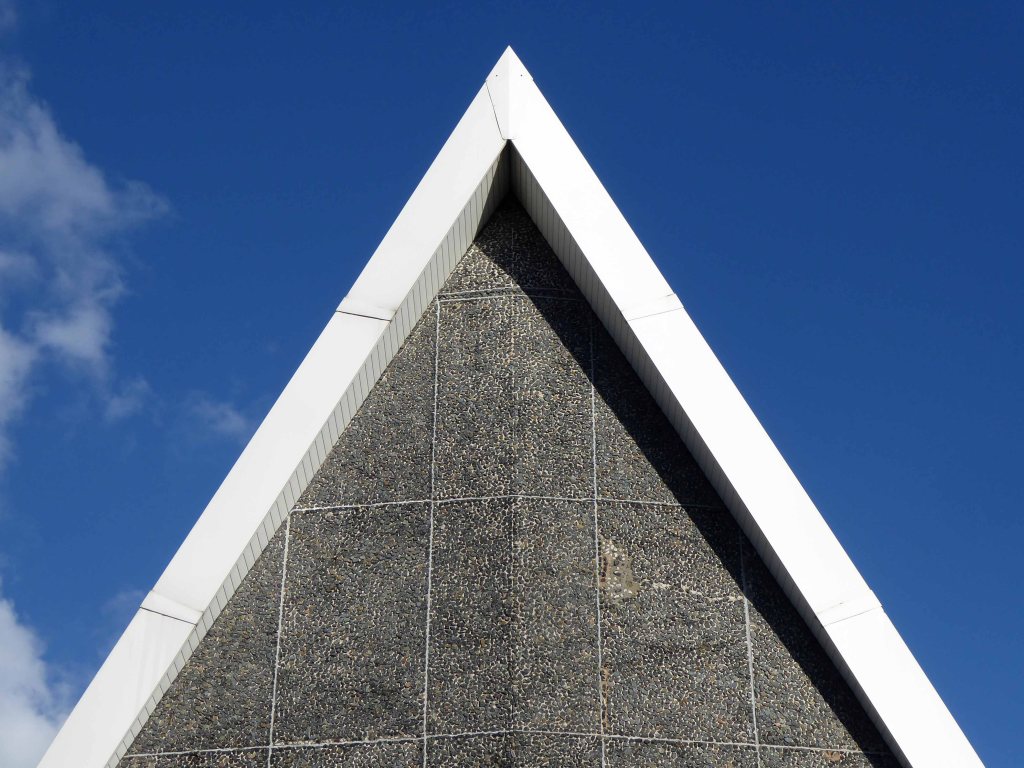
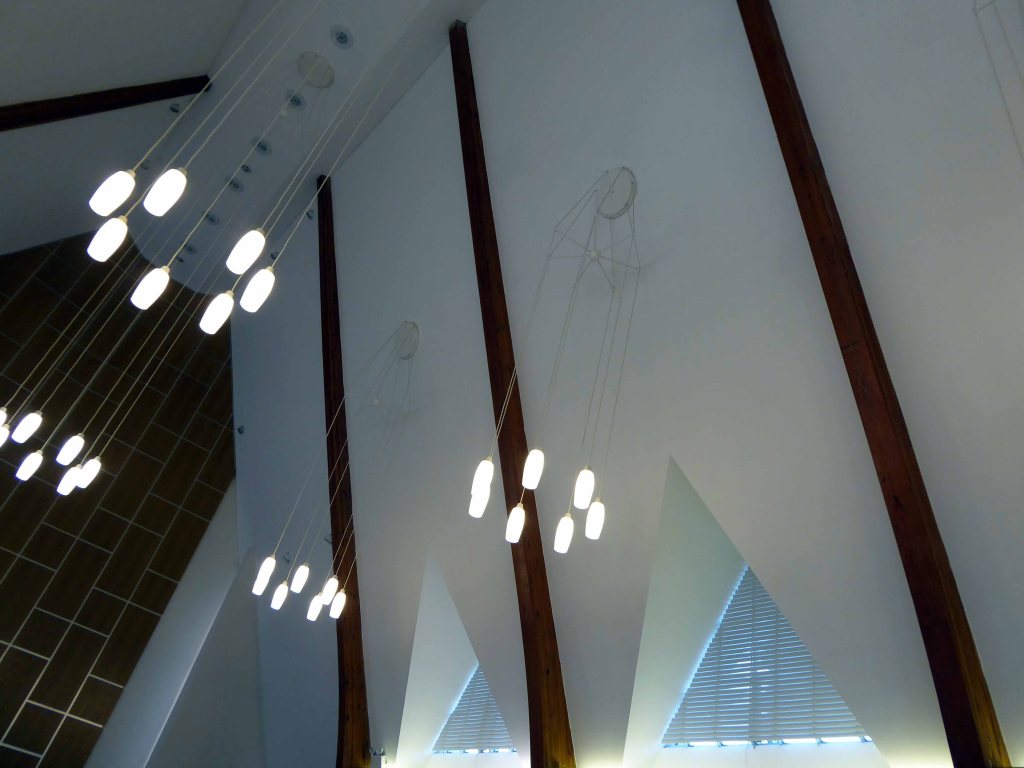
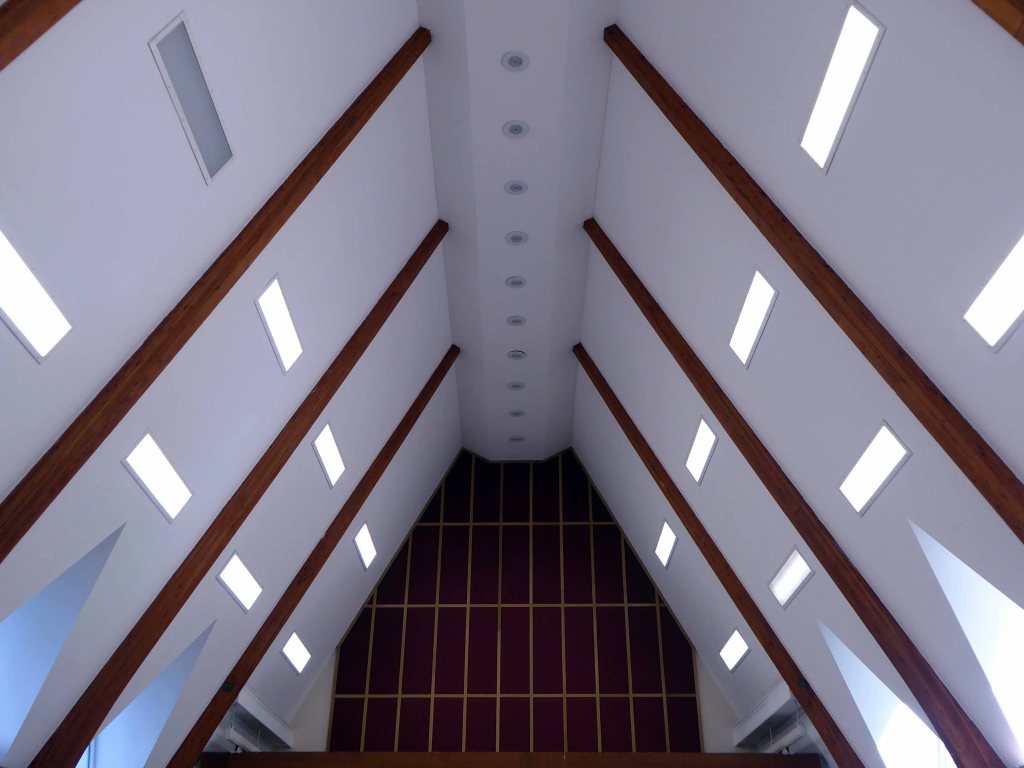
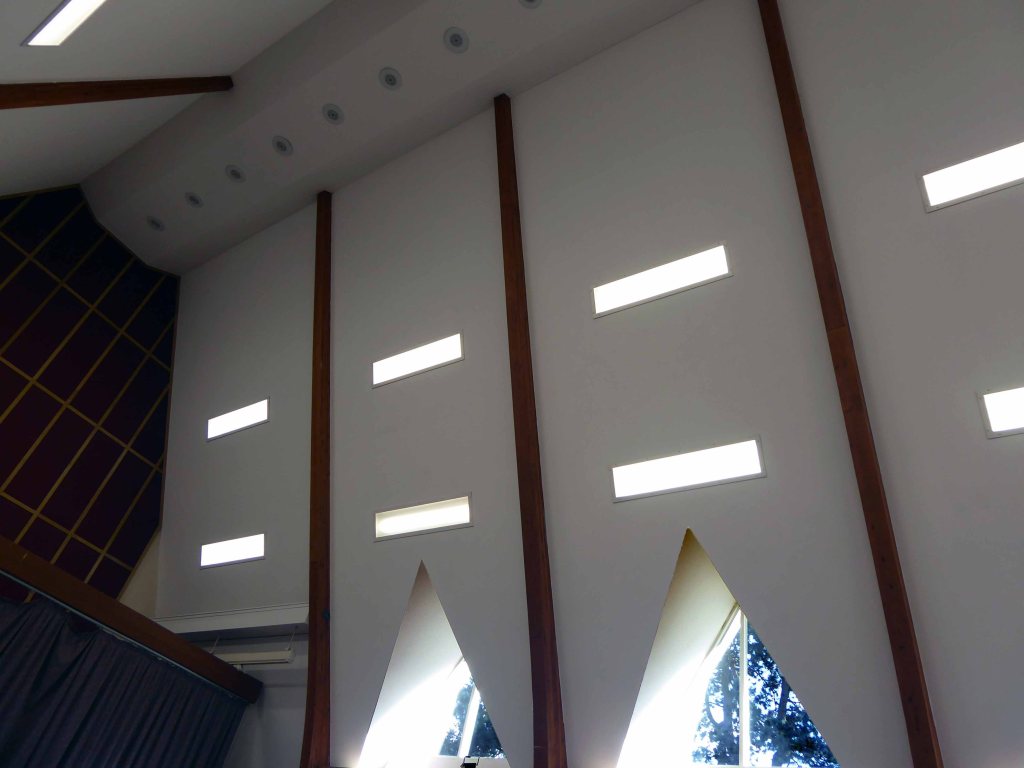
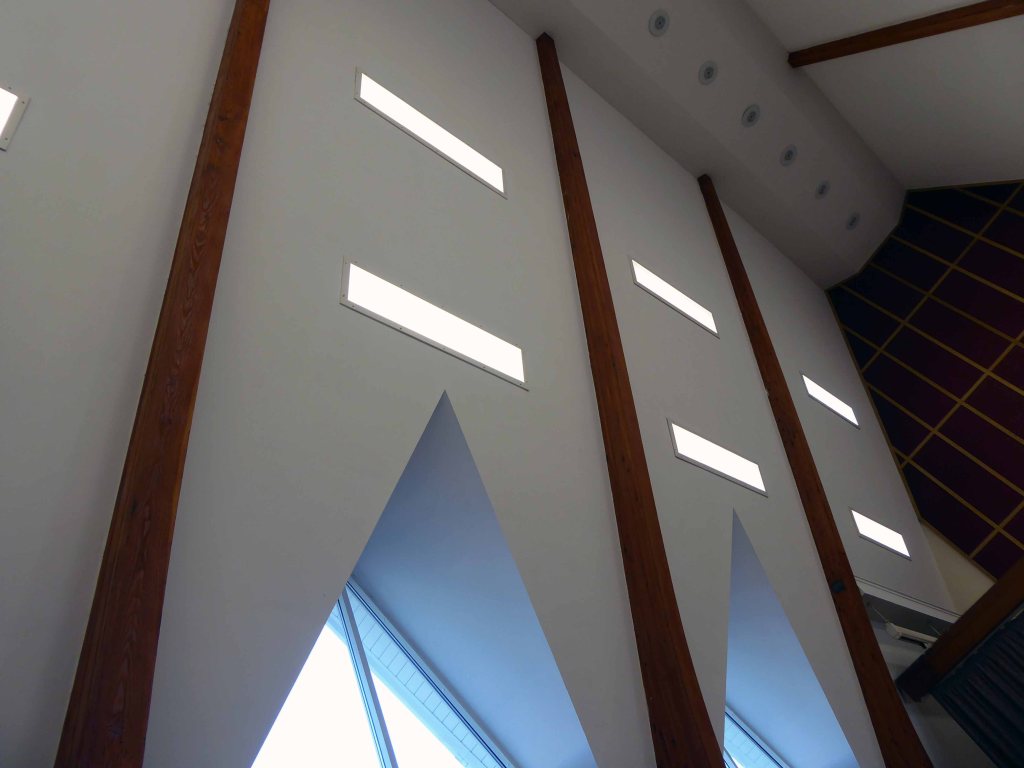
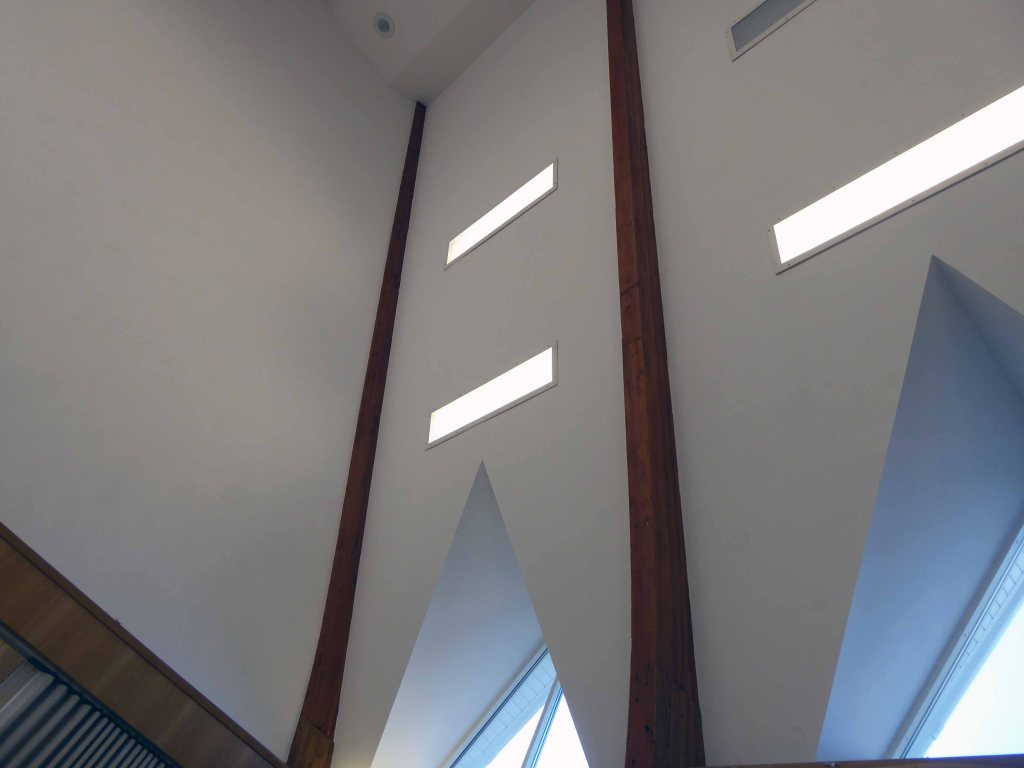
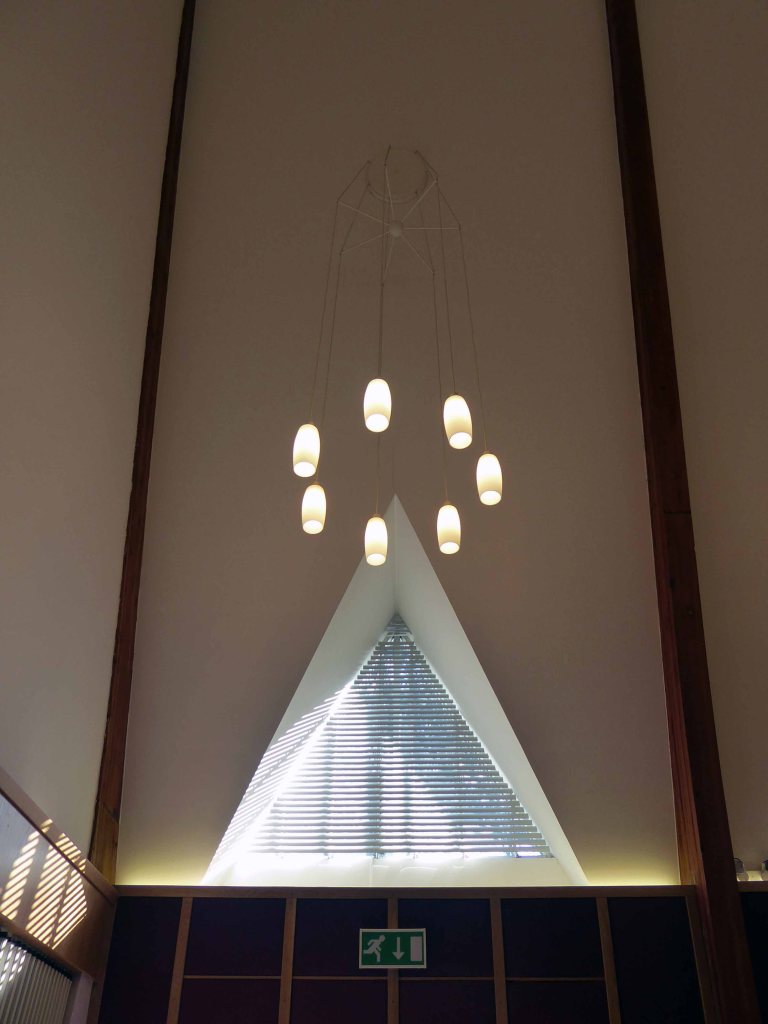
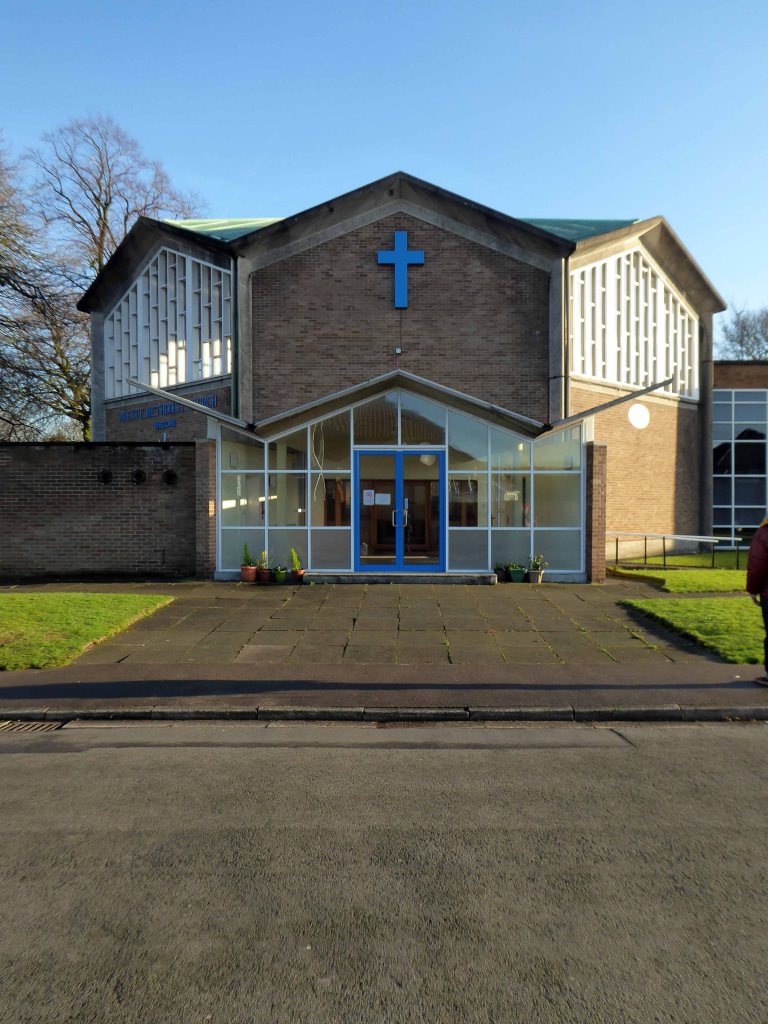
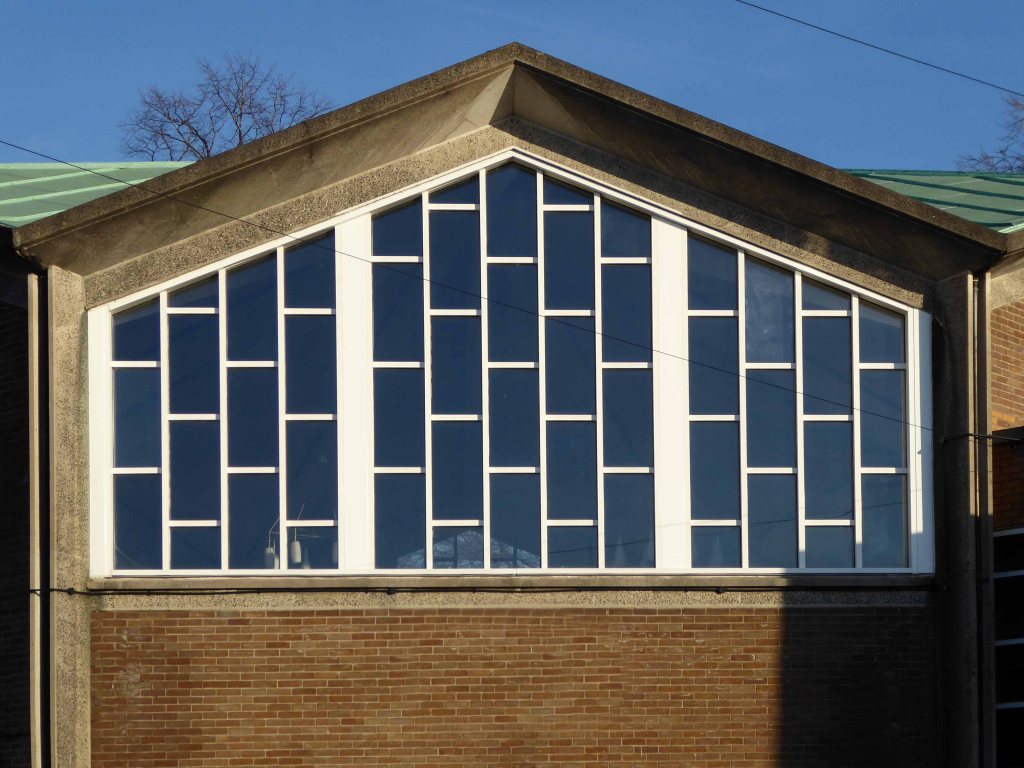
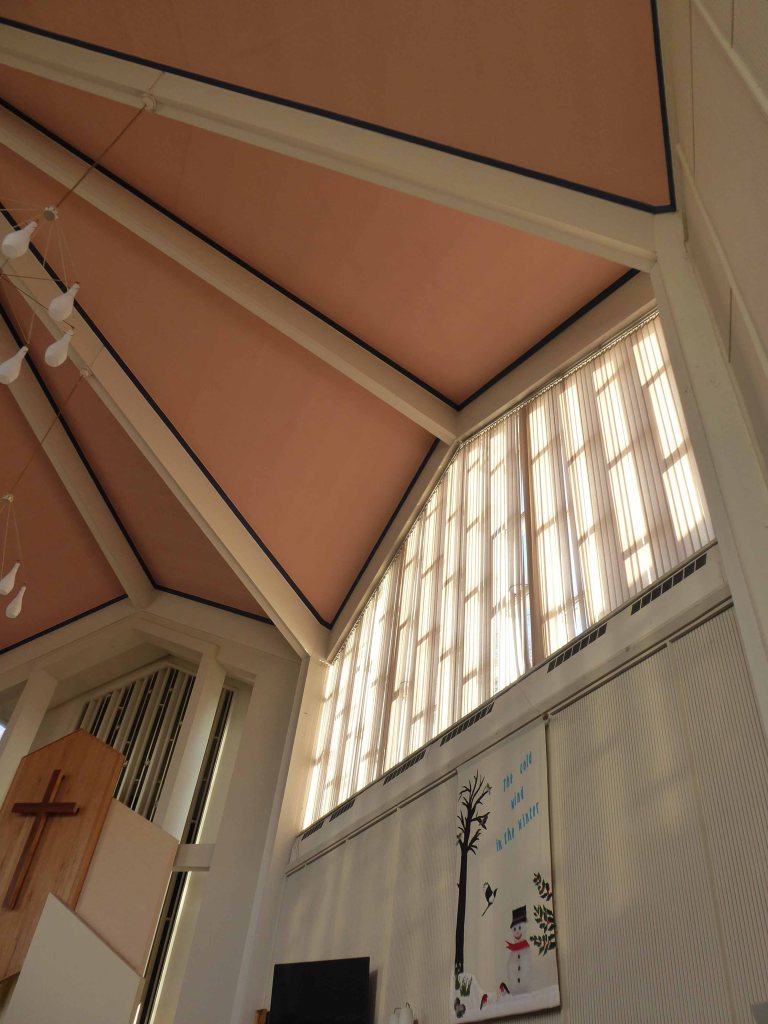
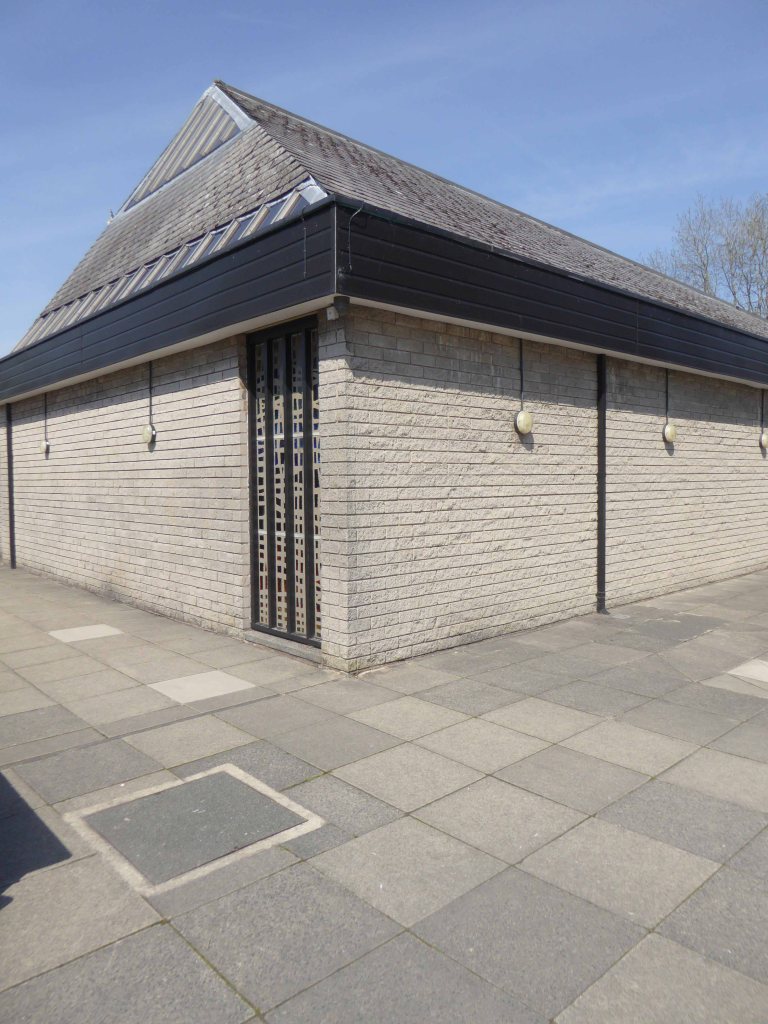
A striking A Line addition to the Stockport skyline – its steeply pitched roof punctuated by prominent triangular bays, and partnered with a prominent remote tower of wood and steel.
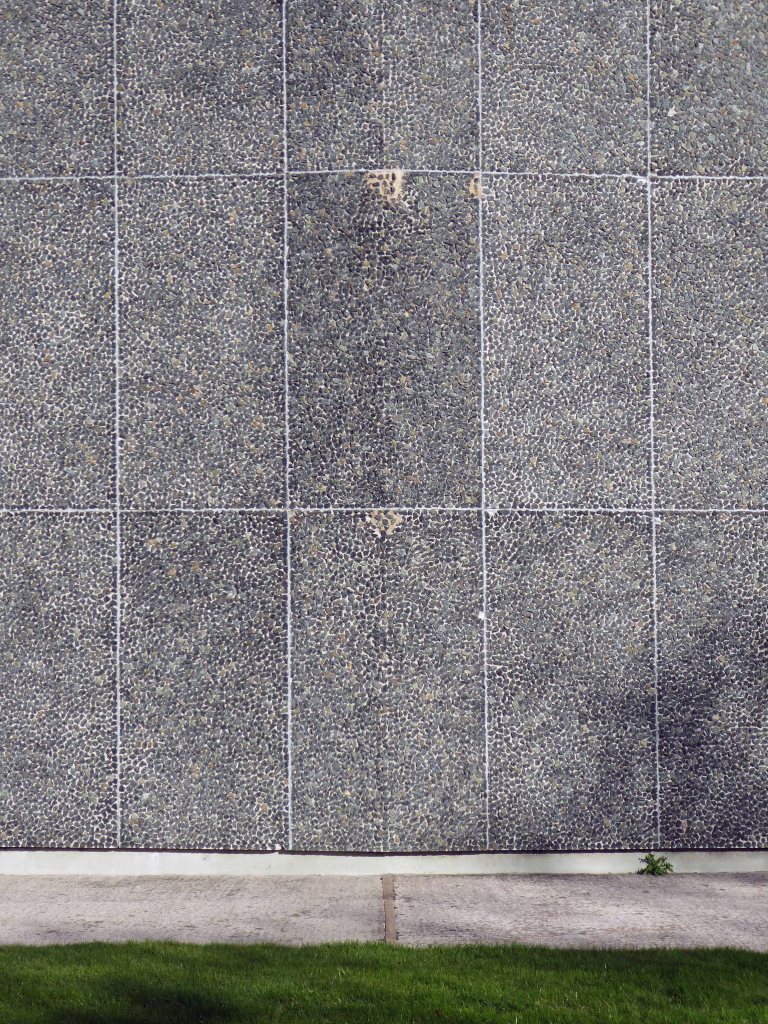
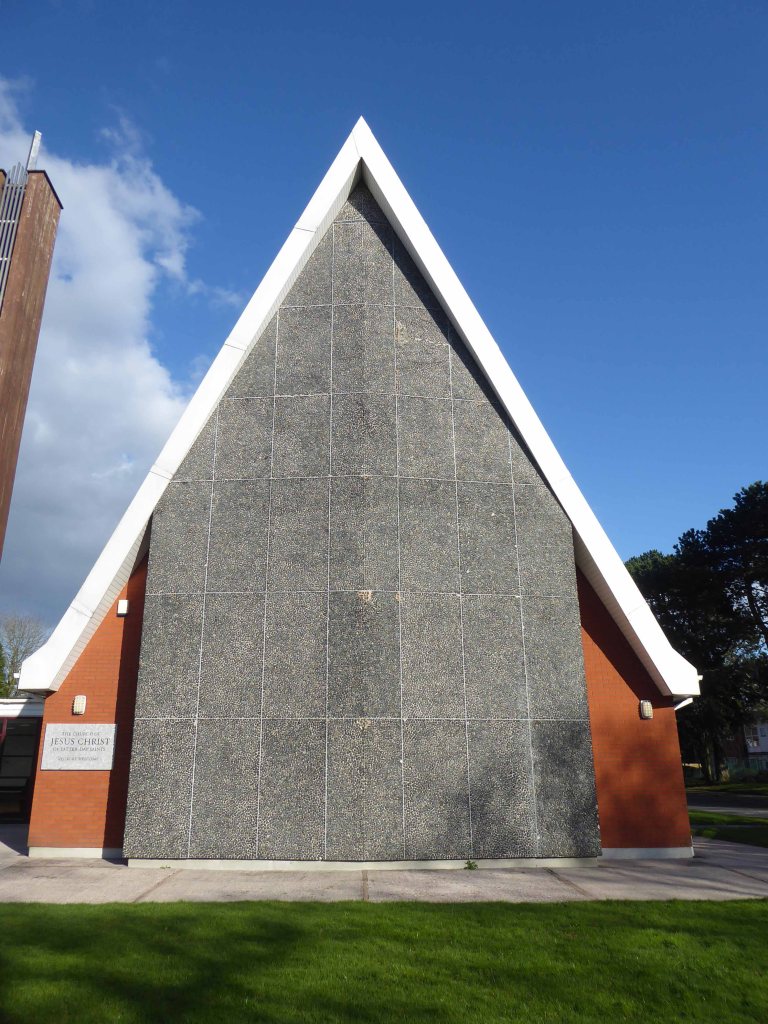
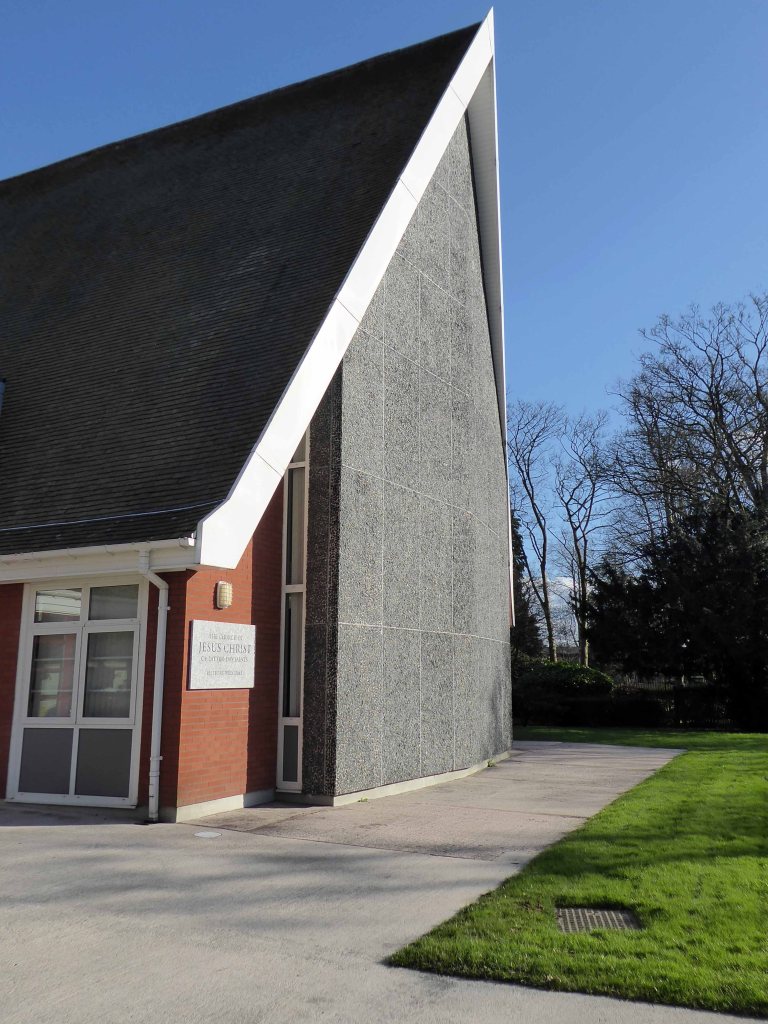
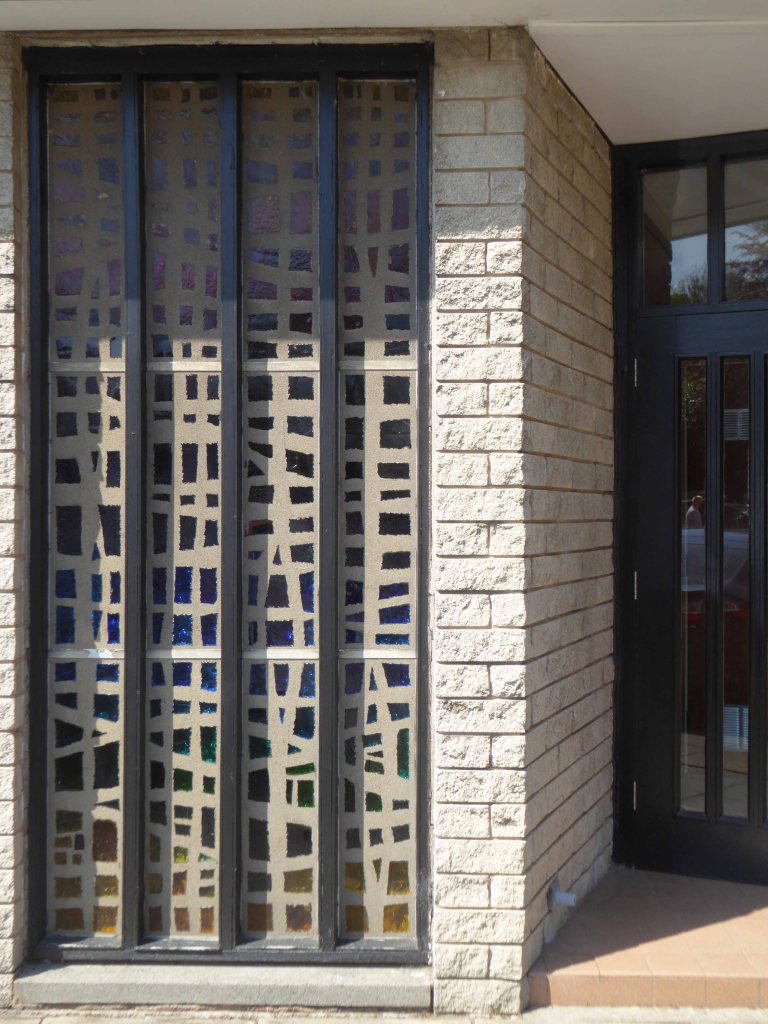
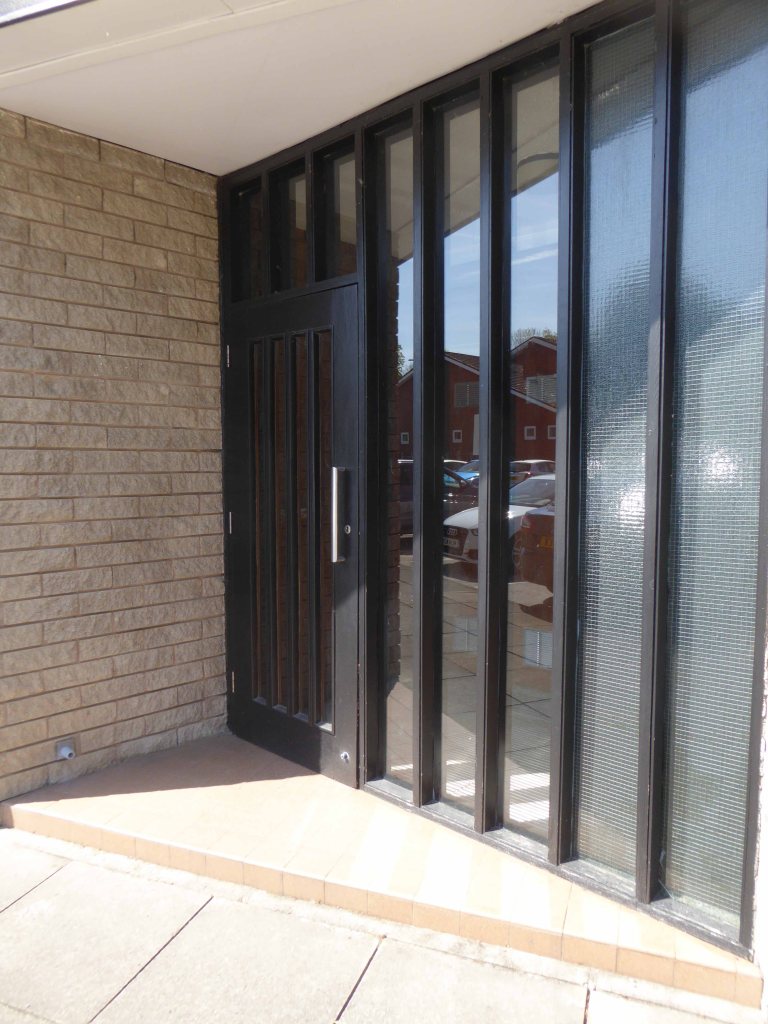
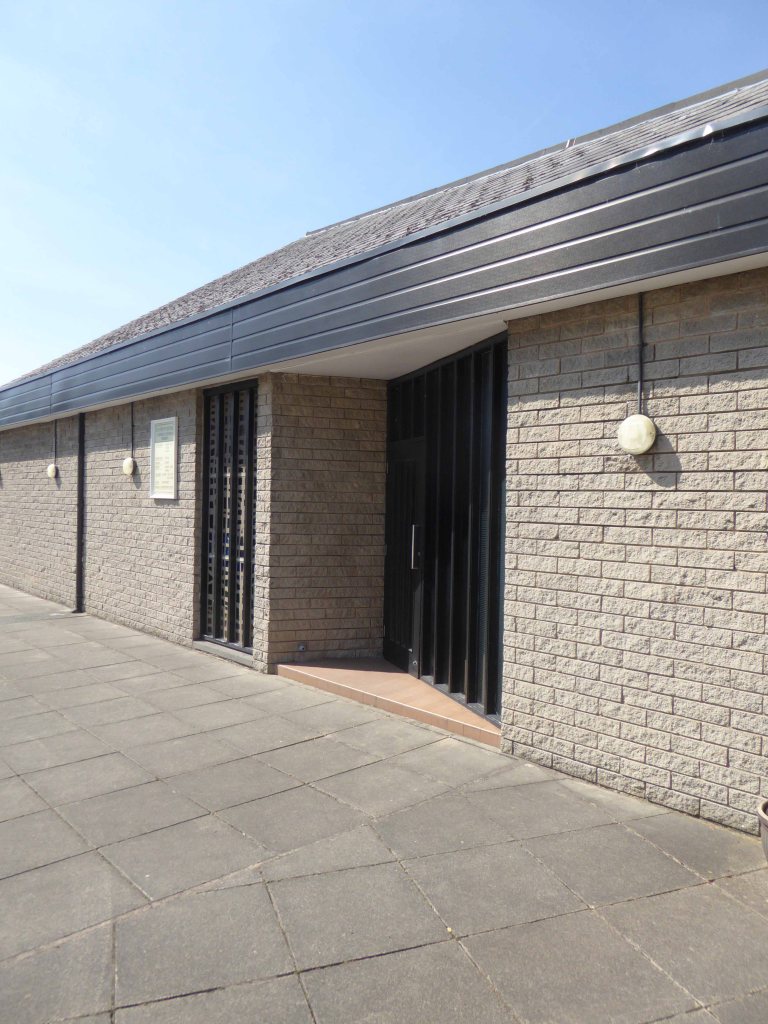
The front elevation is of concrete, constructed with panels of a rough grey aggregate.
Take a walk around, there have been some additions of single storey ante rooms.
This remains a simple, confident and assured building.
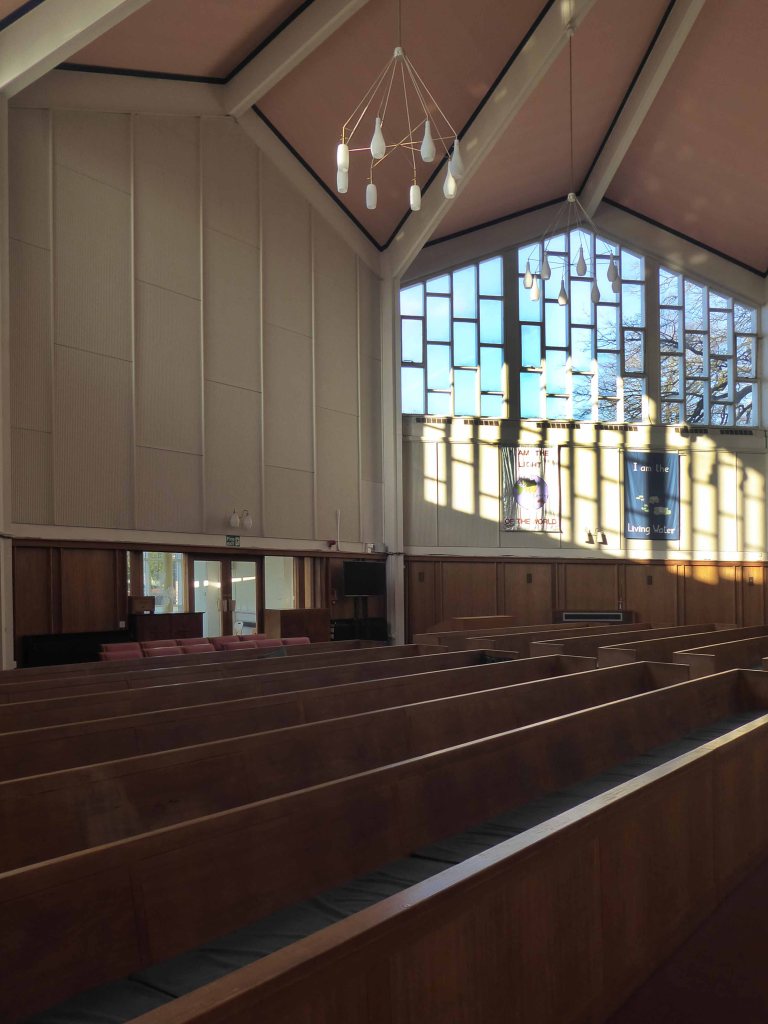
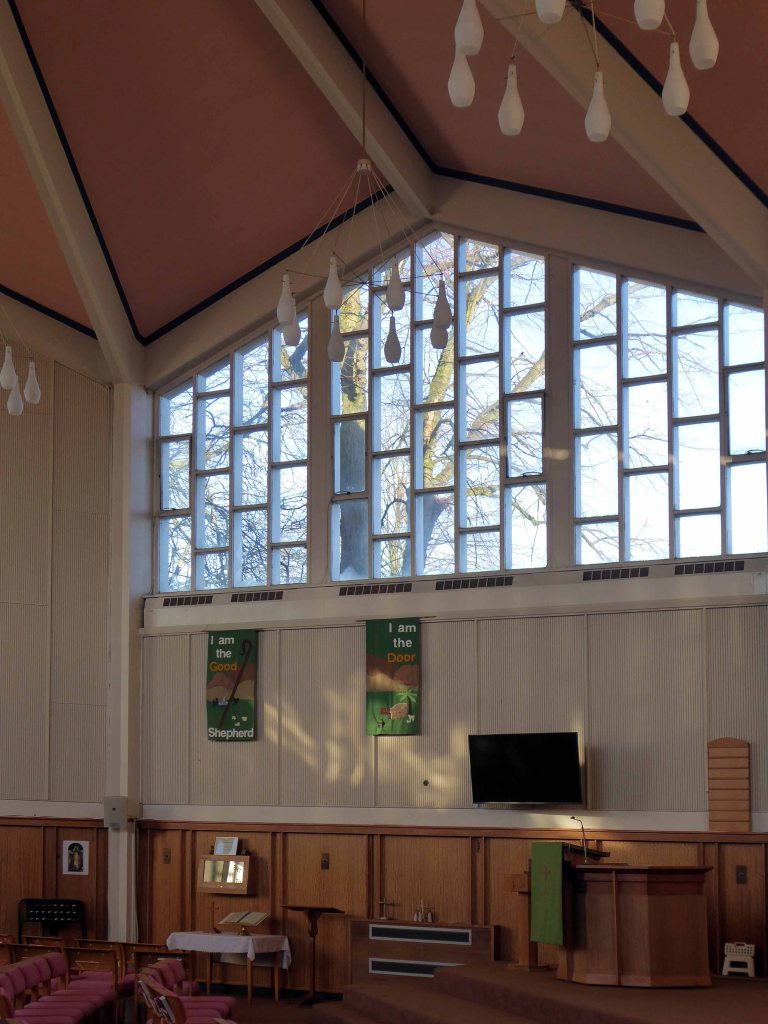
I had gone along today as a blood donor – so granted access to the splendid, elevating well-lit interior.
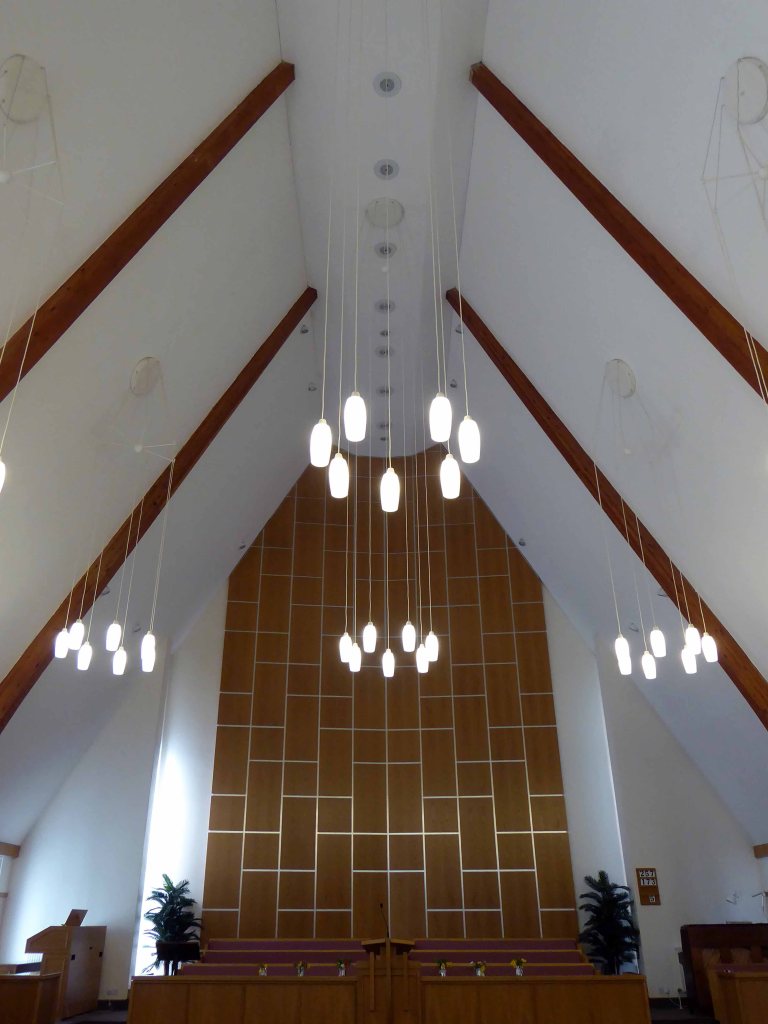
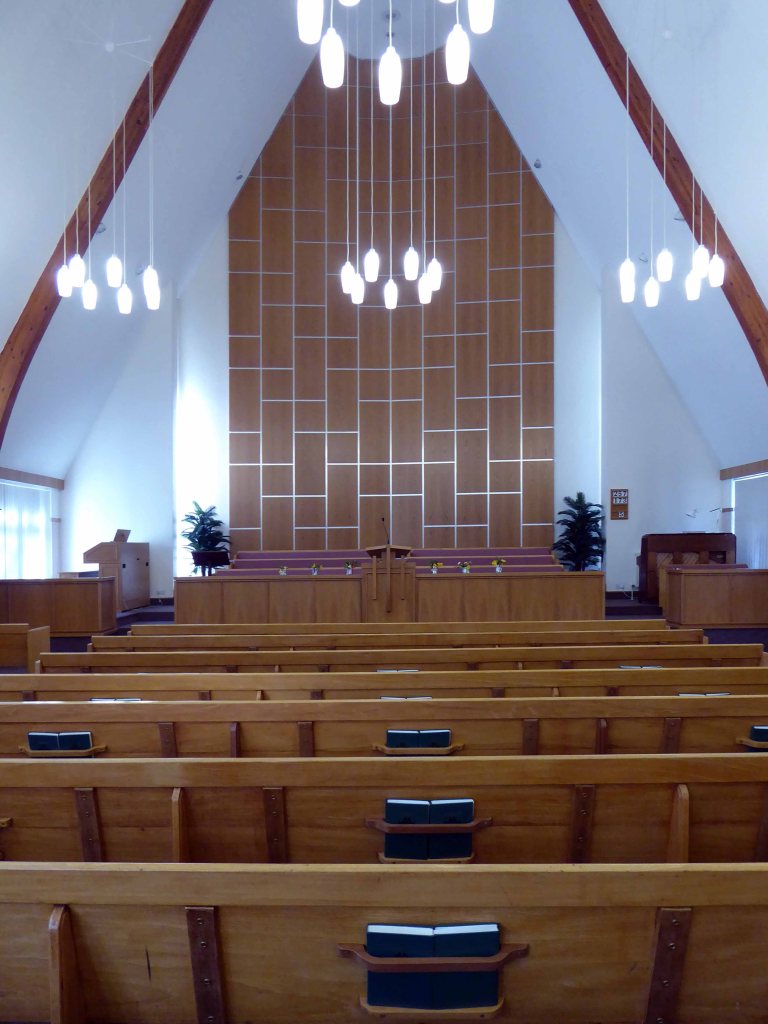
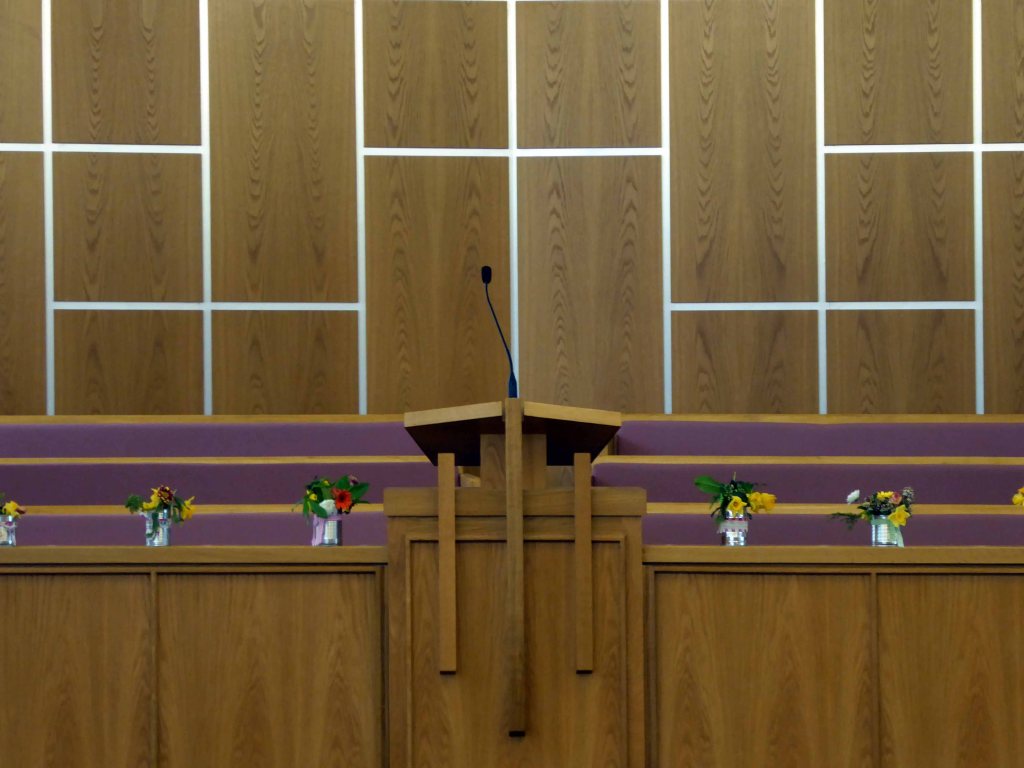
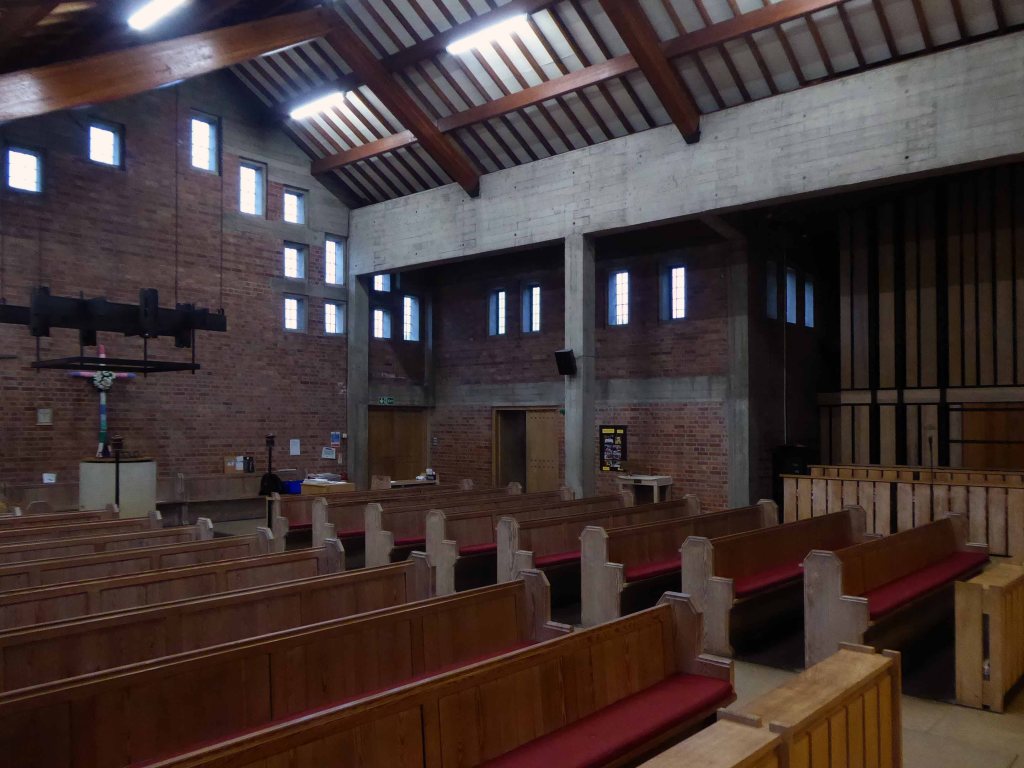
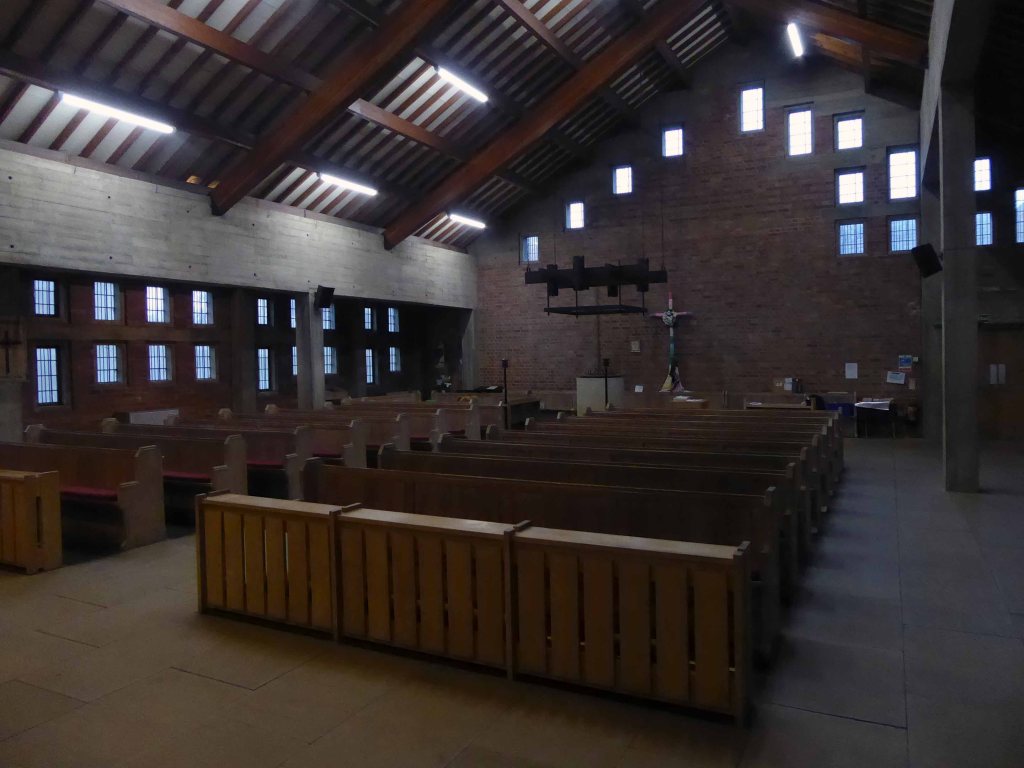
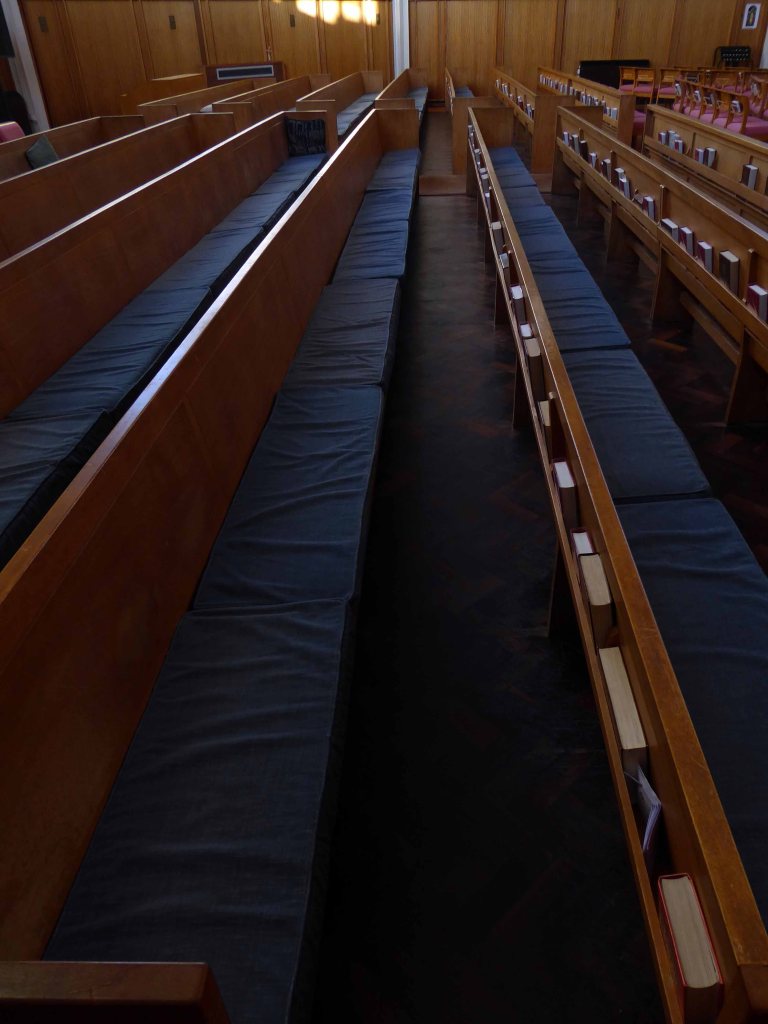
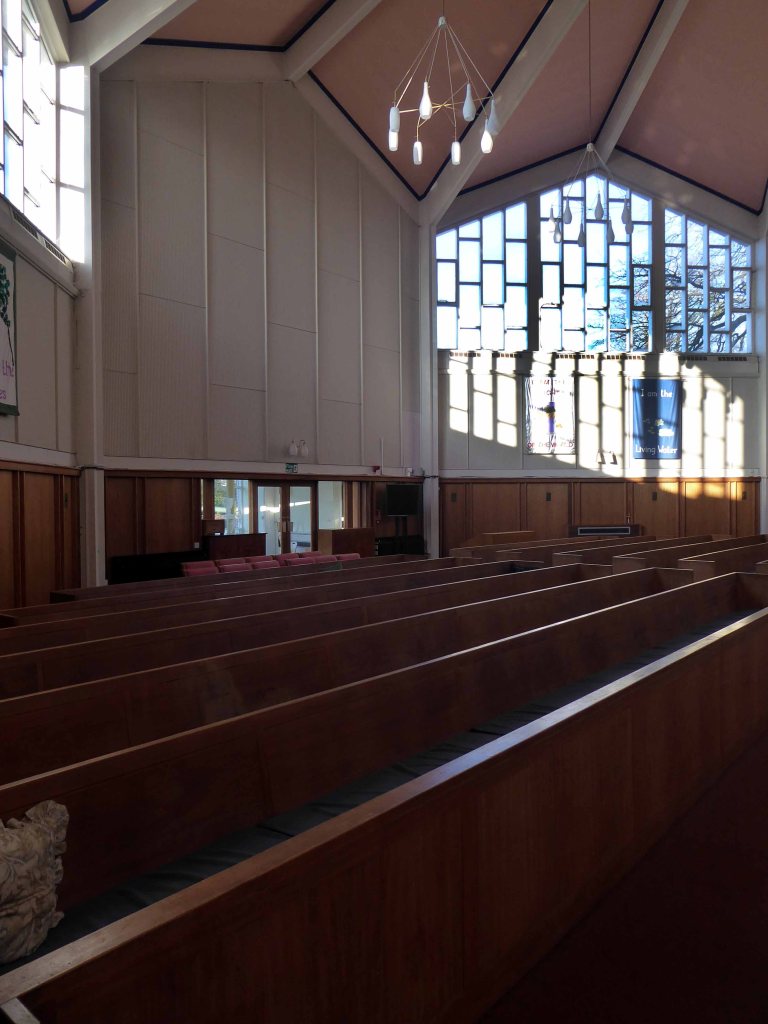
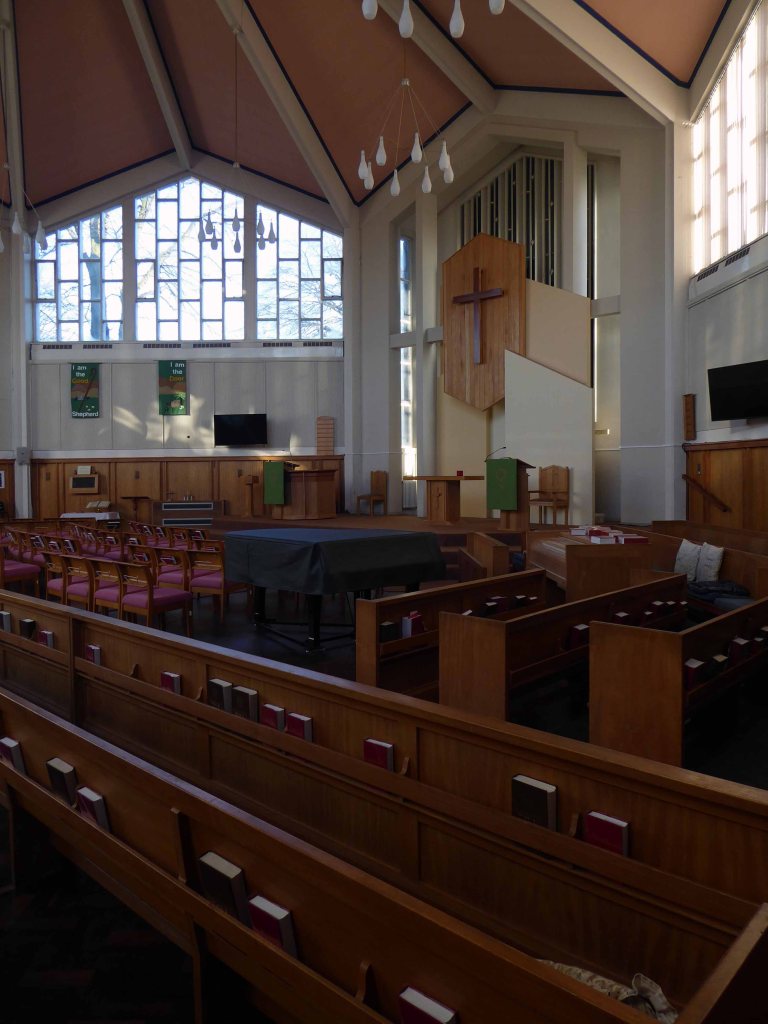
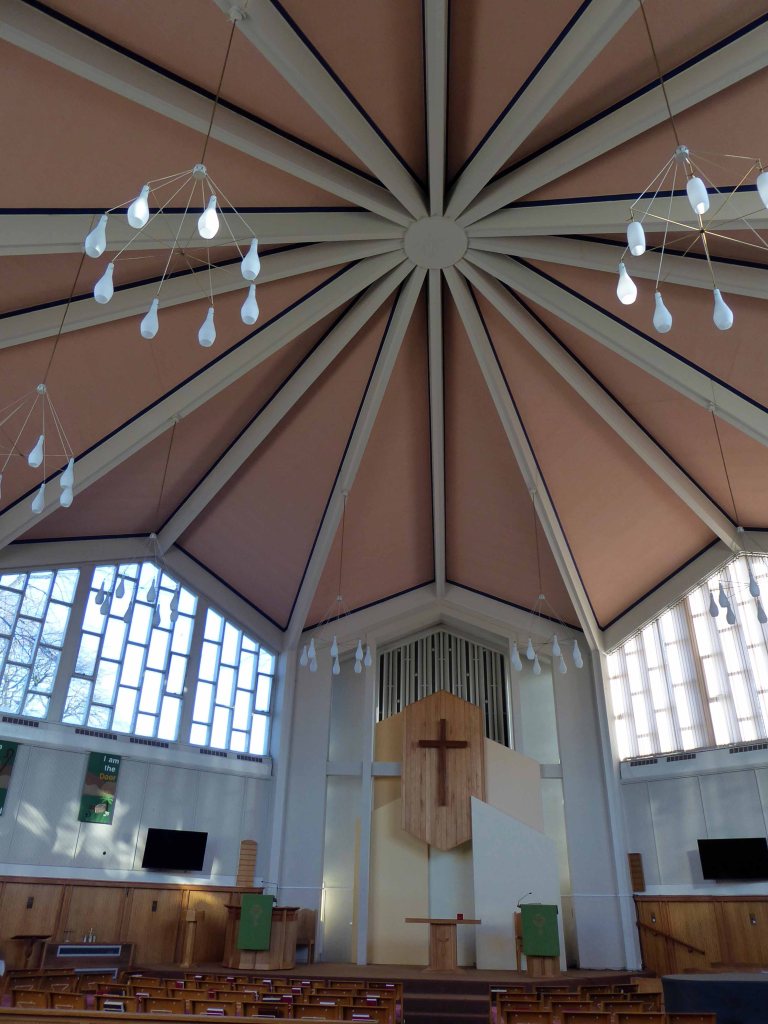
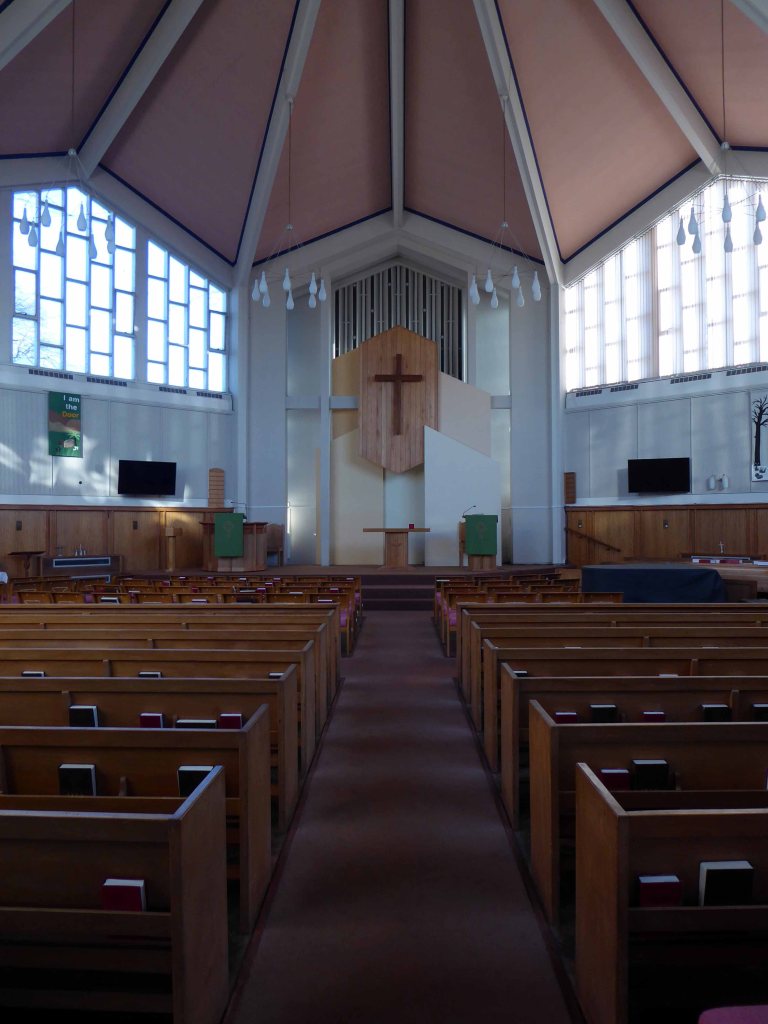
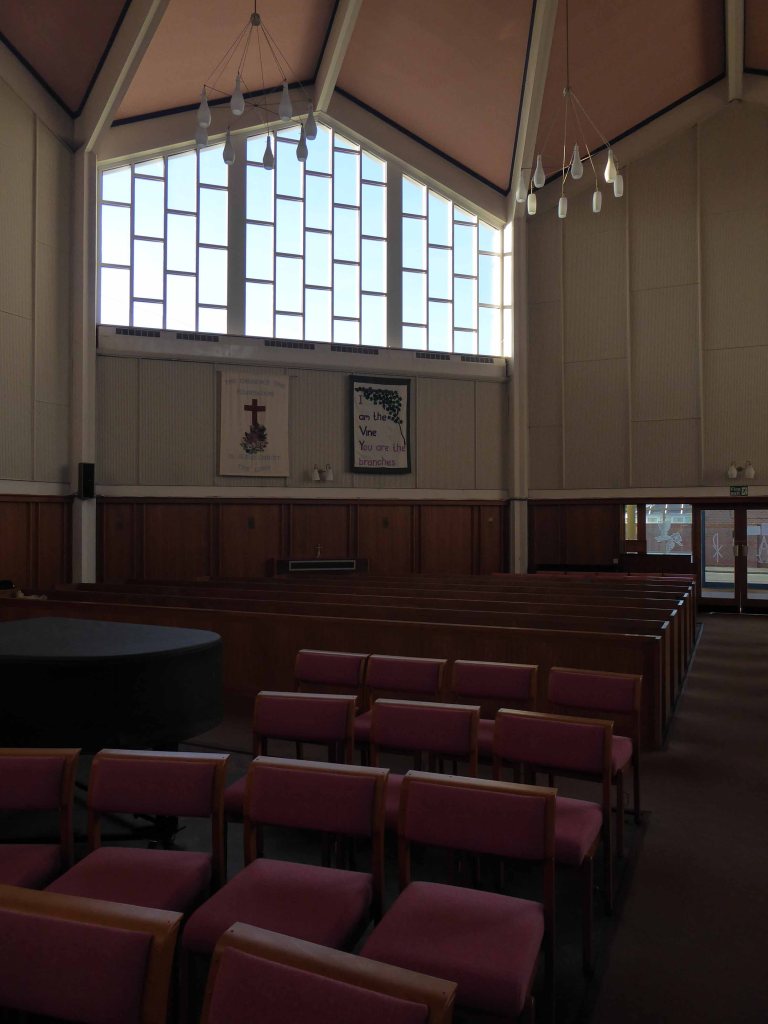
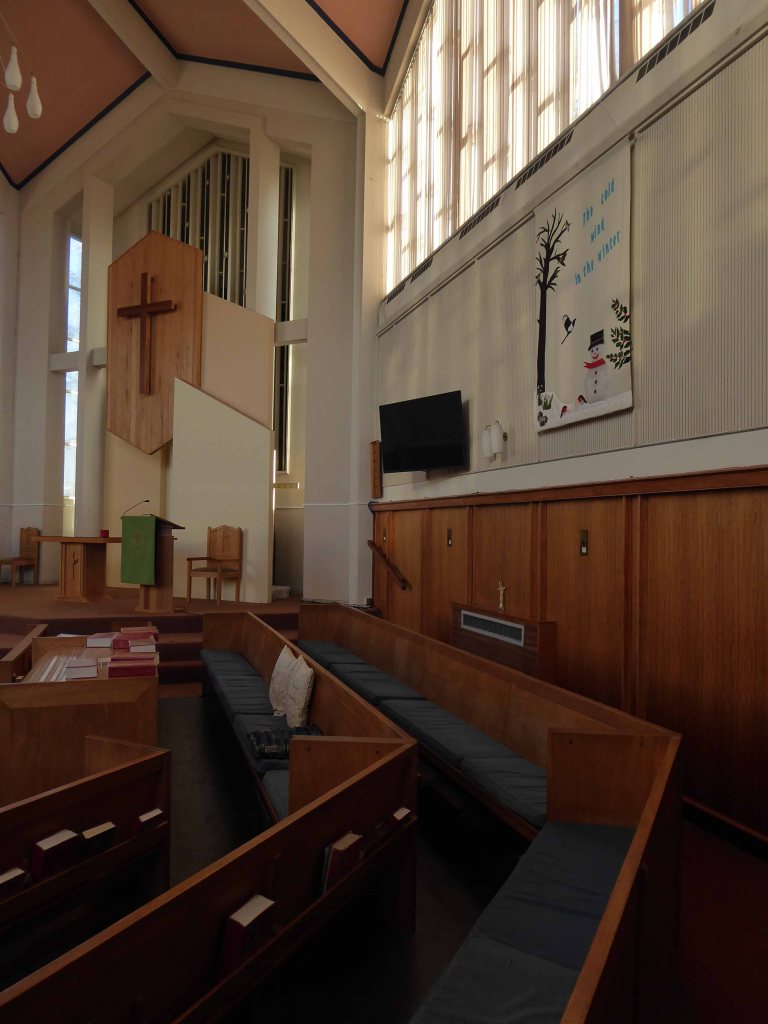
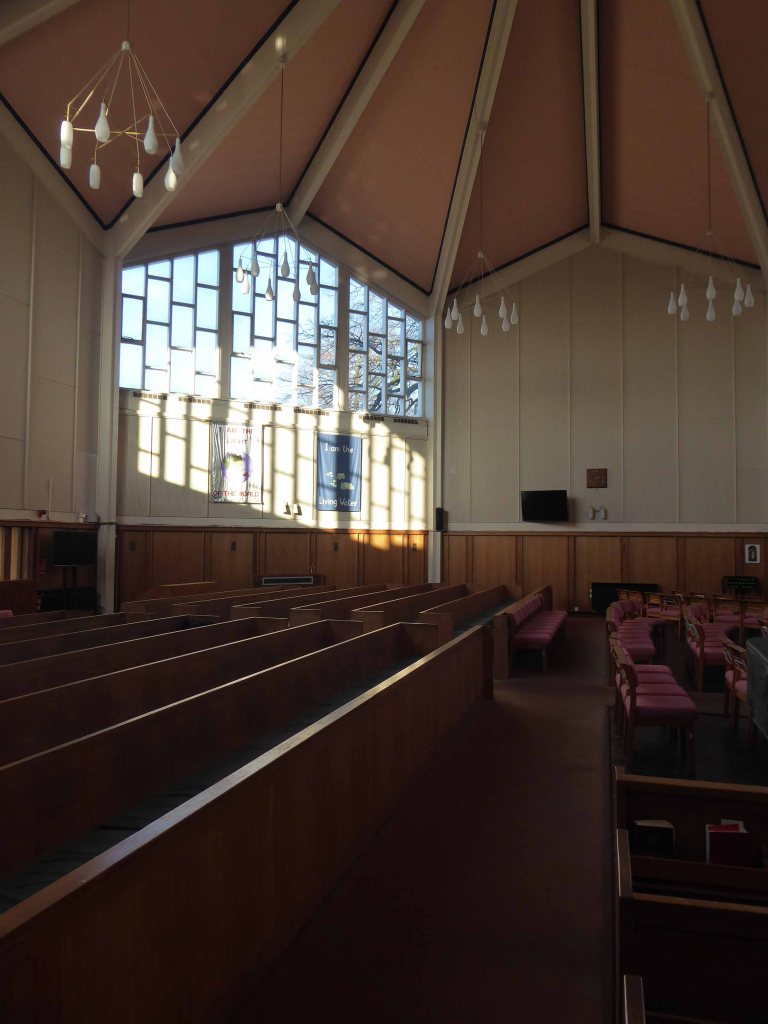
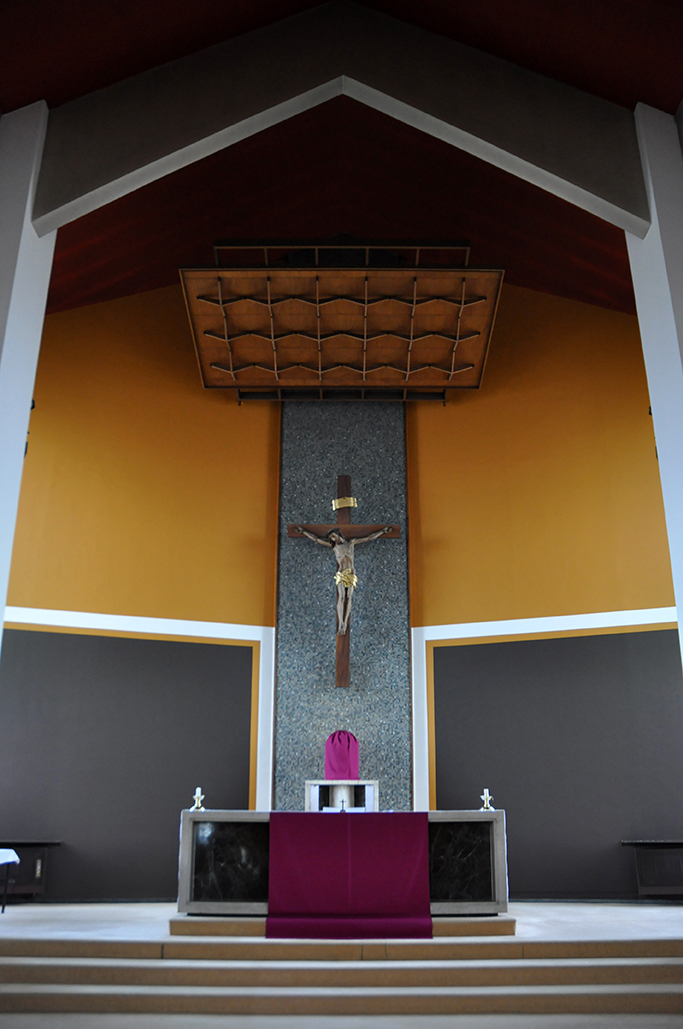
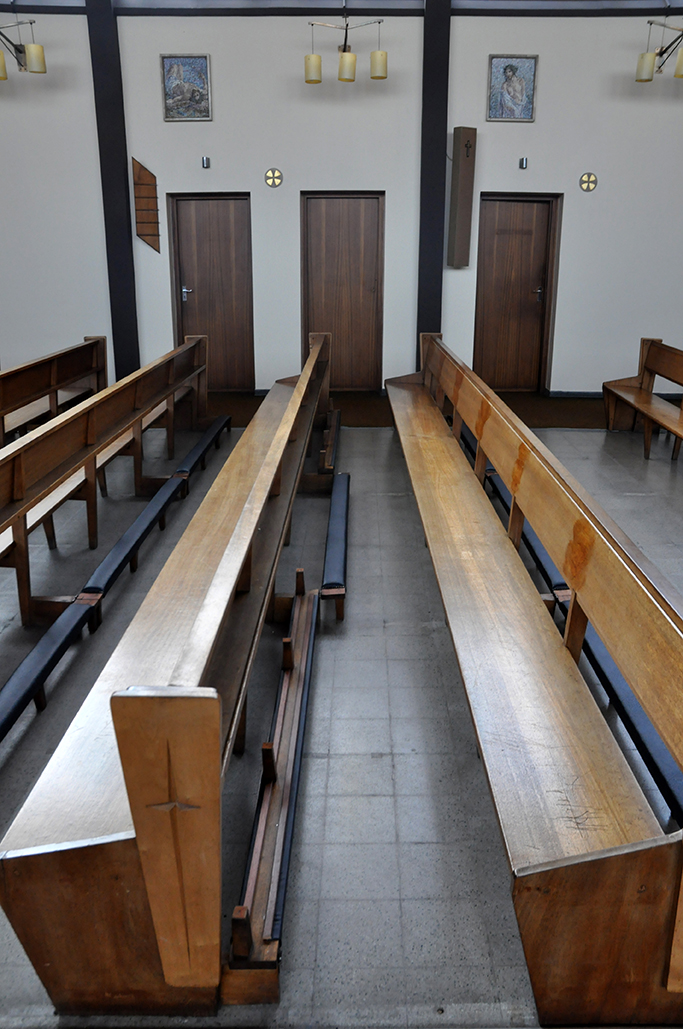
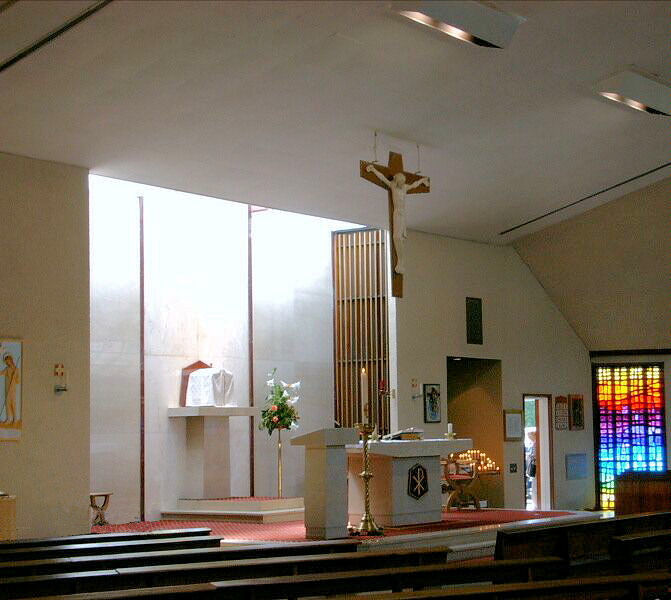
The front portion of the main body is given over to worship, furnished with light wood pews, altar and panelling.
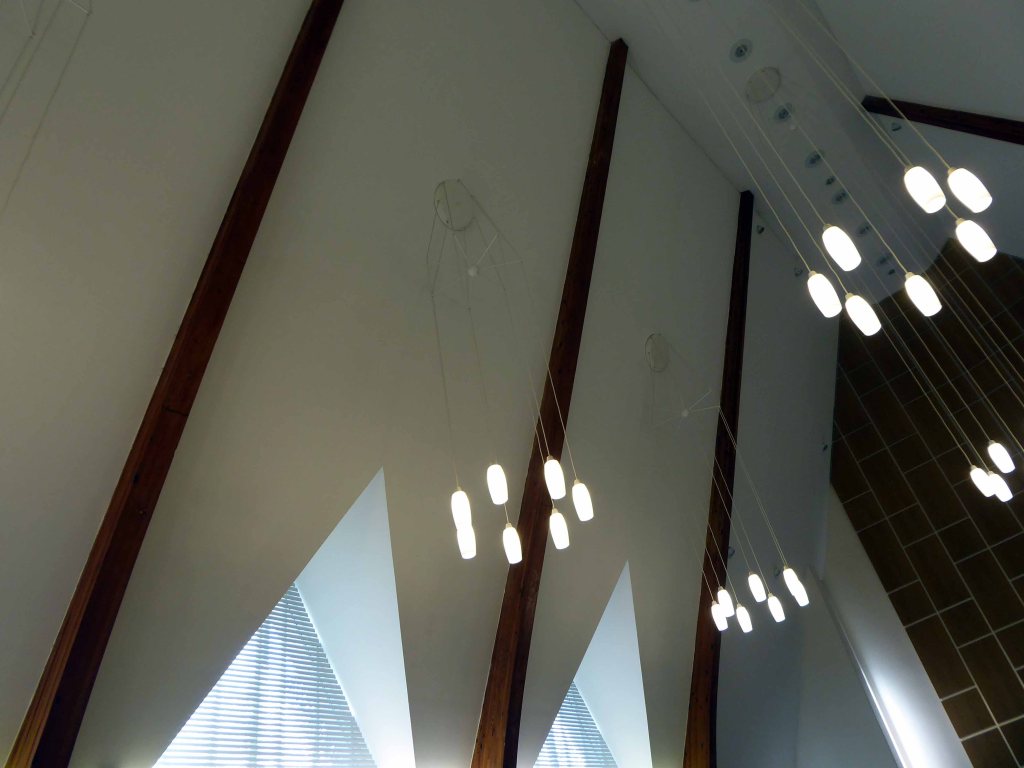
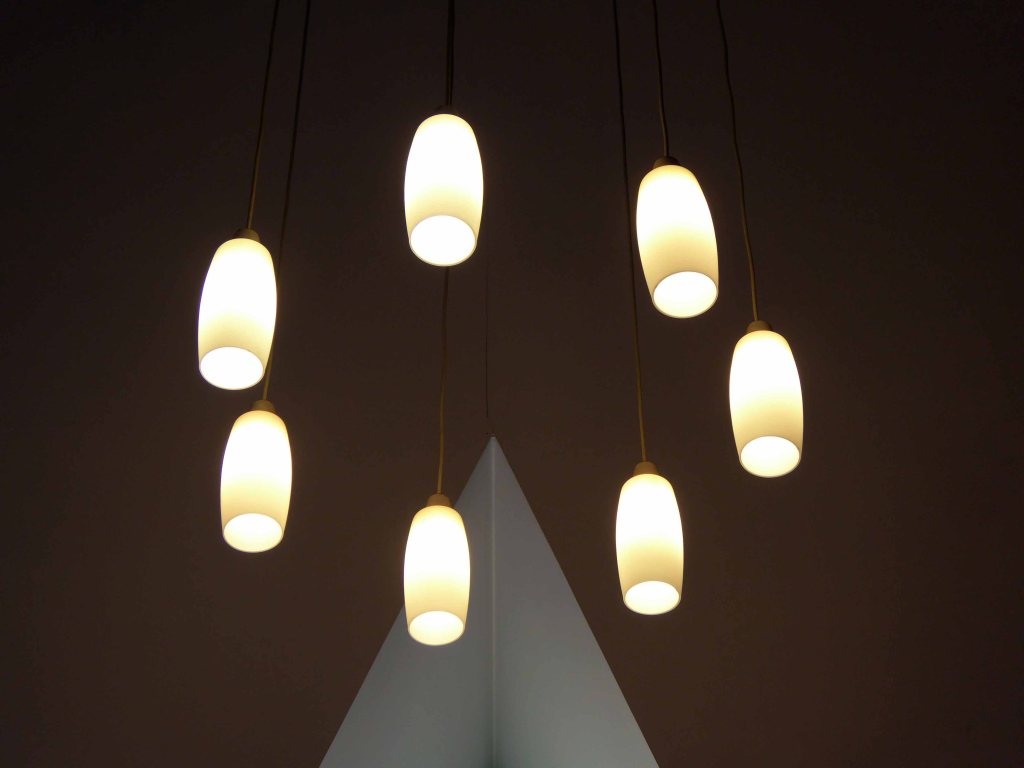
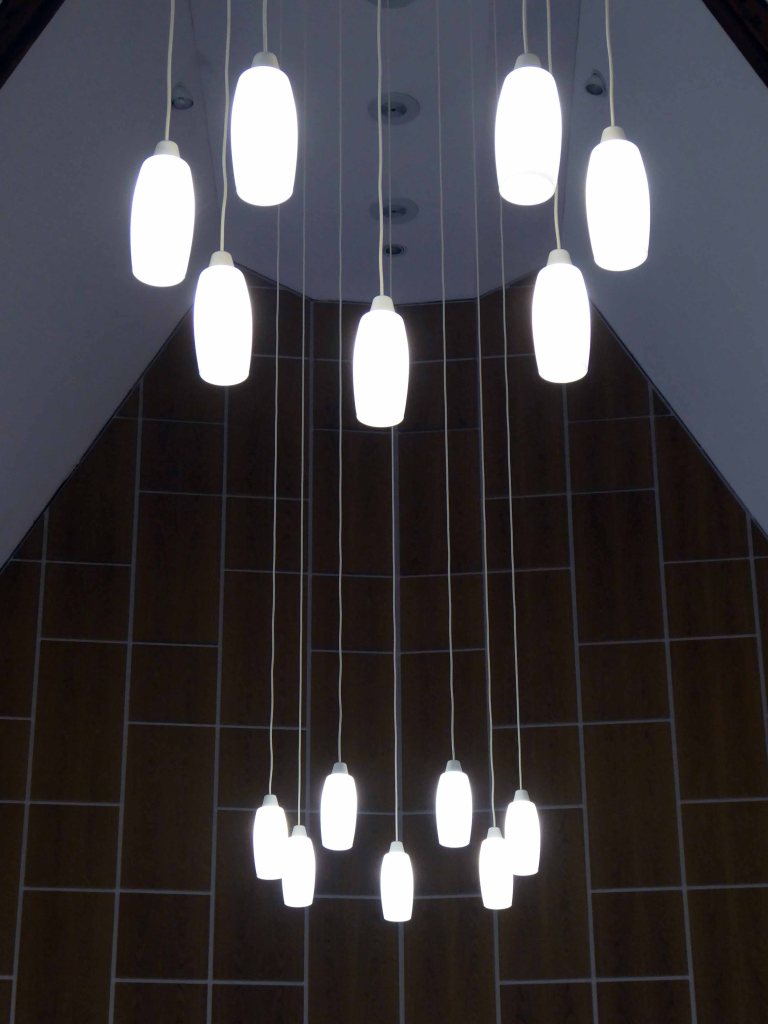
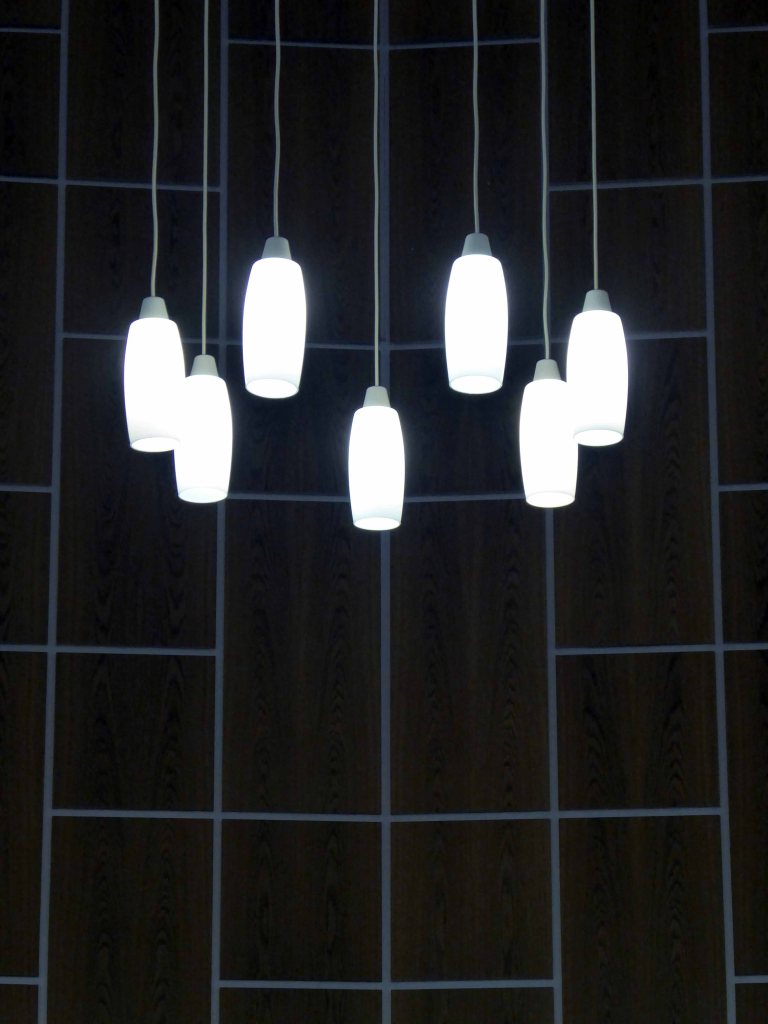
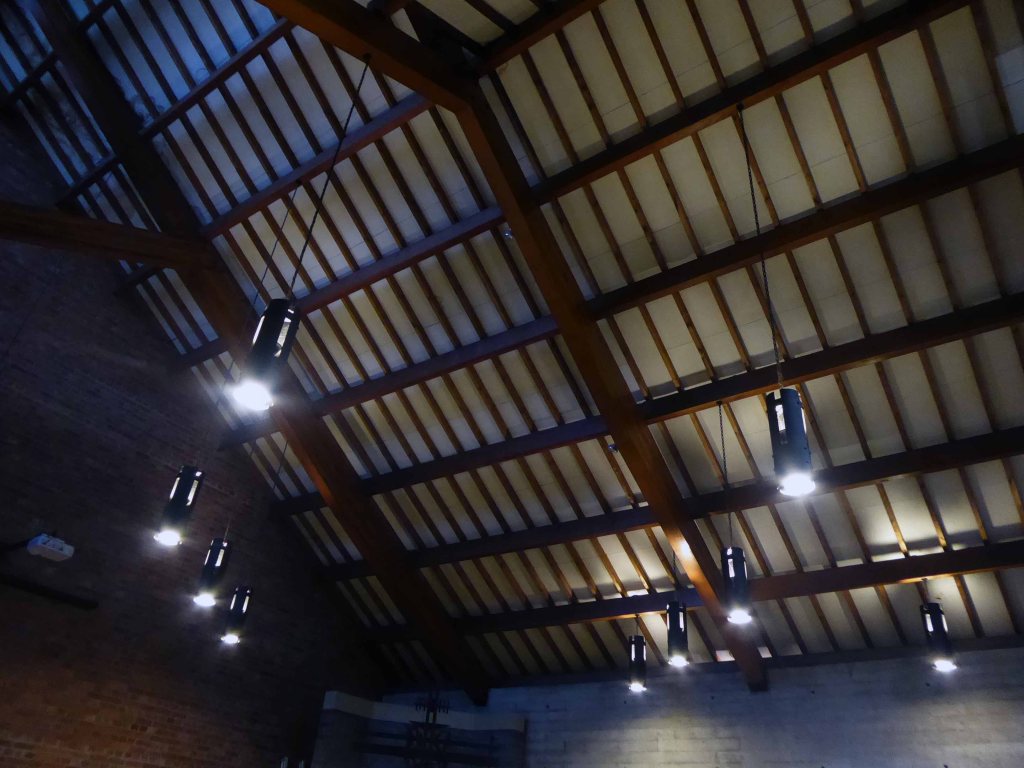
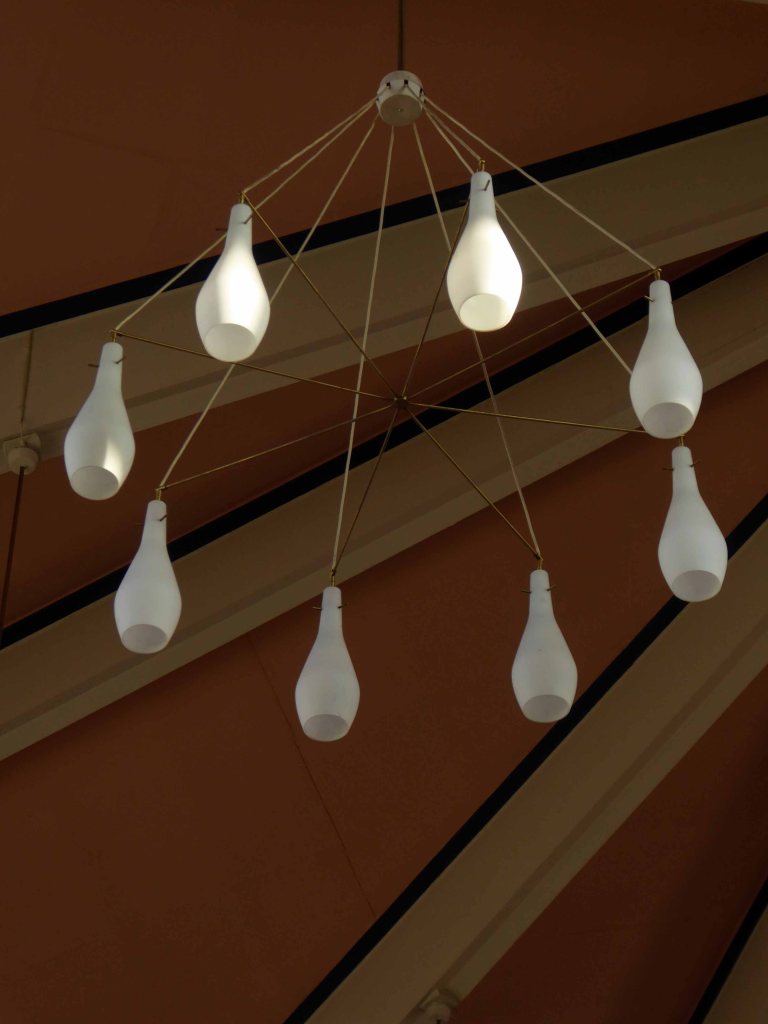
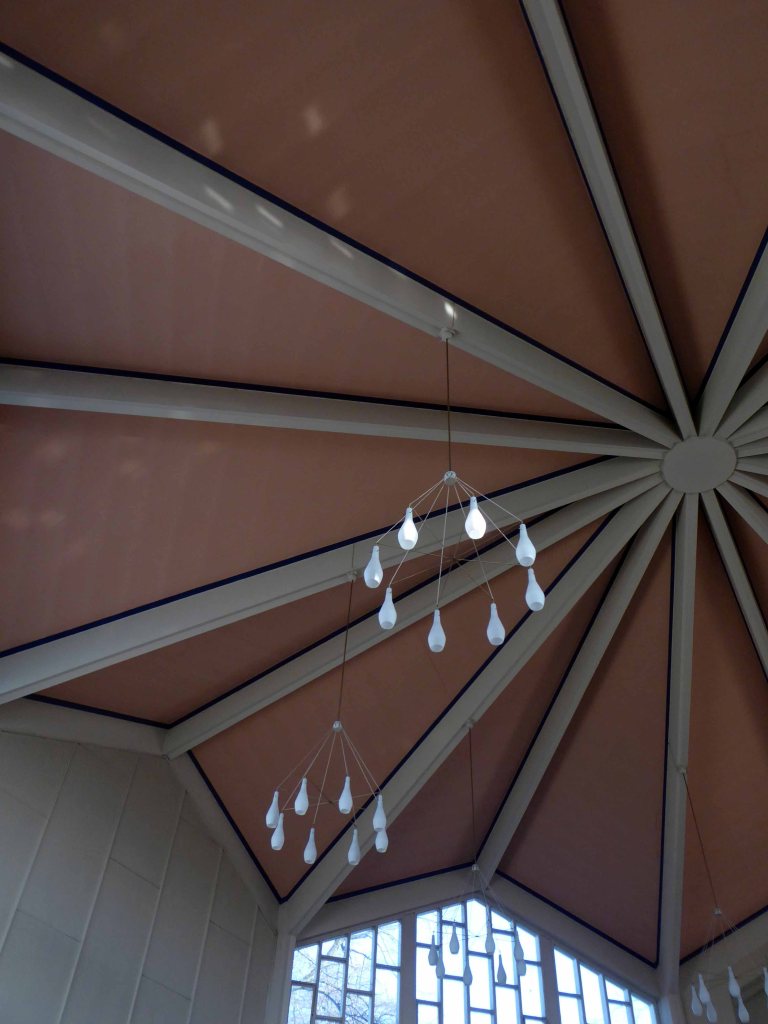
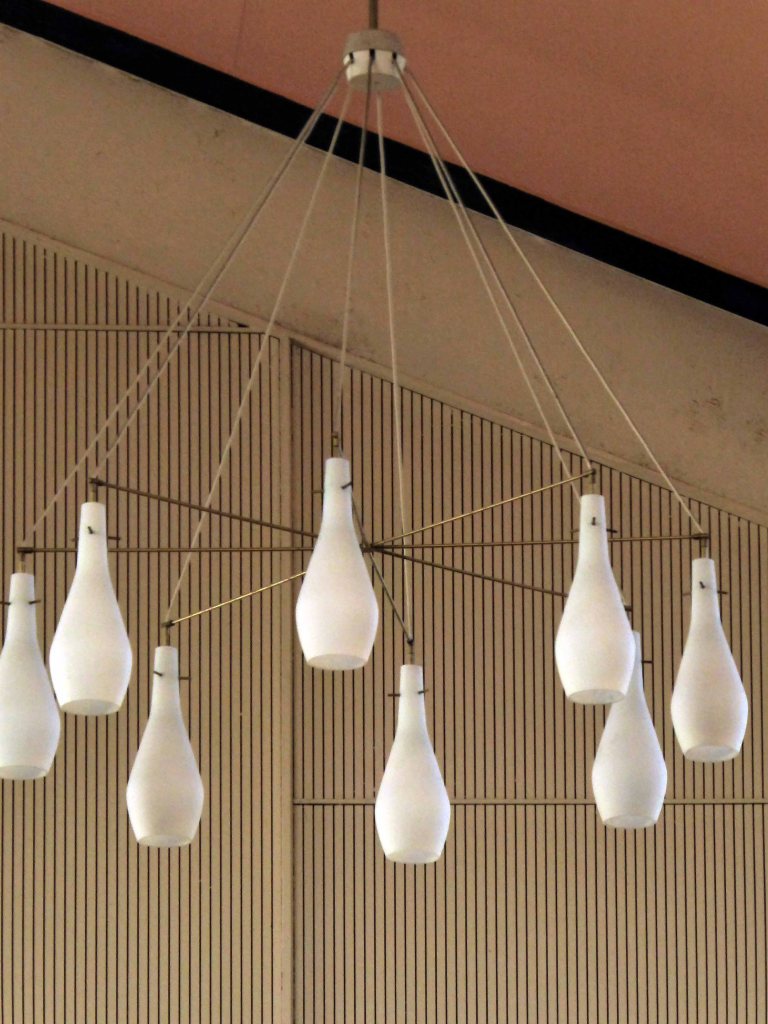
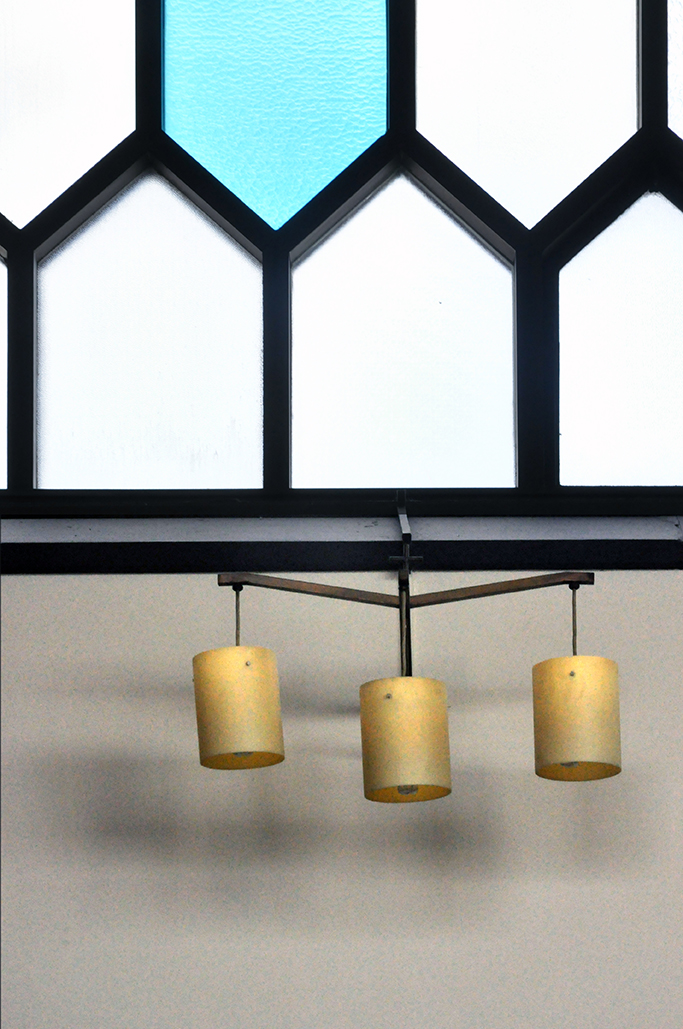
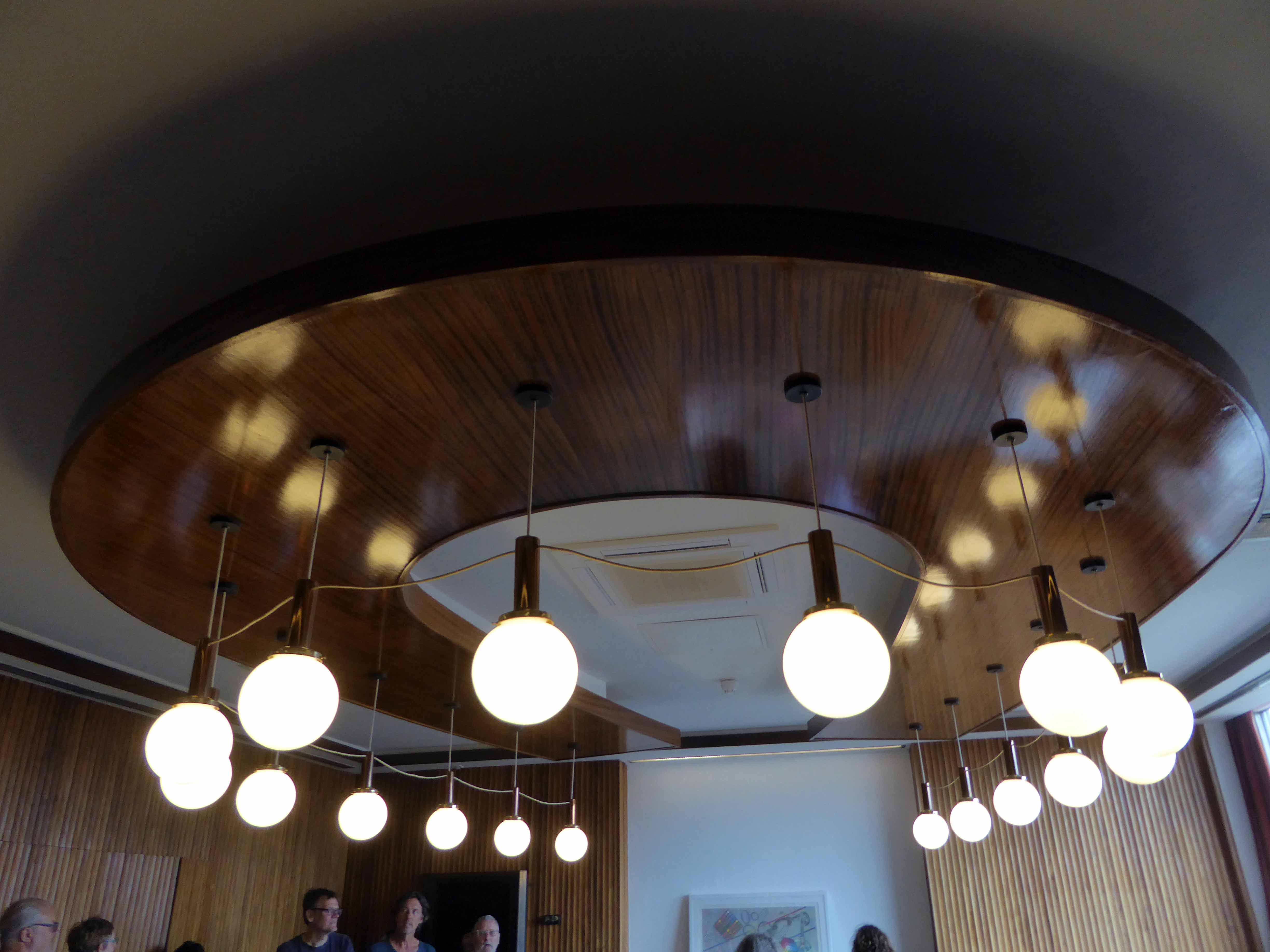
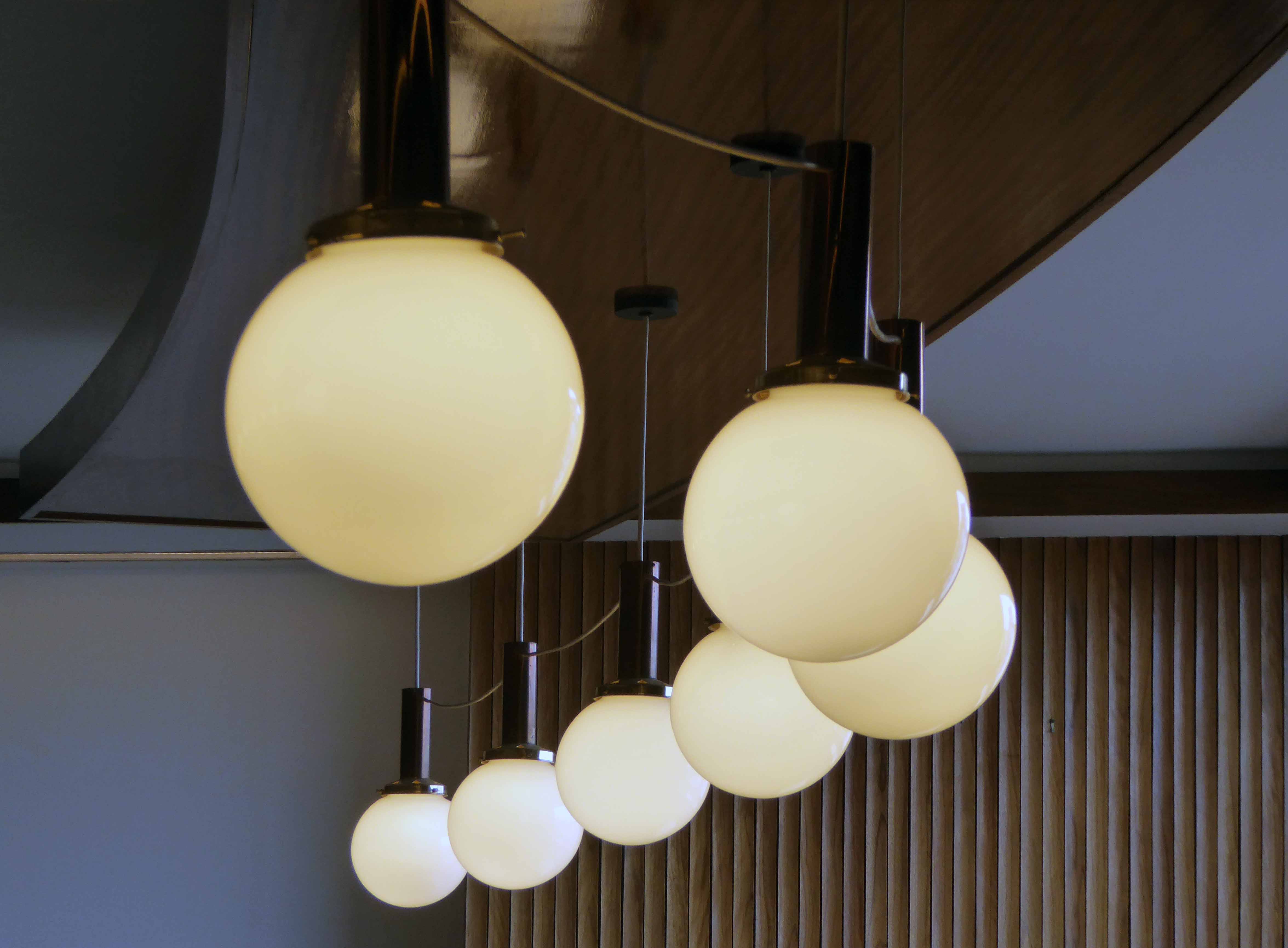
The suspended lighting groups are of particular note.
What a delight – the stunning surprise that awaits you, around one particular suburban corner of Bradford.
I had called ahead, to arrange the visit – the Reverend Dorothy Stewart had gracefully invited me to join members of the community and herself, one wild and windy Wednesday.
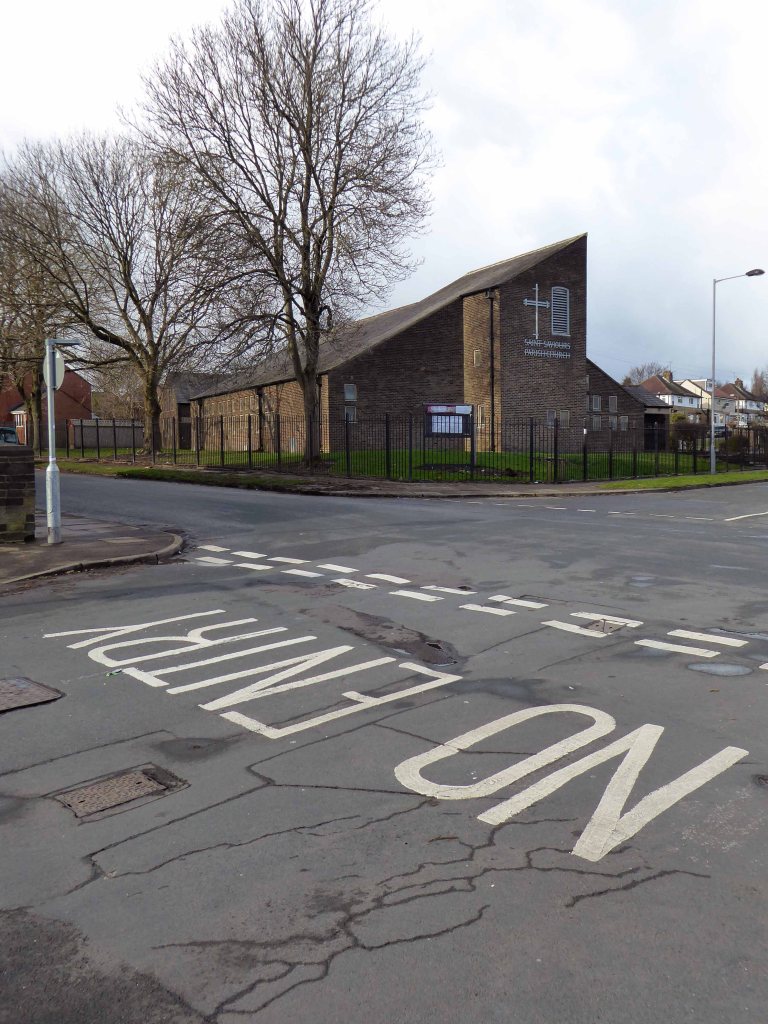
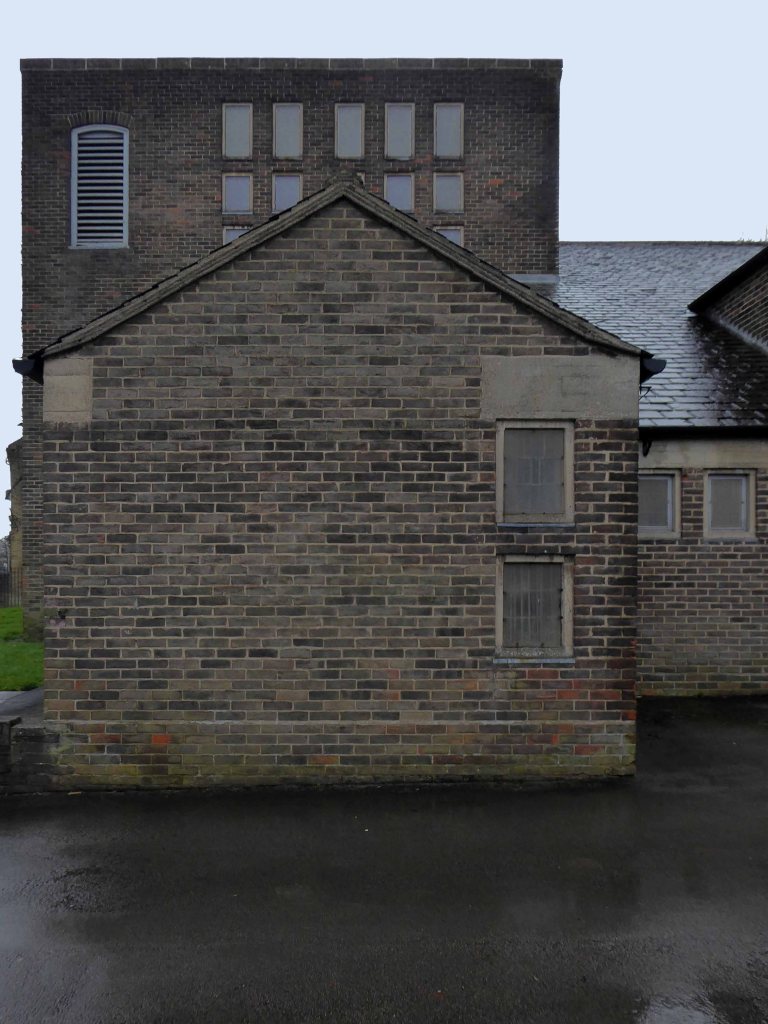
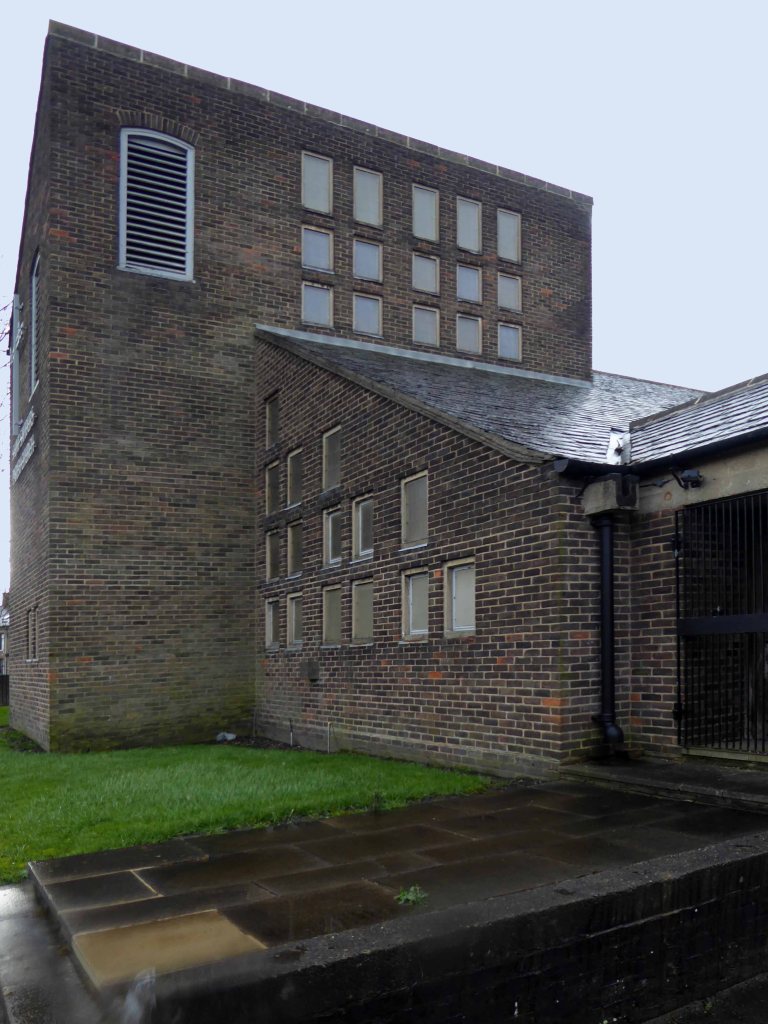
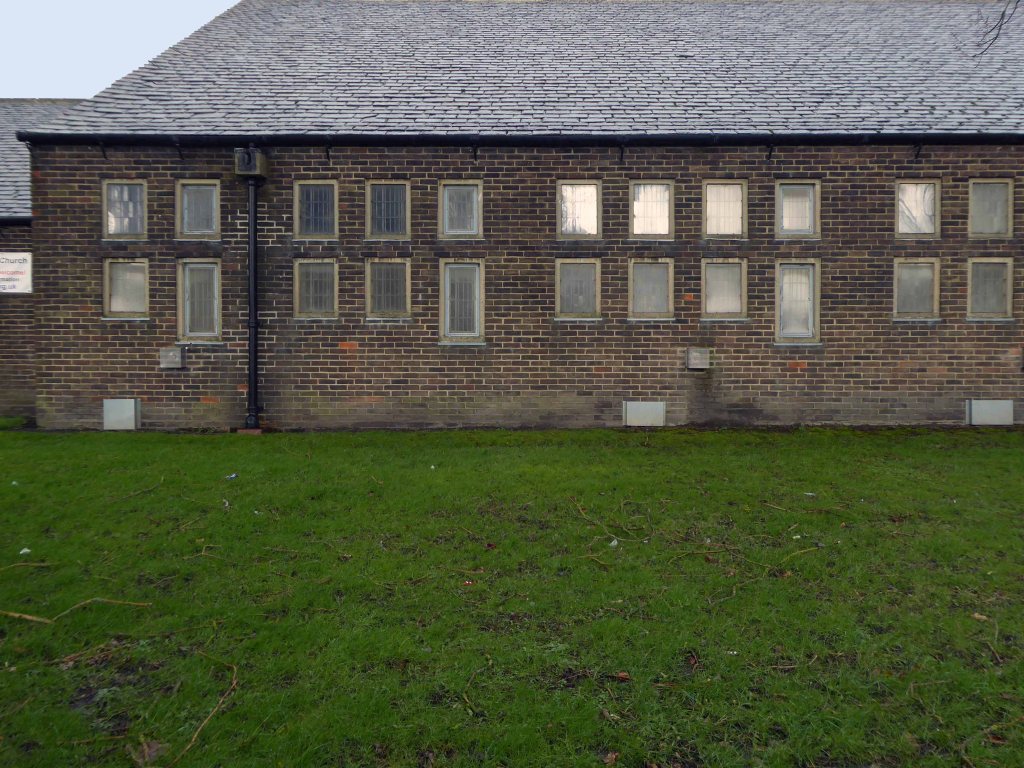
Steel frame and shuttered concrete with dark red brick walls in stretcher bond, and slate roofs.
Church of 1966 with attached hall of 1971, both designed by architect George Pace. Characterised by asymmetric arrangement of roofs, exposed structure and juxtaposition of materials, this is a complete and largely unaltered example of Pace’s work. The asphalt roof and windows are in very poor condition. Repair works to the roof were carried out in 2016 with funding from the National Lottery Heritage Fund’s former Grants for Places of Worship scheme.
The exterior is stark and angular, the body of the church is a broad rectangle with no division between nave and chancel, with a bell tower to the east, vestries to the north-west and a chapel to the west. At the western end is the church hall, added in 1971. Externally a single asymmetric roof covers the main body of the church, rising at the east end to form a mono-pitch section over the altar area and incorporating the bell tower. There is a porch at the east end of the north side, and a transept with a double pitch roof. To the west is a single storey, flat roof section with an entrance to the north, extending to the transept. West of the main body of the church on the south side is a separate roof, housing a chapel. To the west is the church hall, with a north-south asymmetric roof. All the windows are rectangular, of varying sizes, with plain glass in rectangular leaded lights. Lintels over the doors and the parapet of the flat roofed block are of shuttered concrete, as are the window surrounds.
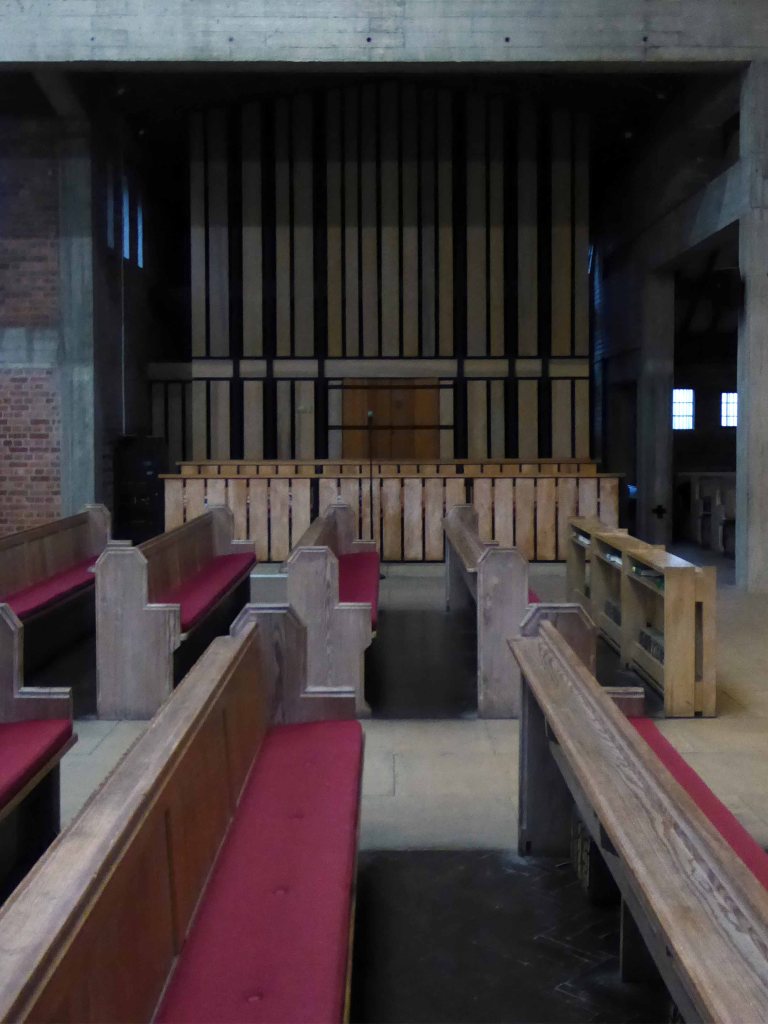
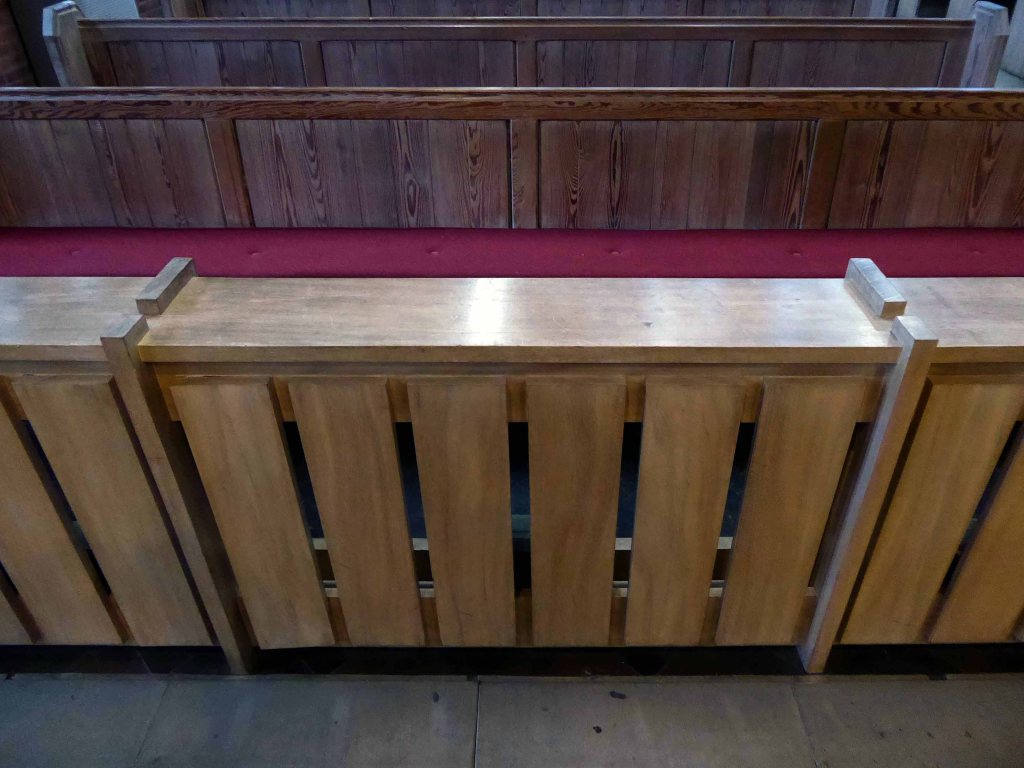
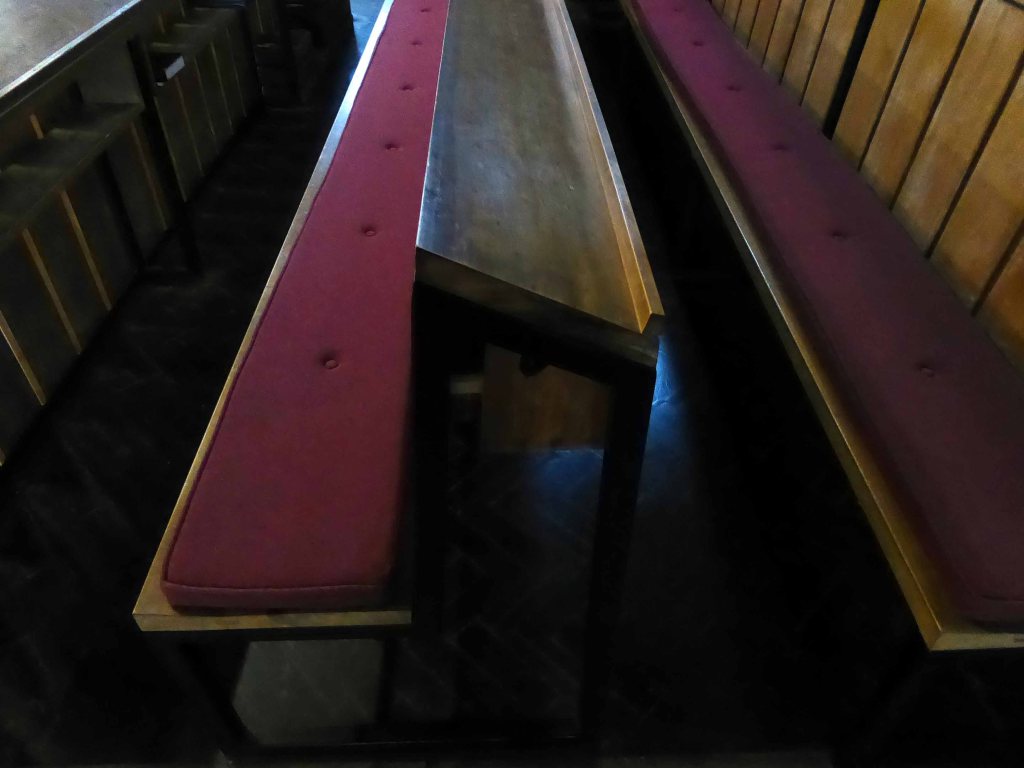
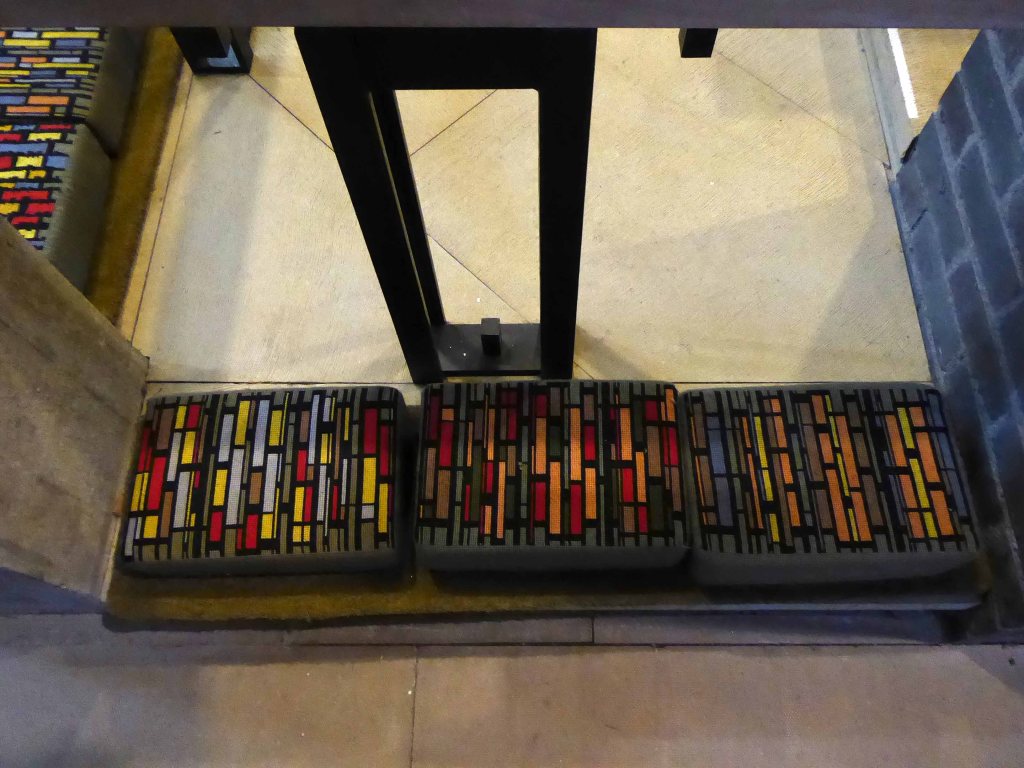
The body of the church contains Victorian stripped oak bench pews derived from St John’s church in Little Horton, arranged with a central aisle. To the north side is a range of contemporary pews in wood with vertical slatted fronts, in front of the organ, recovered from St. Chrysostom’s Bradford , by Driver and Haigh of Bradford, which is housed in the transept with a matching front of vertical wooden slats.
Let’s take a look.
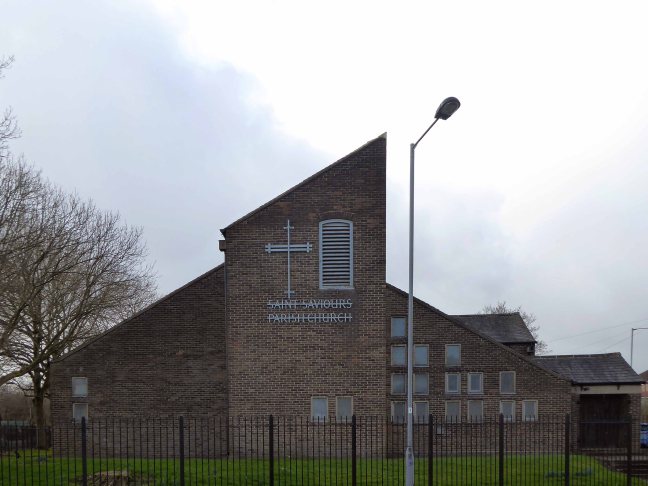
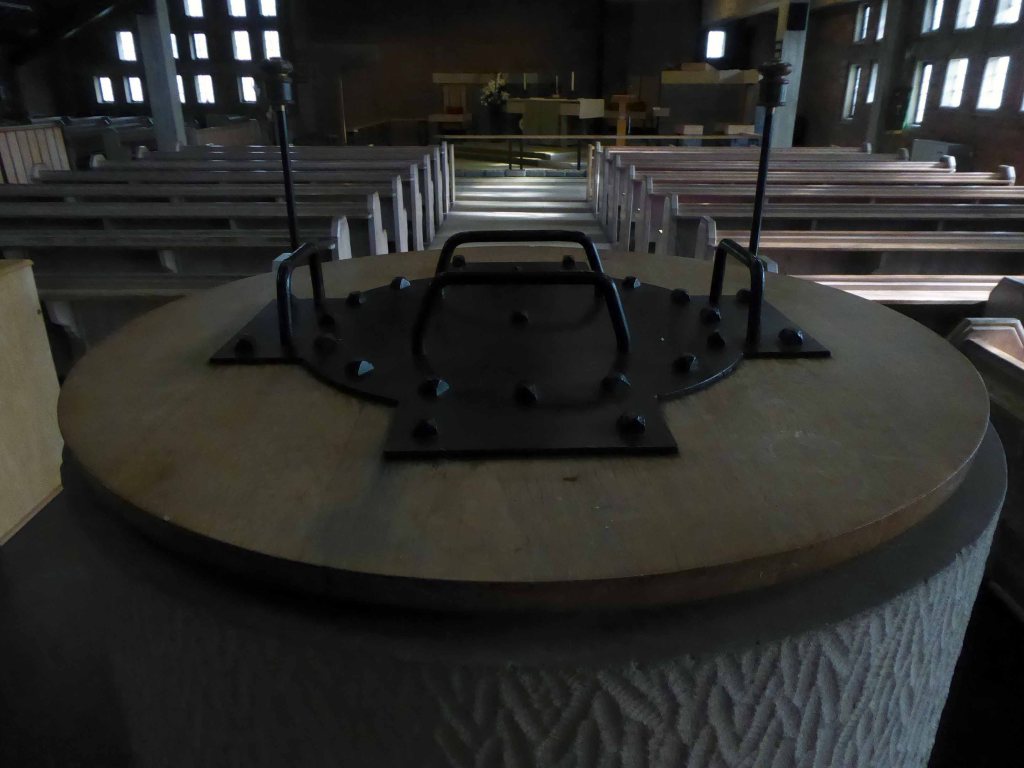
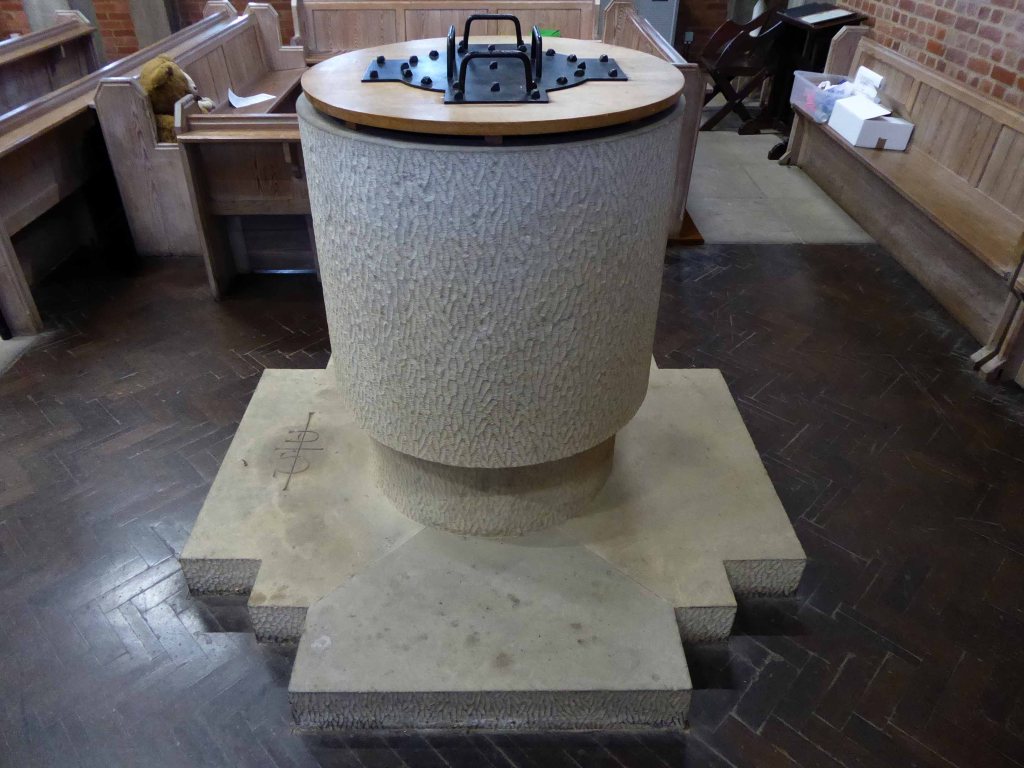
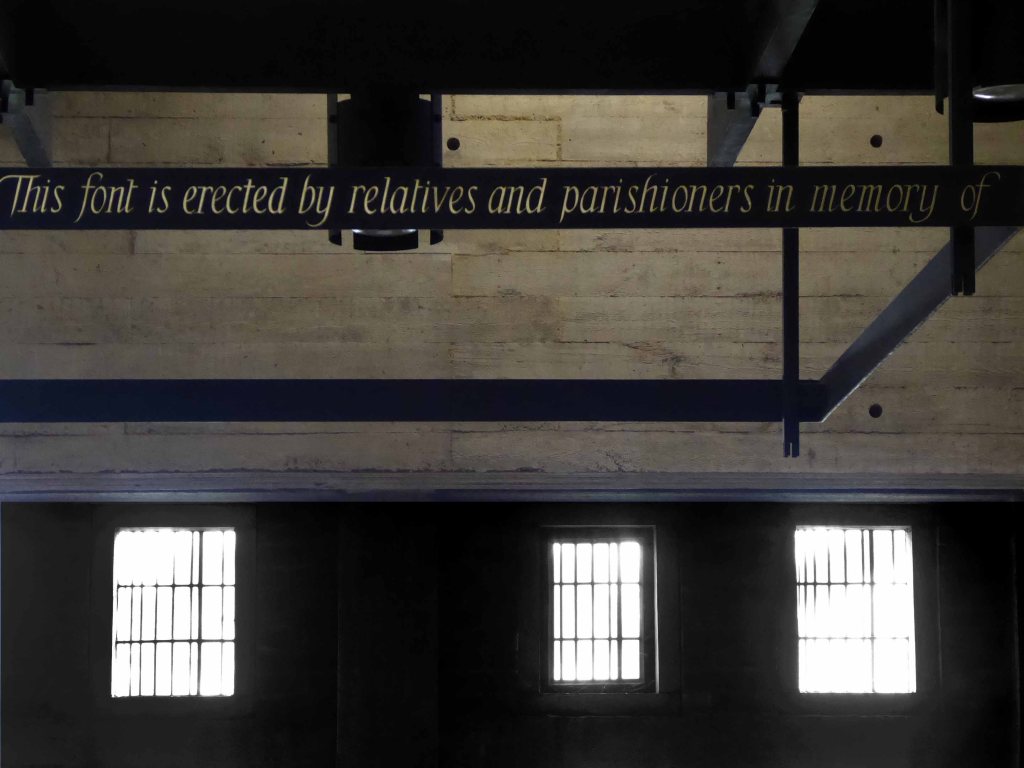
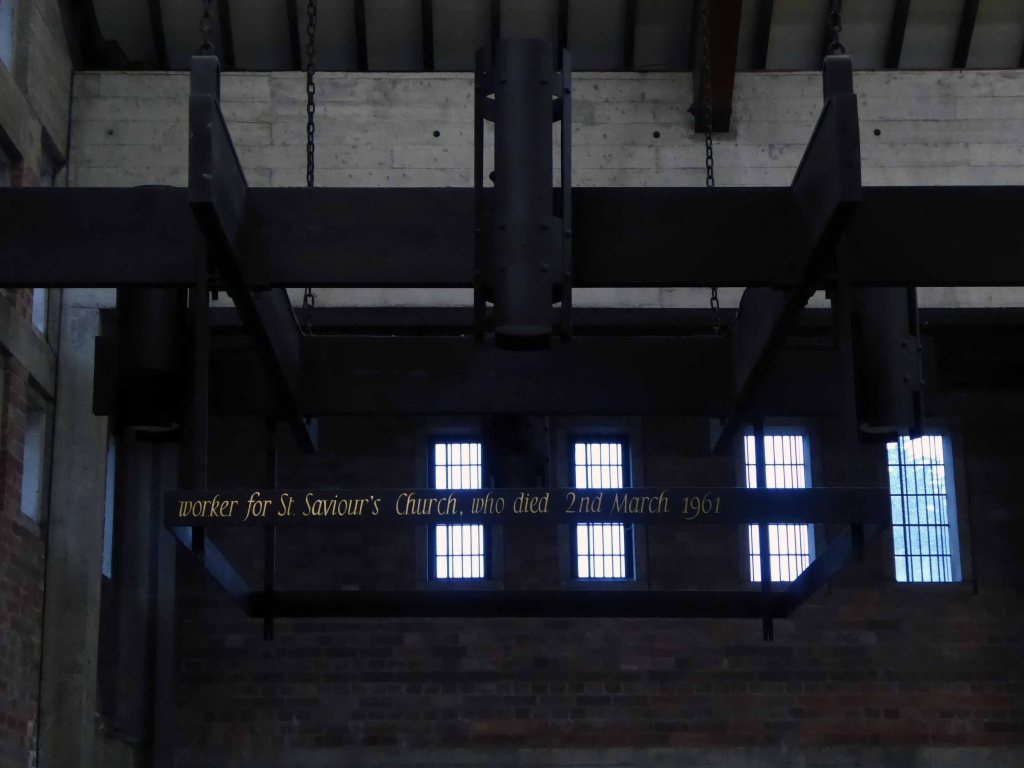
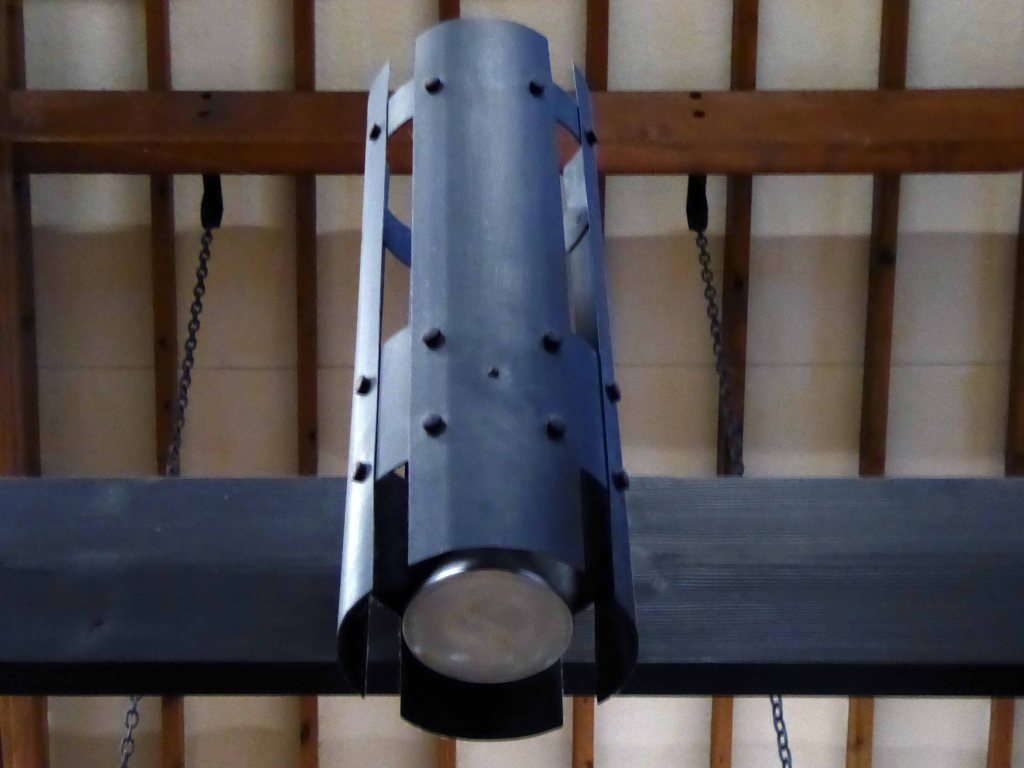
To the rear is the cylindrical font in white concrete with a wooden lid, set on a raised platform. Suspended above it is a large light fitting in black metal, inscribed around the edges with the words: “This font is erected by relatives and parishioners in memory of/ Beatrice May Parkin, for over forty years a Sunday School teacher and/ worker for St Saviour’s Church, who died 2nd March 1961”.
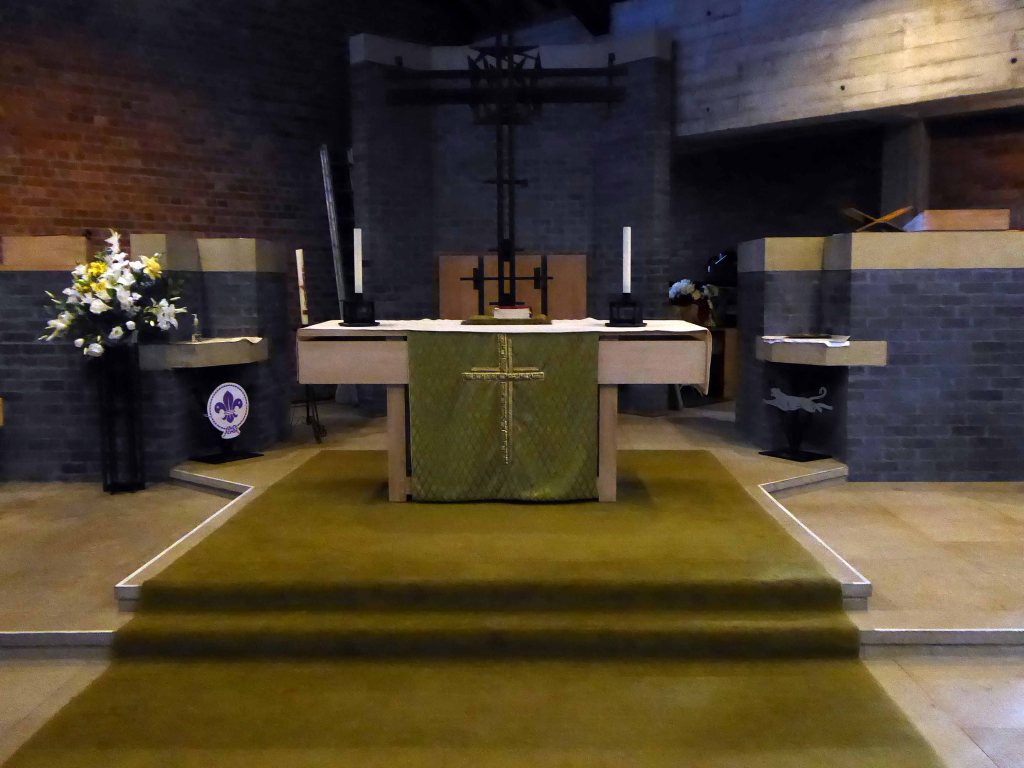
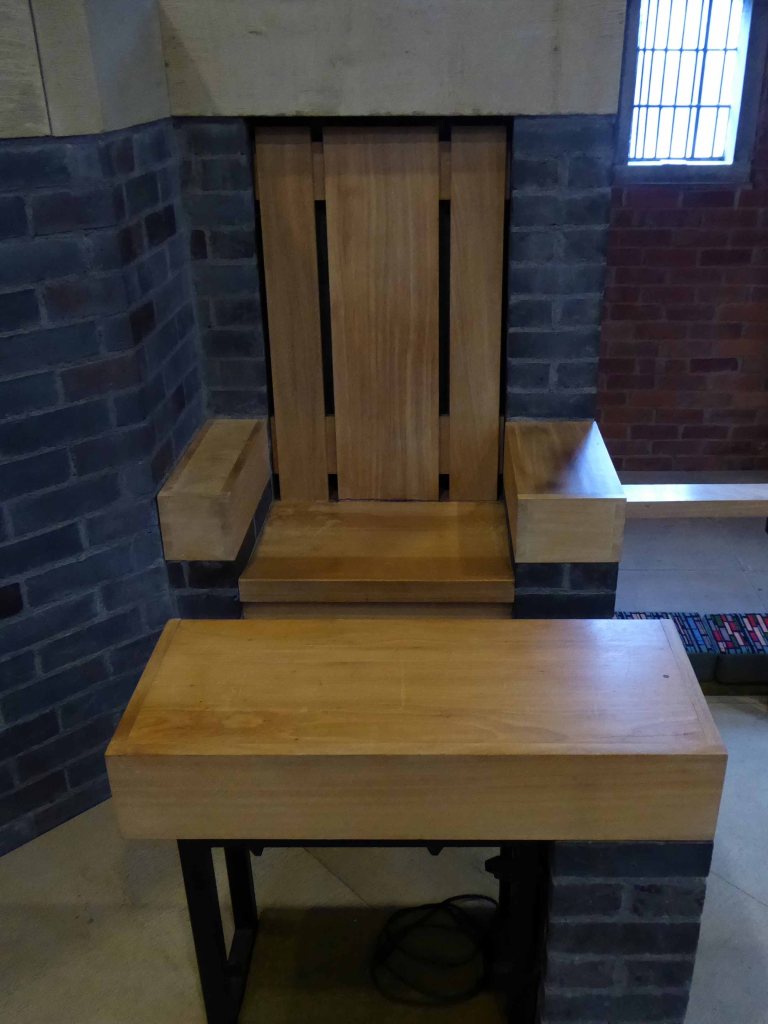
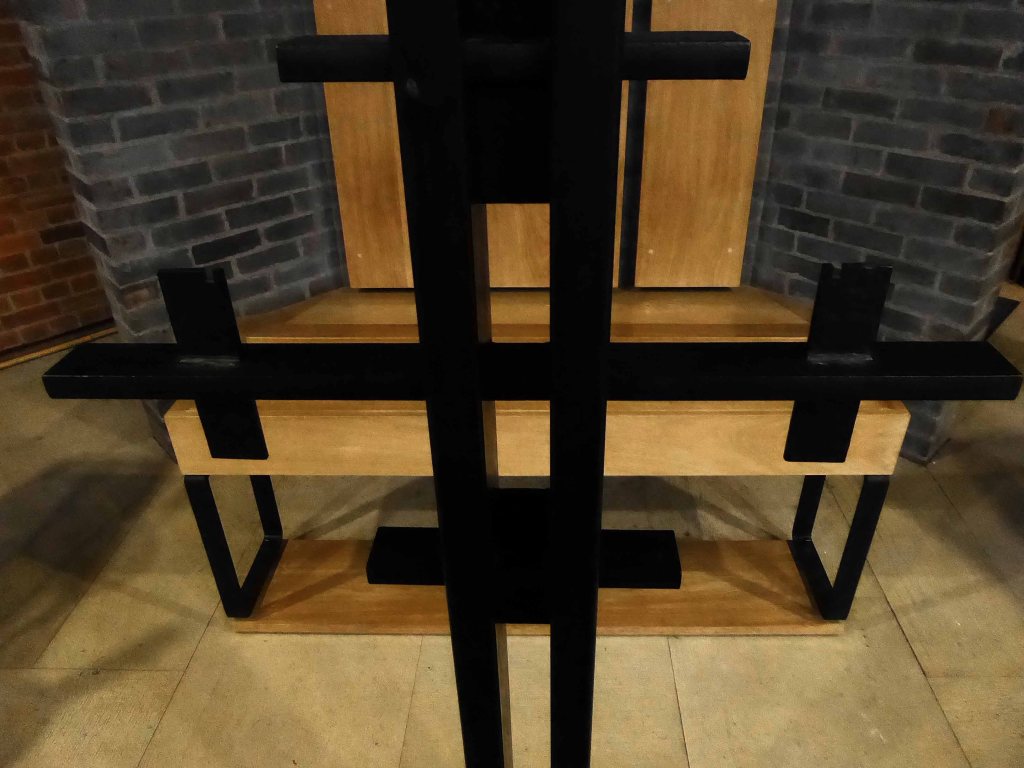
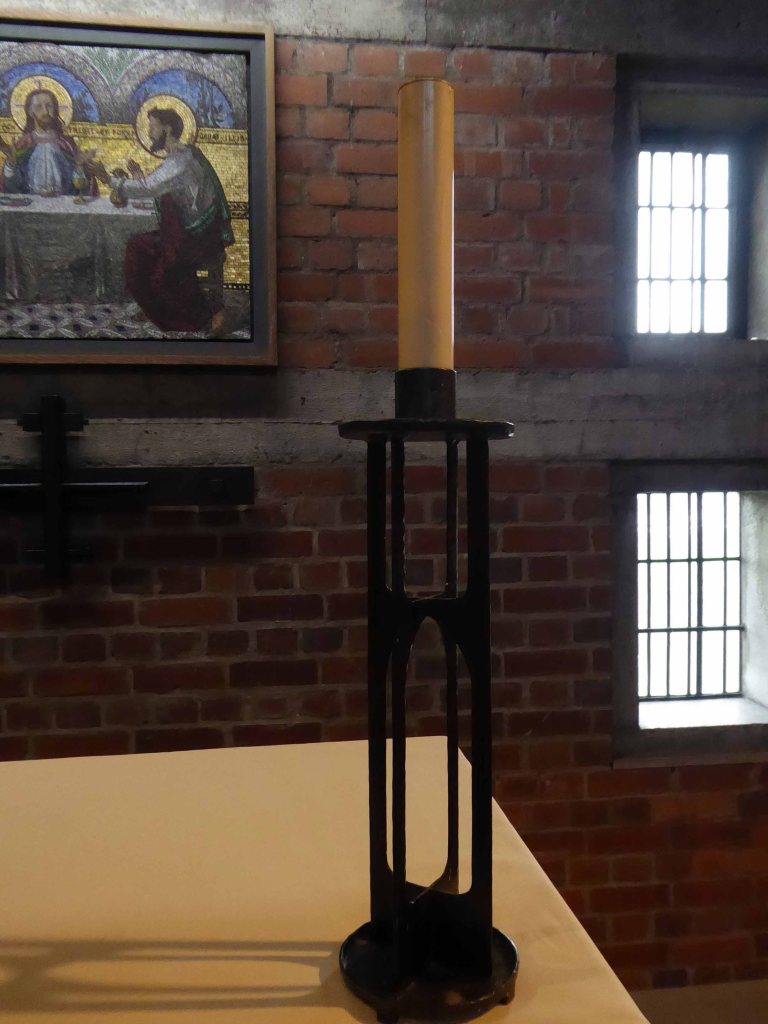
There is no separate chancel, and the finishes throughout are exposed brick, shuttered concrete and limed oak. The sanctuary area is in the south-east corner and consists of a tall angled purple brick reredos, topped with concrete, and a lower detached, angled purple brick pillar to each side each holding a shelf and incorporating a wooden seat. In front of the central reredos is an integral wooden bench with three backs, and a large black metal cross in the same style as those on the exterior but with more elaboration, fixed to the floor on a raised concrete block. To the fore is the altar table on a low raised platform. The whole is enclosed within an altar rail of iron and wood, open to the centre.
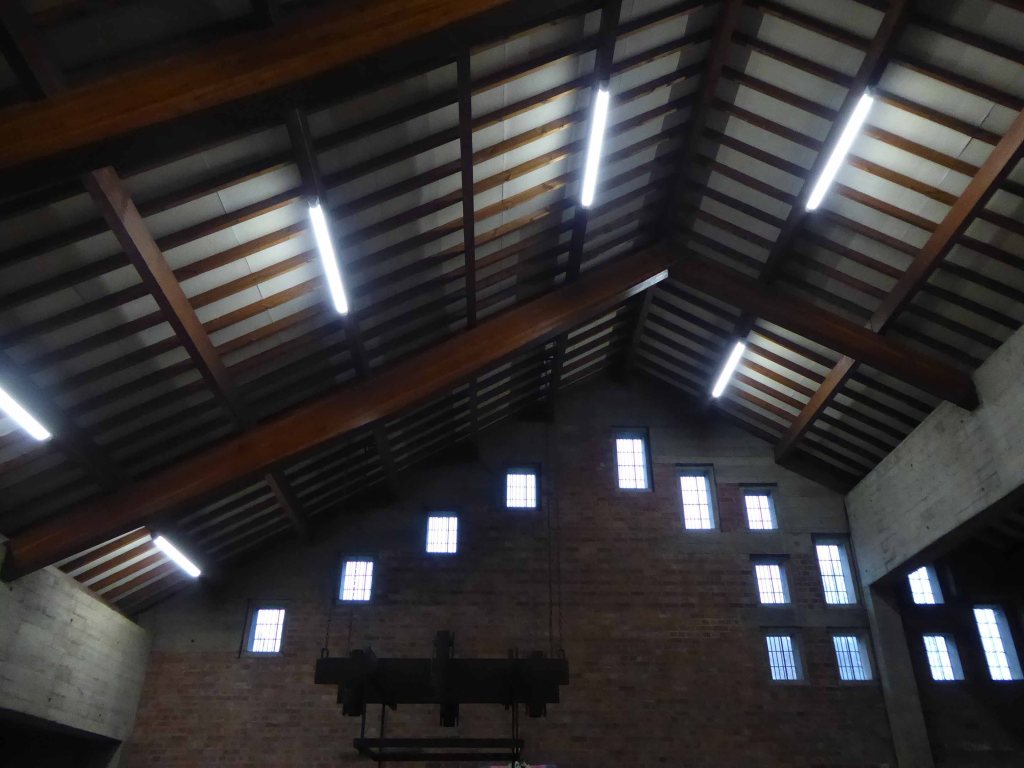
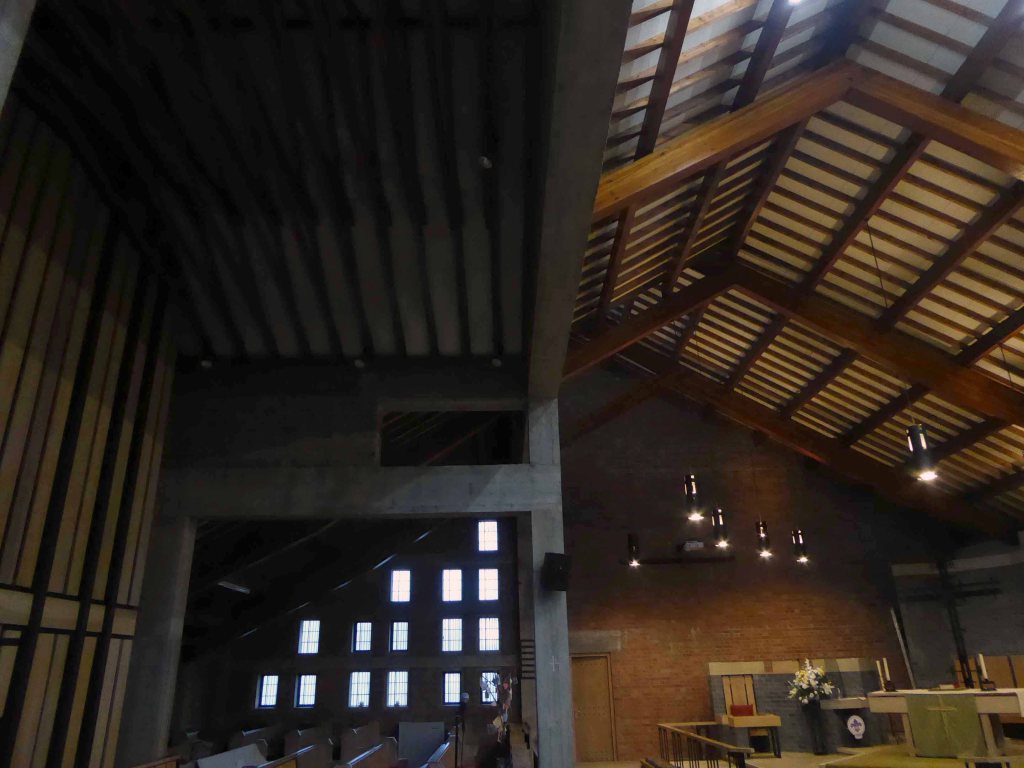
The main roof has exposed wooden trusses supported on concrete pillars and beams, with rafters and purlins also exposed creating a latticework pattern.
The whole interior order is orderly, calm and coherent, a simple consistency of materials and architectural intent.
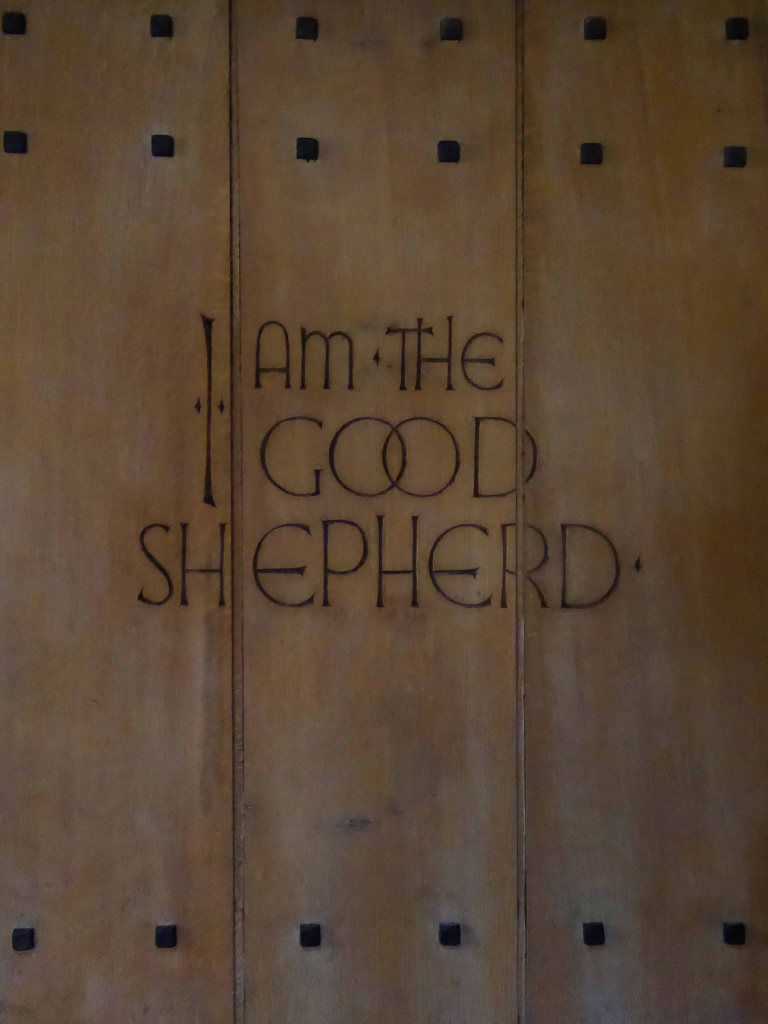
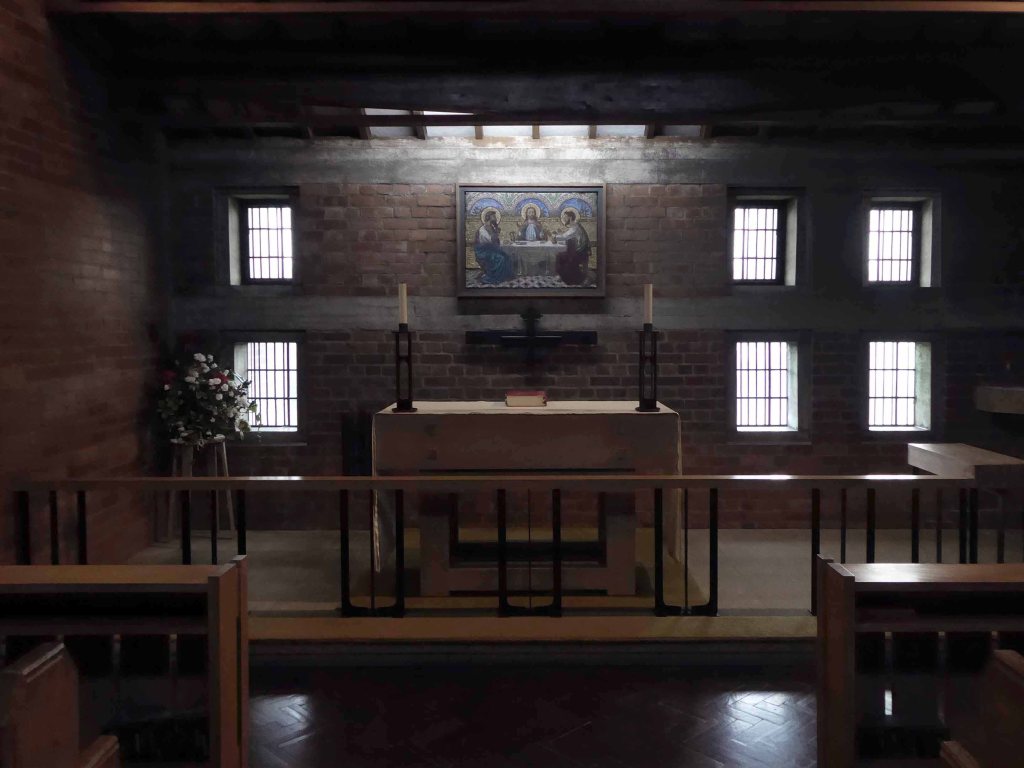
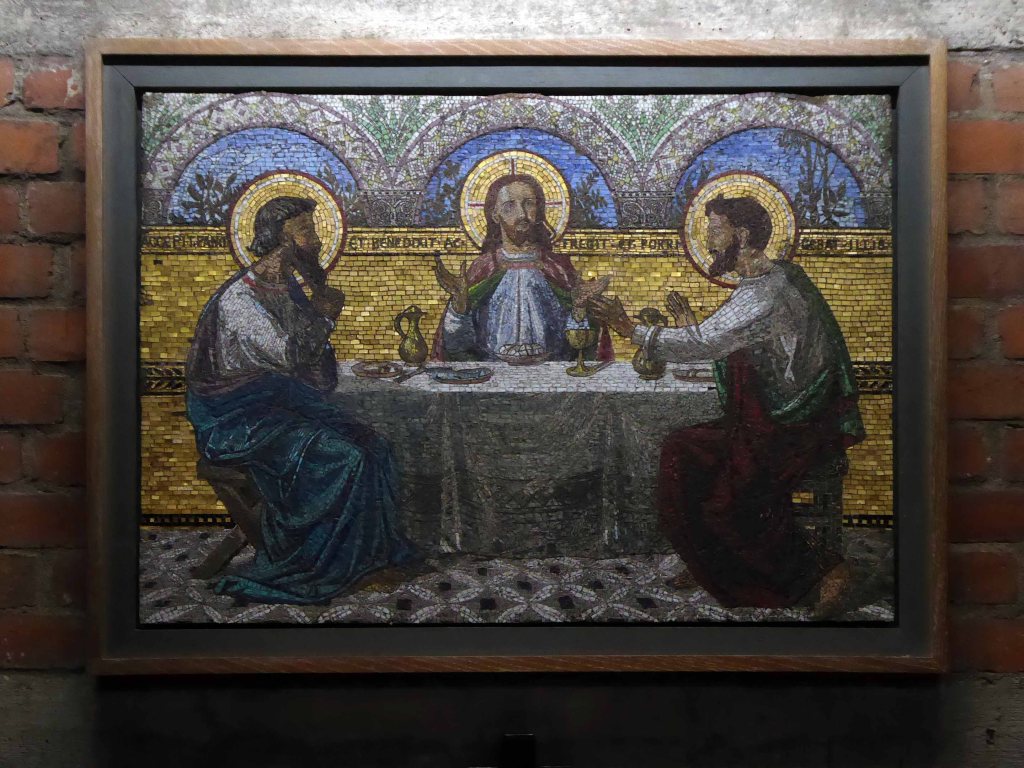
The solid wood, studded chapel door has the words “I am the Good Shepherd” engraved on it. The chapel has exposed beams and rafters, and an altar to the north with iron and wood altar rail in front. Pews are as in the church. There is a mosaic plaque behind the altar which came from St John’s church in Little Horton.
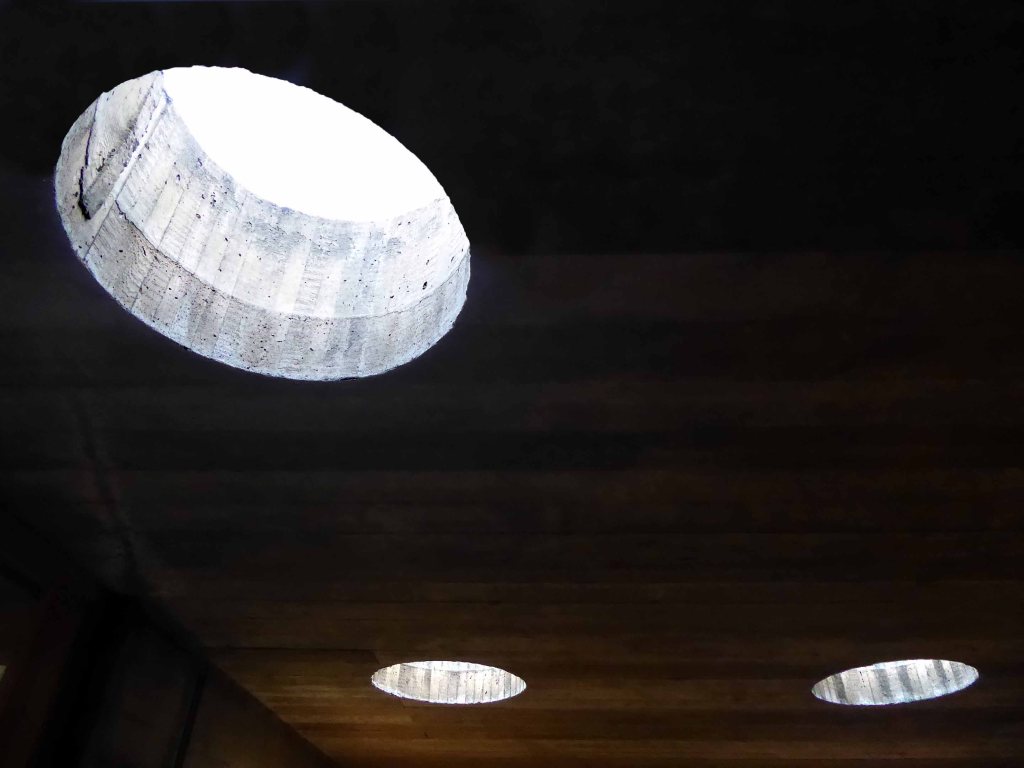
Beyond to the west is the narthex, with shuttered concrete ceilings pierced by circular skylights, exposed brick walls and doors to the chapel, service rooms and hall.
Such a pleasure to visit such an enchanting church – it was a precious privilege to be welcomed by the congregation, warden and Reverend Dorothy.
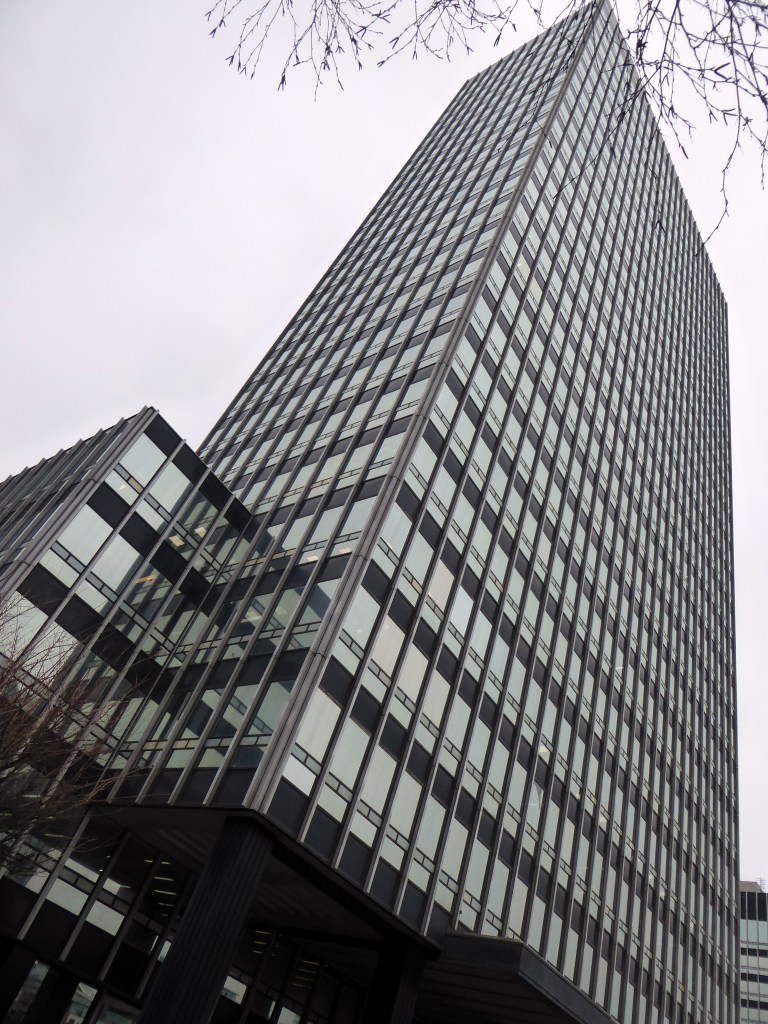
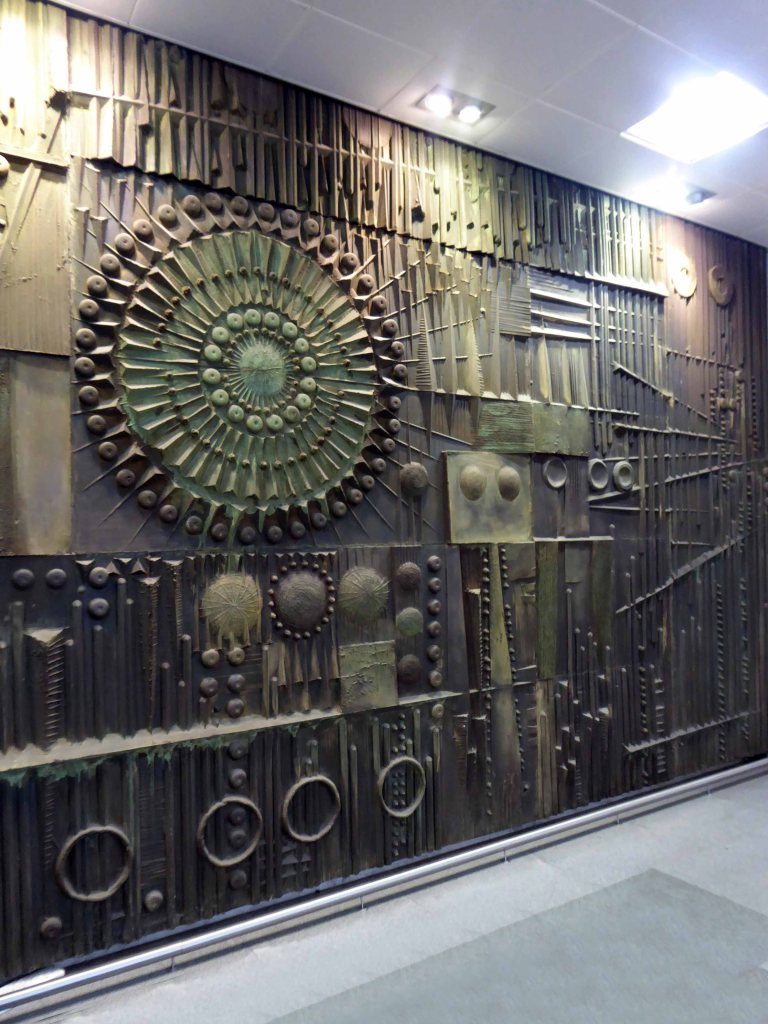
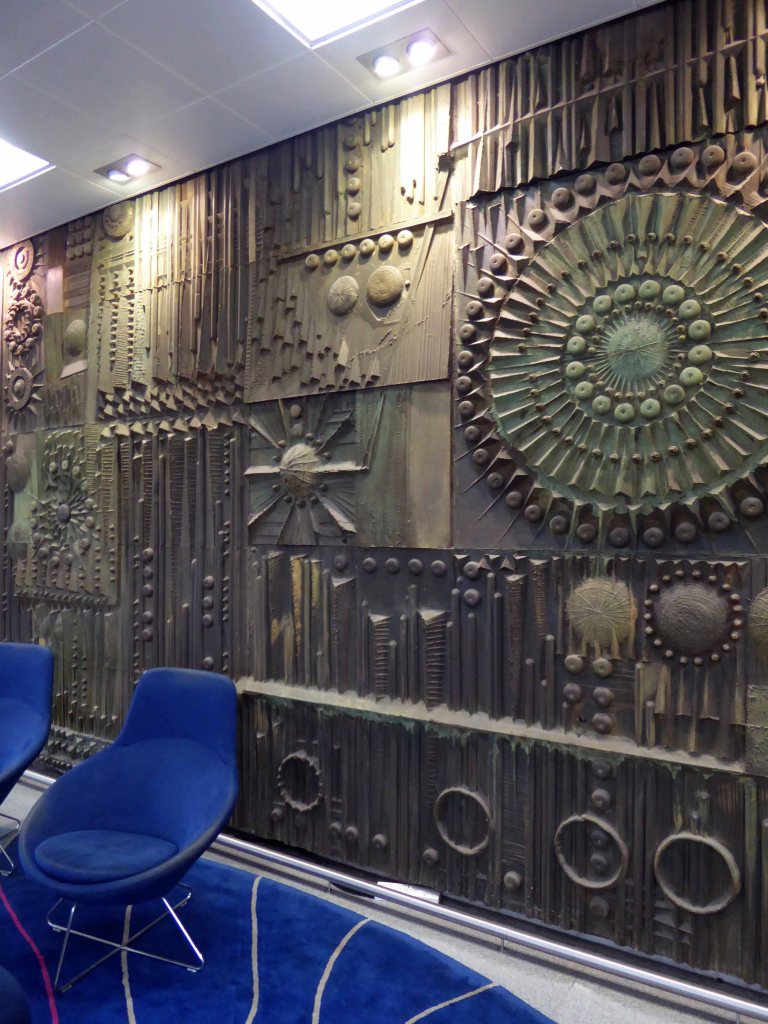
Today on my way elsewhere, in search of something or other, I walked into the lobby of the CIS.
I asked permission from the Receptionist to take a few snaps, was referred to the Head of Security, who referred me to the Receptionist, who ‘phoned Paul, who turned out to be Steve, who thought that it would be OK.
So I did – here are those very snaps, my thanks to the cooperative staff of the Cooperative Insurance Society.
Whilst walking the length of Hessle Road, up and back – taking the air, snaps, the sights and sounds, I came upon a fine Faience tiled frontage.
I began photographing, wandering dangerously into the space between the slip road and the flyover. A shout rang out, emanating from the boozer, the landlord called me over.
“Do you want to take a look inside?”
“Yes”.
A listed interior the new landlord is working hard along with Historic England to restore the capacious rooms to their former glory, including the entrance mosaic and ceiling – images P Hampel
Inheriting a whole heap of issues and a grey parrot called Sparky.
But the boozer is now up and running serving cask ale to throngs of first class thirsty customers.
The Yorkshire Brewhouse 1904 ended mid week when we’re normally closed but we were asked to open for a group of very thirsty sailors. We moved on to Reet, another Yorkshire Brewhouse beer and thanks to the football that one has gone too. It’s back to the YBH Faithful Stout once again. I’d come quick and get it while you can.
Once two pubs the Hessle Road Inn was subsumed by the Alexandra. The area was once home to the city’s Jewish Community – the cemetery survives next door.
There are Star of David motifs incorporated into the windows, sympathetic to this local heritage.
Built around 1895, designed by Smith, Brodrick and Walker, with late C20 alterations – British Listed Buildings.
It’s a fabulous pub which deserves to thrive – pop in for a pint if you’re passing, just watch out for low flying parrots.
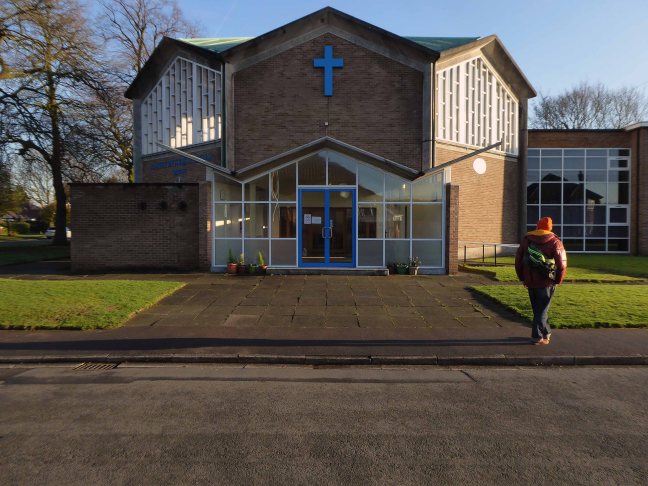
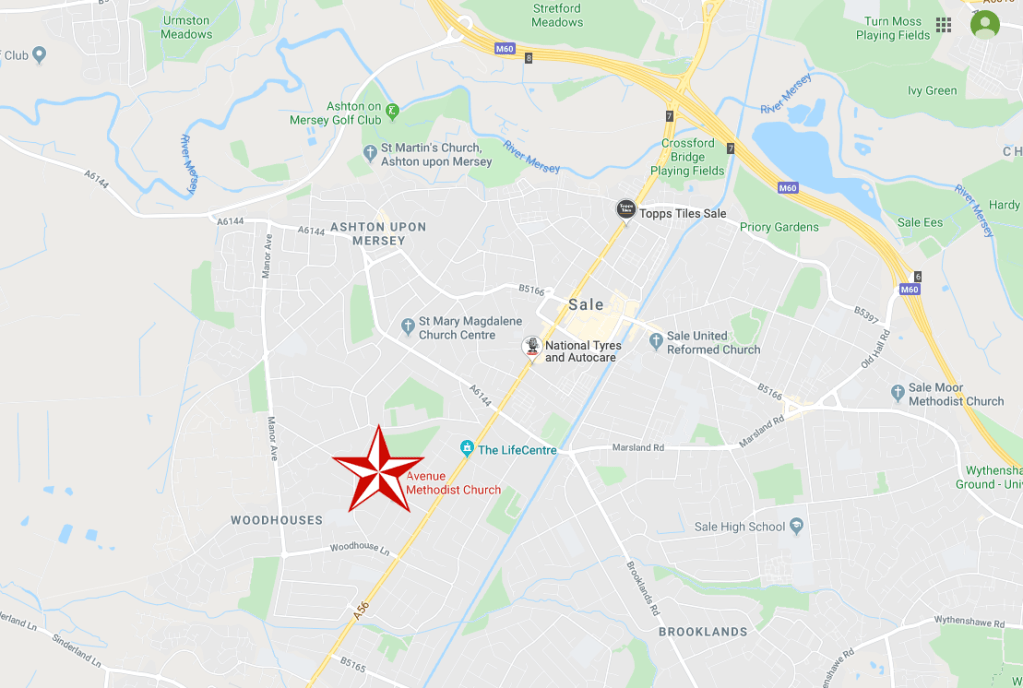
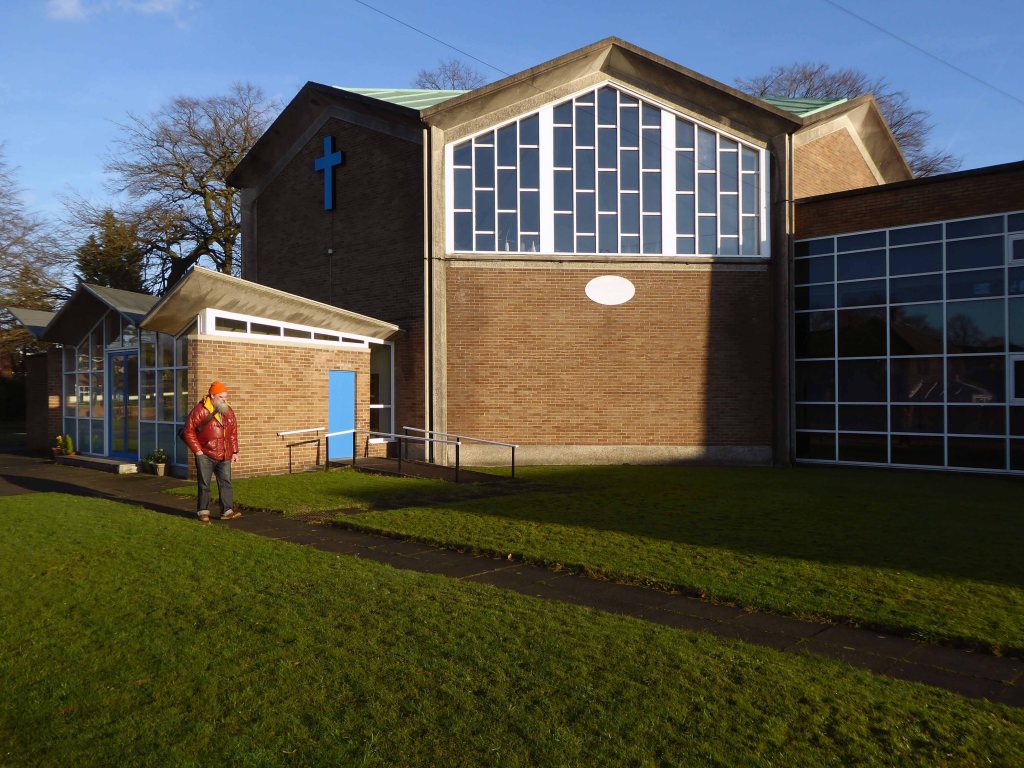
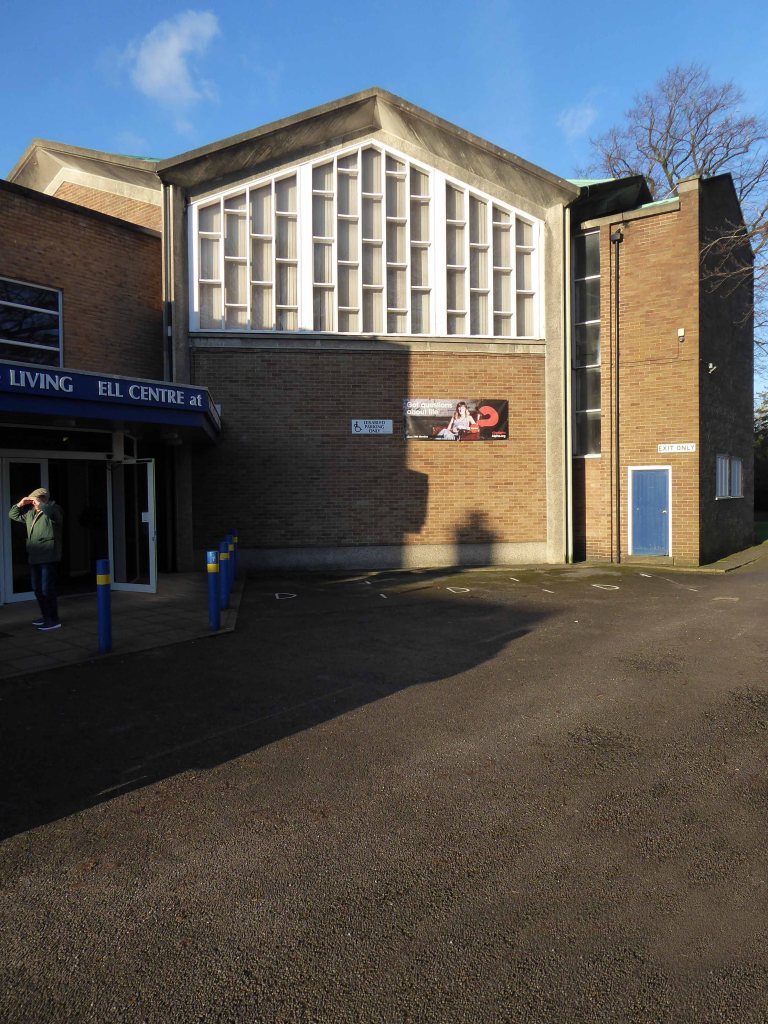
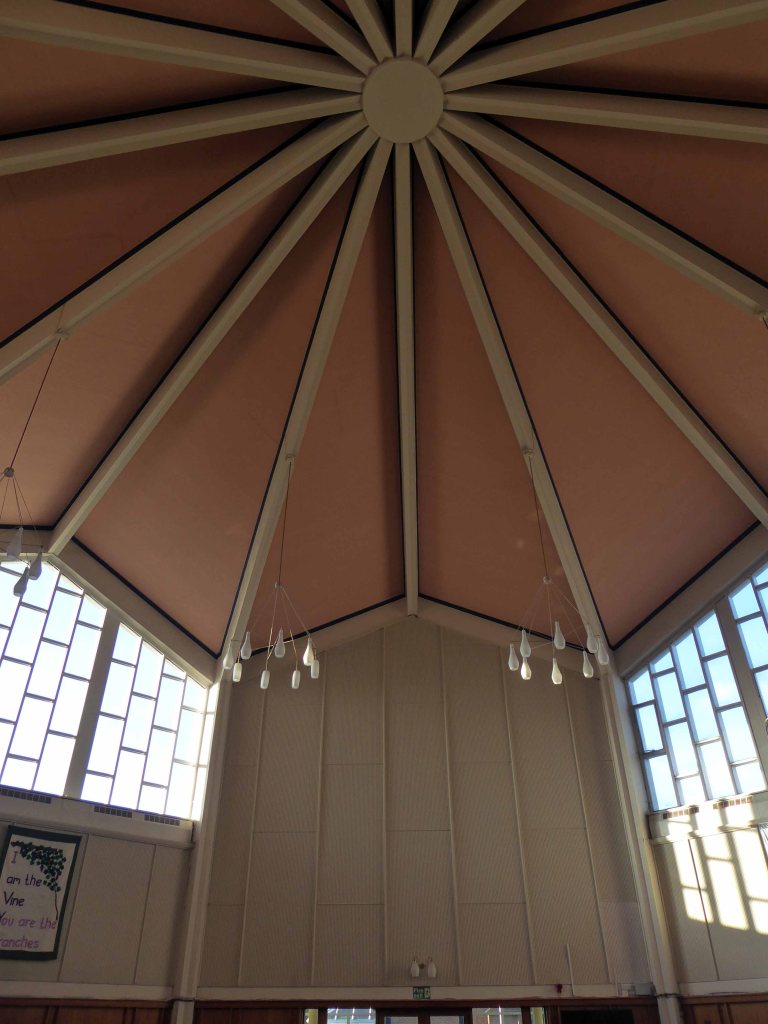
The Avenue Church is no less monumental – a steel, brick and glass octagon with attached single storey hall – set in a shimmering sea of grass and tarmacadam.
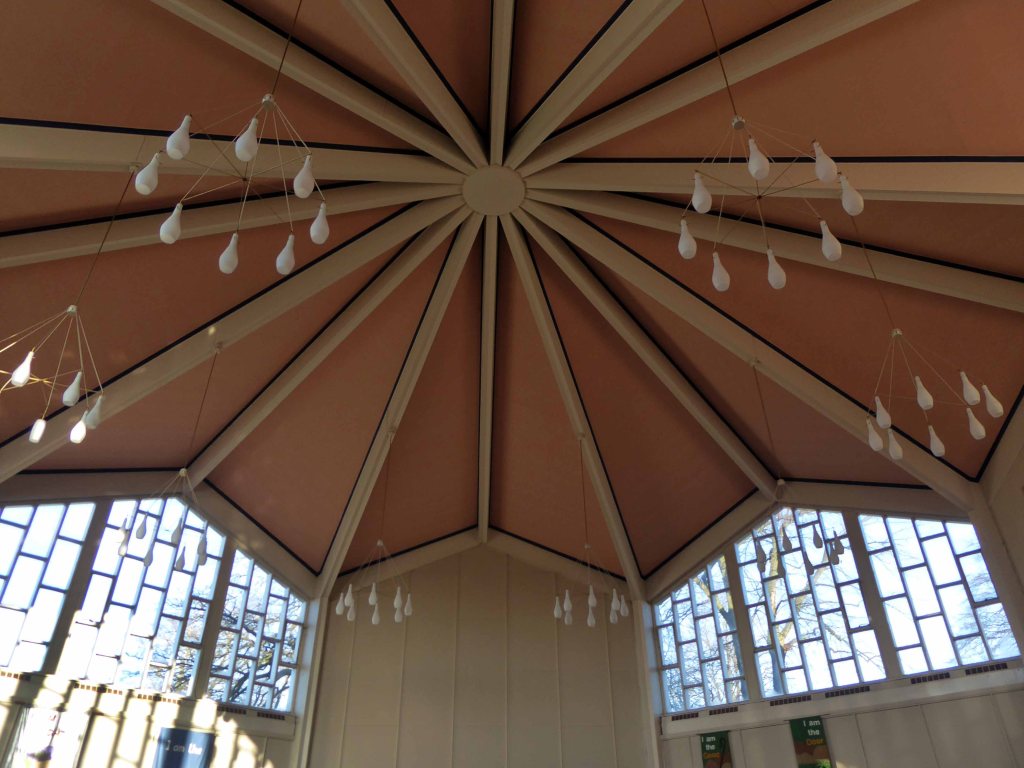
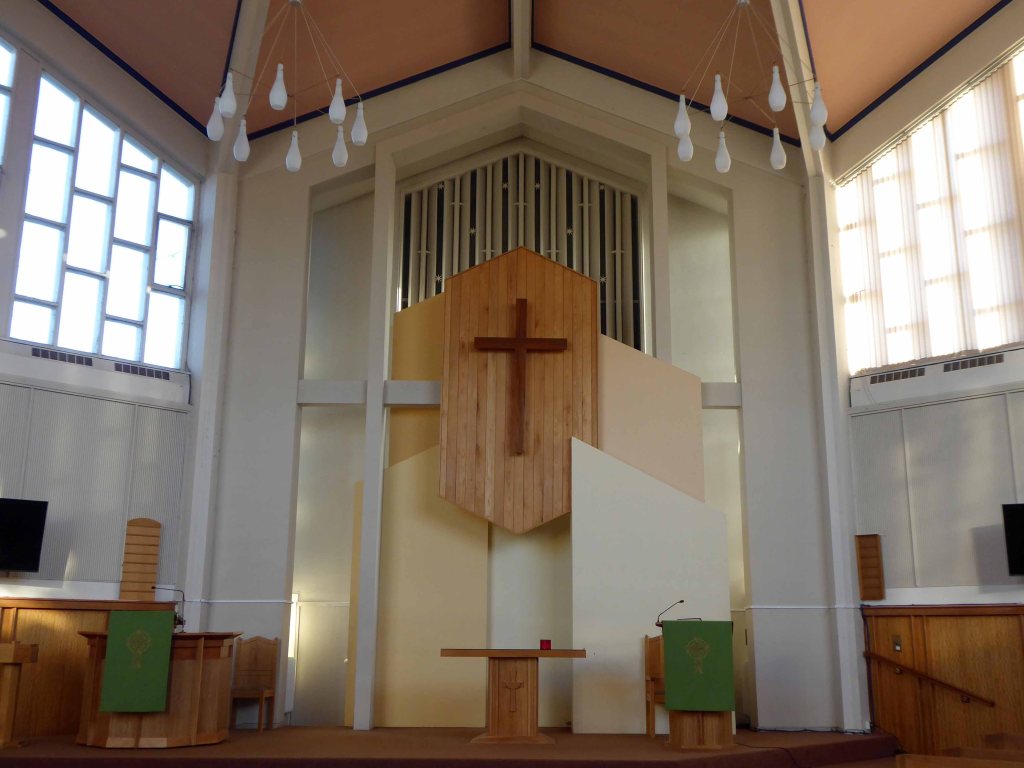
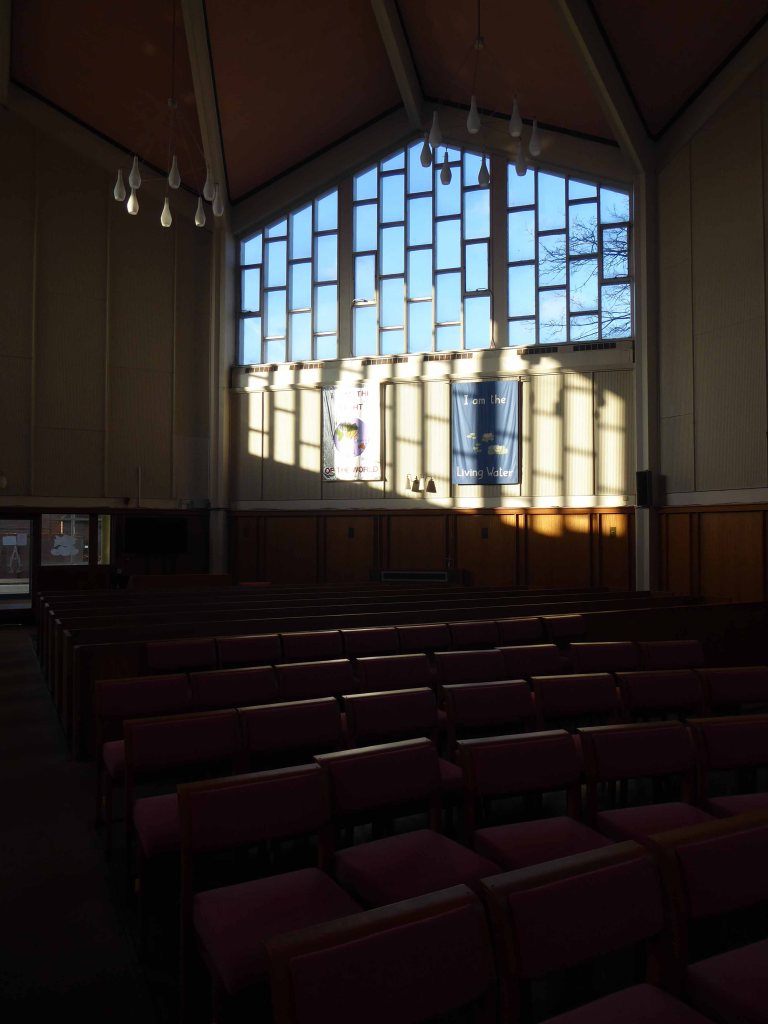
The interior is open and light illuminated on four sides by large plain glass windows, broken up by a vertically unchallenged grid.
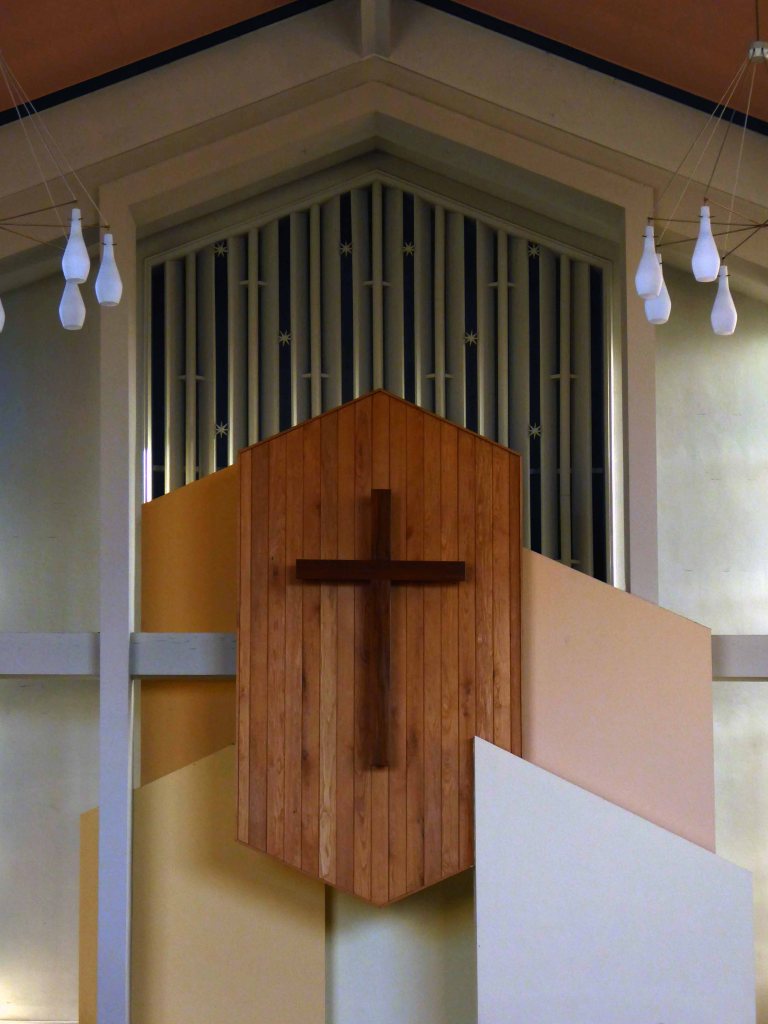
Artificial lighting is provided by suspended groups of lamps.
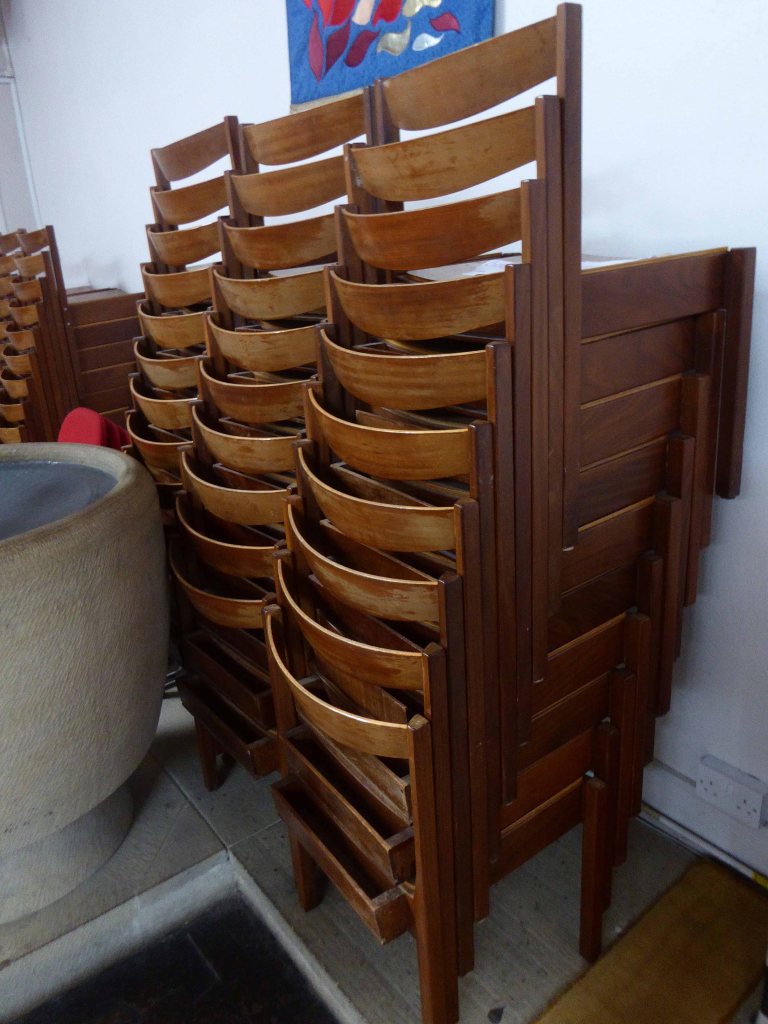
The seating a mix of plain wooden pews and portable chairs.
The altar a simple statement of panels and cross.
Treat yourself to a walk down the Avenue – take a look around.
Set back from Beverley Road – we just about found this delightful Modernist gem. Tucked in amongst student accommodation and approximate to the Endsleigh College.
The church built in 1965 is fan-shaped in plan. Concrete portal frame with yellow brick infill. Shallow-pitched sheet metal clad roof. The main rear wall is flat and blind, with a parapet, and extends across the building at full height. From this wall the main body of the church radiates, three facetted bays to either side, with a saw tooth eaves line, then a projecting square block which houses the narthex and west gallery. The saw tooth eaves continue just above the entrance block to complete the fan shape. Attached to the other side of the main wall are the low, square projections of the side chapels and sacristies and a concrete framed bell tower with shallow pitched roof. The entrance block is clad is artificial stone, has a wide, glazed screen with central doors and a thin flat canopy.
We had arrived some twenty five strong as part of Manchester Modernist’s Hull Mooch – we were very warmly welcomed and left more than satisfied by the riches both within and without.
My thanks to Deacon Rev. Robert Shakesby
Above this an inset panel of decorative mosaic by Ludwig Oppenheimer Ltdof Manchester -the firm ceased trading in 1965. The facetted elevations have large glazed areas set in a bold concrete grid of mullions and transoms, tripartite in the centre with a border of smaller divisions. The bell tower is placed in the centre of the east wall and has a port cullis-like bell-opening facing west.
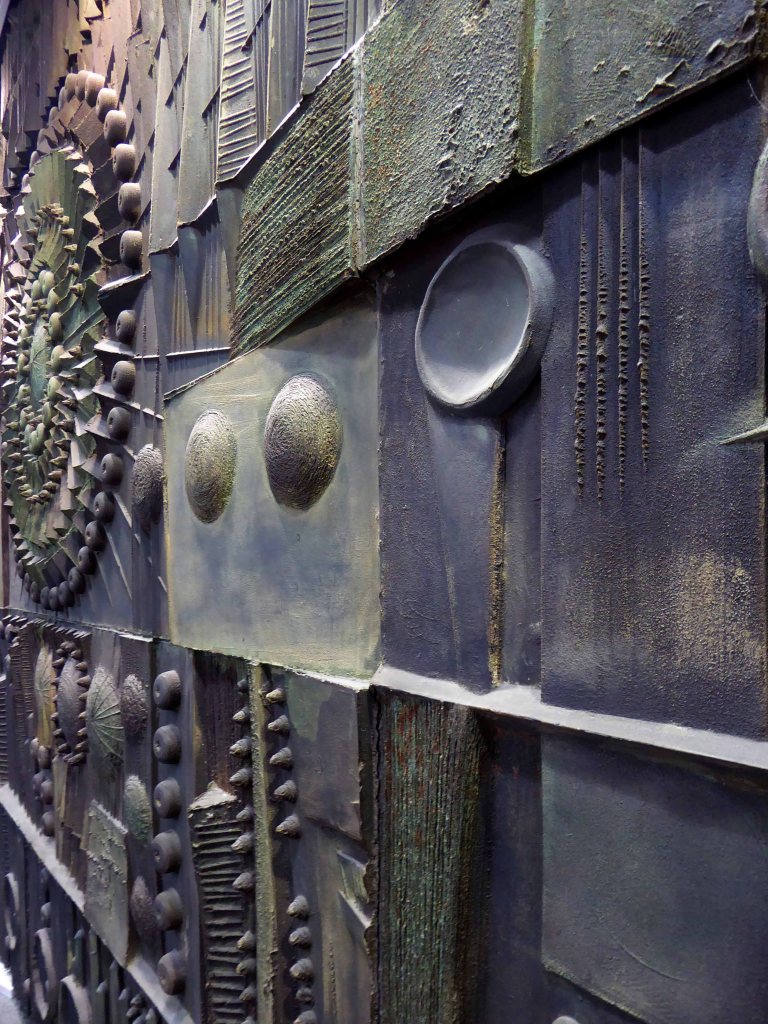
The mosaic is surrounded by decorative abstract panels in light relief
Let’s take a look inside.
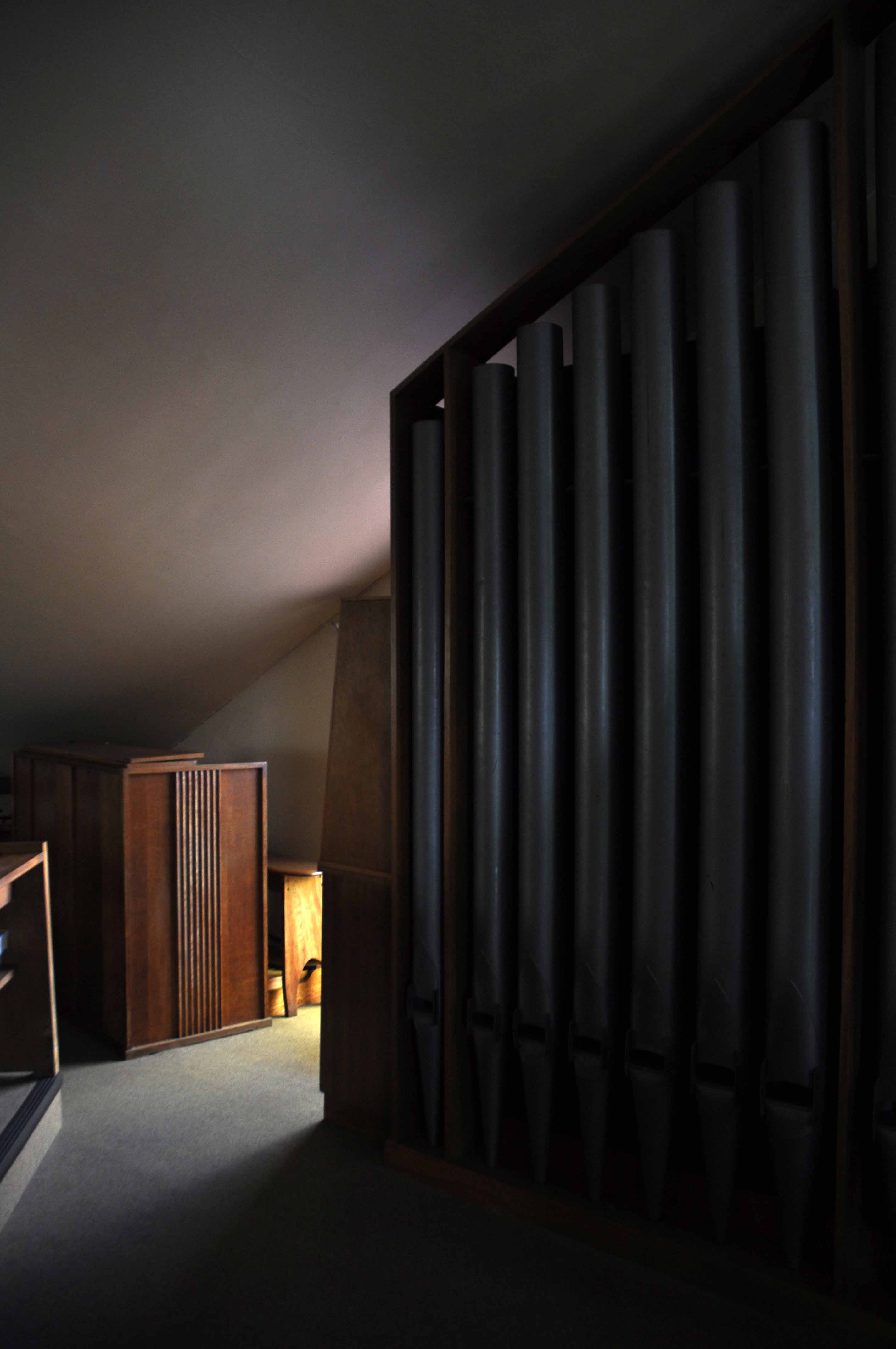
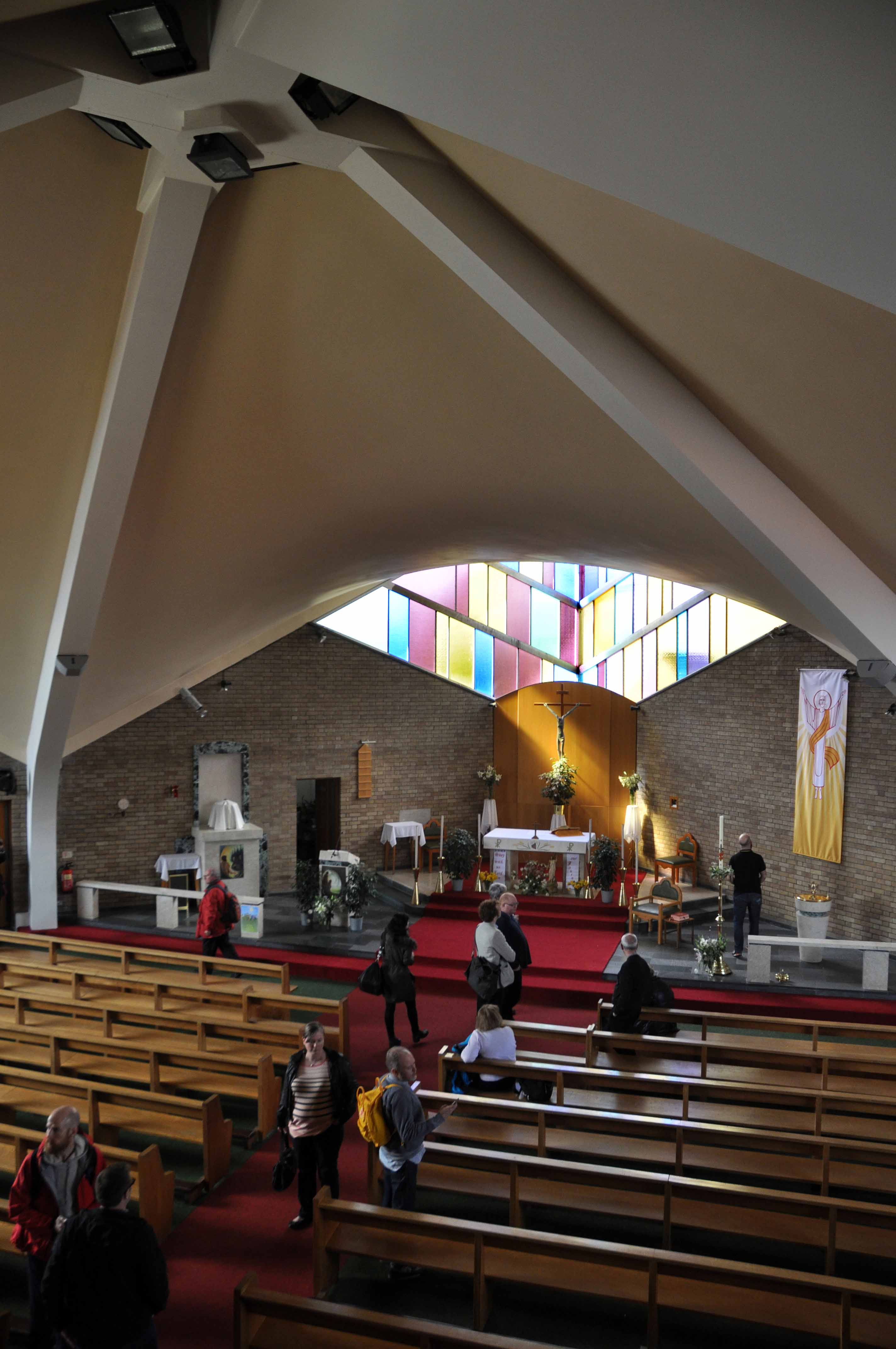
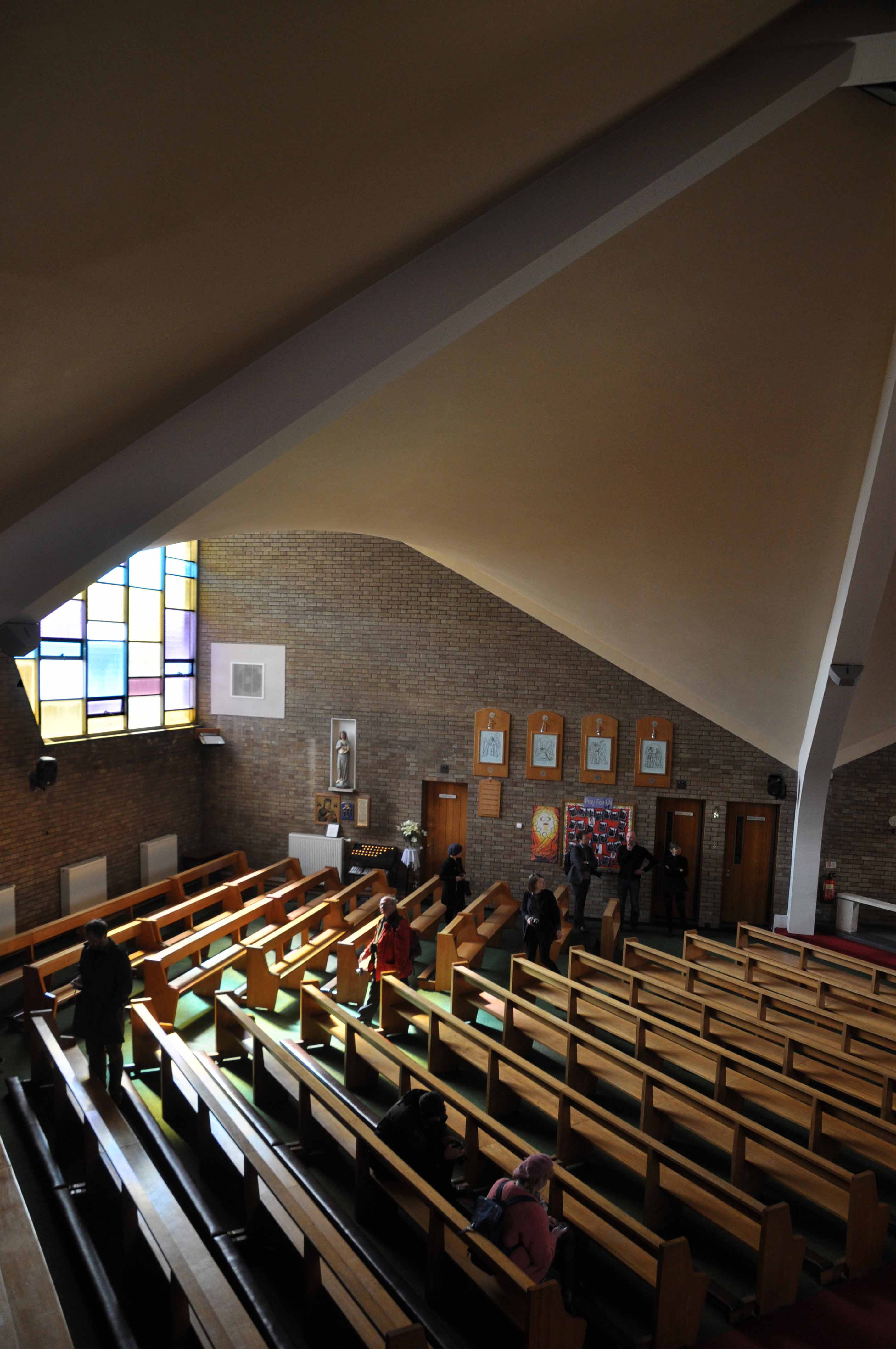
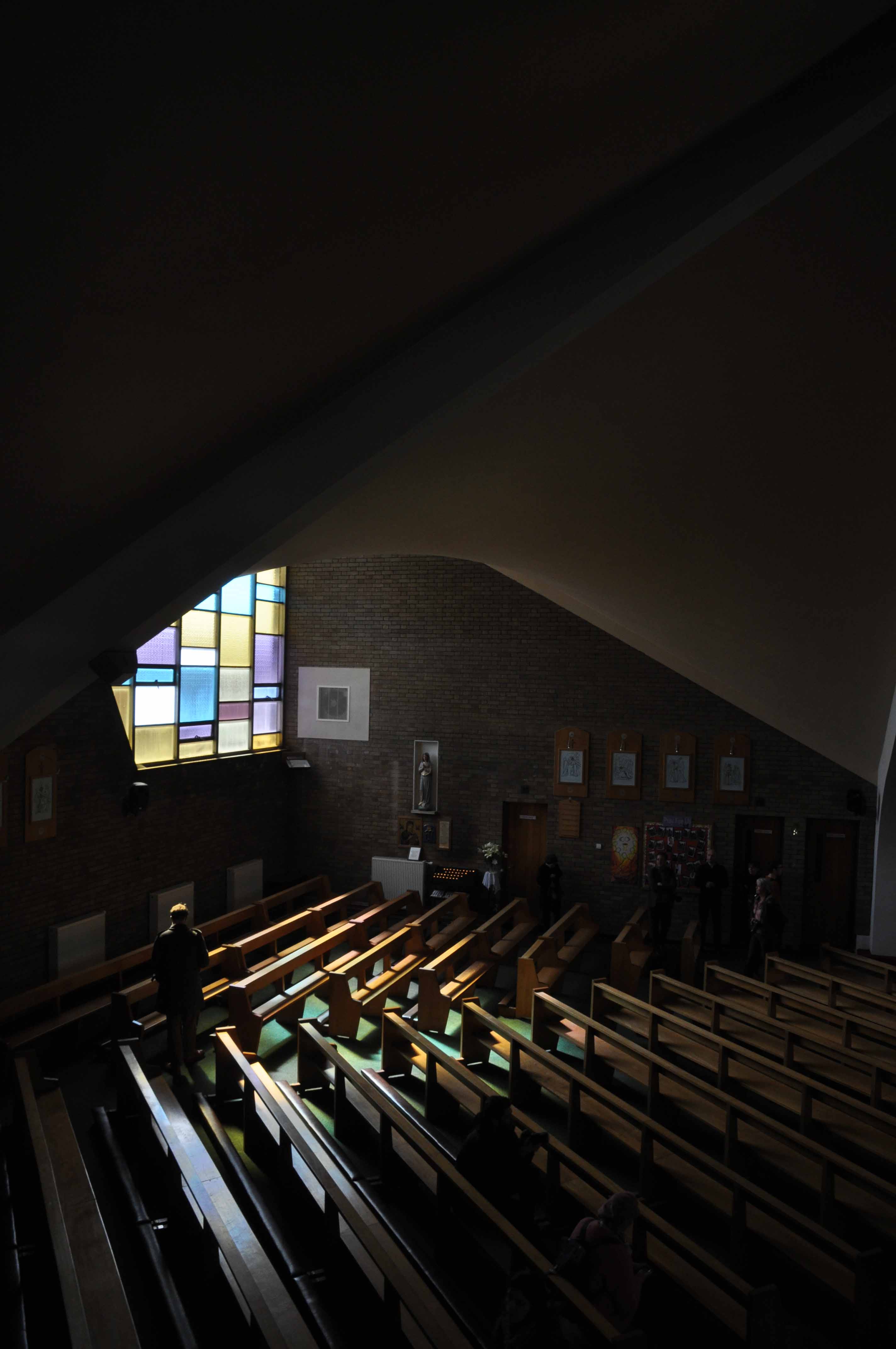
The interior is a light and spacious essentially single cell, with the shallow canted projection of the sanctuary – top lit by a row of seven small circular skylights, the low side chapels and the organ gallery. The concrete portal frame provides a dramatic grid radiating from the centre of the east wall. Sanctuary fittings in contrasting marbles, by Toffolo & Son of Hull, designed as a piece. Similar marble altar in the northeast side chapel. The chapels have subtle shallow-pitched arches. West gallery also with circular skylights. Organ pipes at either end arranged within a striking double-curve enclosure, like a grand piano in plan. Open-backed pews and original light fittings. Stained glass by Leo Earley of Earley & Co. of Dublin. Stations of the Cross, wooden relief panels set within integral frames, somewhat stark.
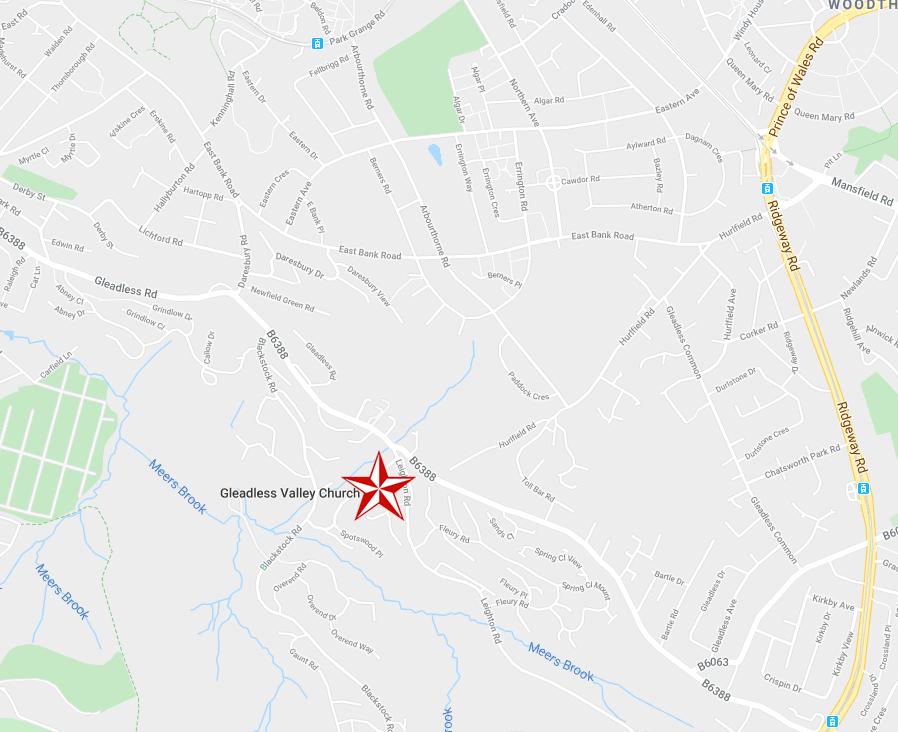
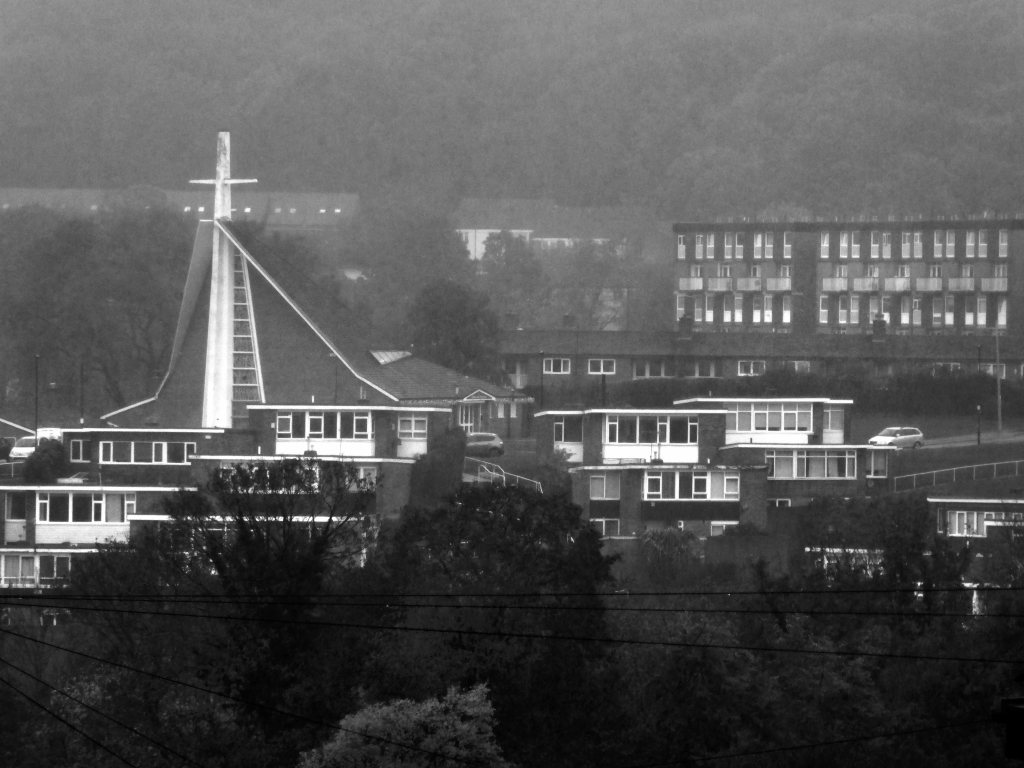
Holy Cross is positioned in a spectacular position among the houses on the Rollestone hillside.
Holy Cross is a church for people of all ages and stages of life.
Apart from the warm welcome at Holy Cross, you will always find something that is relevant to your age and stage in life – however old you are and whatever walk of life you come from.
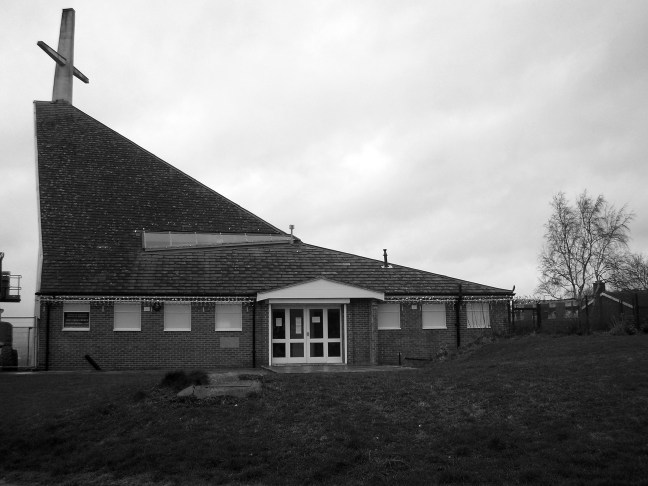
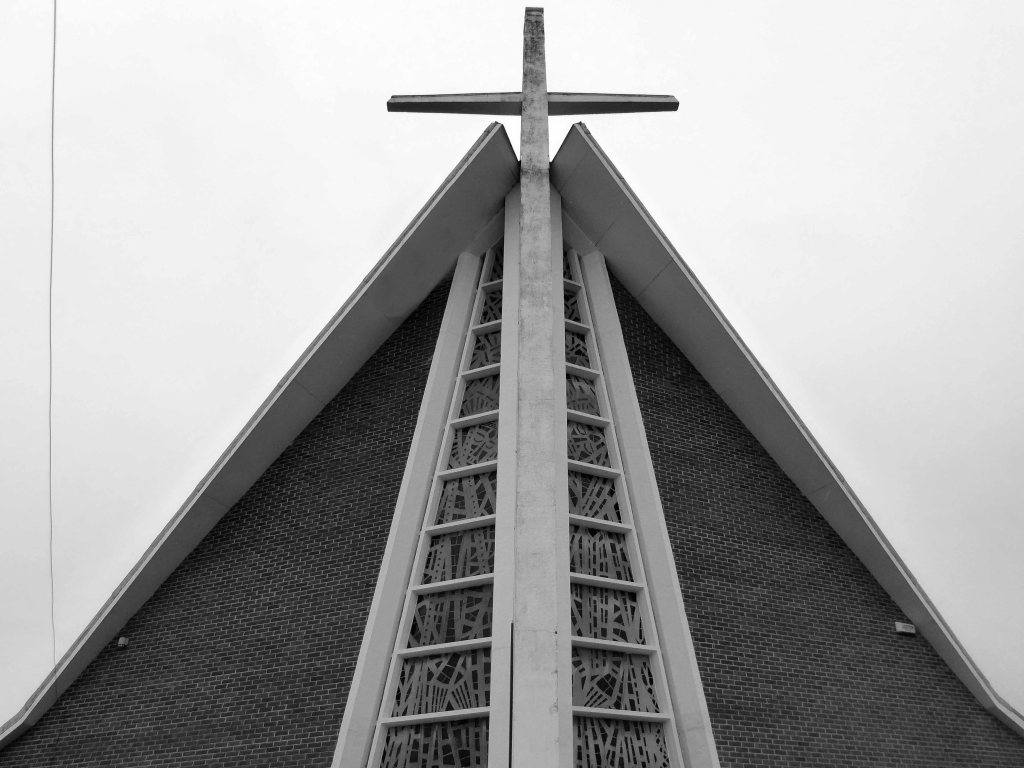
It has a canted front which is triangular in shape which has a large white cross at its apex.
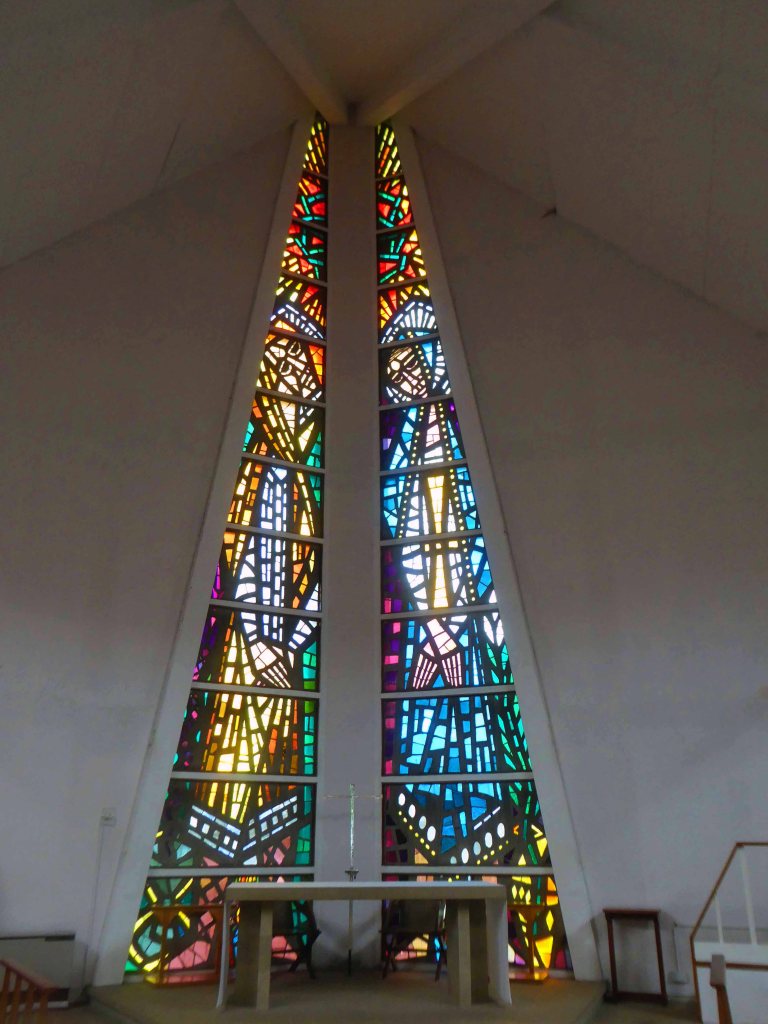
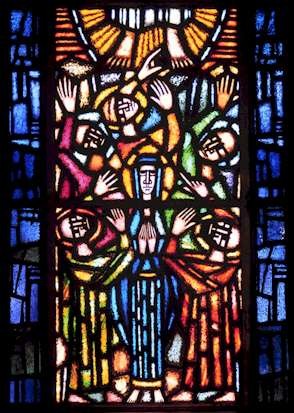
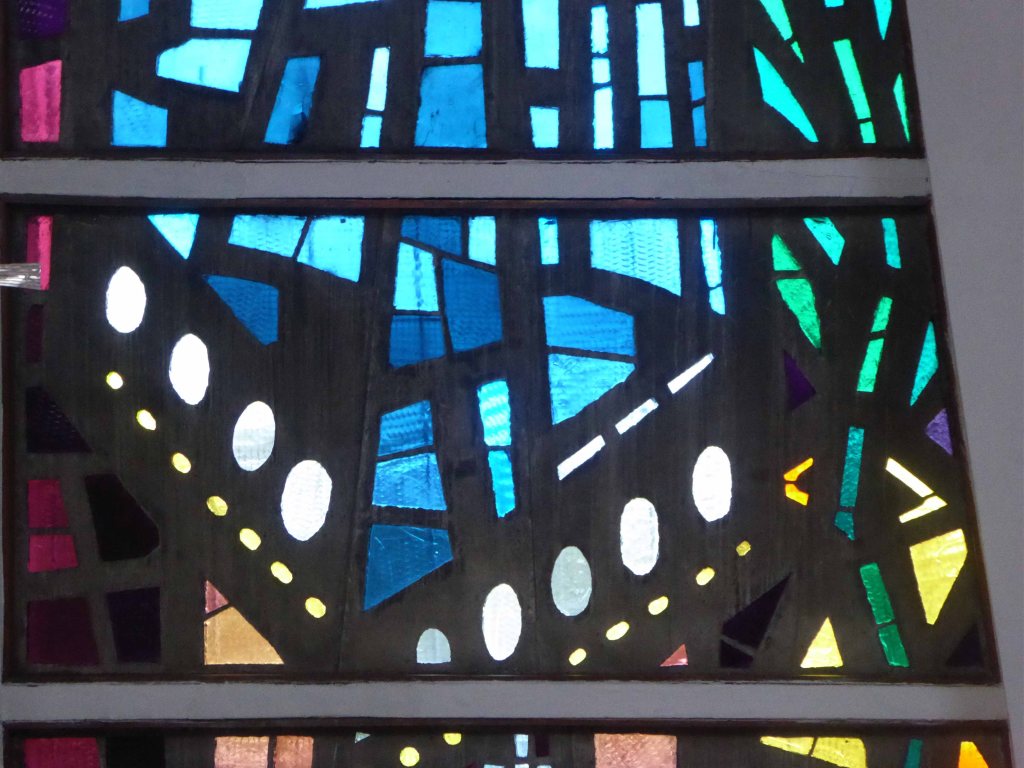
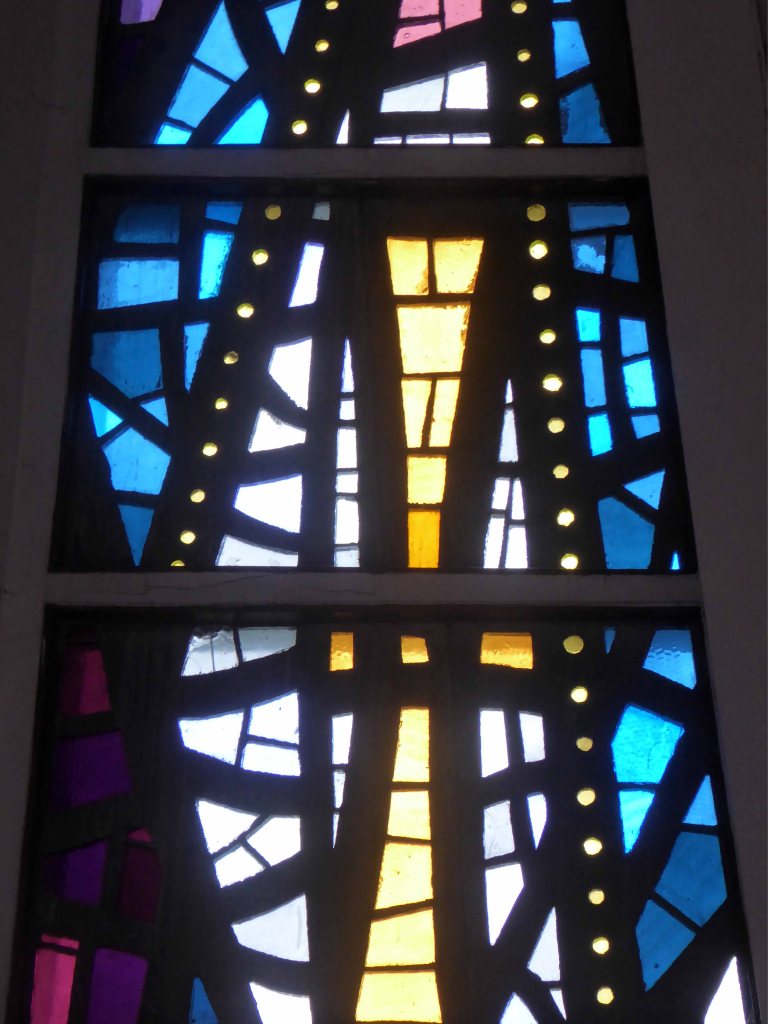
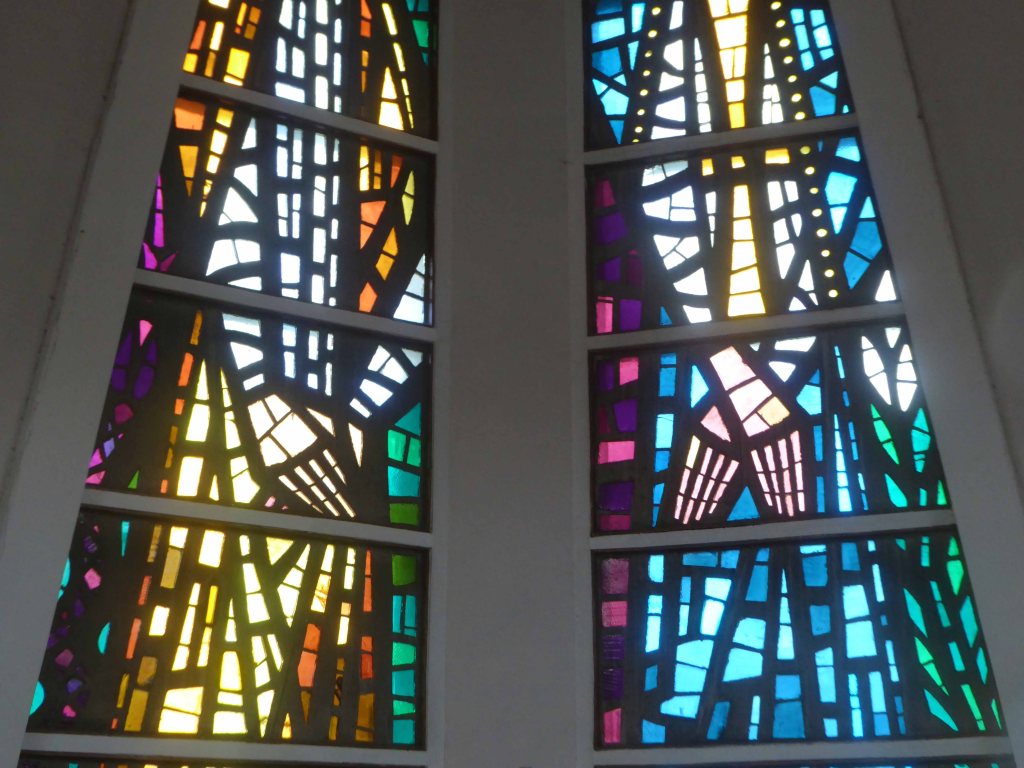
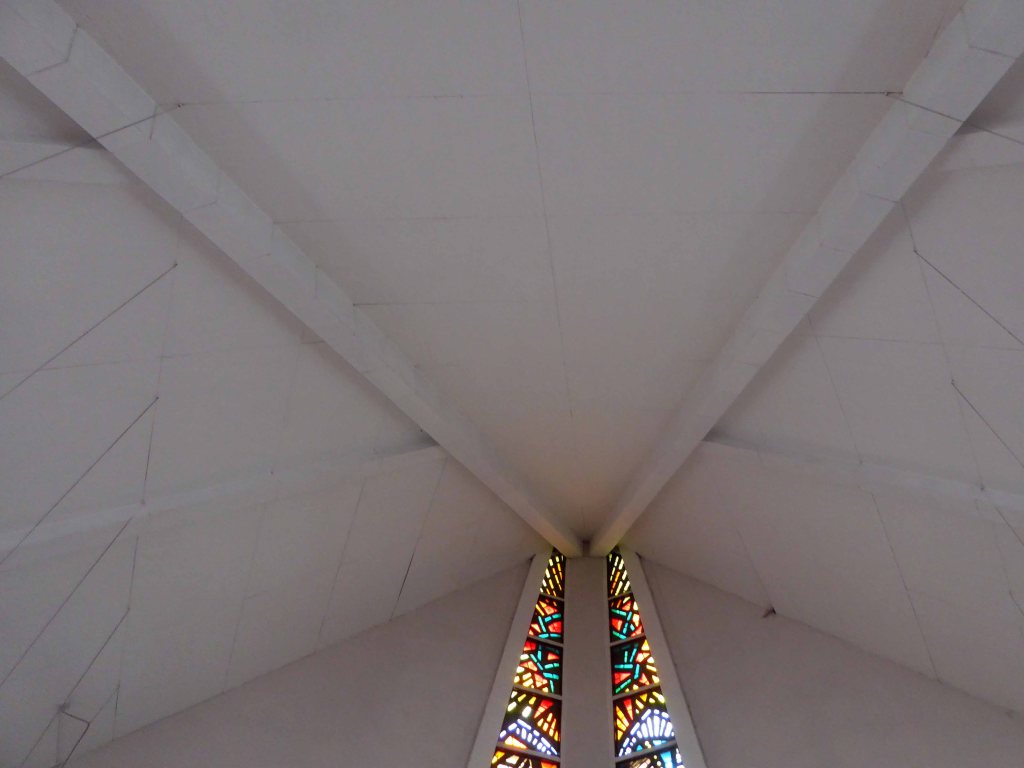
The interior features full height stained glass windows of the Virgin Mary and St John by John Baker Ltd.
Born in 1916, John aka Jack studied at the Central School in London and worked under James Hogan at the Whitefriars stained-glass studios before joining Samuel Caldwell junior at Canterbury Cathedral in 1948 to help reinstate the medieval glass removed for safekeeping during the Second World War.
He subsequently authored English Stained Glass; the revised edition of this work, English Stained glass of the Medieval Period , which was to become one of the most popular soft back books on English medieval glass ever published.
Apart from his conservation skills, John was also an inspired teacher at Kingston College of Art. He produced windows for a number of churches, including eleven windows for the church of the Holy Name, Bow Common Lane, Mile End; two windows and a brick sculpture for the church of Little St Peter, Cricklewood; eighteen windows for St Anne’s church, East Wittering, Sussex; two large abstract windows for Broomfield Chapel, Abbots Langley; ten large concrete and glass windows for the new parish church, Gleadless Valley, Sheffield; and twenty-two glass windows for the Convent Chapel, St Michaels, Finchley. He also created a huge Jesse window for the church at Farnham Royal. The church was demolished in 2004, but the glass is now in storage, and some of the panes will be installed in the welcome are of the new church.
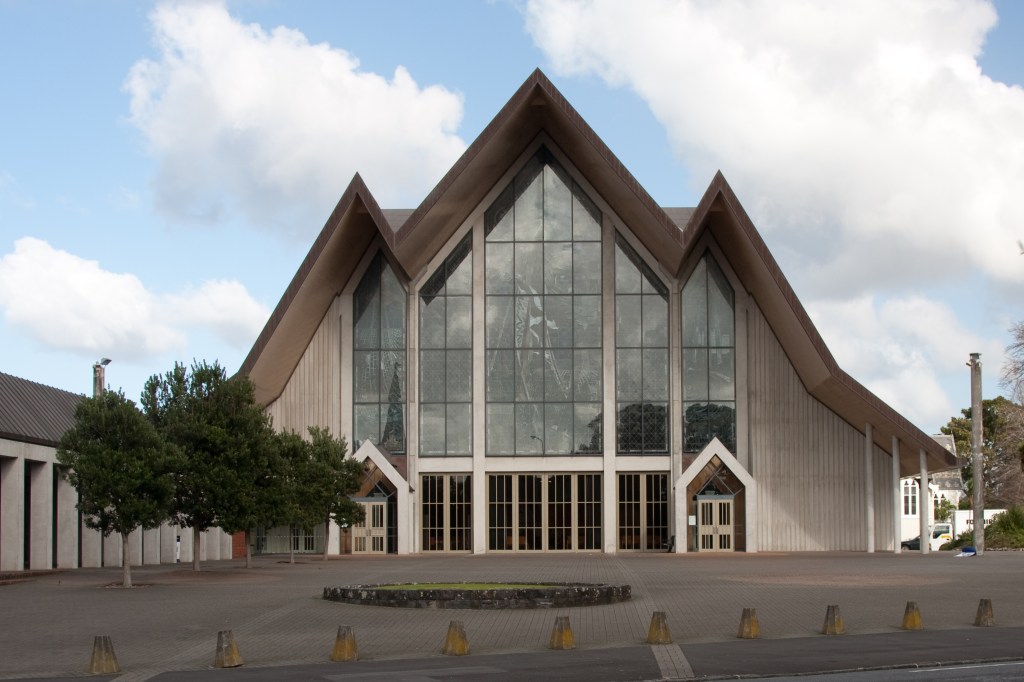
His favourite works were the windows he produced for Auckland Cathedral, New Zealand – as seen above.
John Baker, born Birmingham, 11 March 1916, died Hastings, 20 December 2007.
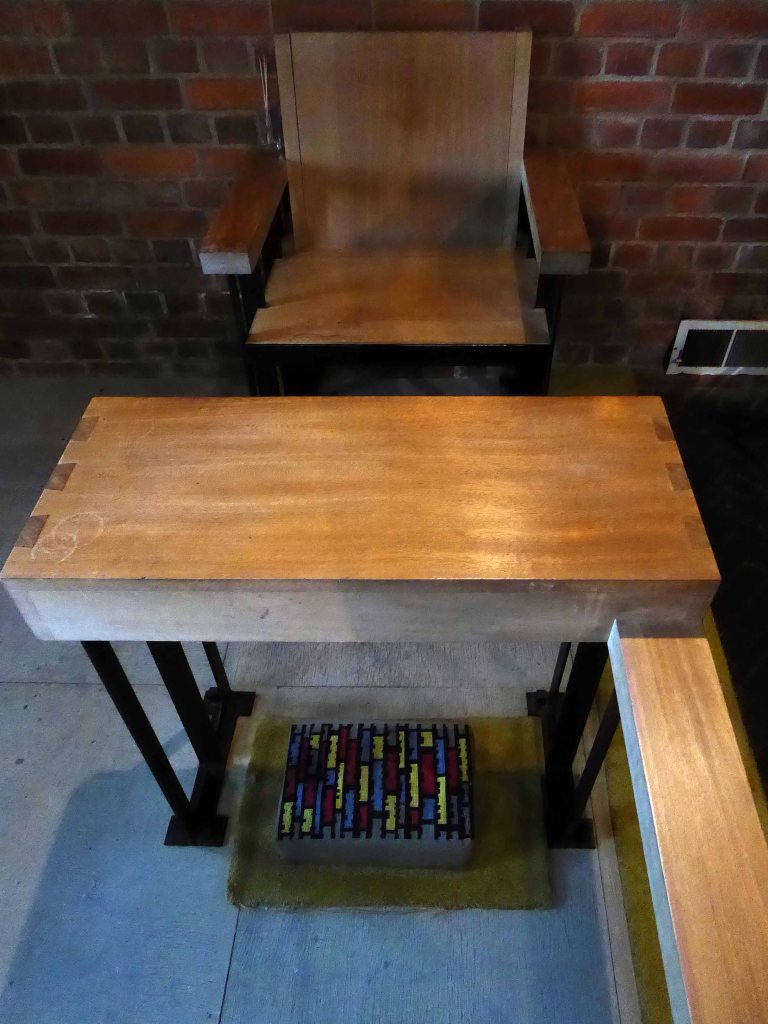
The concrete altar is set on a raised paved podium, complemented by a silver cross and distinctive Arts and Crafts style oak chairs.
The original seating seems to be no longer in use, replaced by a newer more comfortable alternative.
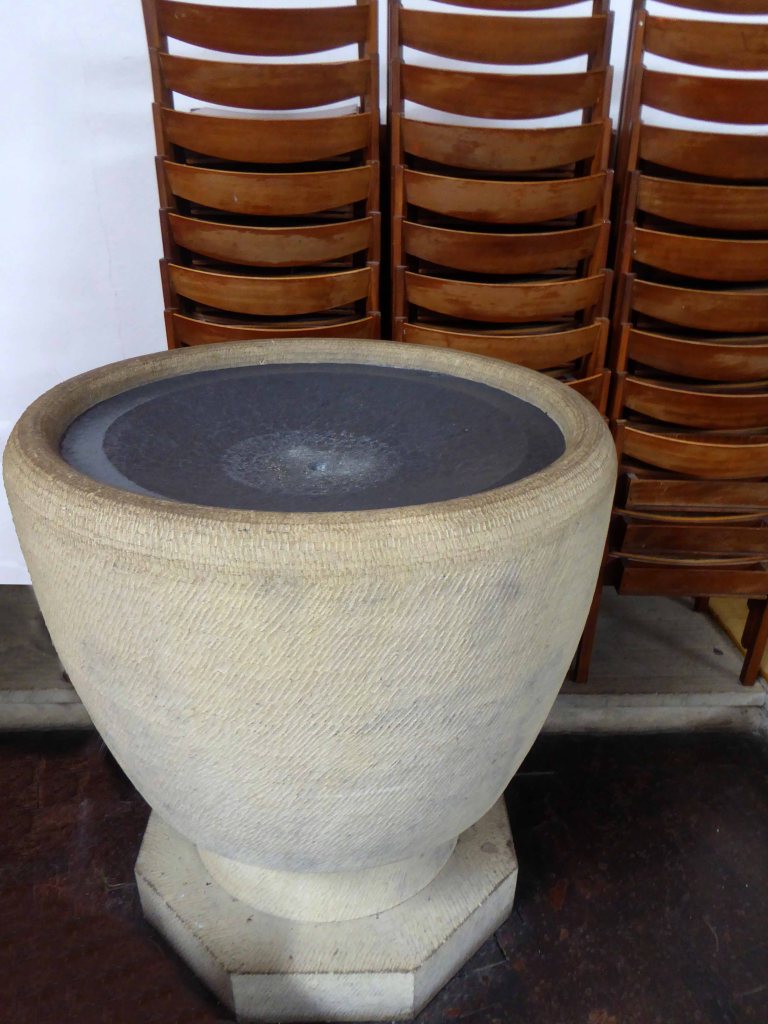
There is a large carved stone font.
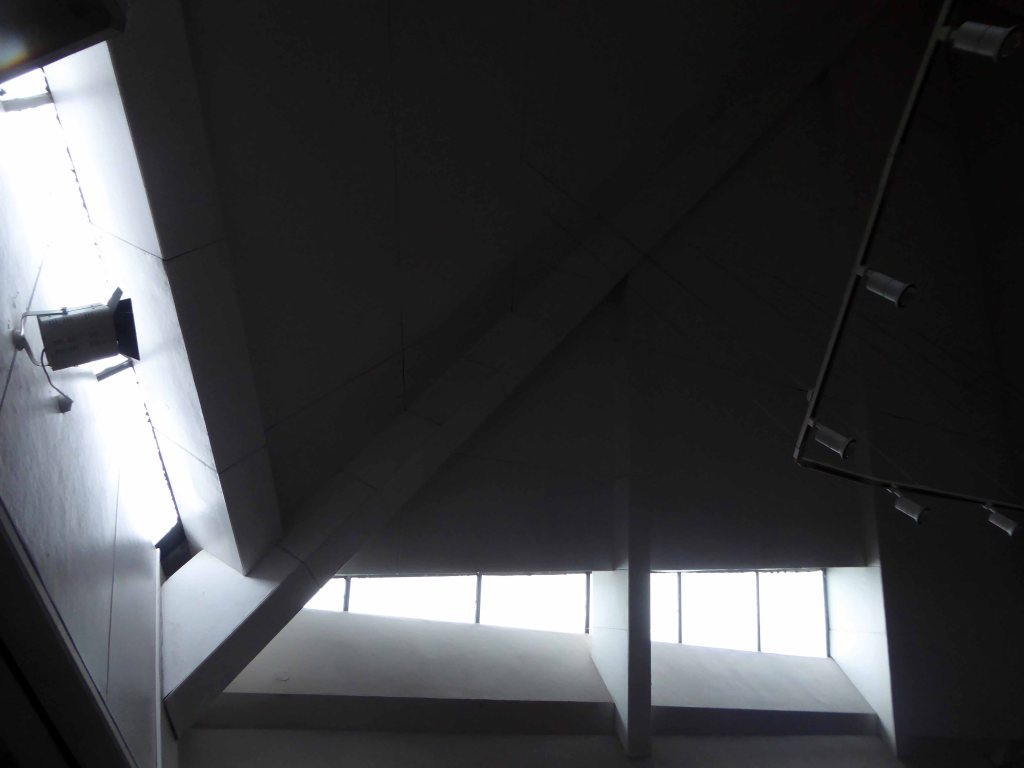
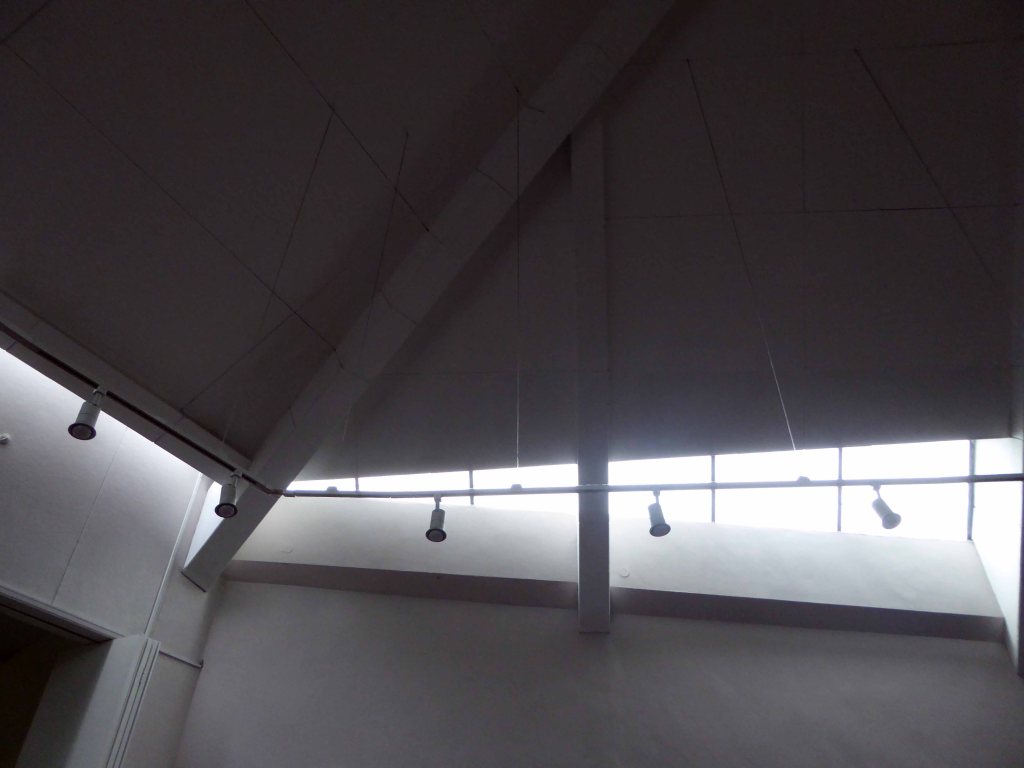
The main body of the steeply pitched roof space is illuminated by slotted windows.
Many thanks to the key holders and parishioners at Holy Cross, our Sheffield guide Mick Nott and Claire Thornley at Eleven Design – for making our visit possible.
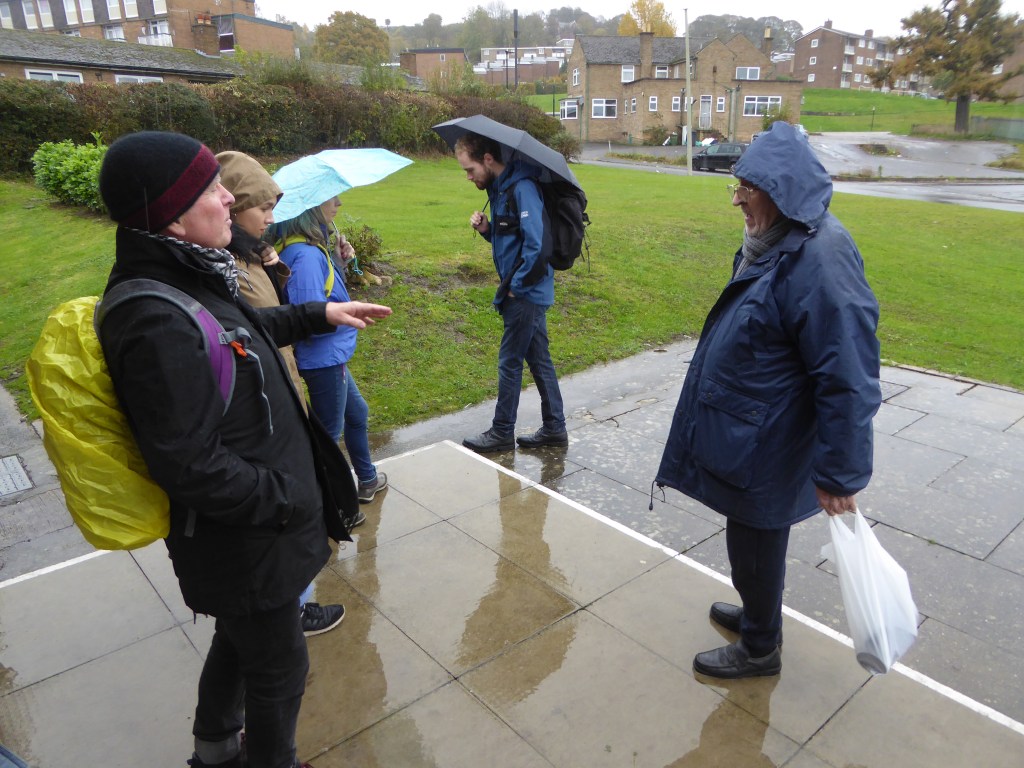
Thanks also to all those who turned up on Saturday to walk a very, very wet Gleadless Valley.
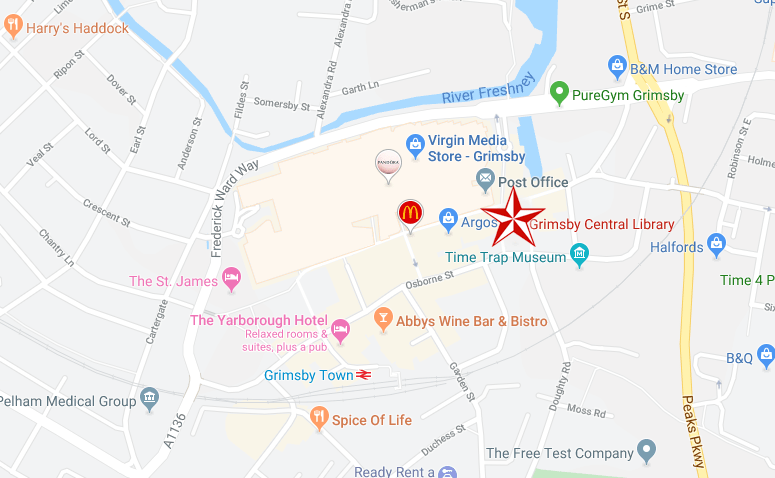
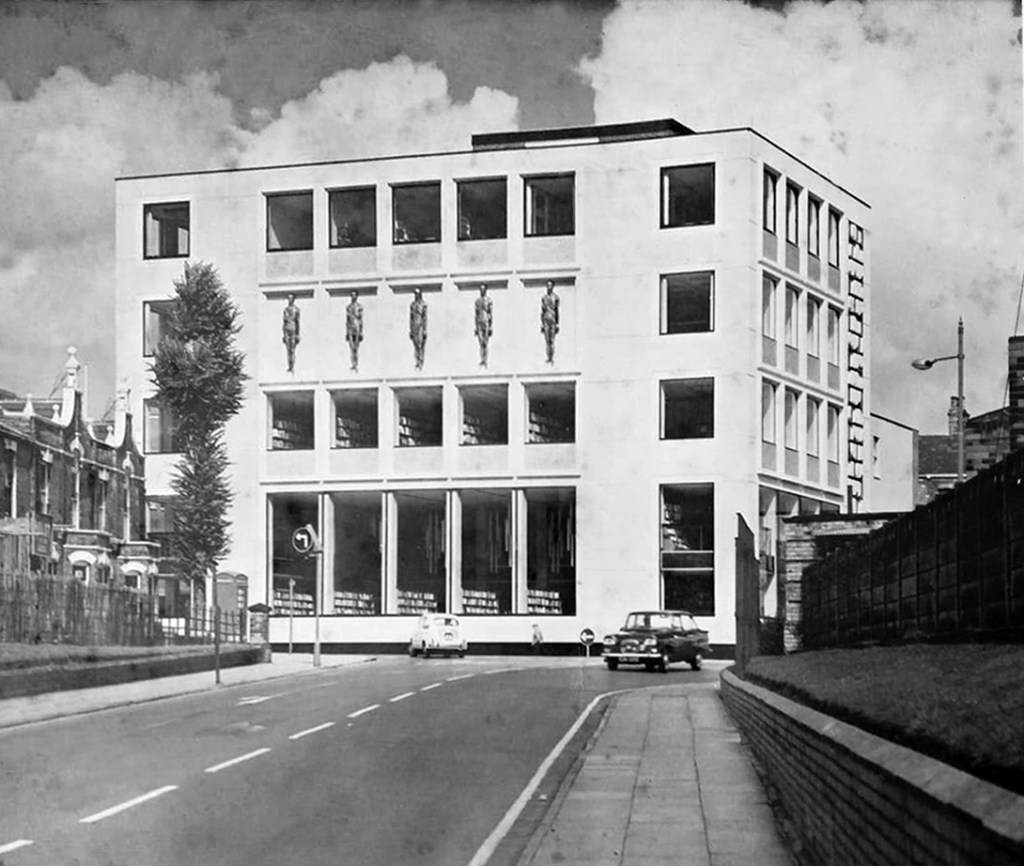
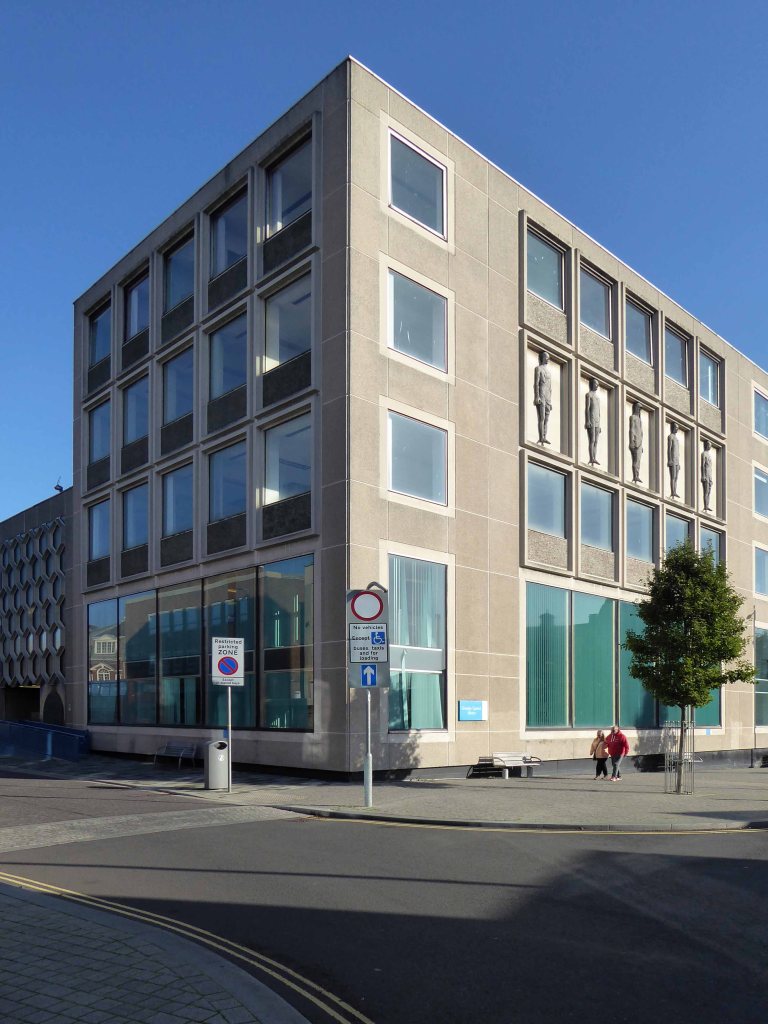
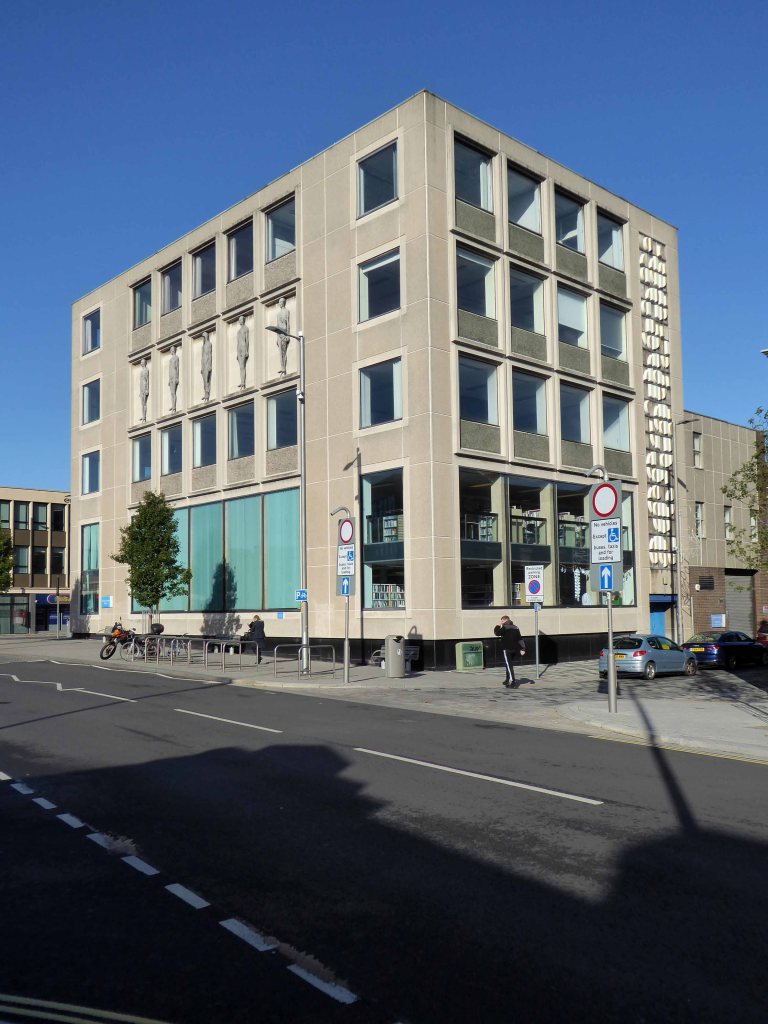
This is Grimsby Central Library – a proud public building of real quality, reflecting the cautious optimism and fierce civic pride of the Sixties. Built to last, in the modern manner – gently monumental, softened by the easy grace of the restrained decoration and a refined palette of stone, glass and concrete.
By the Borough Architect – JM Milner ARIBA assisted by E L Shepherd
This image was used as the Mayor’s Xmas card in 1969.
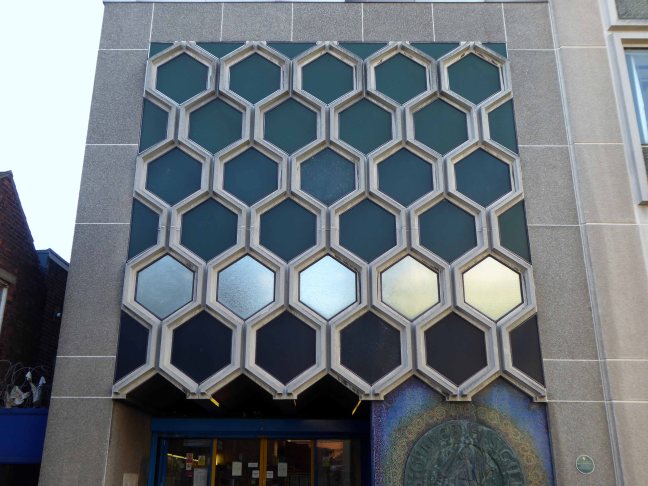
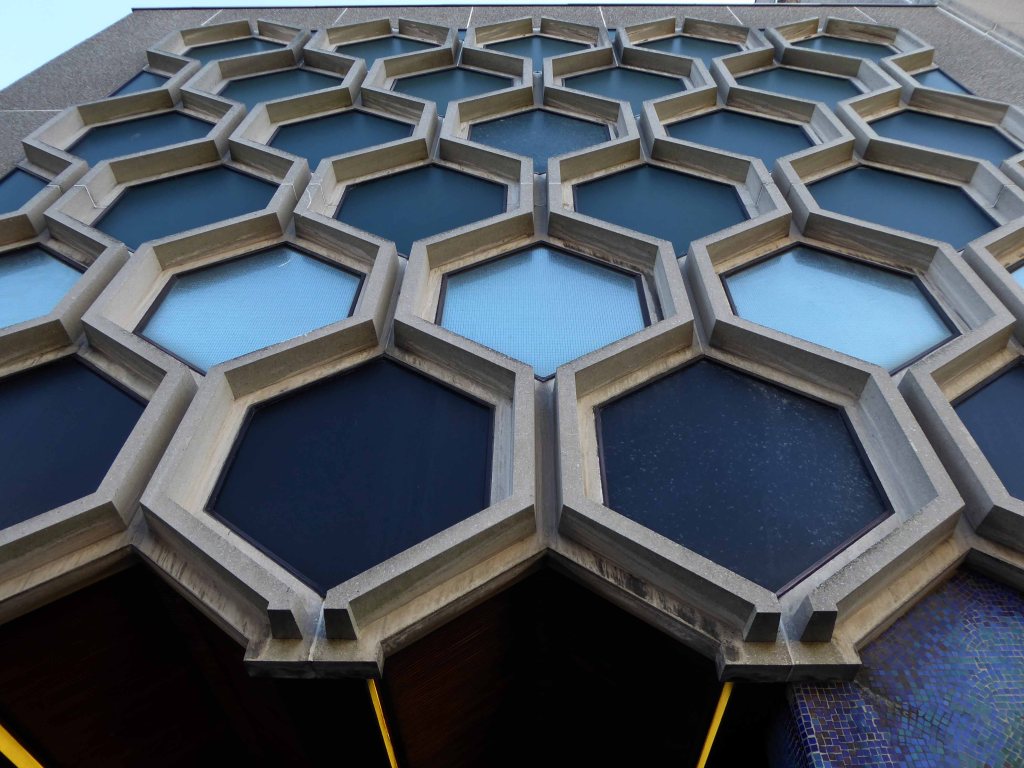
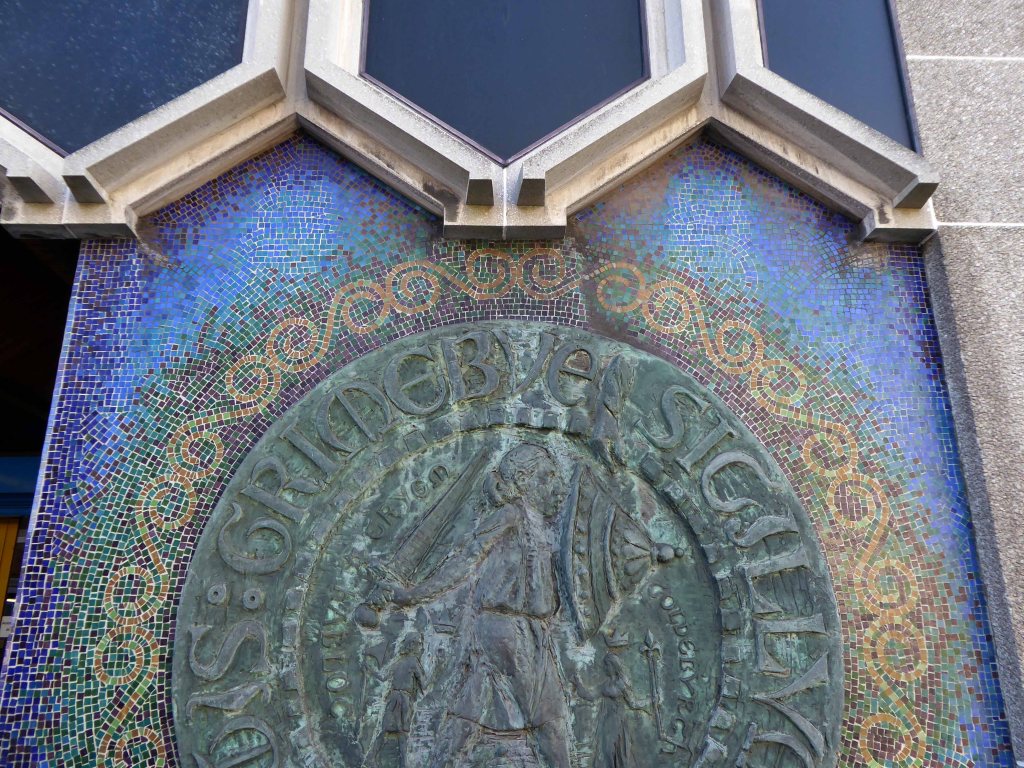
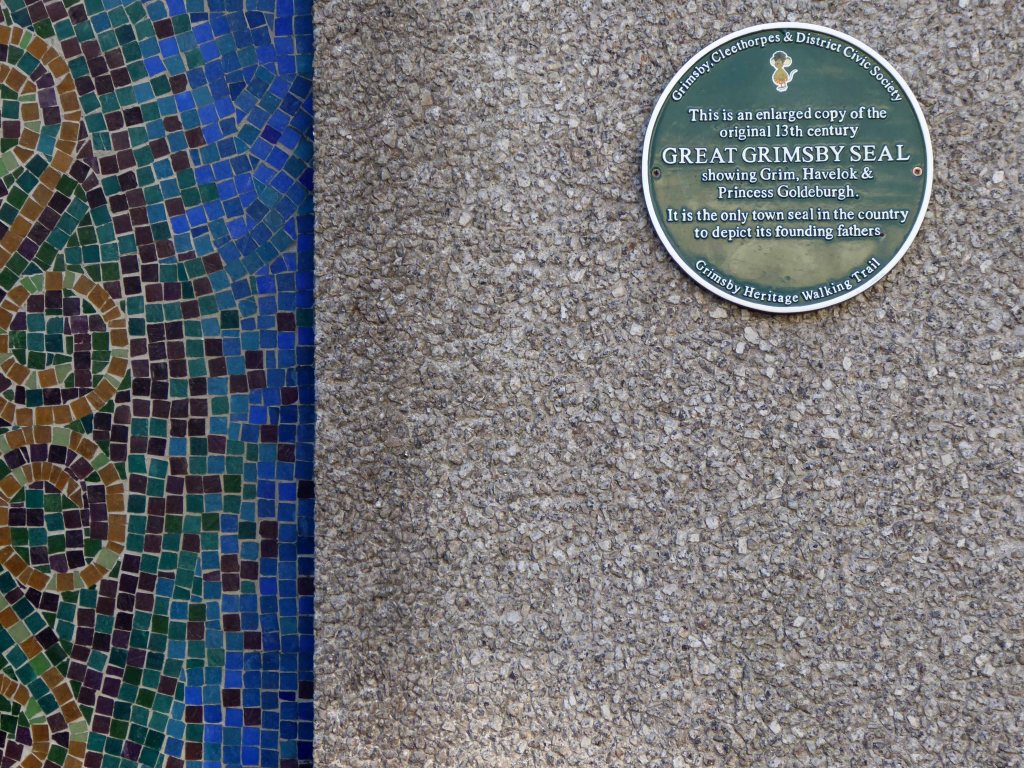
The bold exterior grid is enhanced by a honeycombed grille above the entrance, along with a mosaic depicting the town’s seal.
The mosaic is the work of Harold Gosney – who is also responsible for the Abbey Walk reliefs
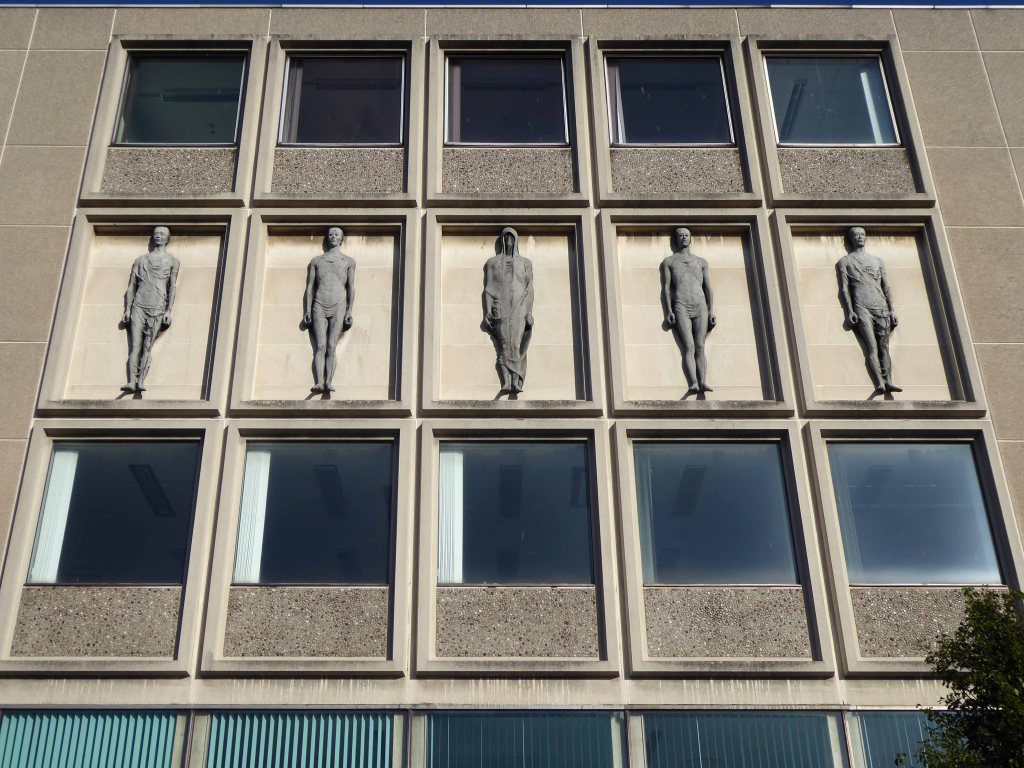
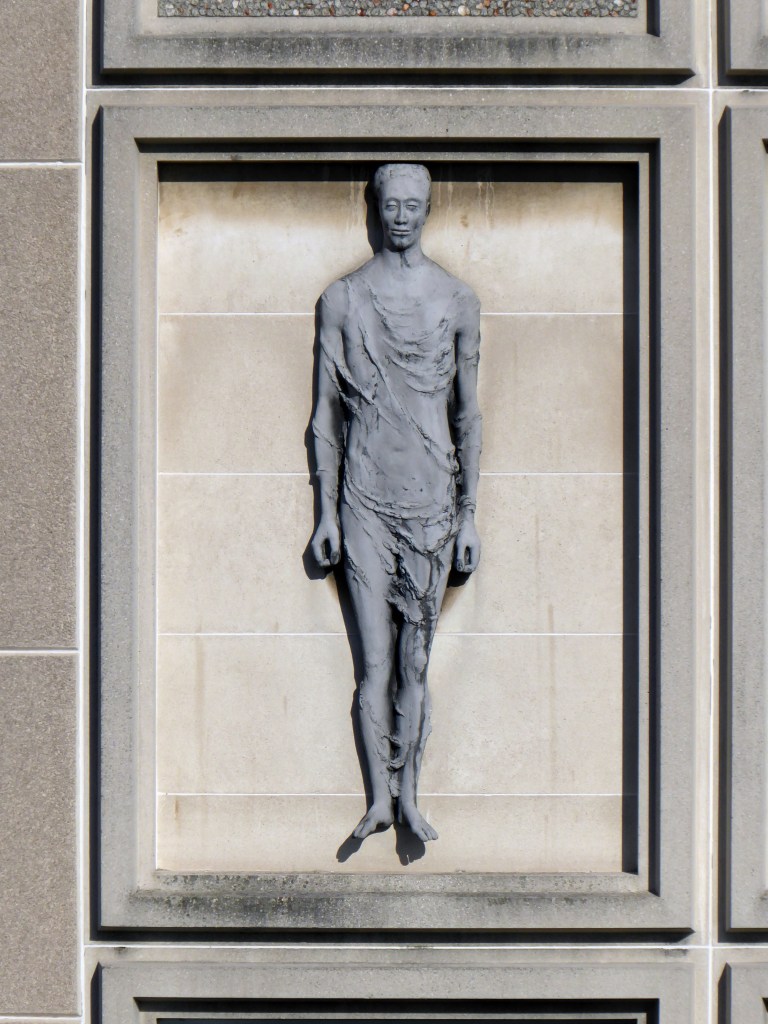
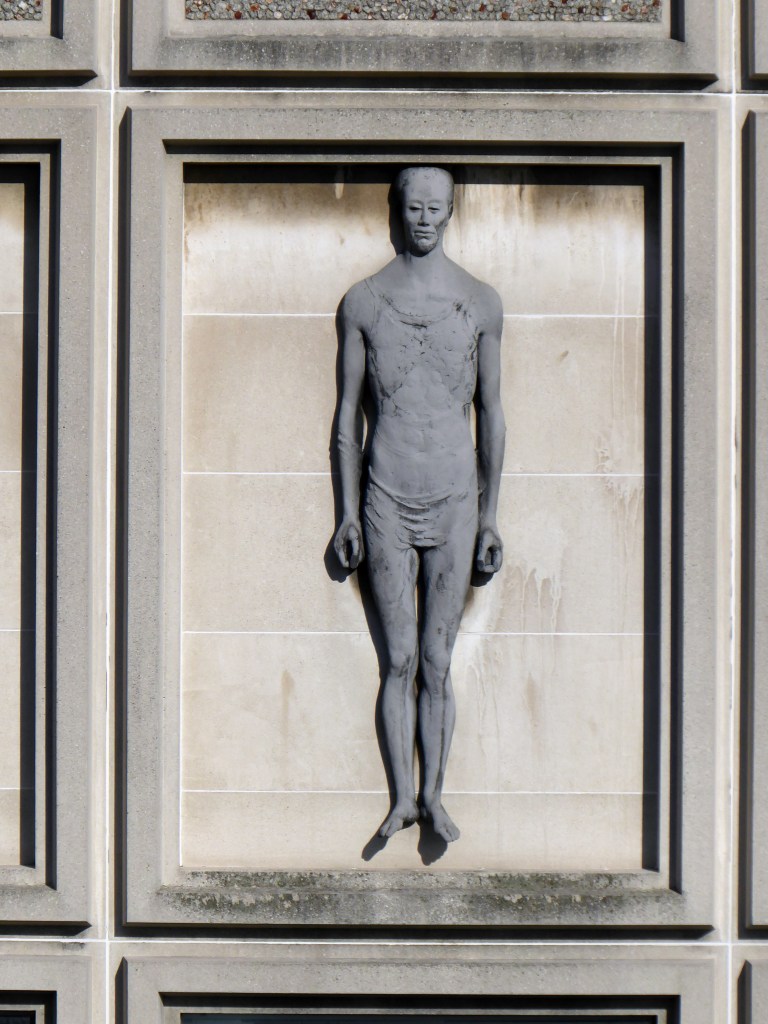
The Guardians of Knowledge which adorn the south facing elevation of the library are the work of Peter Todd former head of Grimsby Art School
To the rear of the building is a modular relief.
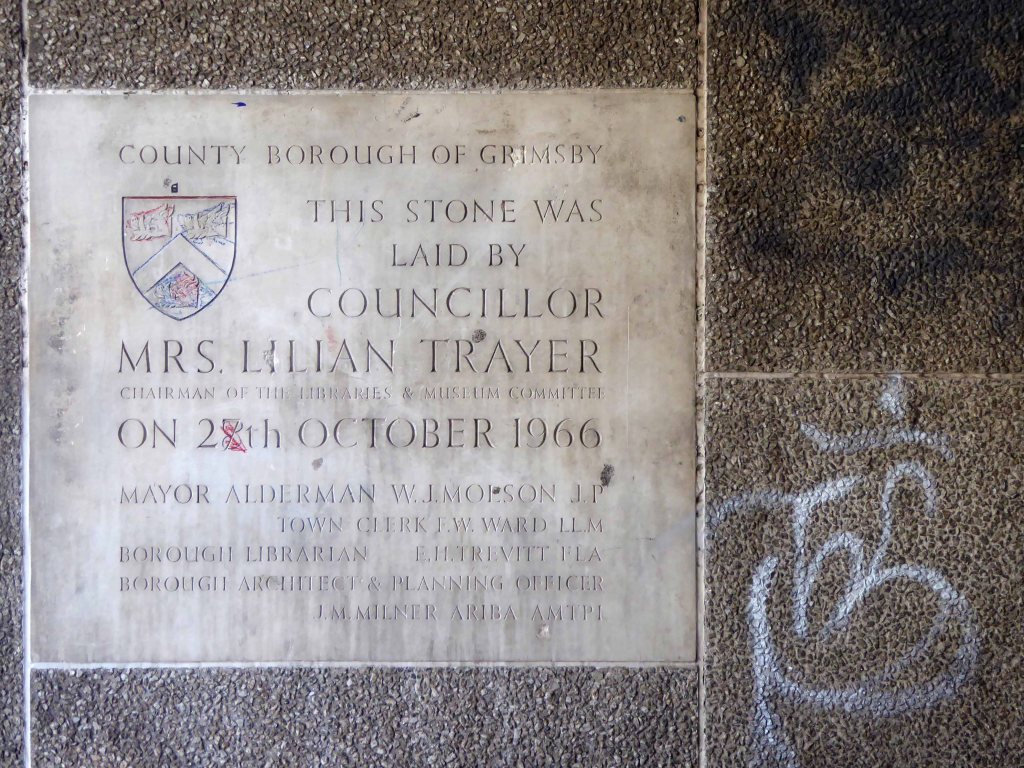
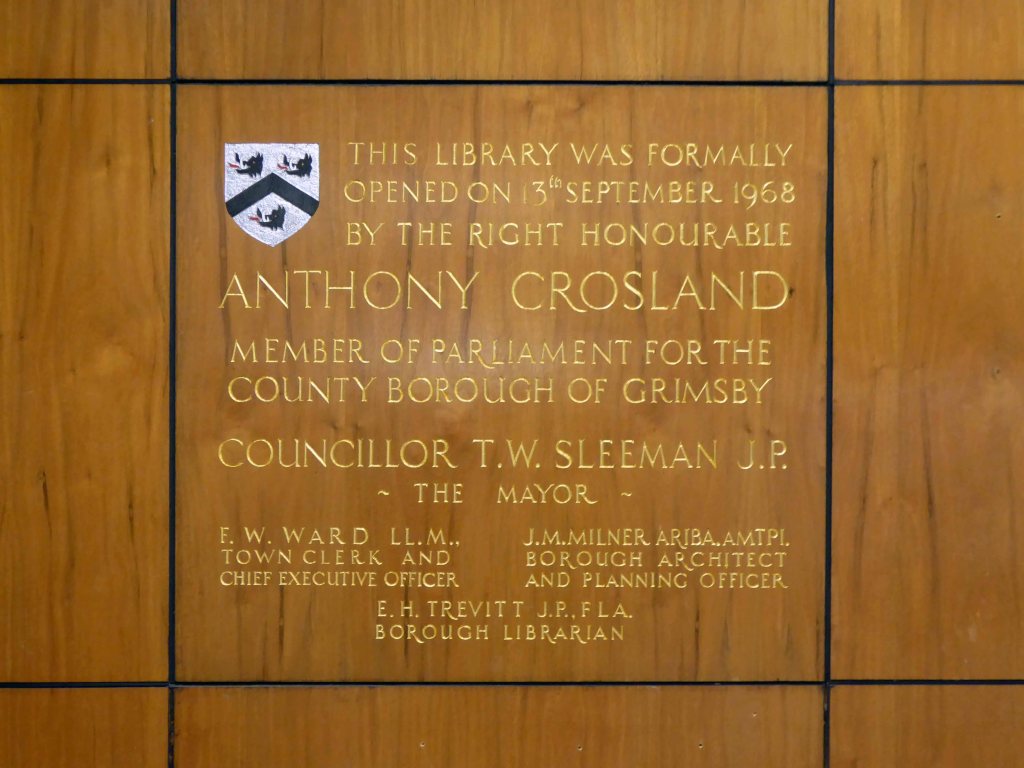
Inside the entrance porch a commemorative plaque.
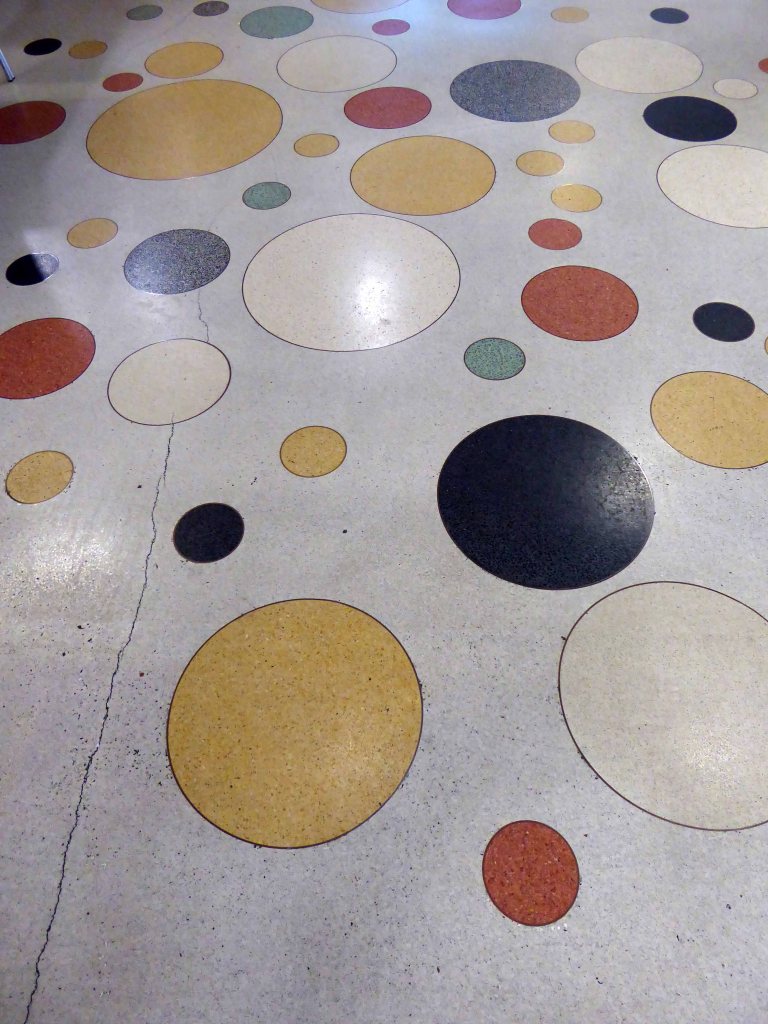
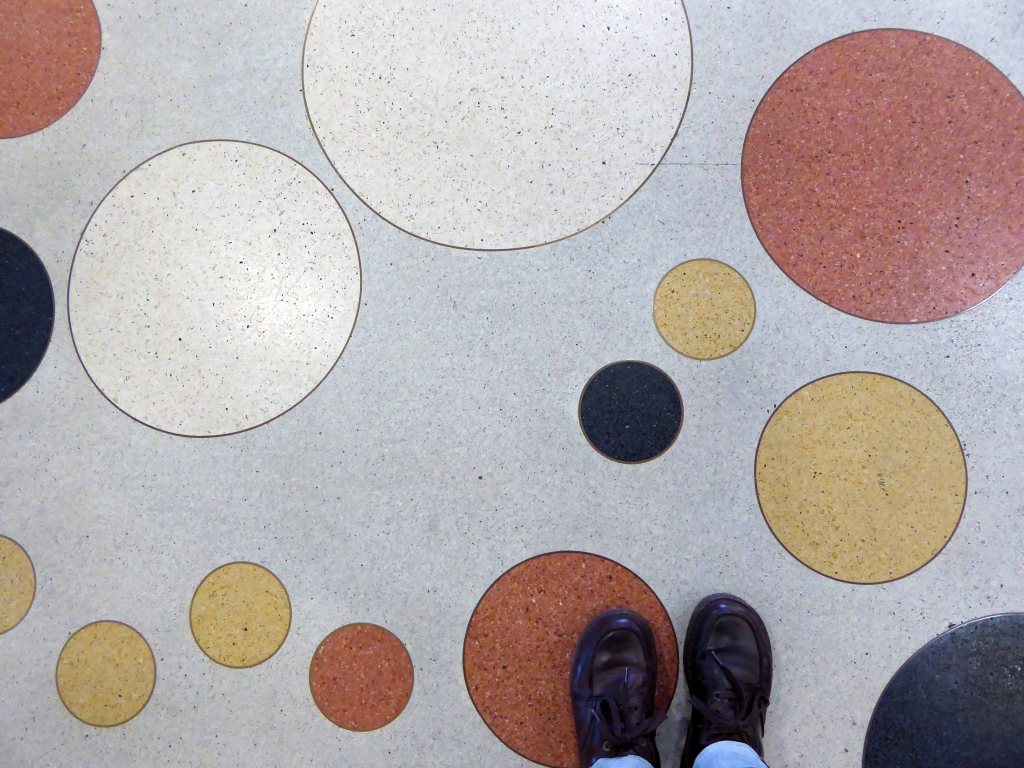
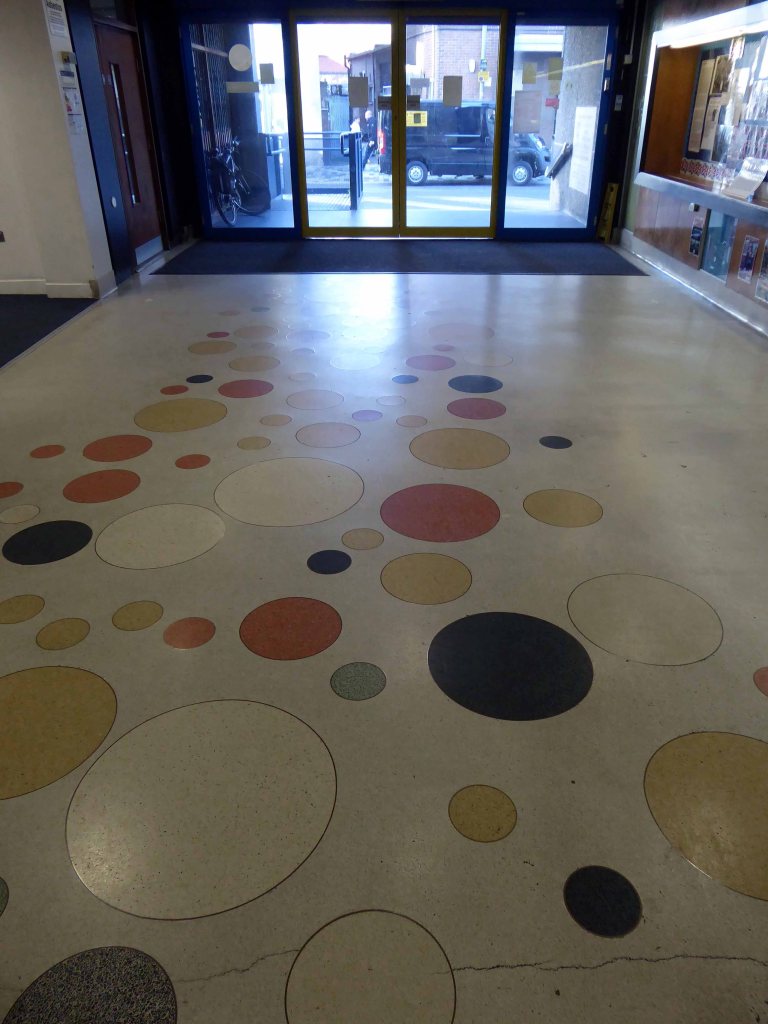
Once inside, what a pleasure it is tread upon this interstellar inset stone flooring.
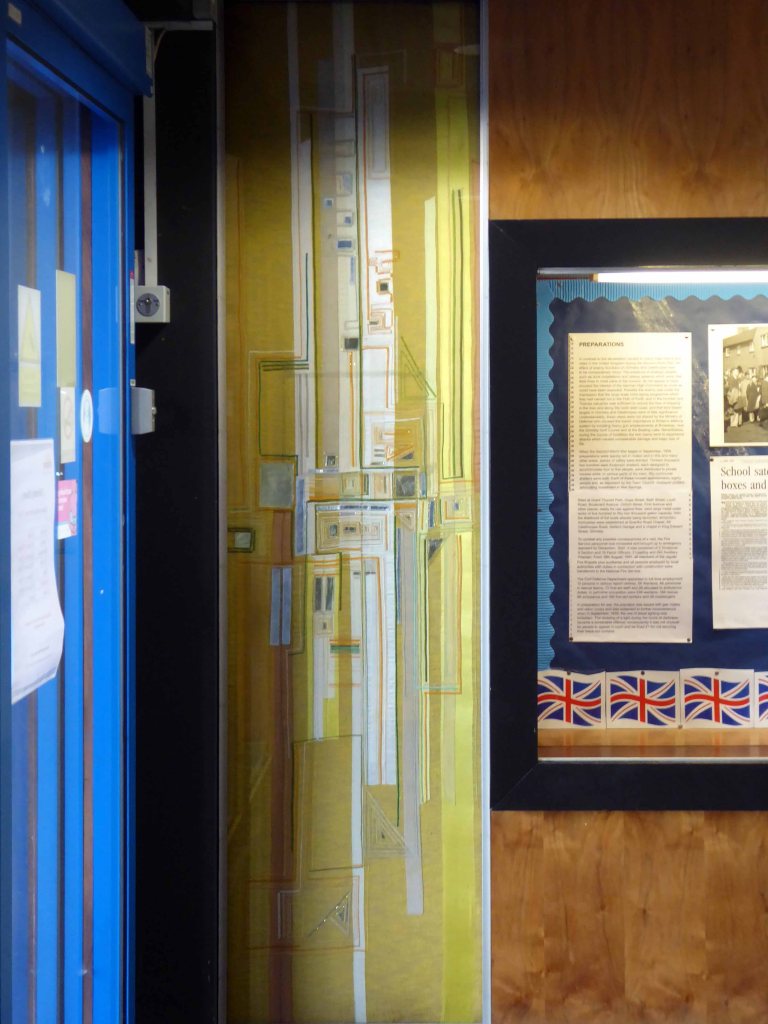
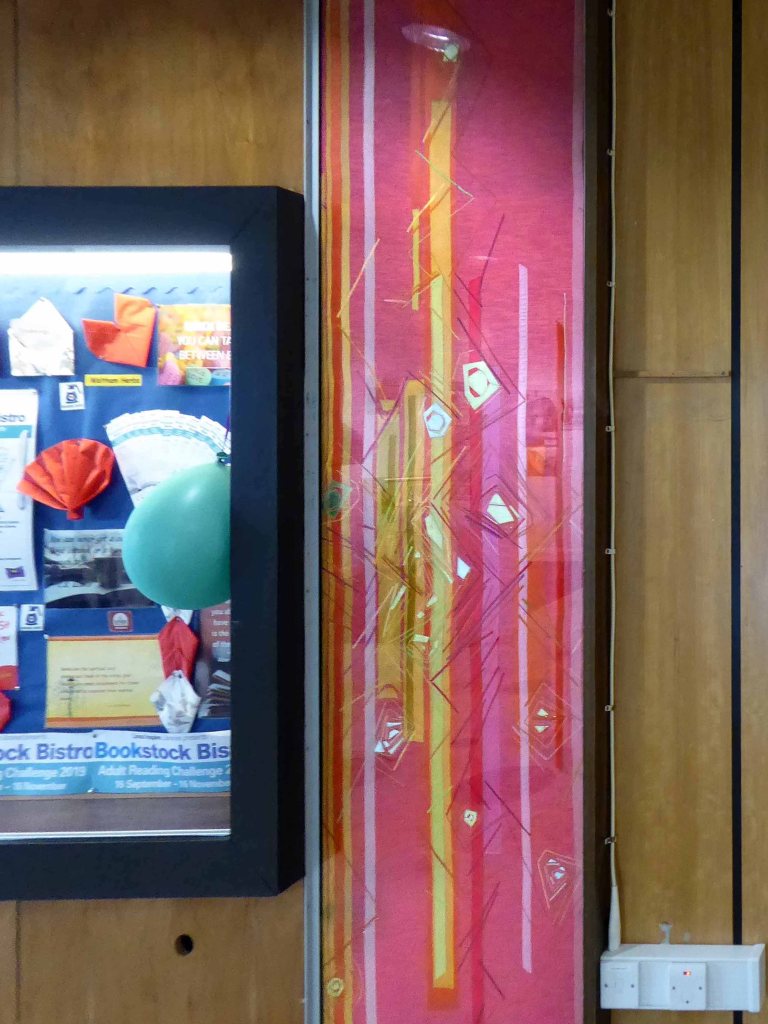
Either side of the lobby display case there are two vertical tapestries.
Along with a further plaque commemorating the opening on the 3rd September 1968 – by the then local MP Anthony Crosland.
Crosland looked ahead to a time where “personal freedom, happiness and cultural endeavour; the cultivation of leisure, beauty, grace, gaiety and excitement… might be pursued.” After he was elected MP for Grimsby in 1959, he referred to the above passage in an early speech, insisting – to much laughter, cheering and applause from the audience, that “it is possible to achieve all these things in Grimsby, and especially at Blundell Park.”
May I take this opportunity to thank the ever so helpful library staff – for kindly granting me permission to photograph the main body of the library.
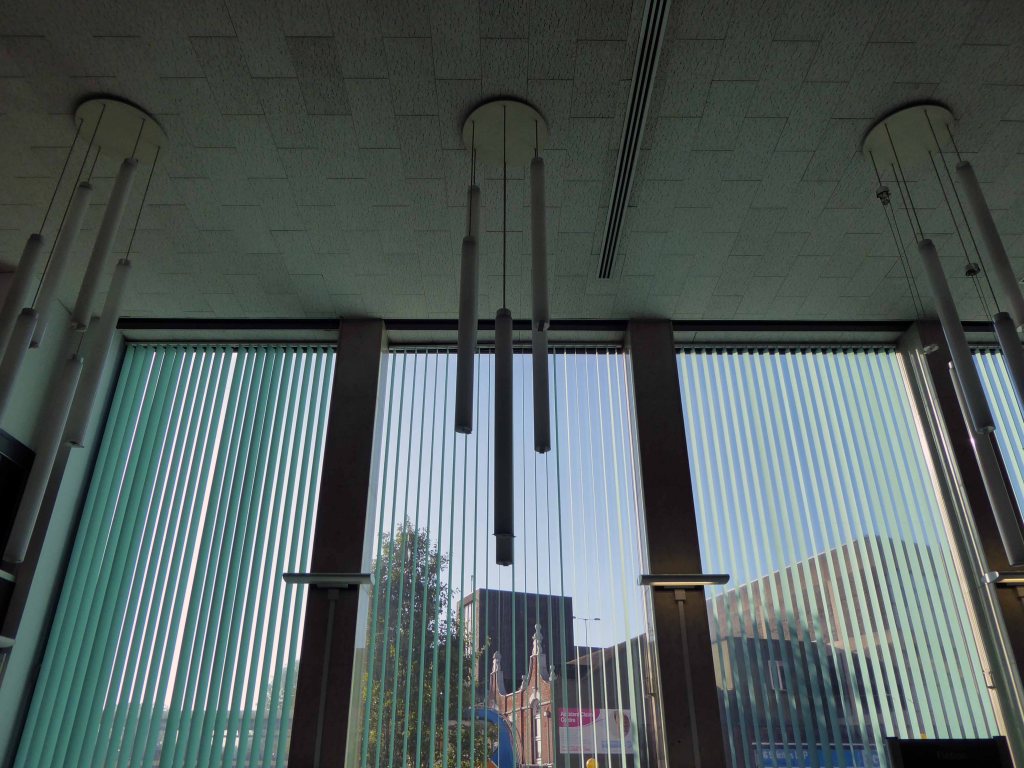
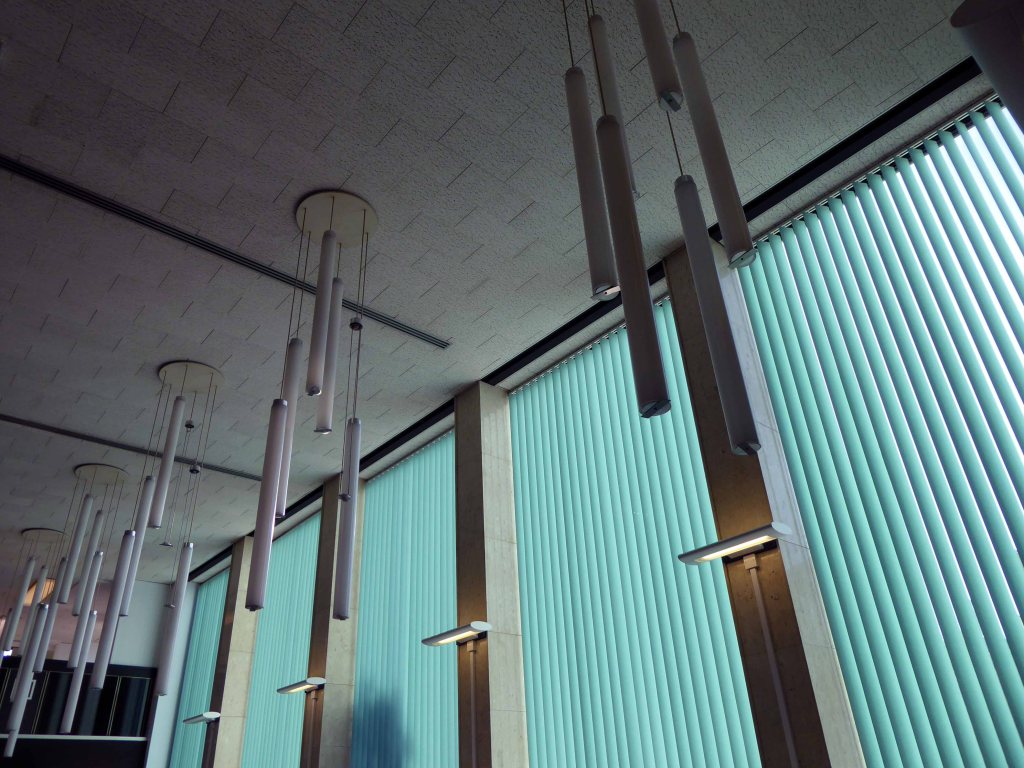
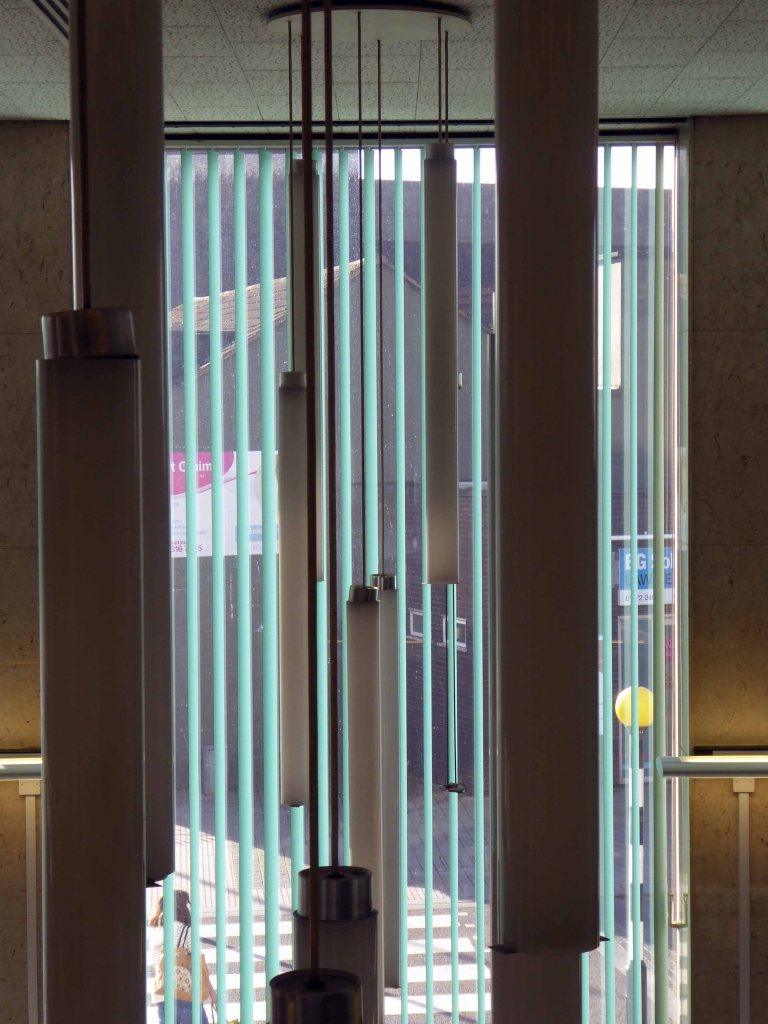
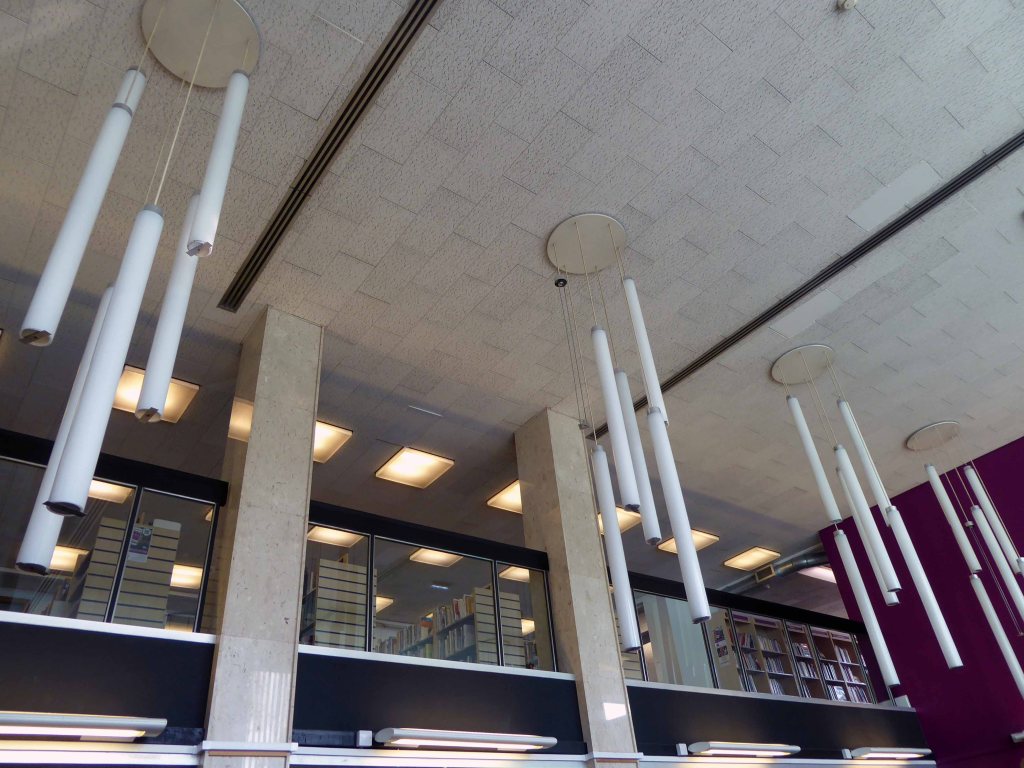
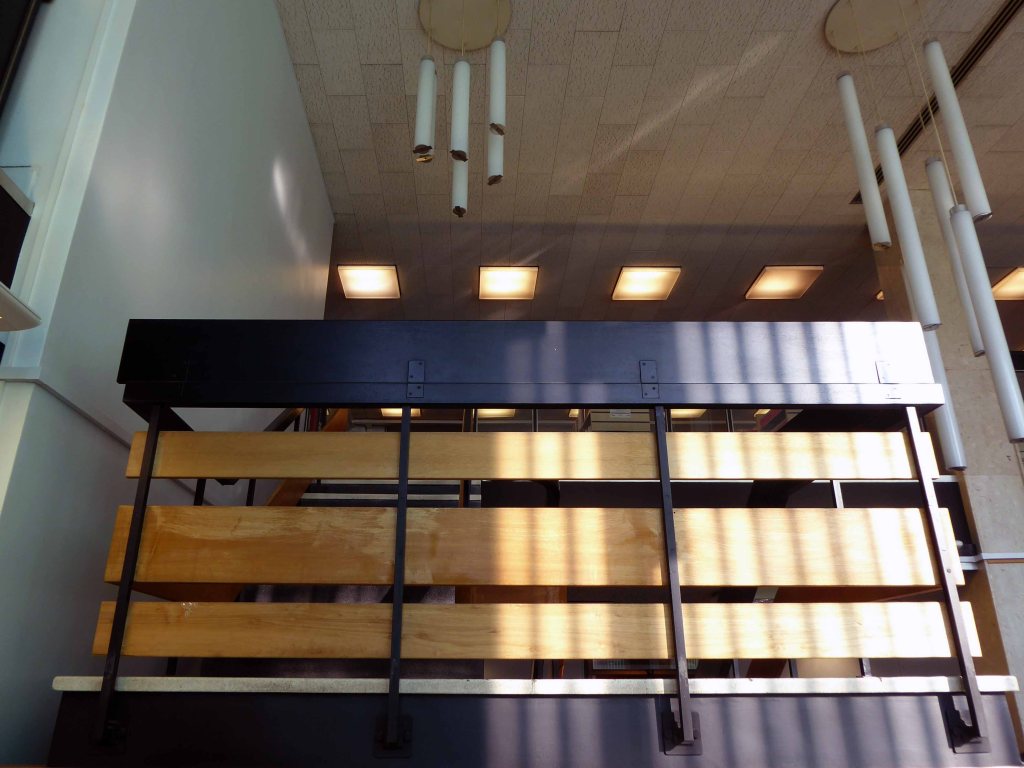
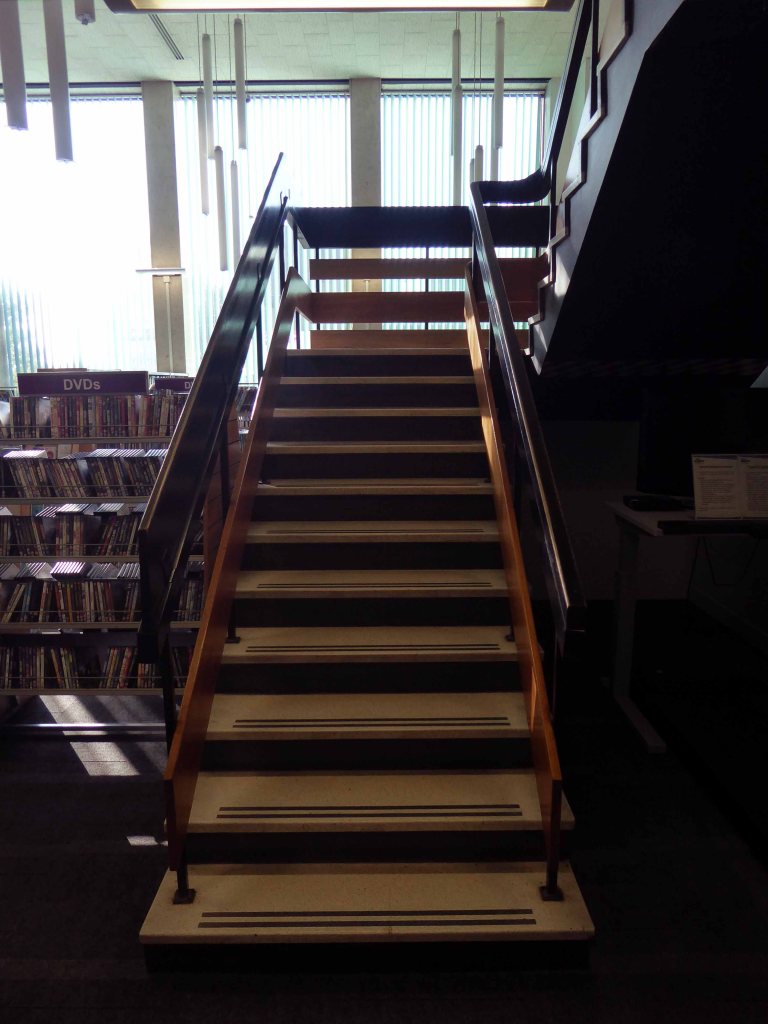
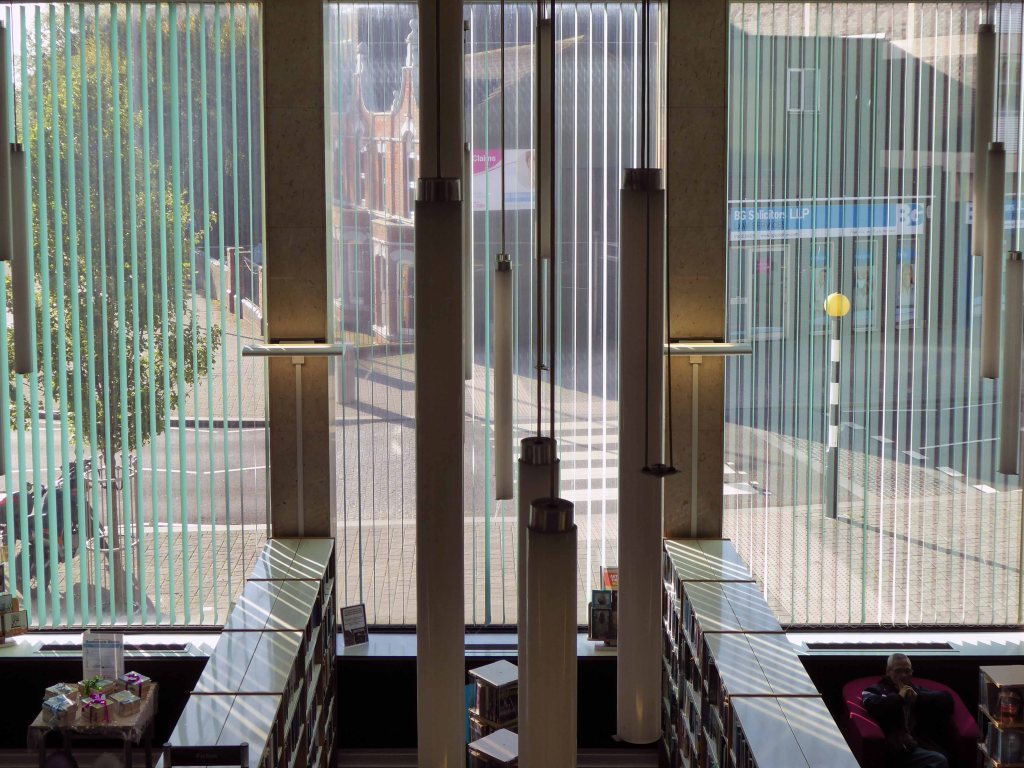
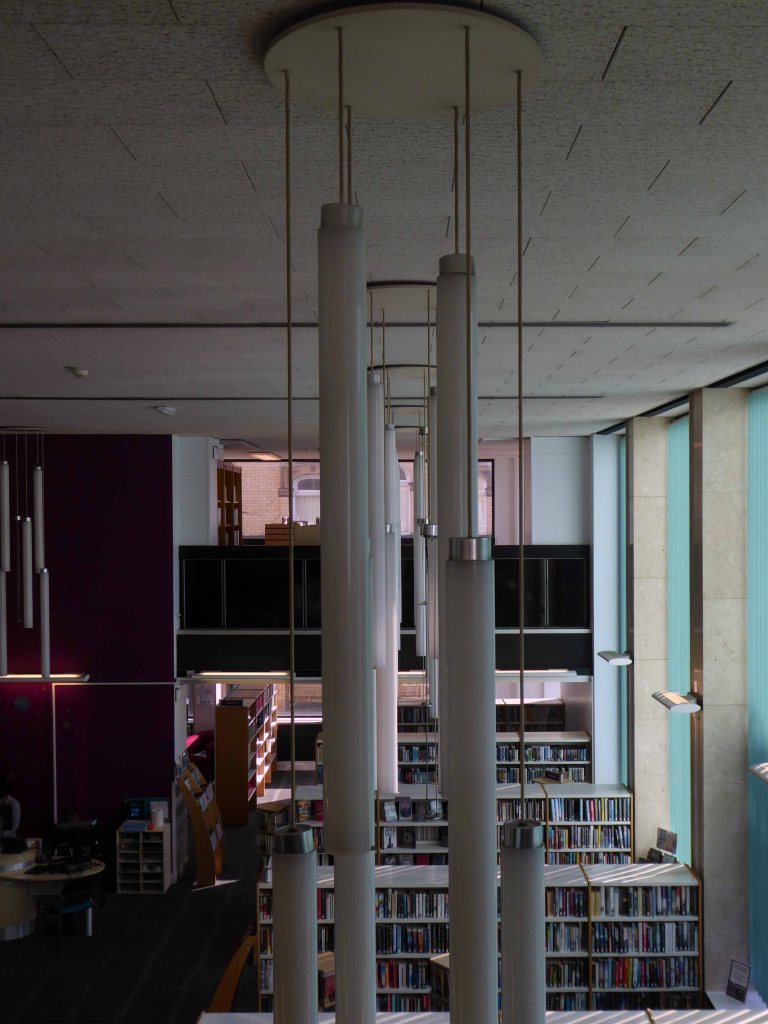
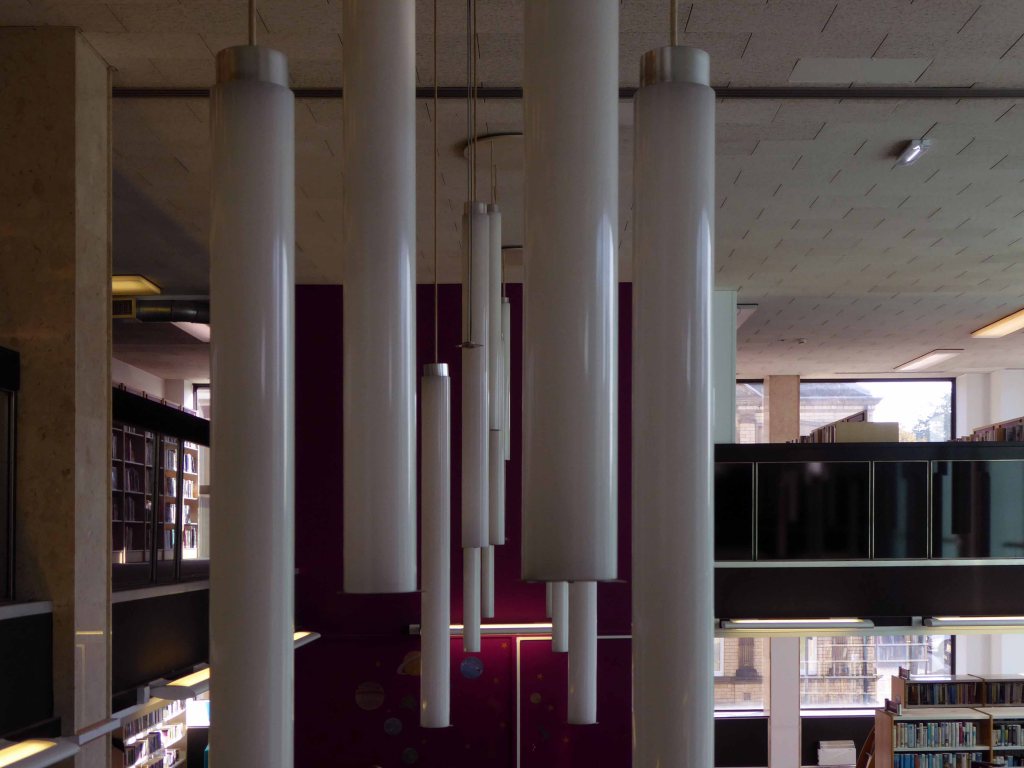
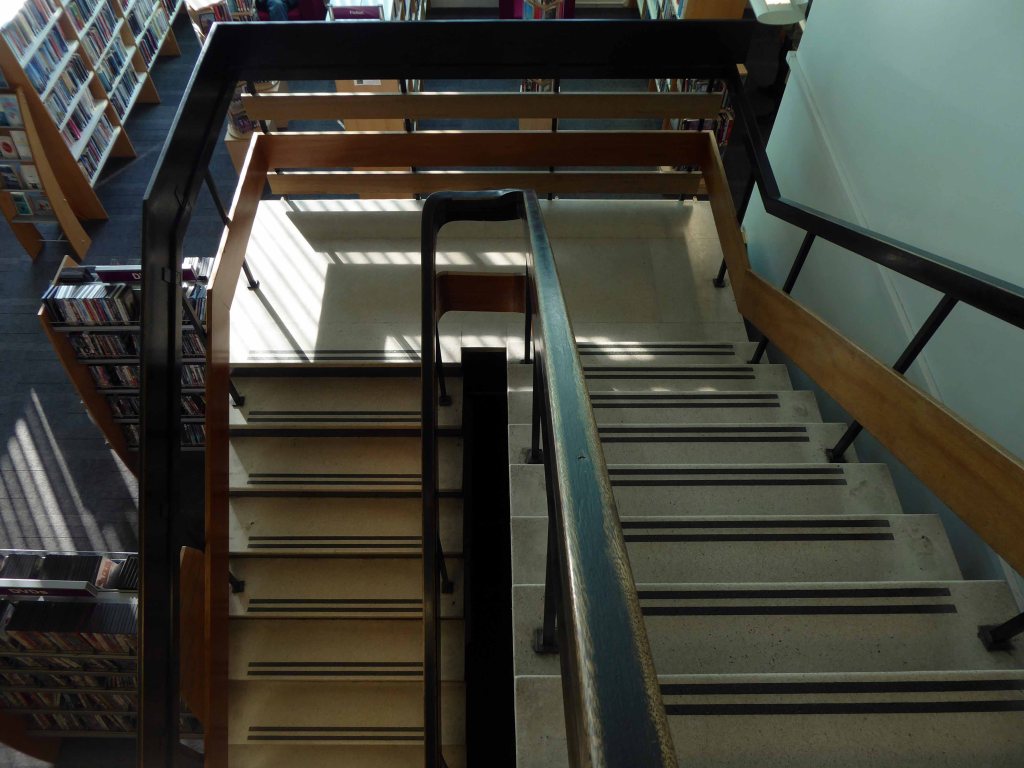
Many original fittings and fixtures are intact – particularly the distinctive vertical suspended lighting system and the steel and wood stairways.
The facilities were well used and lit by the expansive window space.
Let’s take another final look outside, and say a fond farewell to this fine building – go on treat yourself, take a trip to the East Coast and feast your eyes, heart and mind on this beauty.
One fine sunny Monday morning I set out cycling to Ashton-under-Lyne to buy an enamel pie dish. Almost inevitably I was pushed and pulled in a variety of unforeseen directions, incautiously distracted and diverted serendipitously – towards Droylsden.
Idly pedalling down Greenside Lane looking this way and that I was drawn magnetically to a pitched roof tower, towering over the red brick semis. Rounding the corner I discovered the delightful St Stephen’s RC church, stood high and proud on a grassy corner, glowing golden in the March sunlight.
I leaned my bike against the presbytery wall and with the kindly bidding of a passing parishioner, I went inside.
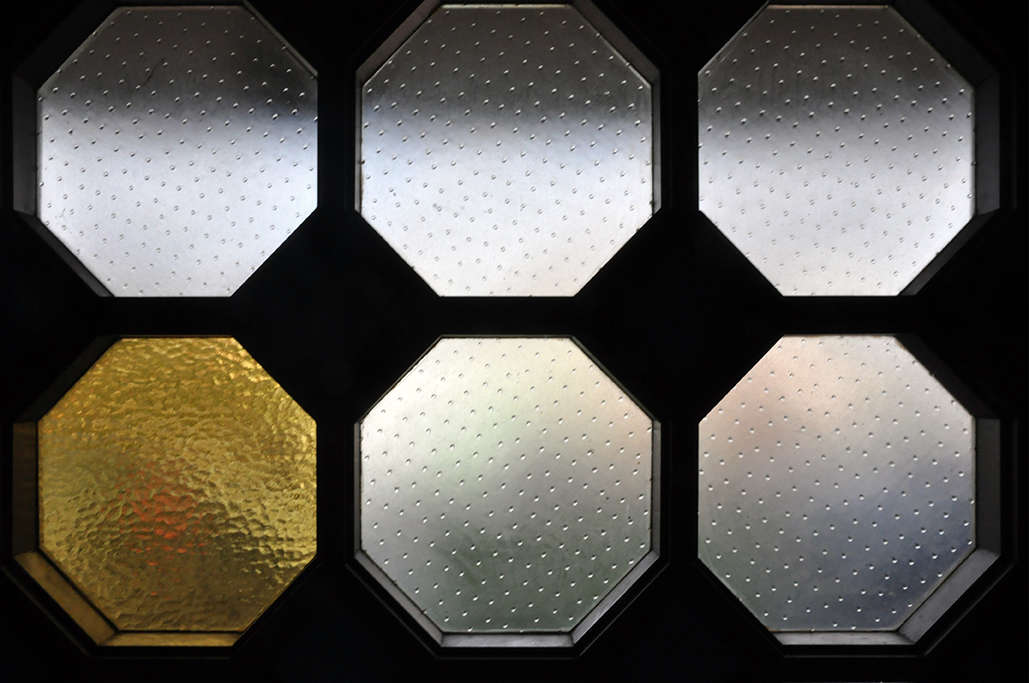
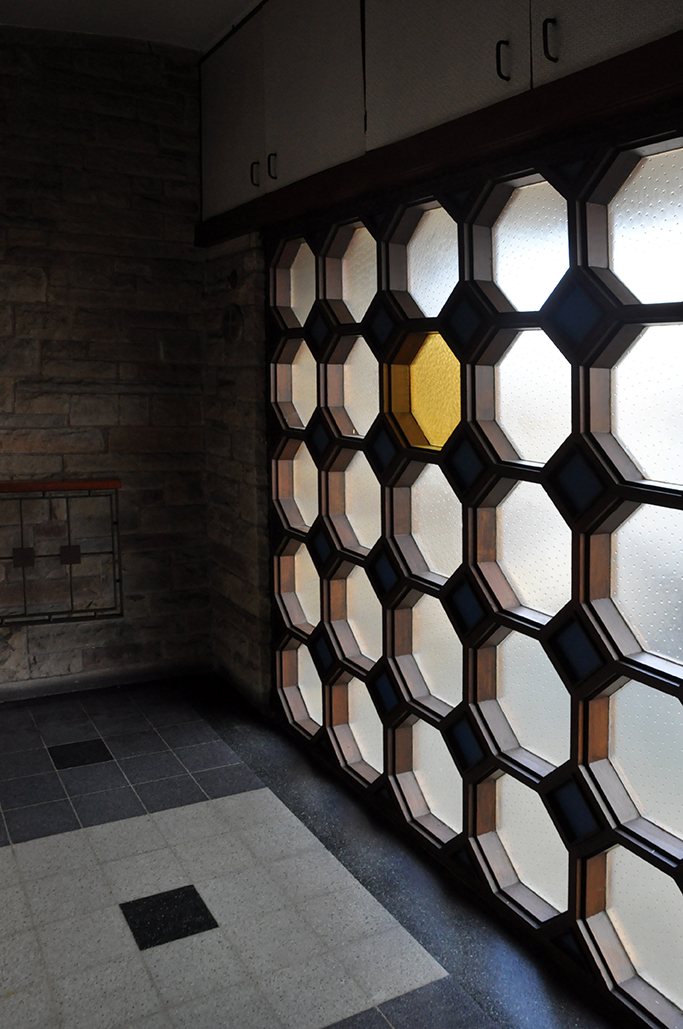
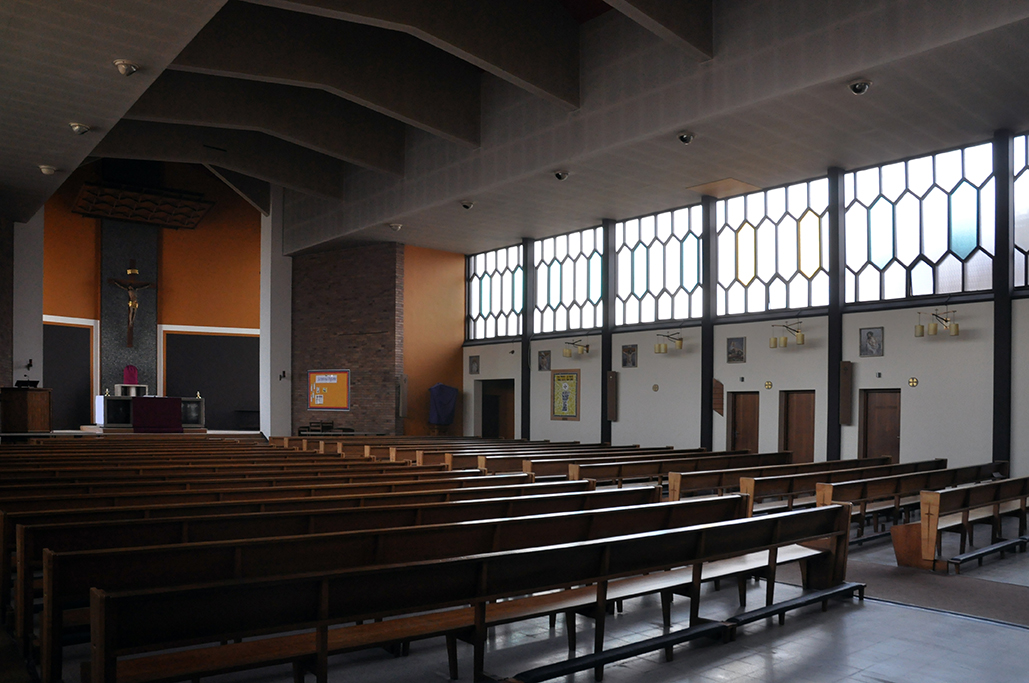
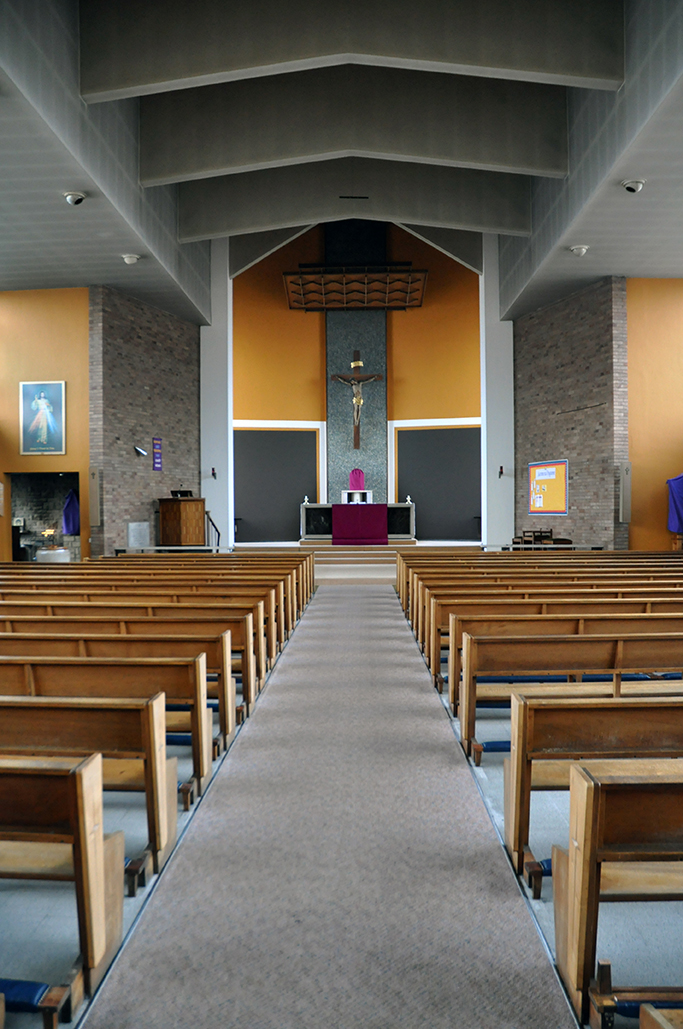
Thanks to Father Tierney for his time and permission to snap the interior. It was a calm space, the large open volume side lit by high octagonal honeycomb modular windows. The elegant plain pitched concrete gambrel roof beams a simple engineered solution.
The church and attached presbytery were built from designs by Greenhalgh & Williams in 1958-9, the church being consecrated on 12 May 1960. A reordering took place, probably in the 1960s or 70s, when the altar rails were removed and the altar moved forward. Probably at the same time, the font was brought into the church from the baptistery.
The altar and apse beautifully restrained in colour form and choice of materials. The design and detailing on the pews so warm and understated.
I was loathe to leave.
The exterior does not disappoint, the repetition of modular window shapes, the integration of doors, brick and mixed stone facing.This is a building of elegant grandeur, well proportioned, happily at home in its setting.
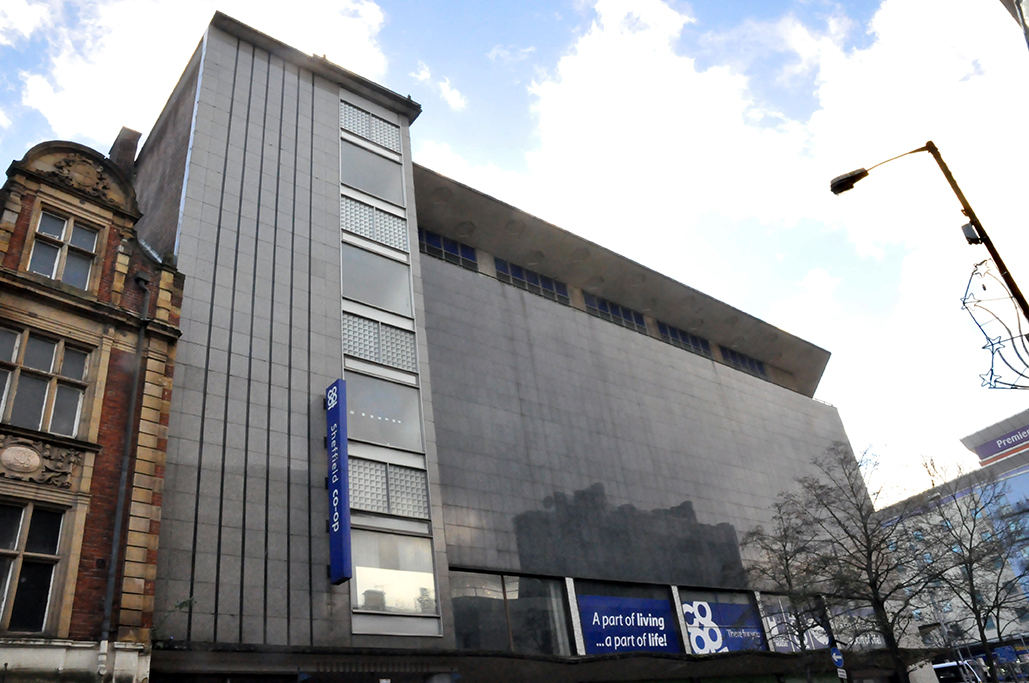
So here we are outside, you and I in 2015 – it seems like yesterday.
Whereas yesterday I was inside not outside, but more of that in a moment.
It seems that you were listed in 2009 and deservedly so.
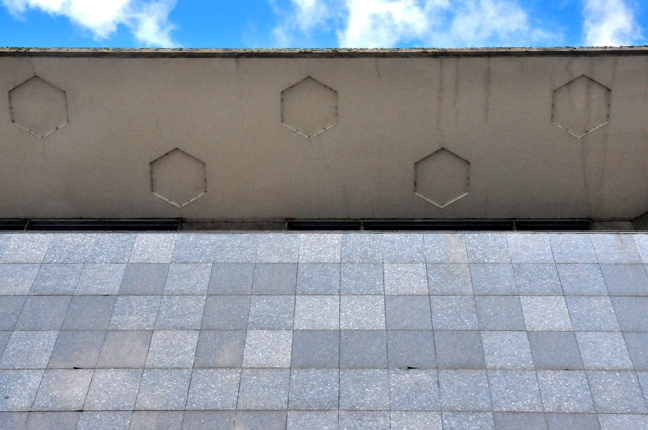
1964 by George S Hay, Chief Architect for CWS, with interior design by Stanley Layland, interior designer for CWS. Reinforced concrete with Blue Pearl granite tiles and veneers, grey granite tiles and veneers, buff granite blocks, glass, and brick.
There’s just so much to stand and stare and marvel at.
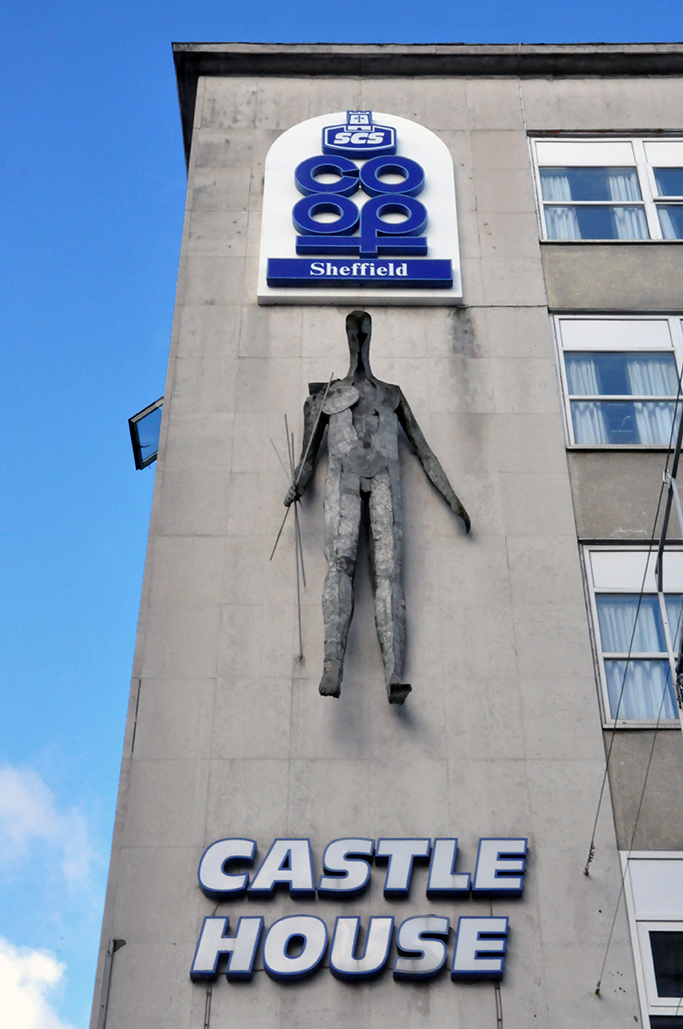
Vulcan by Boris Tietze commisioned by Horne Brothers 1961 for their head office building No. 1 King Street. Glass fibre on a metal armature the 8 foot high figure holding a bundle of metal rods.
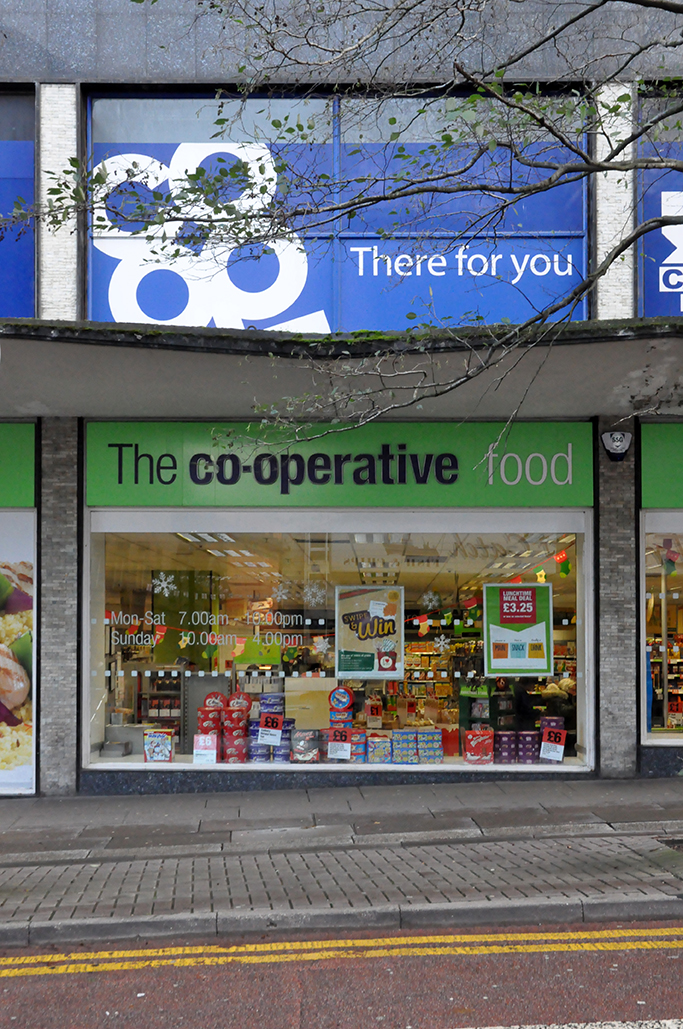
You were just about still open then, then you weren’t, then you were again – but a Co-op no more alas.
Work is underway on plans for a tech hub in Sheffield after a funding package was agreed.
Followed by a casual stroll towards 2019 where we are talking a peep inside courtesy of owners Kollider and book shop La Biblioteka.
I’d never ever seen the interior, save through the photographs of Sean Madner who captured the key features in 2014, prior to refurbishment.
So the Modernists and I pitched up this Sunday afternoon, the conclusion of our Sheffield Walk.
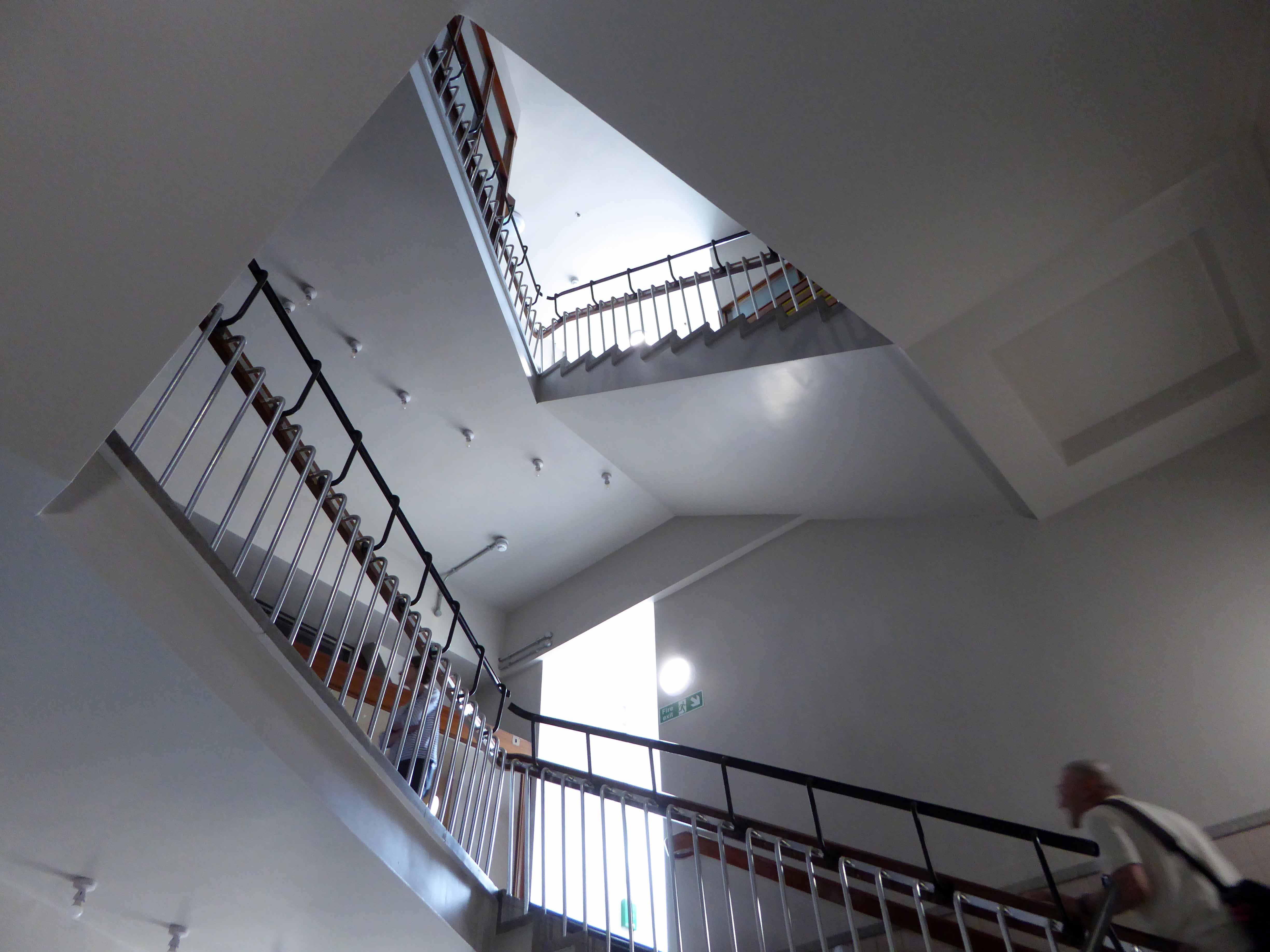
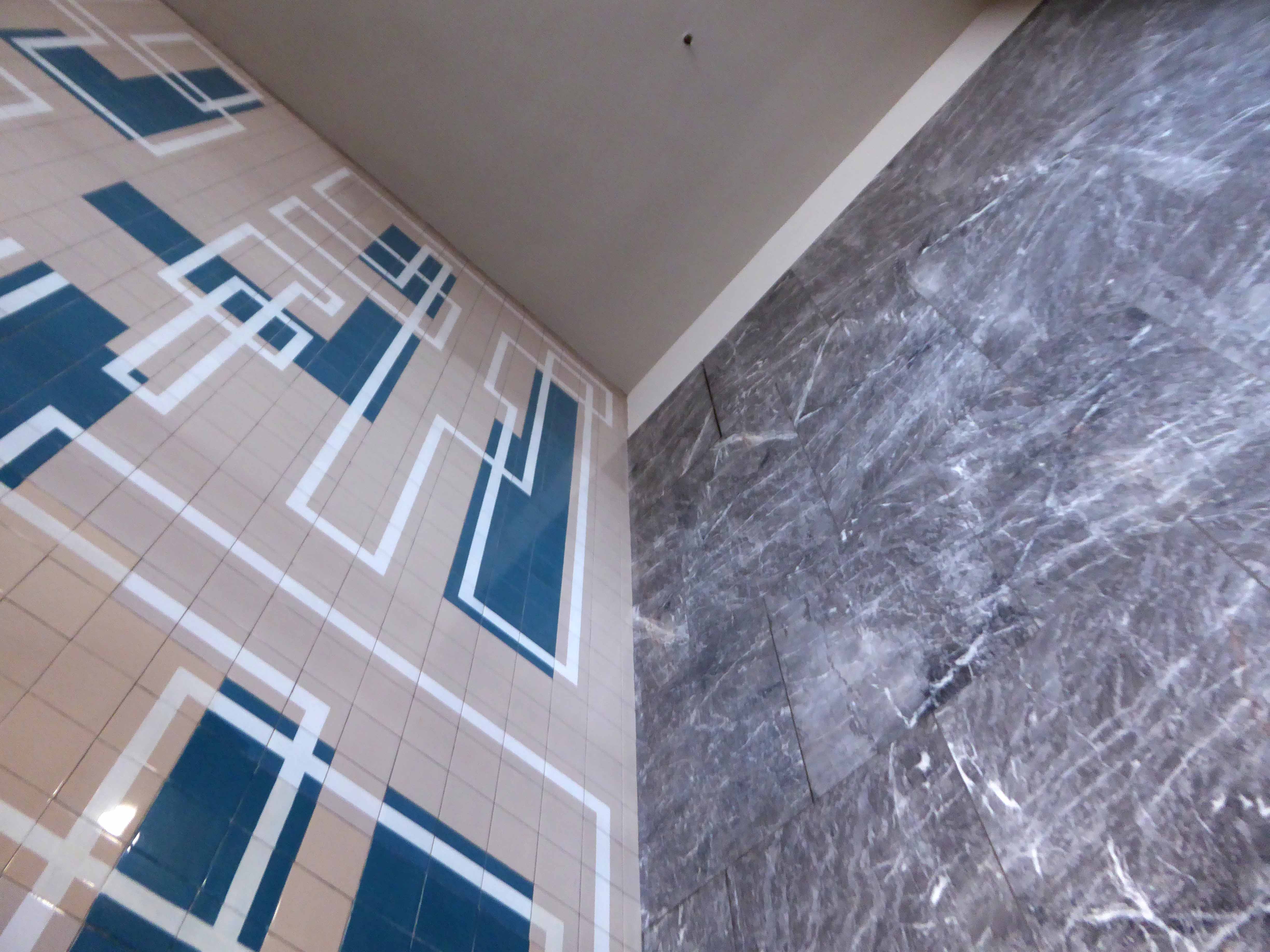
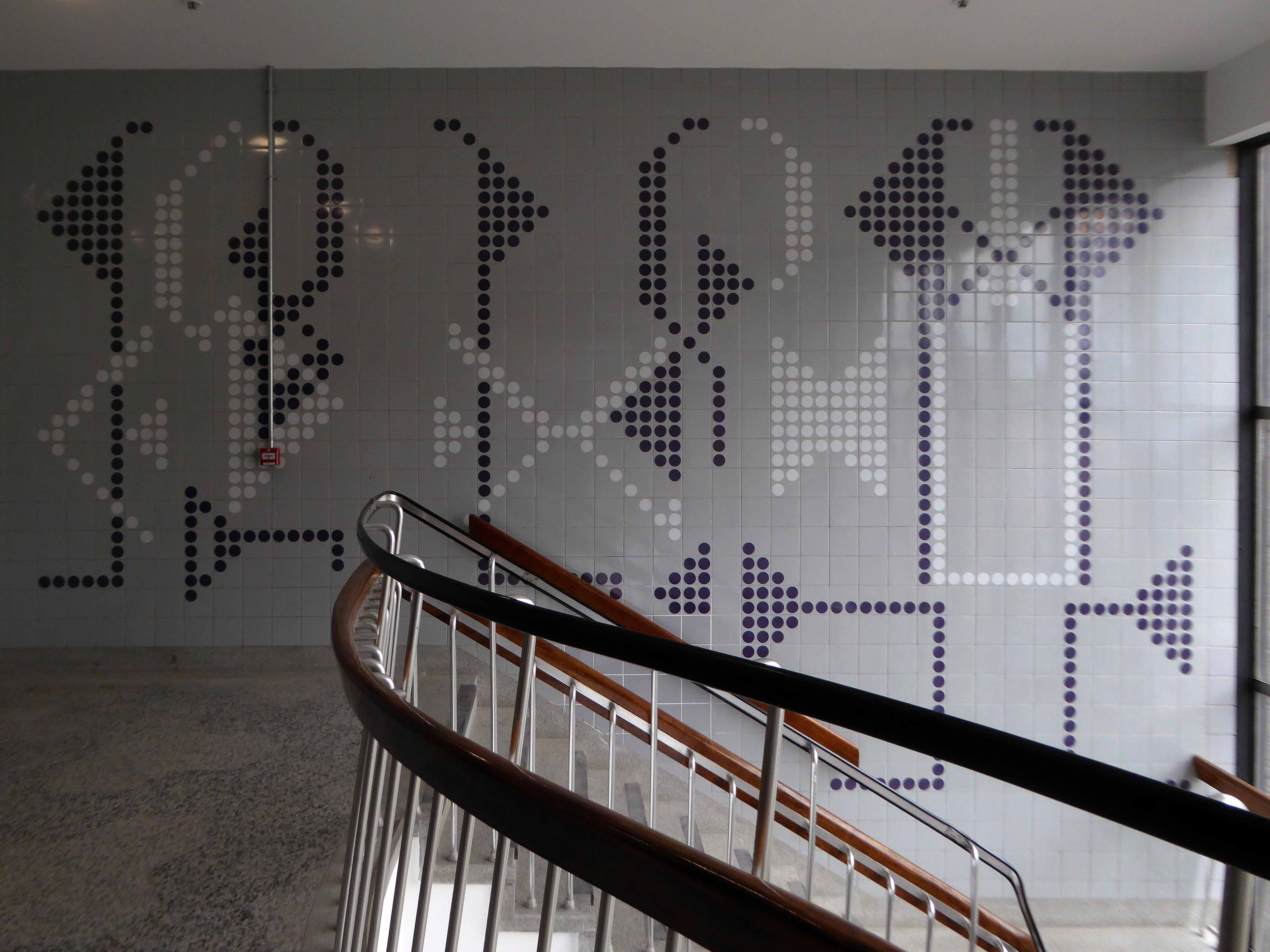
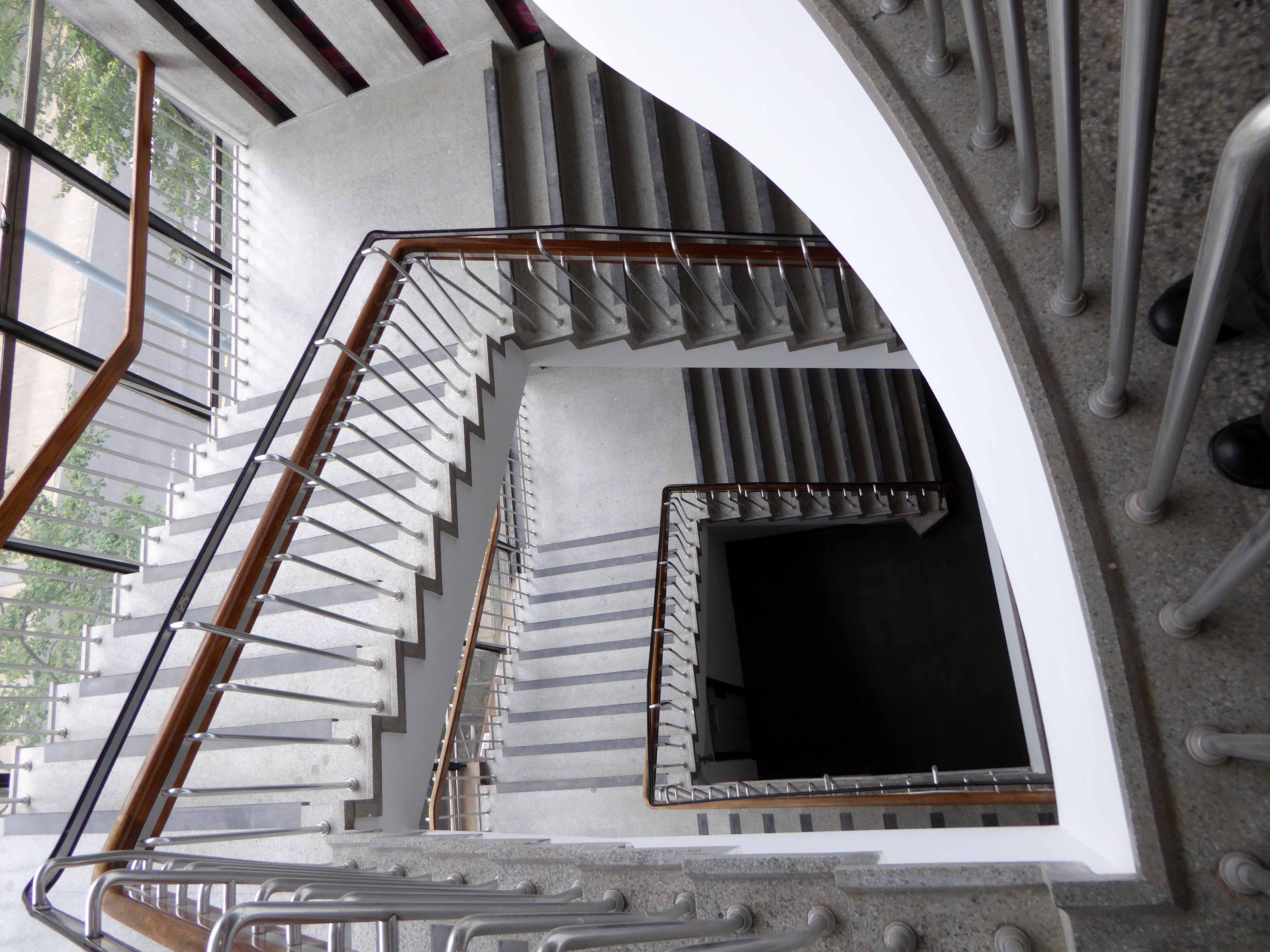
Lets take a look at the end stairwells, two very distinct designs one dotty one linear, both using Carter’s Tiles.
Configured from combinations and rotations of these nine modular units and two plain tiles.
Configured from combinations and rotations of these twelve modular units and two plain tiles.
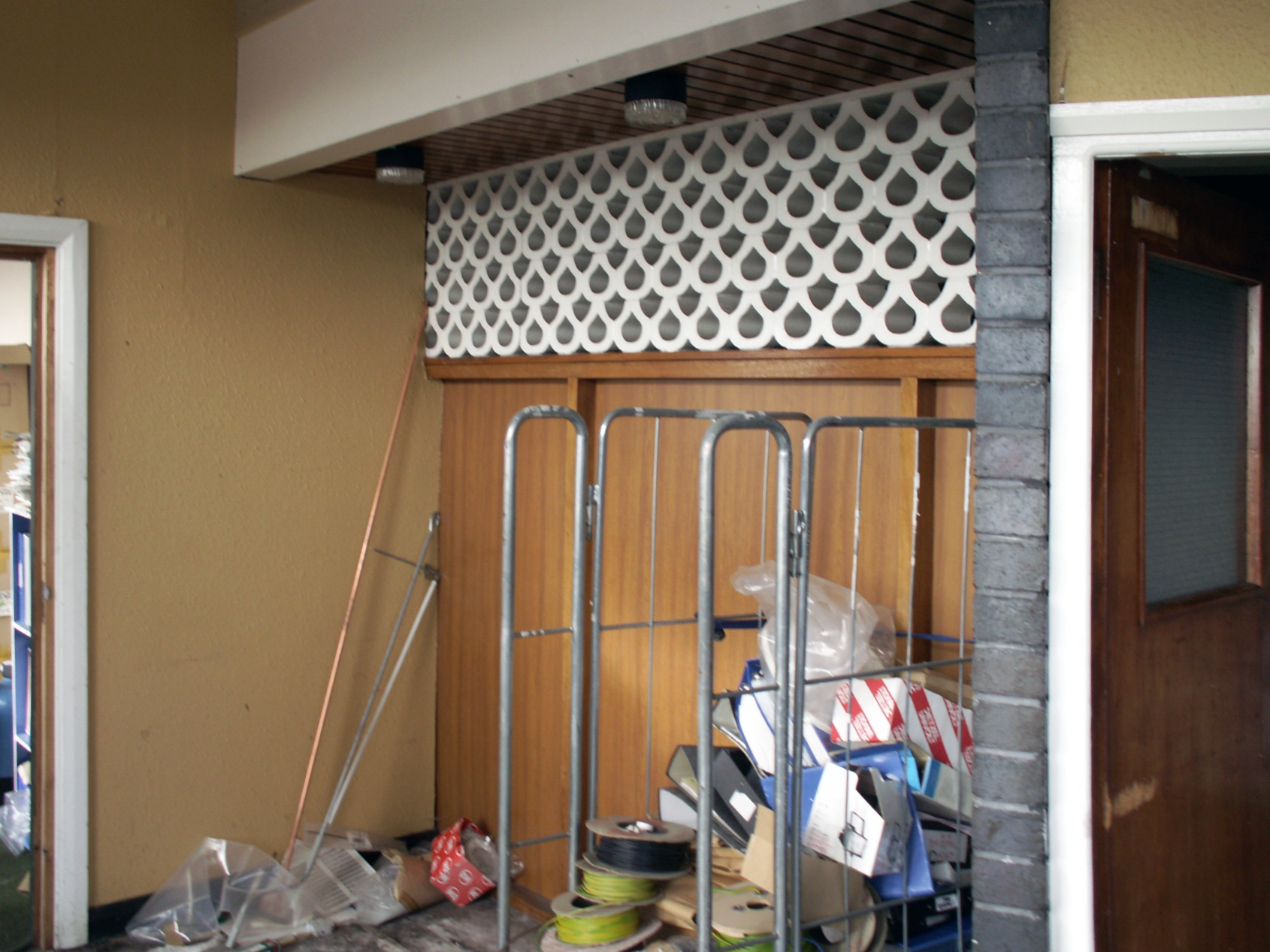
The site has retained some of its original architectural typography.
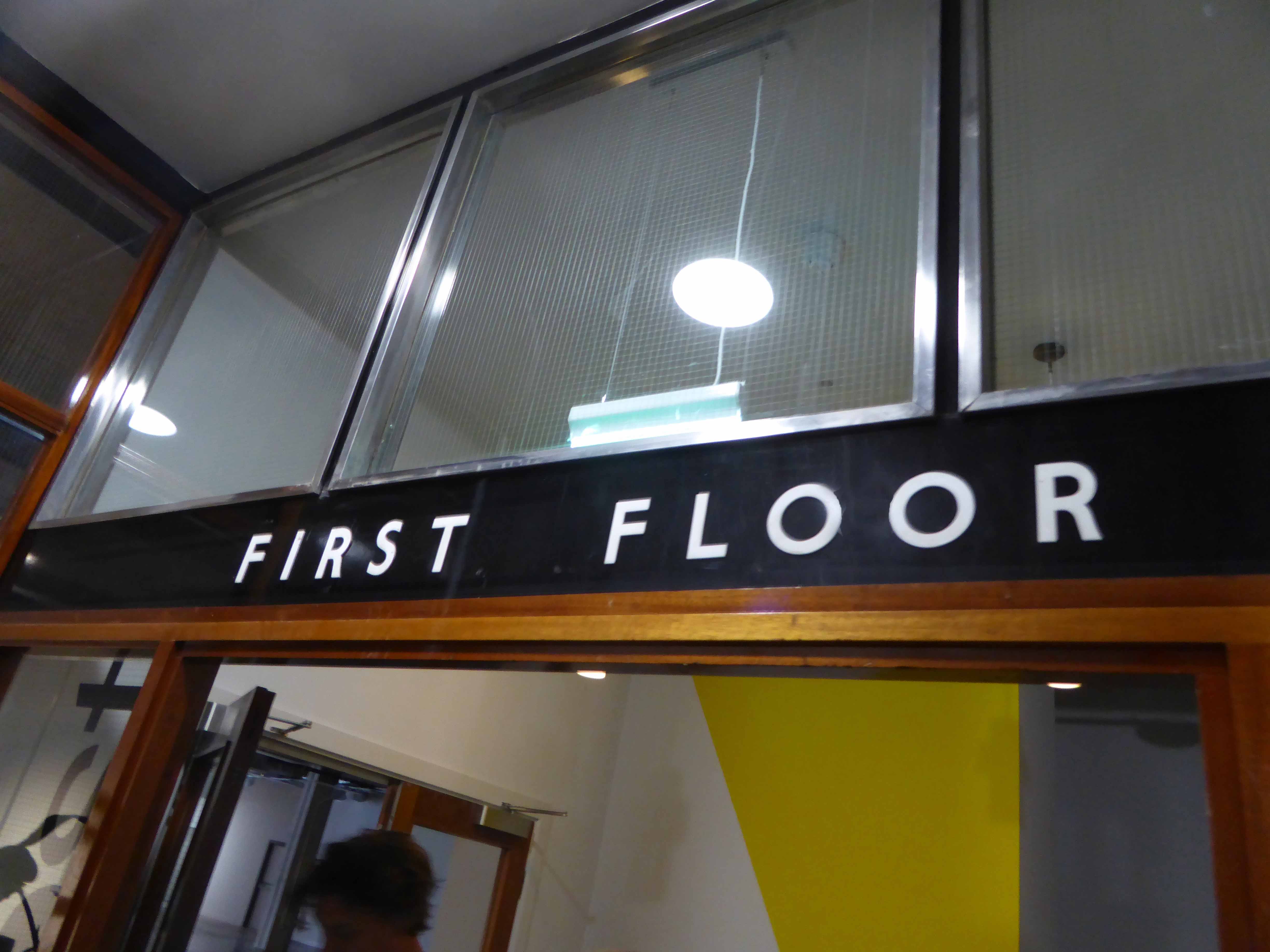
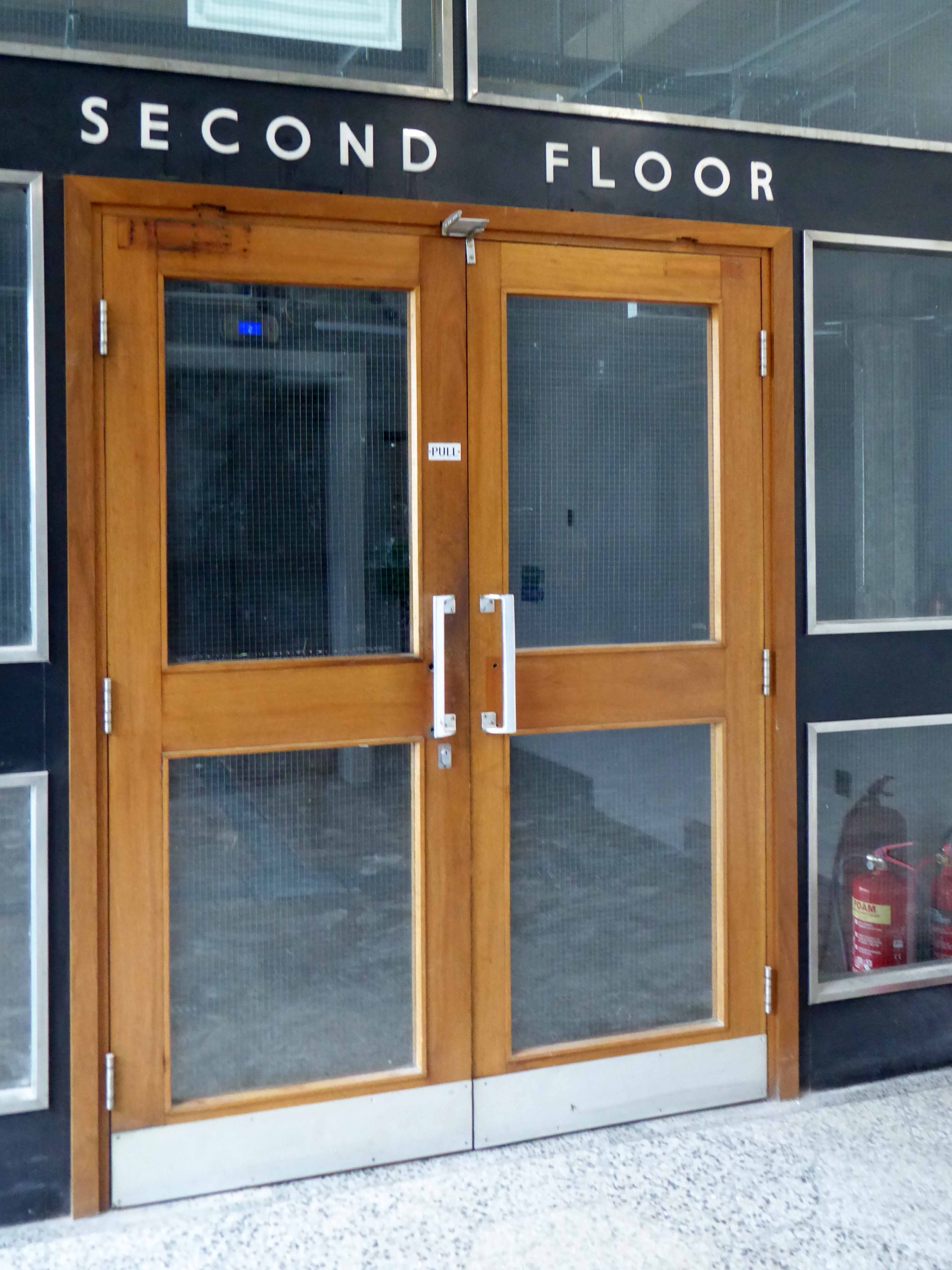
The former top floor restaurant has a suspended geometric ceiling with recently fitted custom made lighting.
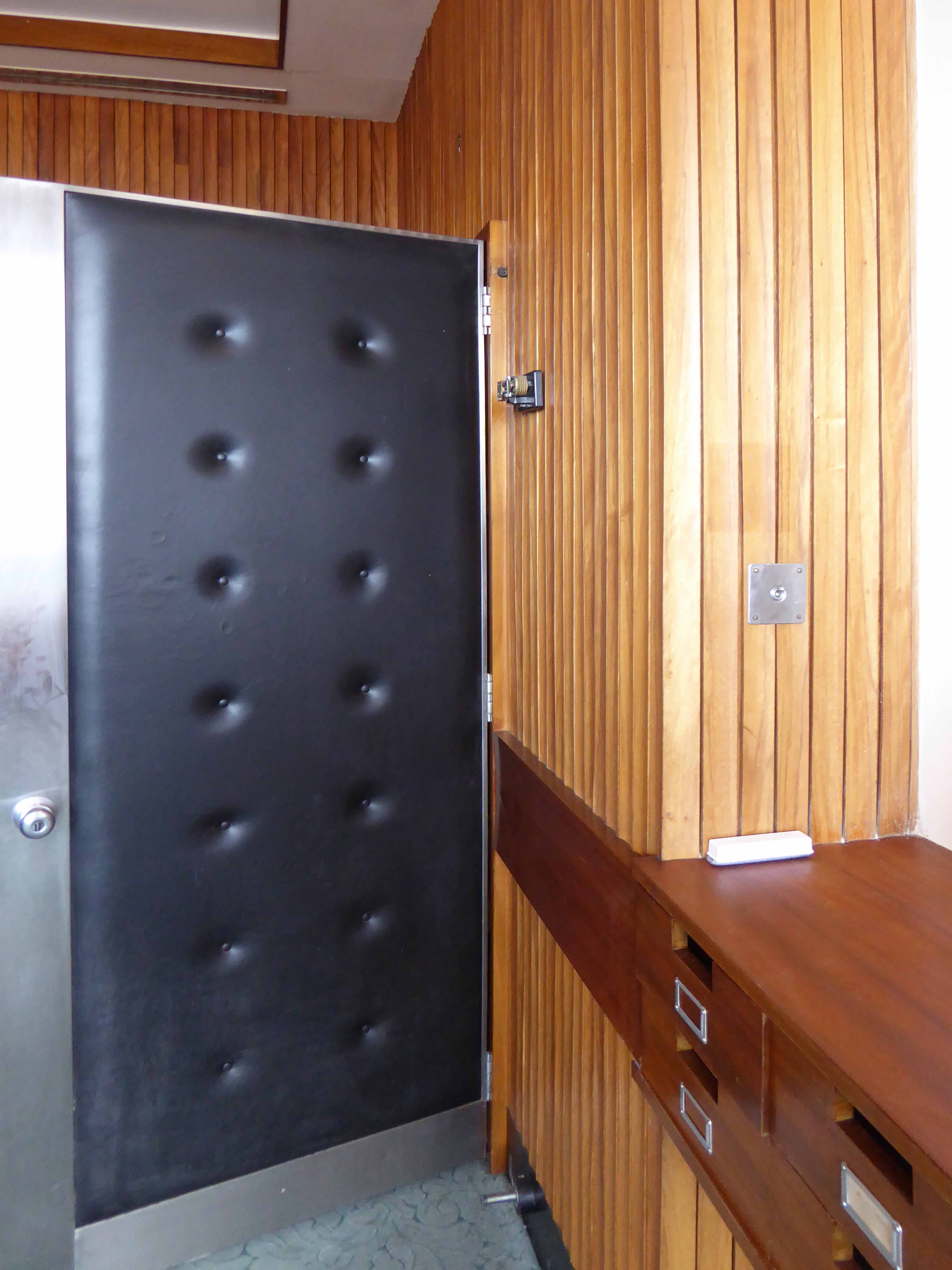
The timber-lined boardroom has a distinctive horseshoe of lighting, augmenting the board room table – which is currently away for repair, oh yes and a delightful door.
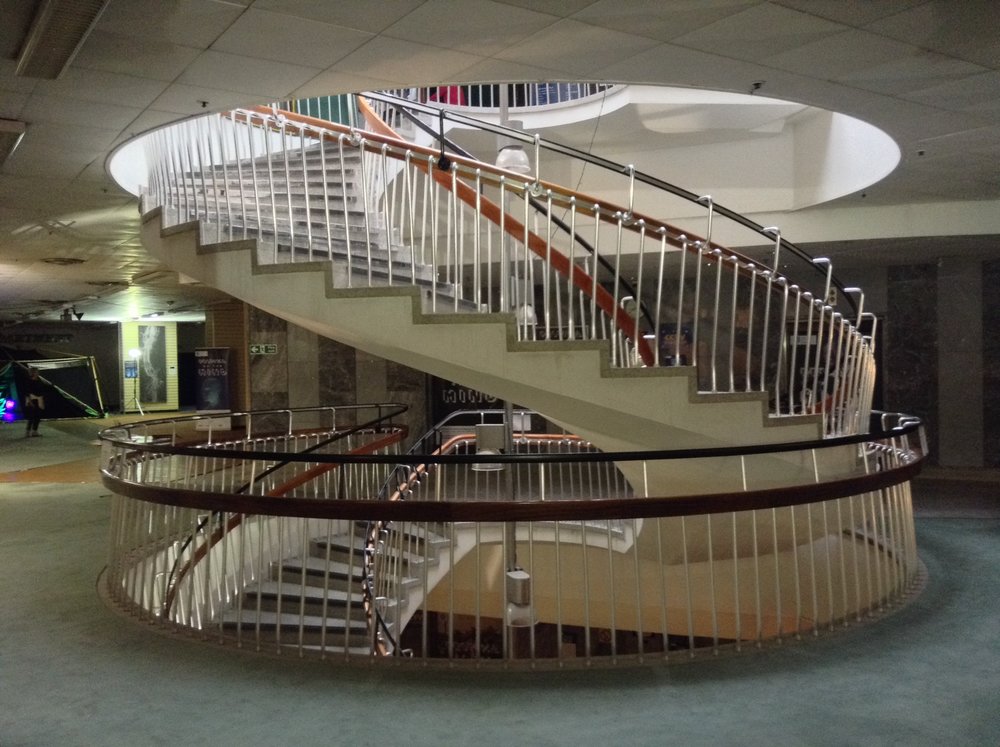
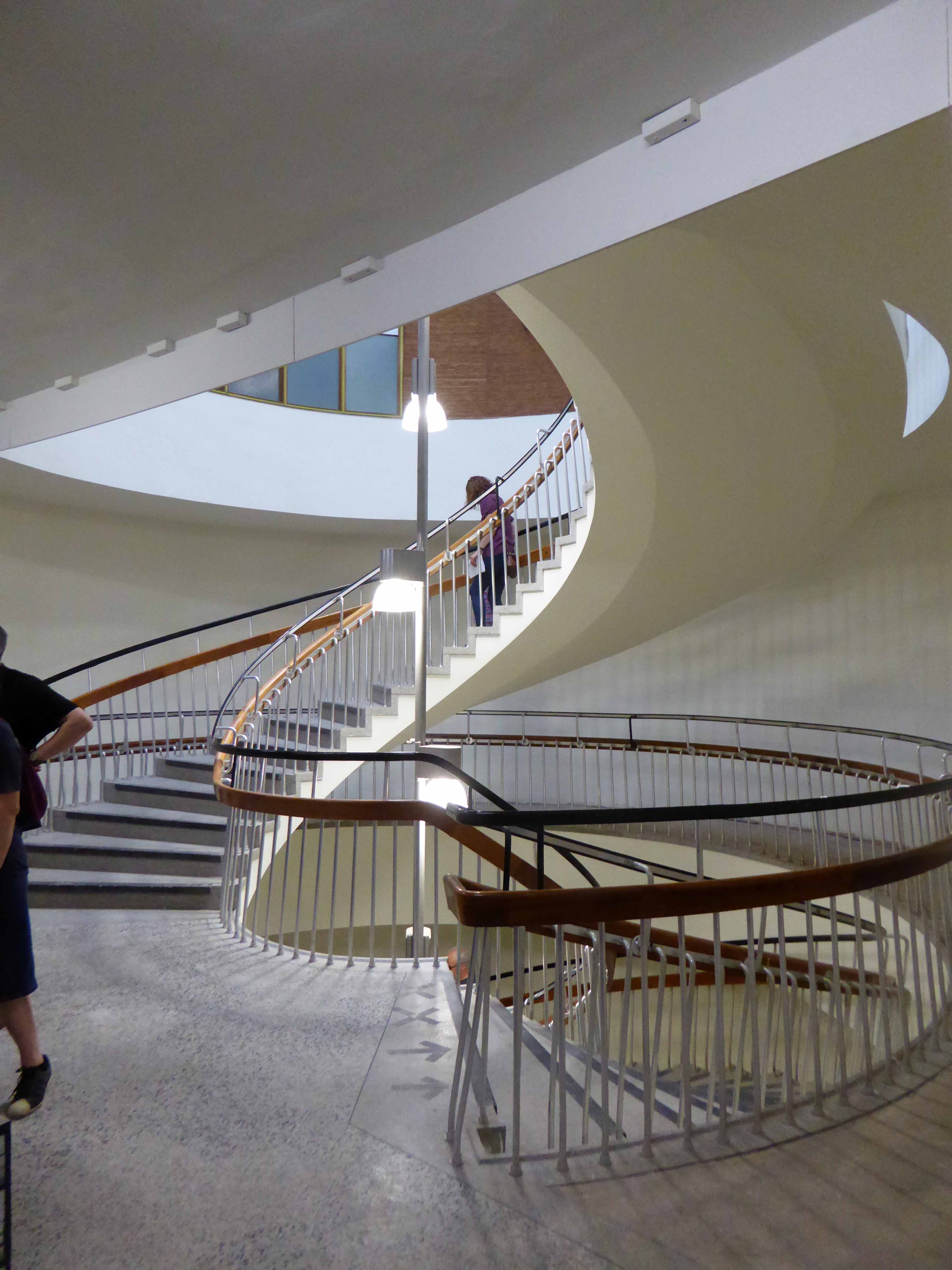
High atop the intoxicating vertiginous swirl of the central spiral stairway is the relief mural representing a cockerel and fish made of aluminium, copper and metal rod, with red French glass for the fish’s eye and cockerel’s comb.
Illuminated from above by this pierced concrete and glass skylight.
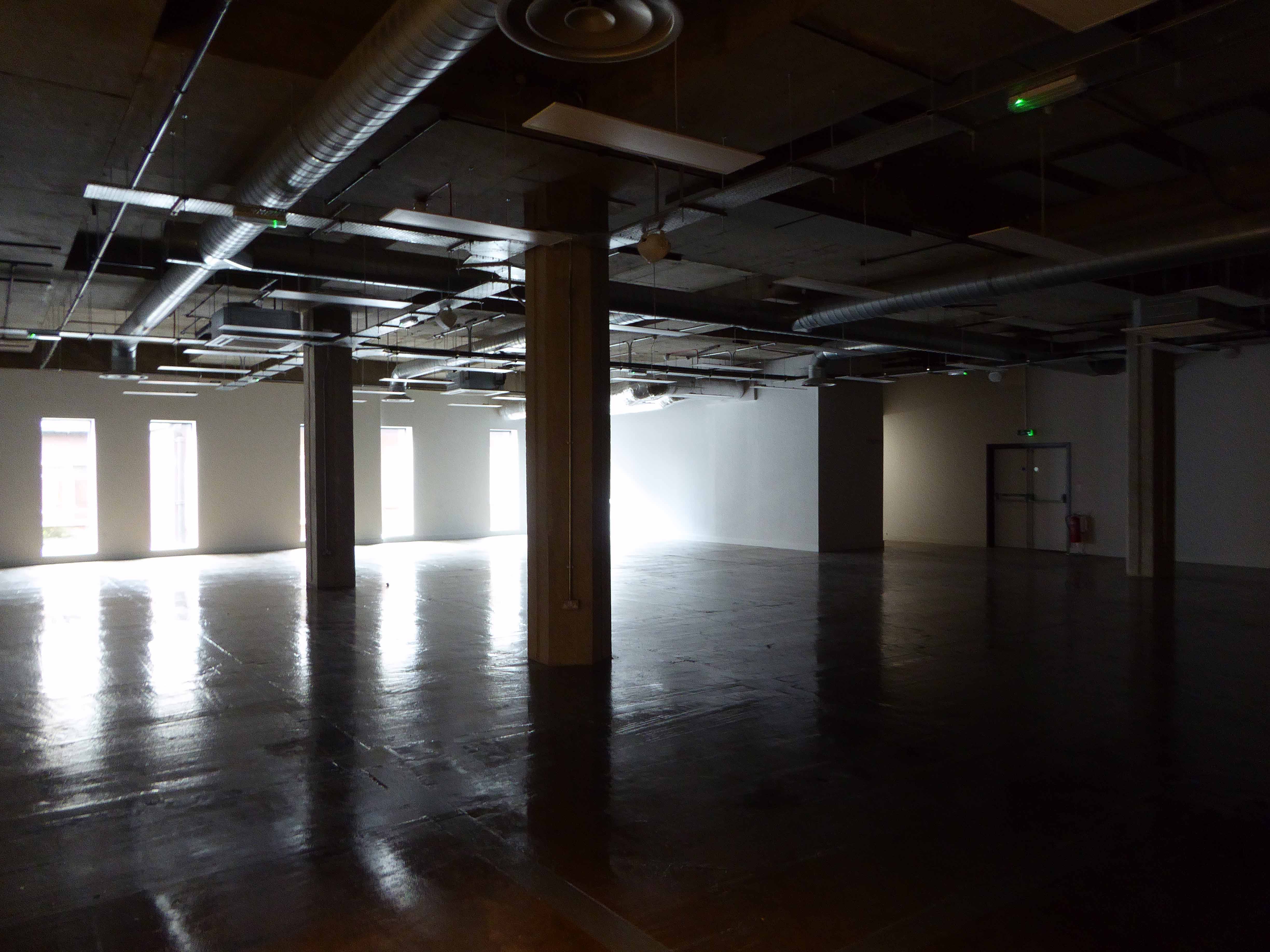
Many of the internal spaces have been ready for their new tenants.
This is a fine example of Modernist retail architecture saved from decay and degradation by the timely intervention of a sympathetic tenant.
Long may they and Castle House prosper – Sheffield we salute you!
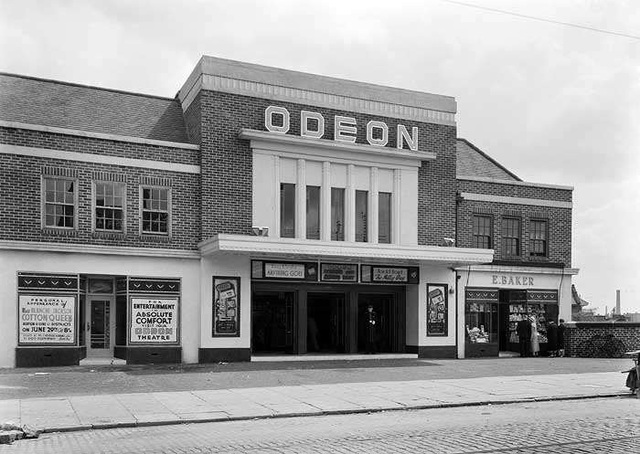
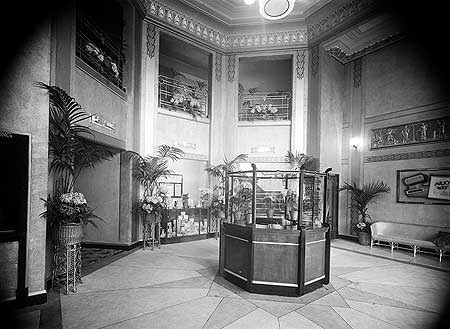
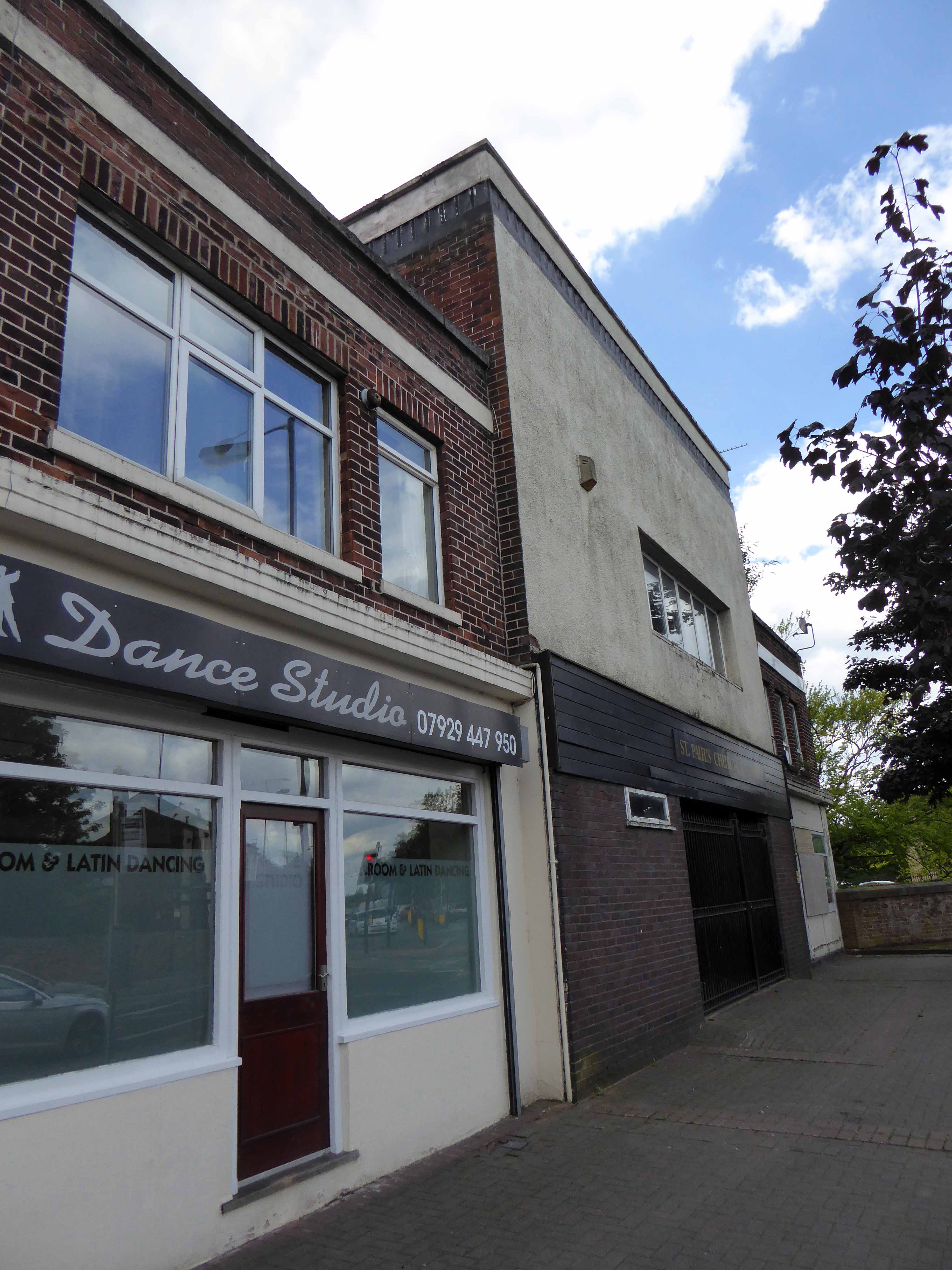
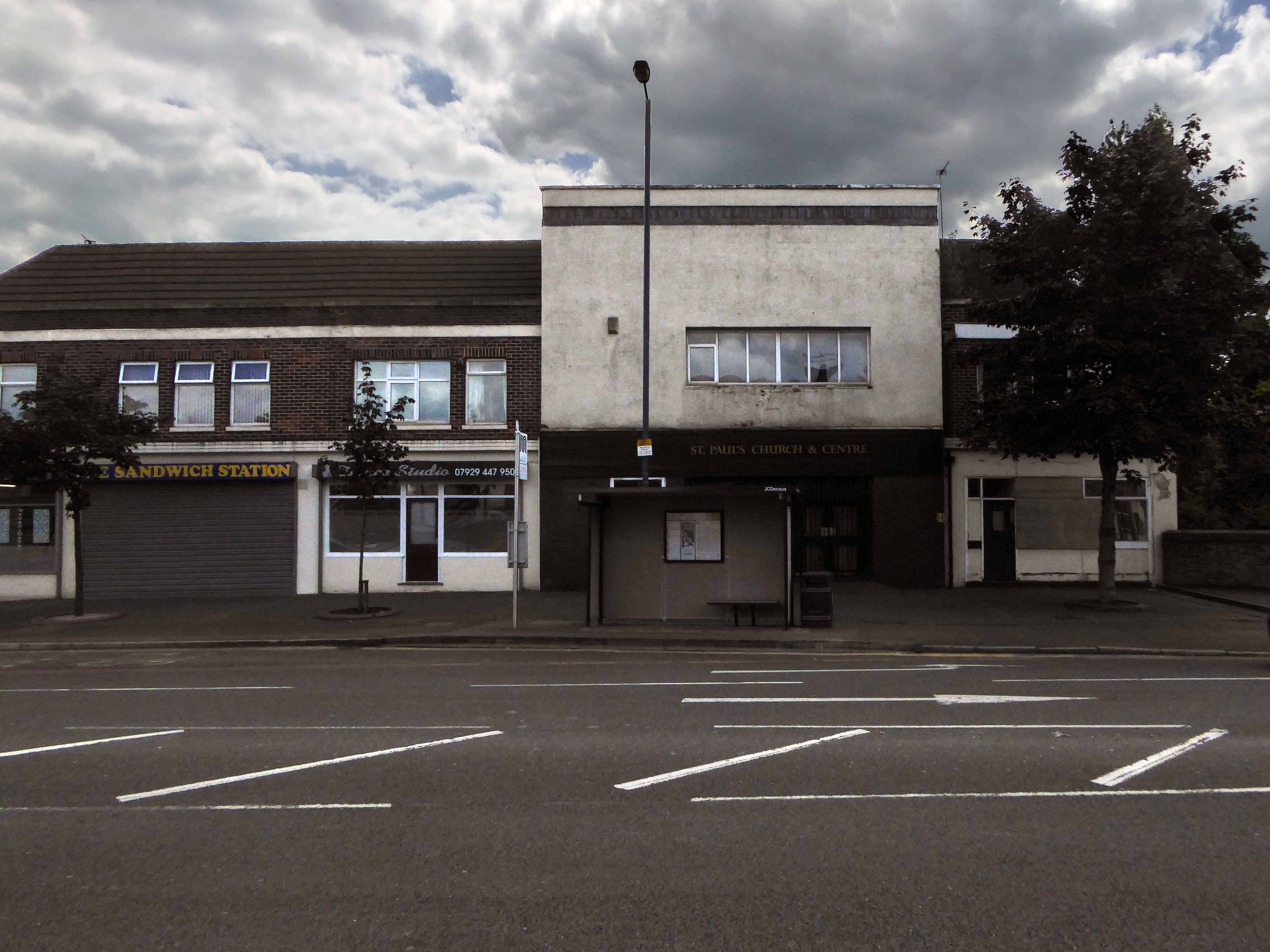
This was planned to be the Verona Cinema, a project of local builders – P Hamer Verona Cinema Ltd. The construction of the cinema was almost completed when Hamer sold the building to Oscar Deutsch and it opened as one of his Odeon theatres.
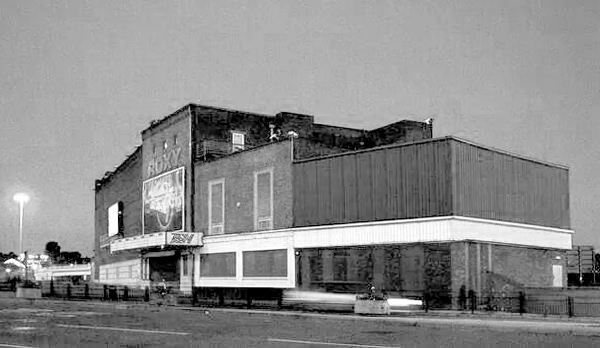
Hamer then used the proceeds of the sale to build the Roxy Cinema Holinwood, which was designed by Drury & Gomersall.
Opening date of the Odeon Theatre was 29th June 1936, when the first programme was Bing Crosby in “Anything Goes” and Harold Lloyd in “The Milky Way”. Designed by the noted cinema architectural firm of Drury & Gomersall, the frontage had a neat entrance in brick, with white stone facings on the window surrounds. There was a parade of shop units on each side of the entrance which had matching brickwork and a white stone trim.
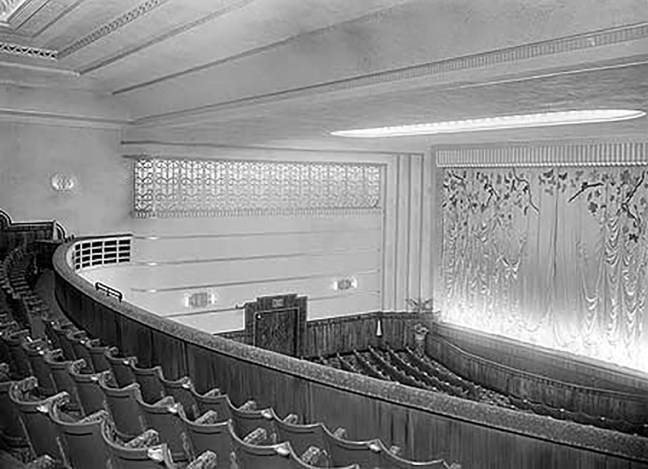
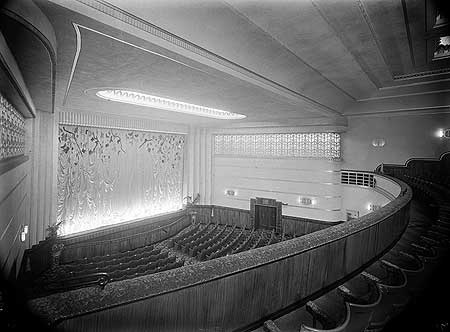
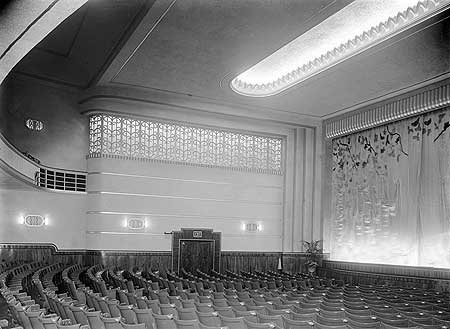
Inside the auditorium the seating was arranged for 834 in the stalls and 330 in the circle. The side splay walls on each side of the proscenium was decorated in wide horizontal bands, and topped with a backlit illuminated grille.
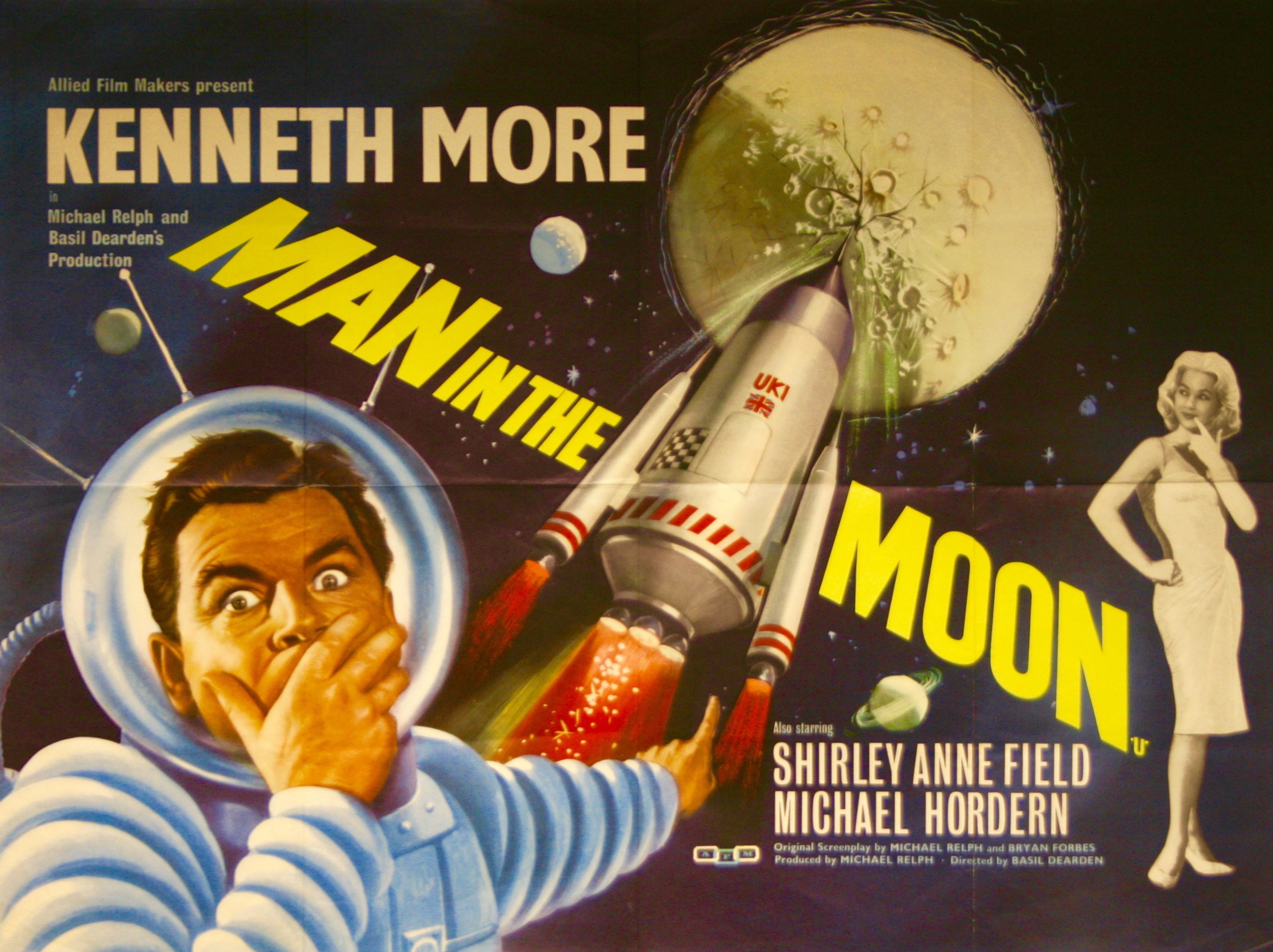
The Odeon was closed by the Rank Organisation on 11th March 1961 with Kenneth More in “Man in the Moon”.
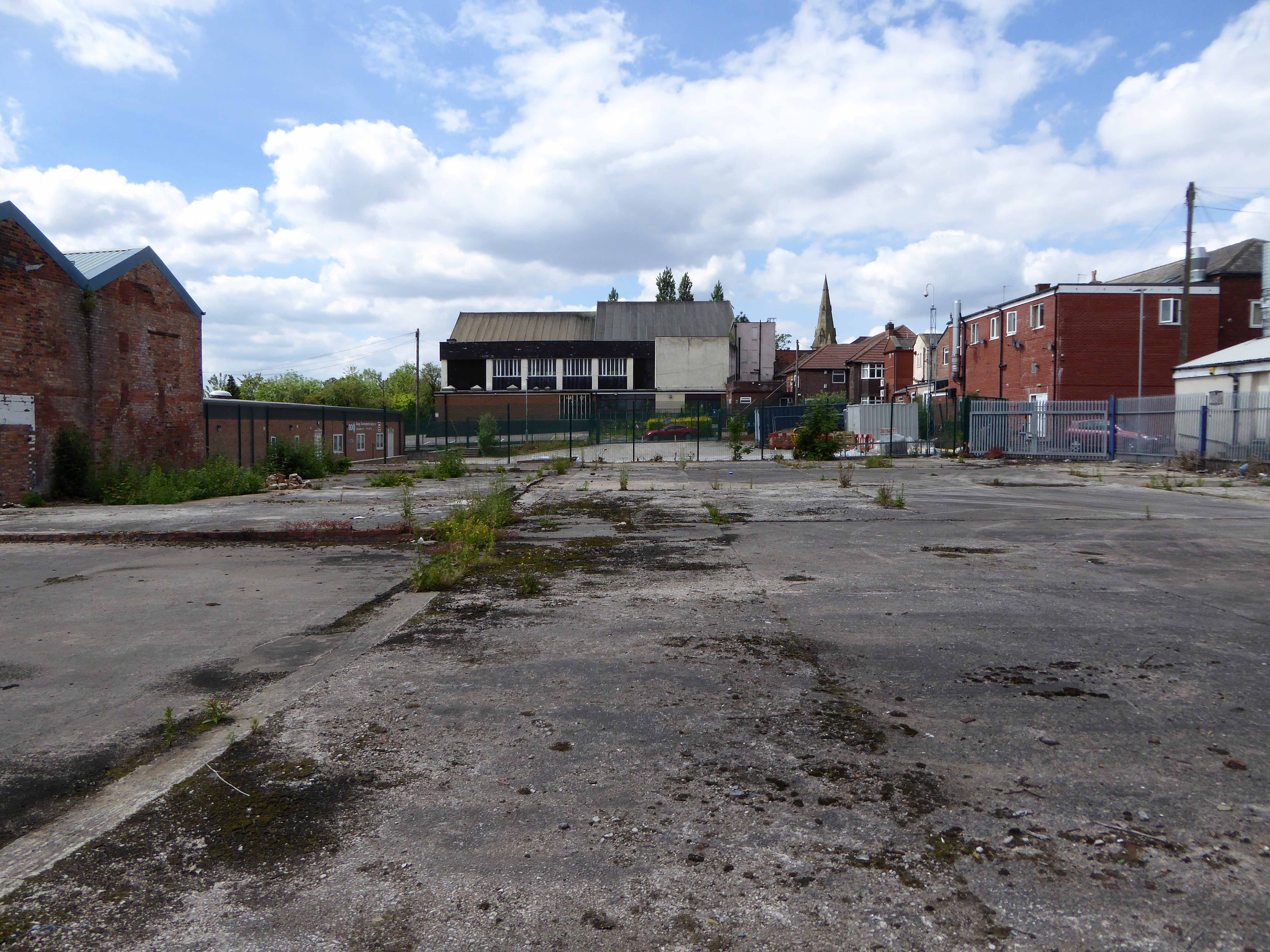
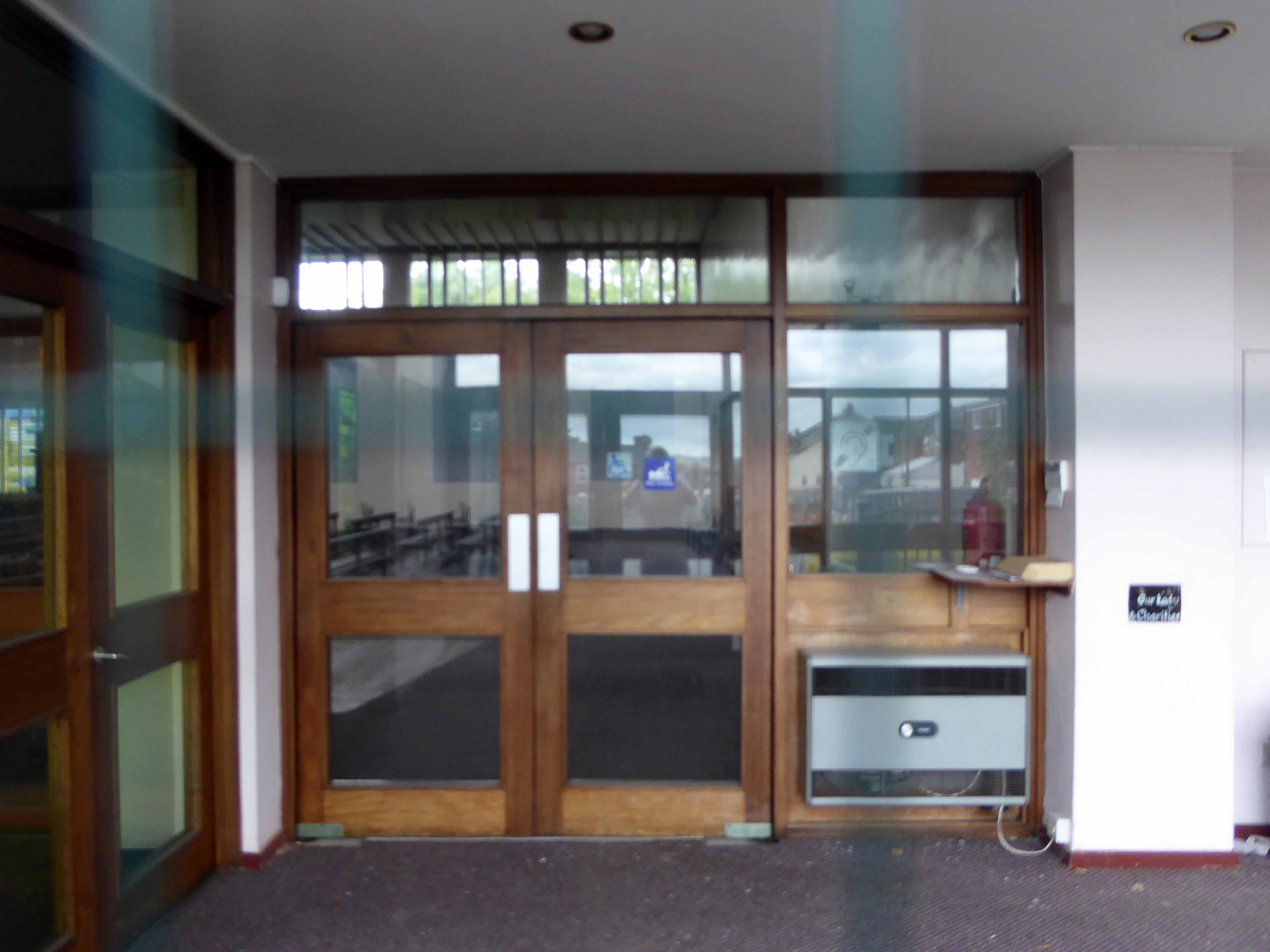
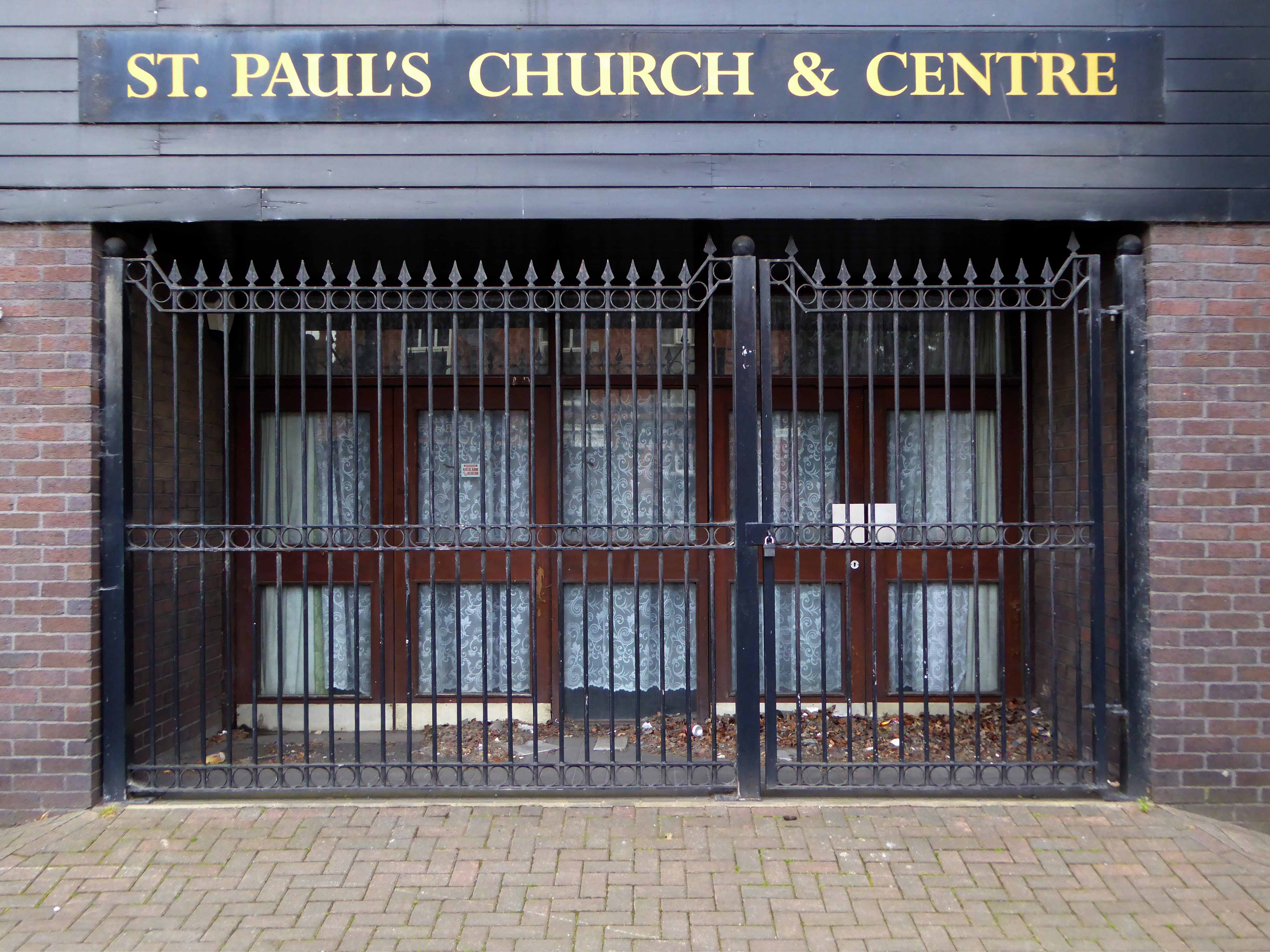
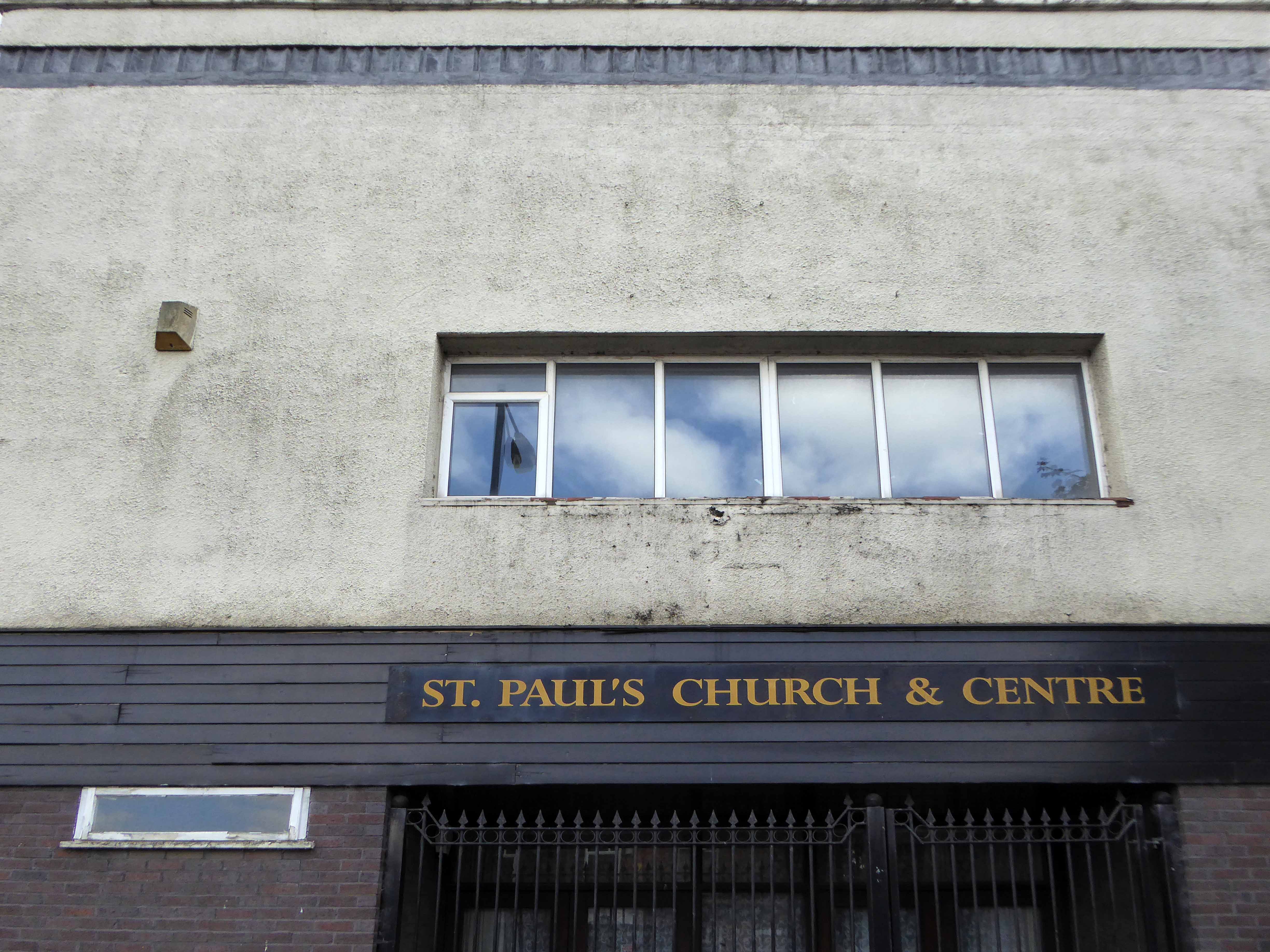
It was converted into St. Paul’s Roman Catholic Church. Former cinemas have made good conversions to churches and the fabric of the buildings are generally respected. In this case though, the sad story is that the front entrance has been rendered over and inside all details of it cinematic past have been erased. You would never know you were inside what had been been an Art Deco styled building.
I passed by nearly every day for years travelling to and from school, I played there at a wedding reception in the church social club. I sadly have no recollection of the building in use as a cinema.
It has been closed since 2010 – currently it has no purpose or seemingly any future use, there are no For Sale signs in evidence.
I popped by to see you yesterday – a truly remarkable structure set amongst the terraced housing of an unremarkable street.
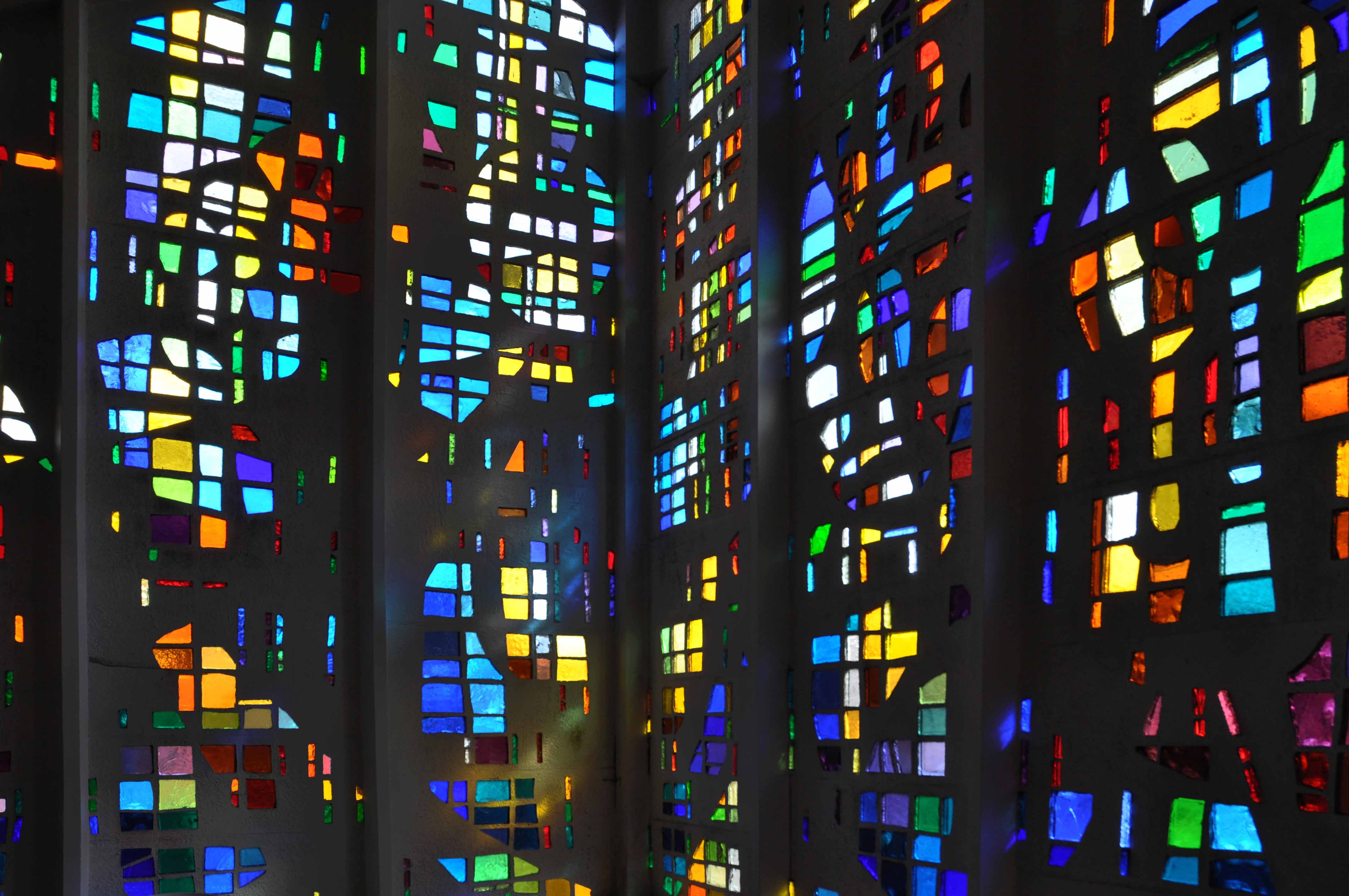
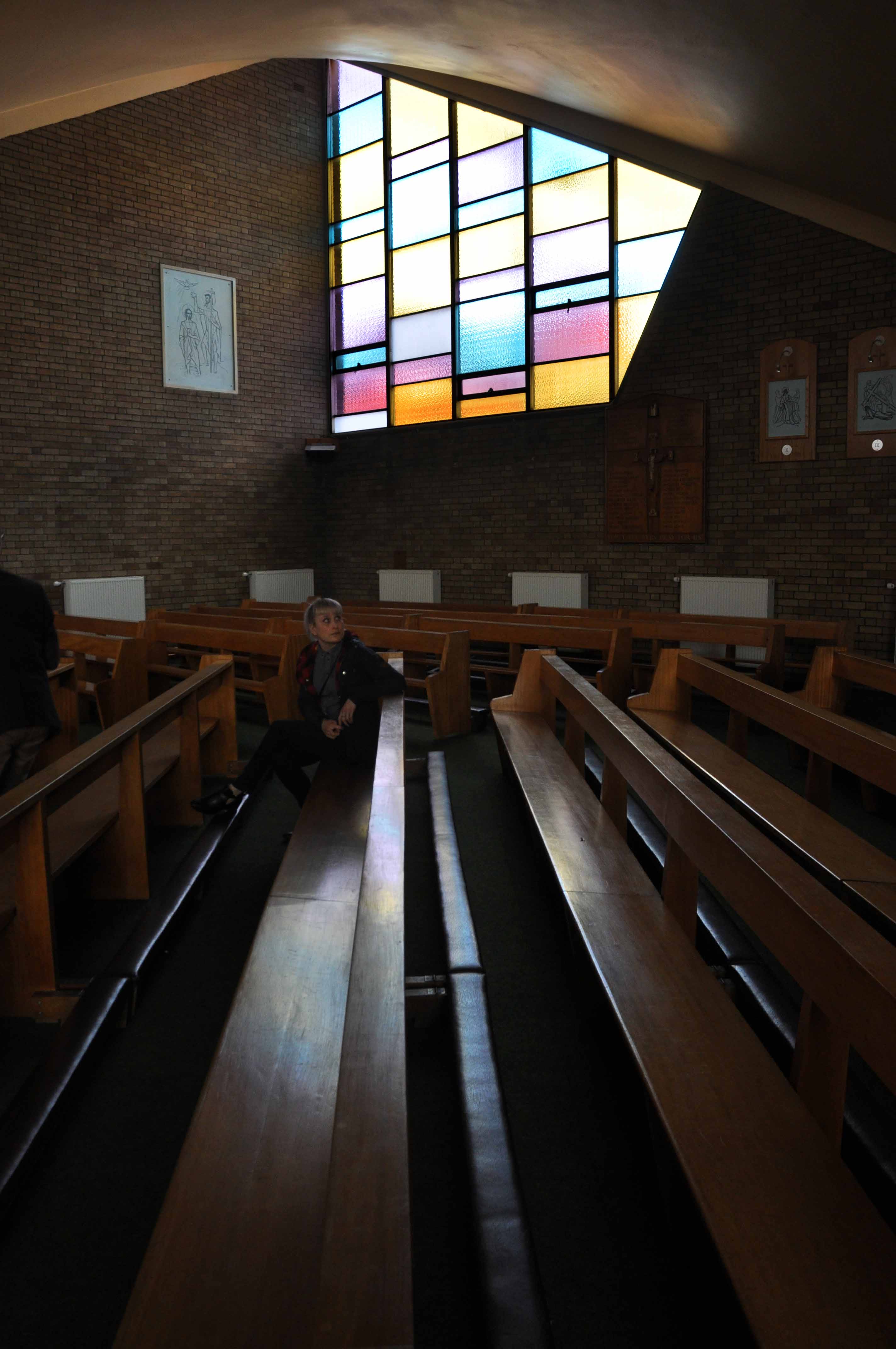
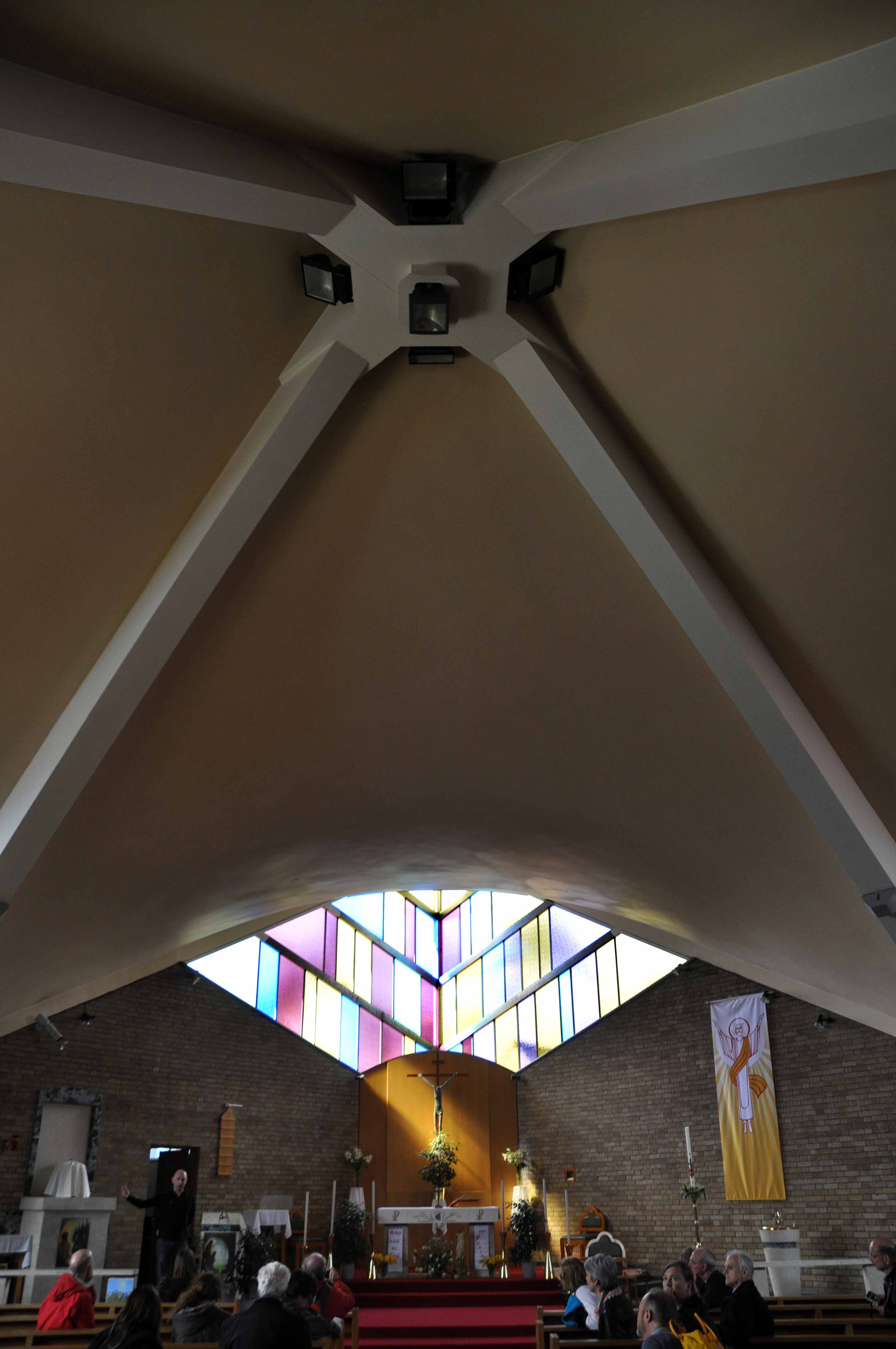
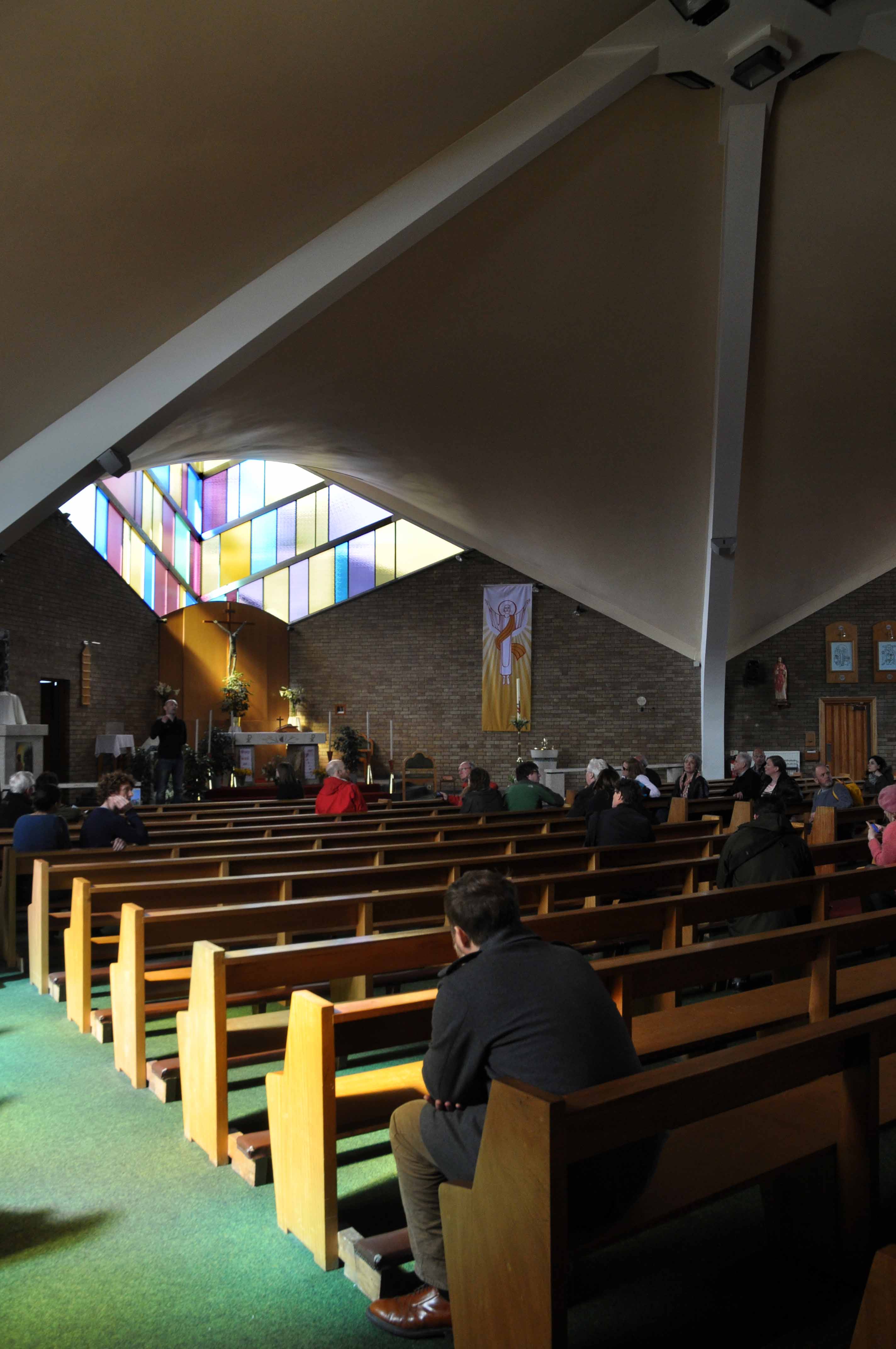
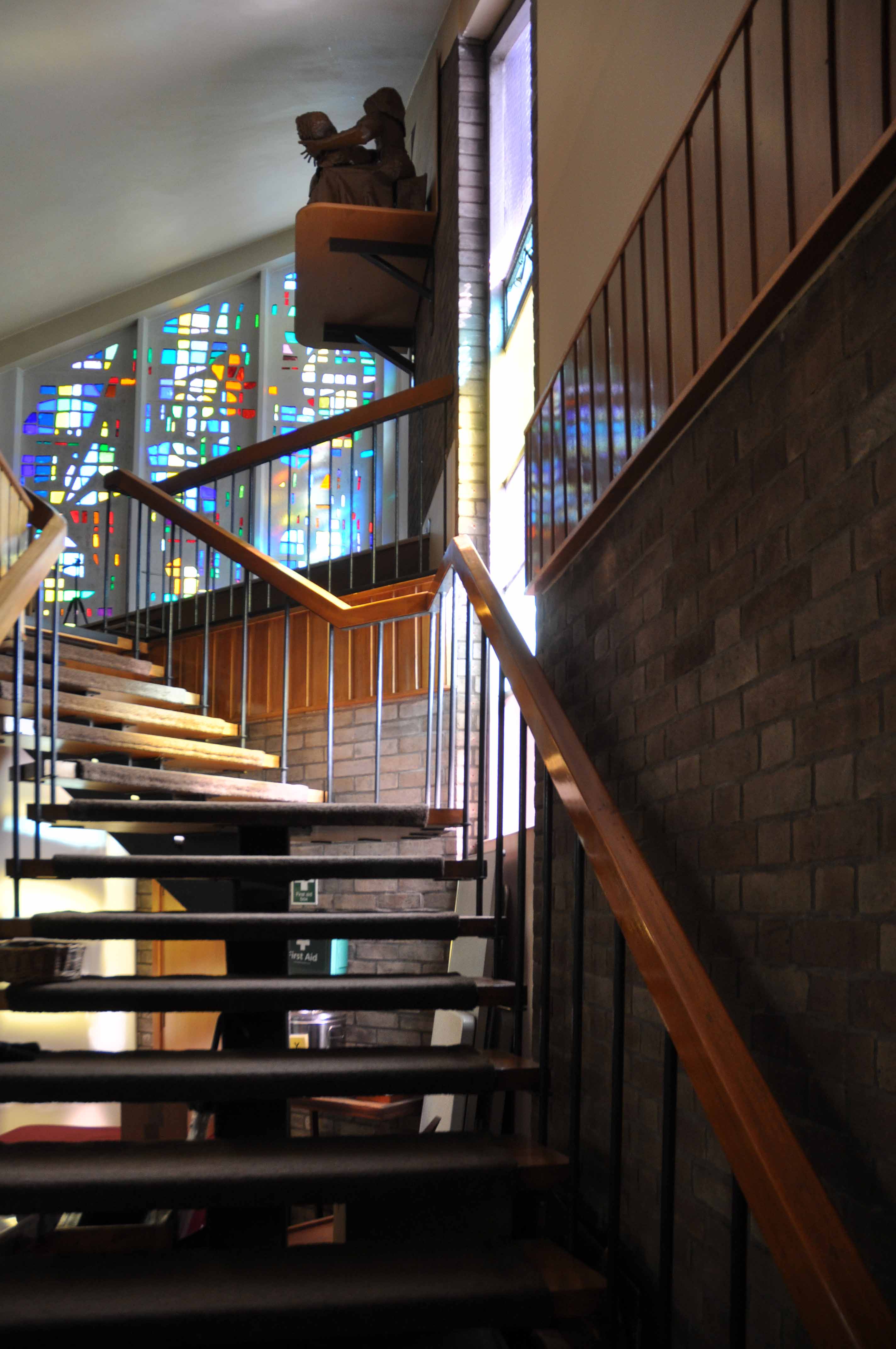
The foundation stone for the present building laid by Bishop Beck in August 1962. He returned to bless and open the church on 25 June 1963. The new church was built from designs by Walter Stirrup & Sons – job architect Kevin Houghton, at a cost of about £60,000. The church is notable for its dalle de verre glass, by Carl Edwards of Whitefriars.
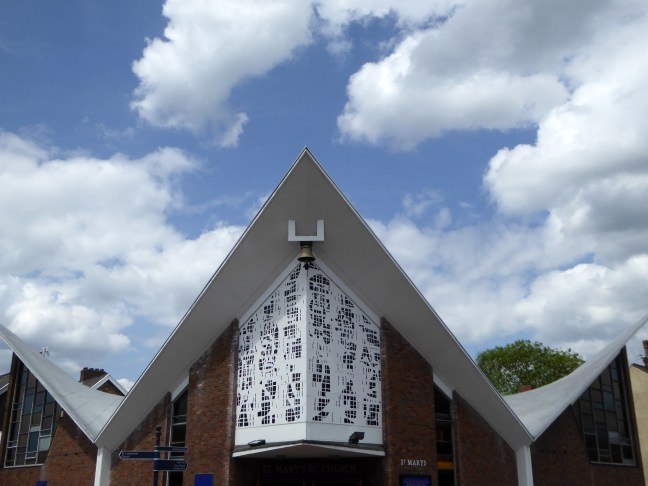
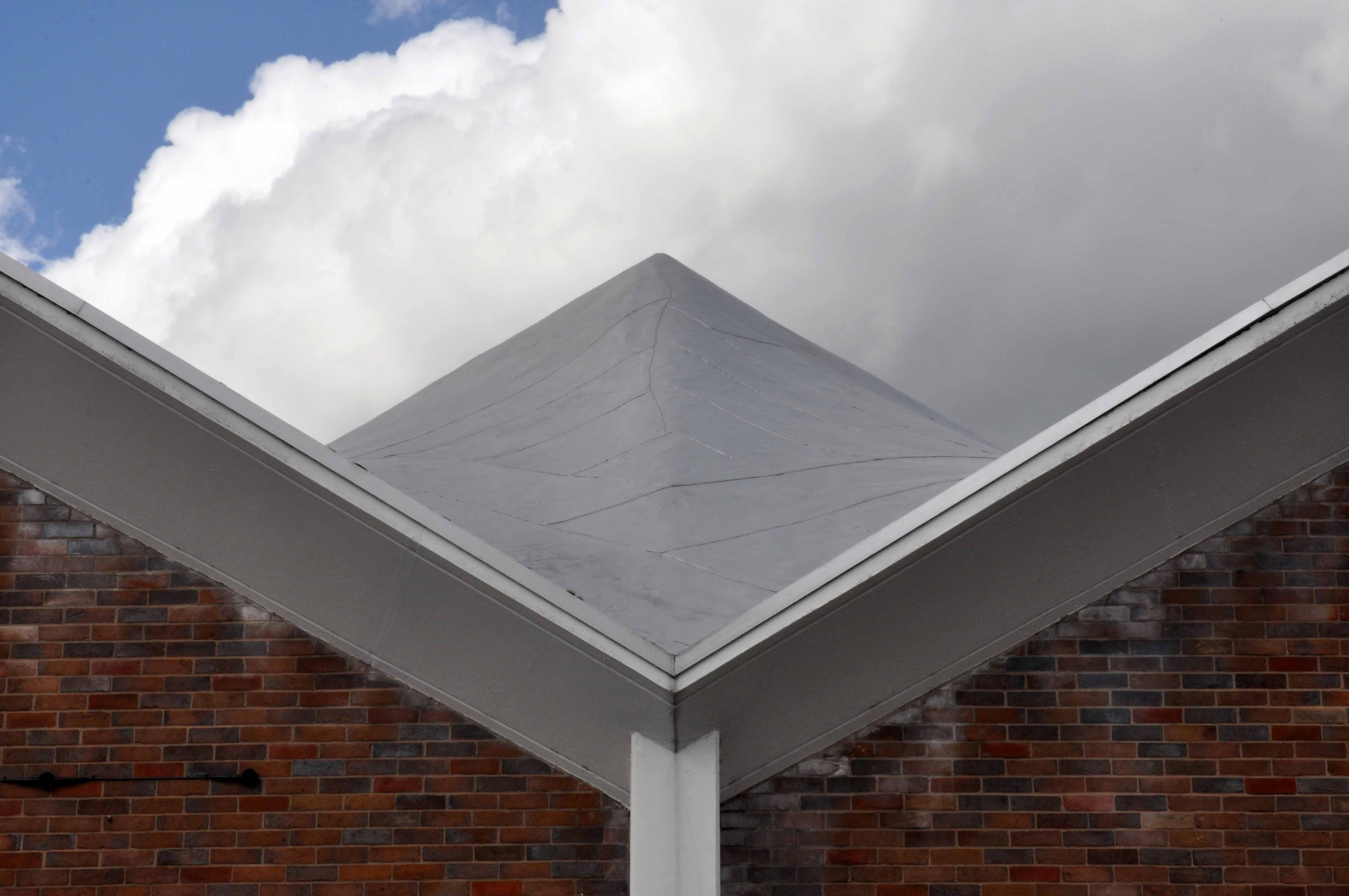
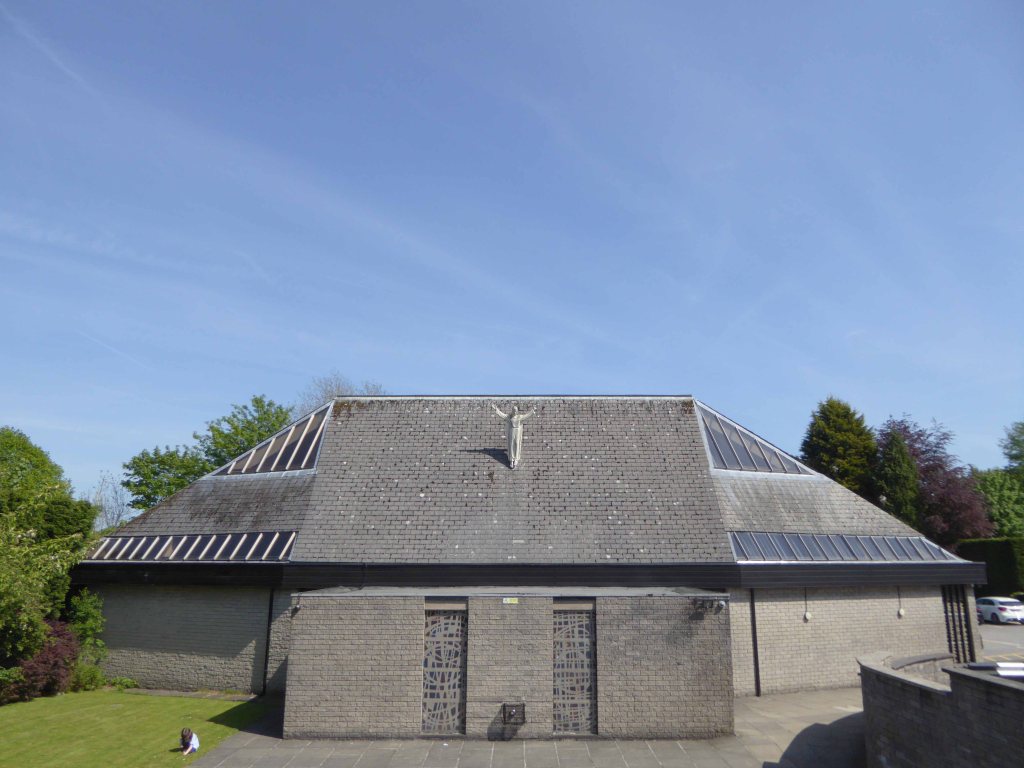
The church is a very striking and characterful building with a hyperbolic paraboloid roof rising in peaks on four sides, with clerestory lighting in the angles, that on the west side jutting out to form a canopy over the entrance. It was described by Nikolaus Pevsner as ‘wildly expressionist’.
Well it’s almost a mighty long way to cycle from Stockport to here, but well worth it.
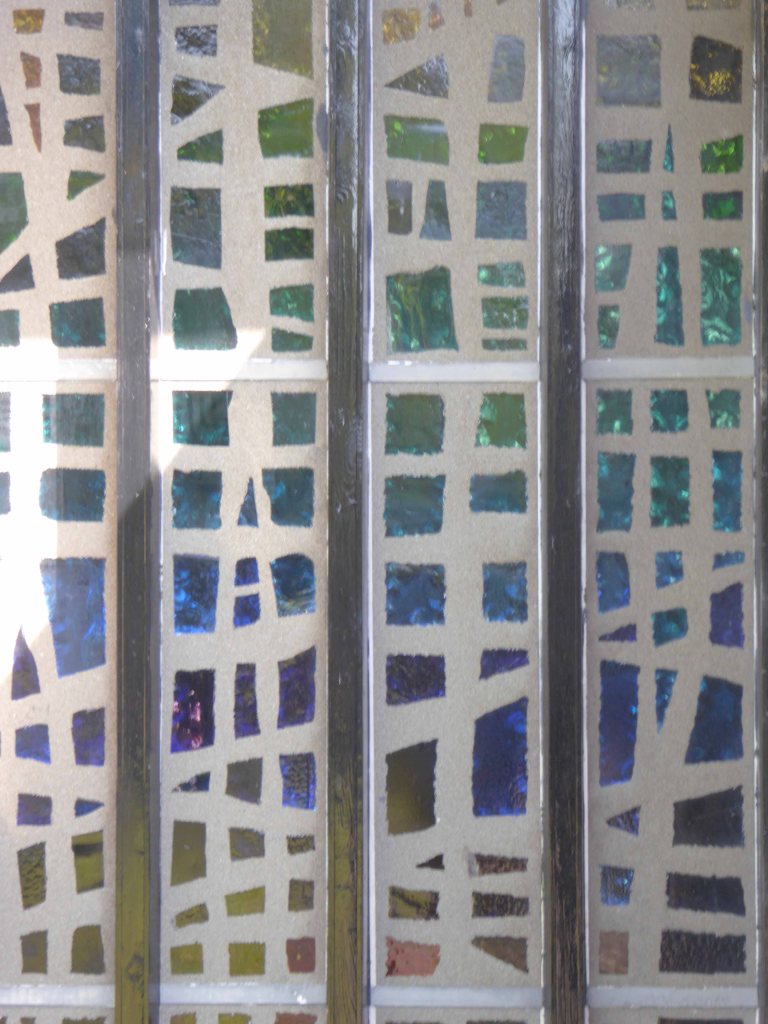
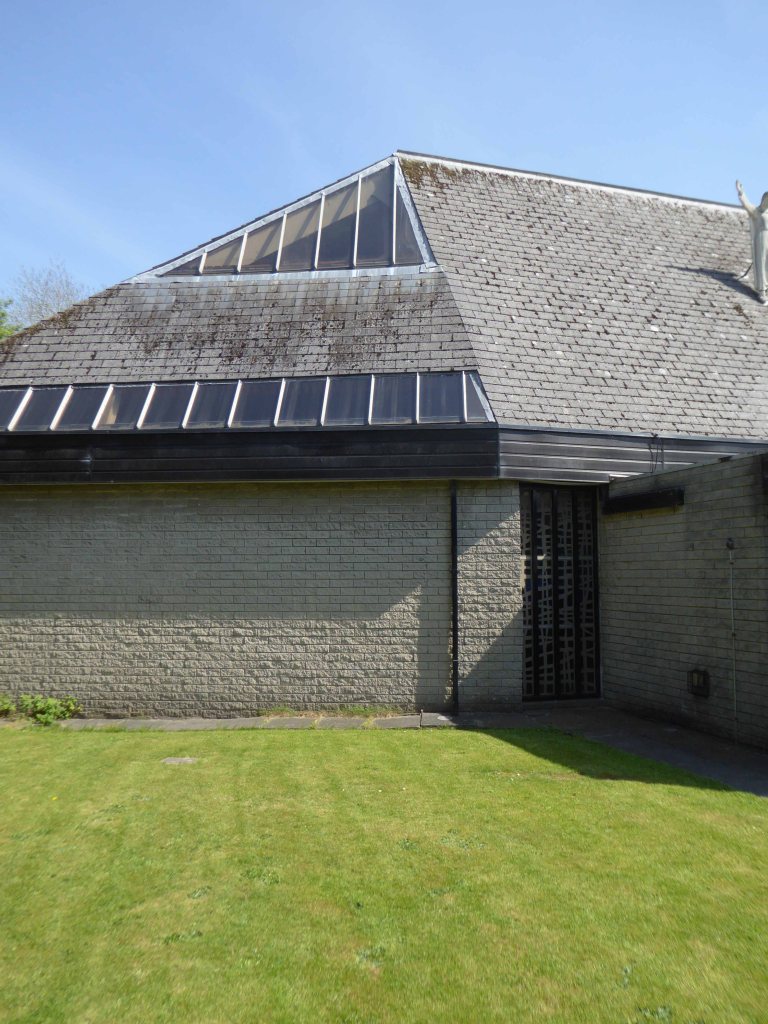
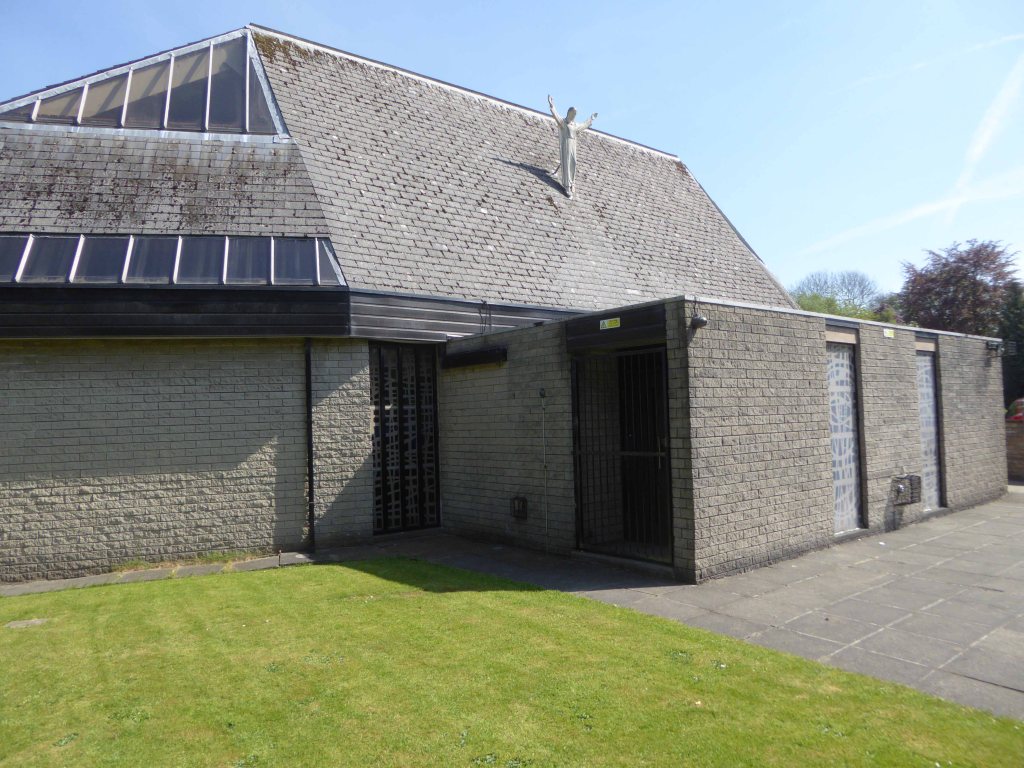
A clear functional design of the 1970s, designed to place all the internal focus on the top-lit altar, which beneath its modern cladding incorporates a pre-Reformation altar stone. The external appearance of the church is slightly forbidding but the interior is enhanced by vibrant slab glass.
More than somewhat bunker like in its recessed situation, well below street level, yet interesting and engaging nonetheless – I’m rather fond of grey.
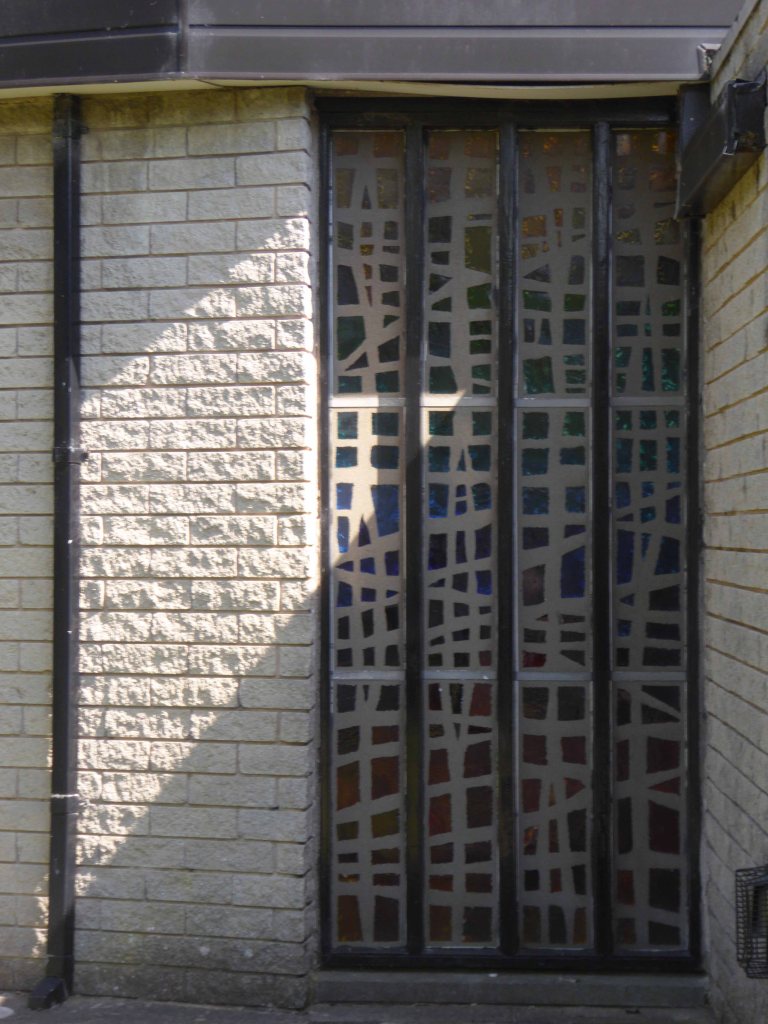
Working around the comings and goings of the adjacent school, I half circumnavigated the site, capturing something of the detail and exterior views of the stained glass. The interior will have to wait until another day.
Planned and newly constructed housing developments in Norden and Bamford made it apparent that a new church was needed nearer the geographical centre of the parish. In June 1975 the present church of St Vincent de Paul was opened, nearly a mile away from the old church. The architect was Bernard Ashton of the Cassidy & Ashton Partnership, Preston.
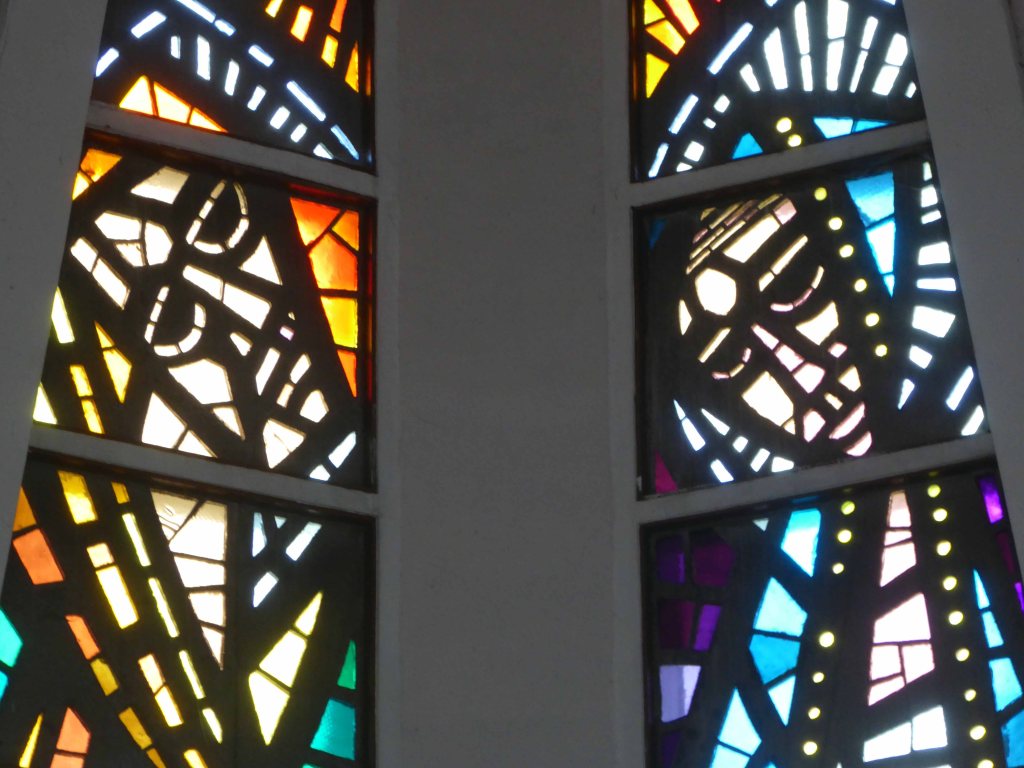
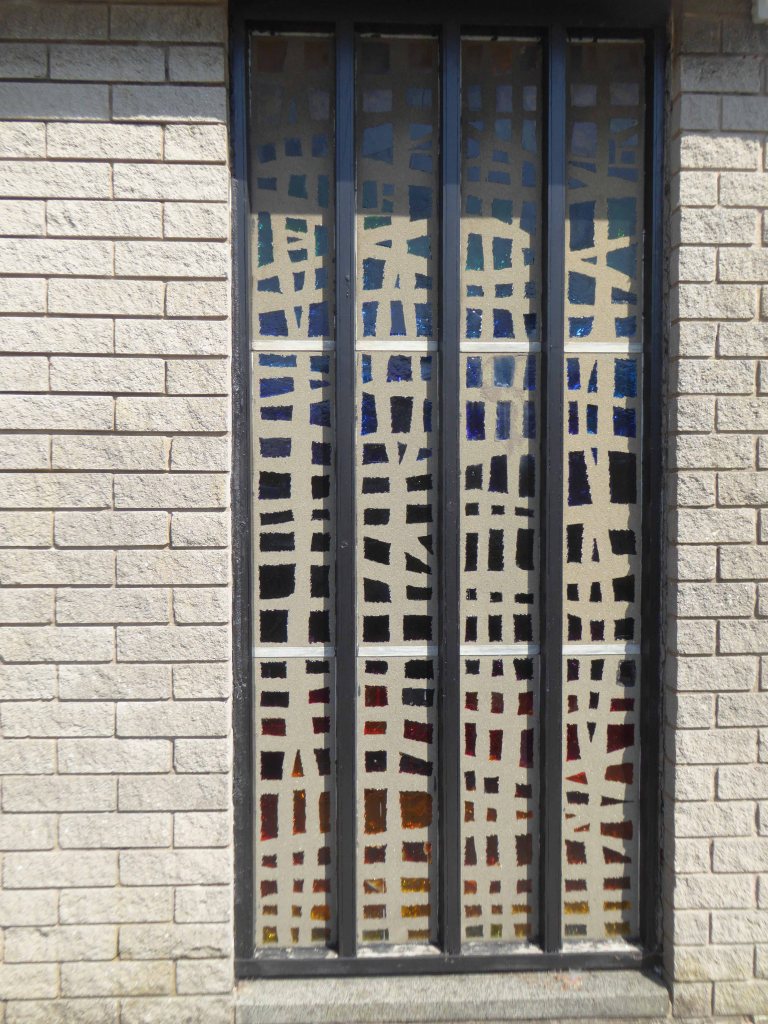
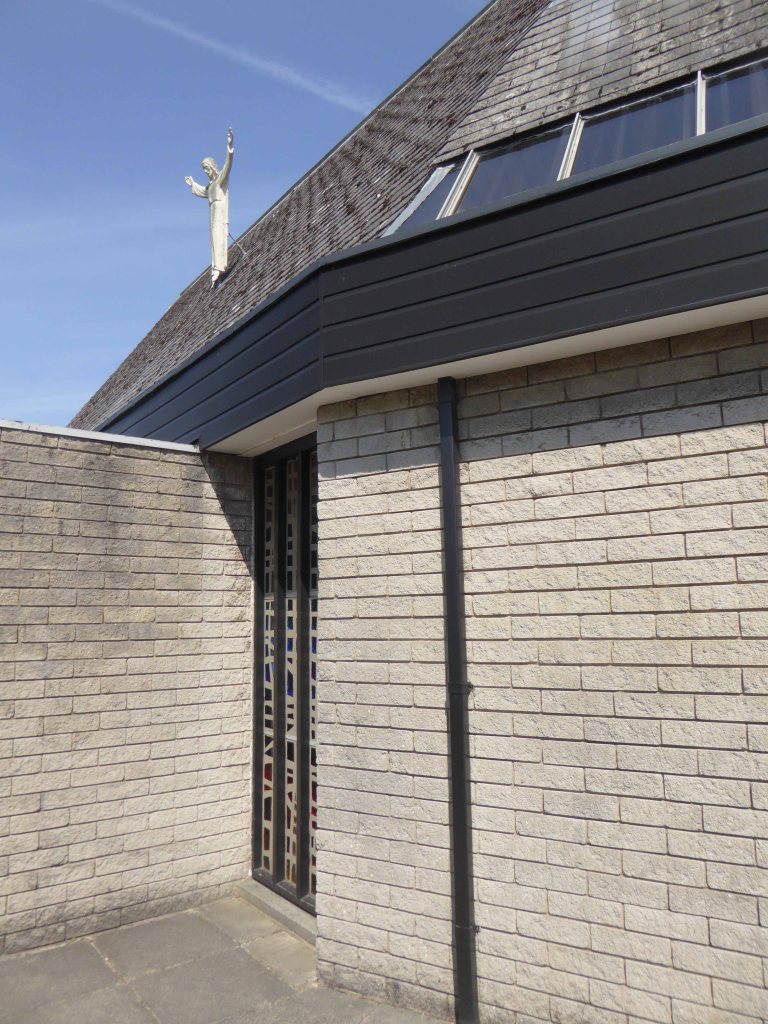
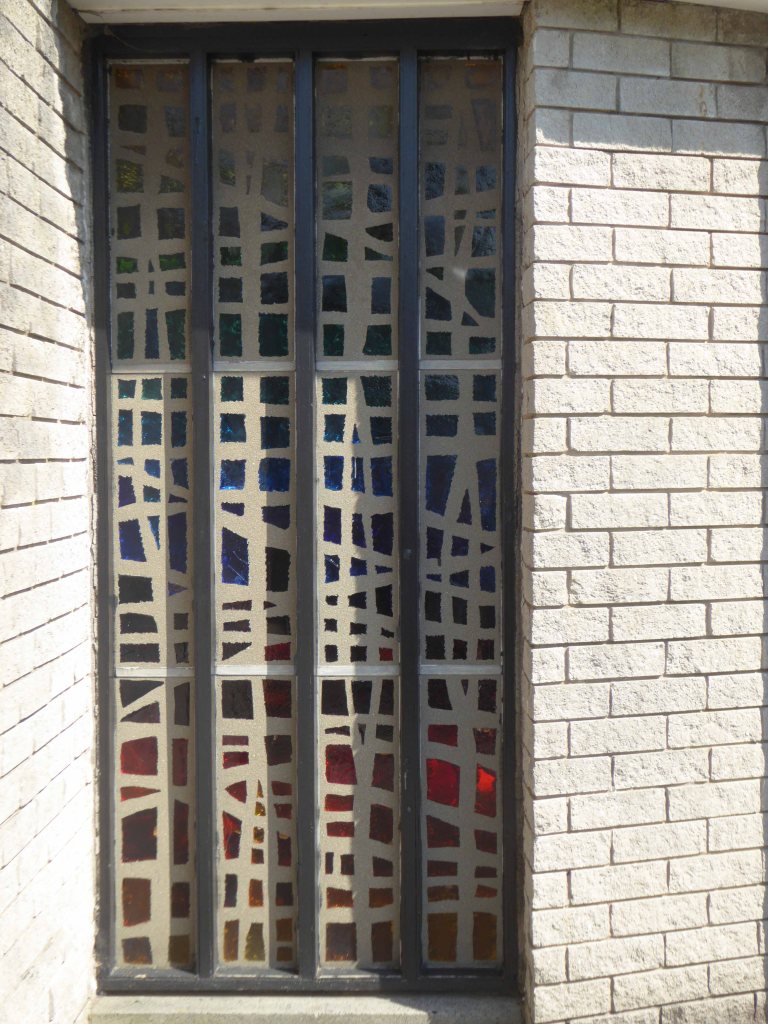
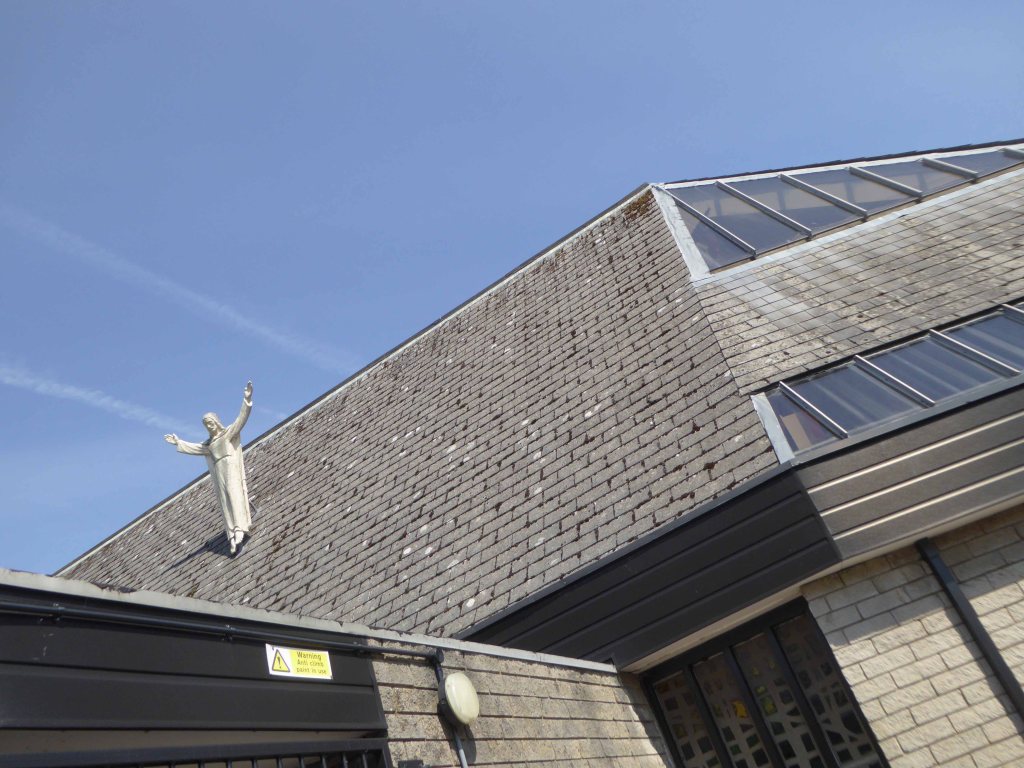
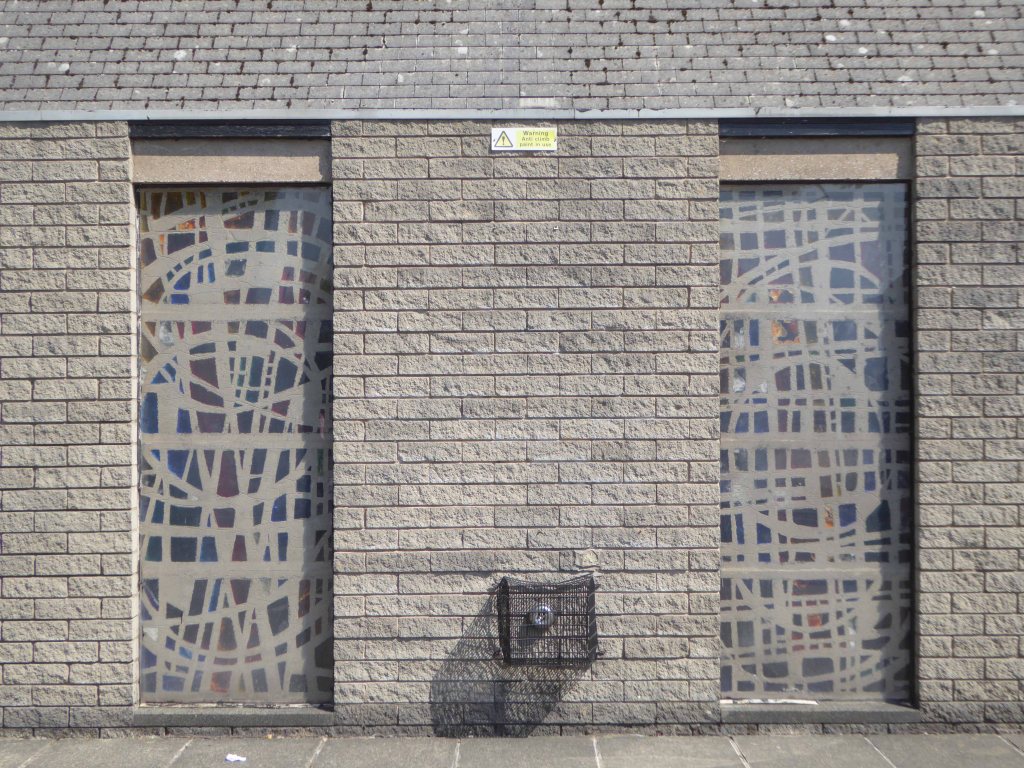
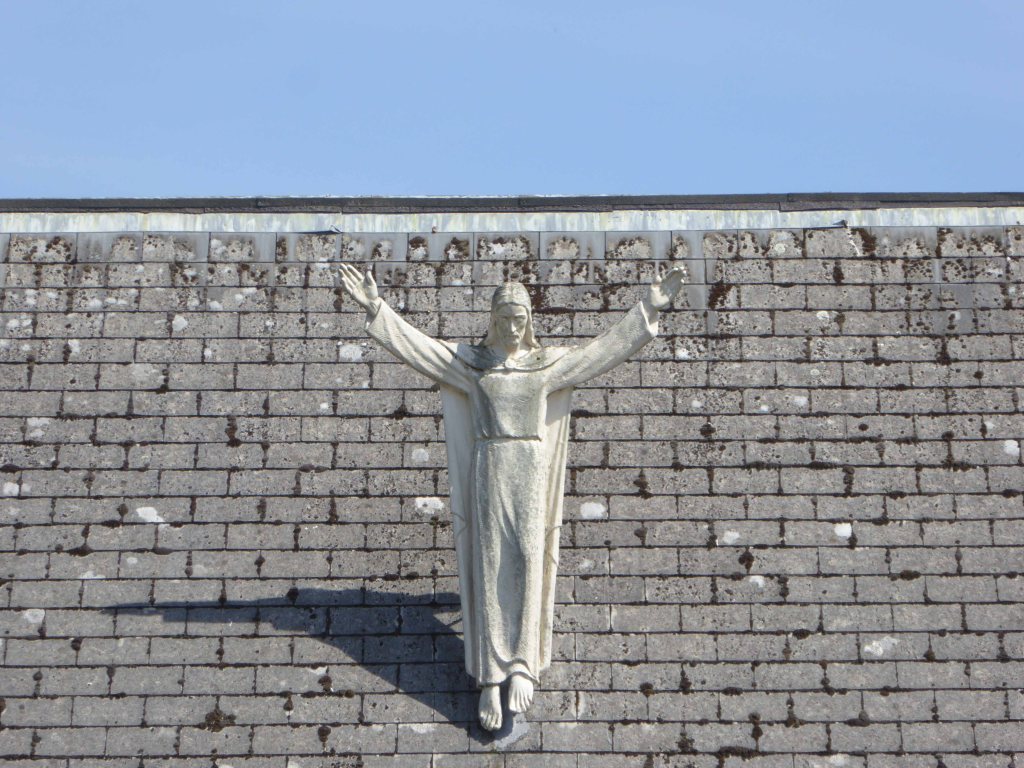
Internally the church is simply fitted with plain white plastered or boarded walls. The low level of daylighting enhances the effect of the four corner windows, which are filled with rainbow glass, and of the top-lit altar. The dalle de verre glass was designed by Eddie Blackwell and made in Dom. Charles Norris’s workshop at Buckfast Abbey. The figure of the risen Christ on the roof over the entrance porch were also designed by Blackwell.
I ride a bicycle, which seriously restricts my access to the world of the M – one and six or otherwise. Having a more than somewhat ambivalent outlook on motor cars and their ways I have nevertheless written a short history.
So to satisfy my idle curiosity, and fill the damp wasteland of a Bank Holiday Sunday afternoon, let’s go on a little trip back in time by means of archival images.
What of your history?
Tendering documents were sent out in 1962 describing it as a 17.7 acre site, requiring at least a £250,000 investment, including an eastern corner reserved for a picnic area, and an emphasis that the views to the west must be considered in the design, and facilities must be provided on both sides. Replies were received – from Telefusion Ltd, J Lyons, Banquets Catering Ltd, Granada and Rank
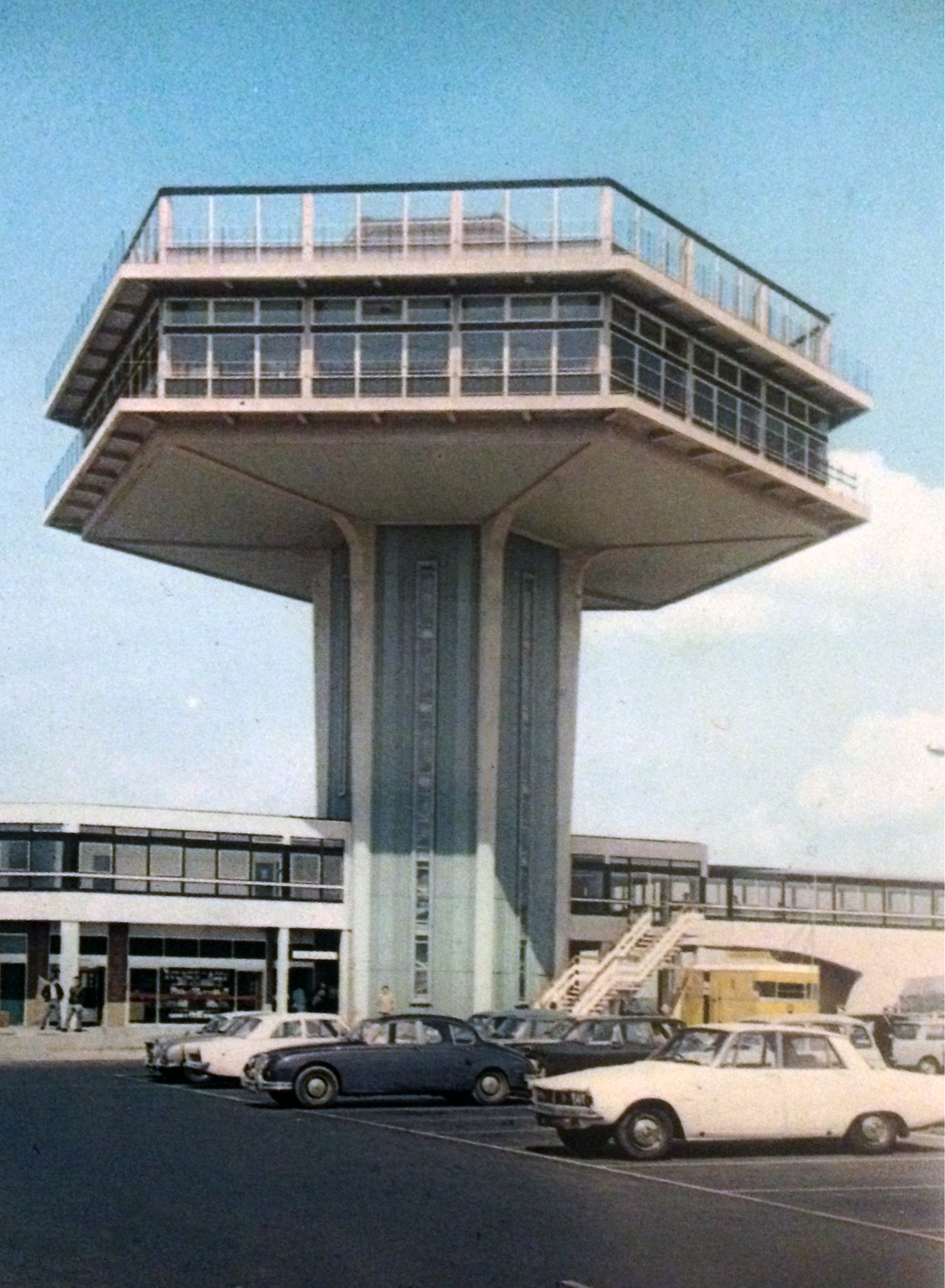
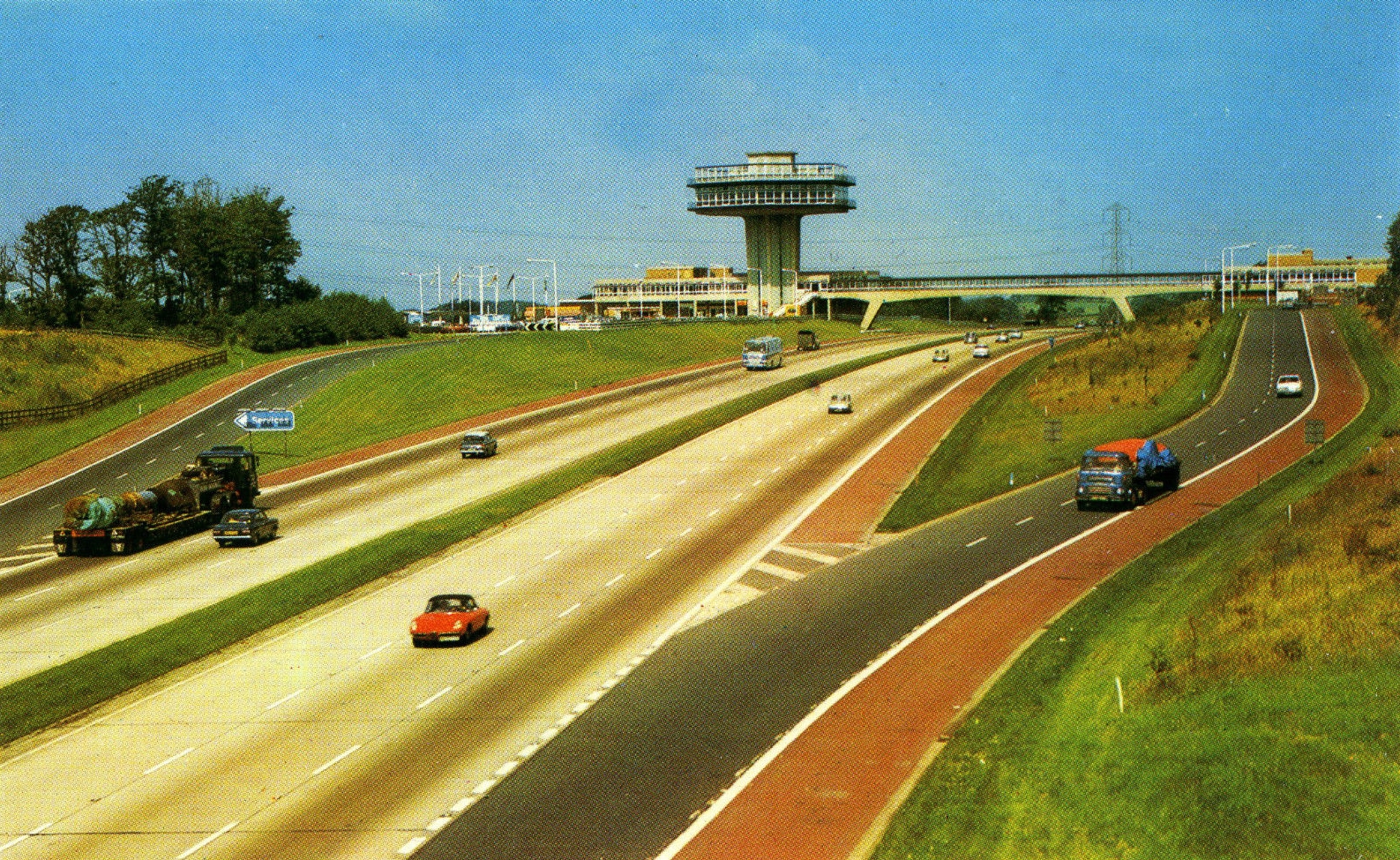
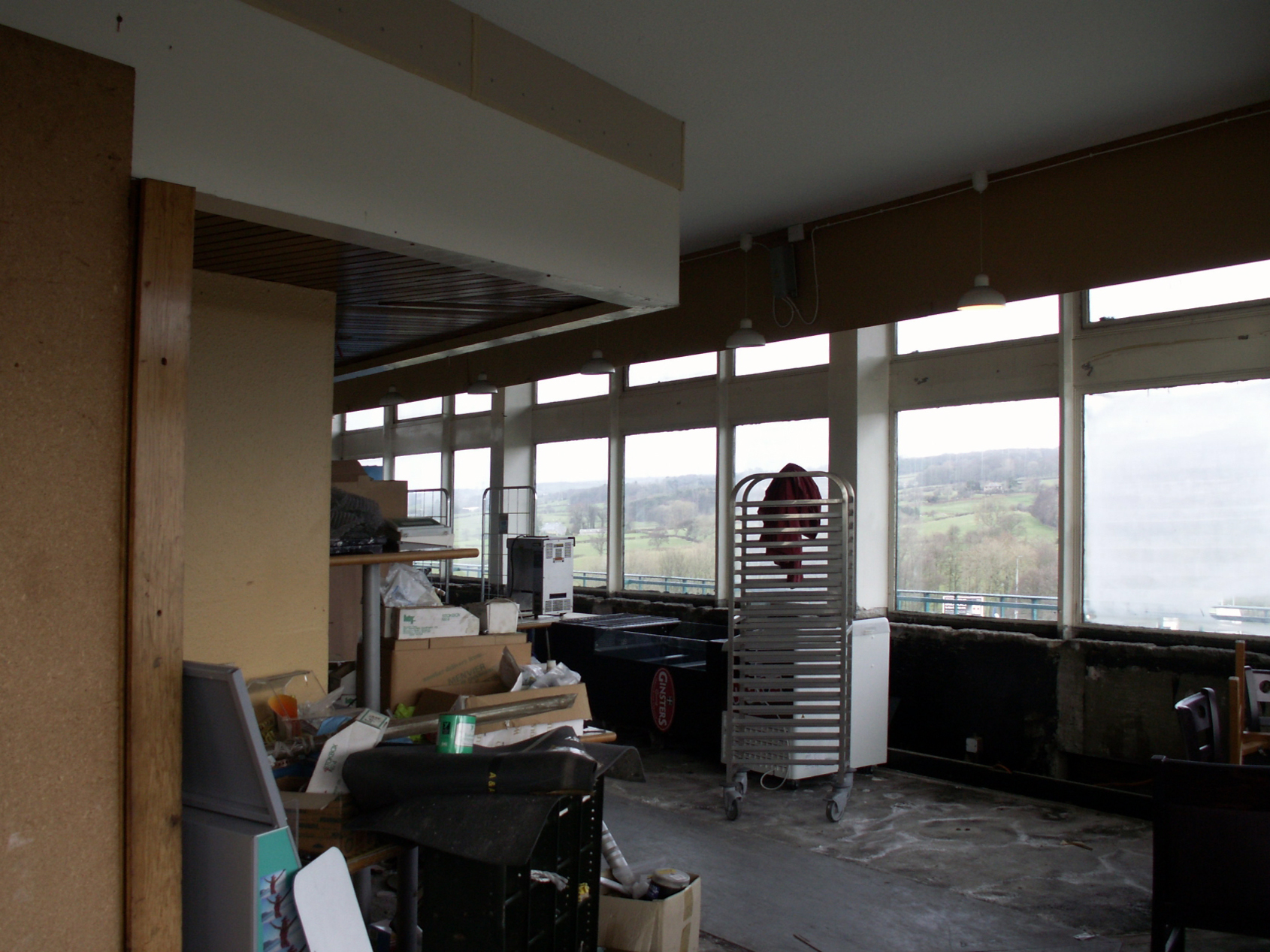
Top Rank’s plan came consistently highly rated by all the experts it was passed between. It showed a restaurant and a self-service café on the west side, the restaurant being at the top of a 96ft (29m) tower. At the top of the tower was a sun terrace – a roof with glass walls, which they had described but hadn’t included any suggestions for how it could be used, adding that maybe it could form an observation platform, serve teas, or be reserved for an additional storey to the restaurant.
Including a transport café on each site, seating was provided for 700 people, with 101 toilets and 403 parking spaces. A kiosk and toilets were provided in the picnic area.
“The winning design looks first class. Congratulations.”
Architects T P Bennett & Sons had been commissioned to design the services, along with the similar Hilton Park. At £885,000, it was the most expensive service station Rank built, and was considerably more than what had been asked of them.They won the contract, but on a condition imposed by the Landscape Advisory Committee that the height of the tower was reduced to something less striking.
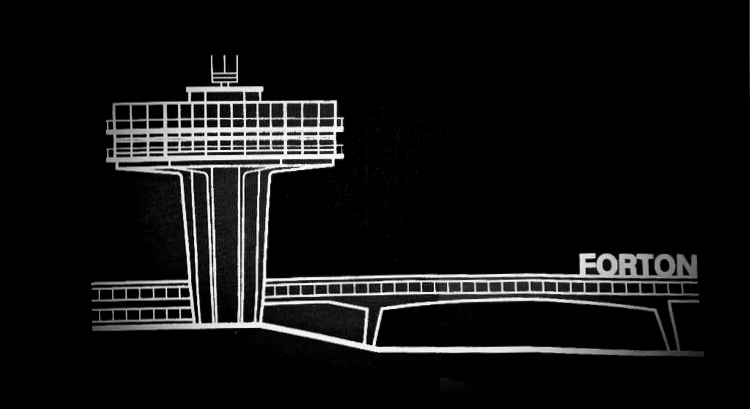
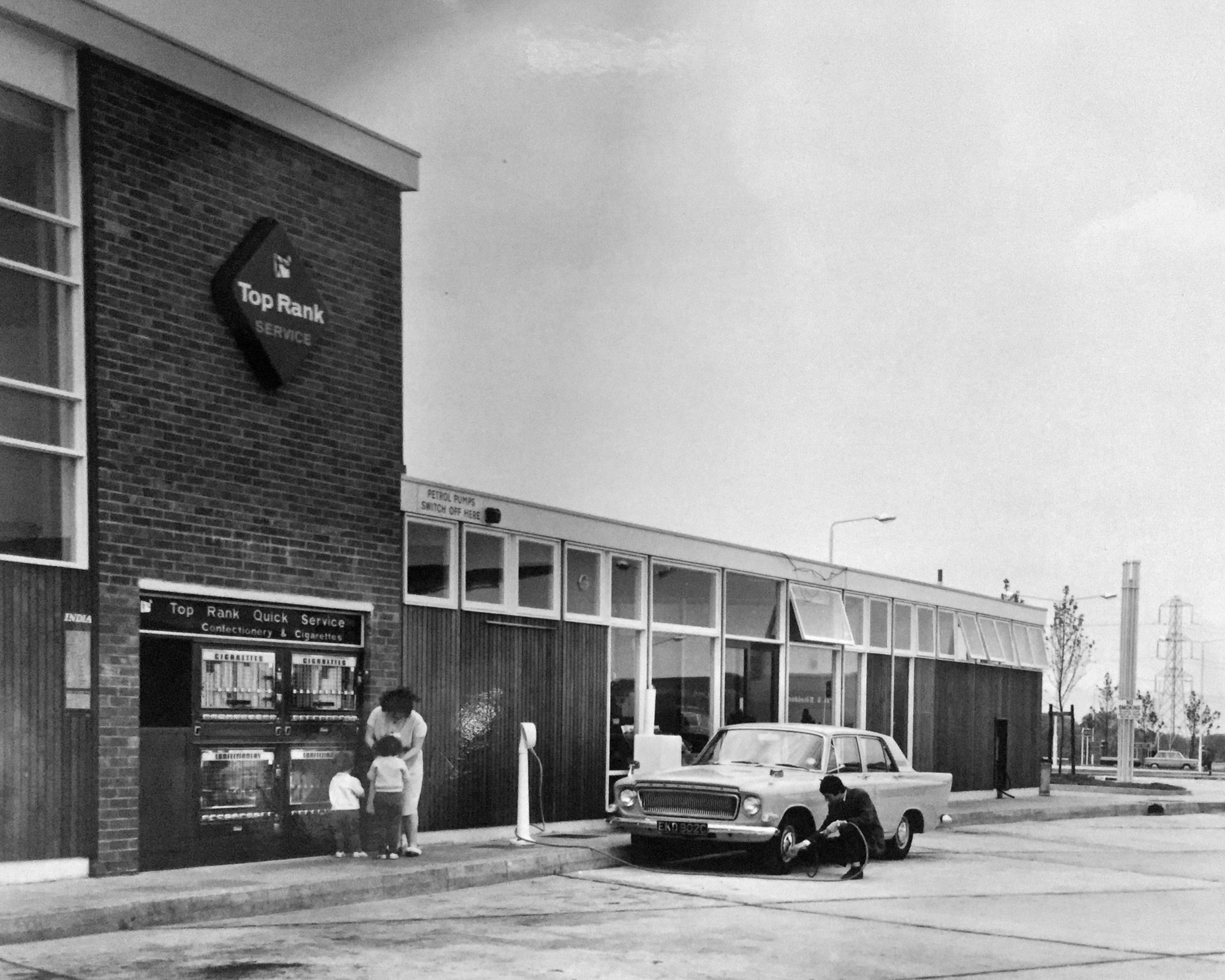
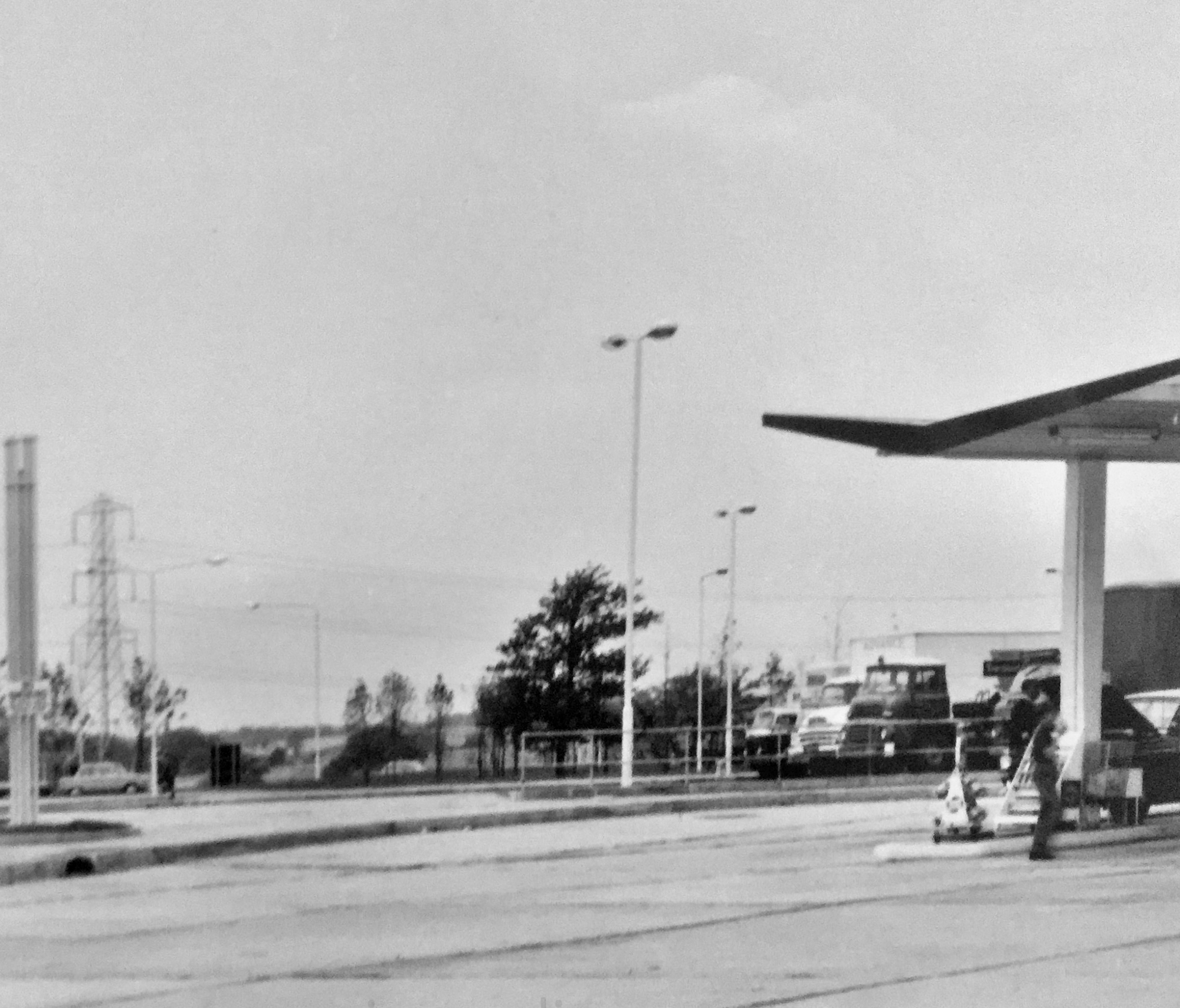
Lancaster was opened in 1965 by Rank under the name ‘Forton’. The petrol station opened early in January, with some additional southbound facilities opening that Spring.
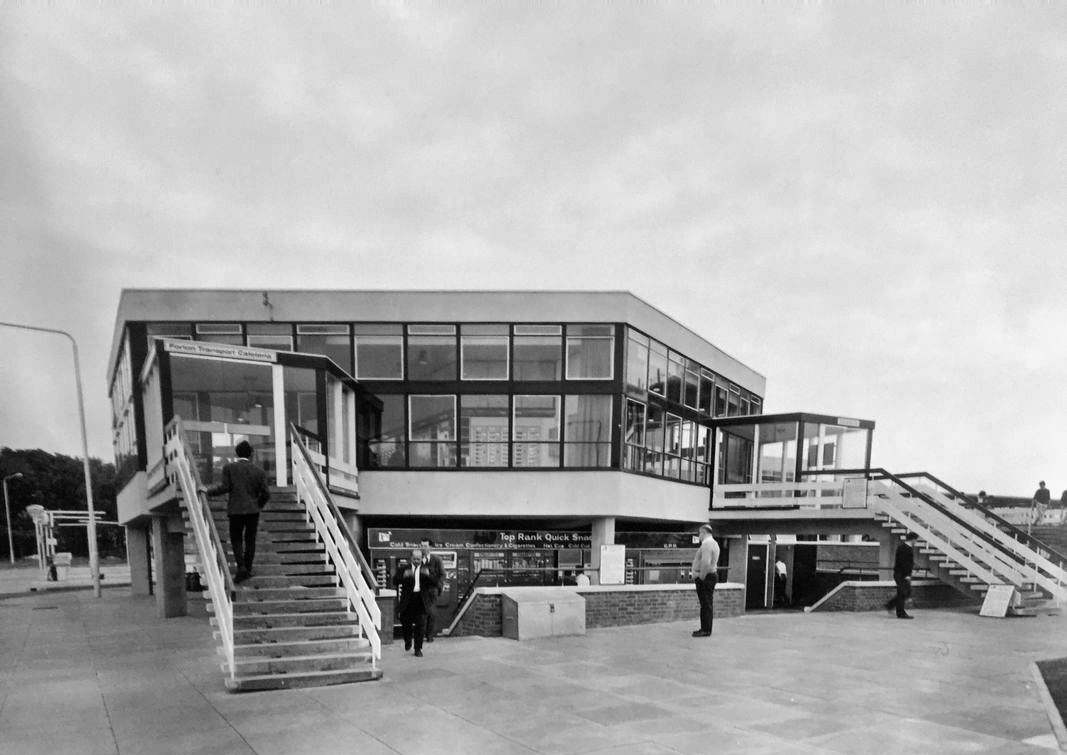
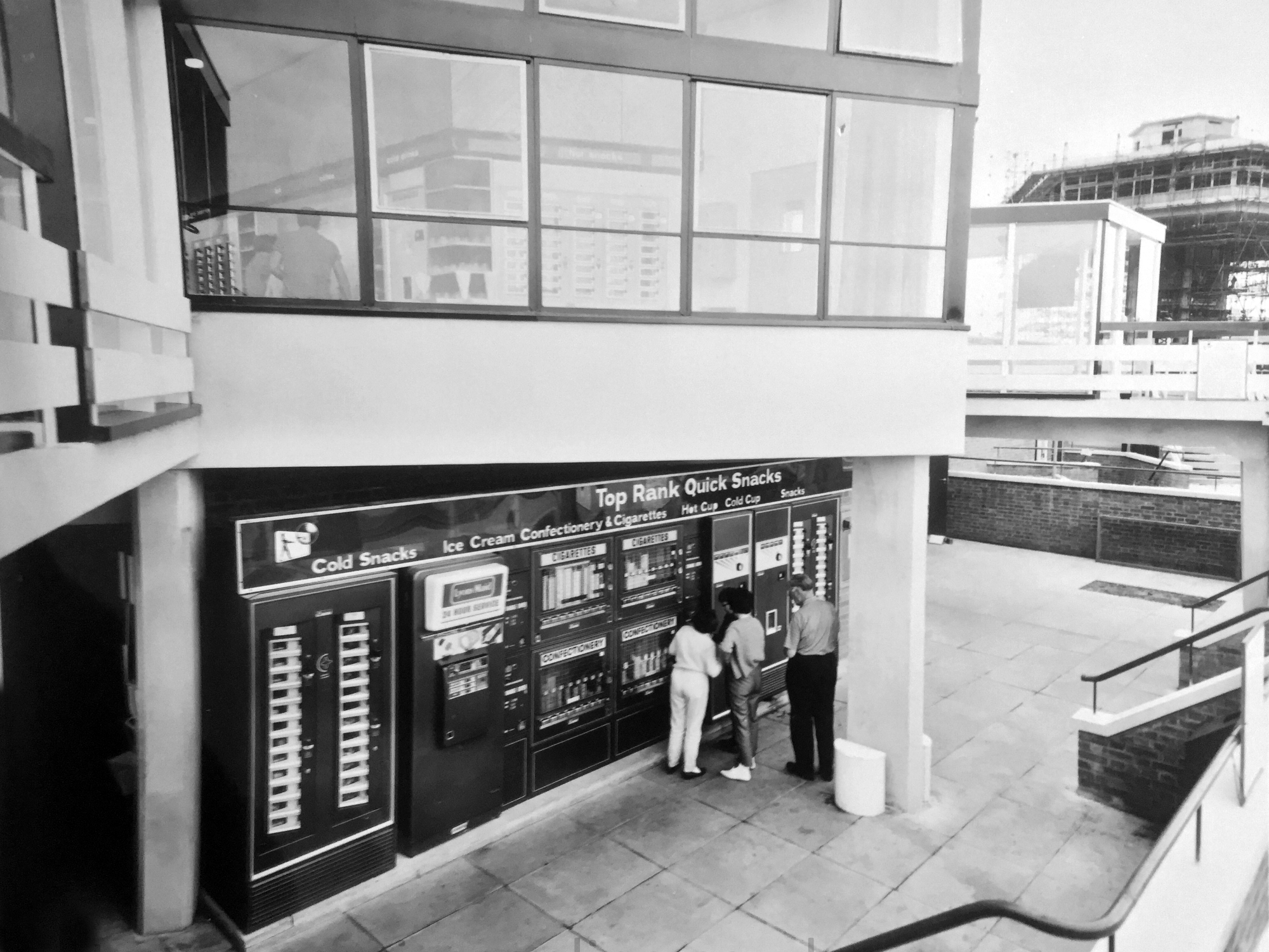
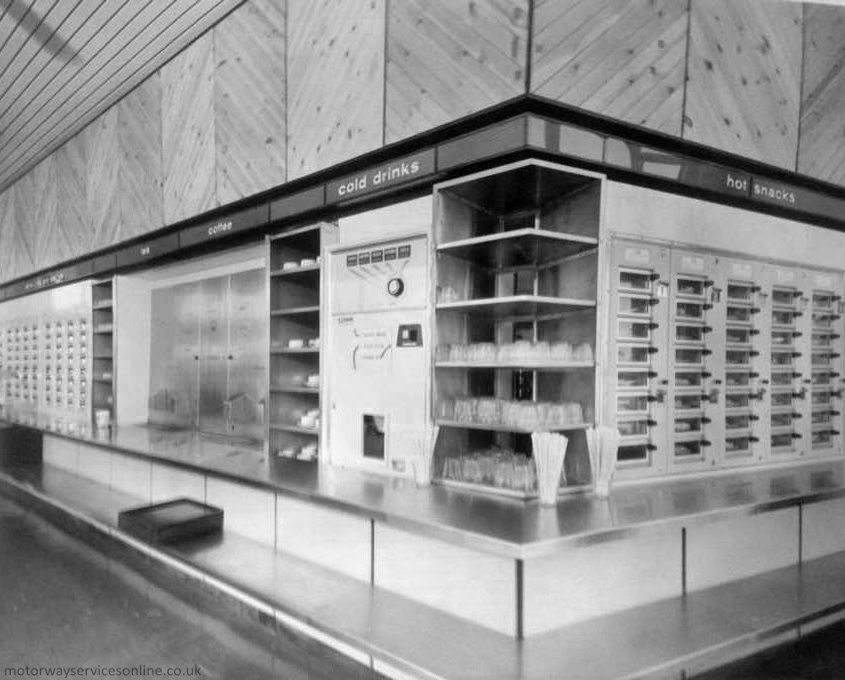
The southbound amenity building had a lowered section with a Quick Snacks machine and the toilets. Above it was the transport café which had only an Autosnacks machine, where staff loaded hot meals into the back and customers paid to release them. These were the motorway network’s first catering vending machines, and the Ministry of Transport were won round by the idea, but Rank weren’t – they removed them due to low demand.
In 1977, Egon Ronay rated the services as appalling. The steak and kidney pie was an insult to one’s taste buds while the apple pie was an absolute disgrace. He said everywhere needed maintenance and a coat of paint, the toilets were smelly and dirty, and the food on display was most unattractive.
A 1978 government review described the services as a soulless fairground.
The Forton Services and the typology generally have had a chequered career, rising and falling in public favour and perception. Purveying food and facilities of varying quality, changing style and vendors with depressing regularity – knowing the value of nothing yet, the Costas of everything.
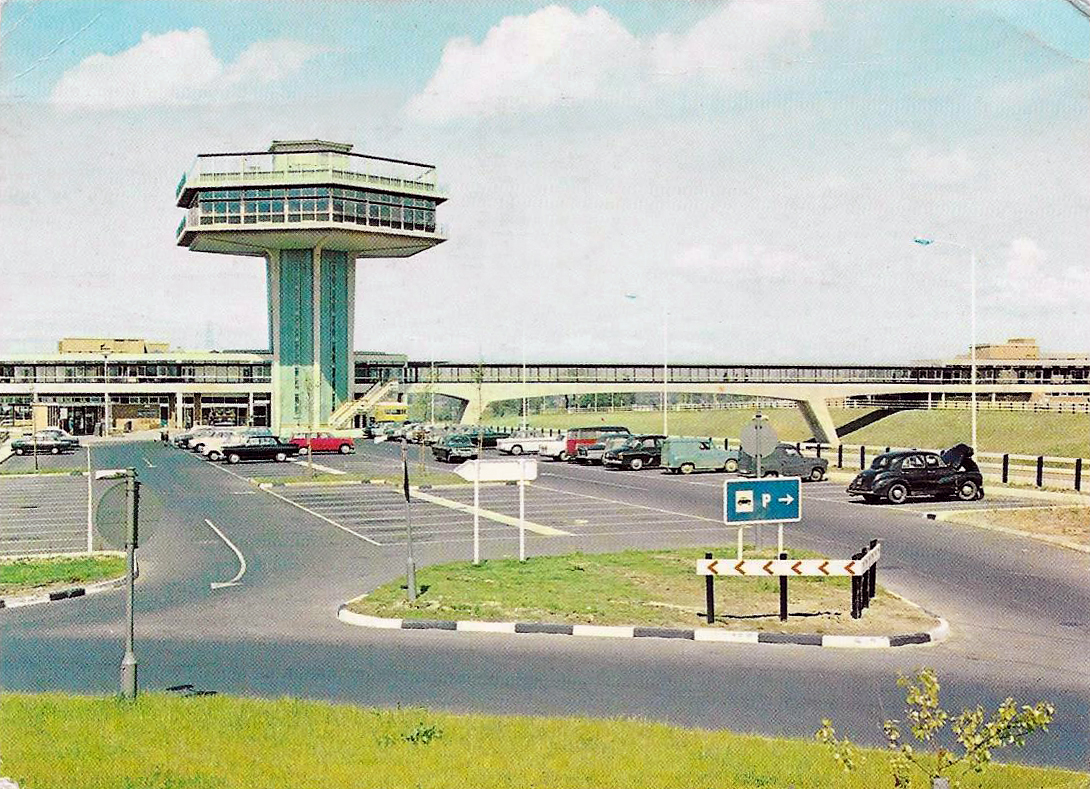
Ironically the prematurely diminished tower has taken on iconic status in the Modernist canon – listed in 2012 yet closed to the public, admired from afar – in a car.
The Pennine Tower was designed to make the services clearly visible – the ban on advertising had always been an issue, and the previous technique of having a restaurant on a bridge, like down the road at Charnock Richard, was proving expensive and impractical. Rank commissioned architects T P Bennett & Sons to capitalise on the benefits of exciting design while trialling something different. The tower resembles that used by air traffic control, summarising the dreams of the ’60s.
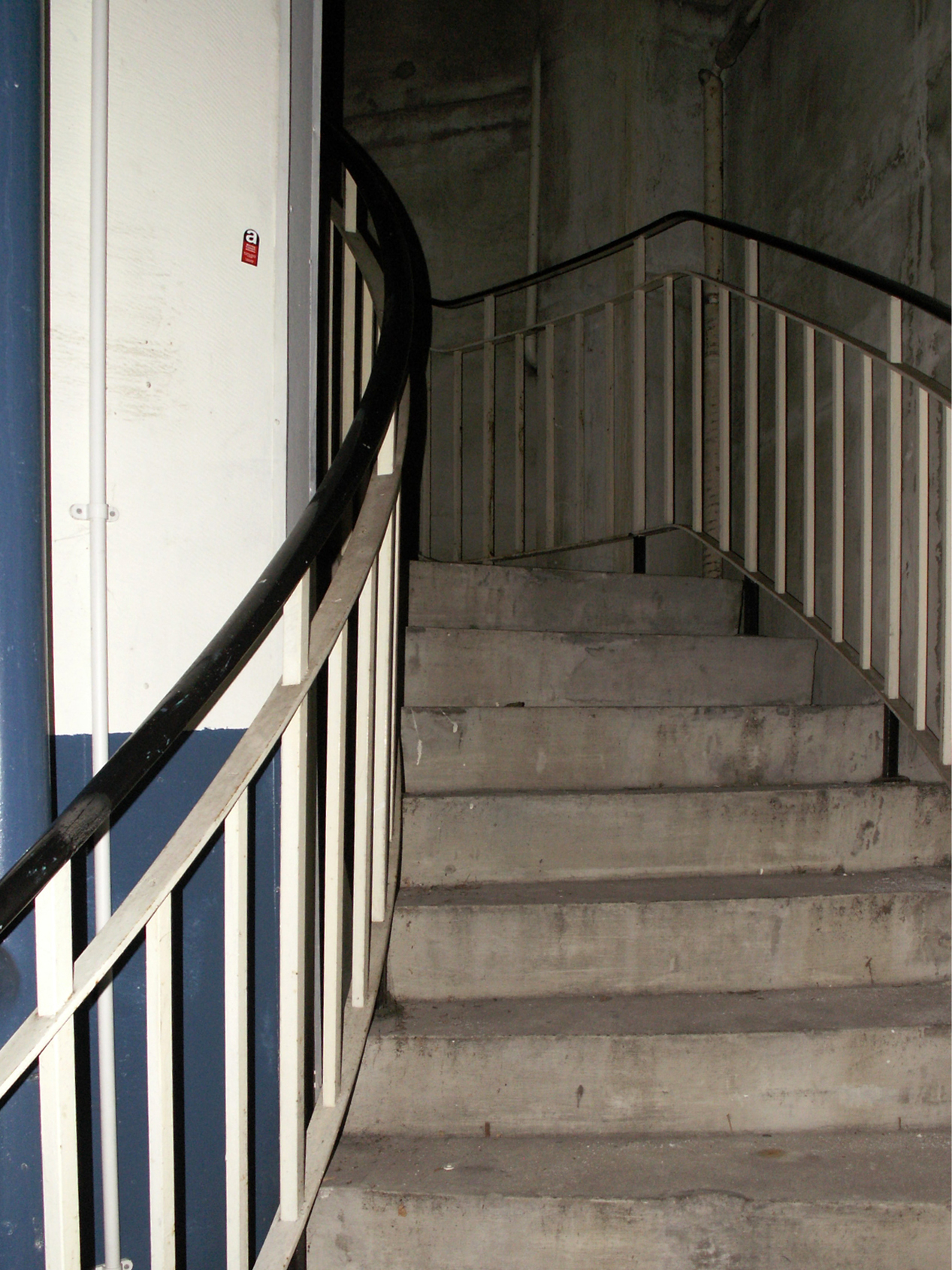
The central shaft consists of two lifts, which were originally a pentagonal design until they were replaced in 2017. They’re still in use to access the first floor, but with the buttons to higher floors disabled. There are then three service lifts, and one spiral staircase – satisfying typical health and safety regulations.
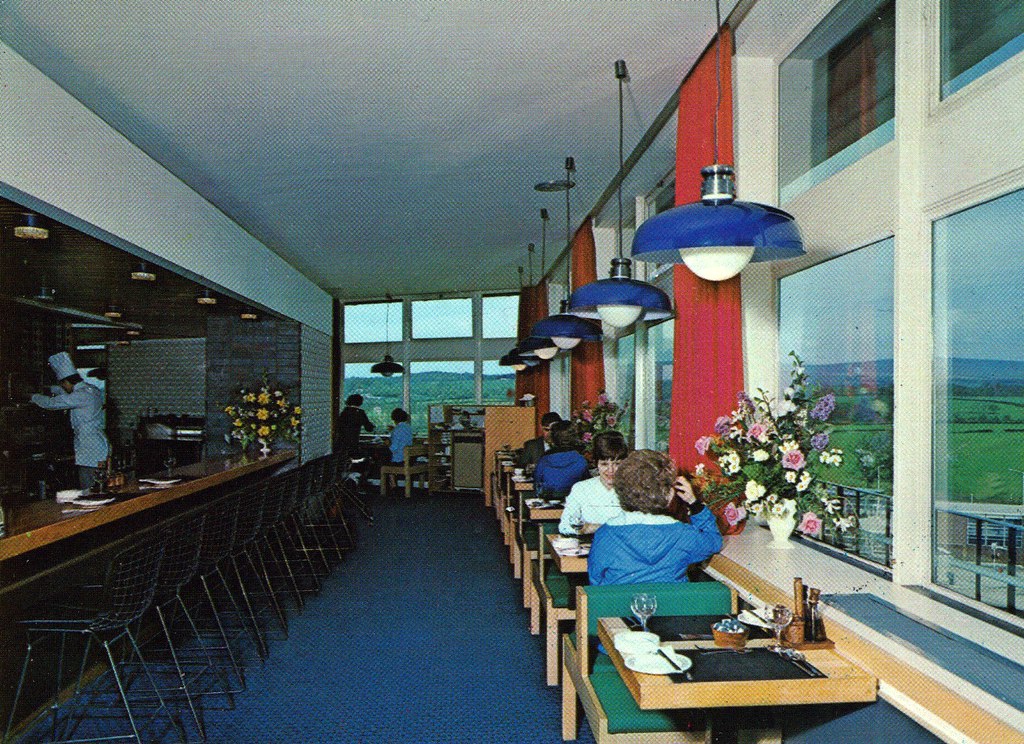
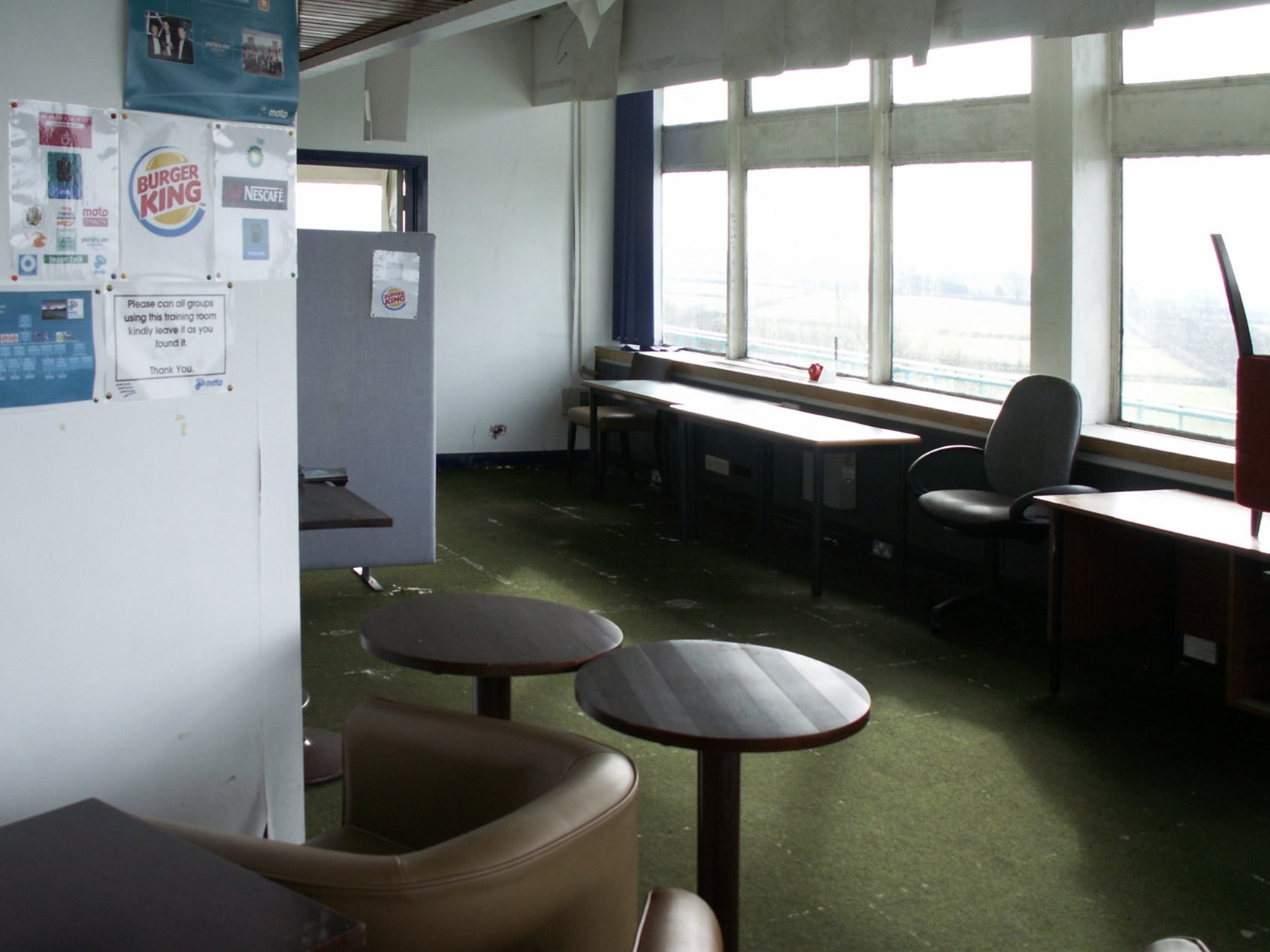
At the top of the tower stood a fine-dining waitress service restaurant, offering views over the road below and across Lancashire. Above the restaurant the lift extended to roof-level, to allow the roof to serve as a sun terrace – although Rank admitted they weren’t sure what this could be used for, suggesting serving tea or eventually building another level.
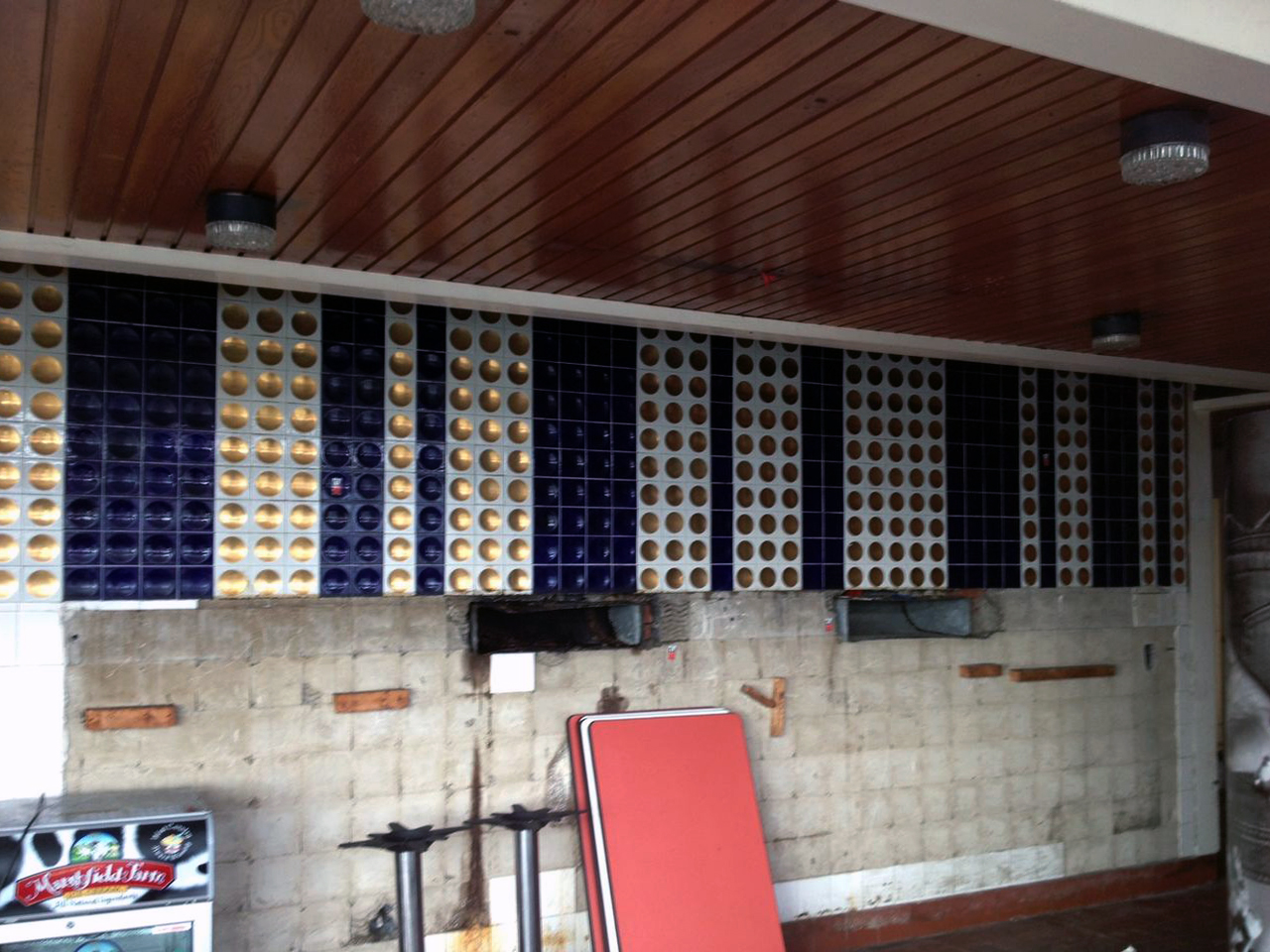
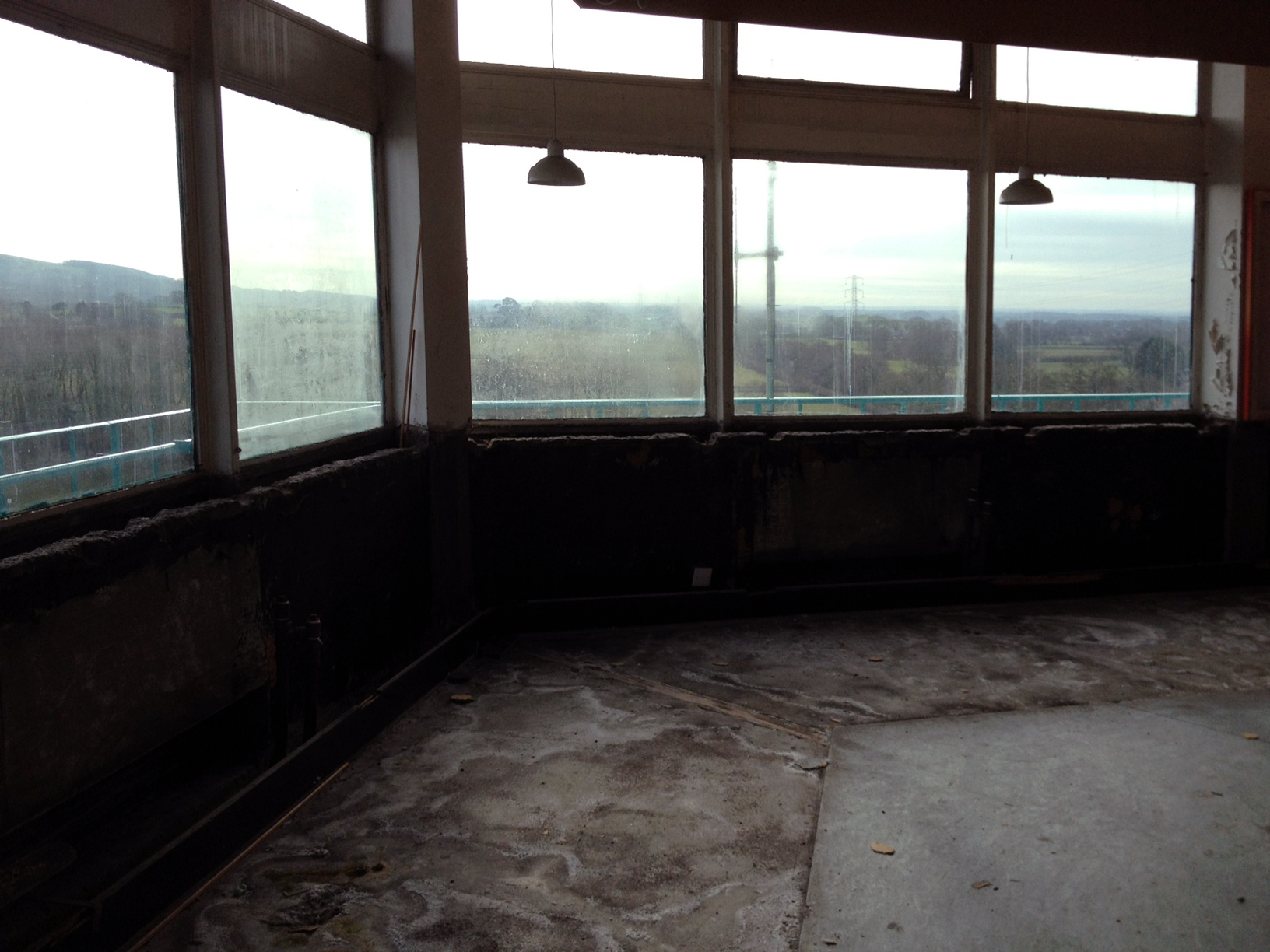
In reality social changes and cost-cutting limited the desirability of a sit-down meal, and this coupled with high maintenance costs made the tower fall out of favour. The ‘fine dining’ restaurant became the trucking lounge that had been on the first floor, before closing to the public in 1989. It then soldiered on for another 15 years, partially re-fitted, as a head office, then staff training and storage, but even this became too impractical, and the tower is now not used at all.
Although the tower is unique to these services, the concept of large high-level floors can be seen in many Rank services of the era, the idea of each one being to have a visible landmark and a good view of the surrounding area, such as at Hilton Park. The lower-level restaurant at Forton sticks out over the first floor, and partially in to the road, to give an optimum view. Toilets and offices were in the ground floor buildings below.
There are lots of myths flying around that the tower was forced to close by safety regulations, and that it is about to fall down. Like any building which hasn’t been used for 30 years it would take a lot of investment to get it open again, and with roadside restaurants across the country closing due to a lack of trade, nobody has come up with an convincing plan to justify investing in the Pennine Tower.
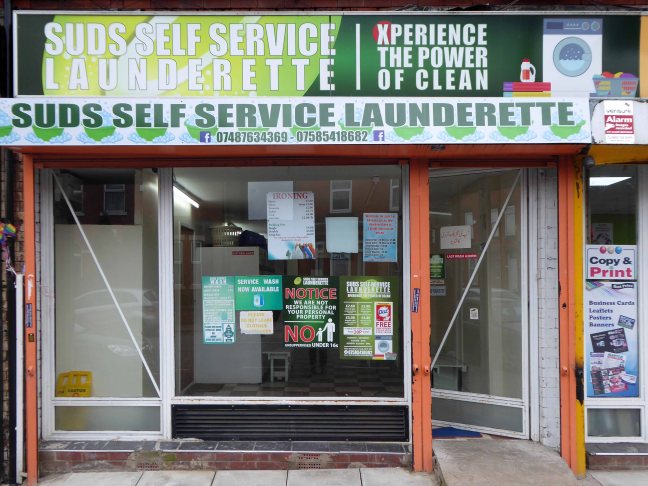
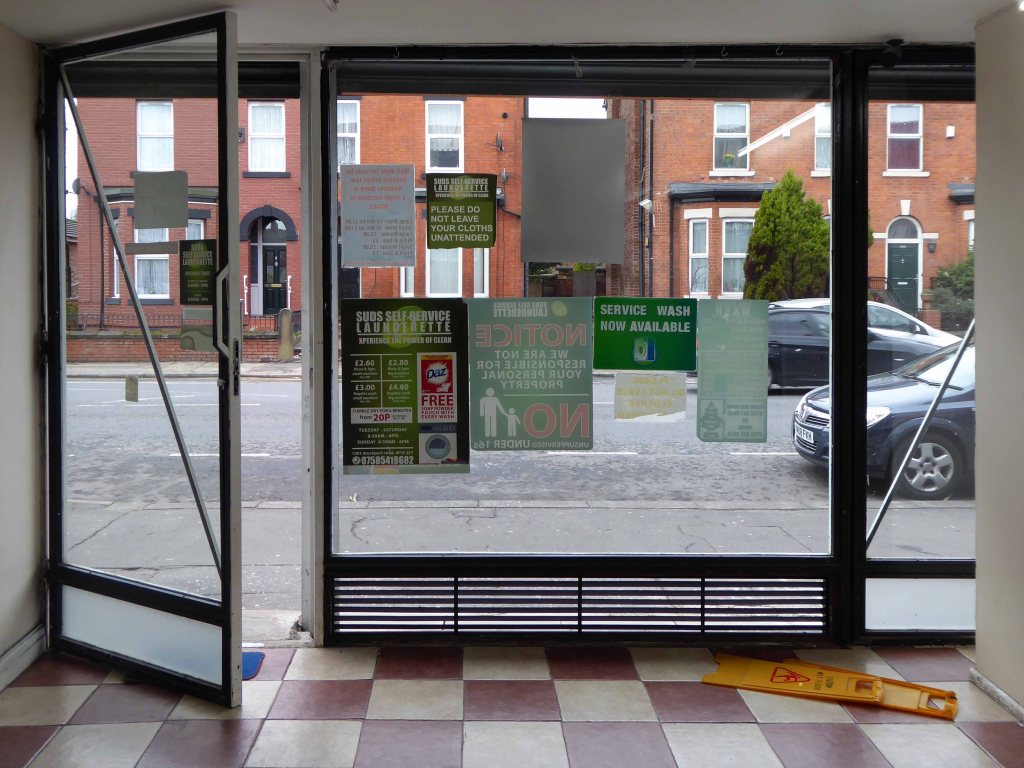
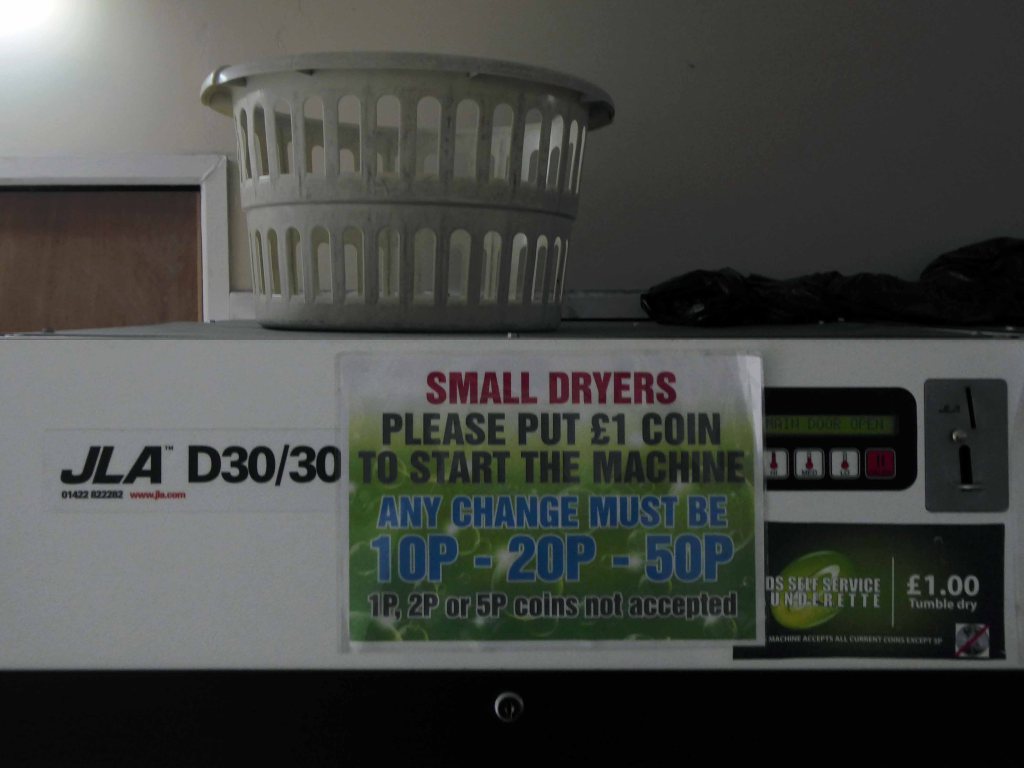
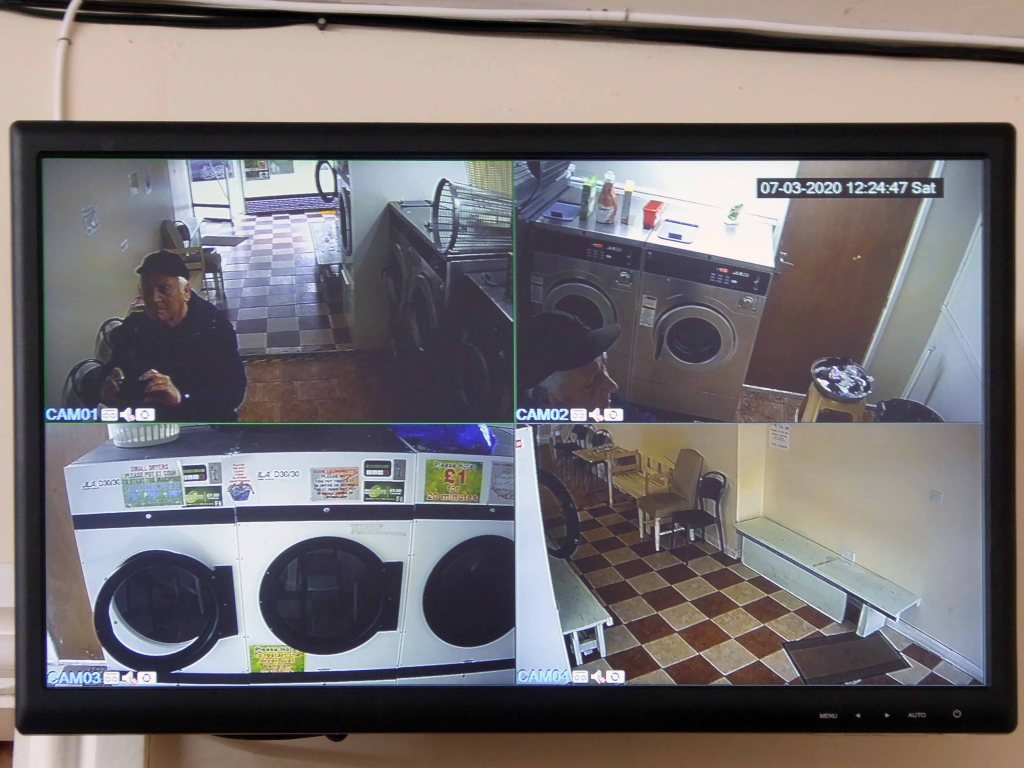
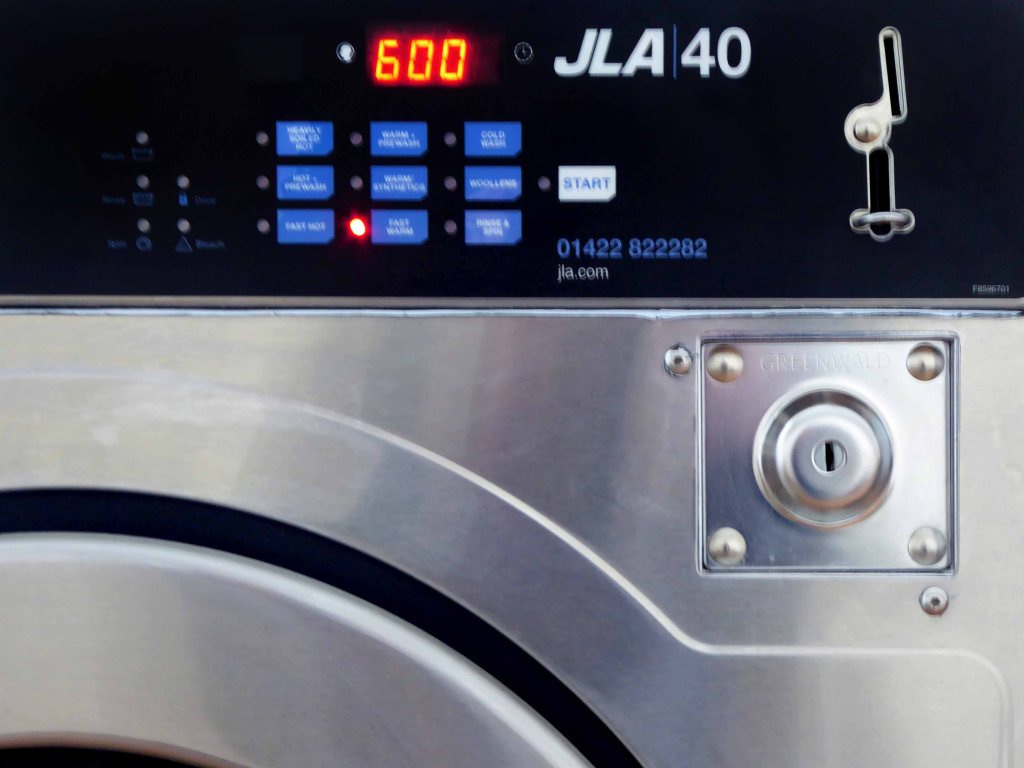
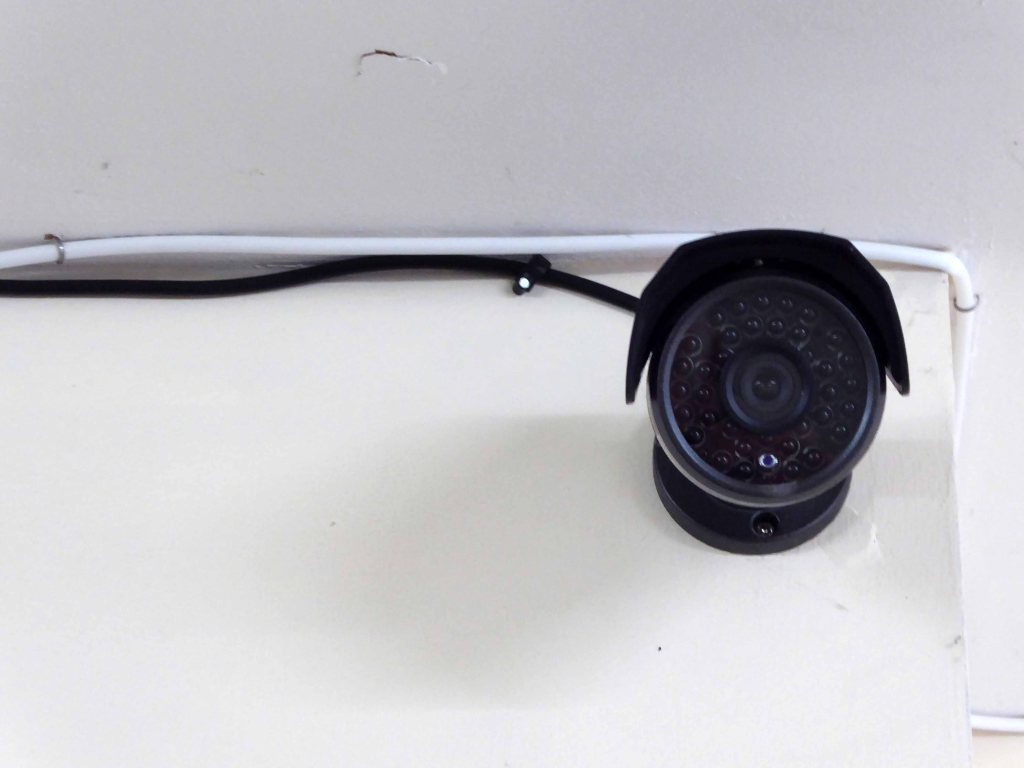
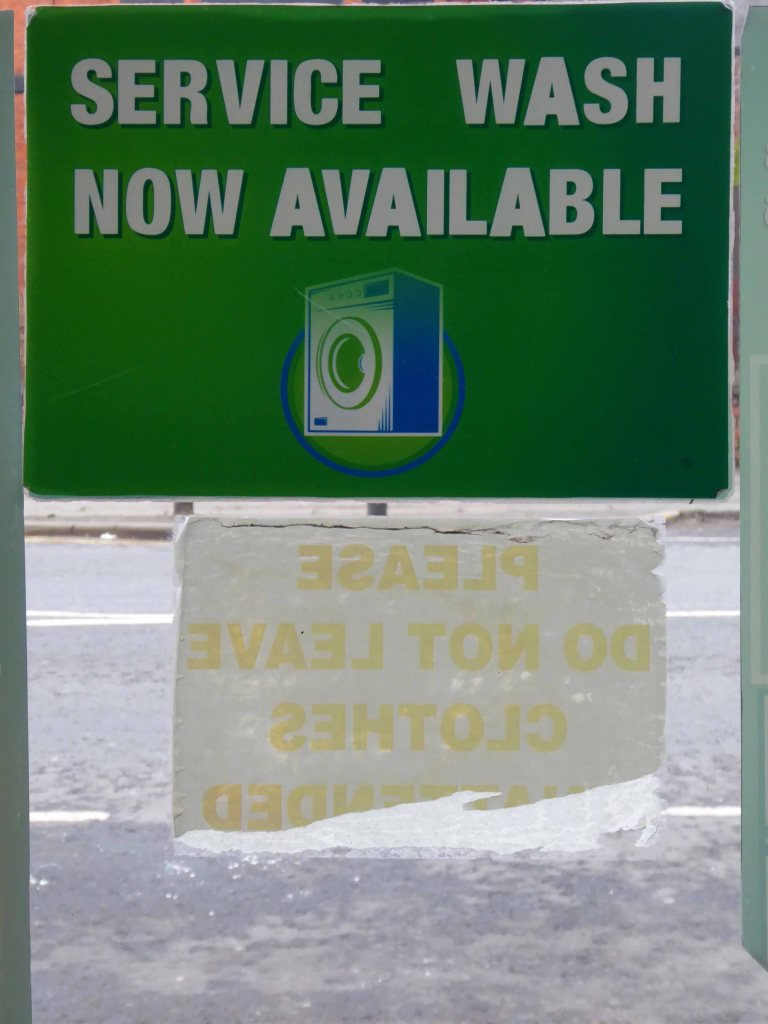
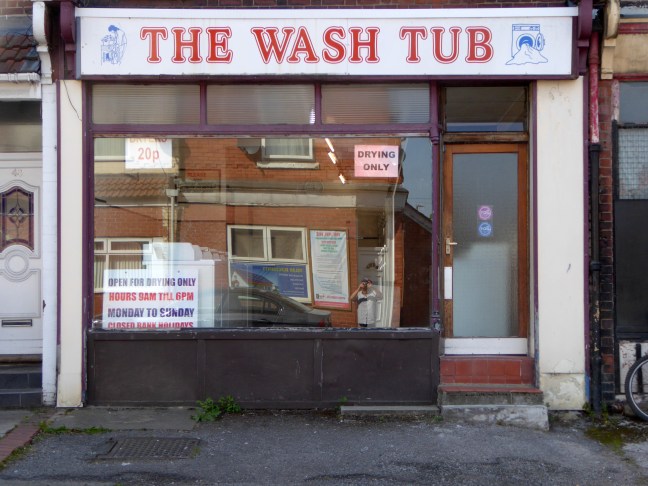
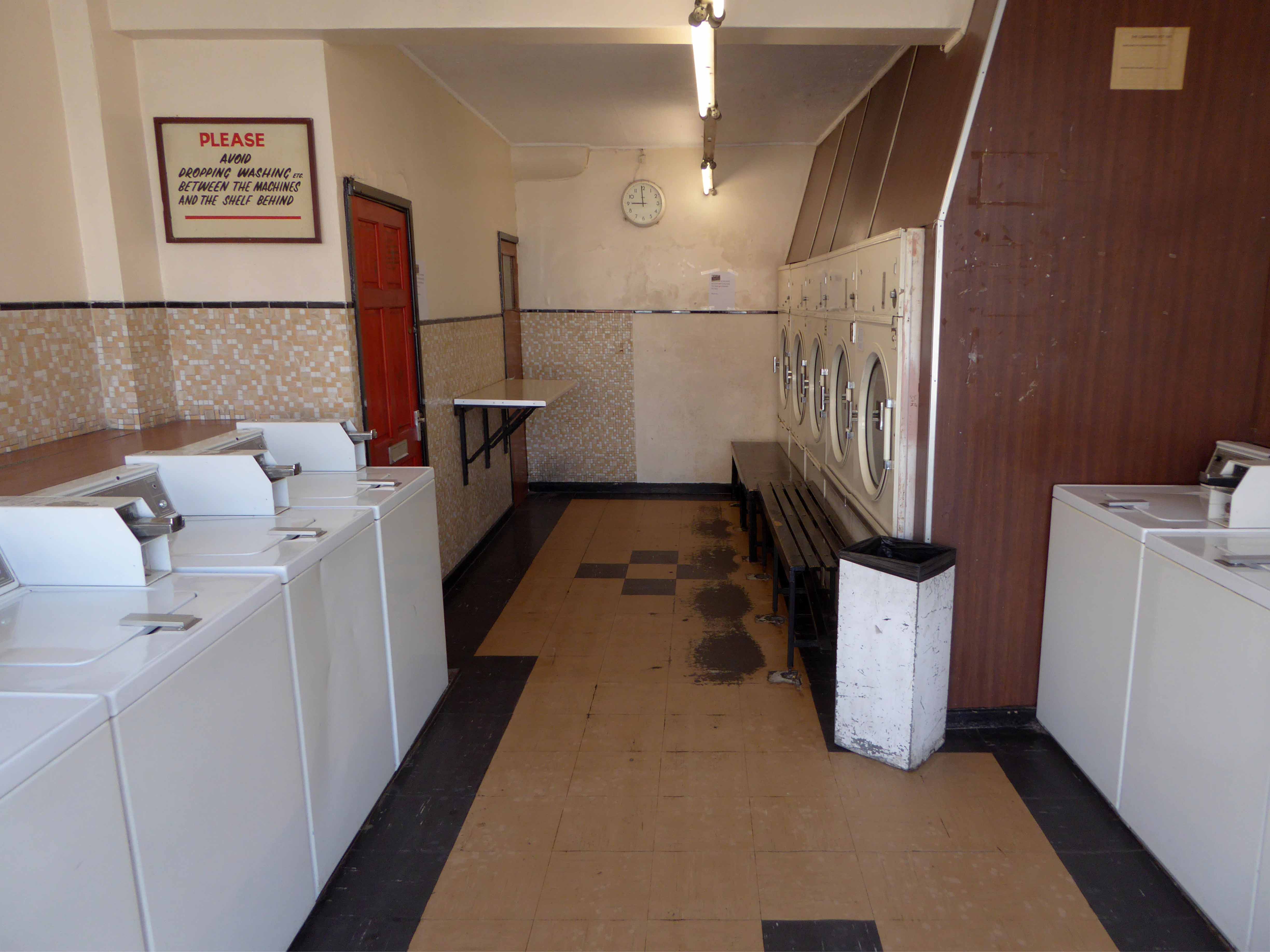
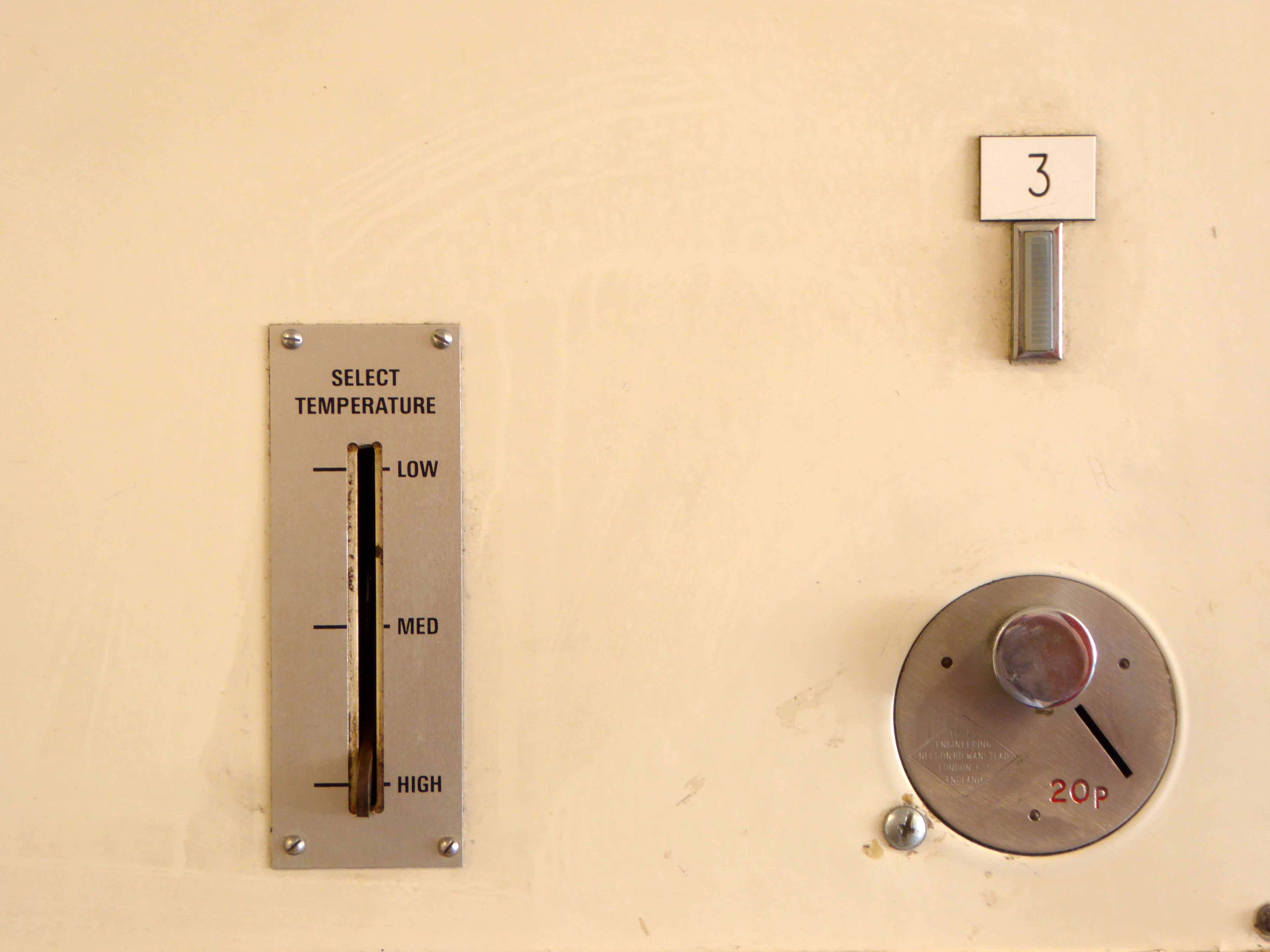
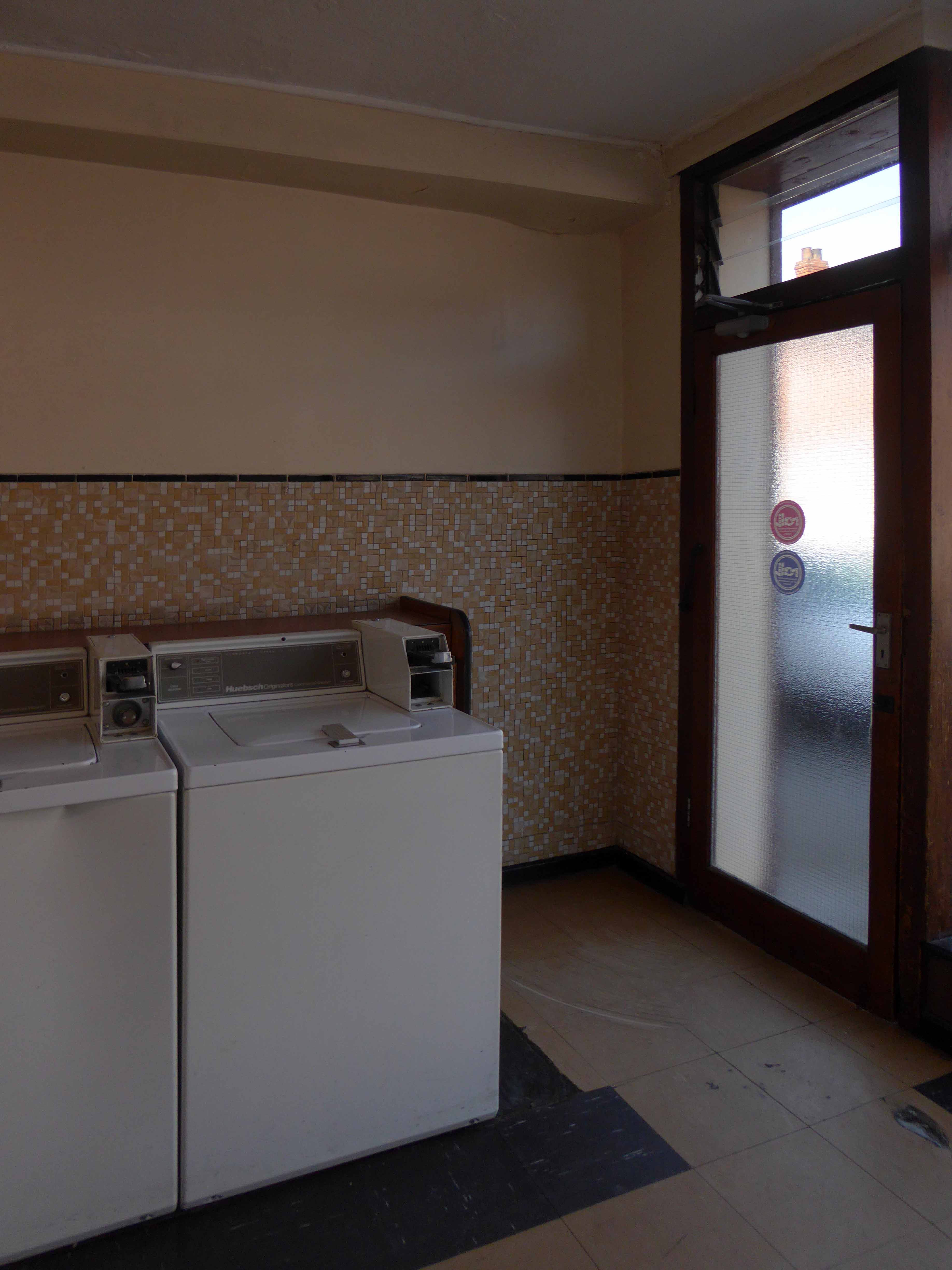
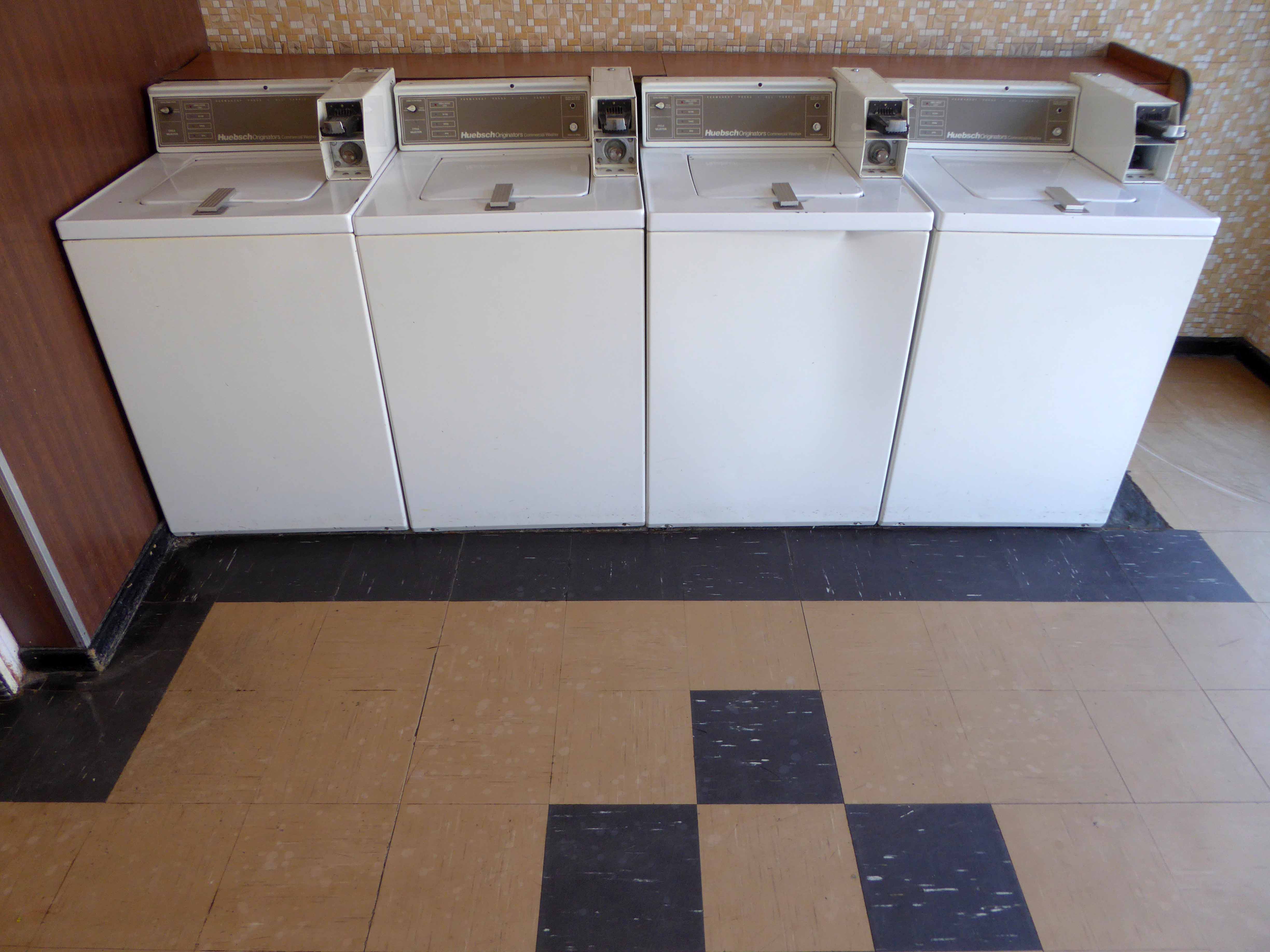
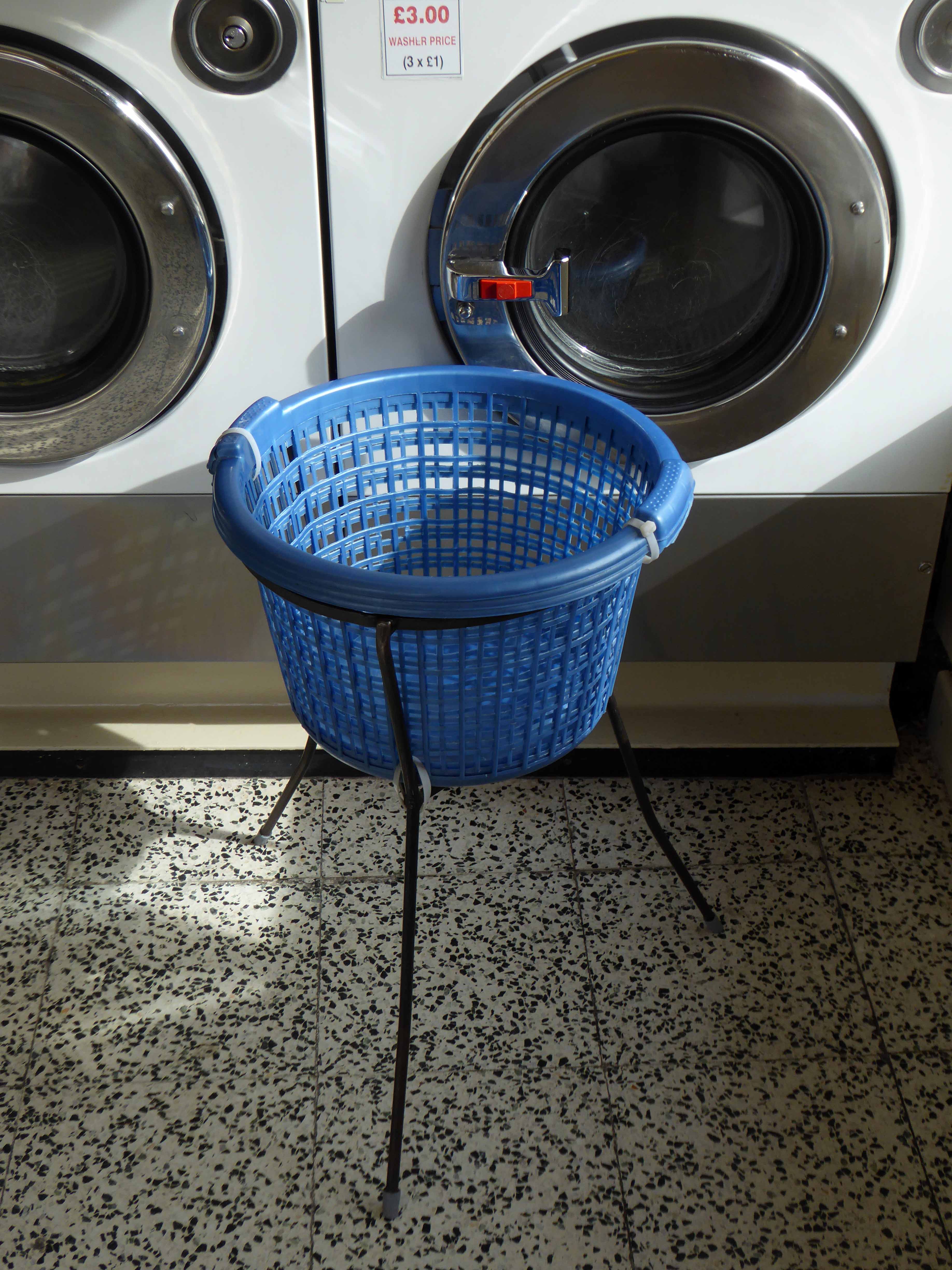
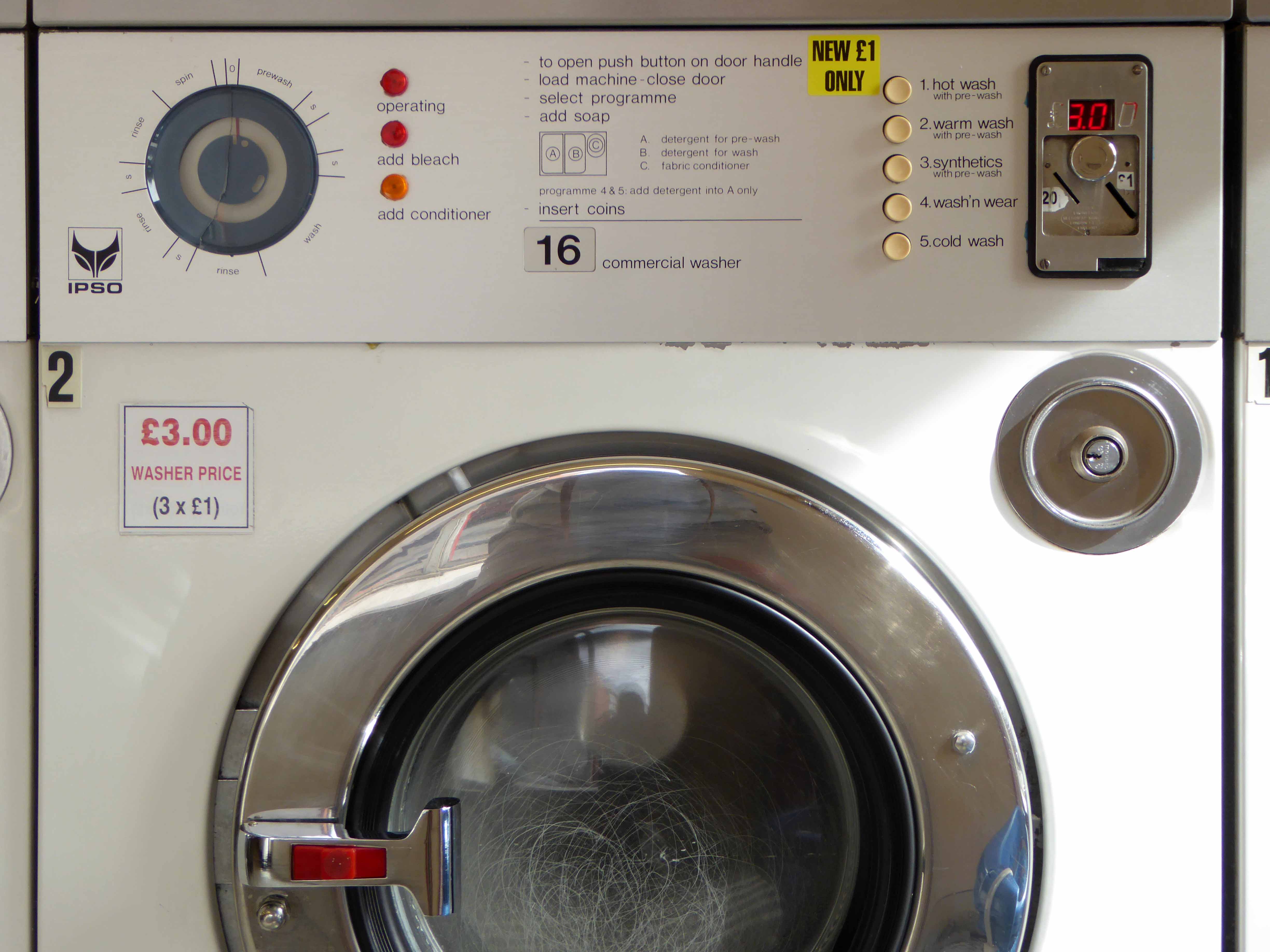
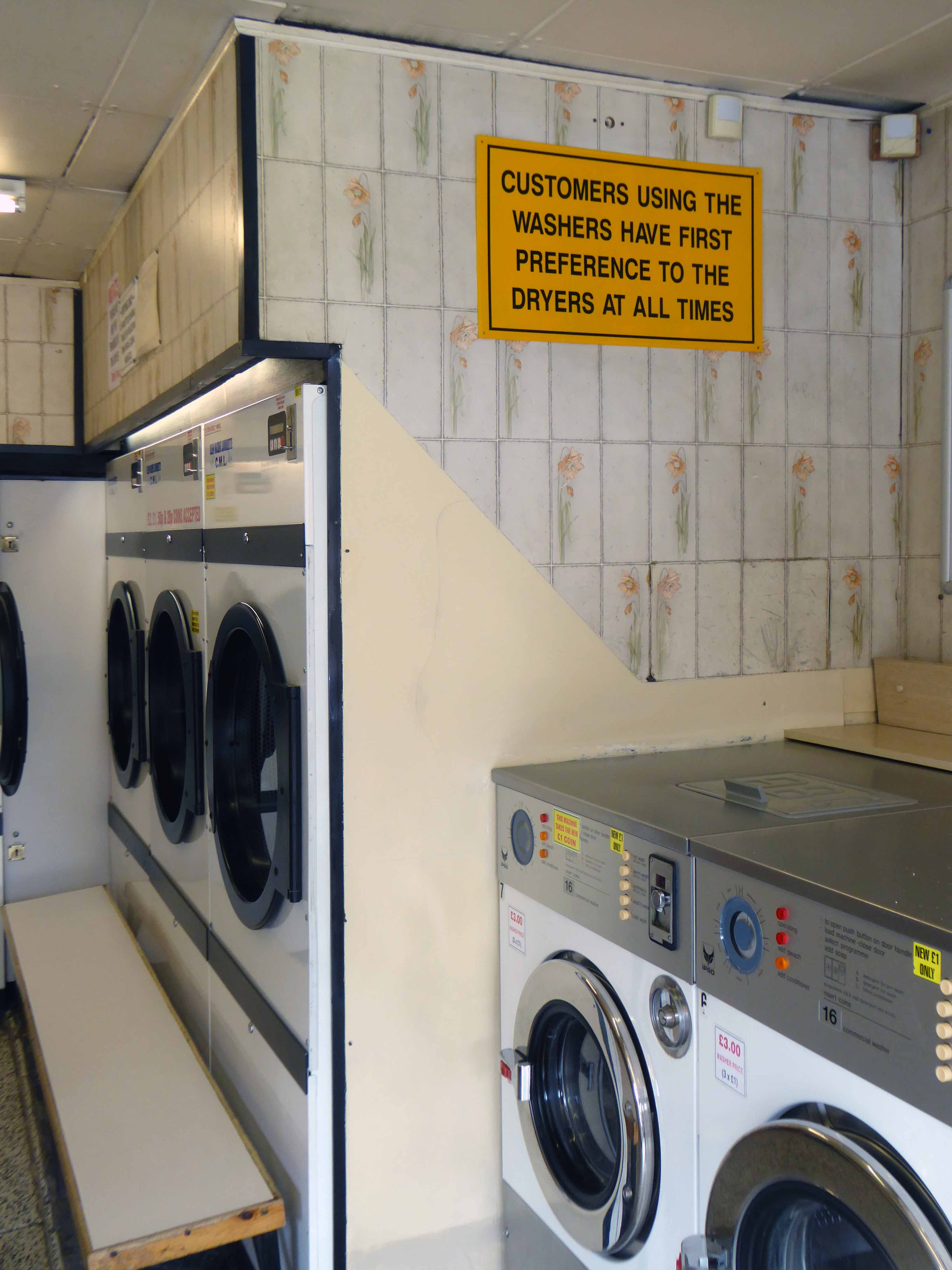
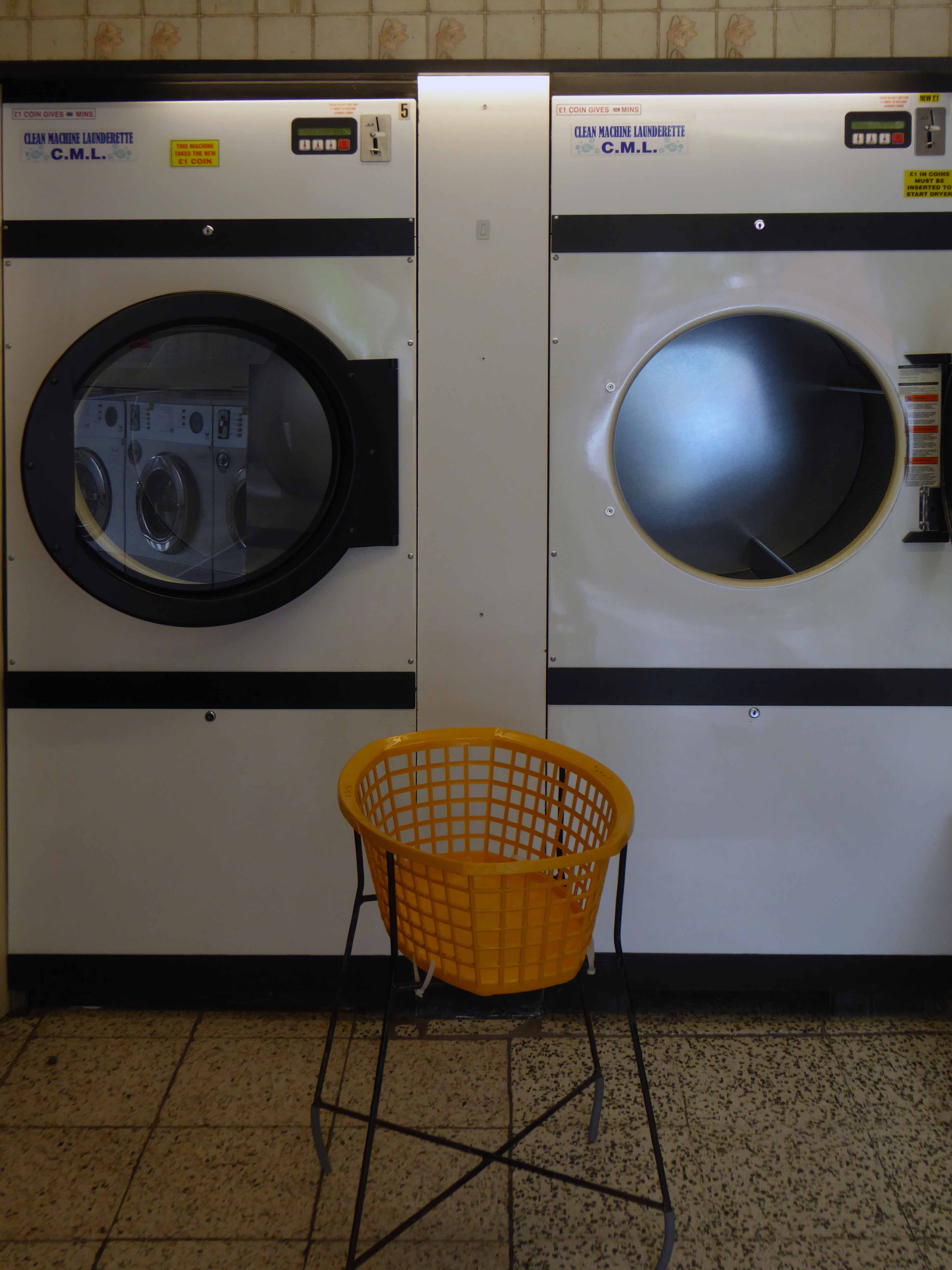
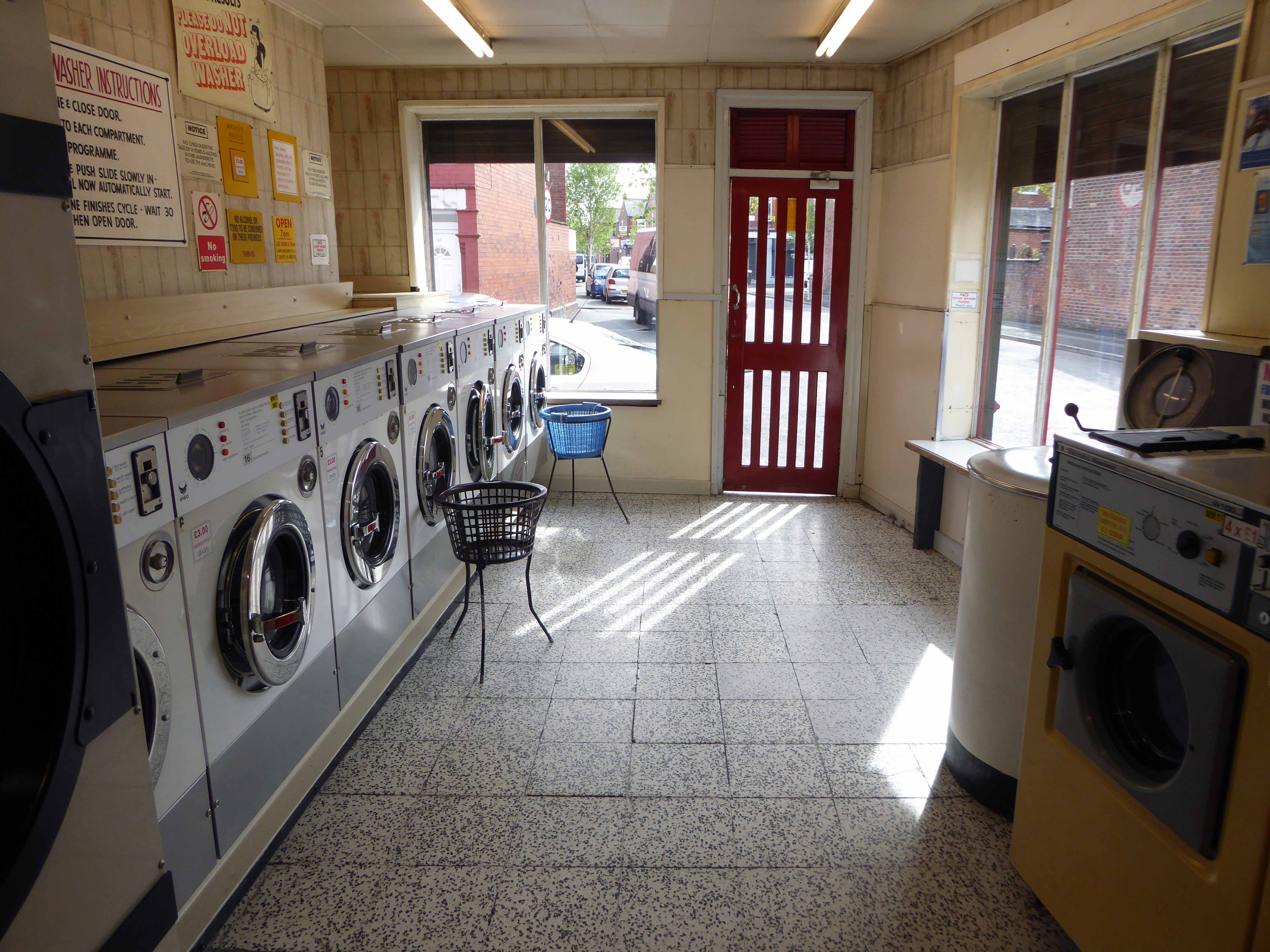
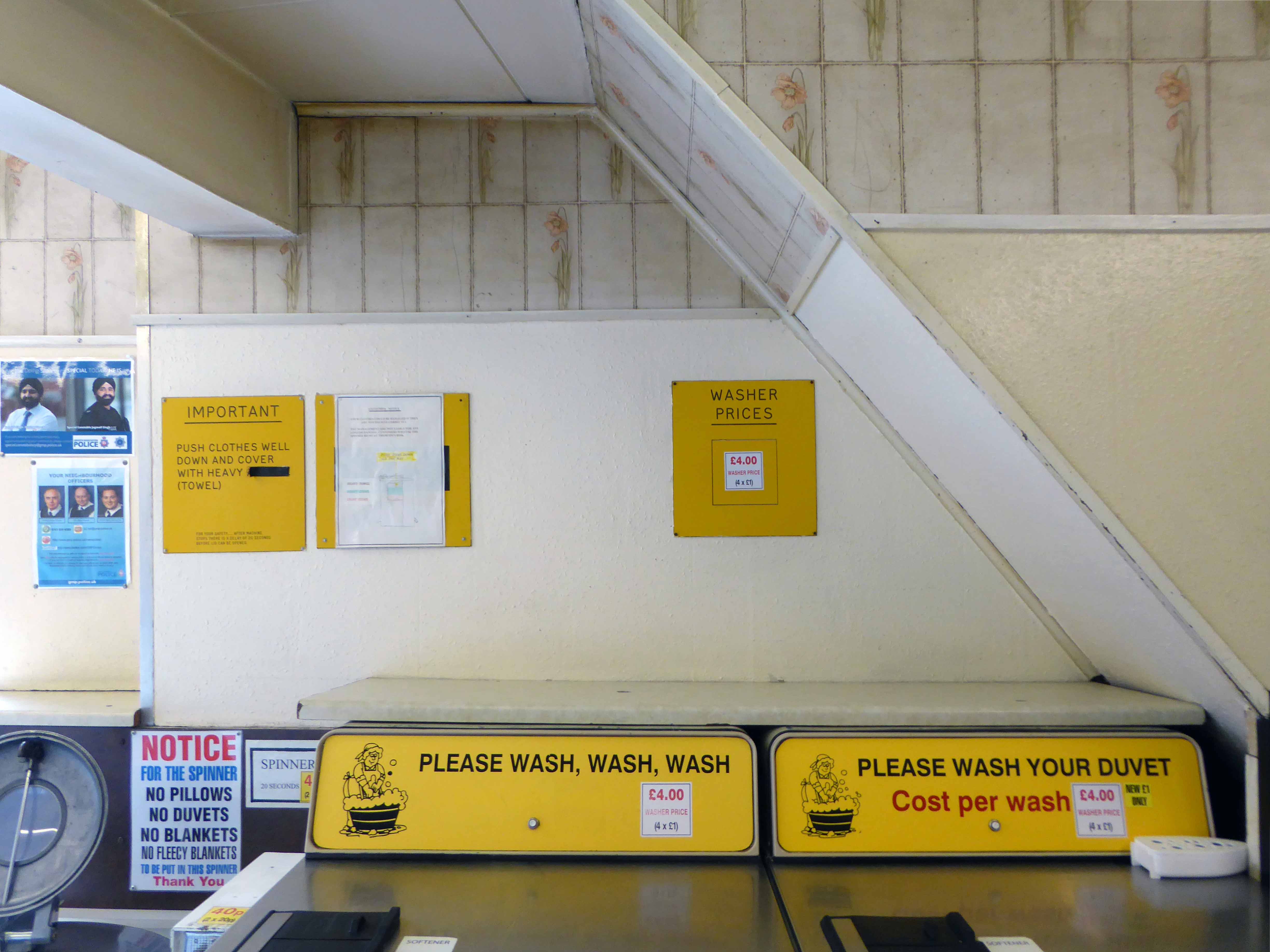
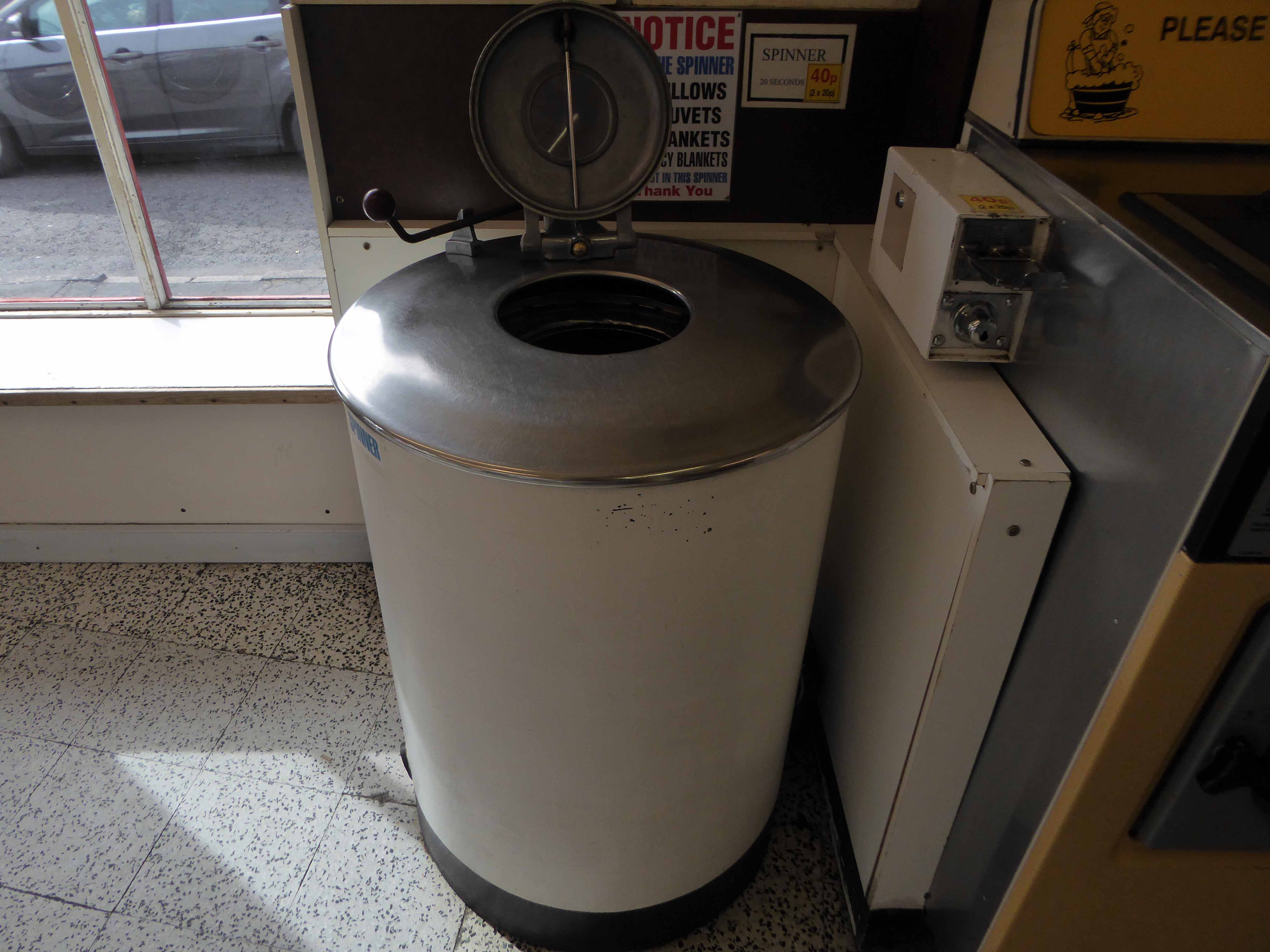
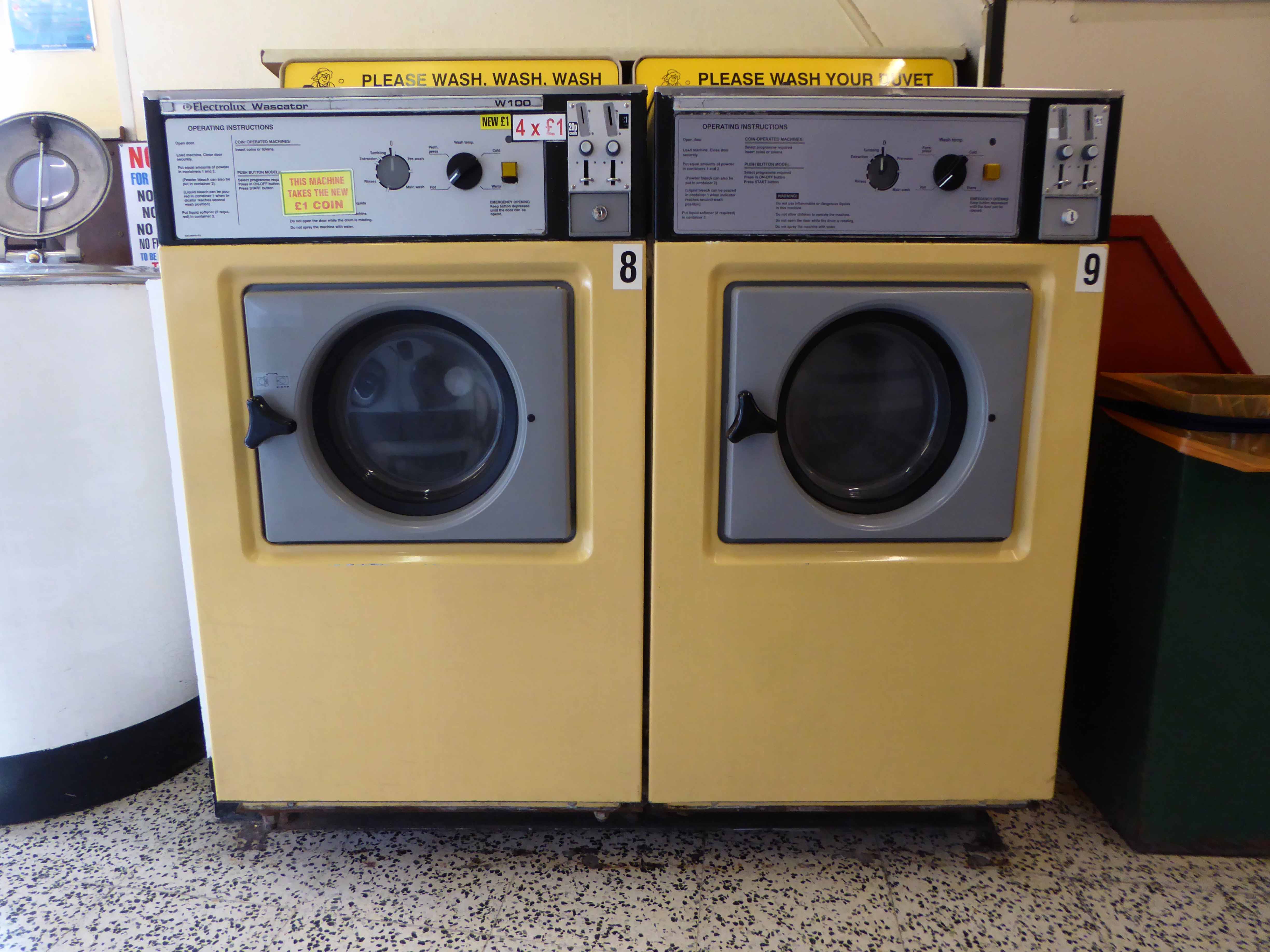
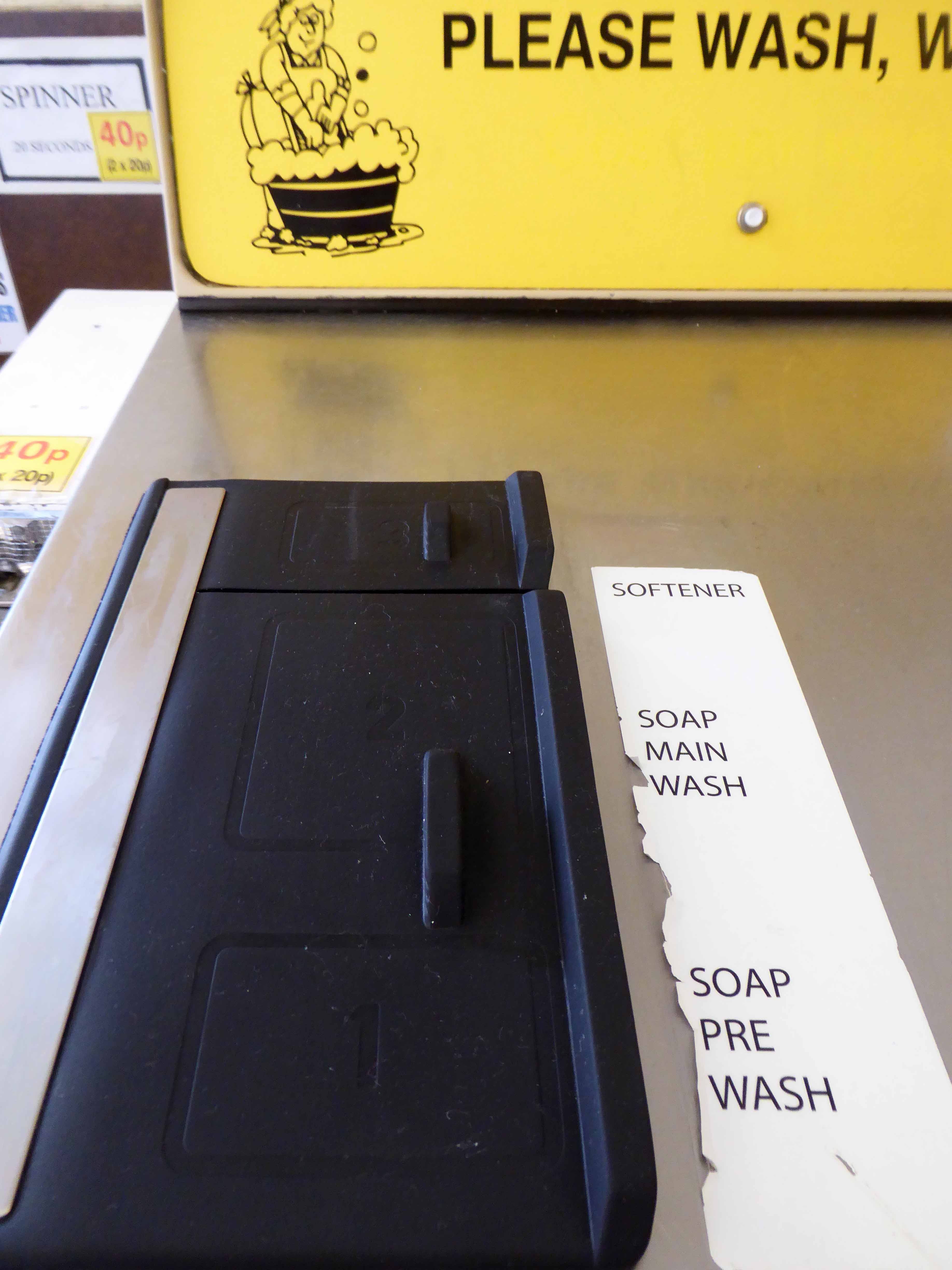
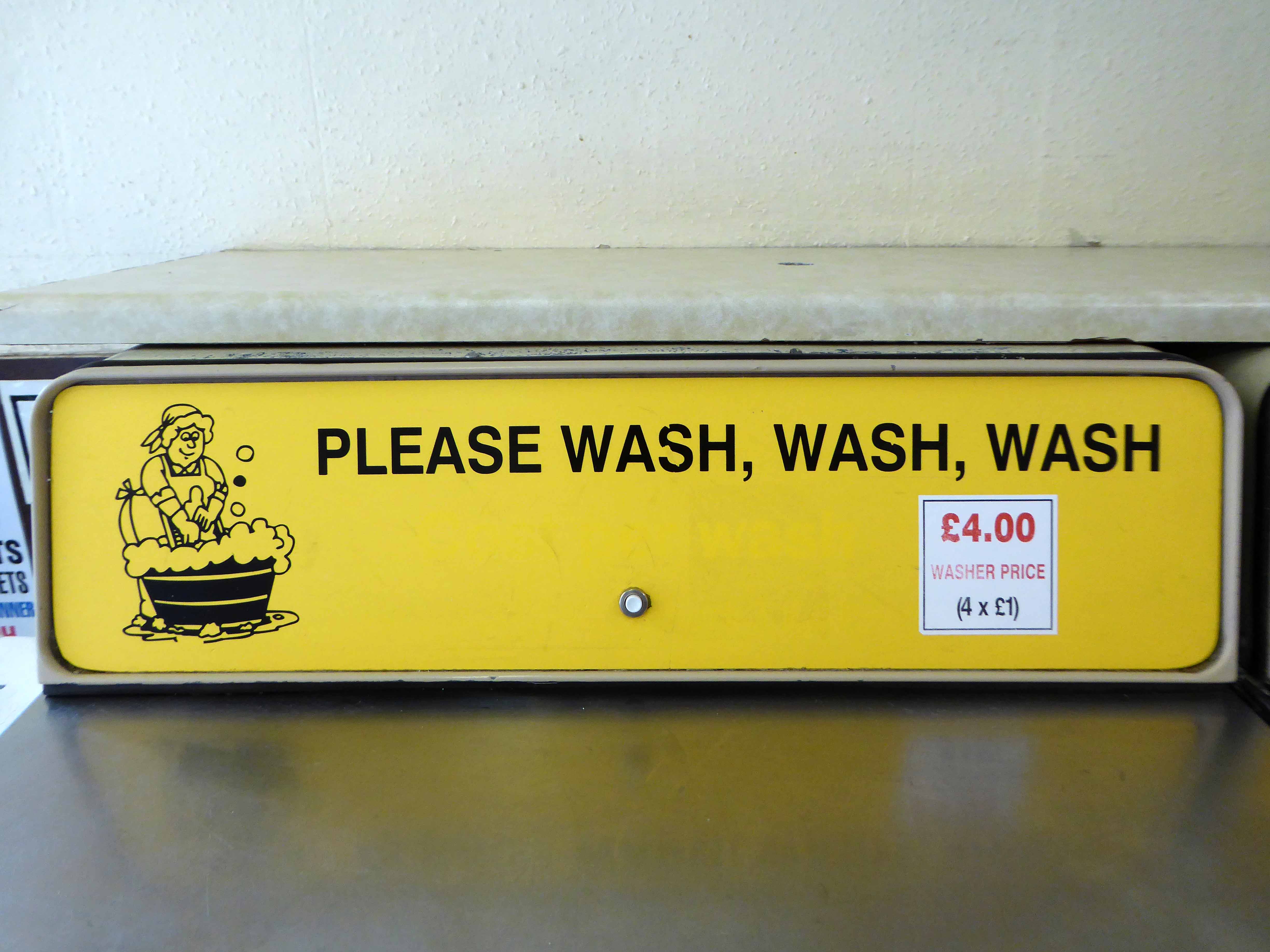
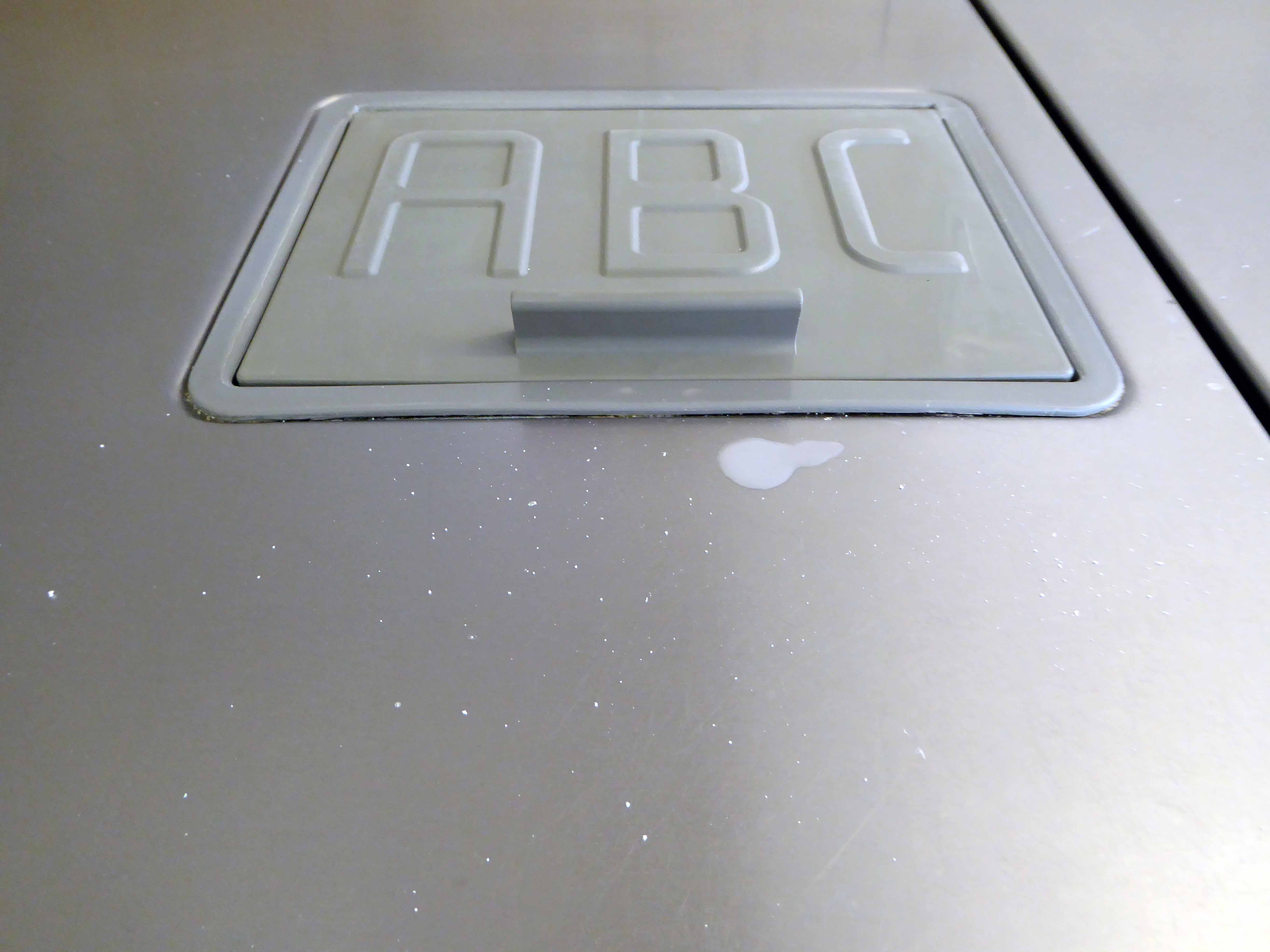
When is a washtub not a washtub – self evidently when it doesn’t wash.
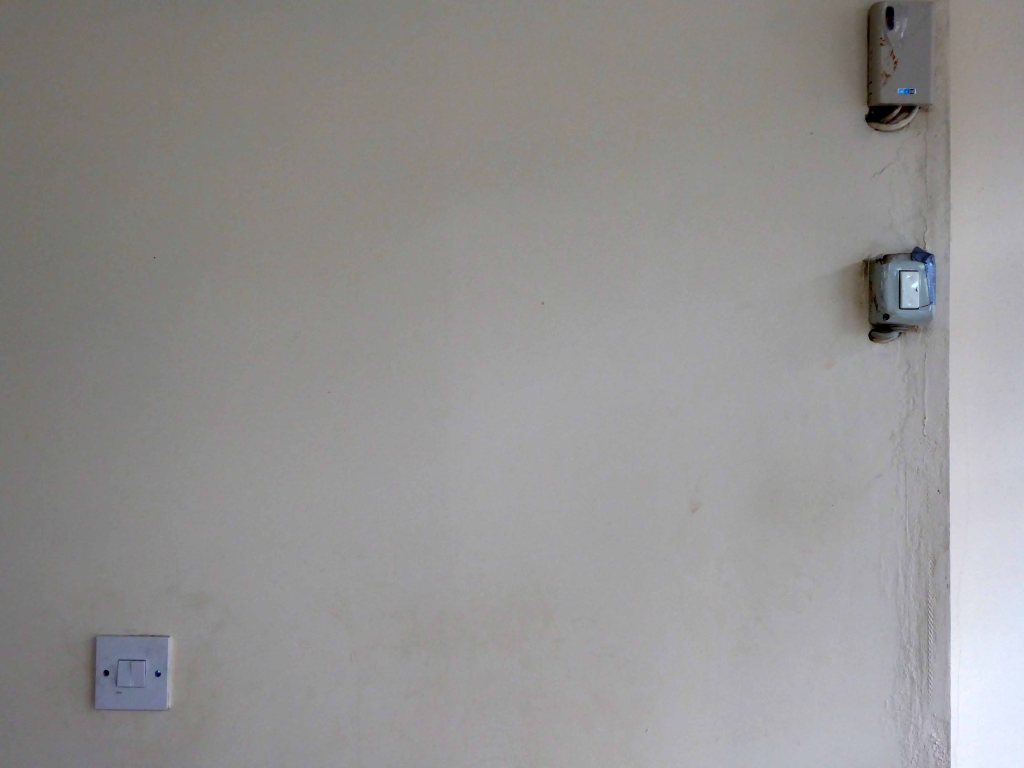
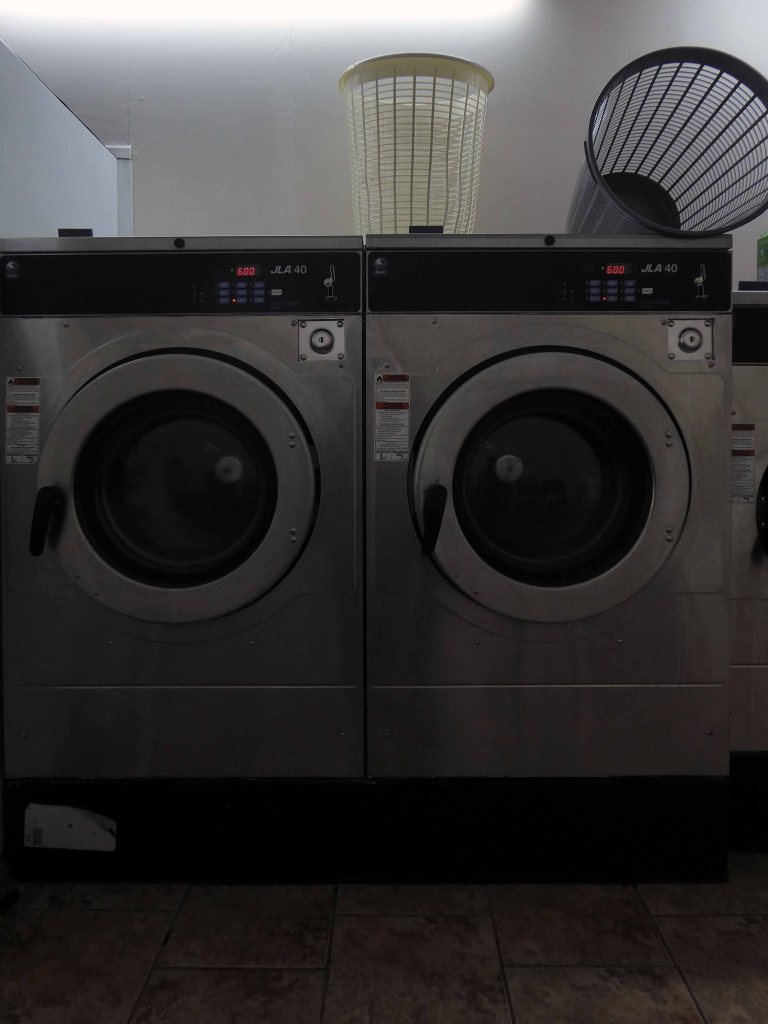
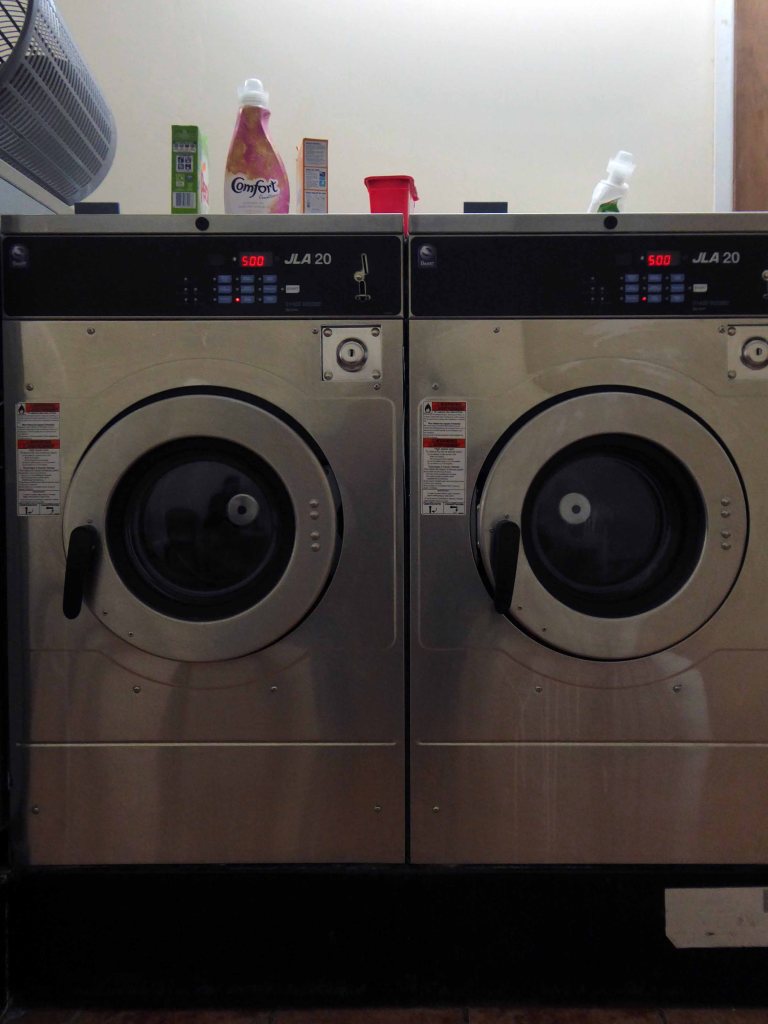
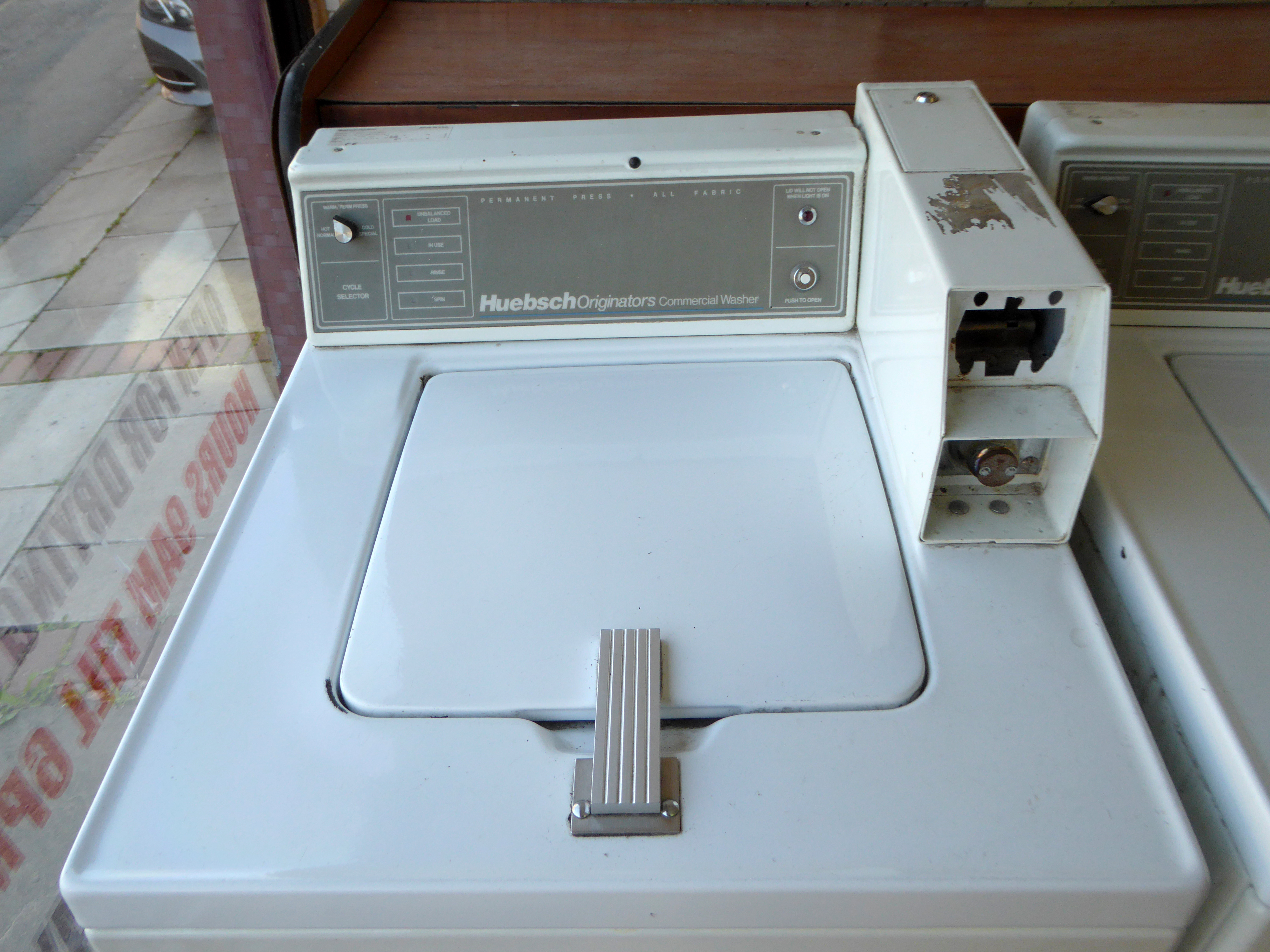
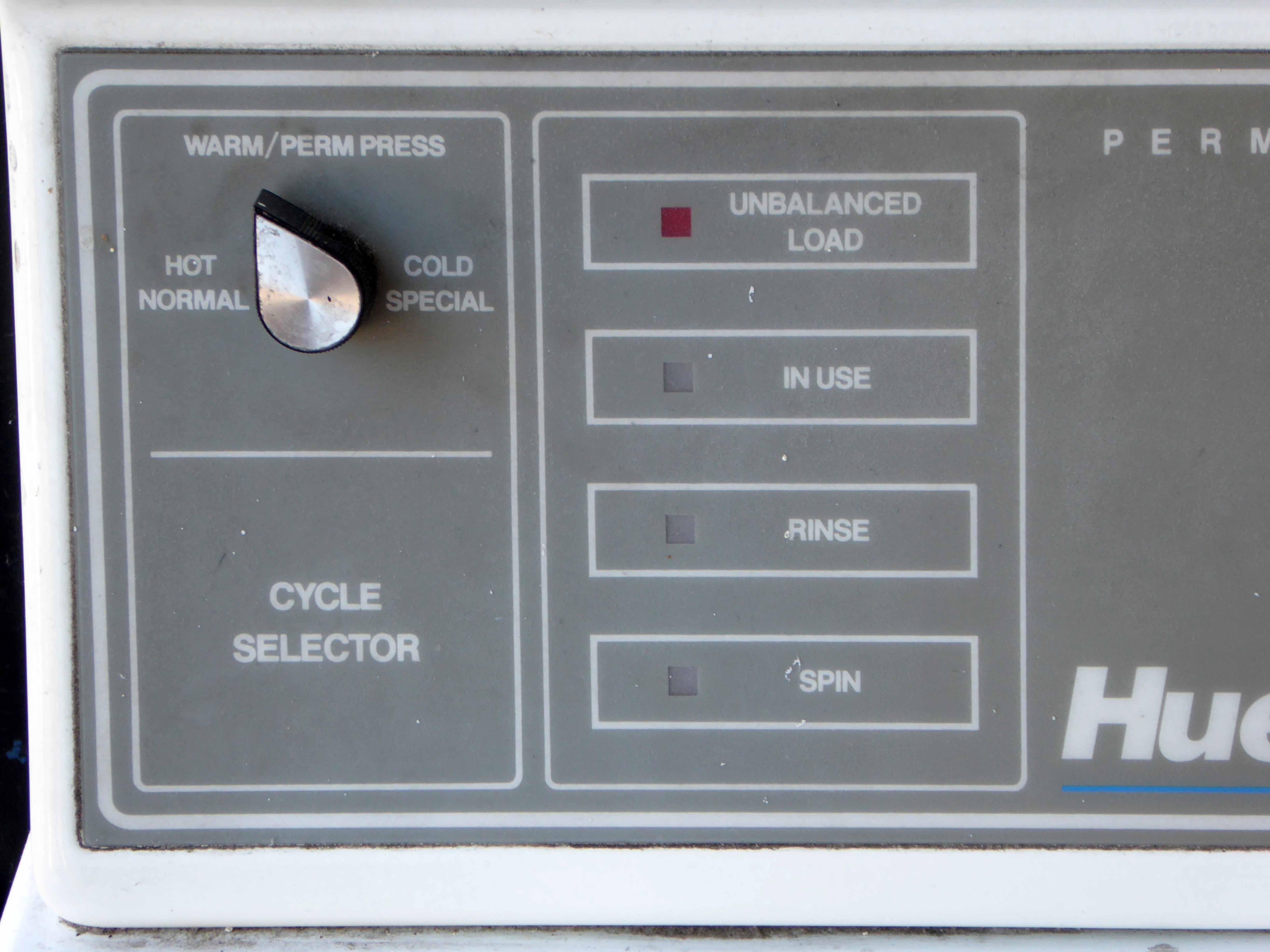
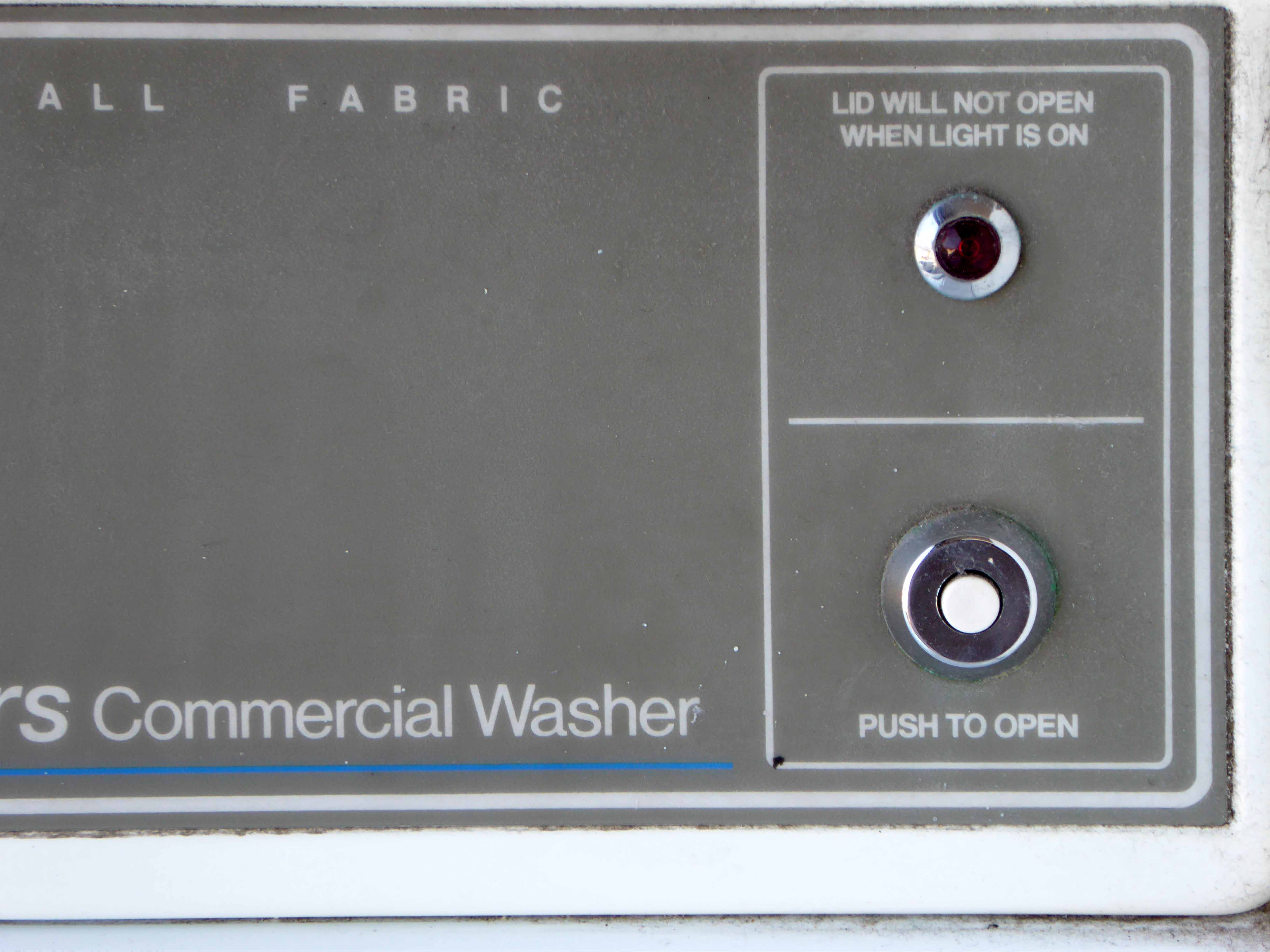
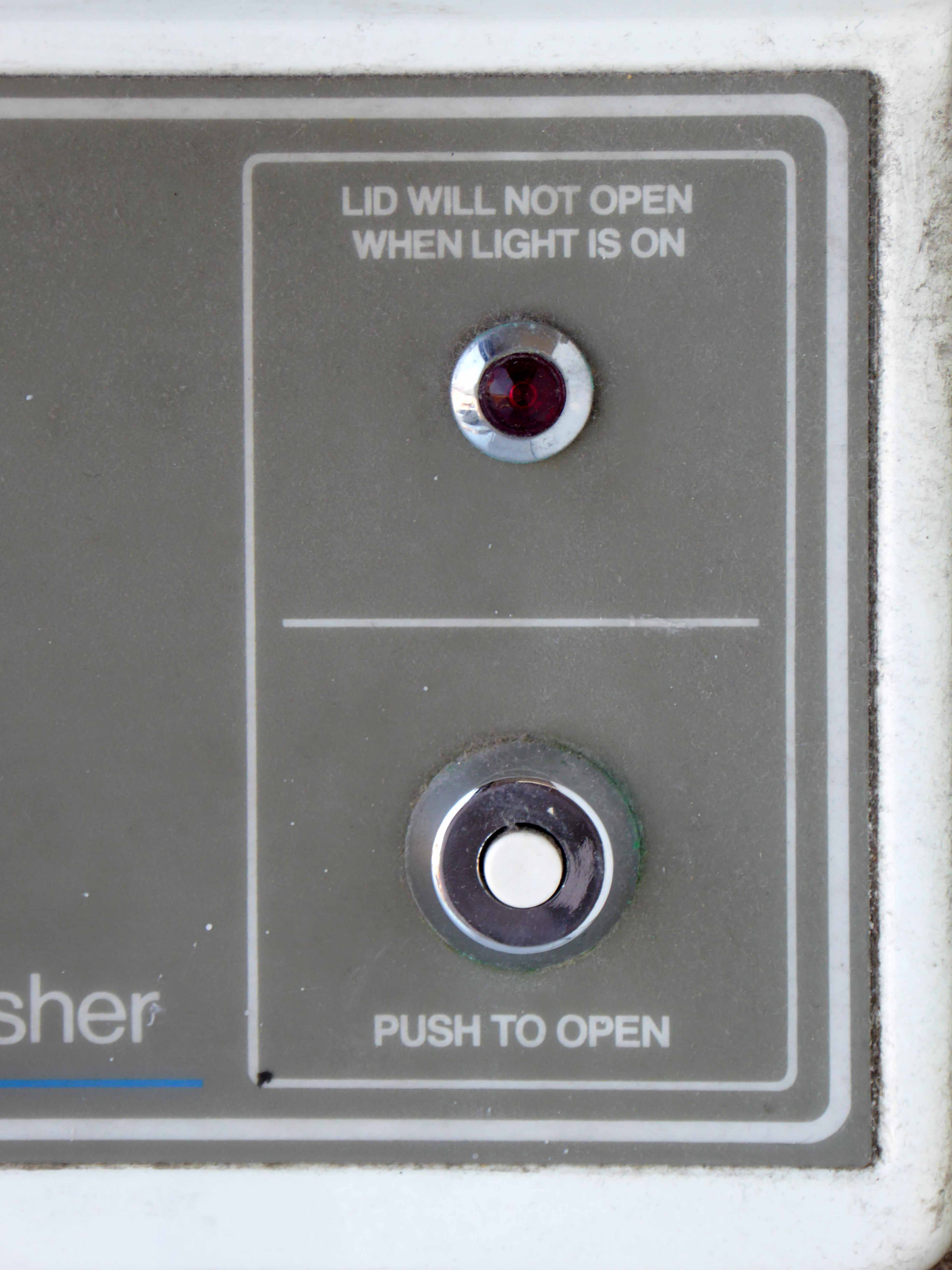
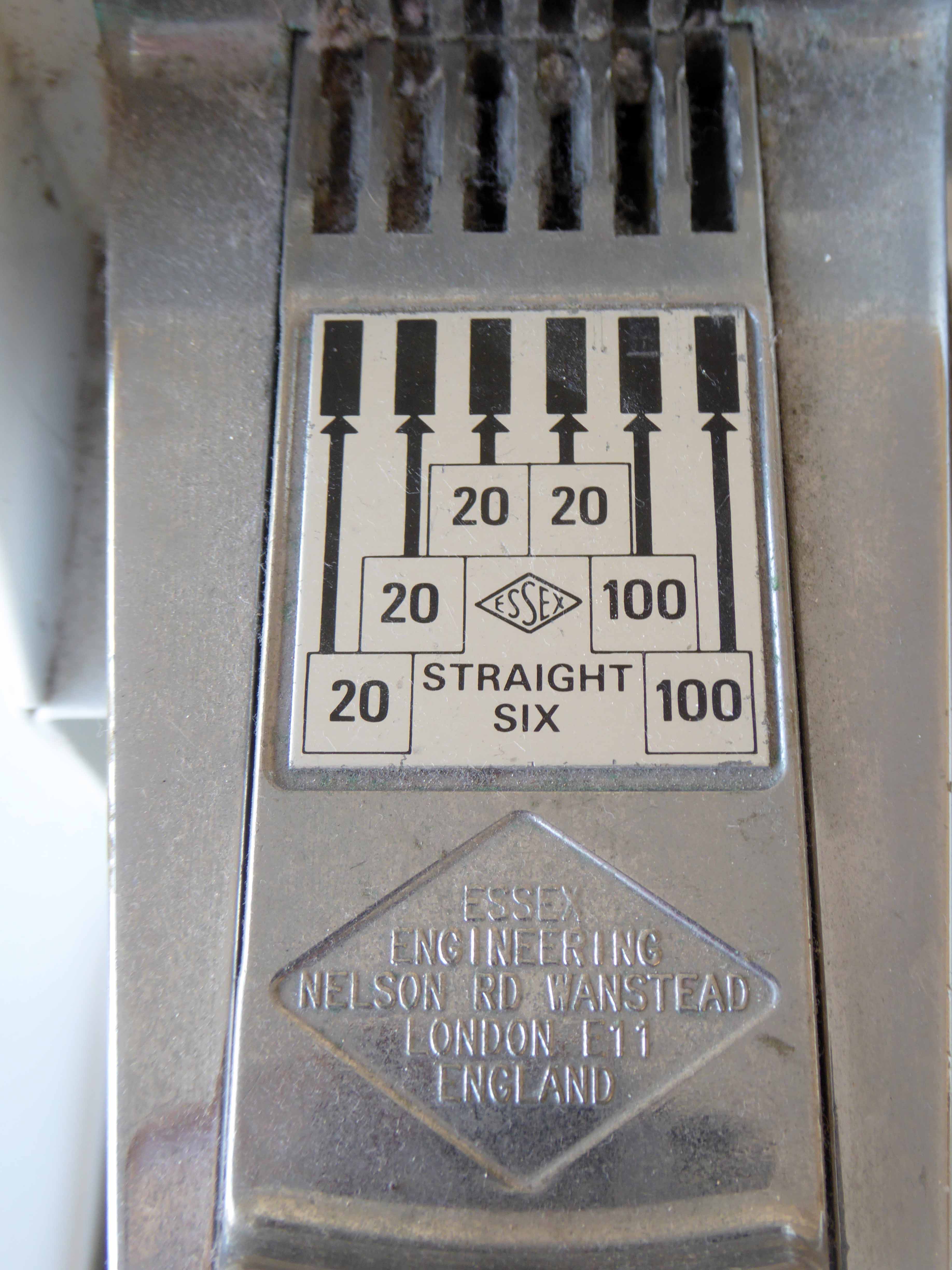
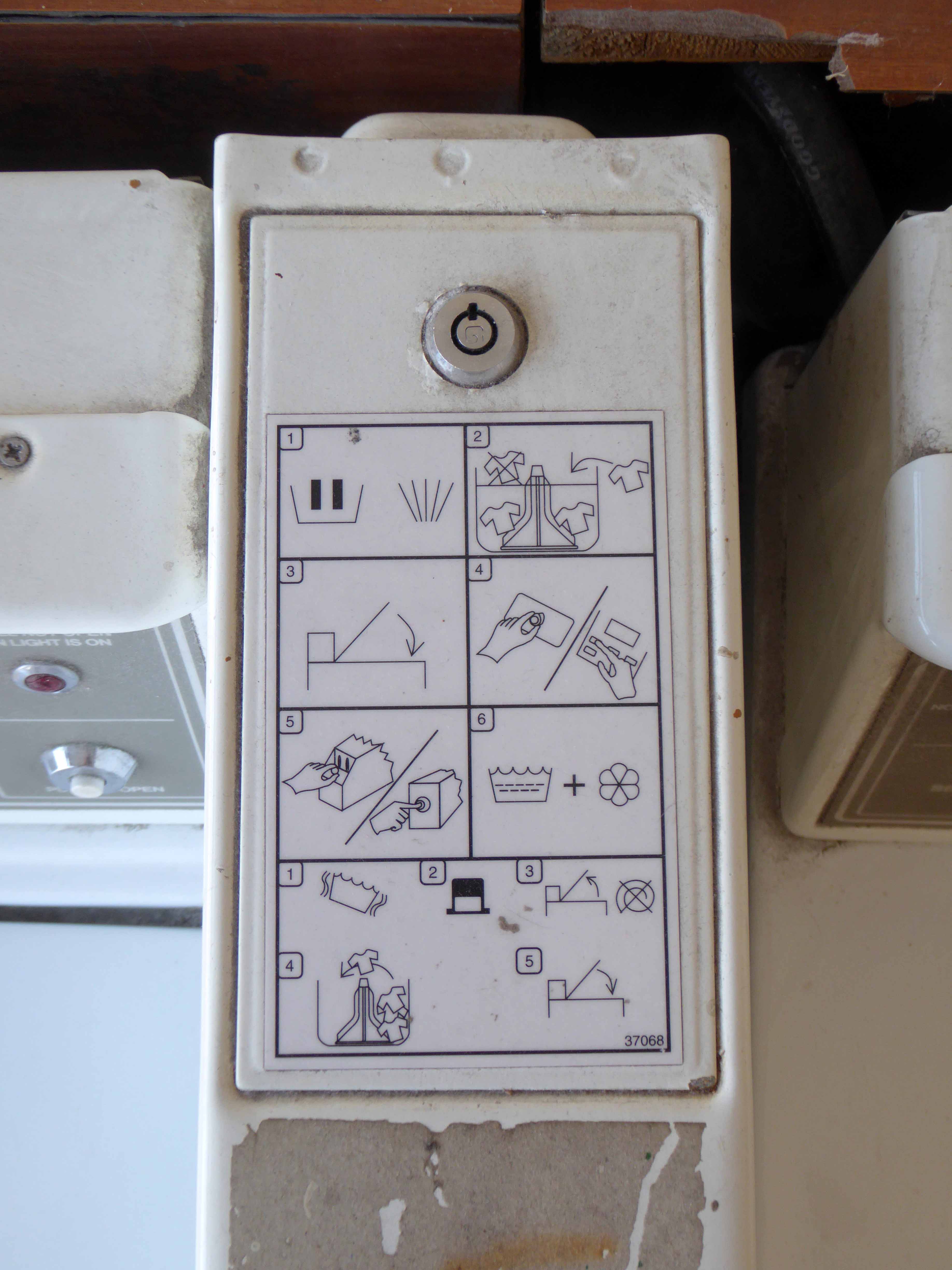
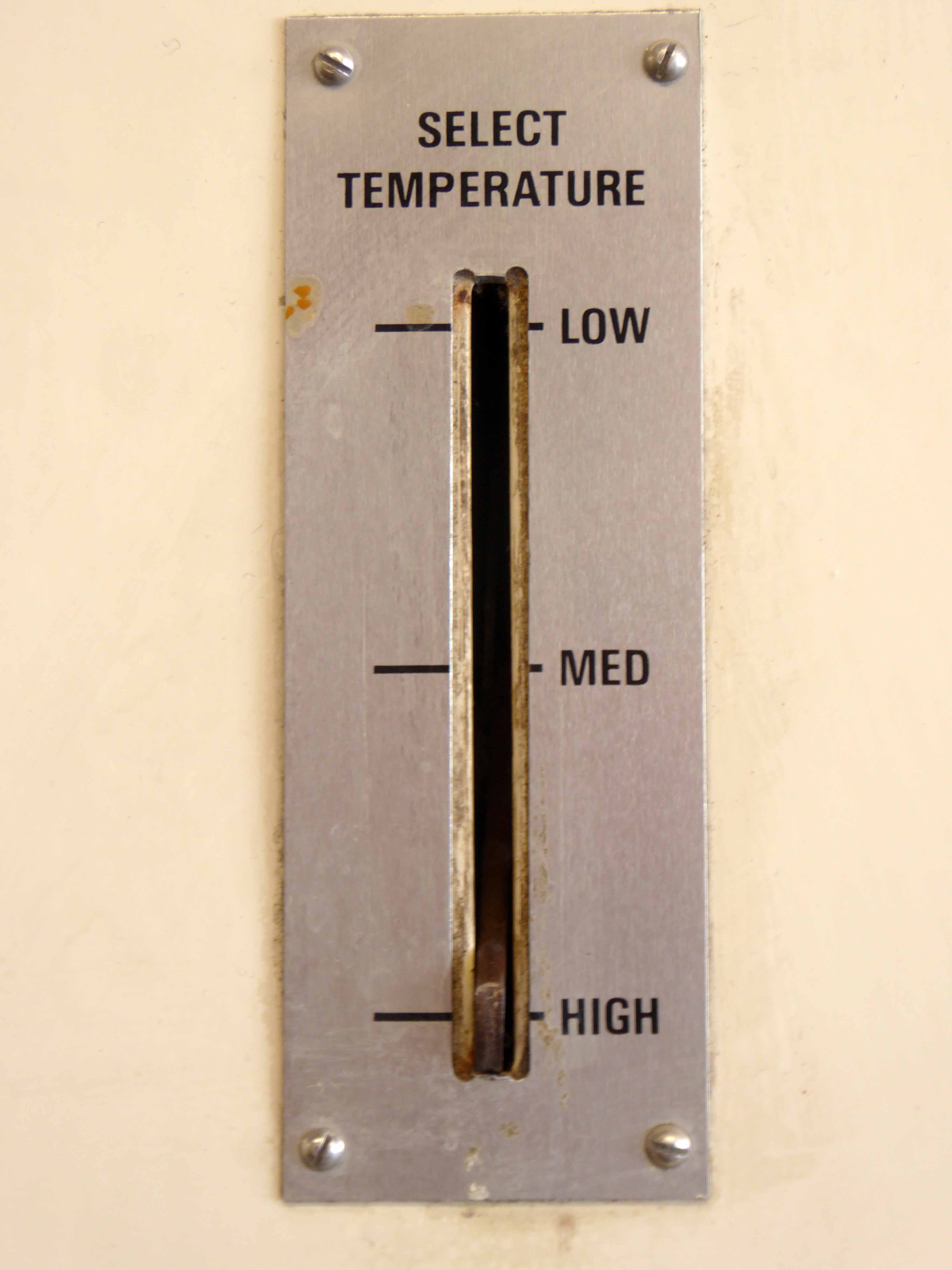
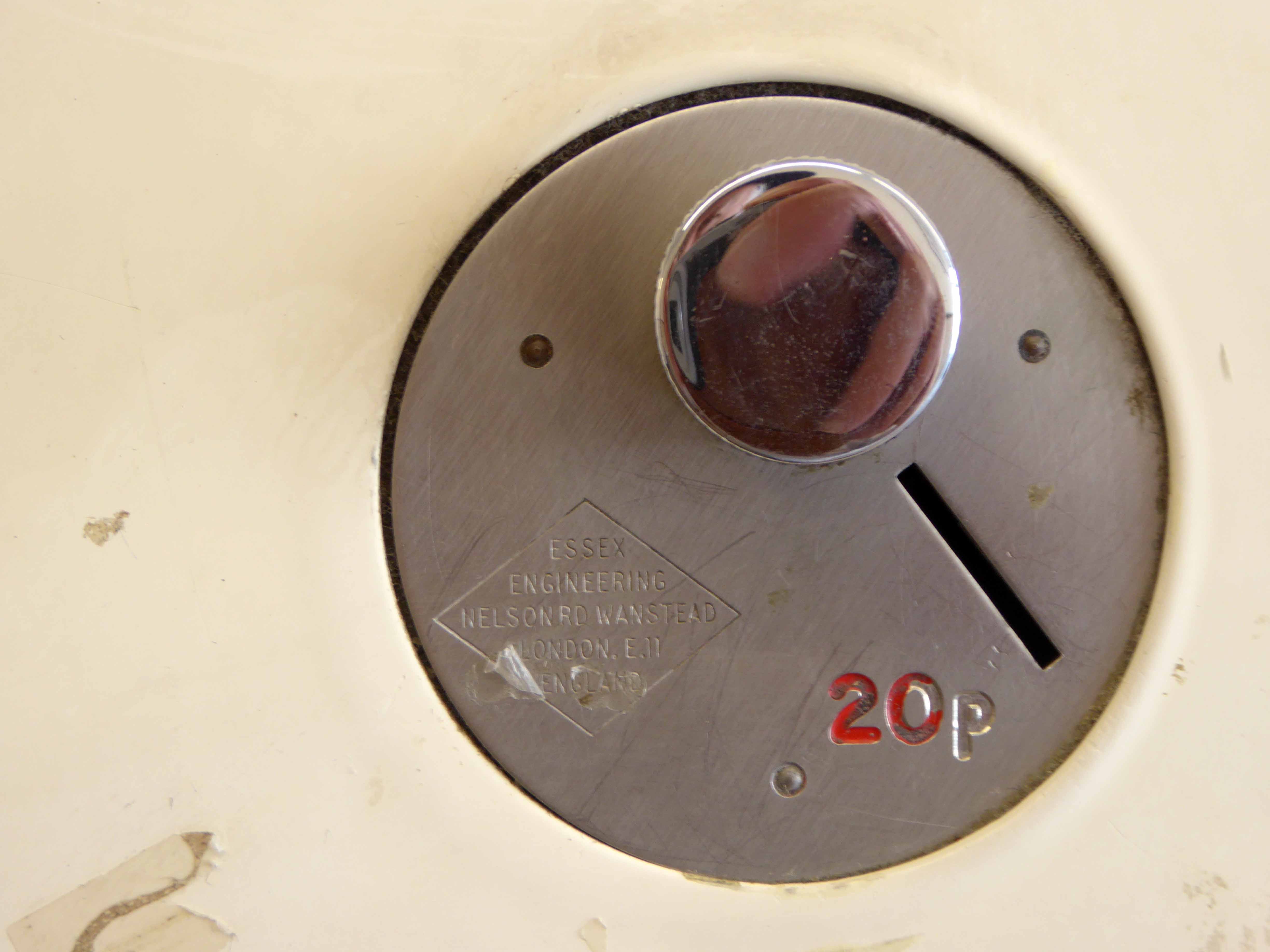
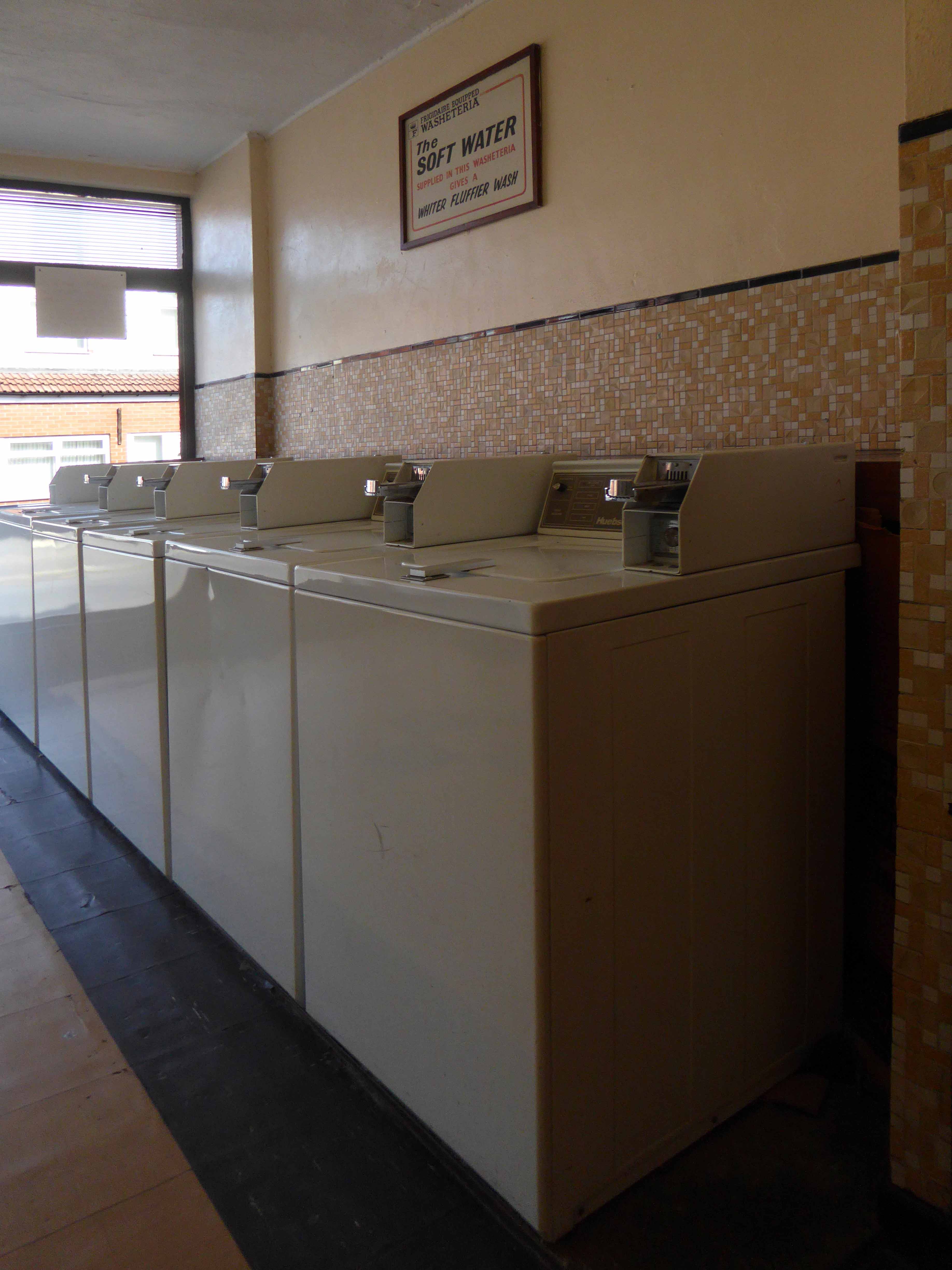
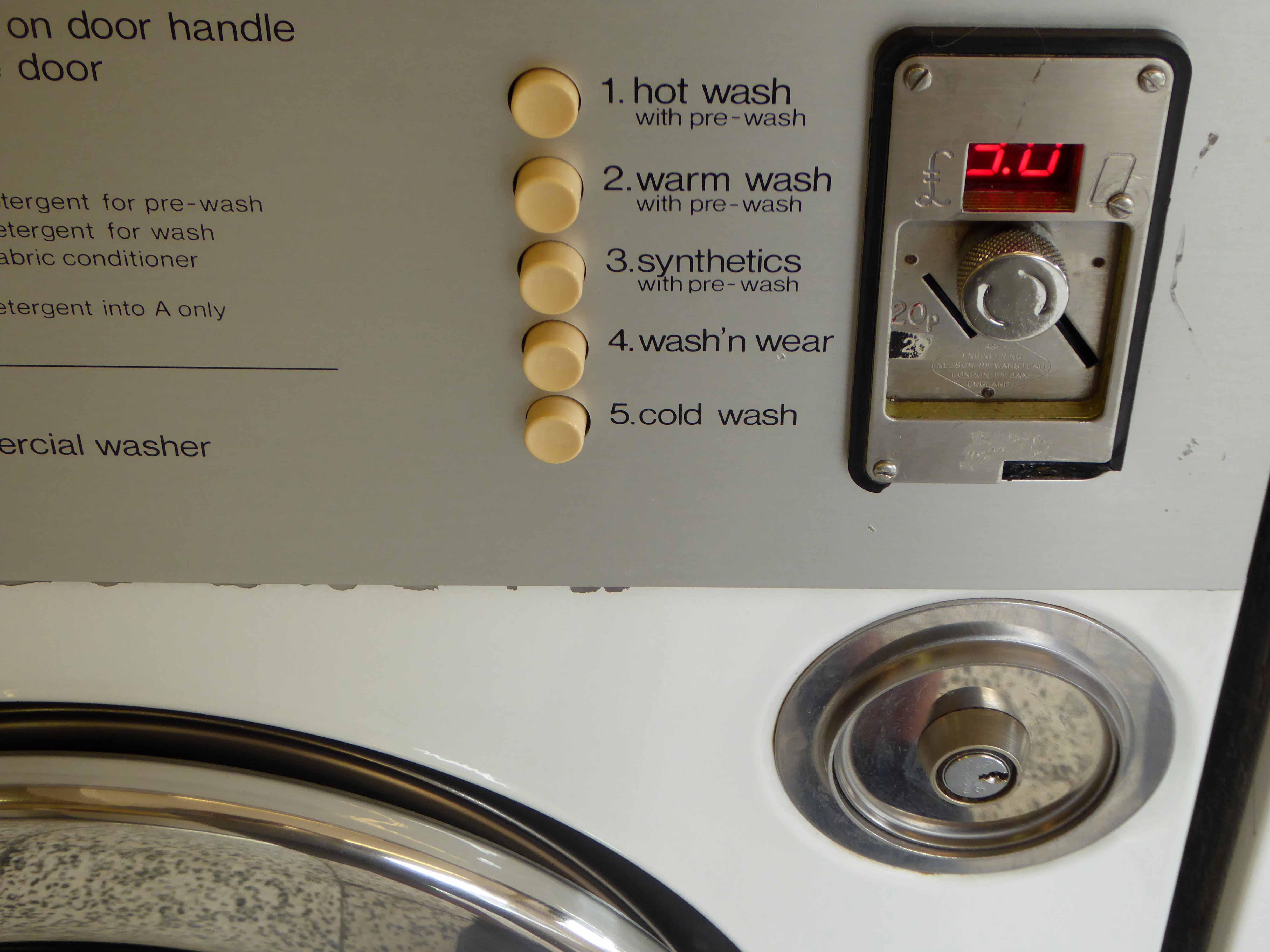
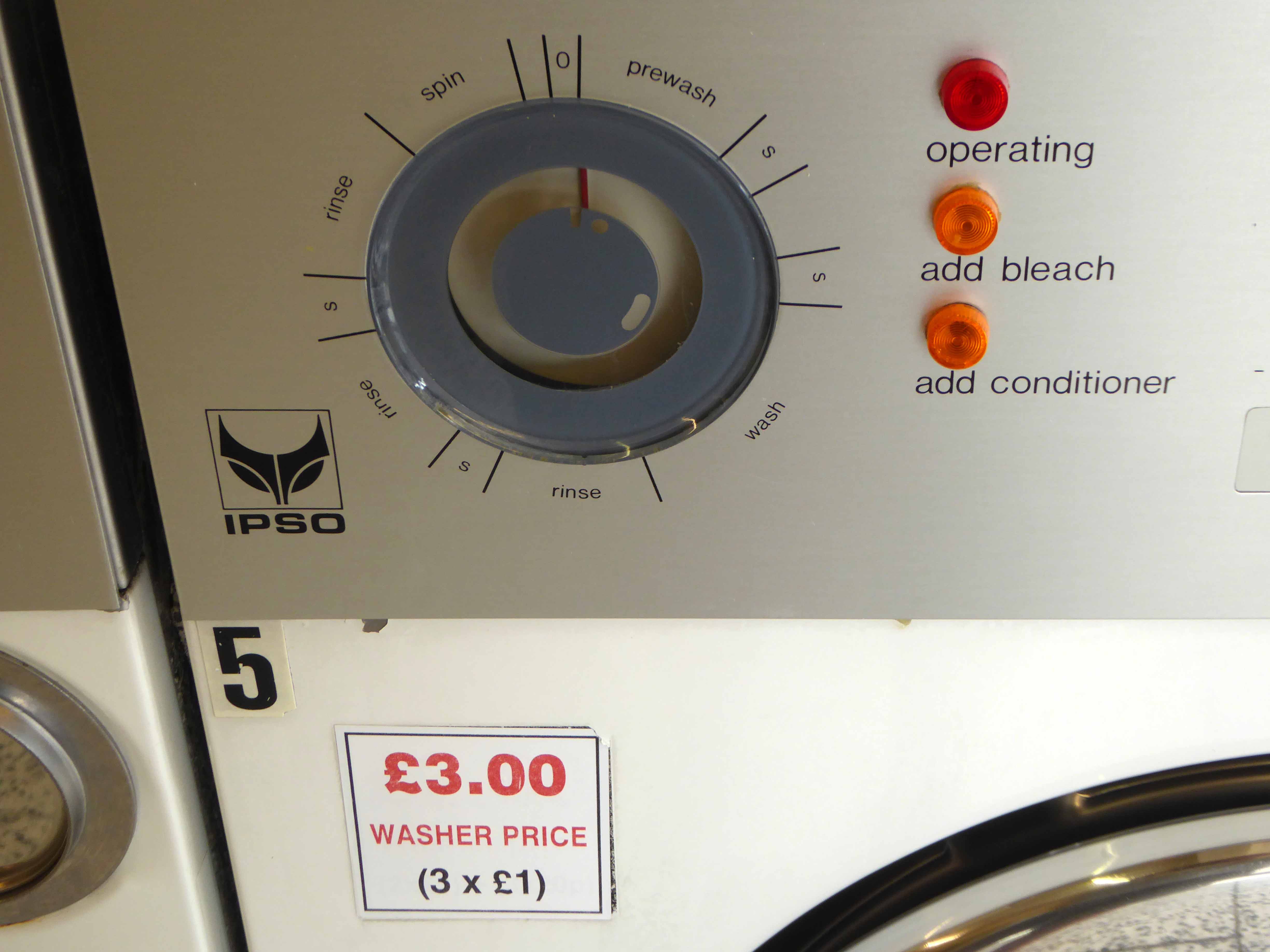
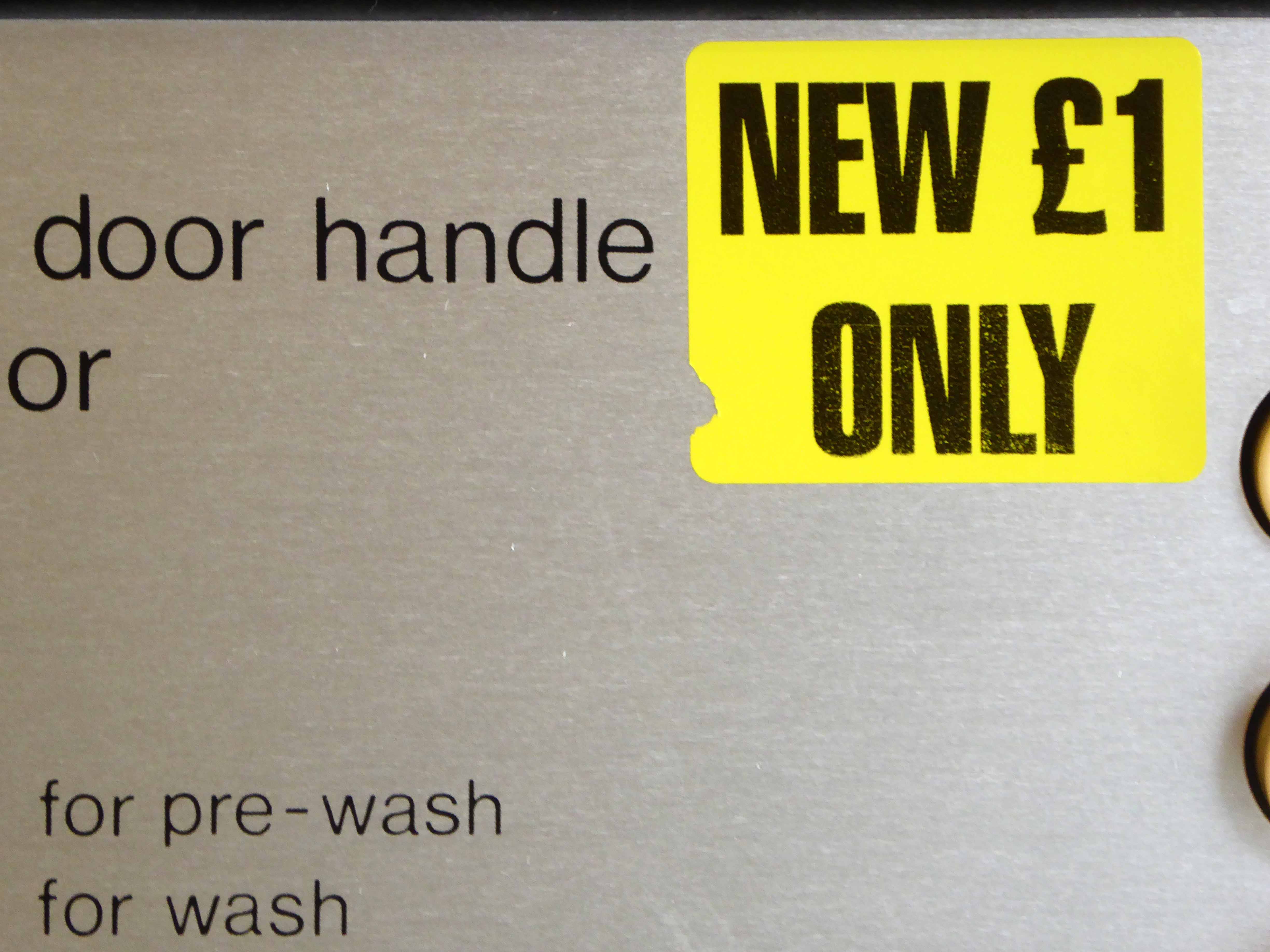
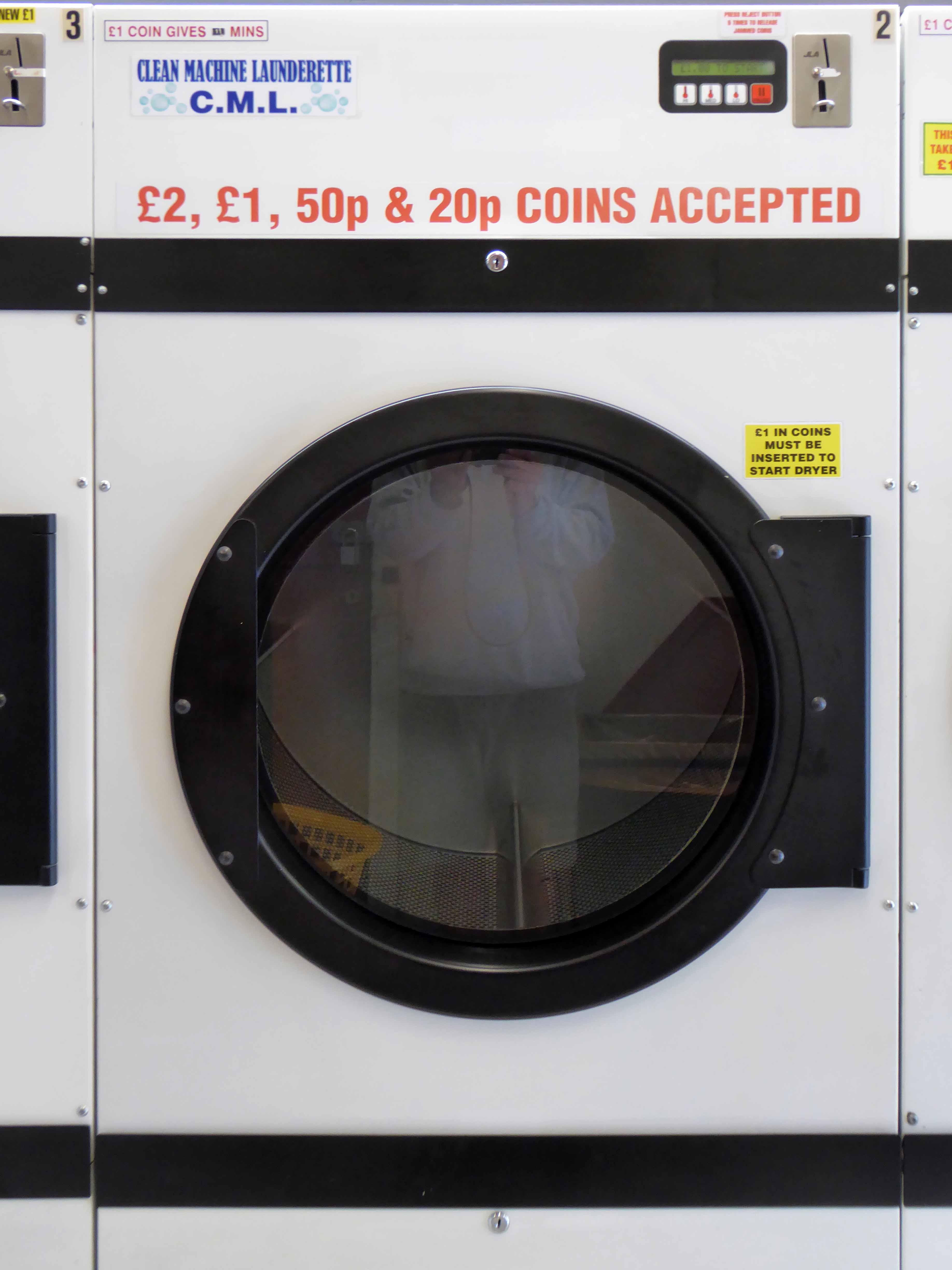
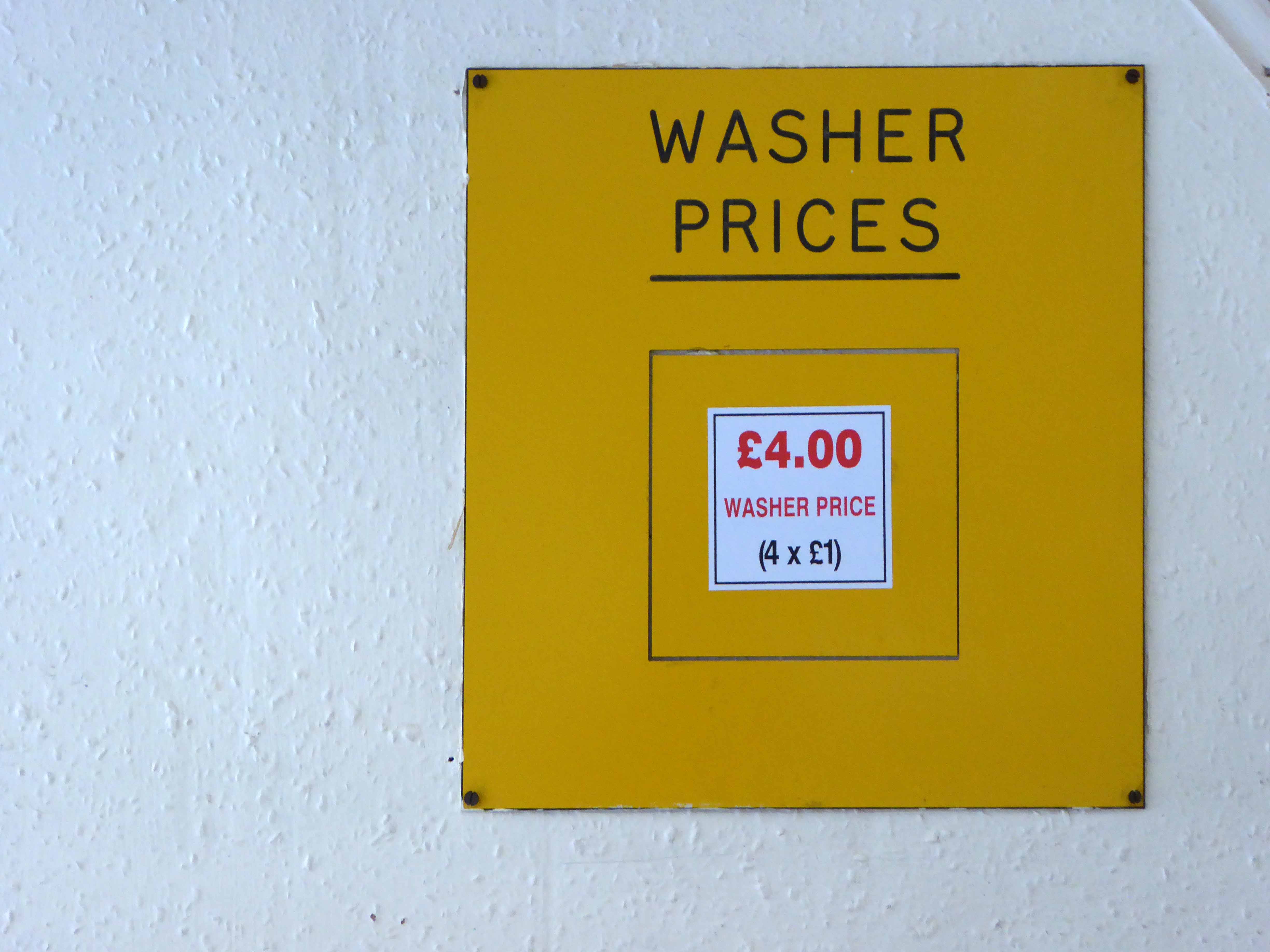
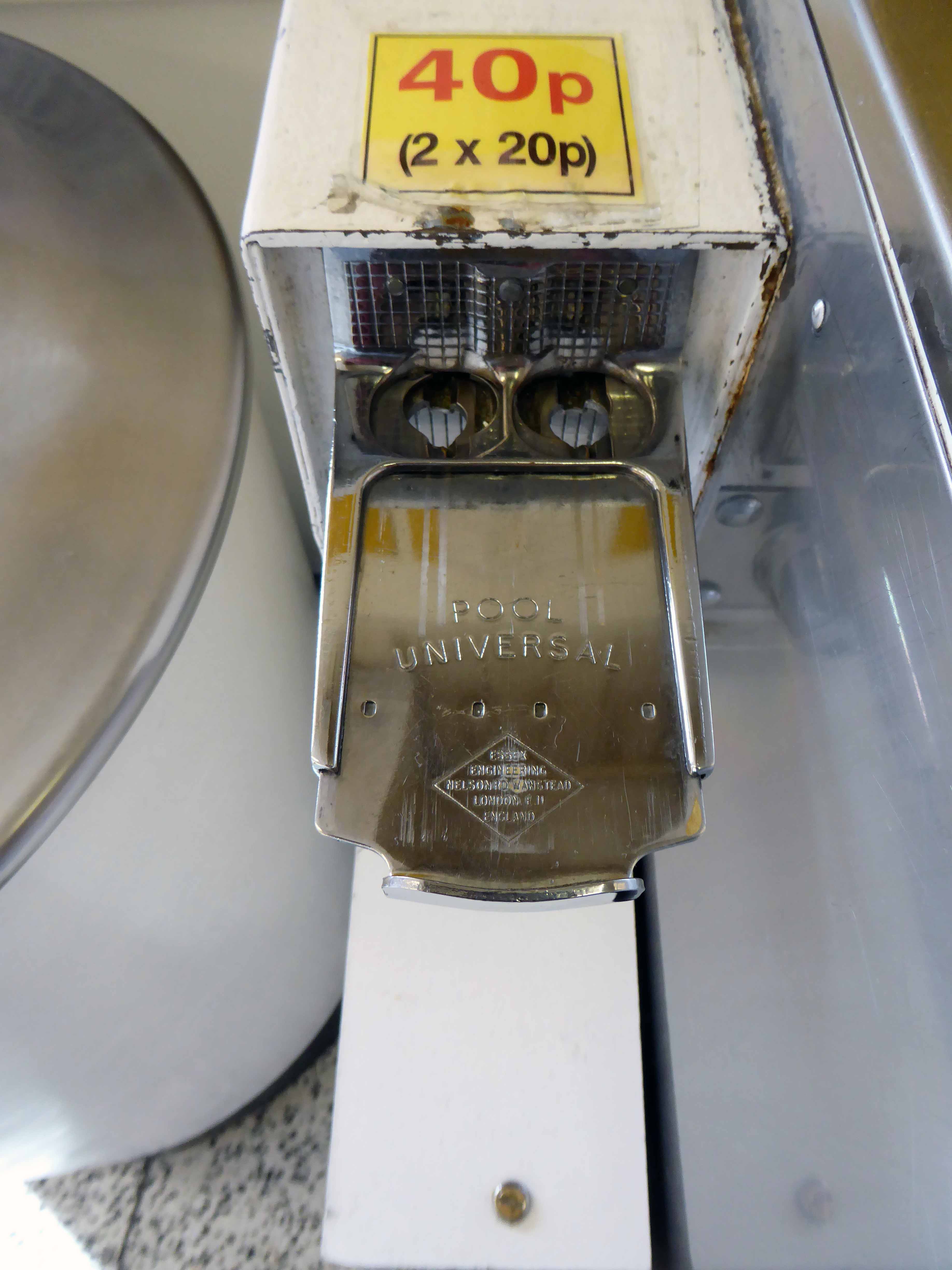
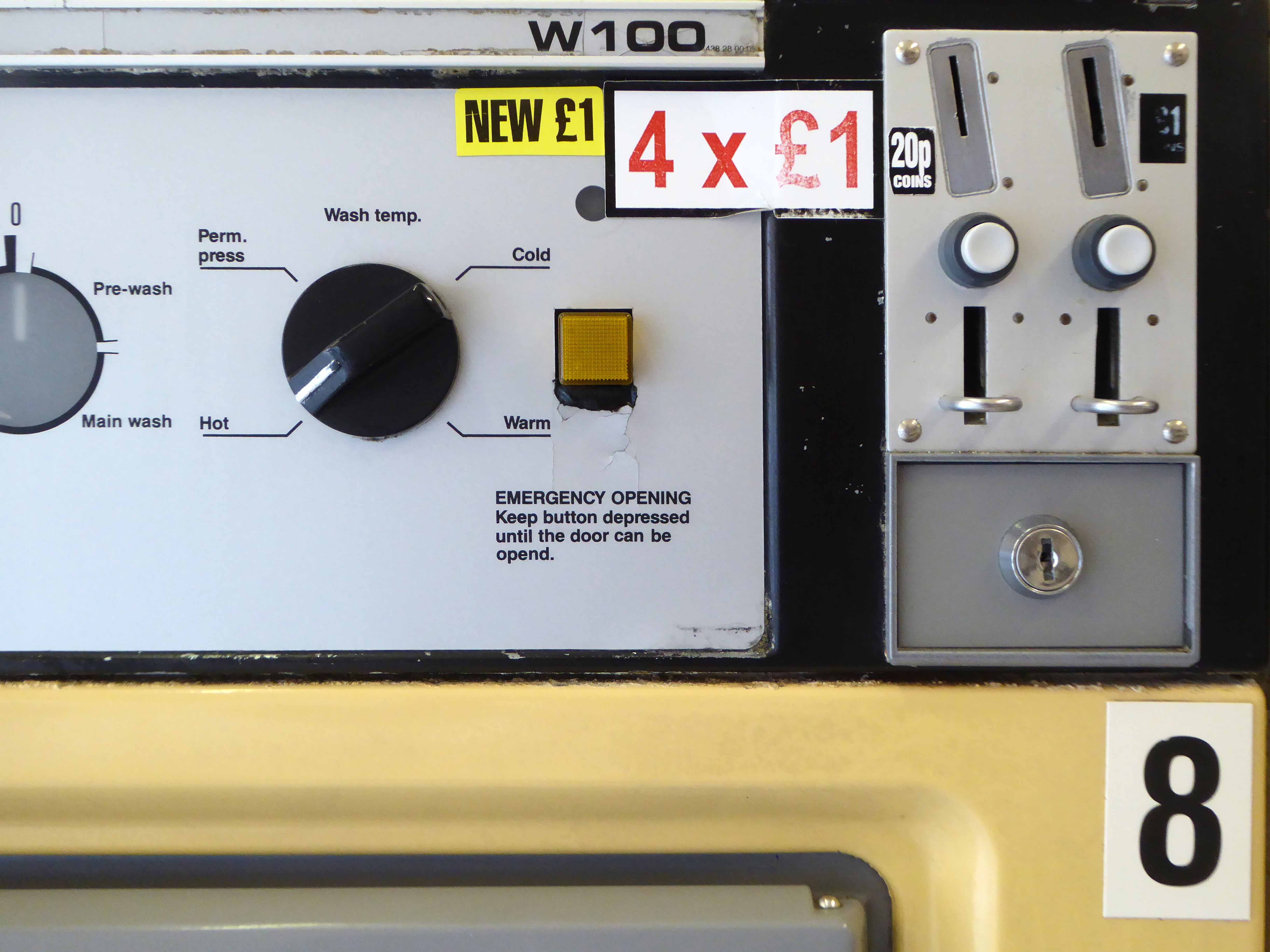
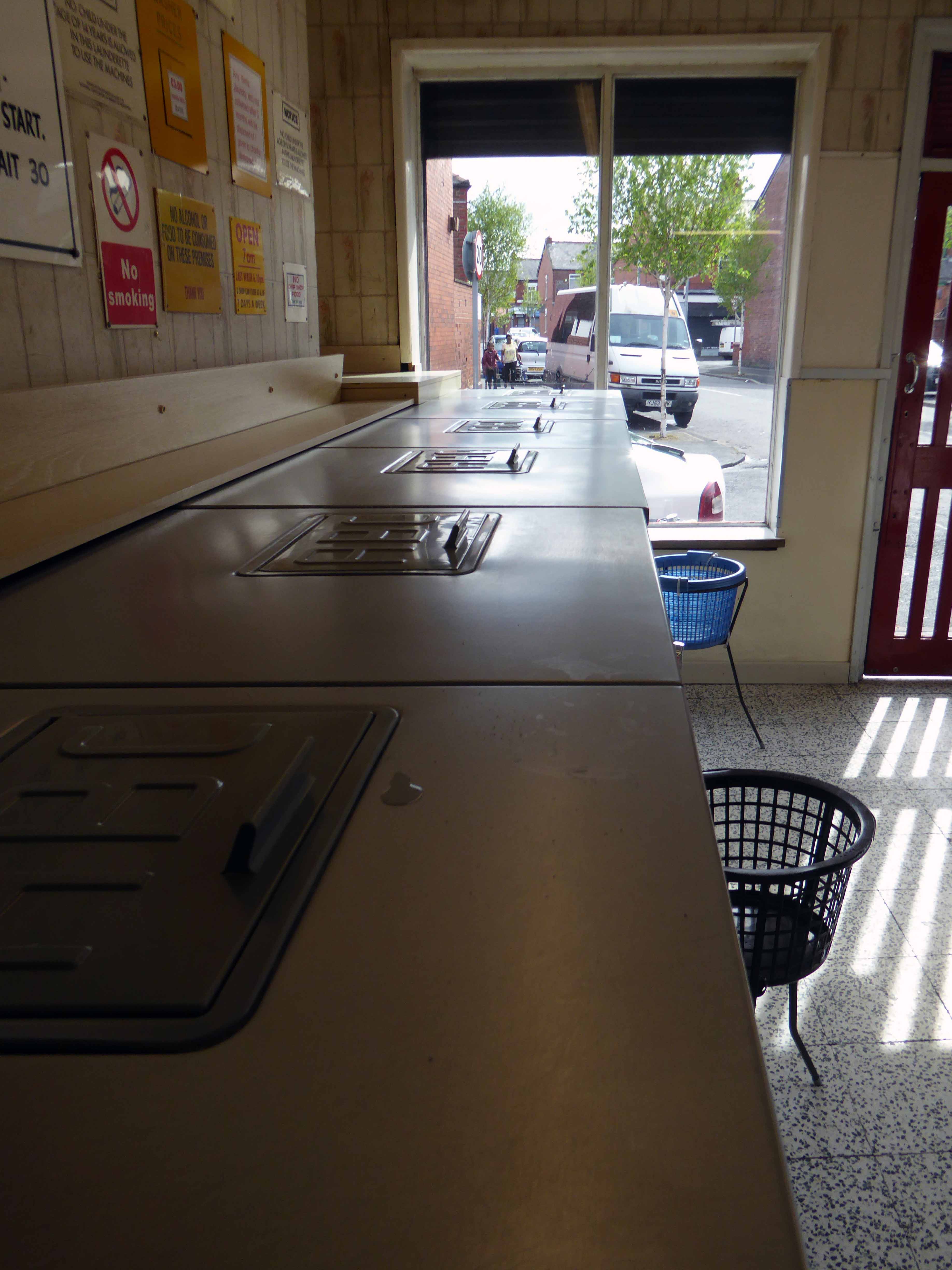
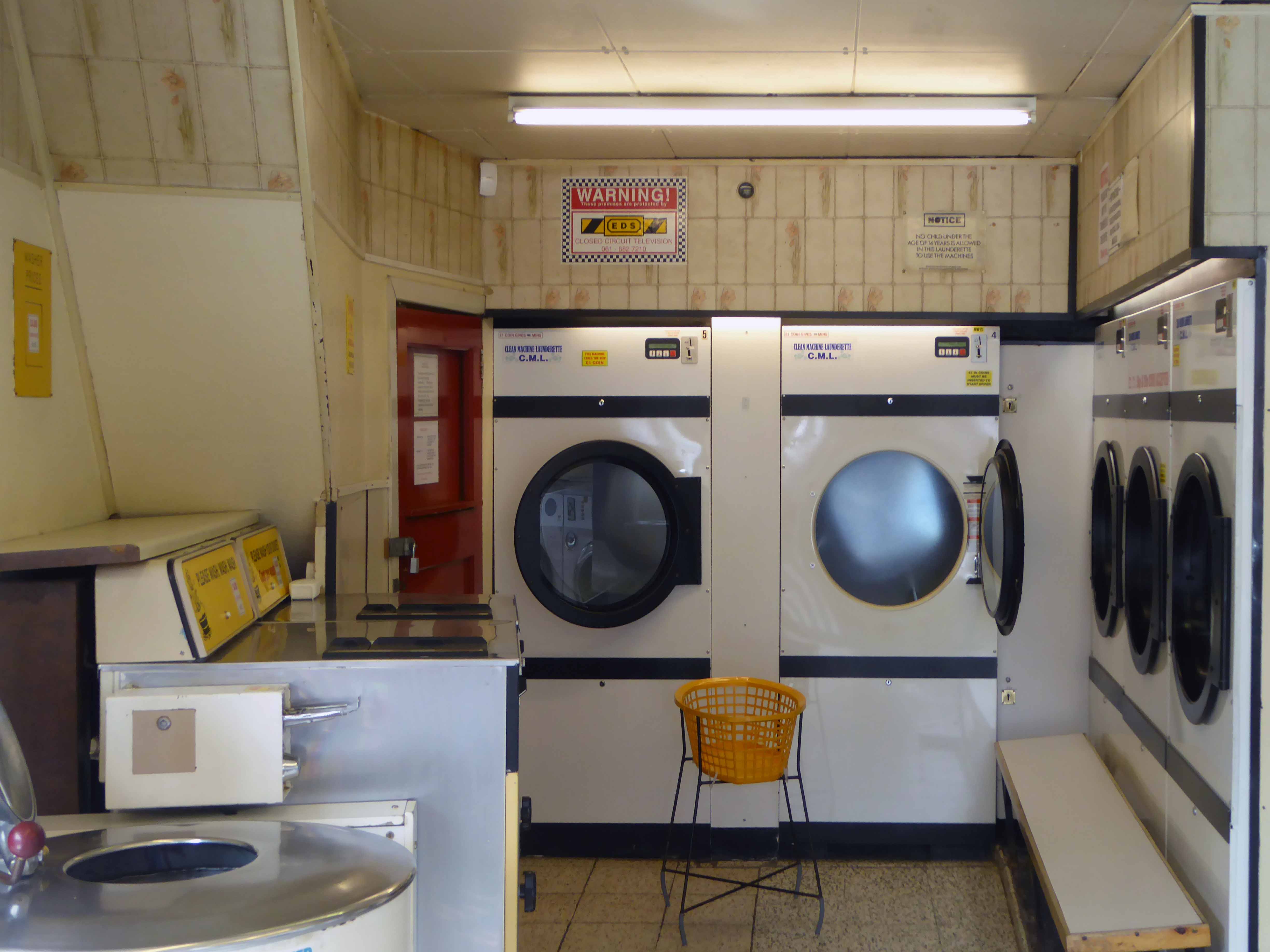
This is the land of the decommissioned washer – cash box removed, unrepurposed, demure and decorative yet sadly redundant.
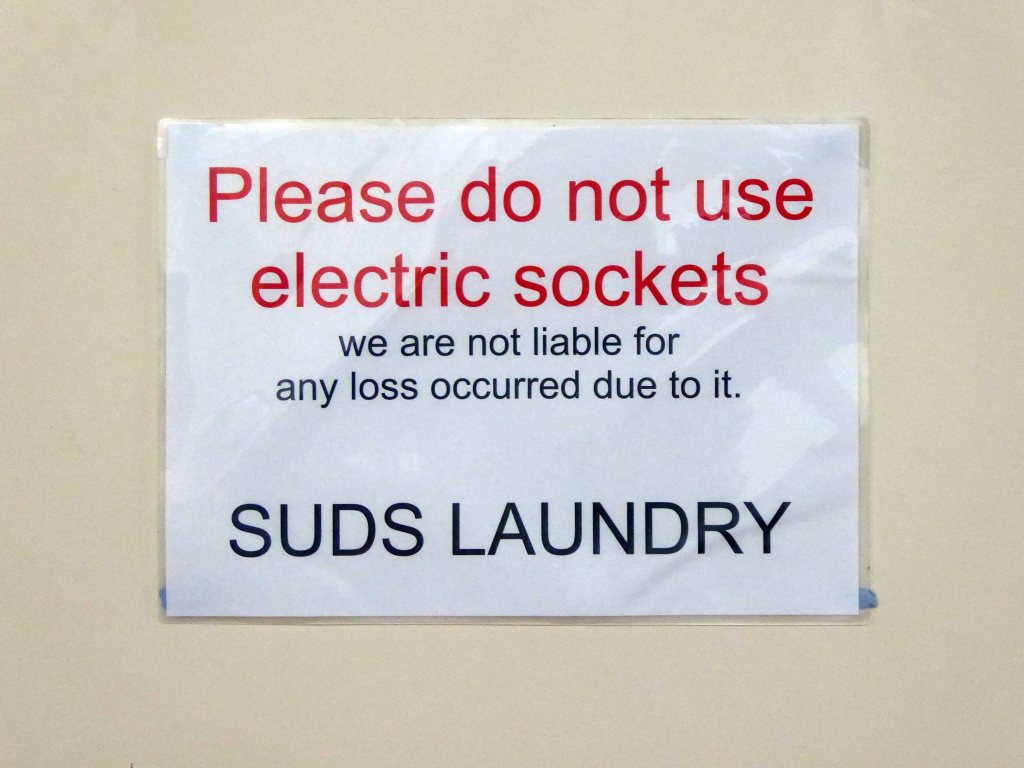
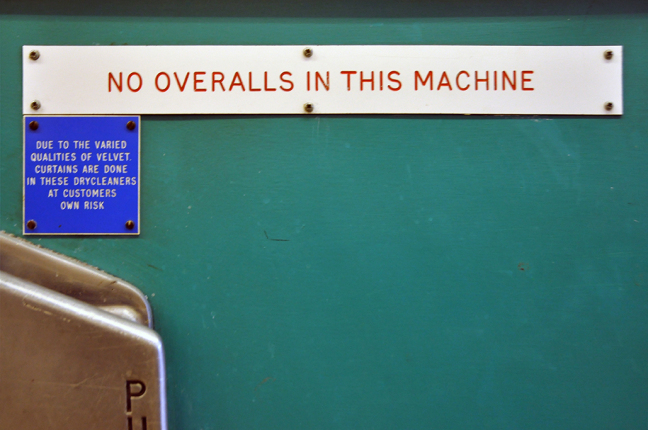
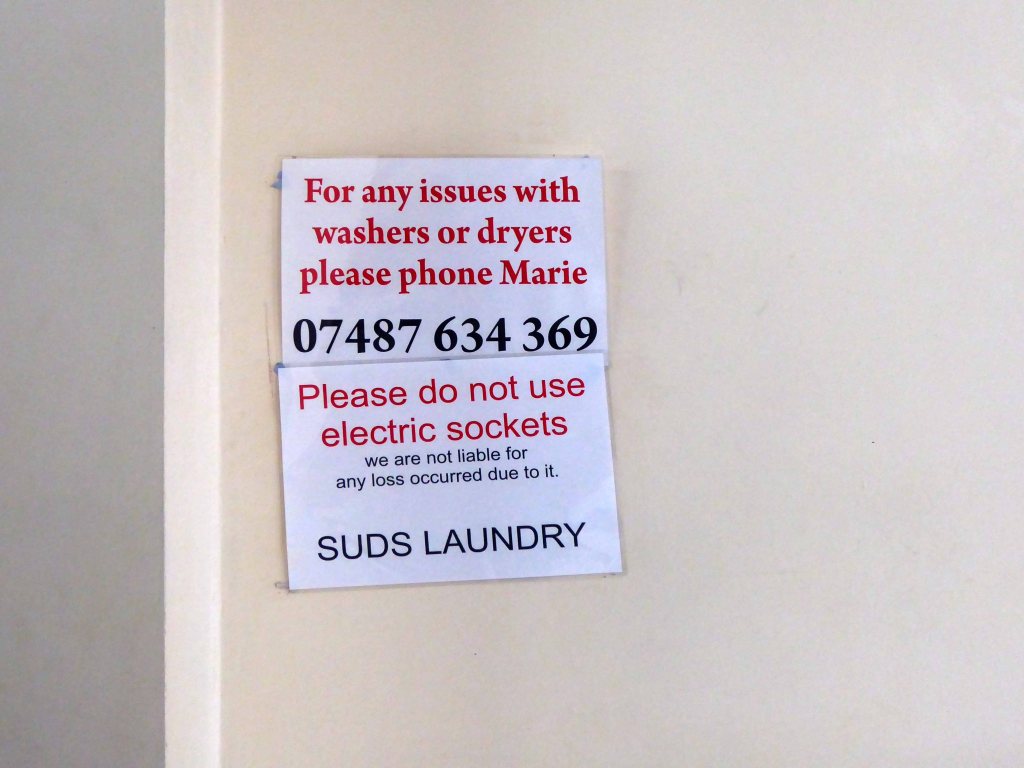
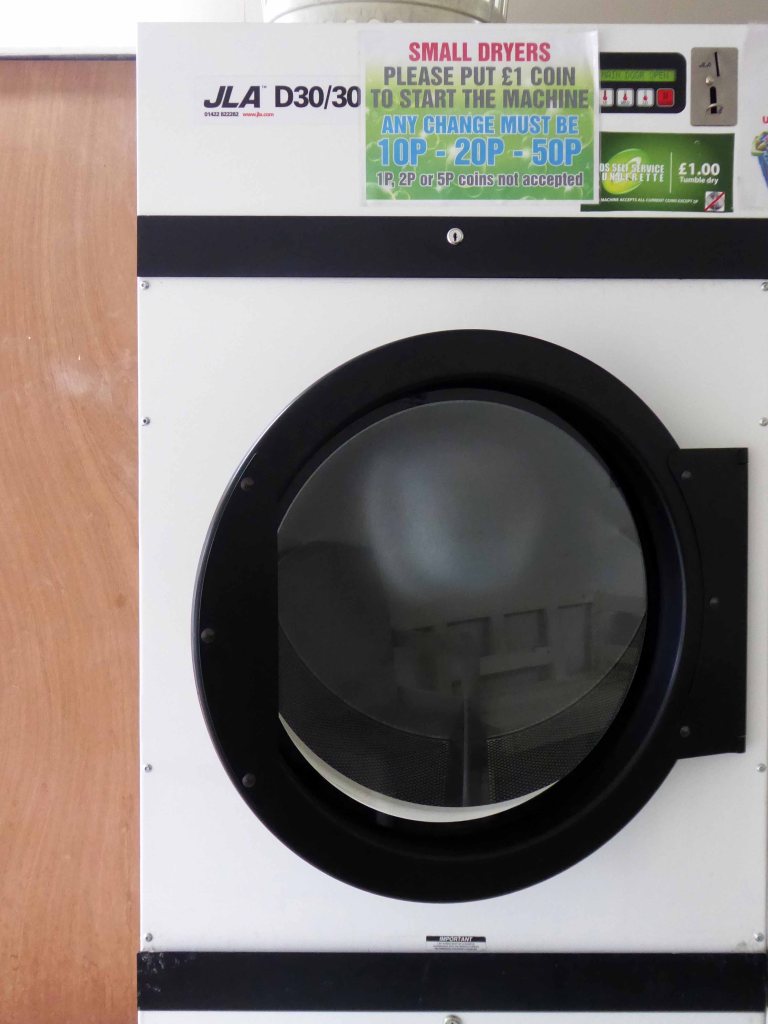
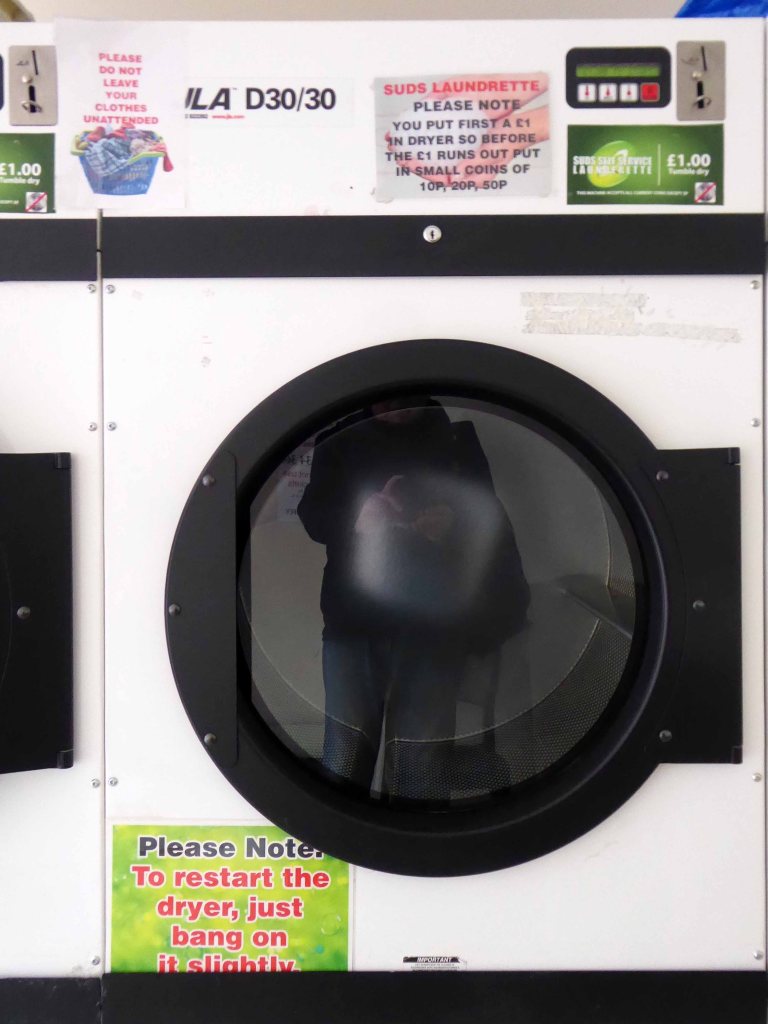
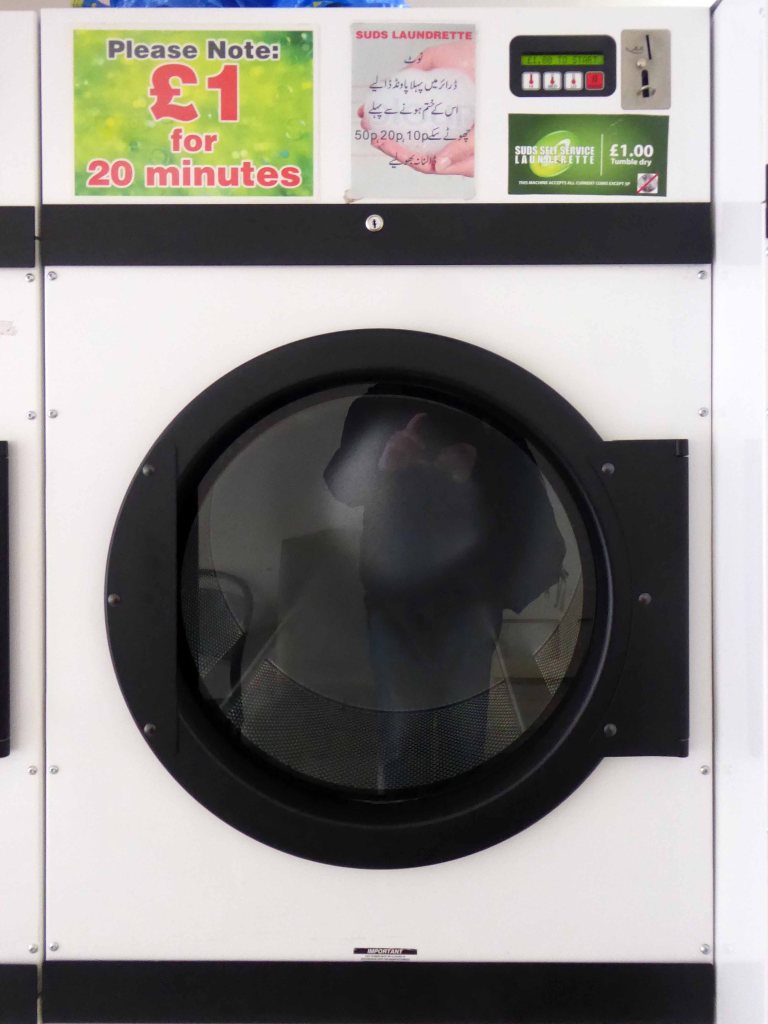
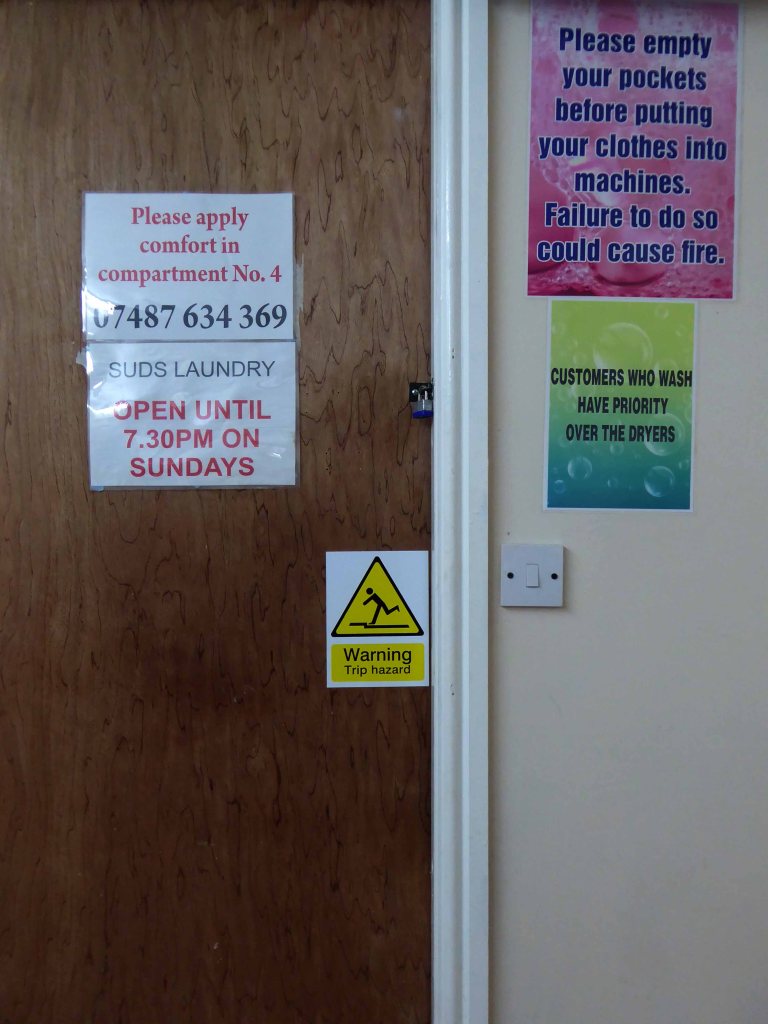
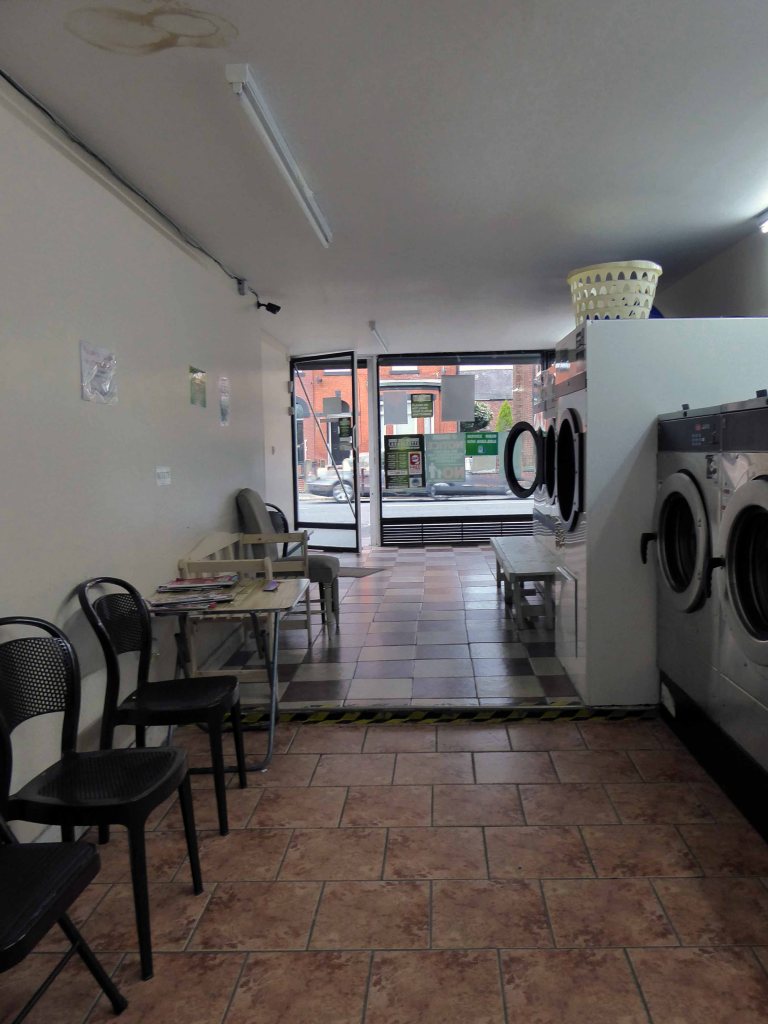
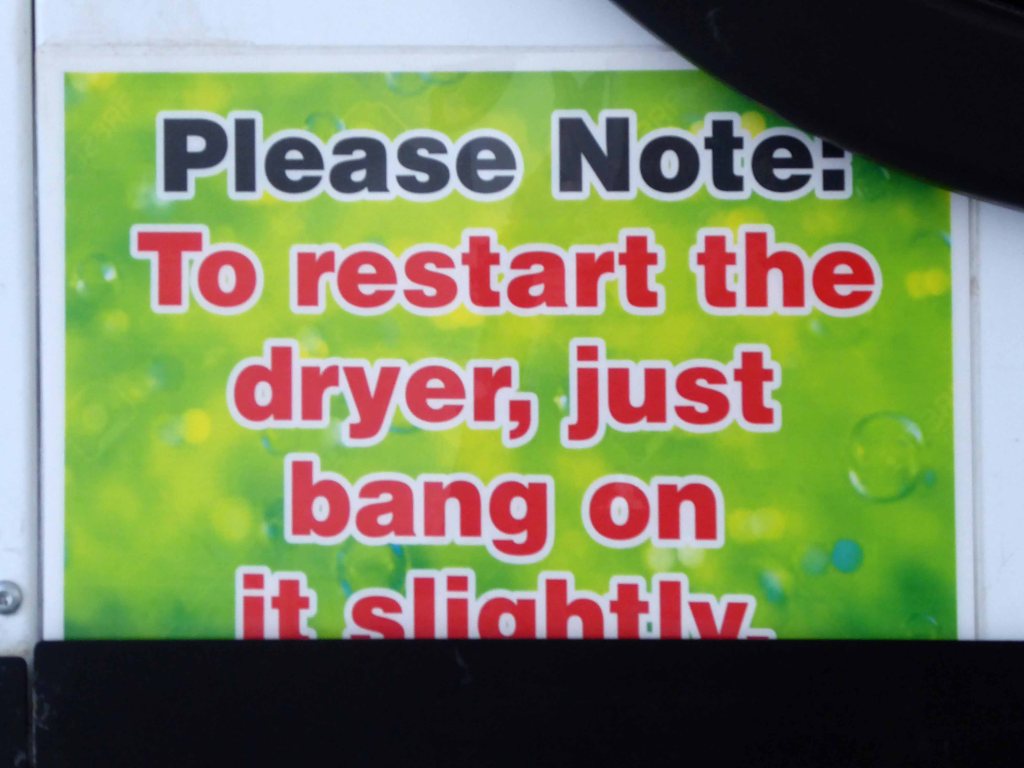
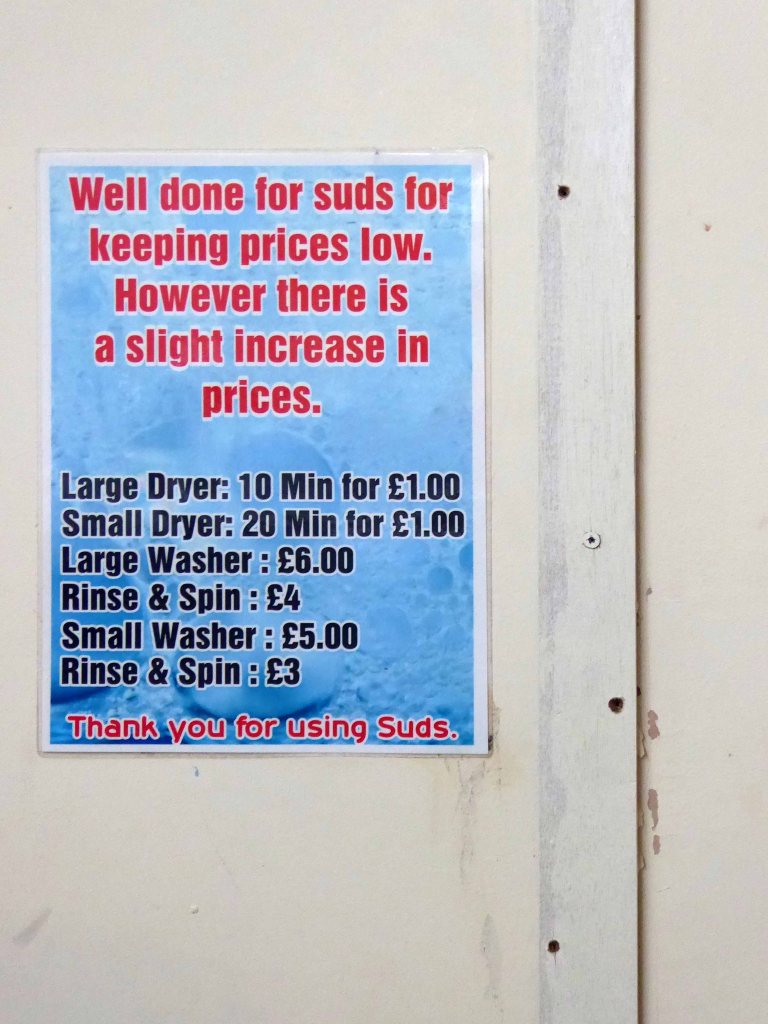
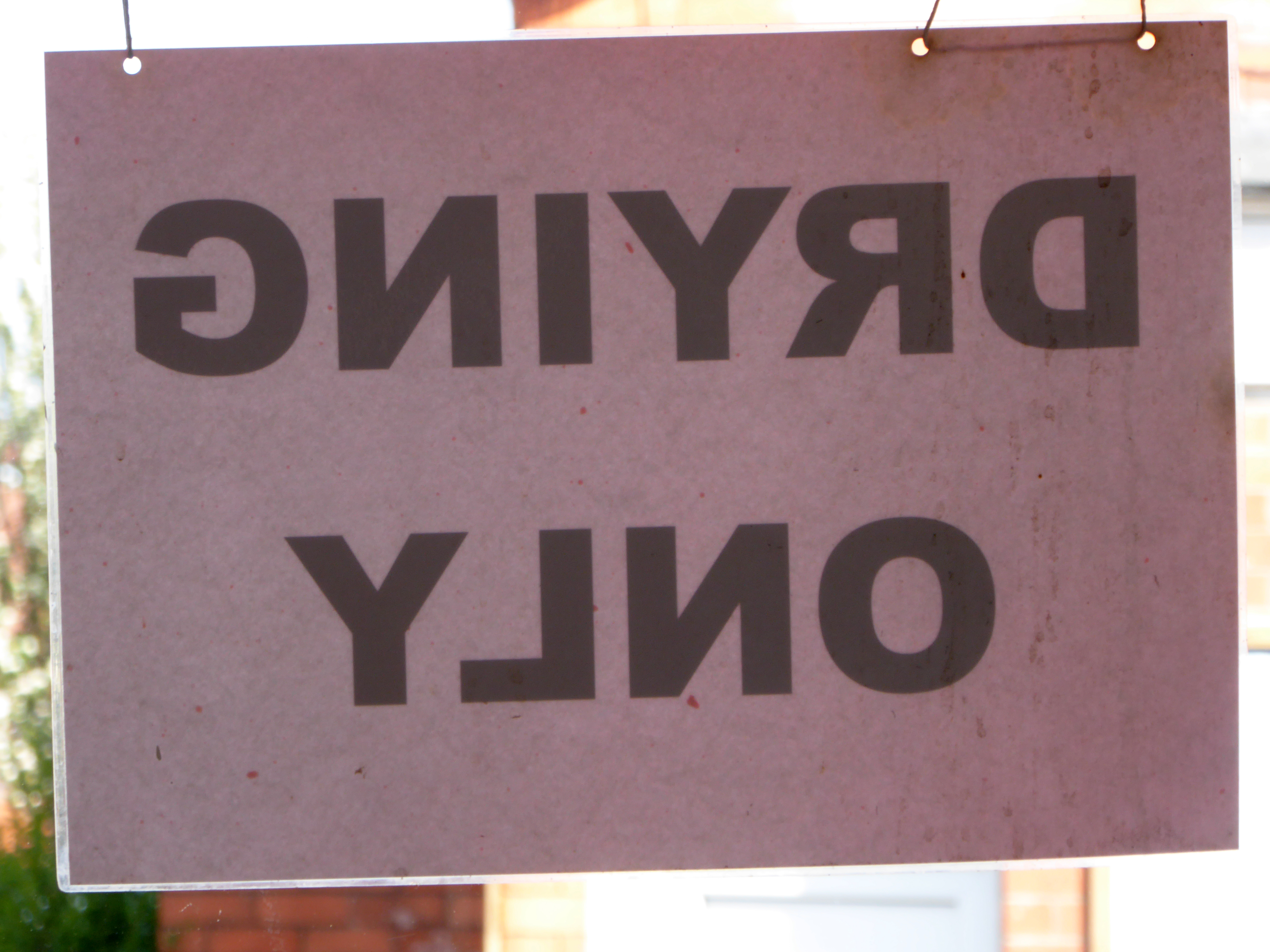
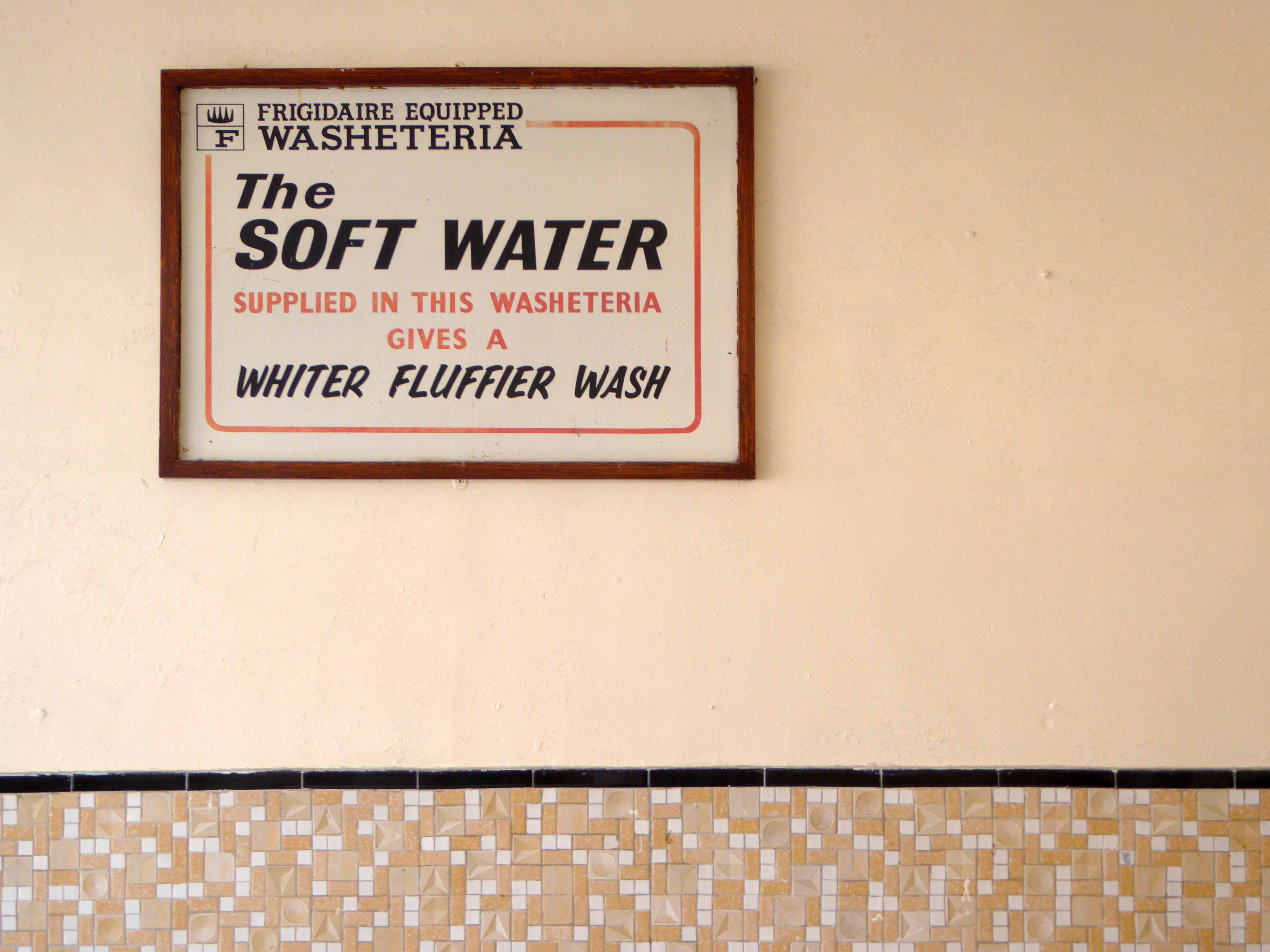
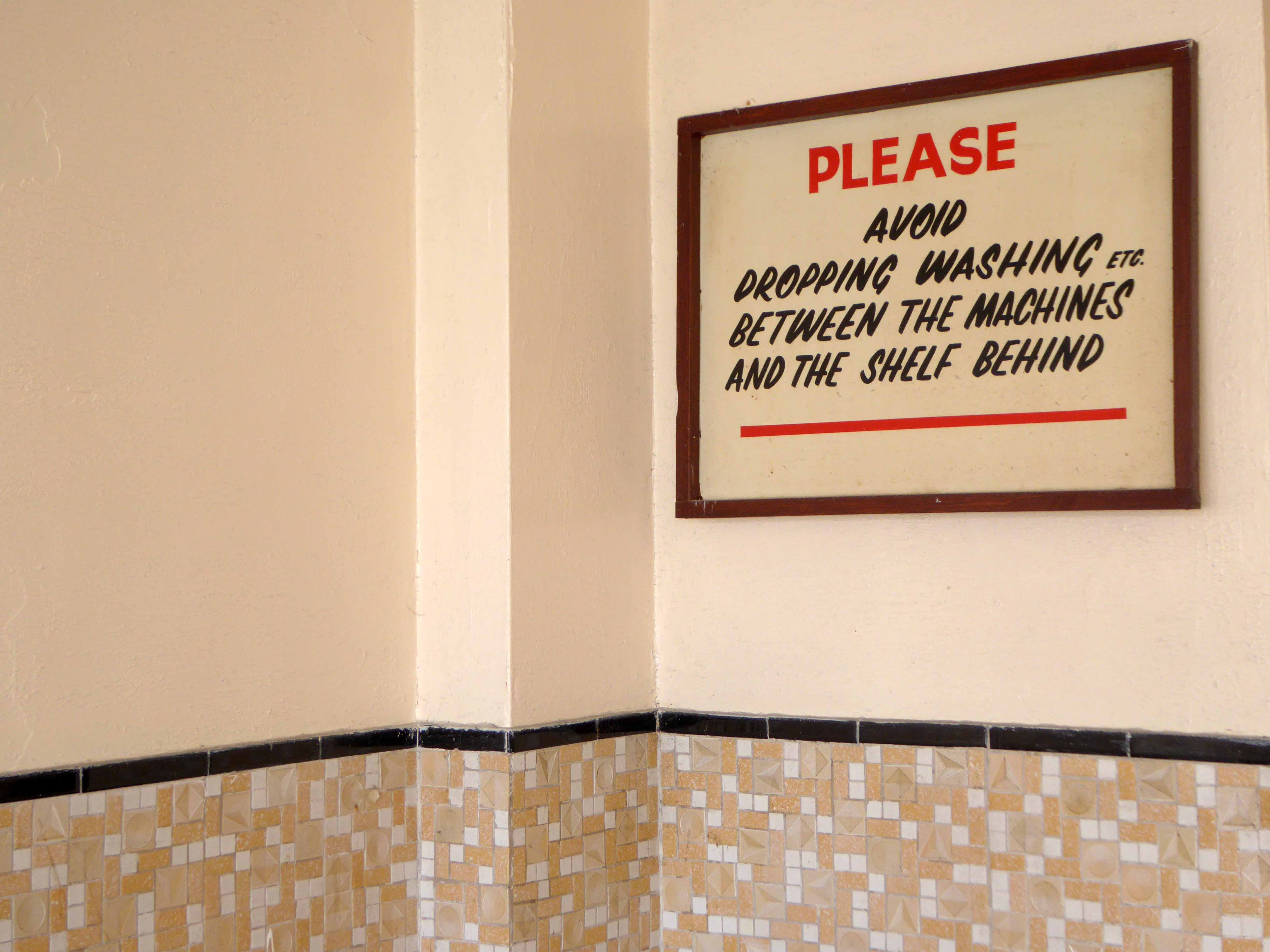
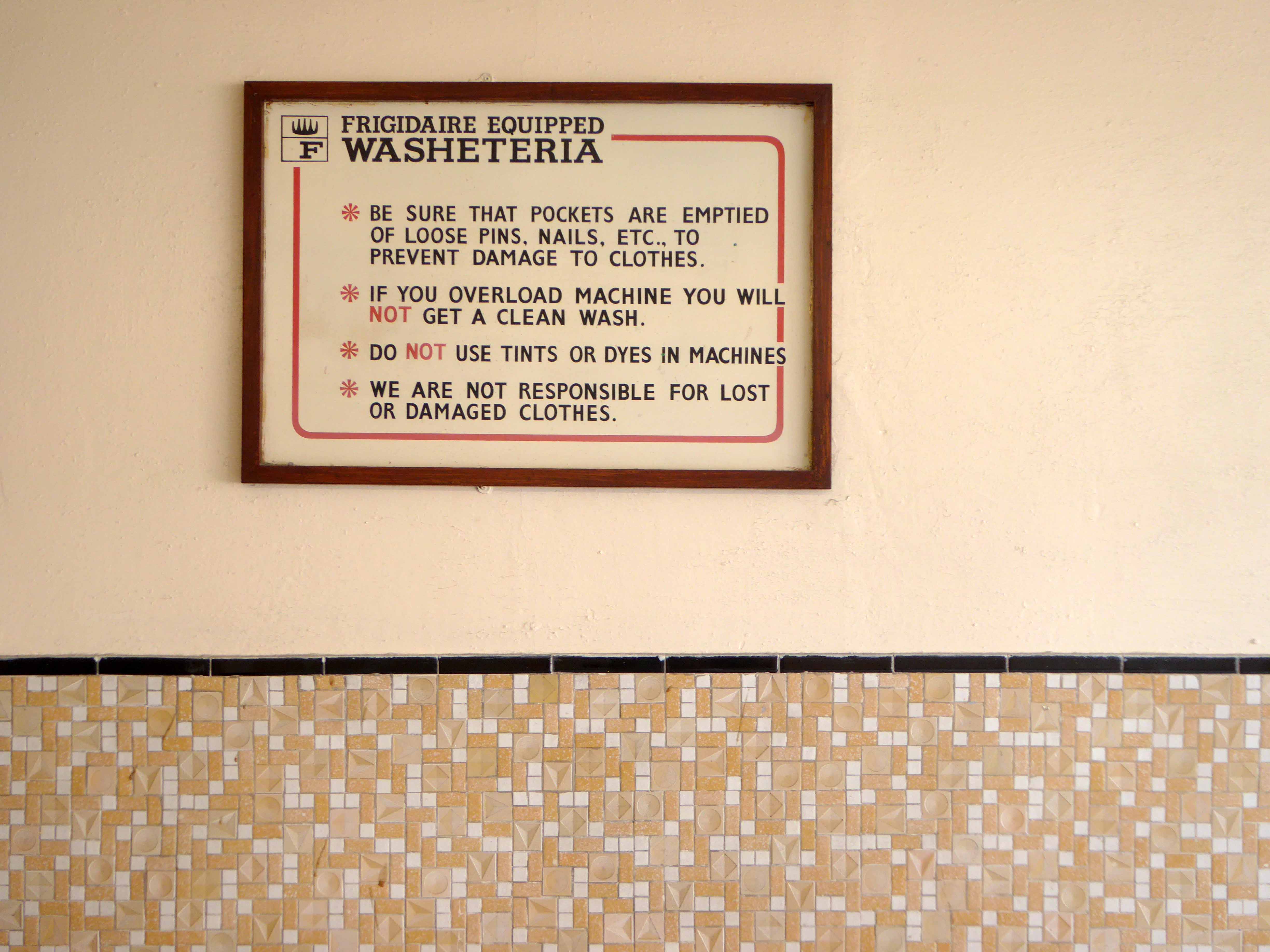
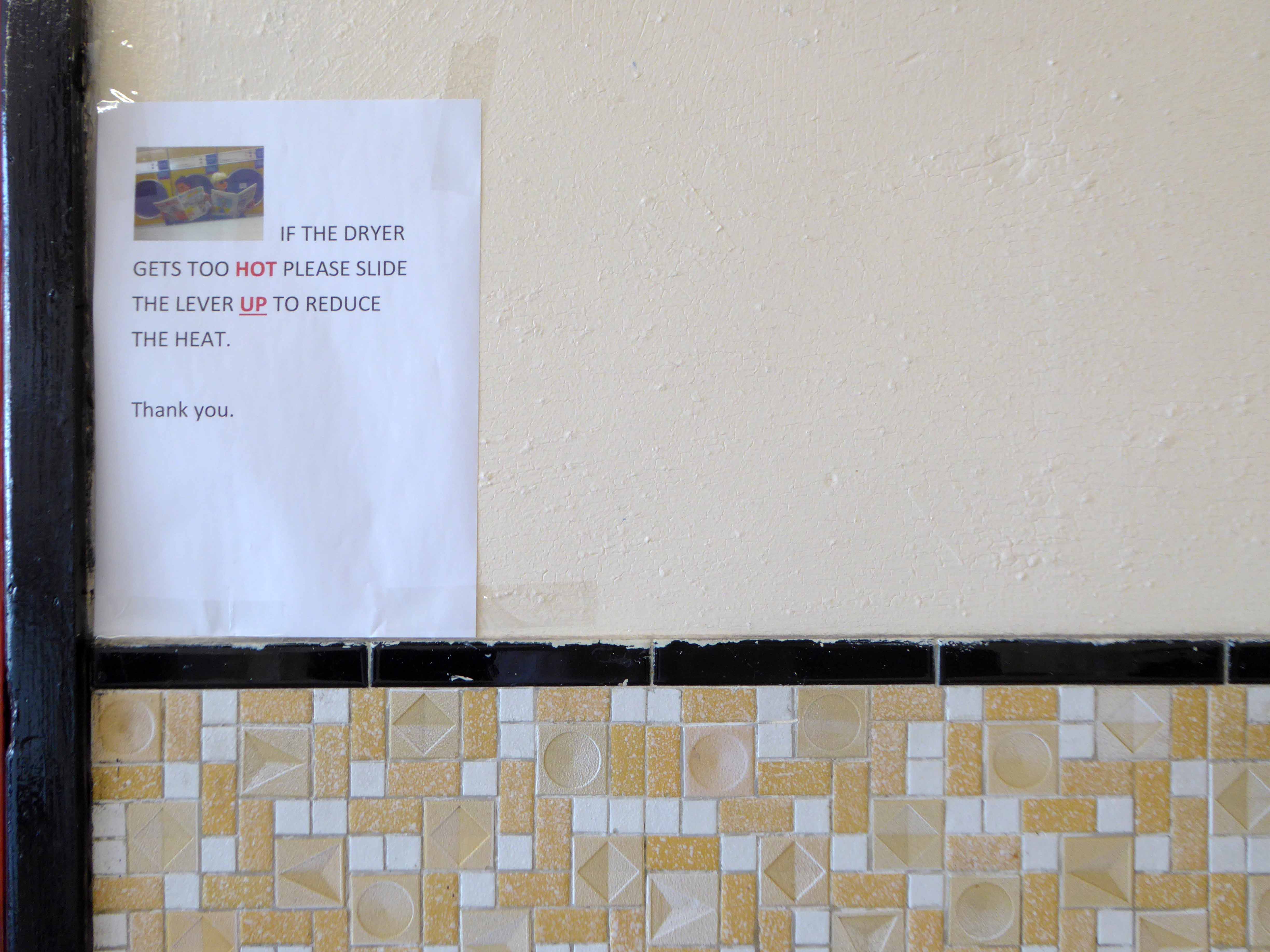
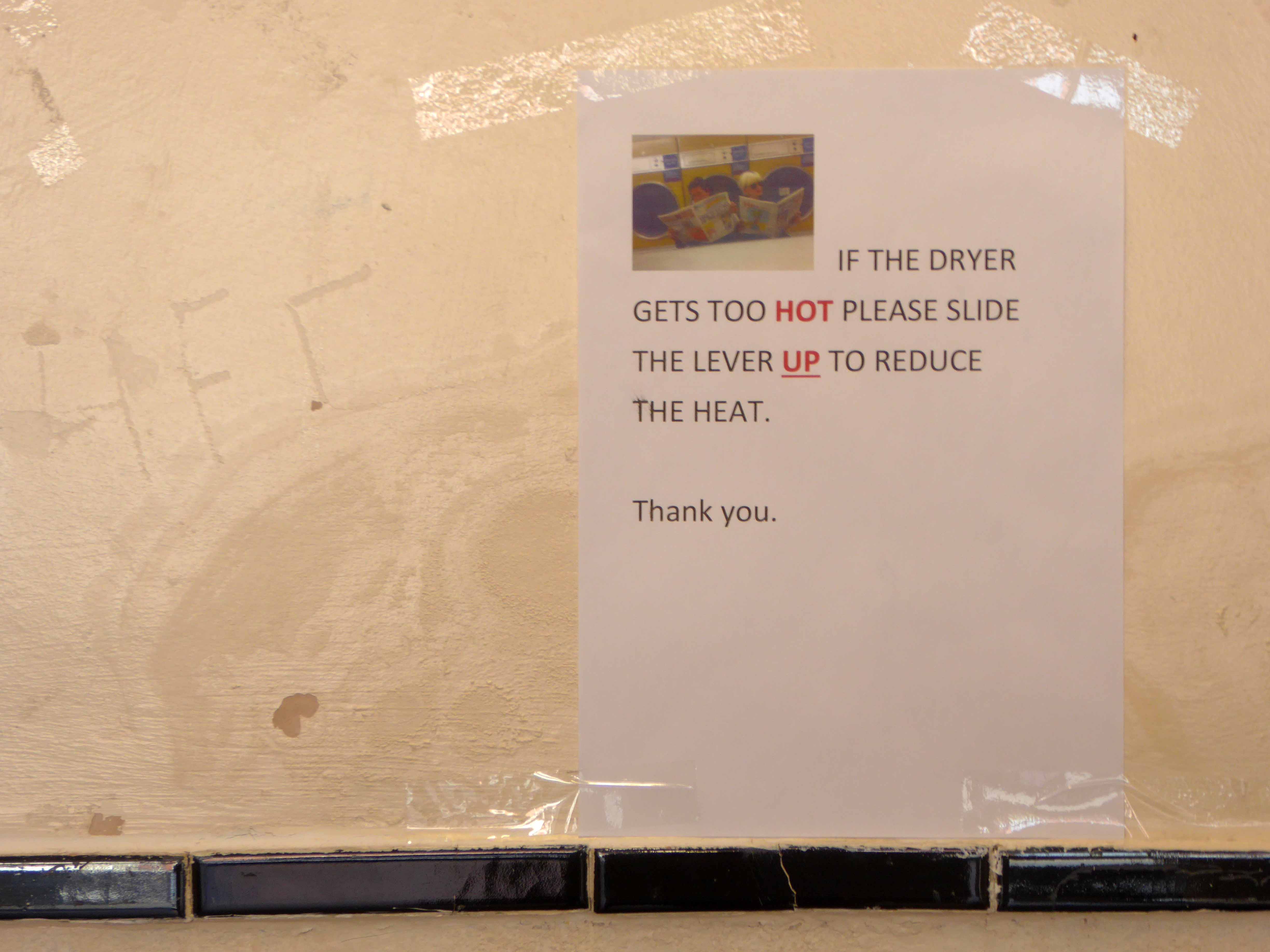
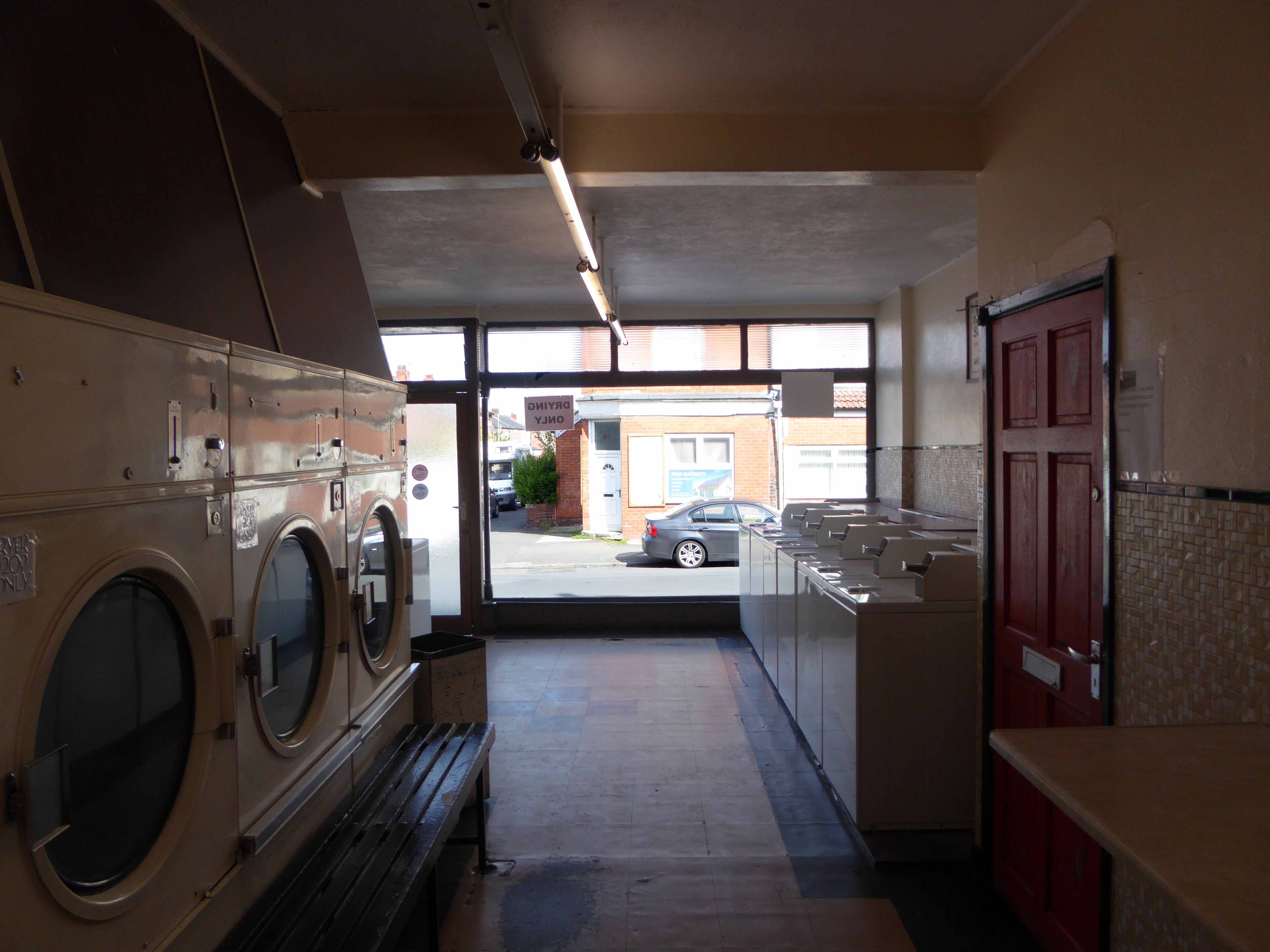
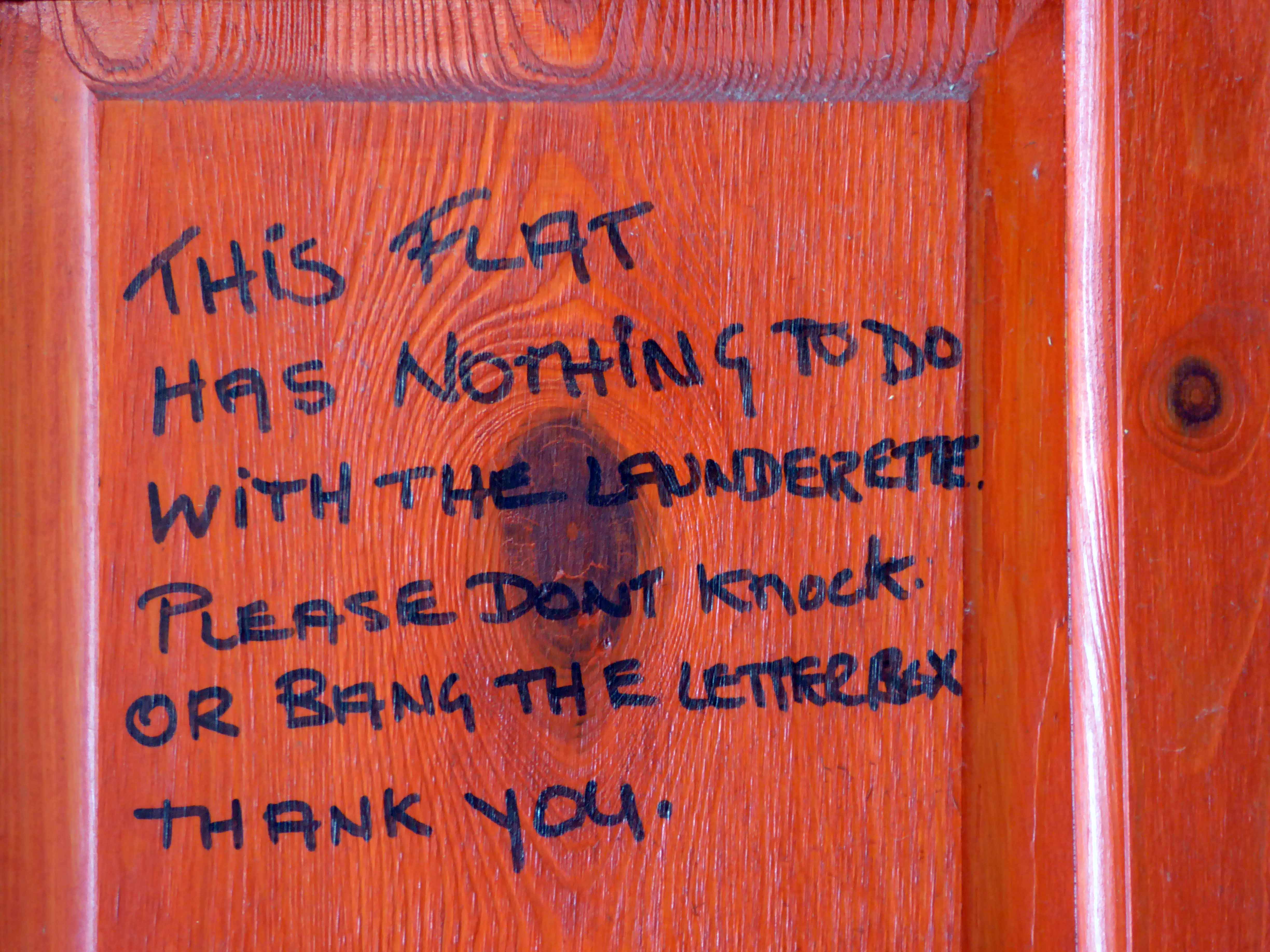
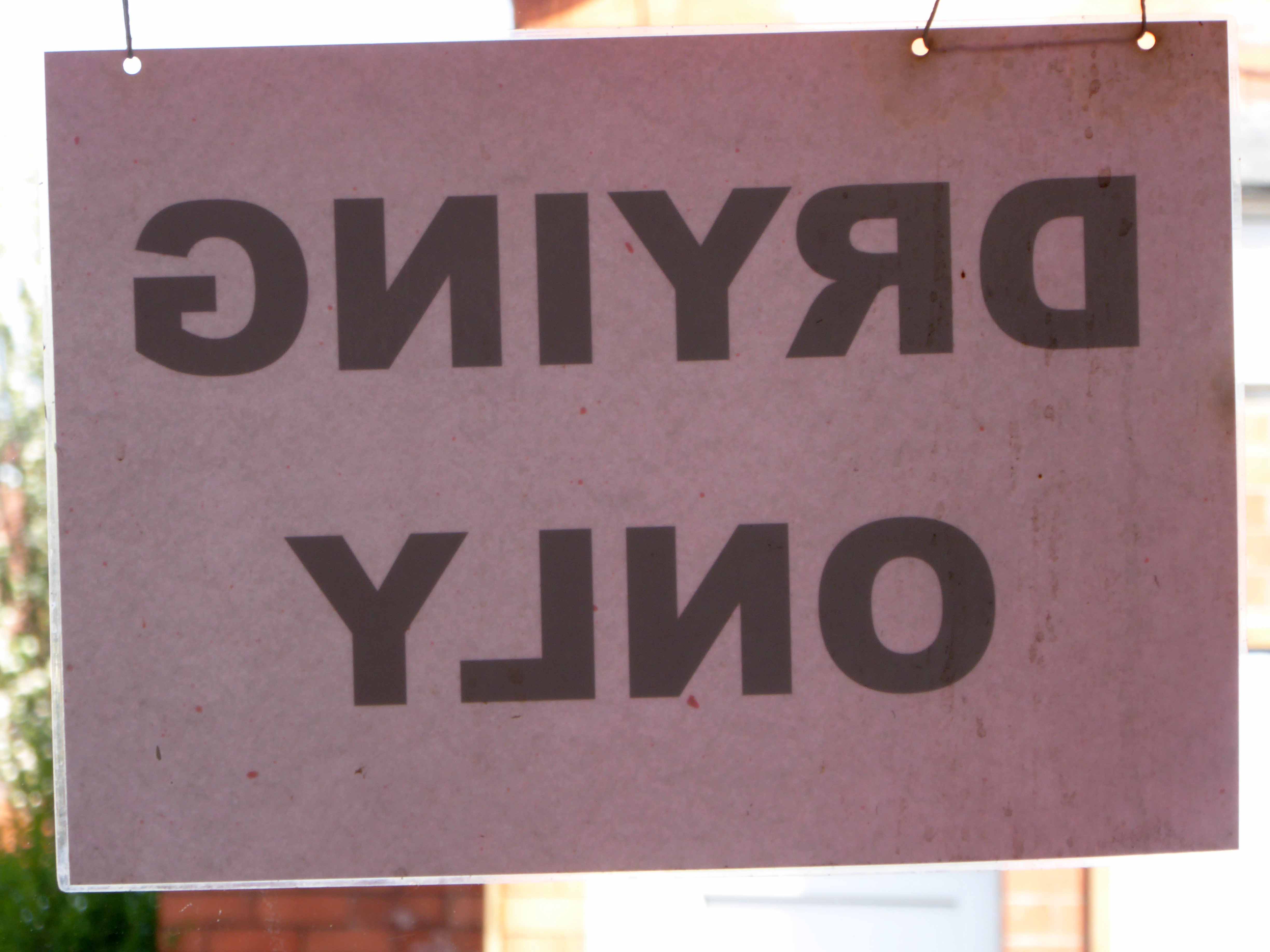
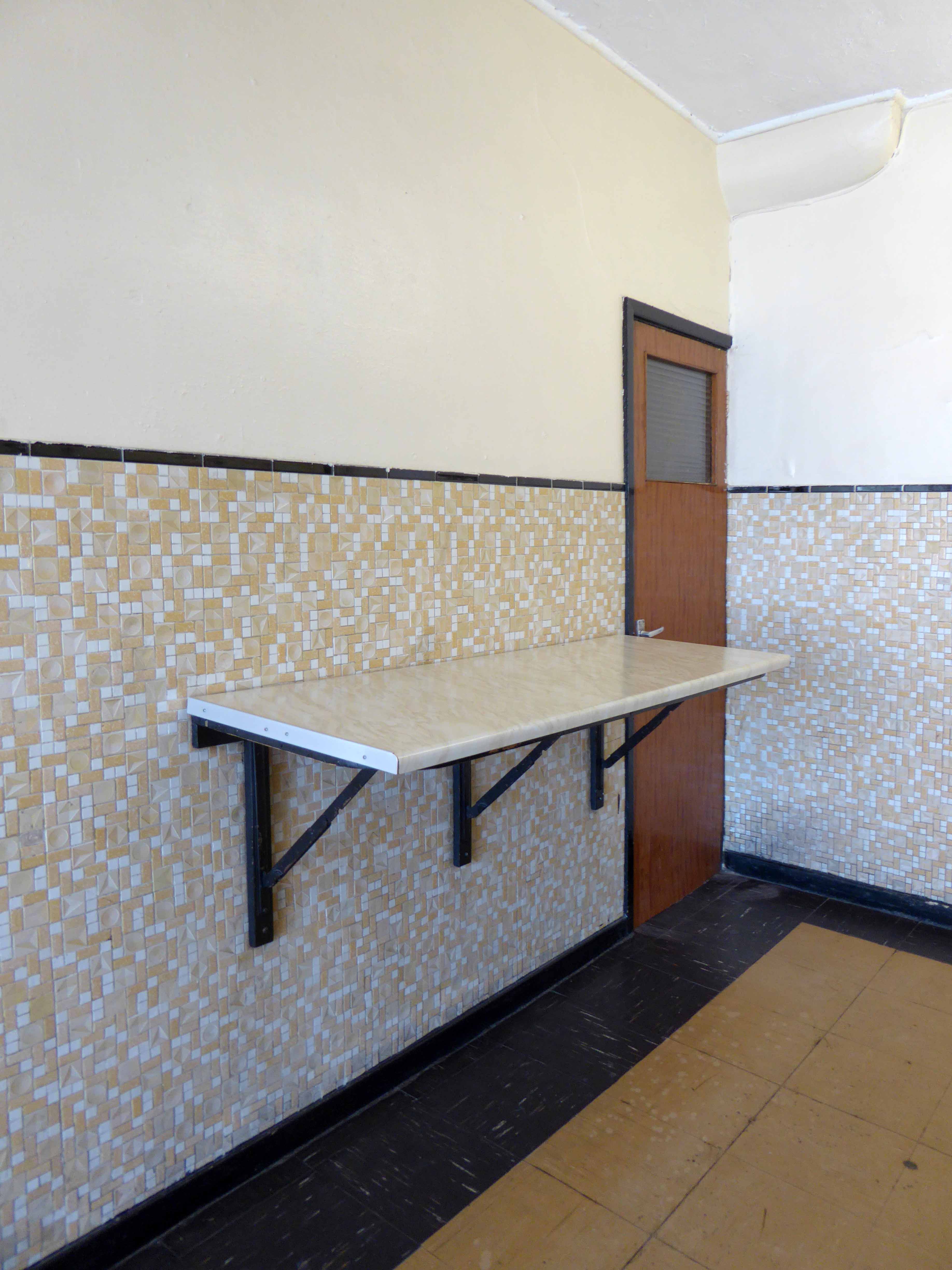
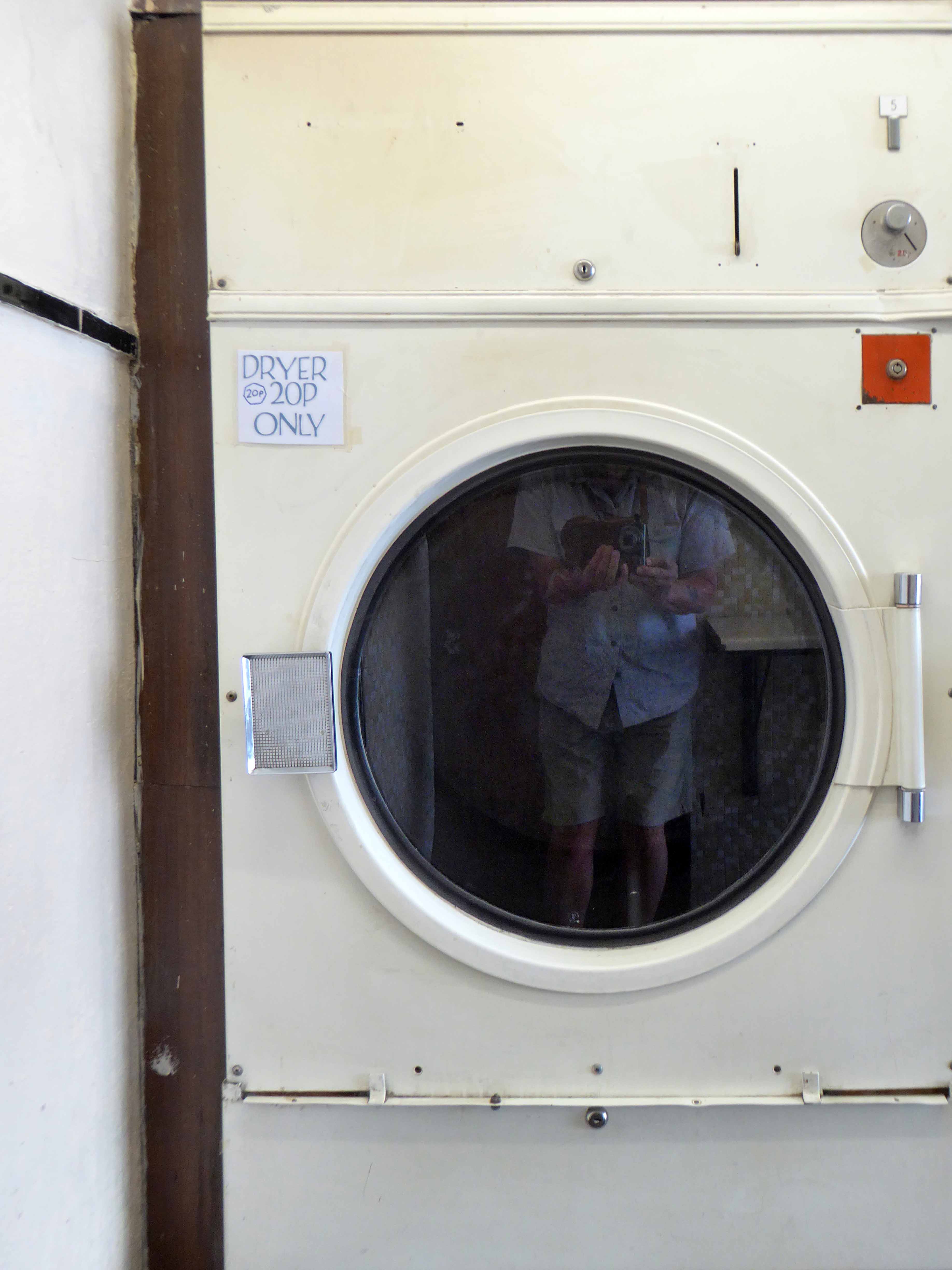
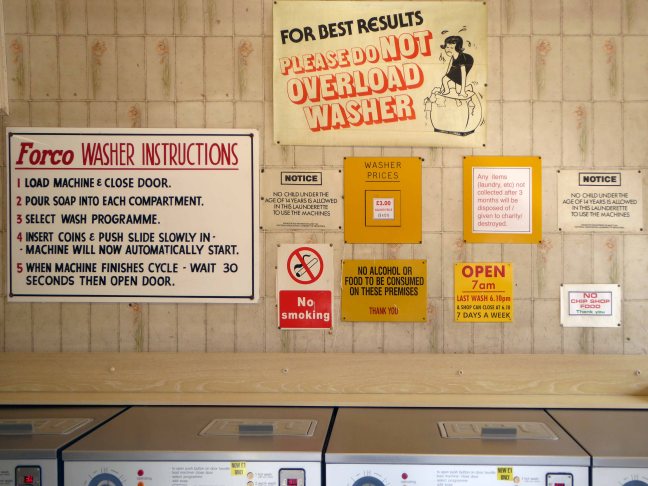
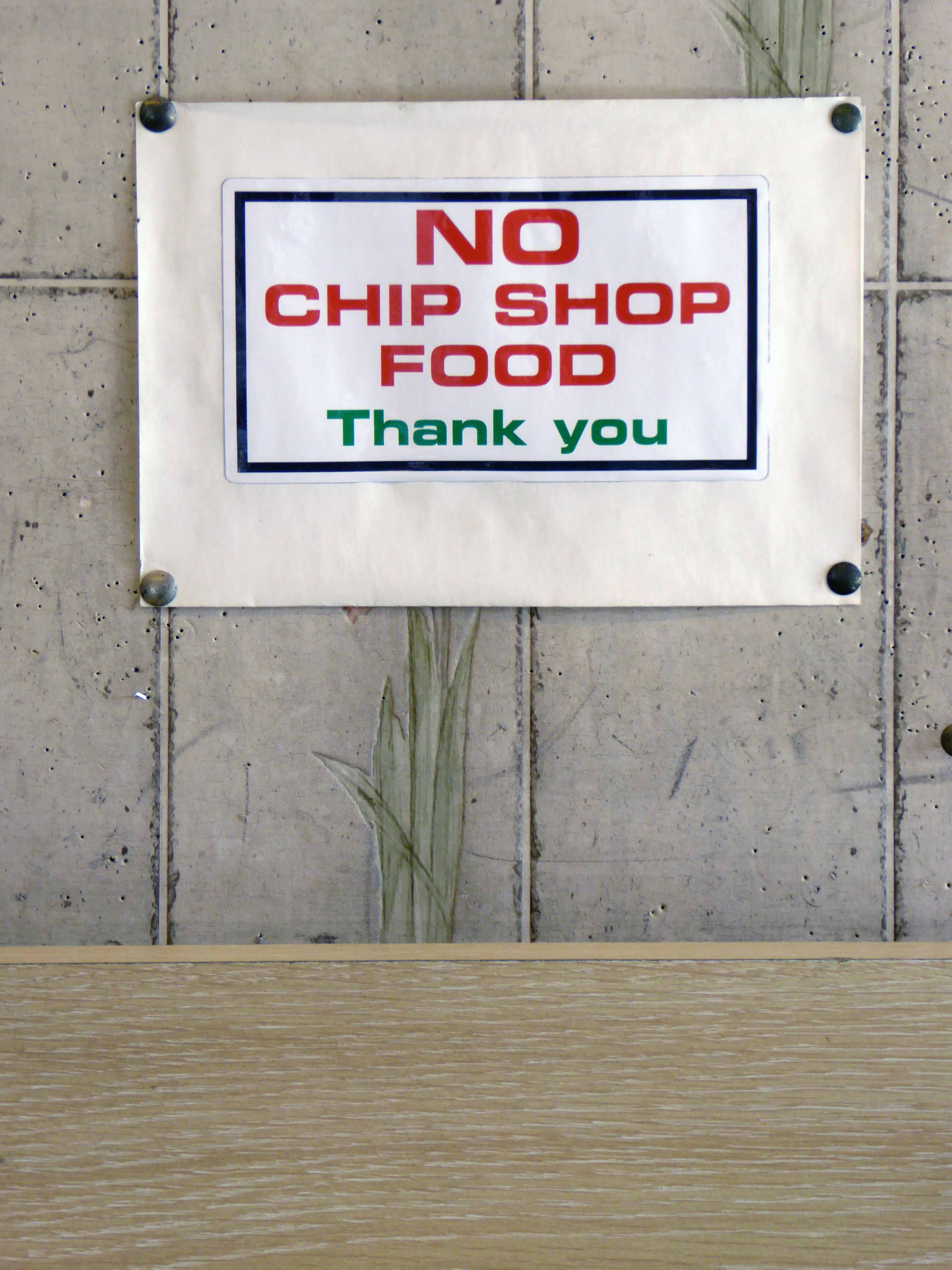
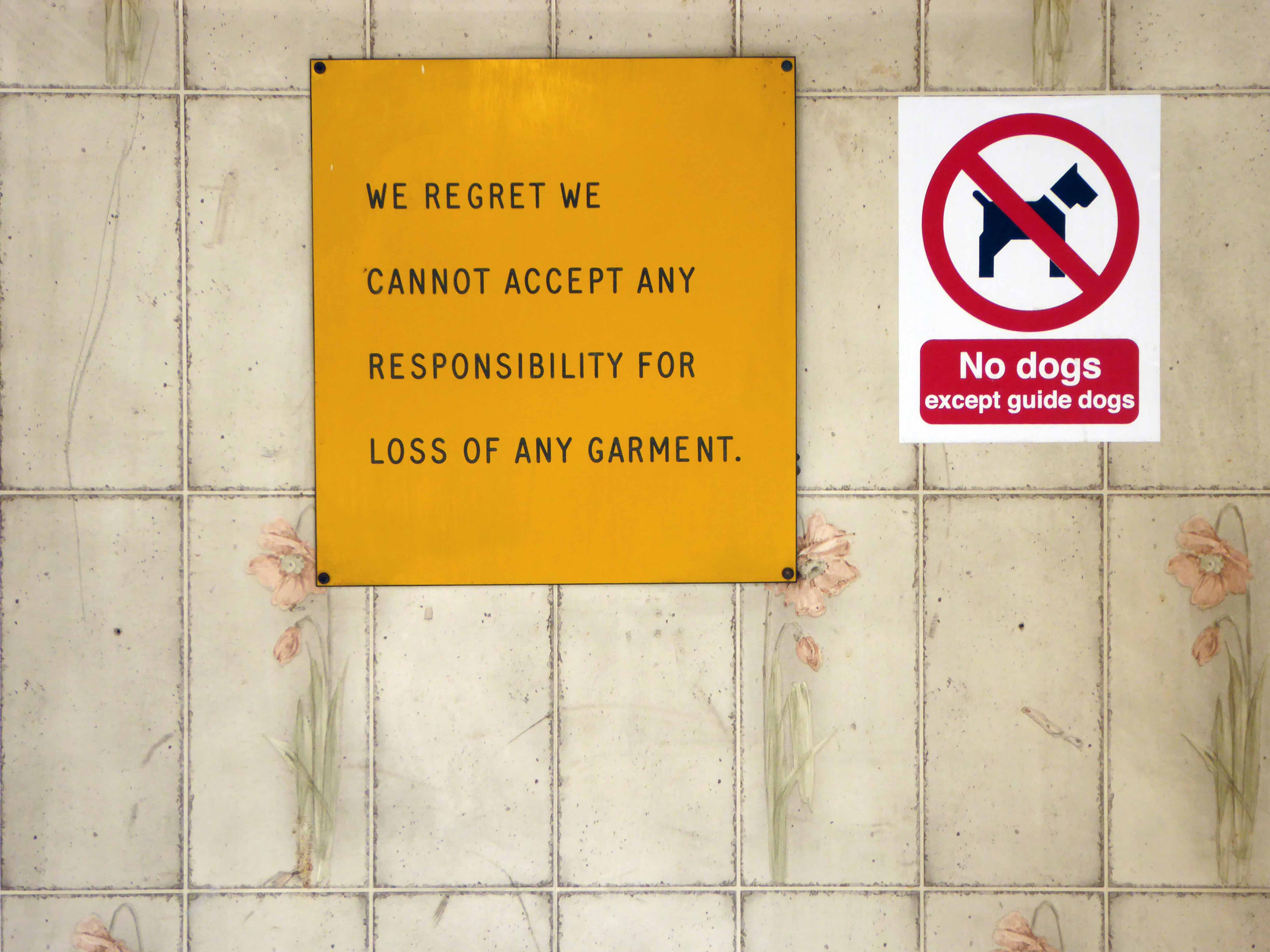
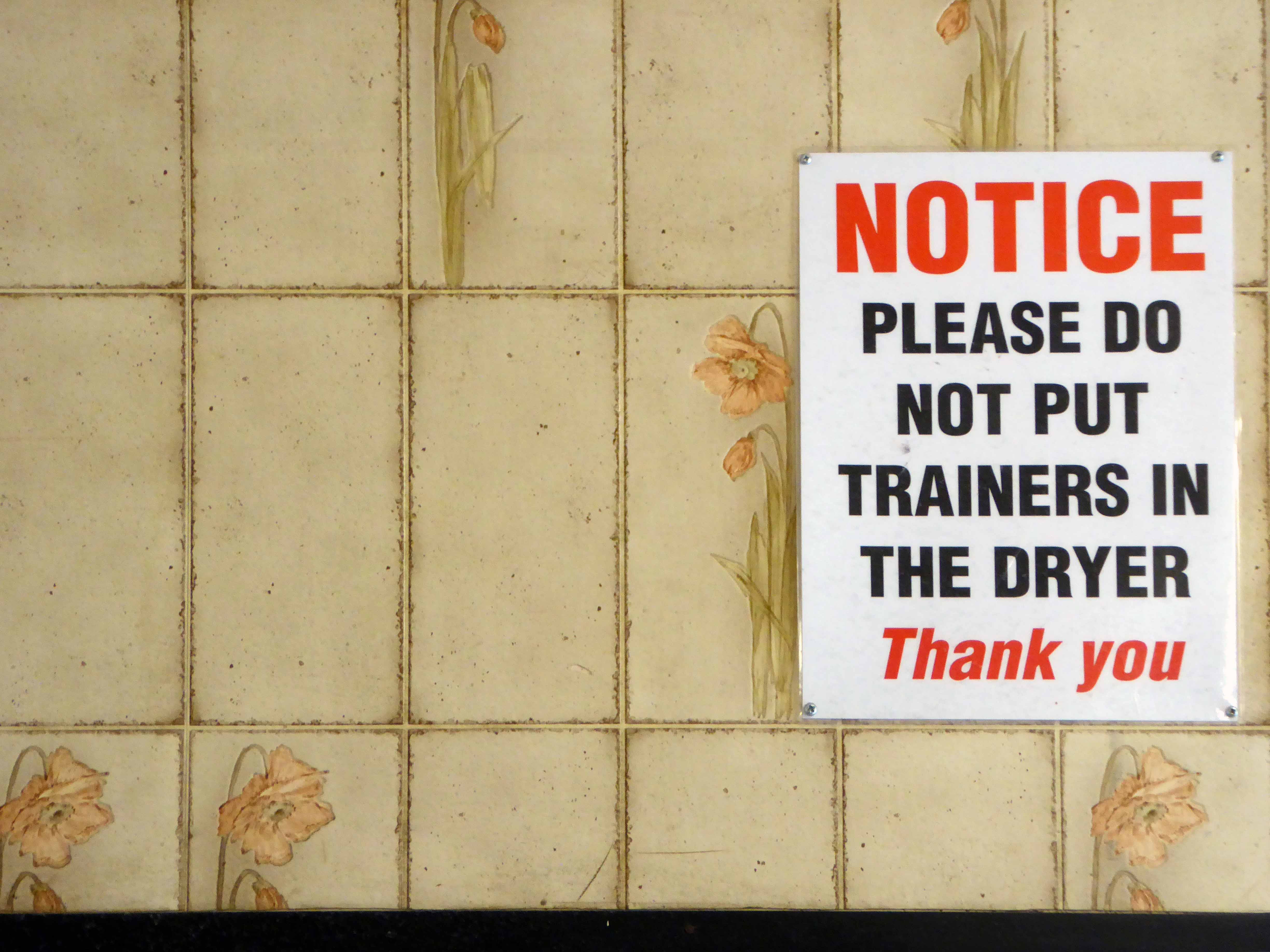
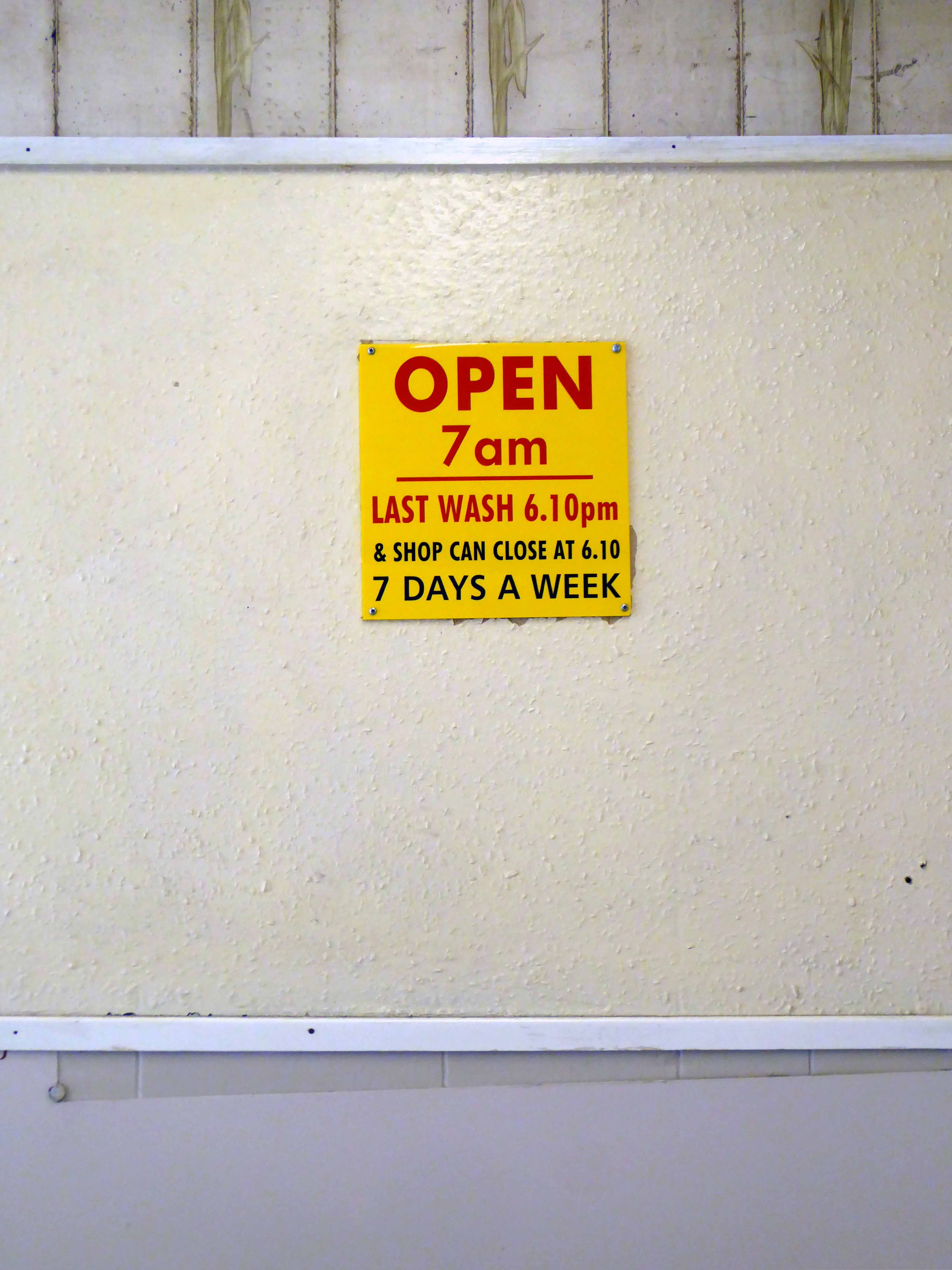
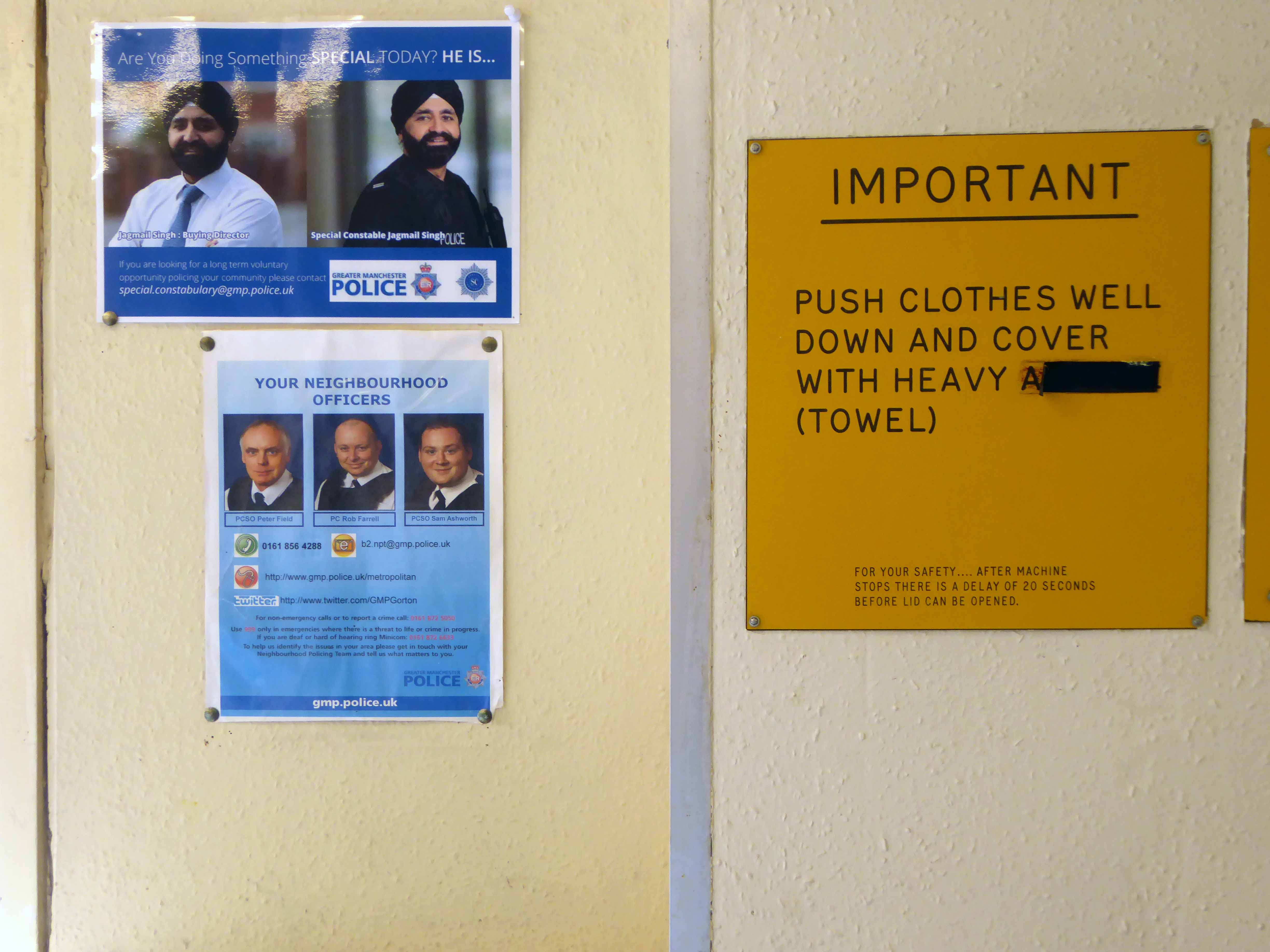
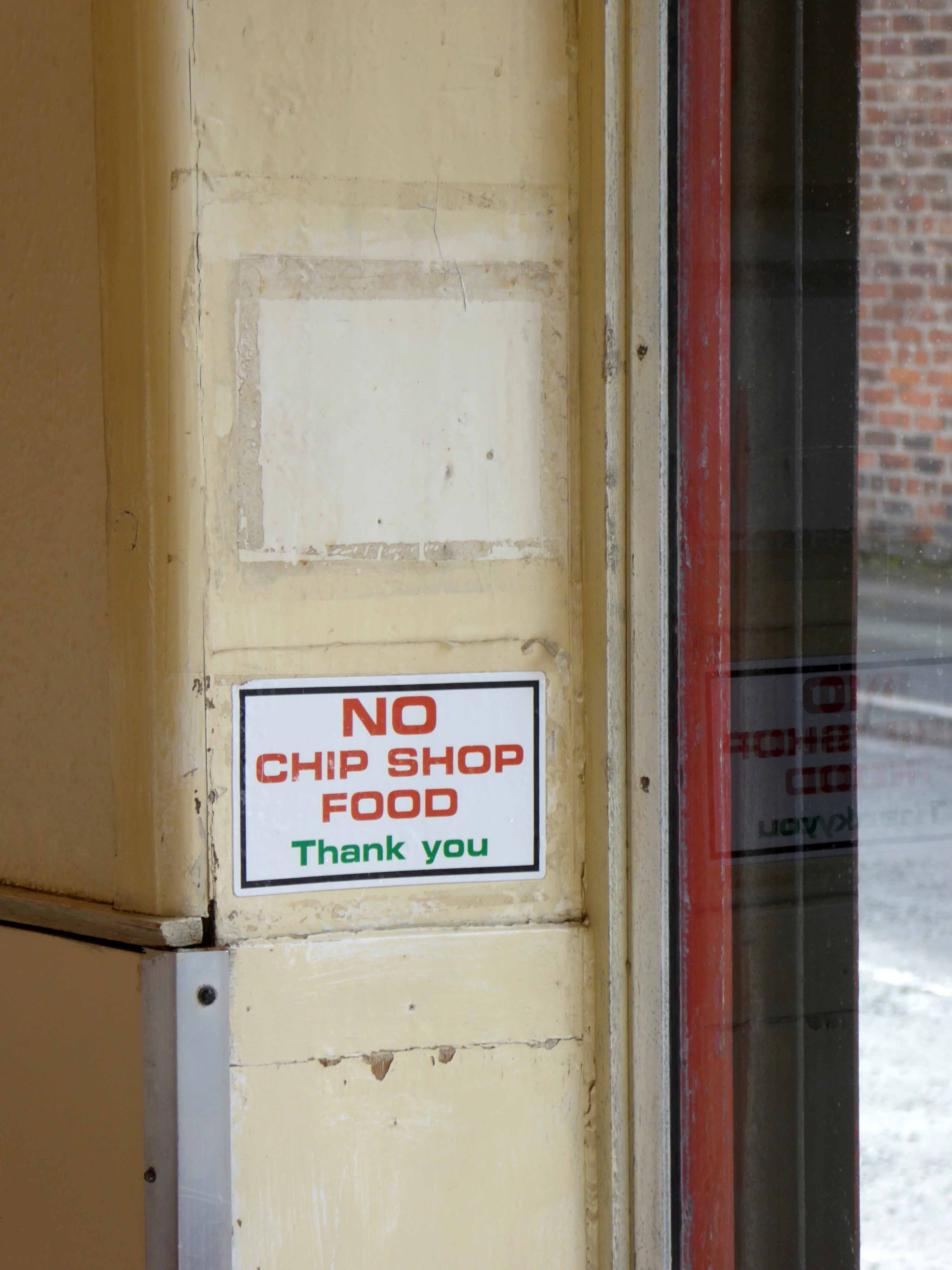
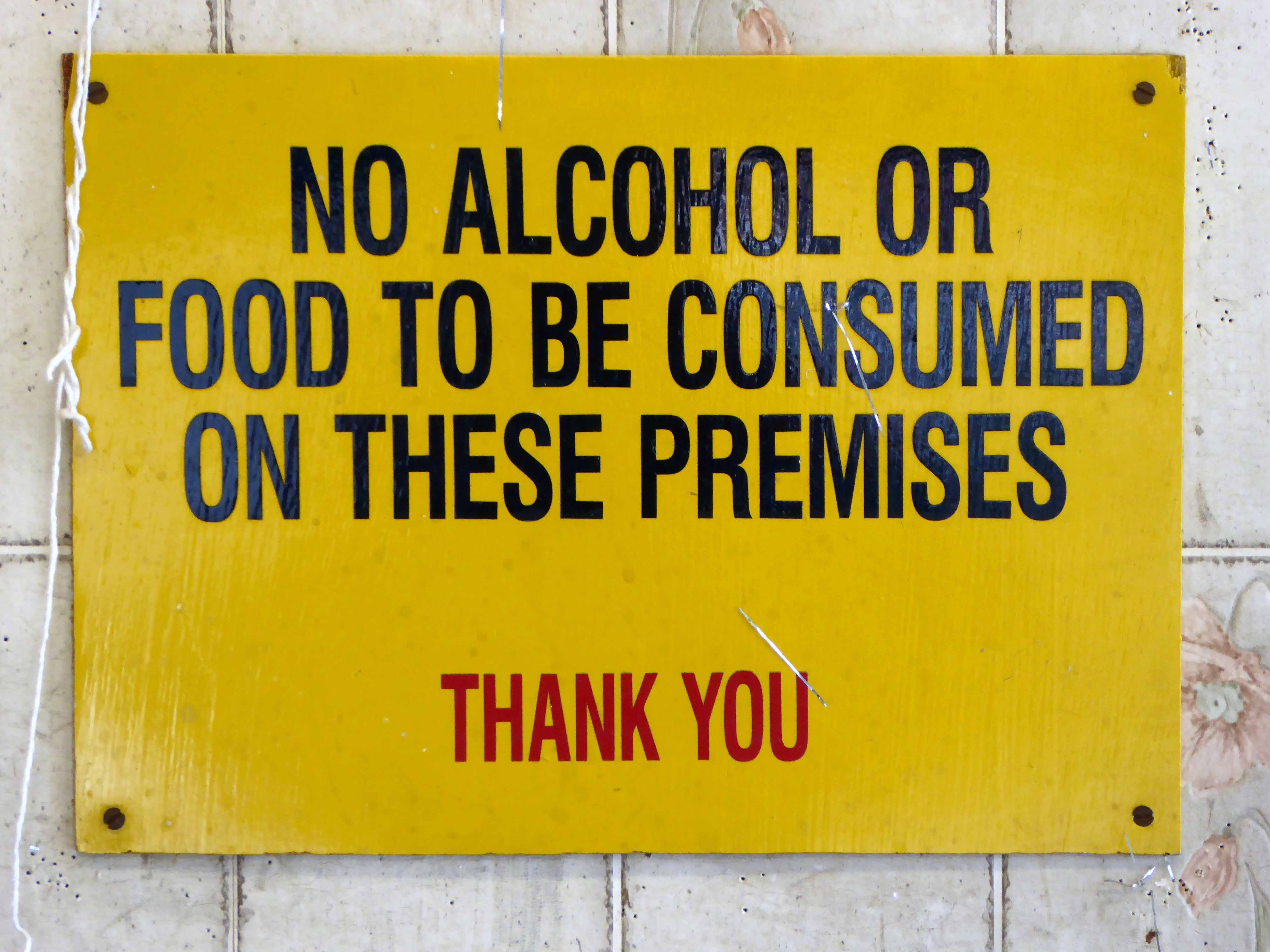
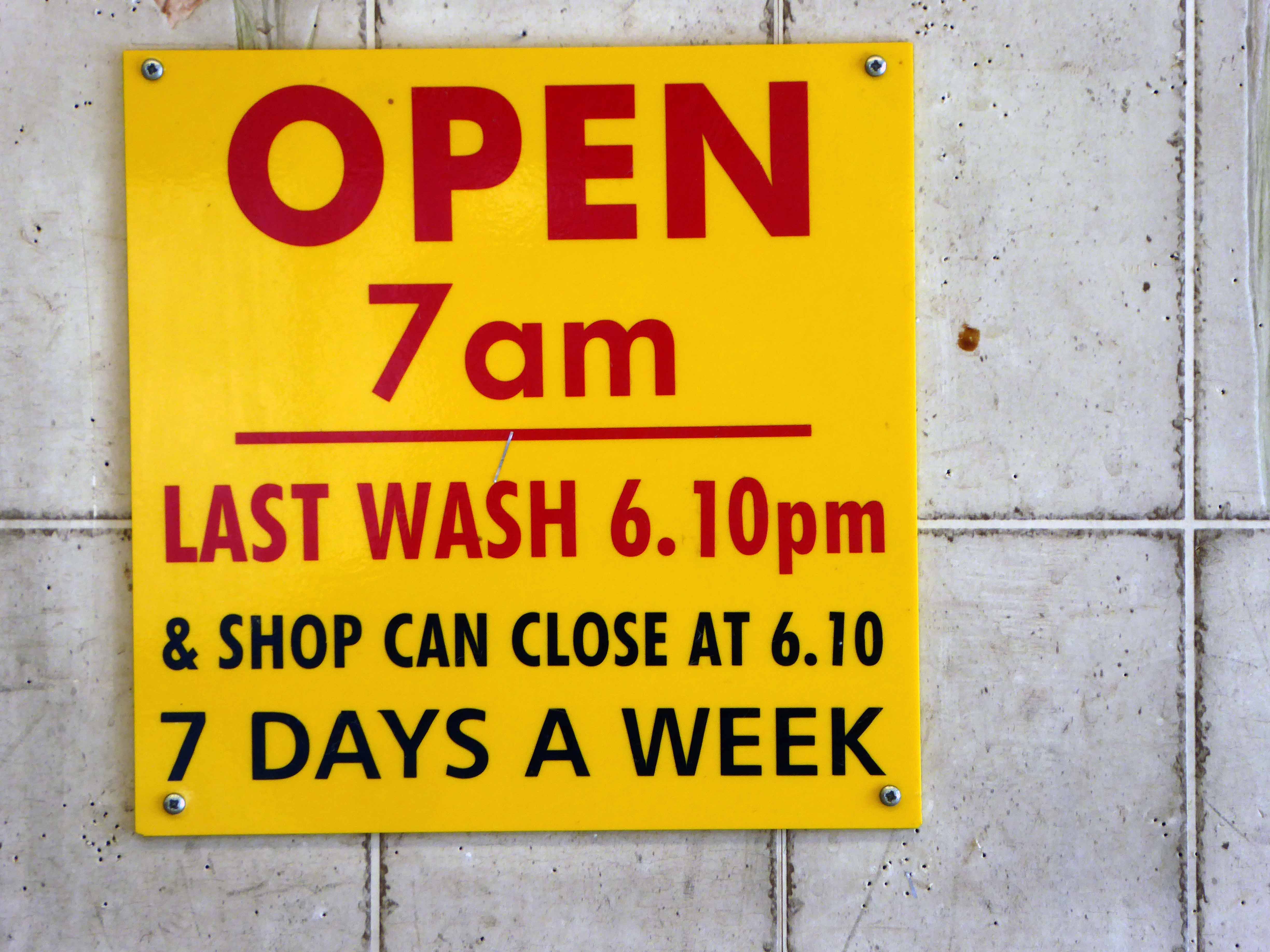
This is a dry only facility its surfaces inert, frozen in time, its sign declaiming pointless imperatives to nobody in particular.
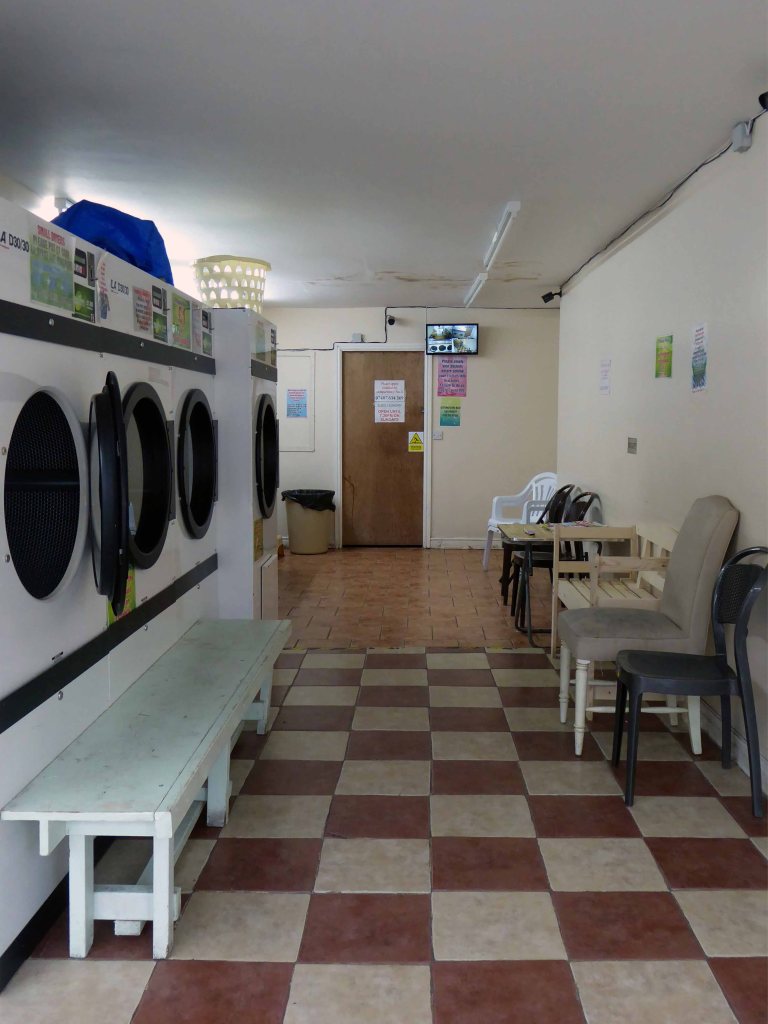
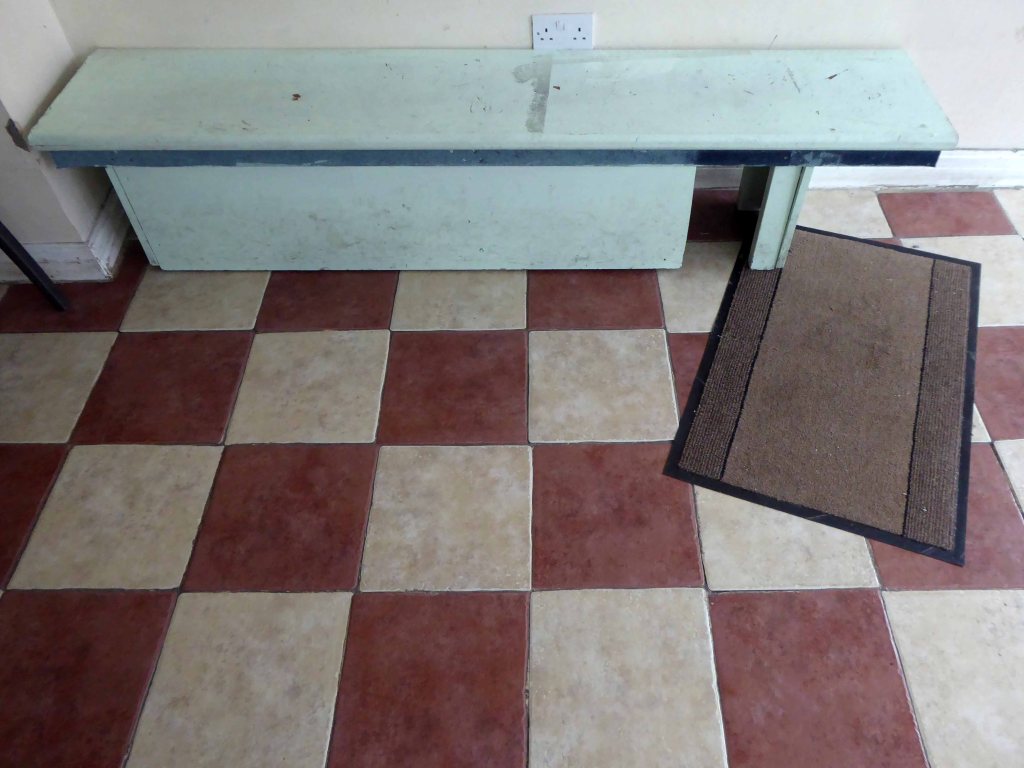
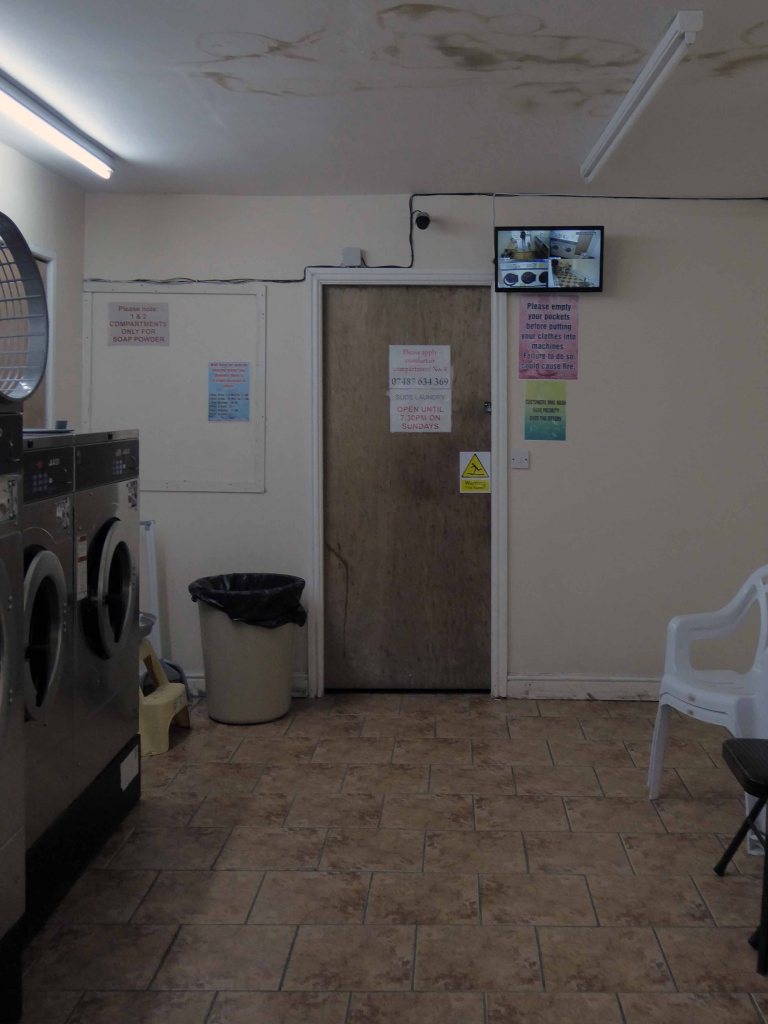
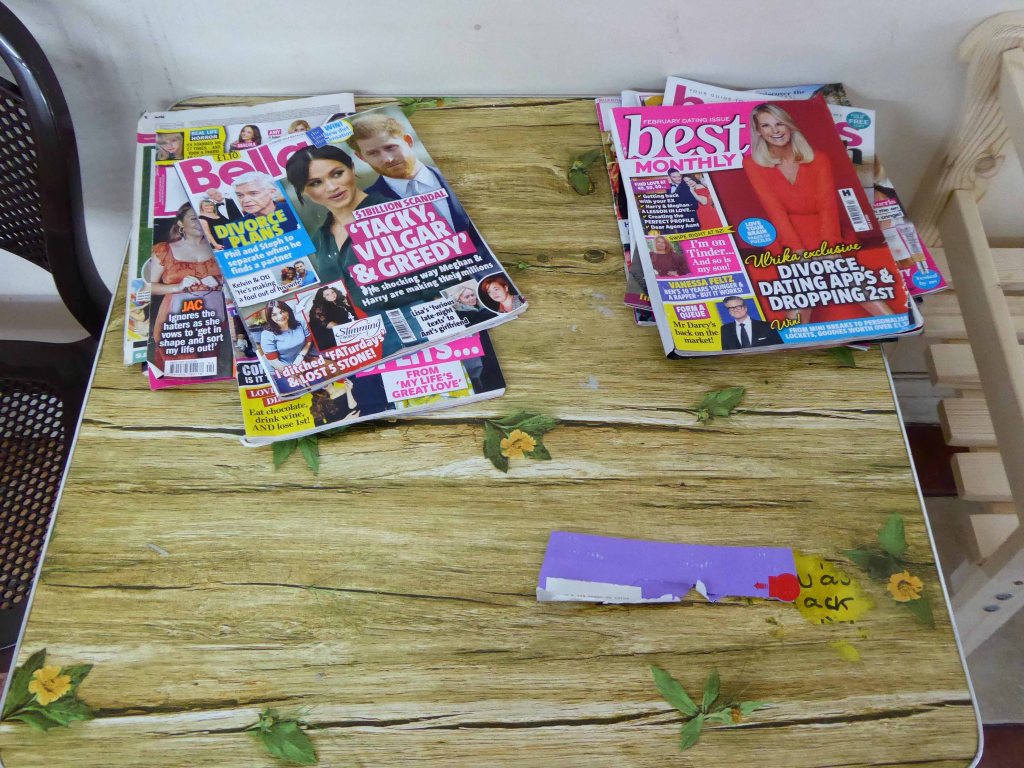
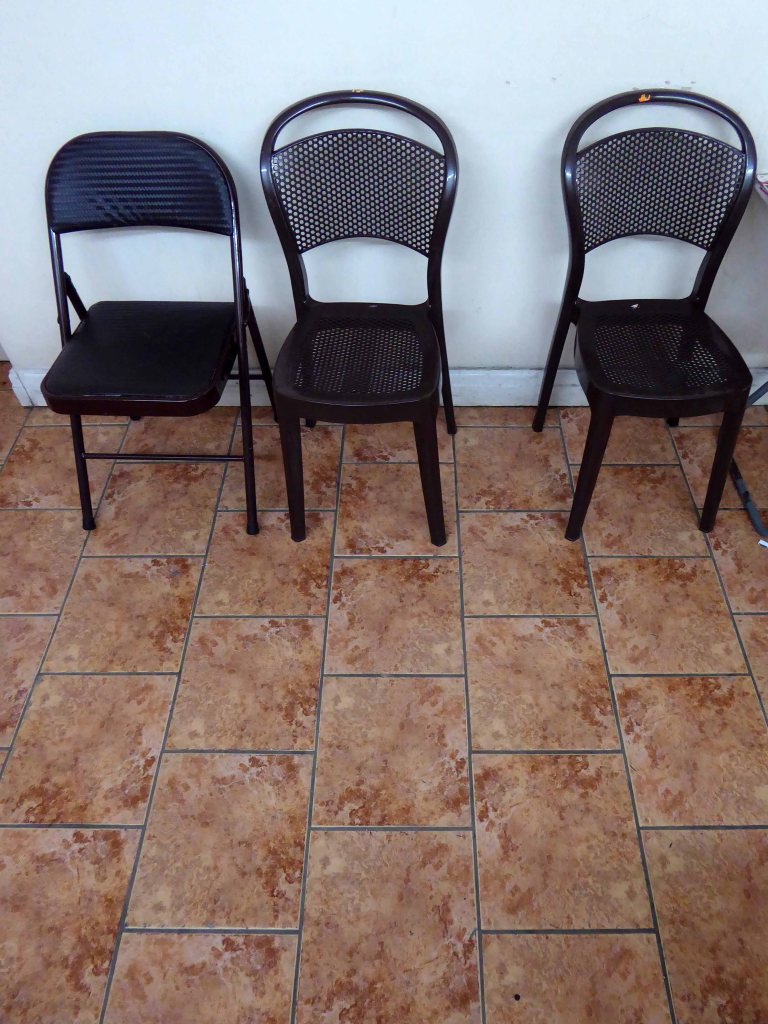
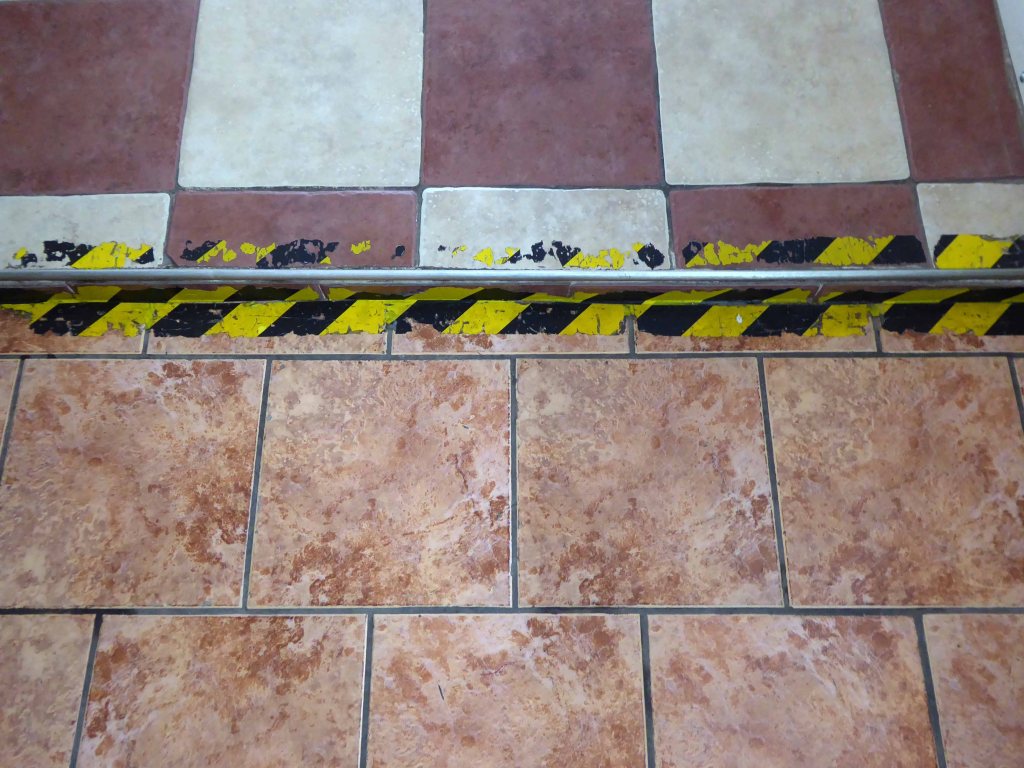
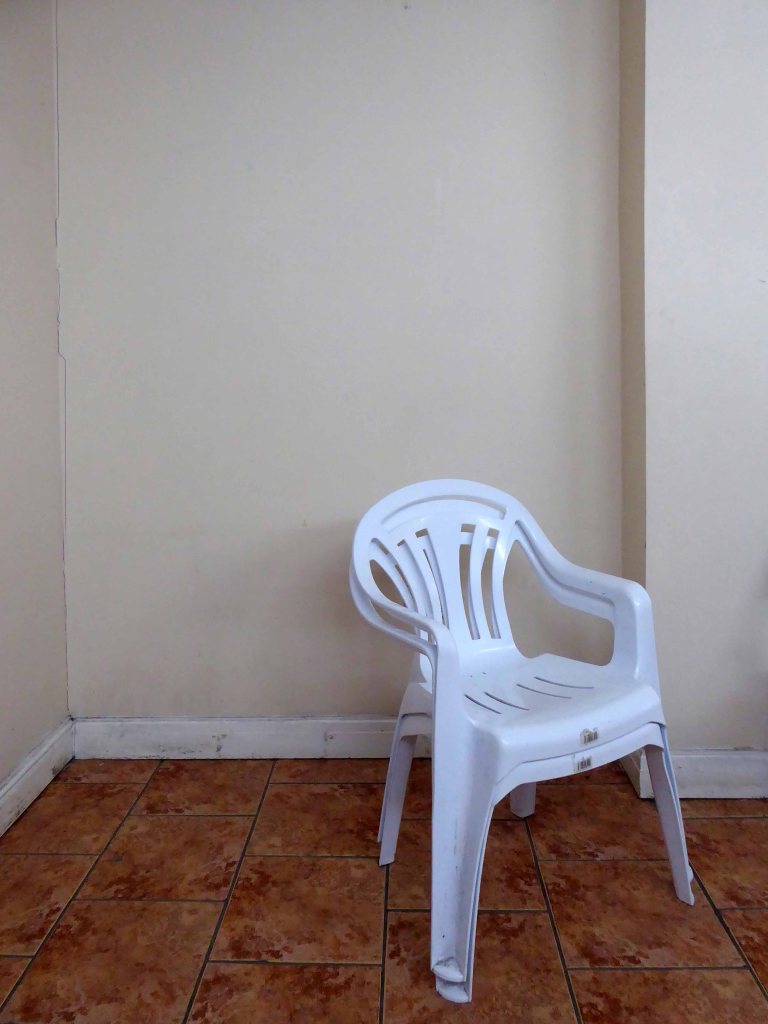
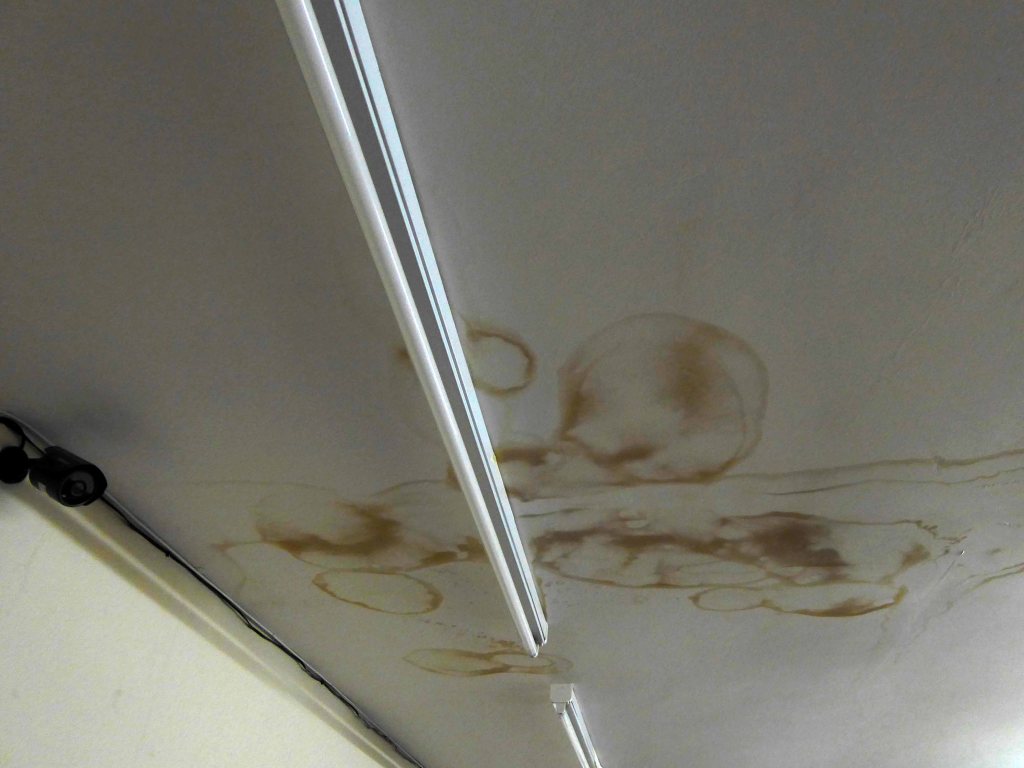
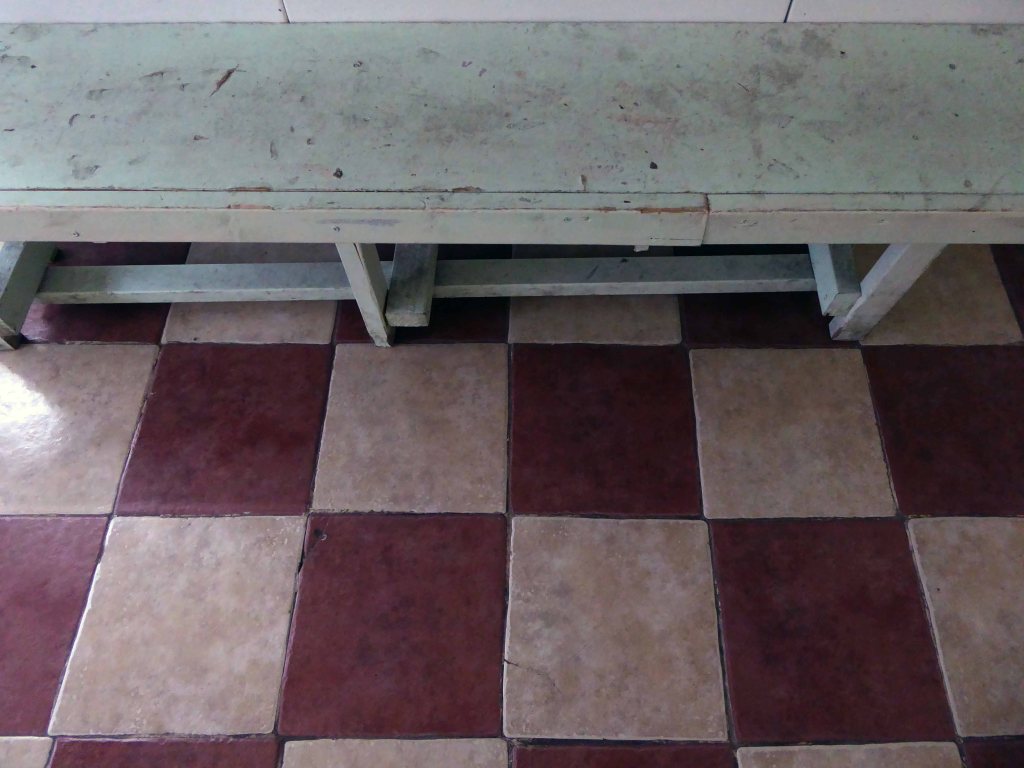
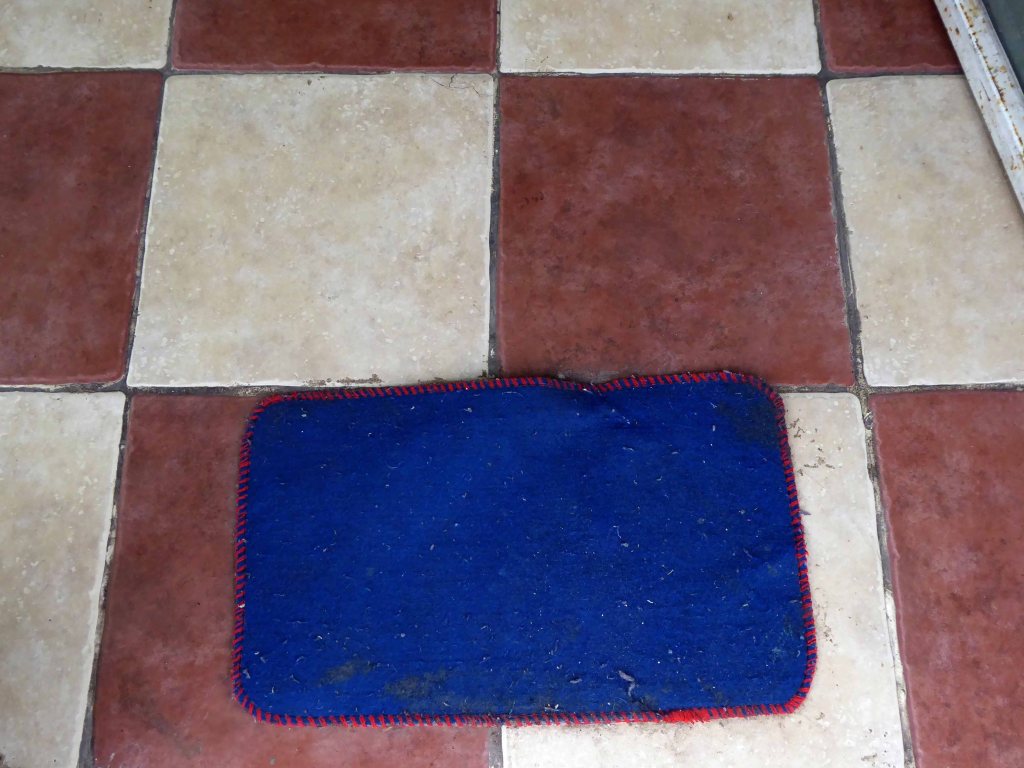
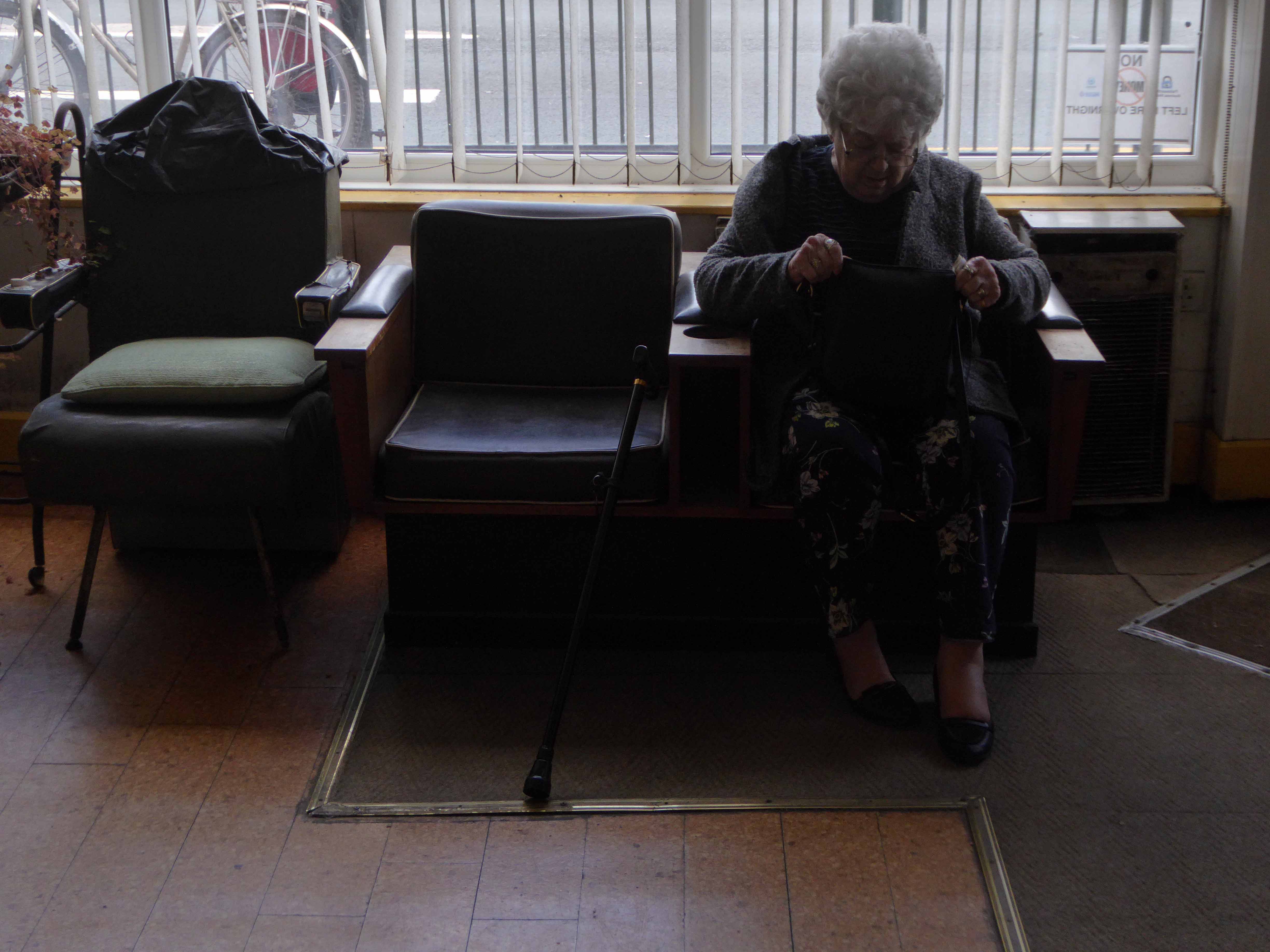
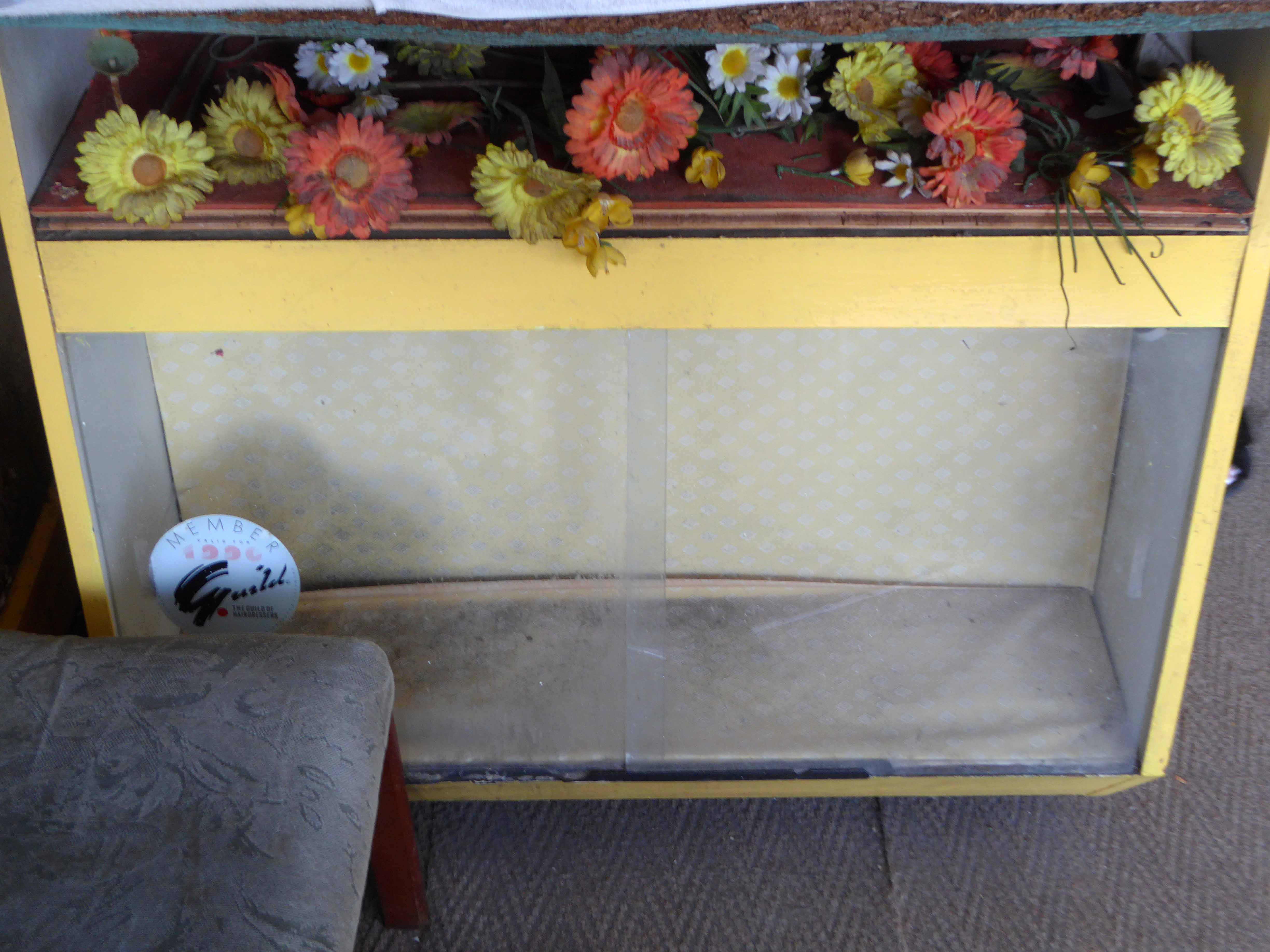
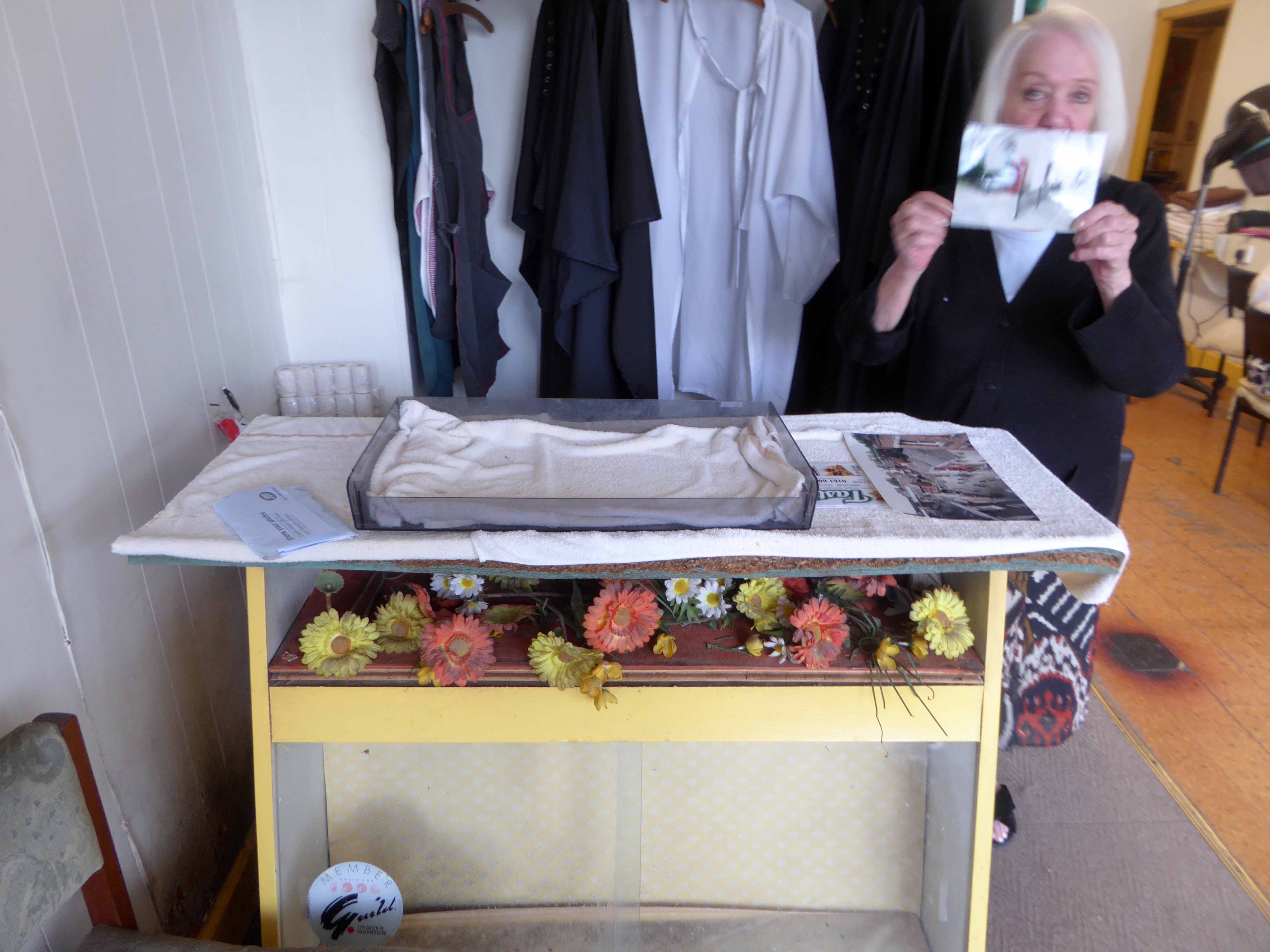
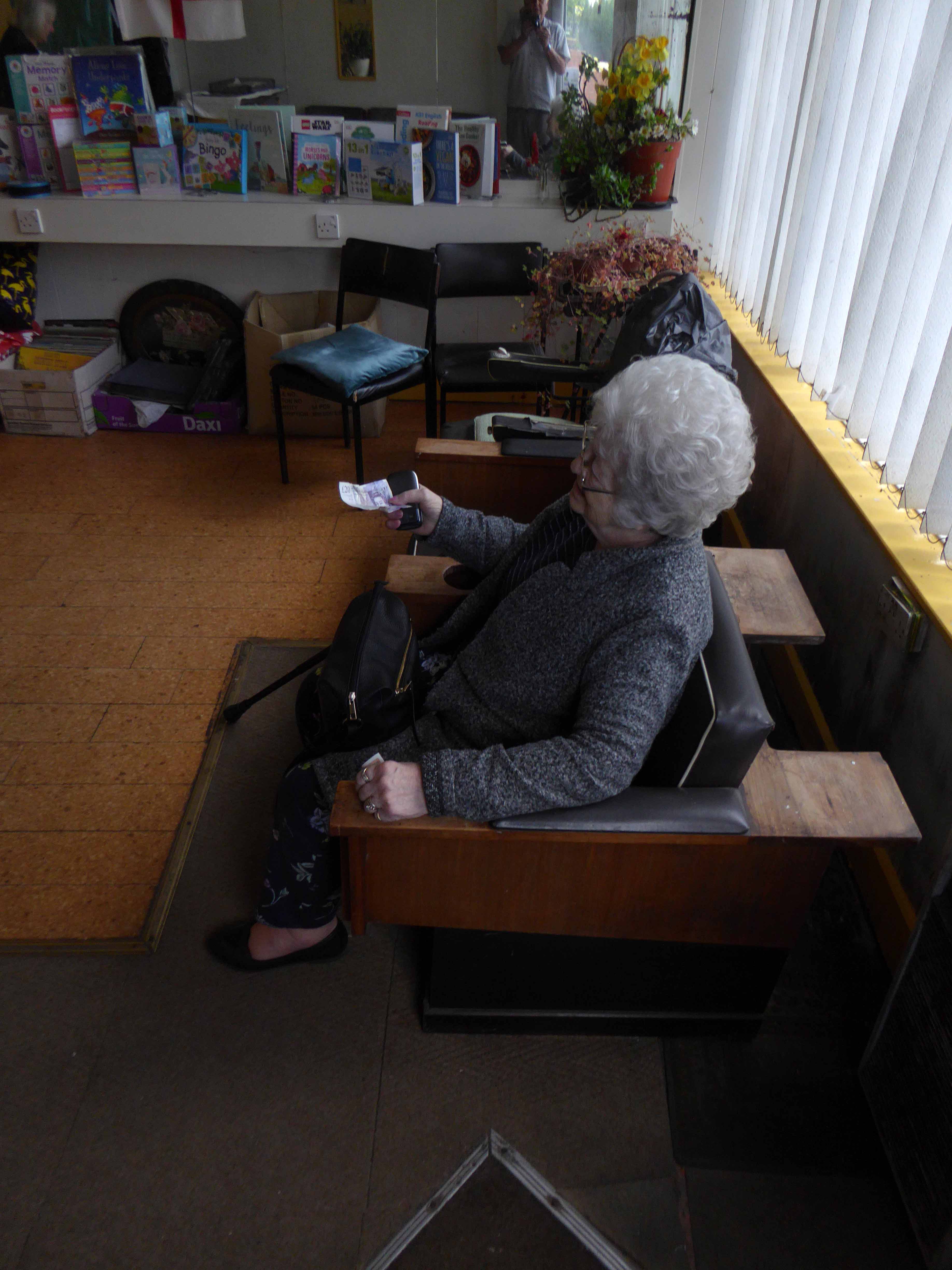
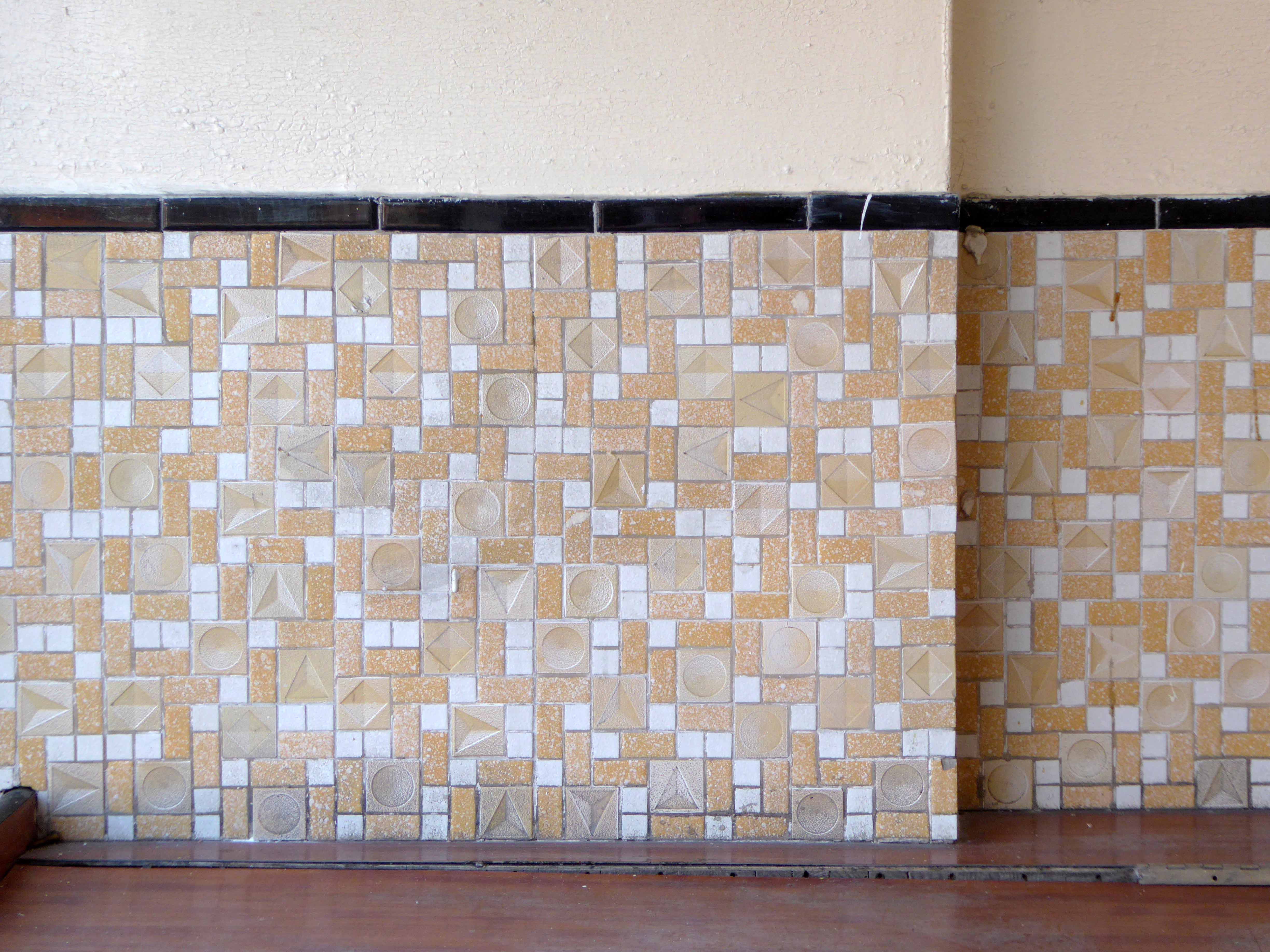
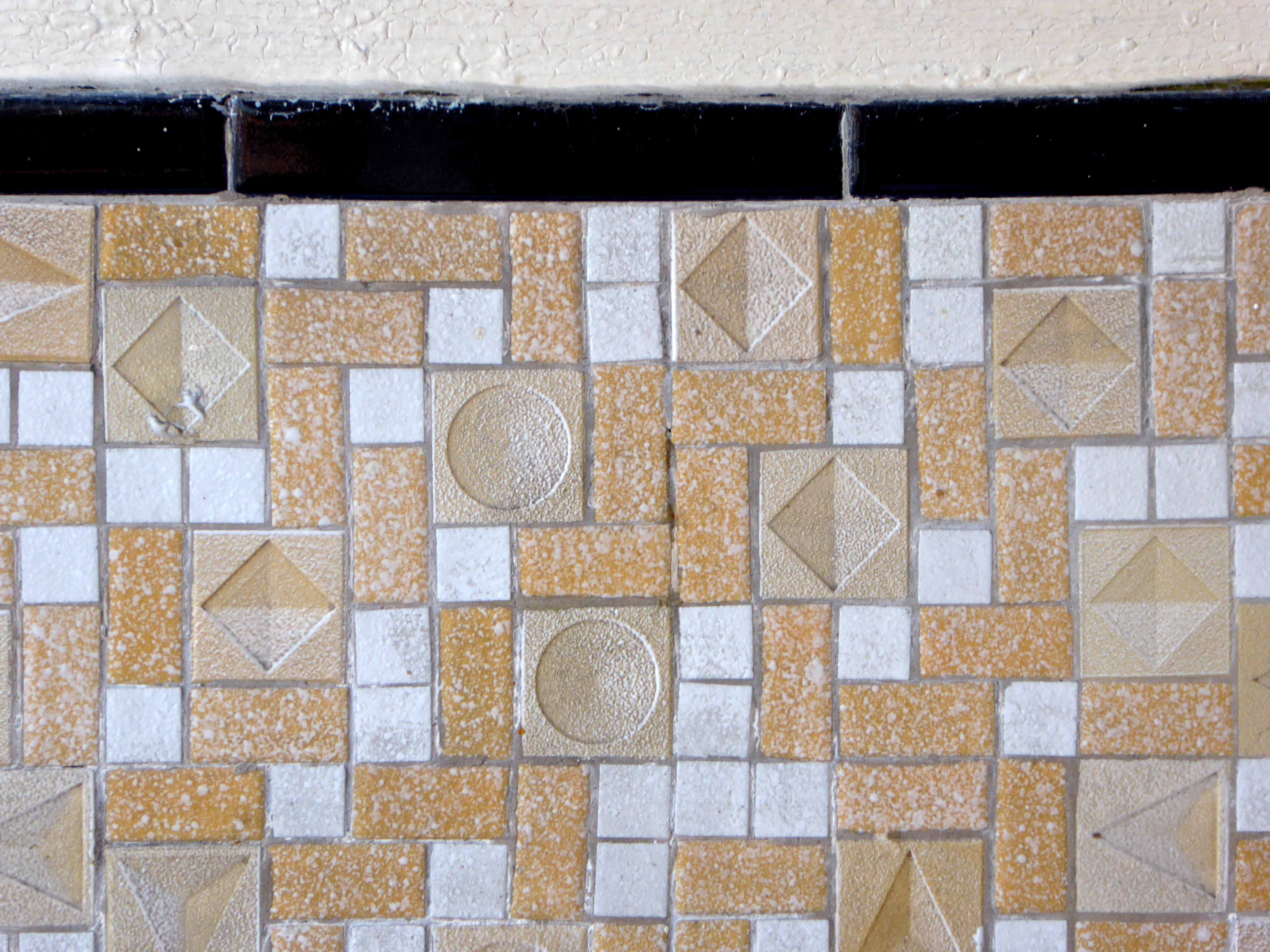
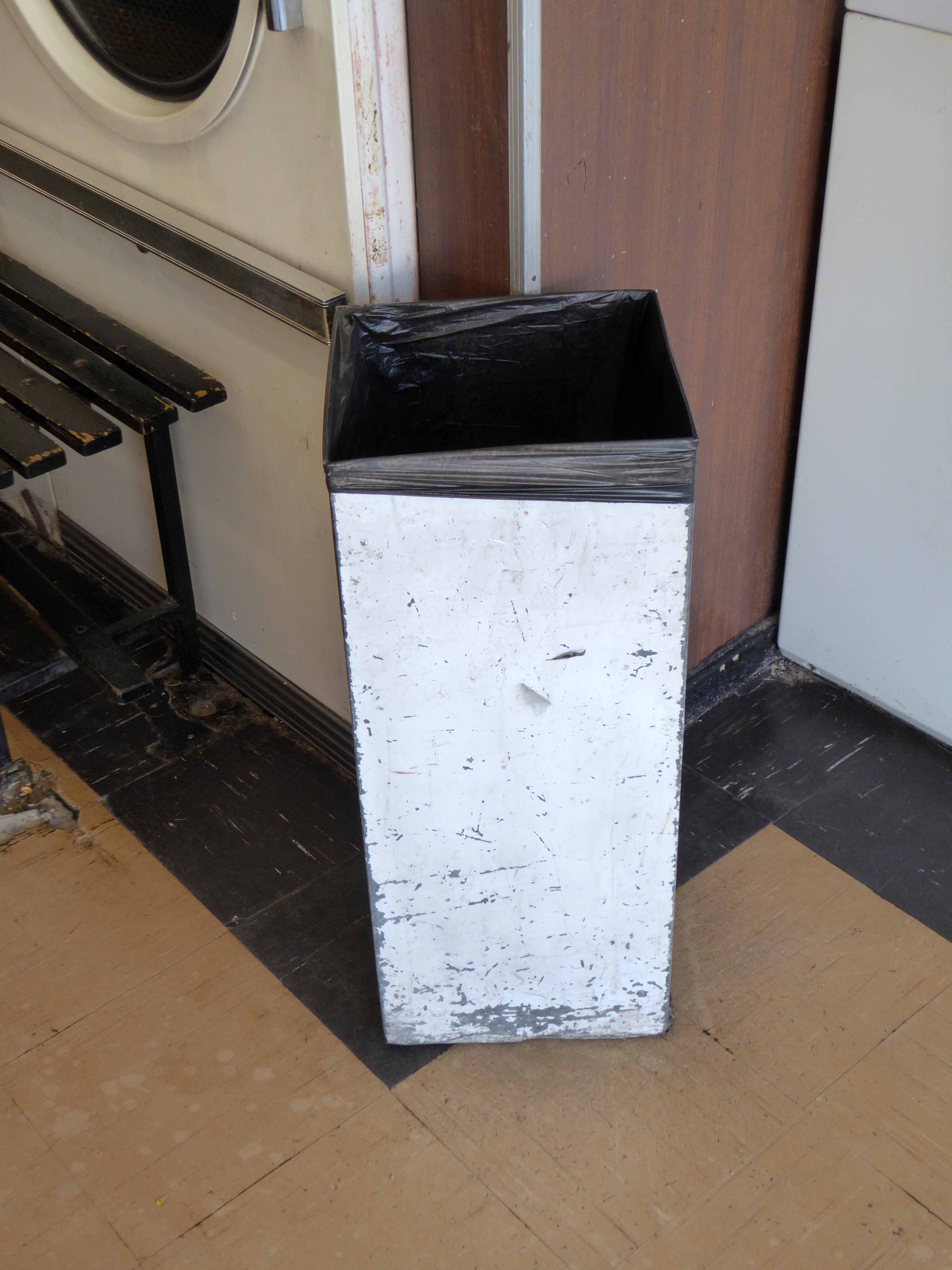
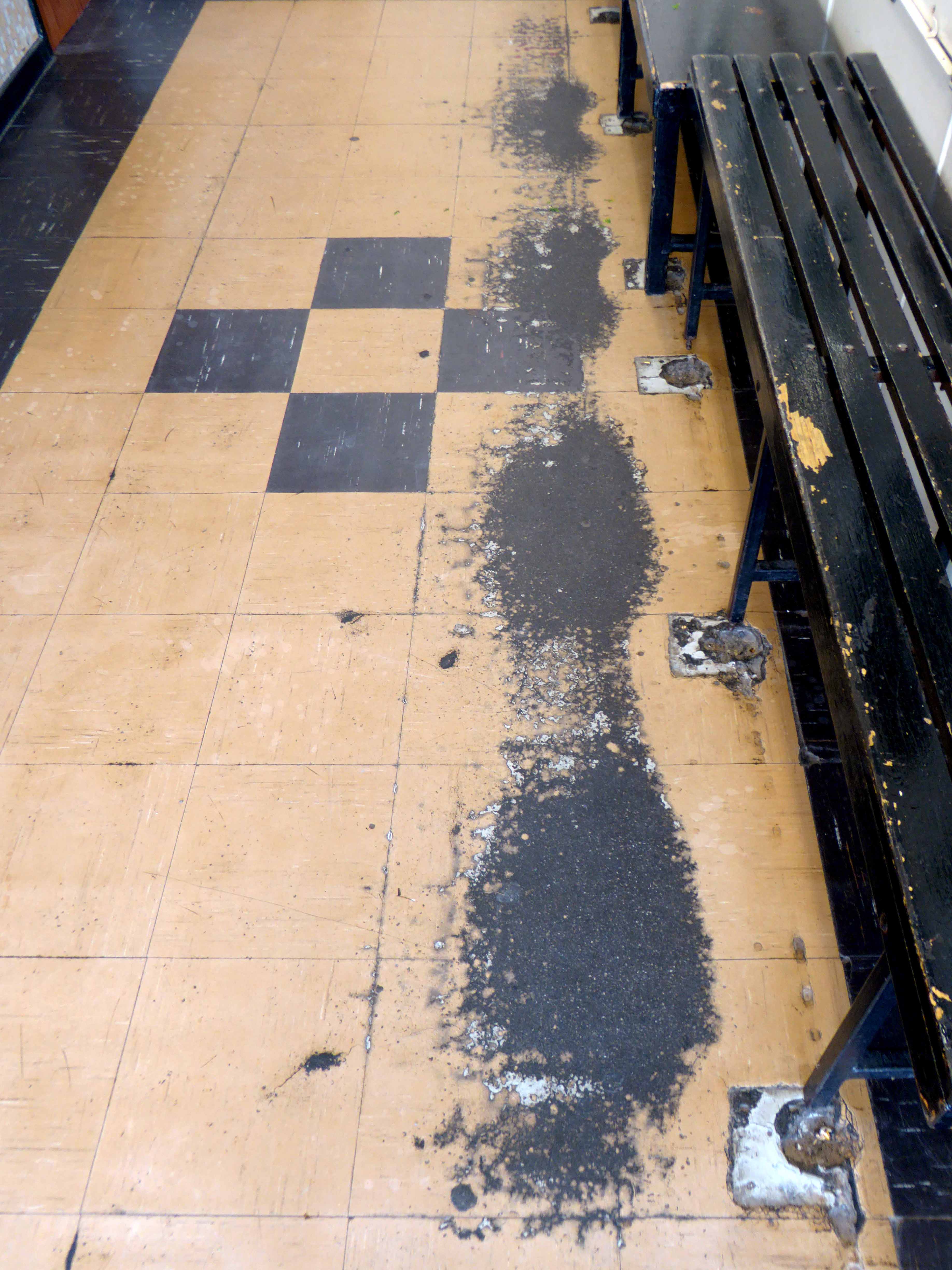
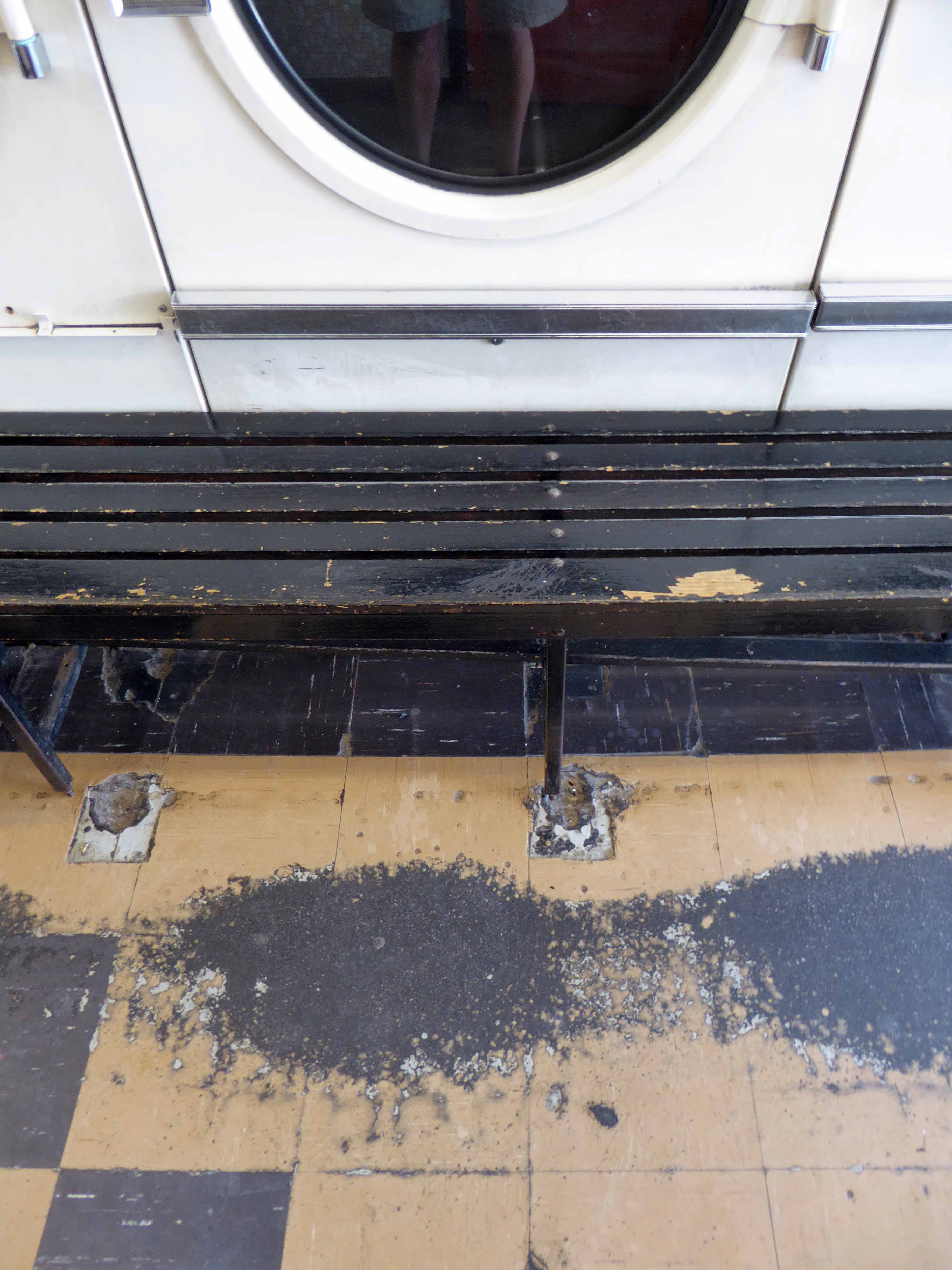
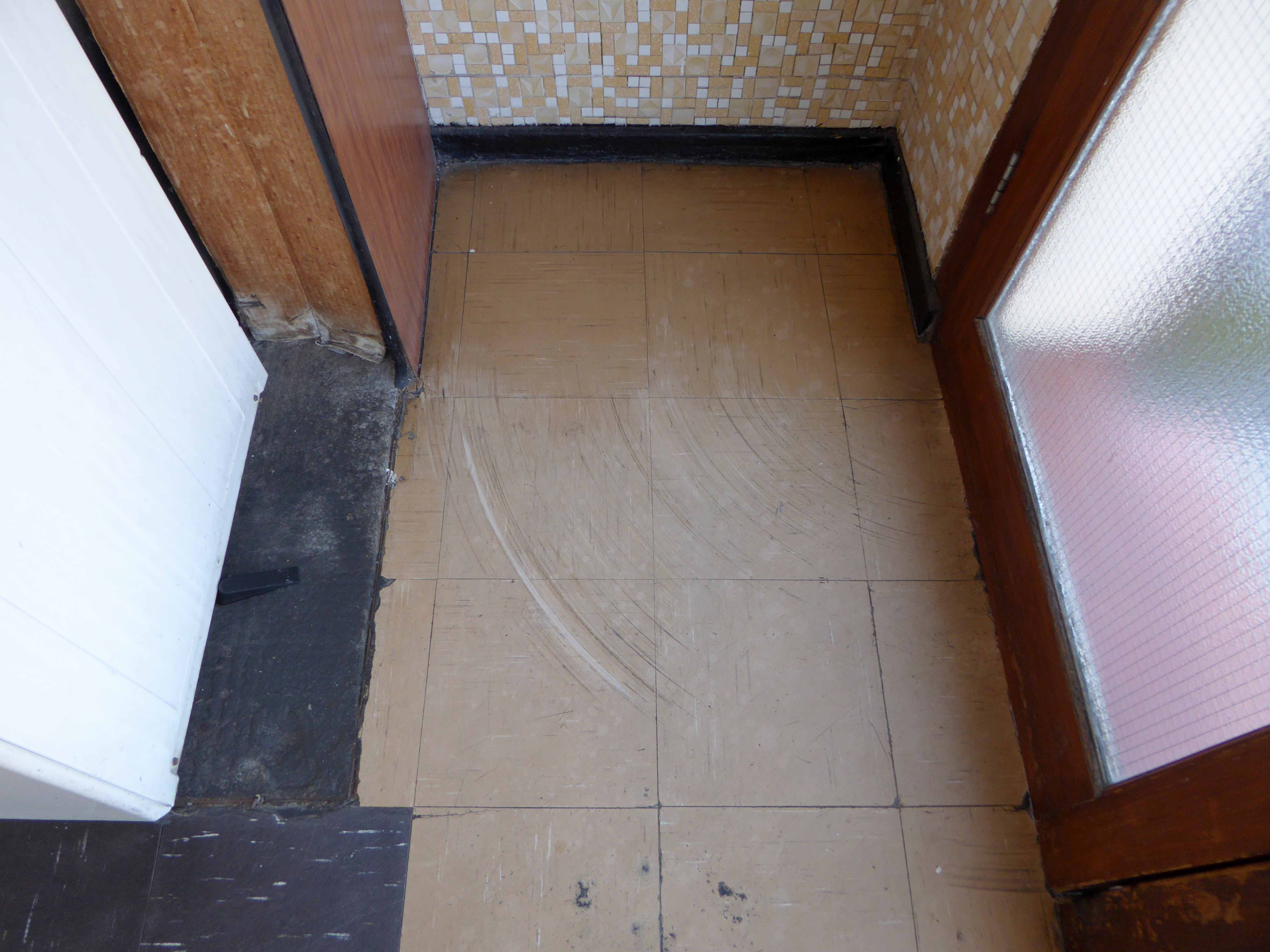
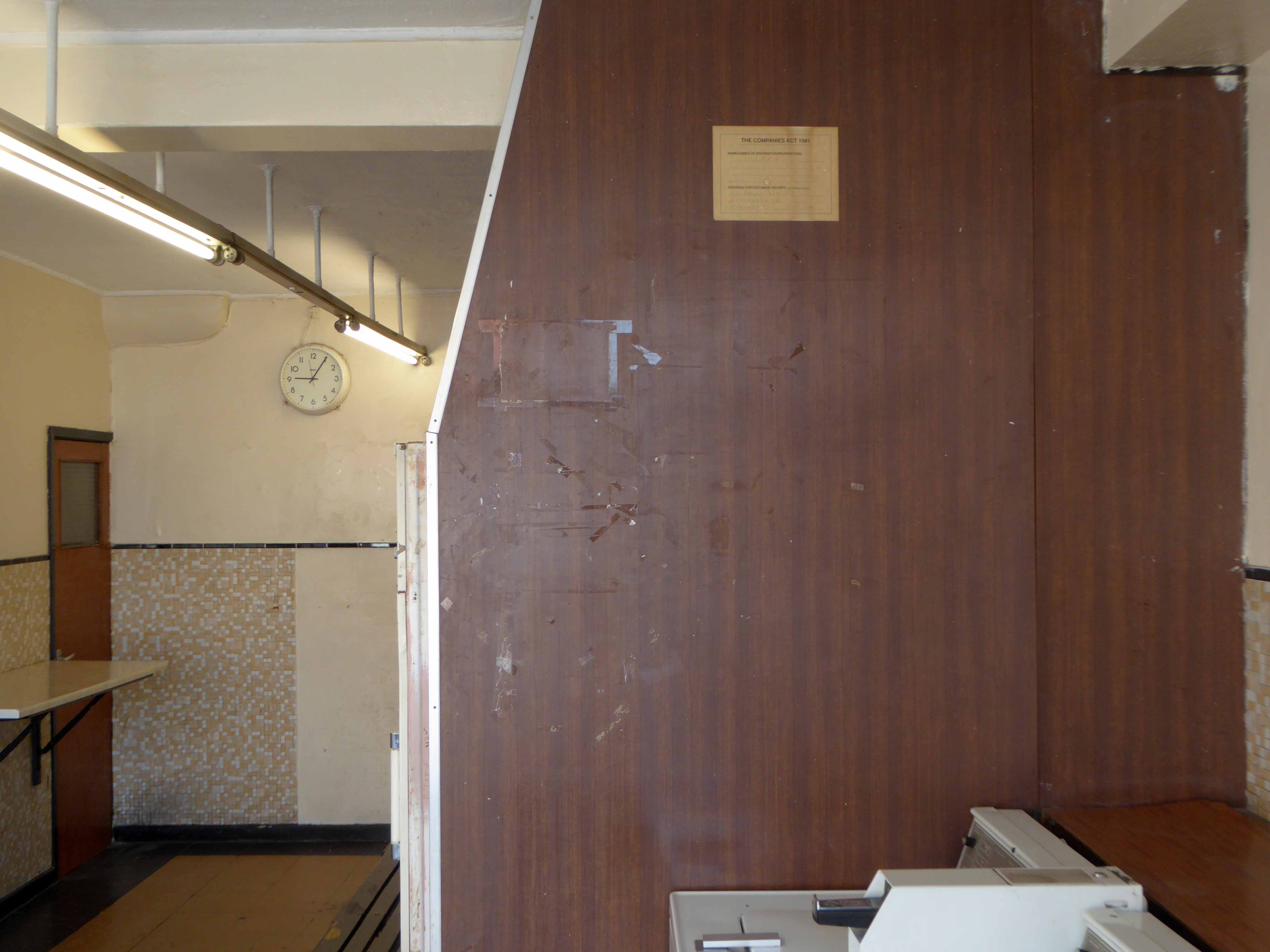
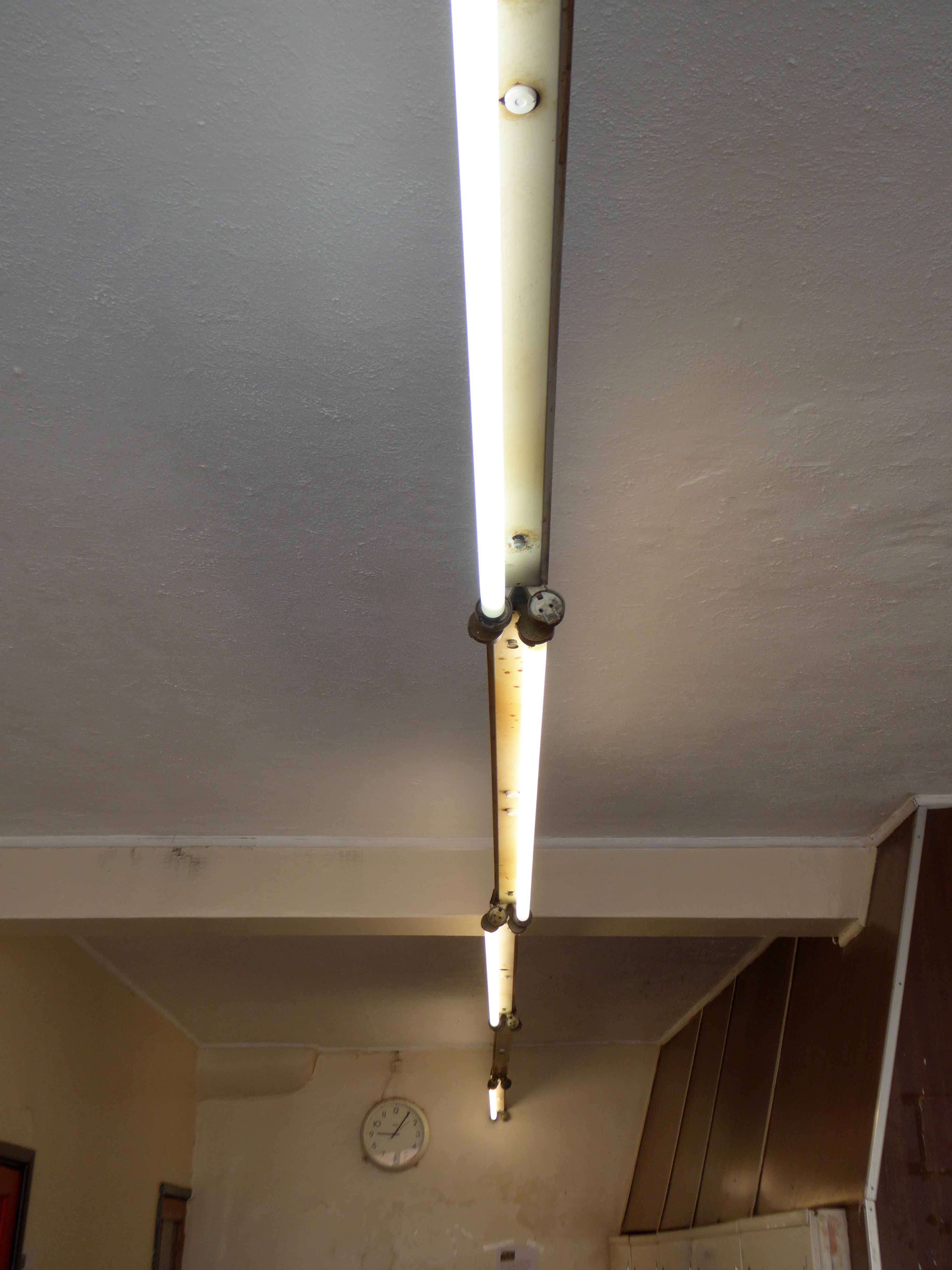
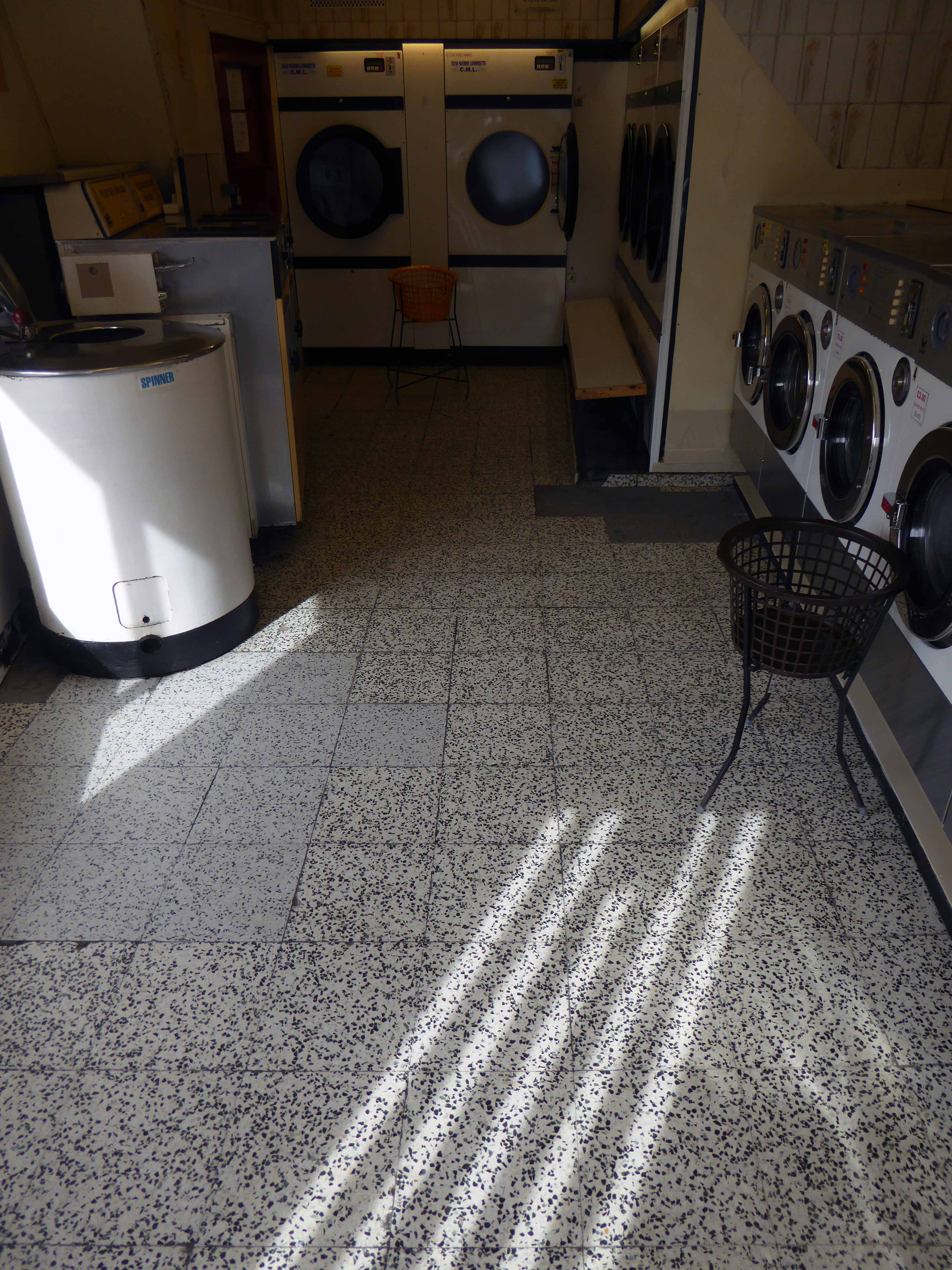
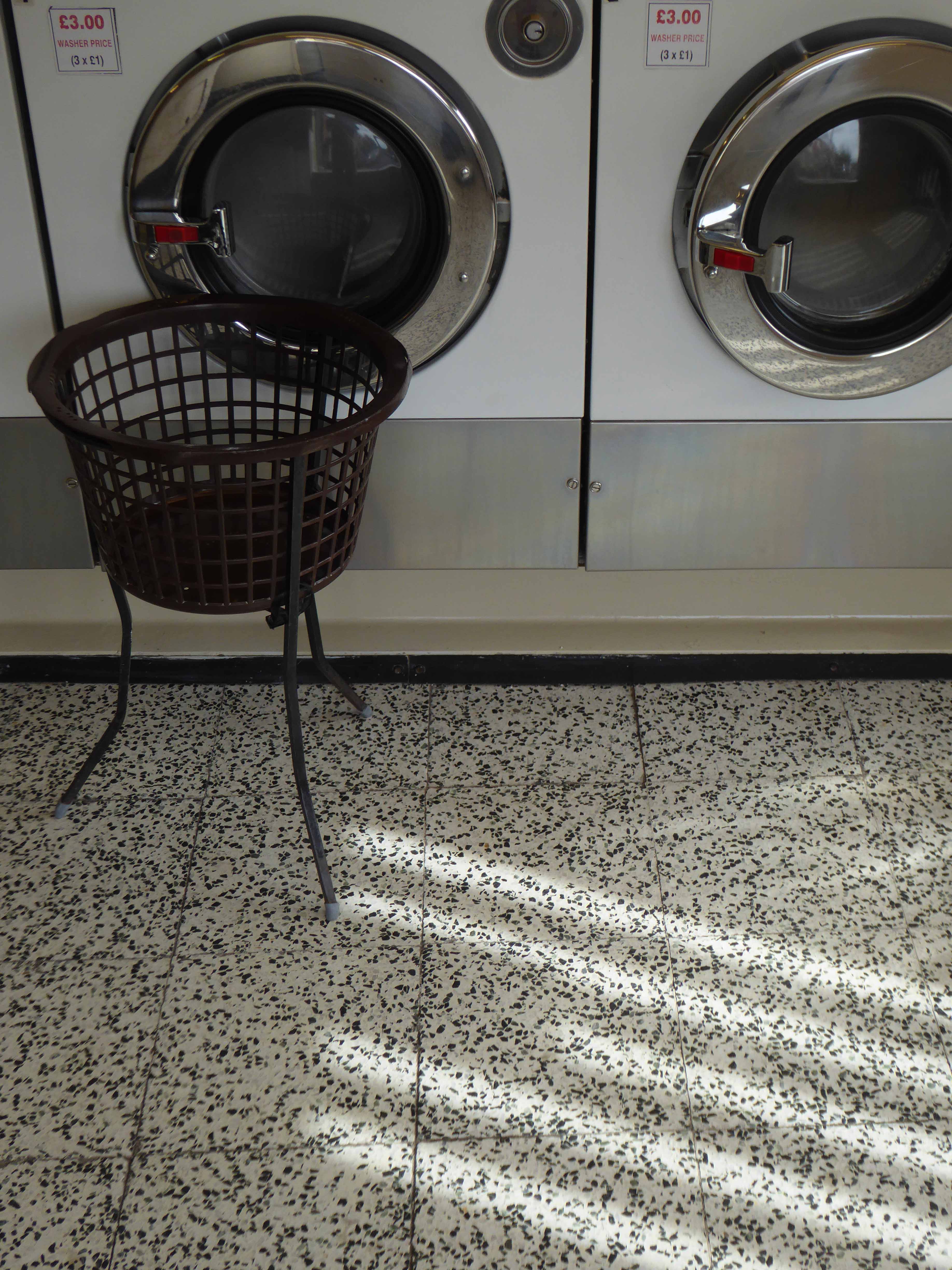
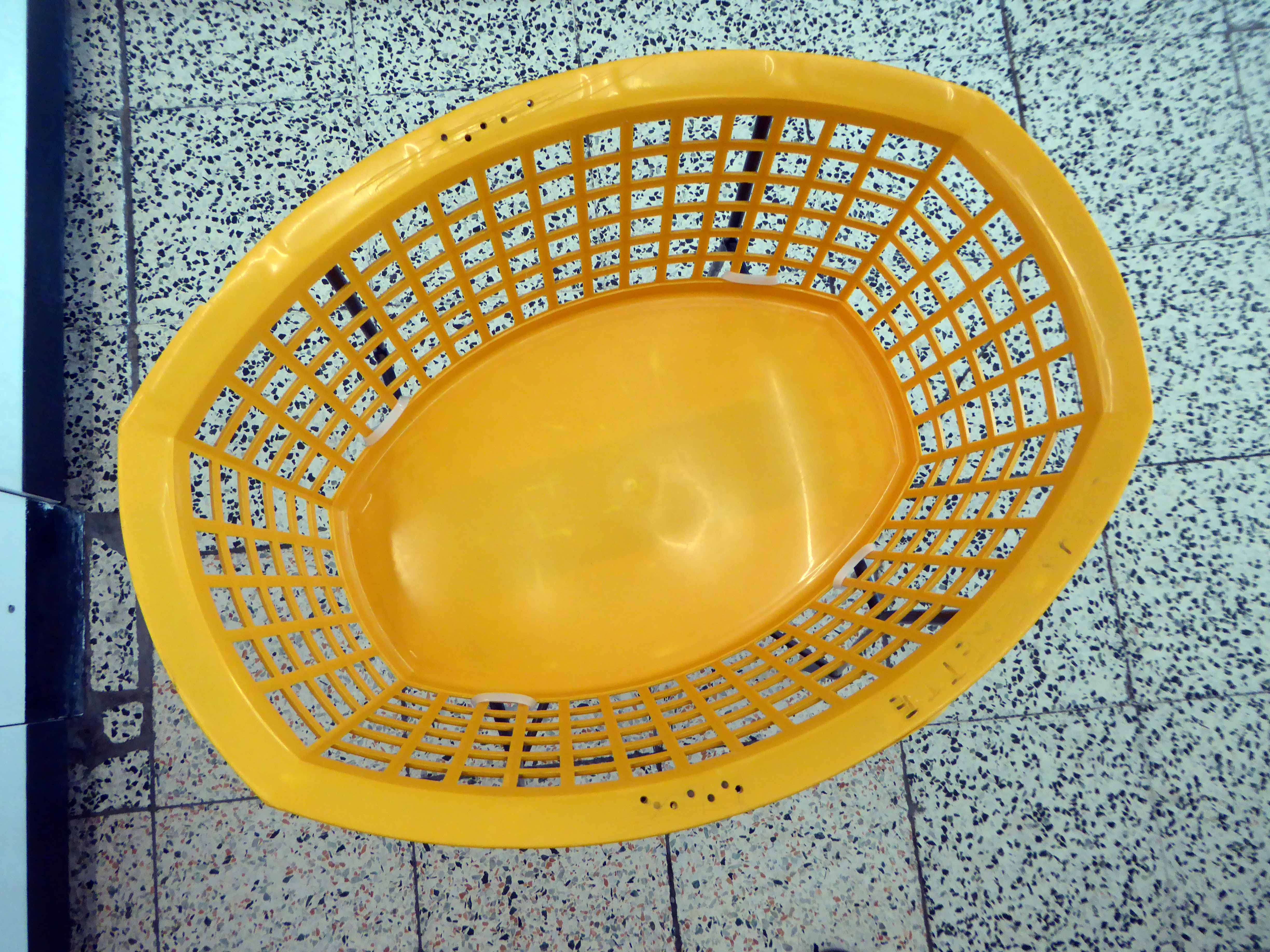
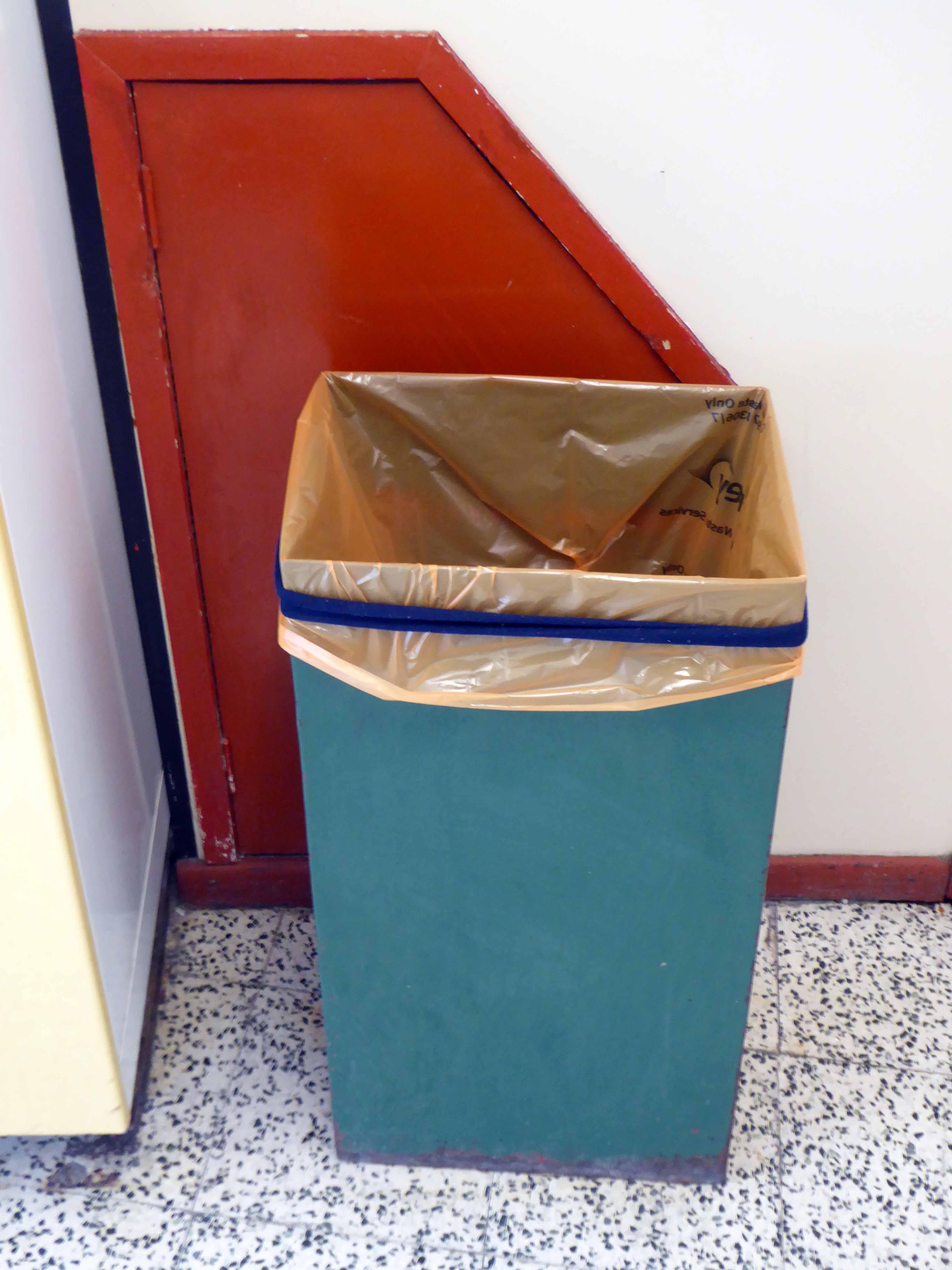
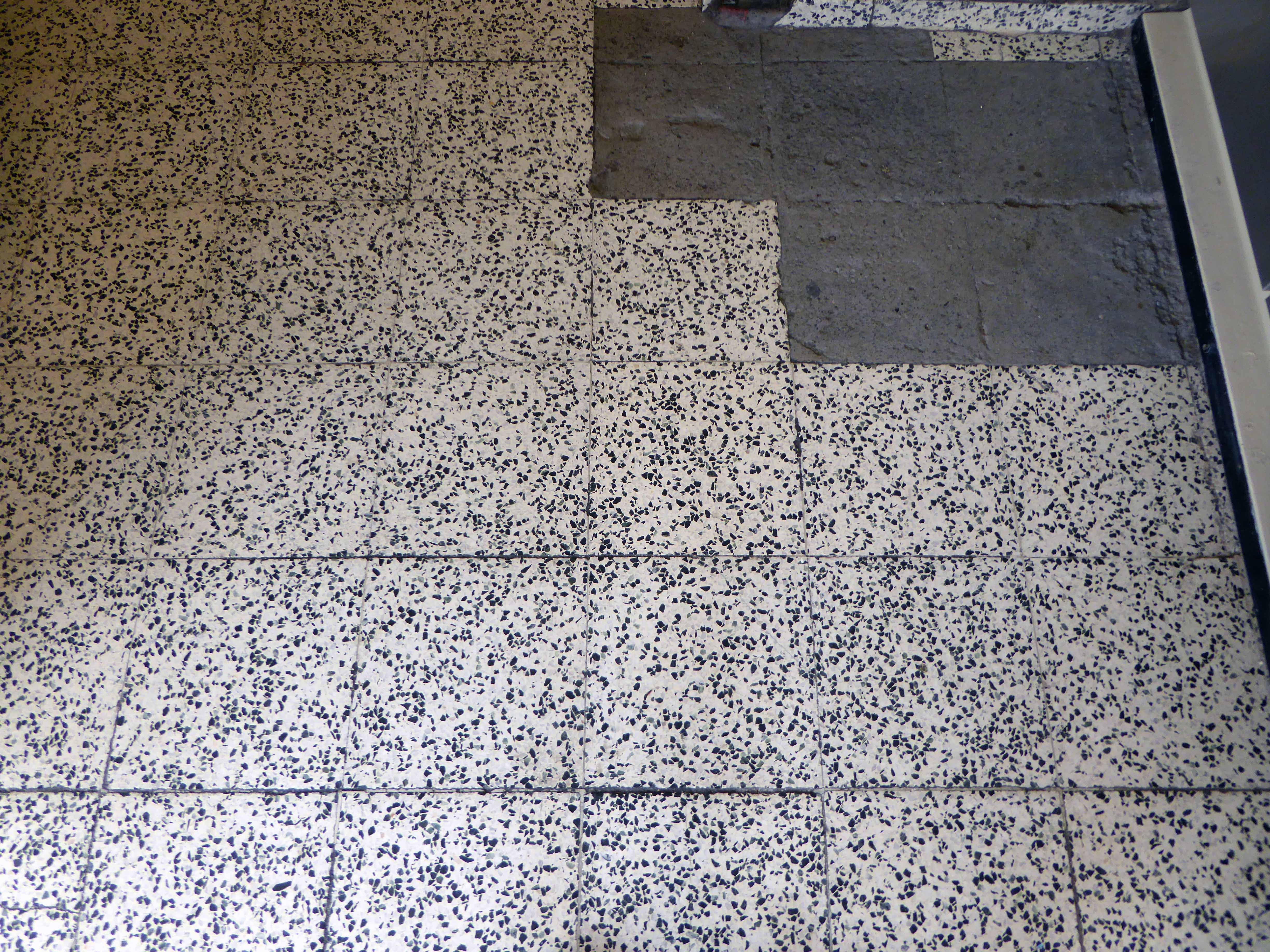
Worn lino, prosaic mosaic, strip lighting, wood-grained Formica, black wooden benches backed up against the warmth of the warm drier – time becomes elastic, limitless.
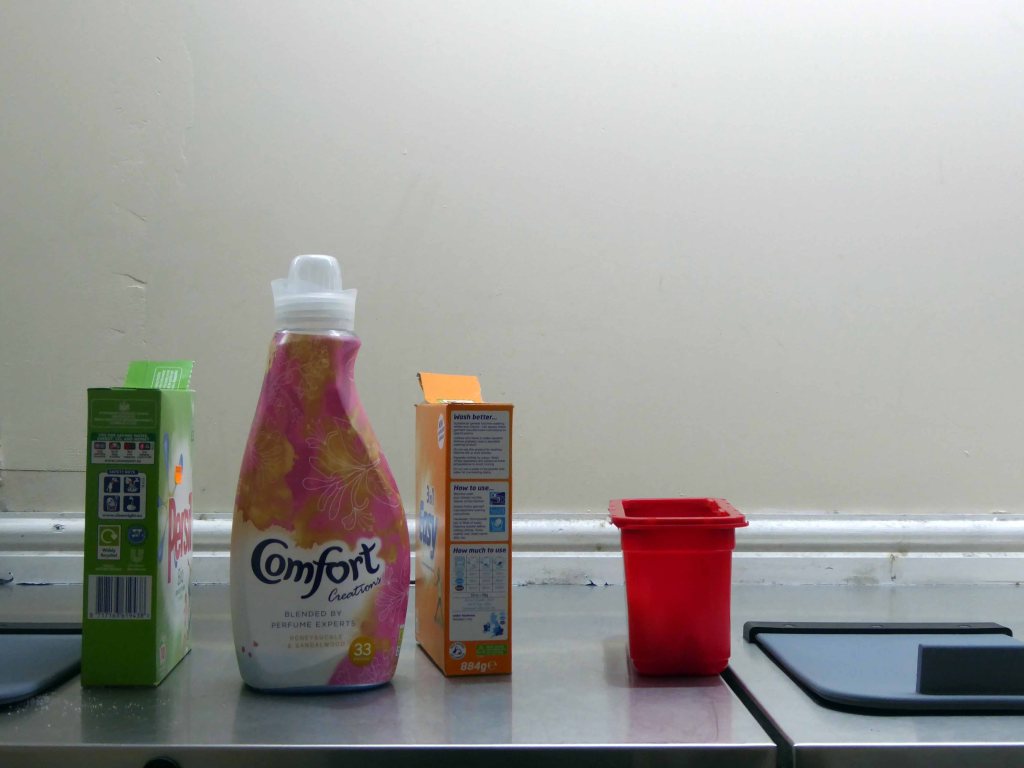
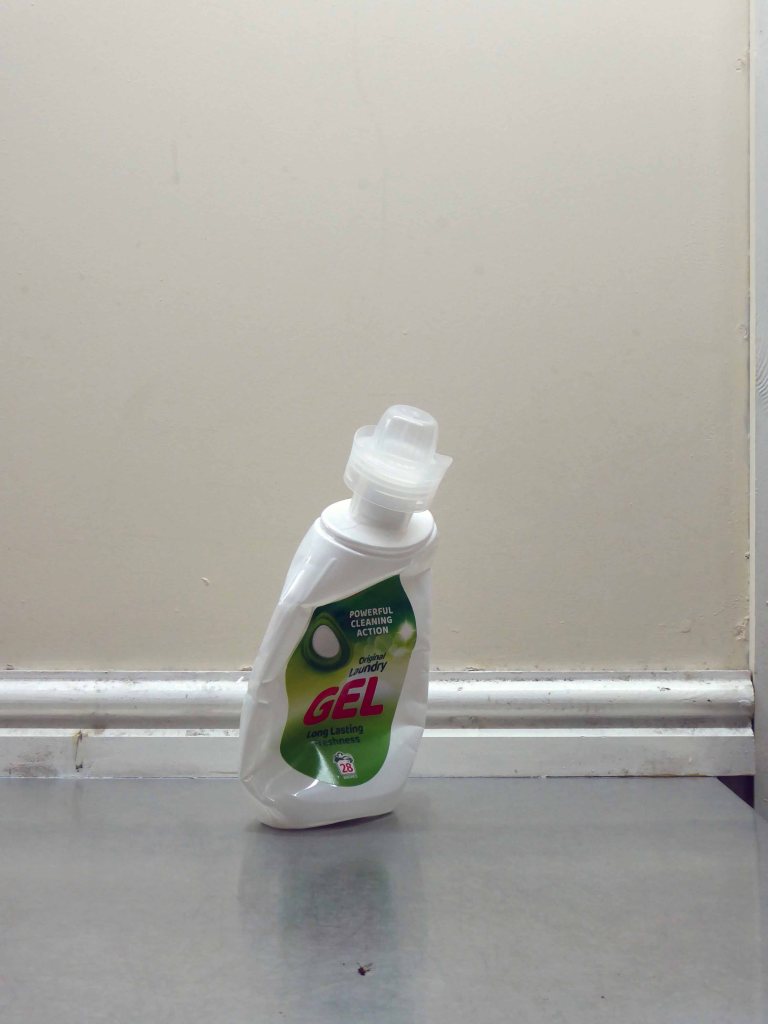
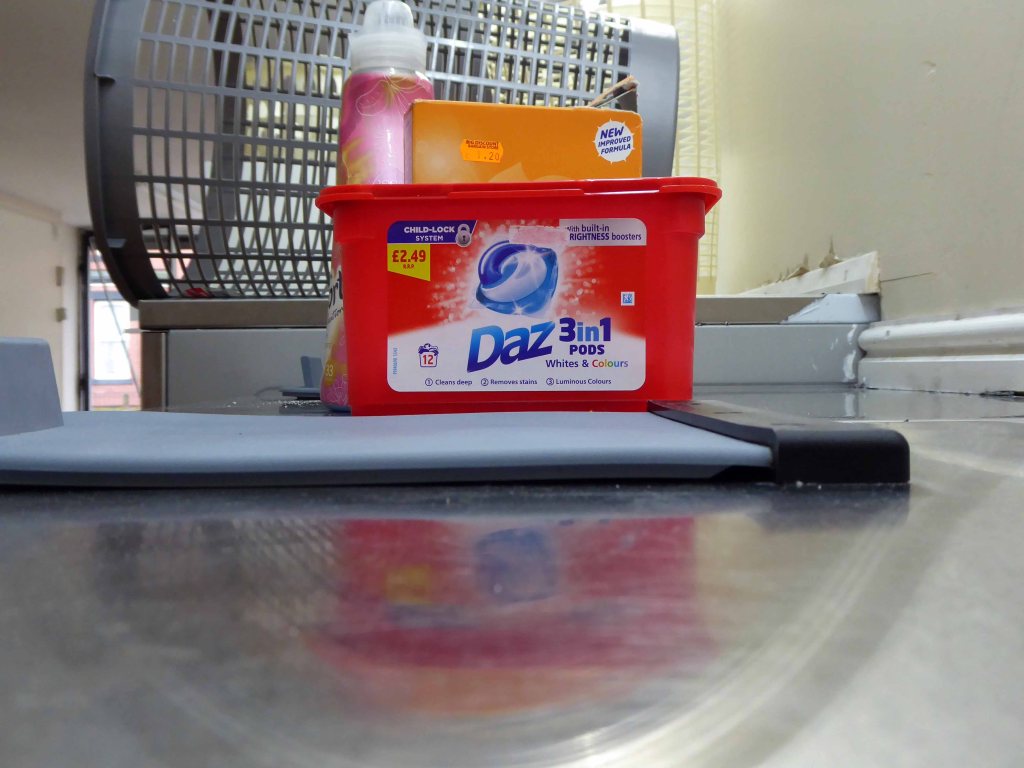
Enter at your own peril, Persil in hand prepare to be disappointed.
I was all washed up, rinsed and spun out – I had to call it a day.
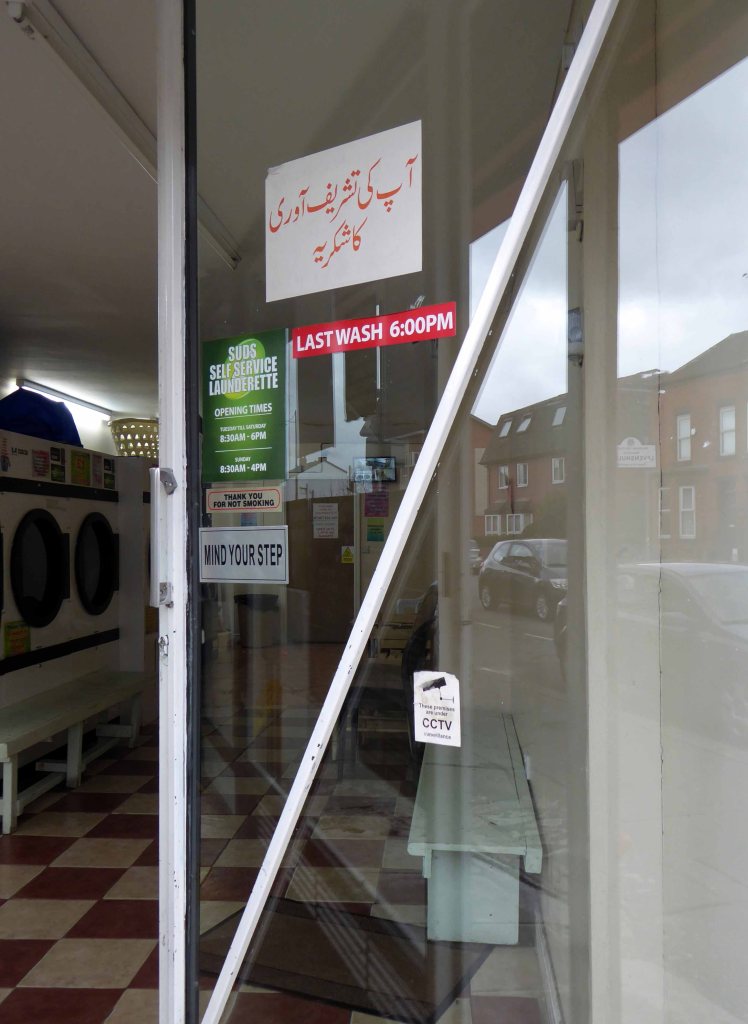
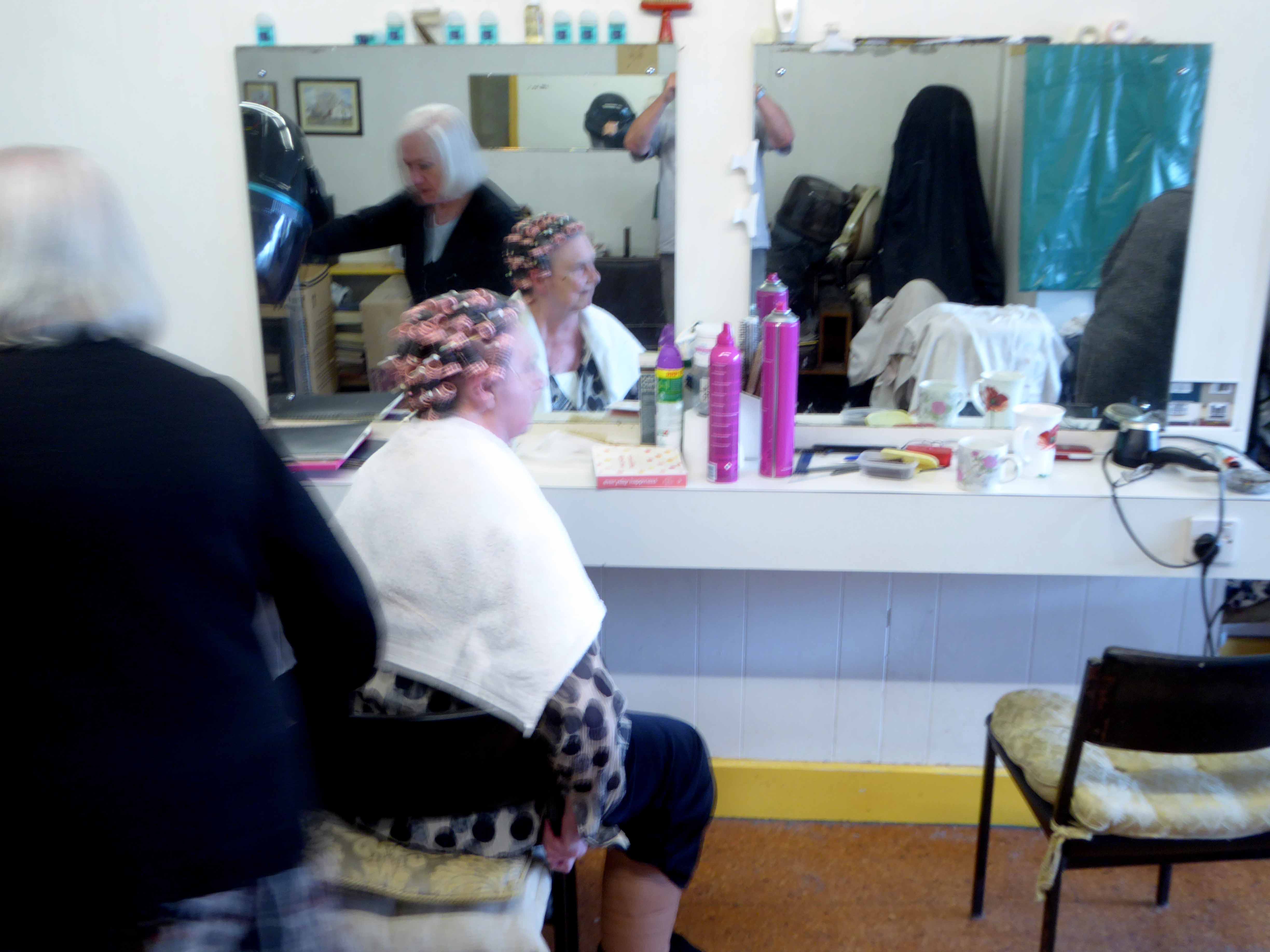
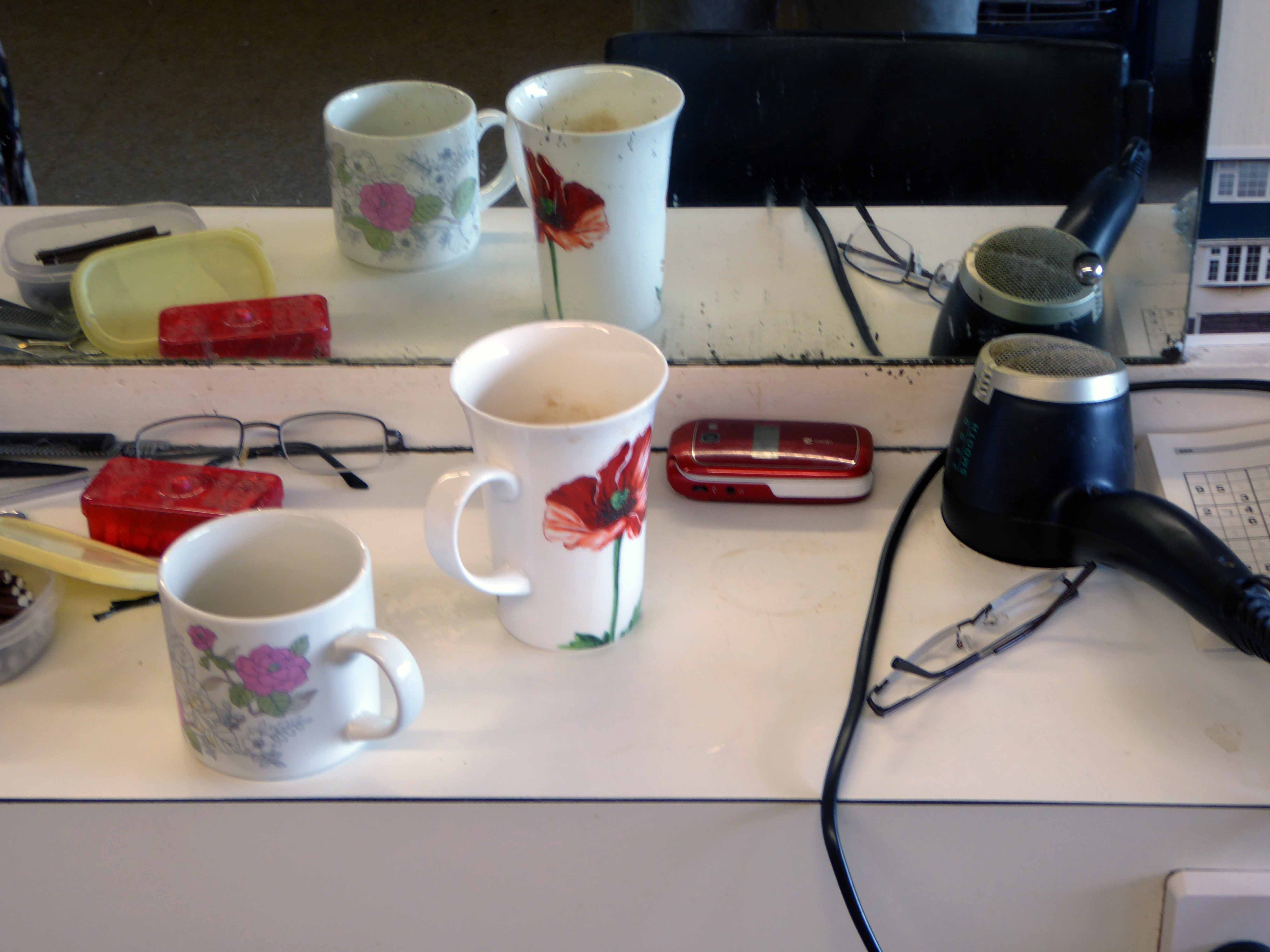
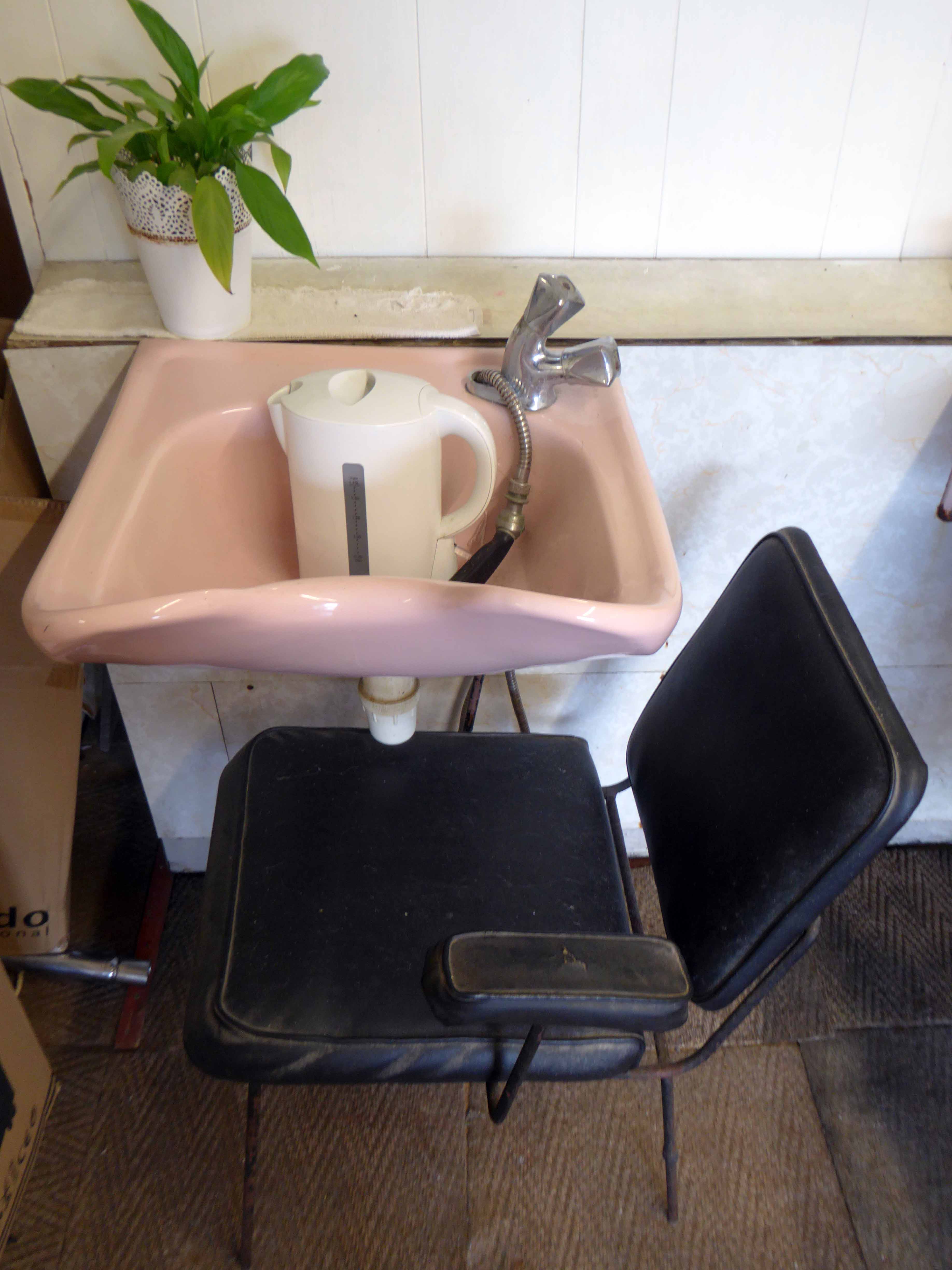
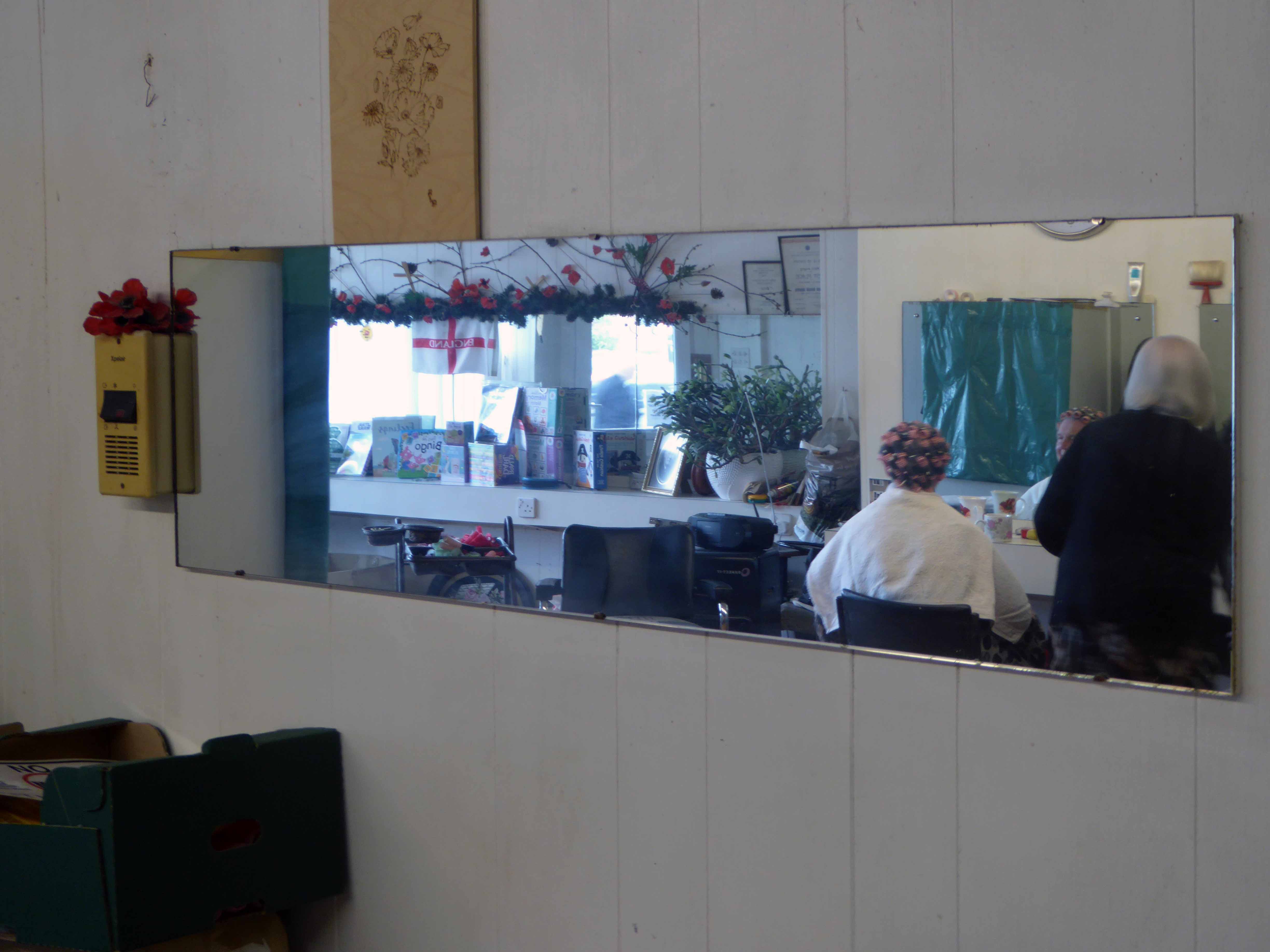
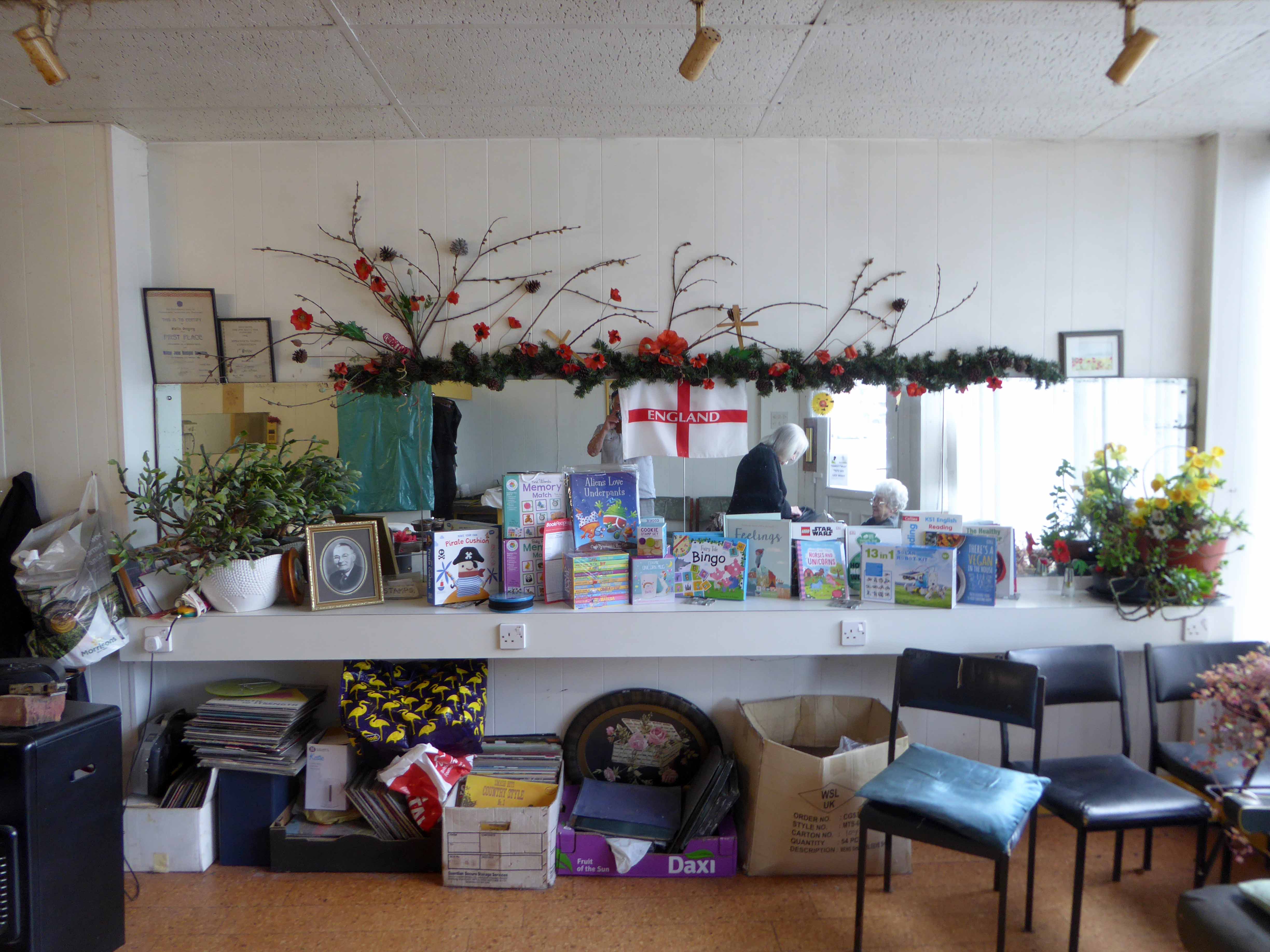
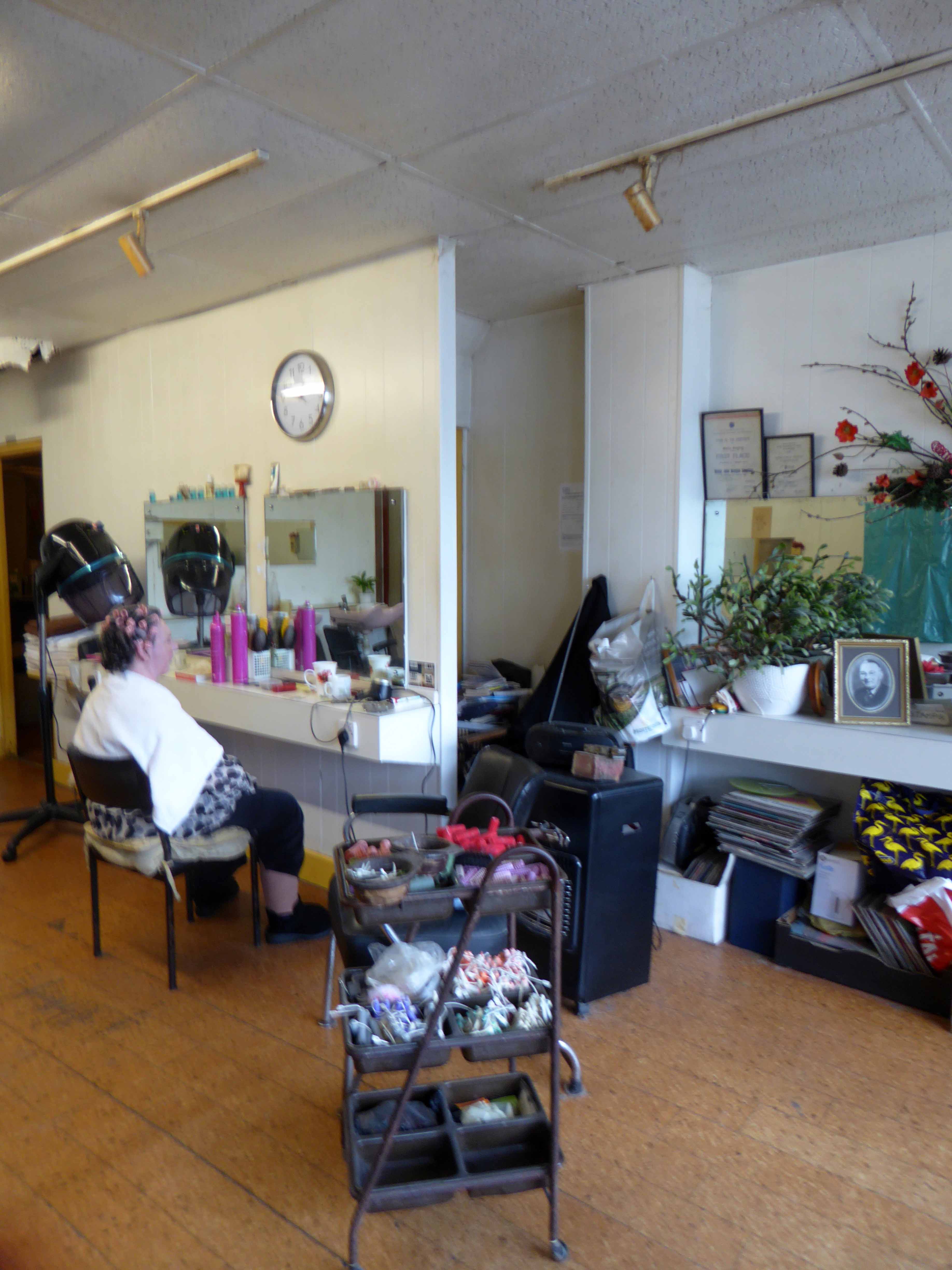
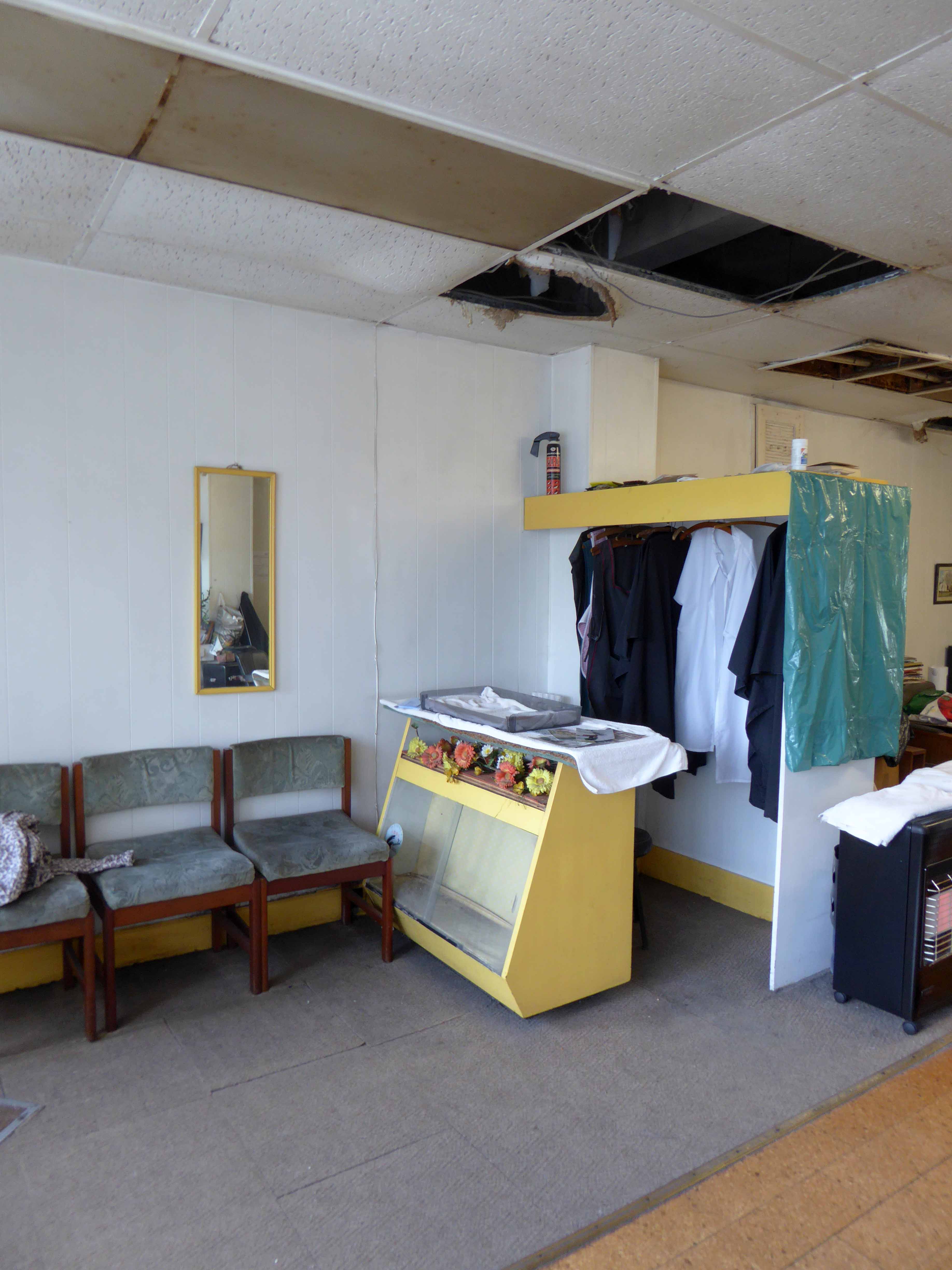
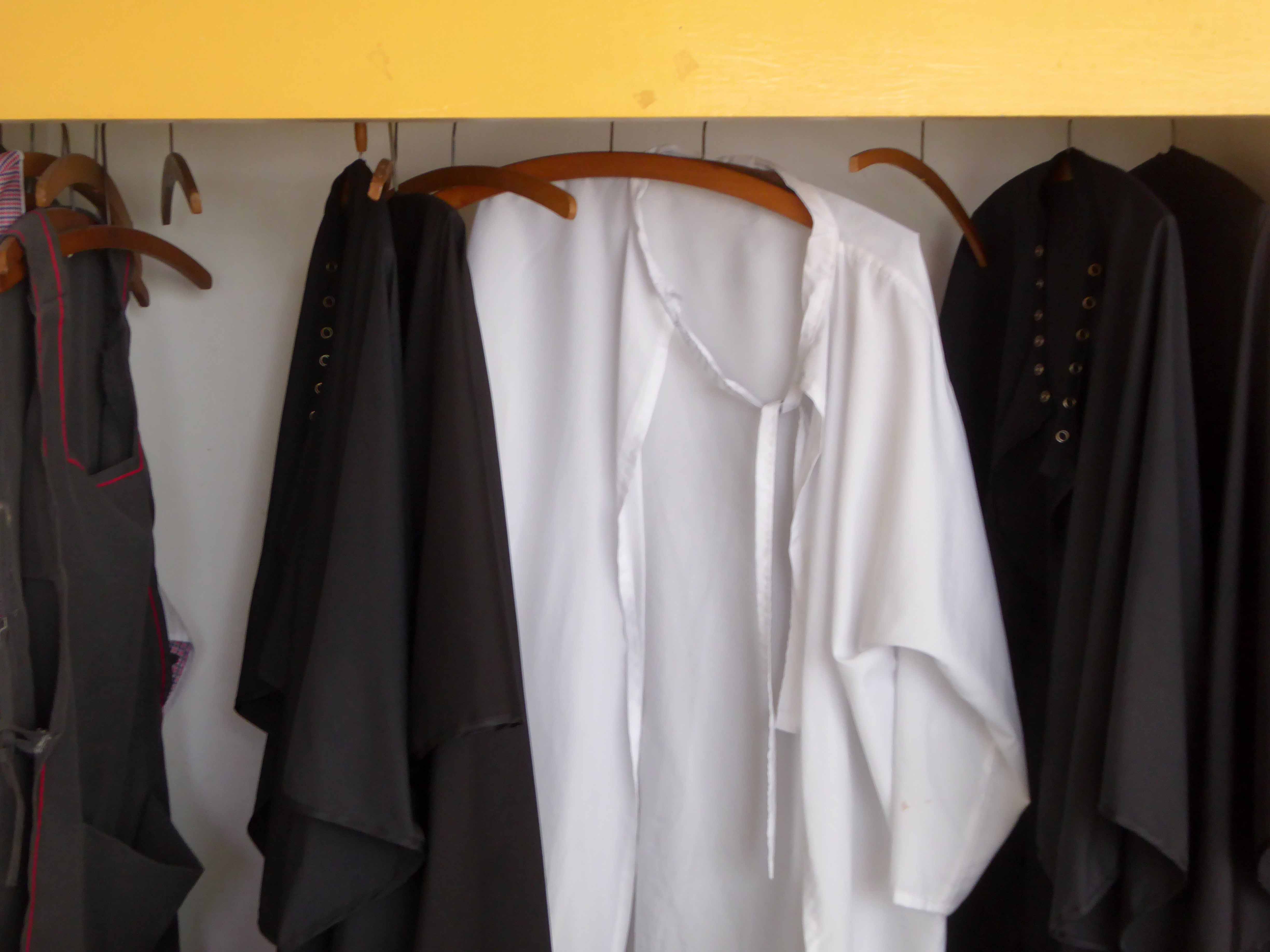
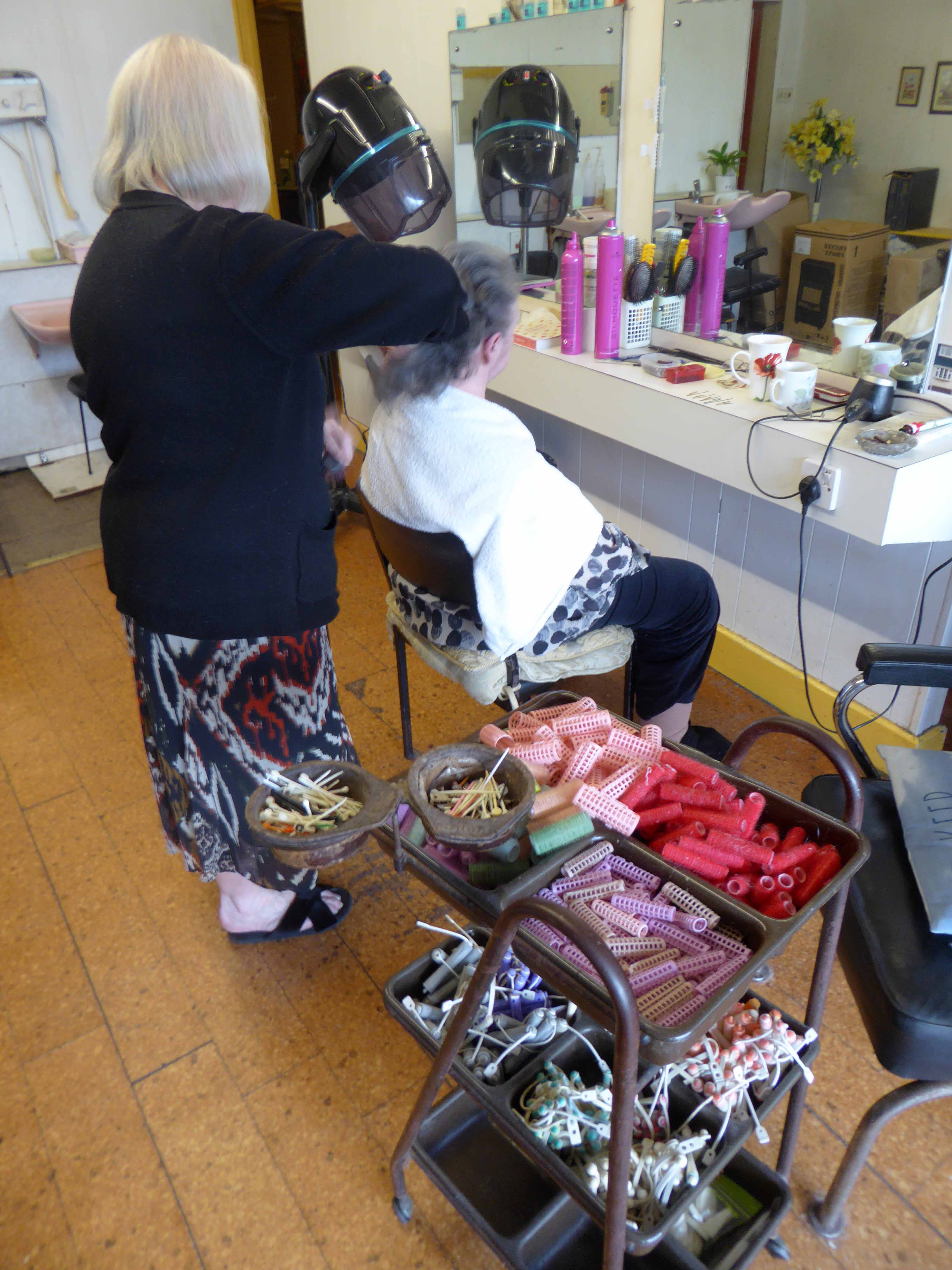
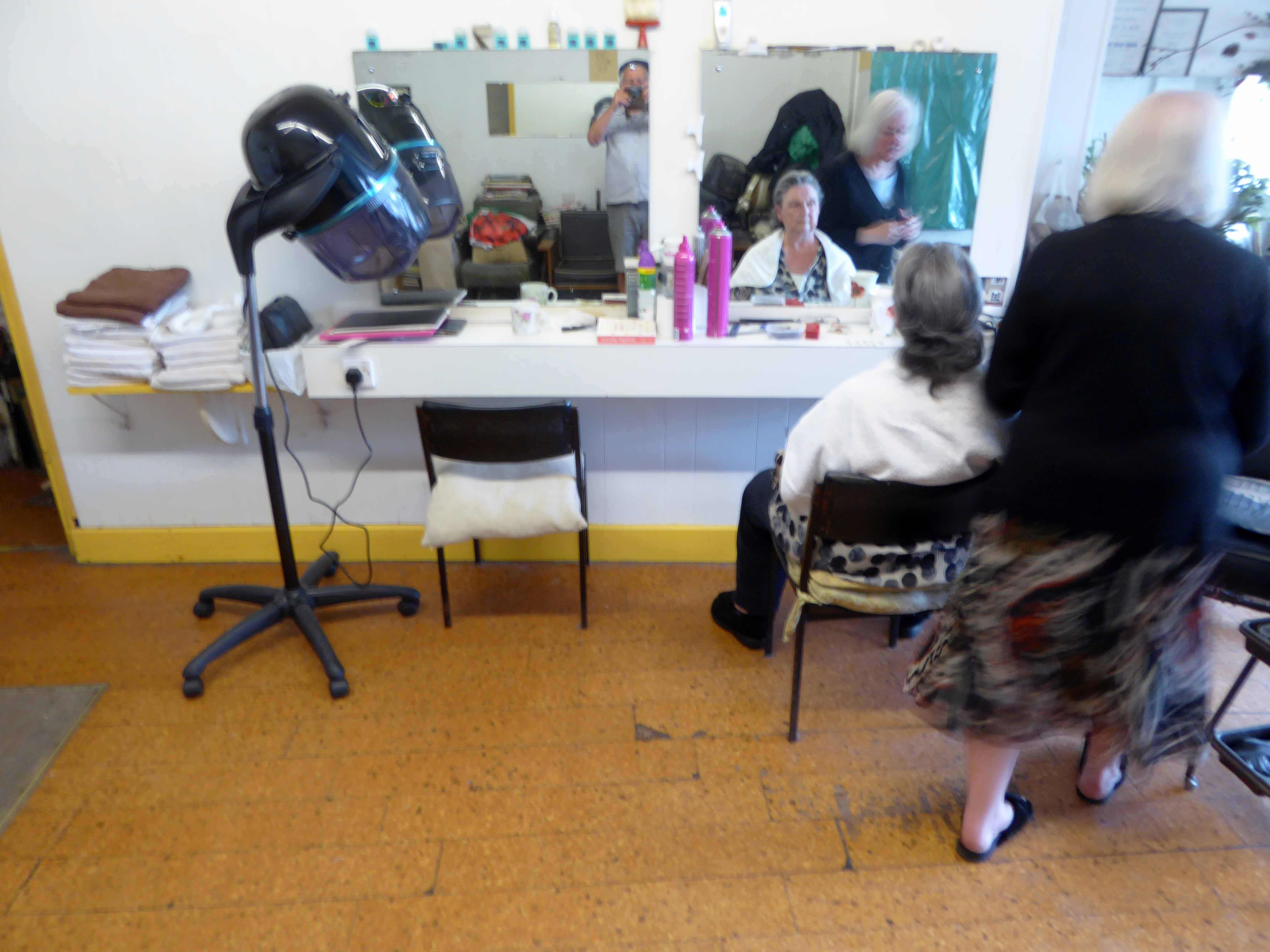
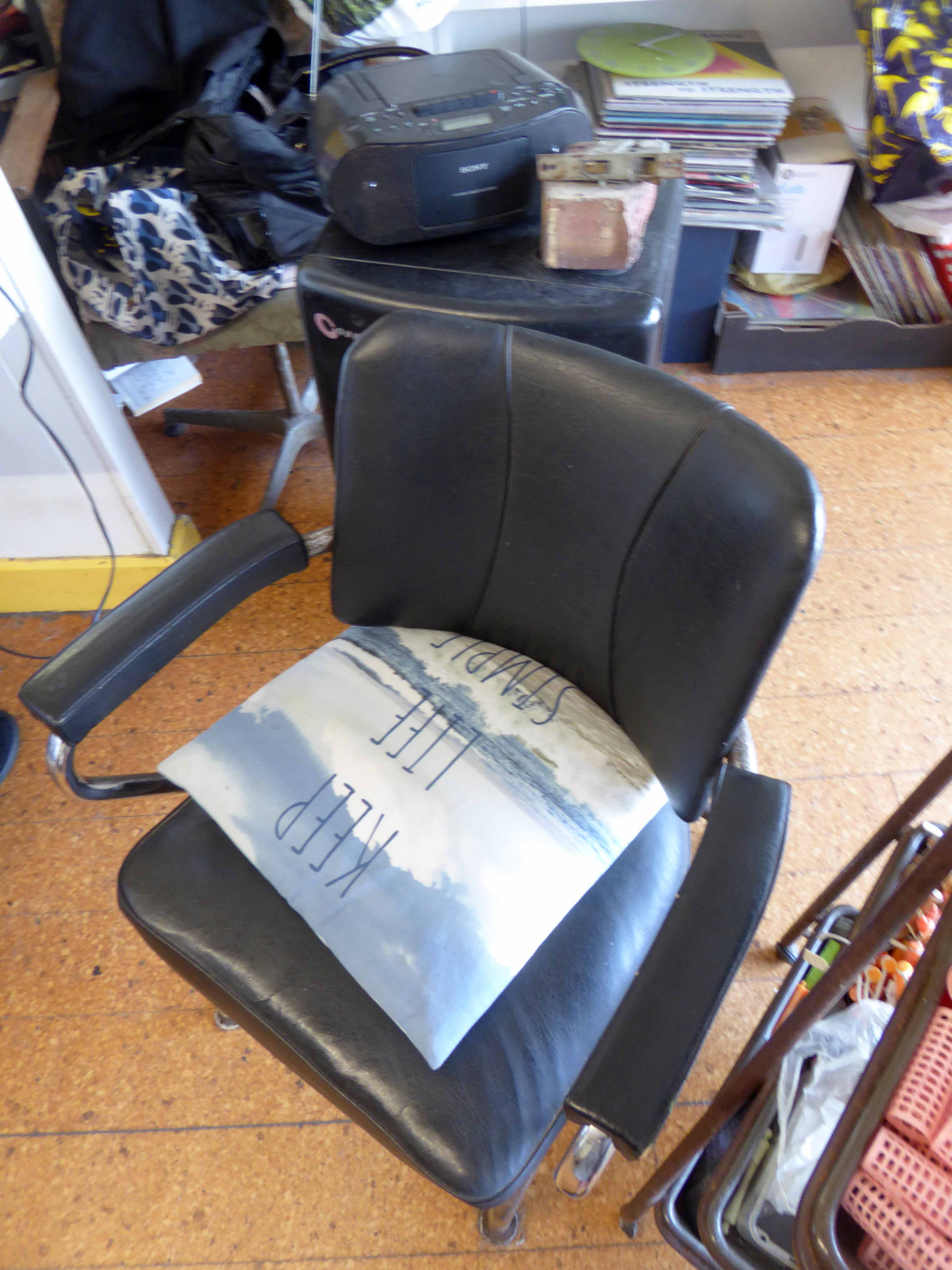
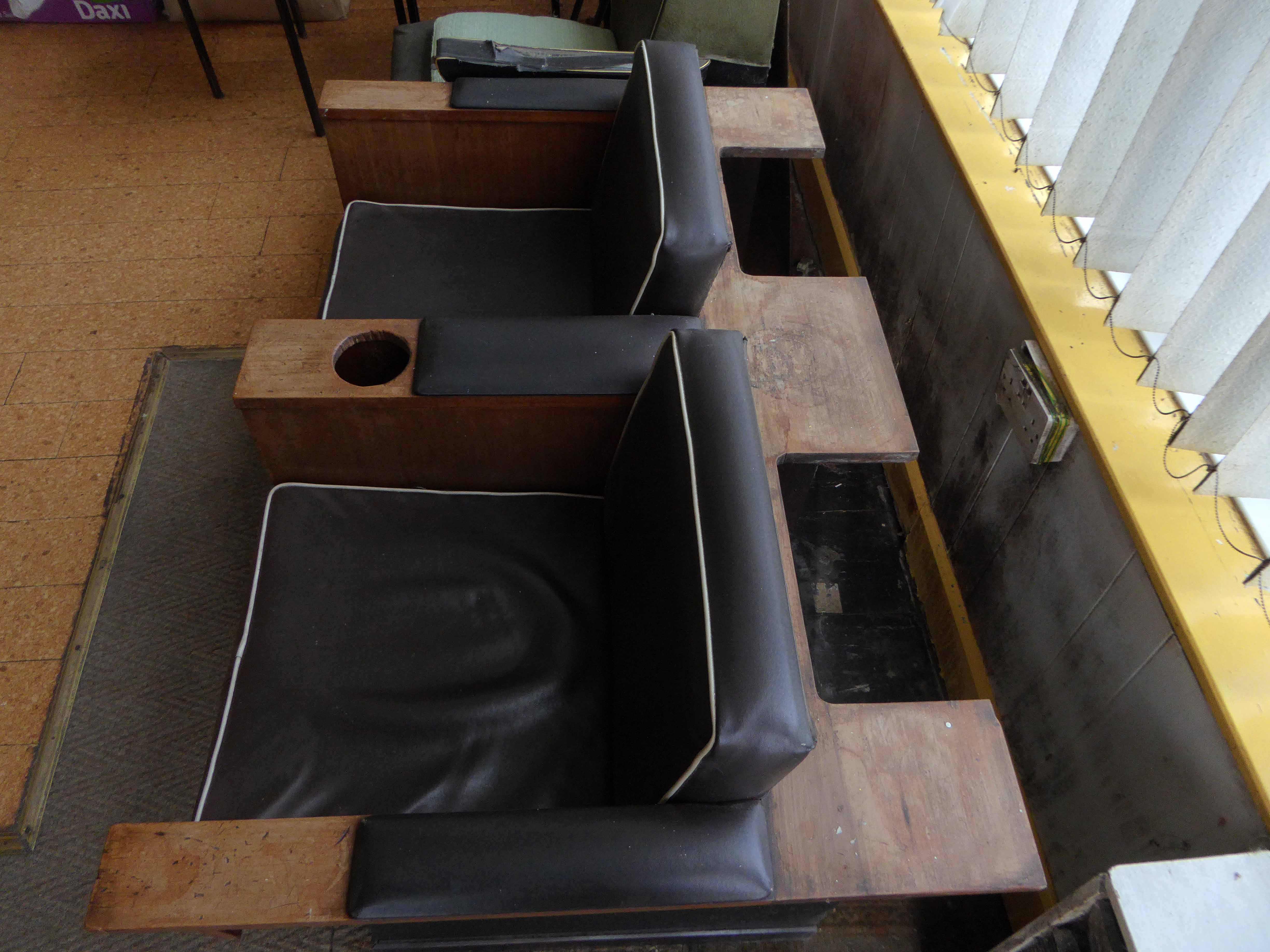
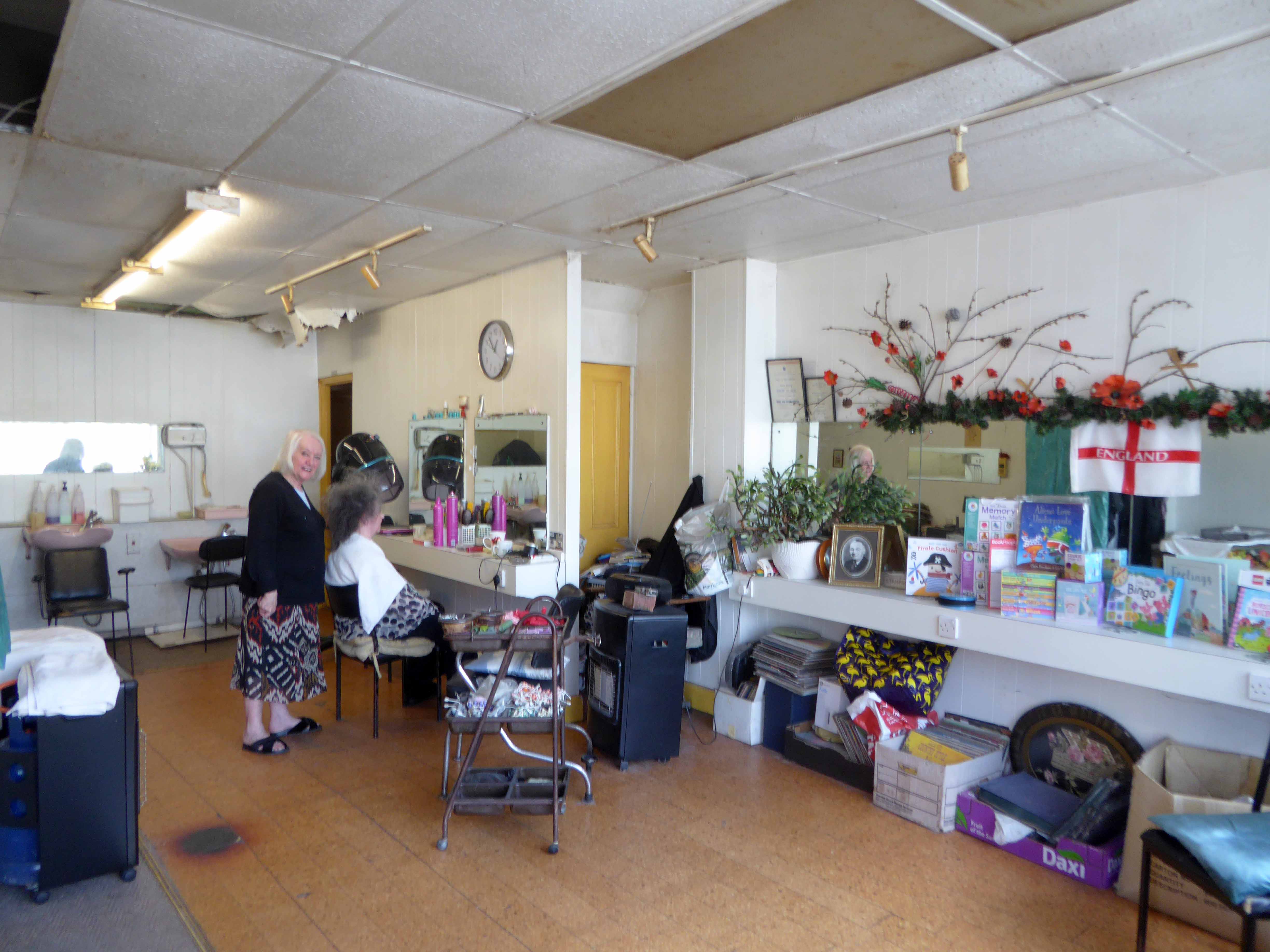
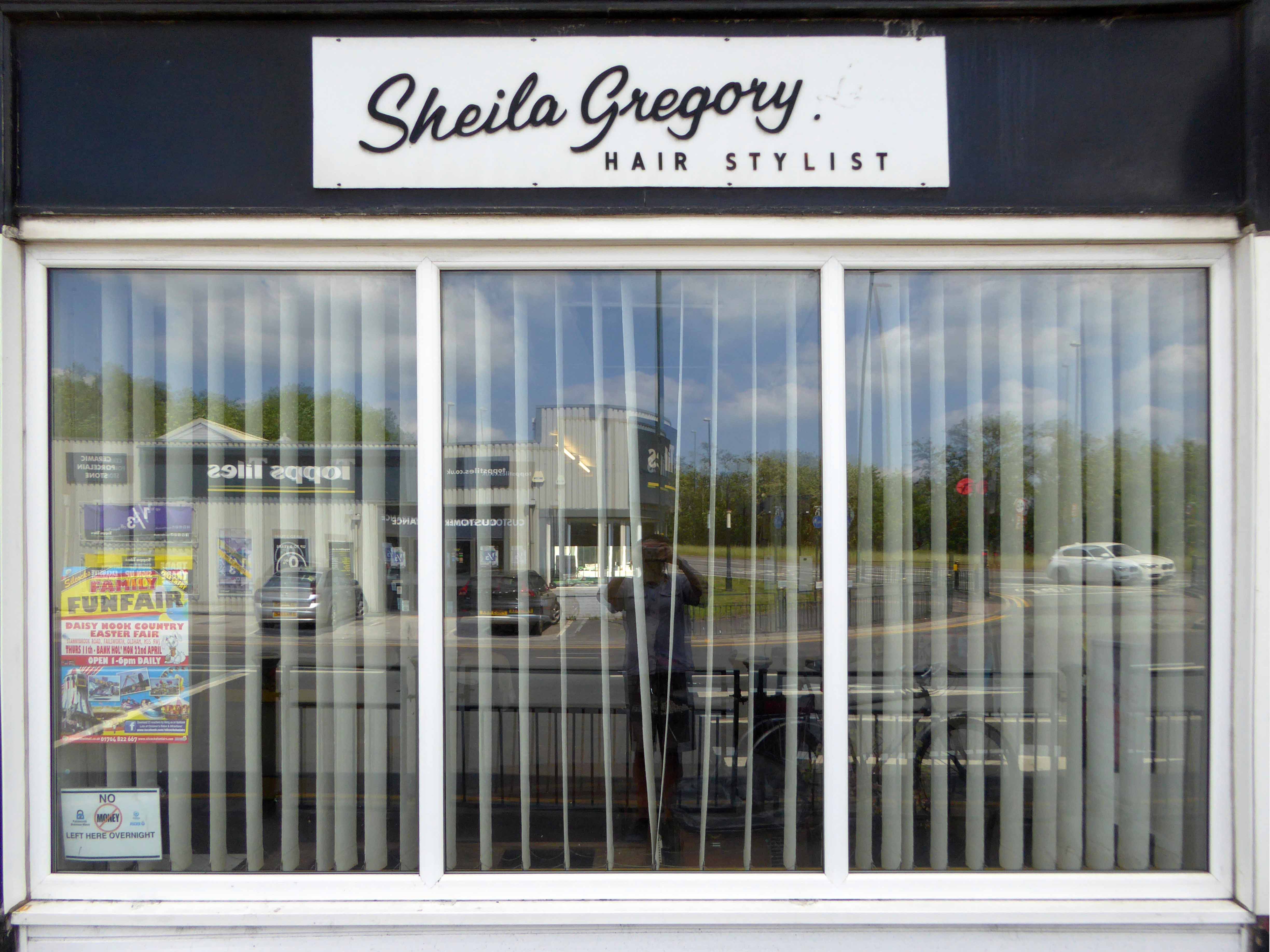
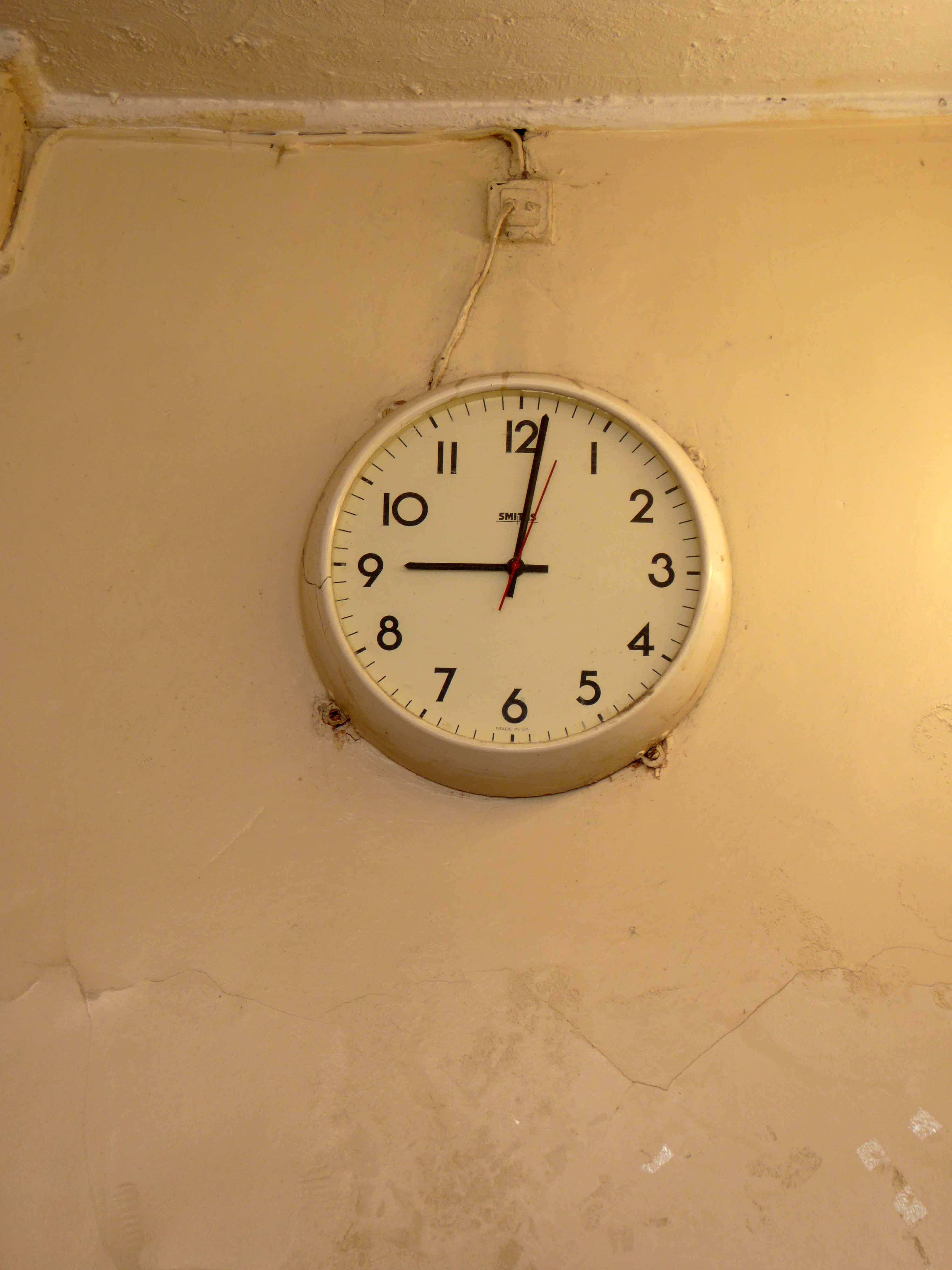
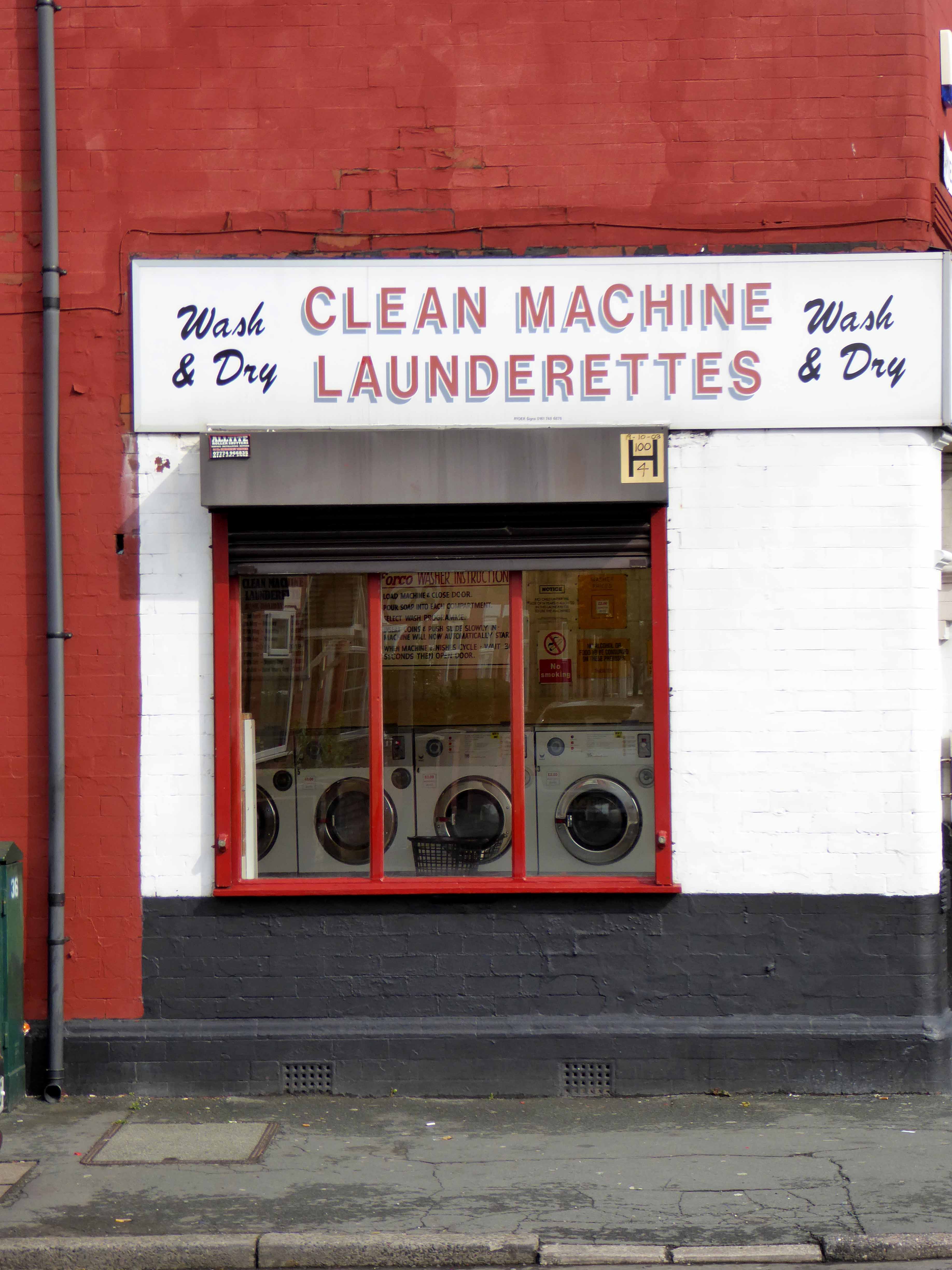
Yesterday things changed – I turned a corner in life when I turned the corner into Matthews Road, the familiar aroma, signs and things signified came flooding right back – time stood still beneath a strip light lit suspended ceiling.


















































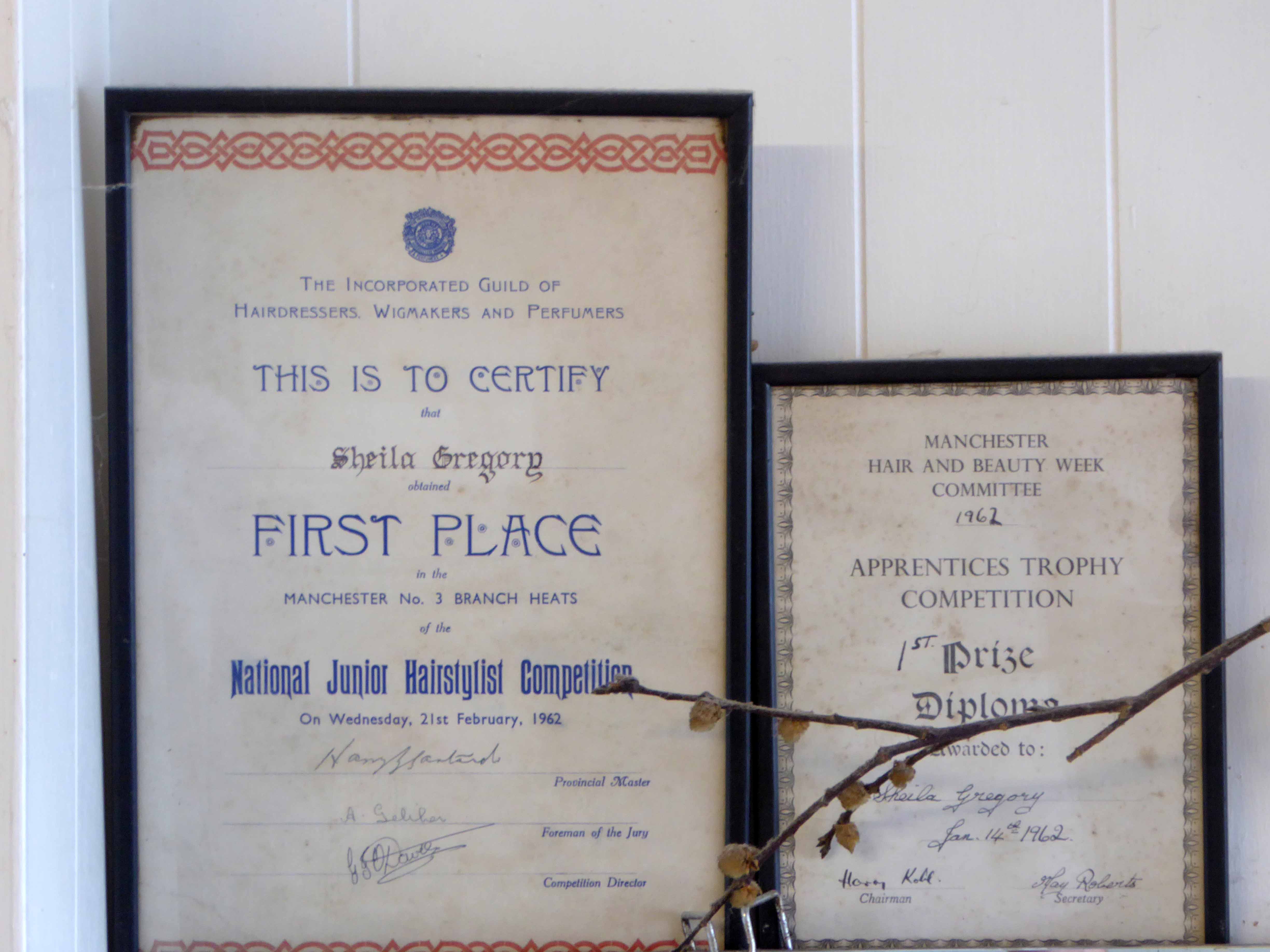
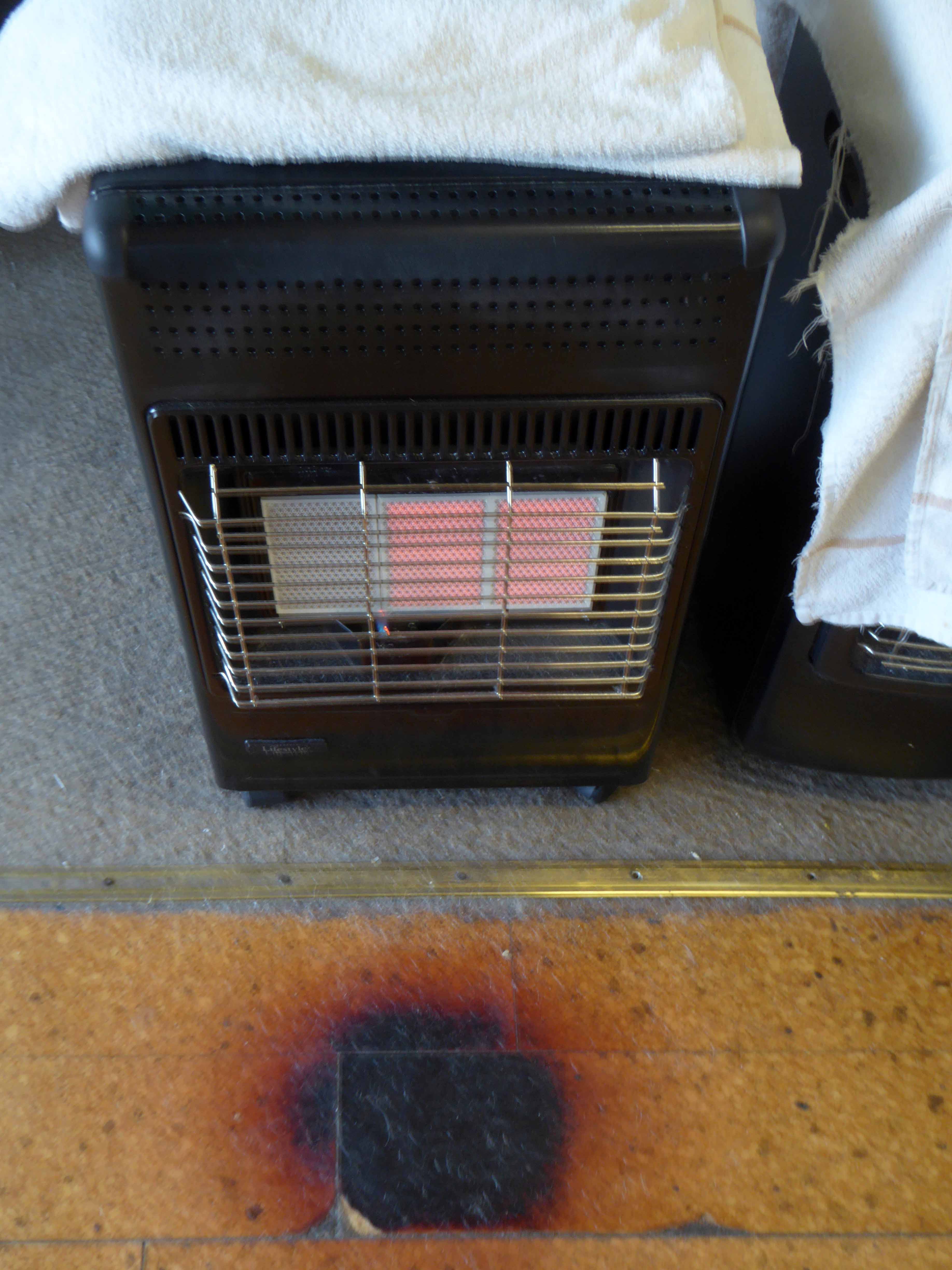
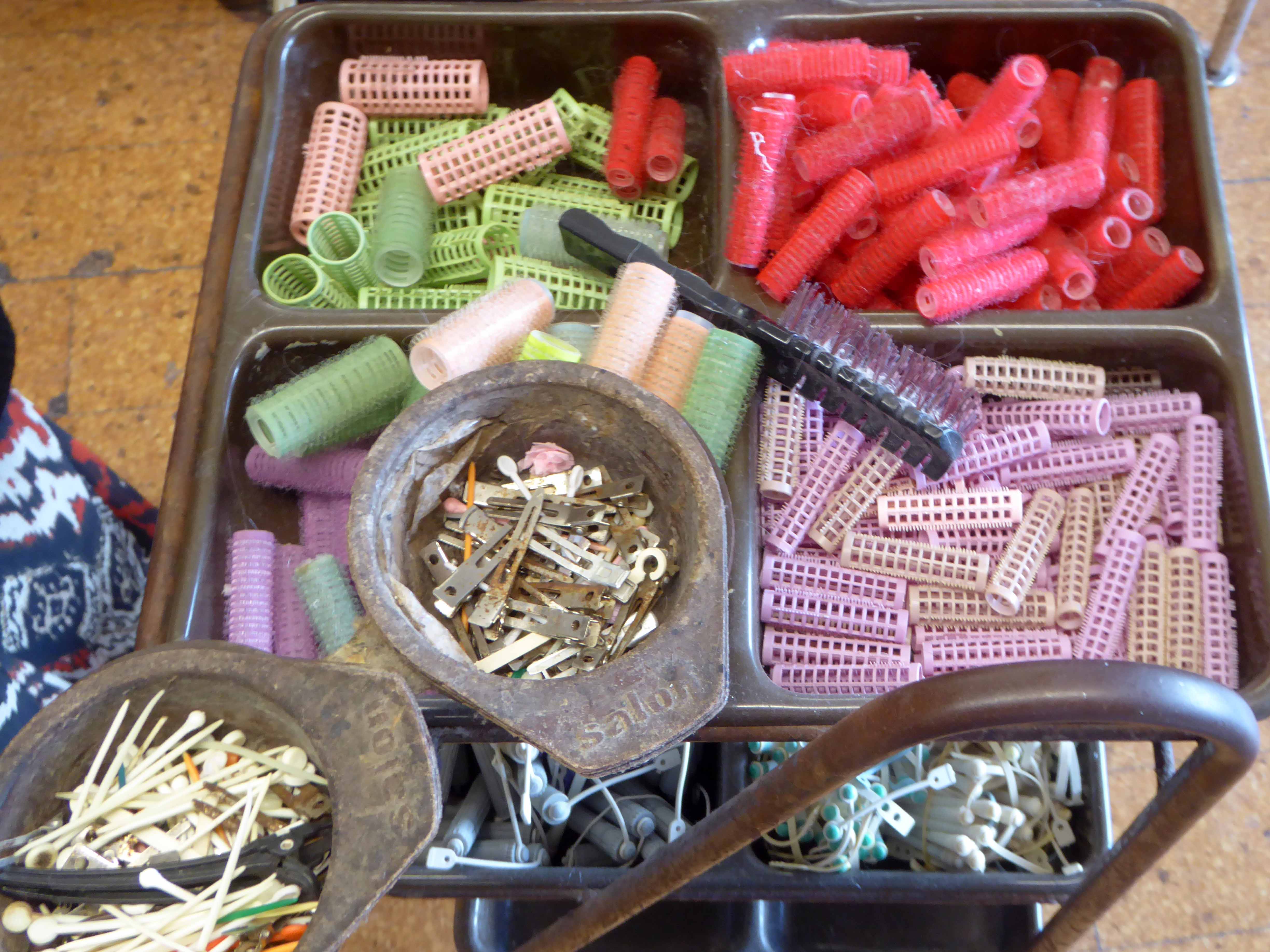
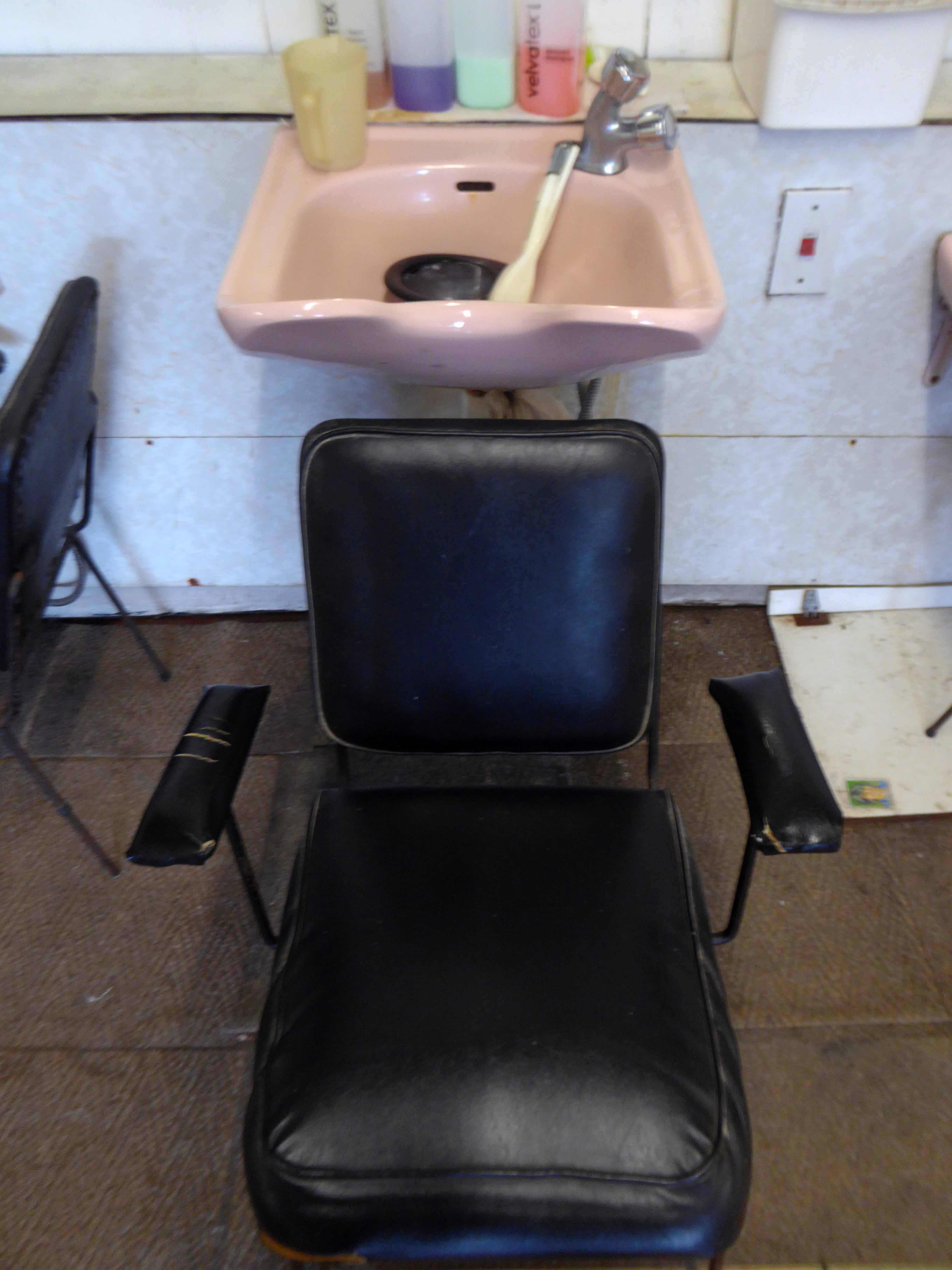
 Modern Mooch