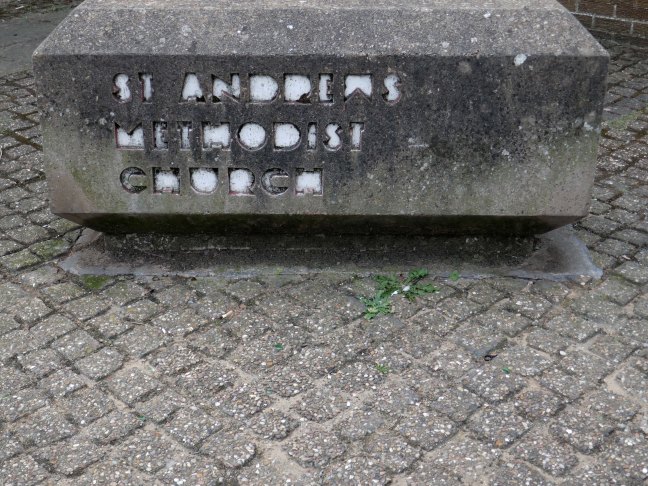
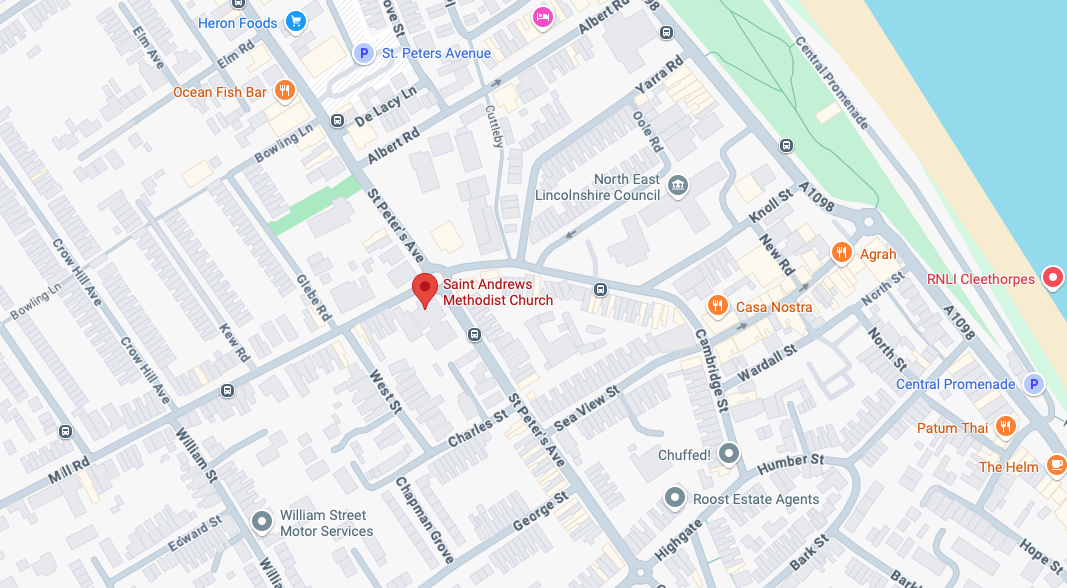
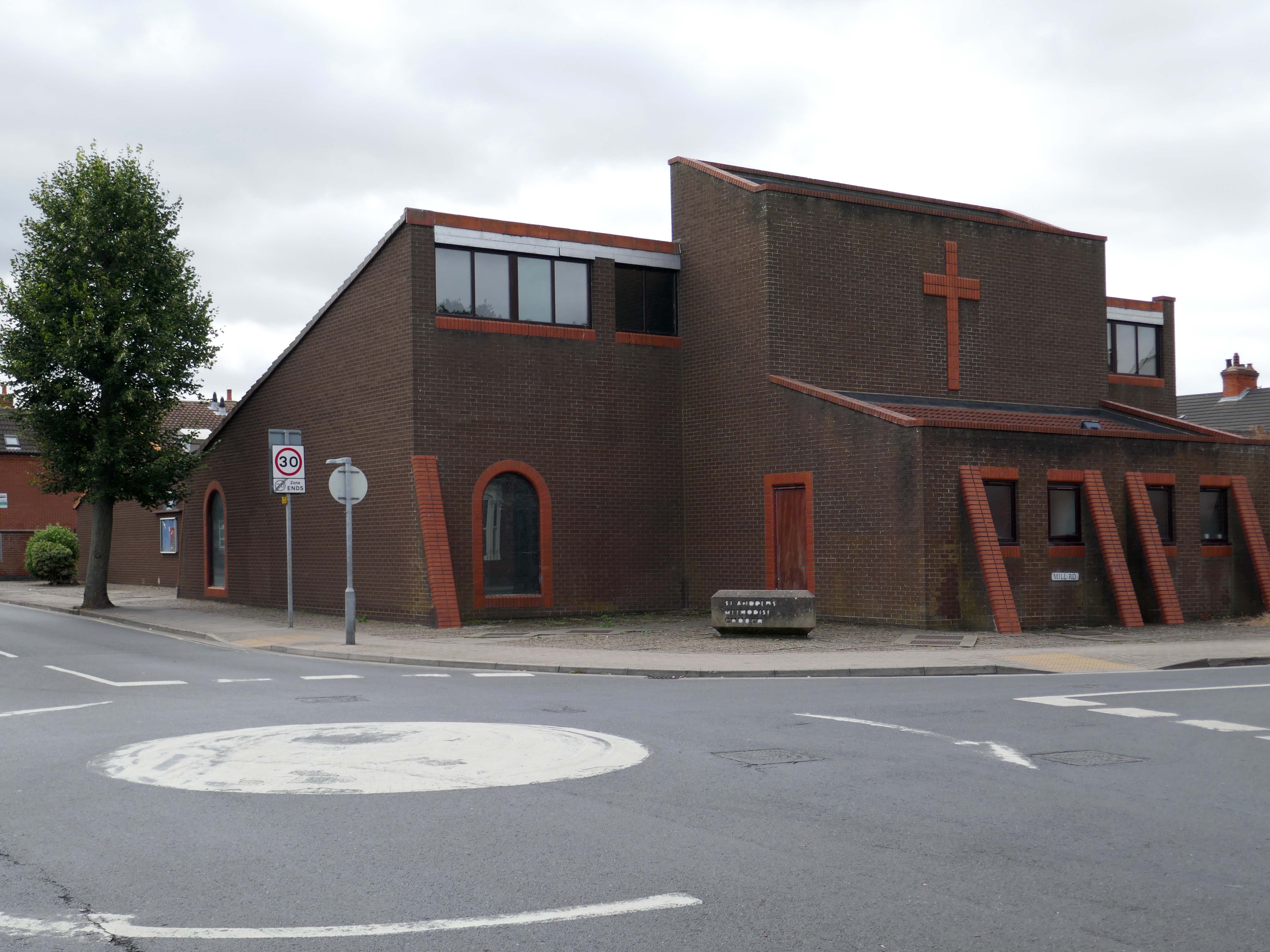
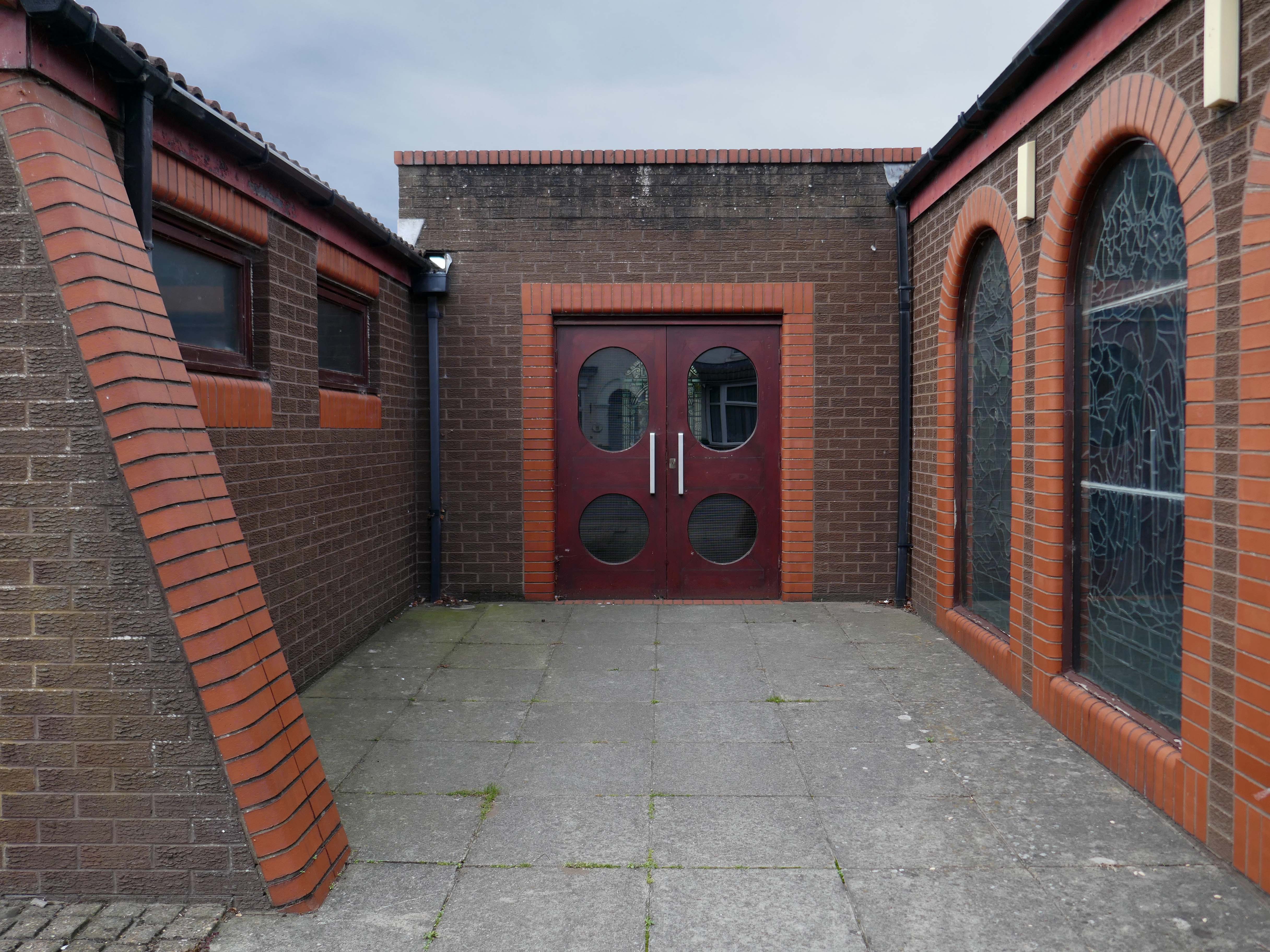
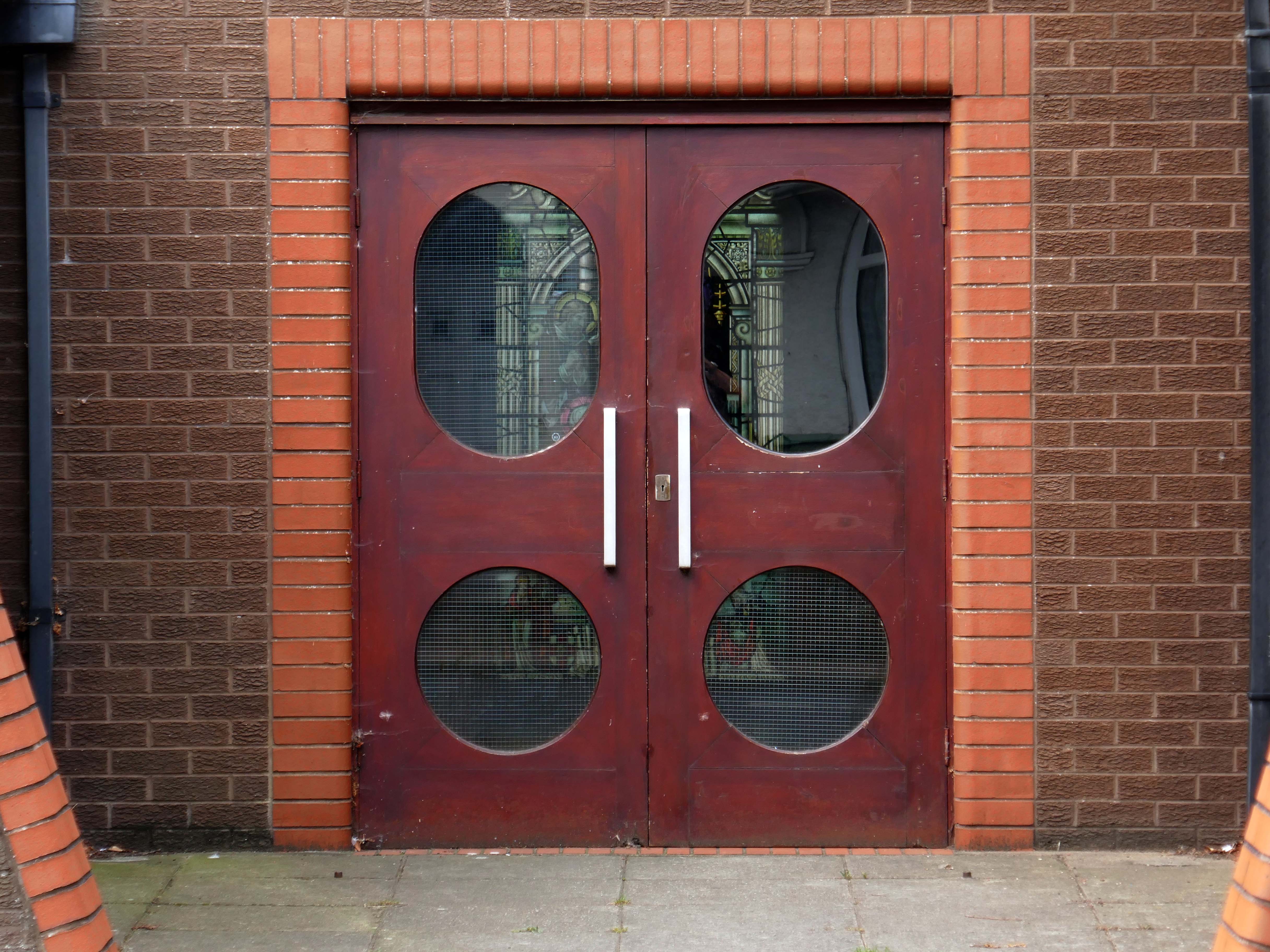
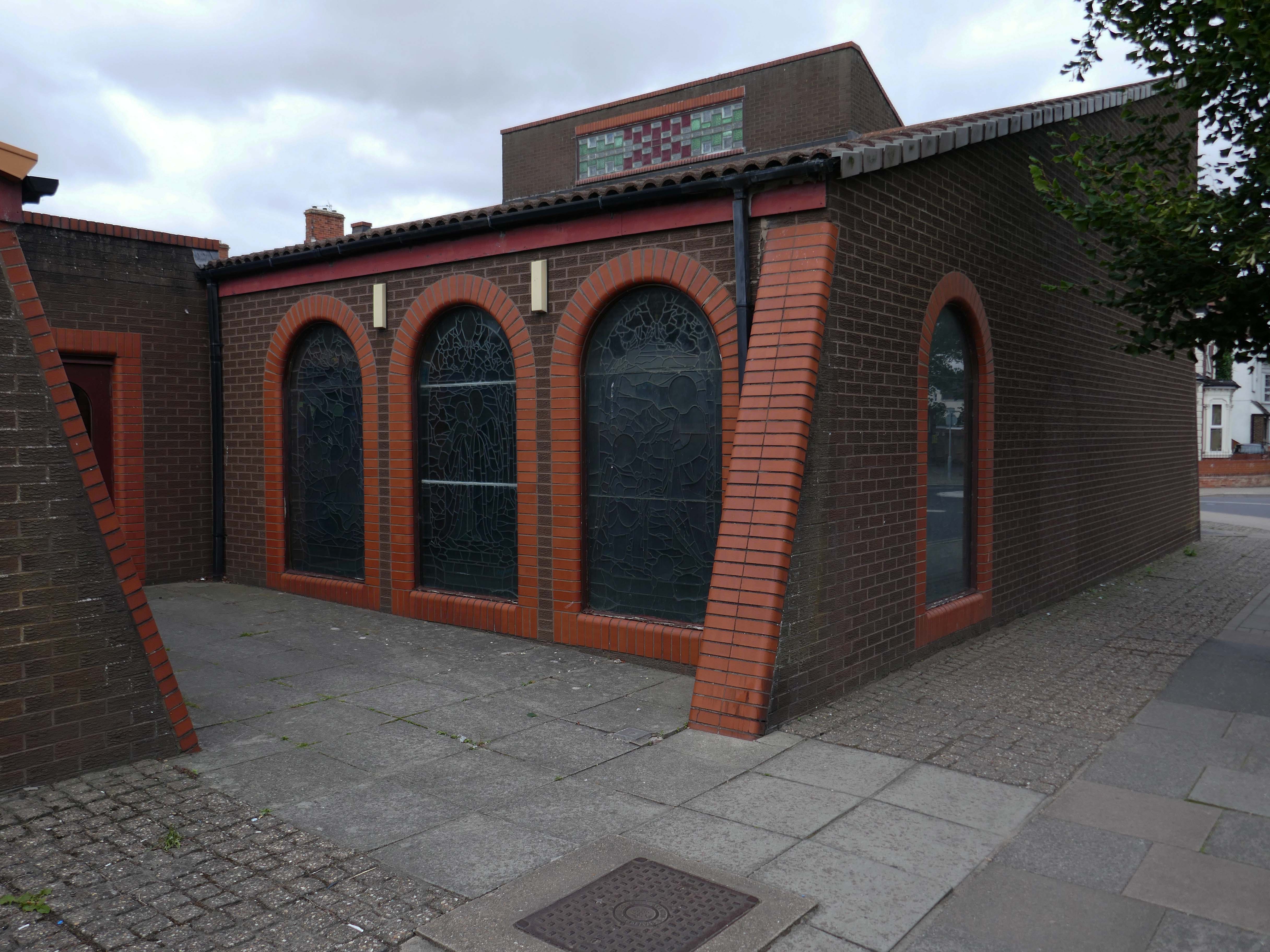
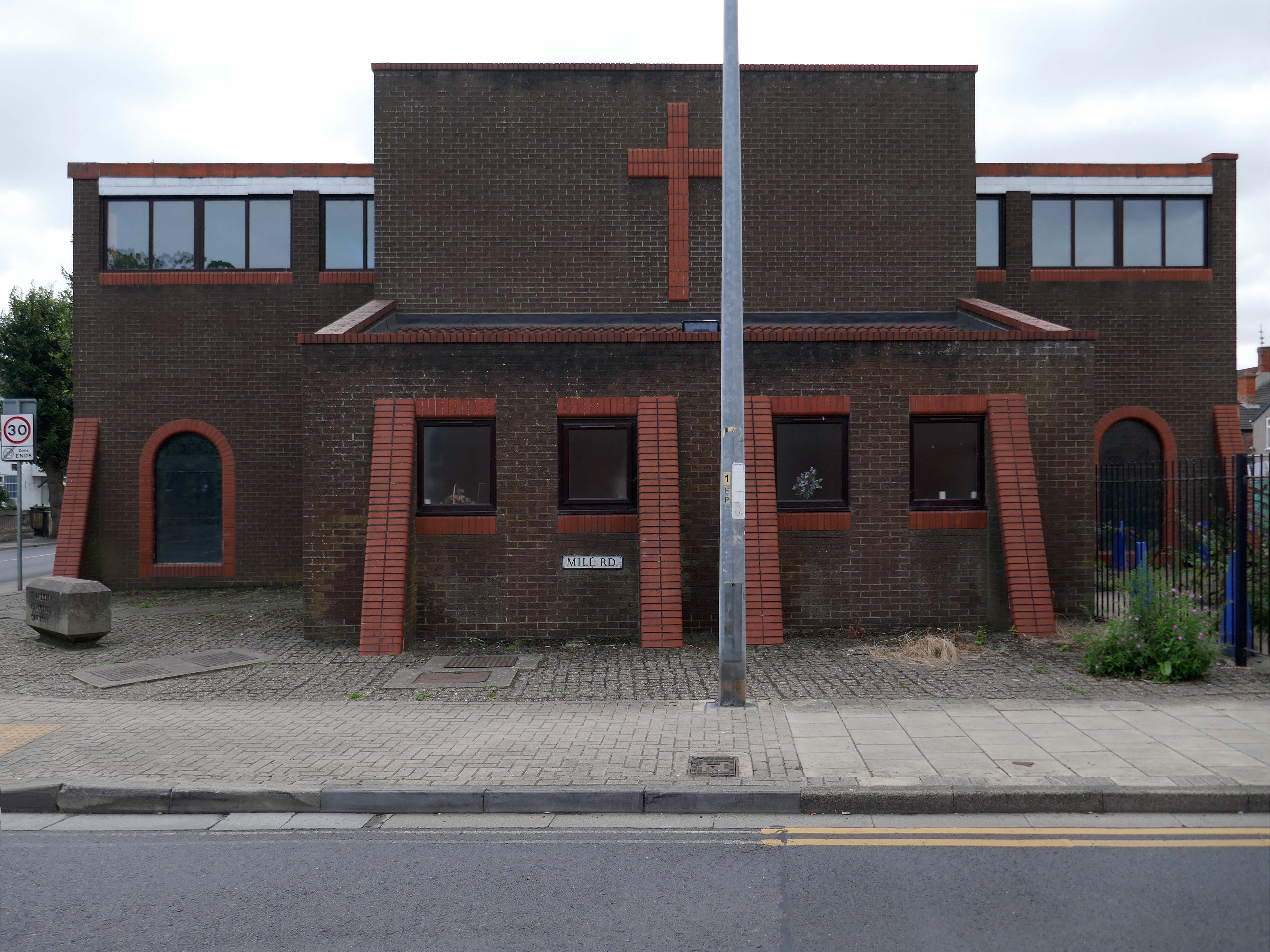
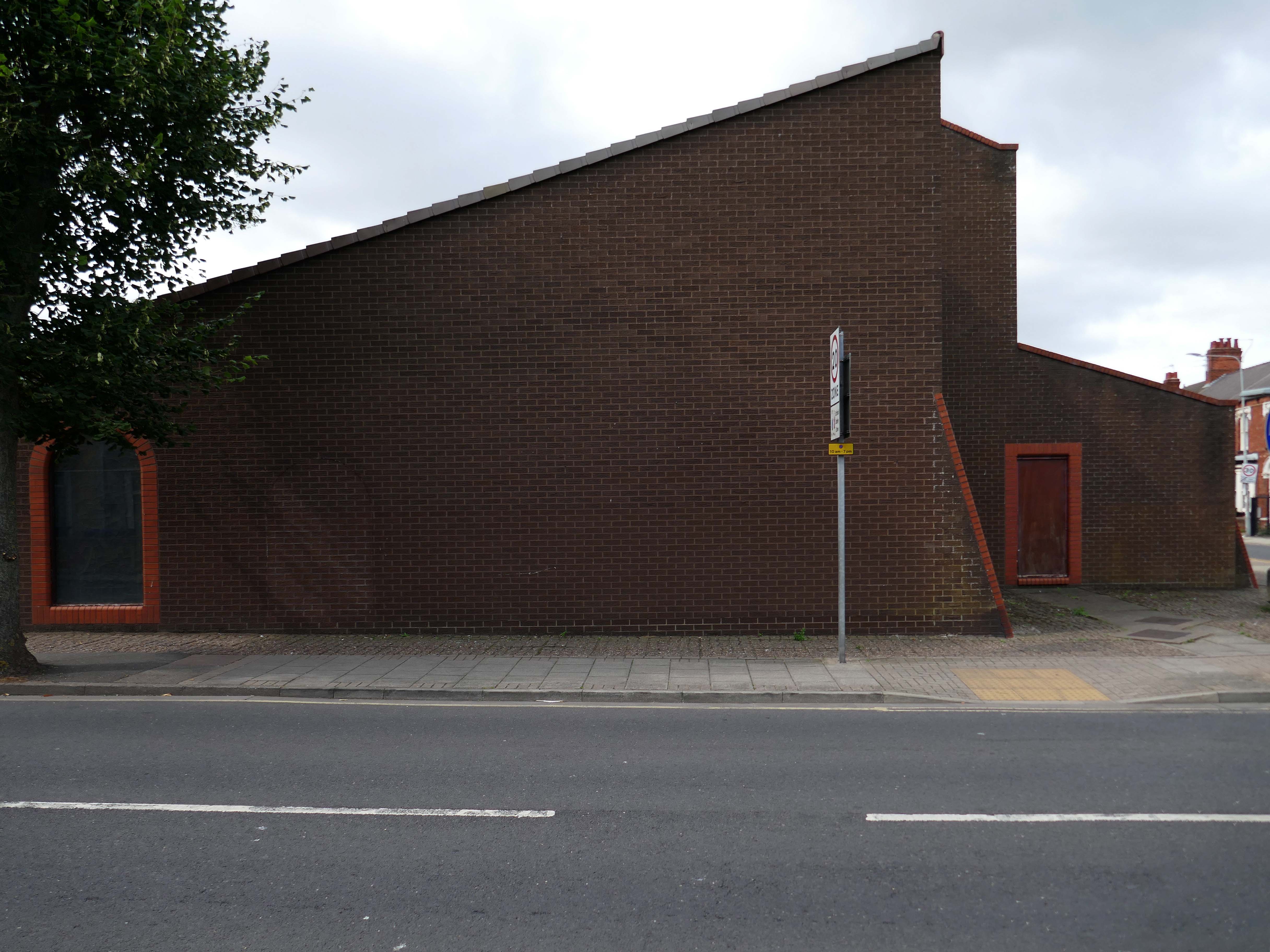
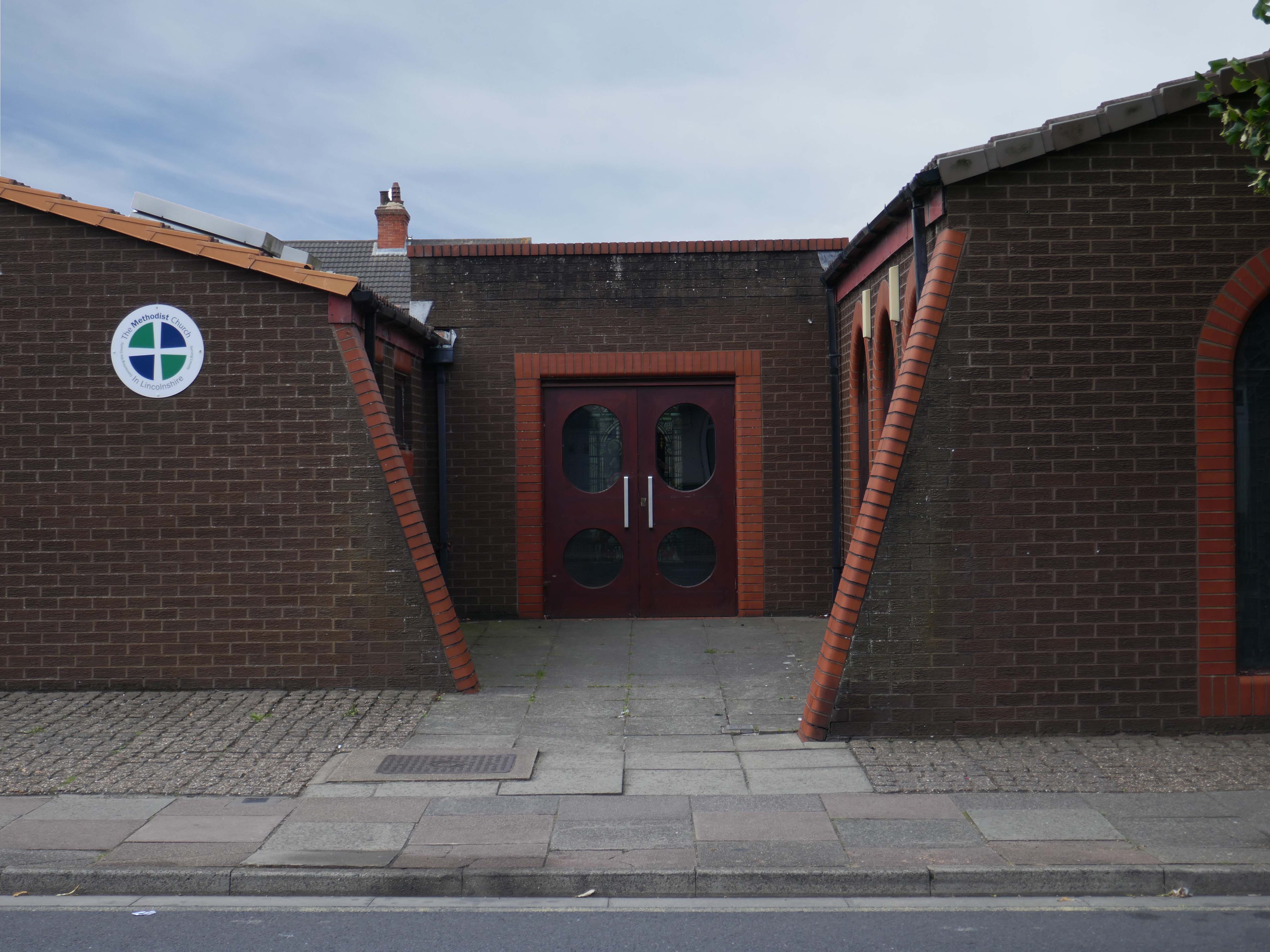
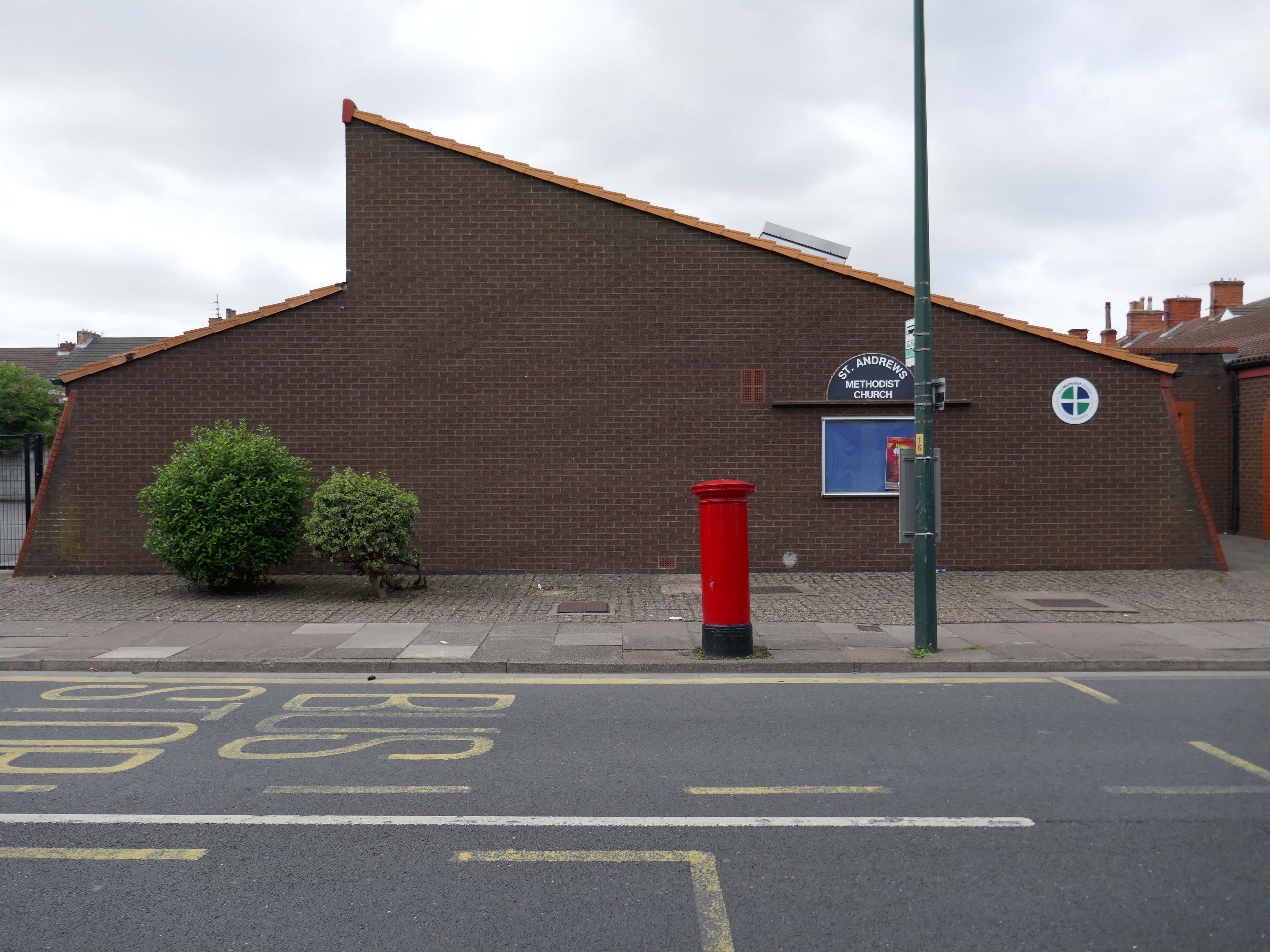
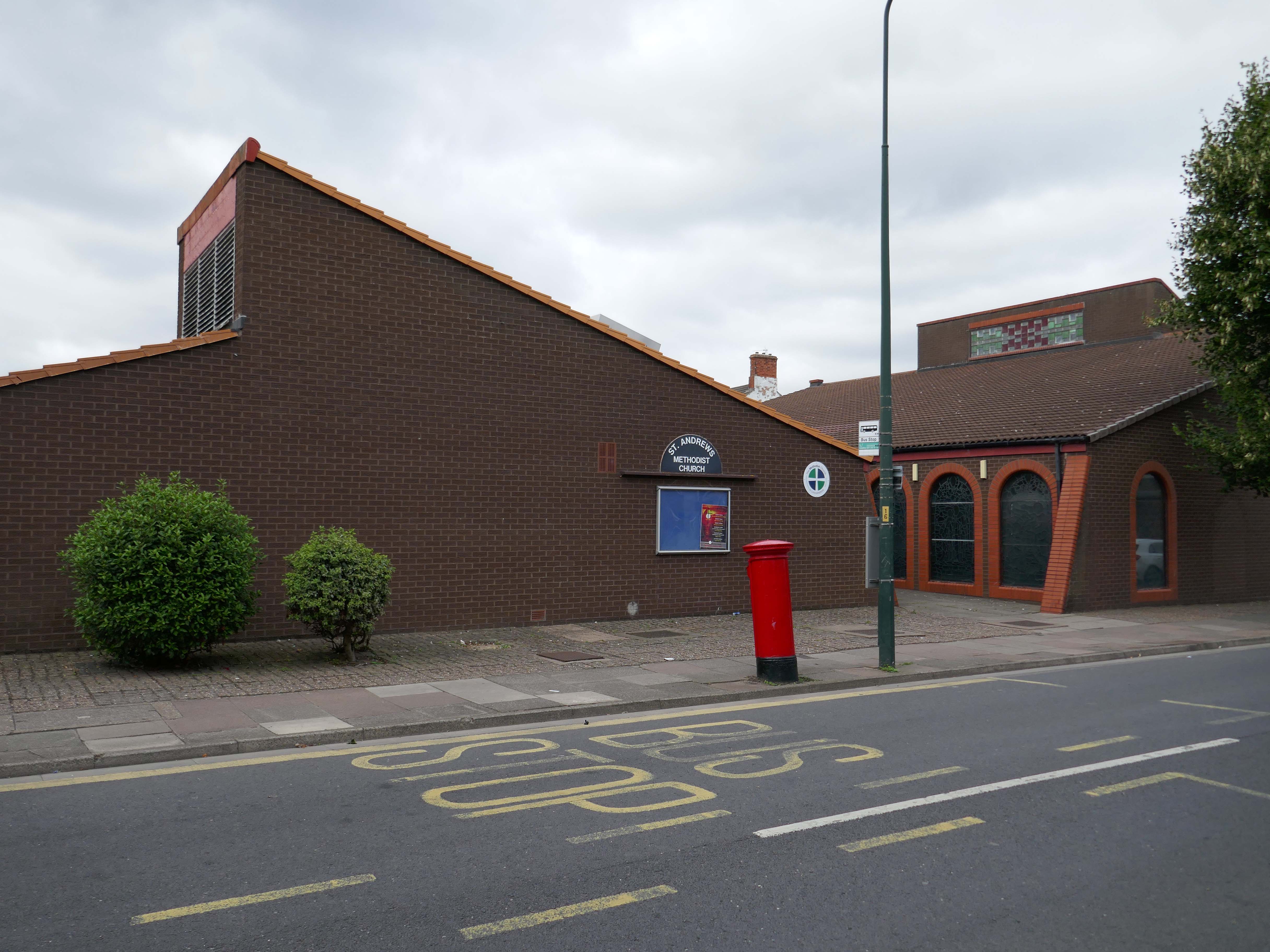
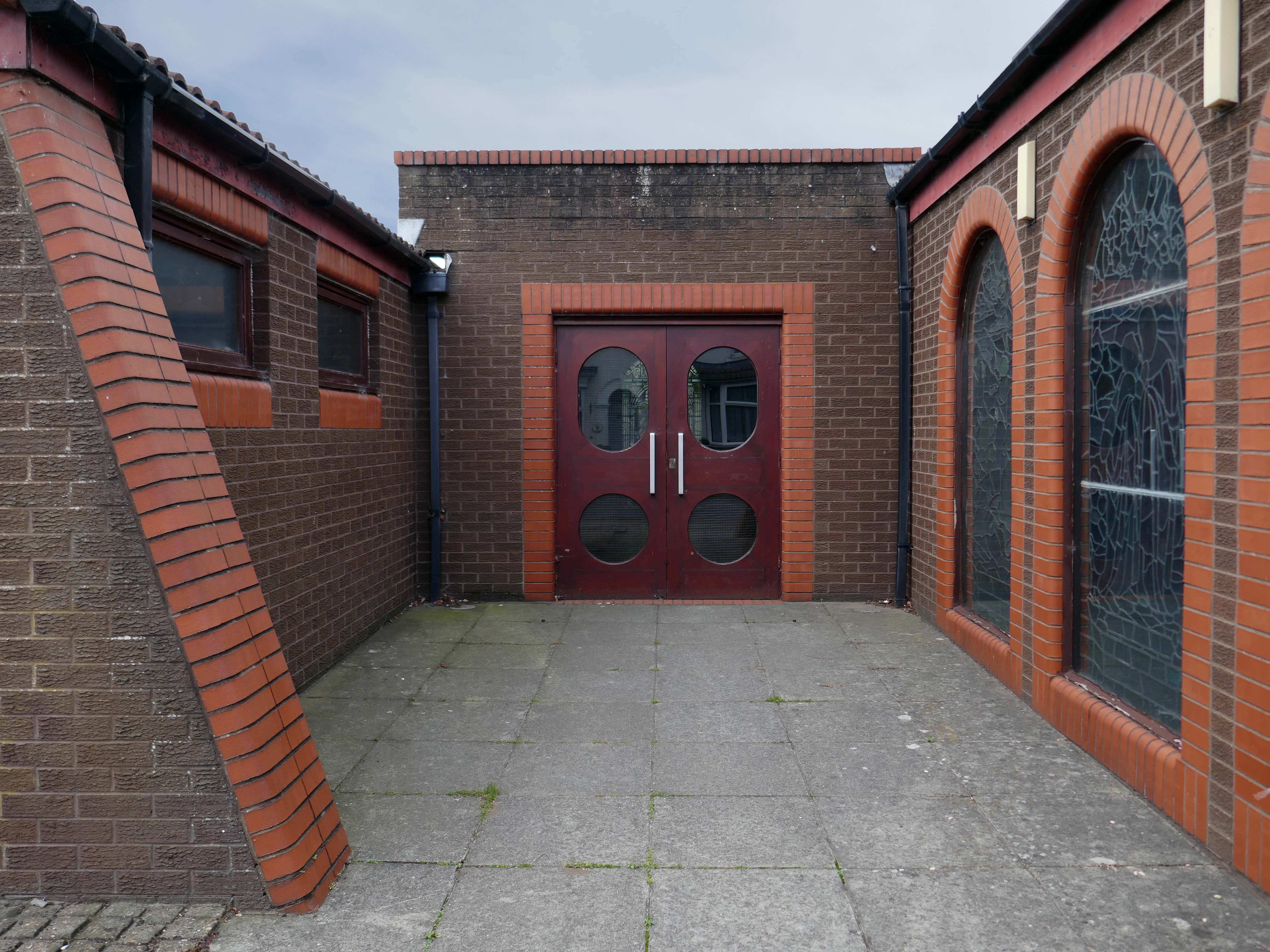
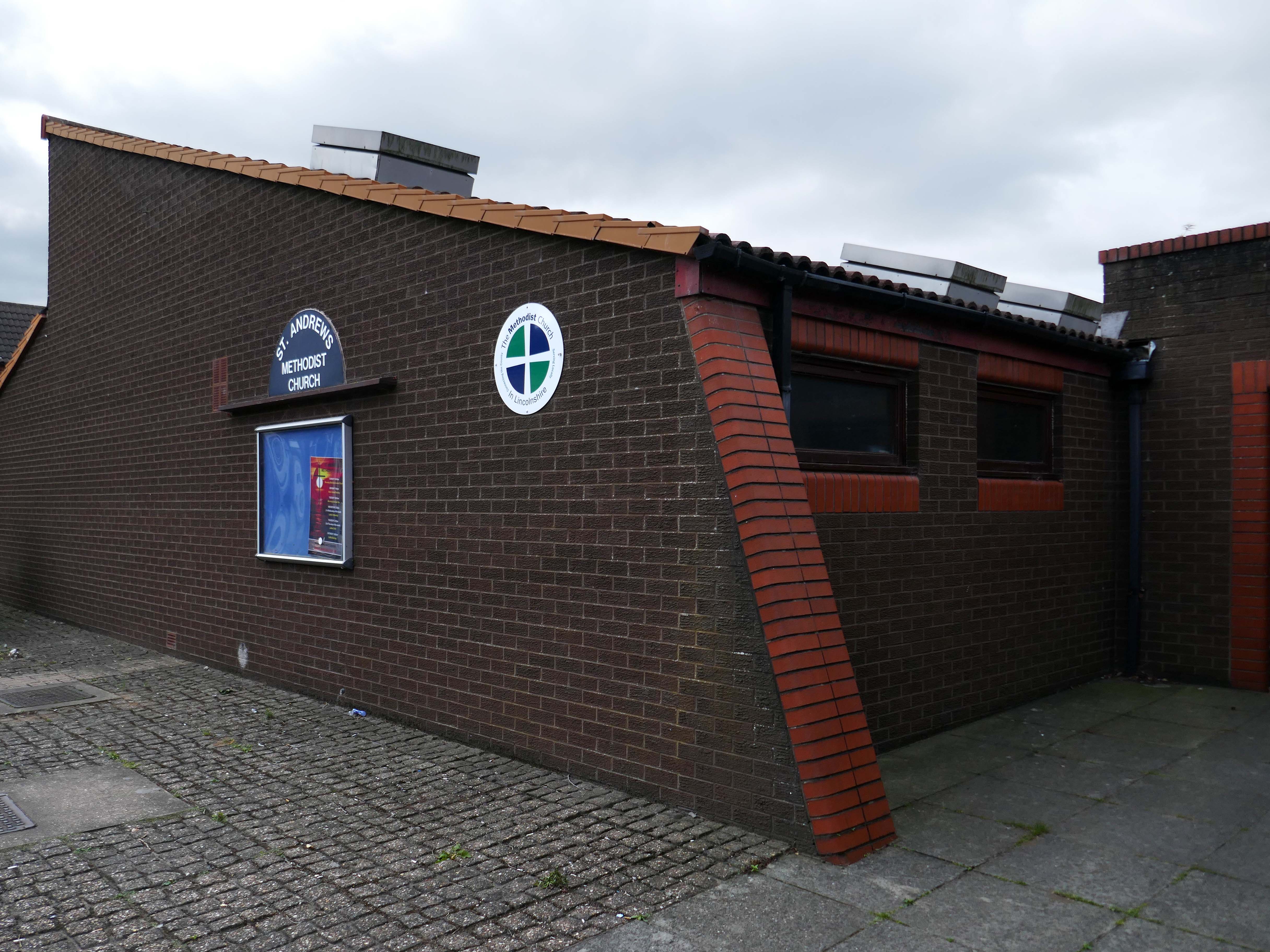
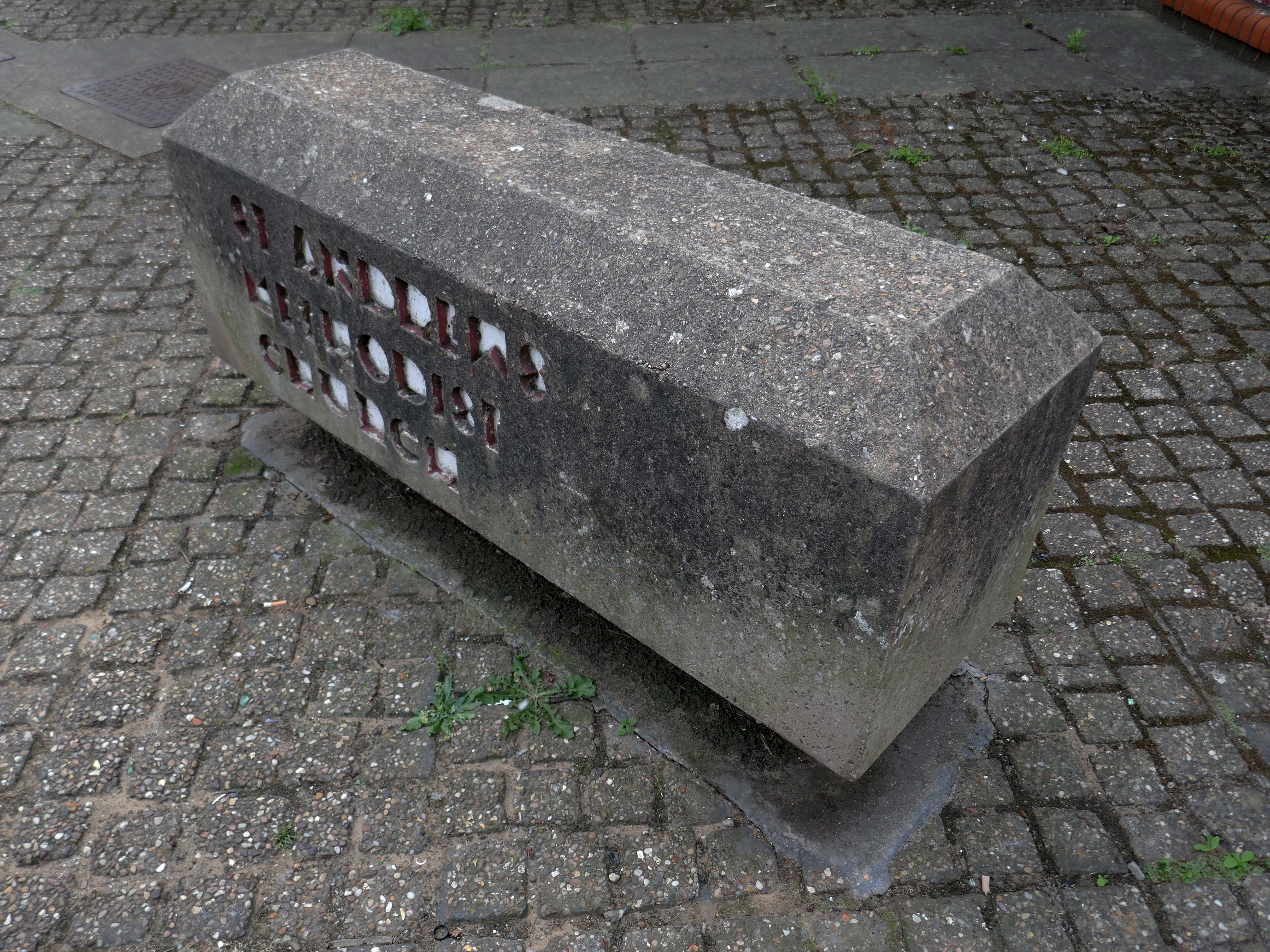
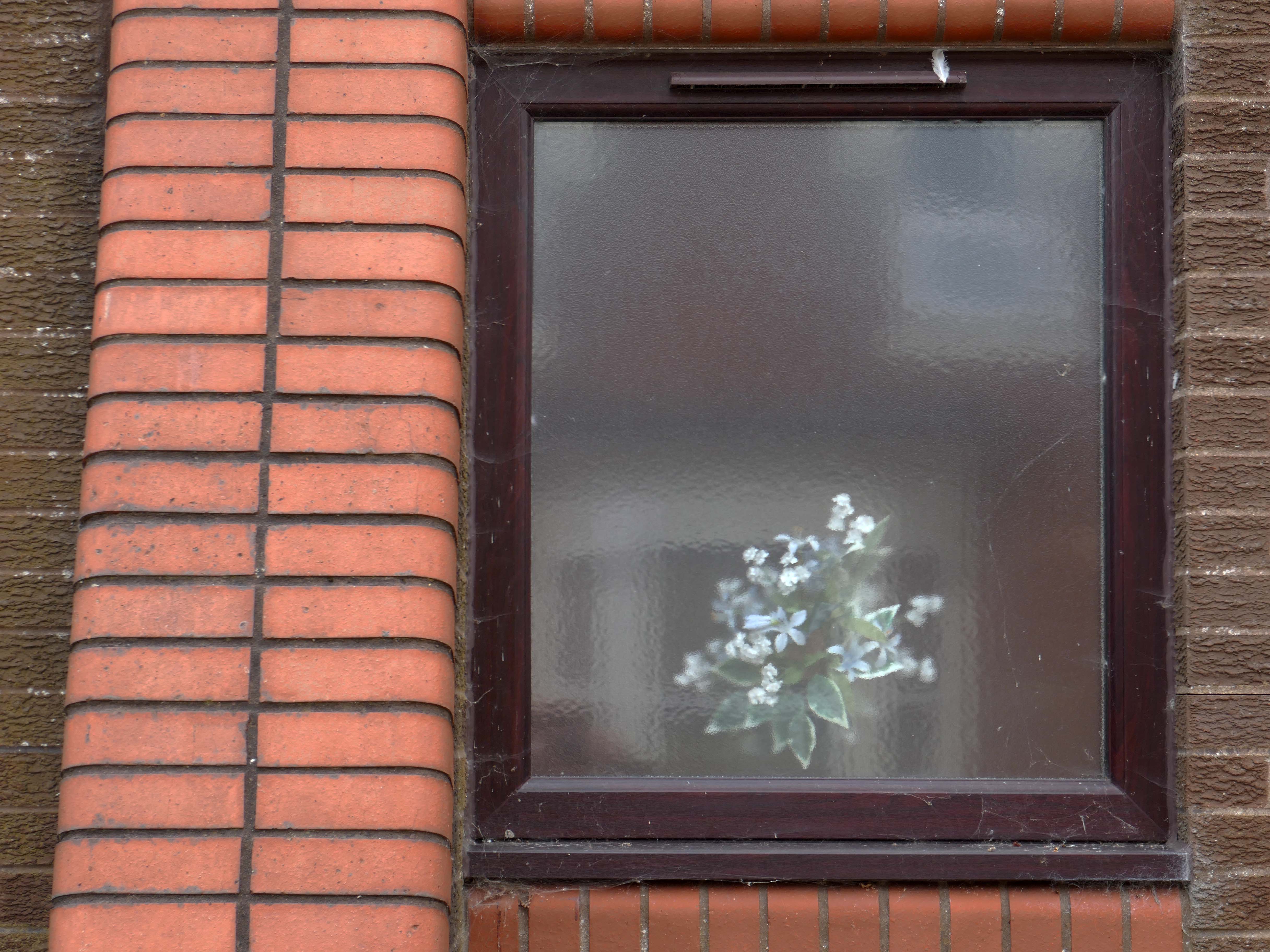
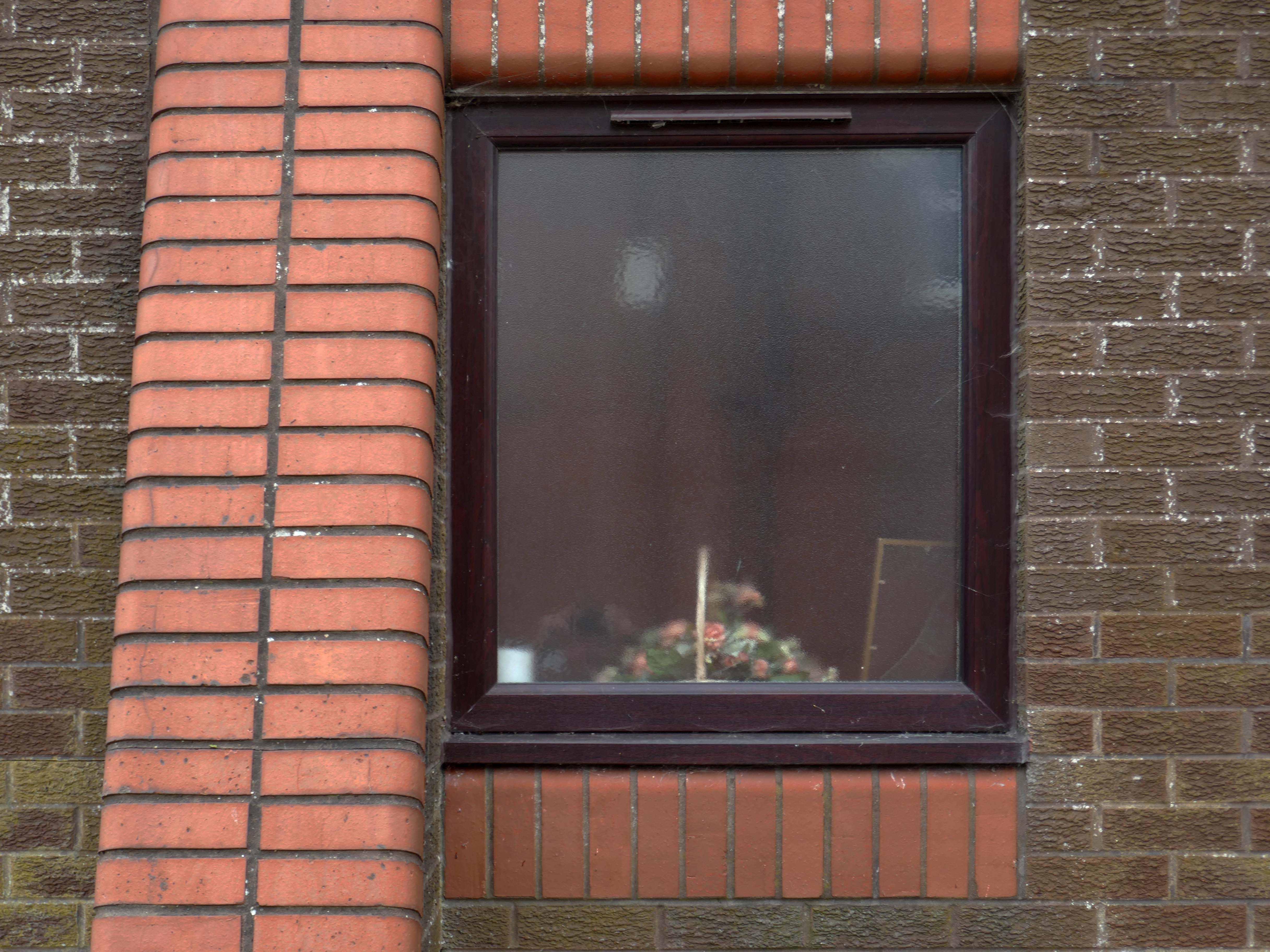
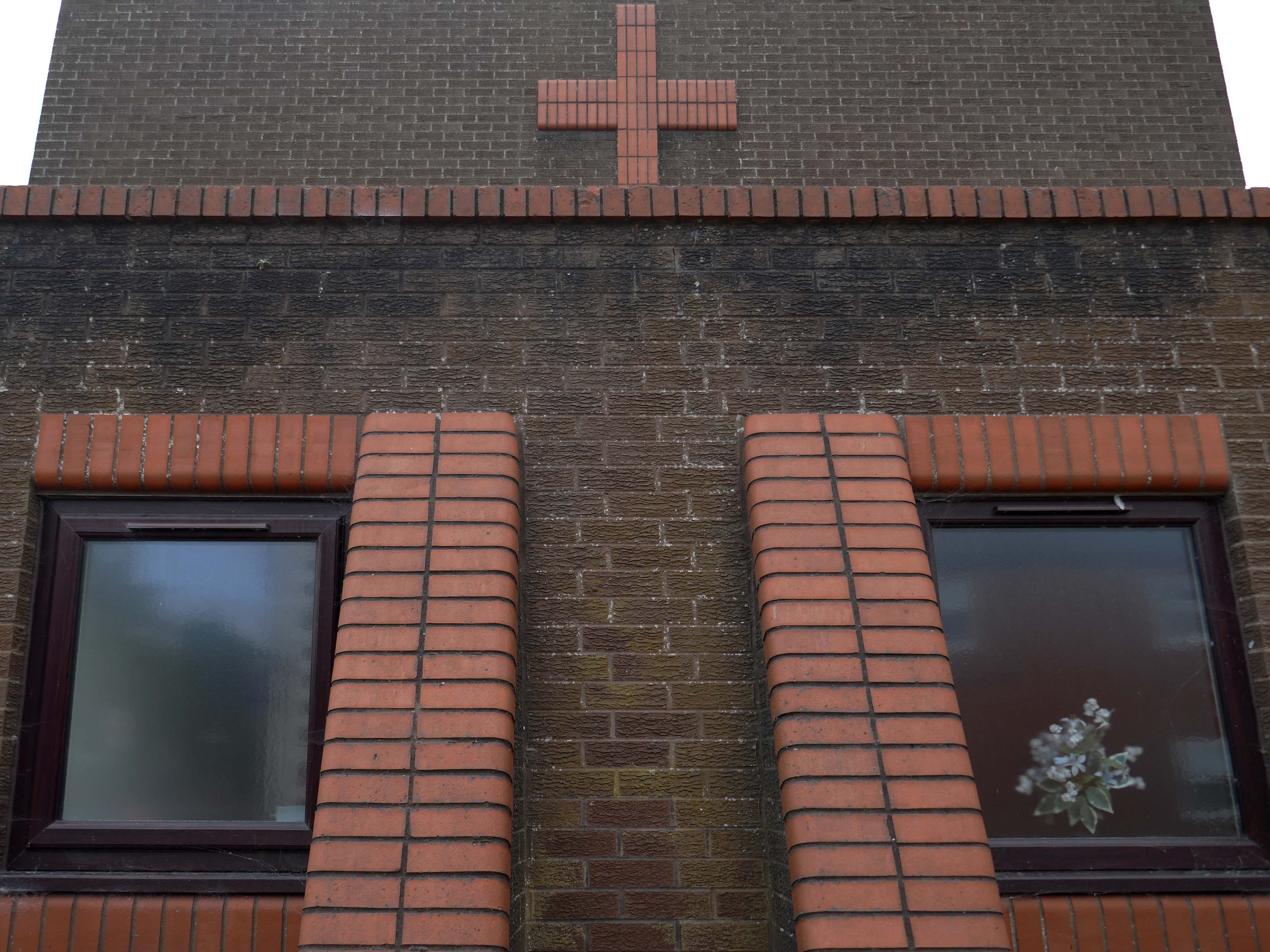
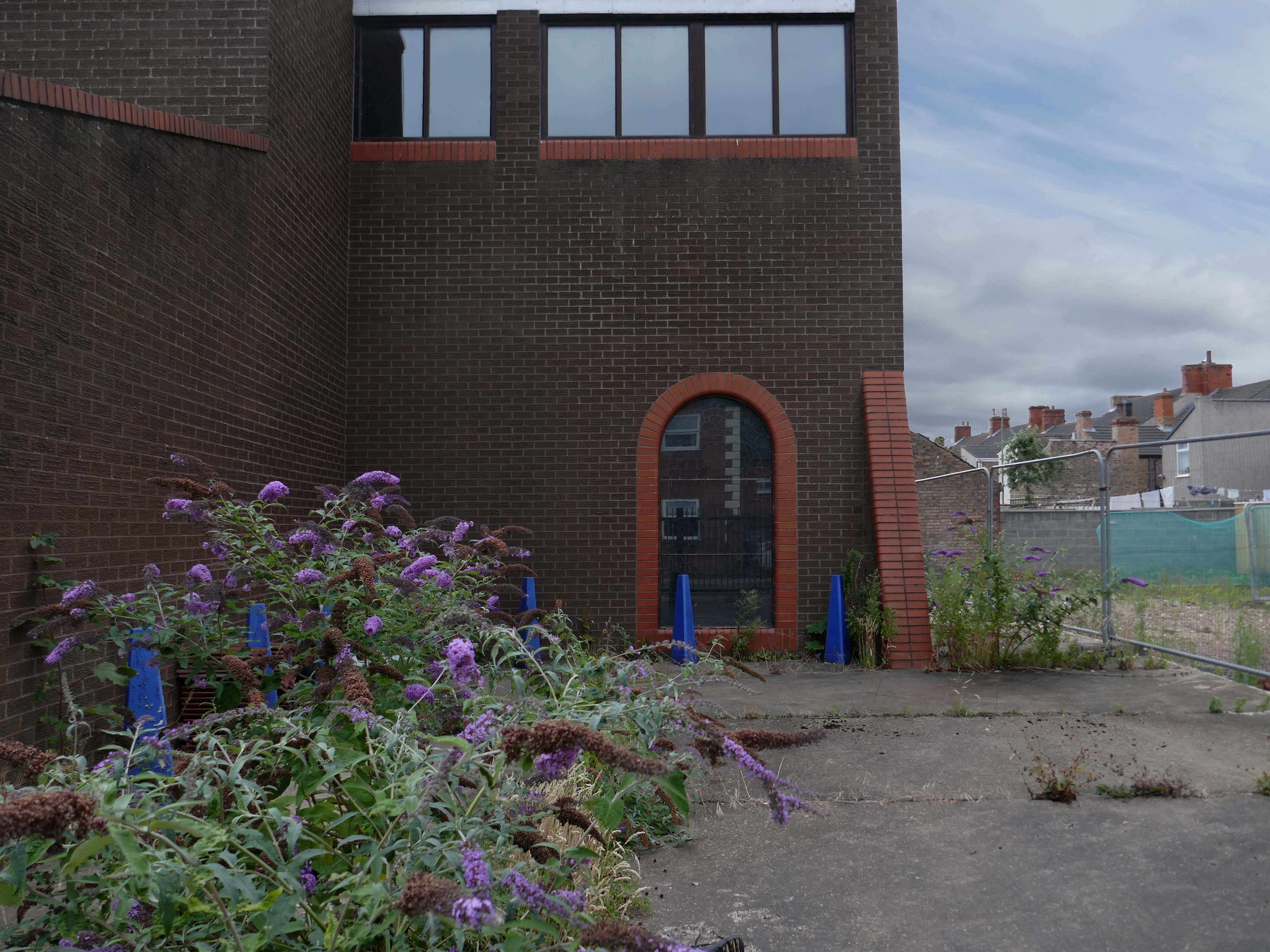
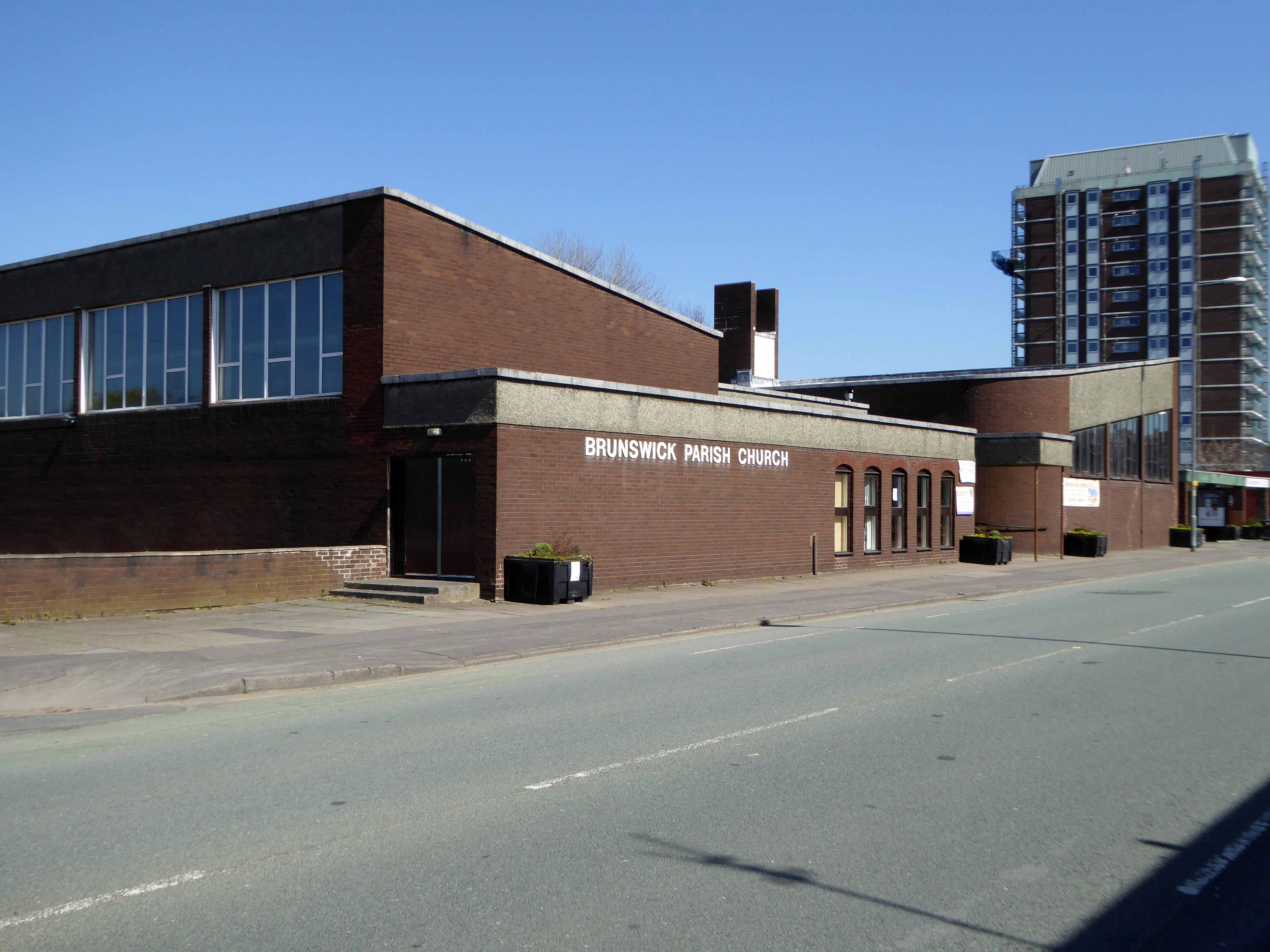
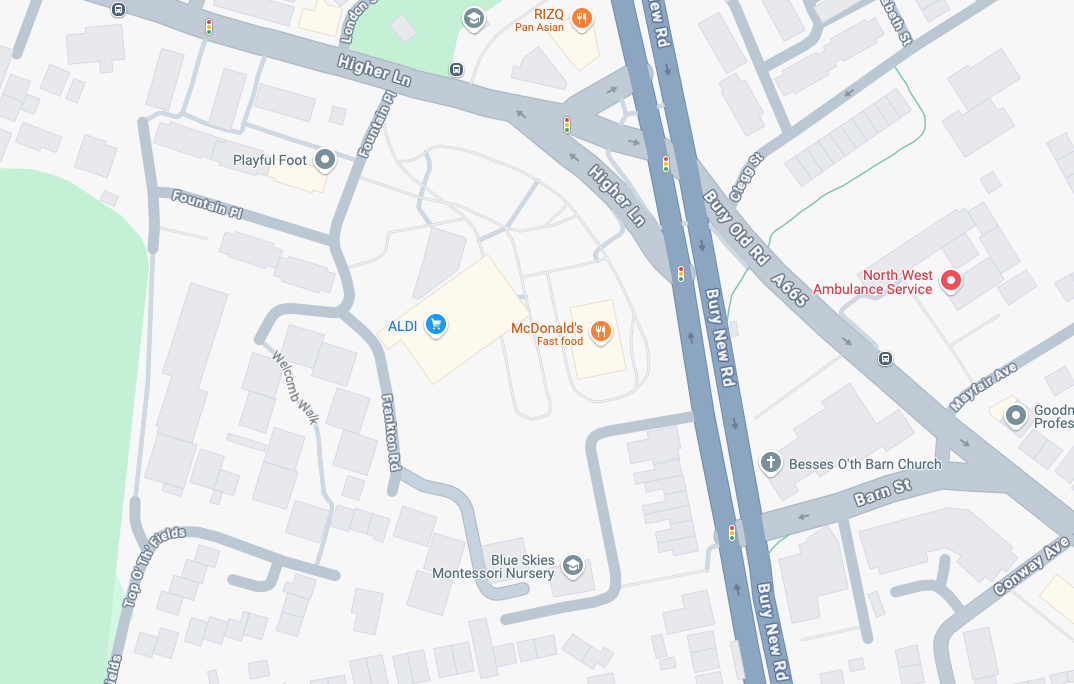
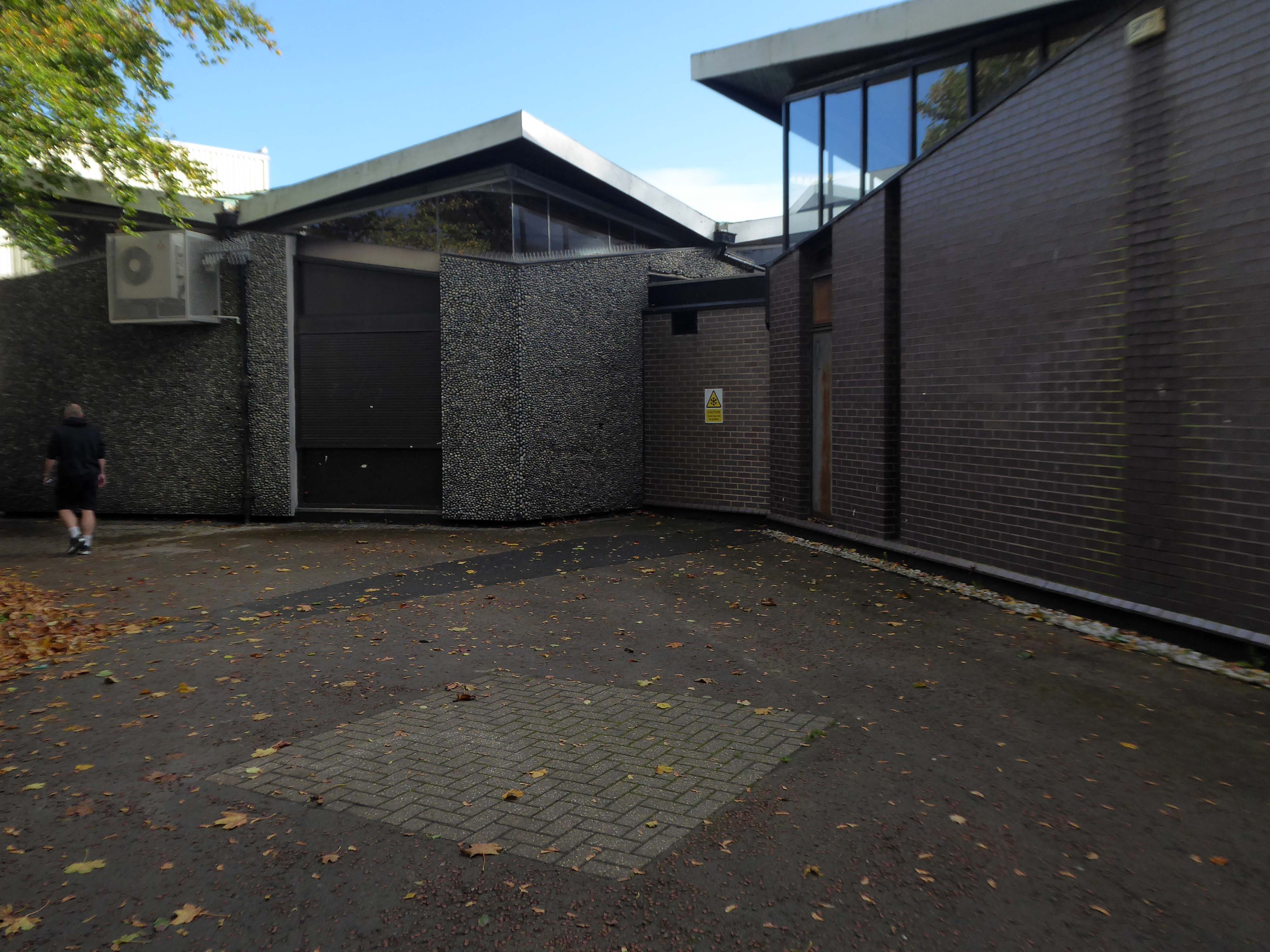
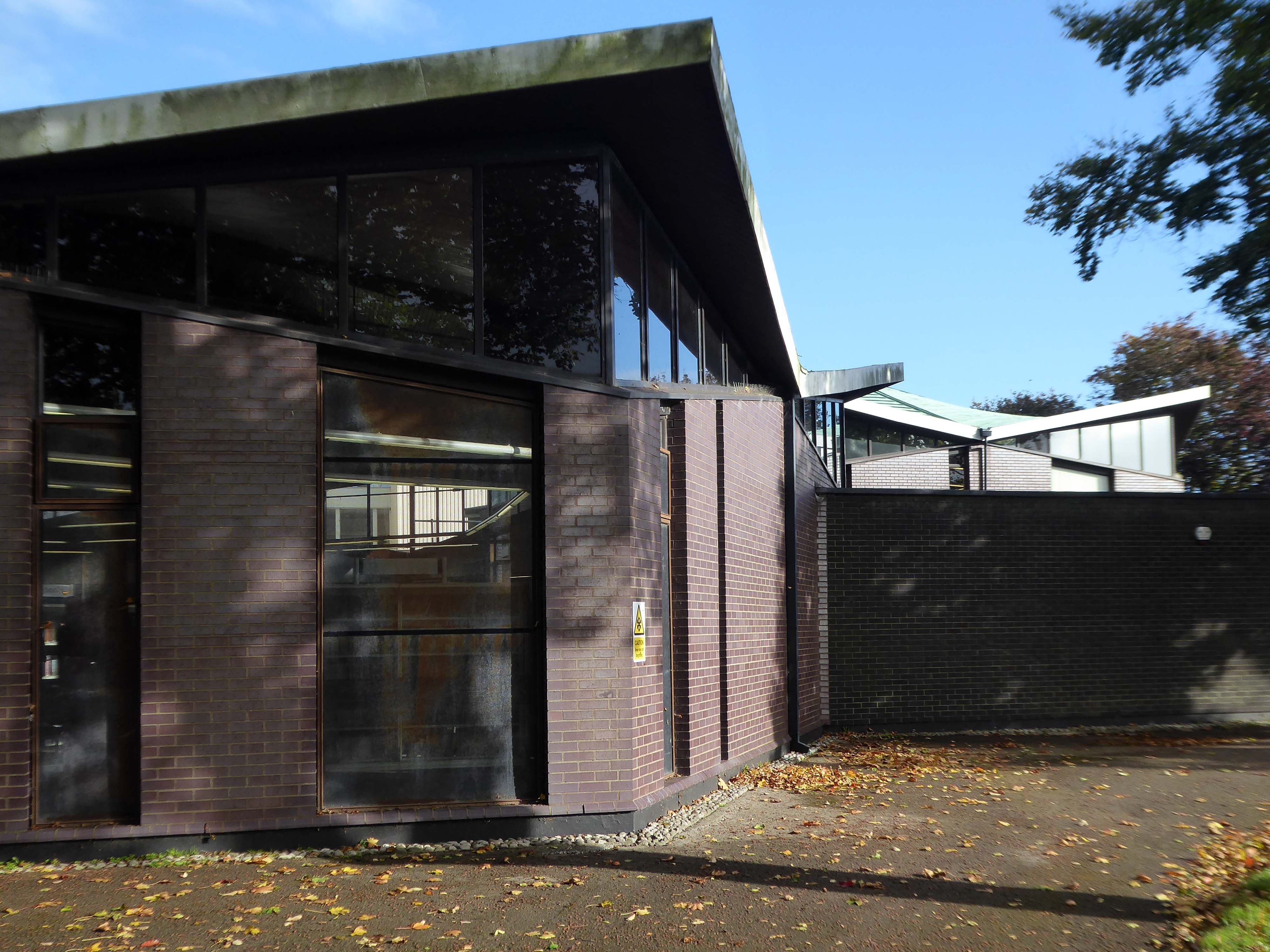
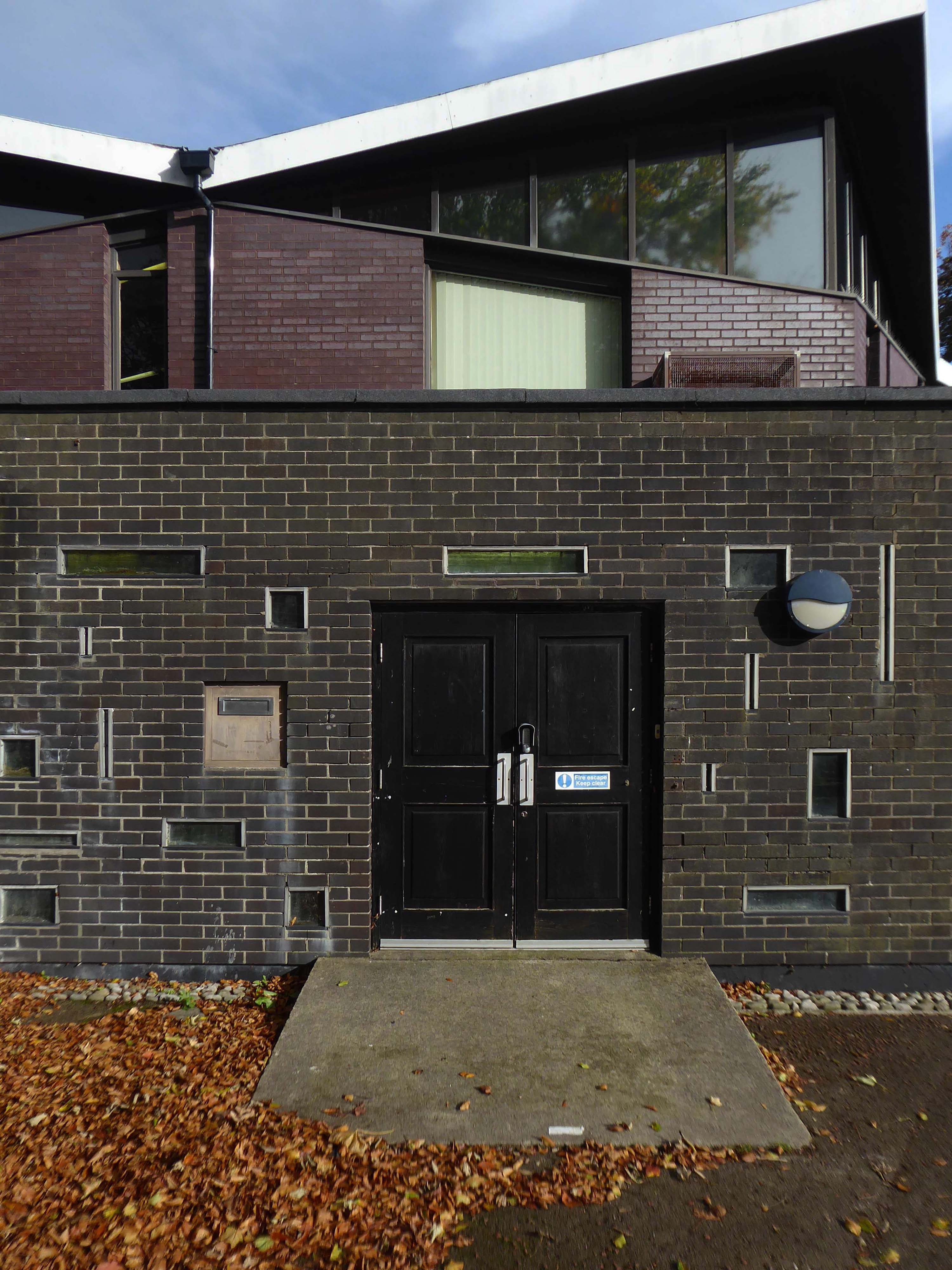
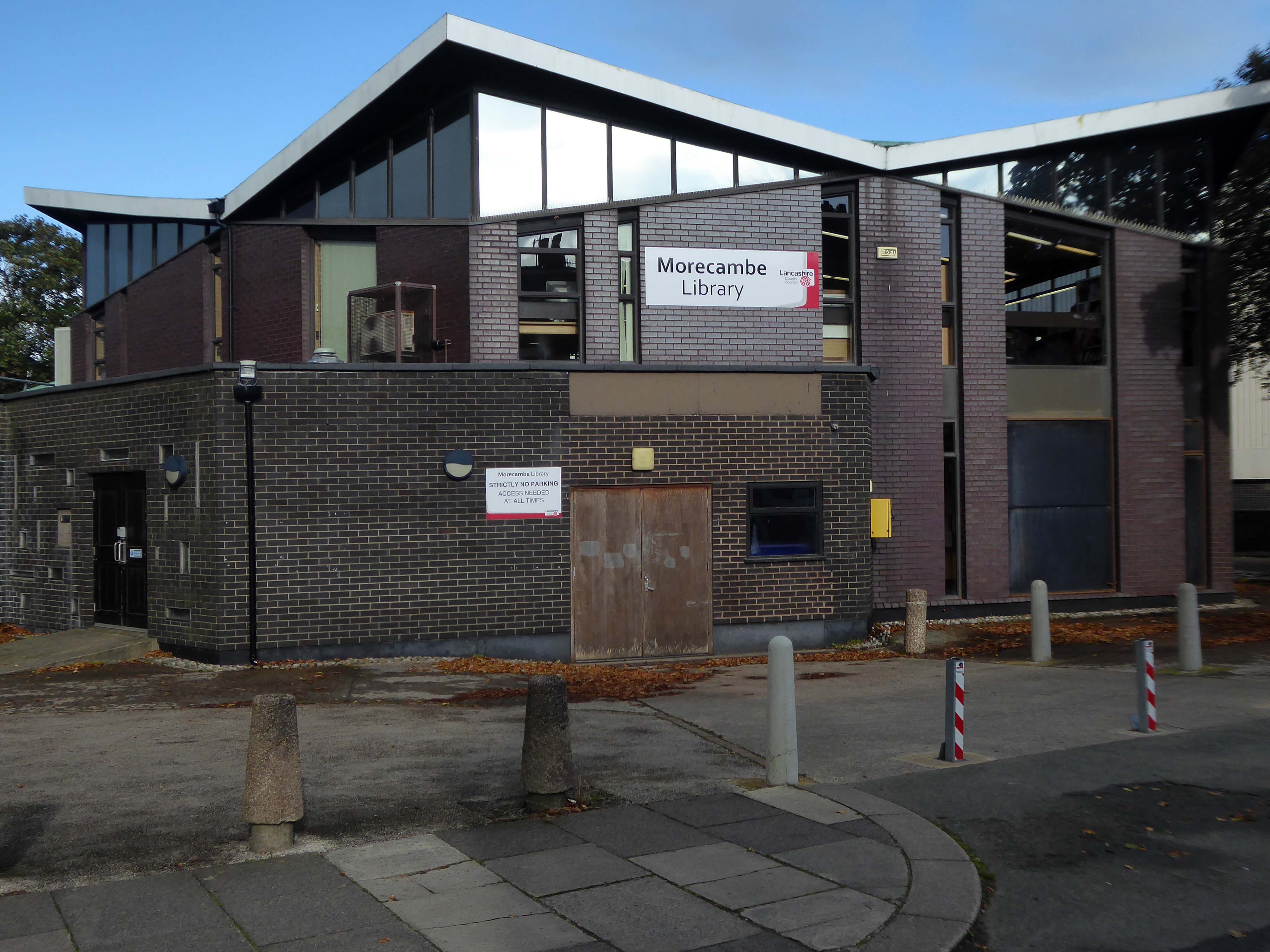
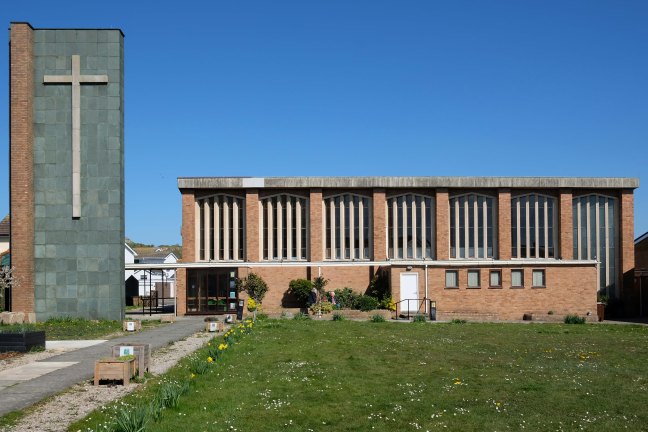
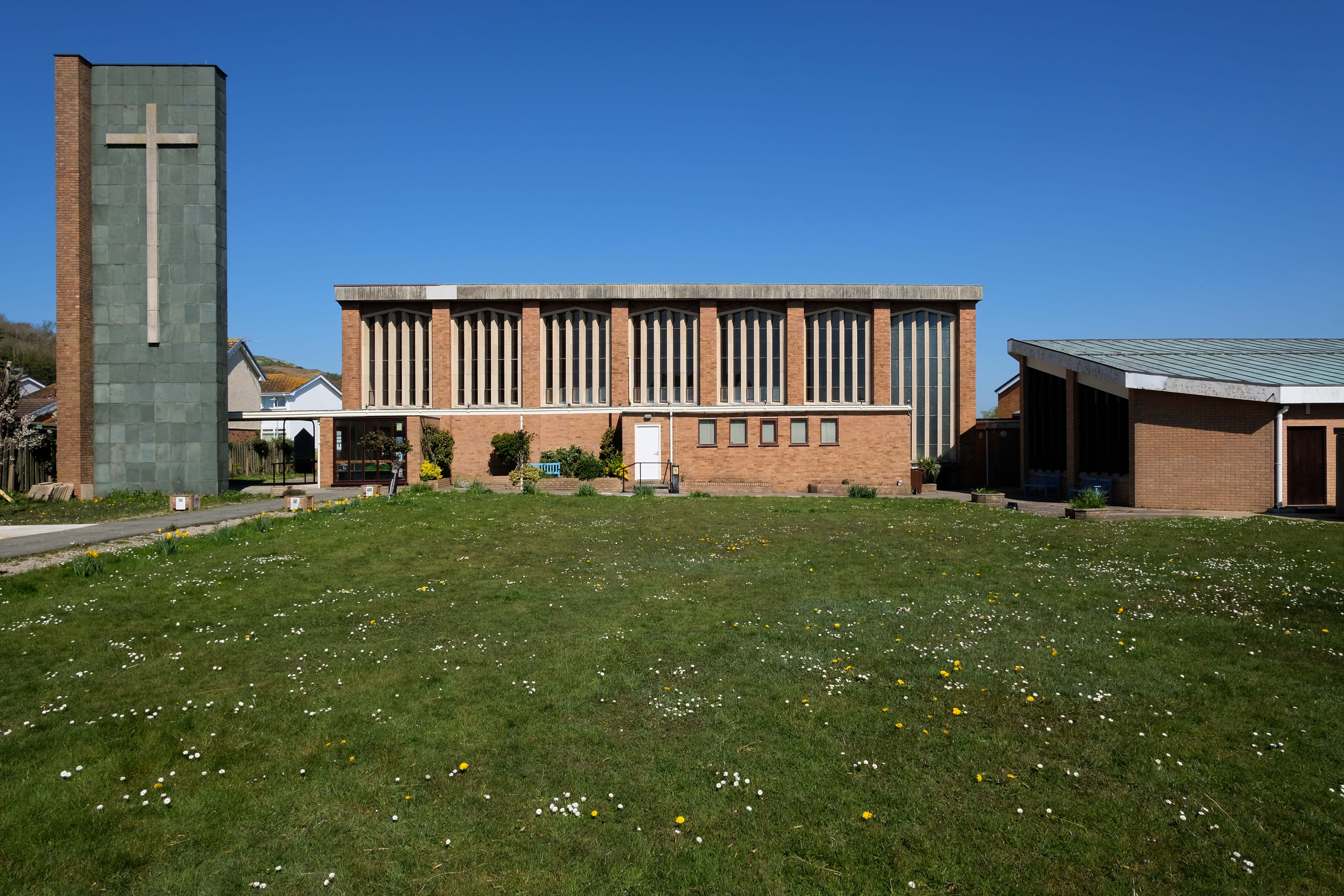
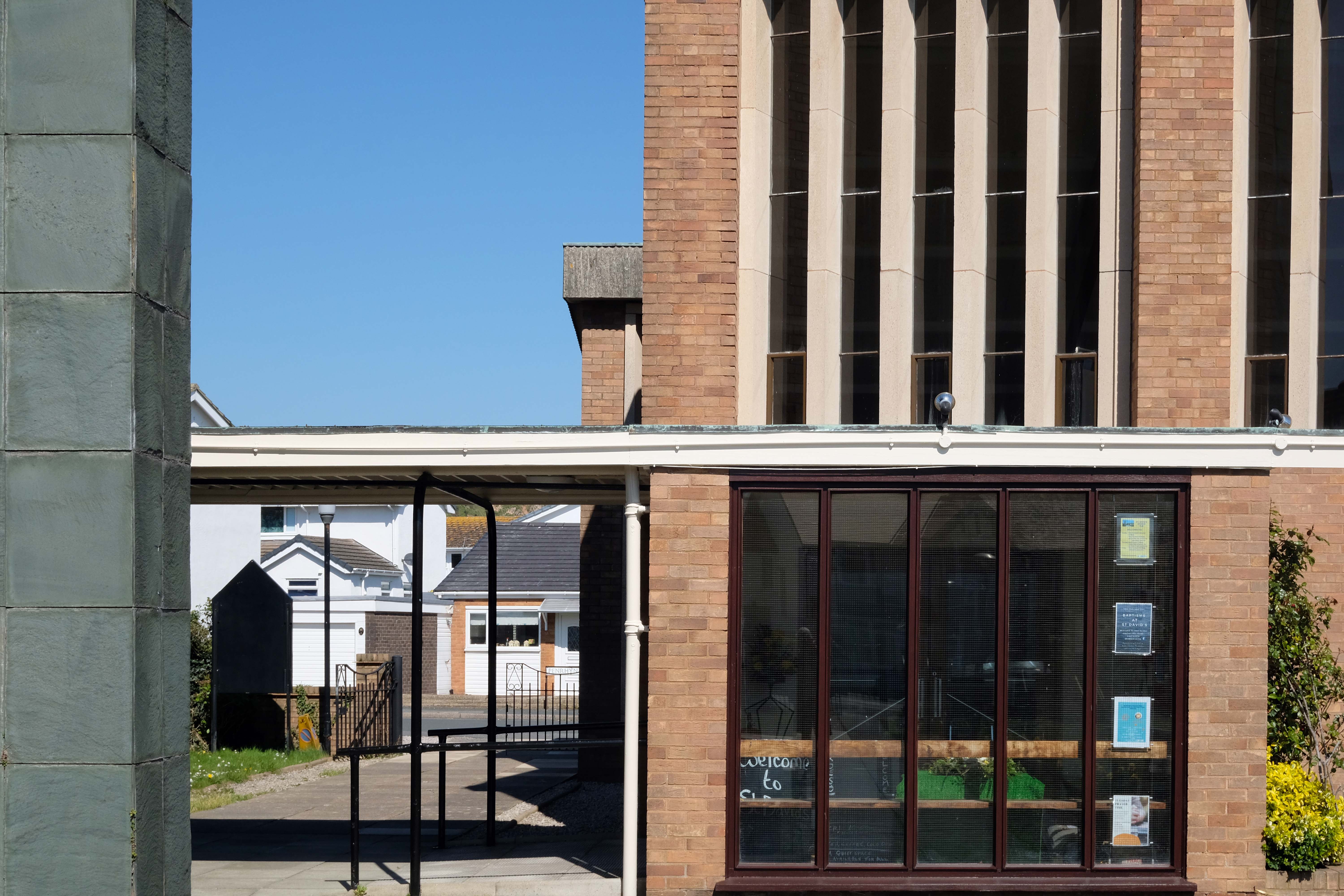
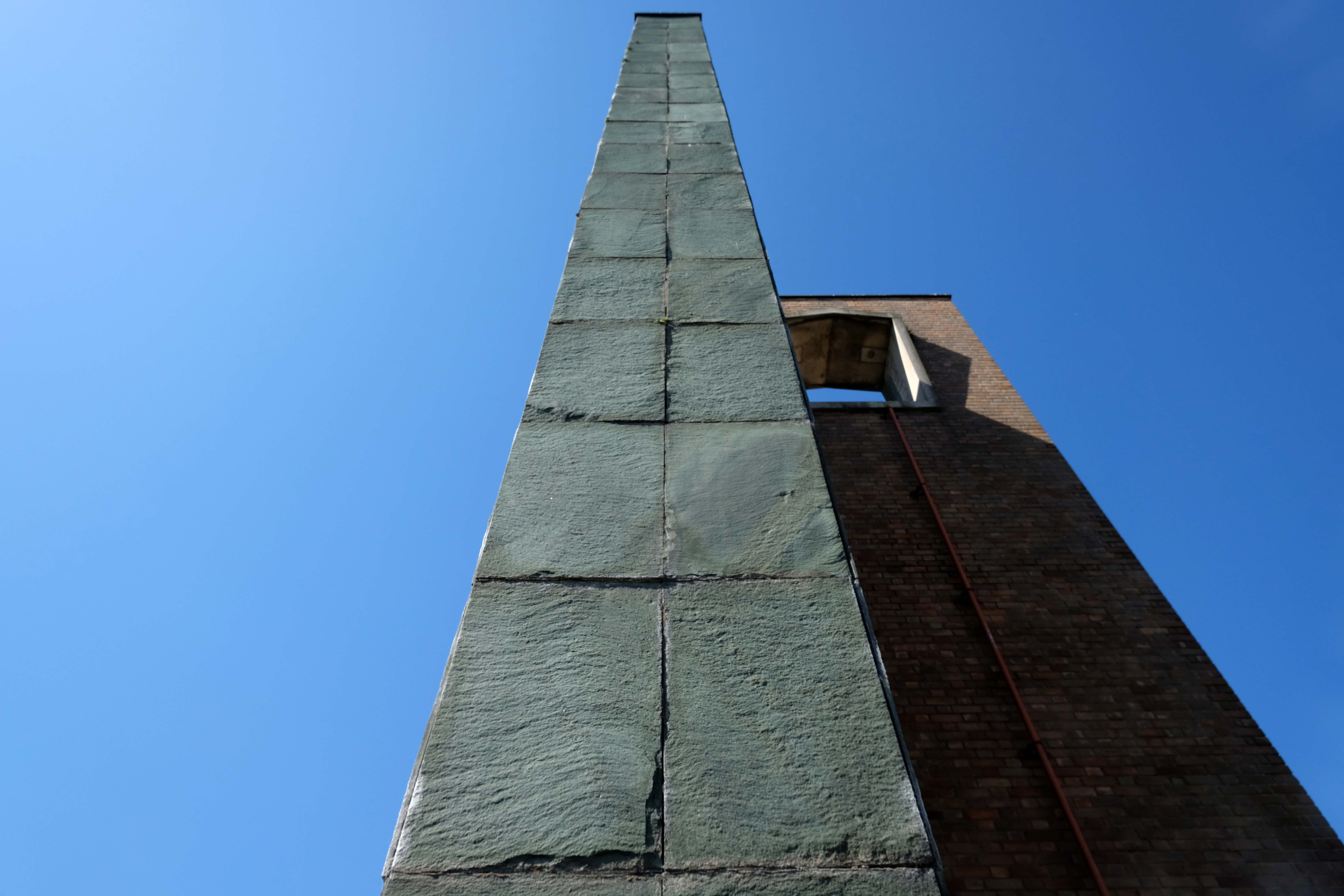
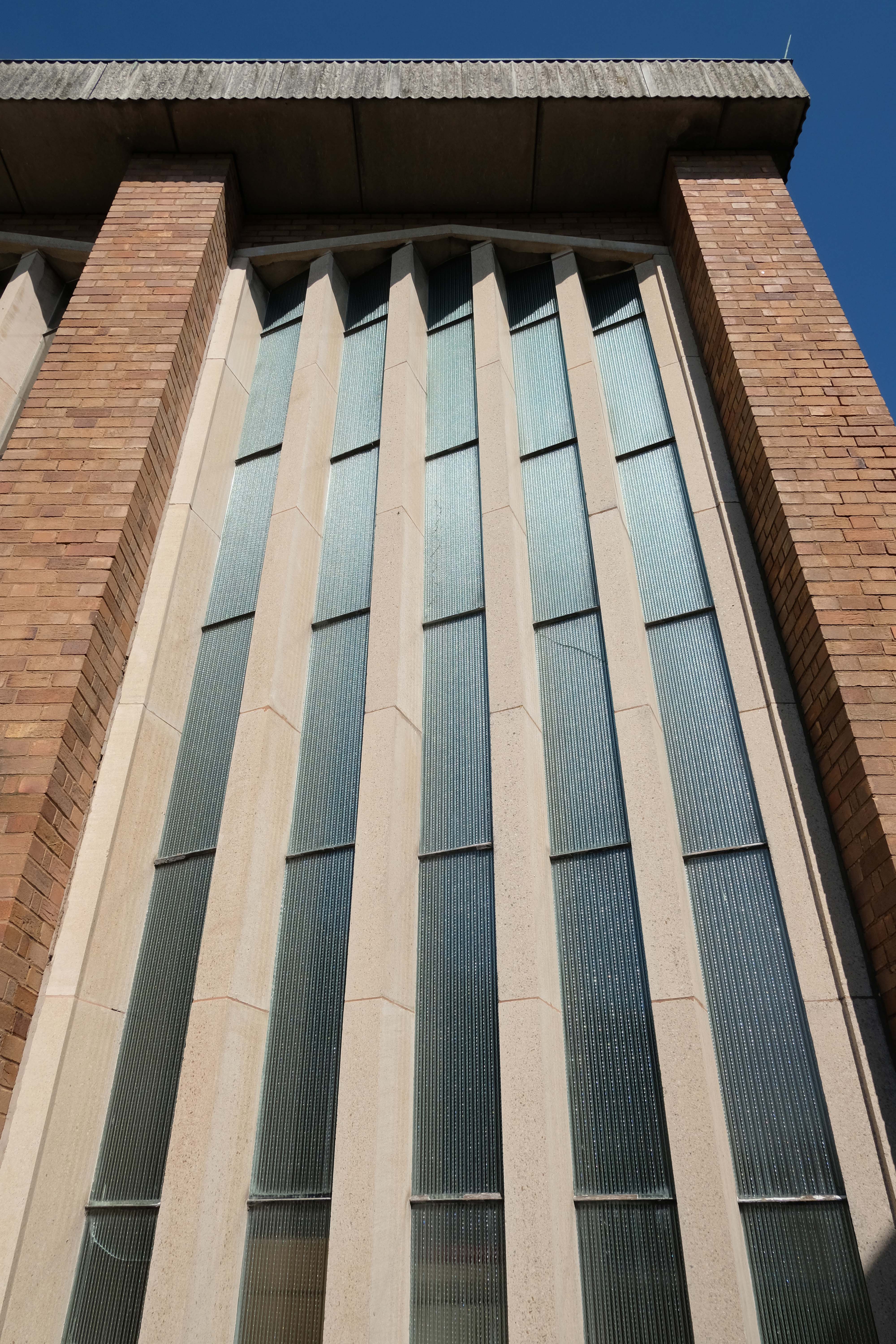
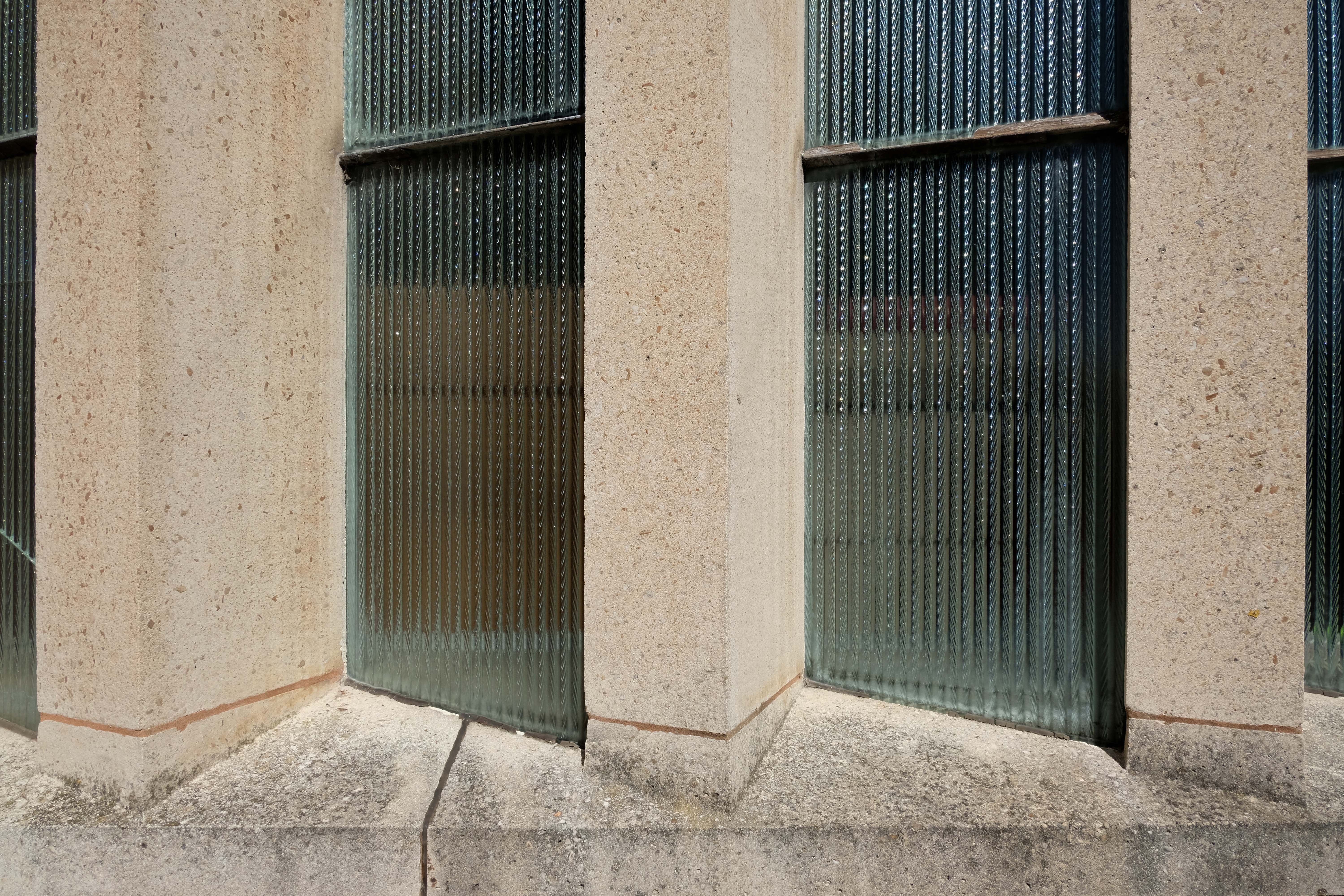
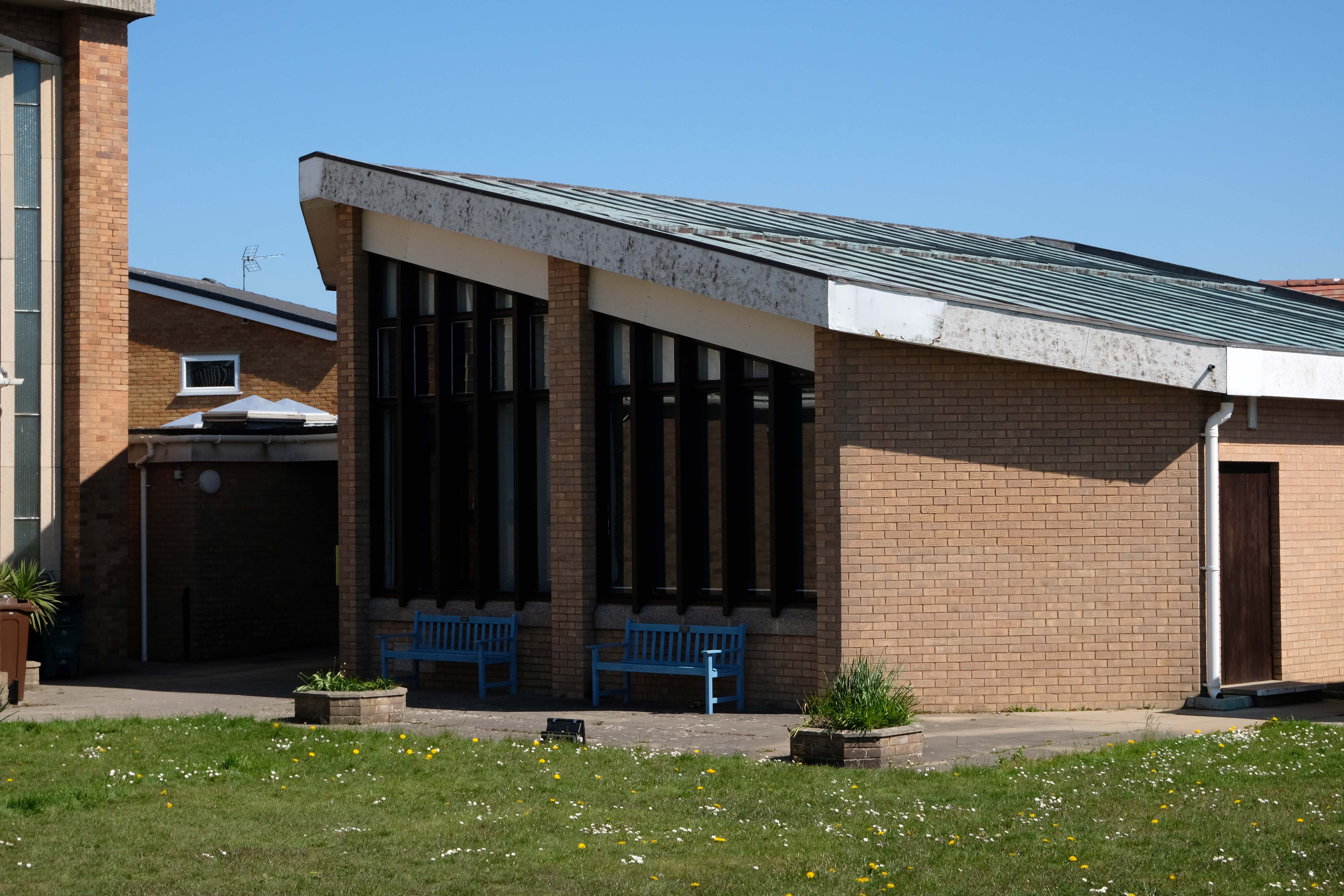
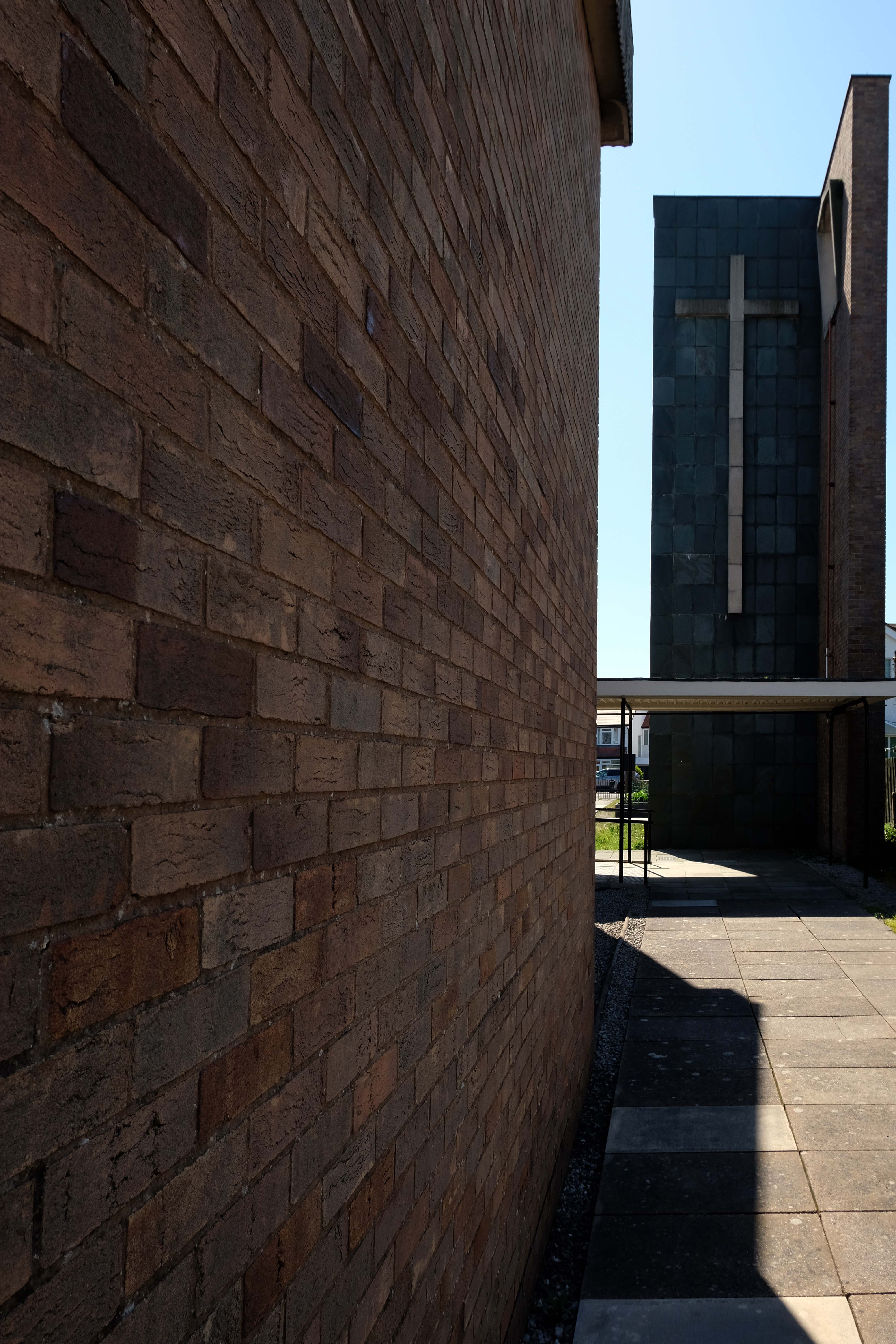
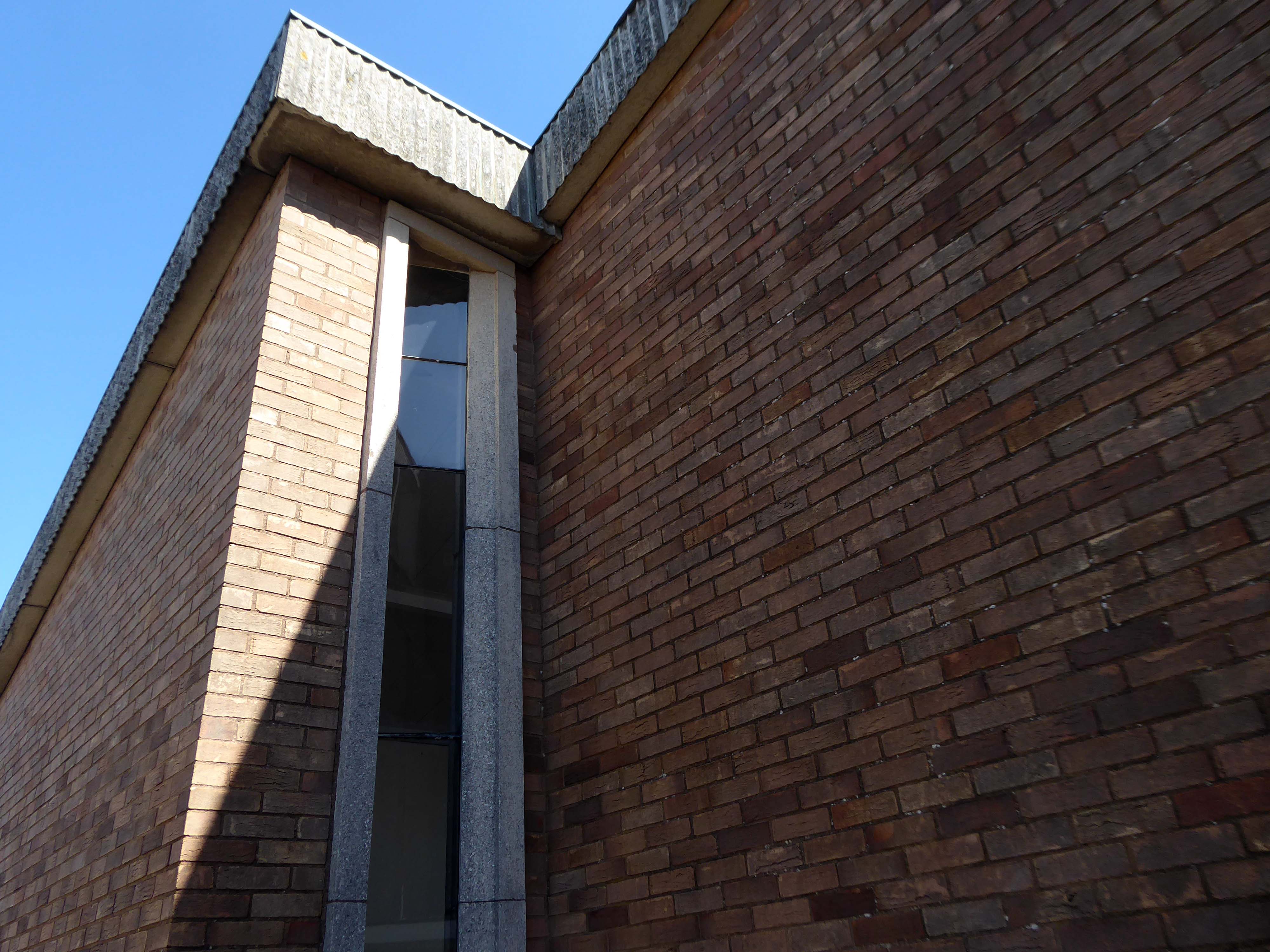
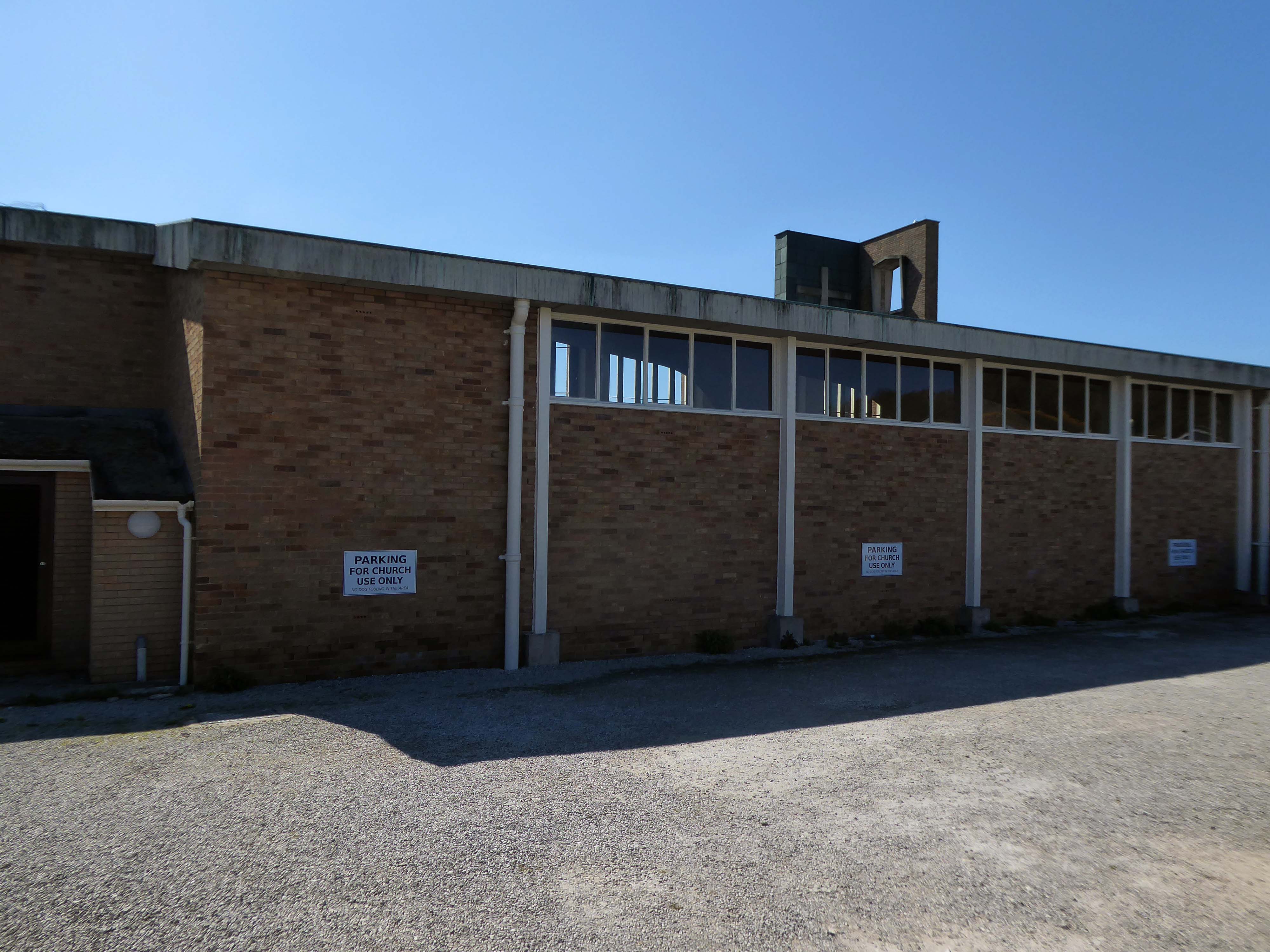
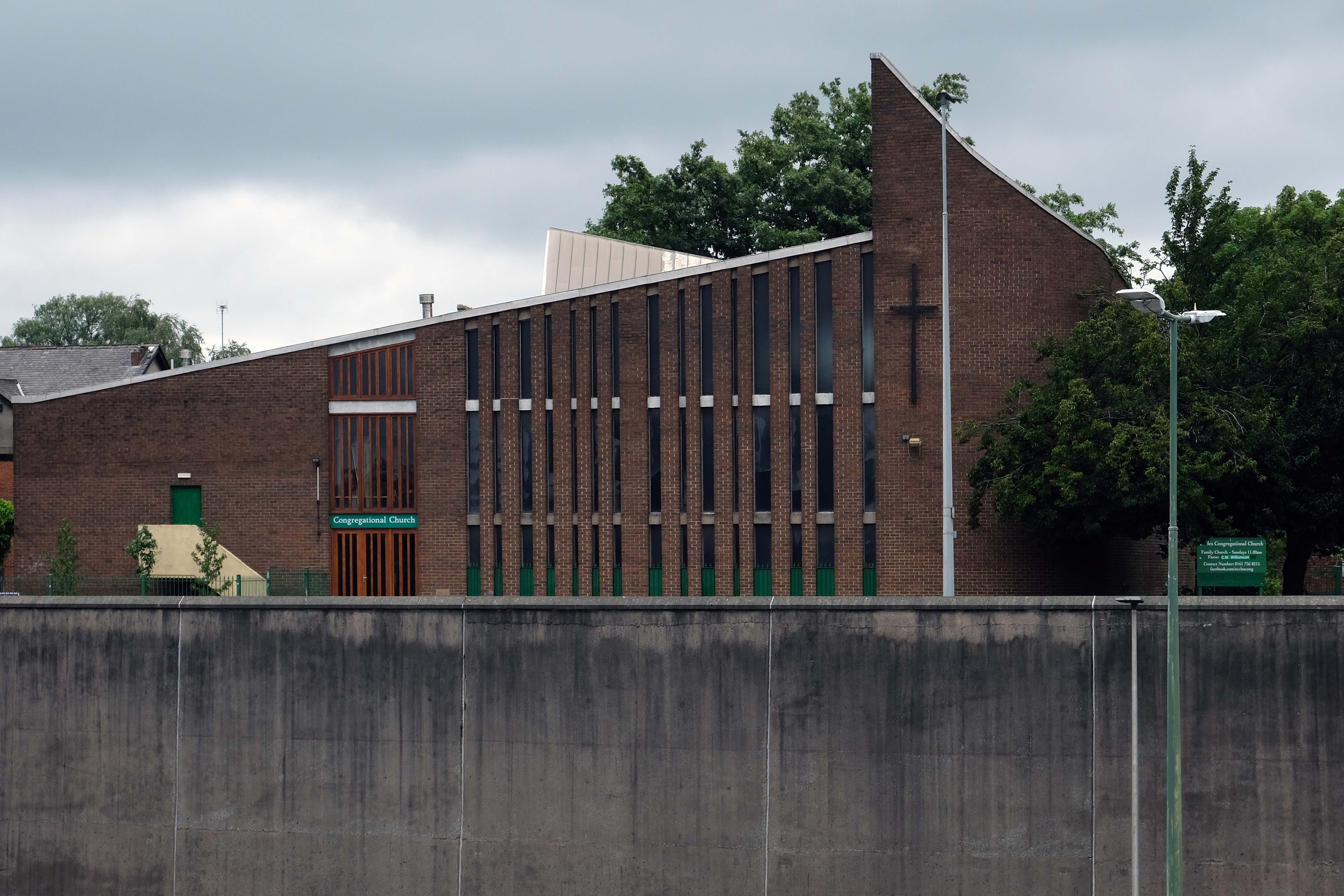
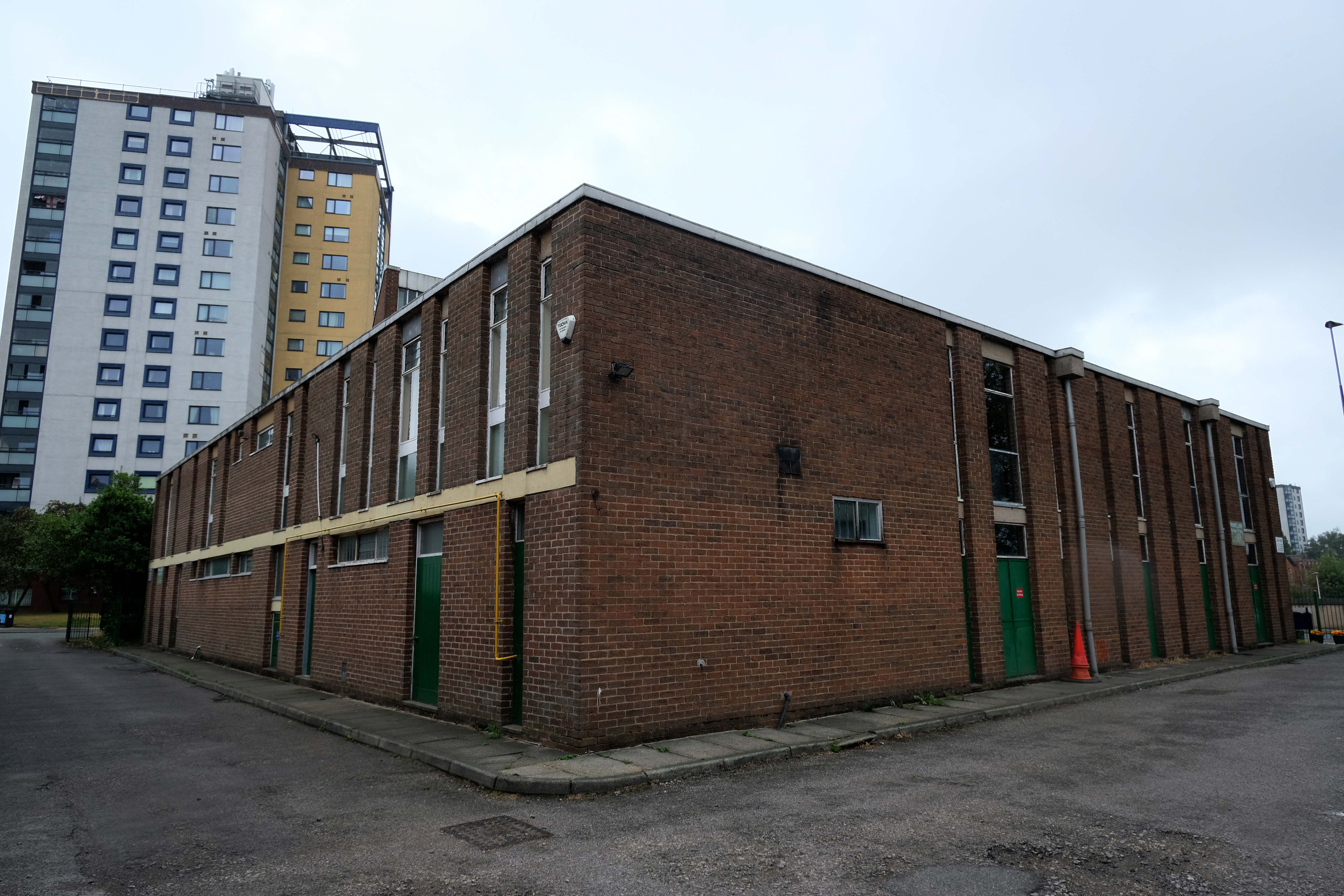
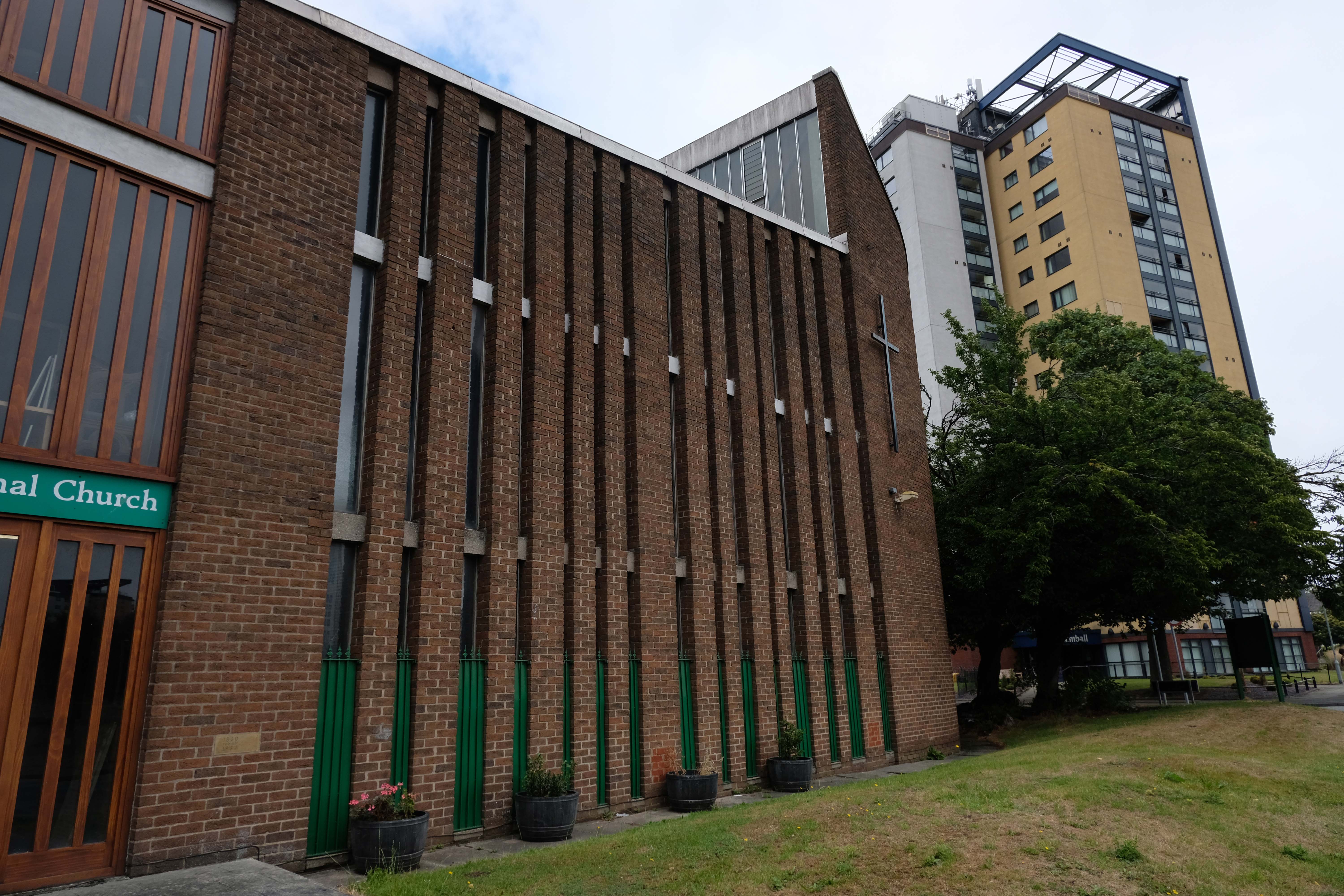
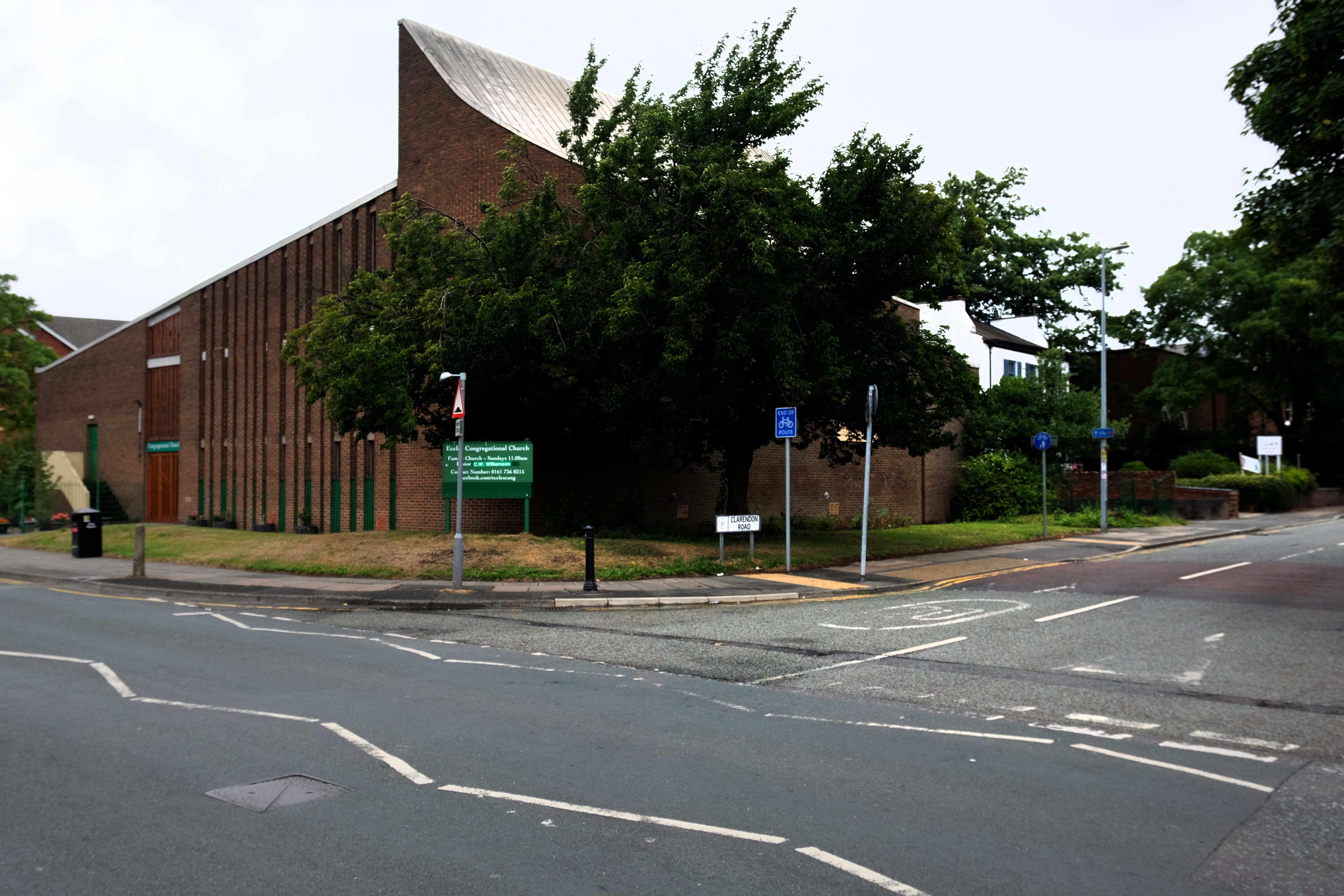
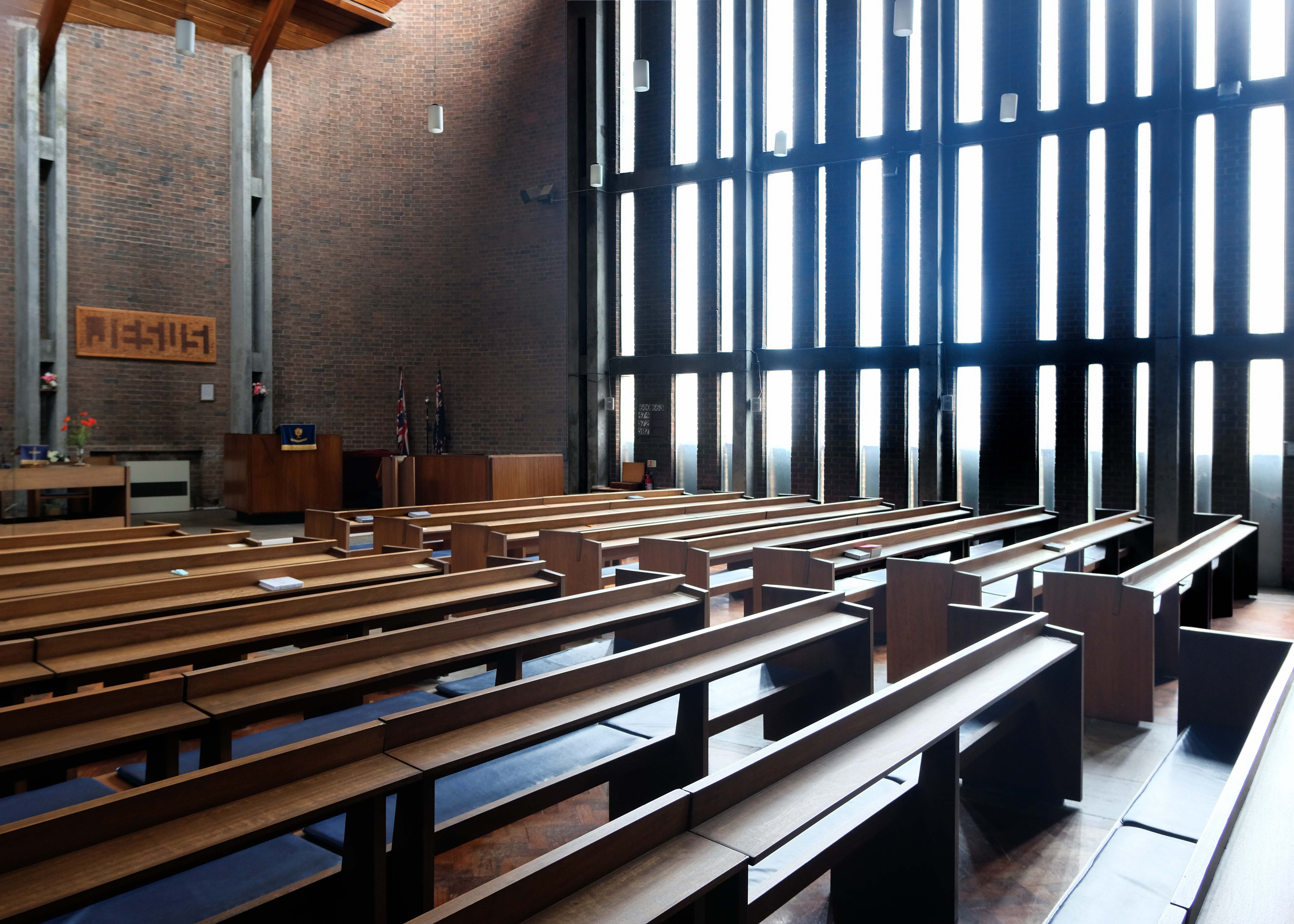
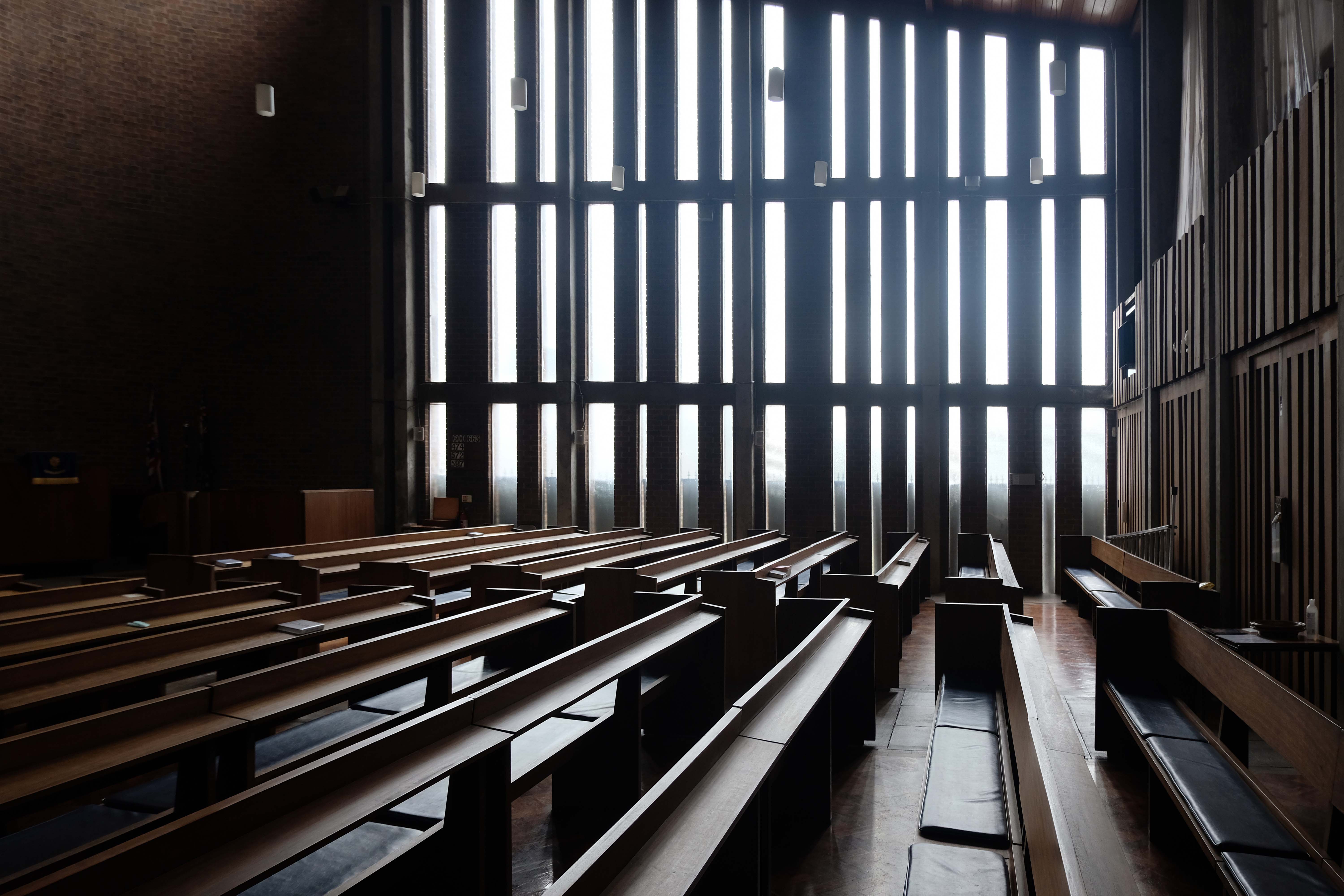
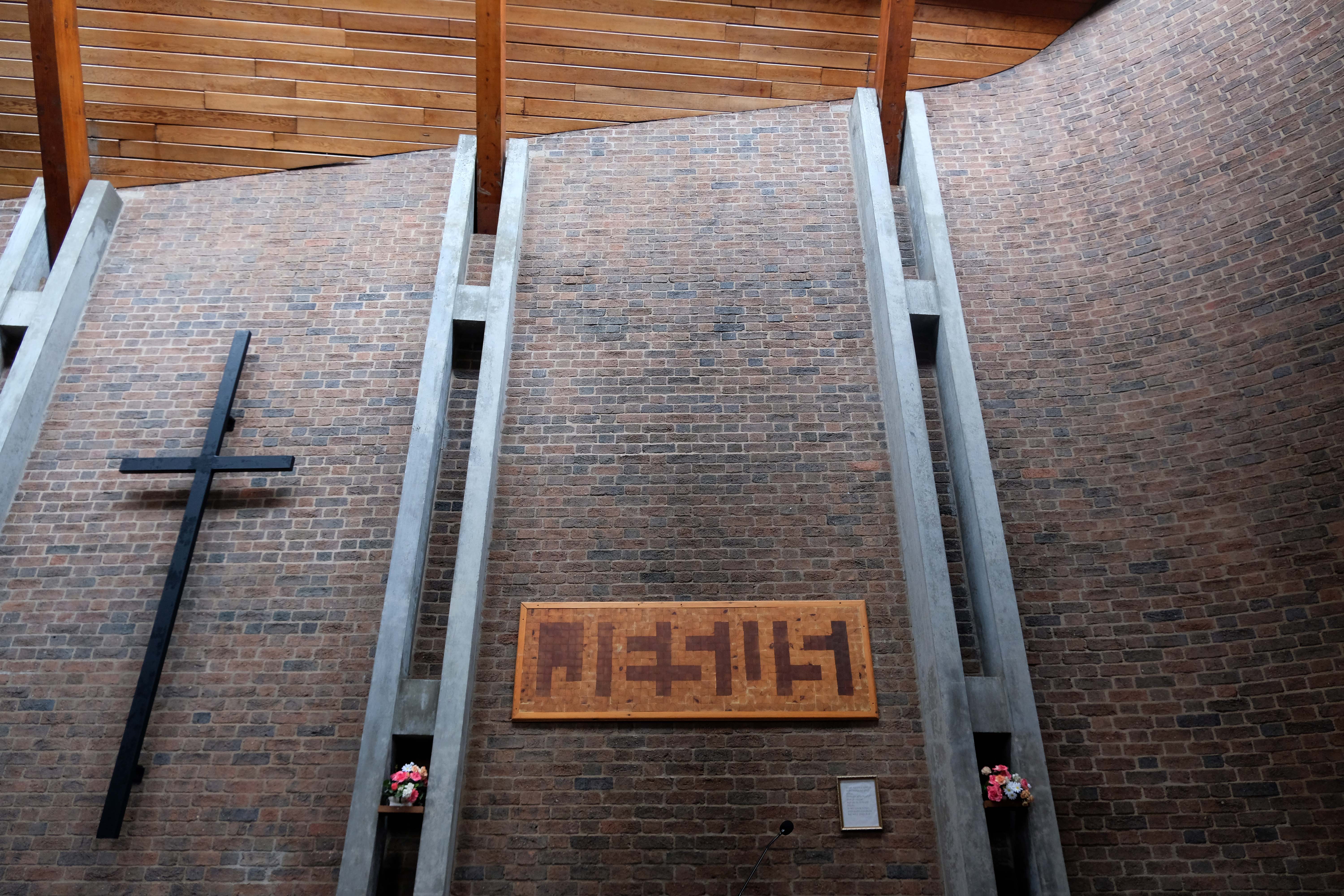
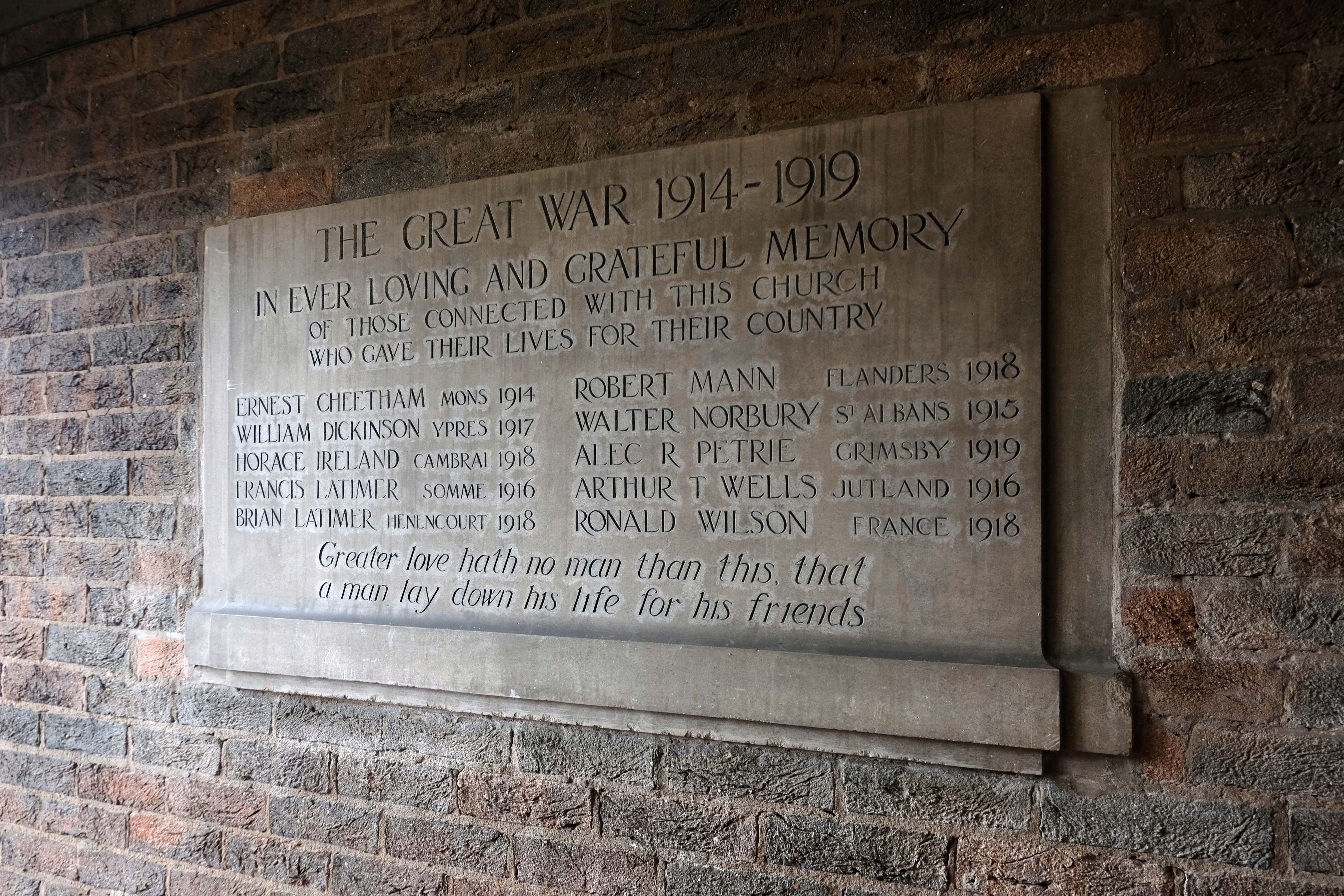
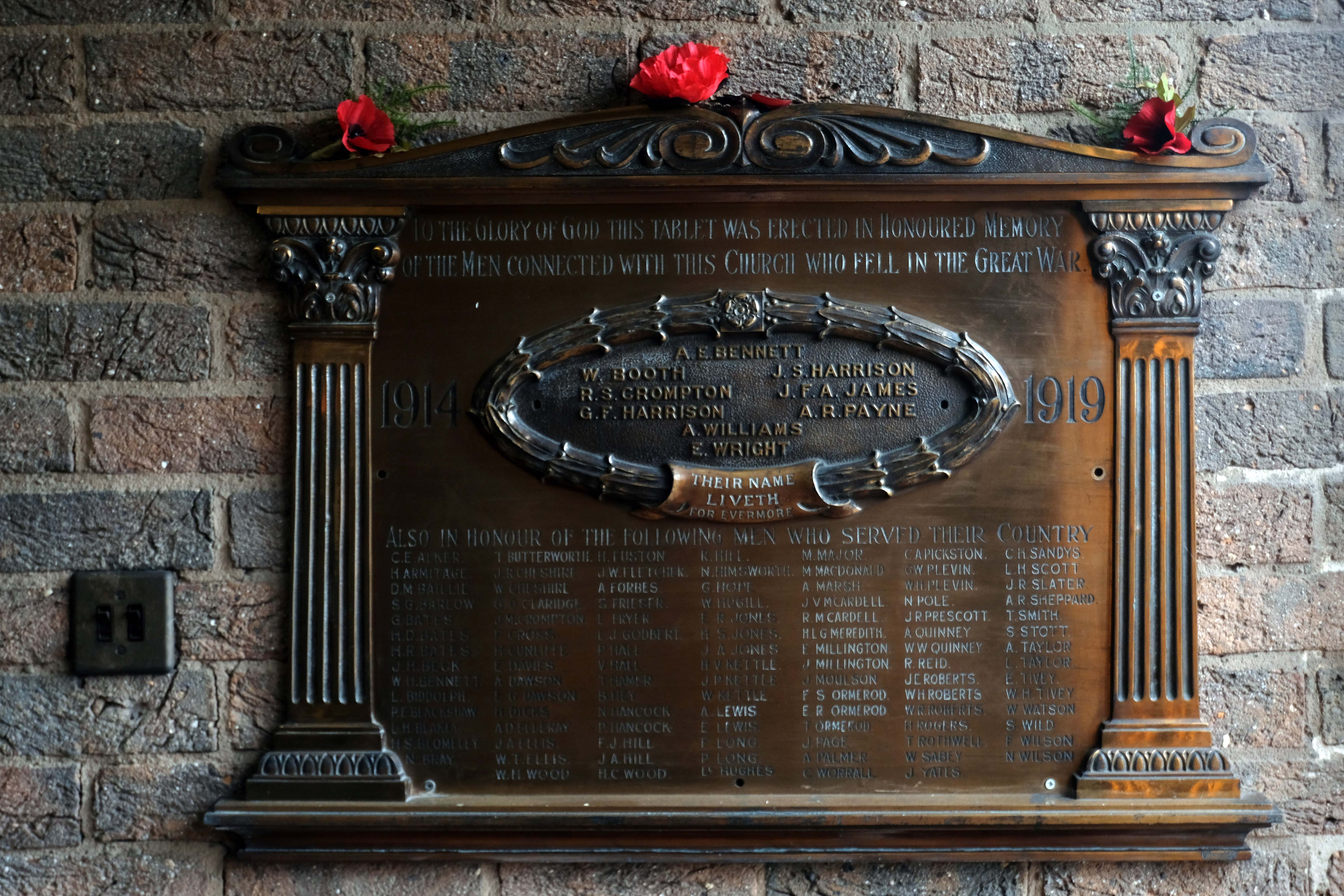
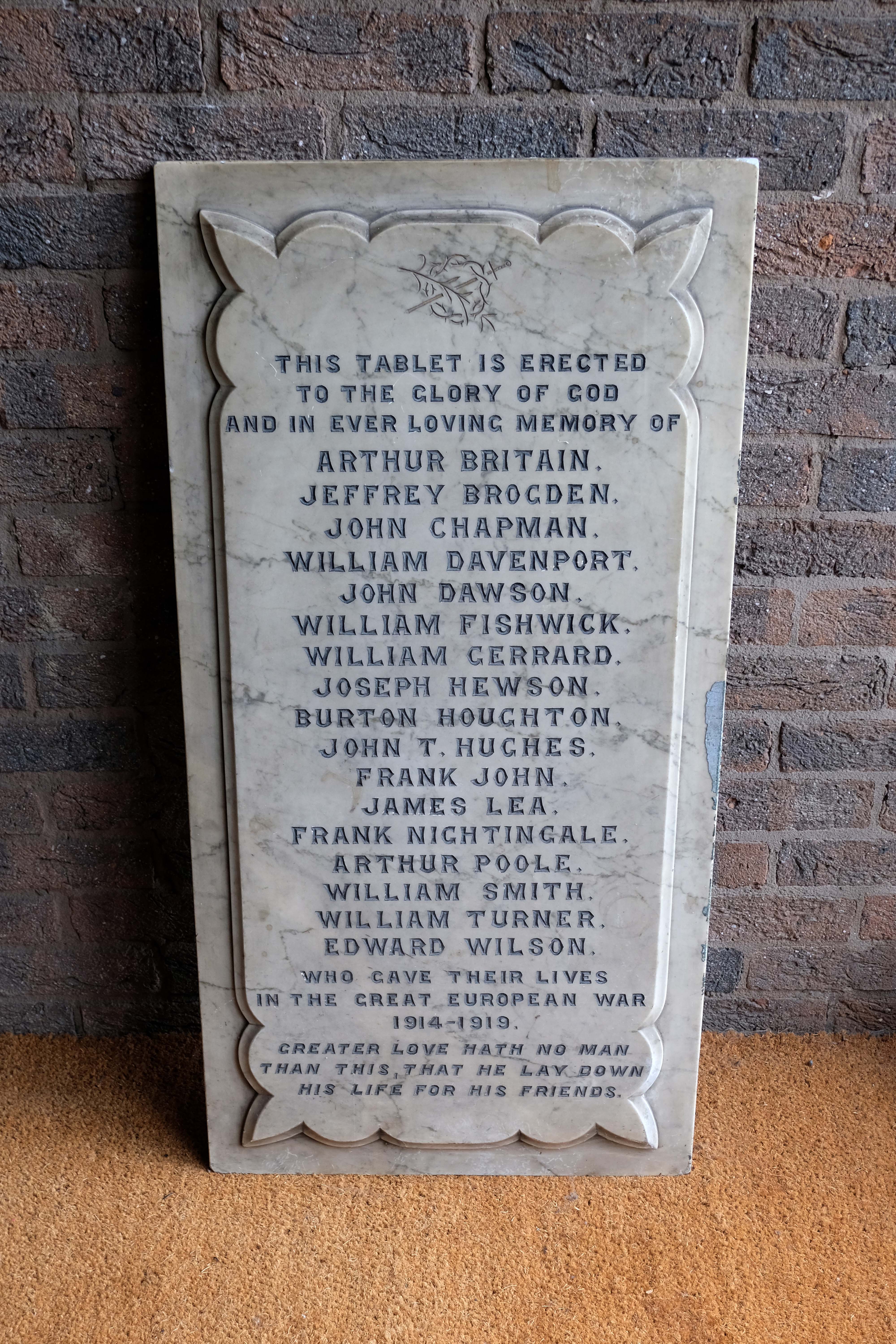
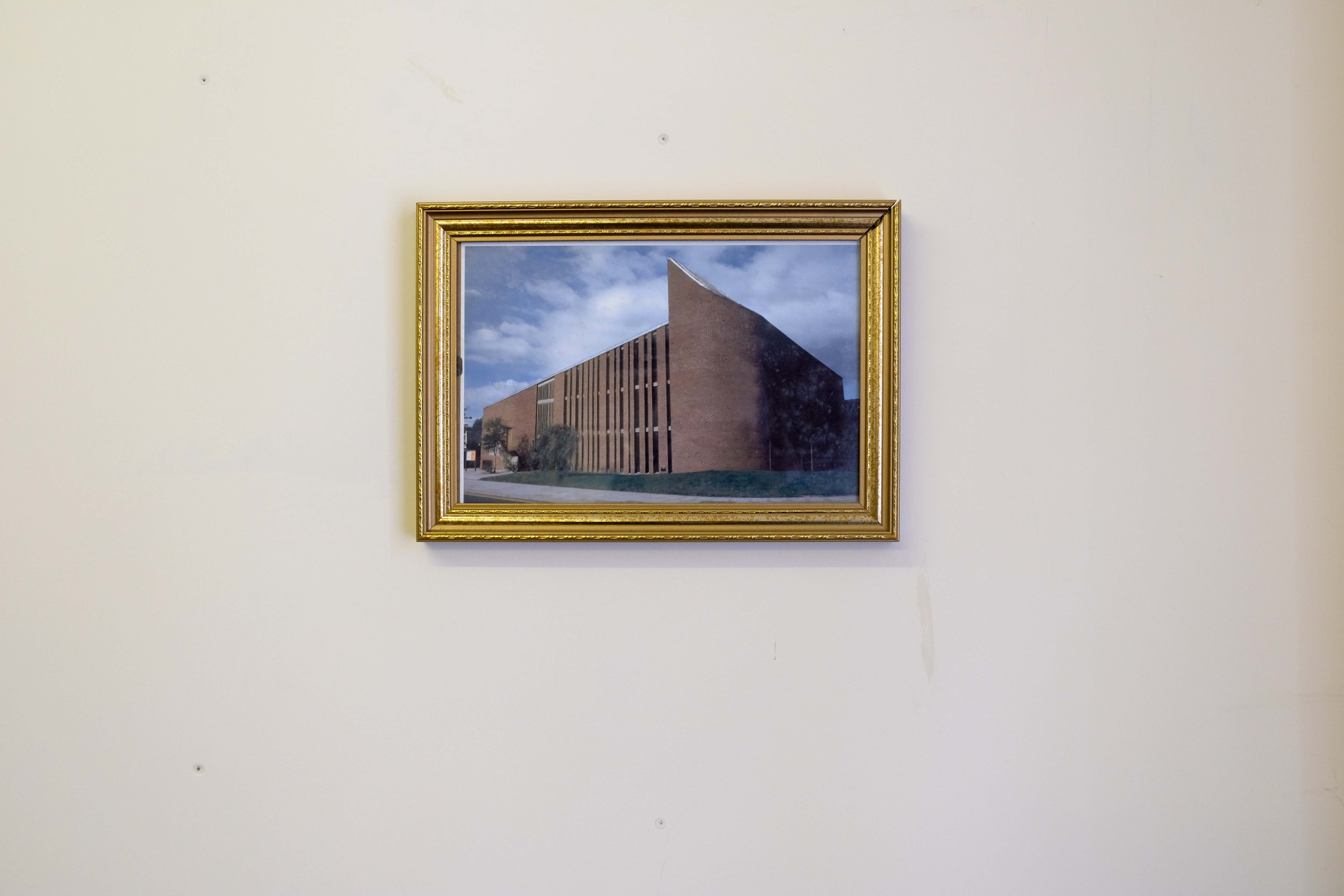
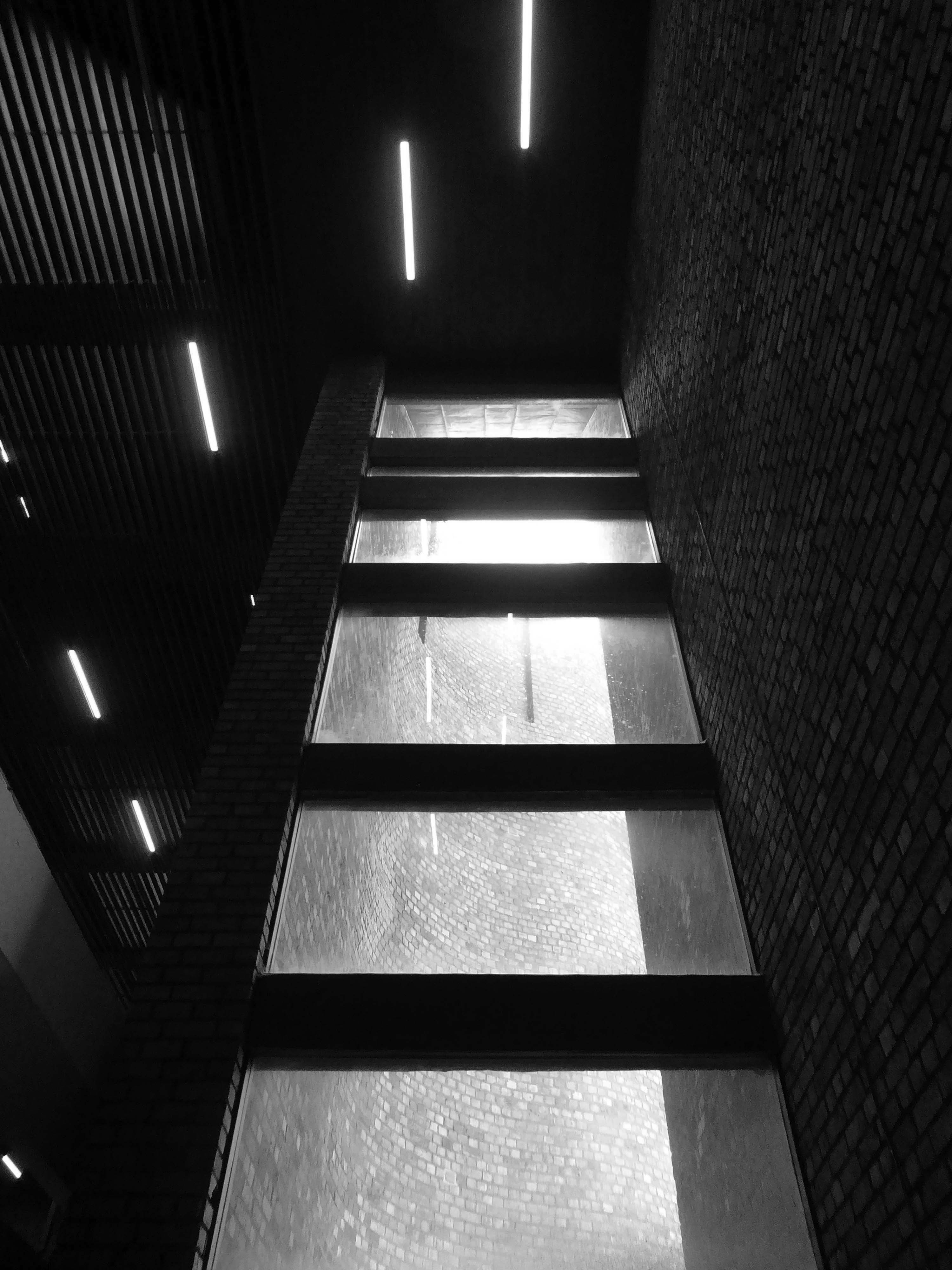
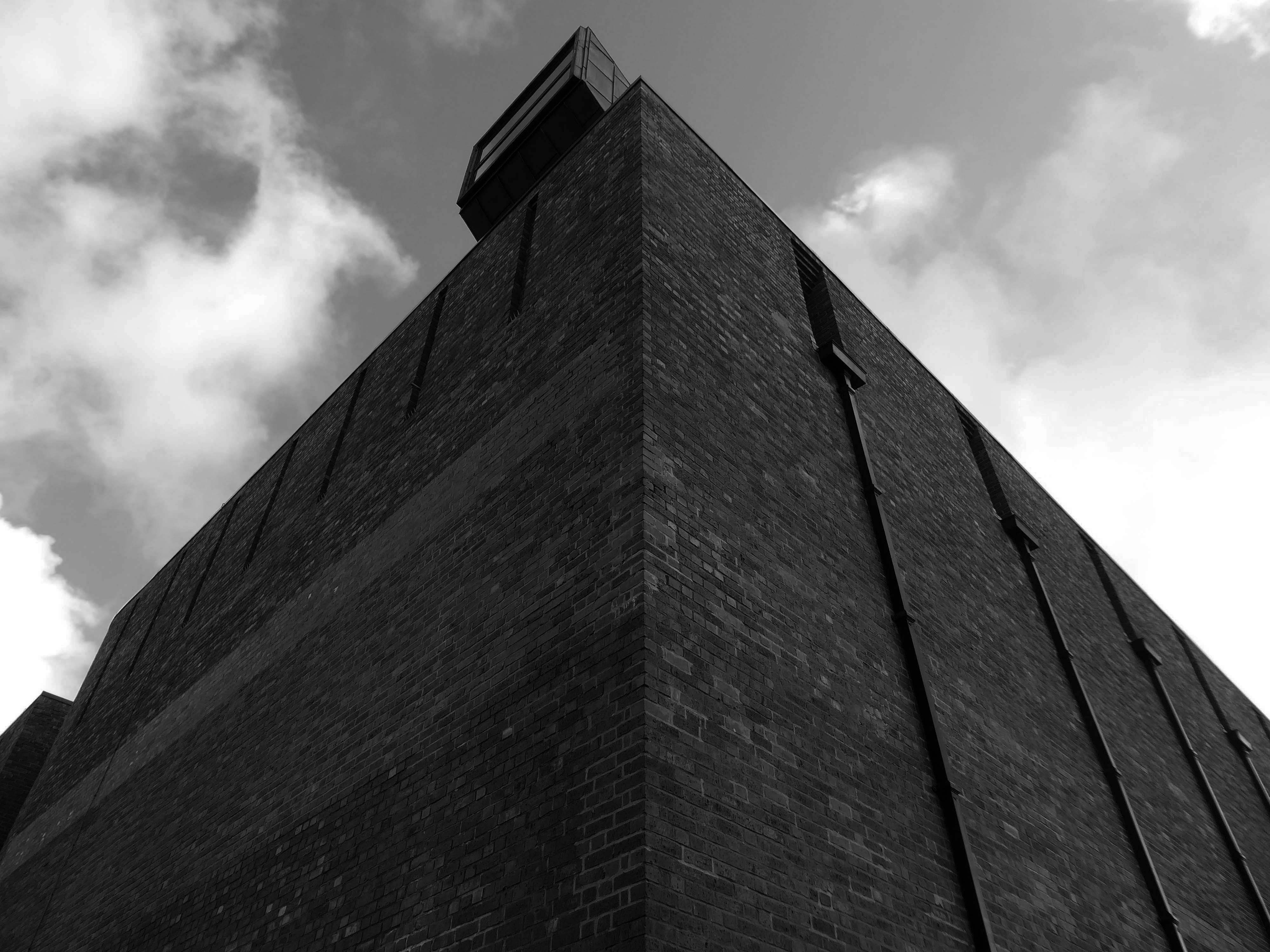
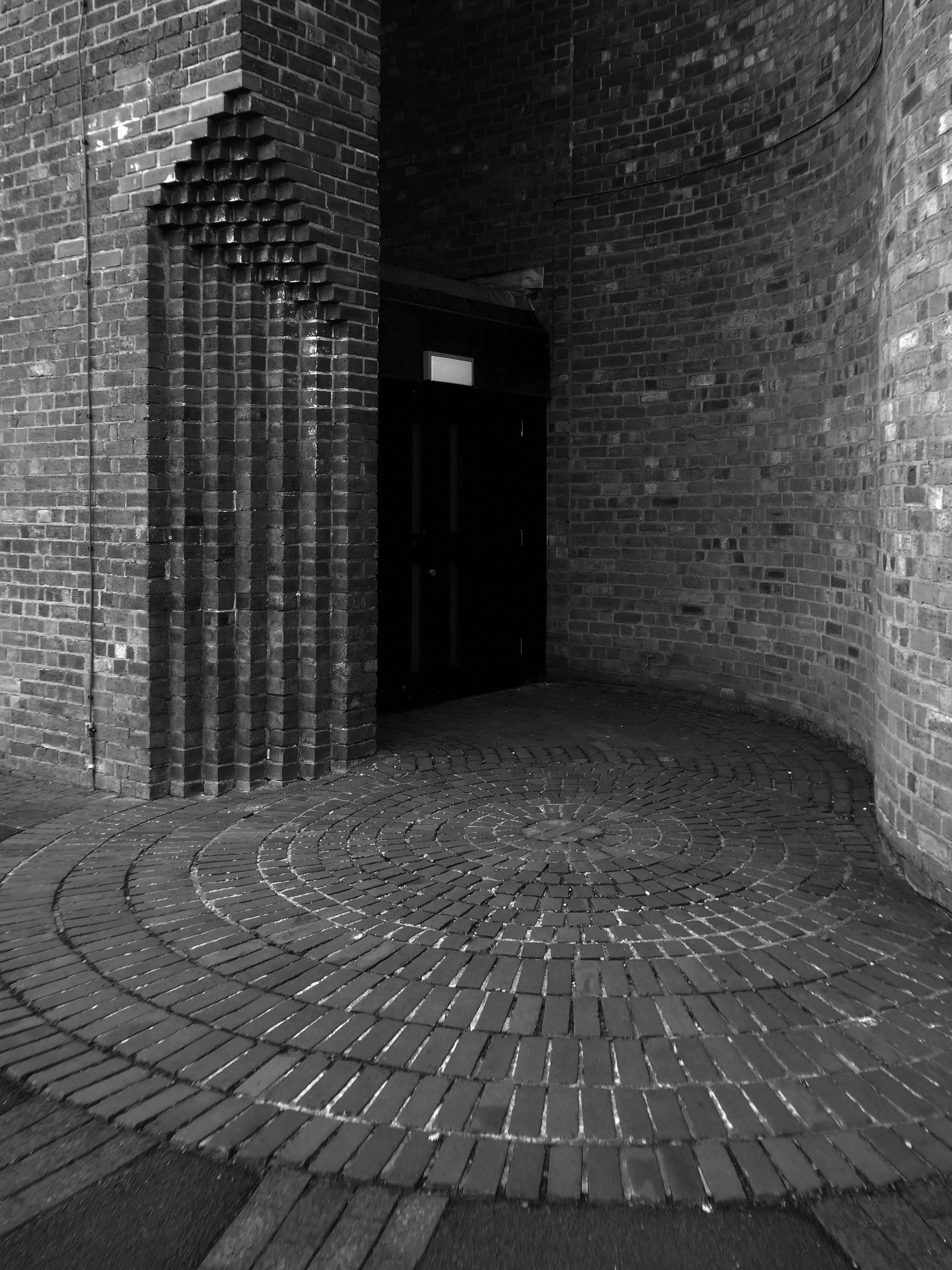
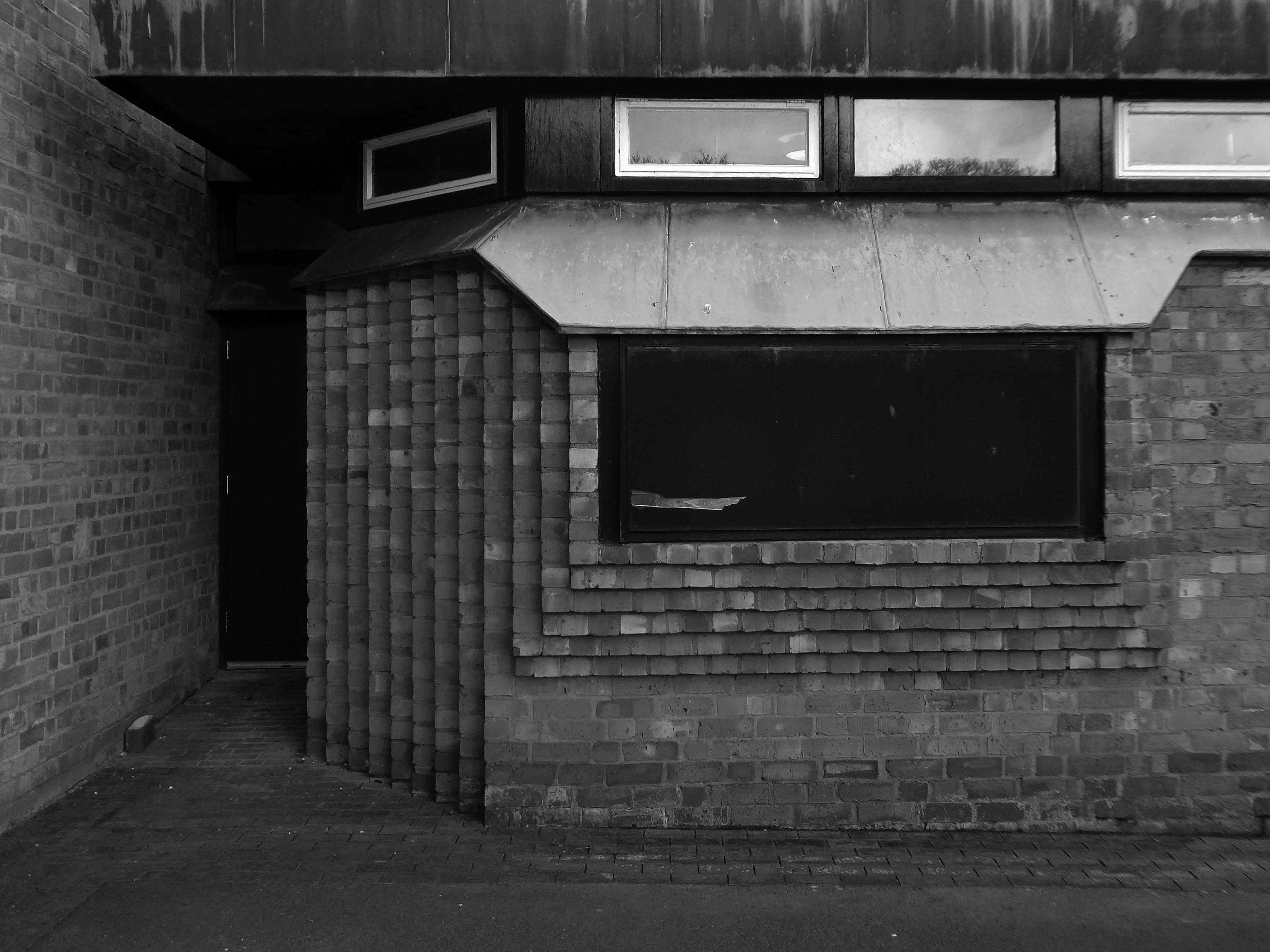
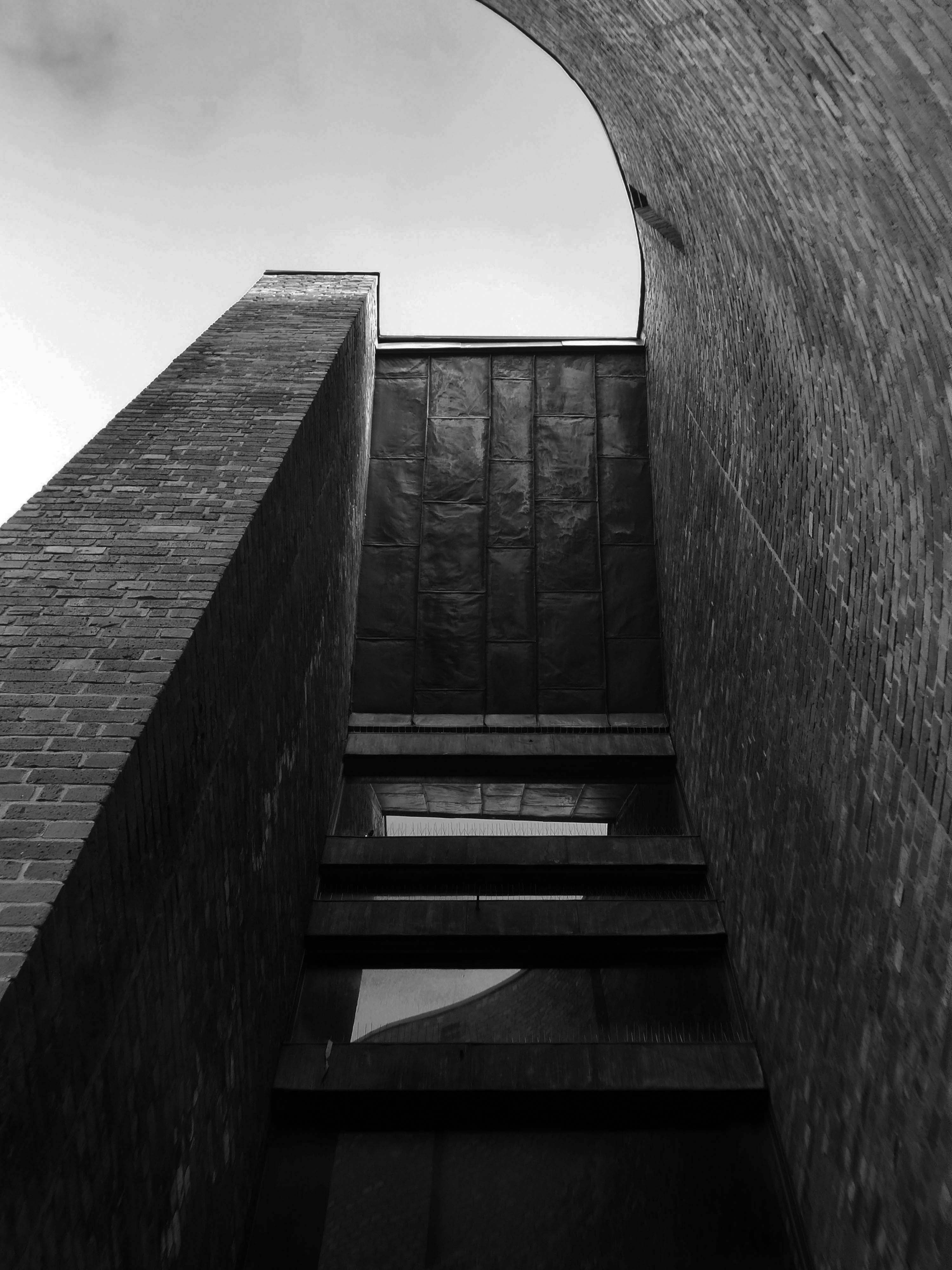
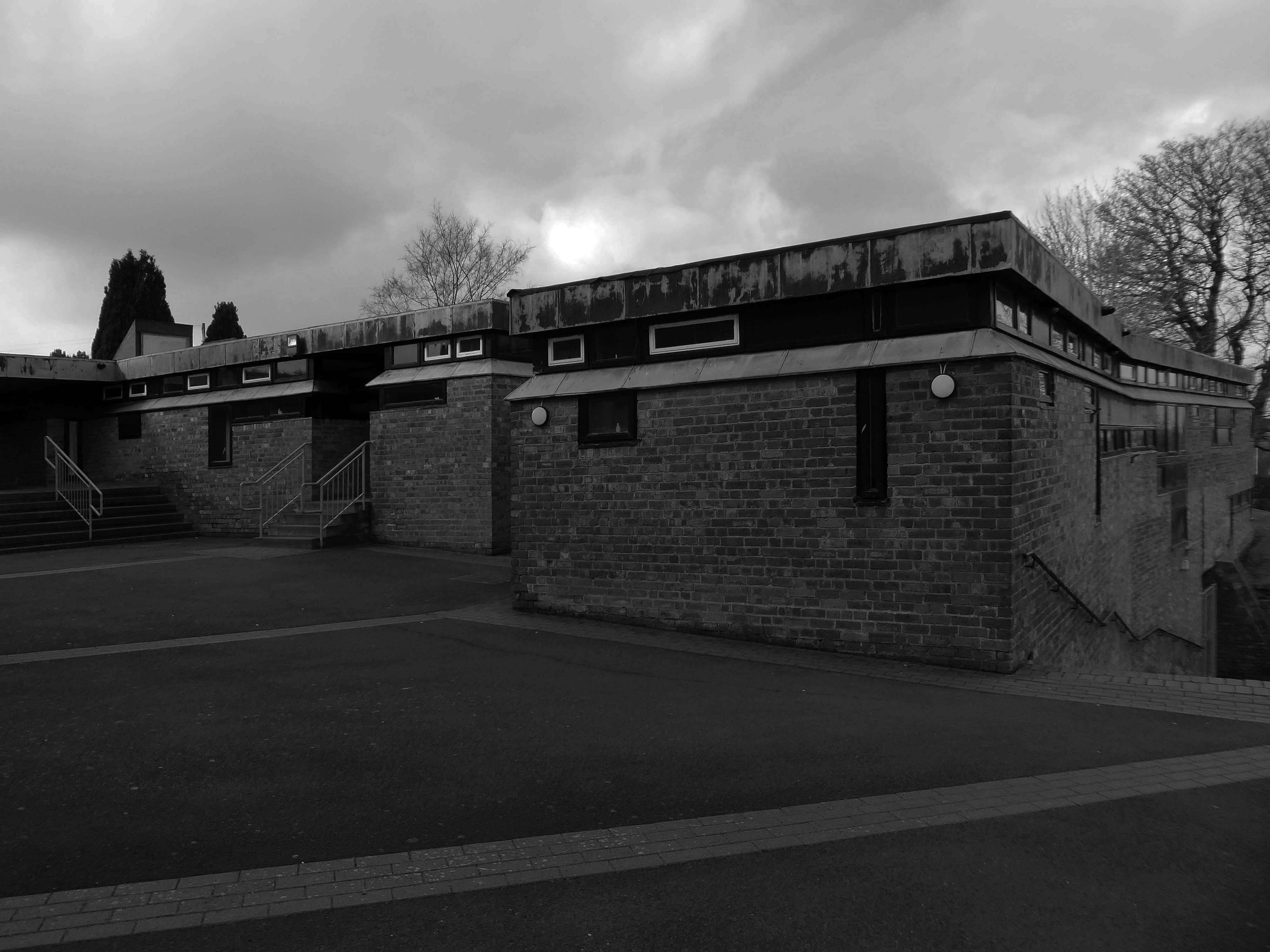
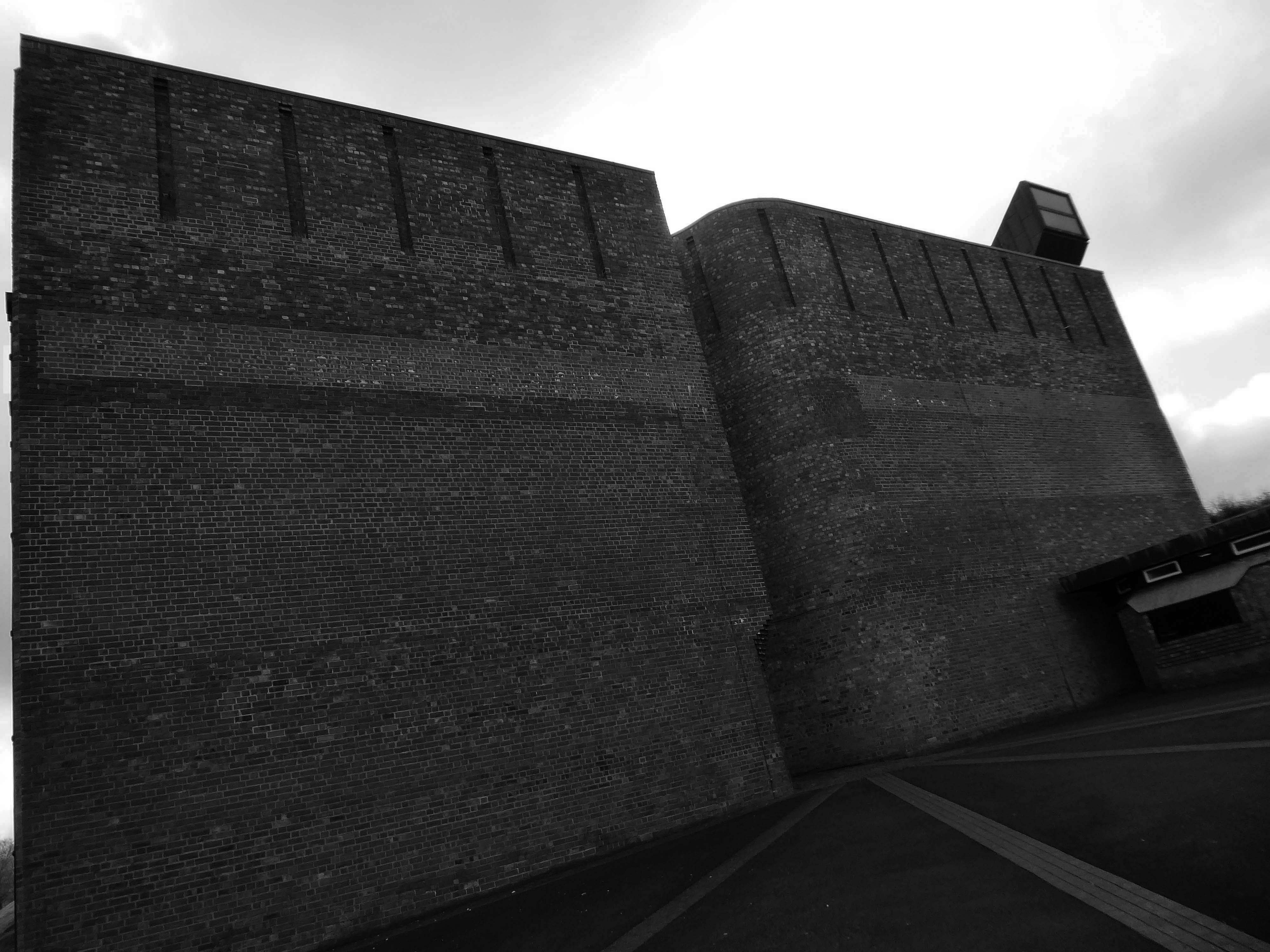
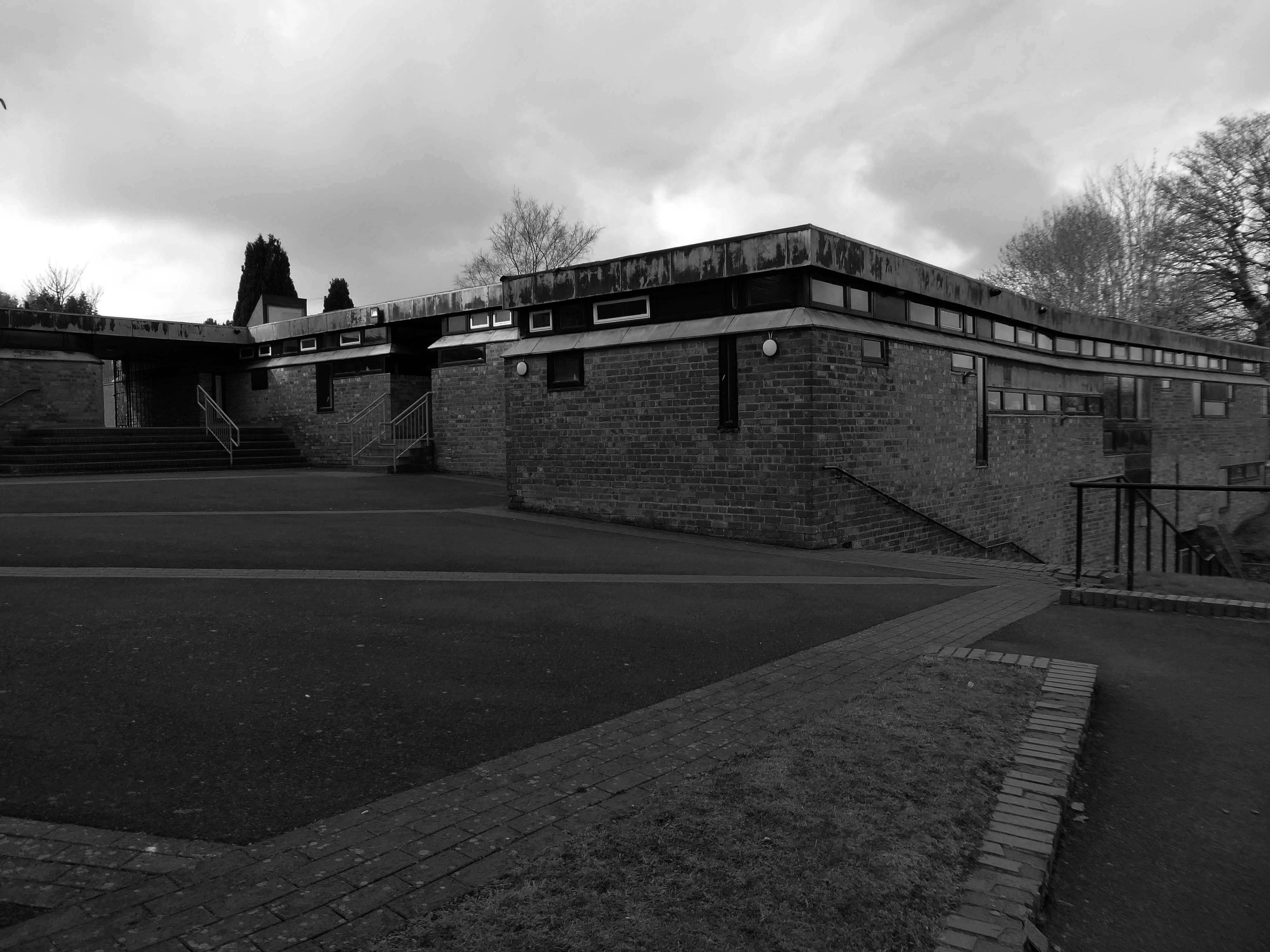
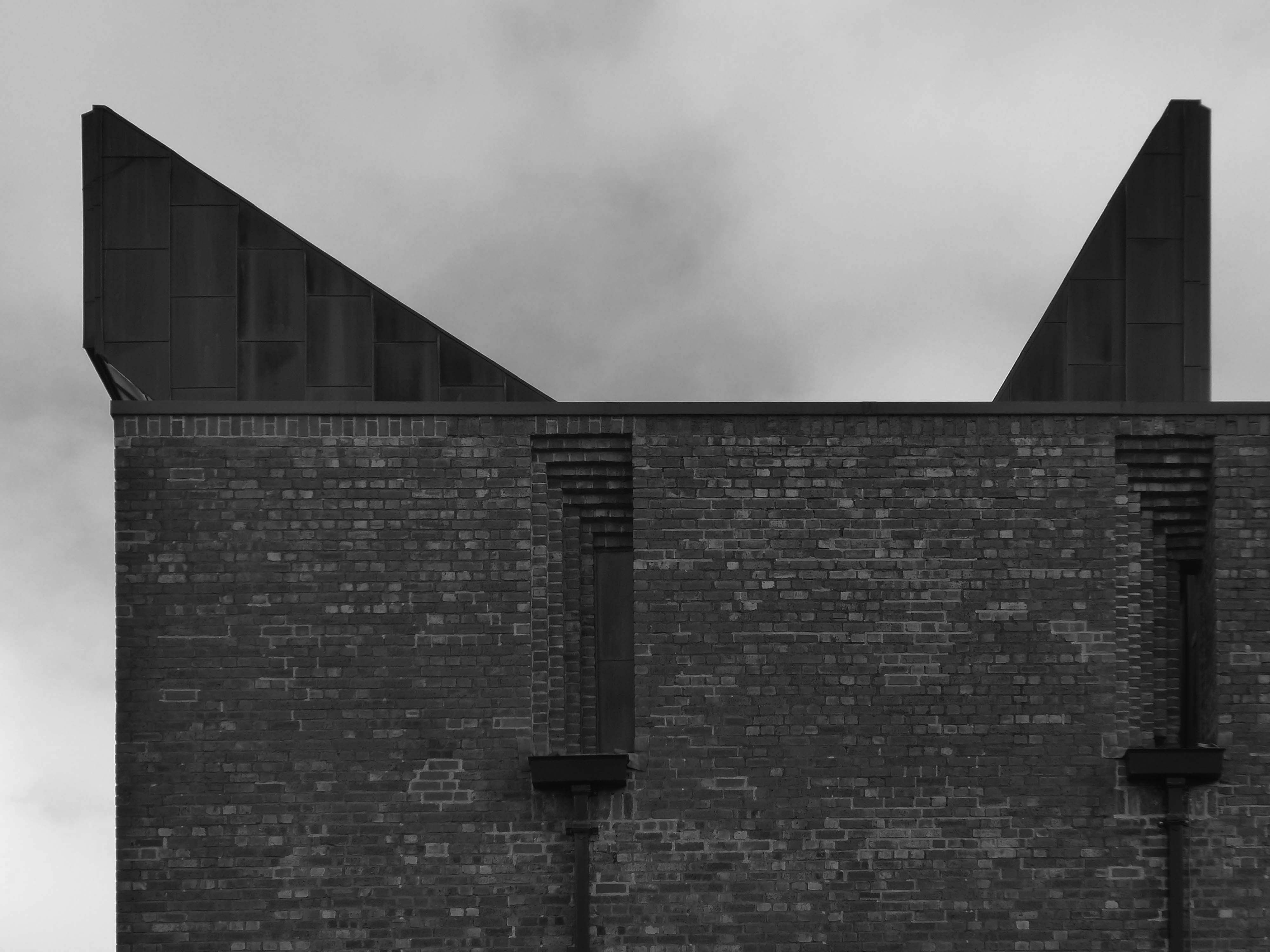
The current church occupies this corner site by the mini roundabout – a very particular architectural style, an angular brick low level ziggurat, with buttresses to the side elevation and entrance. There are glazed brick details around the buttresses, windows and doors.
It has a central entrance which divides the main body of the chapel from the function room.
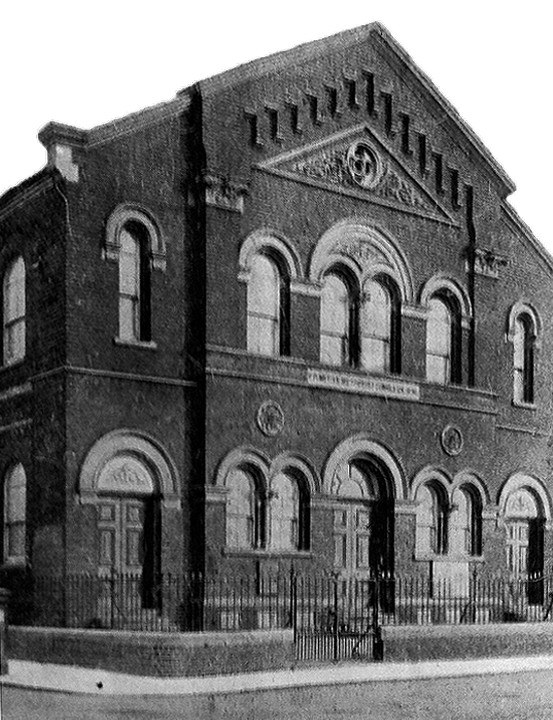
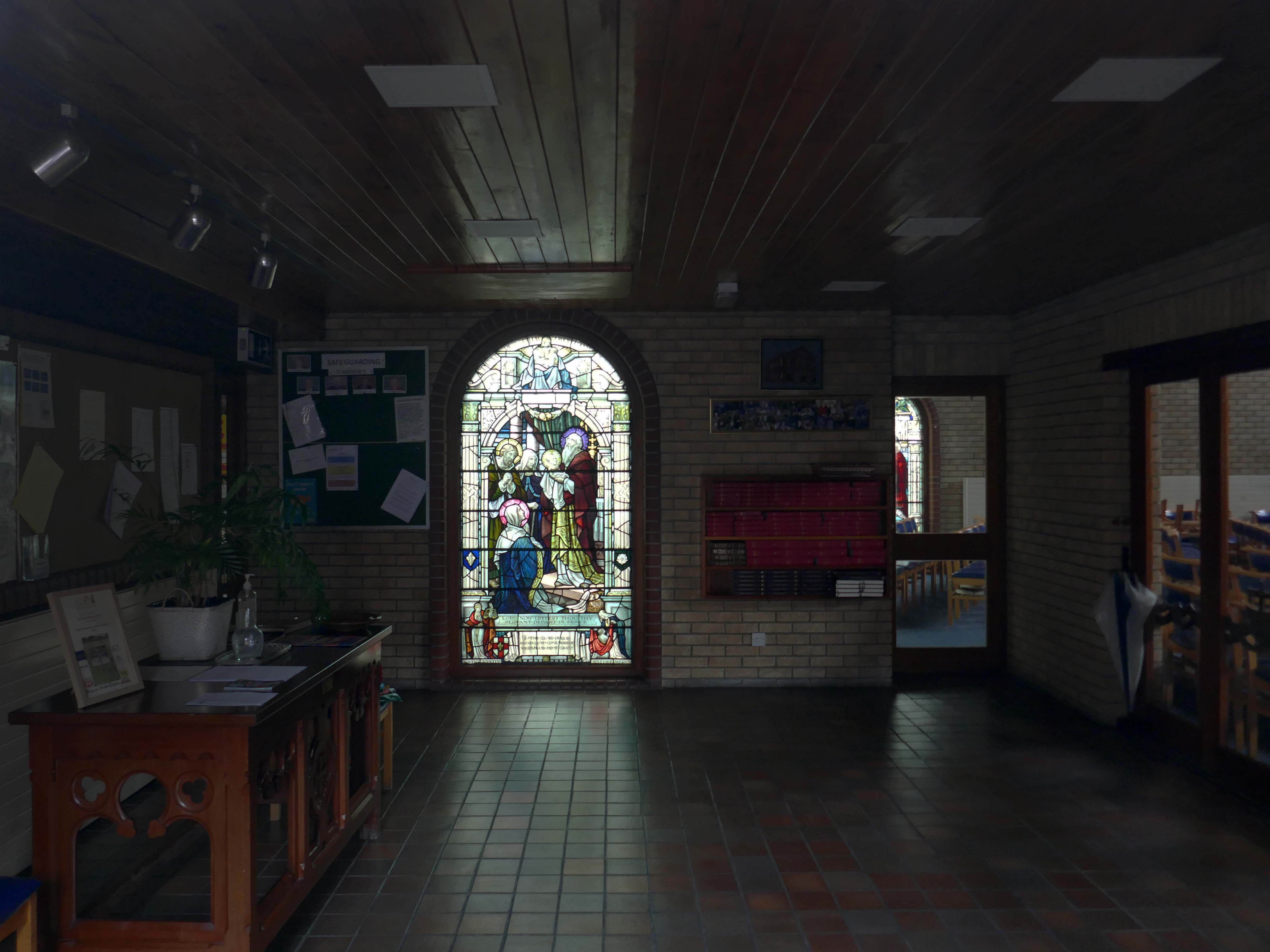
There are Victorian stained glass panels, which may be from the previous chapel.
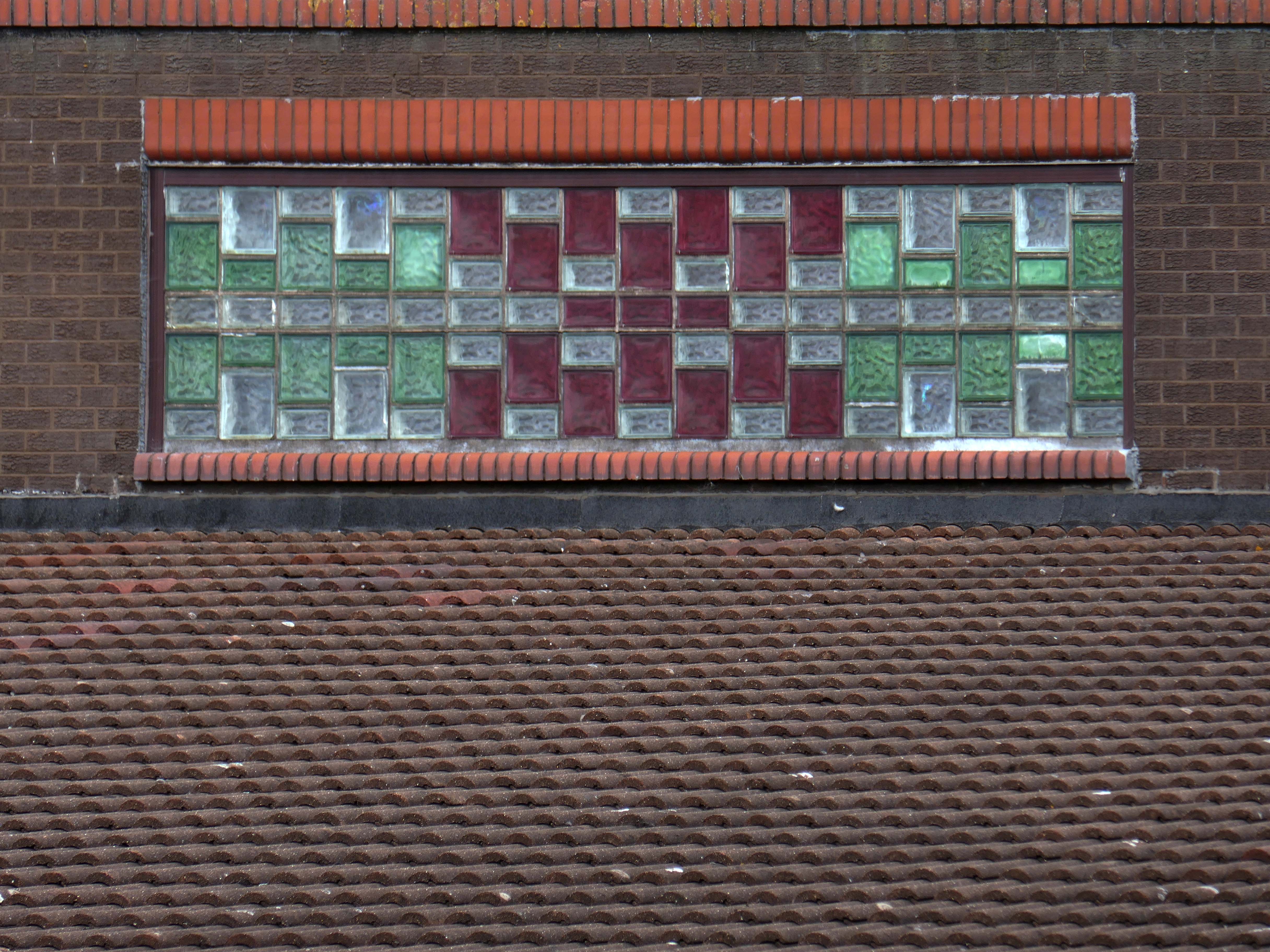
Below the pitched roof there is a modern inset decorative glass panel.
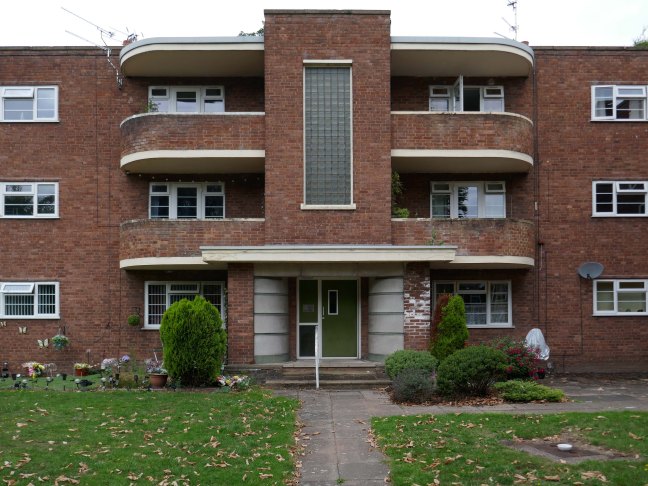
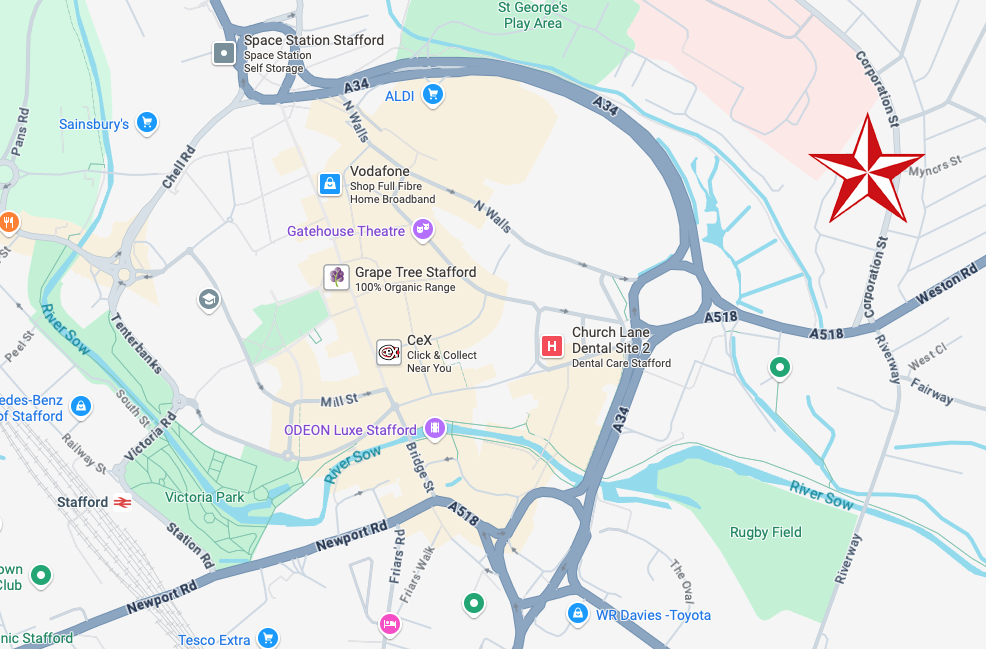
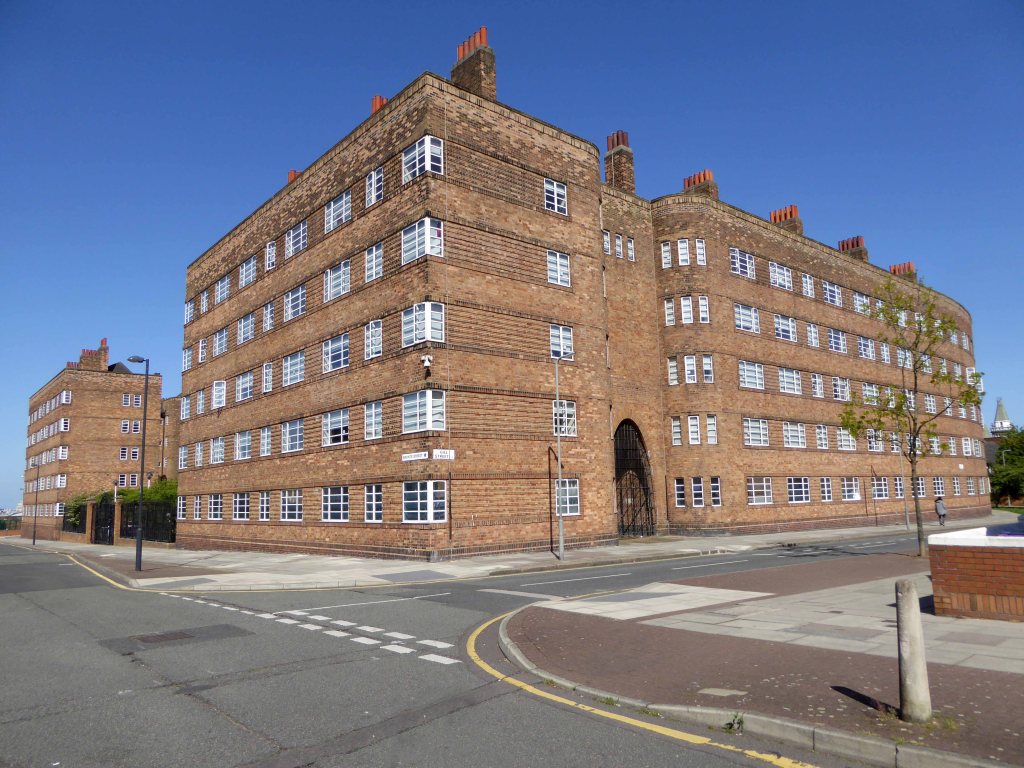
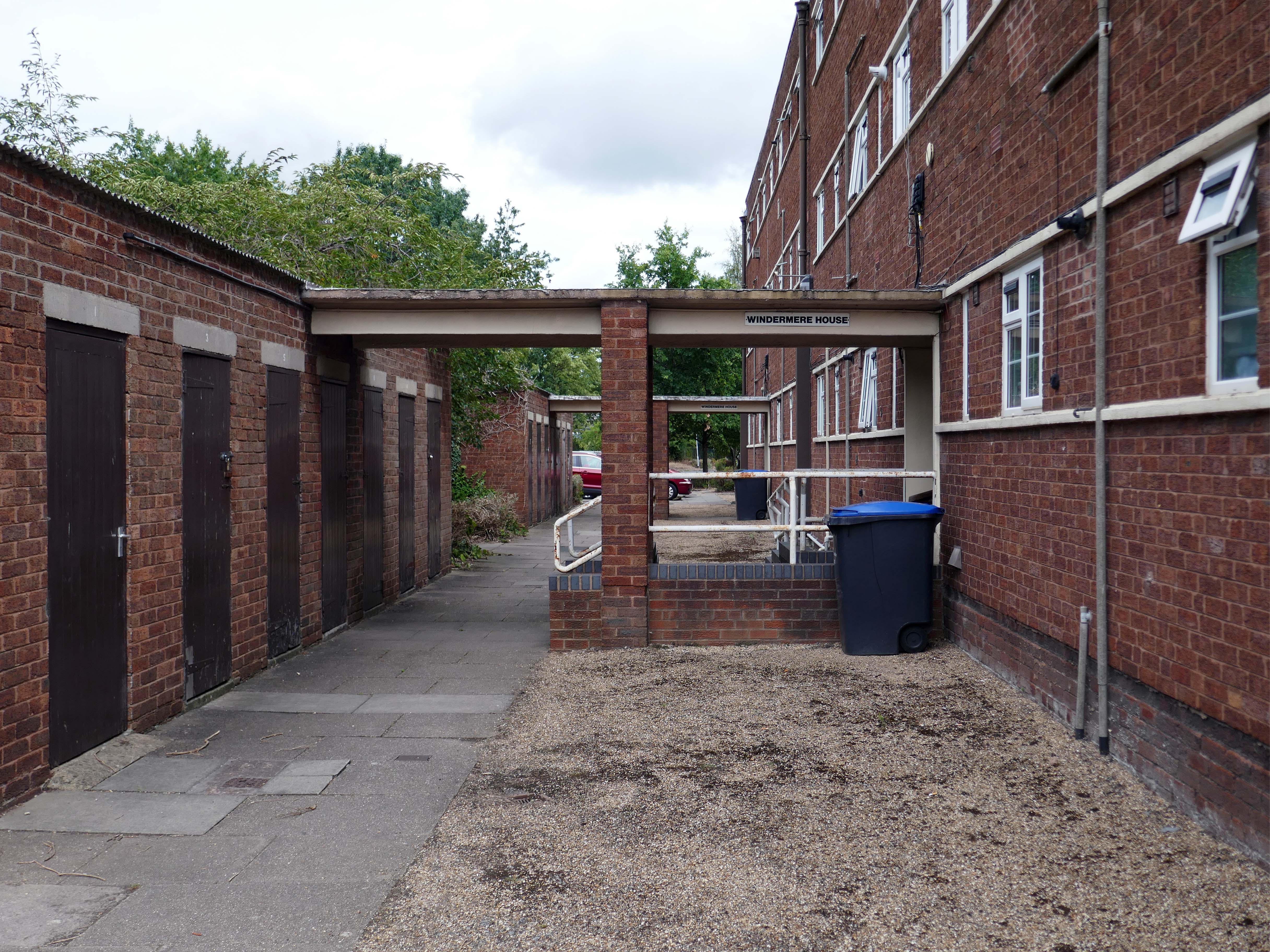
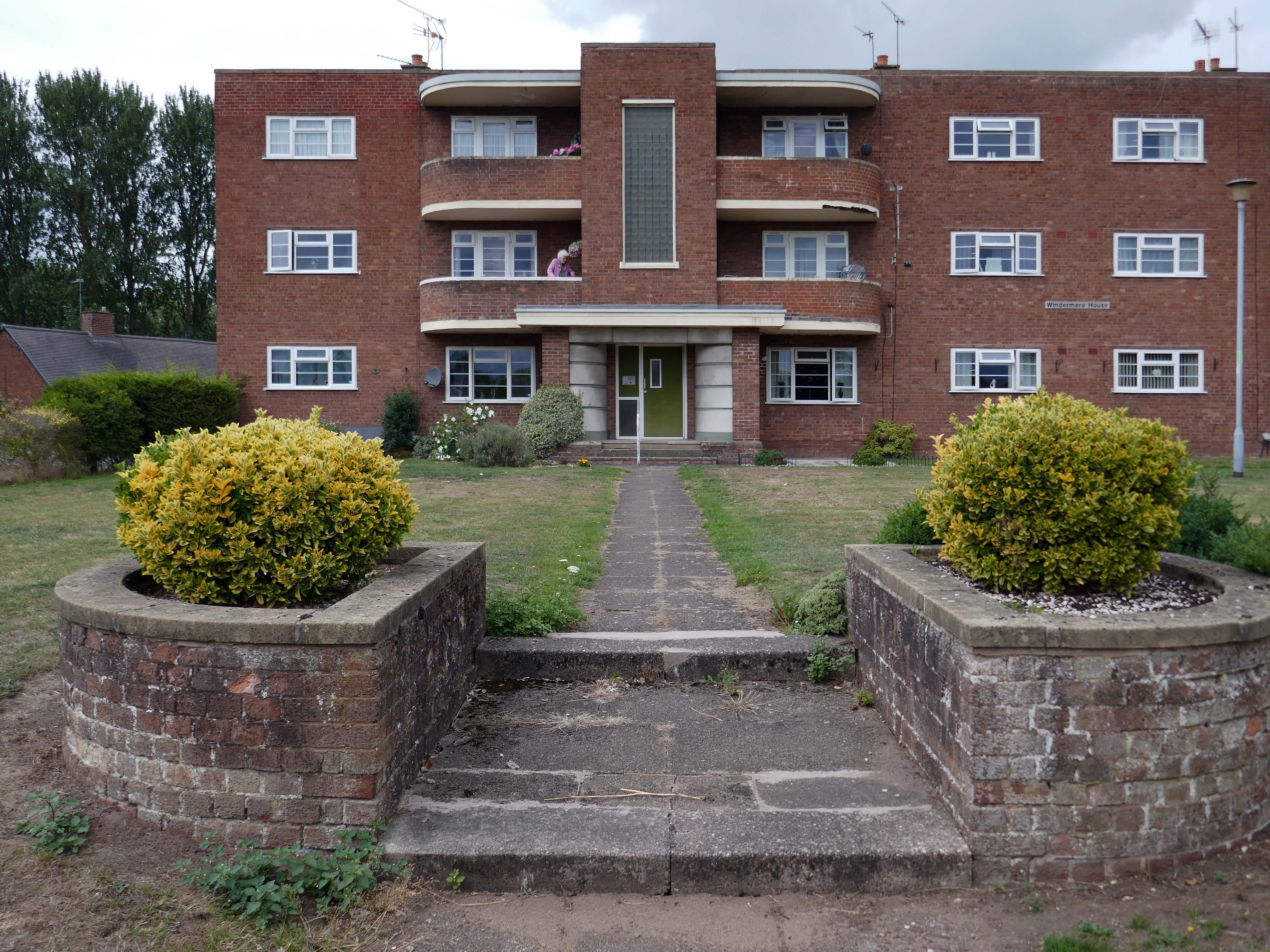
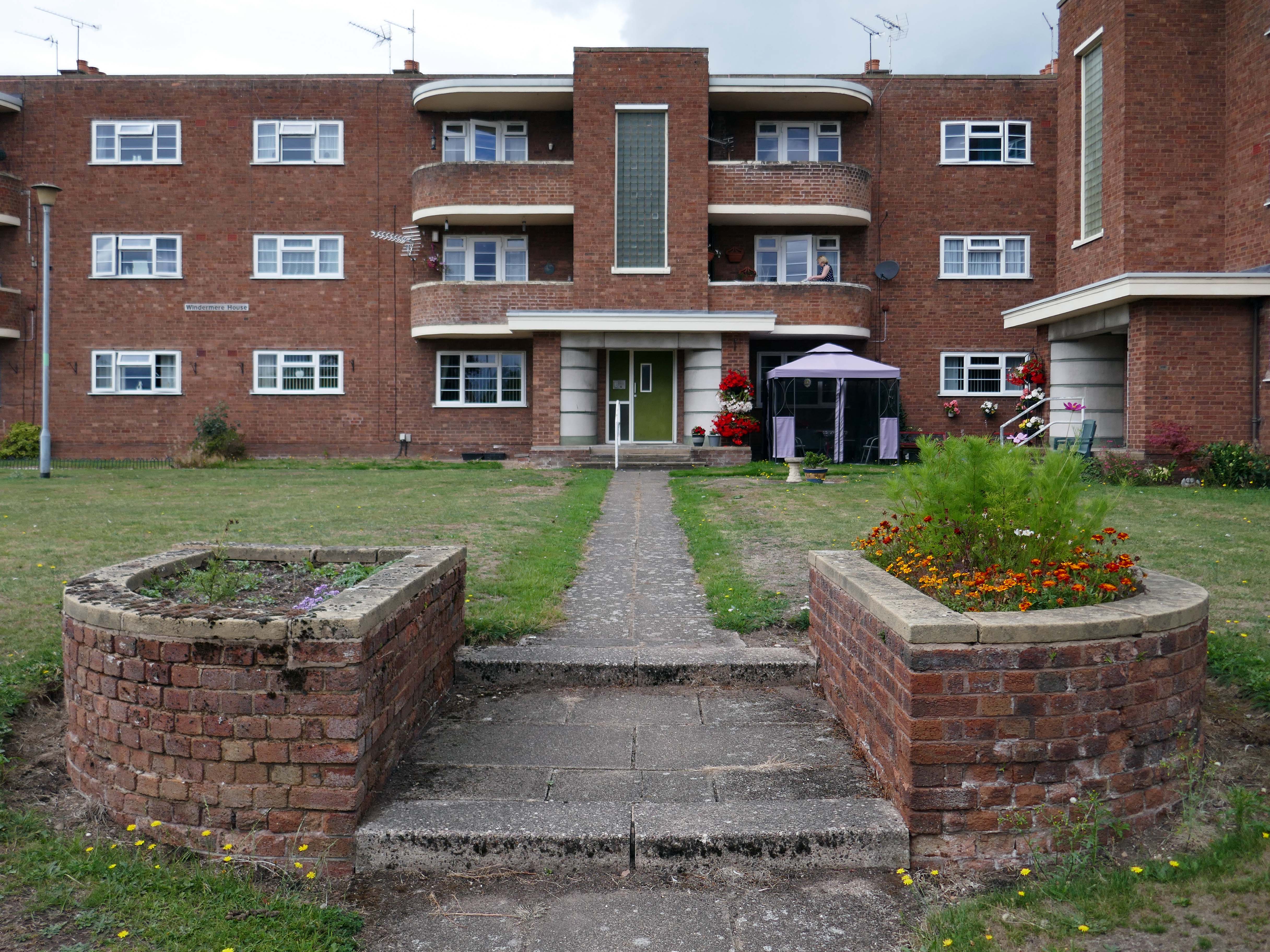
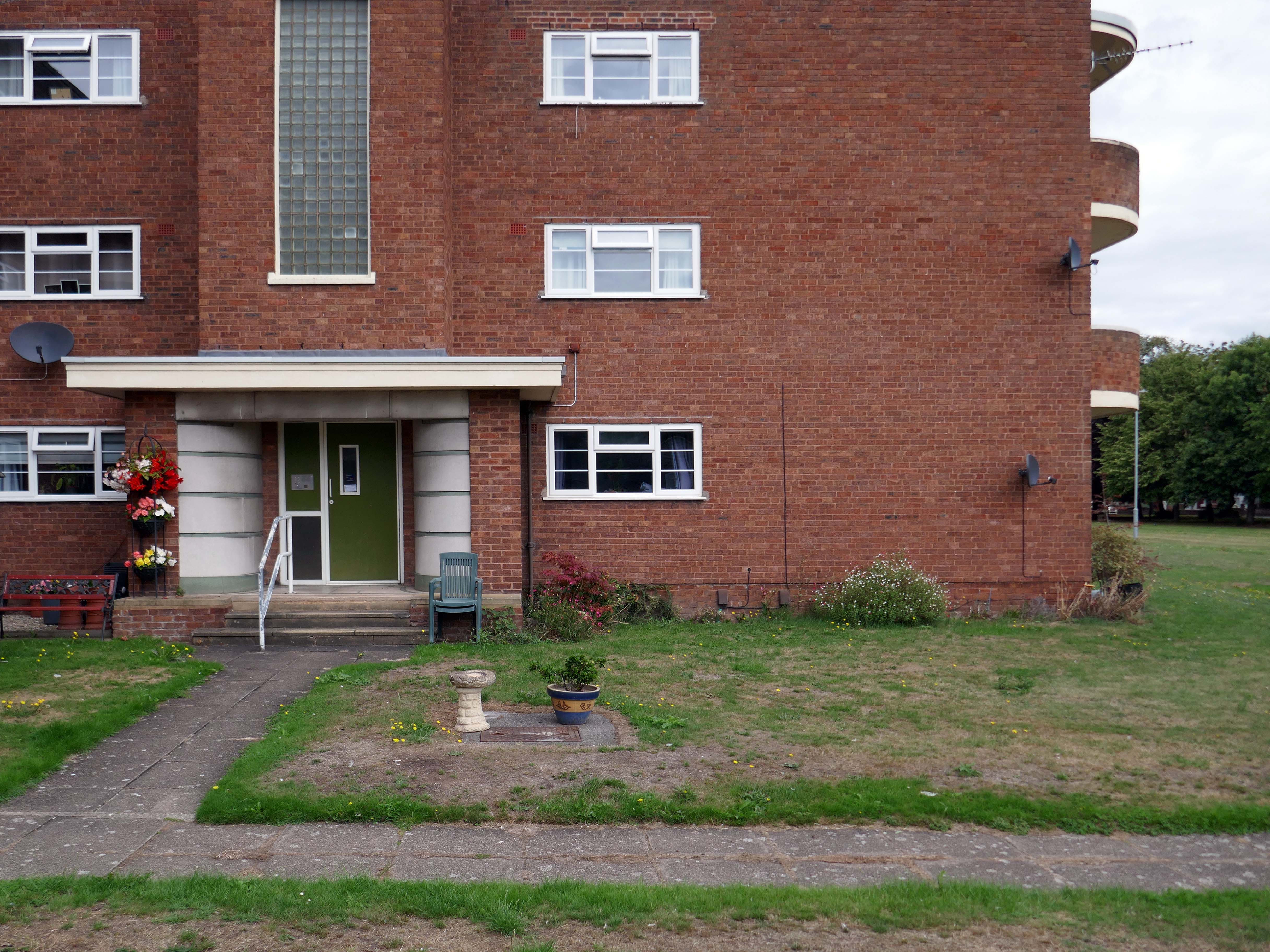
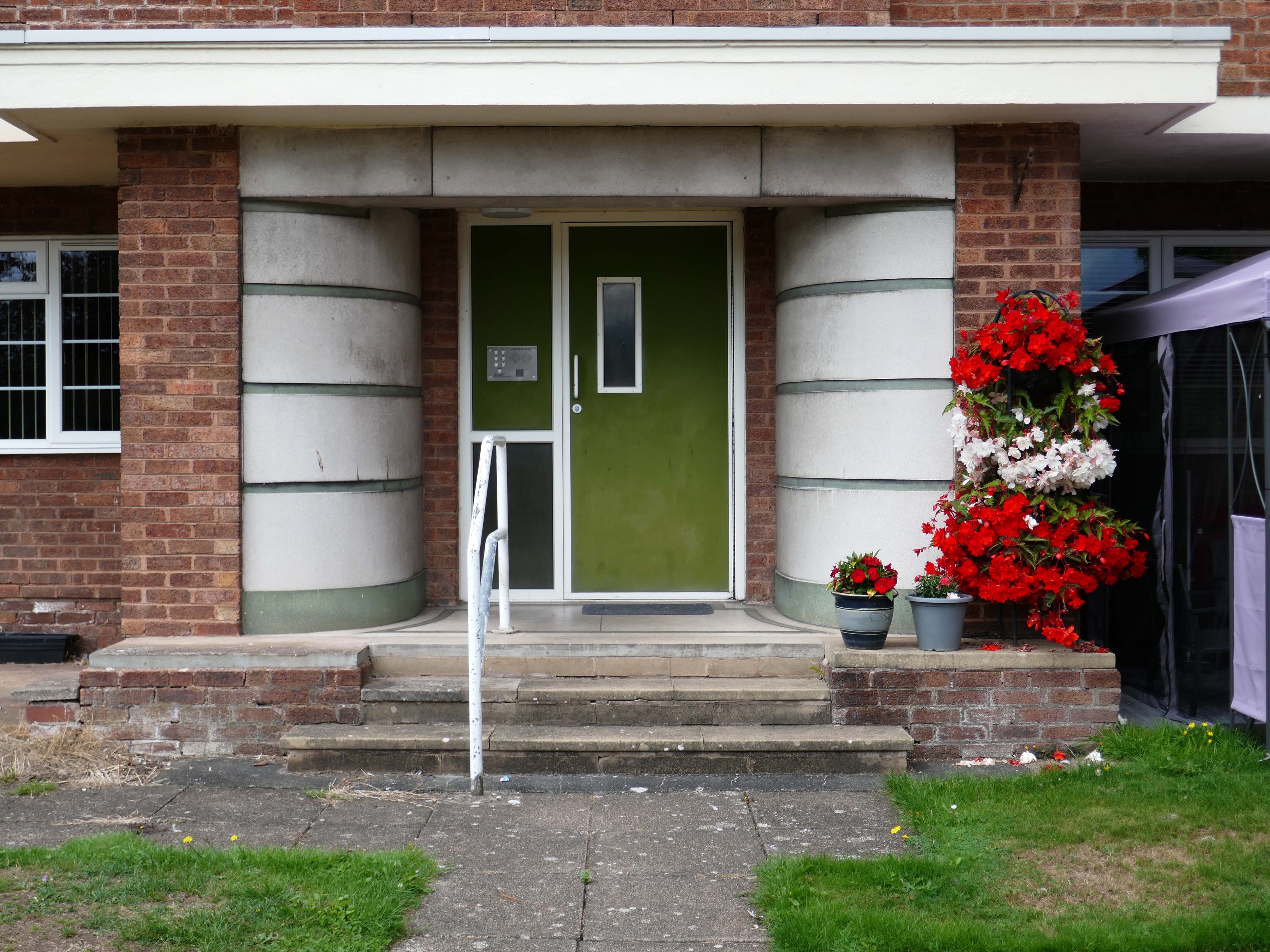
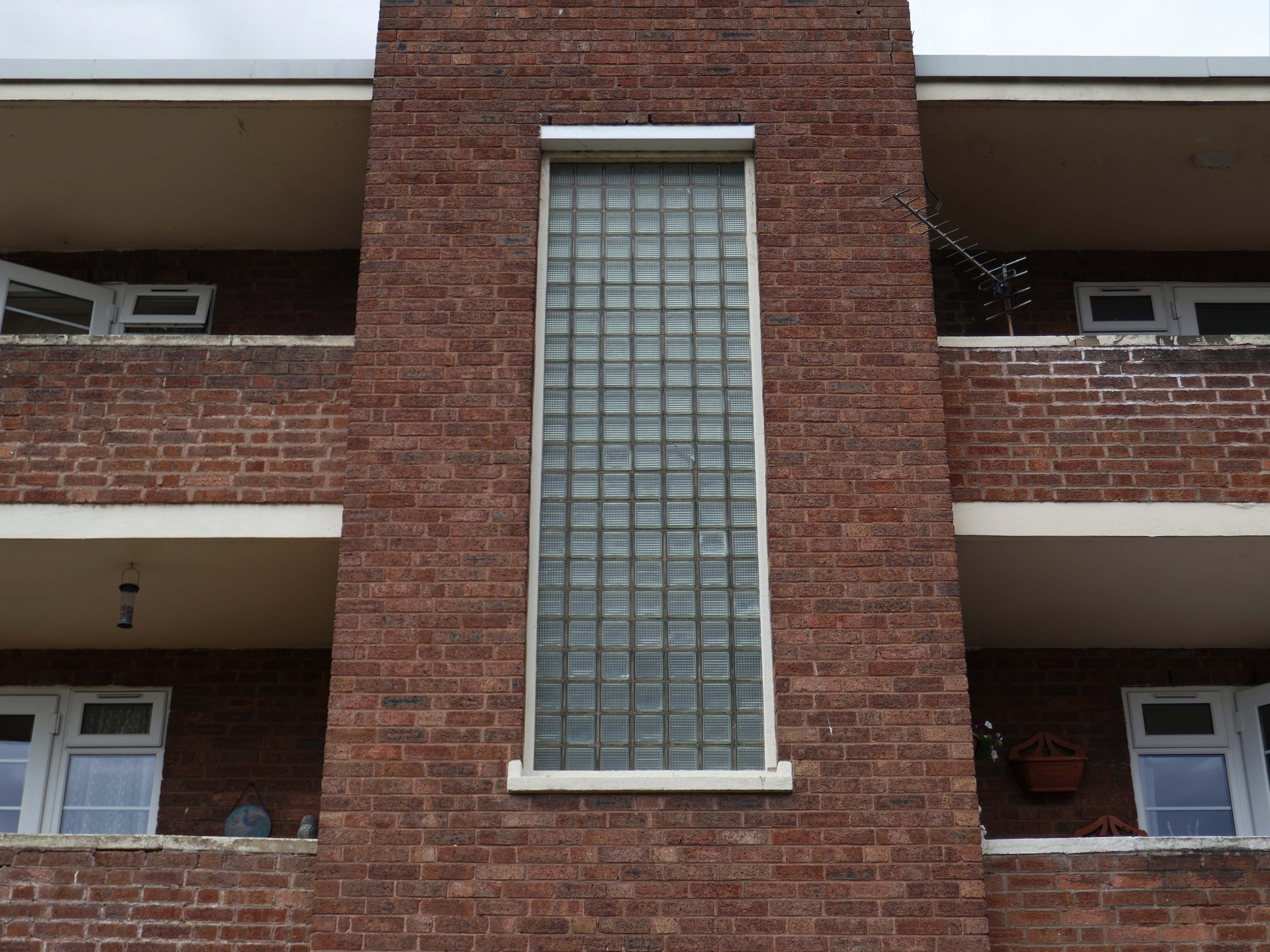
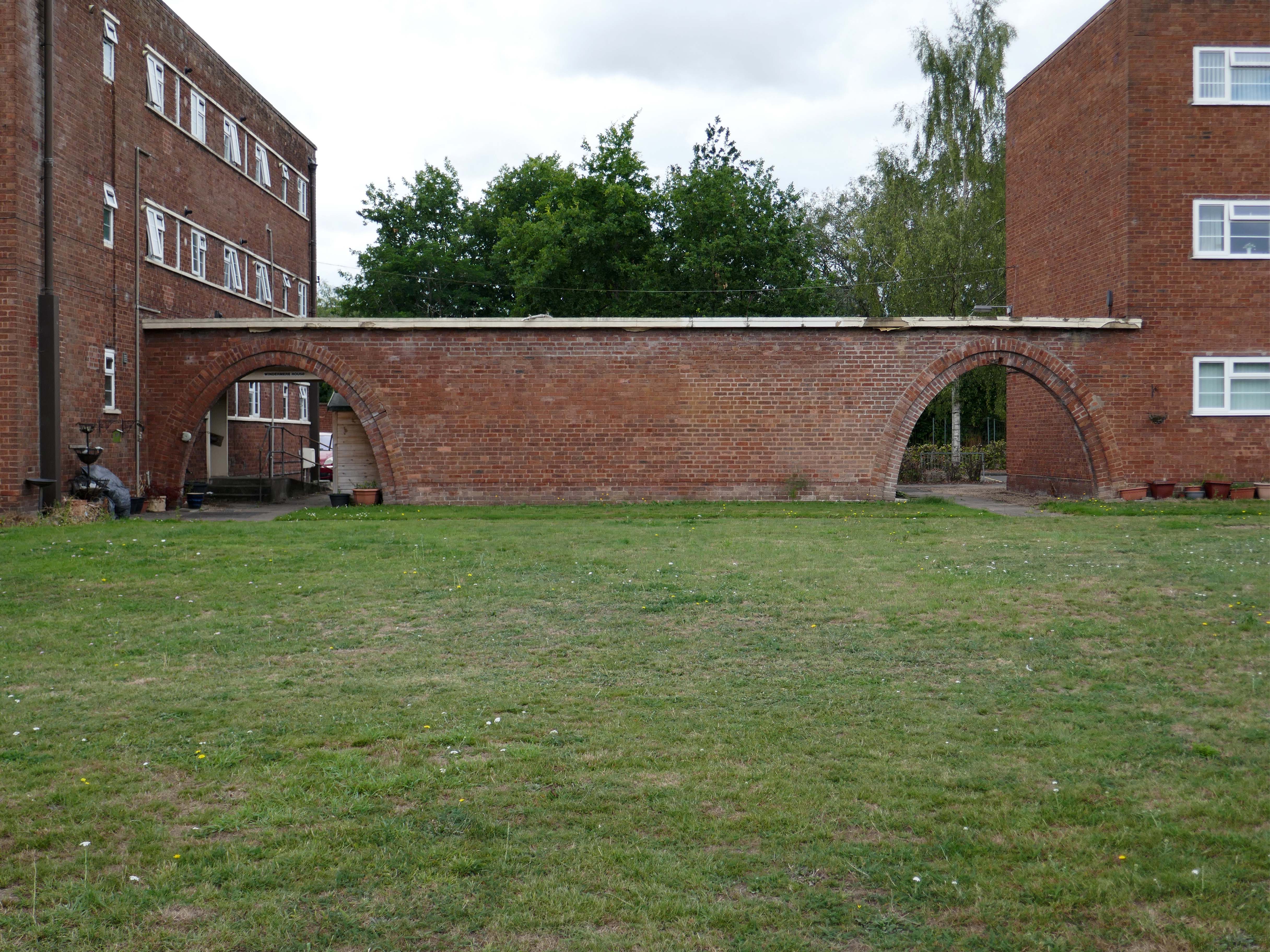
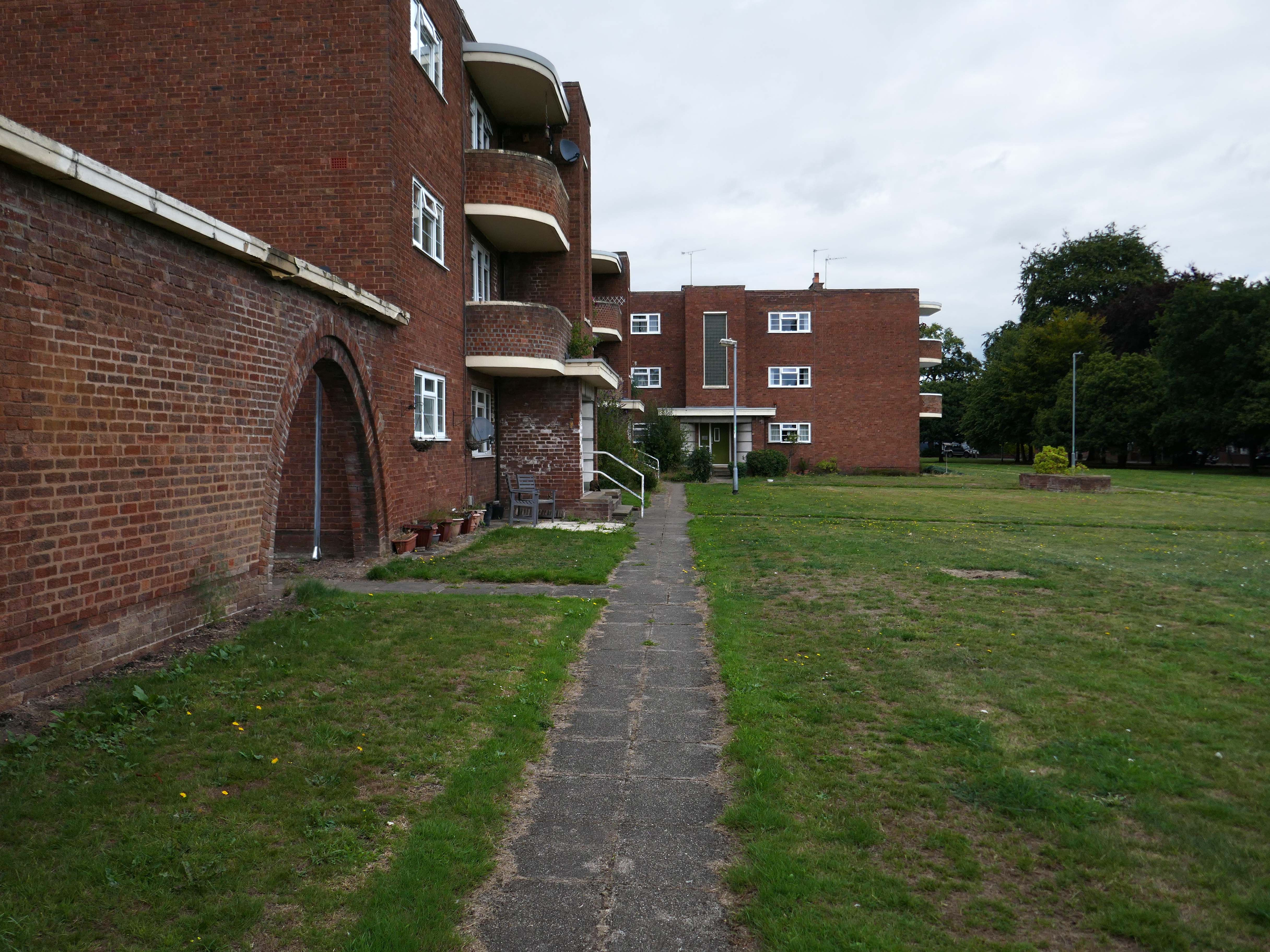
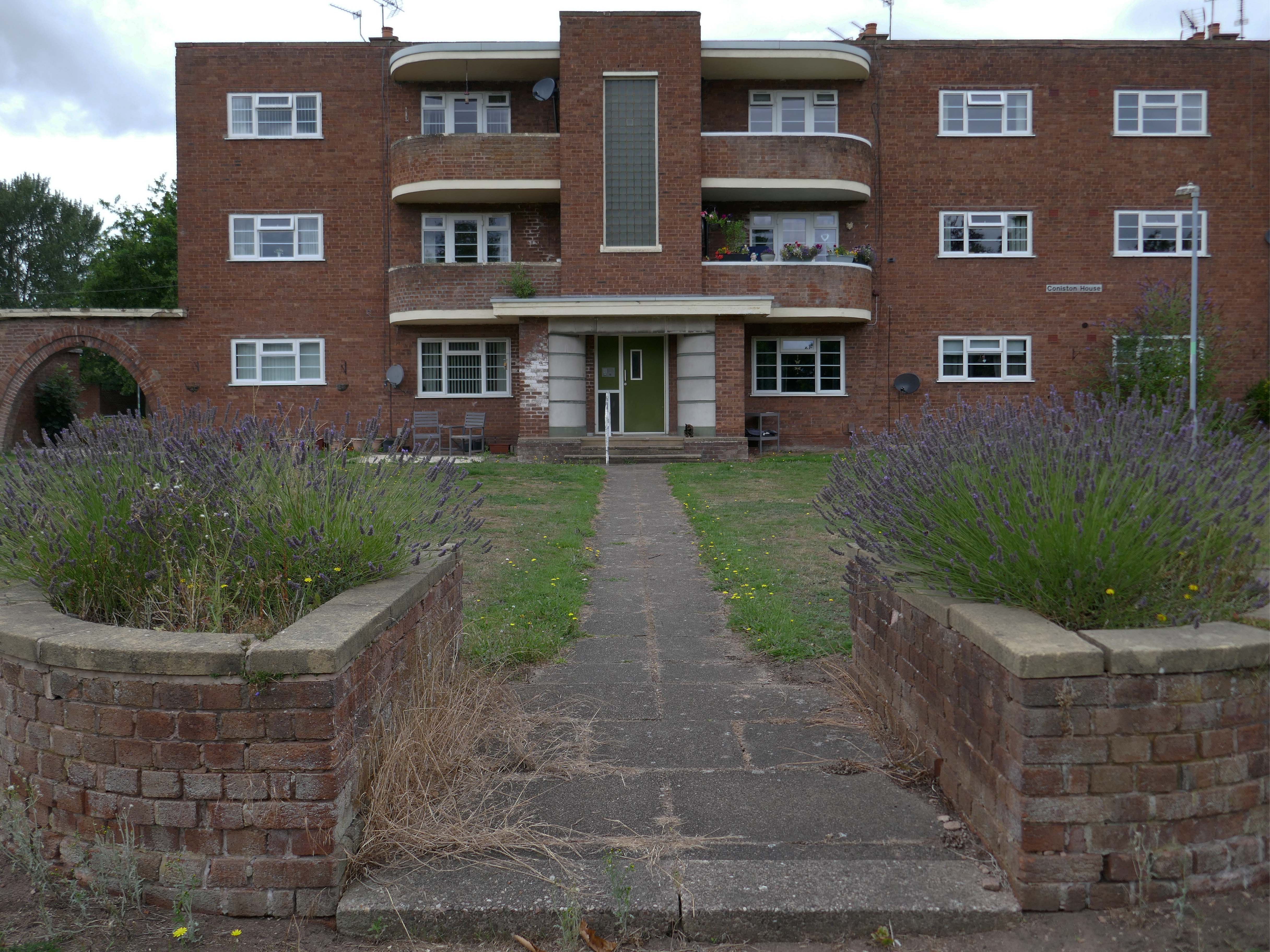
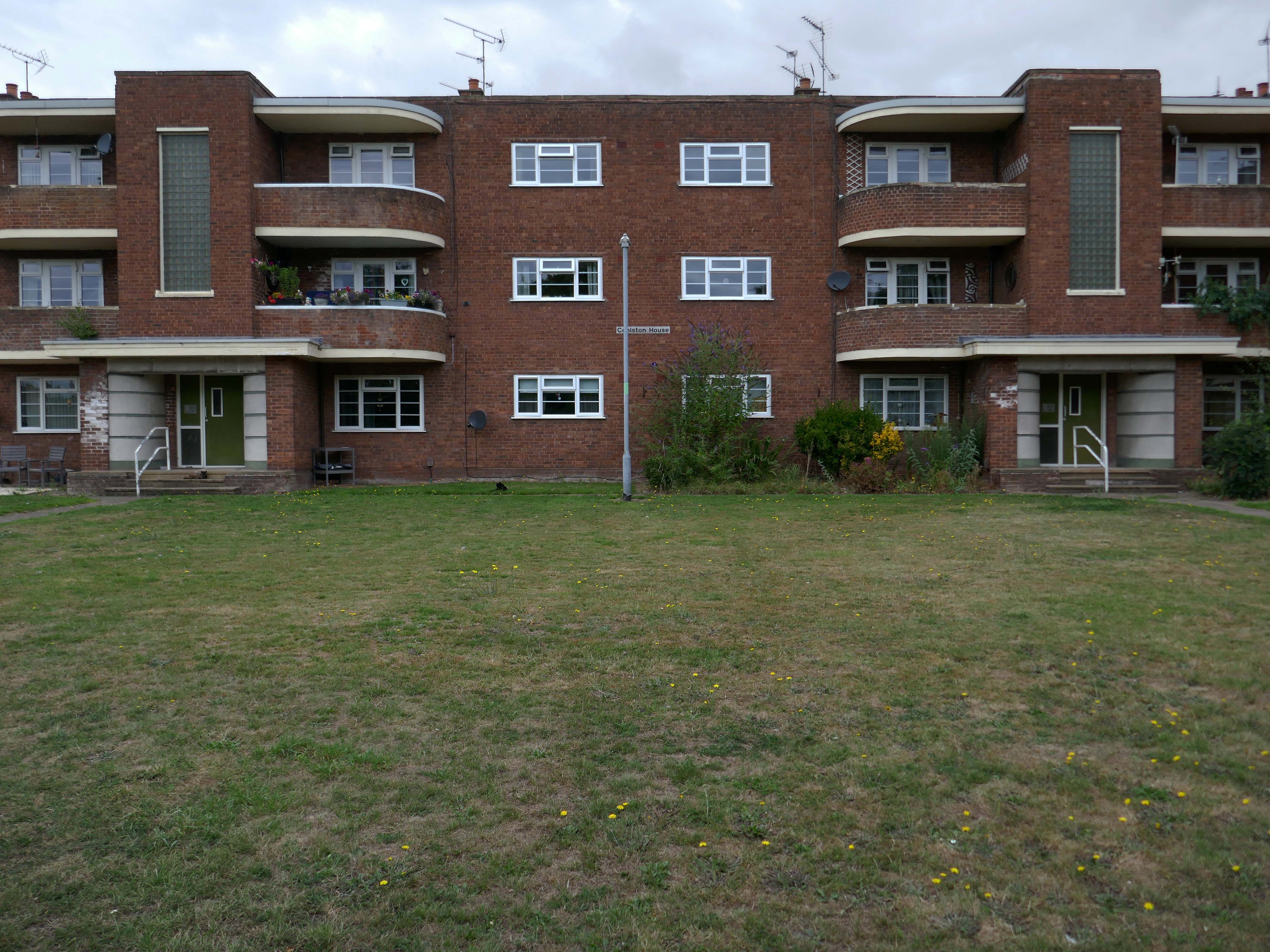
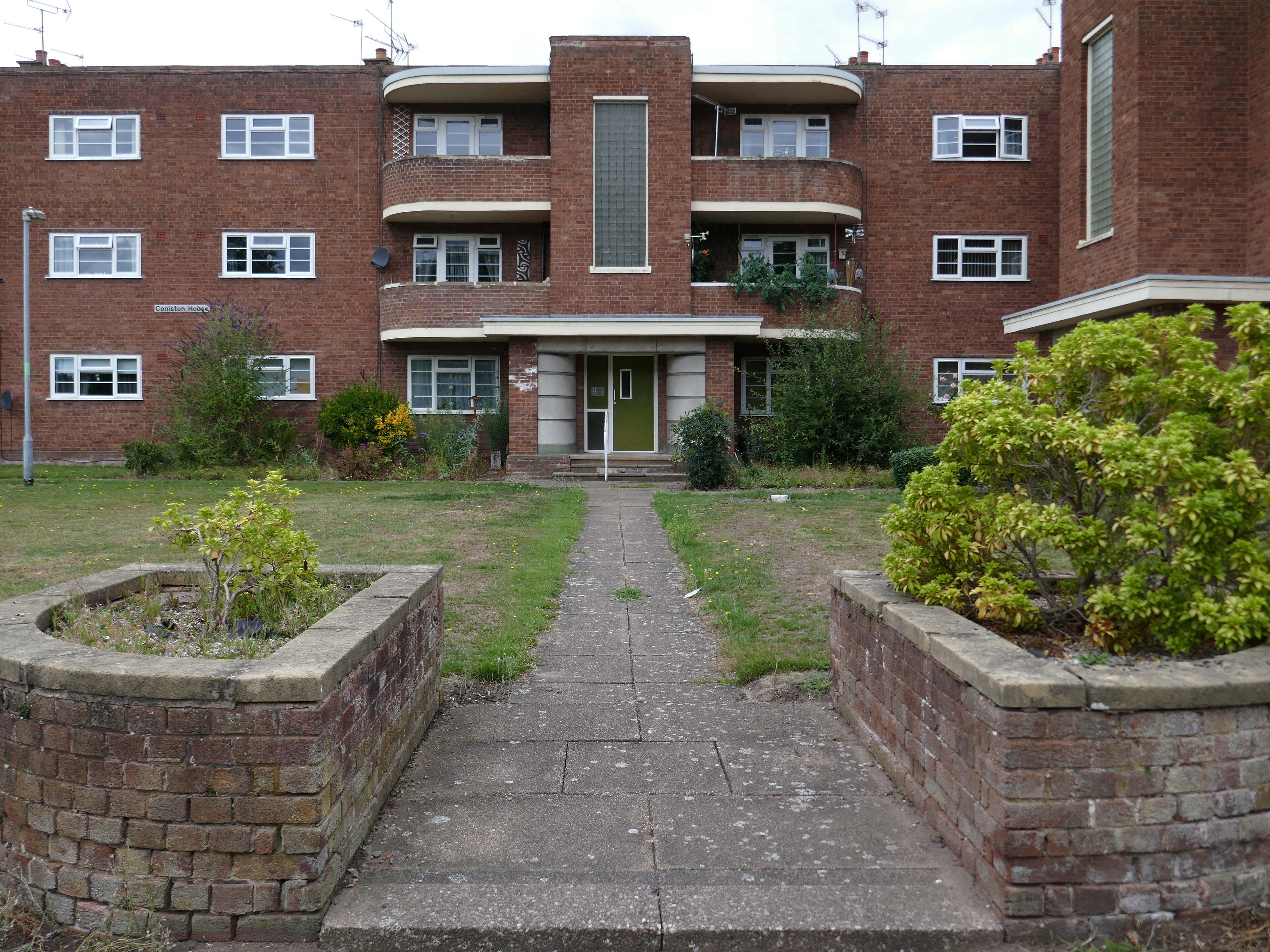
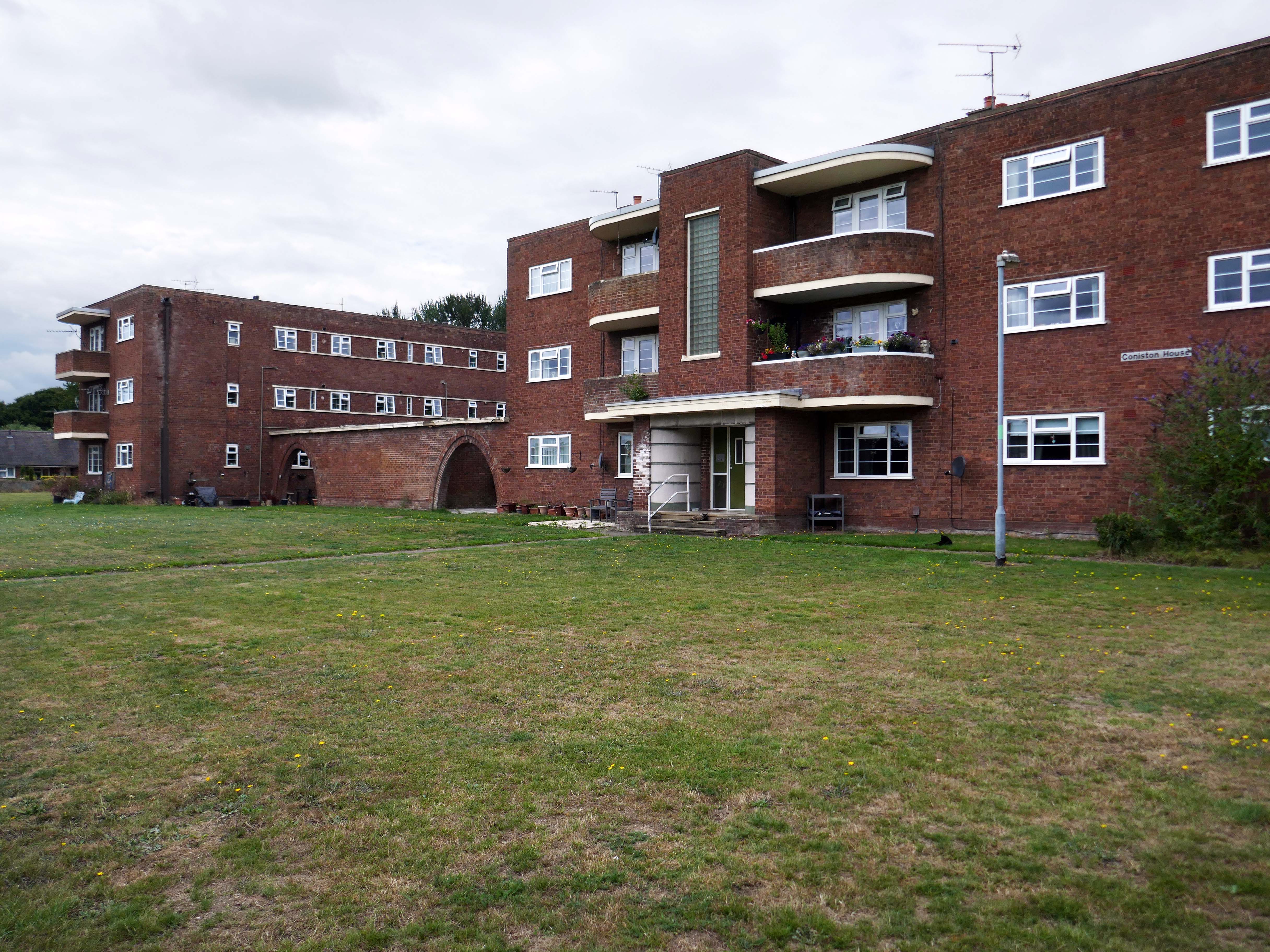
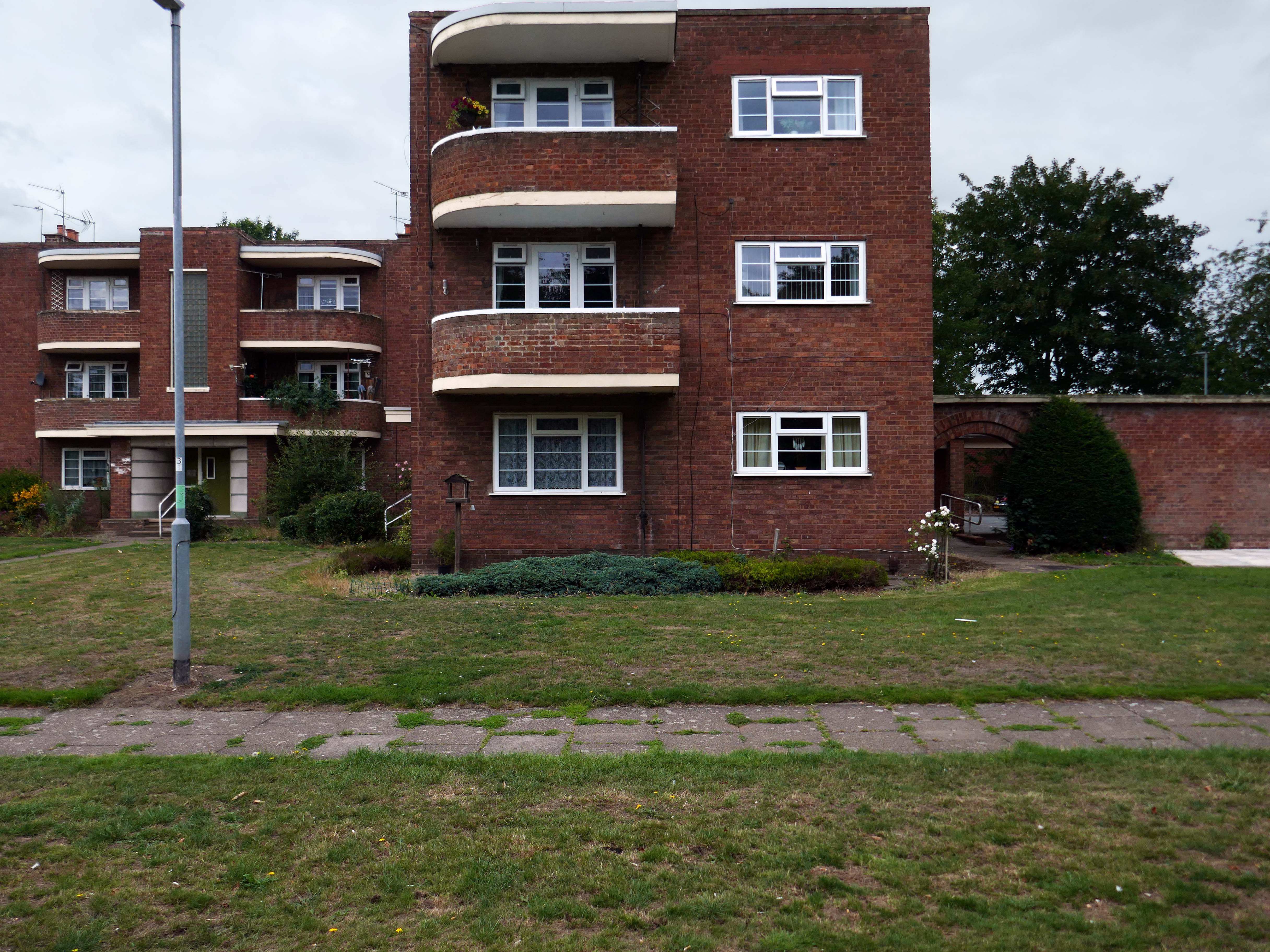
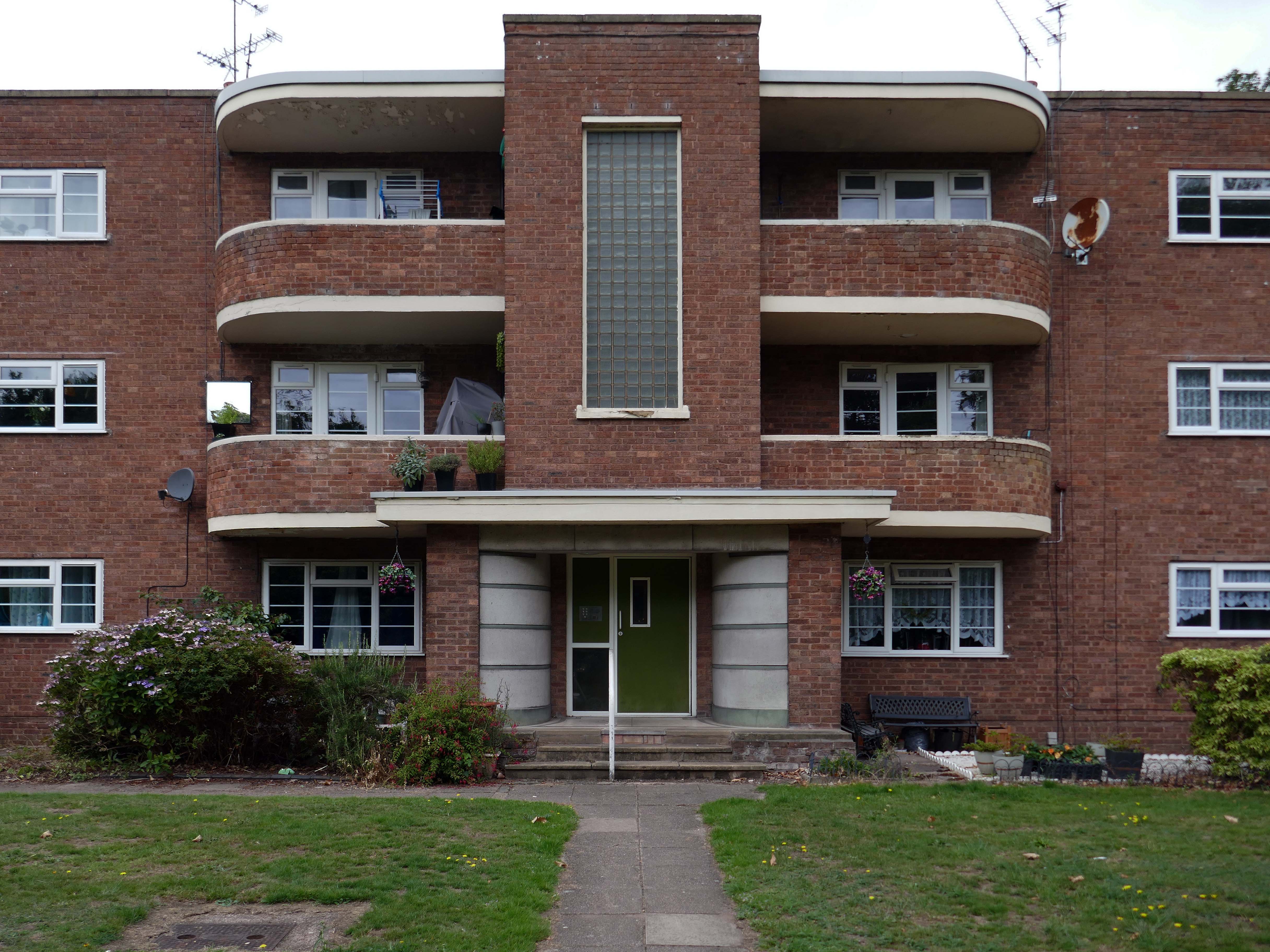
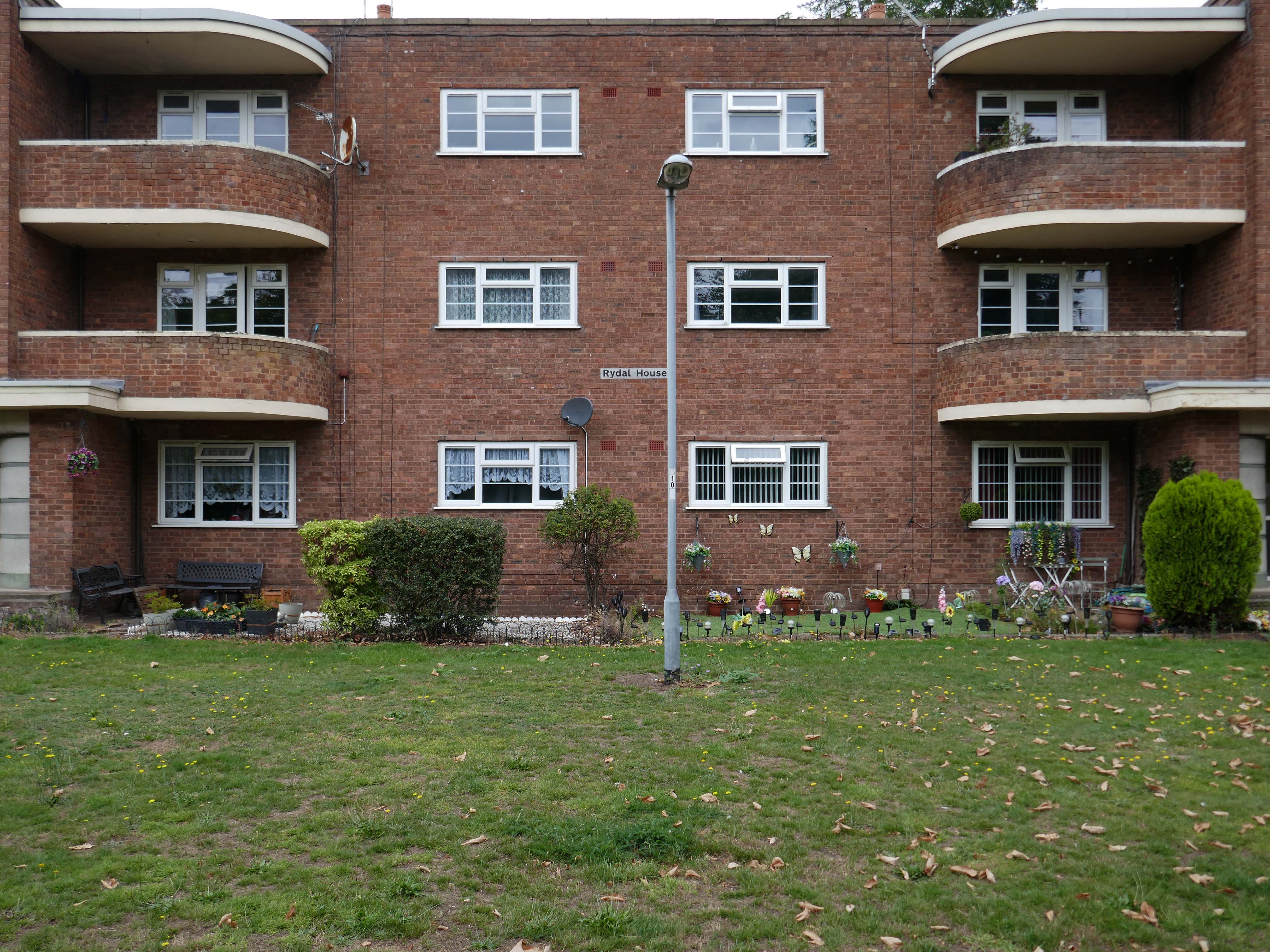
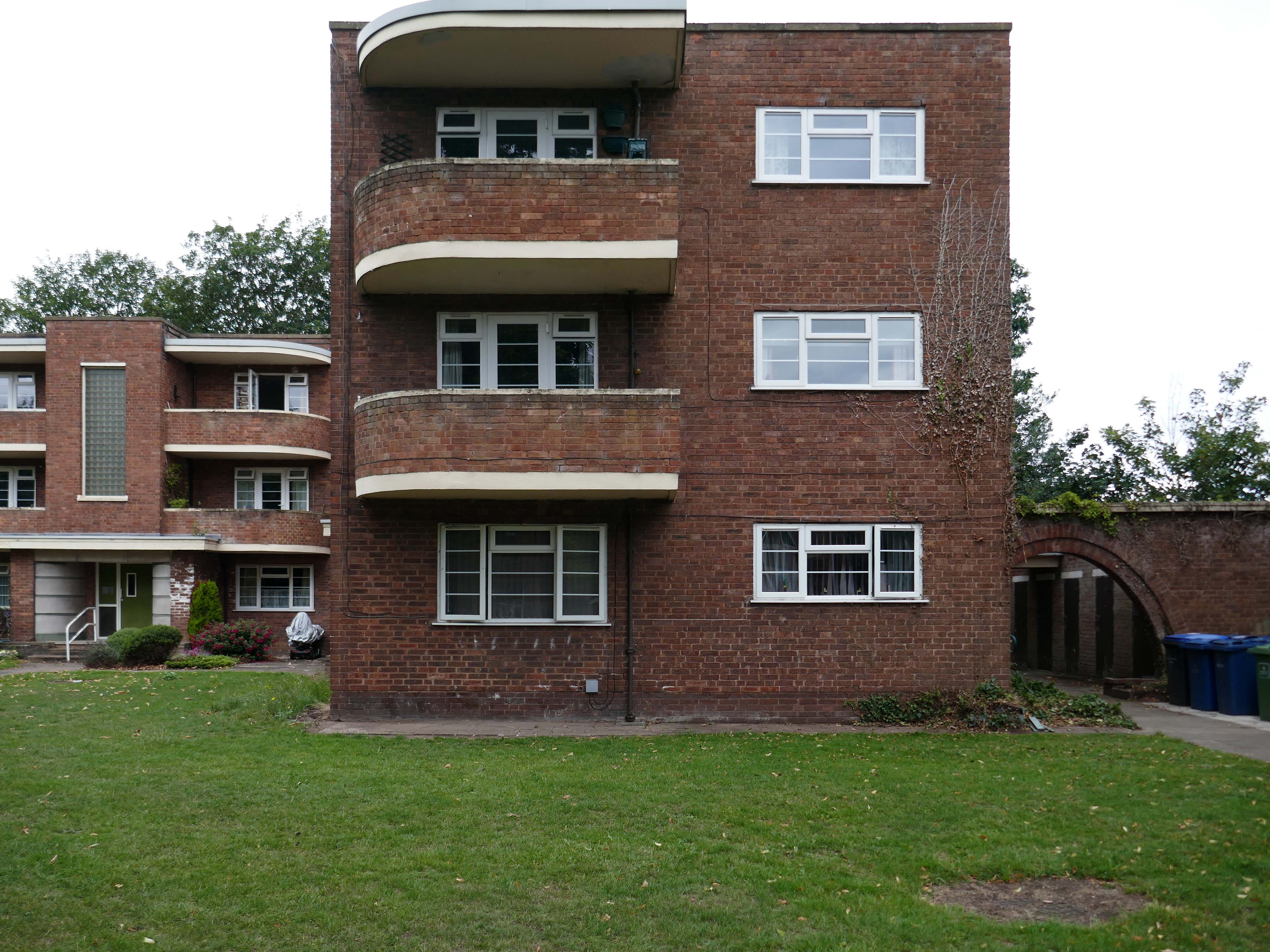
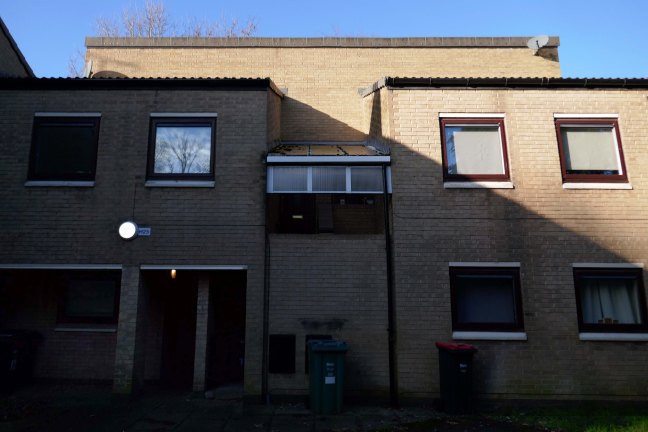
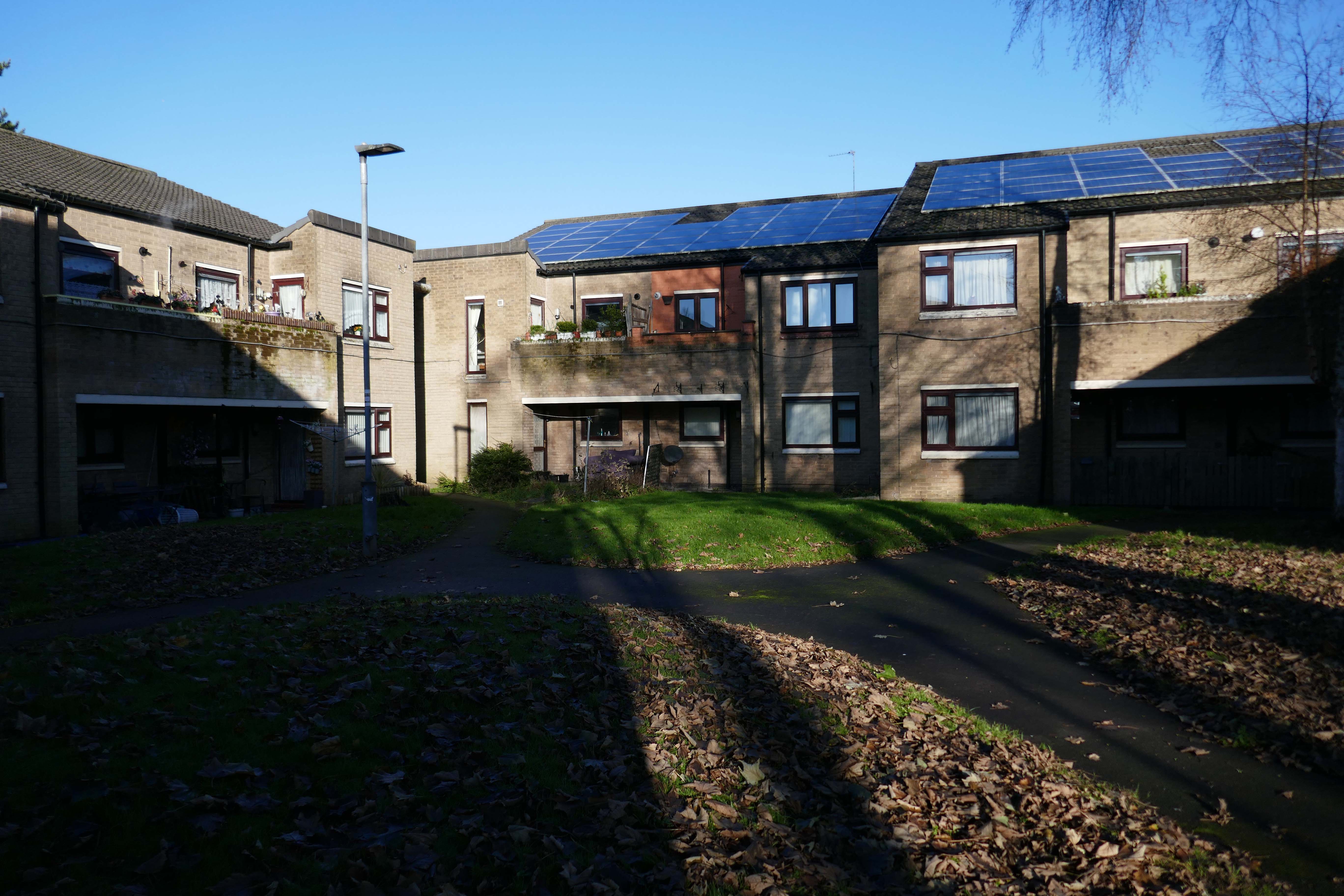
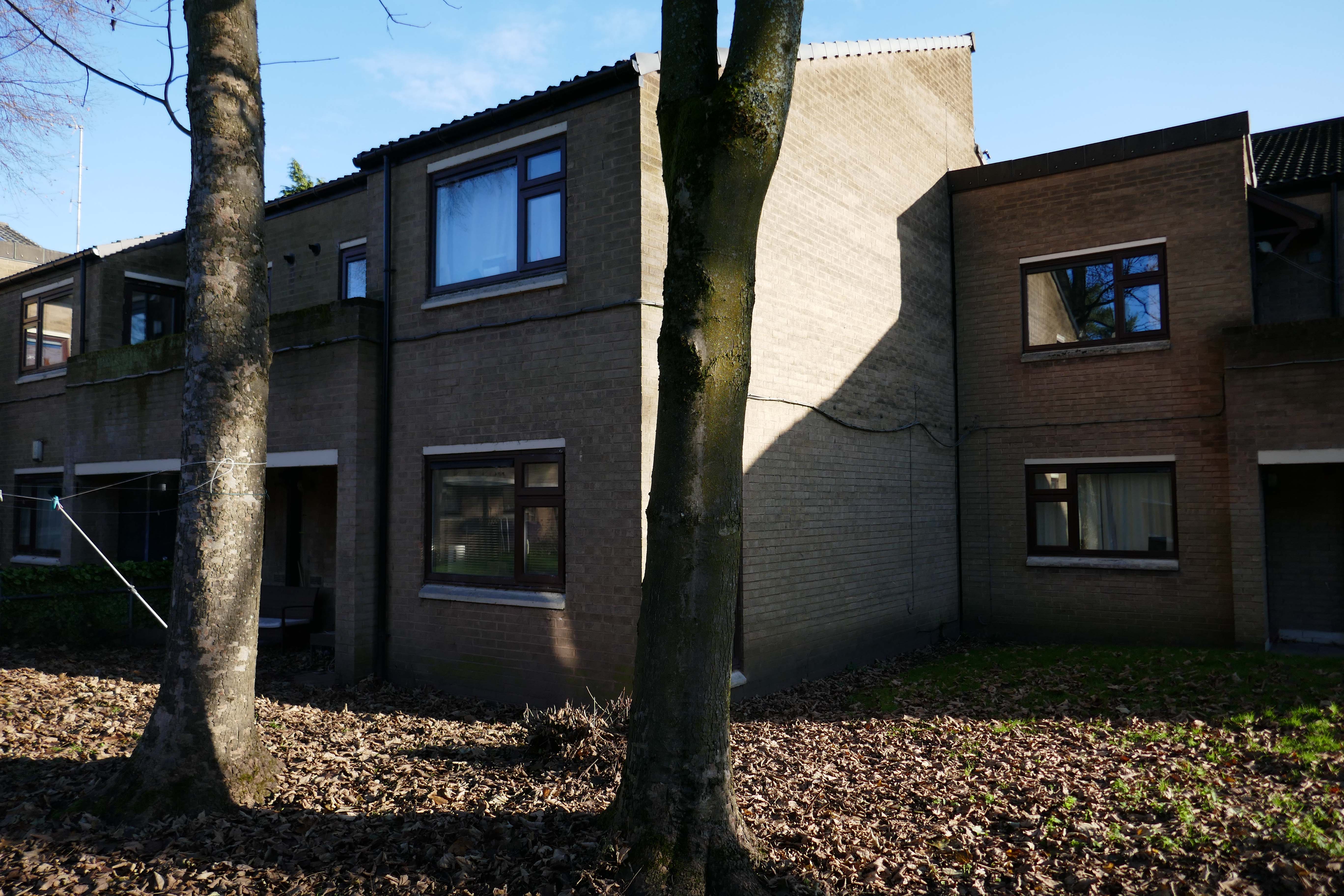
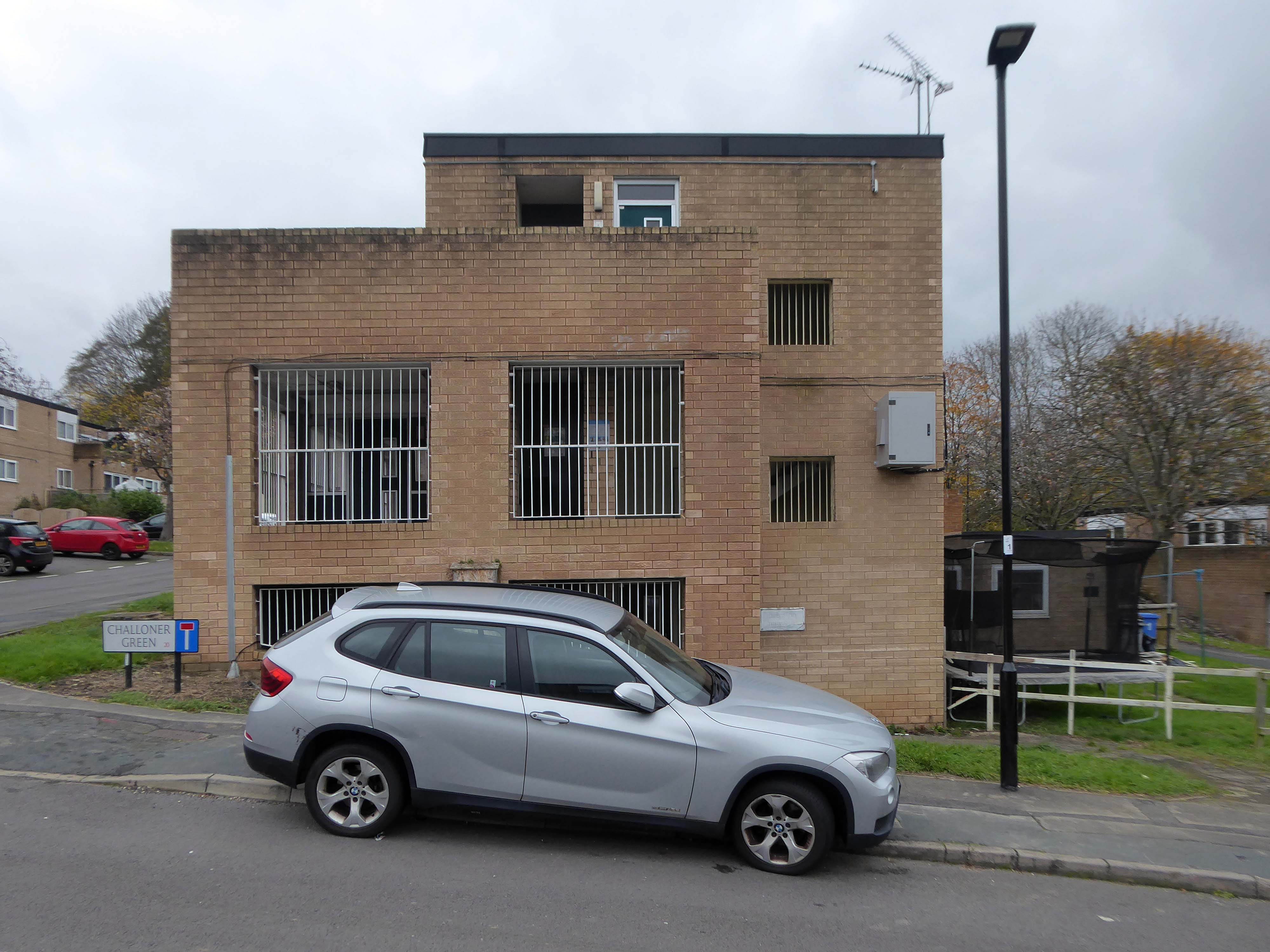
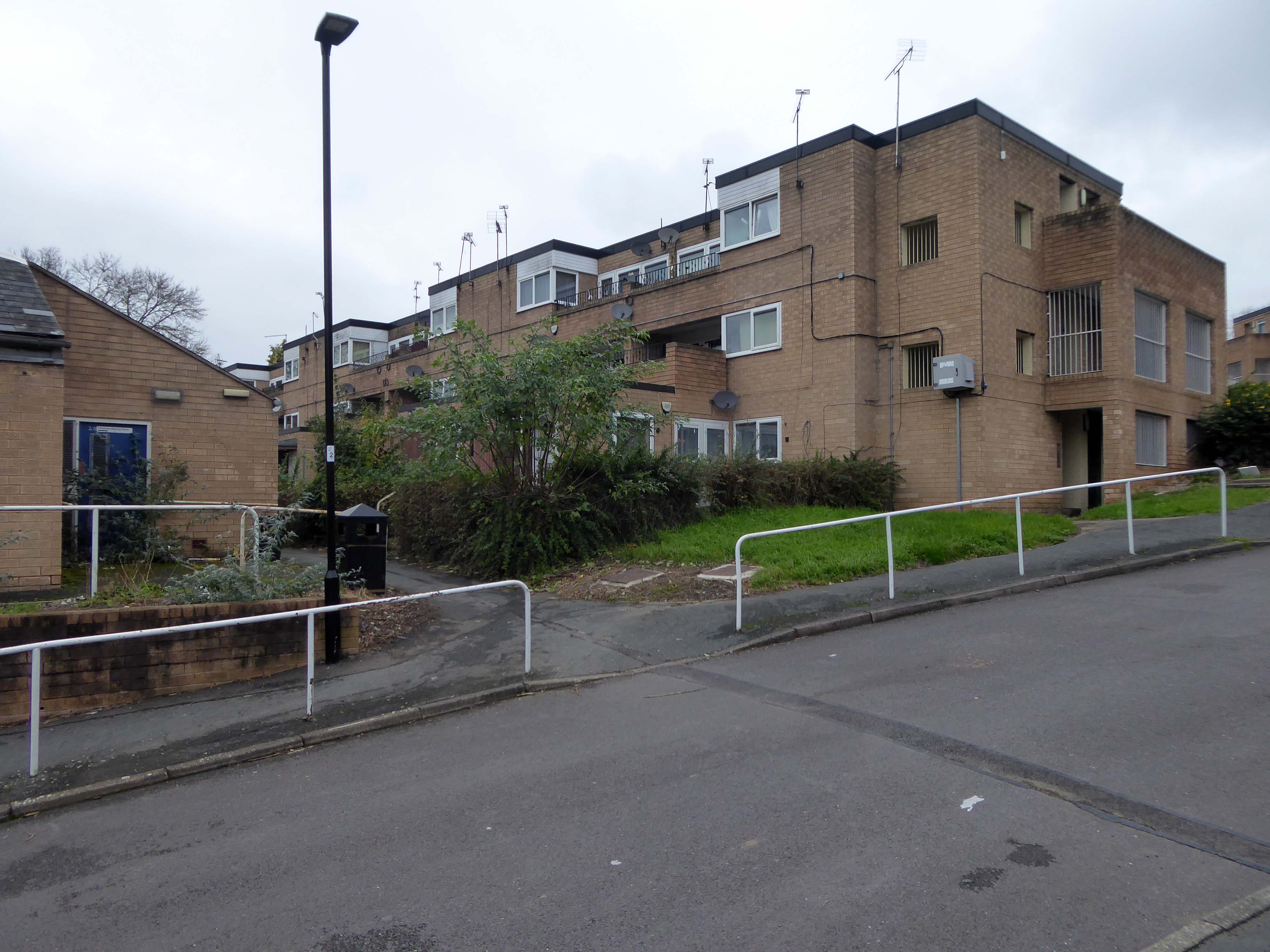
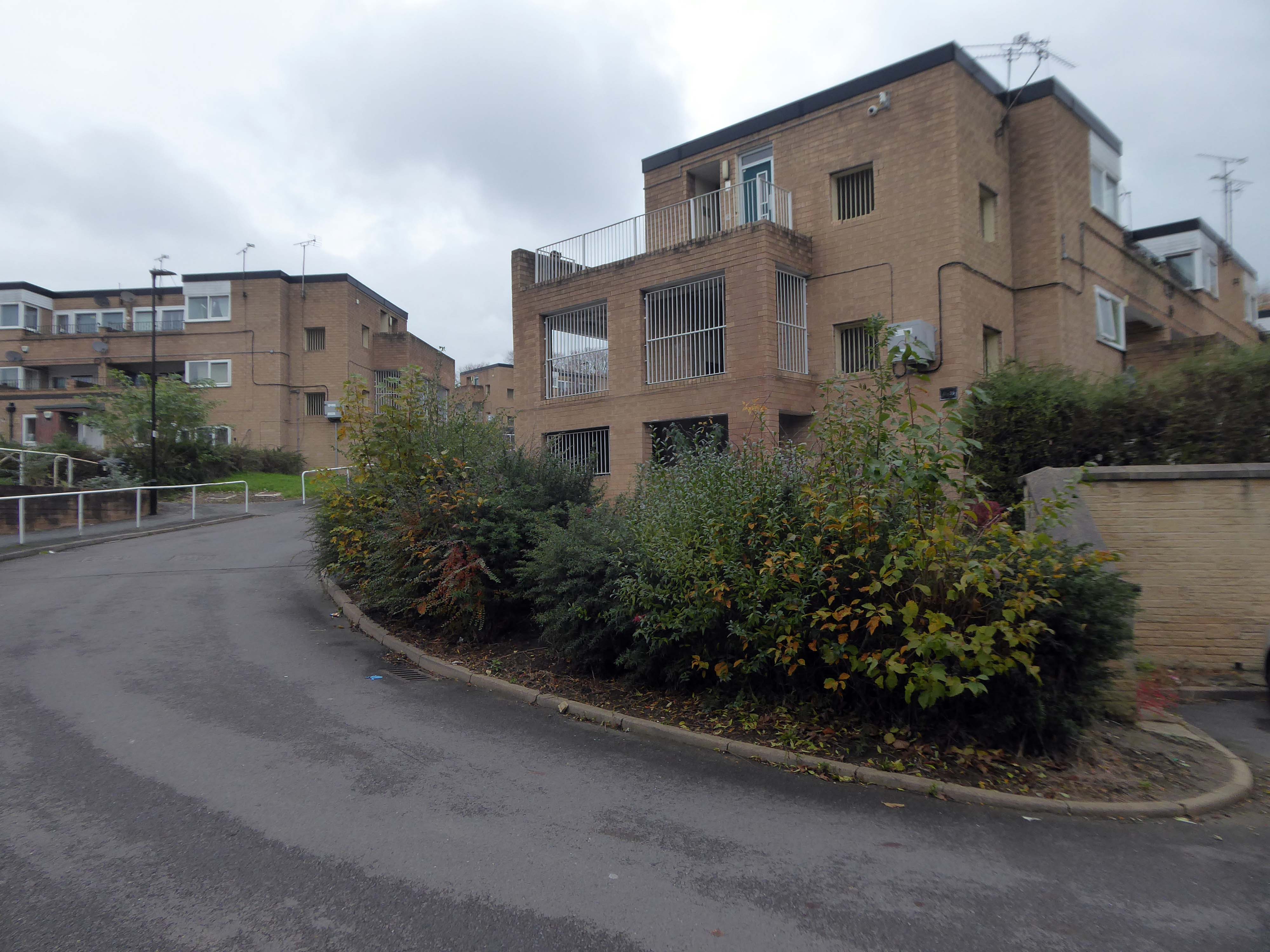
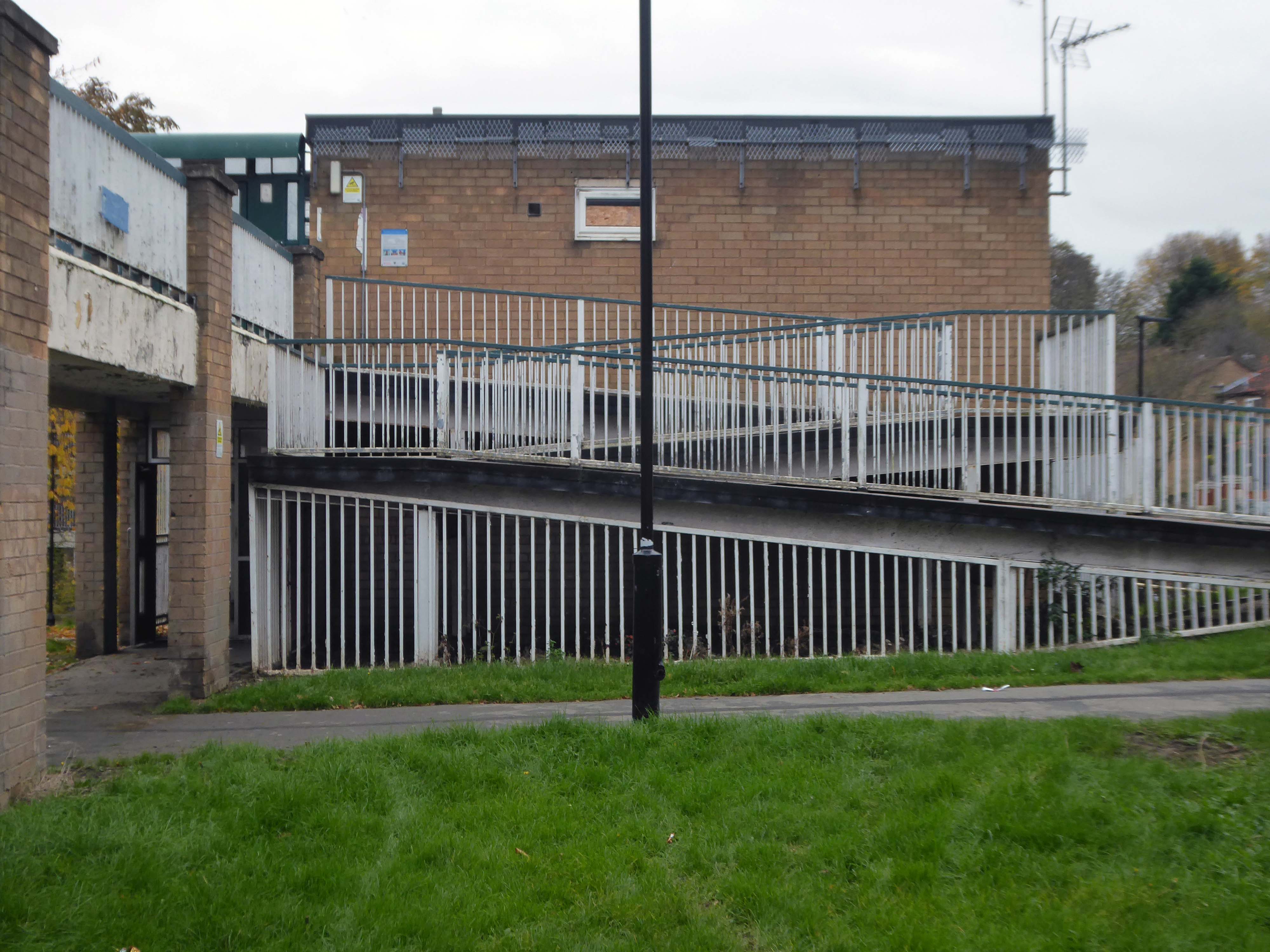
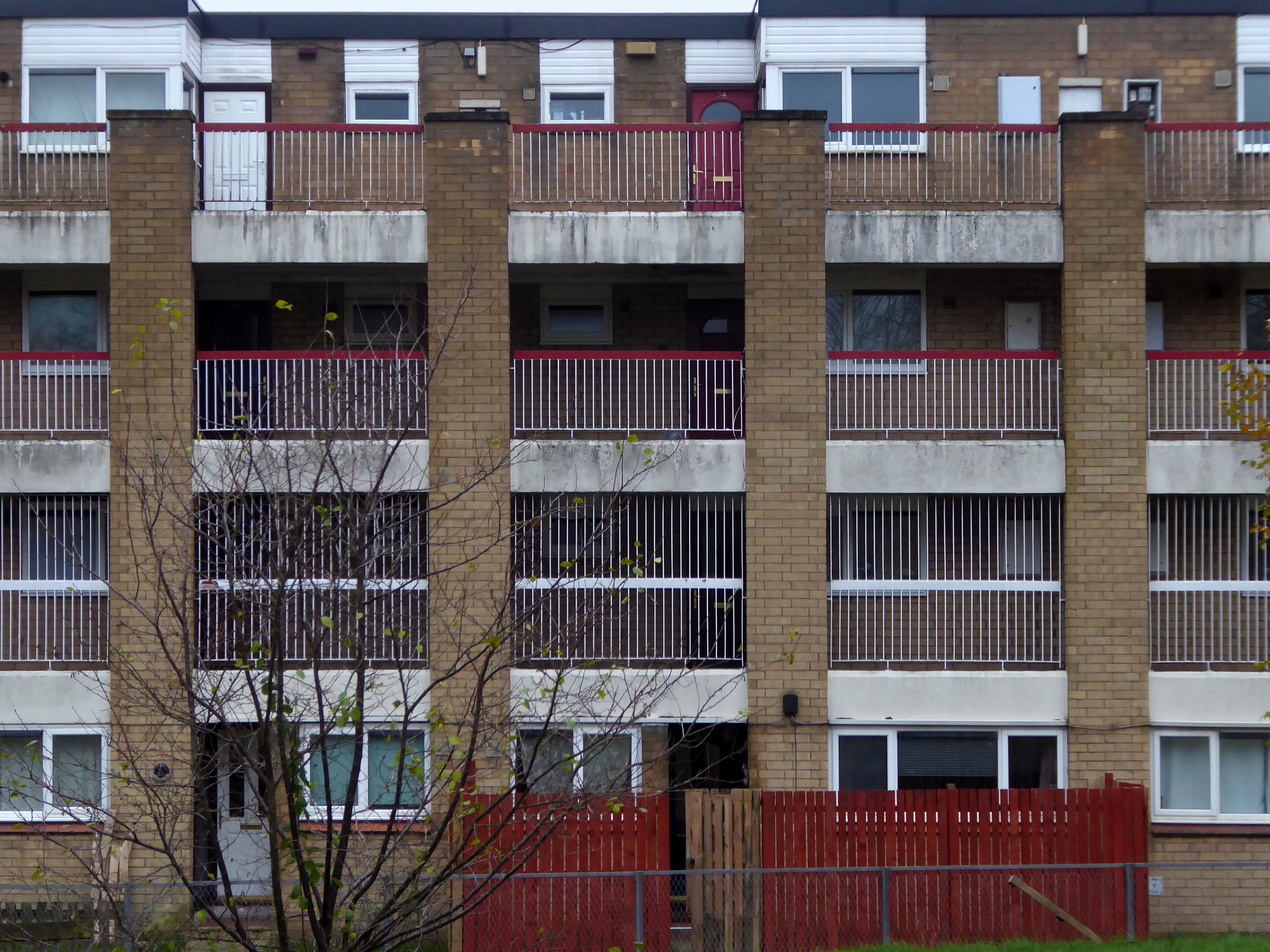
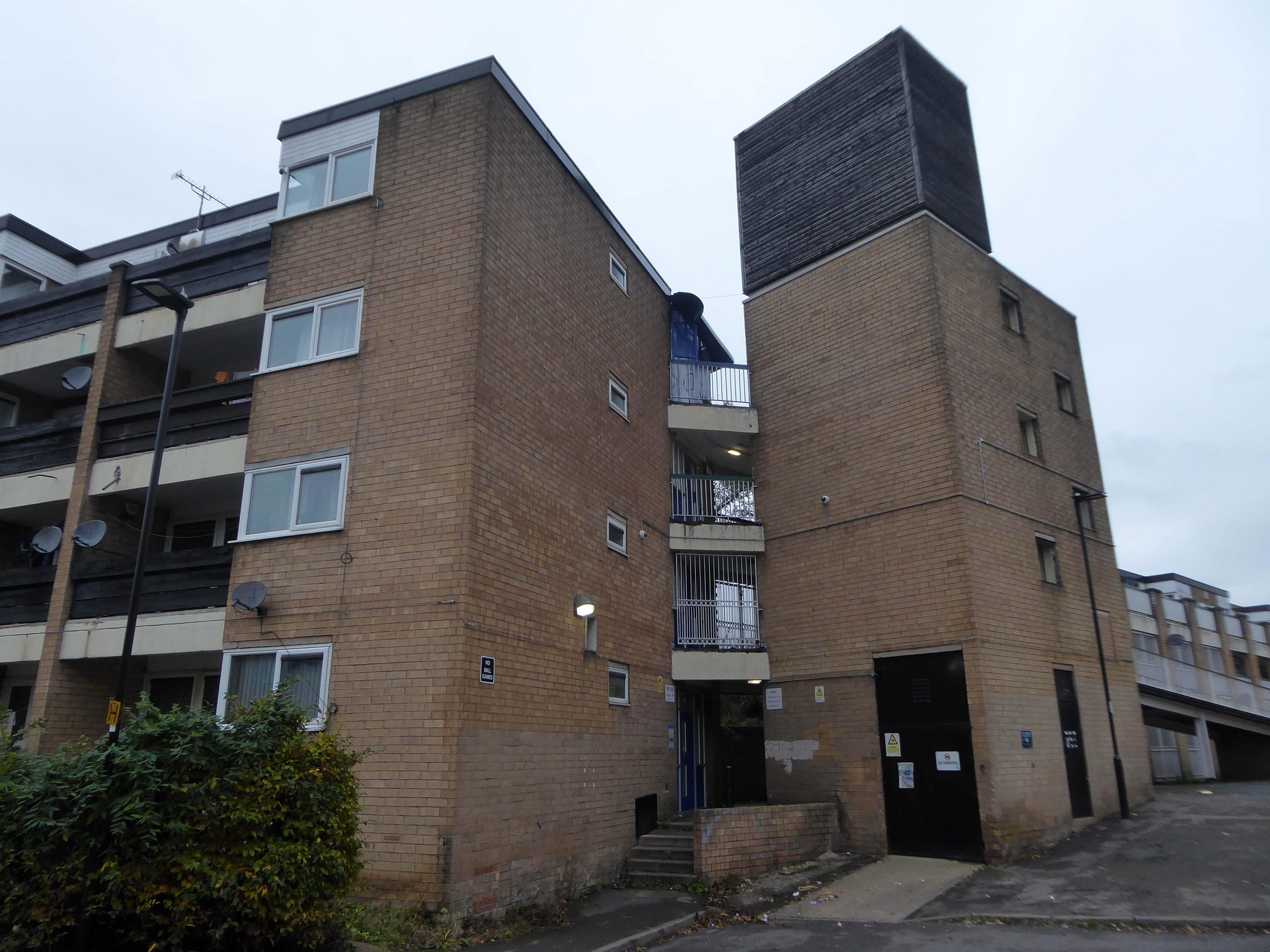
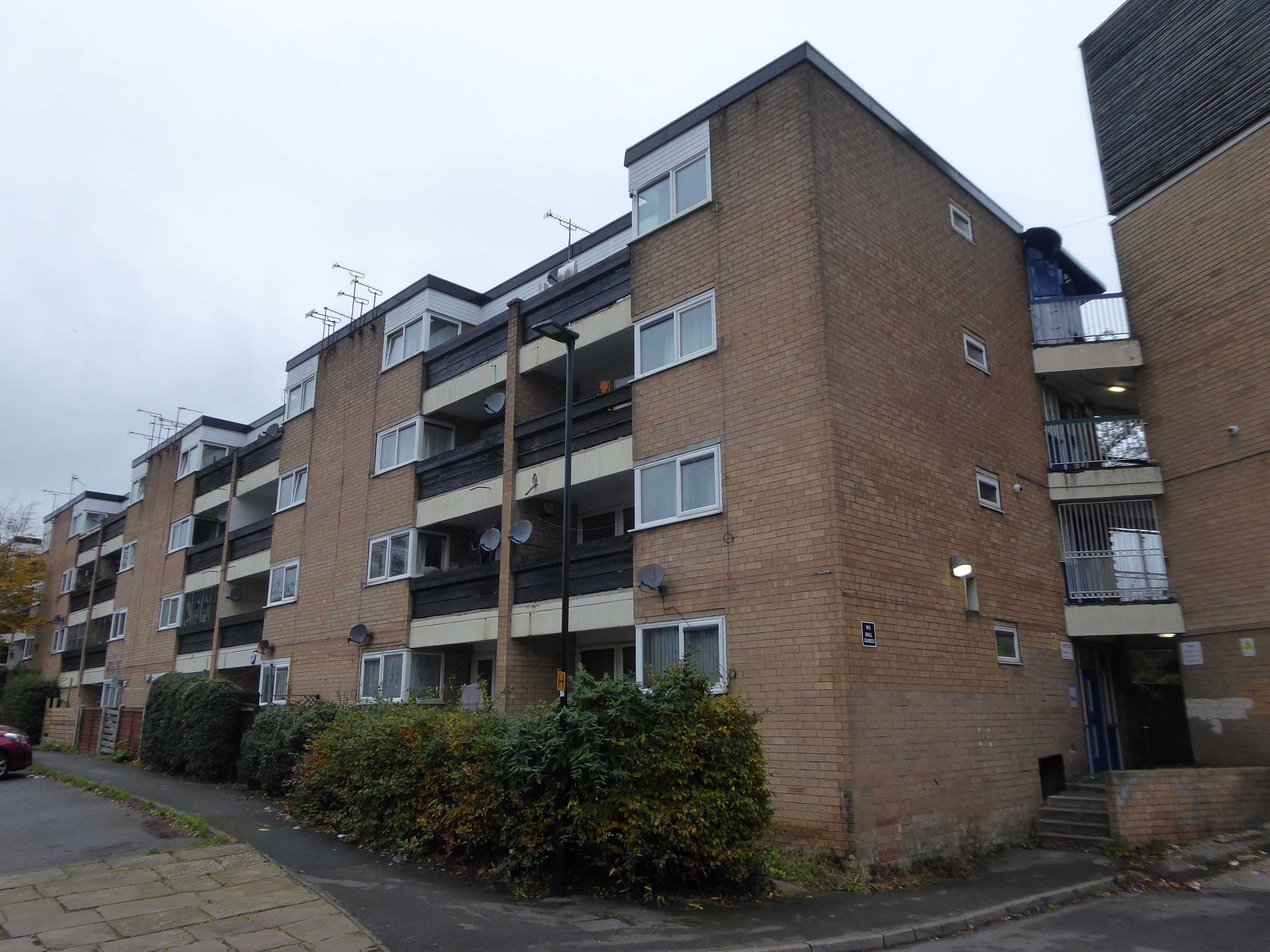
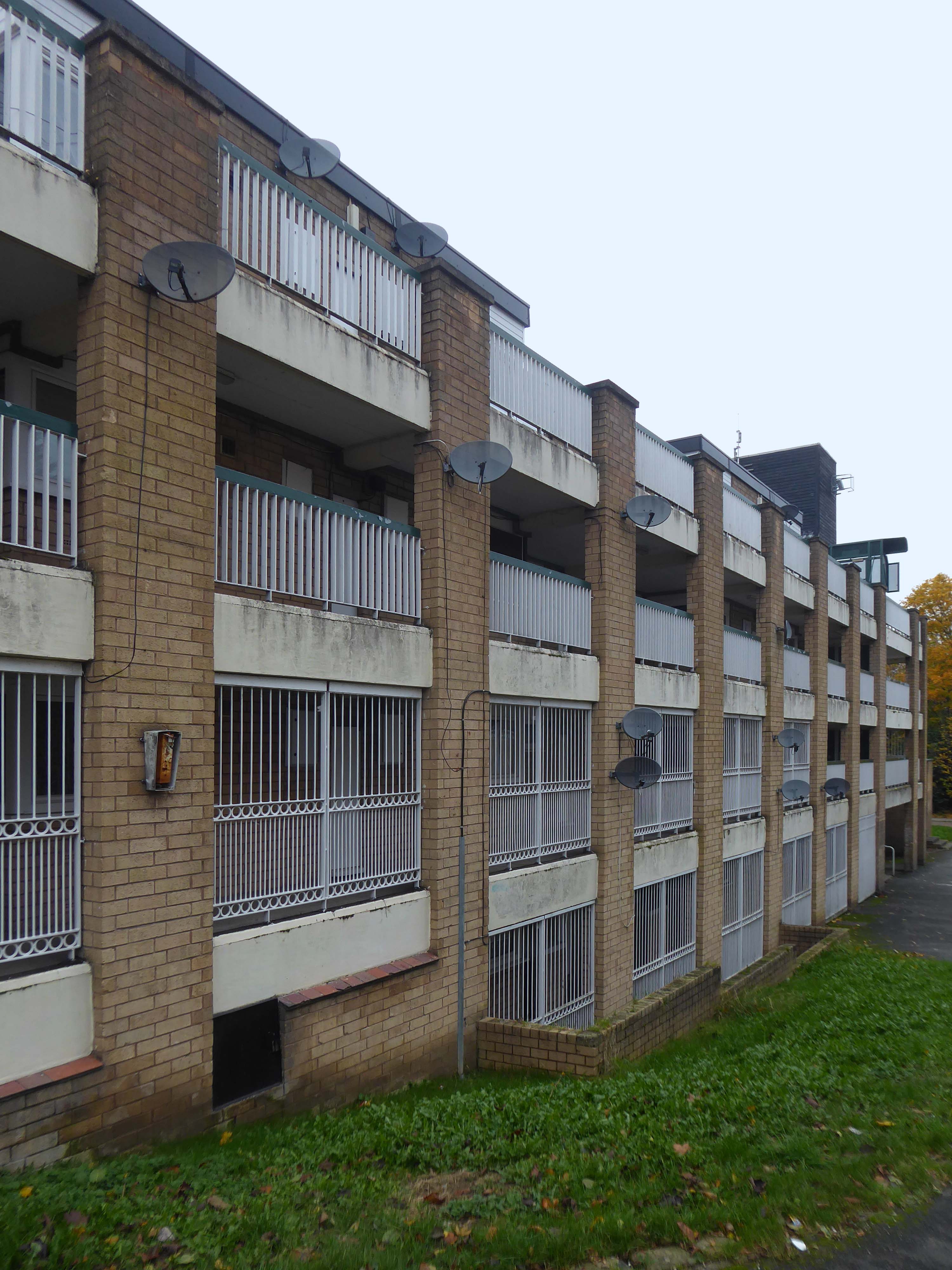
Coniston, Windemere and Rydal were among the first council homes to be built in Stafford, between 1951-52, under the direction of County Architect CM Coombes.
The flats were built as a result of The Housing – Financial and Miscellaneous Provisions Act 1946, which gave subsidies to local authorities to provide social housing. The expansion of the Borough Council’s civic duties included the employment of County Architects, in this case CM Coombes FRIBA, to whom these flats are attributed.
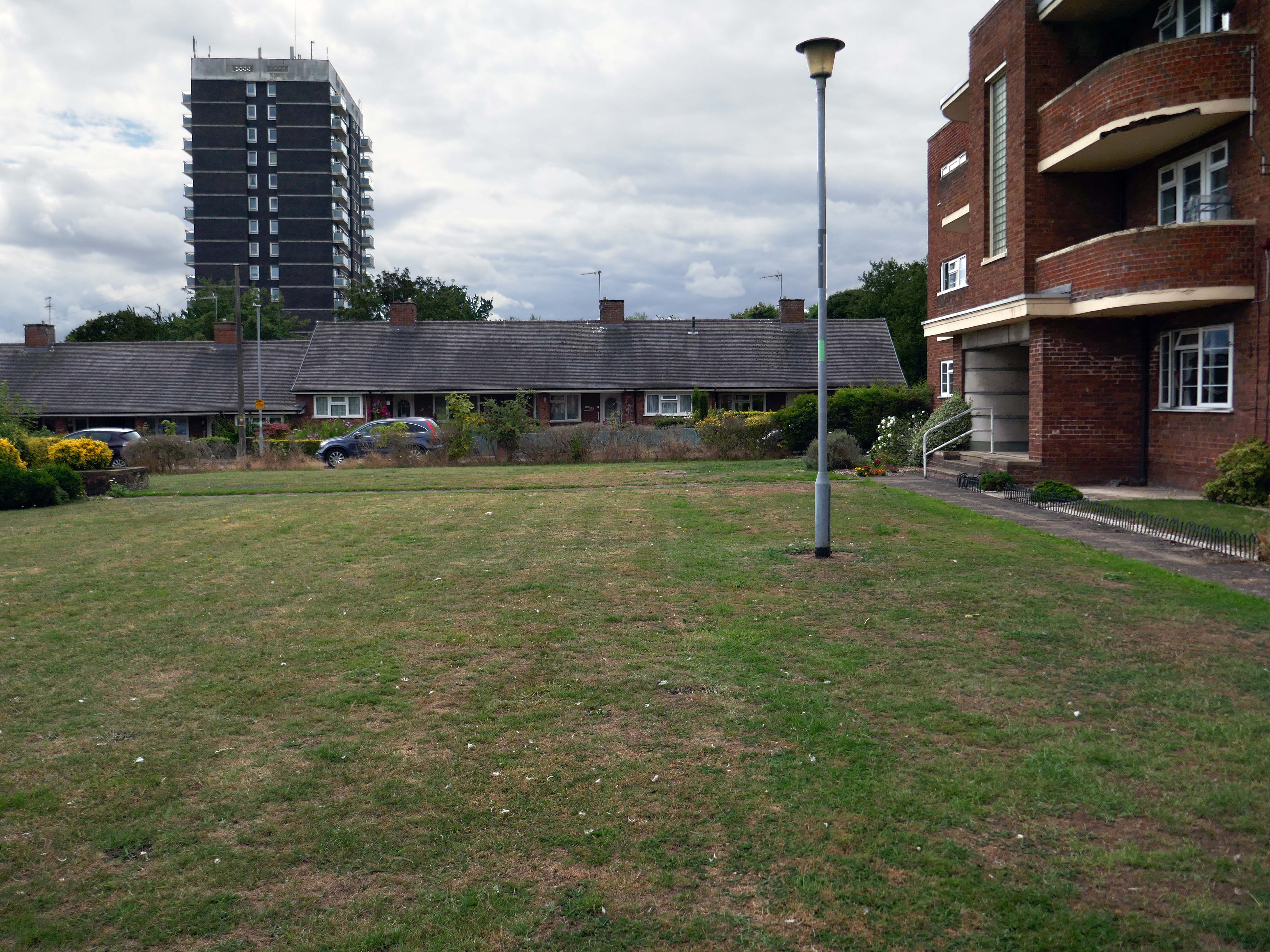
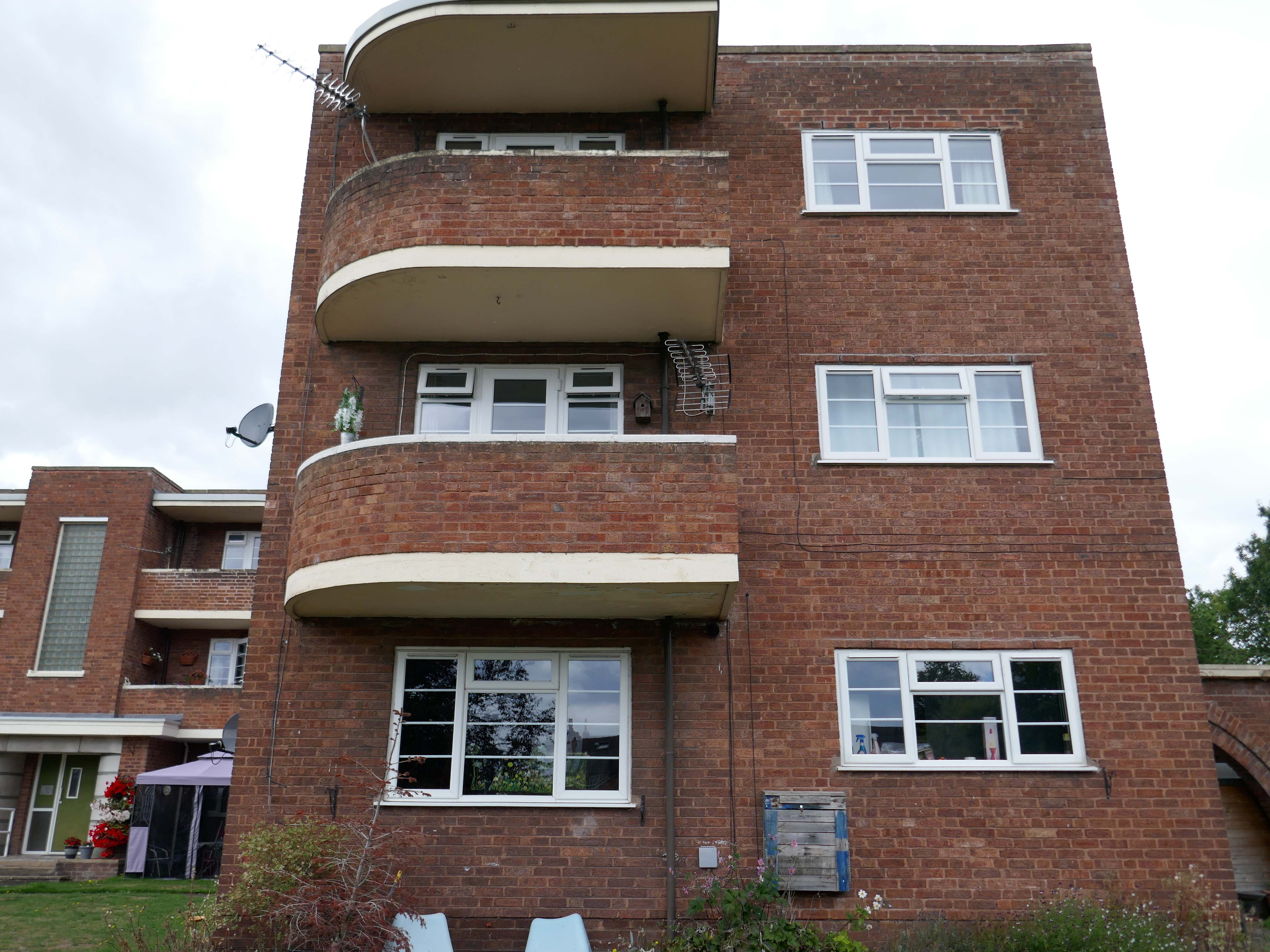
54 flats were built in total, to a distinctly Modernist design, and their appearance and setting are very well preserved.
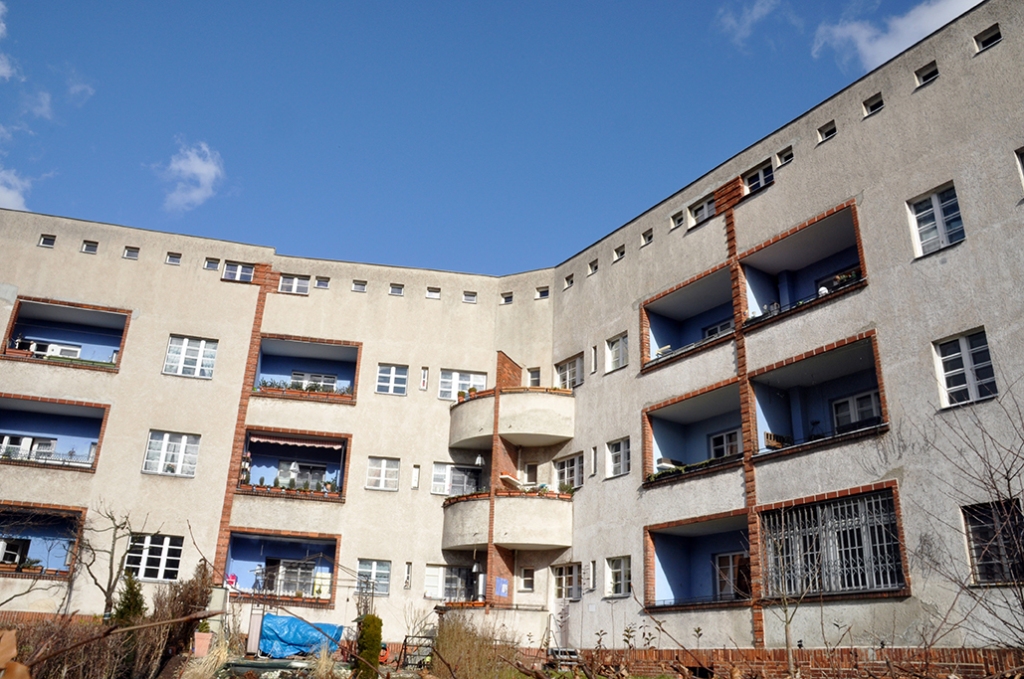
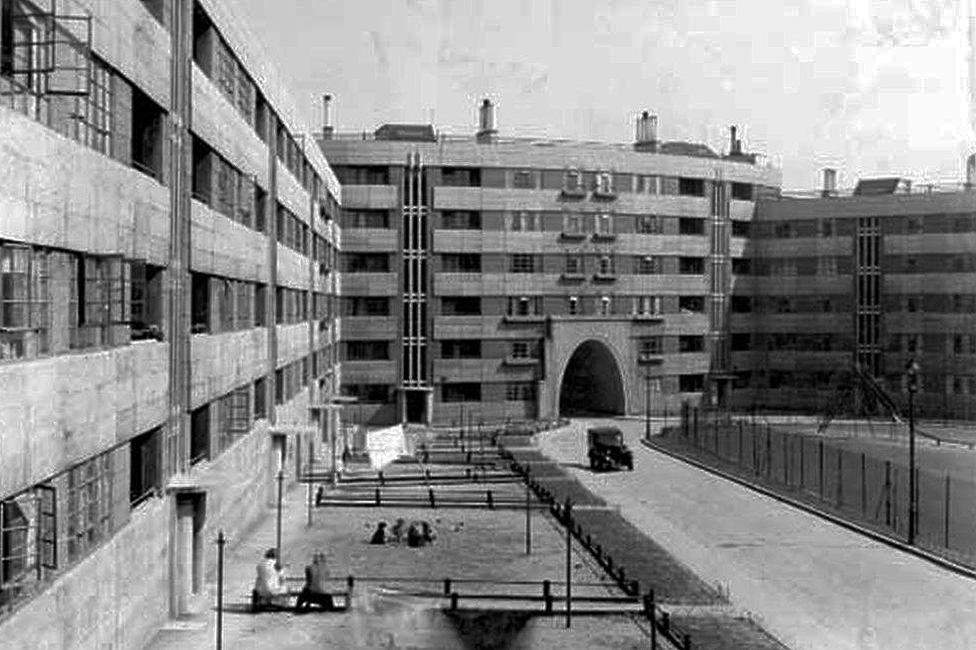
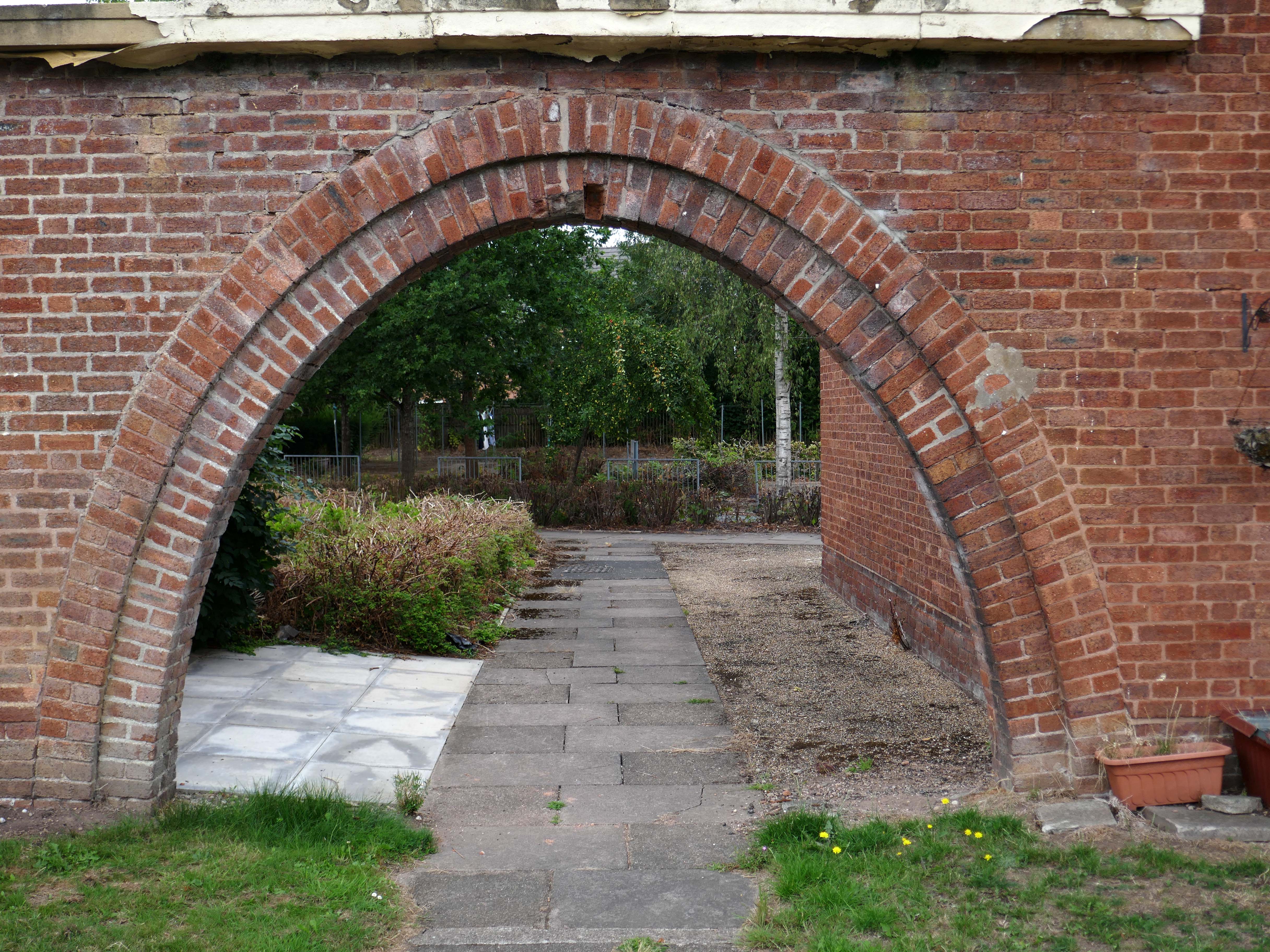
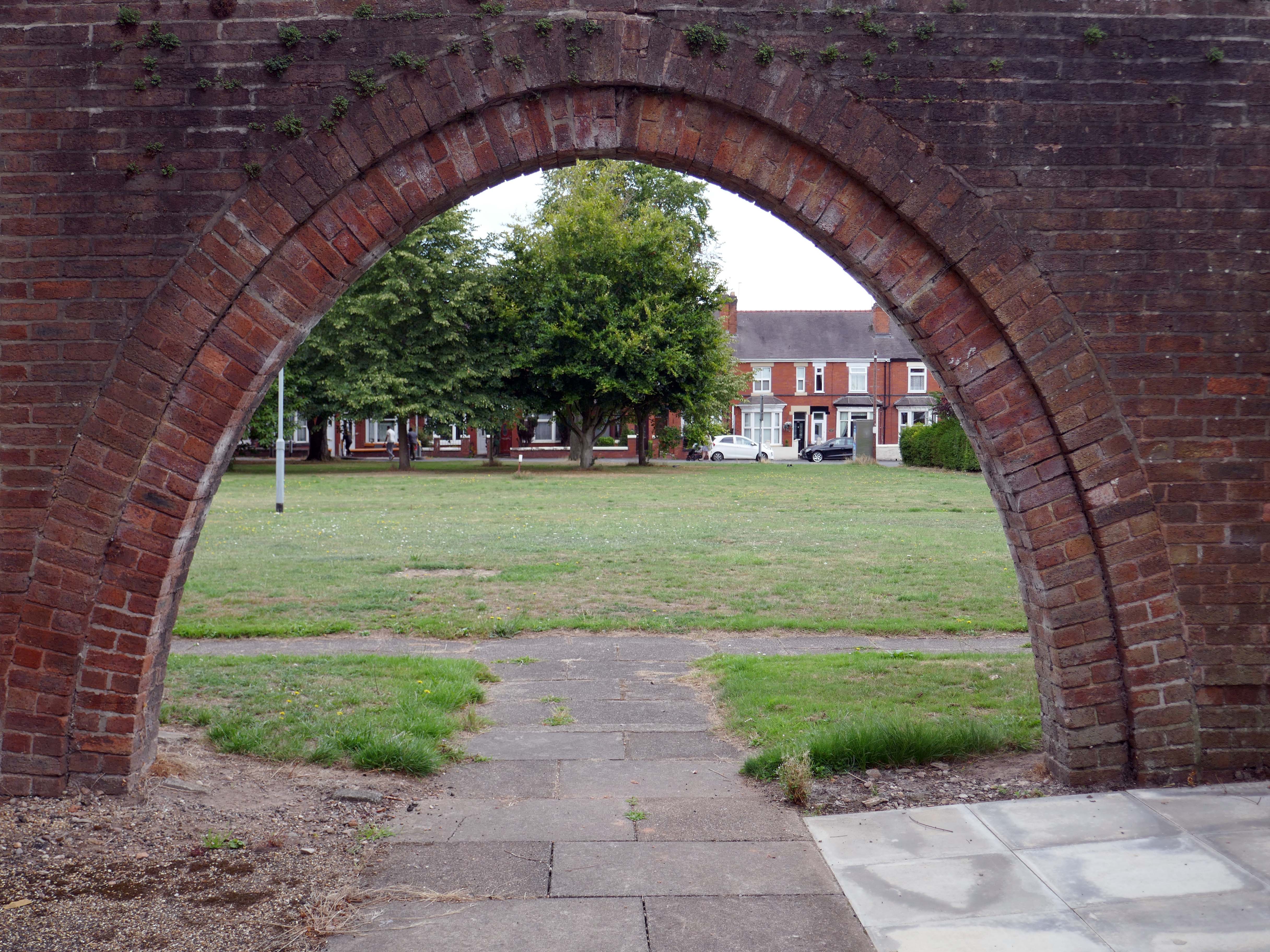
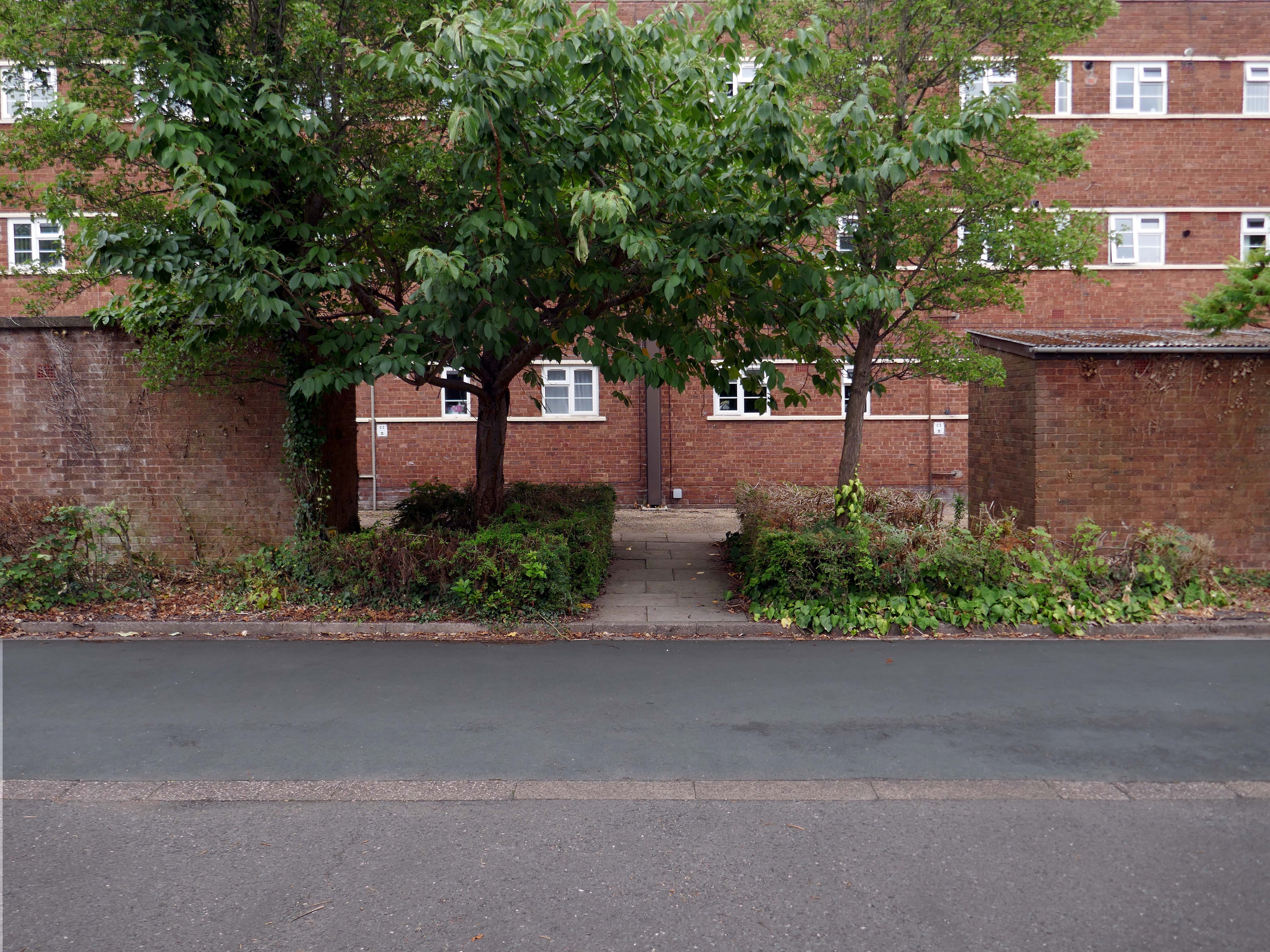
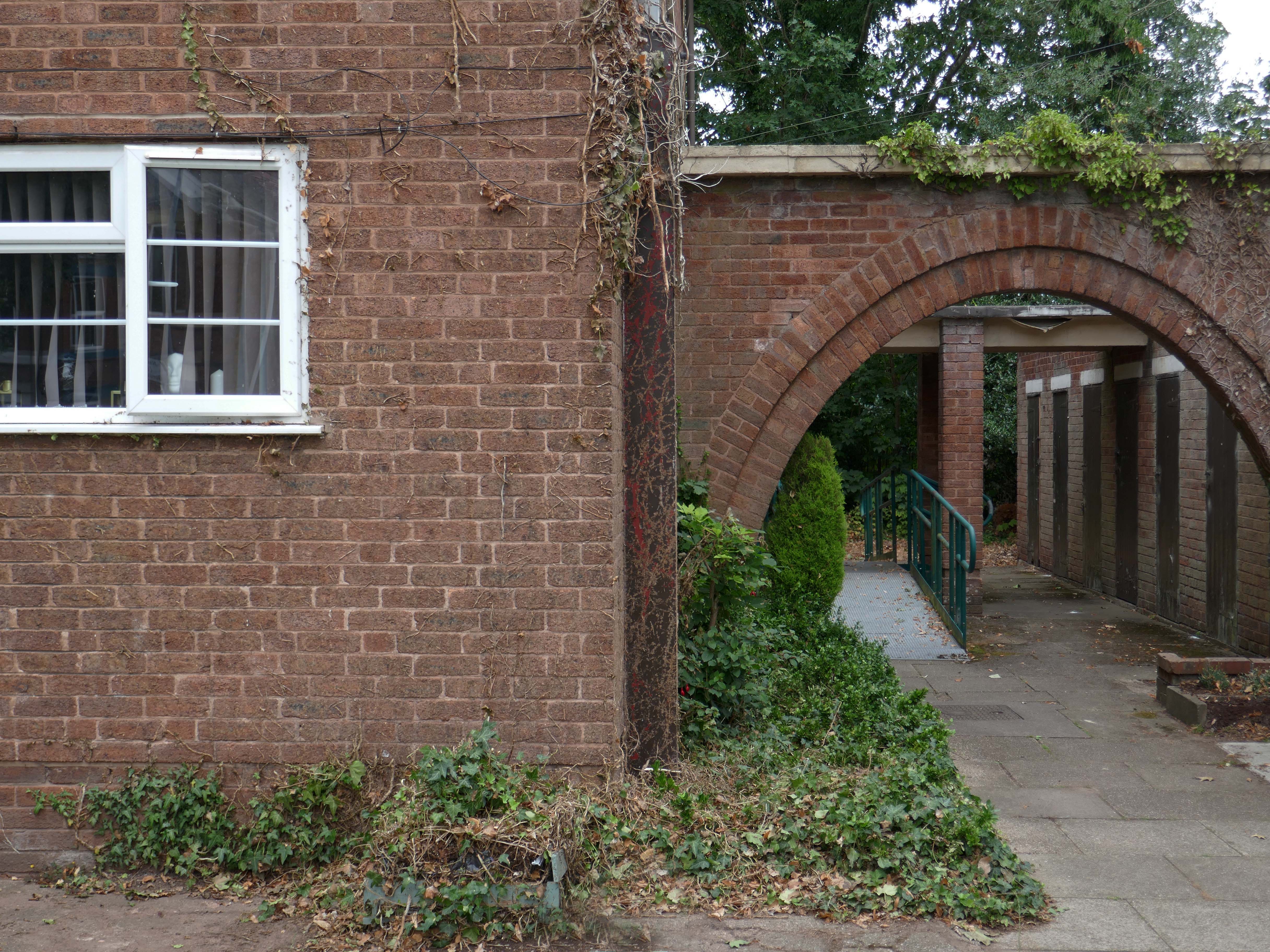
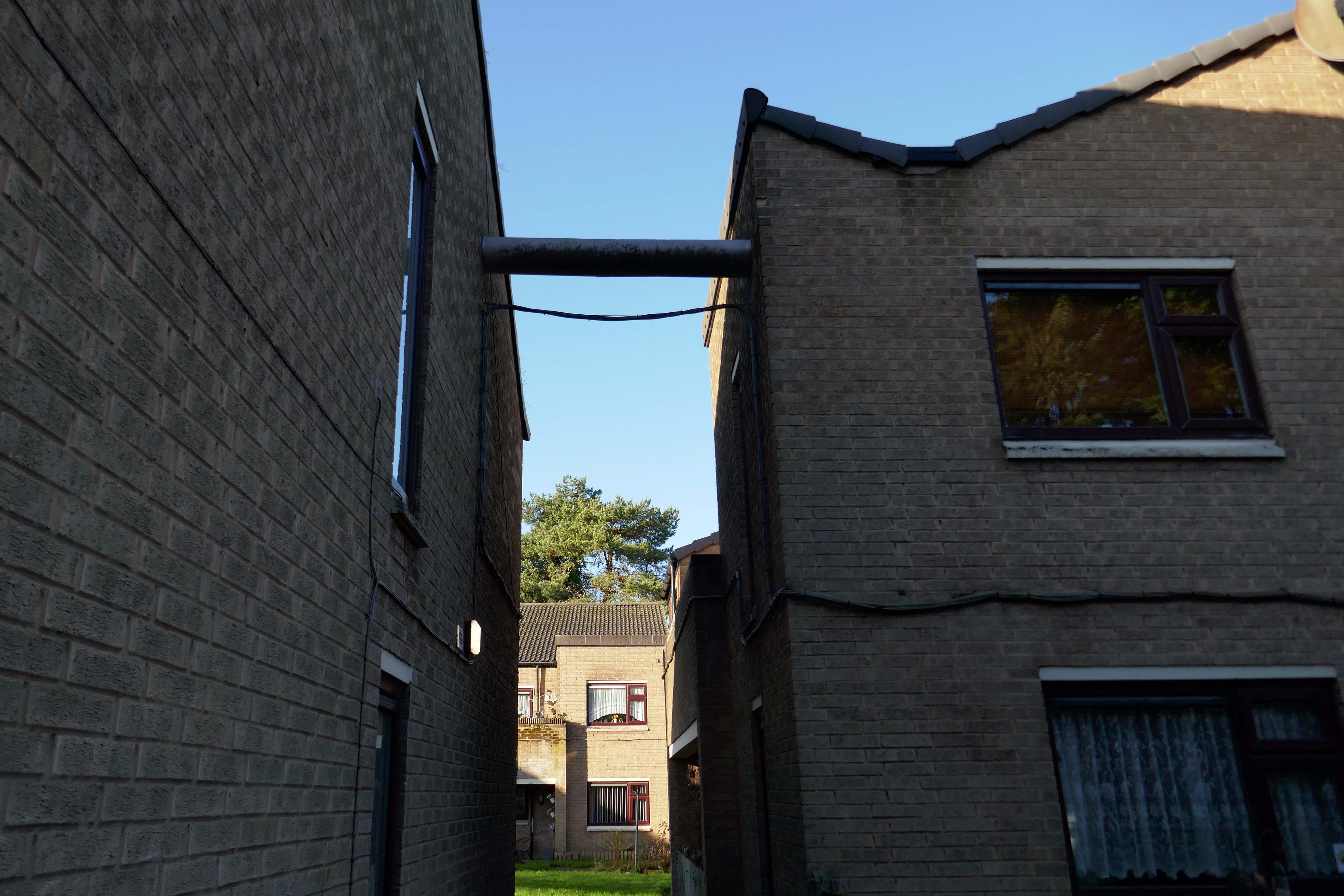
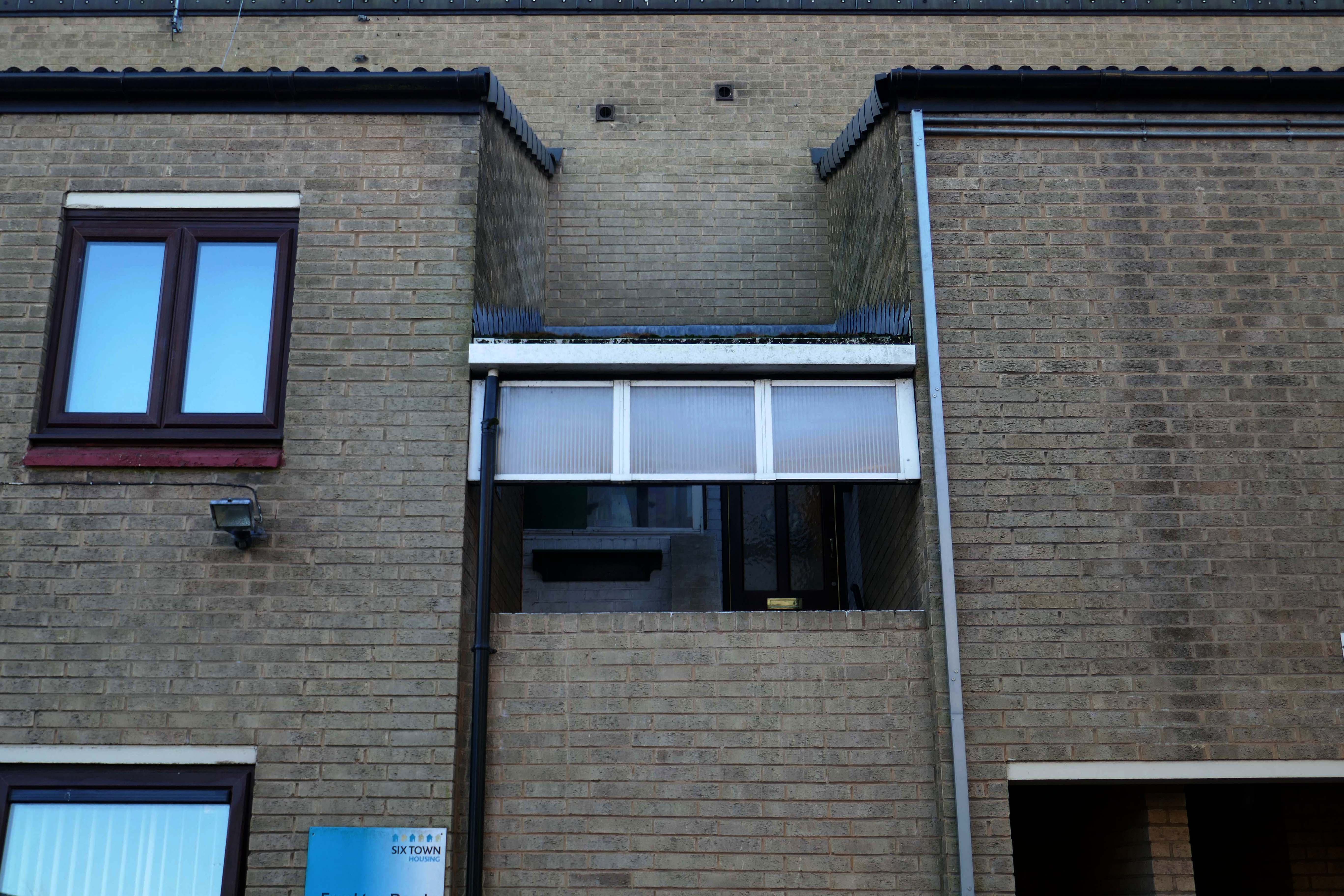
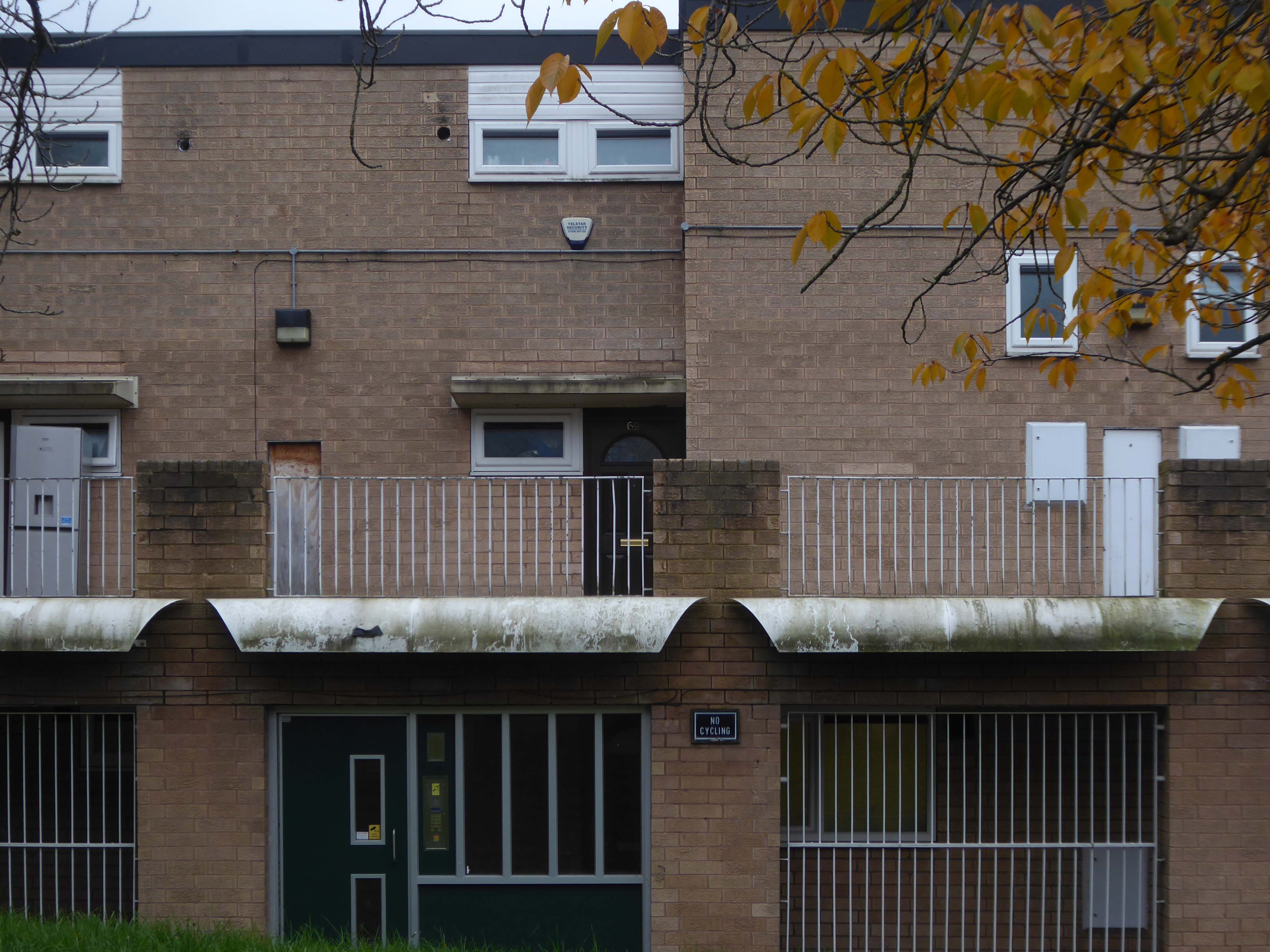
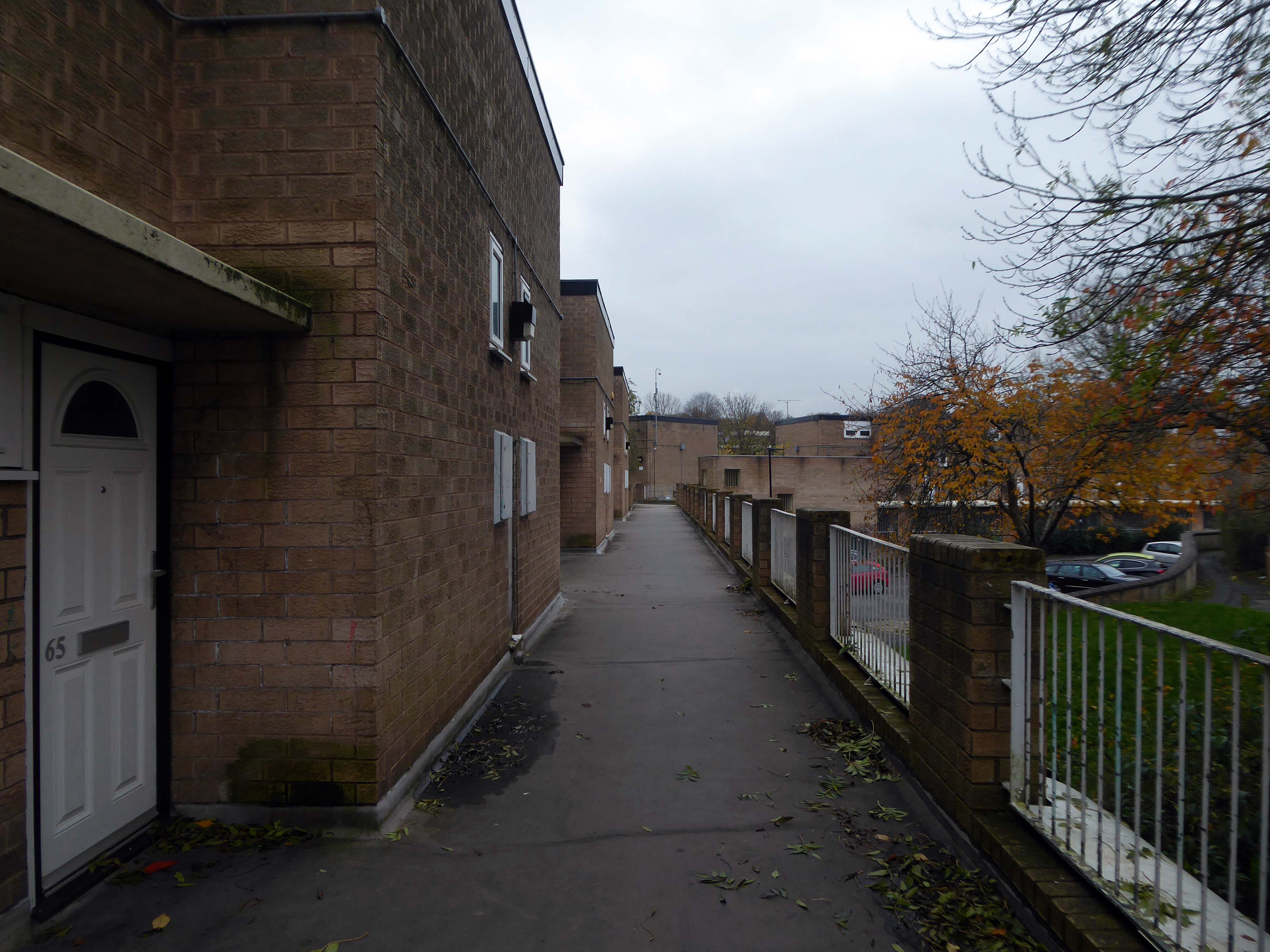
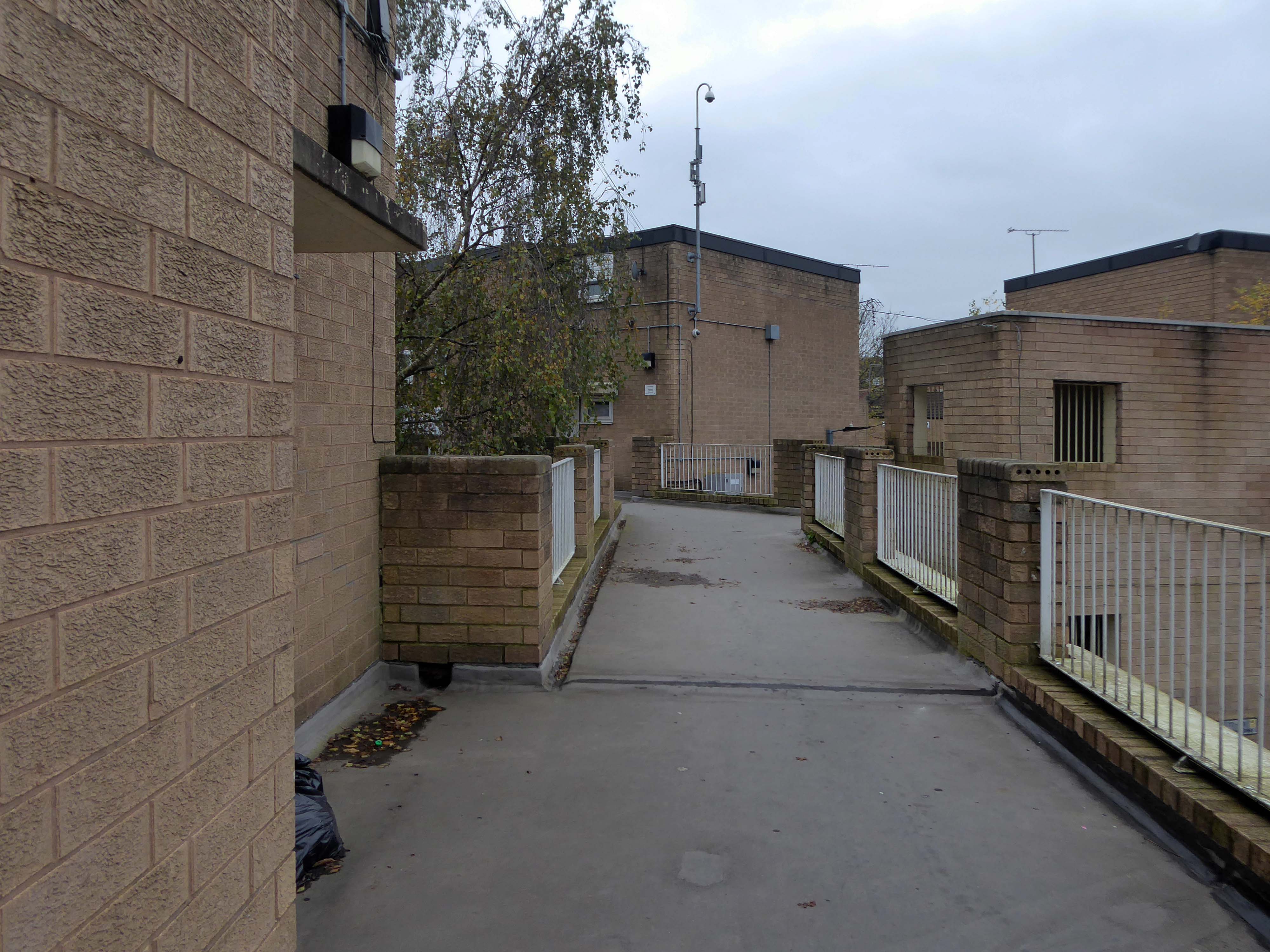
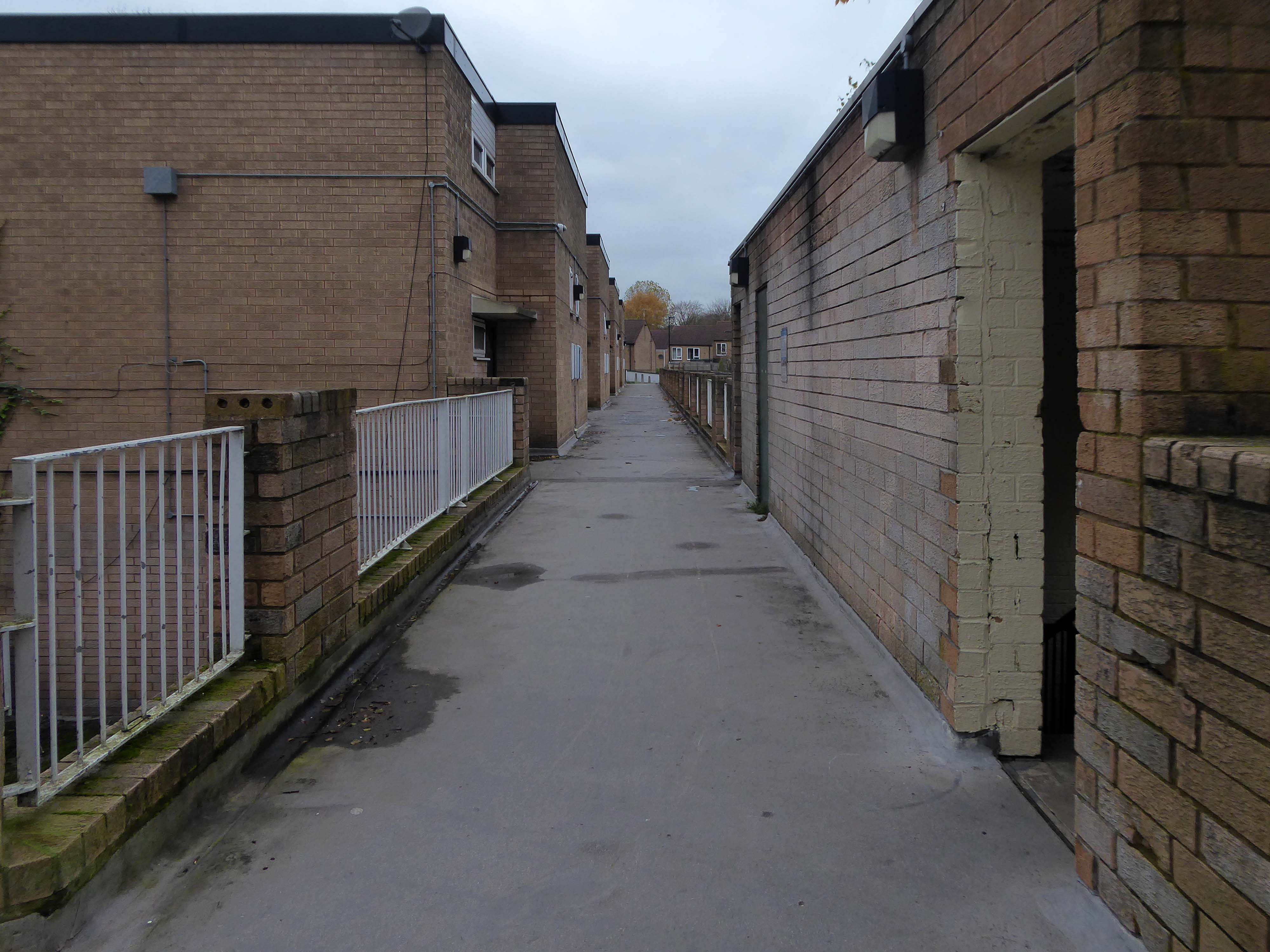
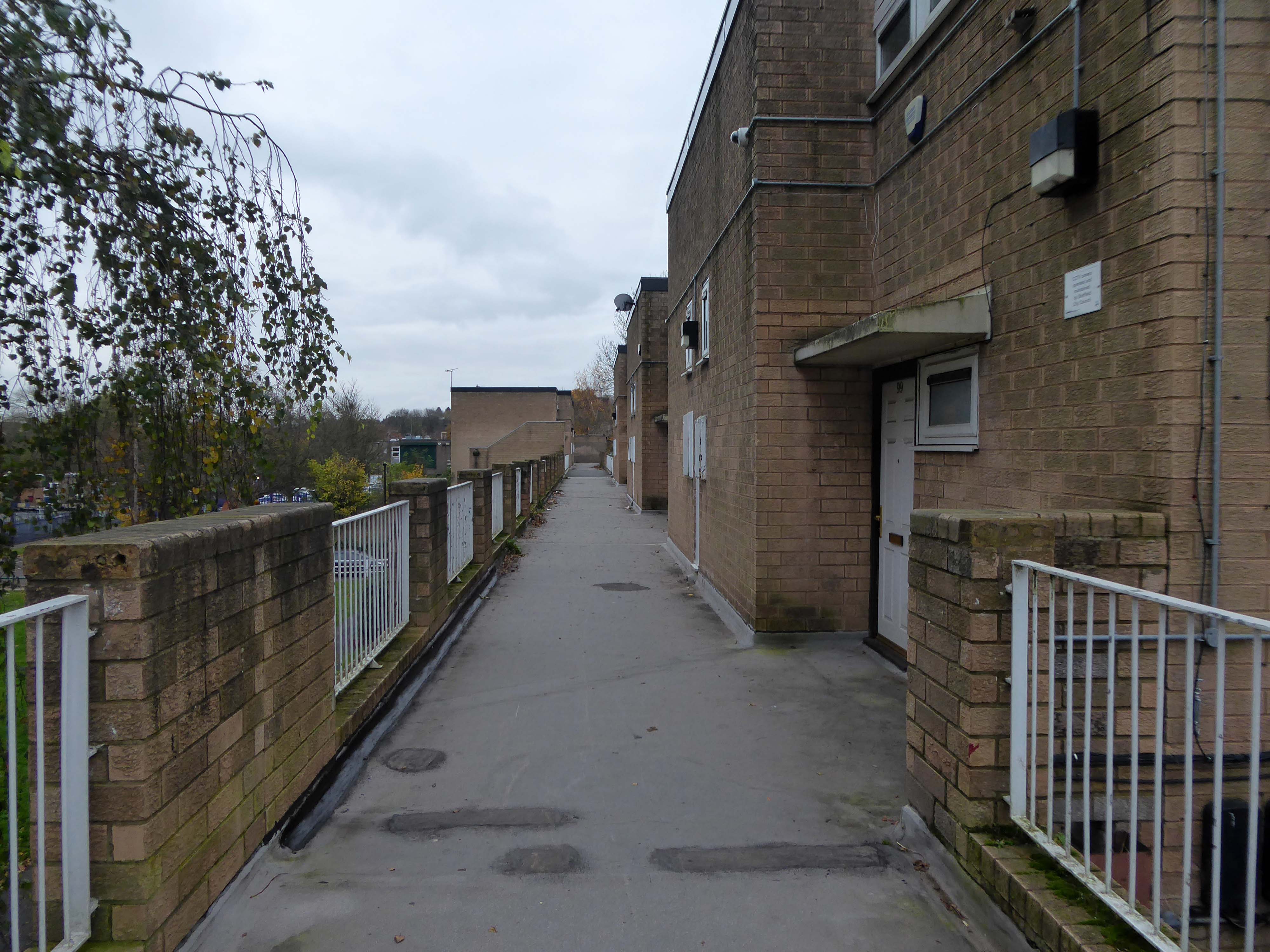
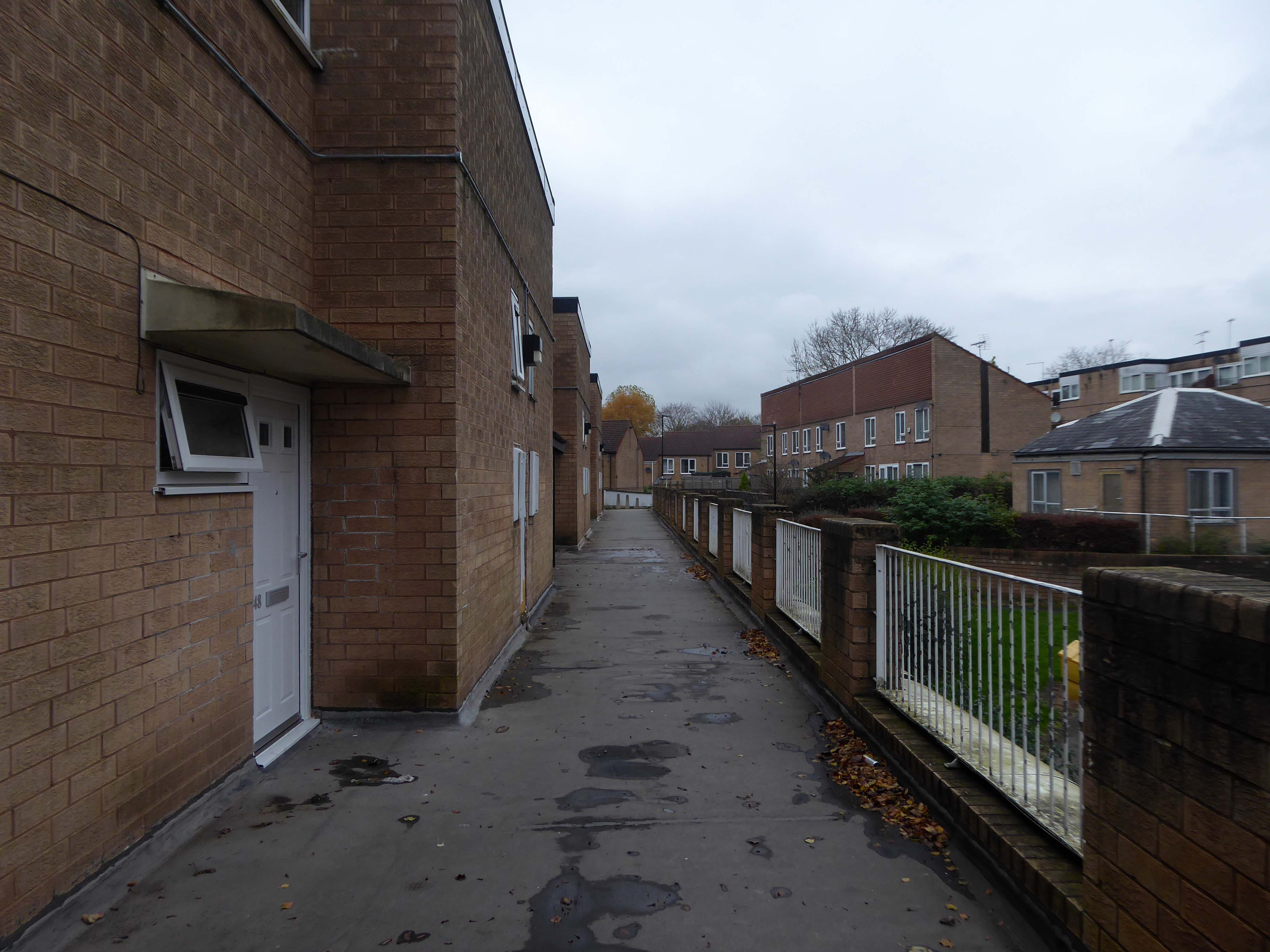
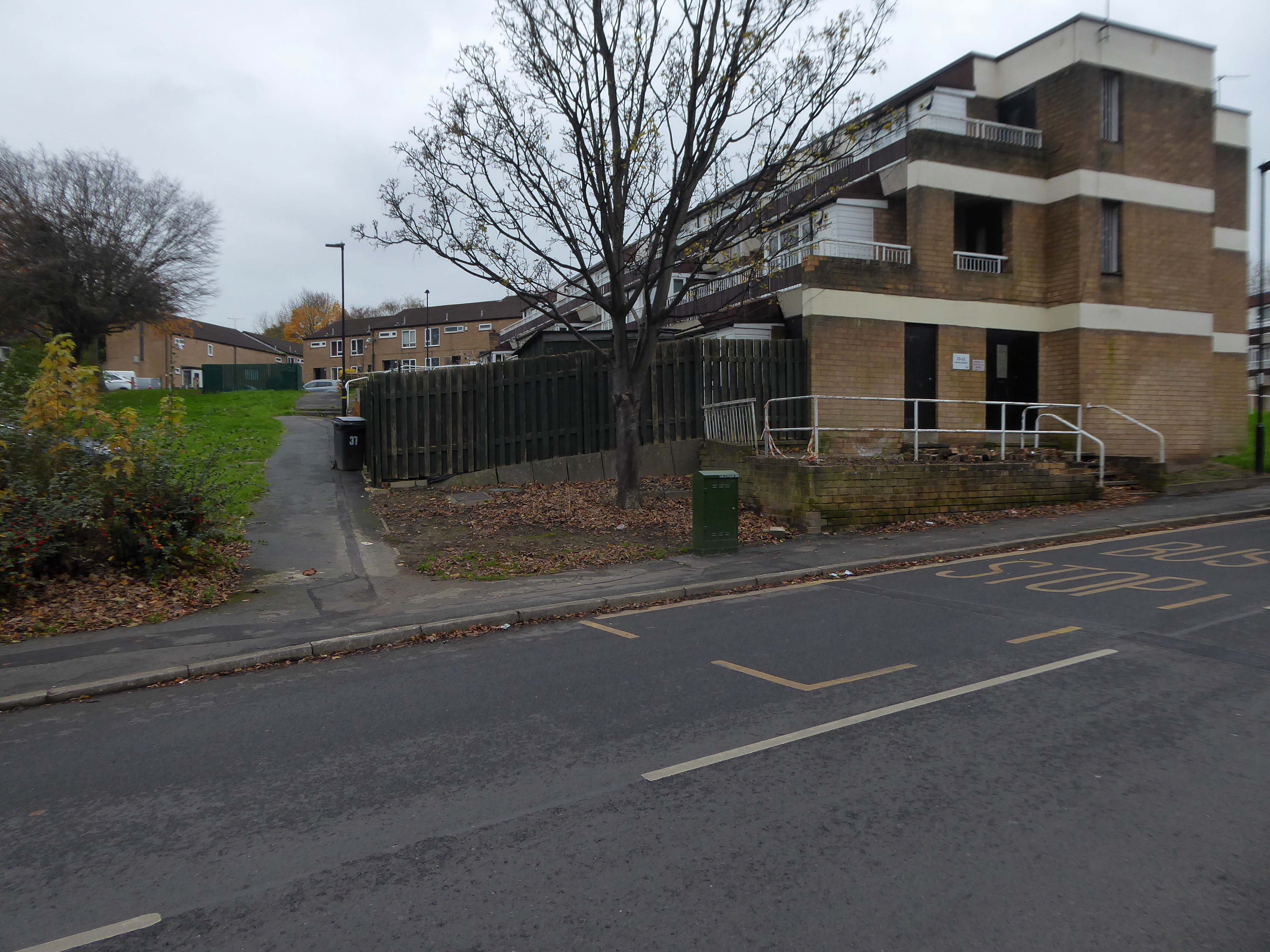
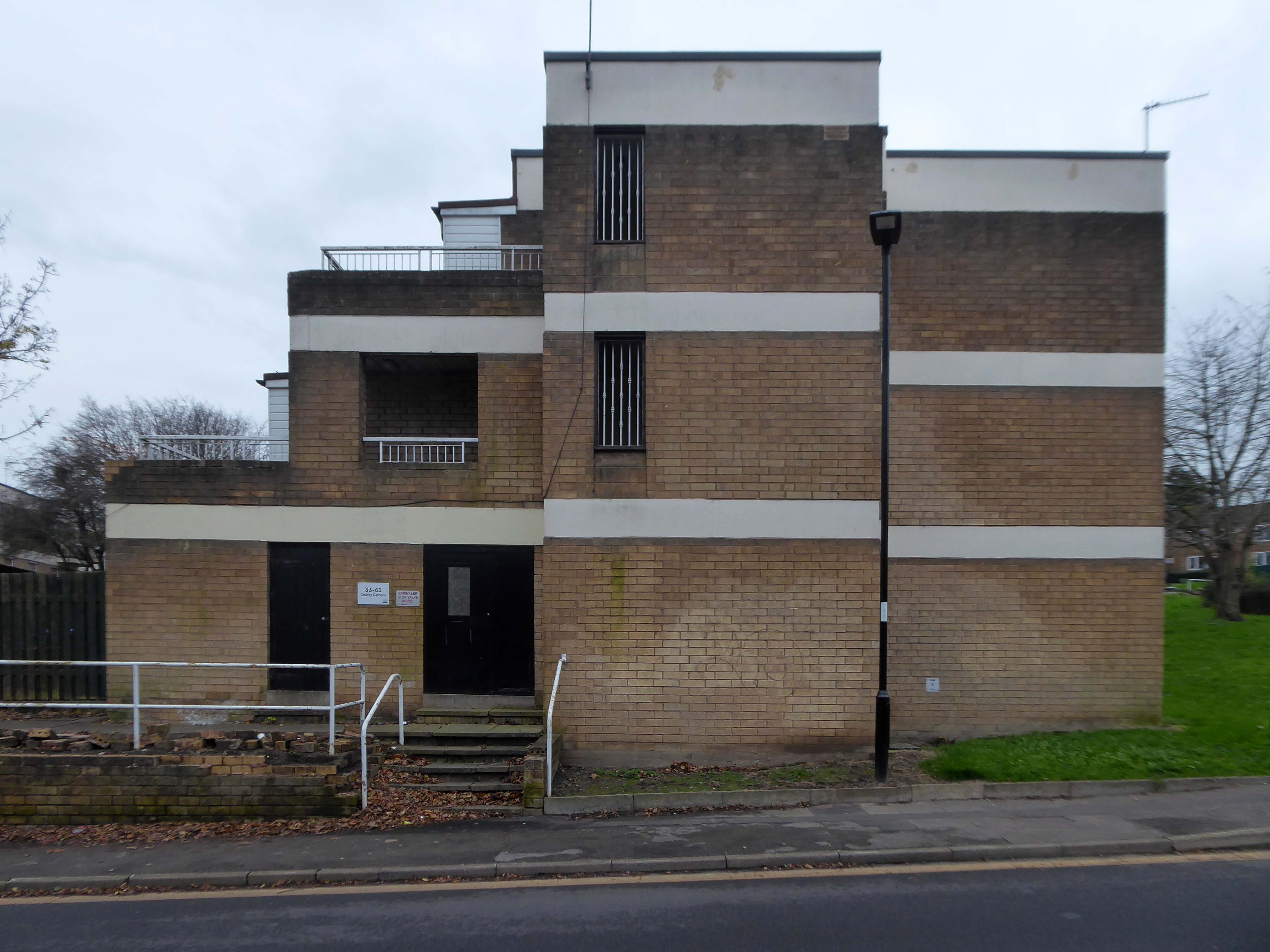
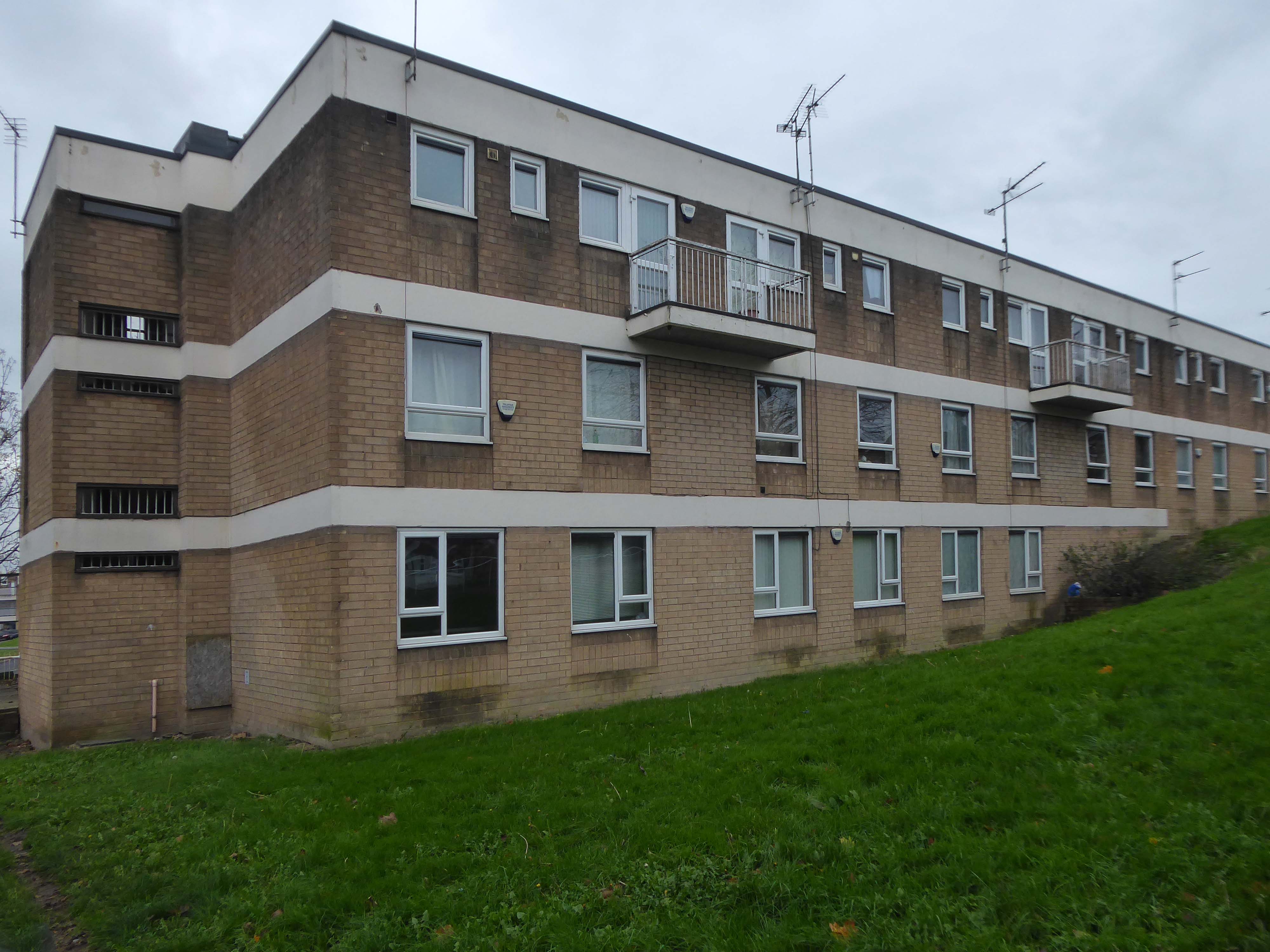
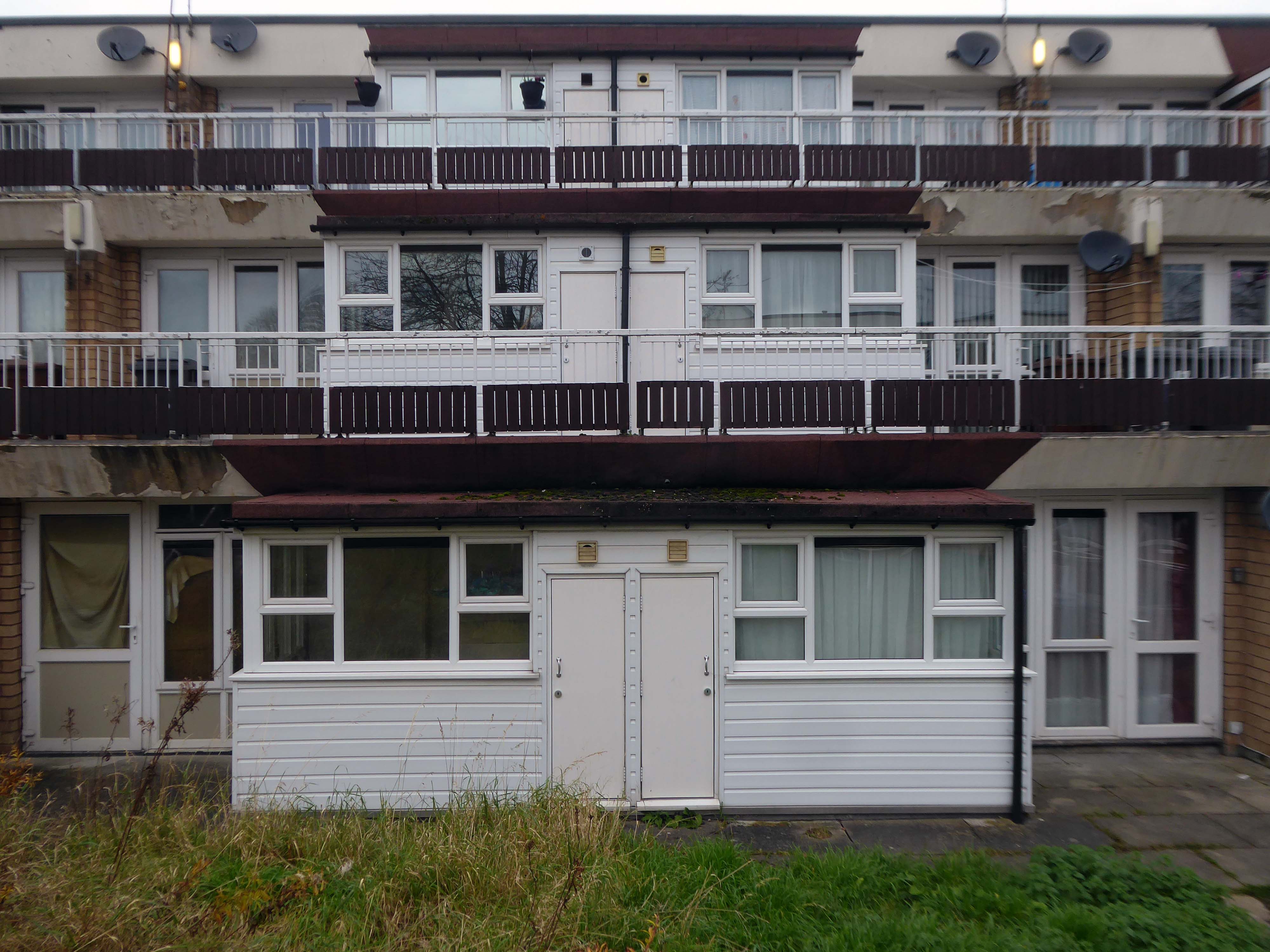
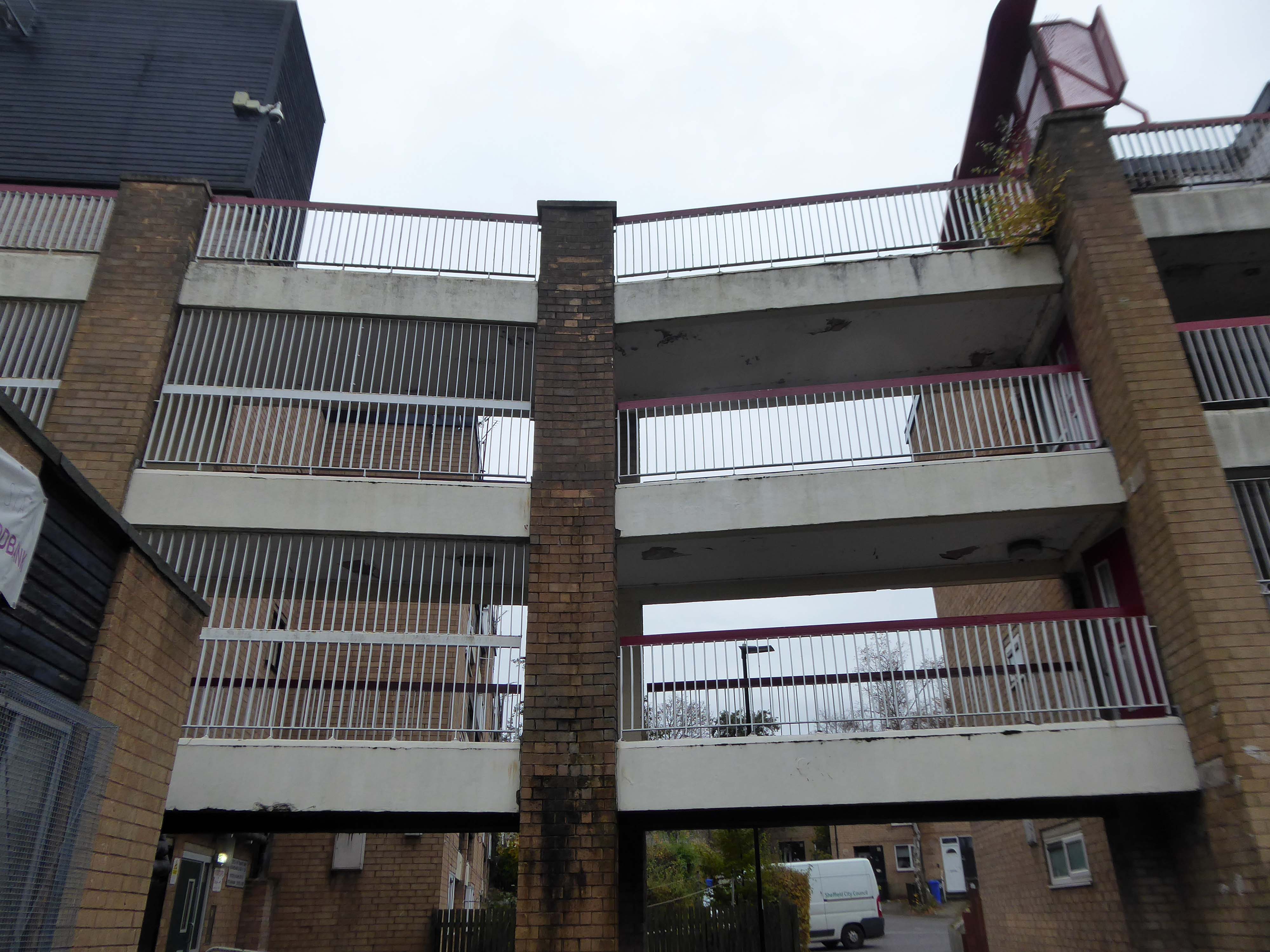
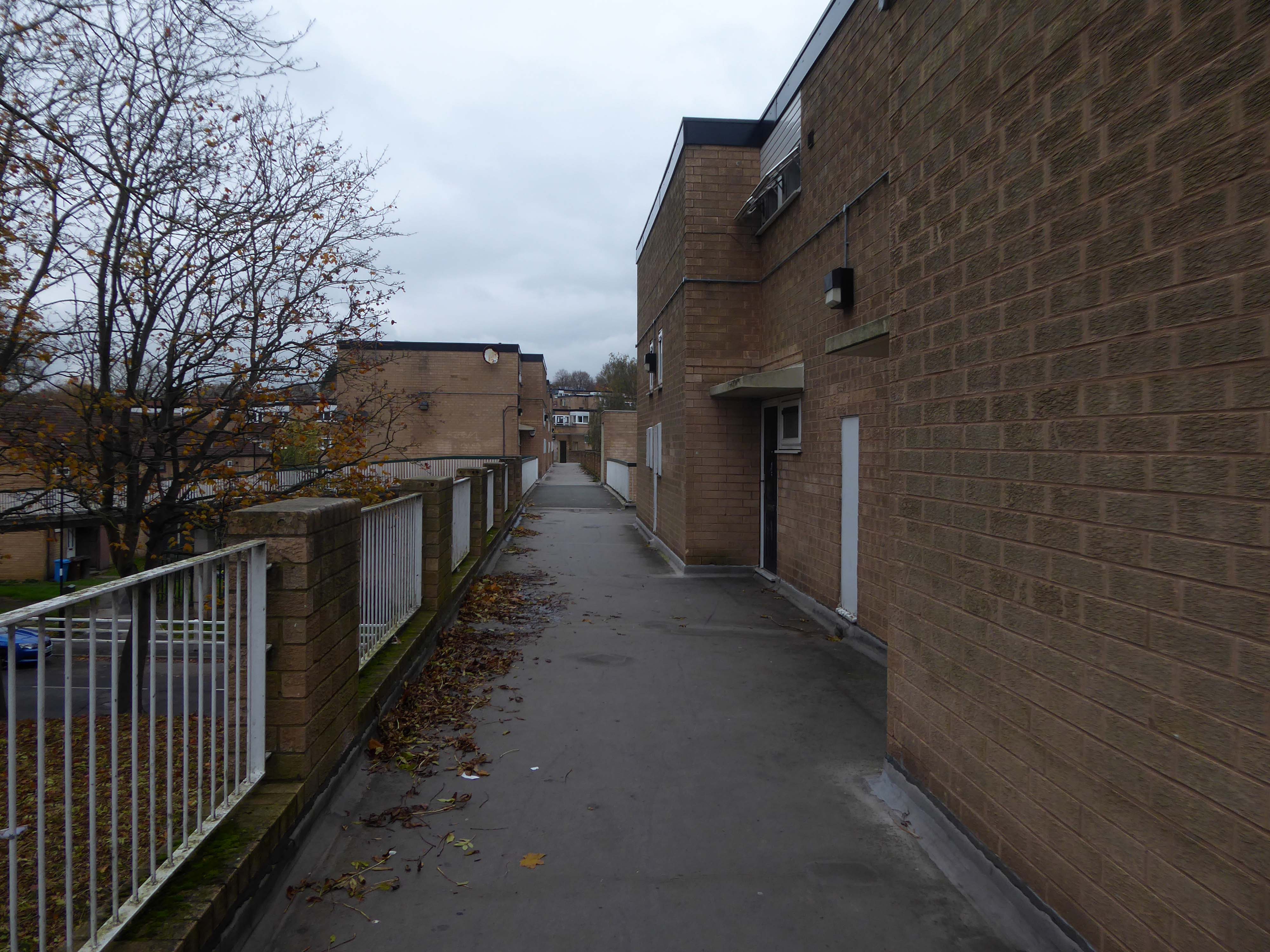
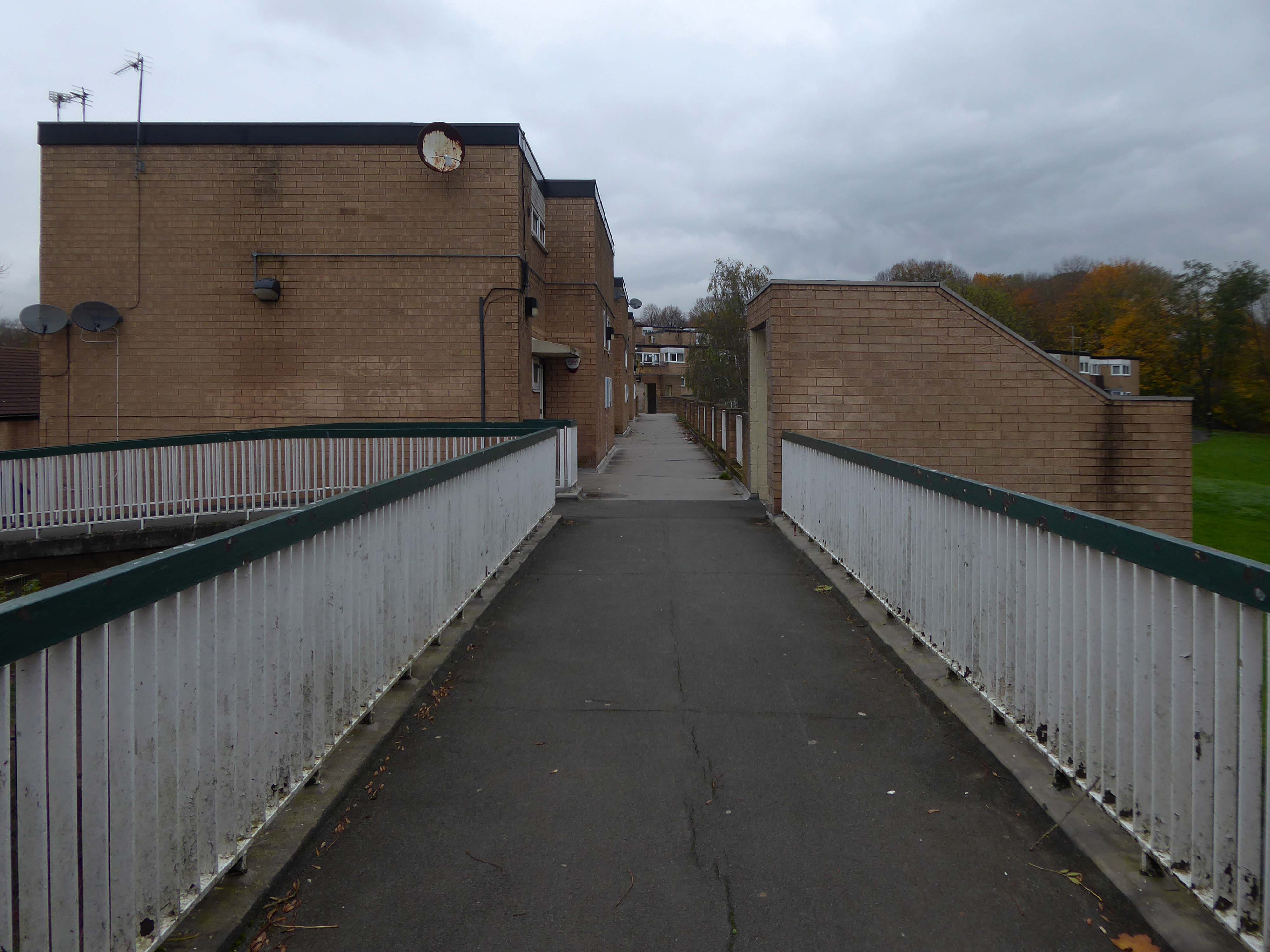
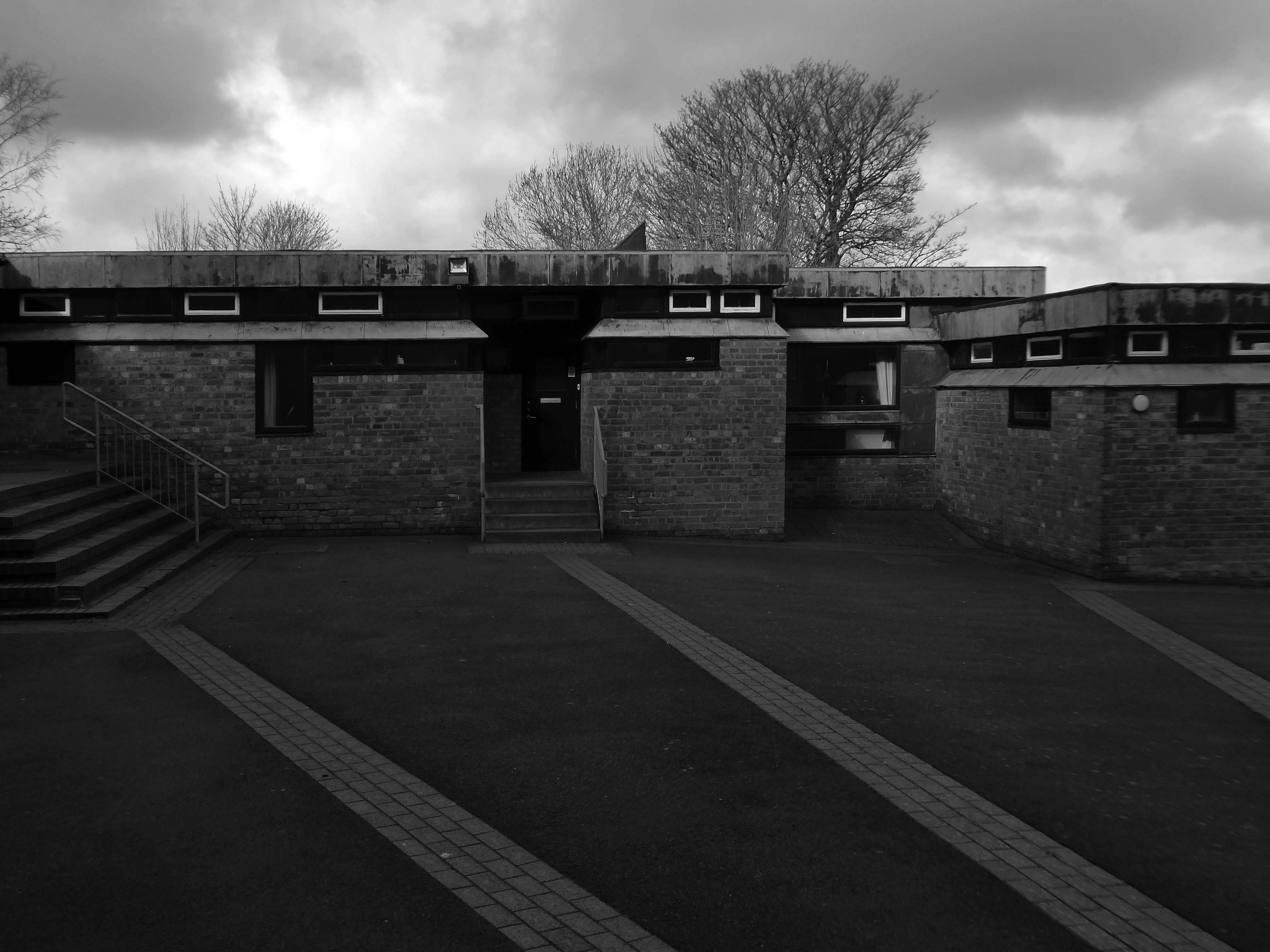
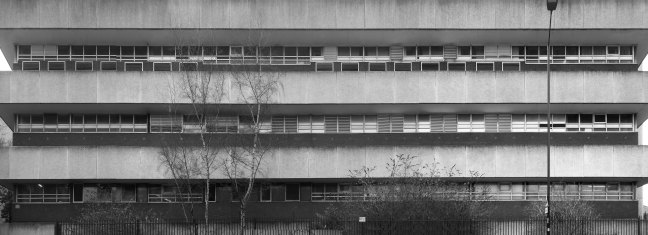
Whilst there are some common stylistic characteristics the Corporation Street Flats are of a more modest order. There are communal areas and a grassed apron, balconies and arched passages.
Over time the standard of maintenance seems to have declined, and the Crittall Windows have been replaced by white uPvc, where once there was a bowling green, this is now roughly mown and unused.
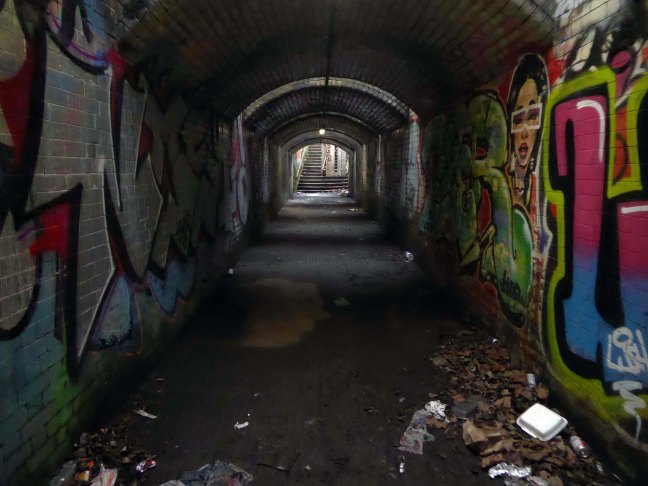
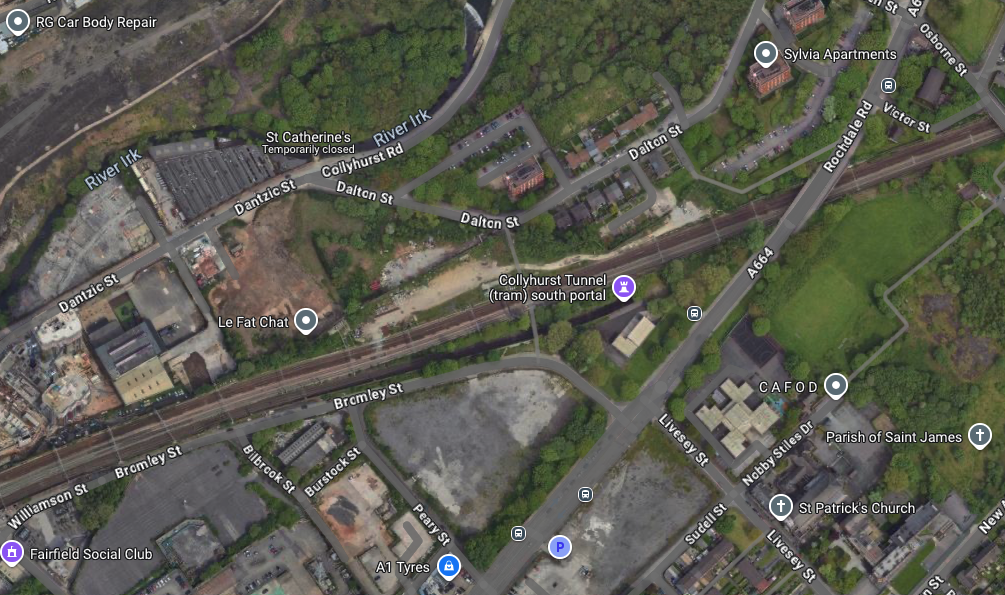
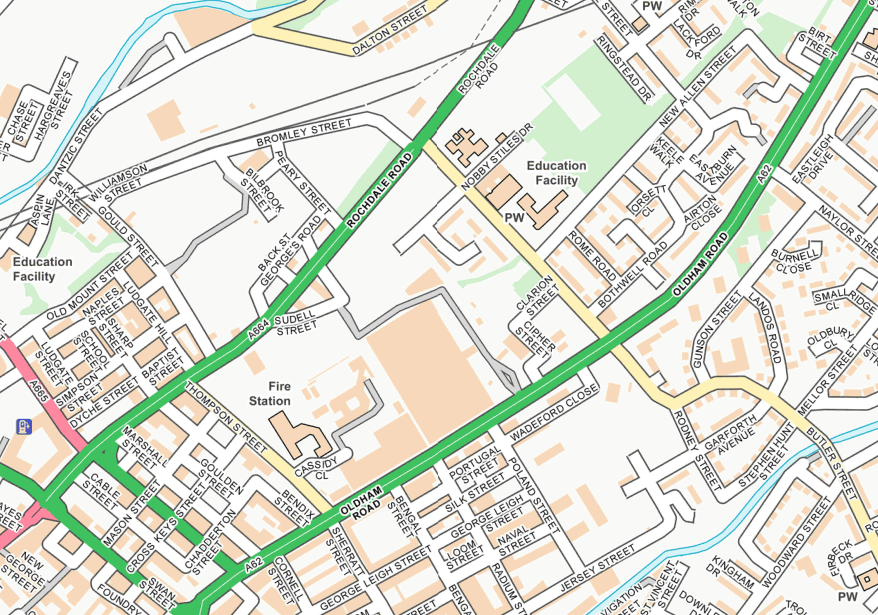
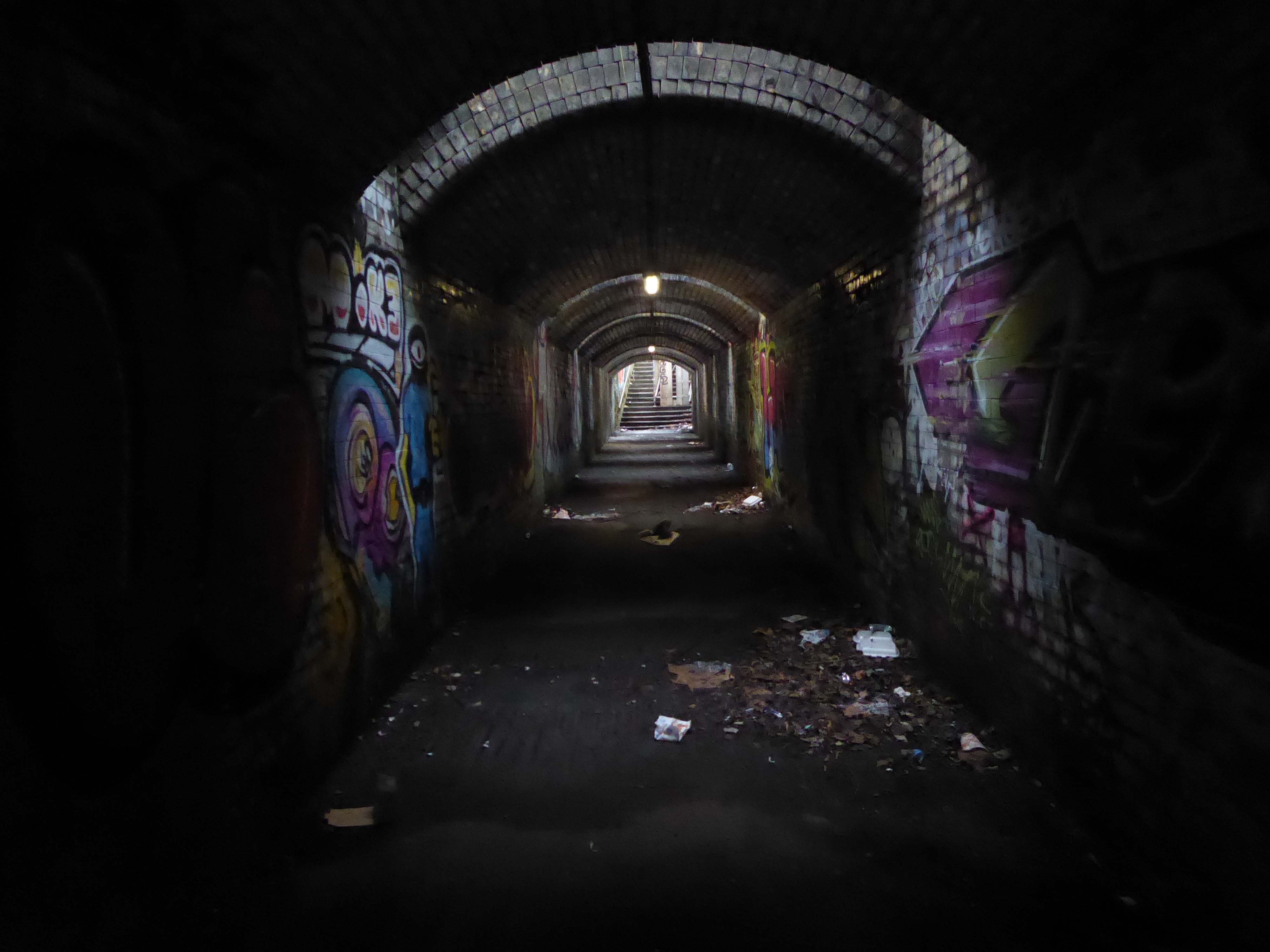
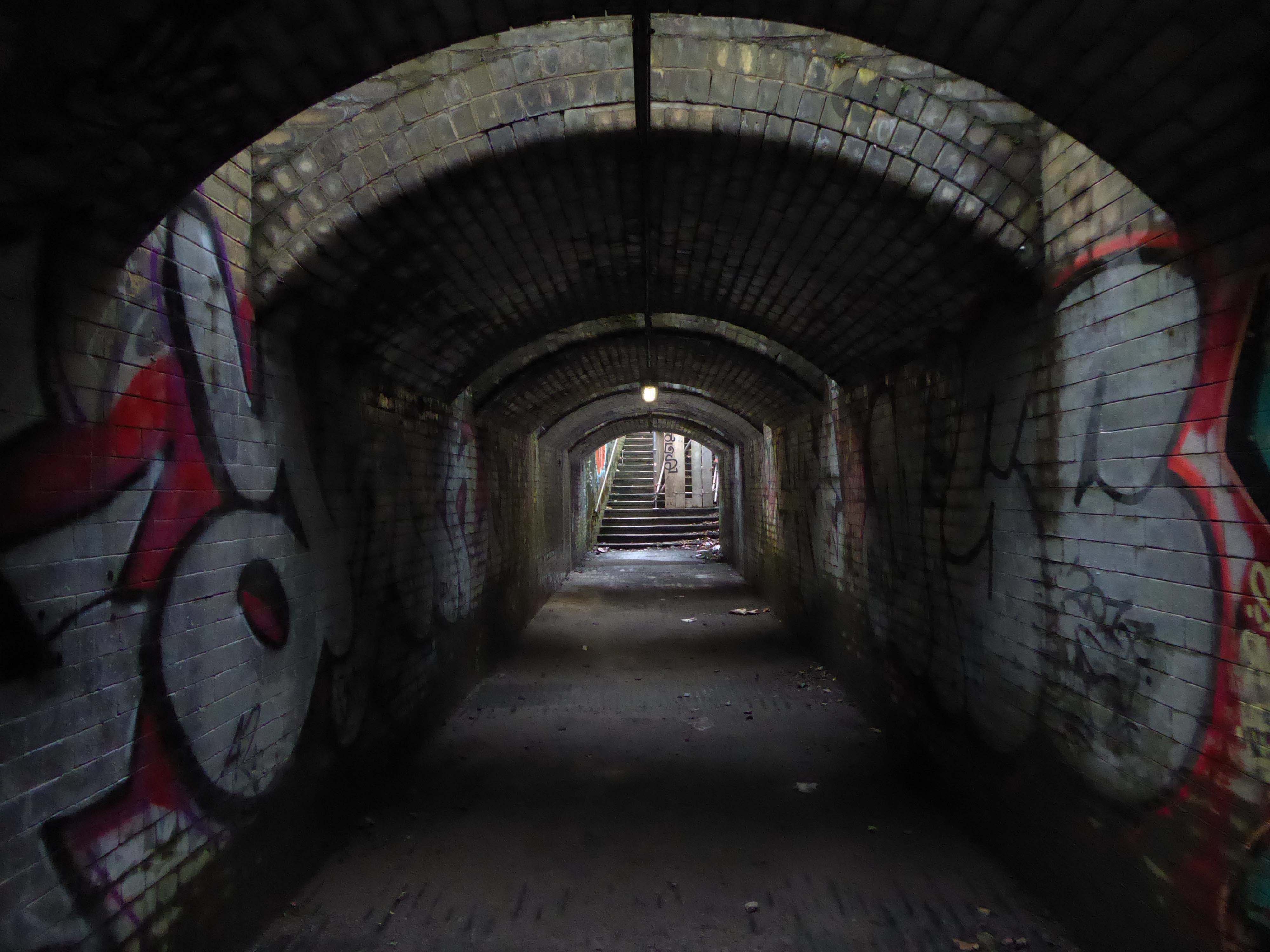
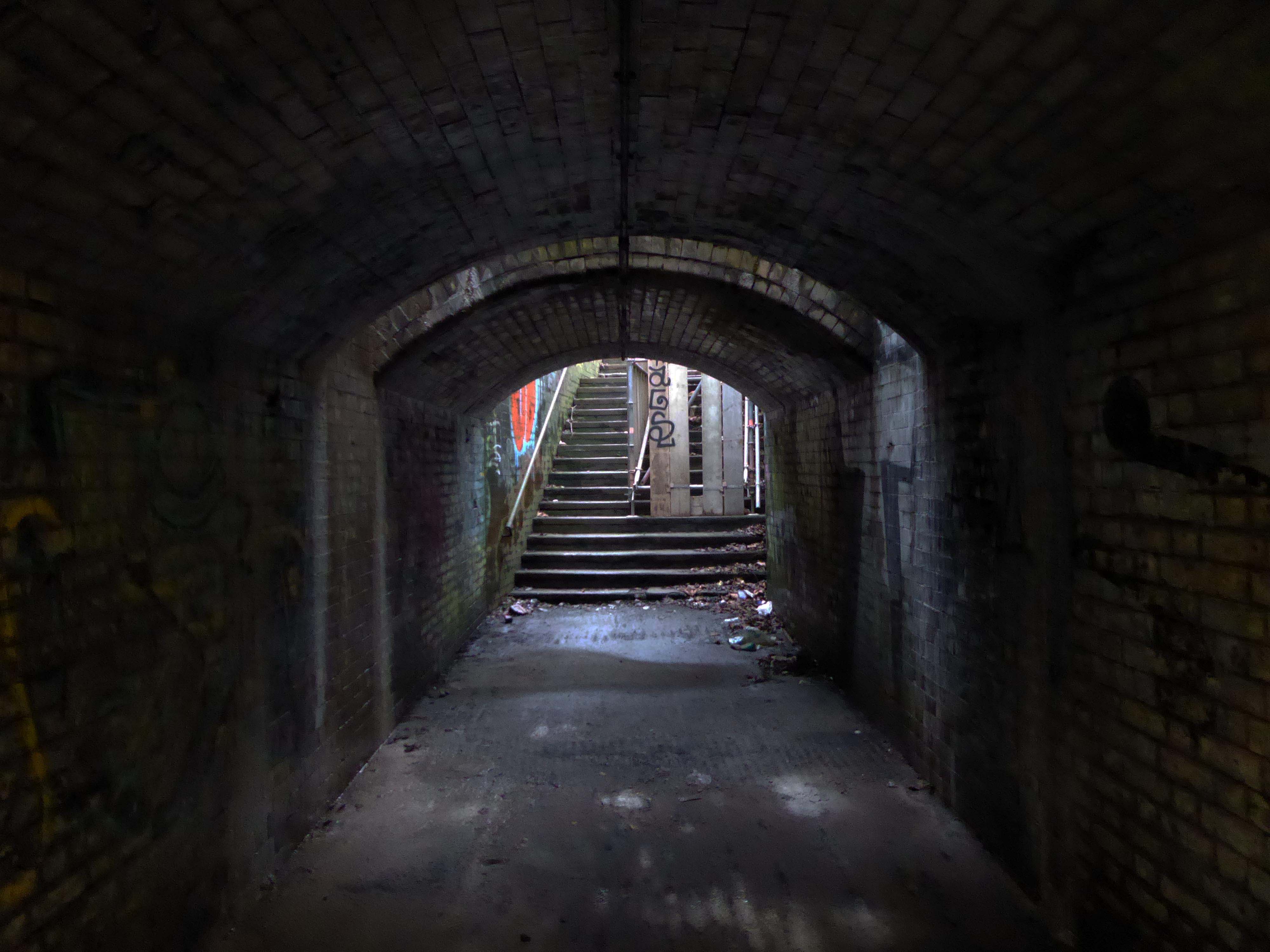
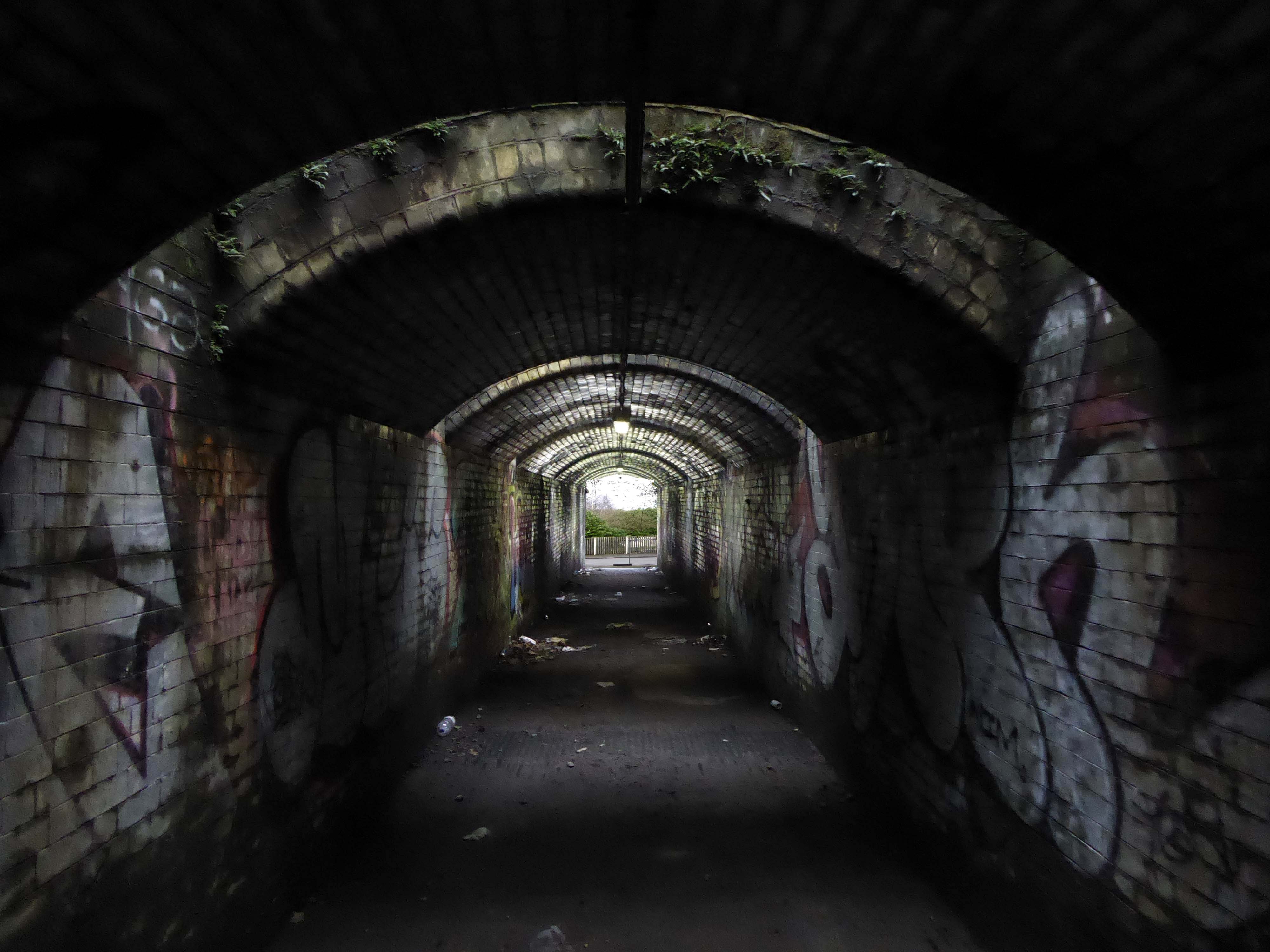
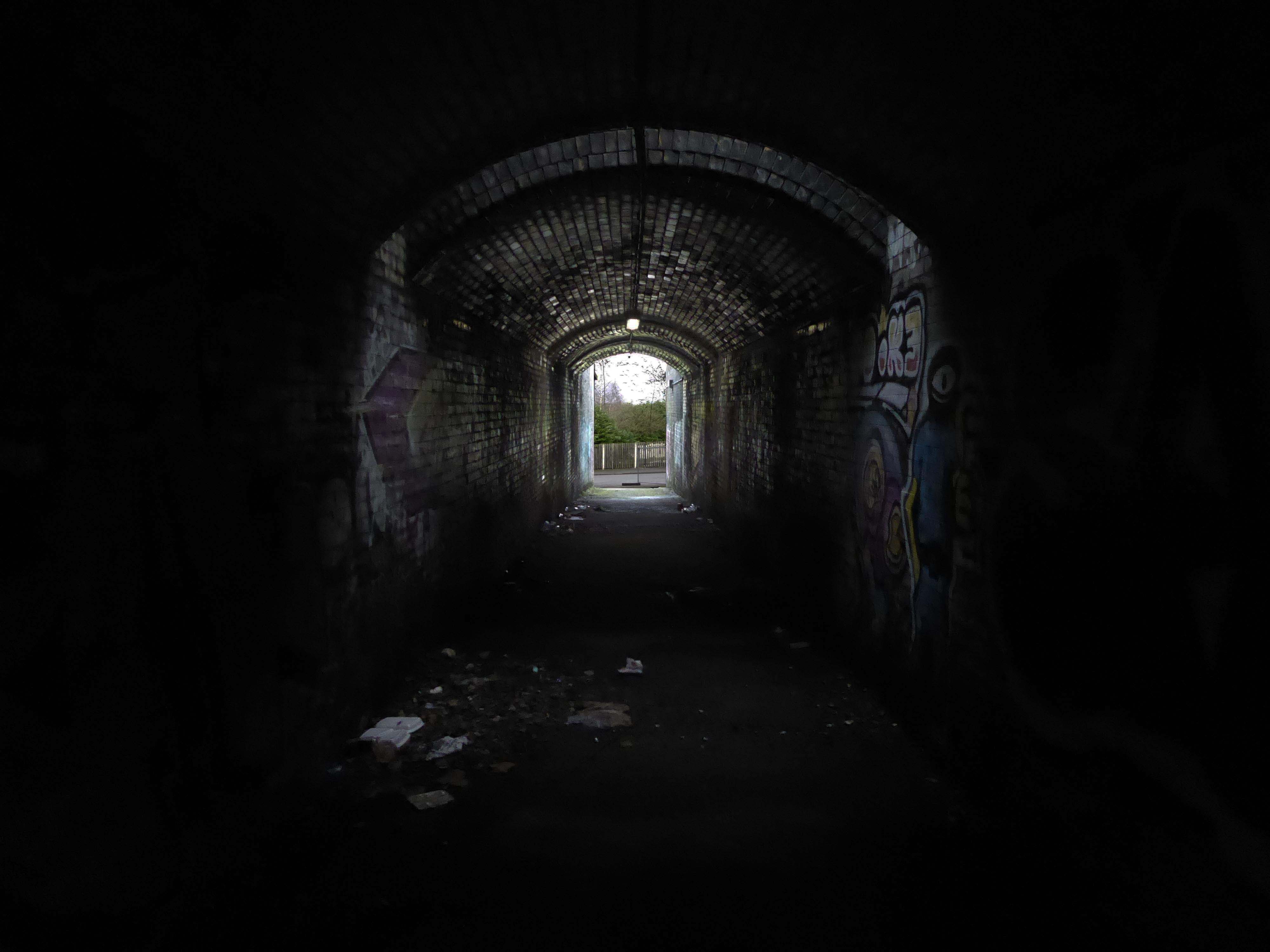
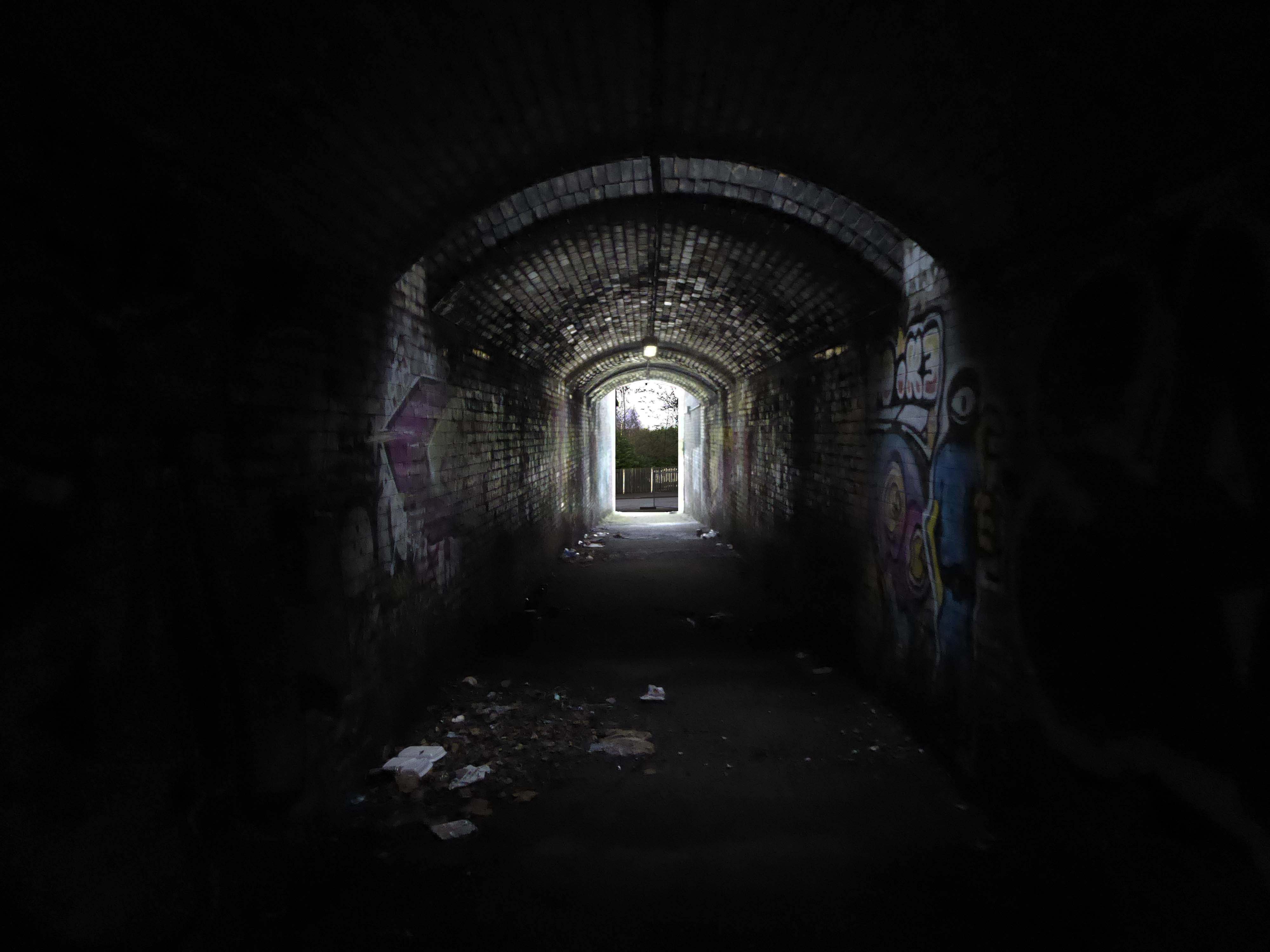
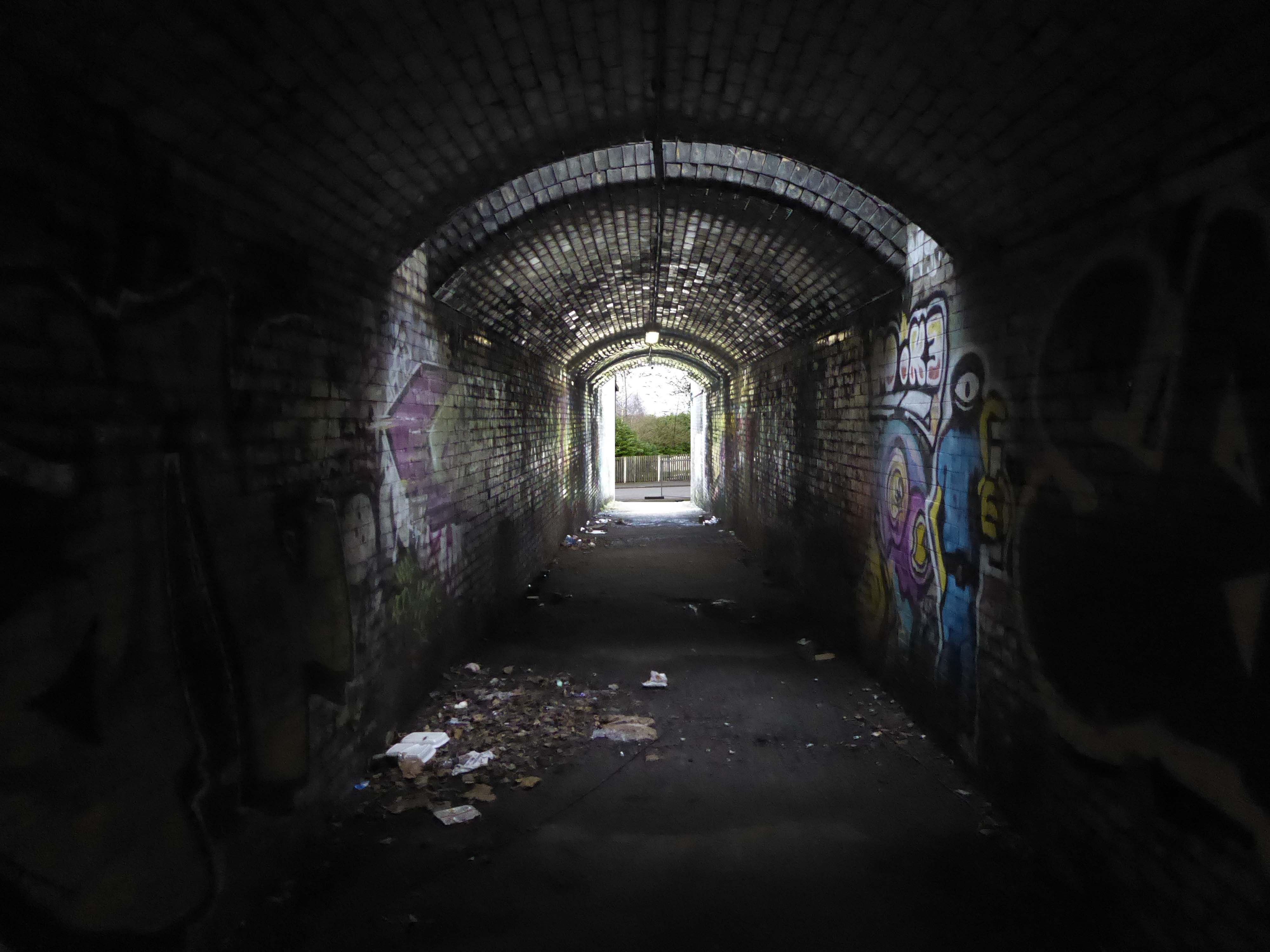
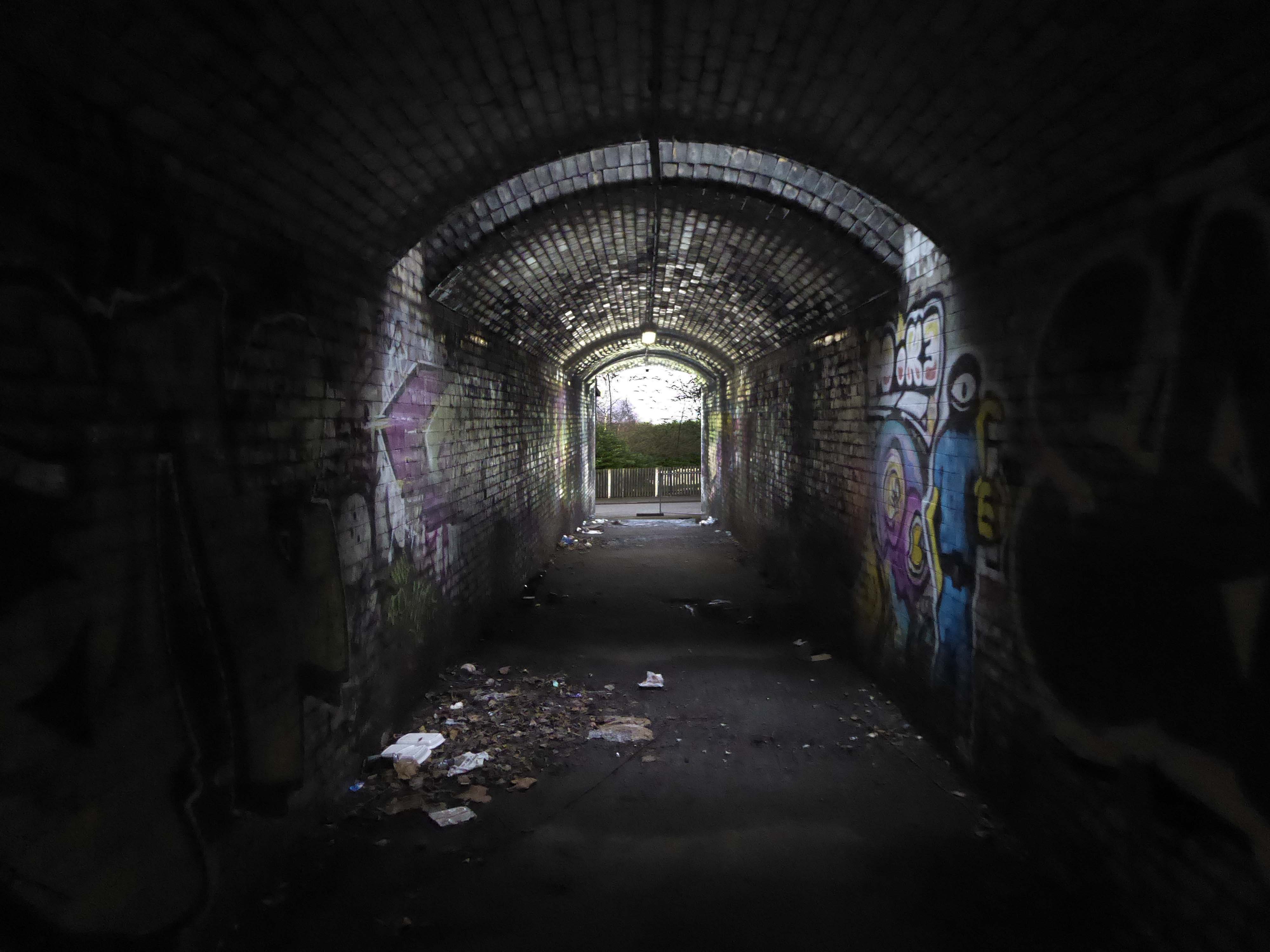
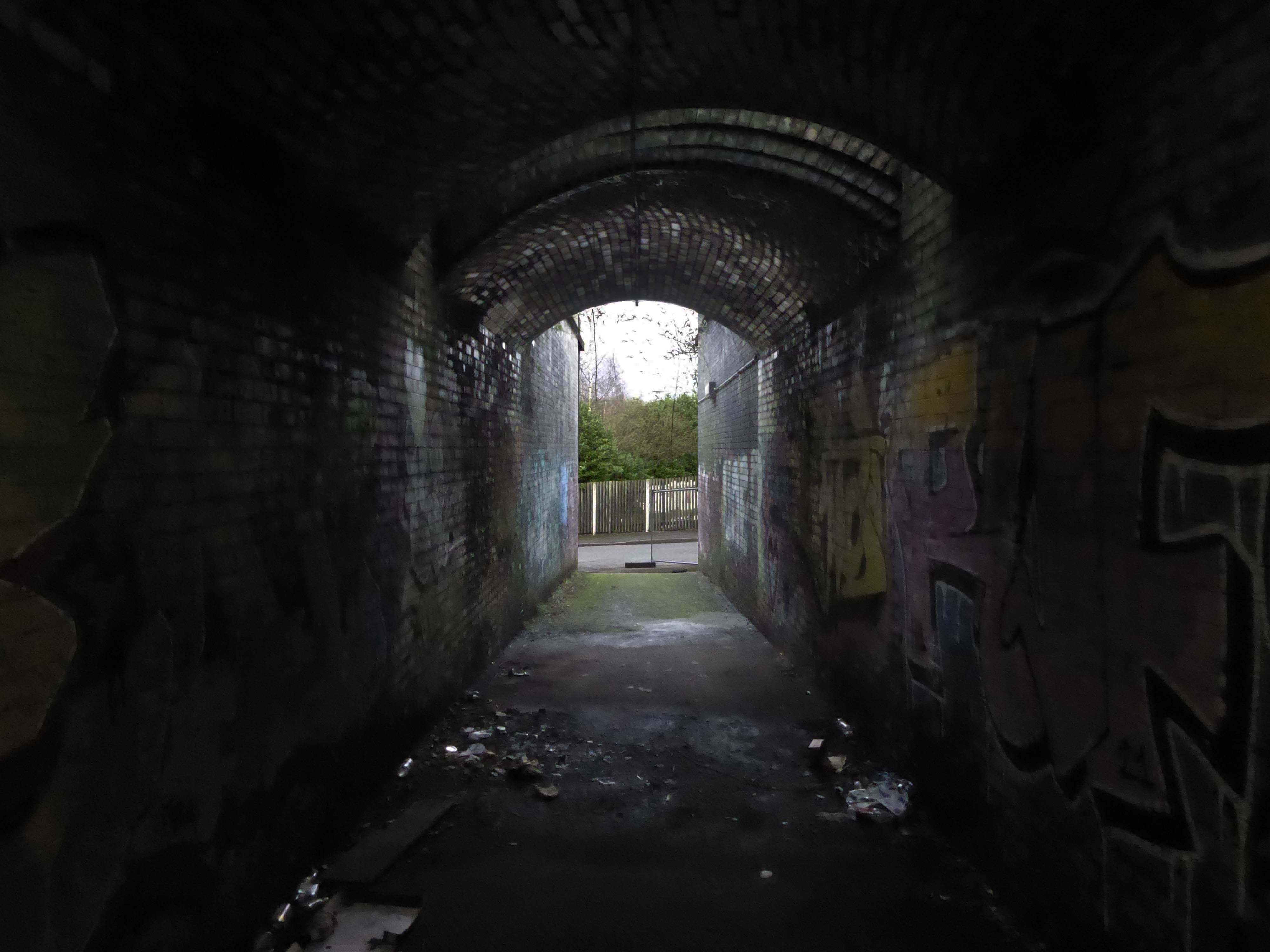
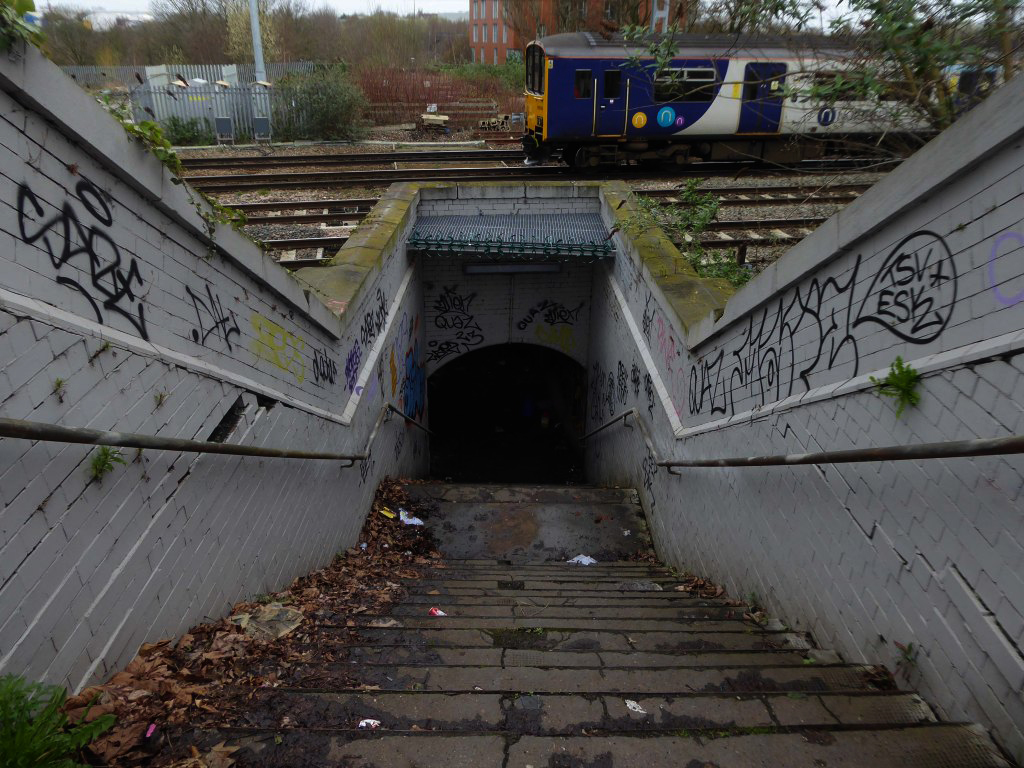
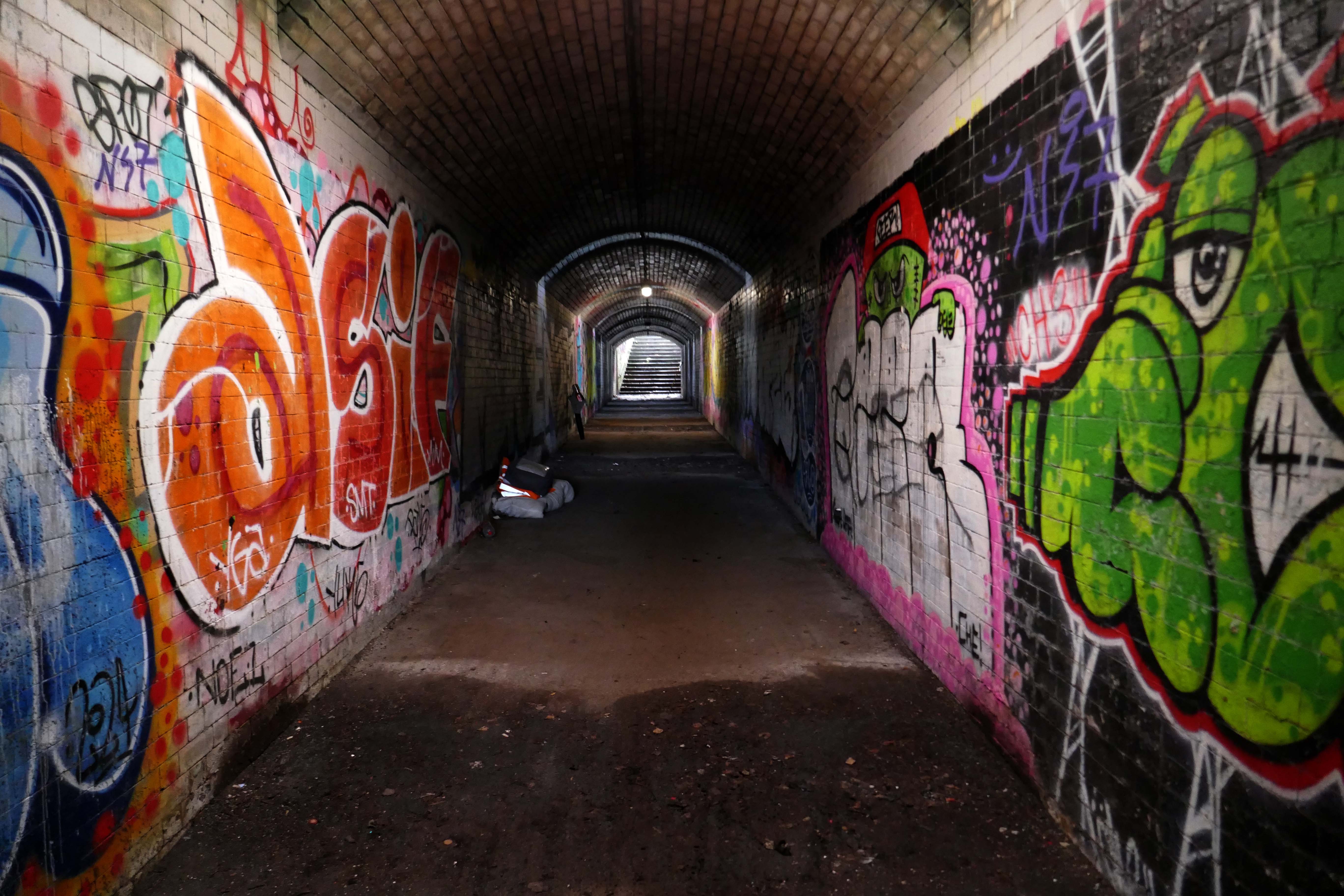
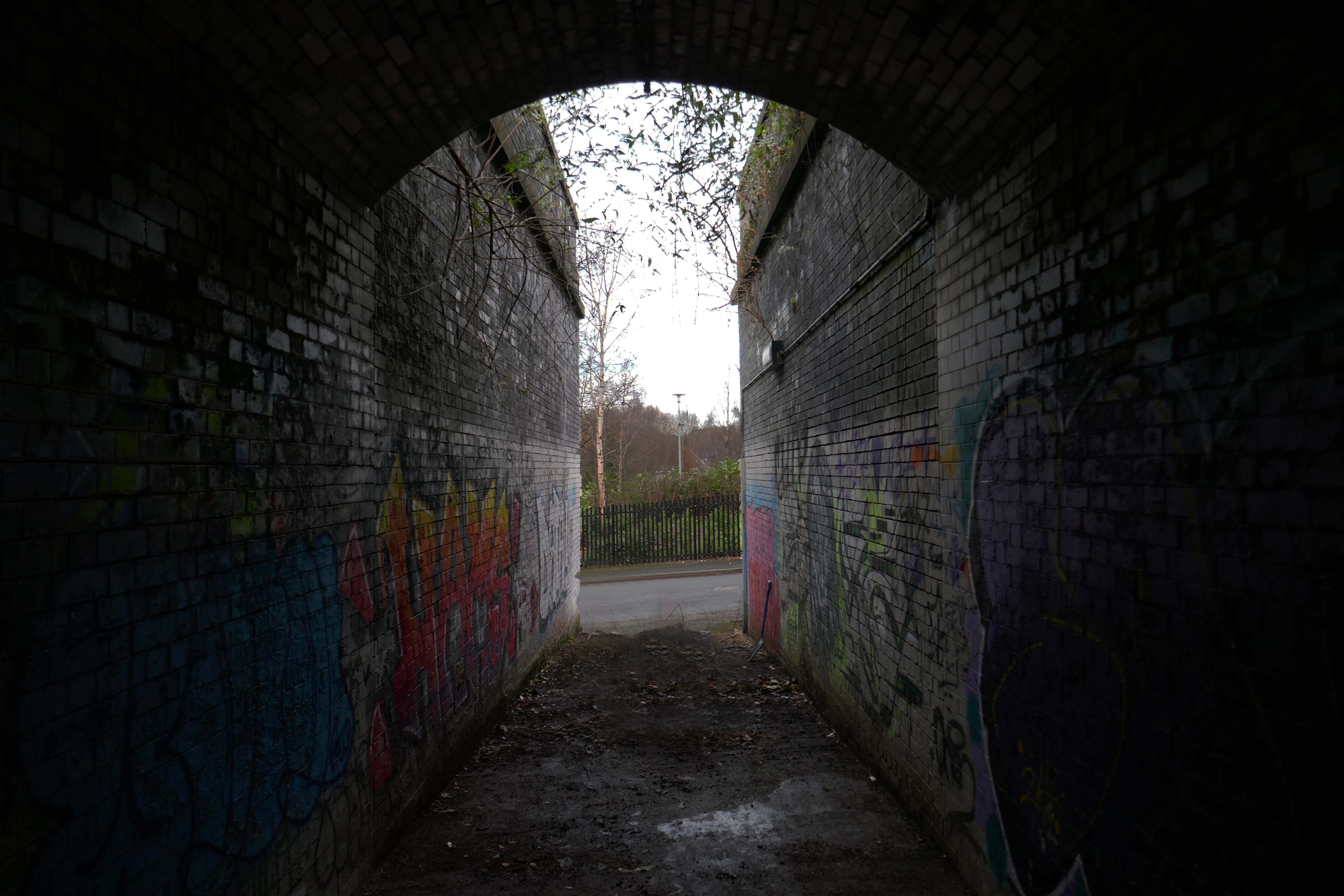
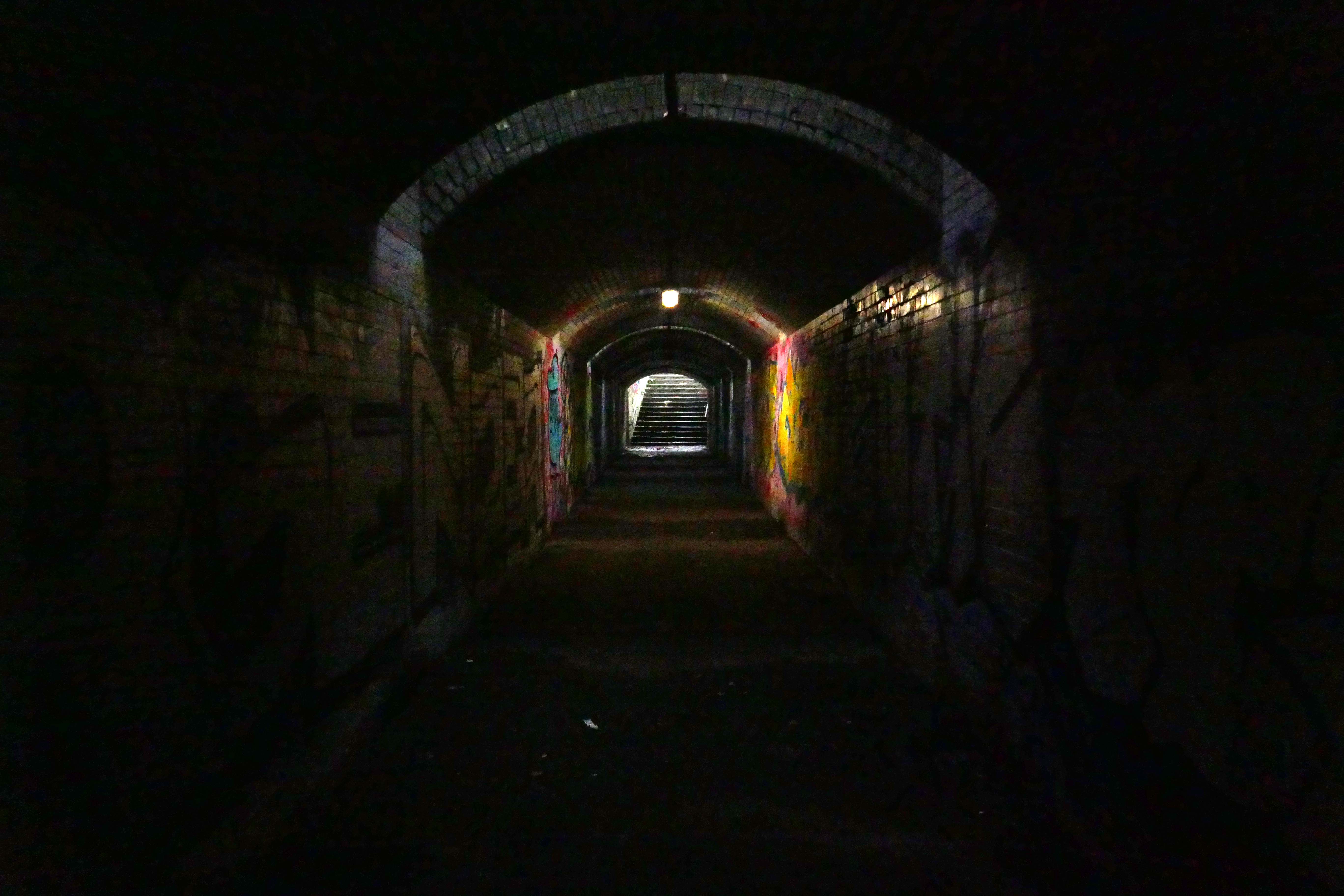
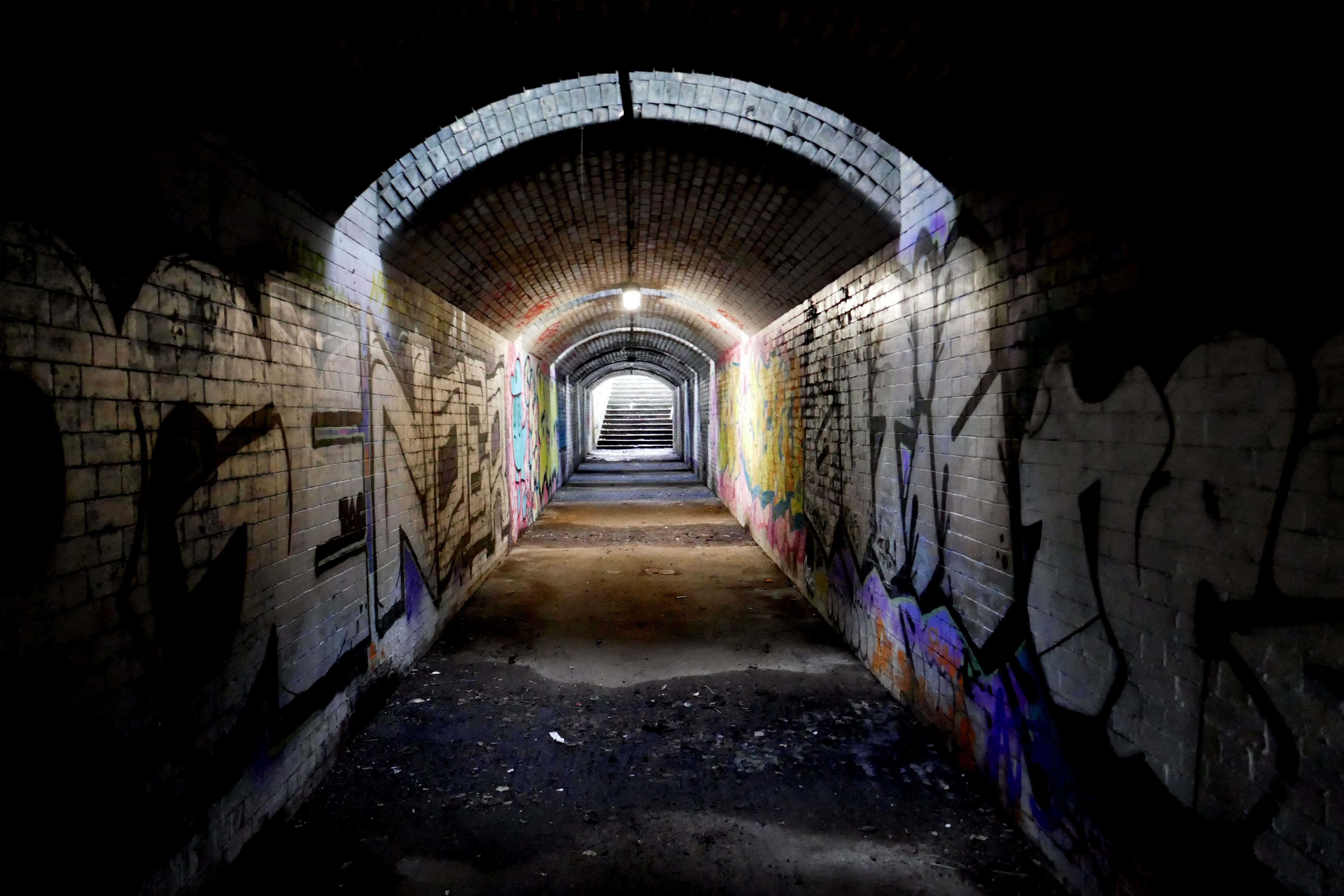
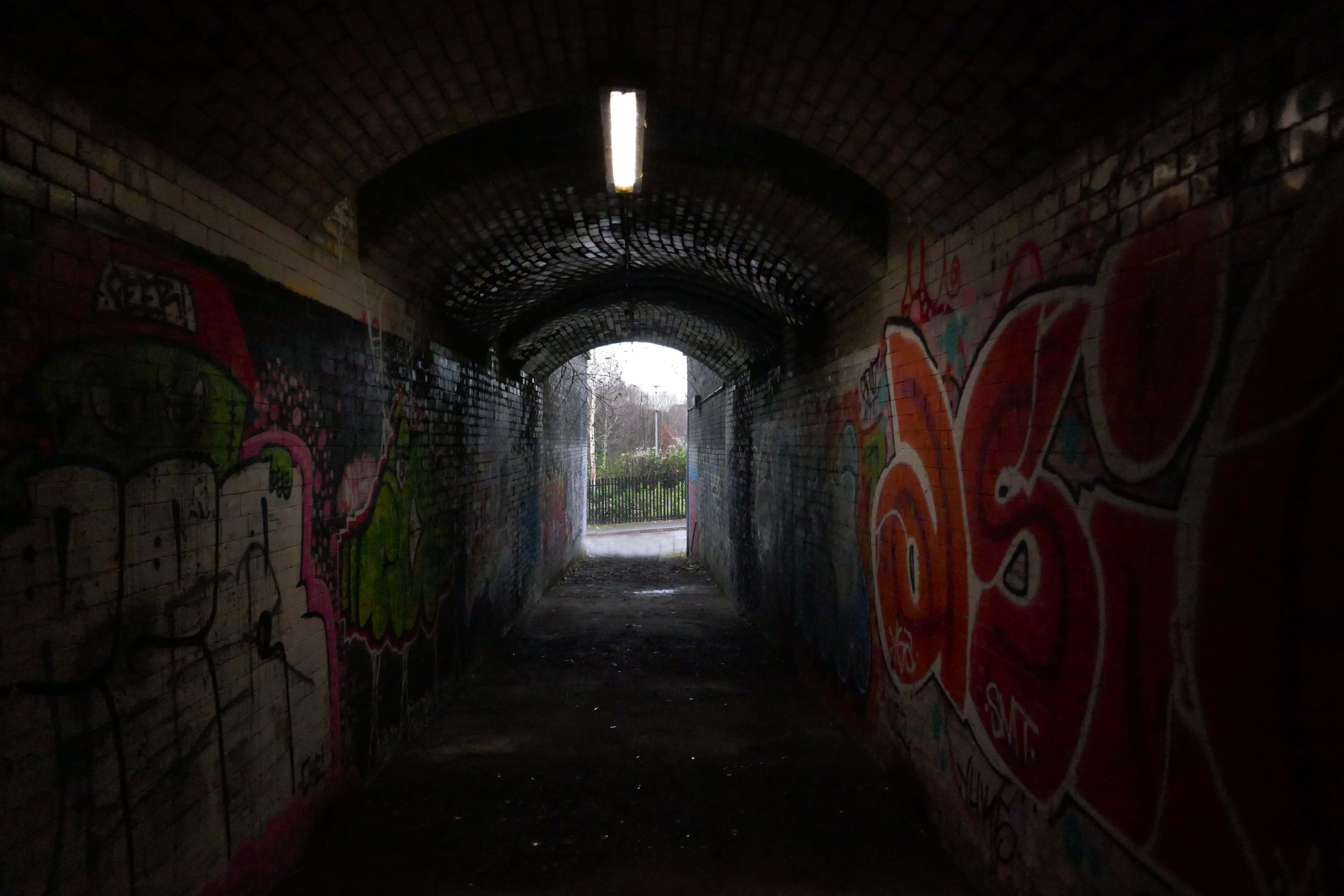
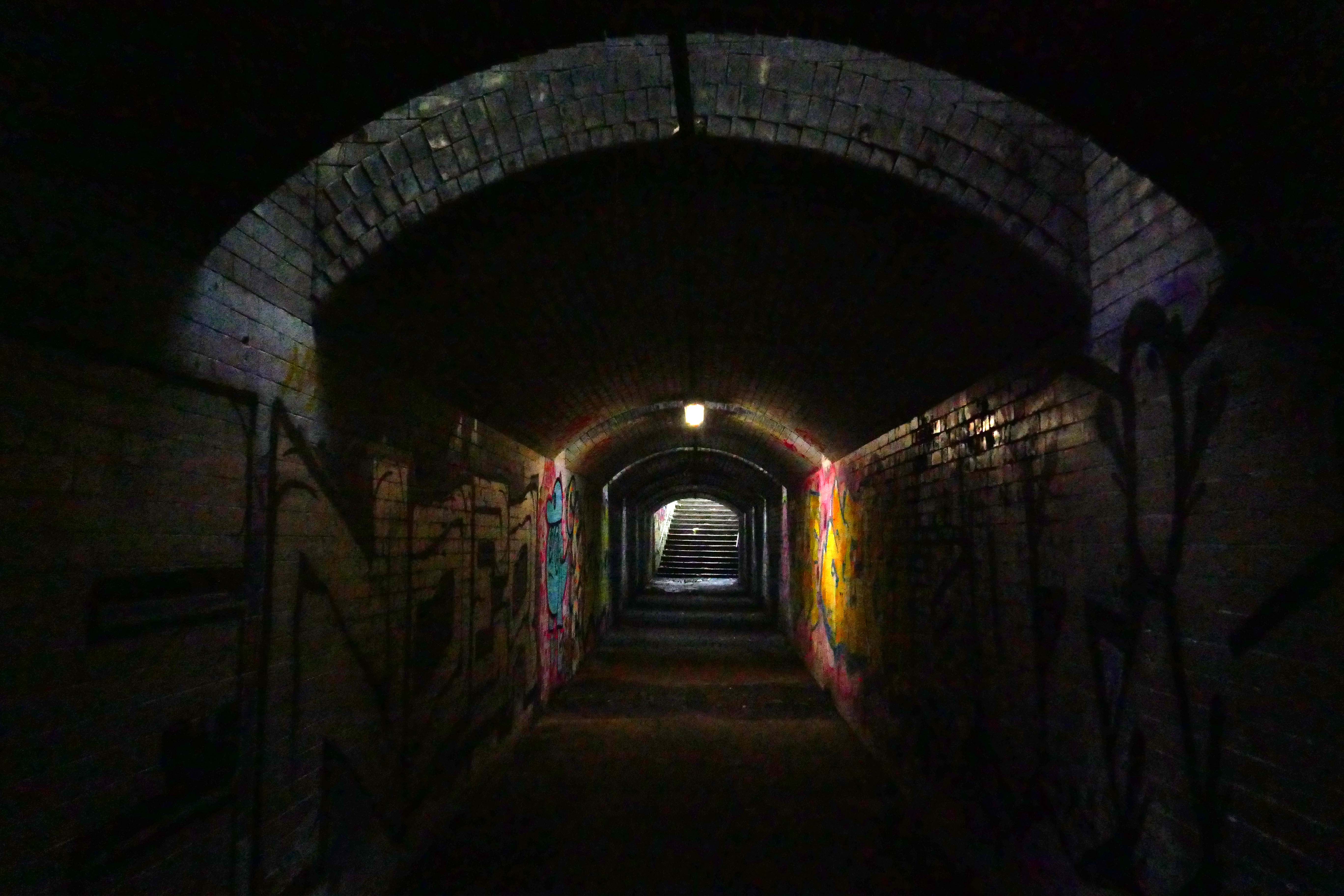
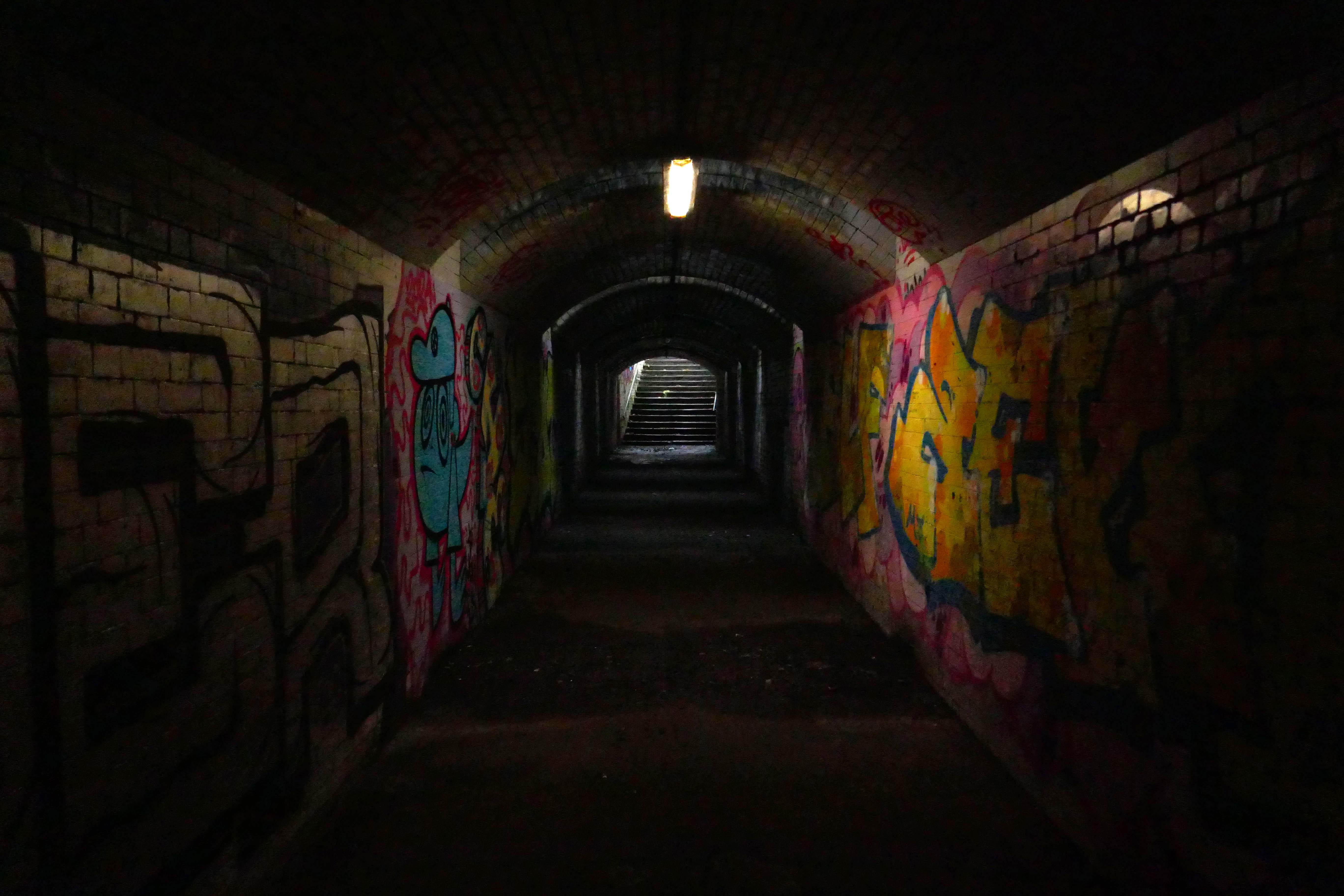
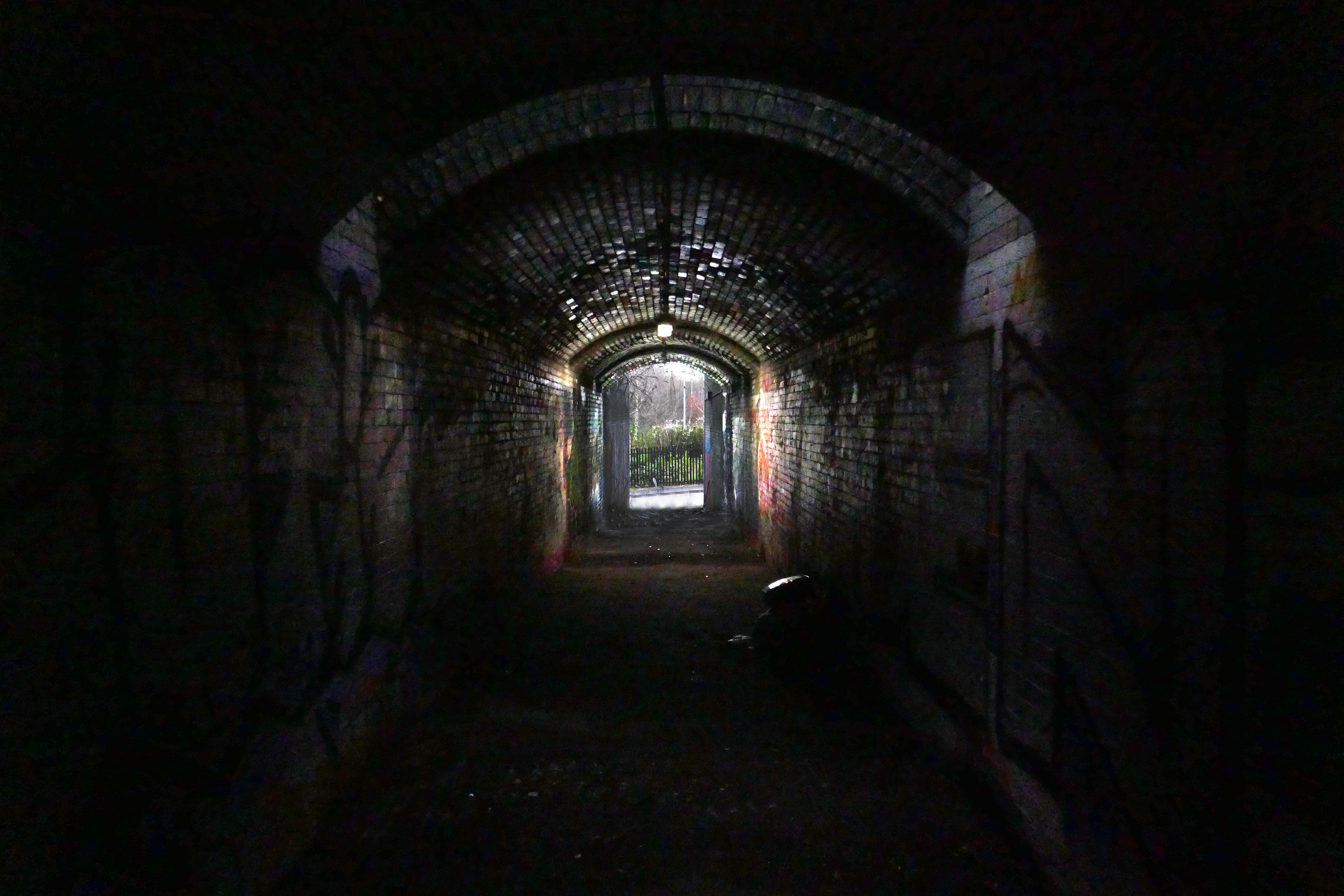
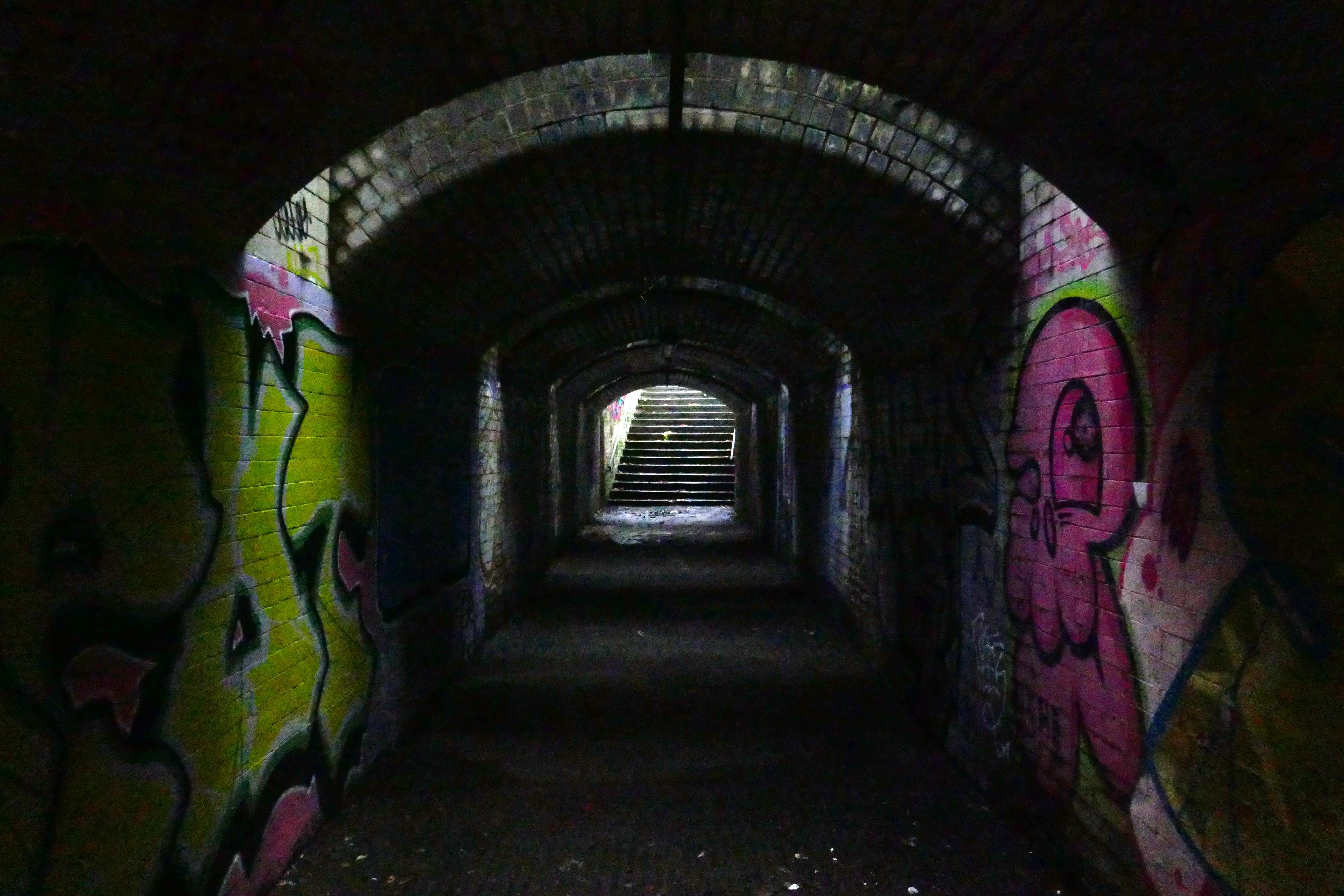
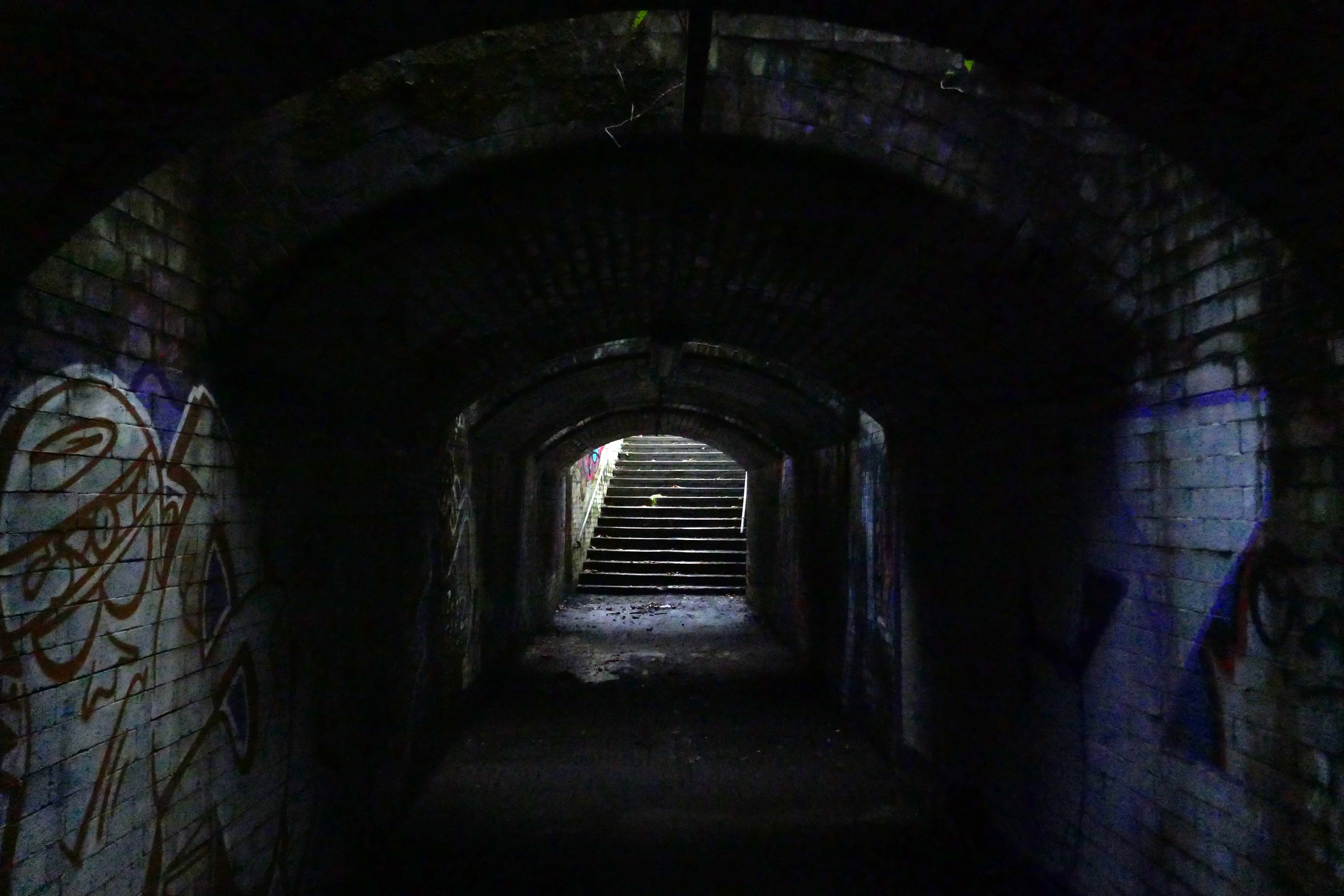
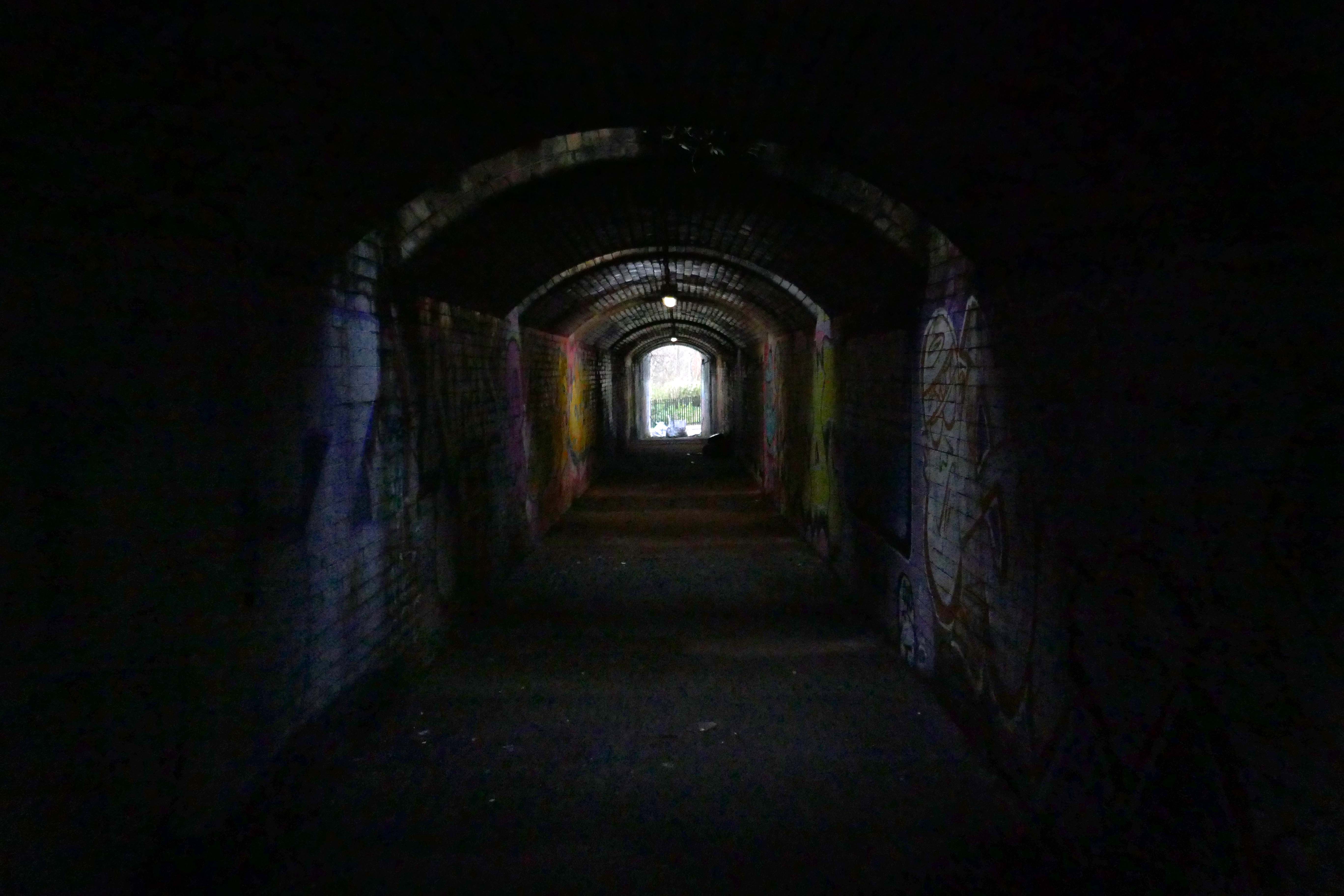
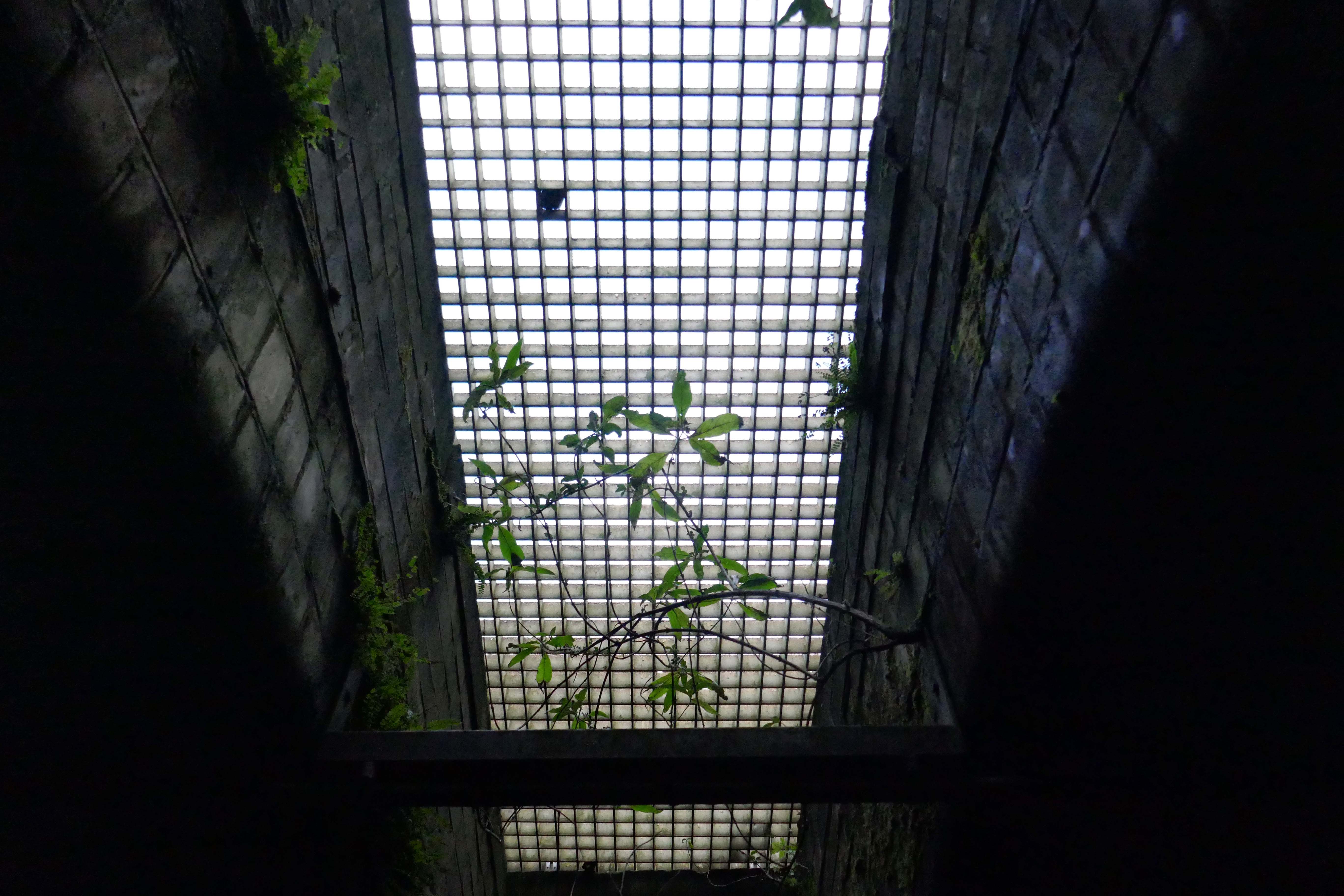
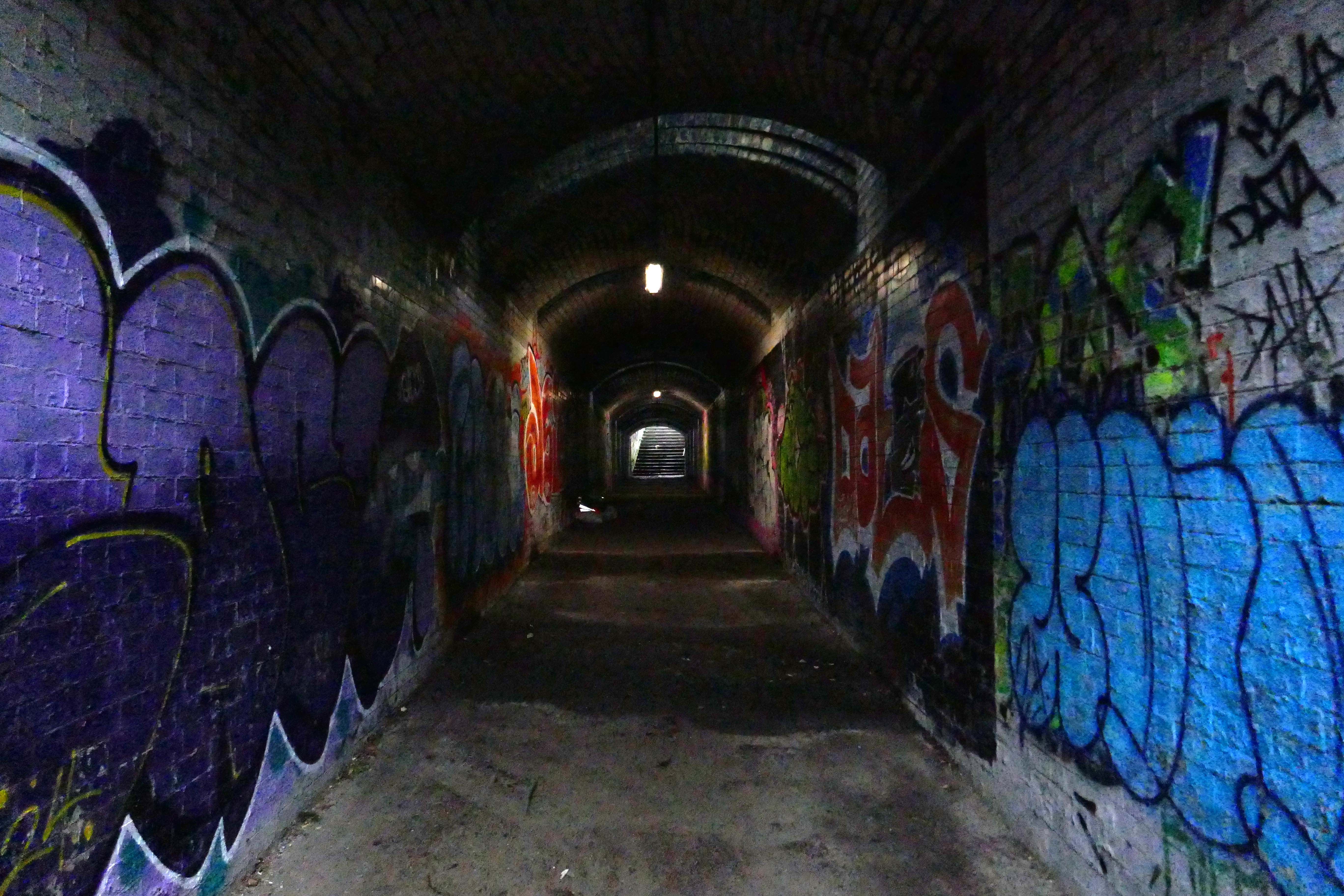
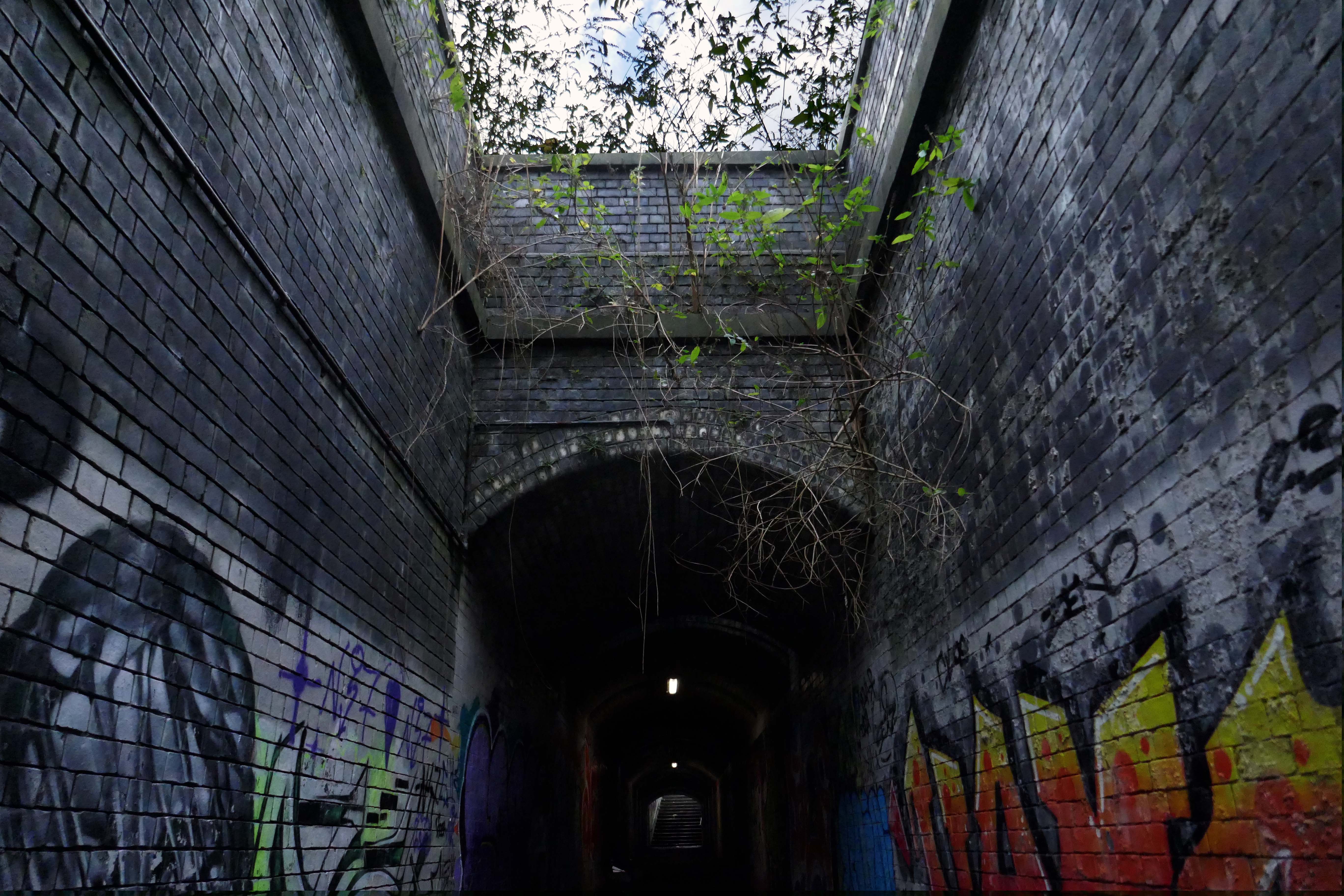
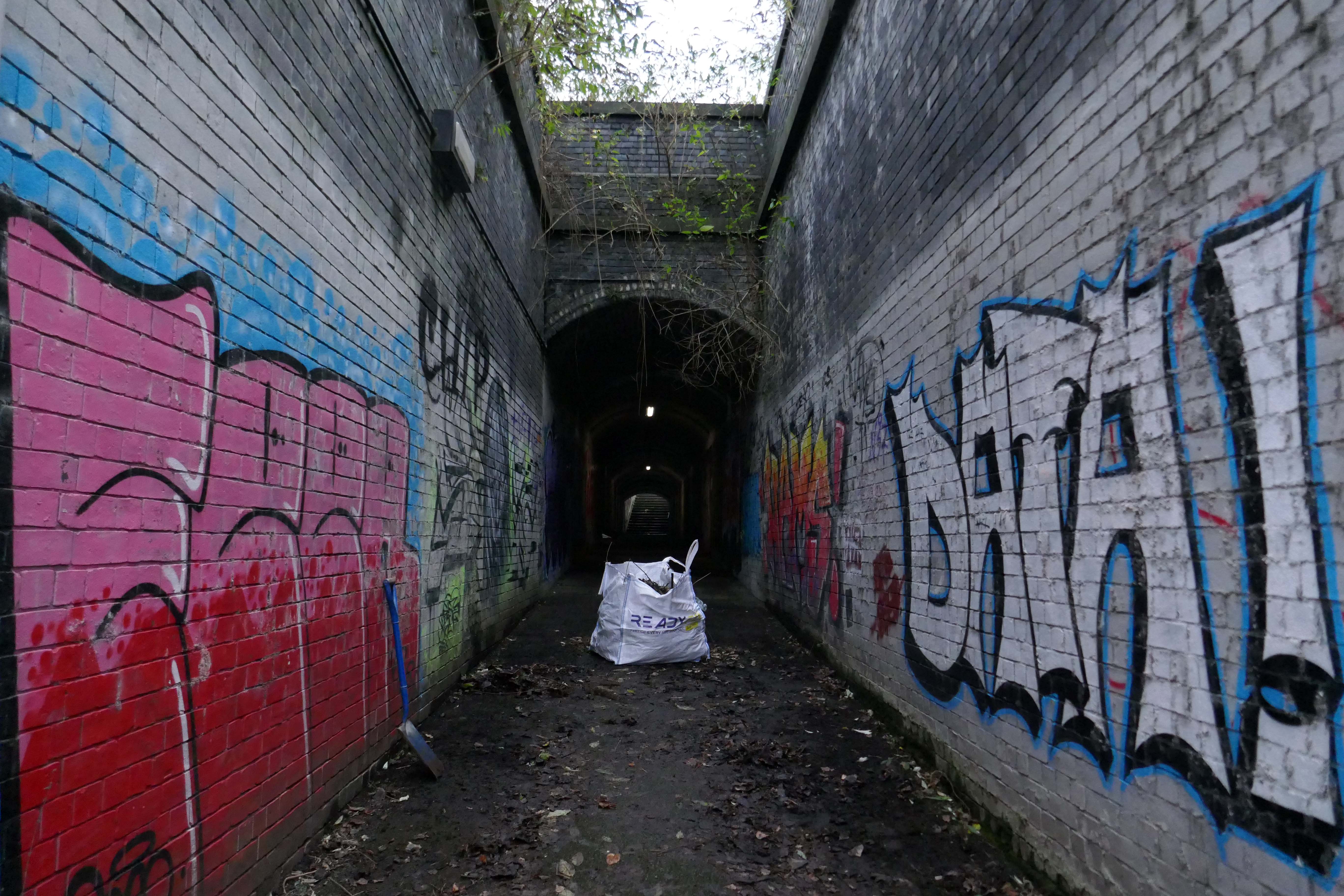
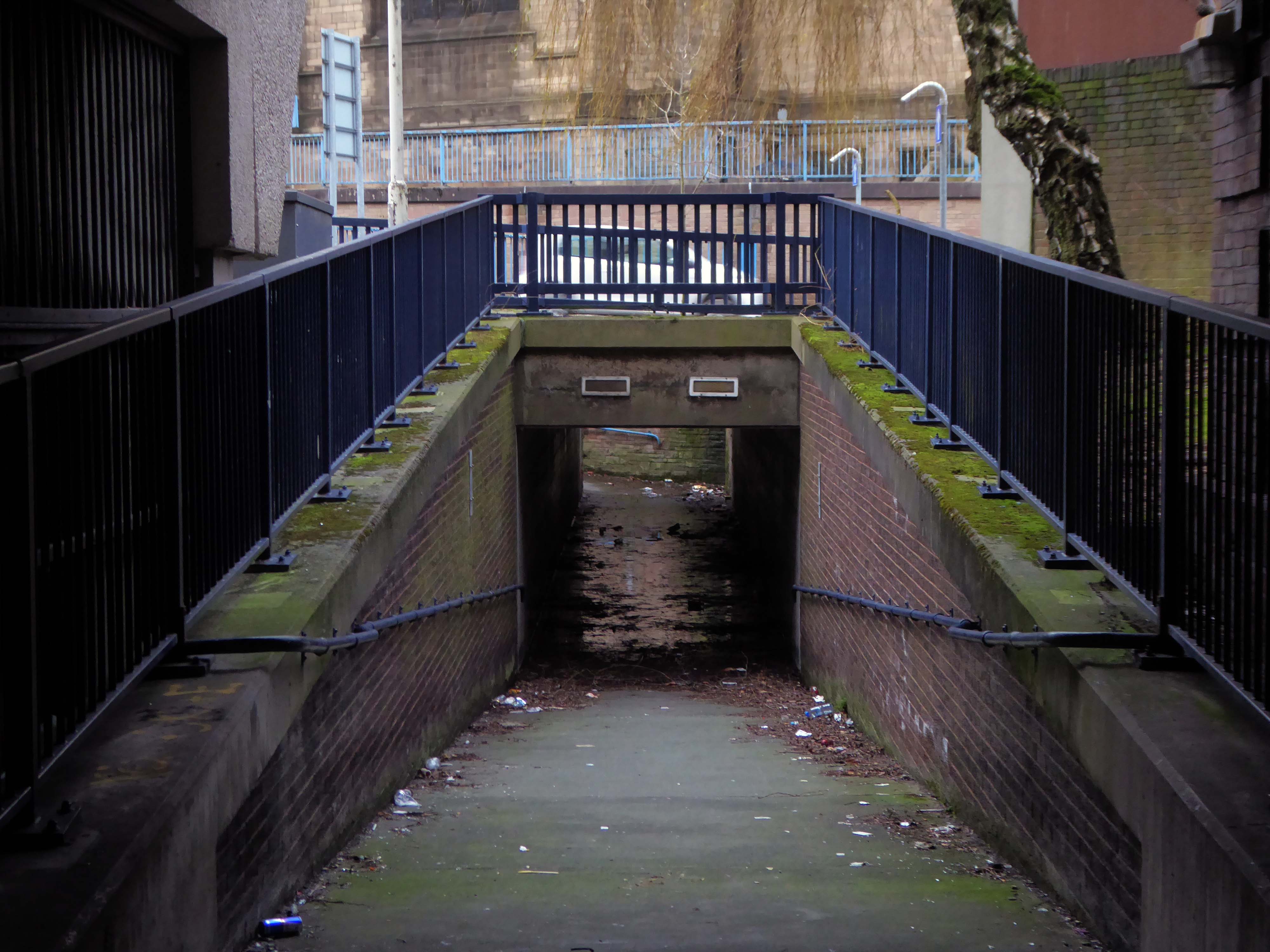
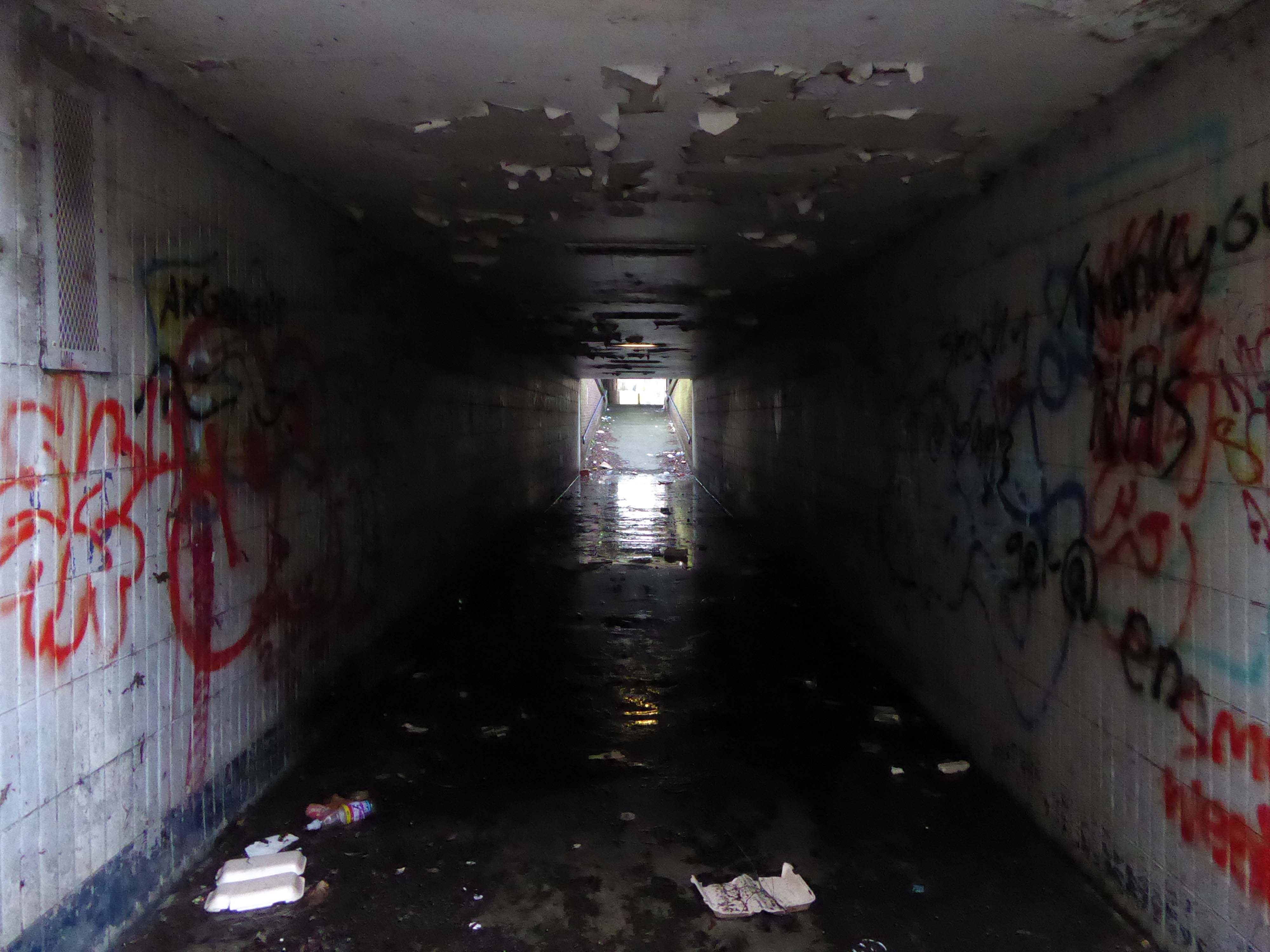
Passing between Dalton Street and Bromley Street is a pedestrian underpass, subway or tunnel.
Beneath both the Bury and Rochdale tram lines.
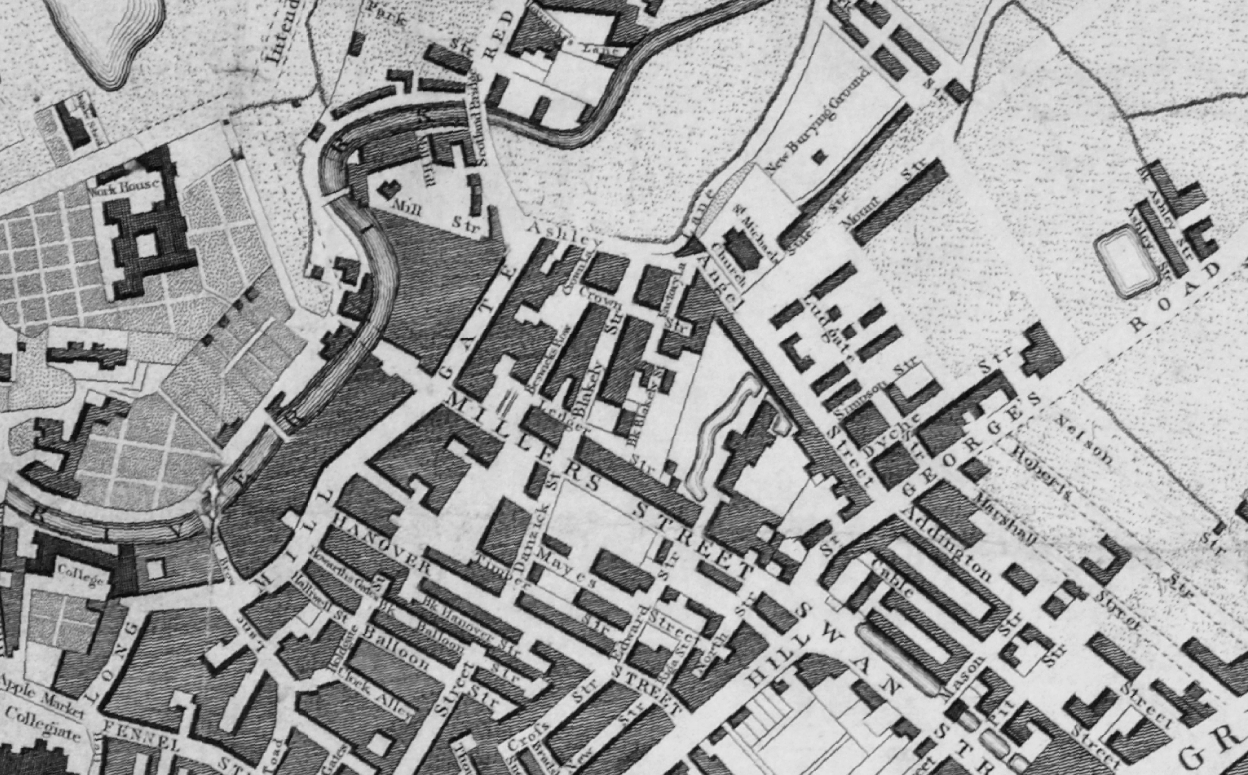
Once upon a time in 1807, it wasn’t there at all.
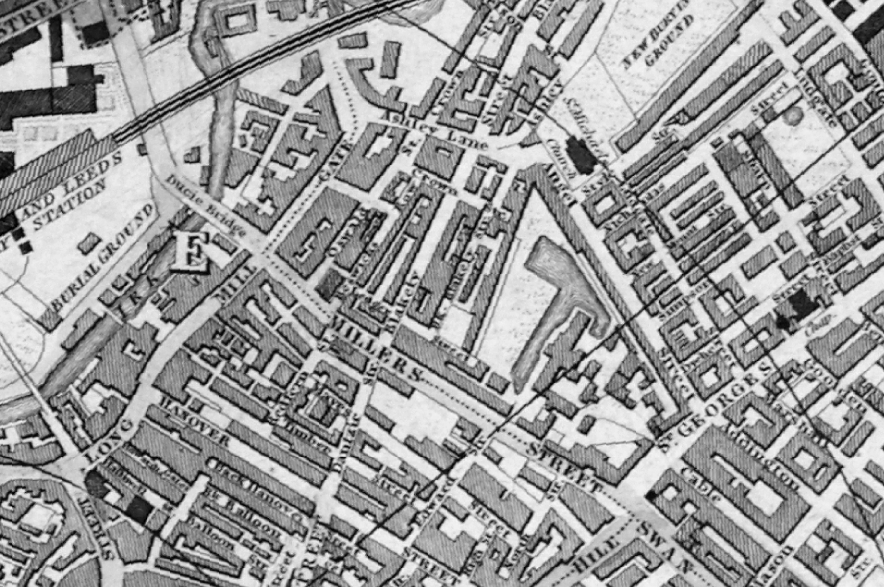
Then in 1848, it was there, as the L&Y had established a rail route.
Studying historical maps, we can see the development of dense patches of housing, matching the city’s industrial growth, this is followed by a thinning of housing up to the present day – matching the city’s industrial decline.
There is yet another twist in the tale, as the development of Collyhurst Village and Victoria North, are adding another layer of housing history.
I have walked this area for several years now, recording the relentless but gradual change.
Including the pedestrian underpass, subway or tunnel.
On my most recent visit there were works cleaning the pedestrian underpass, subway or tunnel.
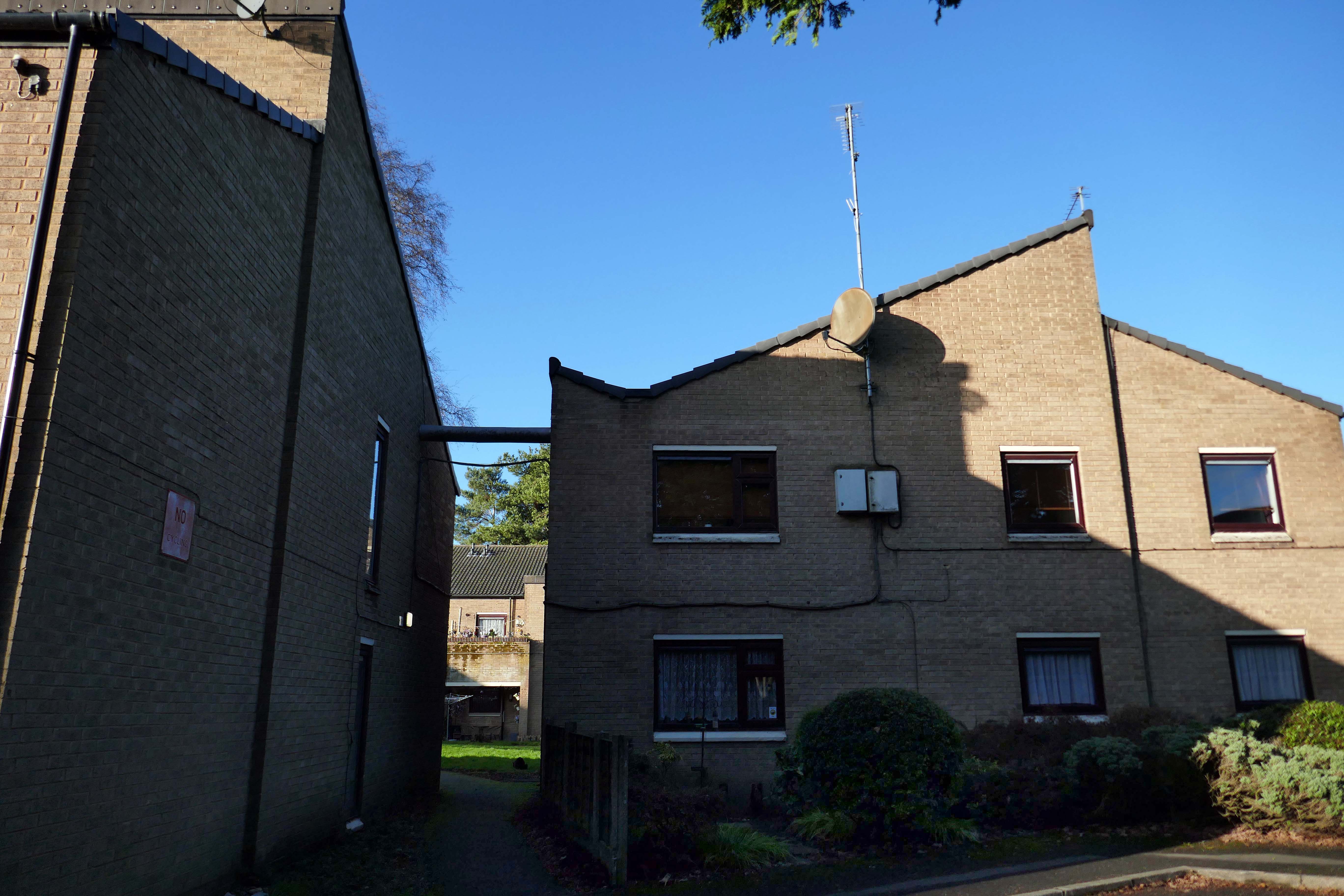
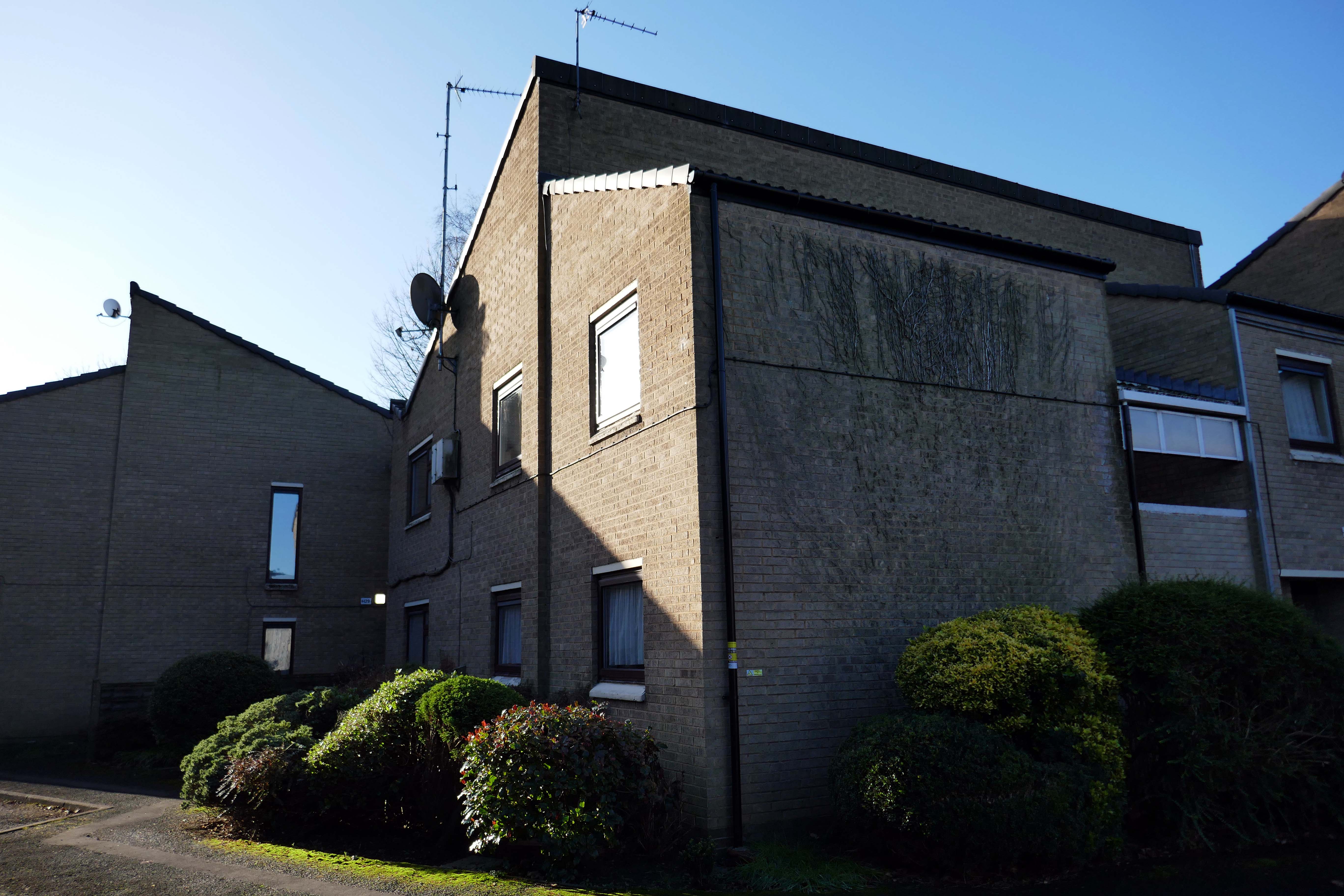
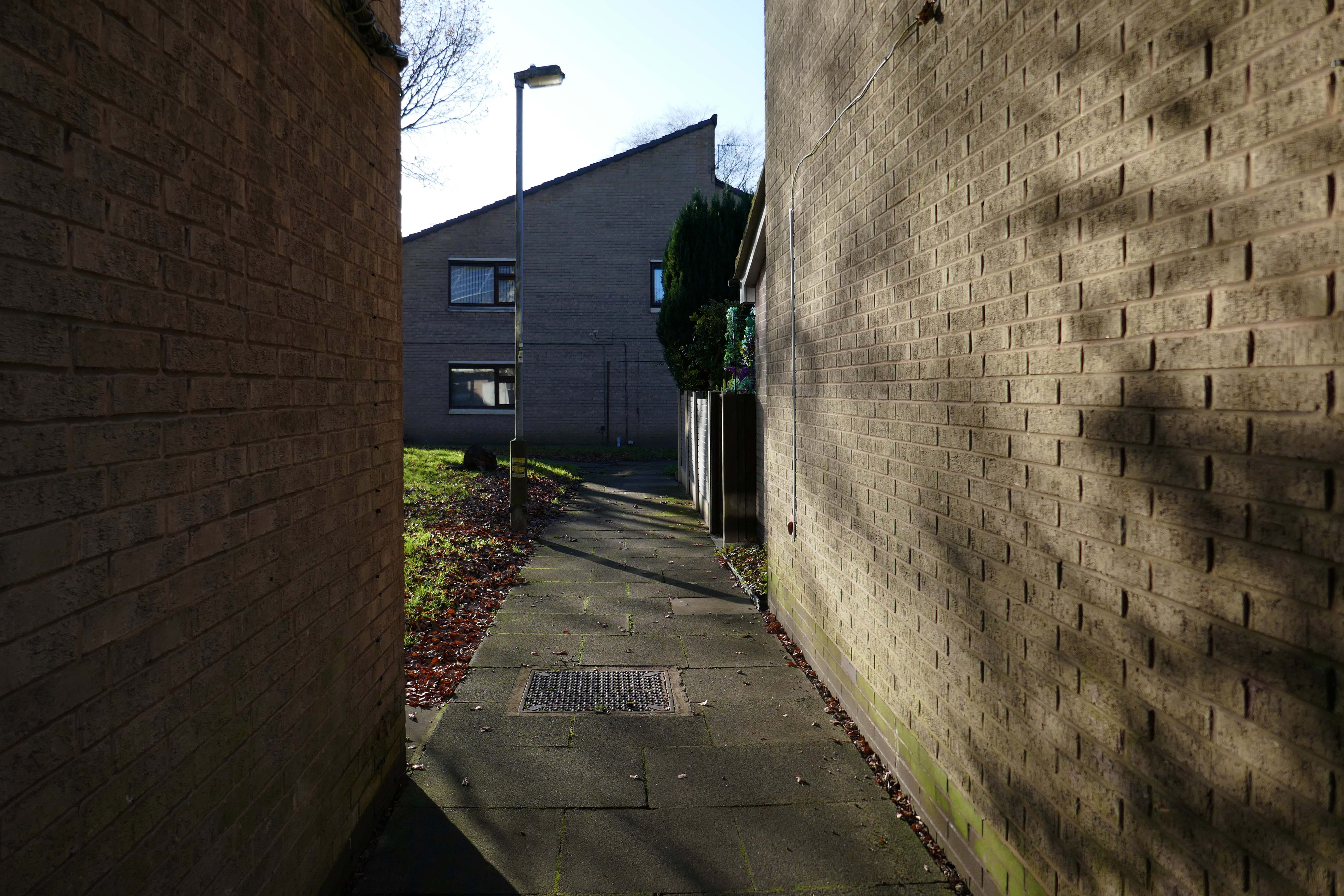
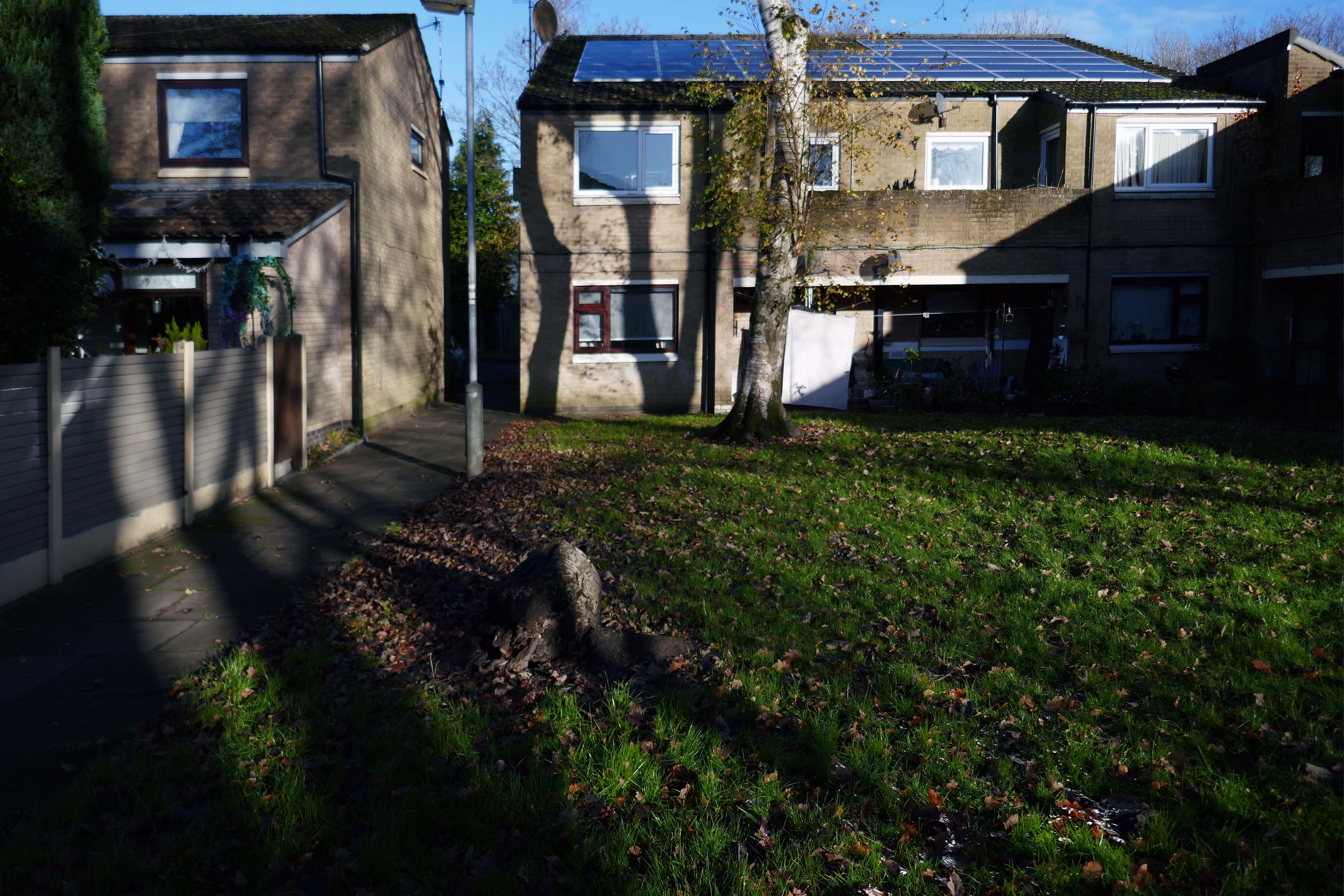
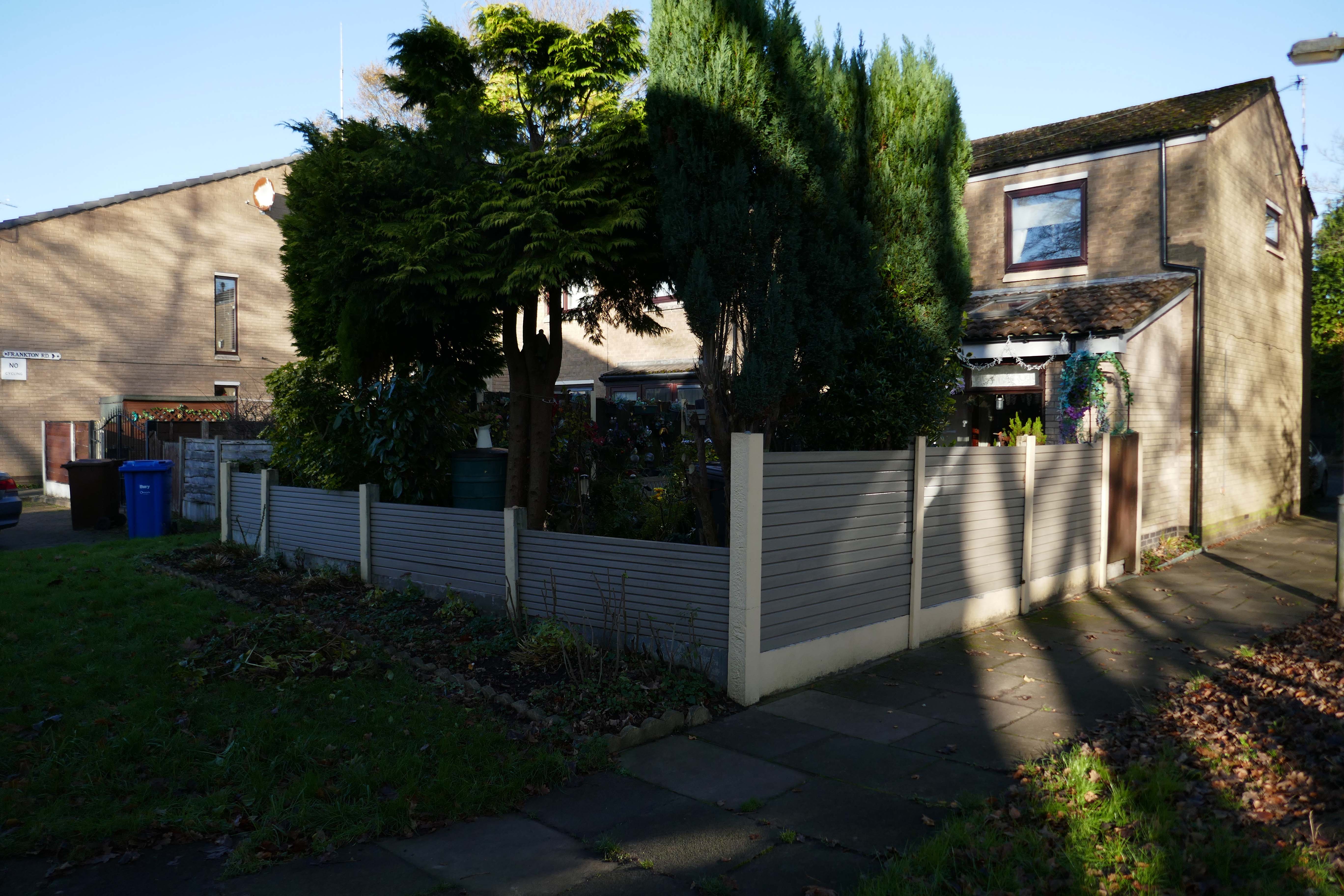
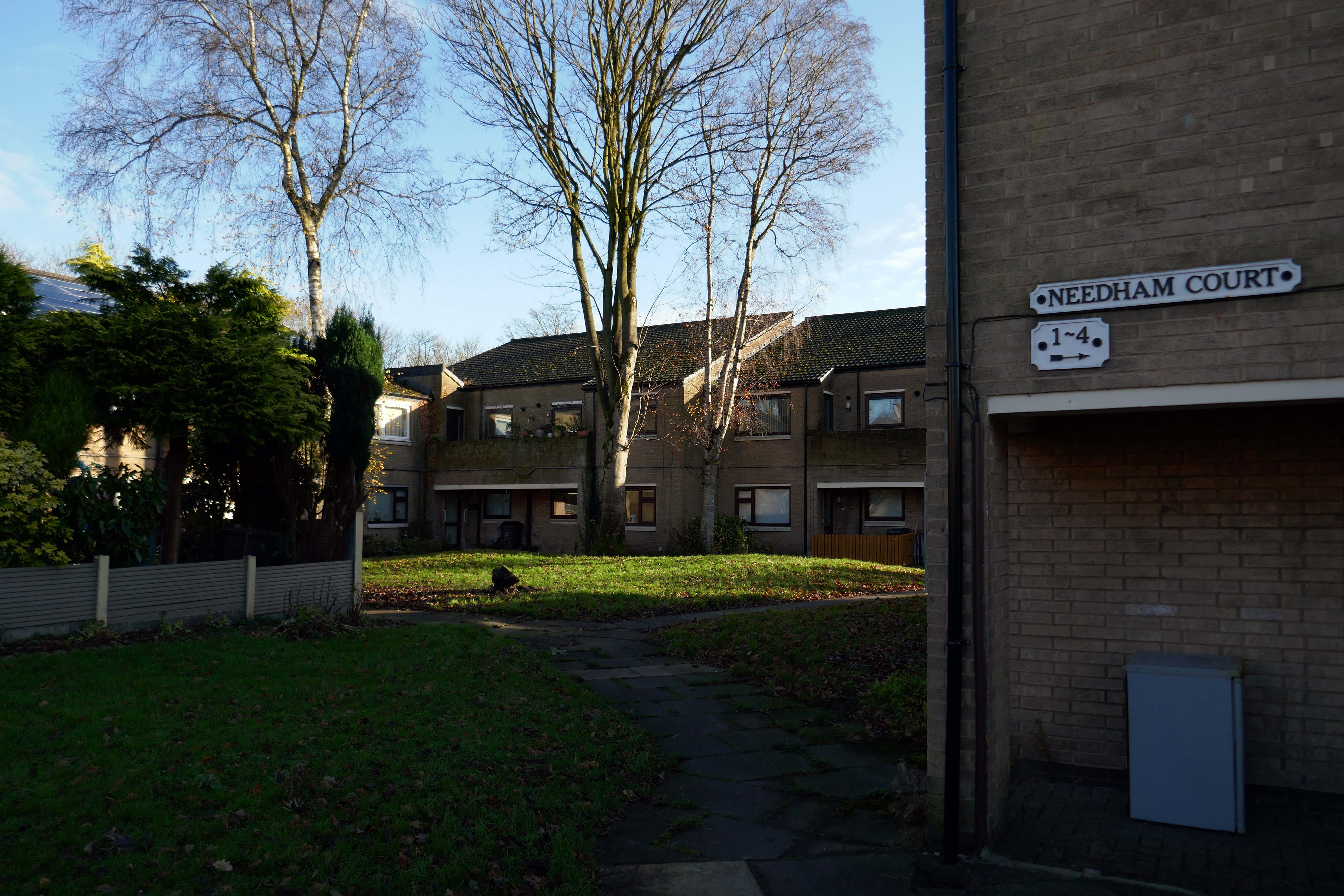
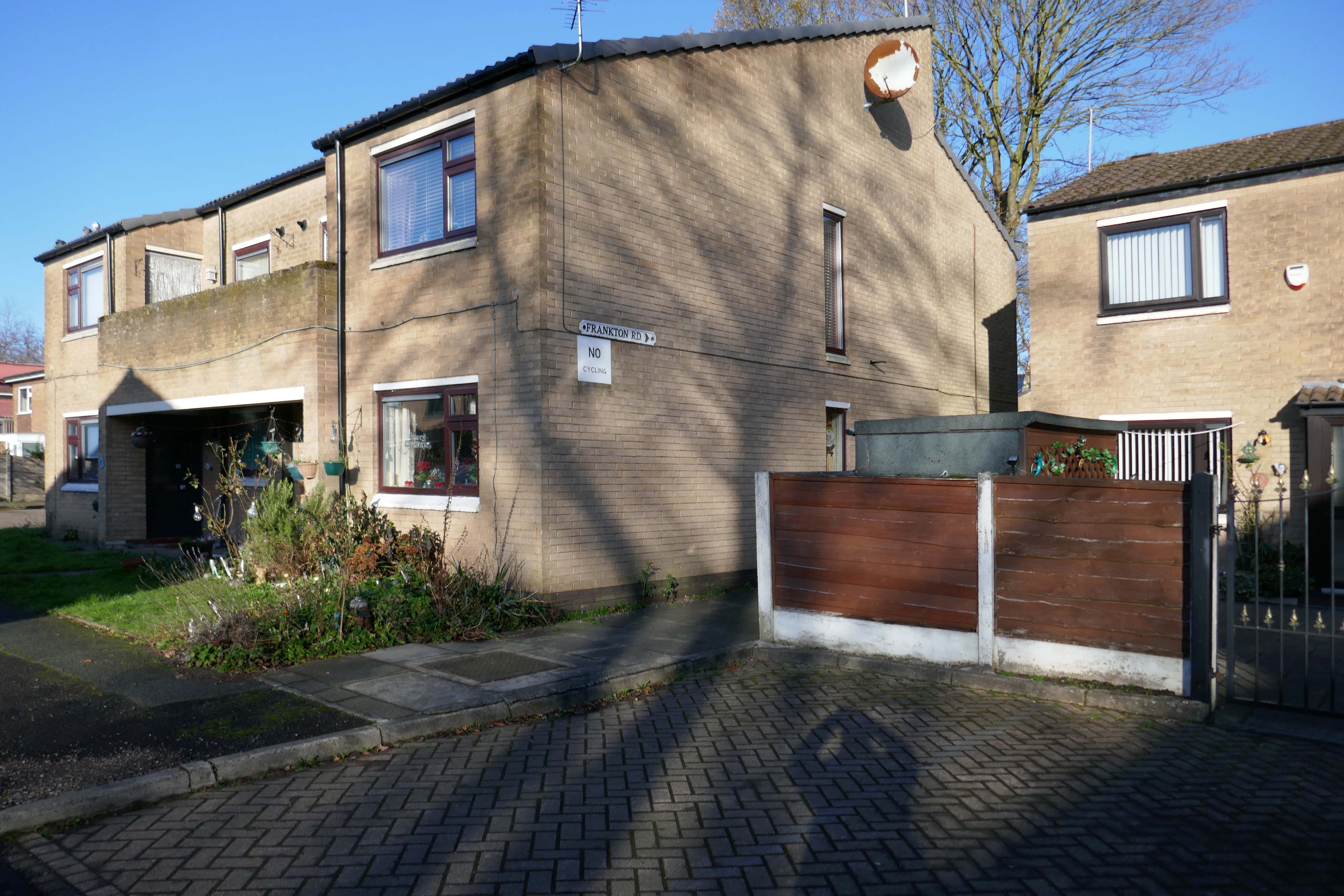
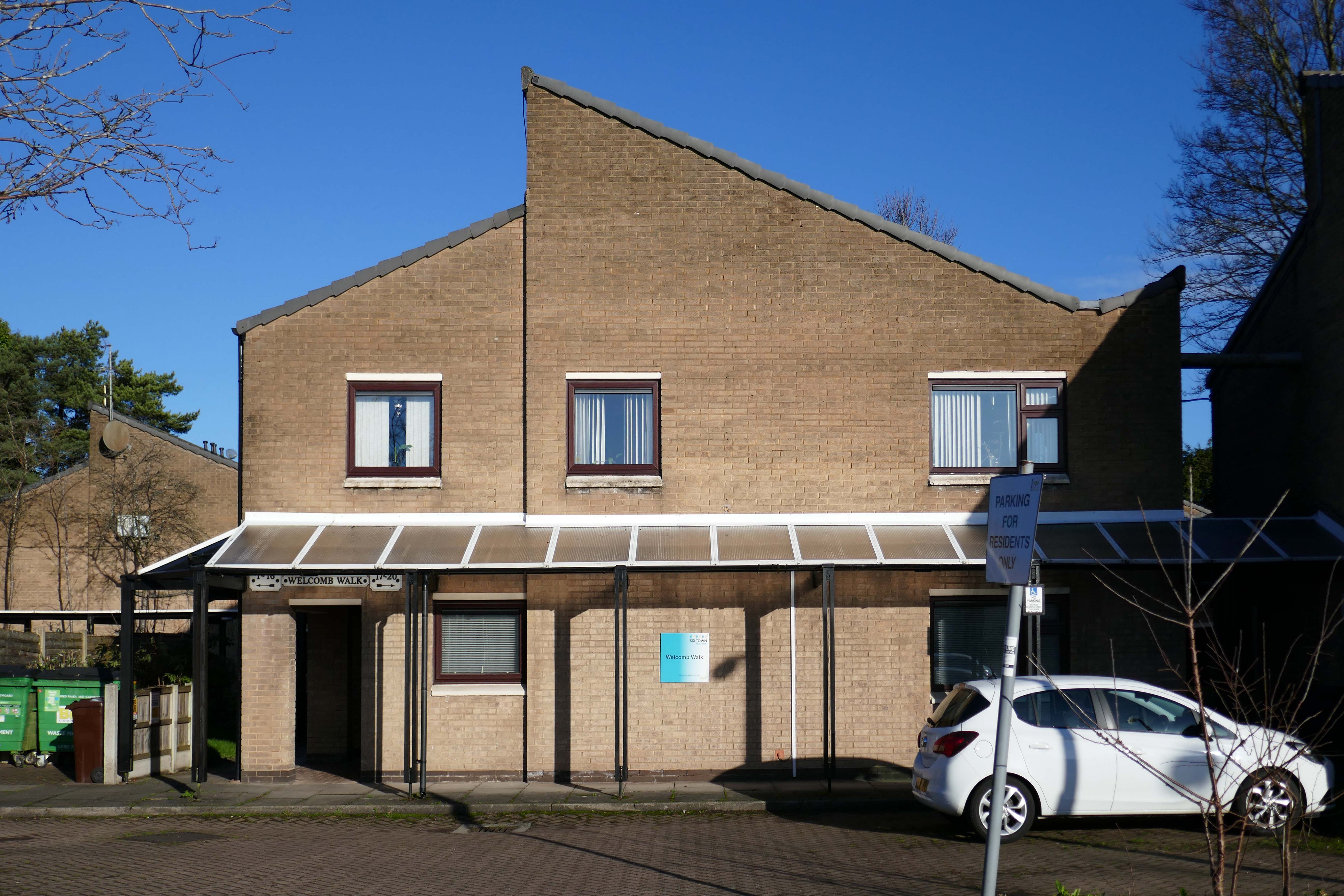
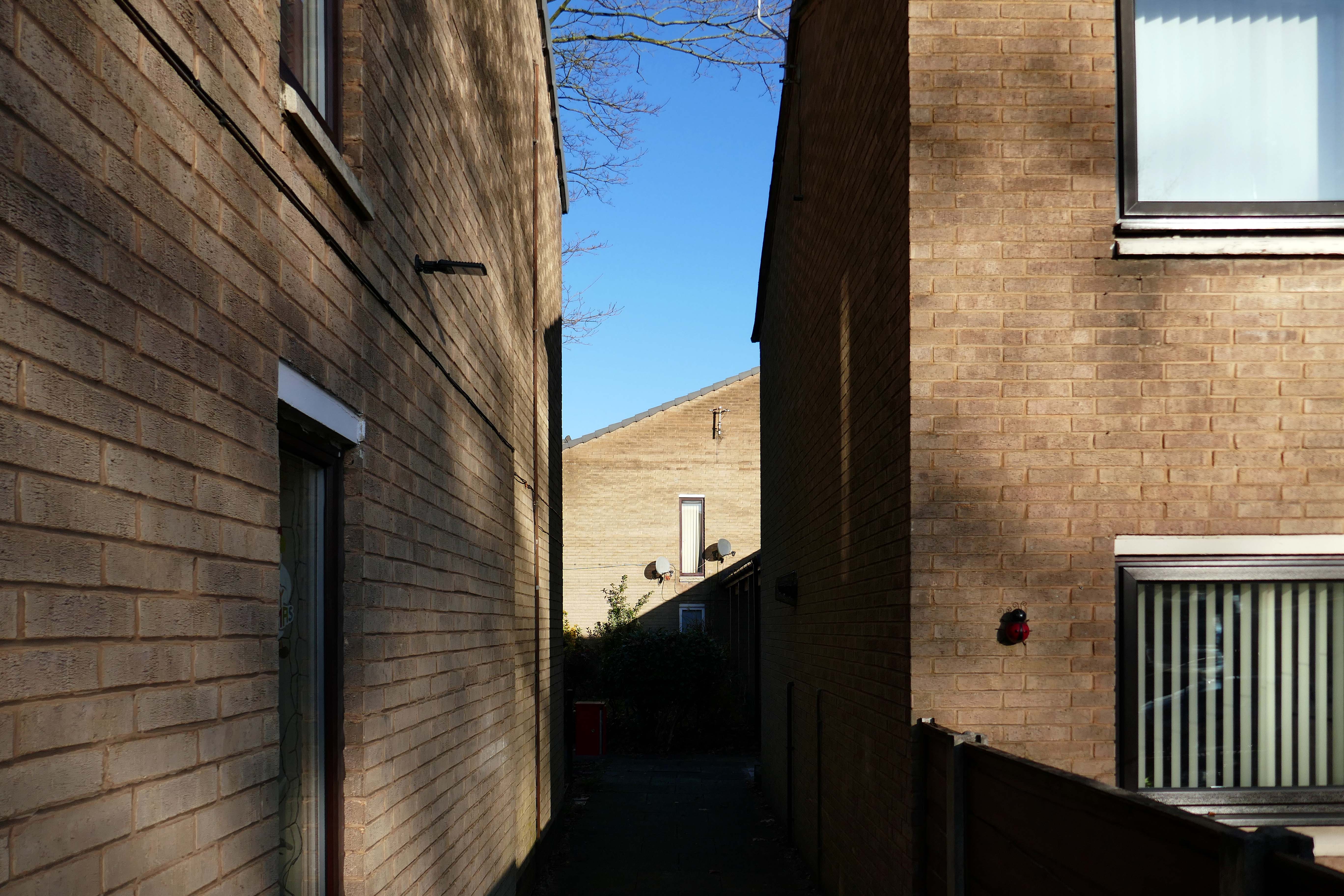
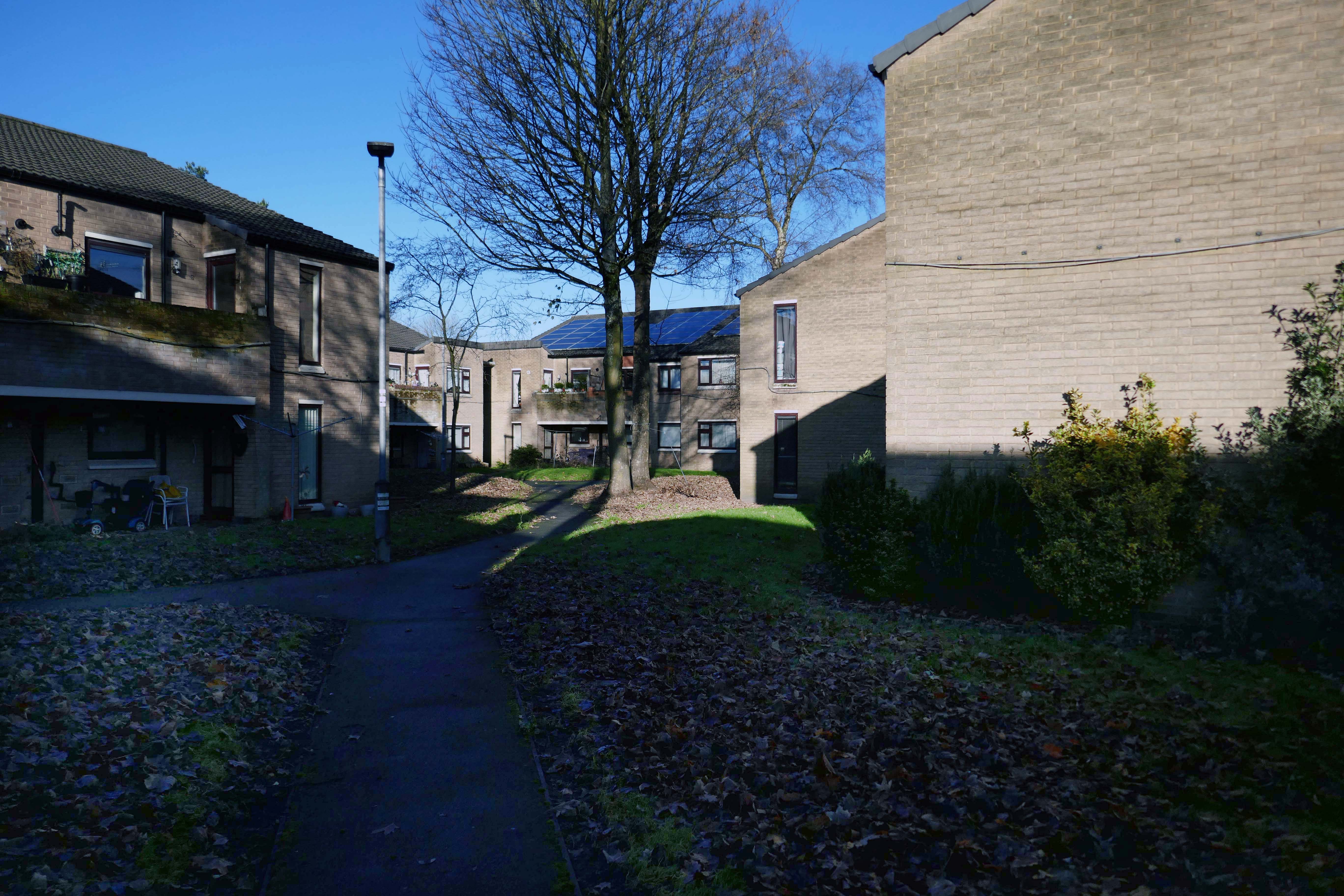
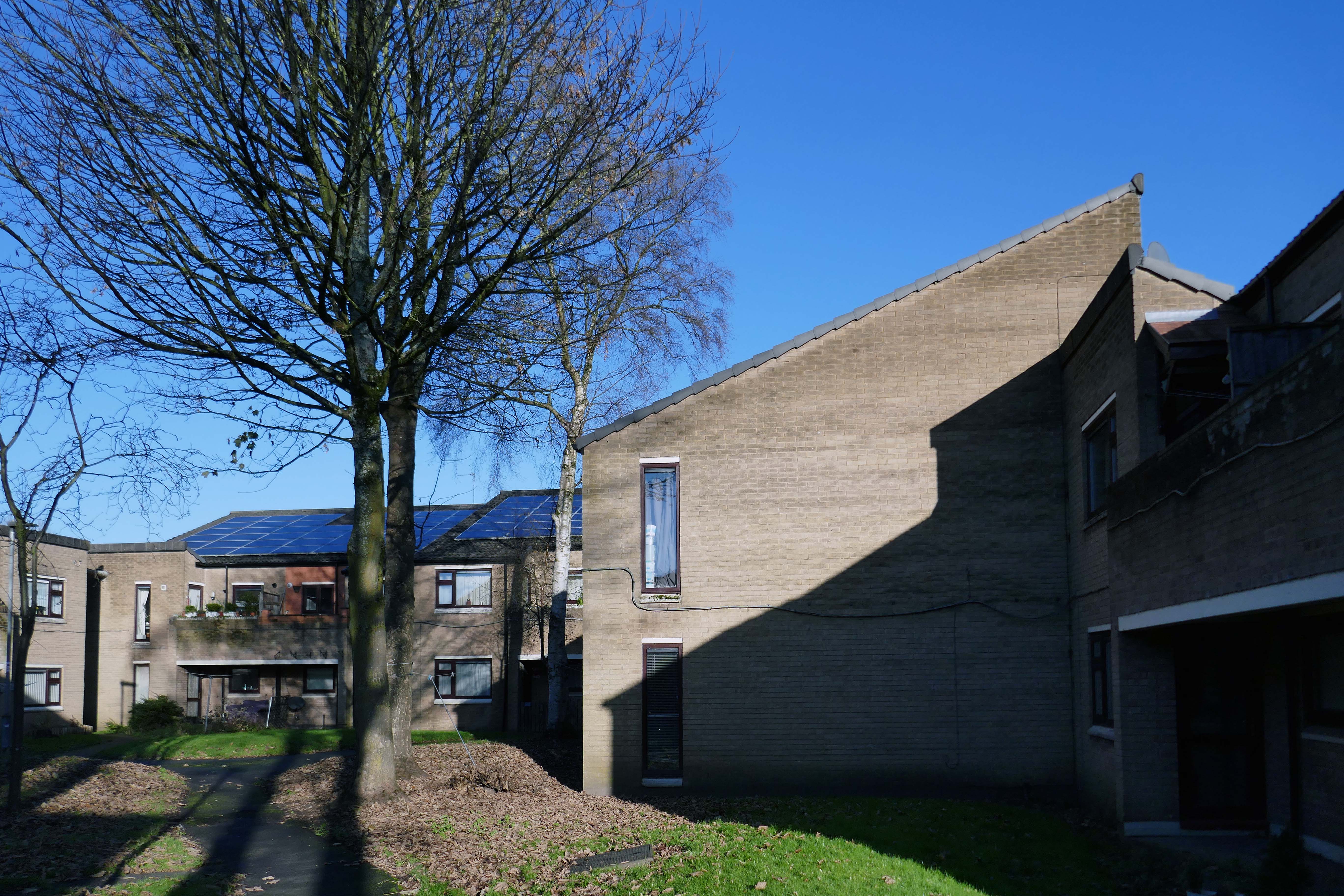
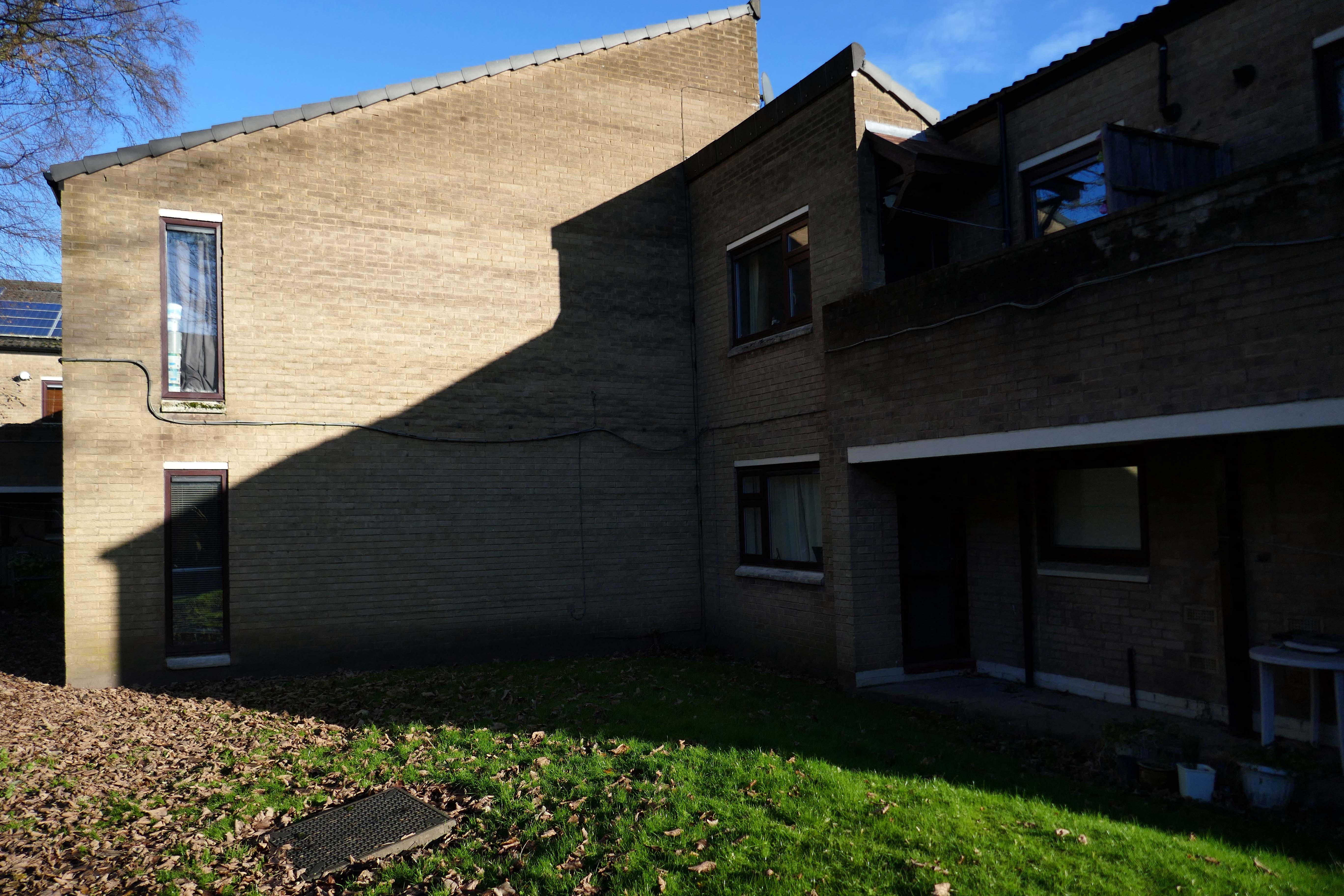
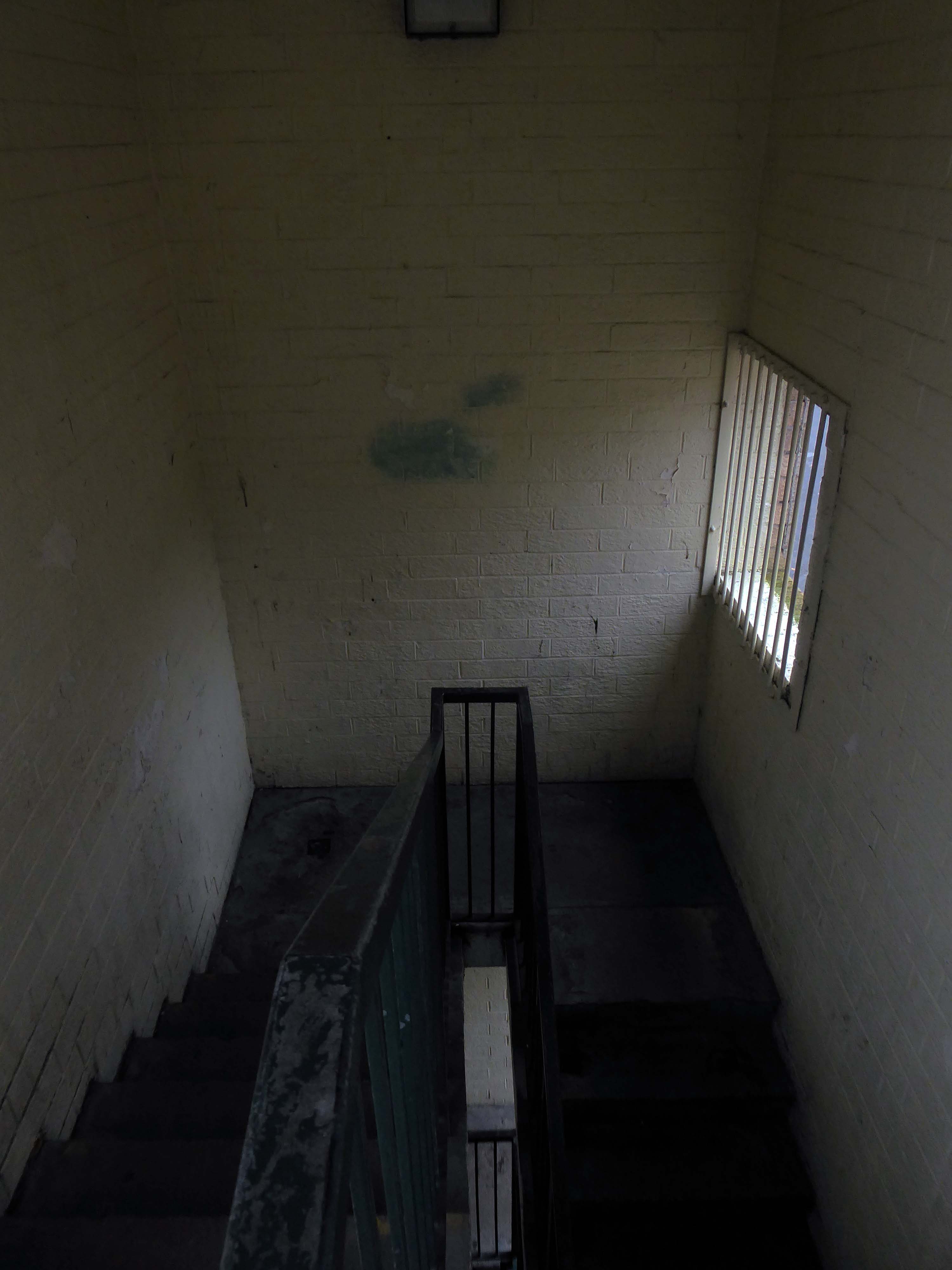
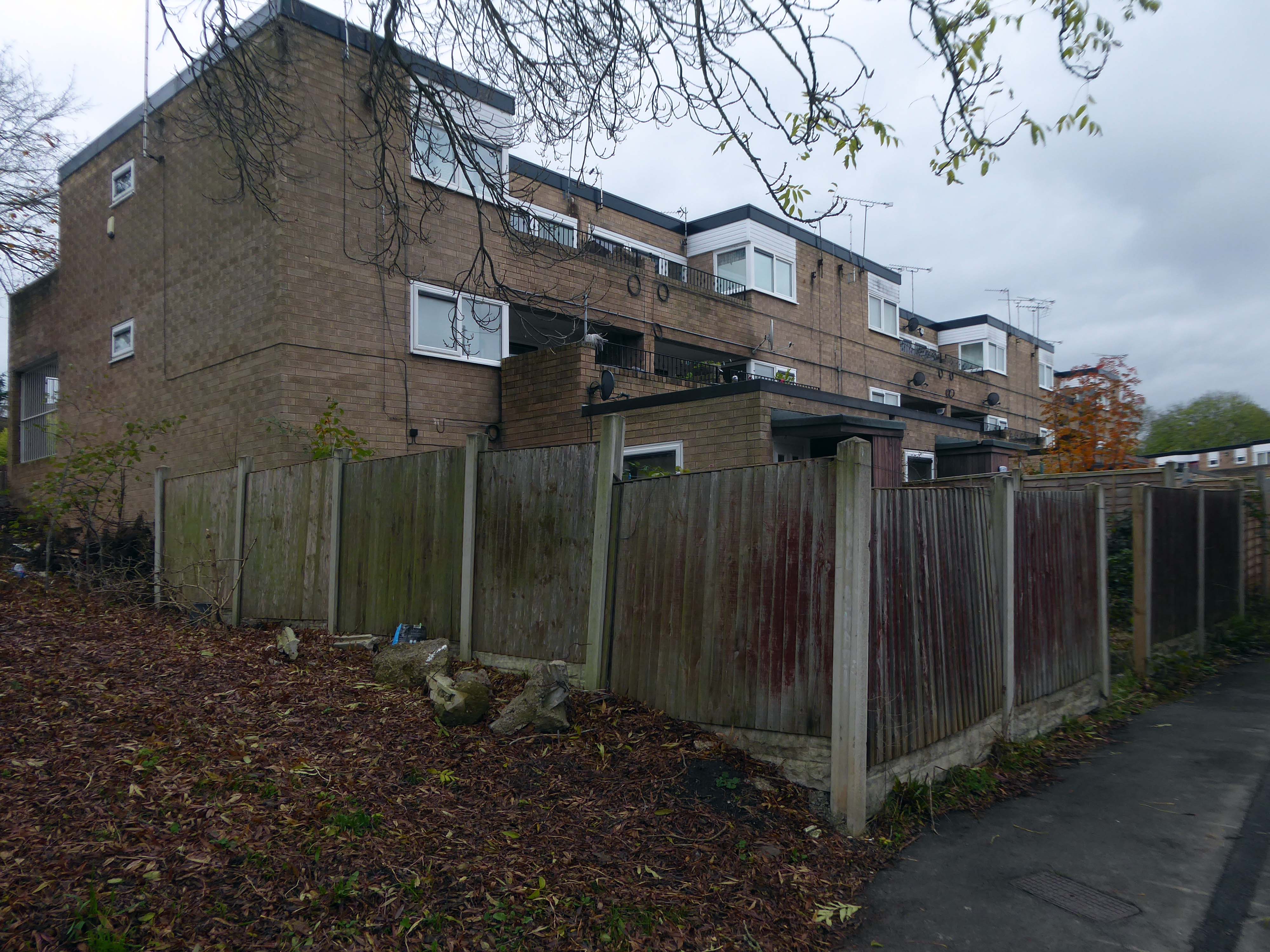
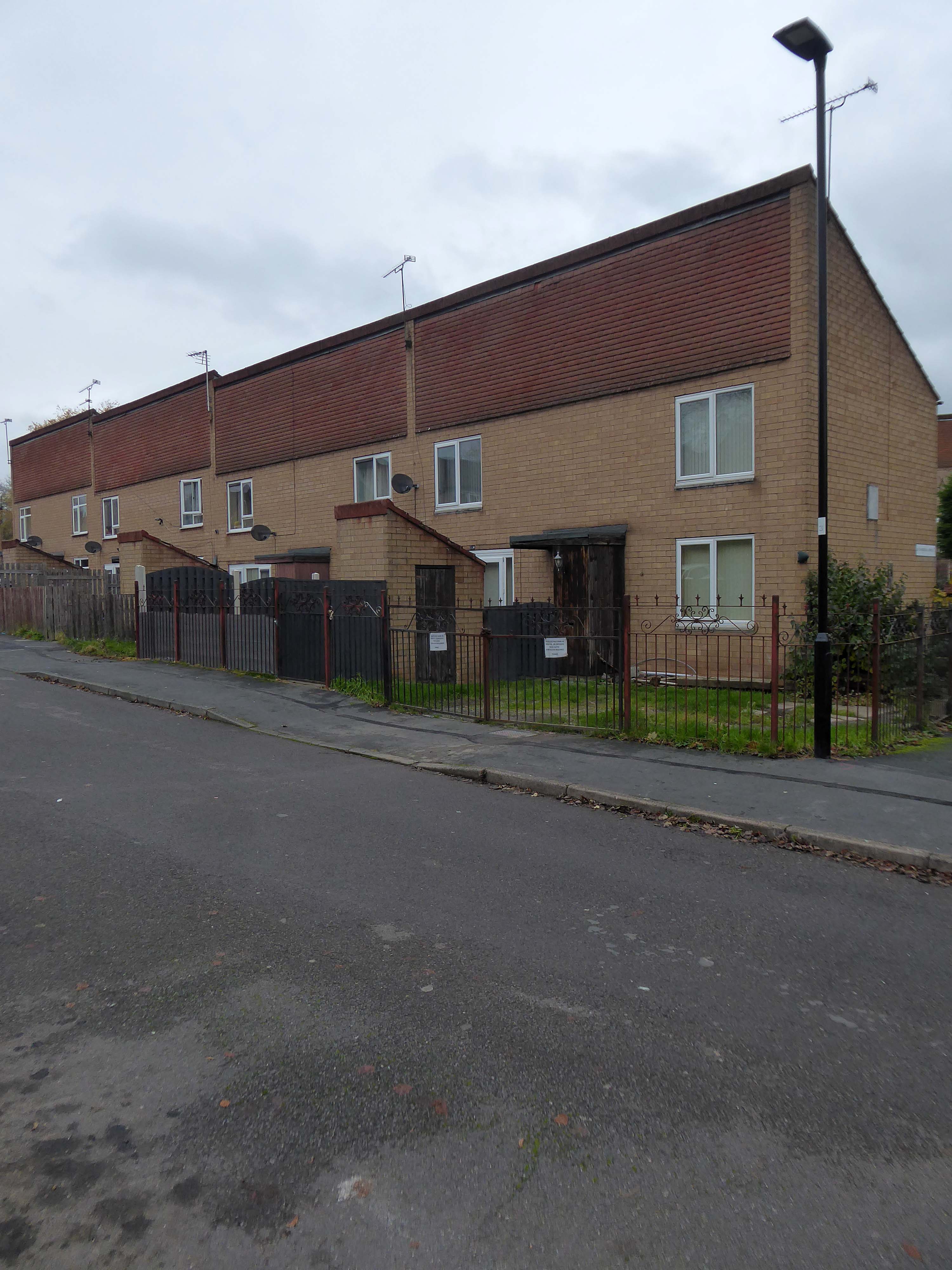
Whilst not seeking sheltered housing for my good self, I am always intrigued by small developments of interesting social housing, grouped around pedestrian walk ways and green space.
The residents with whom I chatted seems content with their homes and the management thereof.
I bade them adieu and went about my way, taking these few snaps.
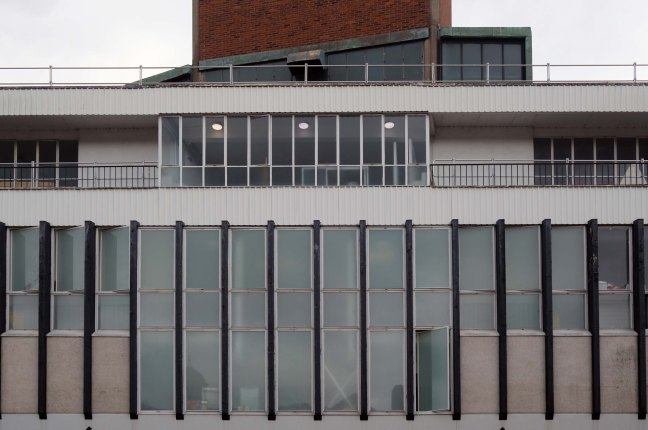
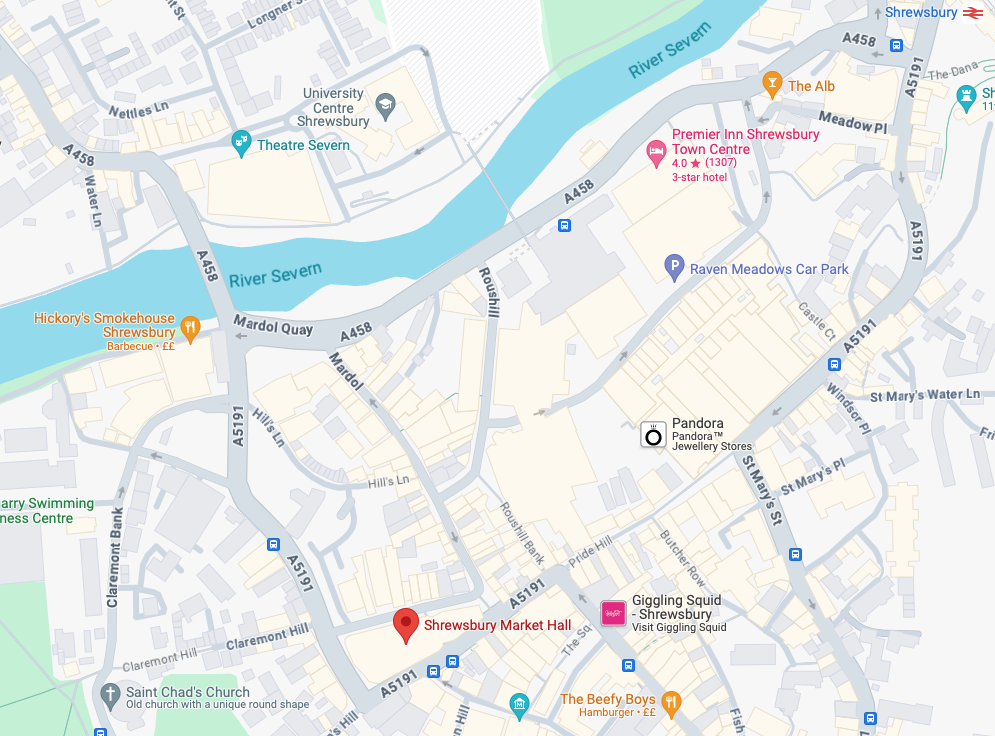
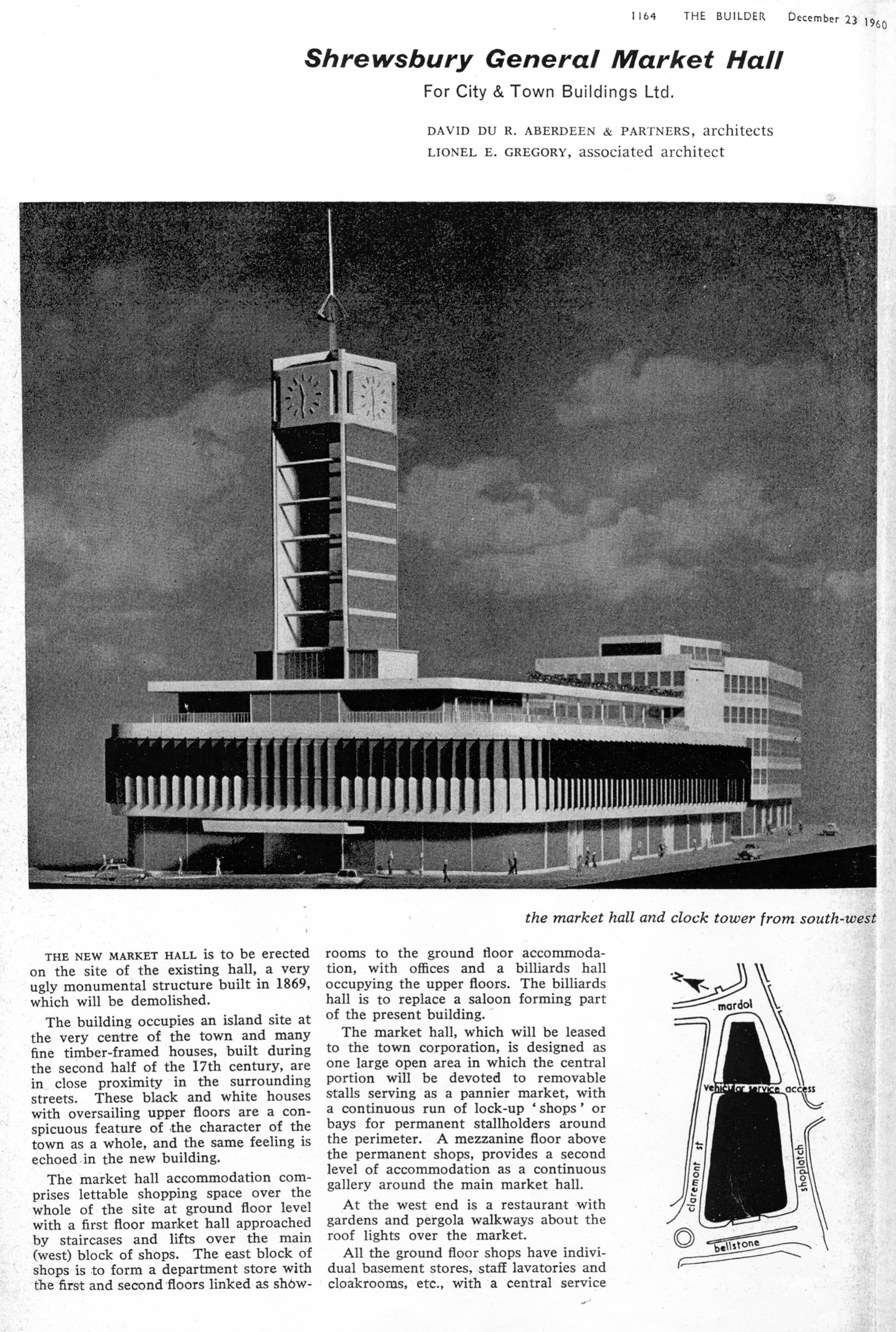
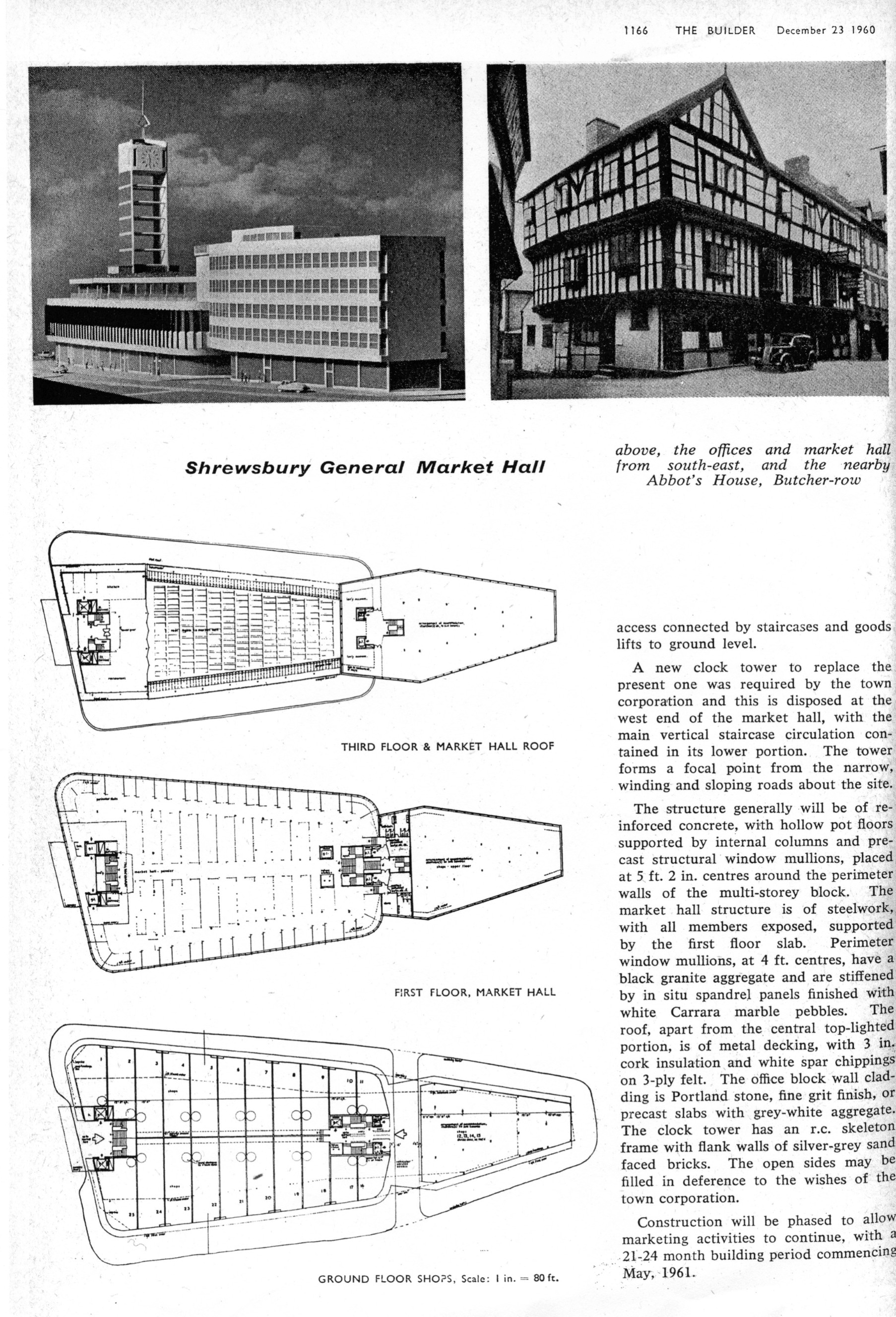
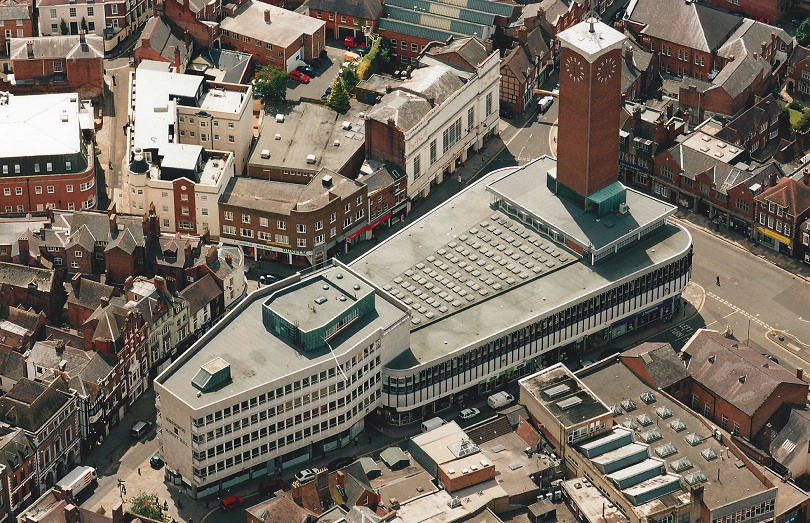
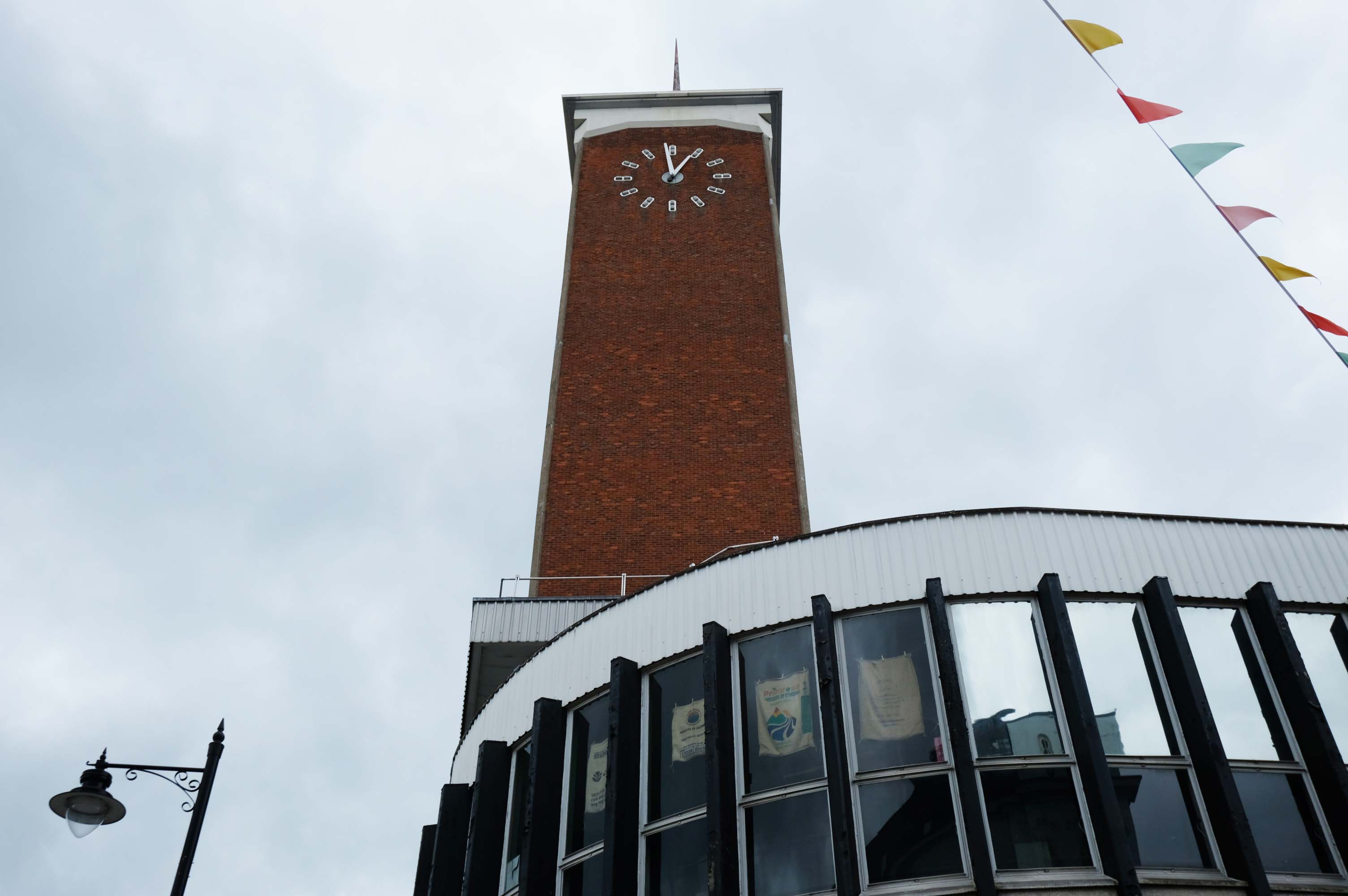
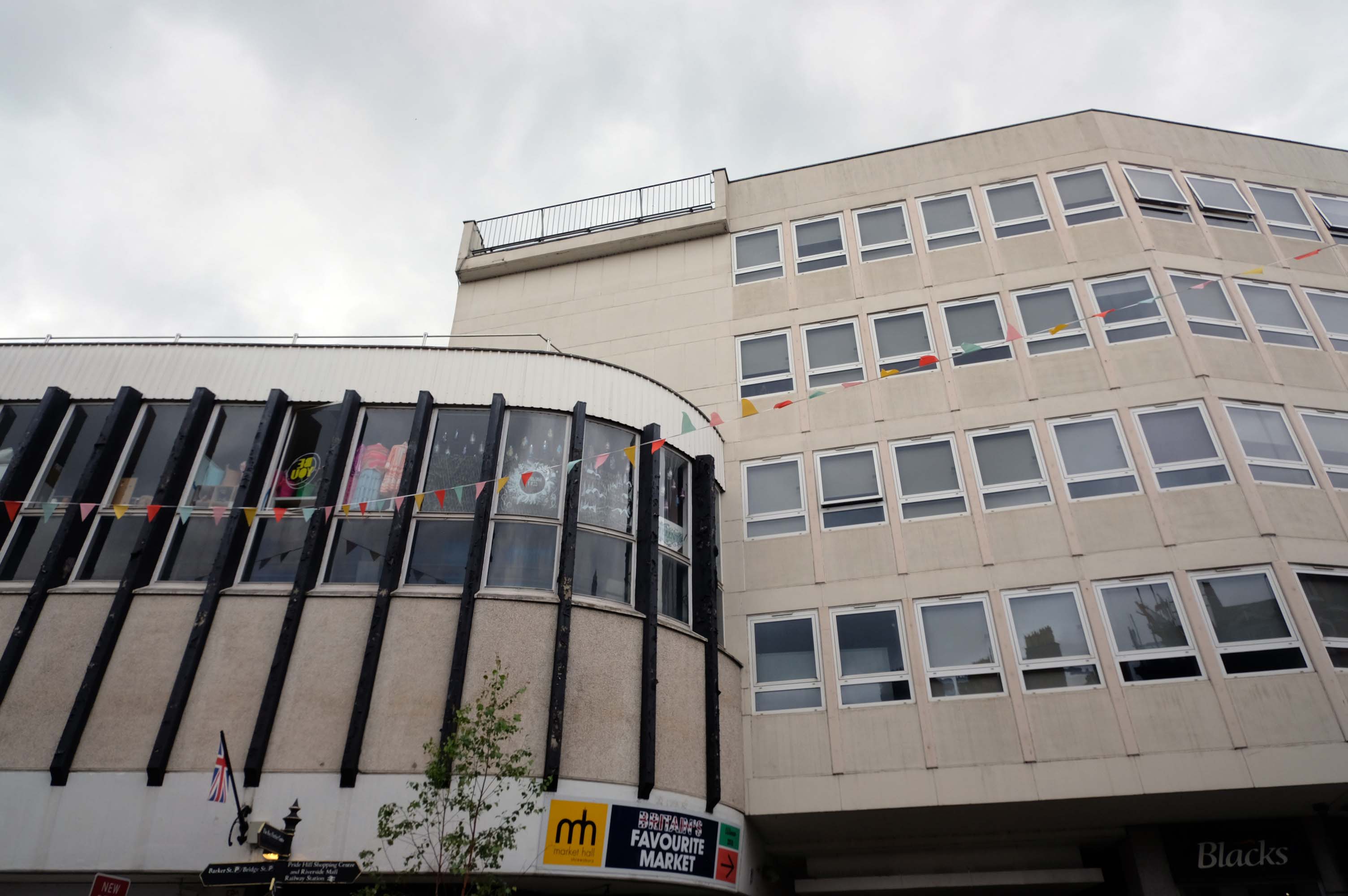
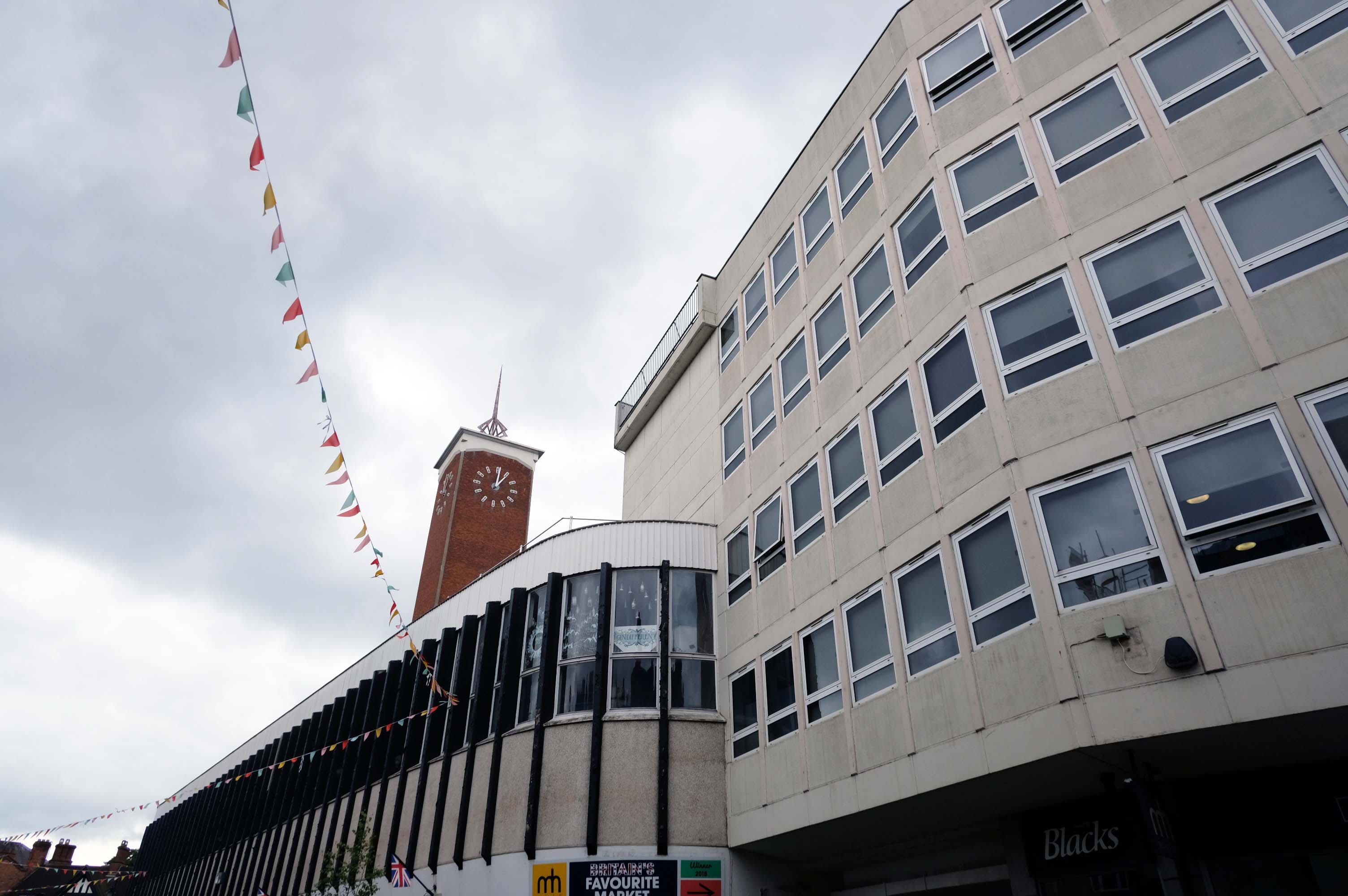
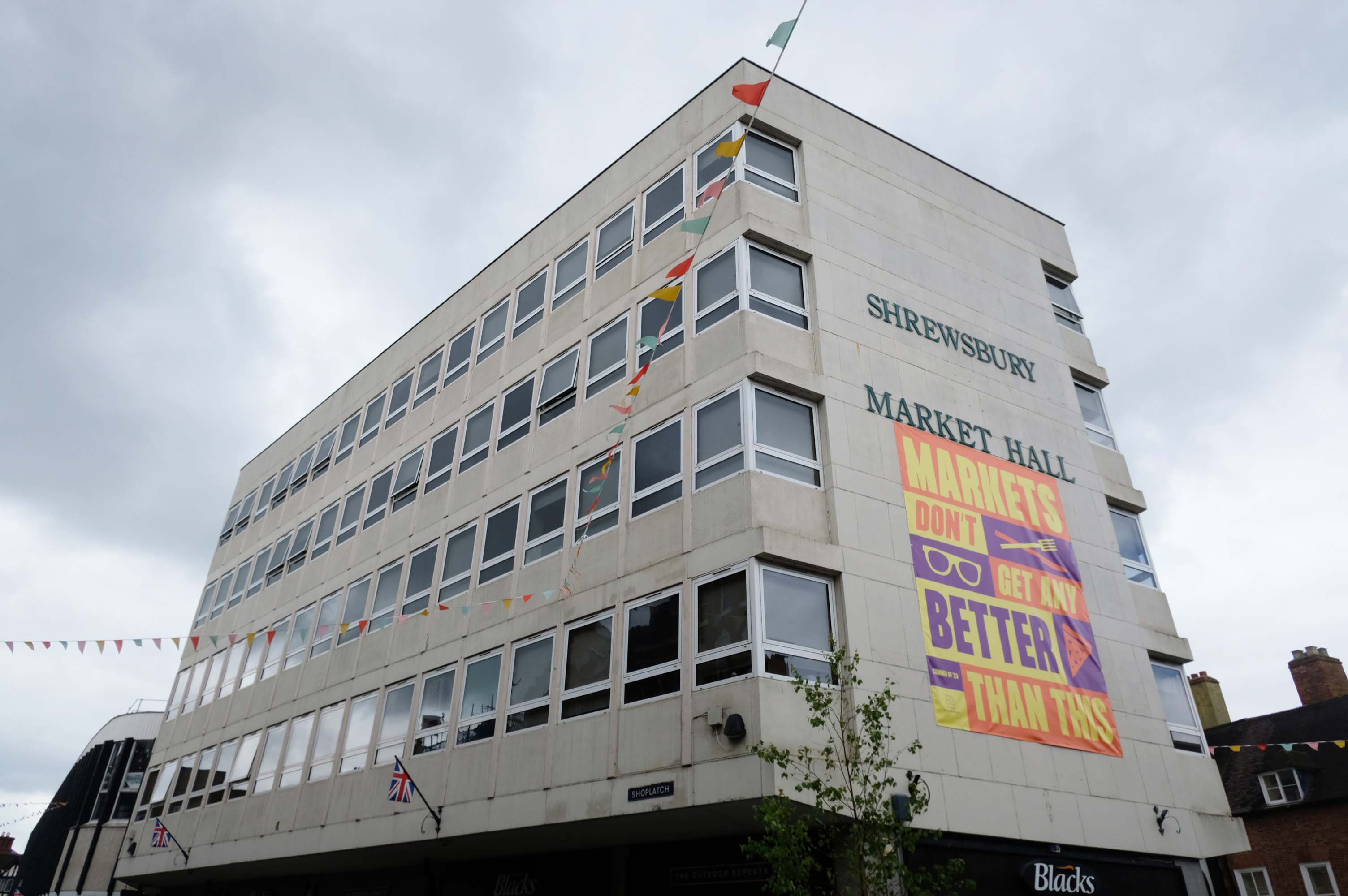
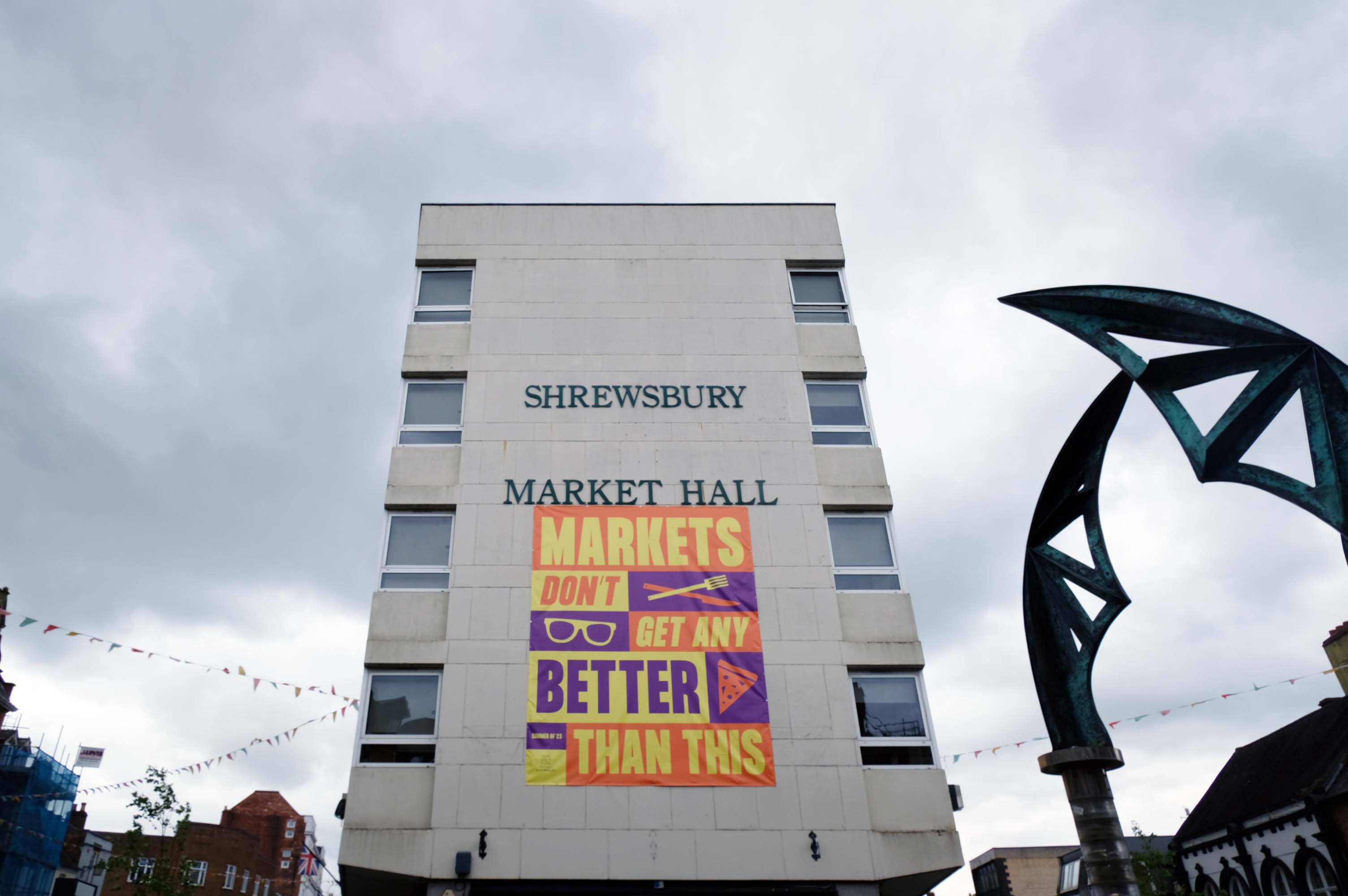
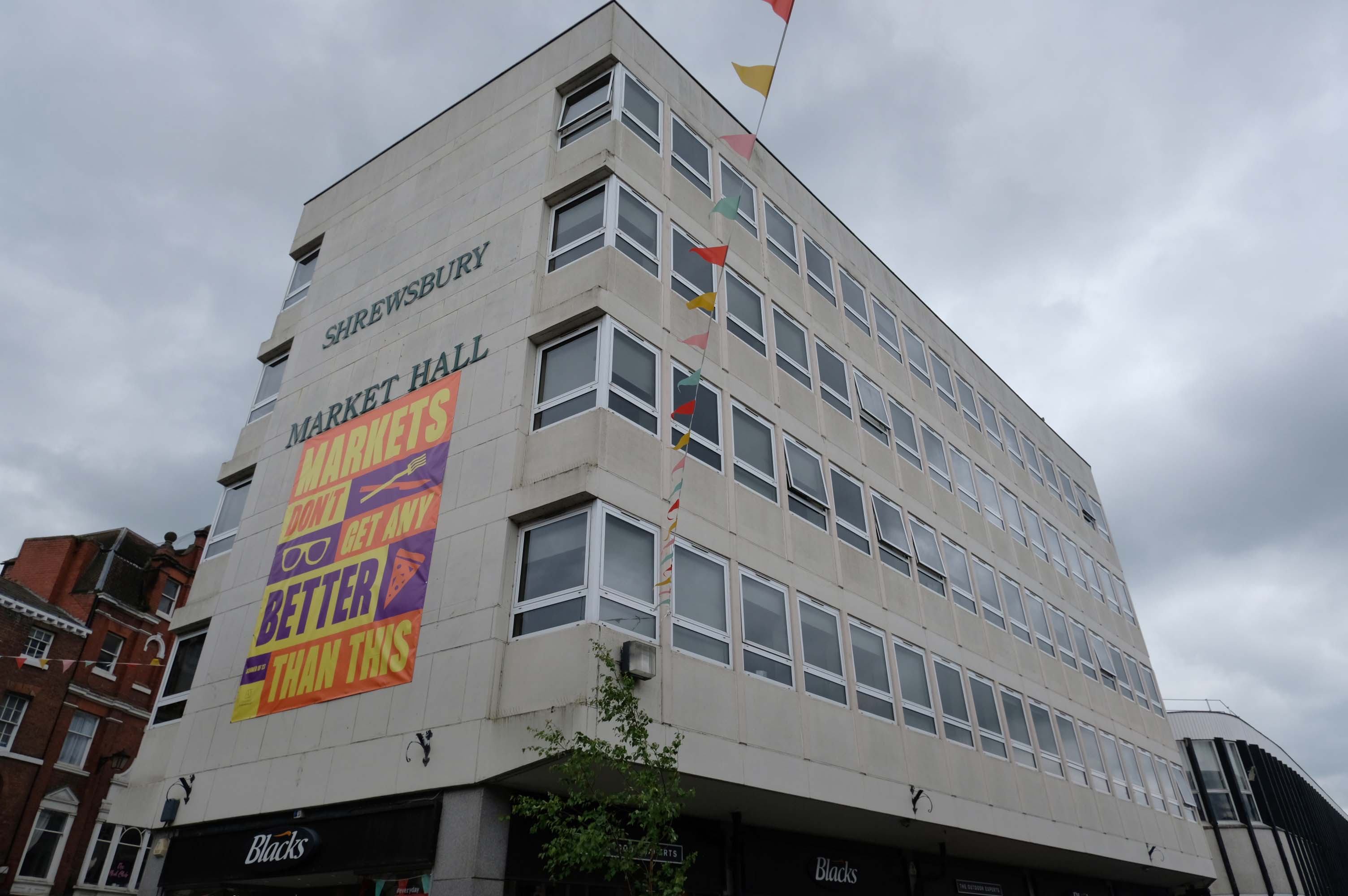
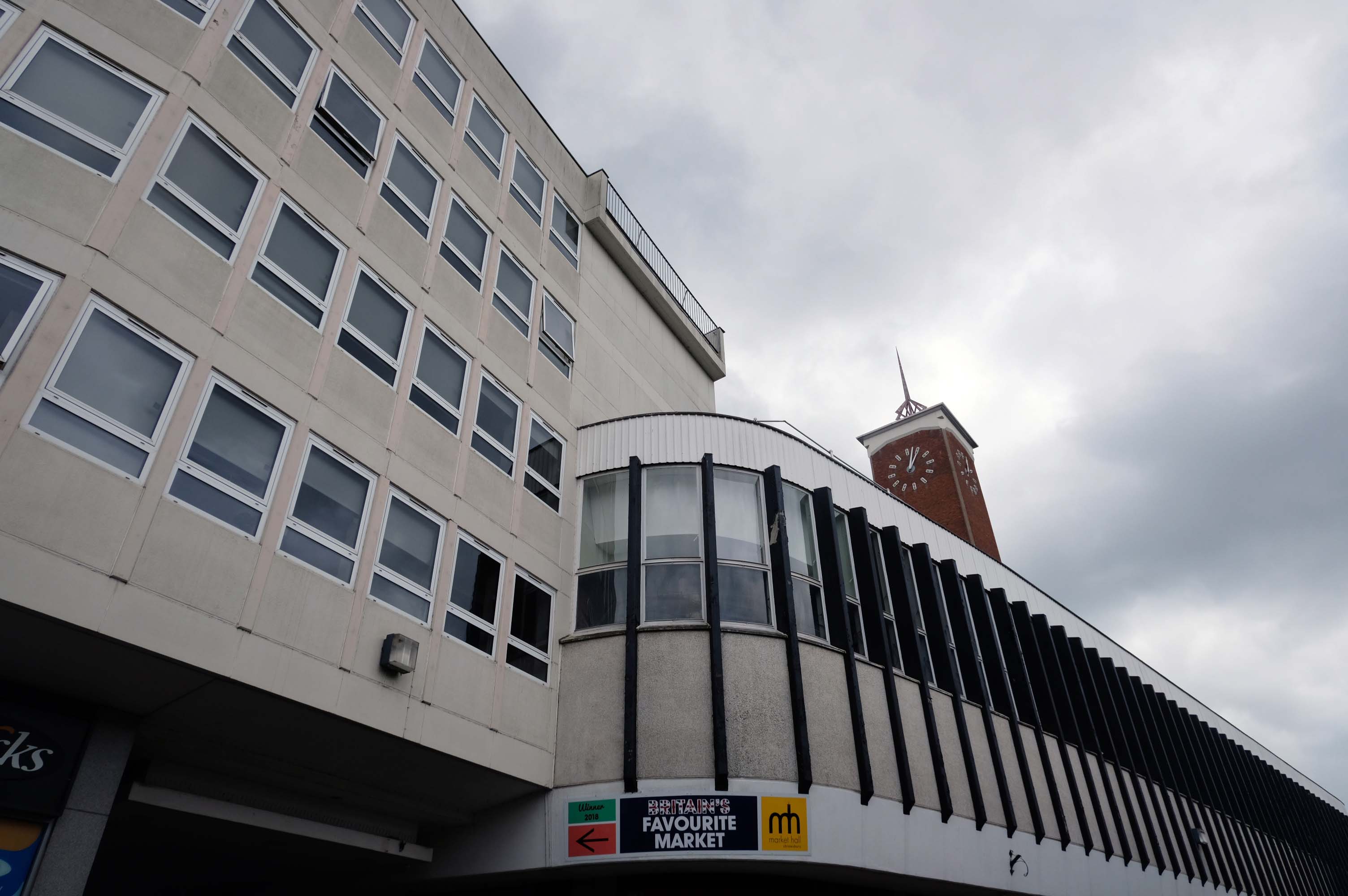
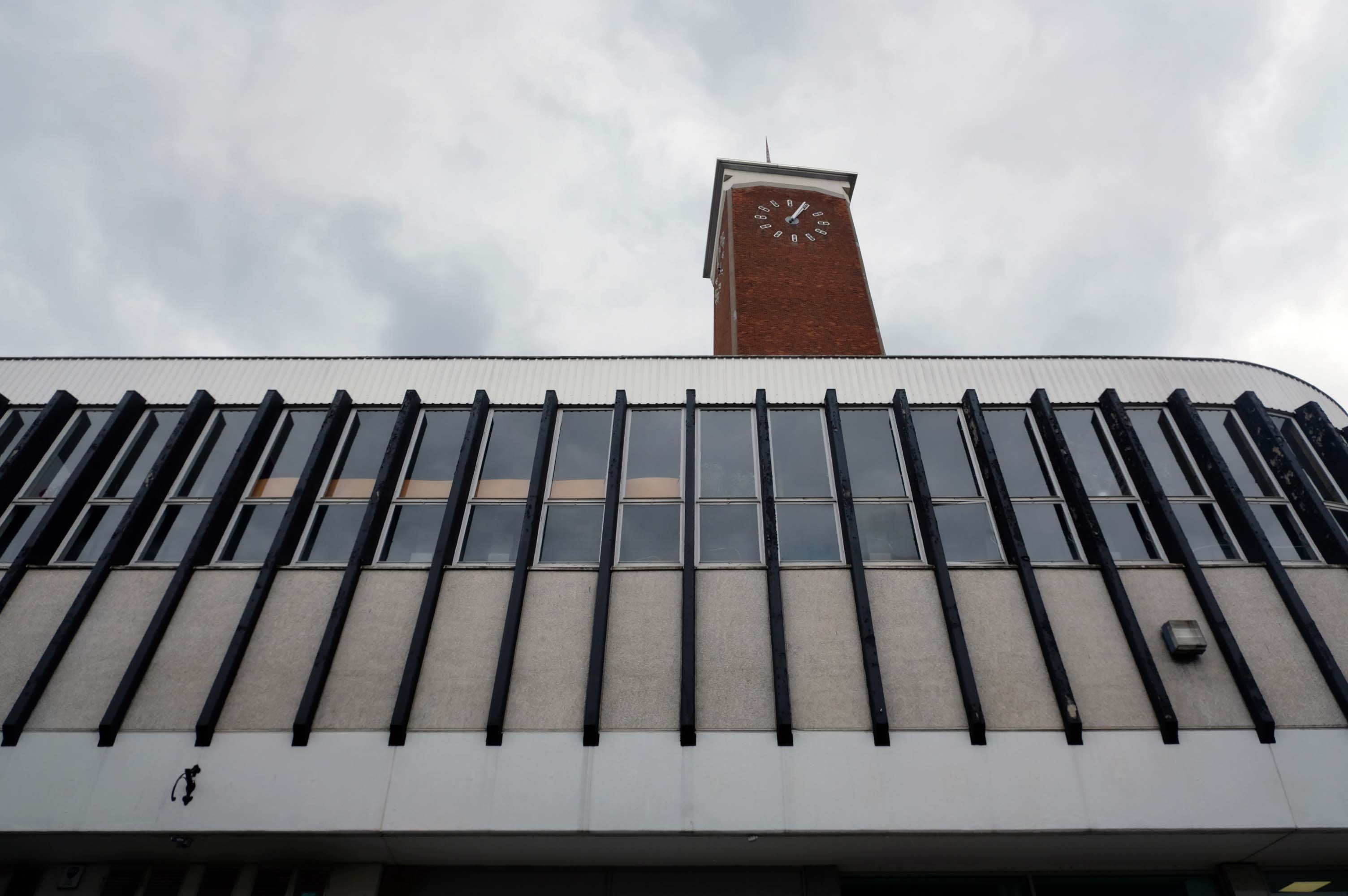
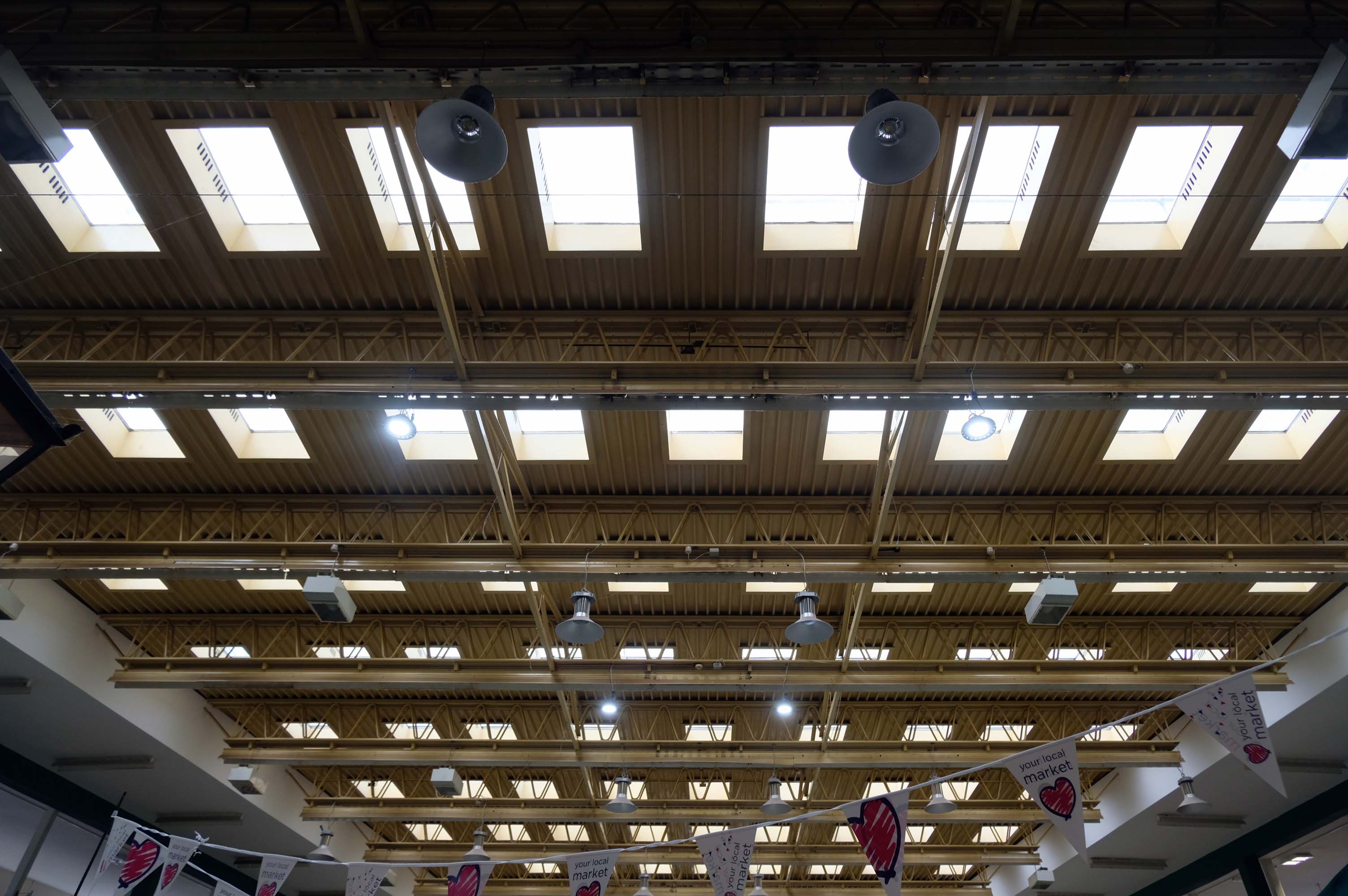
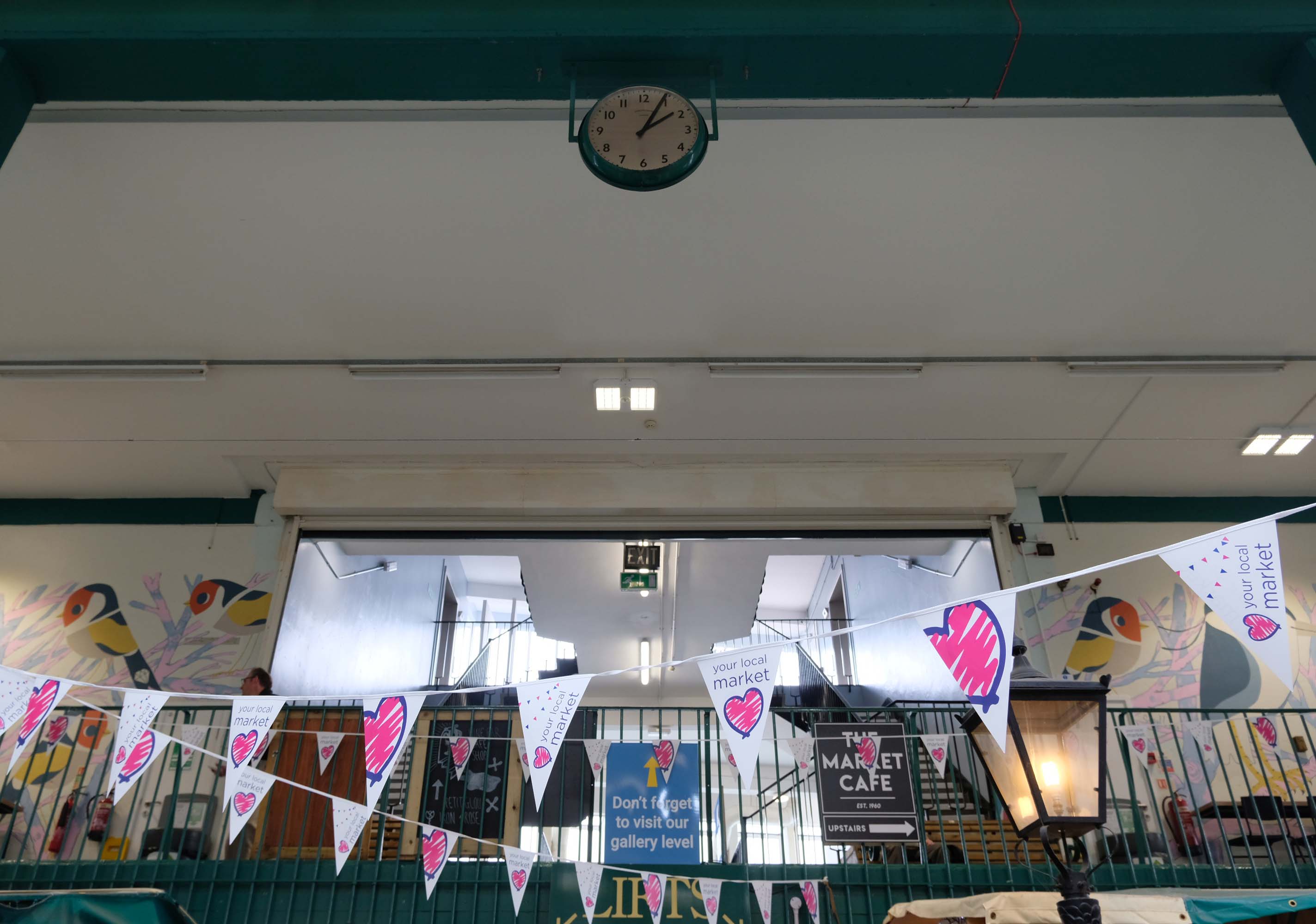
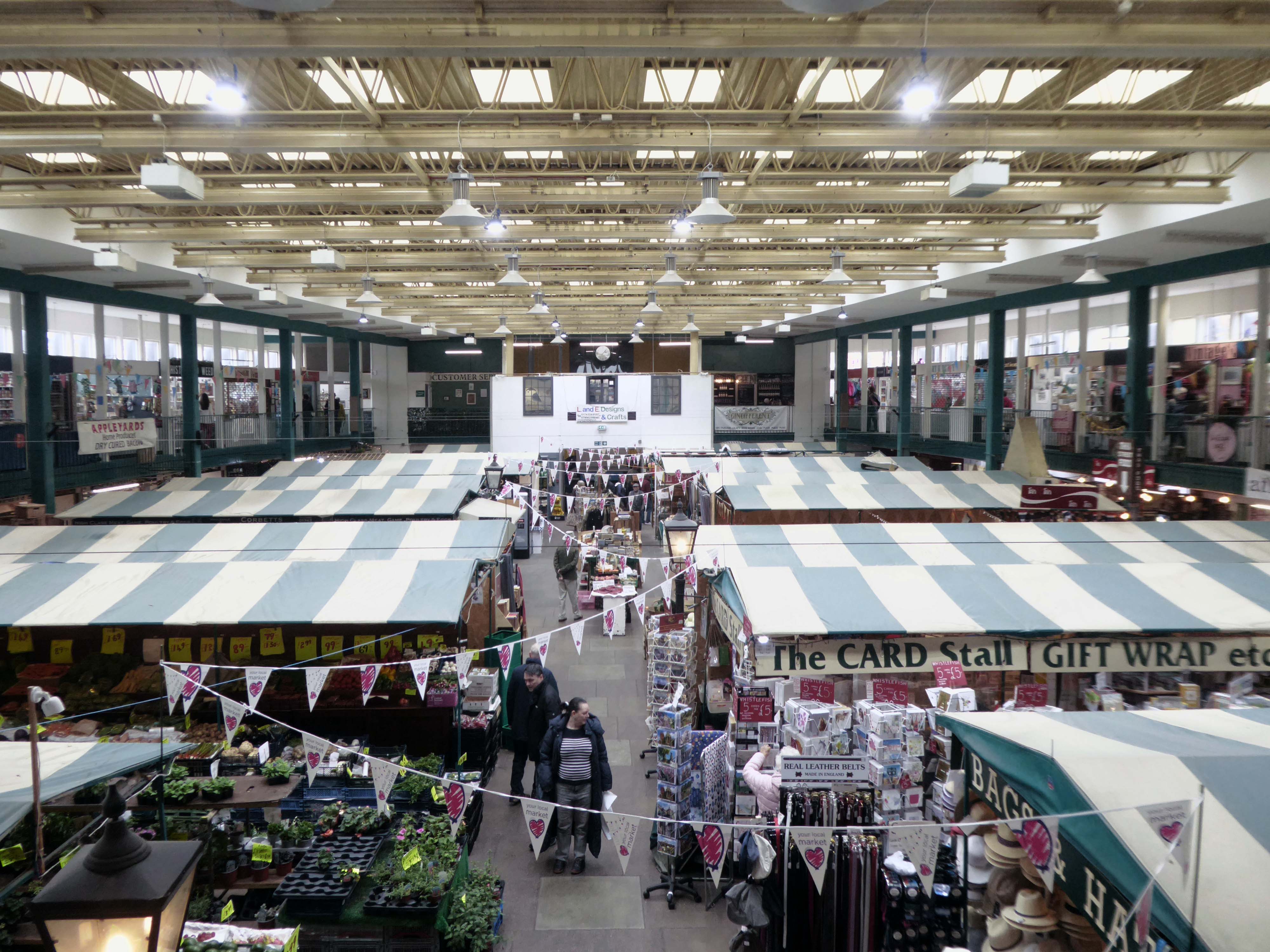
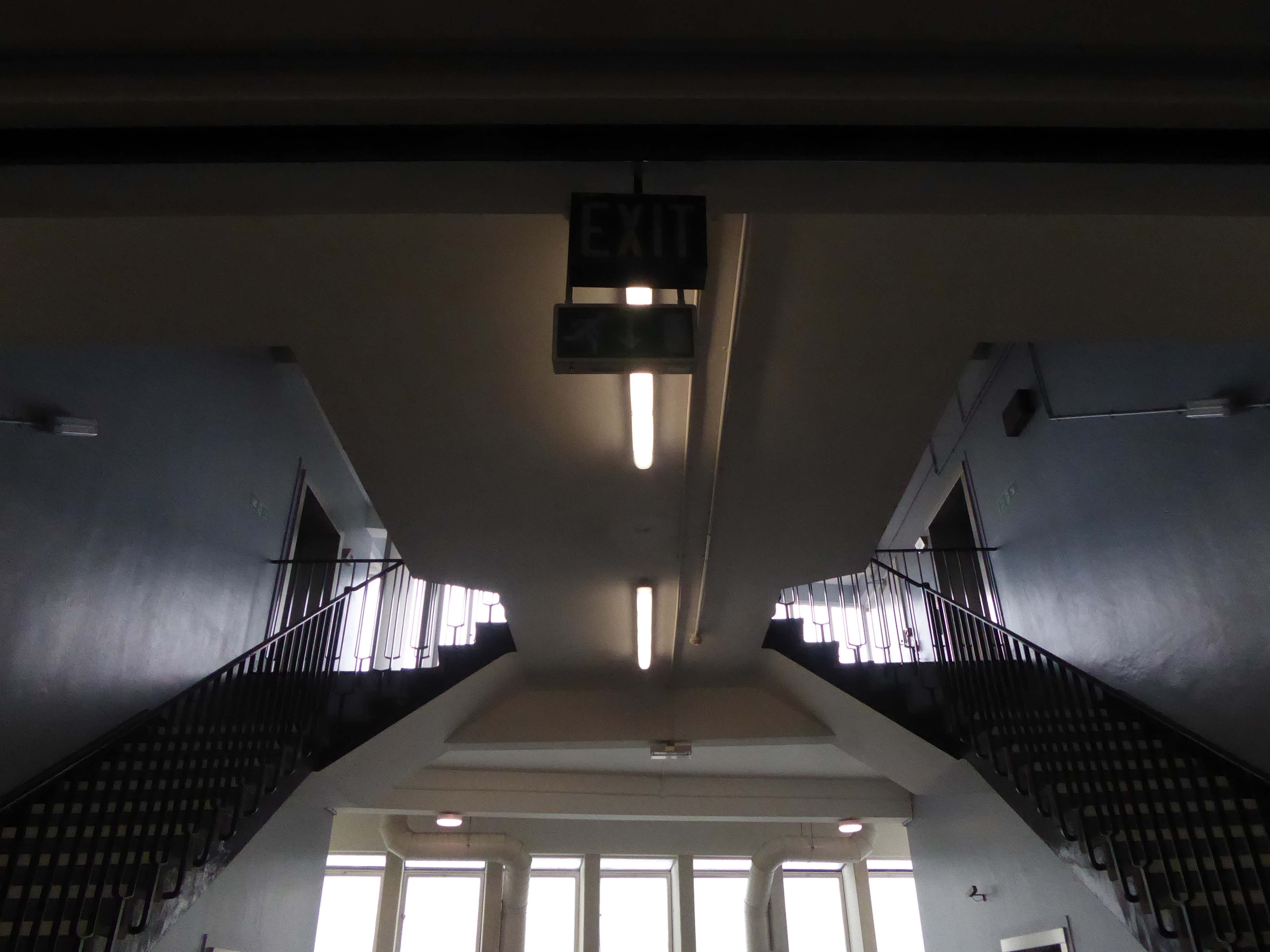
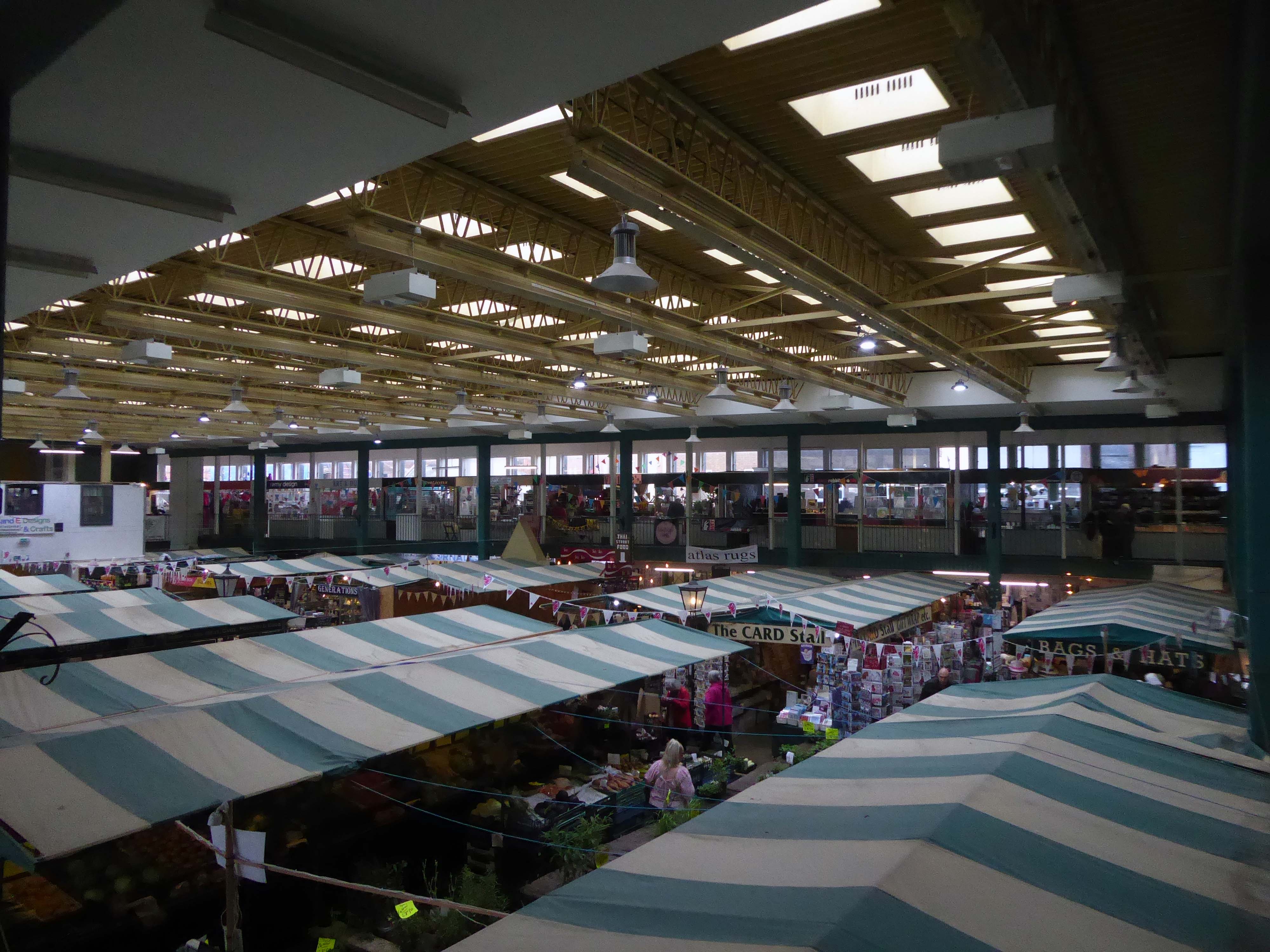
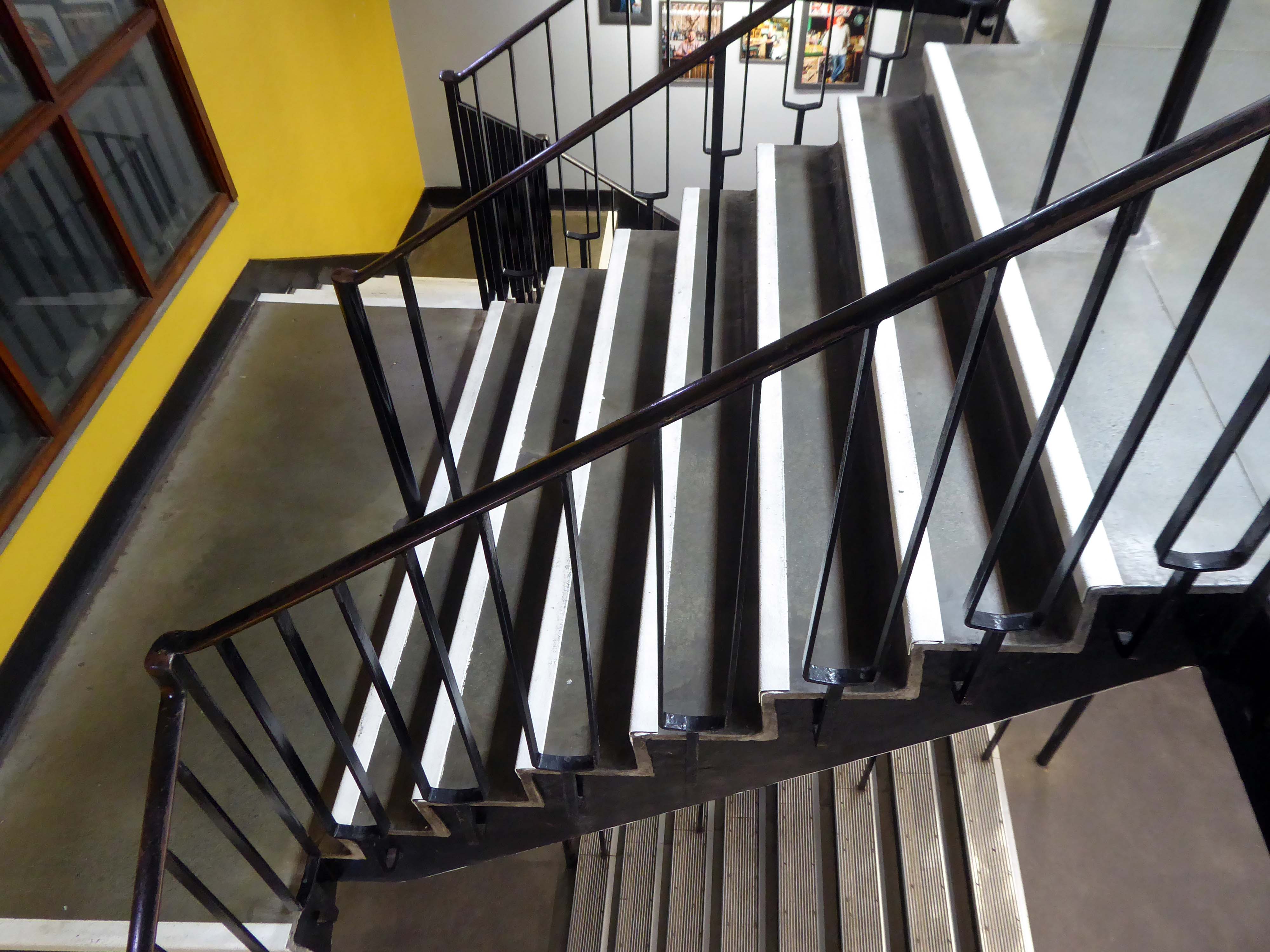
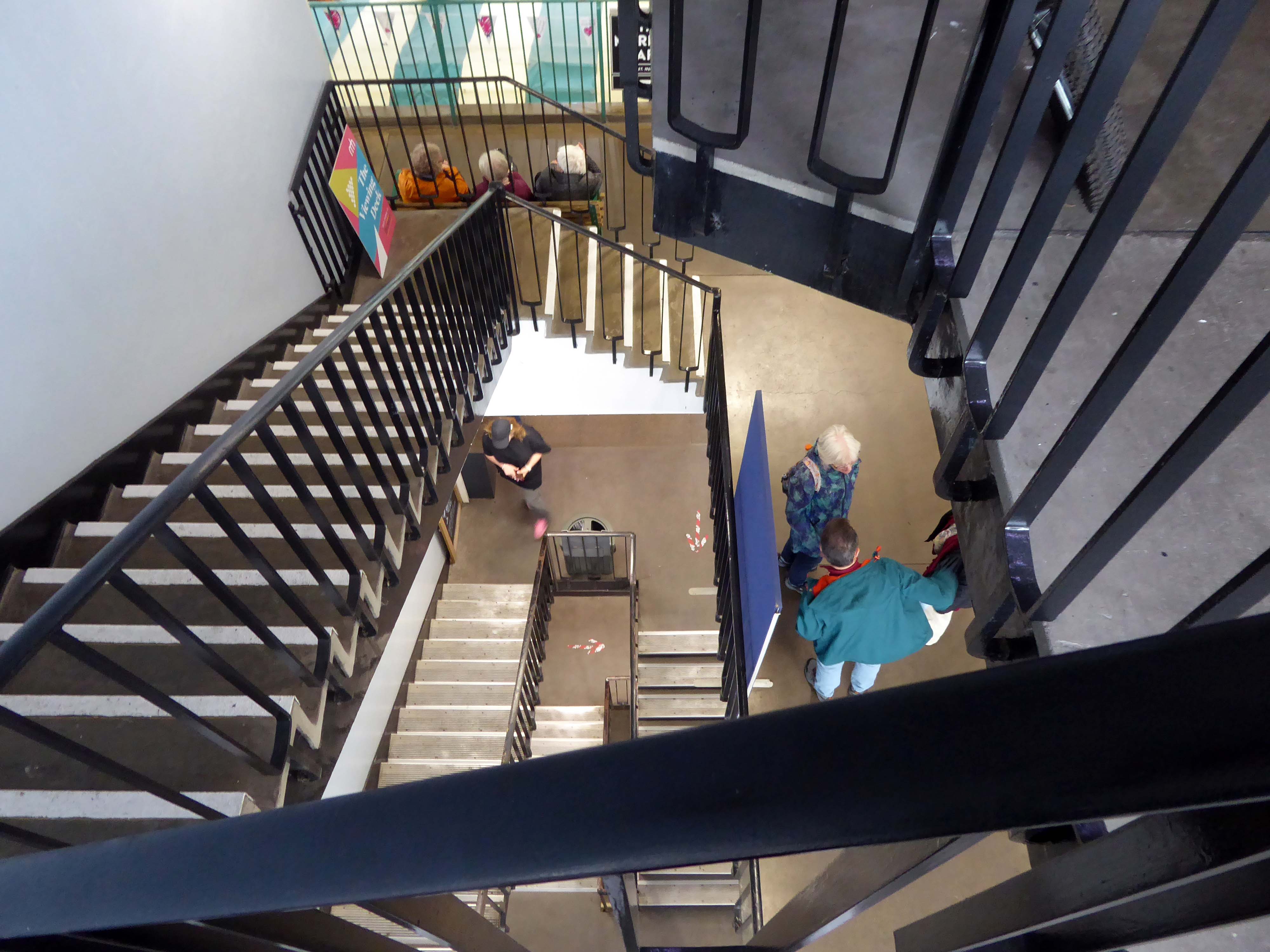
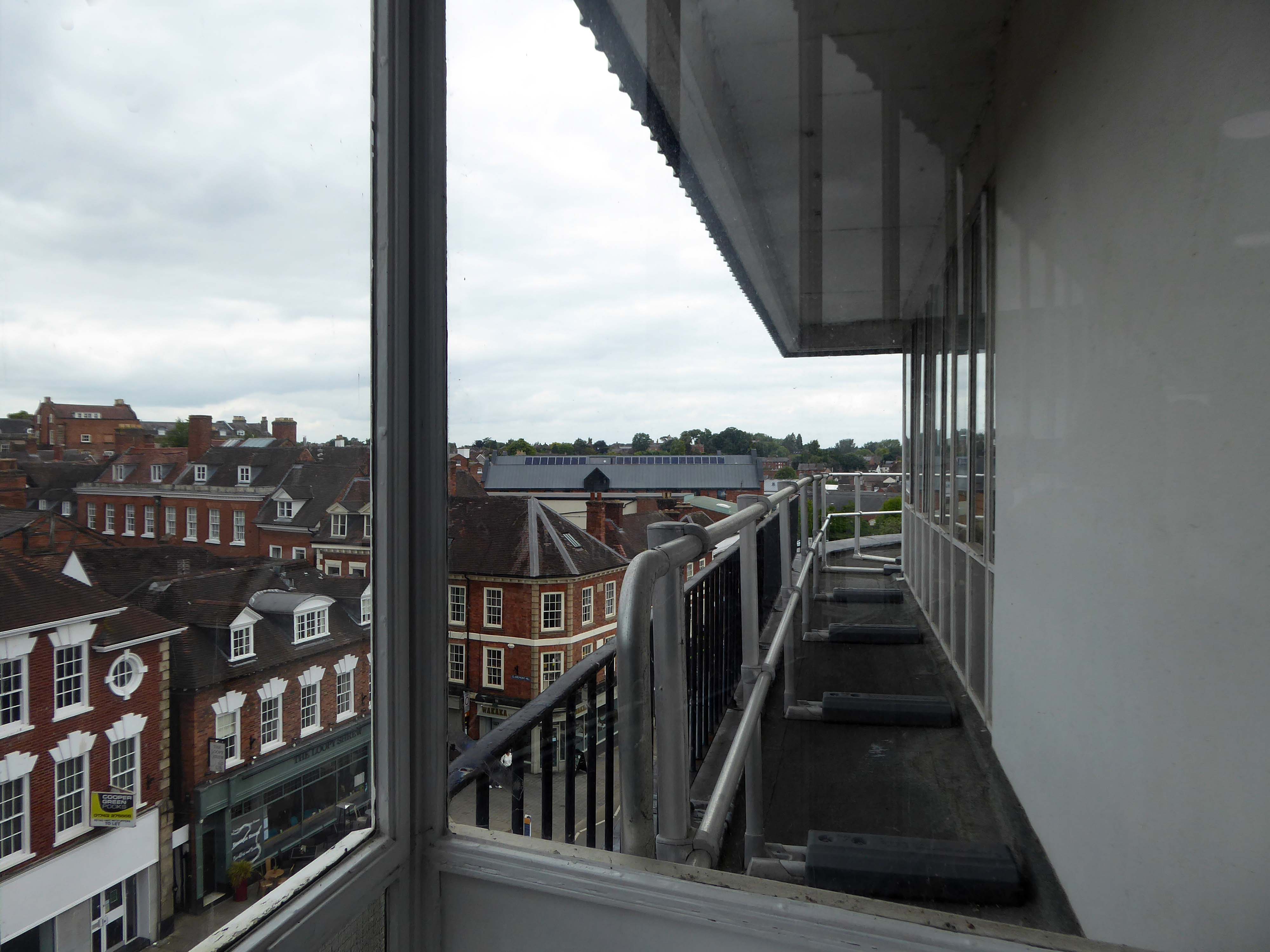
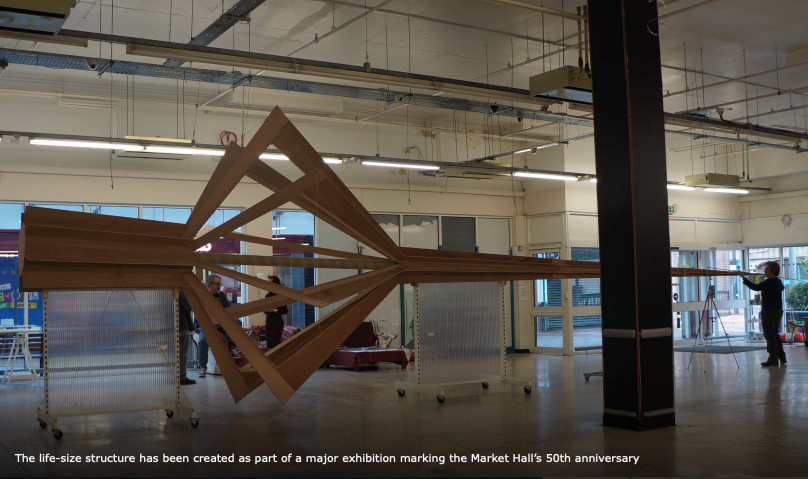
The Market Hall was considered to be a prime example of cutting edge modern architecture when it was officially opened amid a blaze of publicity and civic pageantry on September 16 1965.
It replaced a large Victorian market hall of similar proportions that was in a poor state of repair and was condemned as unhygienic, dingy and “no longer fit for purpose”.
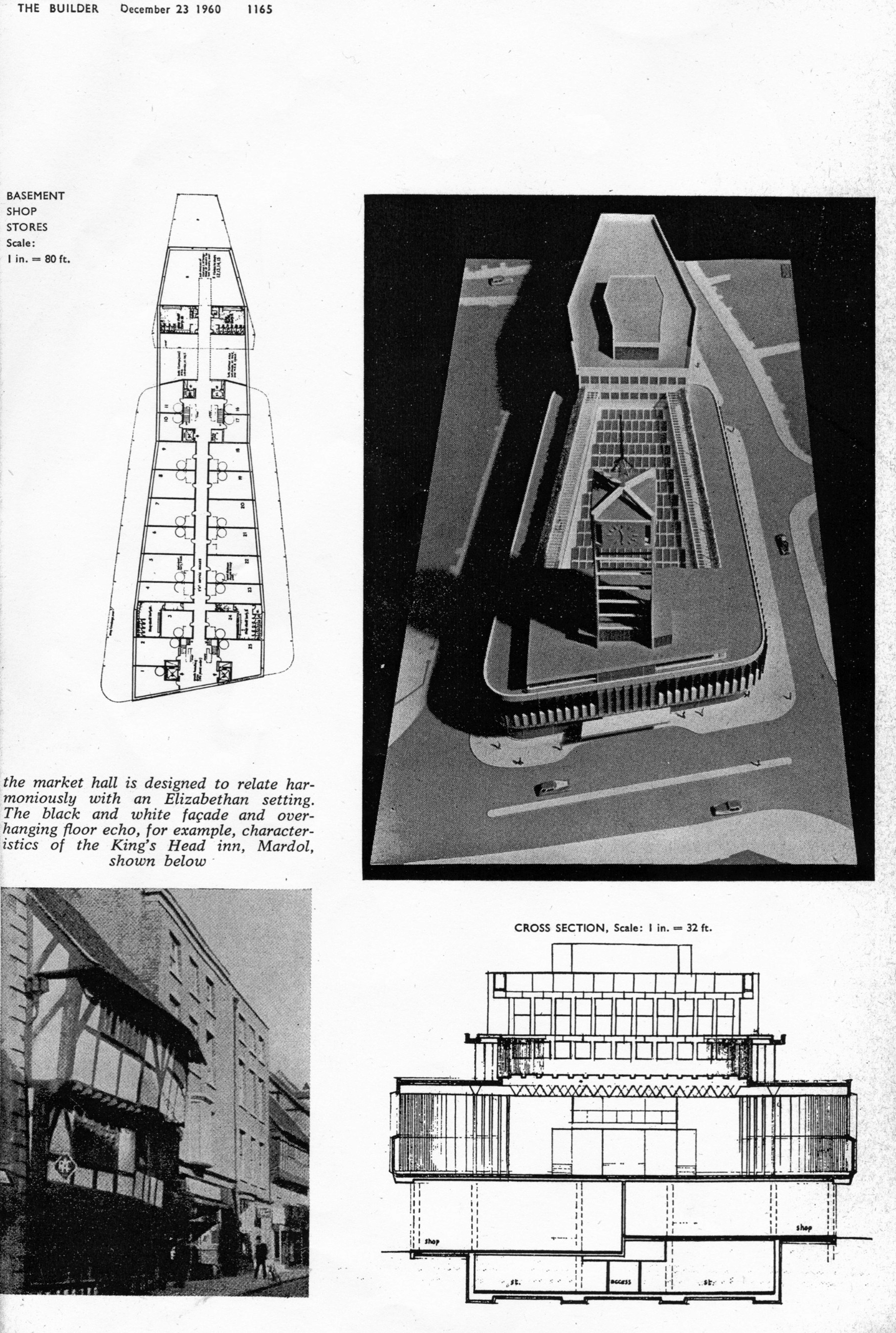
Developed by the Second Covent Garden Property Company, the new Market Hall cost £1 million to build and was designed by a respected architect of his day, David du Rieu Aberdeen. Aberdeen designed major buildings in London and made his name when he won a national competition to design Congress House for the TUC in Bloomsbury. Today Congress House is described as a “modernist masterpiece”.
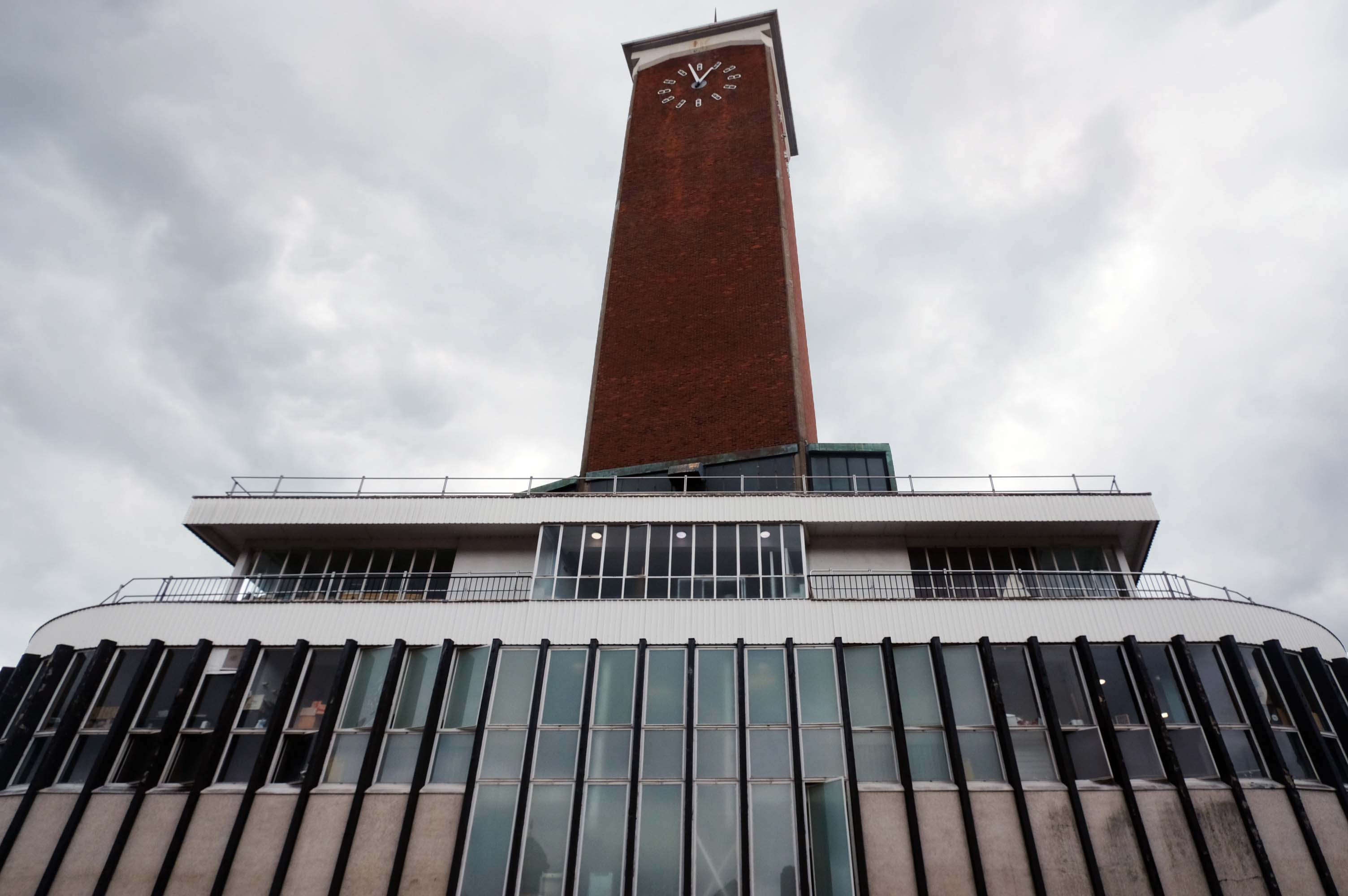
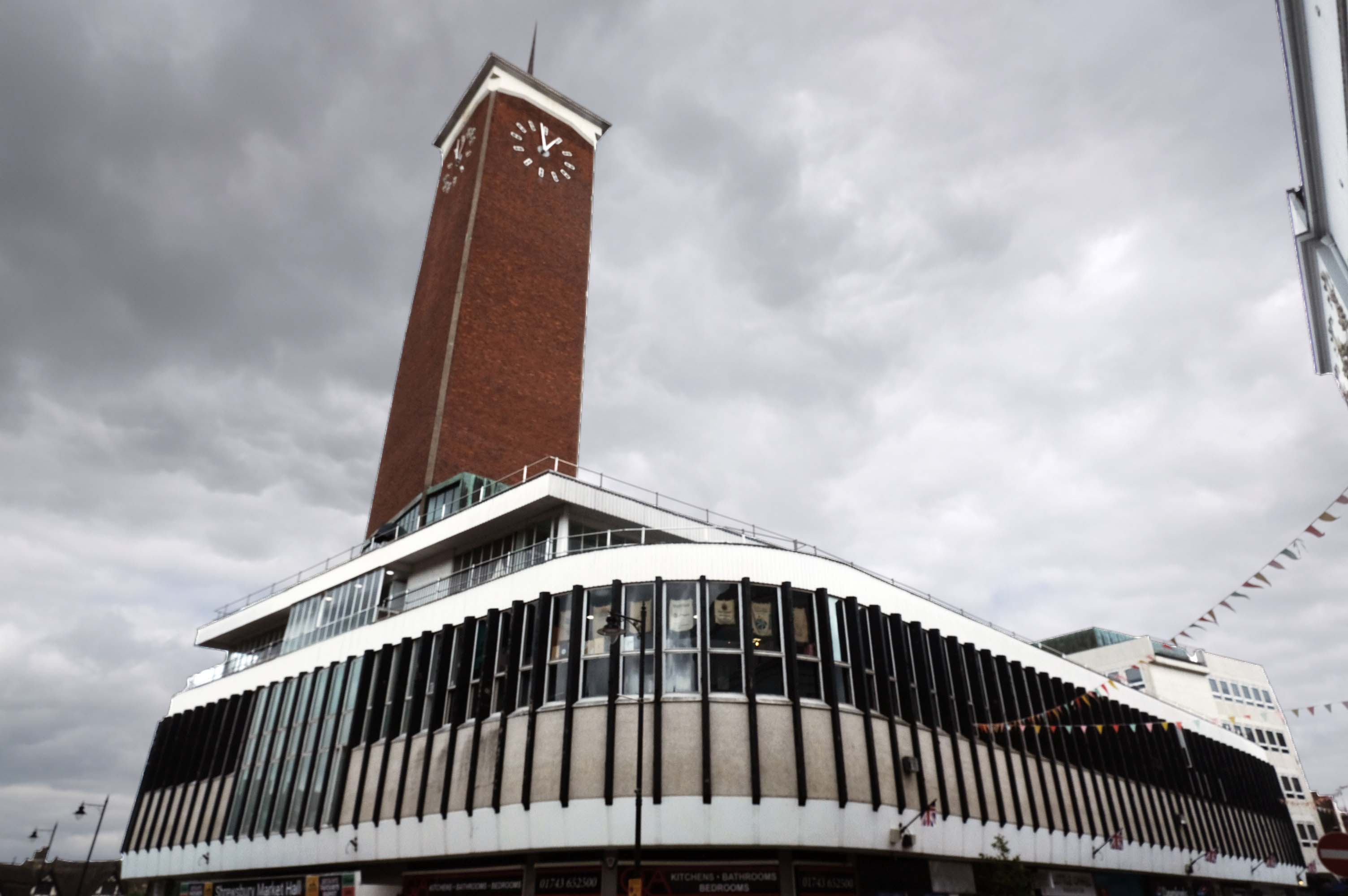
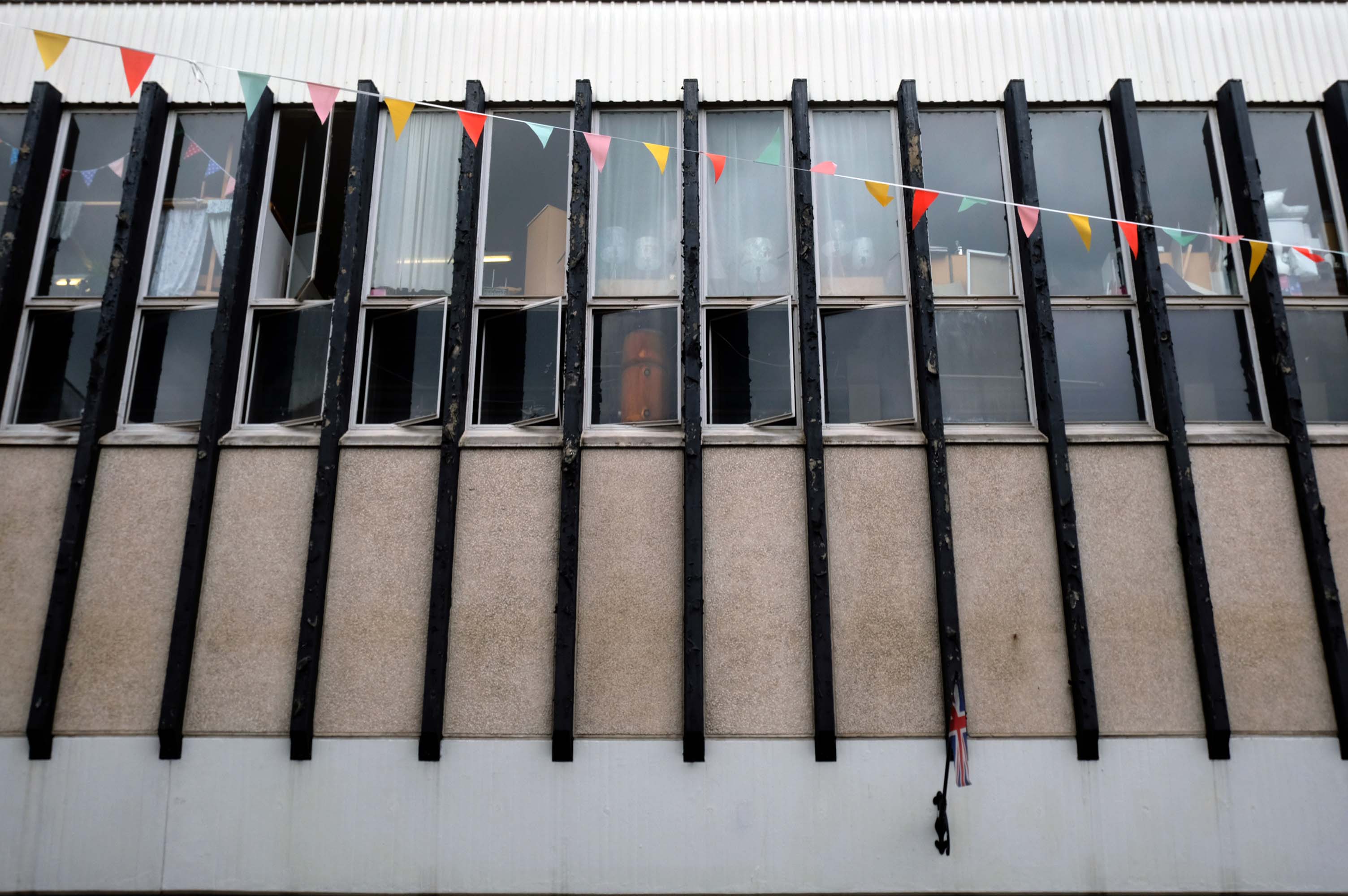
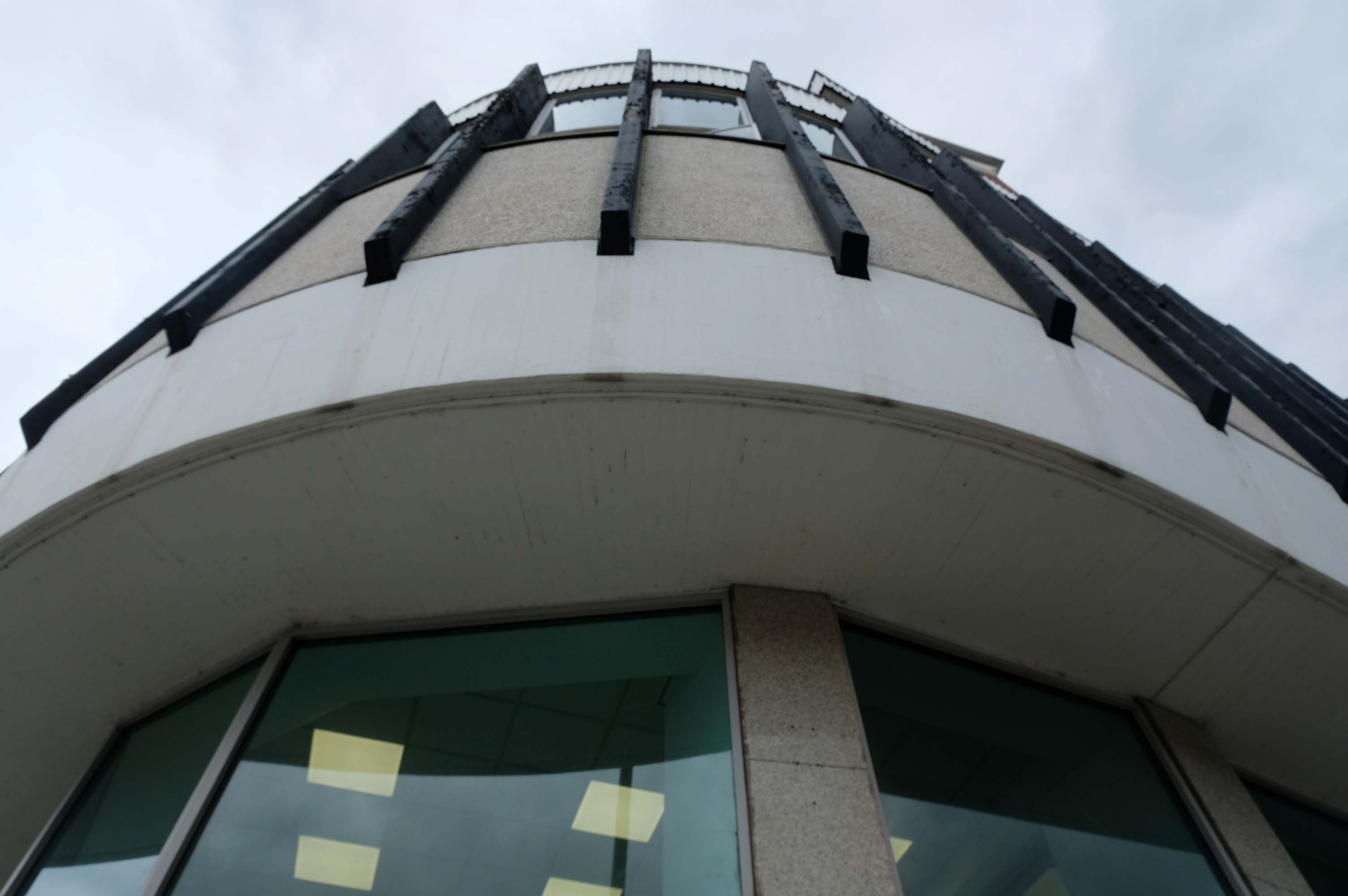
The Pevsner Architectural Guide pronounced the new Market Hall “a good example of modern architecture”, with “its clean lines and simple forms. But the town’s timber-framed tradition is also evoked. The upper storey is jettied out on a reinforced concrete structure and faced with vertical fins in an echo of close studding,” it stated. “The tall slender red brick clock tower mingles effectively in distant views with the town’s medieval steeples.”
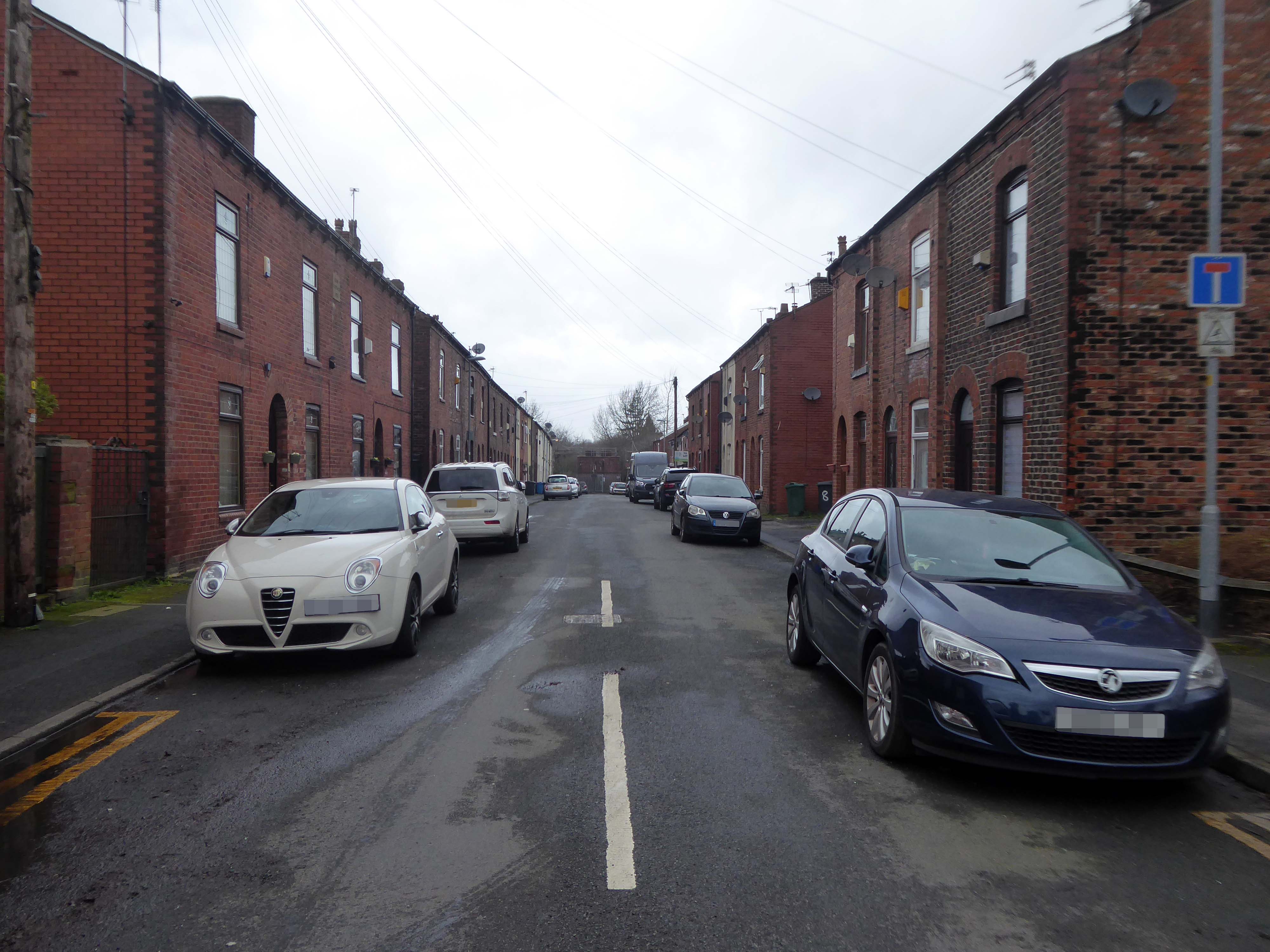
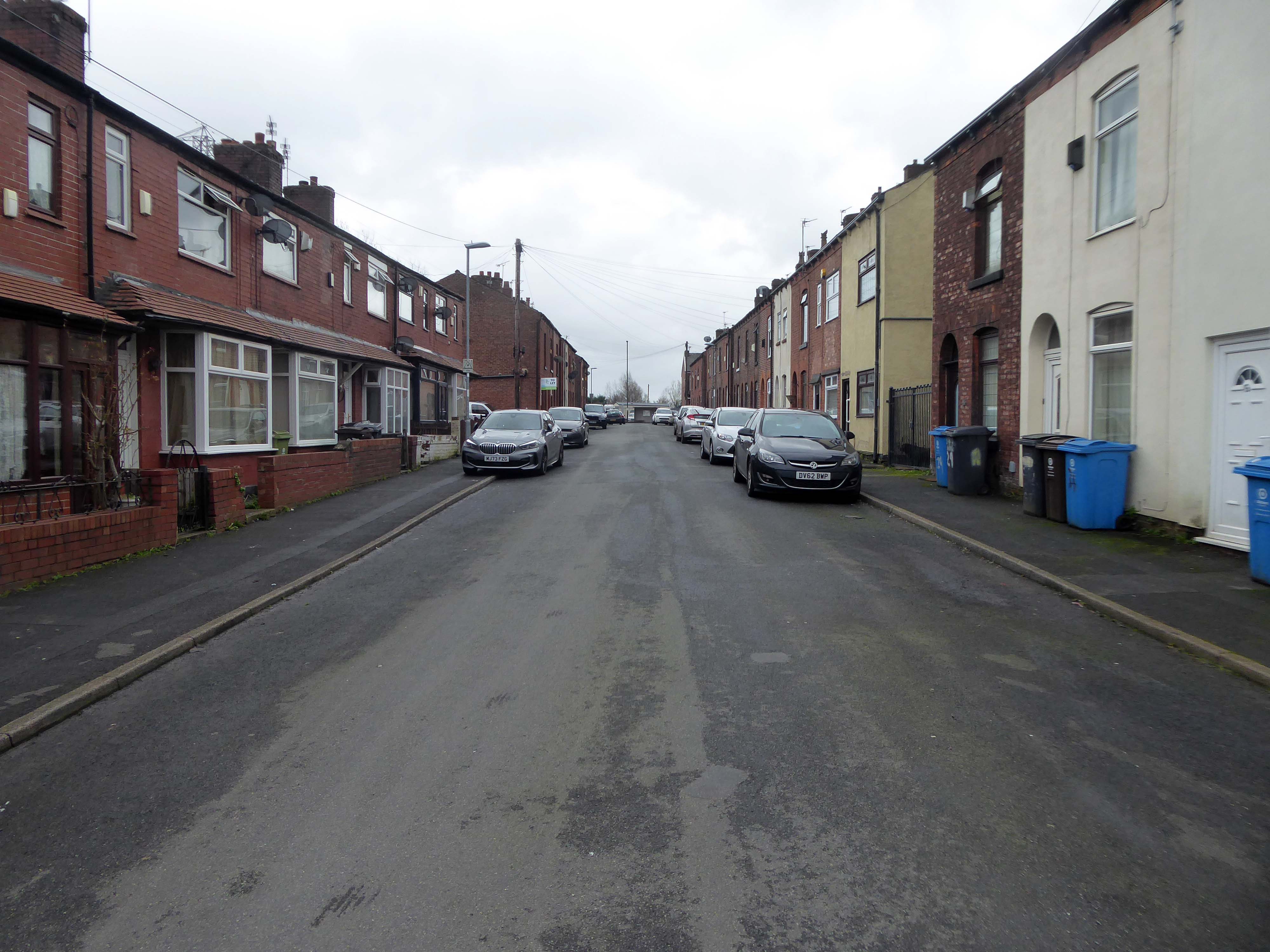
On a February morning the streets were well behaved and consisted of a typical mix of nineteenth century terraces and postwar semis, the residents chatty and welcoming, whilst they went about their business.
There are different causes that can make a street name controversial:
A person, organisation or event who or which was once honoured with a street name is subsequently thought to not or no longer deserve one, for example because that person later turned out to be a criminal.
A group of street names – for example in a residential area, is deemed to be unrepresentative for the population of that place, region or country because some demographics are overrepresented and others underrepresented, for example, because a disproportionate number of streets are named after men, and few after women.
Research has found that if you live on Pear Tree Lane your property is more likely to attract potential buyers and a higher price, than those living in a similar property on Crotch Lane.
What are the guidelines for street naming?
The exclusion or inclusion of certain numbers for cultural or religious reasons
The use of building names without numbers
New building or street names should not begin with The
The use of street names which include numbers that can confuse, for example – 20 Seven Foot Lane sounds the same as 27 Foot Lane
The use of the names of deceased people in the adoption of any street names. The reason for choosing a person’s name should be established in the council’s policy
The use of the name of a living person – it’s not recommended
The adoption of historic connotations by developers – guidance on this should be provided by the council to all developers through close liaison with local historic societies.
The use of national or local historic figures or events
The use of a name with Royal connotations – the Lord Chamberlain’s office must be contacted if a name has any reference to the Royal family or if the word ‘Royal’ is suggested.
The use of names and their combination with numbers that could be considered rude, obscene, and racist or contravene any aspect of the council’s equal opportunities policies
The use of names and their combination with numbers that could be easily vandalised or changed into any of the above, for example – Canal Turn
The use of names that can cause spelling or pronunciation problems
The use of names that can be construed to be used for advertising or commercial gain
The use of names would lead to variations in the use of punctuation as these can confuse or result in early demands for a change of address from occupiers.
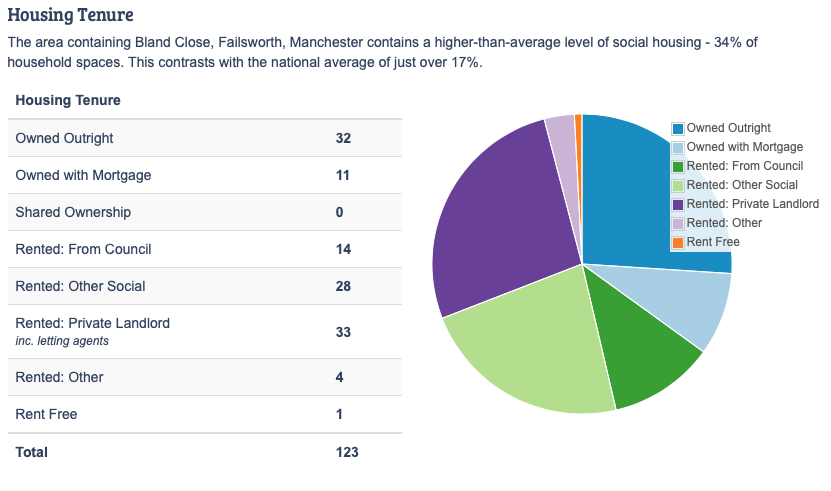
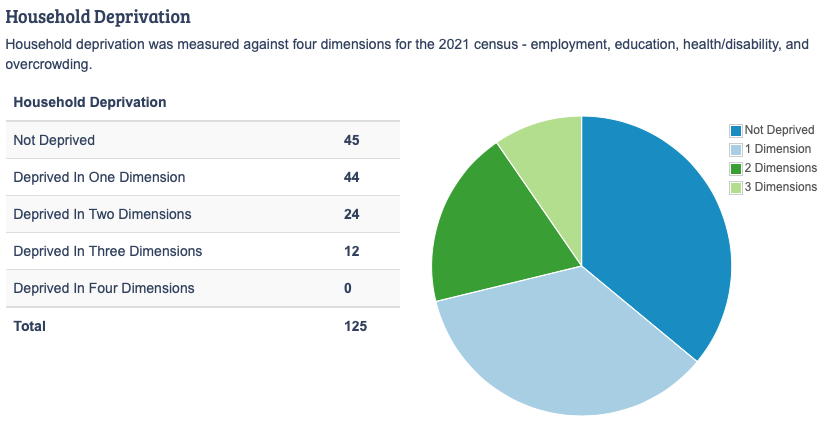
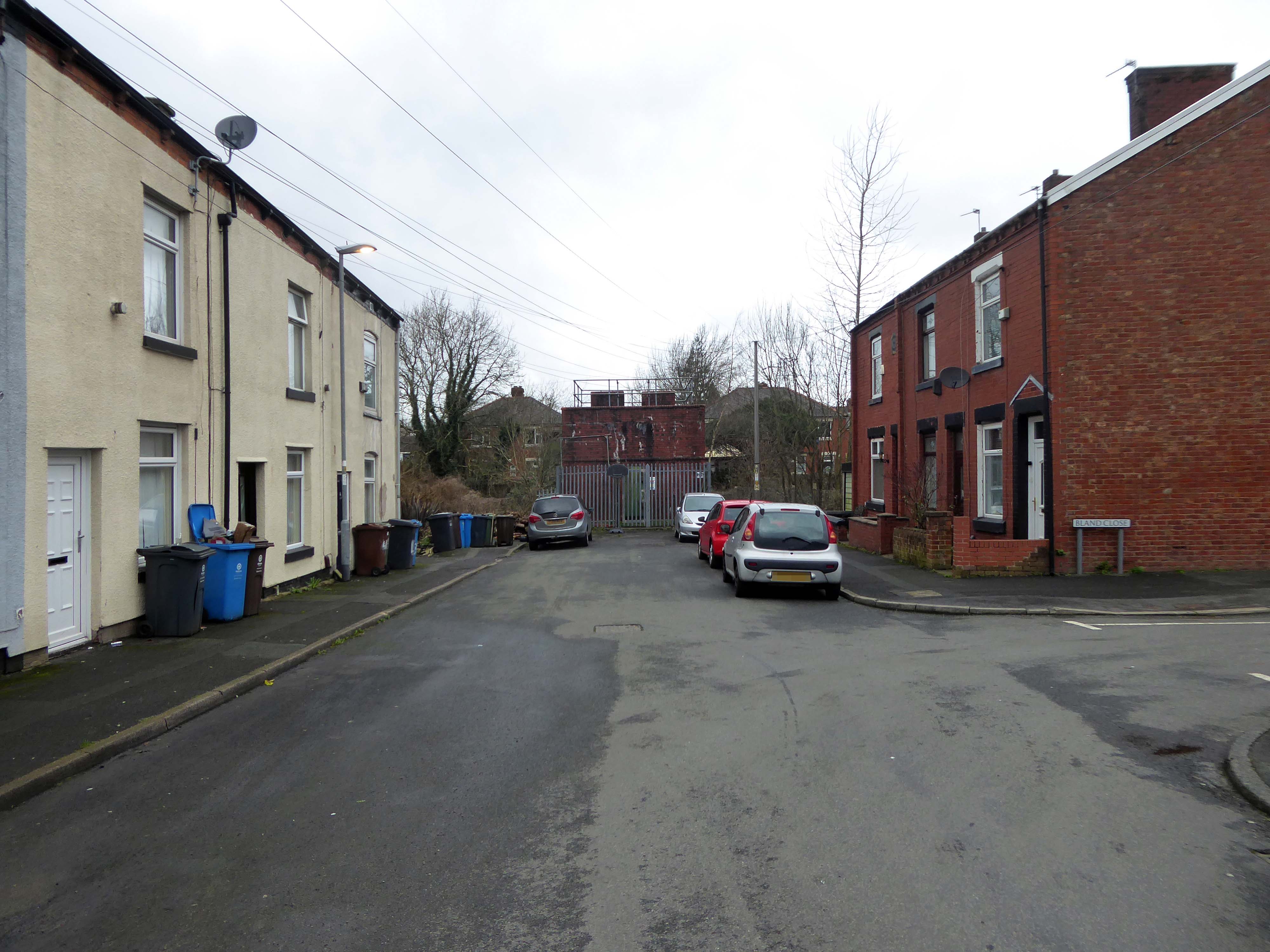
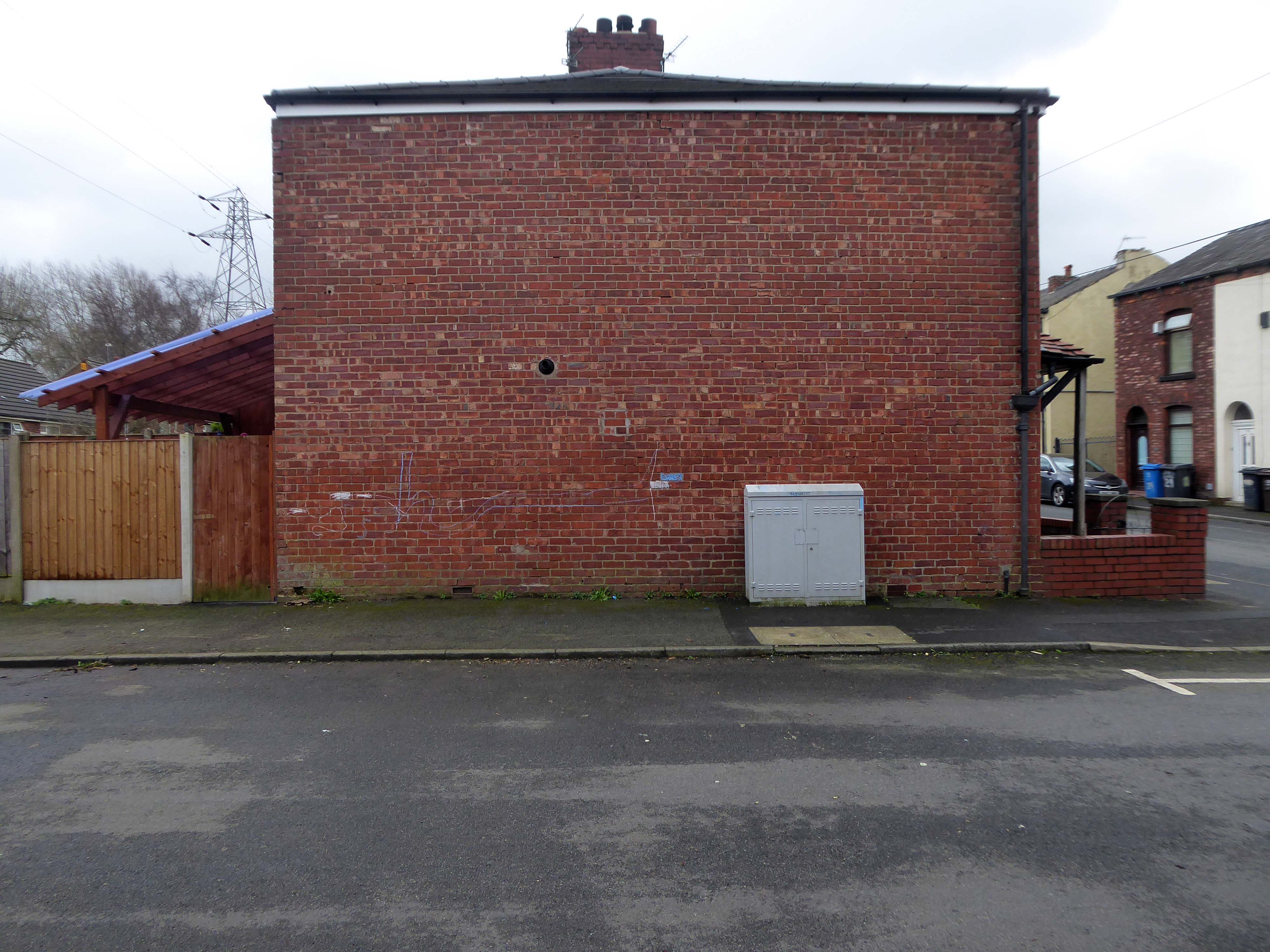
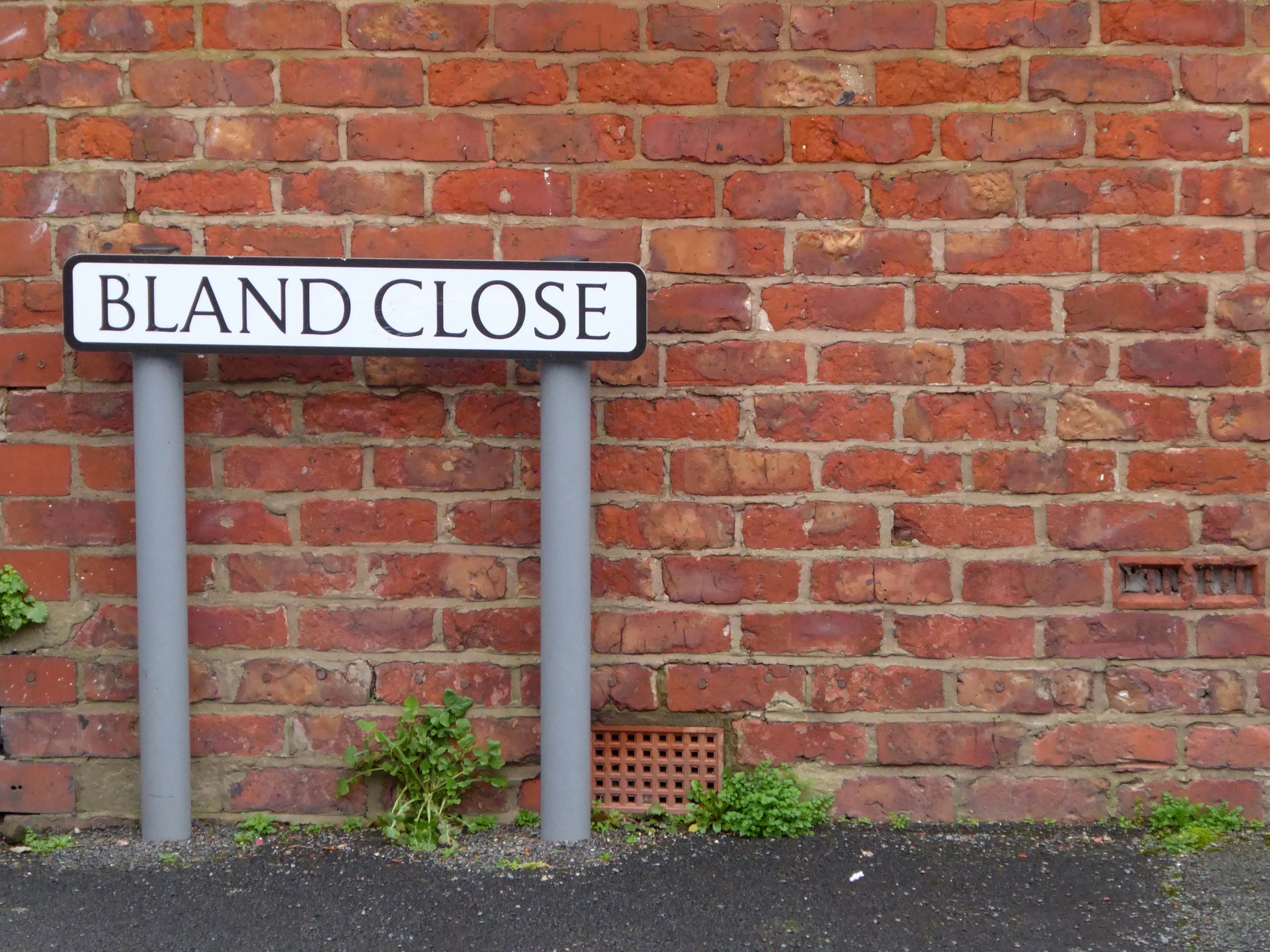
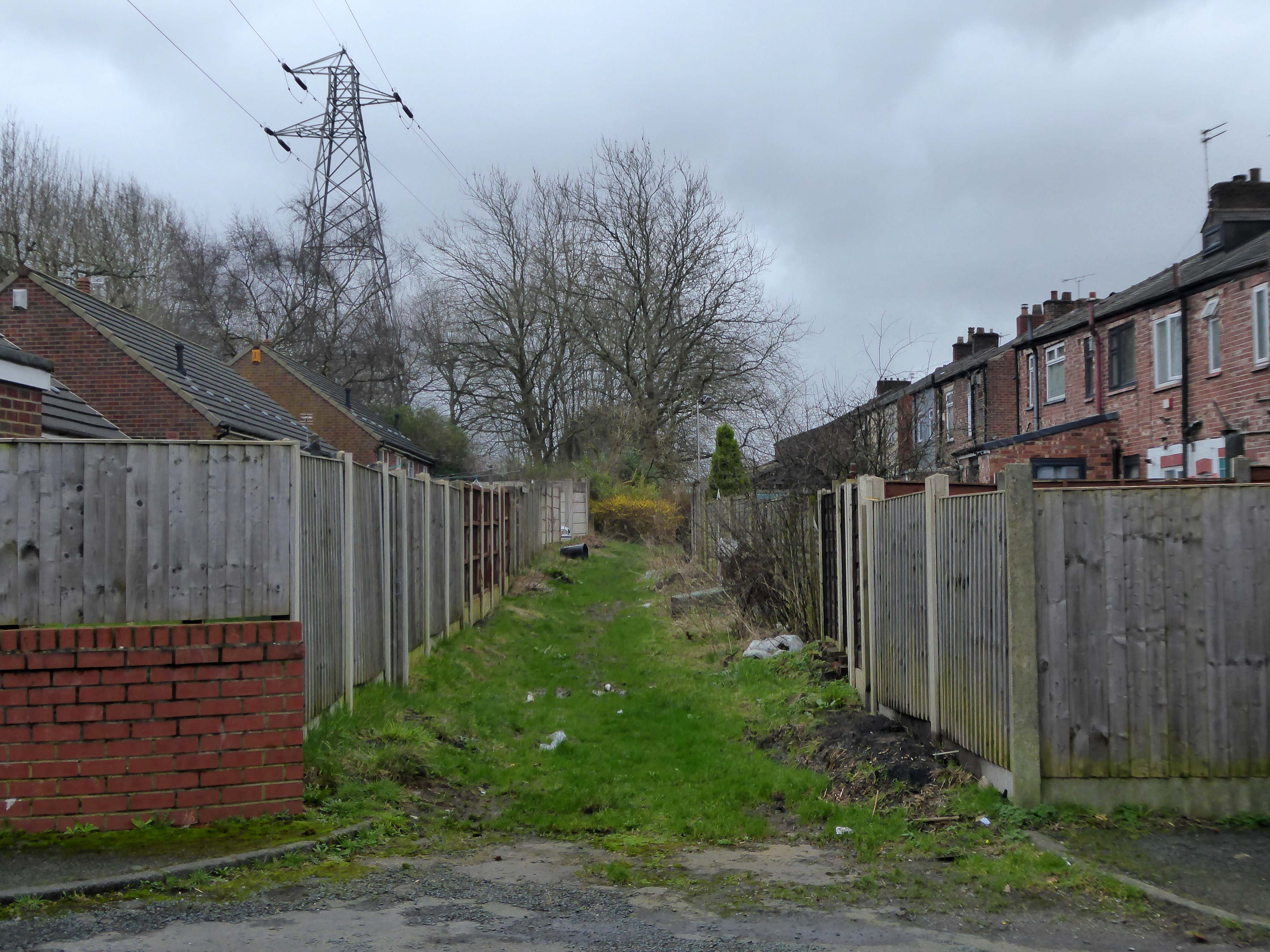
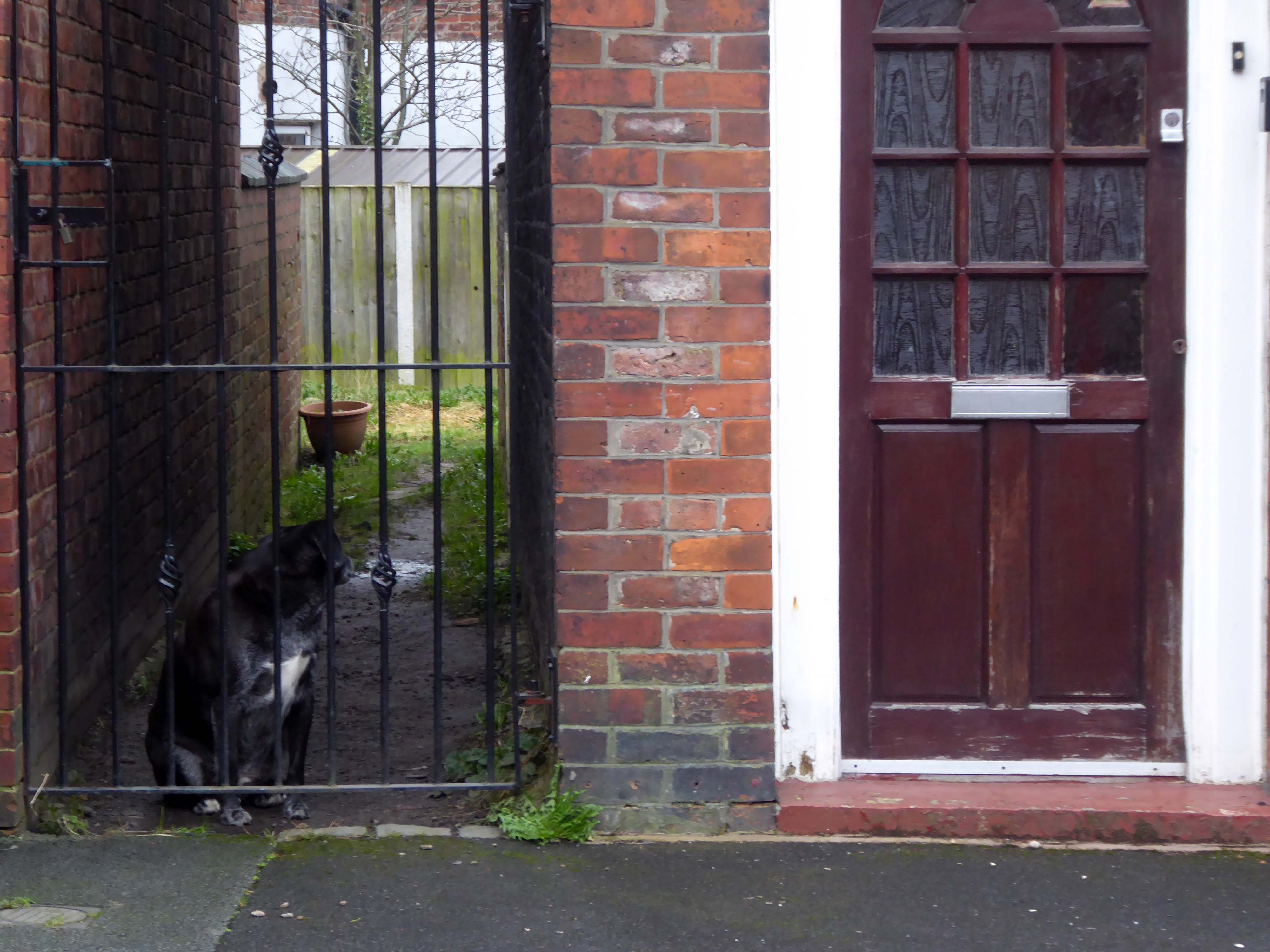
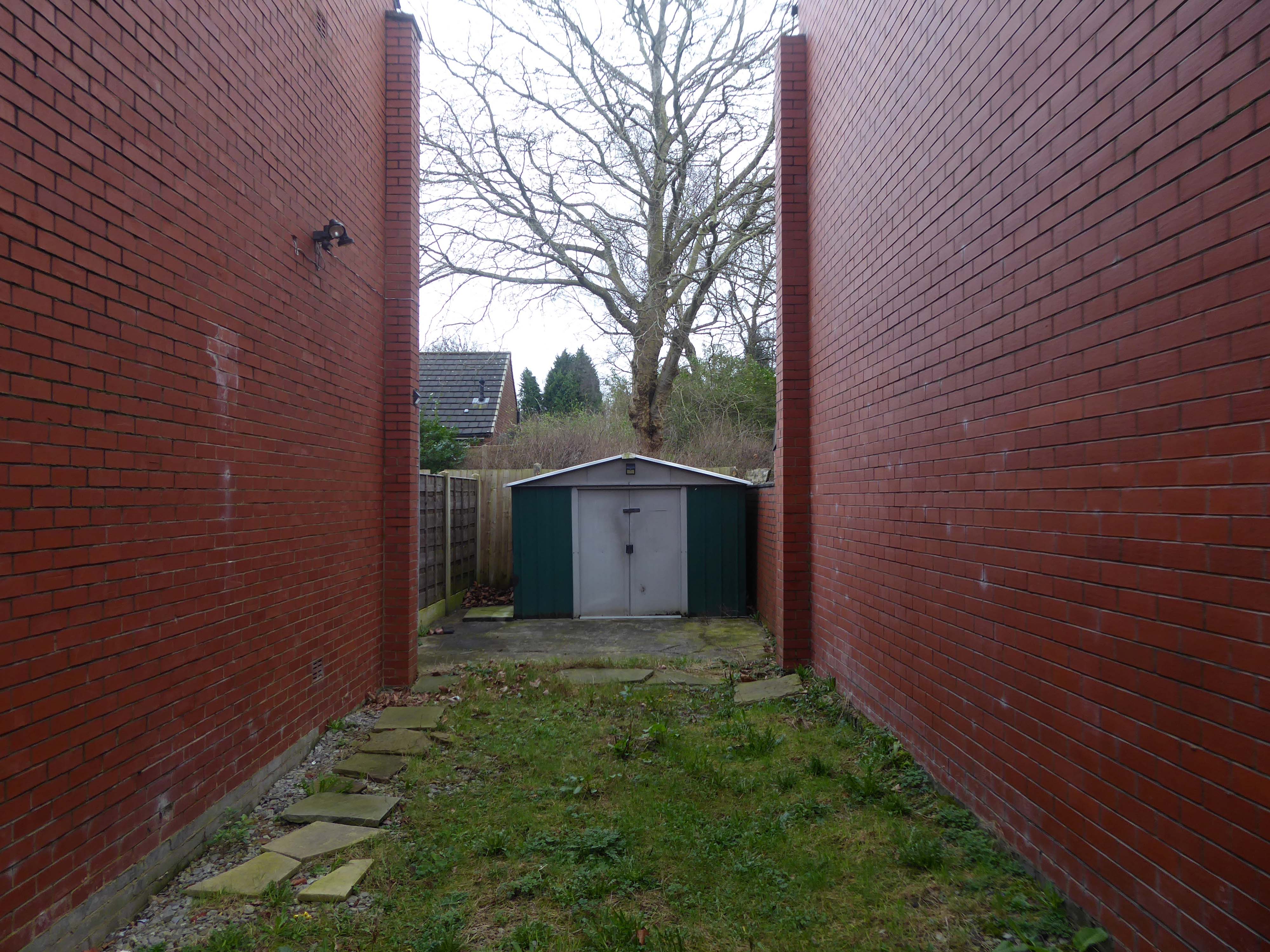
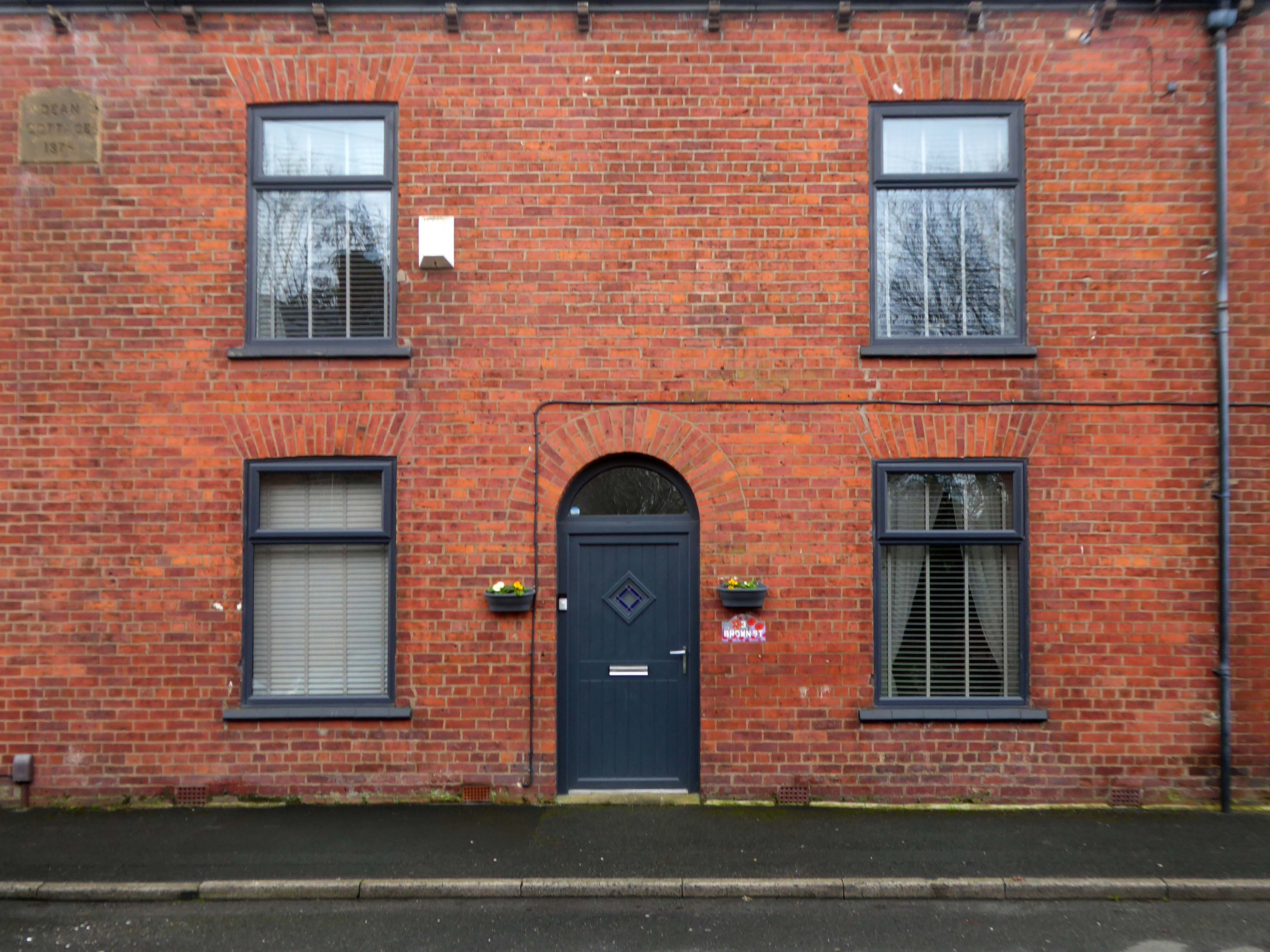
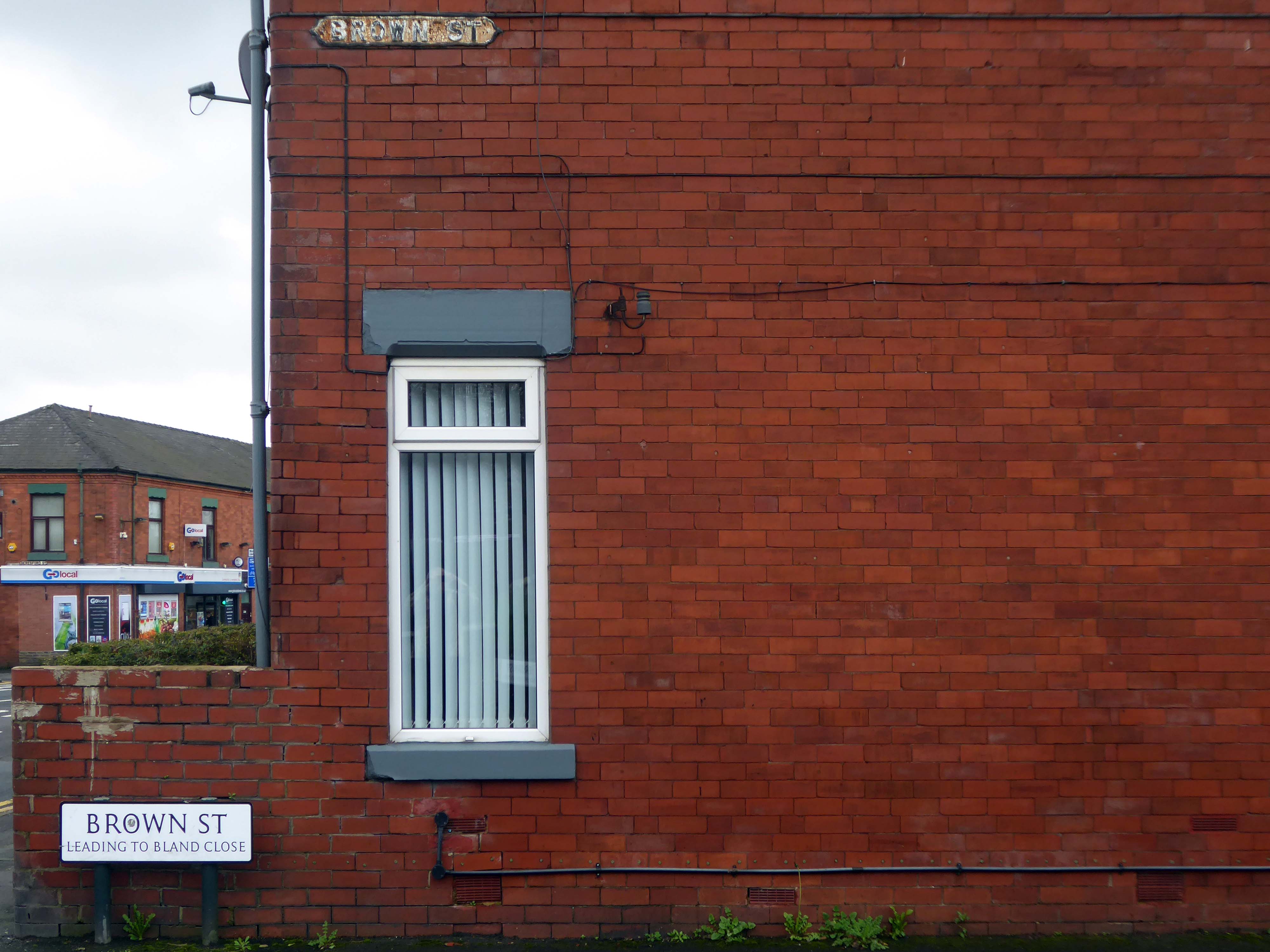
So in summary the name Bland does not in my opinion represent the close’s appearance and may in fact detract from the value of the property and possibly the perception of the area.
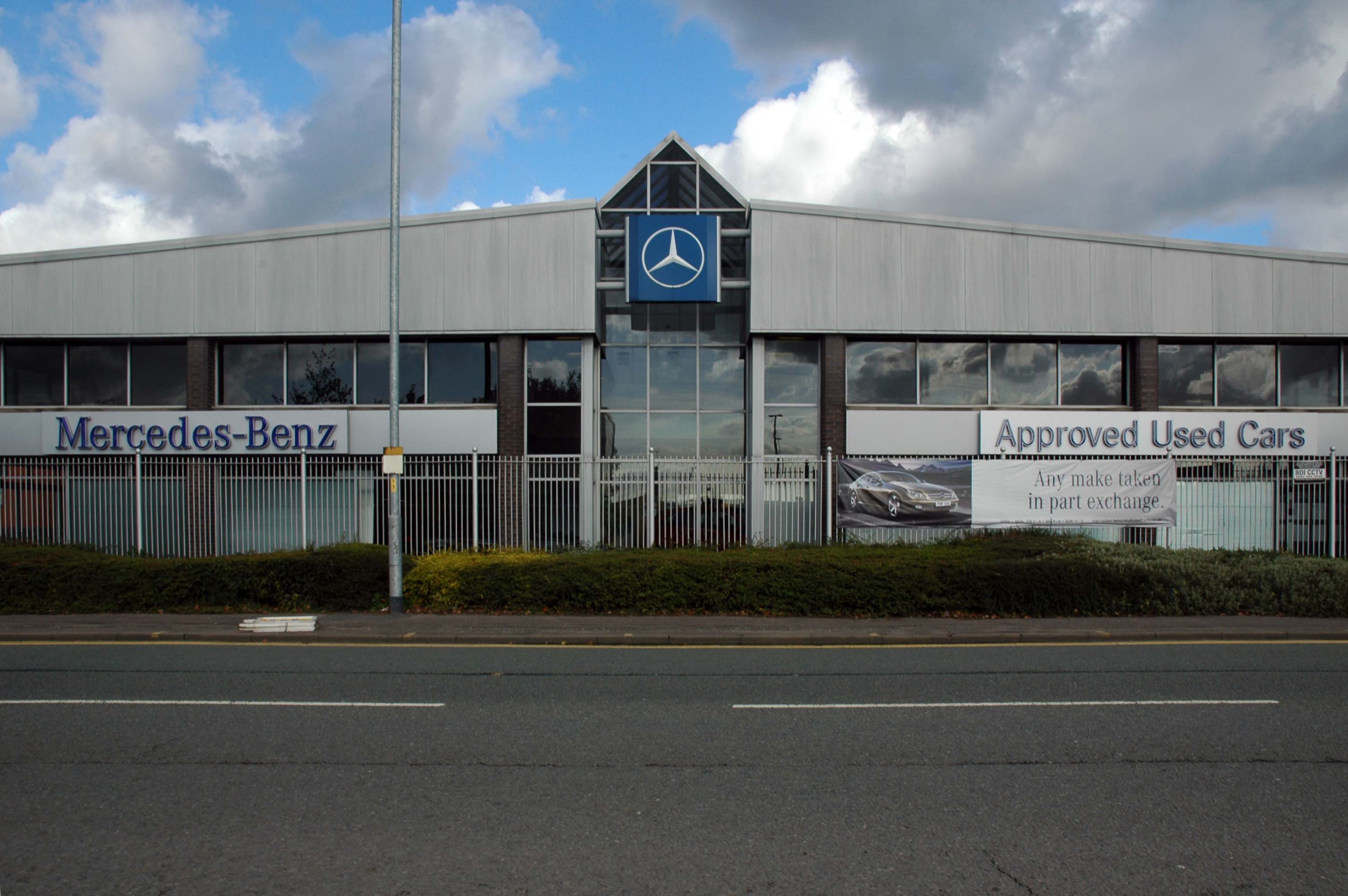
The road now begins slightly further south than it used to. Instead of starting on Fairfield Street in Manchester city centre, it begins immediately as the Mancunian Way ends, which at this point is the unsigned A635(M). The motorway flows directly into our route. There’s a TOTSO right at a set of lights, and we pick up the old alignment, which now starts as the B6469.
We can see the new City of Manchester Stadium on the left, site of the 2002 Commonwealth Games and now home to Manchester City FC. The road switches between S2 and S4 as it passes through the rather run-down urban areas of Ardwick and Gorton. A short one-way system at a triangular-shaped junction with the A662 leads onto a wider stretch as we near the M60 junction. This area is set to see significant industrial growth, with whole swathes of land either side of the now D3 road cleared and ready for development.
The A62, which runs from Manchester to Leeds, via Oldham and Huddersfield, was once the main route across the Pennines, connecting the largest city in Lancashire with Yorkshire’s largest city. However with the completion of the M62 towards Leeds in the early 1970s it lost much of its importance and traffic to the motorway, which runs a few miles to the north. These days, the A62 serves as a busy primary route between Manchester and Oldham, an extremely very quiet route over the Pennines, and then a fairly busy local road linking Huddersfield with Leeds.
Most maps show that the A62 starts its journey in the middle of Manchester by leaving the A6 Piccadilly and running along Lever Street – the original route was the parallel Oldham Street. However, owing to a bus gate Lever Street is not generally accessible from Piccadilly. We head out easterly on a busy street – non–primary, until we meet the Ring Road where we pick up primary status that we retain until Oldham. We turn left at this point and then immediately right to start the A62 proper.
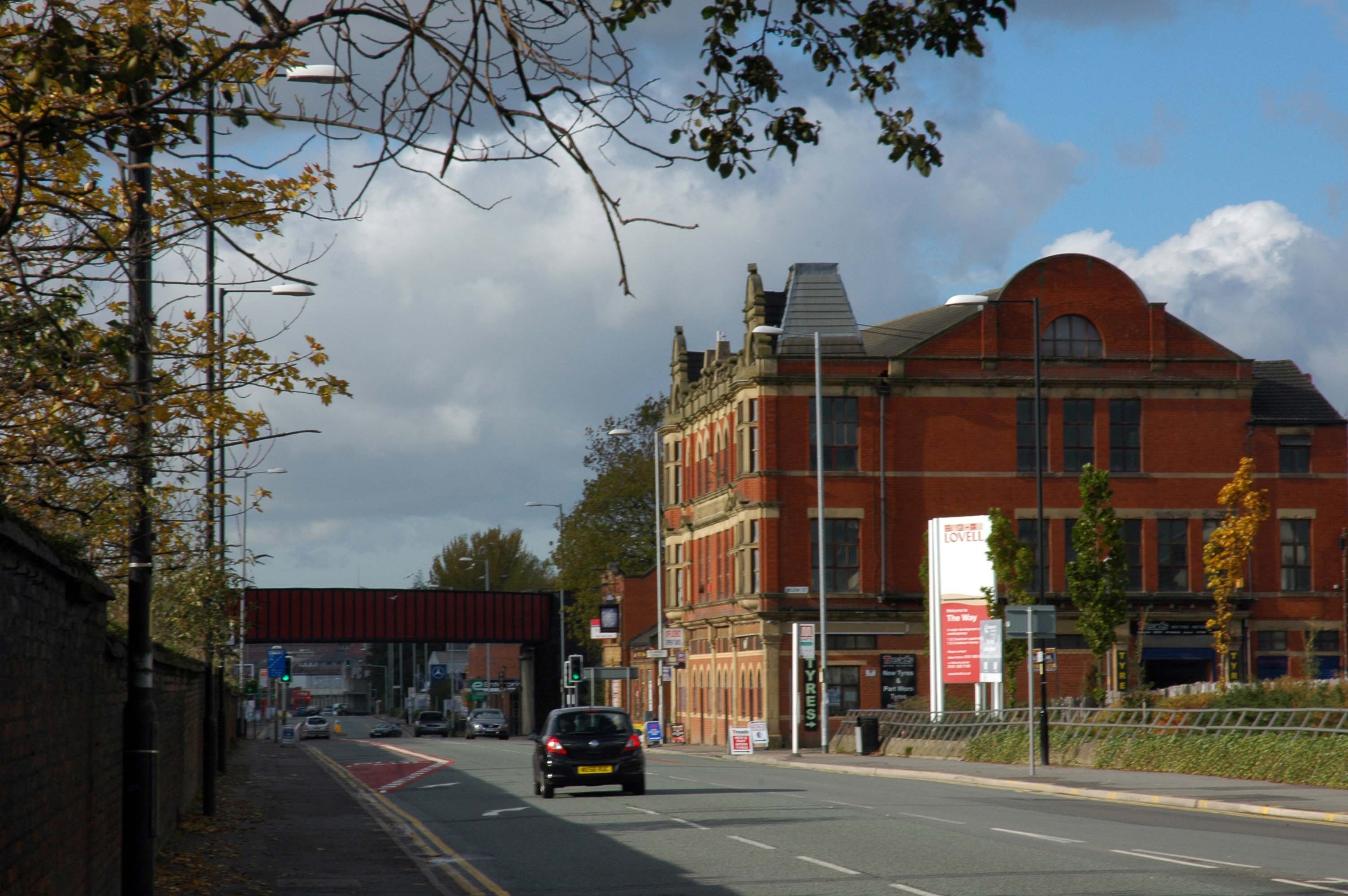
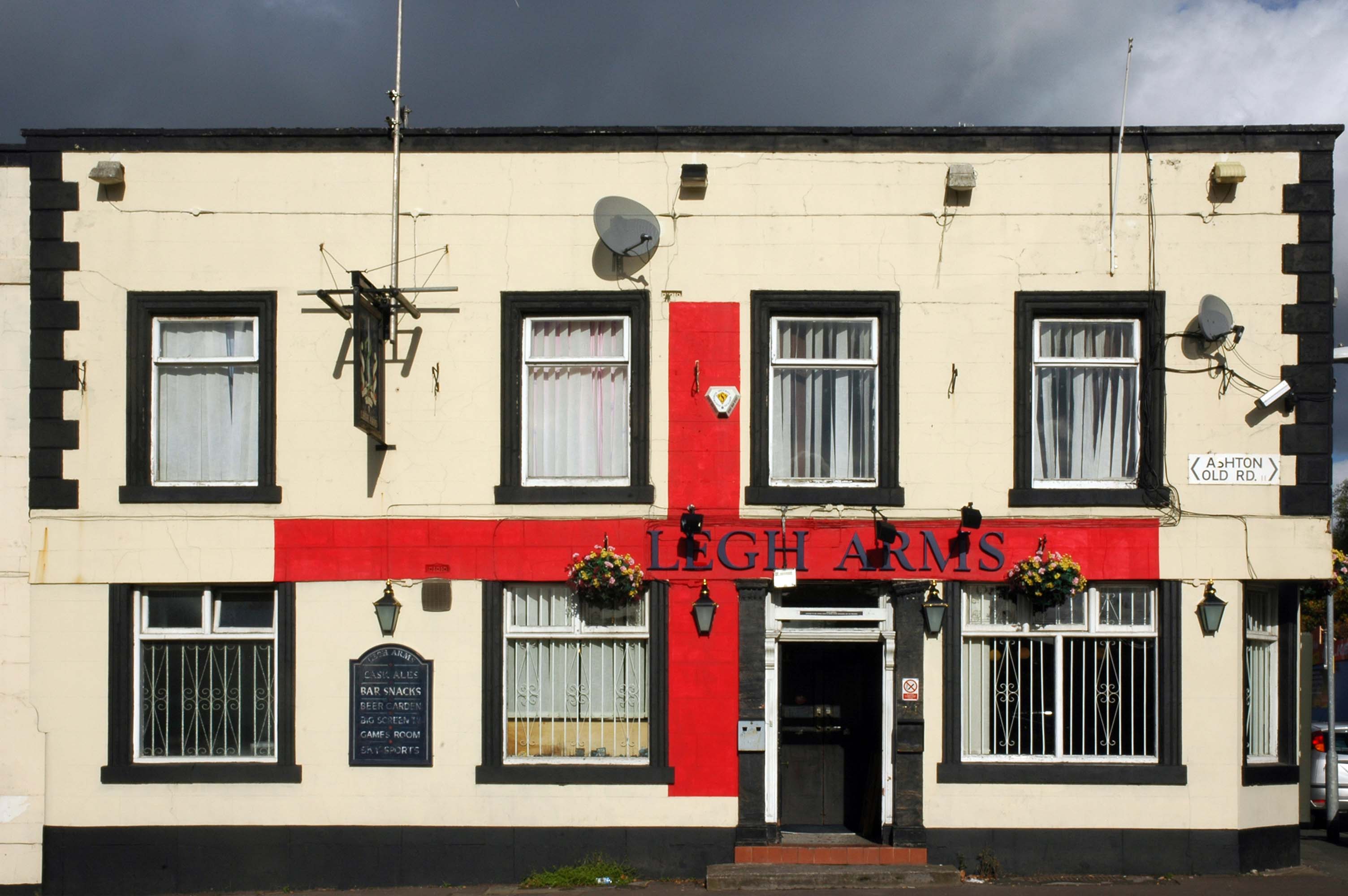
In 2014, having taken early retirement from teaching photography, I embarked on a series of walks along the arterial roads of Manchester.
This whole undertaking was prompted in part by Charlie Meecham’s 1980’s Oldham Road project.
The work questions whether a sense of local identity can be maintained in an area of constant redevelopment and community displacement.
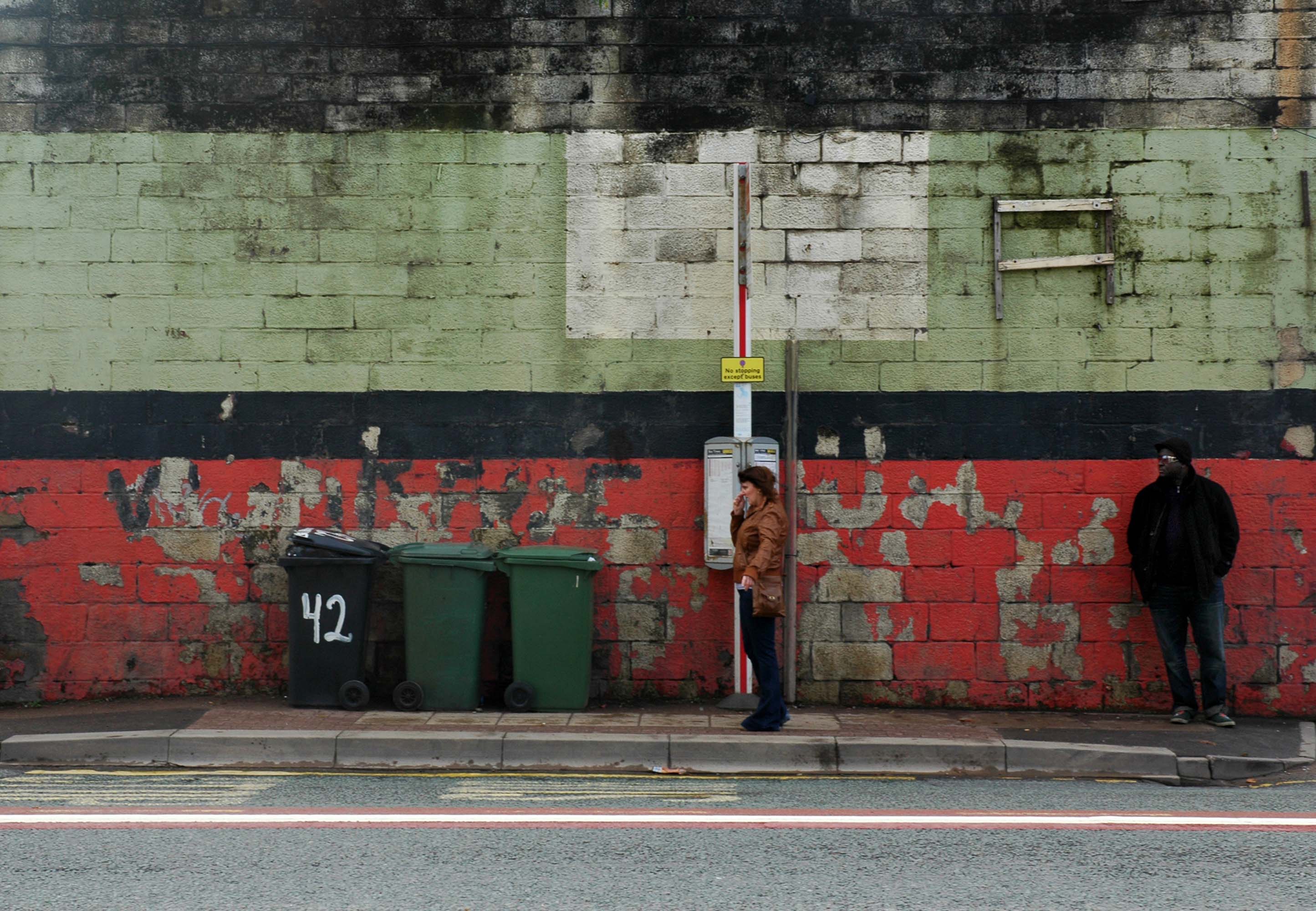
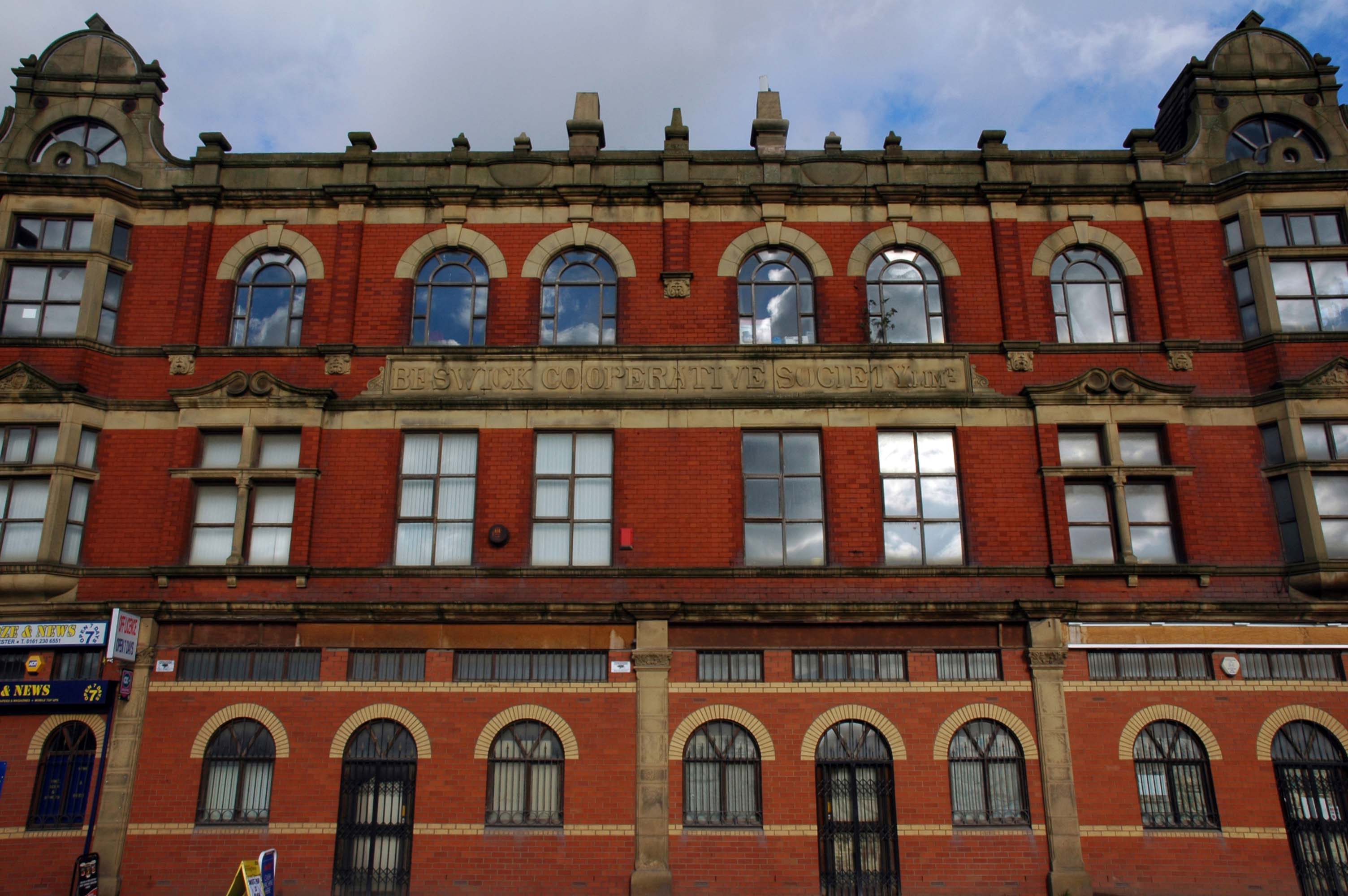
This area was first developed in the 19th century for cotton manufacture, coal extraction and later electrical and heavy engineering. The road was lined with shops and there was a vibrant community.
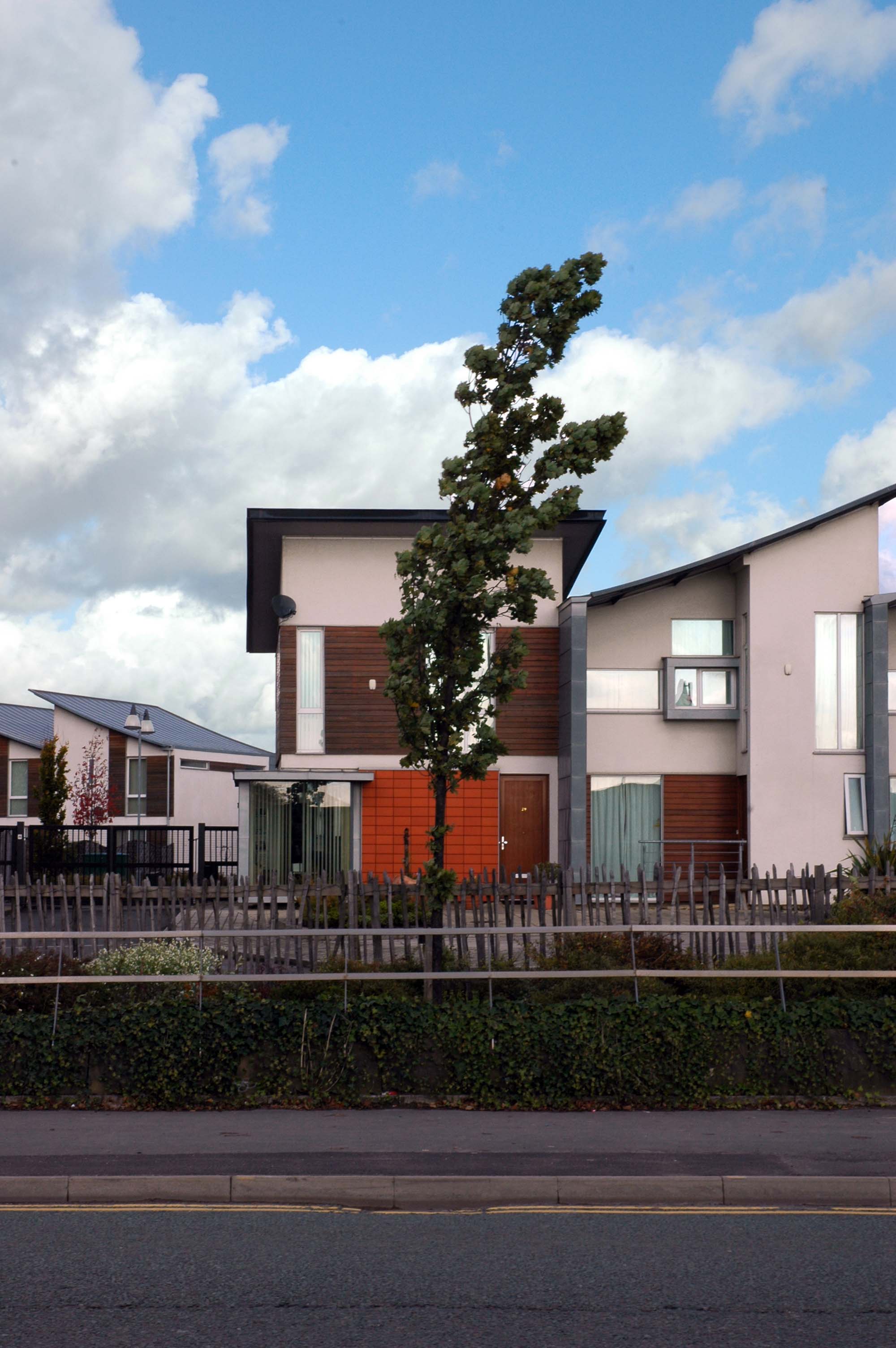
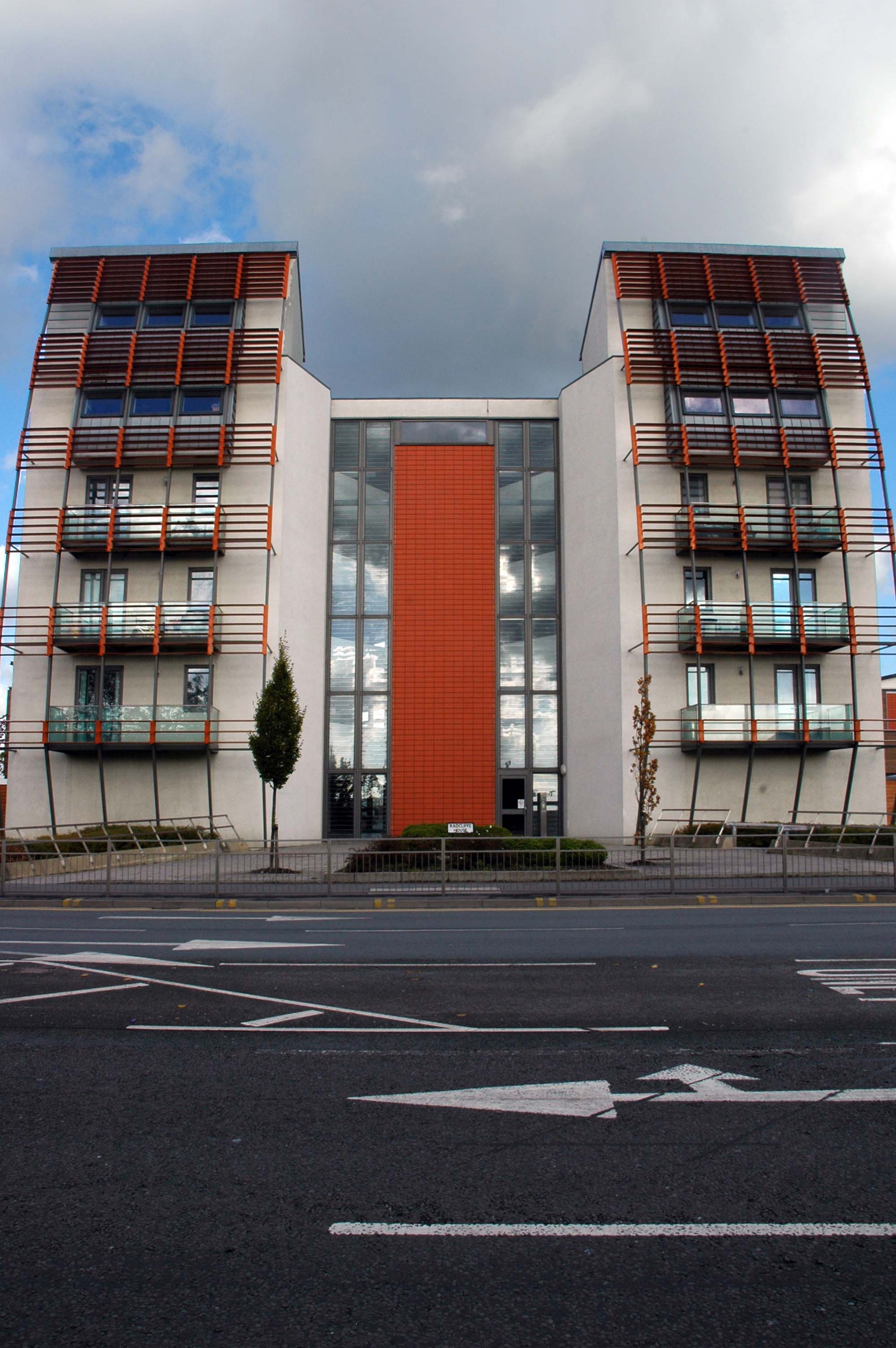
When I first started working on the project, most of the early industry had ceased operating and the mills were either abandoned or being dismantled. However, some had been refurbished either for new industrial use or later, made into apartments. Some run down areas were cleared making way for new housing. Clearance also provided opportunity to build new schools, trading estates and create green space. Most of the older community centres such as theatres and cinemas along the road were also abandoned and later cleared.
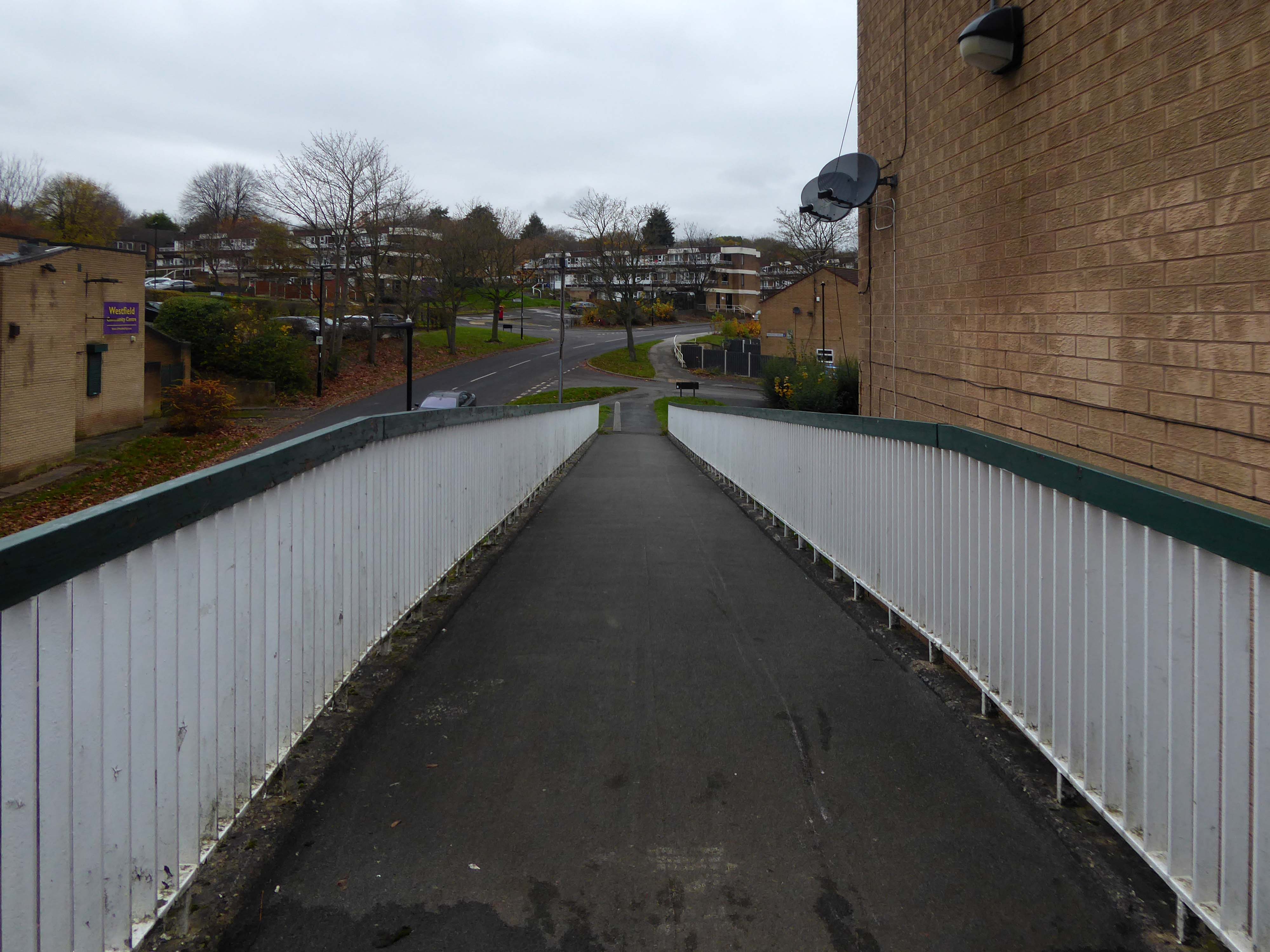
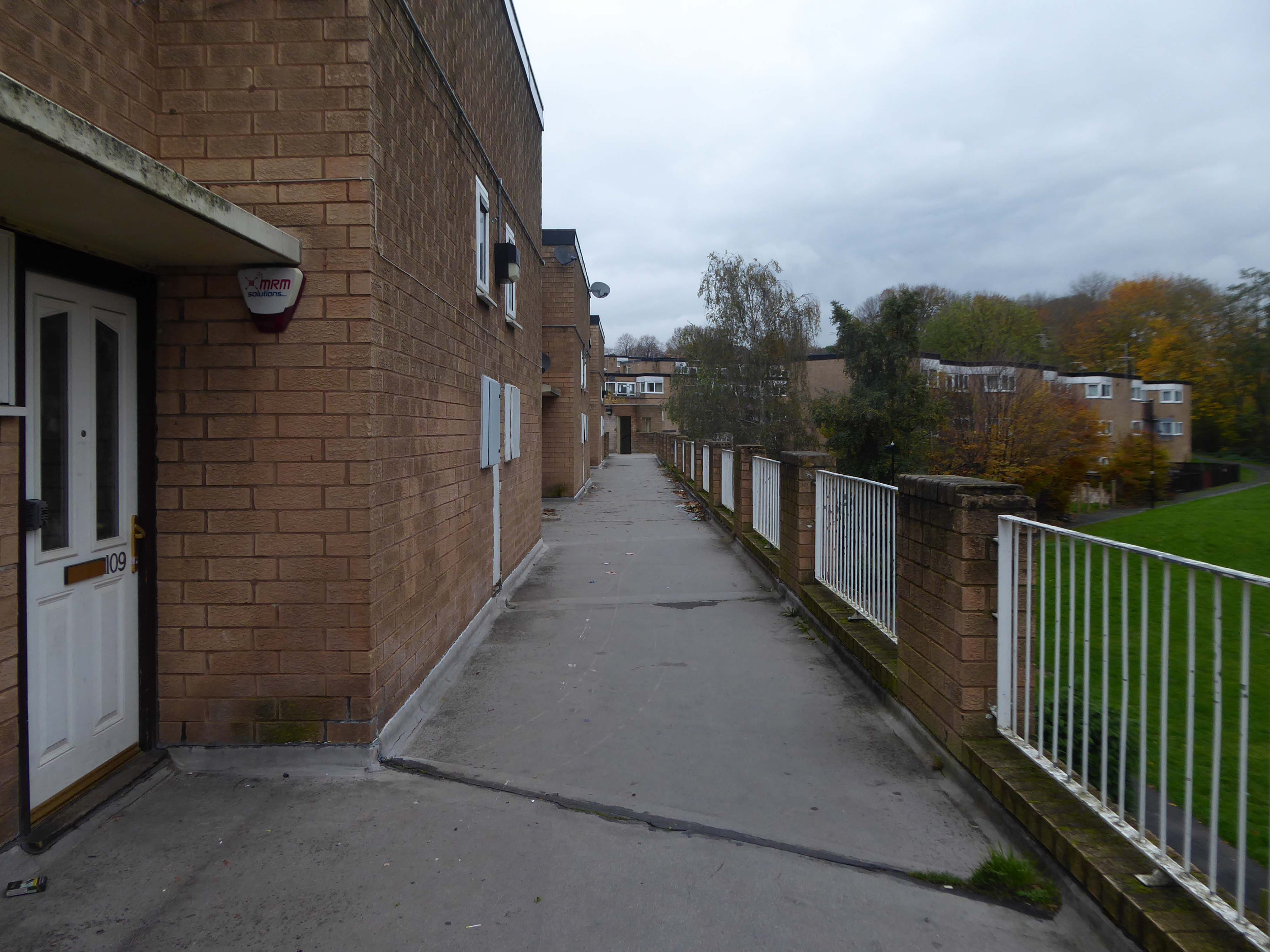
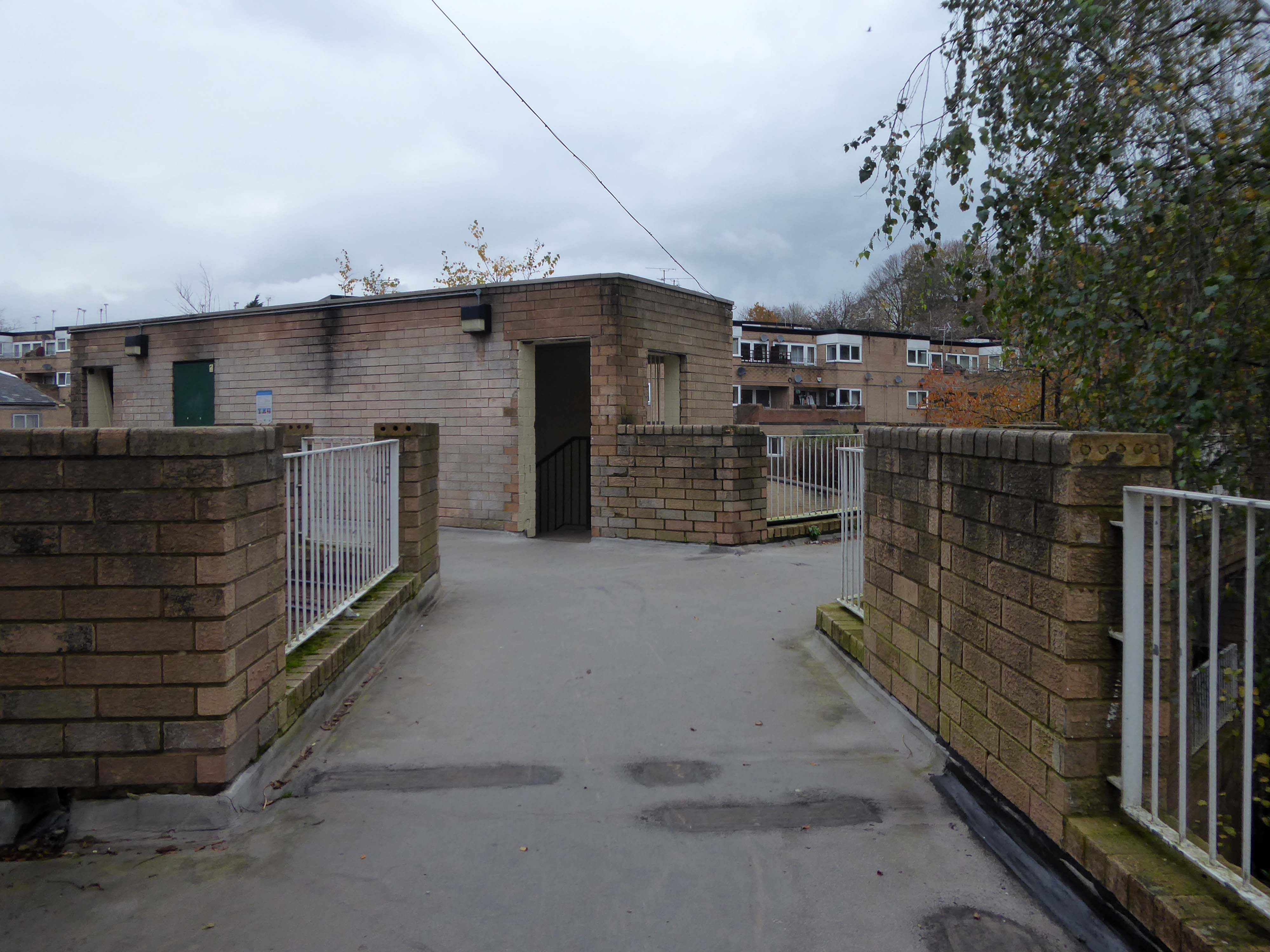
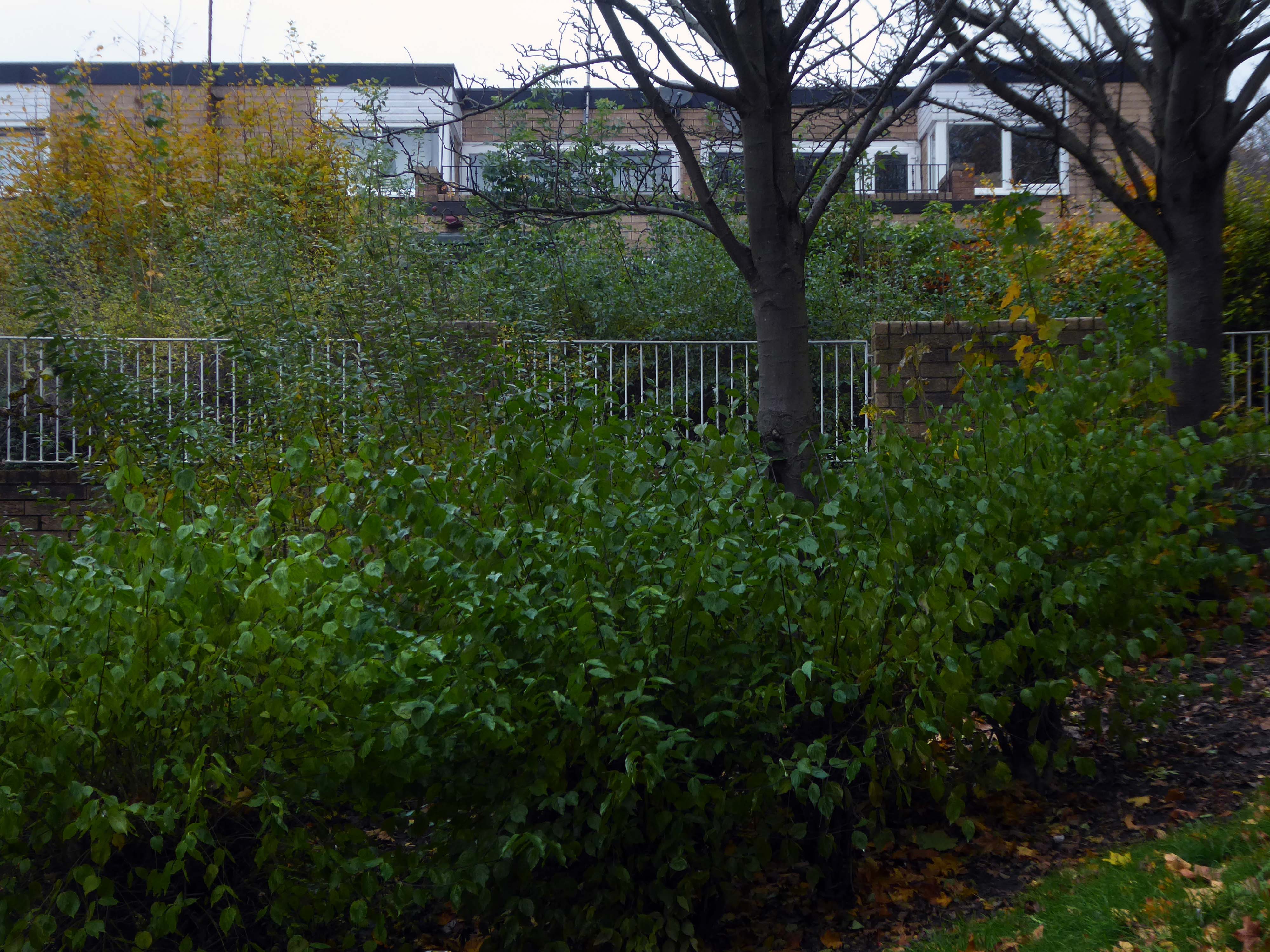
On the day, I was eager to visit the Westfield Estate for the first time.
Westfield Estate Mosborough, formerly Waterthorpe Farm Estate, a rural township which was subsumed by Sheffield’s expanding housing schemes.
Mosborough, a vastly expanding village, eight miles North East of Chesterfield and six miles South East of Sheffield.
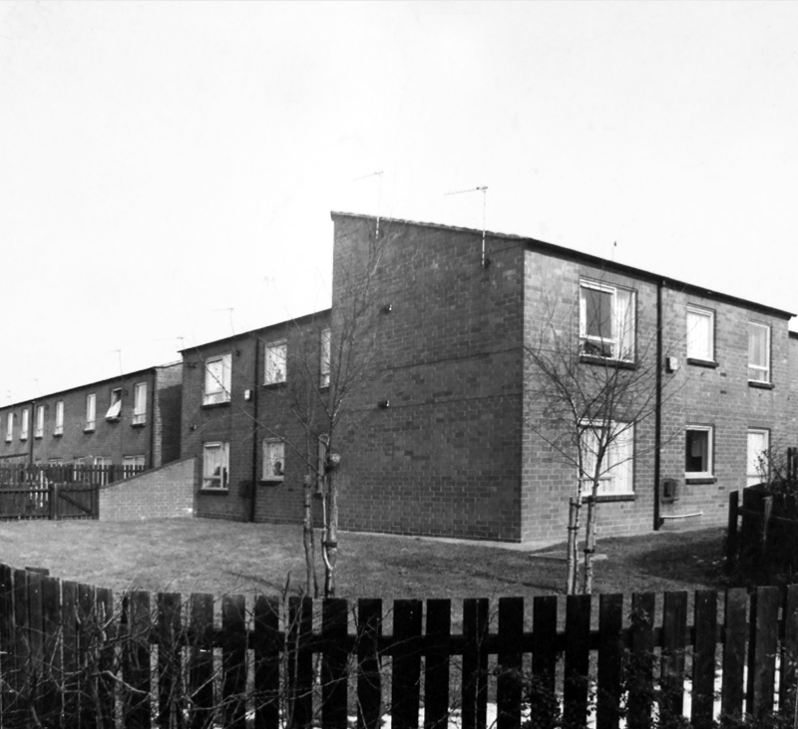
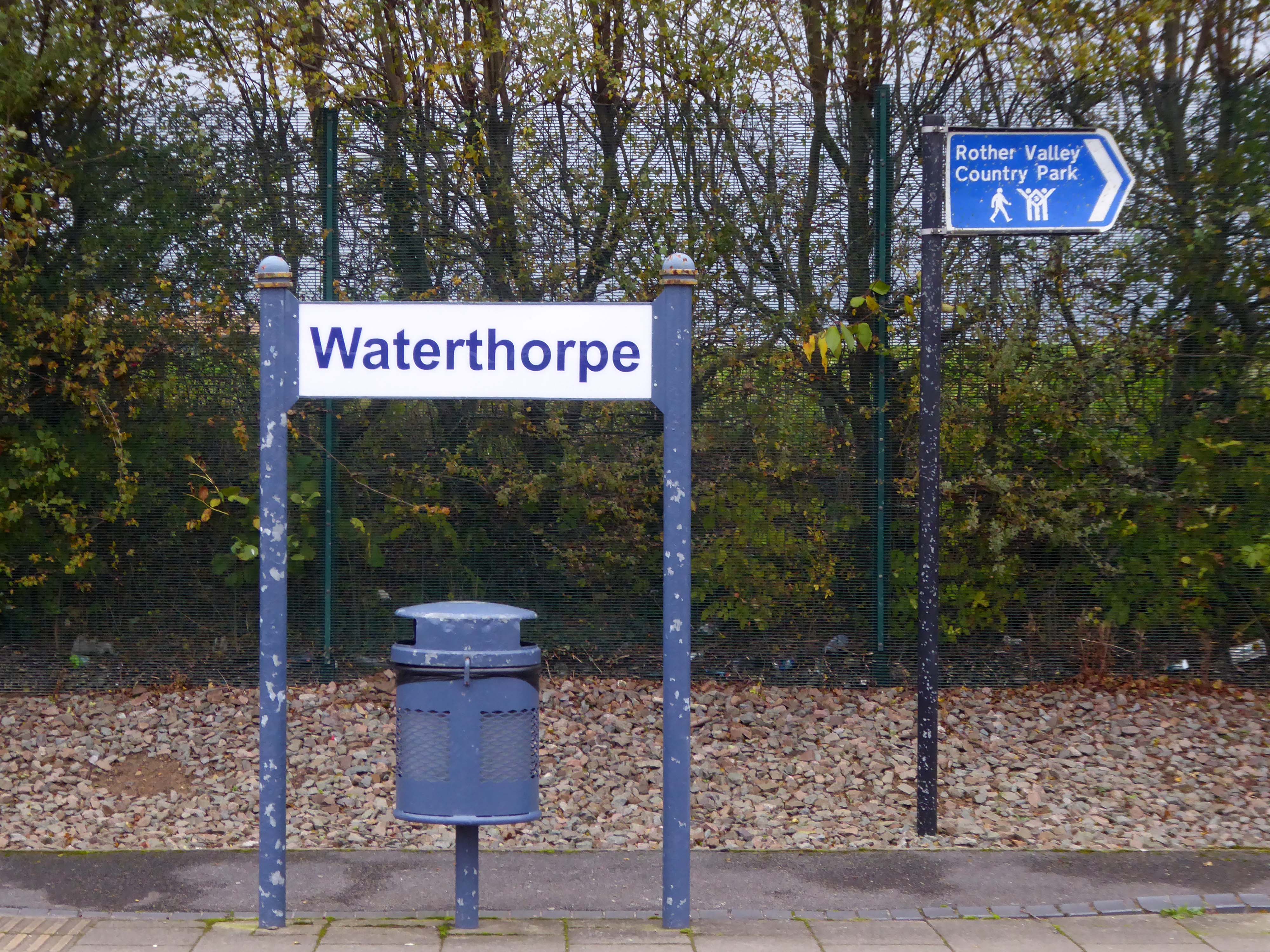
Waterthorpe Housing Estate near Beighton named after Waterthorpe – formerly Walterthorpe Farm.
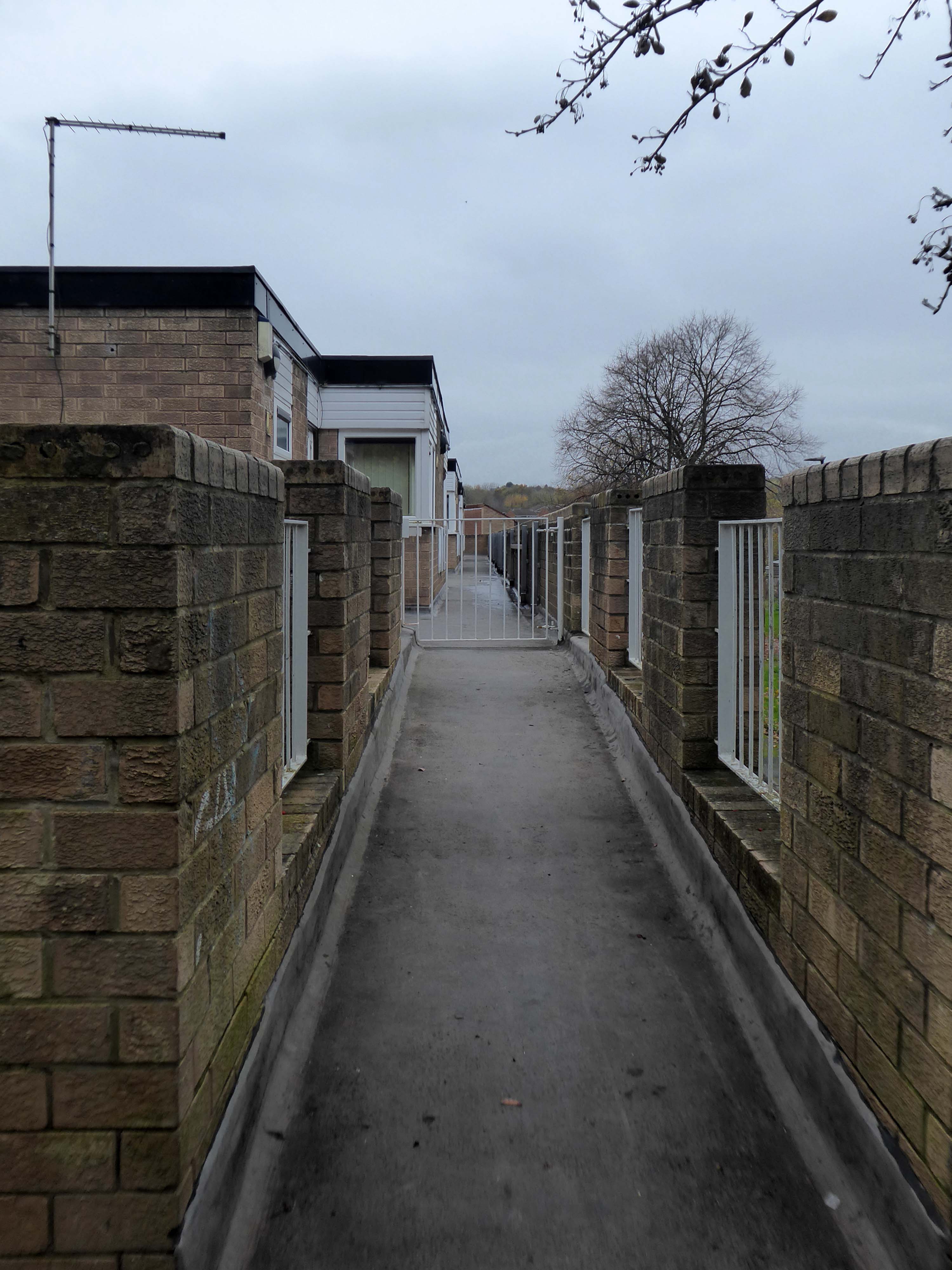
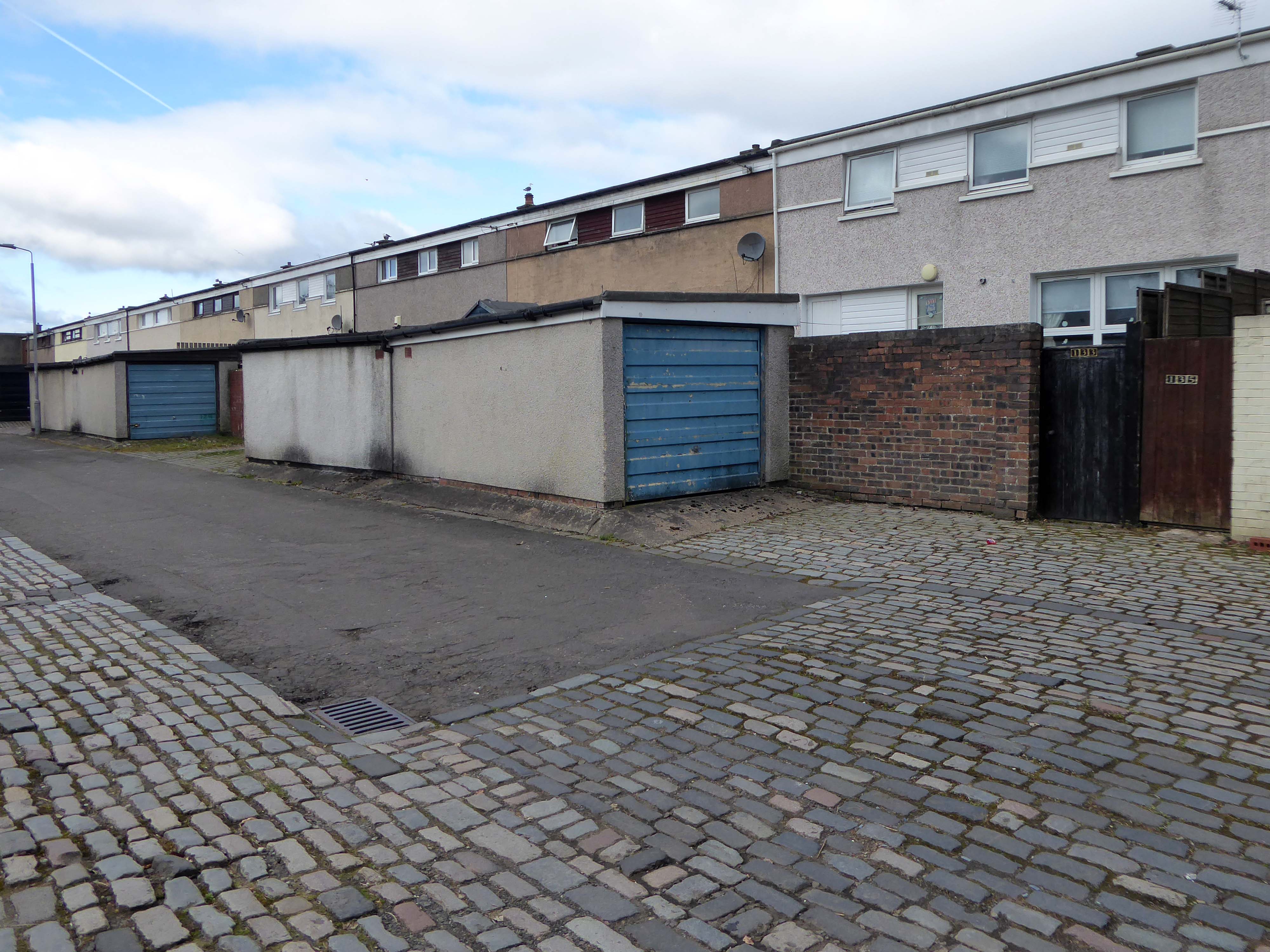
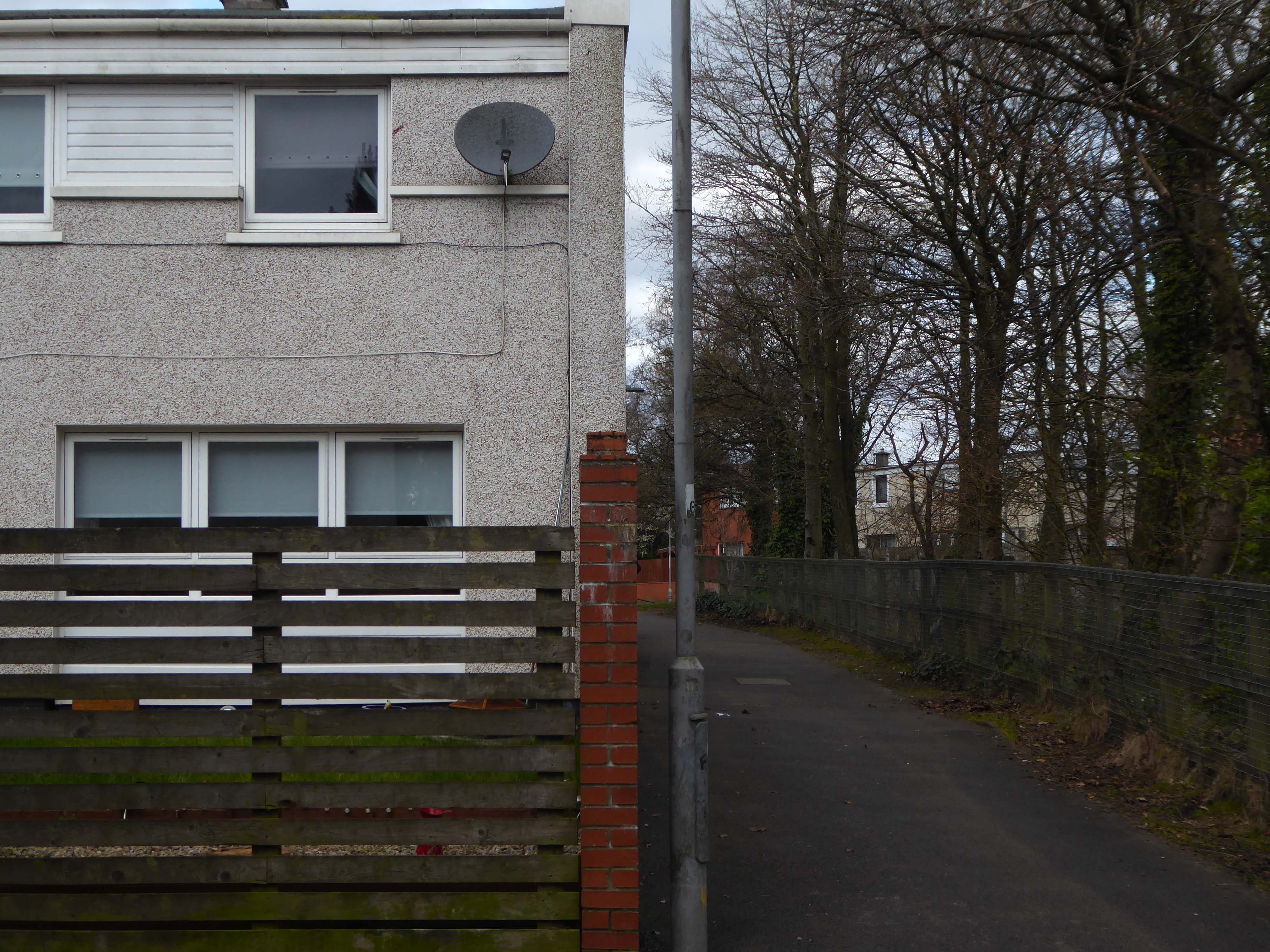
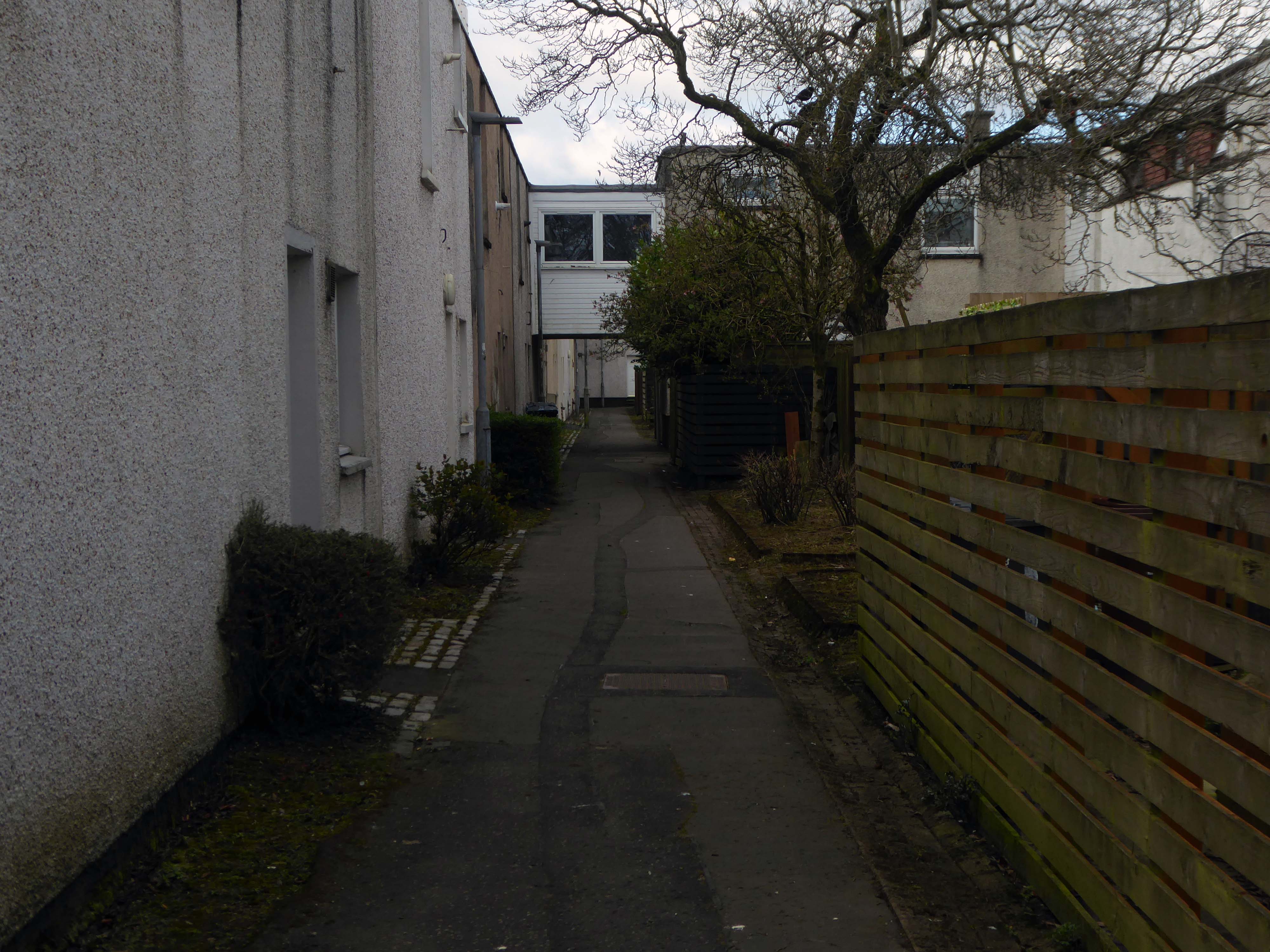
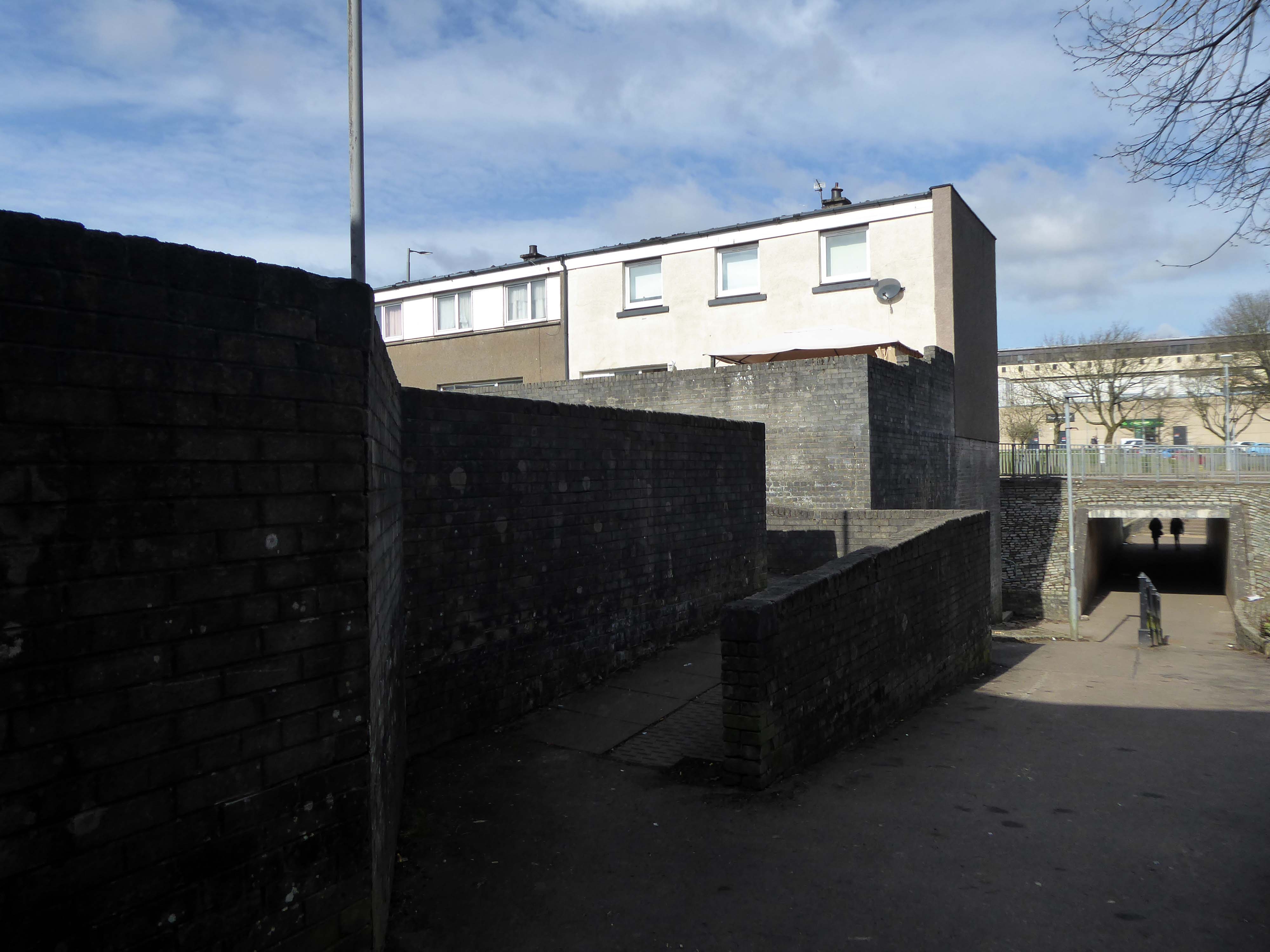
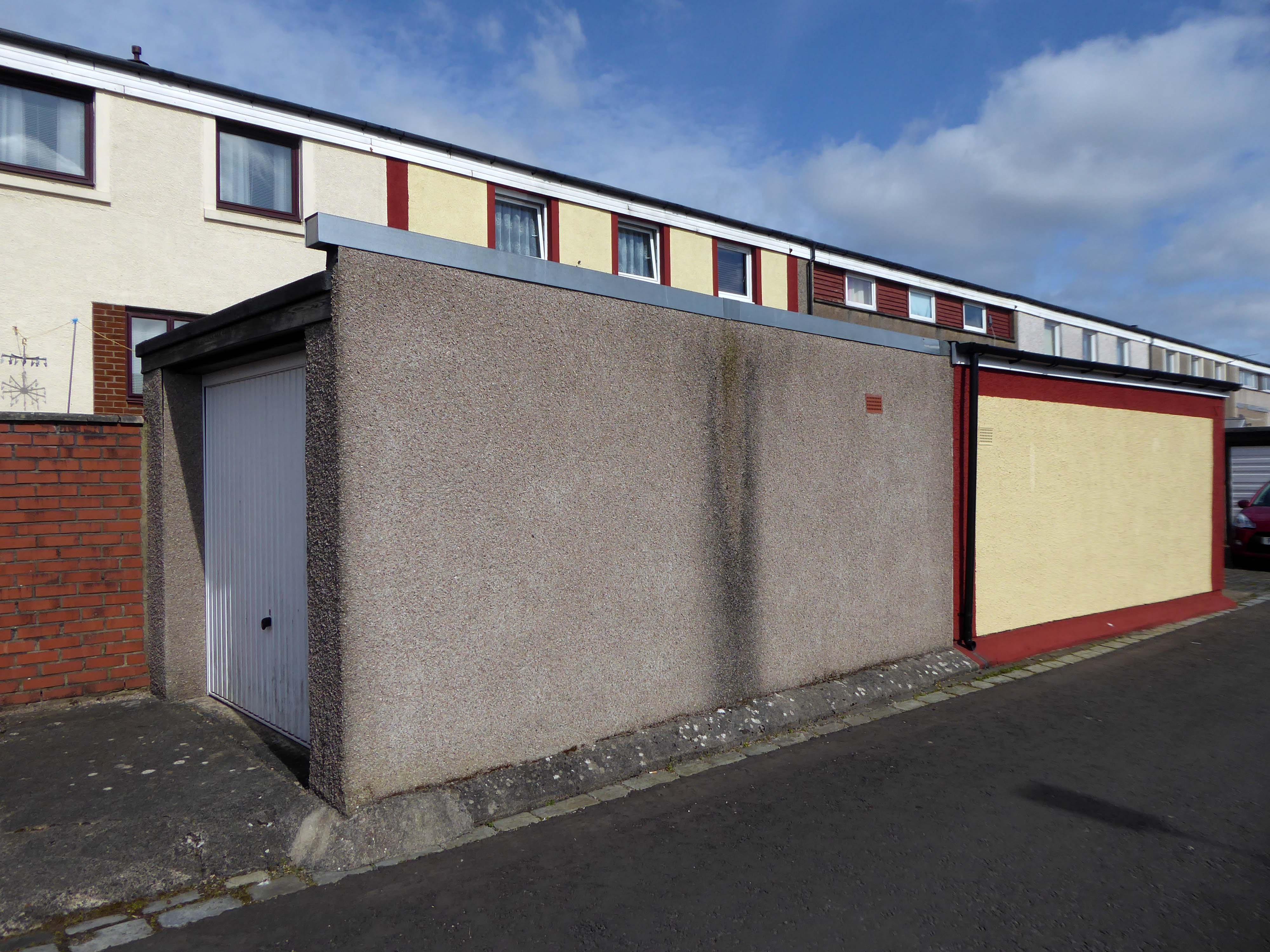
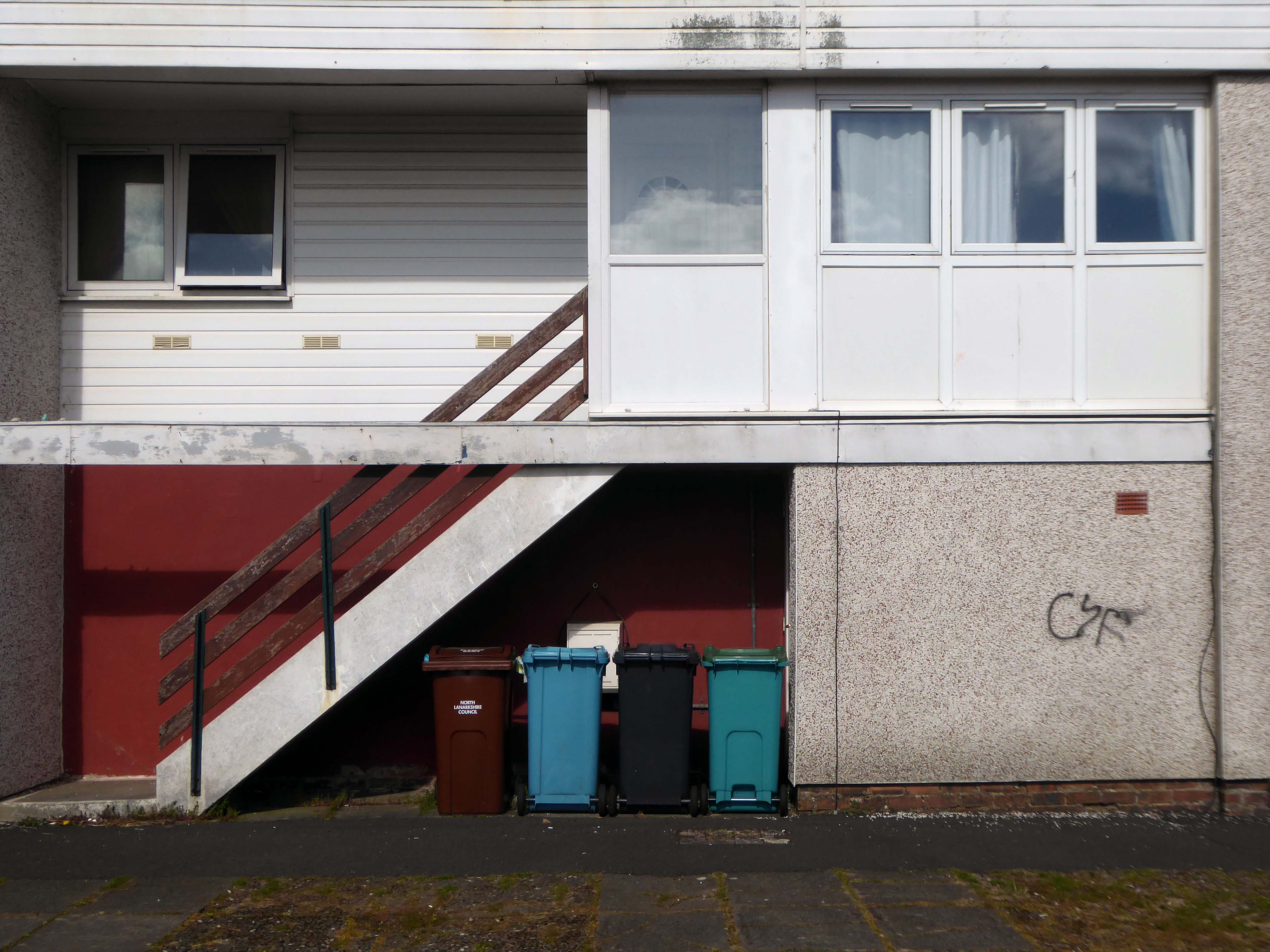
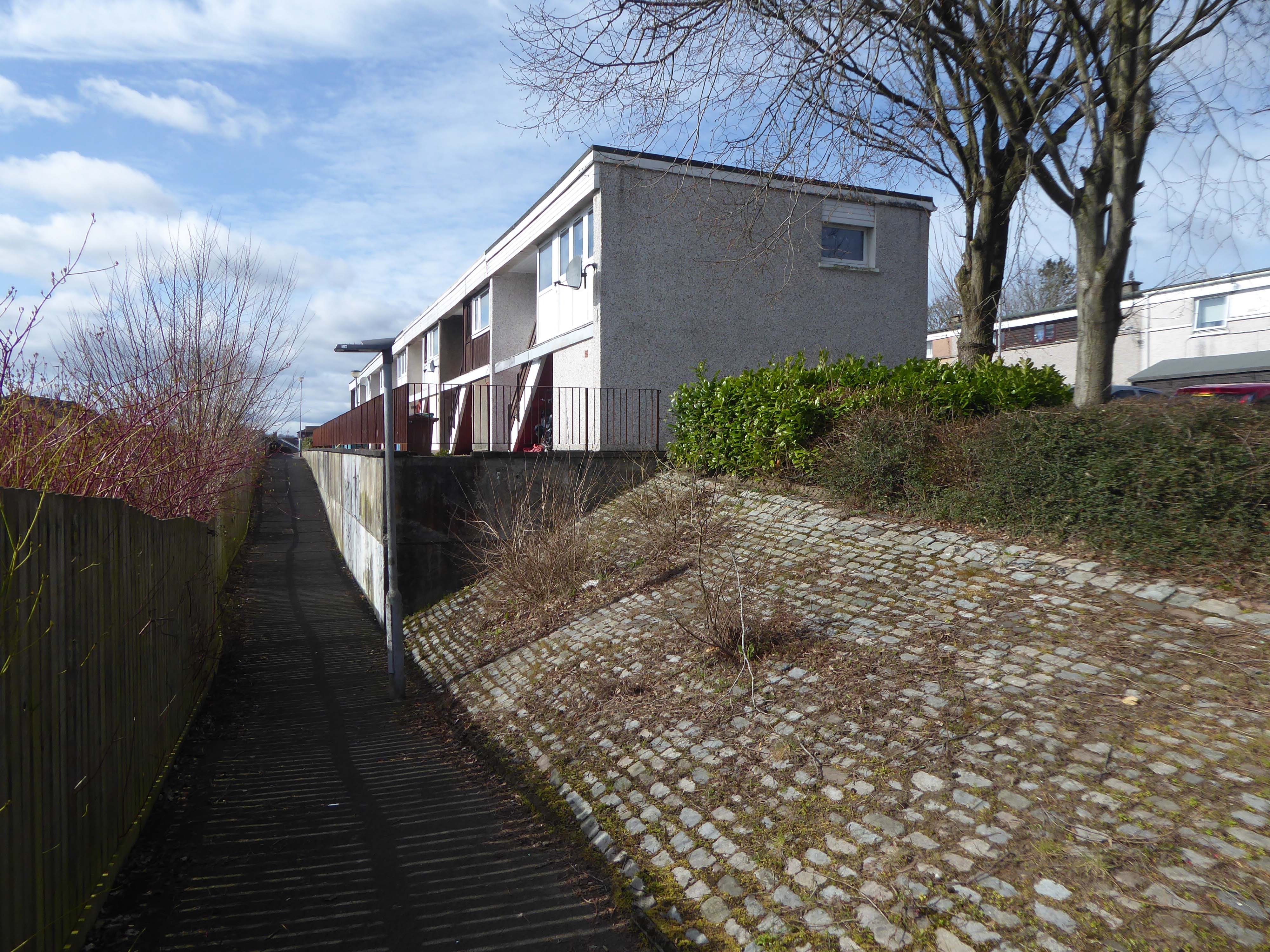
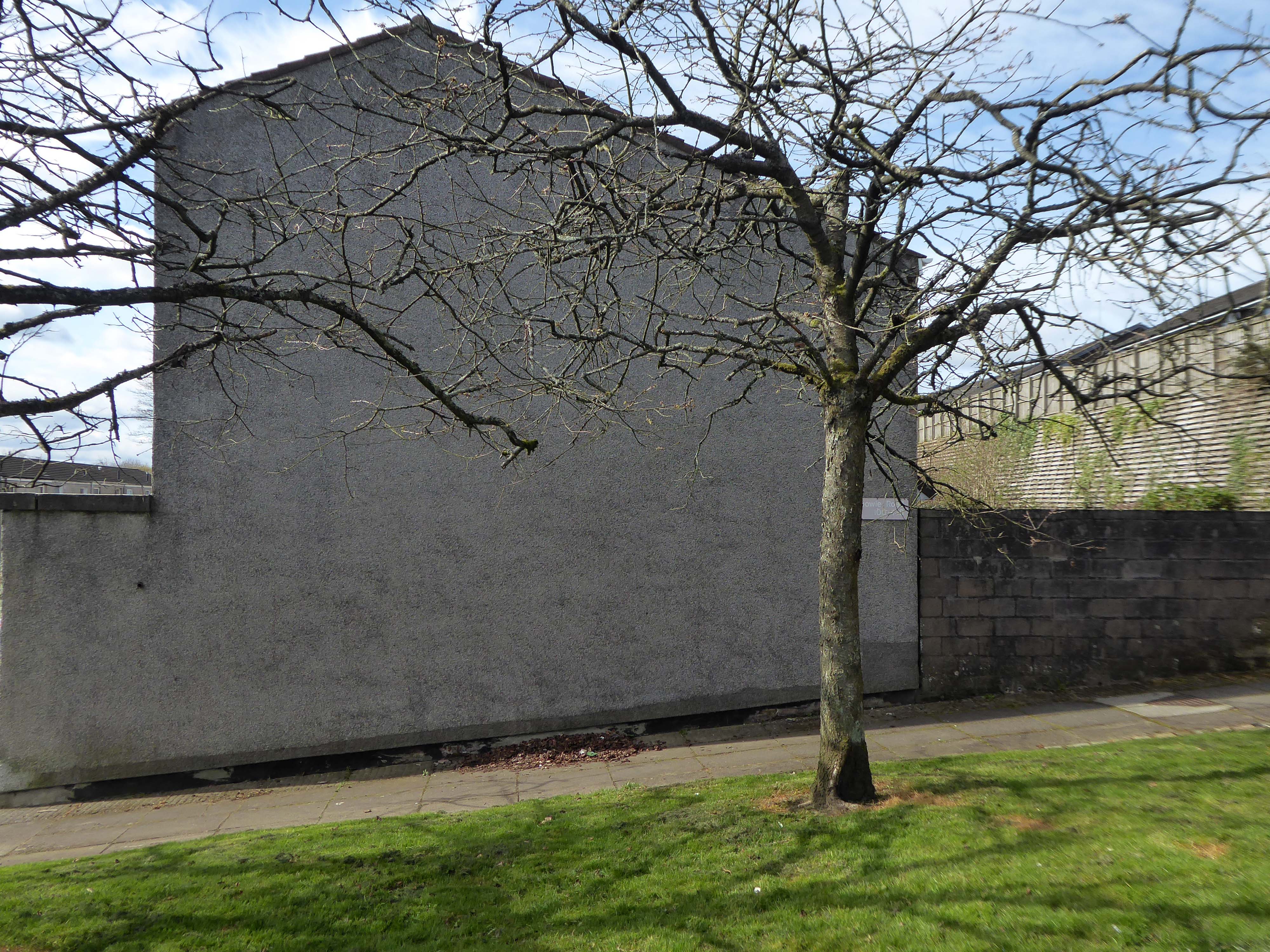
Path which goes behind houses on Short Brook Close 1974
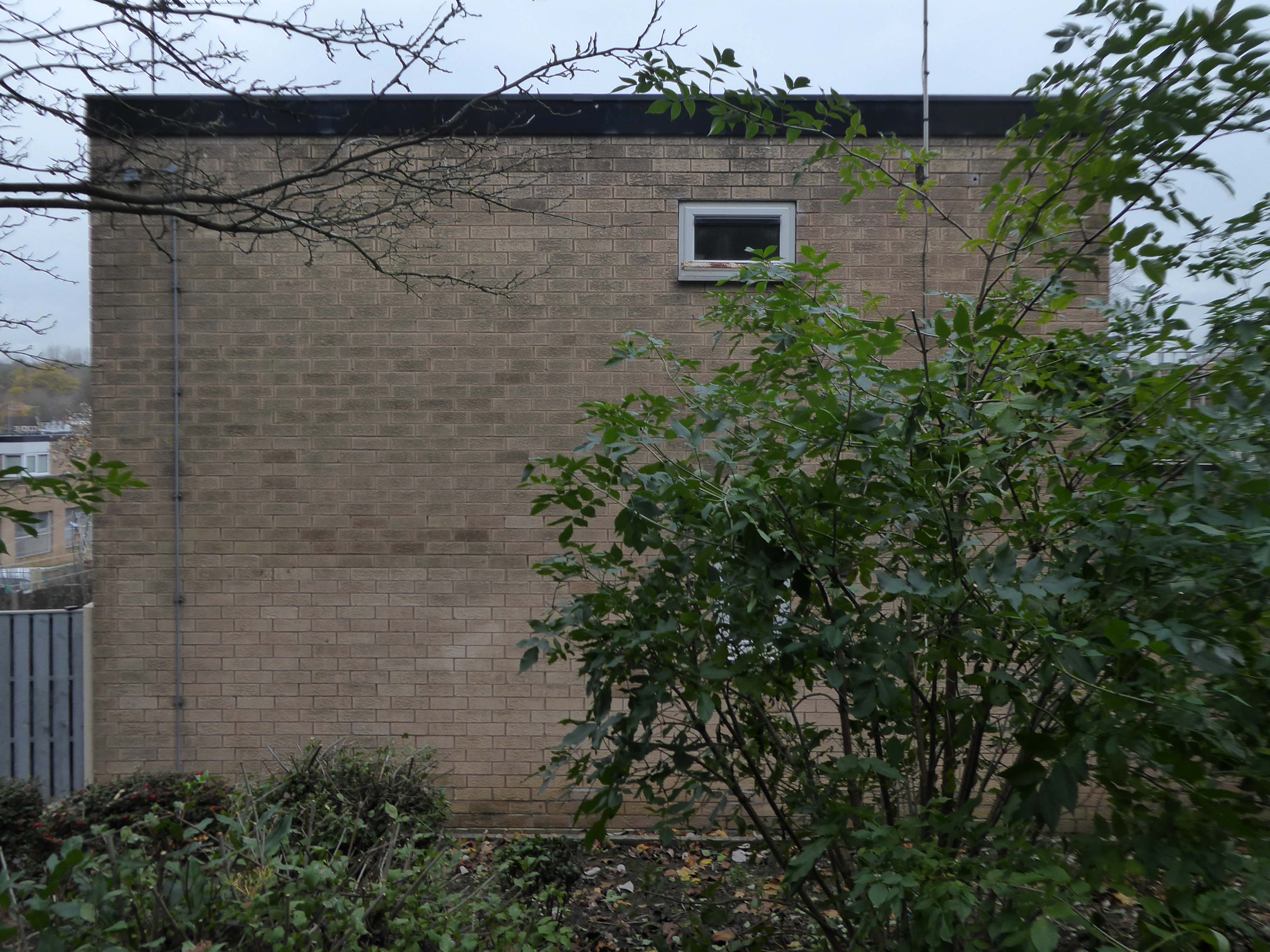
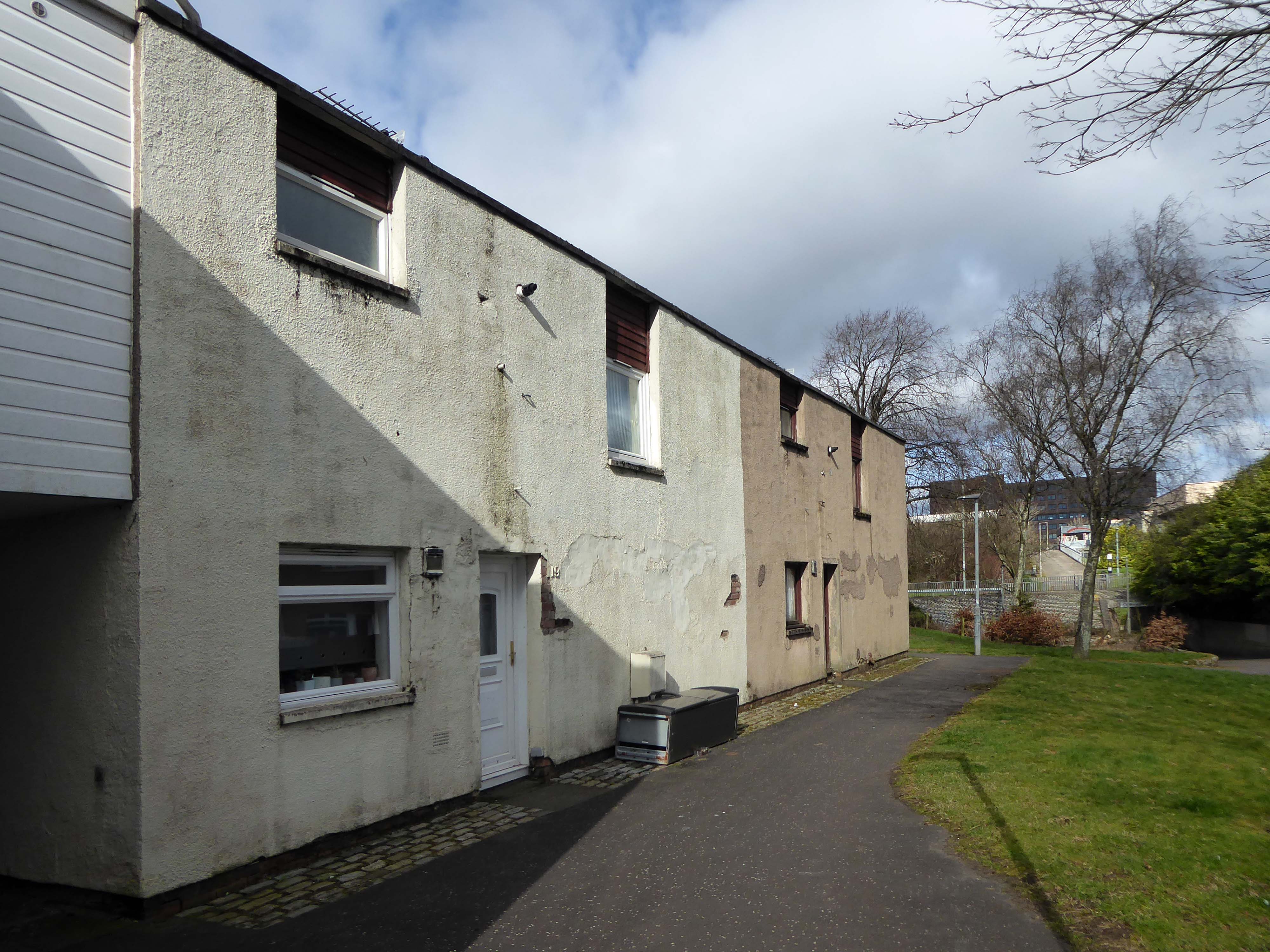
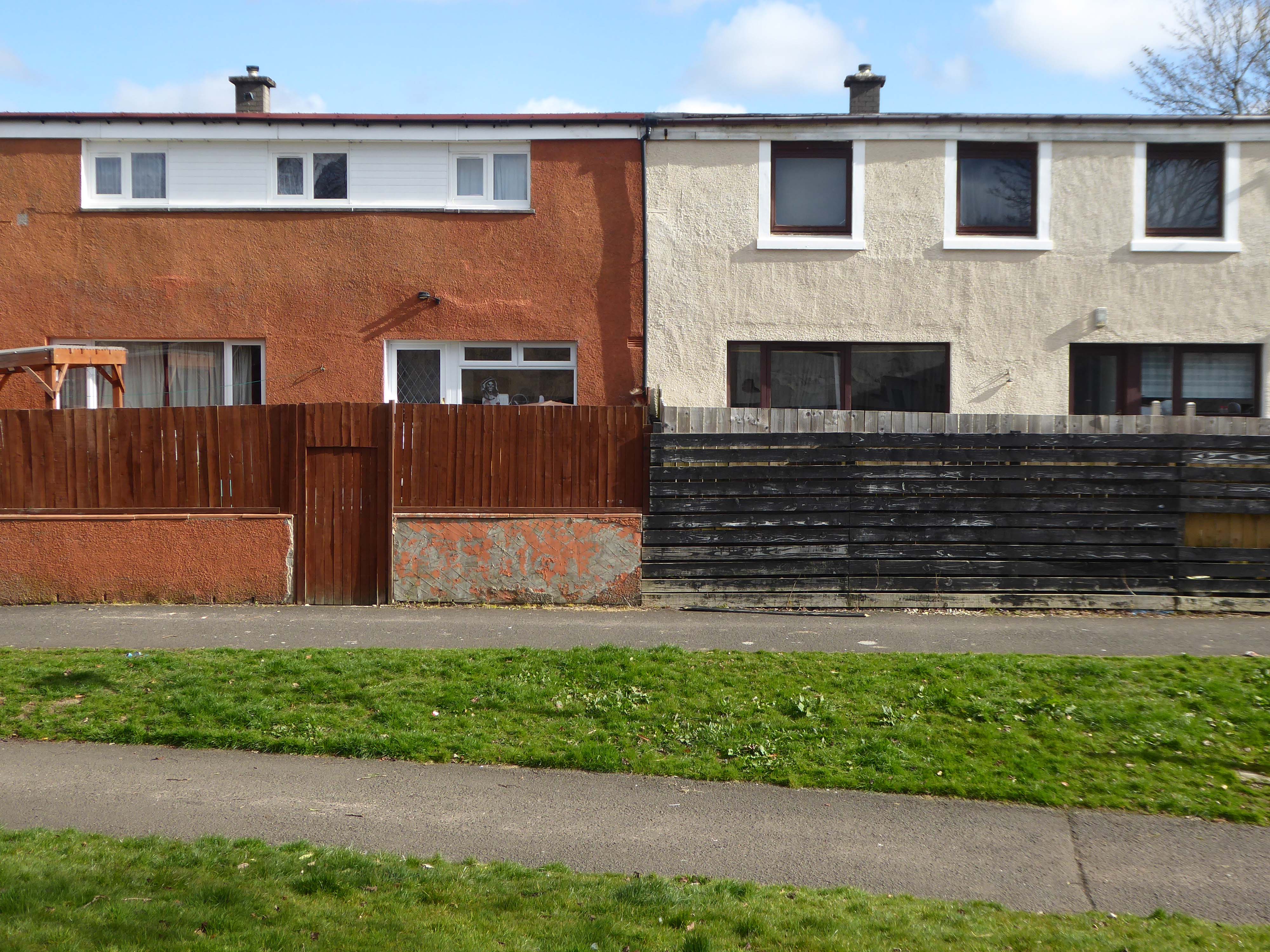
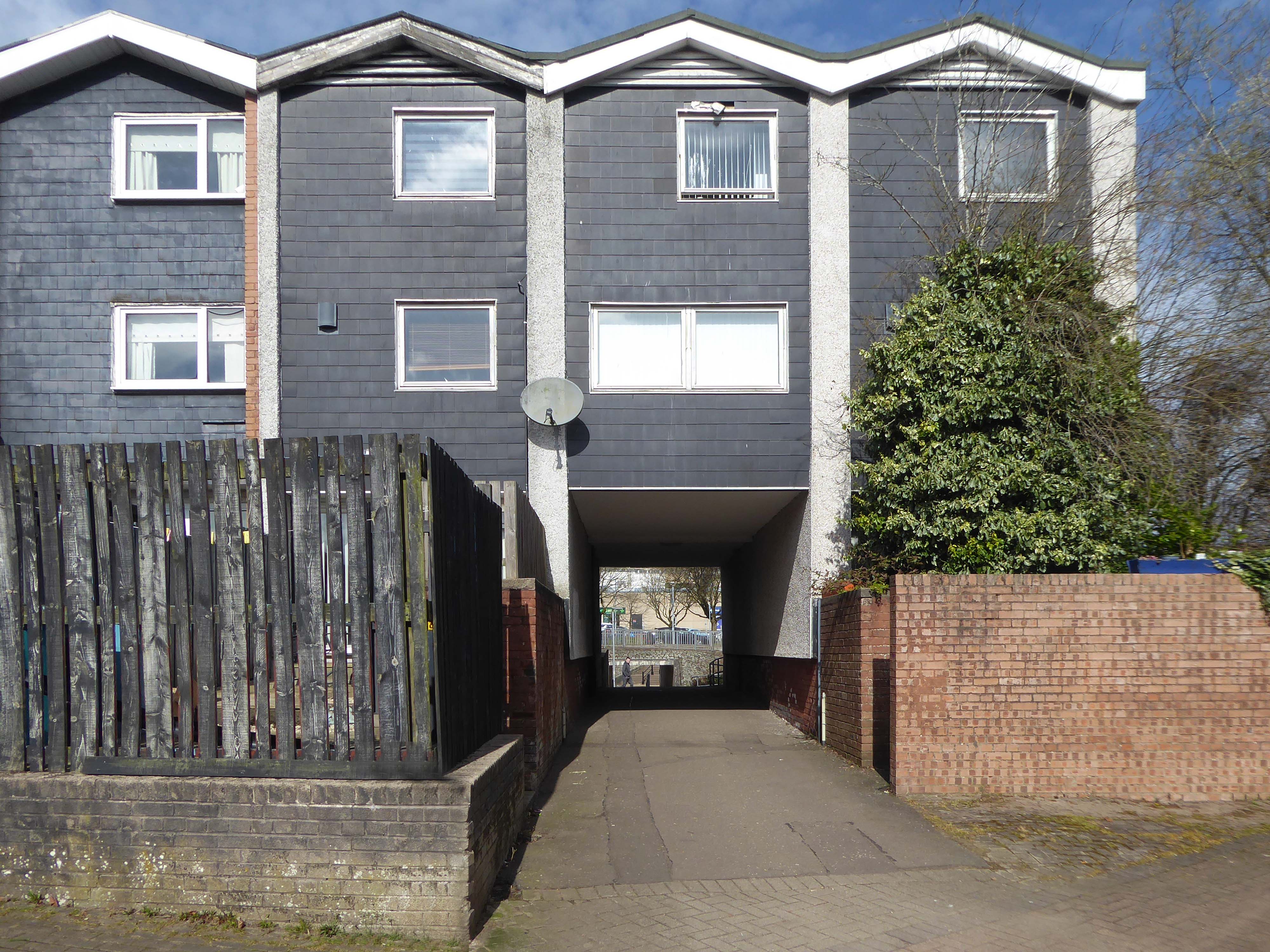
The Waterthorpe and Westfield housing estates were built from mid-1970s and were added to over a number of years. Eventually linking with both the old council estate of Beighton and the new estate of Halfway, the estates house a condensed significant number of almost wholly local authority owned properties following the phasing down and demolition of the original estates around Parson Cross and Shiregreen in the north of the city.
Maple gave architects Aedas RHWL the freedom to express themselves on a prominent multi-storey car park development in Salford. Their imaginative design created a great concept – the nine storey New Bailey car park appearing to be wrapped in ribbons that echo the lattice patterns and intersections in the ironwork of nearby Victorian bridges.
The pedestrian in a car park is happy to shine its tiny light on Salford’s regeneration – and has lead a Modernist Mooch around the area named Salford Nouveau!
English Cities Fund and National Car Parks have officially launched the new 615 space, nine storey car park at New Bailey, which is due to open in early December.
The £12 million car park, which was designed by architect Renton Howard Wood Levin Architects and constructed by Morgan Sindall has been forward funded by Legal and General and let to NCP on a 35 year lease.
This purpose built flagship multi-storey car park features a number of benefits for customers. These include state of the art larger and quicker lifts, energy efficient LED lighting and automatic number plate recognition. The online booking service includes pre booking facilities and level monitoring communicates to drivers which levels have available parking spaces. There are also direct links to the NCP customer contact centre via a number of help points throughout the car park, as well as 27 CCTV cameras for increased safety and six charging spaces for electric cars.
The car park is also conveniently located adjacent to Salford Central train station.
A good, clean and modern car park, easy to navigate and sensibly sized spaces.
The only downsides are that it’s not cheap and getting into it from Trinity way is hard, as the traffic blocks the junction meaning it takes may cycles of the traffic lights to get across the junction.
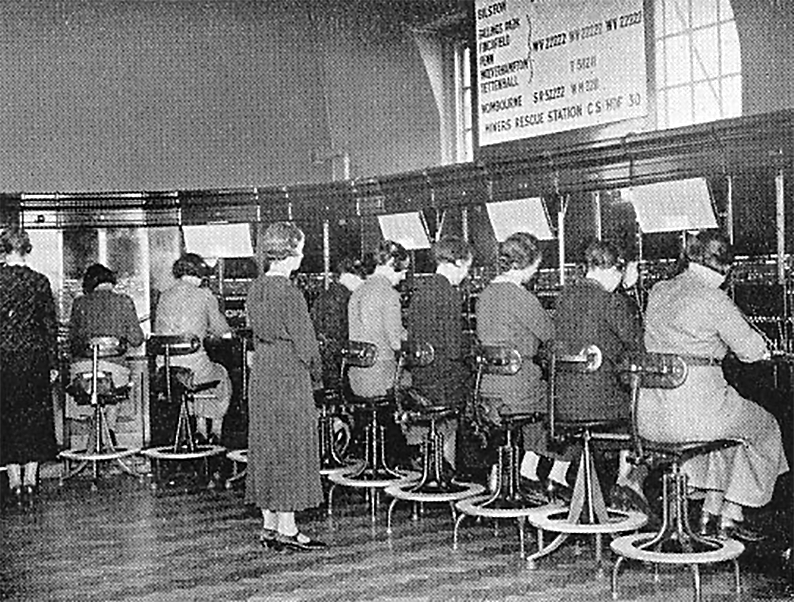
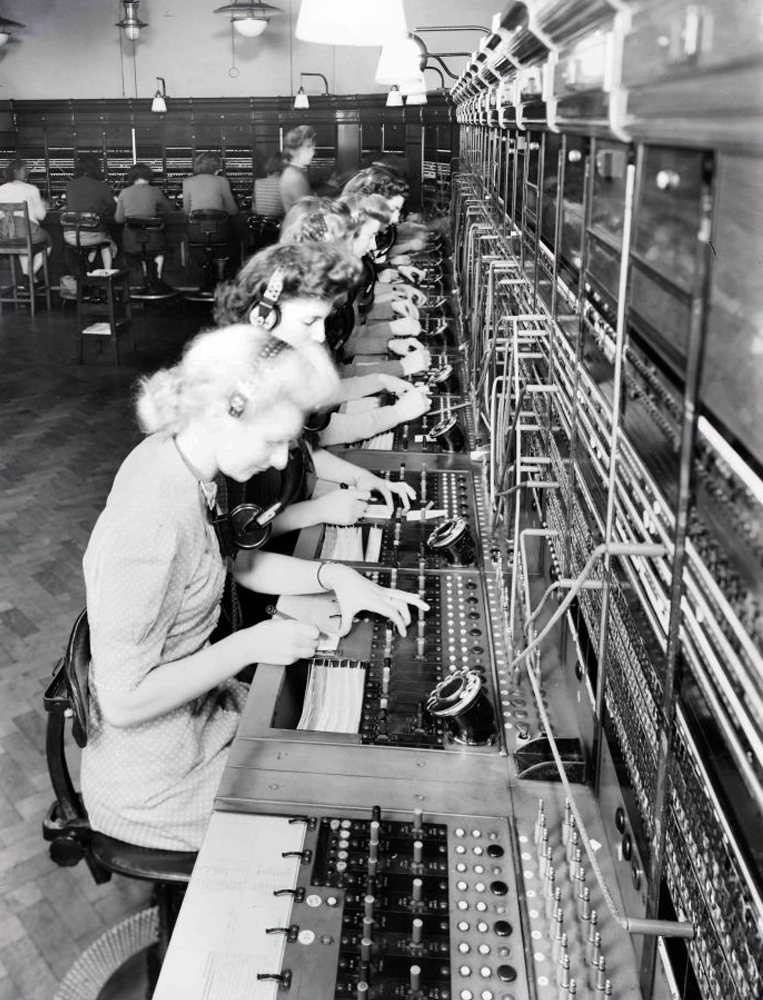
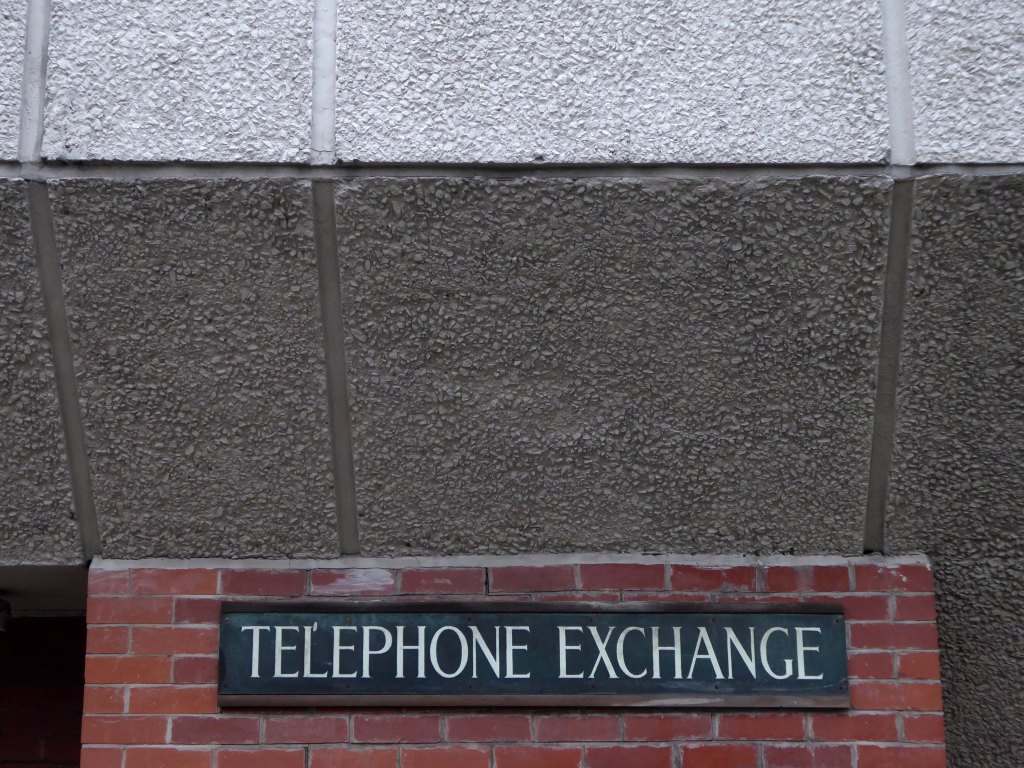
In the 19th century, telephones were mainly used by businesses and wealthy individuals. The first telephone exchange in Europe opened in August 1879, soon followed by another in Manchester, both operated by The Telephone Company Limited. Around the same time the Midland Telephone Company opened an exchange in Birmingham on the corner of New Street and Stephenson Place.
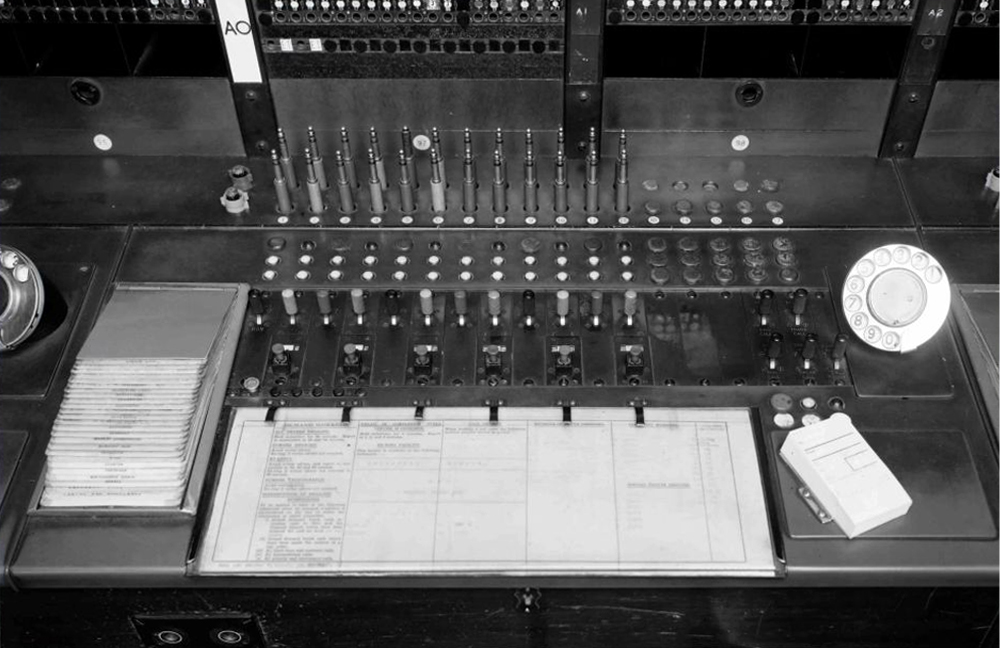
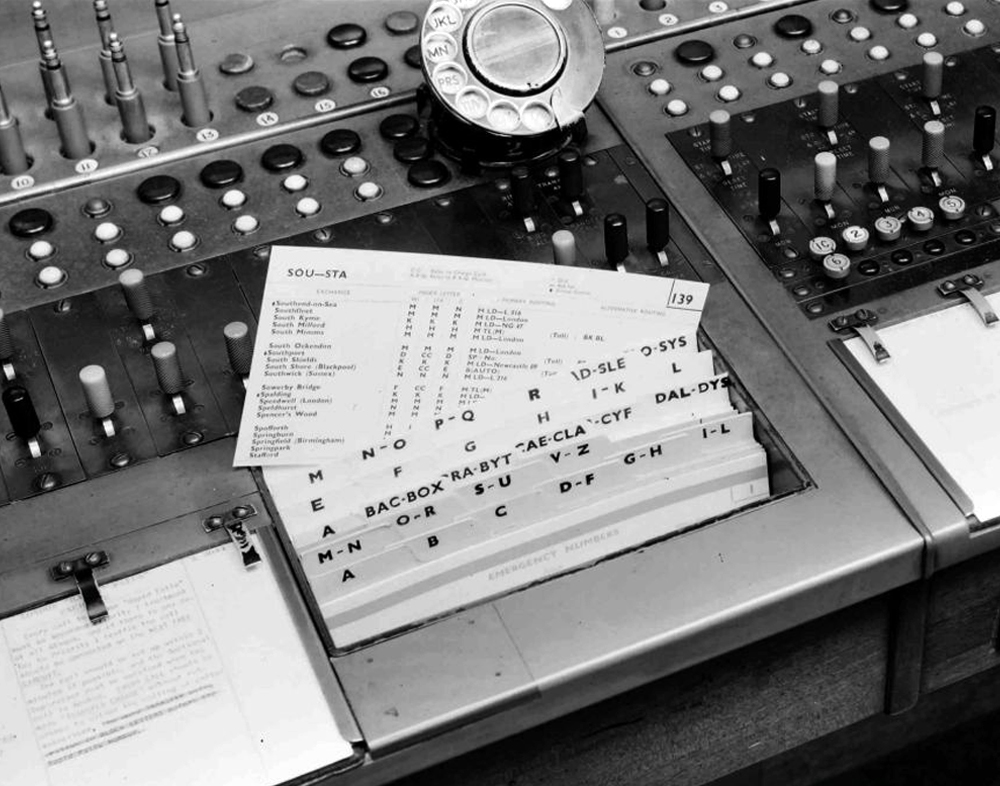
In July 1880 the company installed Wolverhampton’s first telephone exchange in a room in the Free Library in Garrick Street. Making a call was a long-winded affair. In order to connect the telephone to the exchange, a white button was pressed. The operator would ask if a telephone call was about to be made, and the user would tell the operator the name and number of the person to be contacted. After making the connection, the operator waited for the person at the other end to pick-up the earpiece, and then told the caller to proceed. When the telephone call had ended, the caller had to inform the operator, who would then remove the connection. Although this was time consuming, there were very few users, and so it worked adequately.
The first telephone line in Wolverhampton, about a mile long, was laid between Moses Ironmonger’s rope and twine factory at 272 Brickkiln Street, and the company’s office in High Street. Moses Ironmonger, the Chief Magistrate of Wolverhampton, and Mayor in 1857 to 58, and again in 1868 to 69, was also president of the Wolverhampton Chamber of Commerce in 1873 to 74, and a friend of Alexander Graham Bell, the telephone pioneer. The Ironmonger’s telephone line was tried out by some of the local councillors, who appear to have been impressed.
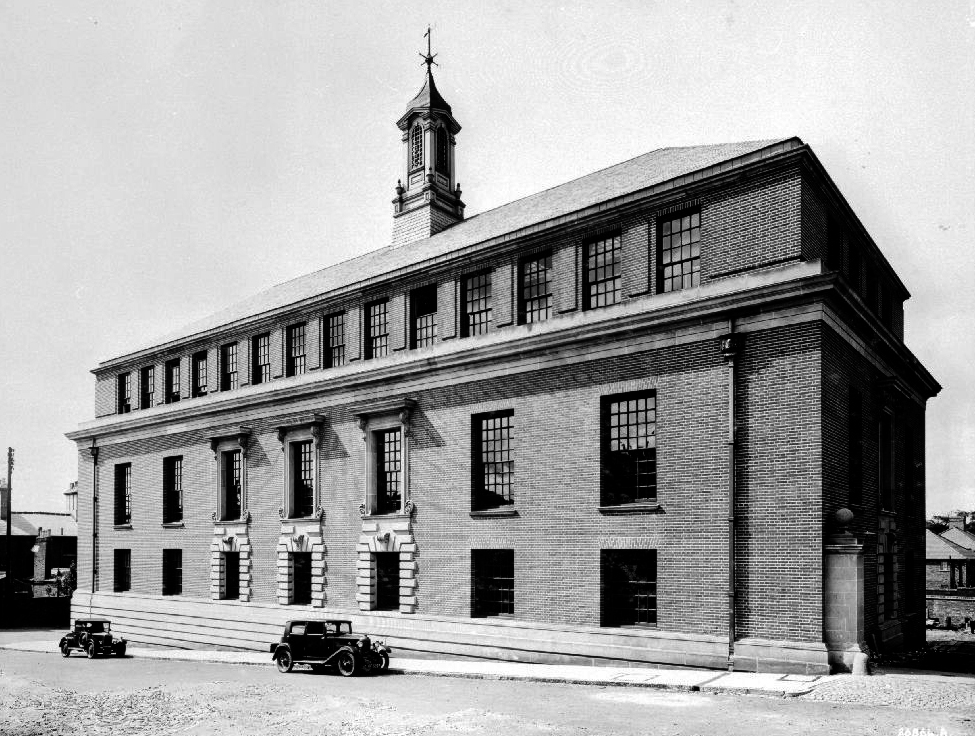
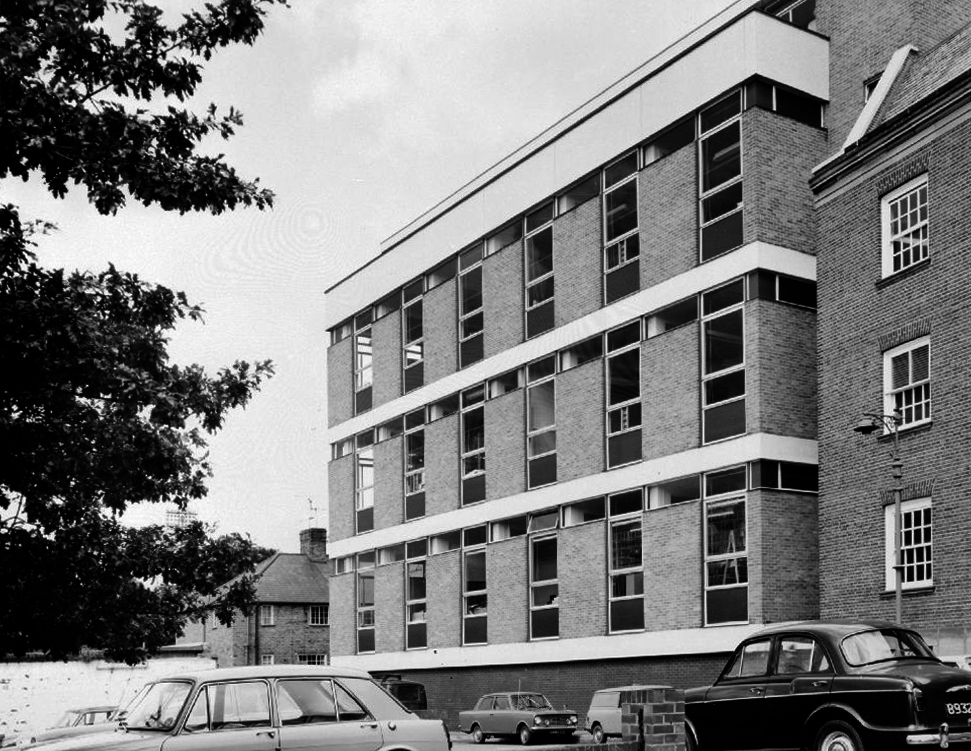
Before the end of July 1880 Monmore Green and Ettingshall were connected to the exchange. By October between fifty and sixty calls were made daily. Wolverhampton’s next exchange was set up in 1903 in a large house next to the Town Hall, where the Civic Centre is today. The house had previously been occupied by John Freer Proud, a surgeon. As the number of users increased, the old manual telephone exchanges could no longer cope and so automatic exchanges were developed.
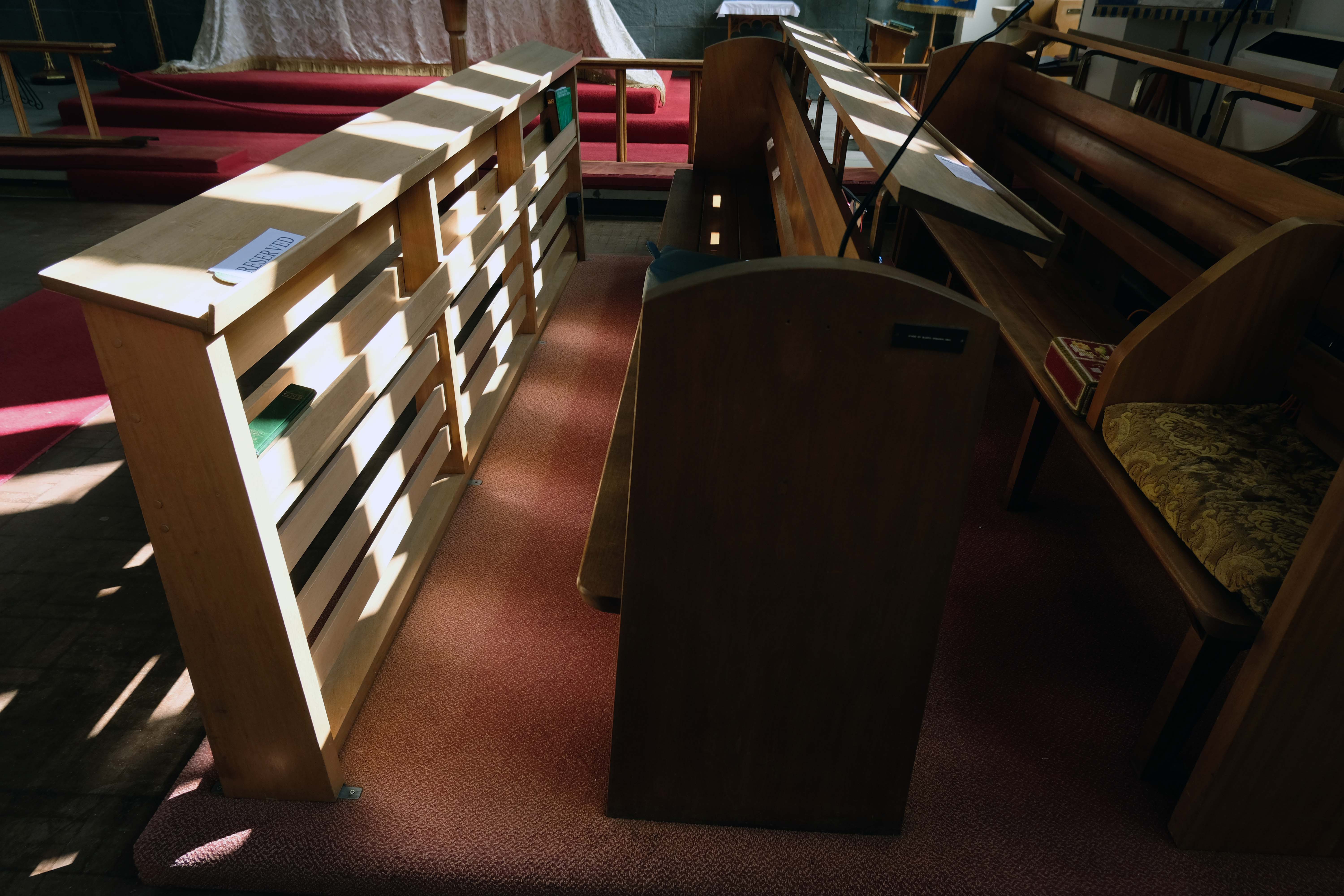
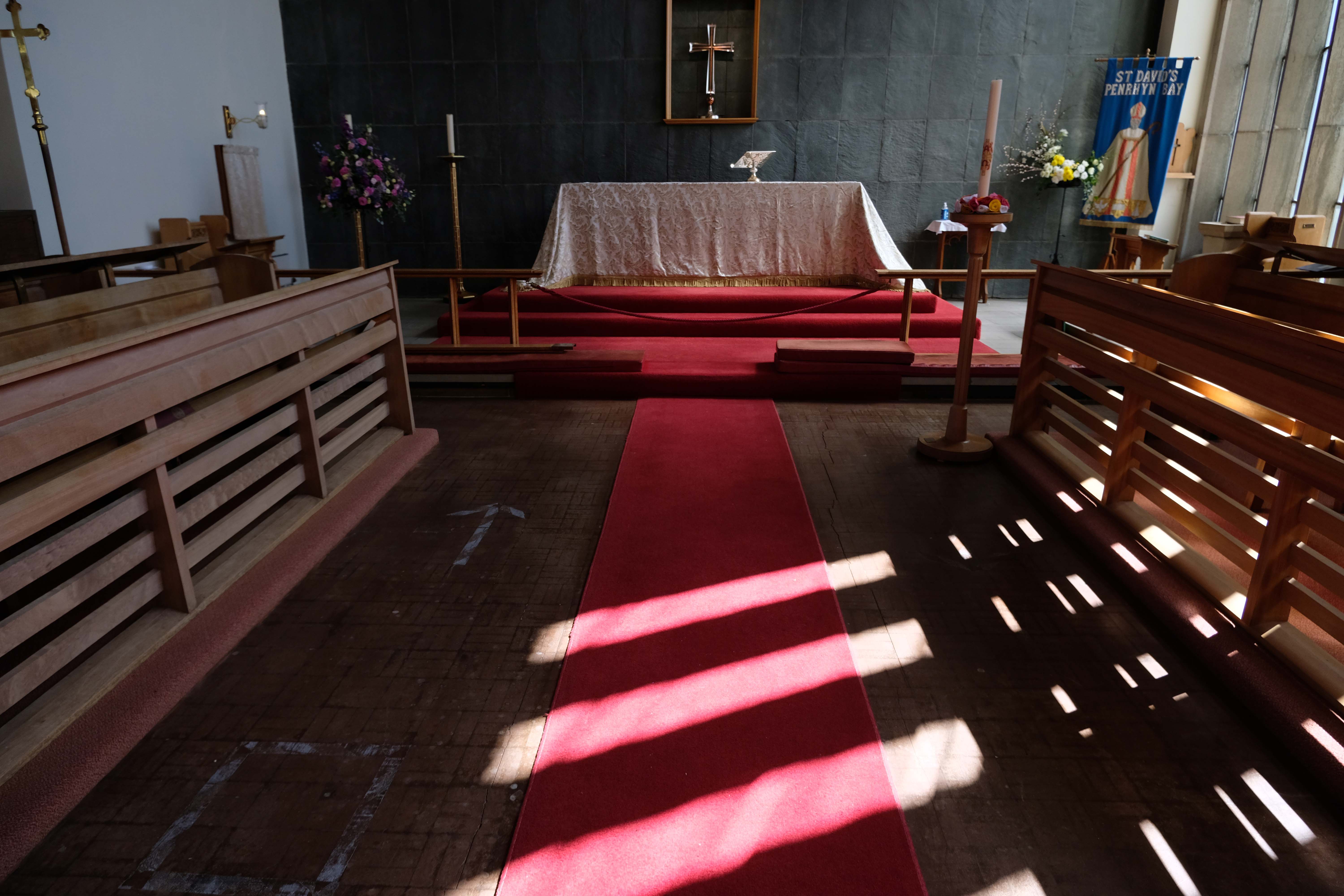
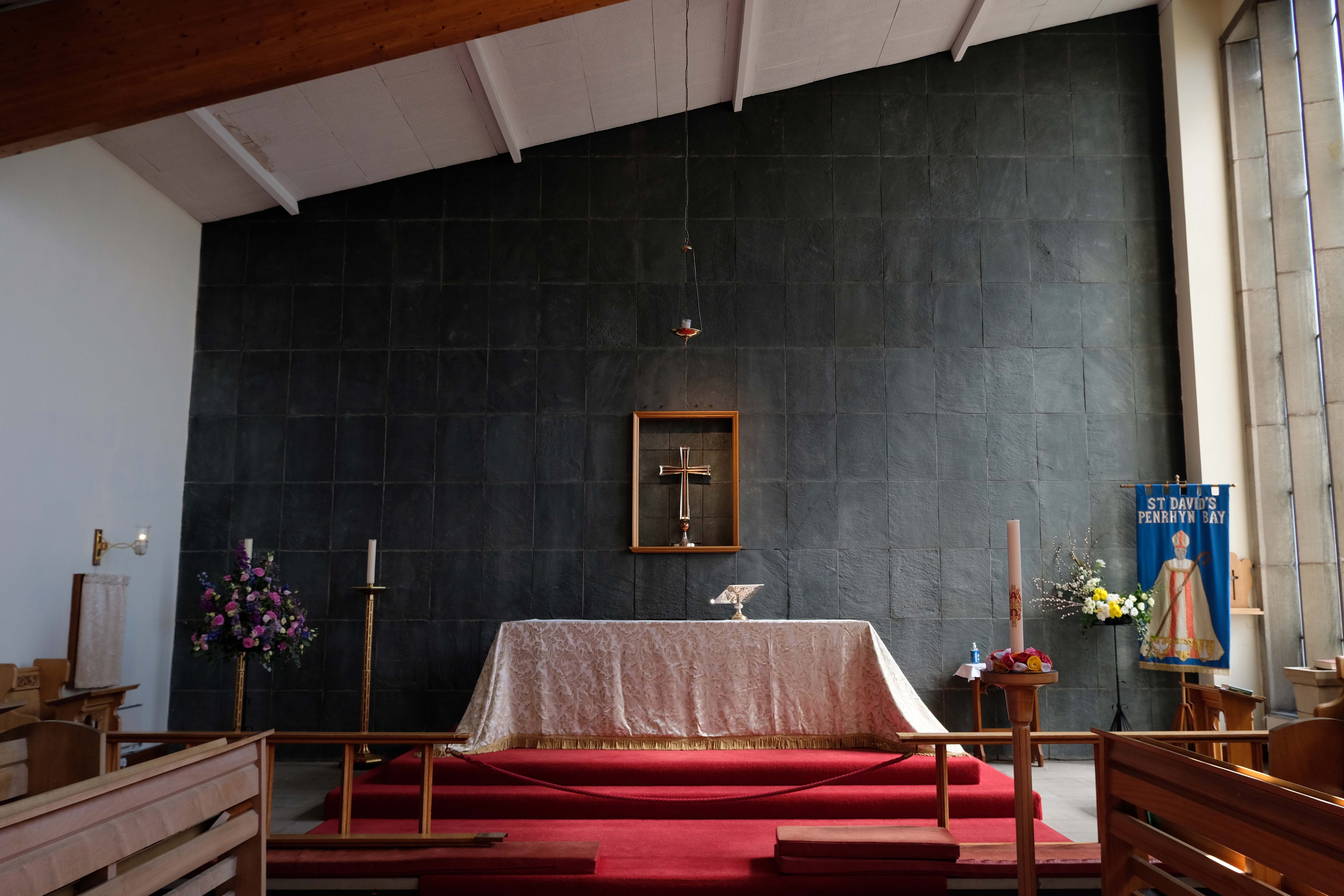
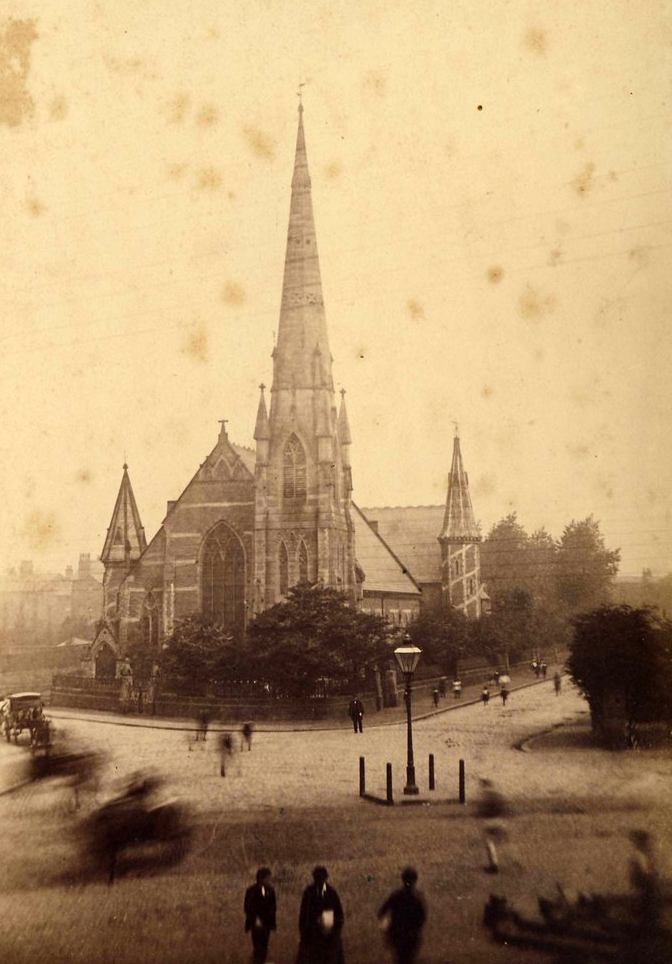
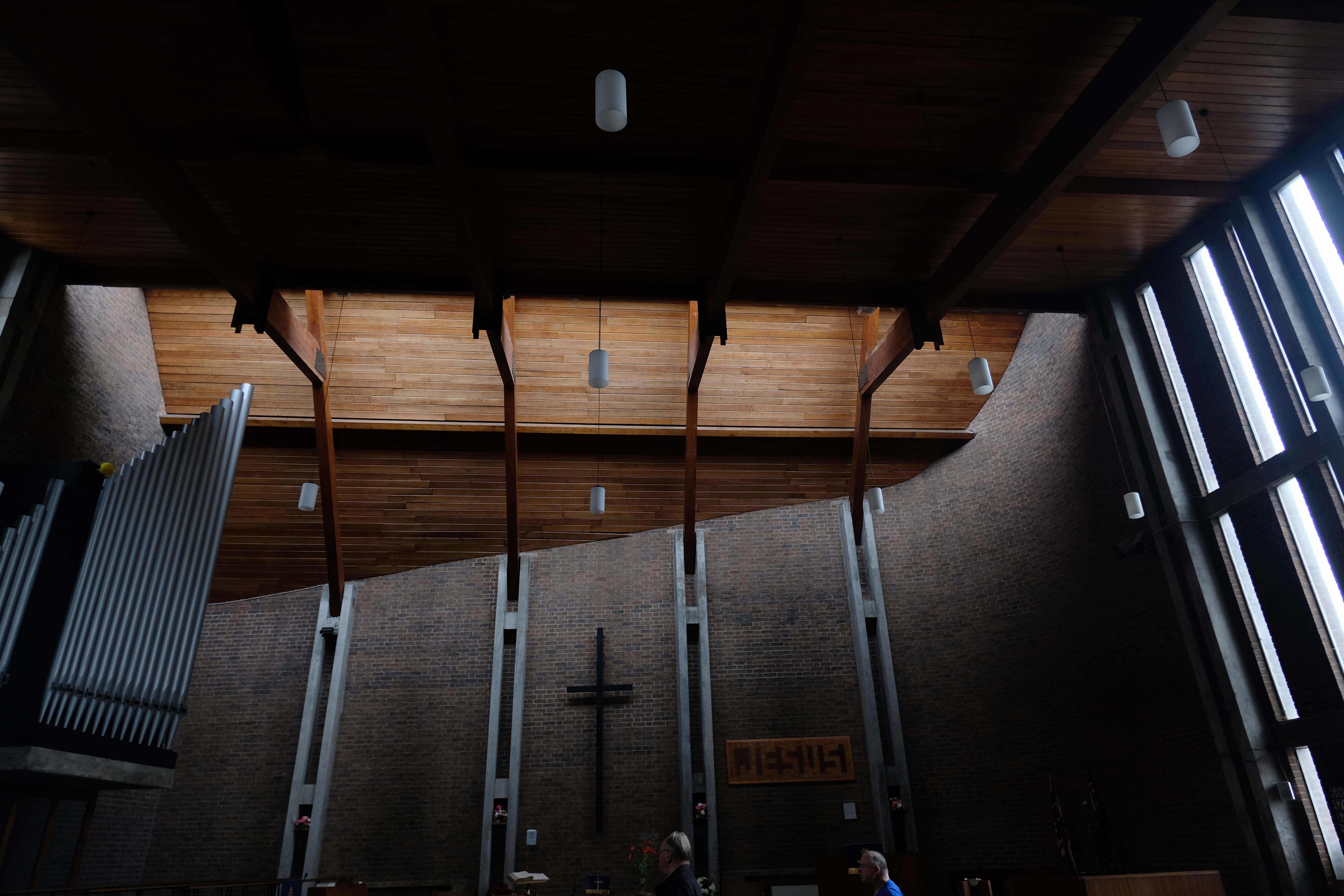
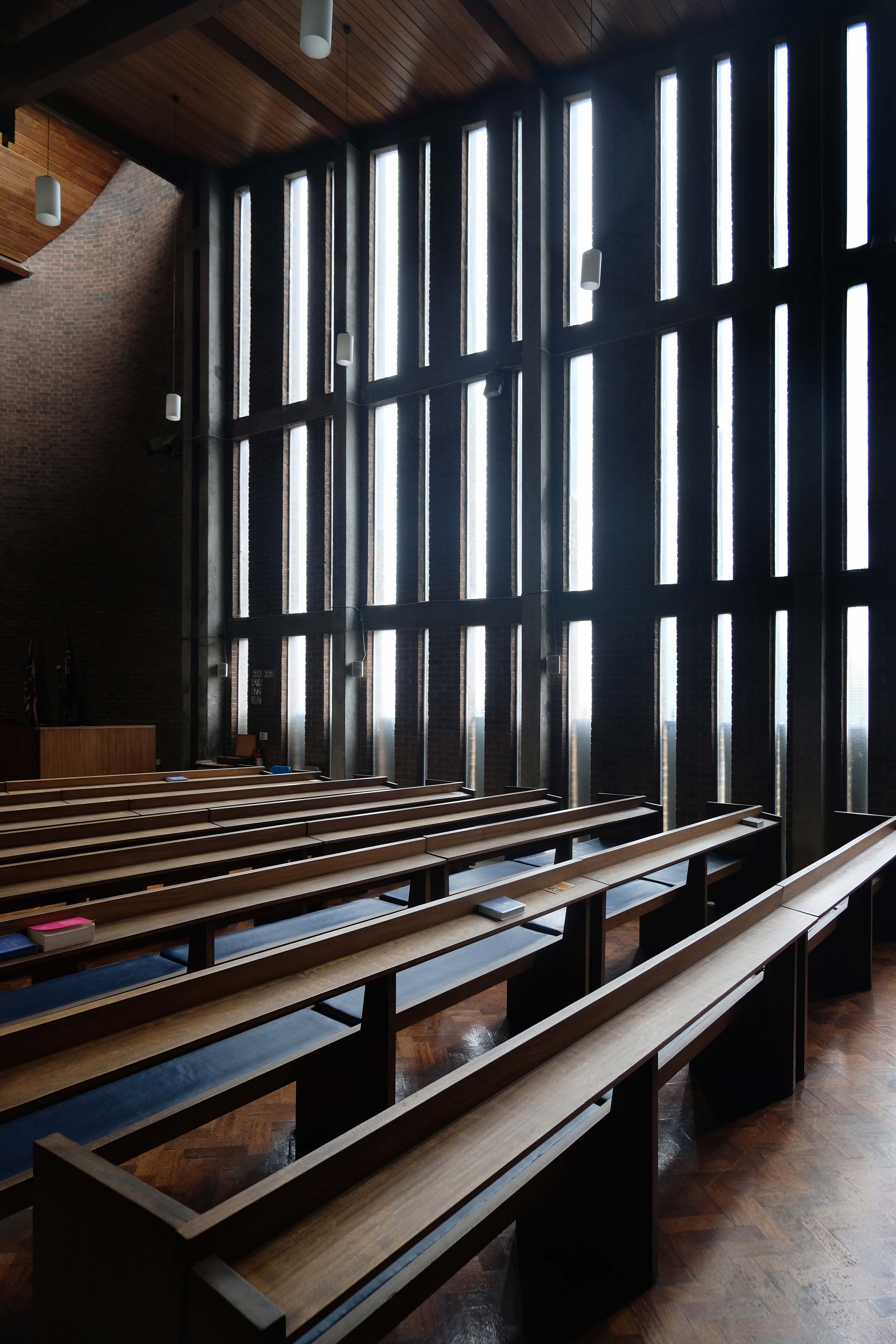
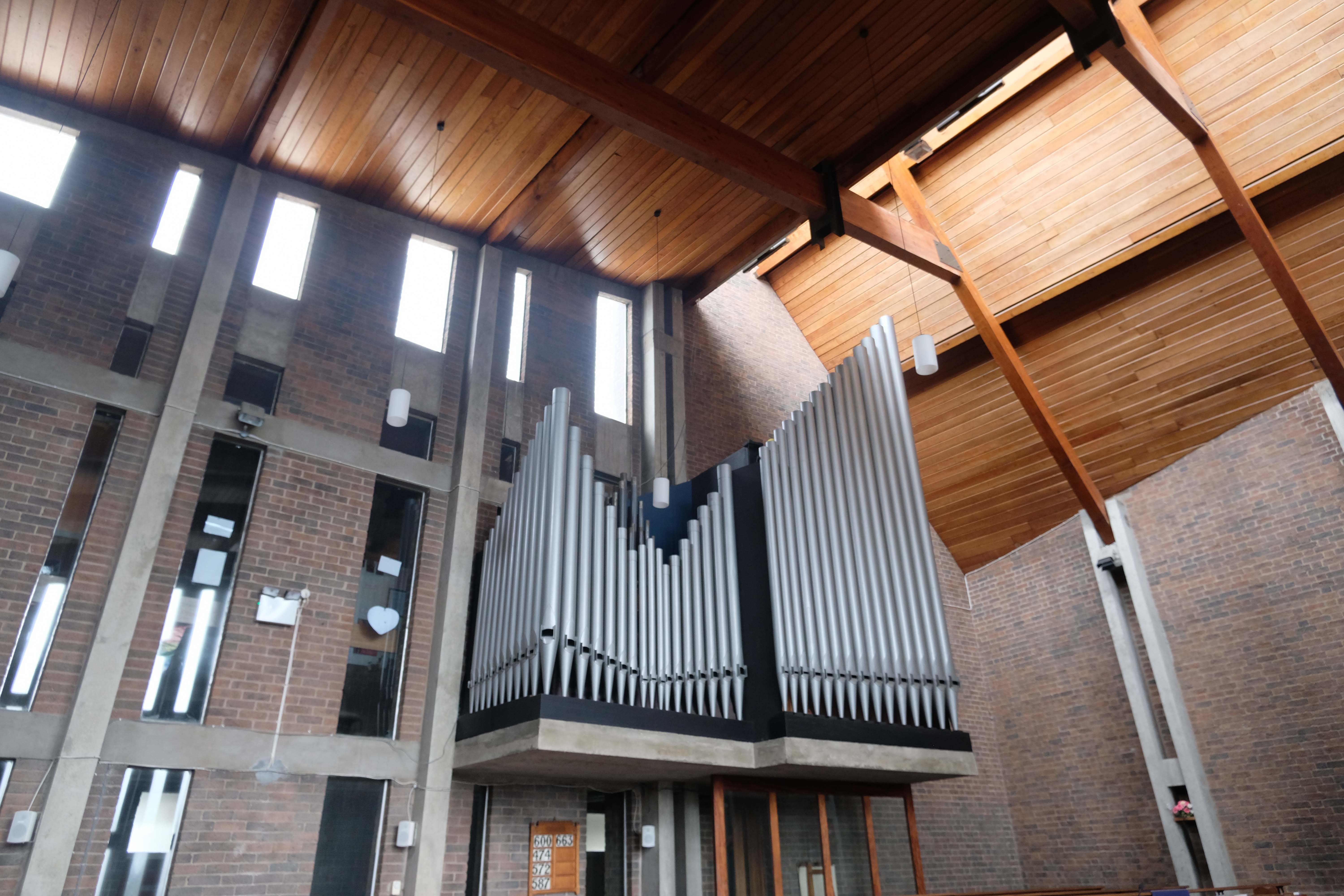
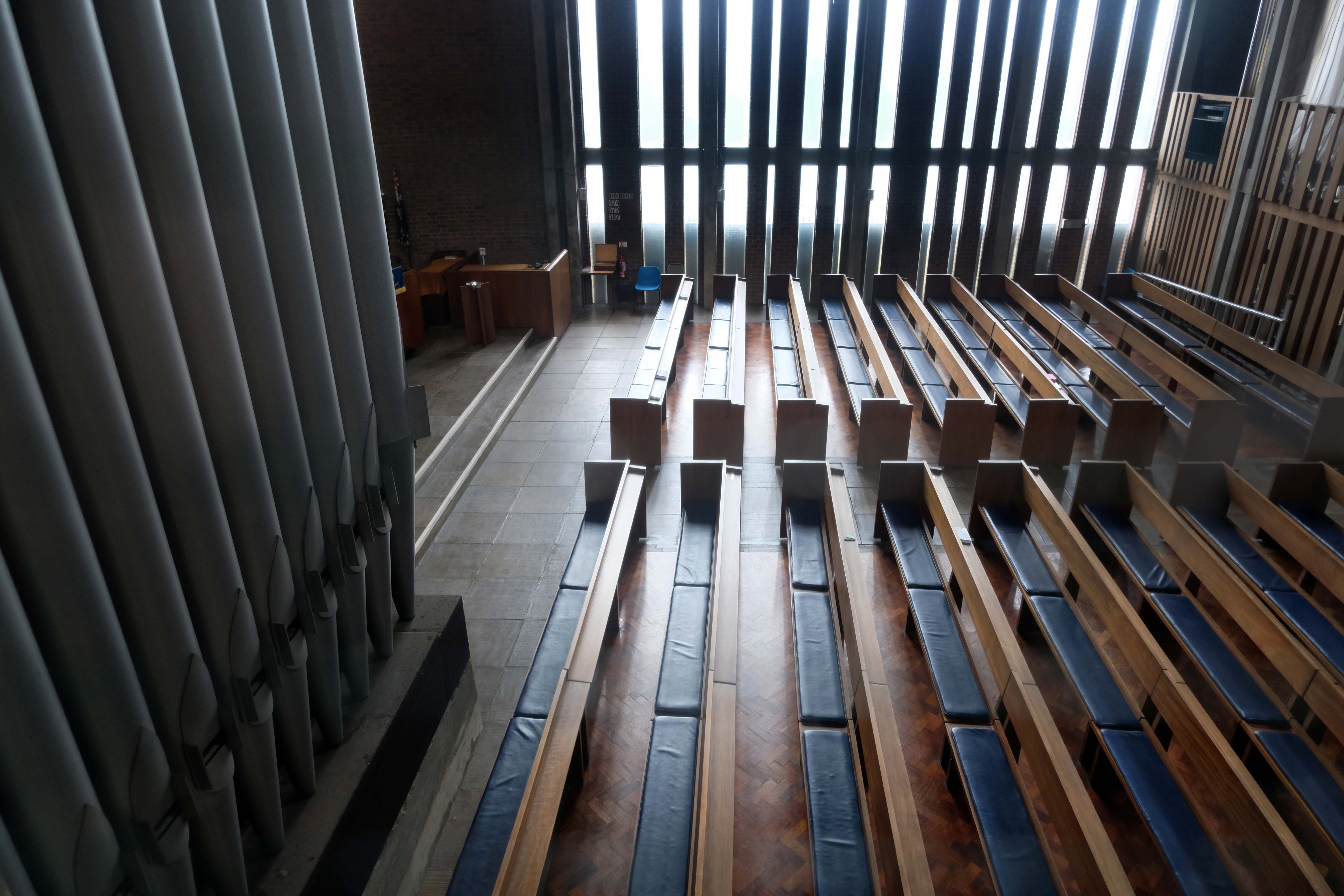
The Cornerstone of the building was laid in front of a crowd of 2,000 on Good Friday 1859 and the church was opened for public worship on Good Friday 6th April 1860. In the press of the day, the church was described as – a Cathedral looking church.
Photo: Flickrcabinet photograph by Enos Eastham of Eccles.
In 1965 it was announced that a new Eccles motorway would be built through the church land.
Work began to demolish the Church and replace it with a new smaller church, but the old church did not go down without a fight as workers could not pull down the steeple. After eleven days of battering and buffeting by eighteen pounds of gelignite and two eight ton bulldozers, the steeple finally surrendered.
Then there wasn’t – then there was this:
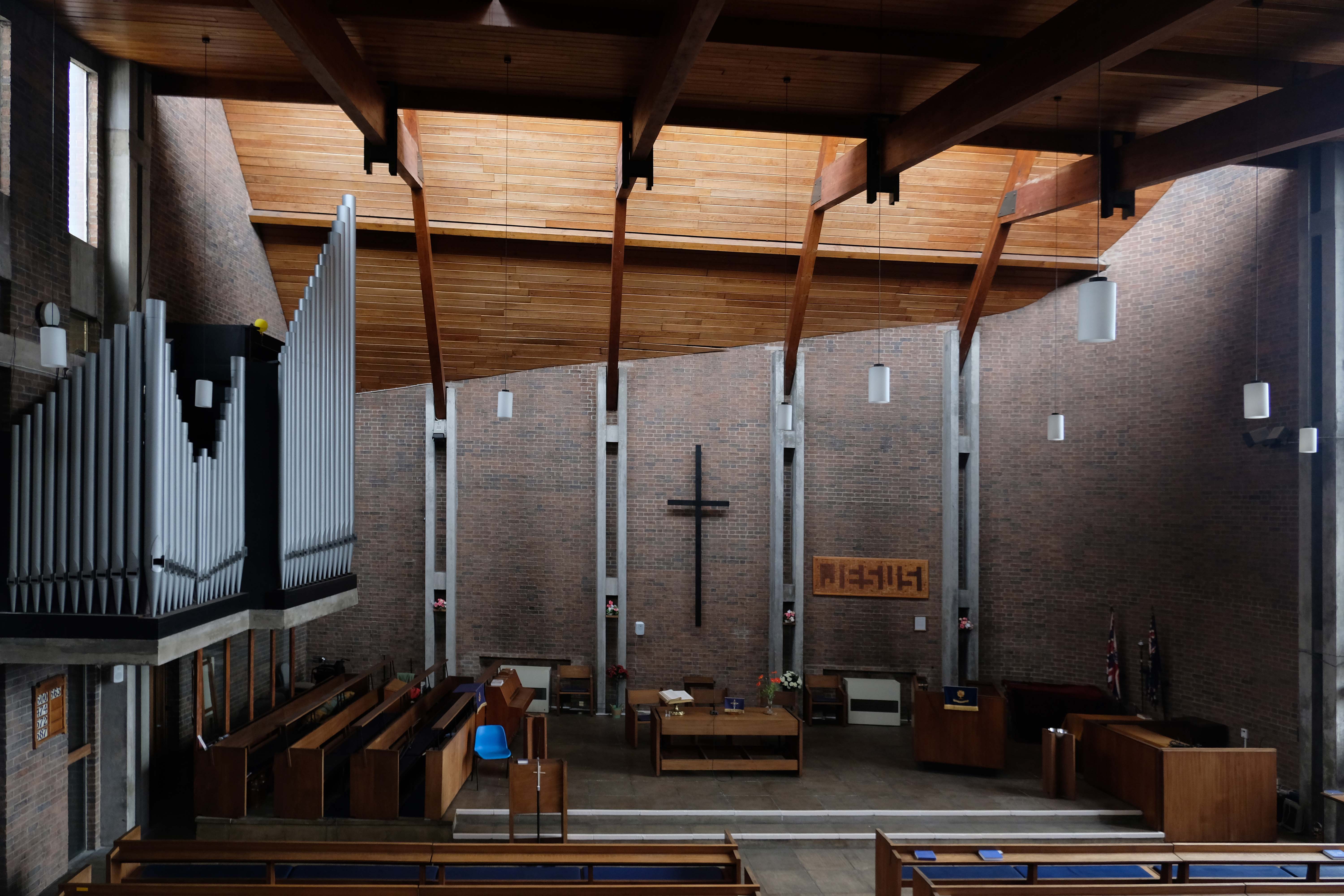
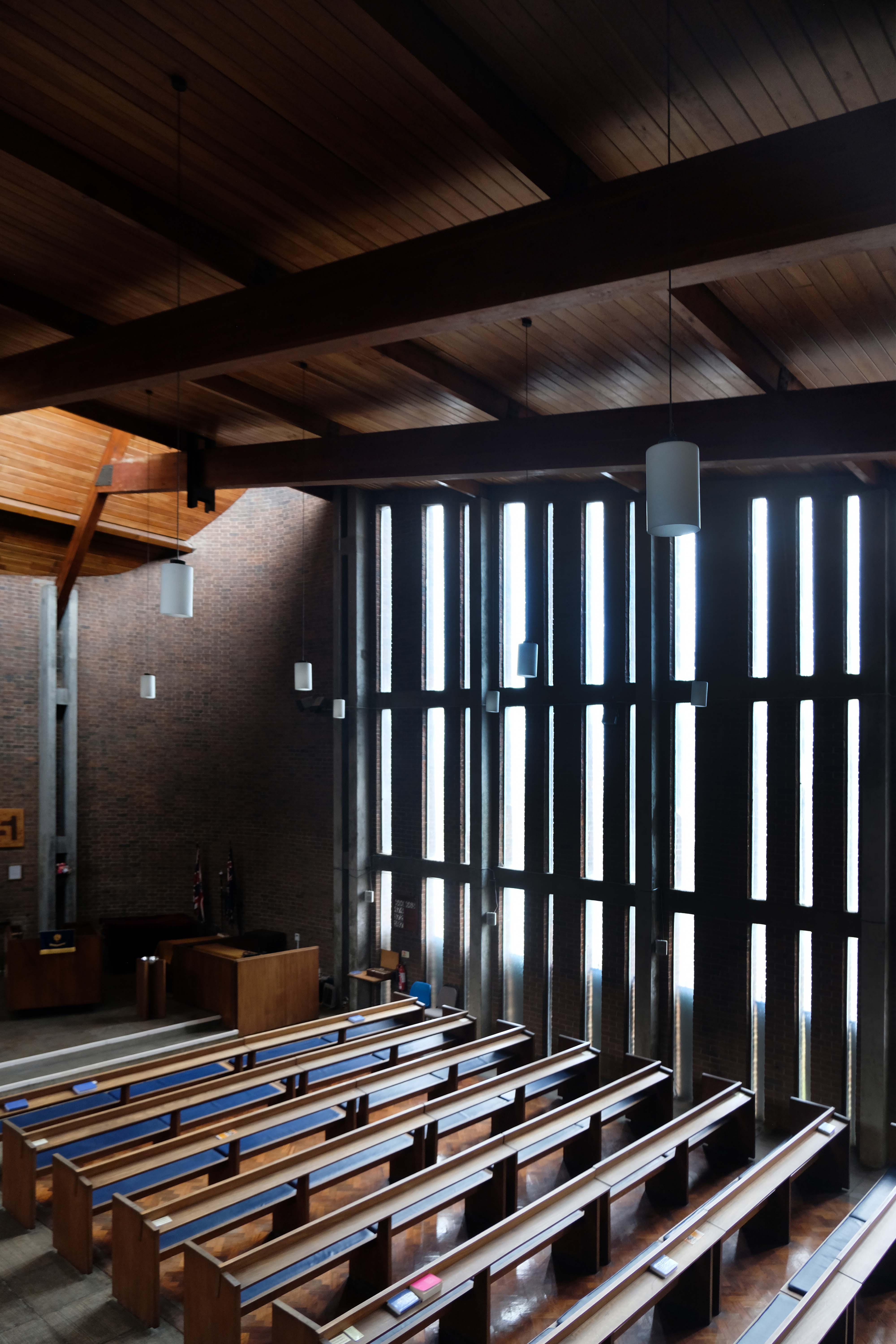
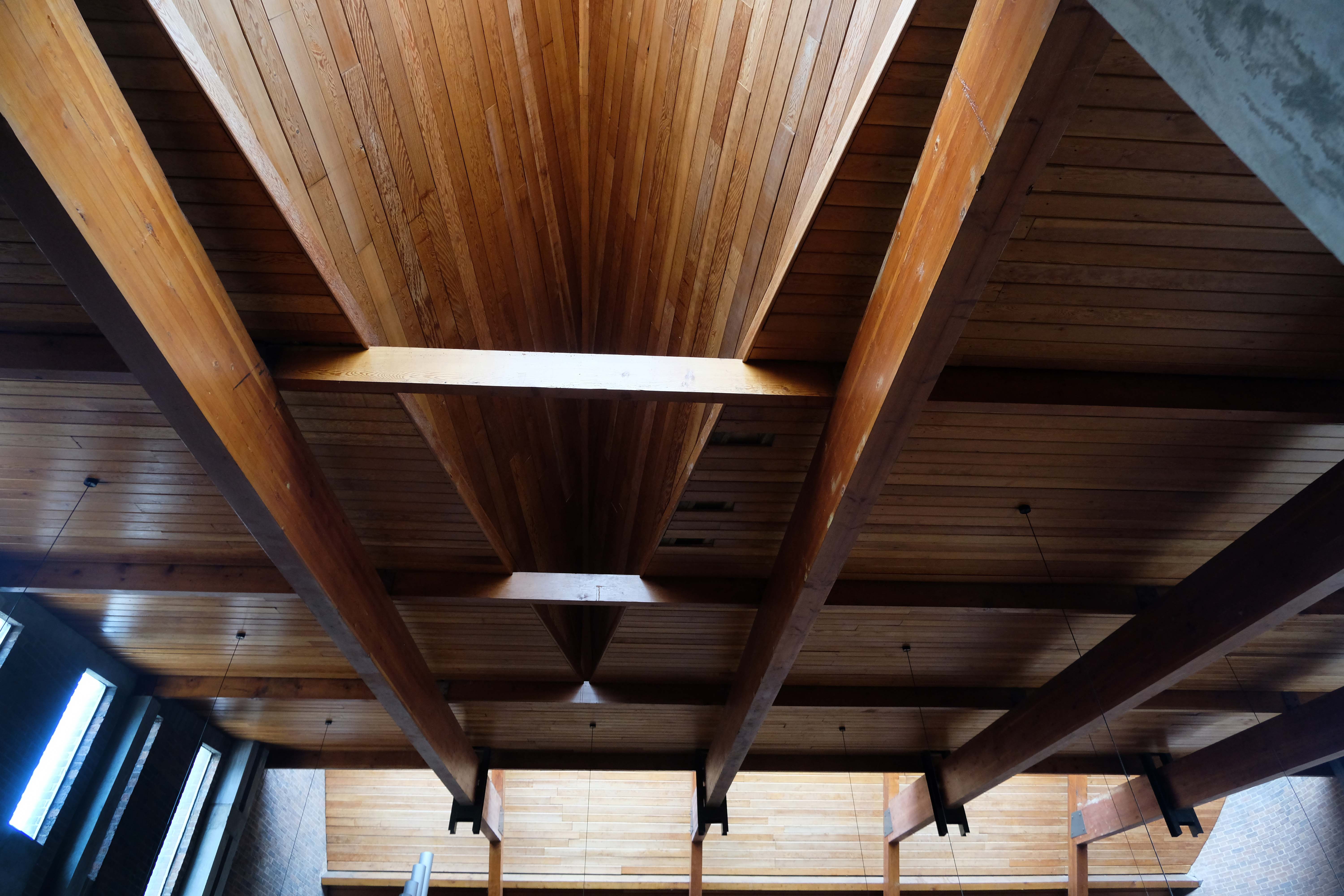
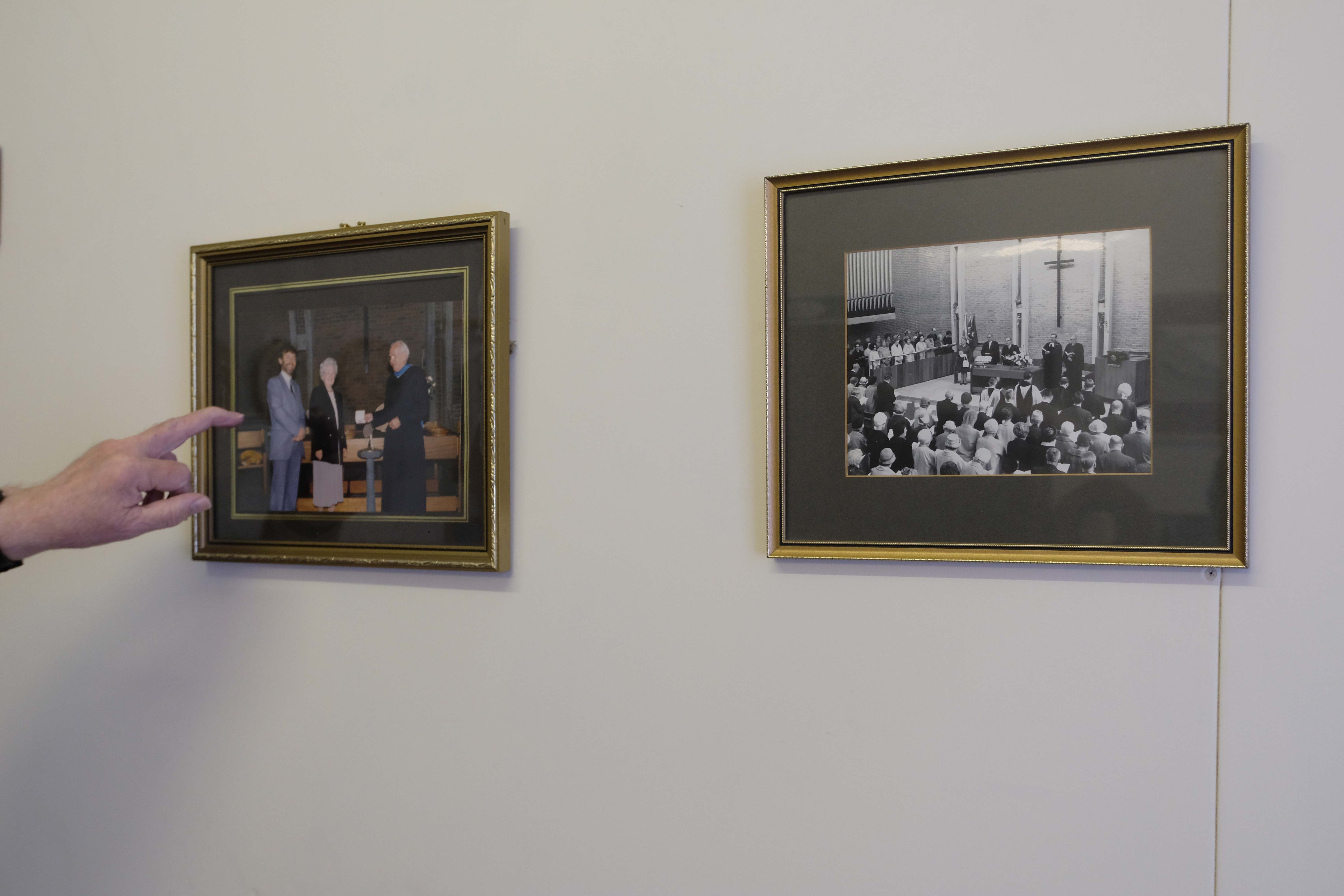
On Friday 11th July 1969, the new church officially opened with a splendid ceremony. A minor hitch occurred when the organ blew a fuse during the second verse but the Congregation sang through it while organist Mr Kenyon frantically fumbled about and rectified the matter.
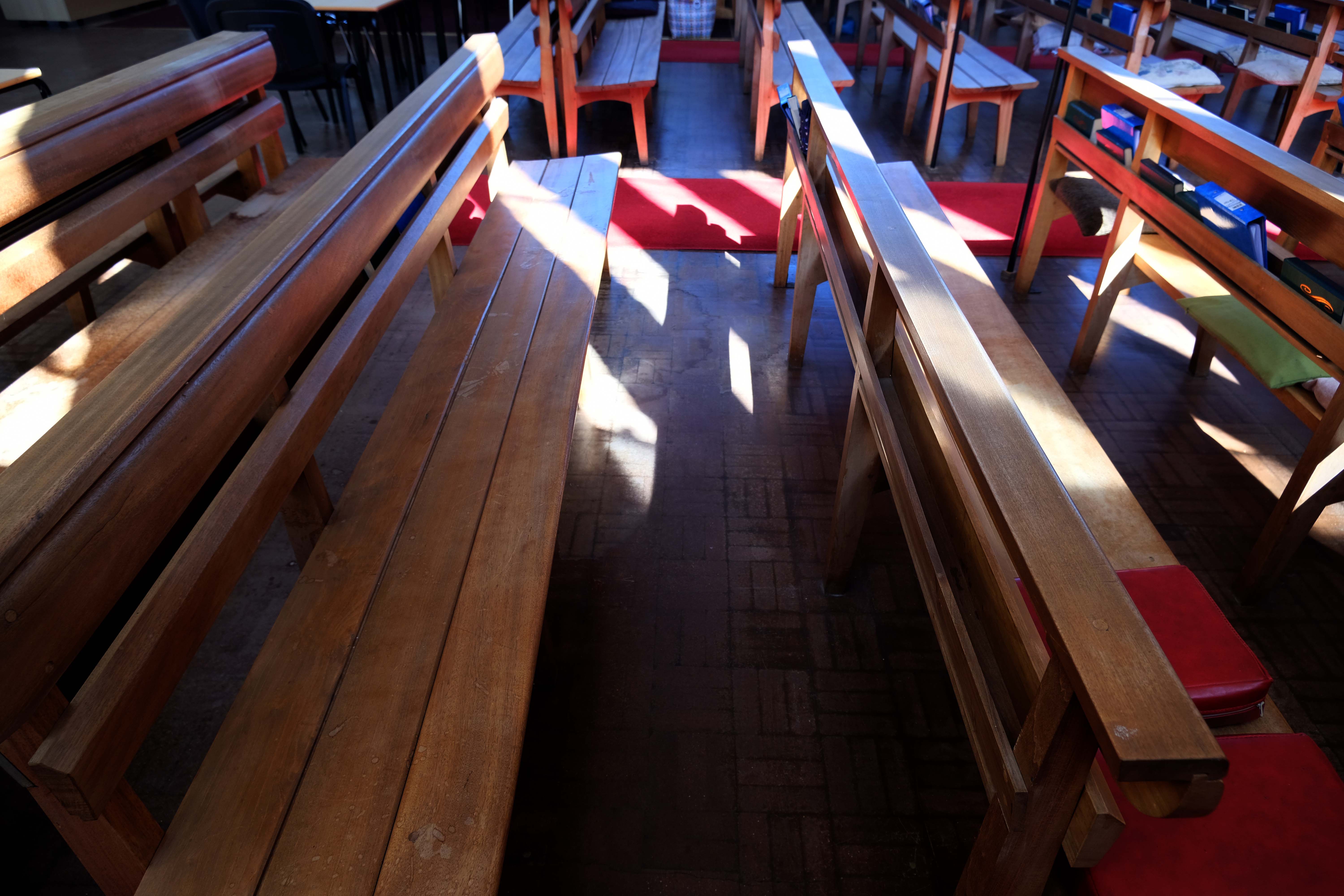
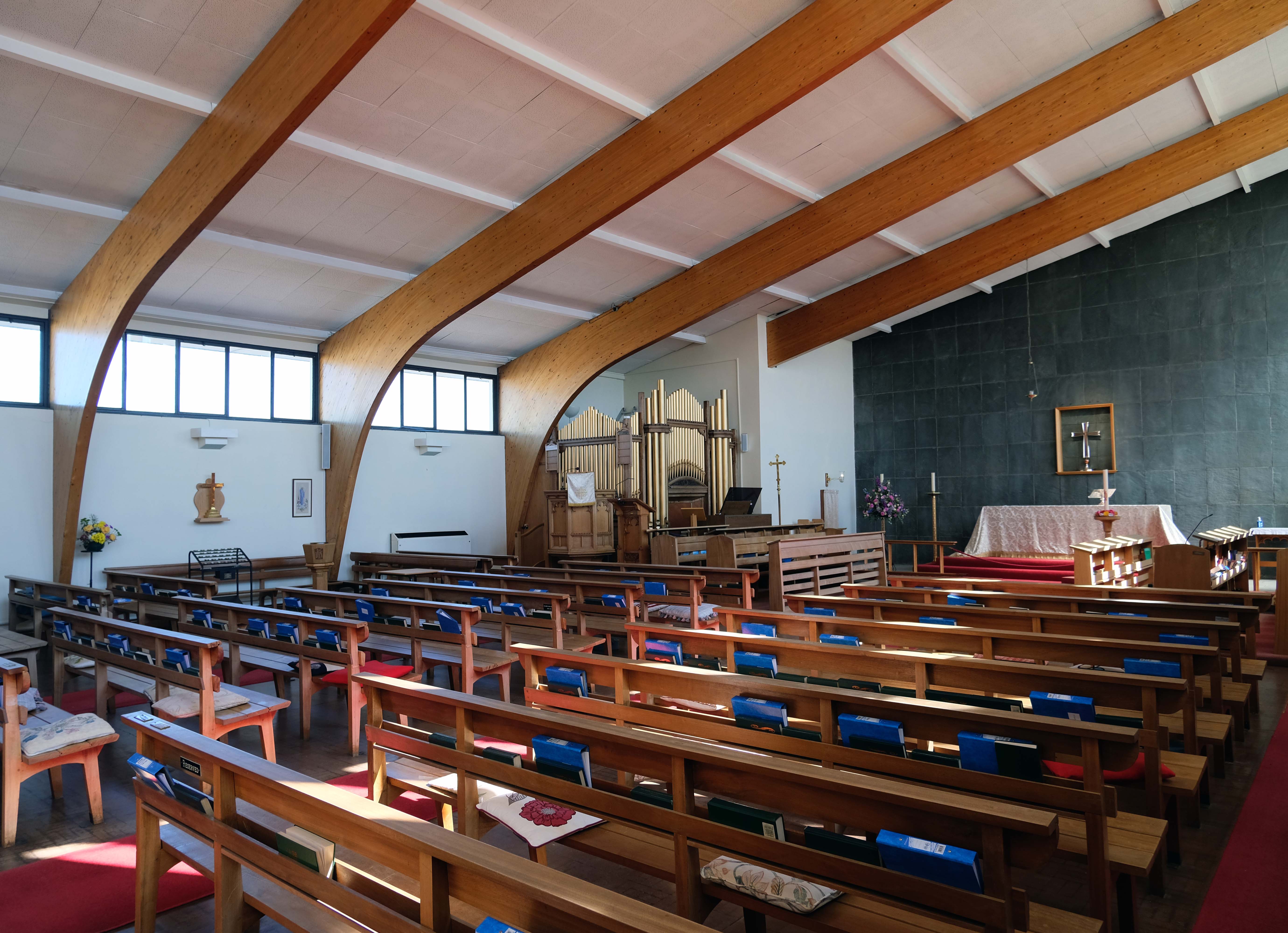
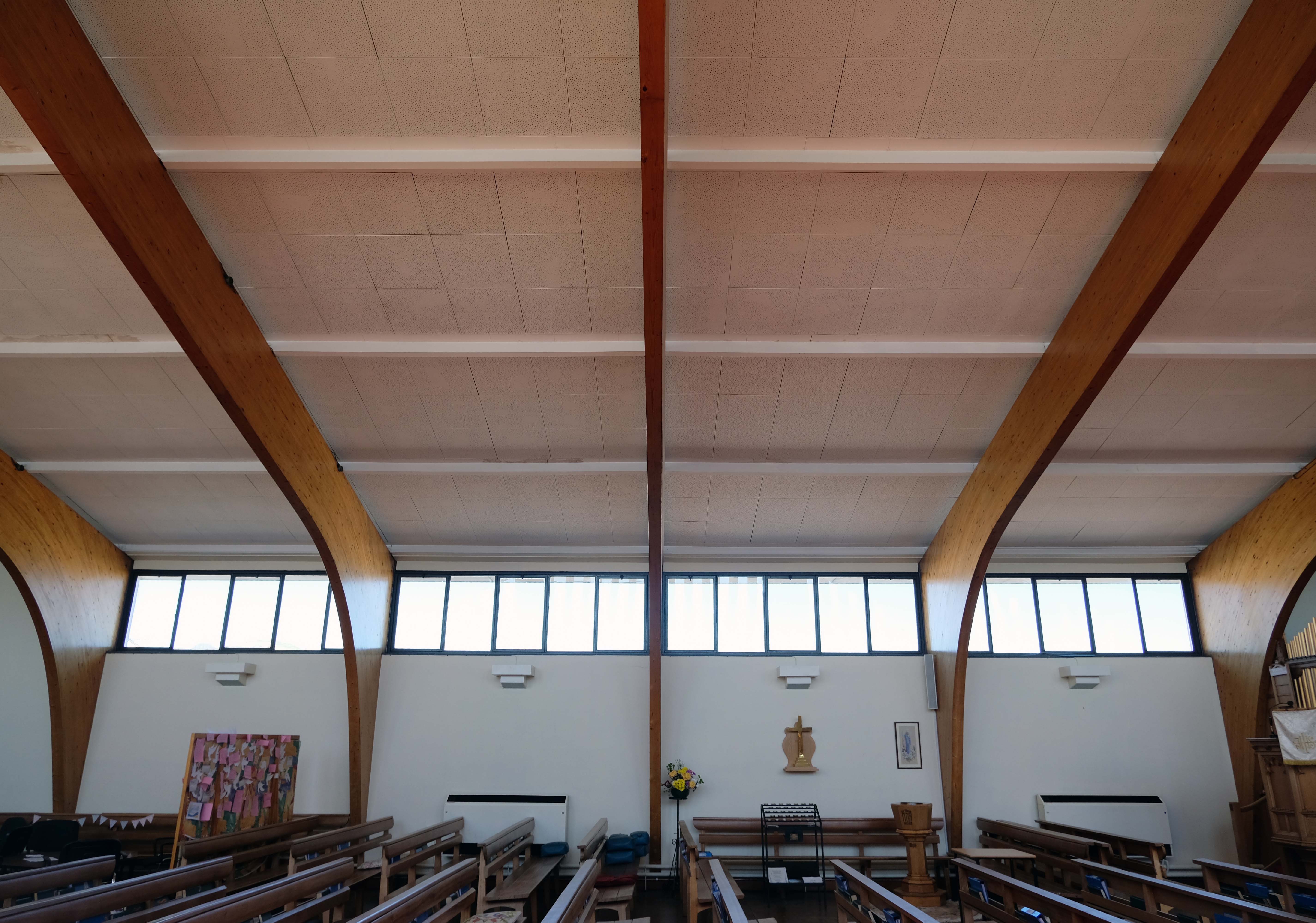
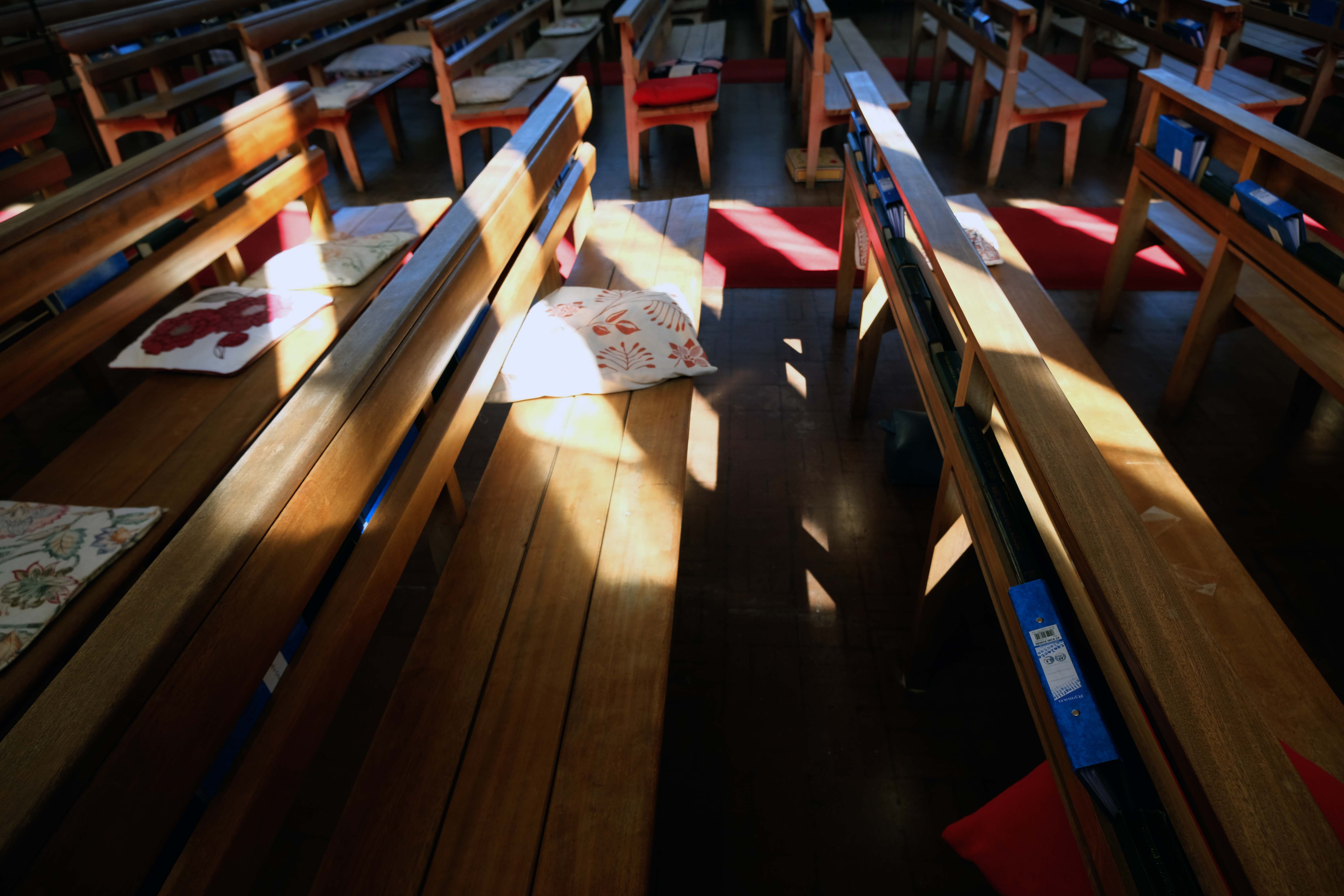
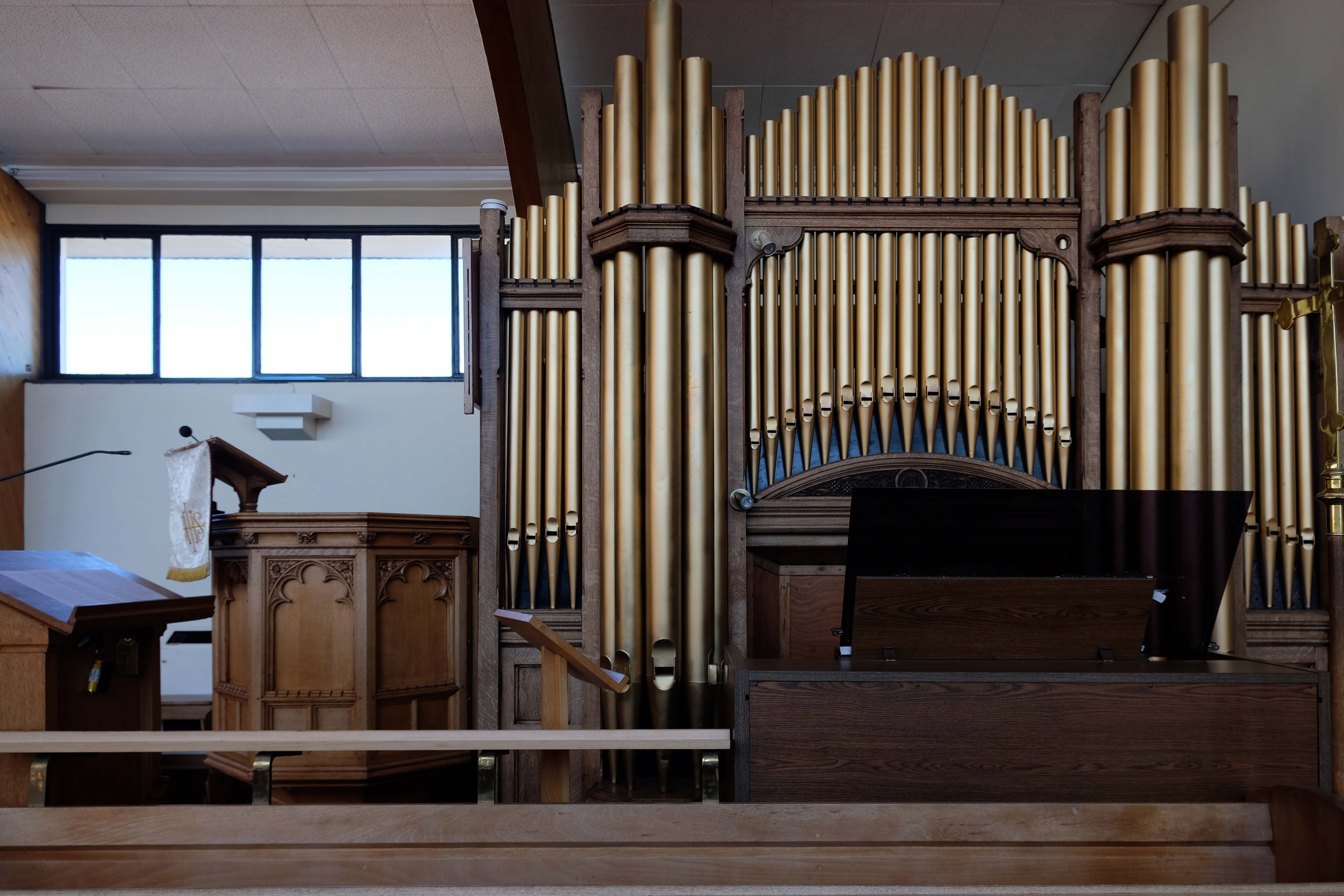
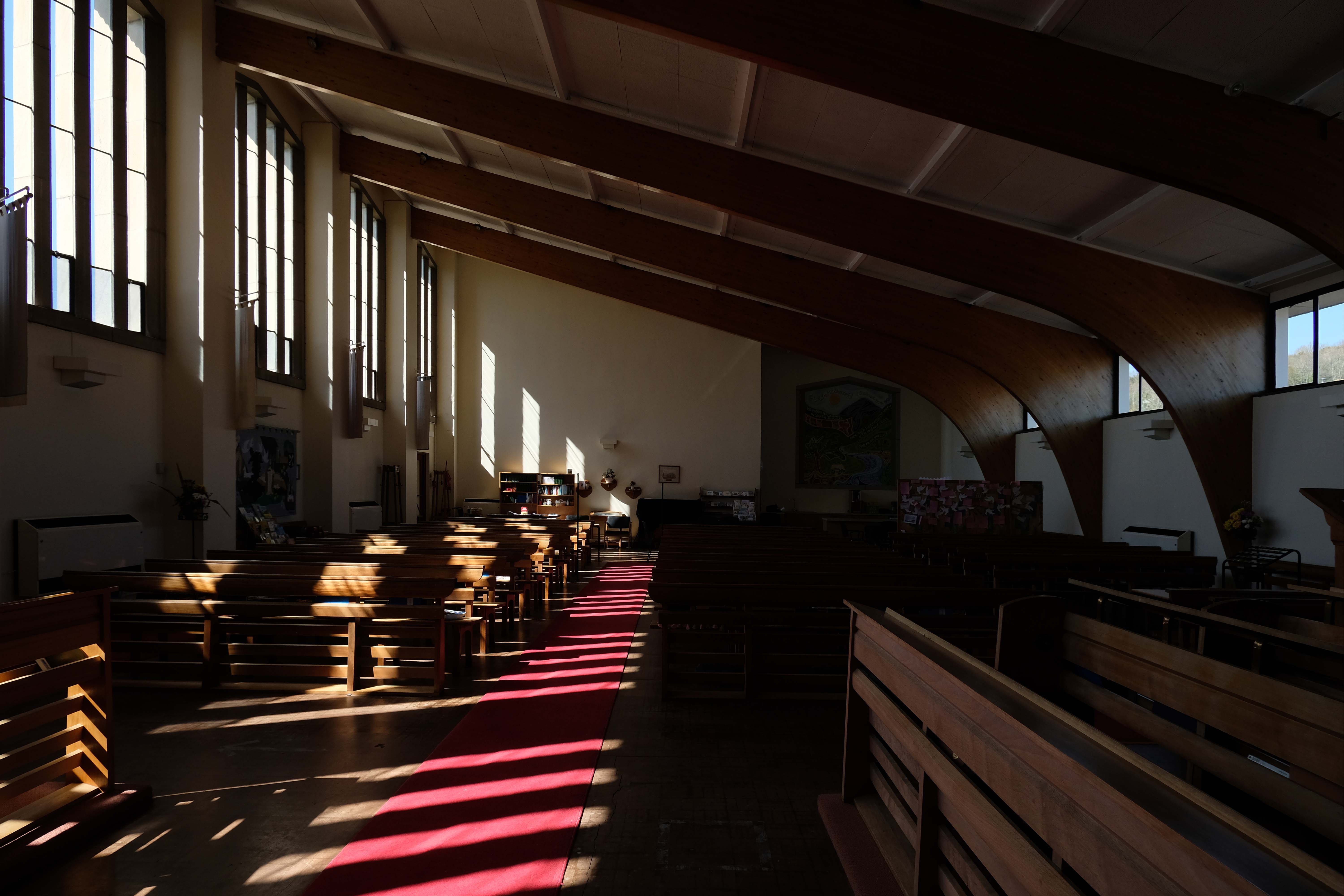
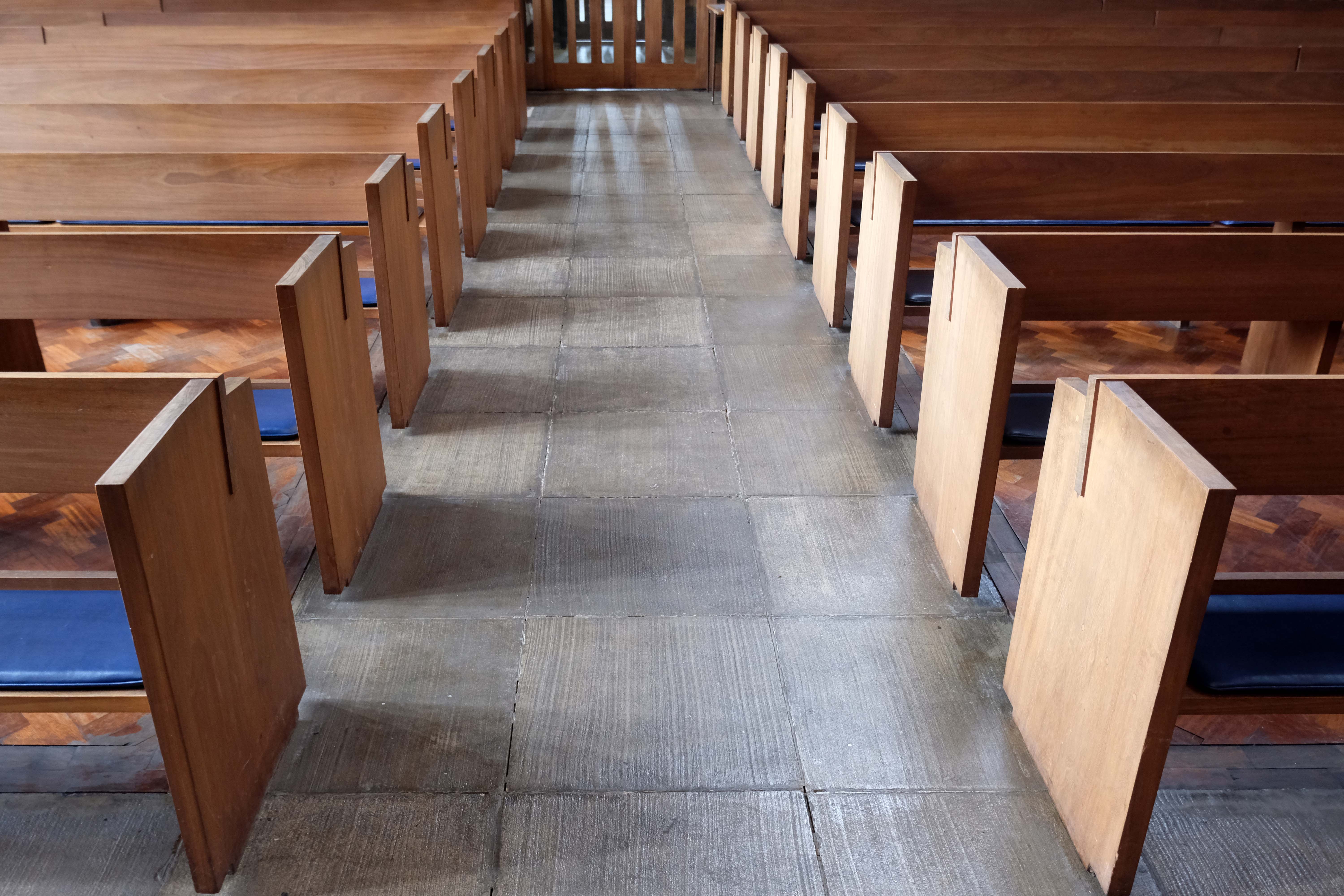
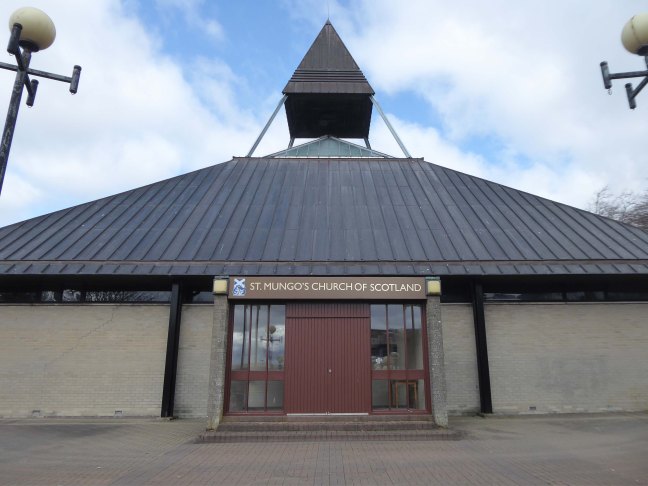
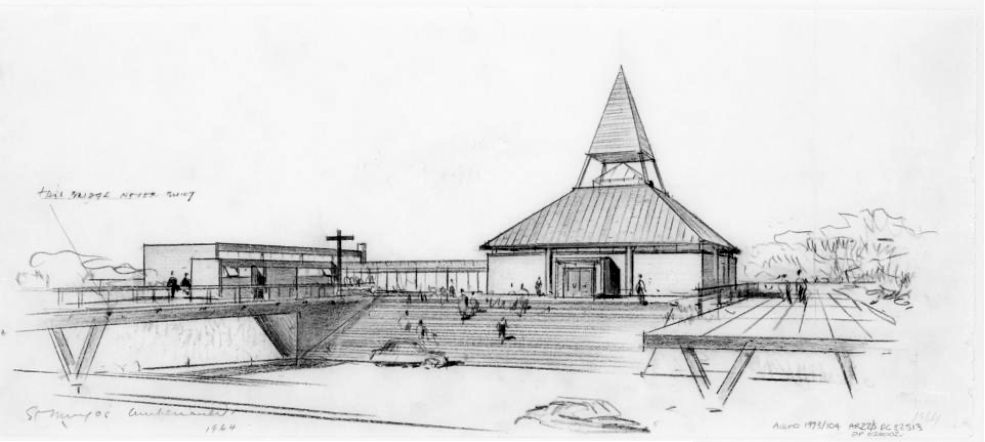
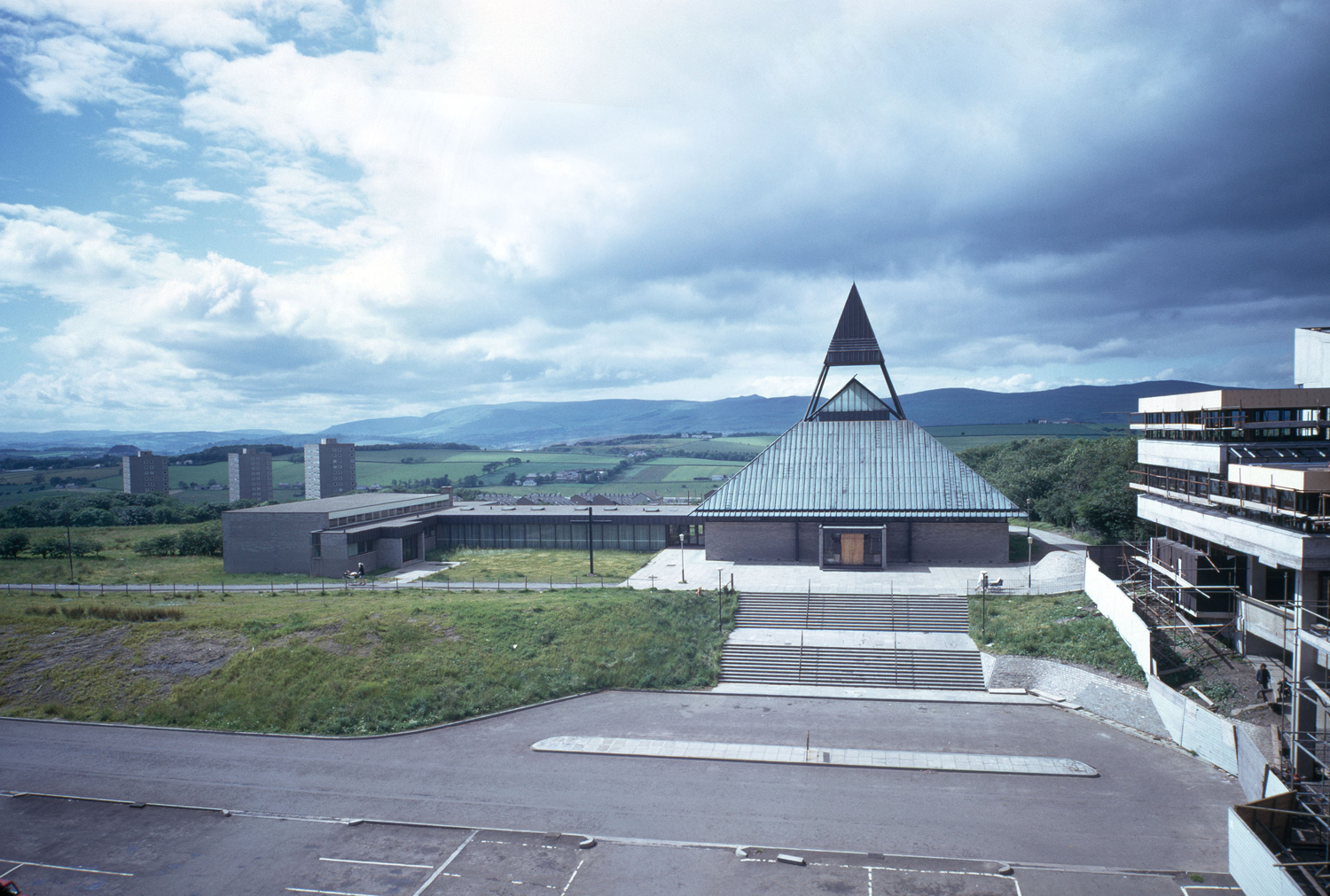
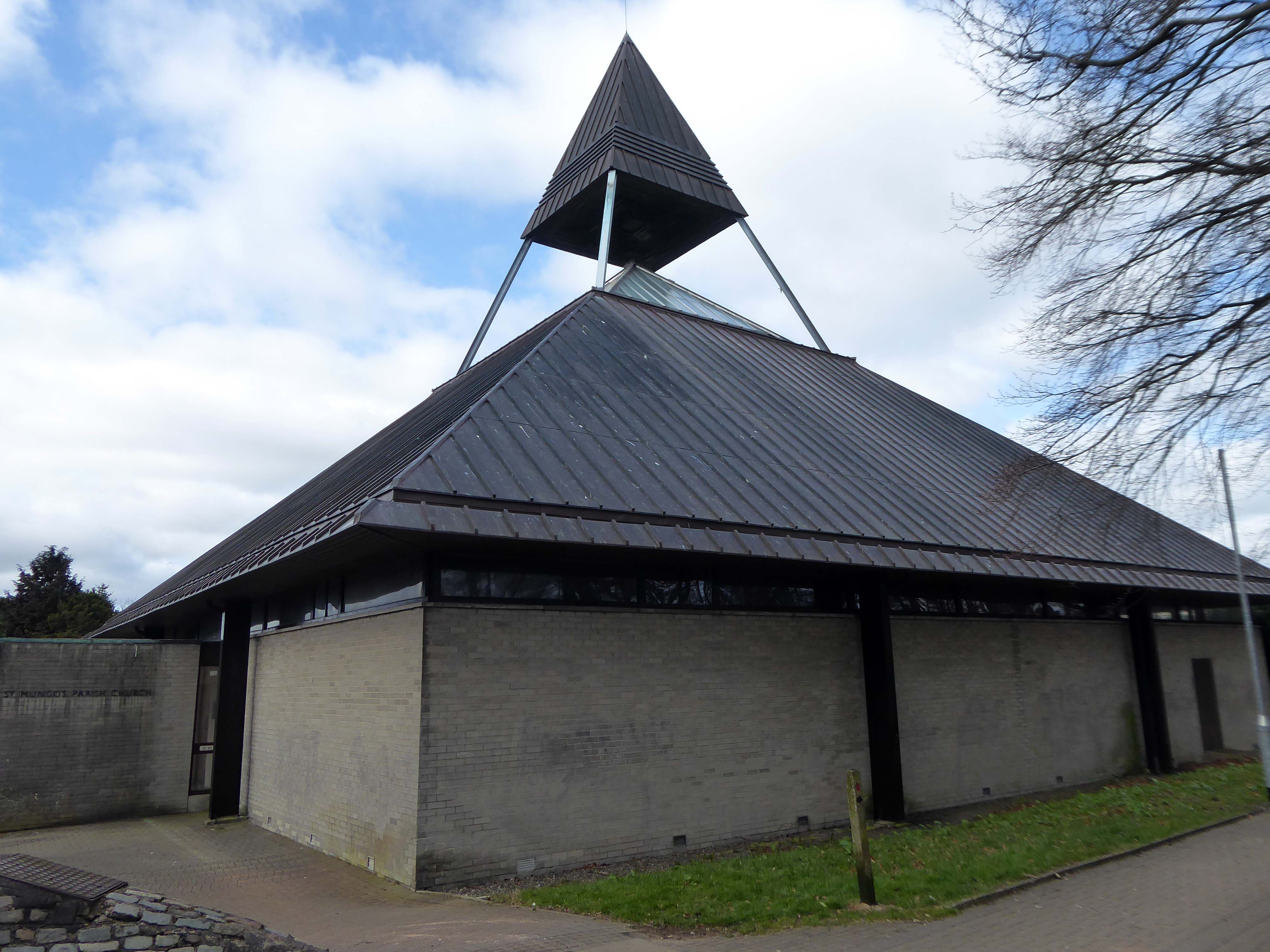
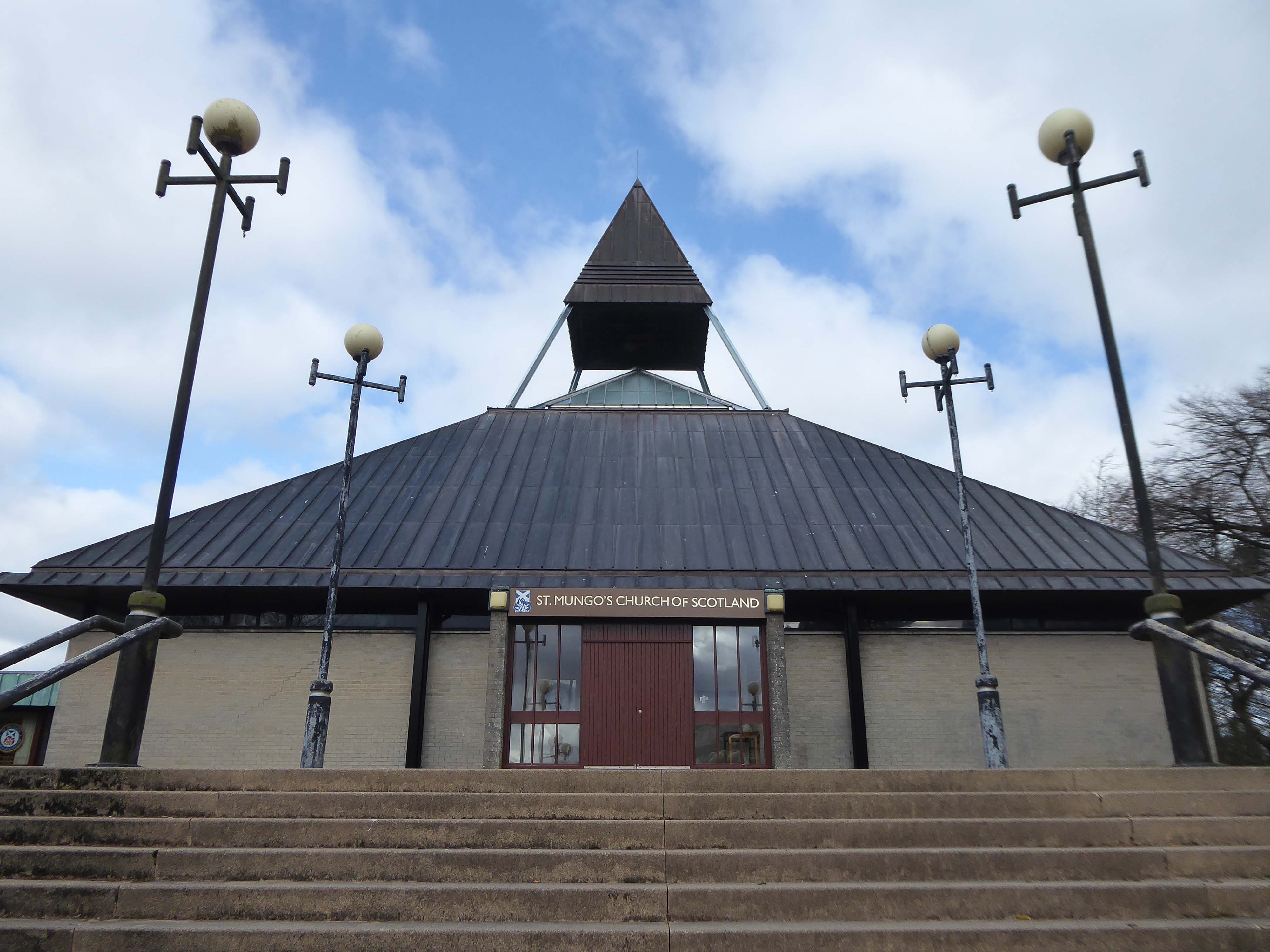
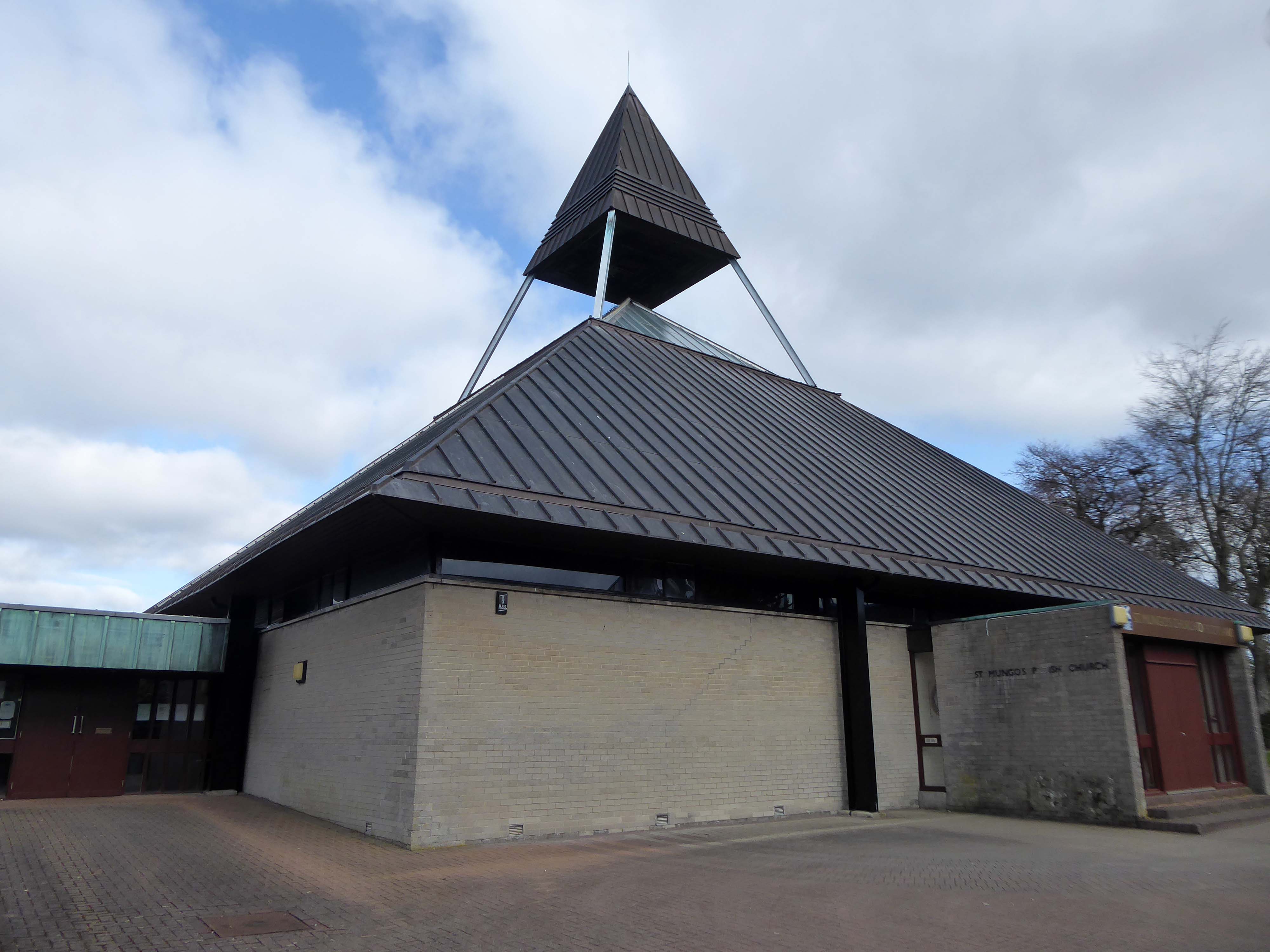
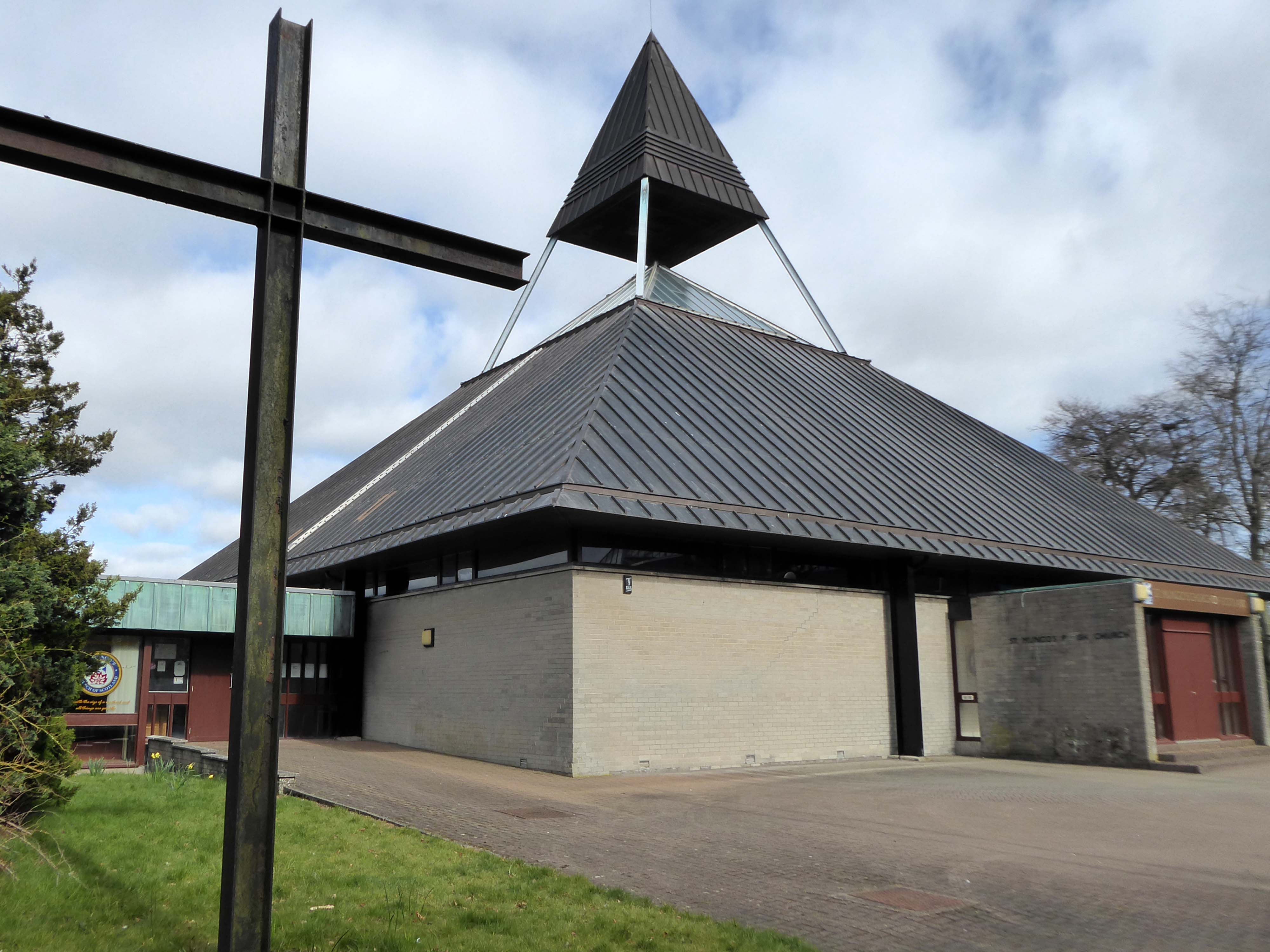
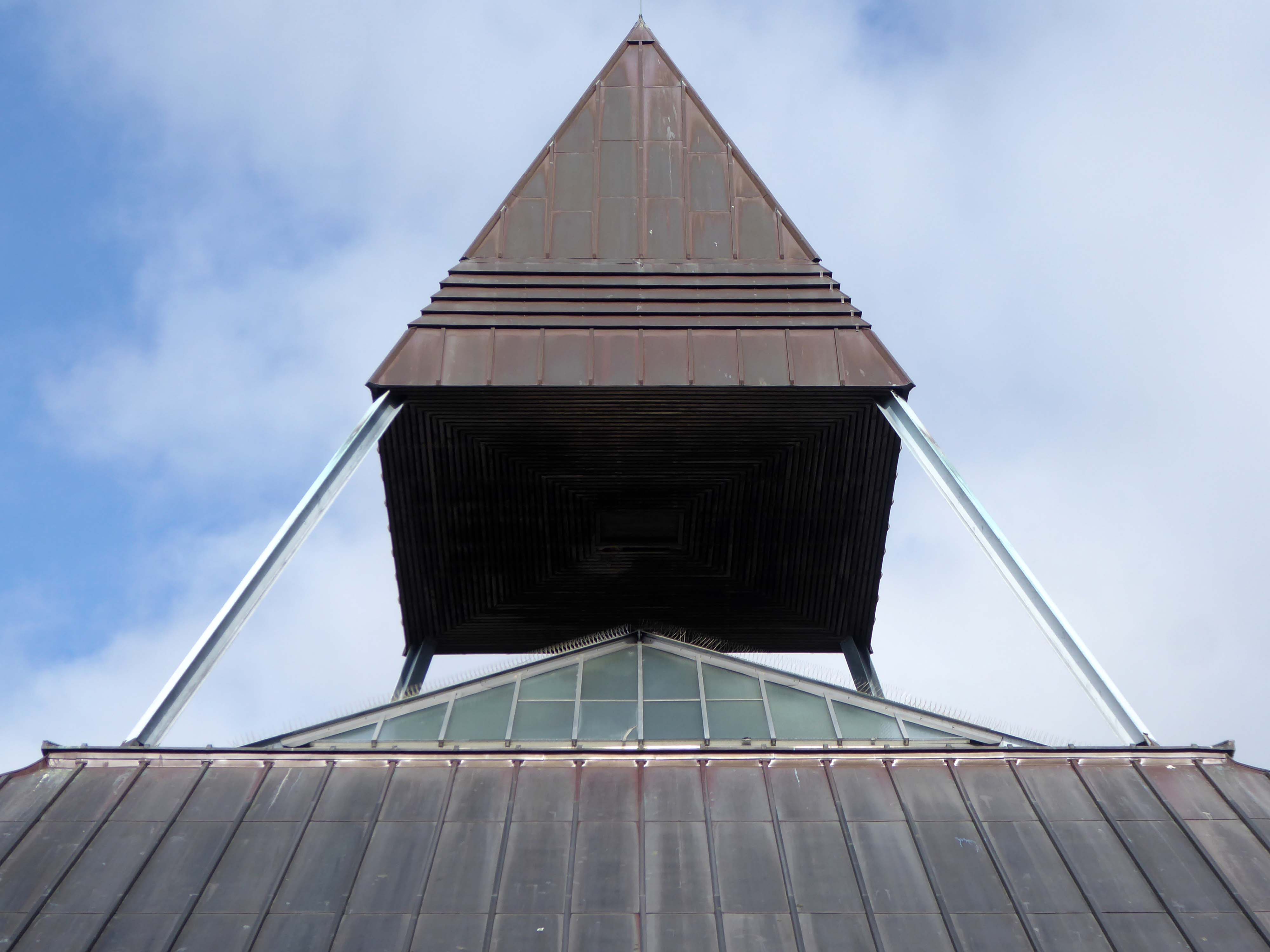
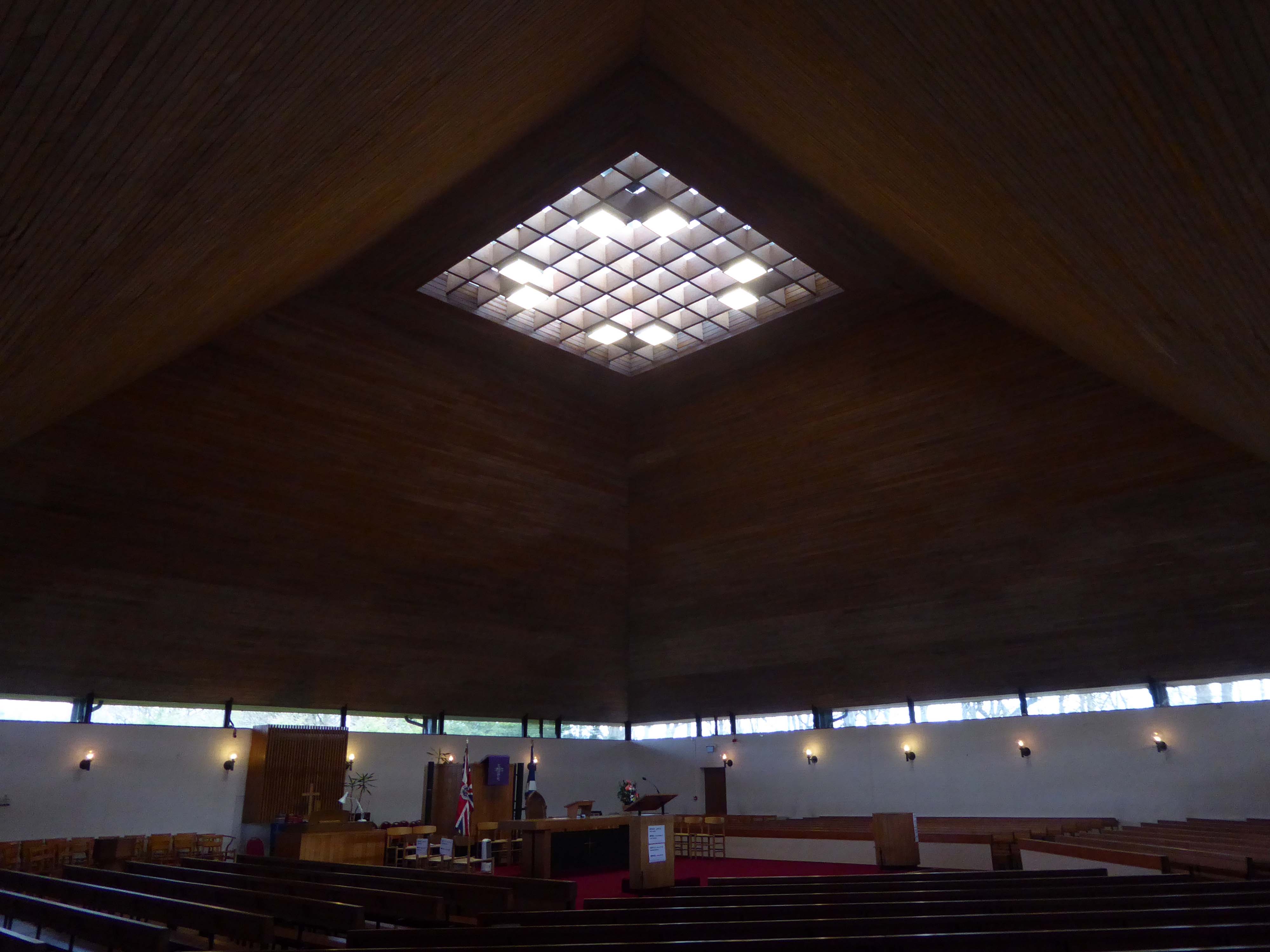
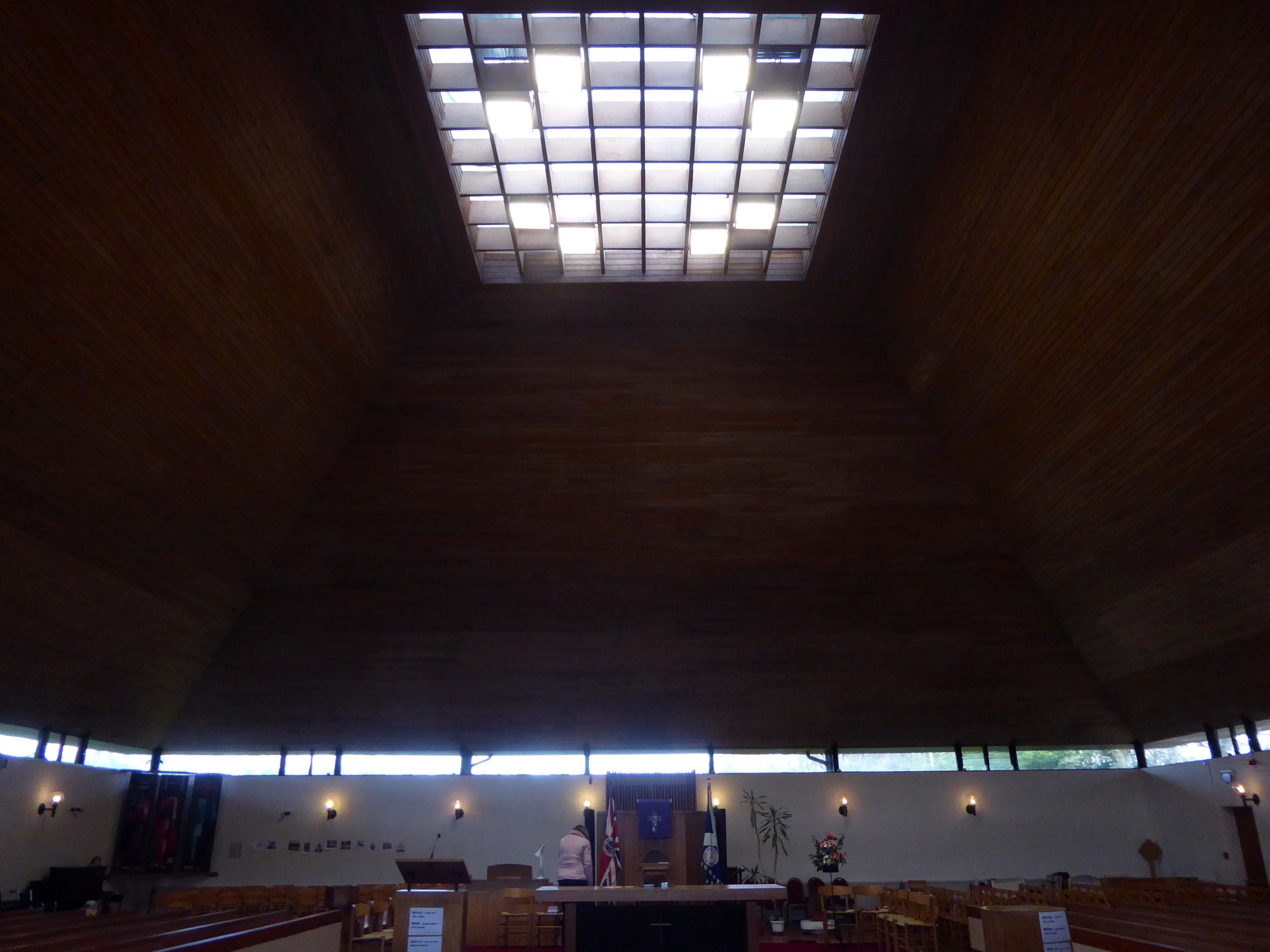
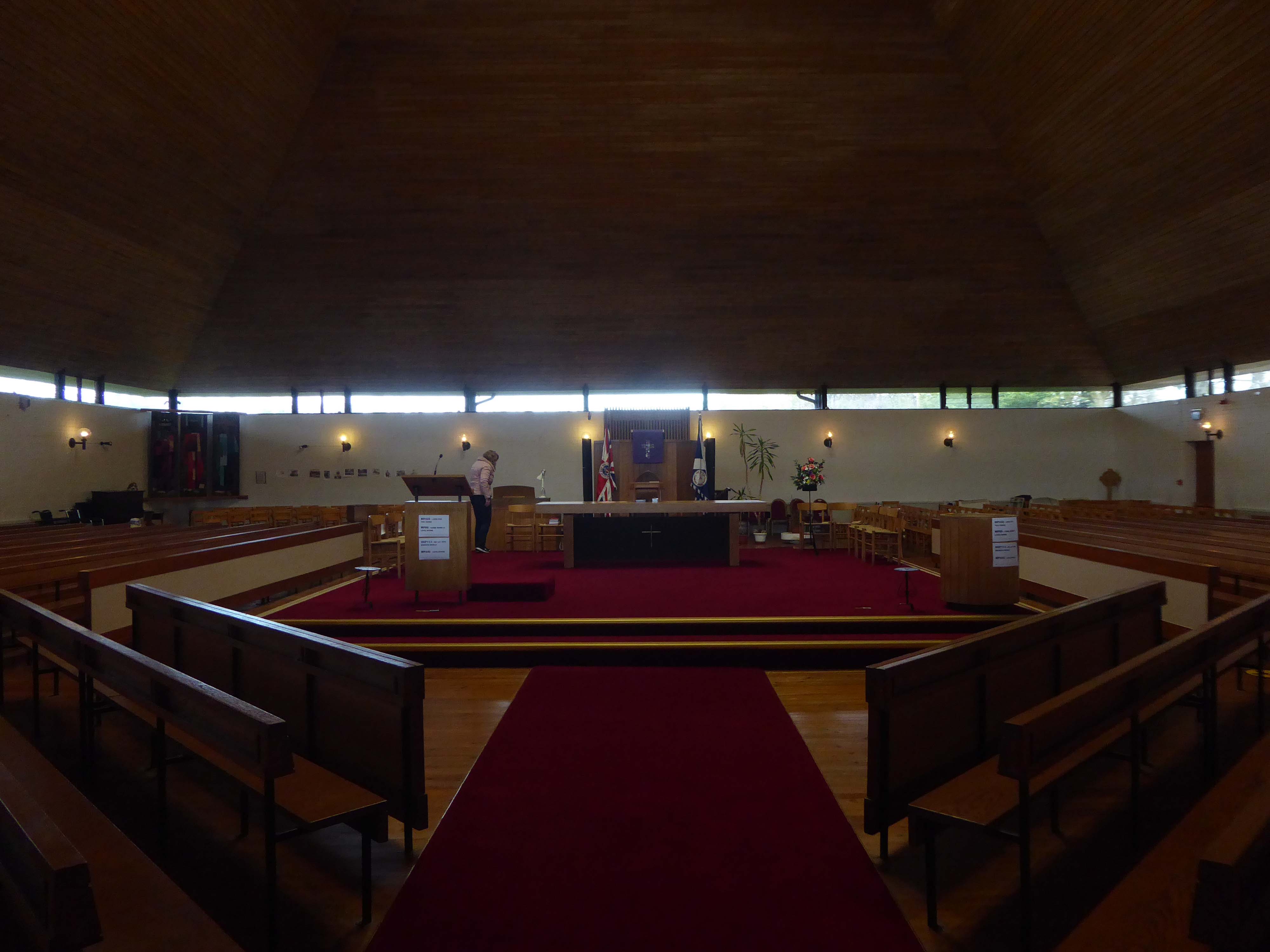
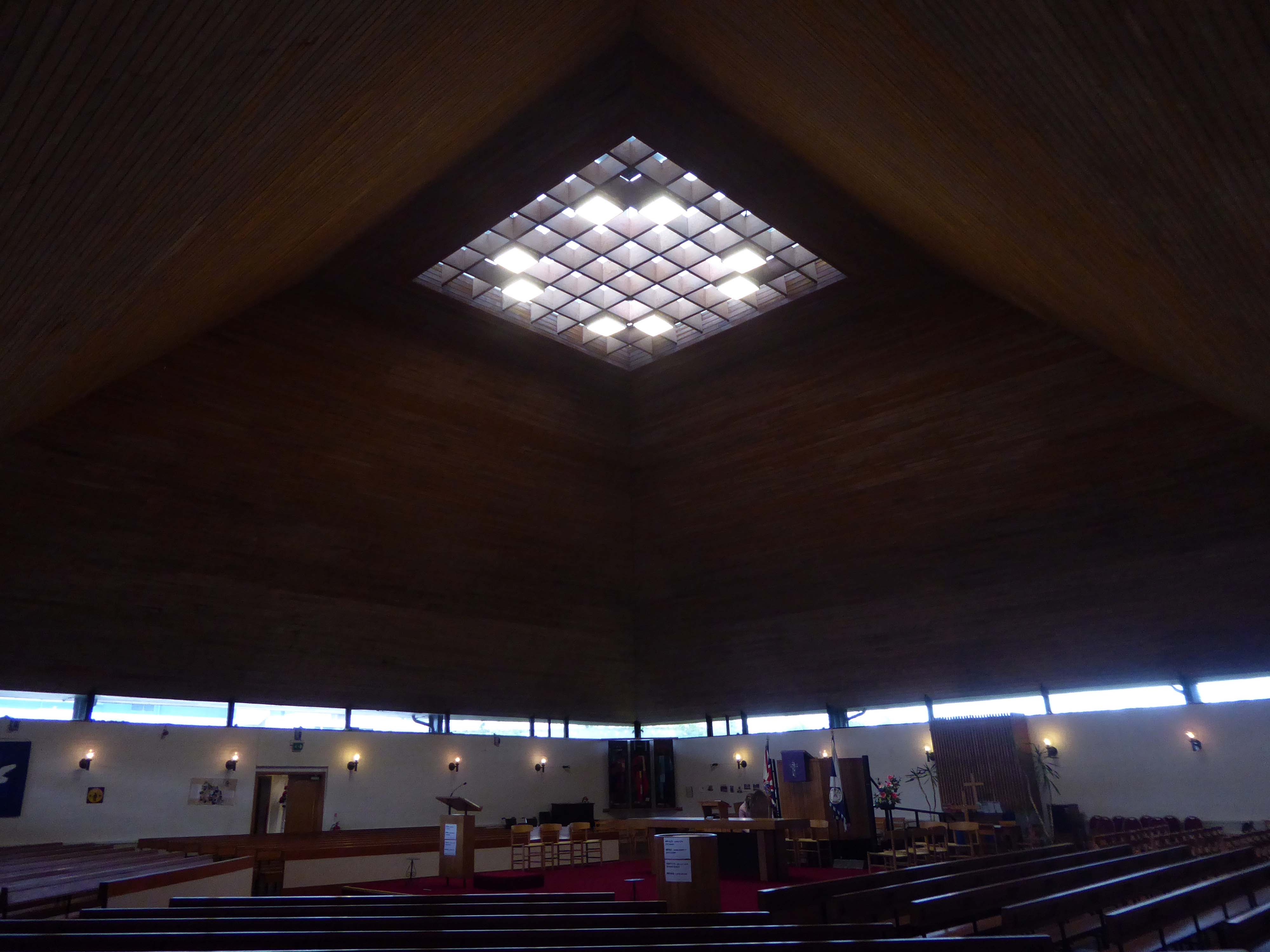
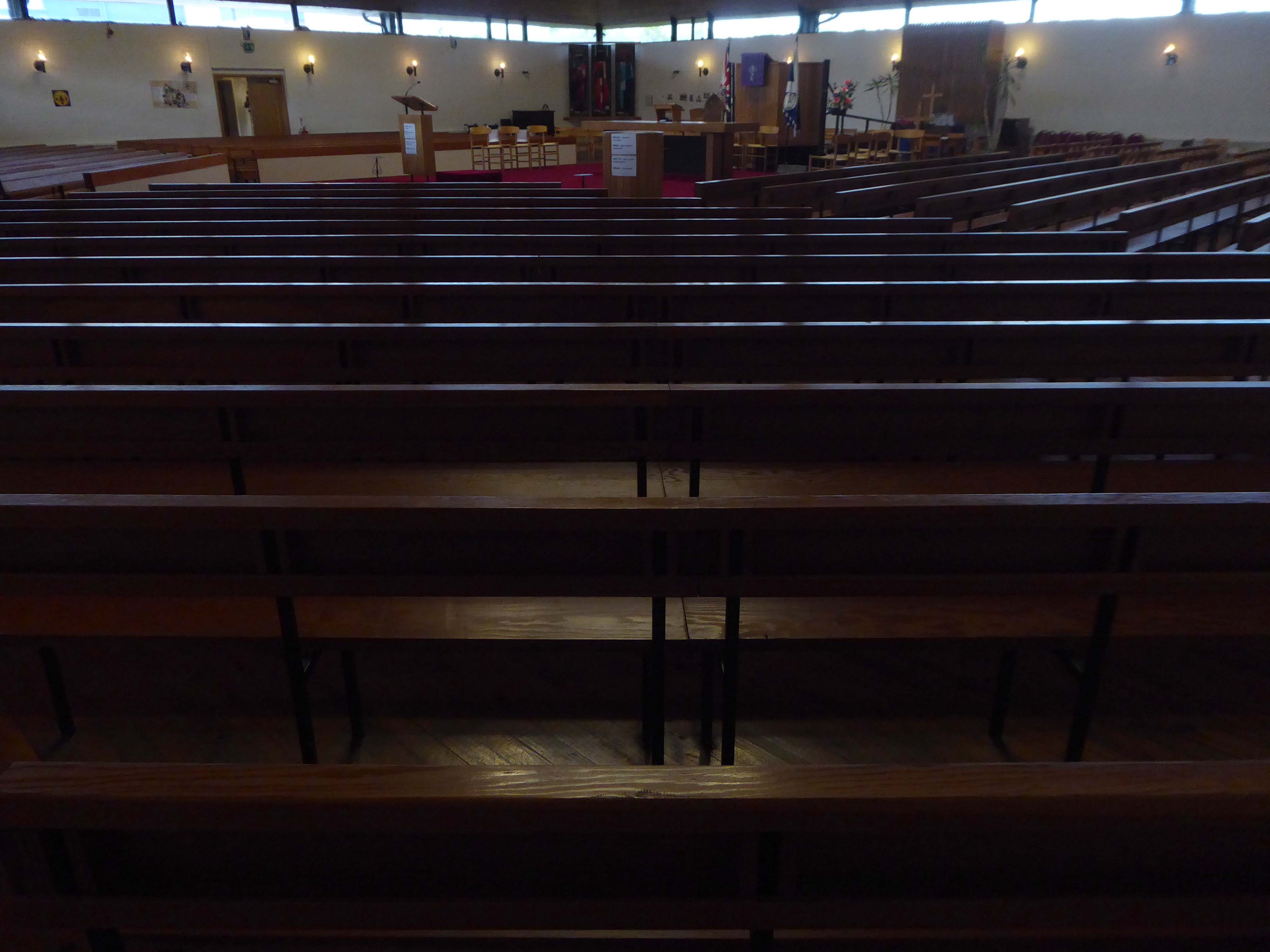
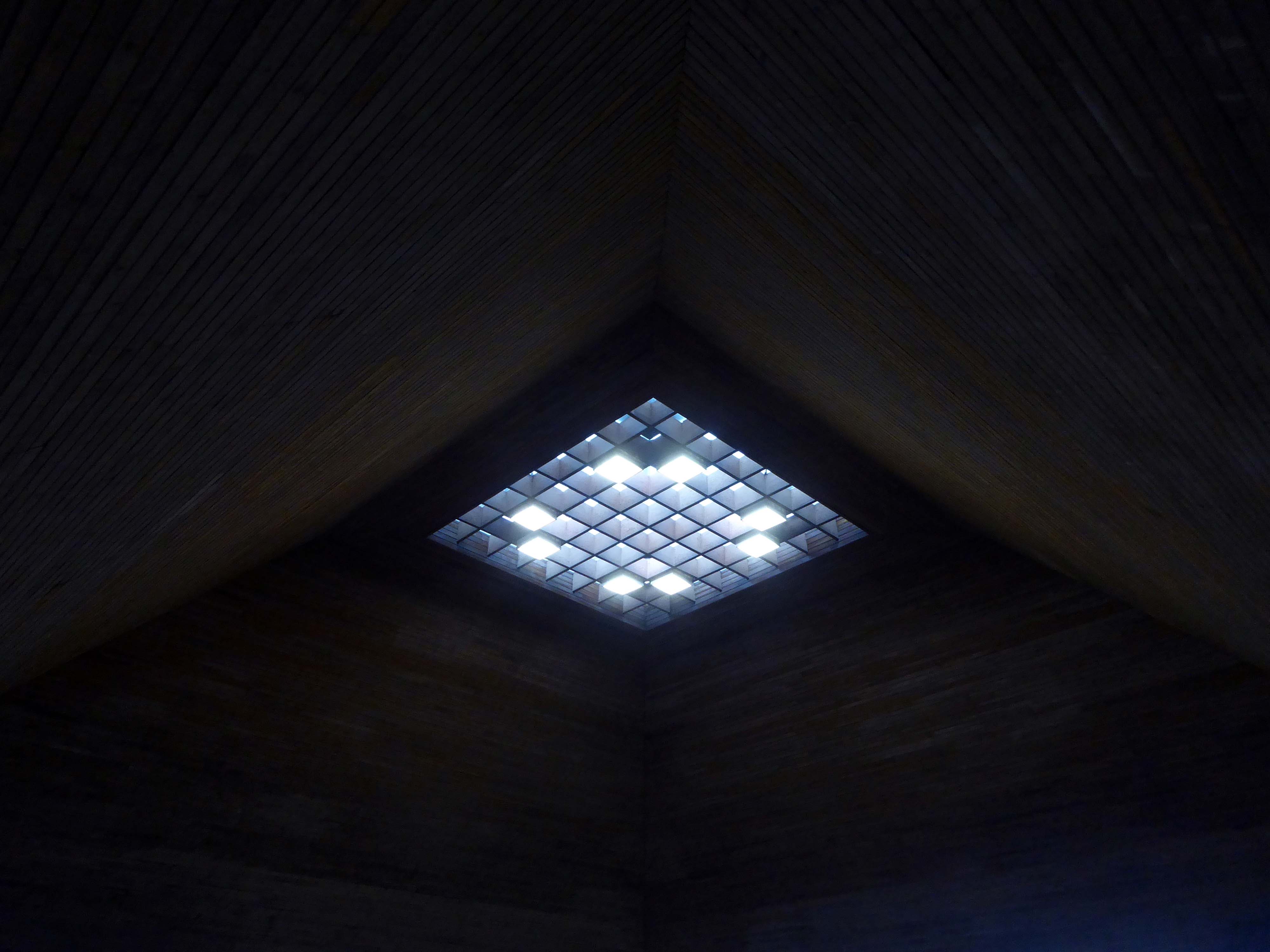
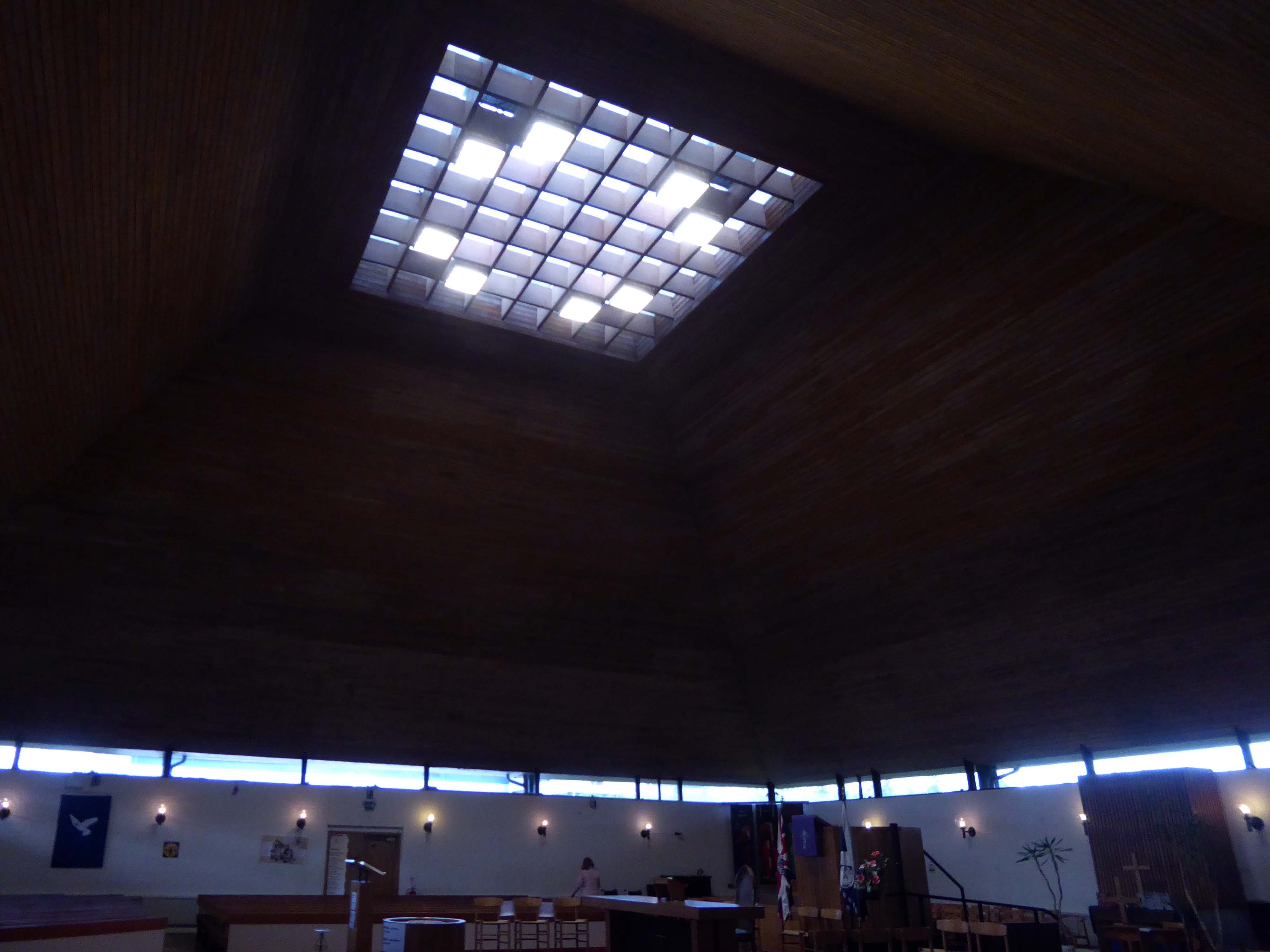
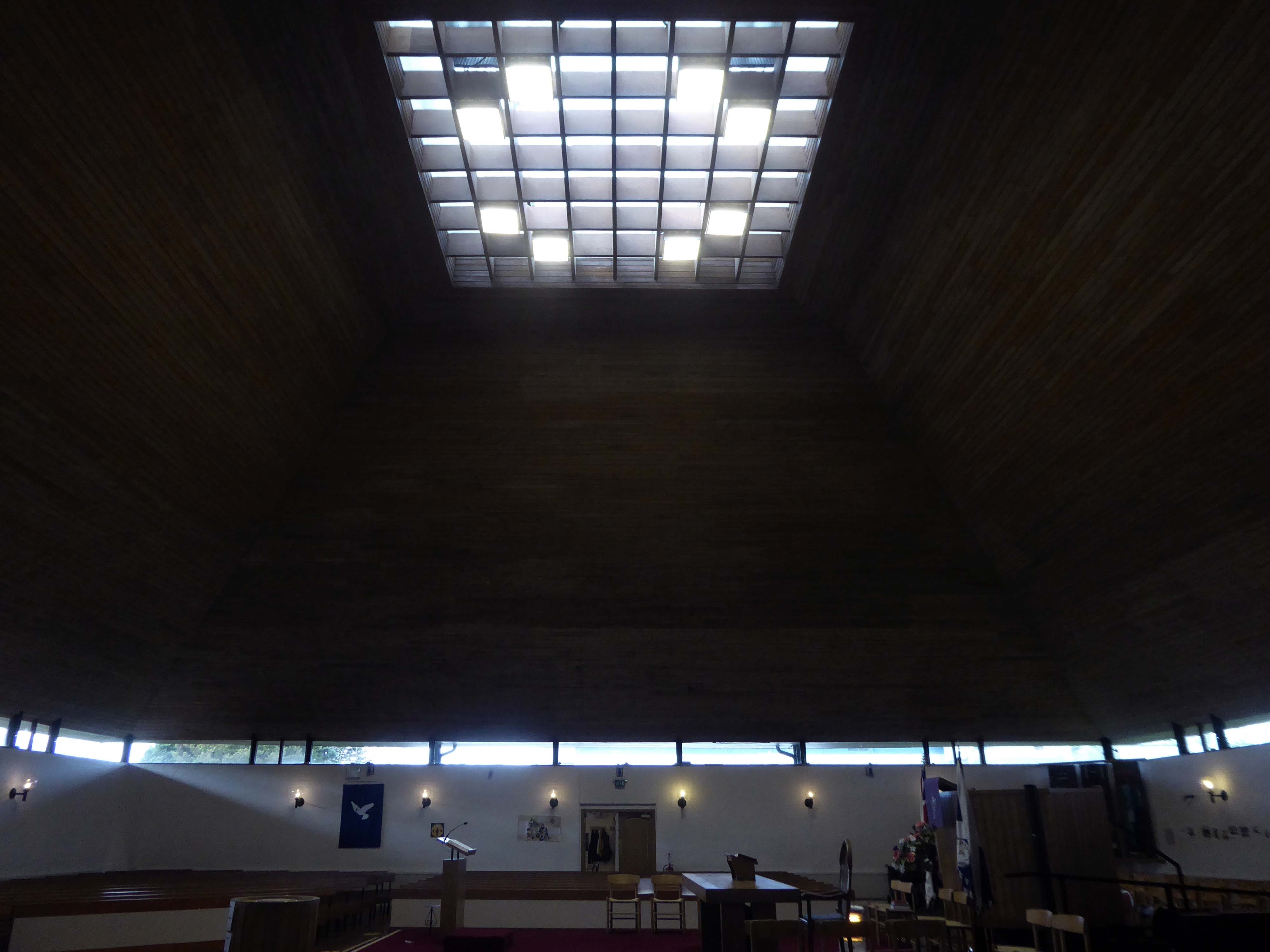
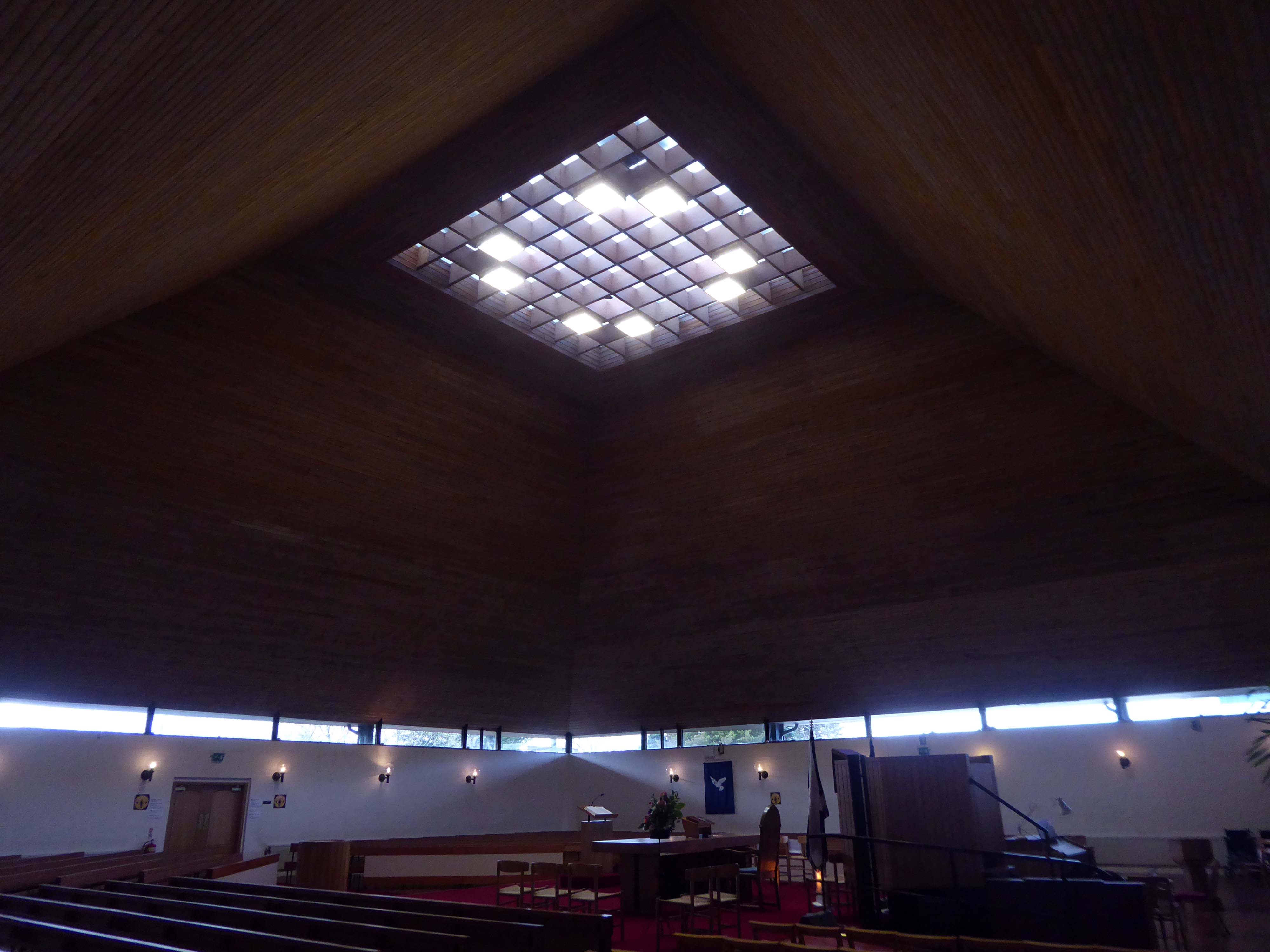
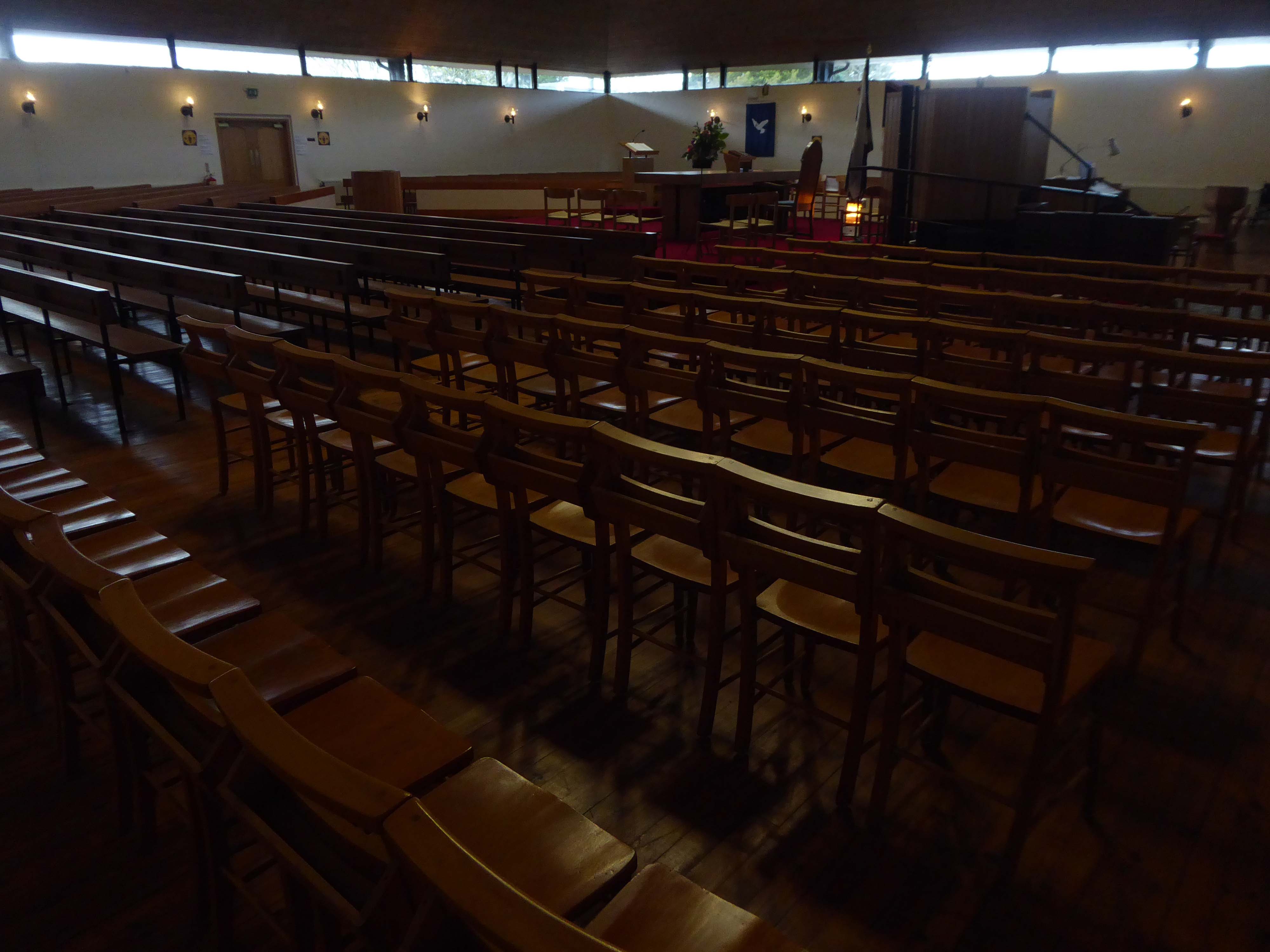
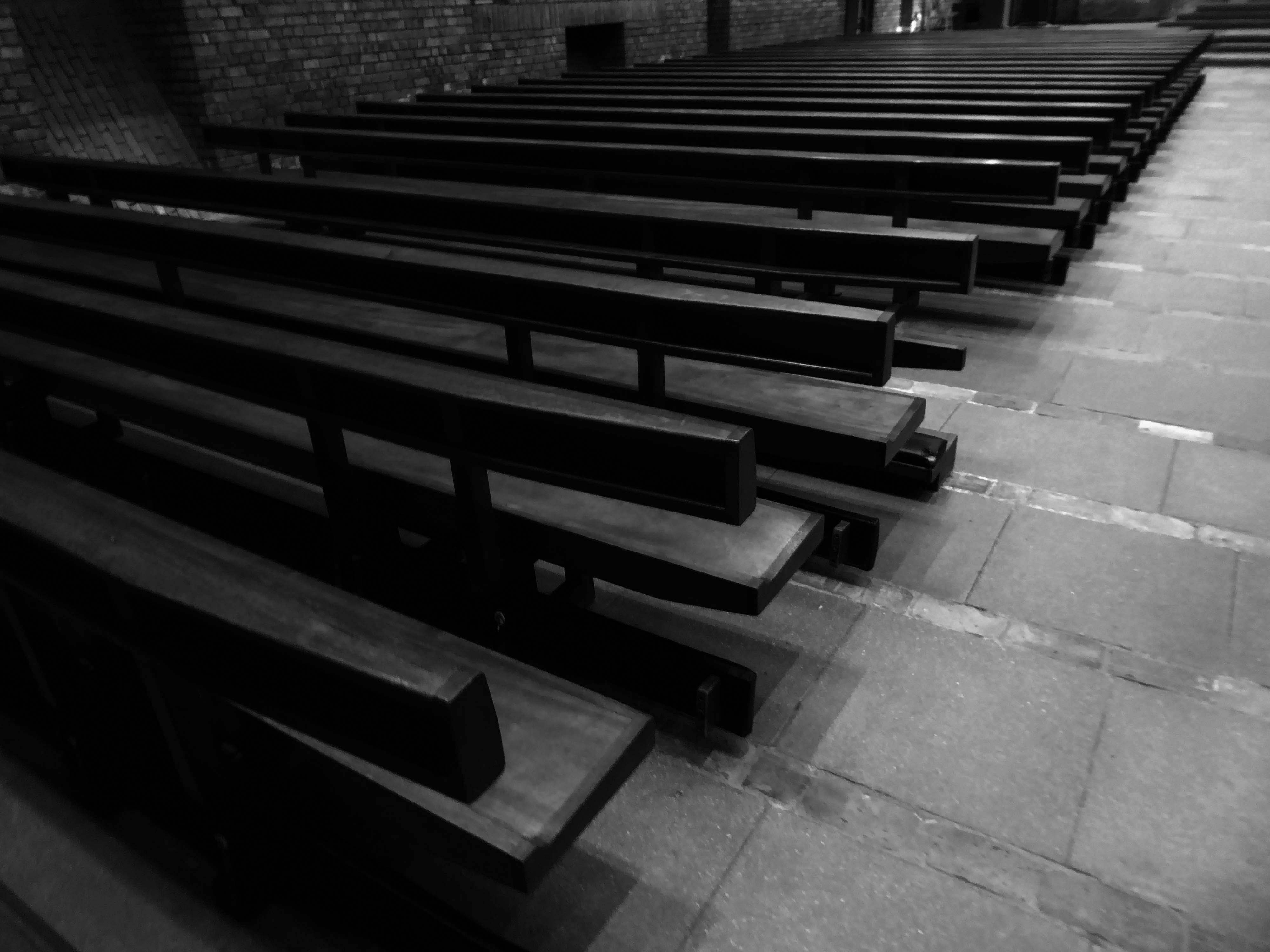
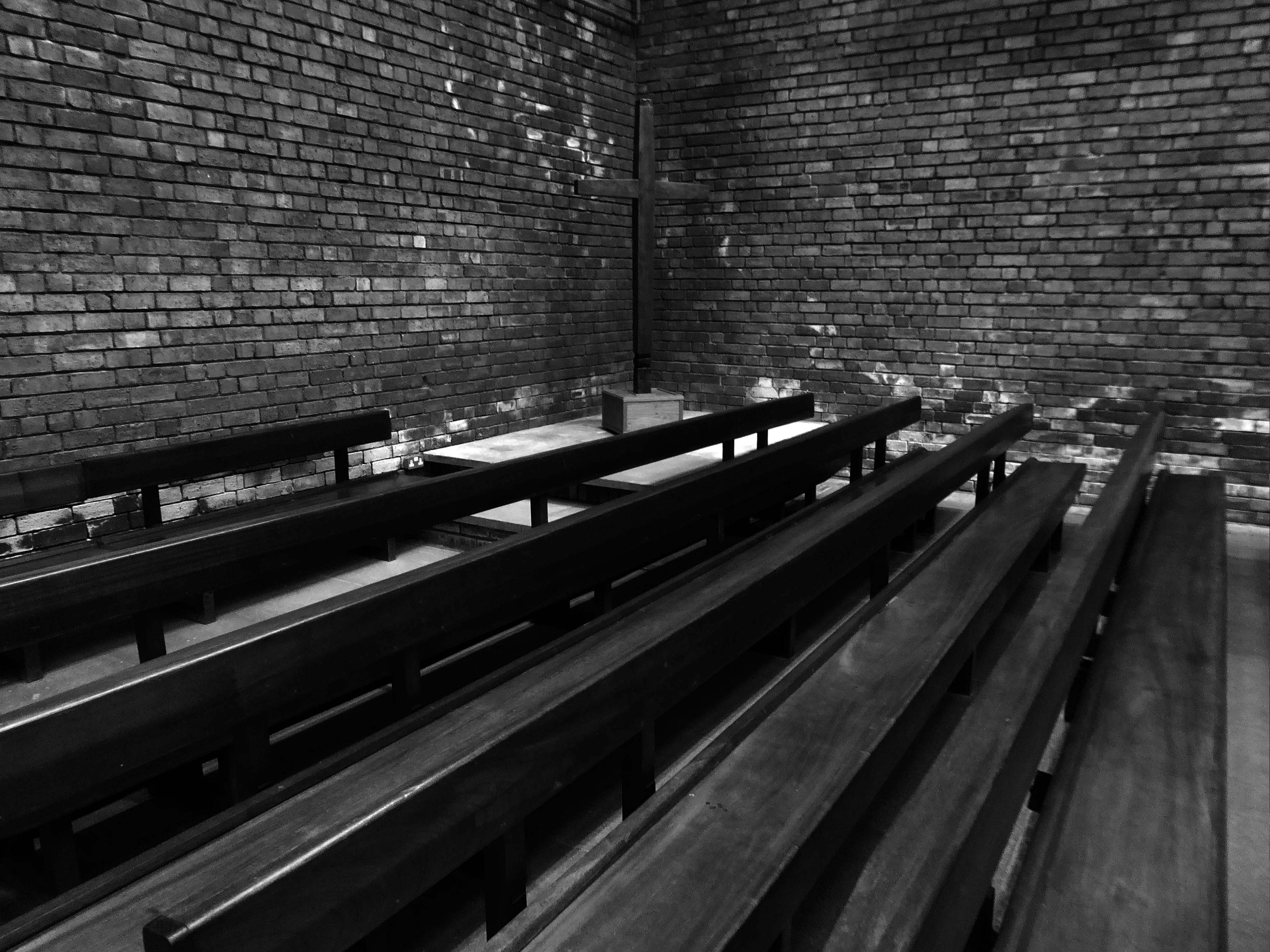
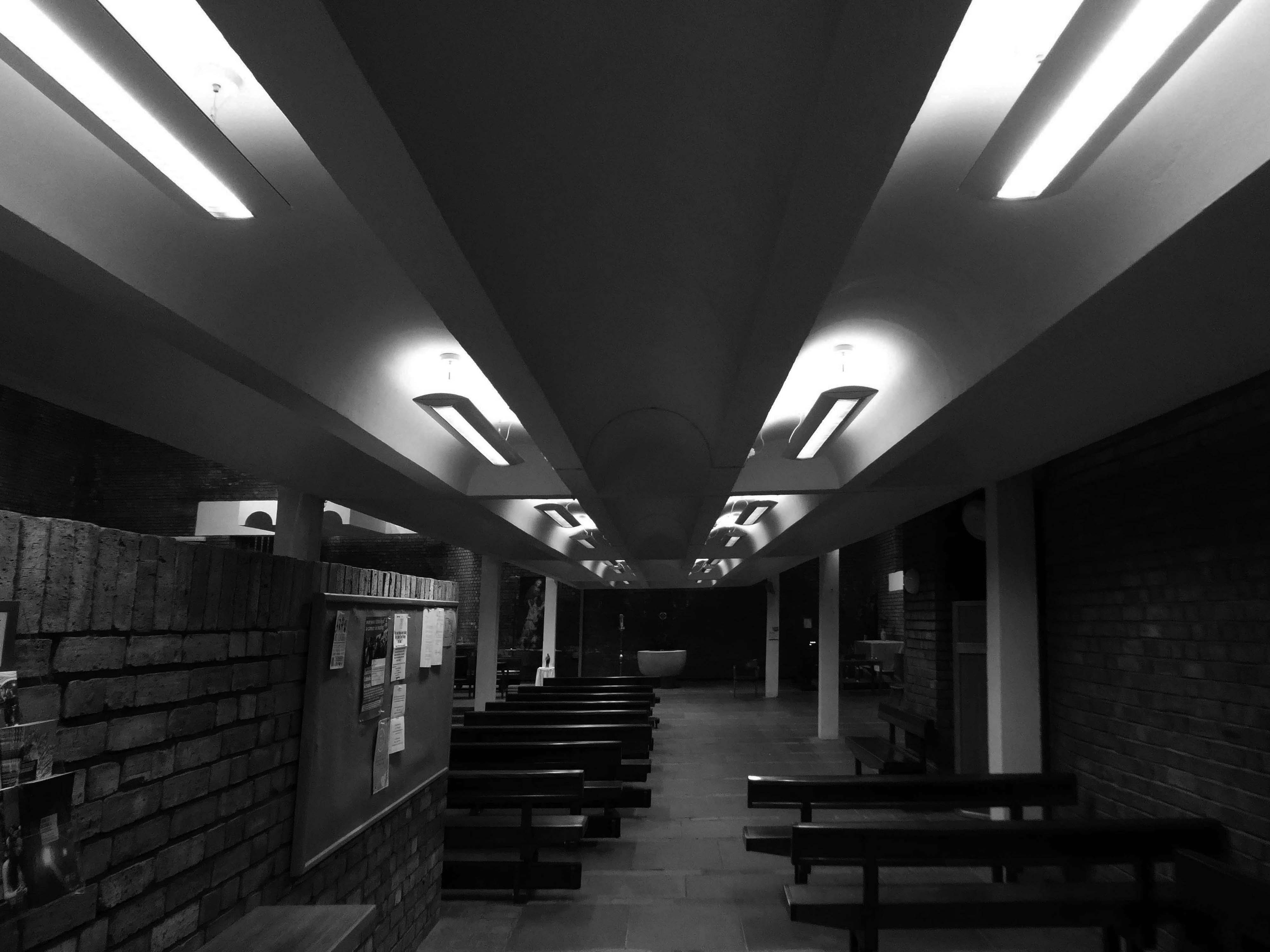
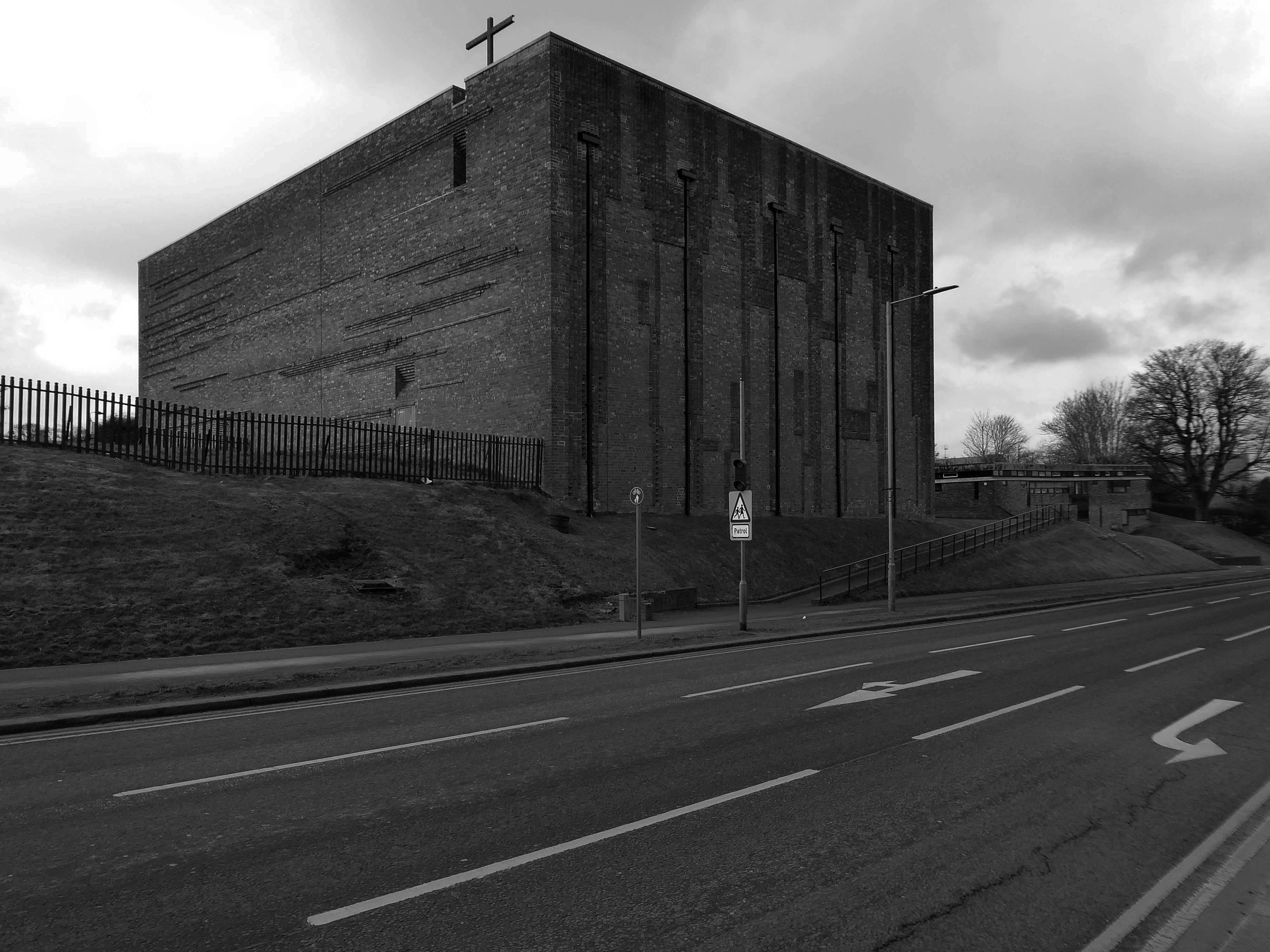
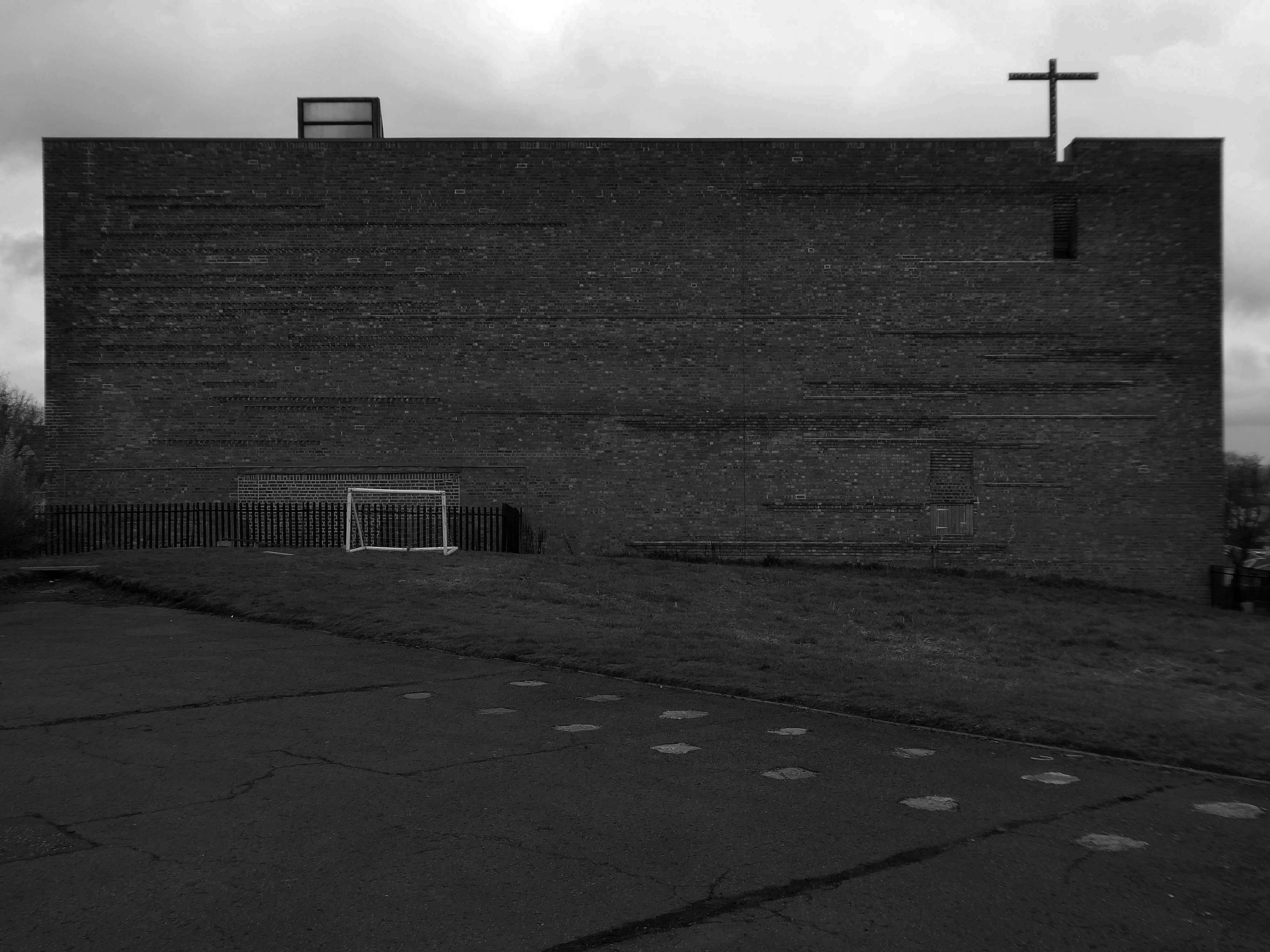
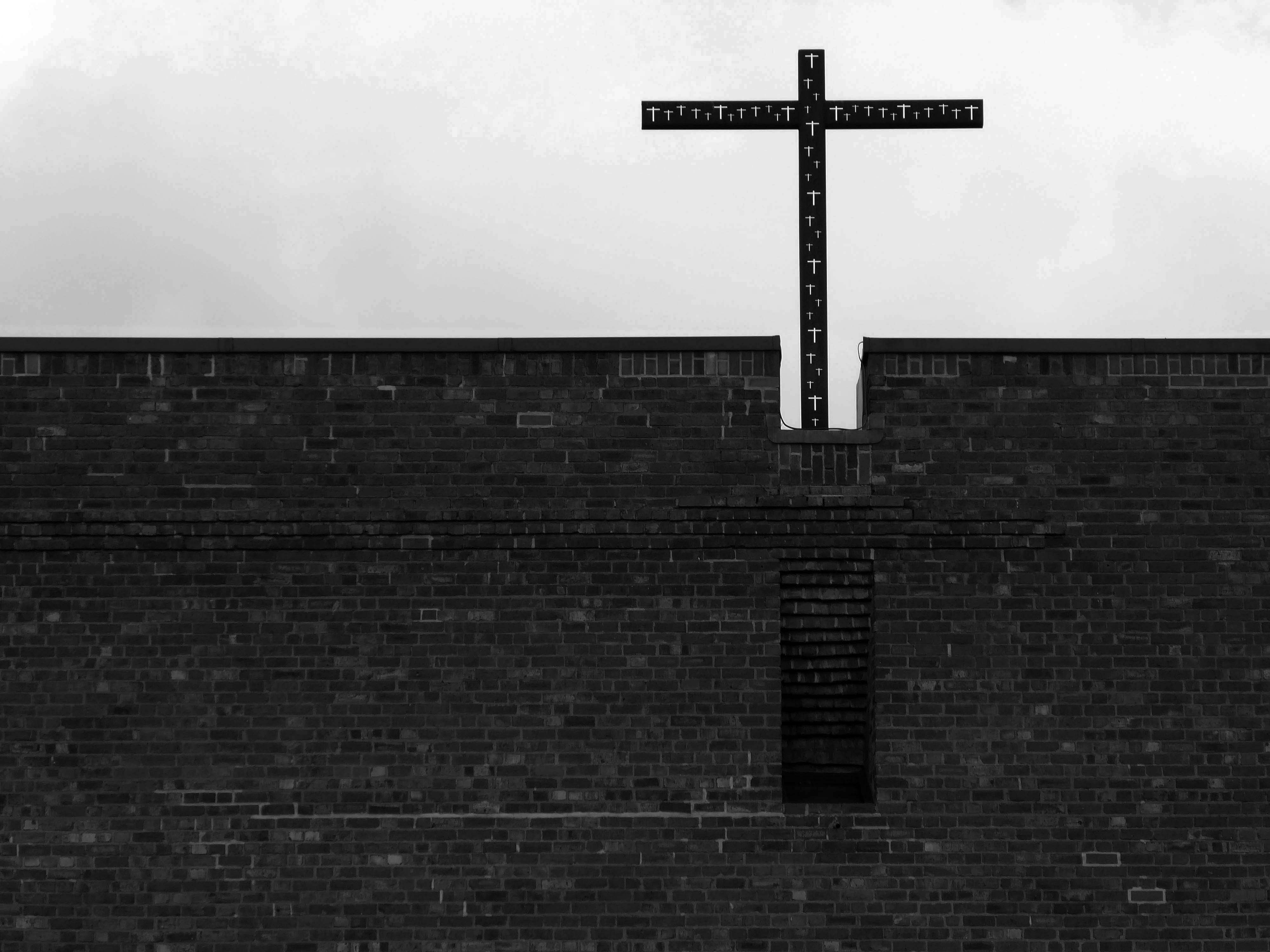
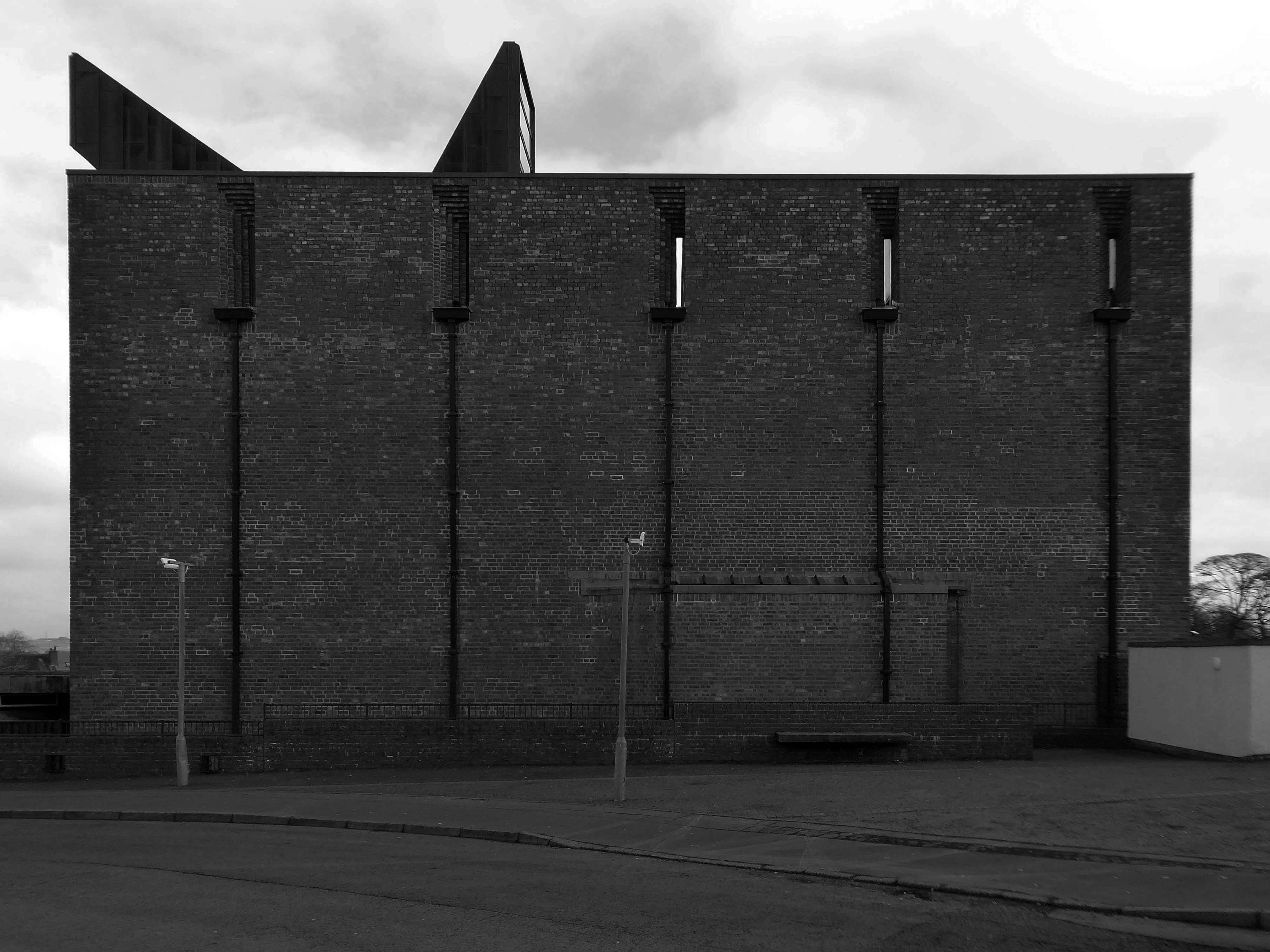
Single storey, square-plan pyramidal church with halls adjoining to SW.
Category B Listed
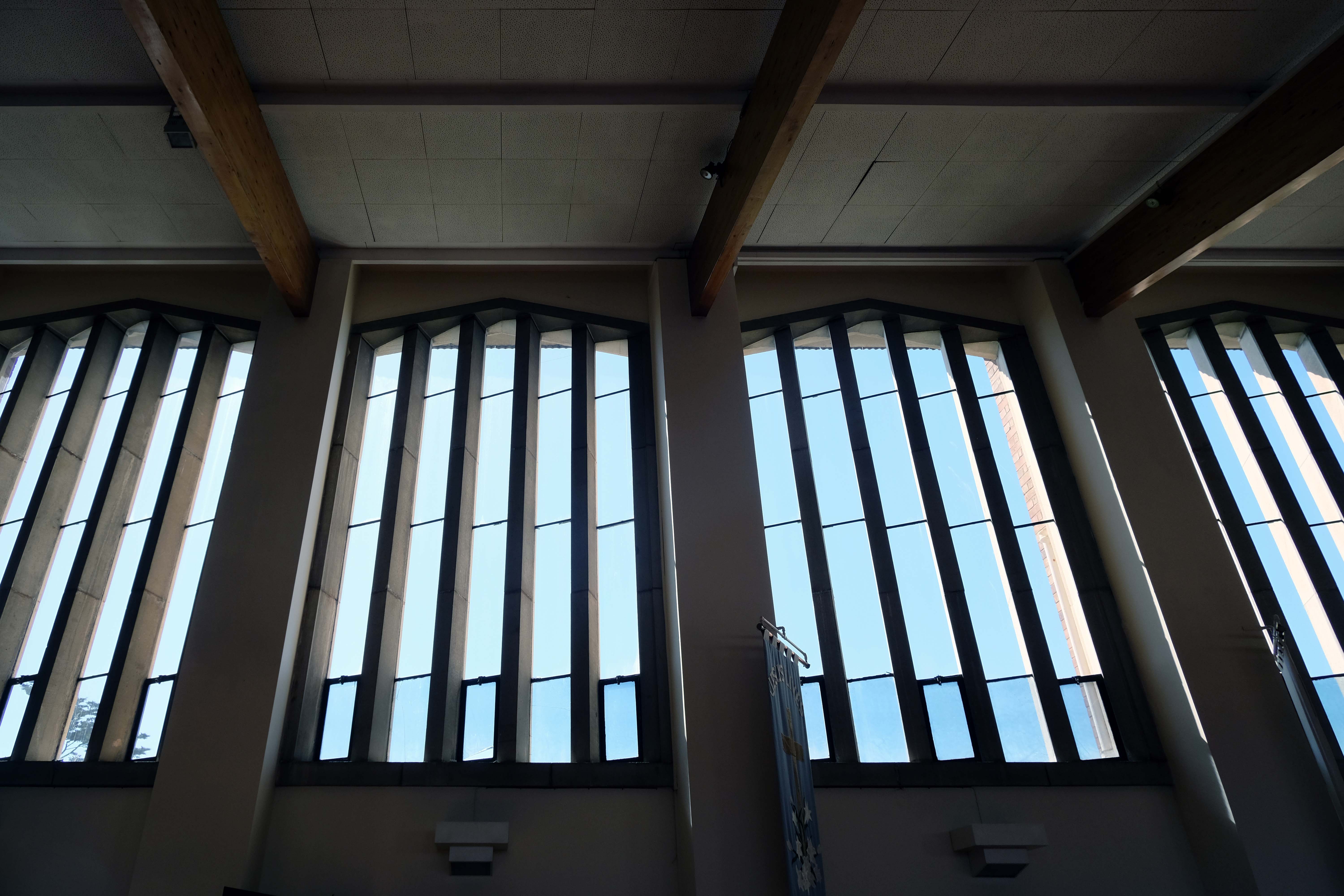
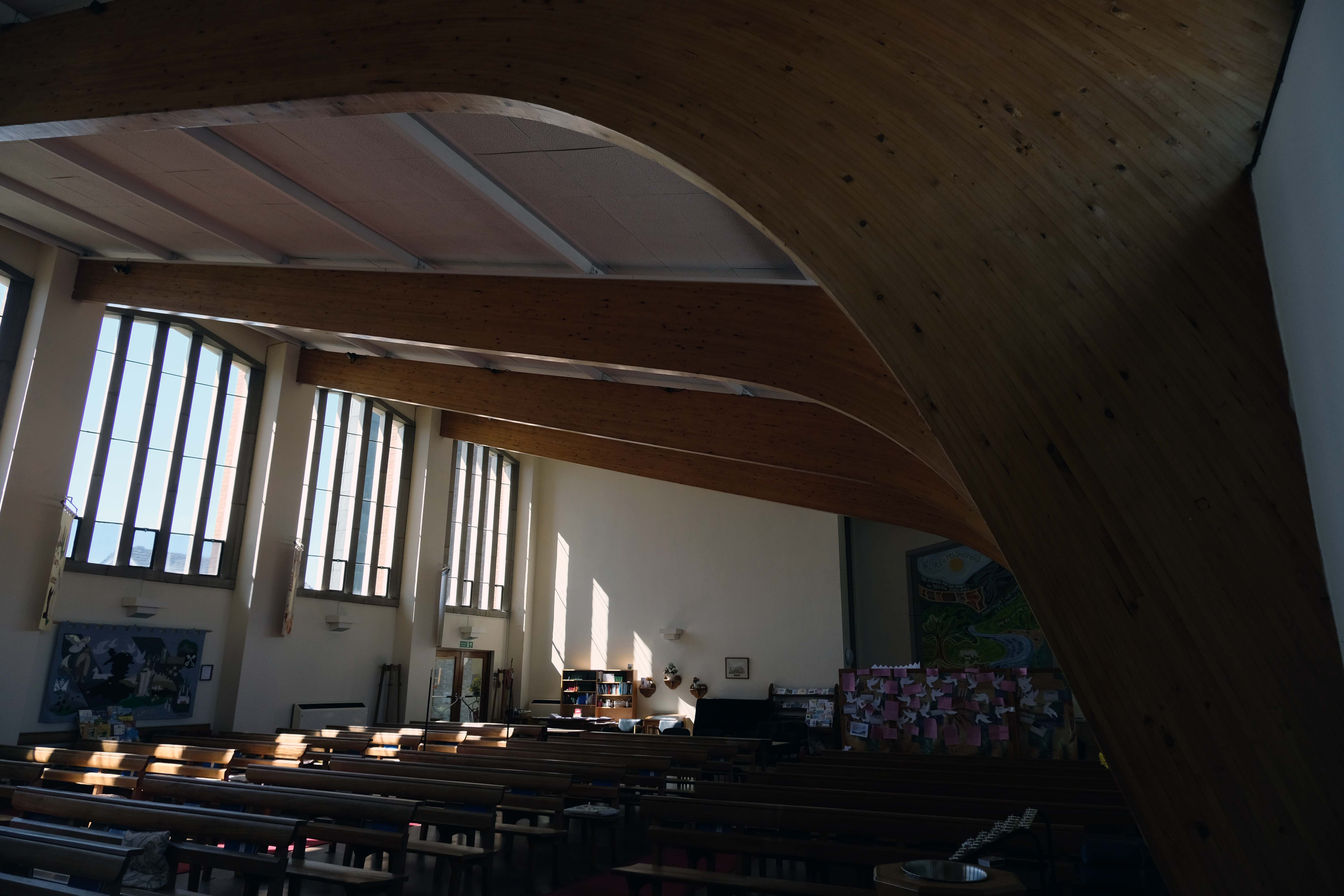
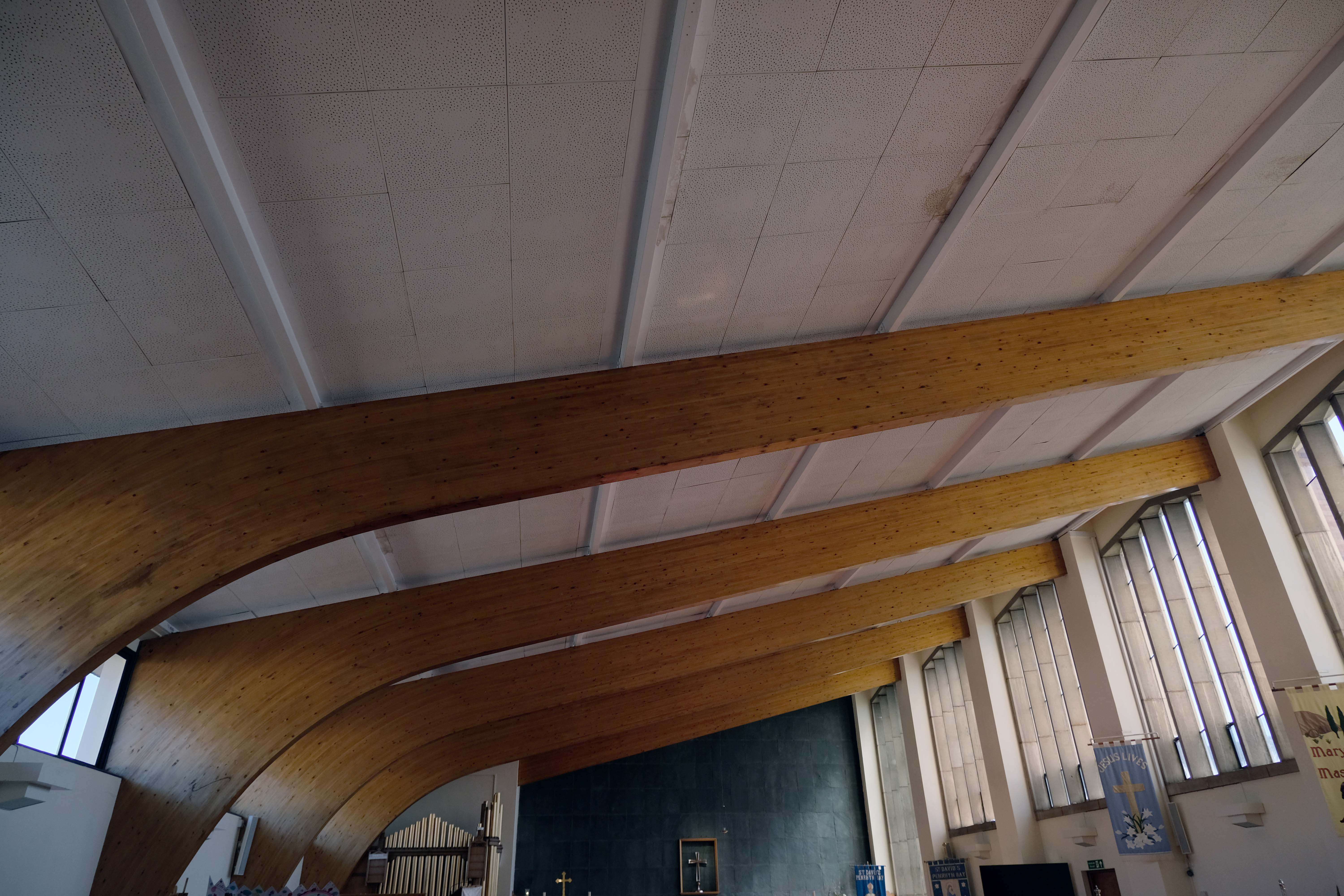
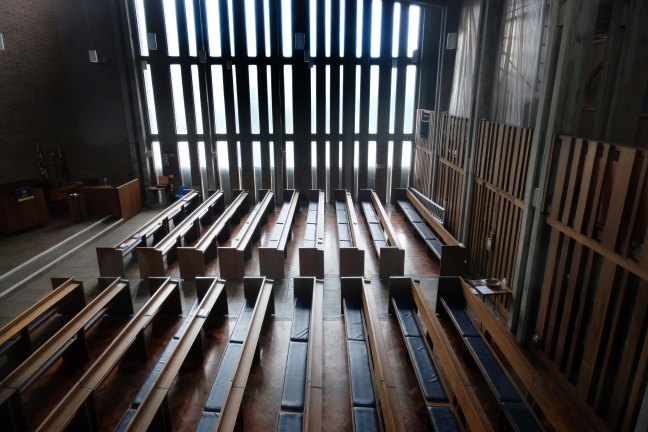
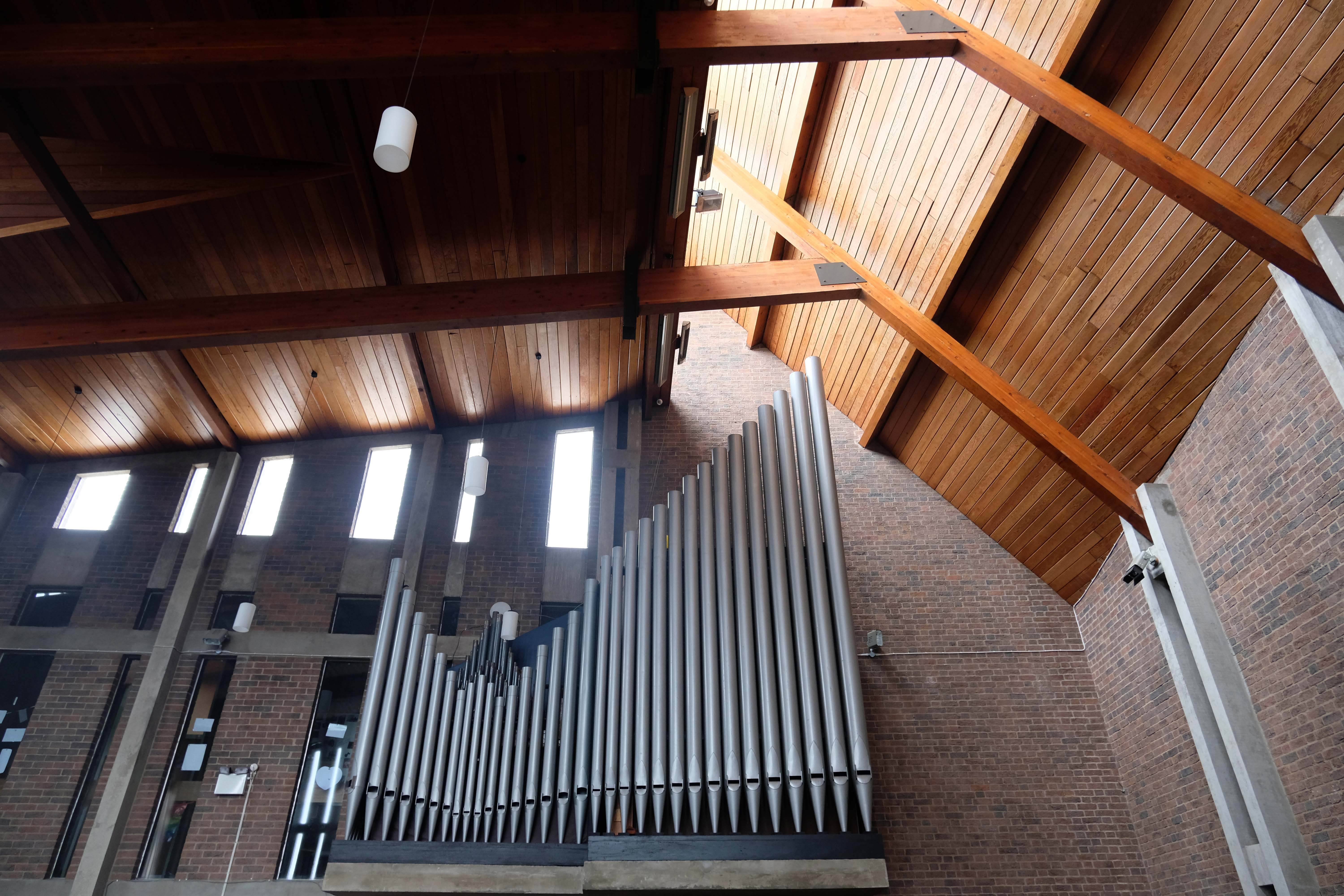
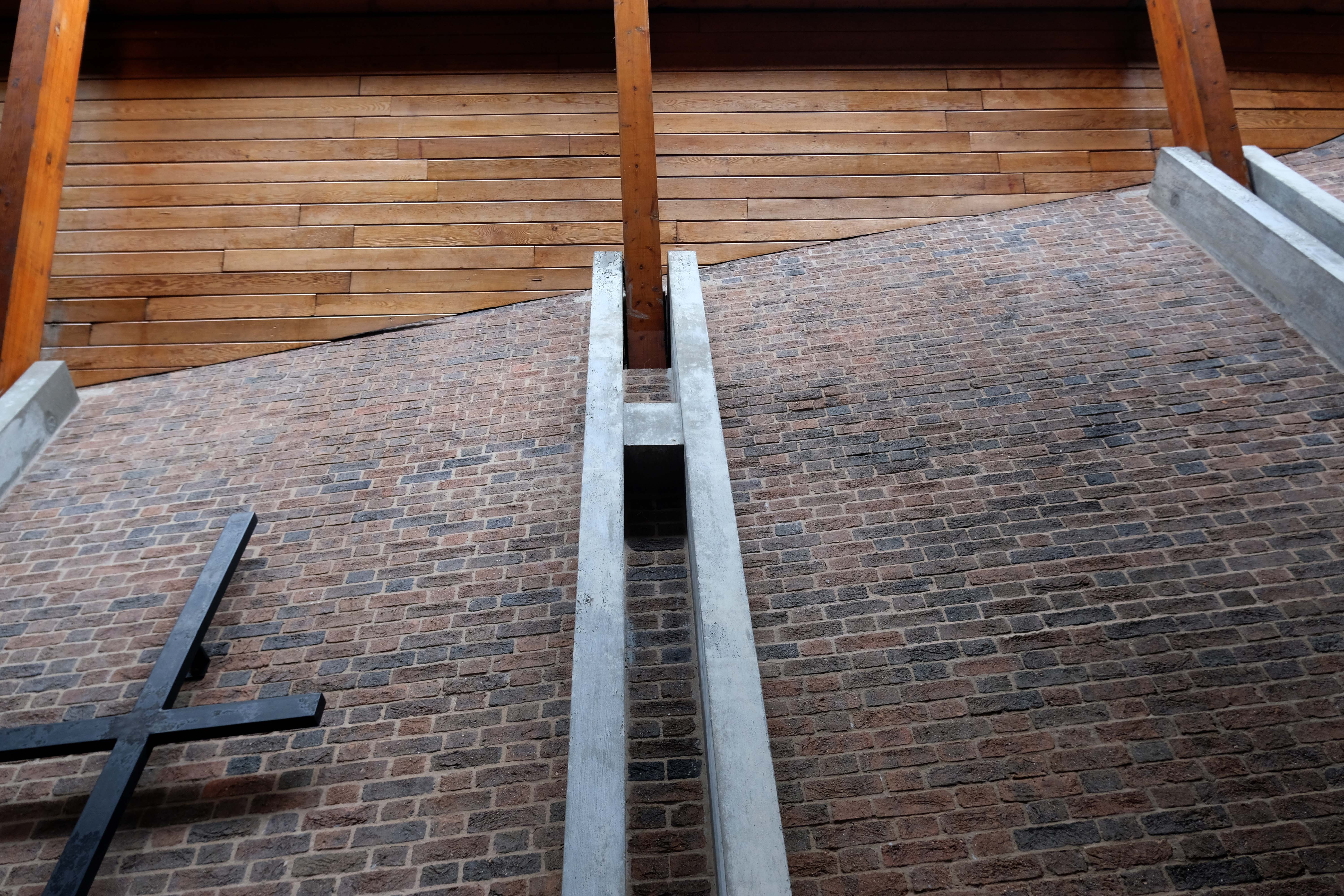
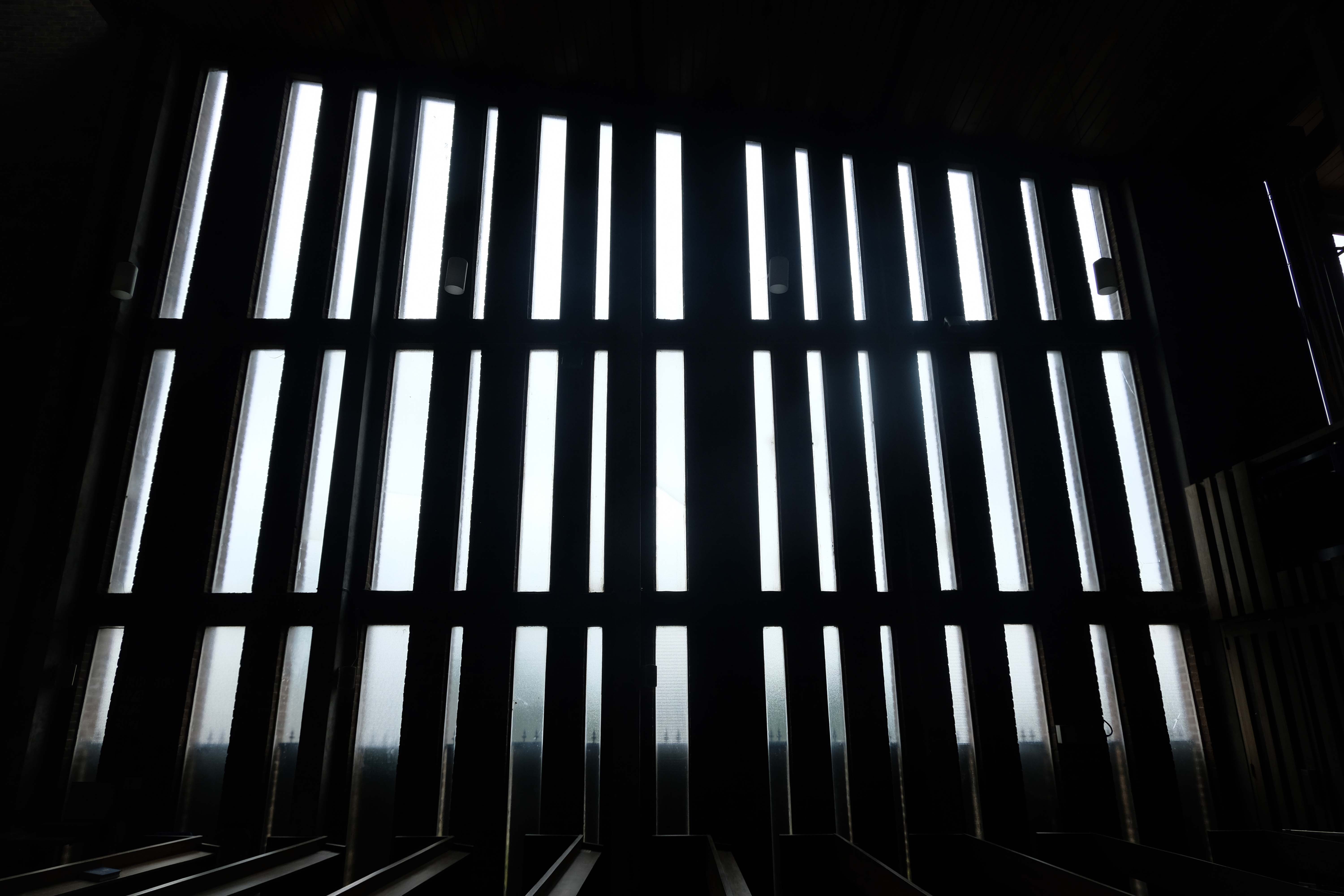
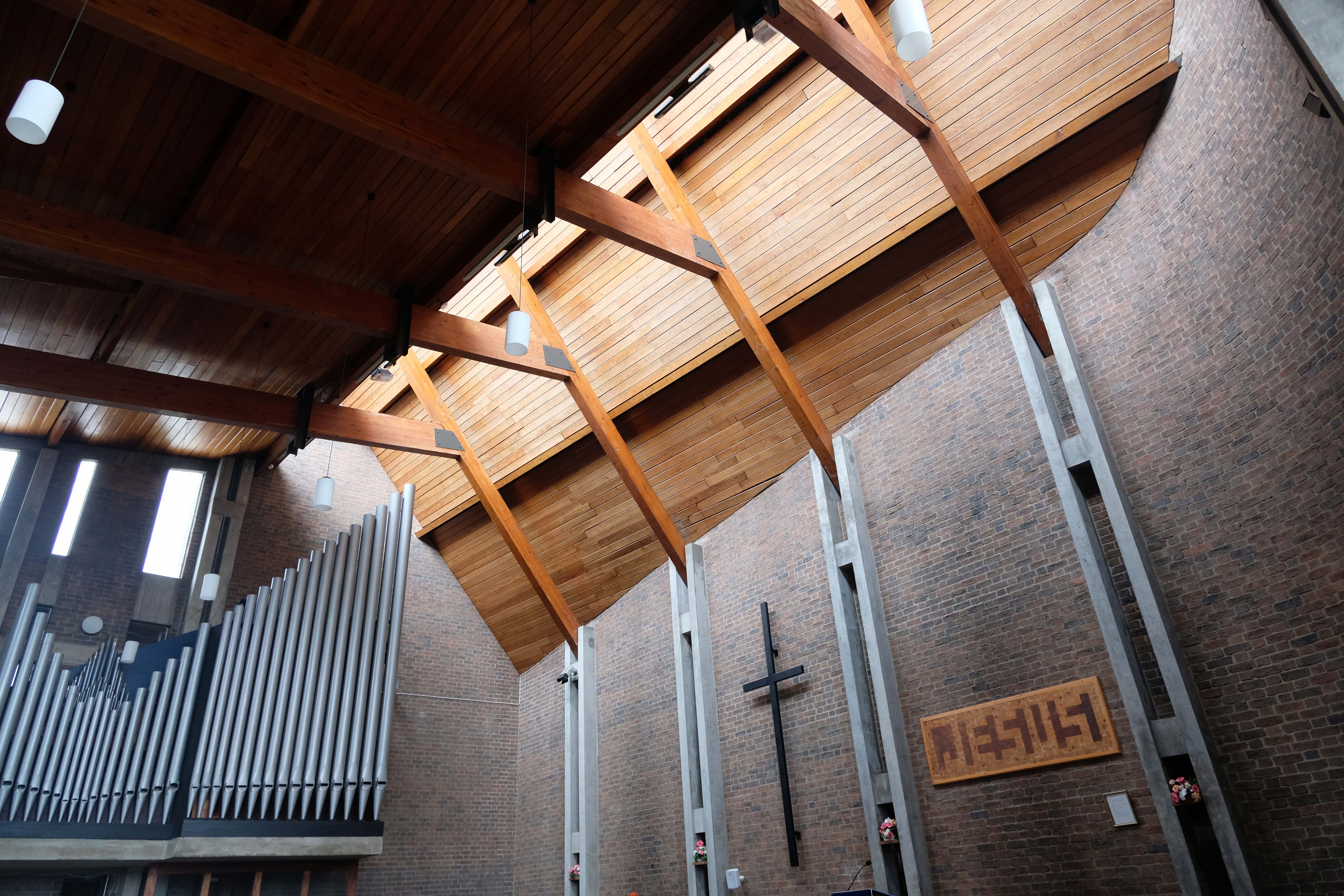
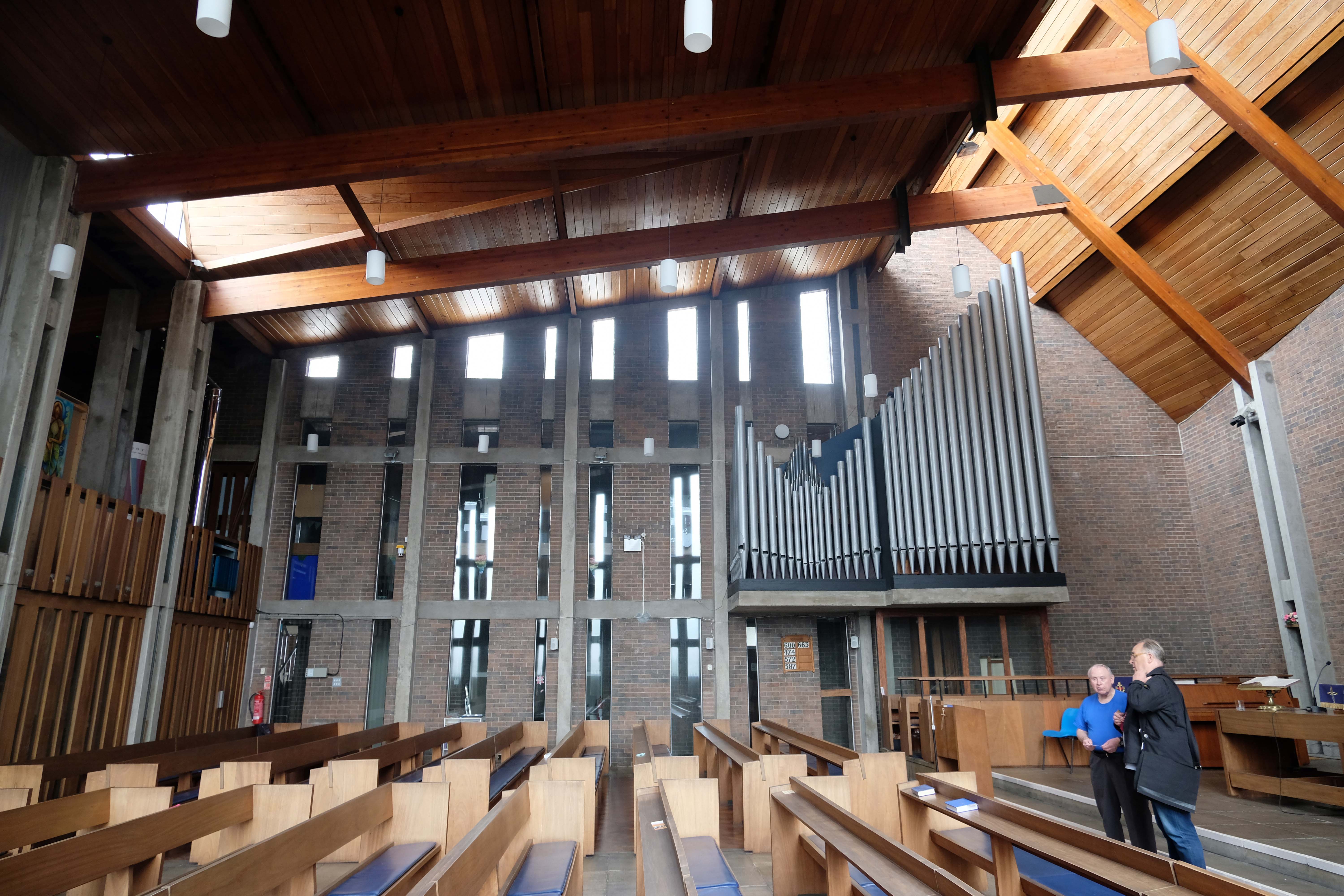
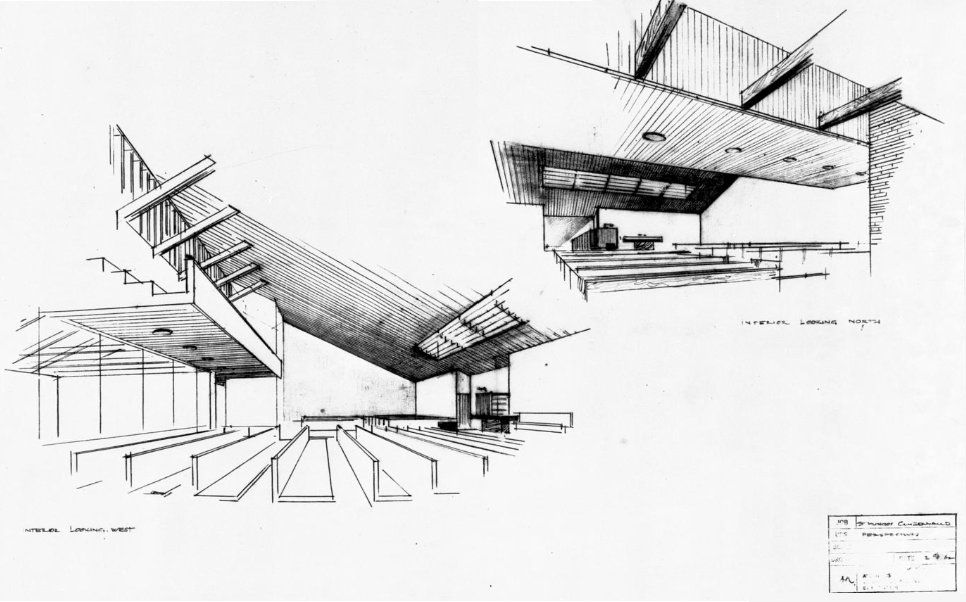
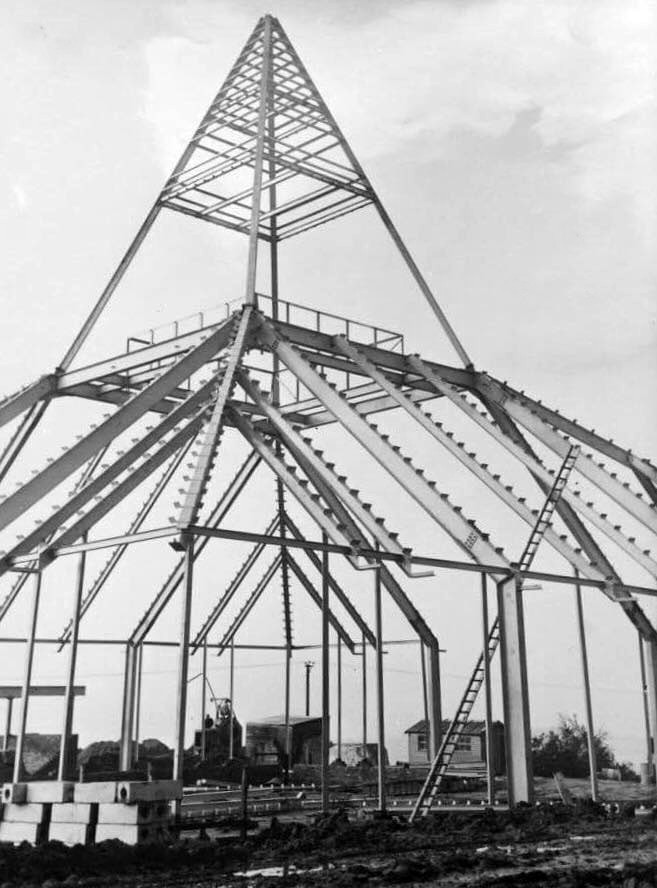
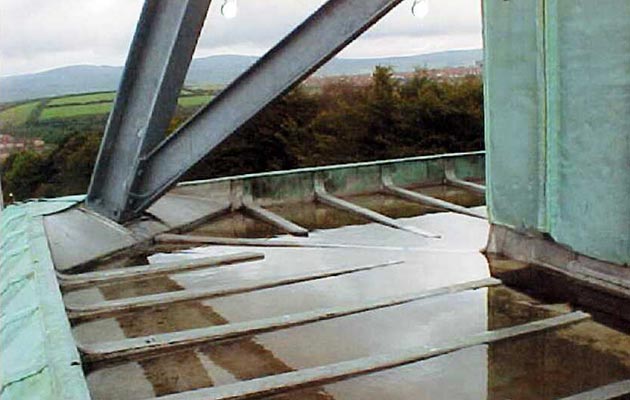
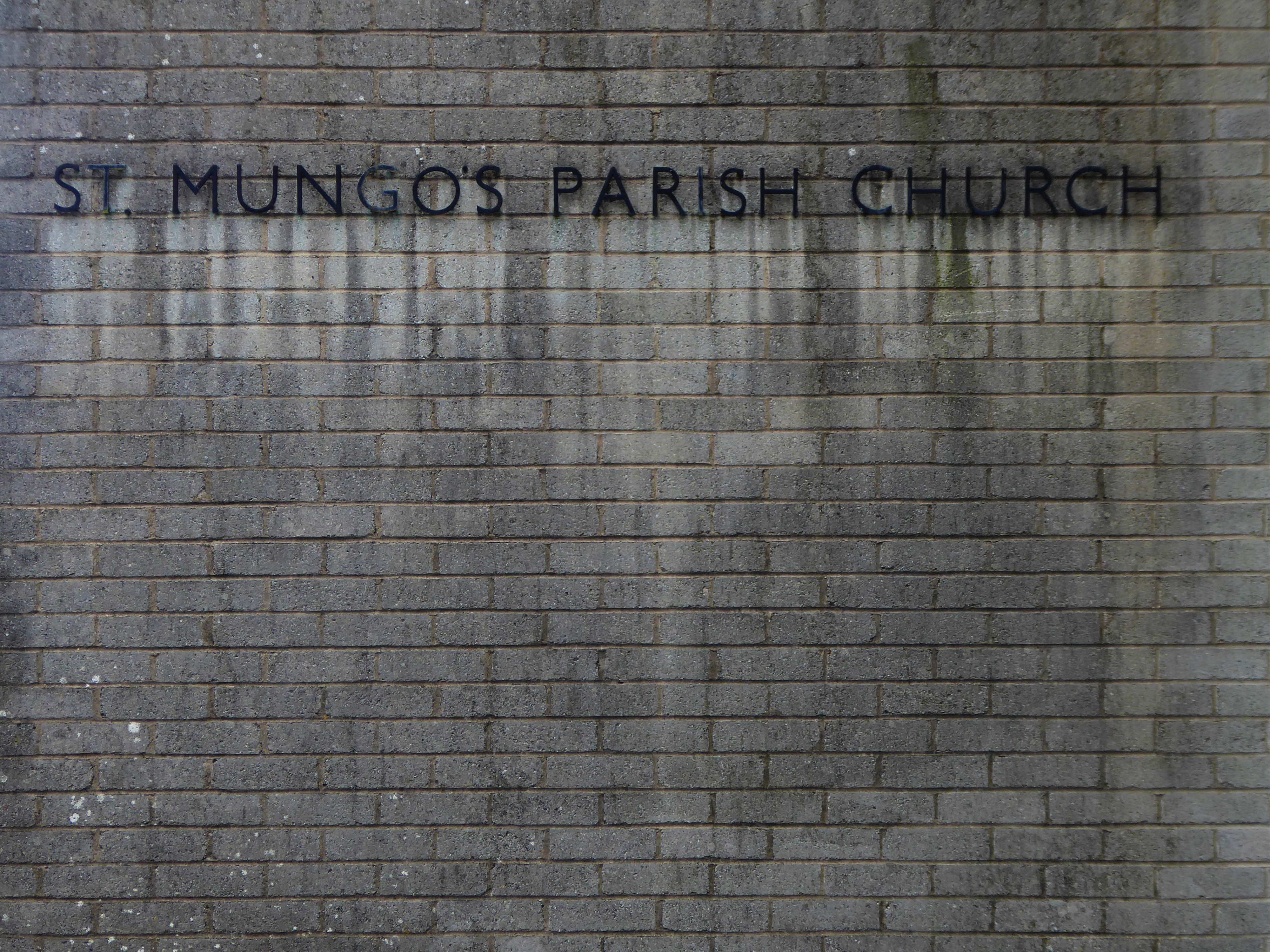
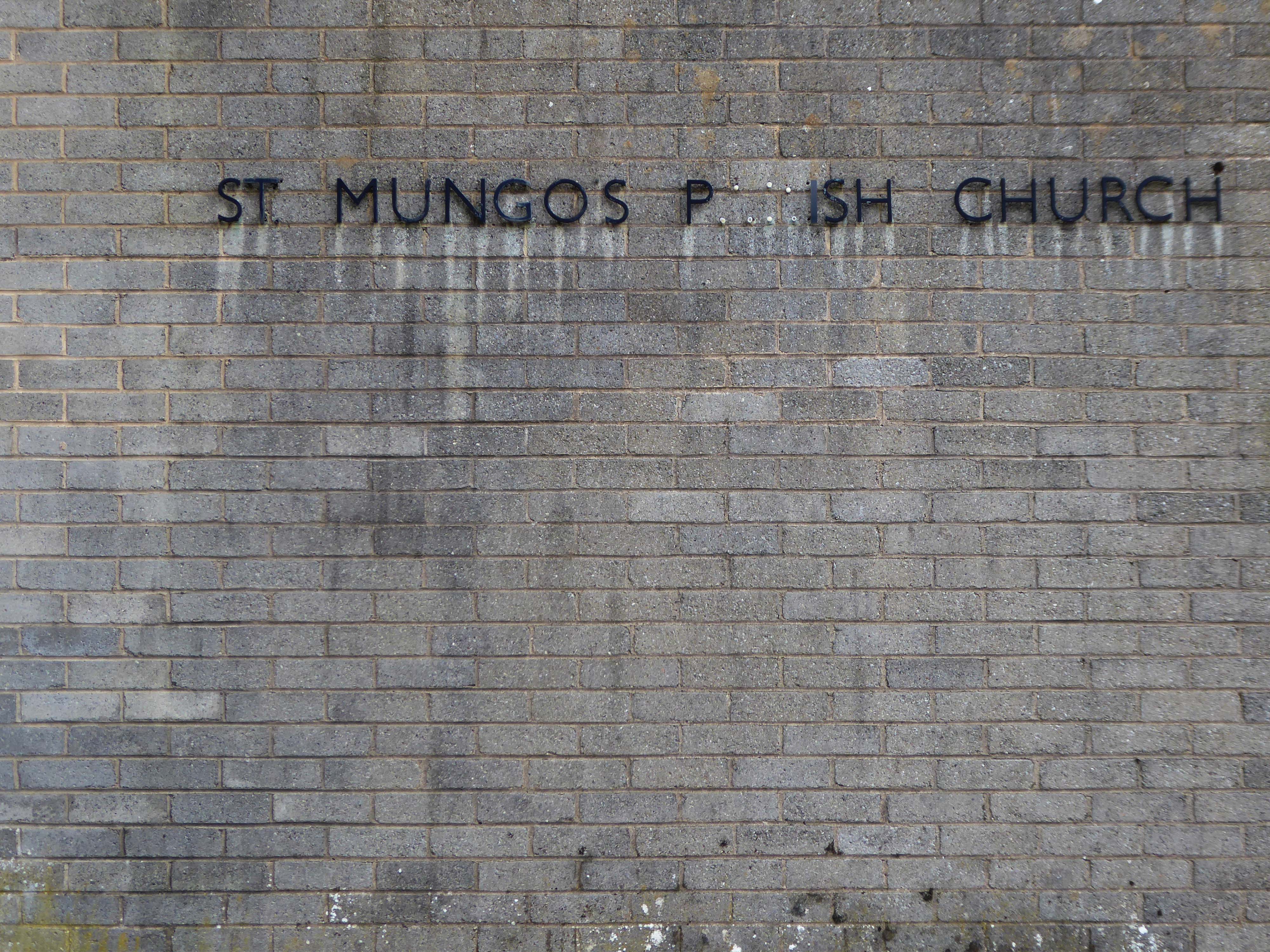
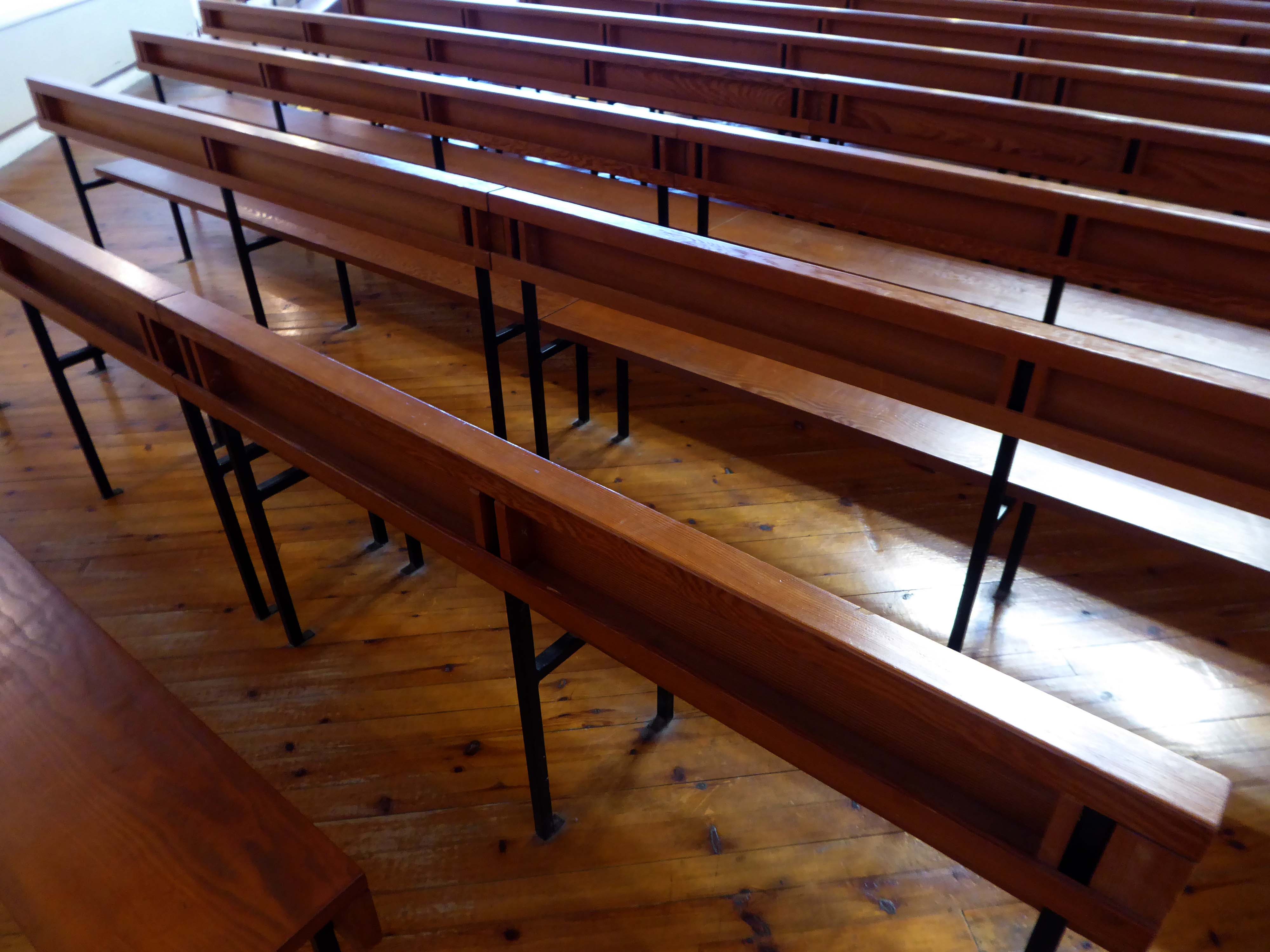
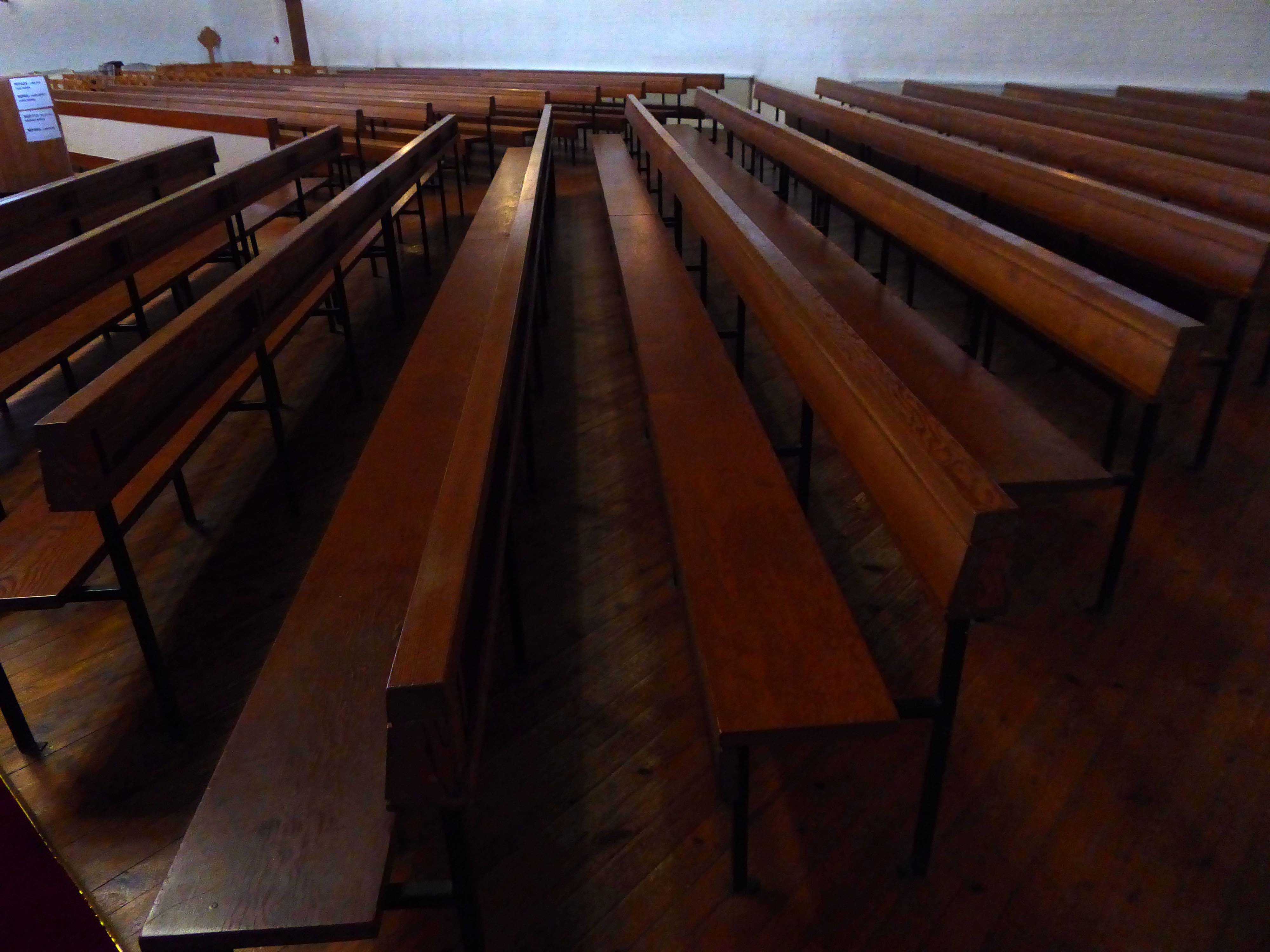
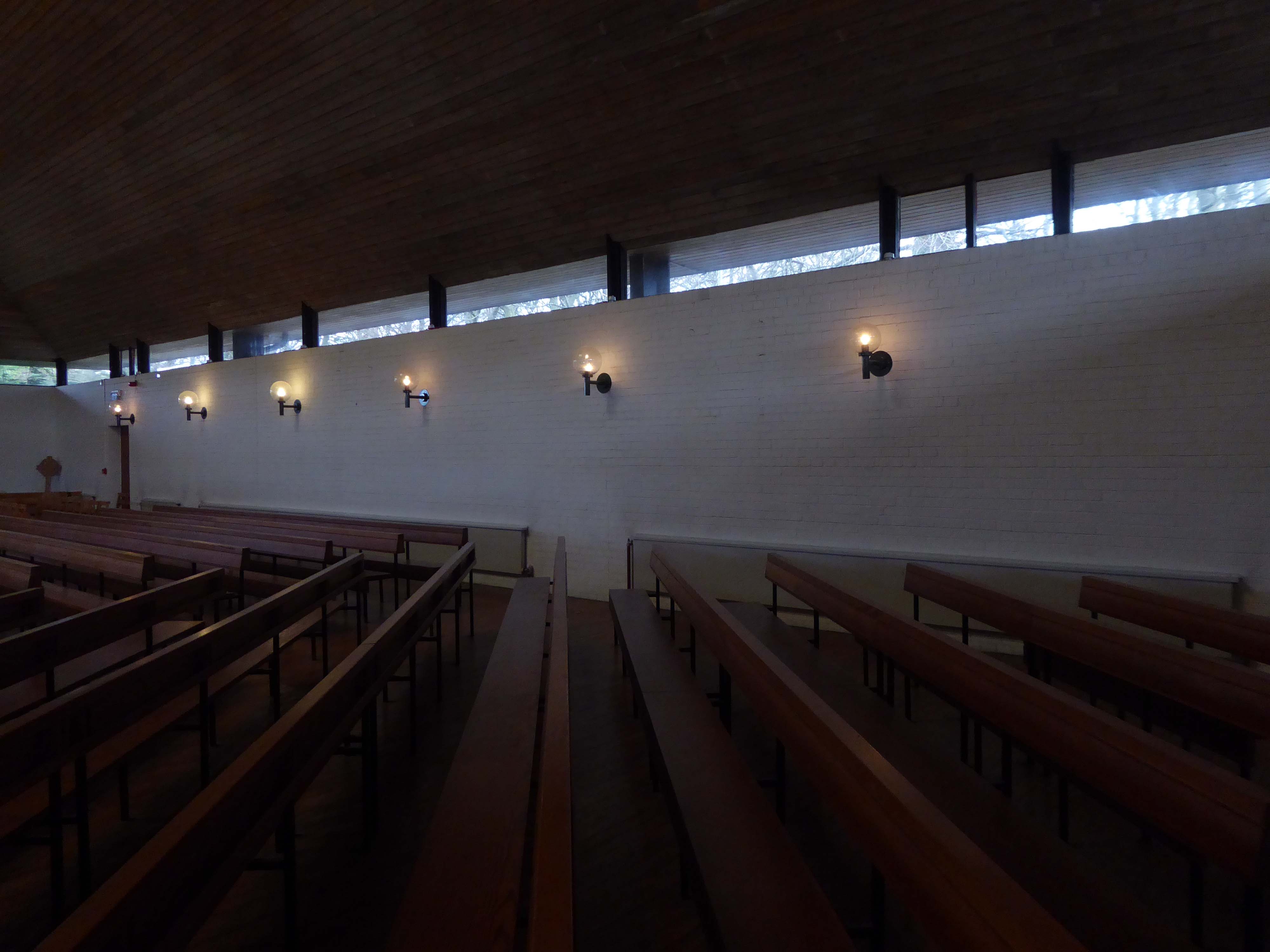
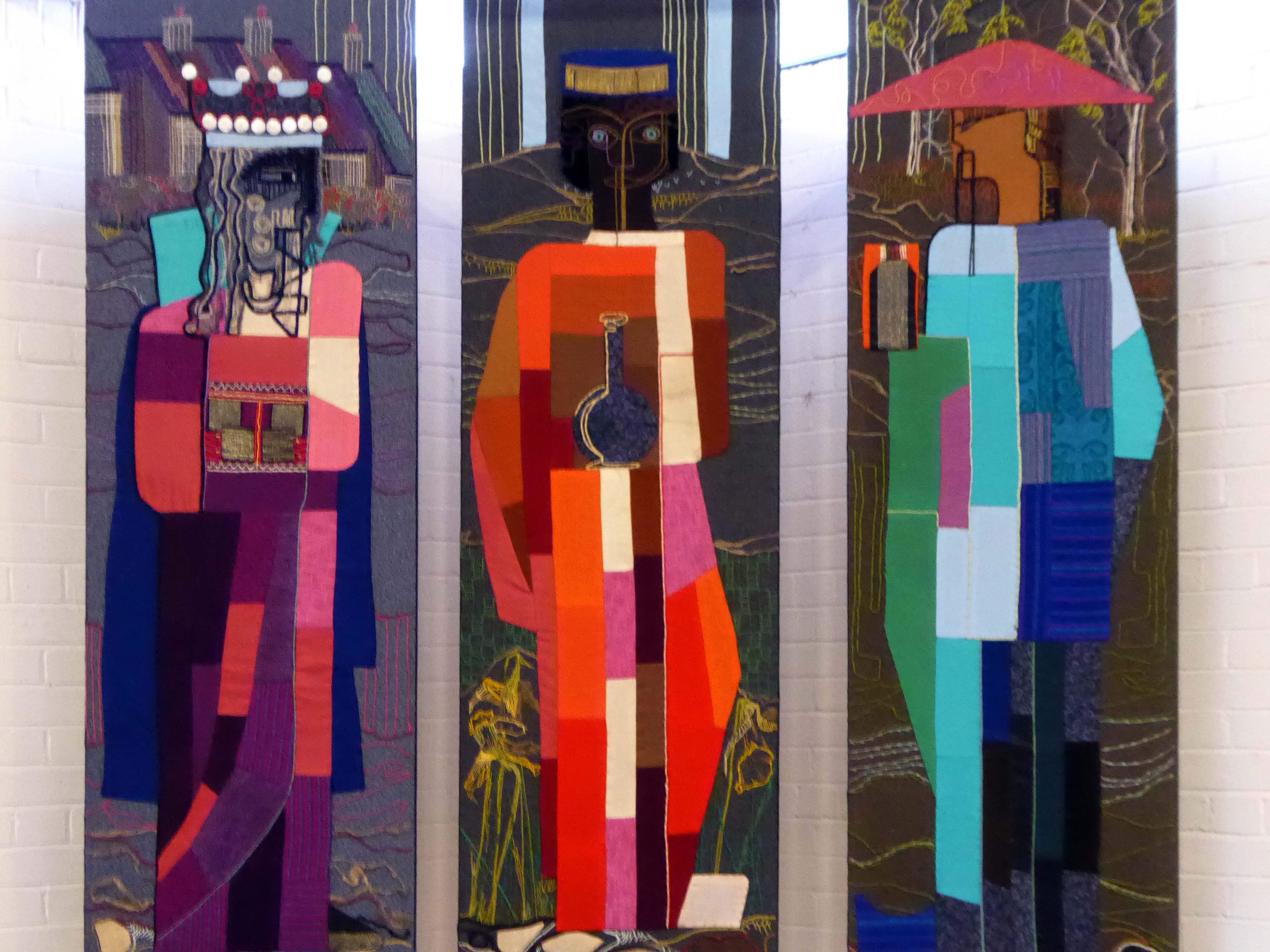
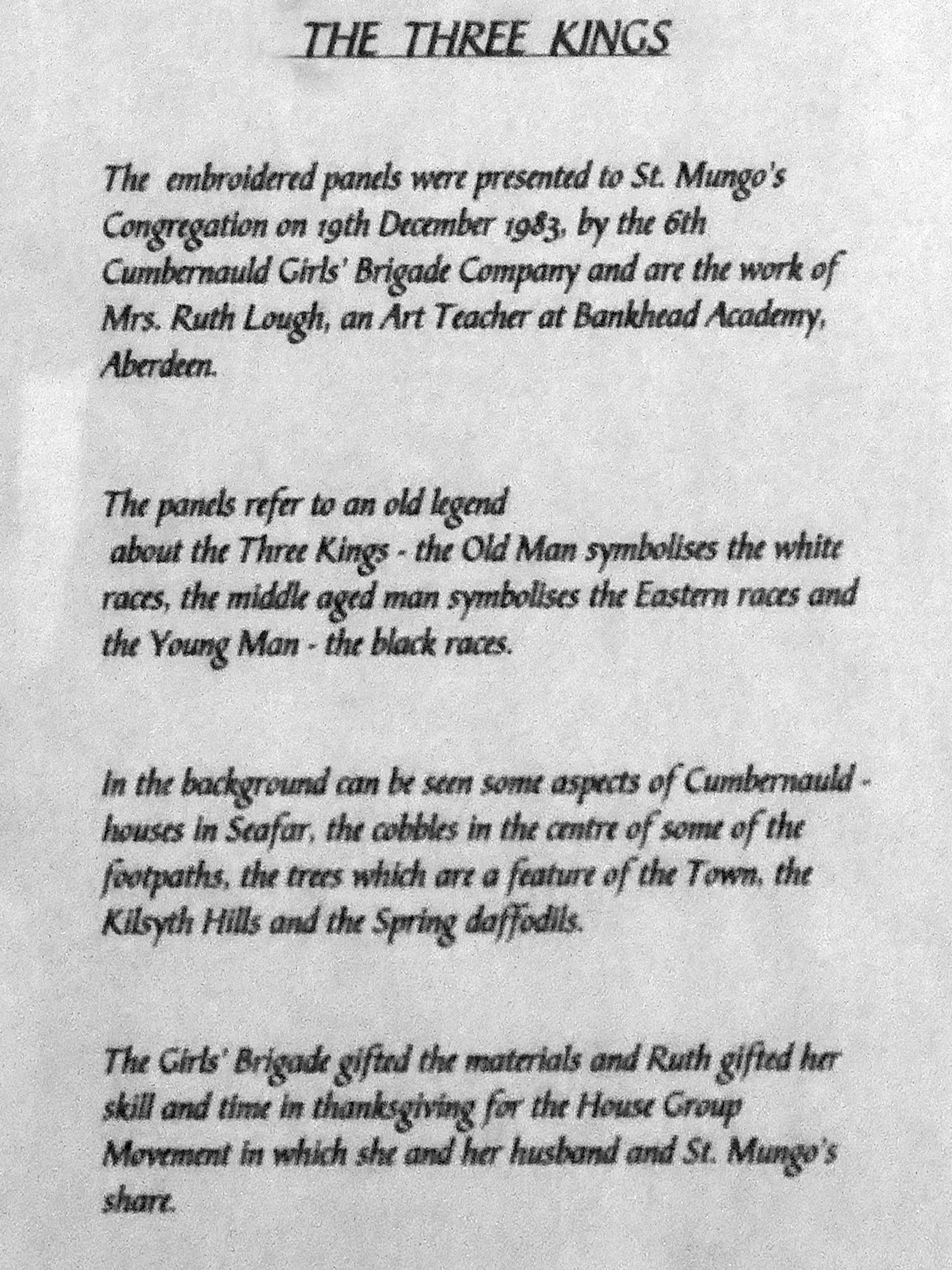
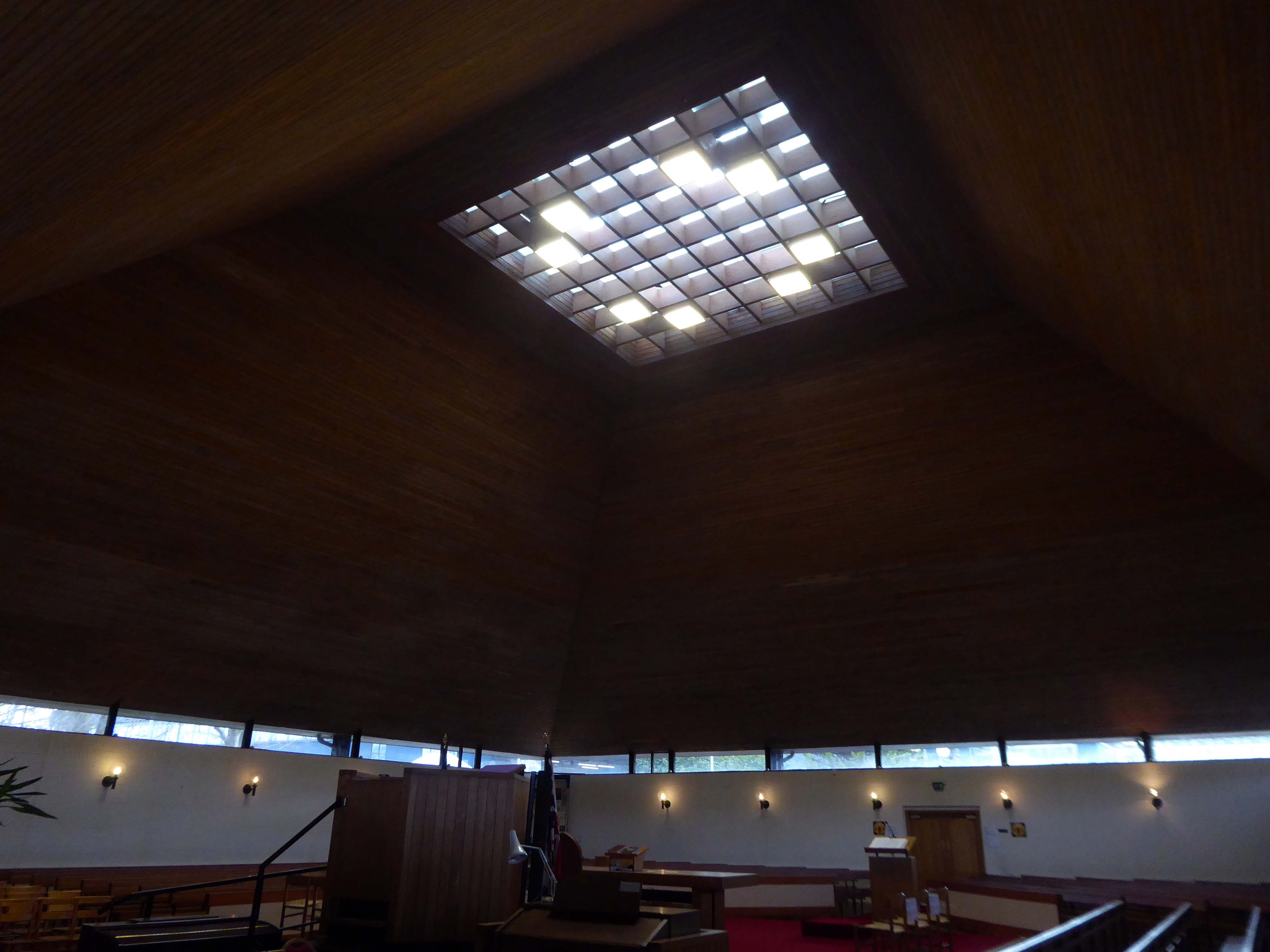
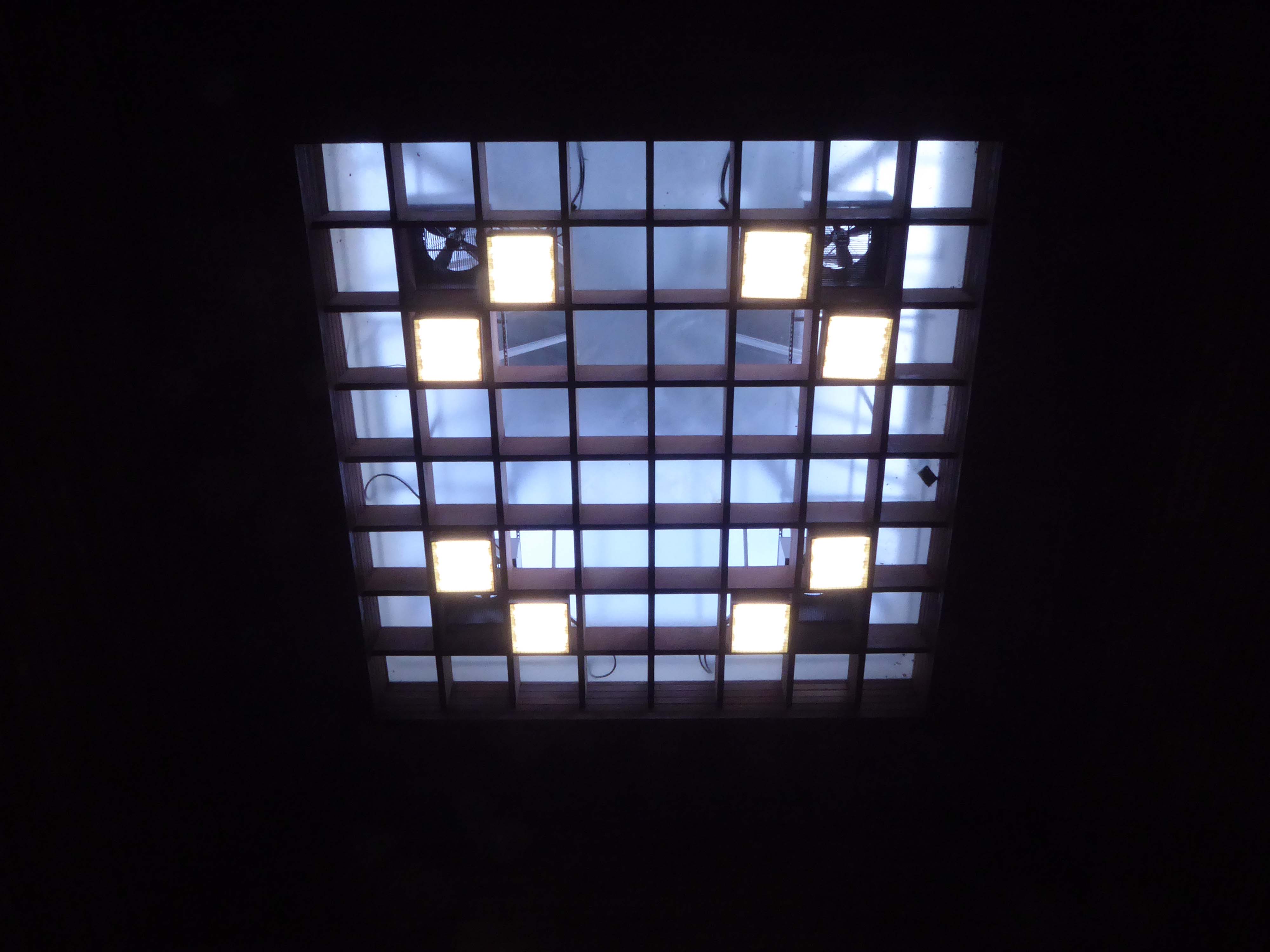
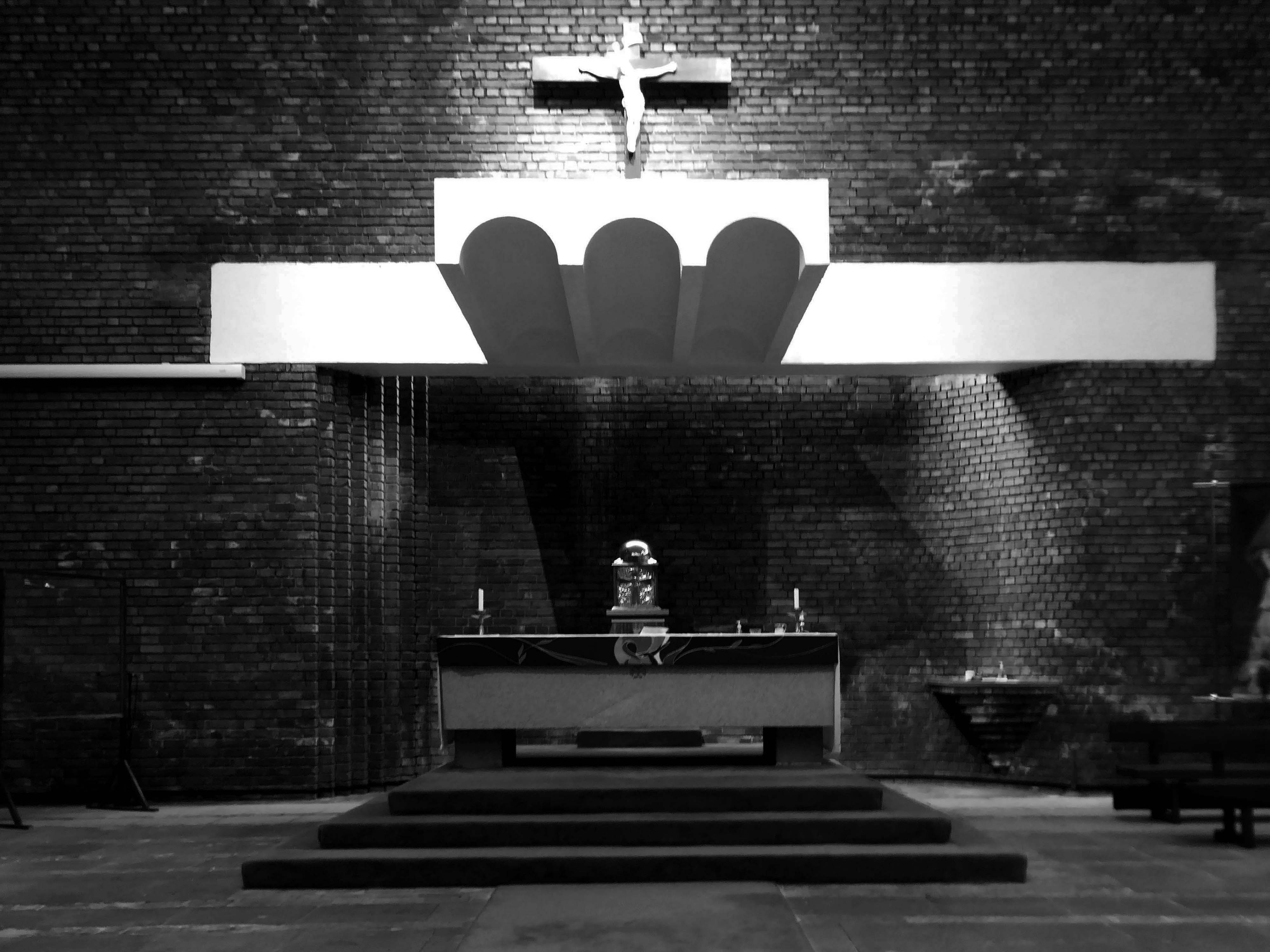
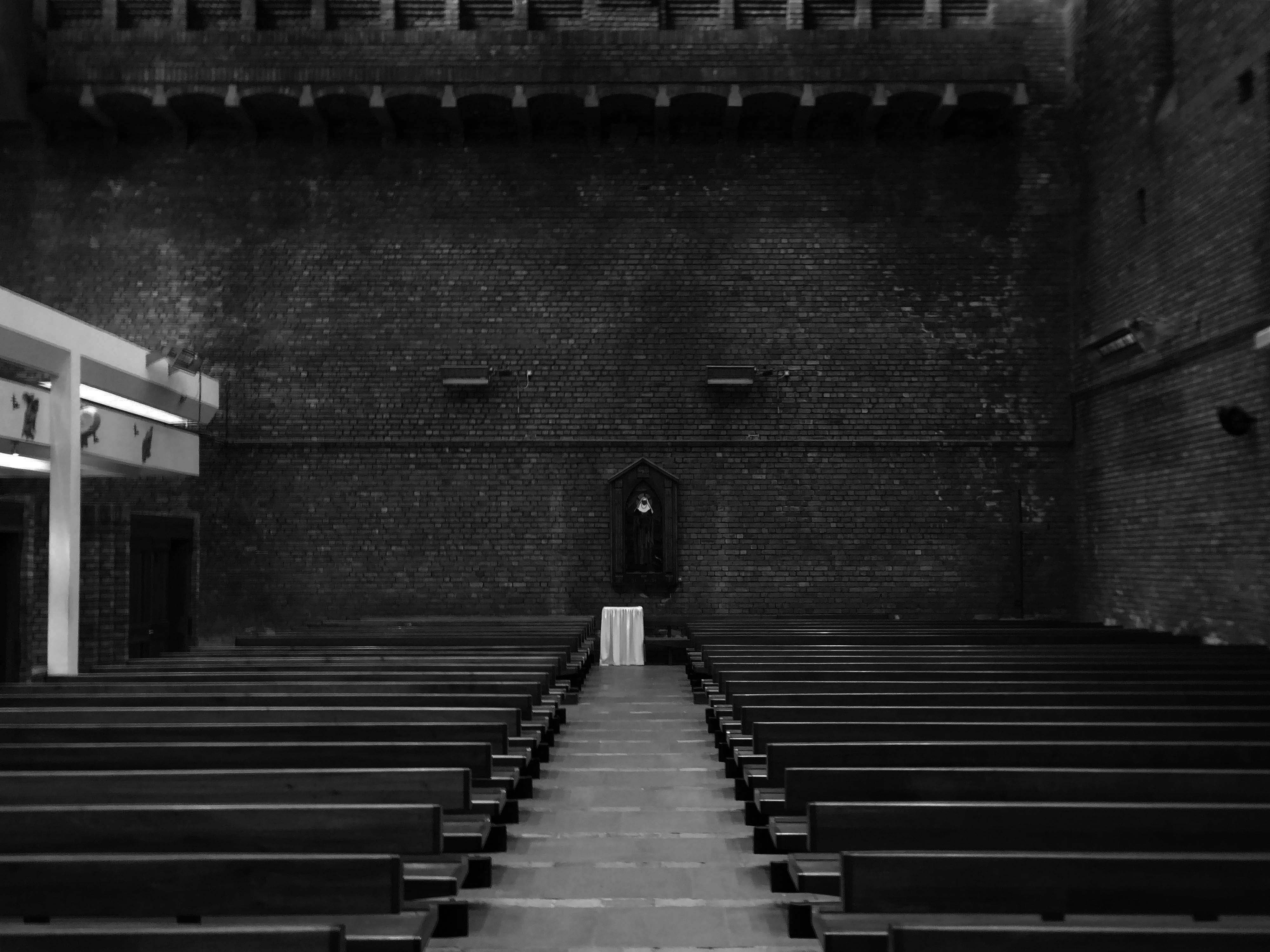
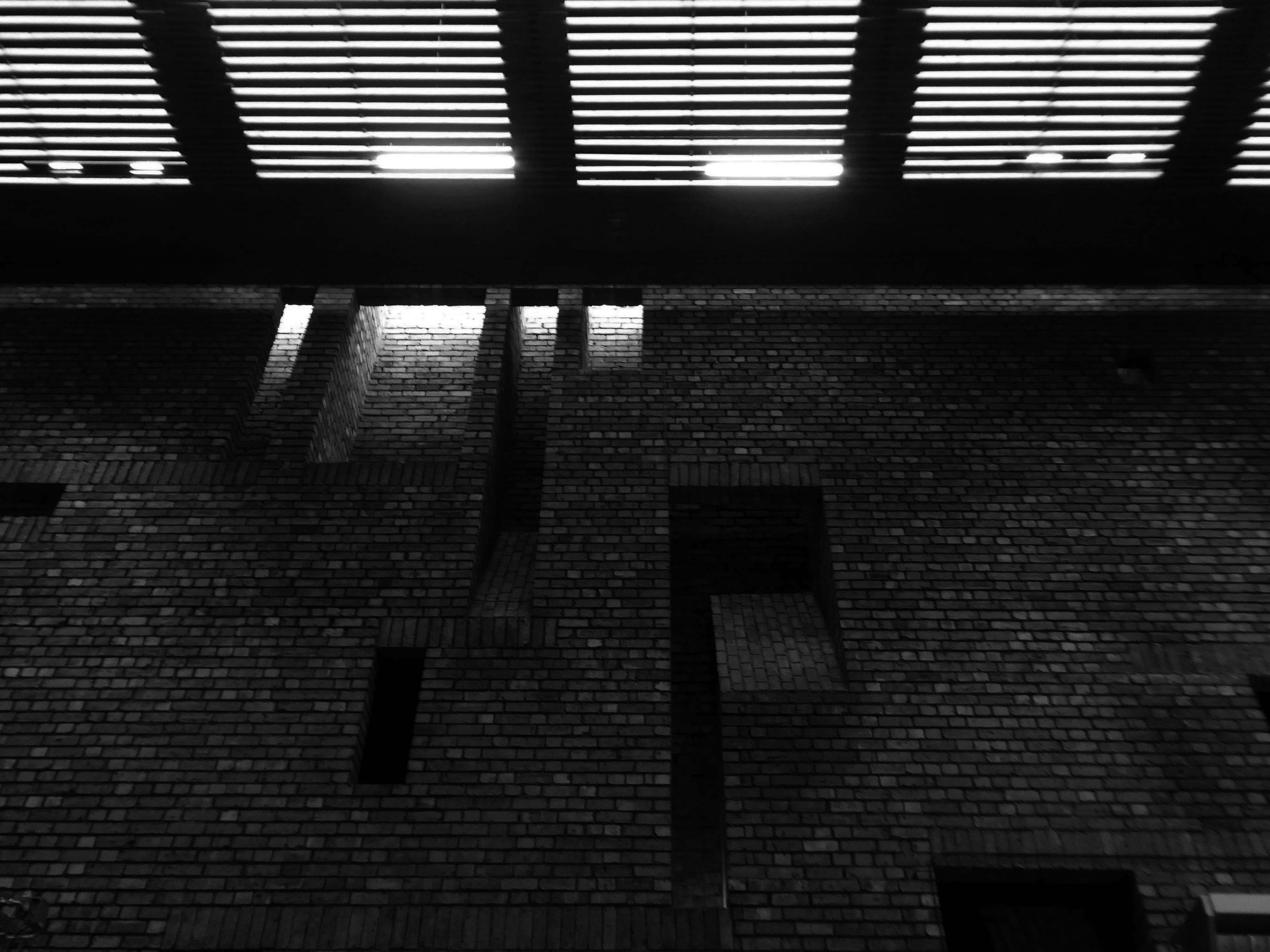
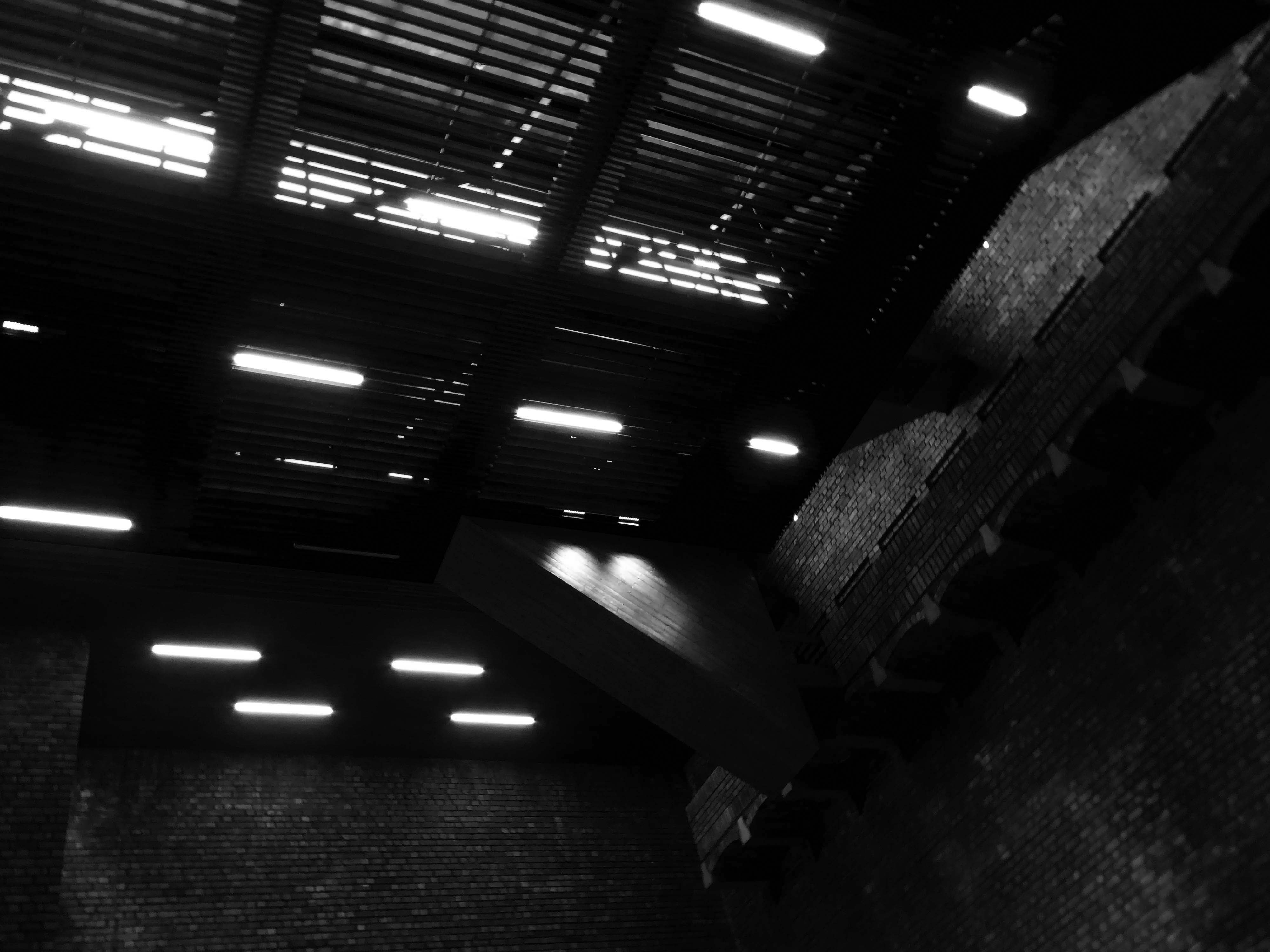
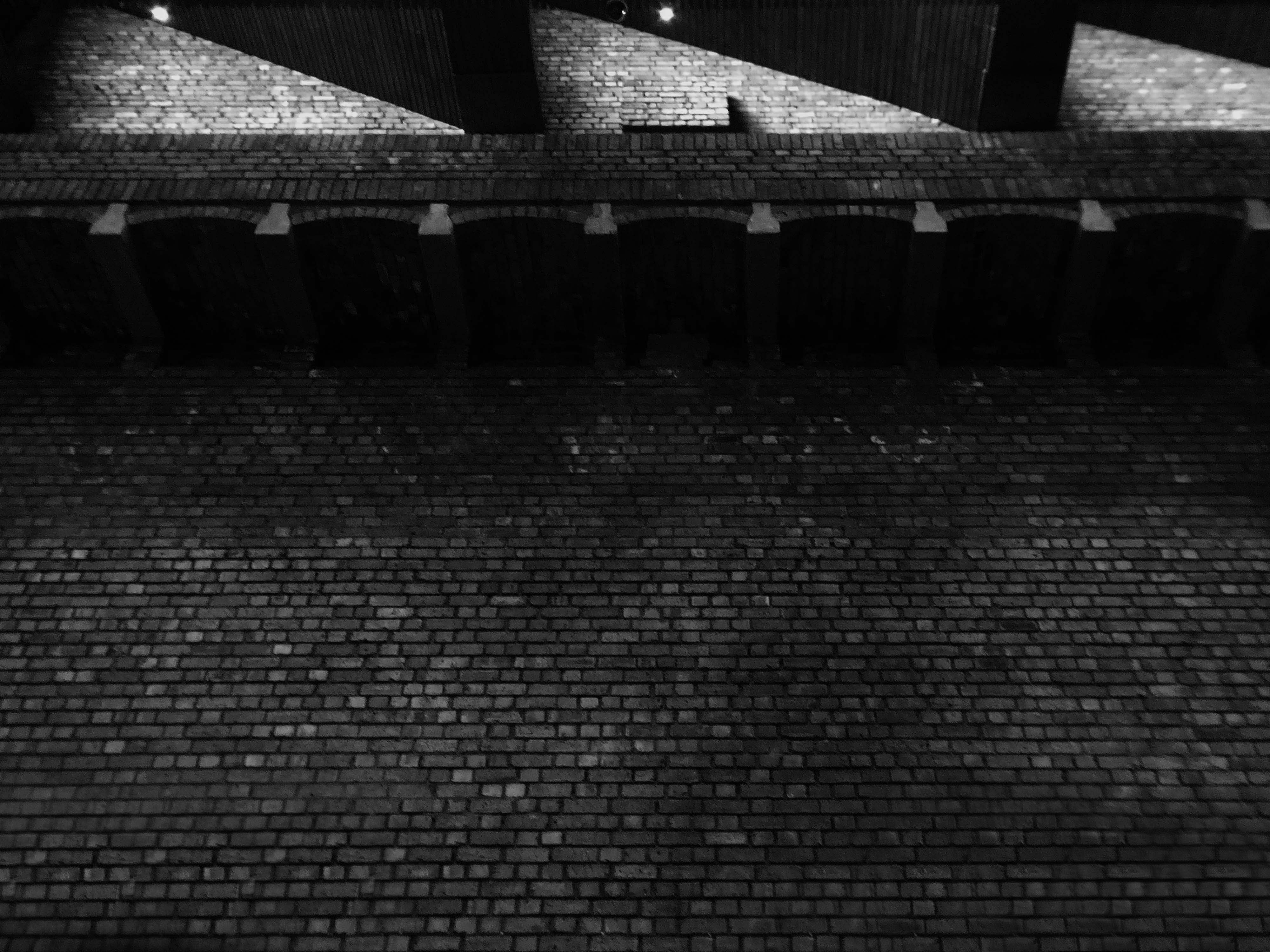
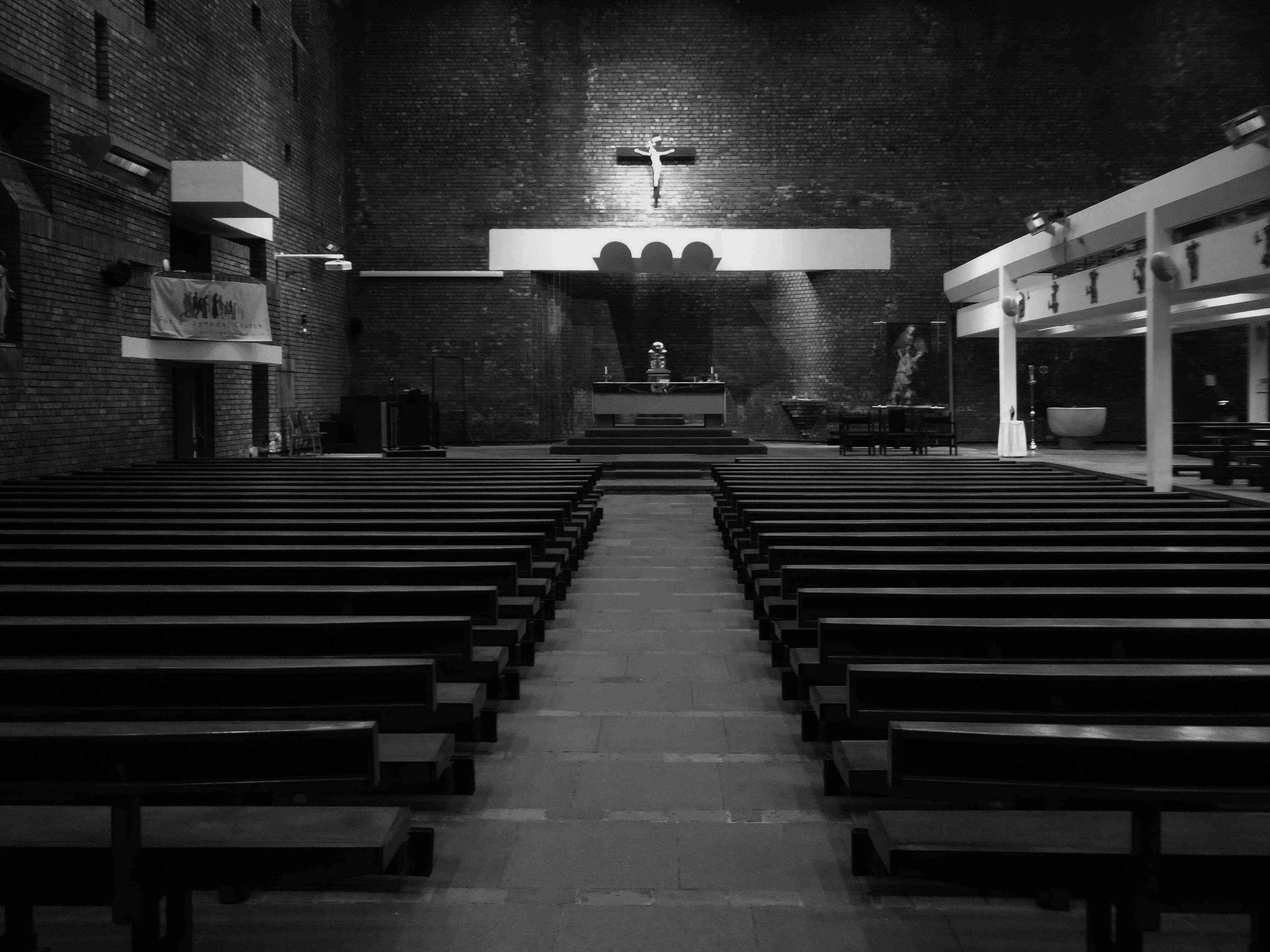
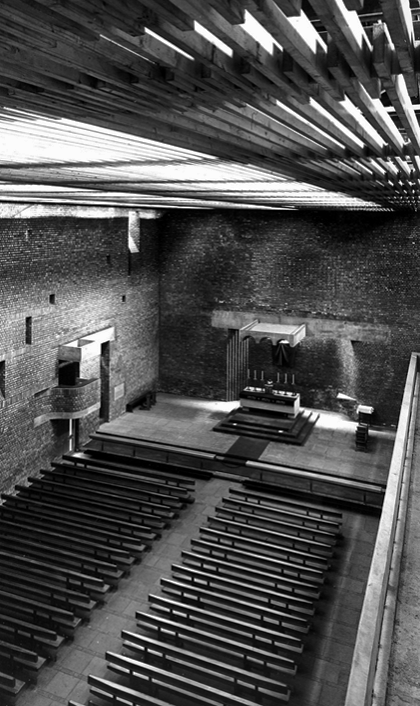
St Mungo’s Parish Church is a striking landmark in the centre of Cumbernauld. Prominently sited on the top of a small hill, the bold copper pyramidal roof is an important landmark. Alan Reiach designed two churches in Cumbernauld, both of which can accommodate 800, Kildrum Church – the earlier of the two. Alan Reiach 1910-1992, who was apprenticed to Sir Robert Lorimer 1864-1929, was primarily involved in the design of public buildings, including churches, schools, universities and hospitals. Noteworthy features of St Mungo’s Parish Church include the bold pyramidal roof, with apex of which forms a roof light lighting the nave of the church, and above this is a pyramidal belfry. The impressive Baltic redwood-lined interior gains natural light from the large central rooflight and clerestory windows.
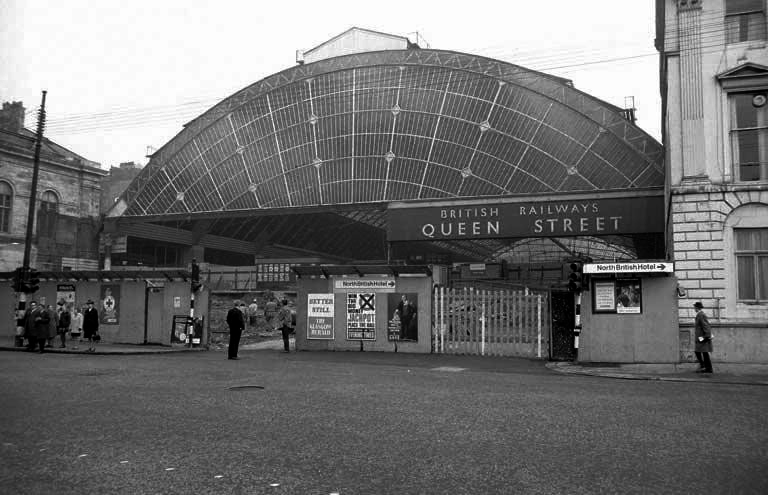
Sunday morning in Glasgow, I caught the first train out from Queen Street Station.
In October 2017, a £120 million project began on bringing the station up to modern standards, demolishing many of the 1960s buildings and replacing them with a new station concourse, which was completed in 2021.
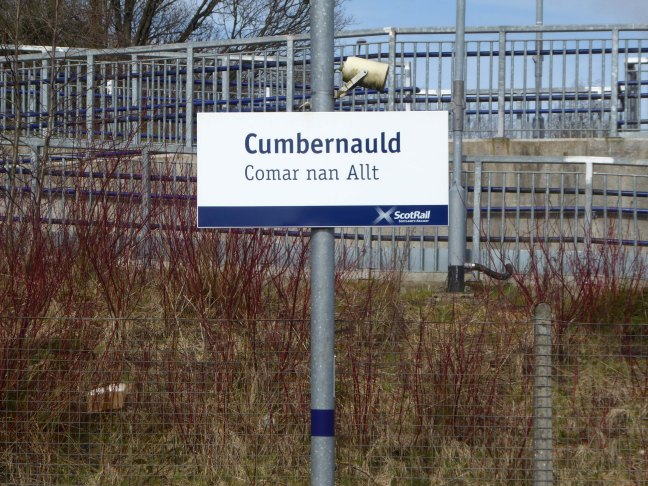
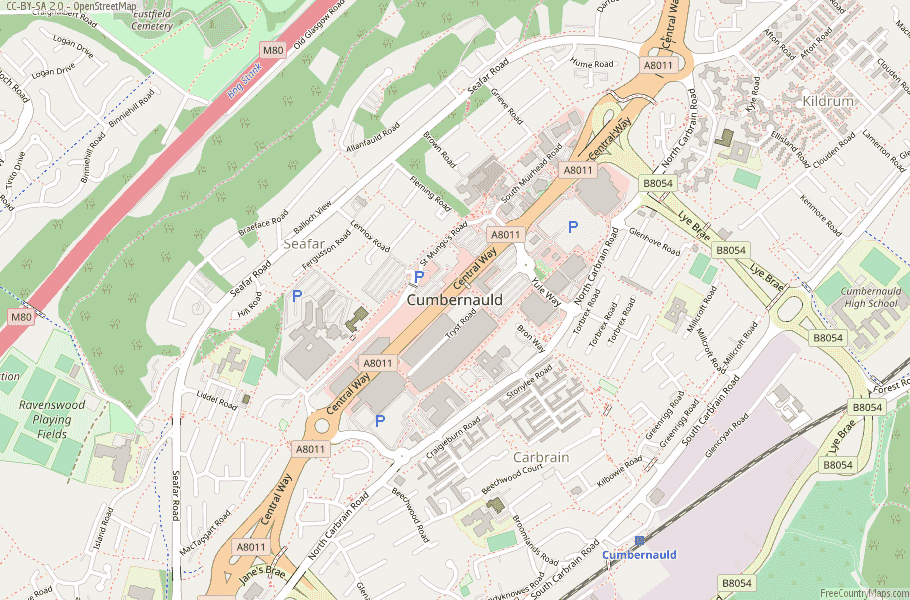
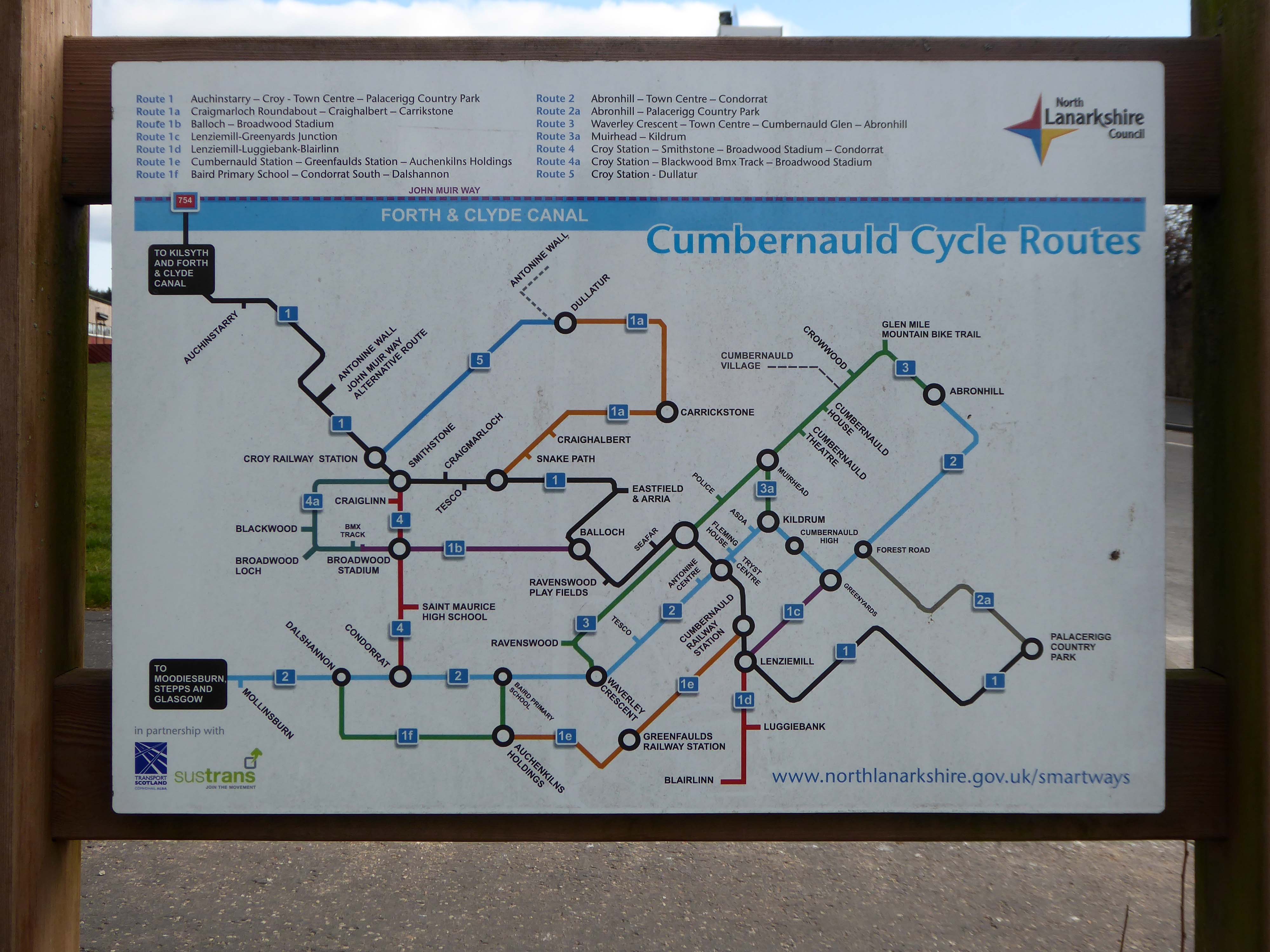
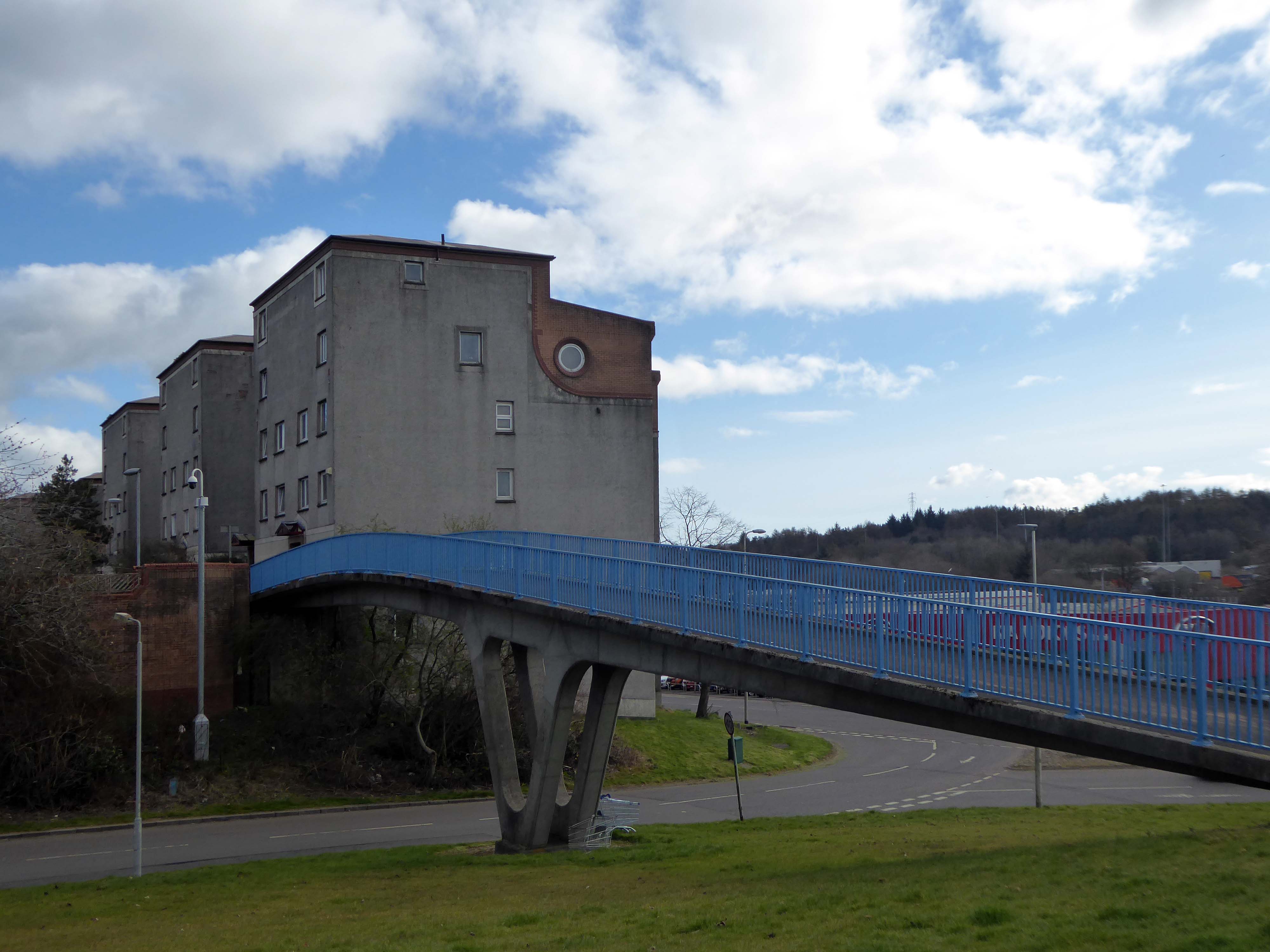
I arrived in Cumbernauld and walked toward the Central Way and back again.
Cumbernauld was designated as a new town in December 1955, part of a plan, under the New Towns Act 1946, to move 550,000 people out of Glasgow and into new towns to solve the city’s overcrowding. Construction of its town centre began under contractors Duncan Logan, chief architect Leslie Hugh Wilson and architect Geoffrey Copcutt – until 1962 and 1963, and later Dudley Roberts Leaker, Philip Aitken and Neil Dadge.
Designed by Professors Andy MacMillan and Isi Metzstein.
Grade A listed 1994 RIBA Bronze Medal
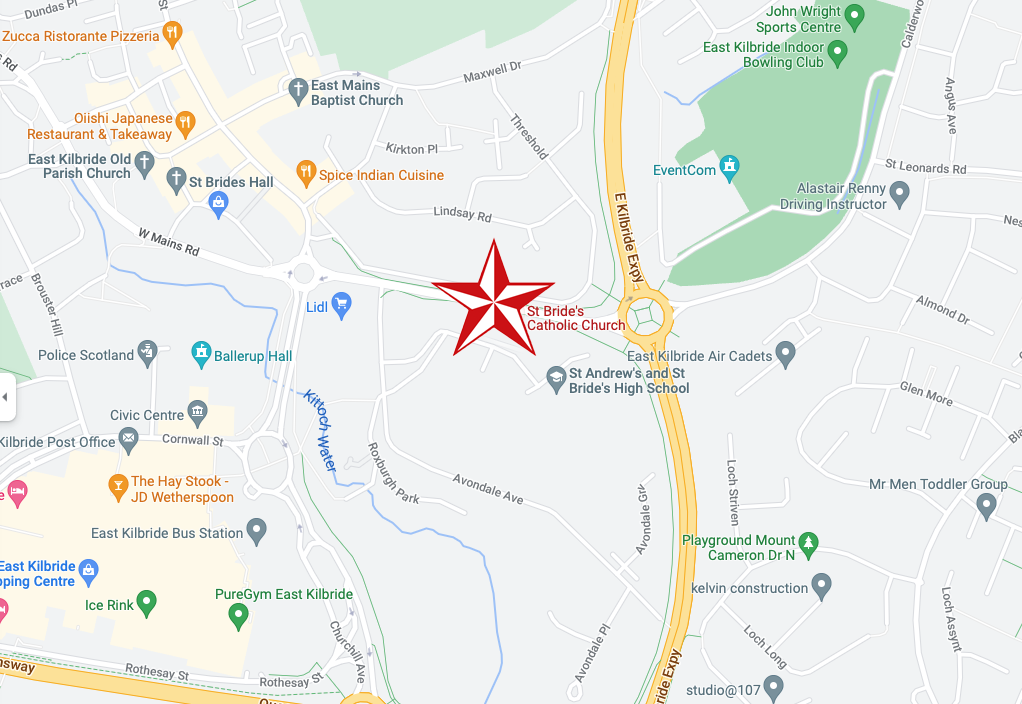
Should you so wish – jump the train from Glasgow Central, unless you’re already here/there.
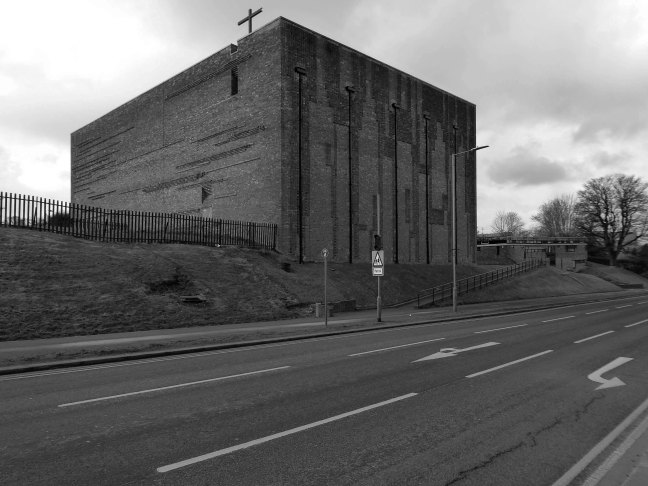
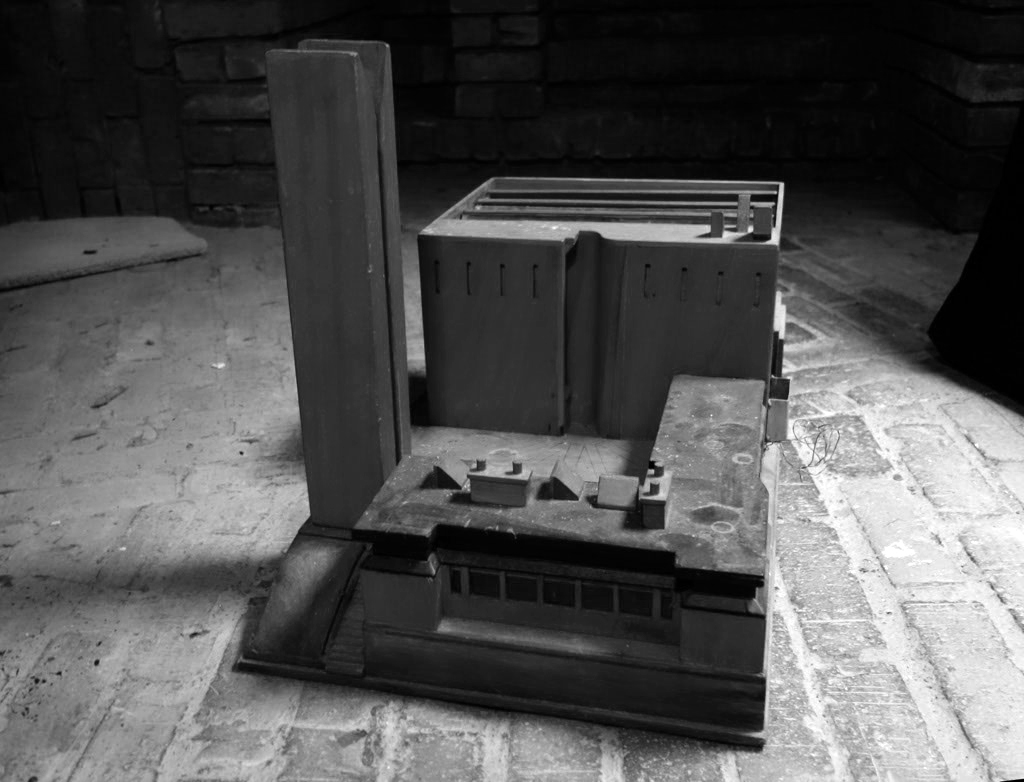
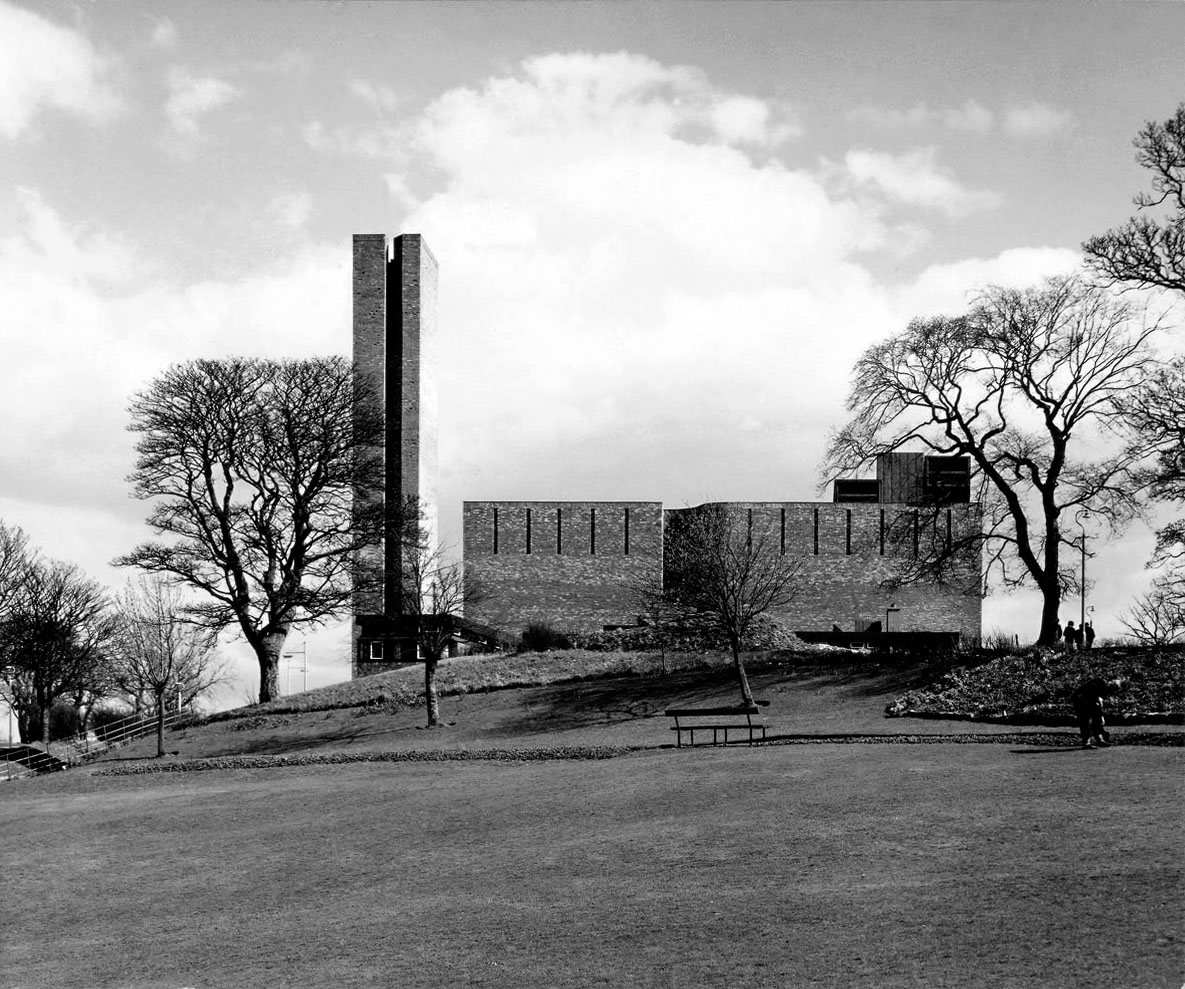
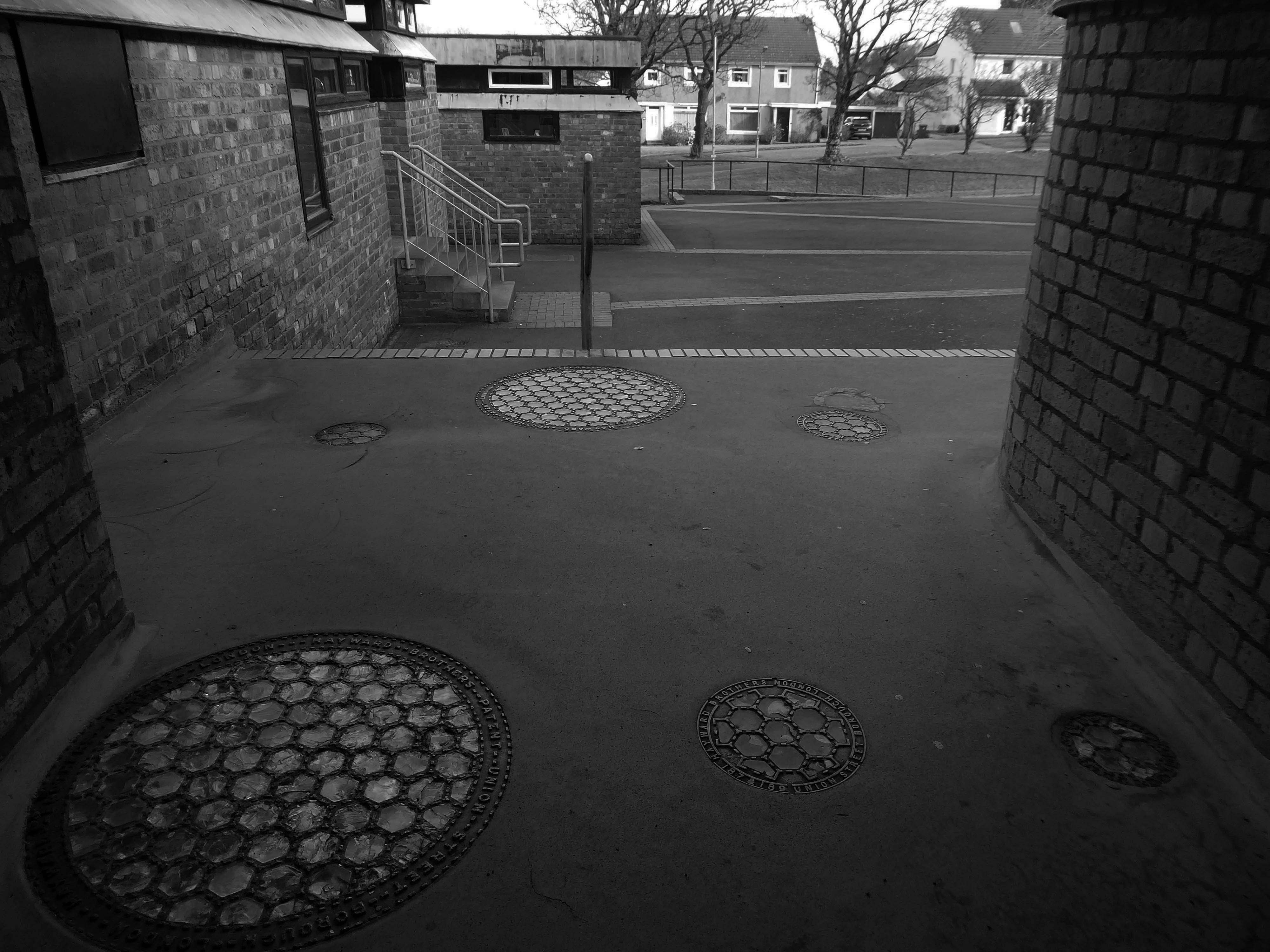
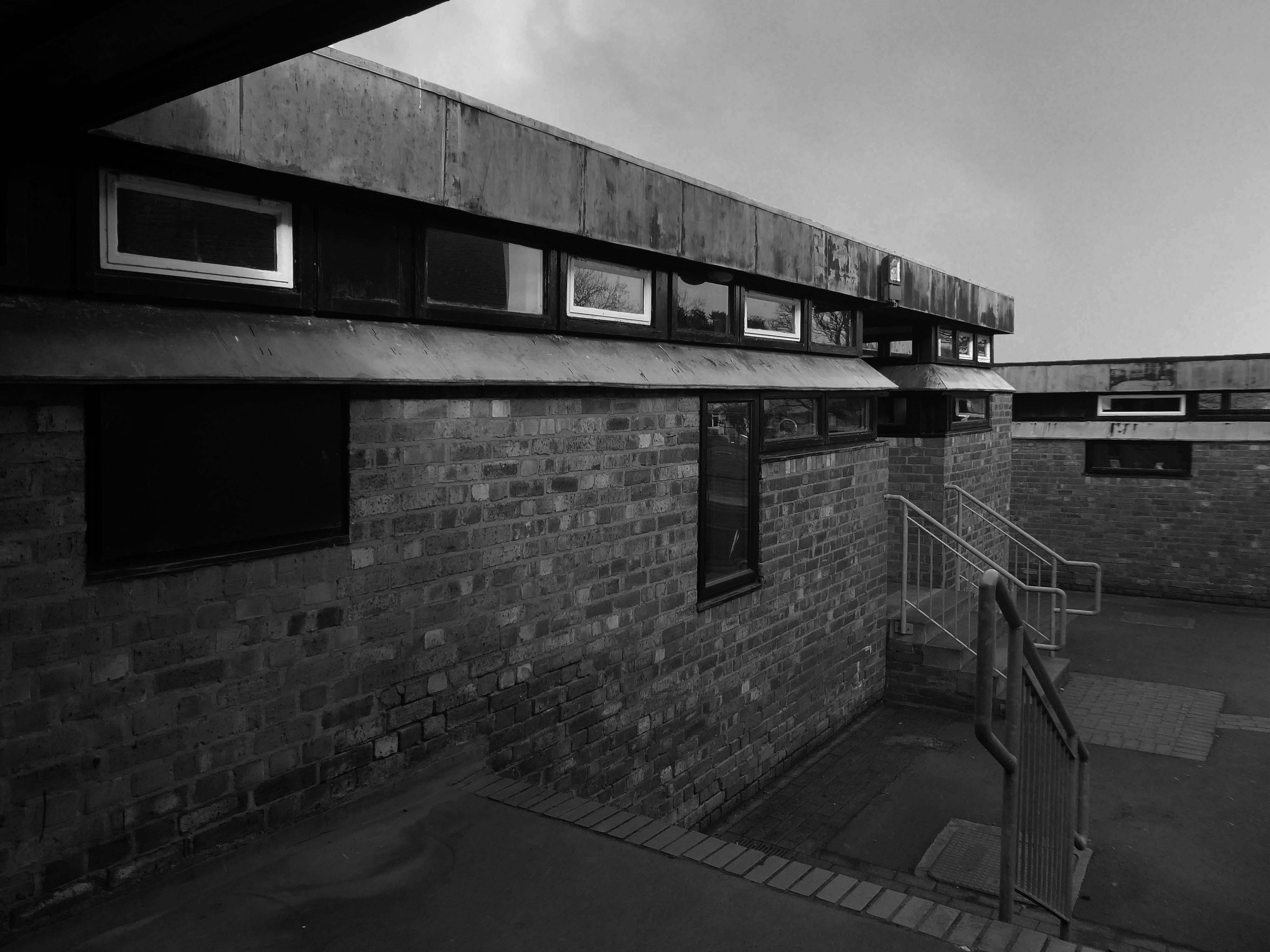
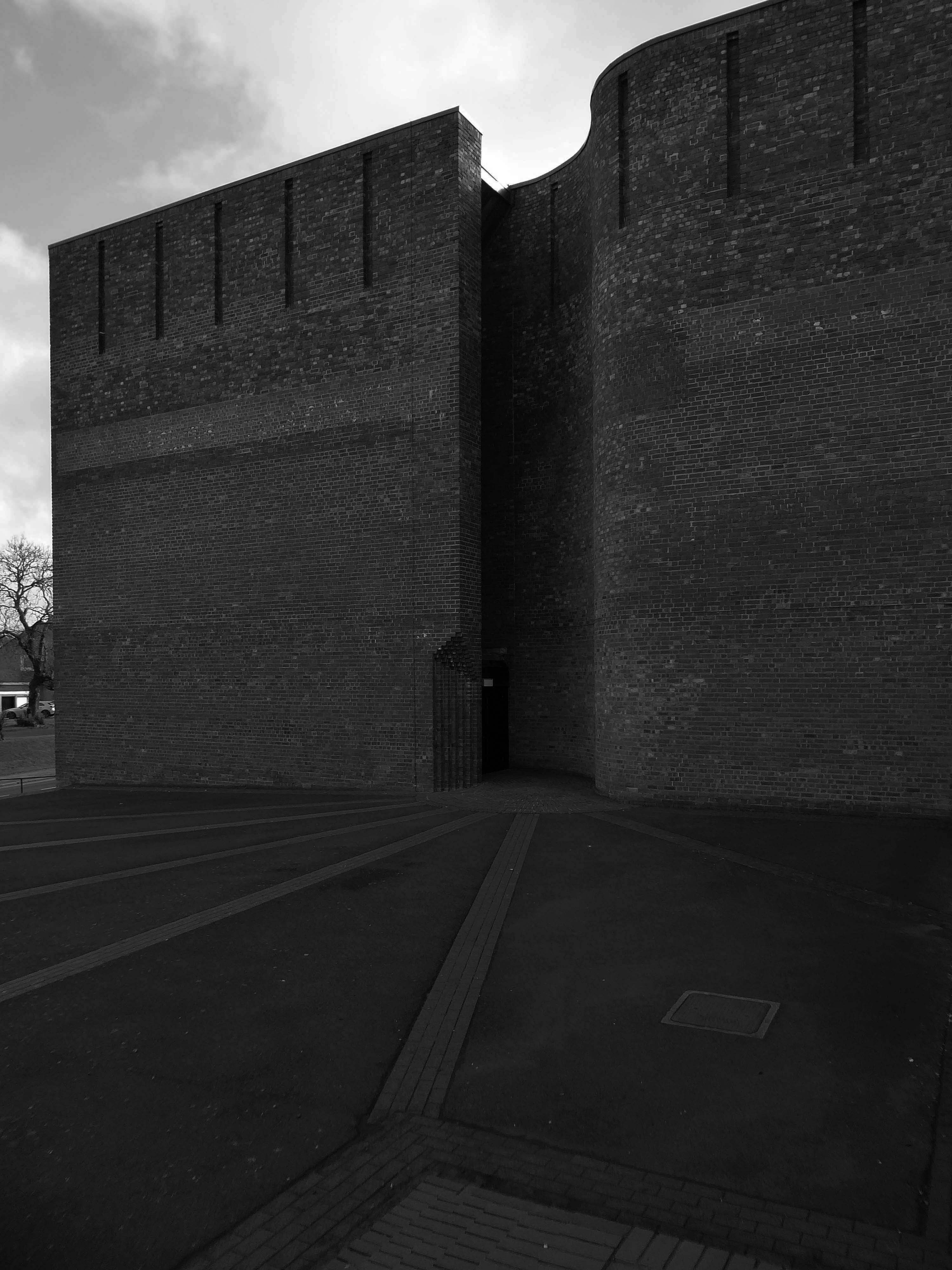
Walk up West Mains Road, alone on a hill standing perfectly still sits St Bride’s, you can’t miss it.
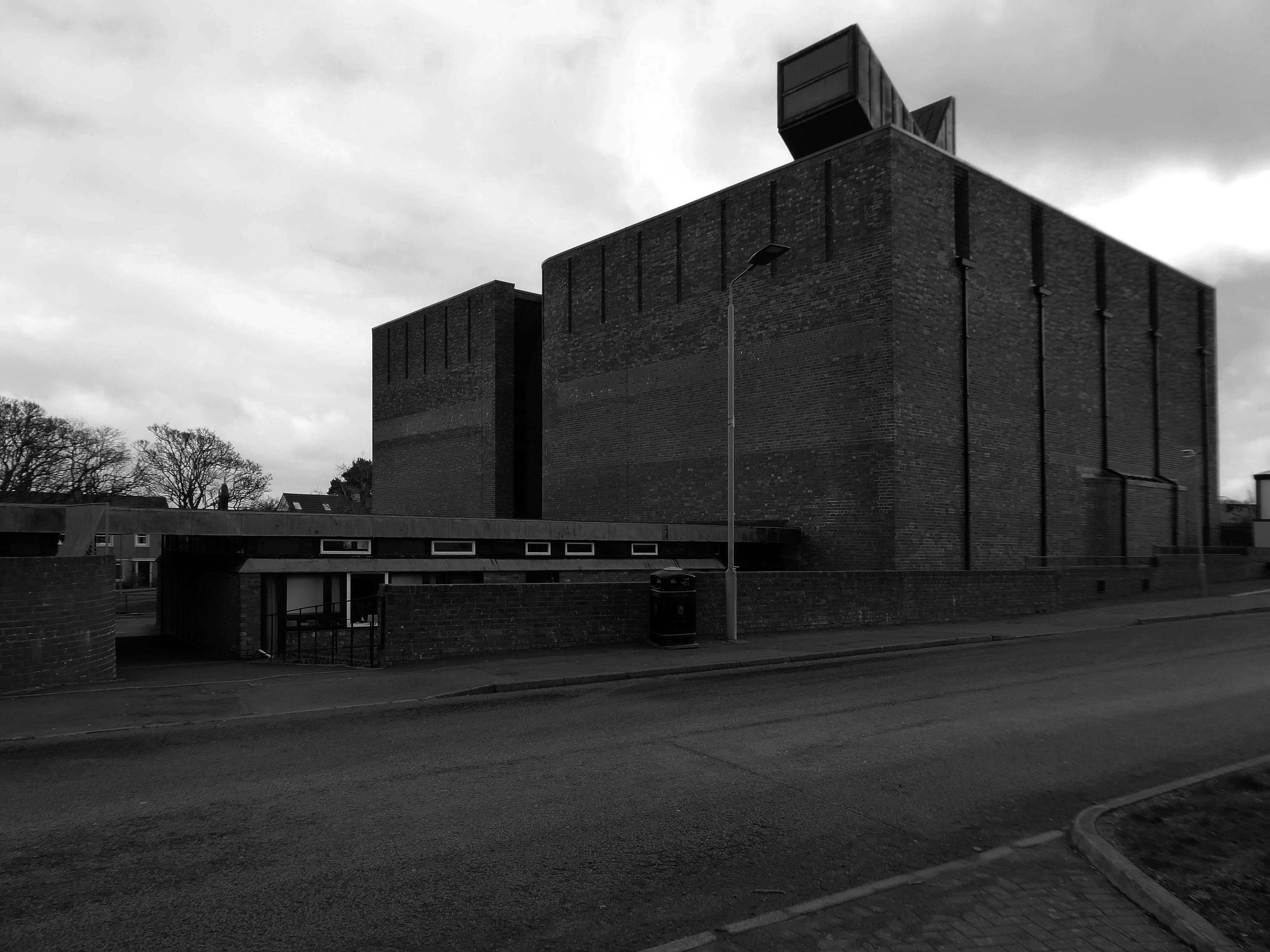
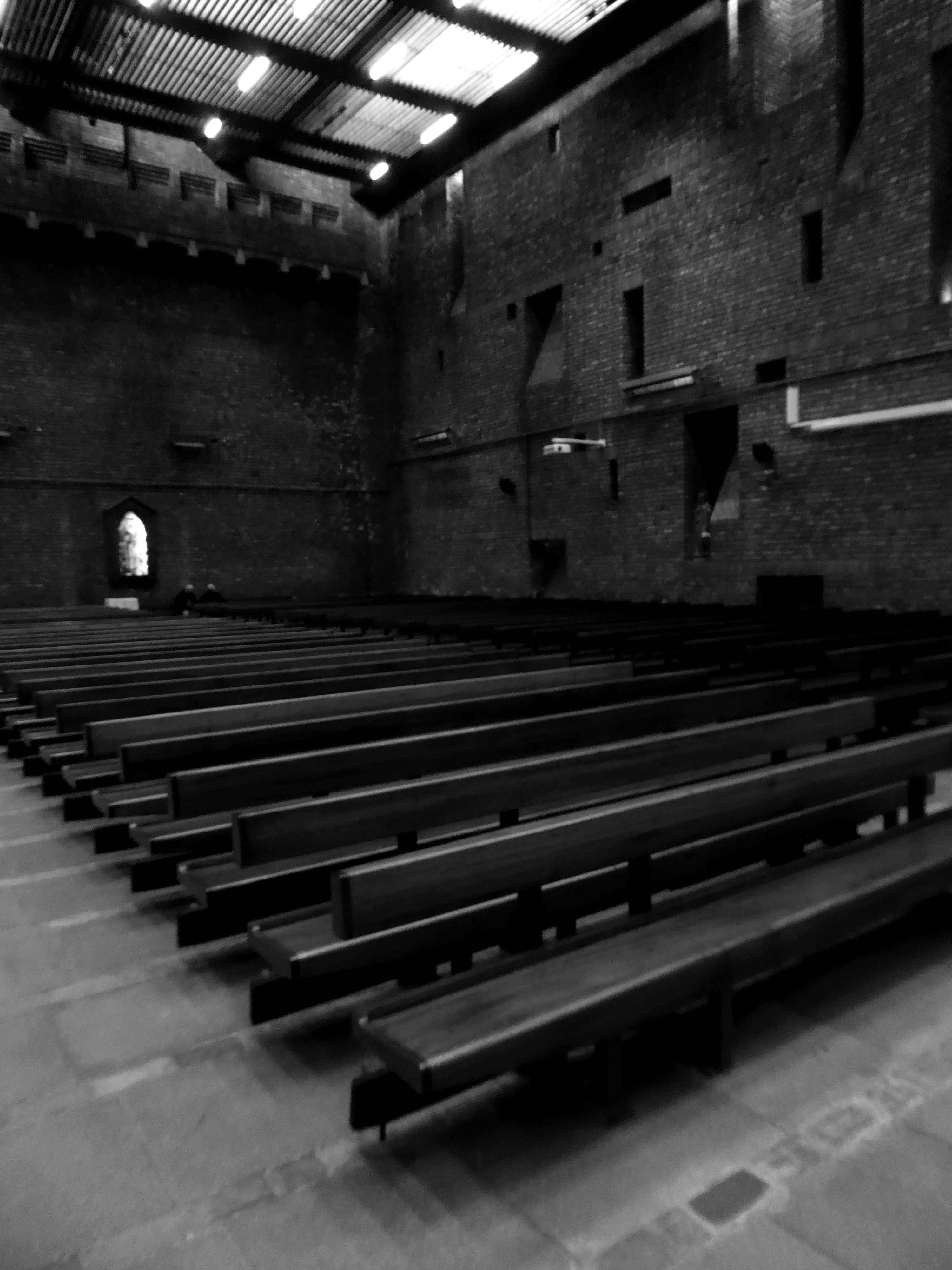
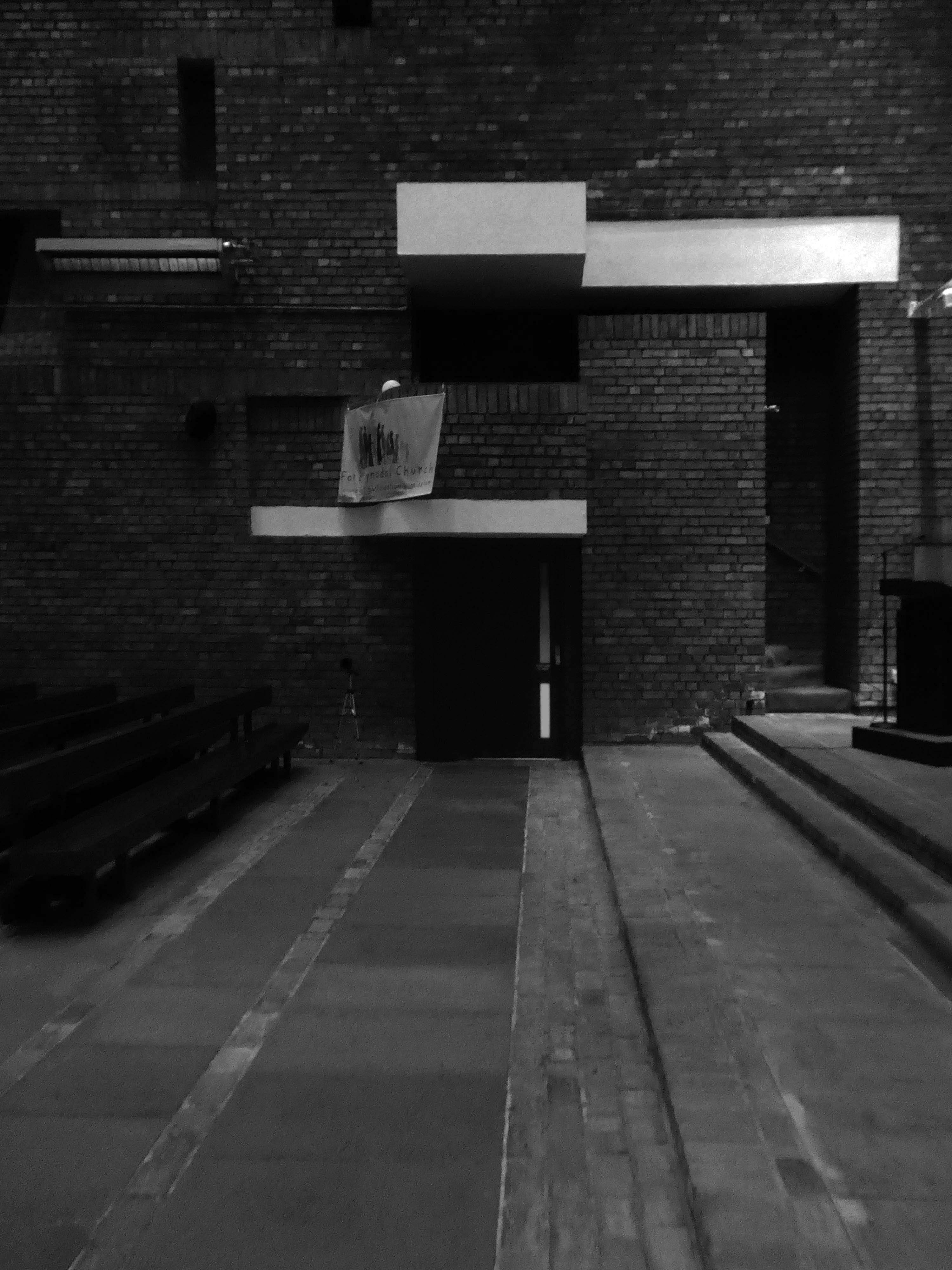
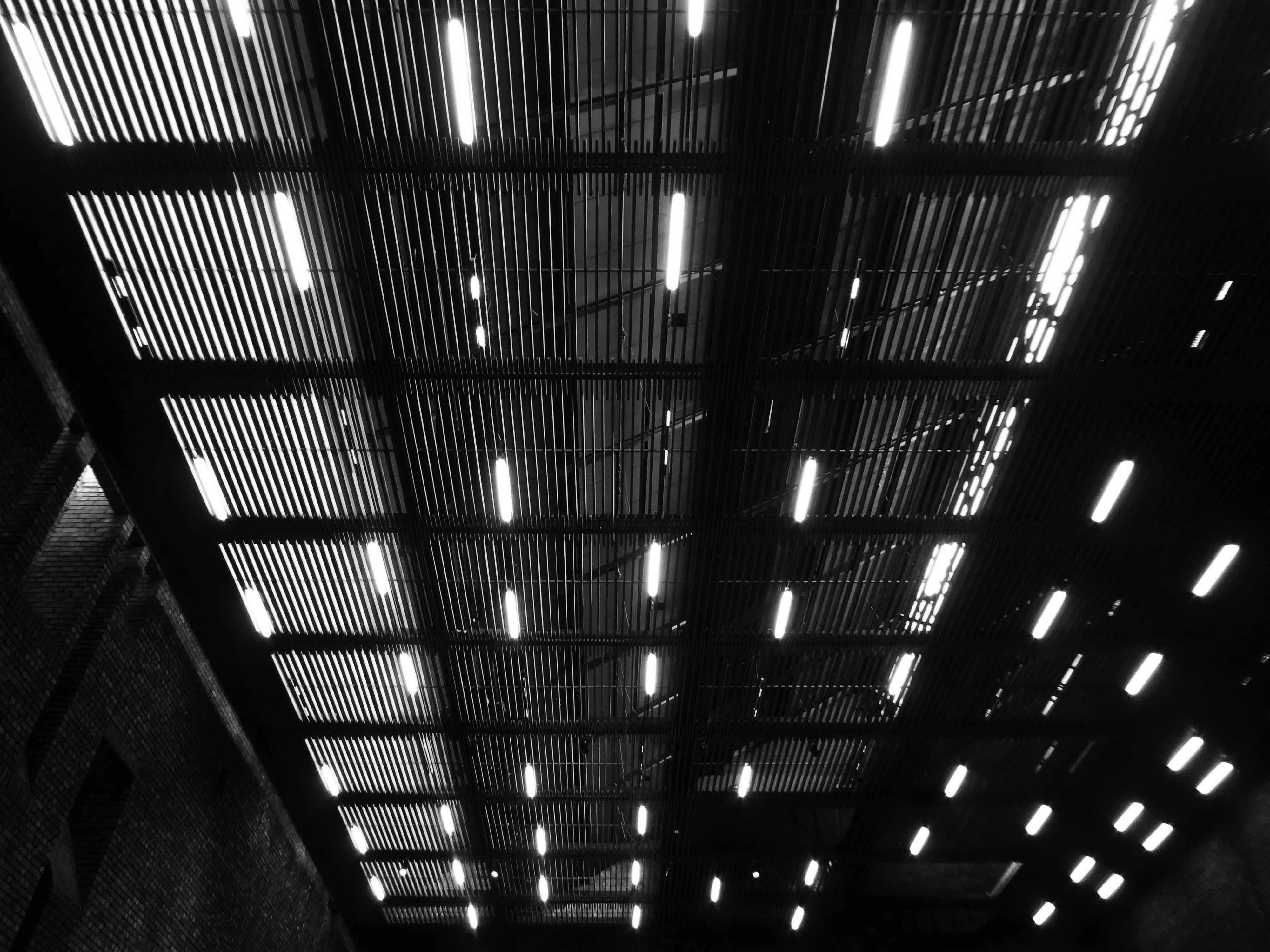
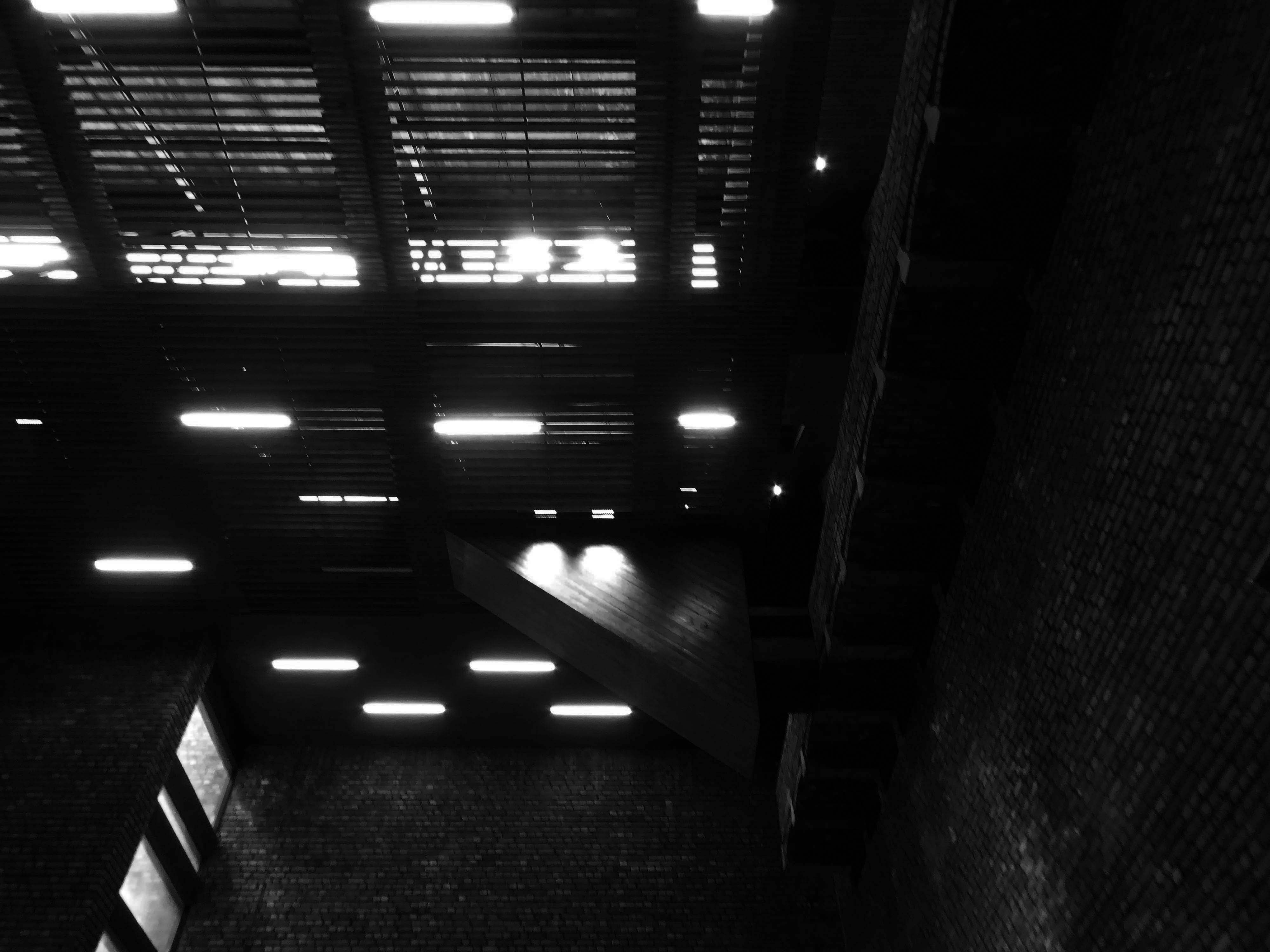
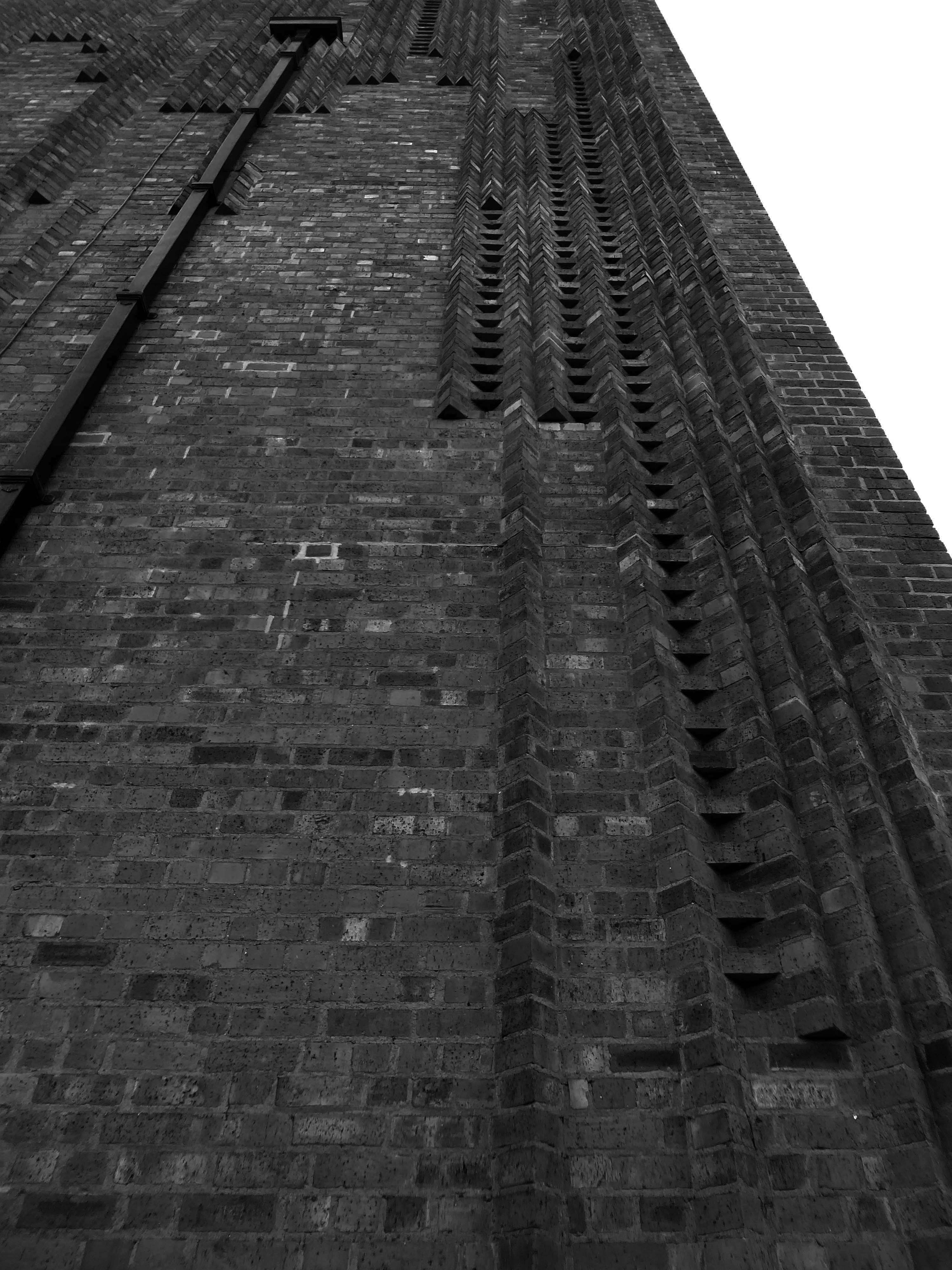
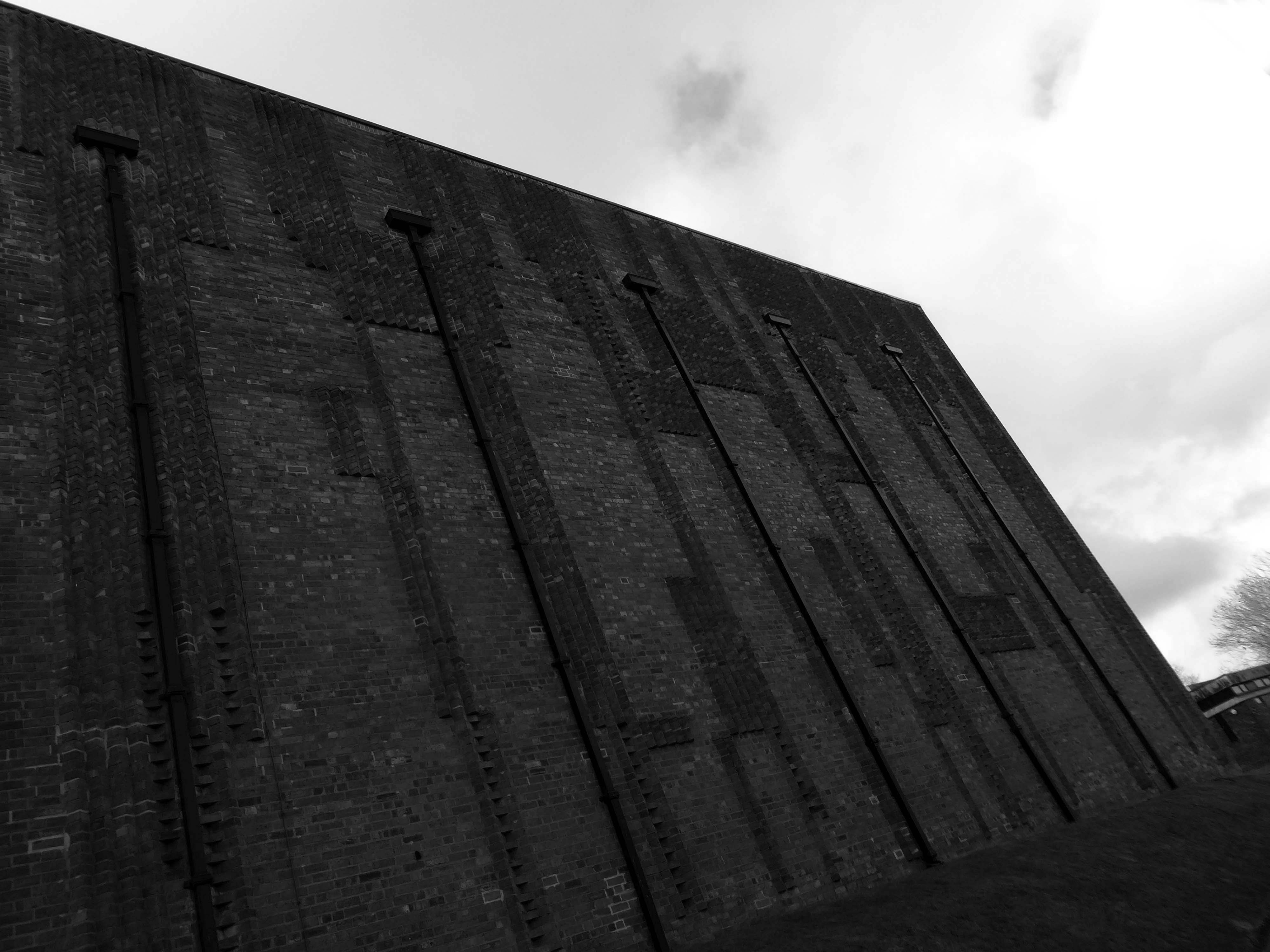
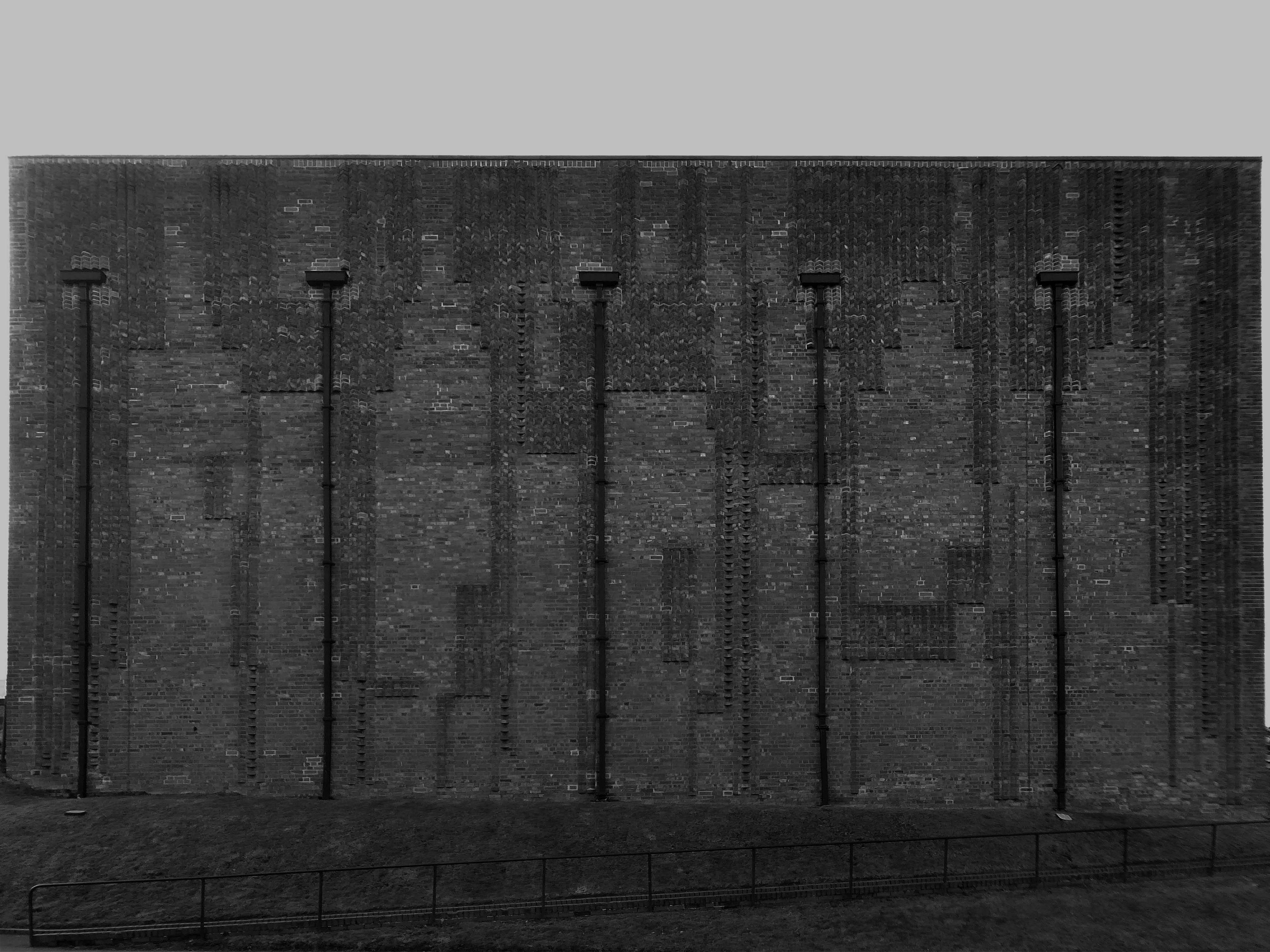
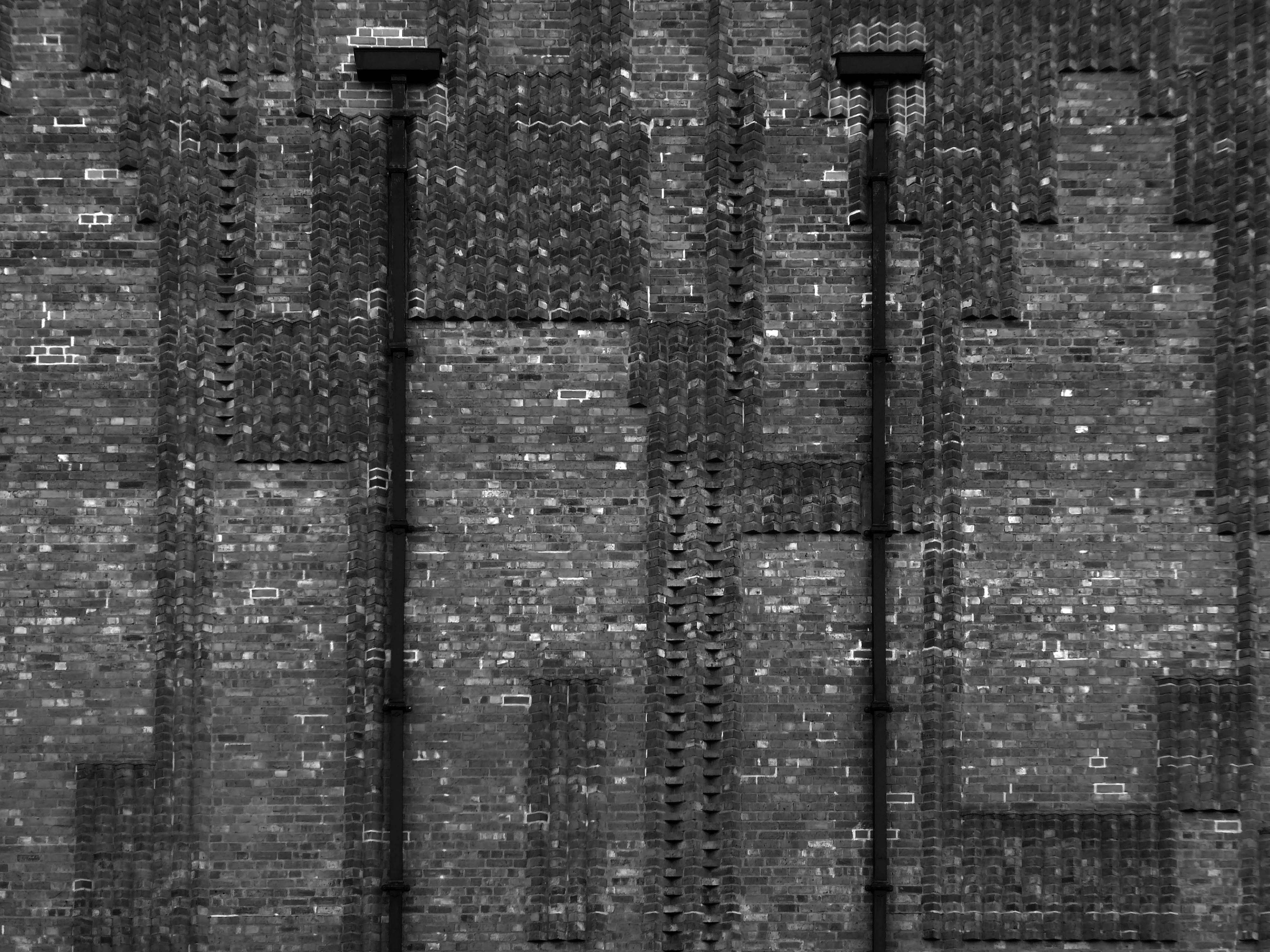
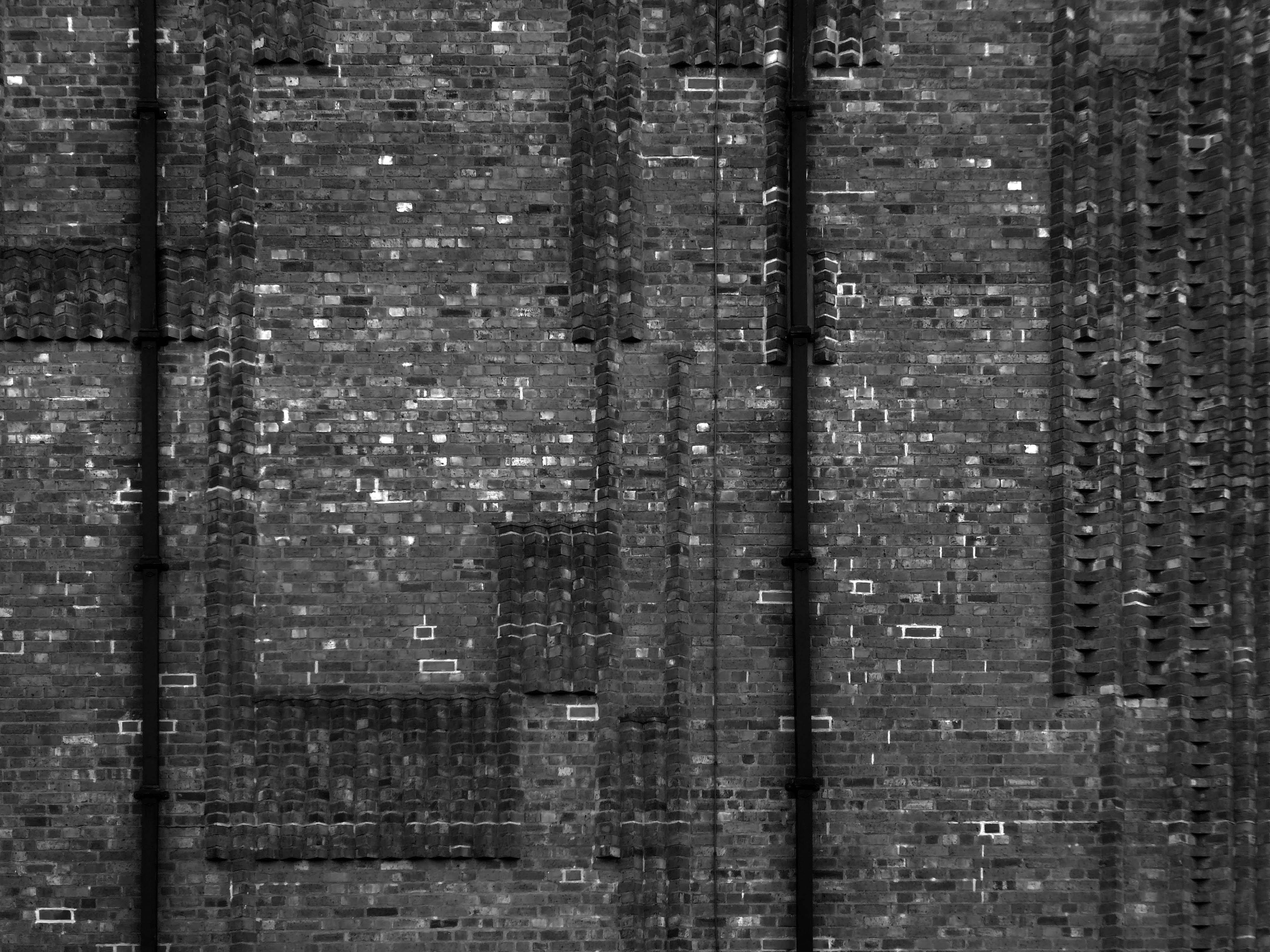
The biggest extant example of Bricktalism, the most Bricktalist building in the world, possibly.
Stallan-Brand design director Paul Stallan commented:
St Bride’s for me is the most important modernist buildings of the period. The church made from Victorian sewer bricks and concrete is both simple and complex. The architecture continues to be a key reference for students of architecture from across the world interested in modernism and the contemporary vernacular in context. Andy and Isi’s work is as important to Scotland as Alvar Aalto’s work is to the Finnish.
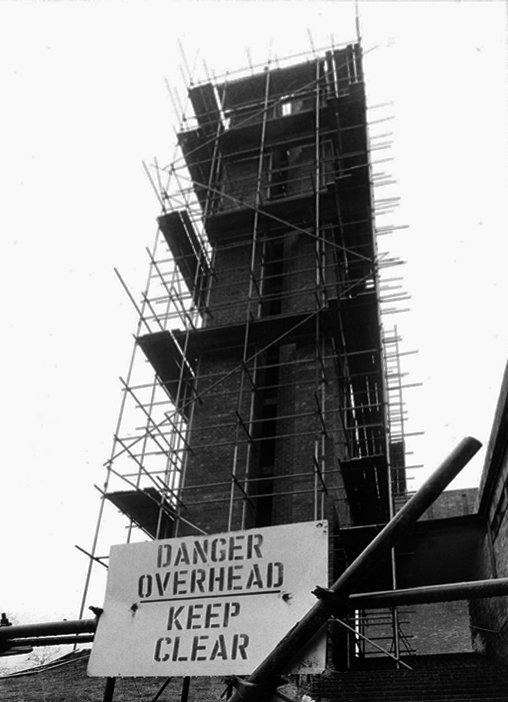
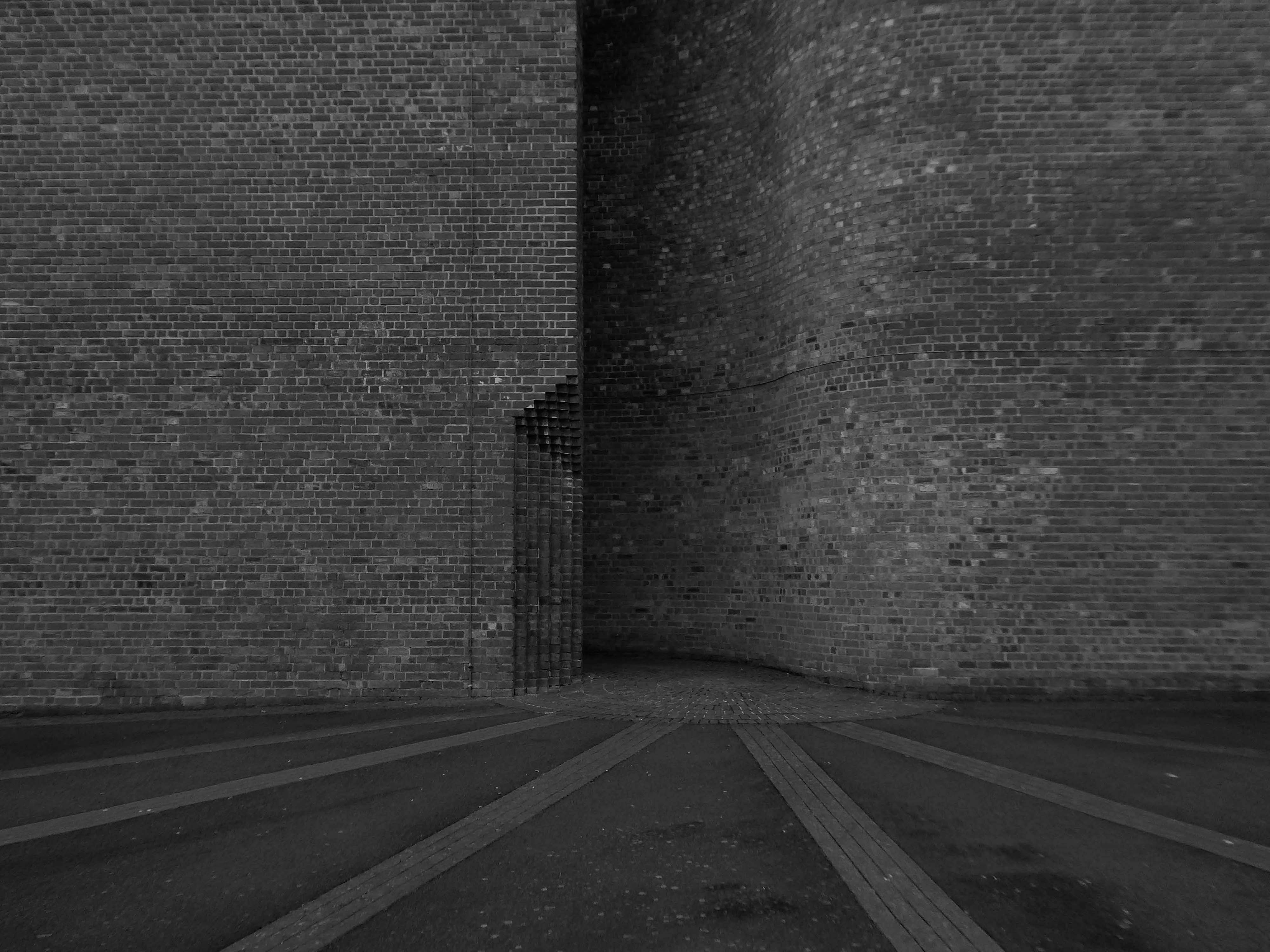
It’s a traditional Scottish stone detail I saw for myself as a boy growing up in the Highlands, on every castle and fortified house, and on the flanks of the tower at Muckrach, ancient seat of the Grants of Rothiemurchus, built in 1598. This was my local castle just a mile from home.
The entrance to St Bride’s, I like to imagine, comes from a friendship that included travel in the Scottish Highlands, admiring the Scottish vernacular close-up, of a fevered conversation about a simple concept – the massive blind box, and how the application of simple, semi-traditional material detailing can make it all the richer.
St Bride’s is simply one of the finest buildings in Scotland.
I only worked there very briefly in 1965, to do my Test Desk Training. It was a pleasant, if too hot, place to work: I remember being taken out for lunch at the Grand on my first day – very nice!
One peculiarity, which always stuck in my mind, was the canteen, upstairs, where the men all clung to one side, and the women to the other, never saw that anywhere else.
I was a telephonist 1961 -1968, I married a telephone engineer, you are right about the canteen or kitchen upstairs. When I first started after I’d finished my training I was sent down to the test desk for a long stand. Being a naive little thing I did as I was told, then sent out for some sky hooks and hen party hens, the girls I worked with were a great bunch we had ball best working years of my life, still friends with some of the telephonists I worked with – happy days.
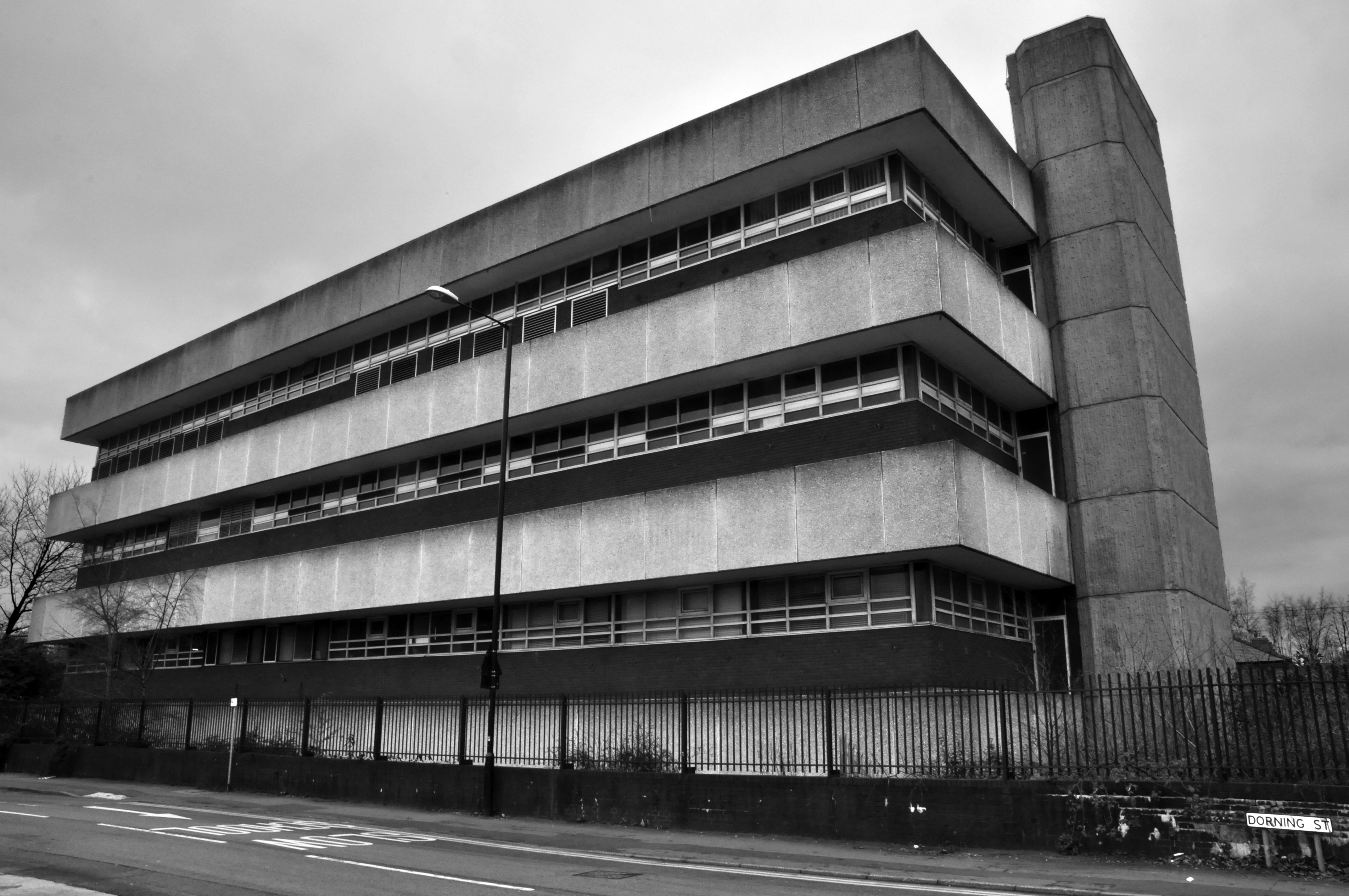
Walking down Dorning Street one day going back to work and on the pavement outside the Grand there was a half crown. Tried to pick it up to howls of laughter. The lads in the telephone exchange opposite had welded a nail to it and pushed it in the ground between the paving flags. Very funny, and no I didn’t get it out.
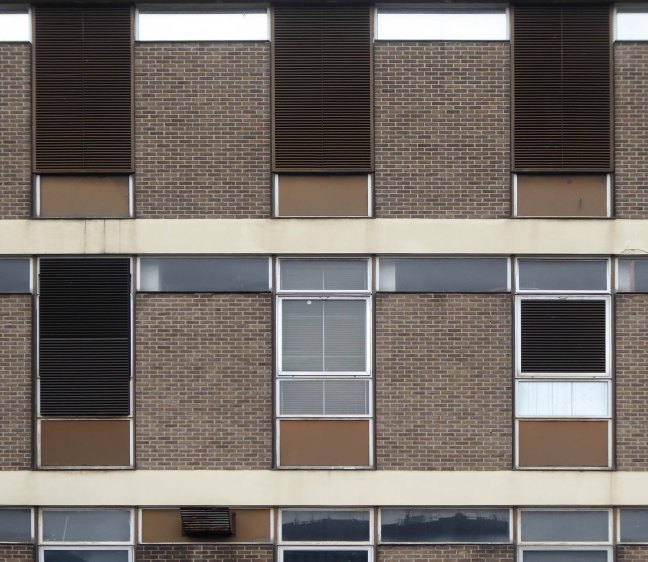
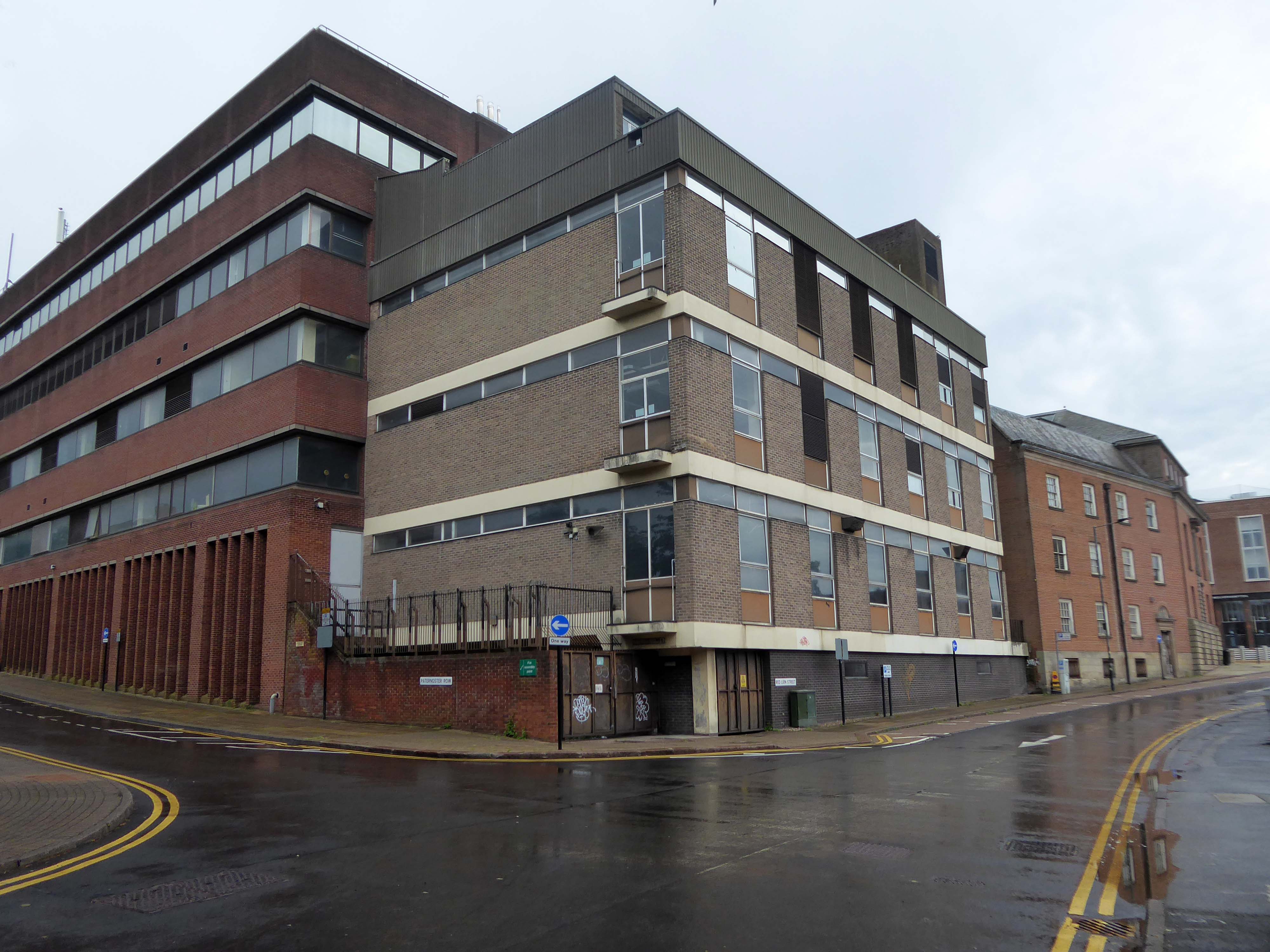
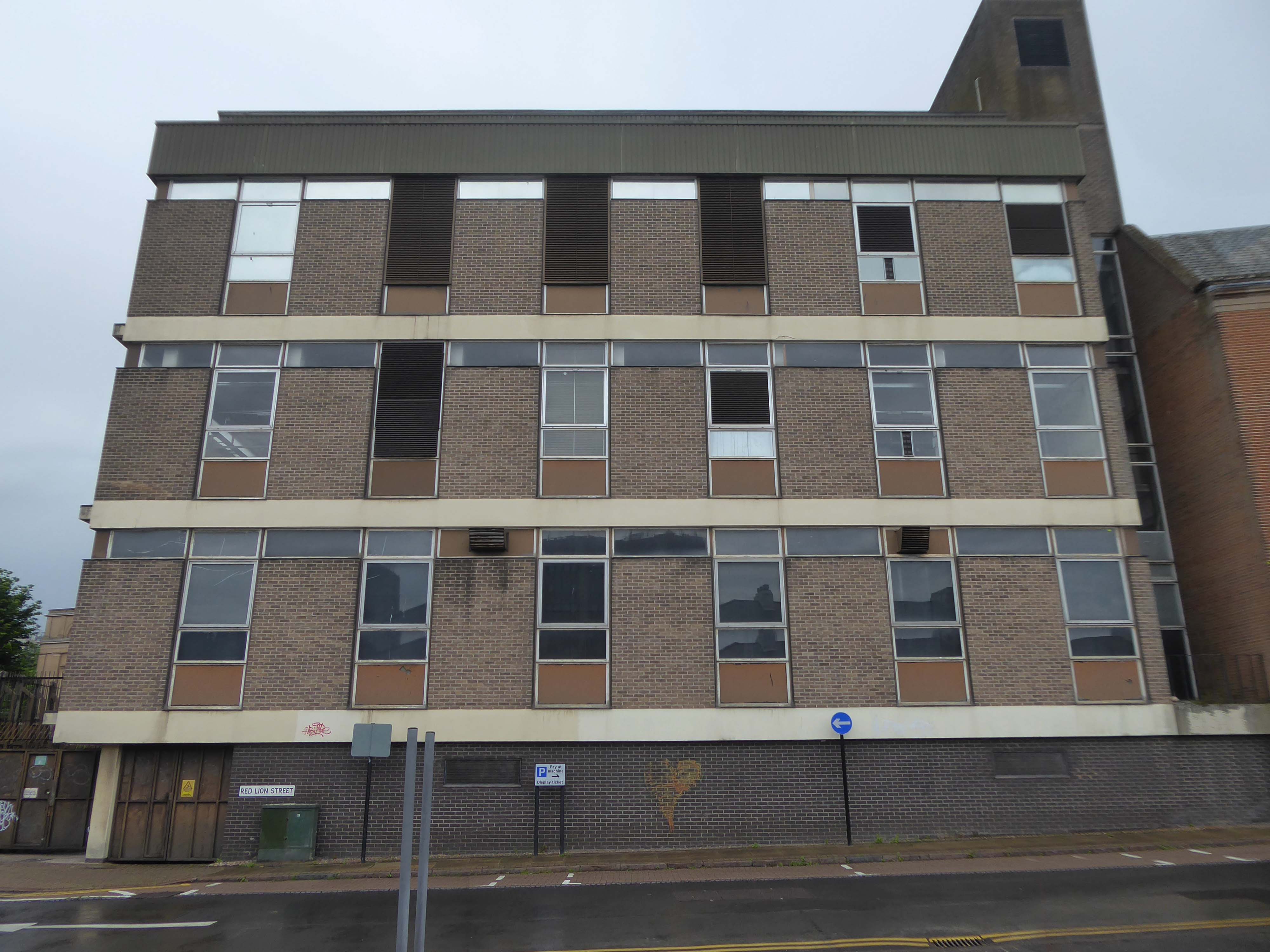
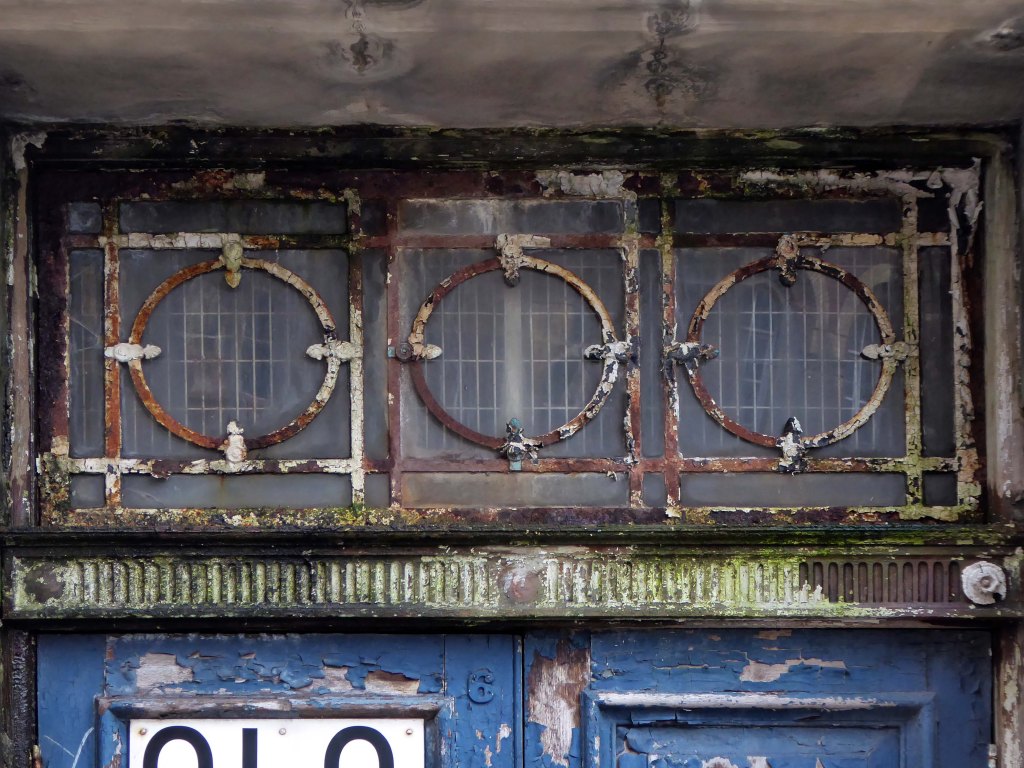
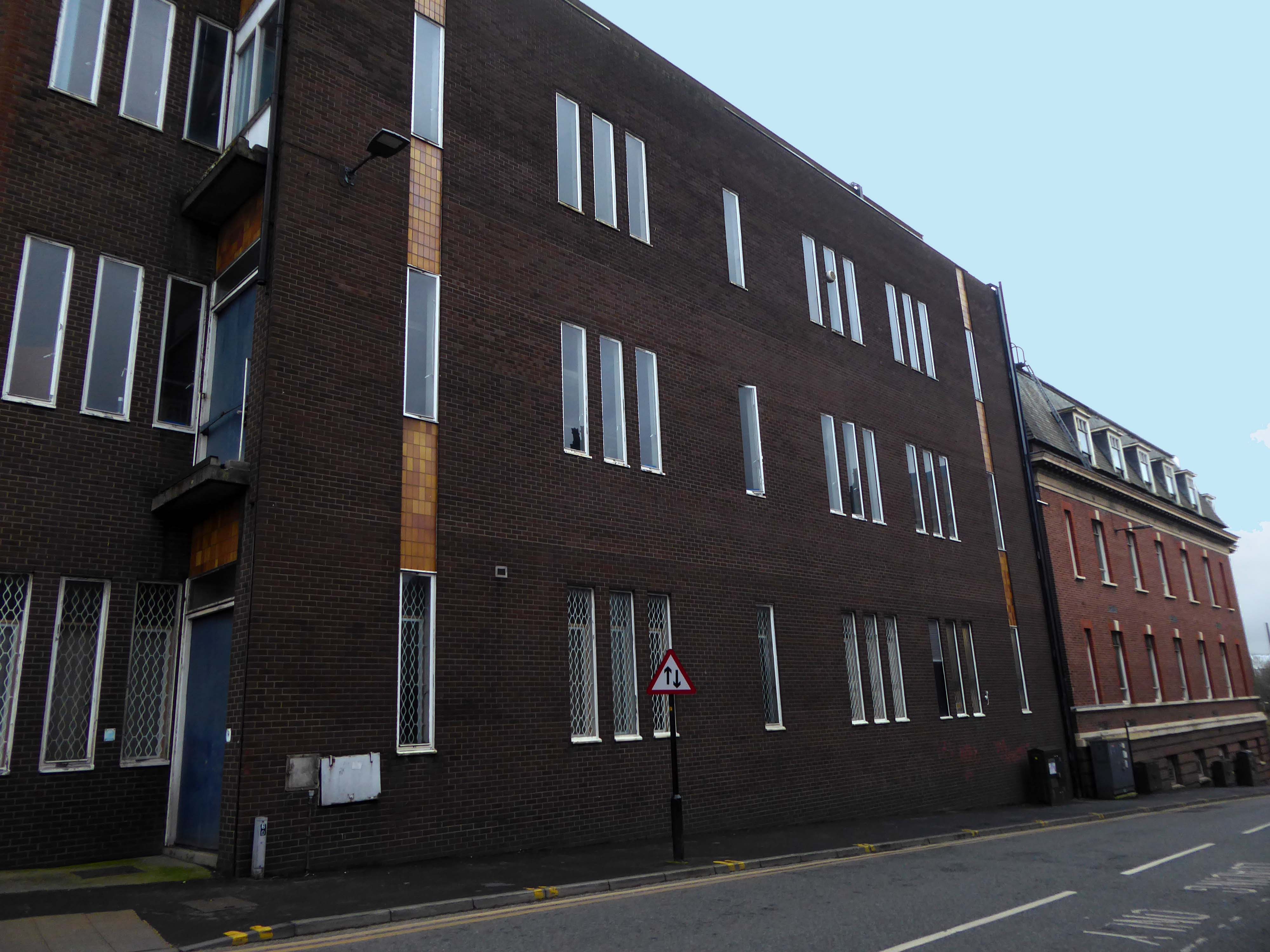
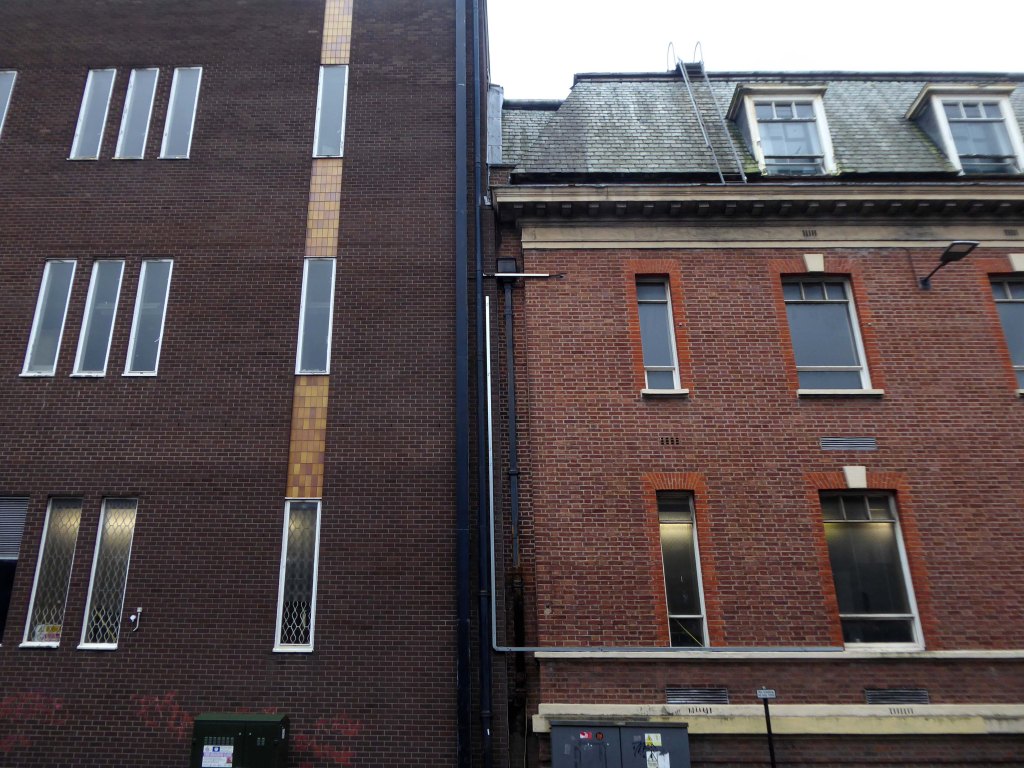
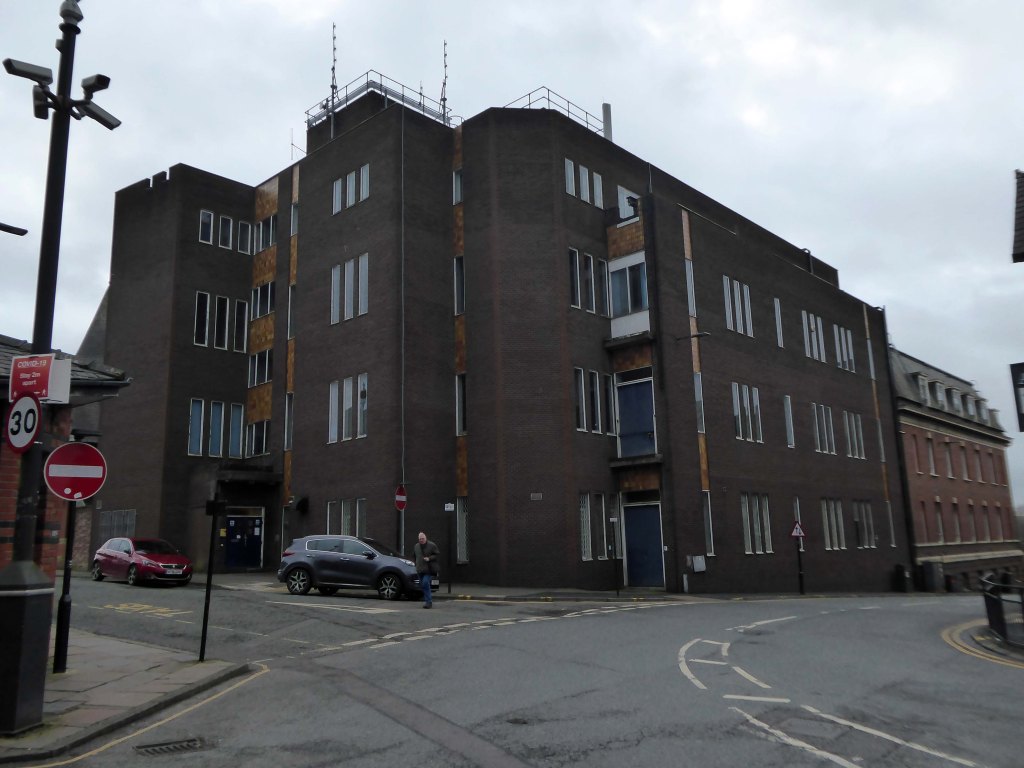
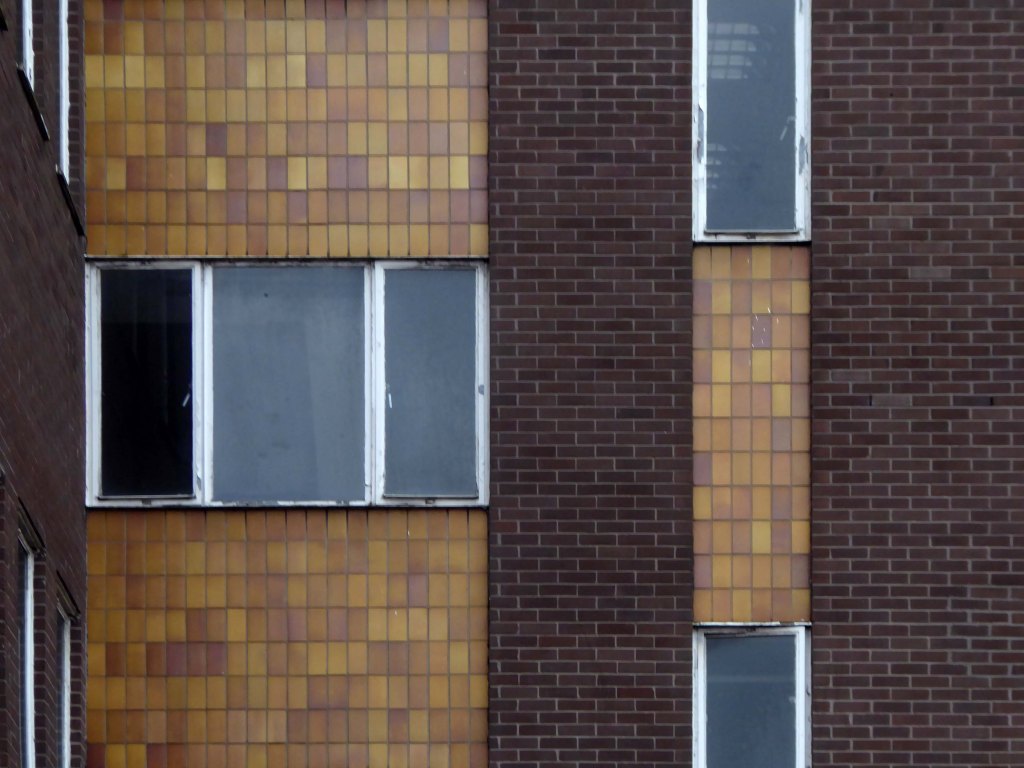
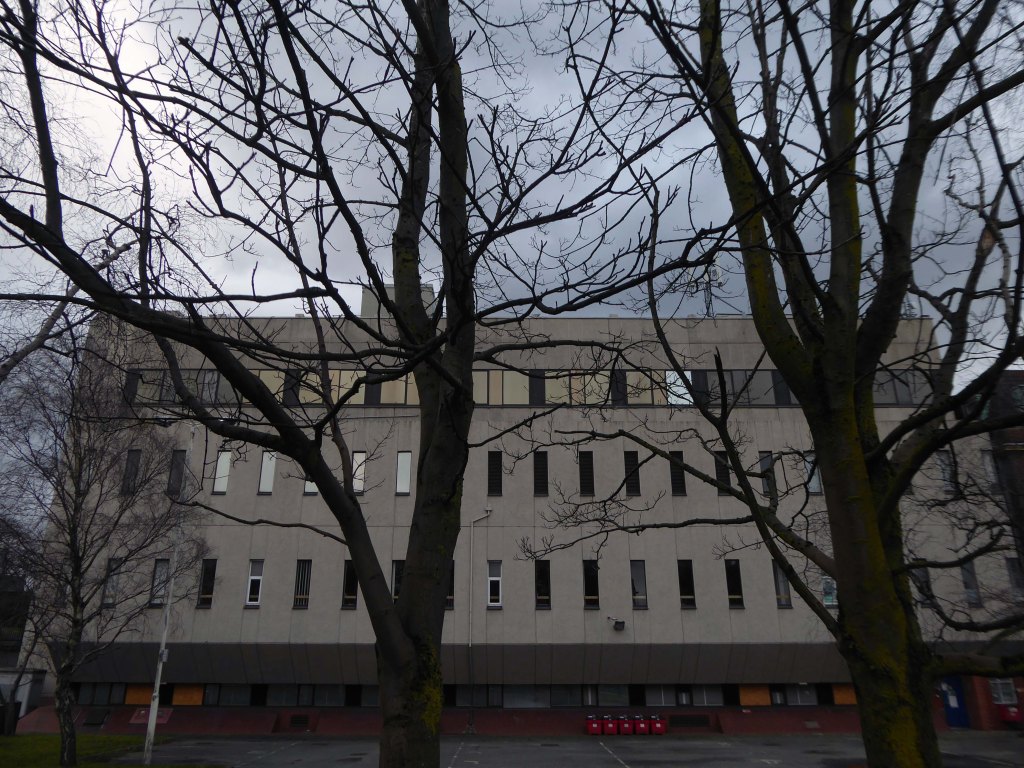
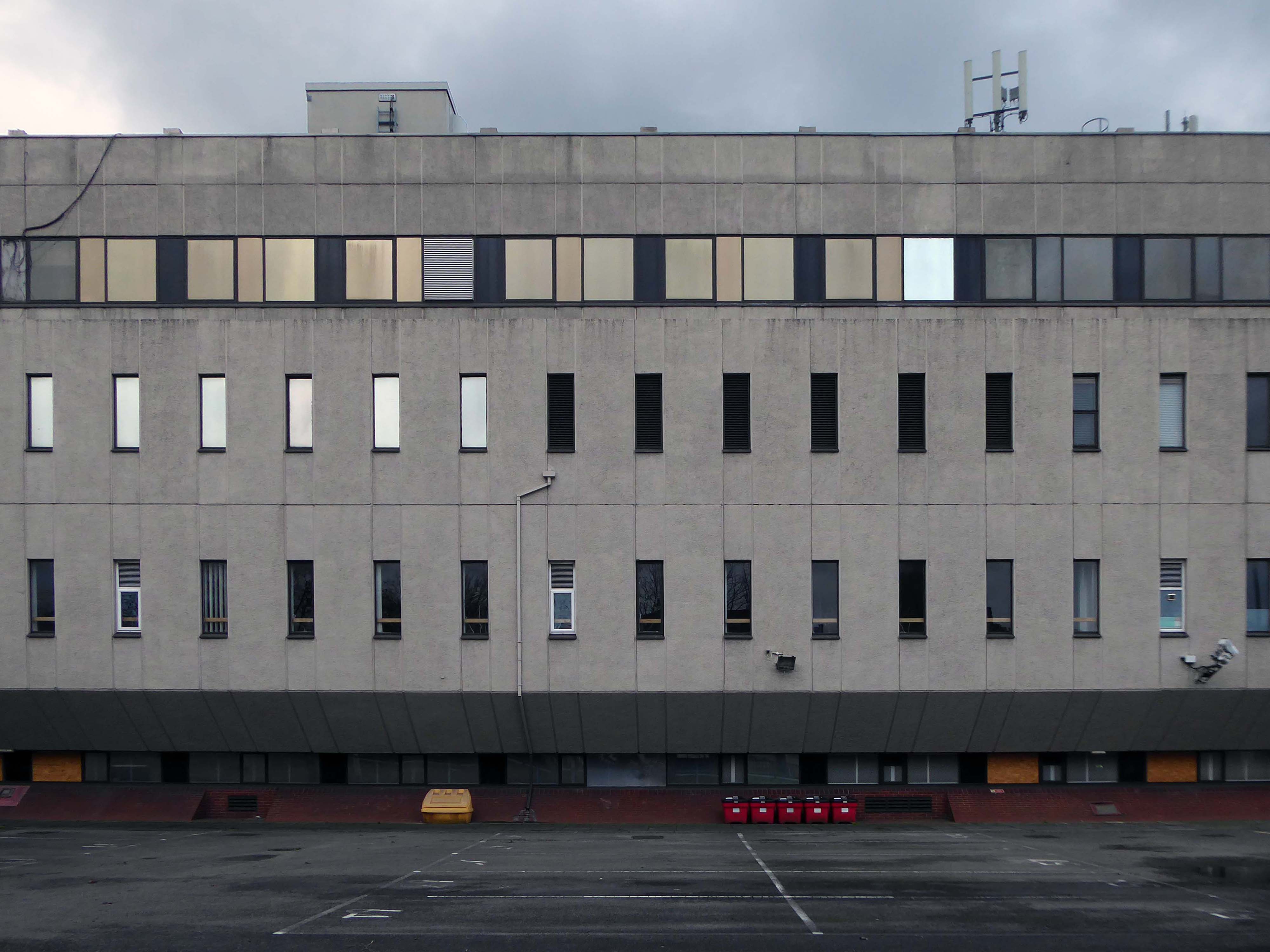
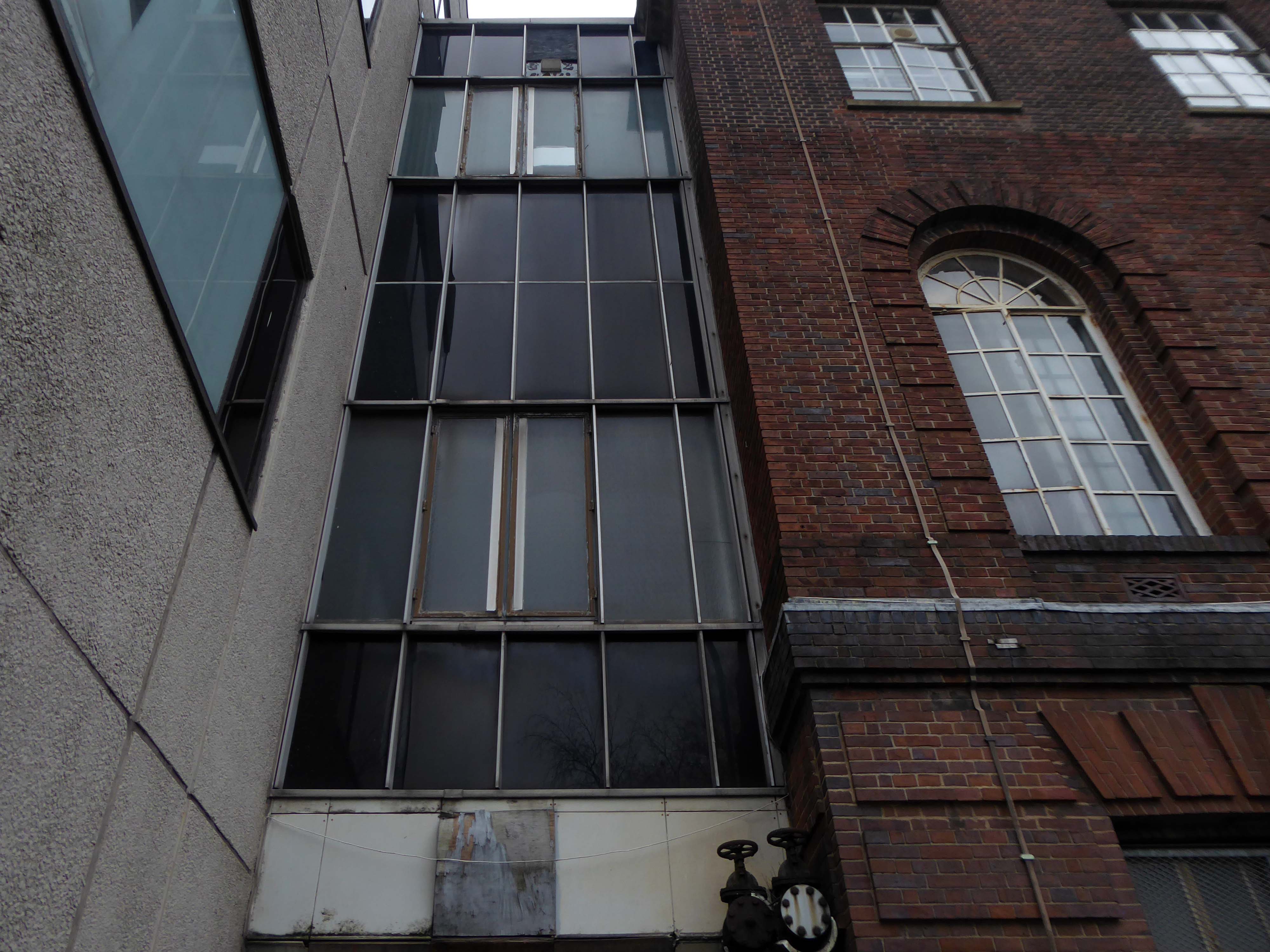
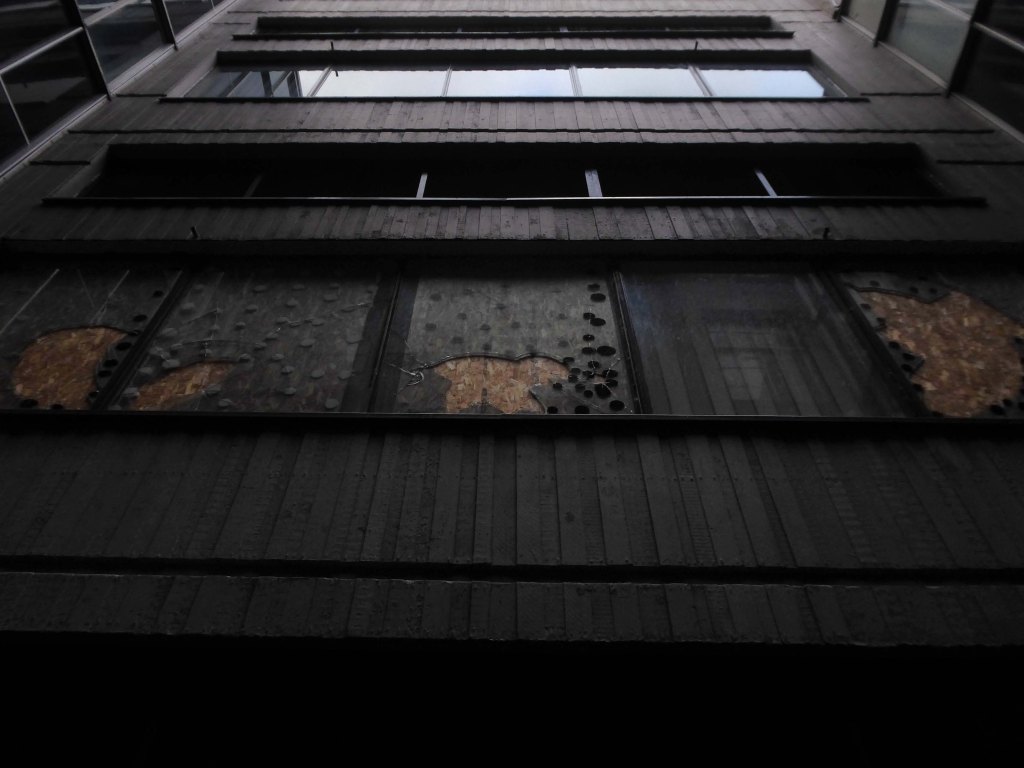
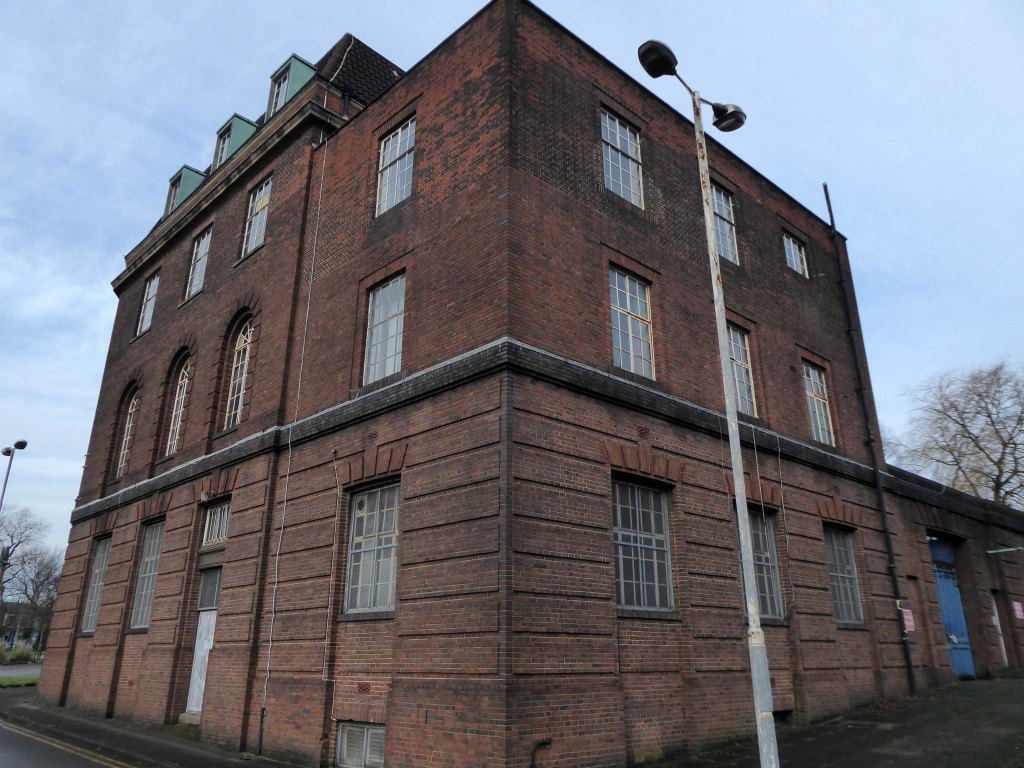
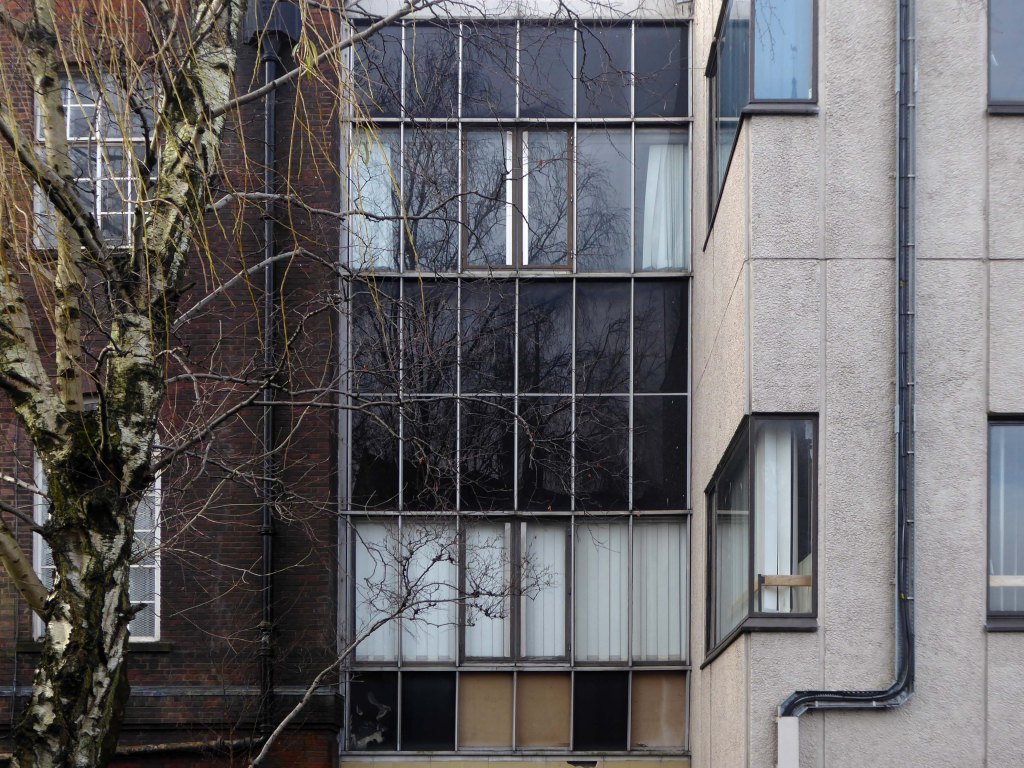
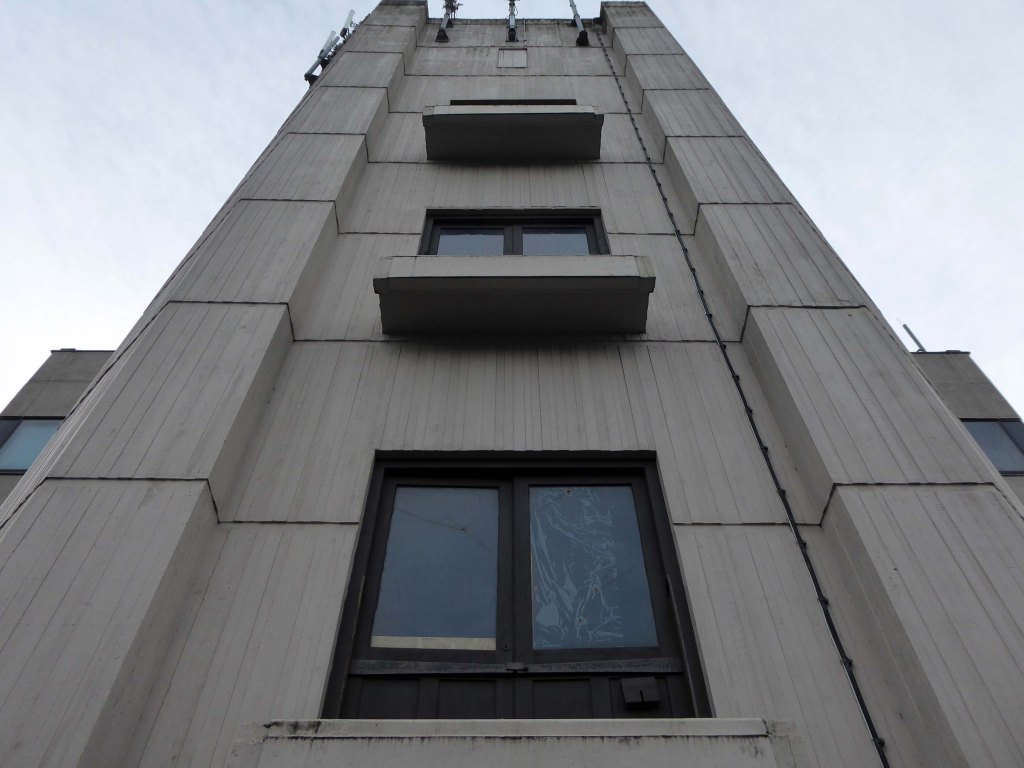
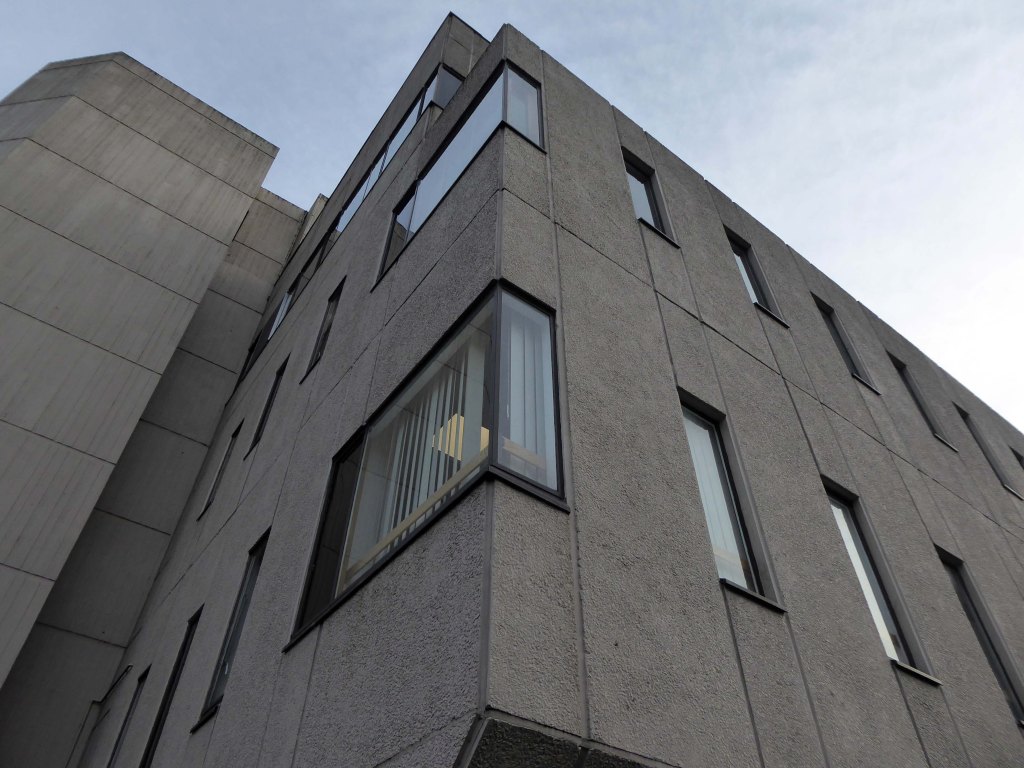
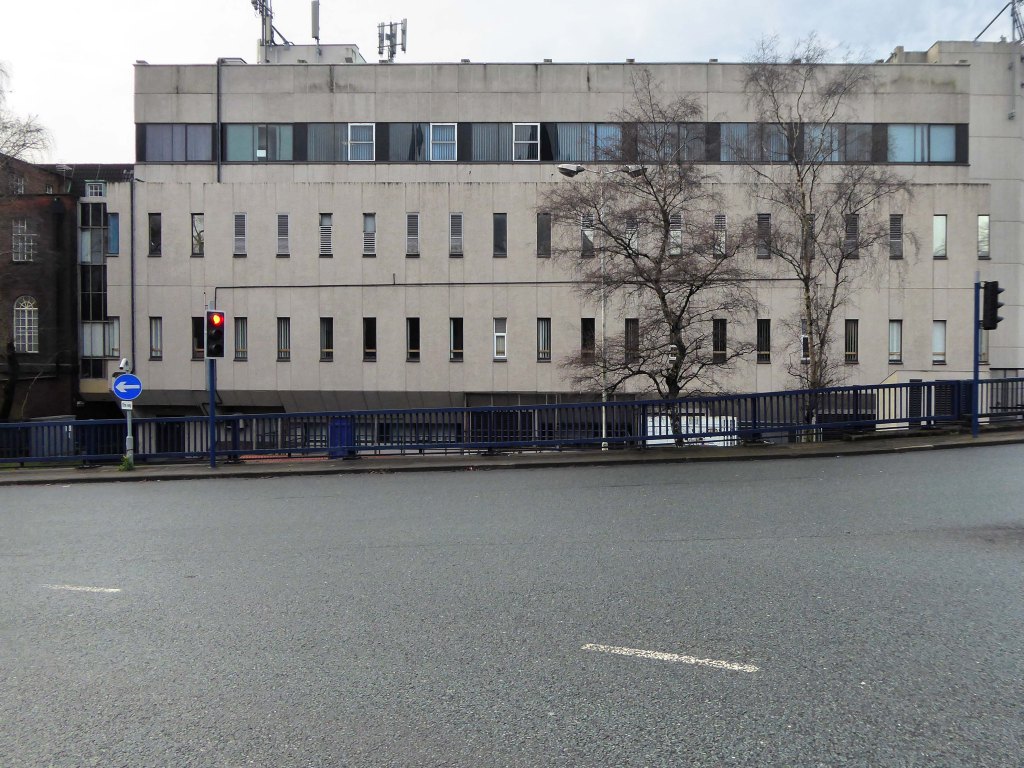
With narrow windows and inset light and dark tan tiles.
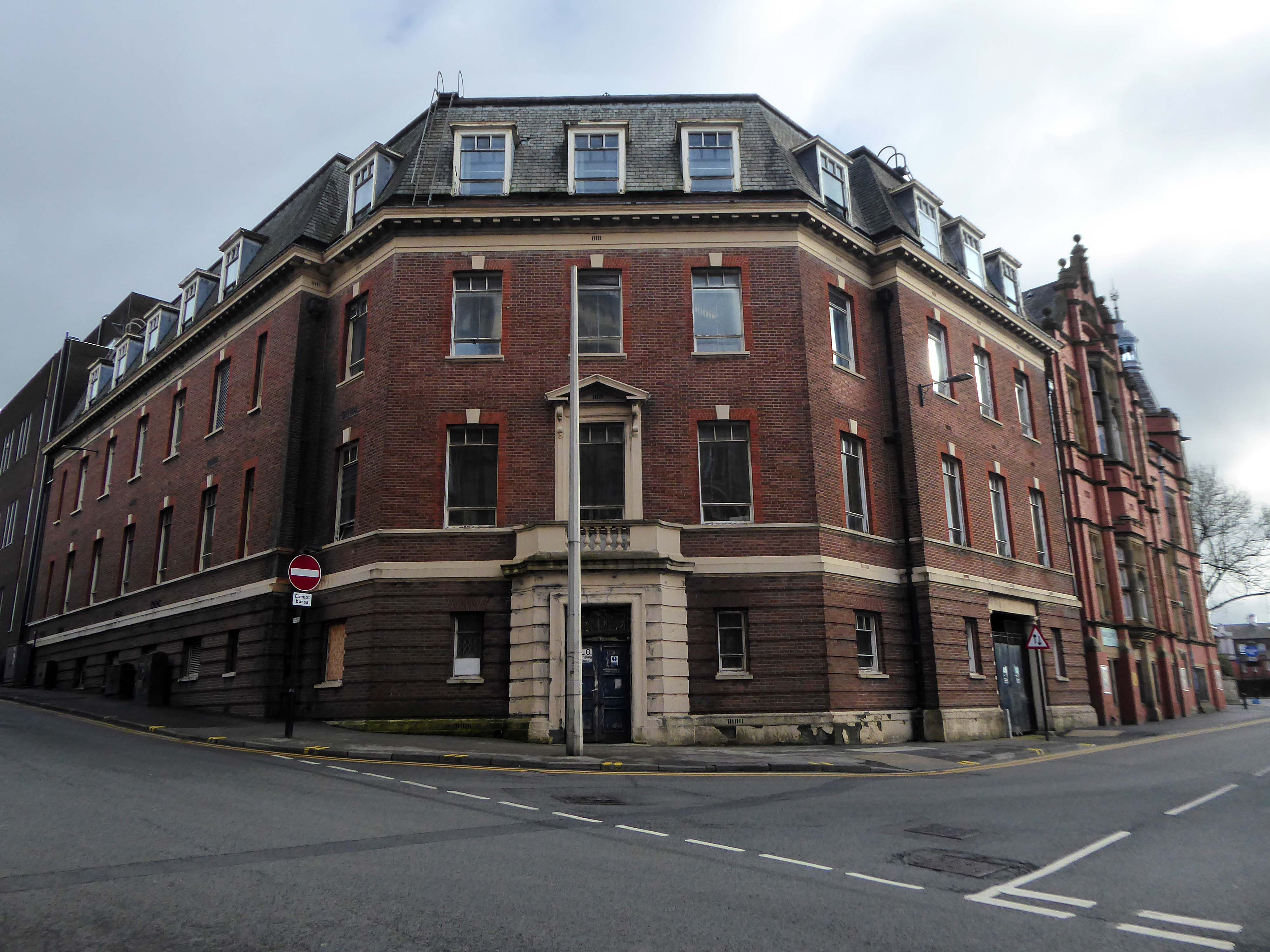
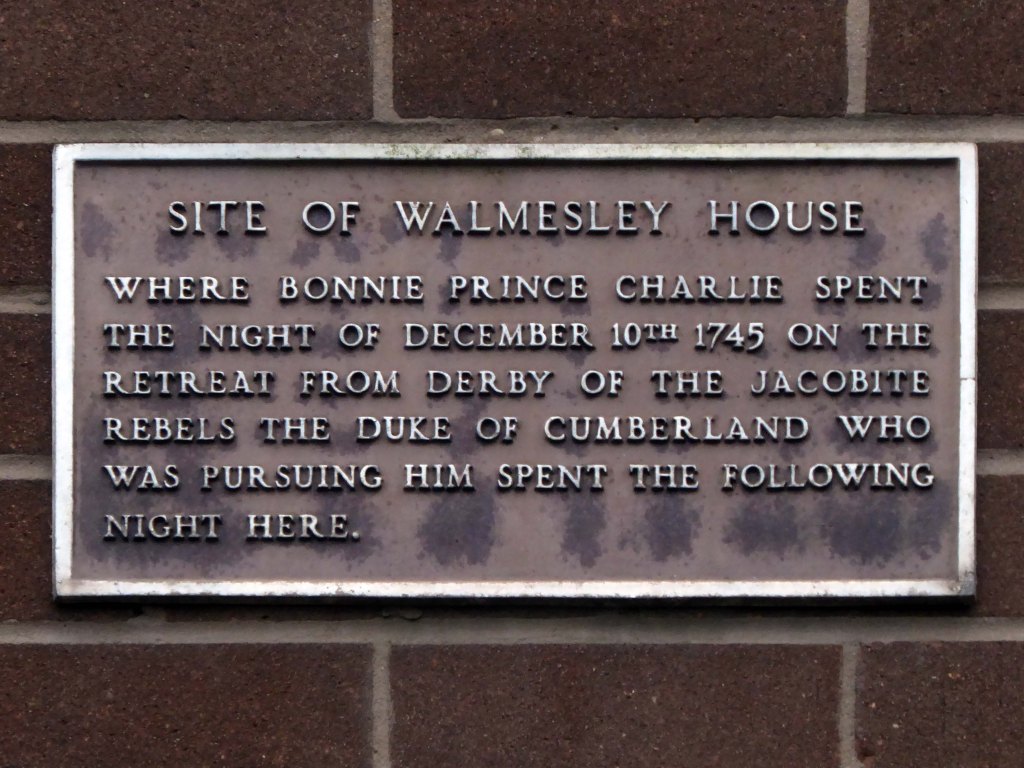
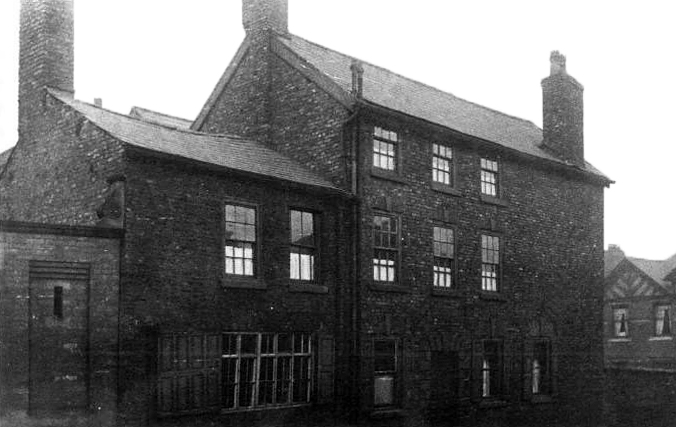
Prior to the exchange of telecommunications’ messages, the site was preoccupied by the exchange of partisan residents with a predilection for particular political persuasions.
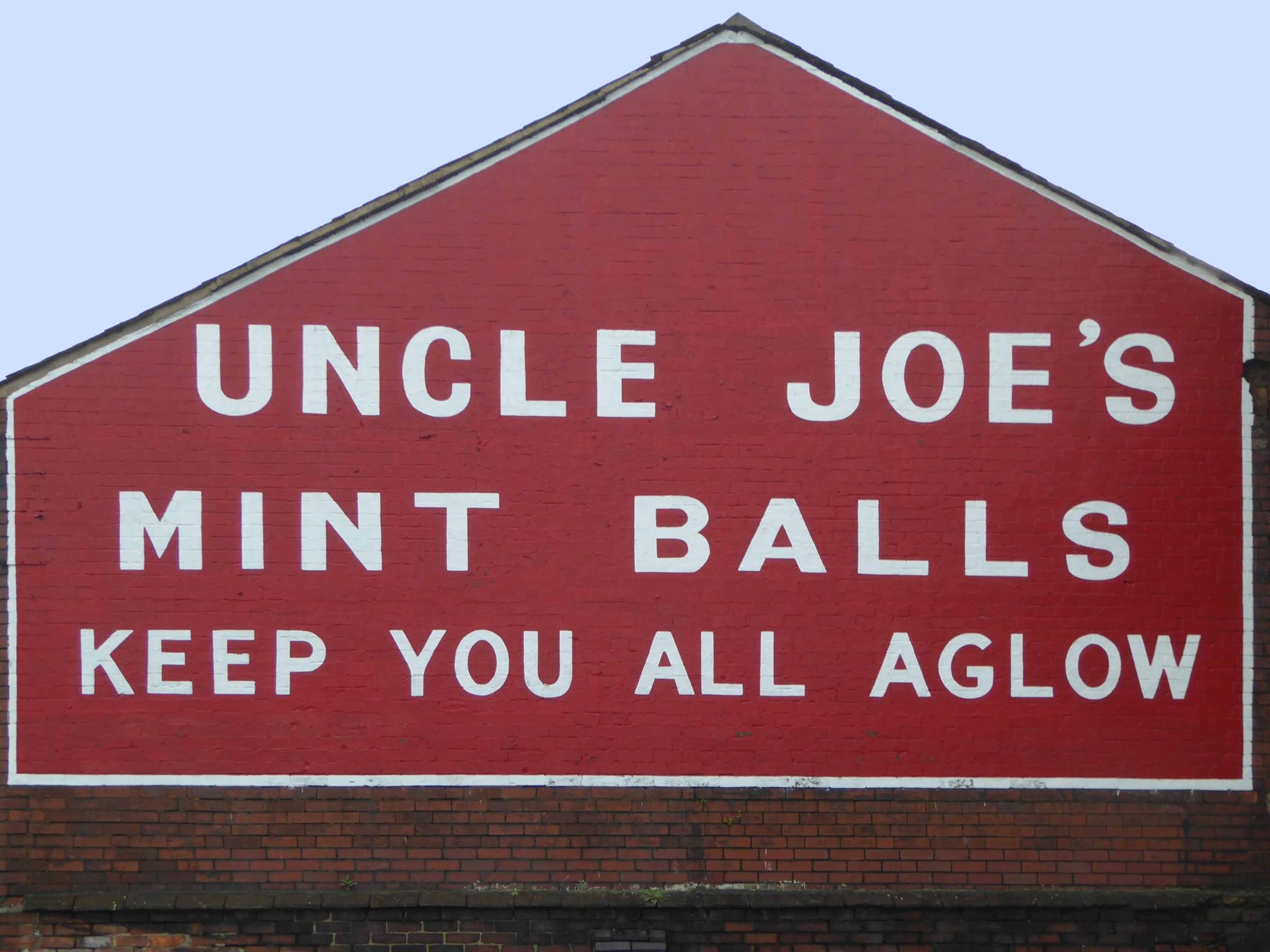
Let’s back track along Dorning Street and follow the aroma of Uncle Joe’s Mint Balls – to the Santus Works and beyond.
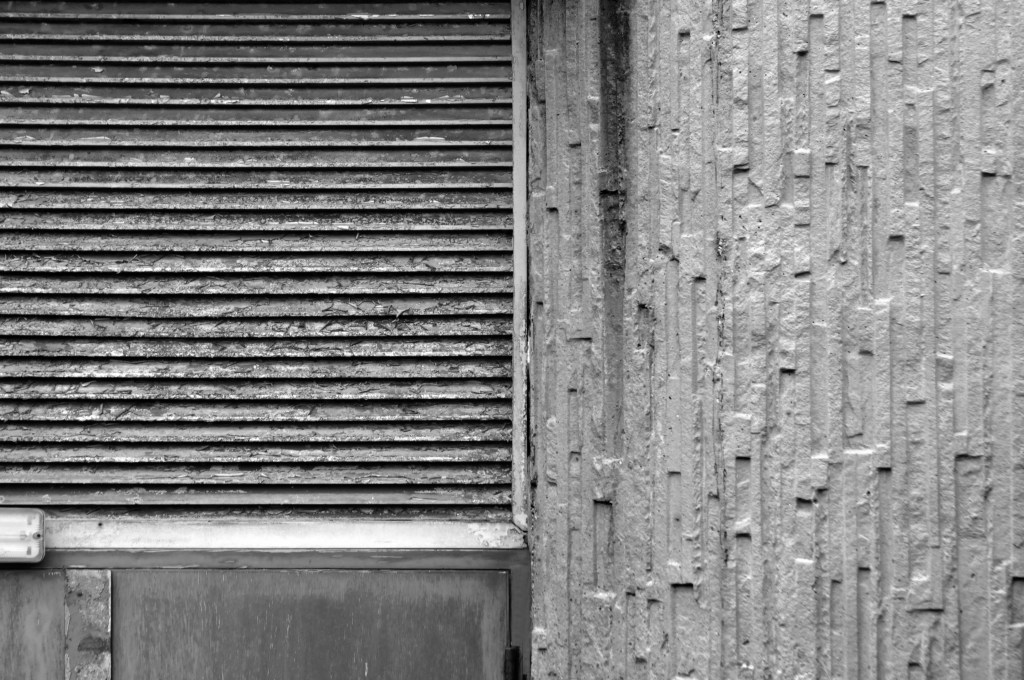
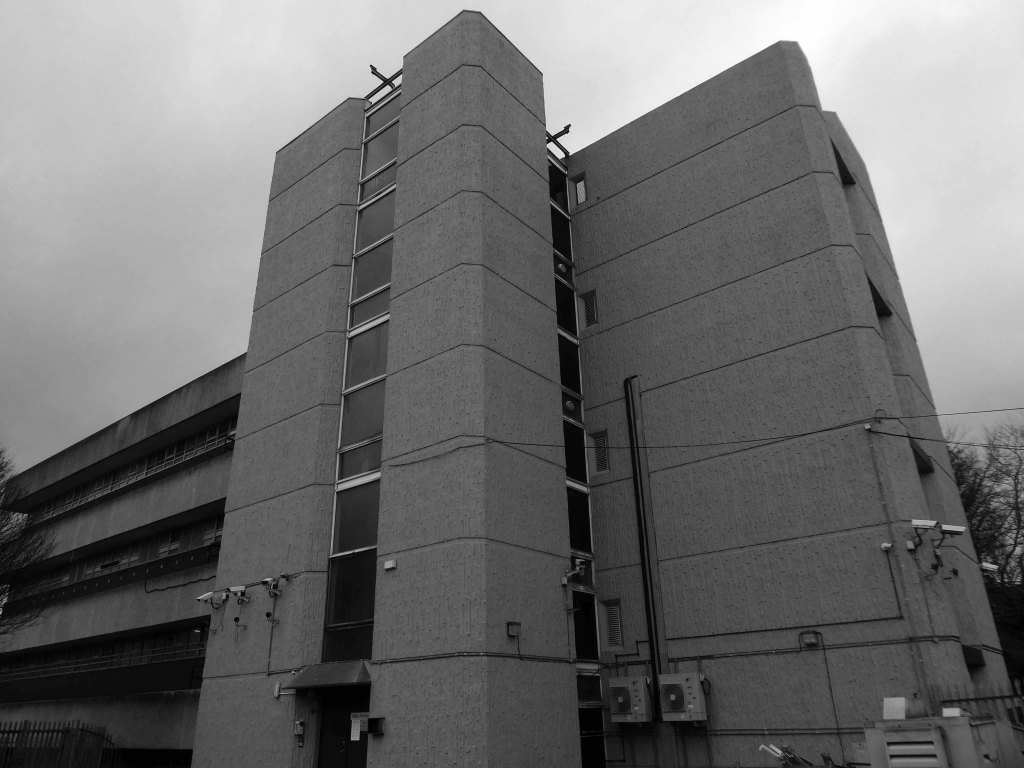
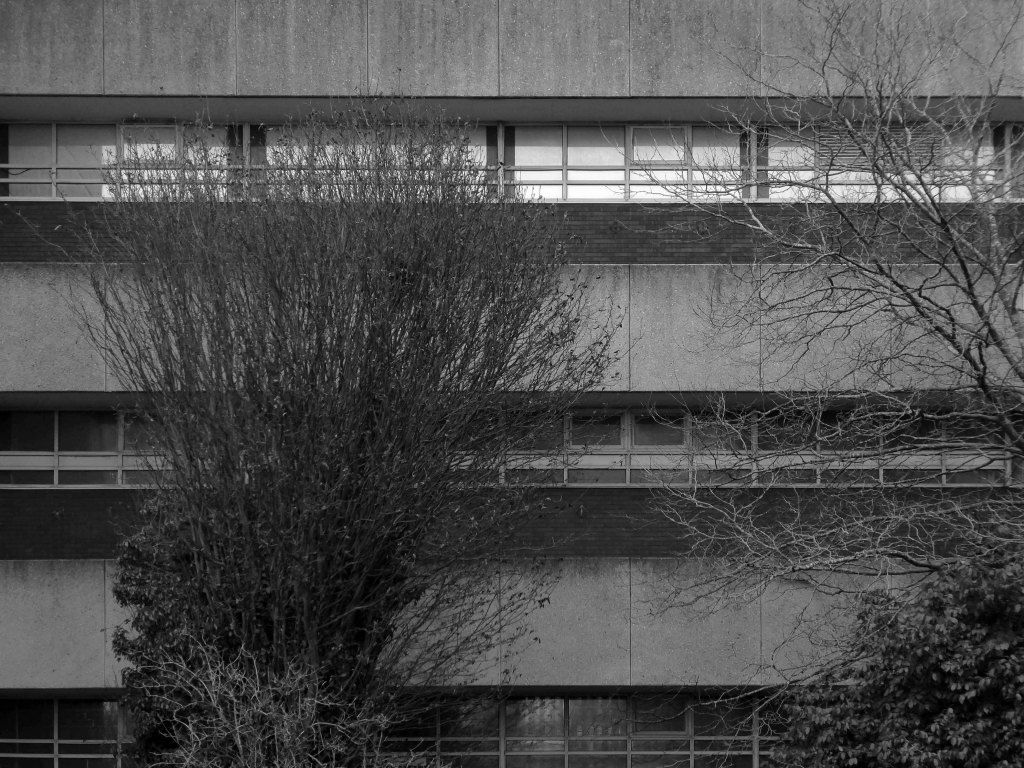
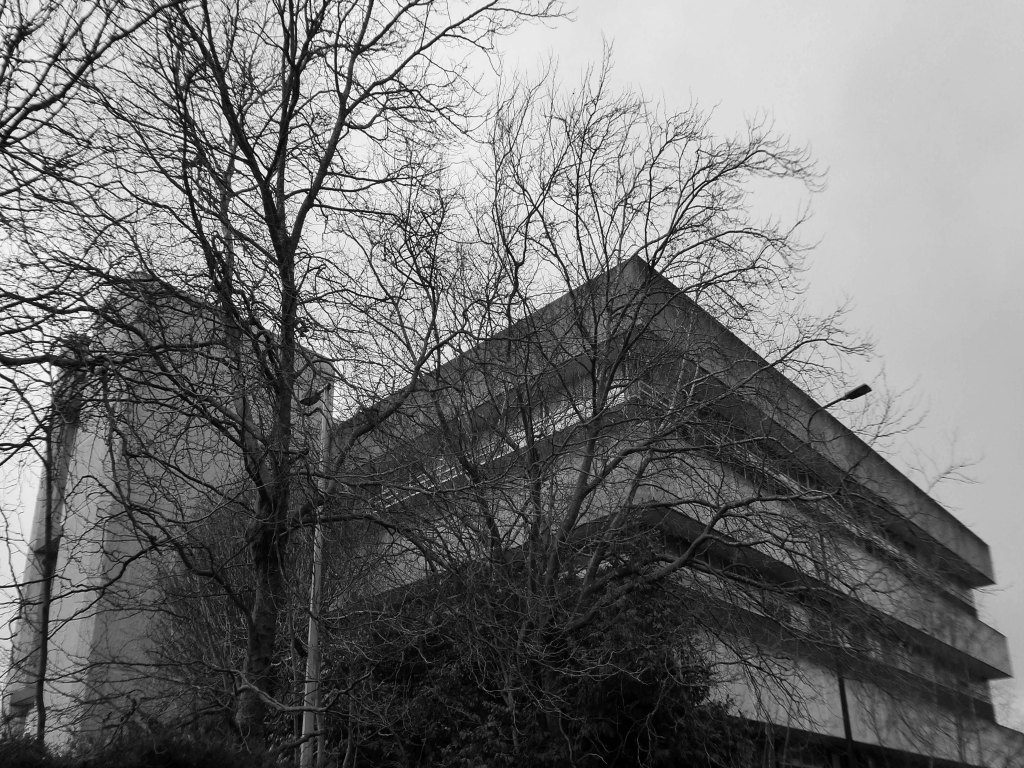
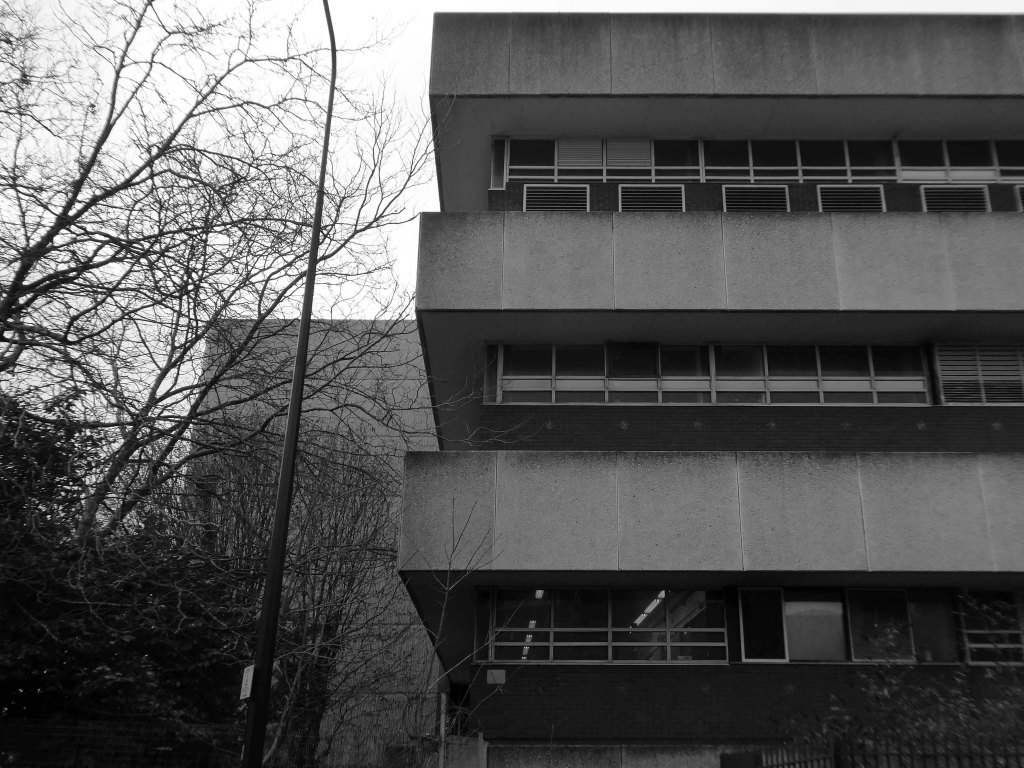
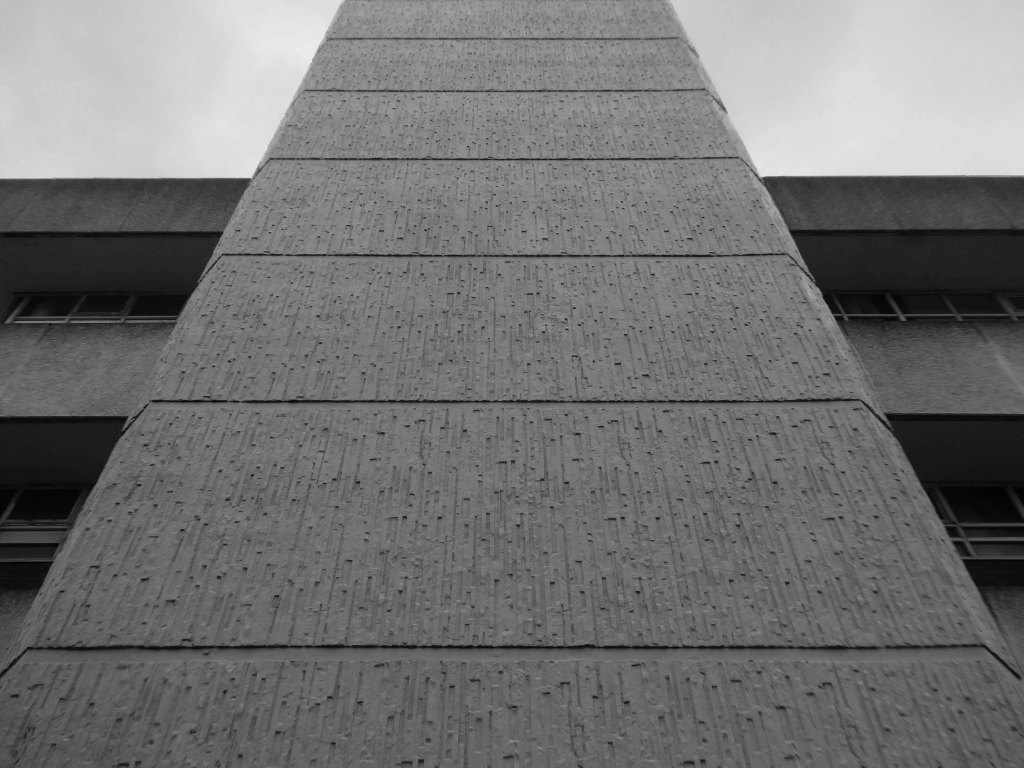
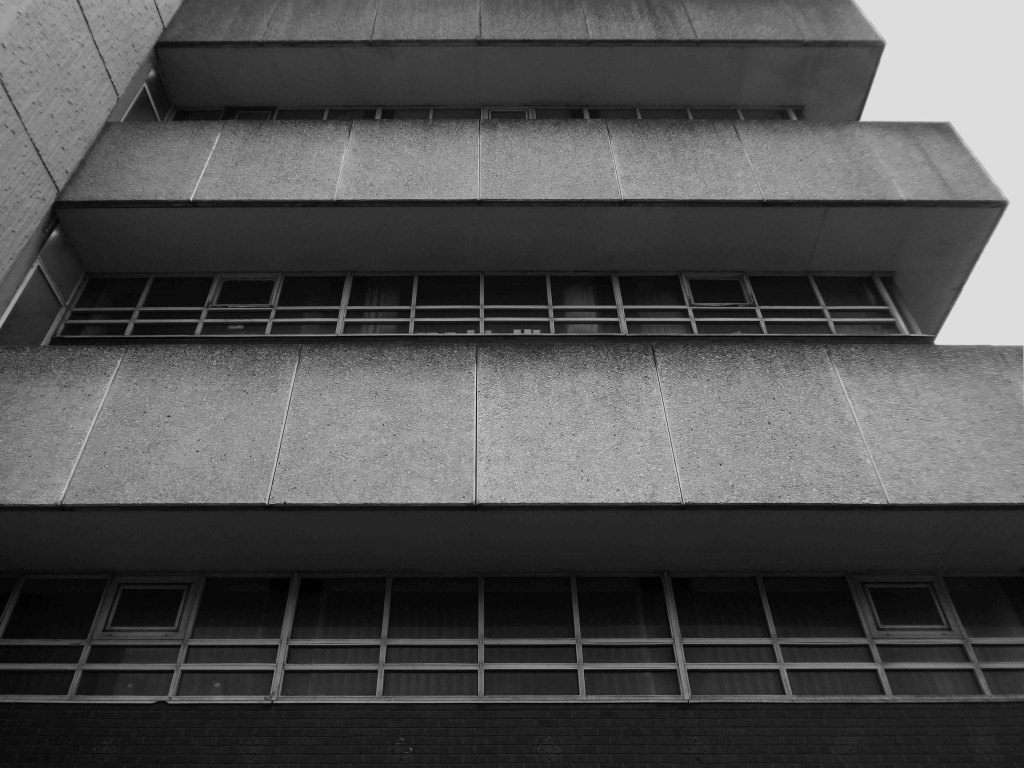
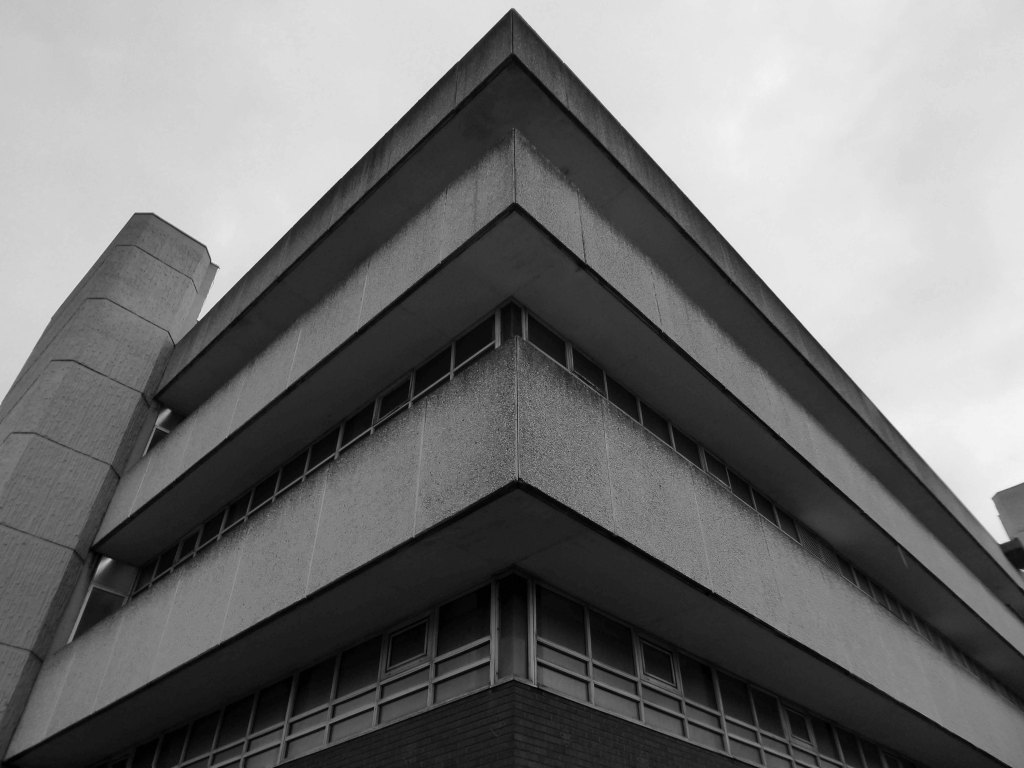
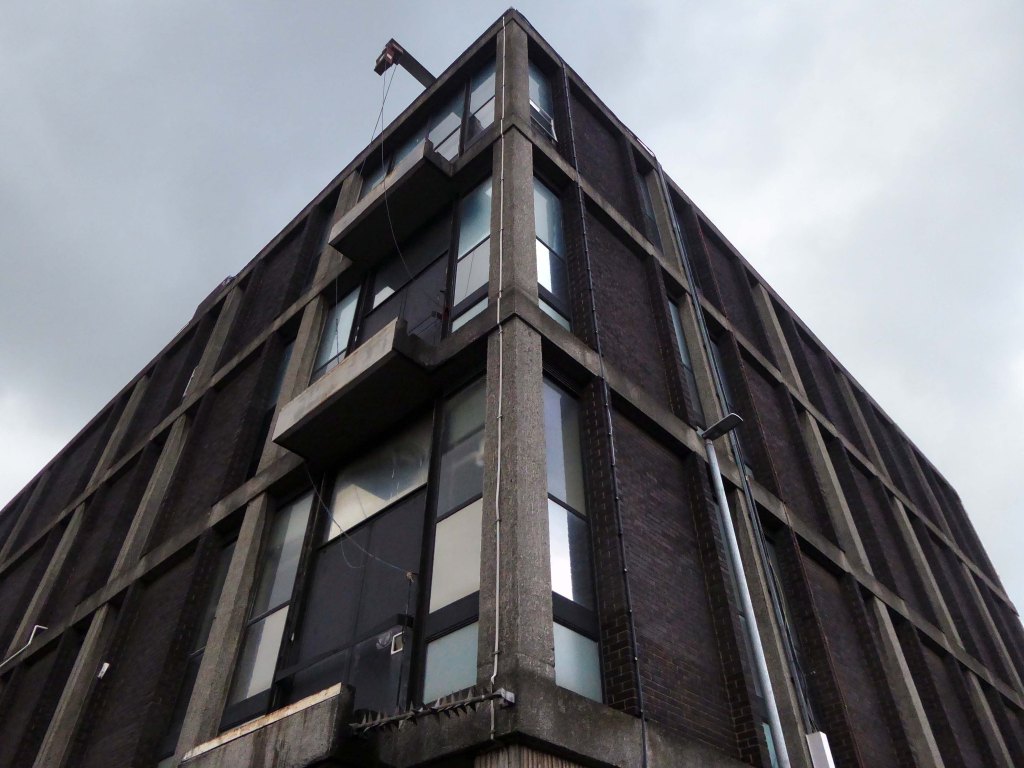
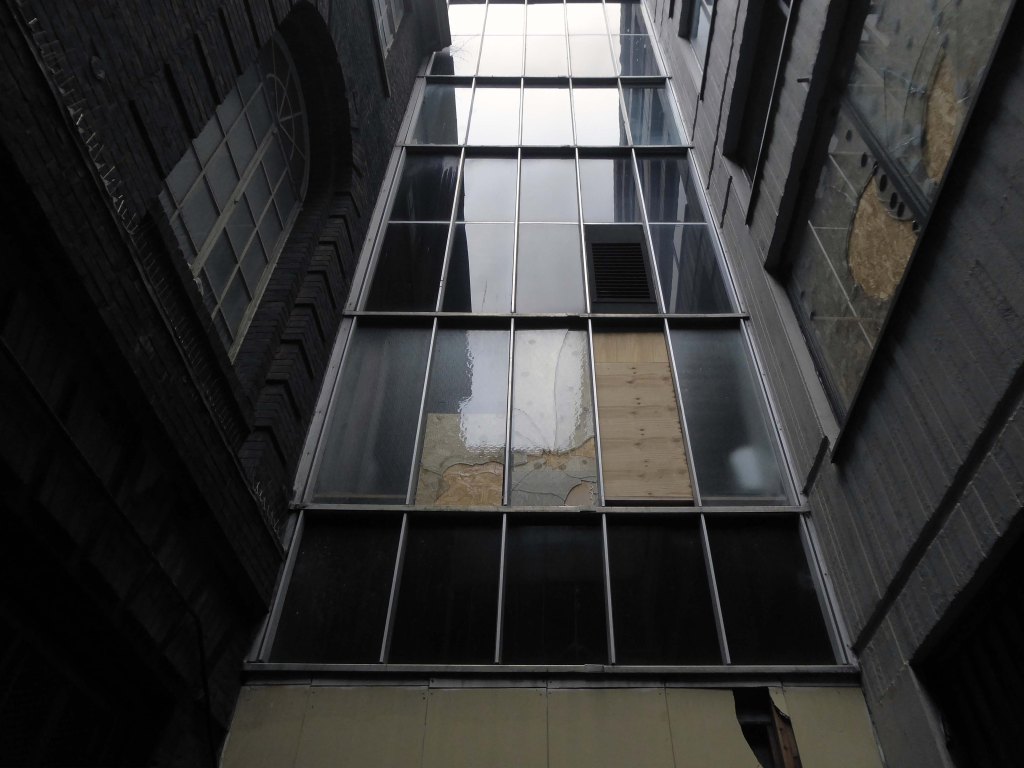
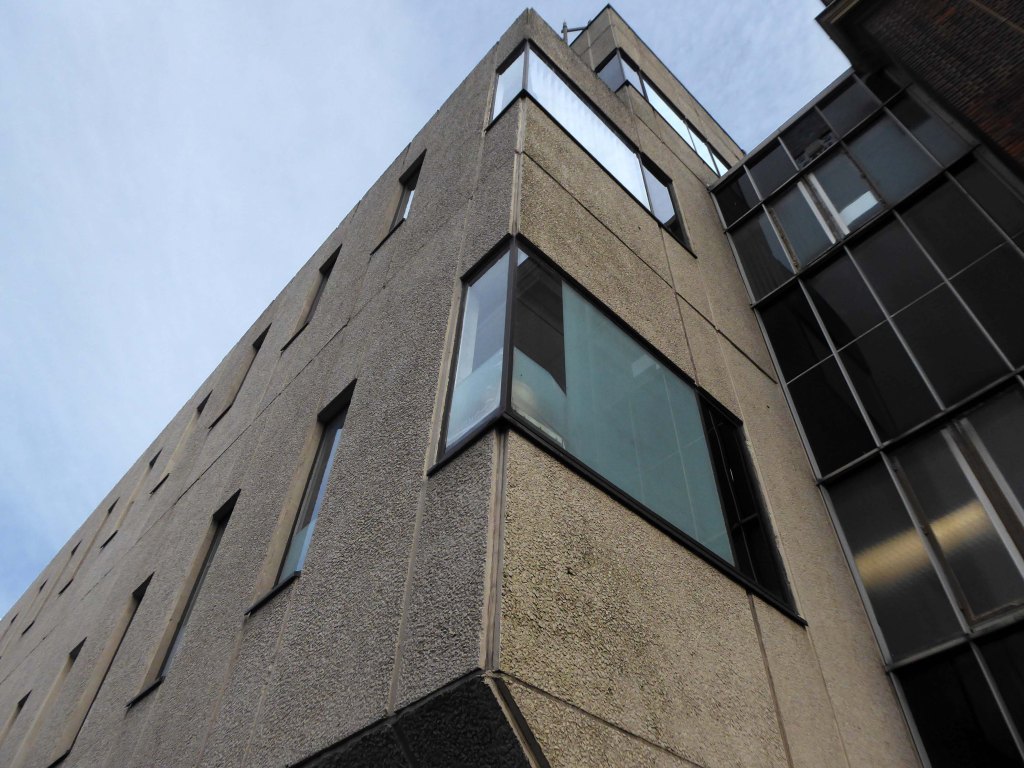
There stands a concrete behemoth.
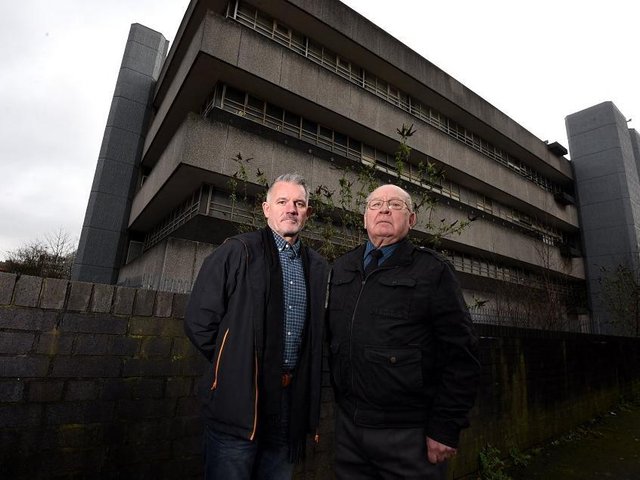
Which has of late been beset with particular problems of its own.
Minefield of lager cans near Wigan school sparks worryWigan councillors.
They are on a mission to stop the grounds of a derelict building, which lies just yards away from a school, being used as a drinking den.
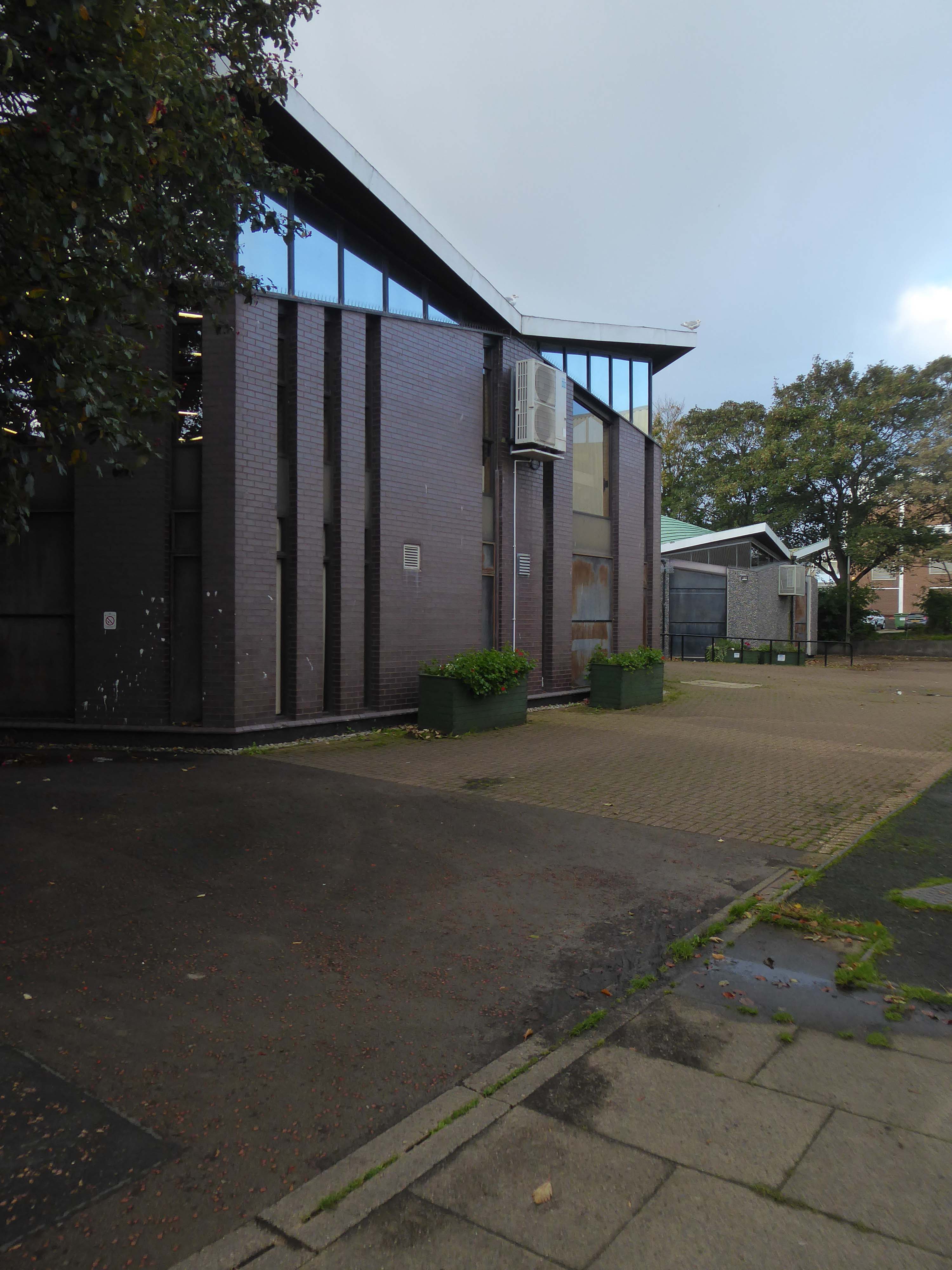
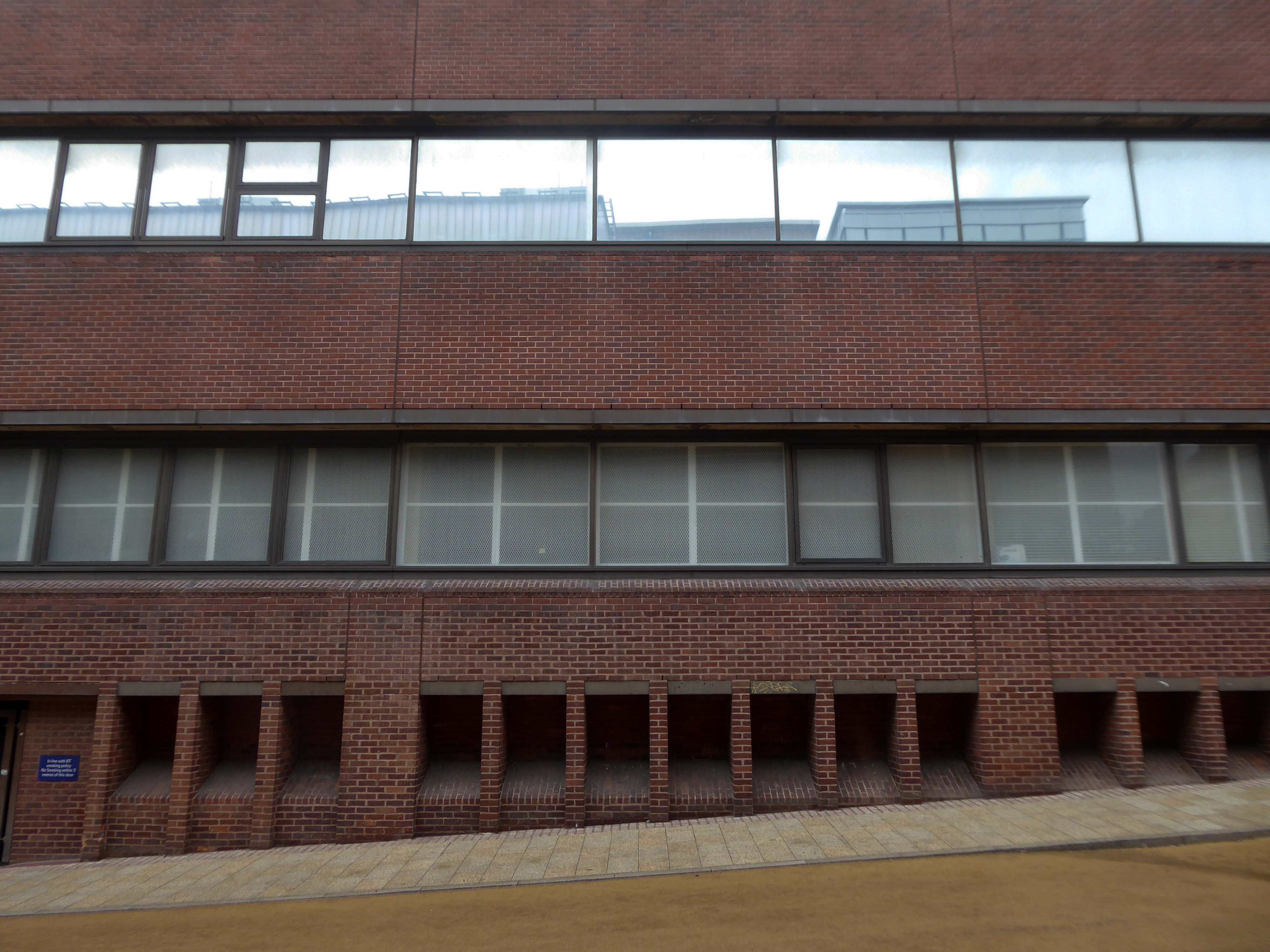
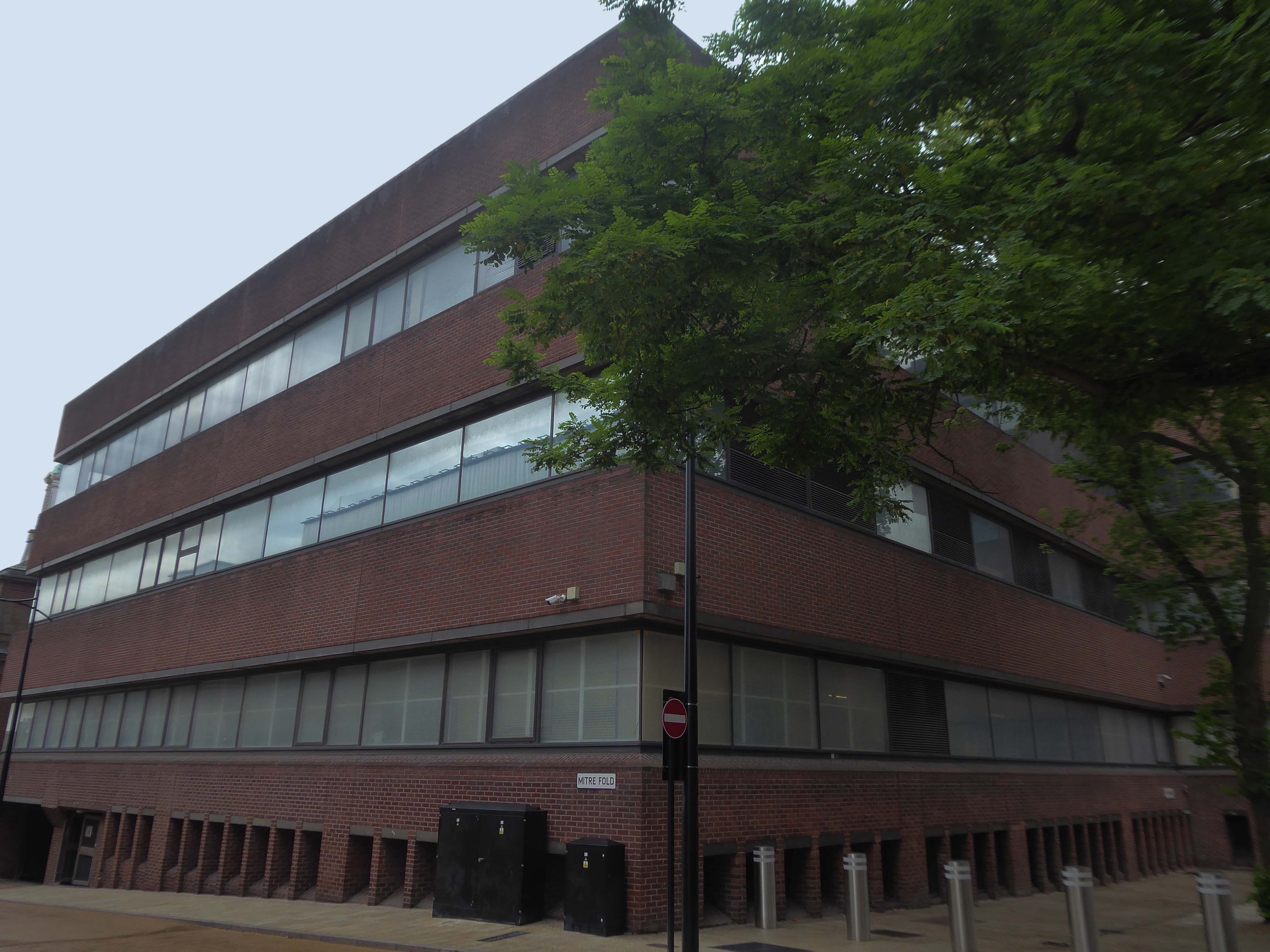
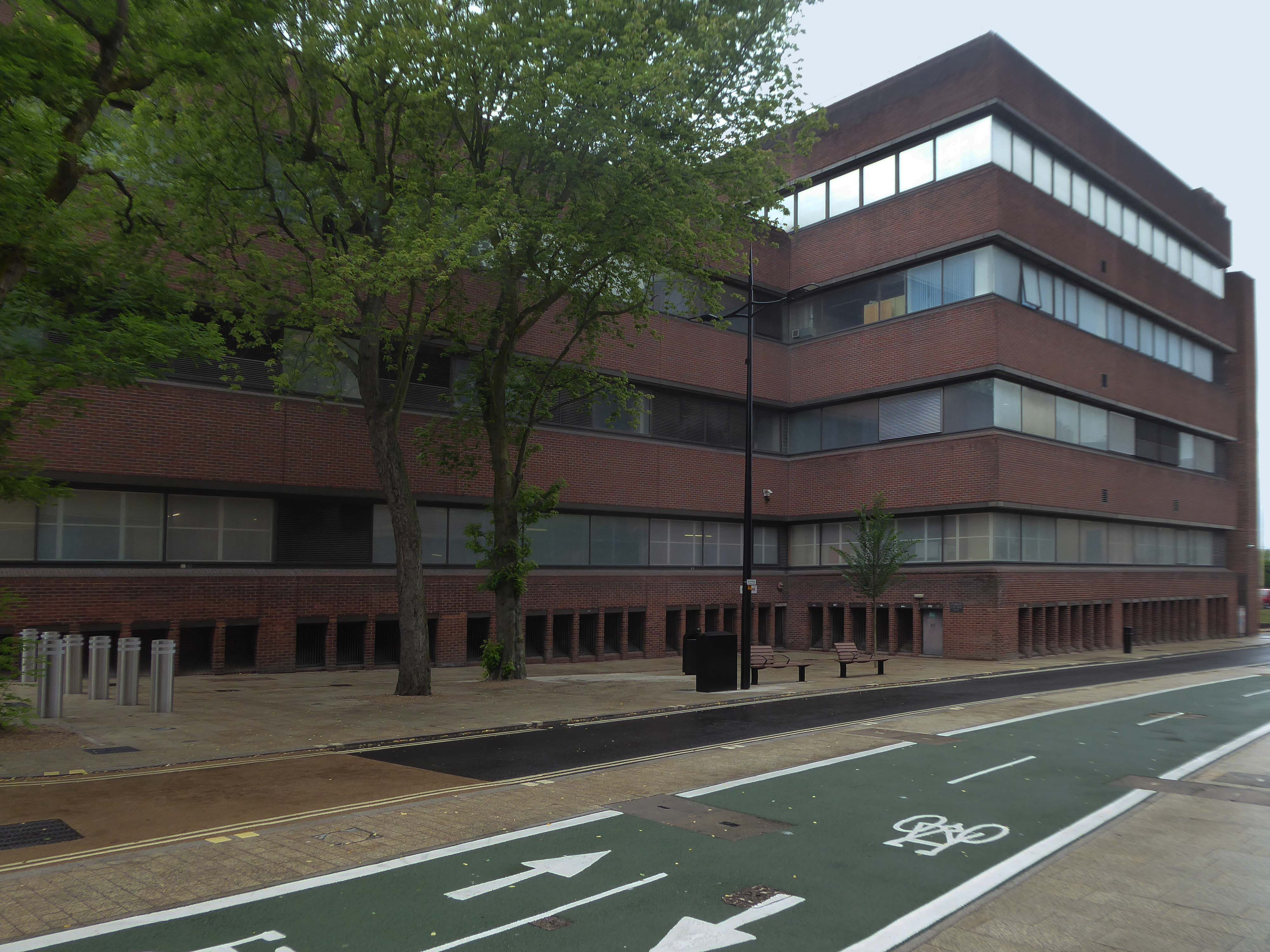
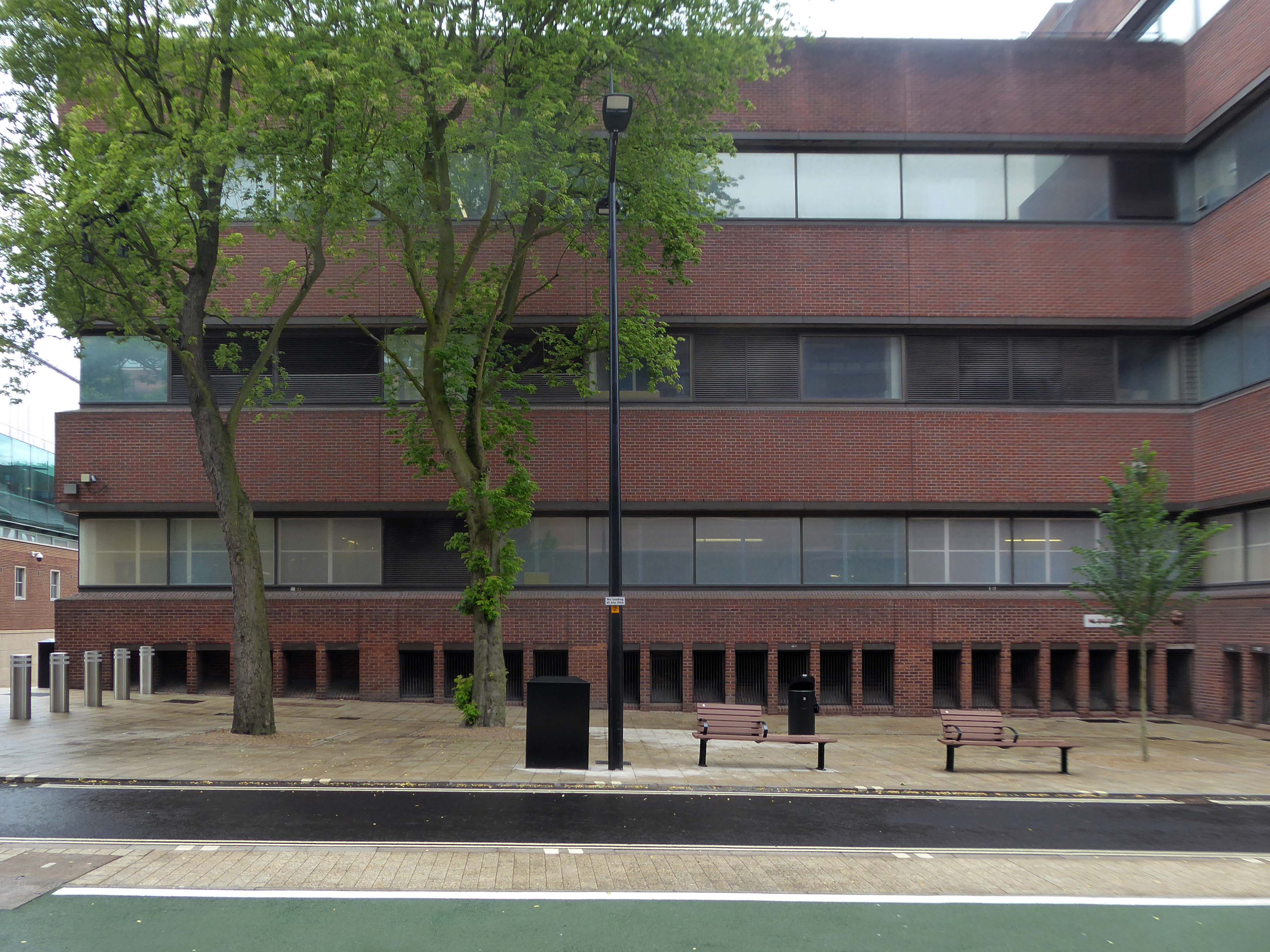
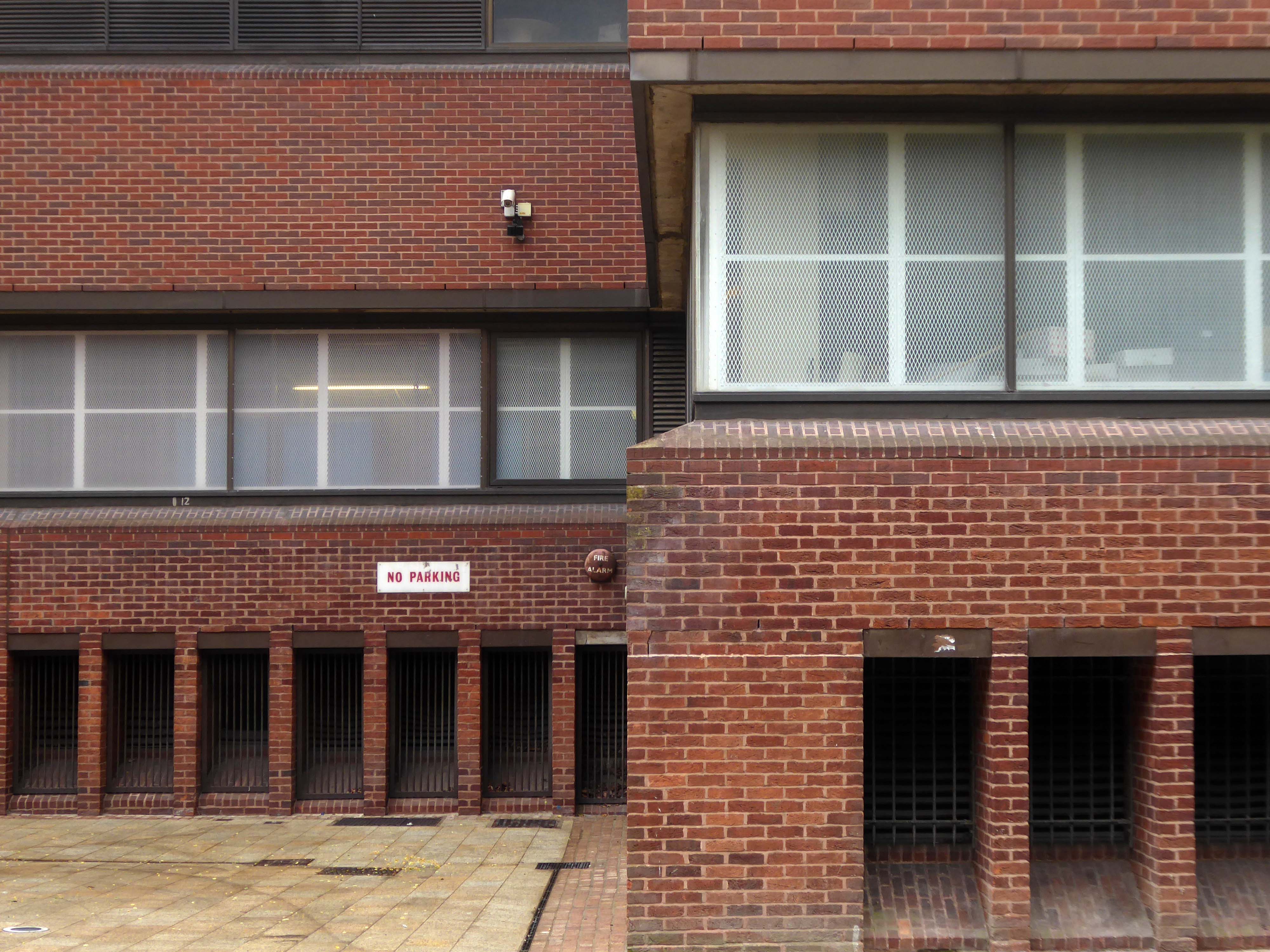
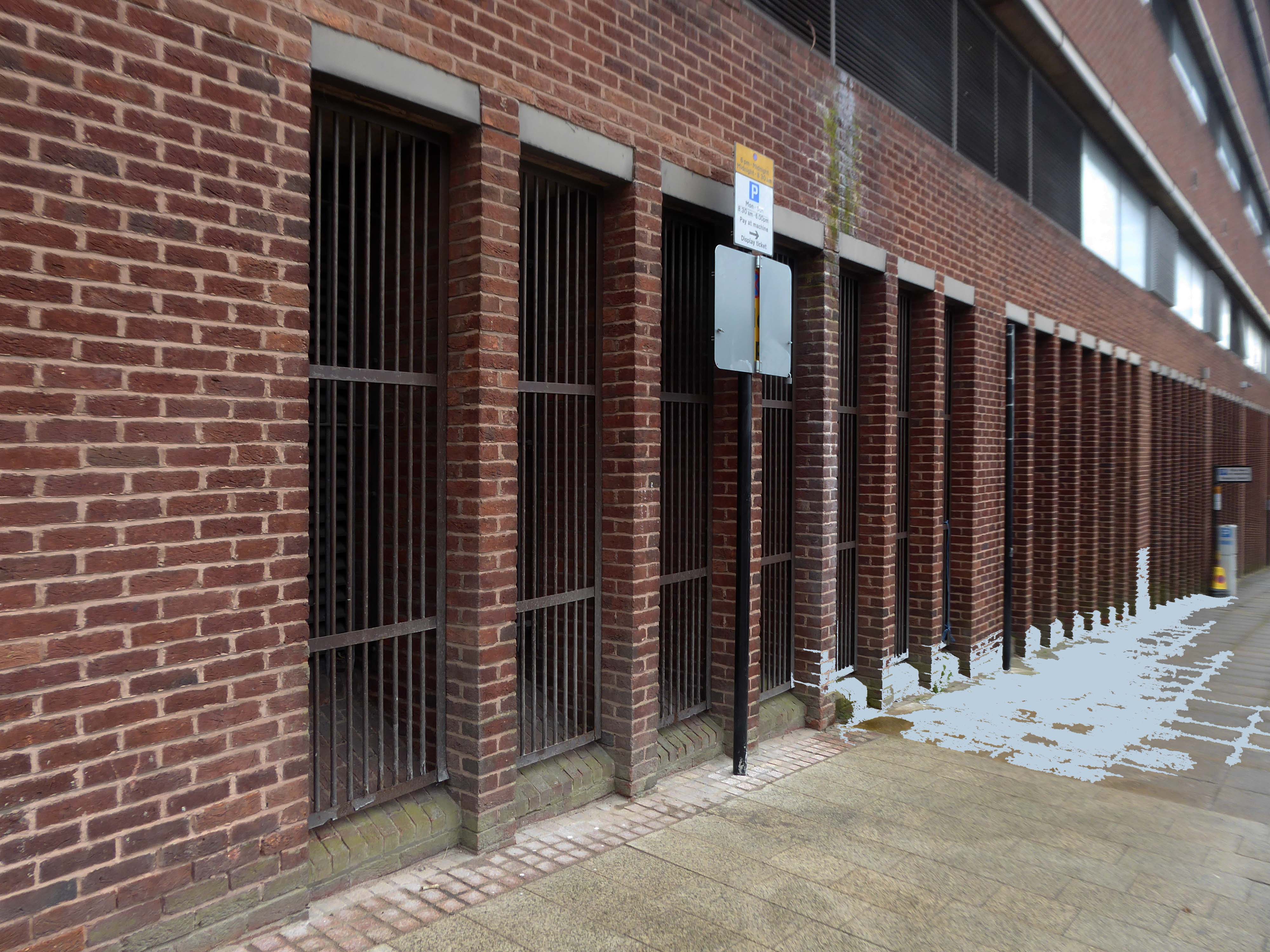
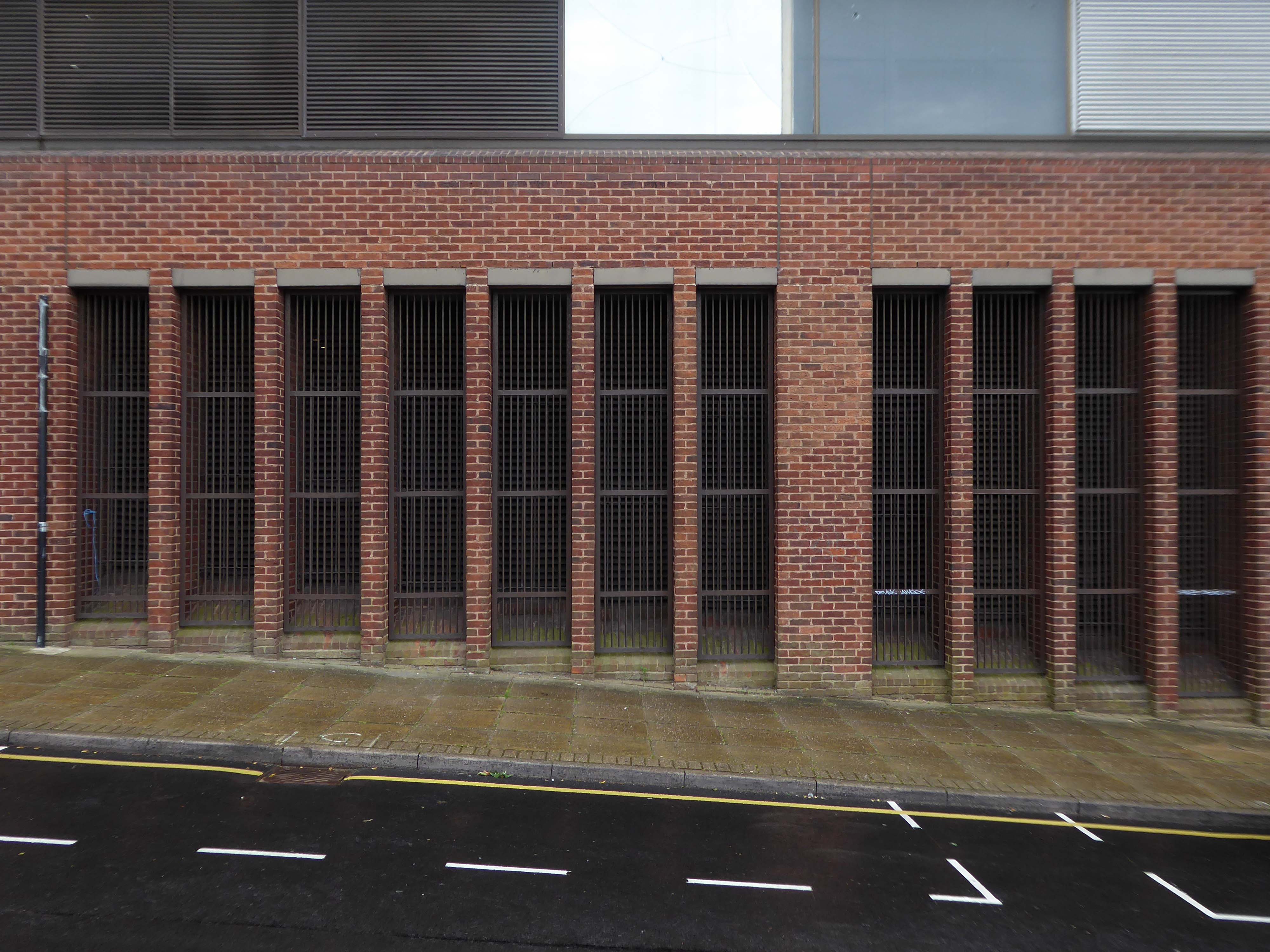
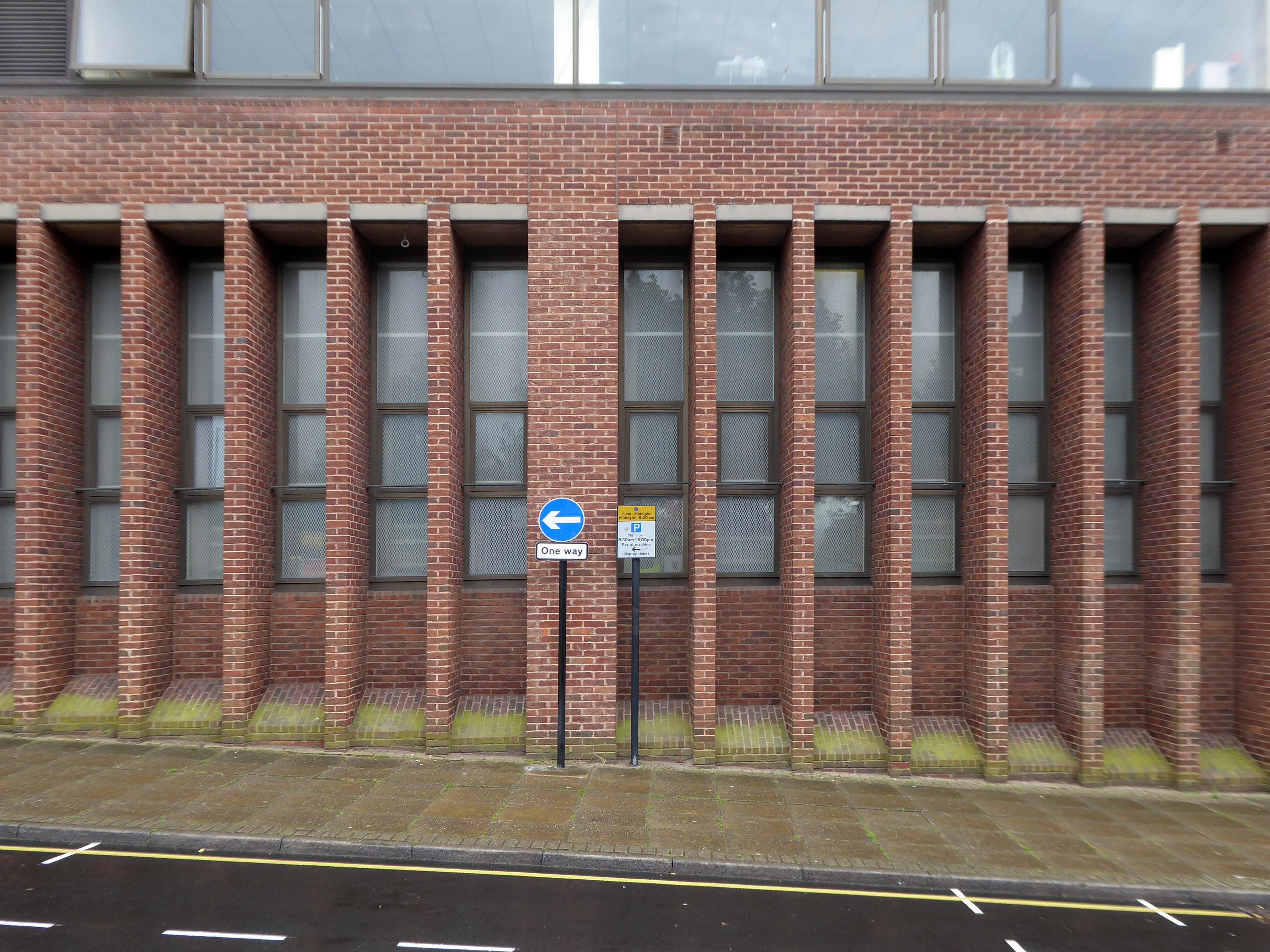
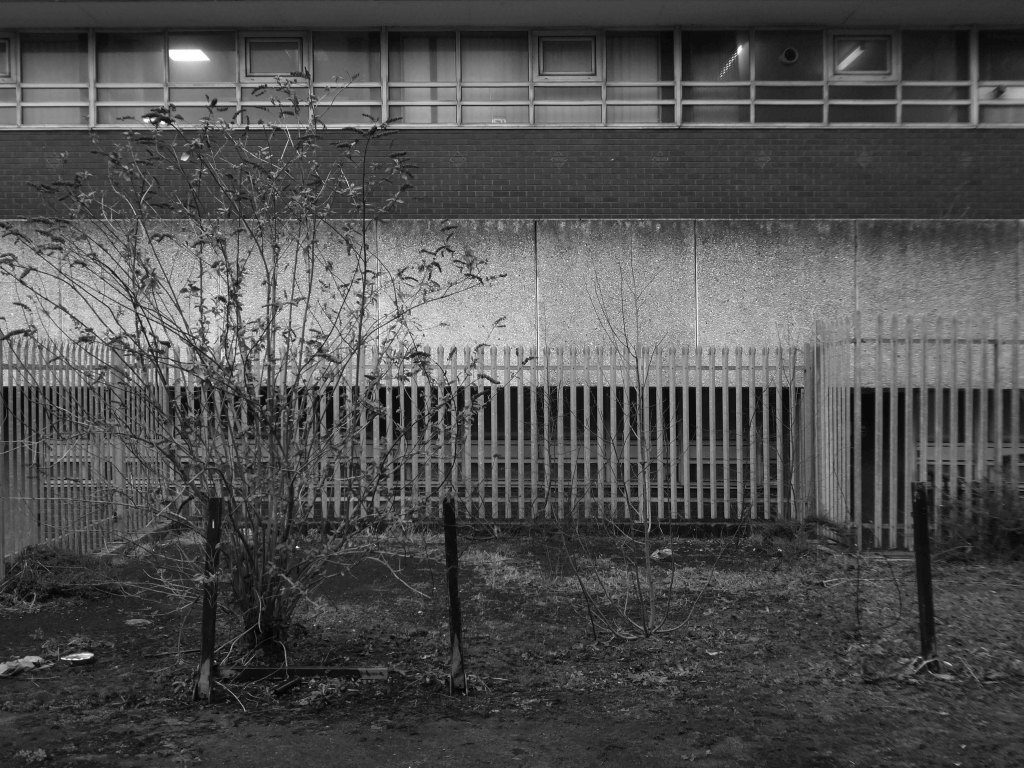
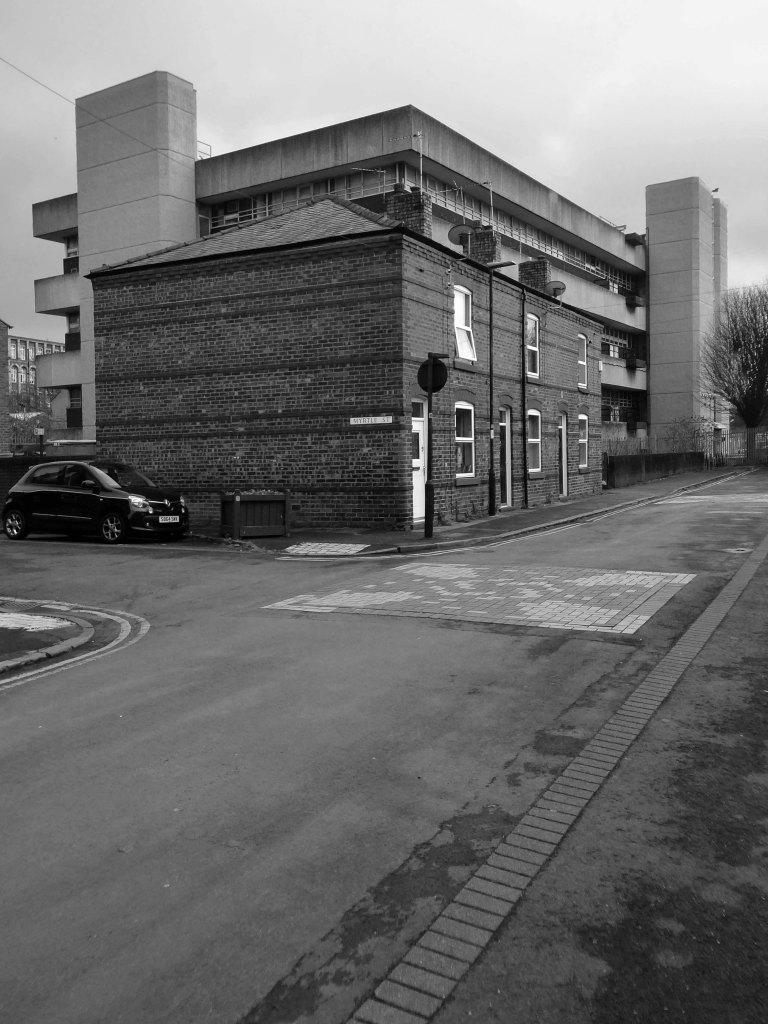
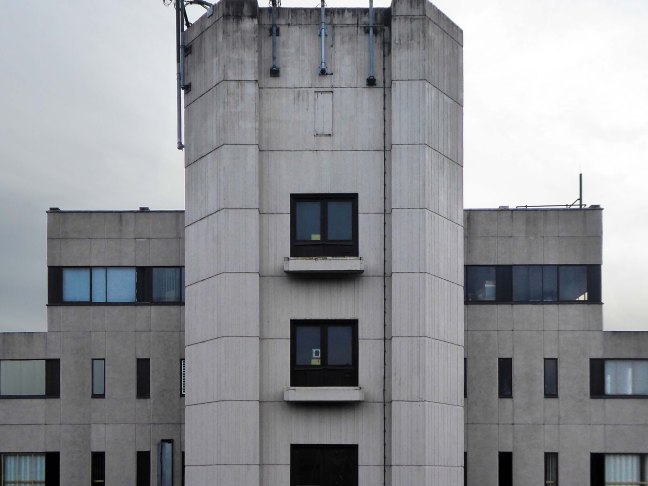
Almost not quite in the shadow of nearby neighbour the Hanley Tower, this little gem sits tucked away by the side of Queensway, minding its very own business.
The business of telecommunications.
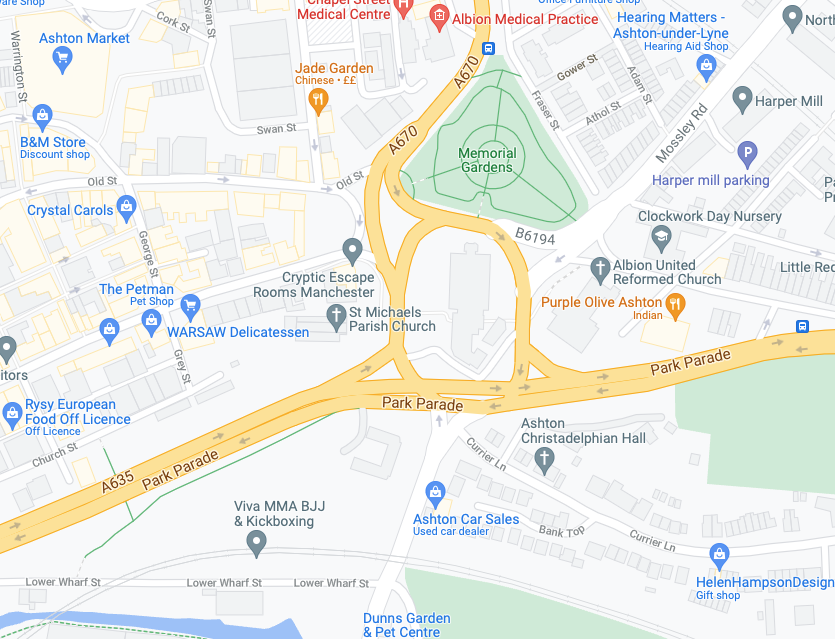
Just a short walk from the railway station let’s take a look.































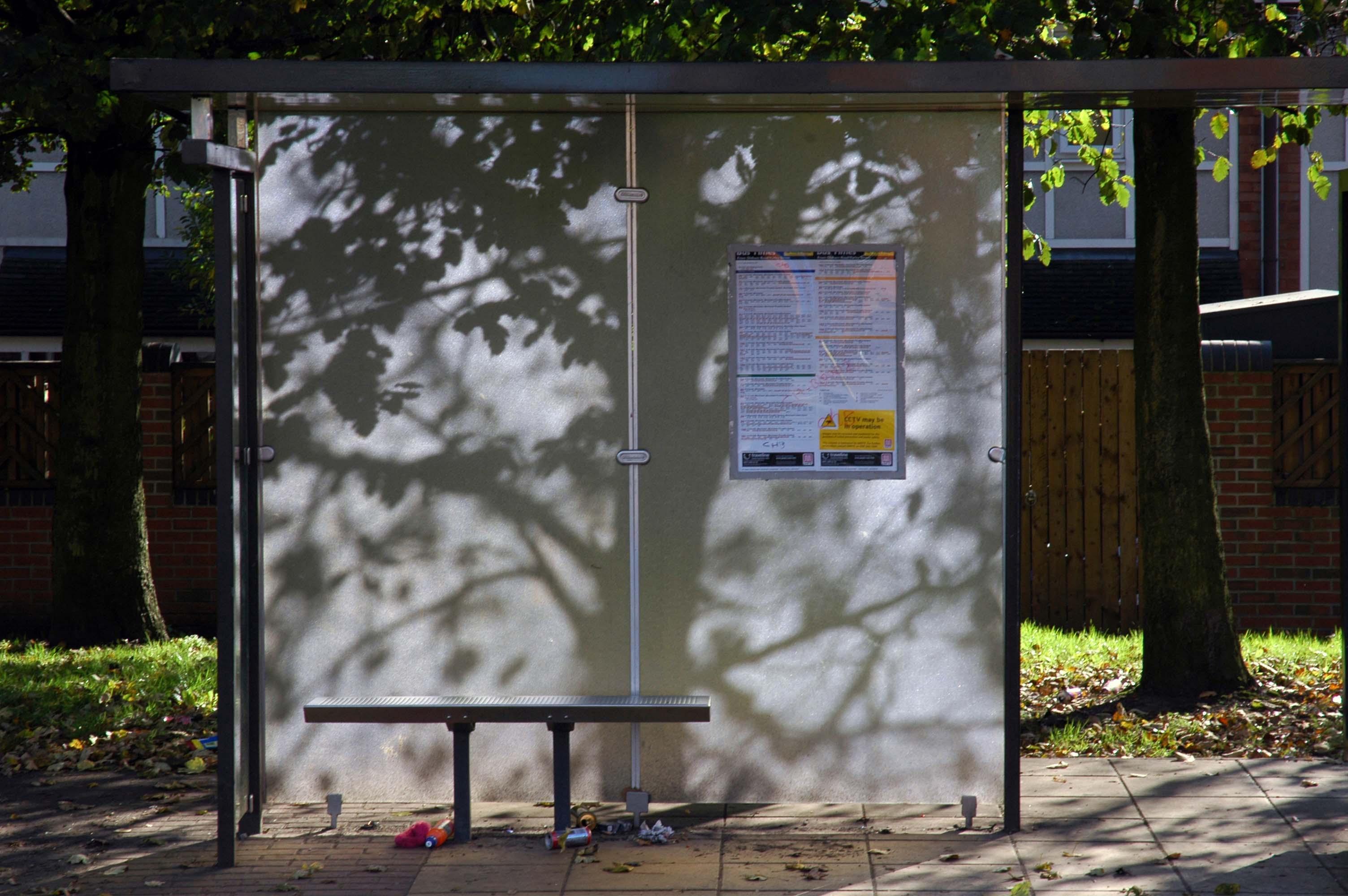
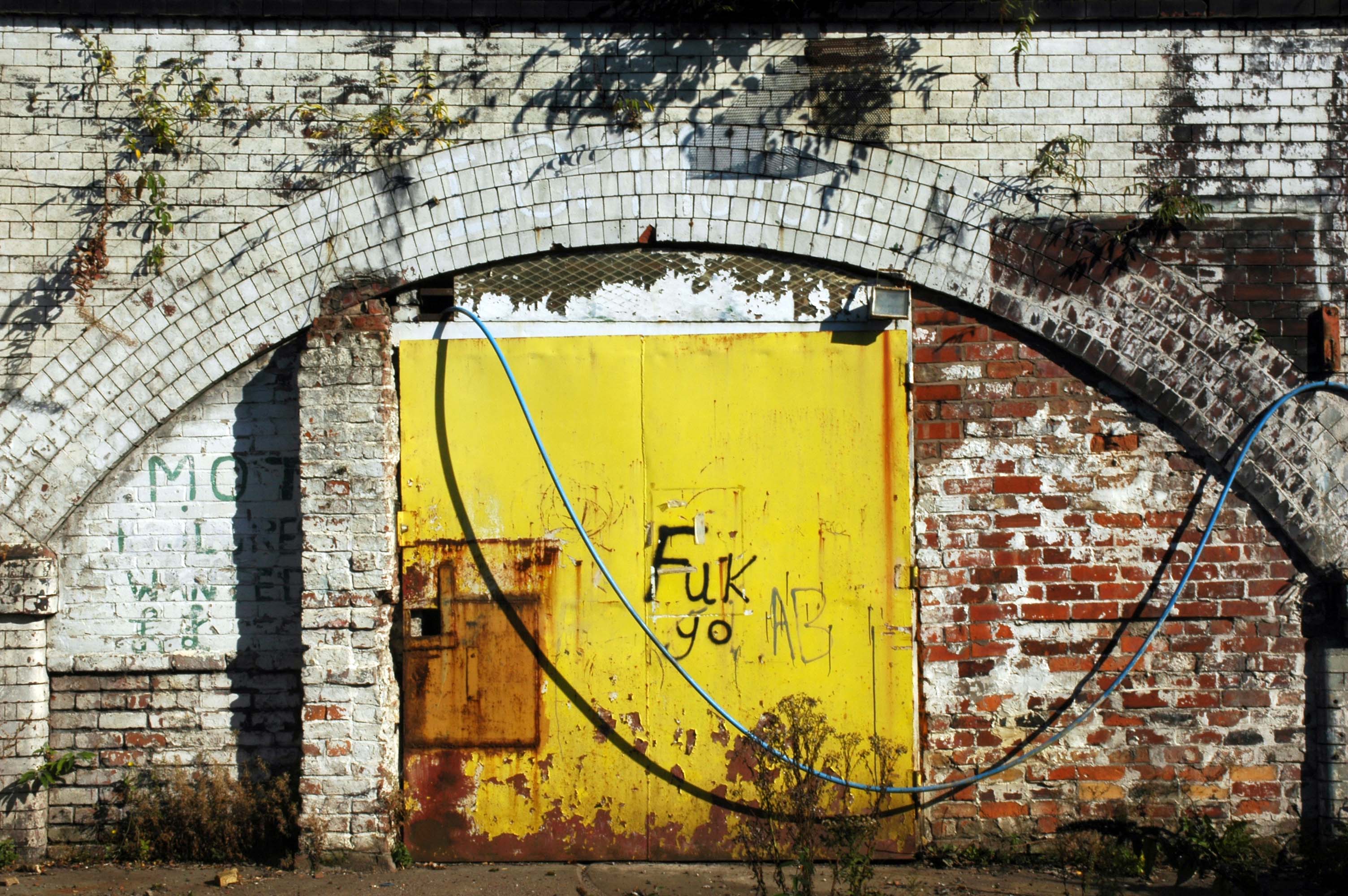
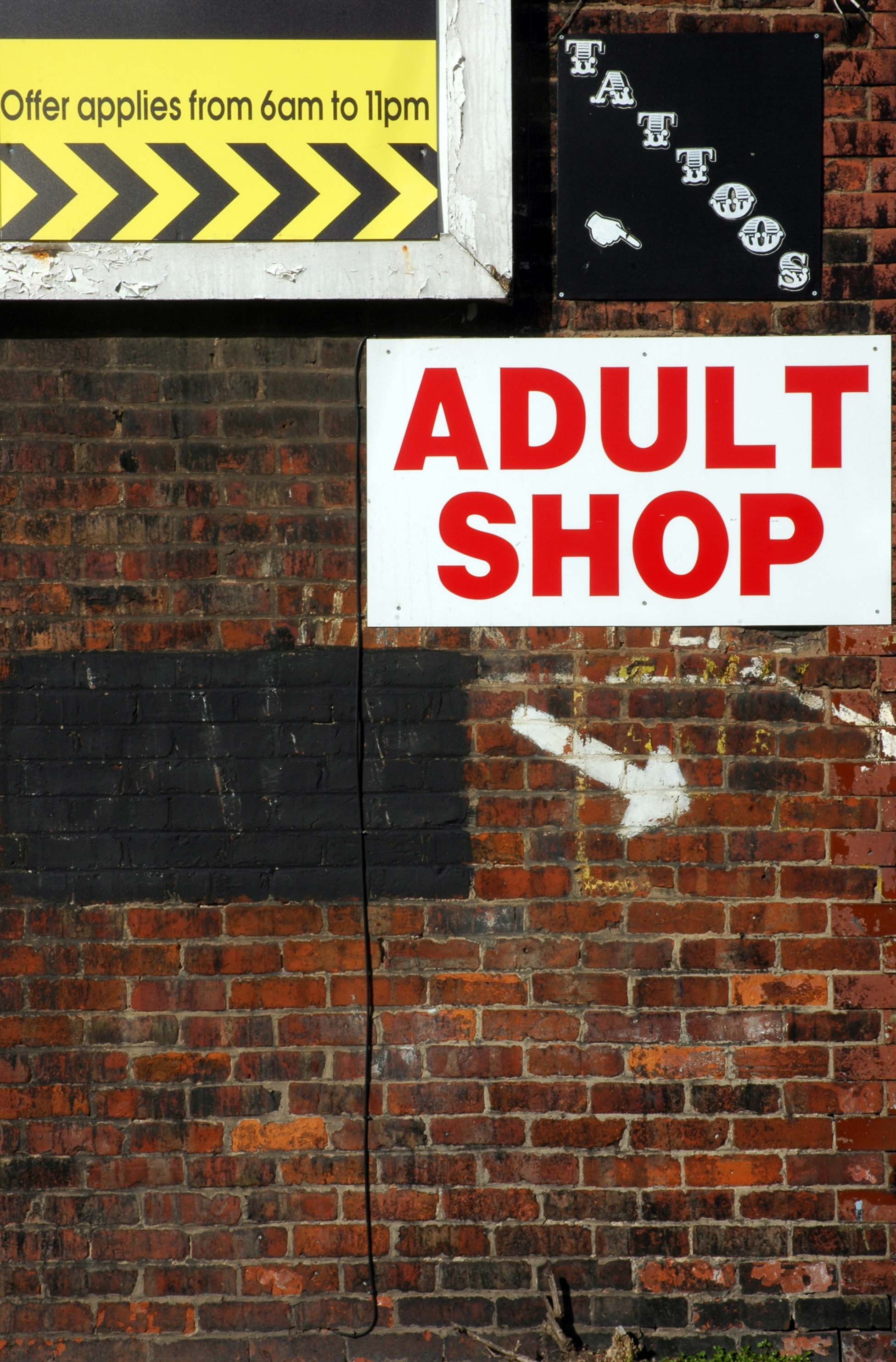
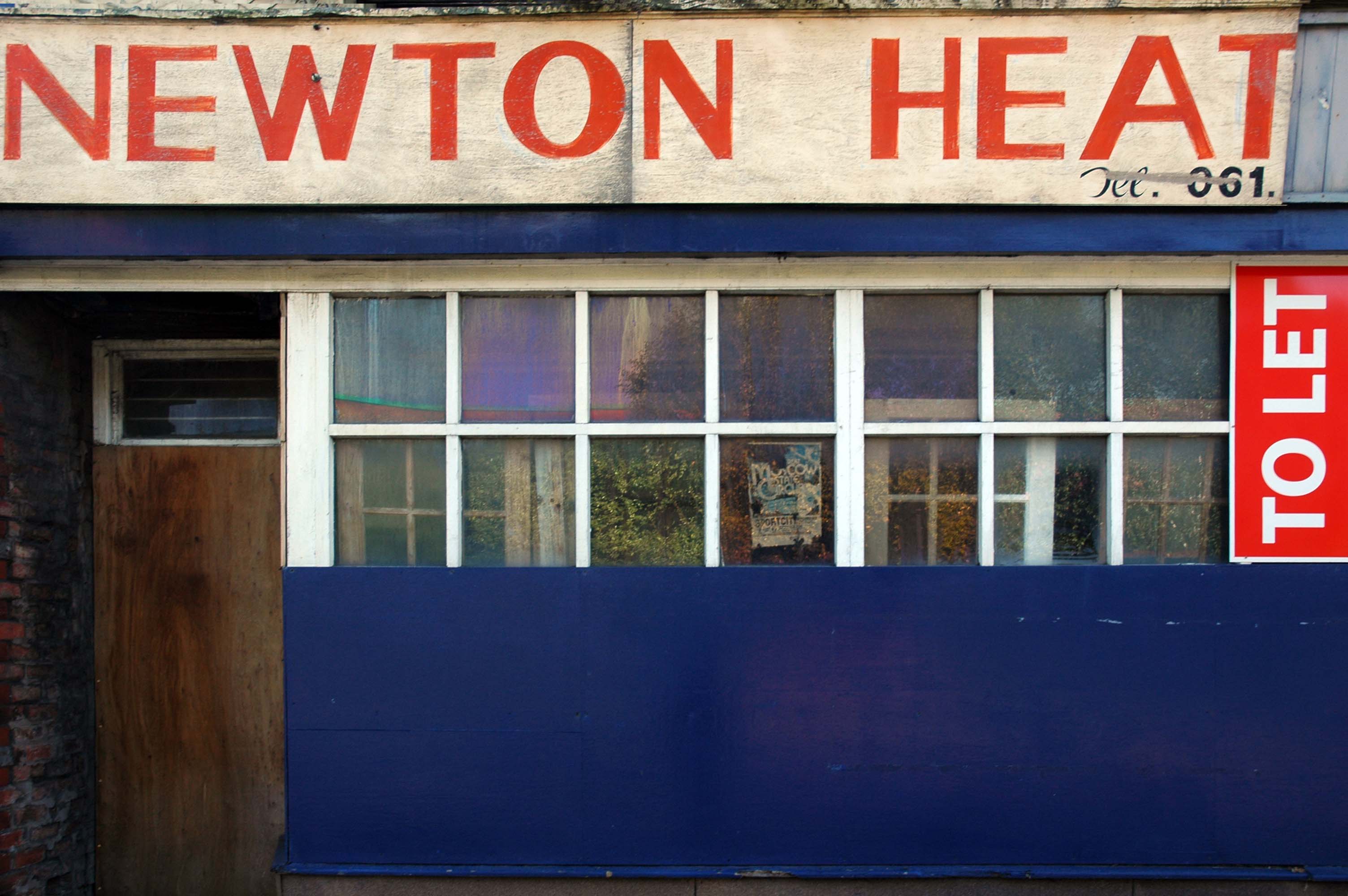






































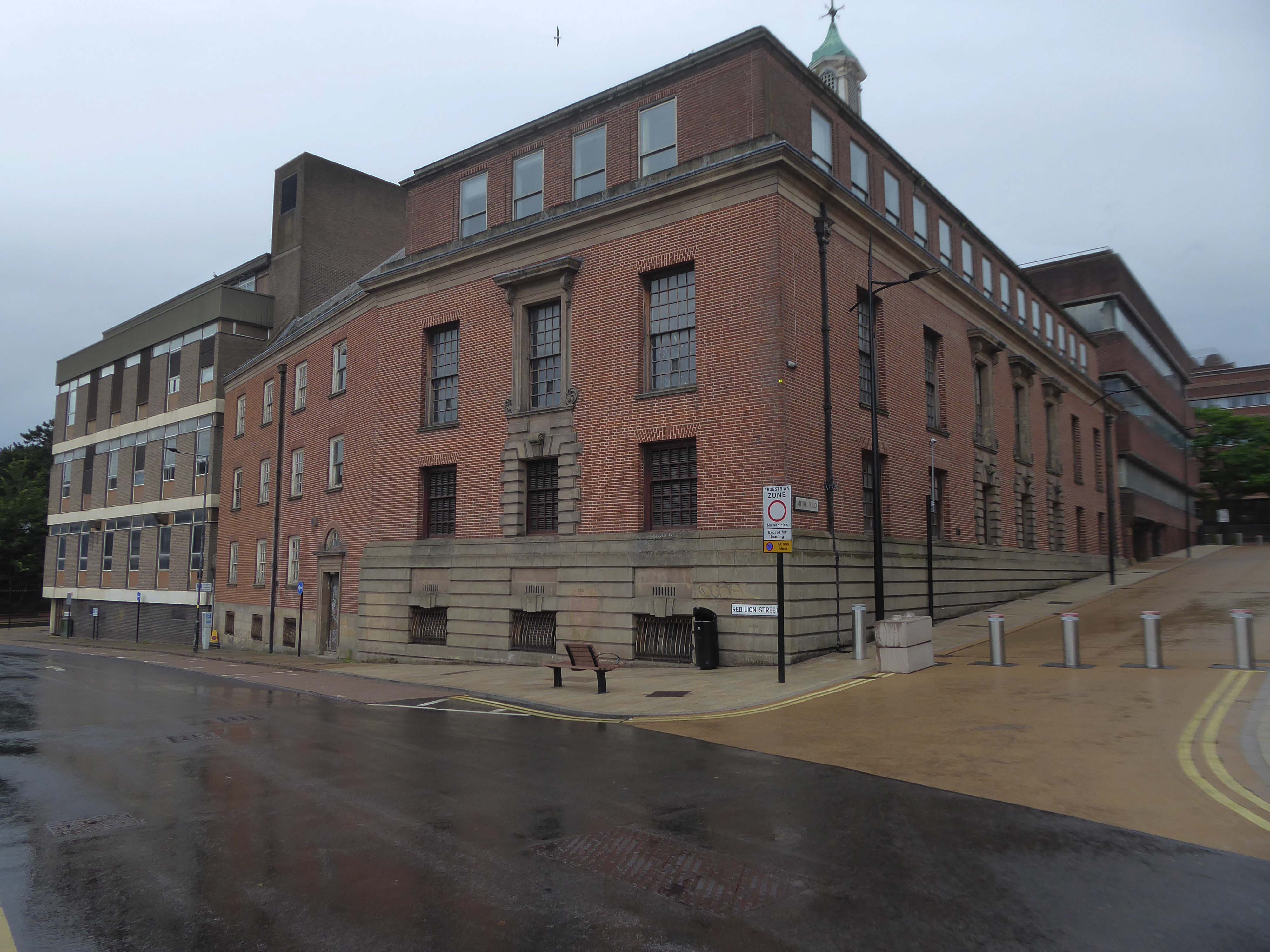
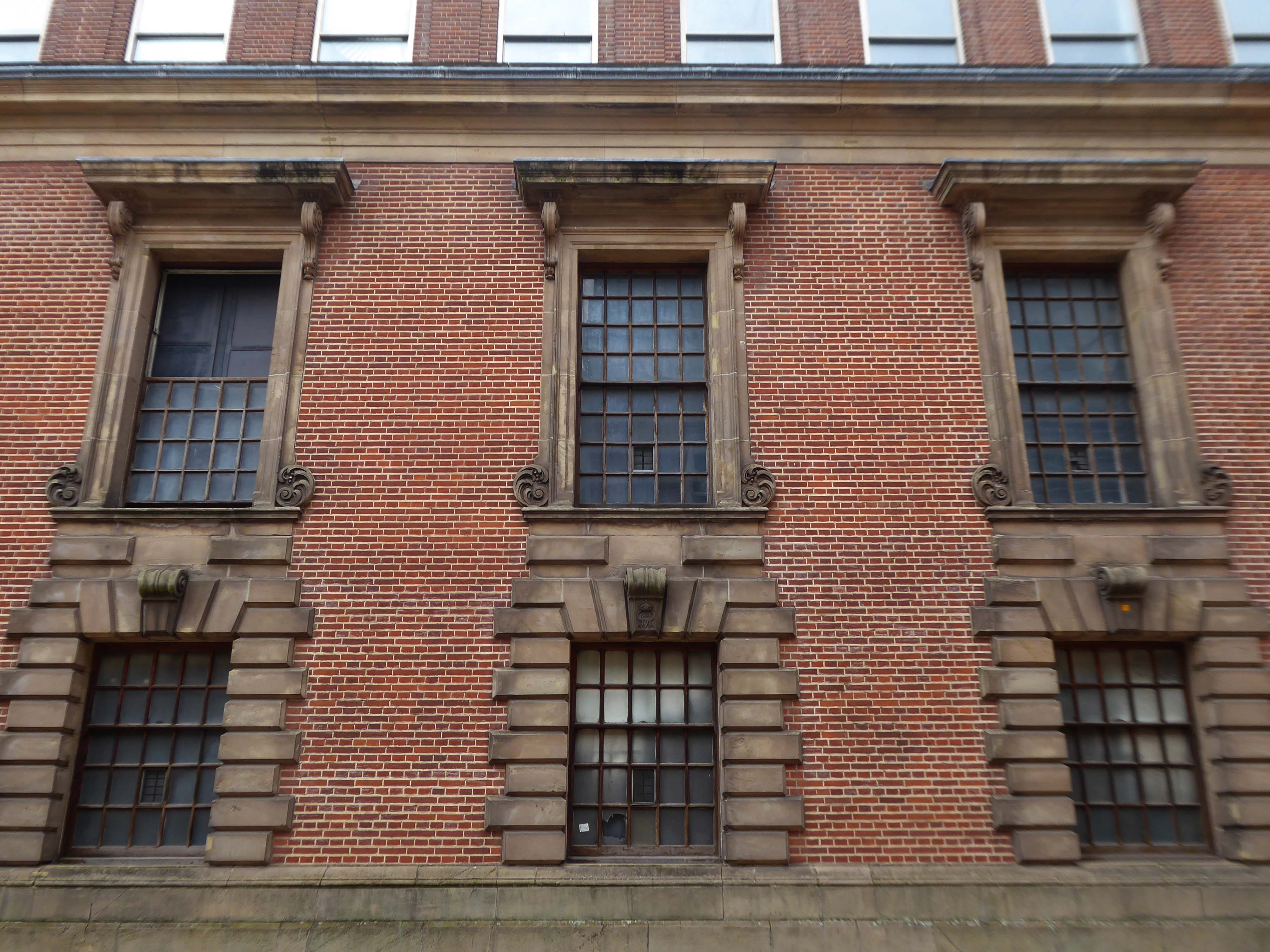
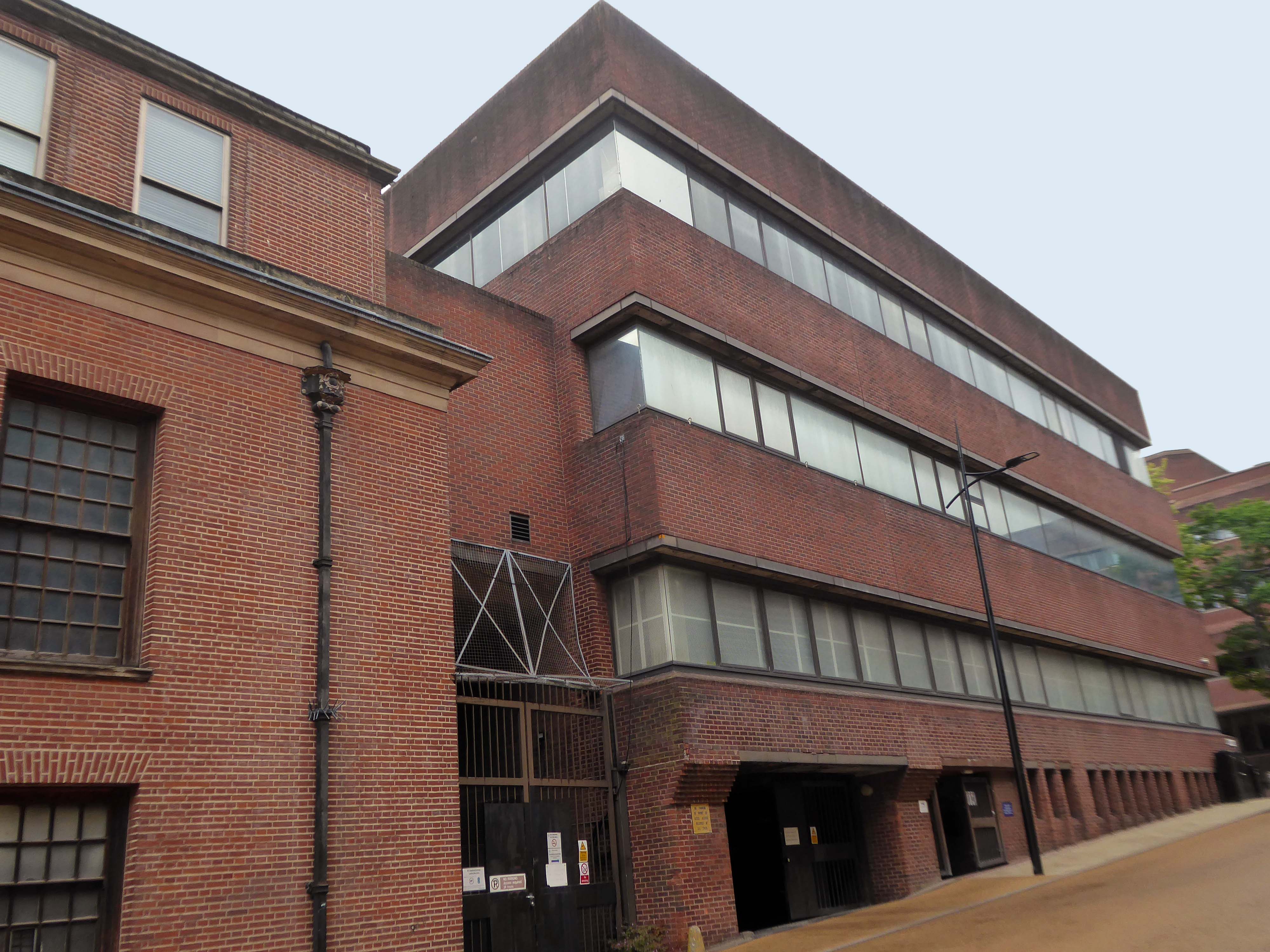
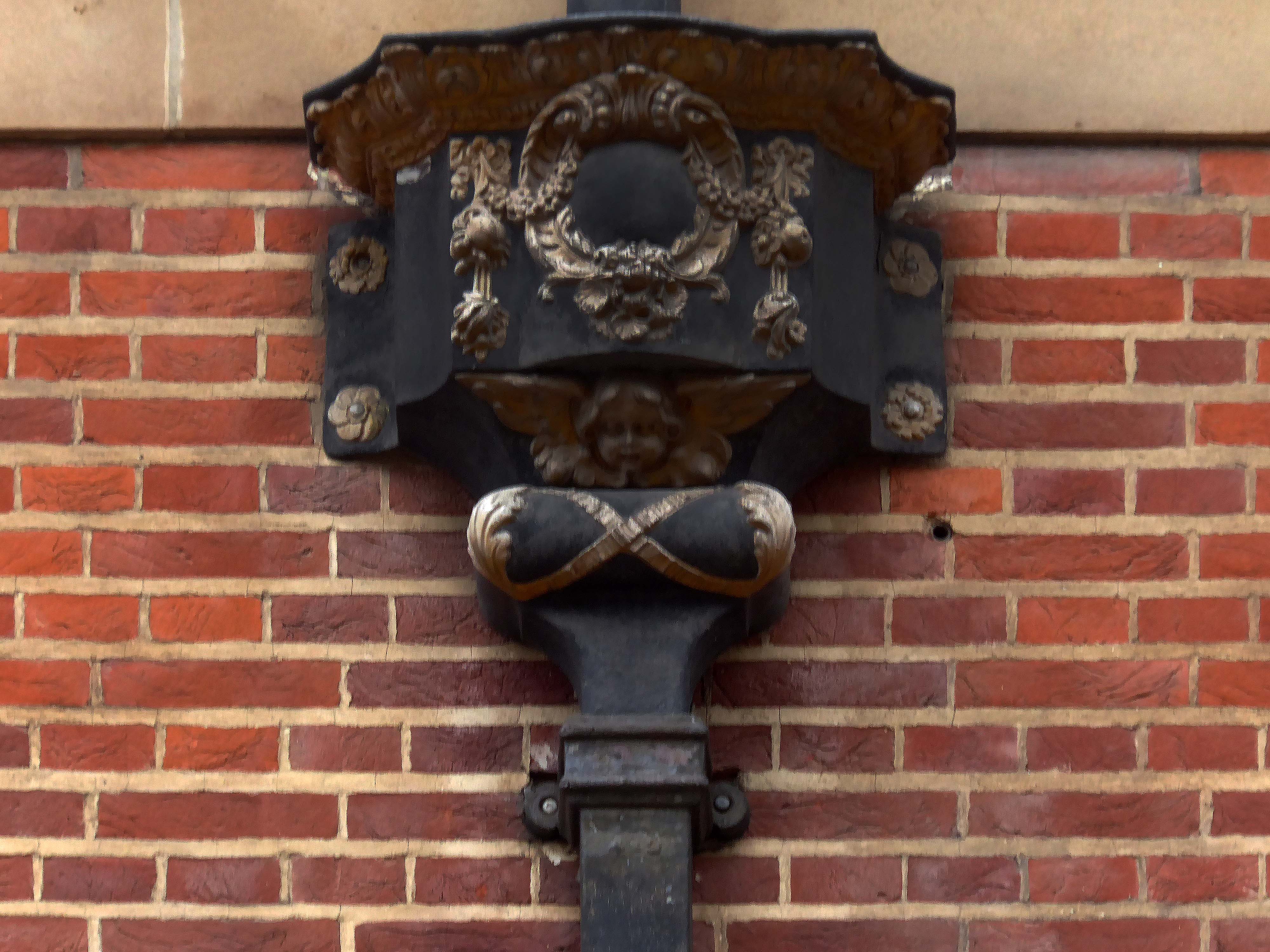
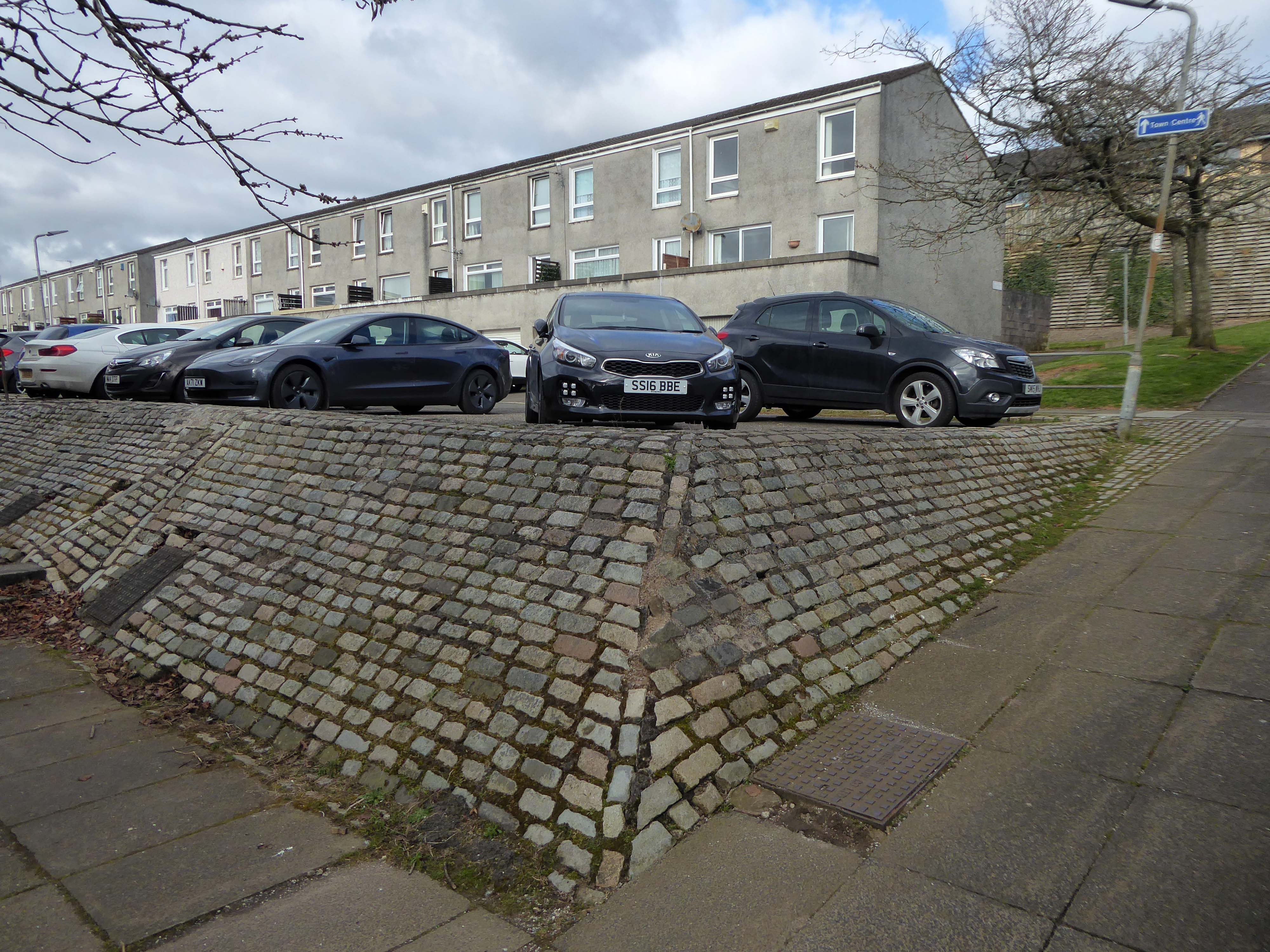
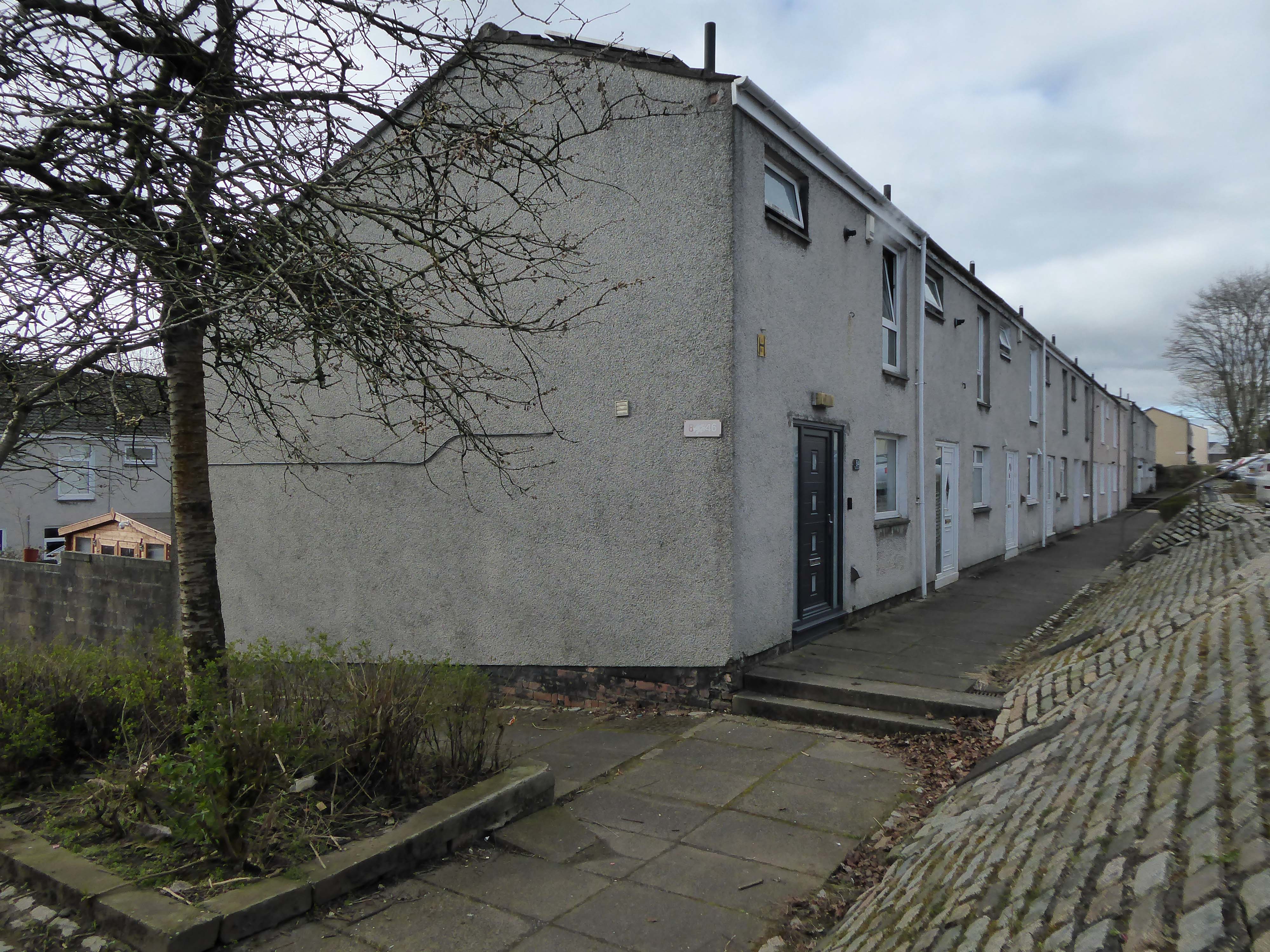
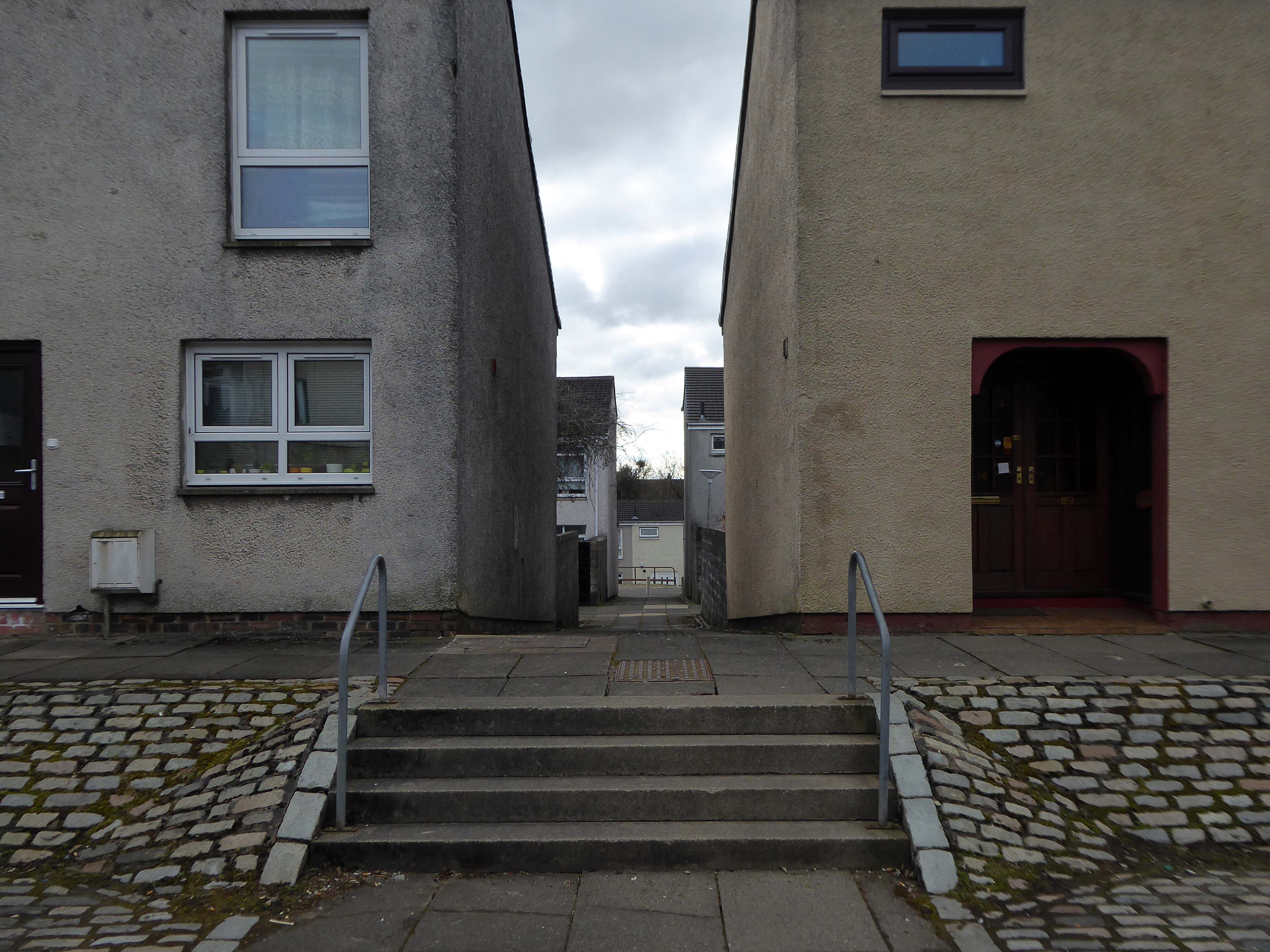
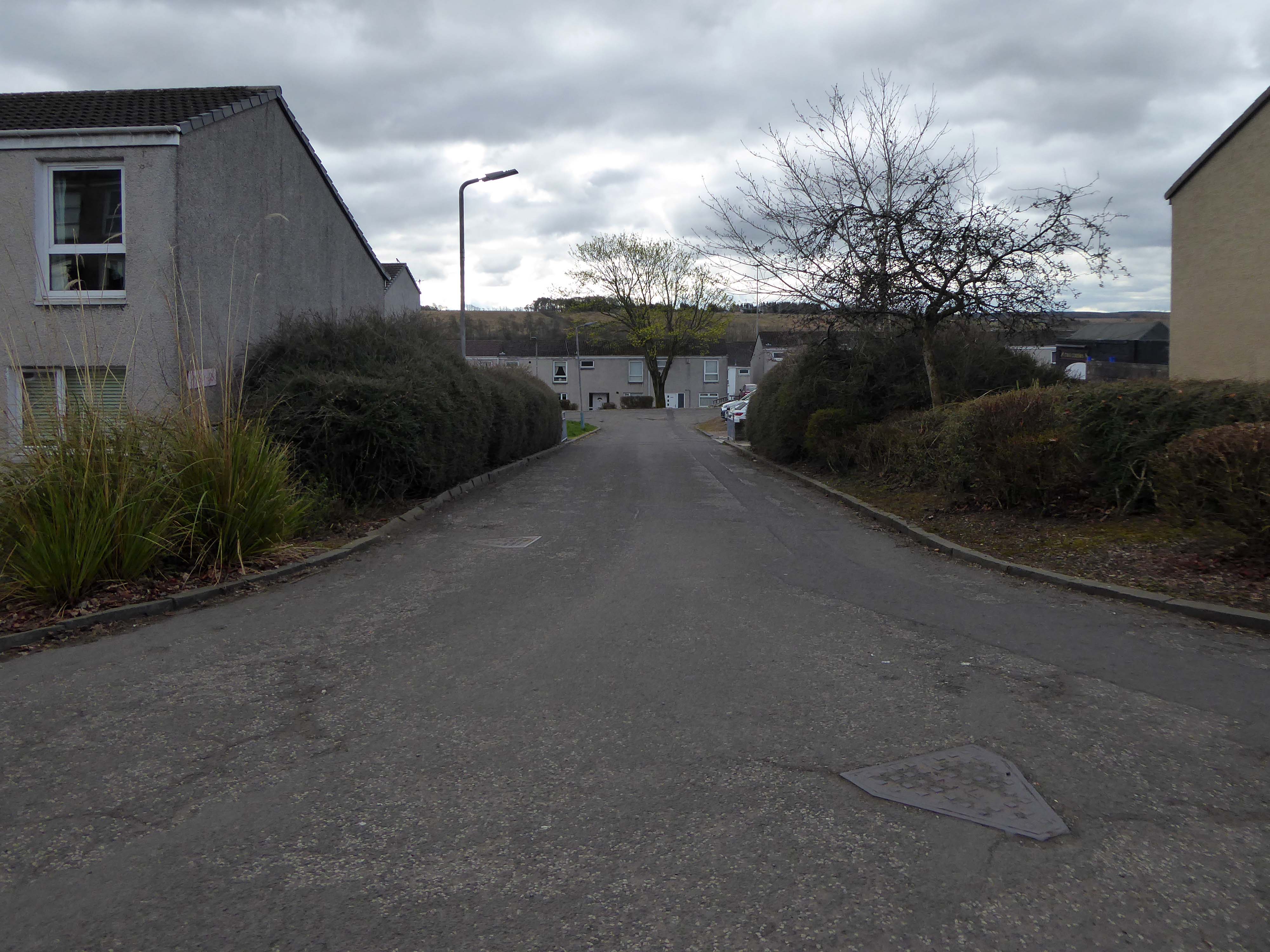
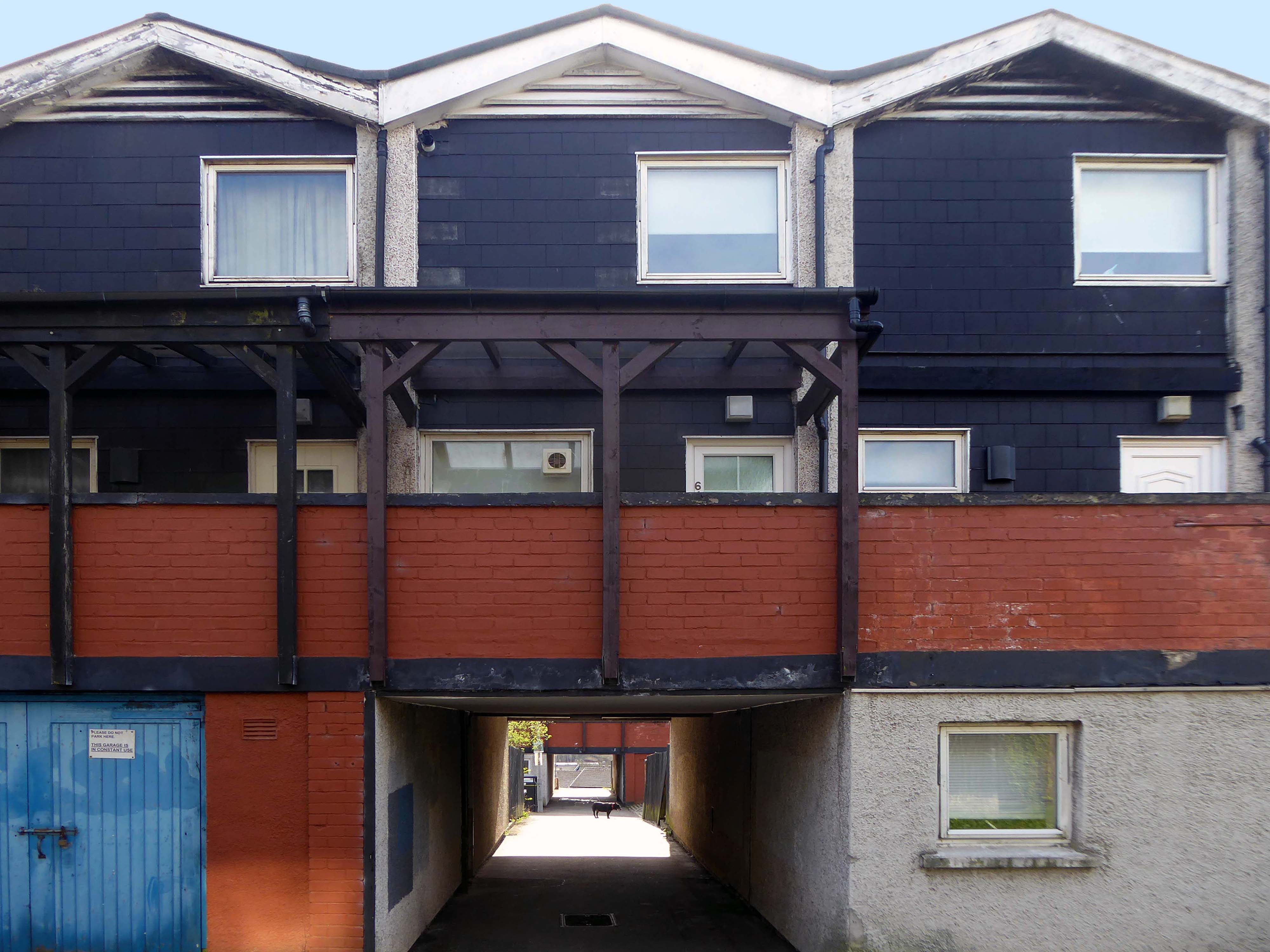
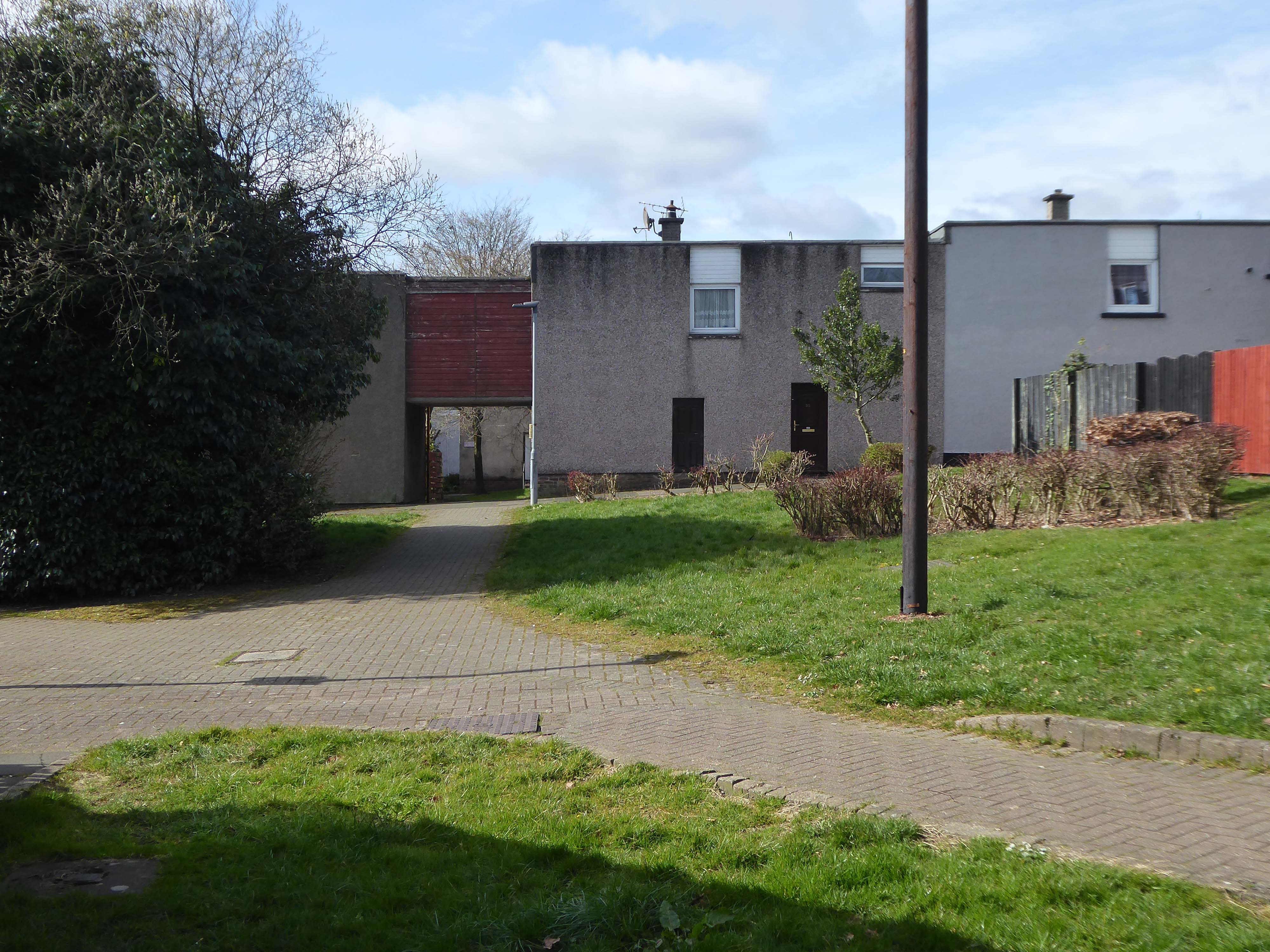
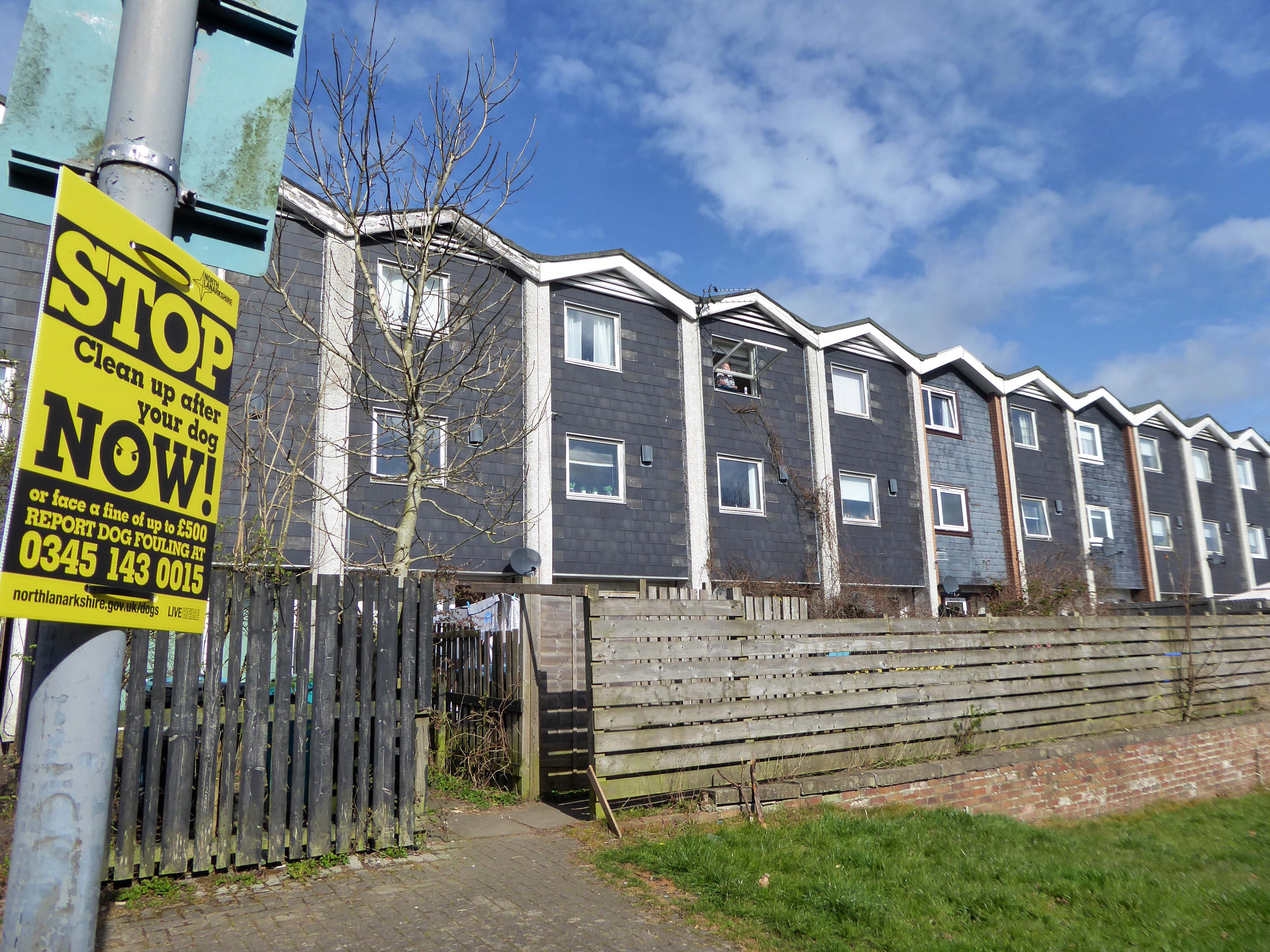
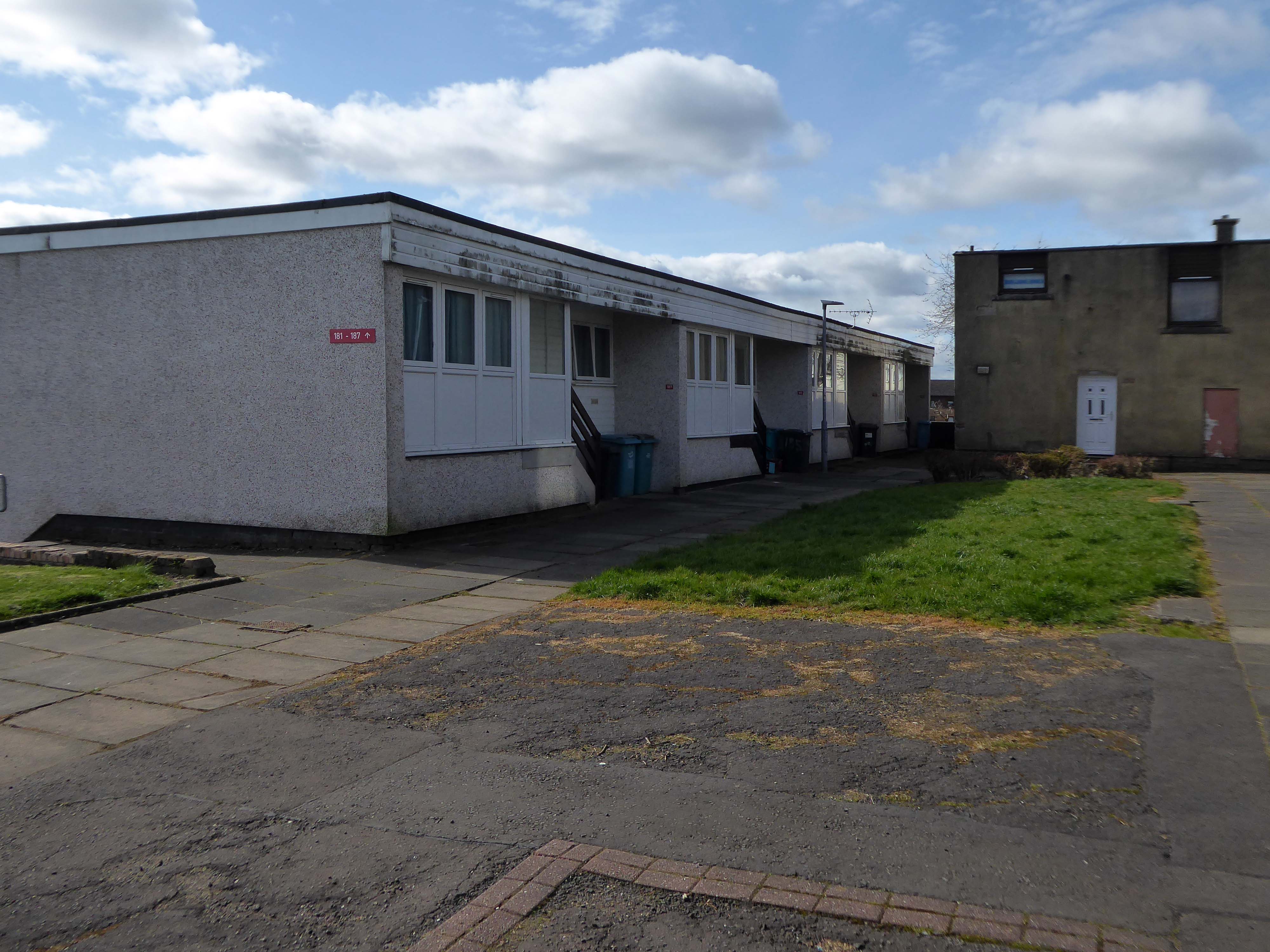

























 Modern Mooch