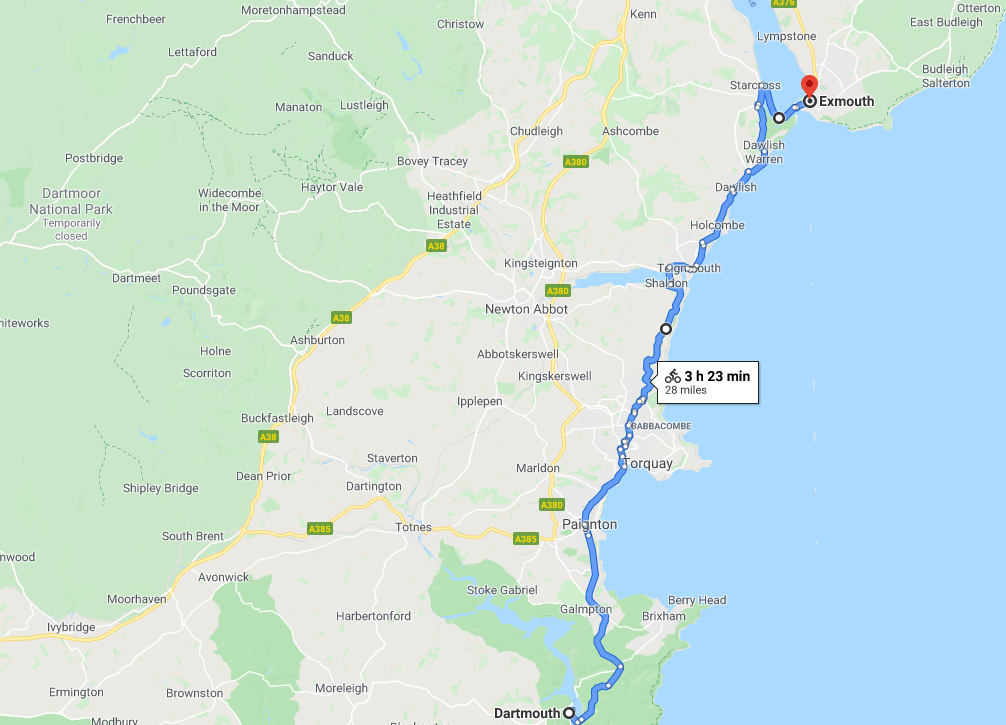
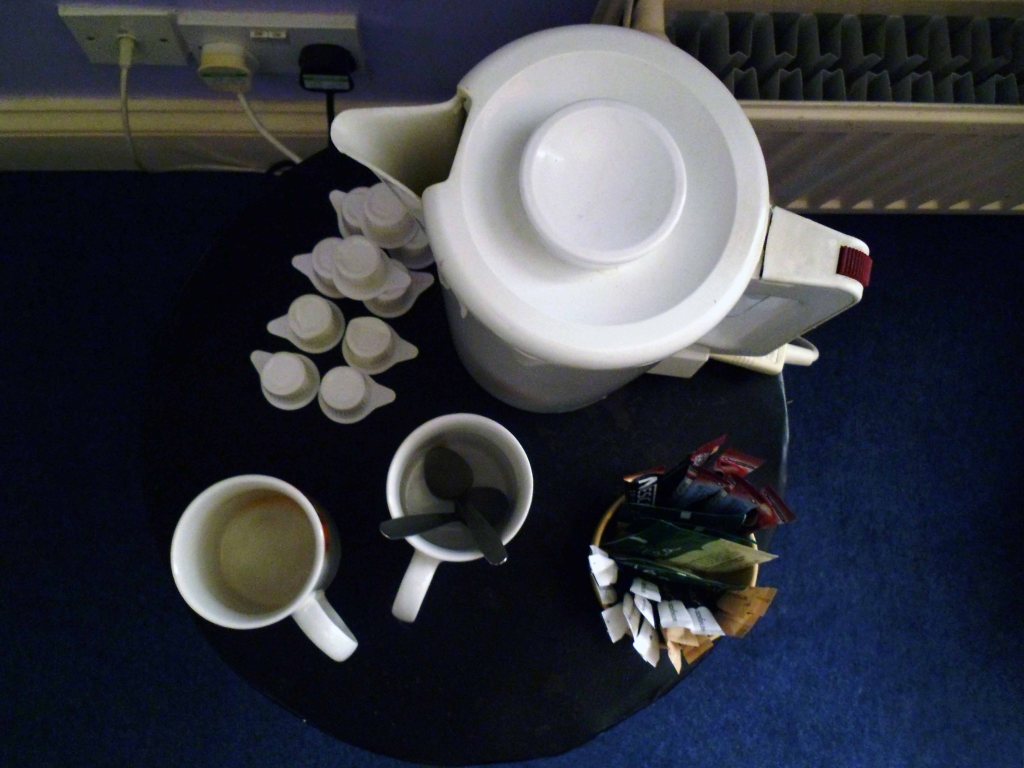
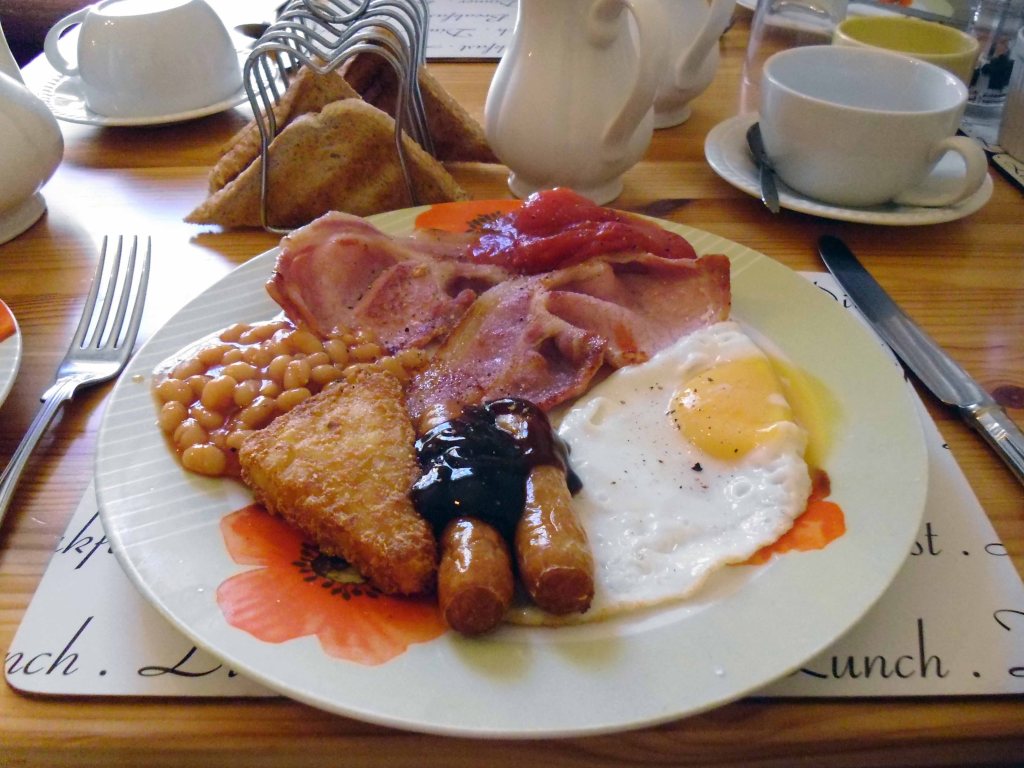
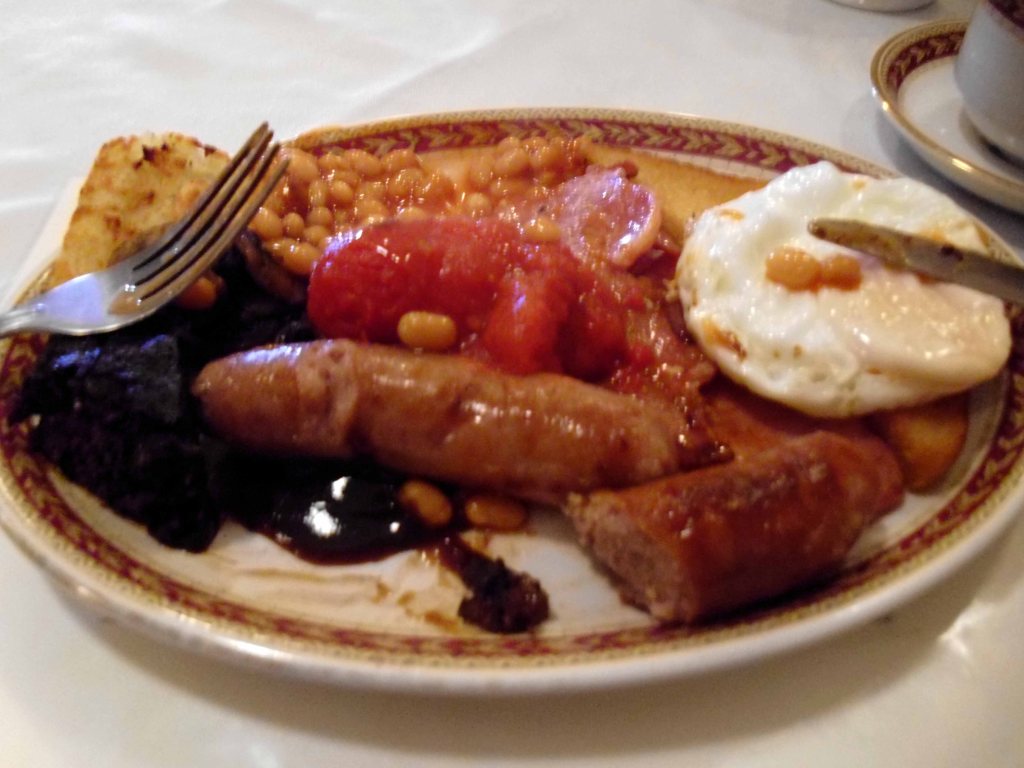
Get down for breakfast – I personally regret the untimely passing of fried bread and the appearance of the so-called hash brown.
Originally, the full name of the dish was hashed brown potatoes or hashed browned potatoes, of which the first known mention is by American food author Maria Parloa in her 1887 Kitchen Companion, where she describes the dish of hashed and browned potatoes as a fried mixture of cold boiled potatoes which is folded like an omelet before serving.
Years later we got them.
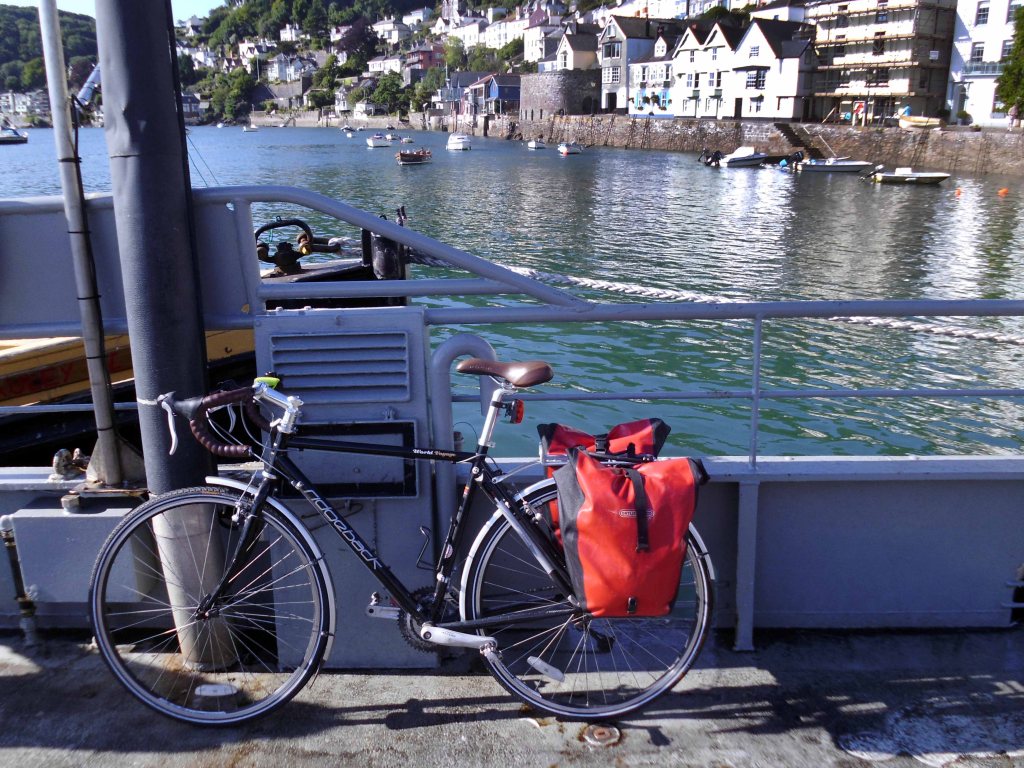
Thursday 30th July 2015 and the sun is a shining brightly on the Dart.
Get on the ferry!
We’re off again.
The Monkey Puzzle tree Araucaria araucana is one of the oldest trees in the business – of being a tree.
It is native to central and southern Chile, western Argentina, and a welcome visitor to the English Riviera.
The hardiest species in the conifer genus. Because of the prevalence of similar species in ancient prehistory, it is sometimes called a living fossil.
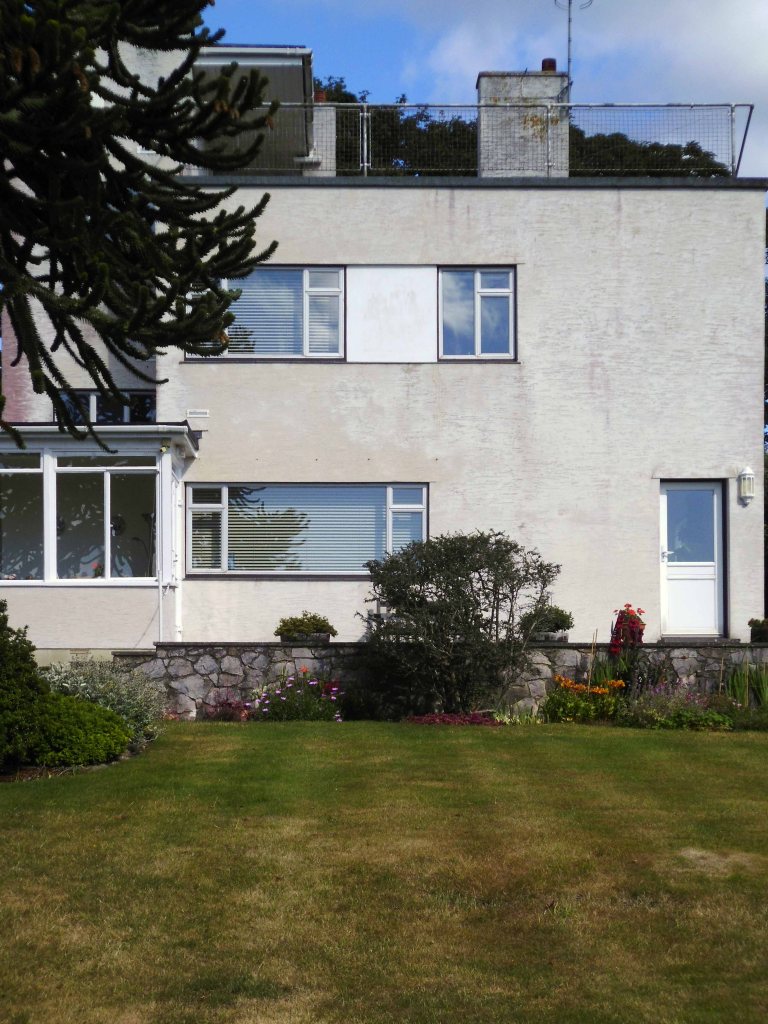
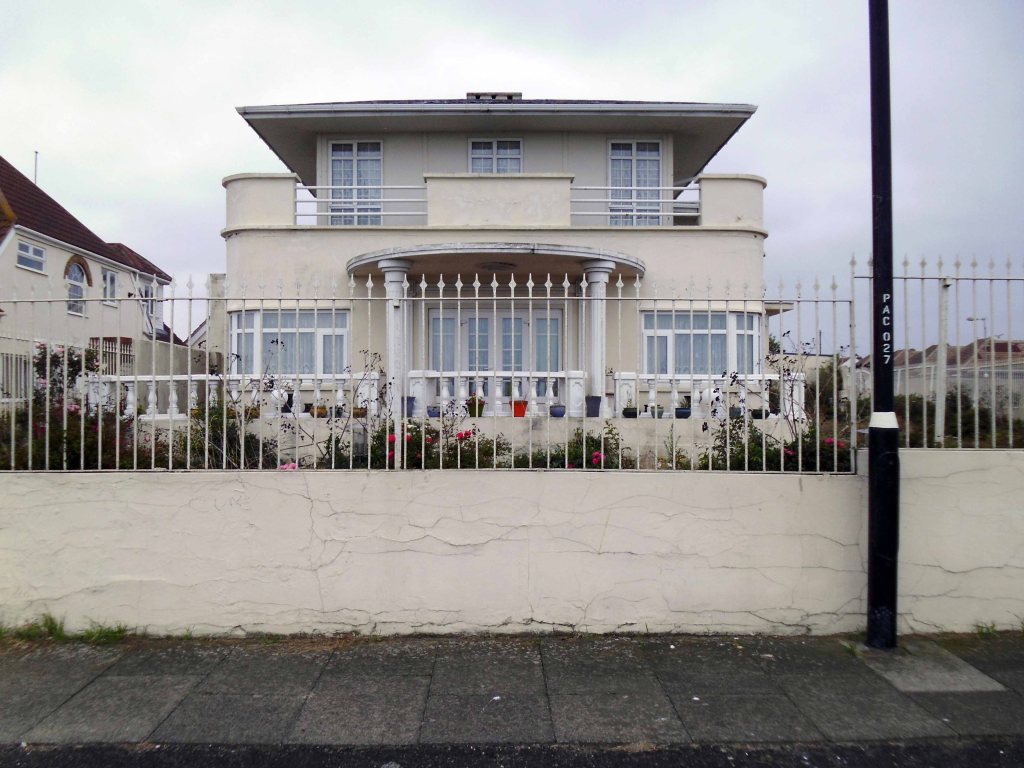
The refined white rectilinear box shaped houses of the genus Seaside Moderne, are an offspring of the International Style, to be found all over the globe.
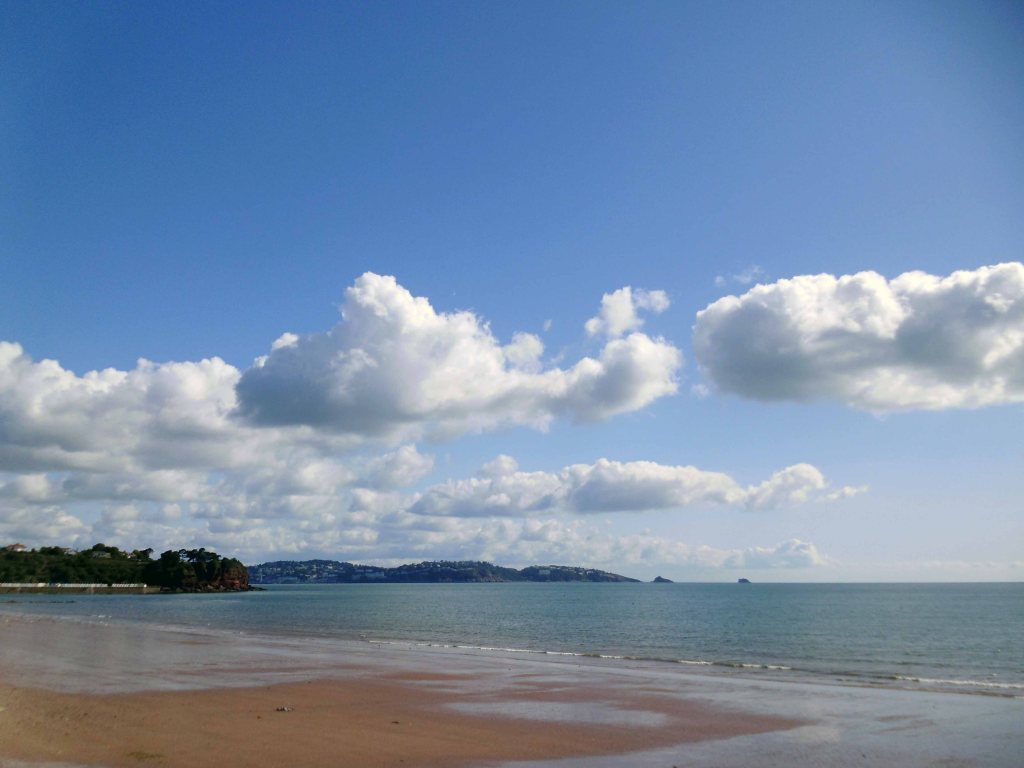
The sea covers seventy percent and rising, of our planet.
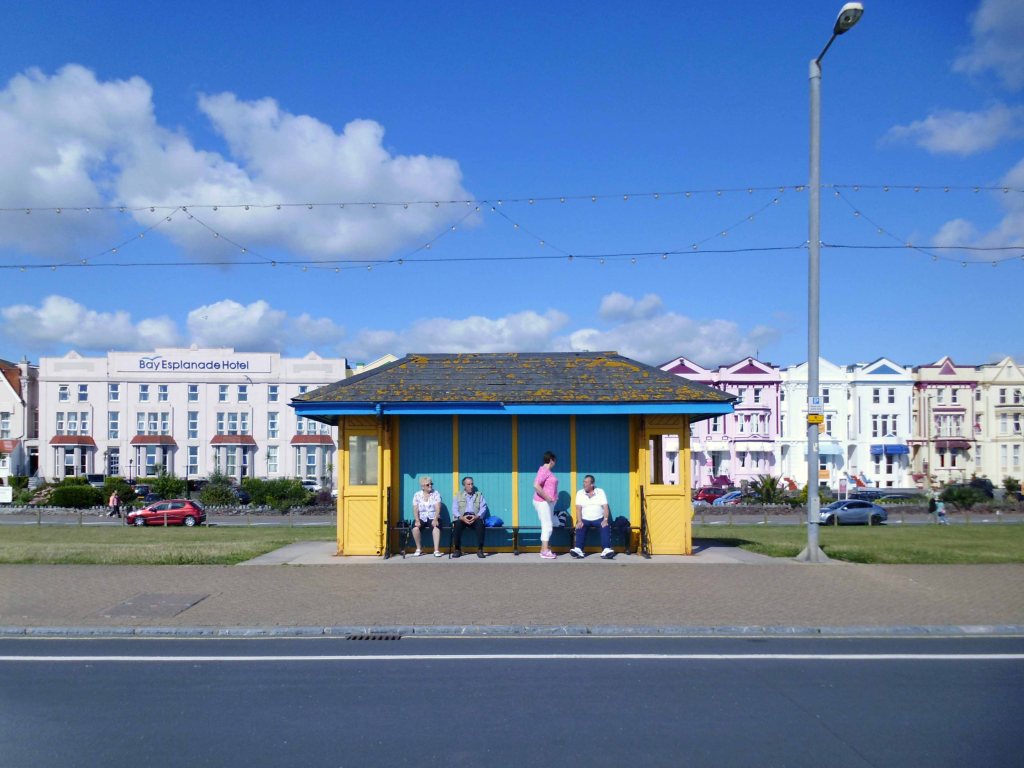
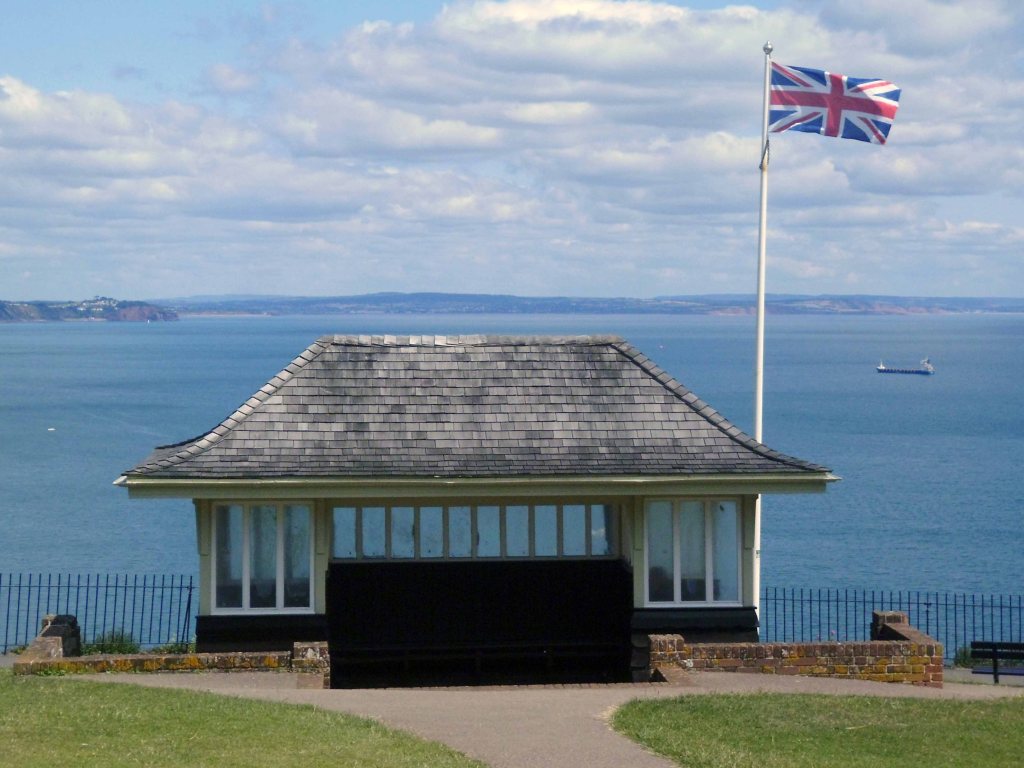
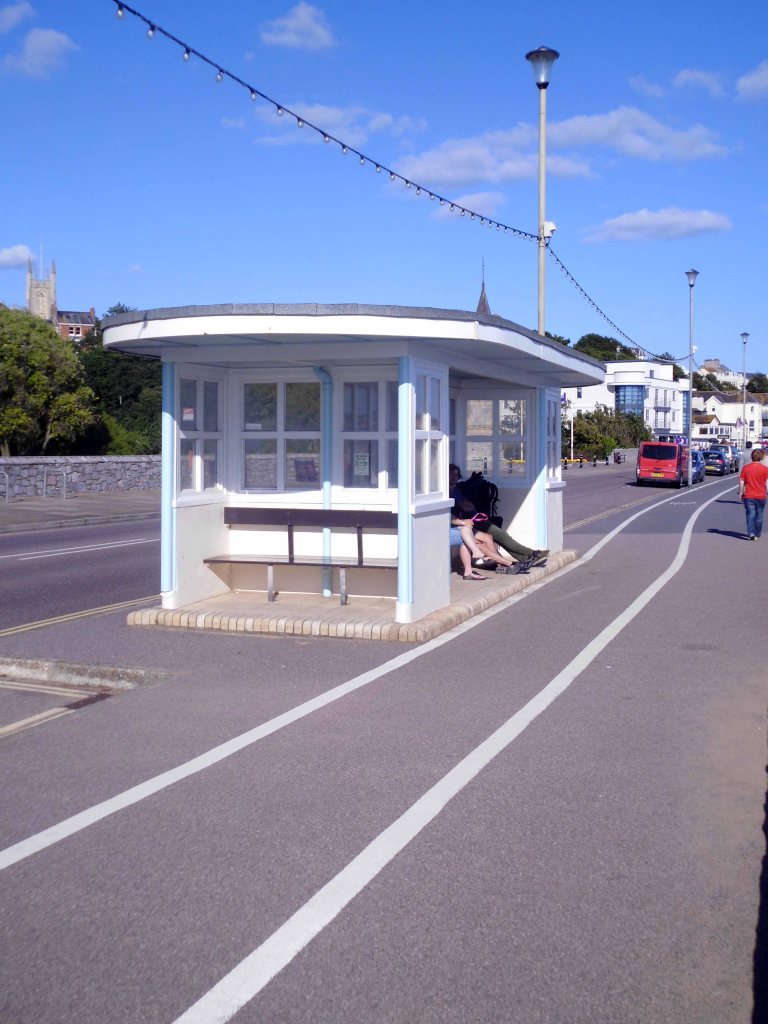
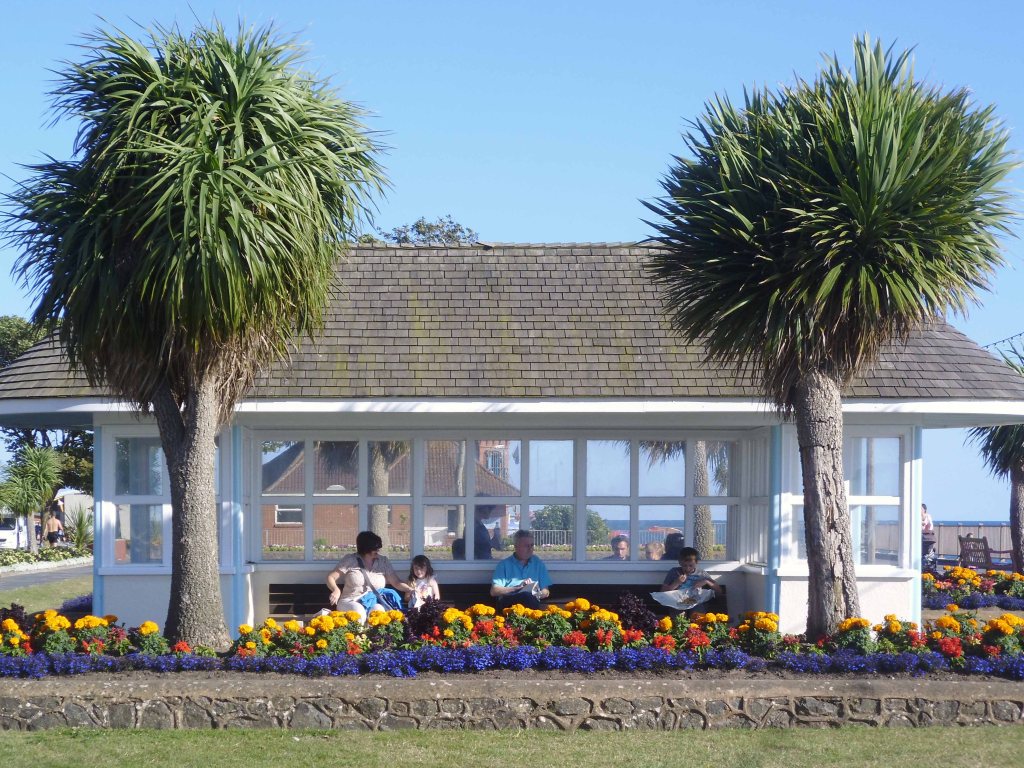
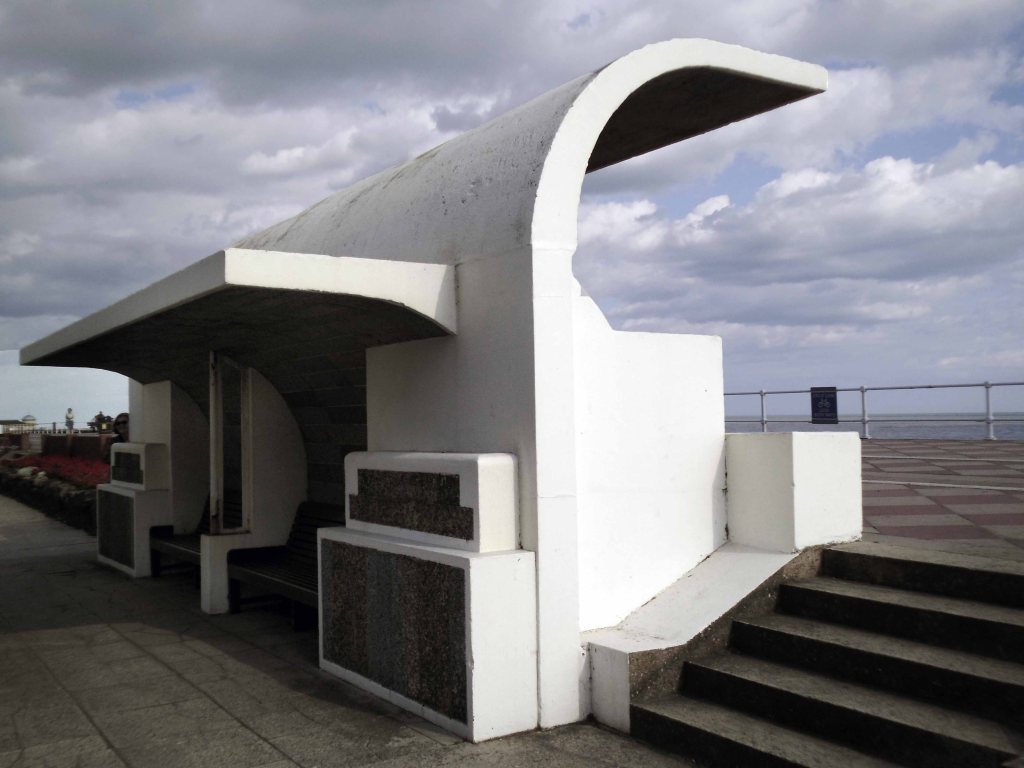
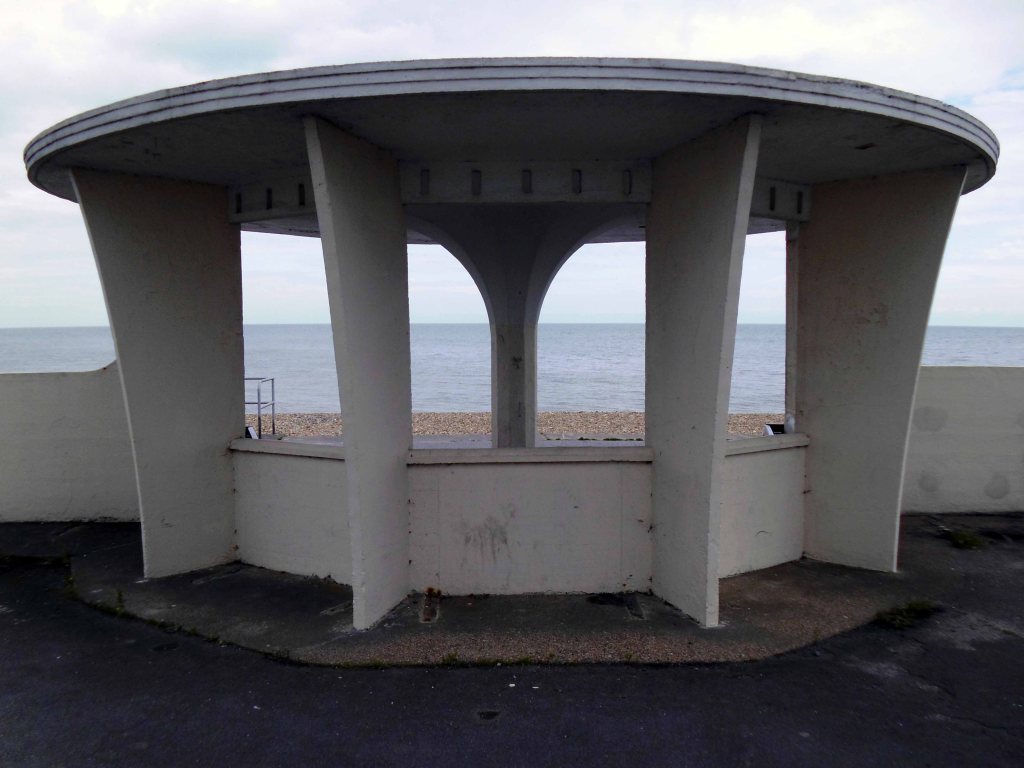
Seaside shelters are ubiquitous along our coast and form a typology determined by a rich variety of wild and wonderful Municipal tastes – flat, broke, baroque, modern and functionalist, hardly two the same.
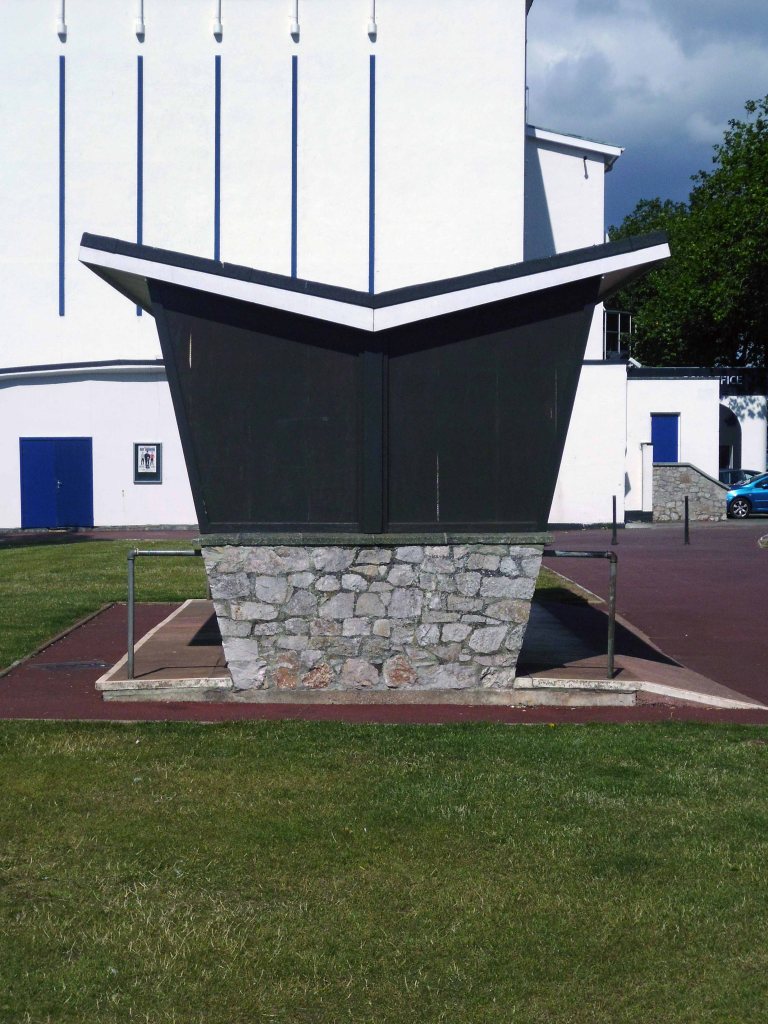
Electricity is a popular power source both locally, nationally and internationally.
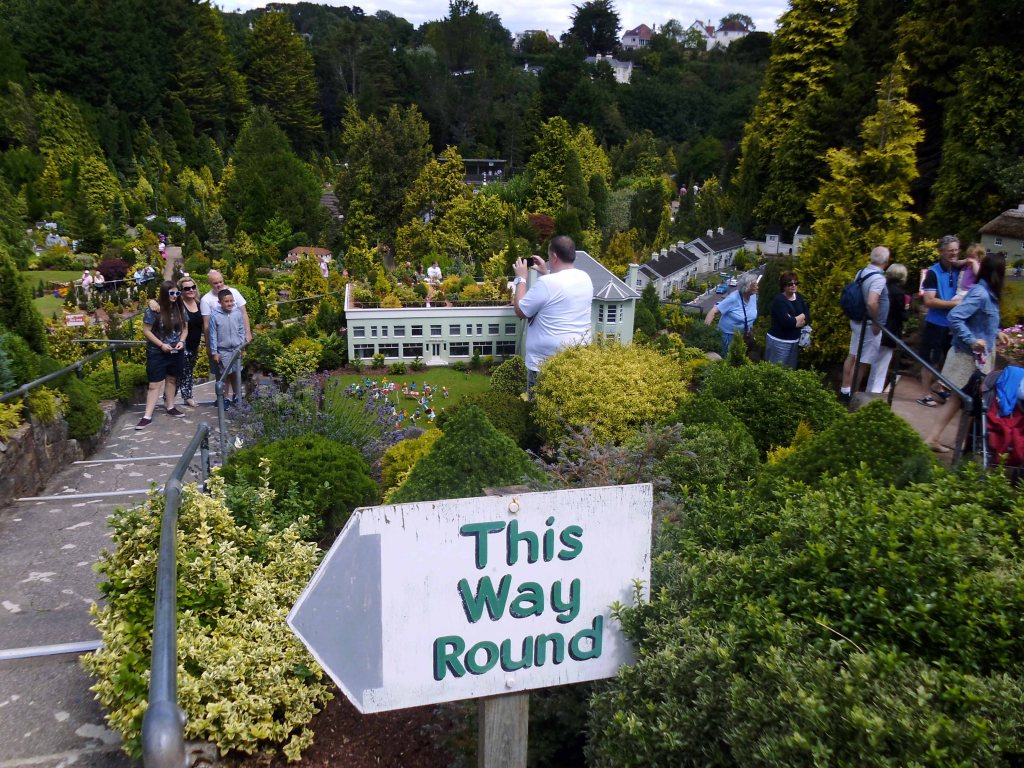
Model villages originated in seventh century China, there is only one way around a model village.
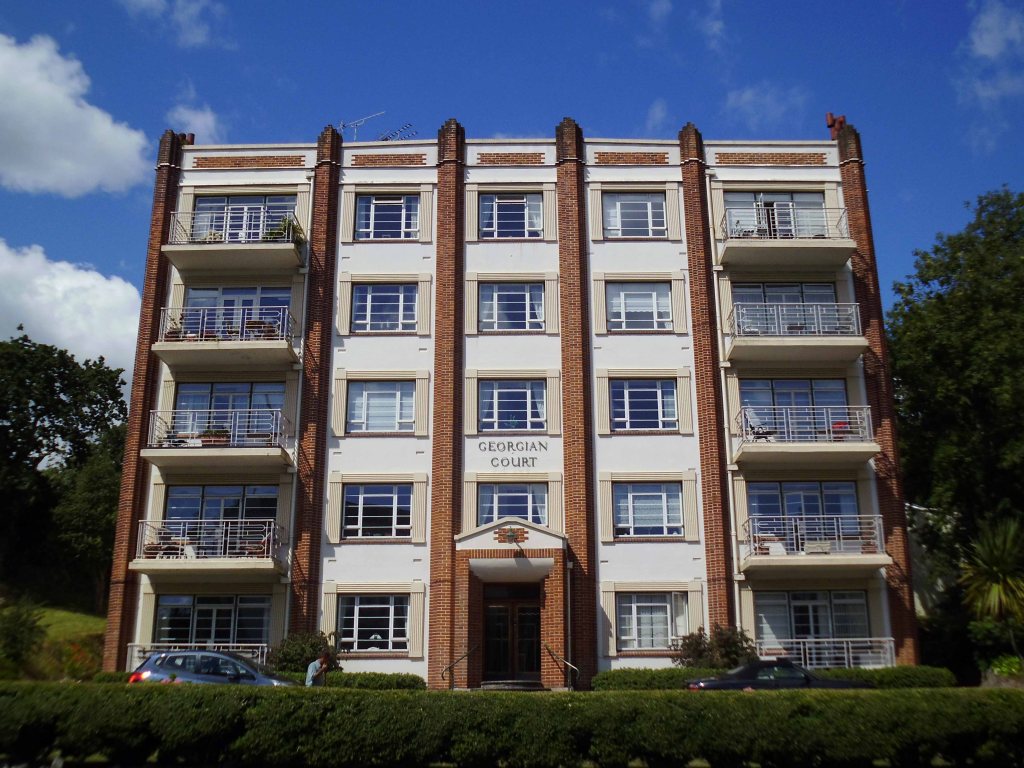
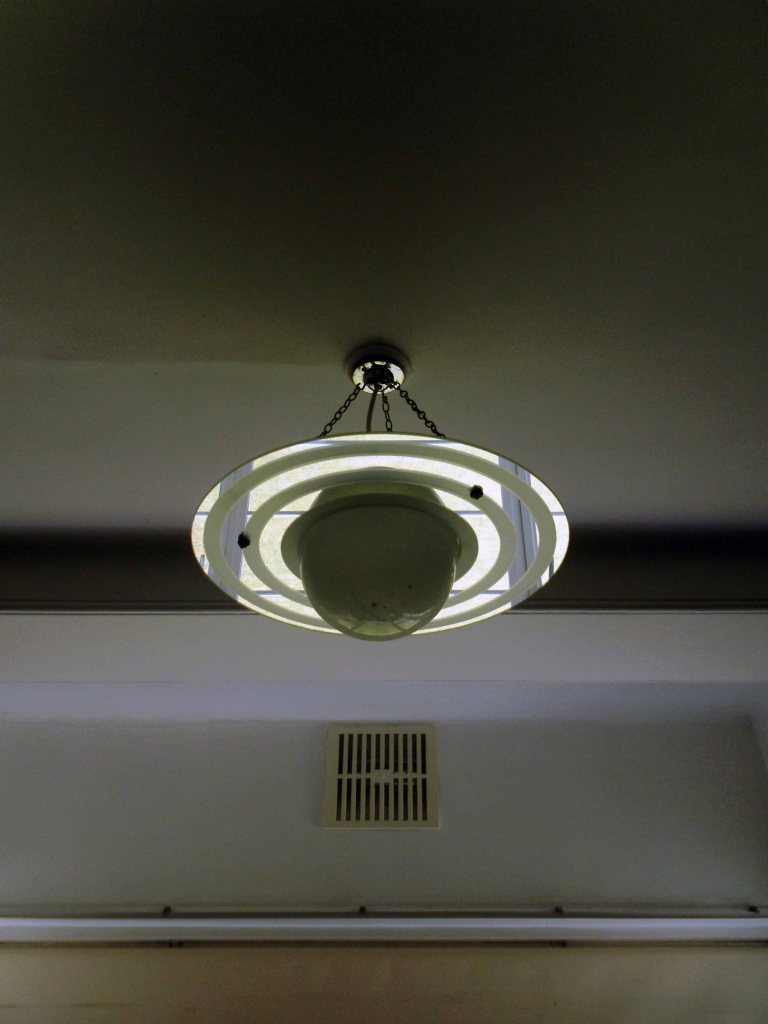
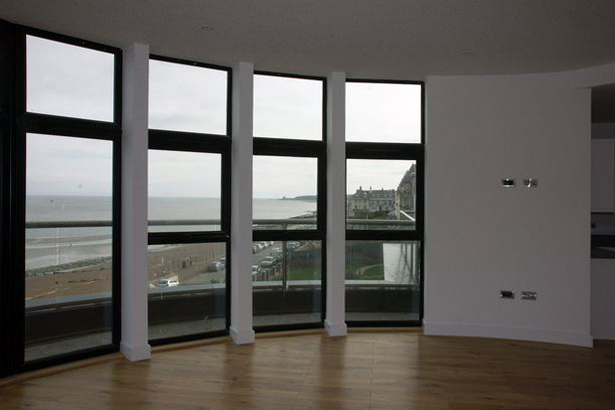
This Georgian Court is situated just outside Torquay, a restrained Neo Classical/Deco brick and render apartment block – the couple I chatted to, very kindly offered to show me around the place.
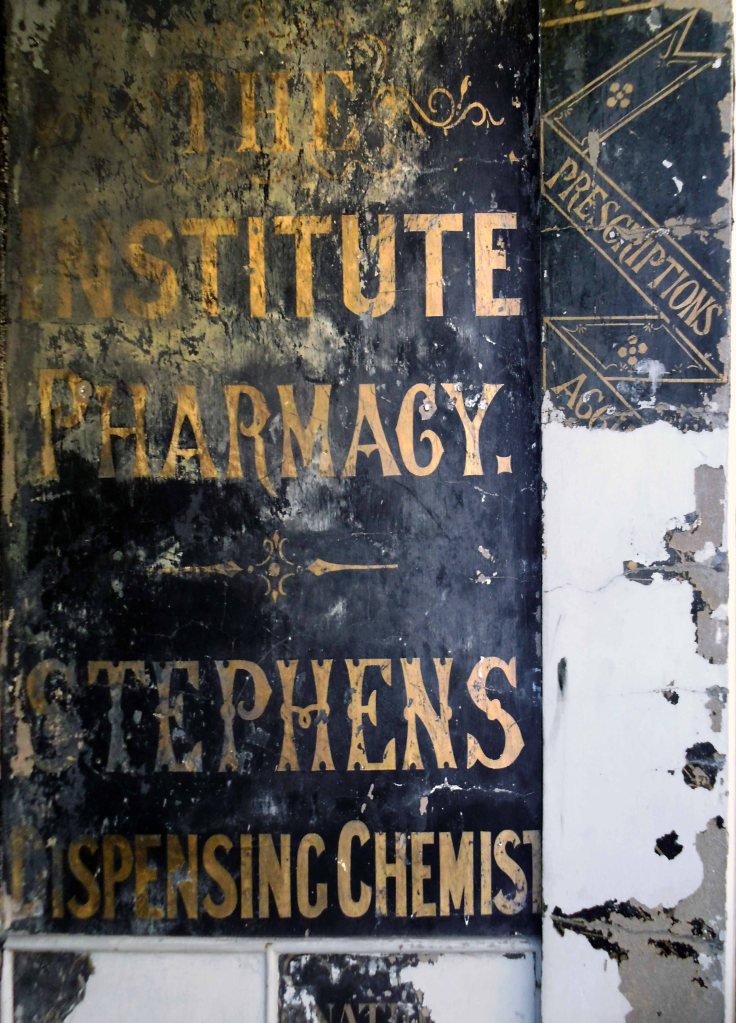
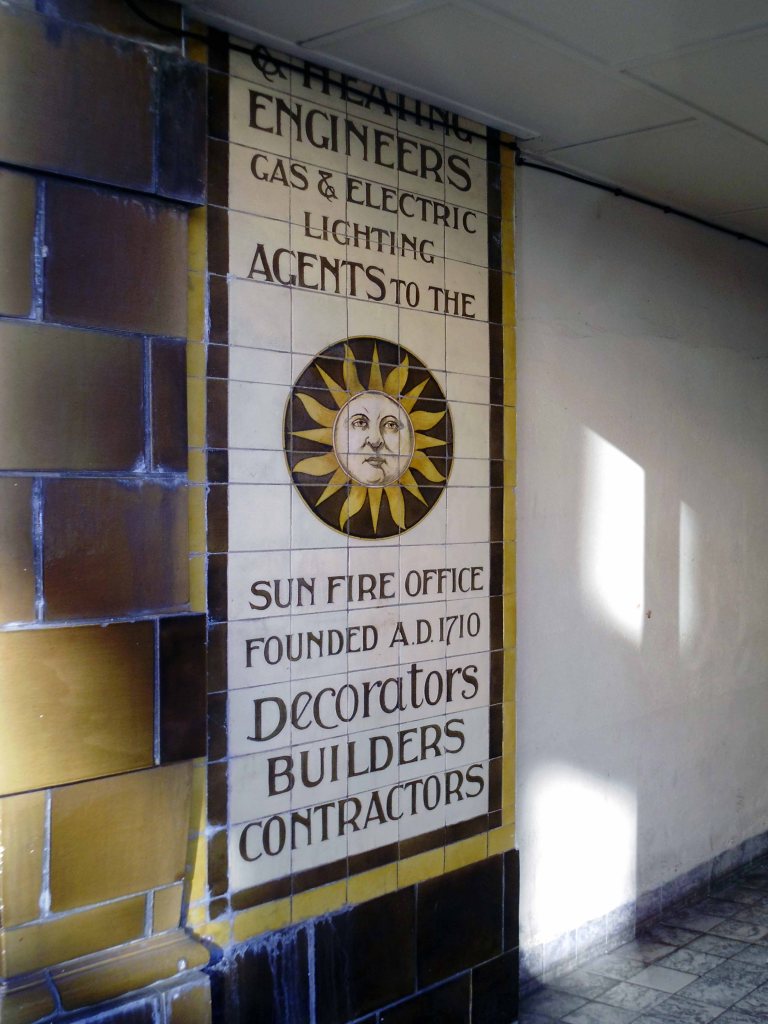
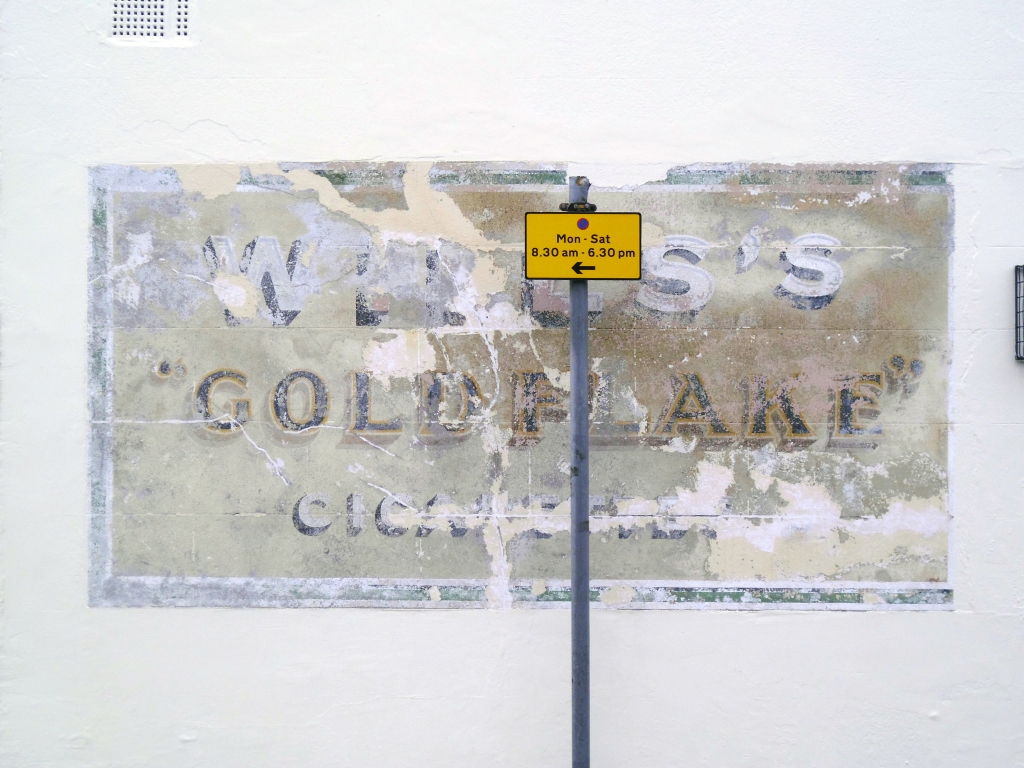
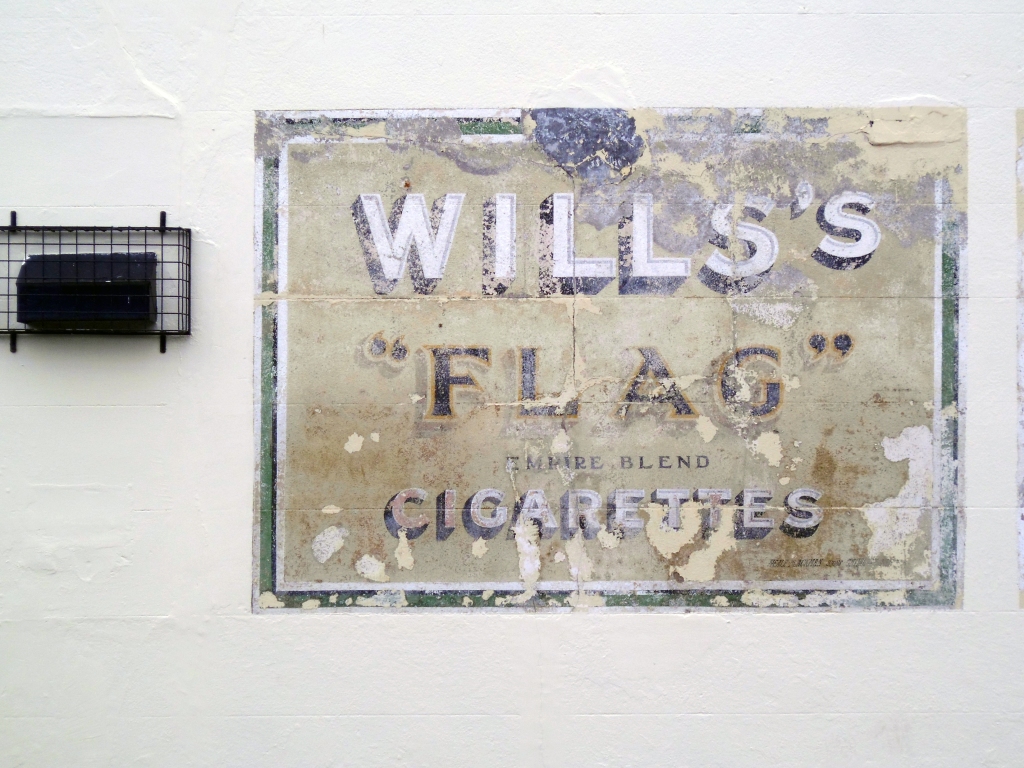
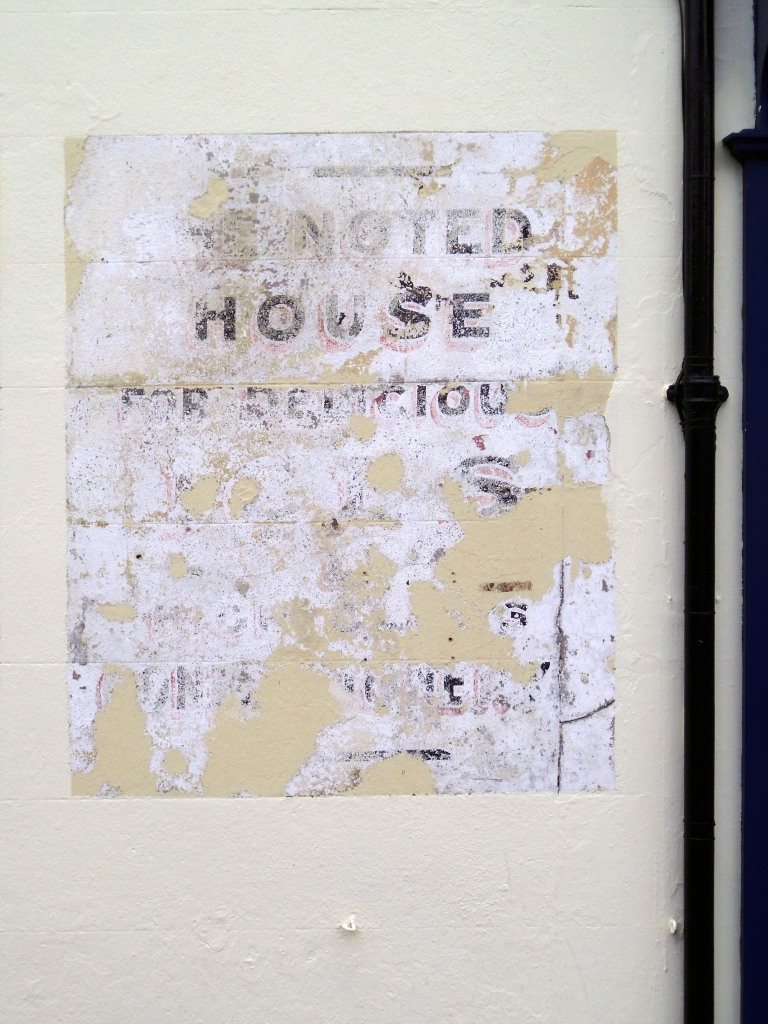
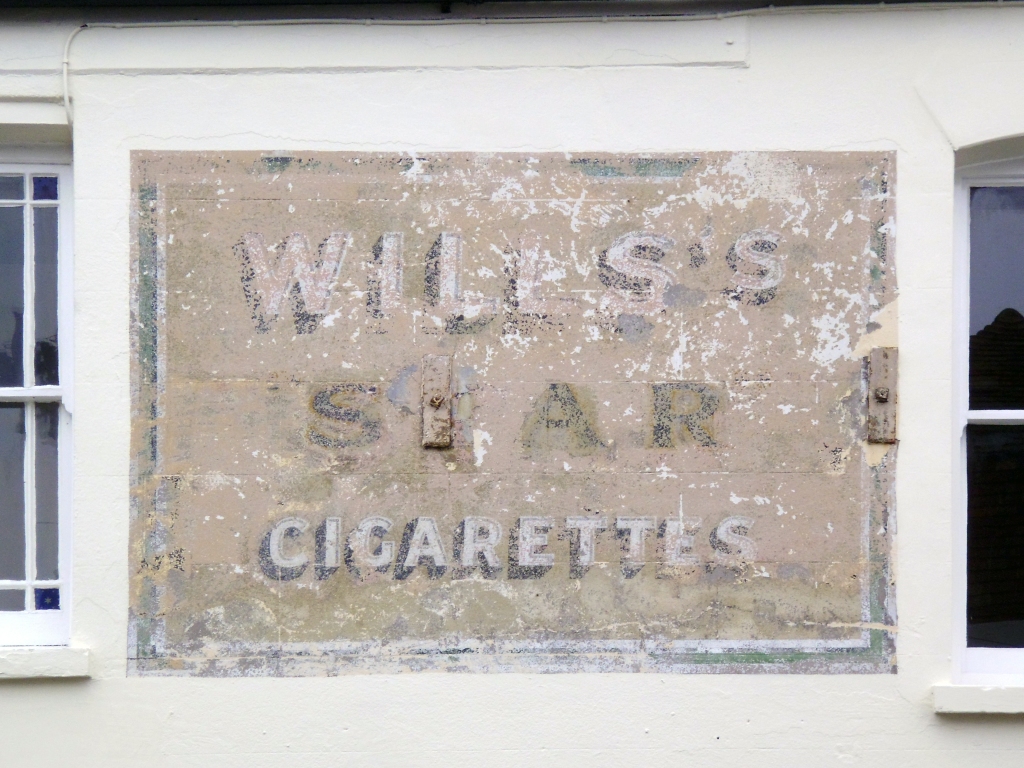
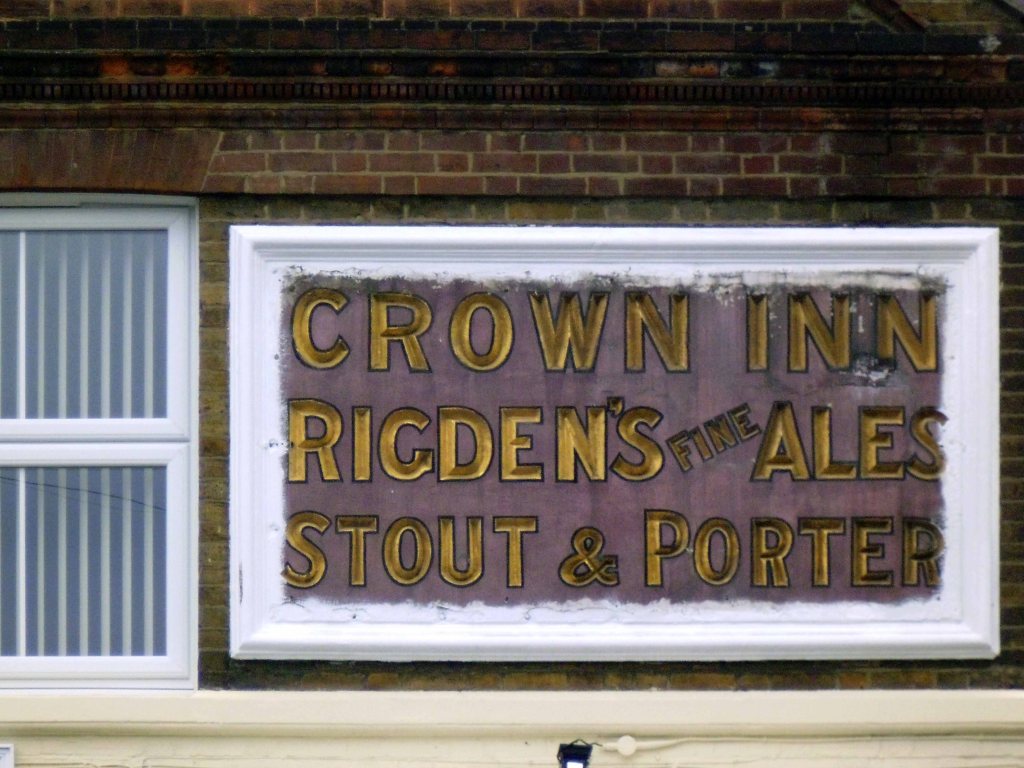
Ghost signs have the habit of disappearing all over the place.
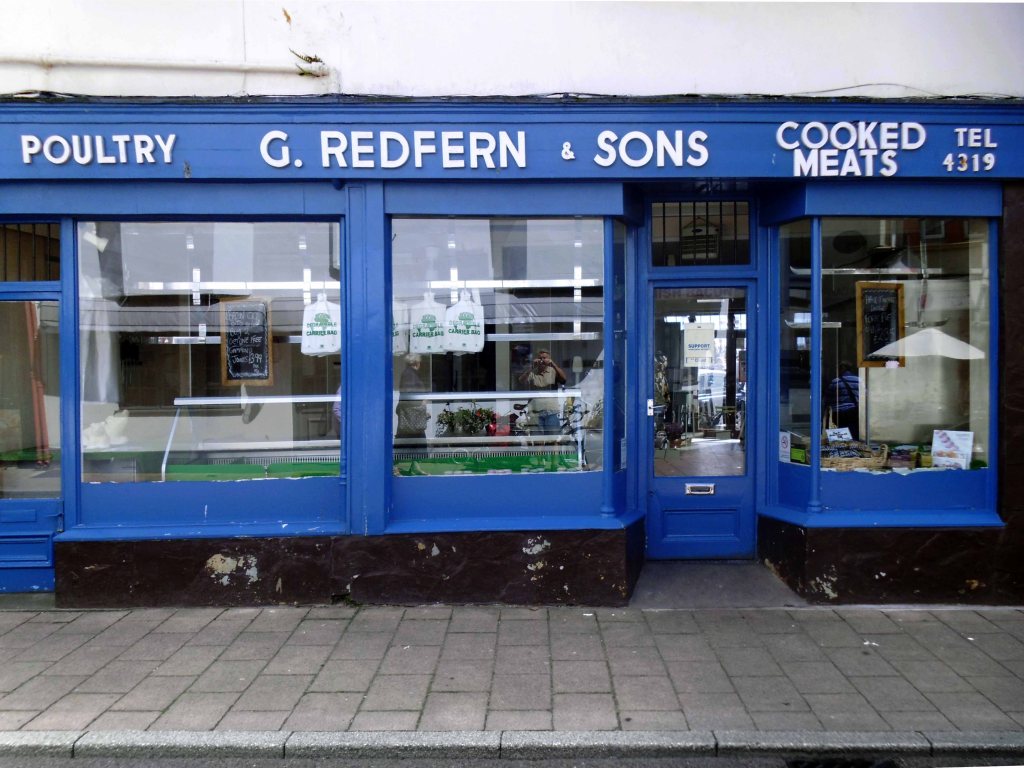
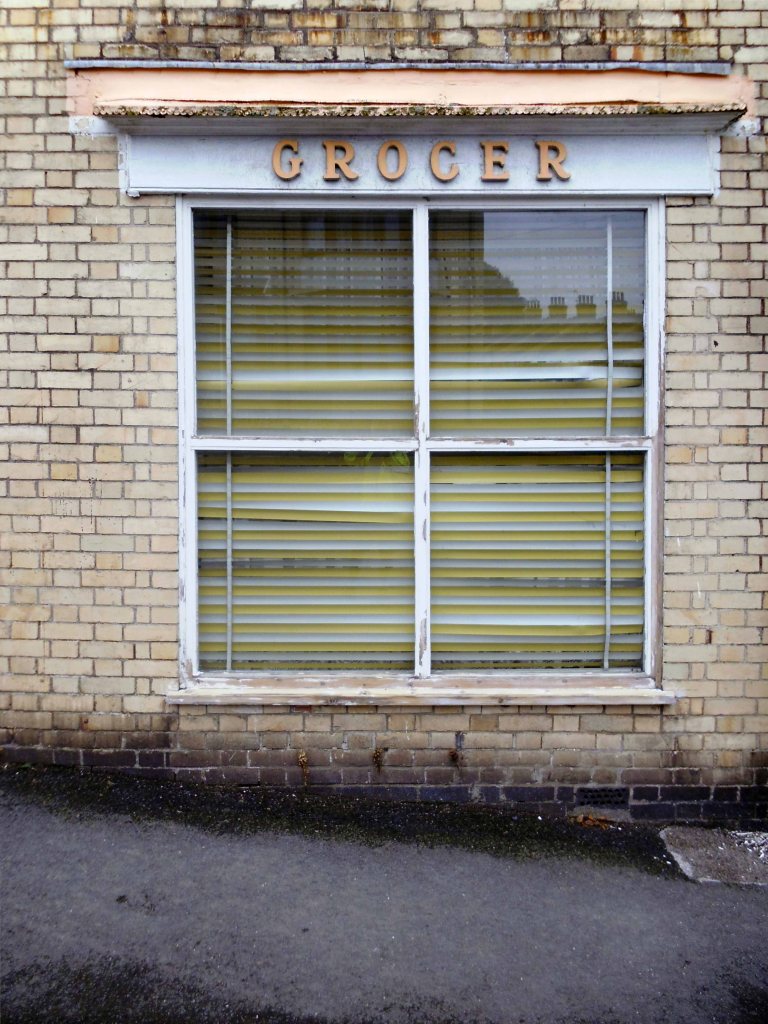
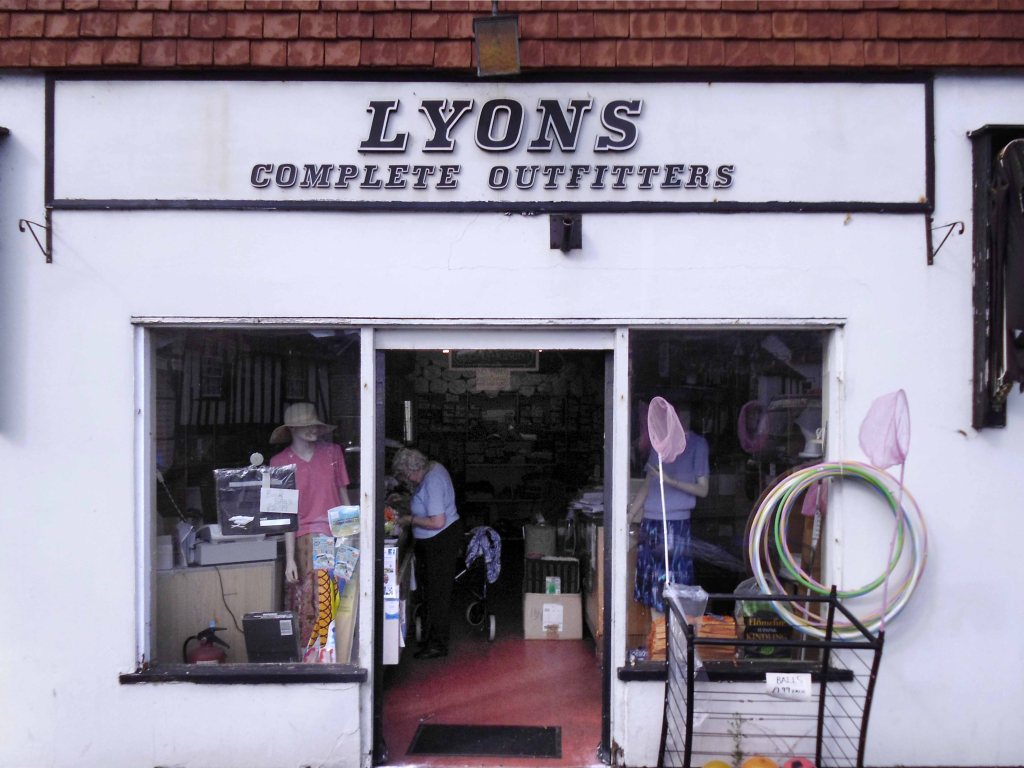
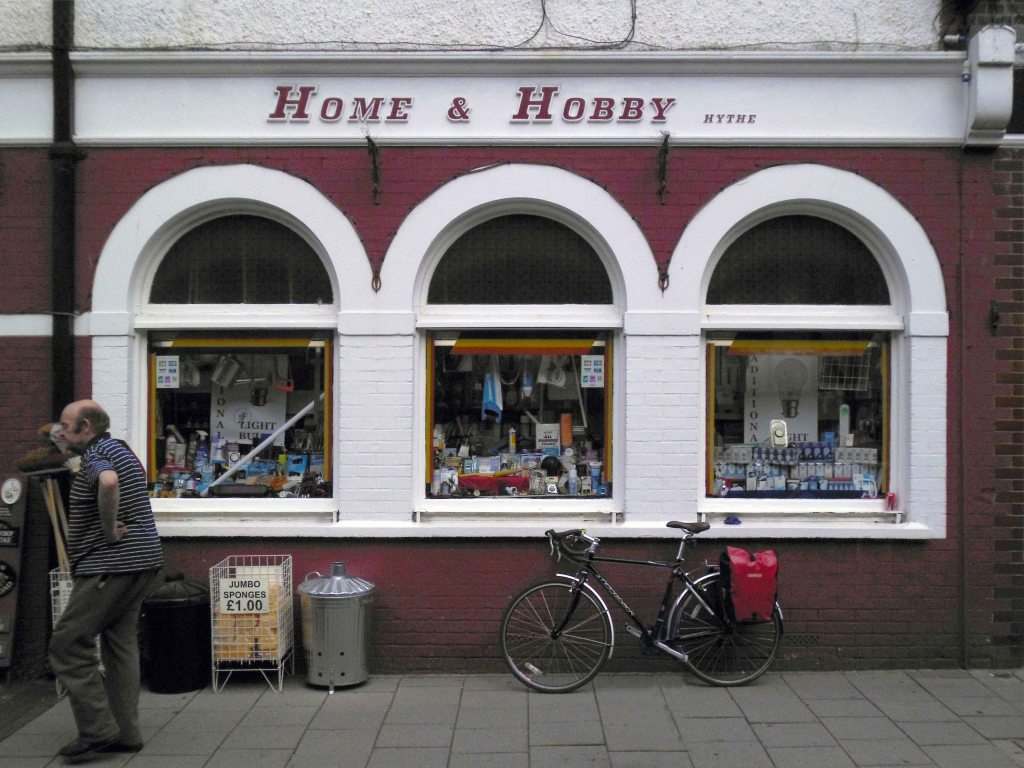
So to shops of all shapes and sizes.
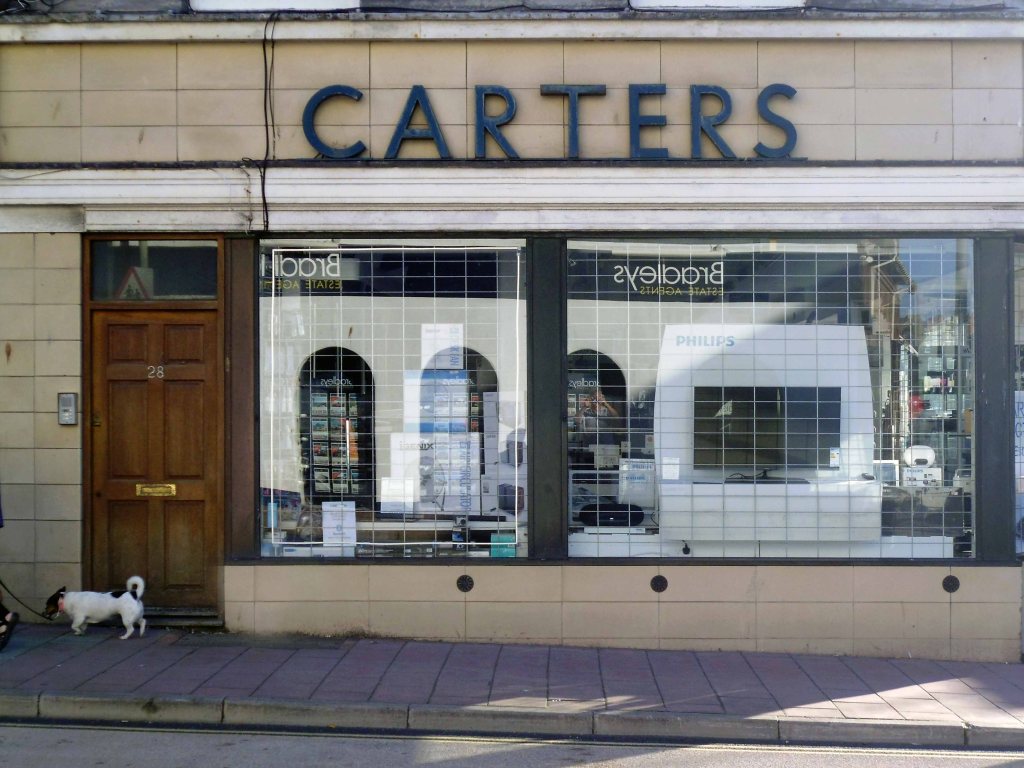
Whilst others prevail.
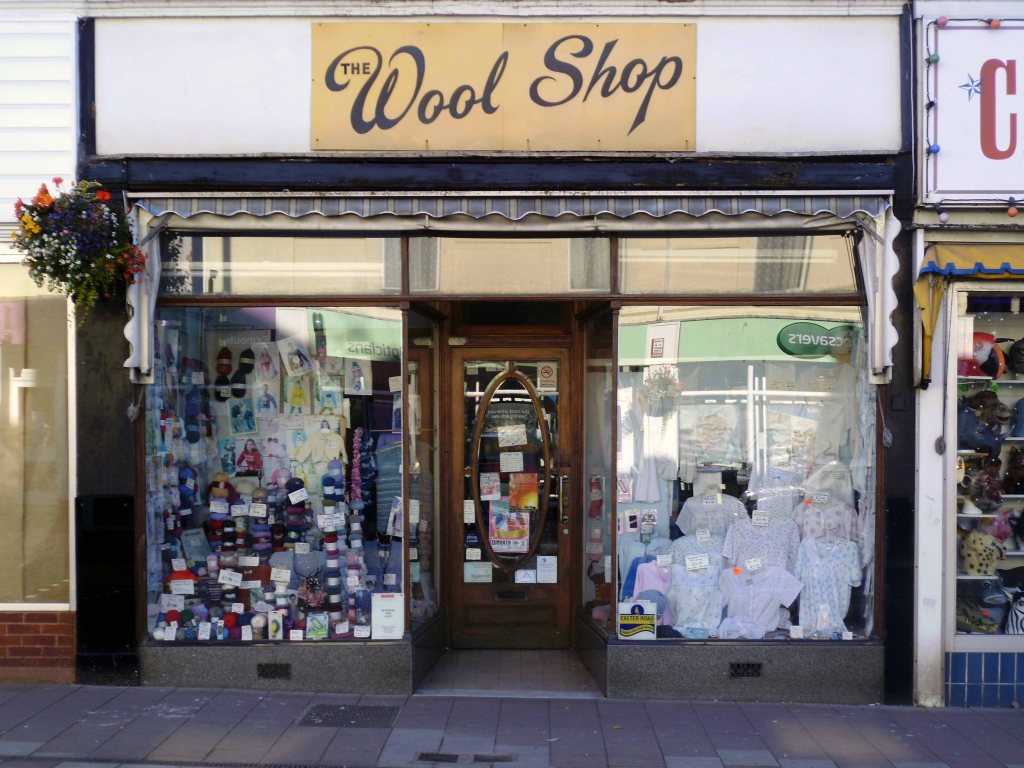
Including this arcane example in Exmouth – The Wool Shop.
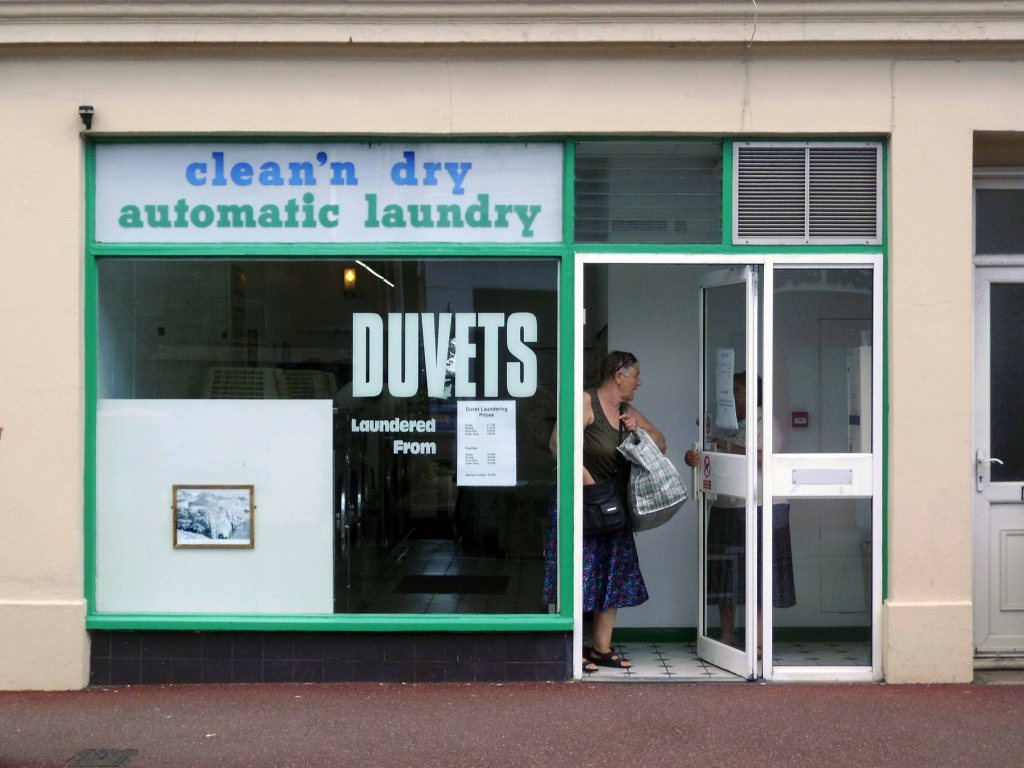
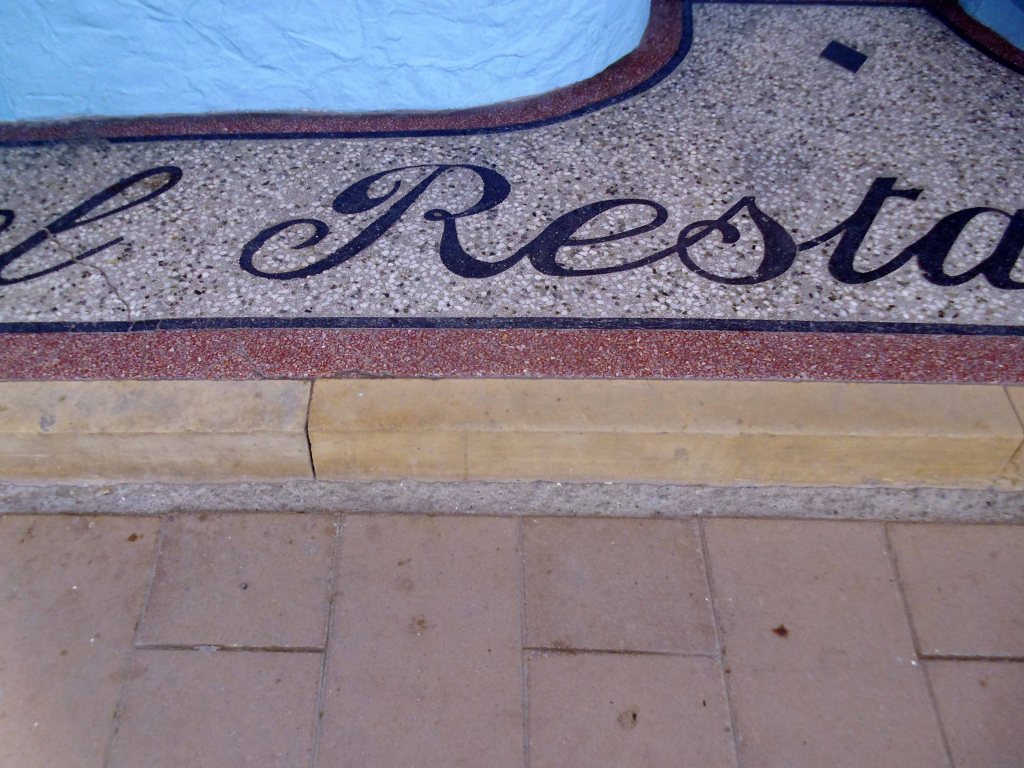
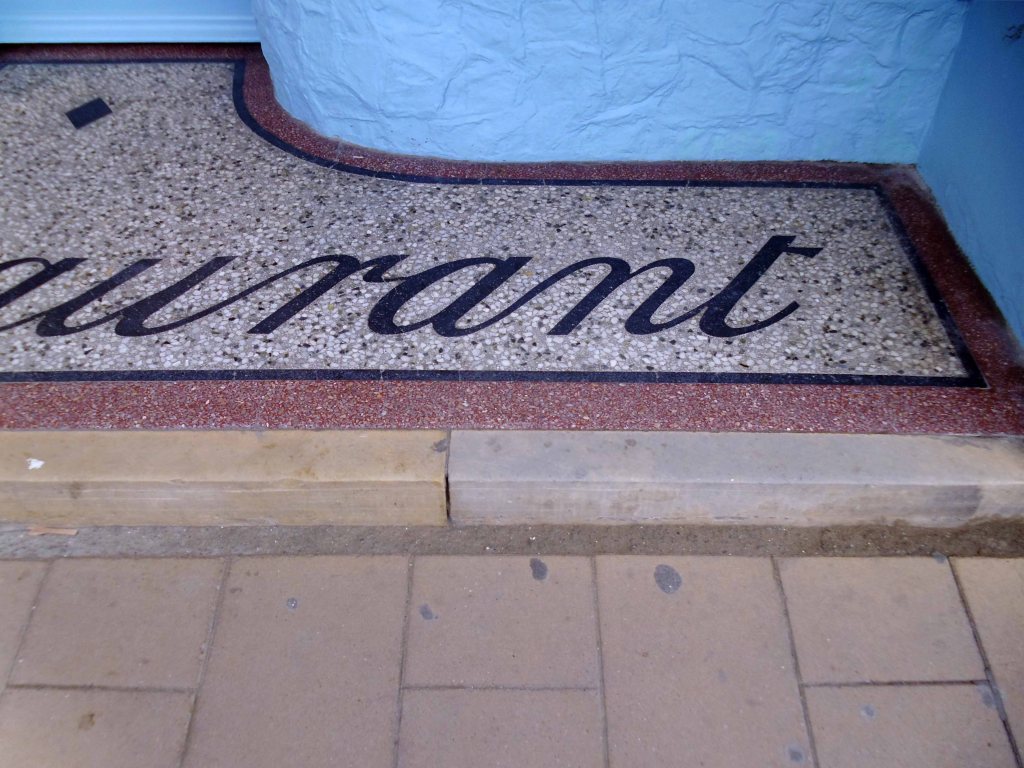
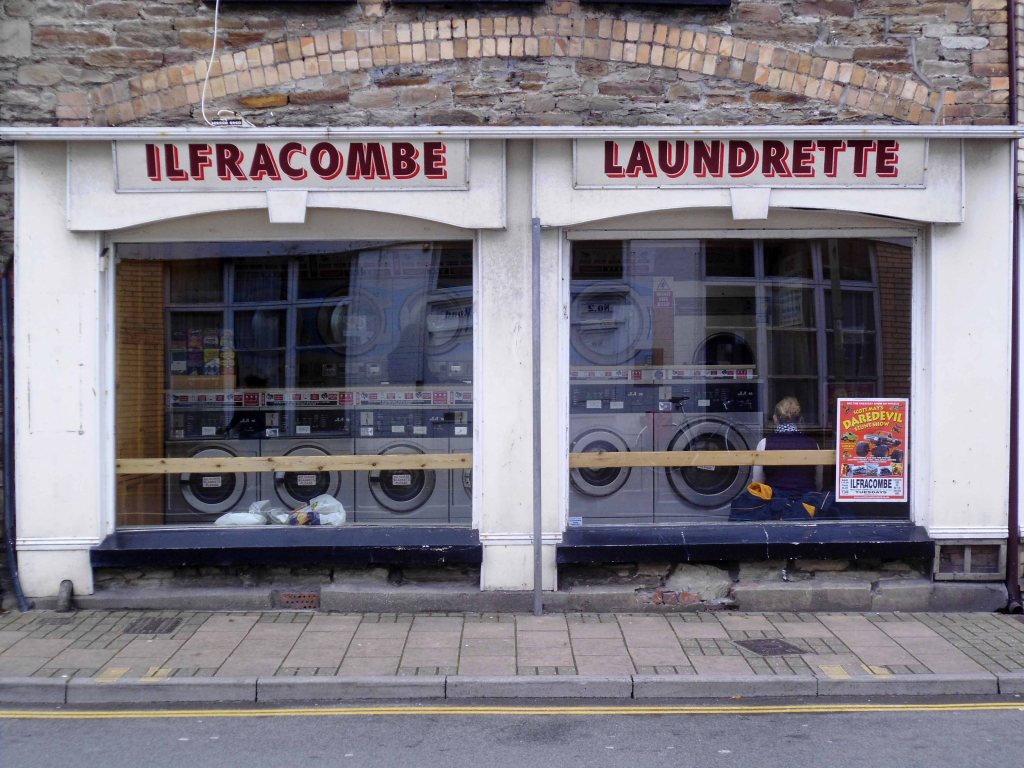
Laundrettes may be on the way out but this gallant knight of the road continues to record them, both online and in print.
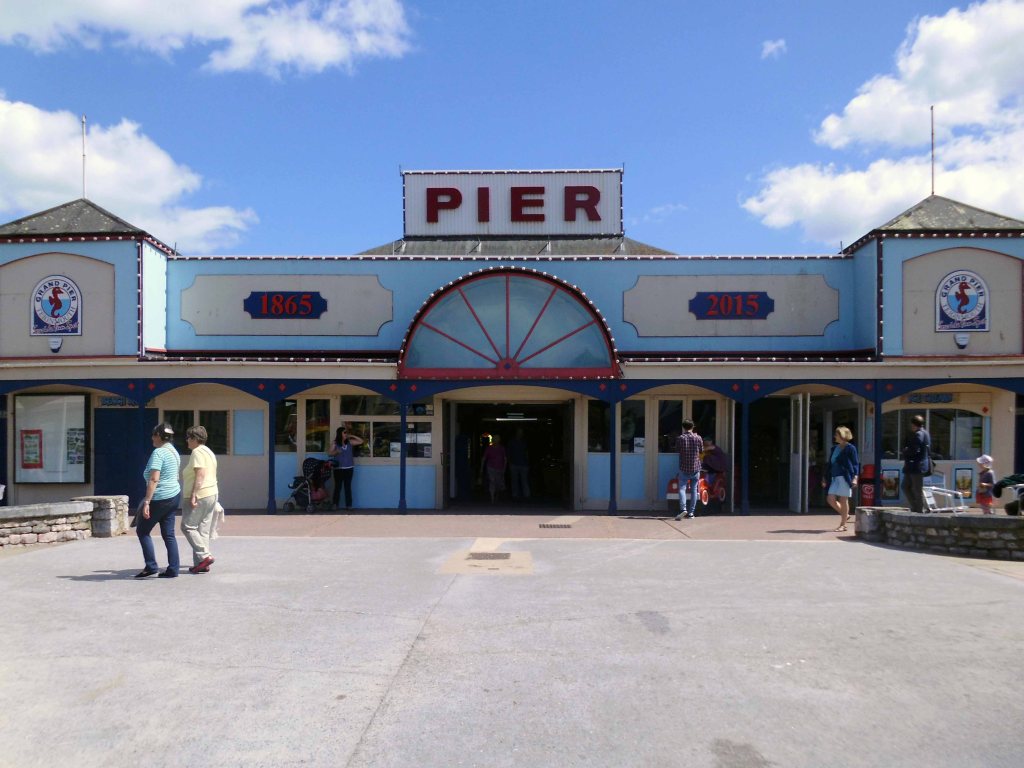
Here in Teignmouth a pier appears not uncommon on certain parts of the coast.
Teignmouth Grand Pier is a great day out for family and friends. There’s something for everyone – from big kids to little ones – it offers you all the traditional attractions and entertainment in the Great British spirit of the seaside.
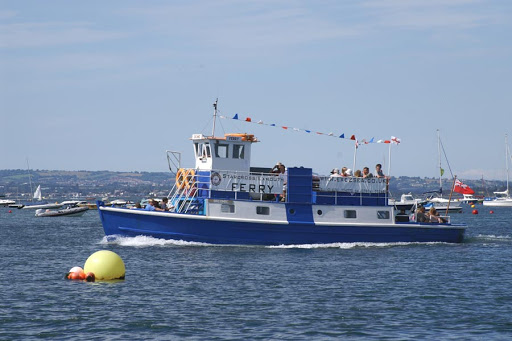
Time to get on the ferry again Steve – crossing the Exe Estuary on the Starcross to Exmouth Ferry.
Bikes carried for a small additional charge.
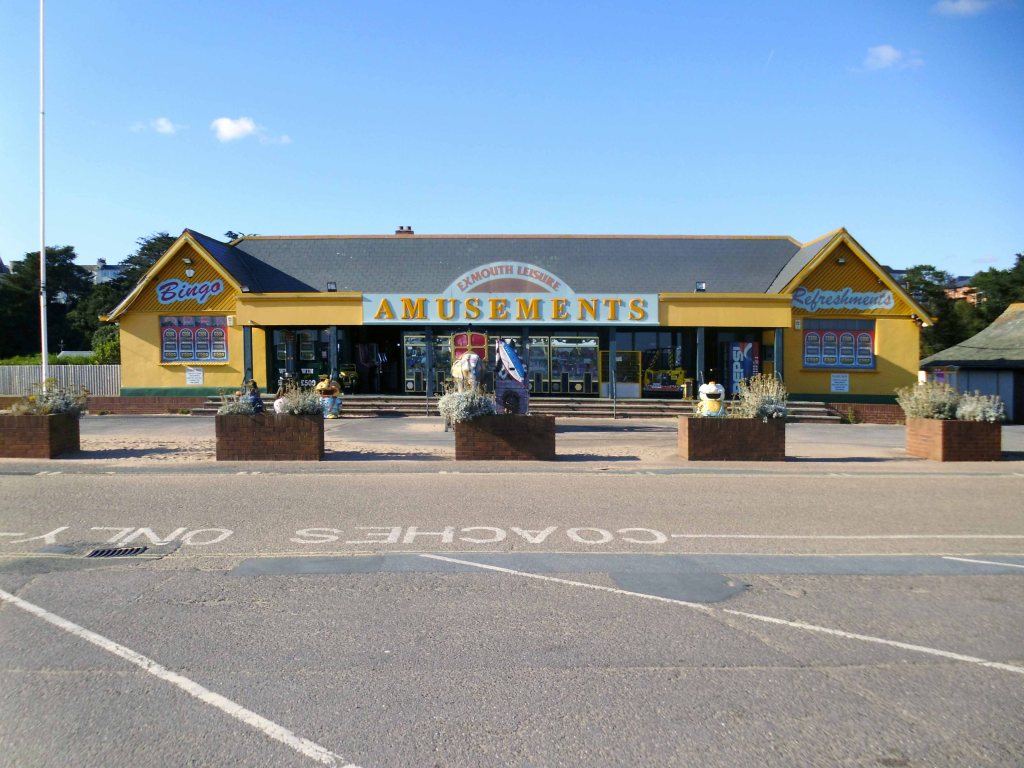
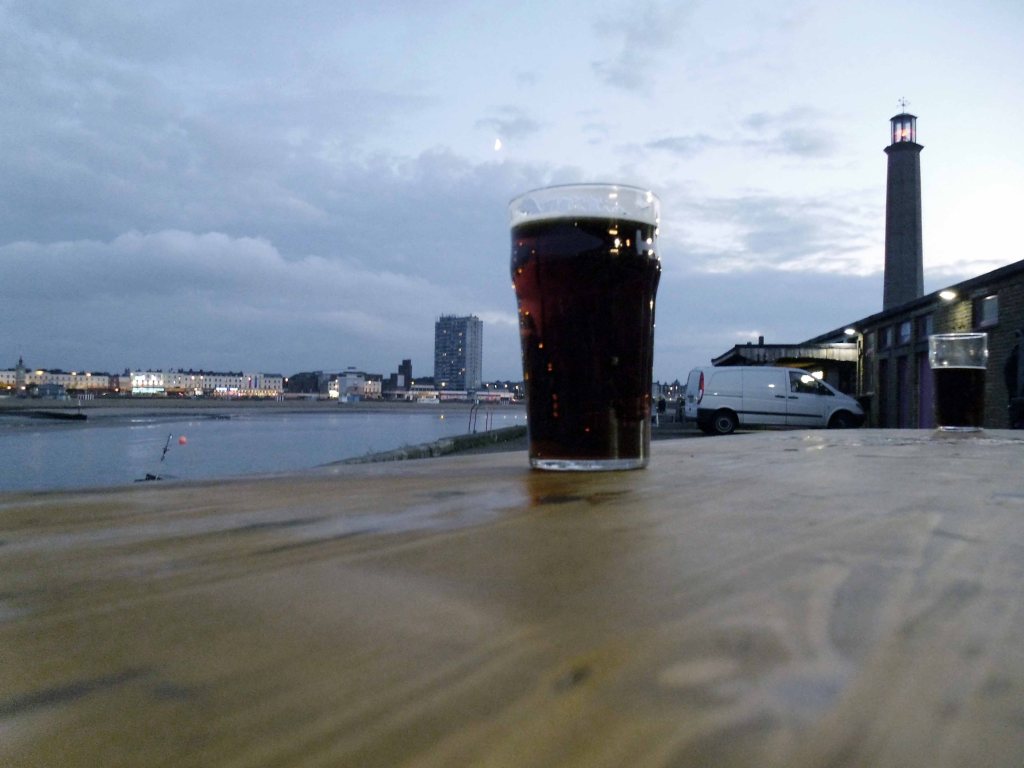
No time for Bingo, reading the local paper or the amusements – time for a pint, in the form of two halves.
Then a wander back to the digs – see you all tomorrow.
Leaving the compact anonymity of my B&B for the open road!
Having been unable to sample the joys of the Quality Hotel.
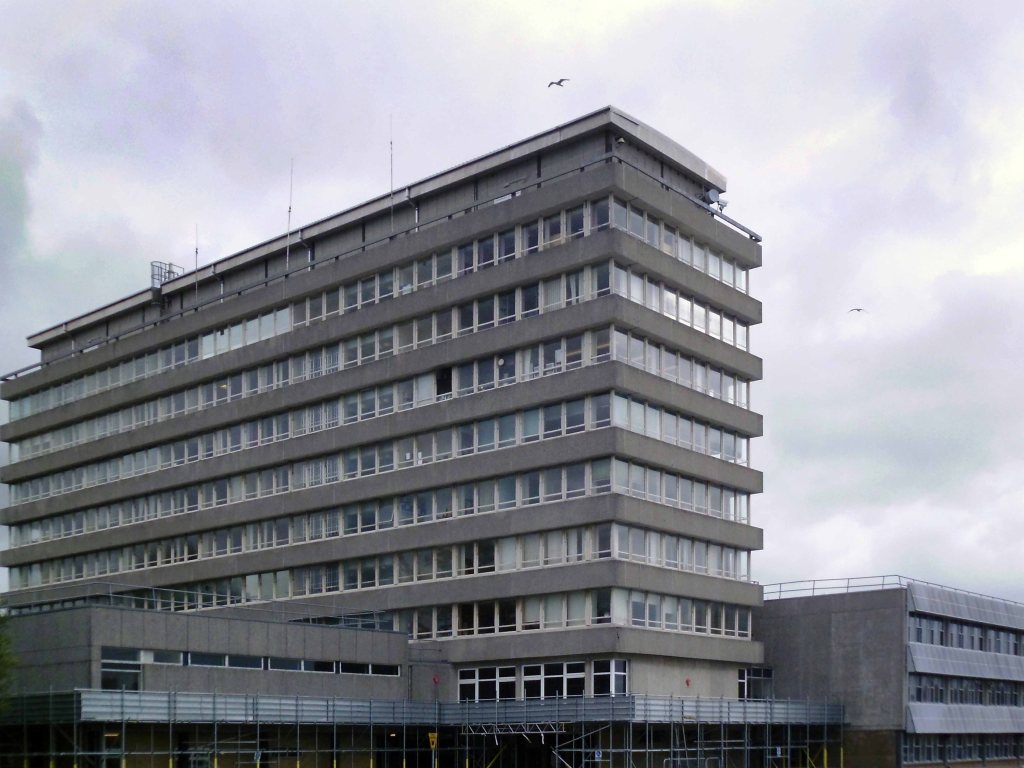
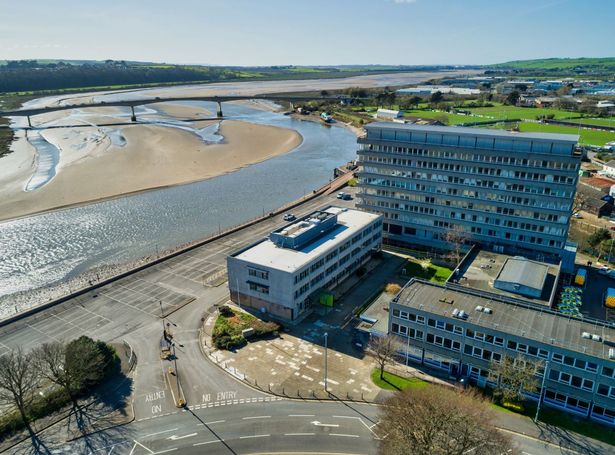
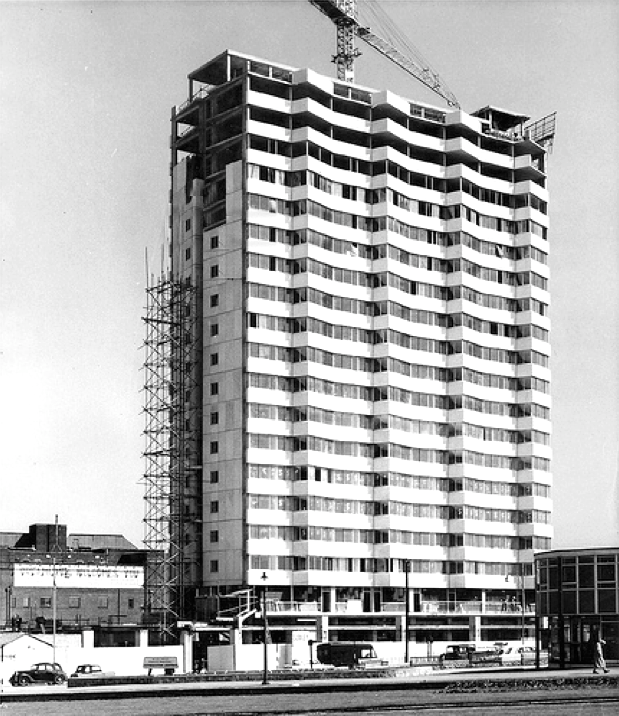
The Quality Hotel closed in 2014 and was demolished two years later after the site was bought by the city council following vandalism and fires.
The ten-storey concrete block was built in 1970 in the 350th anniversary year of The Mayflower ship setting sail from Plymouth for North America.
Gilpin Demolition
Plymouth Hoe’s fifty million pound hotel and apartments project appears to have ground to a halt with no building work happening more than a year after developers vowed it would start in 2018.
Henley Real Estate, the firm behind the plans for an 11-story hotel and a 15-floor block of flats on the demolished former Quality Hotel site, has gone silent on plans and not responded to emails and phone calls from Plymouth Live.
When we visited the site the only sign of life was some weeds growing out of the ground.
I’ll leave them to it, I’m off in search of the South West Passage
The South West Coast Path itself is 630 miles long and is the longest established National Trail in the country. Starting at Minehead in Somerset it runs along the coastline of Exmoor, continuing along the coast of North Devon into Cornwall. It follows the entire coastline of Cornwall, goes across the mouth of the River Tamar and continues into Devon. After running along the south coast of Devon it then follows the Dorset coastline before finally ending at Poole Harbour.
However if you follow the Coastal Path you’ll miss this delightful concrete fire station training tower in Plympton.
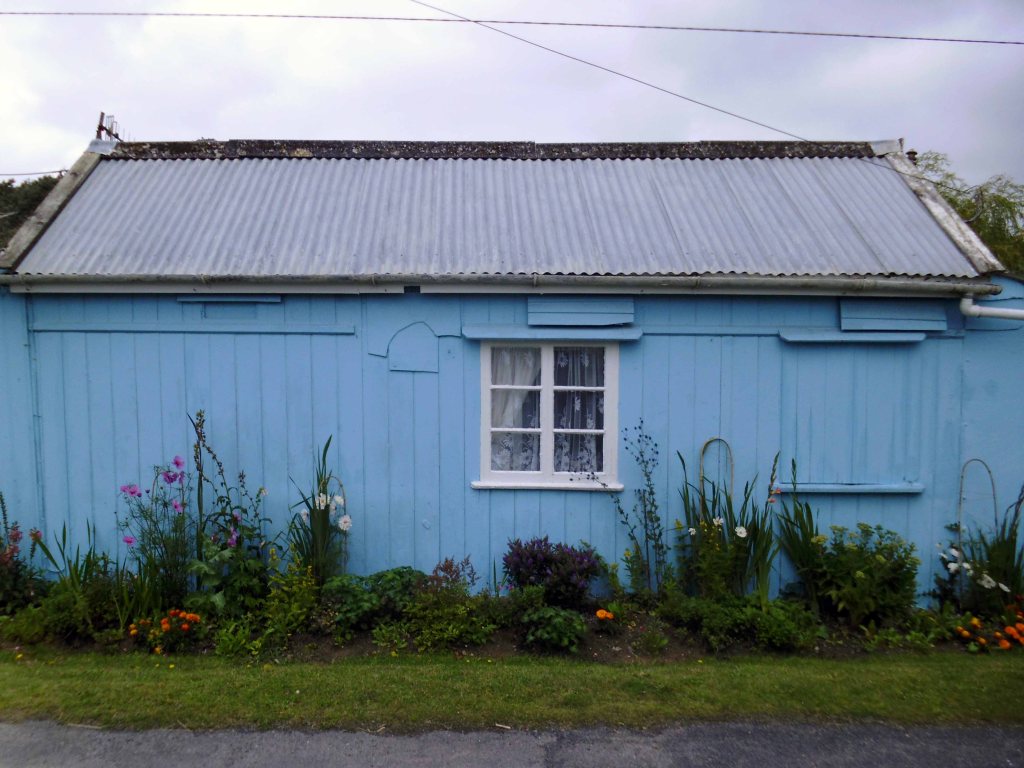
Along with the longest corrugated iron structure in the West Country.
You’ll miss getting slightly lost and a cup of tea at the Dream Bites roadside café in Modbury.
Dream Bites café, we’re all is welcome, from cars to Biker’s to Ride outs to Puplic and to work companies even you the cyclists!
GREAT FOOD GREAT PRICE.
You’ll miss the deep hedged lanes of Devon.
Where the four x fours force you into the roadside brambles with consummate ease and regularity – even on a designated cycle route.
Respite from such trials and tribulations can be found upon siting a water tower or a deserted butchers – down at Slapton Ley.
Slapton Ley is the largest natural lake in south-west England. Although it is only separated from the sea by a narrow shingle bar, it is entirely freshwater.
Much beloved of my old pal Harry H Potts and family.
Then it’s up a hill down a hill to Dartmouth.
I made enquiries at several sea front hotels – who upon assessing my mode of dress and transport, despatched me to a back street pub B&B, suit y’self suits me, and my pocket.
The Seale Arms was just the job.
Quick change for the artist – let’s have a look around.
It’s full of historical architectural detail.
And slightly more hysterical architectural detail.
Time for a pint – chatting in the pub to yachting types, for it is here that the sense of tradition, the sea, power and wealth traditionally resides.
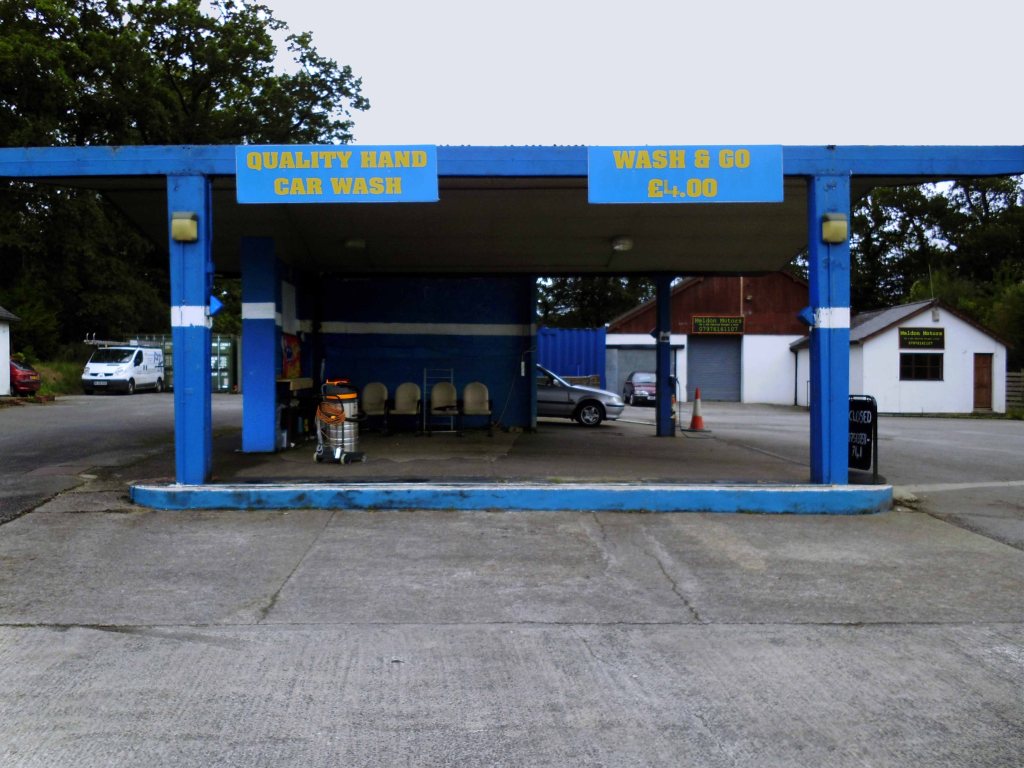
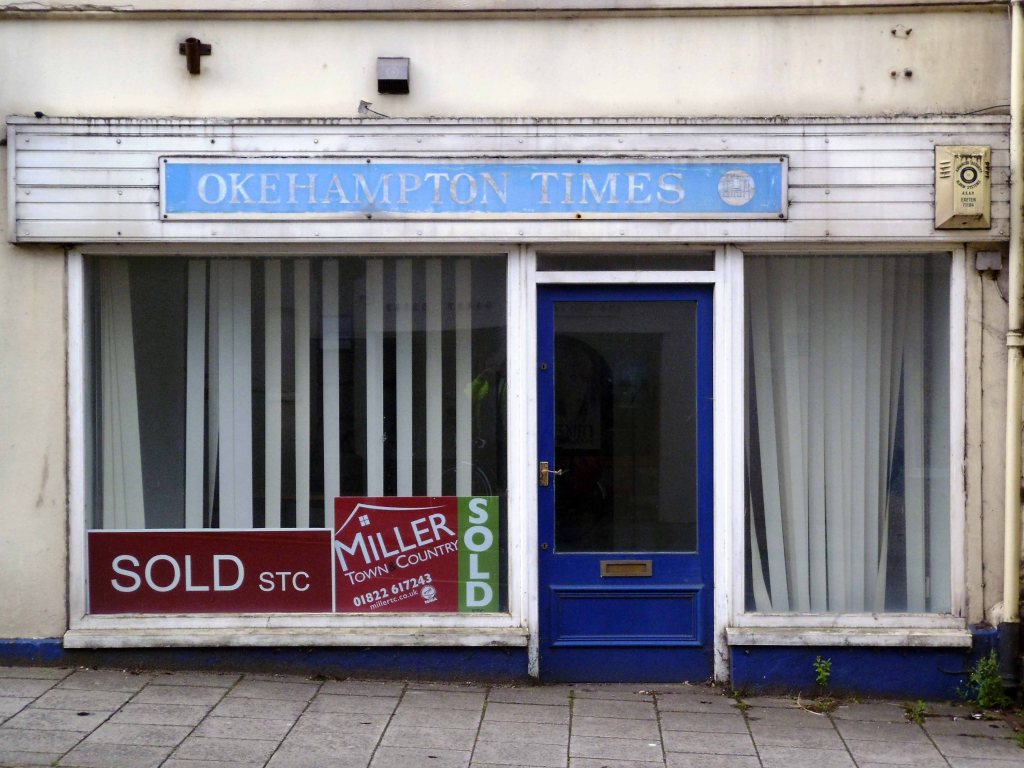
Tuesday 28th July 2015 waking up early on the outskirts of Okehampton – I went next door to explore – the Wash and Go.
I went back to Okehampton.
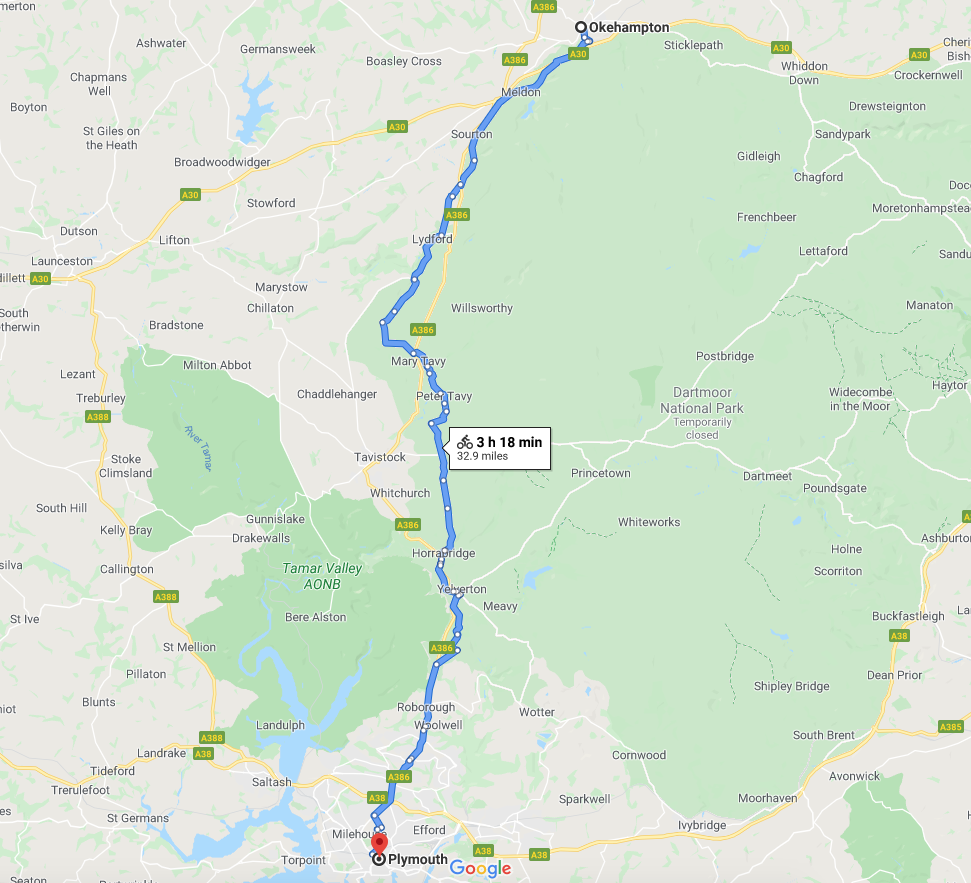
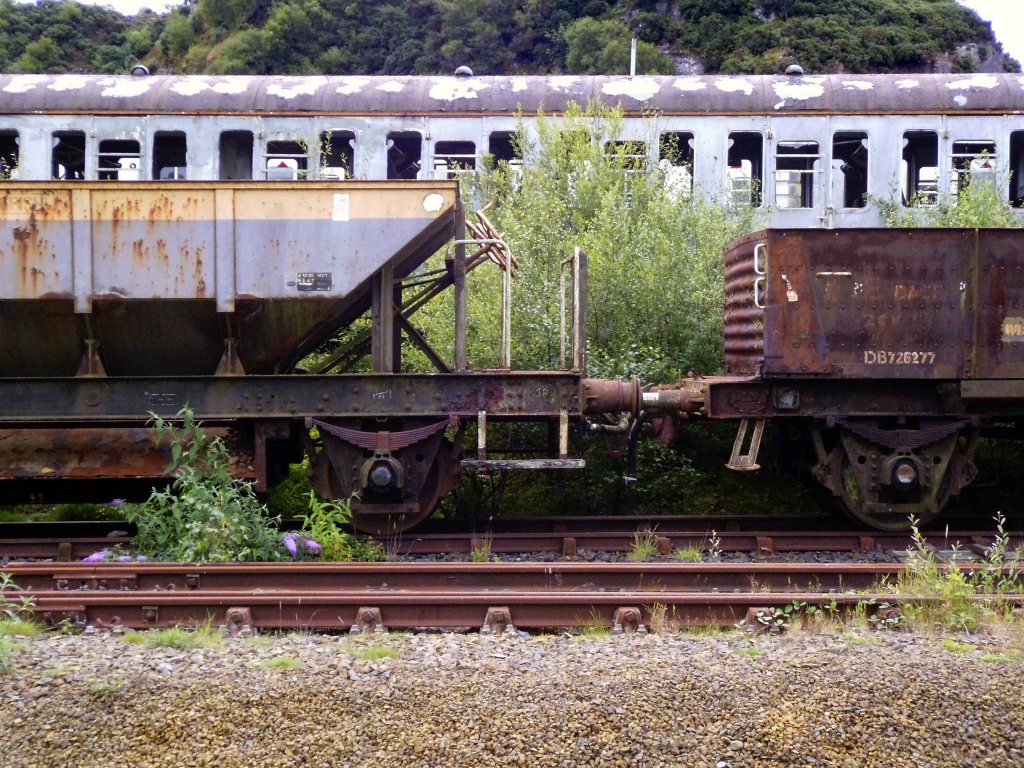
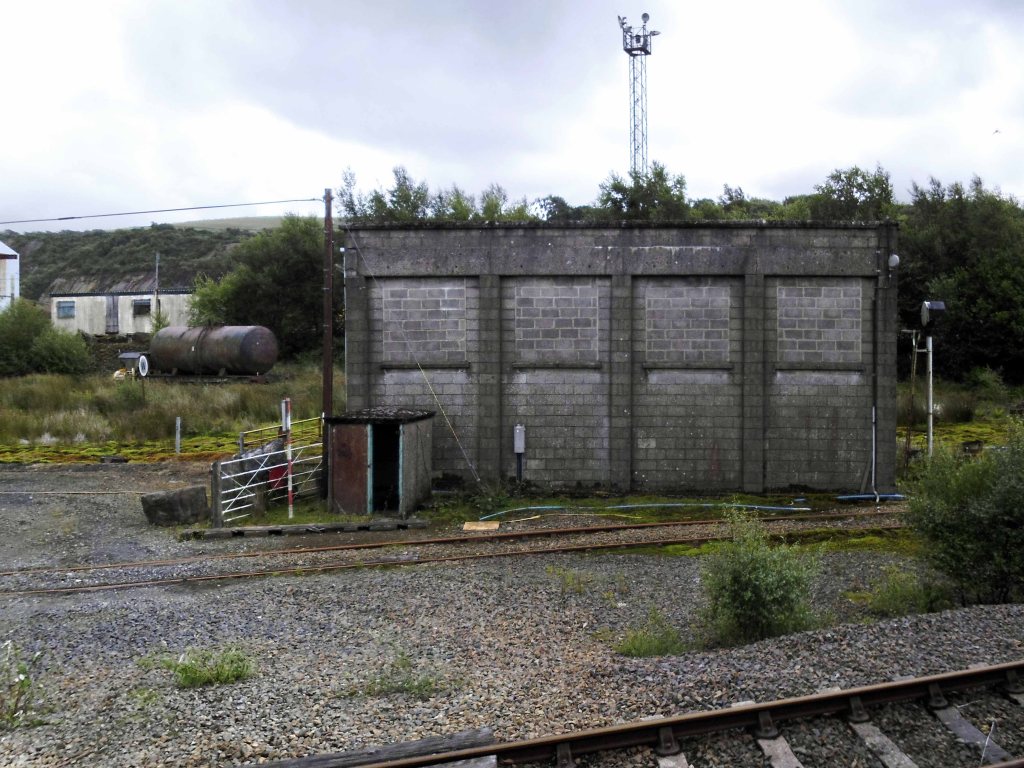
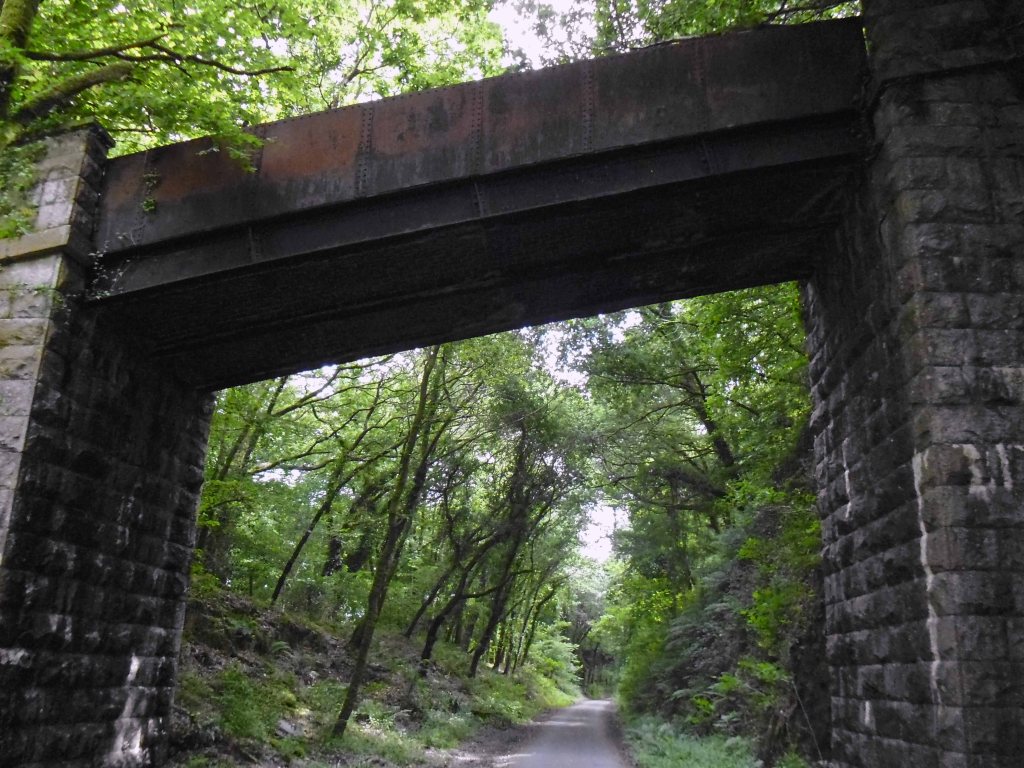
Headed out of town along the old railway line to Plymouth – where rests the solemn remains of previous railway activity and Meldon Quarry.
It’s believed that the first quarrying began around the late 1700s when the local limestone was extracted. Over the years this gradually gave over to aggregate quarrying and apelite quarrying until it final closure. The original owners of the quarry were the London and South Western Railway and then came Britsh Rail and finally EEC Aggregates.
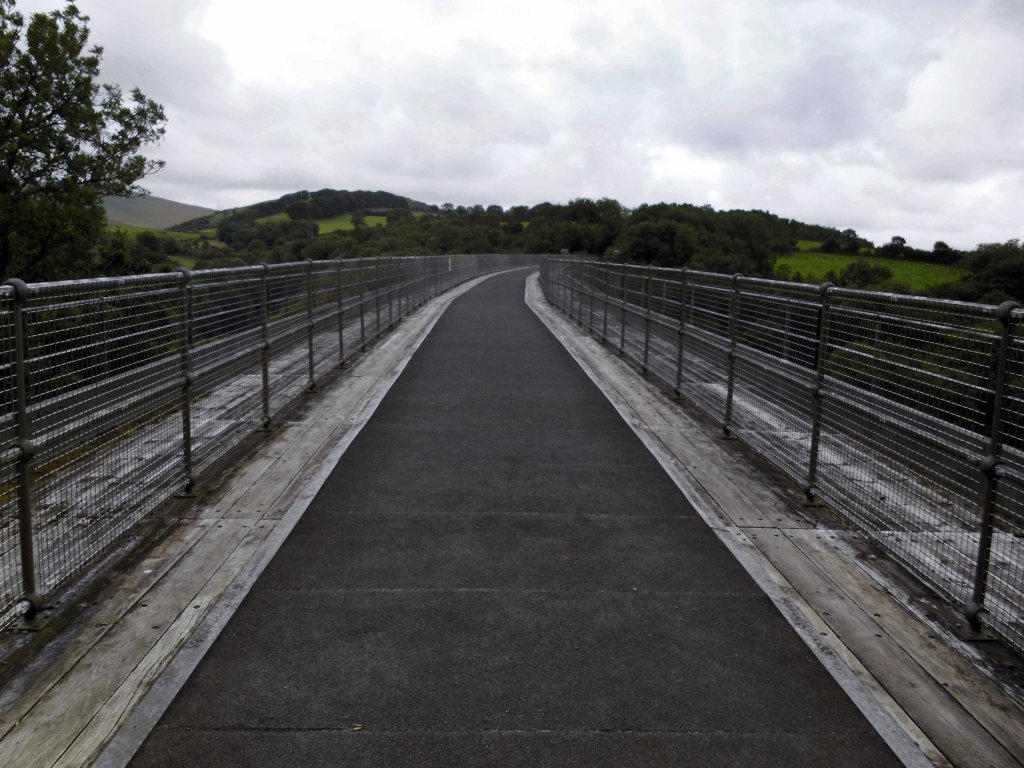
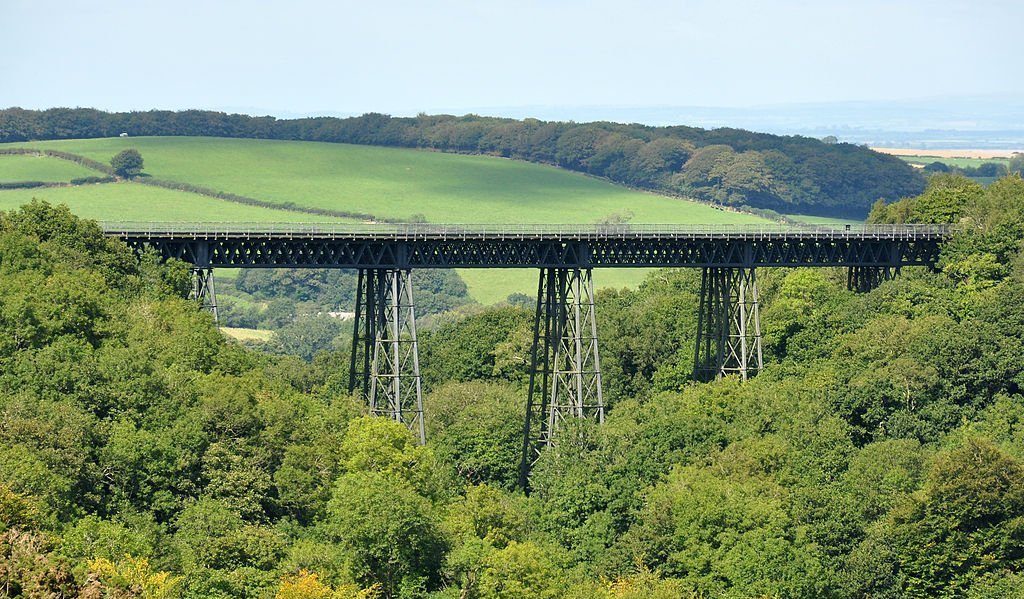
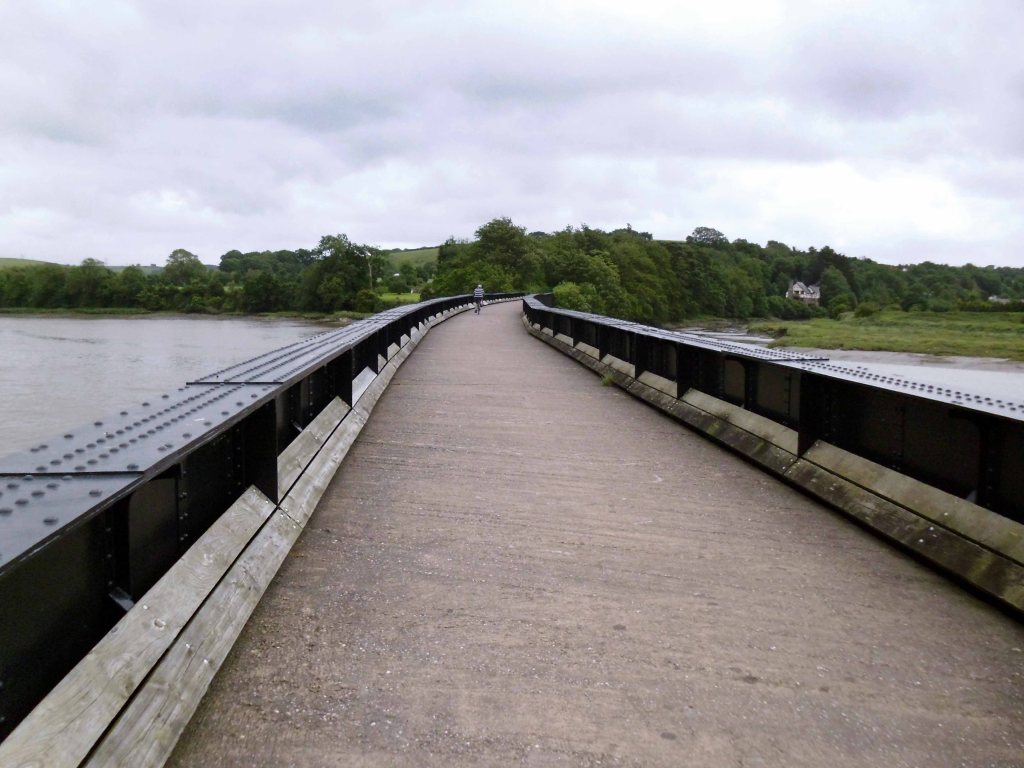
Crossing Meldon Viaduct.
Meldon Viaduct carried the London and South Western Railway across the West Okement River at Meldon on Dartmoor. The truss bridge, which was constructed from wrought iron and cast iron not stone or brick arches, was built under the direction of the LSWR’s chief engineer, WR Galbraith. After taking three years to build, the dual-tracked bridge opened to rail traffic in 1874. Usage was limited to certain classes of locomotive because the viaduct had an axle load limit. Although regular services were withdrawn in 1968, the bridge was used for shunting by a local quarry. In the 1990s the remaining single line was removed after the viaduct was deemed to be too weak to carry rail traffic.
The crossing is now used by The Granite Way, a long-distance cycle track across Dartmoor. The viaduct, which is a Scheduled Monument, is now one of only two such surviving railway bridges in the United Kingdom that uses wrought iron lattice piers to support the cast iron trusses – the other is Bennerley Viaduct between Nottinghamshire and Derbyshire.
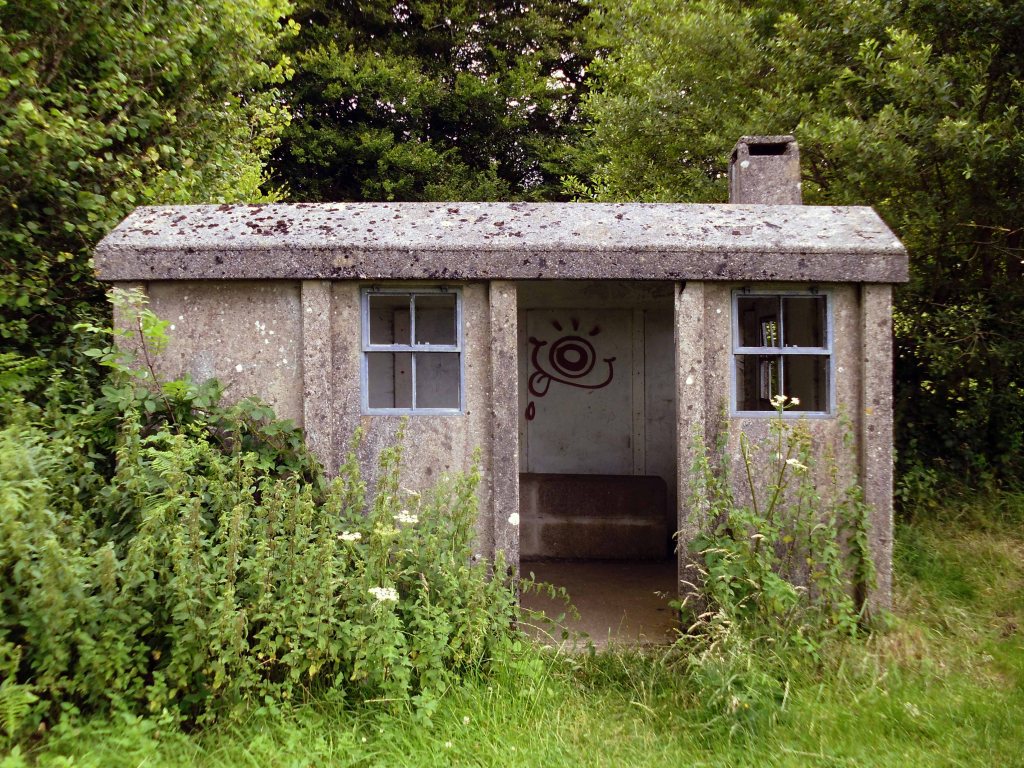
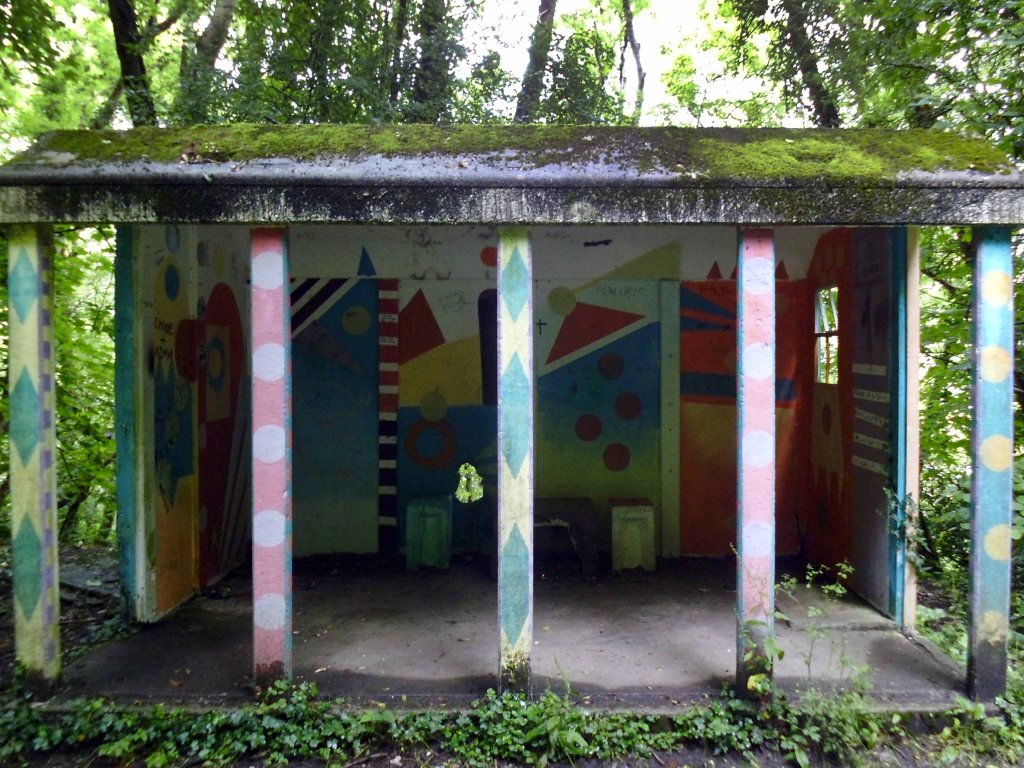
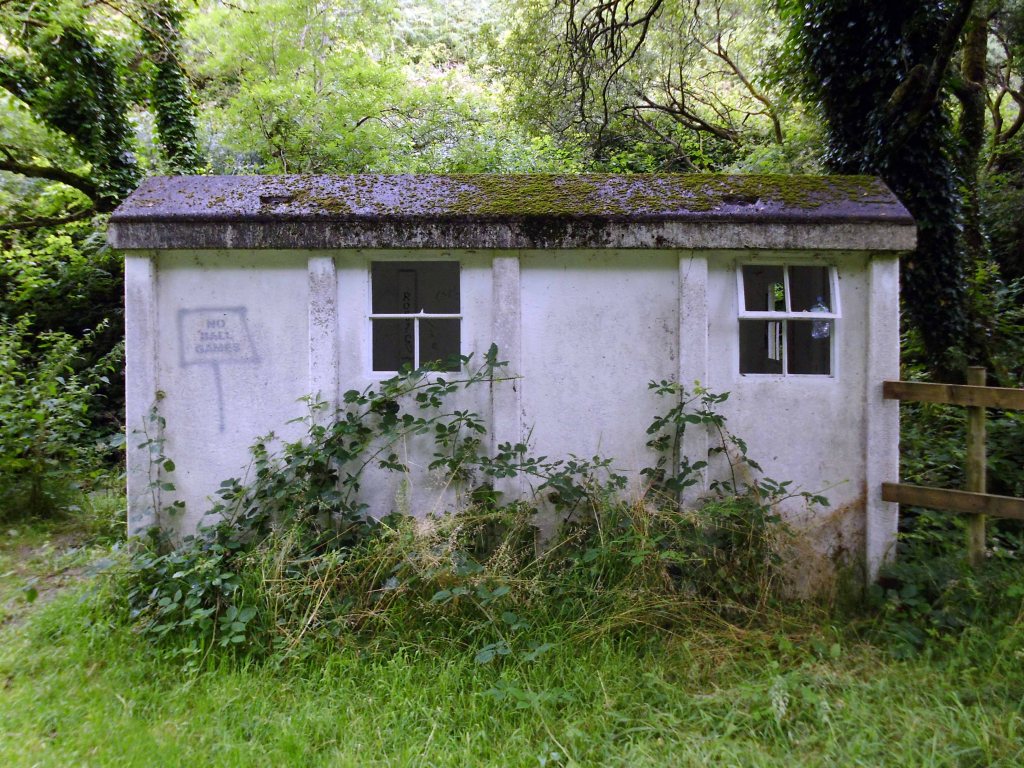
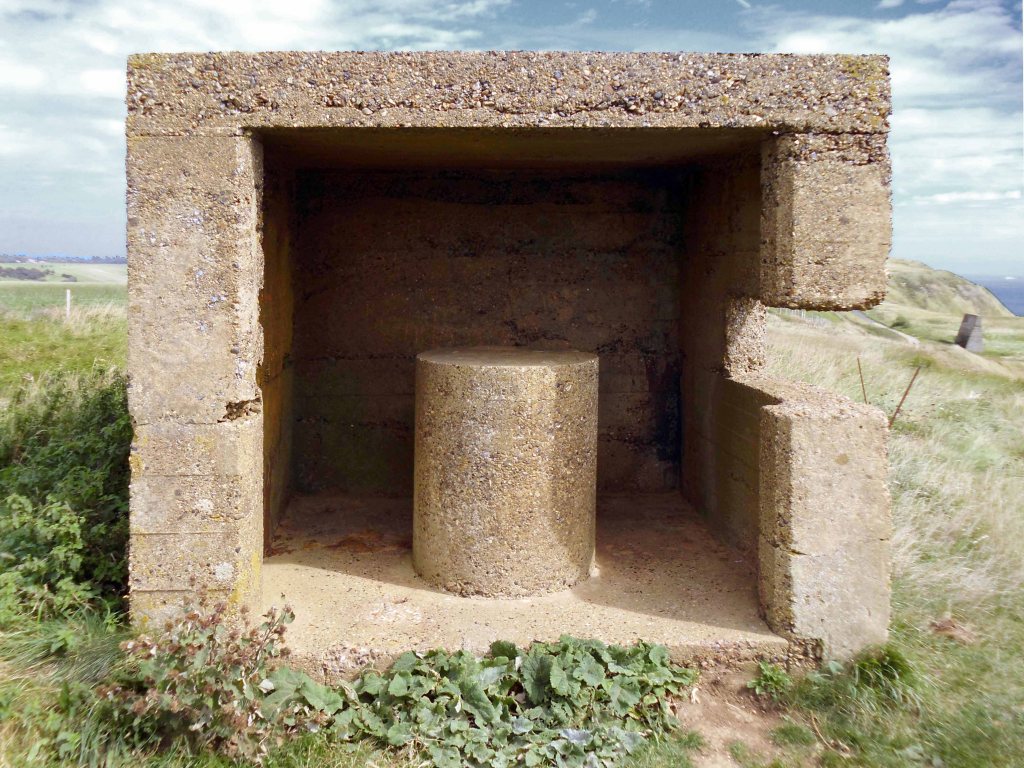
On an old railway line with prefabricated concrete railway huts.
And a bus stop at Mary Tavy a village with a population of around 600, located four miles north of Tavistock.
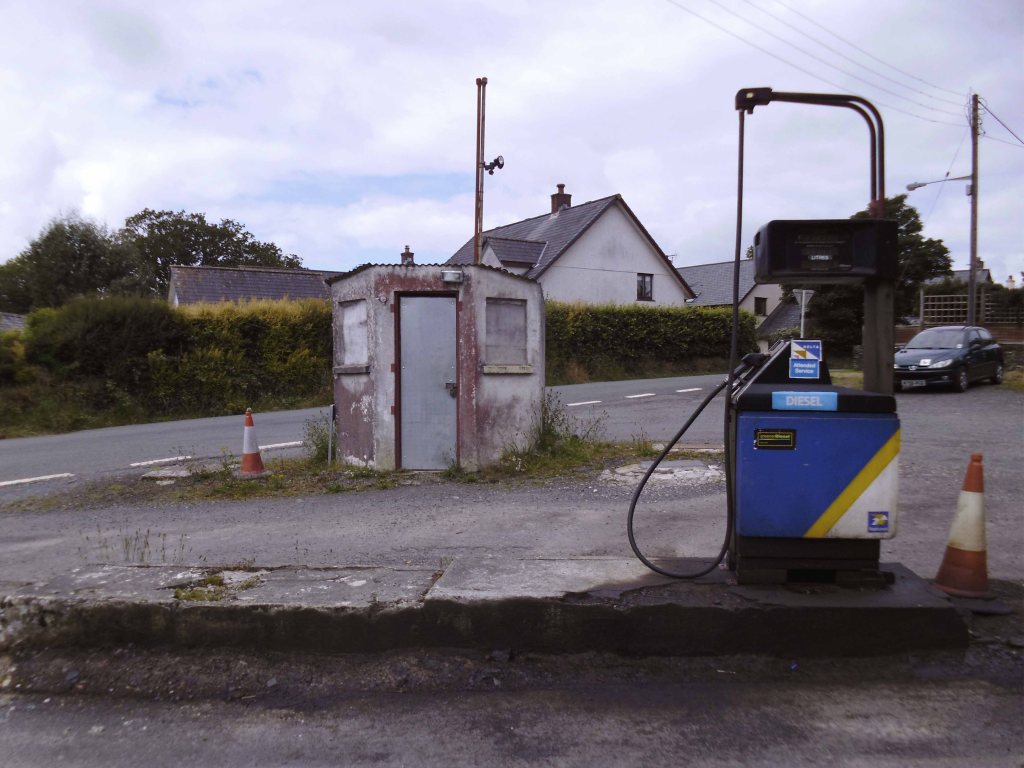
And a population of one delightful litter bin.
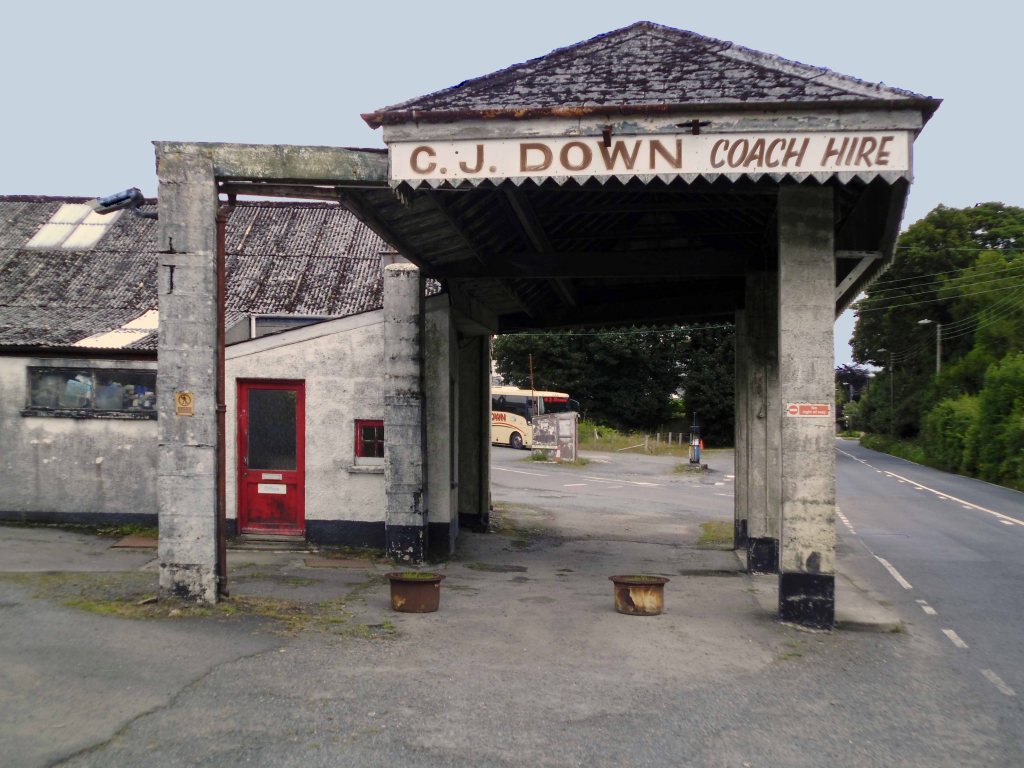
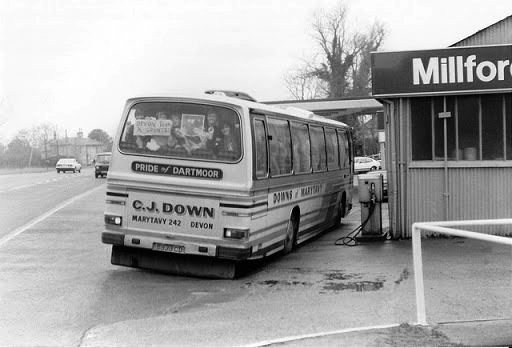
And CJ Down Coach Hire – the pride of Dartmoor.
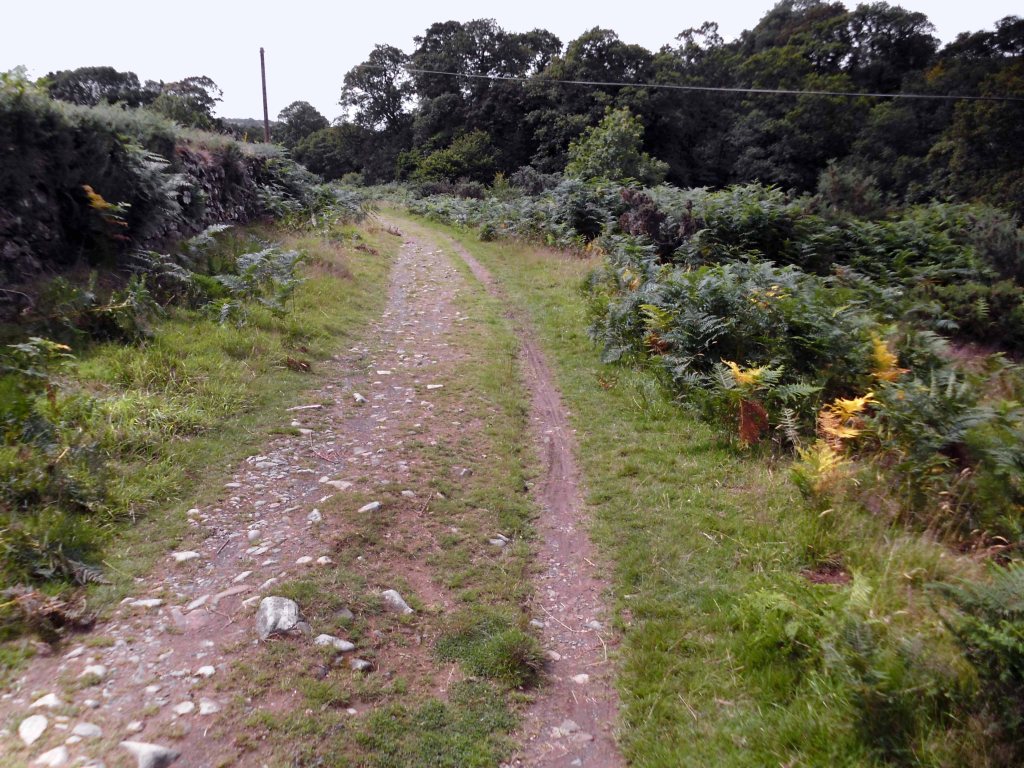
Don’t the road look rough and rocky, will the sea look wide and deep?
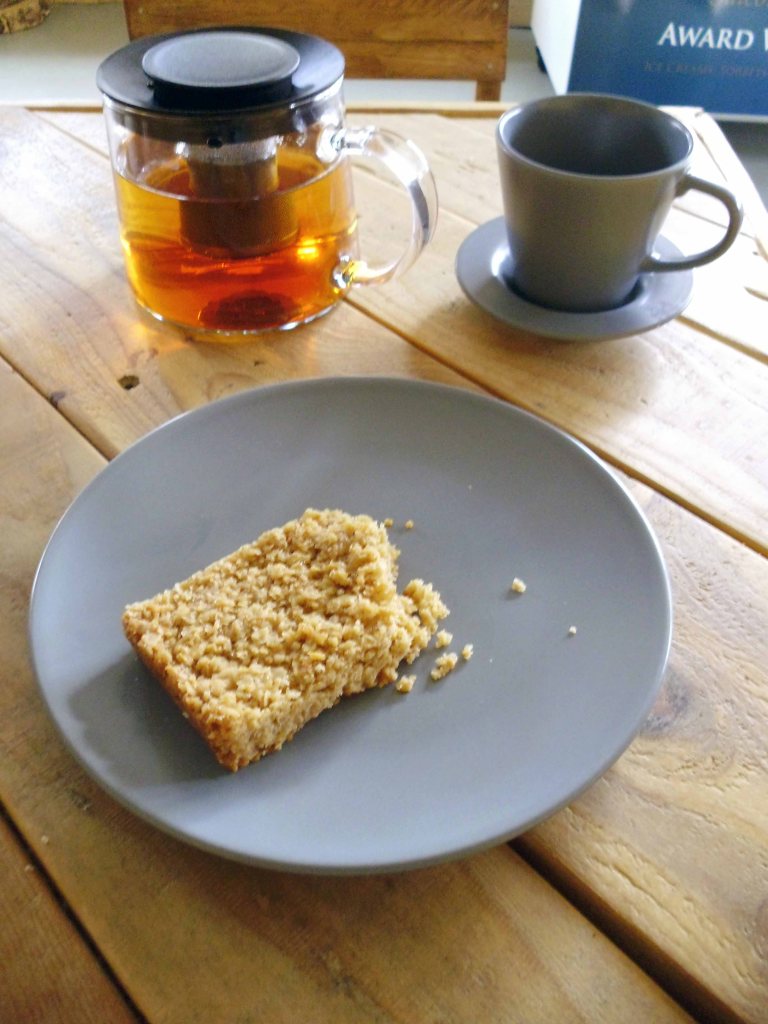
Time for a timely tea and flapjack stop.
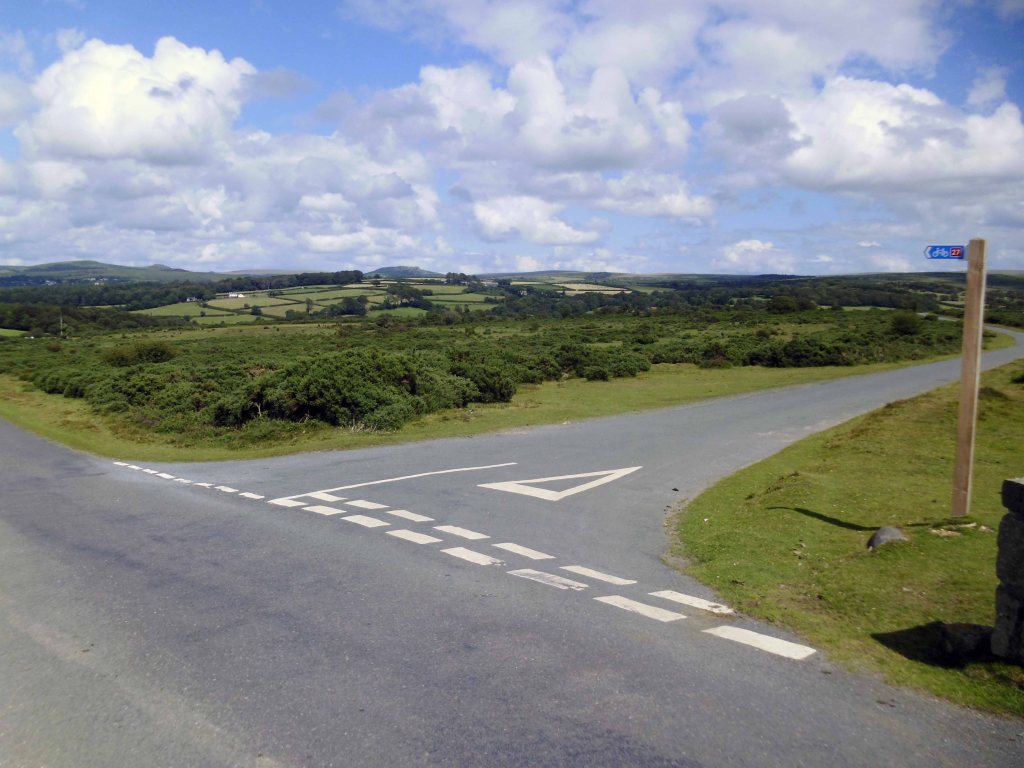
So far so good the nicest weather of the tour, shortest yet most amenable distance through moorland, upland and downland – with a final traffic free descent into Plymouth.
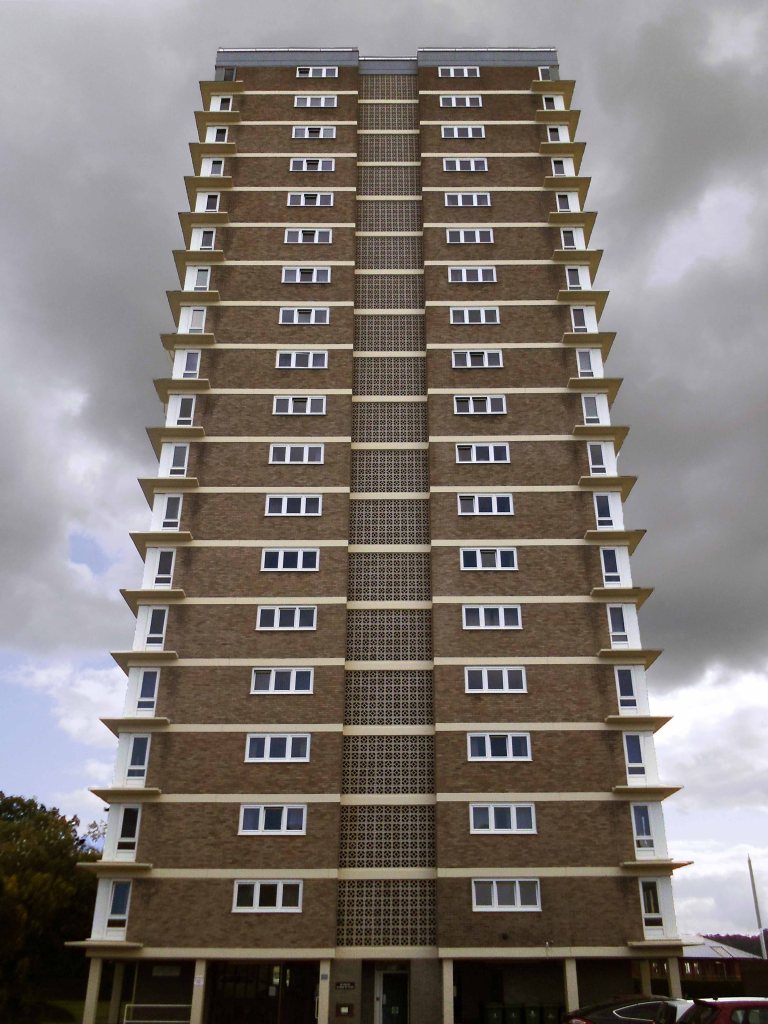
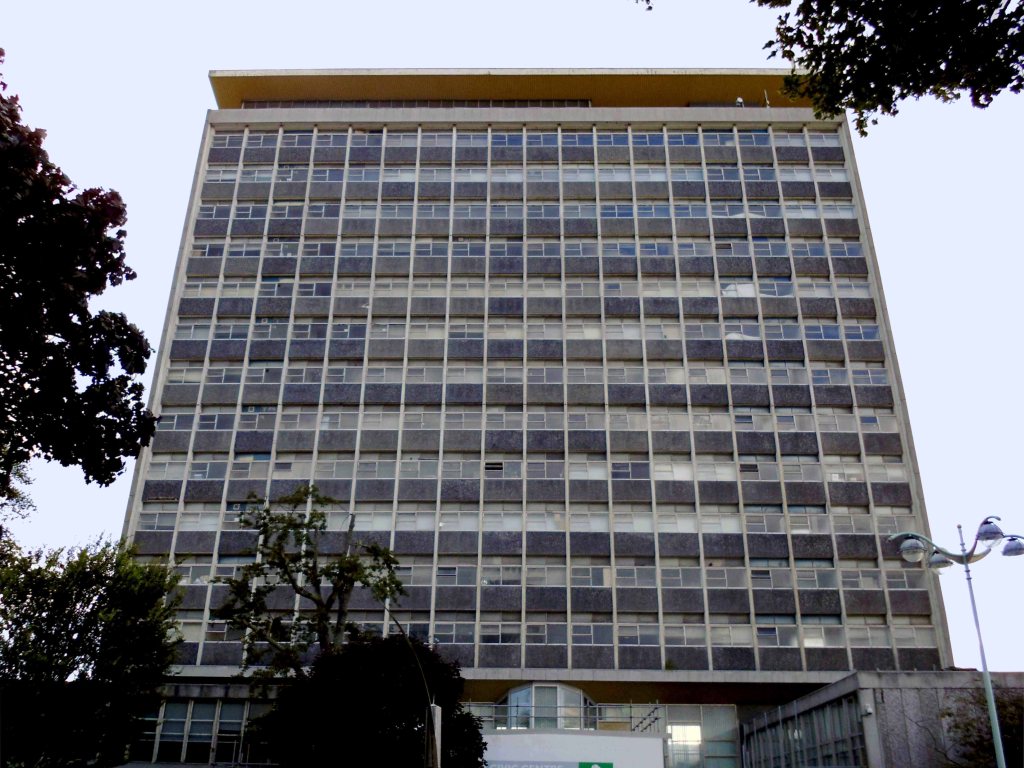
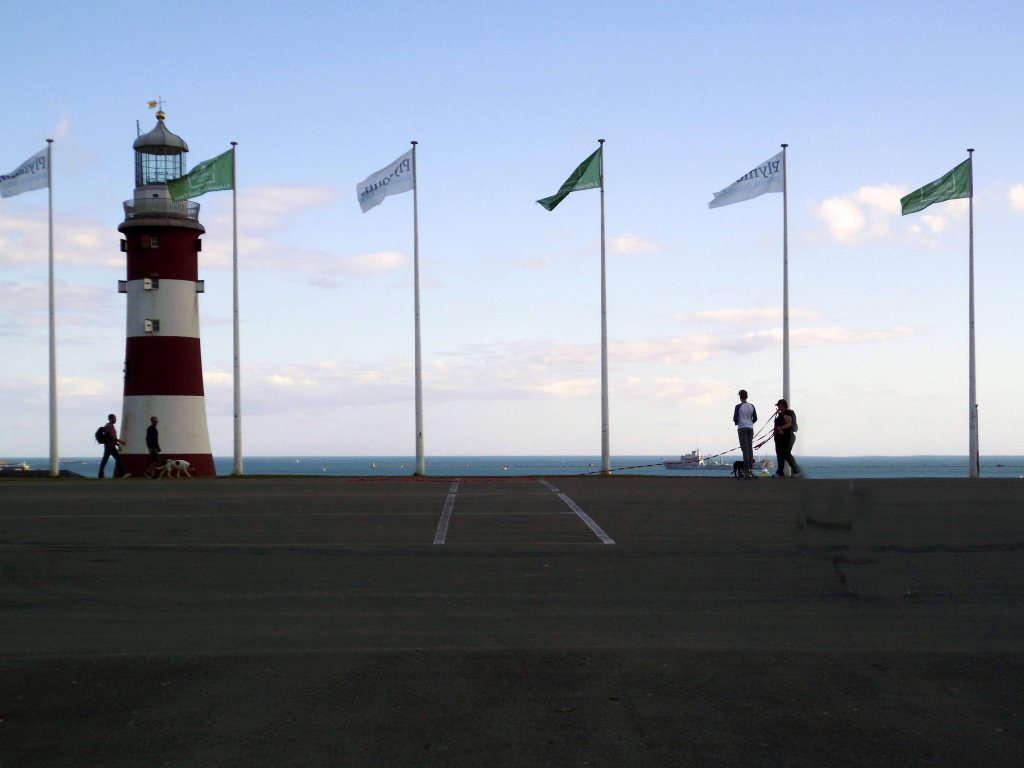
Back in the land of the tower block.
Chichester House Citadel Road The Hoe Plymouth PL1 3BA
Architects– Percy Bartlett and William Henry Watkins
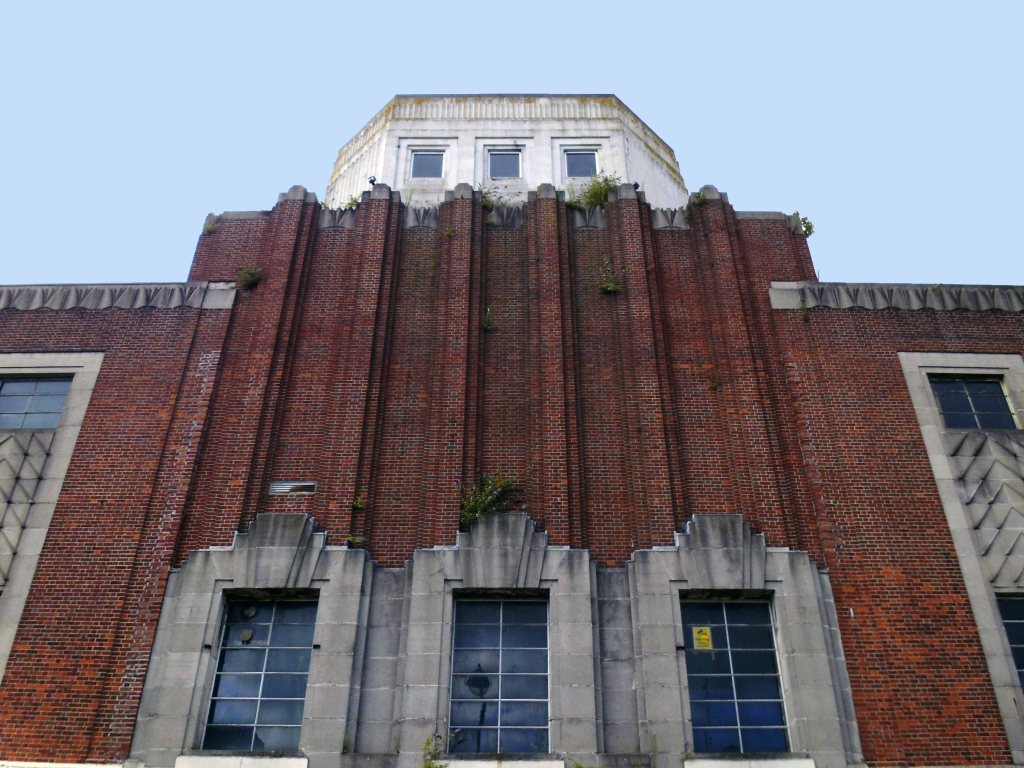
Built on the site of the Andrews New Picture Palace, which had opened in 1910, and was demolished in 1930. The Gaumont Palace was opened on 16th November 1931 with Jack Hulbert in “The Ghost Train” and Sydney Howard in “Almost a Divorce”.
The imposing brick building has a white stone tower feature in the central section above the entrance. Seating inside the auditorium was provided for 1,462 in the stalls and 790 in the circle.
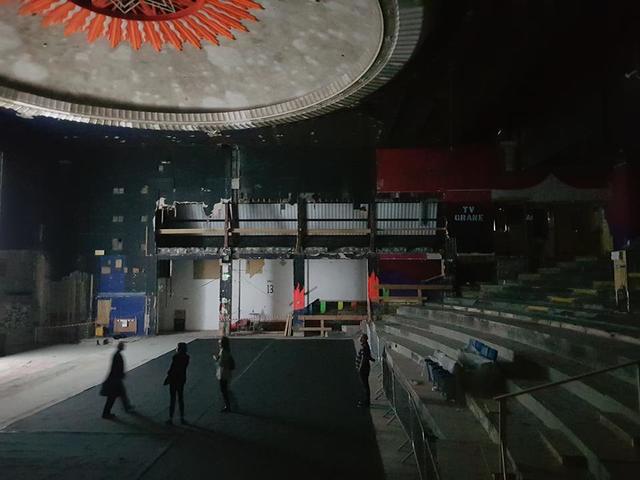
It was re-named Gaumont in 1937 currently closed and at risk.
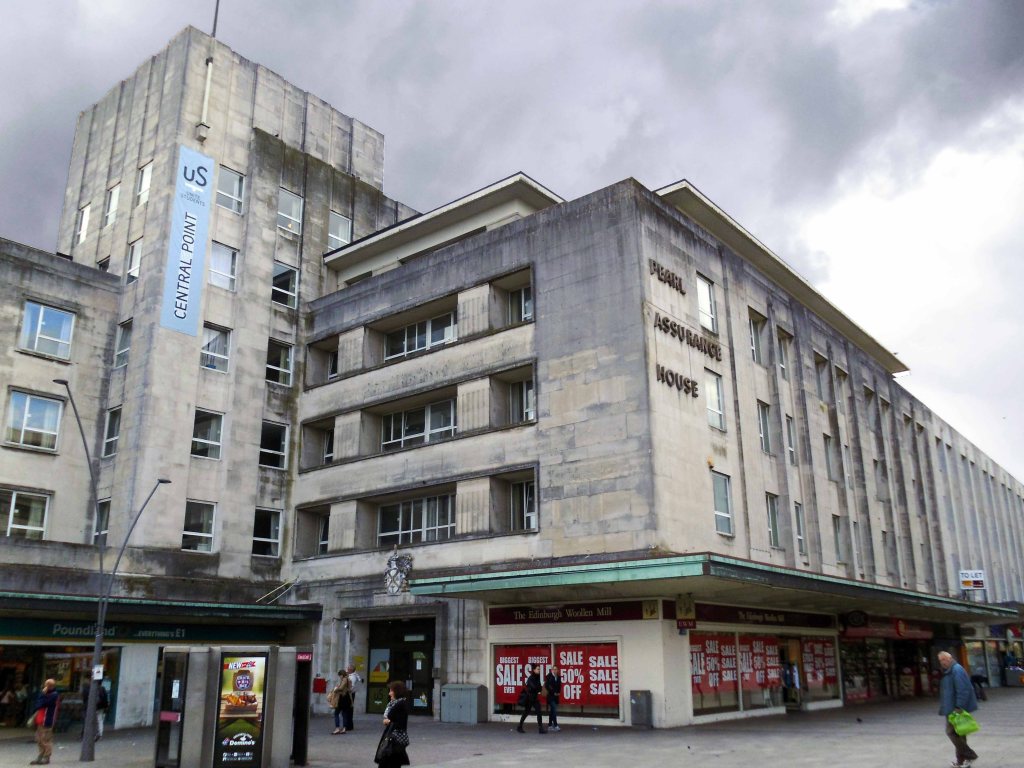
The post war redevelopment of Plymouth produced this sizable Portland Stone Shopping Centre.
‘A Plan for Plymouth’ was a report prepared for the City Council by James Paton Watson, City Engineer and Surveyor, and Patrick Abercrombie, Consultant Architect, published in 1943.
Planning is not merely the plotting of the streets of a town; its fundamental essence is the conscious co-relation of the various uses of the land to the best advantage of all inhabitants. Good planning therefore, presupposes a knowledge and understanding of the people, their relationship to their work, their play, and to each other, so that in the shaping of the urban pattern, the uses to which the land is put are so arranged as to secure an efficient, well- balanced and harmonious whole.
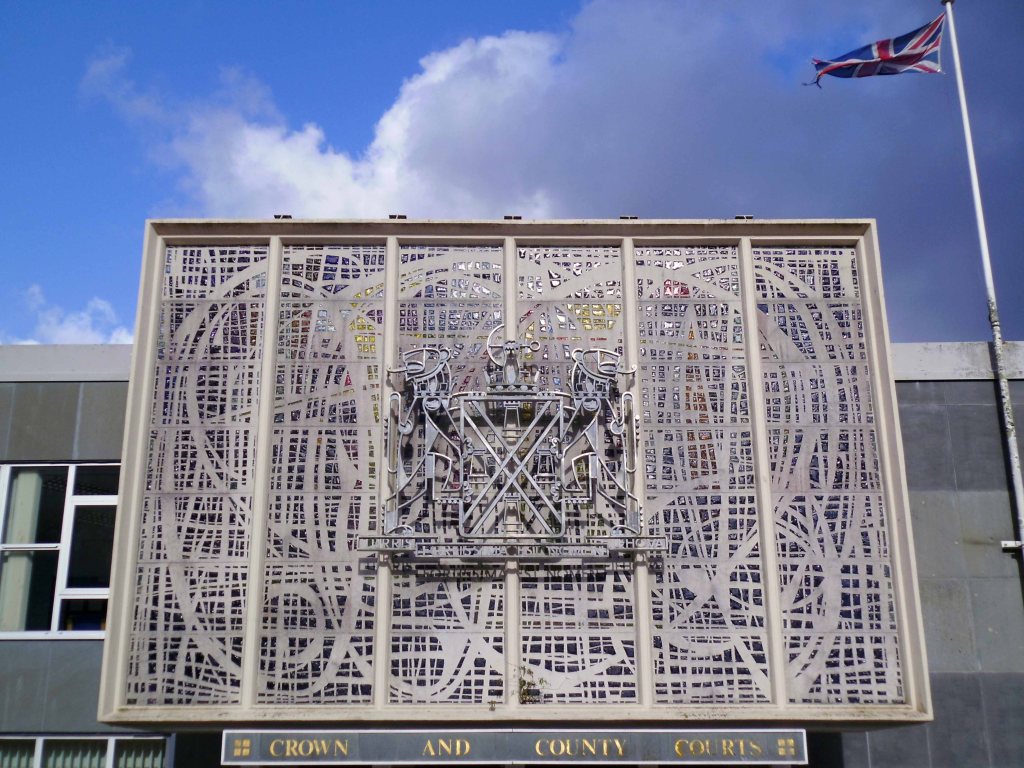
The magnificent dalle de verre fascia of the Crown and County Courts.
having had a good old look around I sought shelter for the night, with some difficulty I found a profoundly plain room. The town seemingly full of itinerant contractors, filling the vast majority of available space.
Not to worry let’s have a look at the seafront.
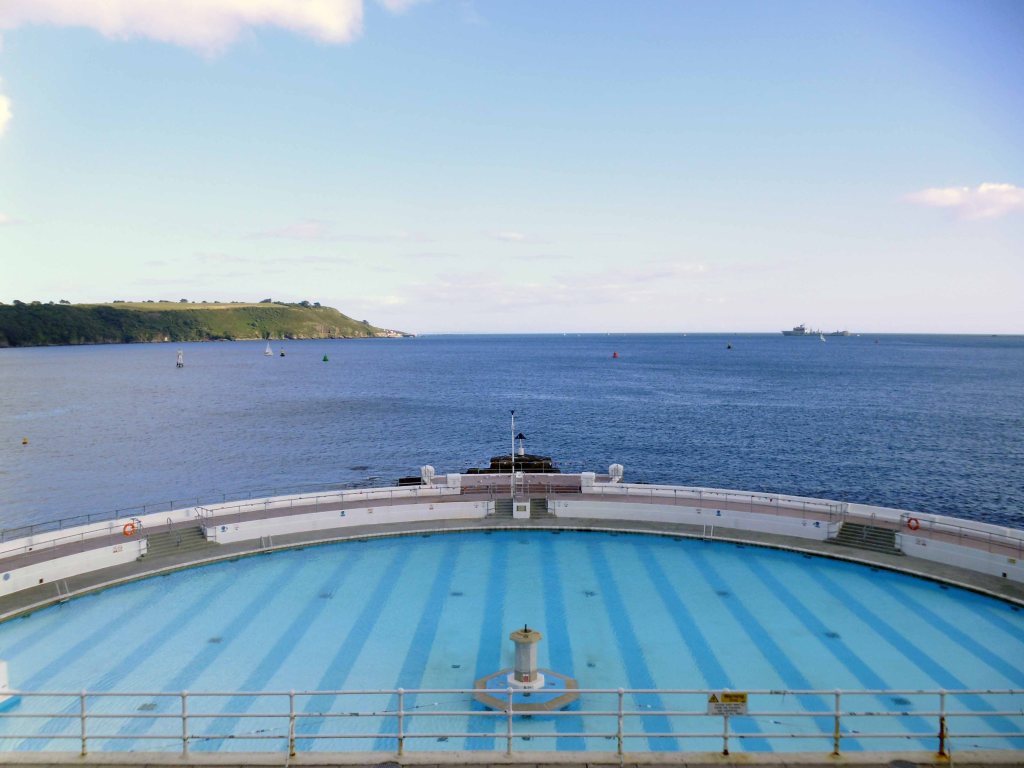
Tinside Lido by J Wibberley Borough Engineer, with Edmund Nuttall and Sons and John Mowlem and Company, builders, with entrance building of 1933 by the same engineer.
Set in a beautiful location overlooking the sea at the tip of Plymouth Hoe and voted one of the top 10 best outdoor pools in Europe, Tinside Lidois an attraction not to be missed.
Built in 1935, Tinside is a slice of the quintessential British seaside from a bygone era. The Lido is a wonderful example of art-deco style and is Grade II listed.
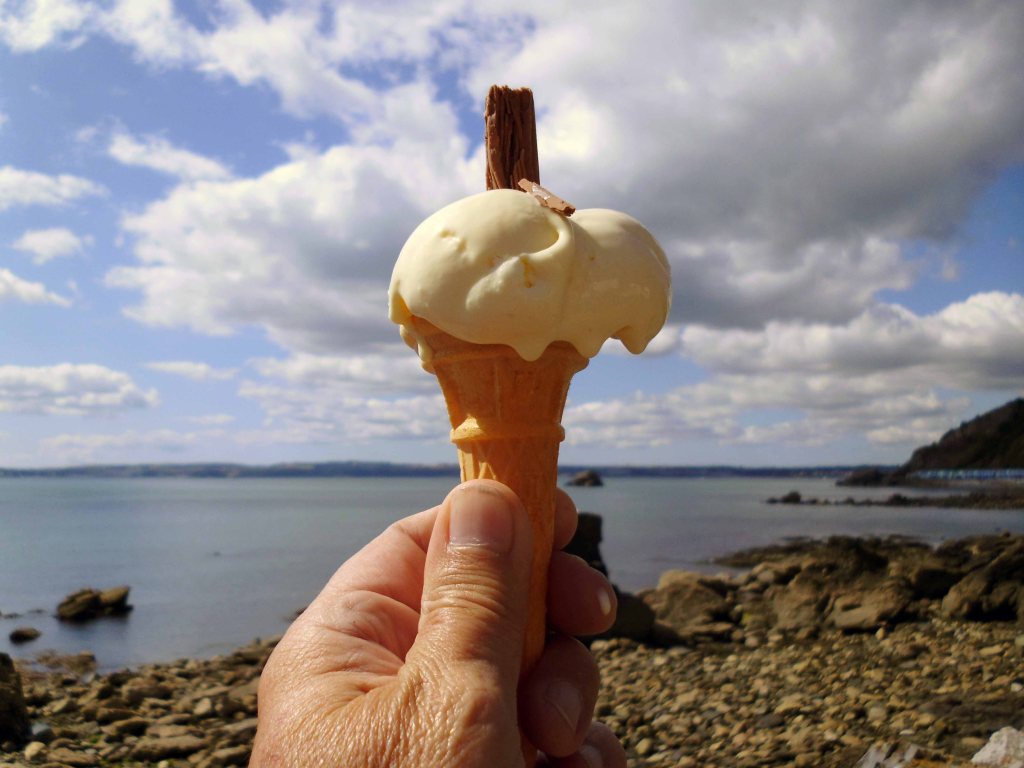
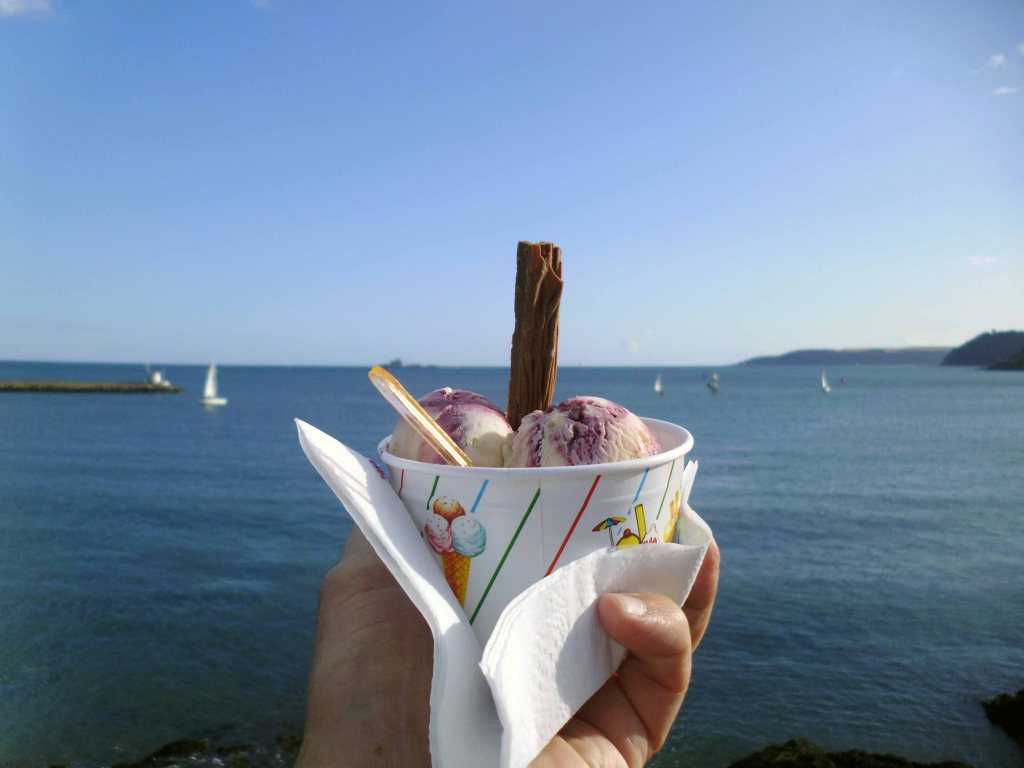
Time for a timely 99 tub – what ho!
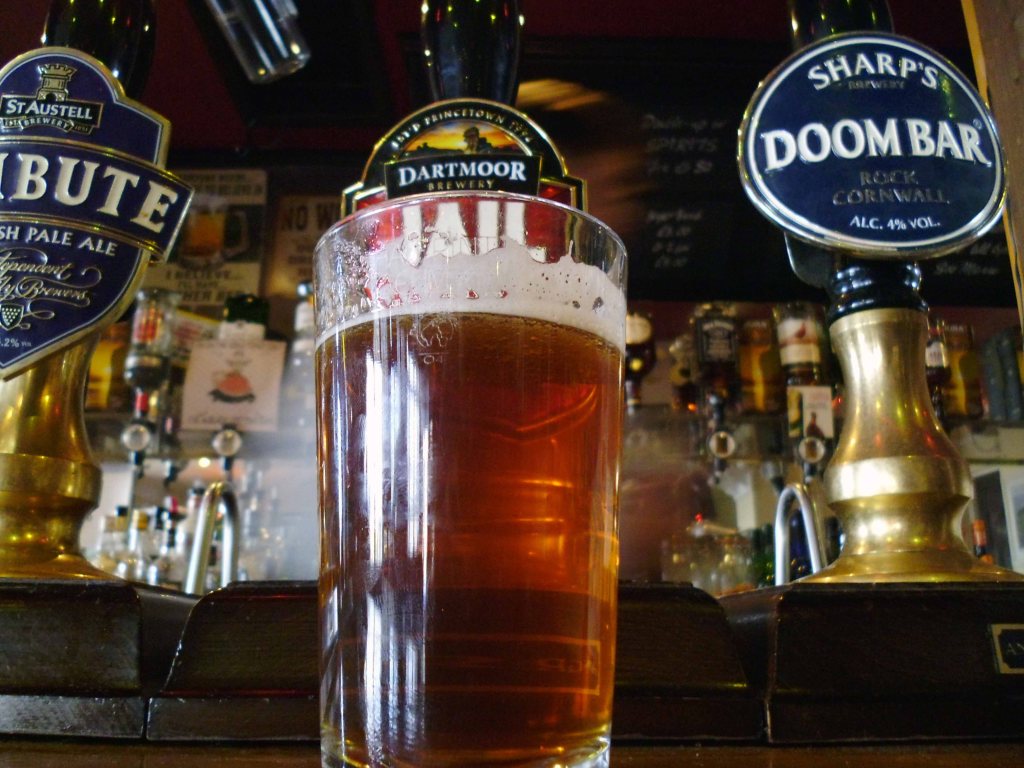
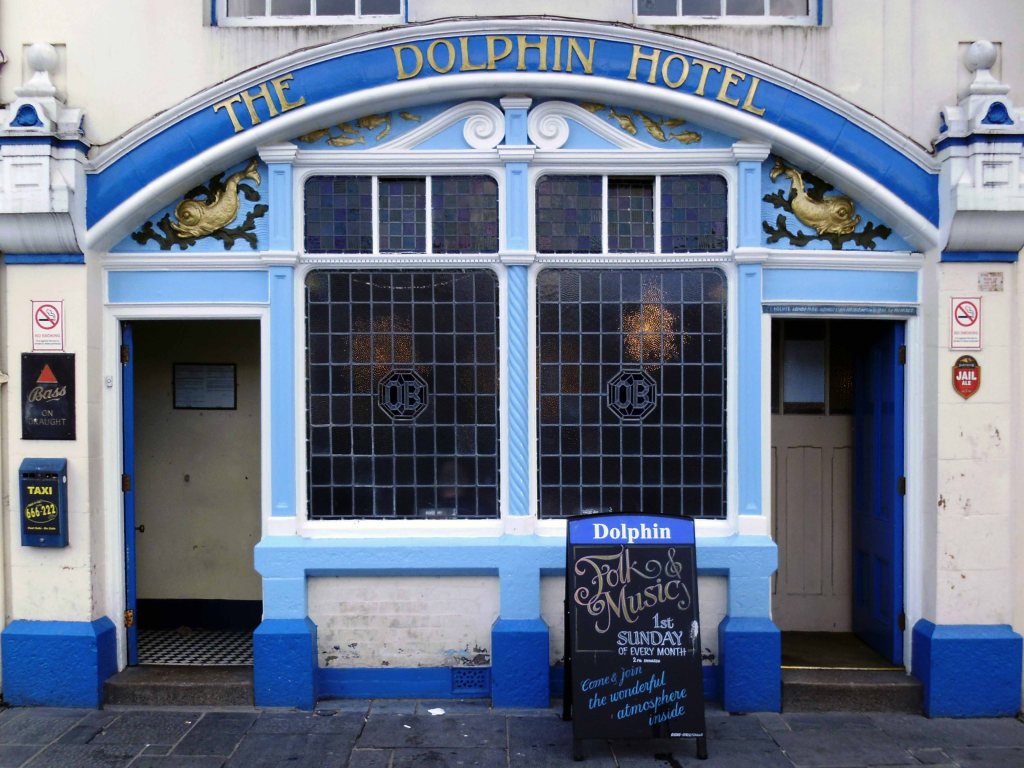
Followed by several pints of Dartmoor Jail in the delightful Dolphin Hotel.
The Dolphin Hotel is a pub on the Barbican , the building, which is known as either the Dolphin Inn or Dolphin Hotel, is a Grade II listed building. It notable as the setting of several of the artist Beryl Cook’s paintings.
The three storey building was constructed in the early 19th century, although it may contain fabric from an earlier structure. It has a slate mansard roof surrounded by a tall parapet with a moulded cornice. The front has white stucco with plaster reliefs of dolphins. The pub is associated with the Tolpuddle Martyrs, some of whom stayed at the hotel on their return from exile in Australia in 1838, when a Mr Morgan was the landlord.
It is a no-frills unmodernised pub famous for its cask ale, draught Bass served straight from the barrel. The sign on the front of the building has always called the pub the ‘Dolphin Hotel’. In 2010 the pub was refurbished, but vandalised in 2014.
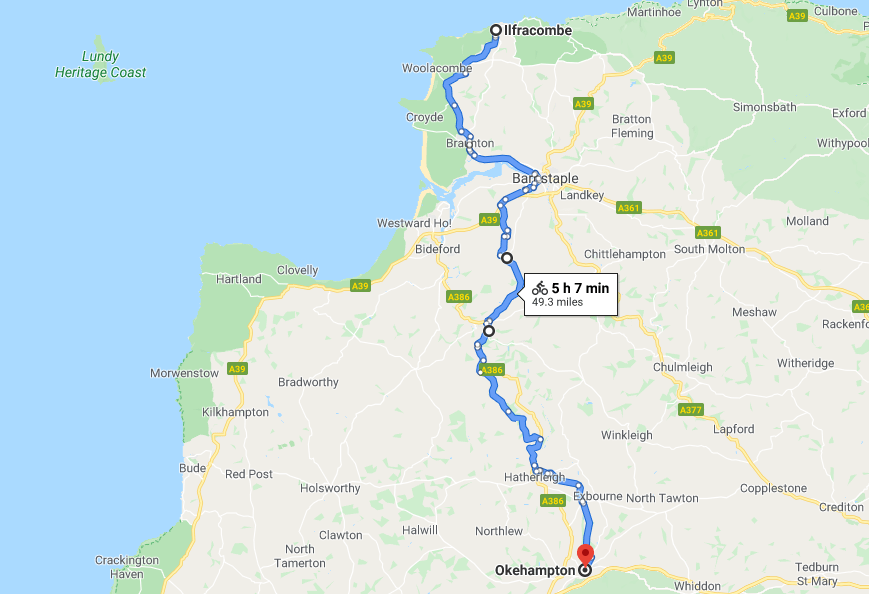
Today Monday 27th July 2015 – leaving Ilfracombe the royal we head south along the Tarka Trail, giving Cornwall a swerve.
Though first we feast on a slightly out of focus fry up at the digs.
Inspired by the route travelled by Tarka the Otter, this 180 mile, figure eight route traverses unspoiled countryside, dramatic sea cliffs and beautiful beaches. The southern loop incorporates the longest, continuous off-road cycle path in the UK. Walking or cycling, you can experience the best this beautiful area has to offer.
Then away we go following the former train line out of town.
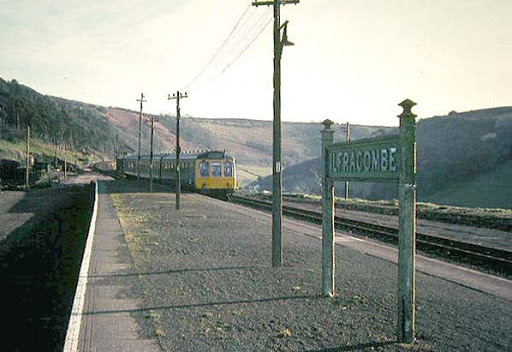
The Ilfracombe Branch of the London & South Western Railway, ran between Barnstaple and Ilfracombe. The branch opened as a single-track line in 1874, but was sufficiently popular that it needed to be upgraded to double-track in 1889.
The 1:36 gradient between Ilfracombe and Mortehoe stations was one of the steepest sections of double track railway line in the country.In the days of steam traction, it was often necessary to double-head departing passenger trains.
Named trains such as the Atlantic Coast Express and the Devon Belle both started and terminated at Ilfracombe.
Despite nearly a century of bringing much-needed revenue into this remote corner of the county, passenger numbers dropped dramatically in the years following the Second World War, due to a massive increase in the number of cars on Britain’s roads, and the line finally closed in 1970.
Much of the course of the line is still visible today, and sections of it have been converted into public cycleways.
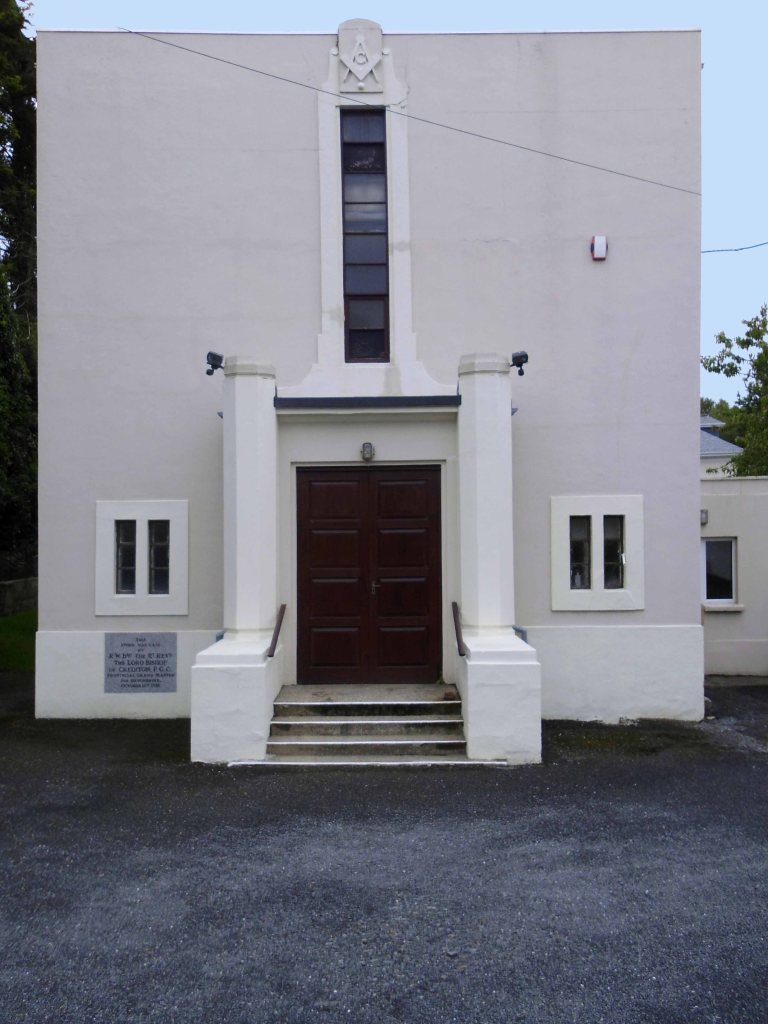
We leave behind – theshadowy world of secret handshakes, favours for friends and strange initiation ceremonies.
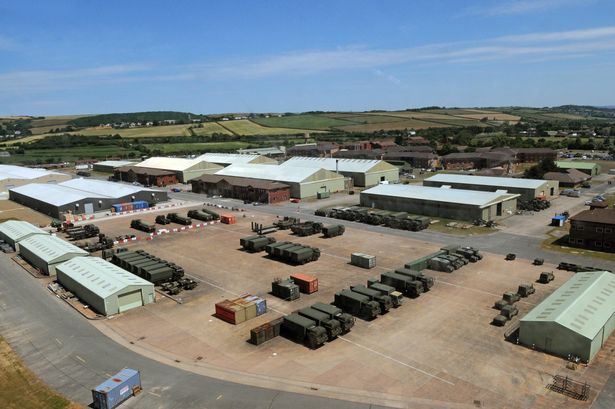
For the equally shadowy world of military installations.
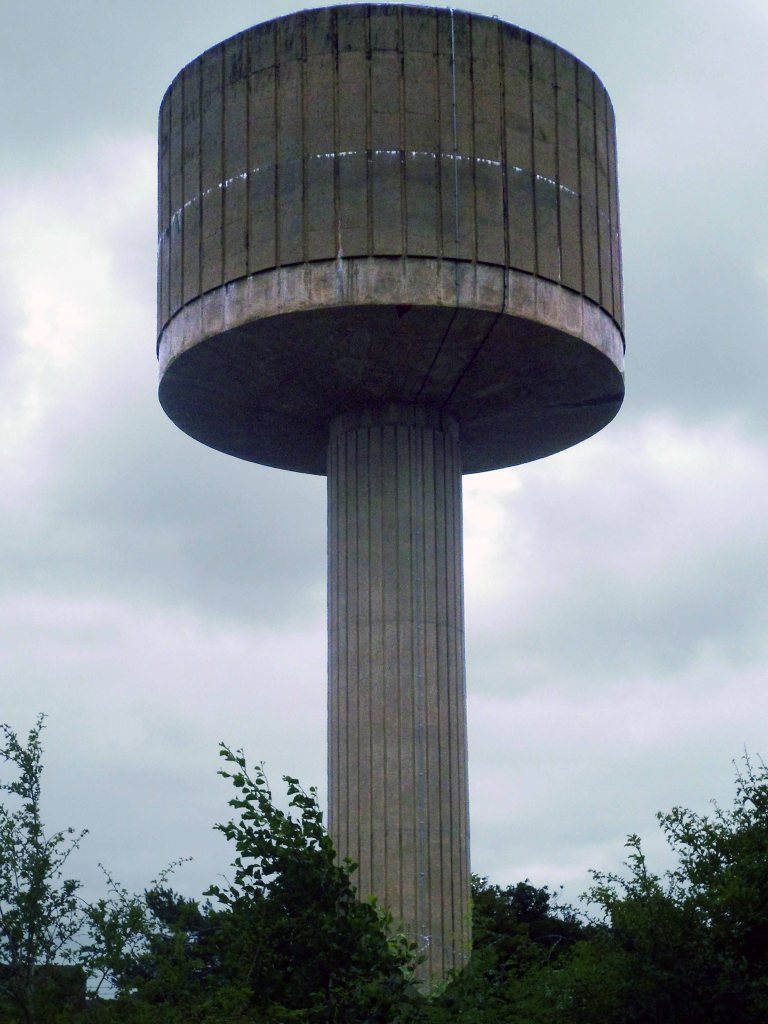
The water tower at RAF Chivenor.
Originally a civil airfield opened in the 1930s, the site was taken over by the Royal Air Force in May 1940 for use as a Coastal Command Station. After World War II, the station was largely used for training, particularly weapons training.
In 1974 the station was left on care and maintenance, in 1994 7 FTS left Chivenor, merging with No. 4 Flying Training School RAF at RAF Valley, and the airfield was handed over to the Royal Marines.
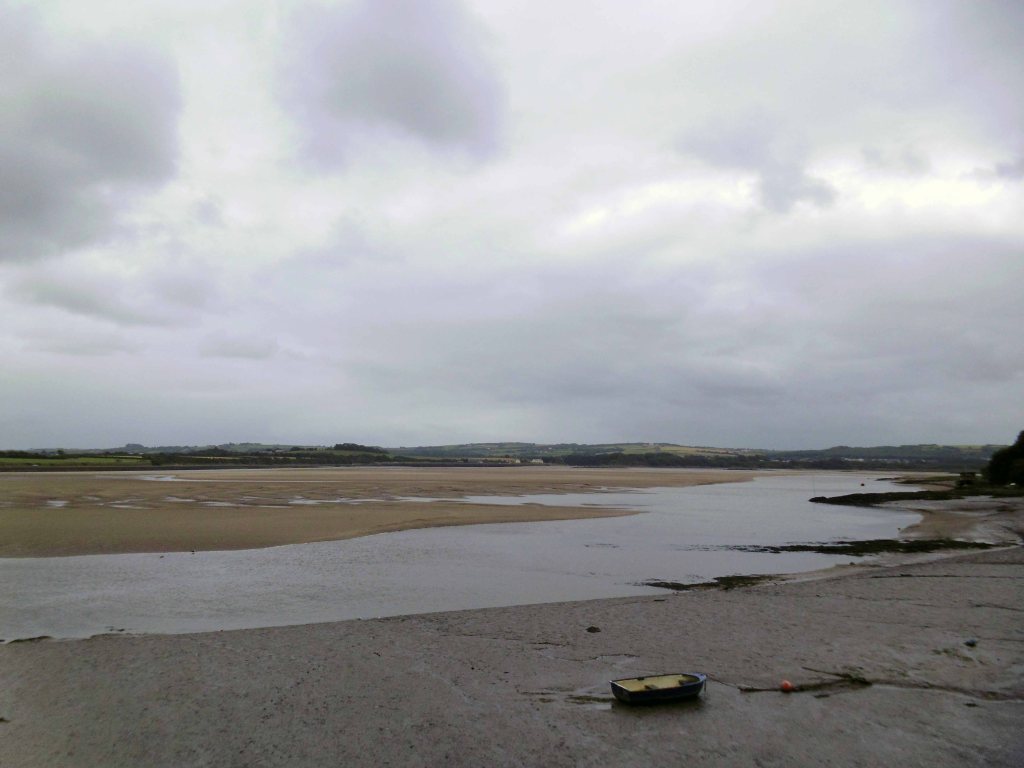
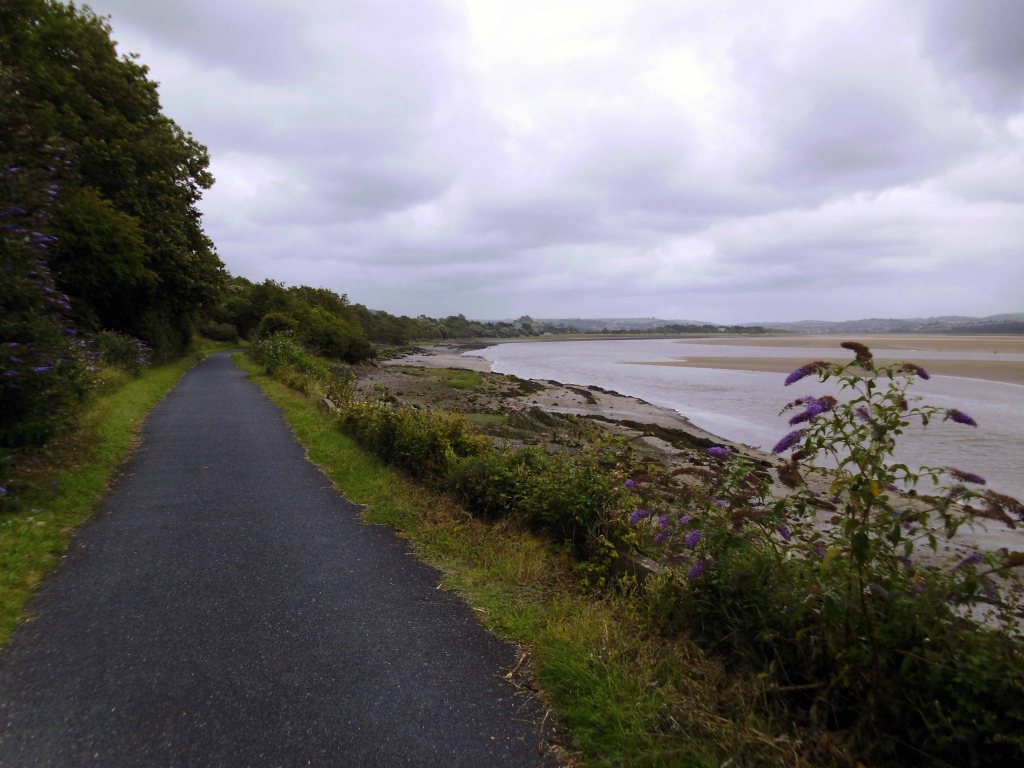
A most delightful cycle path alongside the estuary of the River Taw.
The River Taw rises high on the slopes of Dartmoor and together with its tributaries, the River Mole, Yeo and little Dart, runs north through beautiful rolling countryside down to Barnstaple and into the Bristol Channel.
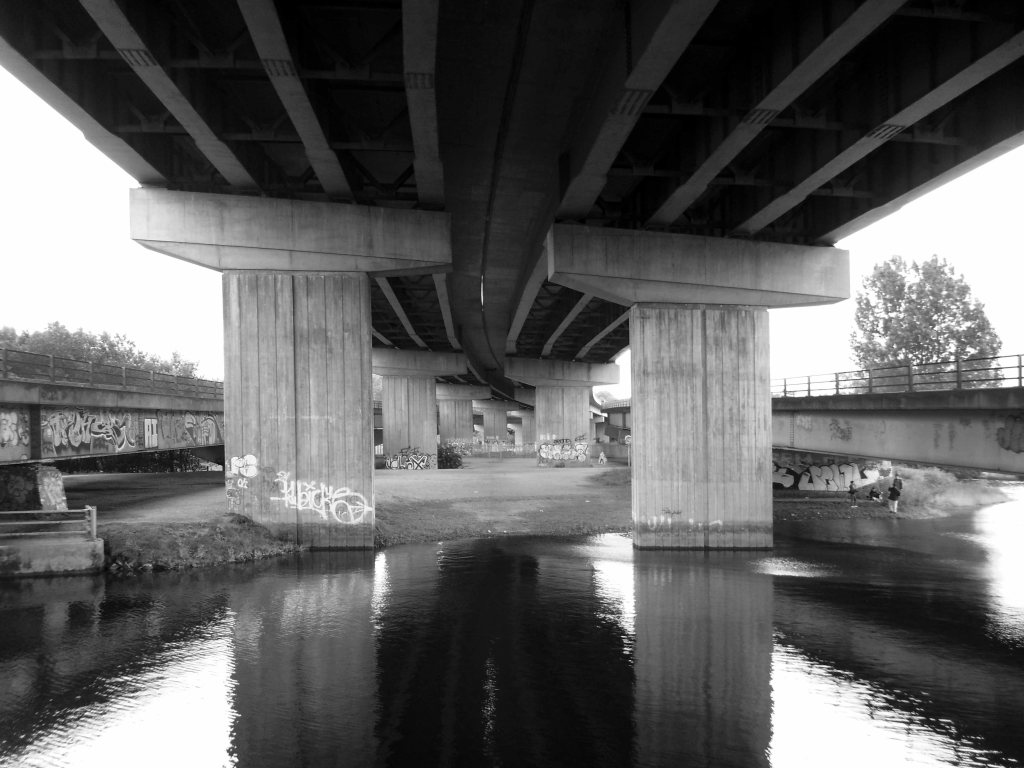
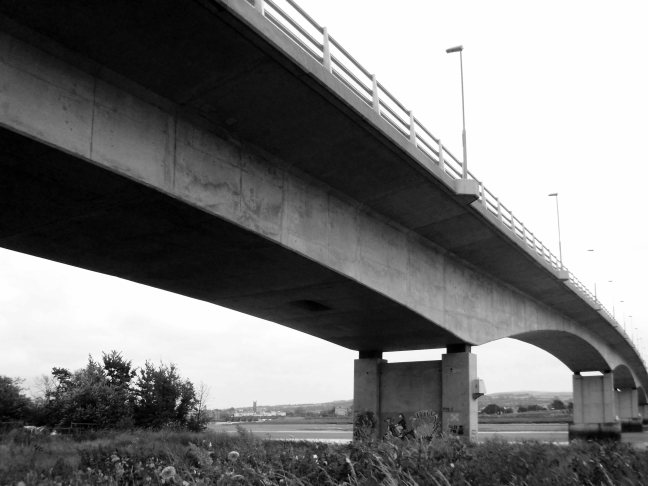
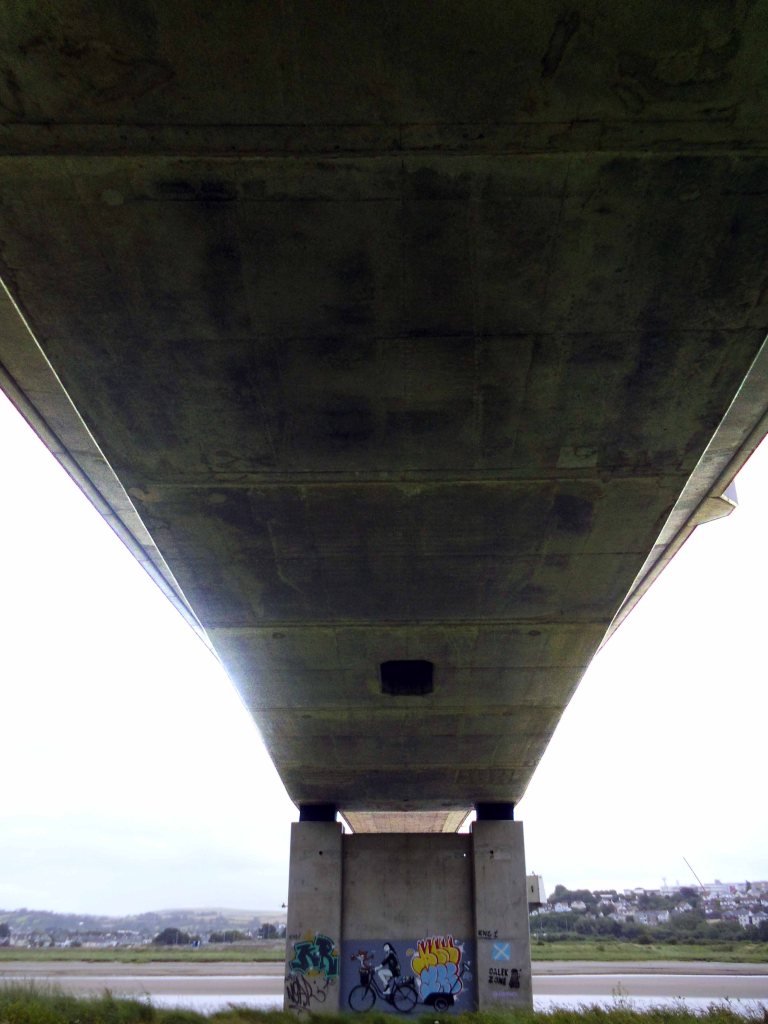
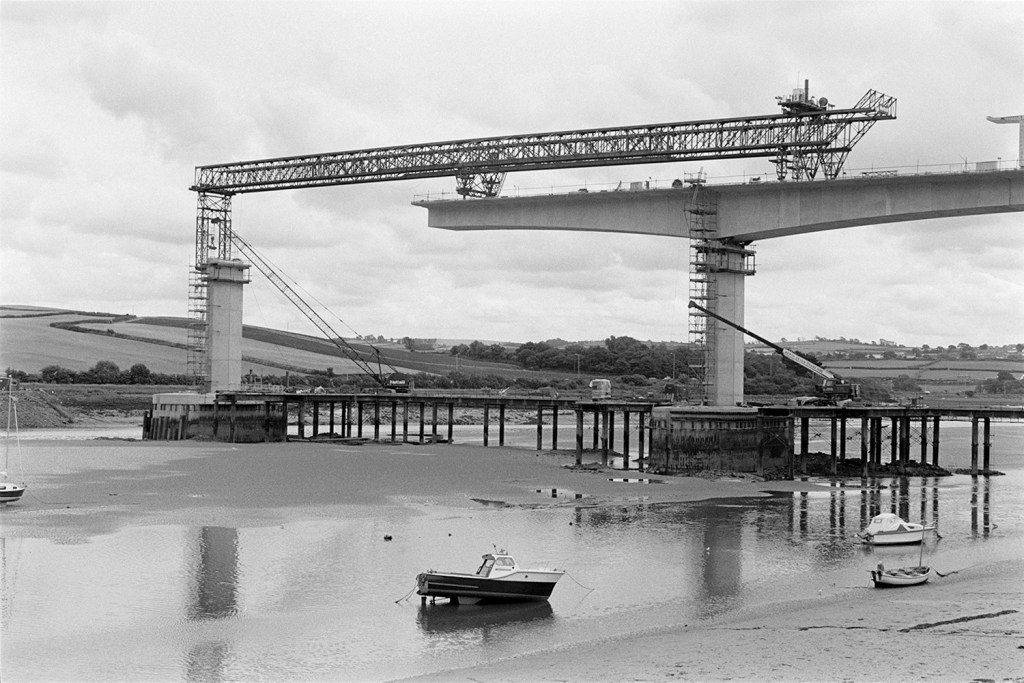
Passing under the Torridge Bridge at Bideford – a 650 metre long concrete structure built in 1987.
Three piers are in the river. Each of the piers in the water is protected by concrete fenders twenty four metres long by eight metres wide by eight metres high. The concrete piers of the bridge are around twenty four metres high.
It was designed by MRM Partnership.
Here we are in Barnstaple by the Civic Centre.
It’s described as an ‘iconic’ building, but not many locals would agree, this huge building widely considered to be one of the ugliest in Devon could soon be under new ownership.The council has confirmed that following a tender exercise, it is working with a preferred bidder to finalise the details of the sale.
Devon Live
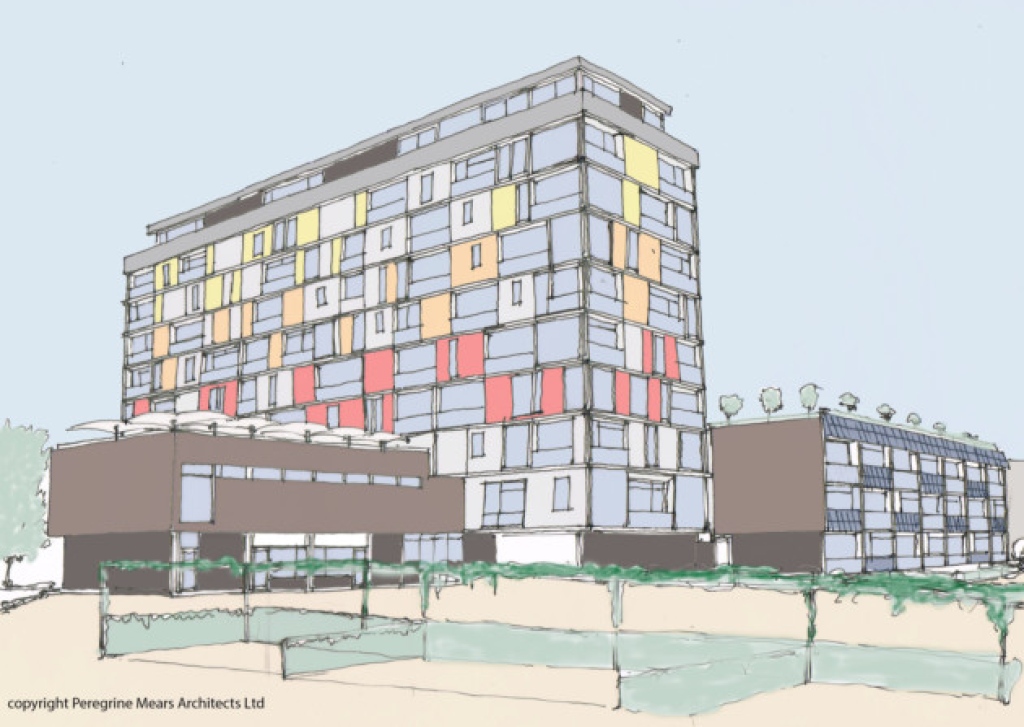
In 2014Barnstaple based Peregrine Mears Architects believed the civic centre could provide up to 84 modern apartments.
Artist’s impression by Peregrine Mears Architects – looks a little too wobbly to me, Peregrine Mears Architects should get right back to the drawing board, where they started from.
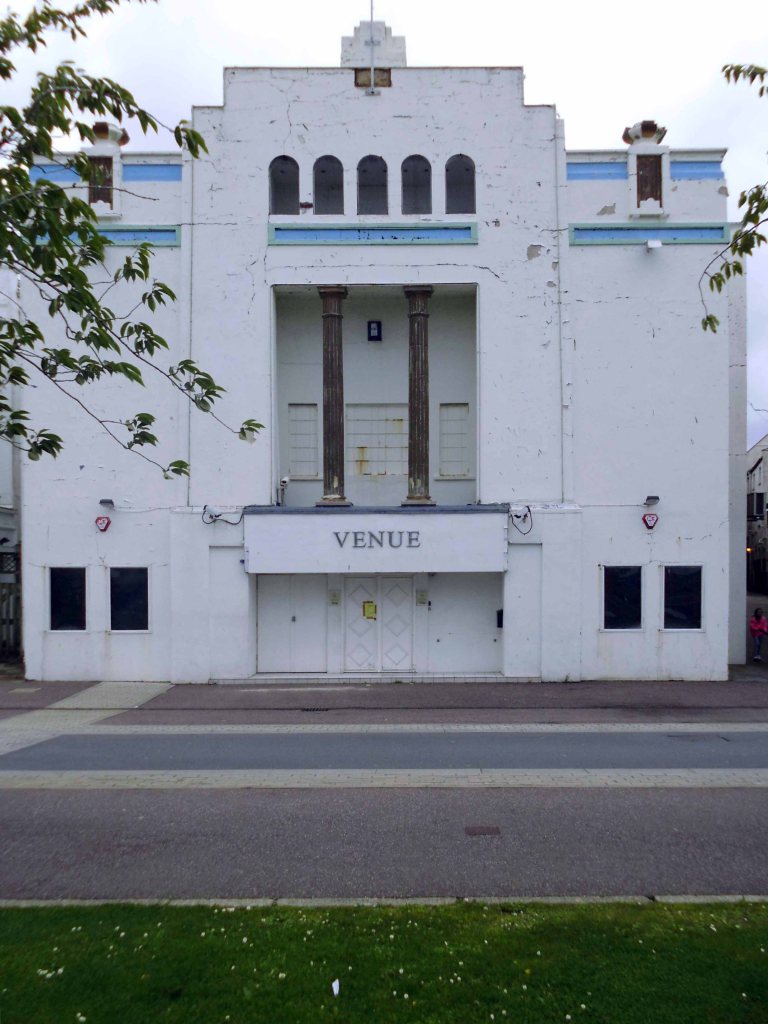
The Neo-Classical facade restrained Deco of The Venue.
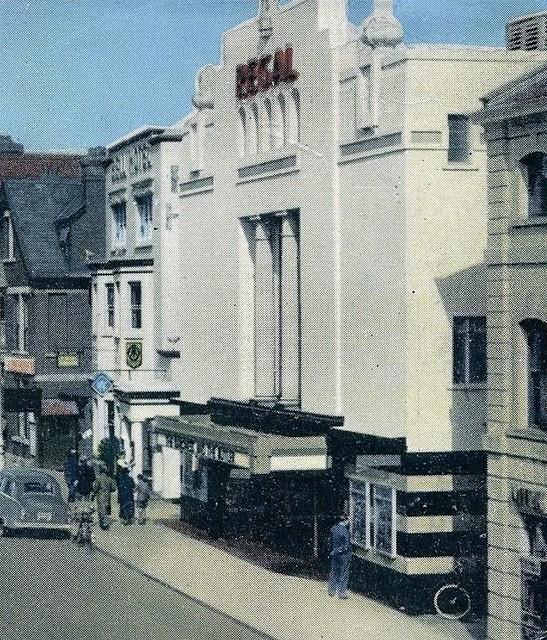
Formerly The Regal Cinema – opened on 30th August 1937
Architects – BM Orphoot
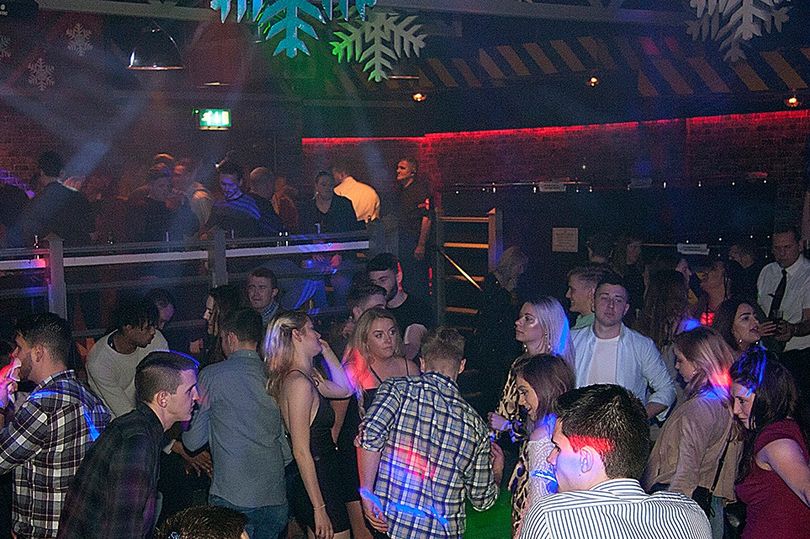
Revellers dancing at The Worx nightclub– as The Venue was to become.
The building in Barnstaple is for sale with Webbers estate agents for just £225,000. The striking building in a prime position on the town’s Strand was originally opened in 1937 as the Regal Cinema.
The building will probably be best known under the guise of Kaos, the name it was given during the 1990’s and at the height of its popularity.
Other nightclub incarnations at the premises included Babylon, Rockabillies, Coco, Club Tropicana and of course The Venue.
The Tarka Trail crossing the River Torridge, just south of Bideford, utilising the former railway bridge.
The old home town looks the same as I step down from the bike, and there to meet me is – well nobody.
And I realise, yes, I was only dreaming.
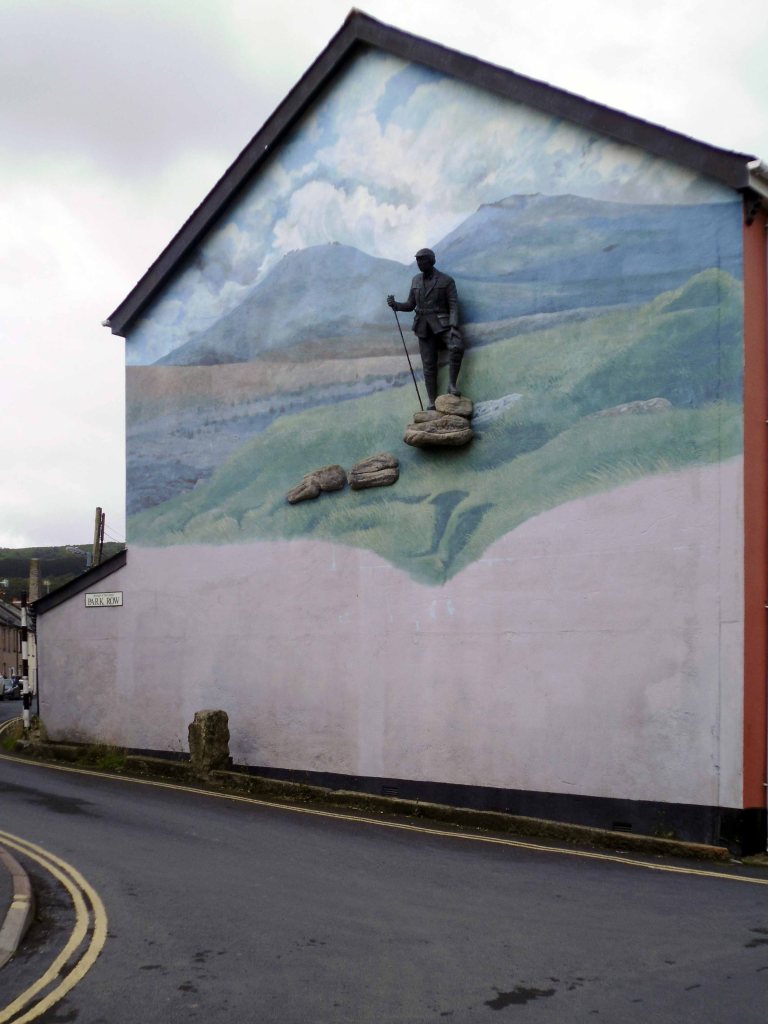
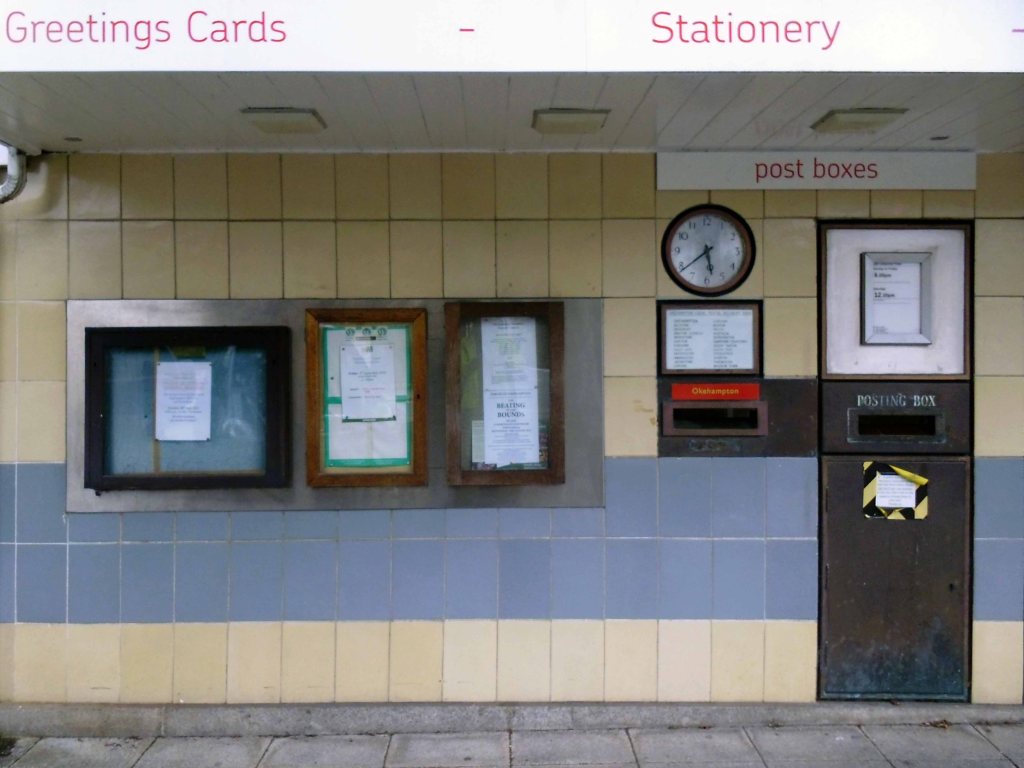
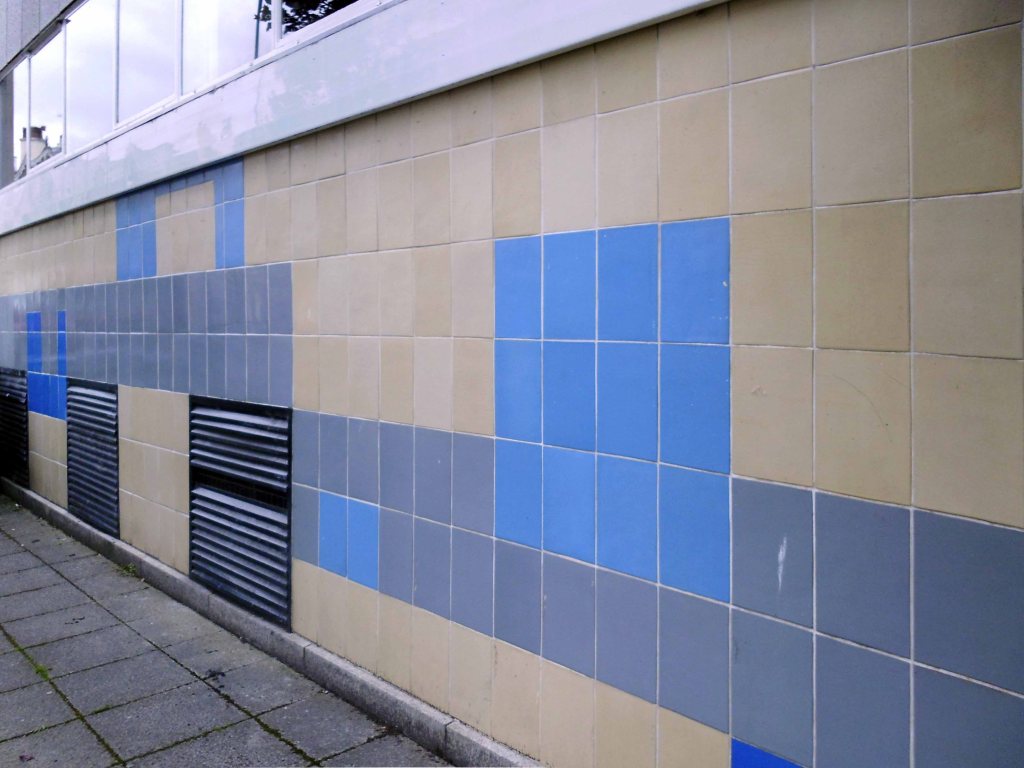
I’ll go to Okehampon then – take a look at the lovely tiled Post Office, whilst completely ignoring one of the oldest Norman castles in the country.
Walking around town in search of a B&B proved fruitless, though I was directed to an out of town Roadhouse aways away.
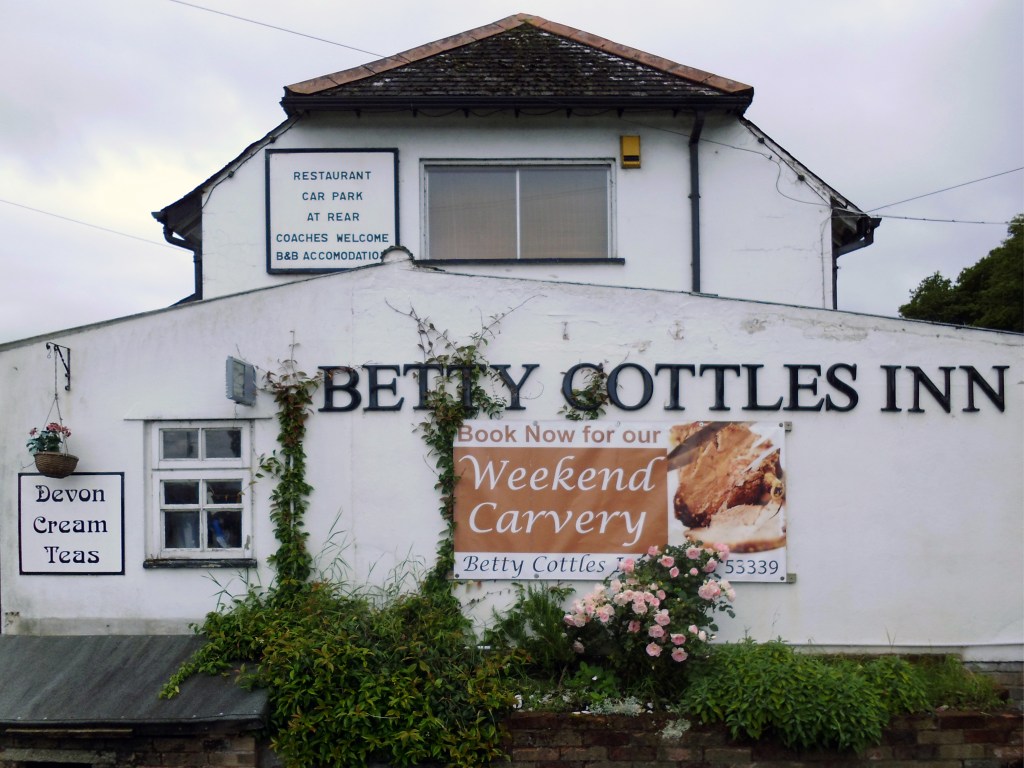
Welcome to Betty Cottles Inn – land of the lost apostrophe.
Rooms are not as photos/described on hotel booking sites, wi-fi hardly ever works. I prepaid/booked for nine nights, I checked out after two days. Needless to say I didnt receive a seven day refund. Owner with attitude problem, he had my money, and was not keen on helping with my concerns about the property. Musky smell to carpet in bar and restaurant areas. Not been cleaned for a long time. Rooms unsafe and not private, with curtains not long enough, lock on room doors inadequate.
Neil H – July 2109
You sneaked in a female into your single room without paying for her and got caught so obviously you have retaliated by way of a negative review. You were probably the most rude and hostile guest we have ever had and have had to report you to booking.com for guest misconduct and also banned you from being able to book here again.
Matthew owner at Betty Cottles Inn
I ate a reasonable meal in the Carvery and chatted amiably with a representative salesman on the move, whilst seeing off a few pints of Guinness – any port in a storm.
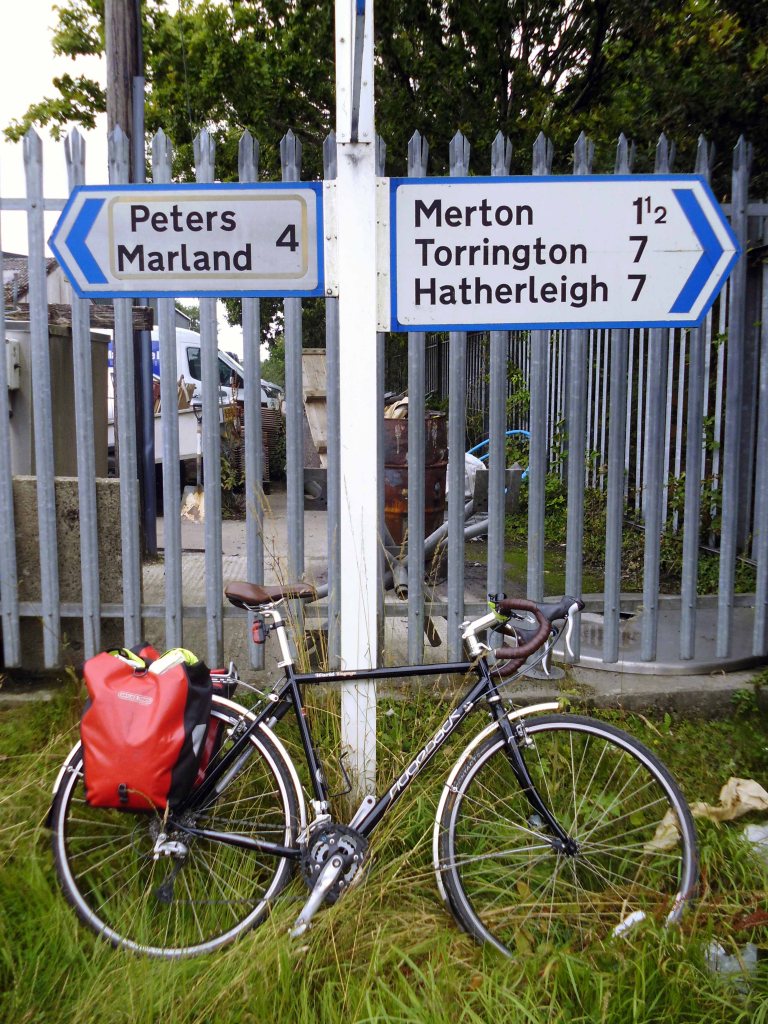
Following a sound night’s sleep, courtesy of the Ocean Hotel, I set out on my Ridgeback World Voyage – purchased through the Cycle to Work Scheme, I have essentially used it in order to cycle away from work.
My dream had always been to devise a way of life, where the lines between work, leisure and culture disappear, where such tiresome social constructs have finally become redundant – let’s go!
Having failed to learn from my previous jaunt, that a map is a handy aid to successful travel, I set off merrily without one – on Sunday 25th July 2015.
Following Sustrans’ signs will suffice, says I to myself.
I arrived safely in Brean, as the rain began to fall with a deeply disheartening enthusiasm.
The signage indicated a route across the beach – I quickly learnt that heavy rain and sand do not produce a sufficiently solid surface for cycling, when push comes to shove, there’s only one way forward.
Push.
There was no escape to the left, the extensive run of caravan parks and private leisure facilities having erected attractive razor wire topped barriers and locked gates – I pressed on.
With every arduous tortured sandy step, I developed an even deeper antipathy towards Pontin’s Brean Sands.
Here at Brean Sands we have been busy getting ready to welcome guests to our park. We have painted all our apartments, we have fitted over 10,000 metres skirting board throughout the apartments. All external soffits have been painted along with all the Double Decker apartments and main buildings. The QV Bar, Restaurant and also the Fun Factory have all had new flooring fitted. Our Restaurant bays are now refitted as well as improvements to our till area & reception desk.
Free at last from the sandy hell of the shore, I sought succour in this seaside café – where panoramic views of the sea come free.
Having enjoyed the multiple benefits of a breakfast not included tariff at the Ocean Hotel, I was now very, very hungry indeed – I made very, very short work of egg and beans on toast.
I briefly kept company with a Swiss couple, who were on an extensive motor car tour, I quickly became something of an apologist for the day’s foul weather.
It’s not always like this you know.
Stating the obvious, yet thinking the converse.
The panoramic view through the other window – a delightful row of rain soaked, link low rise maisonettes – nirvana!
I was arrested by this arresting wayside shelter/art gallery facility commemorating the Coronation of 1953, in the village of Chedzoy.
The village is at the western end of King’s Sedgemoor and lies on an ‘island’ of Burtle marine sands, close to King’s Sedgemoor Drain. The area was settled possibly in the Mesolithic period, and timber trackways from the third to first millennium B.C. provided routes to other settlements on the Somerset Levels. Roman artifacts have been found in the parish.
The name of the village is pronounced Chidgey or Chedzey, and derives its name from being Cedd’s Island. The zoy part of the name being derived from eg or ieg meaning island.
The shelter stands at the corner of Front and Higher Streets – it would appear that the Burghers of Chedzoy had exhausted their inexhaustible font of creative naming resources, by the time that streets had been invented – the Mesolithic fools.
The village people seem to be suffering from some collective false memory syndrome recollection of a fabulous Mer-family past.
Improving weather in the Bridgwater area, as we languish in the cool shade of the by-pass, beside the River Parrett.
The River Parrett has its source in the Thorney Mills springs in the hills around Chedington in Dorset in England and flows west through the Somerset Levels. The mouth is a Nature Reserve at Burnham on Sea where it flows into Bridgwater Bay on the Bristol Channel. The river is tidal for 18.6 miles up to Oath; and, because the fall of the river, between Langport and Bridgwater is only 1 foot per mile, it is prone to frequent flooding, in winter and high tides.
The River Parrett is 37 miles long and its main tributaries include the Rivers Tone, Isle and Yeo. The River Cary drains into the Parrett via the King’s Sedgemoor Drain. The River Parrett drains an area of over 652.5 square miles – comprising around fifty percent of the land area of Somerset.
Here we are in Williton – where the modern world is ready to sweep in unannounced as announced in the Somerset County Gazette.
Plans to build a new supermarket, retail units and health centre in Williton have been resubmitted this week. J. Gliddon and Sons Ltd. has put forward new plans for the redevelopment of land off the A39 Bank Street in Williton, behind its existing store.
The shop will be demolished to create the access road, with the company expected to occupy a new unit fronting onto Bank Street once the mini-roundabout has been built.
Well so far so good – I arrived in Minehead in one piece – bike intact.
Having only the vaguest notion of where my onward route lay – I hastened to the Tourist Information Office. Having carefully explained my malaise the helpful staff gazed at me with mild amazement, liberally mixed with slightly perplexed eye-rolling and the odd tut.
Having received quite detailed instructions, I was almost immediately lost, following a road that abruptly ceased to be a road. Reluctantly I picked up a woodland path, rutted with tree roots and certainly not a suitable cycling route.
It fell away sharply, as I careered out of control down the precipitous slope.
On reaching the end I discovered that my new rain jacket had also fallen away, along with my treasured Casio watch, which was tucked safely in the pocket.
I lightly bit my lip and reflected that climbing back up the precipitous slope, which I had only too recently incautiously careered down, was not an option – onward ever onward.
In my mind the younger me looks at the older me – having lost all faith in my ability to manage my life with even a modicum of honesty and integrity, or at best a basic grasp of reality.
A whitewashed Grade I Listed 15th-century Church, with a 14th-century tower.
Welcome to this outstanding Parish Church, which, thanks to it’s distinctive white appearance stands as a beacon on the hills of Exmoor. For centuries Selworthy Church has been a focus for residents and visitors as a place to experience the power and presence of God. We hope you find peace of God here and leave uplifted, refreshed and inspired.
Further on down the road somewhere or other I had a cup of tea and piece of cake.
Had I carried out even the most basic research, I would have known that the ups and downs of Exmoor are no easy ride, particularly in heavy rain without a rain jacket.
As the sky darkened I was heartened by the sight of the light’s of Ilfracombe, twinkling star like in the distance – following eighty six miles of toil and a measure of trouble, I finally arrived at the pre-booked digs. They had been concerned by my no-show, relieved when I finally arrived, incredulous when I told the tale of the day’s travails. The lady of the house ever so kindly washed and dried my sodden clothing.
I showered and hit the town – eschewing food in favour of a pint, chatting to a garrulous gang of solar panel cleaners from Cornwall.
Returning merrily to the B&B and the prospect of slumber.
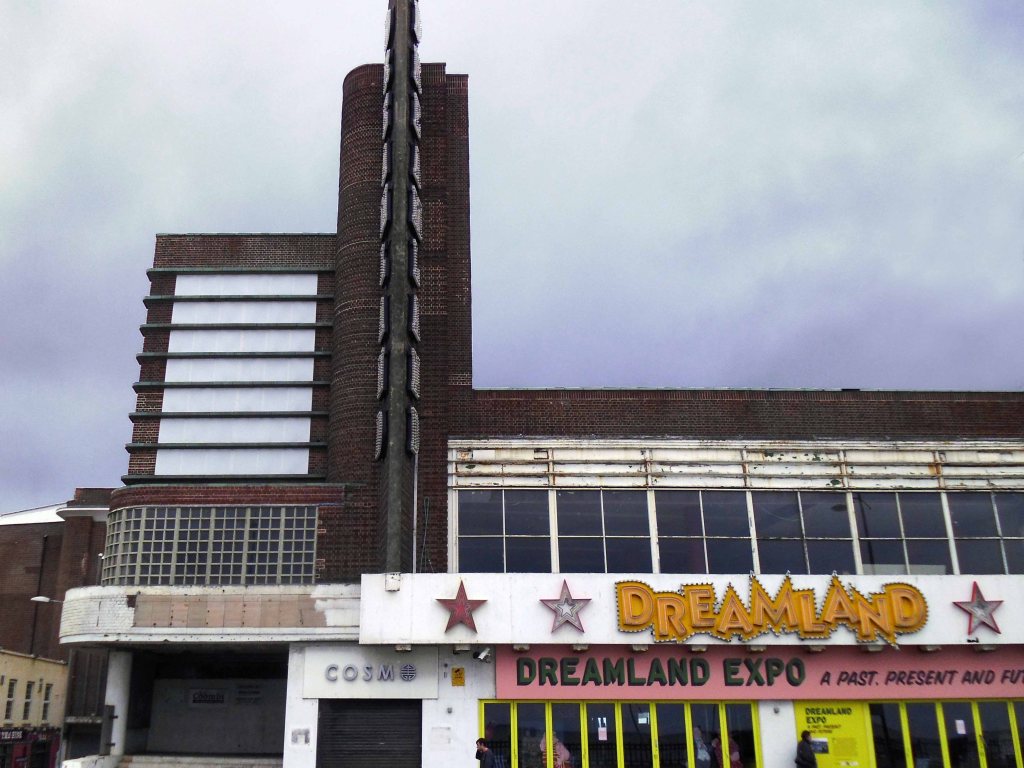
Early morning passing by the yet to be reopened Dreamland, back then just a work in progress, it has had a more than somewhat chequered past.
Dogged persistence has assured its future:
Just before Christmas 1919, and almost exactly one year after the end of the Great War, John Henry Iles purchased Margate’s The Hall By The Sea, thus initiating the history of what would become Dreamland.
The Dreamland cinema replaced a smaller cinema on the site, with this modernist masterpiece opening in 1935. The super-cinema, designed by architects Julian Leathart and WF Granger.
After several years of campaigning to save the Dreamland site from redevelopment, and successful funding bids to the Heritage Lottery Fund and Department for Culture Media and Sport’s SeaChange Scheme, the Dreamland restoration project went live in January 2010, appointing a professional team to deliver The Dreamland Trust’s vision for a reimagined Dreamland, however, the battle was not over.
After a long restoration project, Dreamland opened its doors to the public on June 19 2015. The park was further reimagined and expanded in 2017 following additional investment, with new thrill rides, a much bigger events space, fresh designs, and a new welcome for a new generation of visitors.
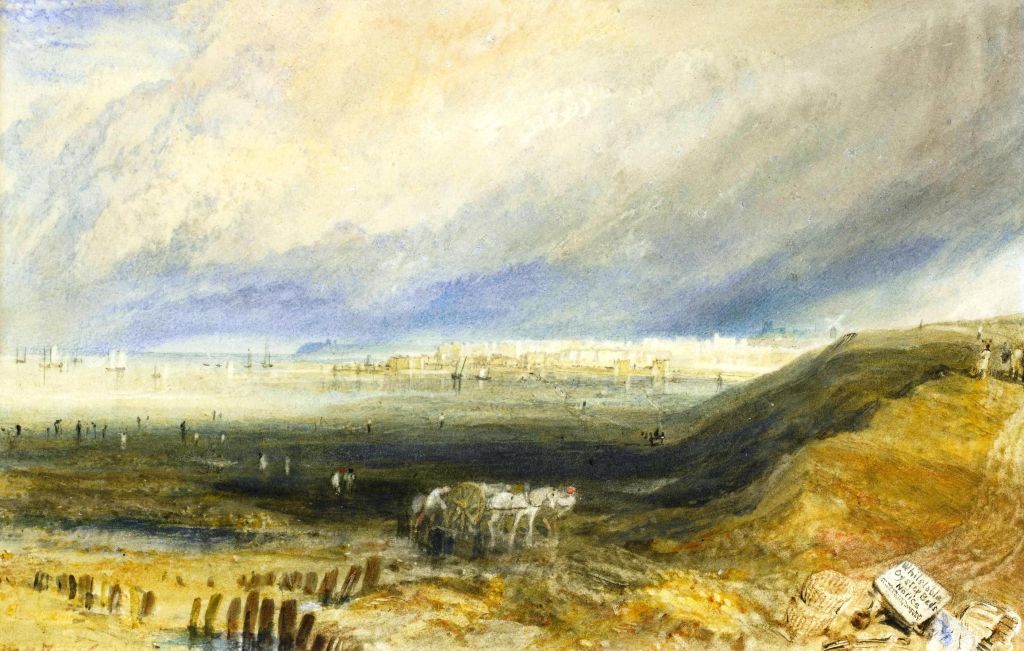
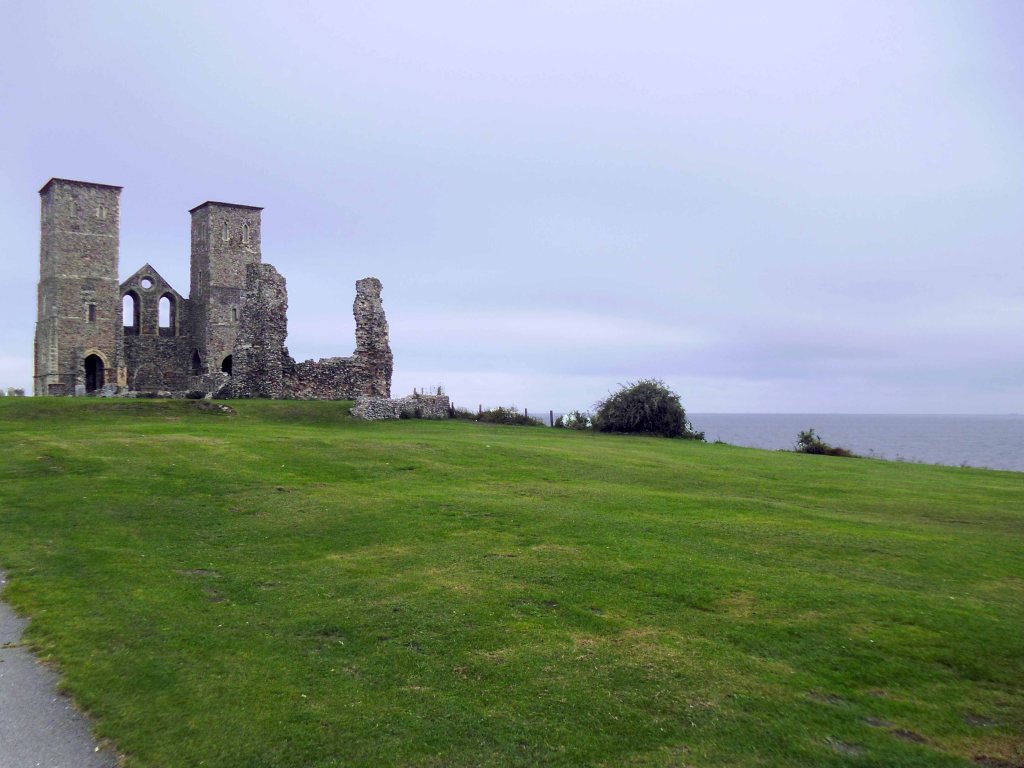
Along the long straight coastline the distinctive and distinguished silhouette of Reculver Castle can be seen in the distance.
Two thousand years ago the geography of this area was very different. The Wantsum, a sea channel up to 3 miles wide, cut off the Isle of Thanet from the mainland, and the Roman fort of Reculver stood on a promontory at the north end of the channel where it joined the Thames estuary. Today the Wantsum has silted up and become dry land.
By the 5th century the Romans had abandoned their defence of Britain and the fort at Reculver had fallen into disuse.
An Anglo-Saxon monastery was founded on the site in 669, reusing the existing defences, and the church of St Mary was built near the centre of the earlier fort. Documentary evidence suggests that the site had ceased to function as a monastic house by the 10th century, after which time the church became the parish church of Reculver.
Remodelling of the church in the 12th century included the addition of tall twin towers.
The medieval church was partly demolished in 1805, when much of the stone was reused to construct a new church on higher ground at Hillborough, but the twin towers were left. They were bought, repaired and underpinned by Trinity House in 1809.
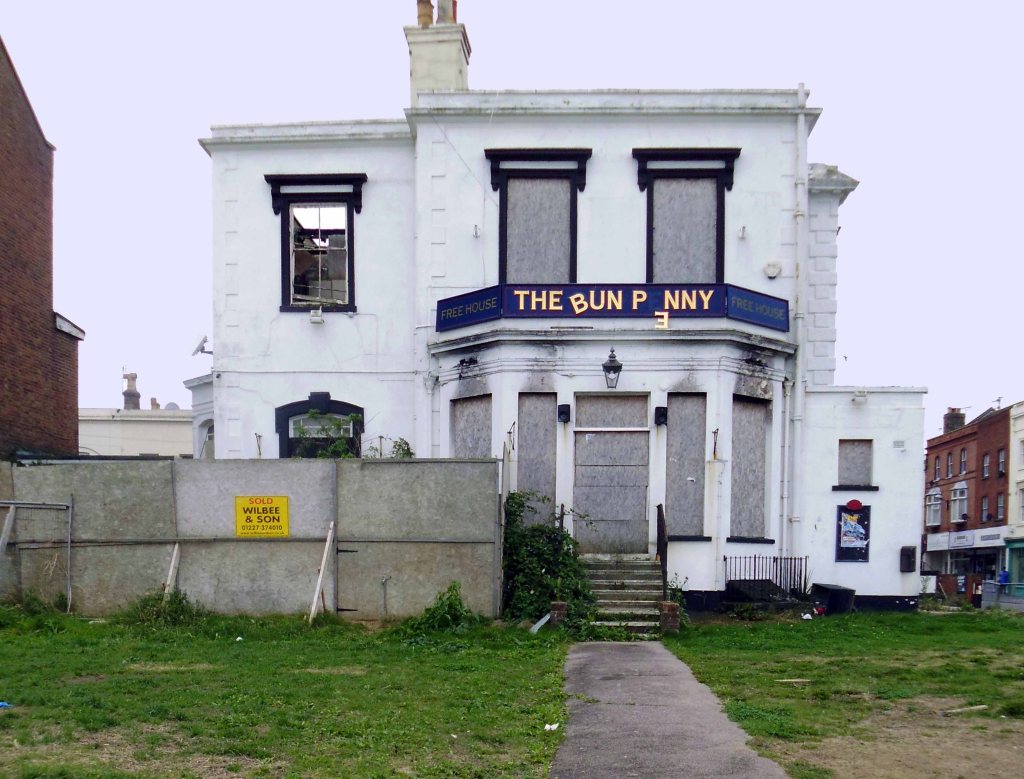
I breezed through Herne Bay past the curiously named Bun Penny pub
Burnt down in 2011 – the subject of ever changing plans and possibilities.
A derelict Herne Bay pub has been transformed into luxury seafront apartments and this is how much they cost.
We would encourage owners of other empty properties in the Herne Bay area to get in touch as we find new ways to rejuvenate the town and attract new people to work, live and visit.
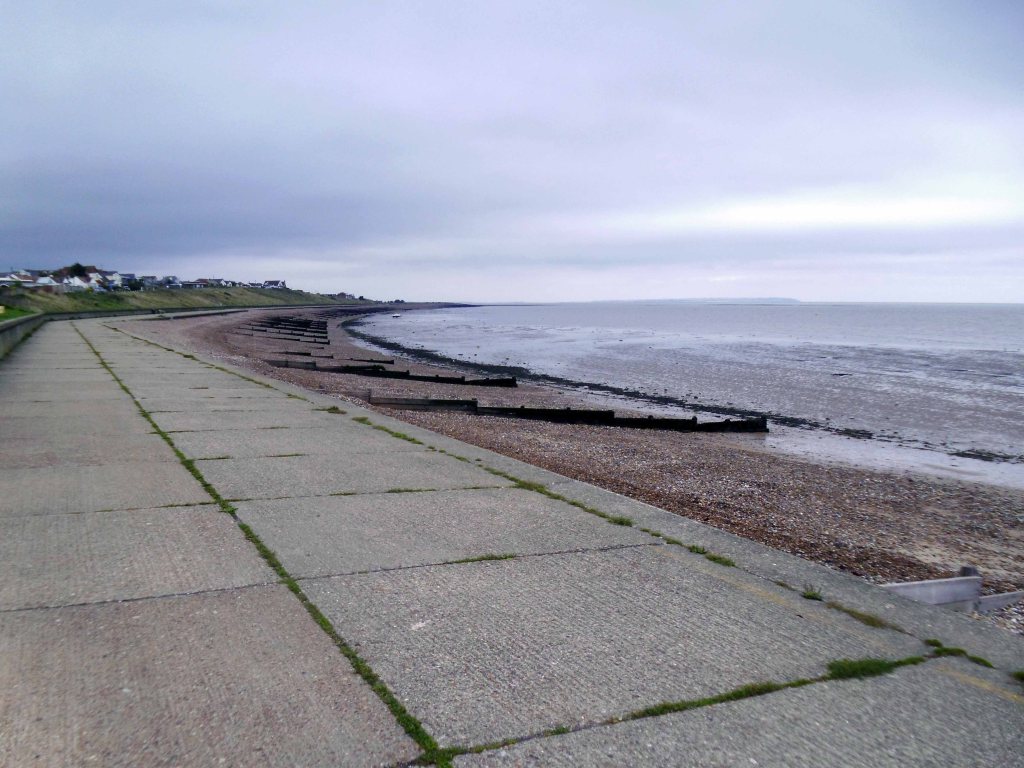
Further along the unstable concrete coast we approach Whitstable.
With its chi-chi cafes and bars, tastefully ramshackle shacks and snacks.
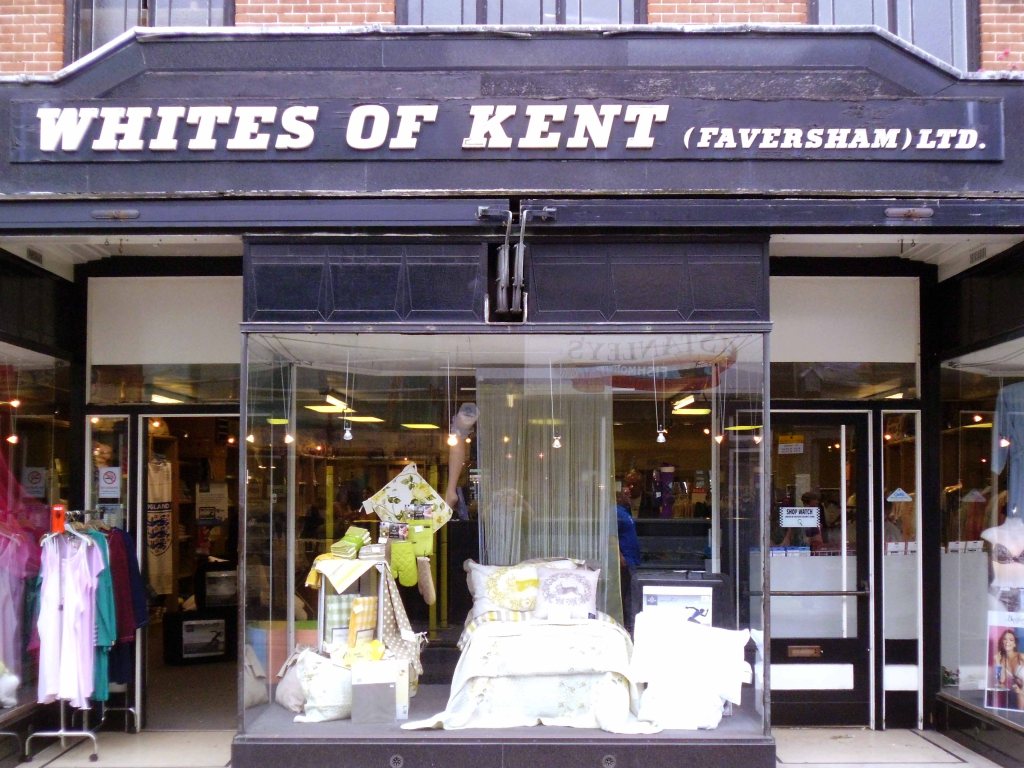
Profil fronted fascias for family run department stores.
Whites of Kent is a family company now into the third generation of close family members. The original story begins with a young ambitious girl of 18 who knew all about stocking repair machines. She travelled to Australia by boat then on to Switzerland and Paris where she trained women and gave demonstrations on the stocking machines.
In 1954 the retail side commenced again with a ladies underwear shop in Faversham’s Market Street, followed by a fashion shop in Market Street and then our current shop in Court Street.
We have in the past had shops in Sandwich, Sittingbourne, Herne Bay, West Malling, Folkestone and Cliftonville. Currently we have Whites of Kent shops in Faversham, Whitstable and Dover selling lingerie, linen, hosiery, underwear, slippers and more. See our Shop page for addresses, phone numbers and opening times.
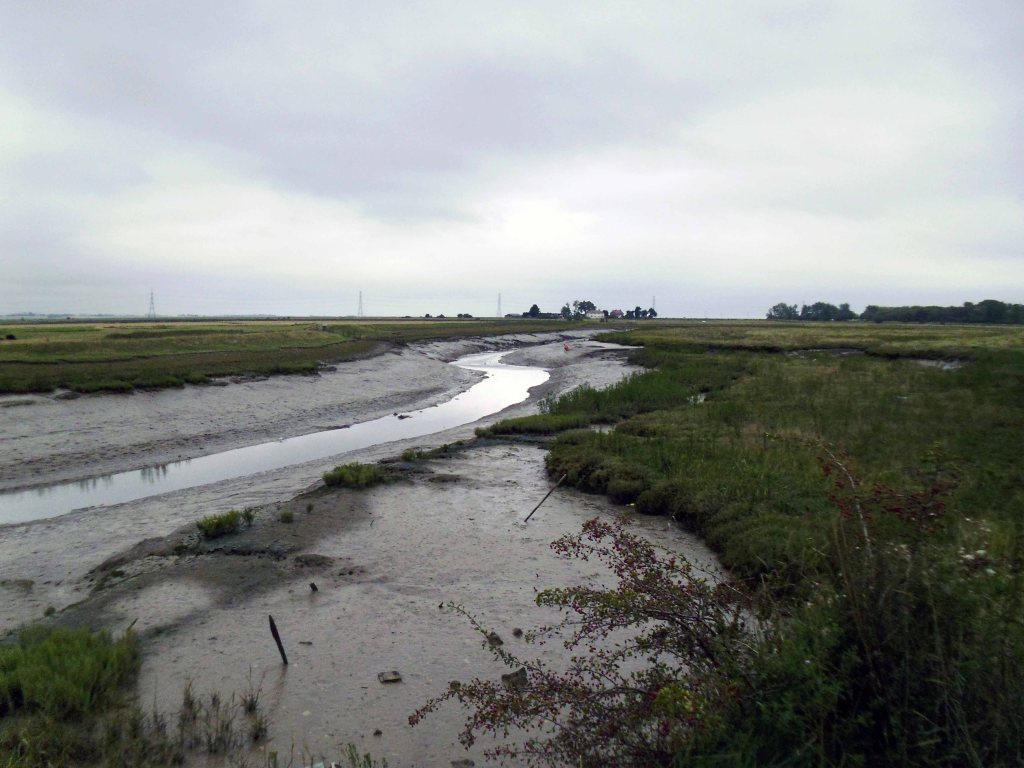
The road winds through the low marshes, across estuaries and inlets, between Seasalter and Graveney.
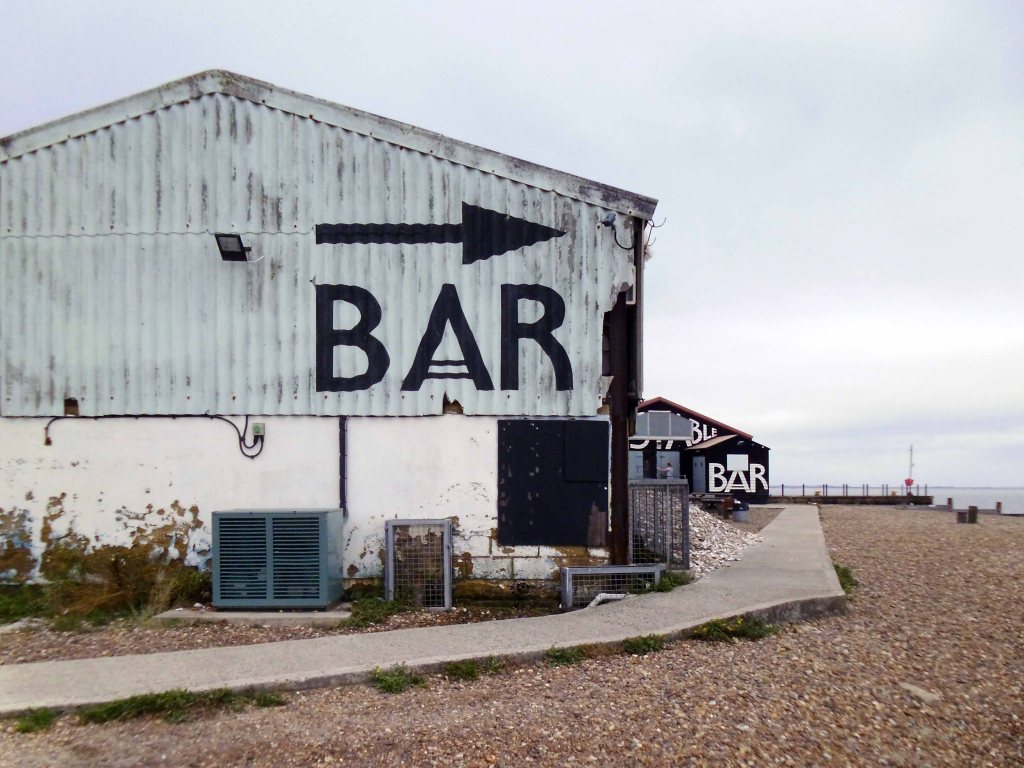
Home to a down home, home made fishing fleet.
Members of the 1st Battalion London Irish Rifles guarding the downed Junkers Ju 88A1
On September 27 1940 – a Luftwaffe bomber was shot down by two Spitfires over Graveney Marsh after a raid on London. This was the last ground engagement involving a foreign force to take place on the mainland of Great Britain.
My painting represents the victory of the forces of darkness and peace over the powers of light and evil.
Founded in the early 1700s by Edward Rigden. Registered in 1902 as Rigden & Co. Merged with George Beer & Co. Ltd in 1922 to form George Beer & Rigden, not being limited until 1927.
Was acquired by Fremlins Ltd in 1948 and brewing ceased 1954.
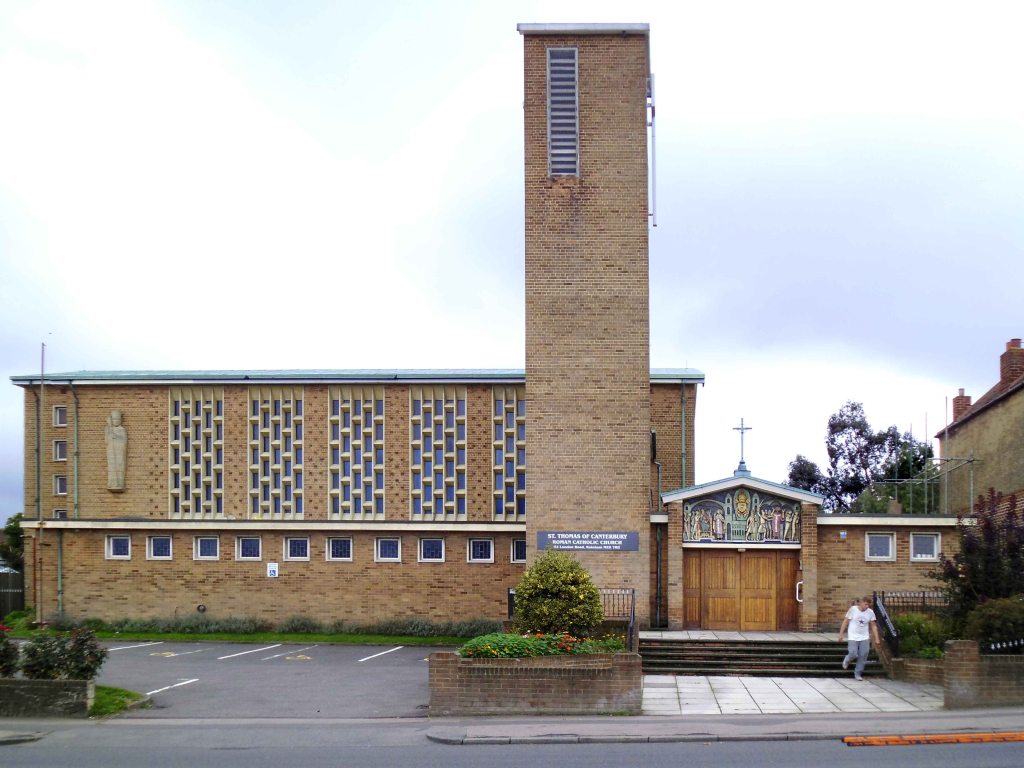
Dulled by dual carriageways and the dirty urban dust of a sunny late summer’s day – I was more than happy to discover this Modernist church in Rainham.
St Thomas of Canterbury RC
A modern church of 1956-58 by Eduardo Dodds. The atmospheric interior is decorated with fine sculpture by Michael Clark, and ceramic panels by Adam Kossowski. The tower is a local landmark. The former temporary church of 1934 survives as the Parish Centre.
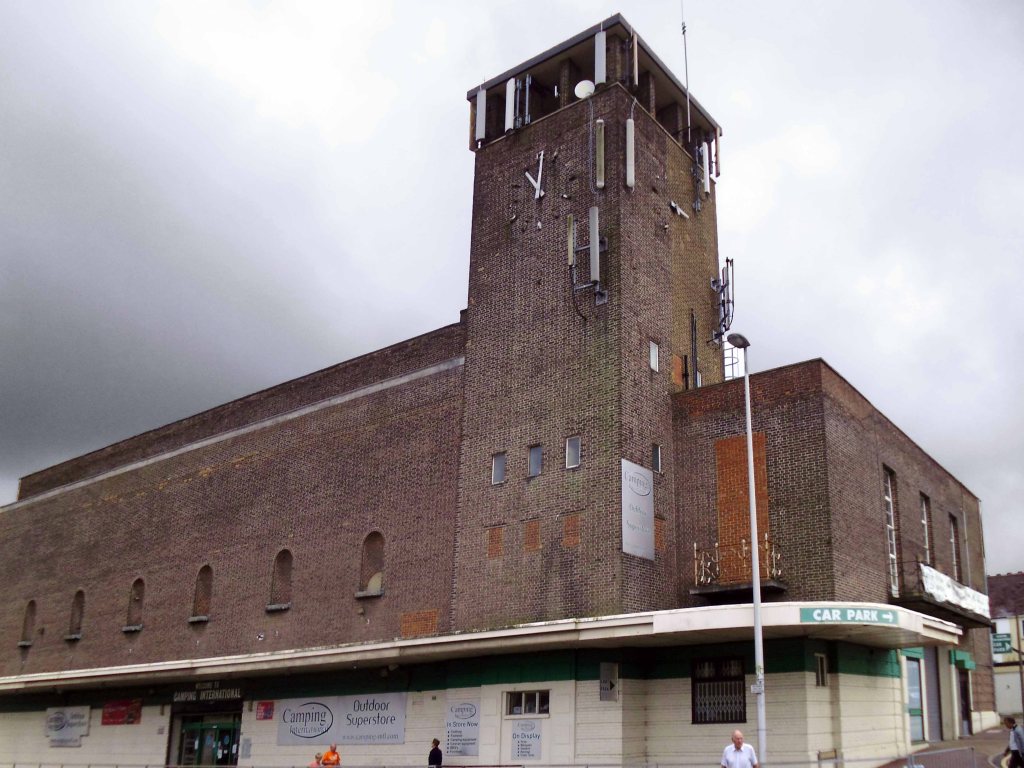
Followed by another brick behemoth the Gaumont Chatham.
The Palace Cinema was built by a subsidiary of the Gaumont British Theatres chain, and opened on 30th November 1936. The exterior had a tall square clock tower, which was outlined in neon at night – Architect Arthur W. Kenyon
Re-named Gaumon from 18th December 1950, closed by the Rank Organisation on 2nd February 1961 with John Gregson in The Captain’s Table.
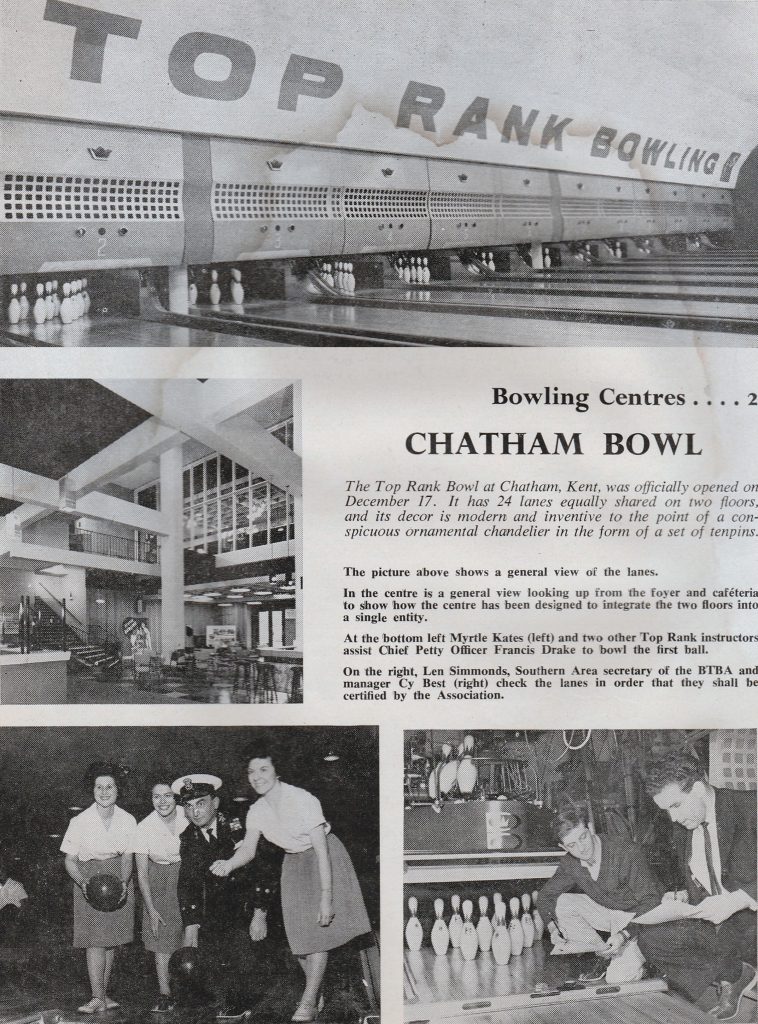
It was converted into a 24-lane Top Rank Bowling Alley, which opened in December 1961. Eventually, this was the last of the Top Rank Bowls to close, closing on 31st October 1970.
The building was converted into a B&Q hardware store, and the interior has been gutted. It was later in use as a camping centre, which remains open in 2010 as Camping International. The building is now known as Clock Tower House.
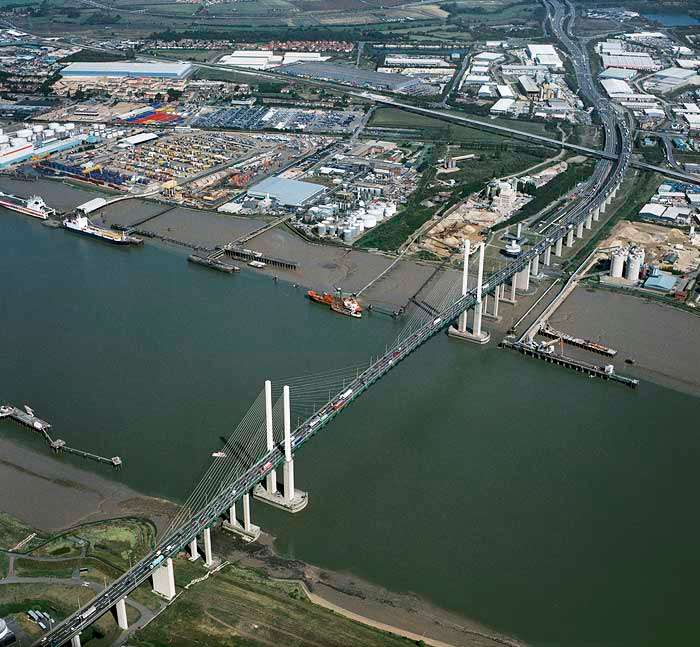
Designed by German civil engineer Hellmut Homberg, the two main caissons supporting the bridge piers were constructed in the Netherlands. ] The bridge deck is about 61 metres high, and it took a team of around 56 to assemble its structure.
The bridge was opened by Queen Elizabeth II on 30 October 1991. The total cost of construction was £120 million. The proposed name had been simply the Dartford Bridge, but Thurrock residents objected and suggested the Tilbury Bridge, leading to a compromise. At the time of opening, it had the longest cable-stayed span of any bridge in Europe.
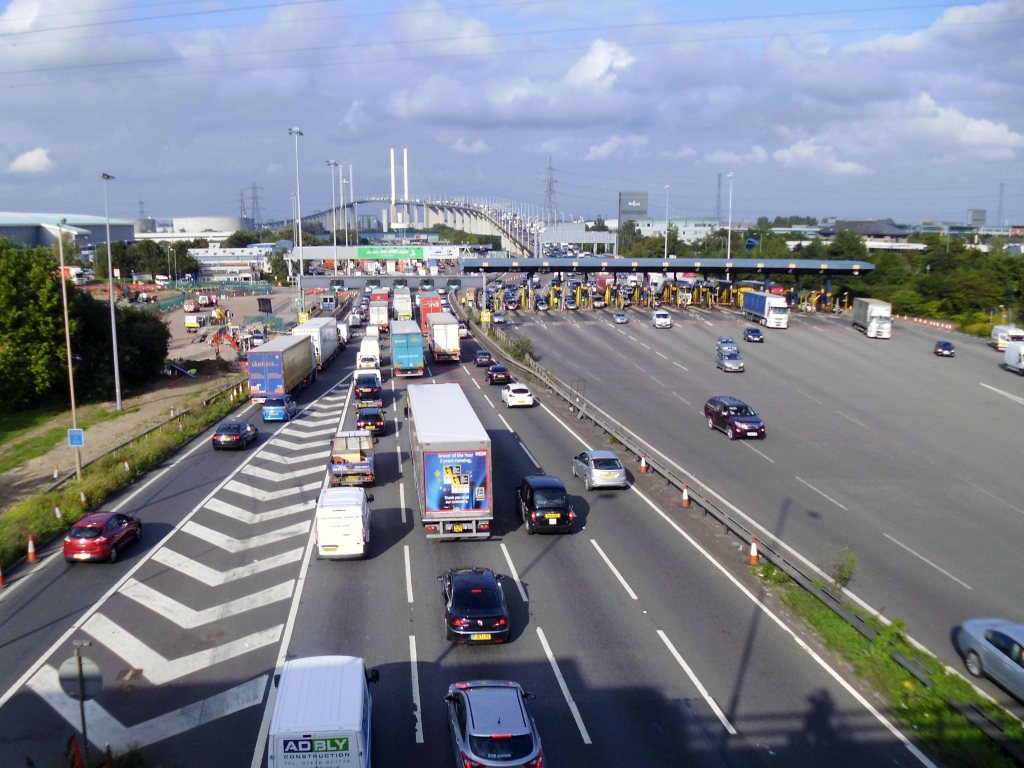
I arrived at the Dartford Crossing hot and hungry – wandering towards the tunnel entrance, only to be apprehended by the authorities.
What are you doing here?
I pleaded for a glass of water and directions, happily I received both from a friendly member of staff.
Picked up by Range Rover and driven over to Essex free of charge.
Wearily I made my way across the county, no time for snaps it seems, simply wishing to hit town before nightfall. None of my B&Bs were booked ahead of time and I’ve never had a ‘phone. Finding a bed for the night proved troublesome – knocking on the door of a minor hotel, I was rebuffed by a Beatle suited, be-wigged figure:
Are you to take the vacancies sign down then – says I.
No – says he.
Under cover of darkness I holed up in a contractors’ flop house on the front, no-frills communal showers, short shrift and cold linoleum, but a welcome repose none the less.
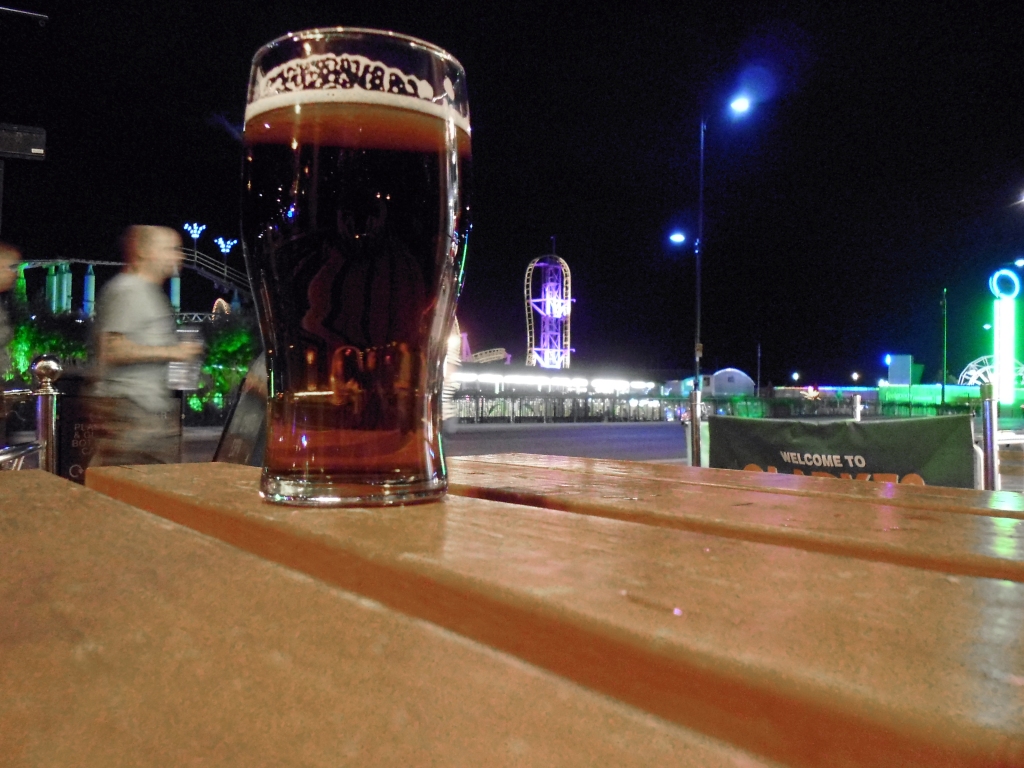
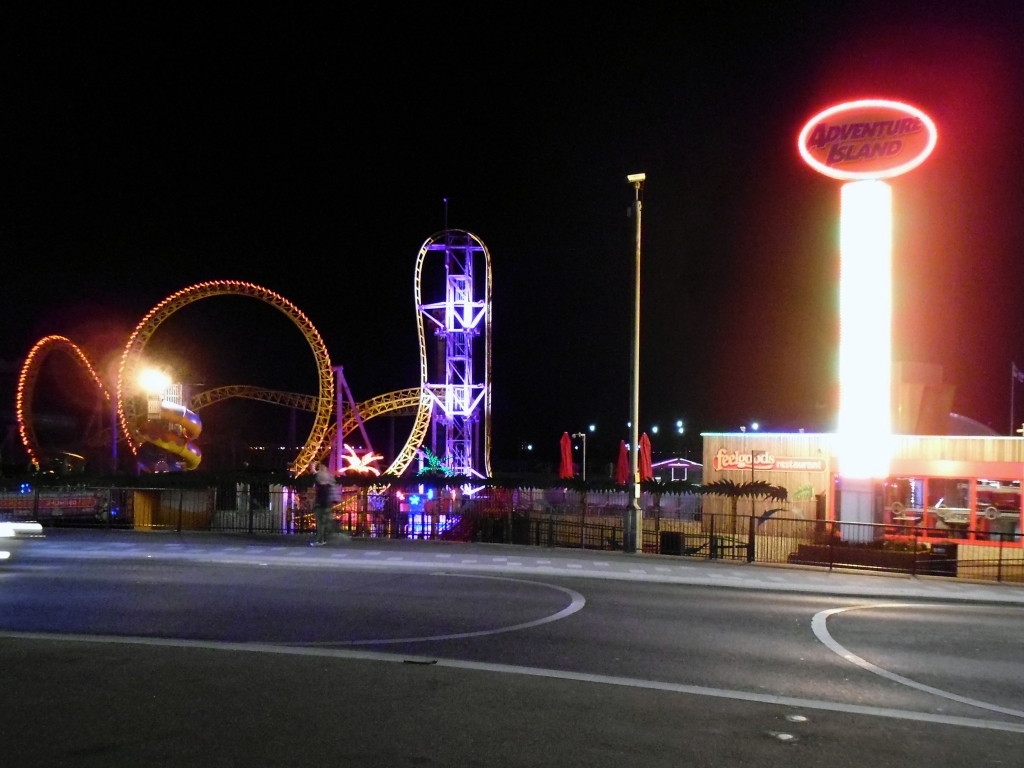
Some pints don’t touch the sides – this and several others didn’t, ‘neath the flickering lights of Southend by night.
A wobbly walk along the prom.
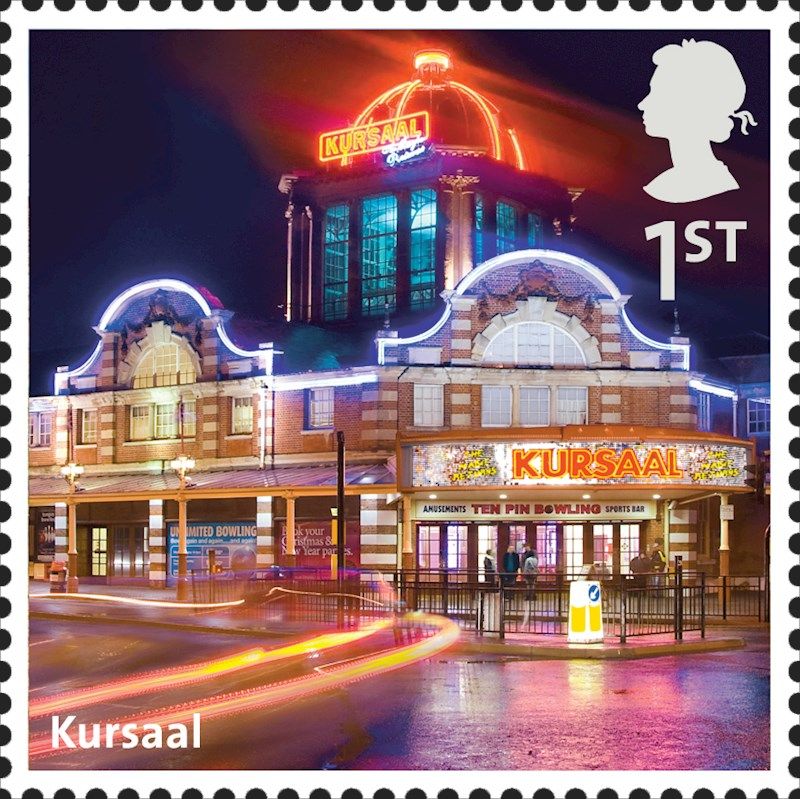
Fetching up with pic of the Kursaal.
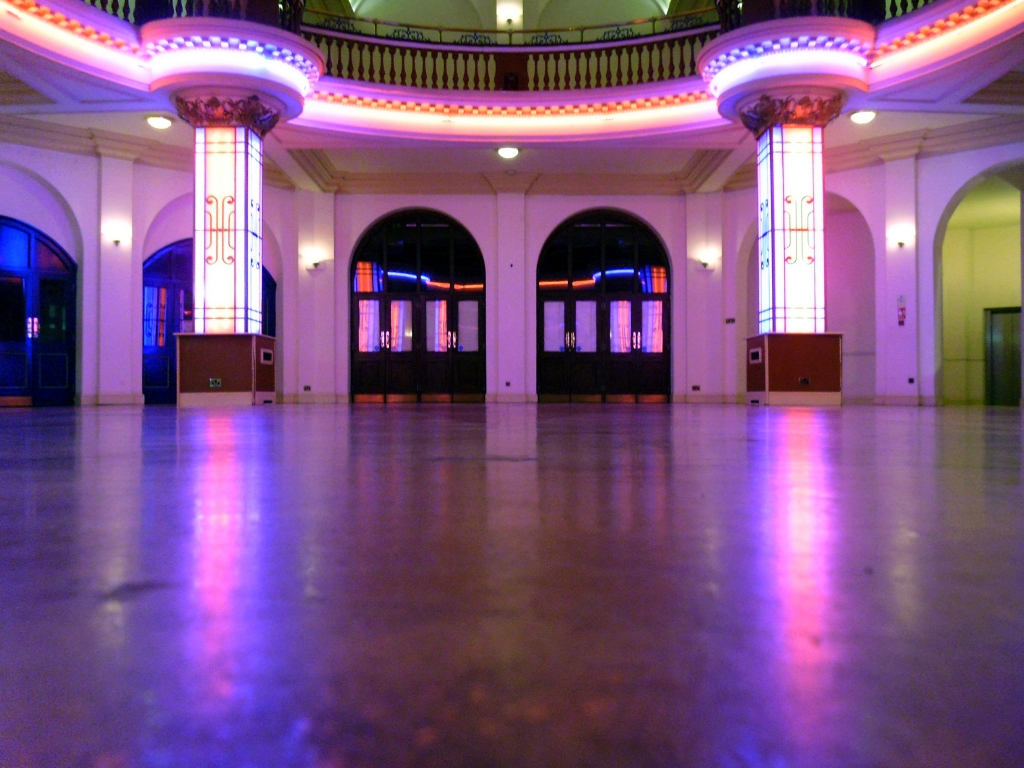
The Kursaal is a Grade II listed building in Southend-on-Sea which opened in 1901 as part of one of the world’s first purpose-built amusement parks. The venue is noted for the main building with distinctive dome, designed by Campbell Sherrin, which has featured on a Royal Mail special edition stamp.
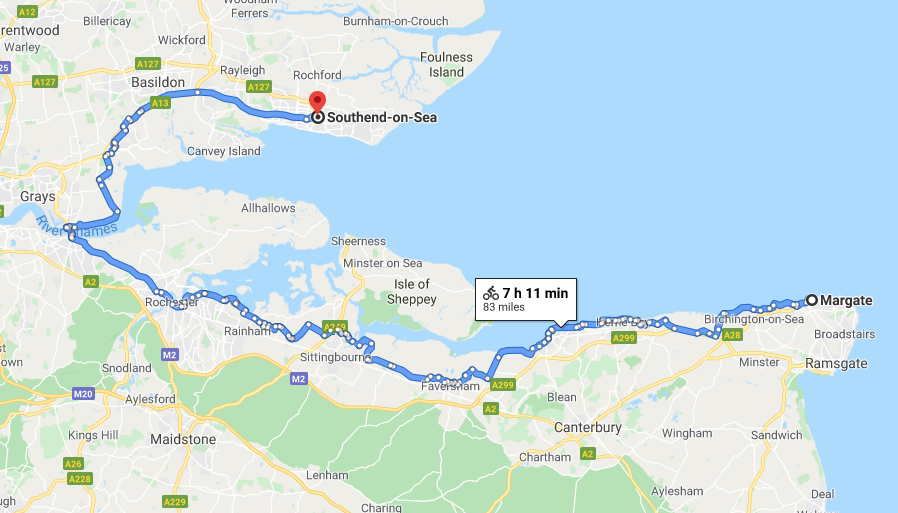
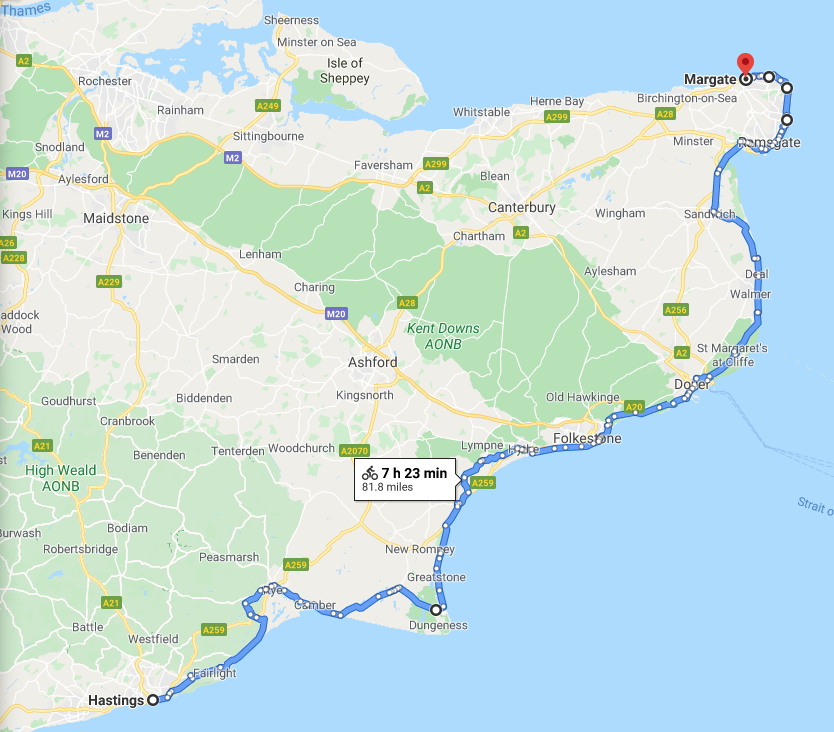
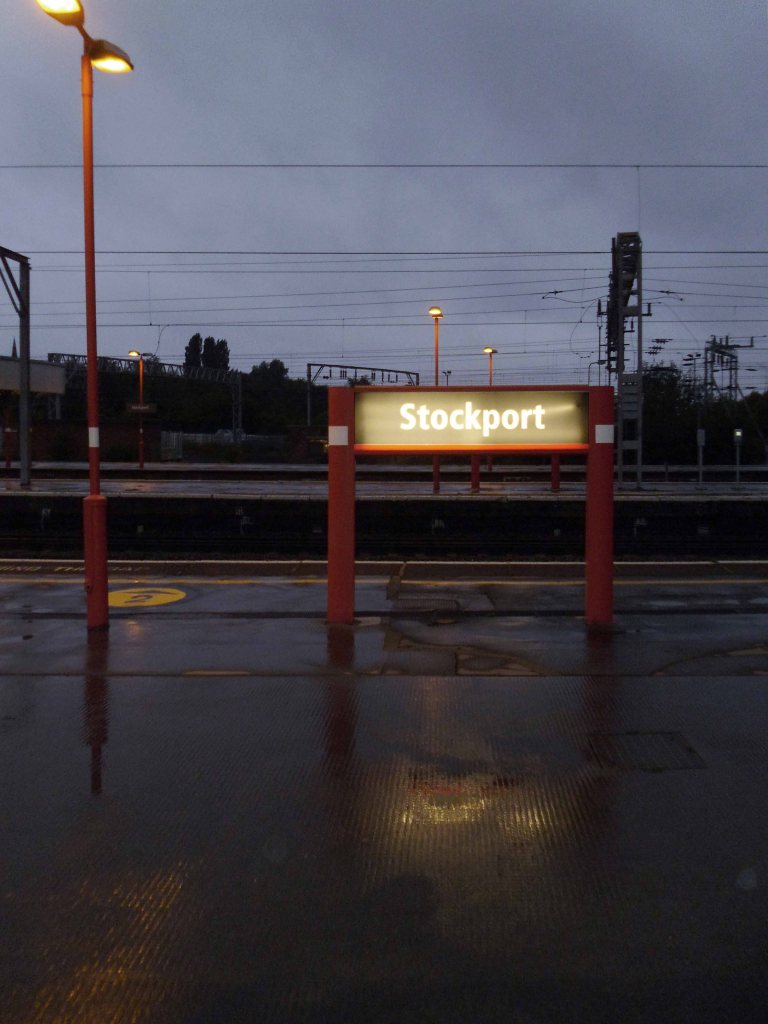
Early one morning, six o’clock on Saturday 30th August 2014 to be precise – I set out on my bike from my humble Stockport home, Pendolino’d to Euston, London Bridged to Hastings.
It was my intention to follow the coast to Cleethorpes, so I did.
Five hundred miles or so in seven highly pleasurable days awheel, largely in bright late summer sun. Into each life however, some rain must fall, so it did.
Kent, Essex, Suffolk, Norfolk and Lincolnshire flashed by slowly in lazy succession, to the right the sea – you can’t get lost, though I did. Following Sustrans signs is relatively easy, as long as they actually exist, when I reached Kings Lynn I decided to buy a map.
I set out at eight o’clock on Monday 1st September – I had taken early retirement in March. I would have normally been enrolling new students and teaching photography in a Manchester Further Education College, as I had done for the previous thirty years.
Not today thanks.
With the wind and my former career behind me, I cycled on with an unsurpassable sense of lightness and elation.
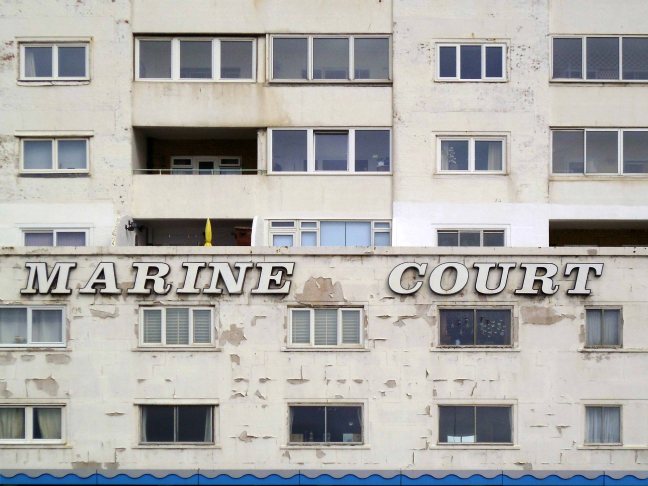
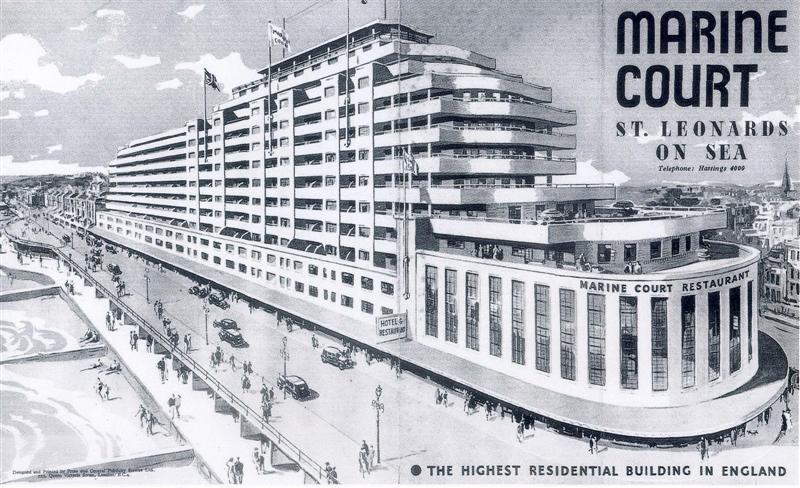
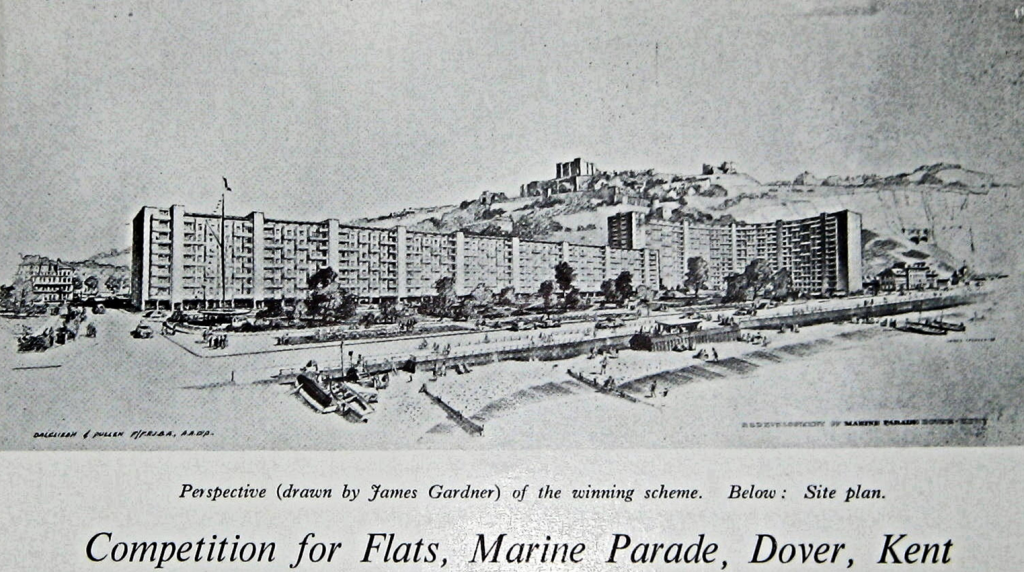
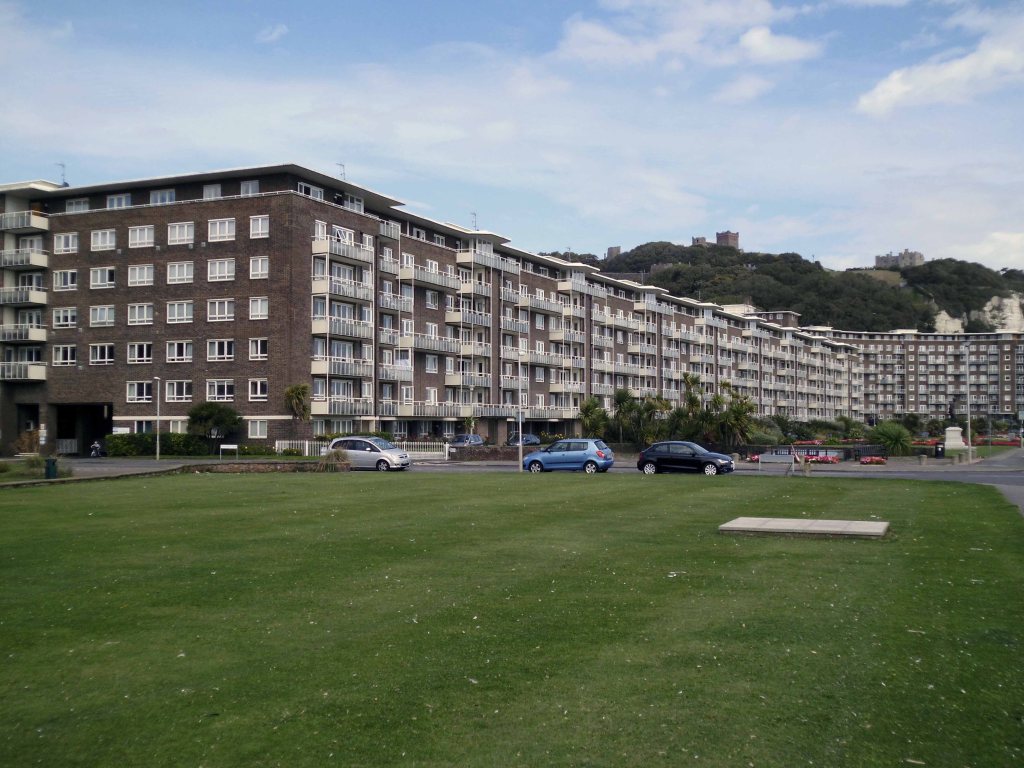
The building was designed by architects Kenneth Dalgleish and Roger K Pullen, with overt references to the Cunard White-Star Line Queen Mary, which had entered commercial transatlantic service in 1936. The east end of Marine Court is shaped to imitate the curved, stacked bridge front of the Queen Mary; the eastern restaurant served to imitate the fo’c’sle deck of the ship.
Heading towards Hythe on the coastal defence path.
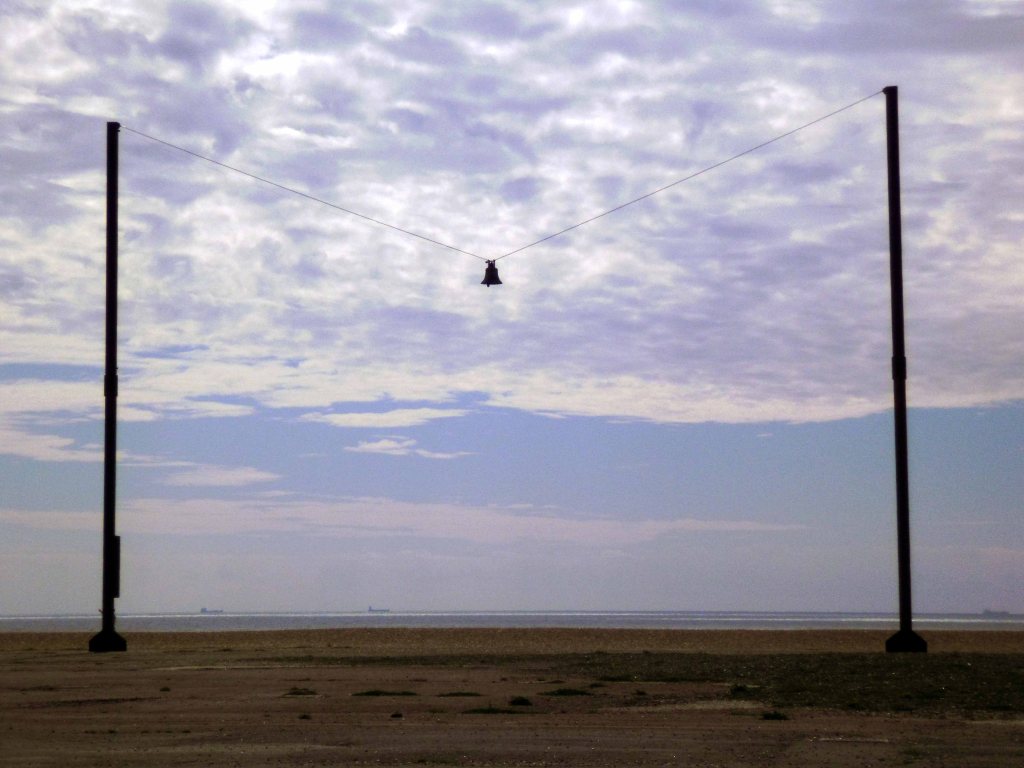
Out of Tune Folkestone Seafront, opposite The Leas Lift – is home to AK Dolven’s installation. It features a 16th-century tenor bell from Scraptoft Church in Leicestershire, which had been removed for not being in tune with the others. It is suspended from a steel cable strung between two 20m high steel beams, placed 30m apart.
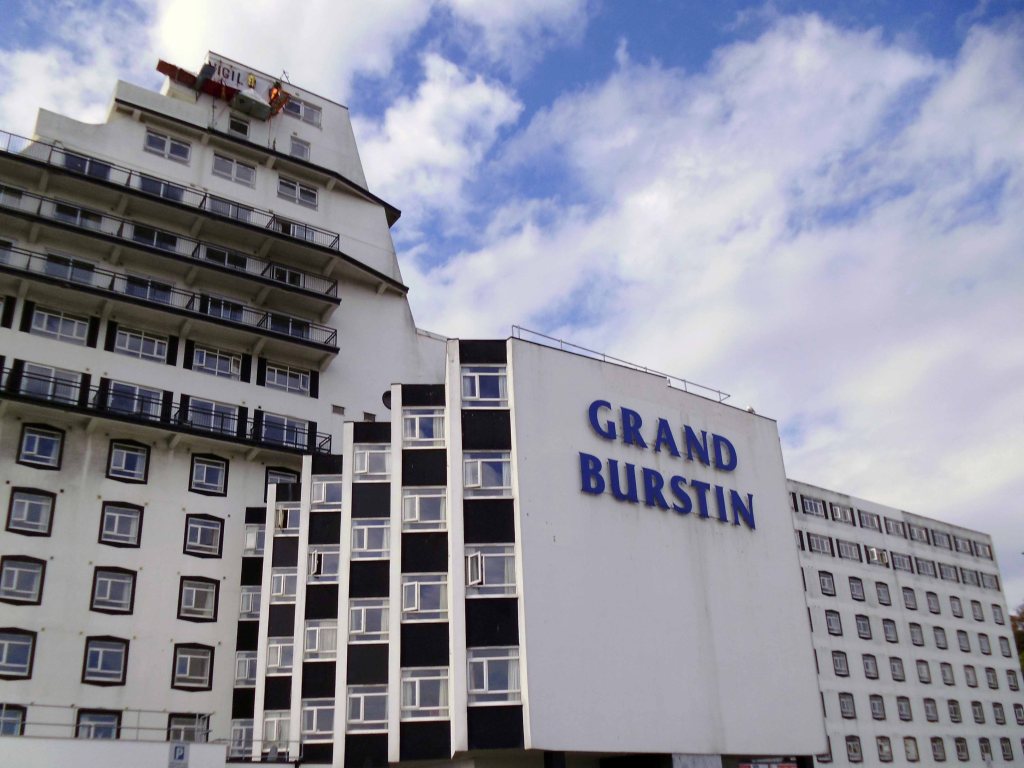
For Folkestone Triennial 2014, Alex Hartley’s response to the title Lookout is inspired by the imposing architecture of the Grand Burstin Hotel, which overlooks the Harbour. For his project Vigil, Hartley will use state of the art climbing technology to make a lookout point suspended from the highest point of the hotel. This climber’s camp will be inhabited for the duration of the Triennial, by the artist and by volunteers, all of whom will keep a log of what they observe.
The current hotel was built in 1984 from the foundations of the Royal Pavilion Hotel, originally built in 1843. Out of the 4,094 reviews currently on TripAdvisor 974 are of the terrible rating which doesn’t inspire much hope.
The most recent review is titled – Dirty Dated Hotel With Clueless Staff.
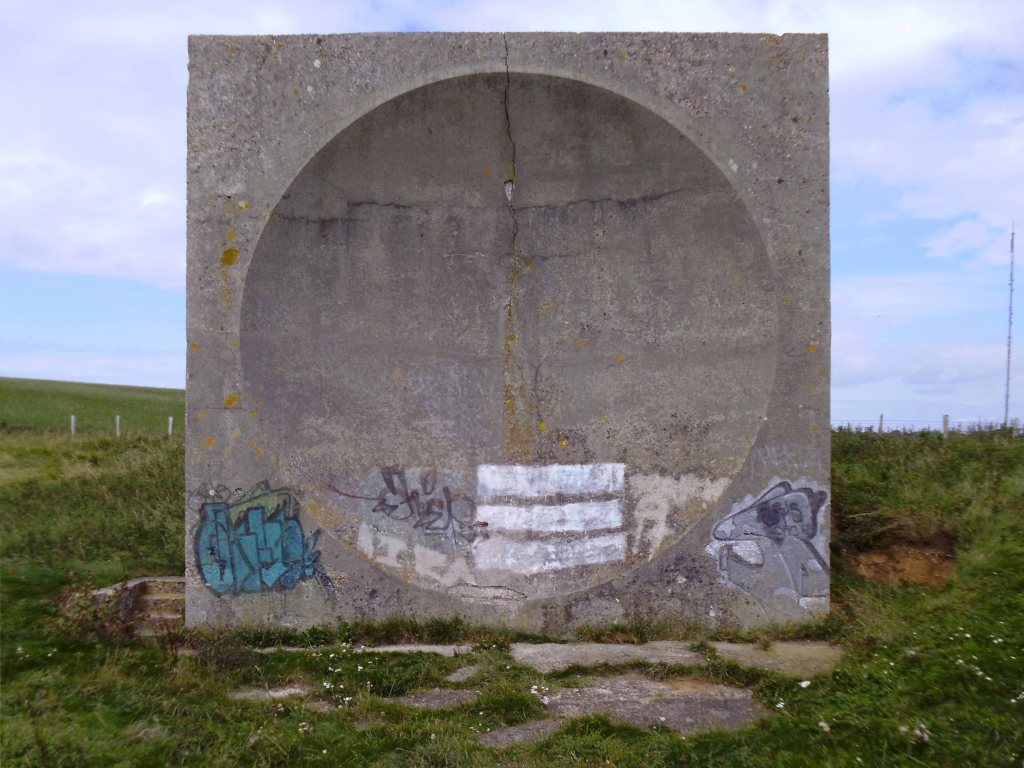
Before the advent of radar, there was an experimental programme during the 1920s and 30s in which a number of concrete sound reflectors, in a variety of shapes, were built at coastal locations in order to provide early warning of approaching enemy aircraft. A microphone, placed at a focal point, was used to detect the sound waves arriving at and concentrated by the acoustic mirror. These concrete structures were in fixed positions and were spherical, rather than paraboloidal, reflectors. This meant that direction finding could be achieved by altering the position of the microphone rather than moving the mirror.
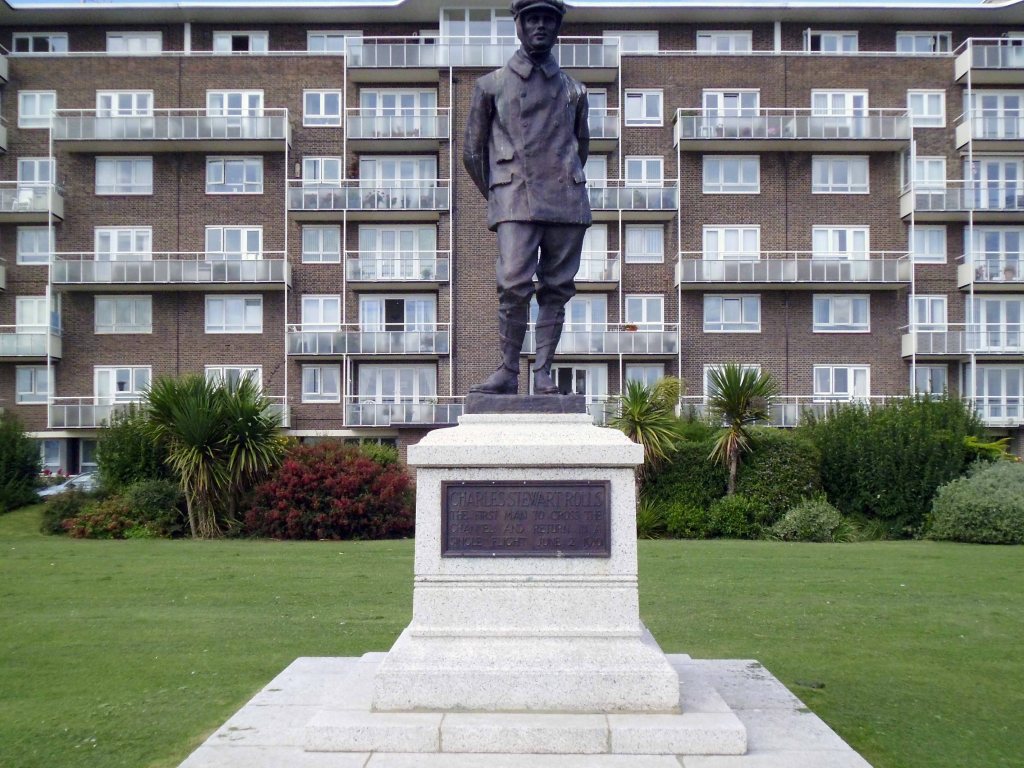
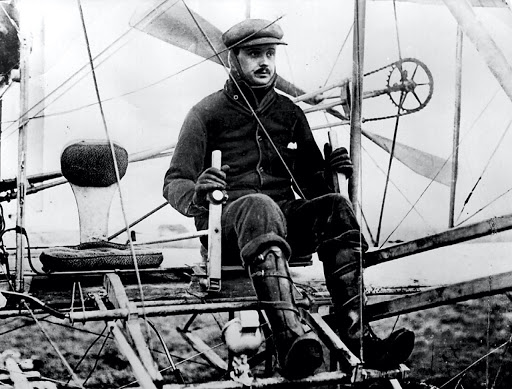
Charles Stewart Rolls was a Welsh motoring and aviation pioneer. With Henry Royce, he co-founded the Rolls-Royce car manufacturing firm. He was the first Briton to be killed in an aeronautical accident with a powered aircraft, when the tail of his Wright Flyer broke off during a flying display in Bournemouth.
In September 1953 it was announced that Roger K Pullen and Kenneth Dalglish had won and were to receive 100 guineas, for a design for the Gateway Flats.
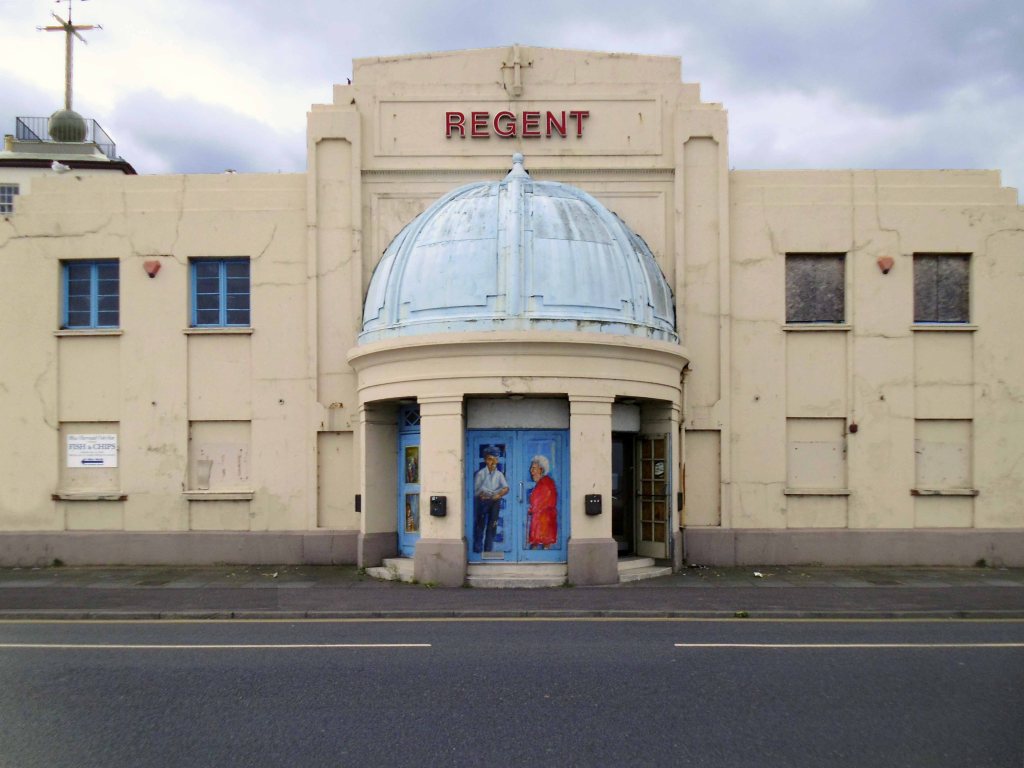
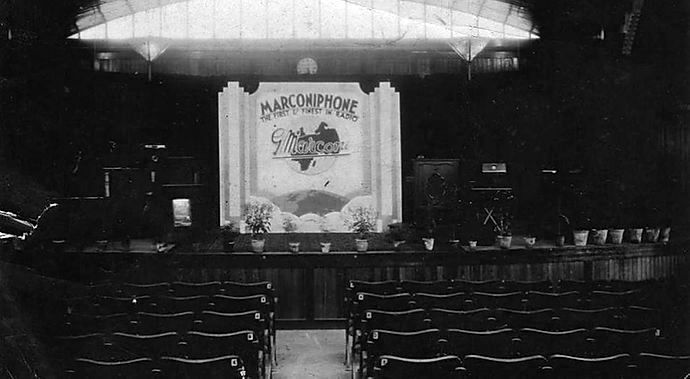
Behind the Art Deco facade of the Regent was once a grand ironwork and glass Pavilion, built to house regular performances by military bands, which the Edwardian holidaymakers loved. The Lord Warden of the Cinque ports, Lord Beauchamp, officially opened the Pavilion Theatre on Deal’s seafront in 1928.
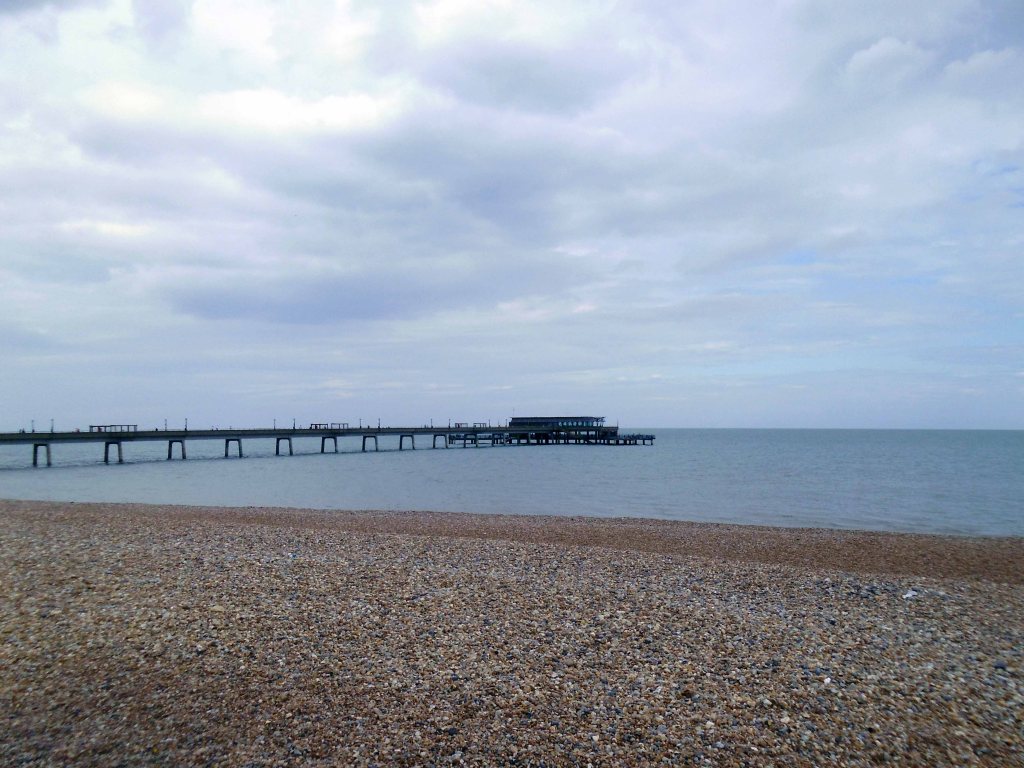
Deal Pier was designed by Eugenius Birch and opened on 8th November 1864, in 1954 work started on Deal’s third and present-day pier. The new pier took three years to build and was formally opened by the Duke of Edinburgh on 19 November 1957. It was the first seaside pleasure pier of any size to be built since 1910. Designed by Sir W Halcrow and Partners, the 1026ft-long structure comprises steel piles surrounded by concrete casings for the main supports. The pier head originally had three levels but, these days, the lower deck normally remains submerged.
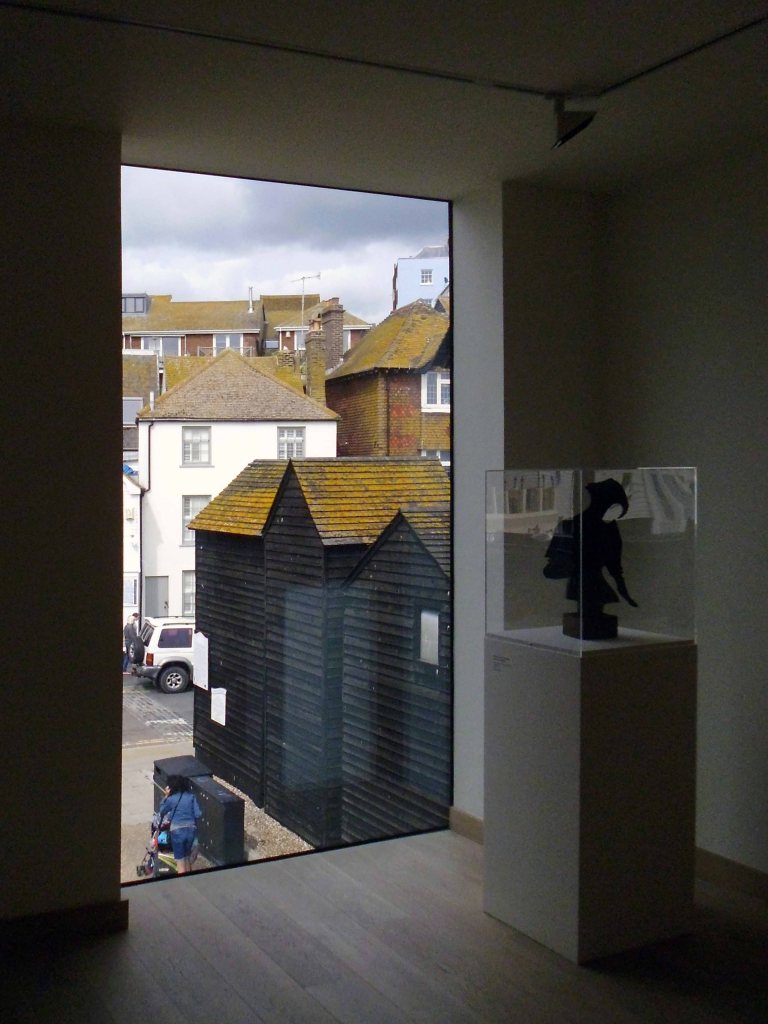
The building was designed by David Chipperfield – It was built on the raised promenade following a flood risk analysis. Construction started in 2008, and was completed for opening in April 2011, at a cost of £17.5 million. The gallery opened on 16 April 2011.
Milton Keynes synonymous with something or other, the town where everything is an off centre out of town centre, where anything was new once.
A broad grid of boulevards, sunken super-highways and an extended series of balletic roundabouts swirls the cars around.
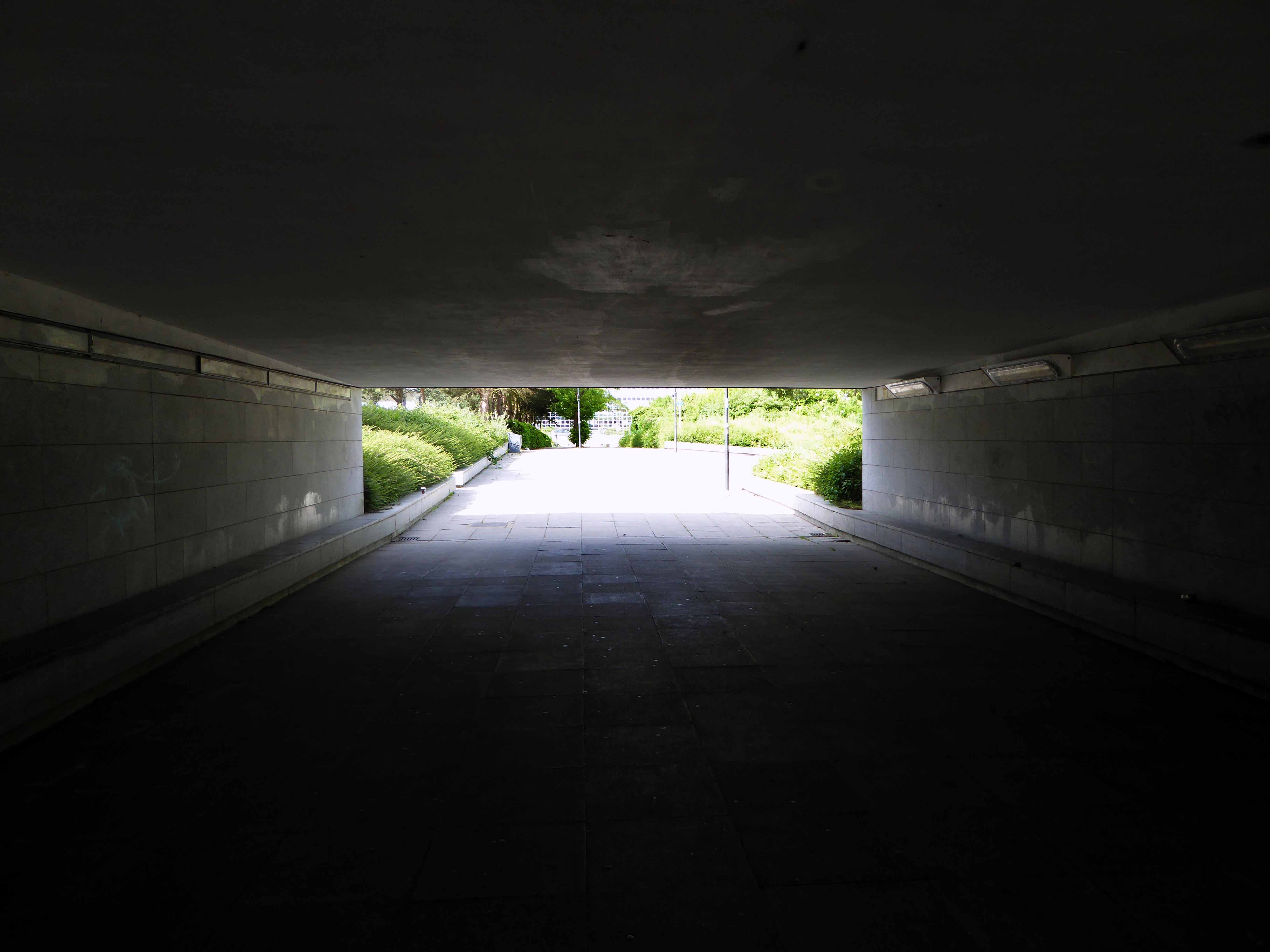
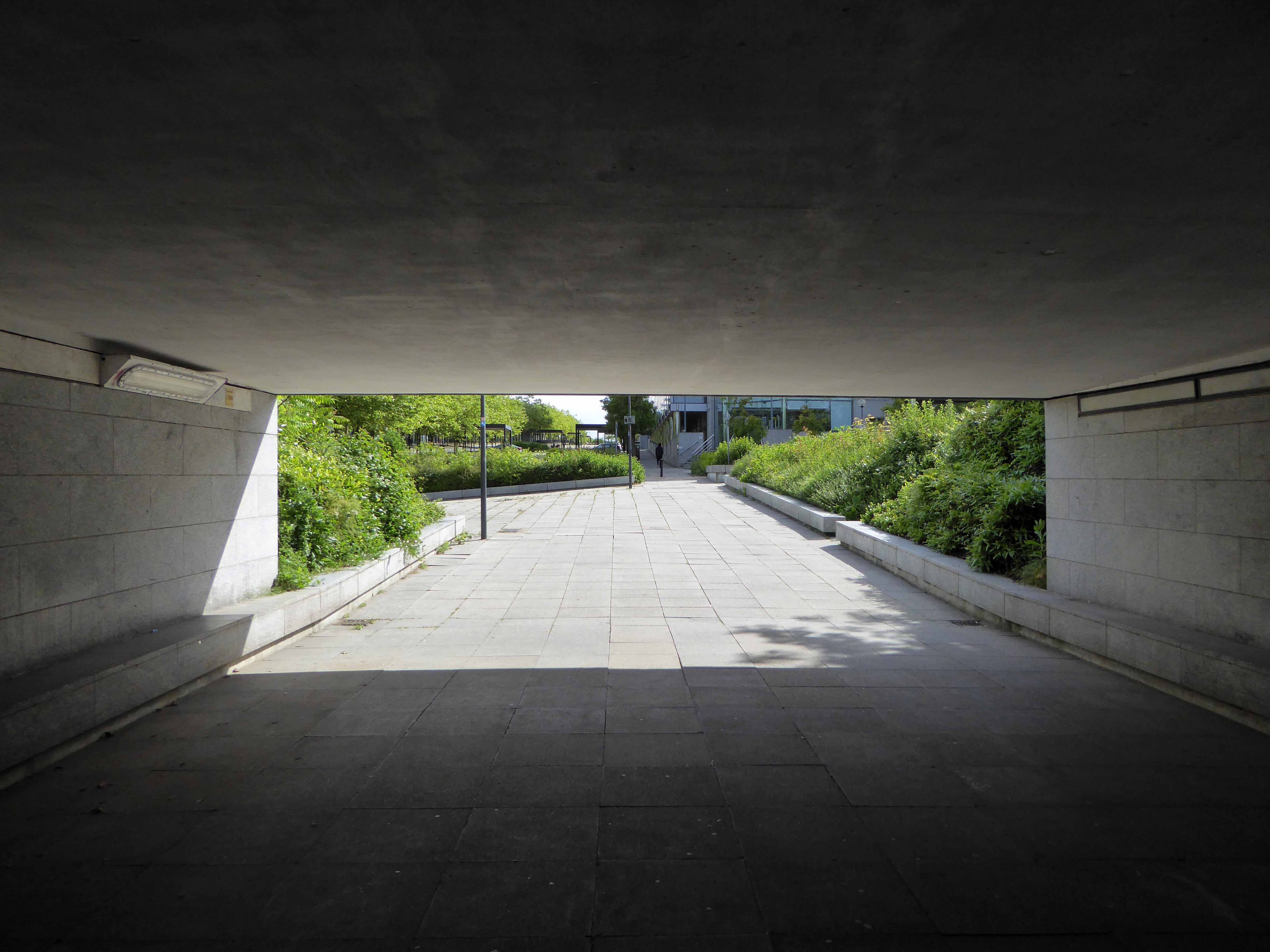
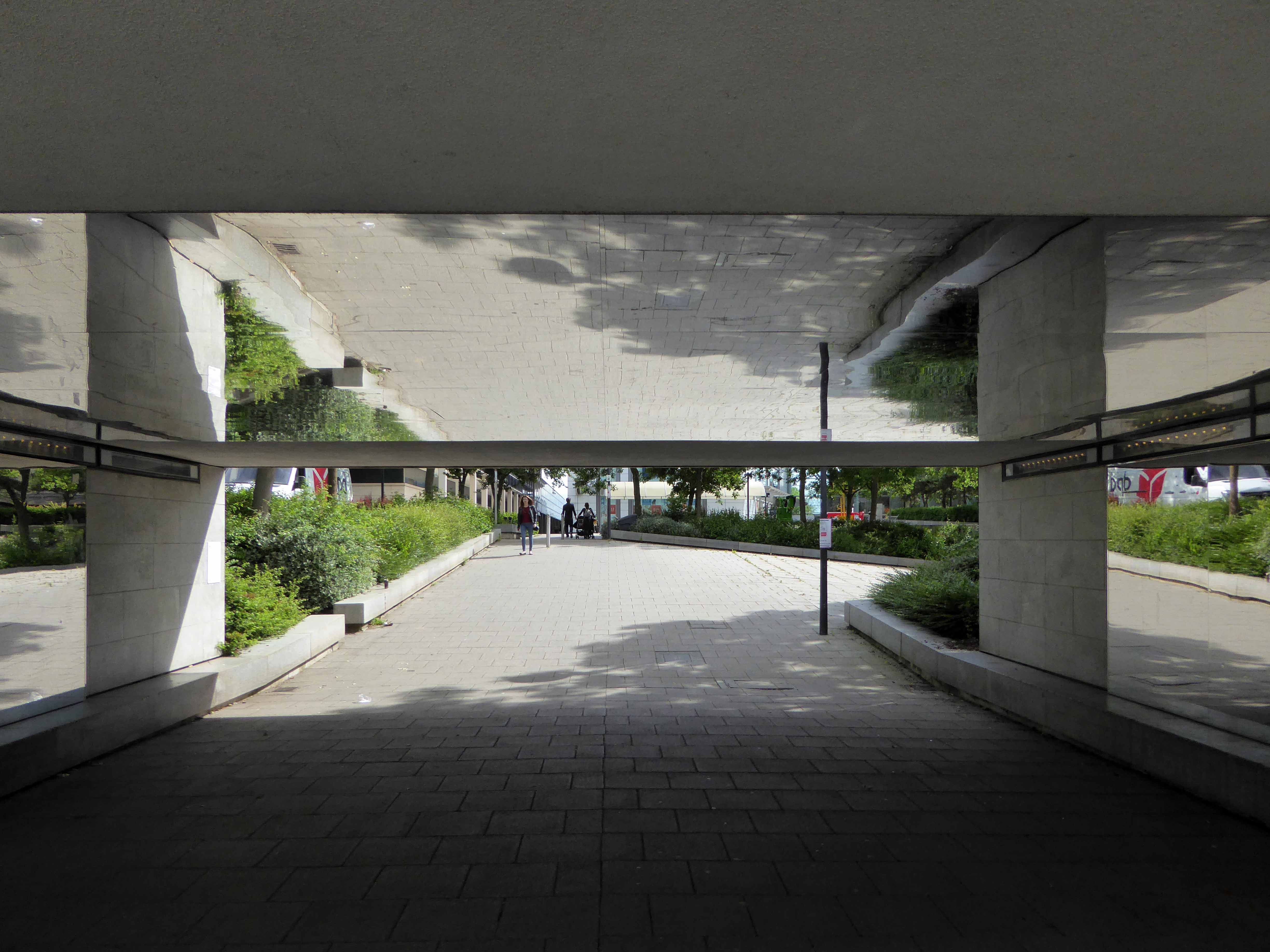
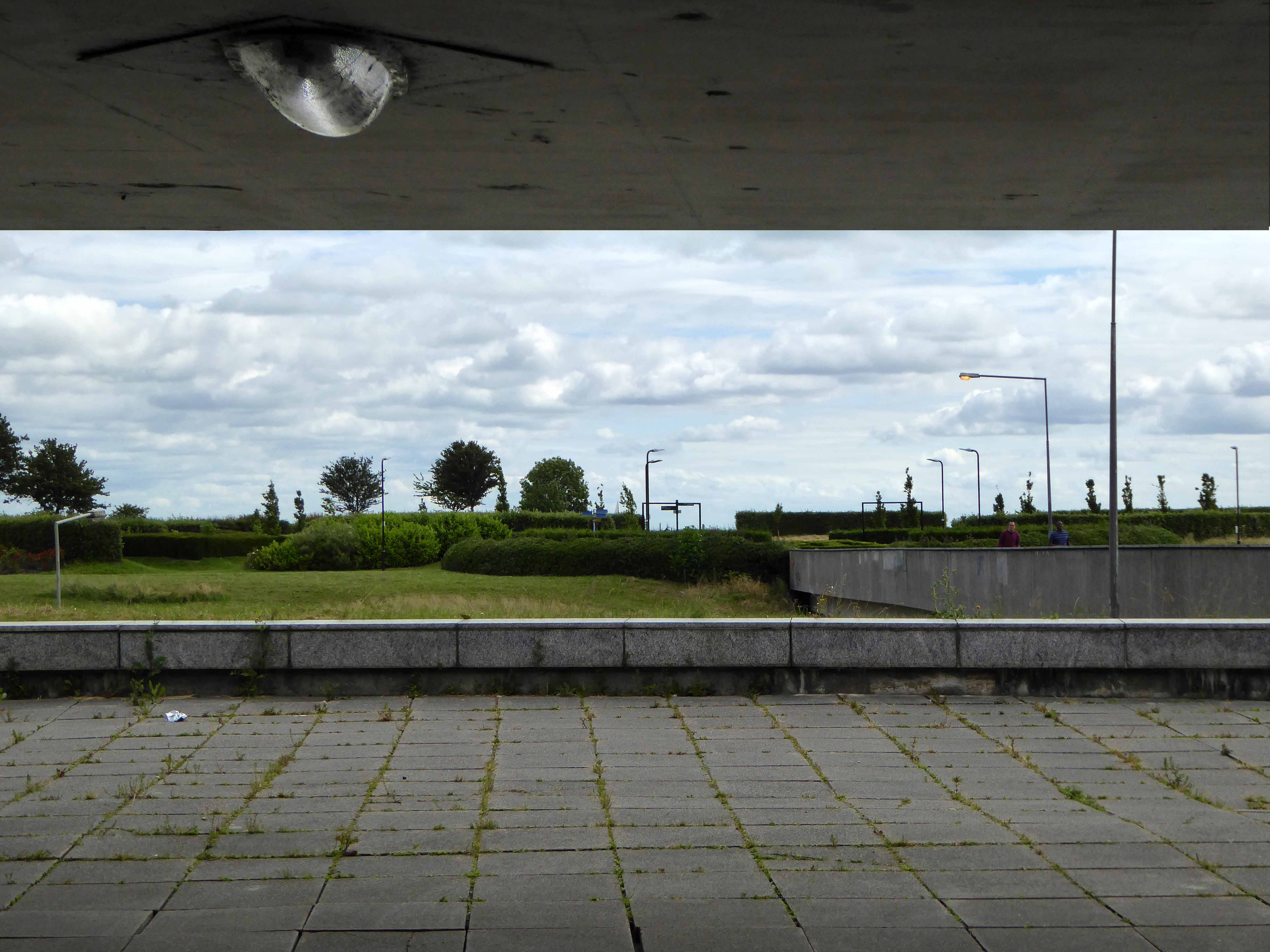
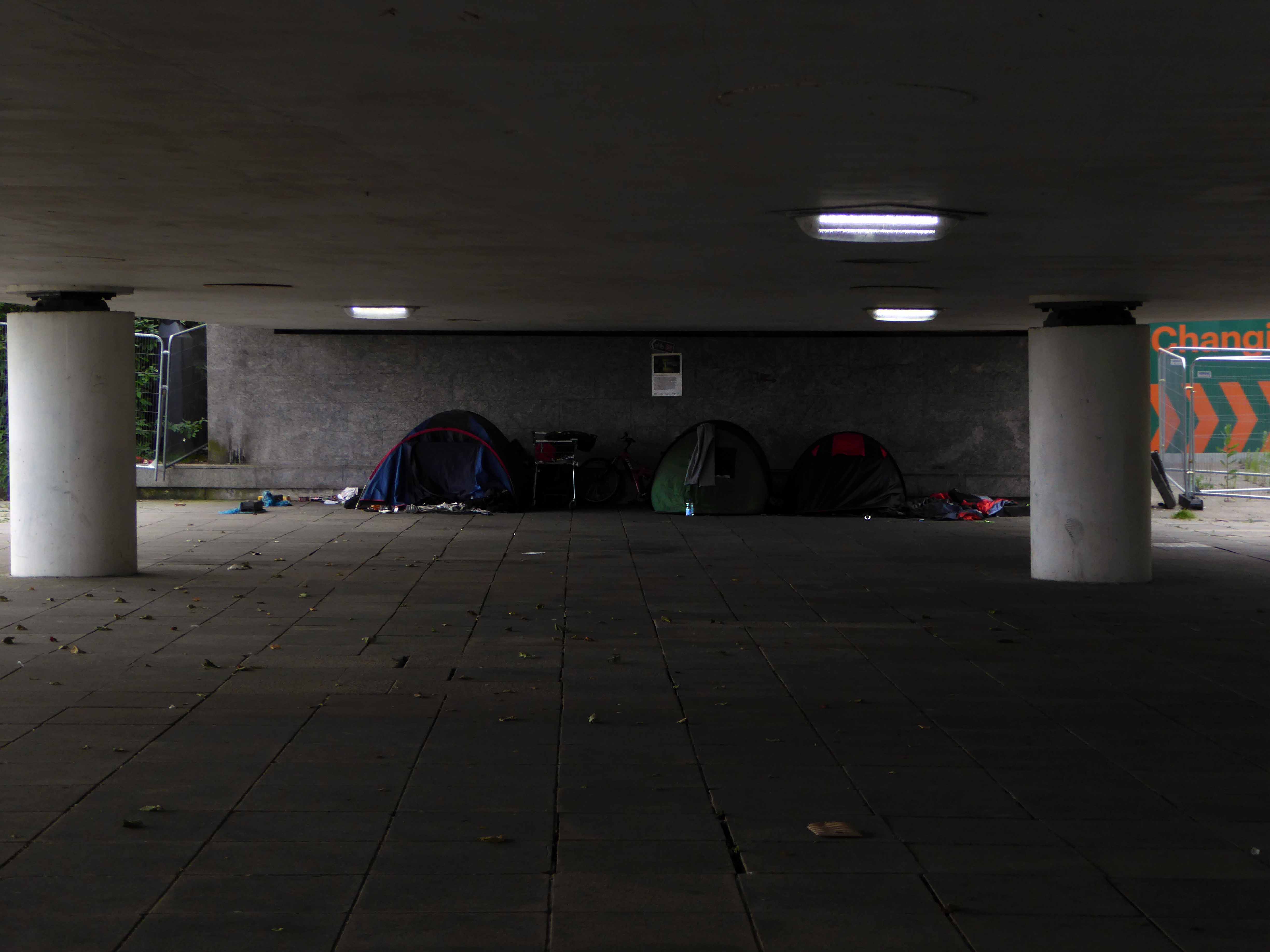
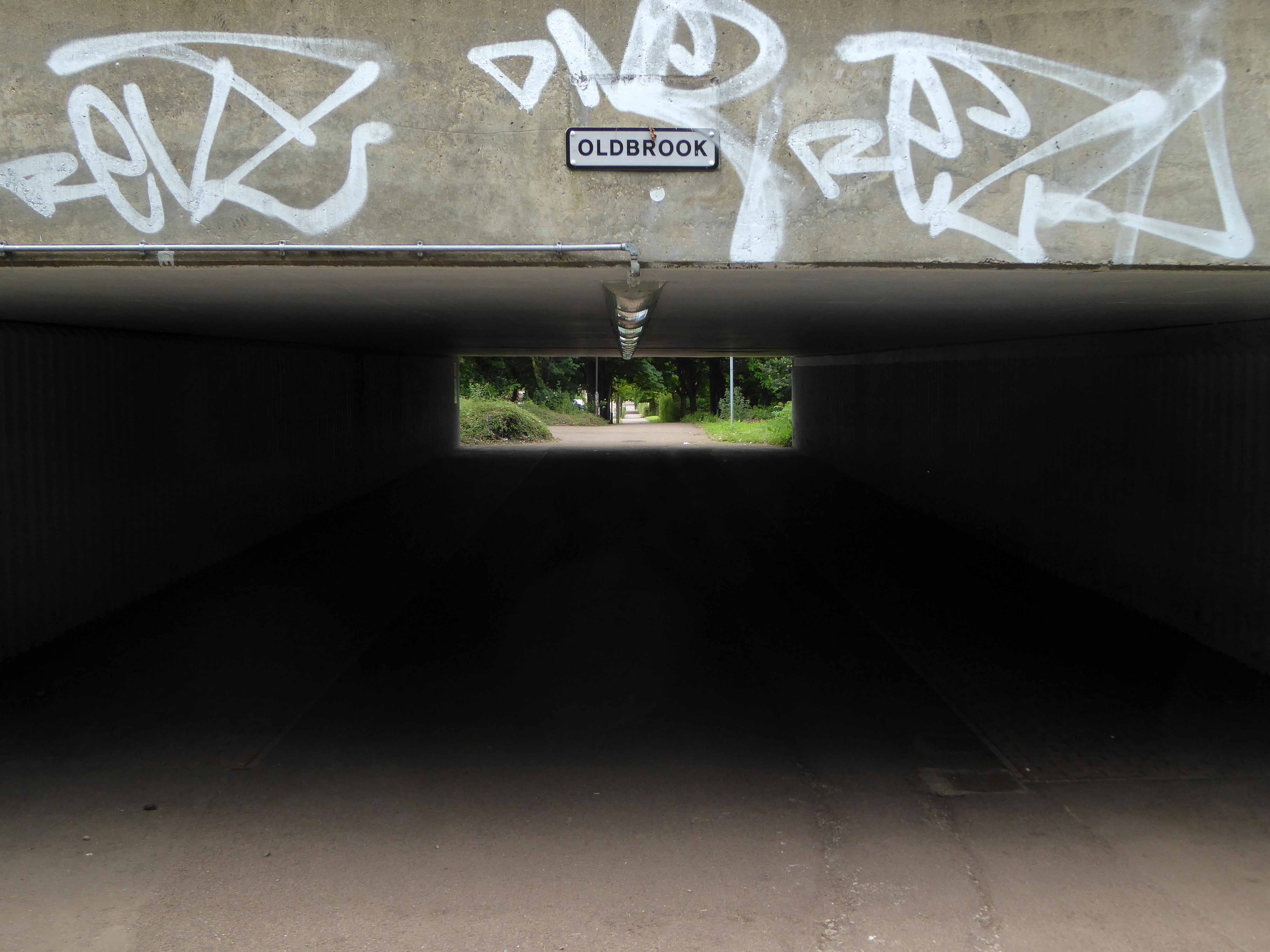
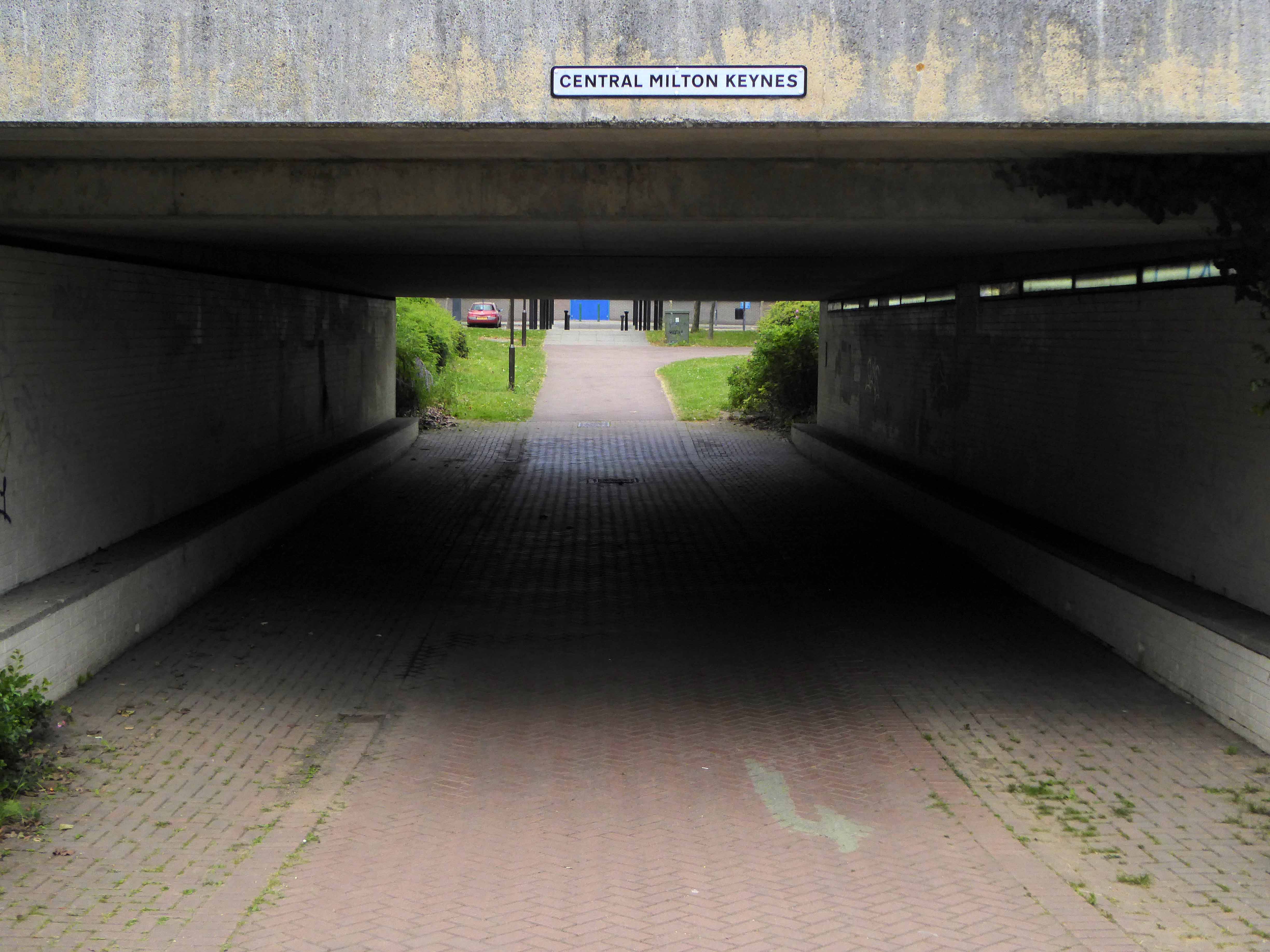
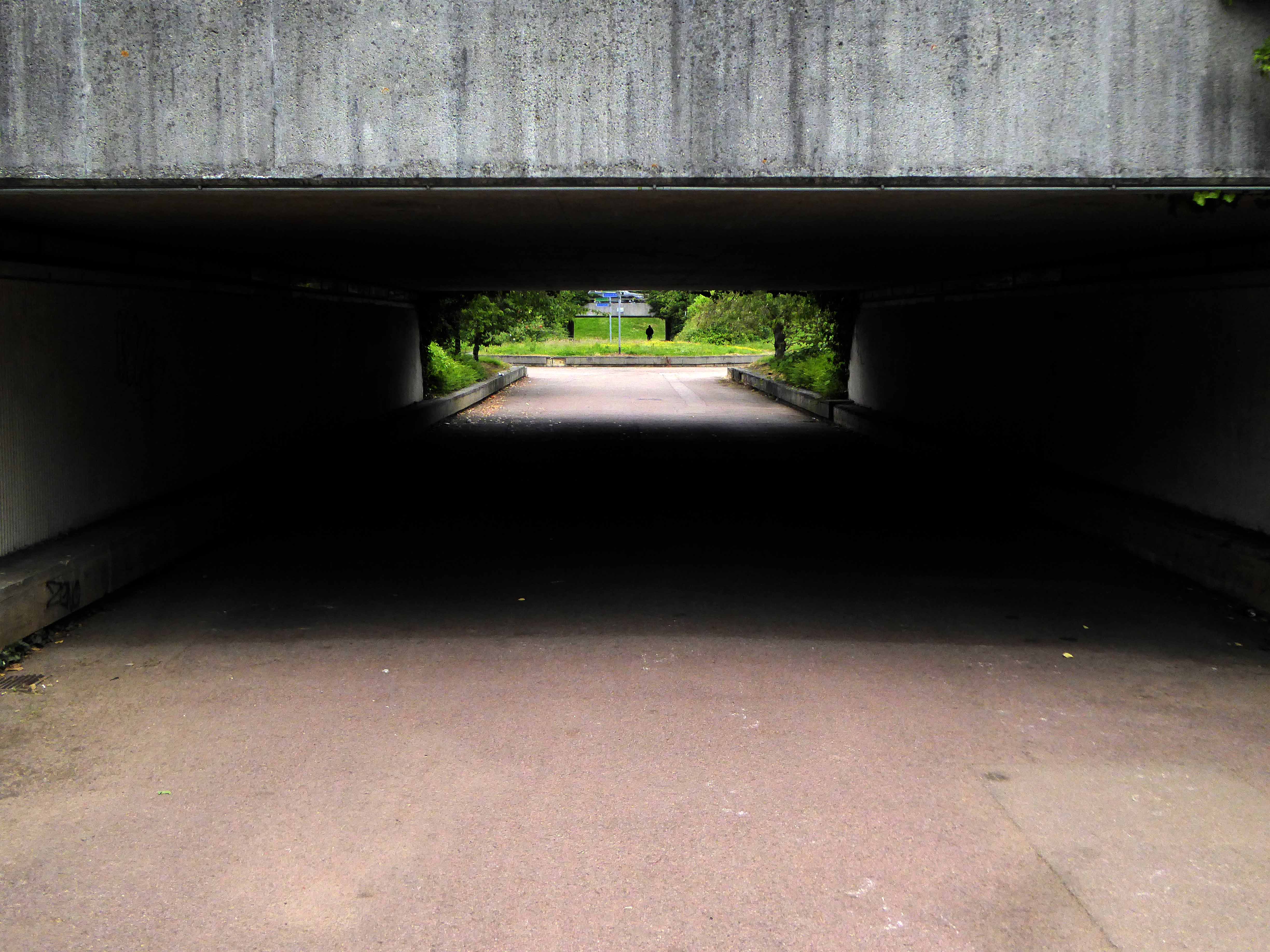
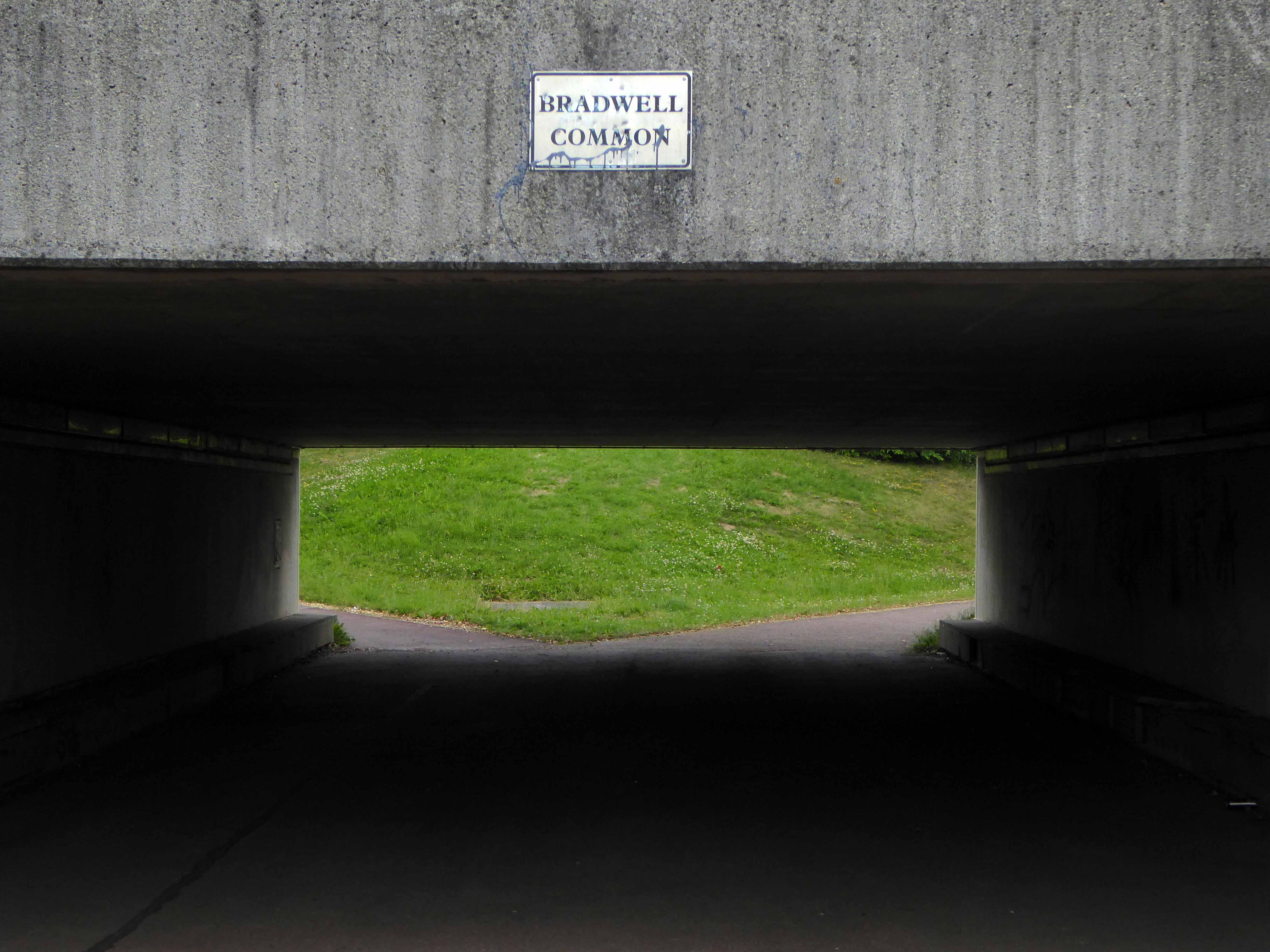
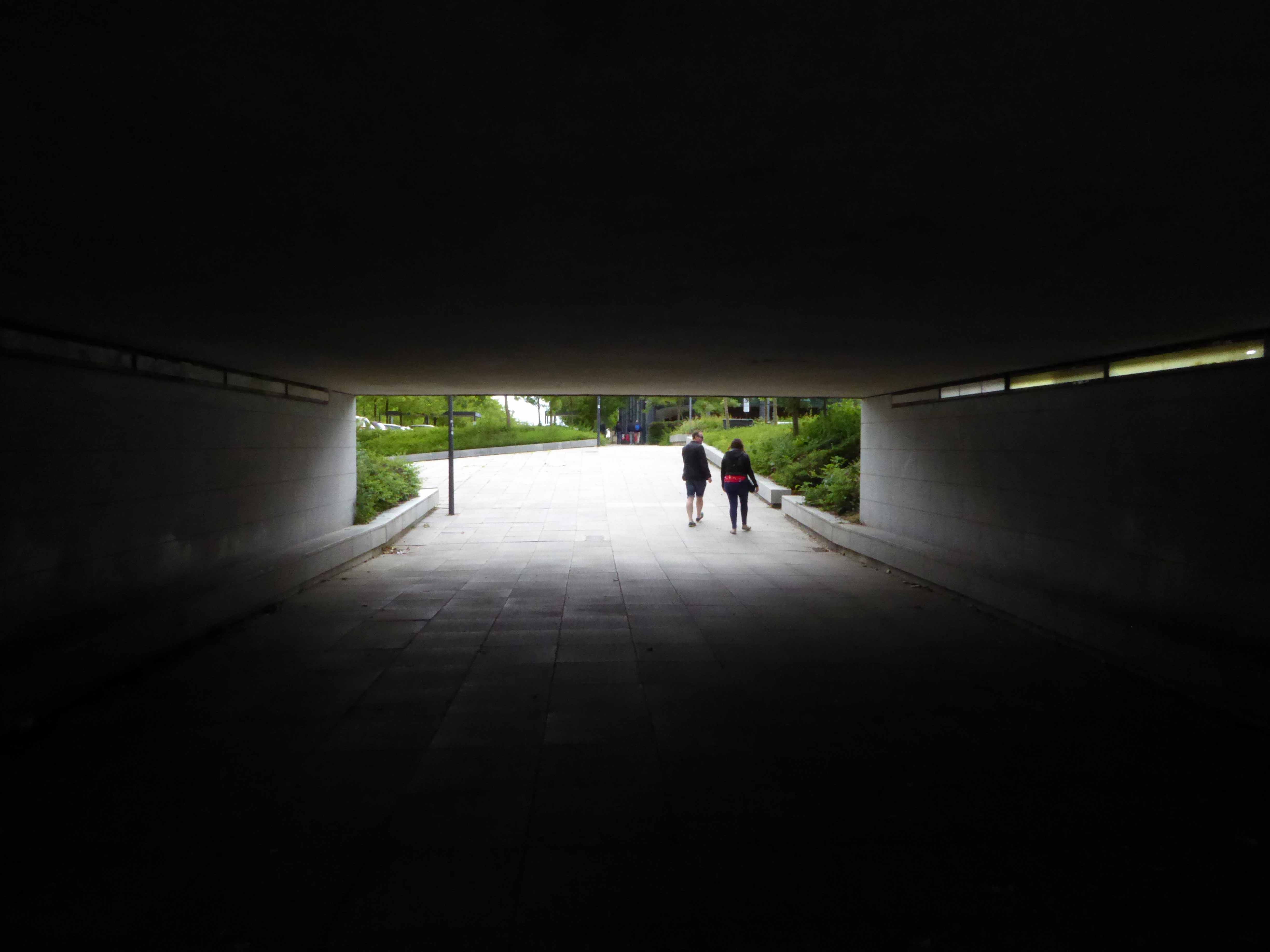
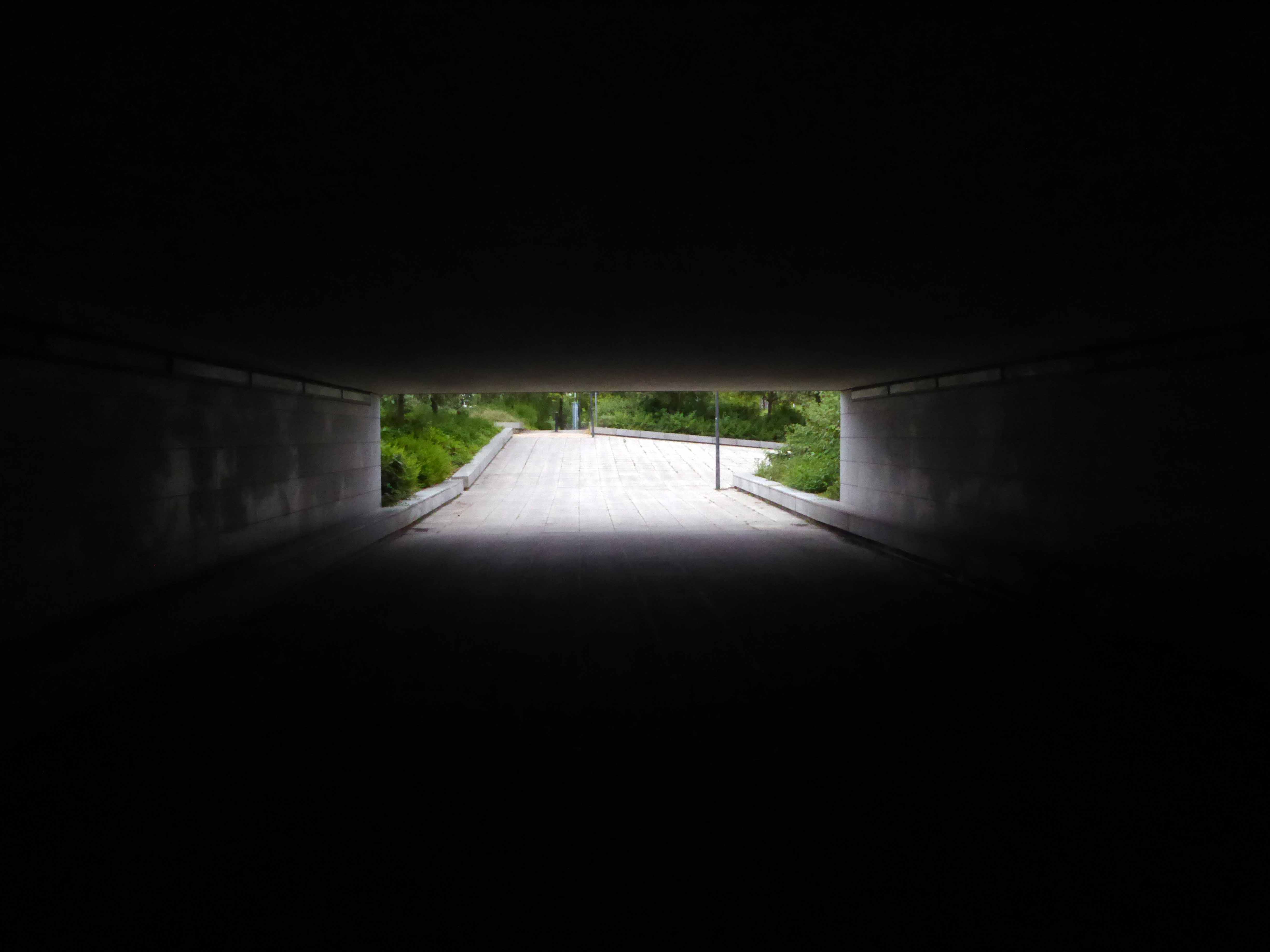
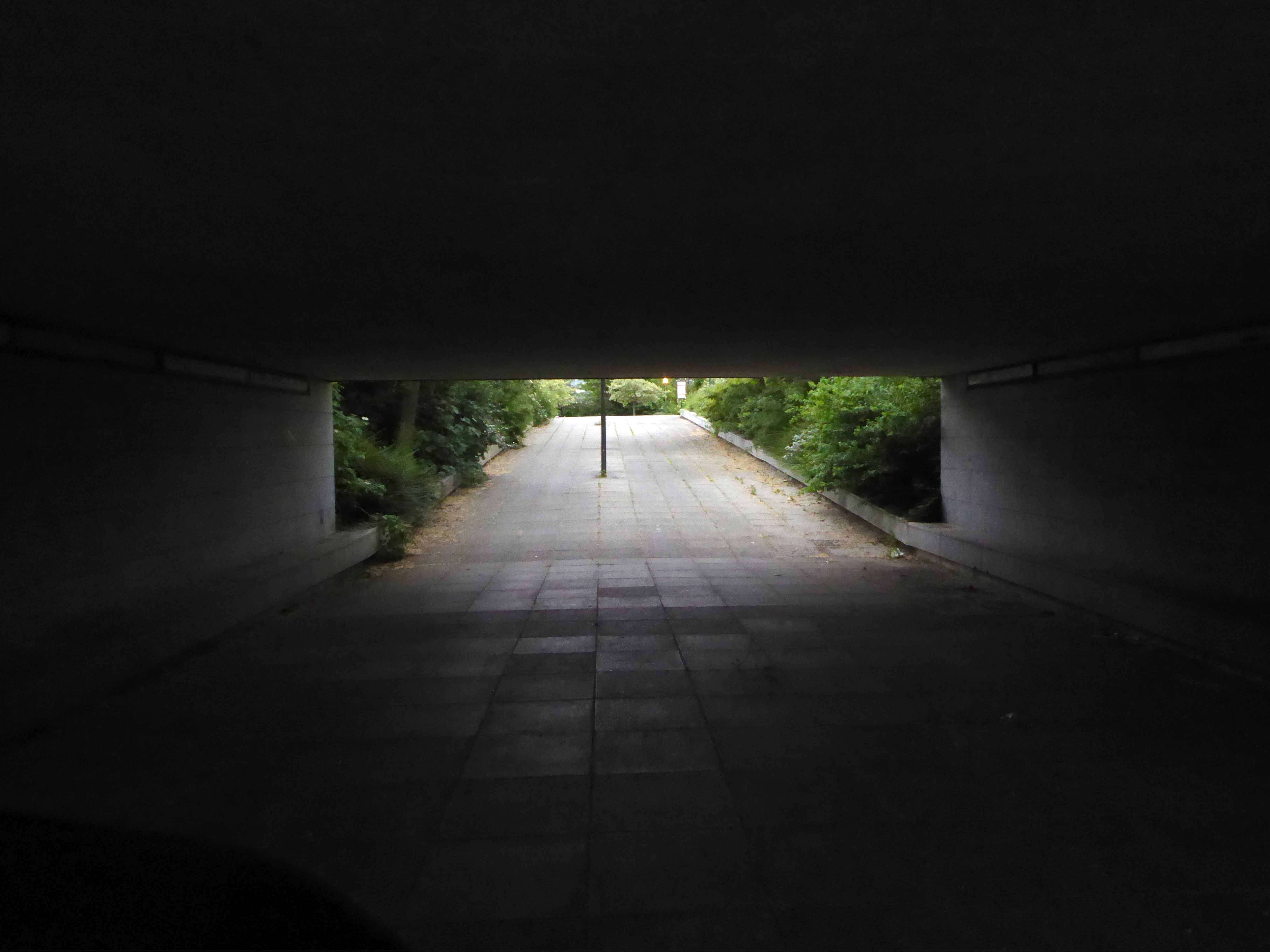
Beneath this merry carbon hungry dance, we find the cyclist and pedestrian, the self propelled underclass passing through the underpass.
During my eight hour non-stop walking tour I encountered several – here they are, home to the homeless – others somewhat desolate and deserted, grass between the paving stones, the occasional casual tag and discarded can.
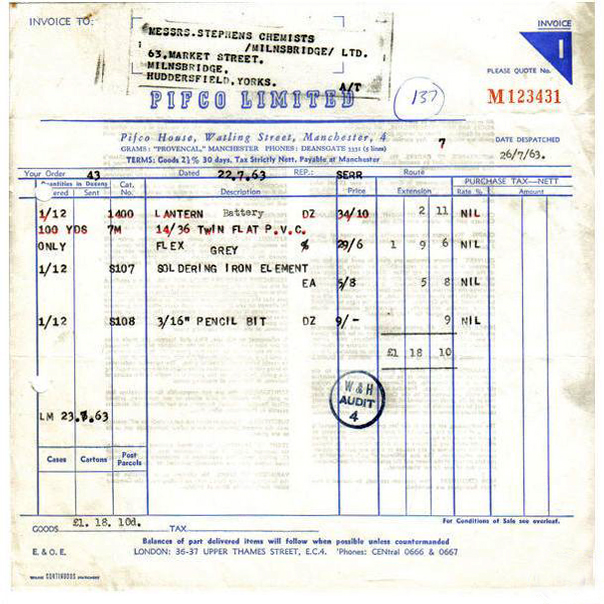
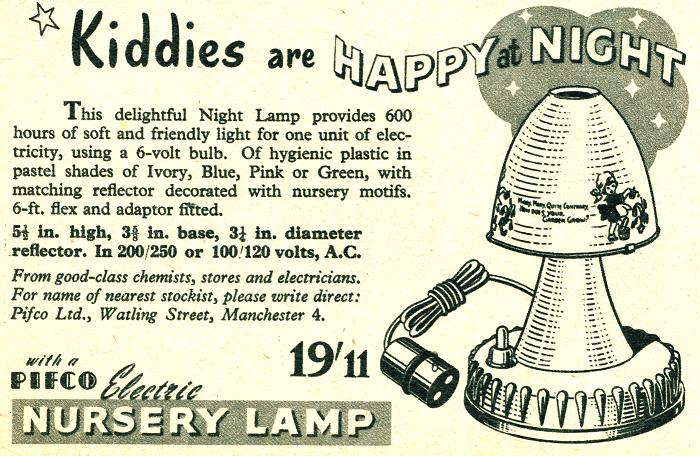
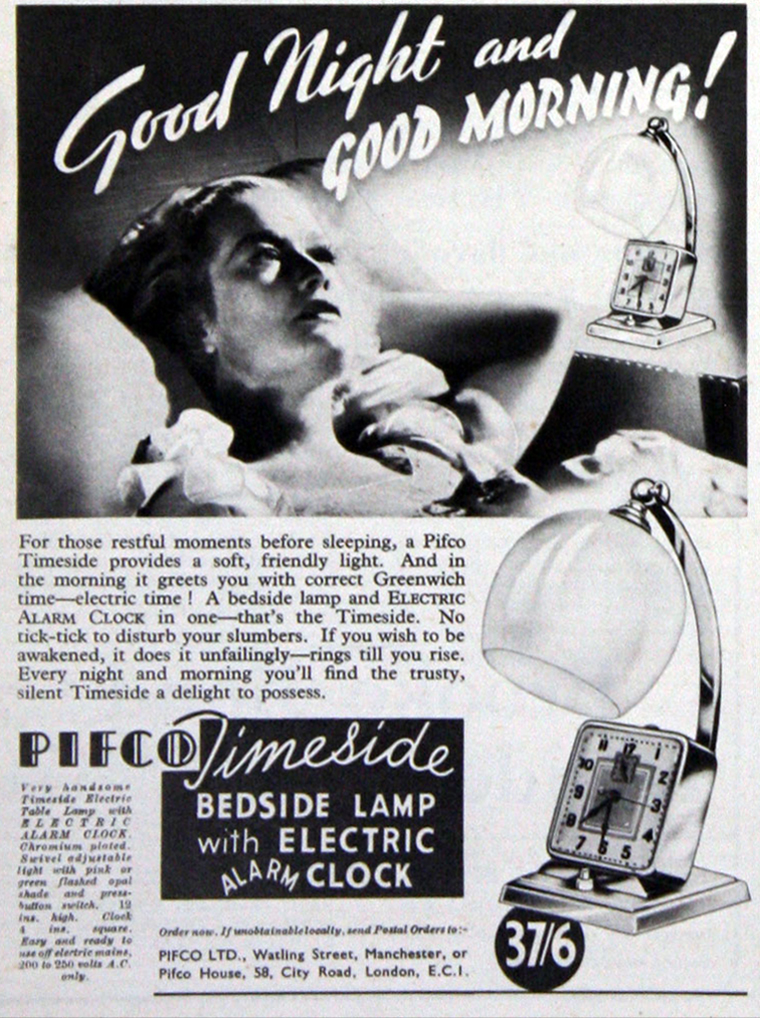
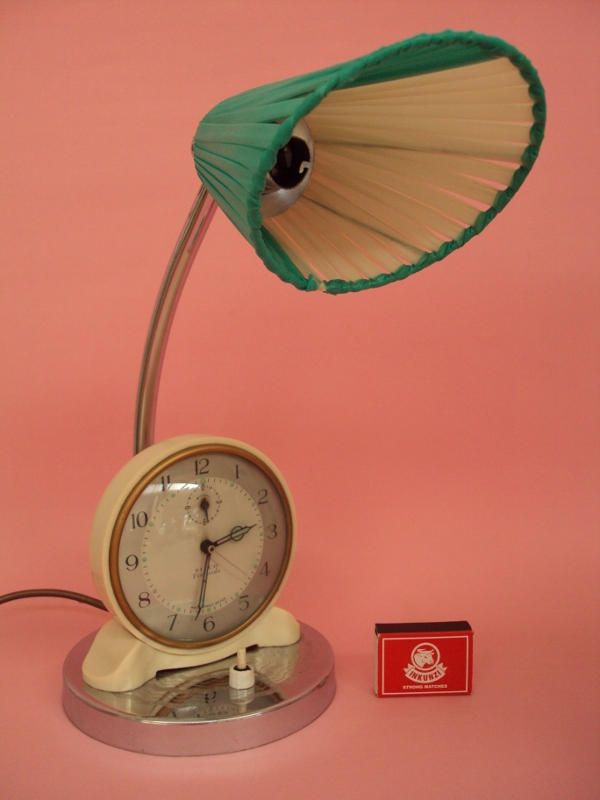
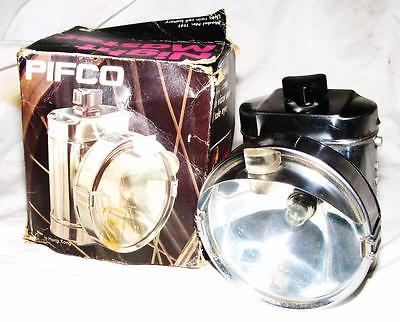
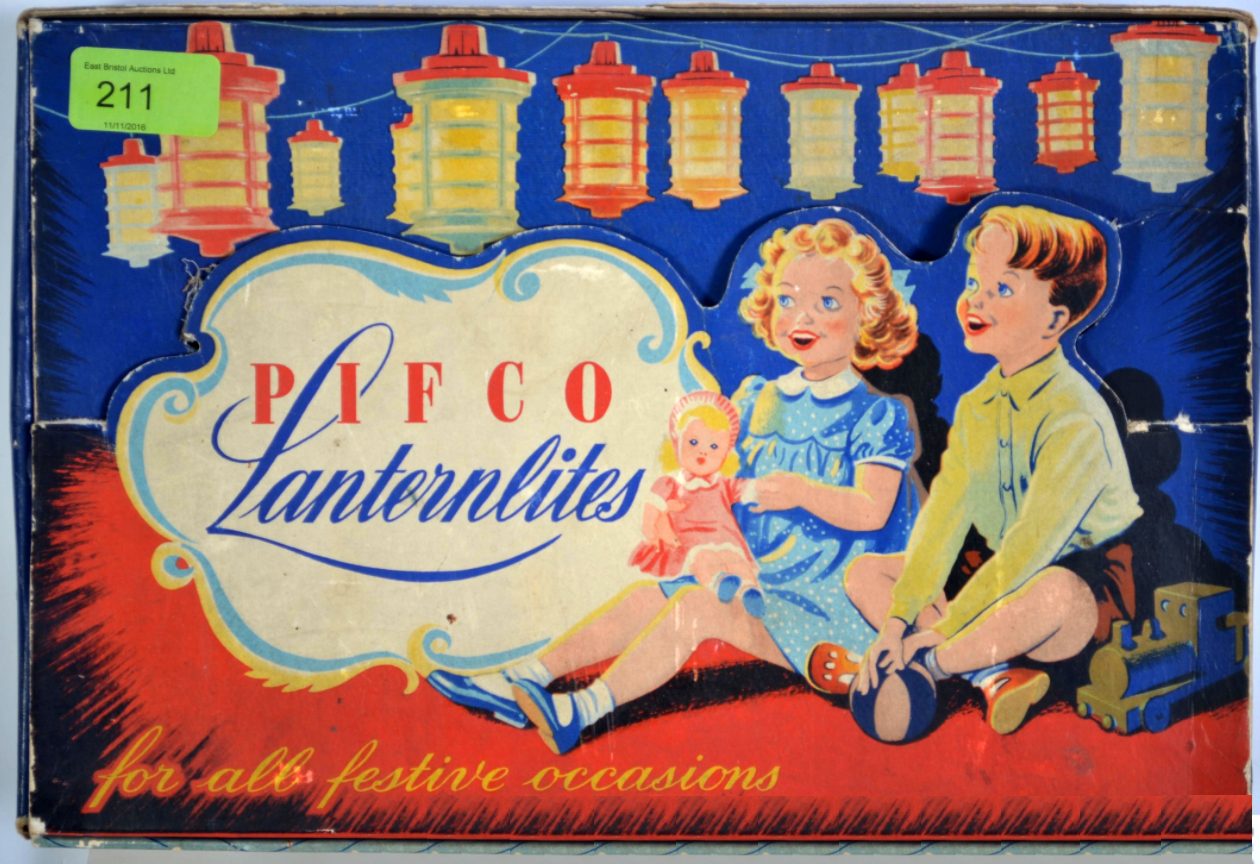
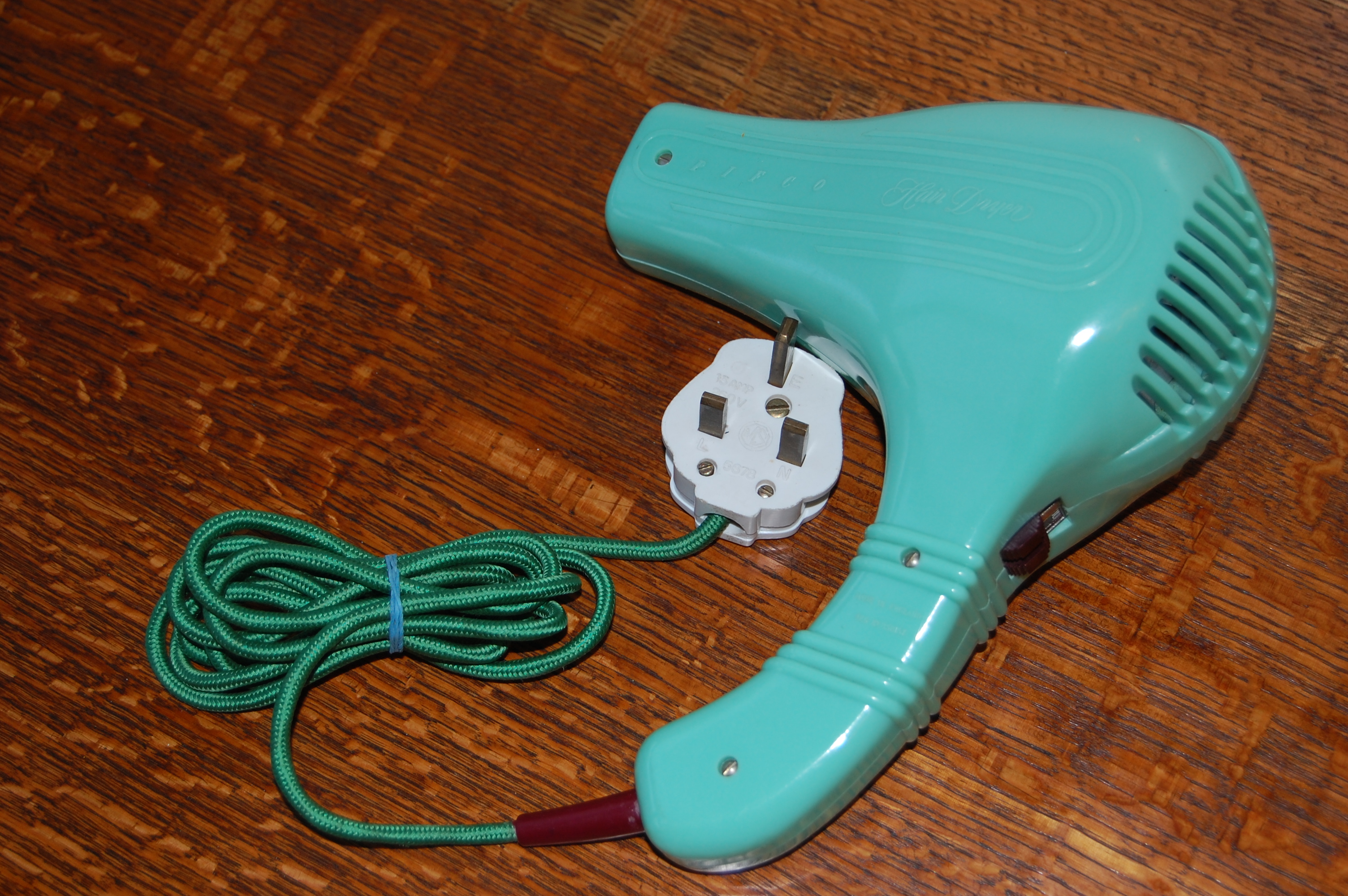
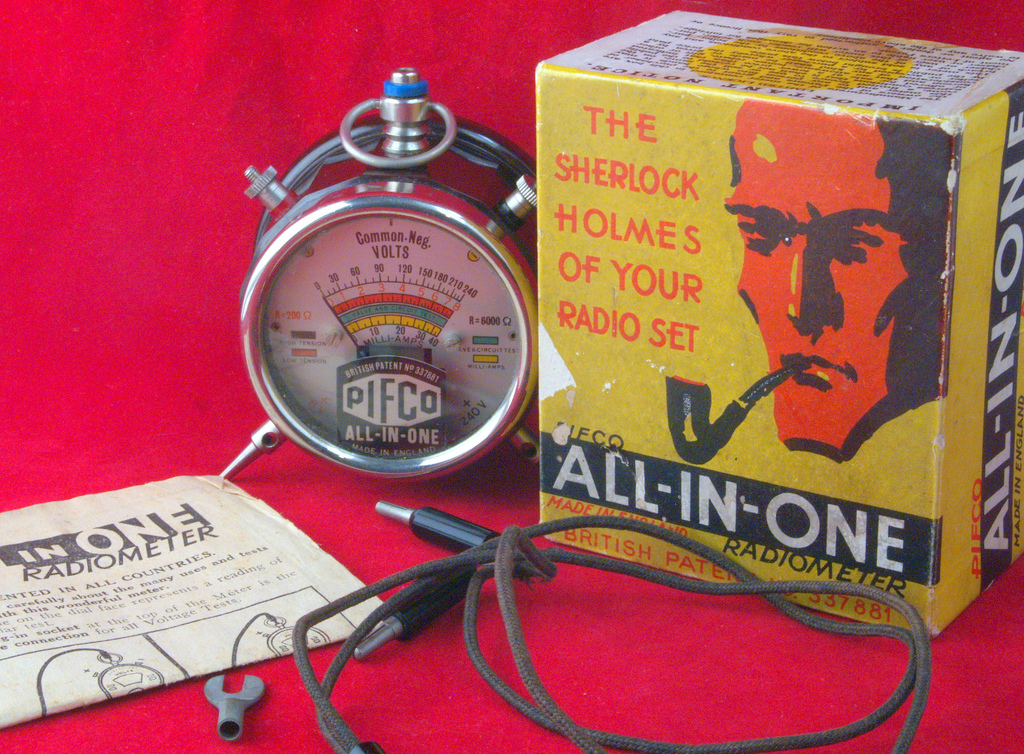
Following a thread, a tenuous electrical link that brought me back home, to an all too familiar household name.
A name that has illuminated, vibrated, mixed, measured, massaged, warmed and dried our lives for over one hundred years.
But what does it mean, where does this stuff come from, what’s it all about Pifco?
Pifco of Failsworth, also of Pifco House, 87 High Street, Manchester.
1900 Company established by Joseph Webber to sell lighting appliances and accessories.
1902 Public company formed as Provincial Incandescent Fittings Co. Ltd.
1911 The Filani Nigeria Tin Mining Co was incorporated as a public company.
1949 Name changed.
1954 Incorporated Walls Ltd, of River Street Birmingham, as a wholly-owned subsidiary to manufacture medical lamps, kettles and small cookers.
1957 The last of the mining assets were sold.
1957 Filani Nigeria Tin Mining Co changed its name to Pifco Holdings Ltd and acquired all of the issued share capital of Pifco 1961 Manufacturers and distributors of electrical appliances and accessories.
1970 The Regent Cotton Mill, in Failsworth was purchased by Pifco.
1984 Agreed to acquire Swan Housewares from BSR International, but later the deal collapsed.
1987 Acquired House of Carmen, maker of heated hair rollers; the other important brand was Salton.
1991 Purchased Russell Hobbs Tower.
2001 Salton Group, a US company making domestic appliances, acquired Pifco.
So Provincial Incandescent Fittings Co. Ltd.
We salute you, so much joy emanating from Failsworth Manchester, making the world a warmer, drier, brighter, cleaner safer place.
Always at never less than entirely reasonable prices.
A true friend to the nocturnal cyclist.
Christmas cheer for all!
Those little things that lighten the wearisome load of the daily beauty regime.
The minor essentials of our everyday electrical lives.
The seemingly frivolous rendered material.
We can all sleep ever so easily abed at night, in the simple knowledge that Pifco is still out there working just for us/you!
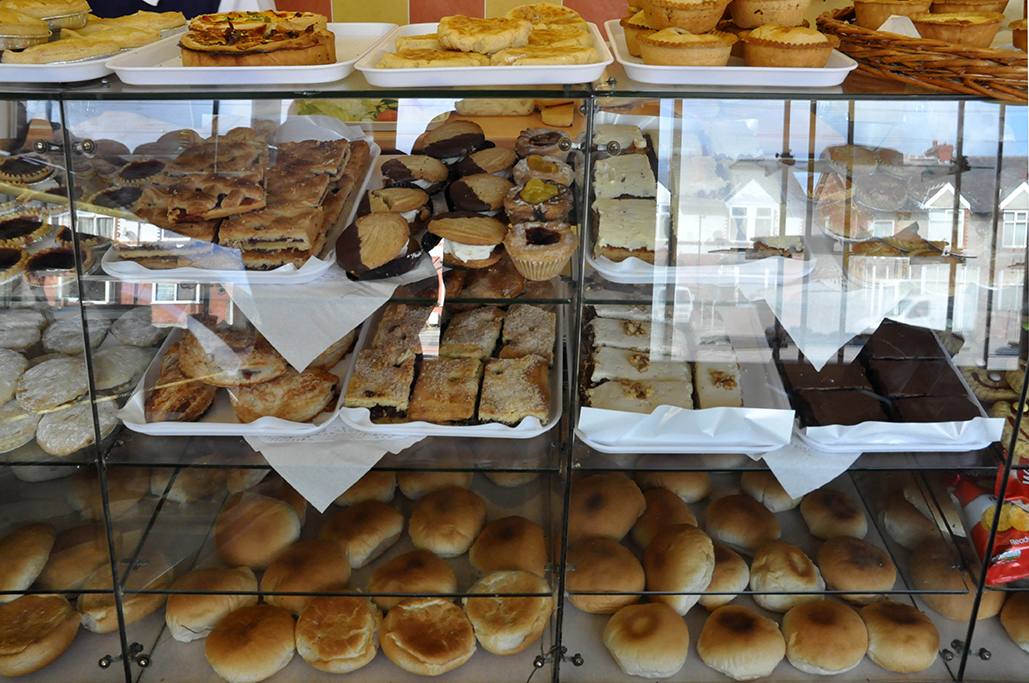
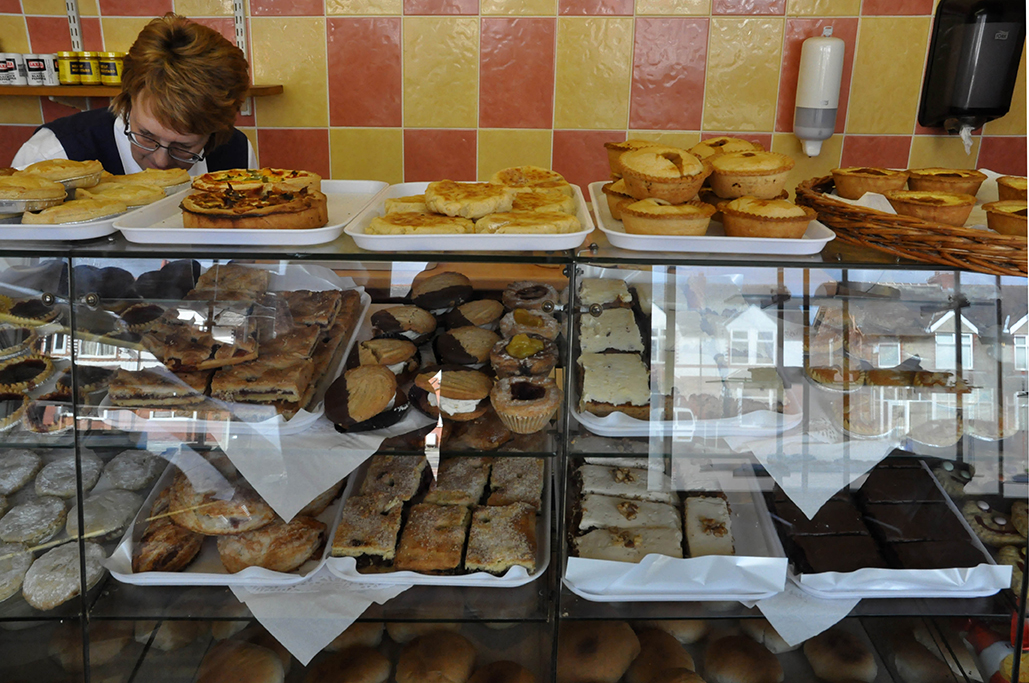
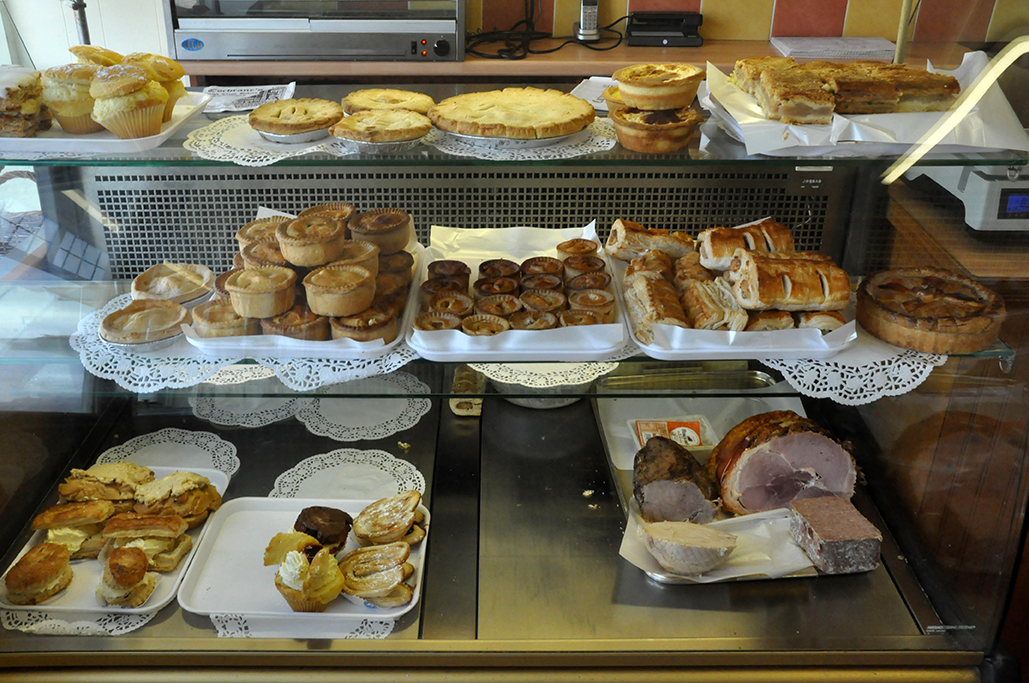
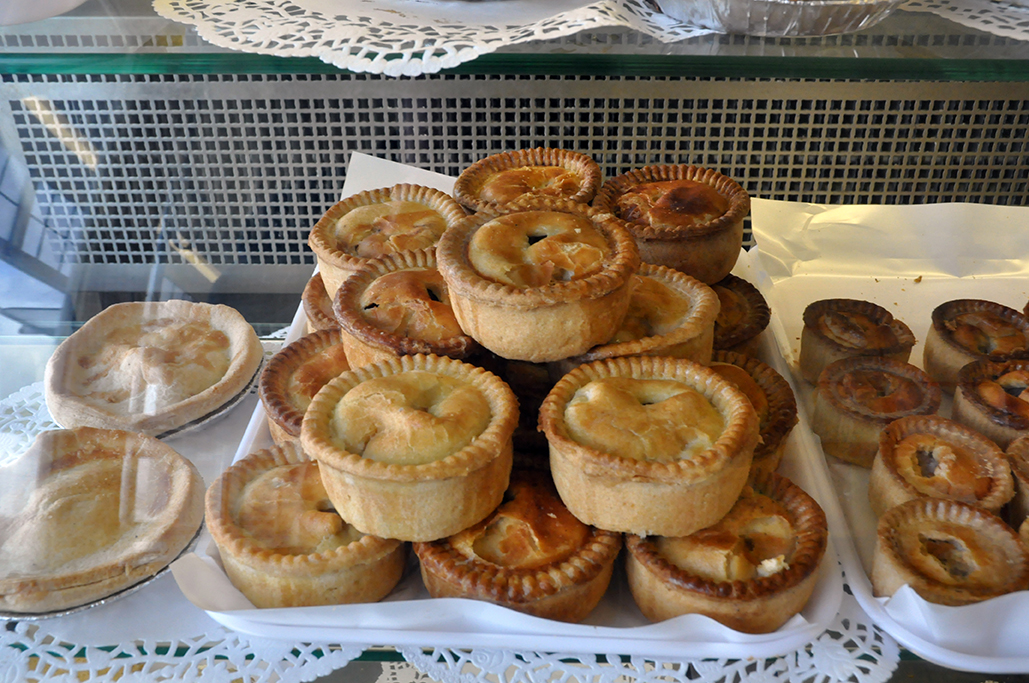
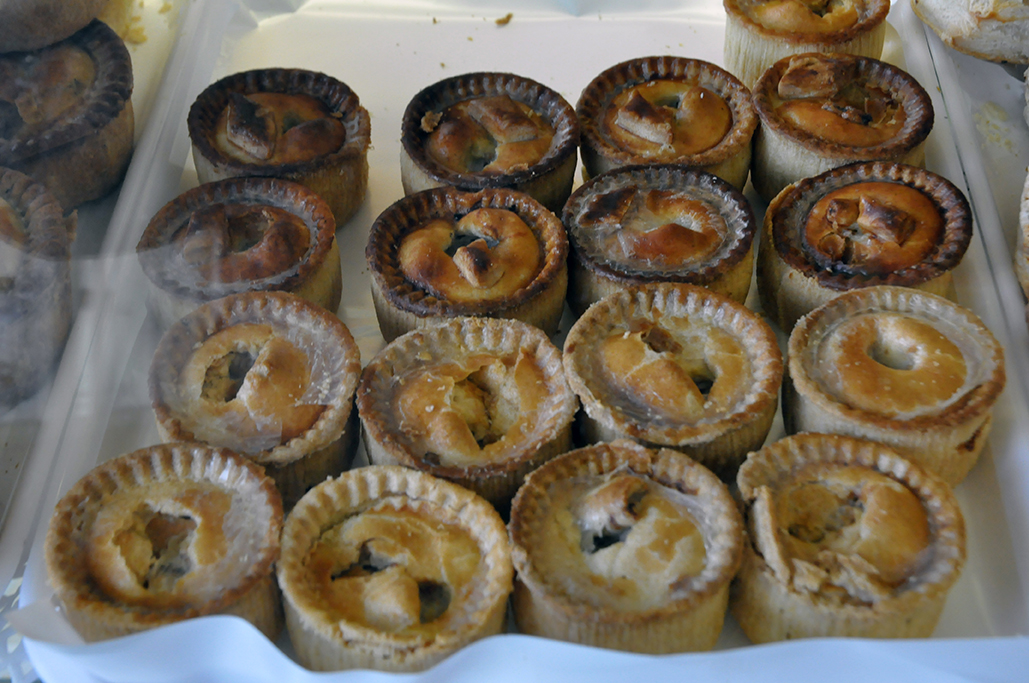
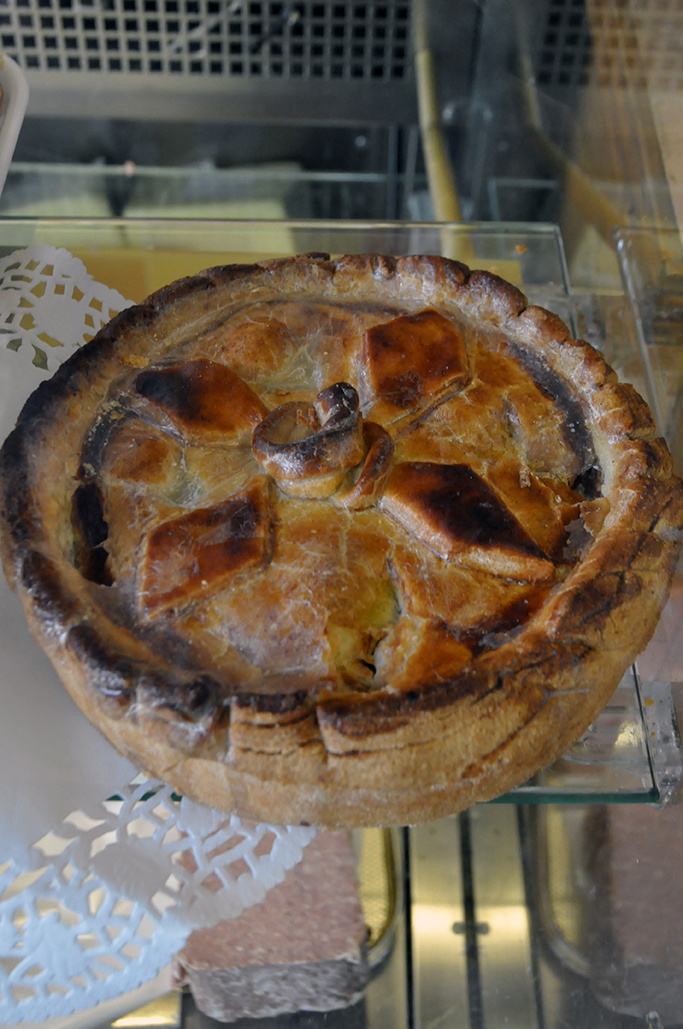
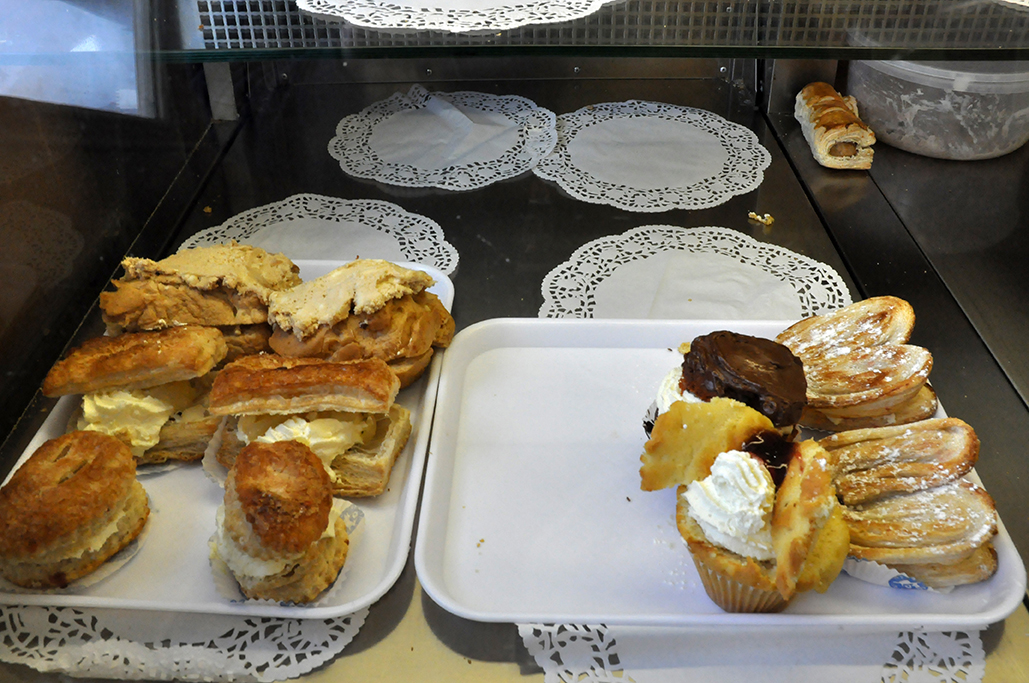
From being little I’ve always eaten pies and cakes, that’s how you stop being little all your life, broadly speaking.
They taste nice.
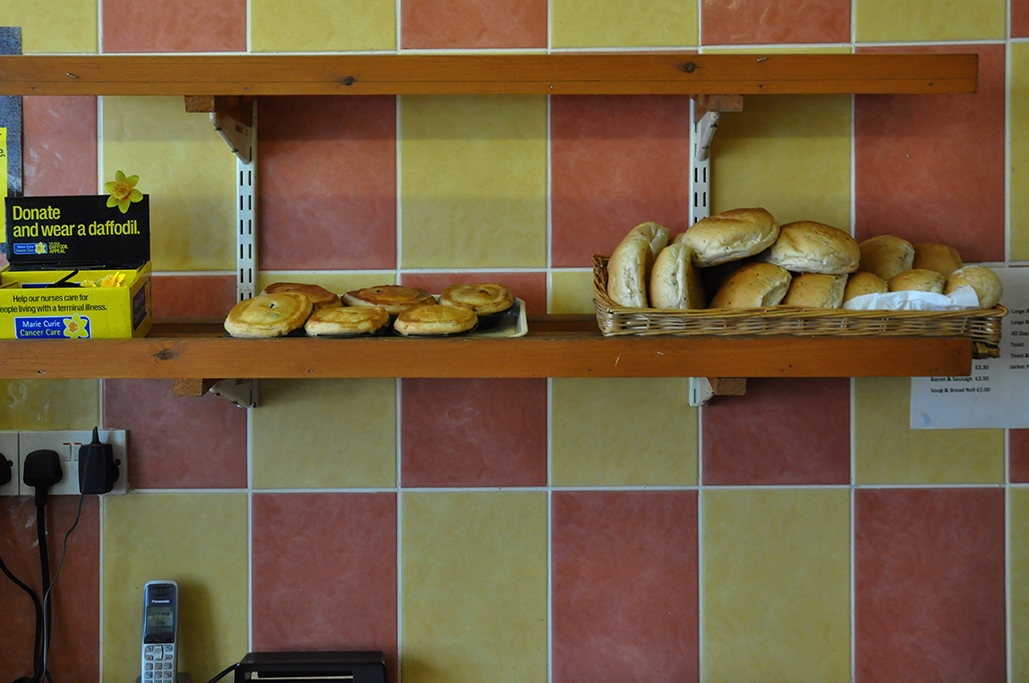
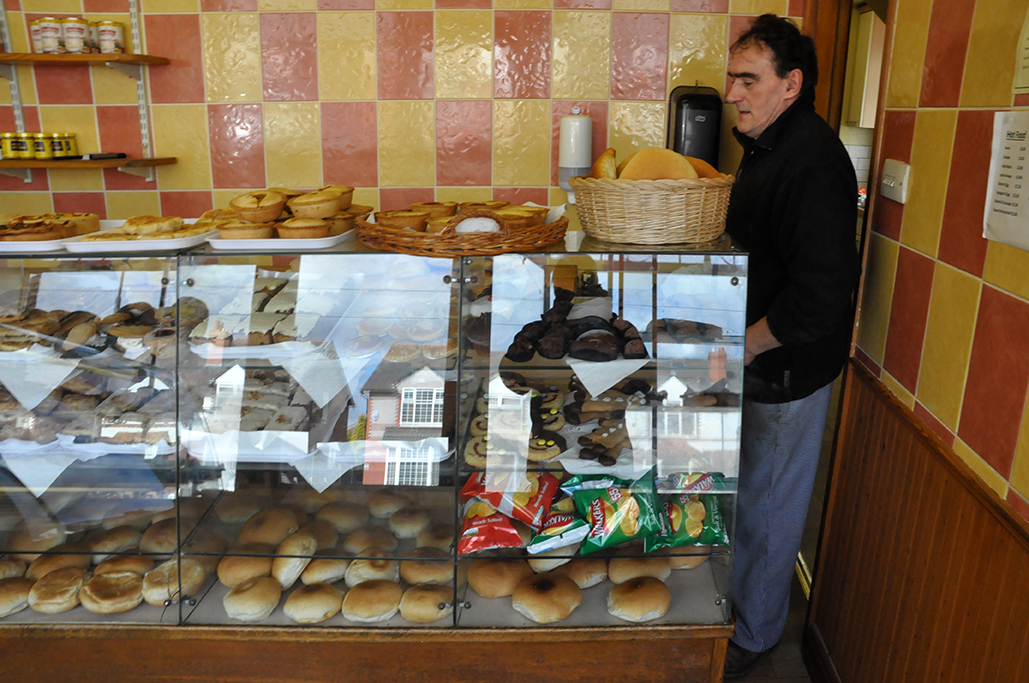
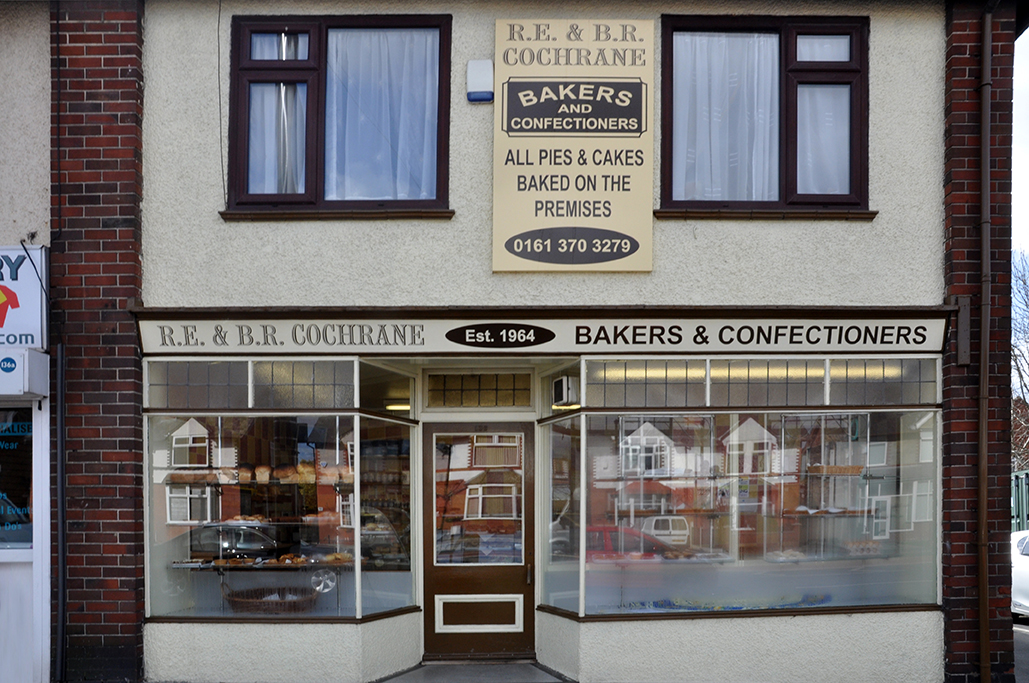
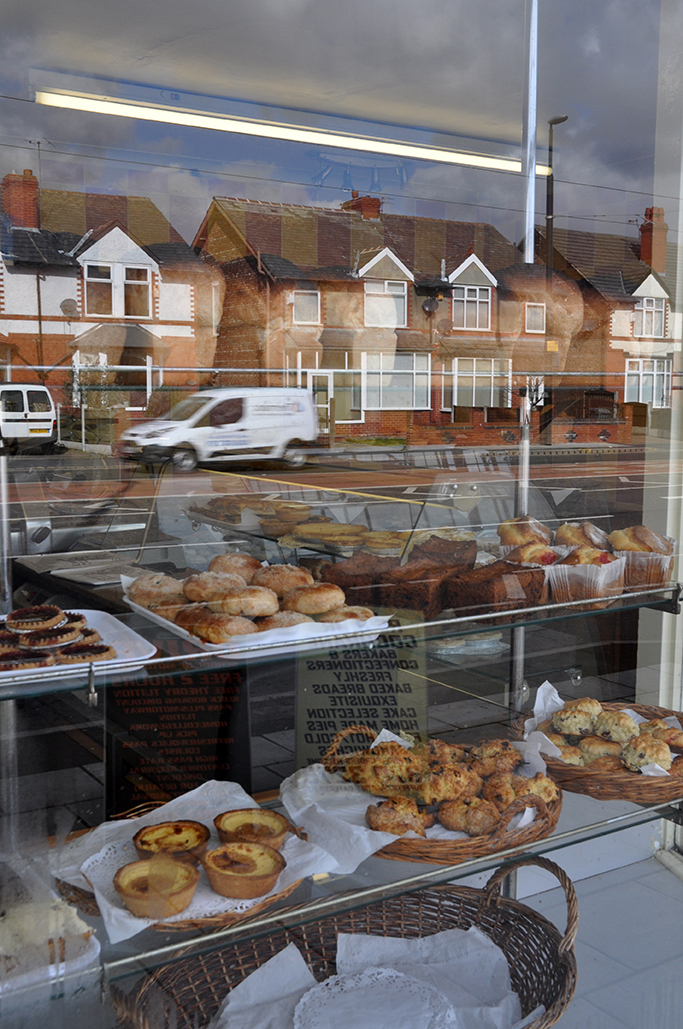
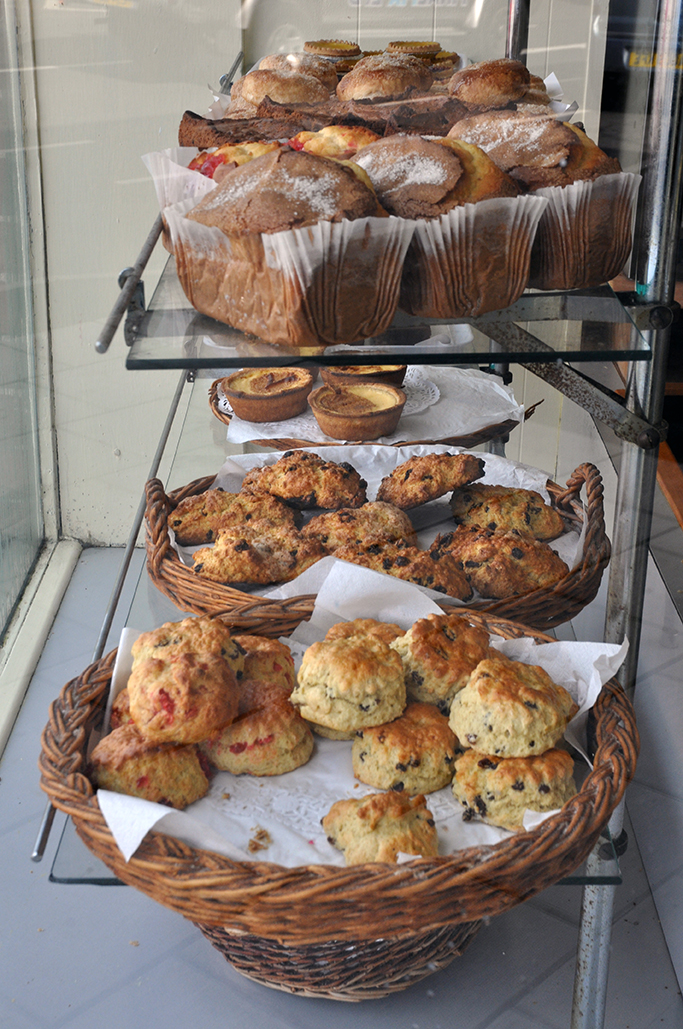
They taste nicest from a local bakers and confectioners, where everything is always fresh and baked on the premises. Walk in and it’s warm and welcoming, it smells of baking and love.
So each time I cycle around Greater Manchester, I do my level best to find one, go in and buy a pie.
And eat it.
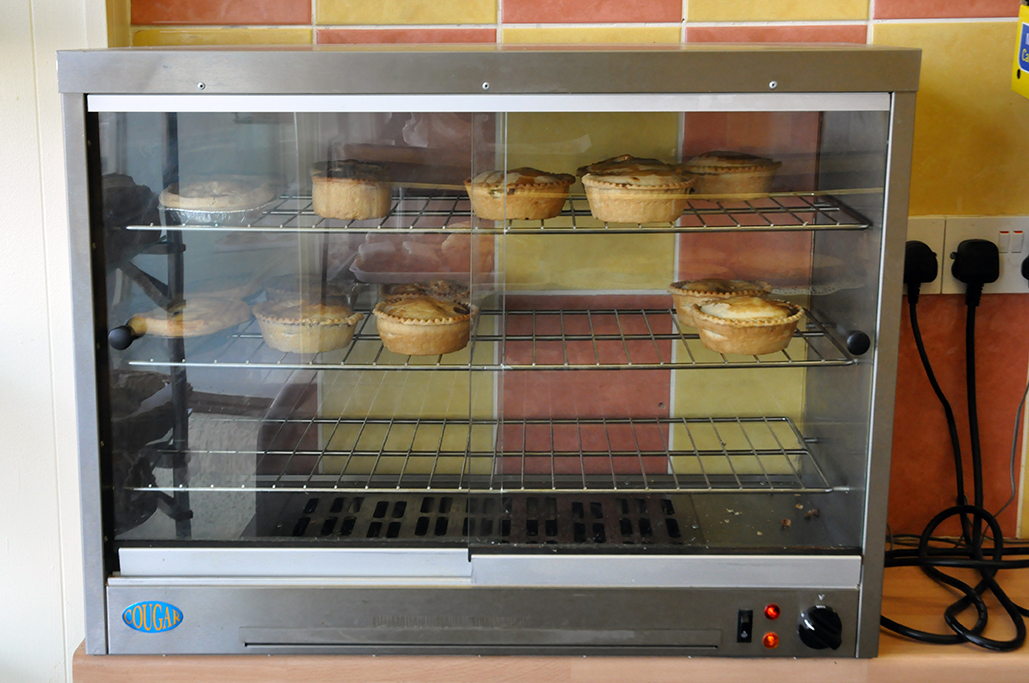
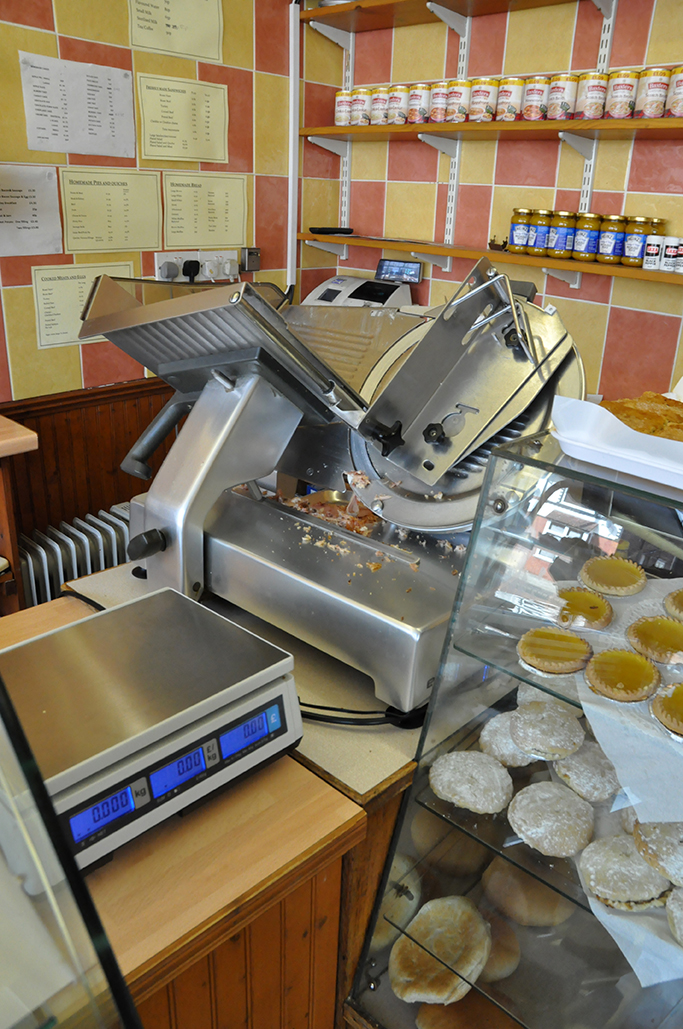
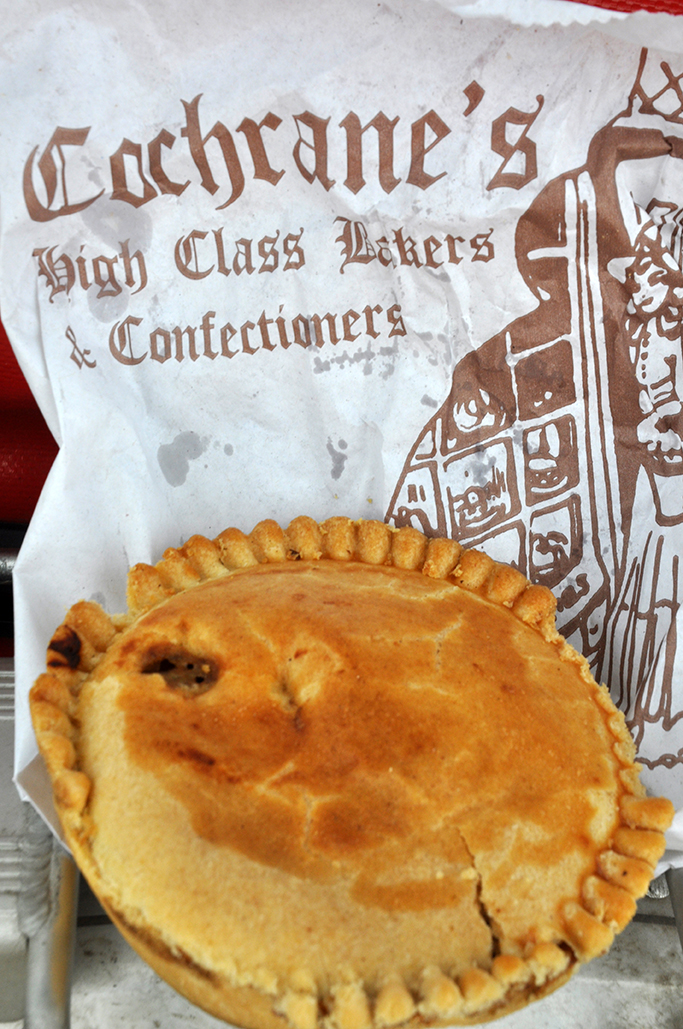
One such stop off is Cochrane’s, the family have baked here since 1964, Ruth and Roger are charming and helpful – sadly we mourned the passing of most of their fellow bakers’ shops. Bowker’s on Penny Meadow in Ashton having recently shut. Once gone nobody takes them on – the family traditions of employment having long since been broken. Three of my aunties were trained as confectioners, I’m a good for nothing photographer.
They disappear in a puff of flour.
So make the most of those that remain, stop by buy a pie – I did.