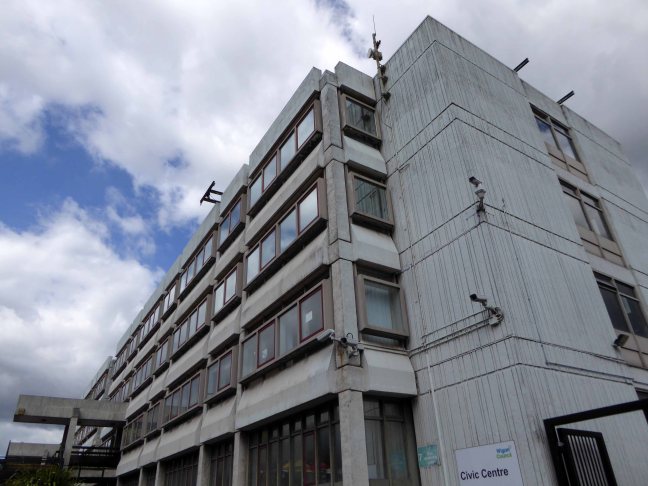
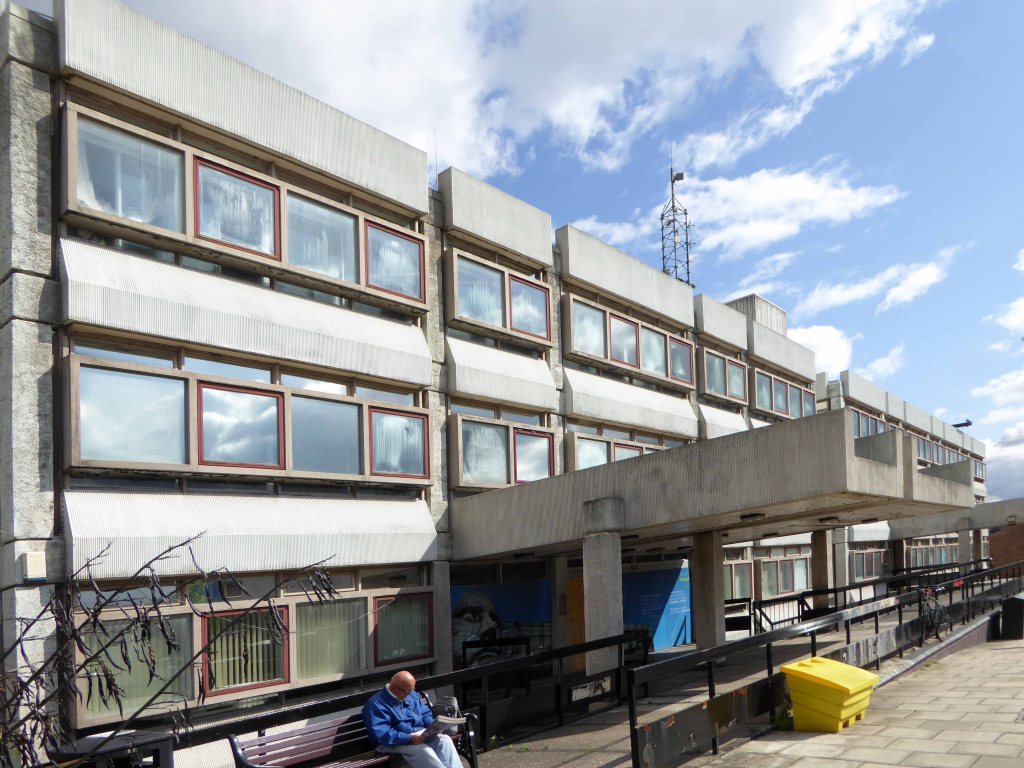
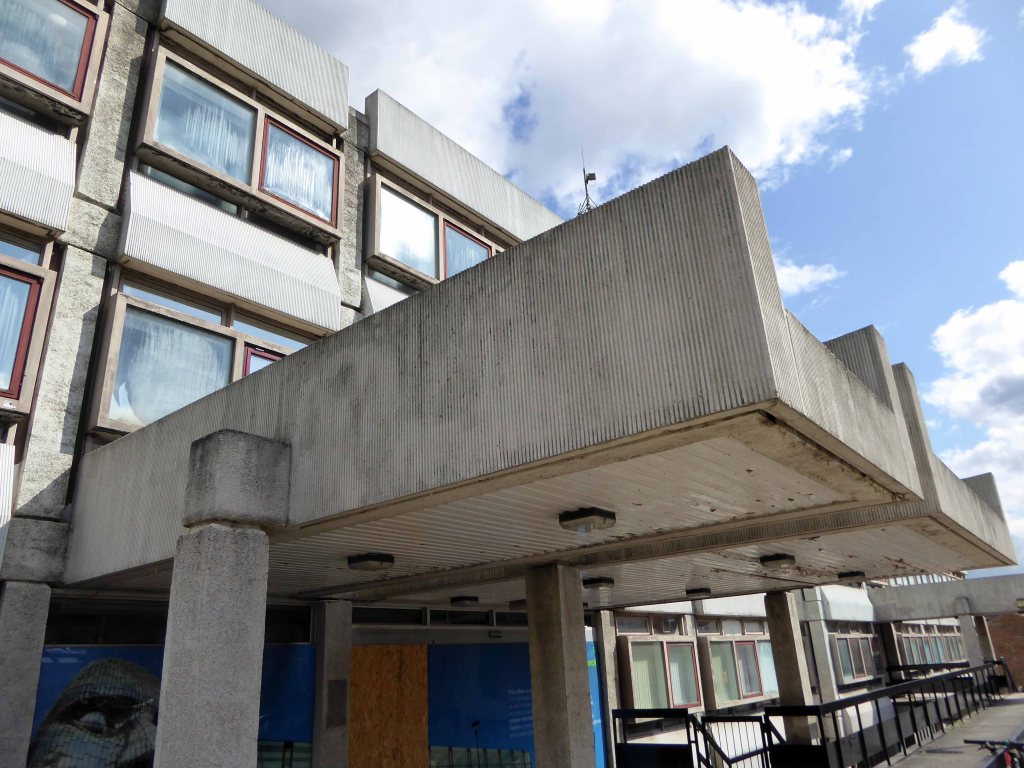
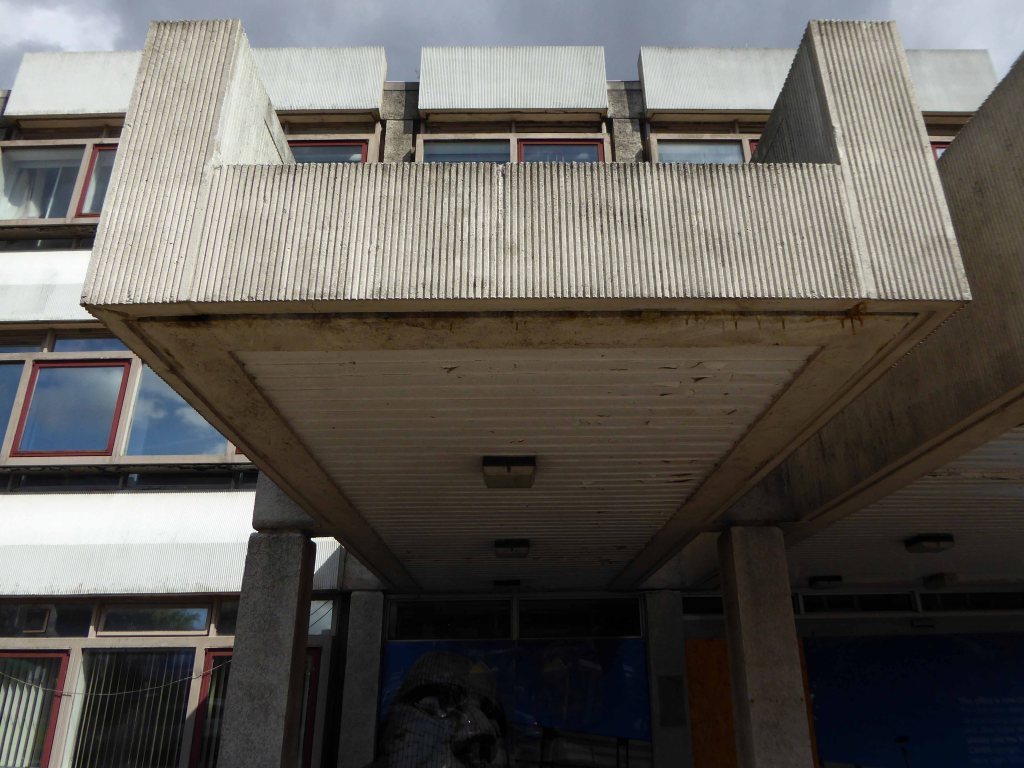
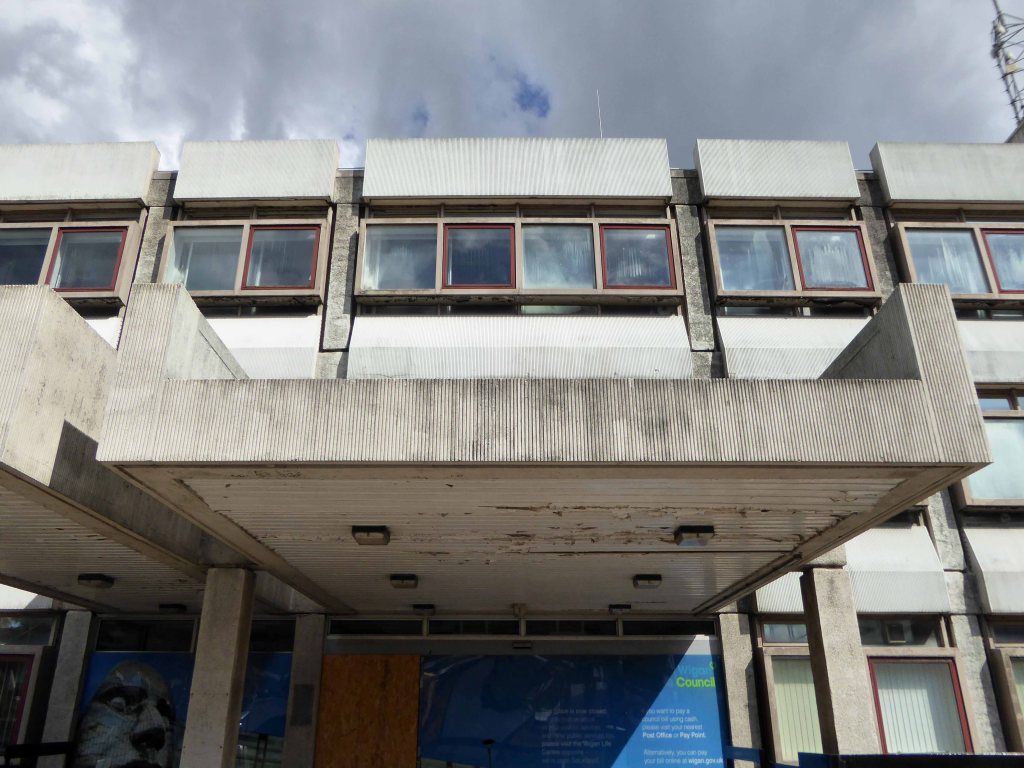
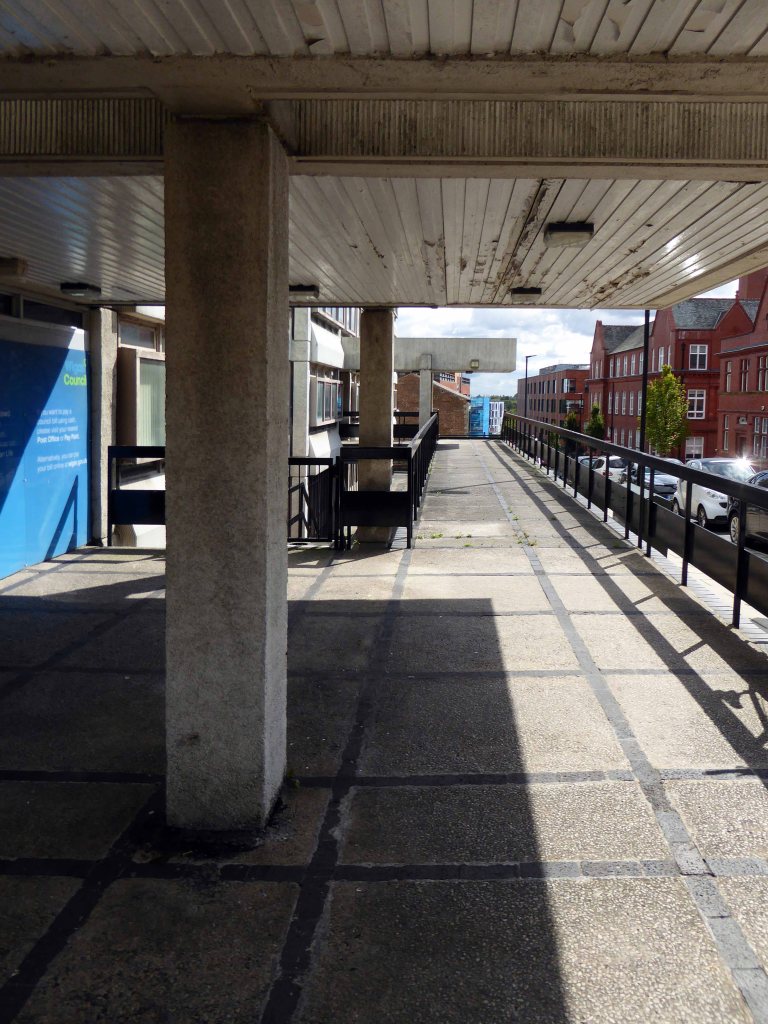
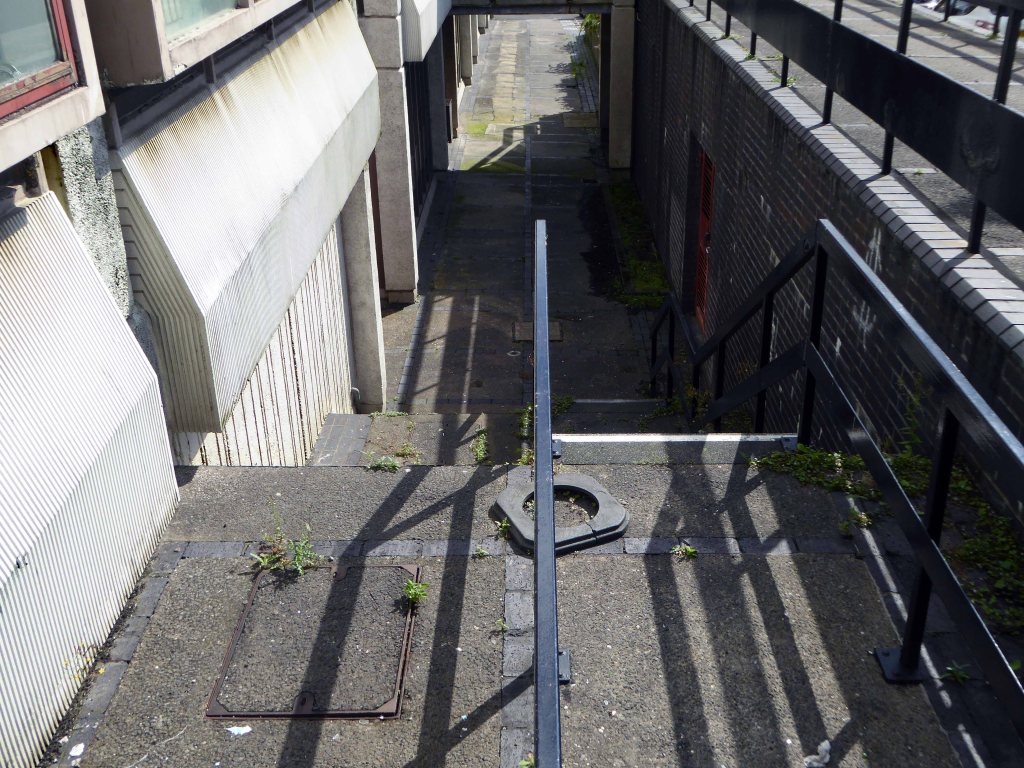
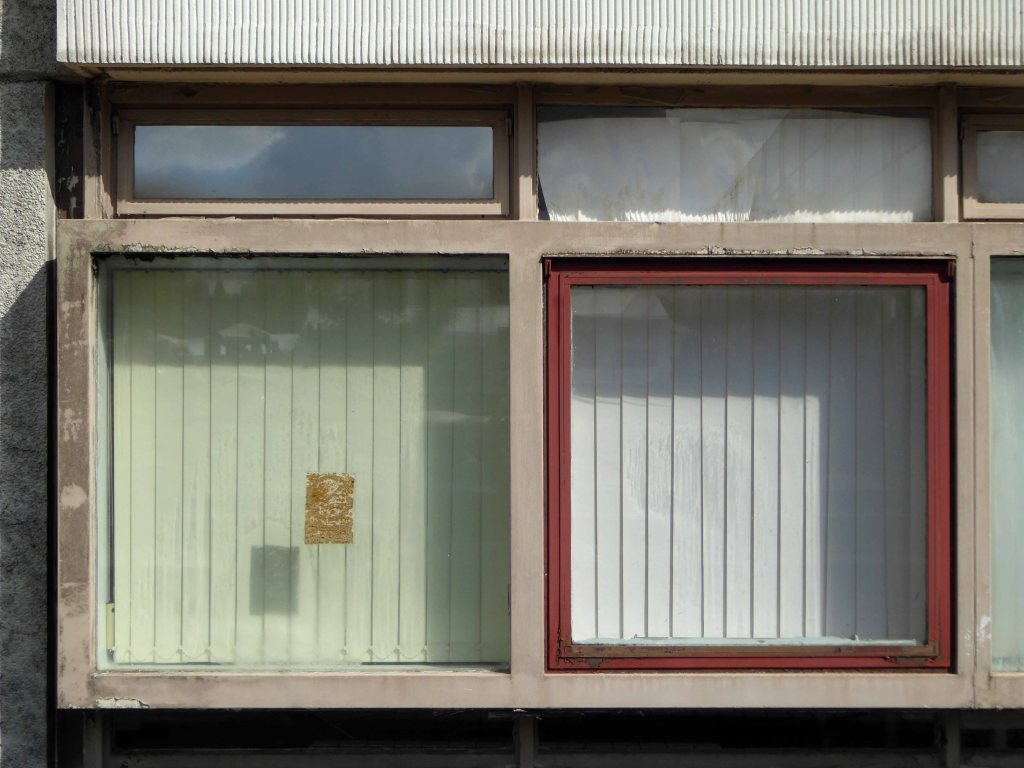
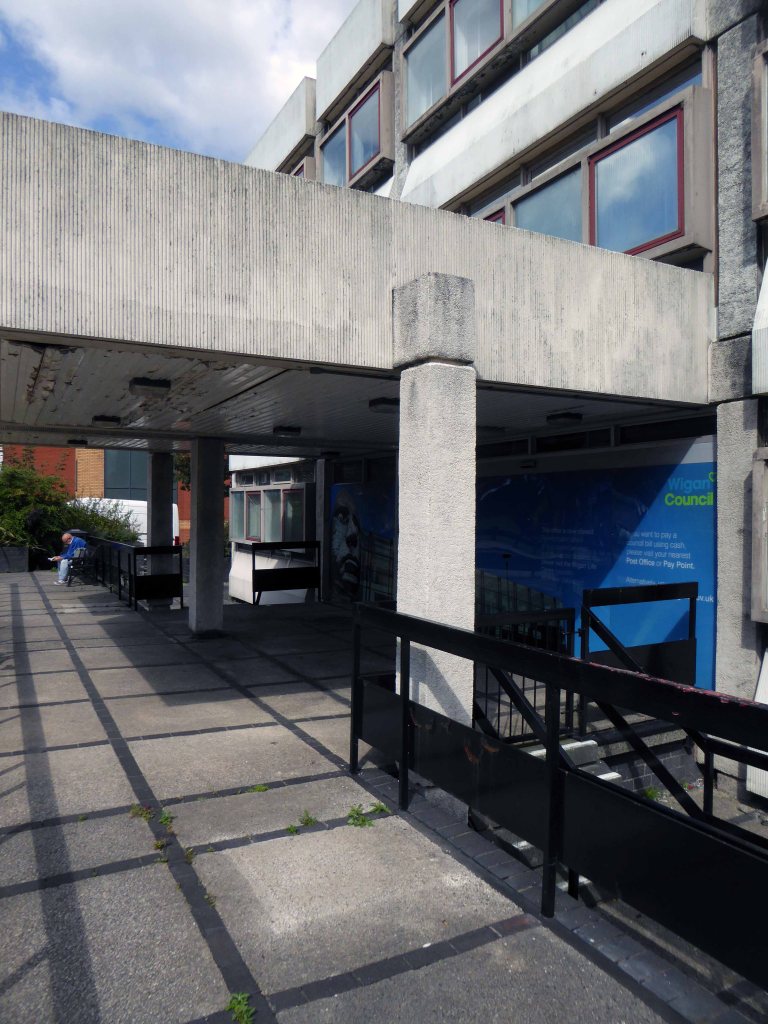
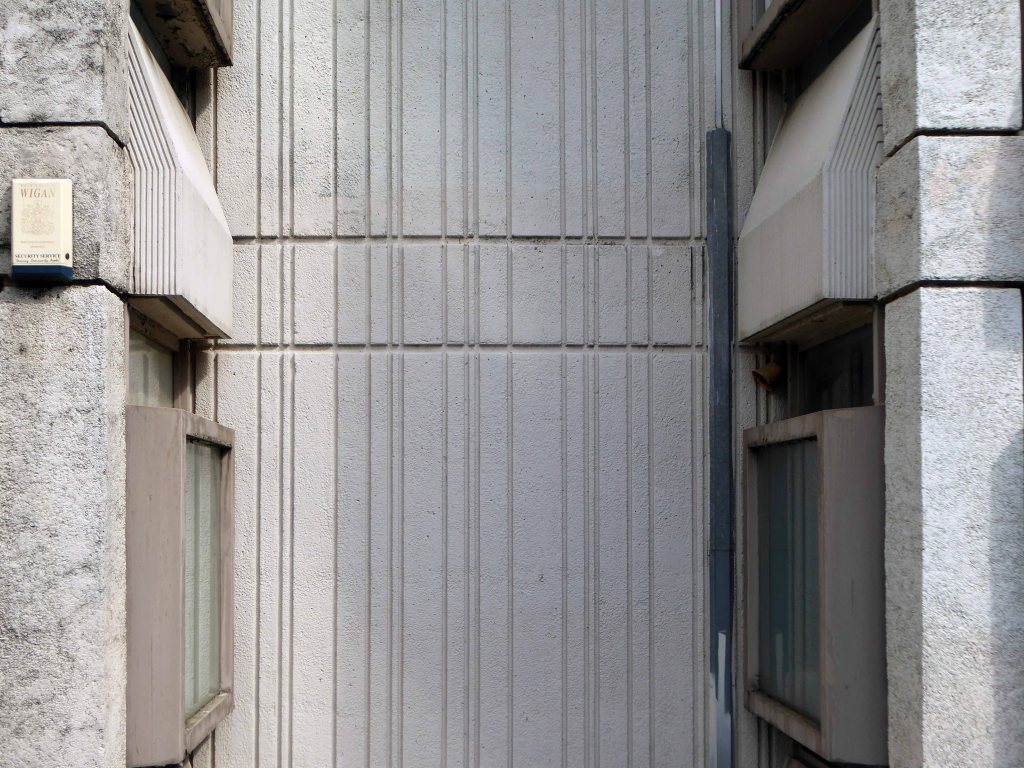
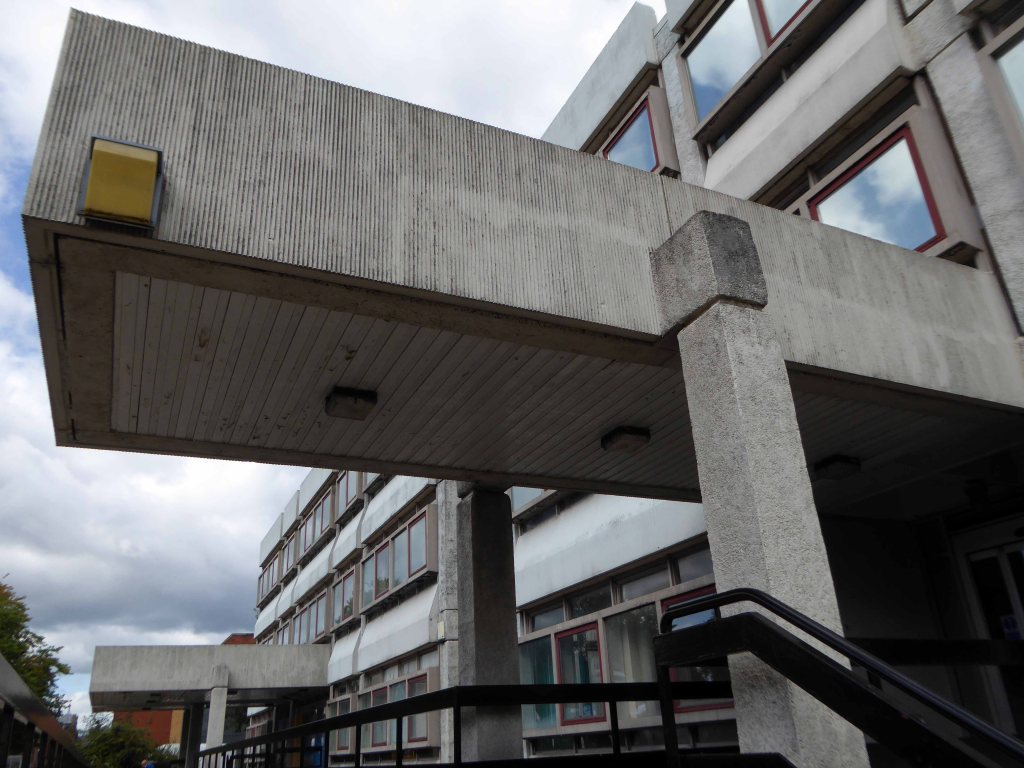
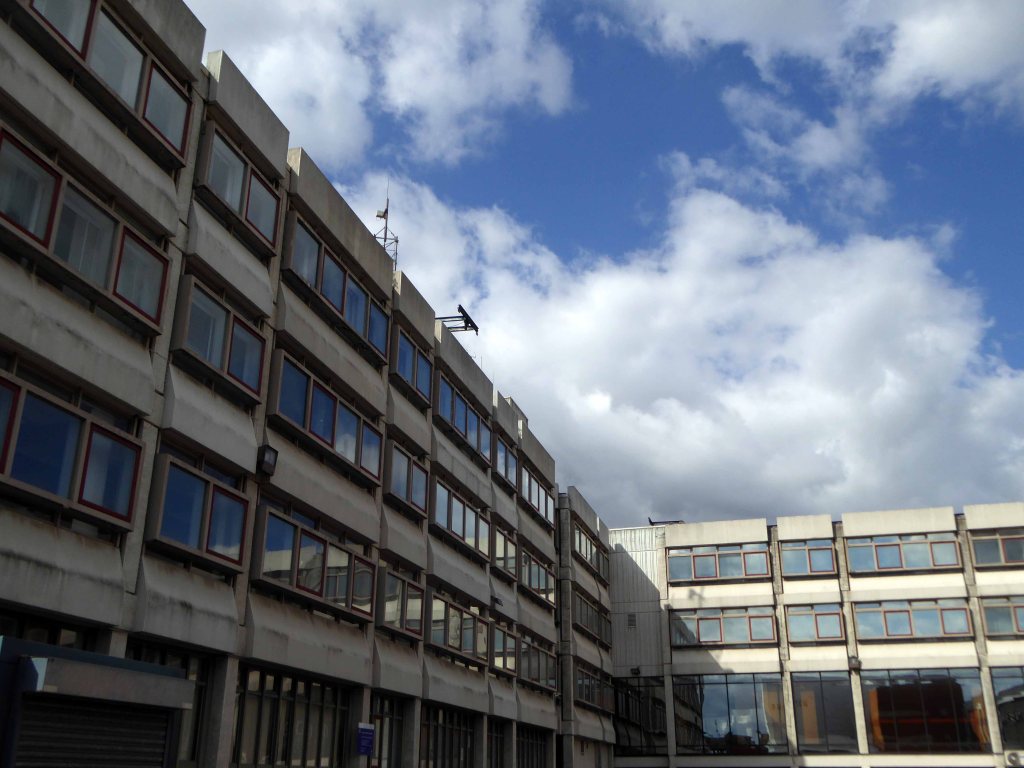
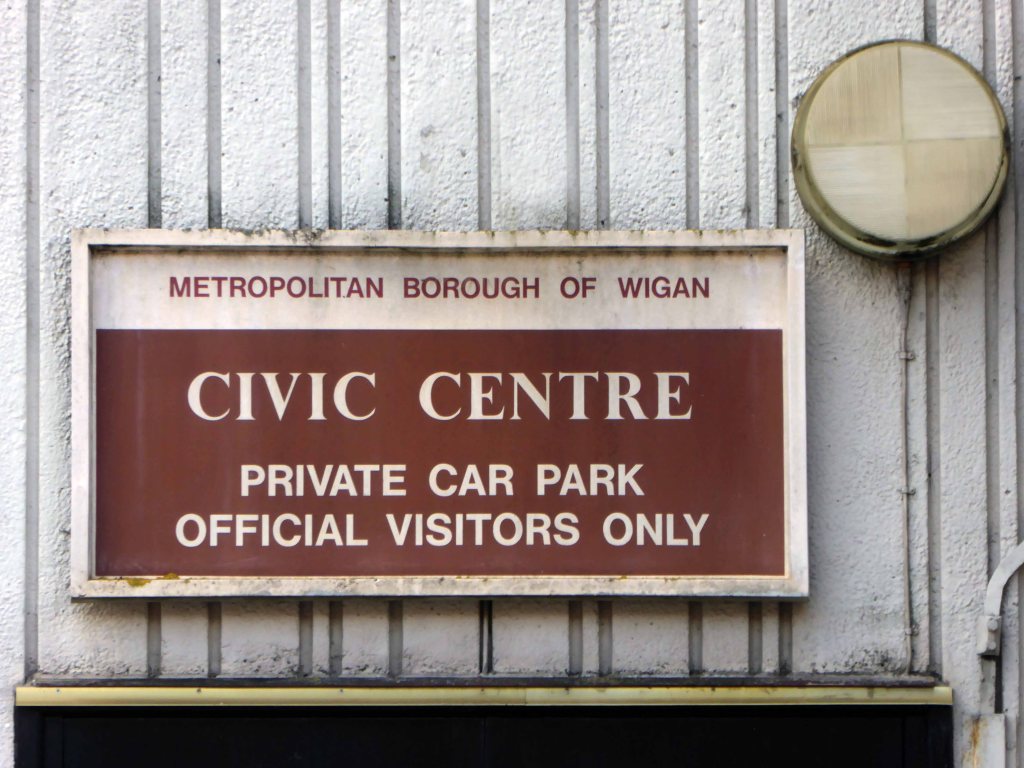
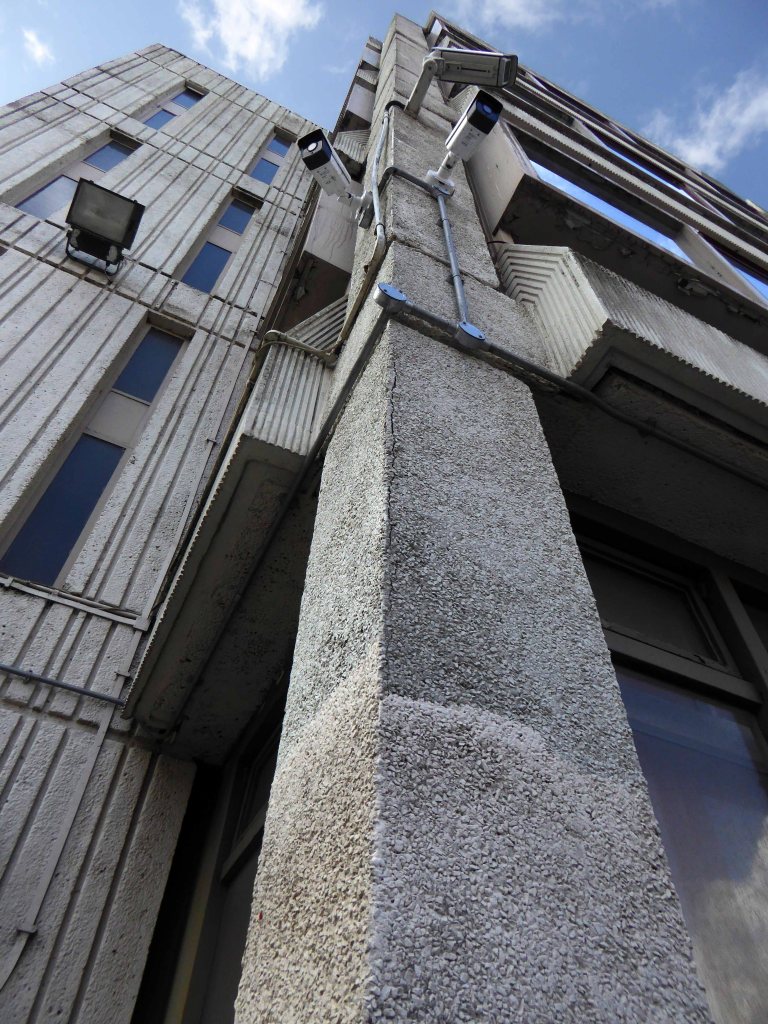
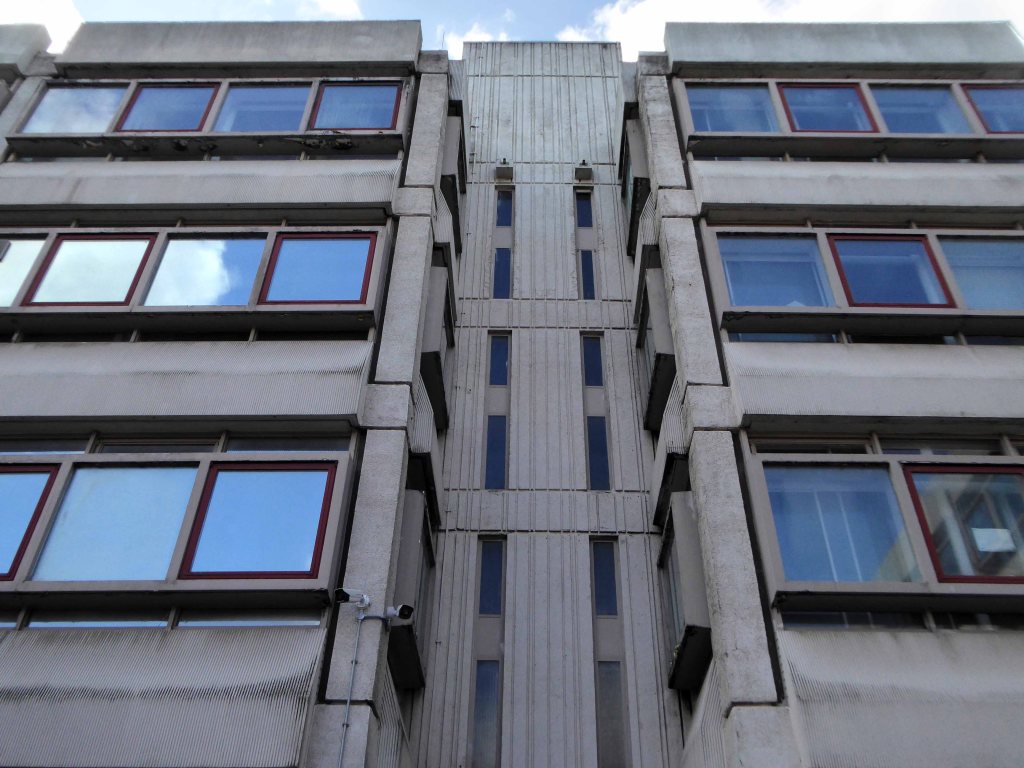
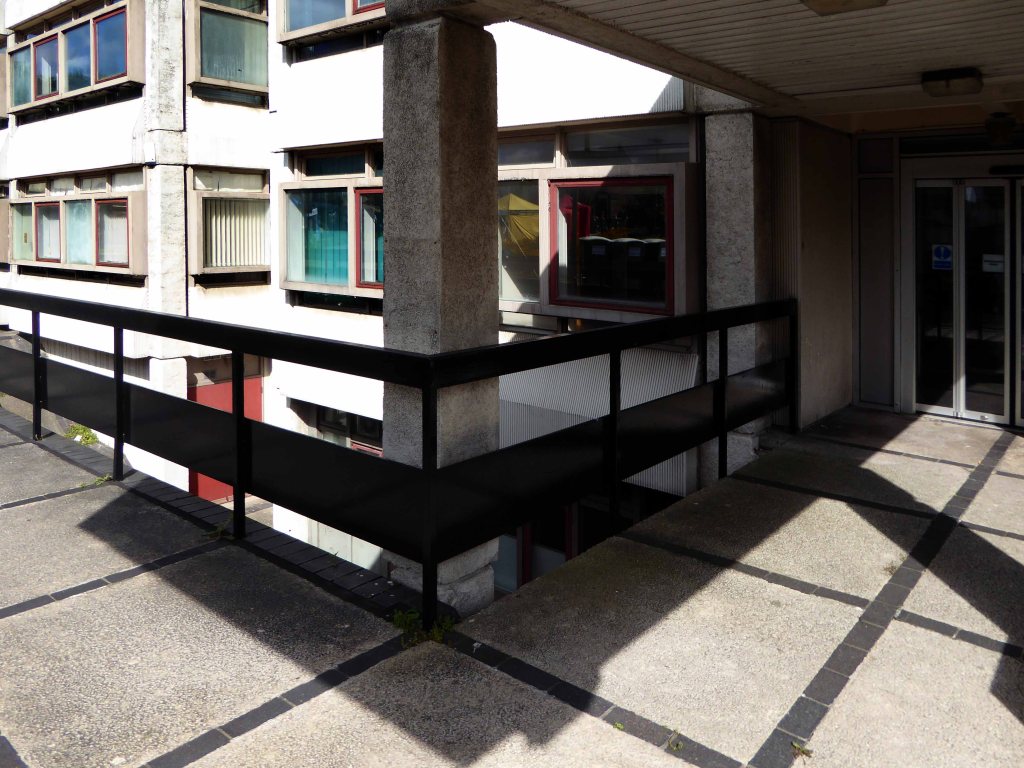
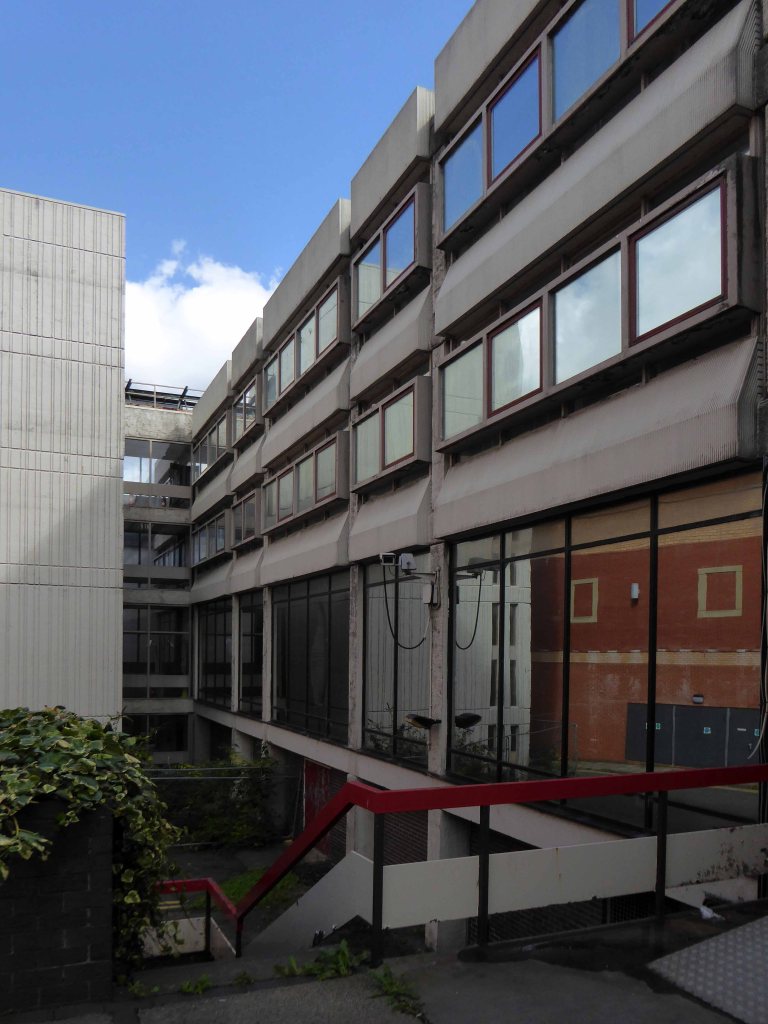
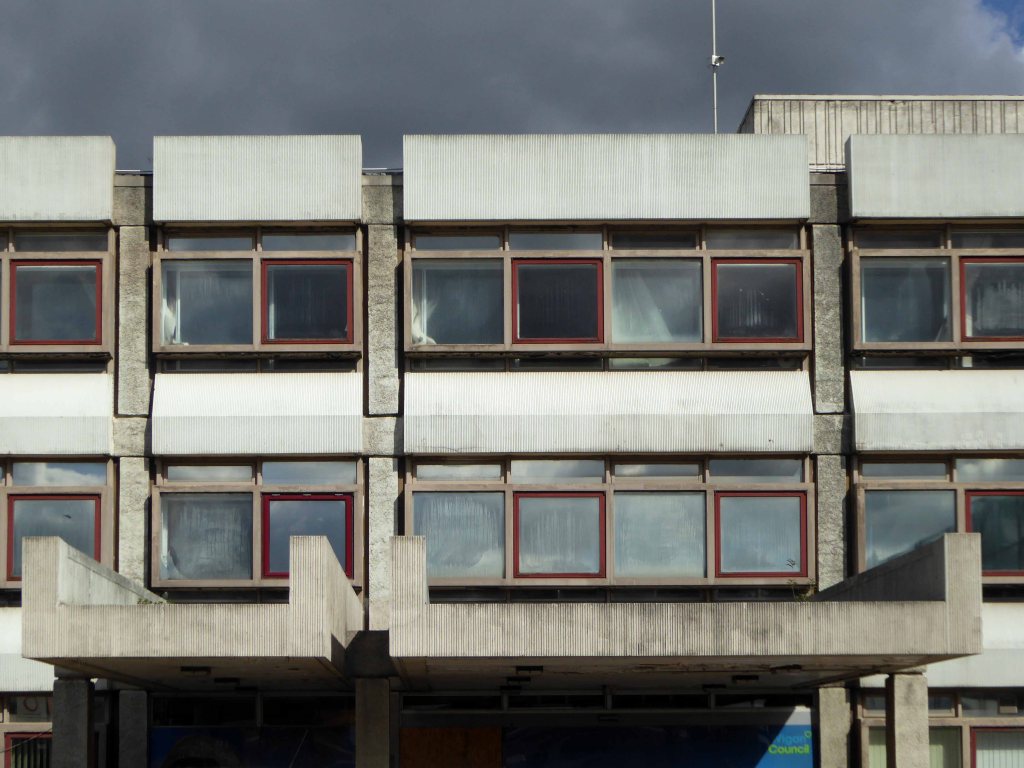
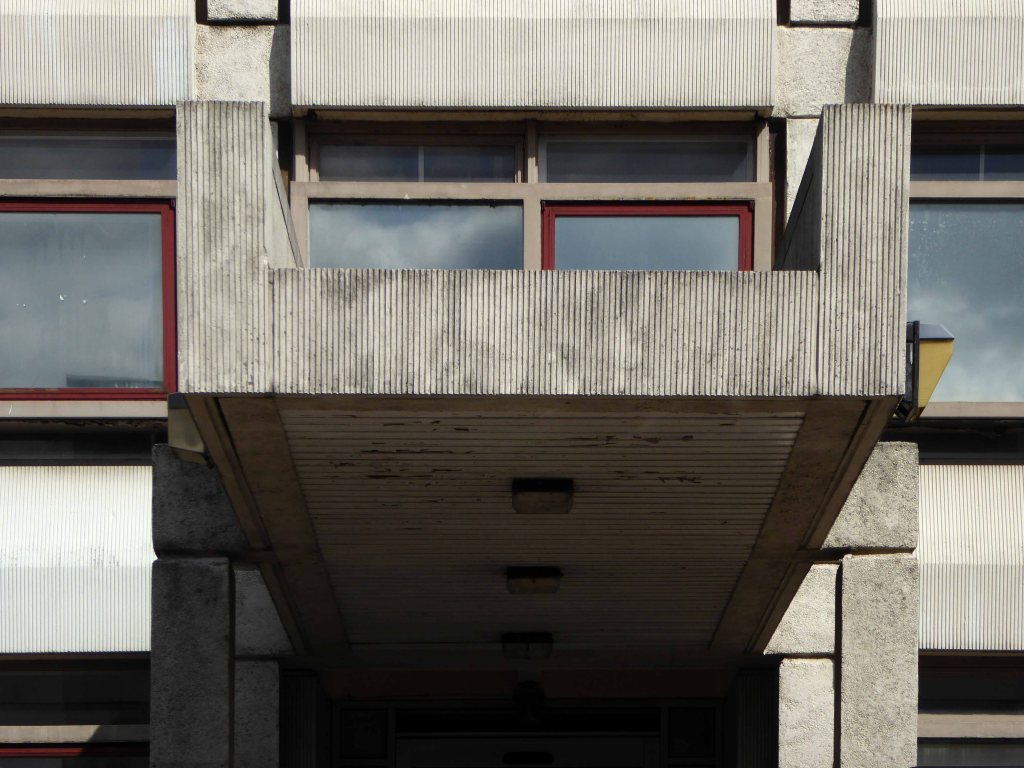
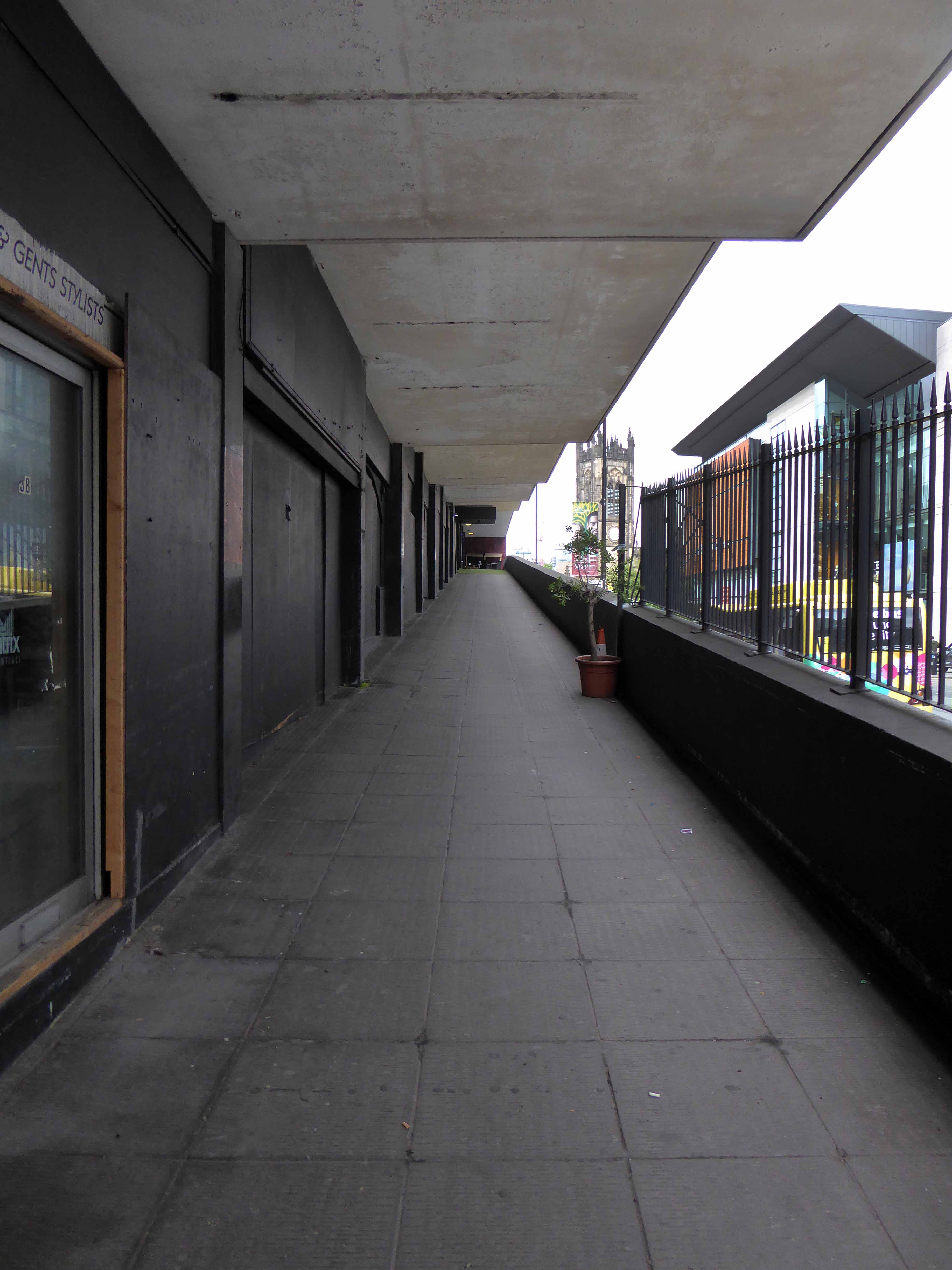
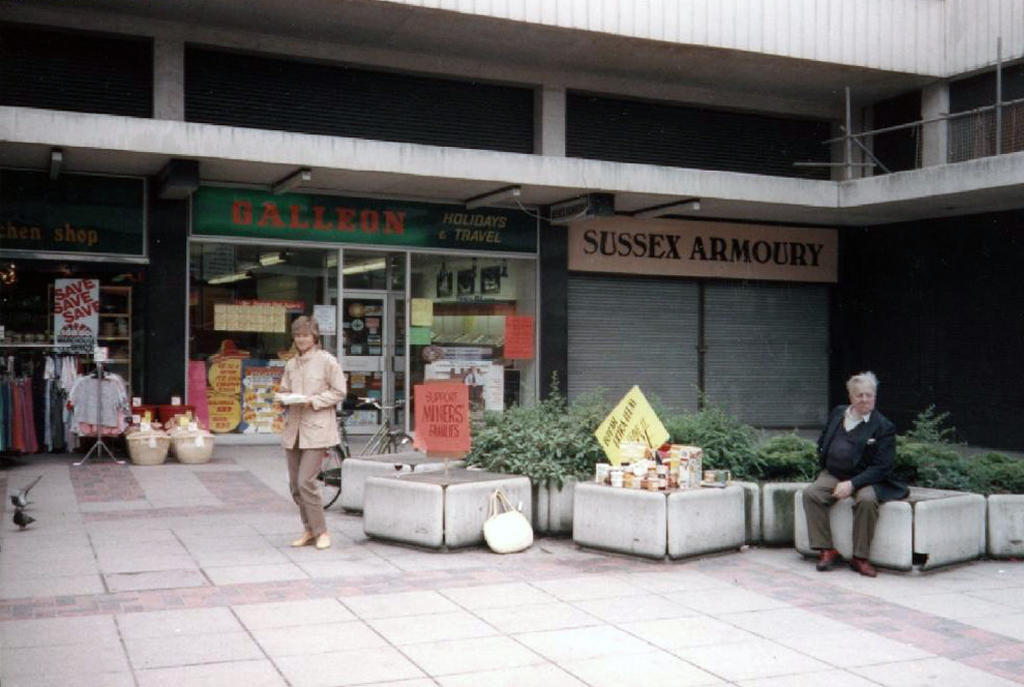
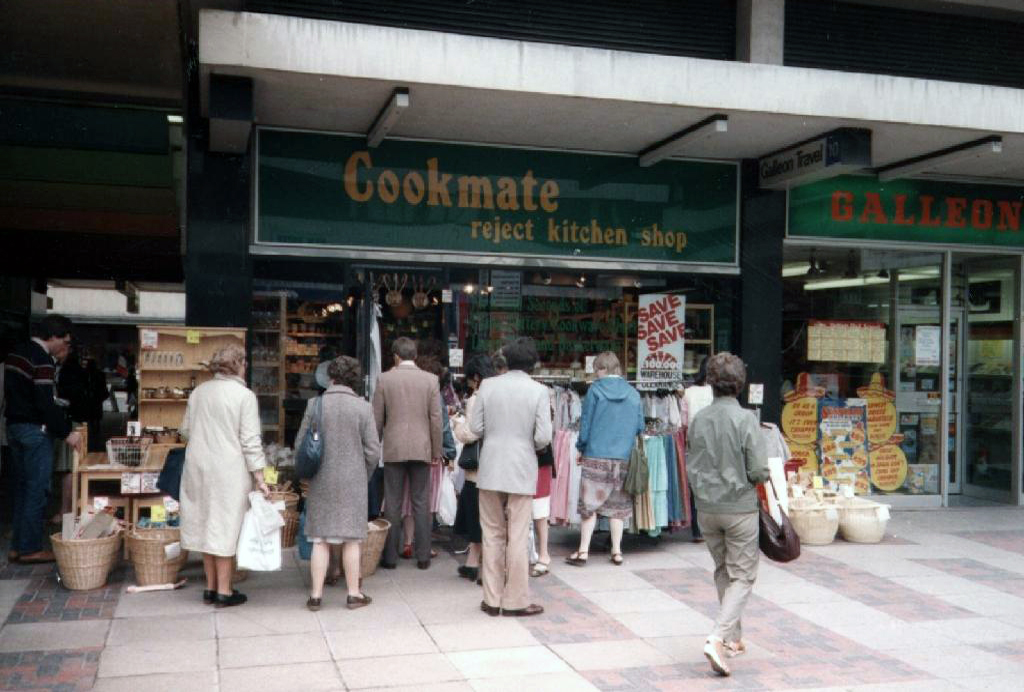
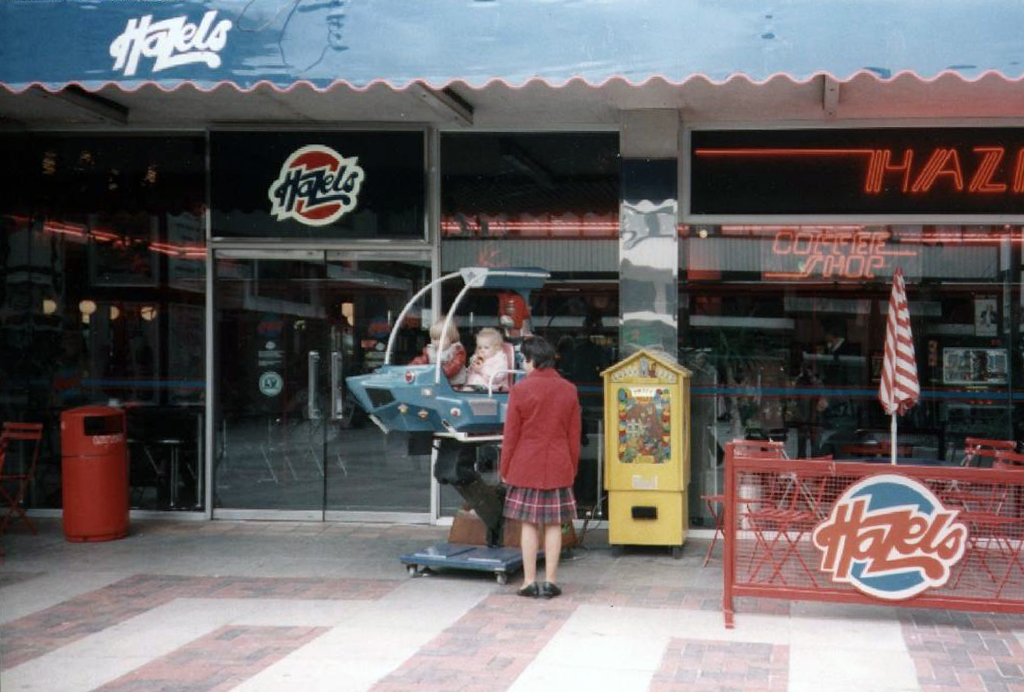
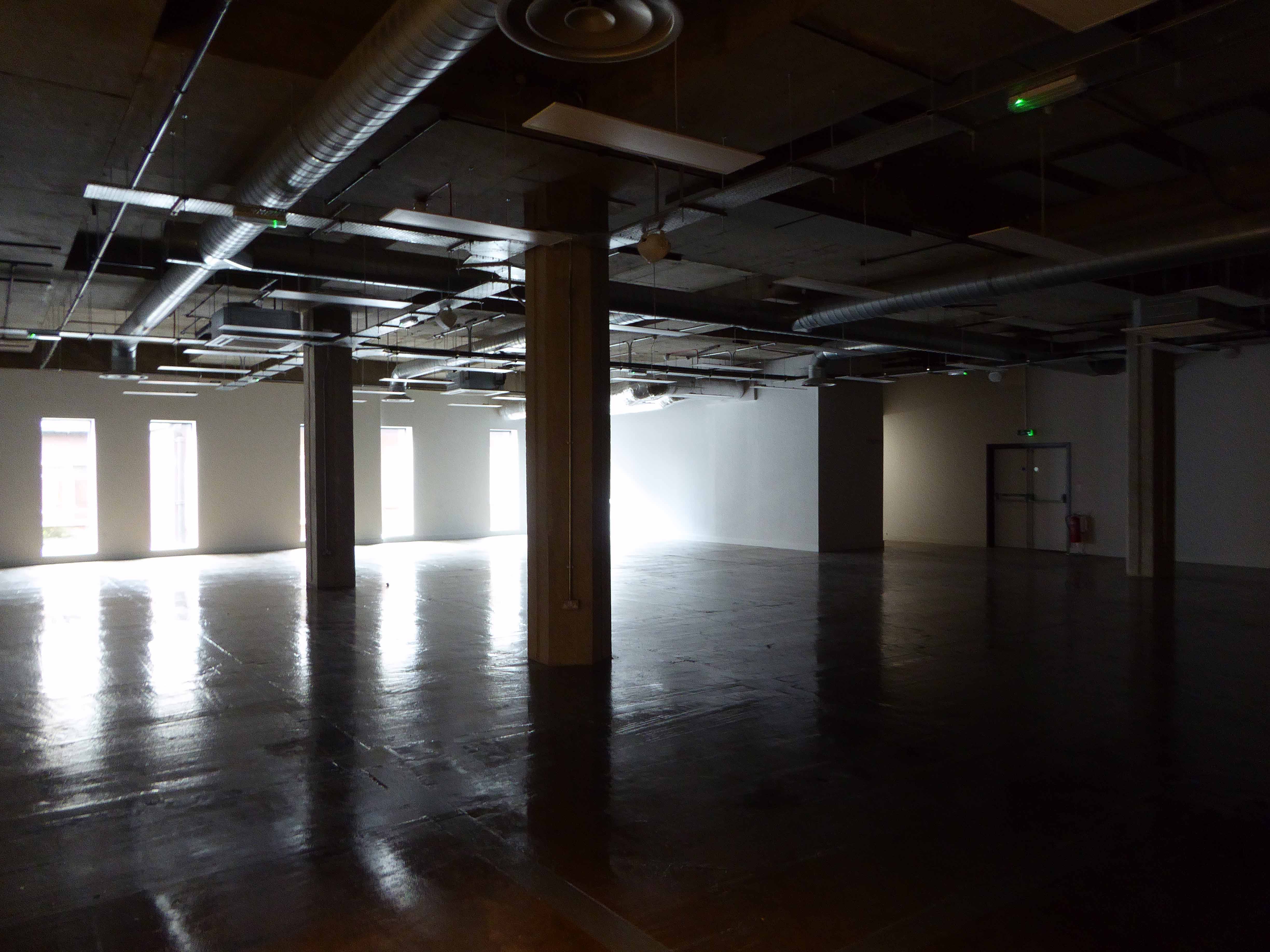
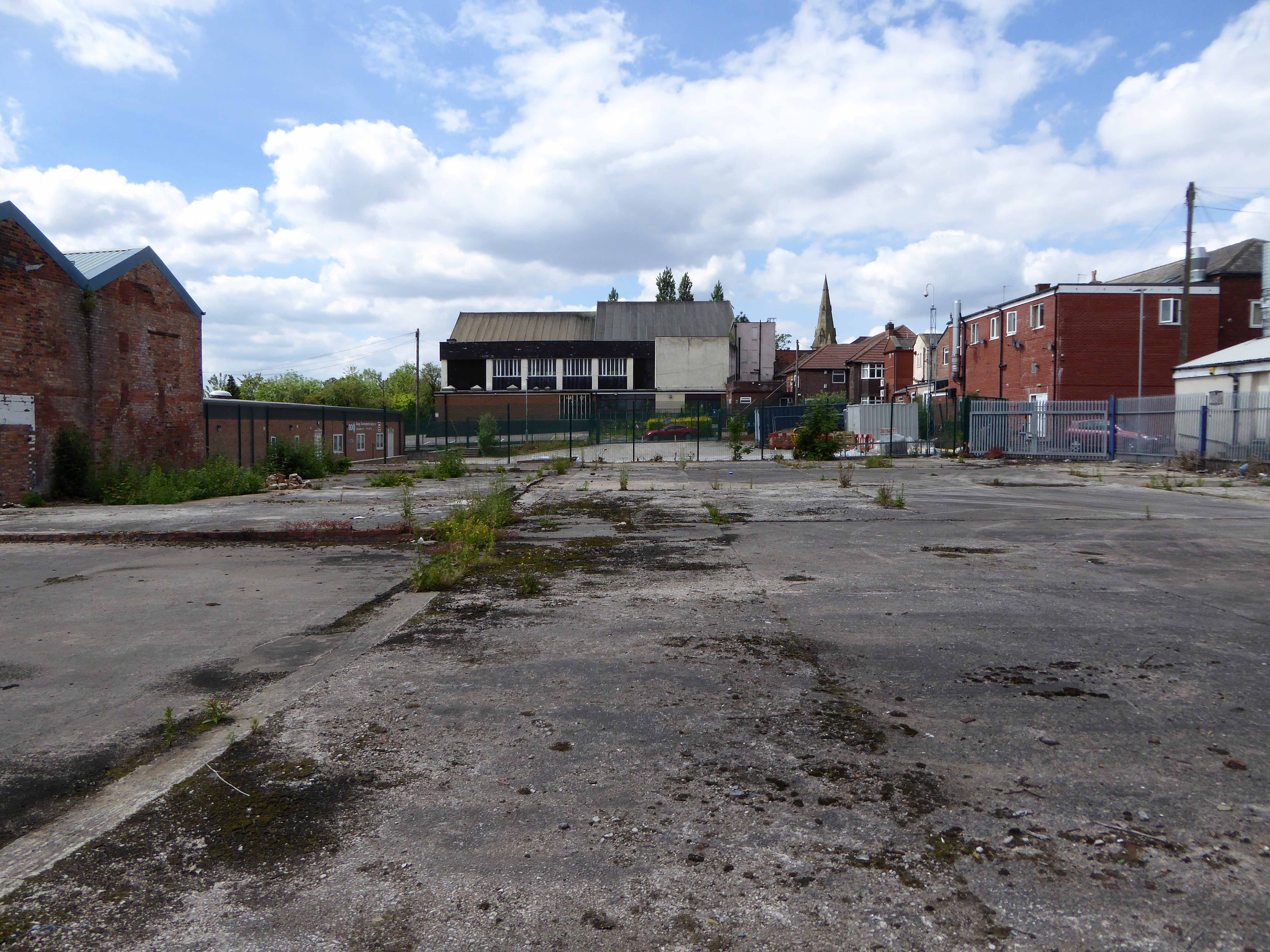
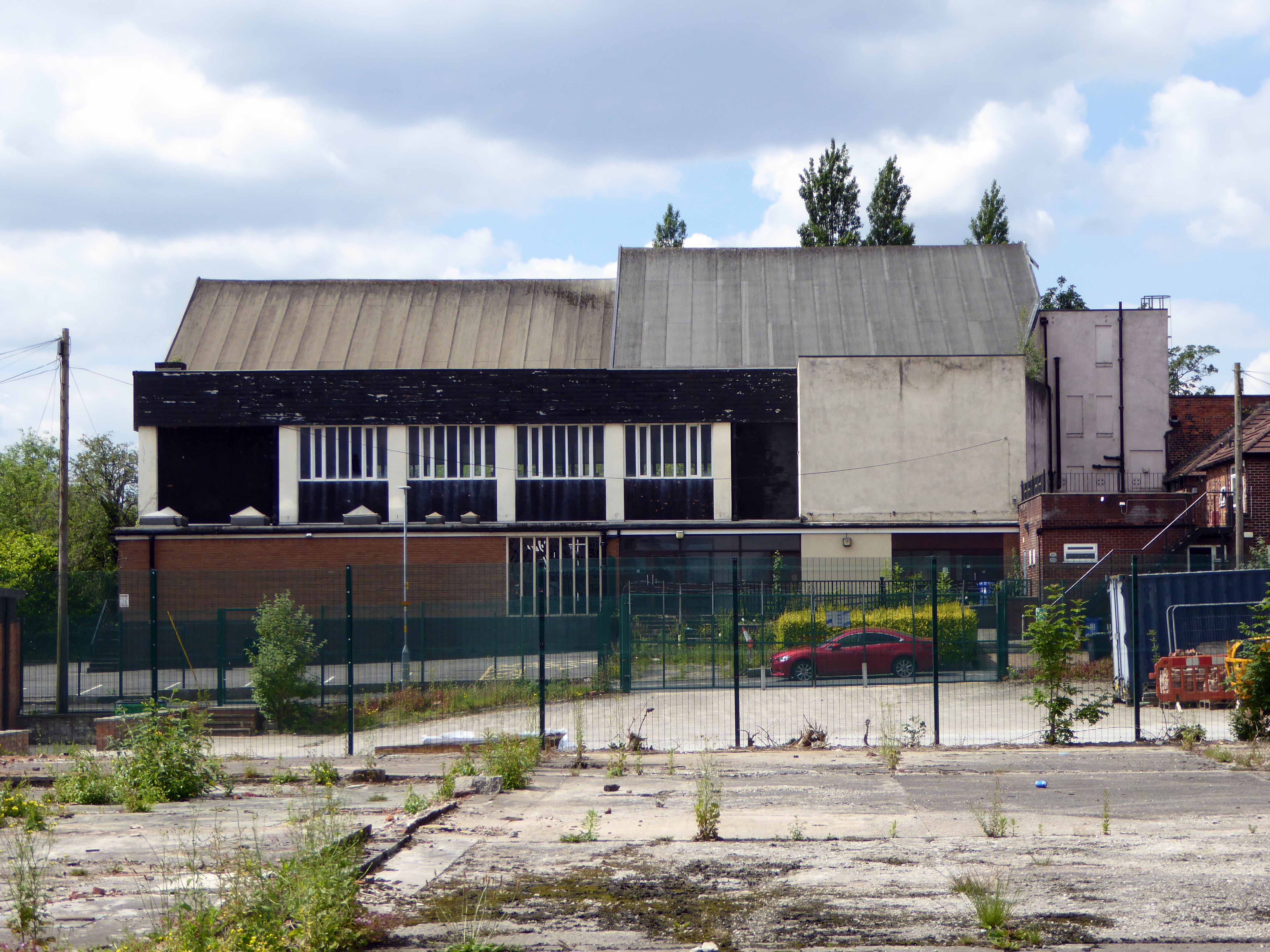
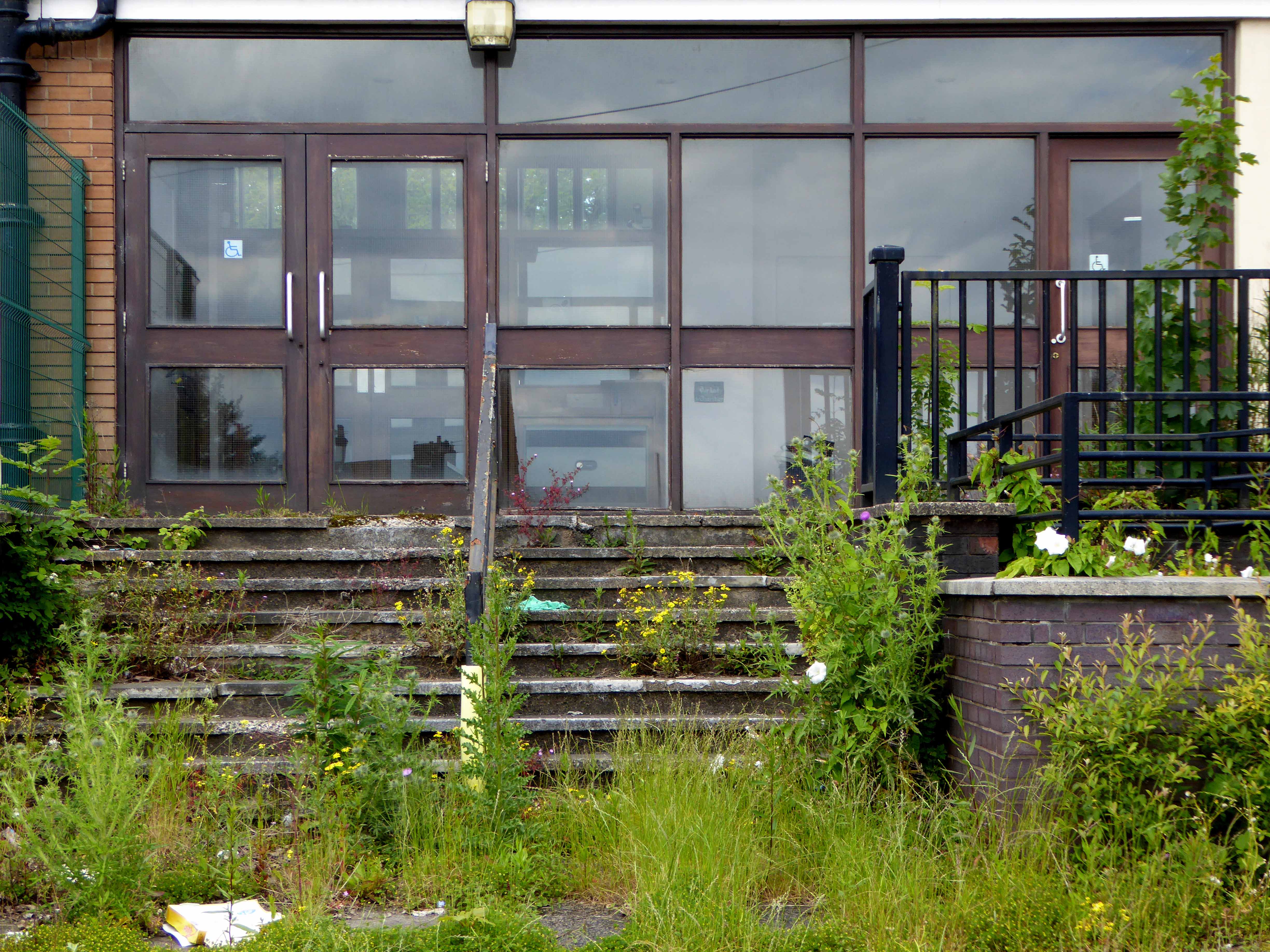
Three years on, now in the shadow of the newly built Life Centre, you stand alone unloved – empty.
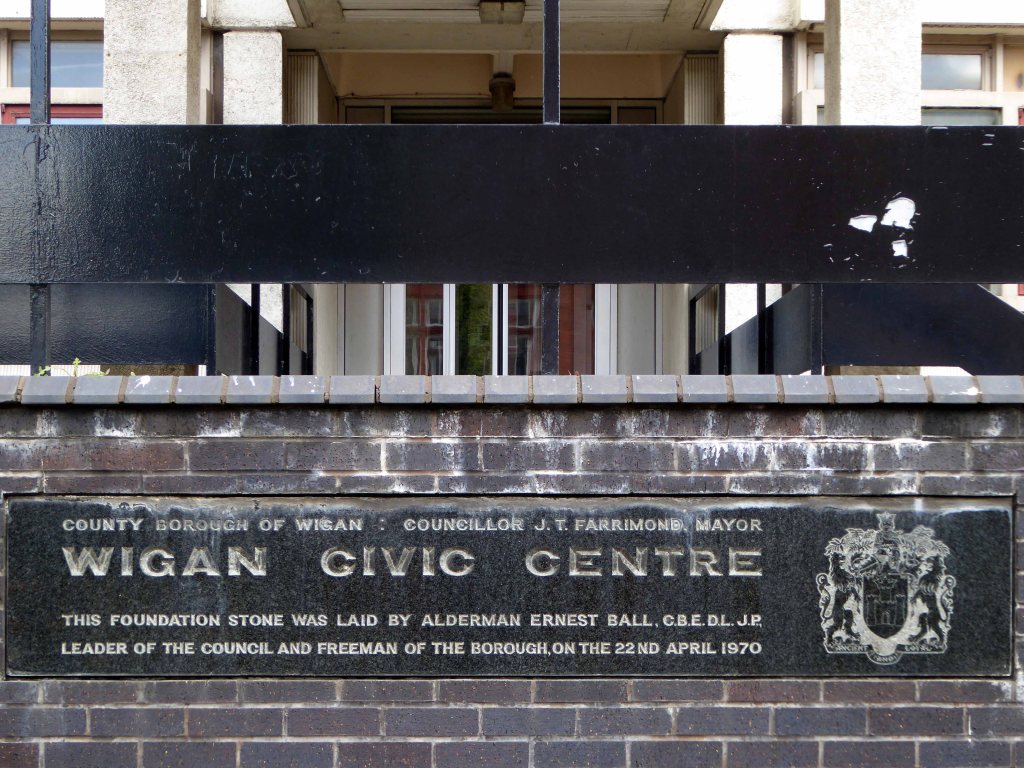
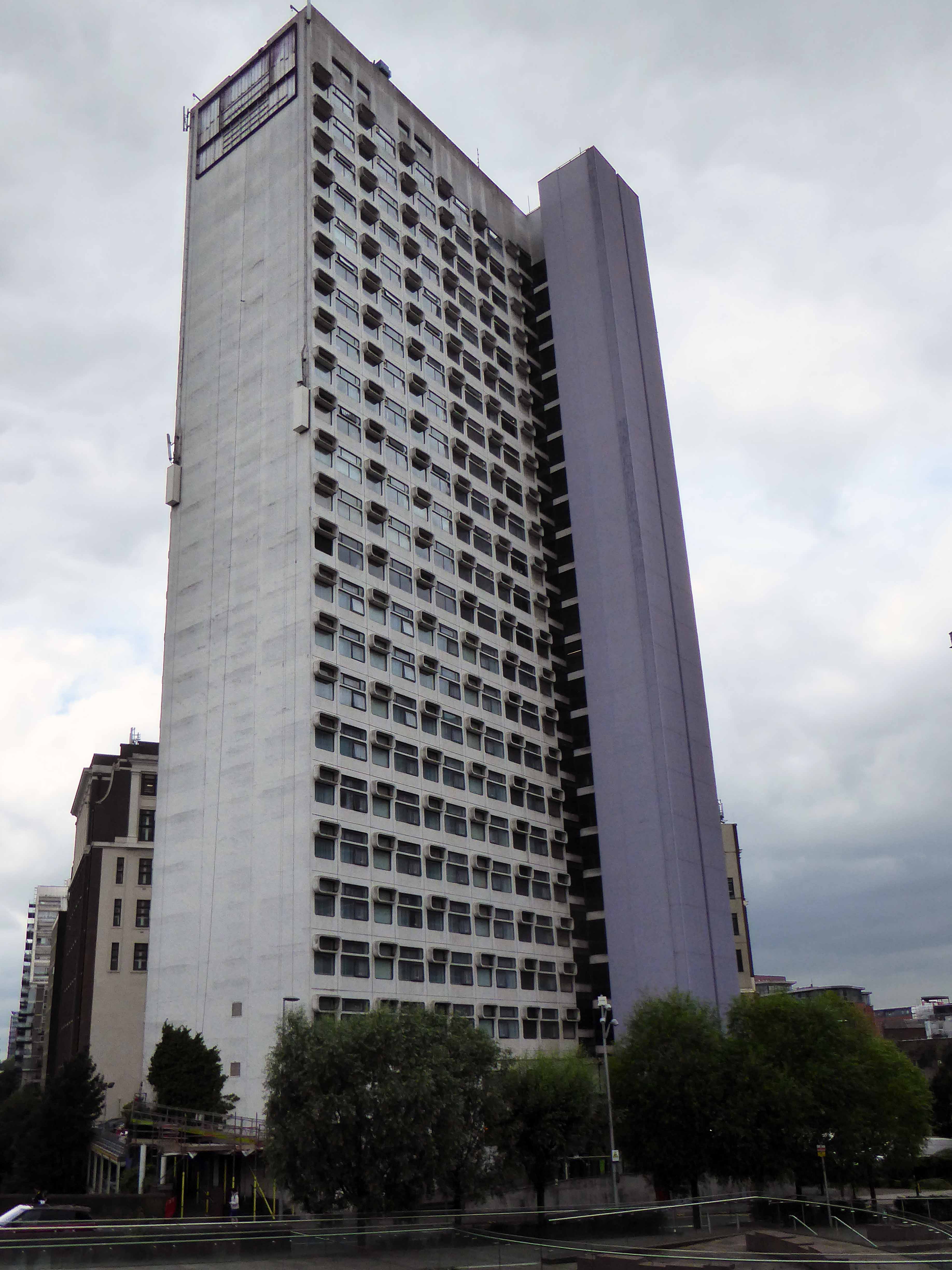
But the future of the Modernist landmark, which was first put in service by the borough in the early 70s, remains unclear. There is speculation that the Millgate building, first unveiled by Wigan Mayor John Farrimond, could become a hotel.
Last October the Wigan Observer revealed how the council had enjoyed mixed fortunes when it came to marketing elements of its existing property portfolio.
But the council has been successful in offloading some venues, with Ince Town Hall now home to Little Giggles nursery.
So who knows what fate awaits you – the town I am told is on the up.
Let’s hope that the Civic Centre is not coming down
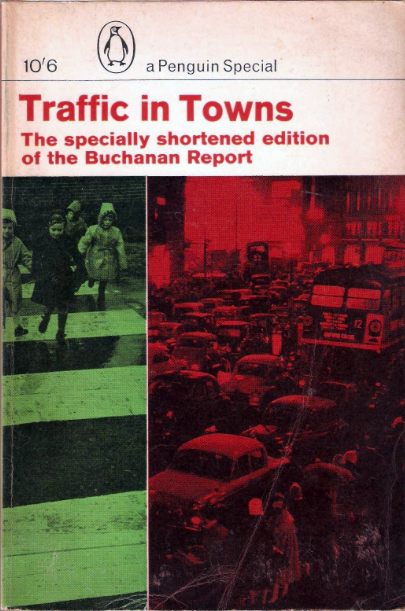
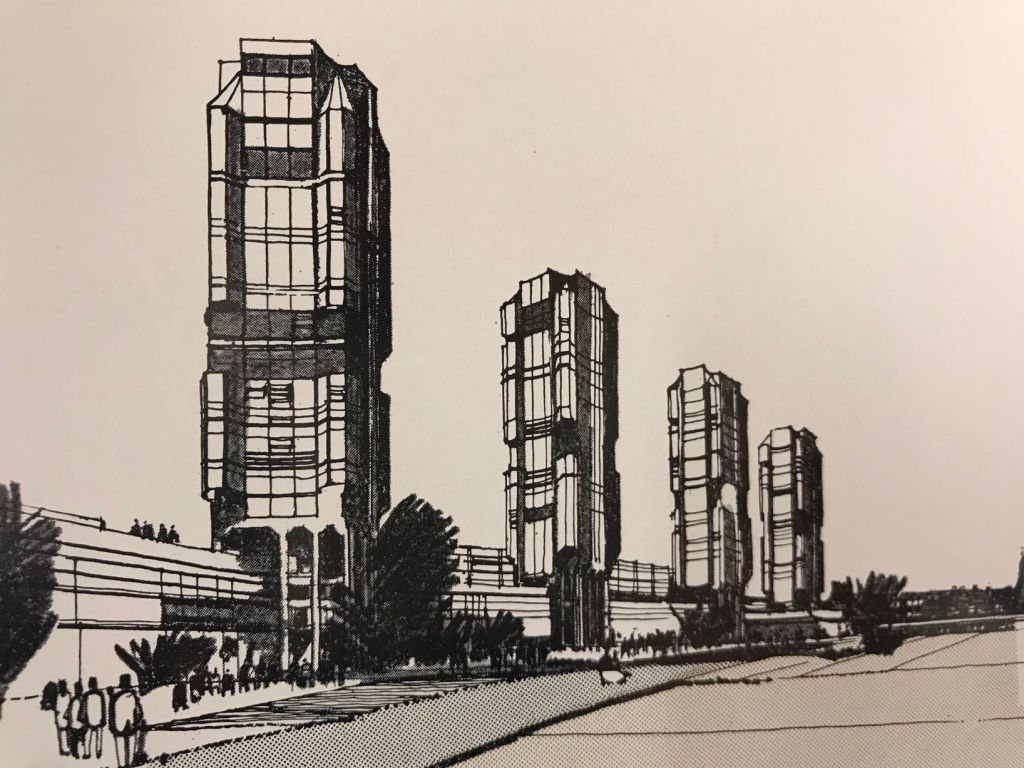
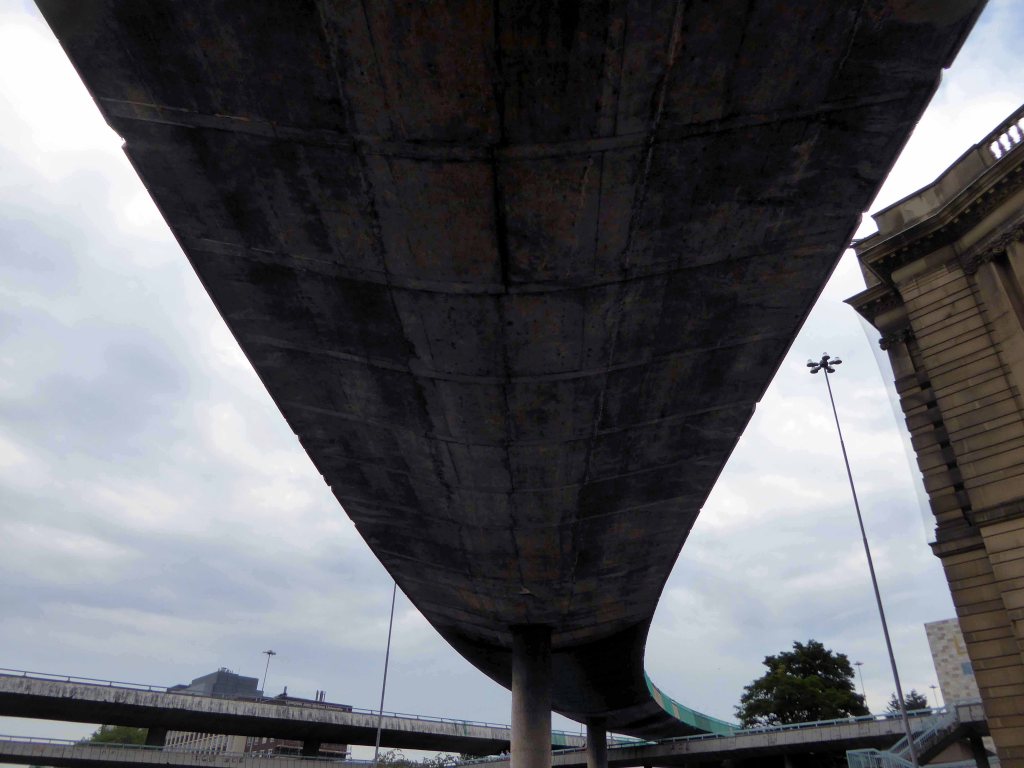
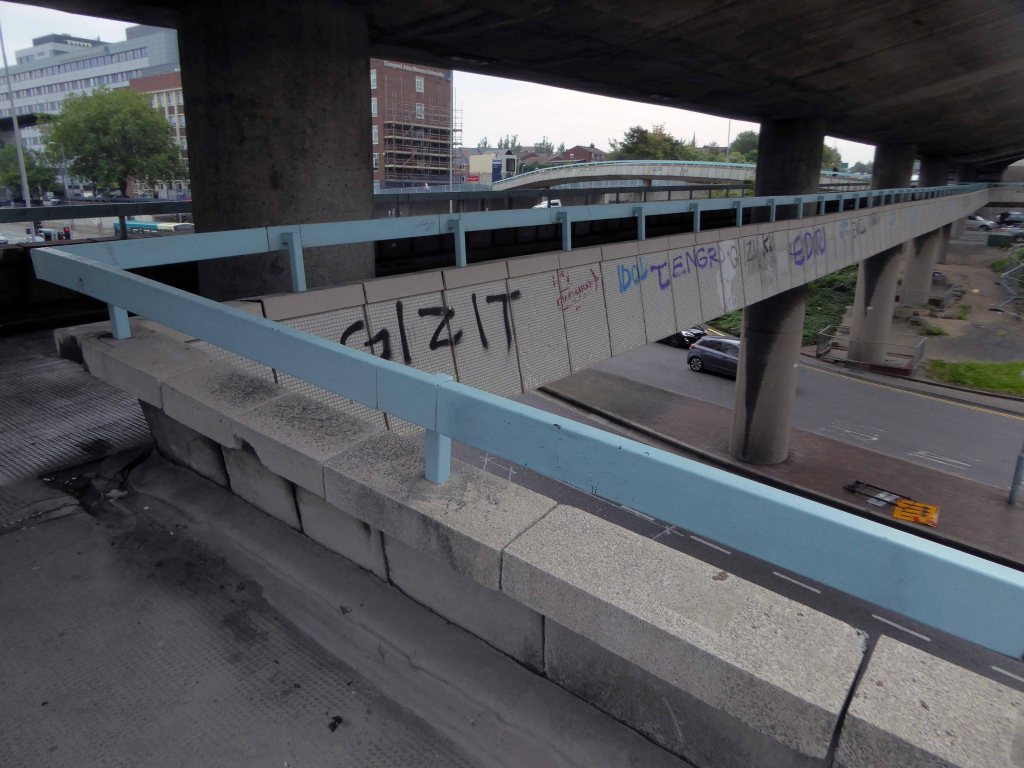
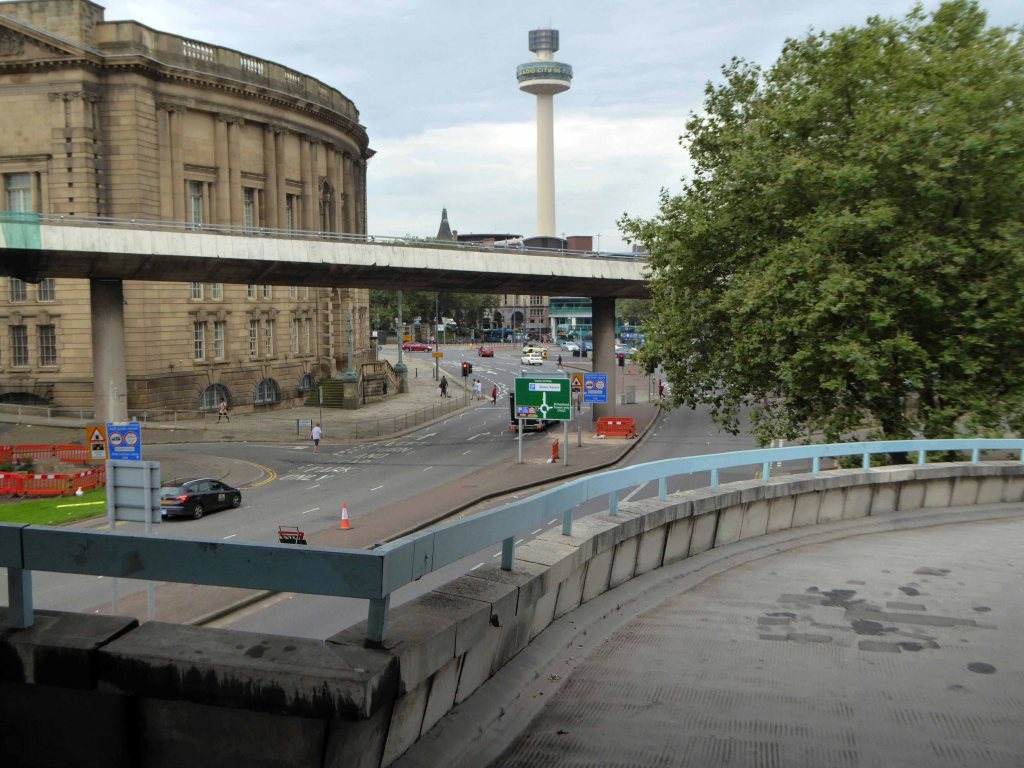
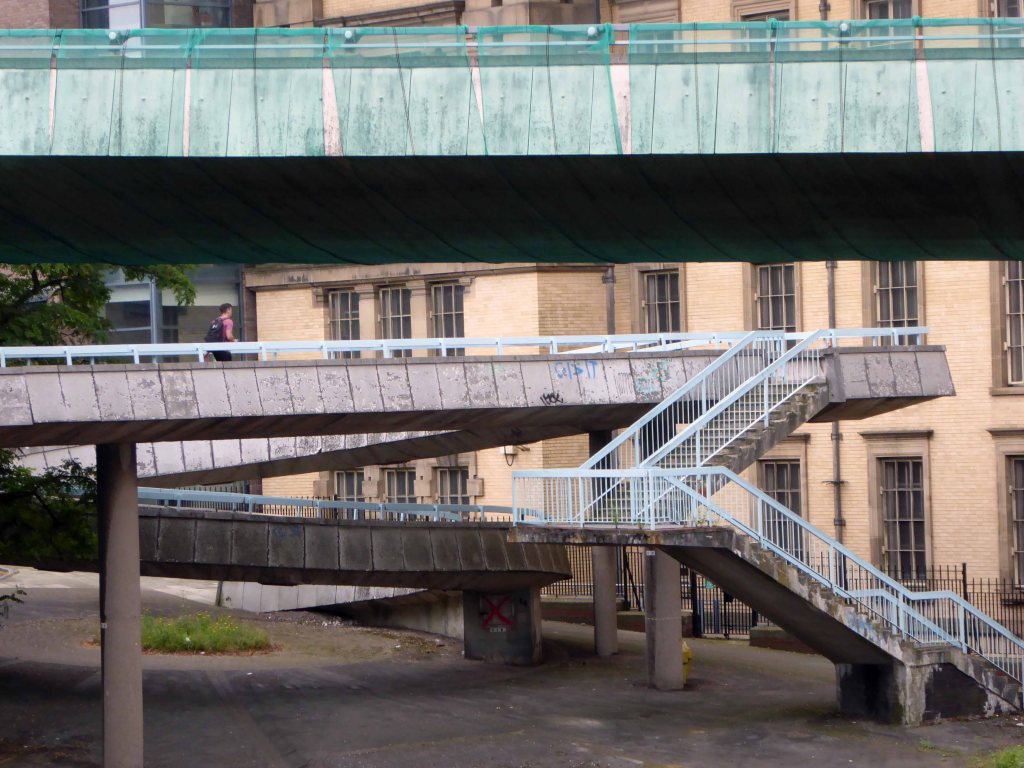
Opened in 1972 as an almost belated response to George Buchanan’s 1963 Traffic in Towns which had informed the Liverpool City Centre Plan of 1965.
The report warned of the potential damage caused by the motor car, while offering ways to mitigate it. It gave planners a set of policy blueprints to deal with its effects on the urban environment, including traffic containment and segregation, which could be balanced against urban redevelopment, new corridor and distribution roads and precincts.
These policies shaped the development of the urban landscape in the UK and some other countries for two or three decades. Unusually for a technical policy report, it was so much in demand that Penguin abridged it and republished it as a book in 1964.
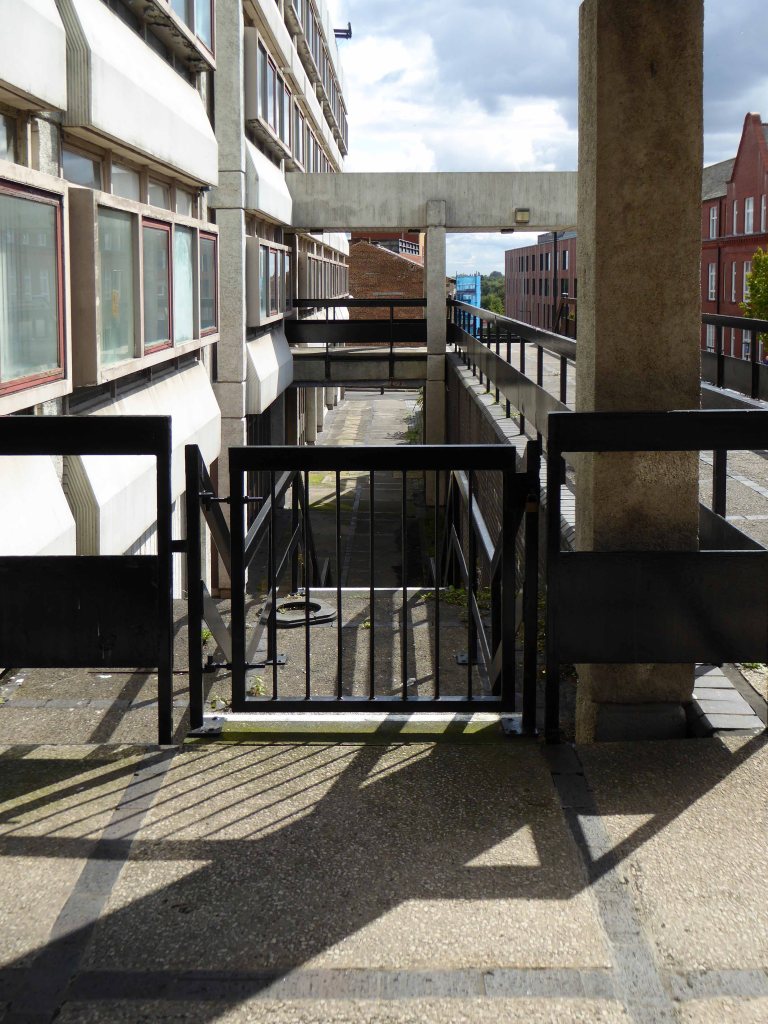
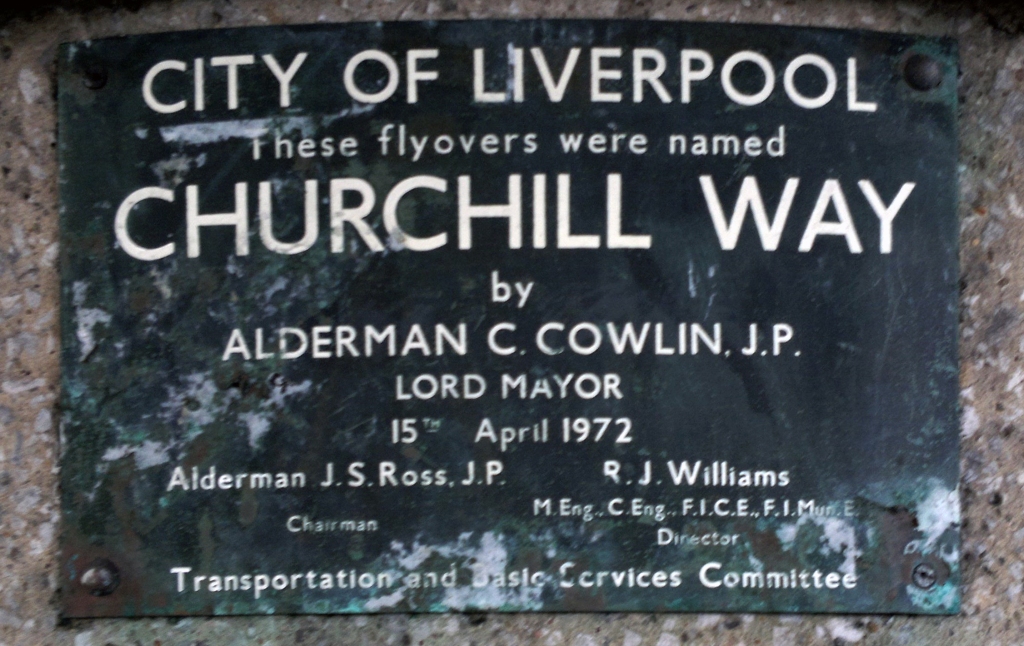
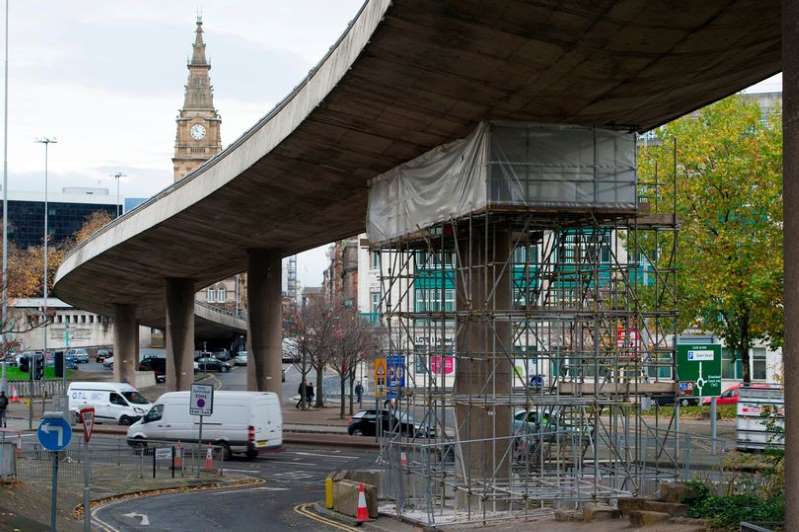
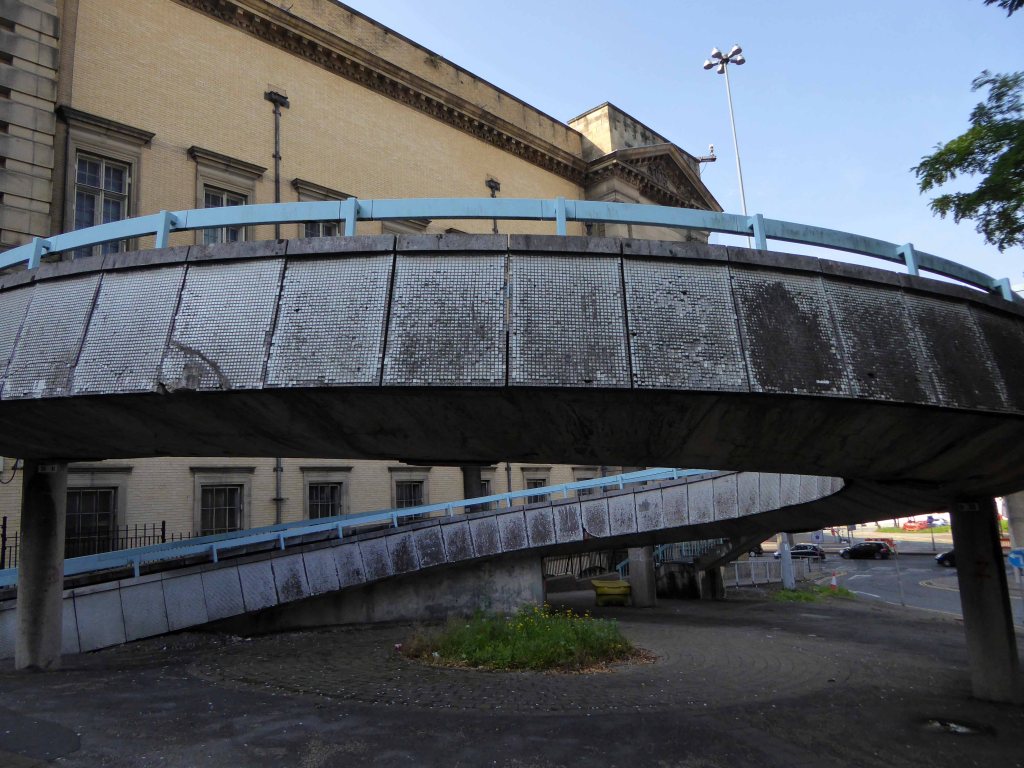
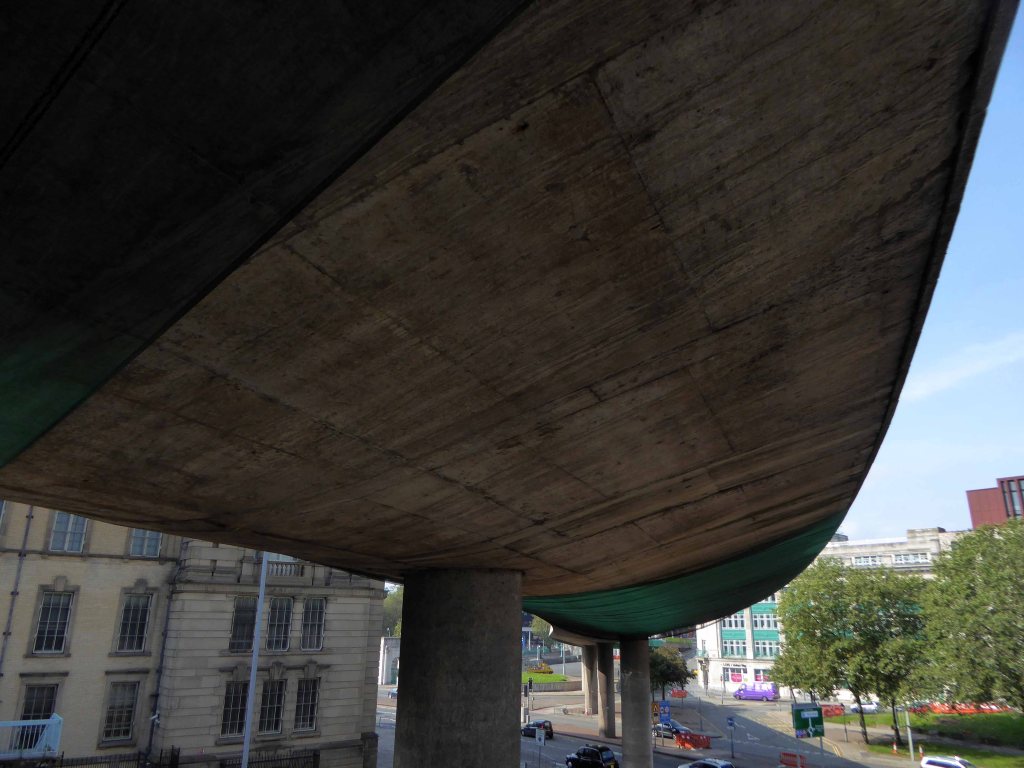
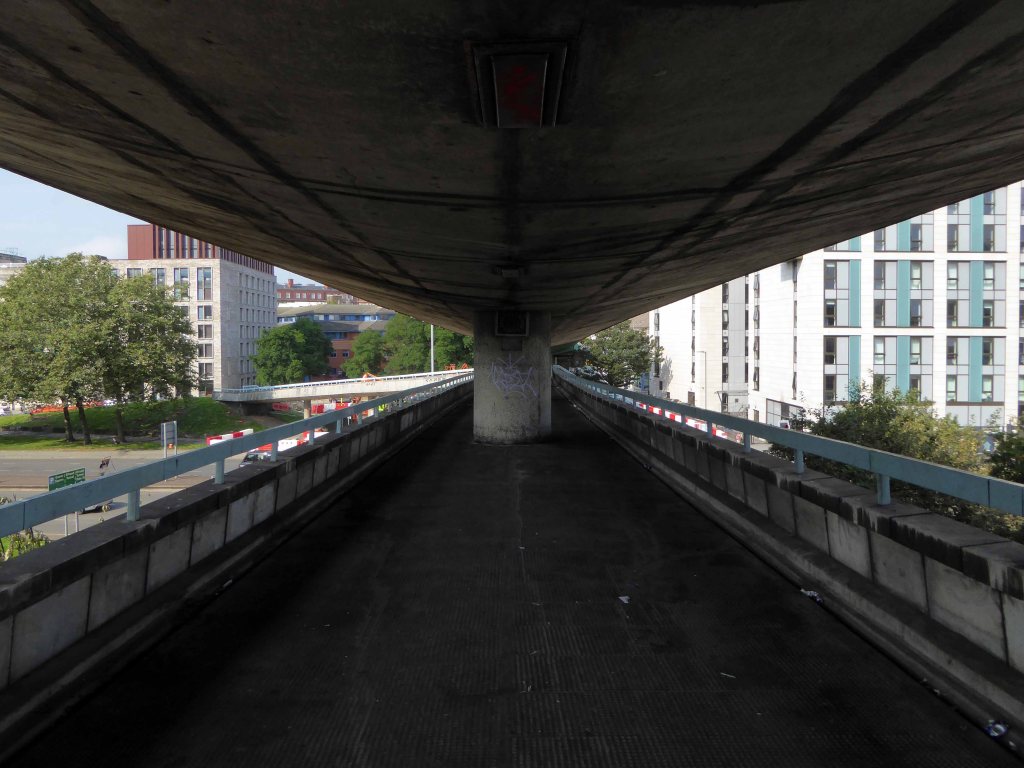
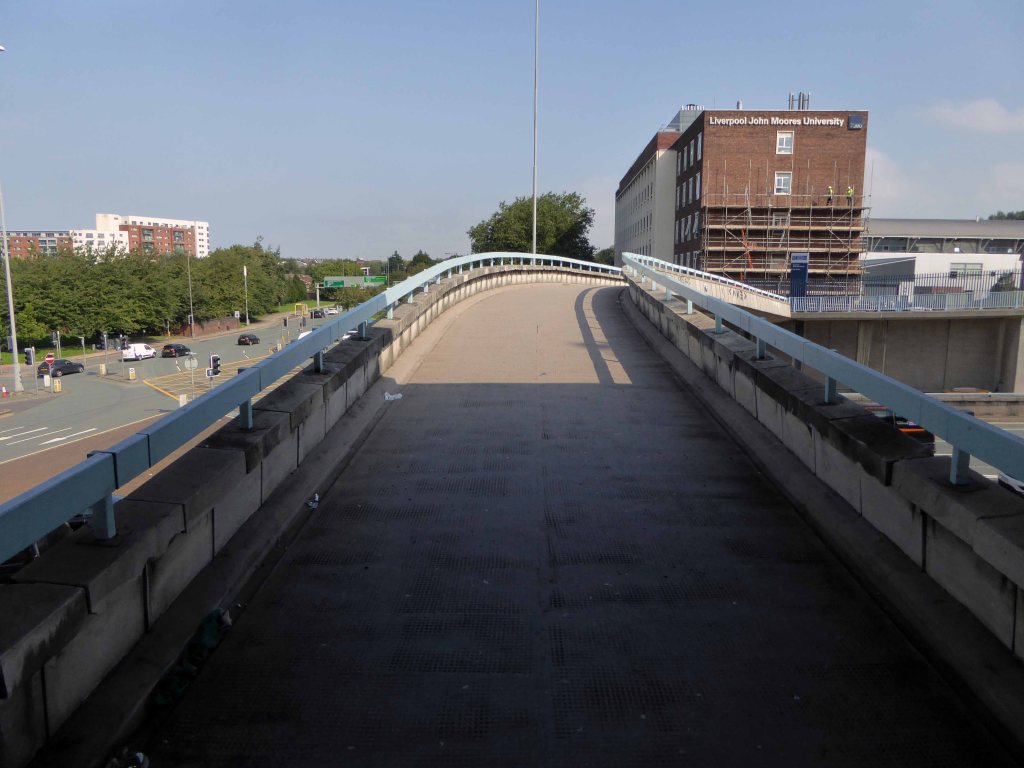
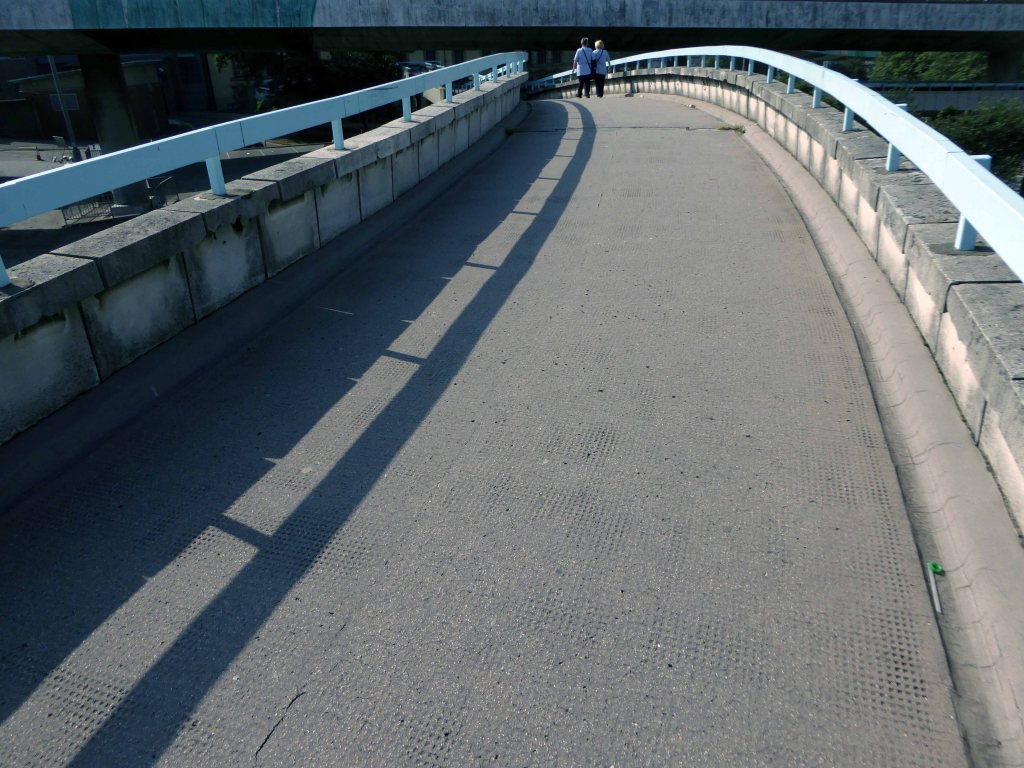
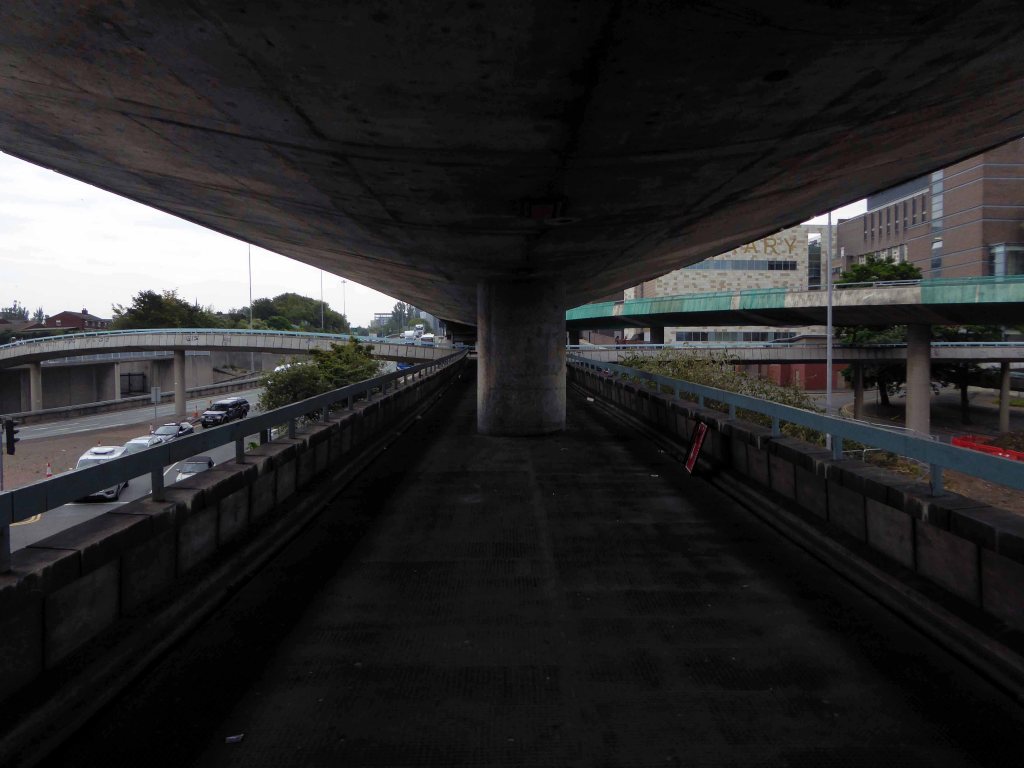
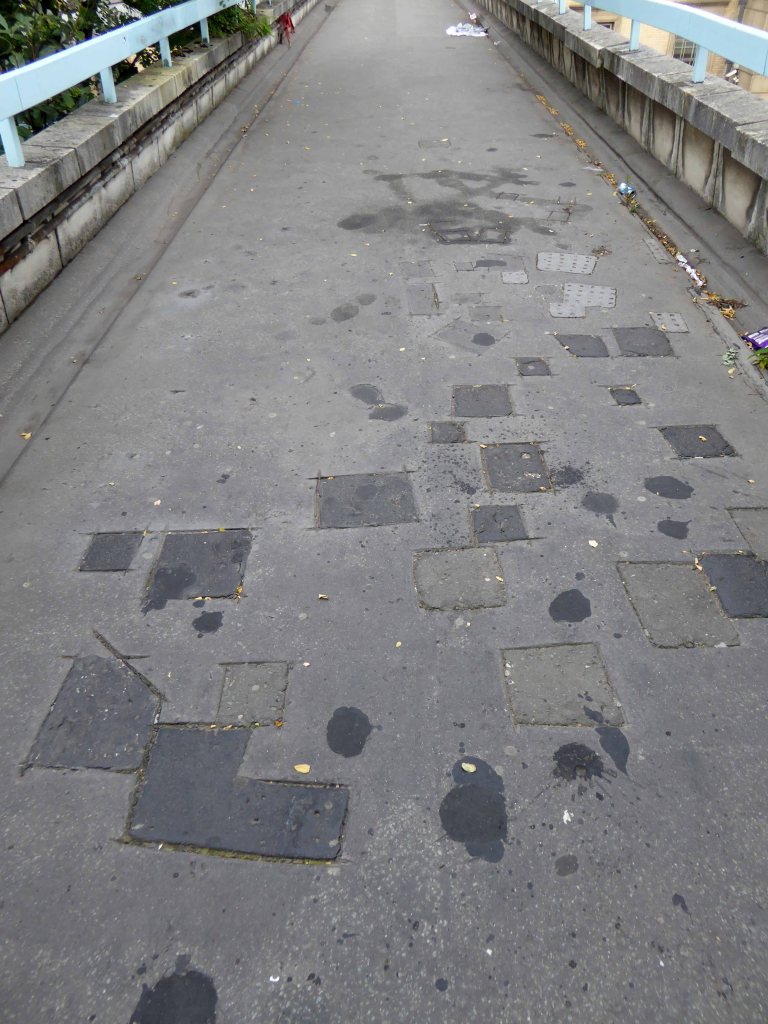
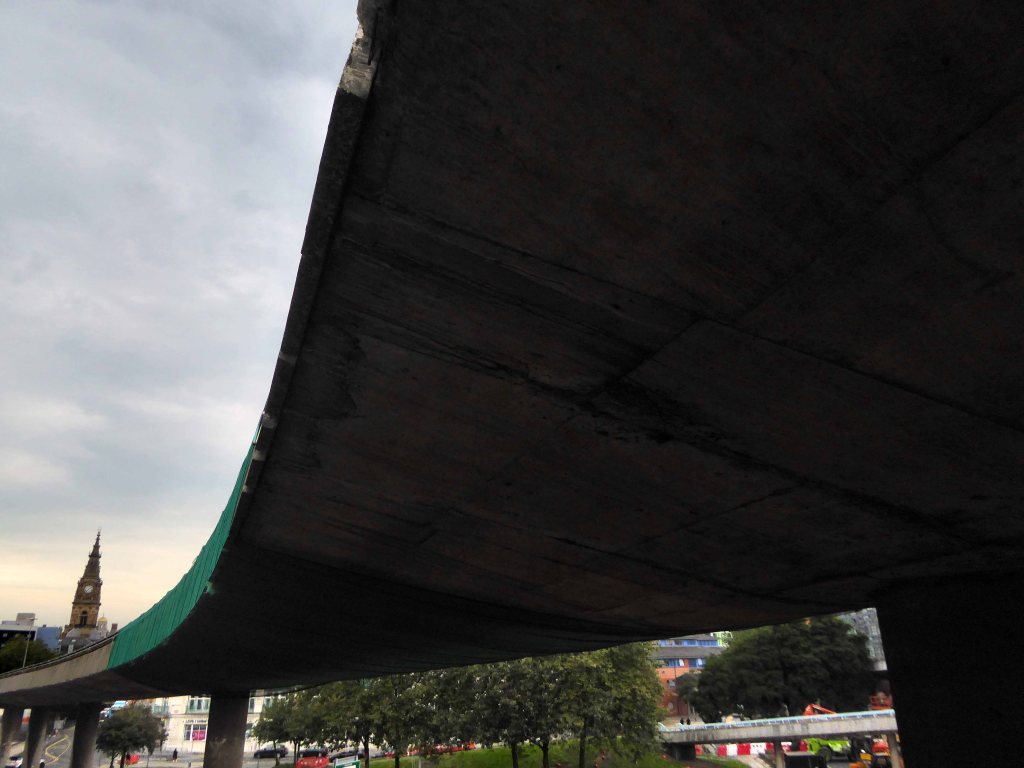
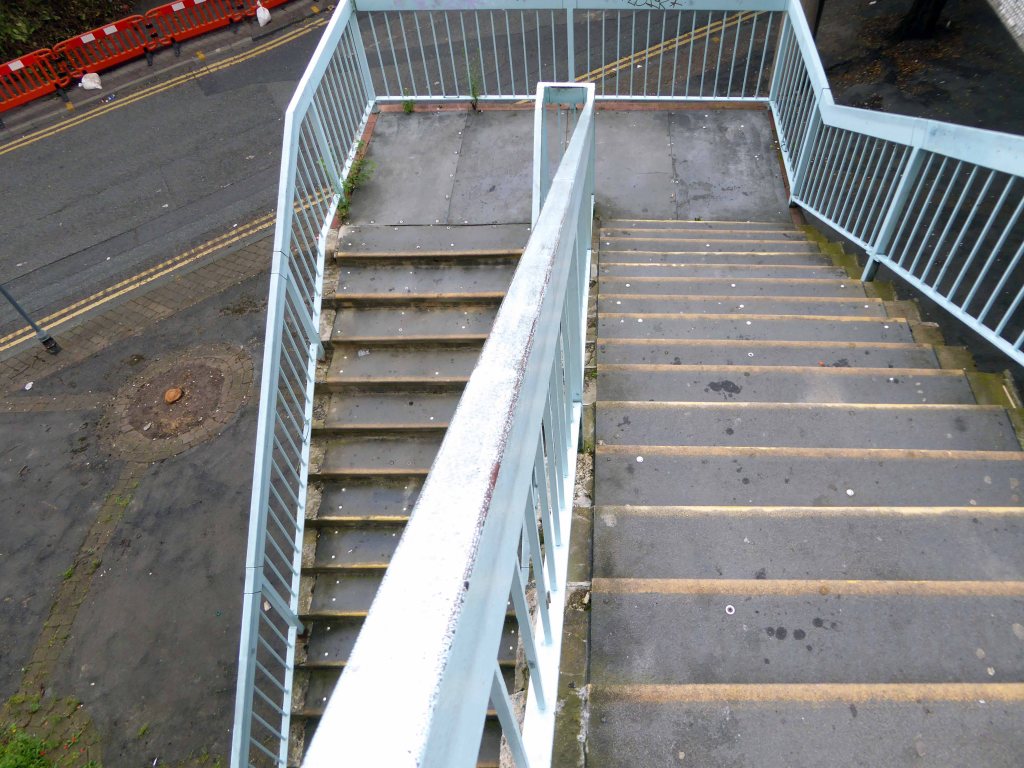
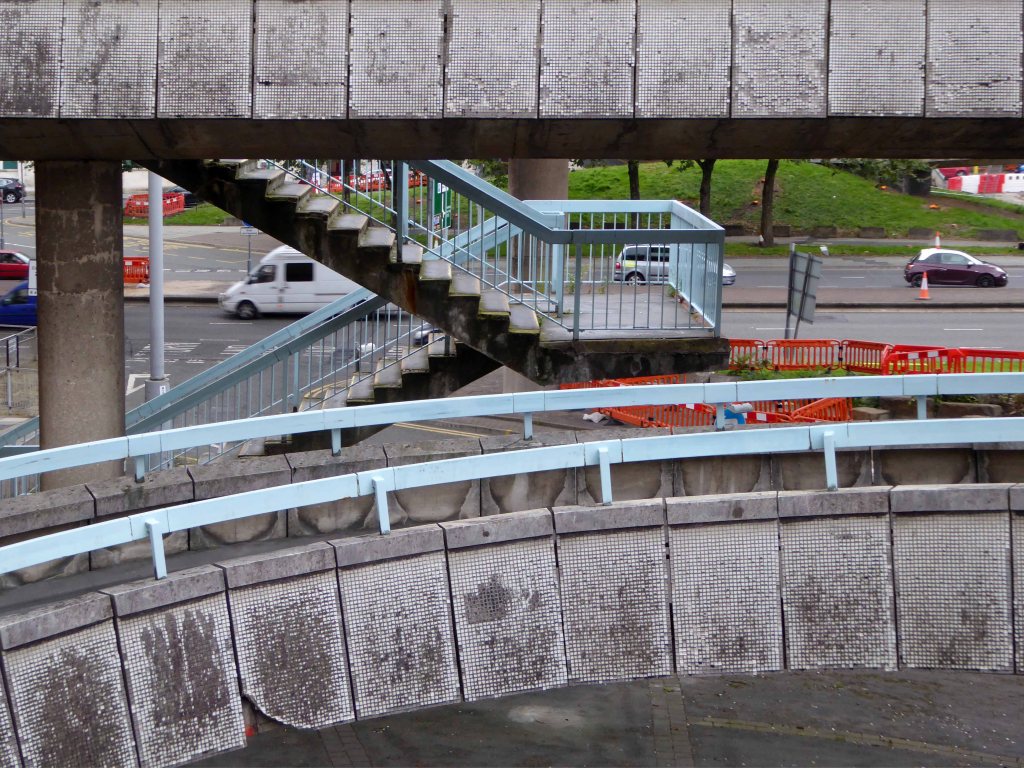
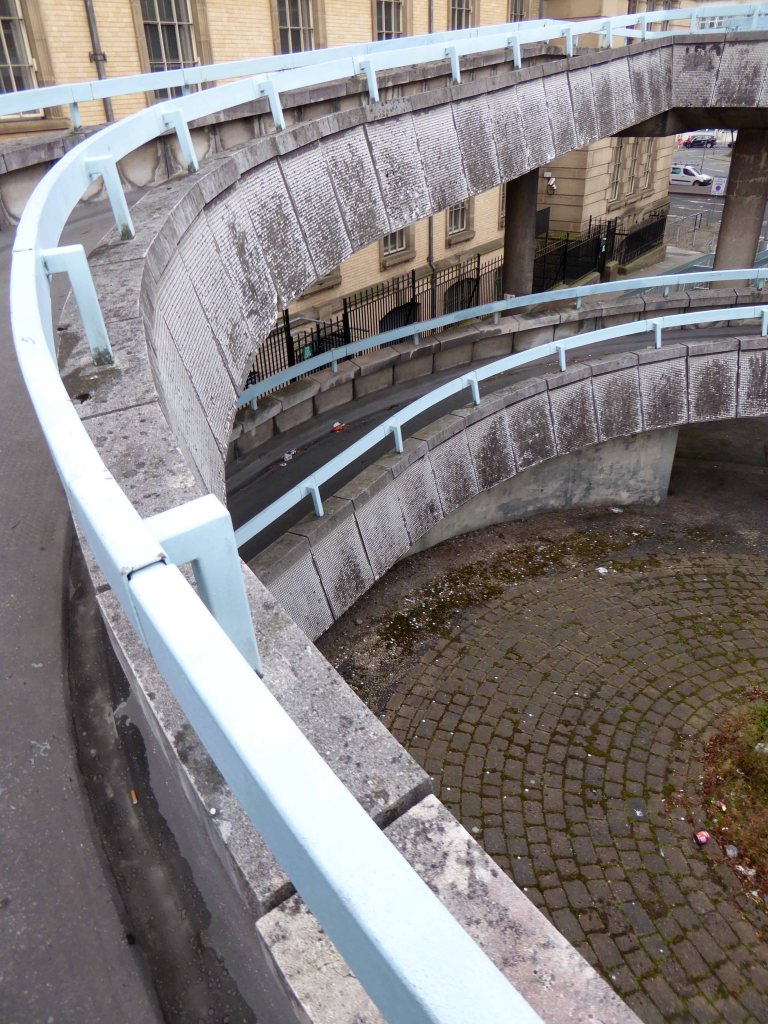
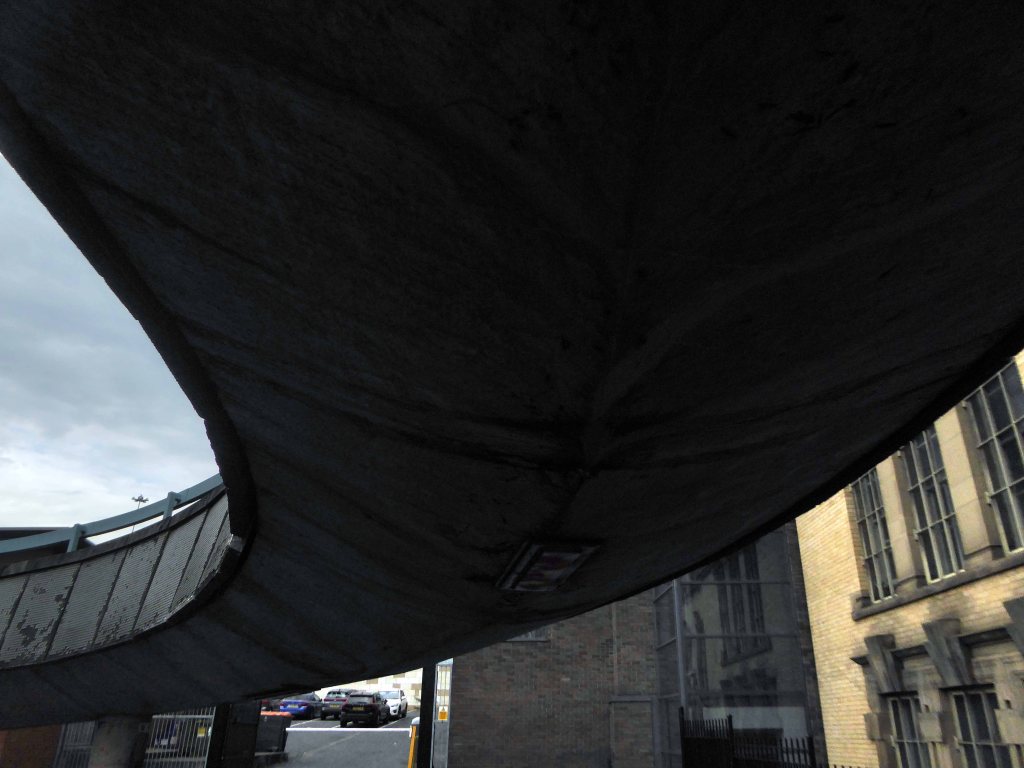
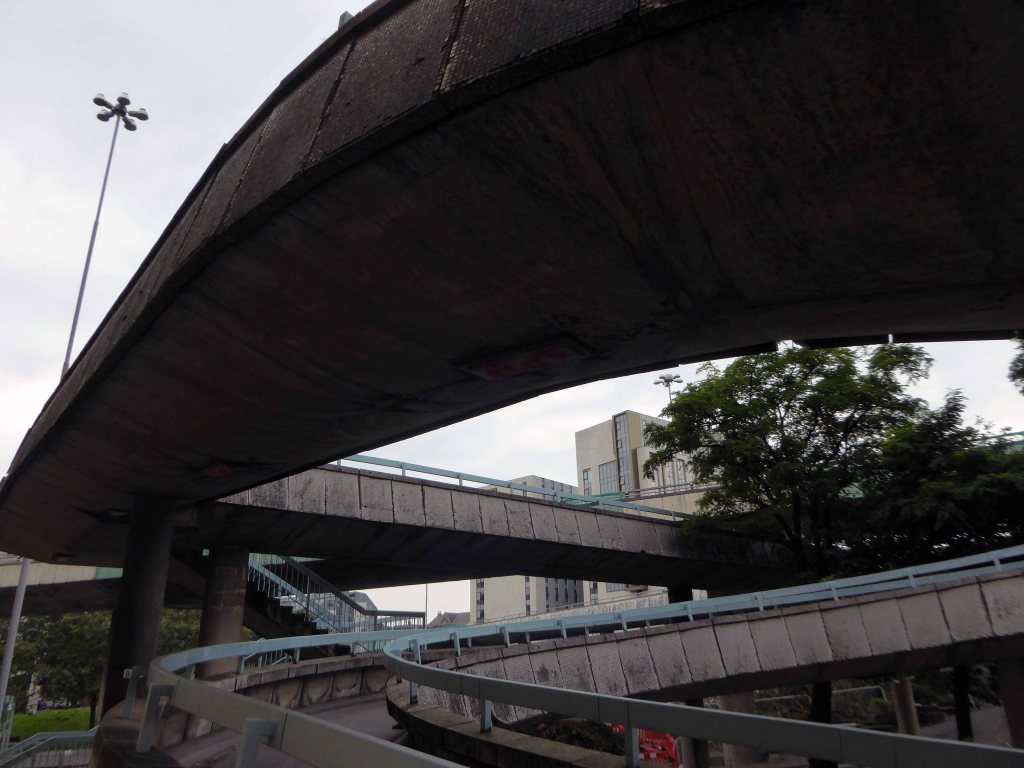
The Churchill Way was realised and remained in use until September 2nd 2019 – closed and facing a £10 million demolition programme, following a maintenance report which found them to be unsafe – and presumably beyond economic repair.
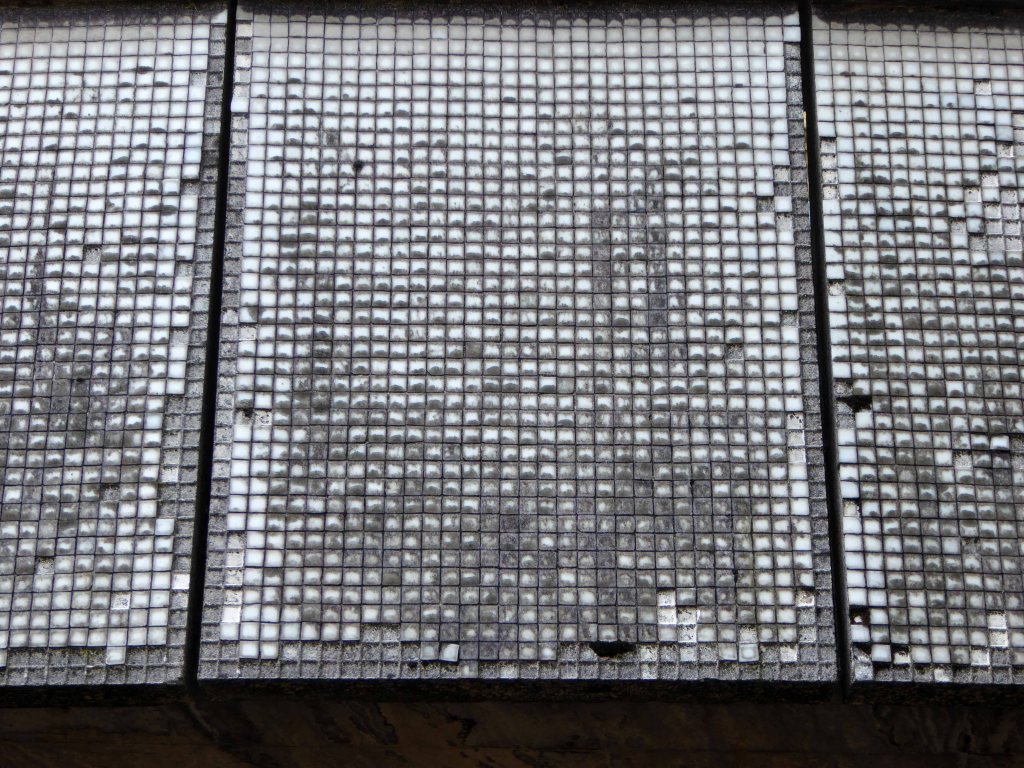
And so I took one last look around taking snaps, an epitaph to the end of an era, and the end of an idea that was once once rendered concrete.
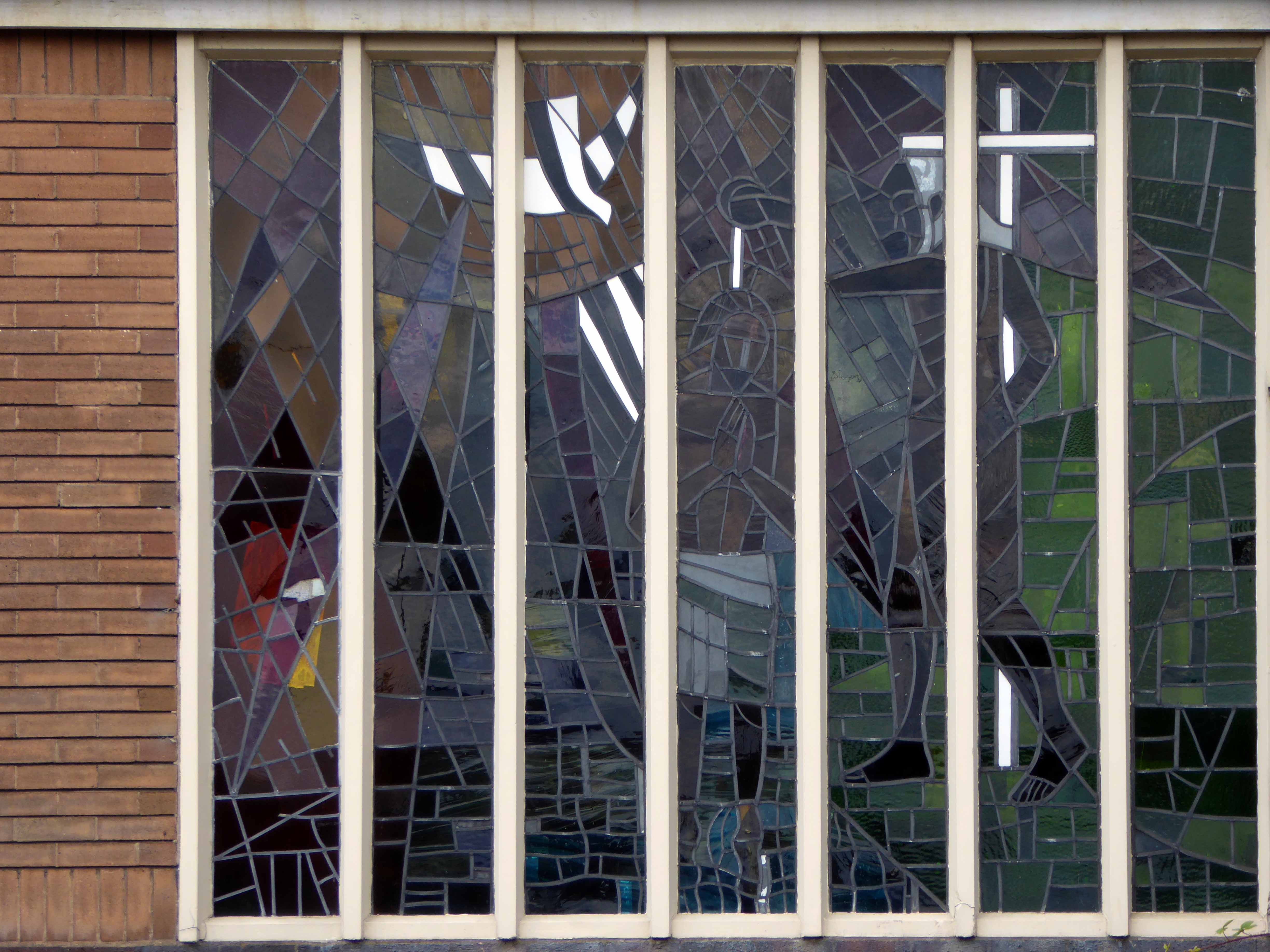
Antony Holloway – artist born March 8th 1928 he died on August 9th 2000.
Dorset was where he was born and grew up and the Dorset landscape was always there deep within him. He was educated at Poole grammar school between 1939 and 1945. After national service in the Royal Air Force in Dorset and Germany from 1948 to 1953 he studied at Bournemouth College of Art. Then came the RCA.
Tony began work as a stained glass and mural designer and jumped, with astonishing confidence, into working as a consultant designer with the architects’ division of the London County Council. He learned how to deal with architects and builders, and became adept at getting as much out of the money available – never enough – for his projects.
In 1963 he was introduced to the Manchester architect, Harry Fairhurst. Eight years later, after they had worked together on commissions in Cheshire and Liverpool, Fairhurst sought Tony’s advice about a plan for five large stained-glass windows in Manchester Cathedral.
Tony asked to design and make the first window, the St George in the inner south-west aisle. It was completed in 1973. Further windows followed in 1976 and 1980 and the final window, Revelation was installed in 1995.
Partially covered with greenery and now securely contained within spiked railings, I circumnavigated the site catching and snapping the structure where I could – here are those very snaps.
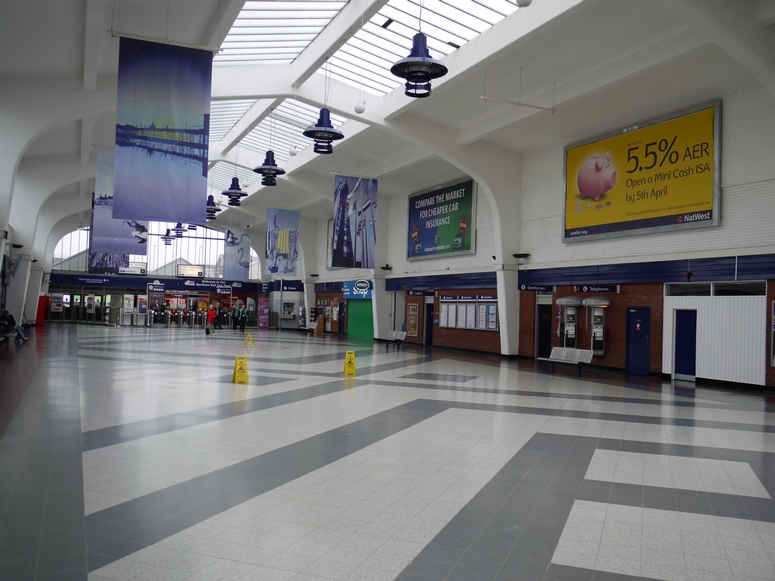
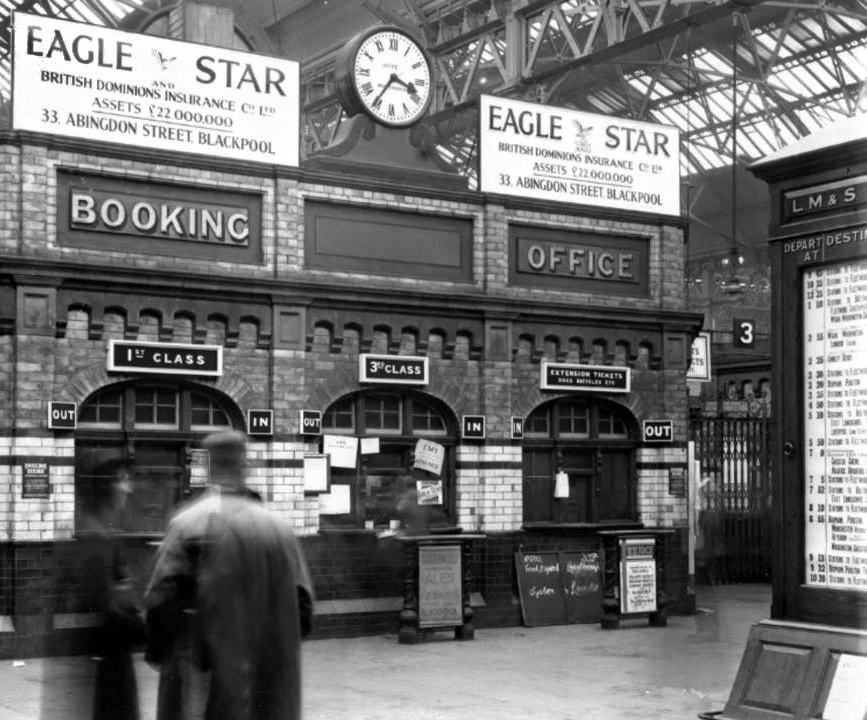
So here we are at Blackpool North Station – take some time take a look around you, take a look at the cavernous concourse.
The station was opened in its present form in 1974, and succeeded a previous station a few hundred yards away on Talbot Road which had first opened in 1846 and had been rebuilt in 1898. The present station is based on the 1938 concrete canopy which covered the entrance to the former excursion platforms of the old station.
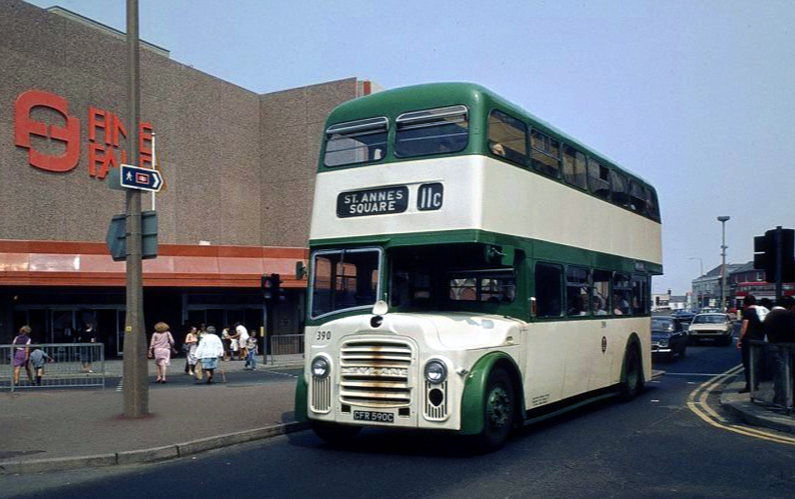
But let’s not linger – out into the open breathe that sea air, under the underpass where the former Fine Fare awaits.
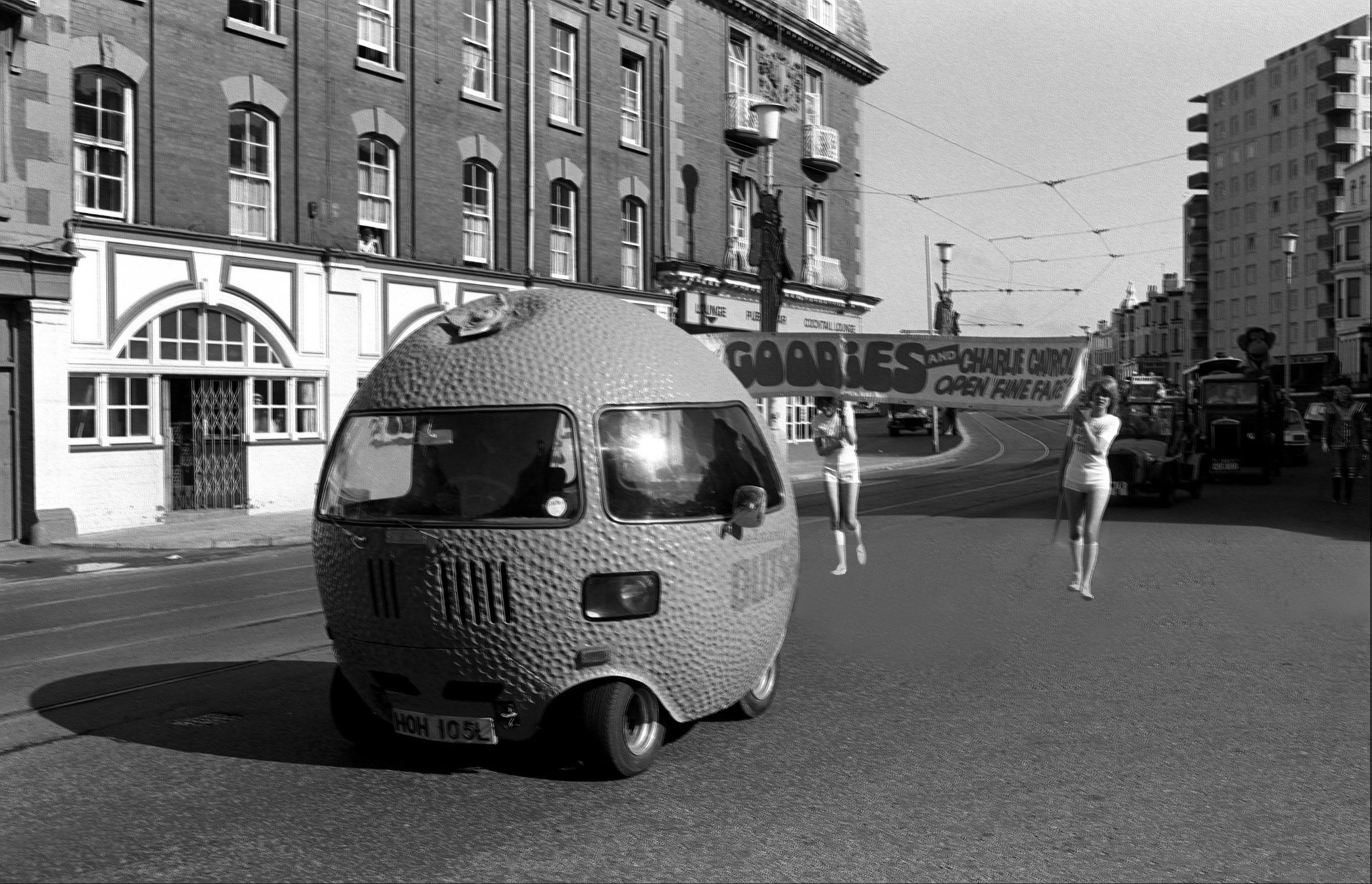
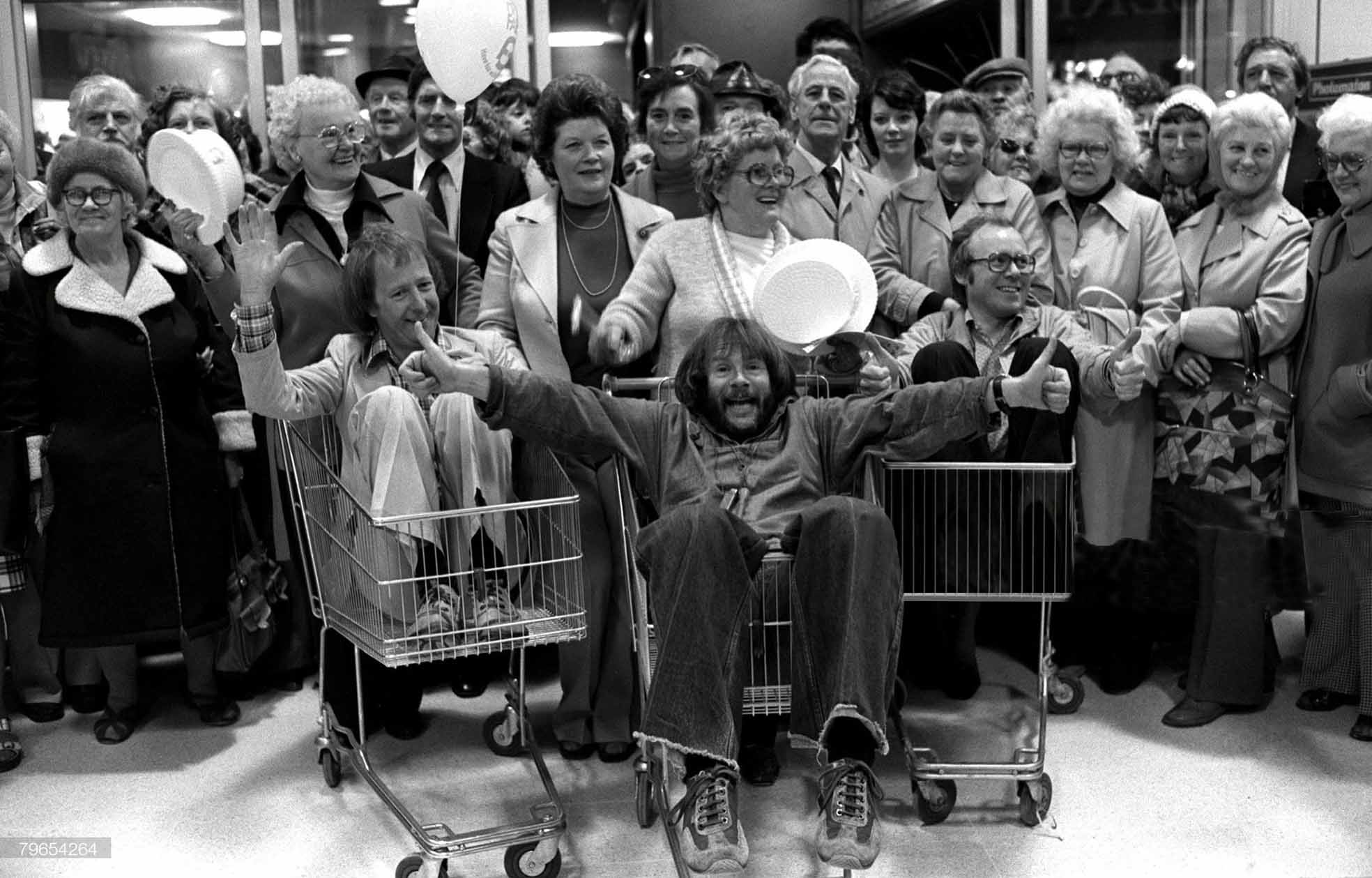
The Fine fare fanfare begins with an oversized Outspan heralding a new dawn – Charlie Cairoli will be in attendance!
Opened on May 22nd 1979 by the Goodies.
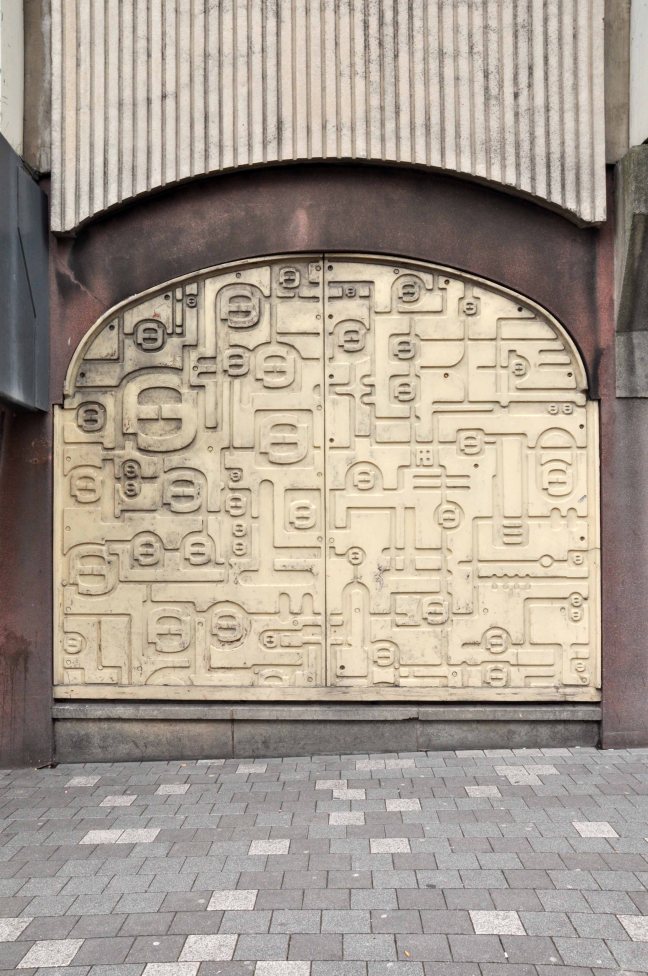
The shop is long gone, however the distinctive cladding prevails.
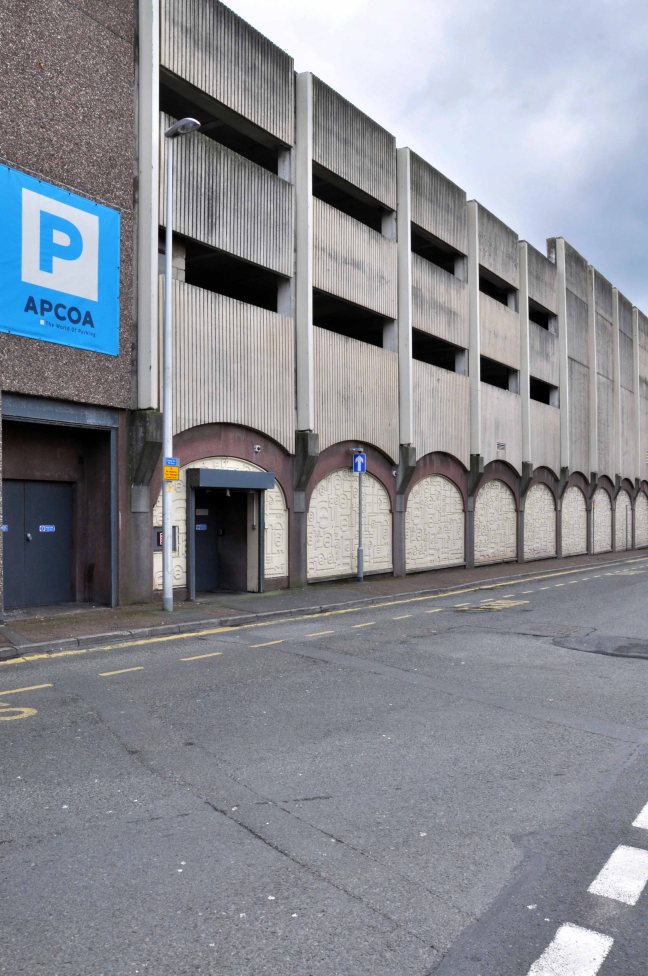
Along with the austere multi-storey car park.
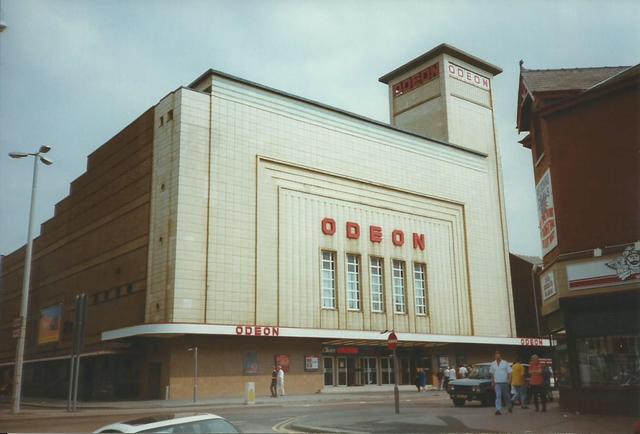
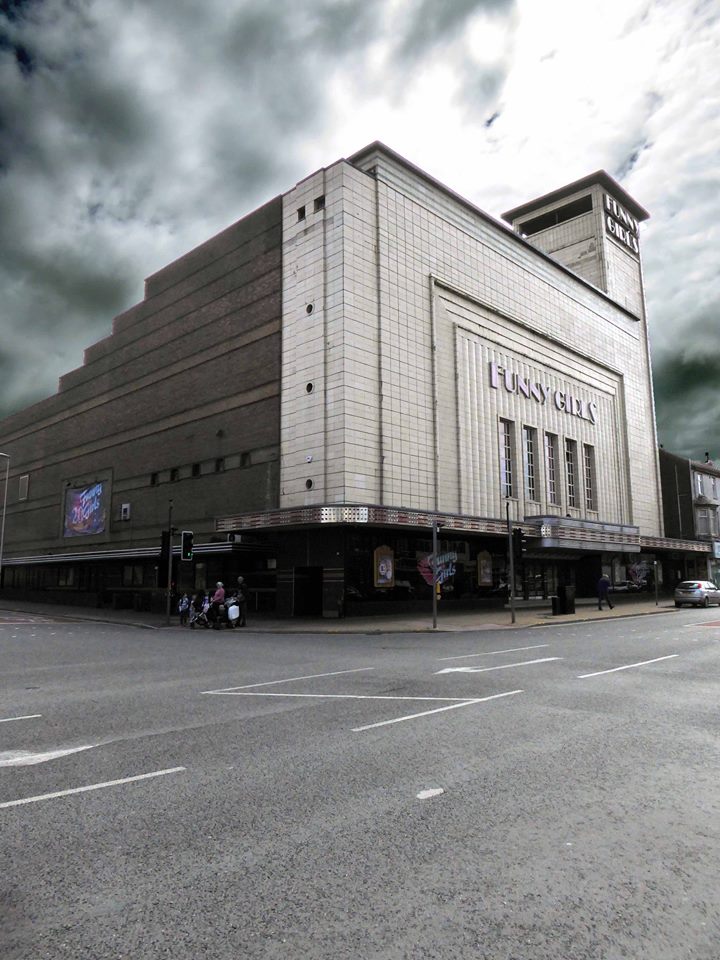
Just a round the Corner and we find the Funny Girls, possibly some funny girls, funny I thought it used to be an Odeon?
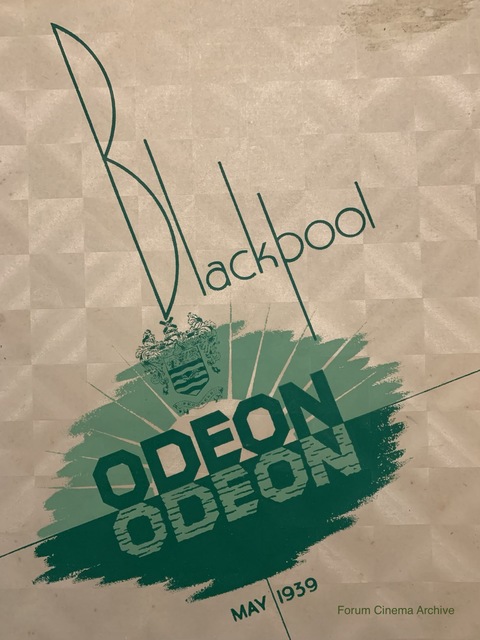
This was the largest of the original Oscar Deutsch built Odeon Theatres, seating 3,088, with 1,684 in the stalls and 1,404 in the balcony. The Odeon opened on 6th May 1939 with Three Smart Girls Grow Up starring Deanna Durbin.
Now a key feature of the town’s extravagant nightlife.
It was boarded up for several years until it was acquired by Basil Newby whose Pink Leisure Company converted the former circle into a nightclub named Flamingo’s, a bar in the former circle foyer and Funny Girls; a drag-cabaret theatre in the former stalls area which opened in 2002. In August 2018 Basil Newby’s Pink Leisure Company was put into receivership and the business was temporary taken over by Thwaites Brewery. Thwaites took over the ownership of the building in January 2019 and renovations are being carried out while all its facilities remain open. New signage in the style of the original 1930’s ODEON signage is to be installed on the building.
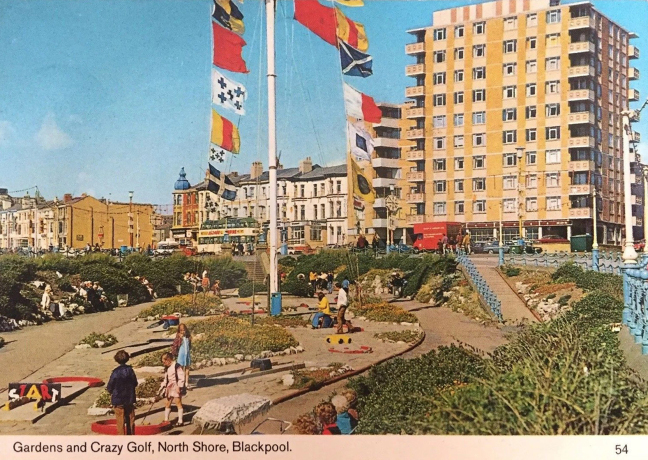
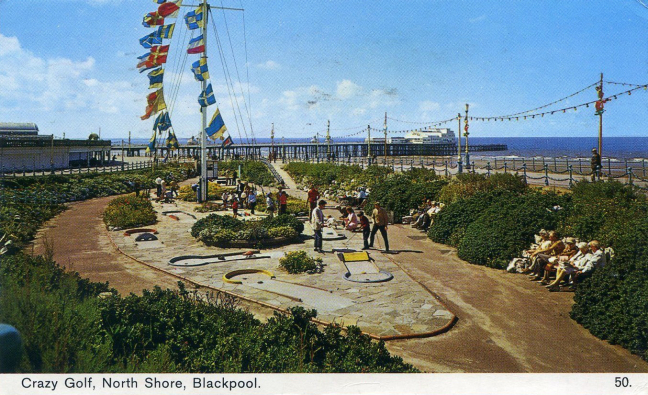
Fancy a game of crazy golf, over looked by a delightful Irish Sea facing block of flats?
Look no further!
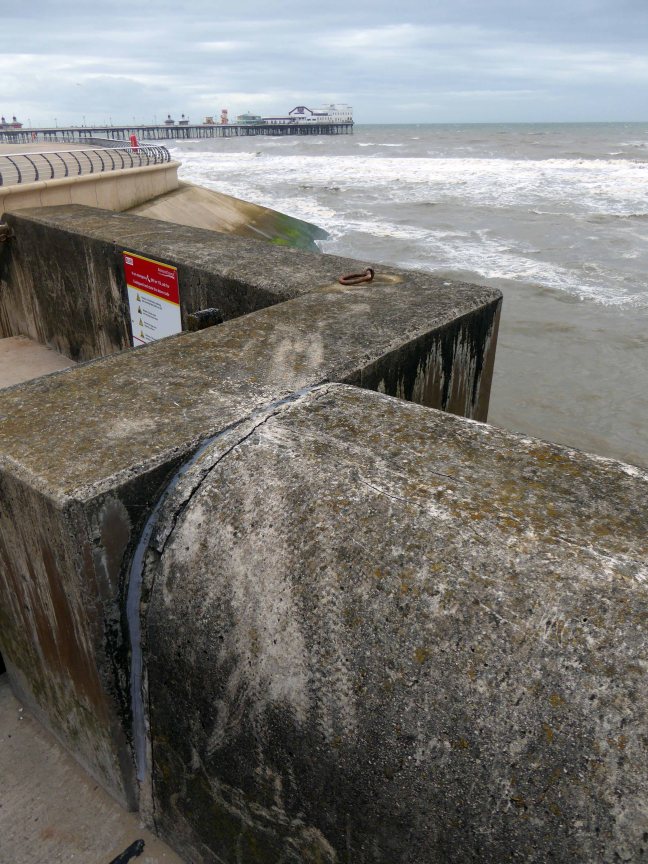
Onwards to the concrete coastal barricade that is the North Shore.
The figure at the centre of the interwar push for expansion and innovation in the provision of town infrastructure was Borough Architect John Charles Robinson. His designs were rooted initially in a stylish but civically appropriate classicism, but from the mid-1930s an appreciation of more explicitly modernist ideas becomes evident.
The earliest priority for the Surveyor’s Department after 1918 was the improvement and extension of the promenade and its sea defences. A short stretch of sunken gardens running parallel to the promenade at the Gynn opened in 1915 and a stretch of ‘Pulhamite’ artificial rock cliffs 100ft high between the new gardens and the lower promenade followed in 1923. Between the Gynn and the Metropole Hotel, the steep drop between the road and tramway the upper level and the lower promenade at sea level was remodelled during 1923–5 with a colonnaded ‘middle walk’, a covered promenade that utilised the pavement at the top of the three-tiered slope as its roof.
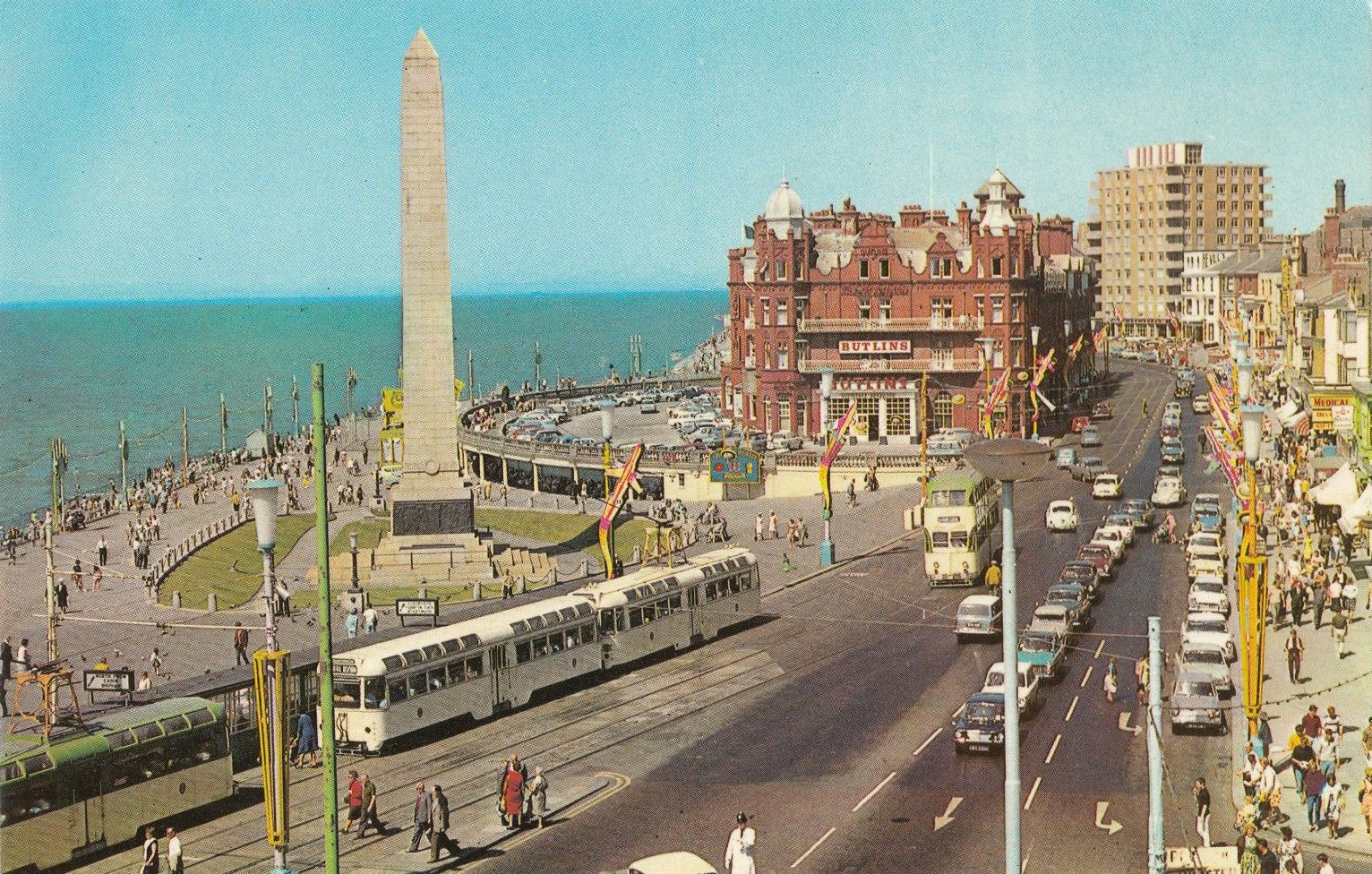
Then we walk back on ourselves and encounter the Cenotaph.
Originally erected 1923 by the County Borough of Blackpool Architect Ernest Prestwich. Bronze sculptures by Gilbert Ledward. HA Clegg & Sons builders. Messrs Kirkpatrick stonemasons.
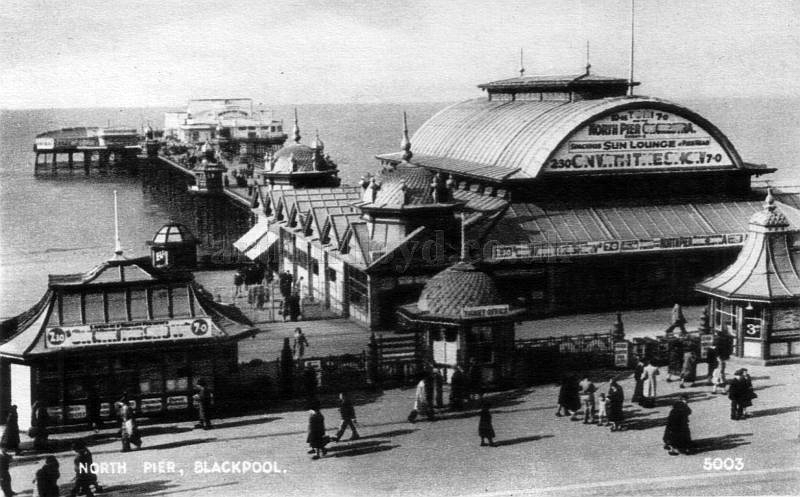
By Eugenius Birch 1862-3, contractors R. Laidlaw and Son of Glasgow. Cast iron screw piles and columns supporting iron girders and wooden deck 1,405 feet long, with jetty of 474 feet – added 1867.
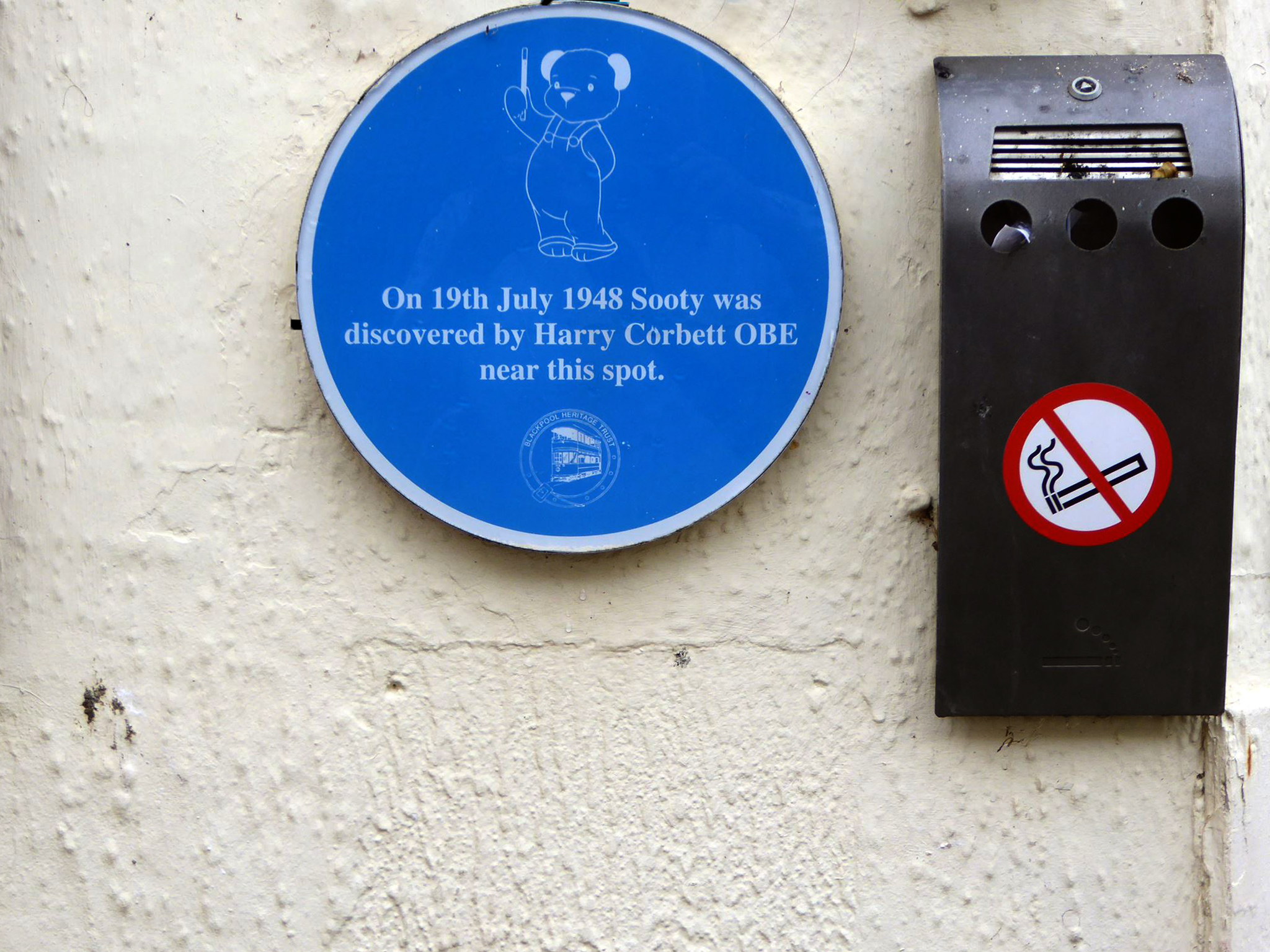
Notably the birthplace of Sooty.
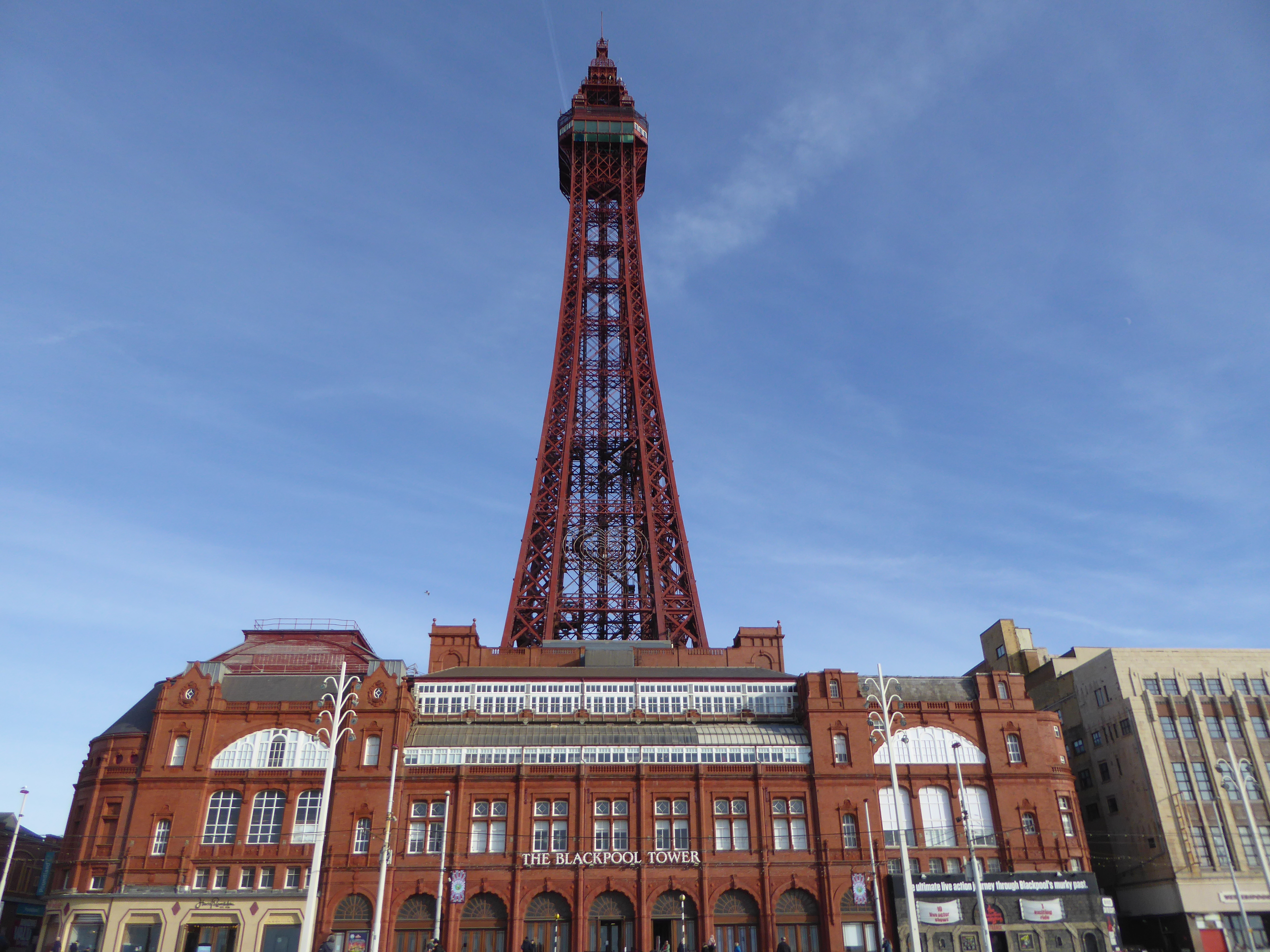
A nod toward the Tower and a scamper across the Comedy Carpet.
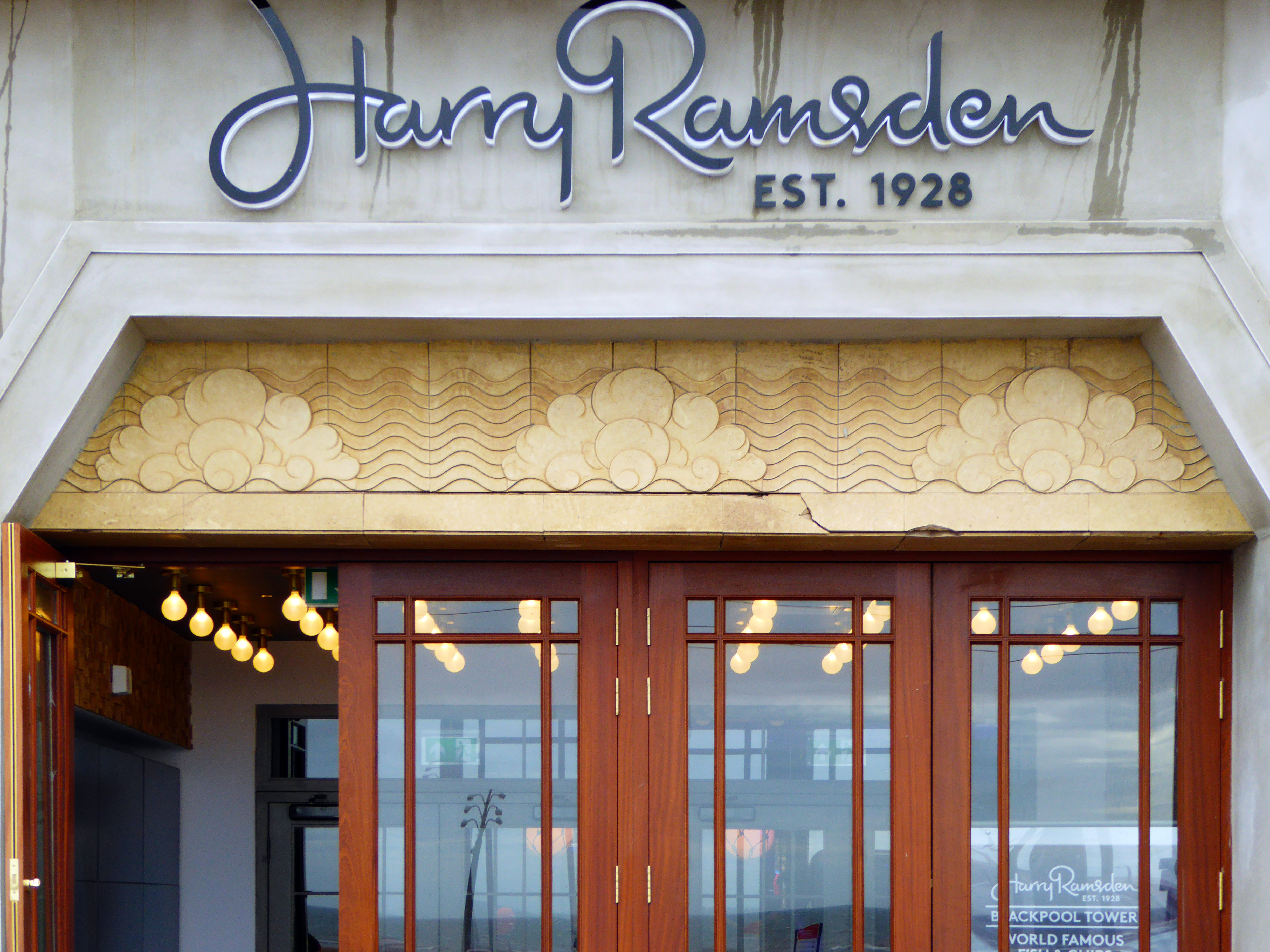
Glancing at Harry Ramsden’s delightful Deco detailing.
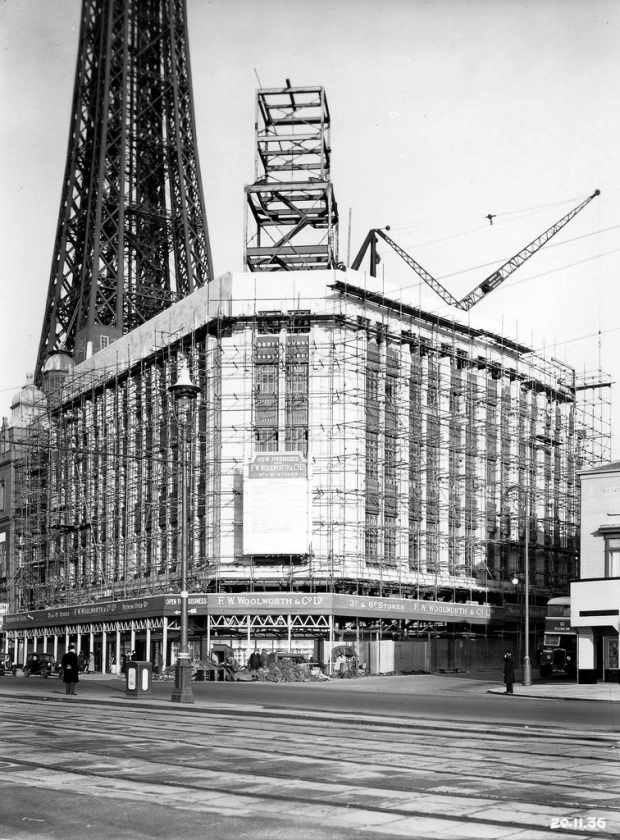
Time to take in the former Woolworth’s fascia.
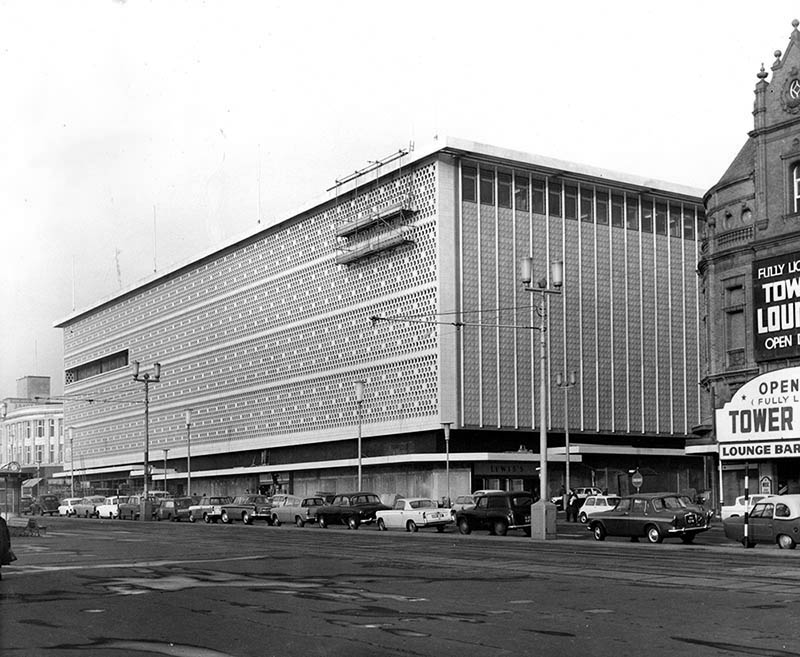
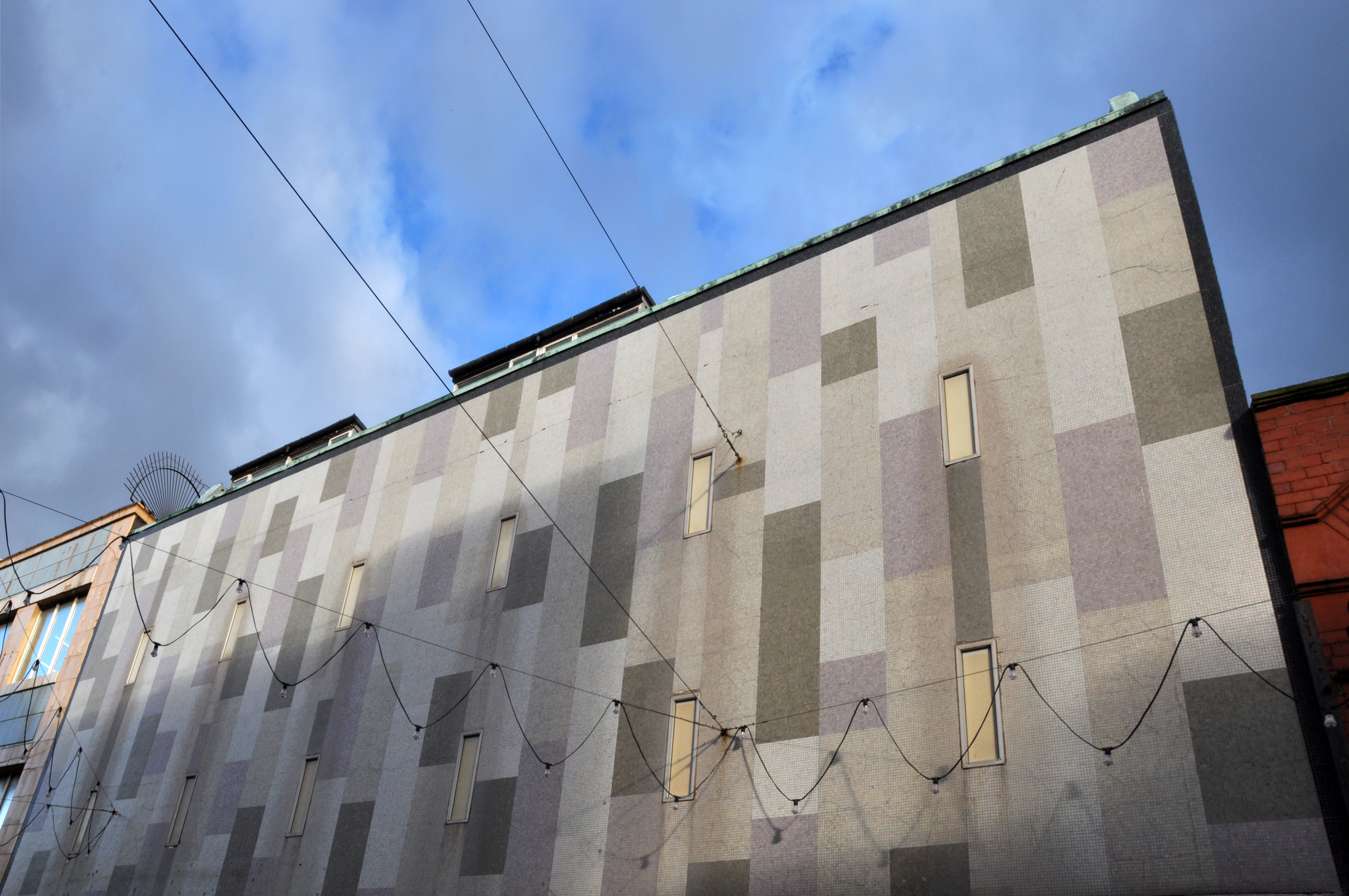
Then wonder where Lewis’s went?
Cutting inland we find WH Smith’s Mosaic.
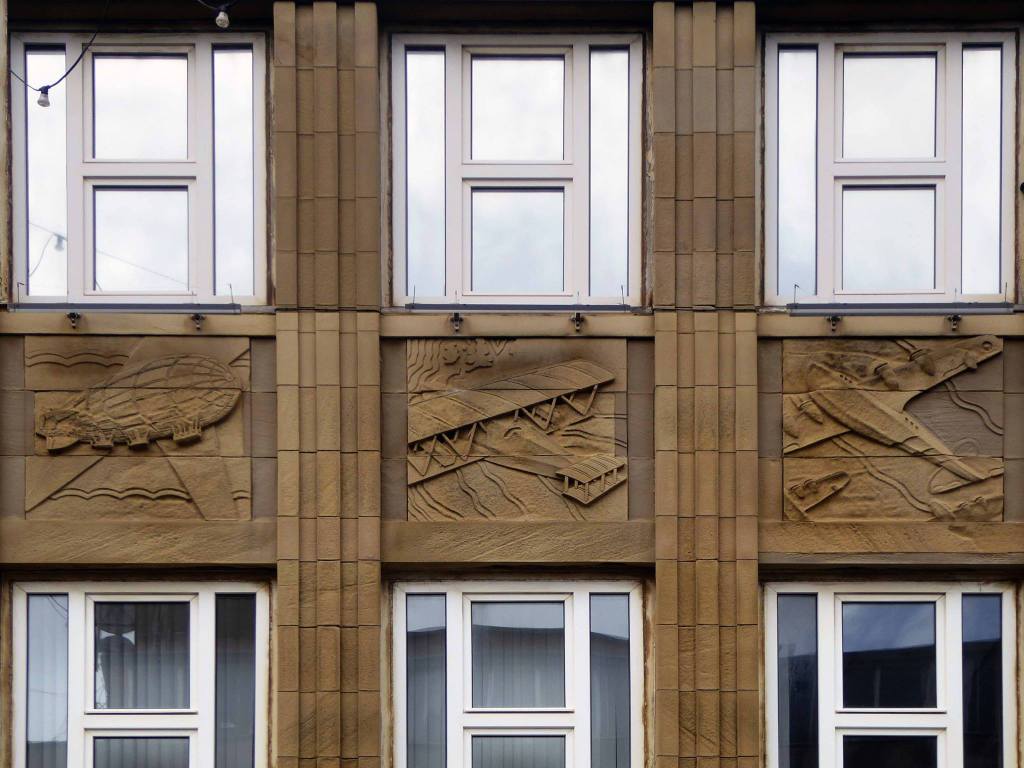
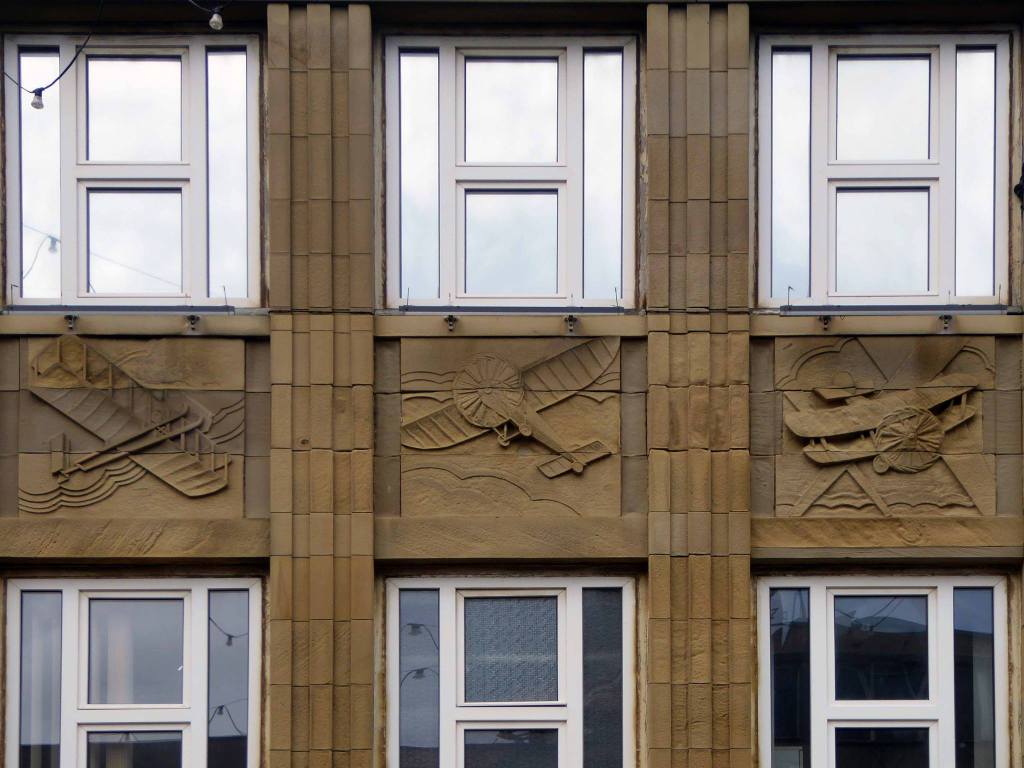
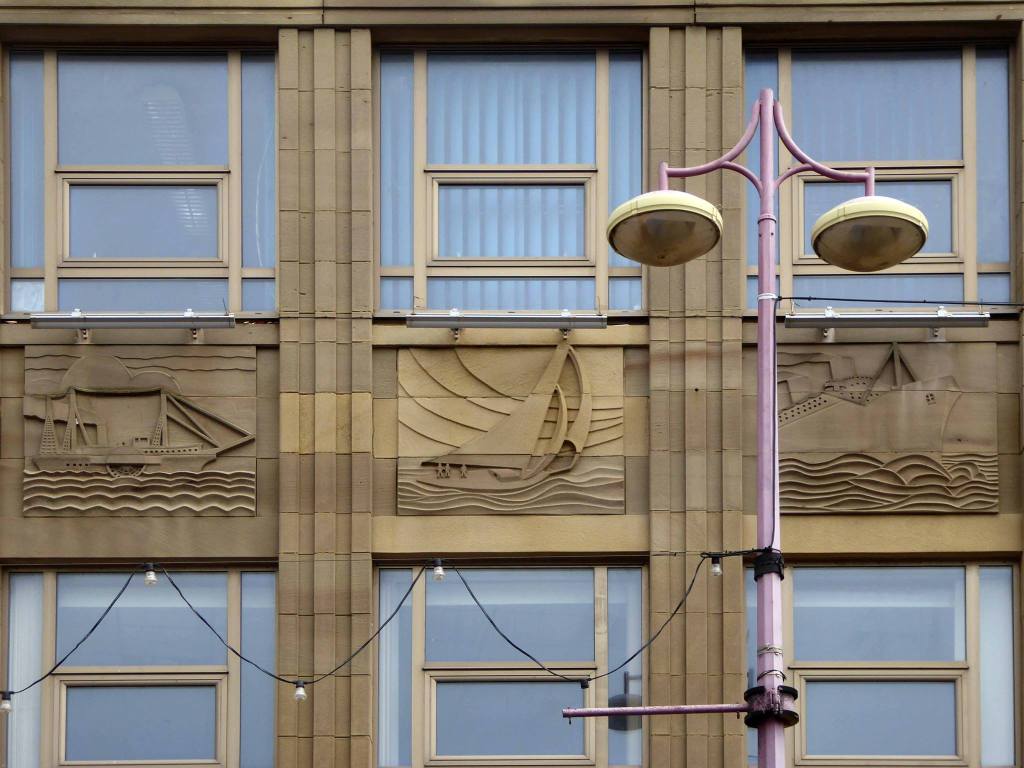
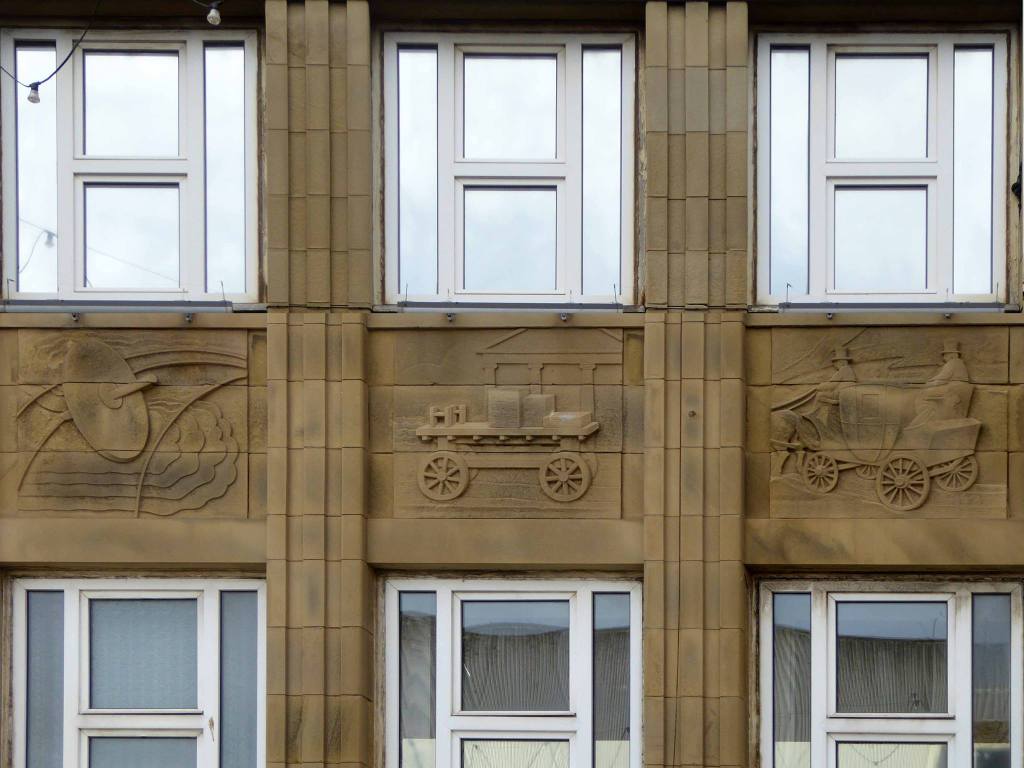
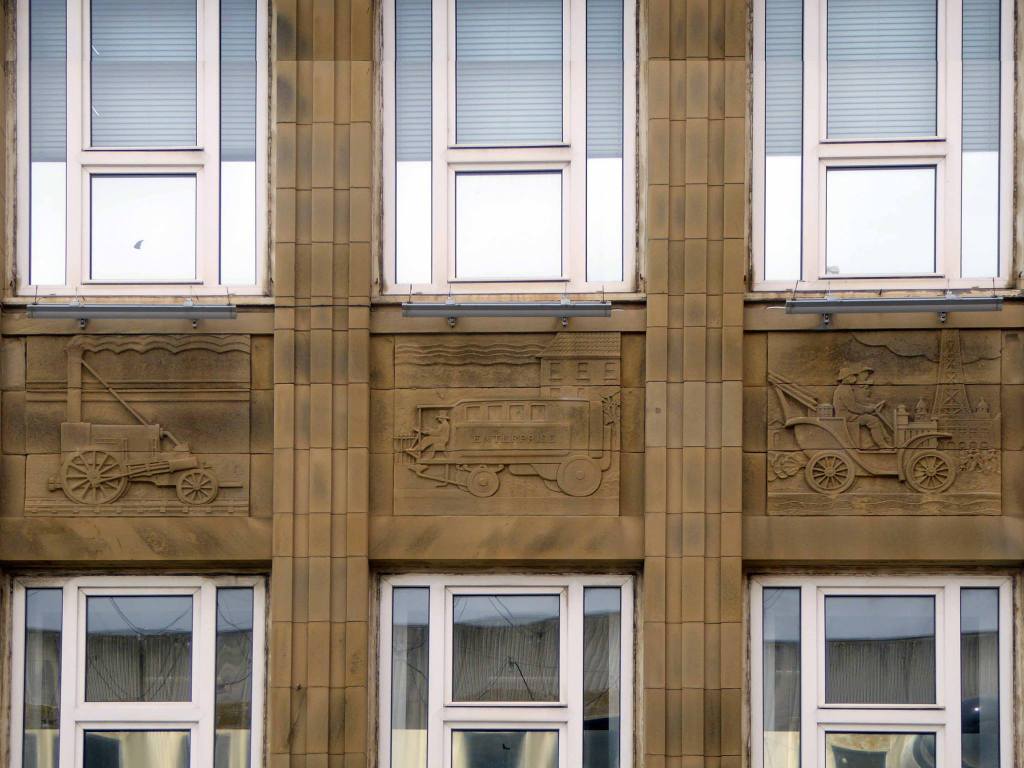
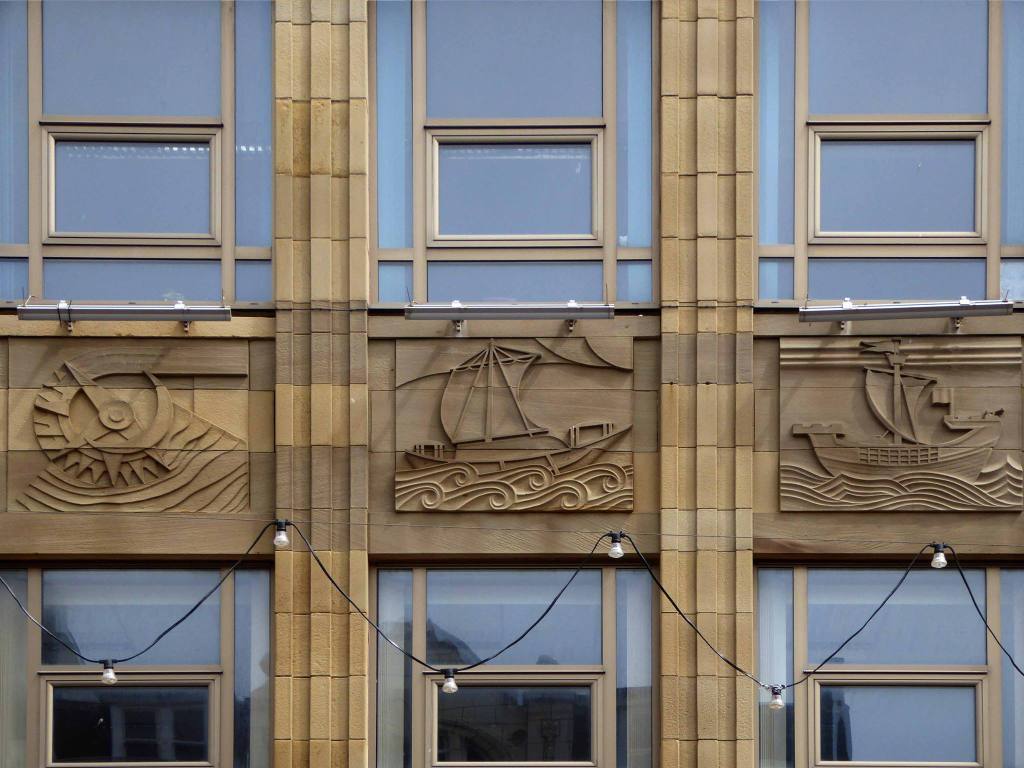
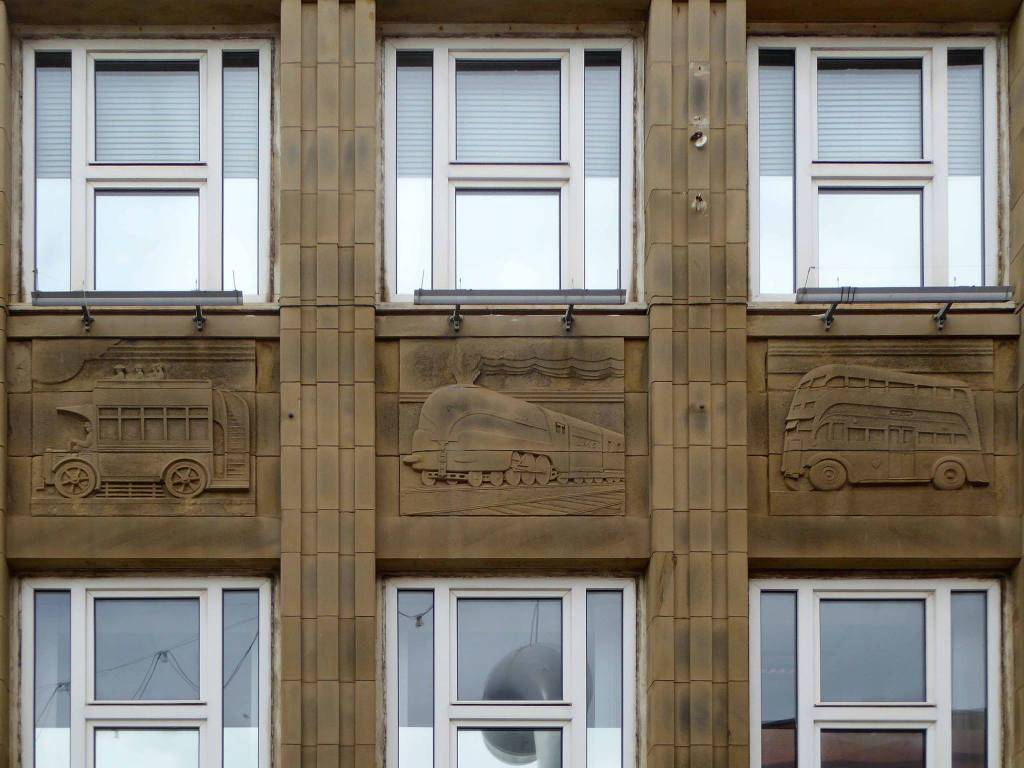
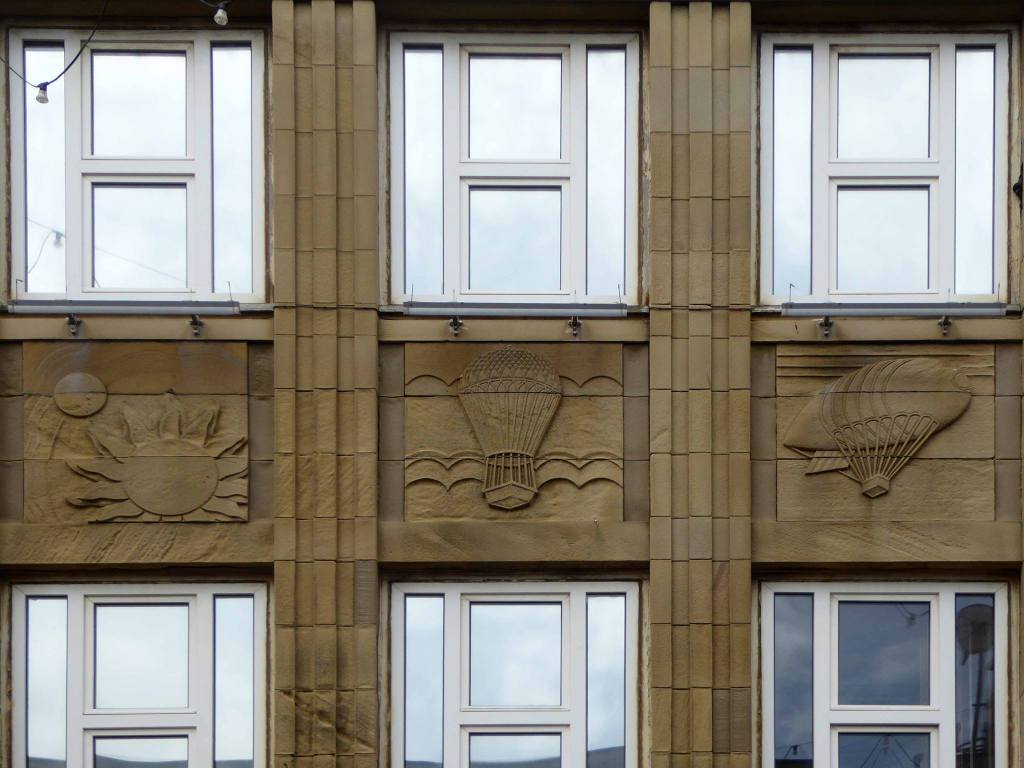
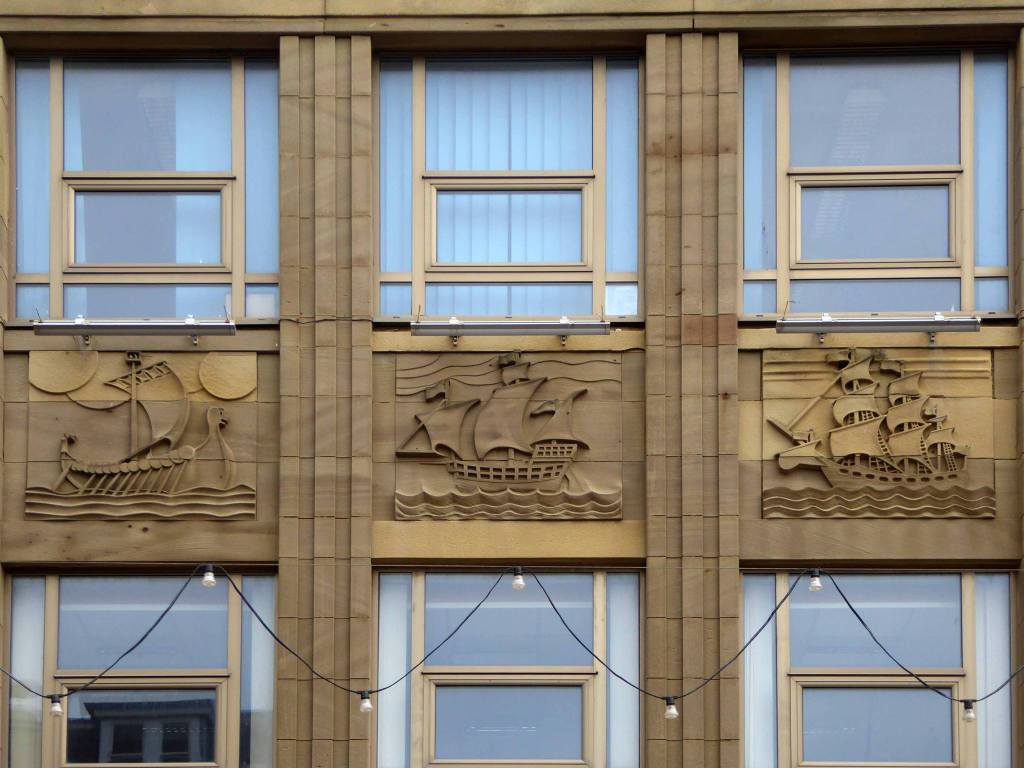
Look up at the carved stone panels on the Council Offices.
Lets all turn ourselves in – over and out to the Police Station.
Another of Roger Booth’s Lancashire County Architect, 1962-83 monumental achievements, and another his works destined for demolition.
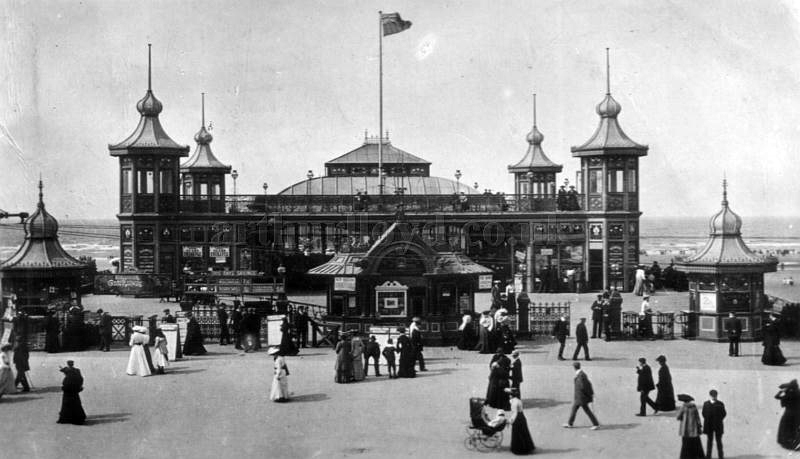
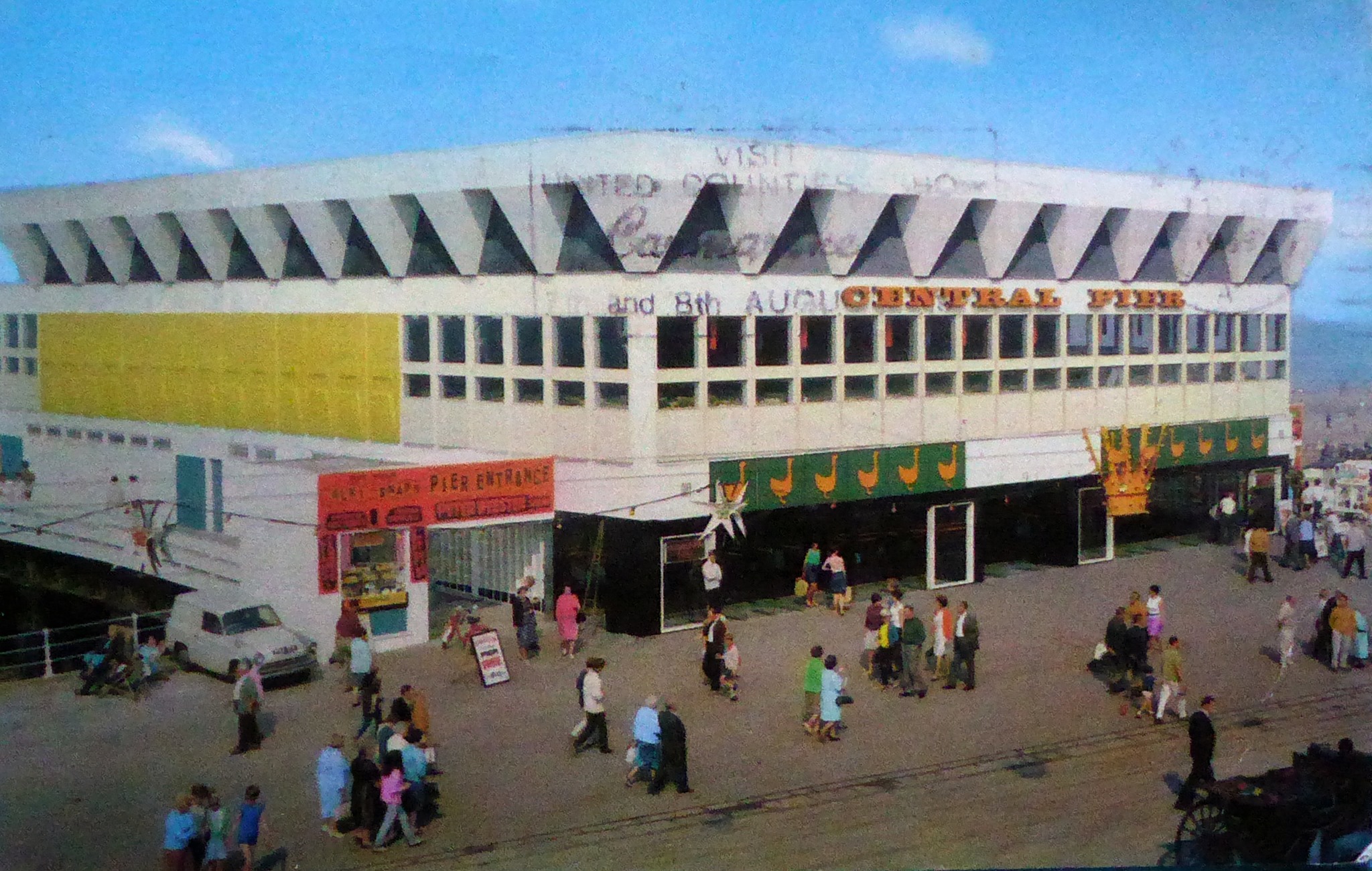
Skipping bail and back towards the promenade, the better to take in the fine fascias and the joy that is and was Central Pier.
The success of the North Pier prompted the formation of the Blackpool South Jetty Company one year later in 1864. Impressed with the construction of North Pier, the company hired the same contractor, Richard Laidlaw and Son of Glasgow for the project. This time, however, the company used the designs of Lieutenant-Colonel John Isaac Mawson rather than those of Eugenius Birch.
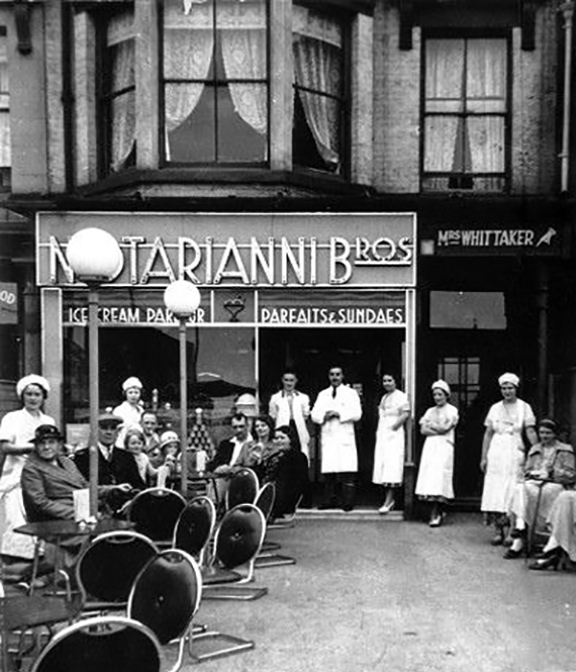
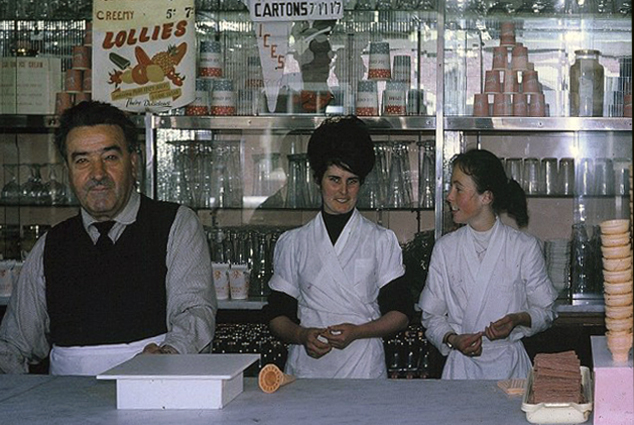
Whatever the weather you’re always ready for an ice cream treat!
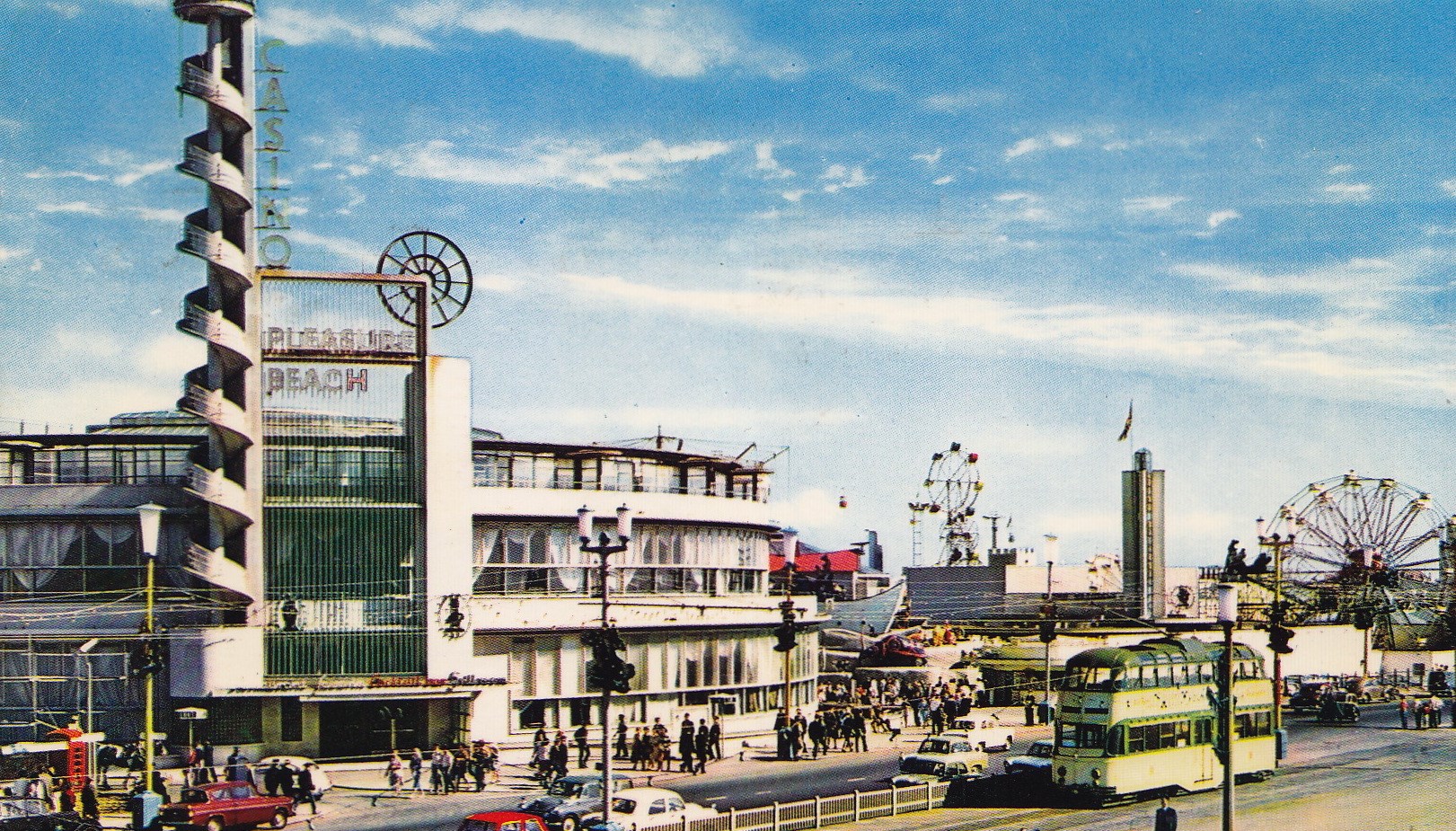
Setting you up for the grand finale that is Joseph Emberton’s Pleasure Beach.
Oh I almost forgot the South Victoria Pier.
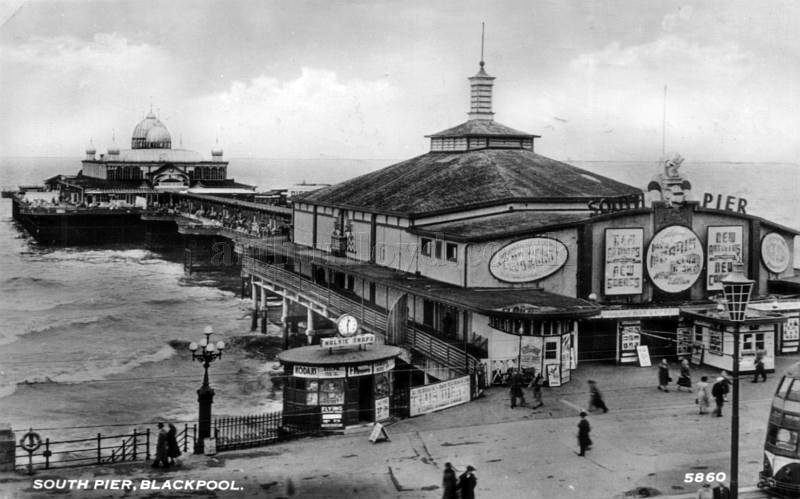
The Blackpool South Shore Pier & Pavilion Co. Ltd. was registered in November 1890 and work began to build the pier in 1892. It was constructed, at a total cost of £50,000, using a different method than that used for North and Central piers, the Worthington Screwpile System. It opened, with a choir, two brass bands and an orchestra on Good Friday, 1893. The 3,000 capacity Grand Pavilion opened on 20 May. At 163 yards long, it was the shortest of the three piers, and had 36 shops, a bandstand, an ice-cream vendor and a photograph stall. It was built shorter and wider than North and Central piers to accommodate pavilions
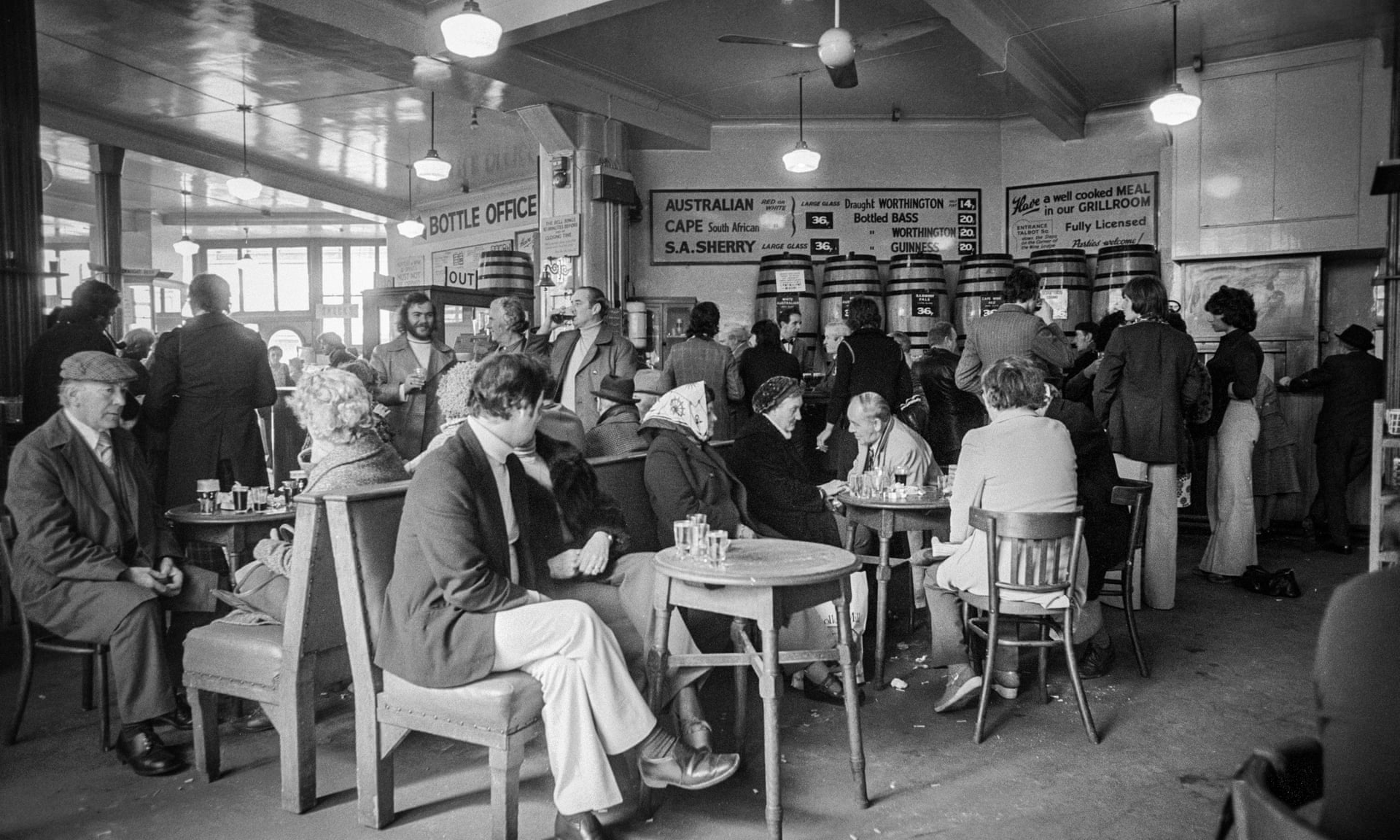
Just in time for the tram home and a calming drink of draught champagne in Yates’s Wine Lodge.
One fine sunny Monday morning I set out cycling to Ashton-under-Lyne to buy an enamel pie dish. Almost inevitably I was pushed and pulled in a variety of unforeseen directions, incautiously distracted and diverted serendipitously – towards Droylsden.
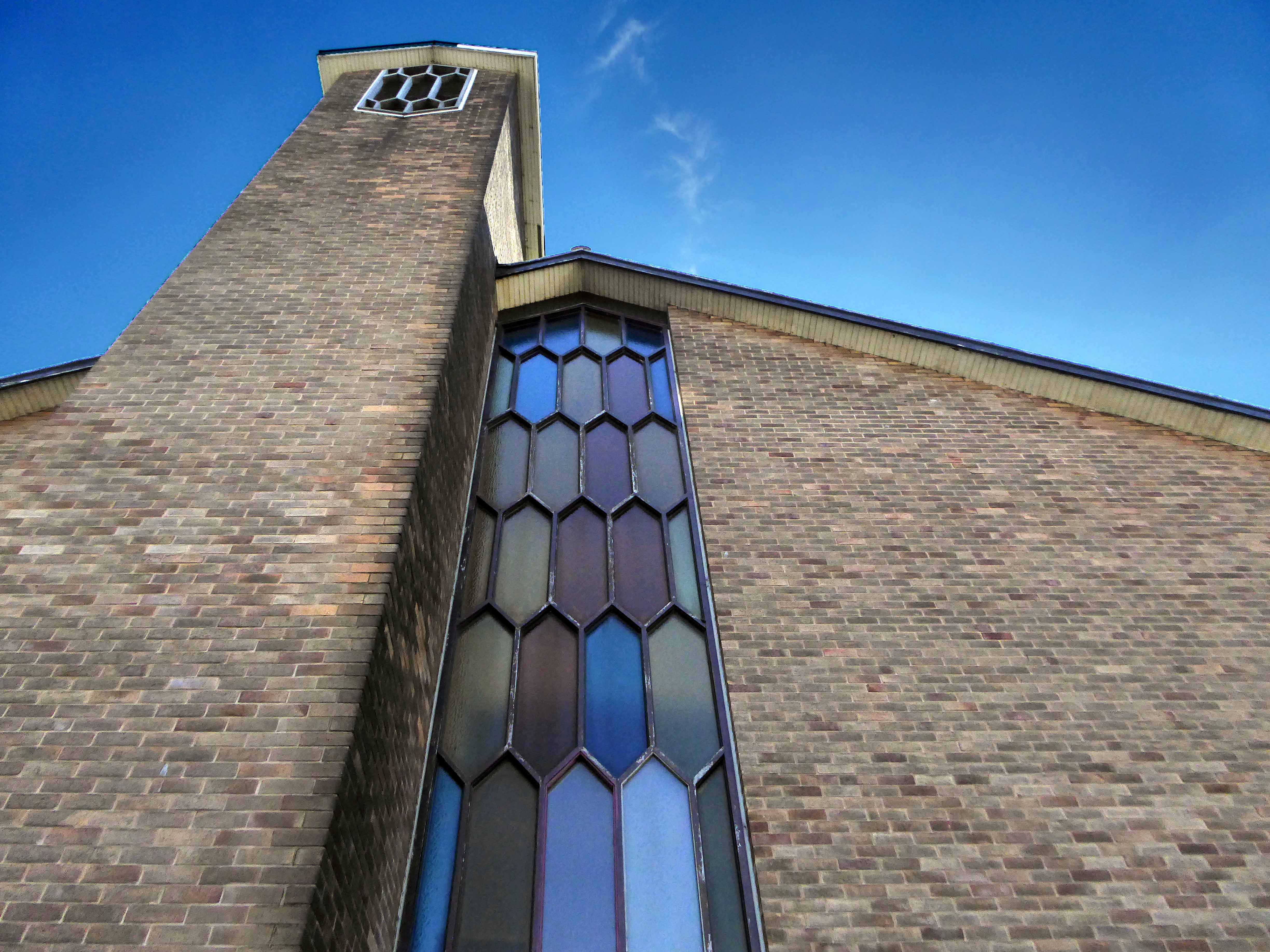
Idly pedalling down Greenside Lane looking this way and that I was drawn magnetically to a pitched roof tower, towering over the red brick semis. Rounding the corner I discovered the delightful St Stephen’s RC church, stood high and proud on a grassy corner, glowing golden in the March sunlight.
I leaned my bike against the presbytery wall and with the kindly bidding of a passing parishioner, I went inside.
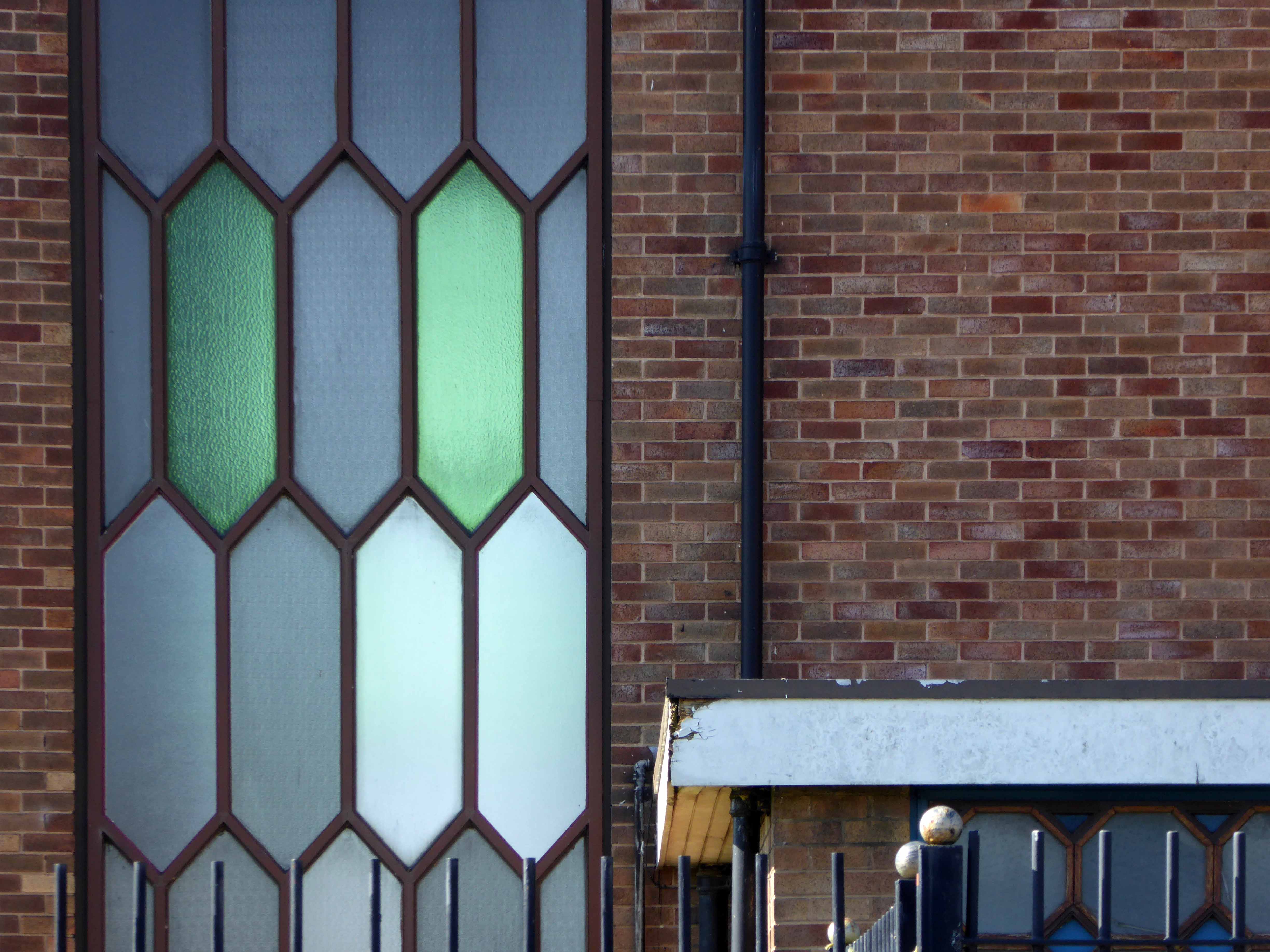
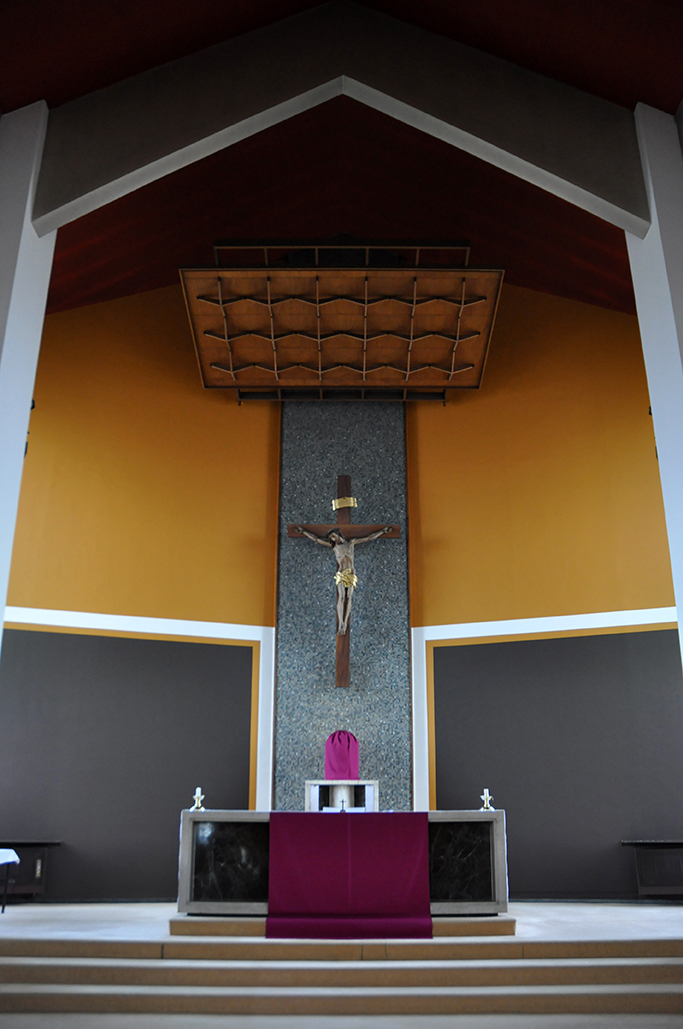
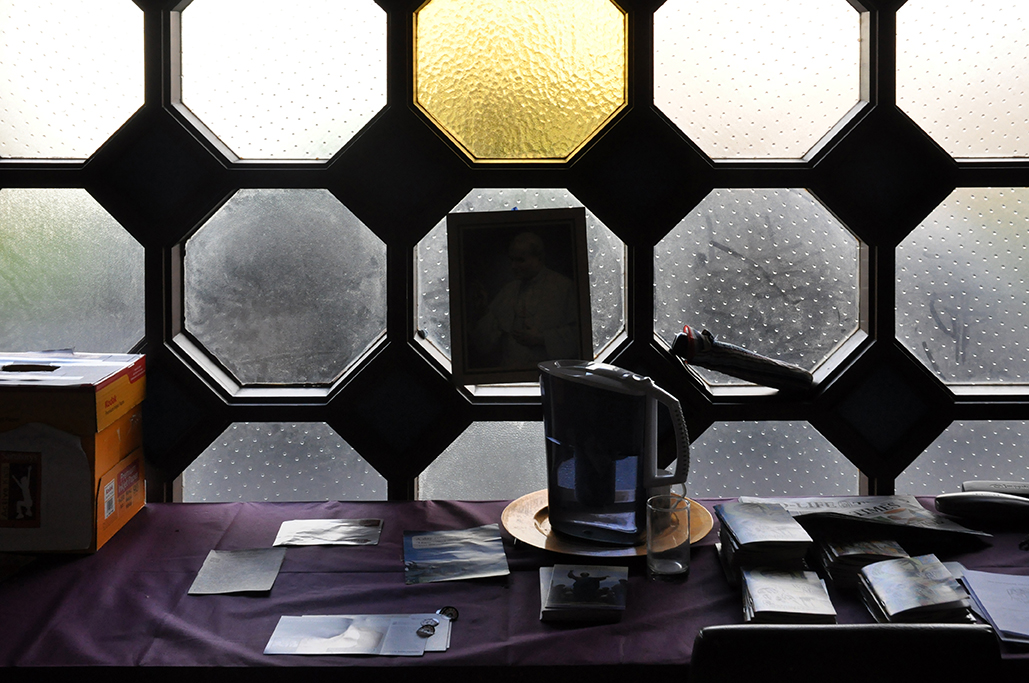
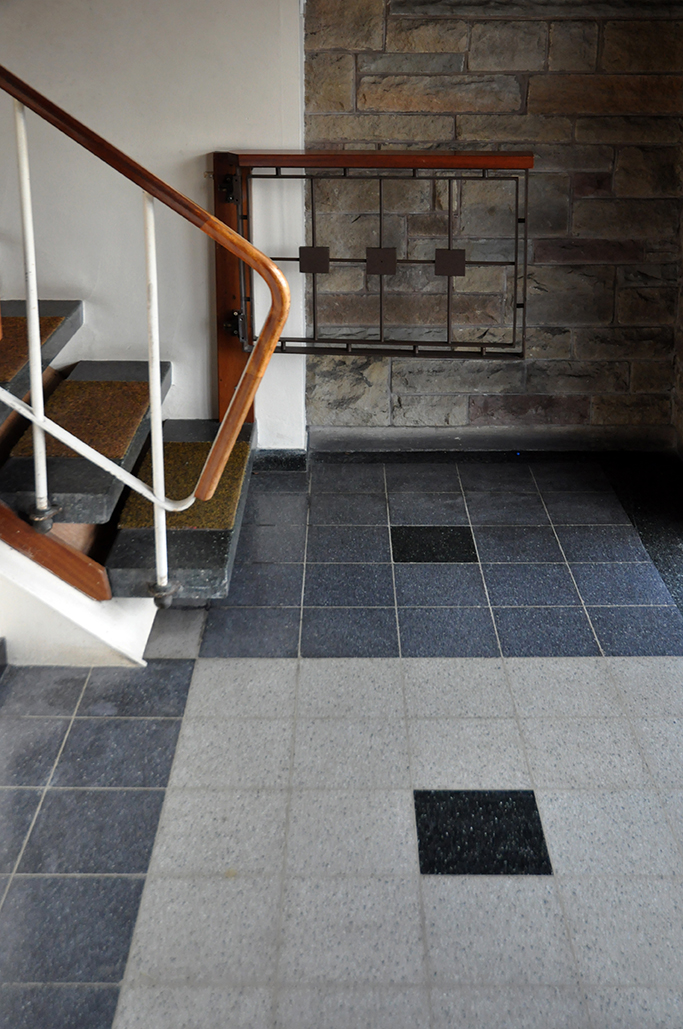
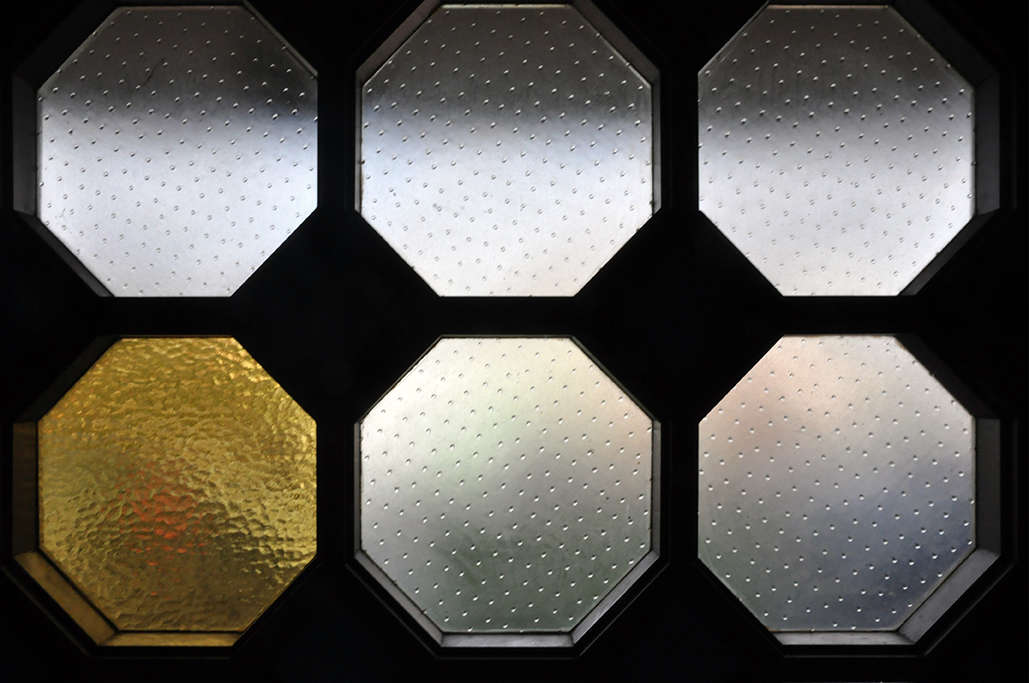
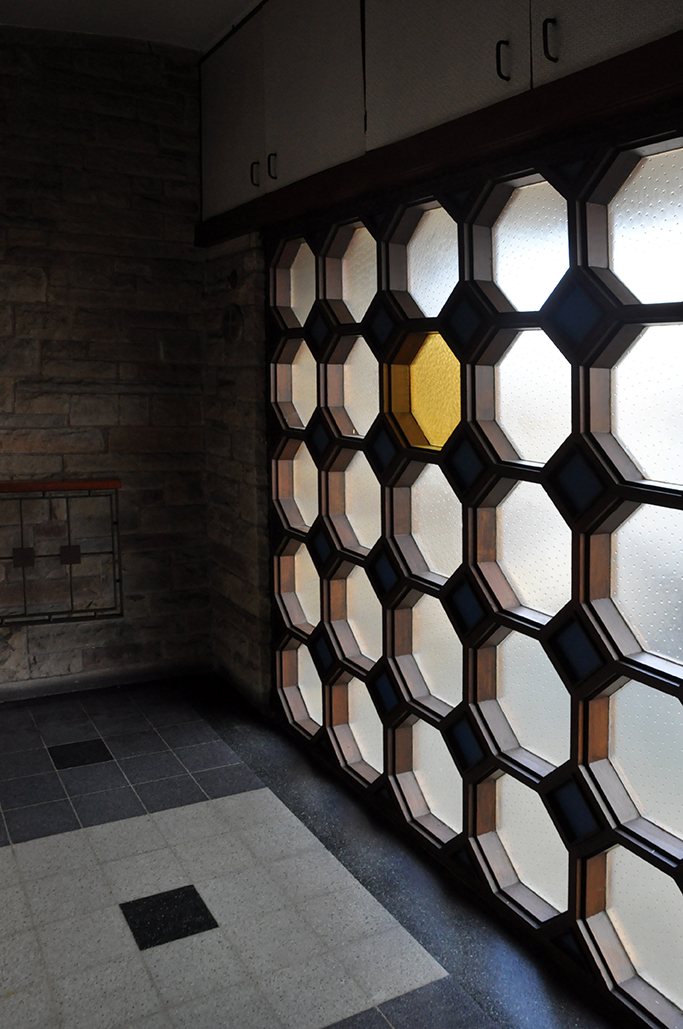
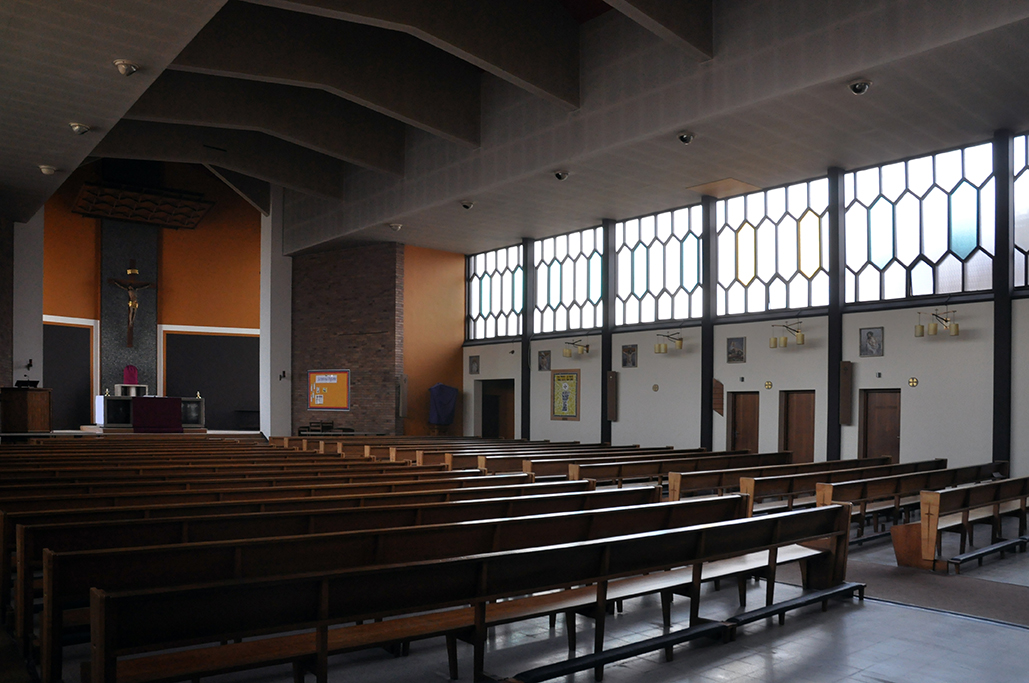
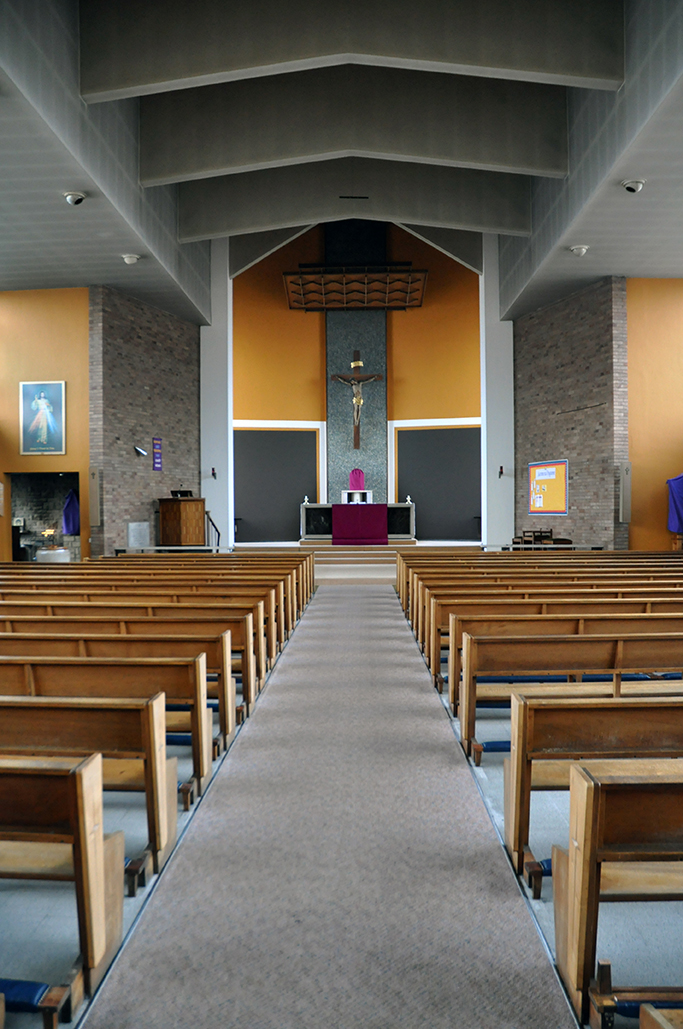
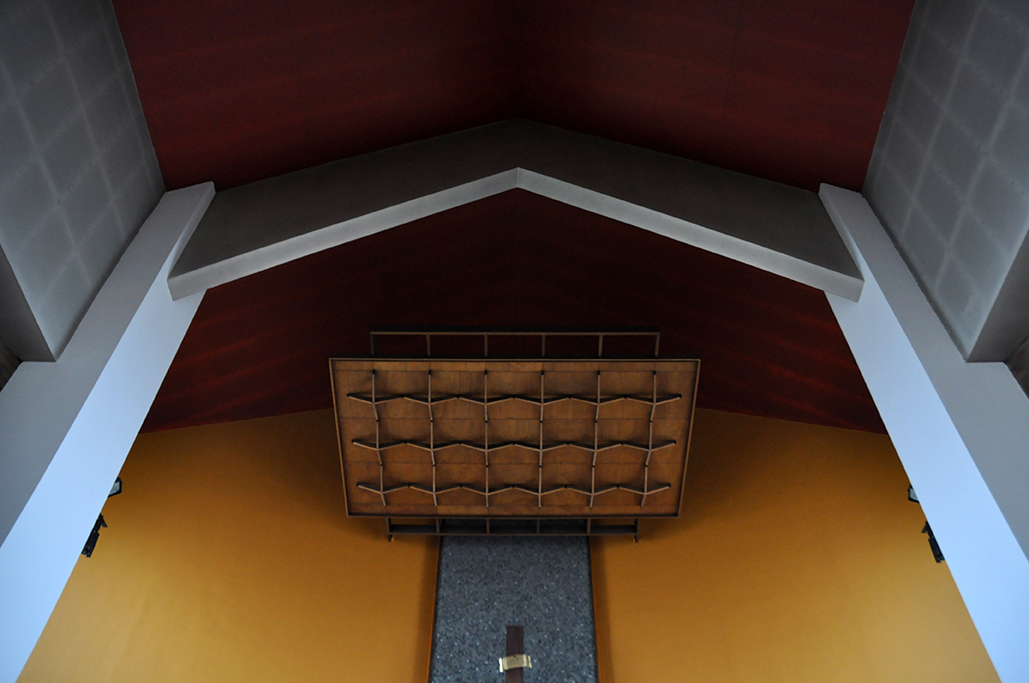
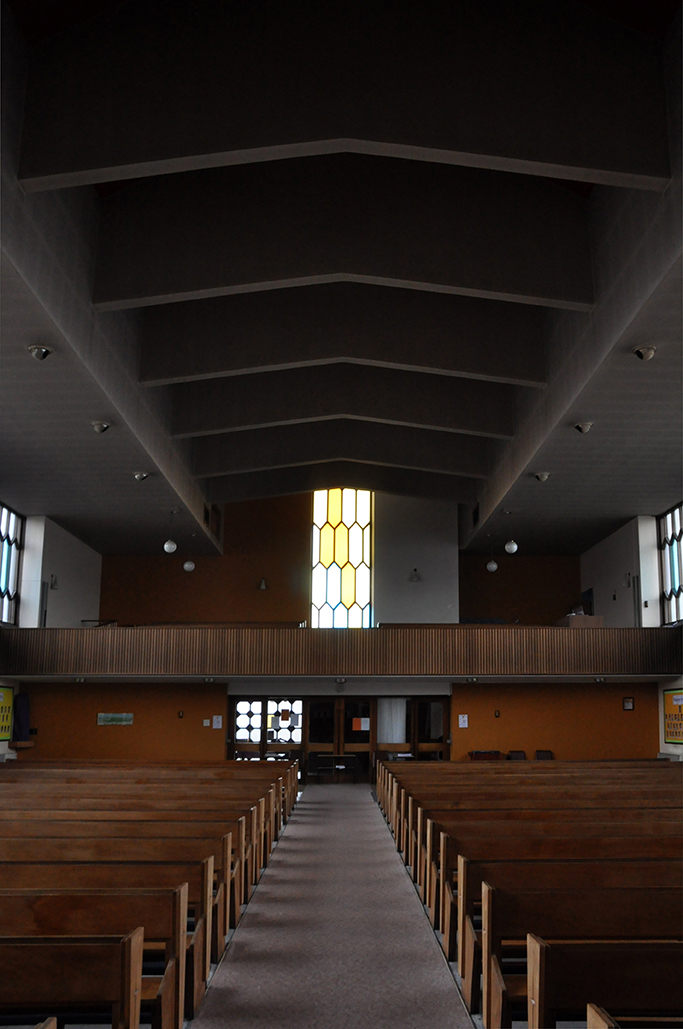
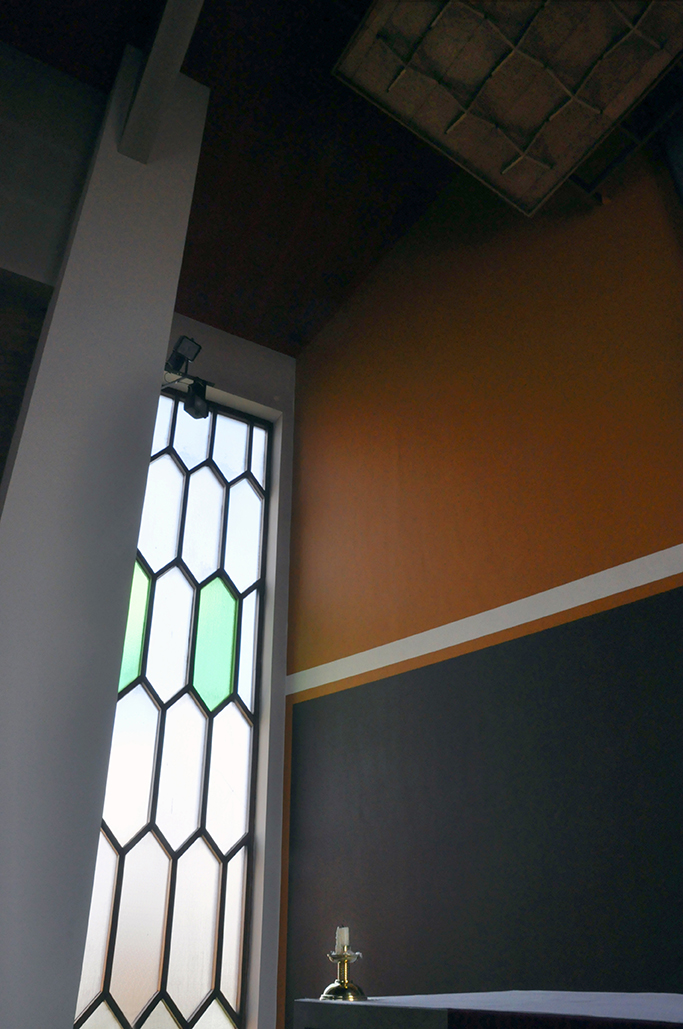
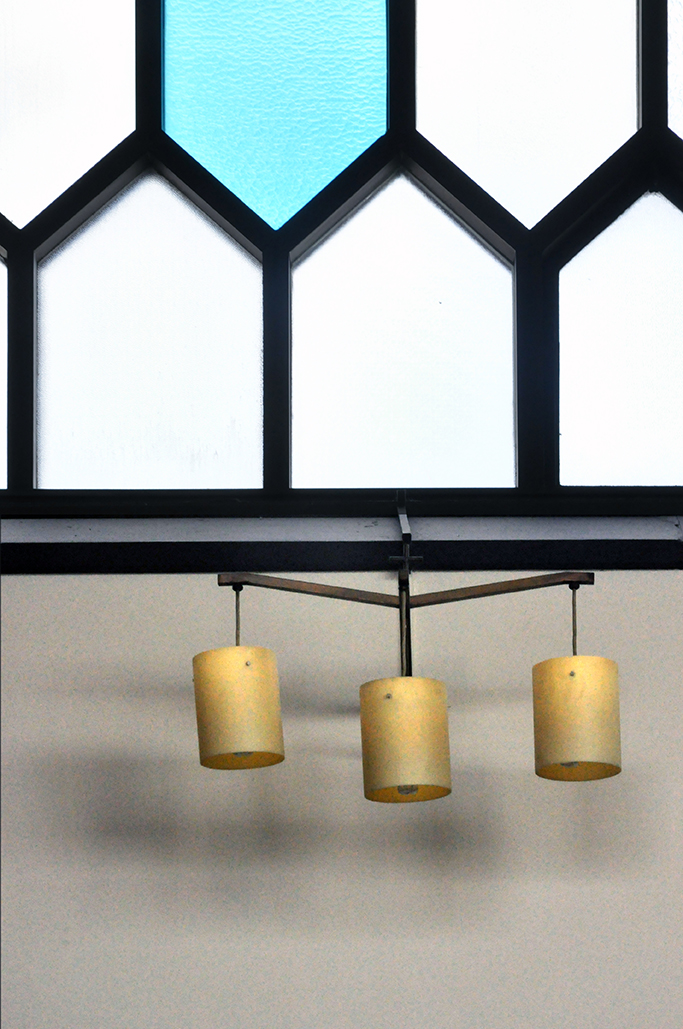
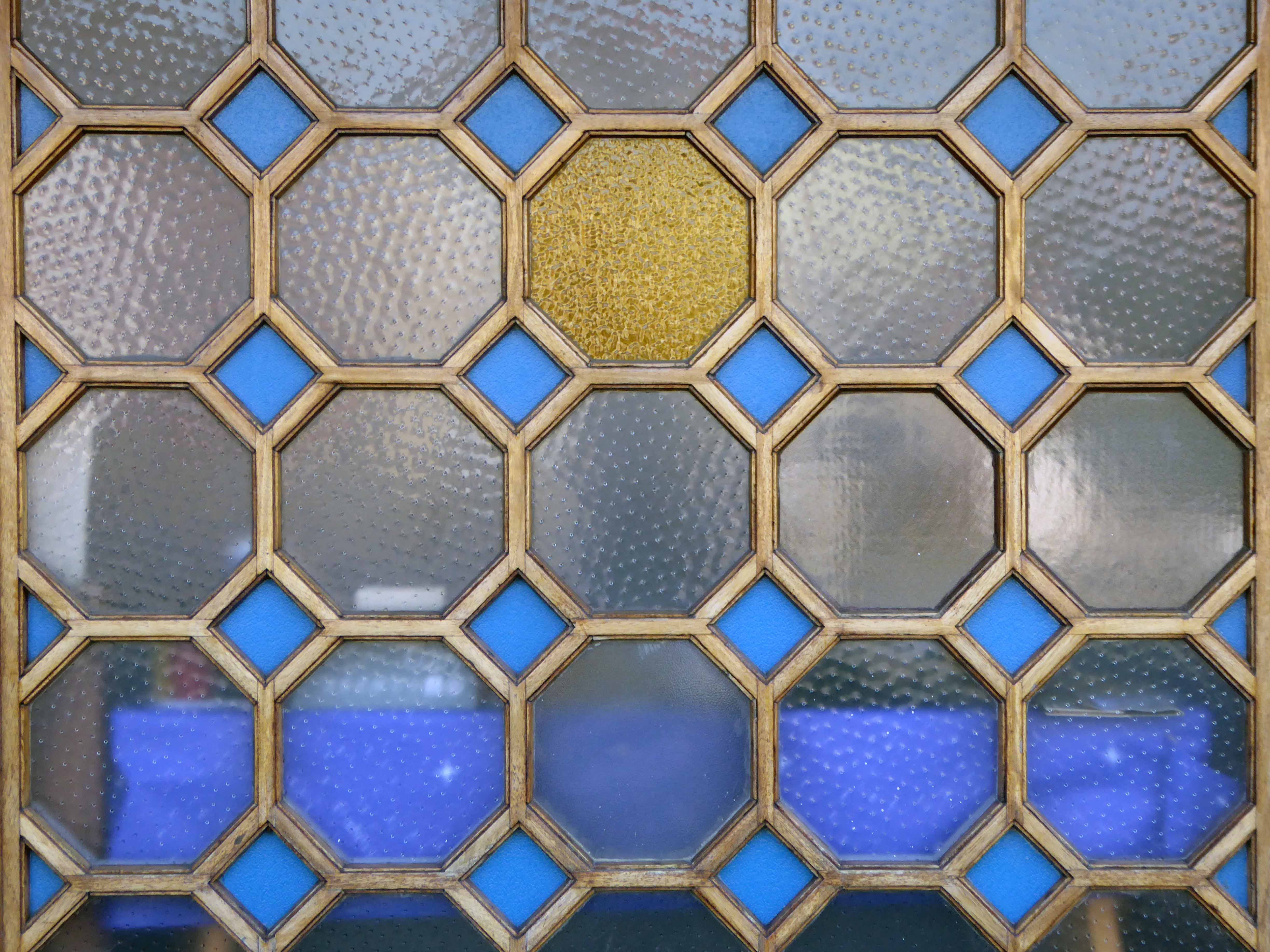
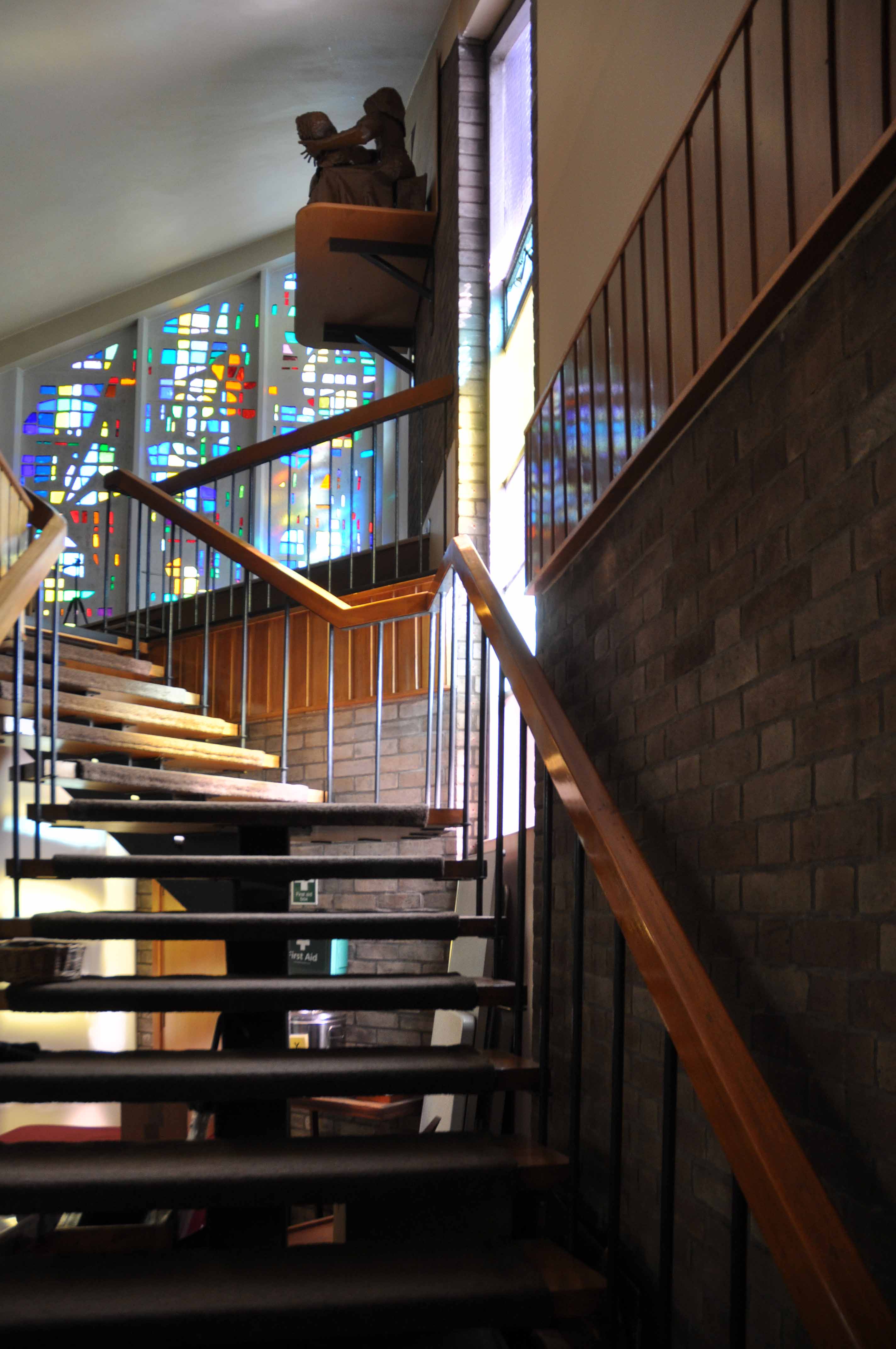
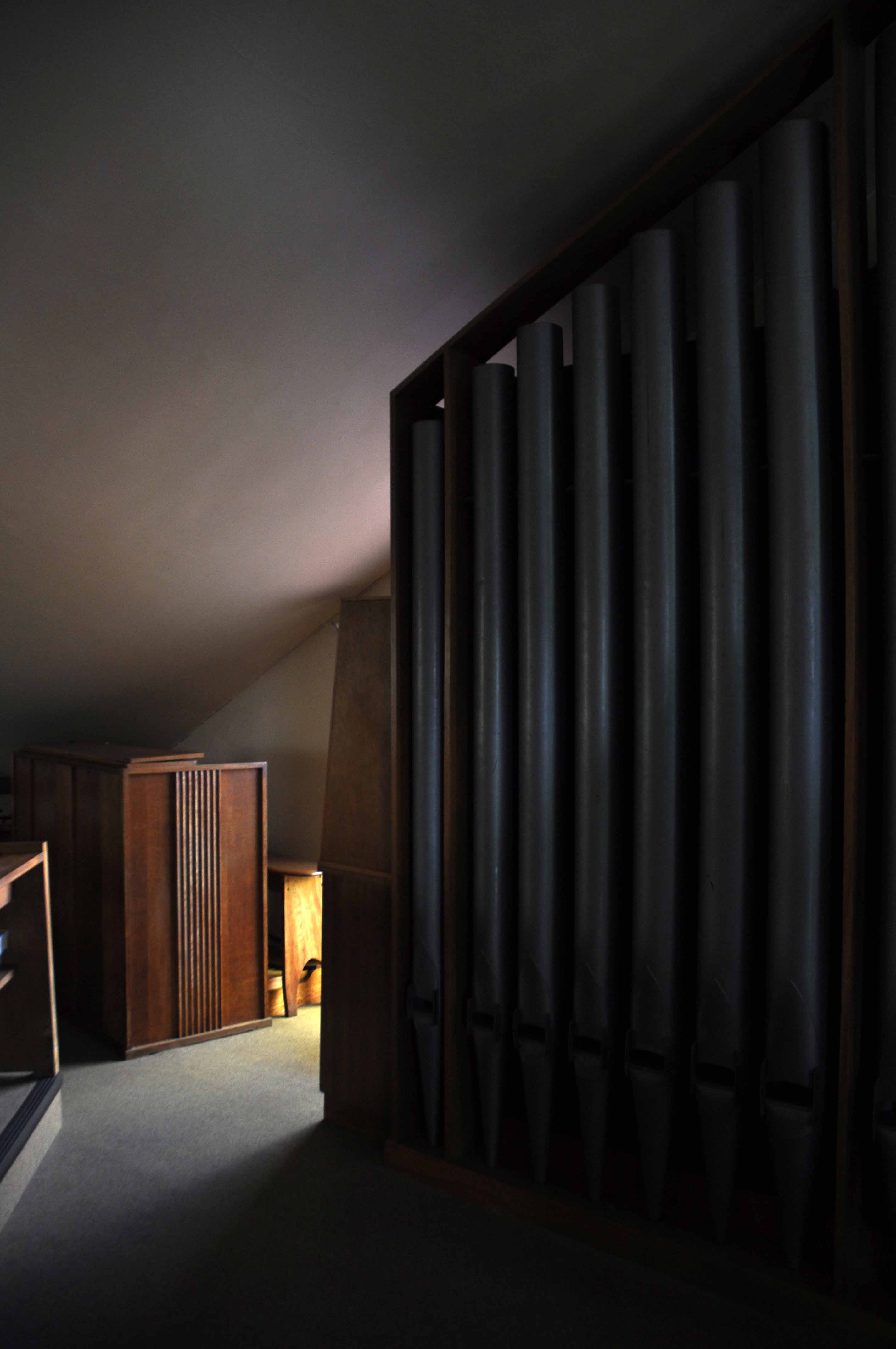
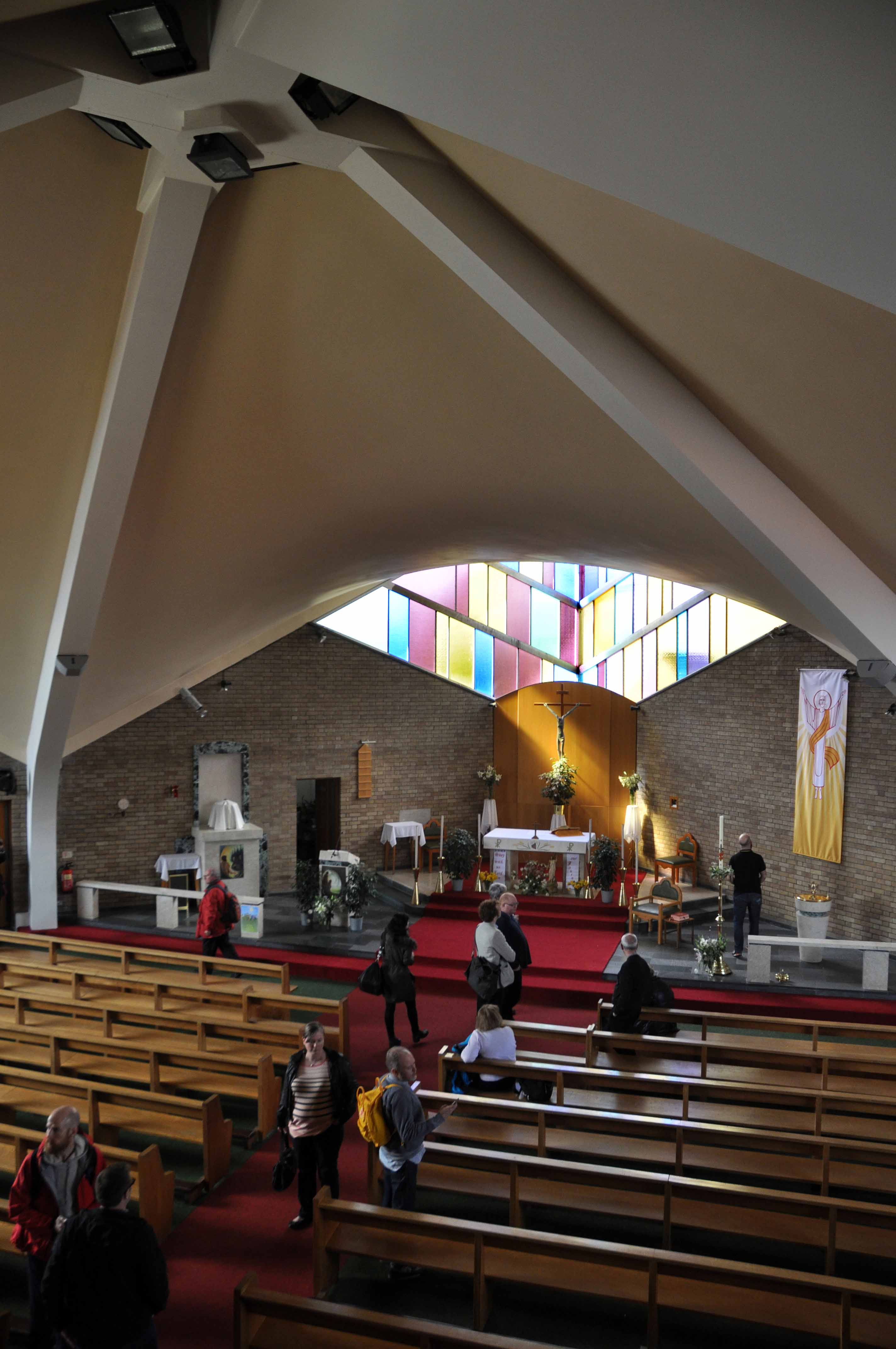
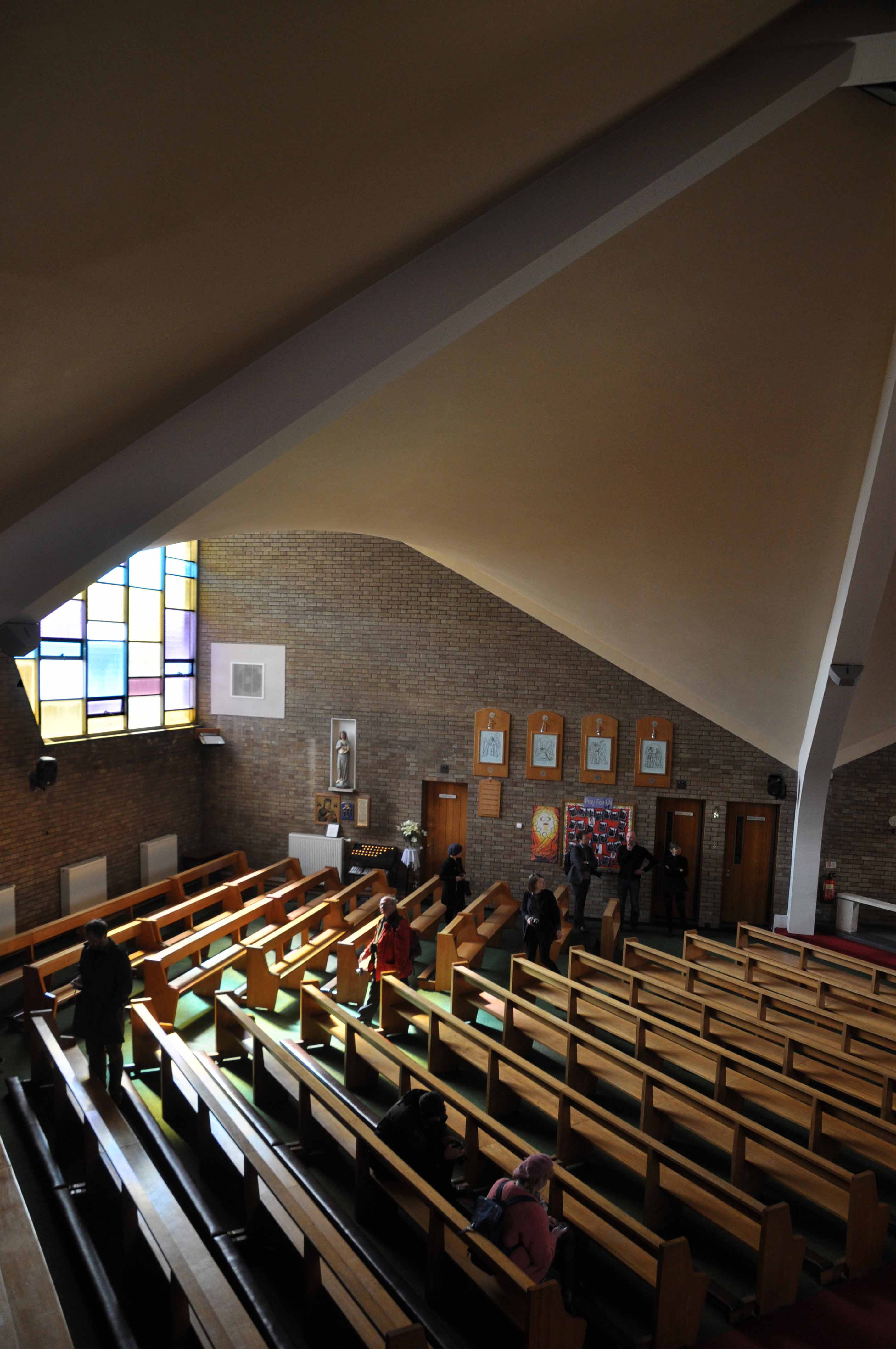
Thanks to Father Tierney for his time and permission to snap the interior. It was a calm space, the large open volume side lit by high octagonal honeycomb modular windows. The elegant plain pitched concrete gambrel roof beams a simple engineered solution.
The church and attached presbytery were built from designs by Greenhalgh & Williams in 1958-9, the church being consecrated on 12 May 1960. A reordering took place, probably in the 1960s or 70s, when the altar rails were removed and the altar moved forward. Probably at the same time, the font was brought into the church from the baptistery.
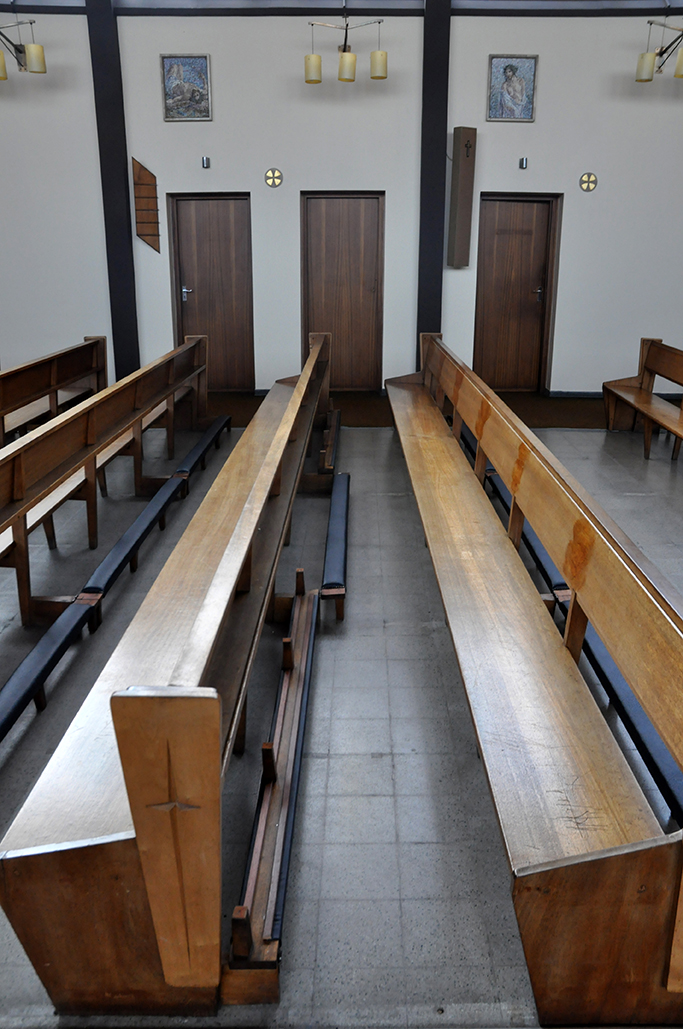
The altar and apse beautifully restrained in colour form and choice of materials. The design and detailing on the pews so warm and understated.
I was loathe to leave.
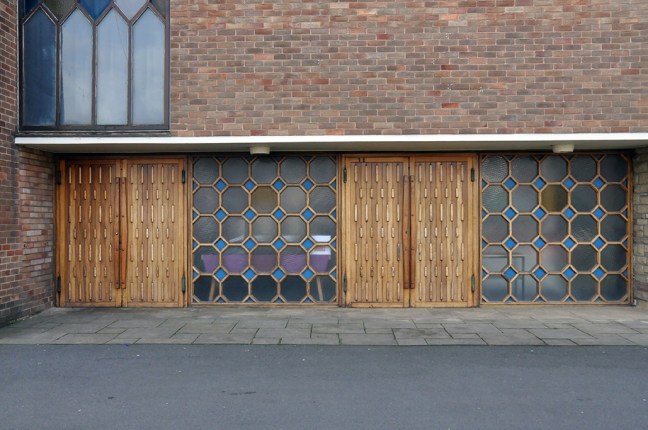
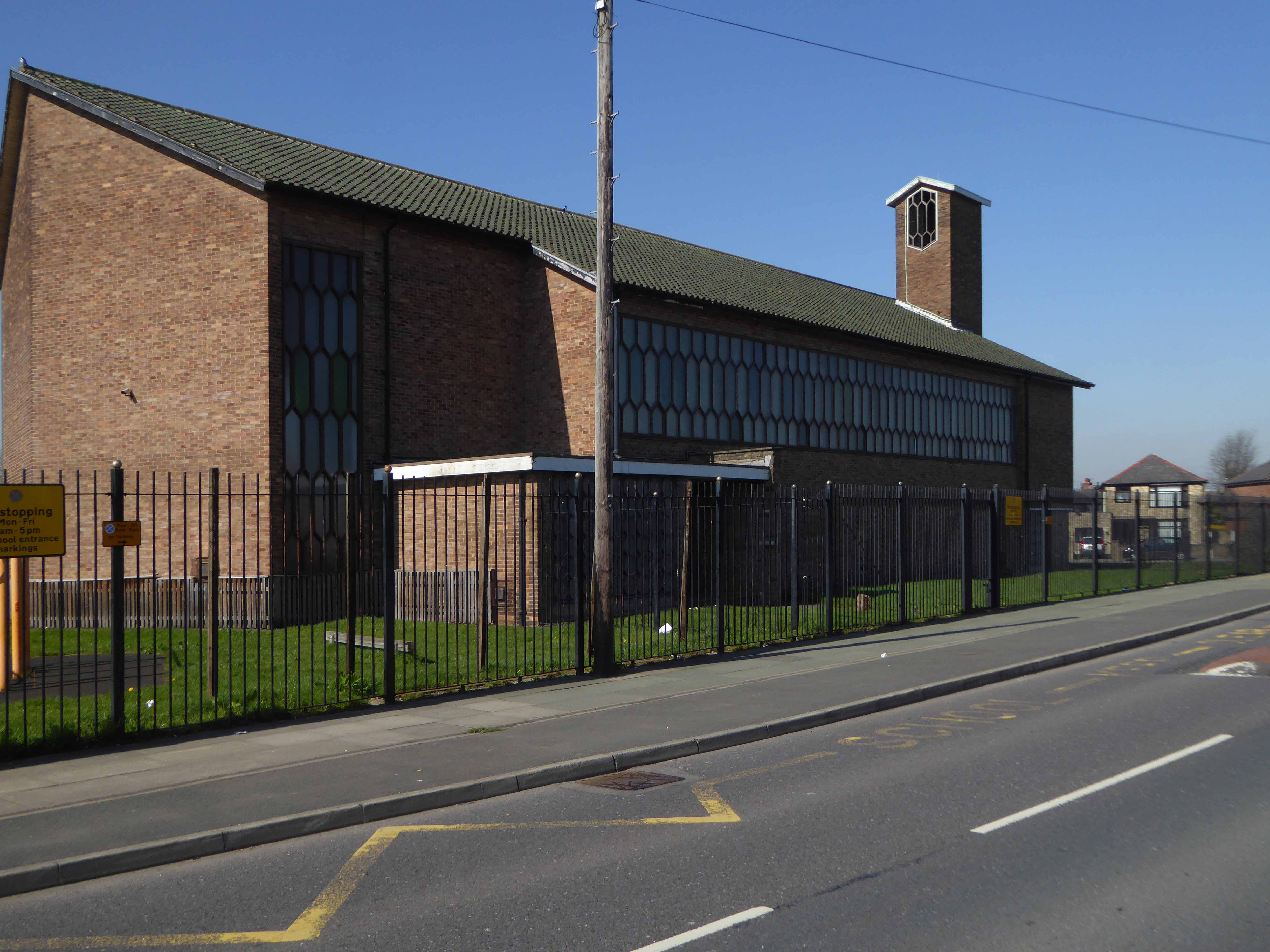
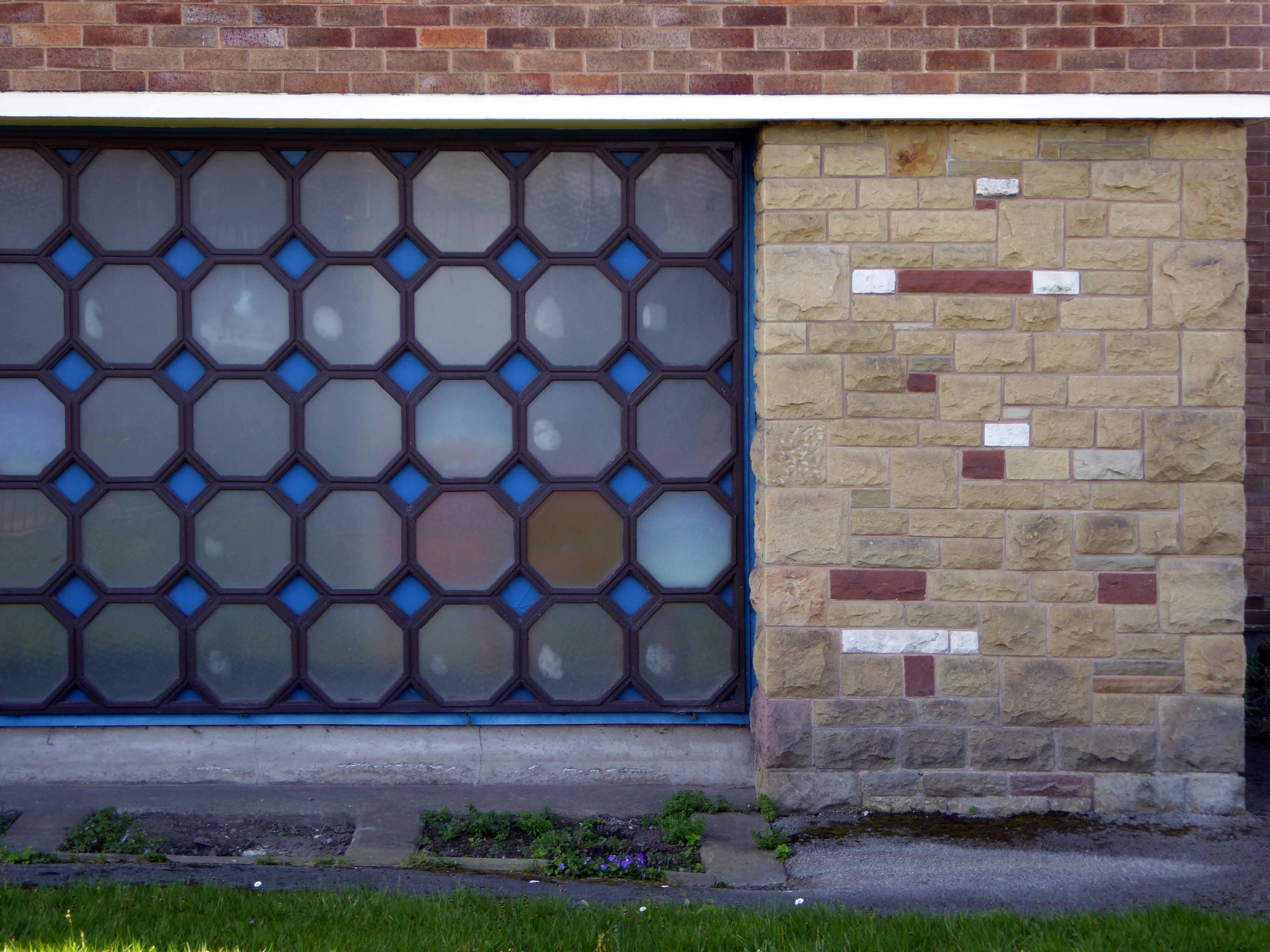
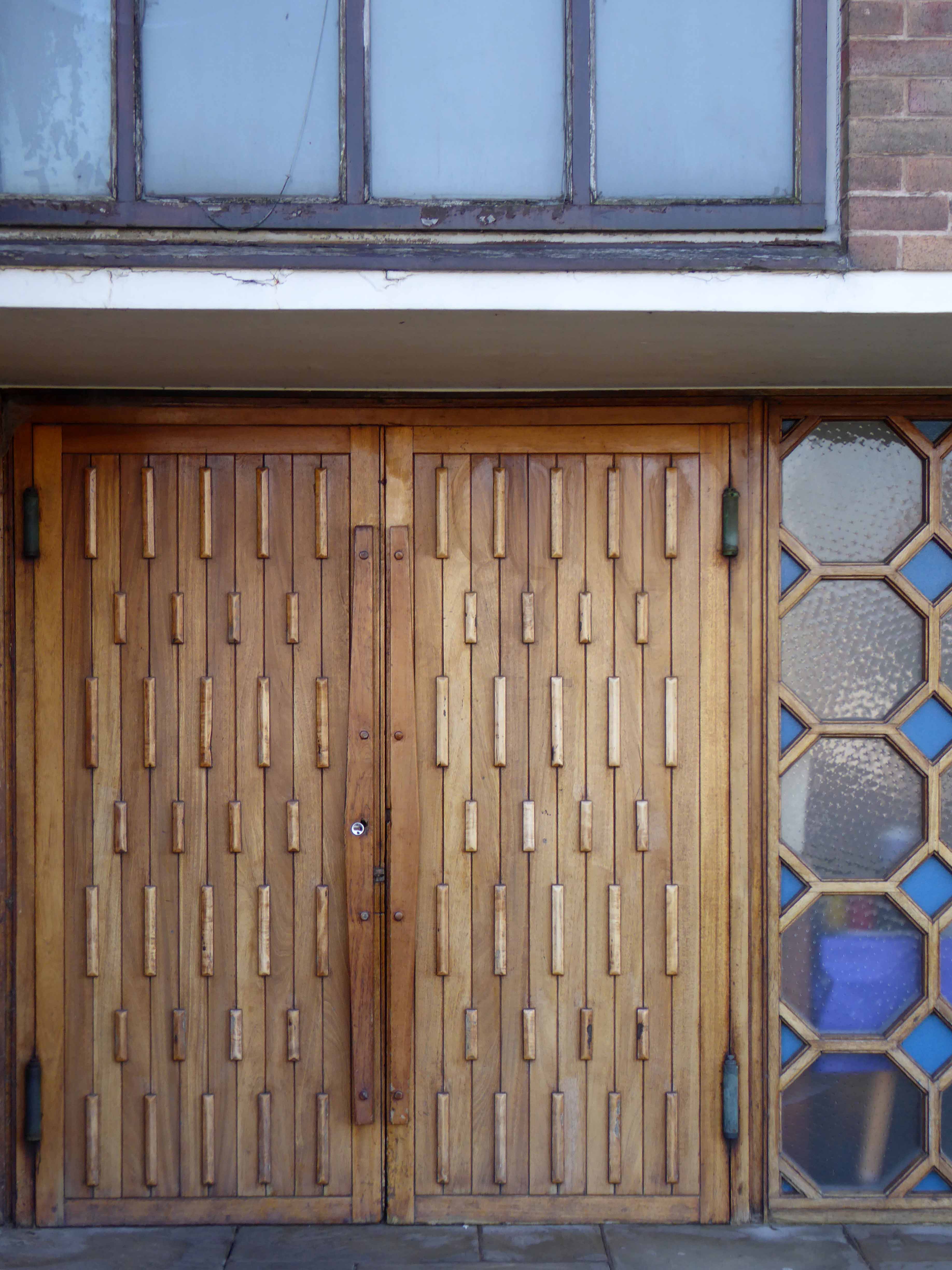
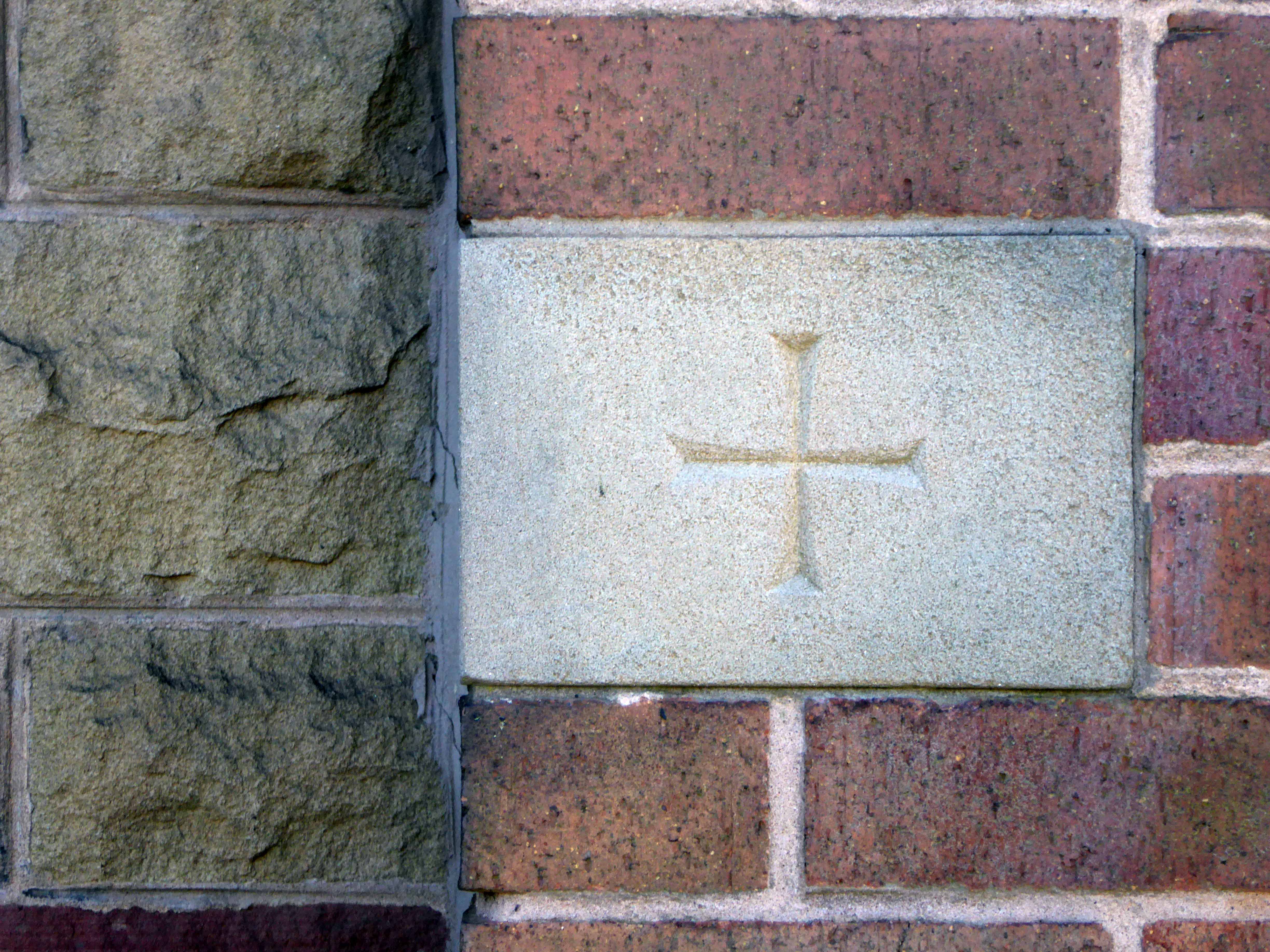
The exterior does not disappoint, the repetition of modular window shapes, the integration of doors, brick and mixed stone facing.This is a building of elegant grandeur, well proportioned, happily at home in its setting.
Go West, young man, go West. There is health in the country, and room away from our crowds of idlers and imbeciles.
So said Horace Greeley, I beg to differ.
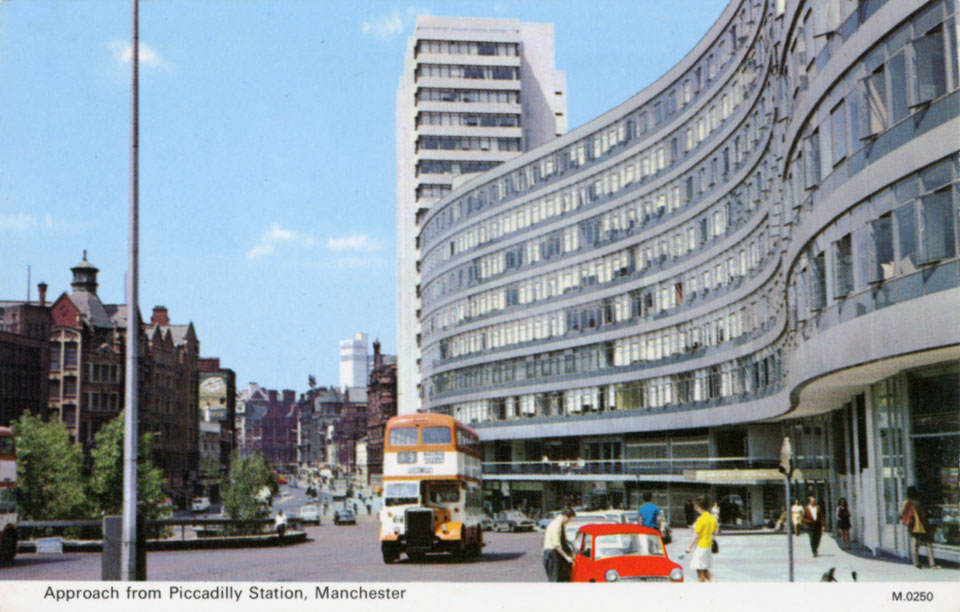
Here we are vaguely on the western side of Manchester, with very little by way of room, just acres of architecture – mostly modern.
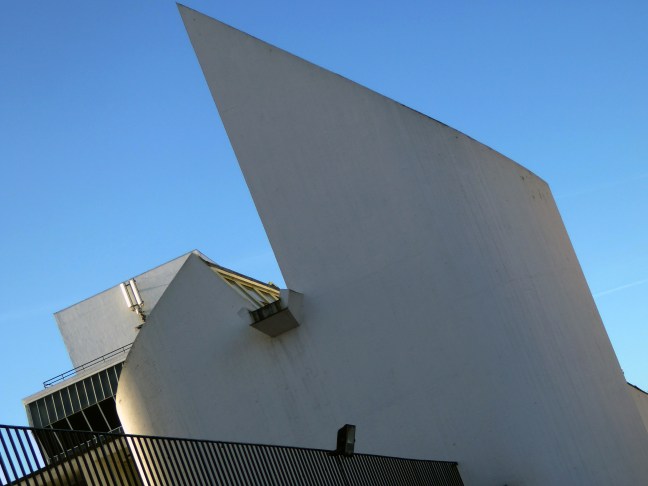
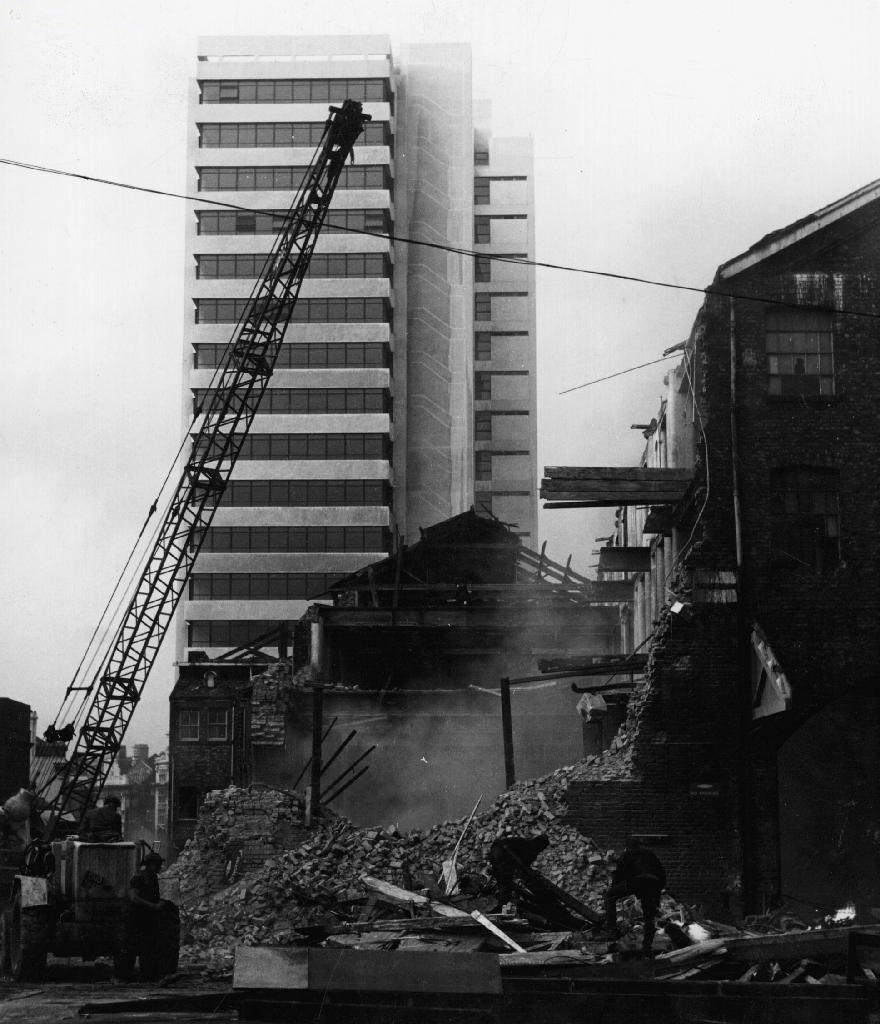
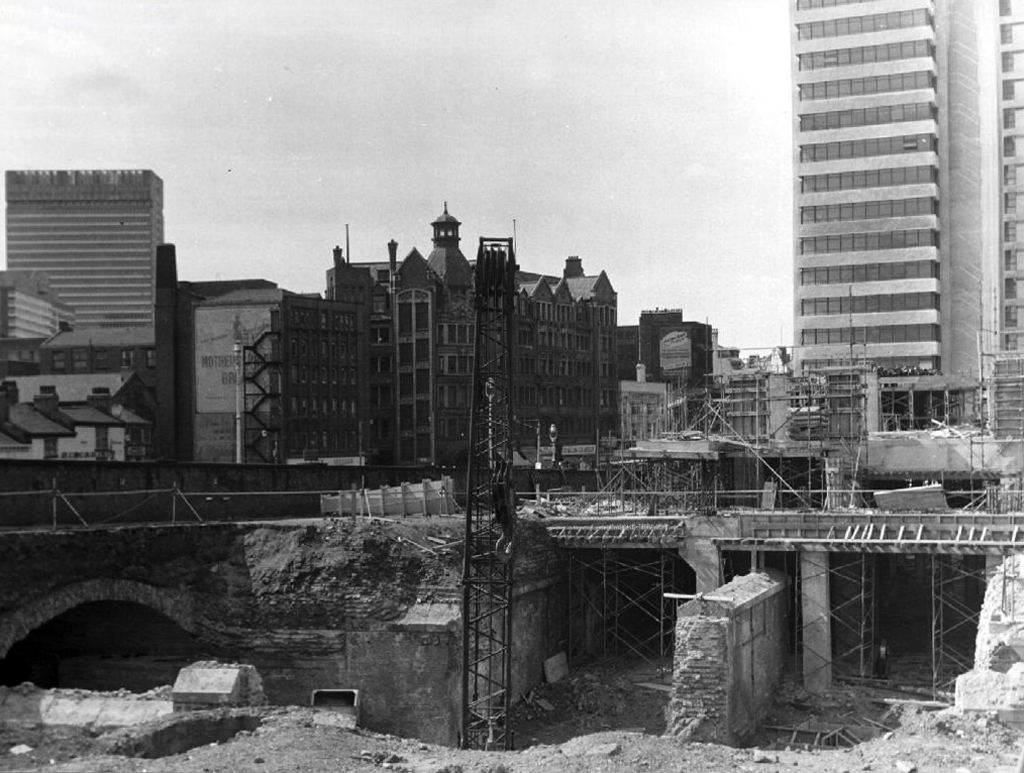
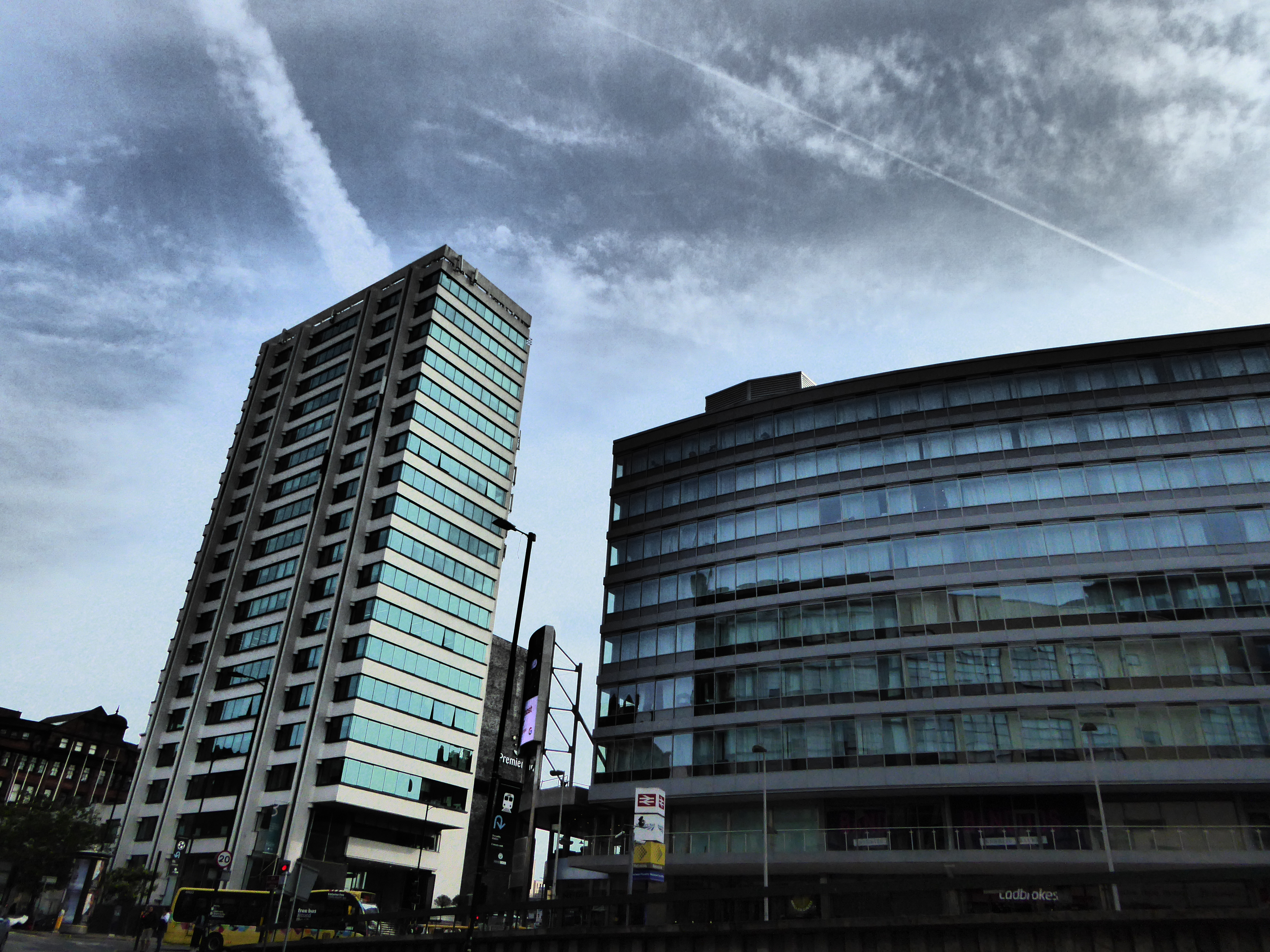
Standing by Rodwell Tower 1965 Douglas Stephen & Partners, a highly appropriate high-rise exclamation mark at the end the Lazy S. Four distinct faces, facing four different ways, currently trading as 111 Piccadilly.
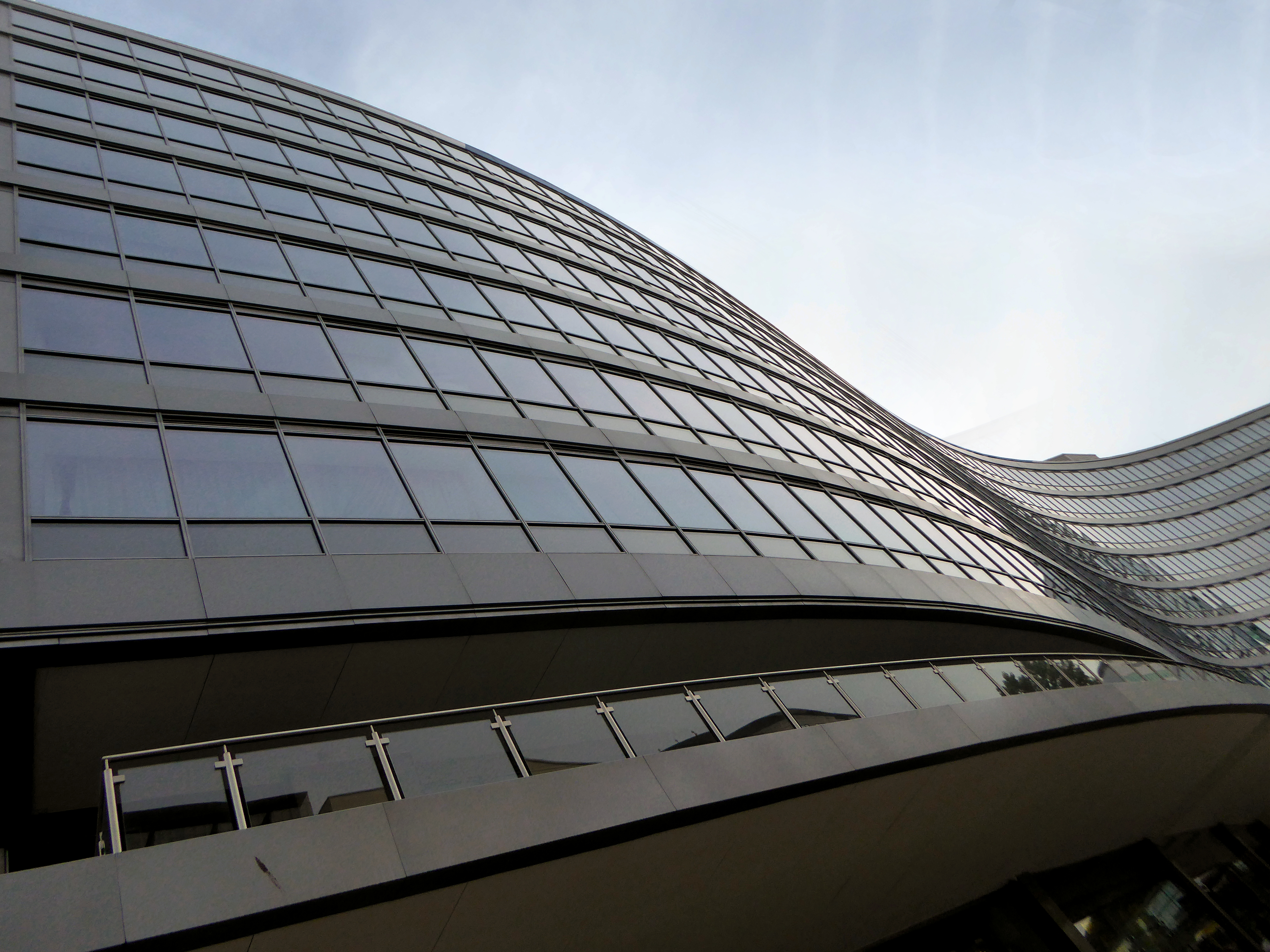
It can be seen here as the demolition takes place, preparing for a new arrival on the approach to Piccadilly Station.
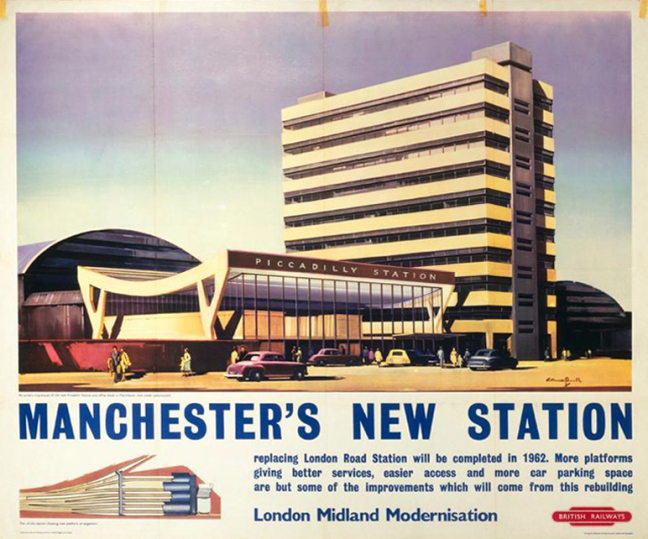
An extravagant concrete, steel and glass swish, both welcoming and waving farewell to the weary rail traveller. Changes of use have taken place, retail has been and gone, now a modern mash-up of grub and stuff, above there’s an Apart Hotel.
Sadly the planned moderne station never really arrived.
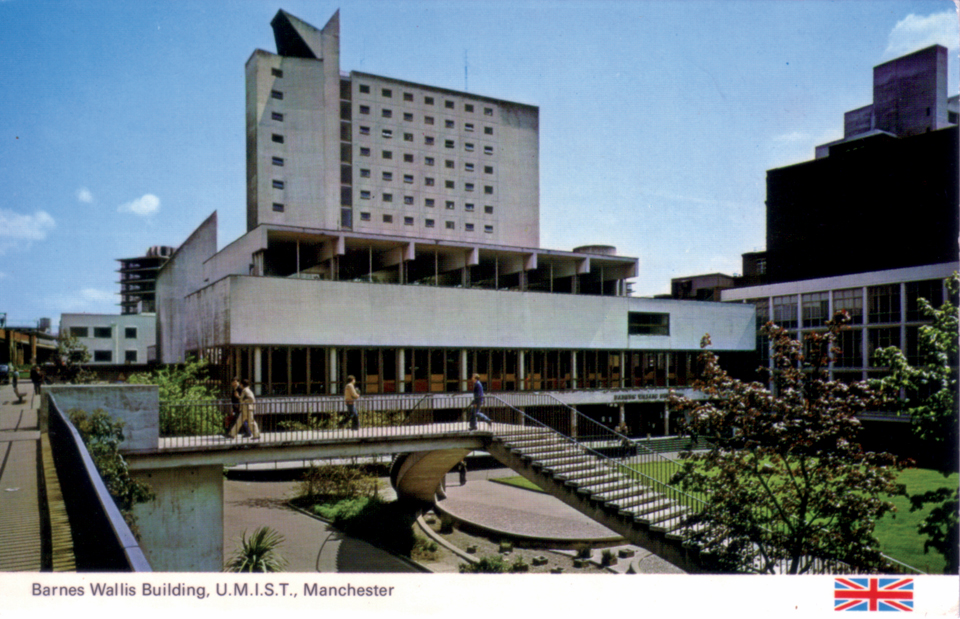
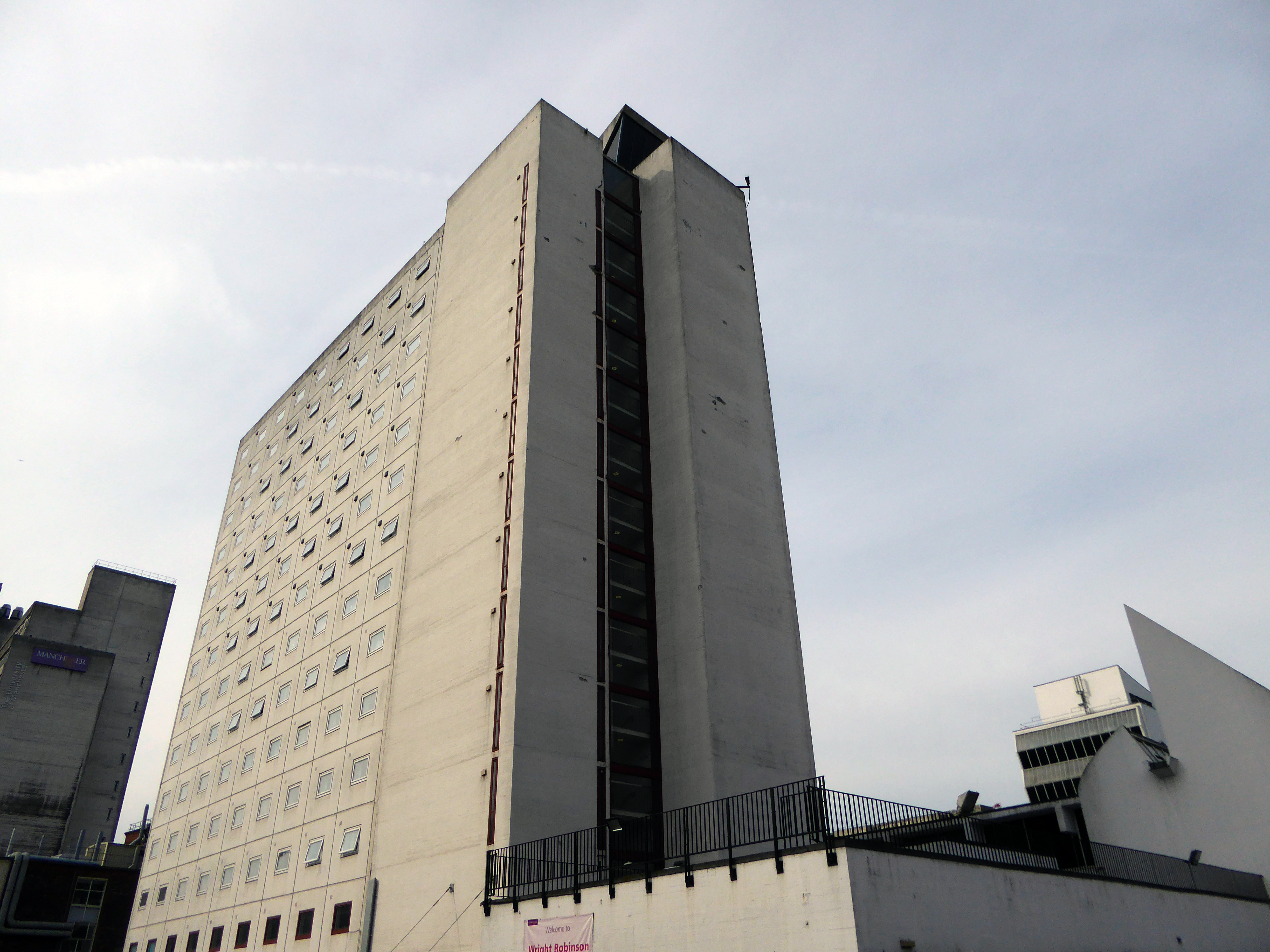
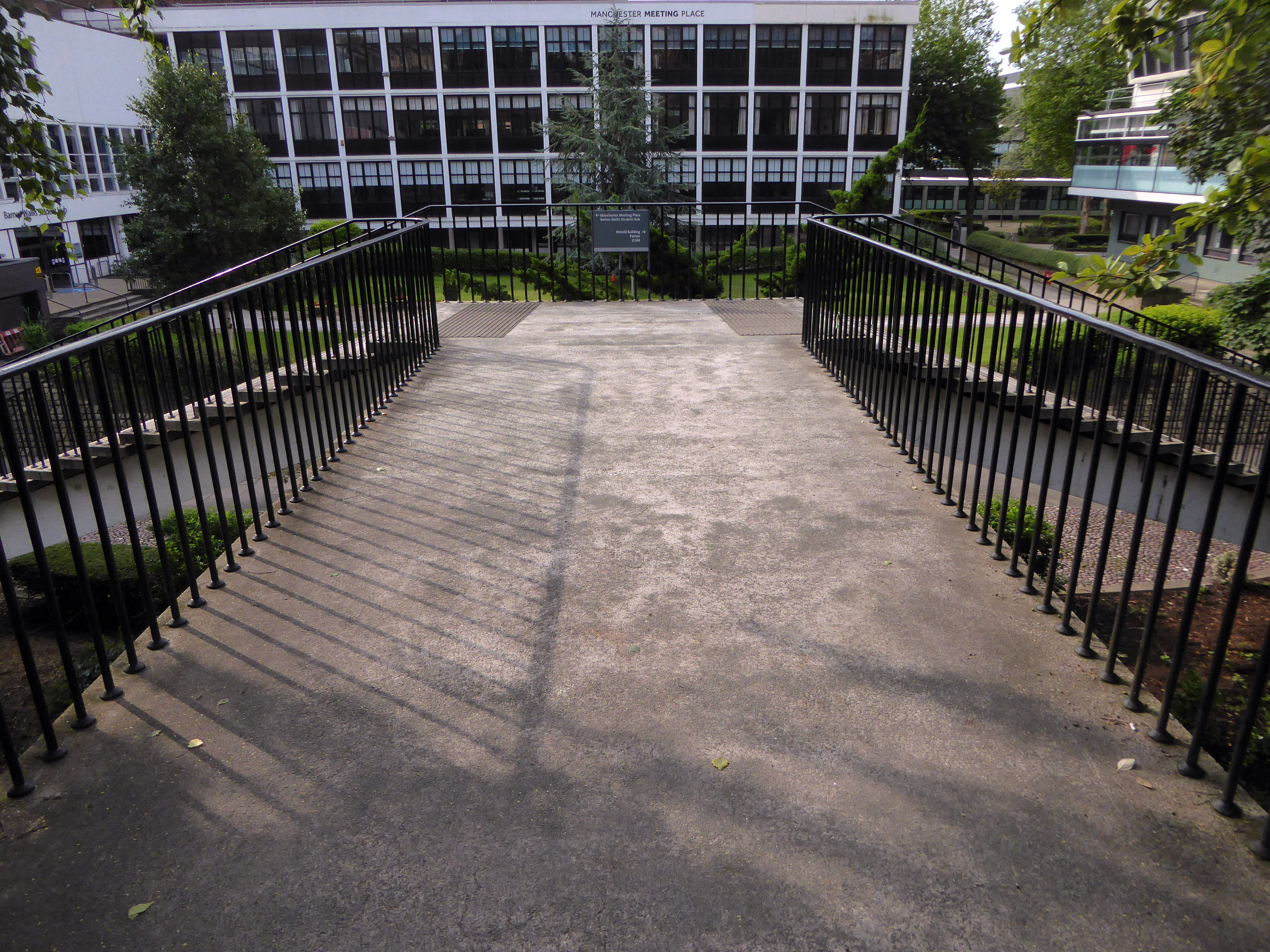
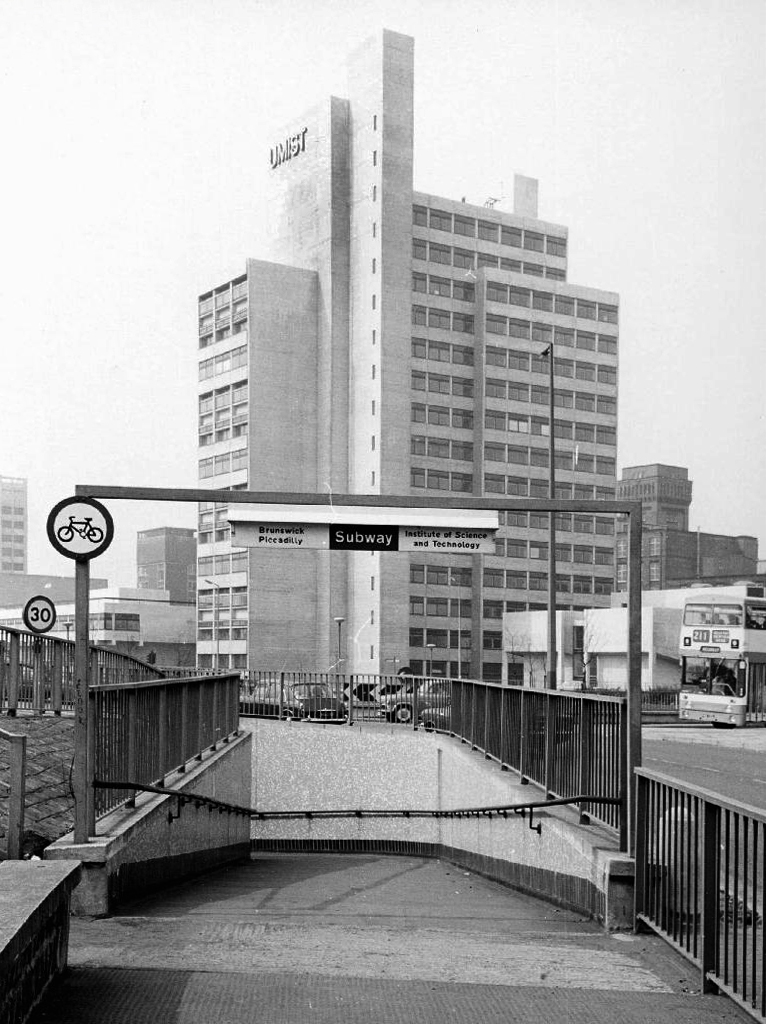
Moving on down the road a ways in search of an education, we encounter the UMIST Campus 1962-68 Cruikshank and Seward.
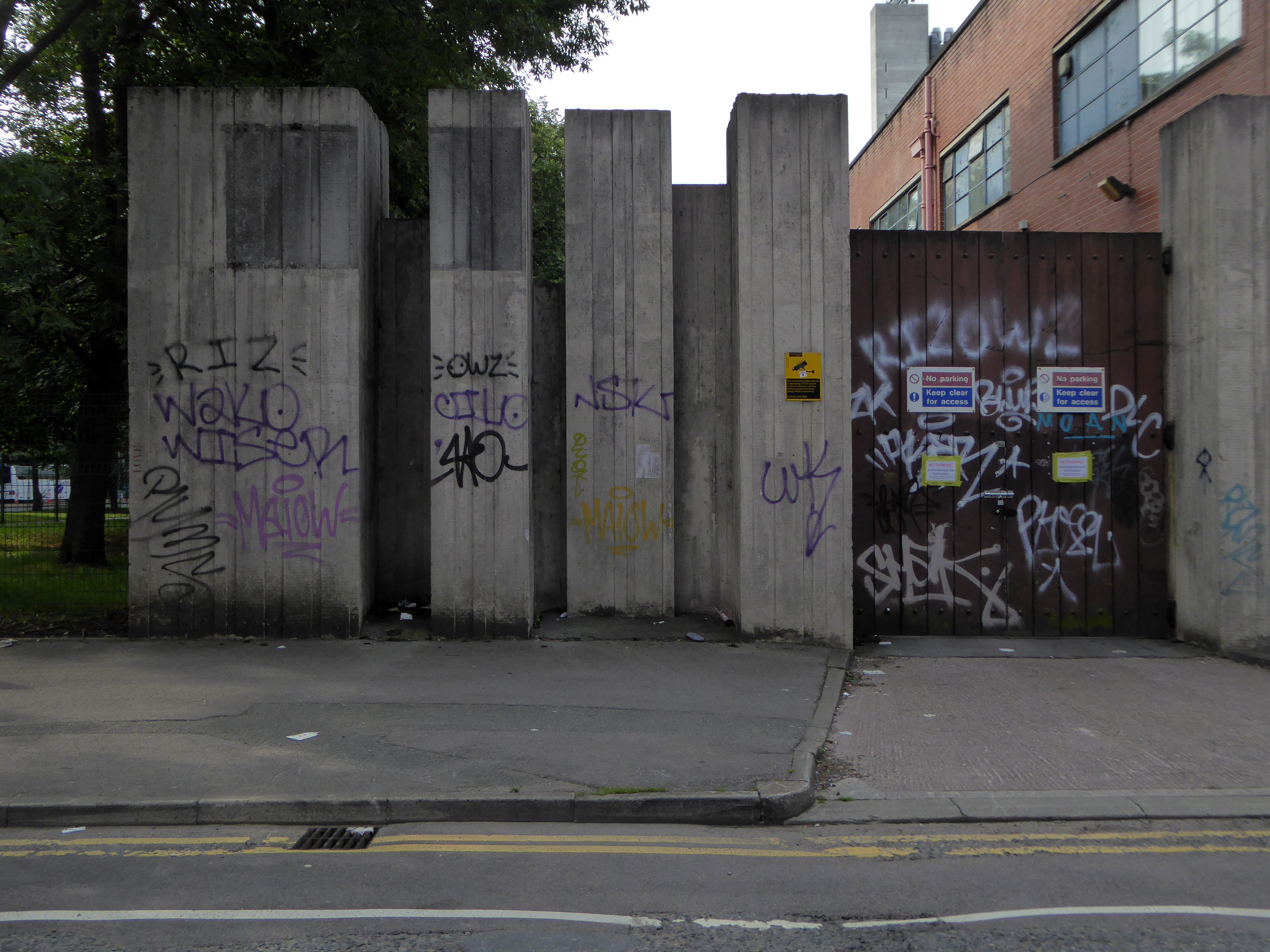
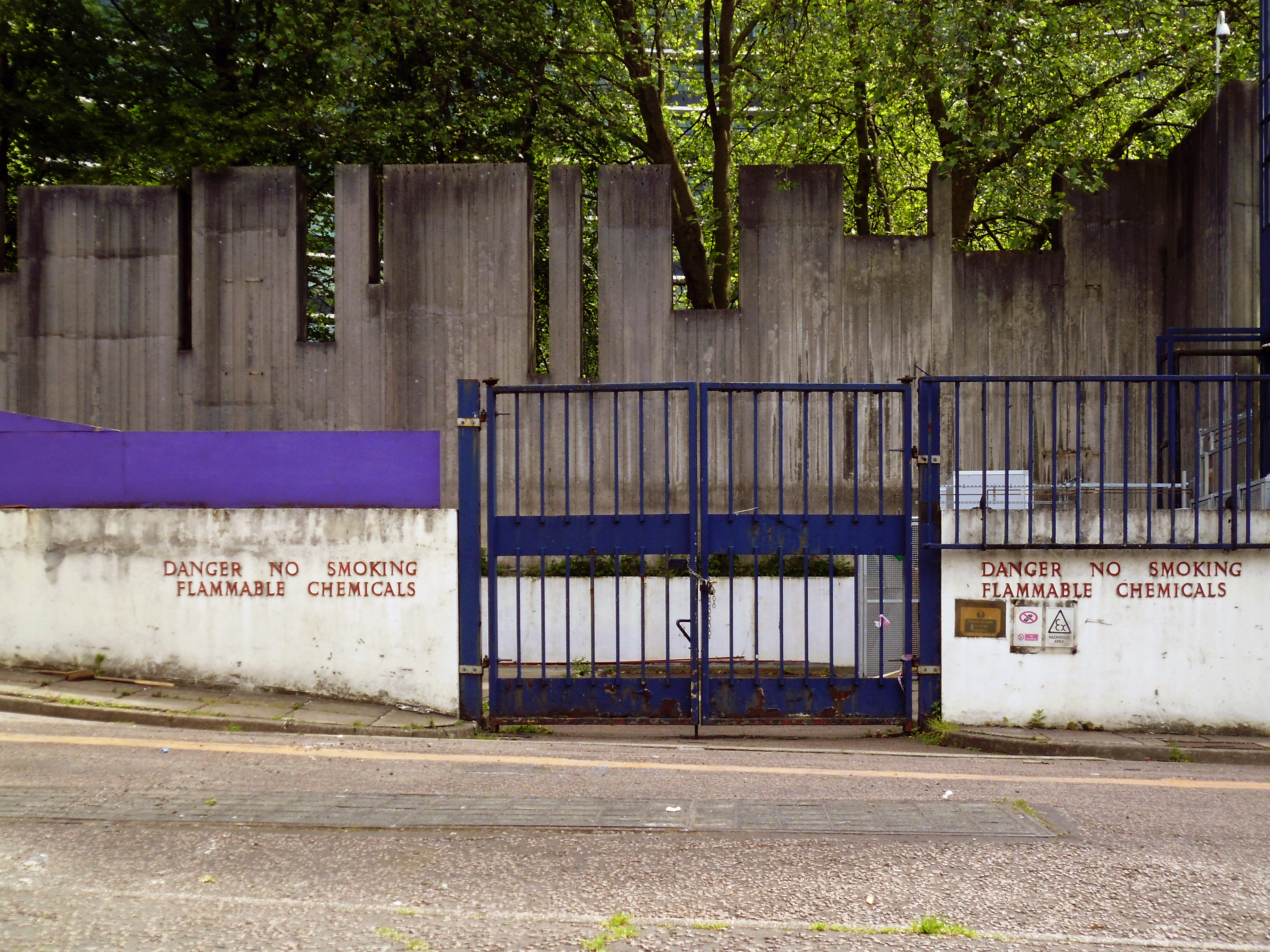
But first we hit a concrete, not brick, a concrete wall, a barrier with a barrier, encased in green metal mesh, shrouded in leafy trees.
Renold Buildingdesigned by W. Arthur Gibbon of Cruickshank and Seward. It was one of a suite of white concrete structures on the UMIST campus in Manchester. It was the first of its type in the UK – an entire building to house lecture theatres and seminar rooms.
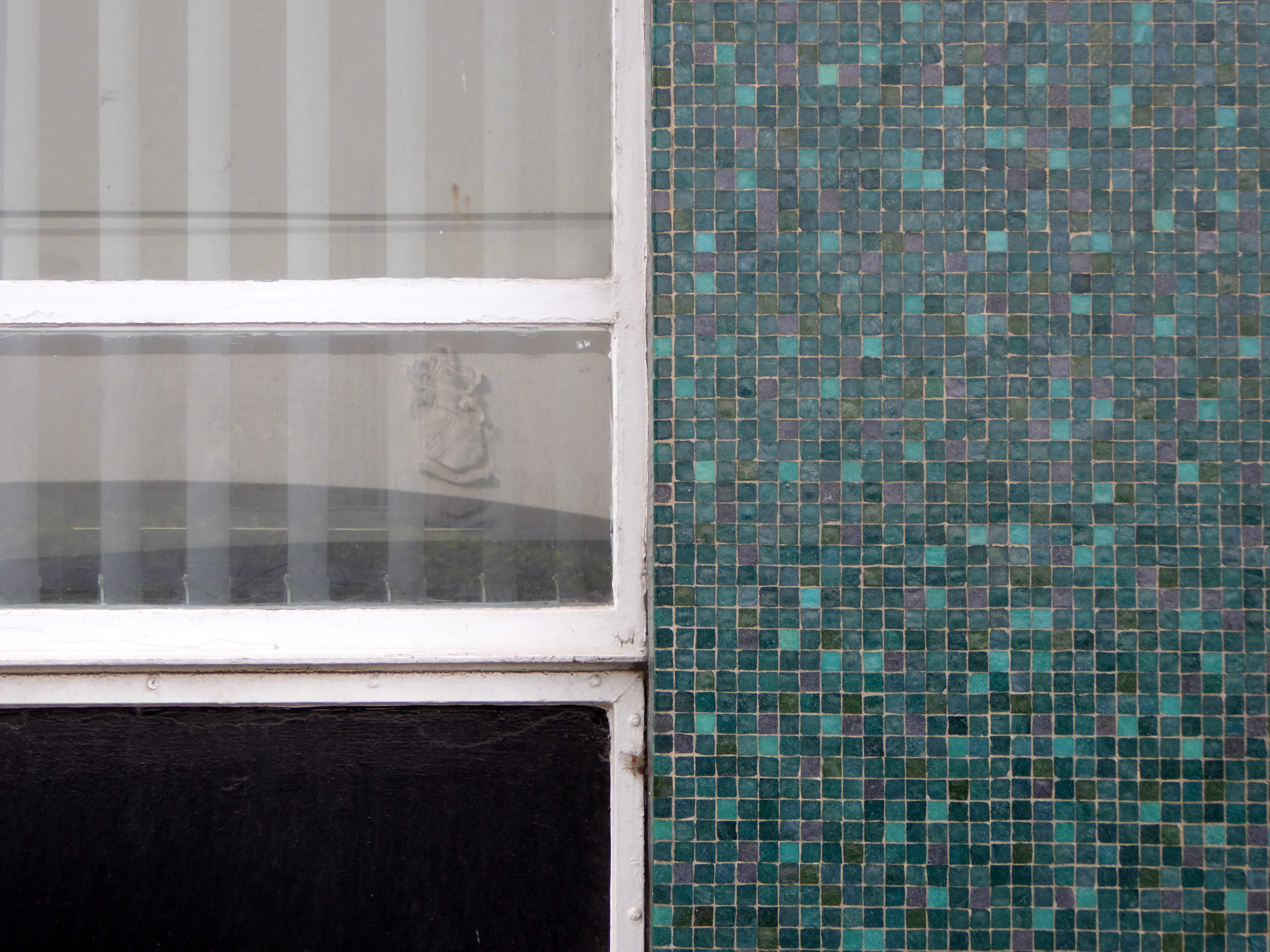
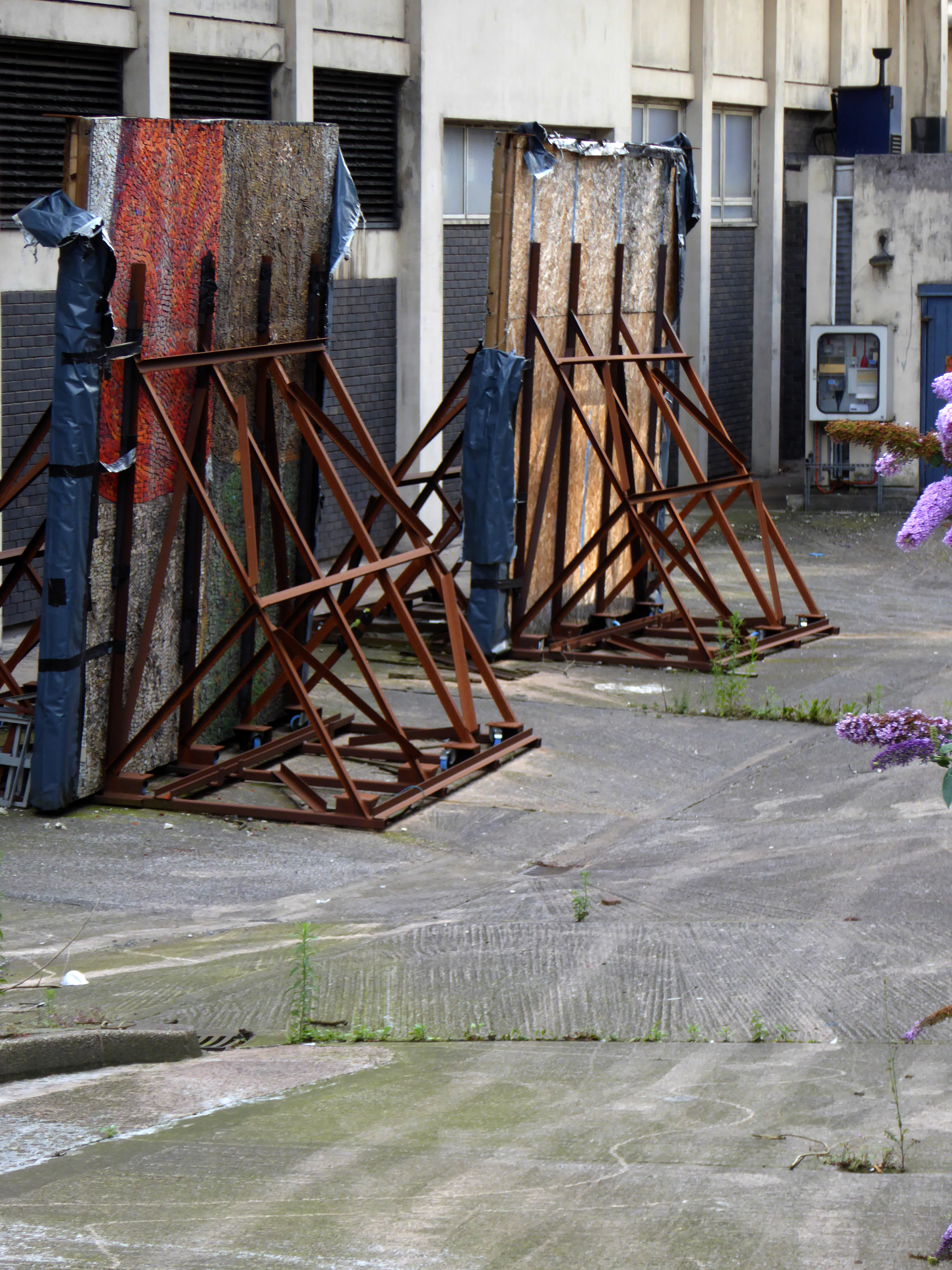
Gone is the low lying Chemistry Building – it’s mosaics now almost hidden in intemperate storage at the base of the Faraday Building.
Works continue with the preparation for the construction of the new £60 million Graphene Engineering Innovation Centre GEIC and the demolition of the Faraday Undergraduate Building and link bridge on the North Campus.
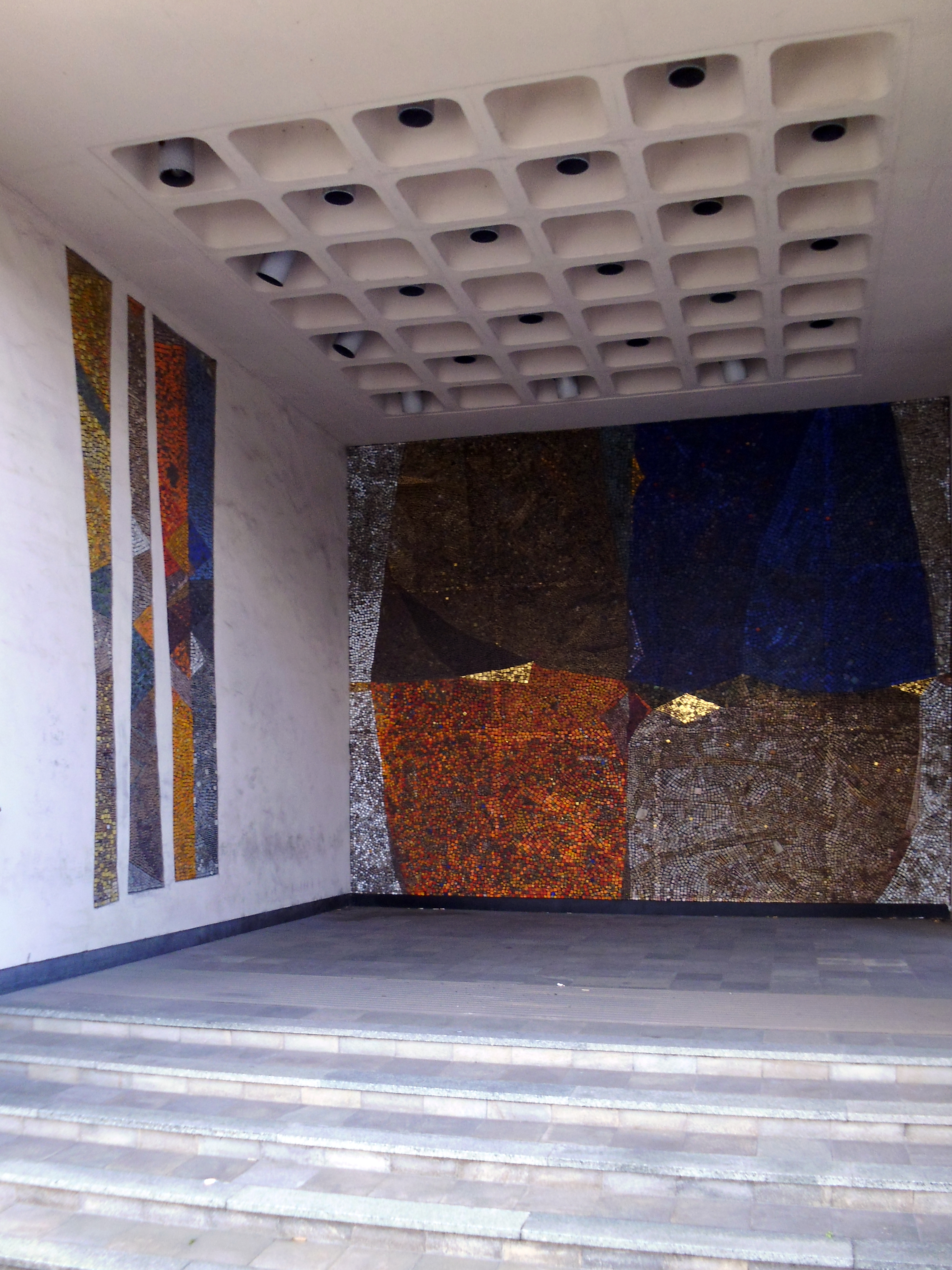
The mosaic, `The Alchemist’s Elements’, in the entrance colonnade, has now been safely removed from the building and are being stored securely on campus until the building works are complete.
On completion of the GEIC in late 2017, the 4.5m x 3m artworks will be permanently reinstated within the site for visitors to enjoy for years to come.
The mosaics were created by Hans Tisdall a German-born artist, illustrator and designer with a distinguished career in 20th century Britain. Following the Second World War, Tisdall became involved in the revival of public artworks within many educational and industrial buildings – one of which included the Faraday Building at UMIST.
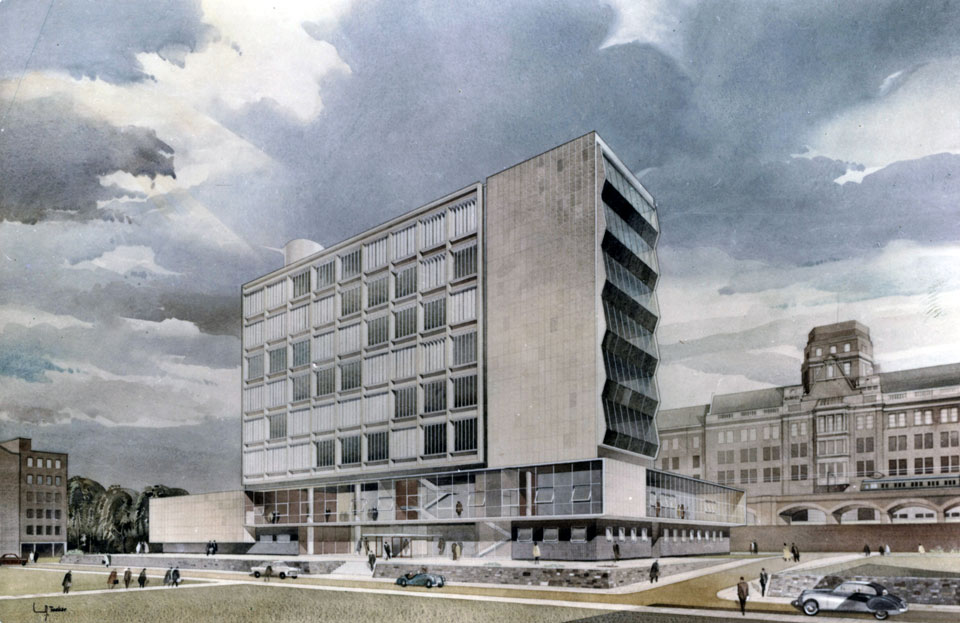
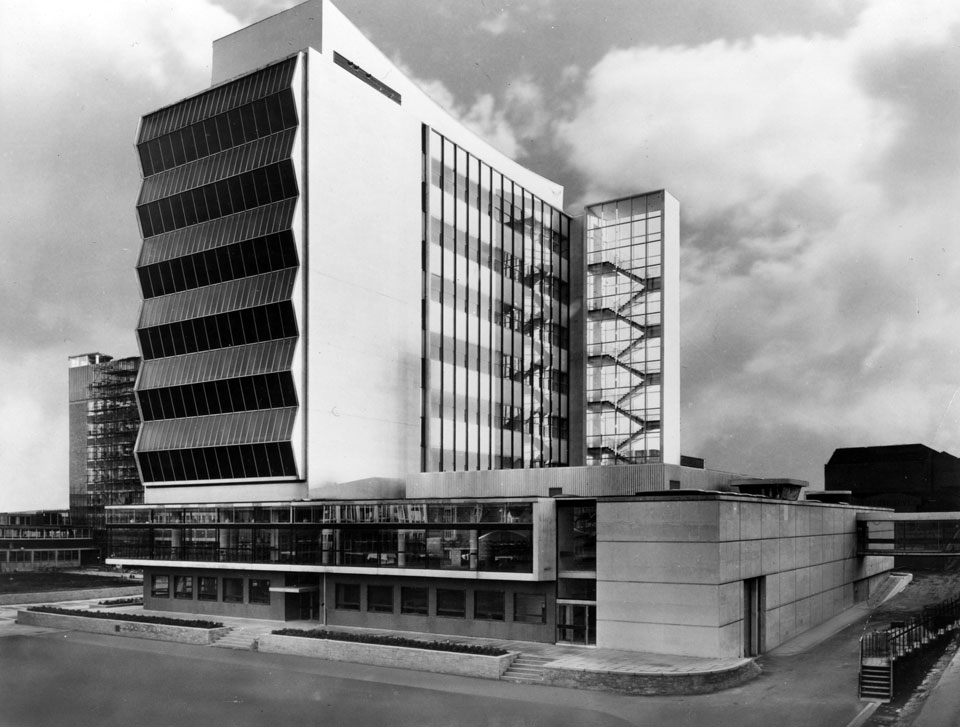
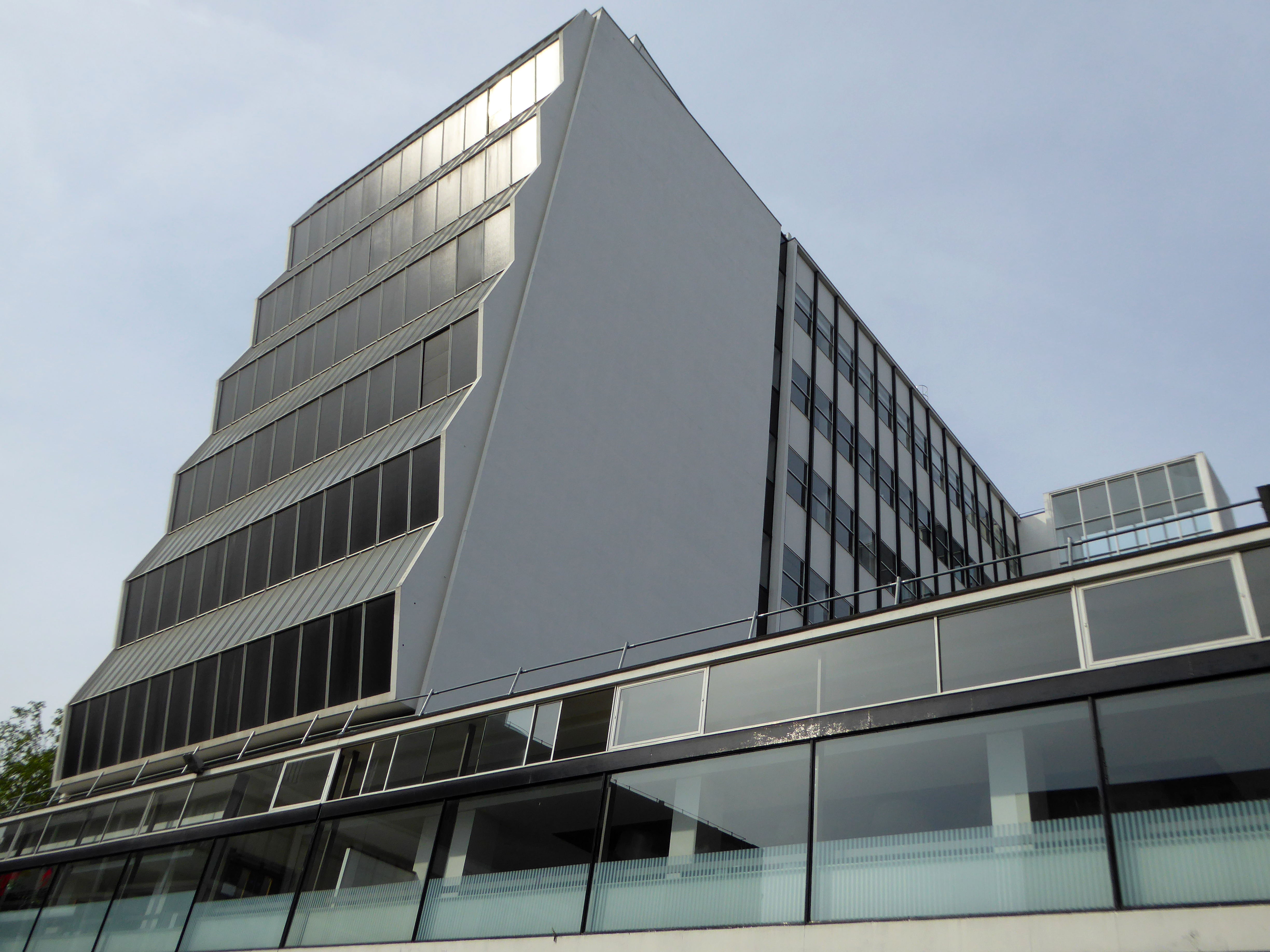
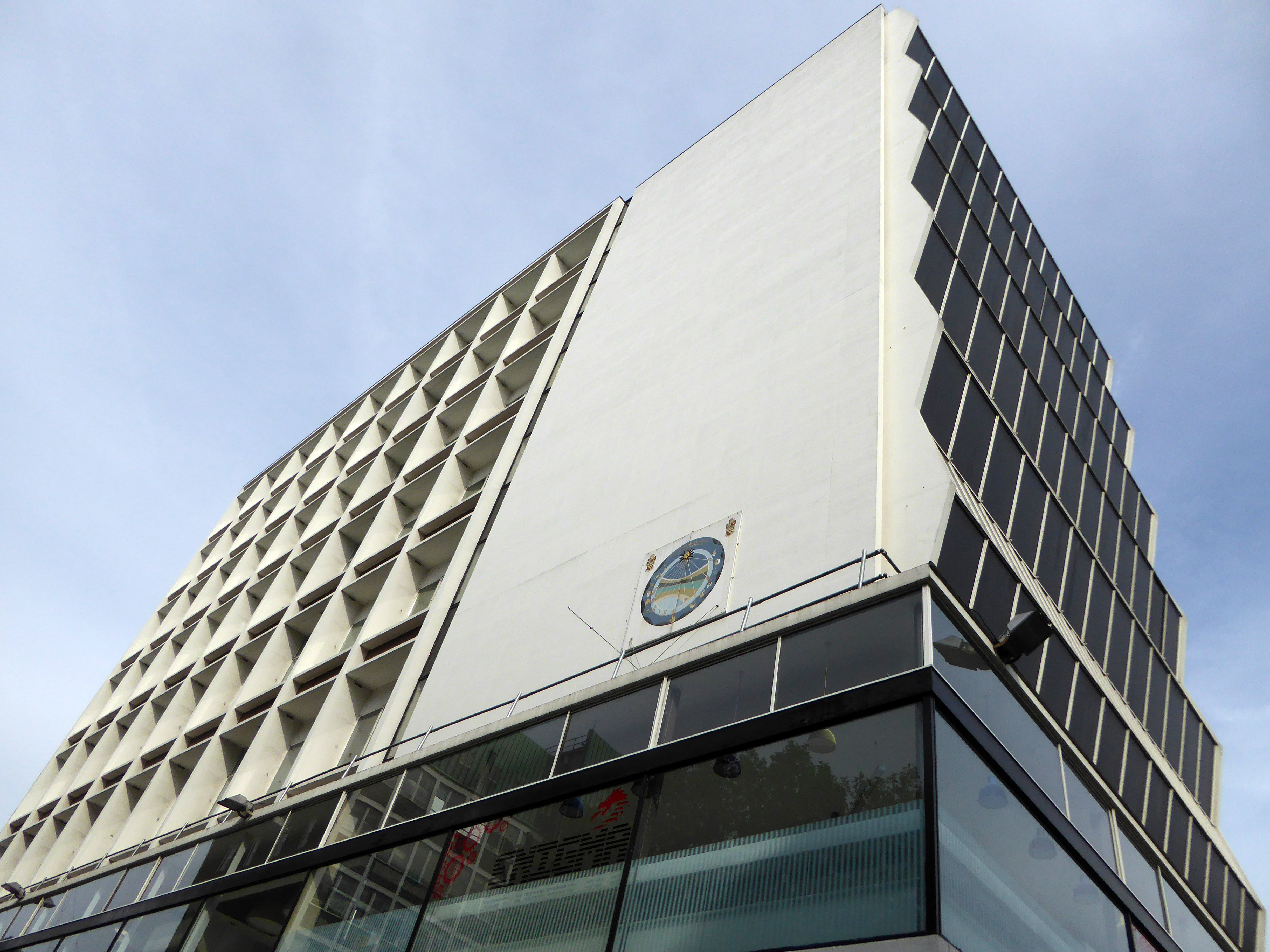
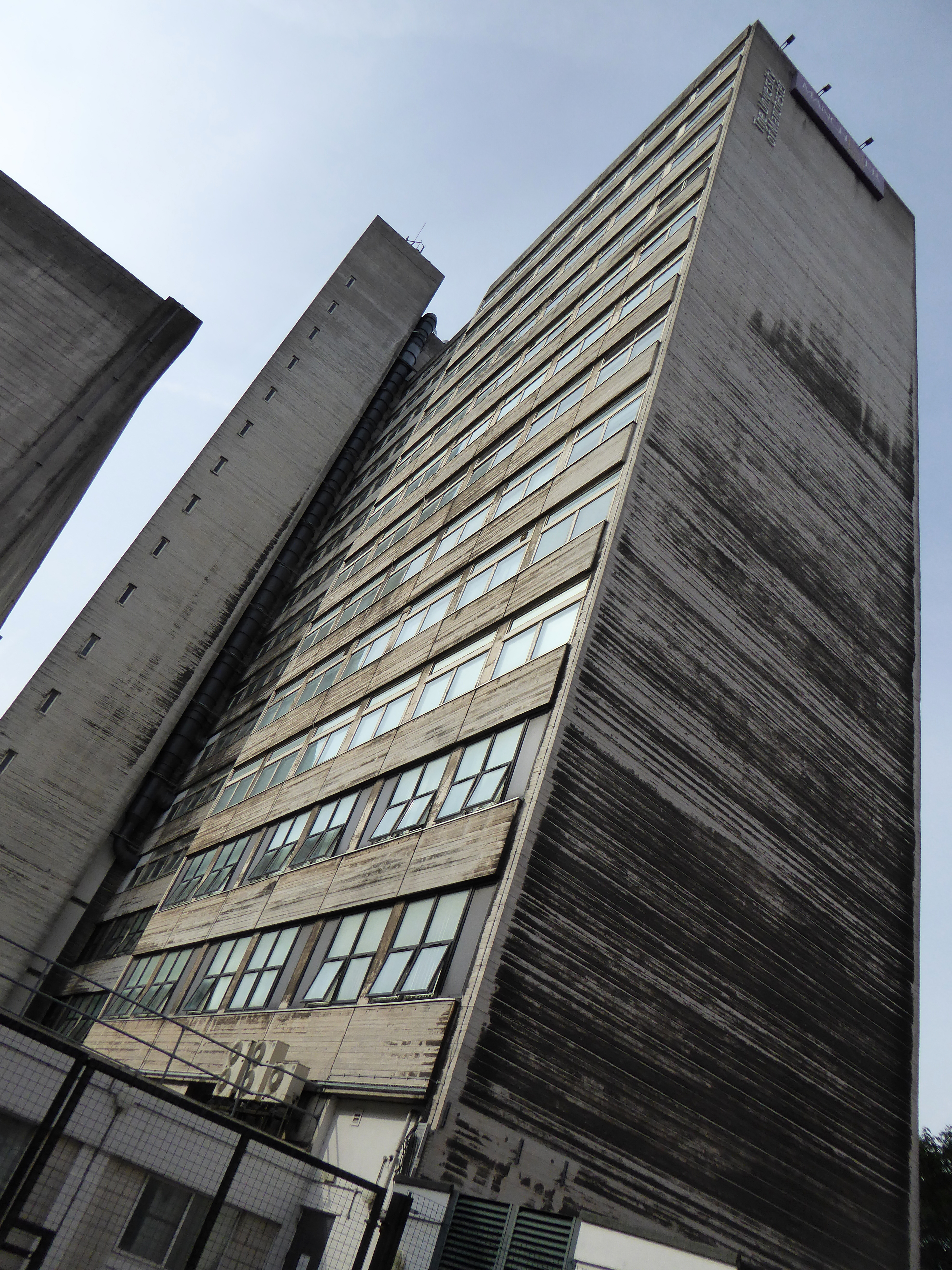
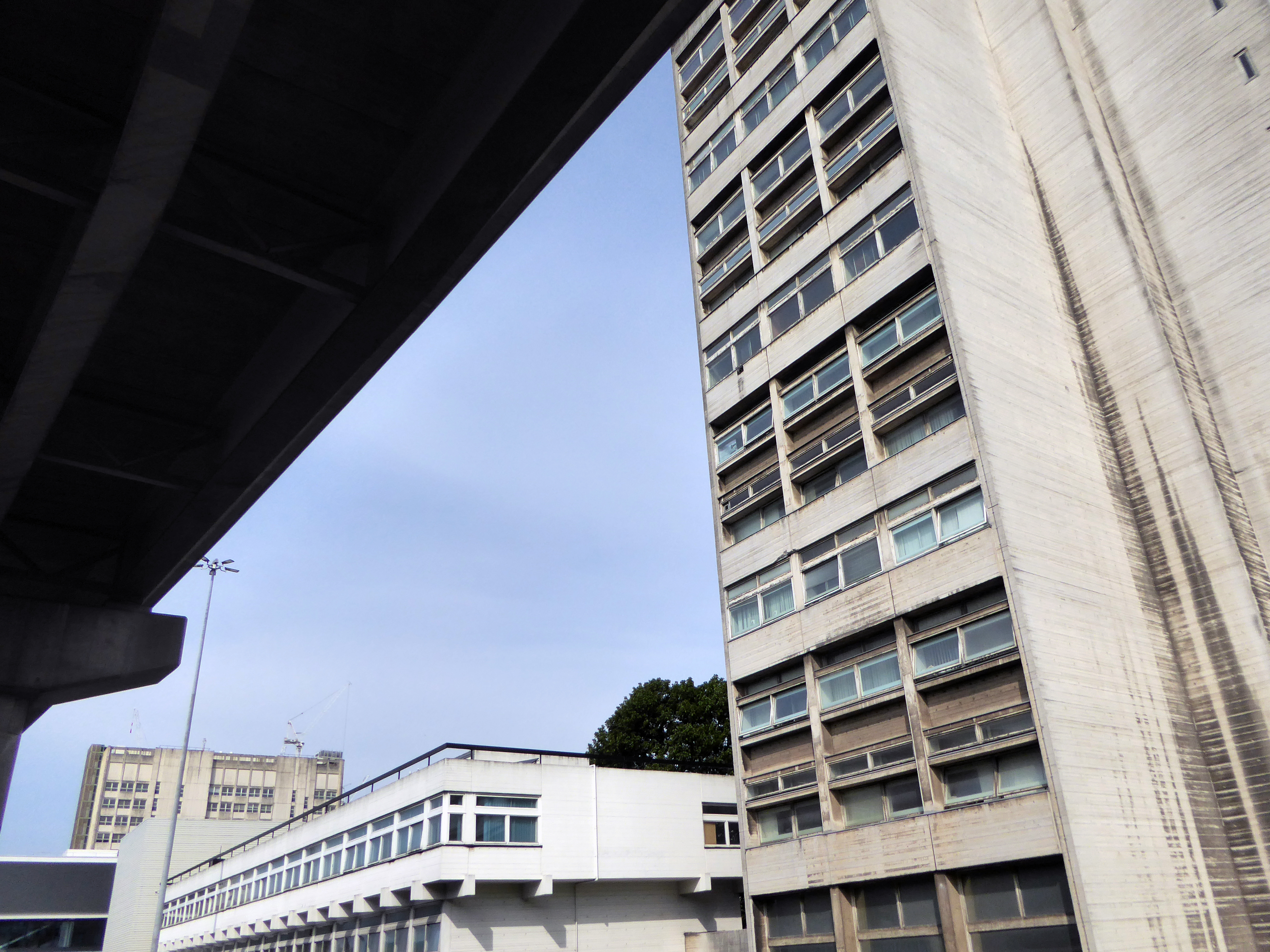
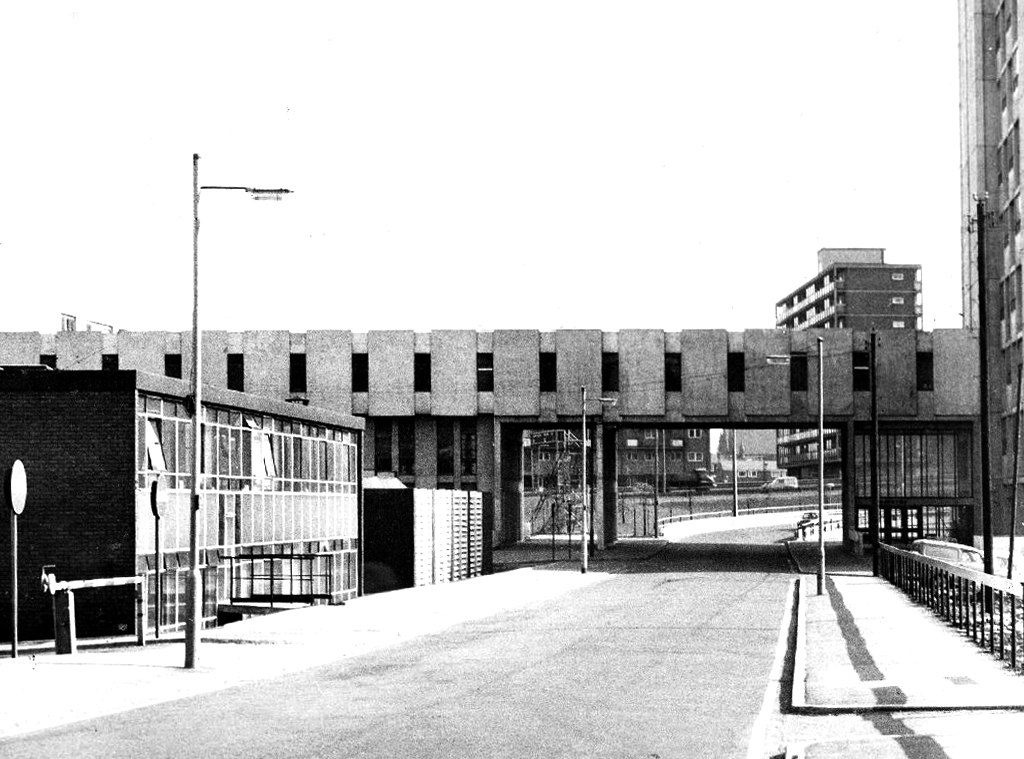
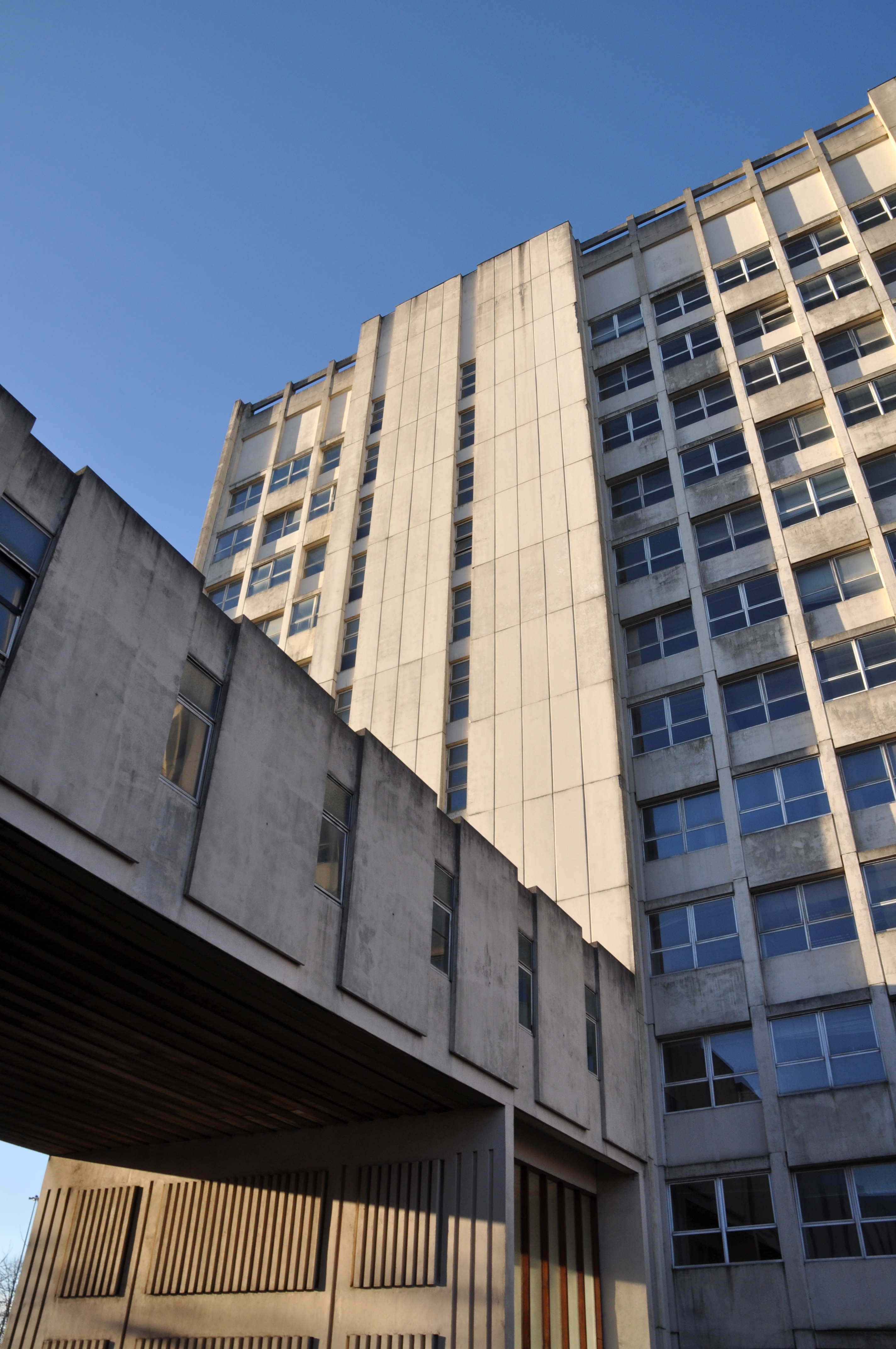
Faraday Tower was designed by H. M. Fairhurst and built in 1967. A bridge connected it to the Faraday Building. Originally a library occupied the bridge.
The walkway has also gone walkabout.
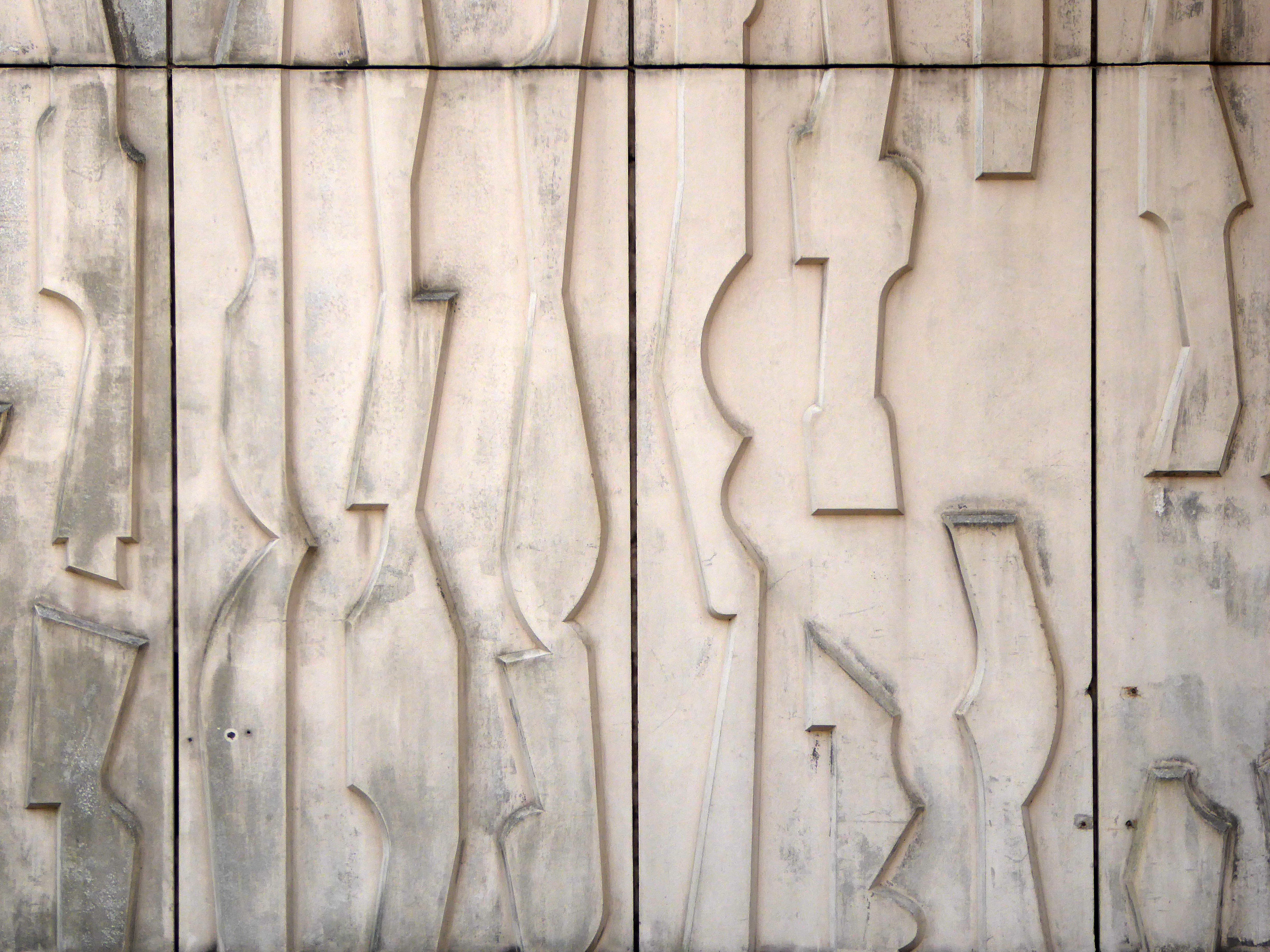
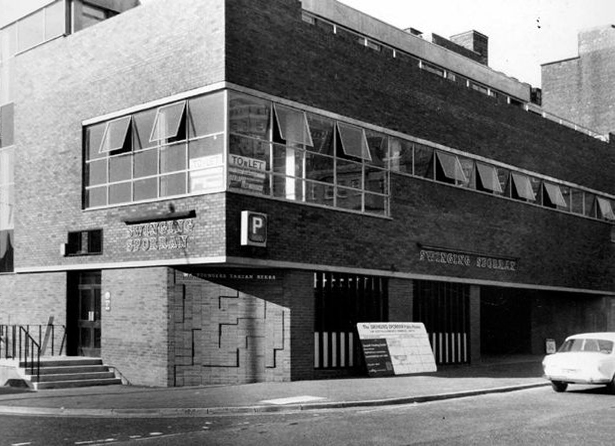
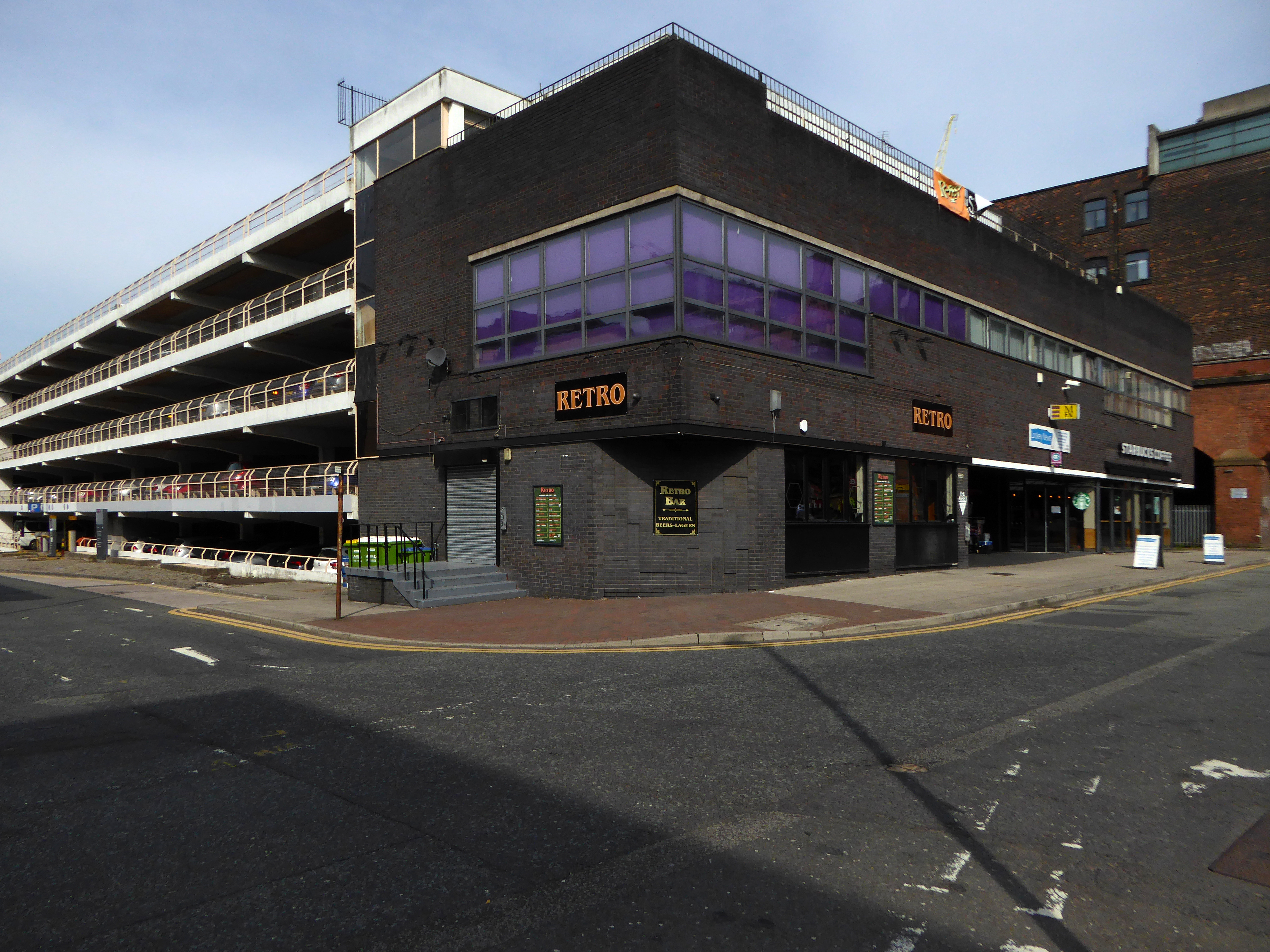
Just about hanging on by the hem of its kilt is the Swinging Sporran and its delightful brick relief.
Reimagined by the marketing imagineers as Retro.
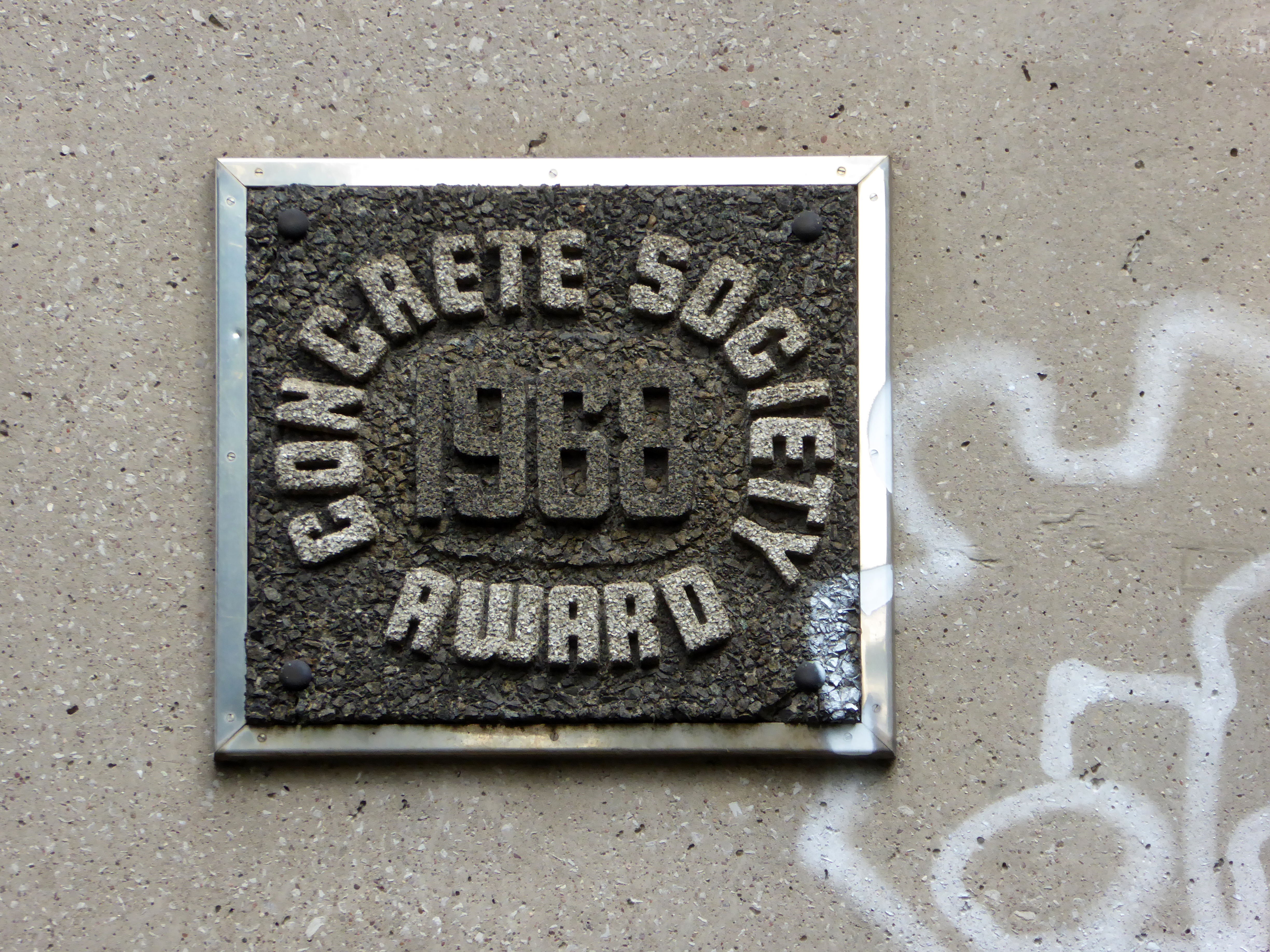
Happily the award winning Mancunian Way is still there, though partially shrouded in mysterious goings on.
Another great sadness is the closure of St Augustine Church 1967-8 by Desmond Williams & Associates at All Saints, without a priest for well over a year.
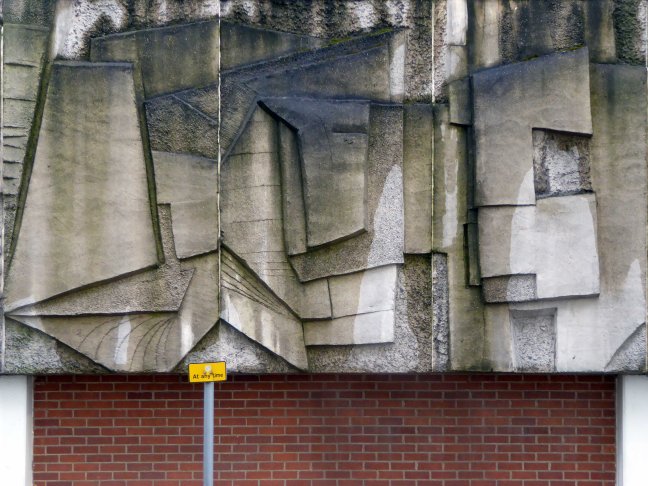
Though there are rumours of a change of use and this wall relief by John Brumby is still visible.
Onward and upward and slightly backwards into the world of modern information technology the National Computing Centre 1974 Cruickshank and Seward.
Currently accommodating a ground floor mix of retail and that most modern of architectural expressions – the containercity – Hatch.
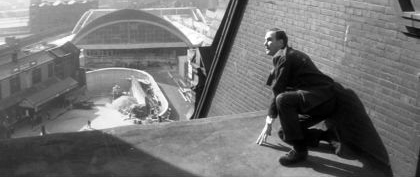
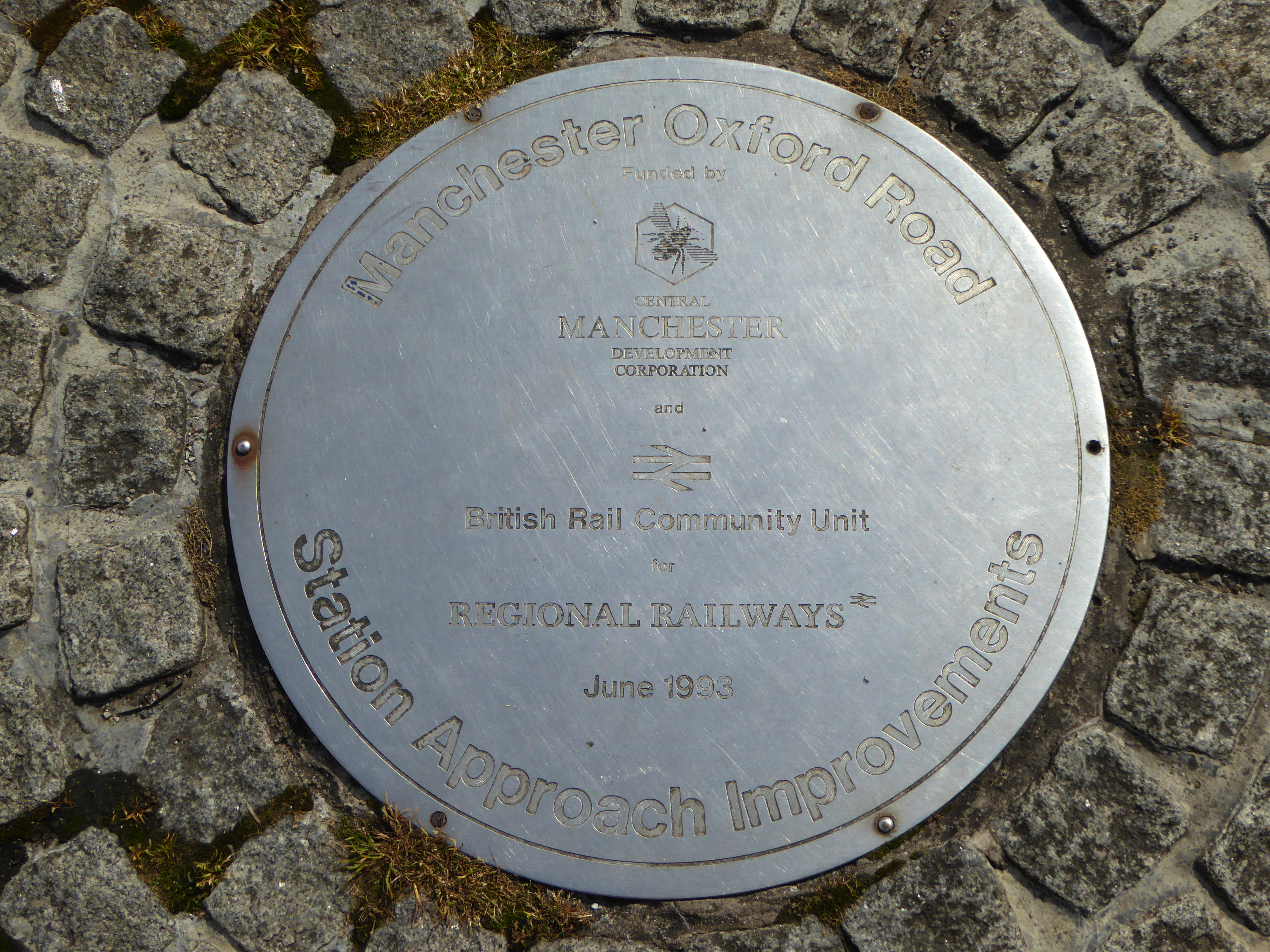
Martineau makes his way across the rooftops in pursuit of Starling. Looking down on Oxford Road station at the end of Station Approach off Whitworth Street.
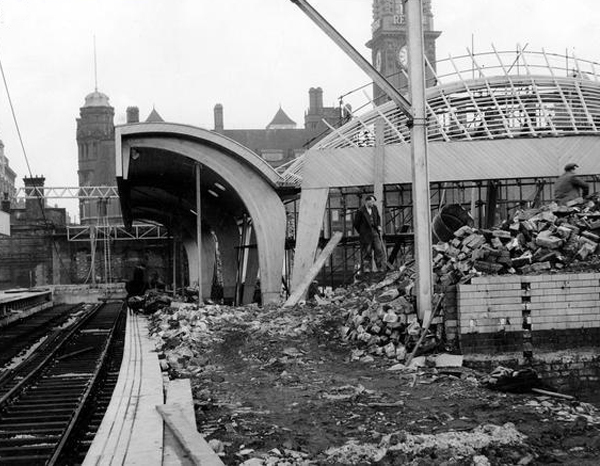
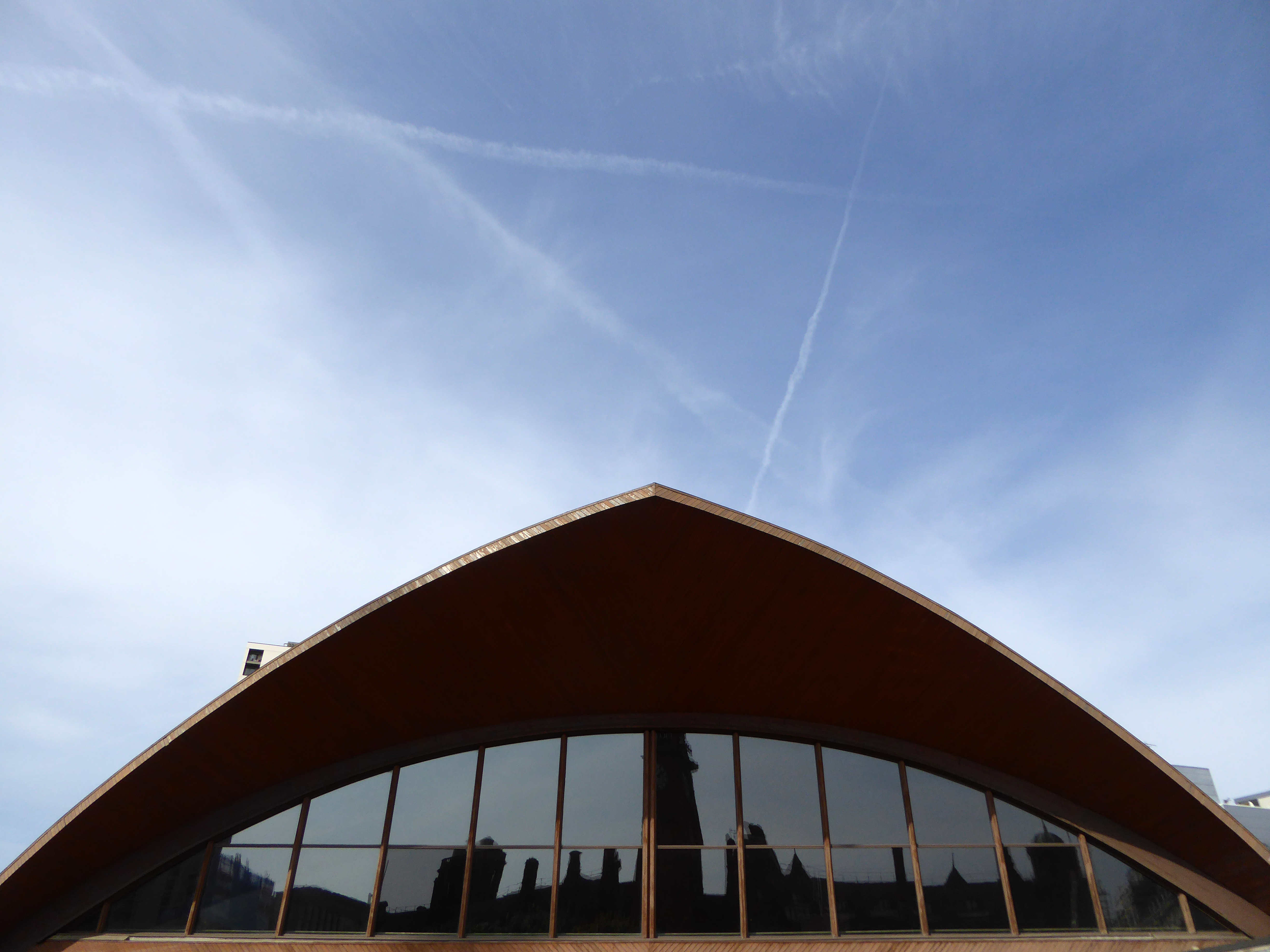
Oxford Road Station 1960 W.R. Headley and Max Glendinning and structural engineer Hugh Tottenham, a Sydney Opera House in miniature sans the grand guignol.
The station was listed Grade II in late 1995, and though the materially consistent seating, kiosks and ticket office remain, the original ticket collectors booths were dispensed with during earlier refurbishment.
Lets hot foot it to St Peter’s Square before Stanley Baker falls off the roof of the Refuge – where Peter House 1958 Amsell and Bailey awaits.
A gently arcing poem in Portland Stone jam packed with rectilinear detail and interlocking volumes.
Leaving Port Street and the Modernists new HQ we find ourselves in Lever Street – home to Griffin House.
Several storeys of variegated concrete panels cladding and glass – a voluminous yet relatively low rise development of the 1960s.
1967
It has been updated with an extensive entrance, whilst otherwise surviving intact and still well used.
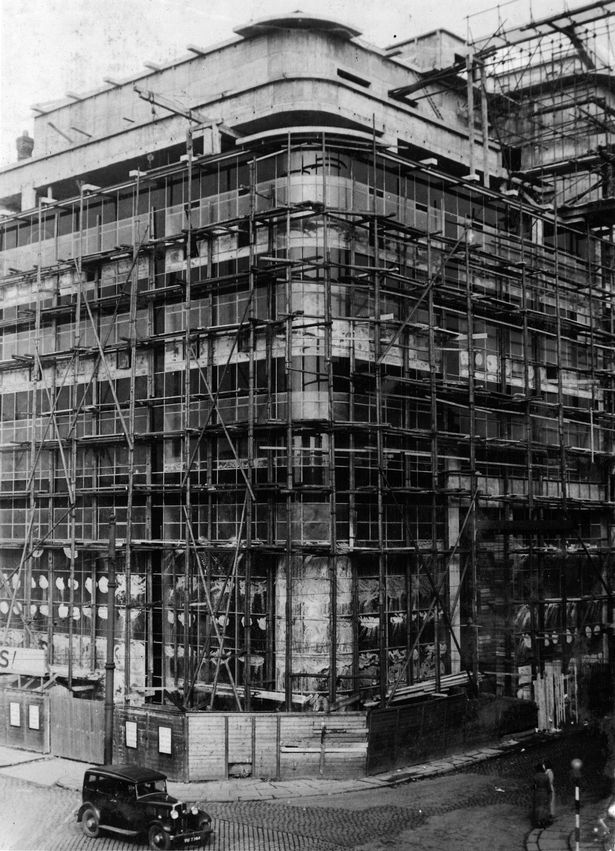
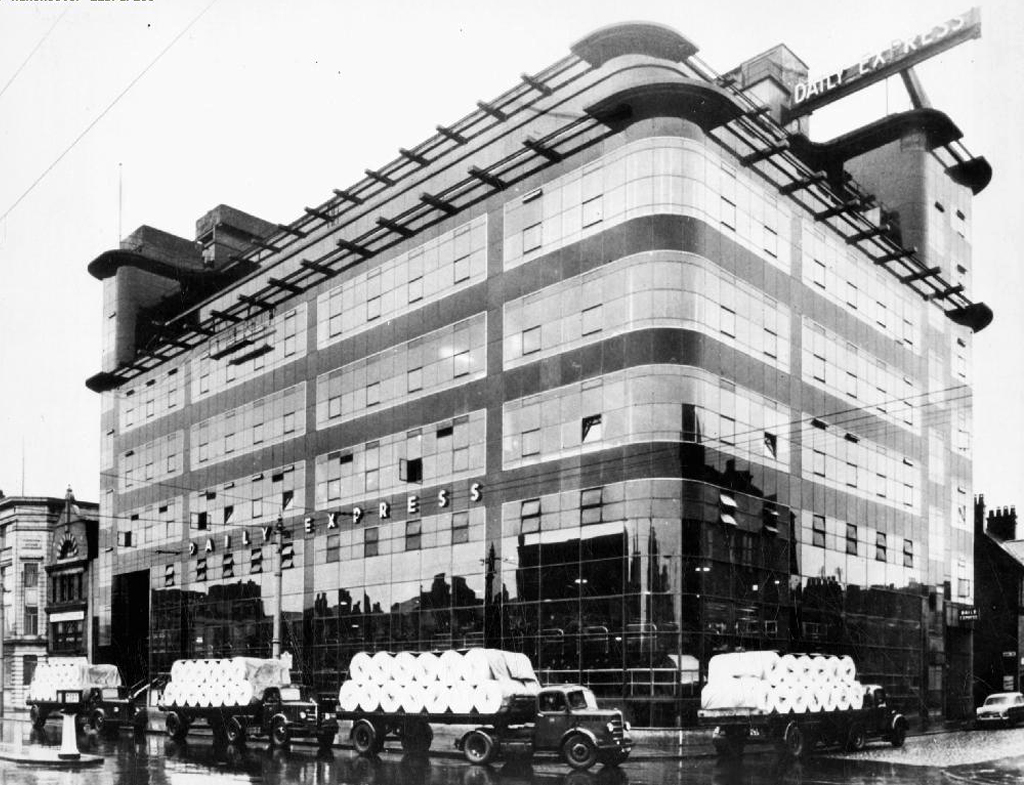
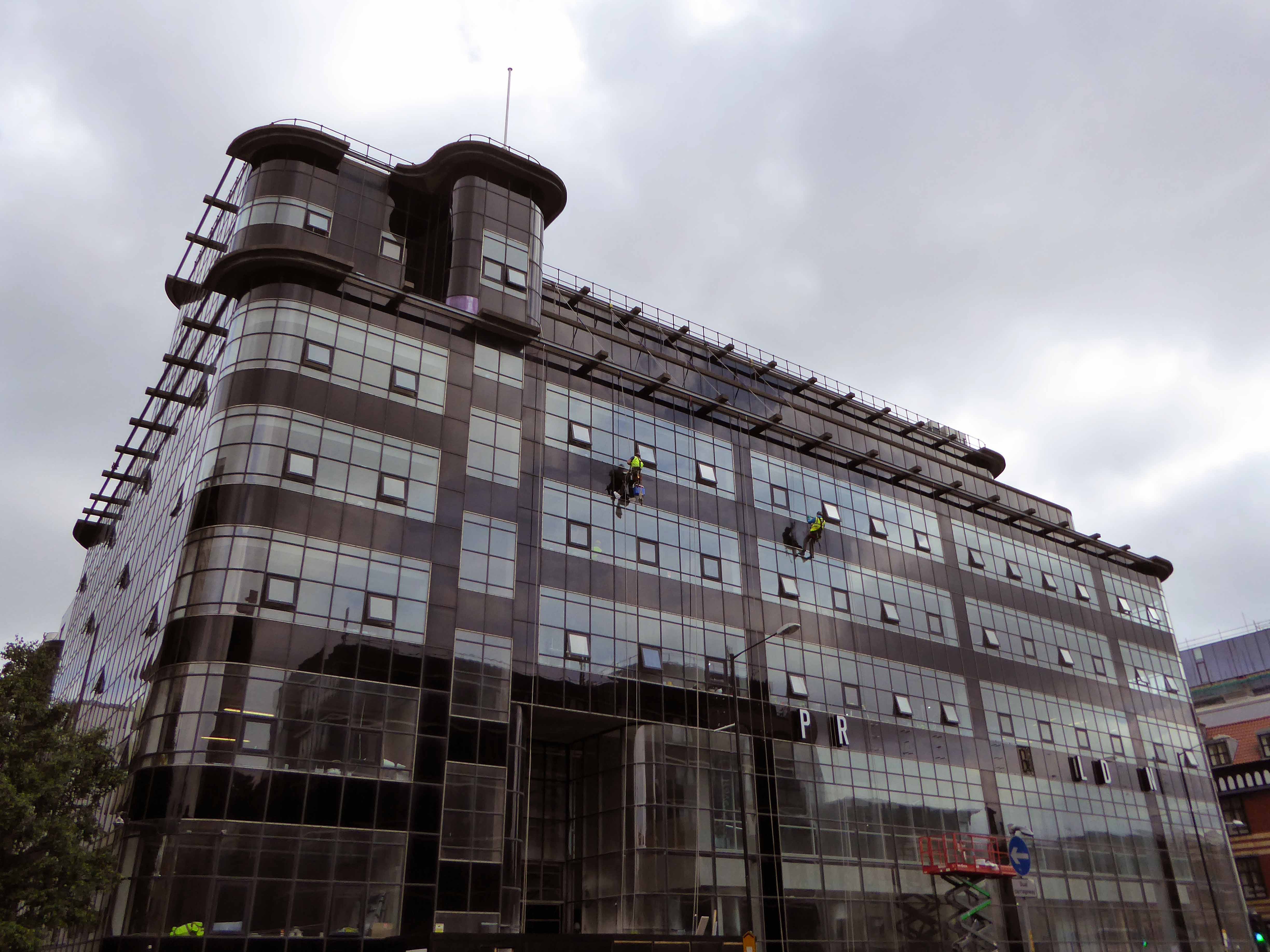
Around the corner to Great Ancoats Street and the former Daily Express Building.
Grade II* listed building which was designed by engineer, Sir Owen Williams. It was built in 1939 to house one of three Daily Express offices the other; two similar buildings are located in London and Glasgow.
Originally, it was possible for passers by to peer into the main hall to see the large newspaper printing press. When the building was converted during the 1990s, the glass was made reflective so outsiders cannot see the interior of the building. This has subsequently been removed as yet again the building is repurposed
Nikolaus Pevsner described the building as:
An all-glass front, absolutely flush, with rounded corners and translucent glass and black glass and a most impressive sight from the street, particularly when lit up at night.
The end of the paper’s print run saw the building used as office space, and partially converted to flats with further redevelopment work currently being undertaken, with a view to becoming a tech-hub.
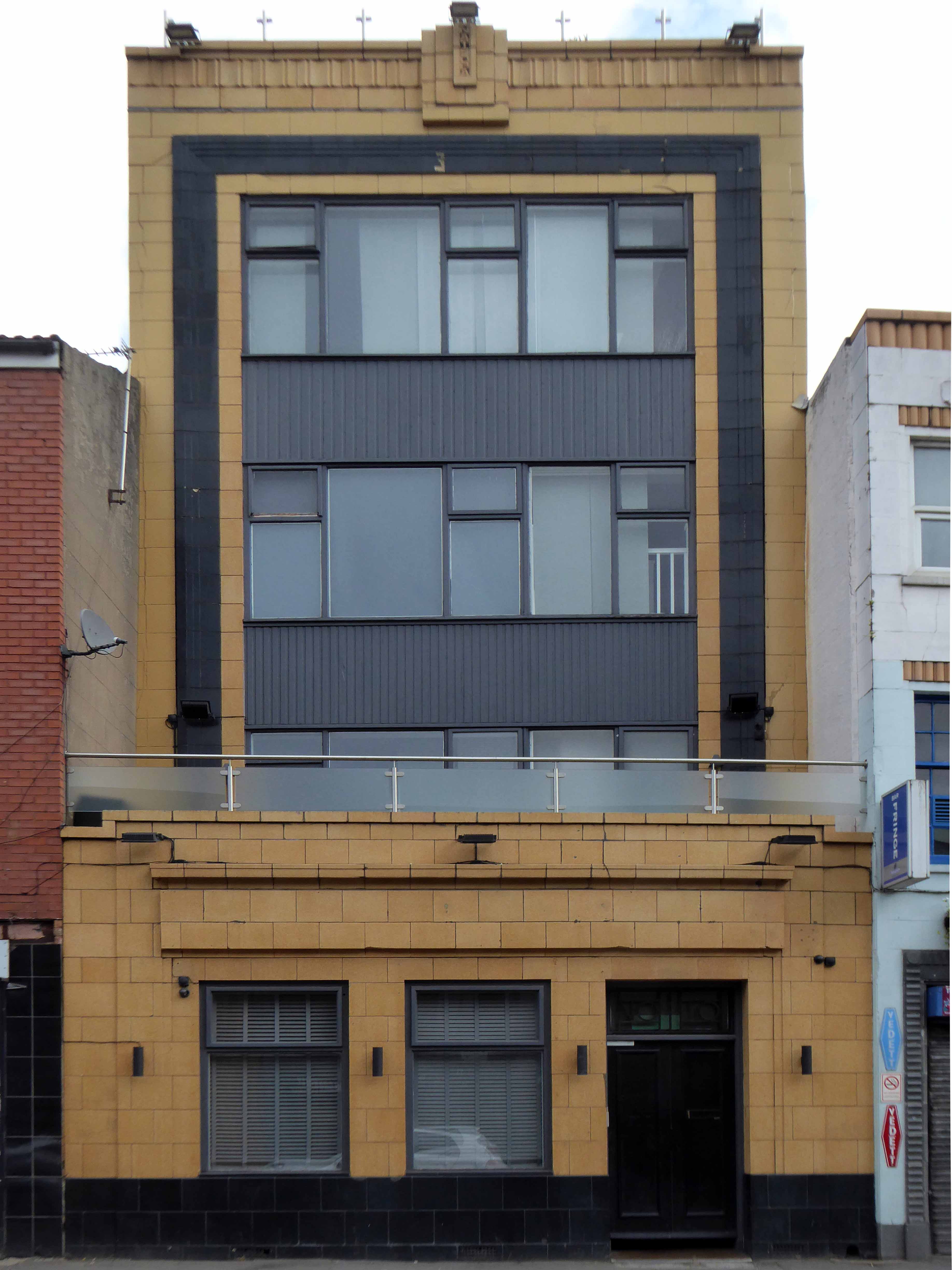
Onward along Swan Street and a brief encounter with something of a rarity in functionalist modern Manchester – the sighting of two Art Deco buildings.
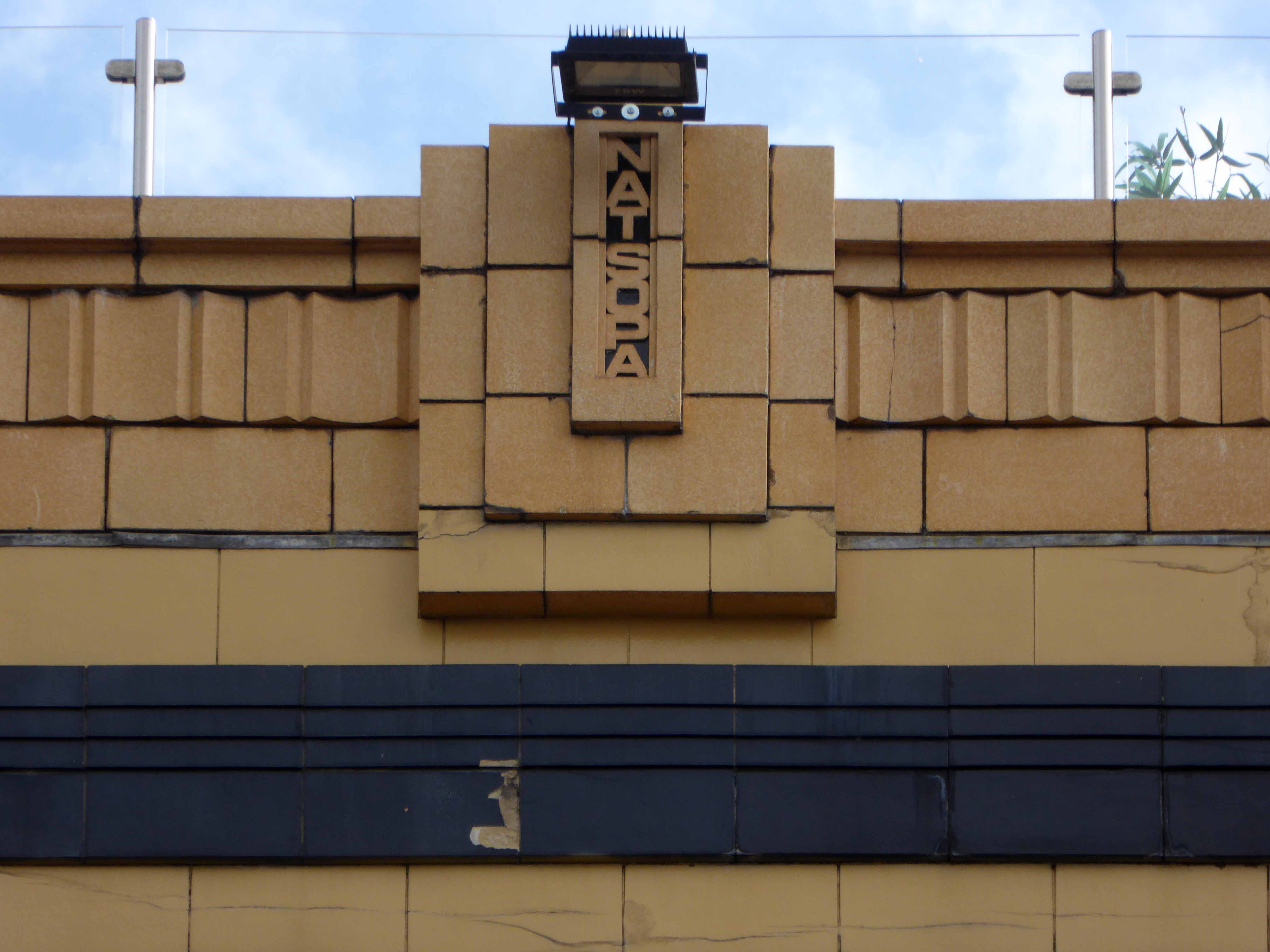
And the former NATSOPA trade union offices – National Society of Operative Printers and Assistants trade union offices – the area once being alive with print and related industries, also no longer.
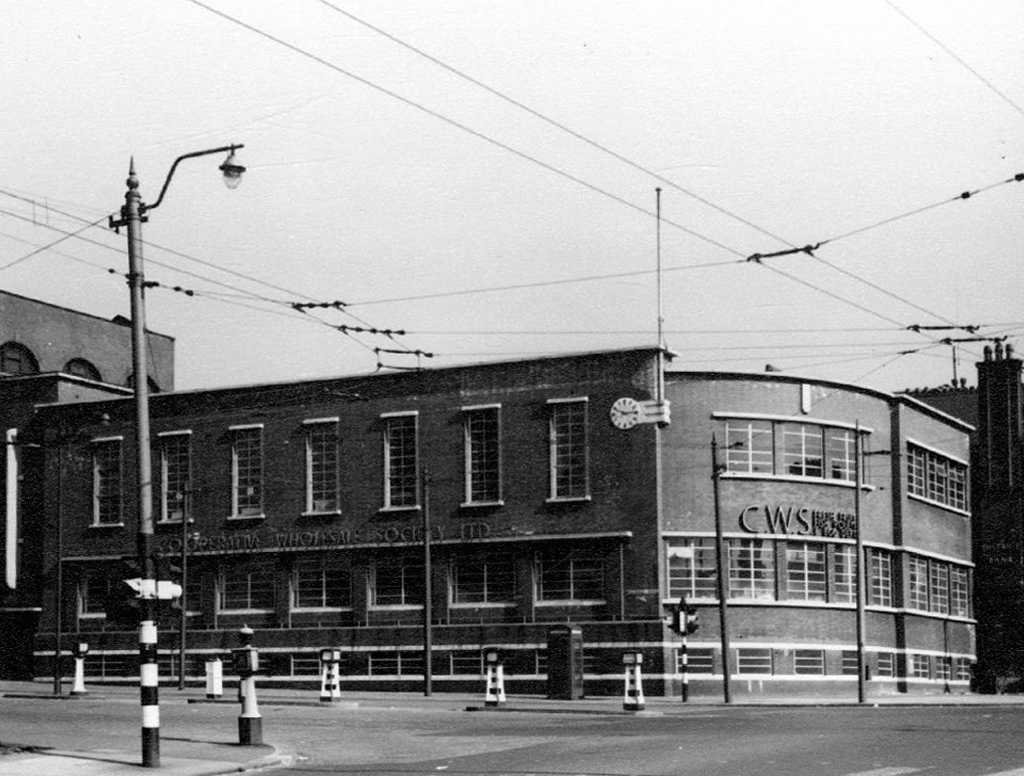
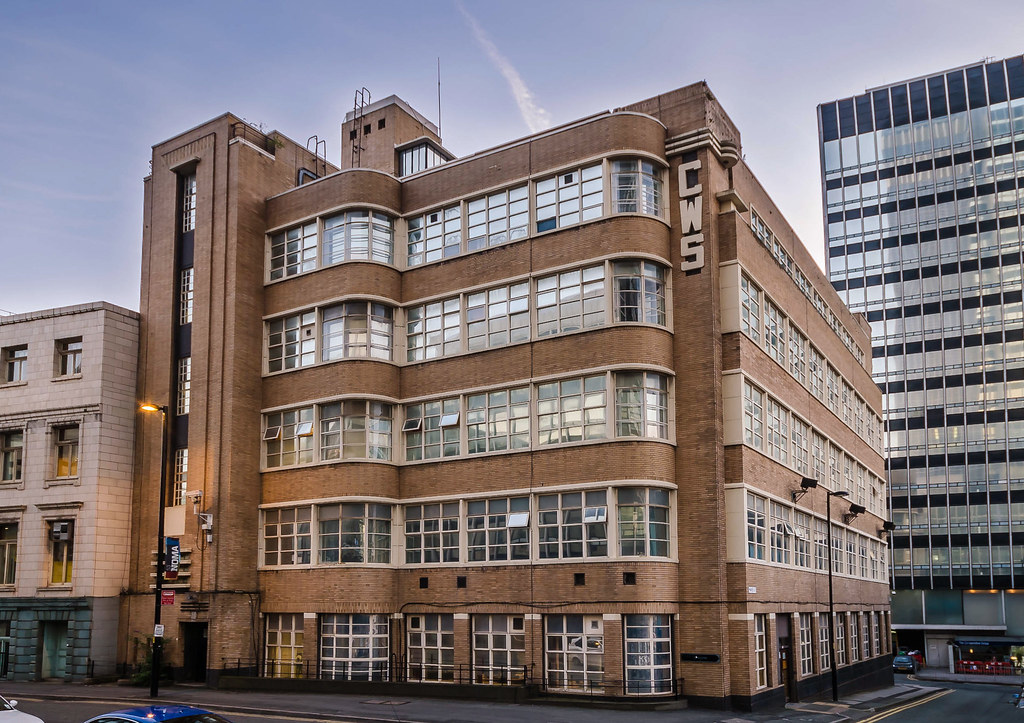
On the corner of Rochdale Road there stands the former CWS fresh fruit fish and veg offices and warehouse – we are on the very edge of Co-op land.
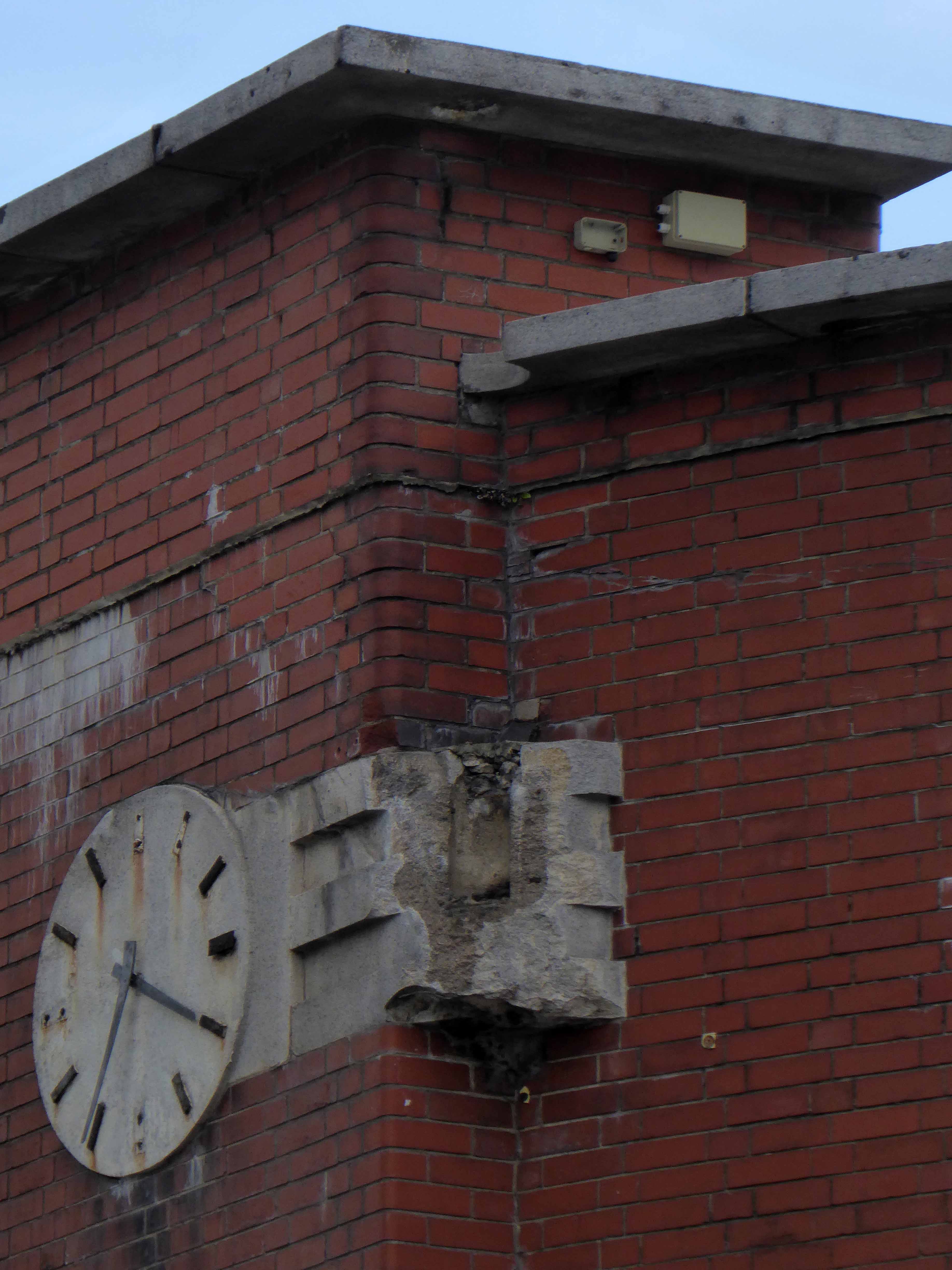
Sadly the CWS clock turns no more and the steel framed windows have suffered the indignity of uPVC replacement.
The Cooperative Wholesale Society dominated a whole swathe across the east of the city and beyond, encompassing manufacturing, banking and insurance.
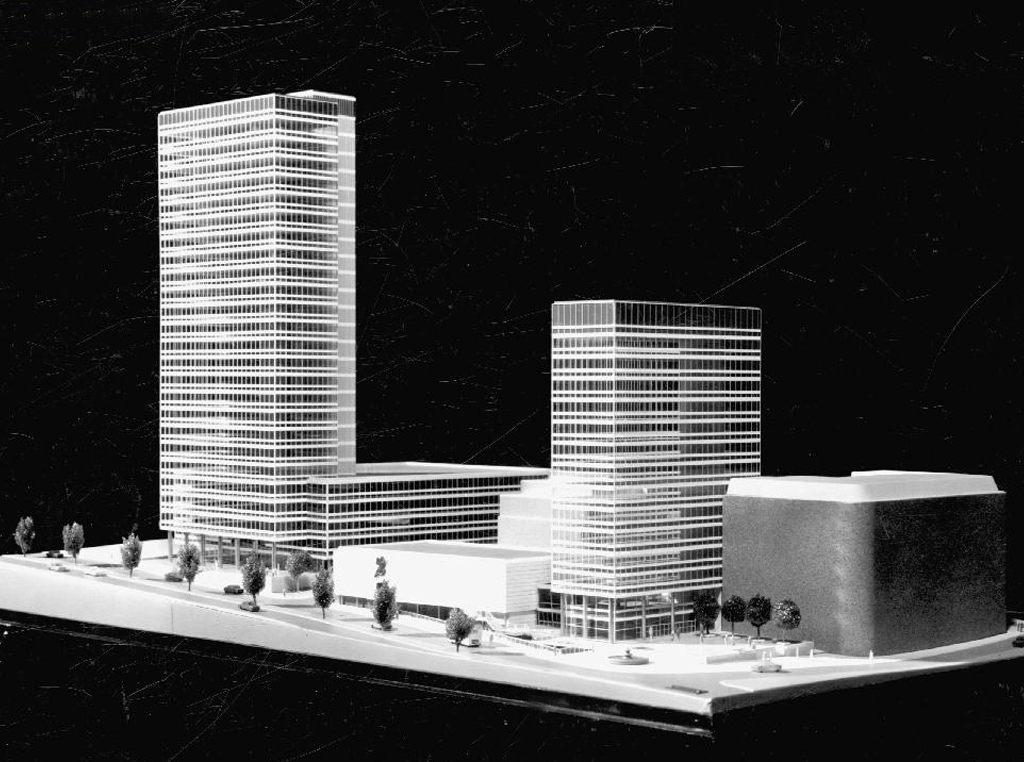
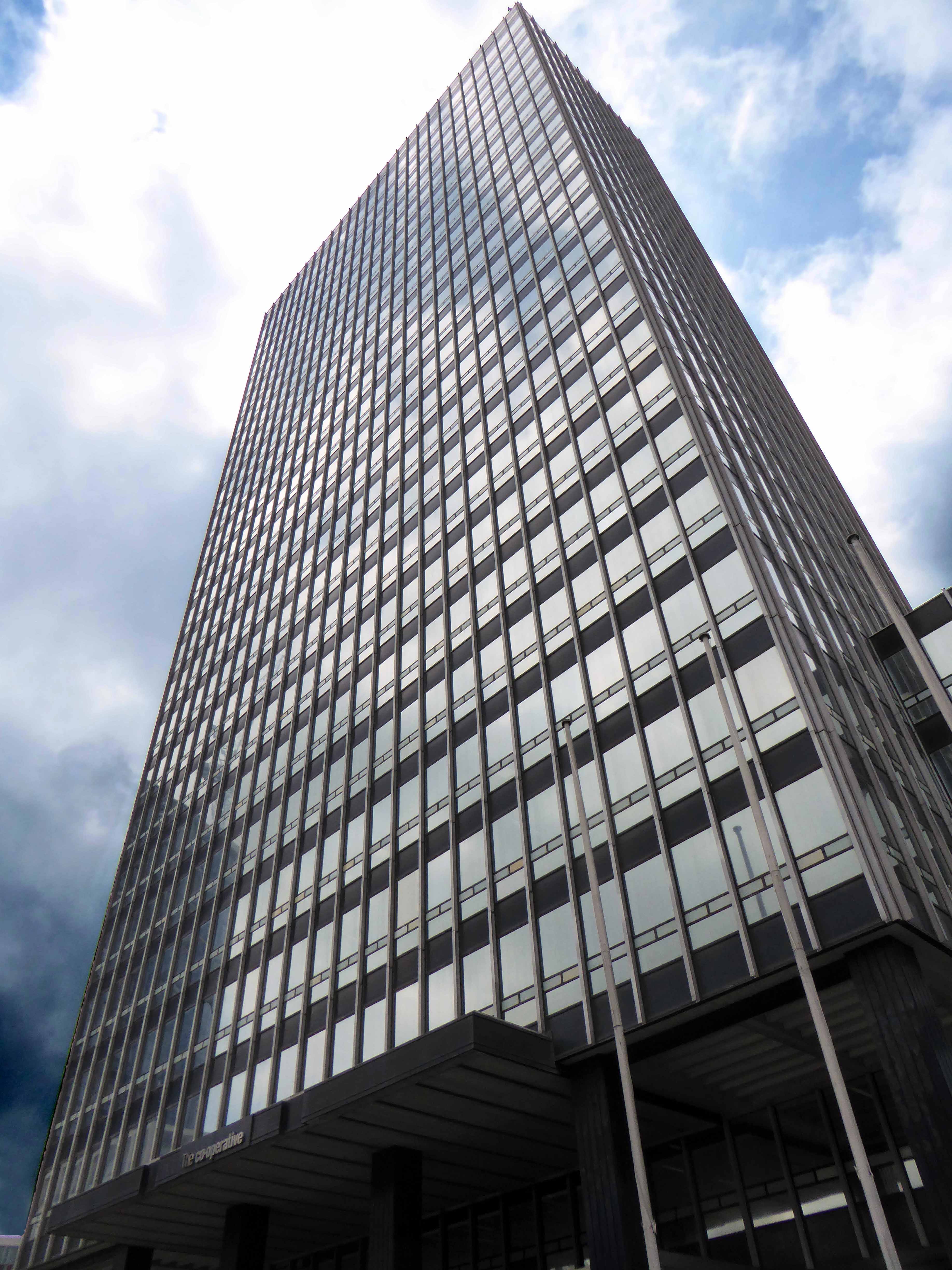
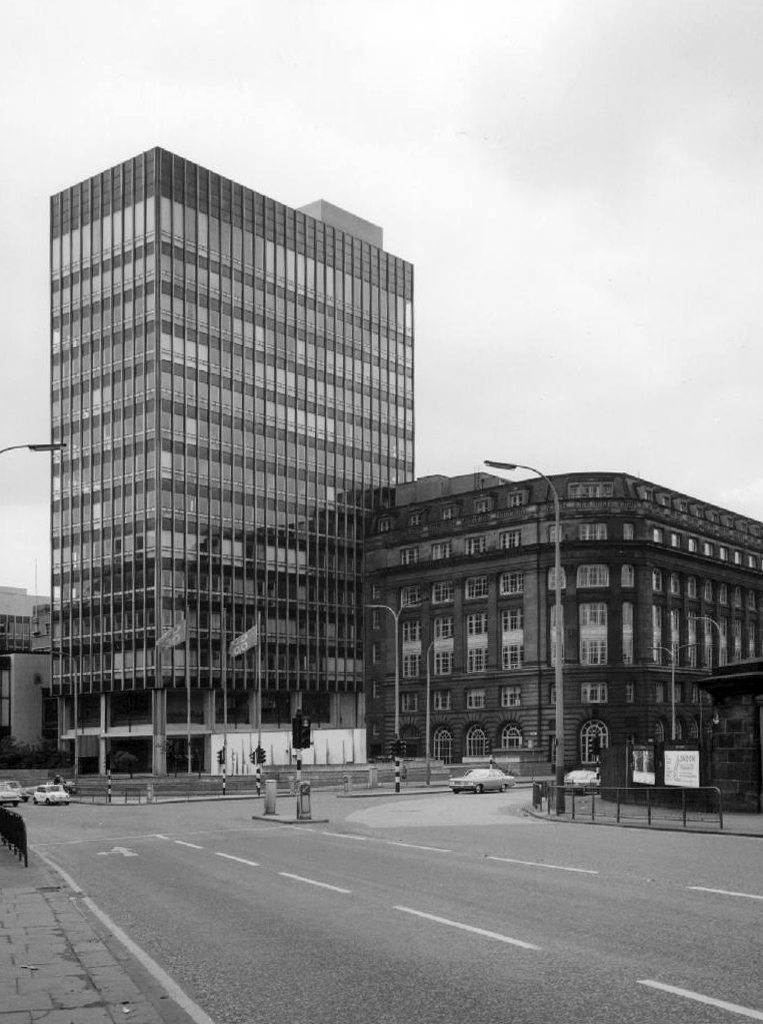
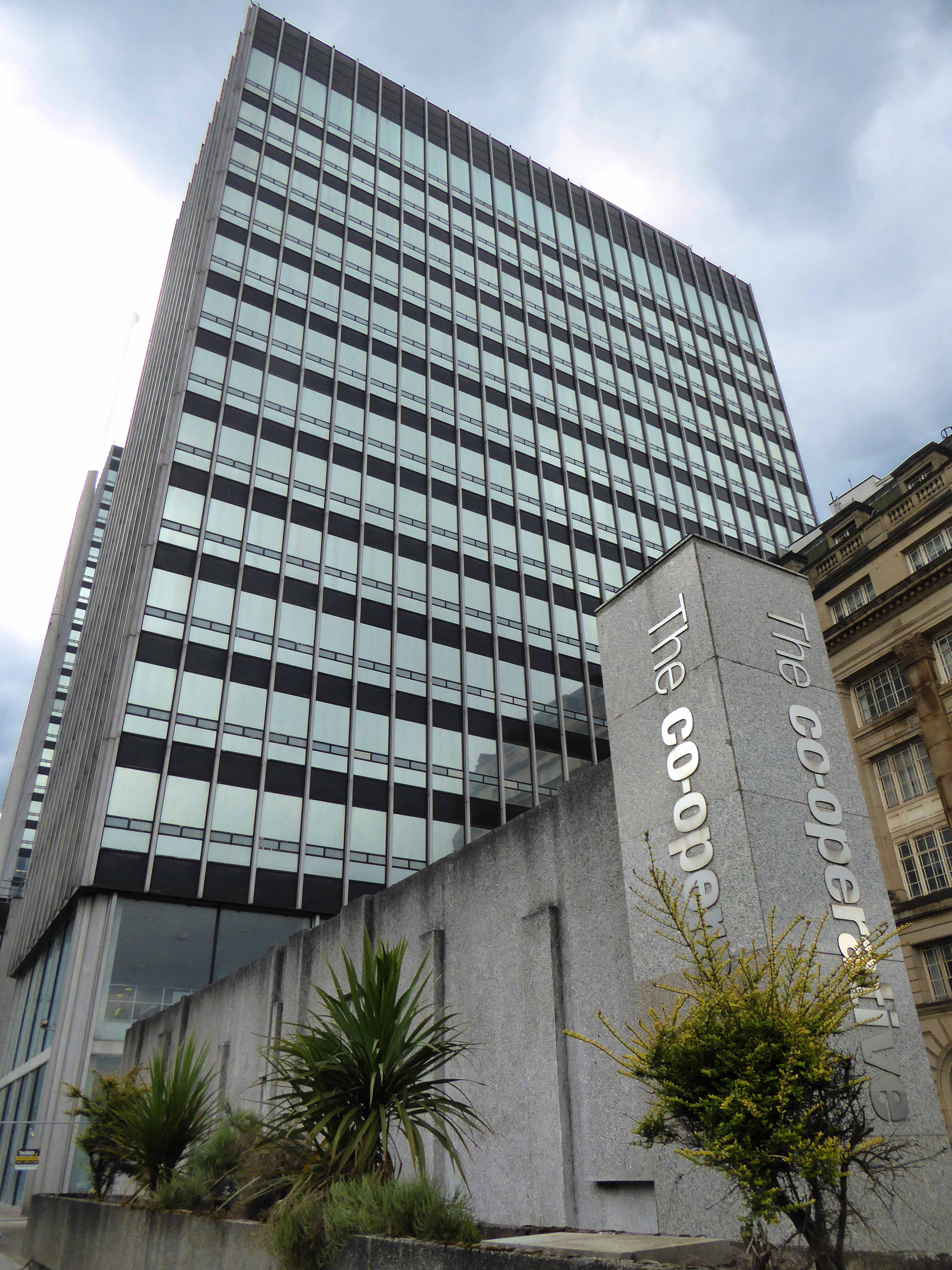
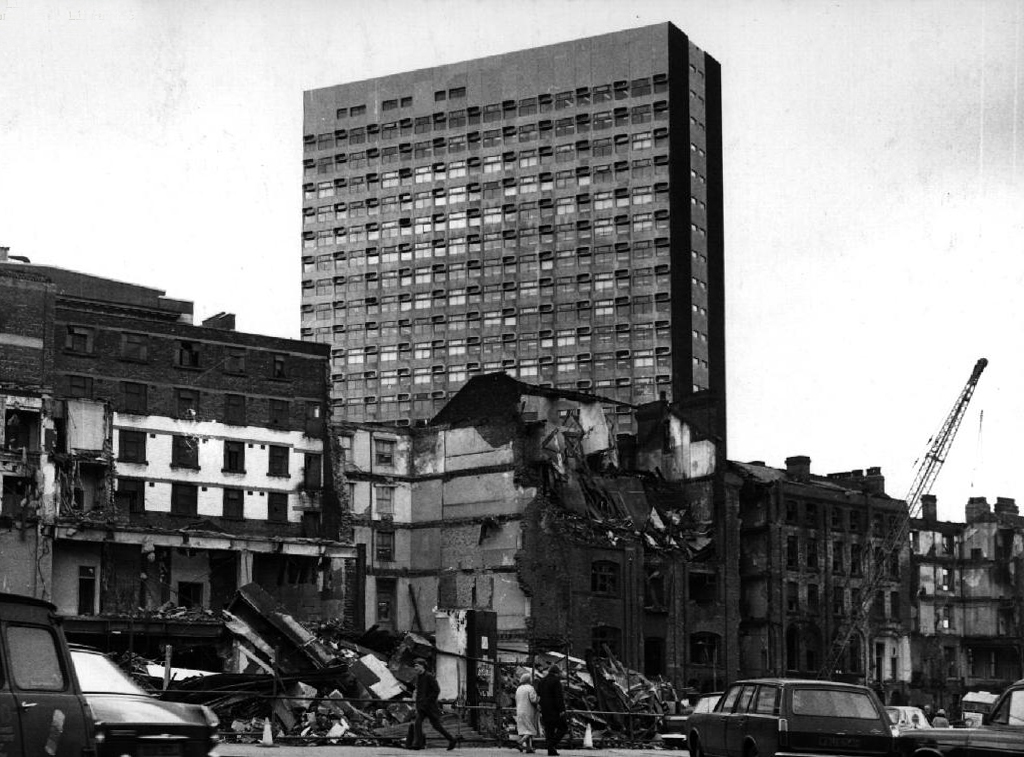
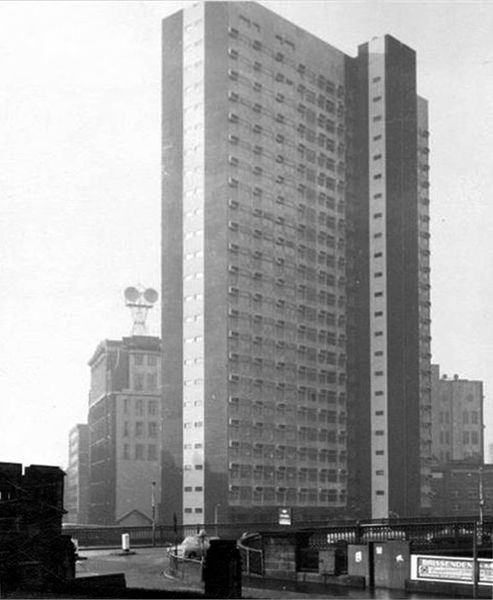
The icing on the empire’s cake being the 1960s CIS Tower.
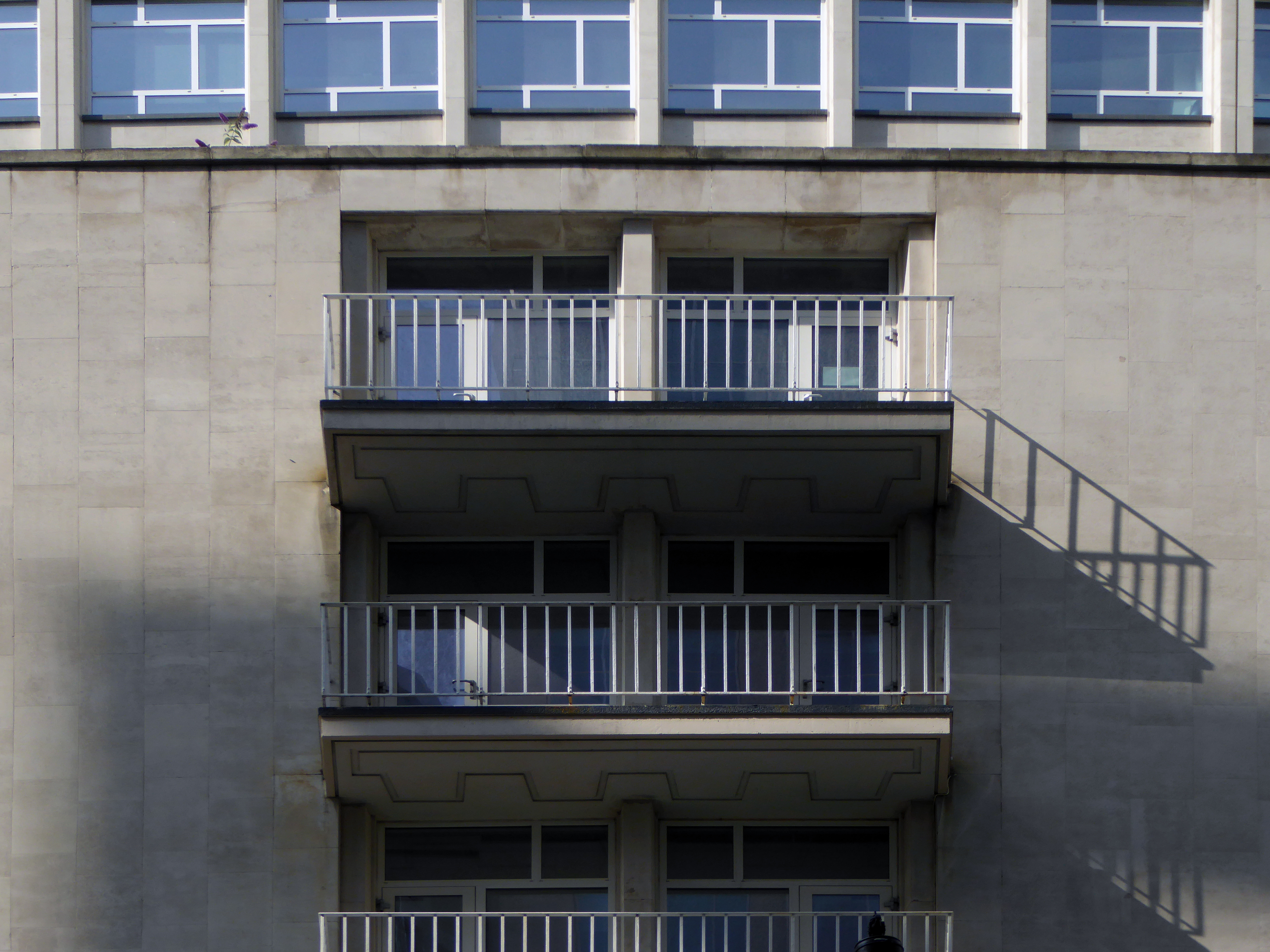
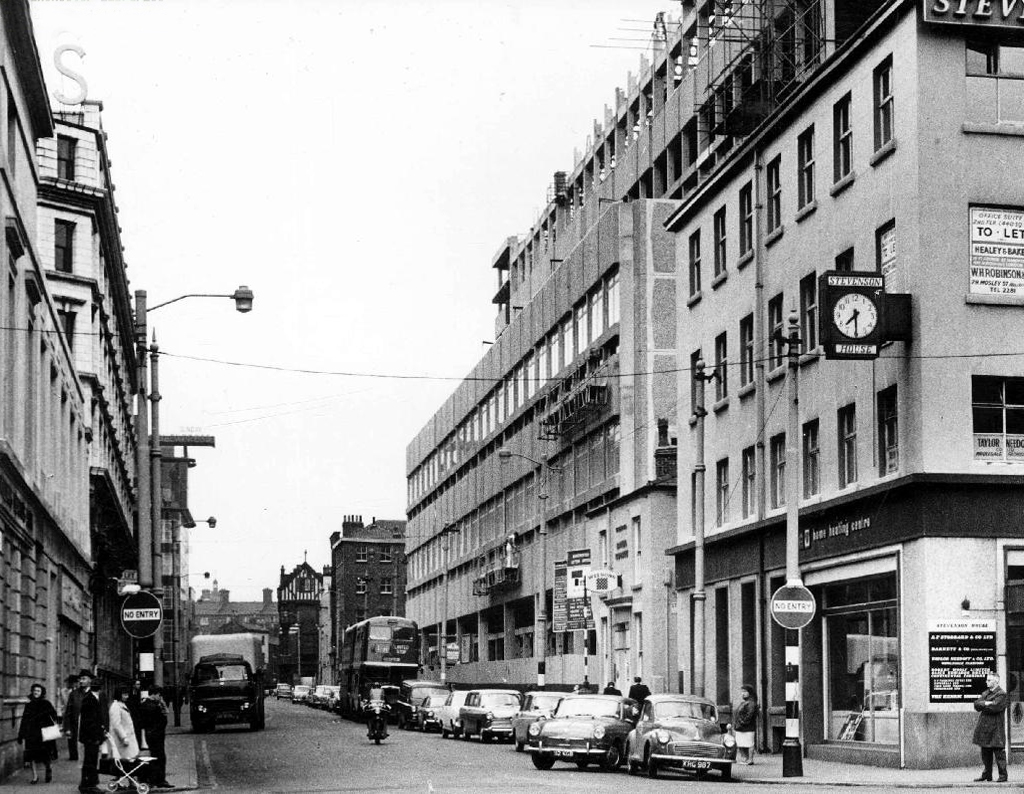
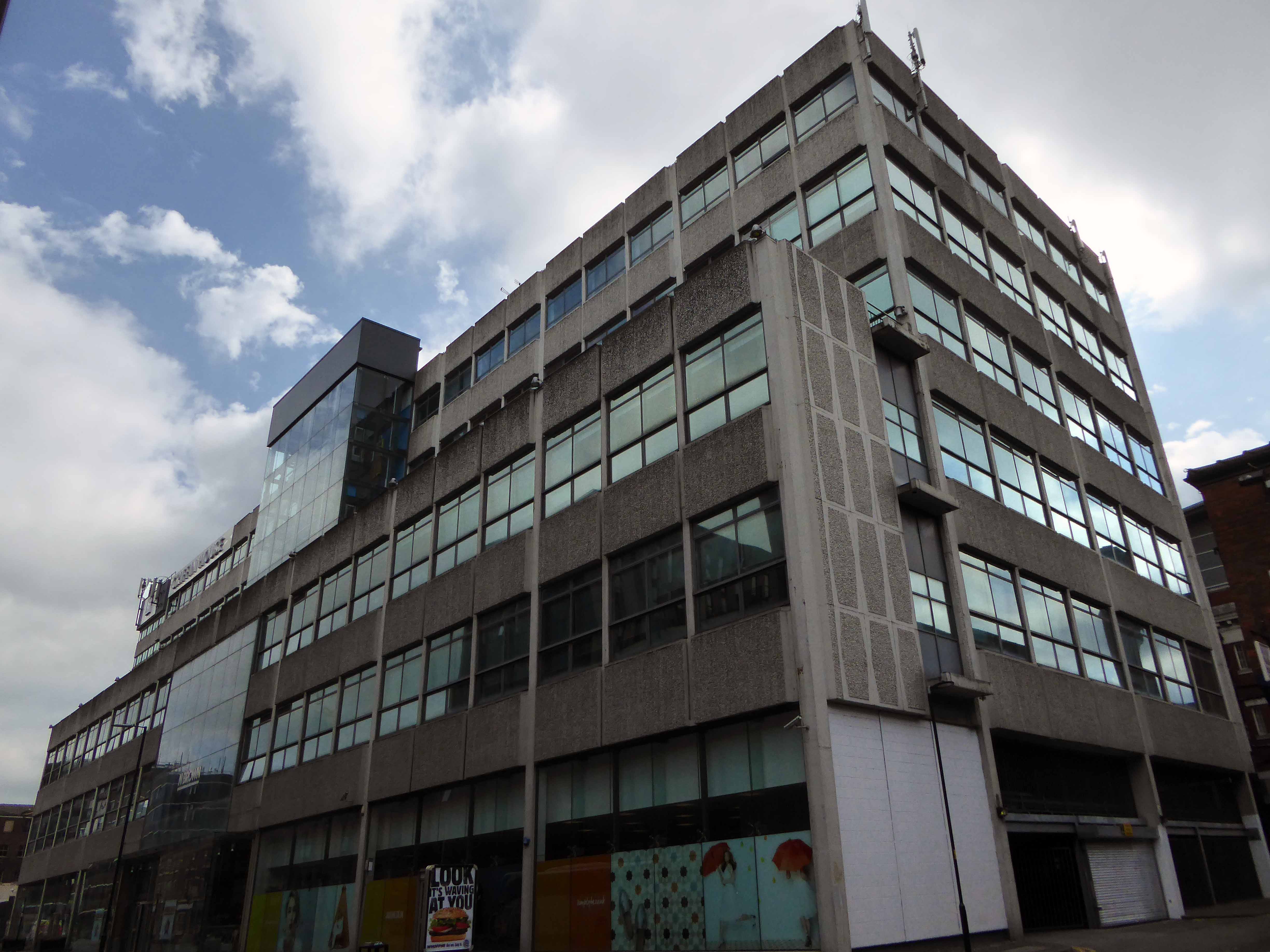
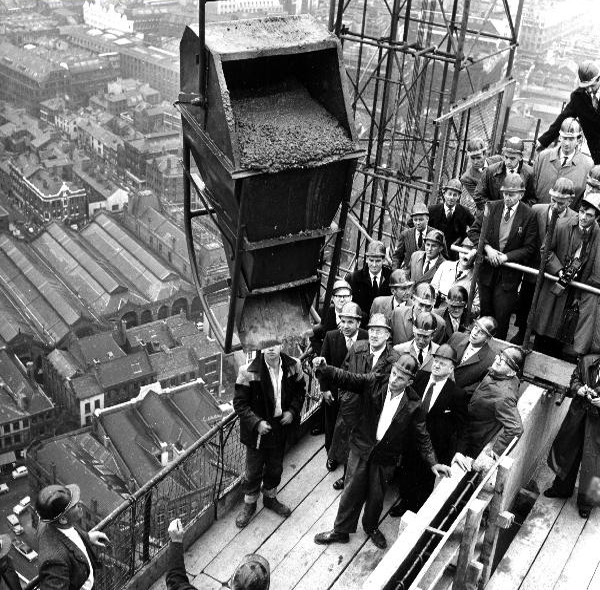
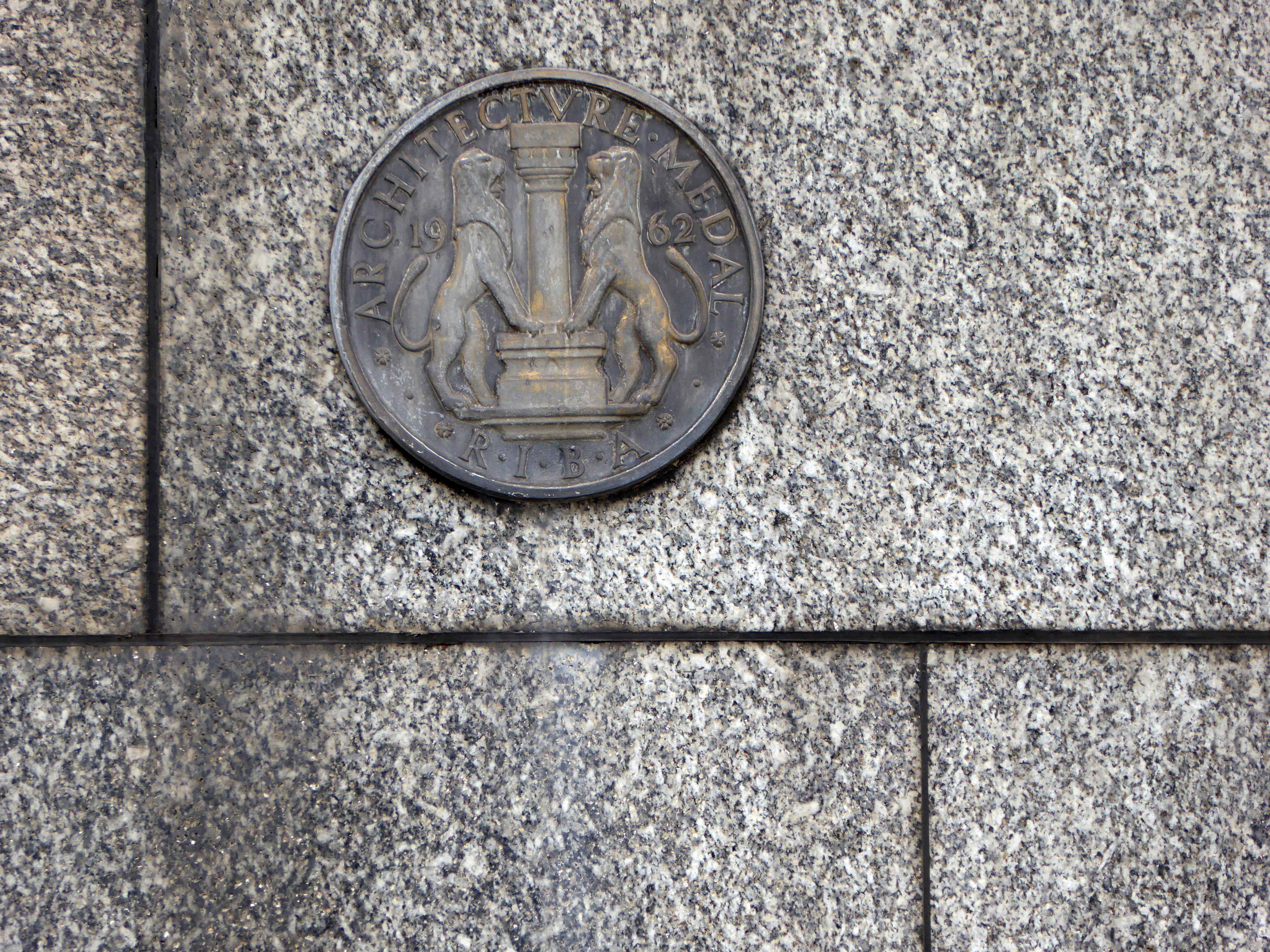
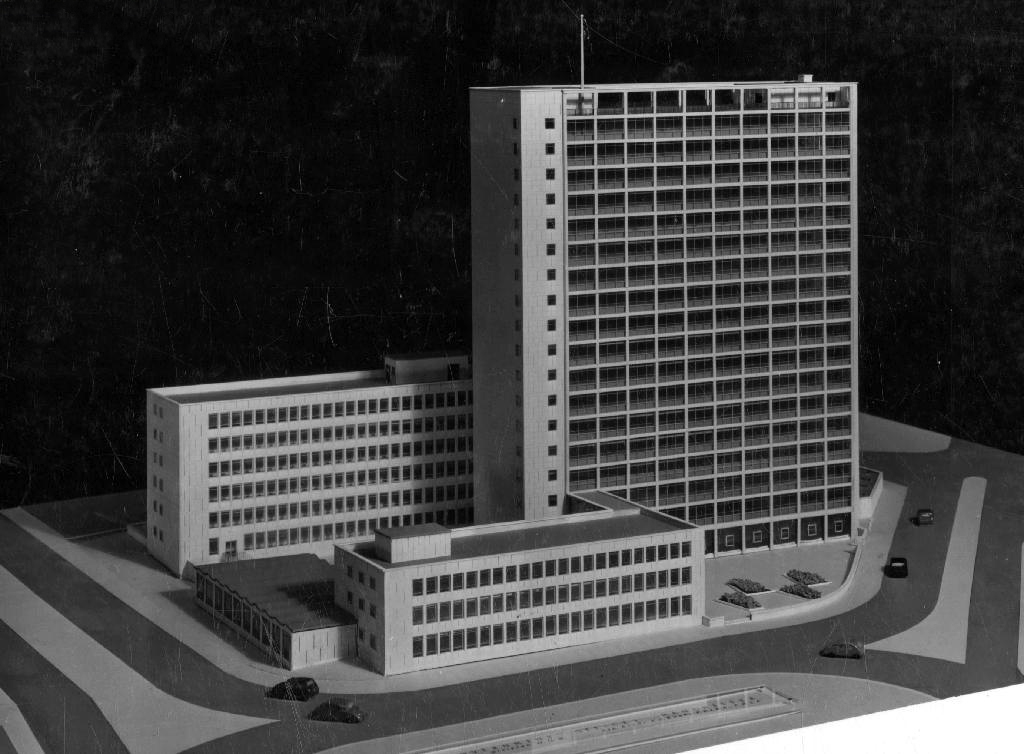
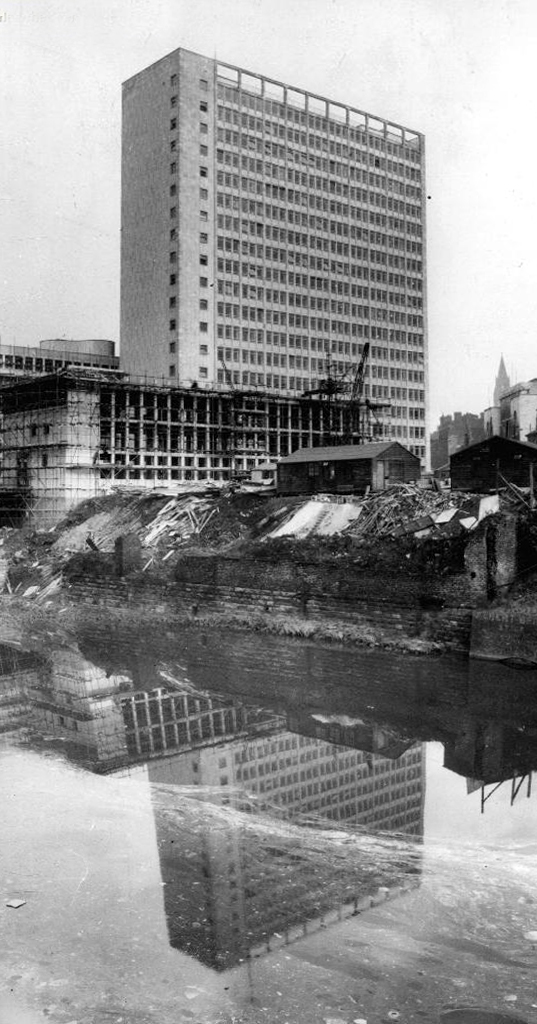
The Co-Operative Insurance Society (CIS) Chief Office was built between 1959-62. Its aim was to provide the company with a headquarters in the north comparable to anything in London. Operating from ten different sites in Manchester following the war, the company wished to consolidate their activities within a landmark building, and took advantage of a bomb-cleared site on Miller Street. The architect was Gordon Tait, of Sir John Burnet, Tait and Partners, who was brought in to collaborate with the already appointed Chief Architect in Manchester, G S Hay.
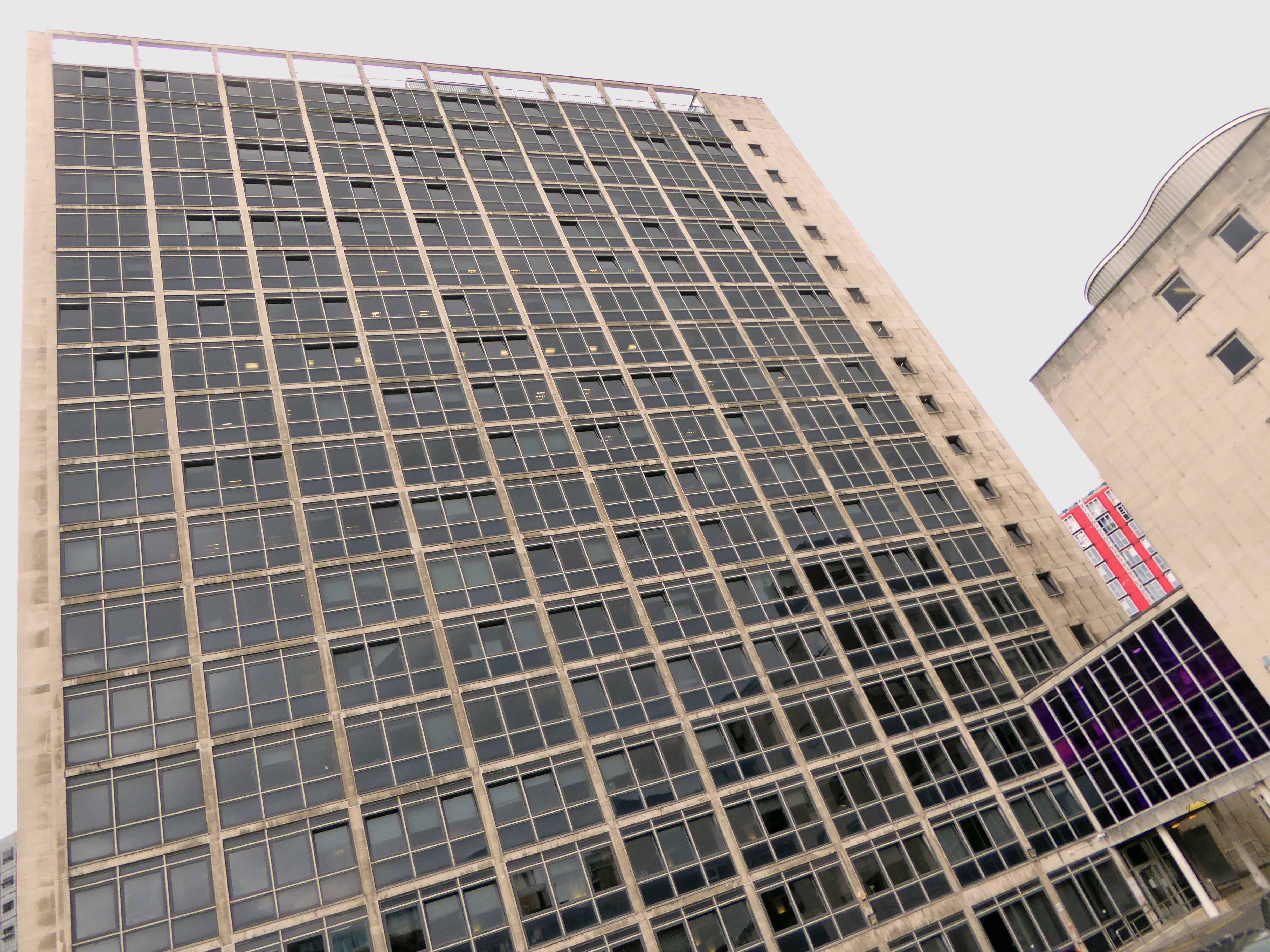
CIS Tower was the largest office block to be built since the war, reaching 25 floors in height. The design was heavily influenced by a trip to the United States, which resulted in a taller, more centralised building that made use of curtain walling. The brief was for an open plan office building, to house 2,500 staff.
Currently under wraps is the CWS Redfern Building 1928 WA Johnson & JW Cropper – a delightfully functionalist brick moderne building in the northern European manner.
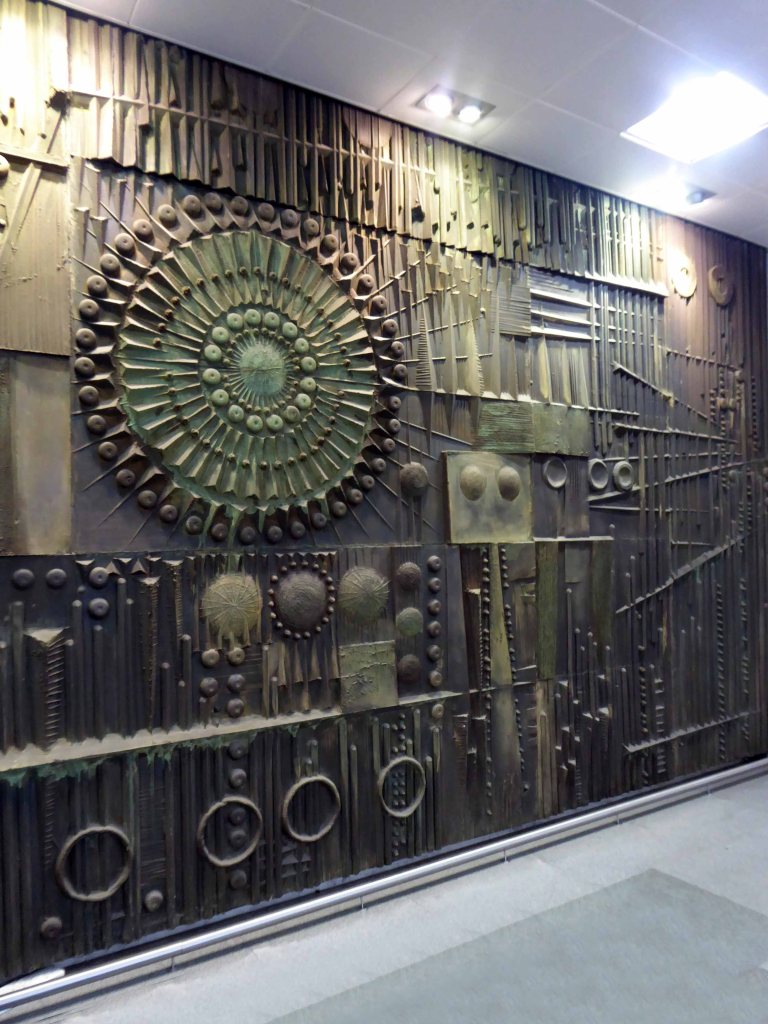
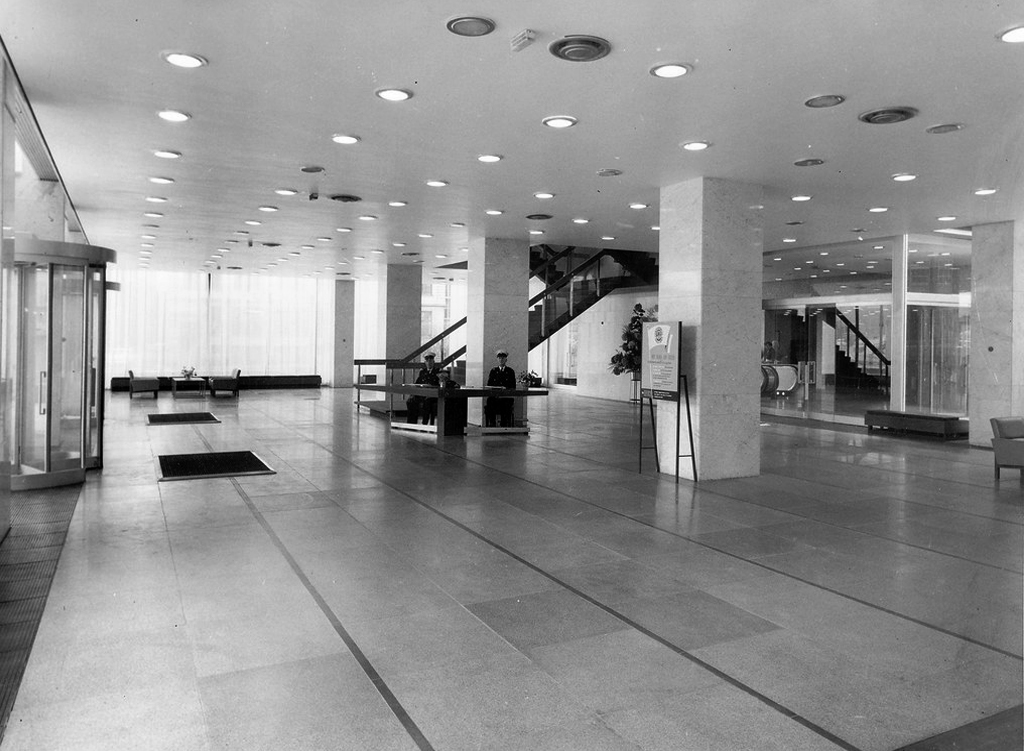
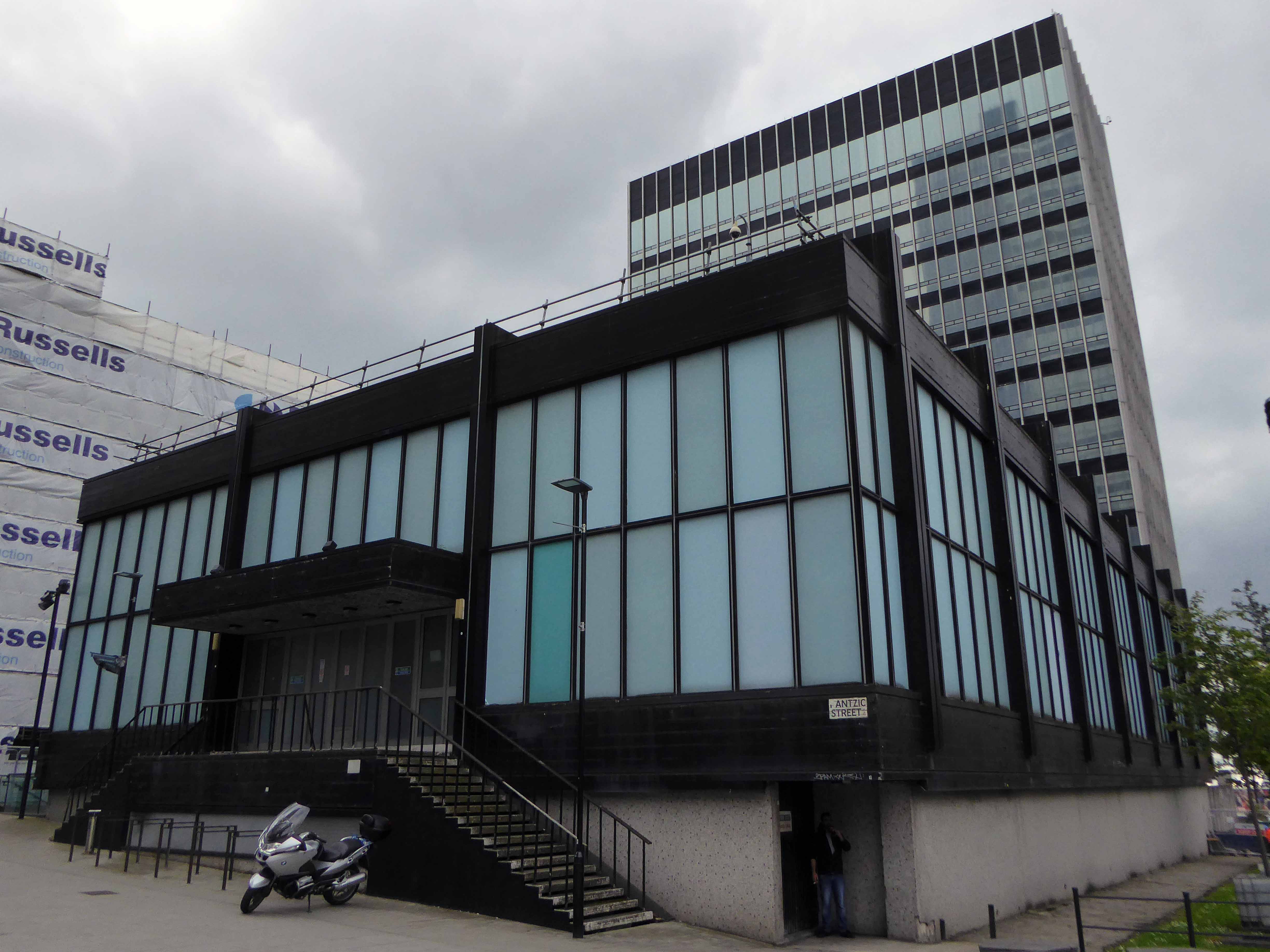
I do how however have a personal preference for the tower’s relatively diminutive neighbour New Century House and Hall – particularly John McCarthy’s concrete screen wall water feature.
New Century House was designed by G. S. Hay and Gordon Tait and constructed by John Laing & Son for the Co-operative Insurance Society in 1962. The attached New Century Hall has a capacity of 1,000 people. New Century House and Hall were listed in 1995 as Grade II as a good example of a high-quality post-war office building. It is considered one of the finest modernist towers in the United Kingdom alongside the sister building CIS Tower – It is described in its listing as:
A design of discipline and consistency which forms part of a group with the Co-operative Insurance Society.
I am told that the current work will see the building used as a music school and venue.
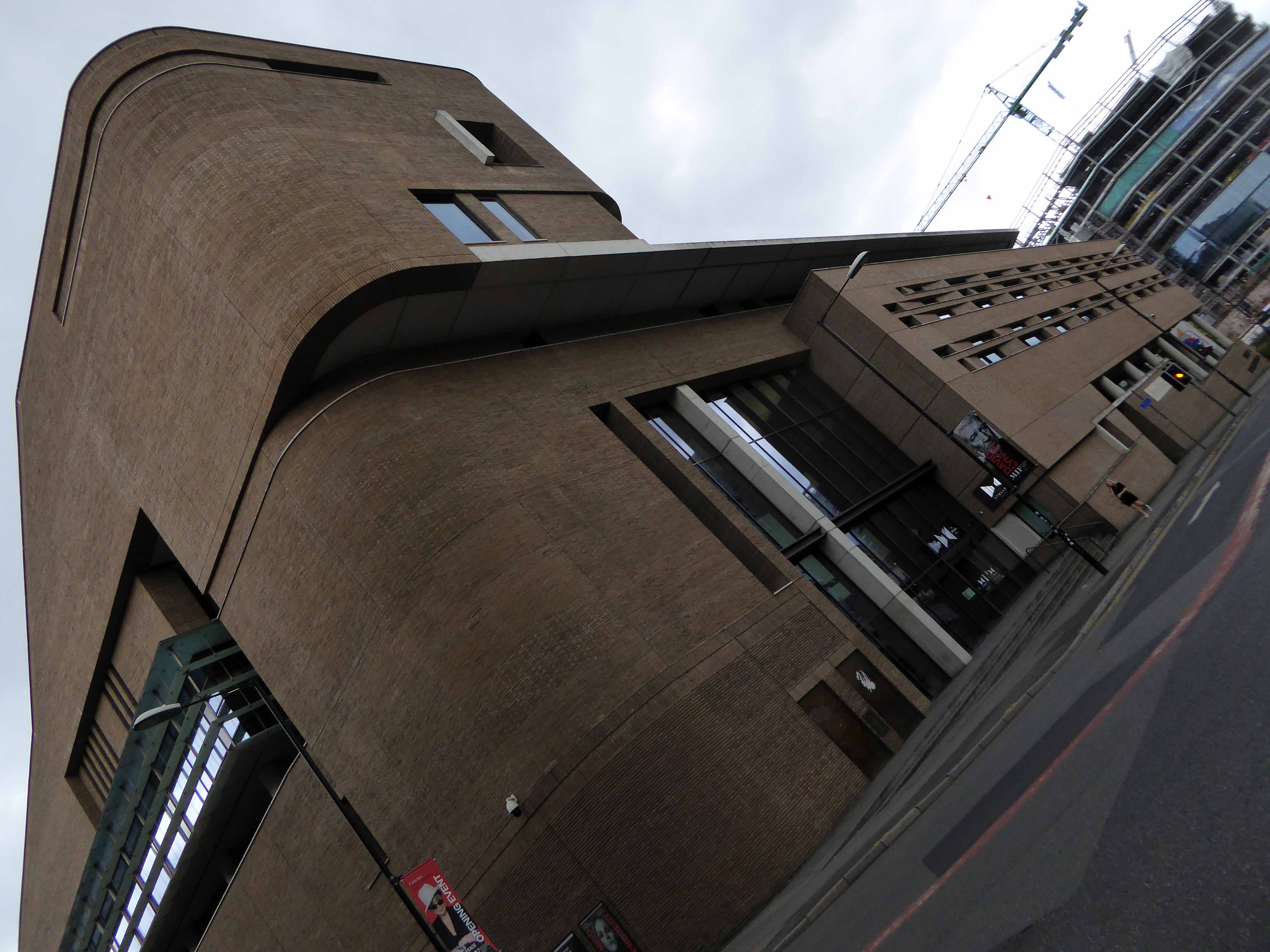
Let’s take a quick look at some more modern Modernism the Cheetham’s School Extension.
This building was designed to incorporate the Chetham’s Music School, the Academic School, an outreach centre, a 400-seat concert hall and a 100-seat recital hall. It sits on the site of a former car park which itself was created on a vacant lot left following the demolition of railway company offices. This is the first stage of a project that will provide the school with 21st Century facilities. The next stage will involve the demolition of the former Palatine Hotel and a number of other modifications that will improve access to the medieval Chetham’s Hospital and Library.
The architect Stephenson Bell says of the project that:
Our brief was to create a unique contemporary new building for the musical and academic teaching facilities, providing a state-of-the-art environment which will be a fitting platform for the students. The building itself will, alongside ongoing regeneration in Central Manchester, provide an iconic opportunity for the educational and cultural standing of Manchester to consolidate its position on the international scene.
Just around the corner we encounter the once two-toned towering tower of Highland House across the River Irwell in Salford.
The building was designed and built by Leach, Rhodes & Walker for the Inland Revenue, and was completed in 1966.
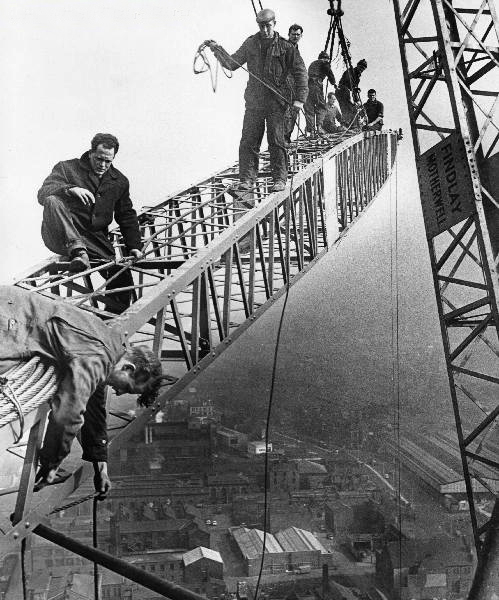
The tower was built using the then innovative technique of using a continuously climbing shutter to cast a central core; pre-fabricated cladding was then lifted into place using a tower crane. This technique led to rapid construction, avoided the need for scaffolding, and allowed the lower floors to be occupied while building continued higher up. The combination was very cost-effective, but was not flawless by any means. On a windy night the windows of the building blew off, ending up in Salford Bus Station.
It changed hands in 1994 for £7.7 million. The Inland Revenue announced plans to move out in 1995 in an early example of a Private Finance Initiative, shortly afterwards the building was sold by London & Regional Properties to the Bruntwood group. Between 1998 and 2000 the building was reclad, converted to its current use and renamed, at a total cost of £4.5 million. In 2004, the president of the Royal Institute of British Architects, George Ferguson, said that:
The building, along with the Arndale Centre, was dreadful and should be demolished.
It currently seems to almost be a Premier Inn.
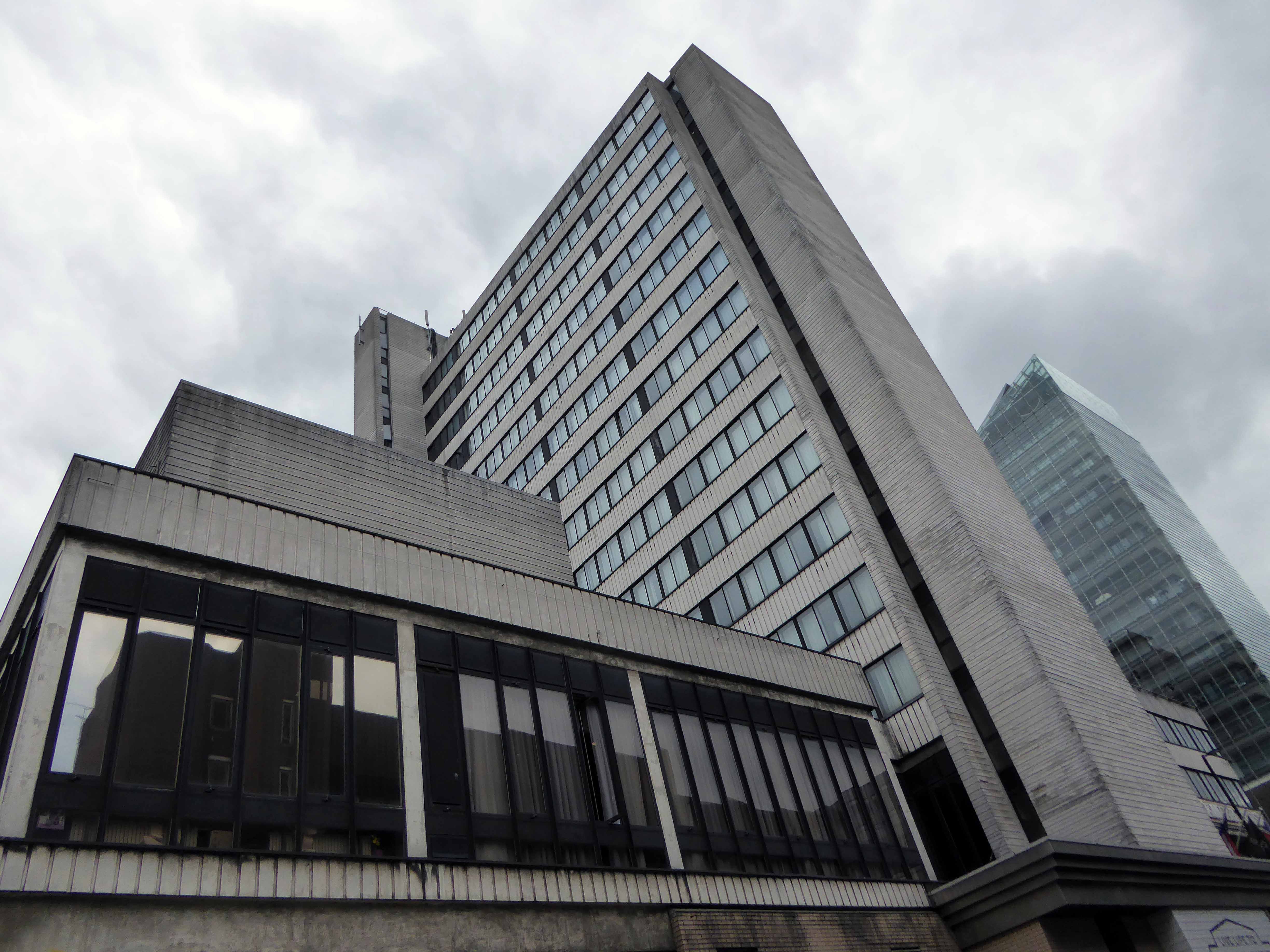
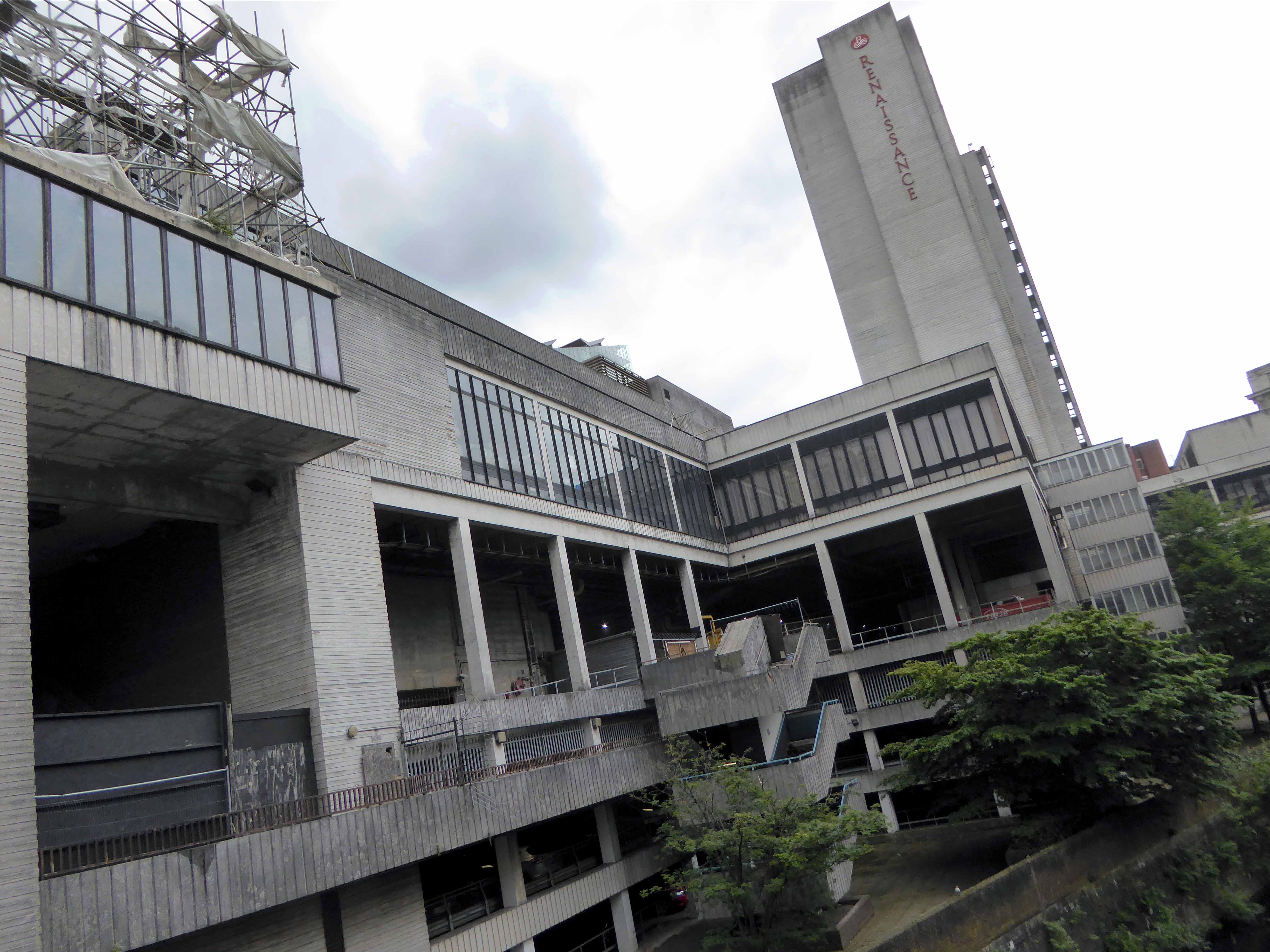
Almost instantly we’re back in Manchester and booking into the Ramada Hotel and exploring its riverside piazza and car park. Formerly Fairburn House the work of Cruikshank and Seward 1972.
Pausing to observe a mysterious ramp to nowhere.
Once connecting the office/hotel complex via a footbridge to the now defunct Shambles Square and its equally mysterious array of long gone retail outlets.
Downriver now to Albert Bridge House – an imposing block eighteen storey tower, concrete framed and stone clad – designed by EH Banks for the Ministry of Works, surrounded by lower outlying buildings – featuring a delightfully wavy roof, and an almost playful Corbusian service tower.
Look a little closer and you’ll see a delightful group of defunct letter boxes and a hidden mosaic – playfully tucked away above the doorway to the Assessment Centre.
Ian Nairn in Britain’s Changing Towns, believed it to be:
Easily the best modern building in Manchester, and an outstanding example of what good proportions and straightforward design can do.
Just across the way is Aldine House 1967 Leach Rhodes Walker – the extruded cast concrete curvy windows echoing those of Highland House.
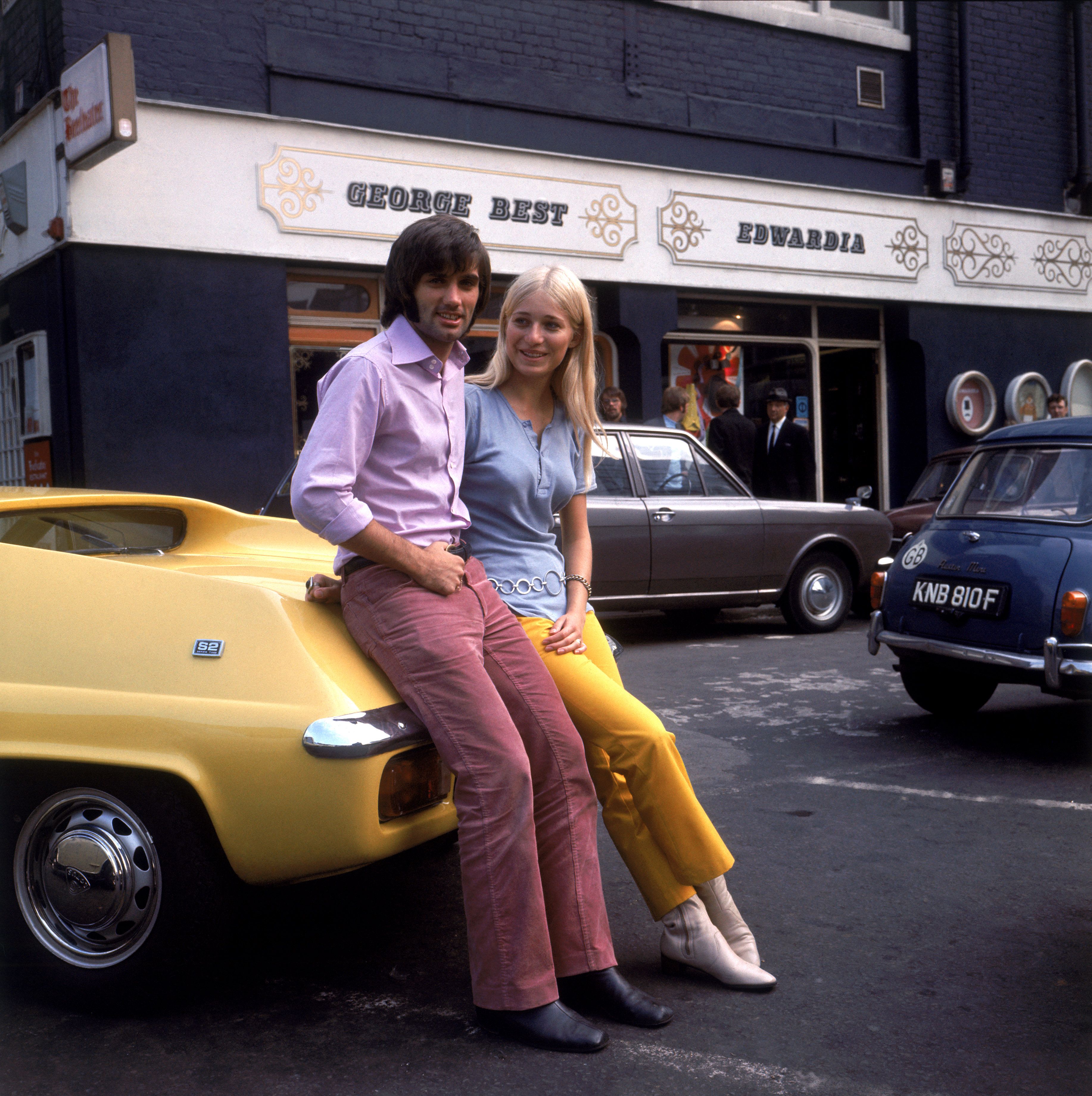
Now there’s just enough time to pop into Besty’s nearby boutique and pick up some fab mod gear.
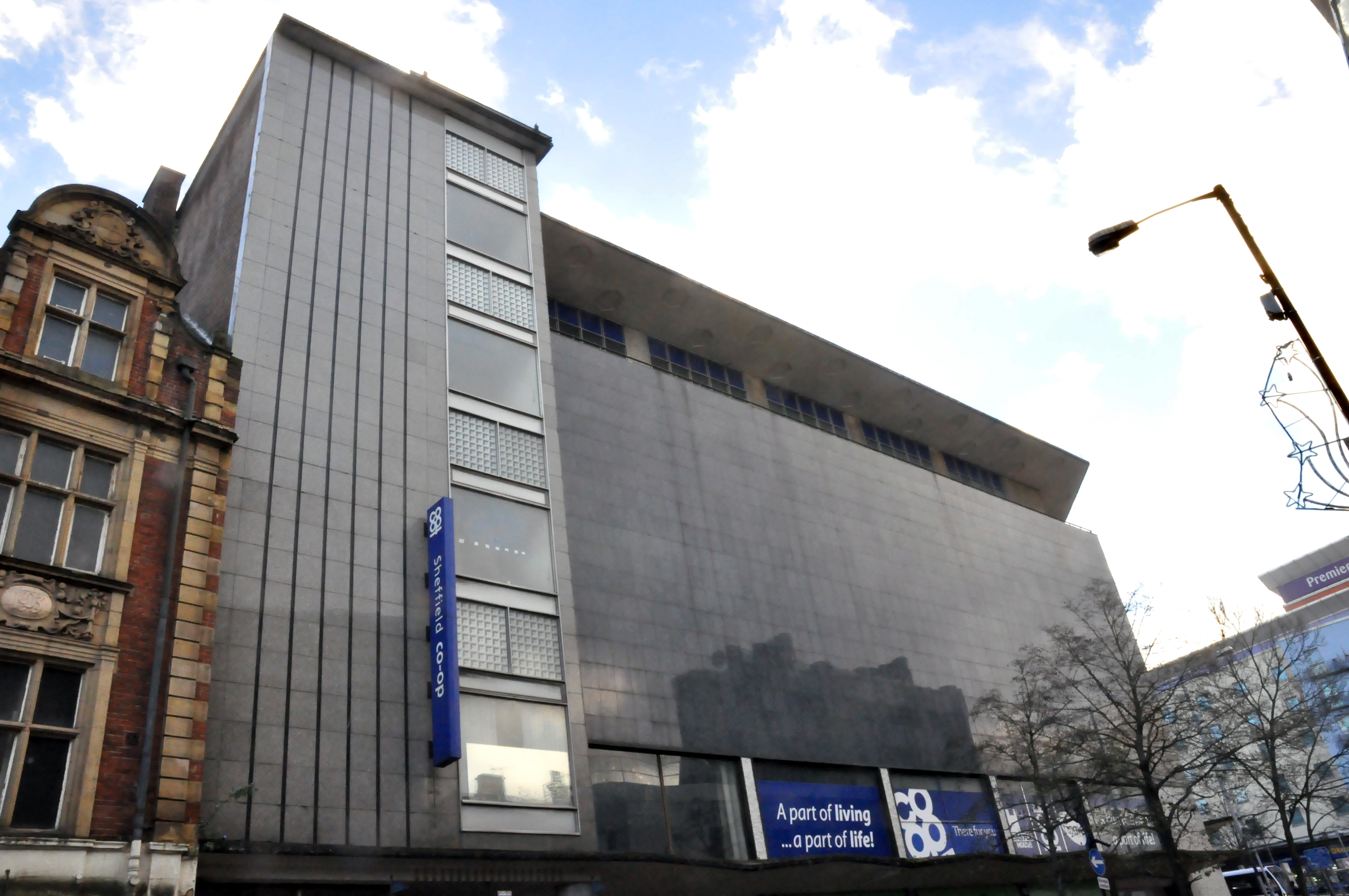
So here we are outside, you and I in 2015 – it seems like yesterday.
Whereas yesterday I was inside not outside, but more of that in a moment.
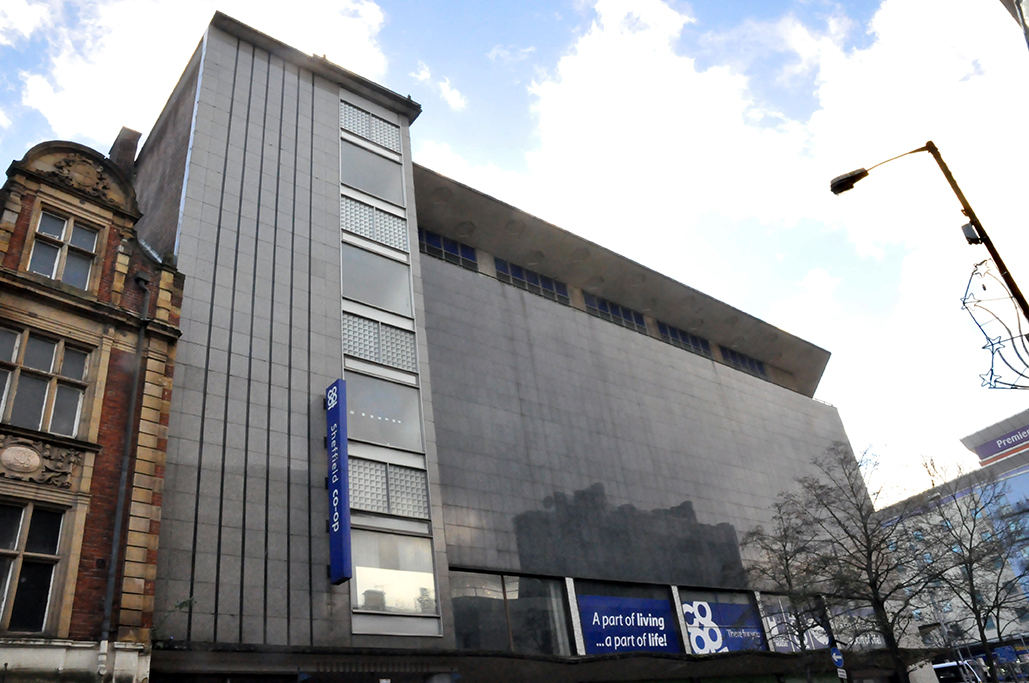
It seems that you were listed in 2009 and deservedly so.
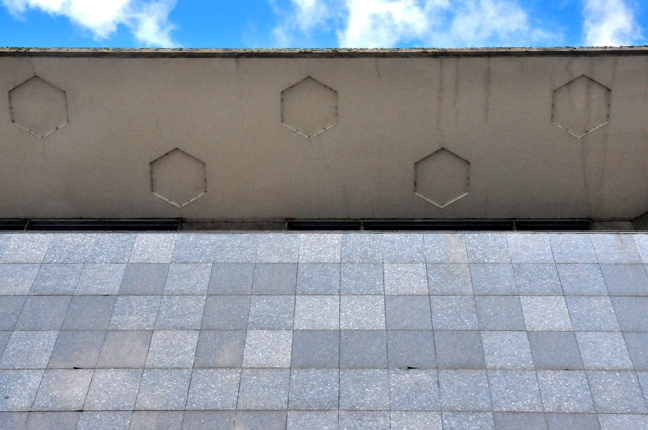
1964 by George S Hay, Chief Architect for CWS, with interior design by Stanley Layland, interior designer for CWS. Reinforced concrete with Blue Pearl granite tiles and veneers, grey granite tiles and veneers, buff granite blocks, glass, and brick.
There’s just so much to stand and stare and marvel at.
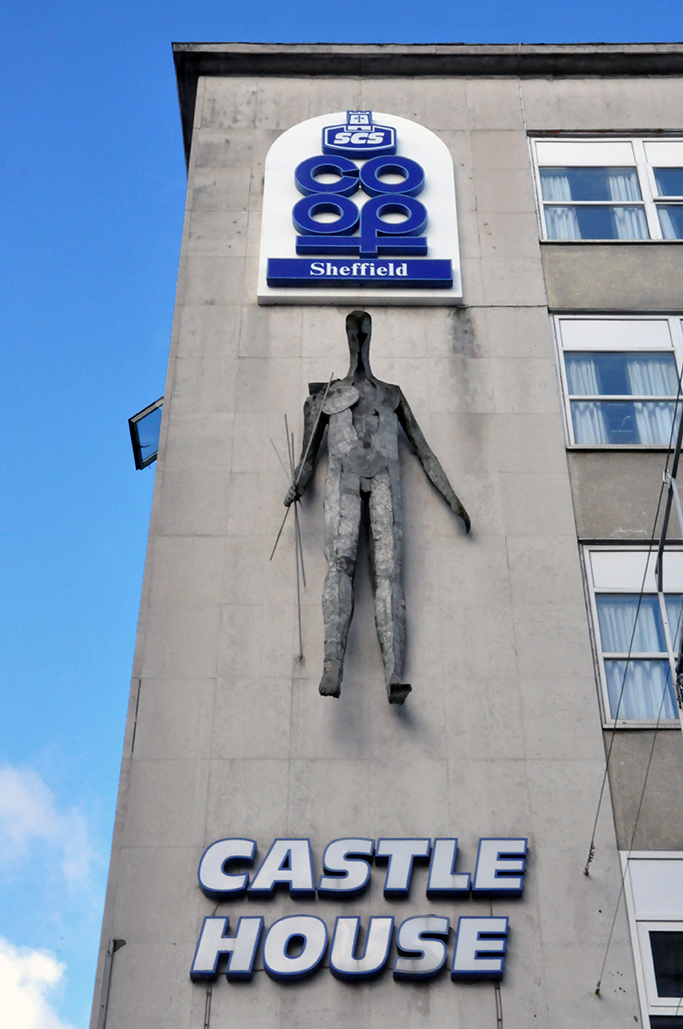
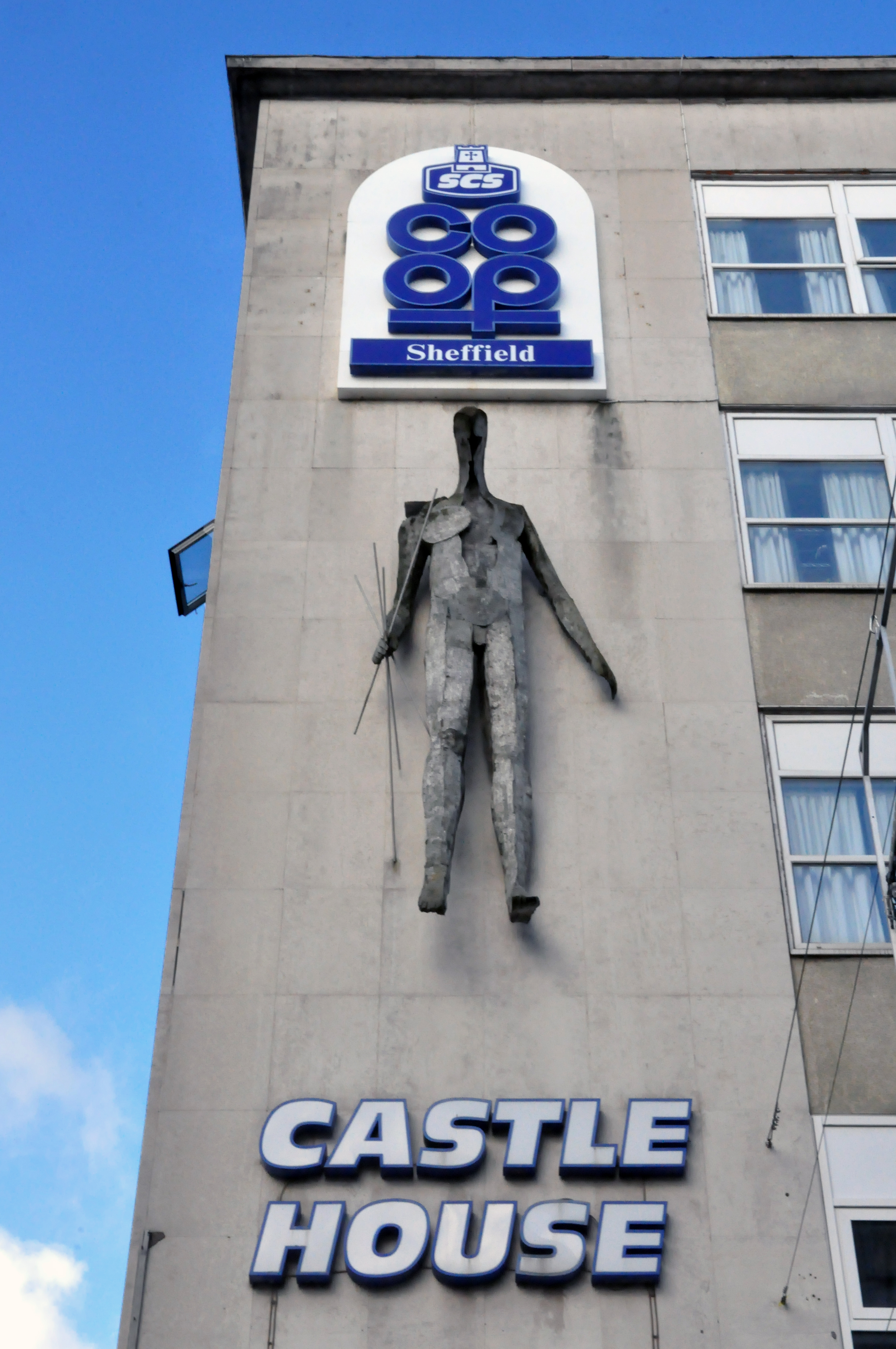
Vulcan by Boris Tietze commisioned by Horne Brothers 1961 for their head office building No. 1 King Street. Glass fibre on a metal armature the 8 foot high figure holding a bundle of metal rods.
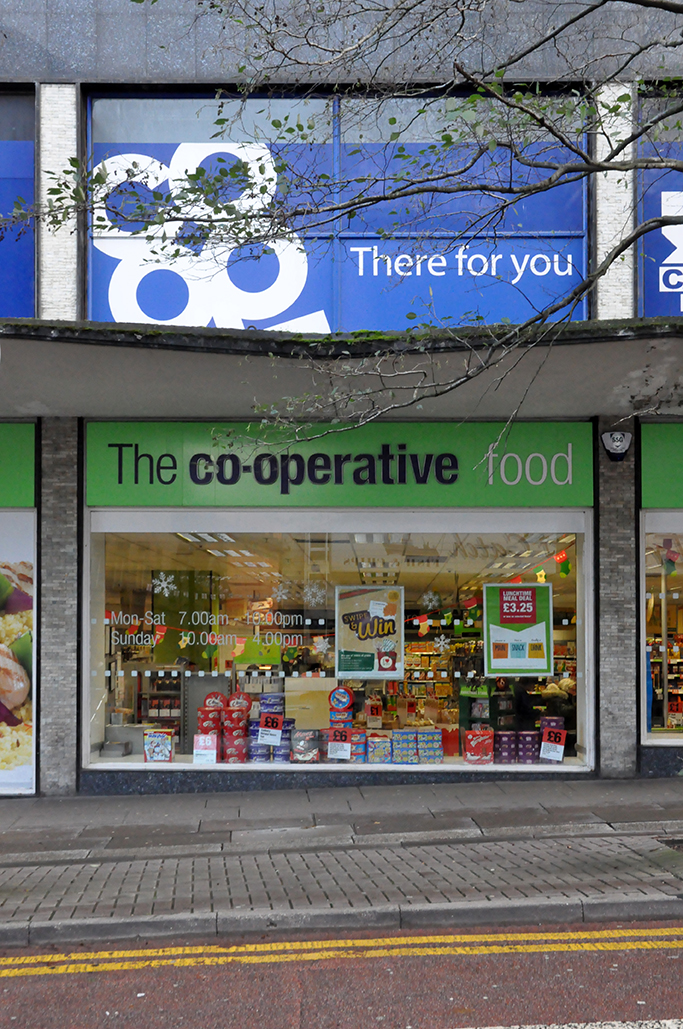
You were just about still open then, then you weren’t, then you were again – but a Co-op no more alas.
Work is underway on plans for a tech hub in Sheffield after a funding package was agreed.
Followed by a casual stroll towards 2019 where we are talking a peep inside courtesy of owners Kollider and book shop La Biblioteka.
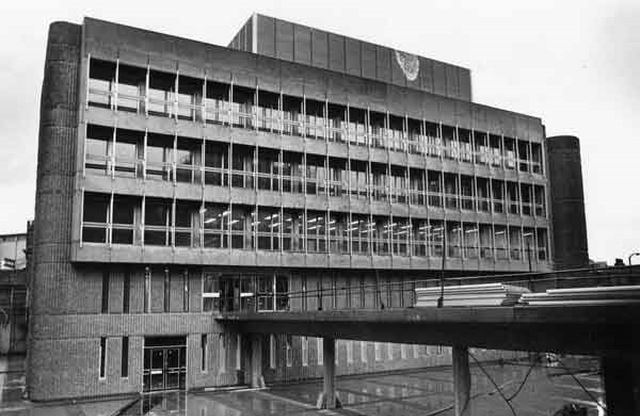
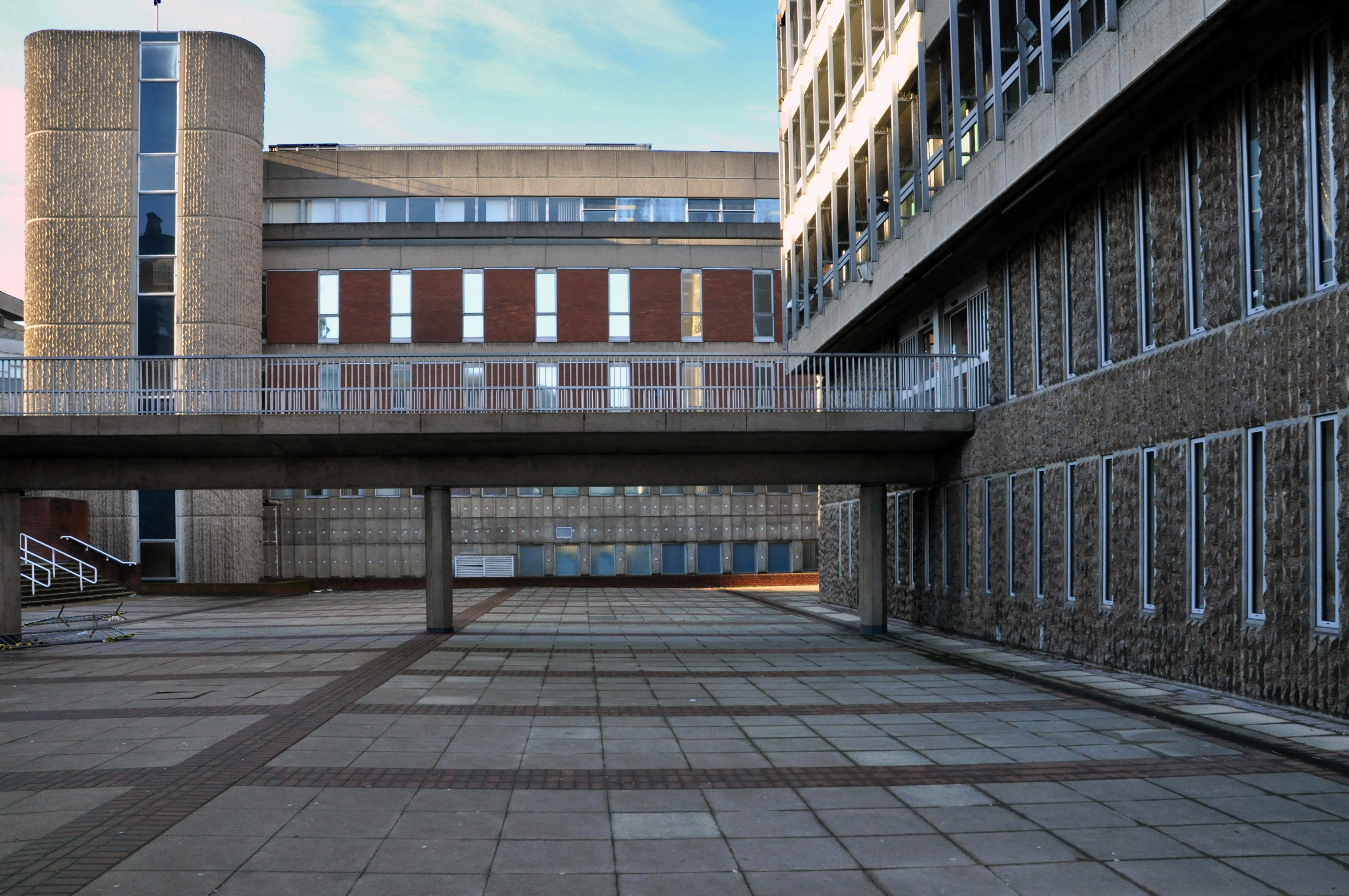
I’d never ever seen the interior, save through the photographs of Sean Madner who captured the key features in 2014, prior to refurbishment.
So the Modernists and I pitched up this Sunday afternoon, the conclusion of our Sheffield Walk.
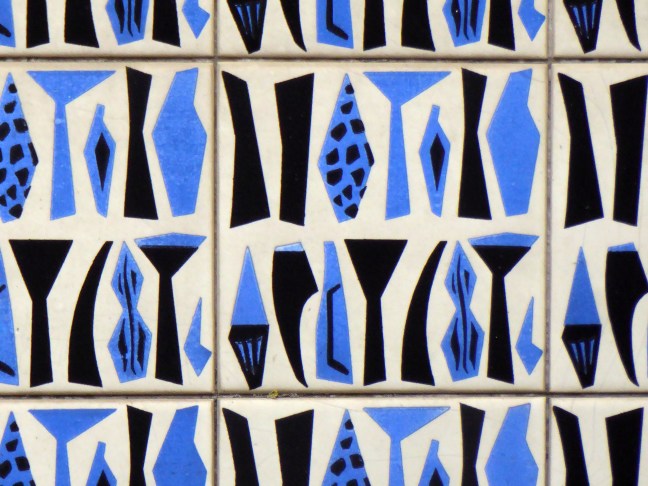
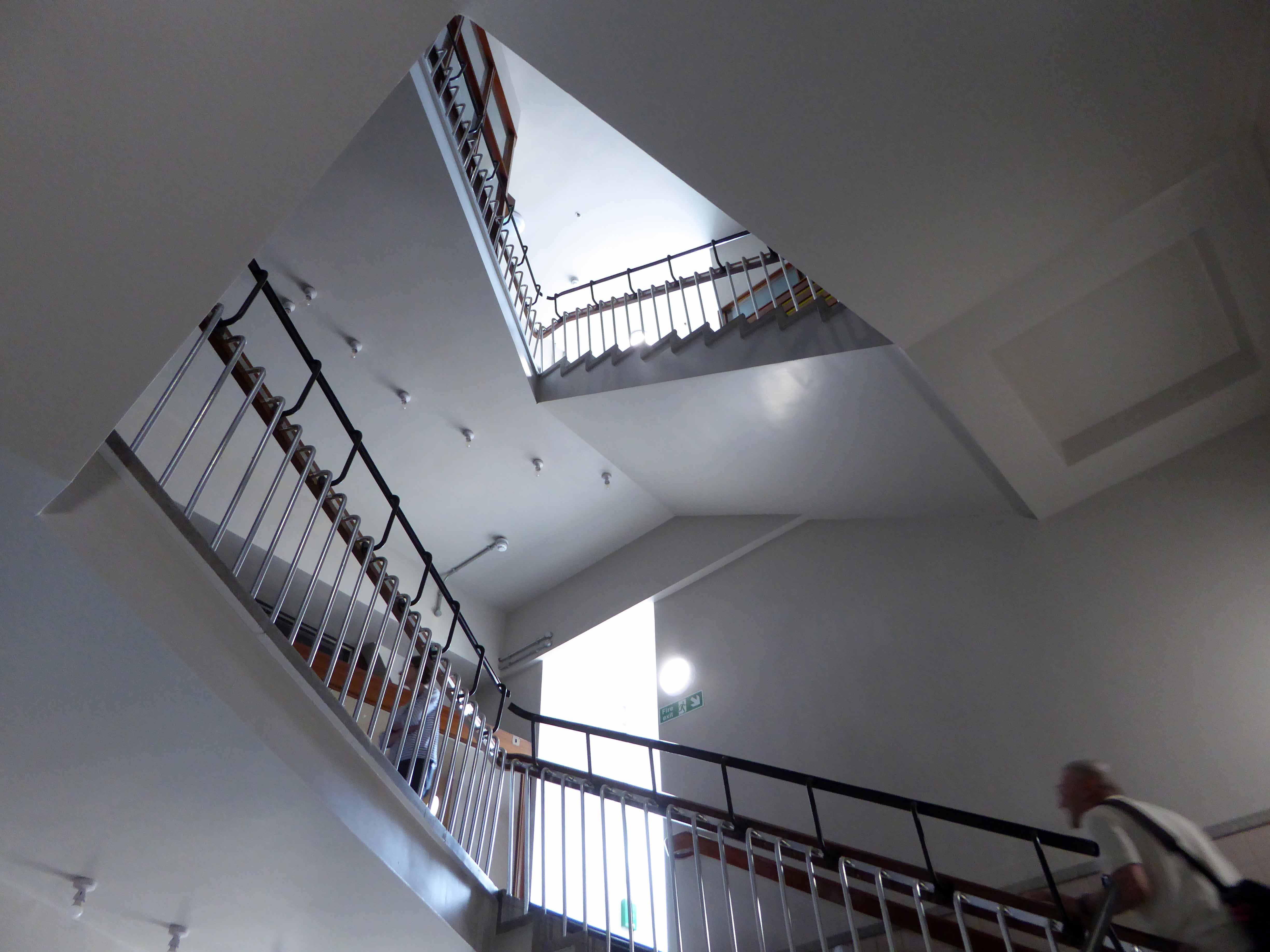
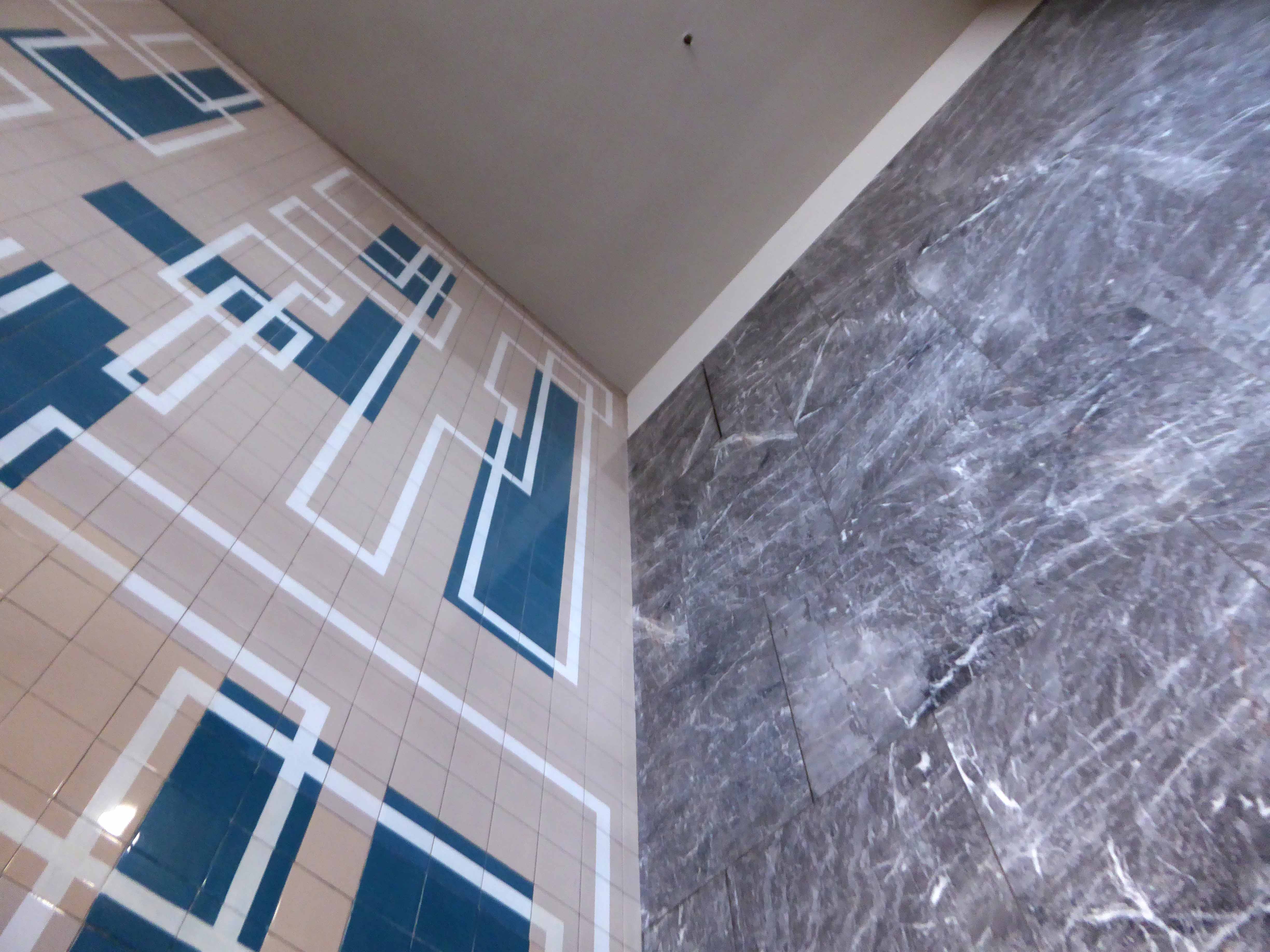
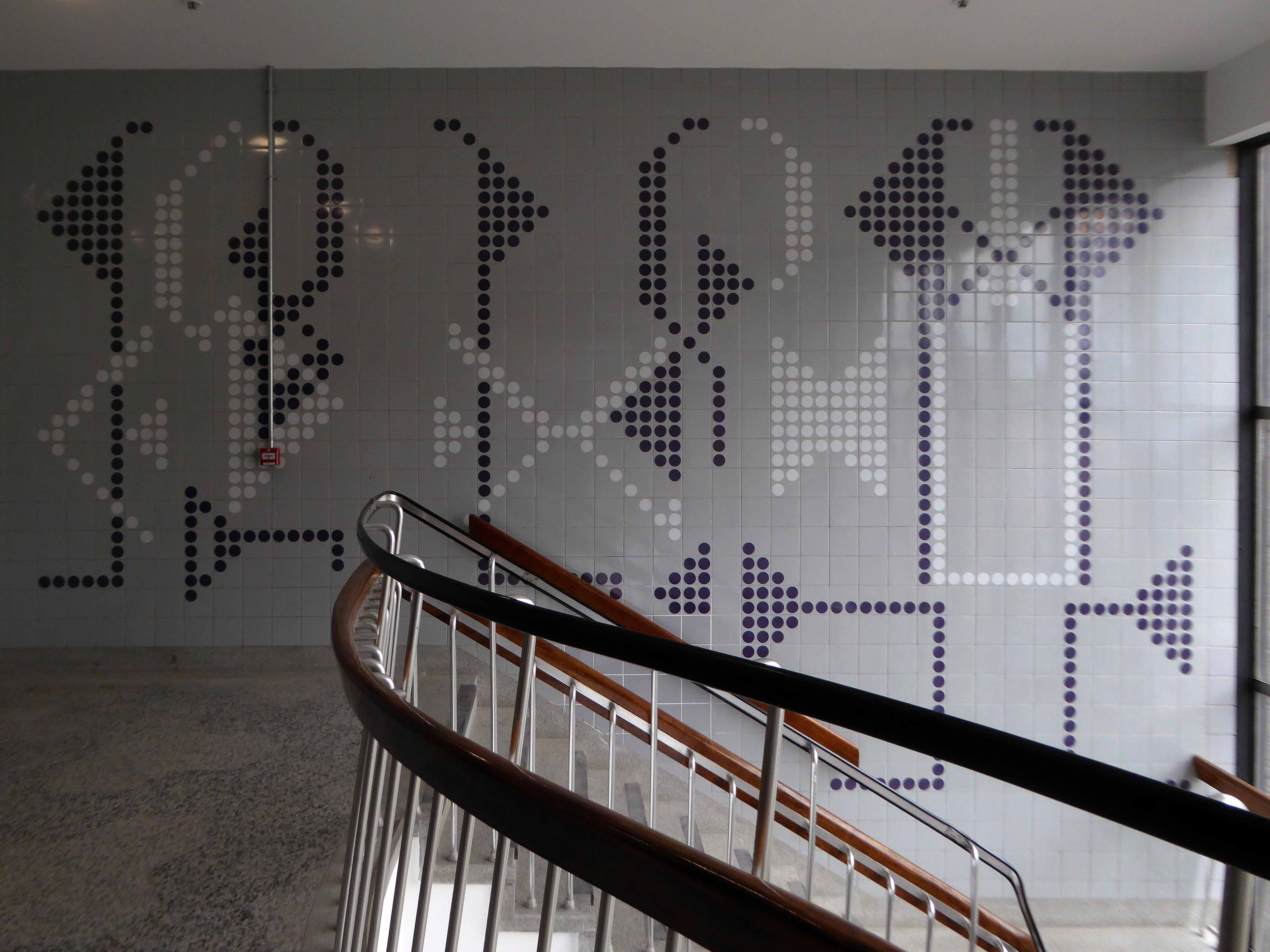
Lets take a look at the end stairwells, two very distinct designs one dotty one linear, both using Carter’s Tiles.
Configured from combinations and rotations of these nine modular units and two plain tiles.
Configured from combinations and rotations of these twelve modular units and two plain tiles.
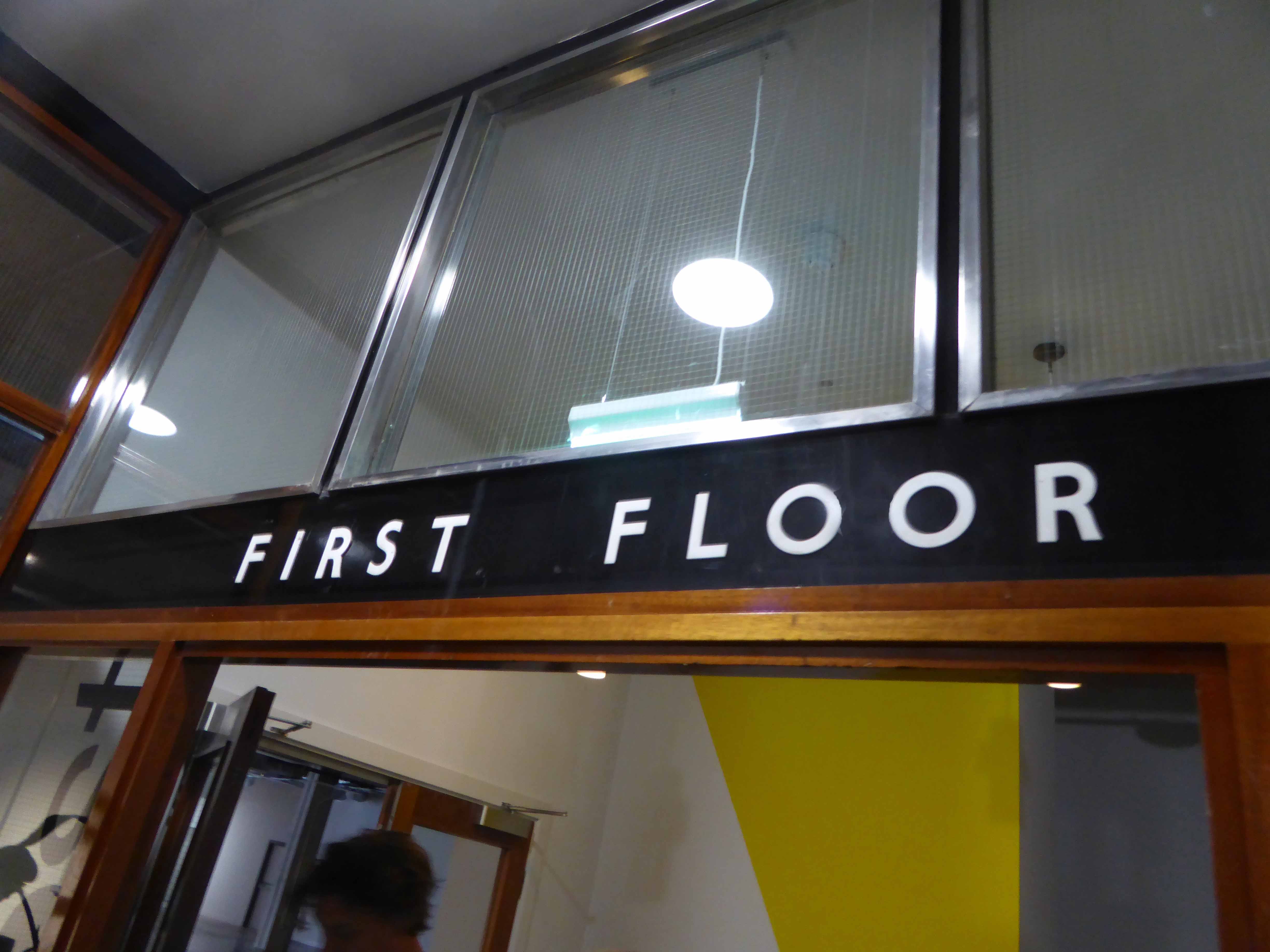
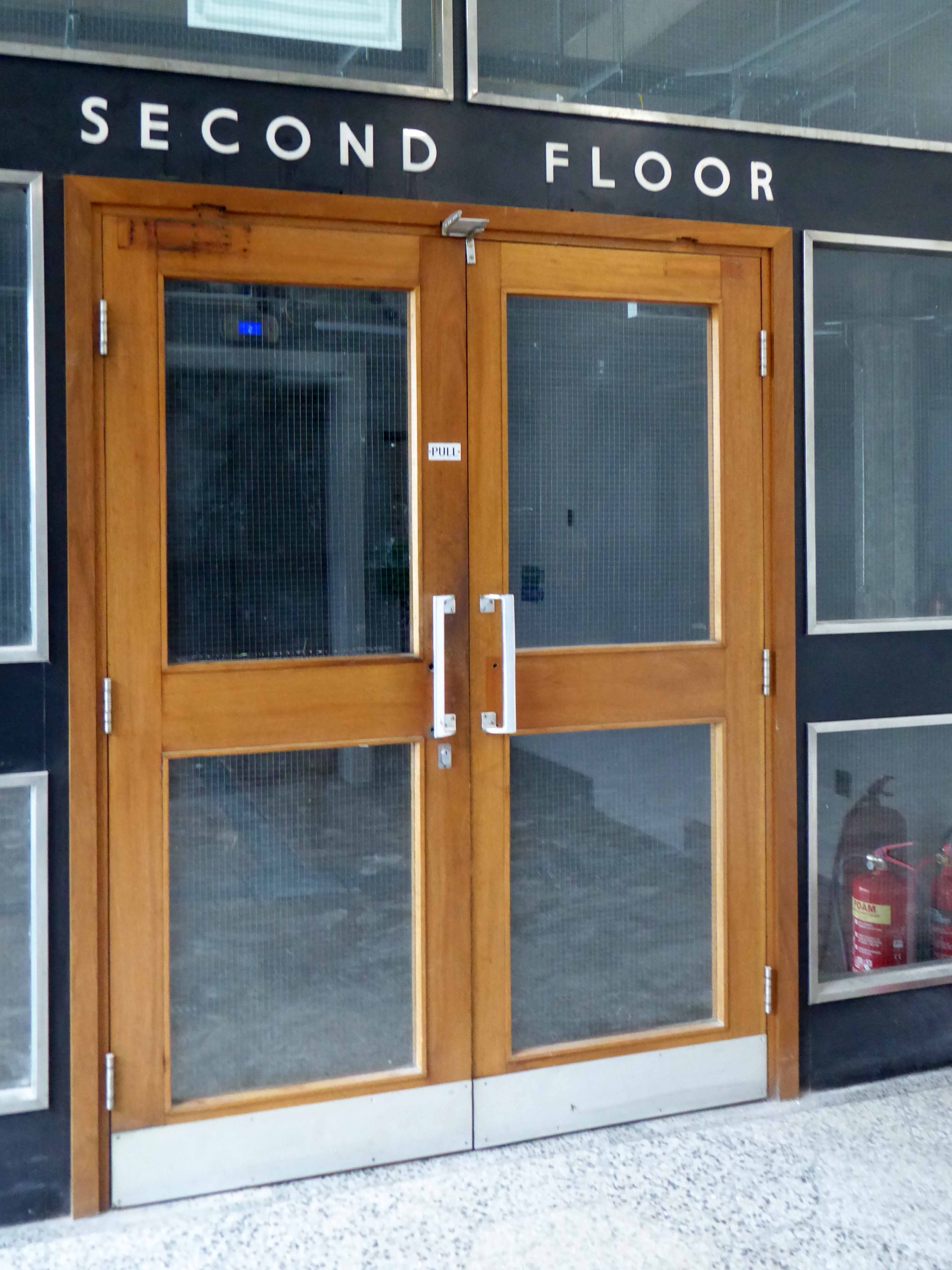
The site has retained some of its original architectural typography.
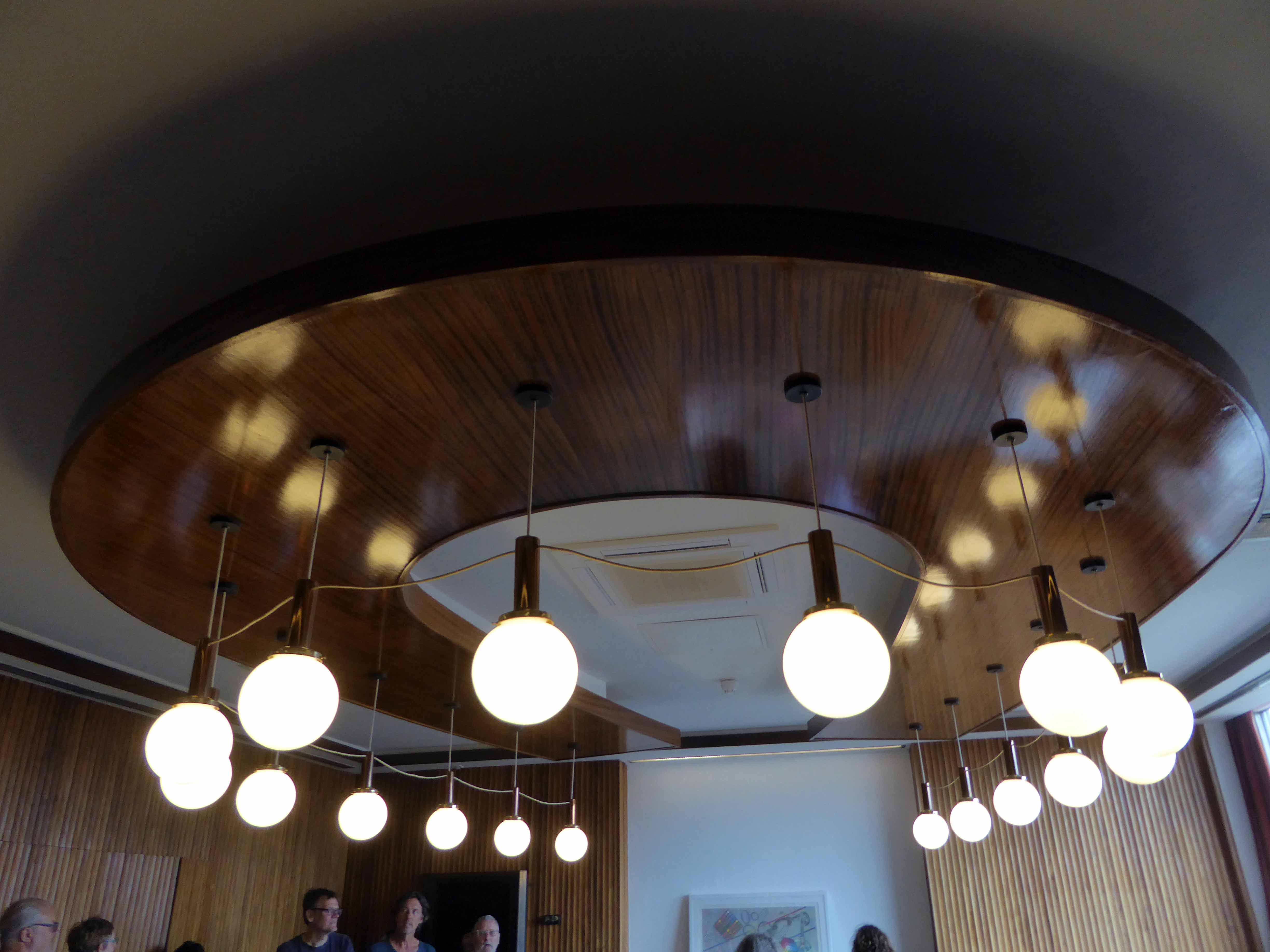
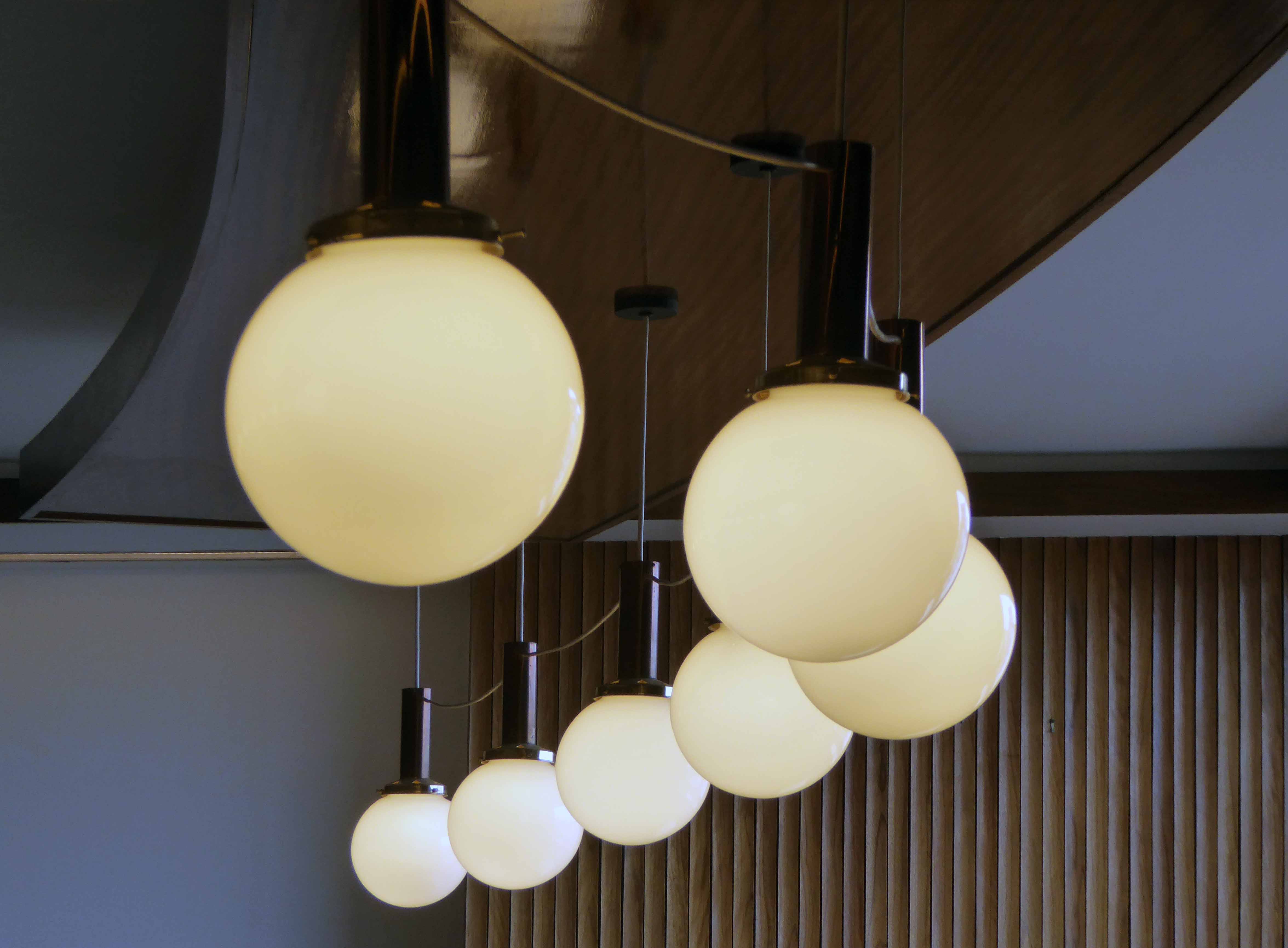
The former top floor restaurant has a suspended geometric ceiling with recently fitted custom made lighting.
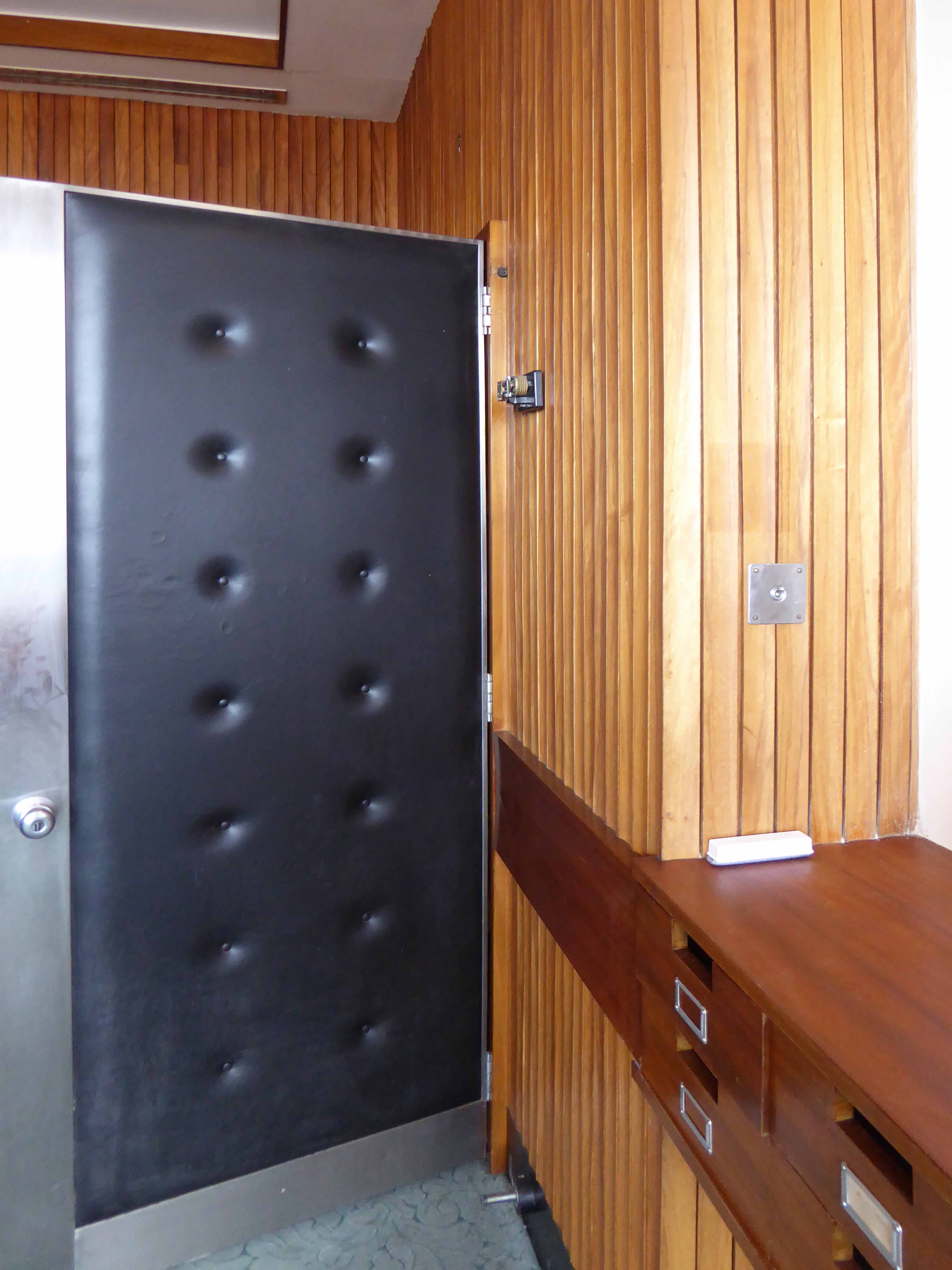
The timber-lined boardroom has a distinctive horseshoe of lighting, augmenting the board room table – which is currently away for repair, oh yes and a delightful door.
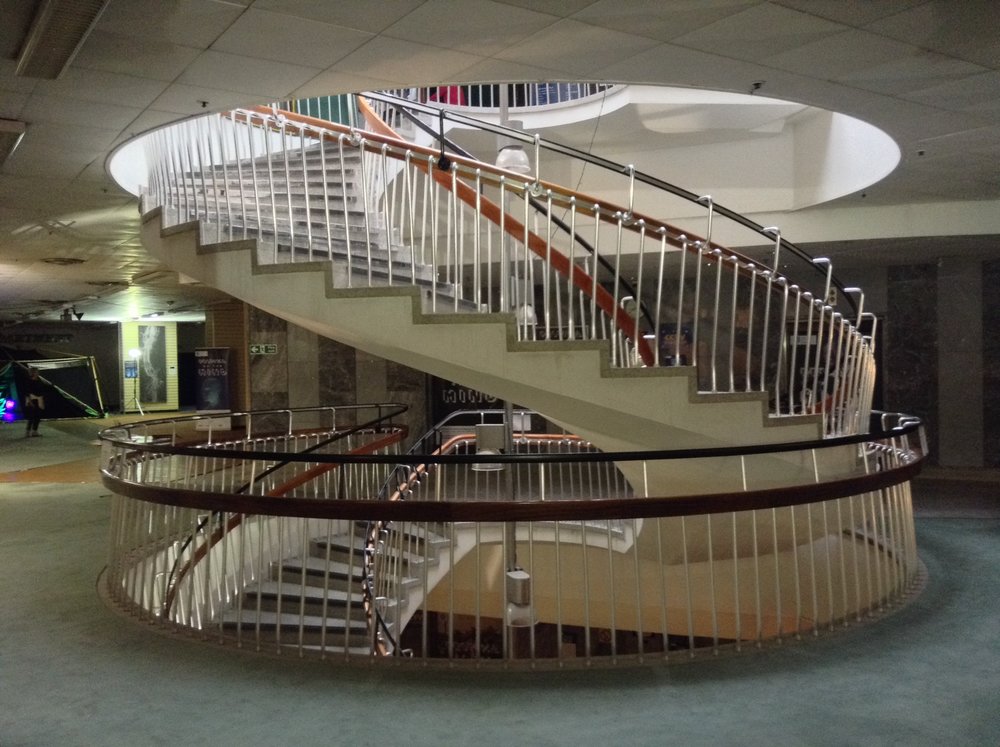
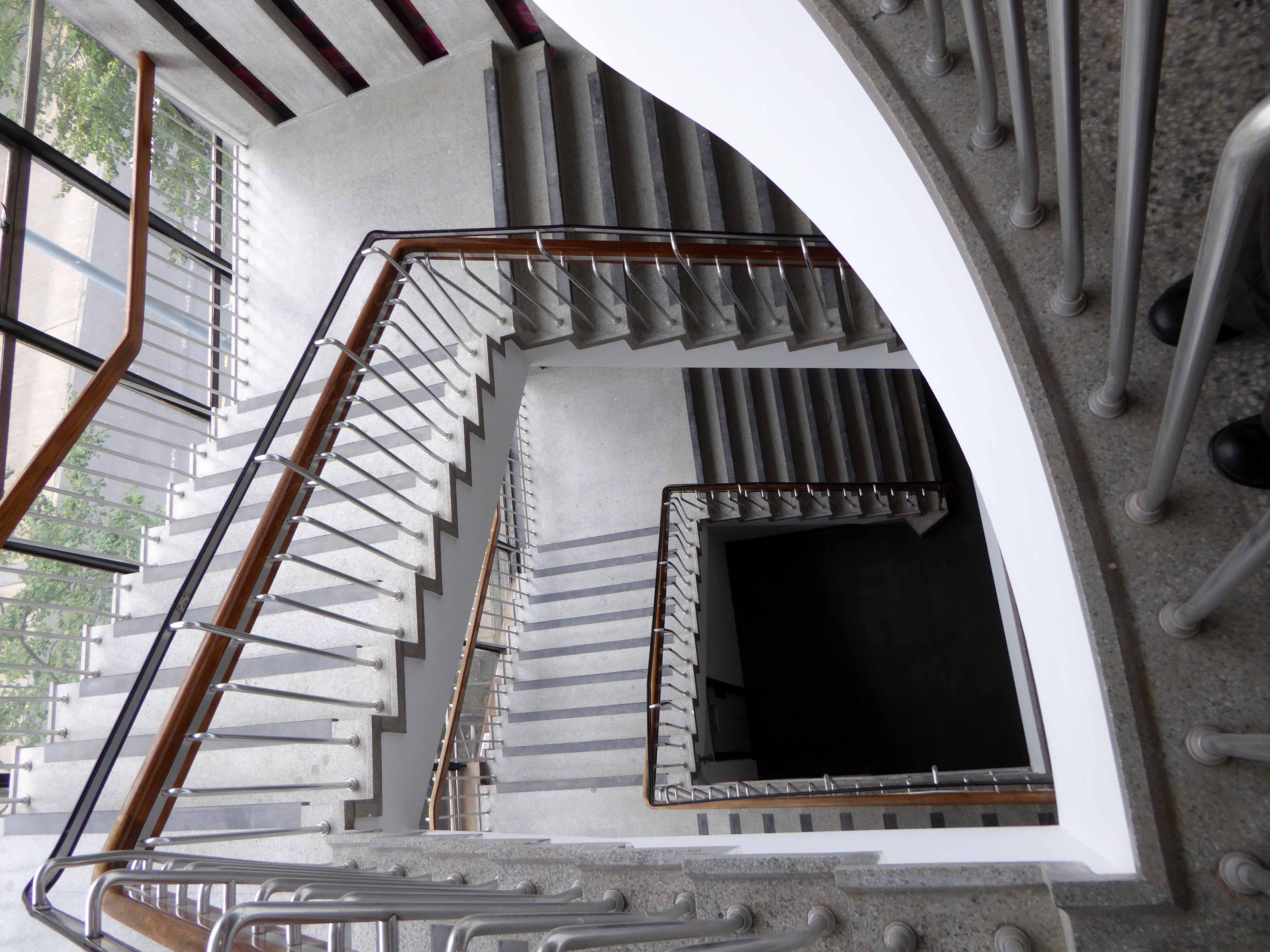
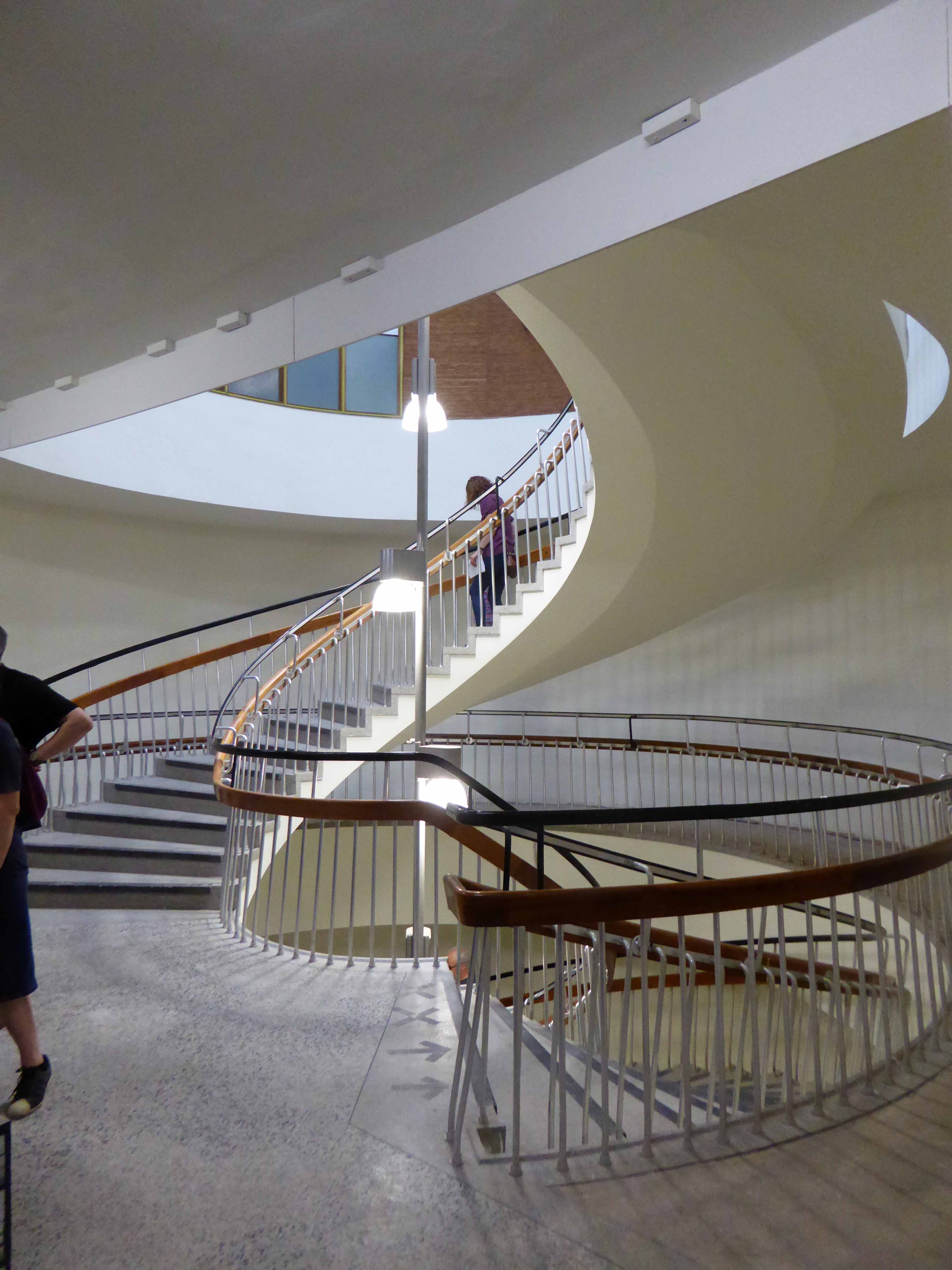
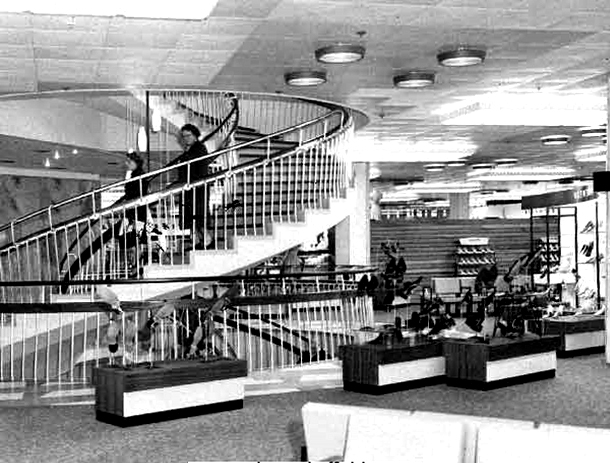
High atop the intoxicating vertiginous swirl of the central spiral stairway is the relief mural representing a cockerel and fish made of aluminium, copper and metal rod, with red French glass for the fish’s eye and cockerel’s comb.
Illuminated from above by this pierced concrete and glass skylight.
Many of the internal spaces have been ready for their new tenants.
This is a fine example of Modernist retail architecture saved from decay and degradation by the timely intervention of a sympathetic tenant.
Long may they and Castle House prosper – Sheffield we salute you!
To begin at the beginning high on a hill overlooking the city – Park Hill.
Park Hill was previously the site of back-to-back housing, a mixture of two and three storey tenement buildings, waste ground, quarries and steep alleyways.Clearance of the area began during the 1930s.
Following the war it was decided that a radical scheme needed to be introduced to deal with rehousing the Park Hill community. Inspired by Le Corbusier’s Unité d’Habitationarchitects Jack Lynn and Ivor Smith under the supervision of J. L. Womersley, Sheffield Council’s City Architect, began work in 1953 designing the Park Hill Flats.
Construction began in 1957 – officially opened on 16 June 1961.
The complex remained structurally sound, unlike many system-built blocks of the era, and controversially was Grade II* listed in 1998 making it the largest listed building in Europe.
A part-privatisation scheme by the developer Urban Splash in partnership with English Heritage to turn the flats into upmarket apartments, business units and social housing is now underway.
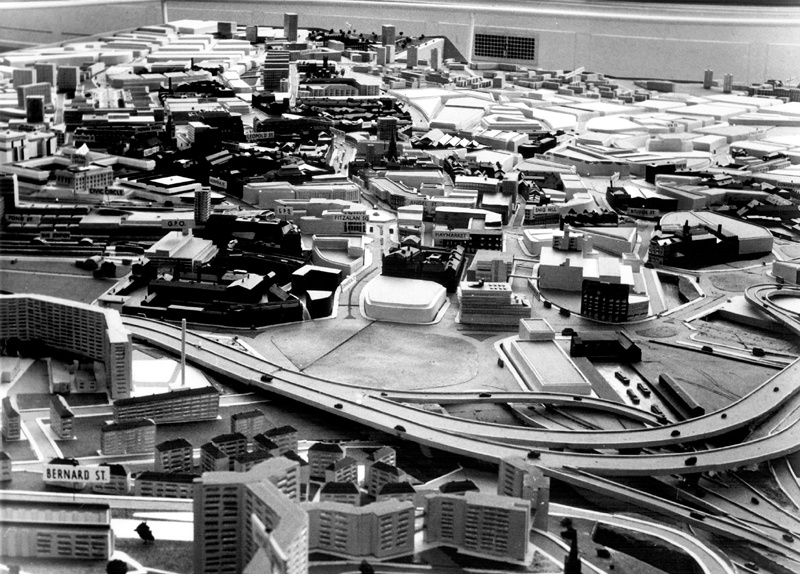
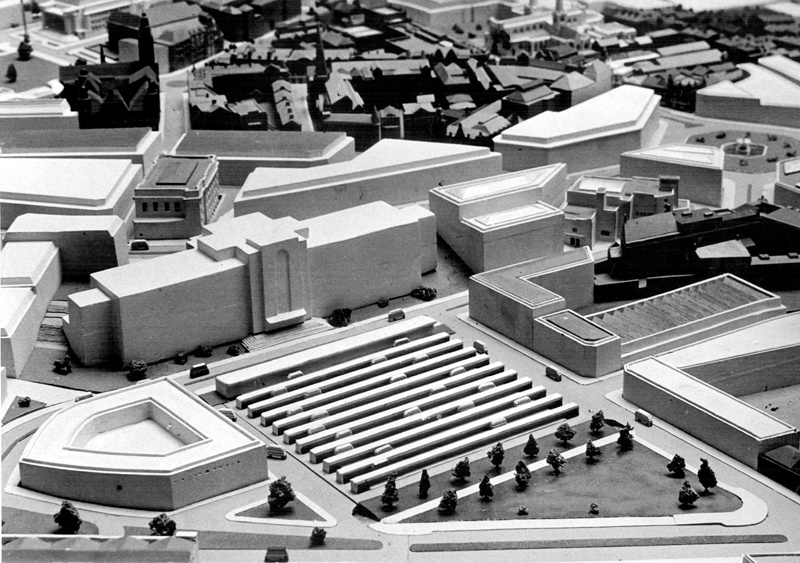
Plan for Sheffield 1963
I’ve been here before and again, visited pubs that don’t exist – The Parkway, Scottish Queen, Link or Earl George are all long gone.
Let’s go down town.
Take a look at Elements Fire Steel Brian Asquith’s work unveiled on May 10th 1965 at the former Westminster Bank – subsequently sited here on the Sheffield Hallam campus. He was also responsible for the sculptural work in the Peace Gardens.
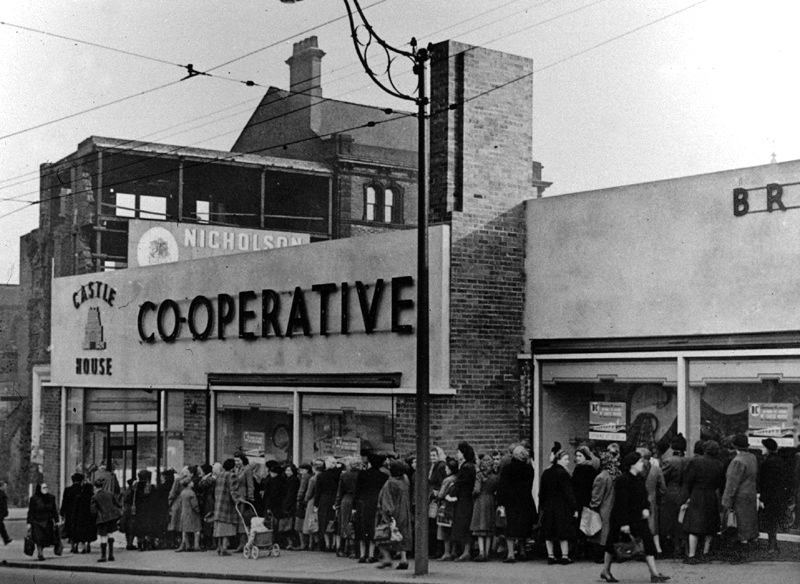
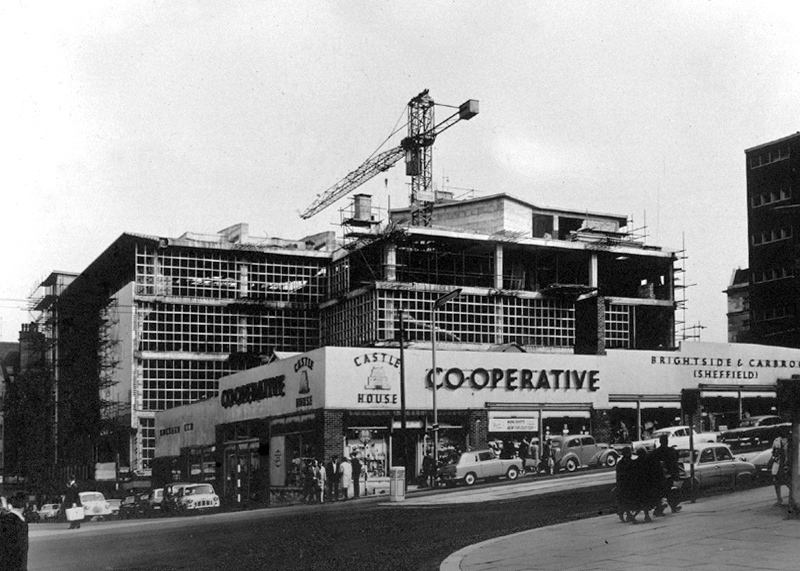
Onwards to the Co-op’s former Castle House Store.
Grade II Iisted Co-operative department store described by Historic England as ‘1964 by George S Hay, Chief Architect for CWS, with interior design by Stanley Layland, interior designer for CWS. Reinforced concrete with Blue Pearl granite tiles and veneers, grey granite tiles and veneers, buff granite blocks, glass, and brick.’
The original branch was destroyed in the Blitz, to be replaced by a temporary prefabricated shop.
Vulcan by Boris Tietze commisioned by Horne Brothers 1961 for their head office building No. 1 King Street. Glass fibre on a metal armature the 8 foot high figure holding a bundle of metal rods.
Off to court – Sheffield Magistrates Courts of 1978 designed by B Warren City Planning Officer and Architect, along with the adjacent Police Headquarters of 1970. Described by the Pevsner guide as – coherent in design if not particularly loveable.
Under construction 1977
1989
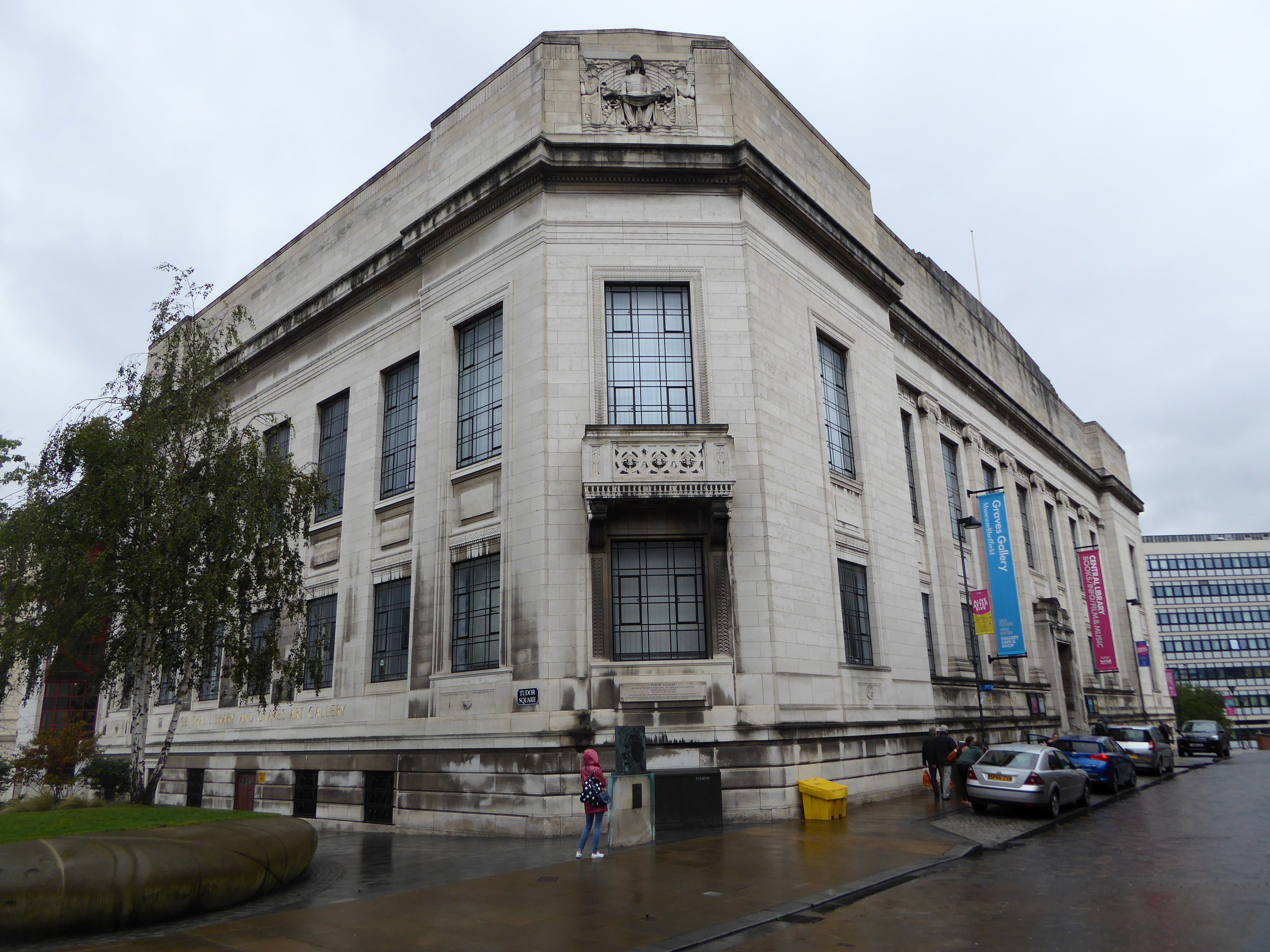
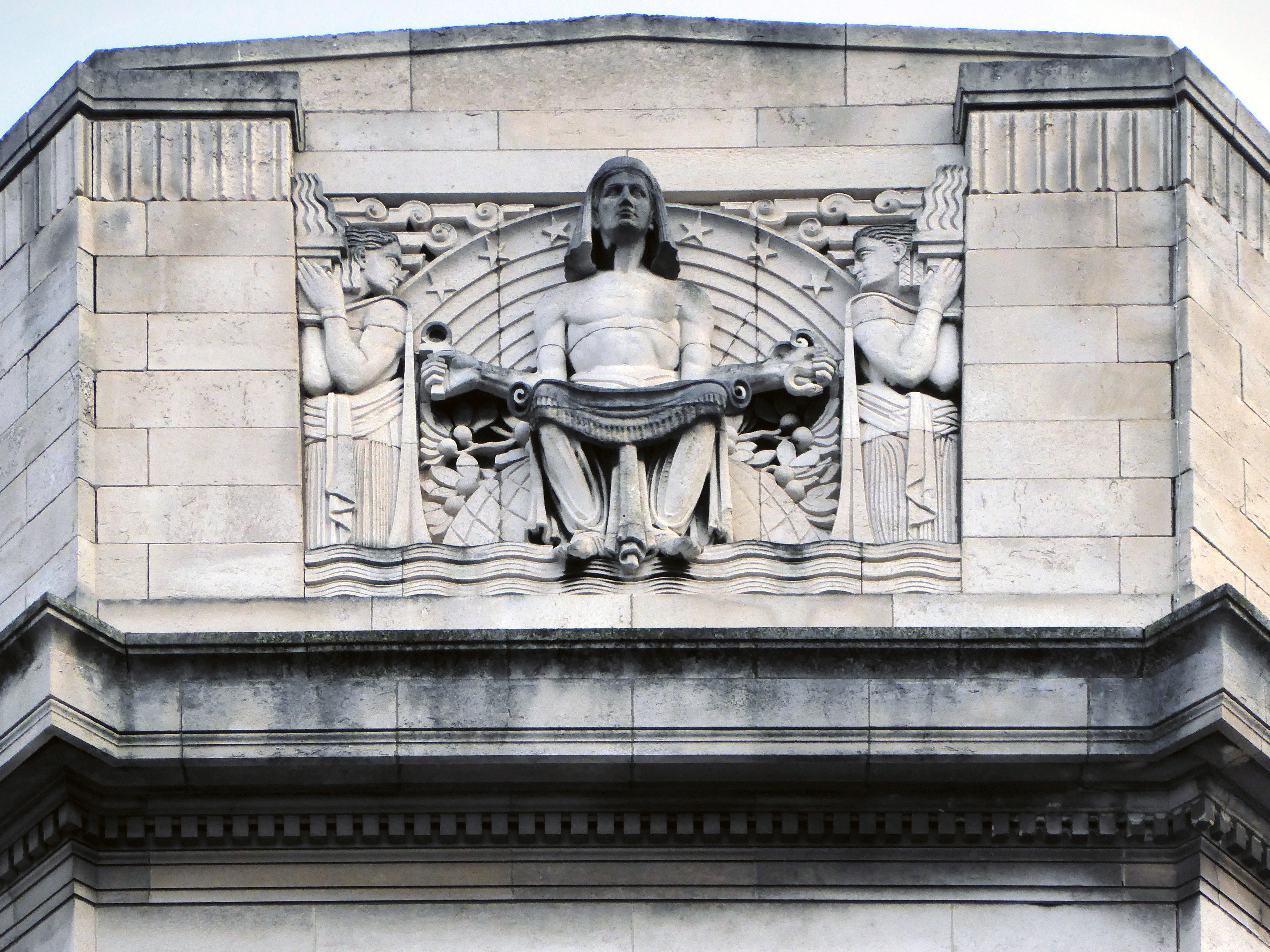
Passing the Graves by City Architect WG Davies 1929-34, with a friendly nod to inter-war Modernity. Intended to form one side of an unrealised civic square proposed by Patrick Abercrombie in 1924. The exterior carved work is by Alfred and William Tory.
Visualisation by Geo Daniels
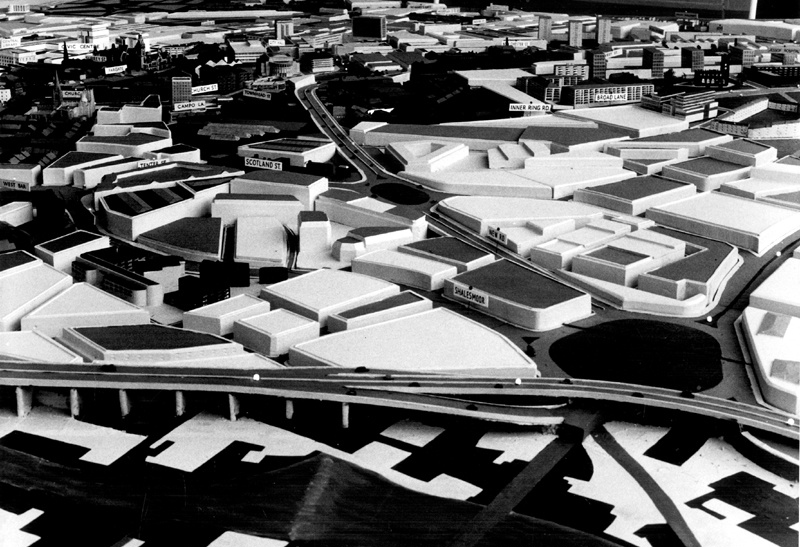
There were major exhibitions in both 1945 and 1963 illustrating the plans down up for the redevelopment of the city.
1945
1963
Off to the shops and the former Cole Brothers Stores by York, Rosenberg and Mardall, clad in their trademark white tiles opened in September 1963 – currently trading as John Lewis.
1969
Tucked around the corner my go to guy for up to the minute cast concrete public art William Mitchell.
Crucible by Judith Bluck located outside the Manpower Service Commission Building, commissioned for the Property Services Agency of the Department of the Environment in 1979. It is a large bronze-coloured plastic fountain sculpture. The artist referred to it as an exploding crucible.
Electricity substation. 1968 to designs by consulting architects Jefferson, Sheard and Partners, Sheffield, led by Bryan Jefferson, in association with the Regional Civil Engineers’ Department of the CEGB North East Region. Contractors, Longden & Sons Ltd, Sheffield. Reinforced concrete frame with board-marked finish with formwork bolt marks, construction and daywork joints emphasized, concrete floor slabs, blue engineering facing bricks, cladding panels of Cornish granite aggregate.
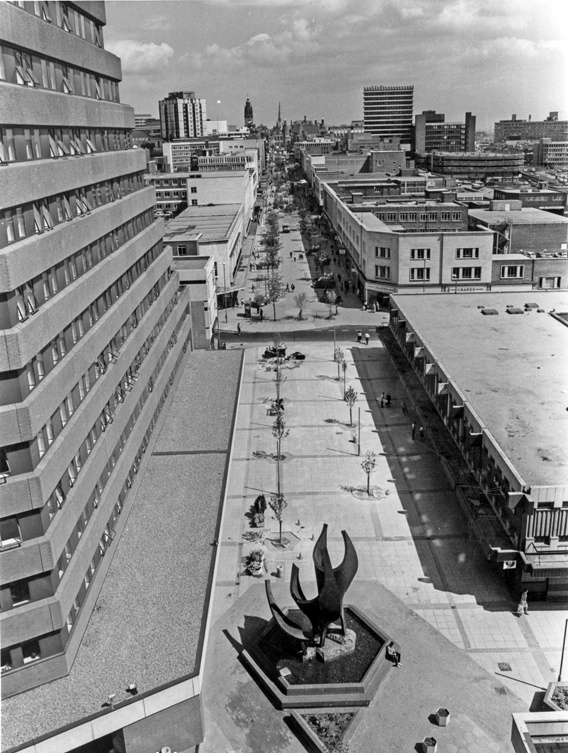
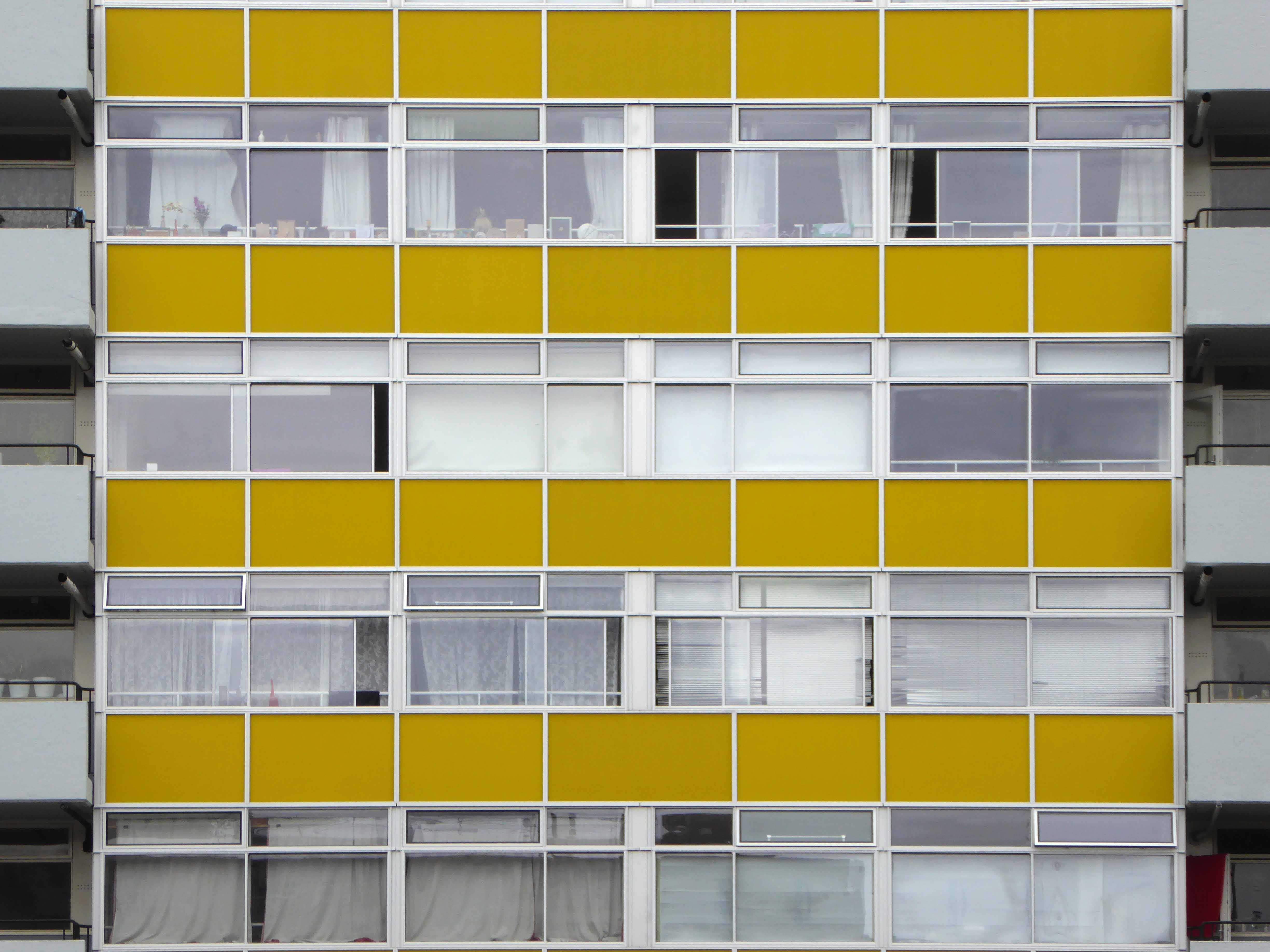
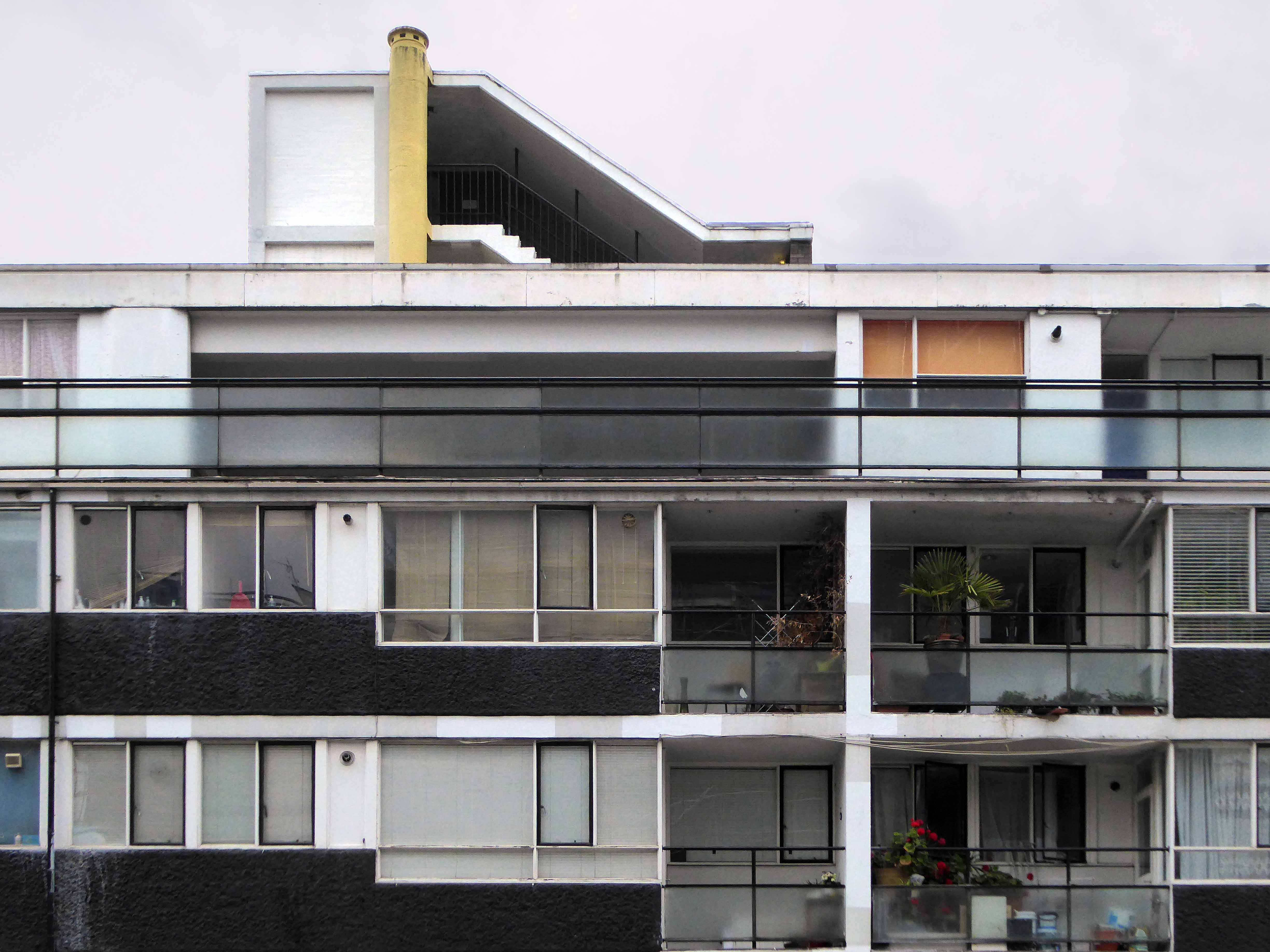
Something of an iconic, totemic, pin-up poster boy/girl for the Modernists, I bumped into you one rainy day, on the way from here to there. Initially attracted by an unexpectedly bright slab of primrose yellow and white.
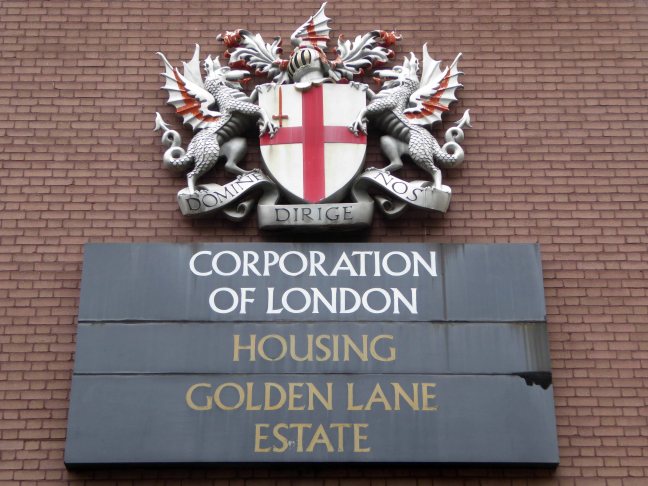
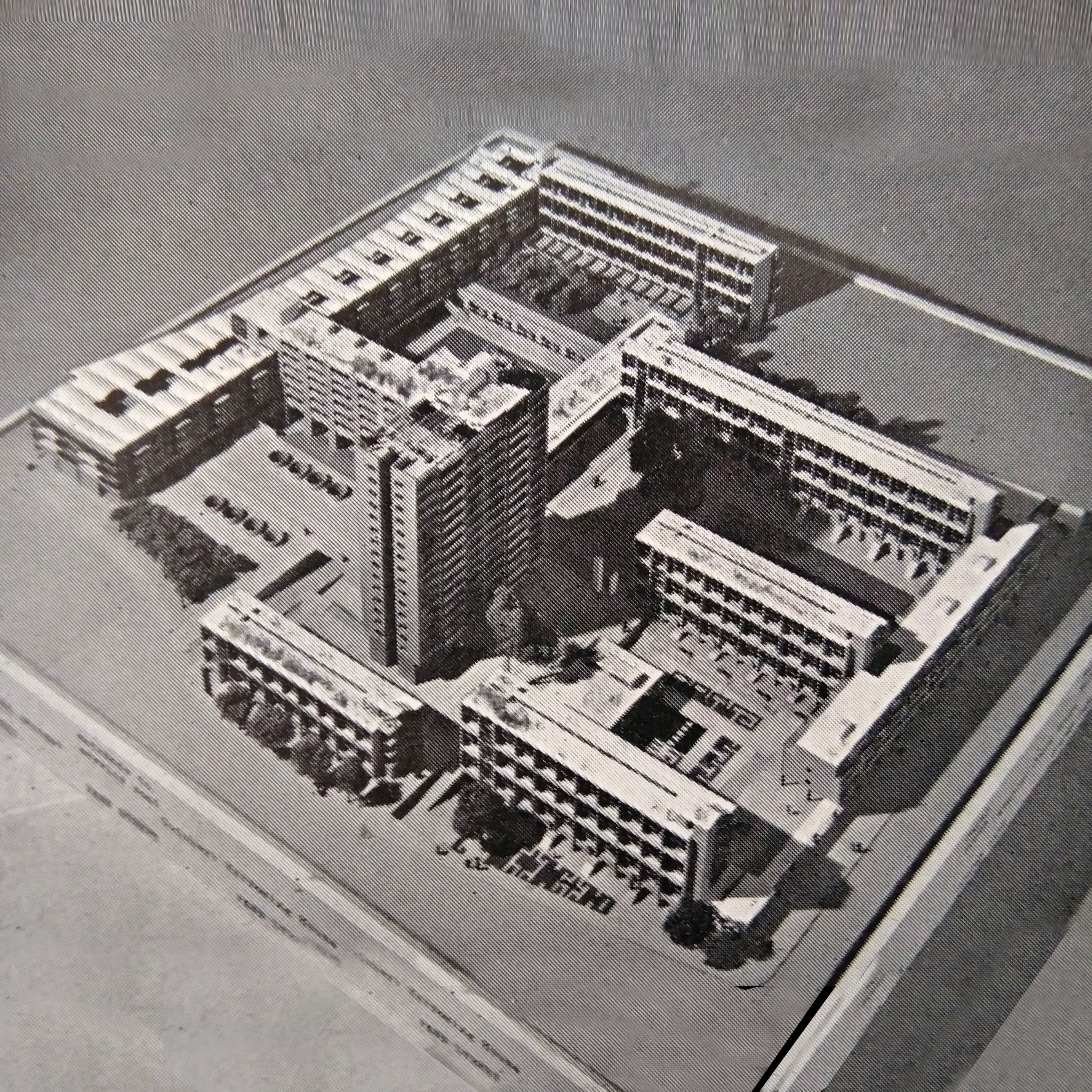
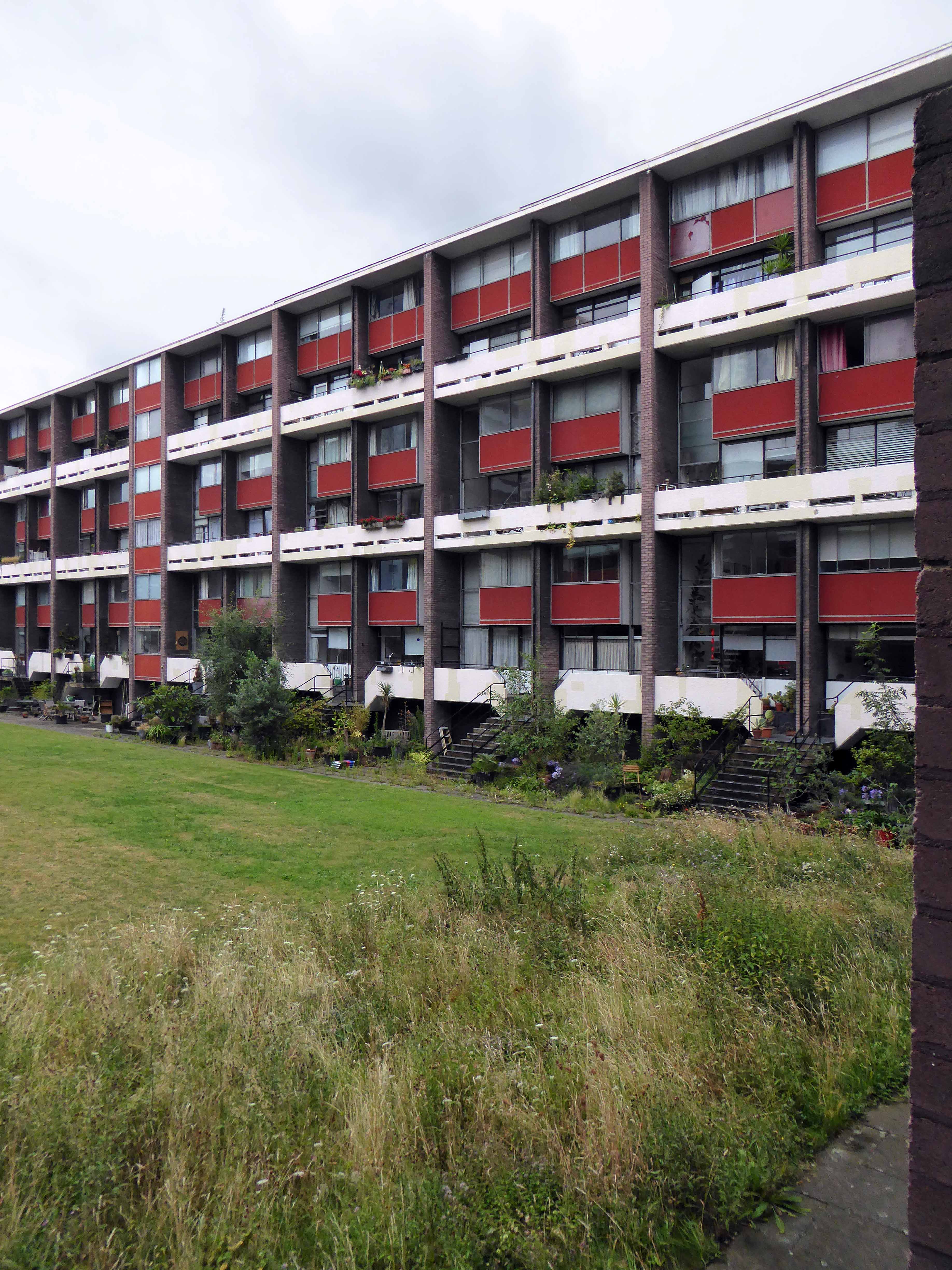
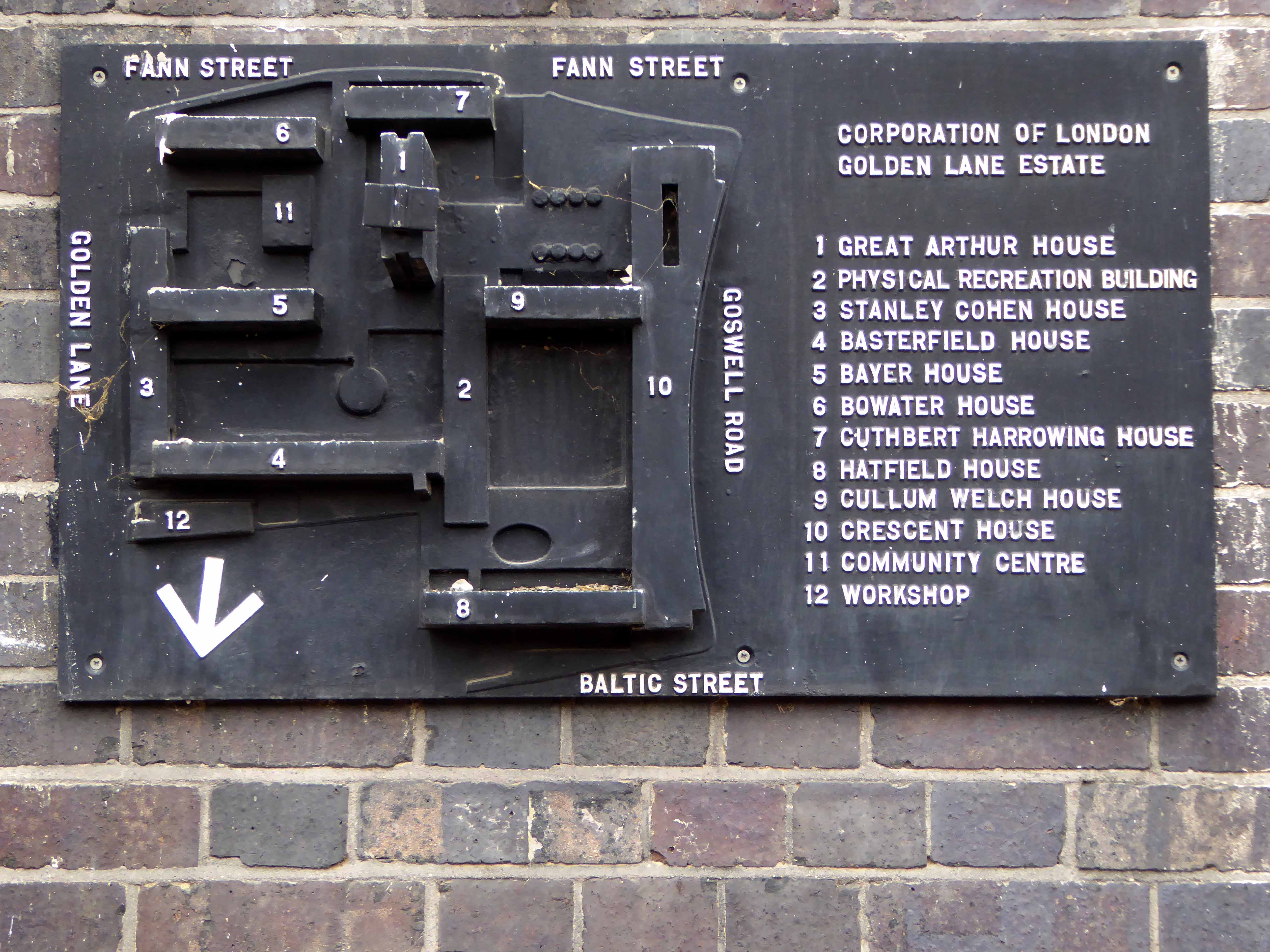
Golden Lane was developed in the early 1950s to create local housing for essential workers in the City of London, following the devastation of the Blitz. At the time only around 500 people actually lived in the City of London so the estate was deliberately designed with small units to house single people and couples comprised of the broad social and professional mix needed to support the local community. 554 units were built of which 359 were studios and one bedroomed flats; the remainder were maisonettes and early tenants included caretakers, clergymen, doctors, police offices, cleaners and secretaries. Today there are approximately 1,500 people living on the estate in 559 flats and maisonettes.
Golden Lane was commissioned from architects Chamberlin, Powell and Bon by the City of London Corporation (which still manages it) and built on bombed sites previously occupied by small businesses and industries. Some of the basement areas of the former buildings were retained as sunken areas of landscaping. Building took place over a 10-year period between 1952 and 1962 when Crescent House on Goswell Road was completed. Golden Lane was listed Grade II in 1997 (Crescent House is Grade II*). When built, Great Arthur House was the tallest residential building in London and its Le Corbusier inspired design included a resident’s roof garden. The estate also included a leisure centre with a swimming pool and tennis courts. It is now run by a private operator and is open to both residents and the general public.
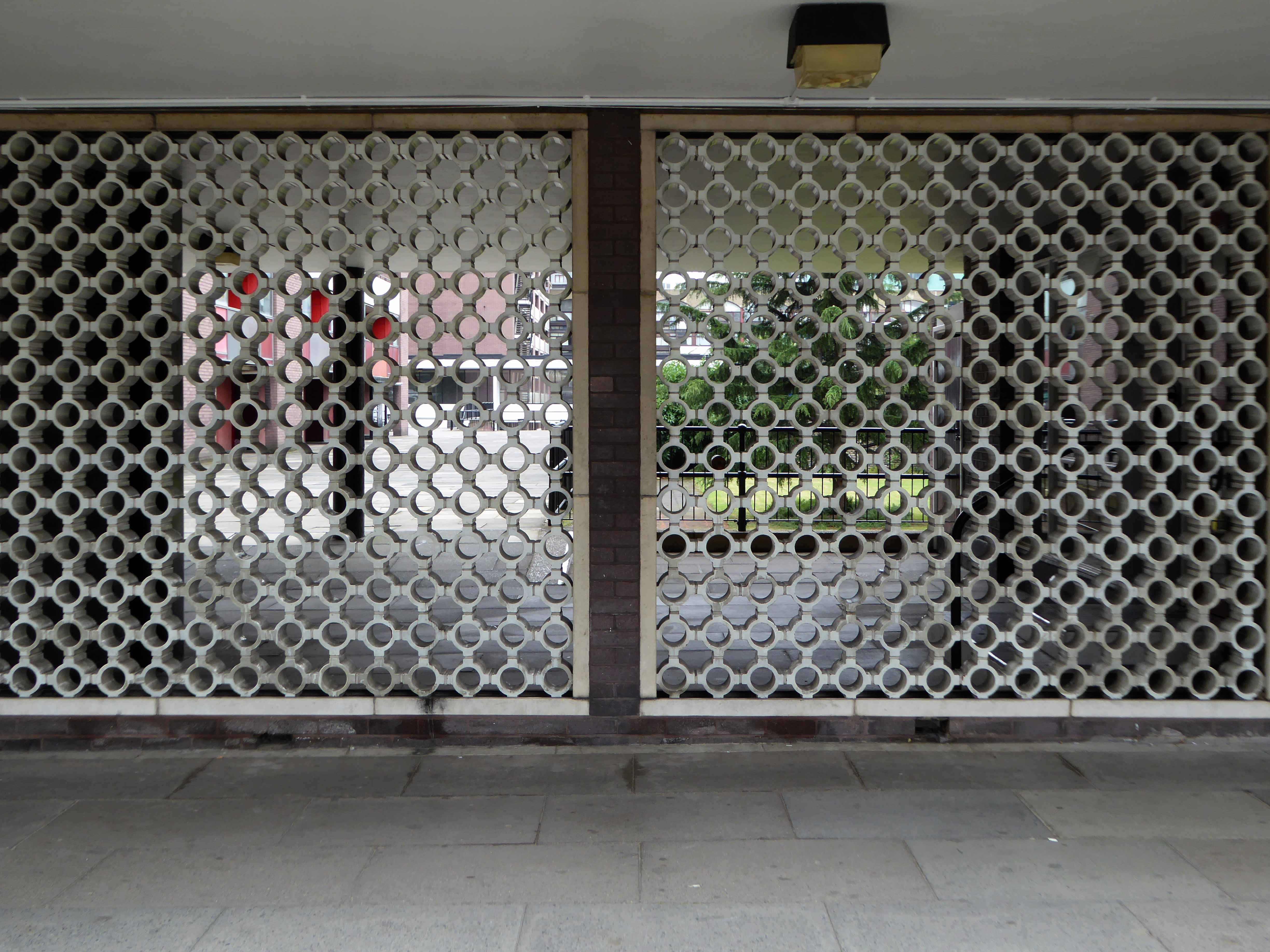
I stuck around too take a look, struck by the variety of scale, detail and space within a relatively tight integrated development. Mature greenery abounds along with a delightful water feature.
It would appear that following the 70s right to buy the estate is a 50/50 mix of social and private ownership, relatively trouble free and well maintained, something of an anomaly in our go-ahead, left behind land.
As with all things material and corporeal there was a time when you simply didn’t exist.
1860 adjacent to Woodward Street and the Rochdale Canal, a simple agglomeration of loose limbed industrial buildings and such – yet to be christened Blank.
adjective
Unrelieved by decorative or other features; bare, empty, or plain a blank wall.
Showing a lack of comprehension or reaction – we were met by blank looks – synonyms: expressionless, empty, vacant, deadpan, wooden, stony, impassive, inanimate, vacuous, glazed, fixed, lifeless, uninterested, emotionless, unresponsive, inscrutable.
noun
A space left to be filled in a document – leave blanks to type in the appropriate names – synonyms: space, gap, blank space, empty space.
A cartridge containing gunpowder but no bullet, used for training or as a signal.
verb
Make (something) blank or empty – electronic countermeasures blanked out the radar signals.
Informal North American defeat (a sports team) without allowing them to score – Baltimore blanked Toronto in a 7–0 victory.
Though contradictorily I have found reference to a bankrupt foundry in the London Gazette 1857.
You appear again during the Manchester Blitz.
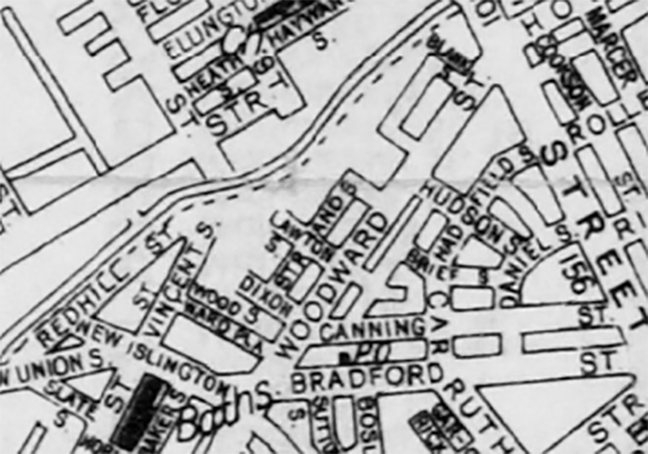
By 1960 you are on the map and the area is on the up and up.
Though I have to ask the question of the namers of streets – why so Blank, an off day at the office – we have whole blocks named for poets, painters, and far flung places, so why so Blank?
Hadn’t they heard of nominative determinism – born to be Blank.
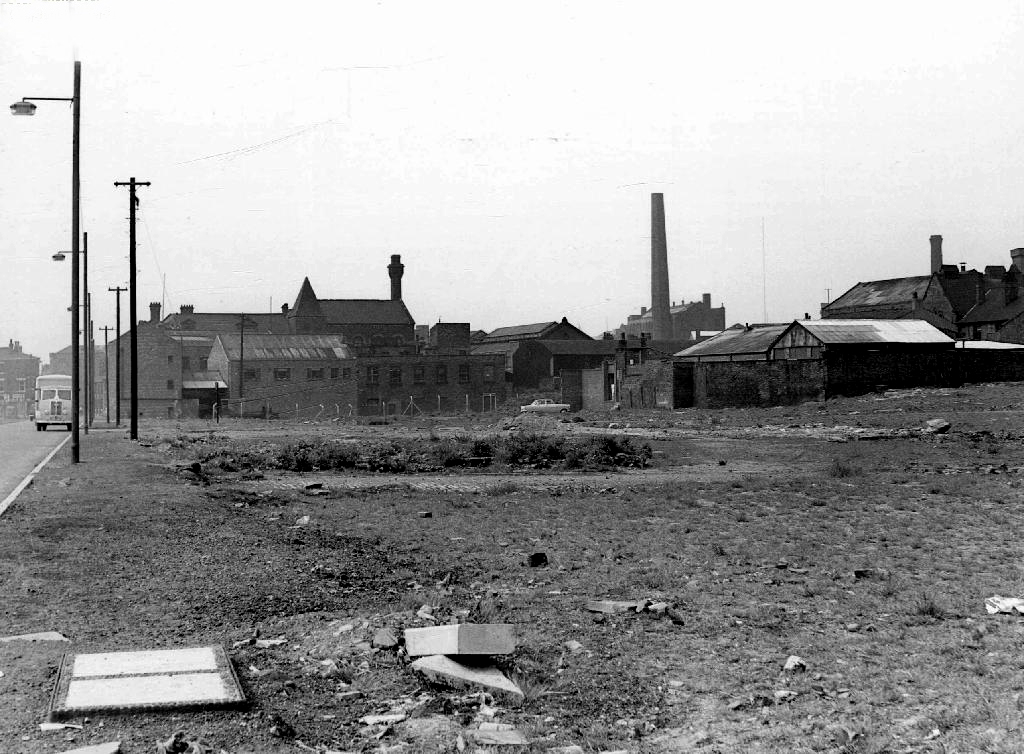
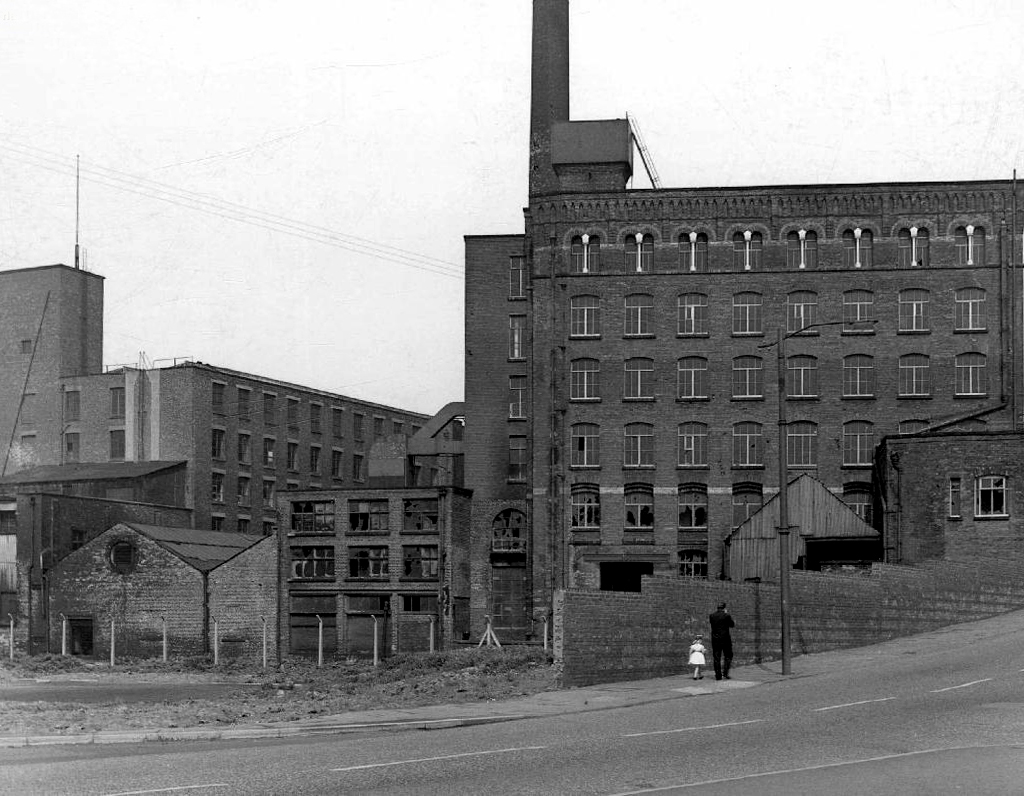
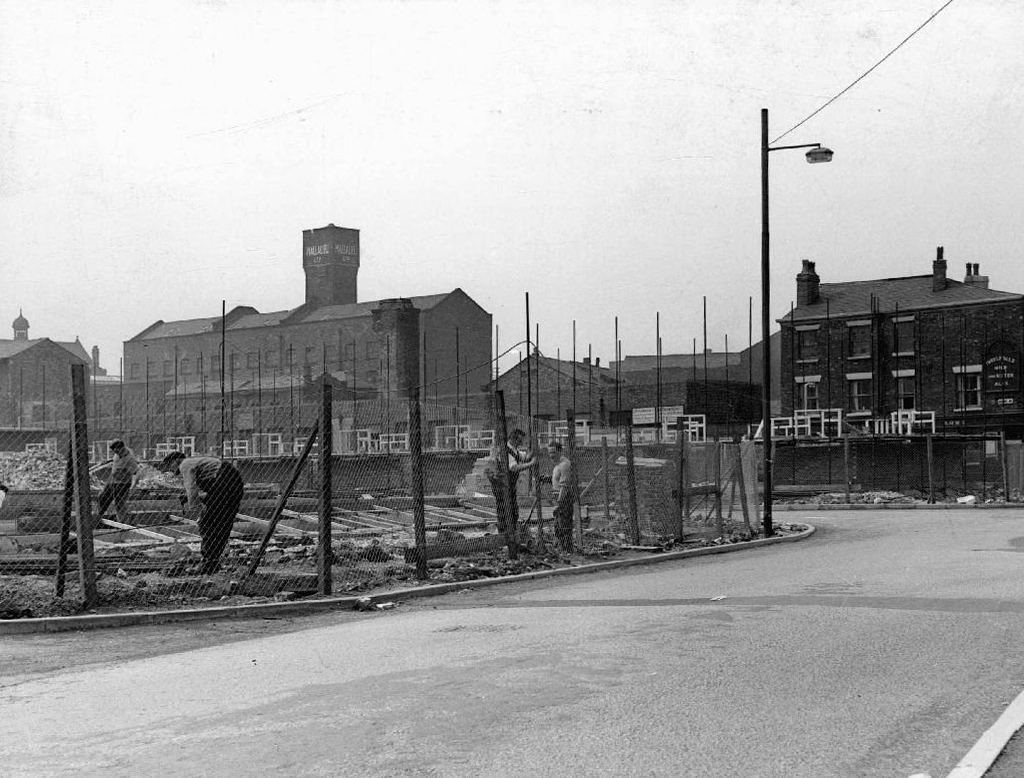
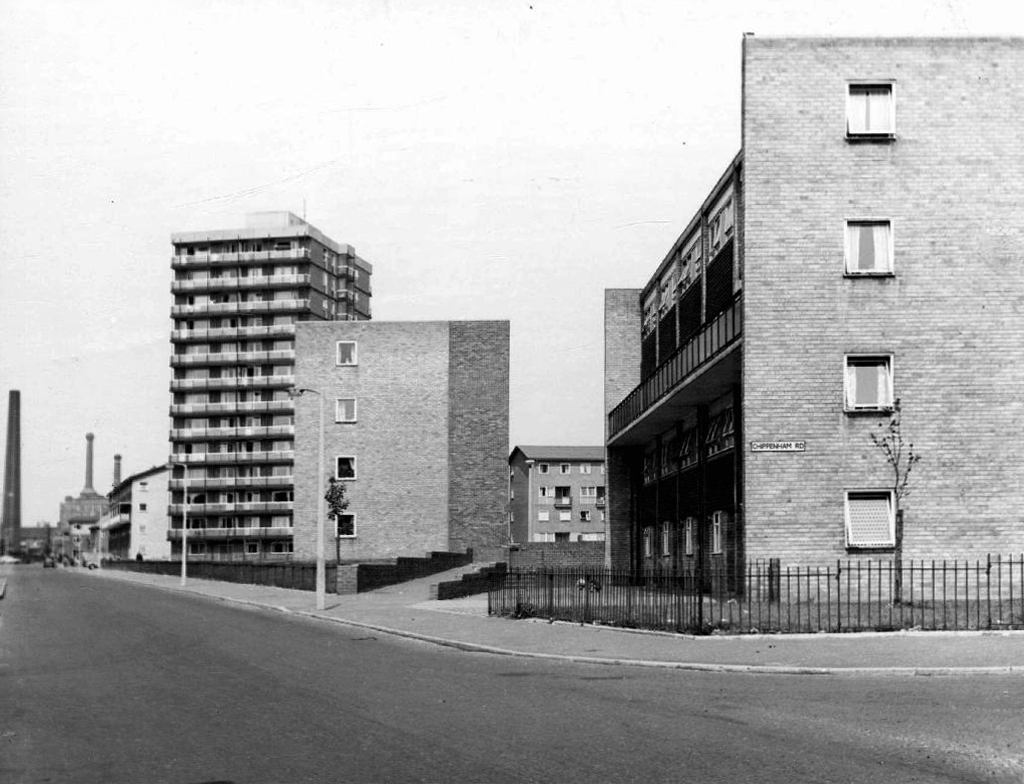
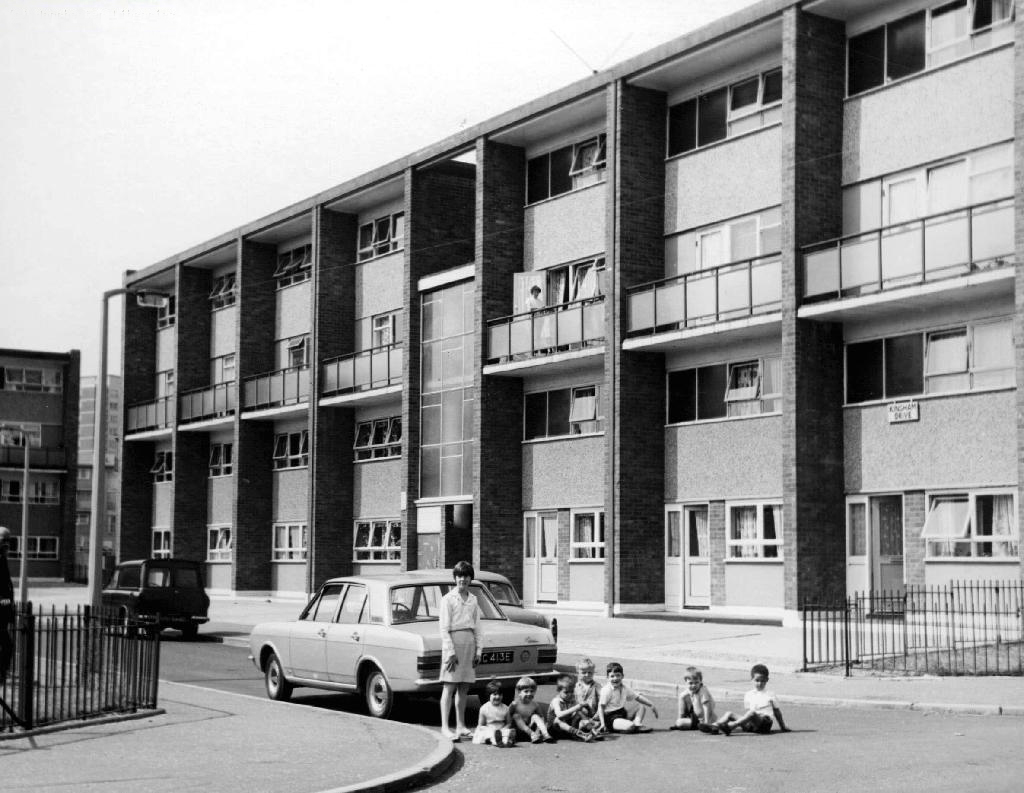
Whilst in search of a Brown Cow I found a photograph on the Local Image Collection of 60’s maisonettes in the area alongside Woodward Street.
This Municipal Modernist development seems to have been short-lived and subject to yet more demolition in the area, to be replaced by late 70’s terraced housing.
Blank Street inexplicably became Fulmer Drive.
Which in turn had been tinned up and demolished around 2008.
How did that happen – seemingly viable homes previously changing hands for £100,000 deemed surplus to requirements – land banking, ahead of an as yet unseen masterplan?
Your life was short and sharp – shaped by economic shifts, world war and the local authorities ephemeral housing policies. There is little evidence of your existence, photographic or otherwise, so I want to set the record straight – draw a blank.
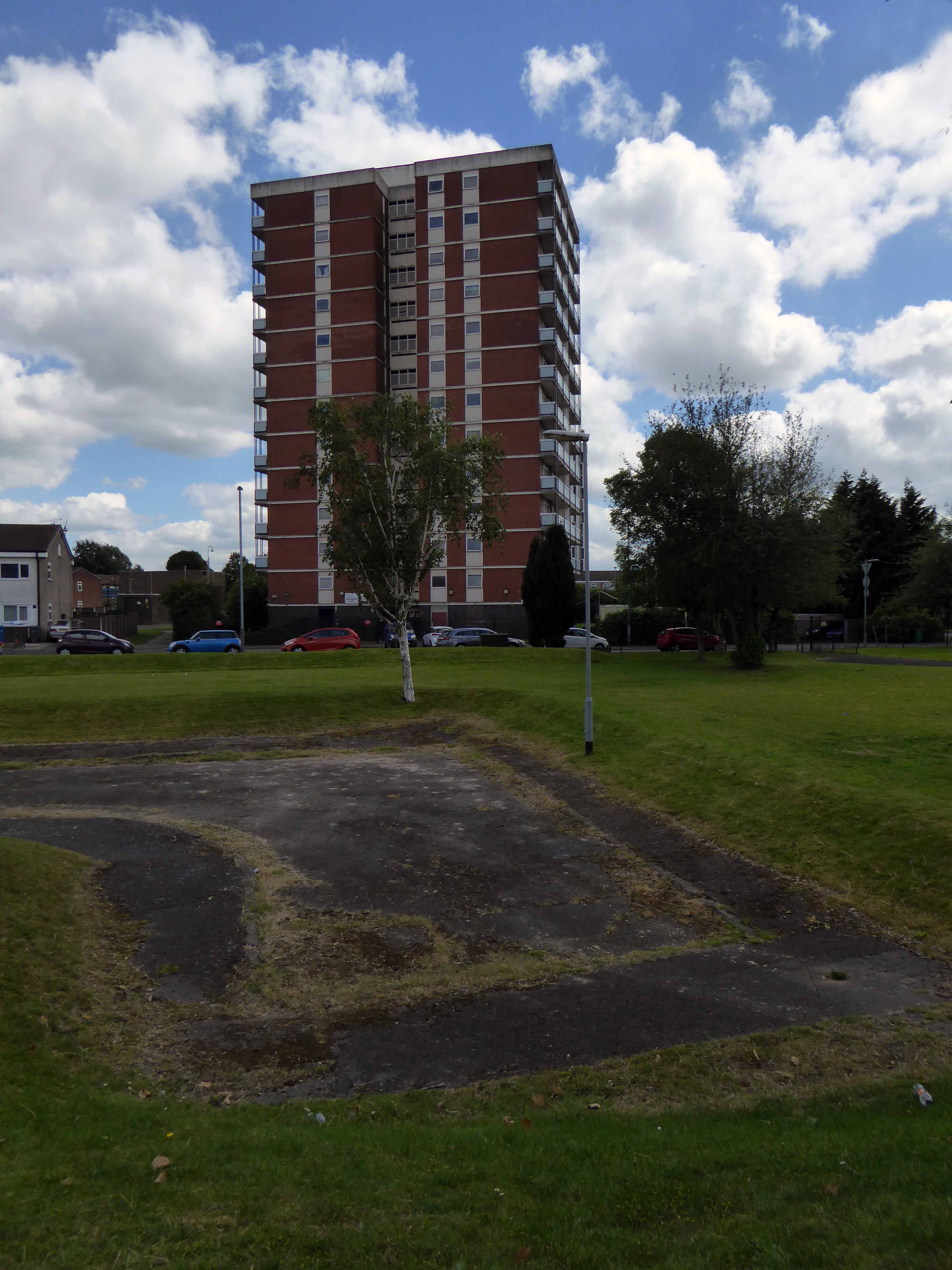
Here you are as of July 2019 – tarmac intact, drains fully functioning, pavements paved, awaiting orders. A circuitous run of grassy ridges resembling the remains of some Roman or Iron Age fortification.
Why is there just one remaining tower block dancing unclad around Ancoats?
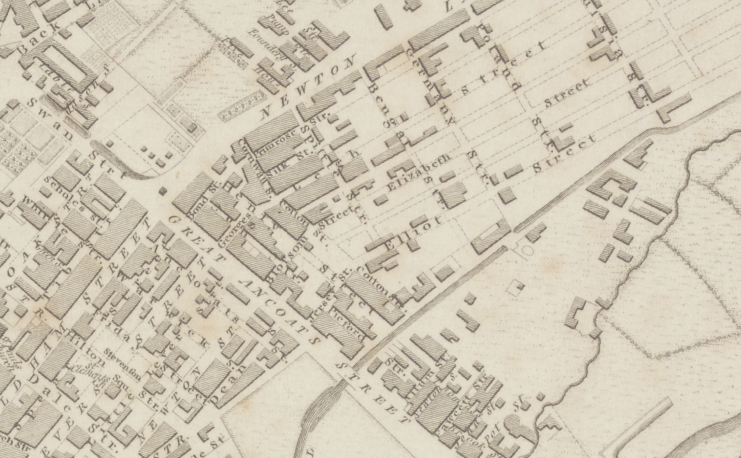
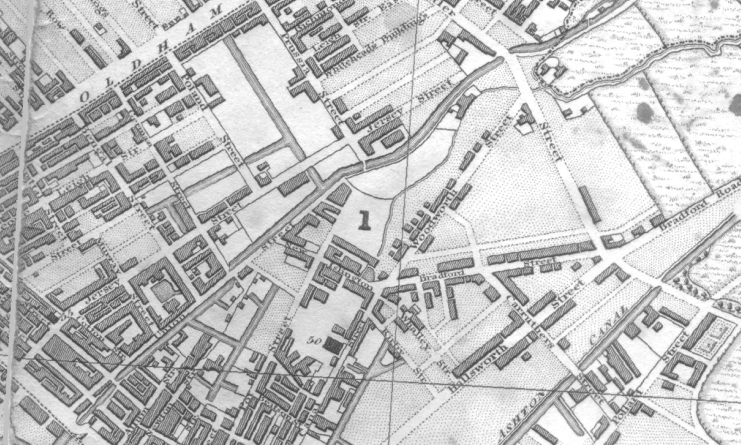
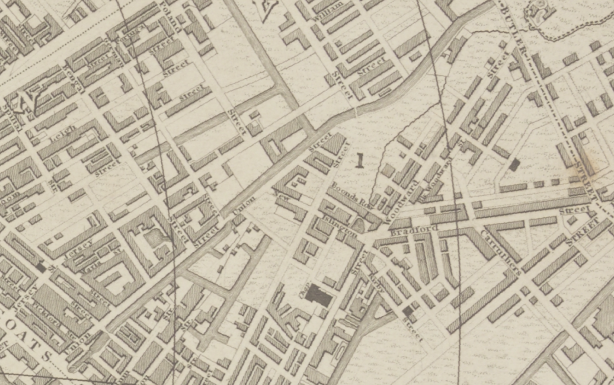
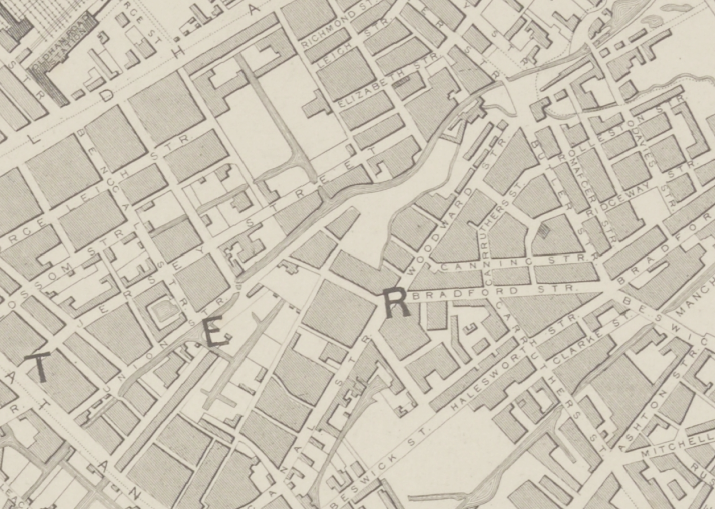
Let’s go back in time and see if we can find out – it seems that back in 1807 there wasn’t a Woodward Street to be found, the ever expanding industrial might of Manchester had not yet reached these particular green fields of Ancoats.
By 1824 it shows a fresh face to the world christened Woodworth Street, sparsely dotted with new development.
Almost fully formed in 1836 and renamed as Woodward Street, the area begins to accumulate the familiar domestic and industrial clutter of a burgeoning Victorian City.
By 1860 the street is fully formed and open for business.
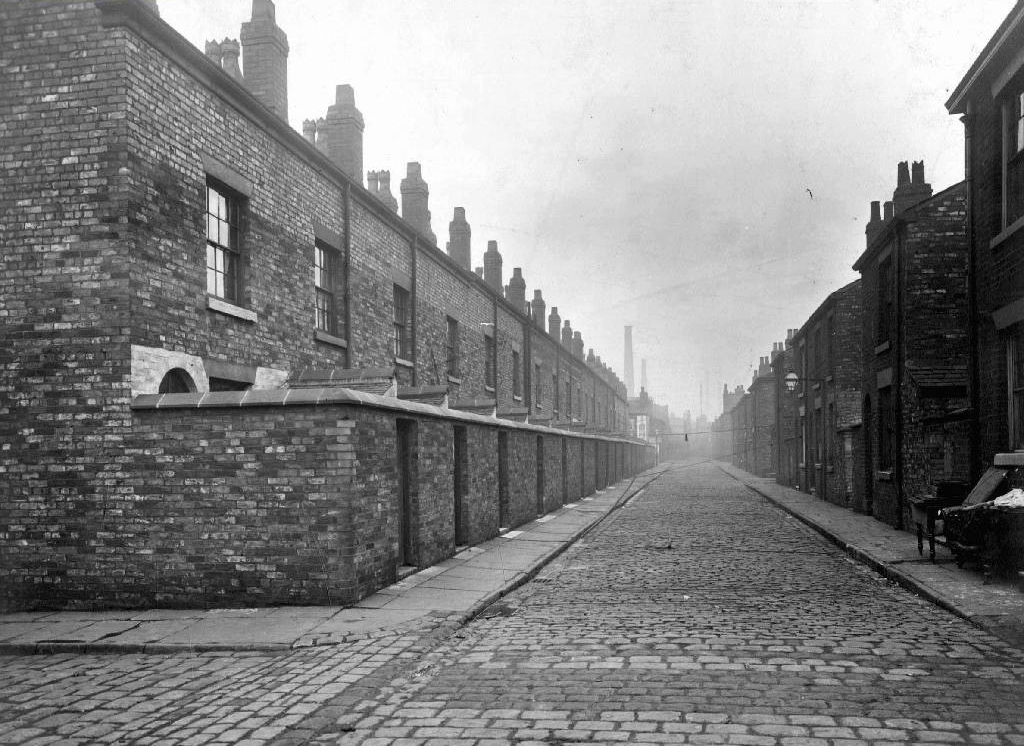
Workers finding homes in austere and functional brick back to backs, typical of the period’s housing.
Fast forward to the early Sixties and the street is showing signs of age – the century old industries are already in decline, steady jobs, mills and factories gone west and east, well-worn housing looking terminally tired and in need of a little care and attention.
But wait what’s this coming around the bend?
The first wave of urban regeneration, post war optimism incarnate, a bright new shiny future – out with the old and in with the new, as Municipal Modernism stamps its big broad architectural feet all over Woodward Street.
Our story is far from over, this optimism is short-lived the homes, houses and industry are swept away yet again, replaced with two story modern terraced housing and an all too obvious absence of regular employment – yet the tower blocks prevailed.
Former streets were over written and remain as poignant vestigial marks in the landscape.
Though their future was built on more than somewhat shifting and uncertain sands.
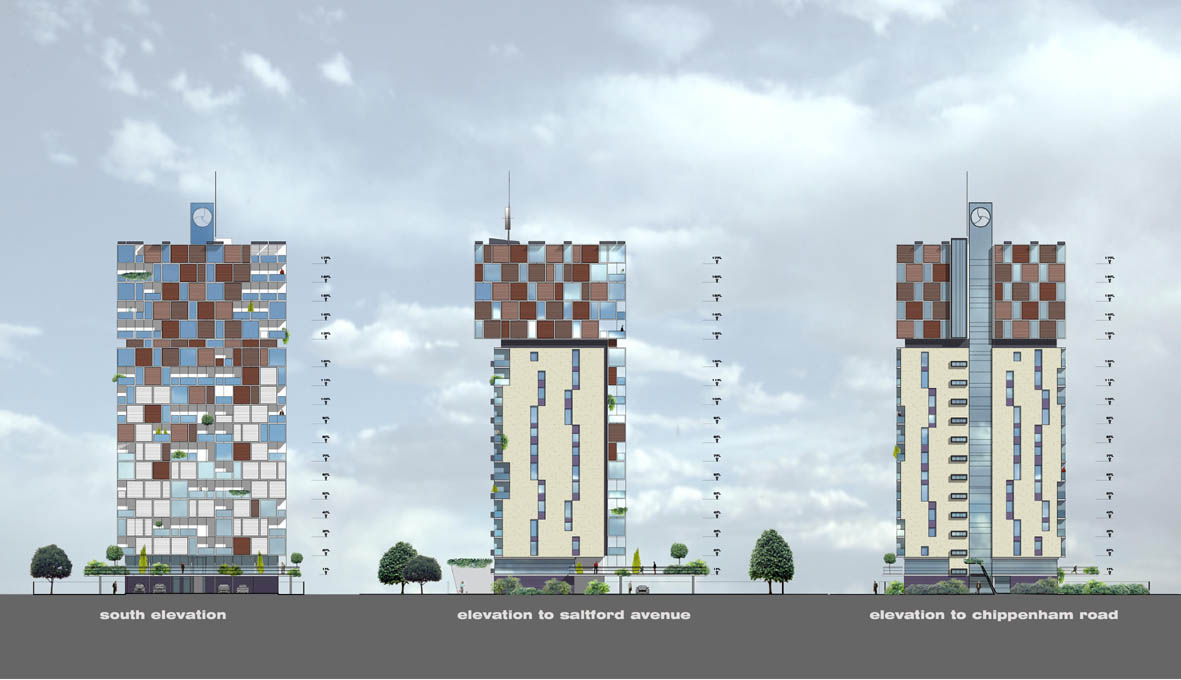
A tower block has been left lying empty for a whopping 18 years. The 13-storey building at Saltford Court in Ancoats has been unoccupied since Manchester council closed it in the 1990s. It was bought by top developers Urban Splash six years ago but residents have now hit out about it still being empty. Neighbours of Saltford Court say it has become an ‘eyesore’ and magnet for vermin since the firm bought it.
A large group of blocks stood tinned up and unloved, yet owned, for a number of years, victims one supposes of land-bankers, developers speculating on an even better return, as the warm waves of gentrification washed slowly over them, from nearby New Islington.
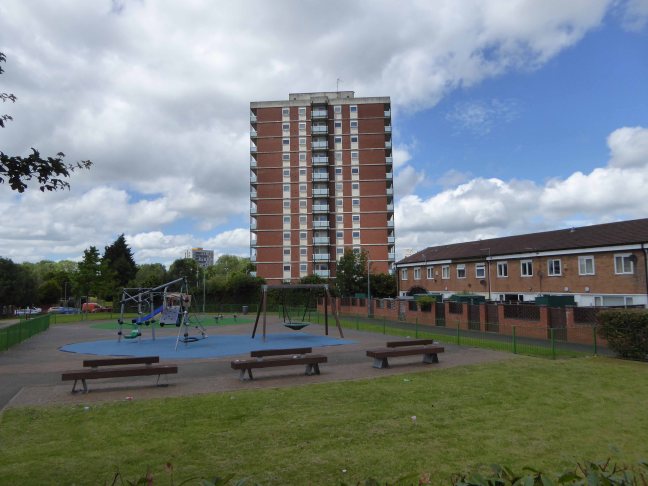
All but one was refurbished, clad and re-let.
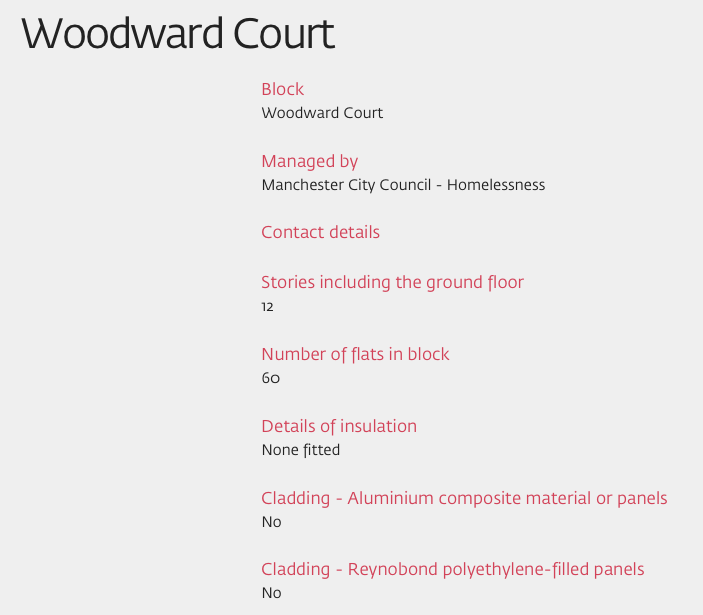
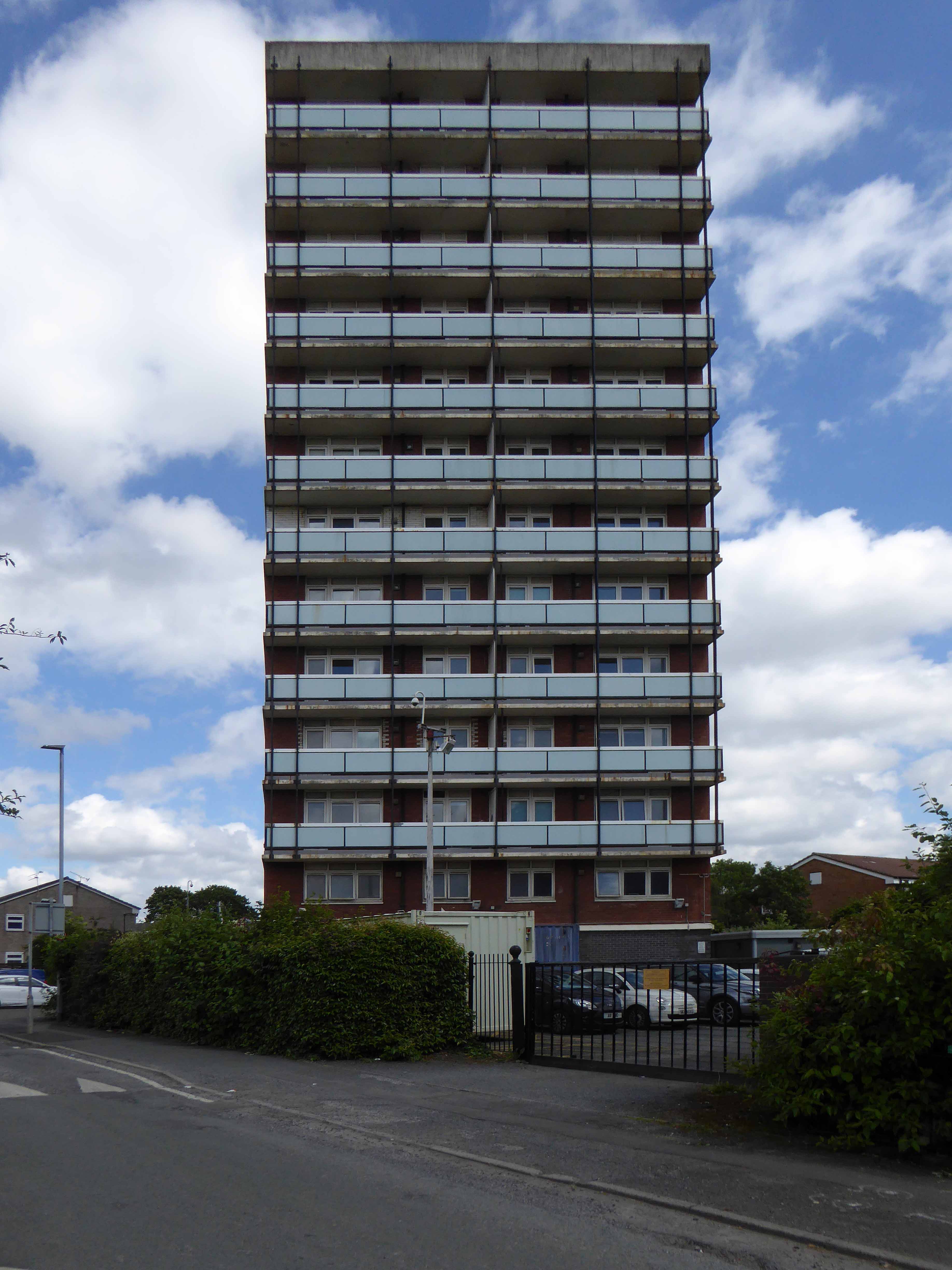
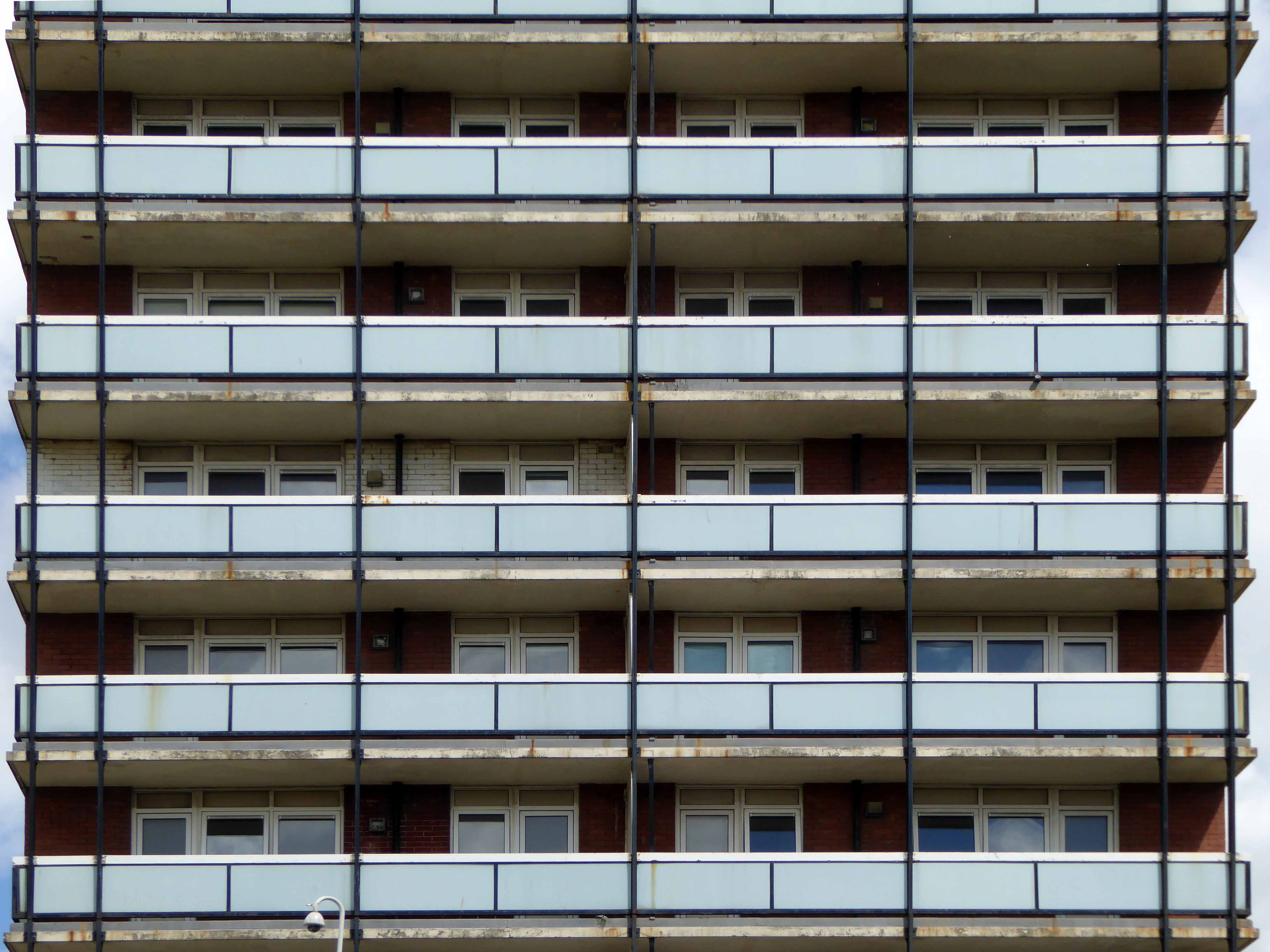
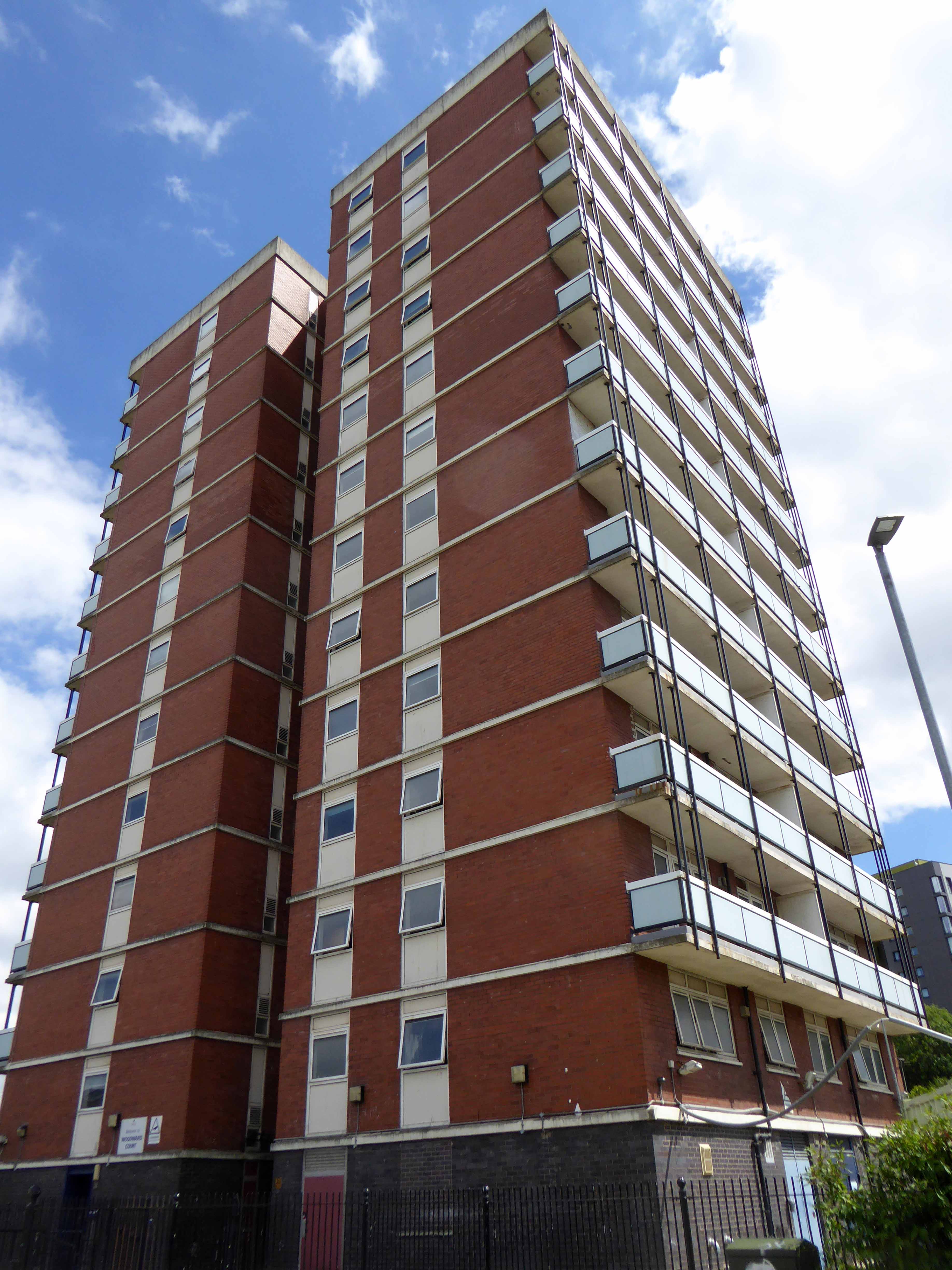
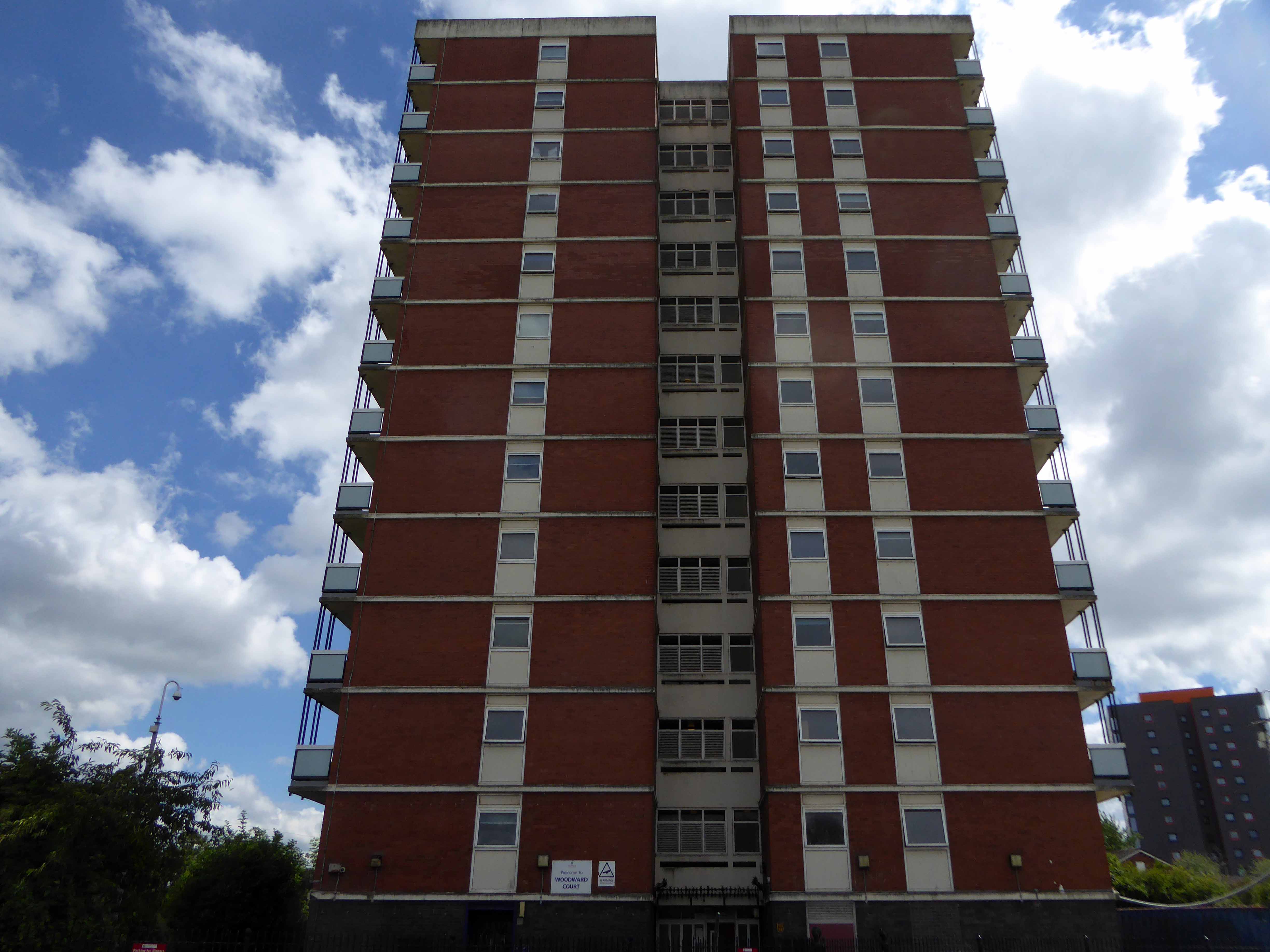
Woodward Court was spared – set aside for the homeless.
A period piece surrounded by Post Modern and Revivalist pretenders.
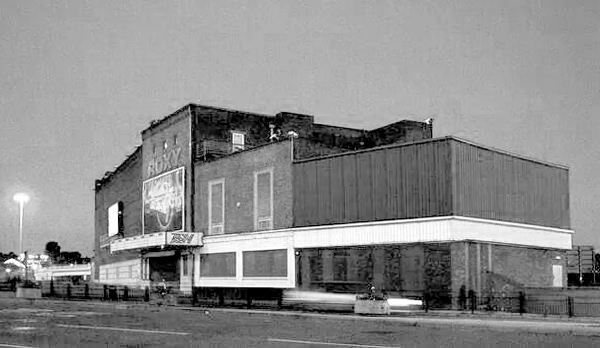
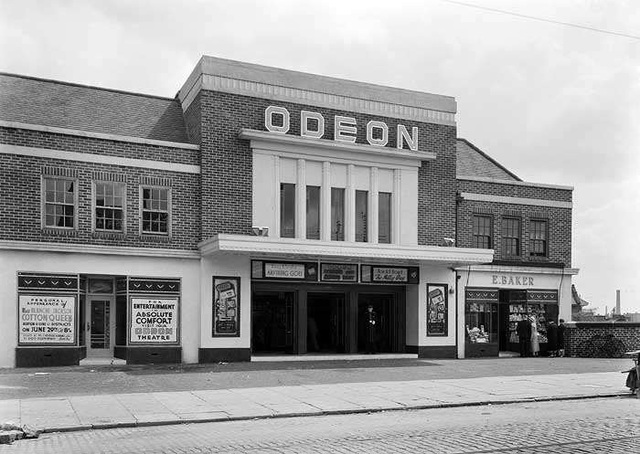
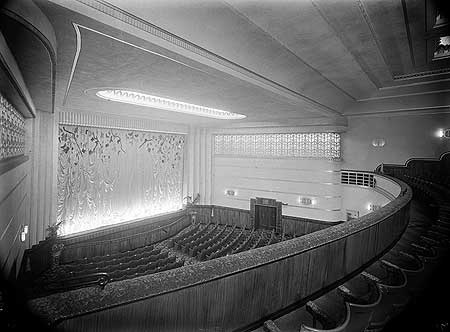
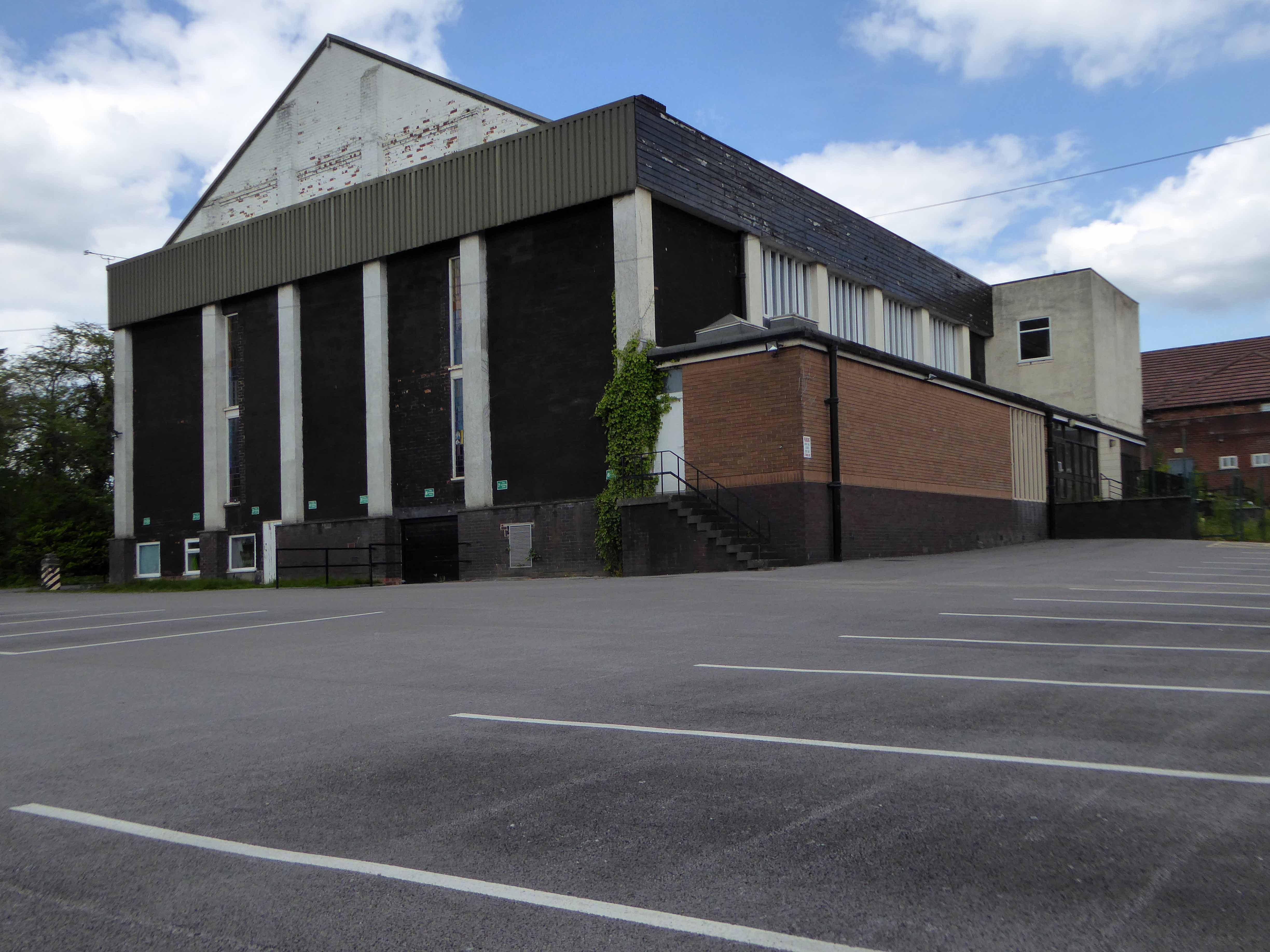
This was planned to be the Verona Cinema, a project of local builders – P Hamer Verona Cinema Ltd. The construction of the cinema was almost completed when Hamer sold the building to Oscar Deutsch and it opened as one of his Odeon theatres.
Hamer then used the proceeds of the sale to build the Roxy Cinema Holinwood, which was designed by Drury & Gomersall.
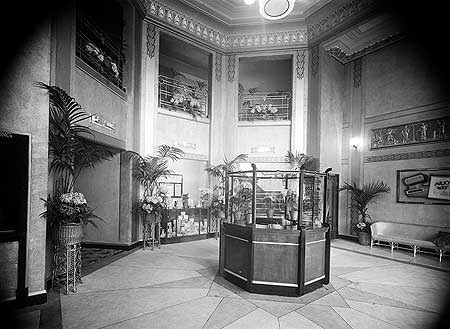
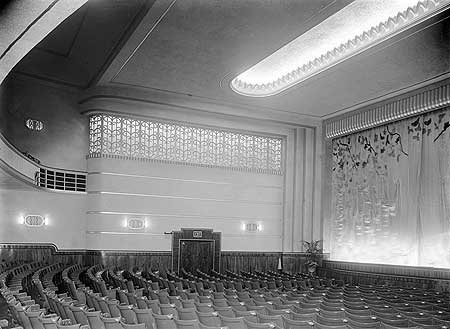
Opening date of the Odeon Theatre was 29th June 1936, when the first programme was Bing Crosby in “Anything Goes” and Harold Lloyd in “The Milky Way”. Designed by the noted cinema architectural firm of Drury & Gomersall, the frontage had a neat entrance in brick, with white stone facings on the window surrounds. There was a parade of shop units on each side of the entrance which had matching brickwork and a white stone trim.
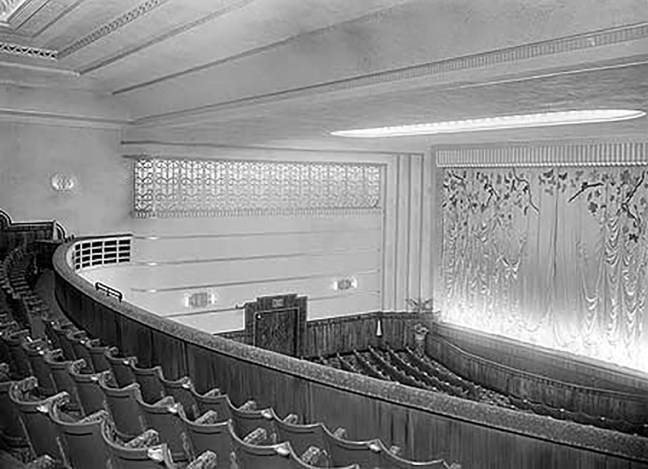
Inside the auditorium the seating was arranged for 834 in the stalls and 330 in the circle. The side splay walls on each side of the proscenium was decorated in wide horizontal bands, and topped with a backlit illuminated grille.
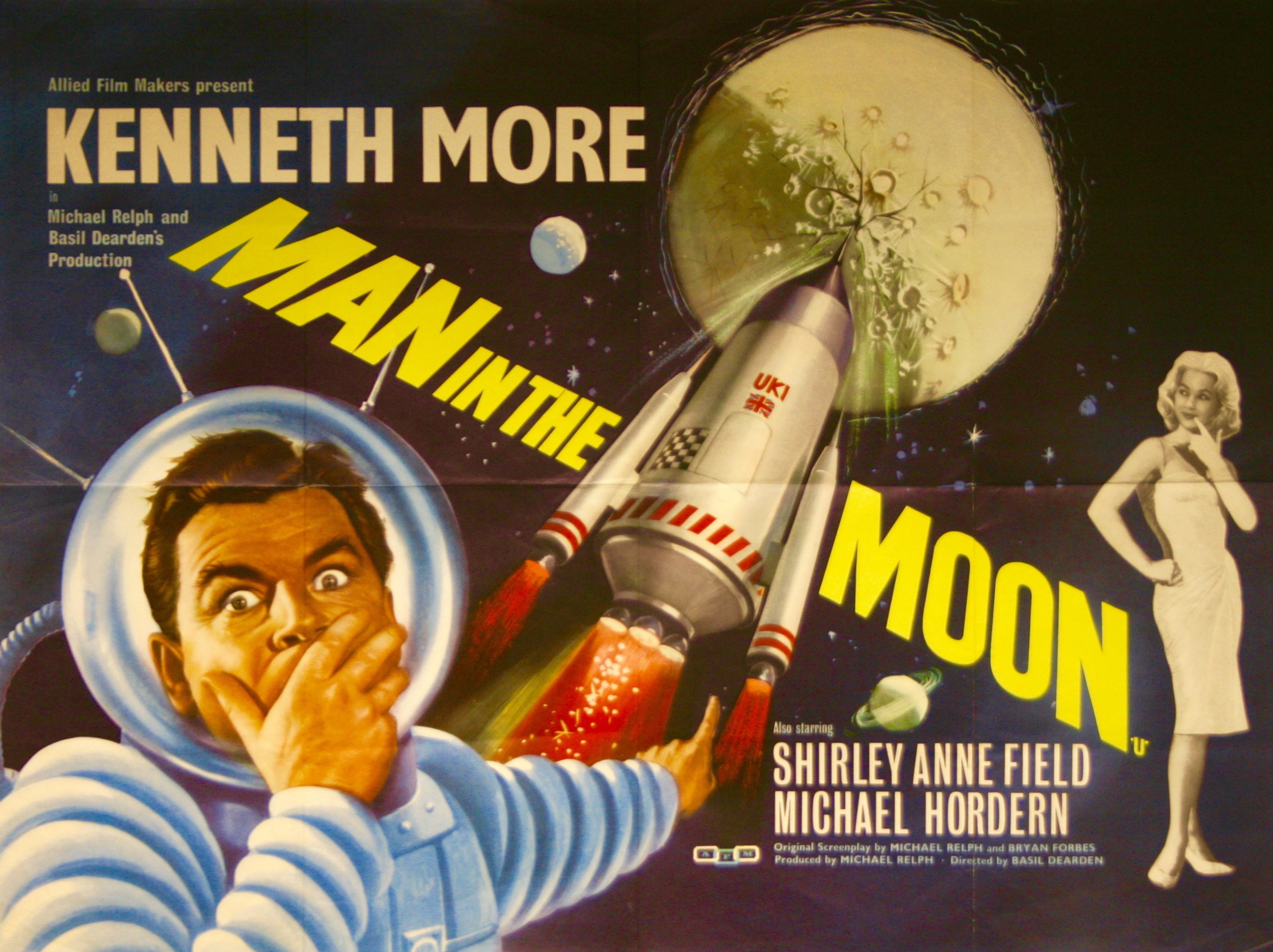
The Odeon was closed by the Rank Organisation on 11th March 1961 with Kenneth More in “Man in the Moon”.
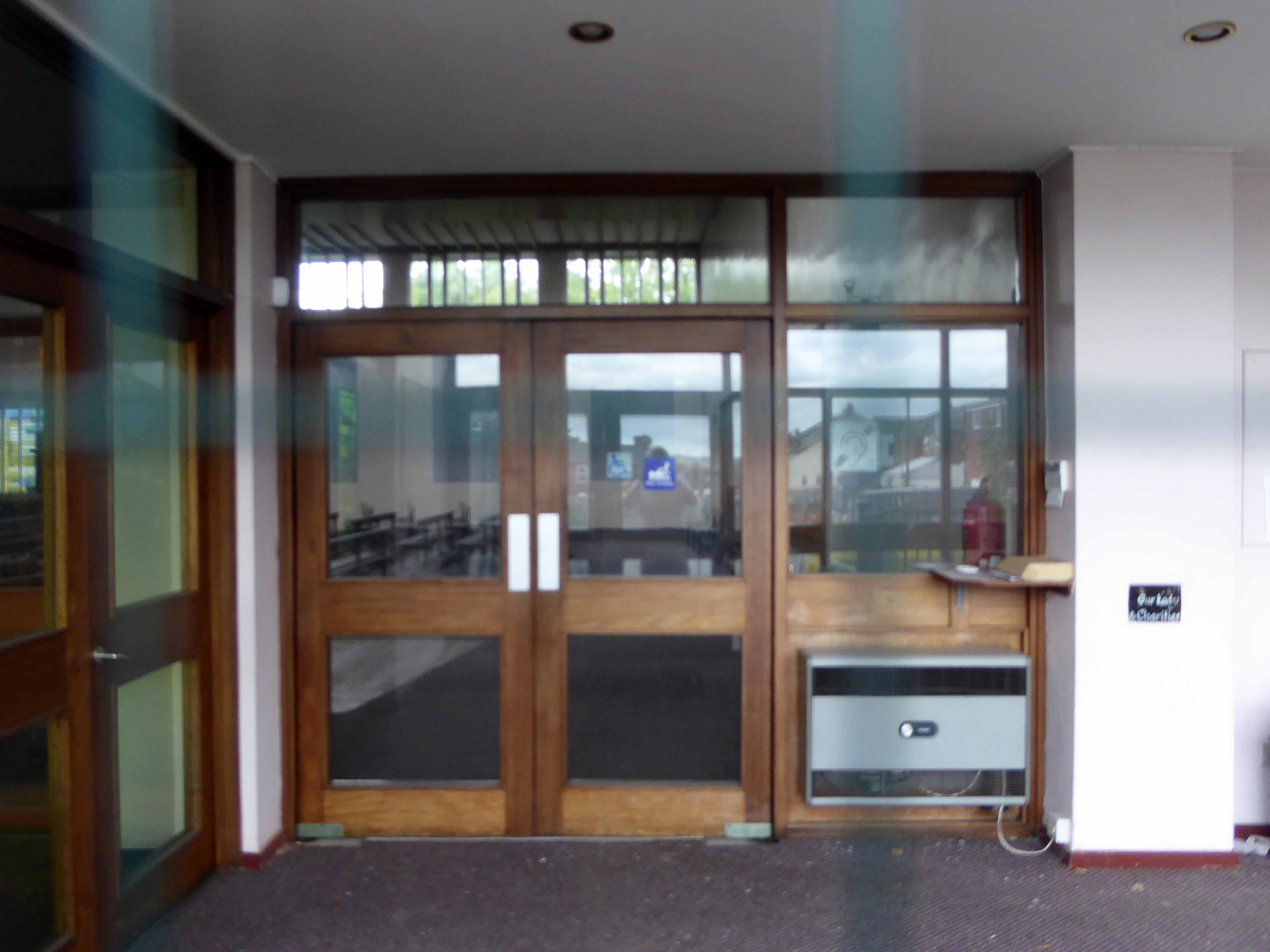
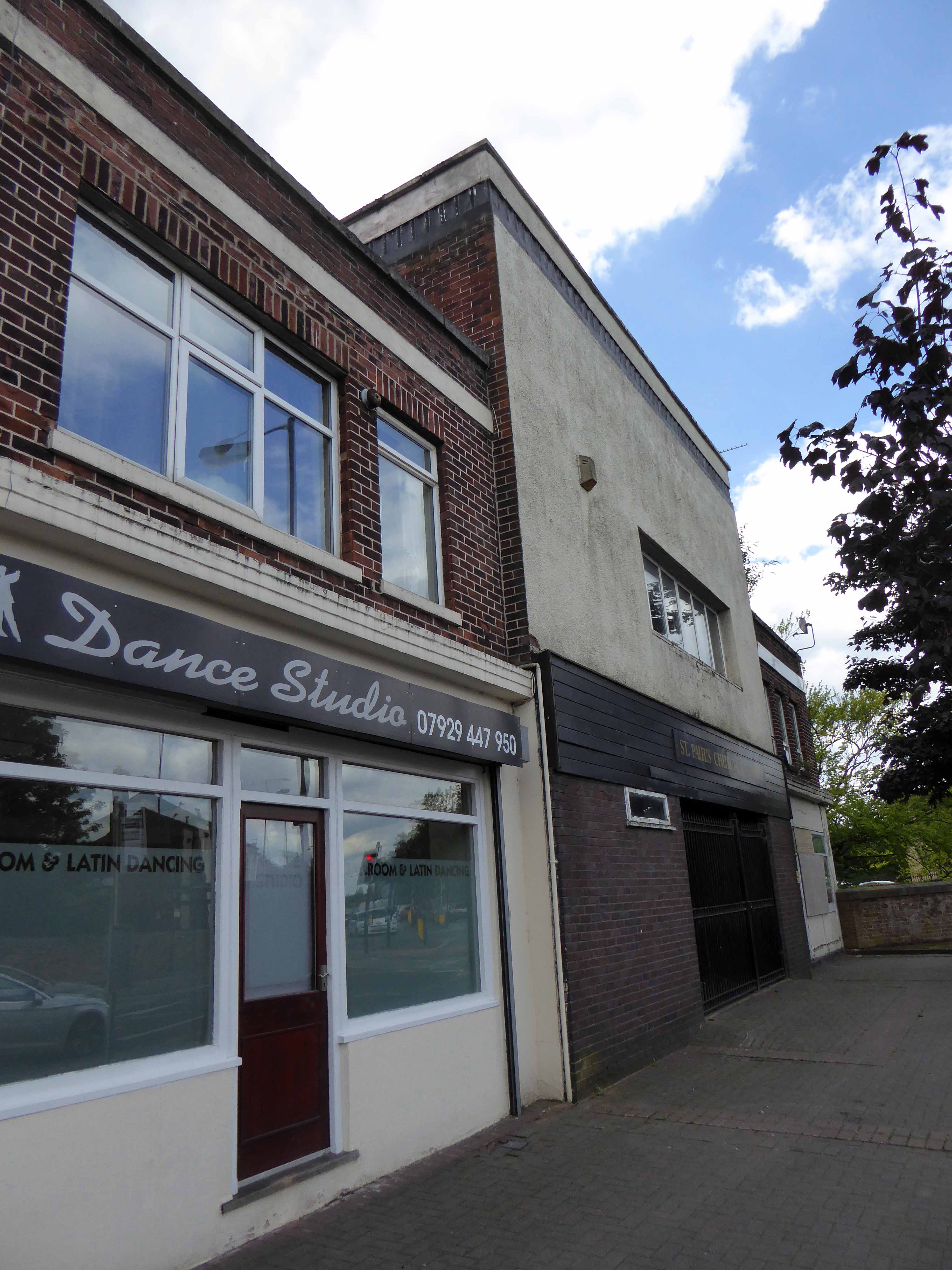
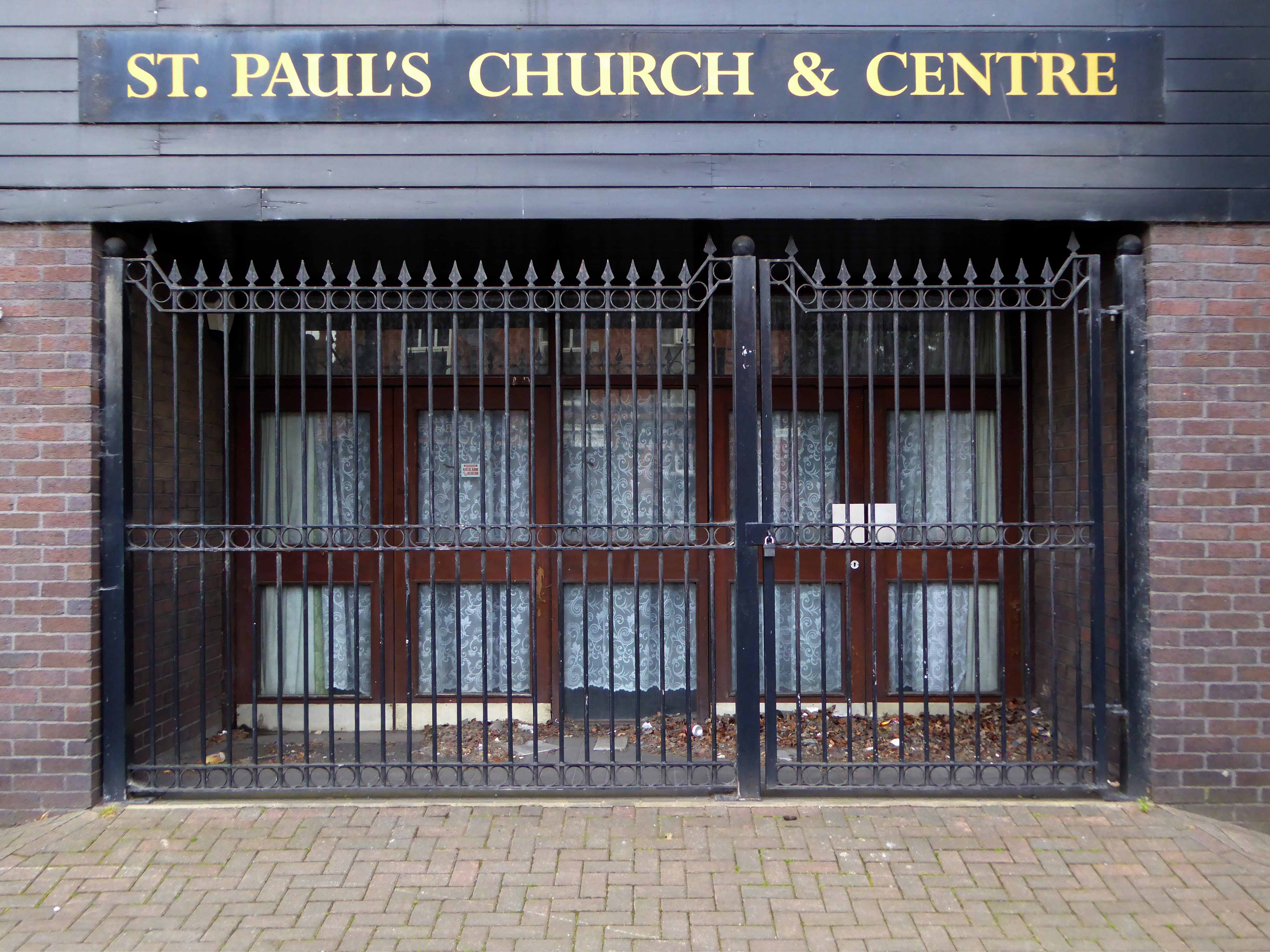
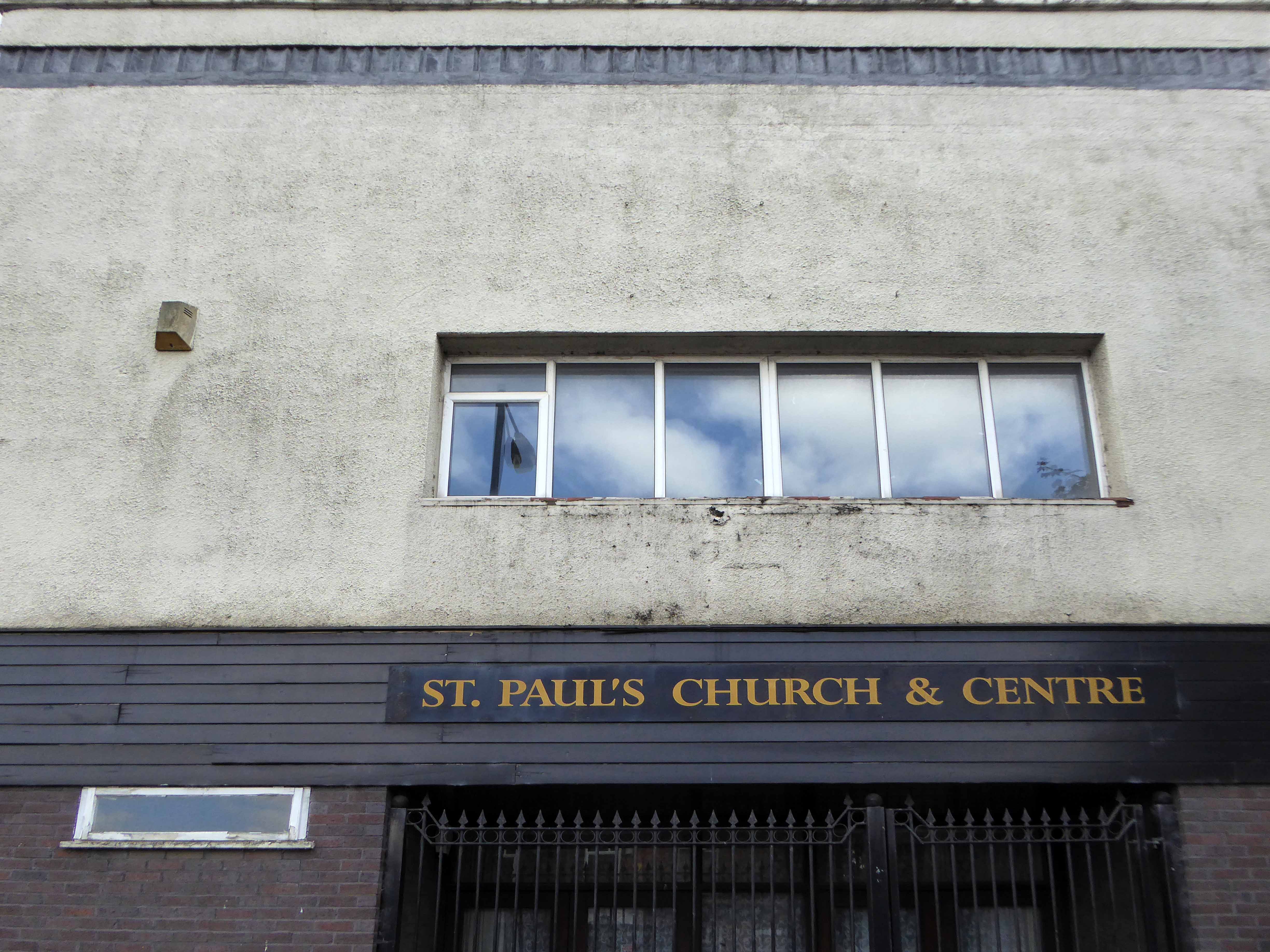
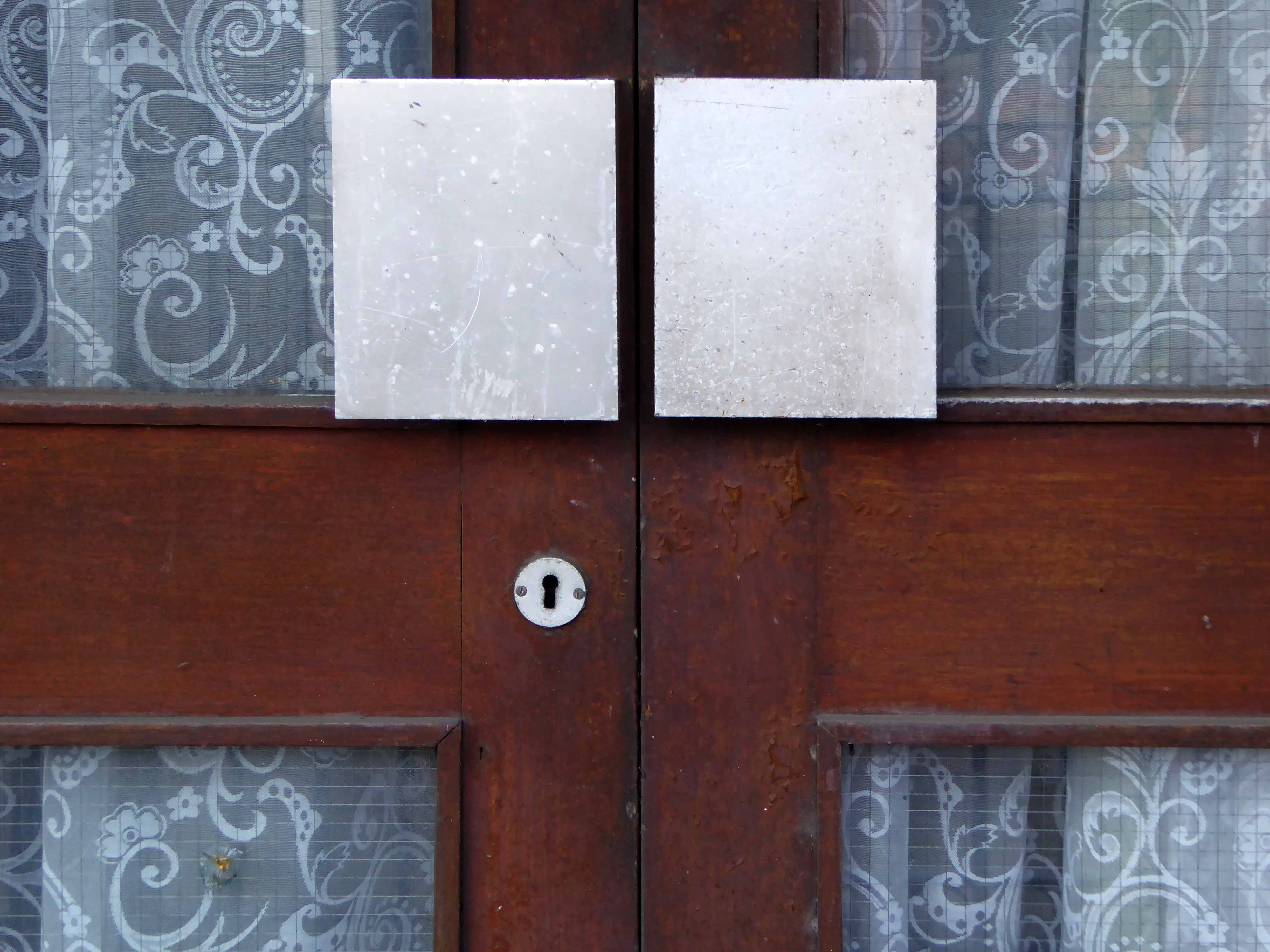
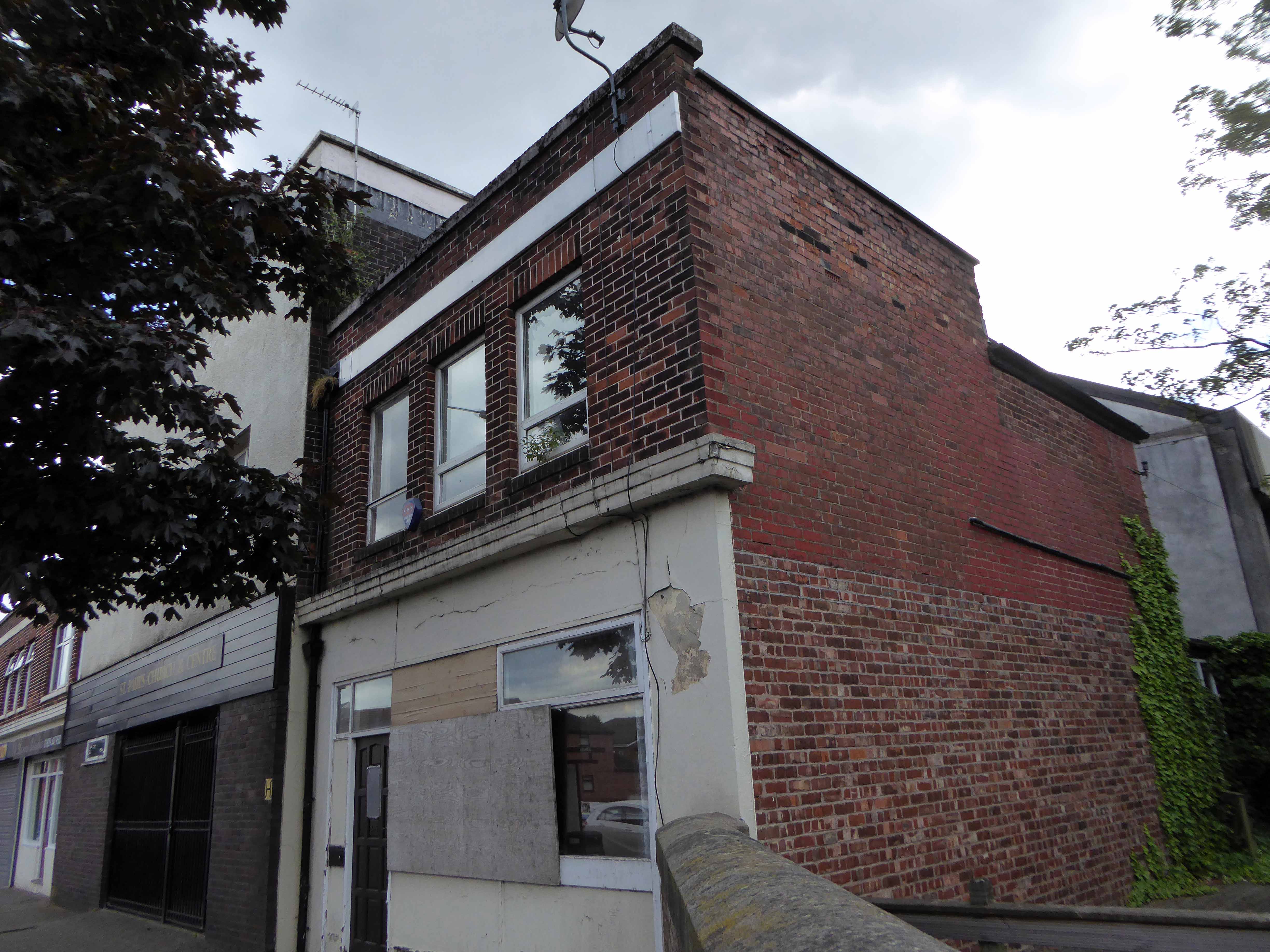
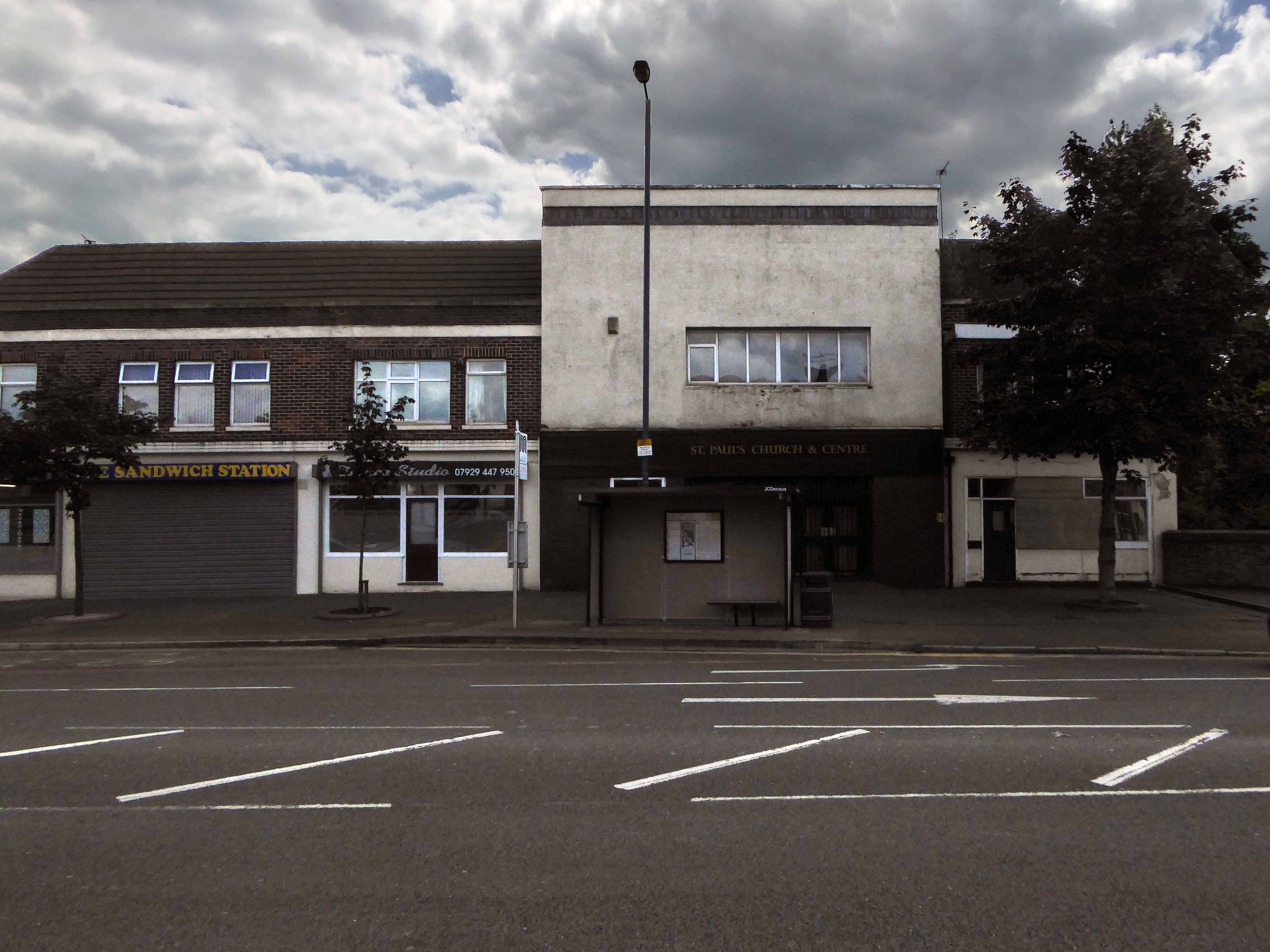
It was converted into St. Paul’s Roman Catholic Church. Former cinemas have made good conversions to churches and the fabric of the buildings are generally respected. In this case though, the sad story is that the front entrance has been rendered over and inside all details of it cinematic past have been erased. You would never know you were inside what had been been an Art Deco styled building.
I passed by nearly every day for years travelling to and from school, I played there at a wedding reception in the church social club. I sadly have no recollection of the building in use as a cinema.
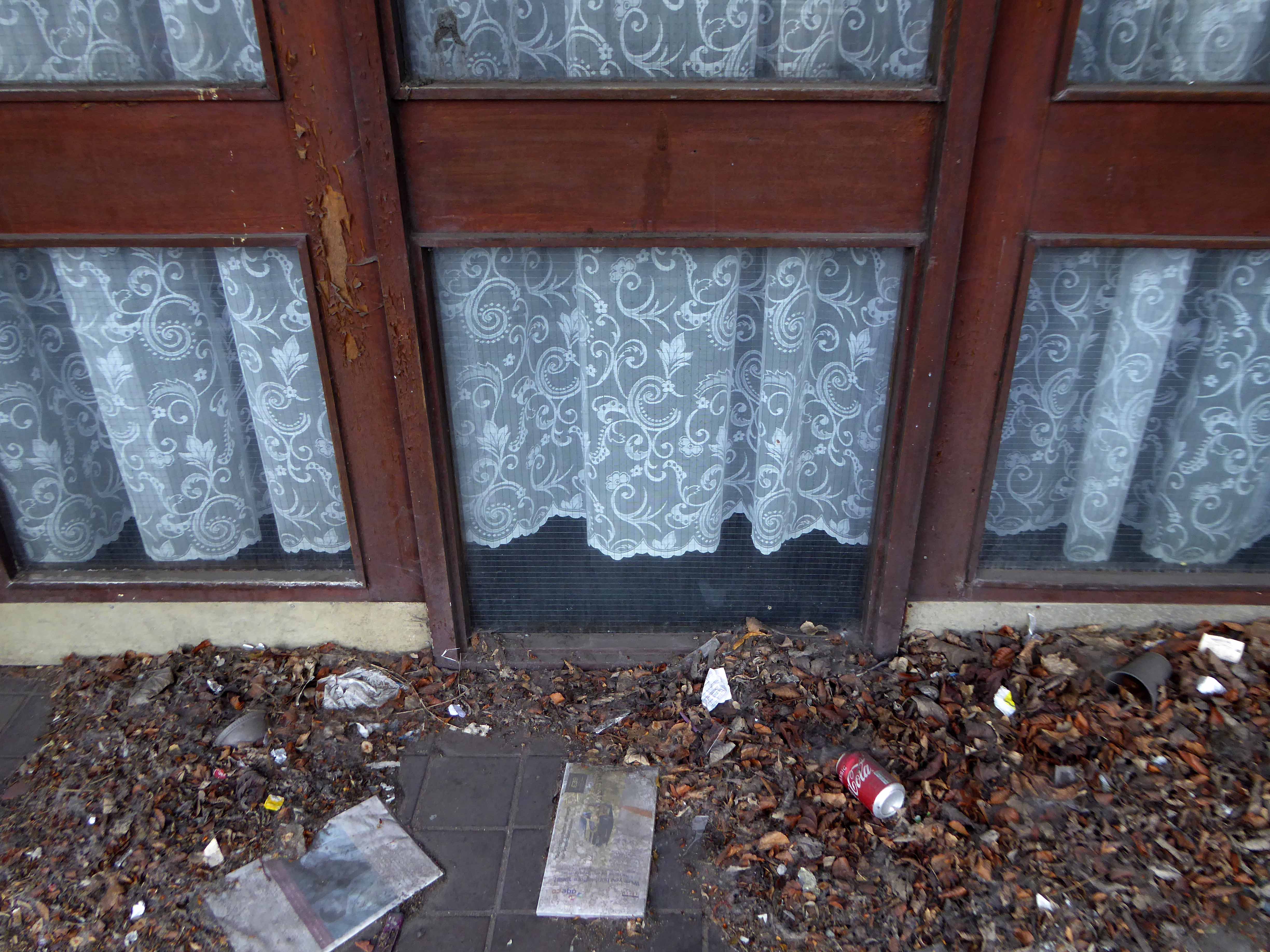
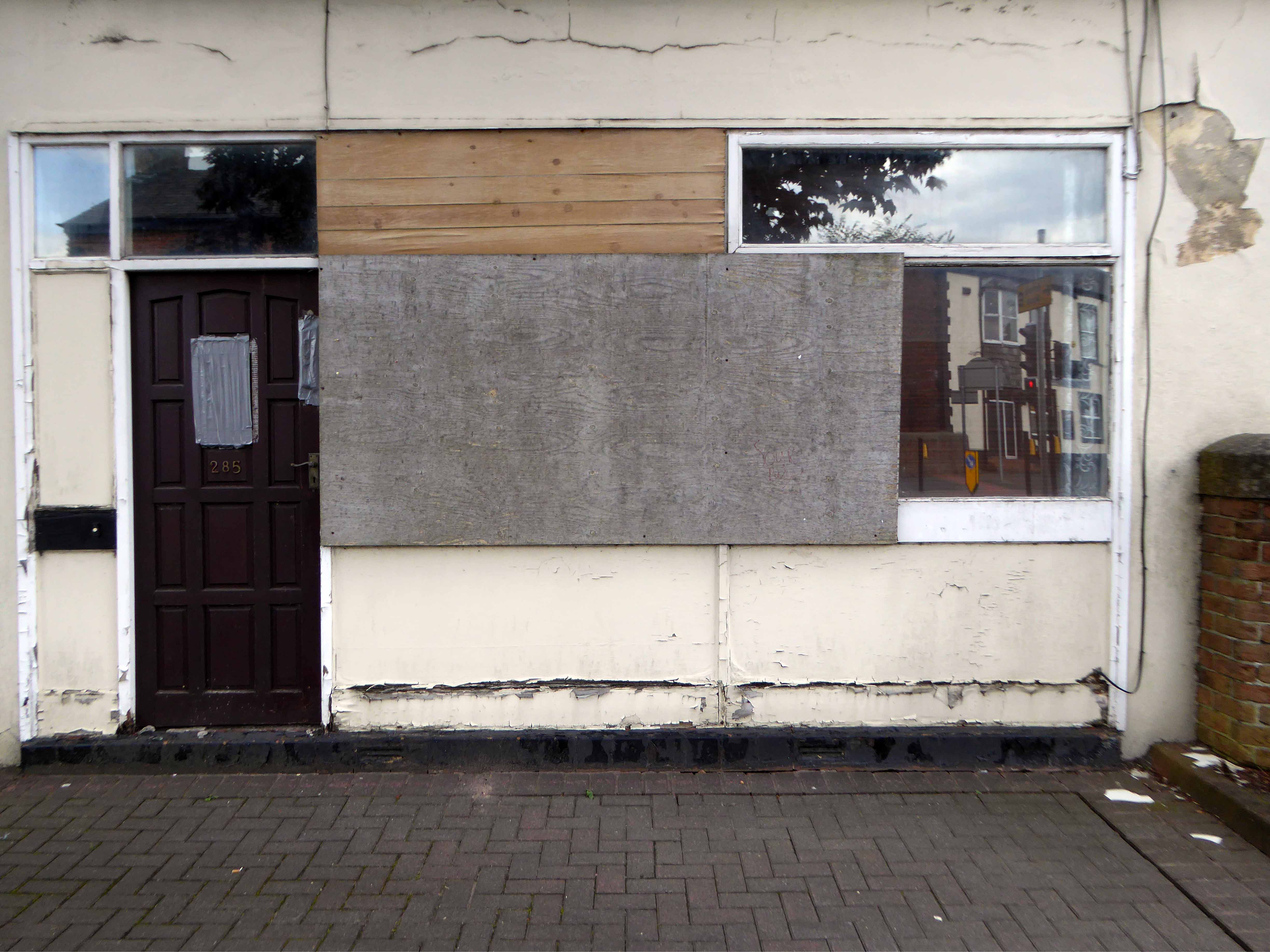
It has been closed since 2010 – currently it has no purpose or seemingly any future use, there are no For Sale signs in evidence.
I popped by to see you yesterday – a truly remarkable structure set amongst the terraced housing of an unremarkable street.
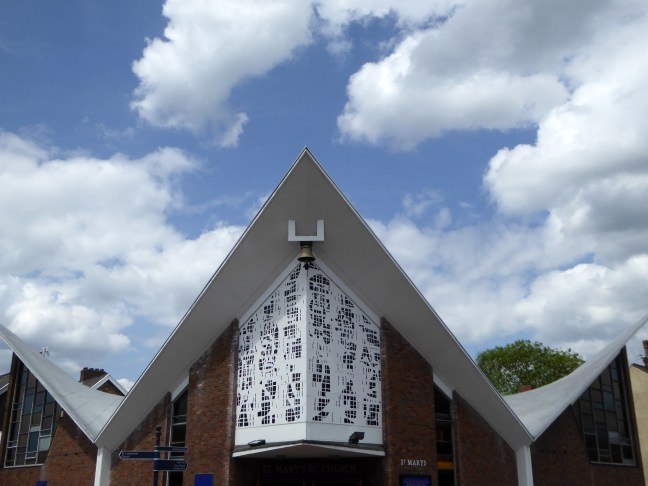
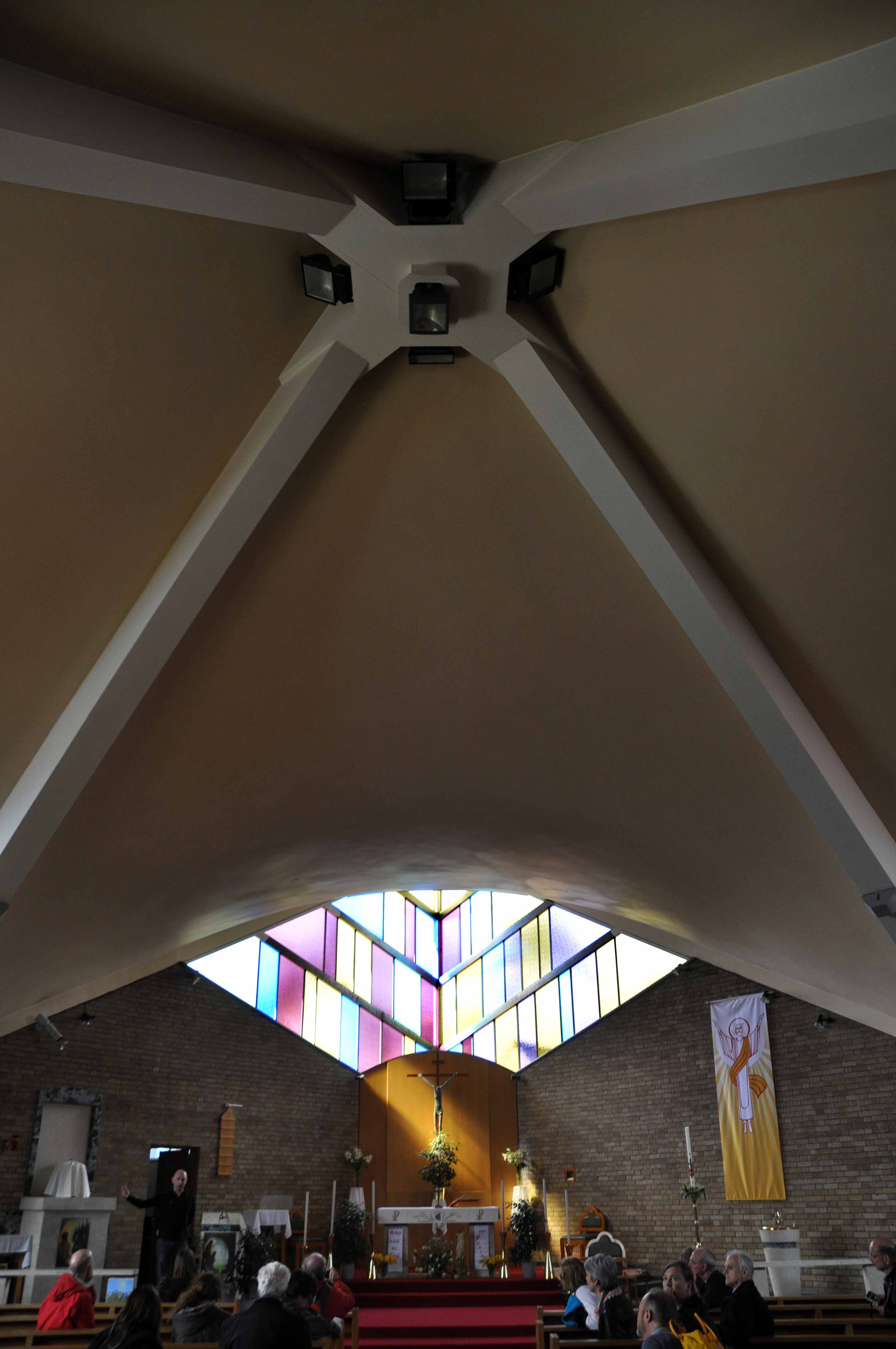
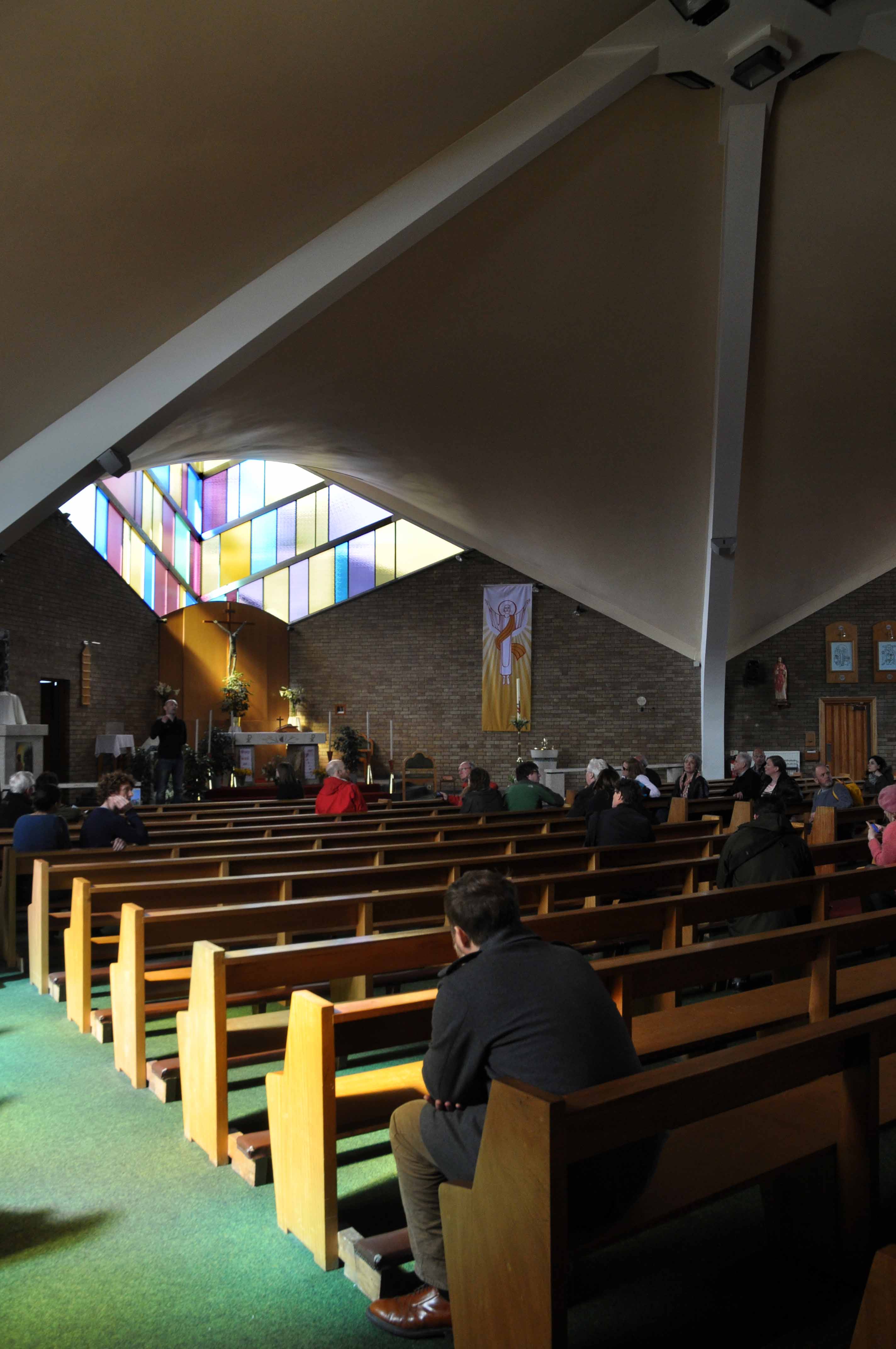
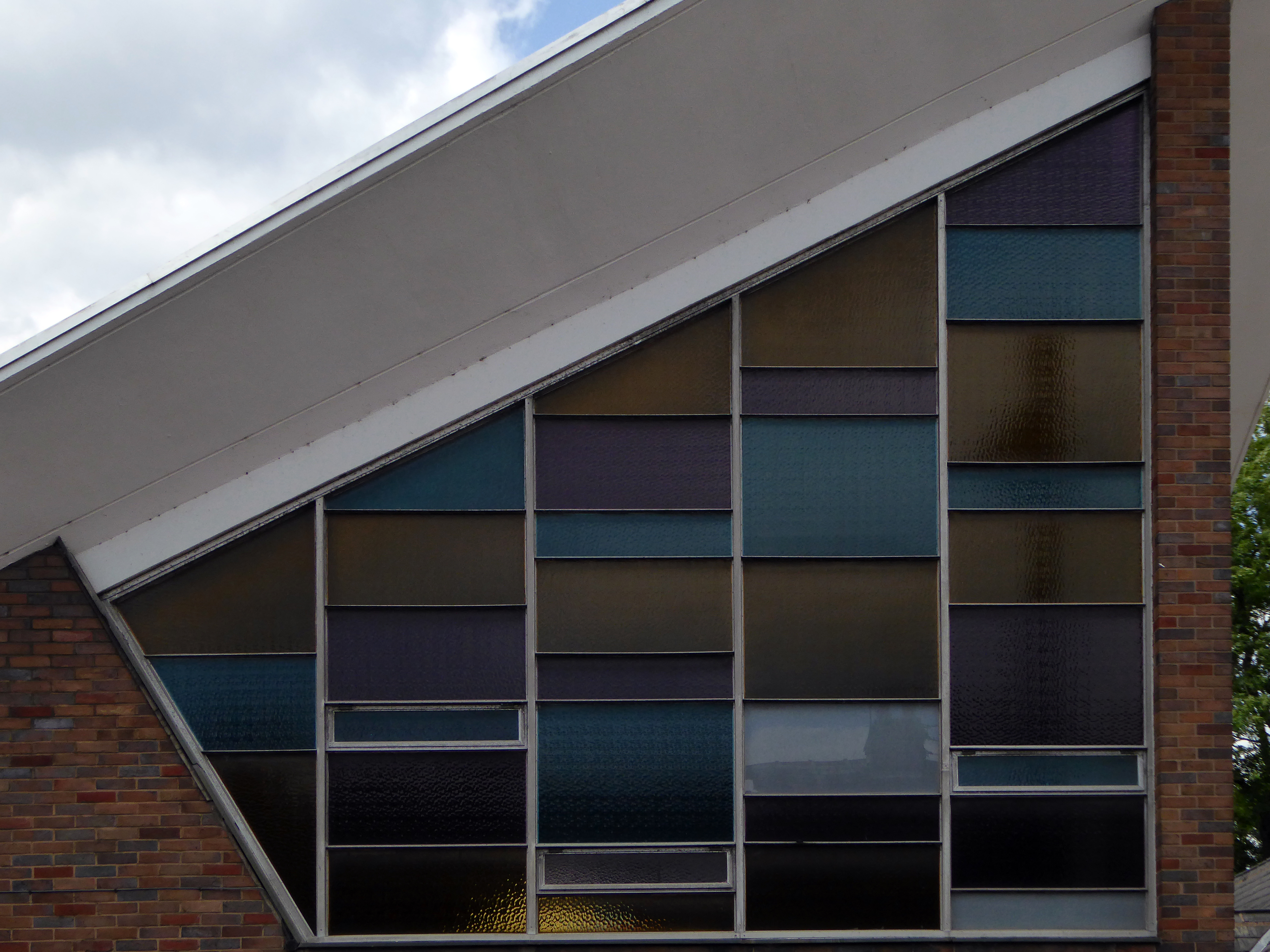
The foundation stone for the present building laid by Bishop Beck in August 1962. He returned to bless and open the church on 25 June 1963. The new church was built from designs by Walter Stirrup & Sons – job architect Kevin Houghton, at a cost of about £60,000. The church is notable for its dalle de verre glass, by Carl Edwards of Whitefriars.
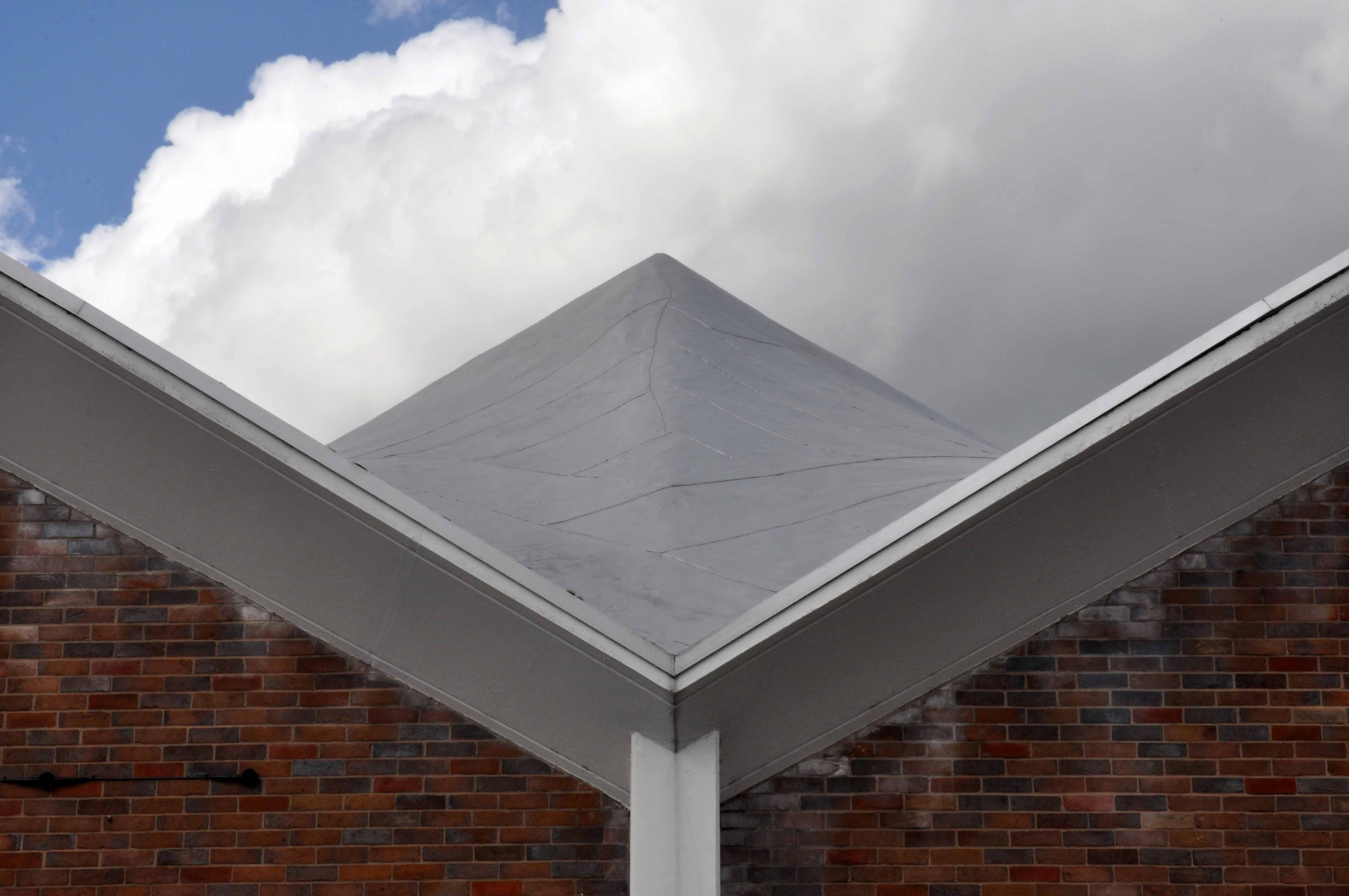
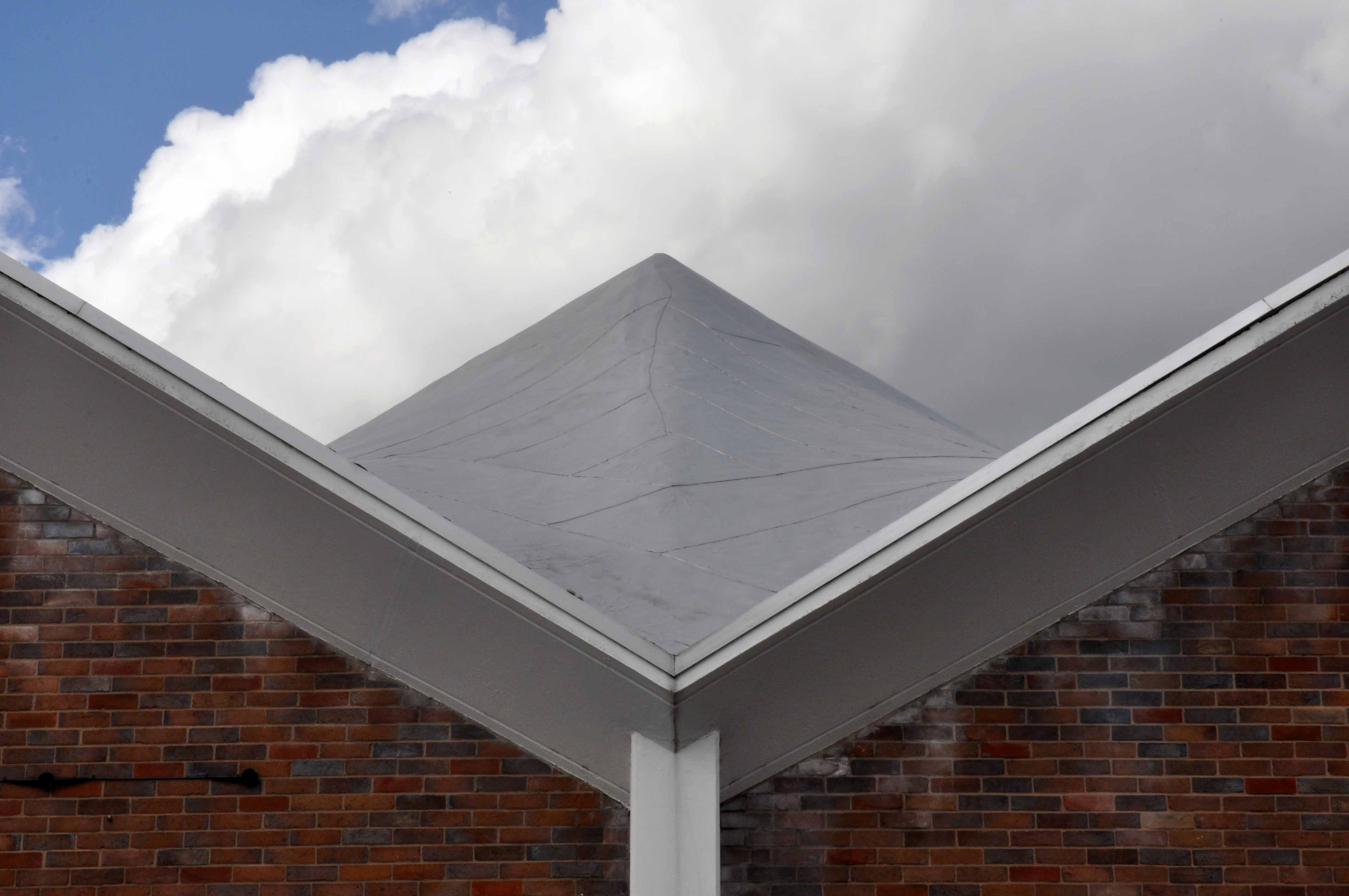
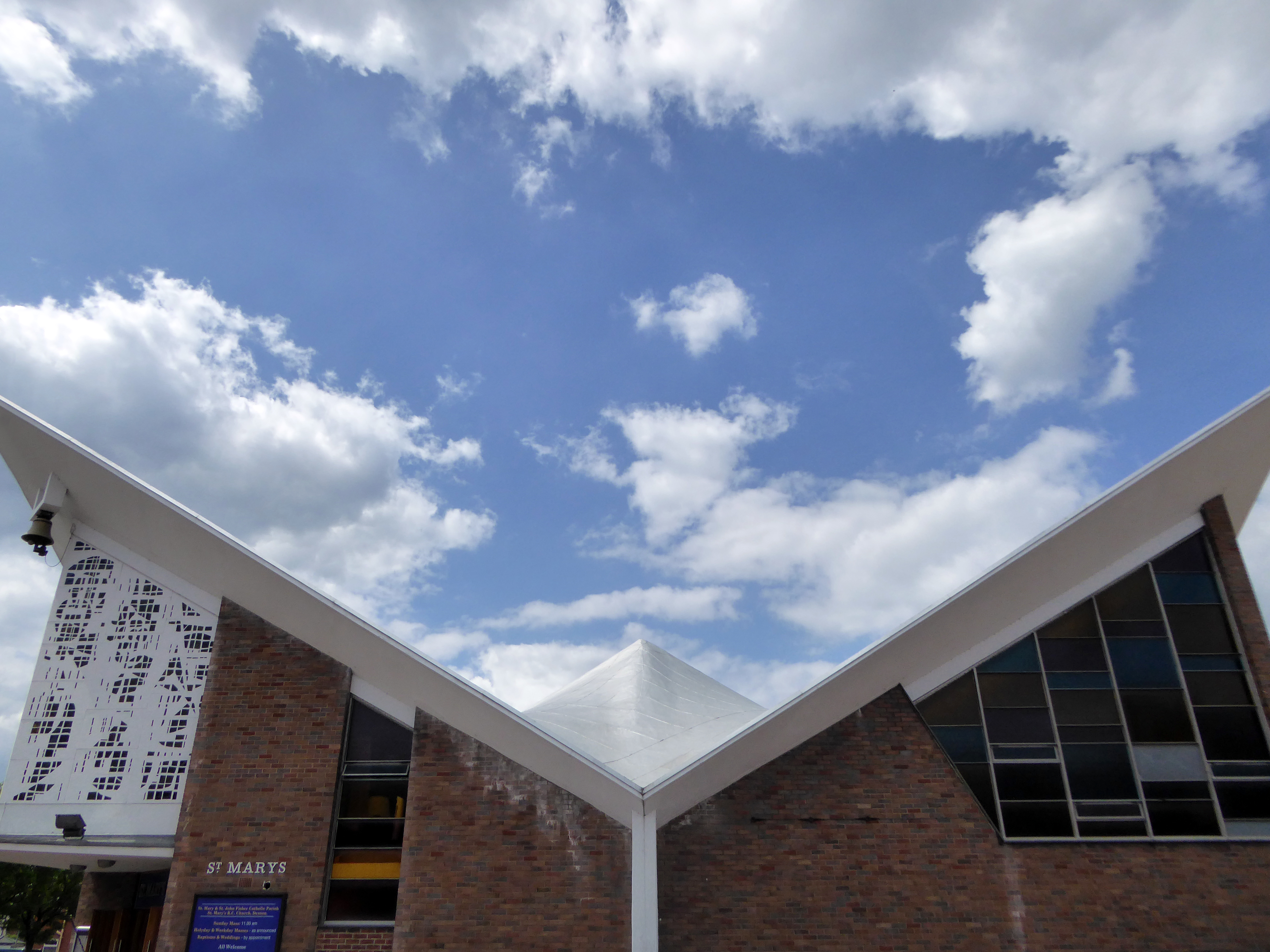
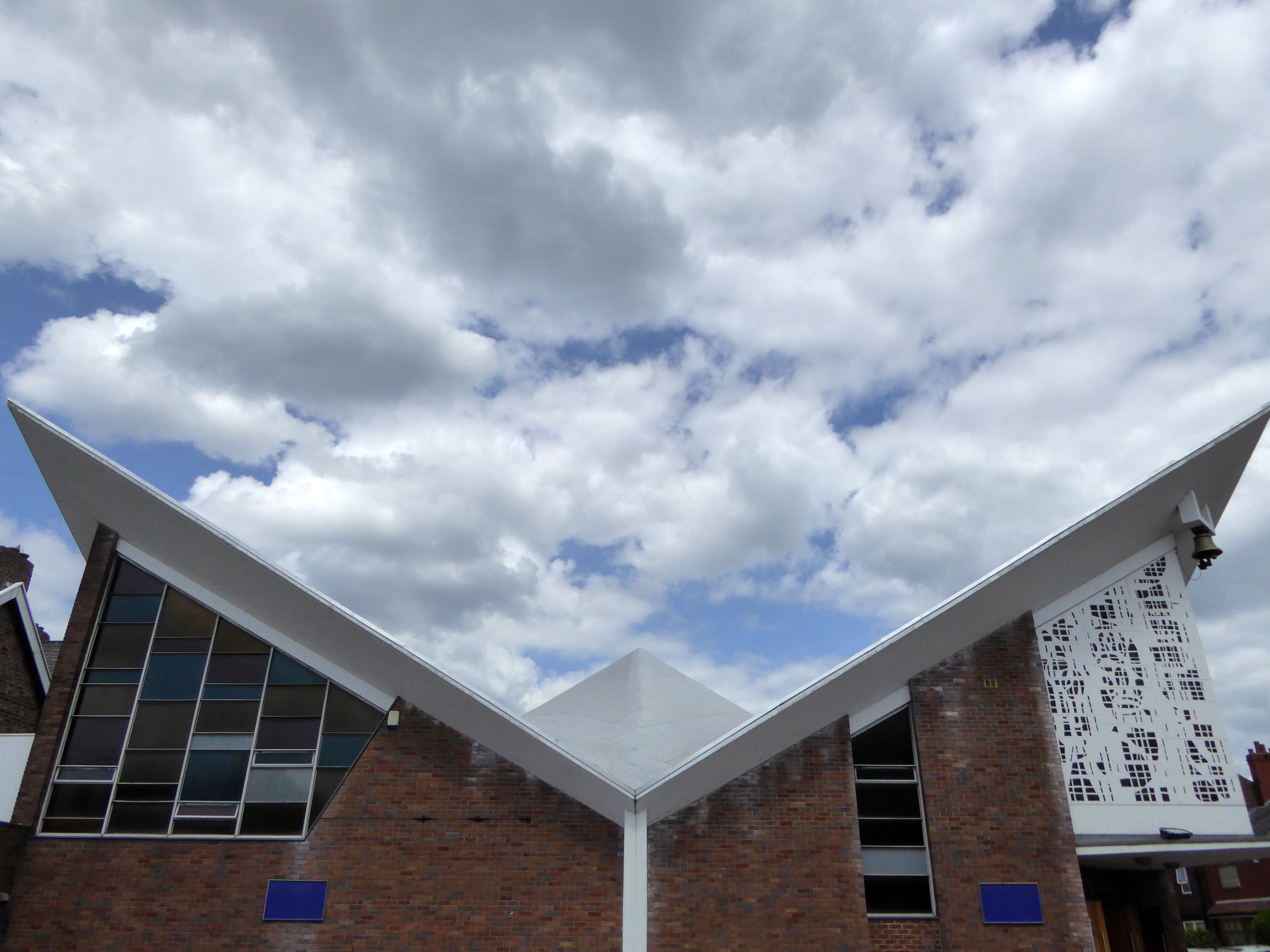
The church is a very striking and characterful building with a hyperbolic paraboloid roof rising in peaks on four sides, with clerestory lighting in the angles, that on the west side jutting out to form a canopy over the entrance. It was described by Nikolaus Pevsner as ‘wildly expressionist’.
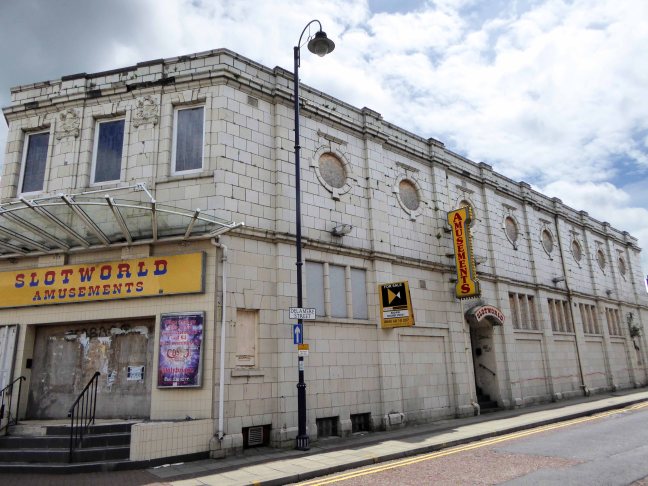
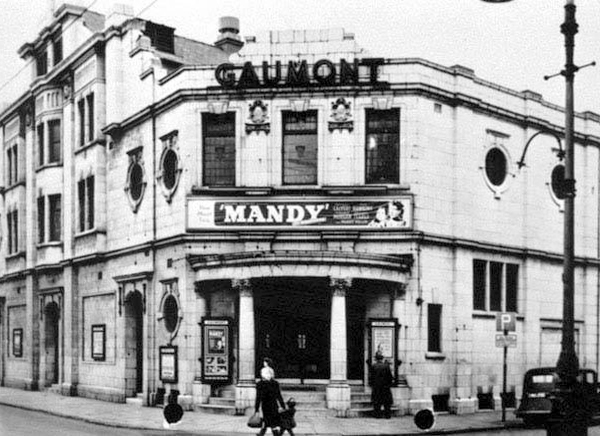
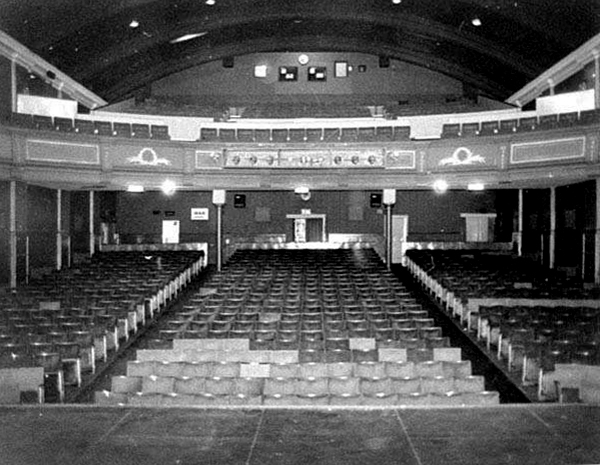
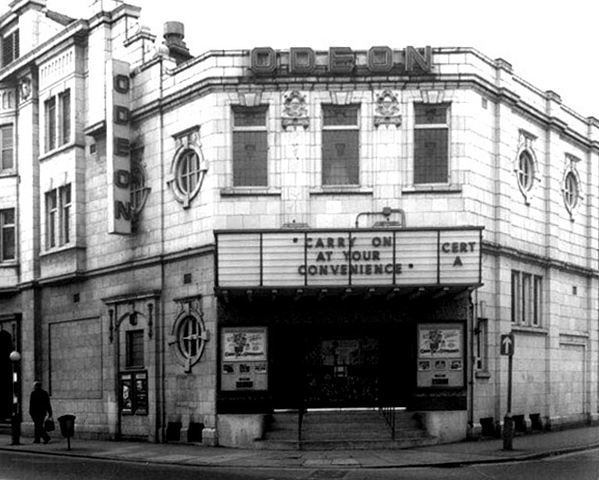
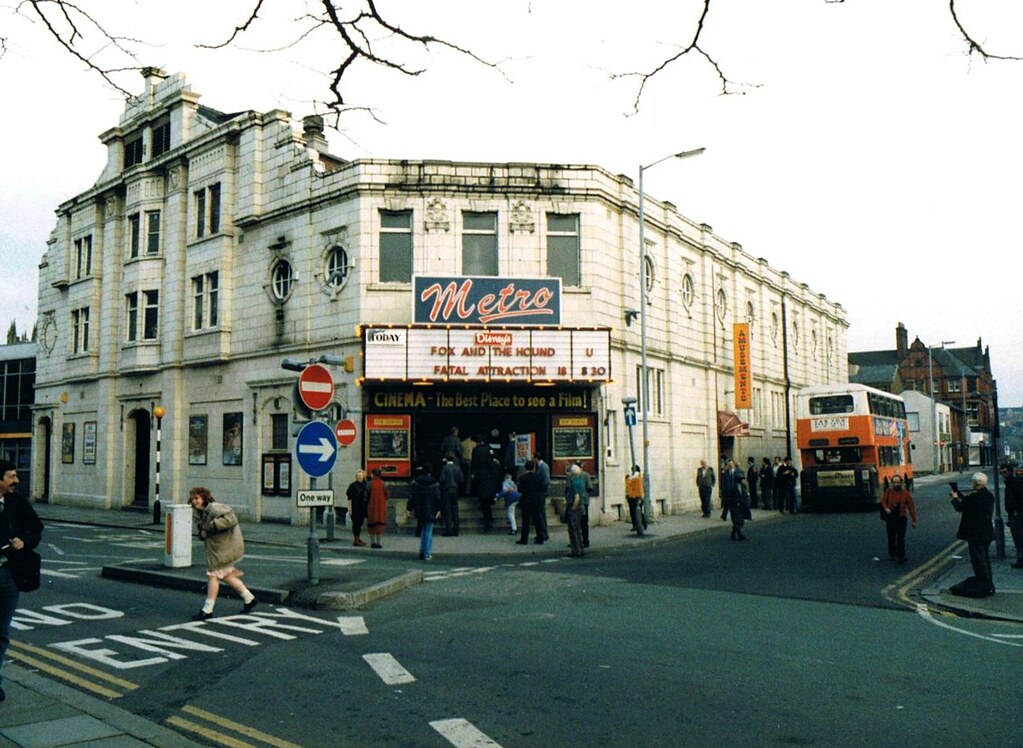
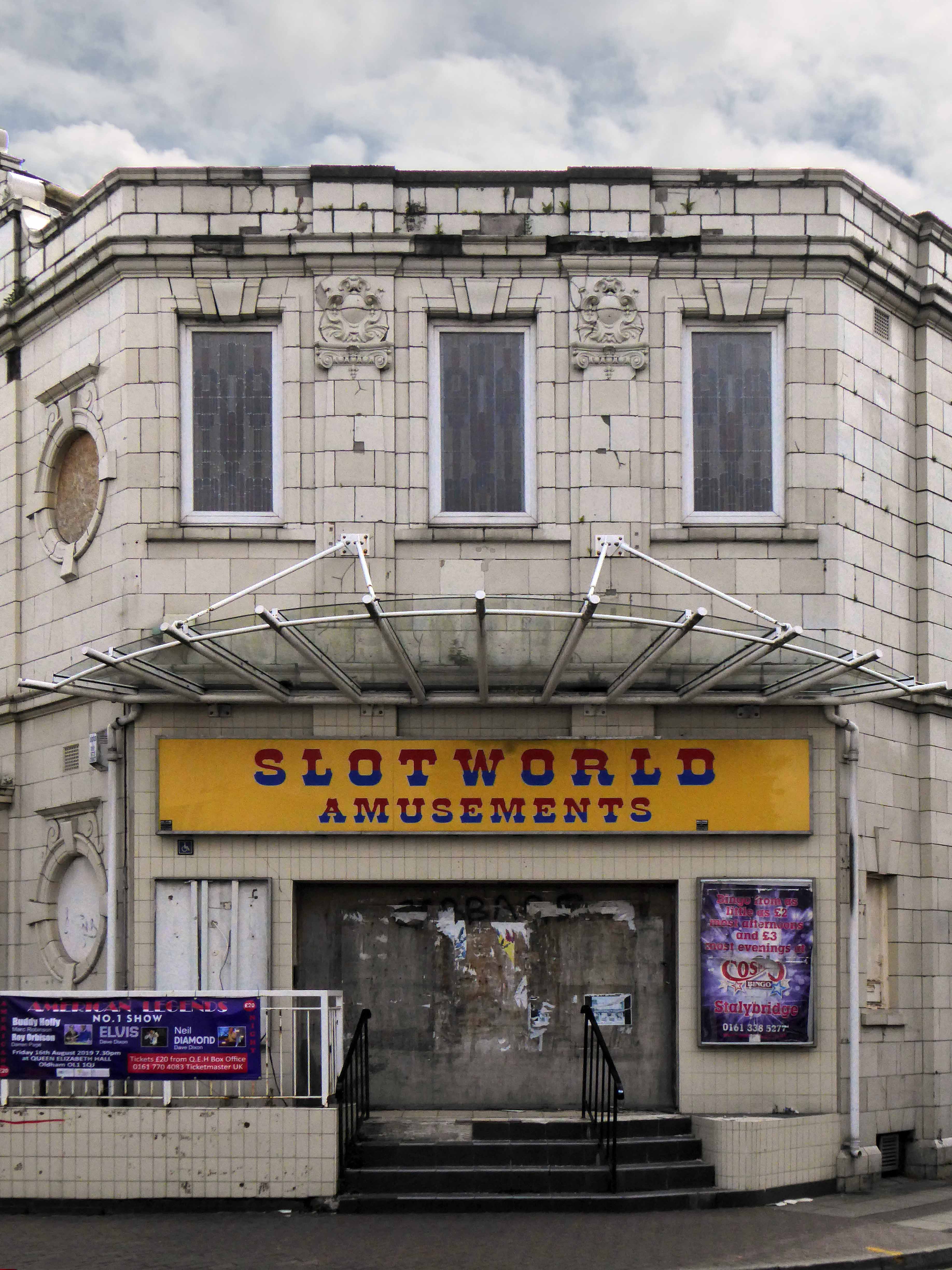
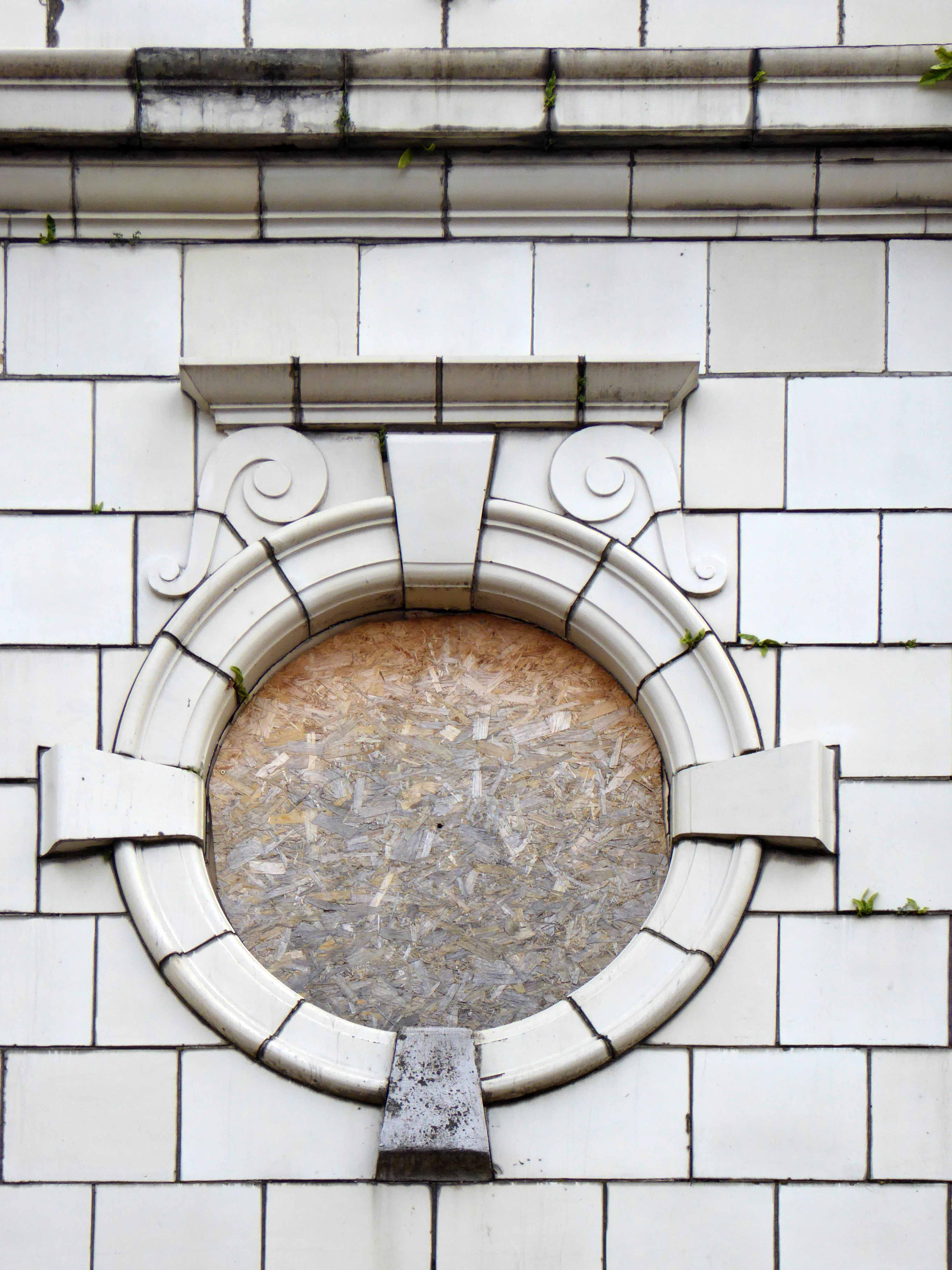
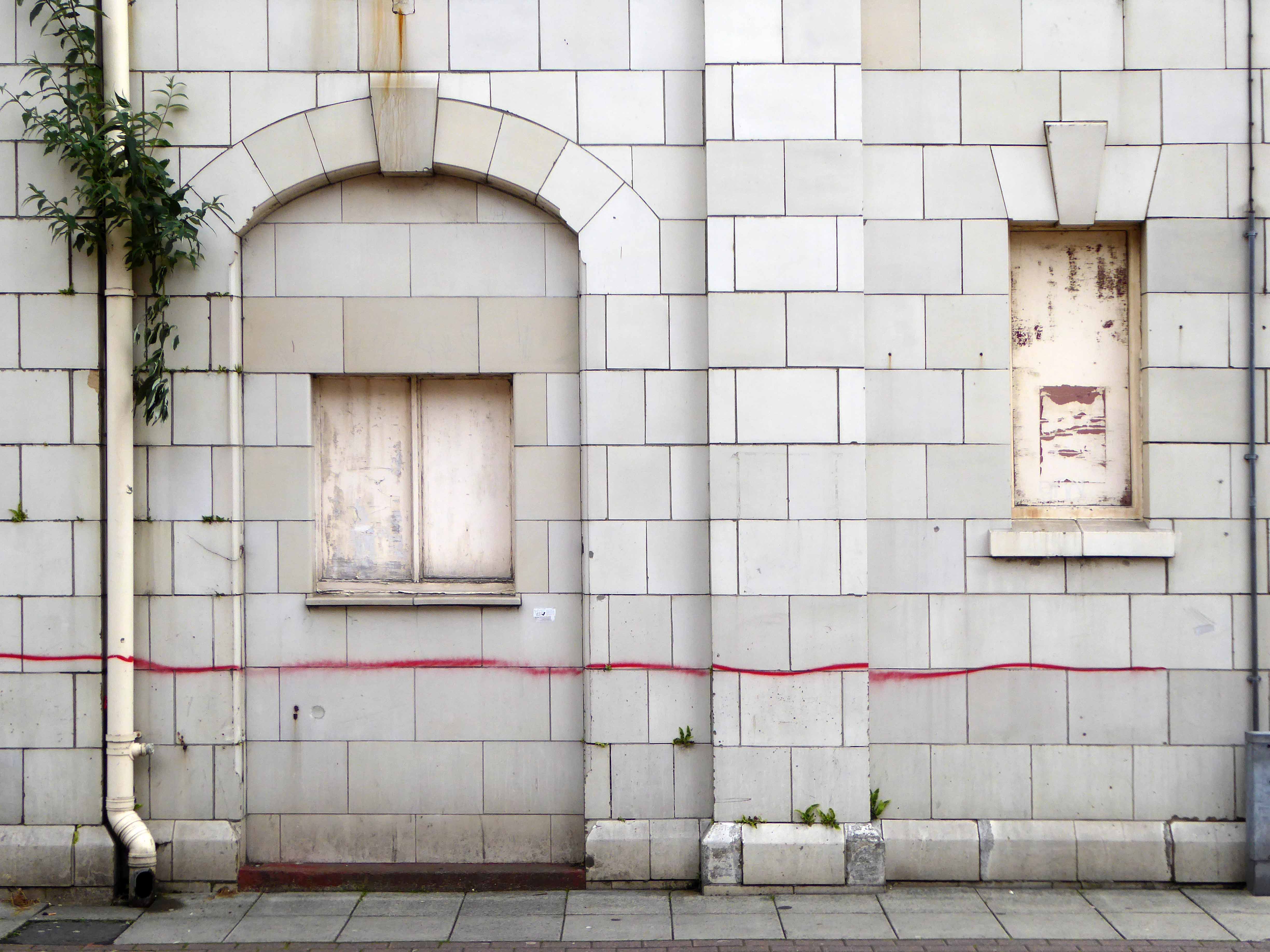
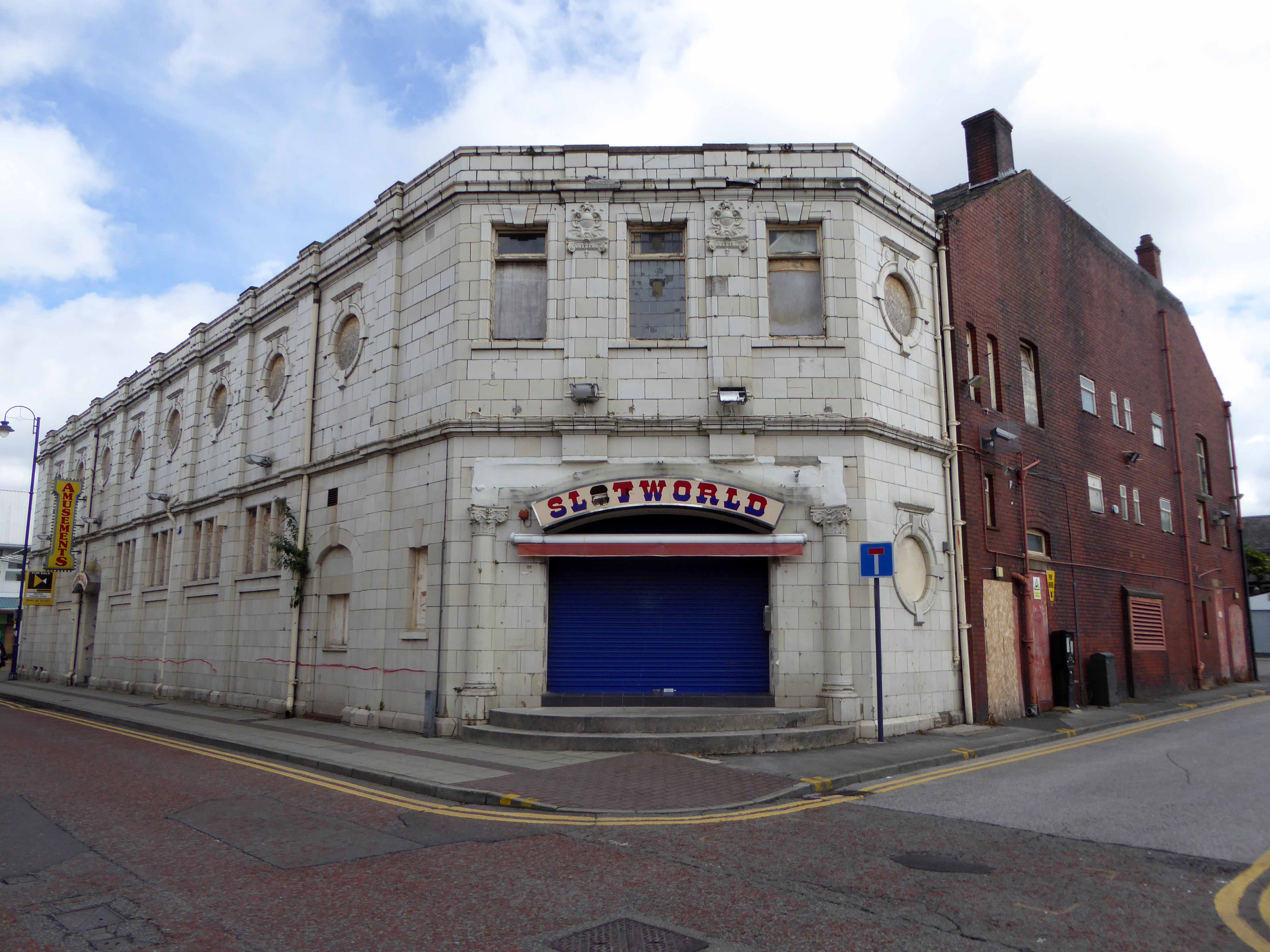
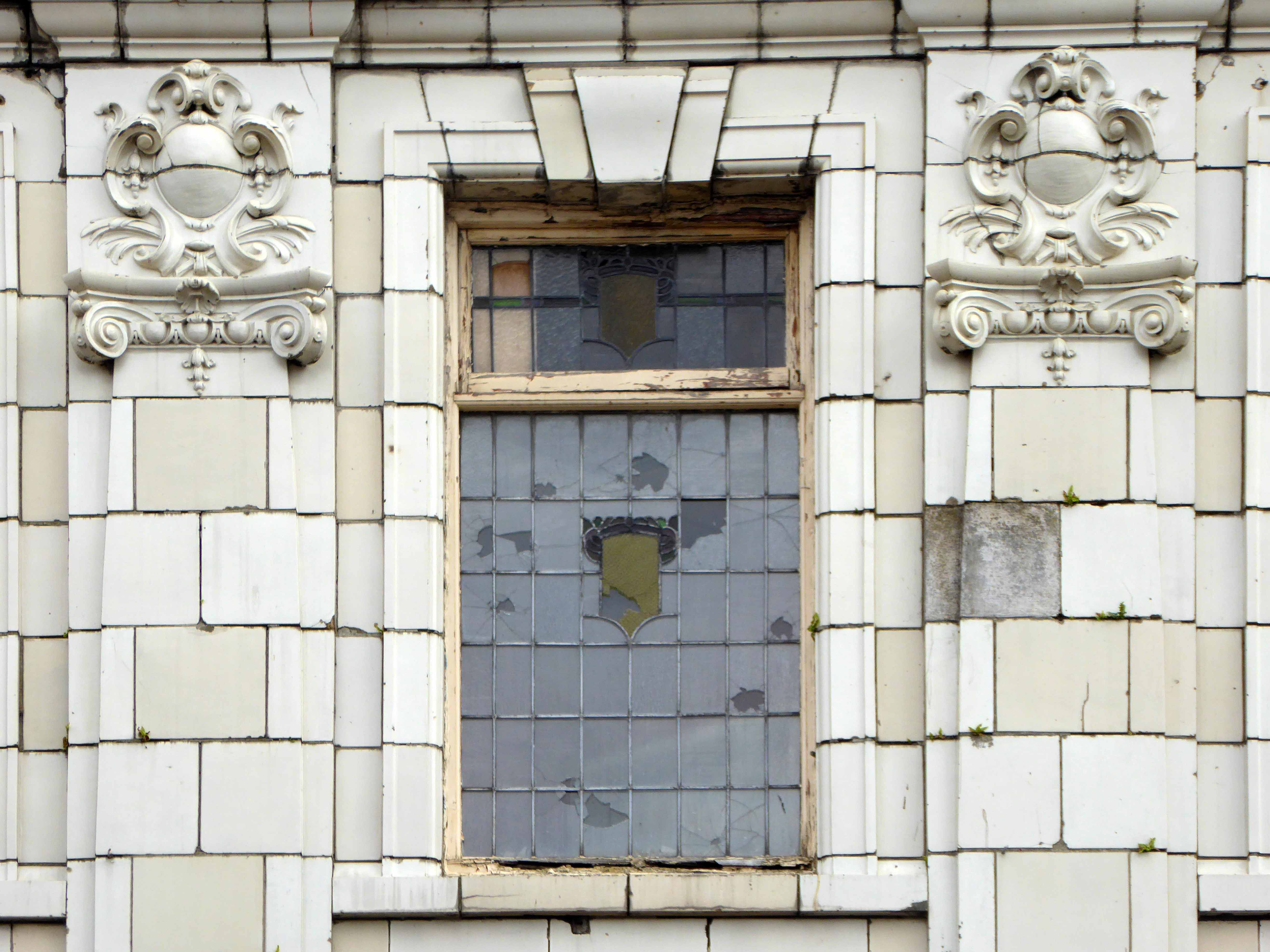
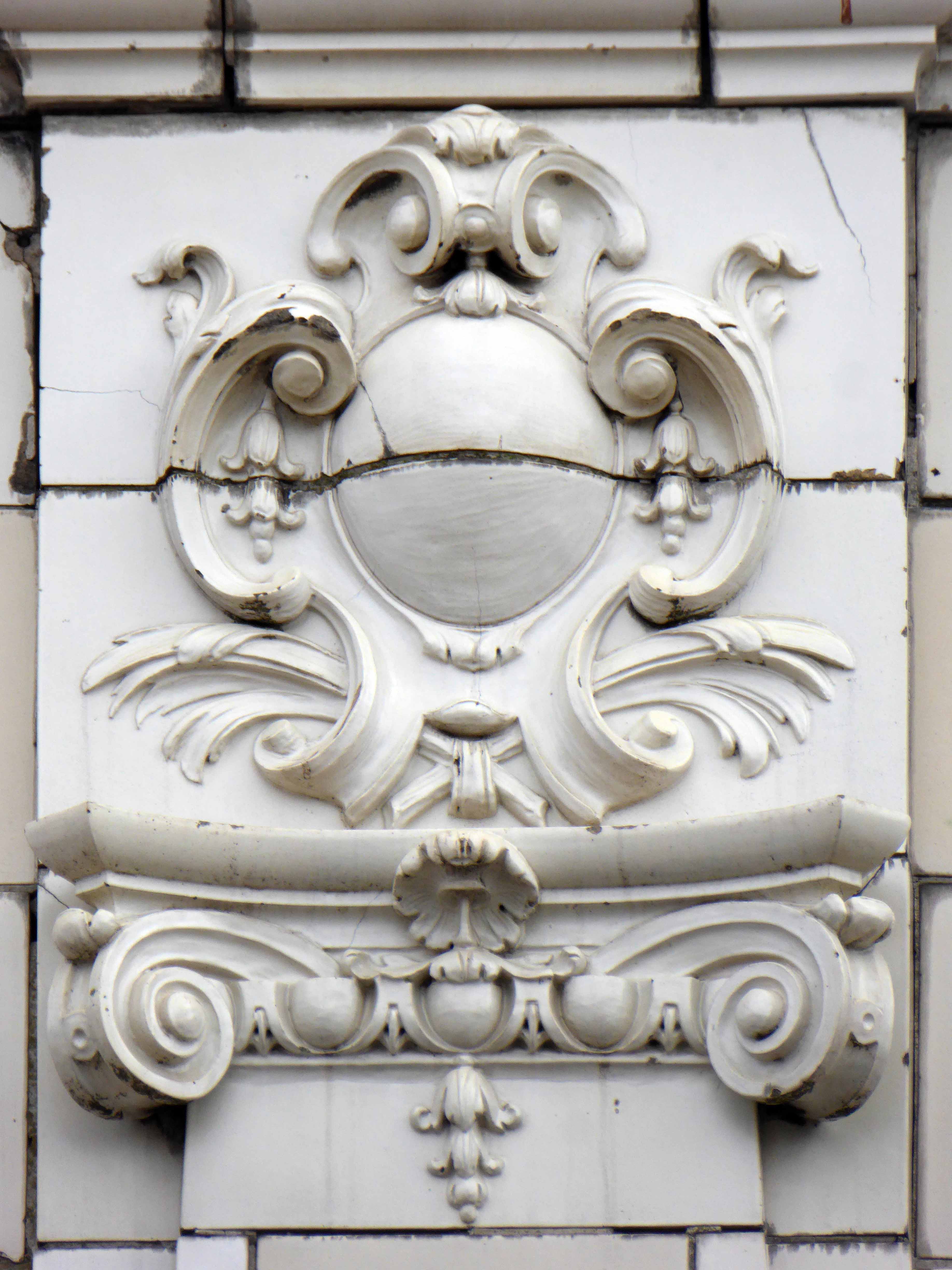
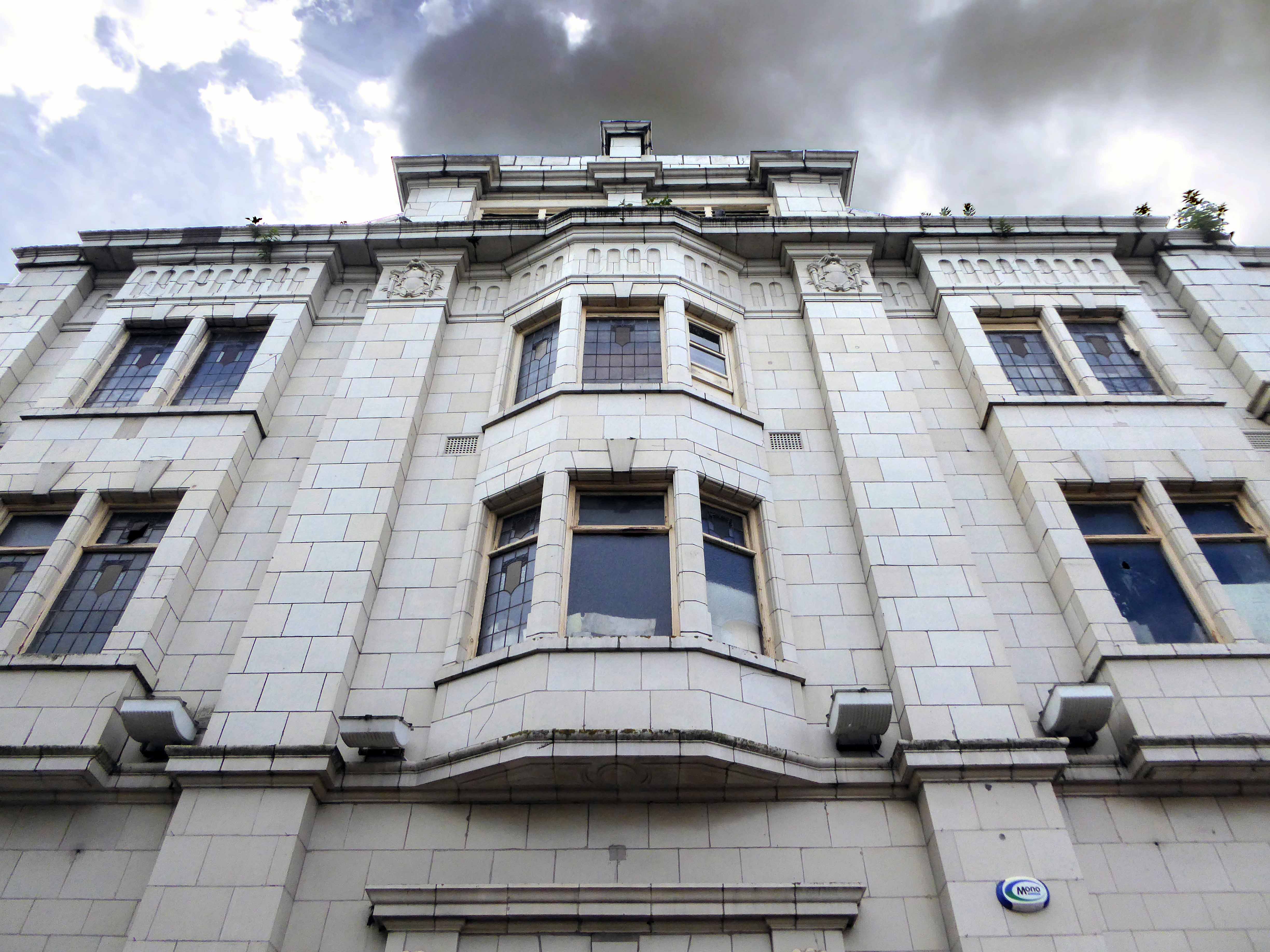
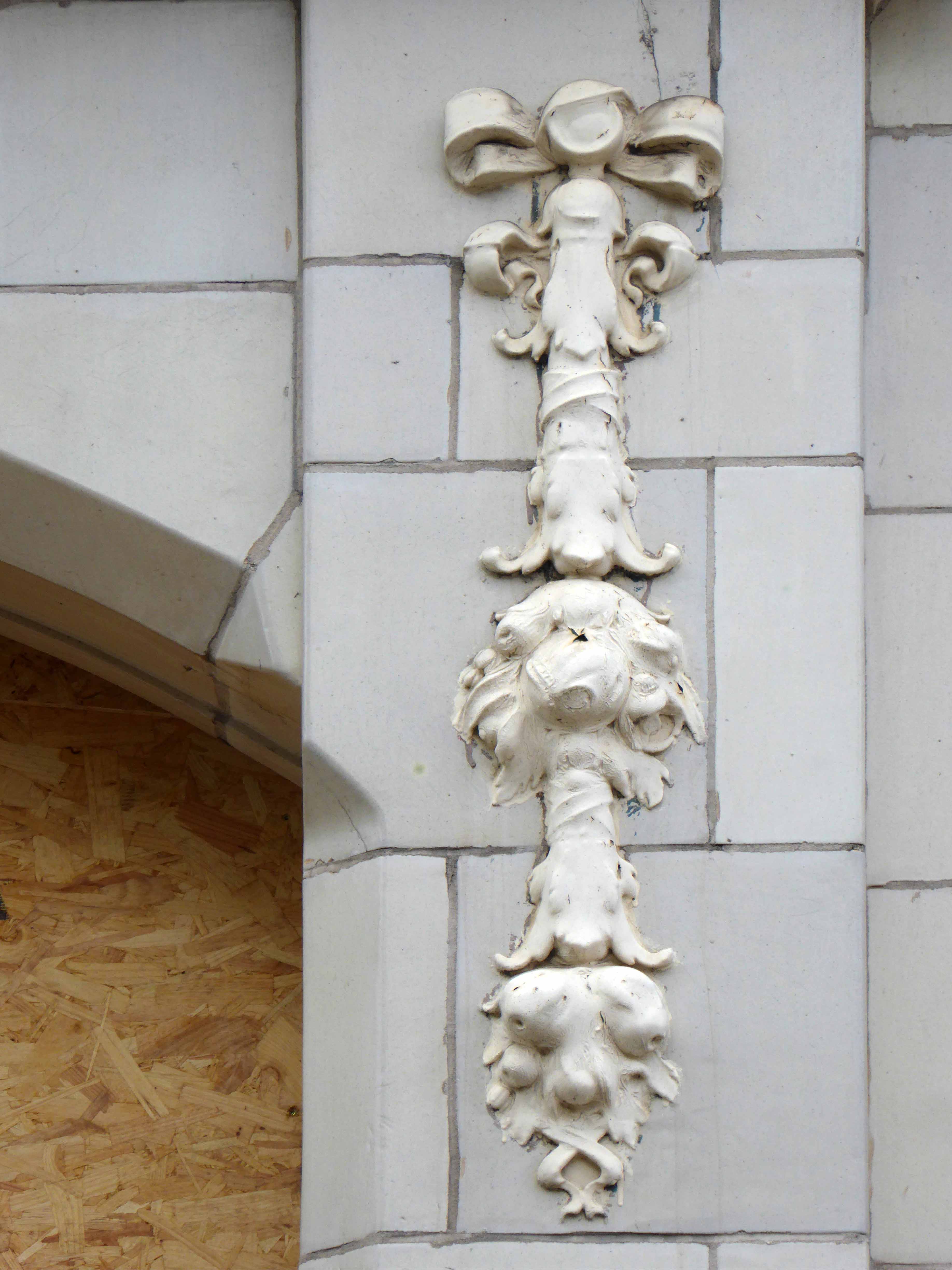
Opened 22 April 1920 with “The Forbidden City” and designed by Arnold England, the Majestic Picture House was part of the Provincial Cinematograph Theatres circuit. With 1,233 seats in stalls and balcony and a splendid facade faced in white faience tiles on two sides of the building on its prominent town centre corner site of Old Street and Delamere Street, the cinema was a great success.
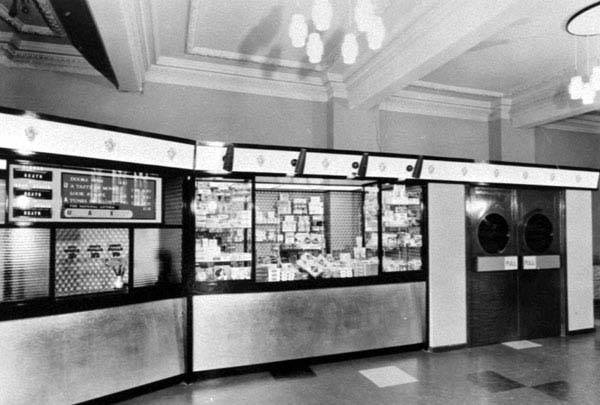
It had an oak panelled foyers which had beautiful coloured tapestry’s on the walls. The interior was in a Georgian style and it was equipped with a pipe organ and a seperate tea room and cafe which were located on the upper floor.
It passed, with all the other PCT houses to Gaumont British Theatres in 1929, but it was not until 12th July 1946 that it was renamed Gaumont. The Majestic Picture House was renovated in July 1936, with new seating installed and a re-recoration of the foyer and auditorium. A new Compton 3Manual/6Rank organ was installed that was opened by organist Con Docherty.
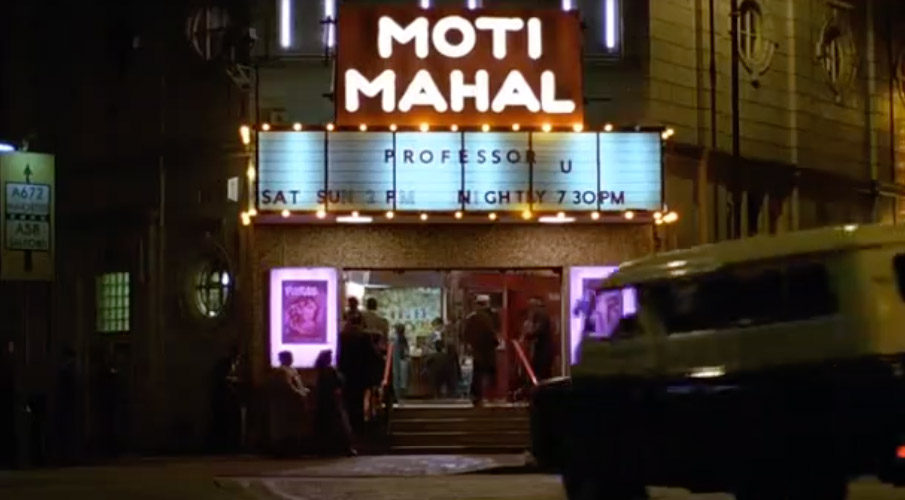
Later being merged into the Rank Organisation, the Gaumont was re-named Odeon on 11th November 1962. It was eventually sold to an independent operator who renamed it the Metro Cinema from 6th November 1981.
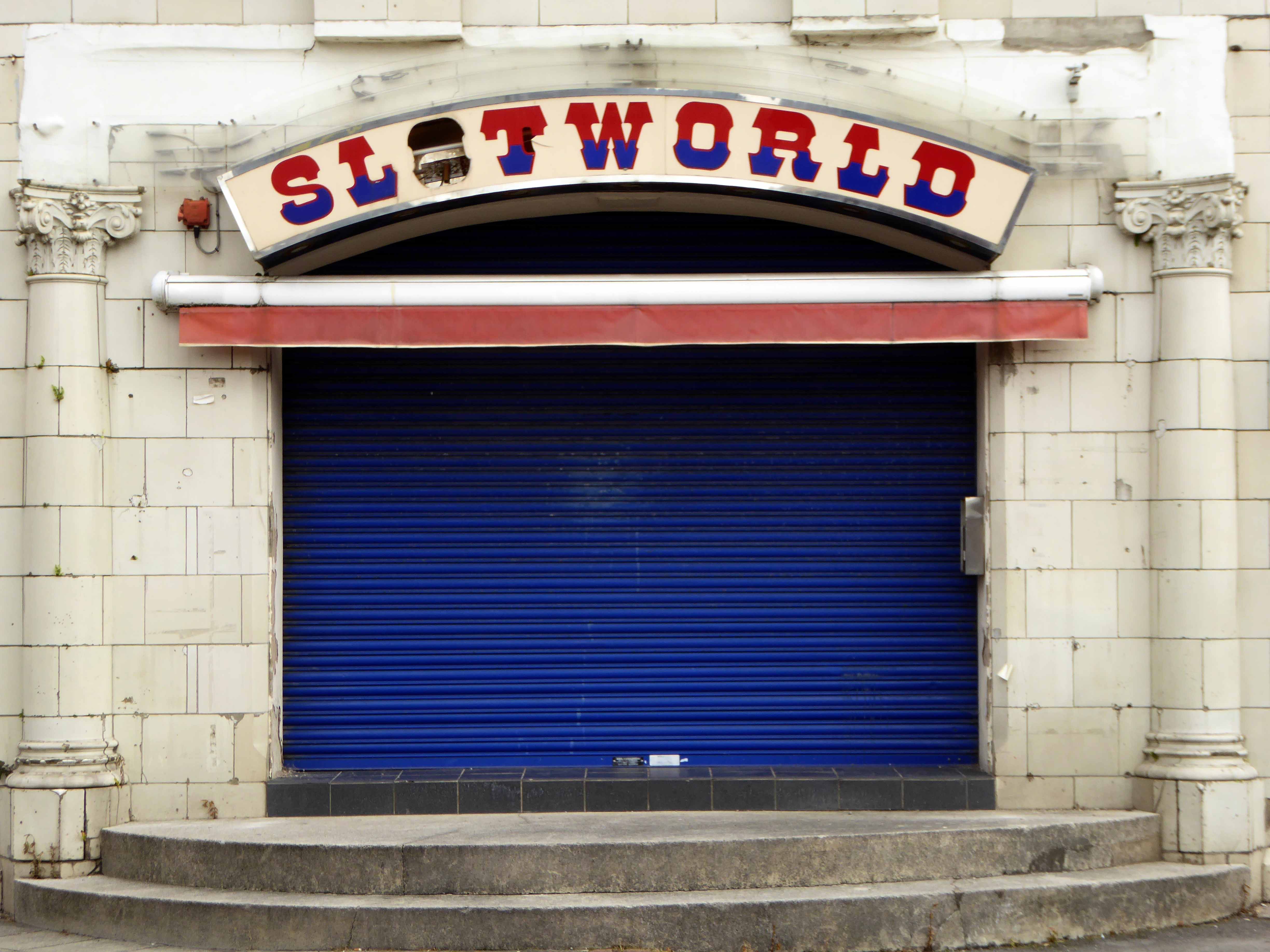
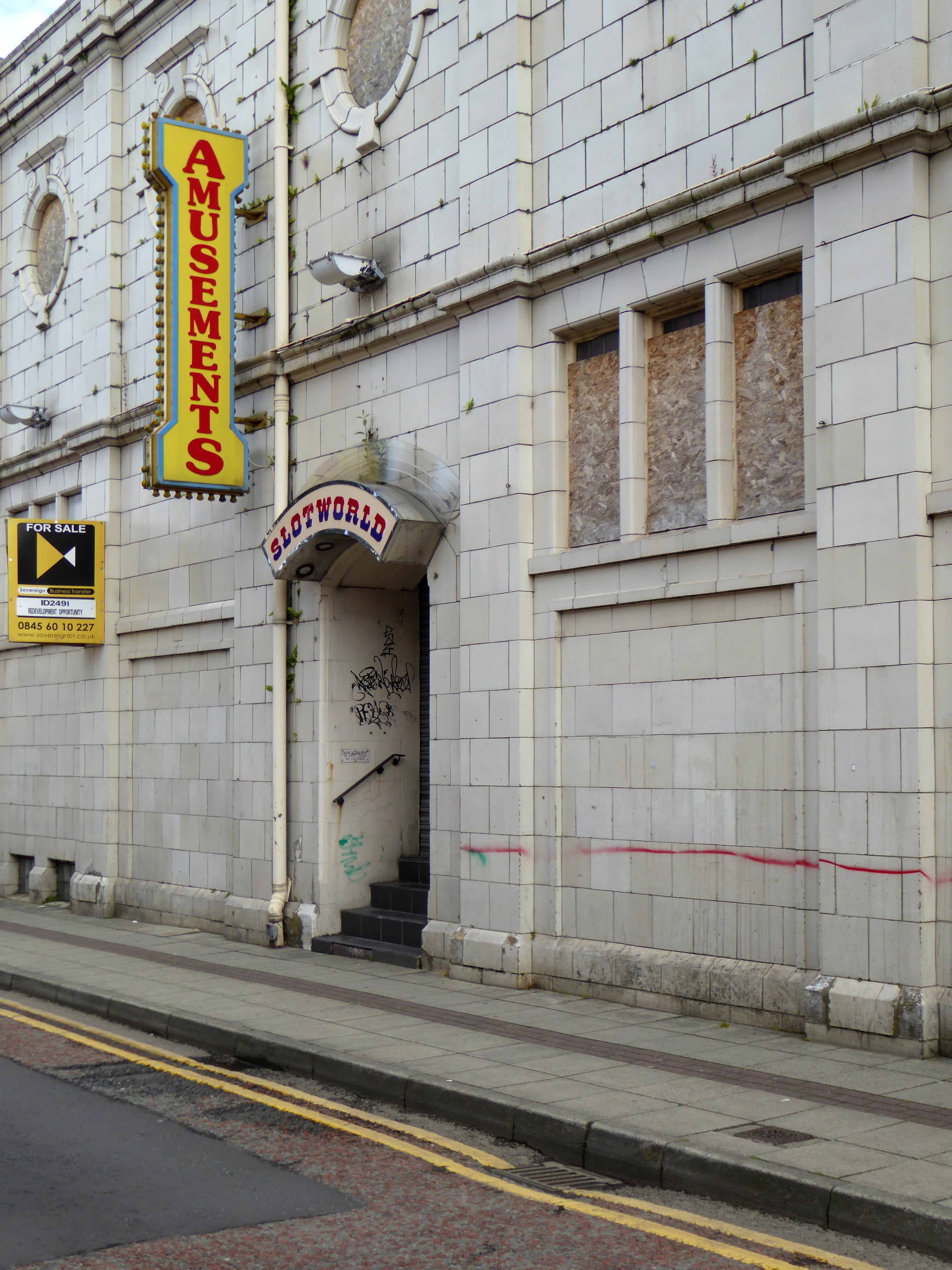
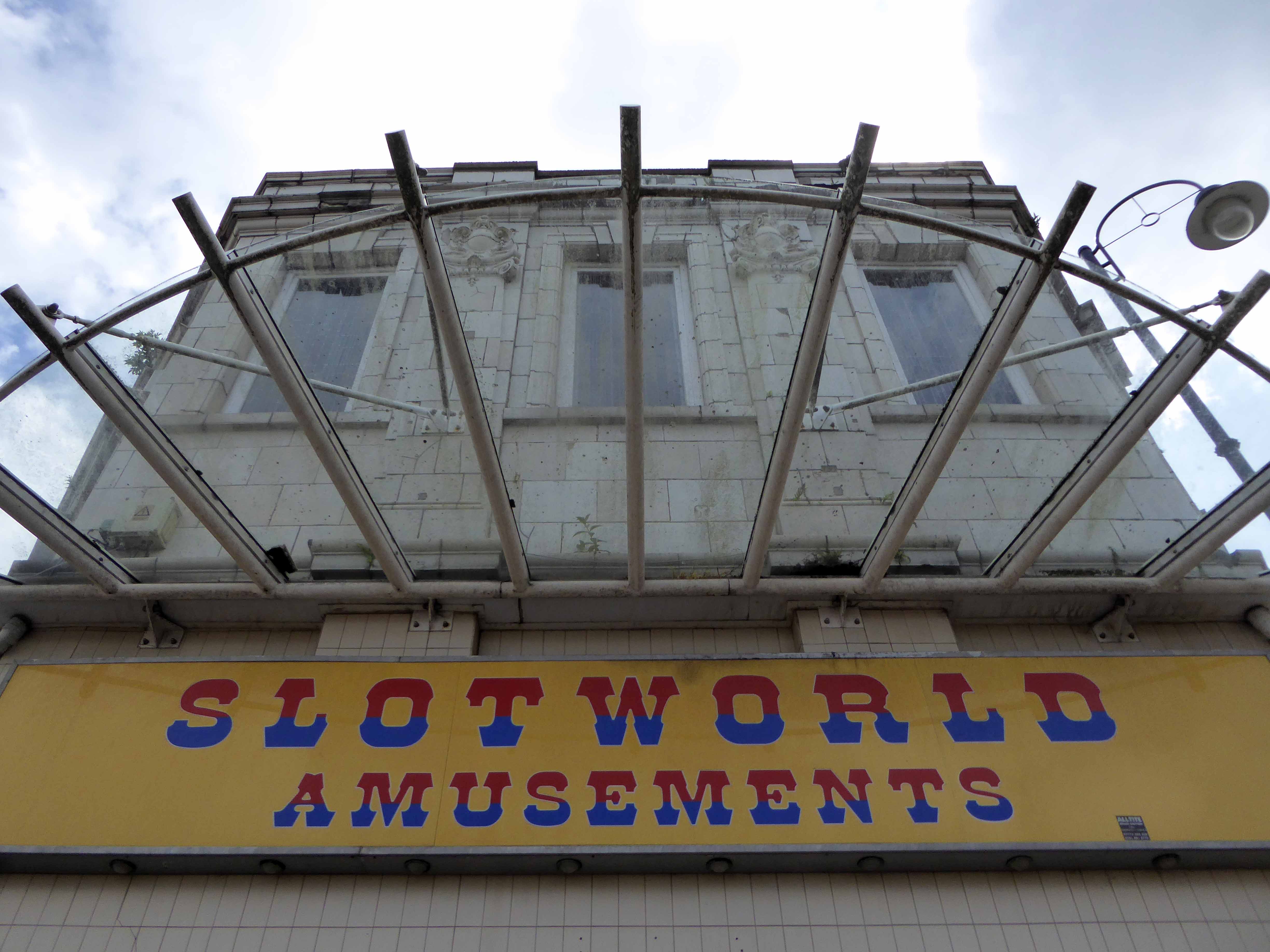
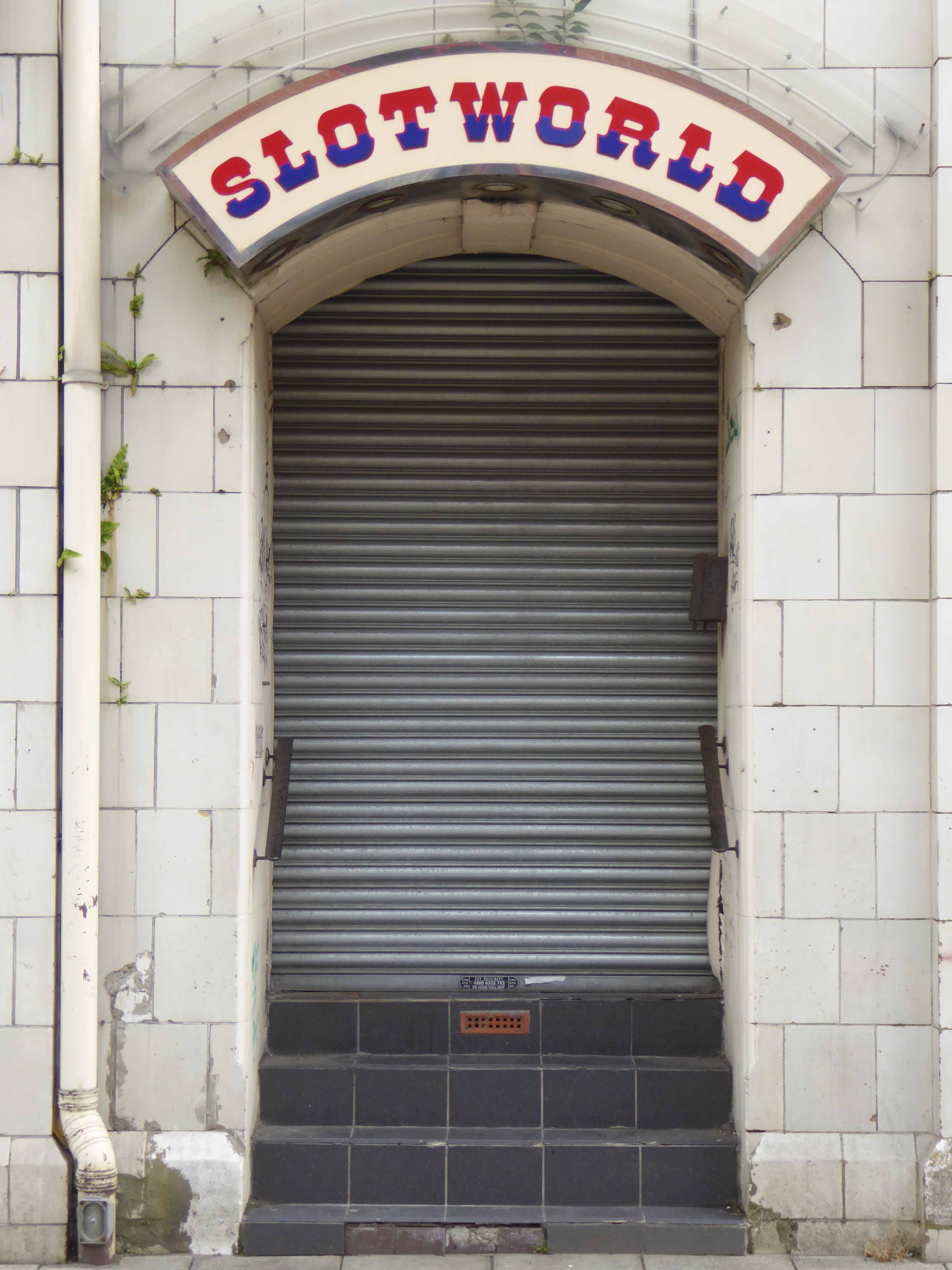
With capacity now down to 946 seats, the Metro Cinema continued as a single screen operation until the middle of 2003, sometime after a multi-plex had opened in the town. In 2008 (with seats and screen intact) the building was unused except for the long foyer area, linking the front and back elevations of the Metro, which was a Slotworld Amusement Arcade. By 2011, the entire building had been stripped out and stood empty and unused.
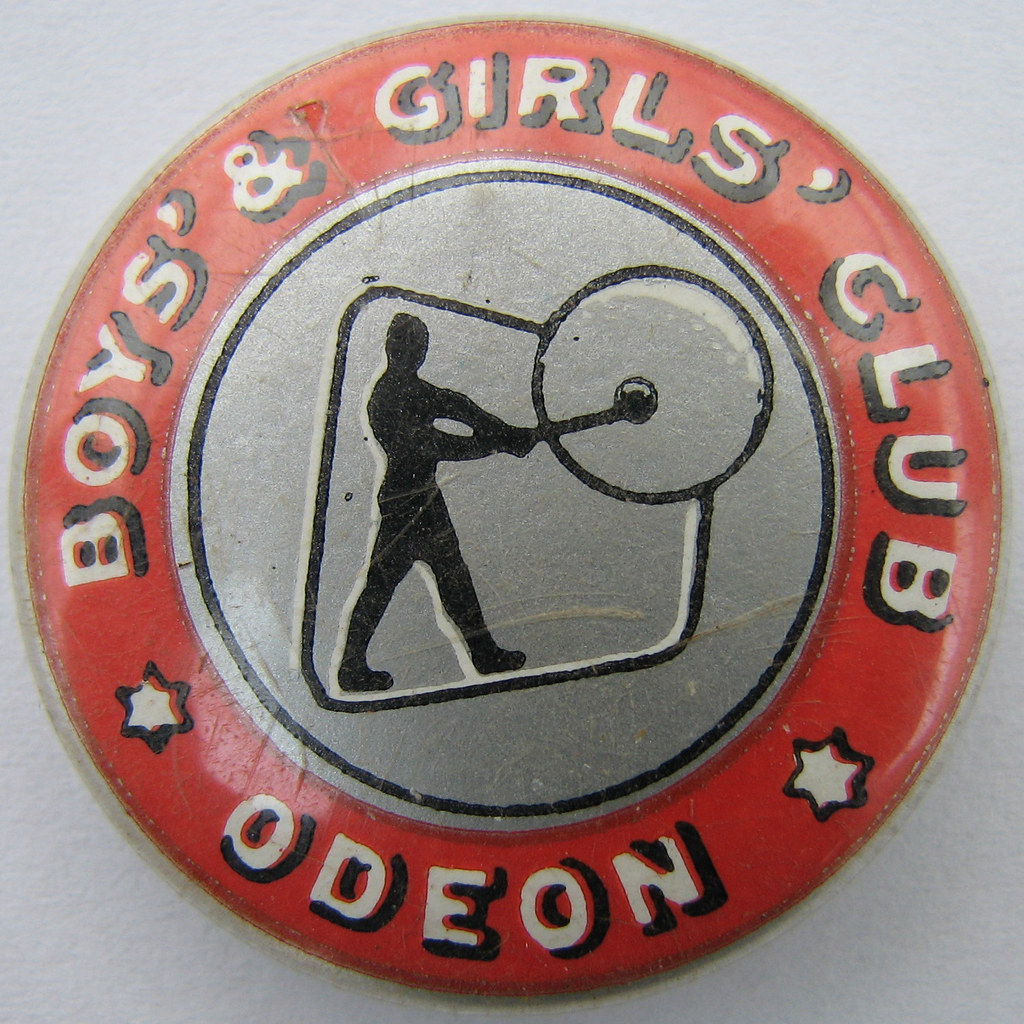
It was my local cinema as a lad – attending Saturday morning matinees as a member of the Odeon Boy’s and Girls club. Hundreds of the nosiest kids. regularly warned by the manager that the film would be stopped if the raucous behaviour continued.
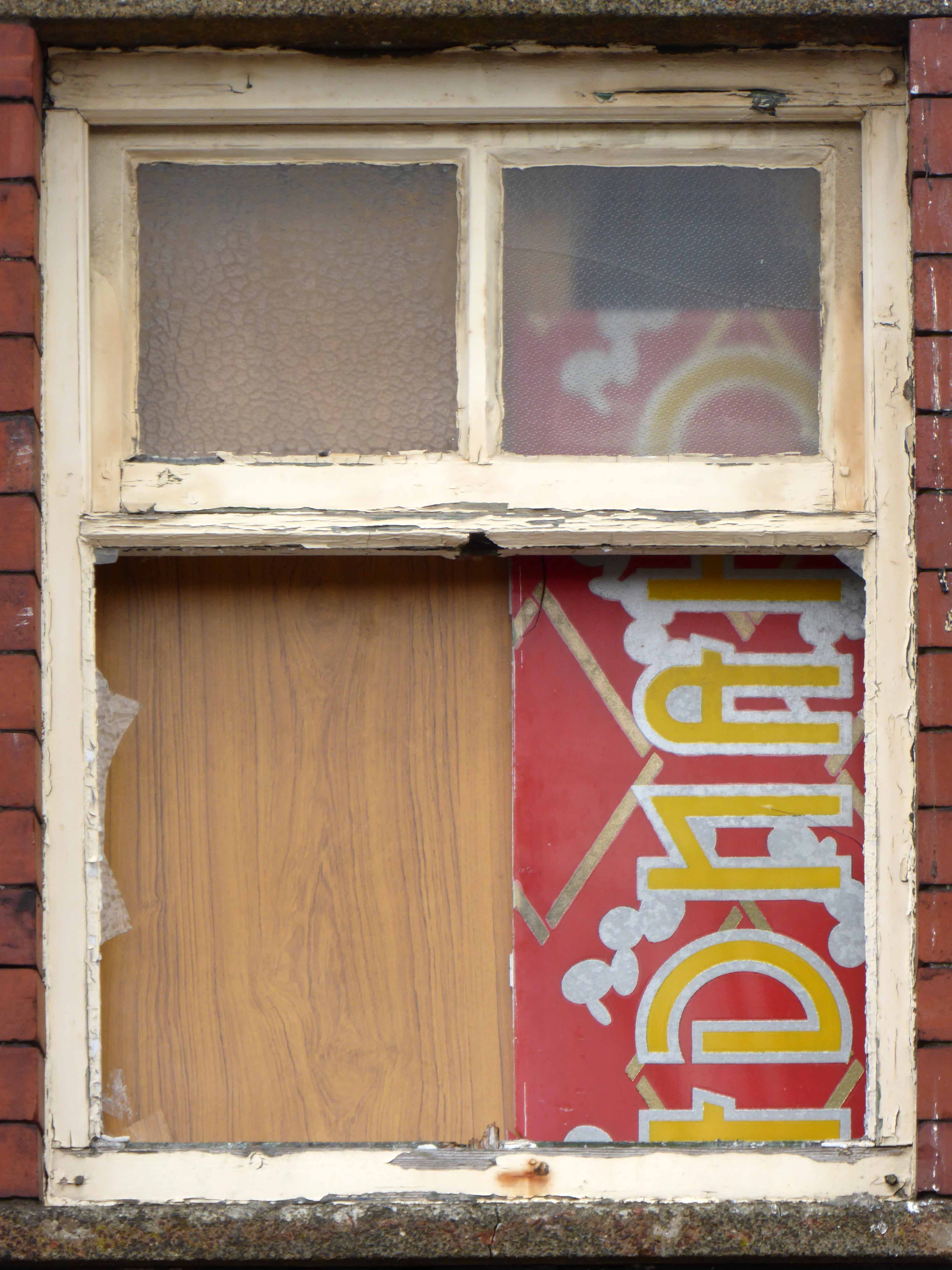
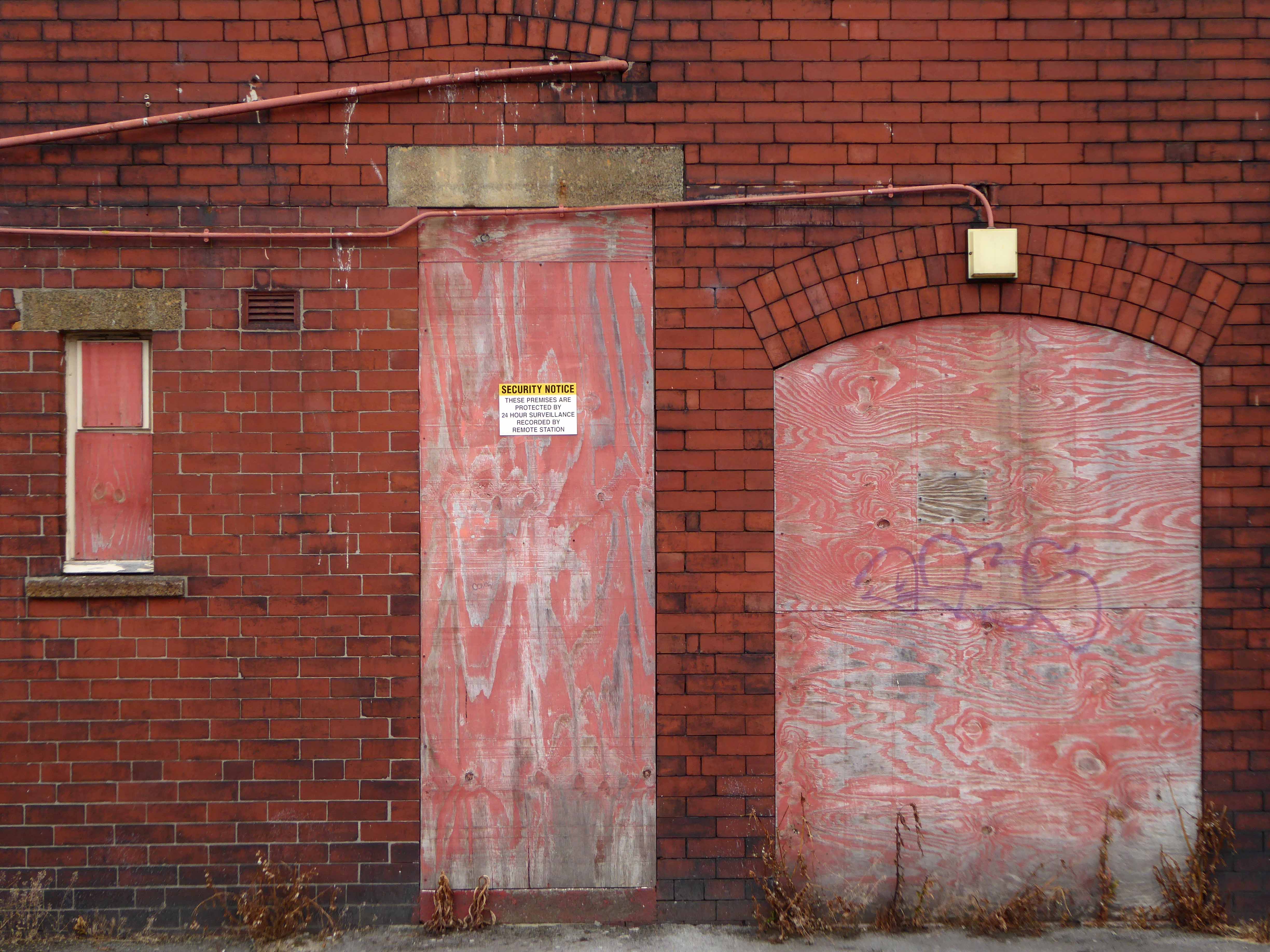
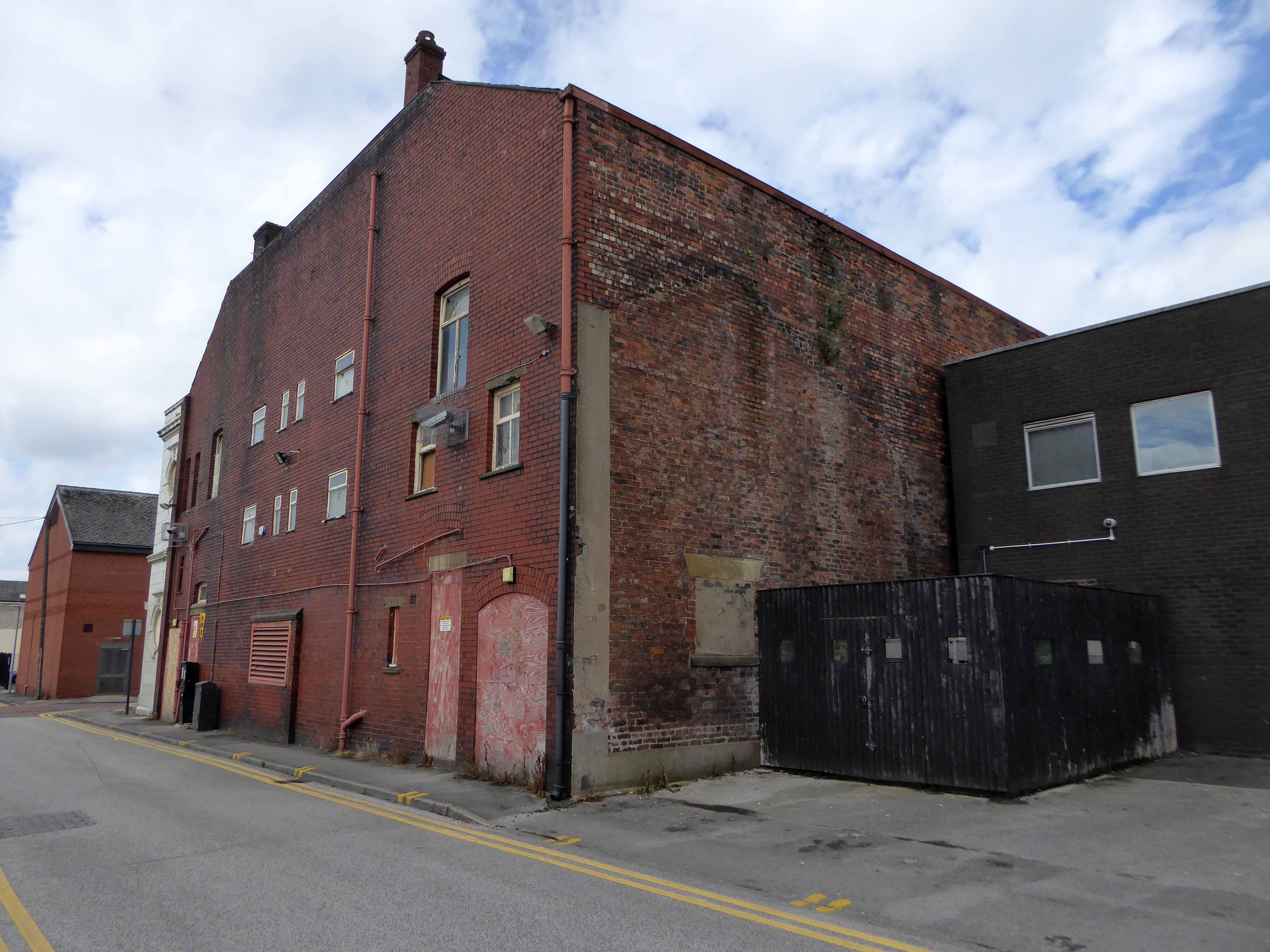
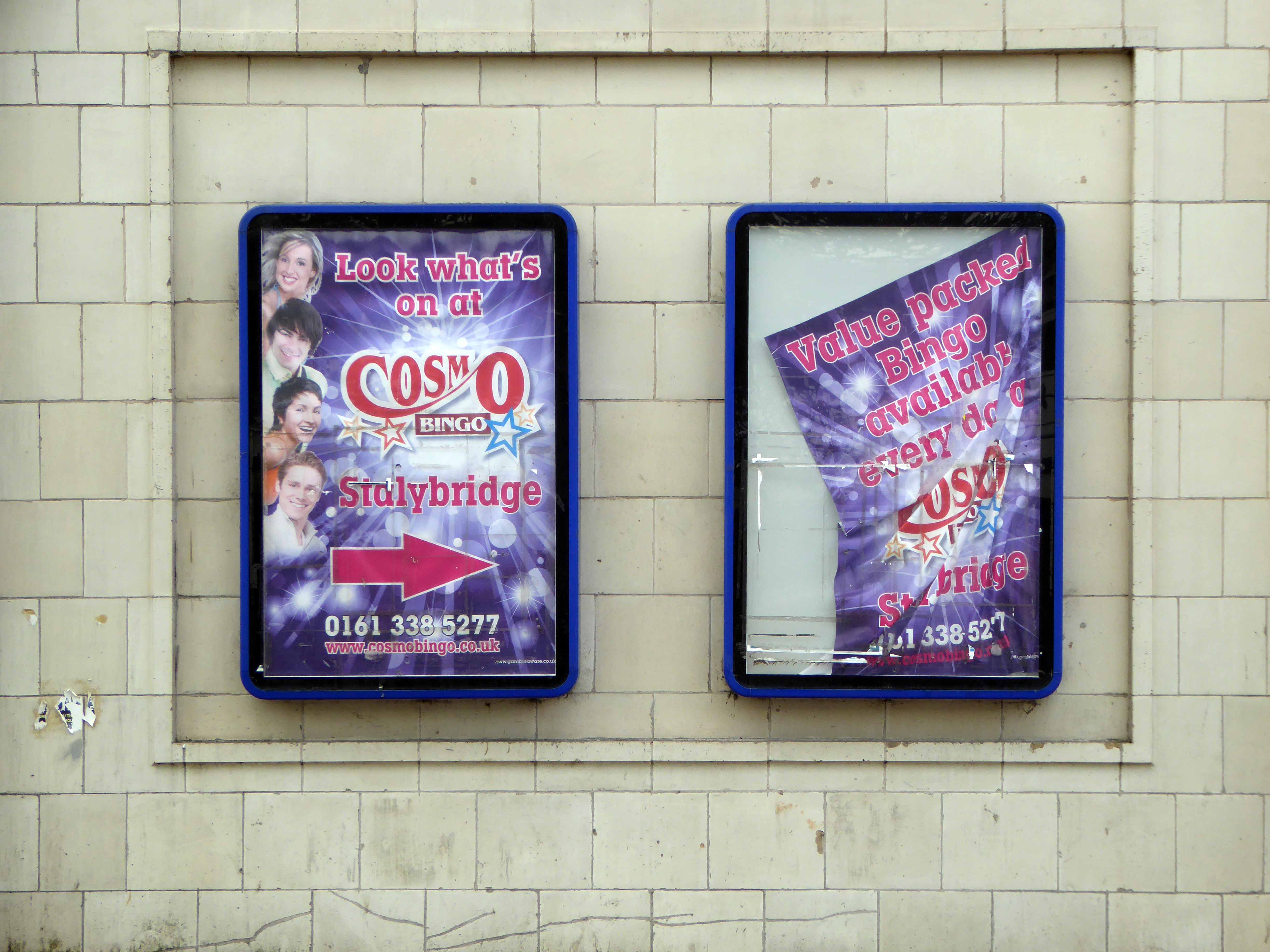
Now it’s just an empty shell, superseded by multiplex and latterly a lost Slotworld.
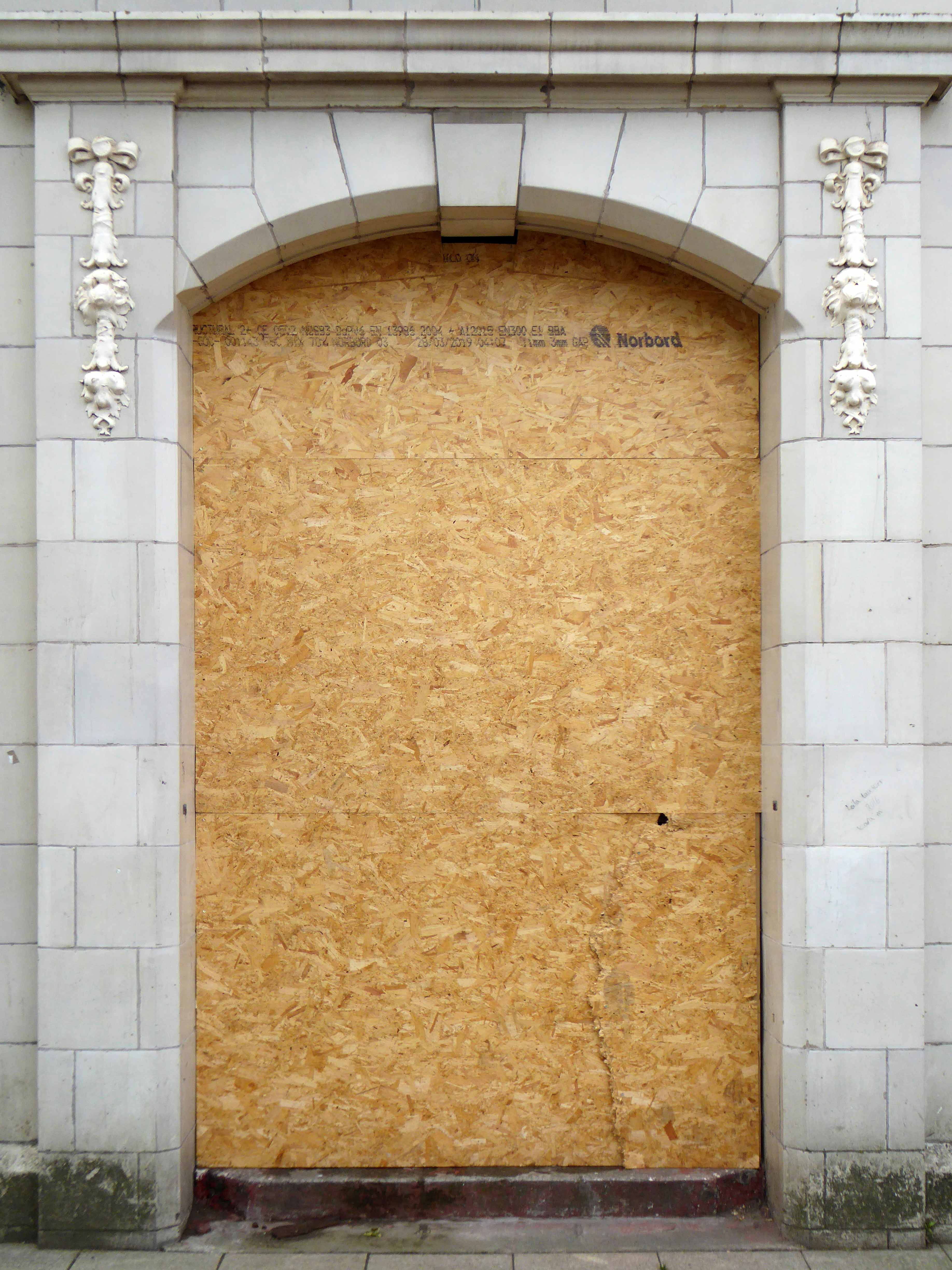
Unlisted unloved sitting at the heart of the town – too late for the last picture show.
Well it’s almost a mighty long way to cycle from Stockport to here, but well worth it.
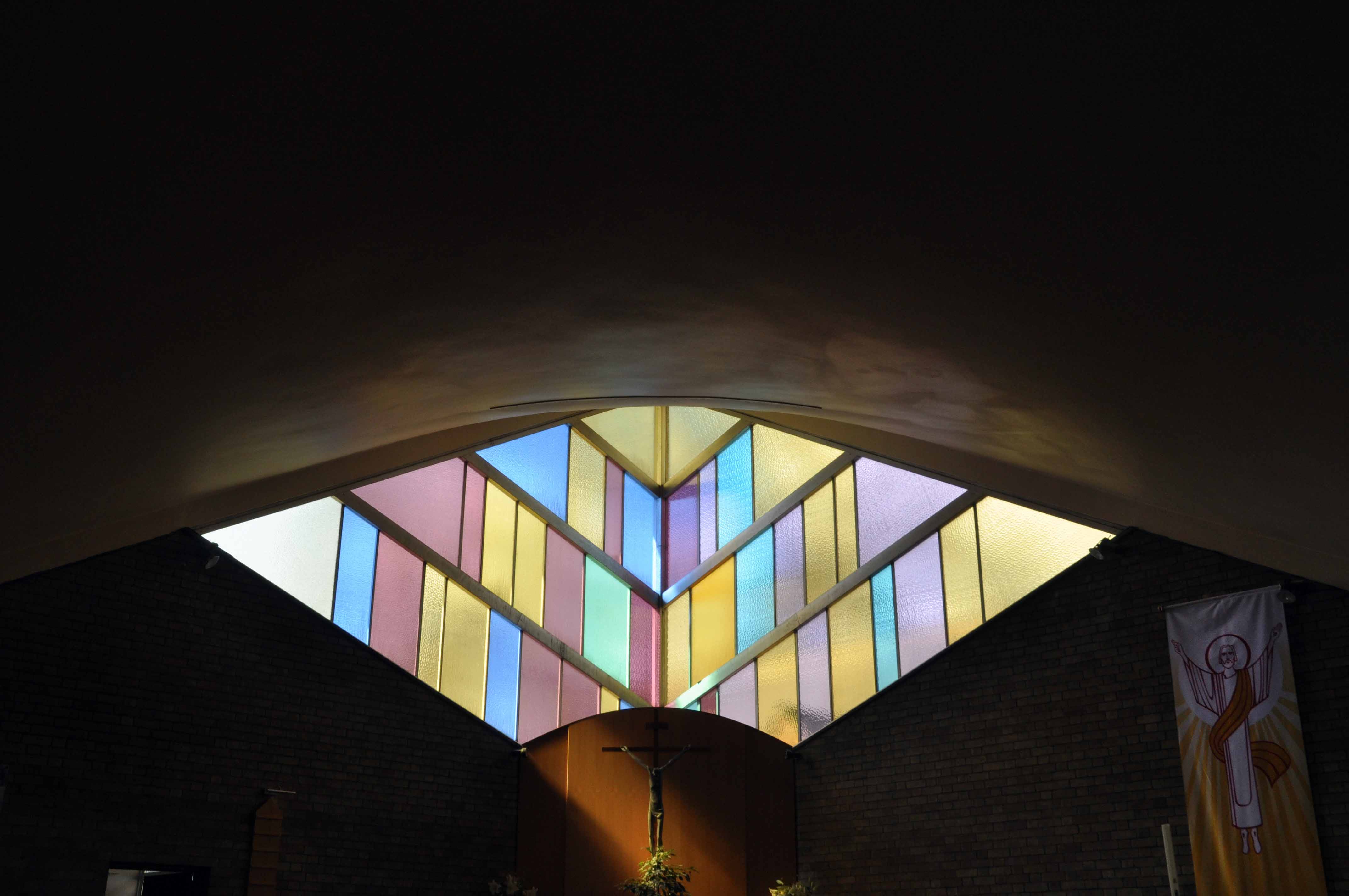
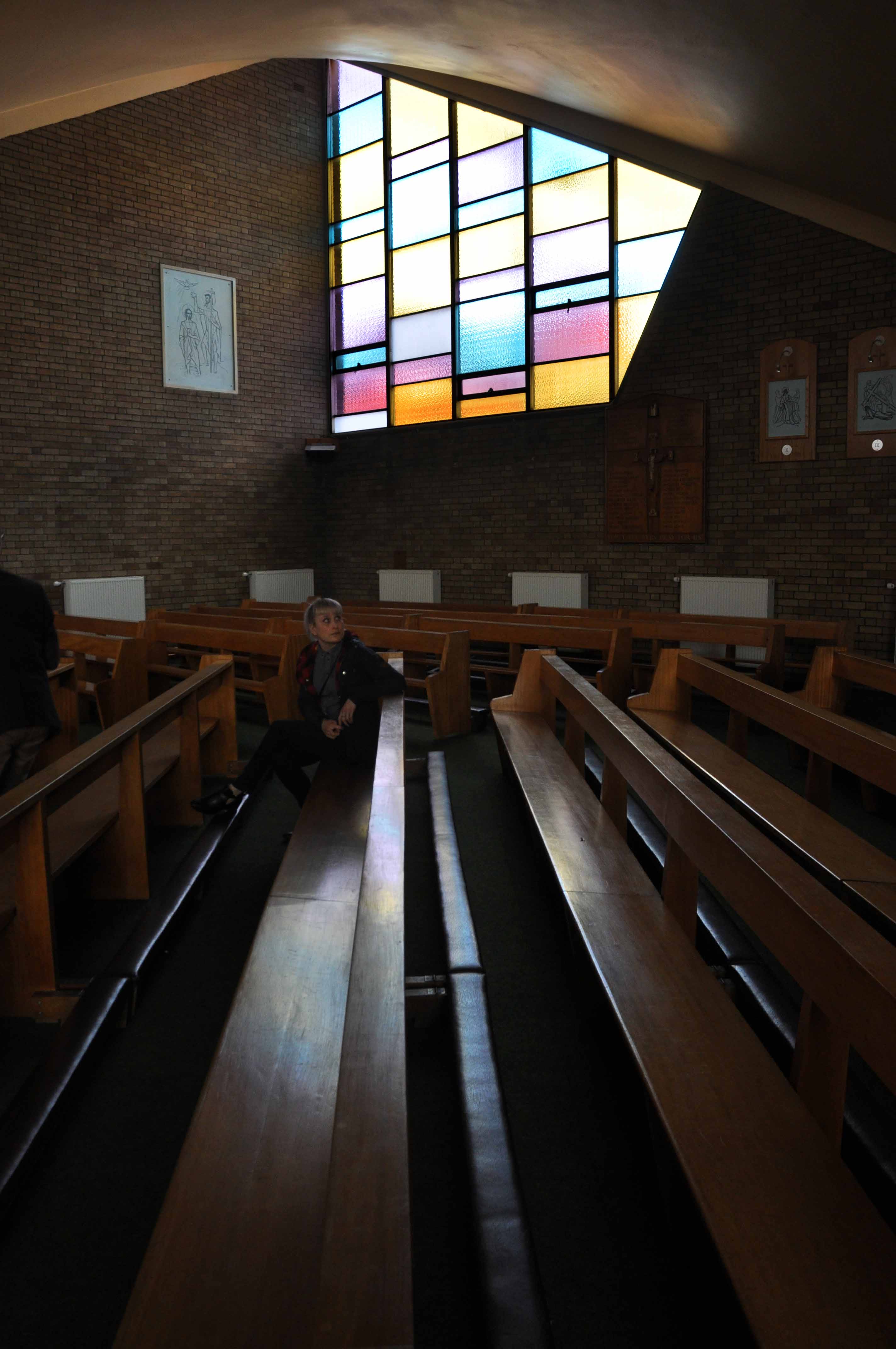
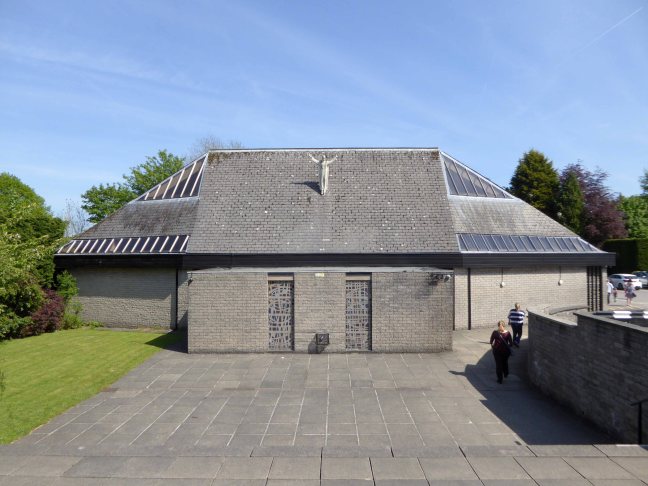
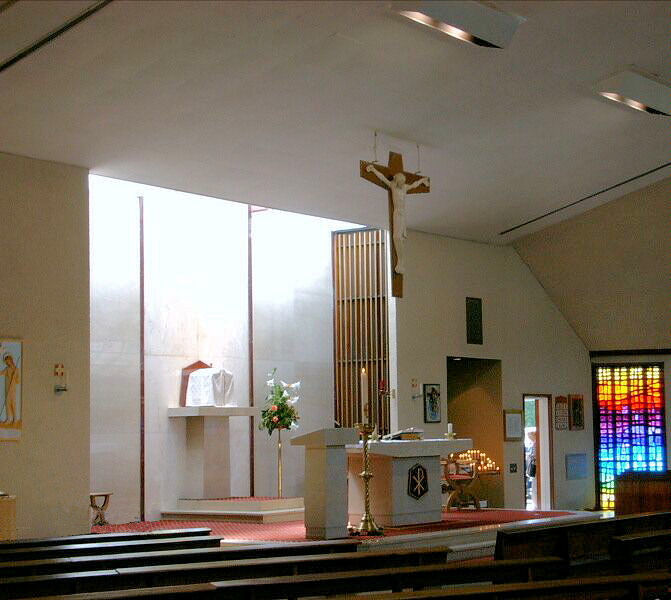
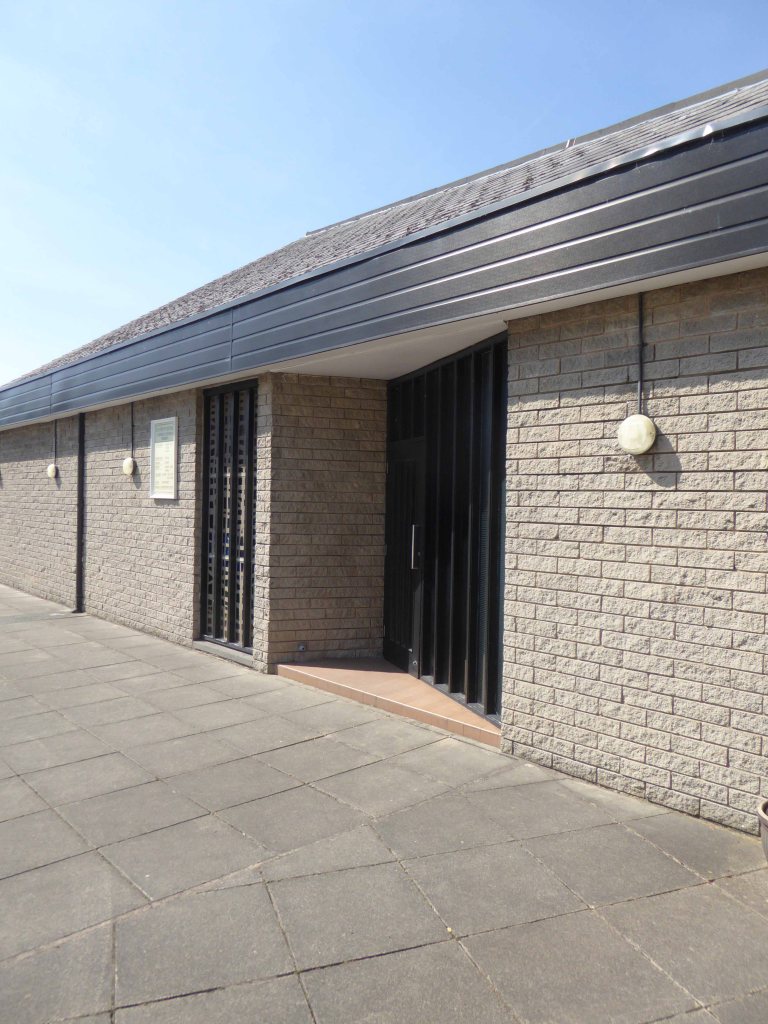
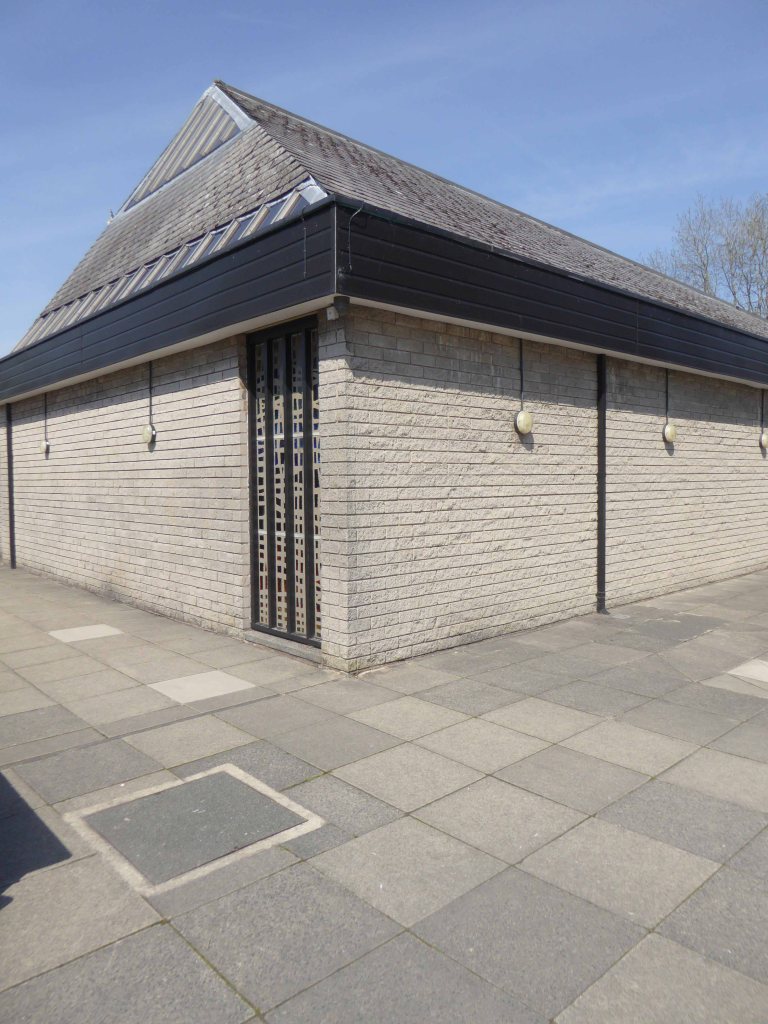
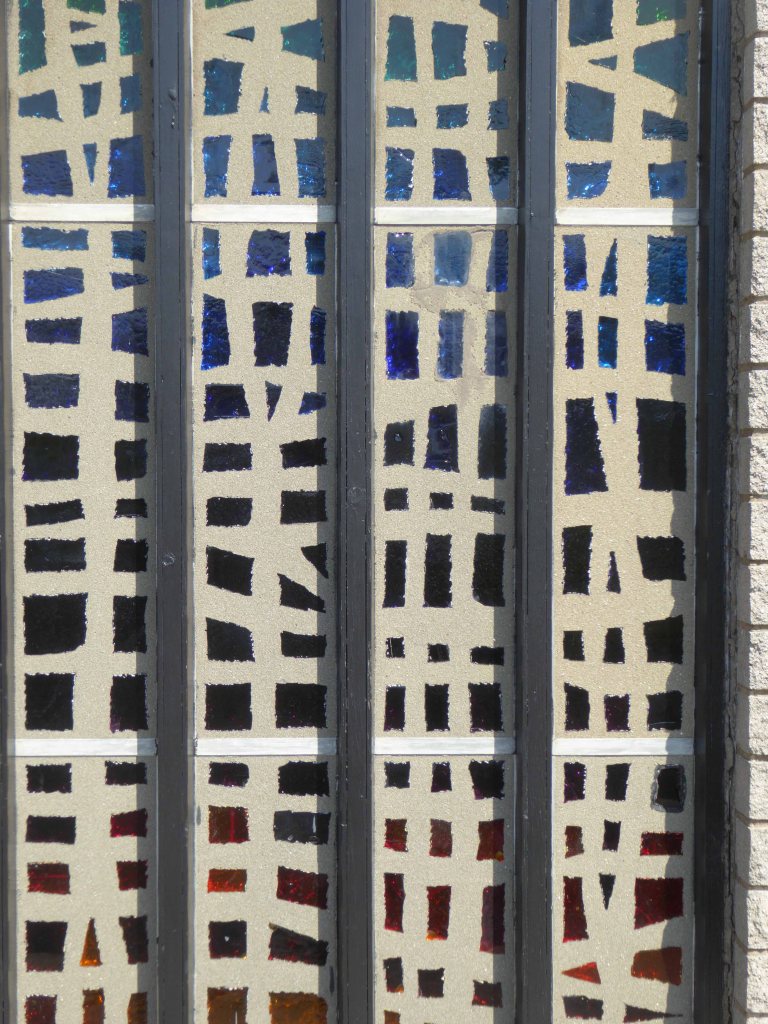
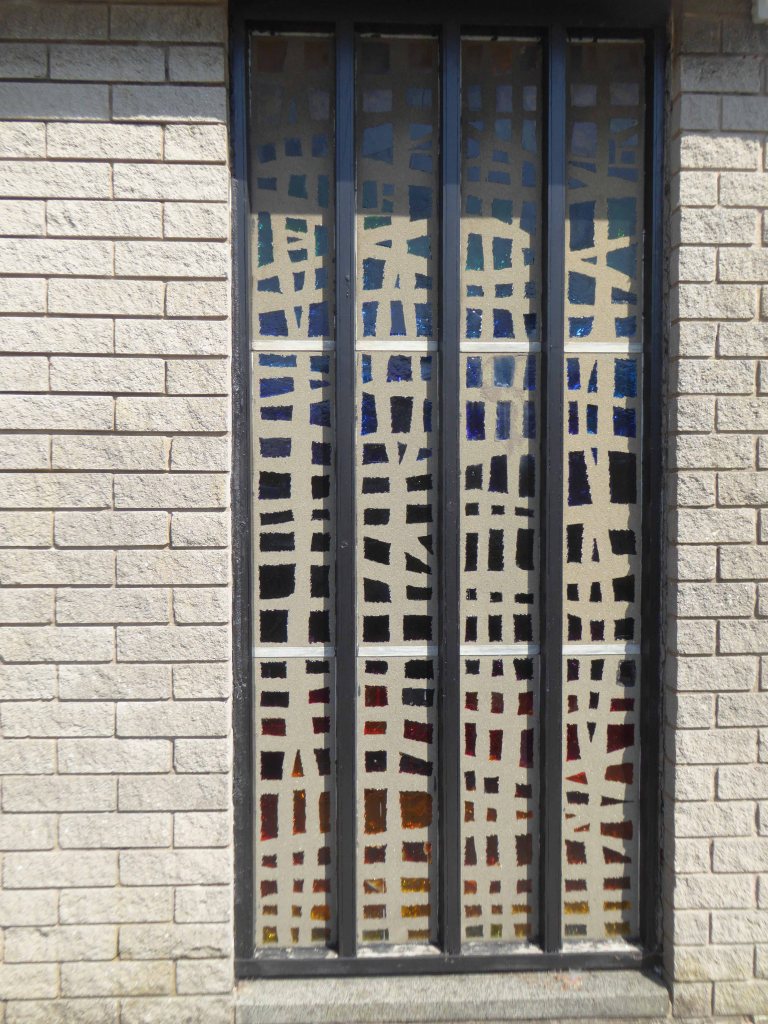
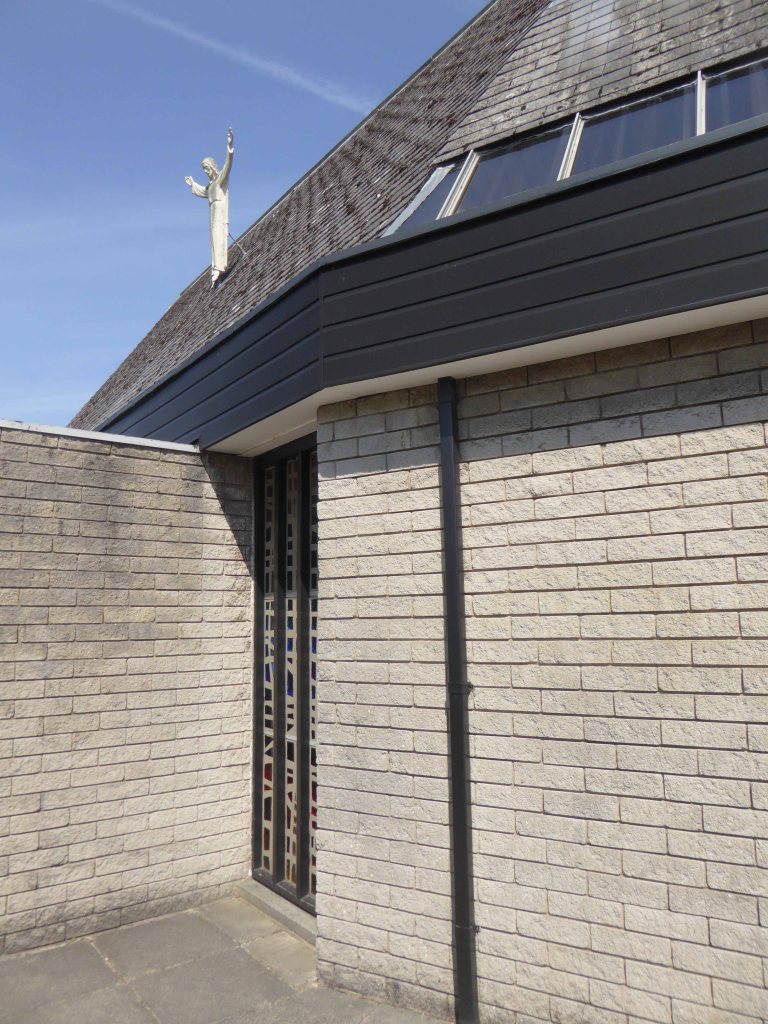
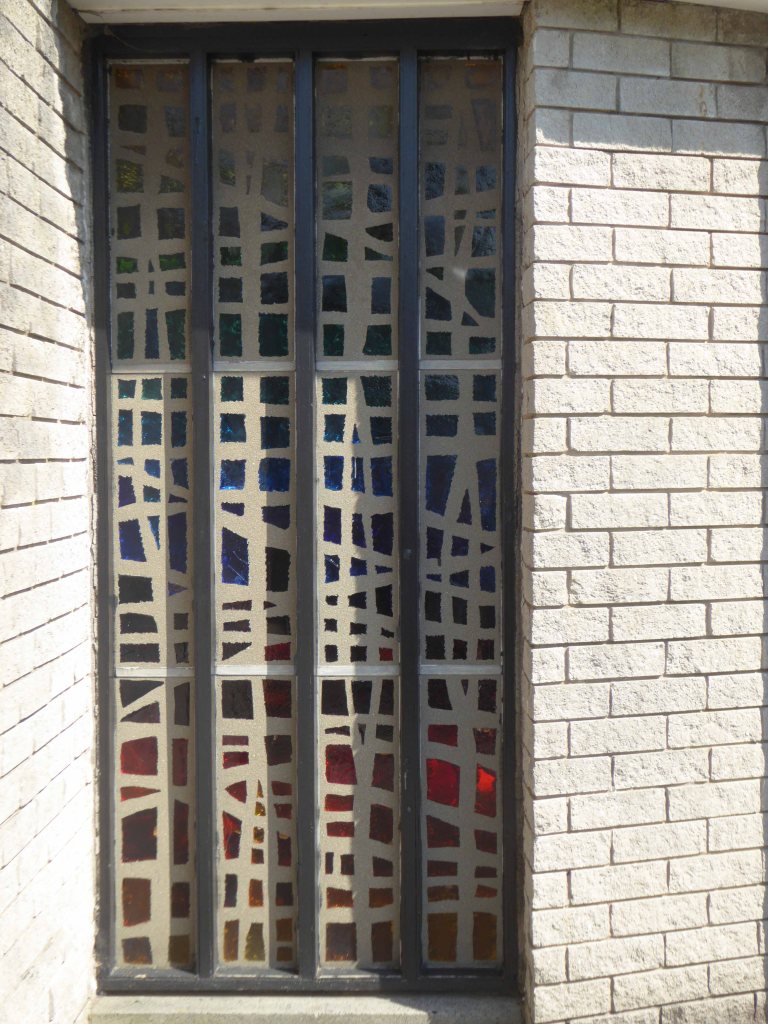
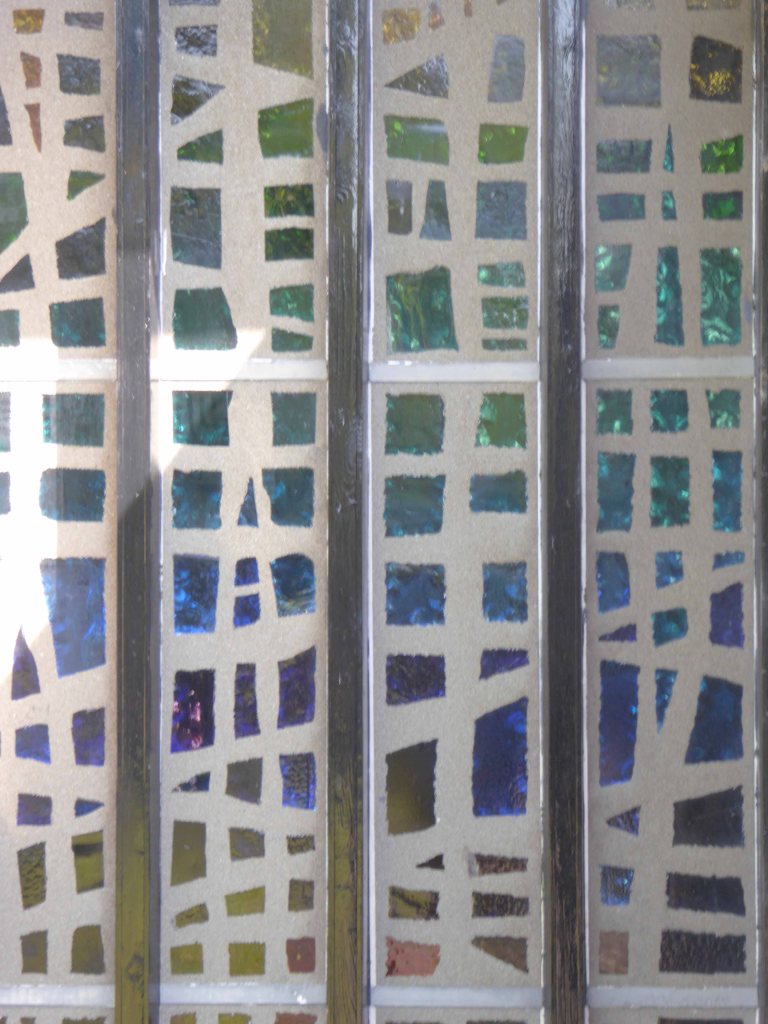
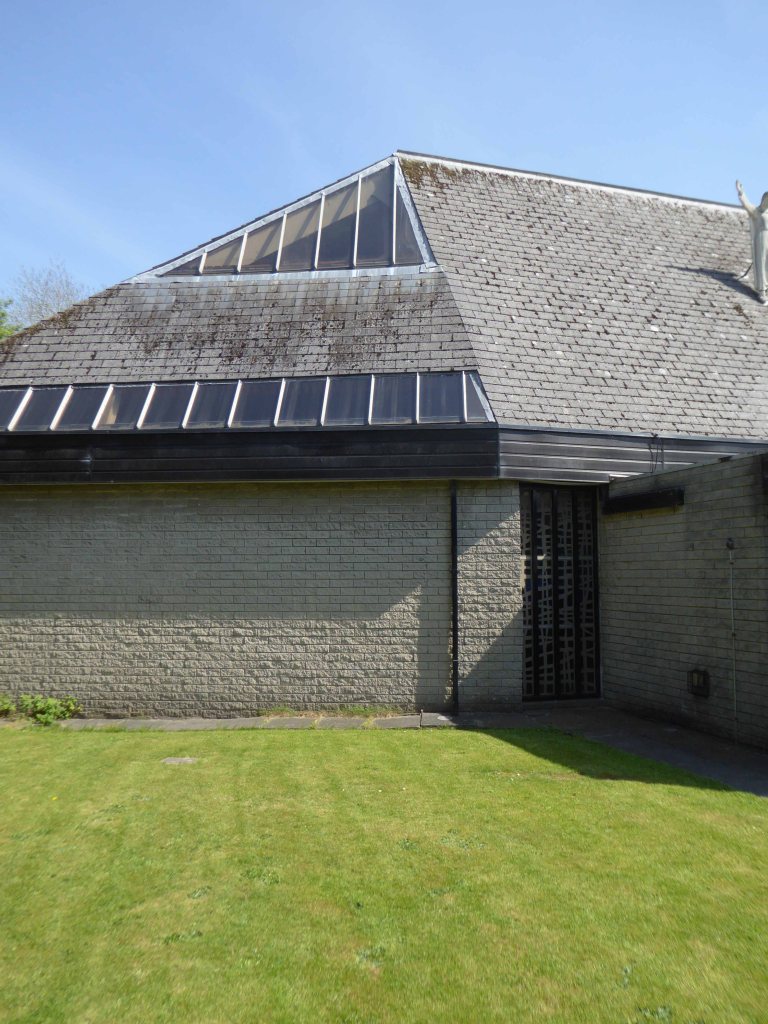
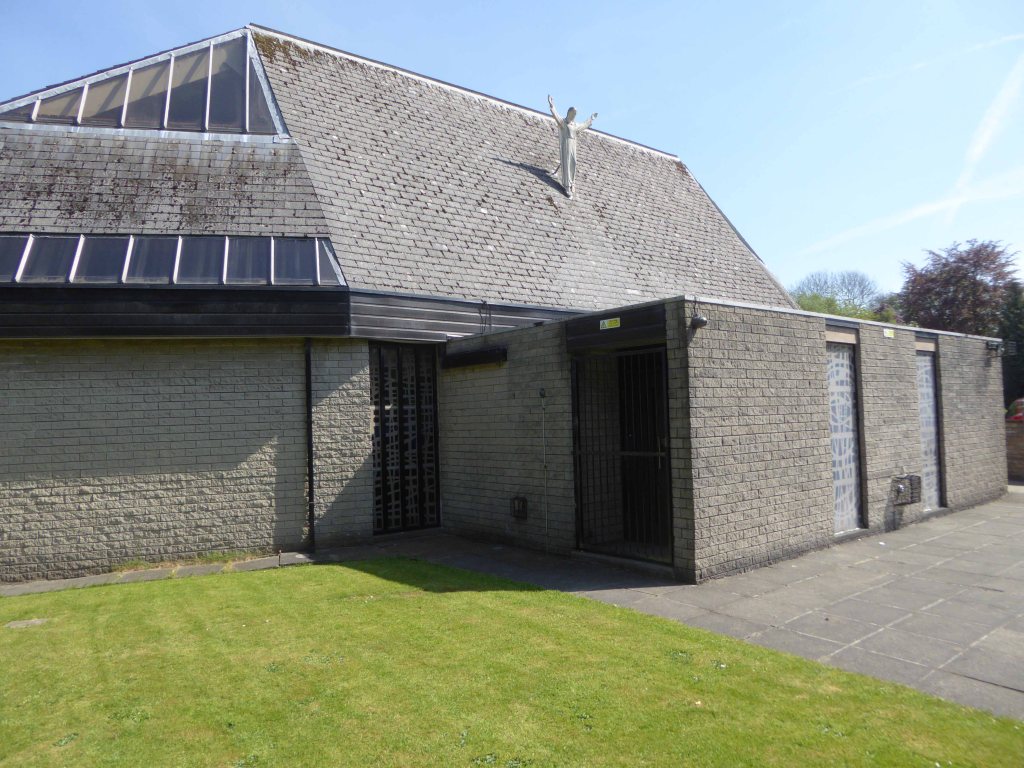
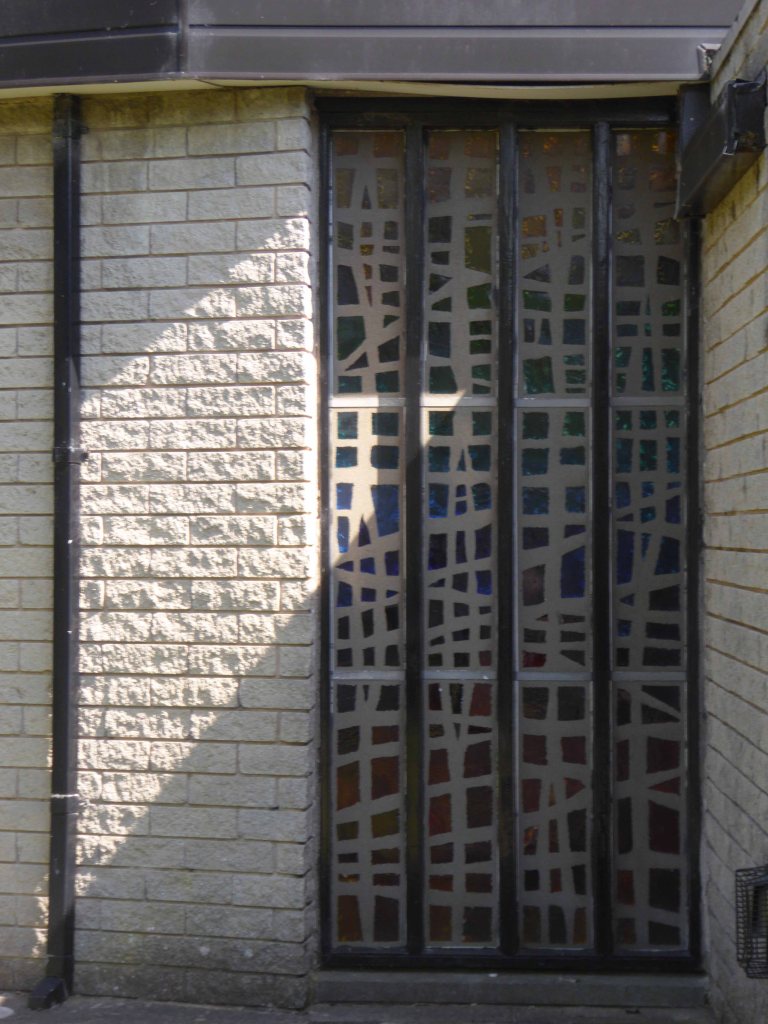
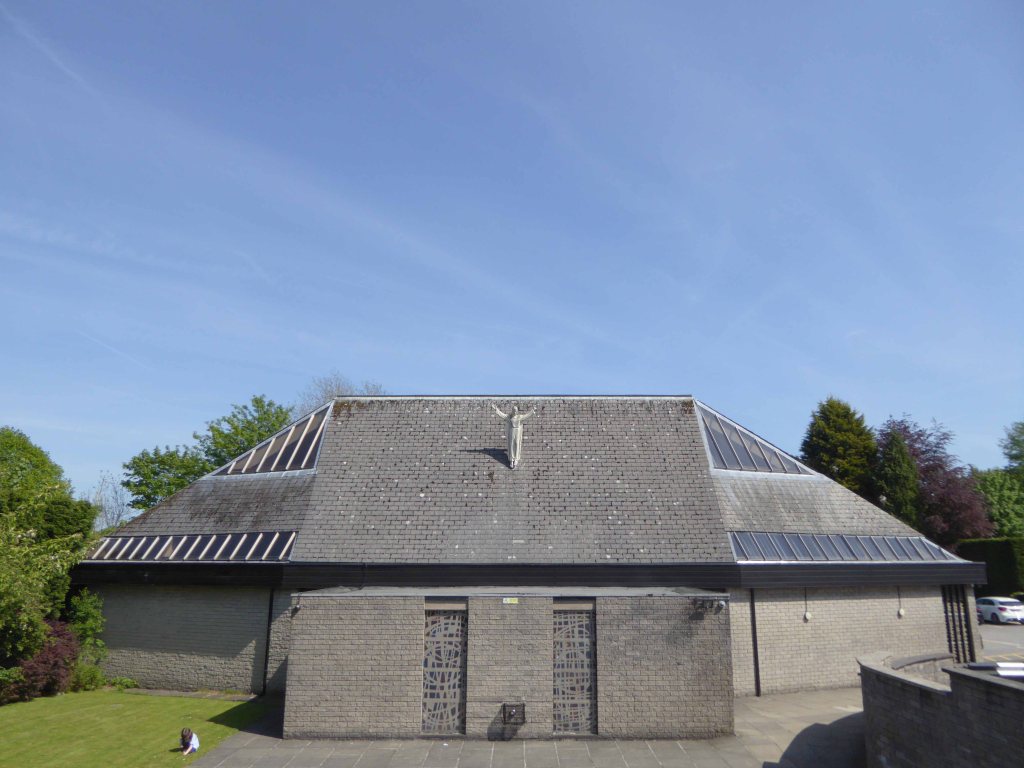
A clear functional design of the 1970s, designed to place all the internal focus on the top-lit altar, which beneath its modern cladding incorporates a pre-Reformation altar stone. The external appearance of the church is slightly forbidding but the interior is enhanced by vibrant slab glass.
More than somewhat bunker like in its recessed situation, well below street level, yet interesting and engaging nonetheless – I’m rather fond of grey.
Working around the comings and goings of the adjacent school, I half circumnavigated the site, capturing something of the detail and exterior views of the stained glass. The interior will have to wait until another day.
Planned and newly constructed housing developments in Norden and Bamford made it apparent that a new church was needed nearer the geographical centre of the parish. In June 1975 the present church of St Vincent de Paul was opened, nearly a mile away from the old church. The architect was Bernard Ashton of the Cassidy & Ashton Partnership, Preston.
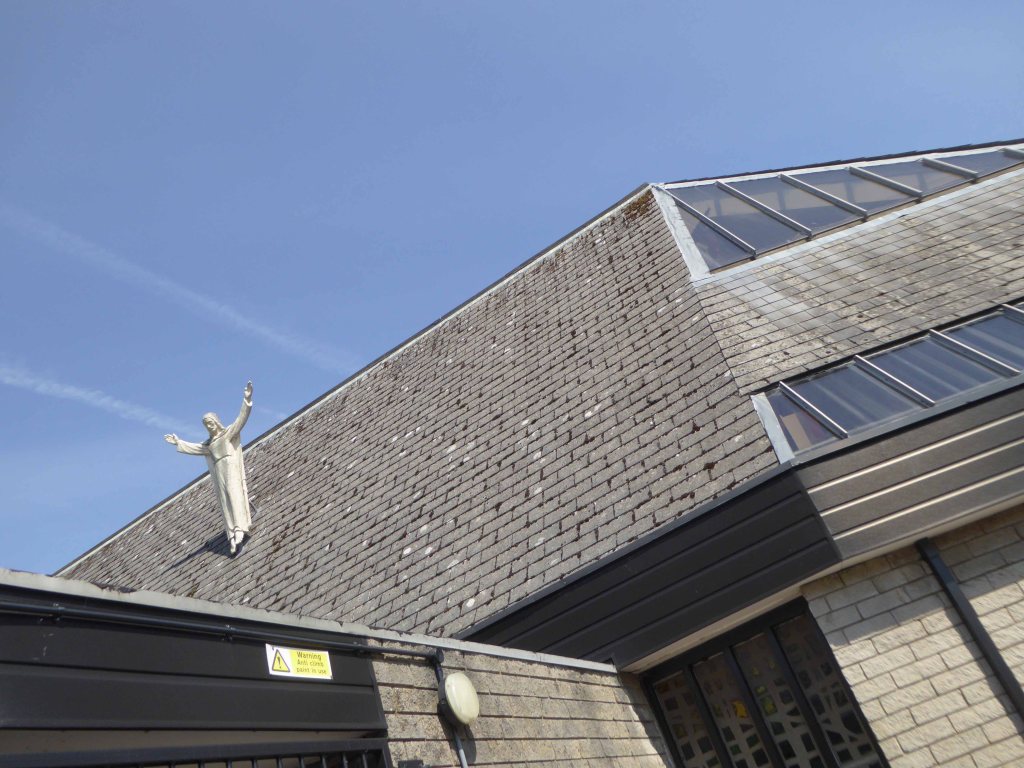
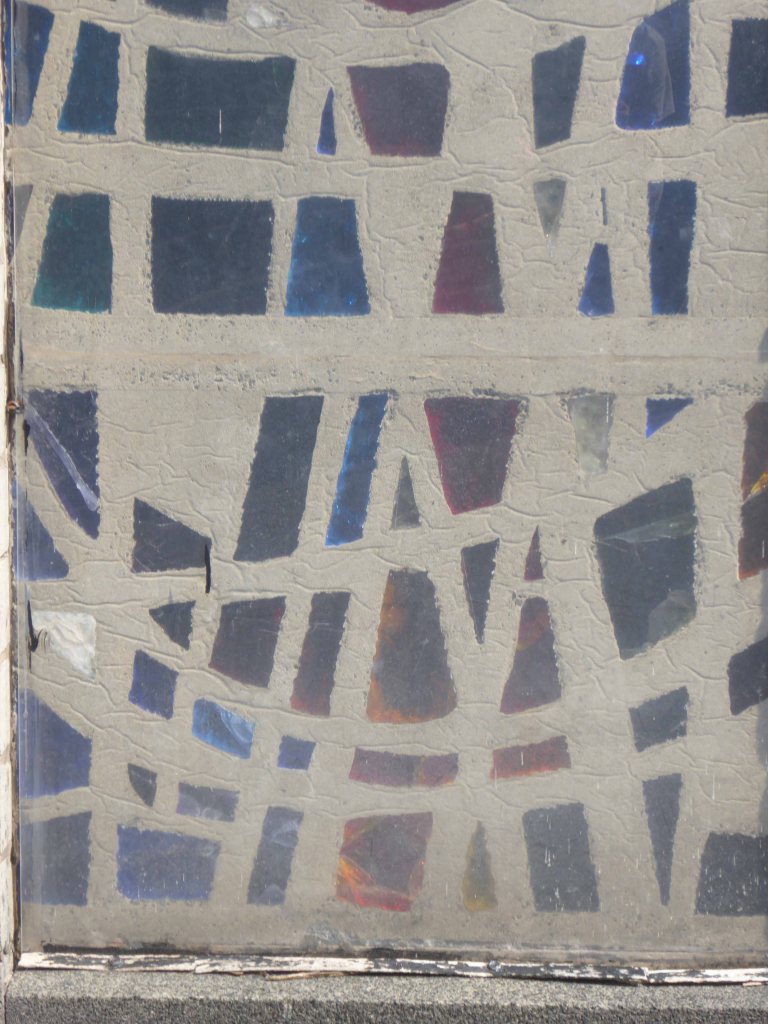
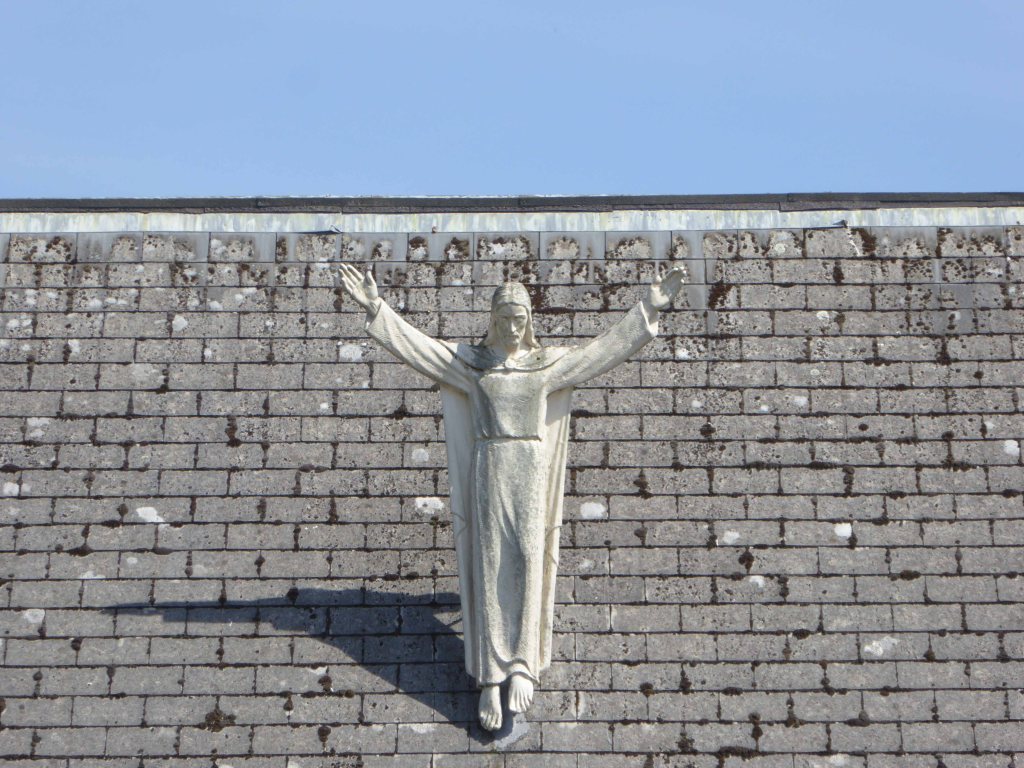
Internally the church is simply fitted with plain white plastered or boarded walls. The low level of daylighting enhances the effect of the four corner windows, which are filled with rainbow glass, and of the top-lit altar. The dalle de verre glass was designed by Eddie Blackwell and made in Dom. Charles Norris’s workshop at Buckfast Abbey. The figure of the risen Christ on the roof over the entrance porch were also designed by Blackwell.
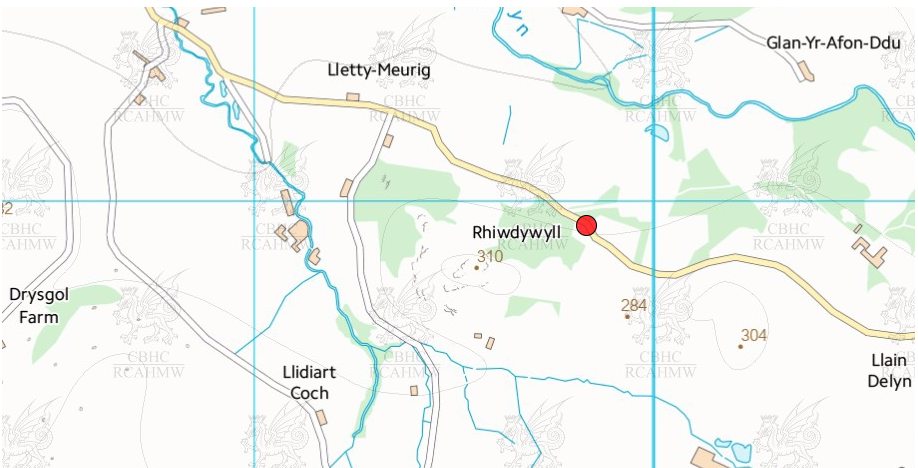
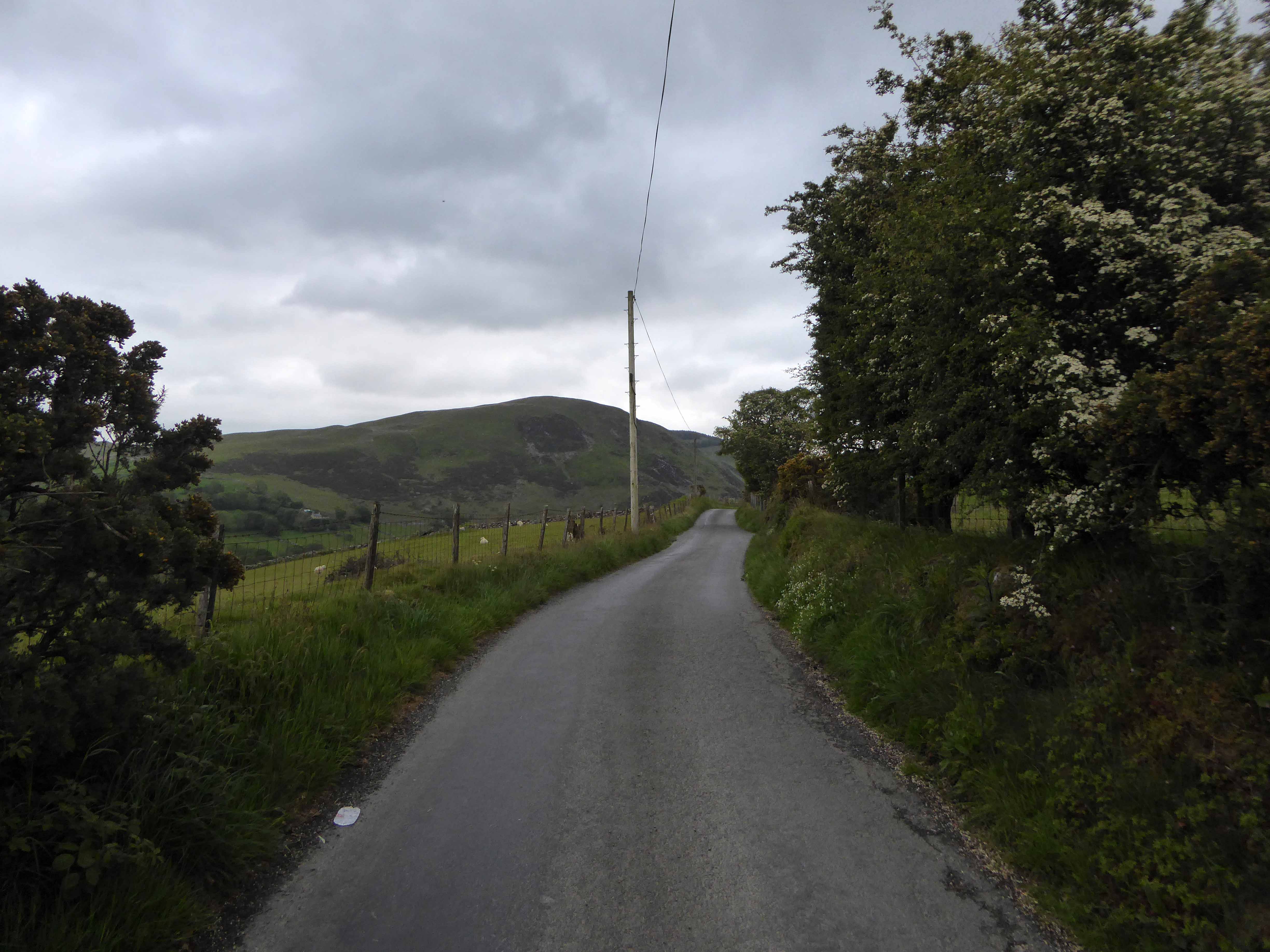
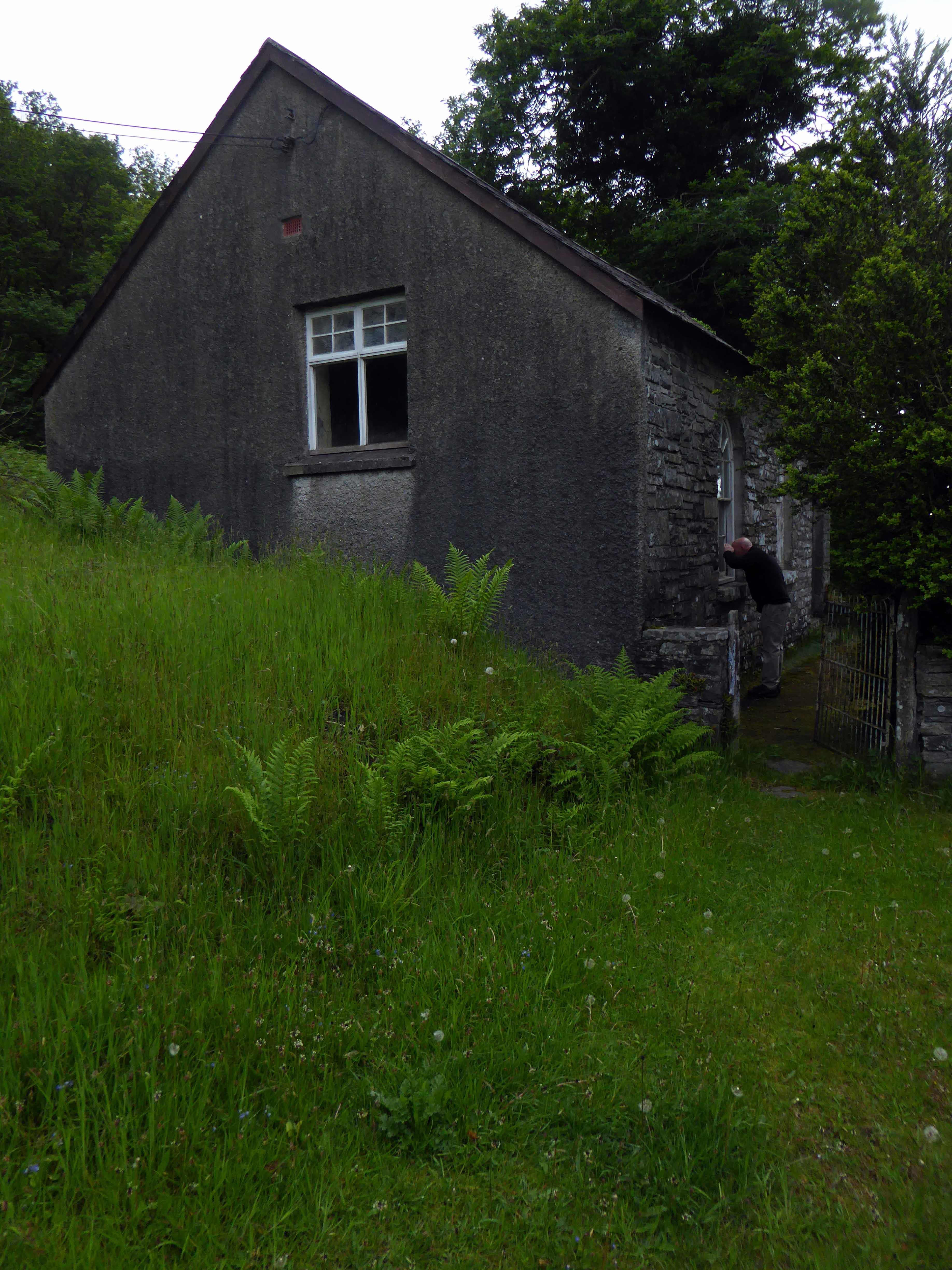
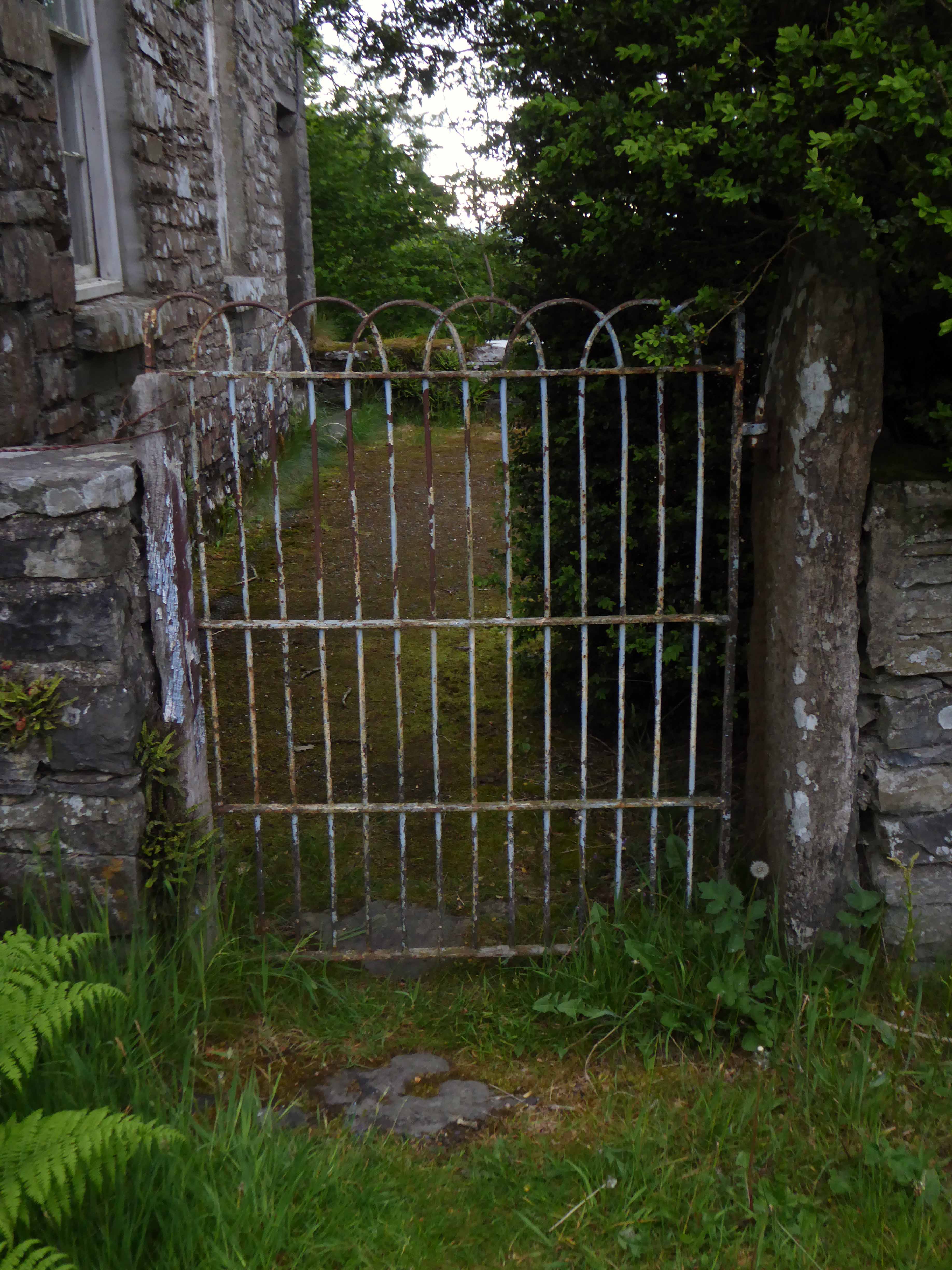
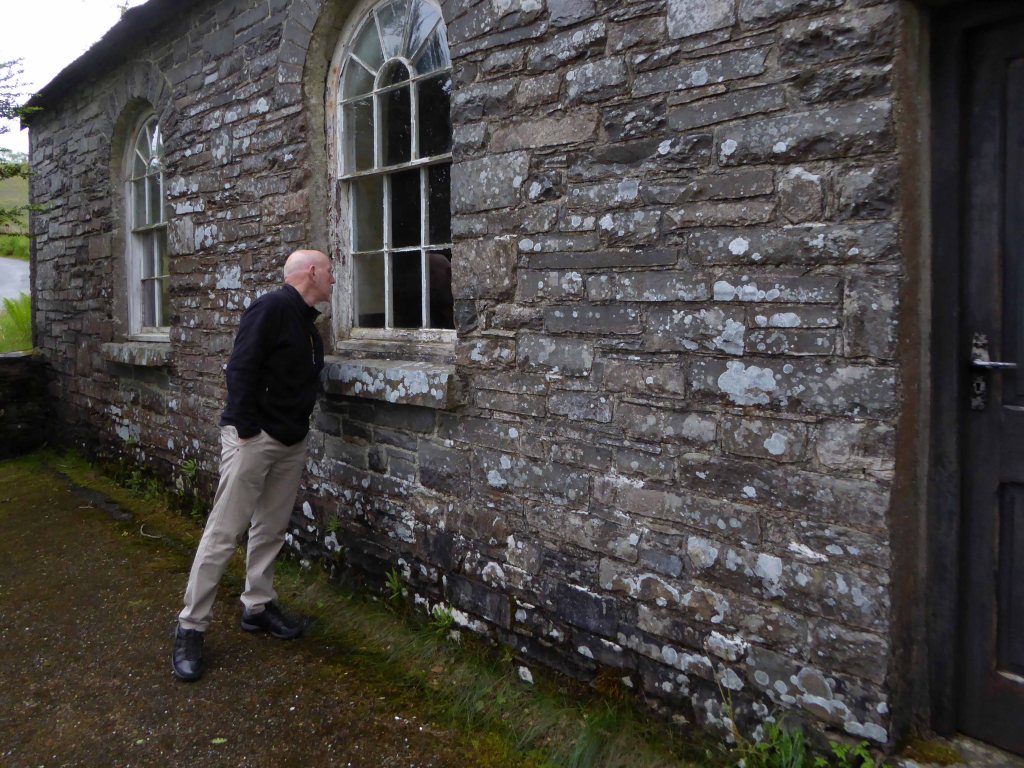
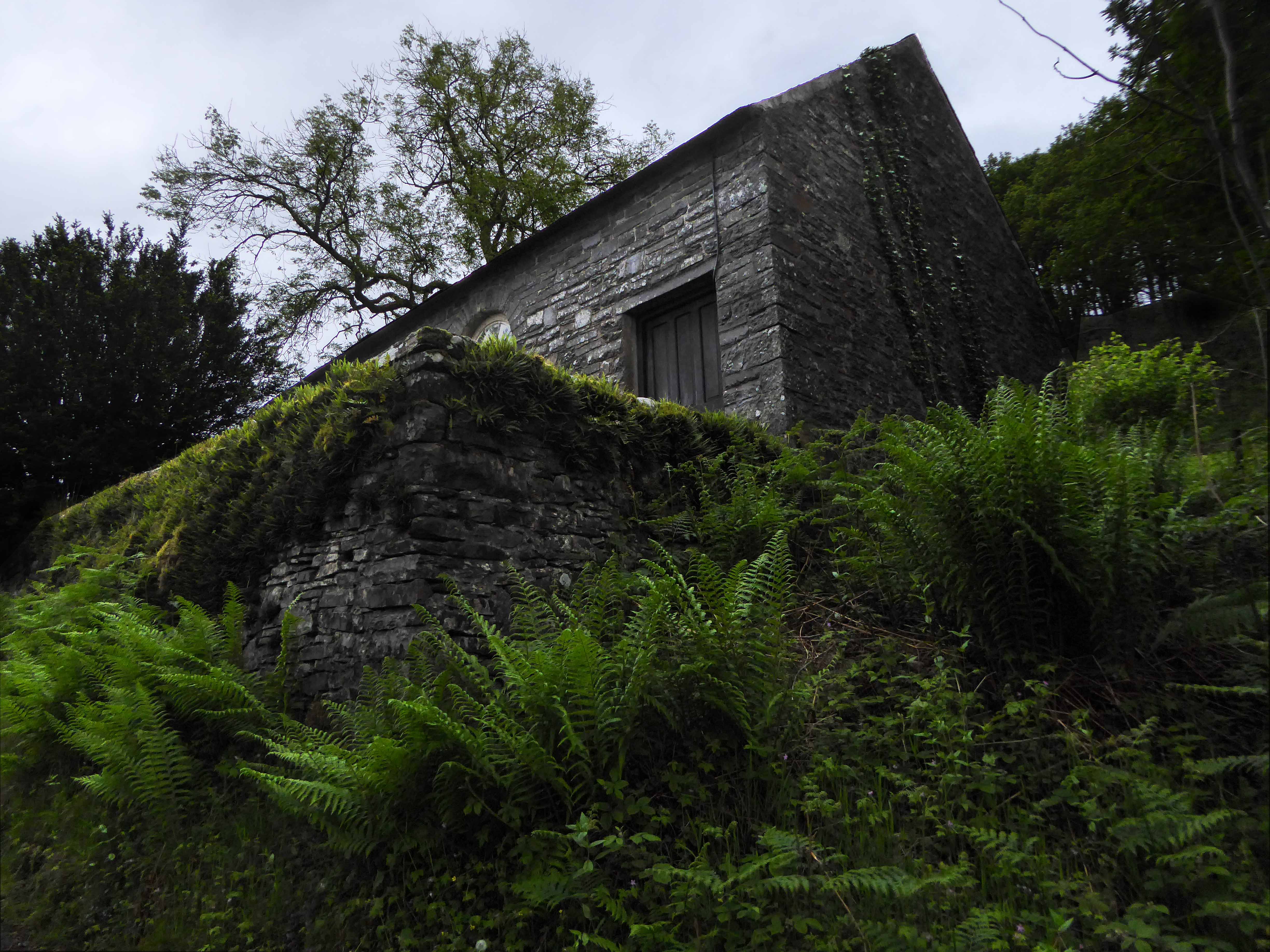
Digressing for once from the modern to the near modern in an ancient landscape. Having cycled to Tregaron I took a walk along the Mountain Road with chapel hat peg expert Tim Rushton.
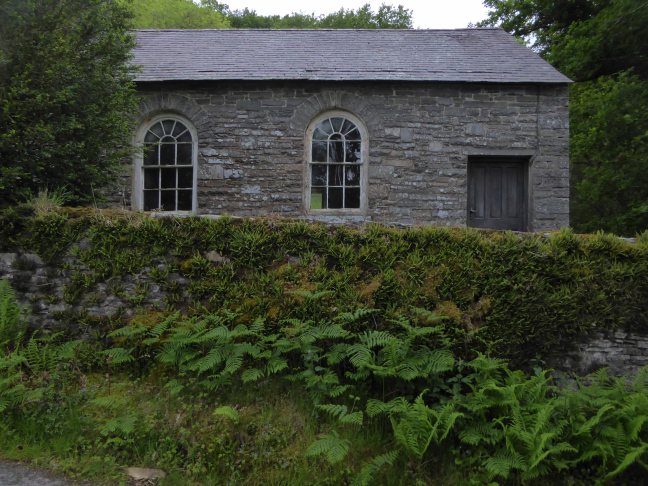
Afore very long we came upon a chapel, set slightly back from the track, tucked snugly into the trees.
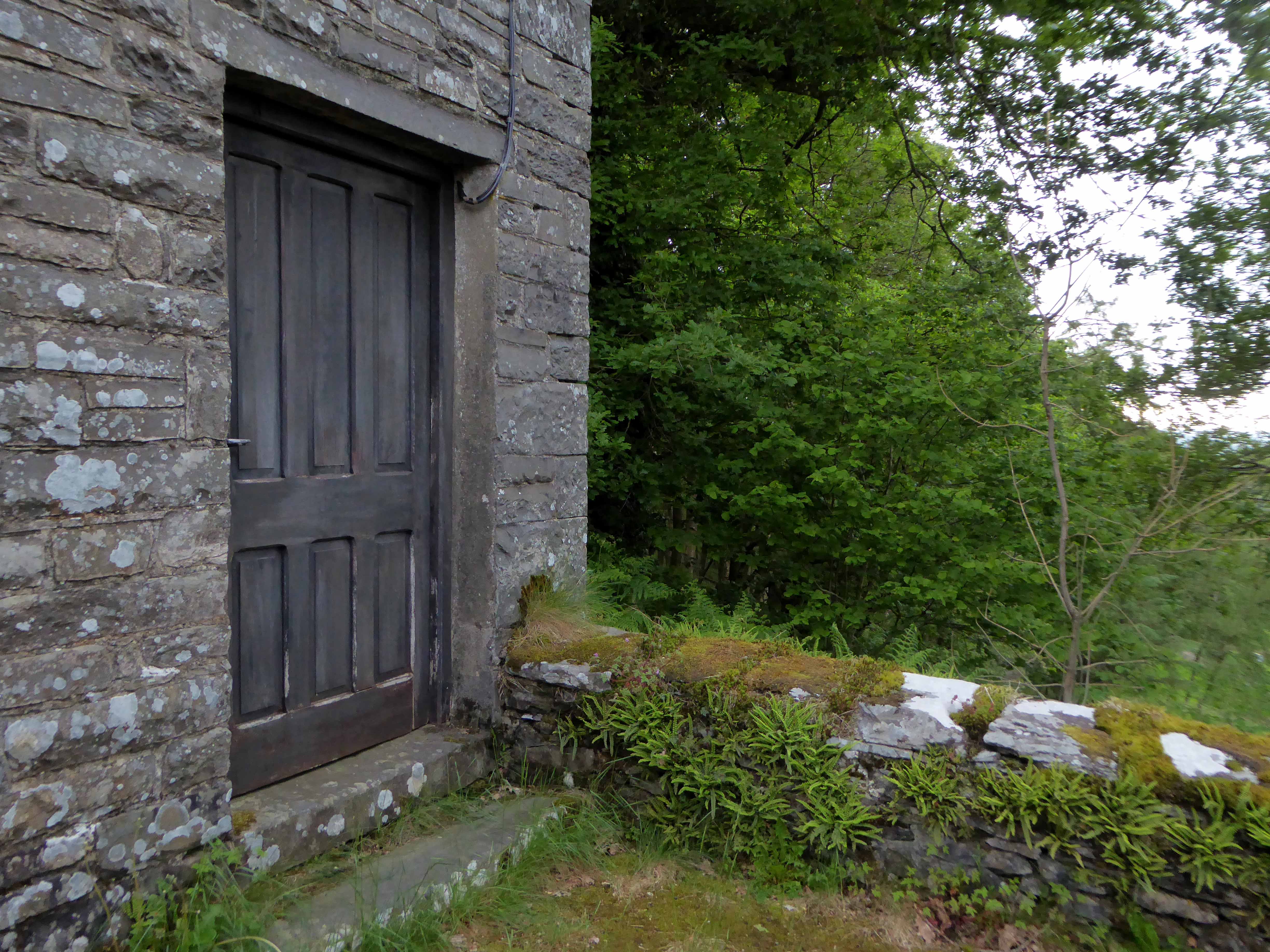
Deserted yet maintained, grass trimmed the low structure sealed soundly against the weather.
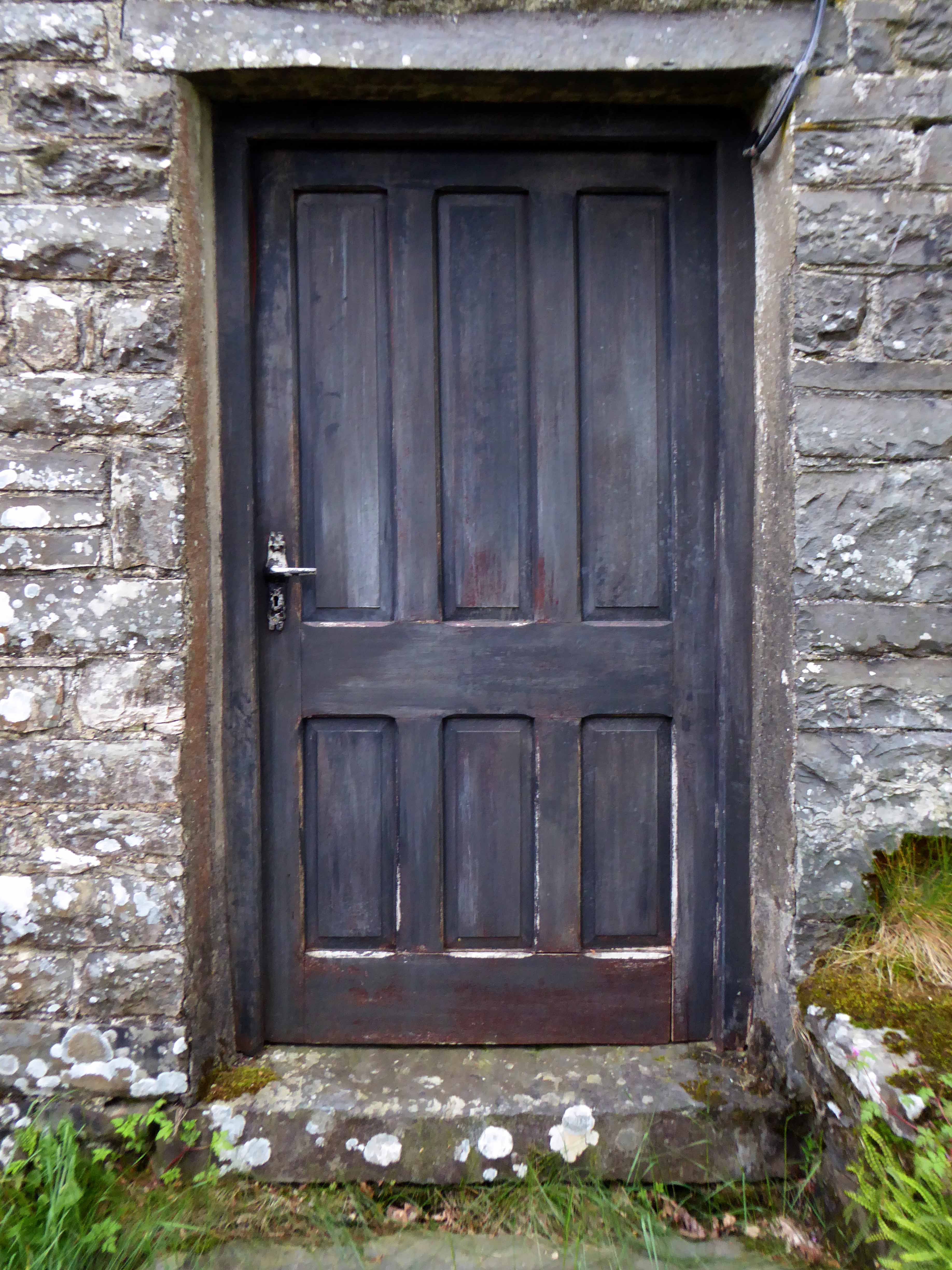
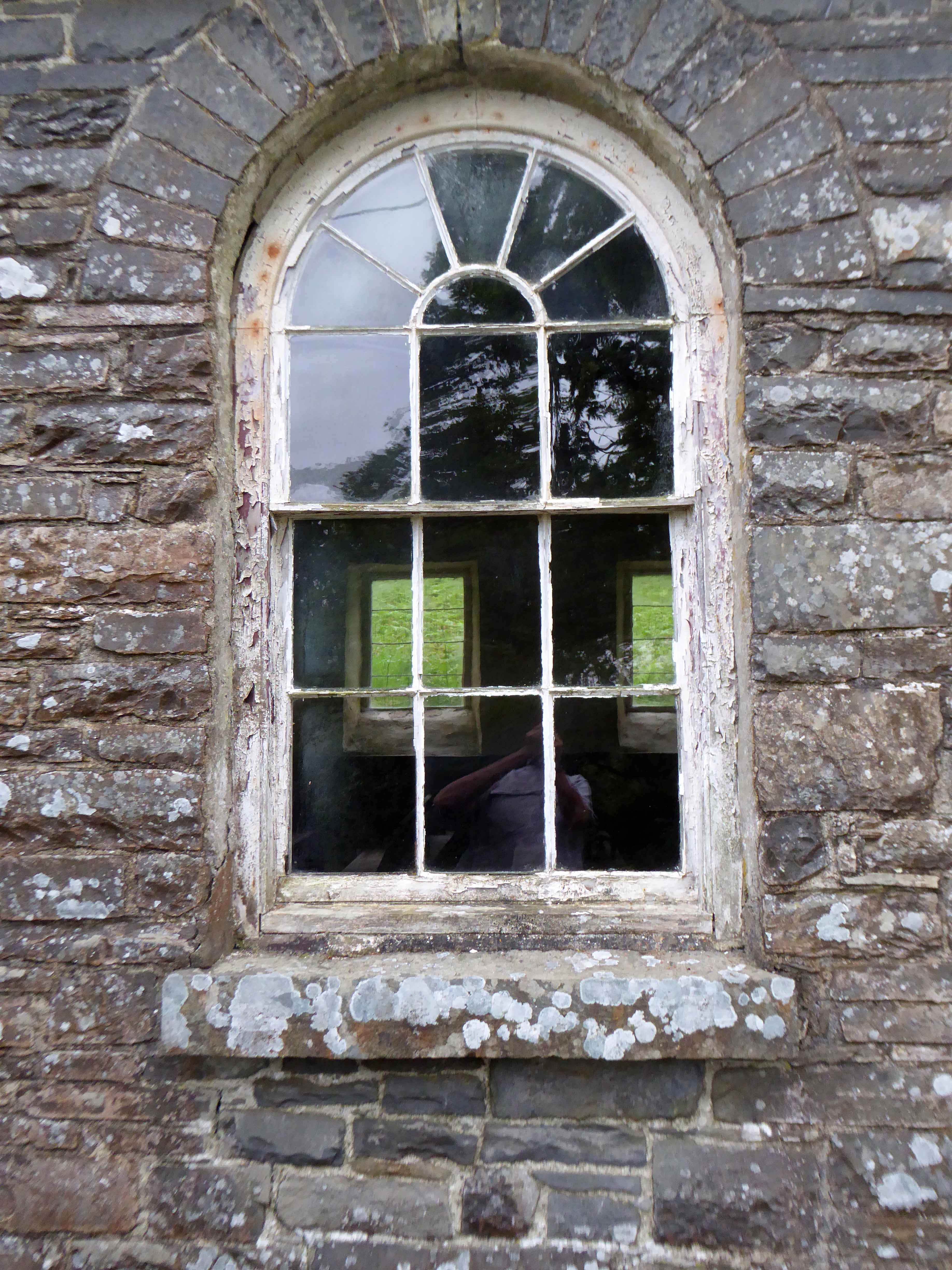
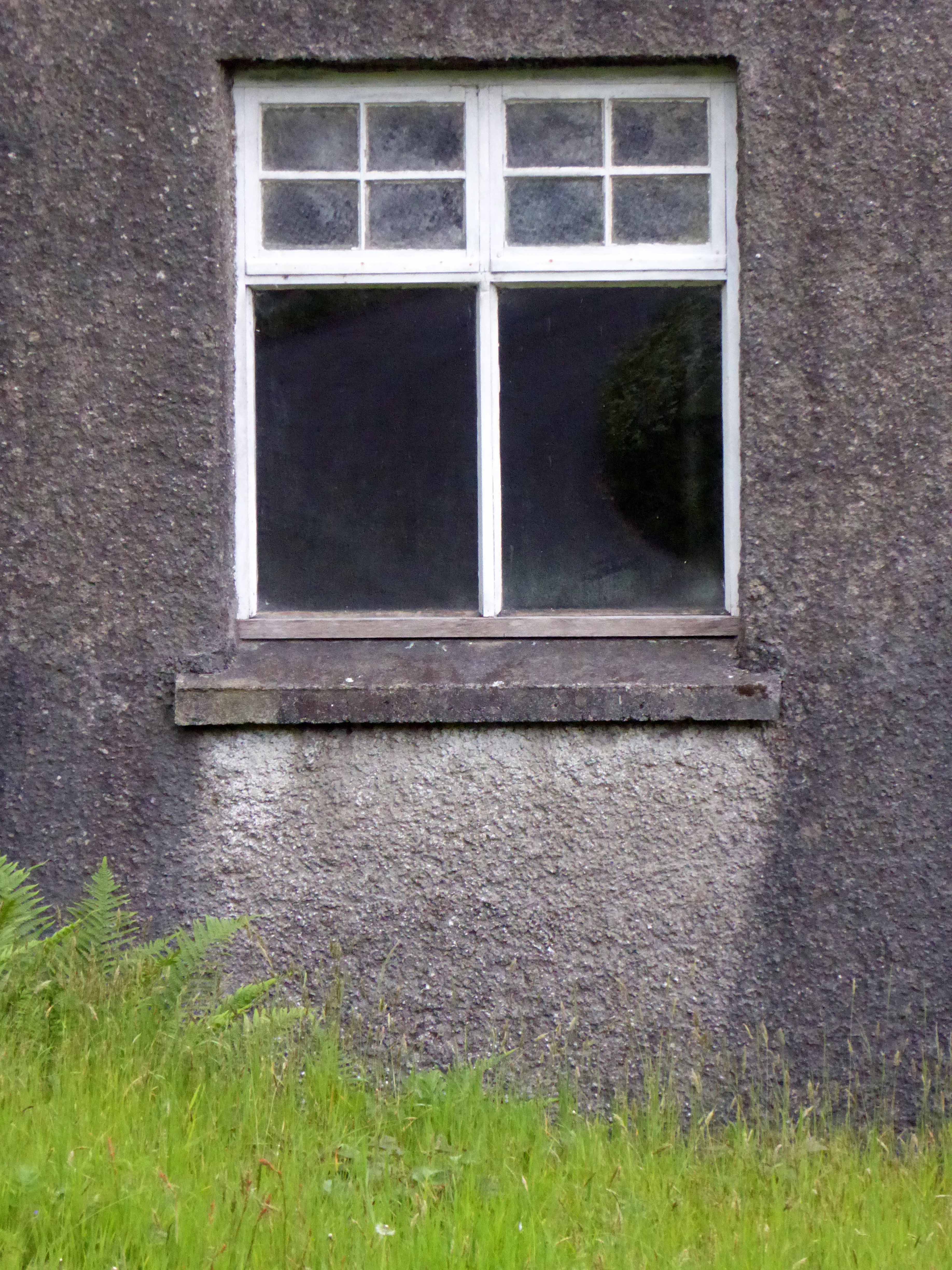
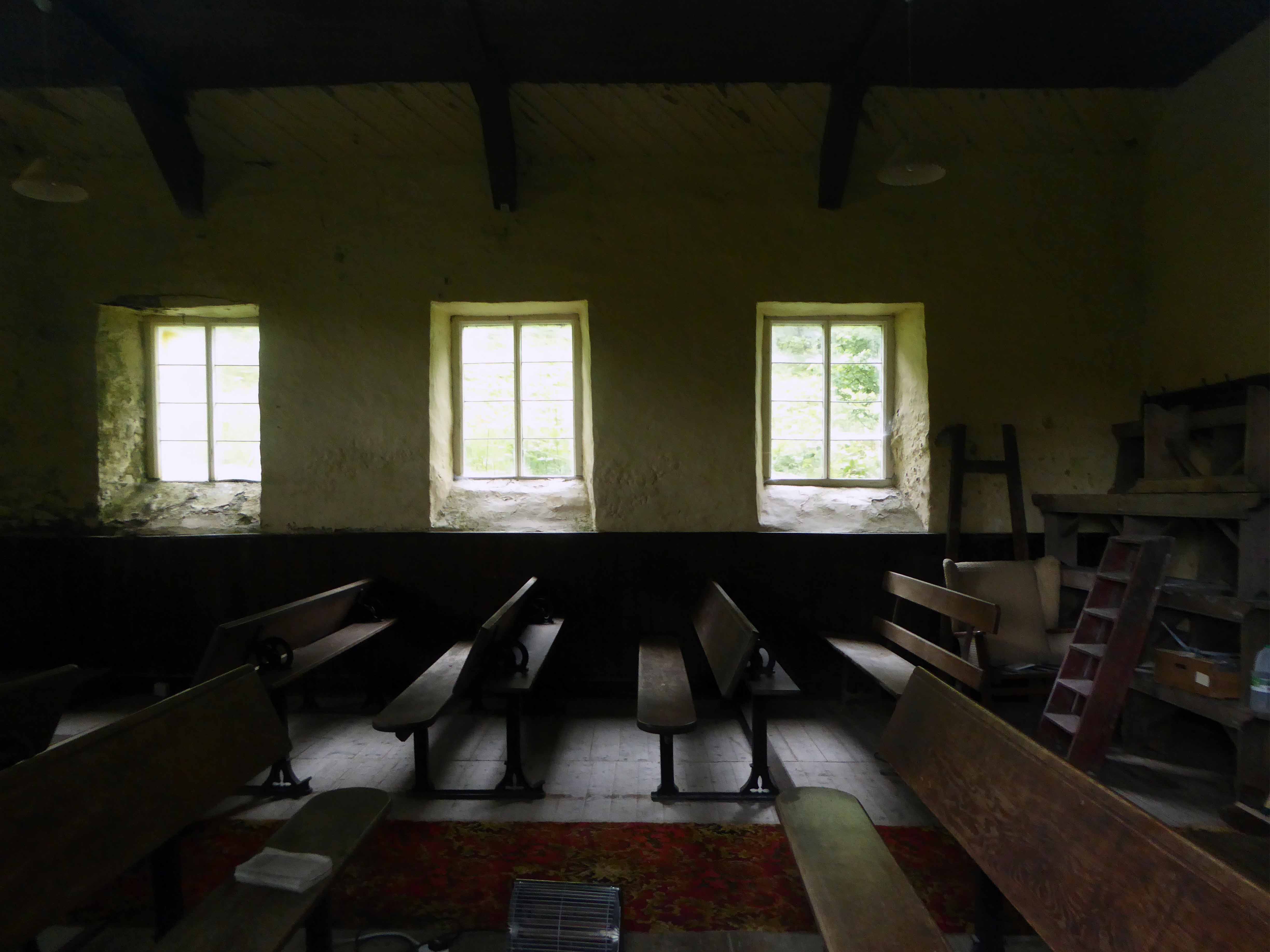
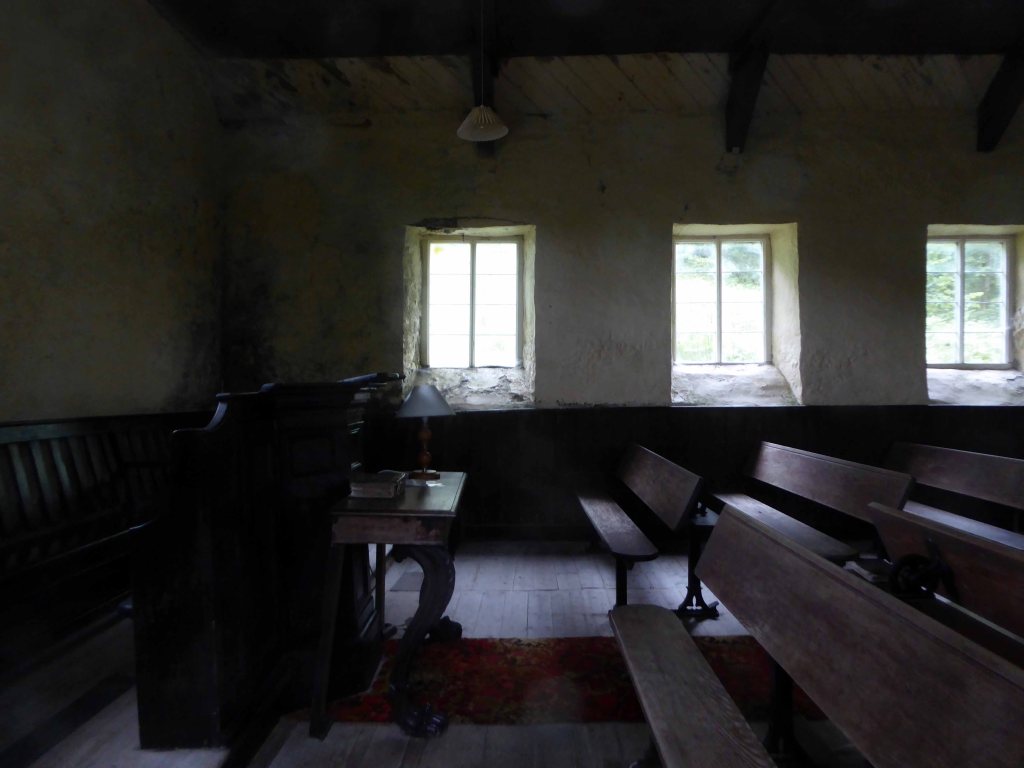
Calvinistic Methodist small chapel/schoolroom of 1866, a branch of Bwlchgwynt Chapel, Tregaron. Simple plastered interior with cast-iron and timber combined pews and desks. Small plain pulpit. Listed as the best preserved of the small branch chapels in the region. Historically important as illustrating the spread of non-conformity during the mid to later C19 in sparsely populated upland districts.
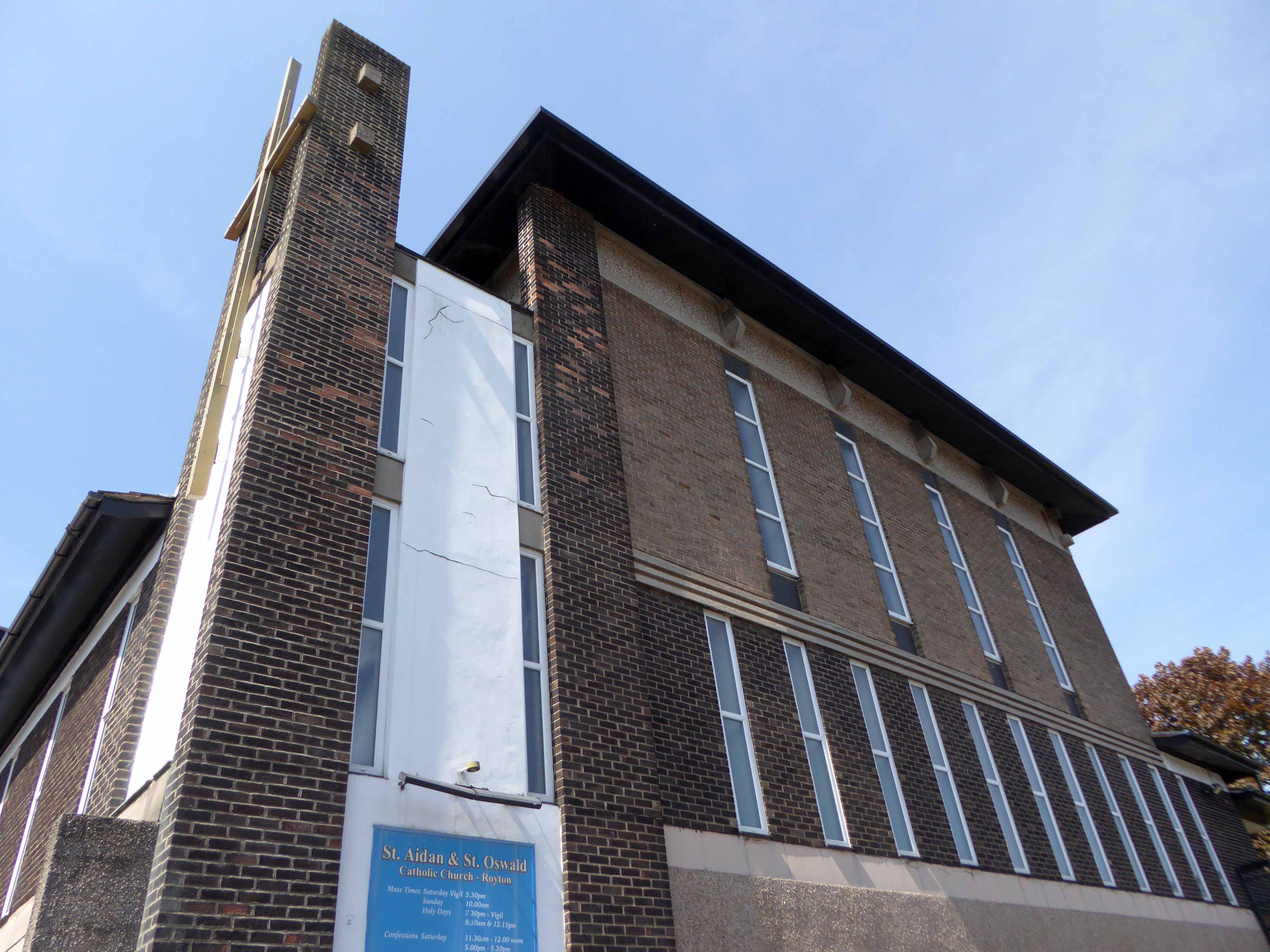
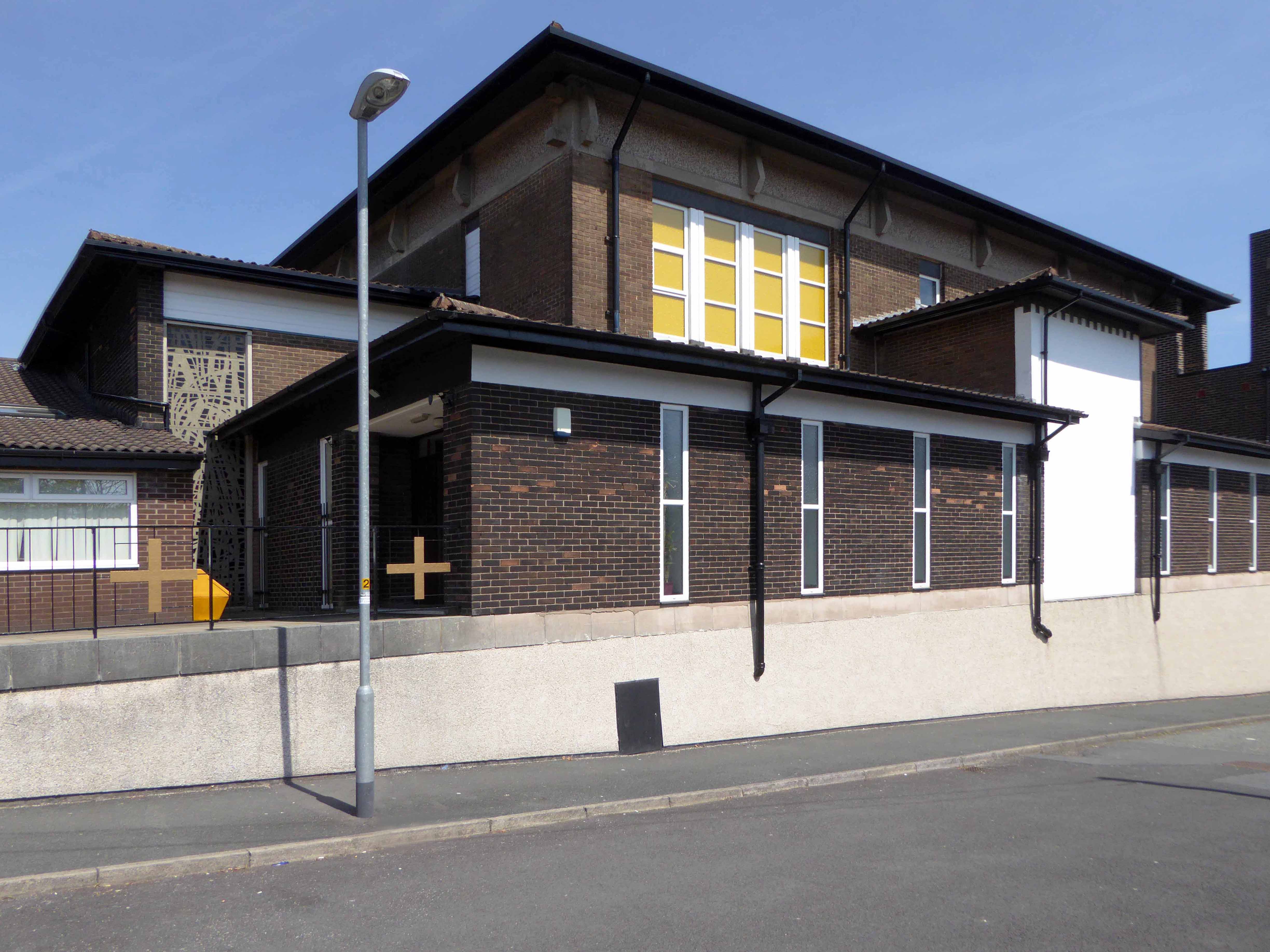
All in a day’s work cycling around north Manchester searching out and snapping five churches in a day.
This just happens to be one of my favourites, tough and uncompromising, monumental and modern – set hard against a main road.
A simple brick, concrete and glass construction, an immovable mass with strong vertical accents.
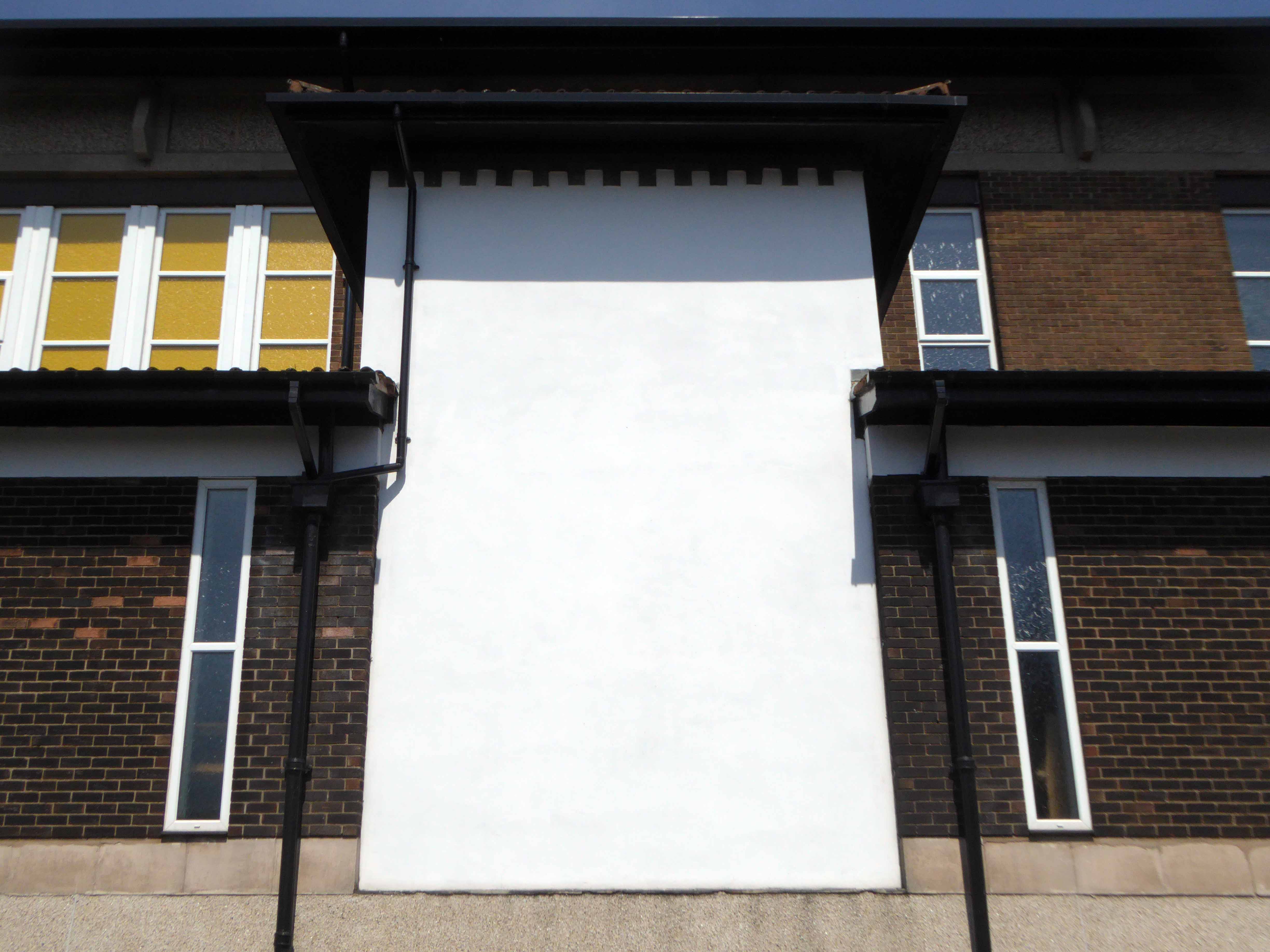
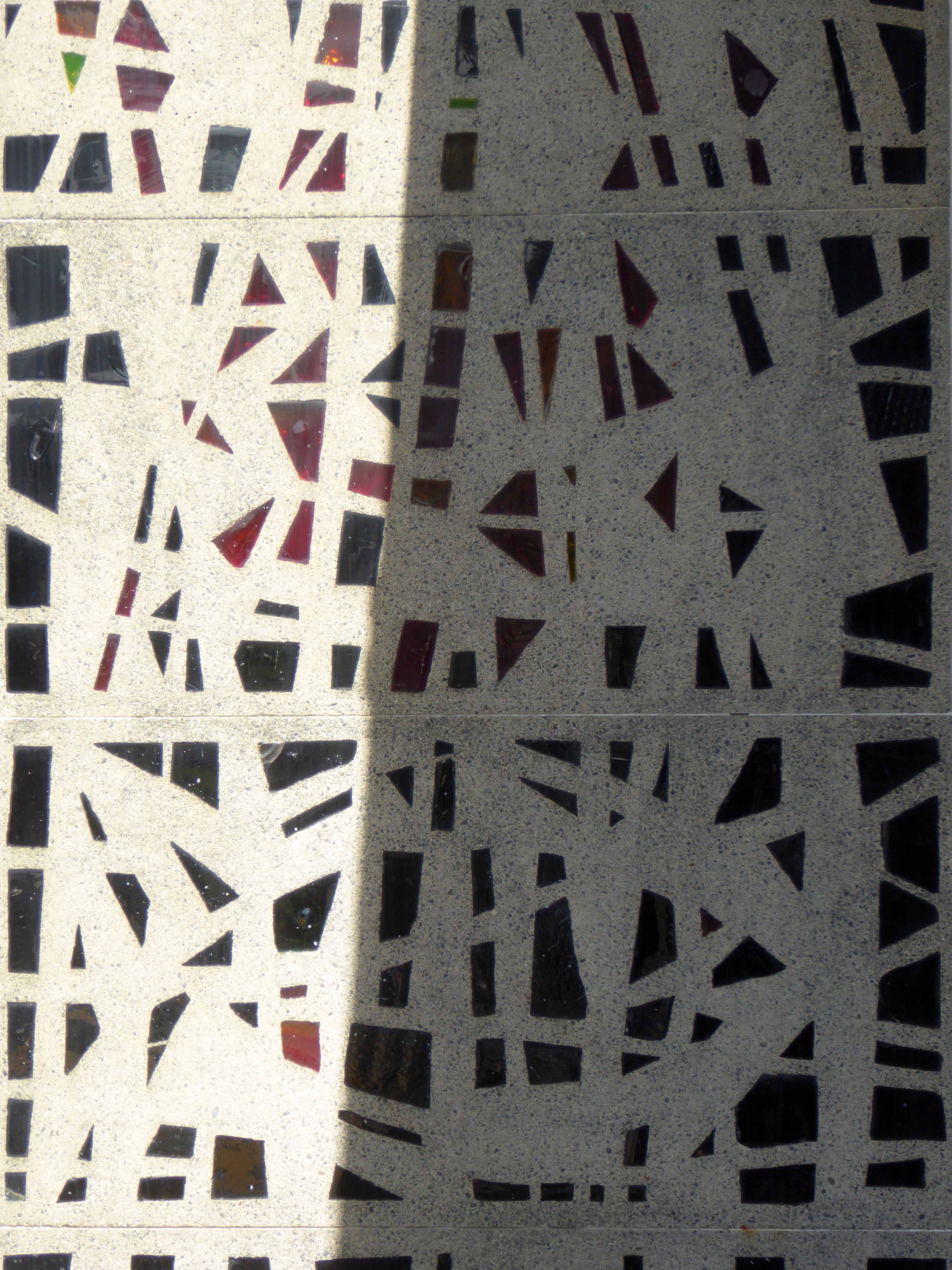
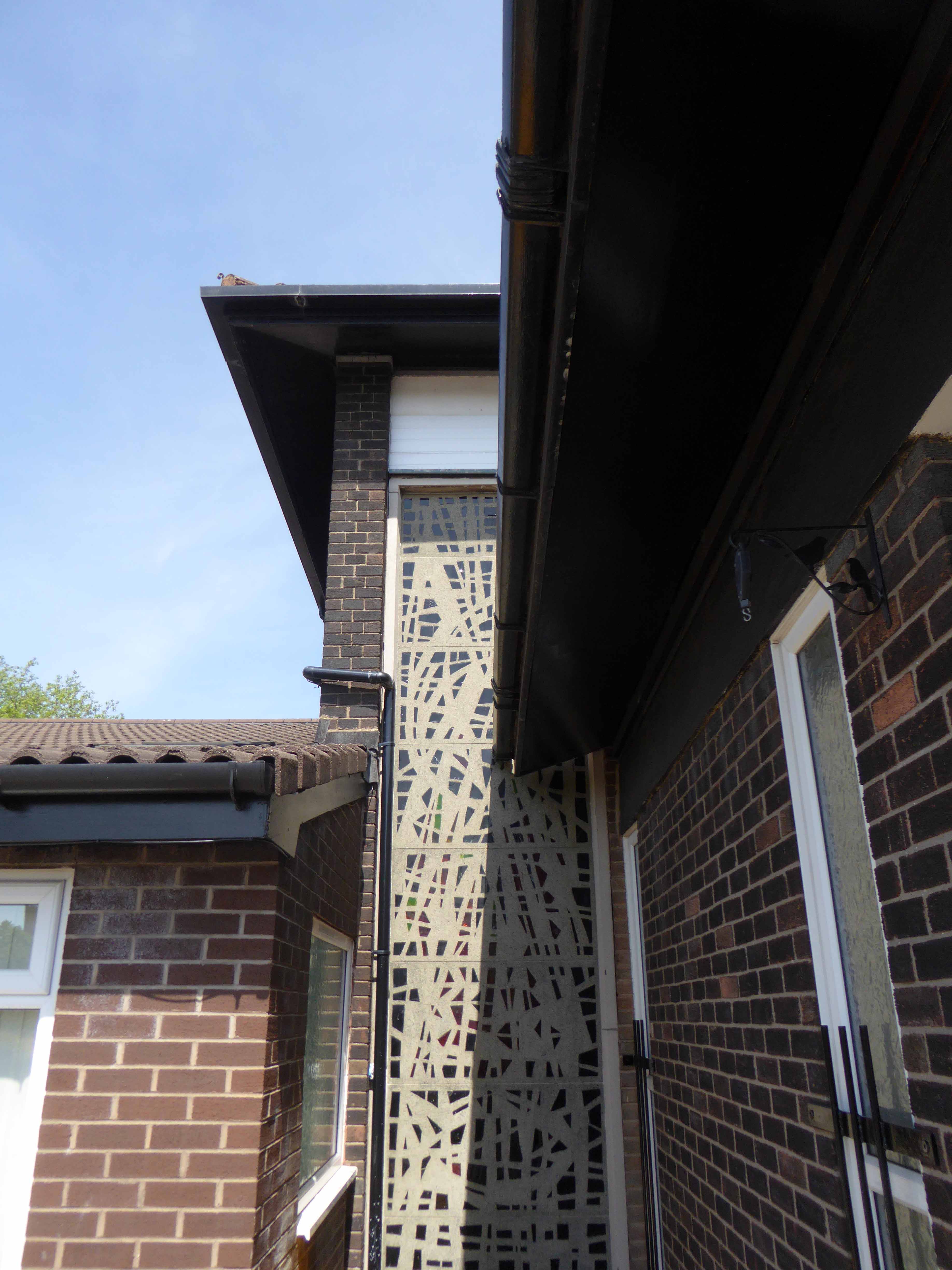
Though over time it has lost its colourful mosaics and concrete relief – gains a pitched roof and obtrusive gutters and drainpipes along the way.
My thanks to Andrew Spence for the info and photo.
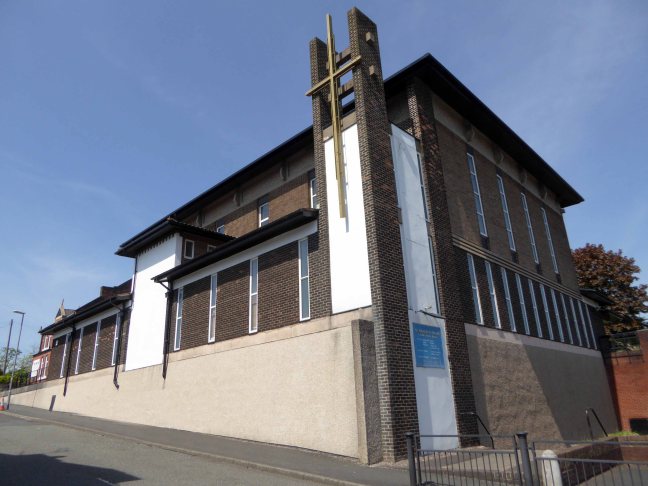
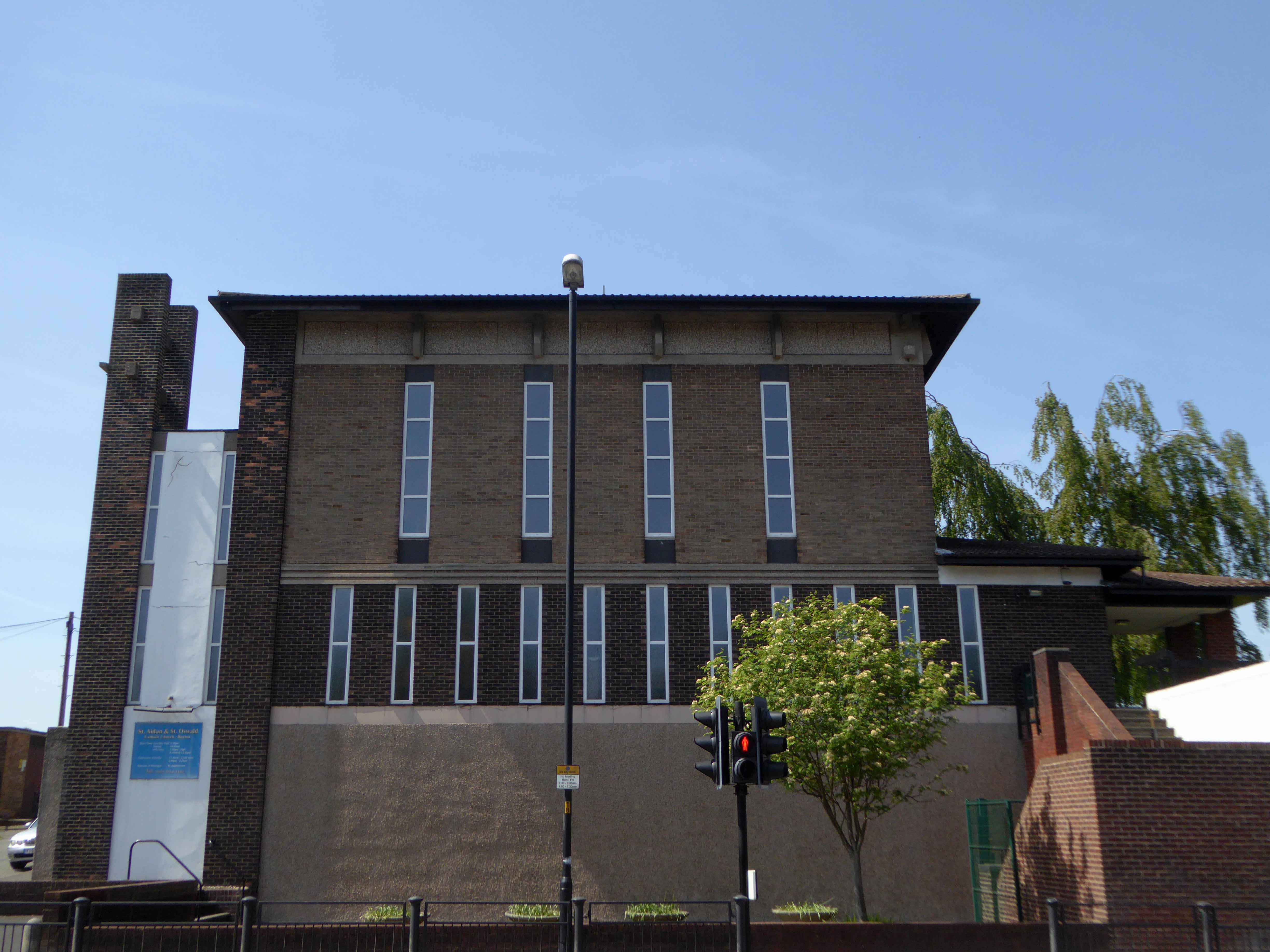
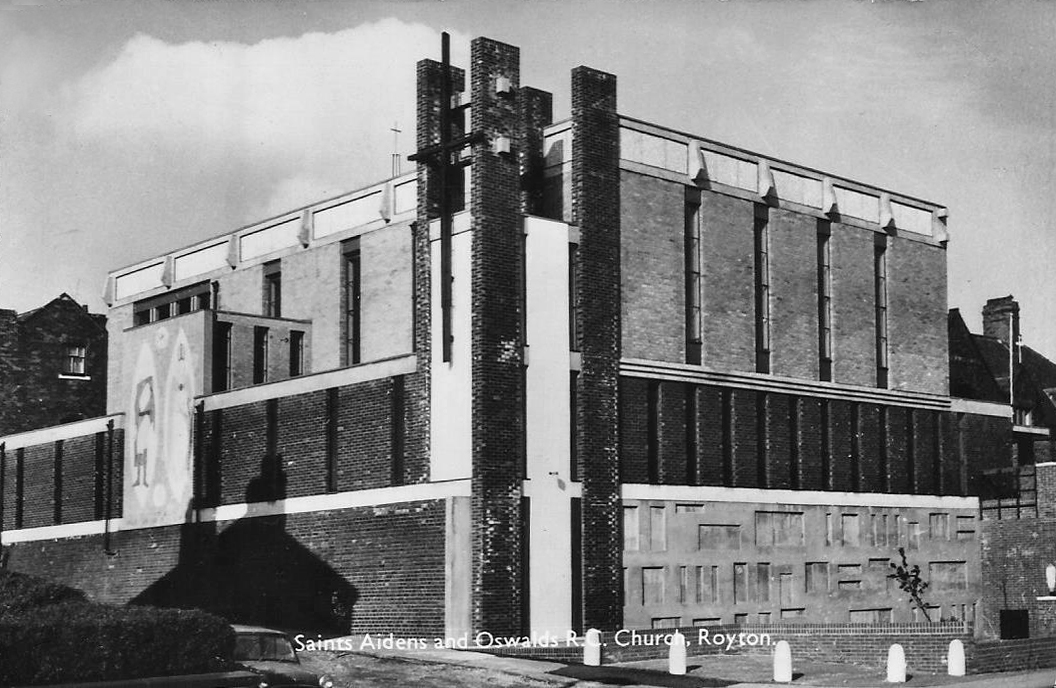
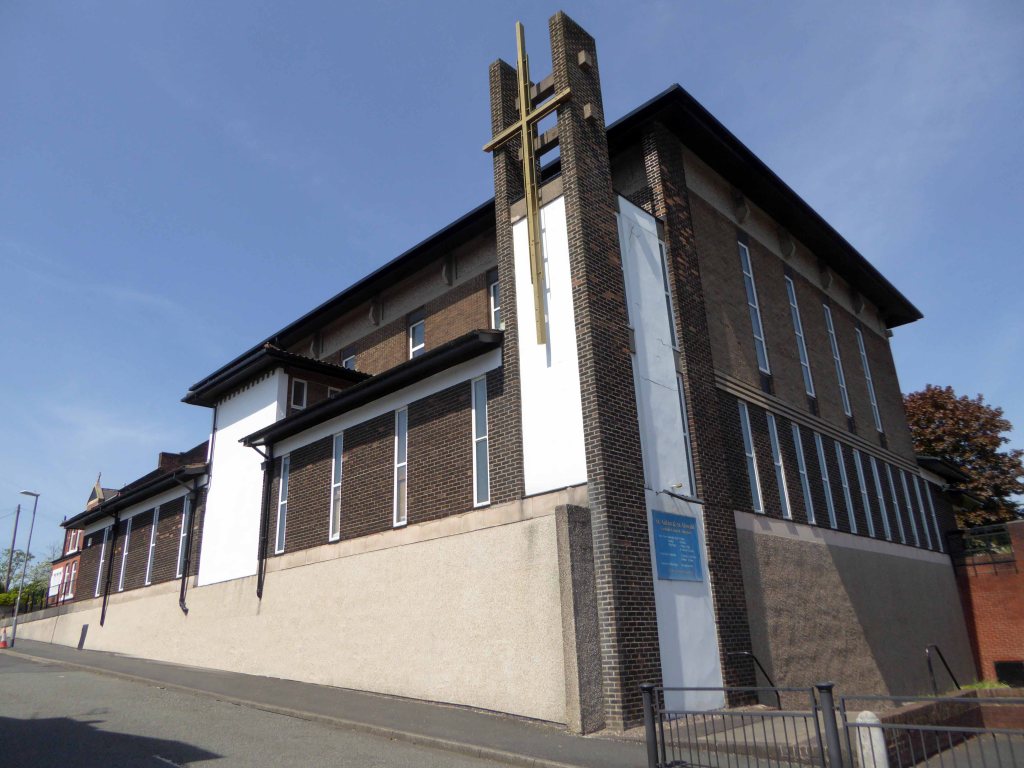
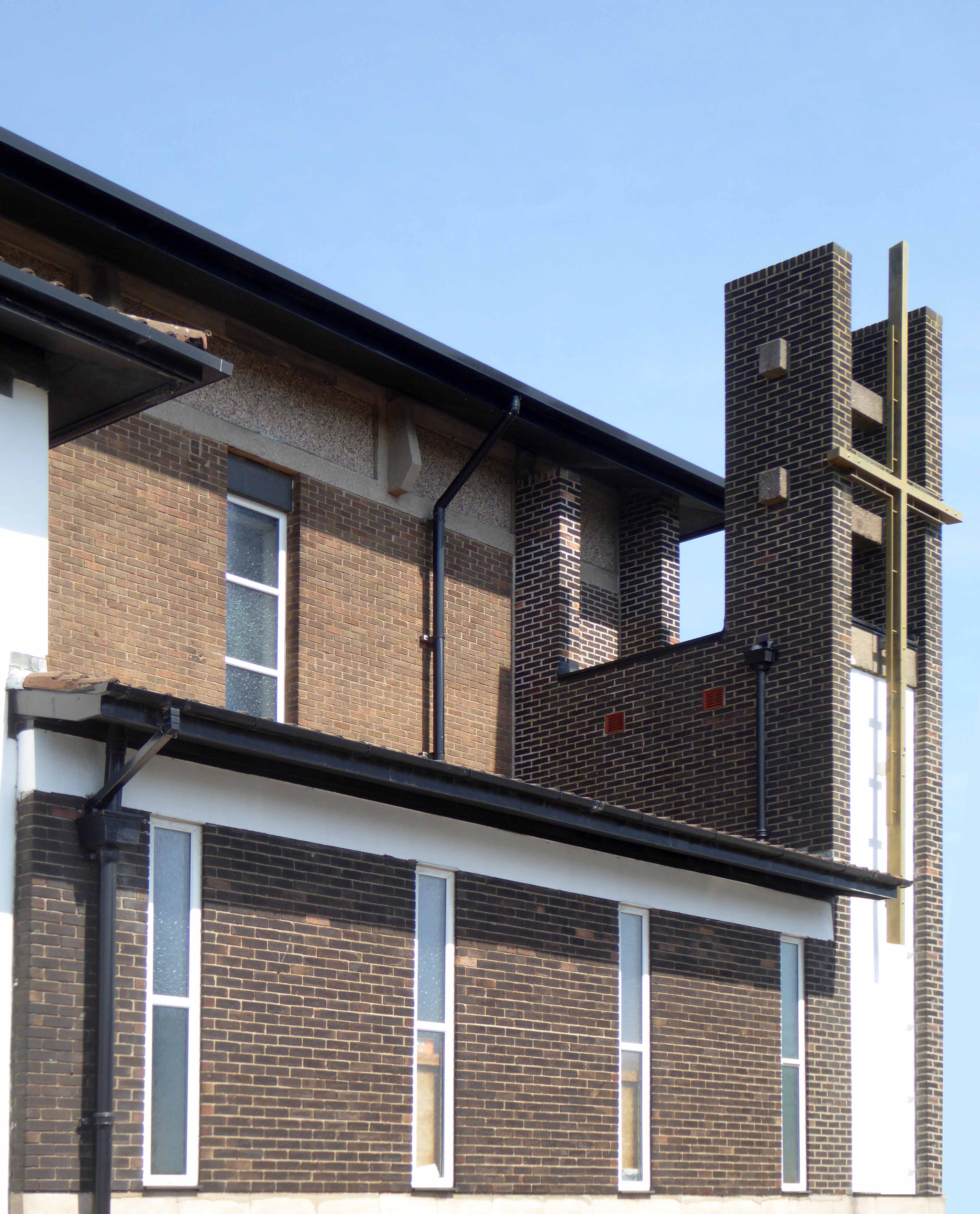
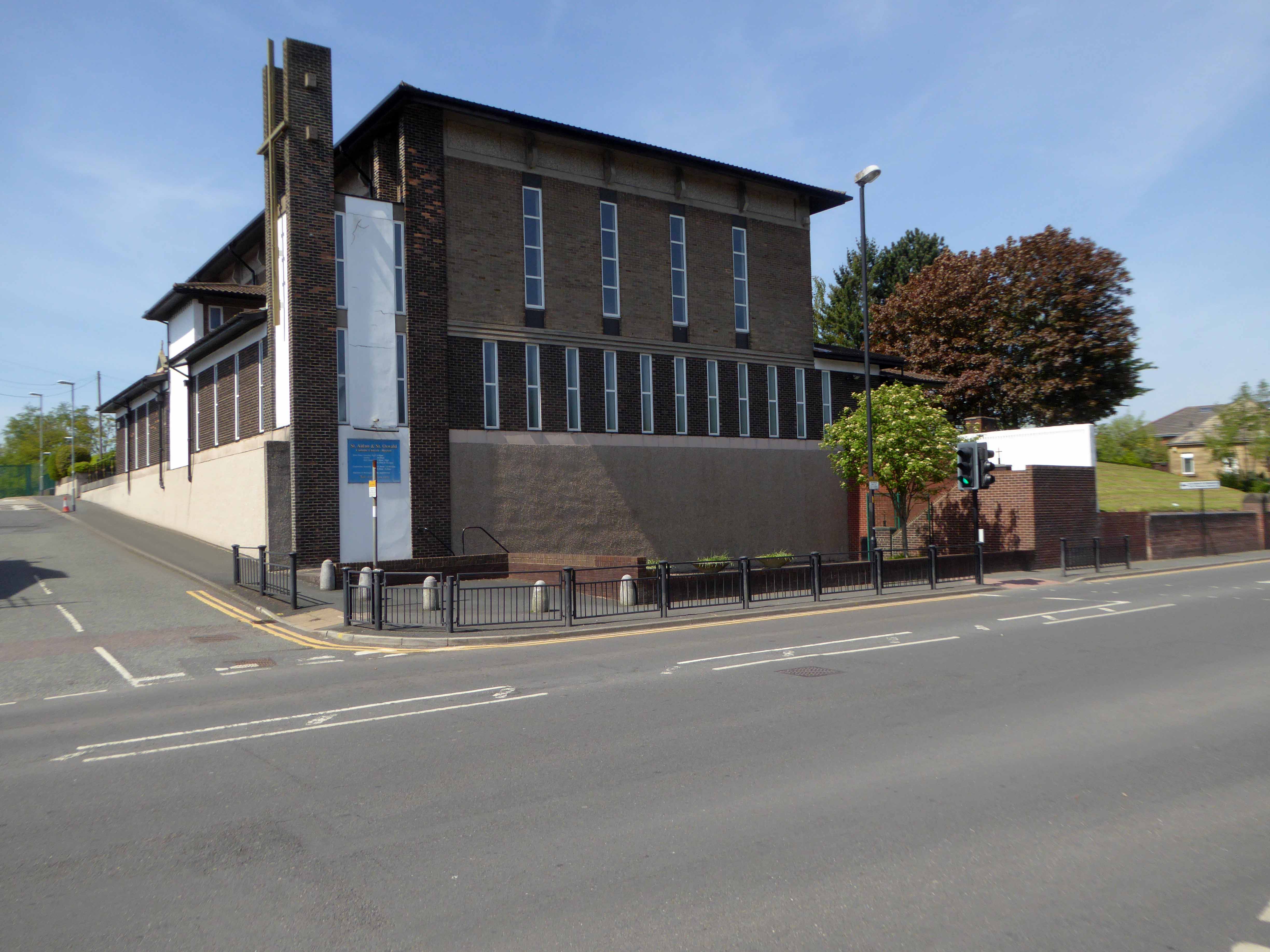
In 1964, Fr Edward Glyn commissioned Massey & Massey of Warrington to design a new larger church in place the previous church, to be built on the same site. The foundation stone was laid on 10 April 1965 by Bishop Holland. R. Partington & Sons Ltd were the contractors and the building cost around £48,000.
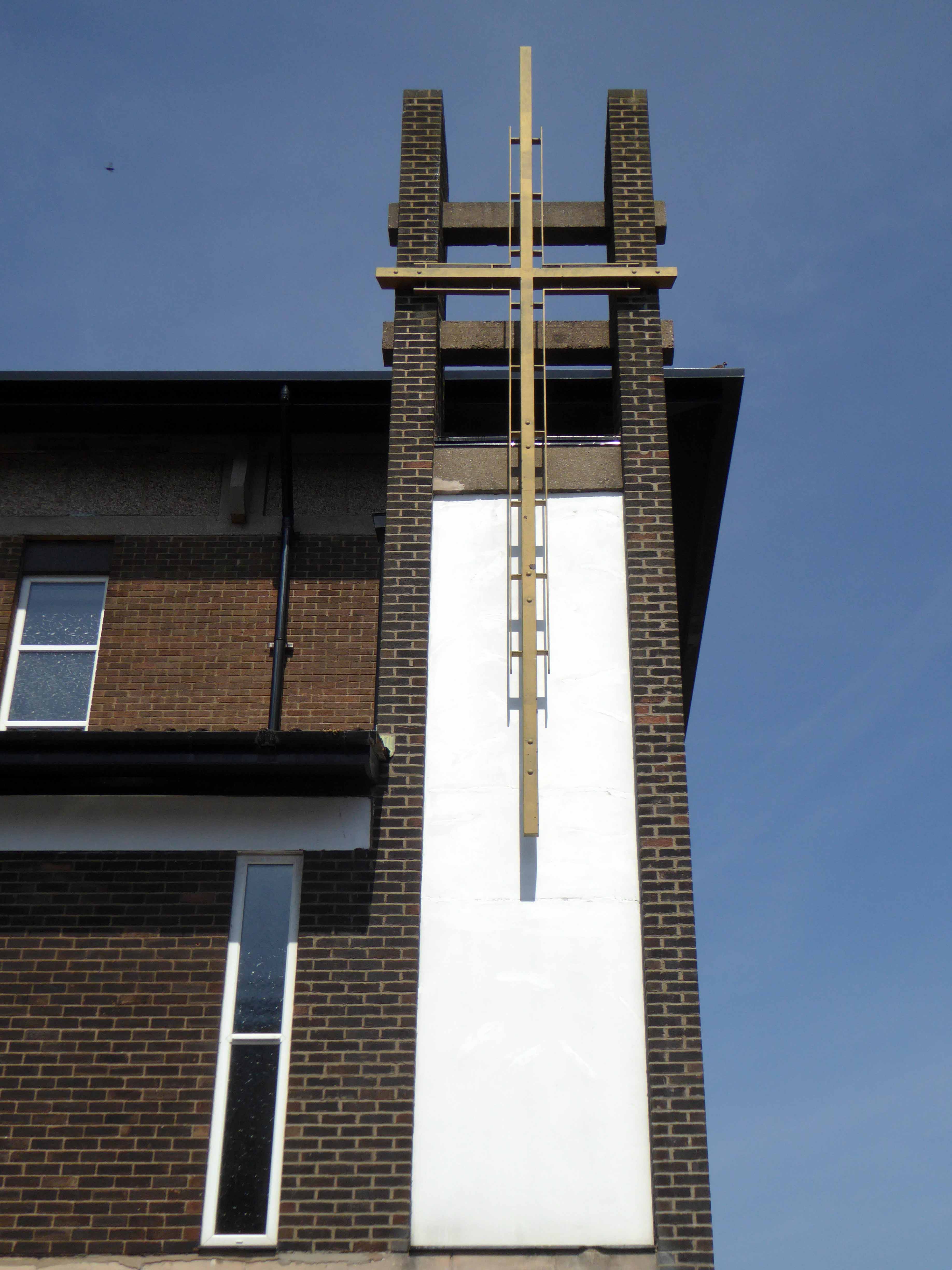
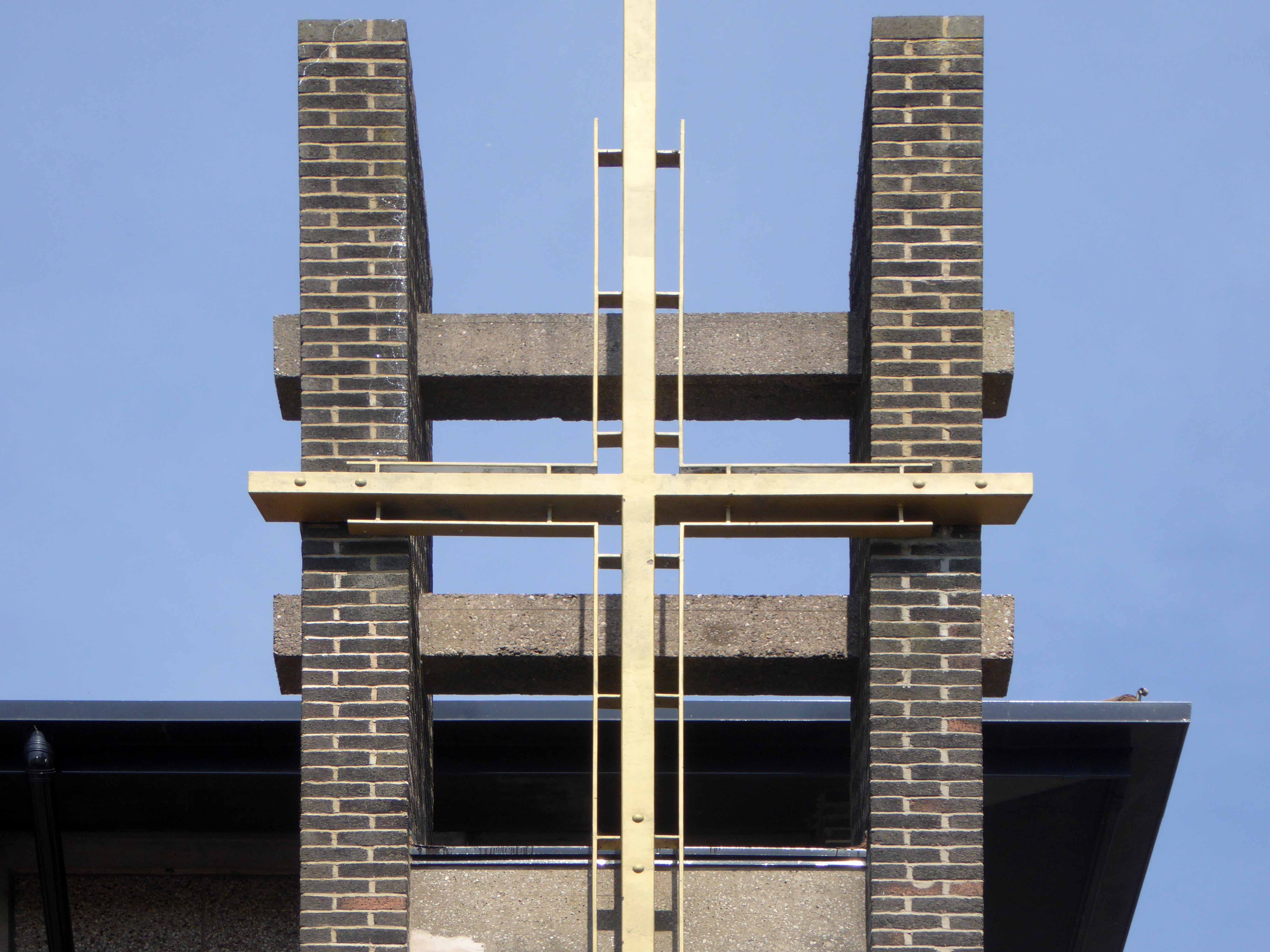
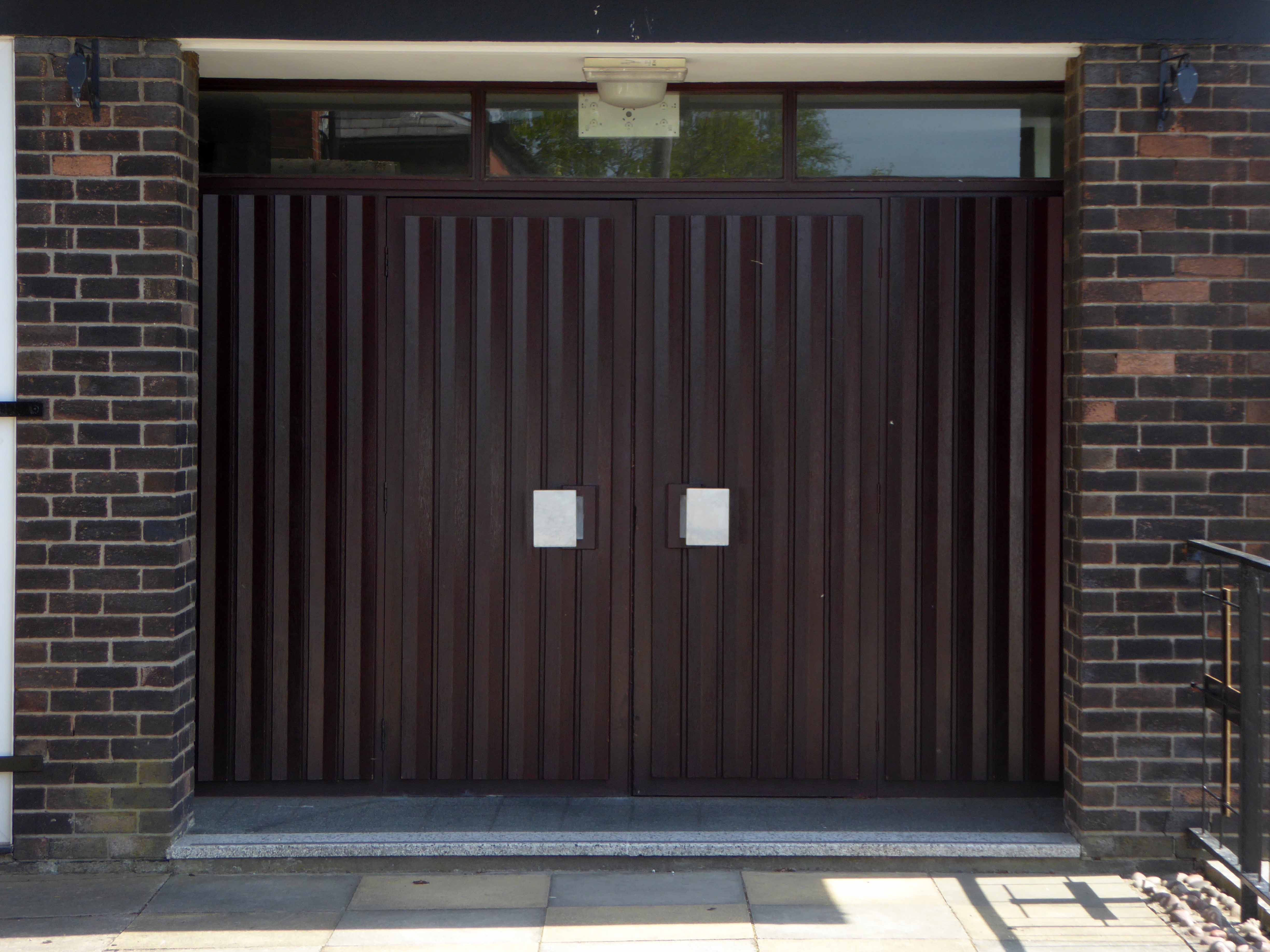
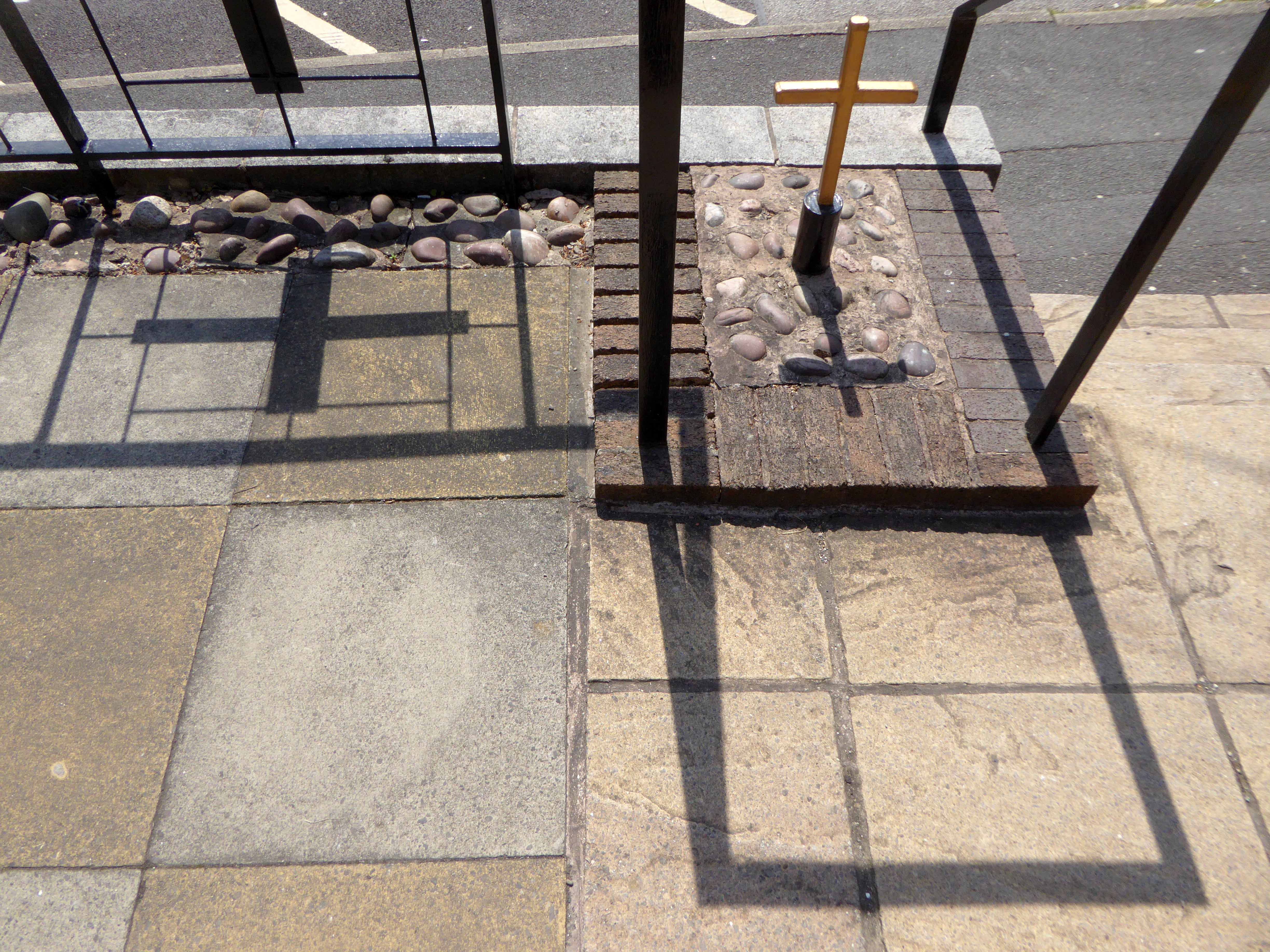
The church is concrete- framed and faced in brick, with dark red brick to the flat-roofed aisles and buff brick to the upper part of the nave. Tall brick piers connected by concrete beams form a vertical accent on the northwest corner, carrying a steel cross.
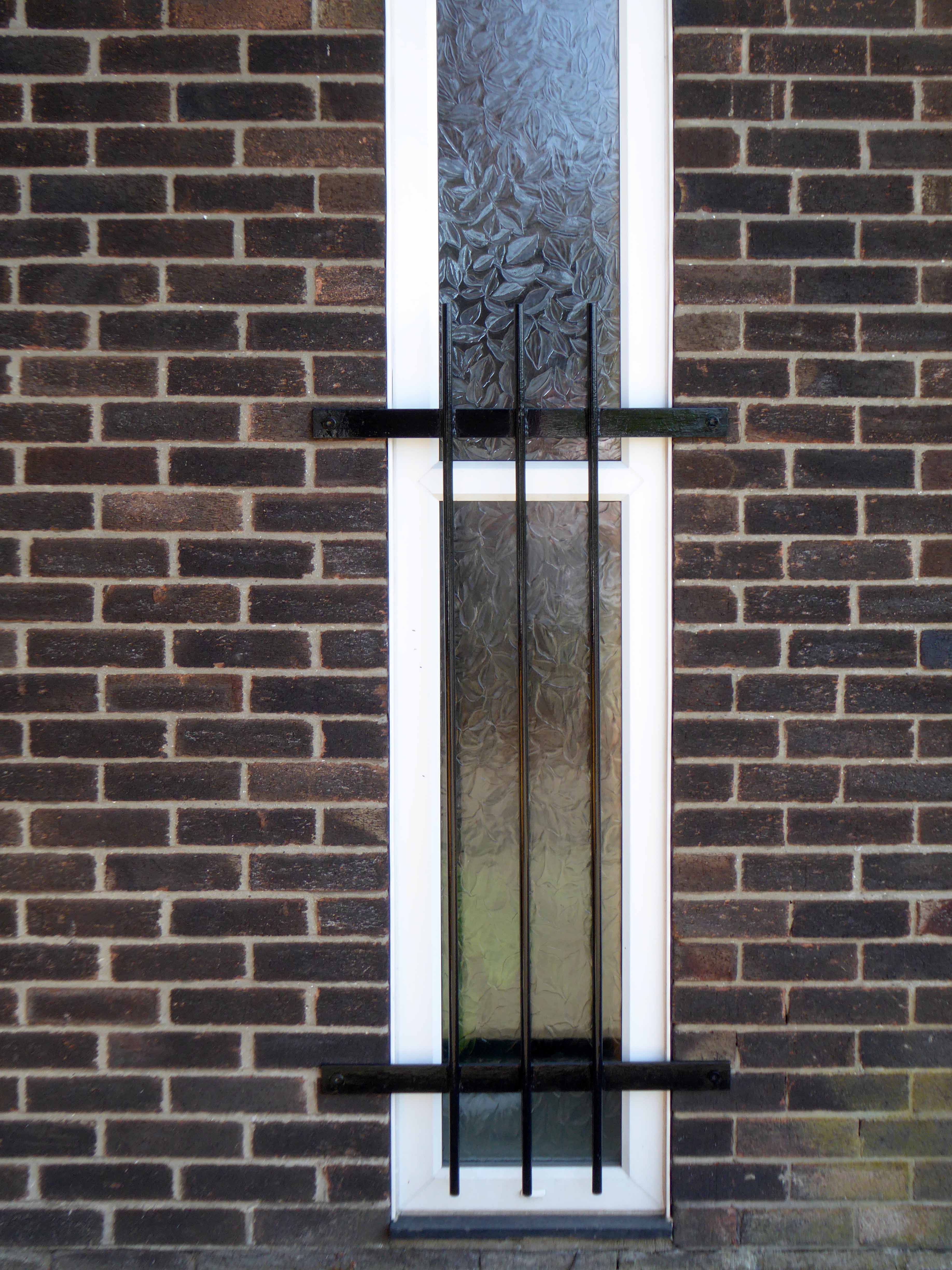
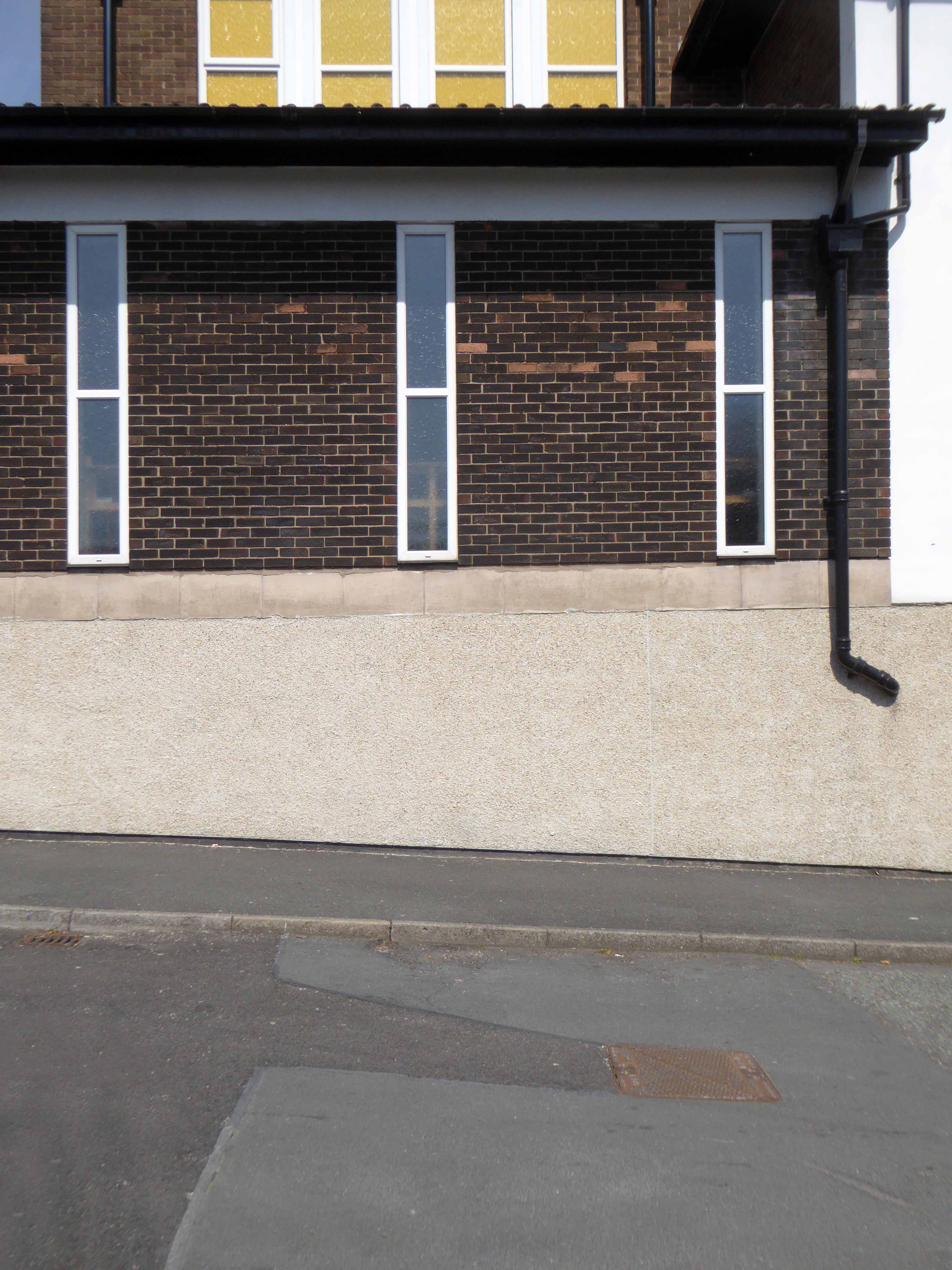
The shallow-pitched roof is laid with concrete tiles, on deep eaves (originally the roof was flat). Windows are now mostly uPVC, with some stained glass; the six-bay nave is lit by tall narrow windows at clerestory levels, with similar narrow lights to the aisles.
I ride a bicycle, which seriously restricts my access to the world of the M – one and six or otherwise. Having a more than somewhat ambivalent outlook on motor cars and their ways I have nevertheless written a short history.
So to satisfy my idle curiosity, and fill the damp wasteland of a Bank Holiday Sunday afternoon, let’s go on a little trip back in time by means of archival images.
What of your history?
Tendering documents were sent out in 1962 describing it as a 17.7 acre site, requiring at least a £250,000 investment, including an eastern corner reserved for a picnic area, and an emphasis that the views to the west must be considered in the design, and facilities must be provided on both sides. Replies were received – from Telefusion Ltd, J Lyons, Banquets Catering Ltd, Granada and Rank
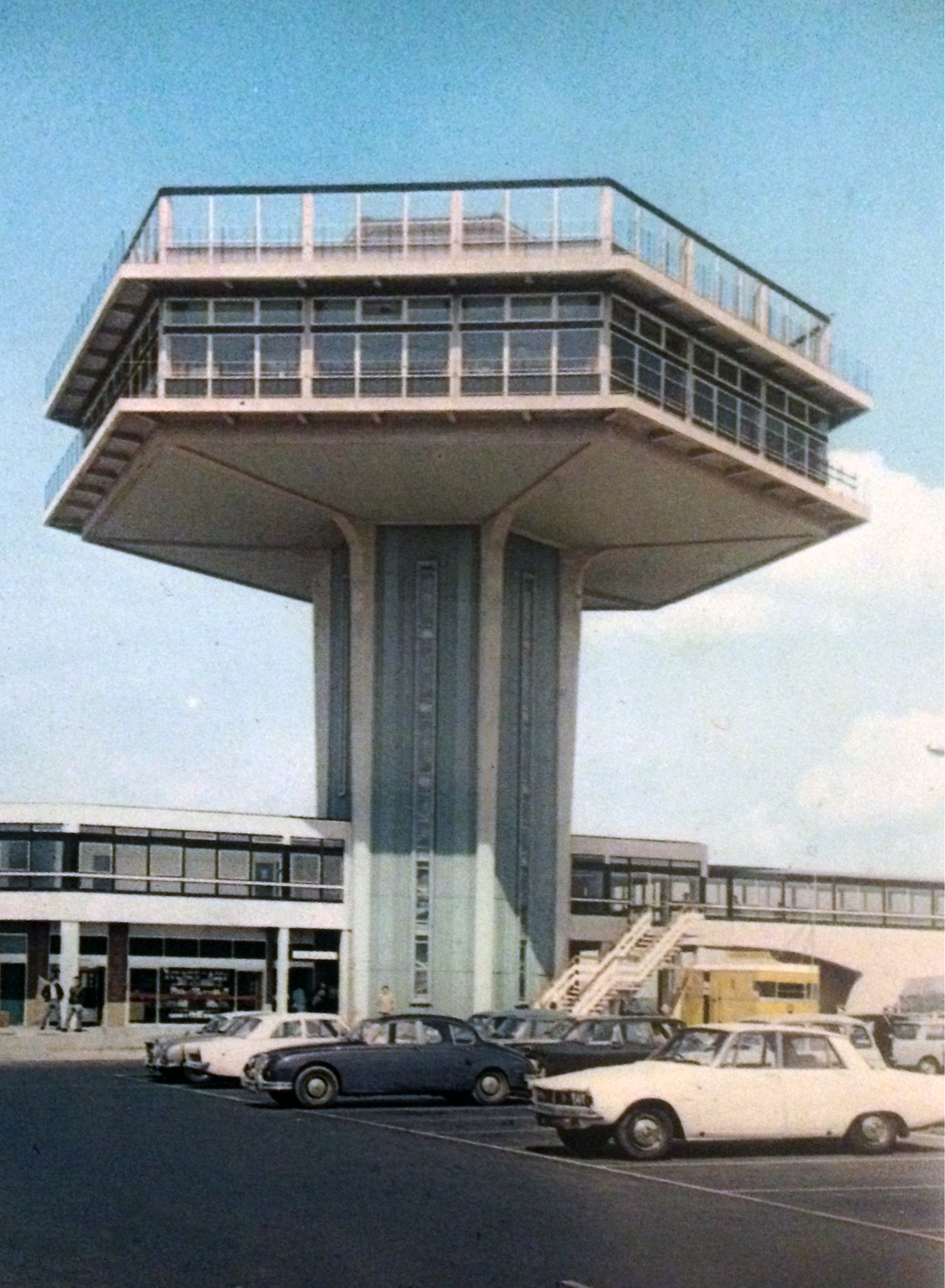
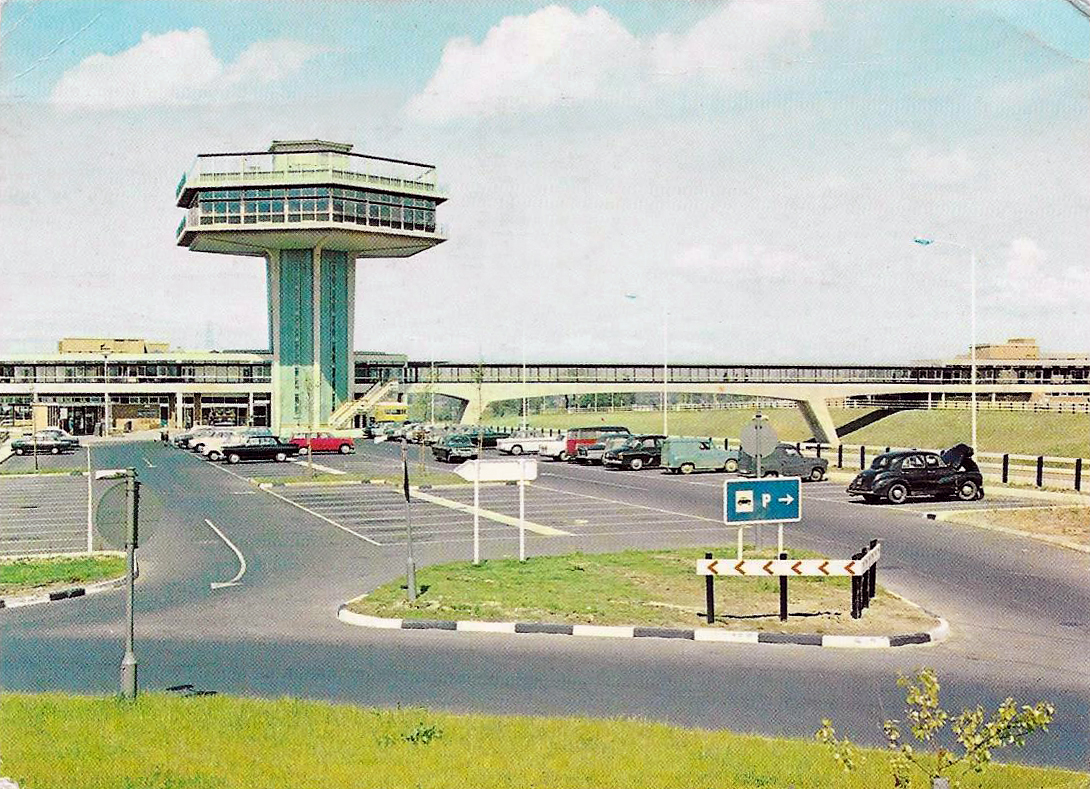
Top Rank’s plan came consistently highly rated by all the experts it was passed between. It showed a restaurant and a self-service café on the west side, the restaurant being at the top of a 96ft (29m) tower. At the top of the tower was a sun terrace – a roof with glass walls, which they had described but hadn’t included any suggestions for how it could be used, adding that maybe it could form an observation platform, serve teas, or be reserved for an additional storey to the restaurant.
Including a transport café on each site, seating was provided for 700 people, with 101 toilets and 403 parking spaces. A kiosk and toilets were provided in the picnic area.
“The winning design looks first class. Congratulations.”
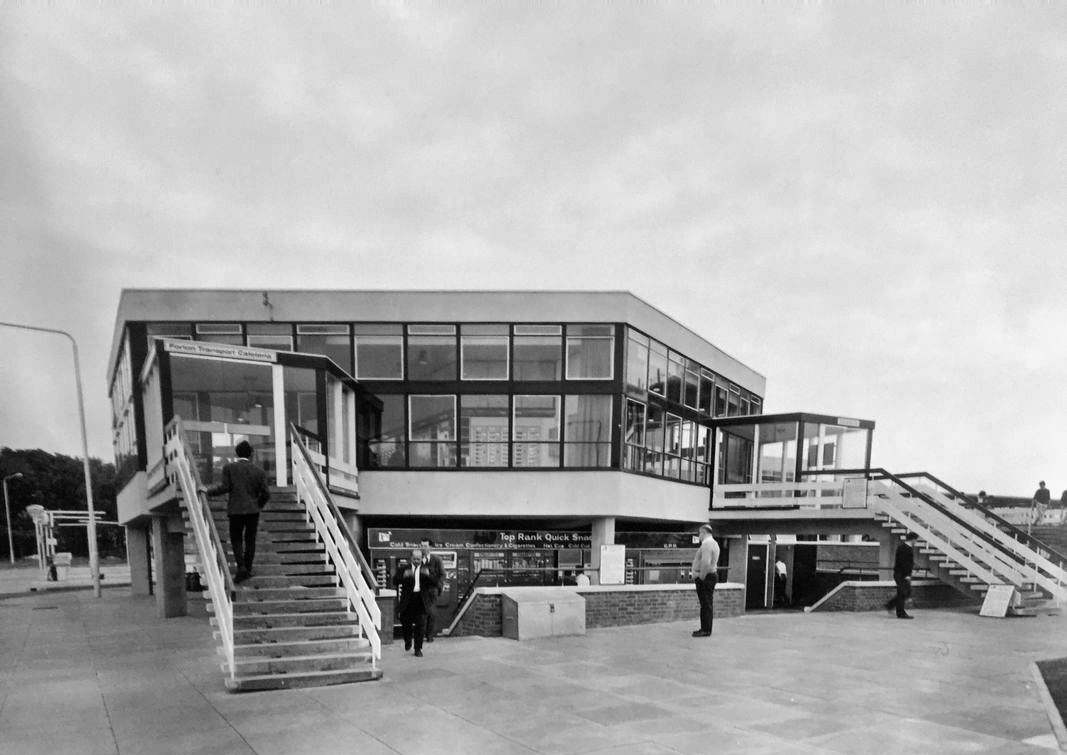
Architects T P Bennett & Sons had been commissioned to design the services, along with the similar Hilton Park. At £885,000, it was the most expensive service station Rank built, and was considerably more than what had been asked of them.They won the contract, but on a condition imposed by the Landscape Advisory Committee that the height of the tower was reduced to something less striking.
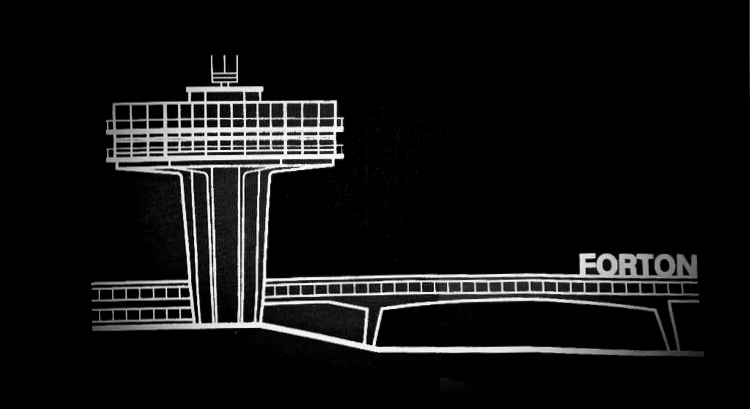
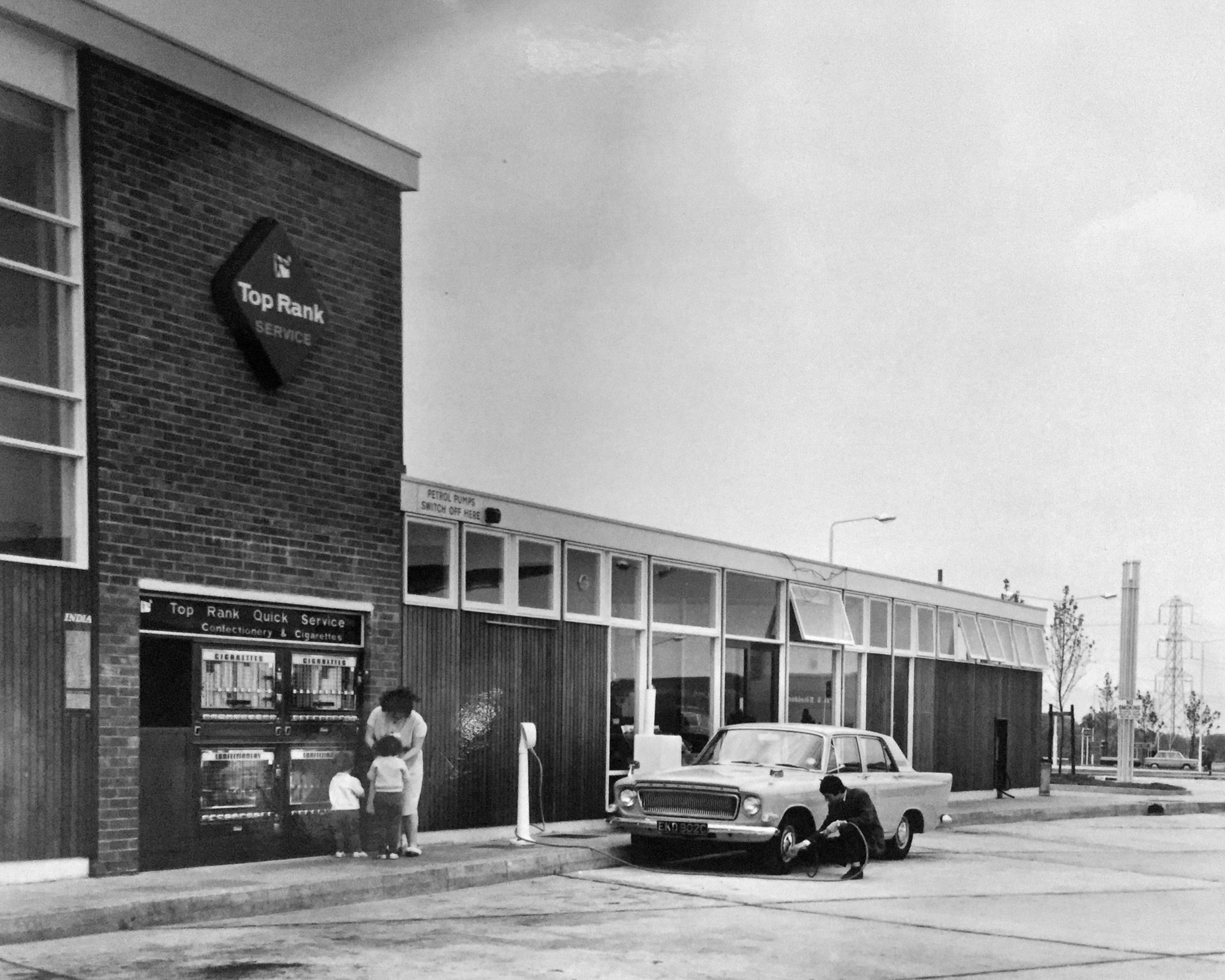
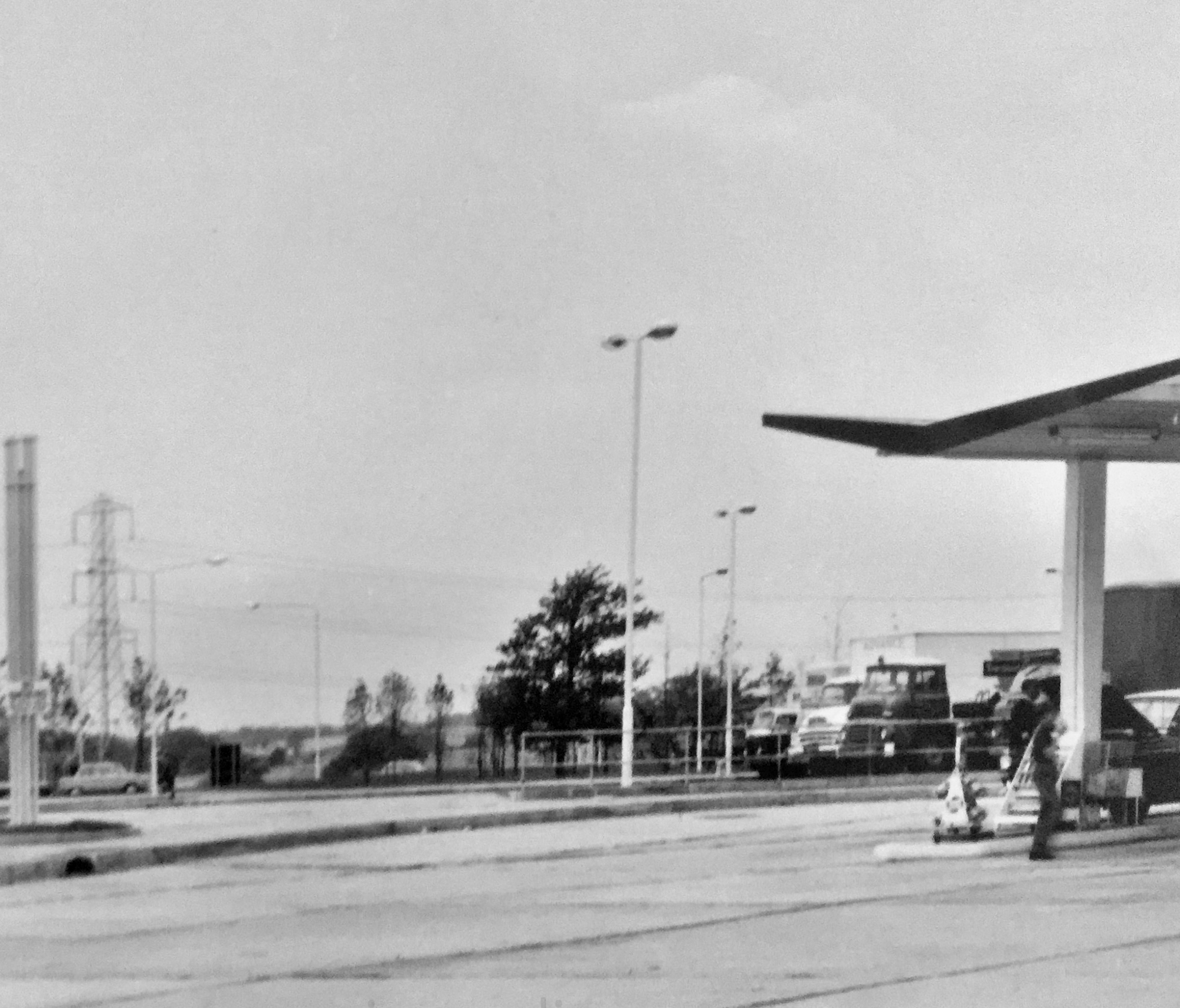
Lancaster was opened in 1965 by Rank under the name ‘Forton’. The petrol station opened early in January, with some additional southbound facilities opening that Spring.
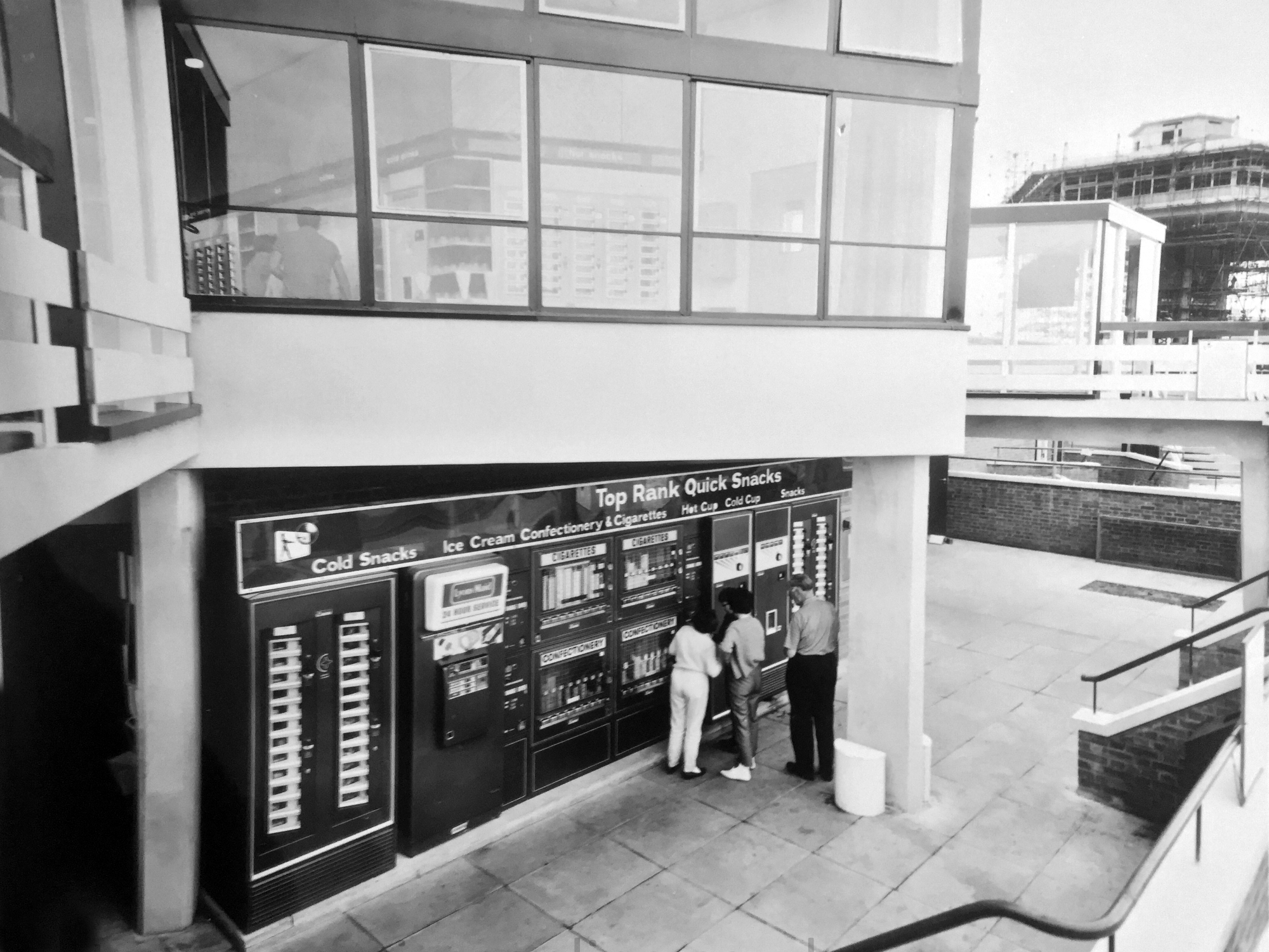
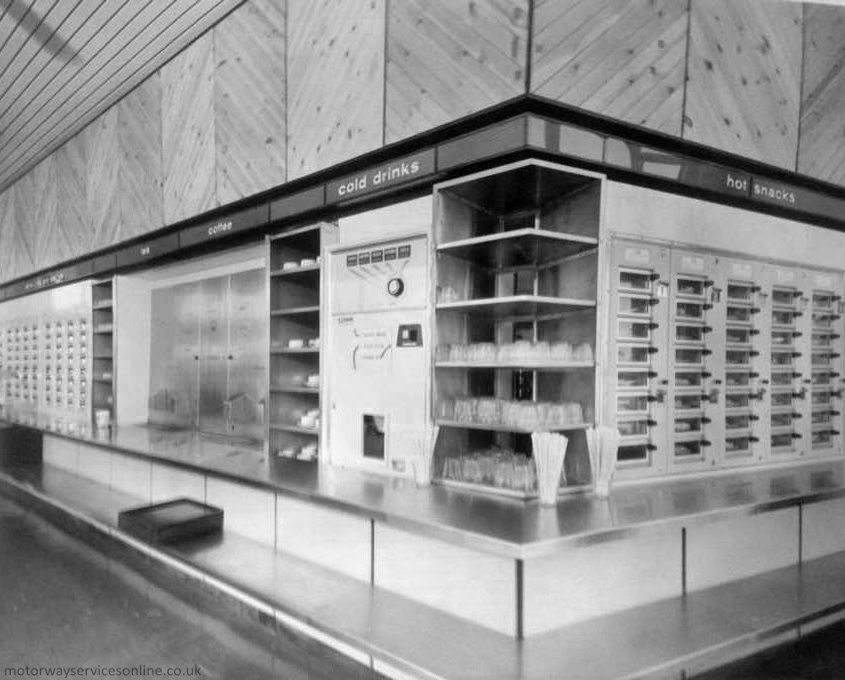
The southbound amenity building had a lowered section with a Quick Snacks machine and the toilets. Above it was the transport café which had only an Autosnacks machine, where staff loaded hot meals into the back and customers paid to release them. These were the motorway network’s first catering vending machines, and the Ministry of Transport were won round by the idea, but Rank weren’t – they removed them due to low demand.
In 1977, Egon Ronay rated the services as appalling. The steak and kidney pie was an insult to one’s taste buds while the apple pie was an absolute disgrace. He said everywhere needed maintenance and a coat of paint, the toilets were smelly and dirty, and the food on display was most unattractive.
A 1978 government review described the services as a soulless fairground.
The Forton Services and the typology generally have had a chequered career, rising and falling in public favour and perception. Purveying food and facilities of varying quality, changing style and vendors with depressing regularity – knowing the value of nothing yet, the Costas of everything.
Ironically the prematurely diminished tower has taken on iconic status in the Modernist canon – listed in 2012 yet closed to the public, admired from afar – in a car.
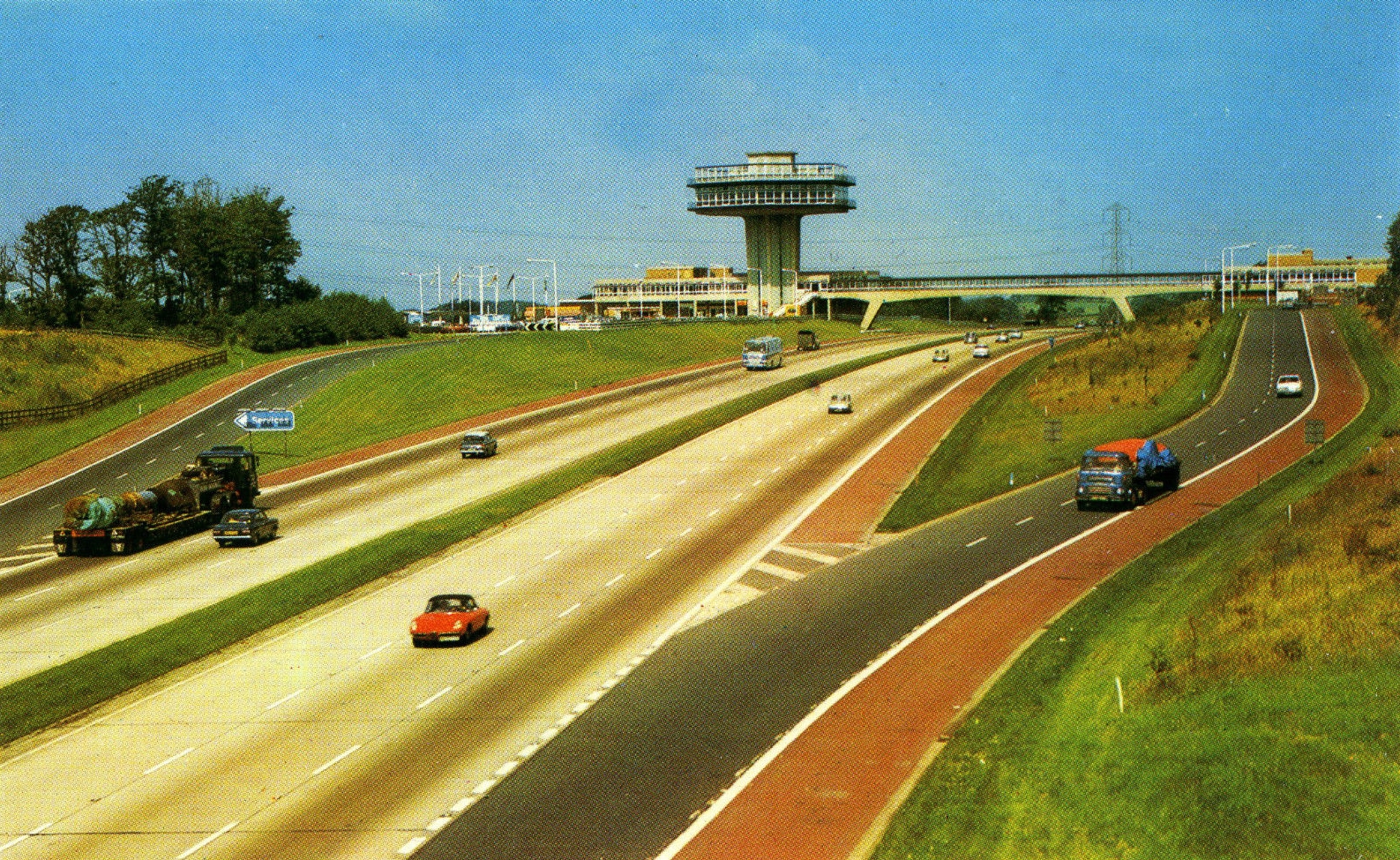
The Pennine Tower was designed to make the services clearly visible – the ban on advertising had always been an issue, and the previous technique of having a restaurant on a bridge, like down the road at Charnock Richard, was proving expensive and impractical. Rank commissioned architects T P Bennett & Sons to capitalise on the benefits of exciting design while trialling something different. The tower resembles that used by air traffic control, summarising the dreams of the ’60s.
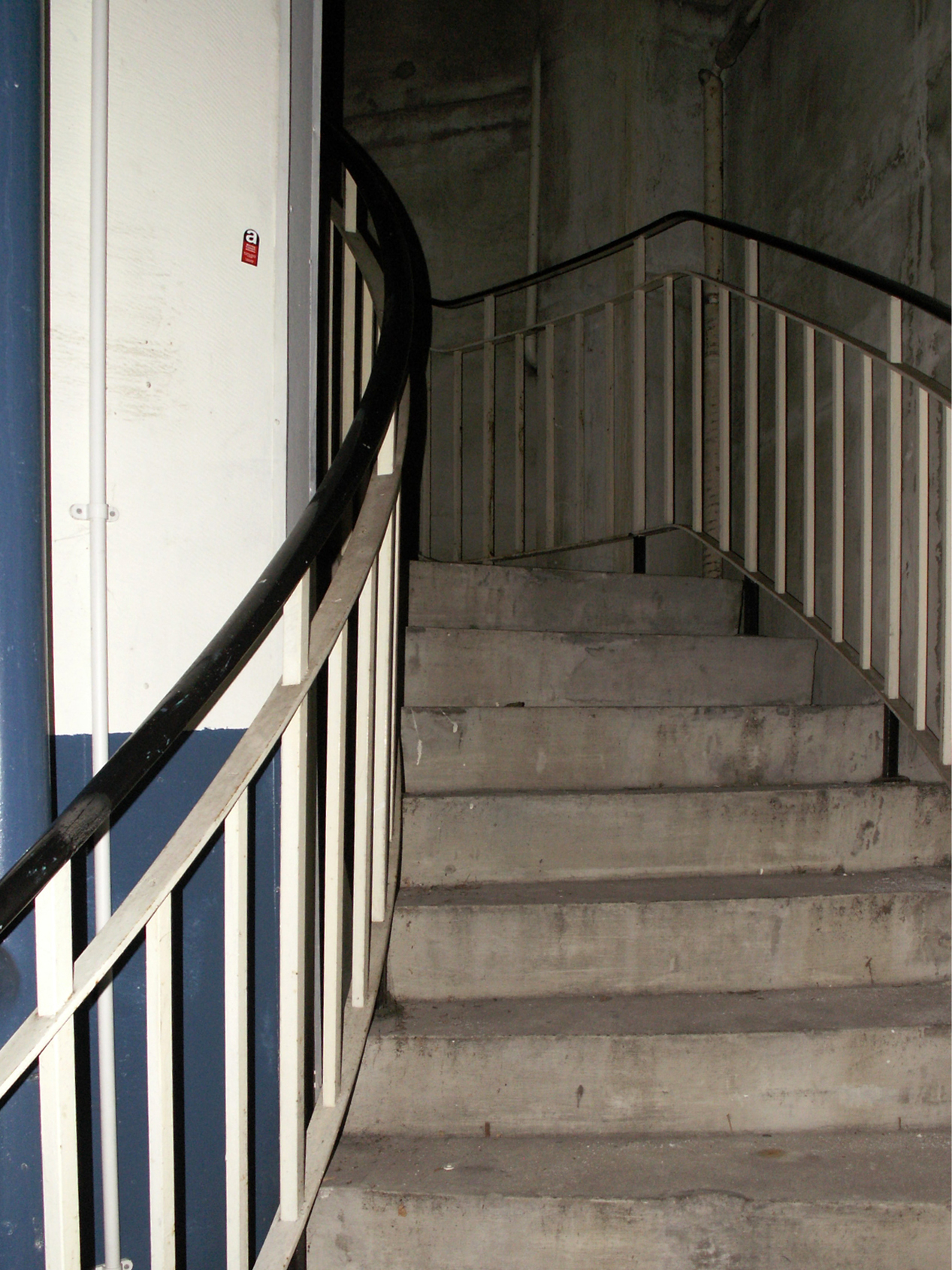
The central shaft consists of two lifts, which were originally a pentagonal design until they were replaced in 2017. They’re still in use to access the first floor, but with the buttons to higher floors disabled. There are then three service lifts, and one spiral staircase – satisfying typical health and safety regulations.
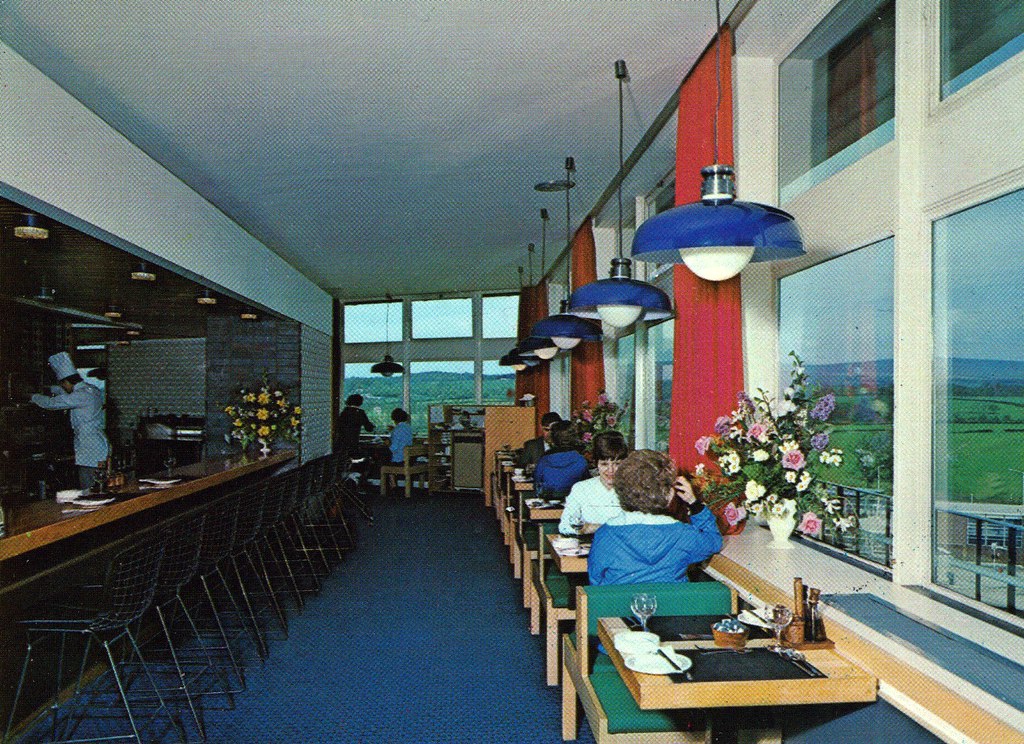
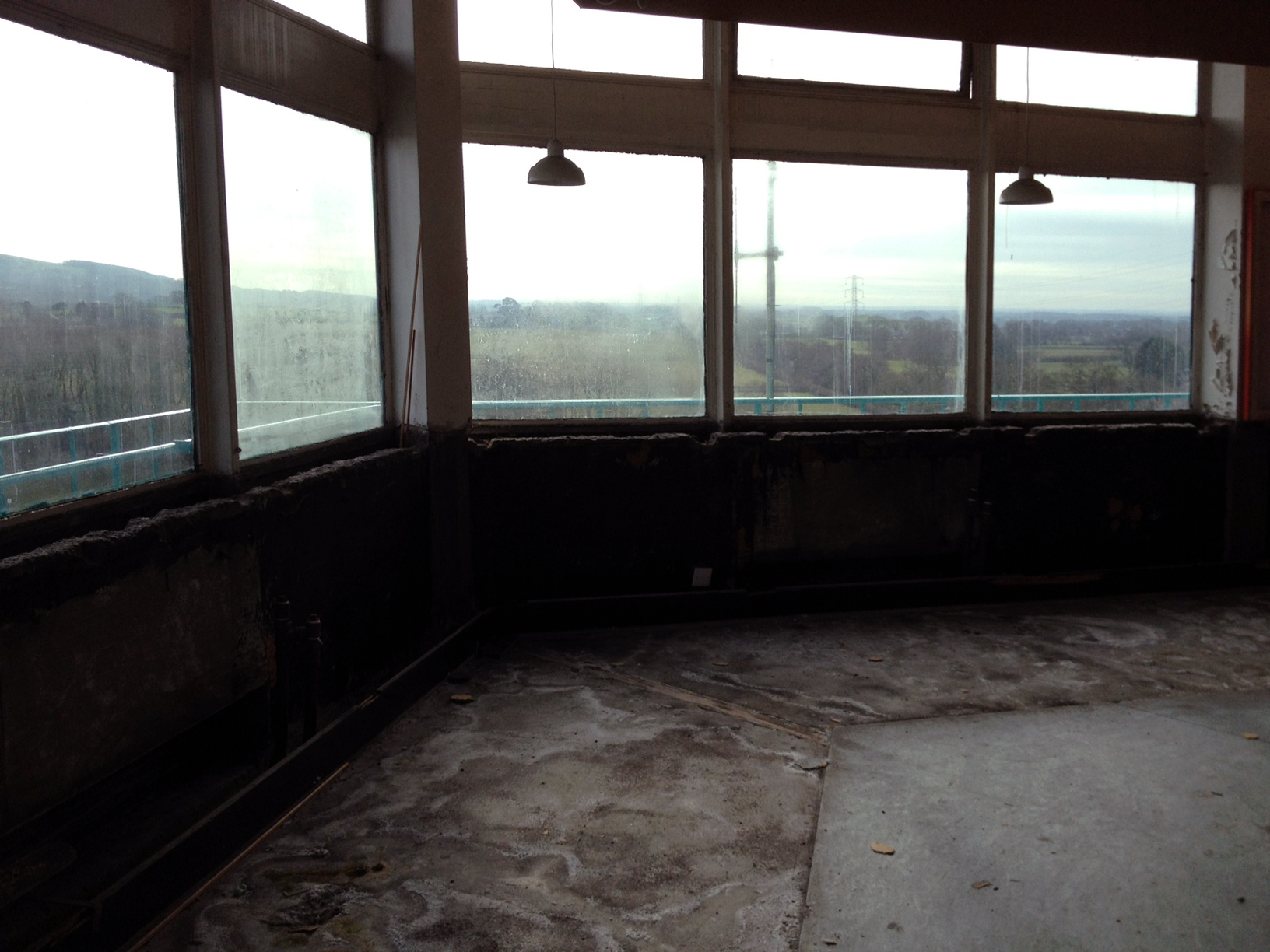
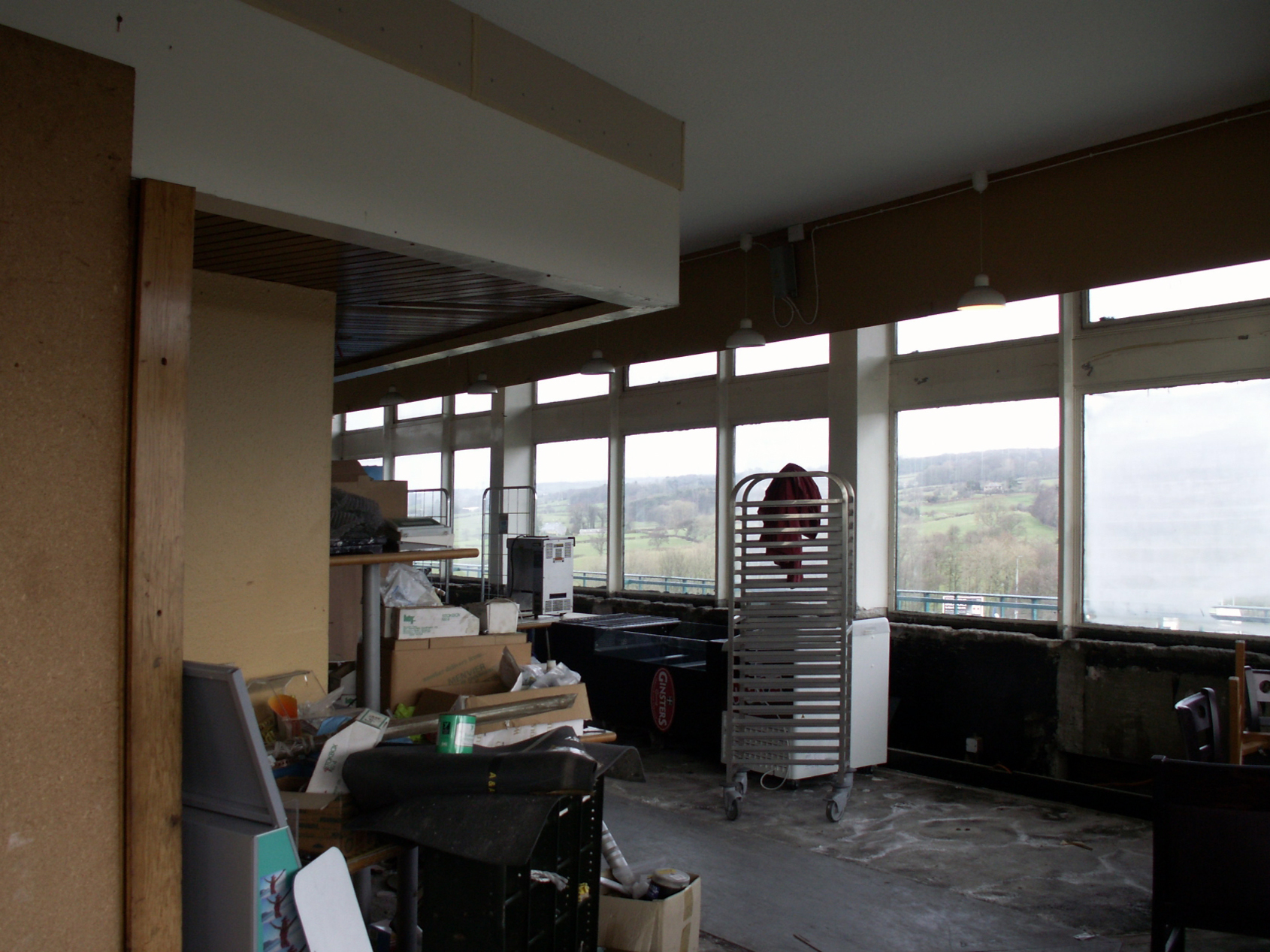
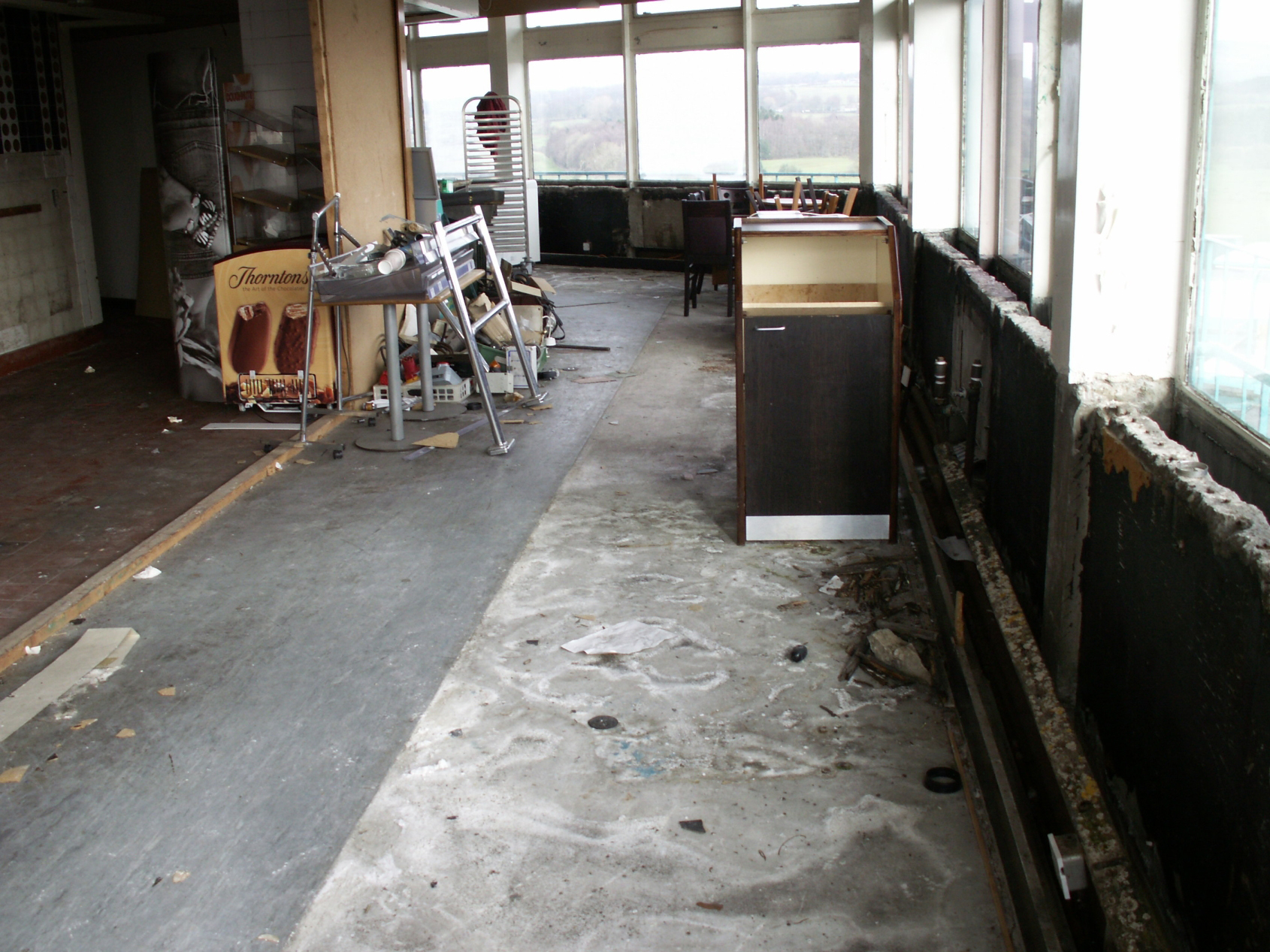
At the top of the tower stood a fine-dining waitress service restaurant, offering views over the road below and across Lancashire. Above the restaurant the lift extended to roof-level, to allow the roof to serve as a sun terrace – although Rank admitted they weren’t sure what this could be used for, suggesting serving tea or eventually building another level.
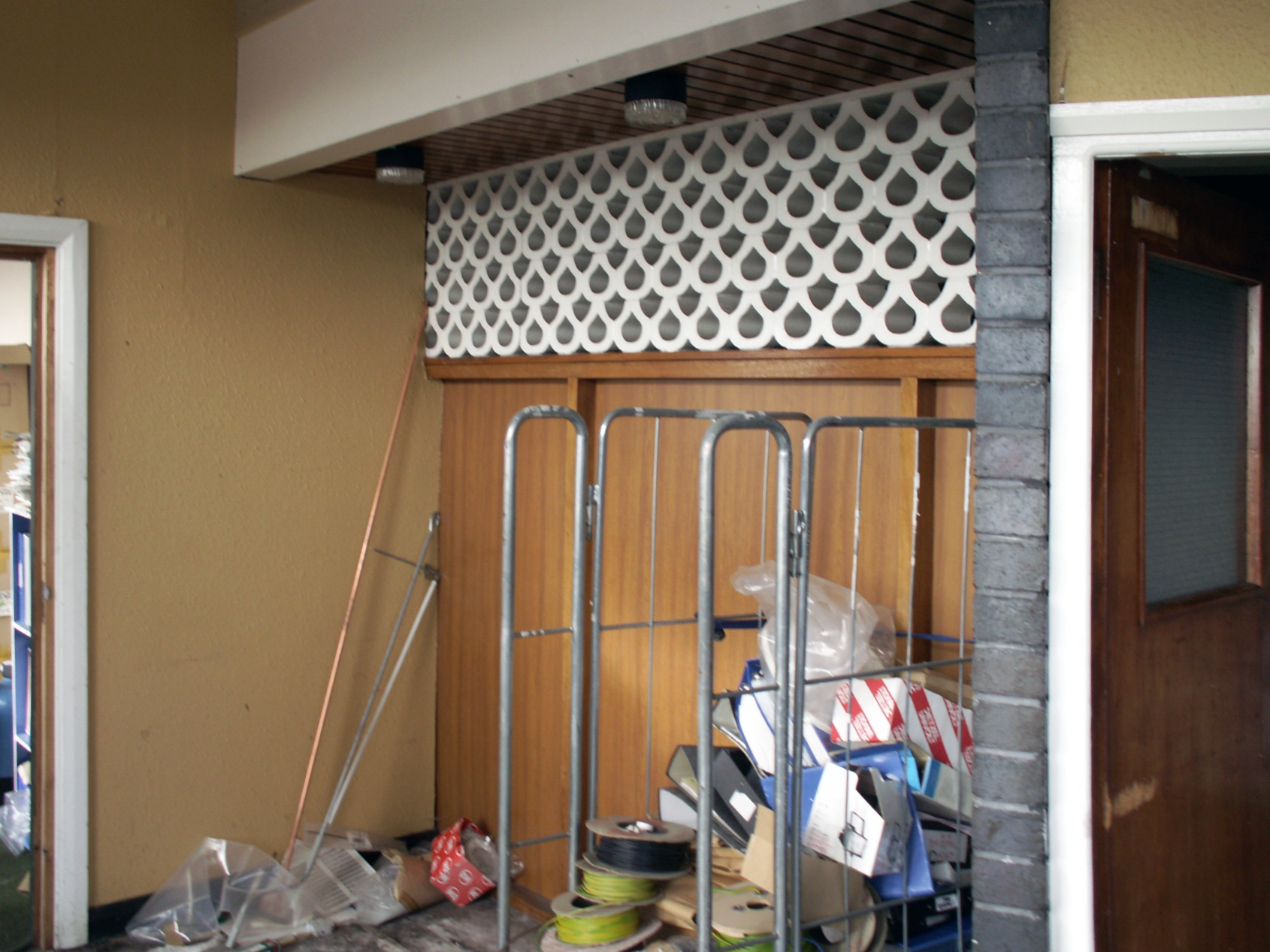
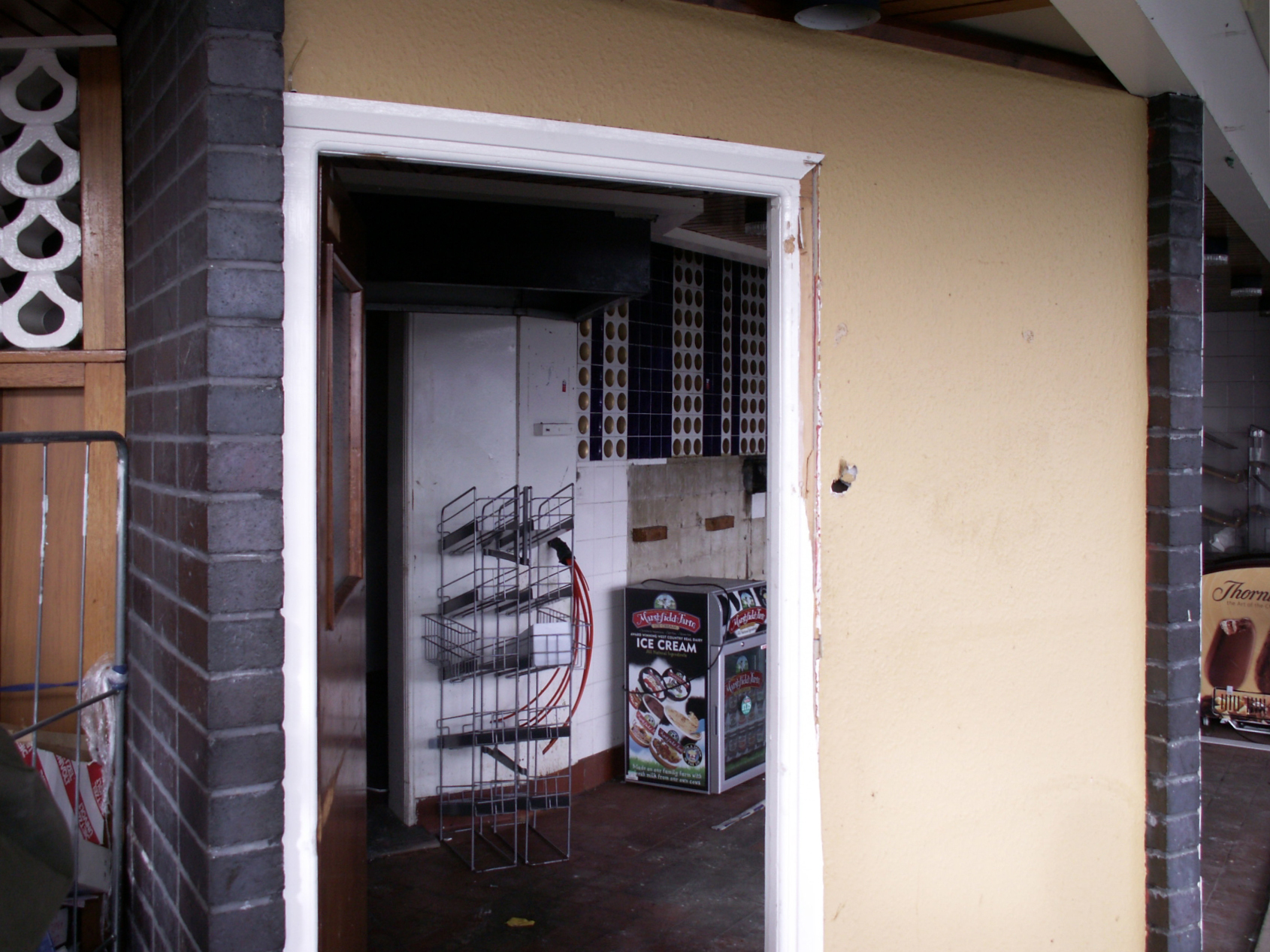
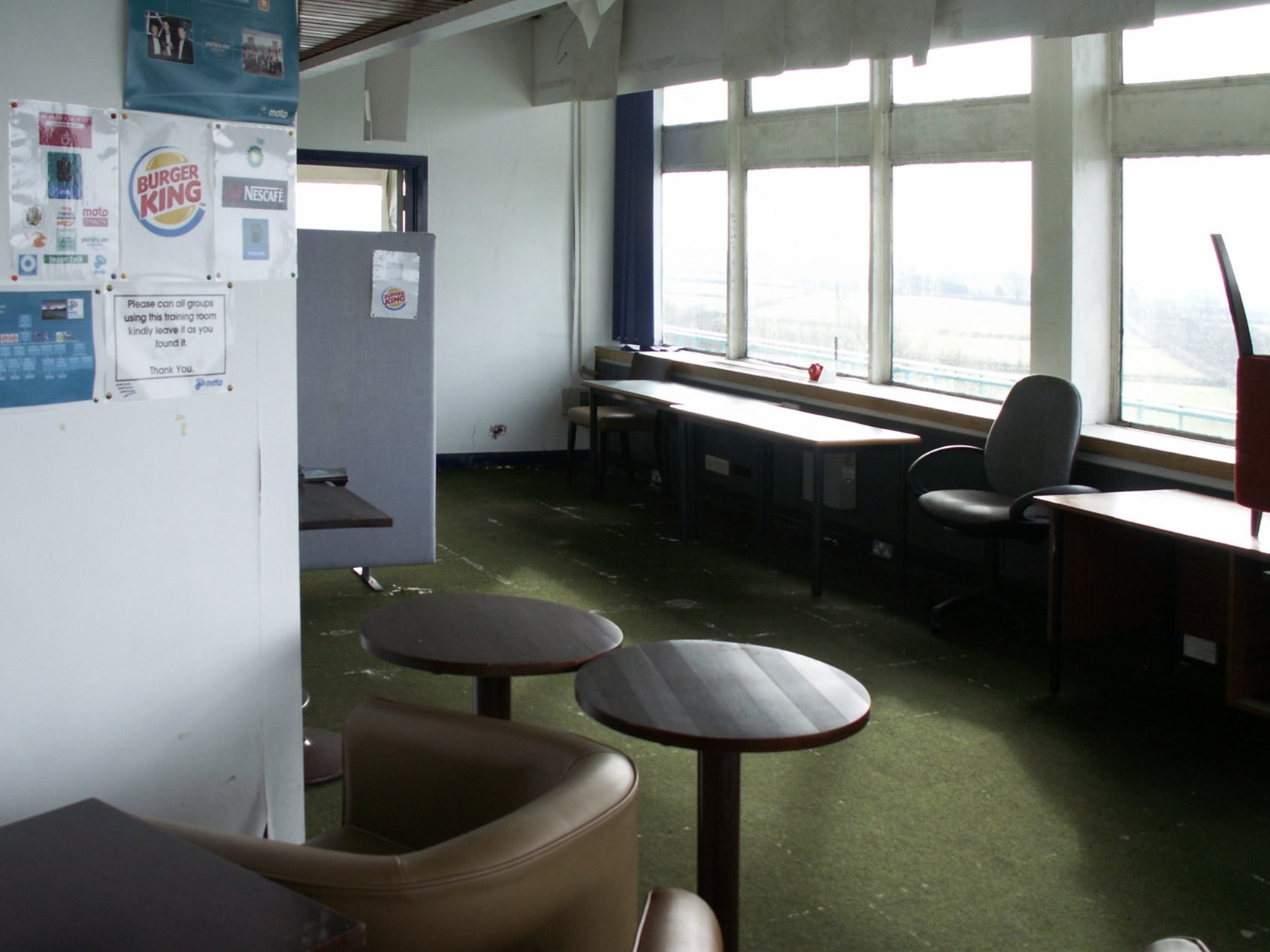
In reality social changes and cost-cutting limited the desirability of a sit-down meal, and this coupled with high maintenance costs made the tower fall out of favour. The ‘fine dining’ restaurant became the trucking lounge that had been on the first floor, before closing to the public in 1989. It then soldiered on for another 15 years, partially re-fitted, as a head office, then staff training and storage, but even this became too impractical, and the tower is now not used at all.
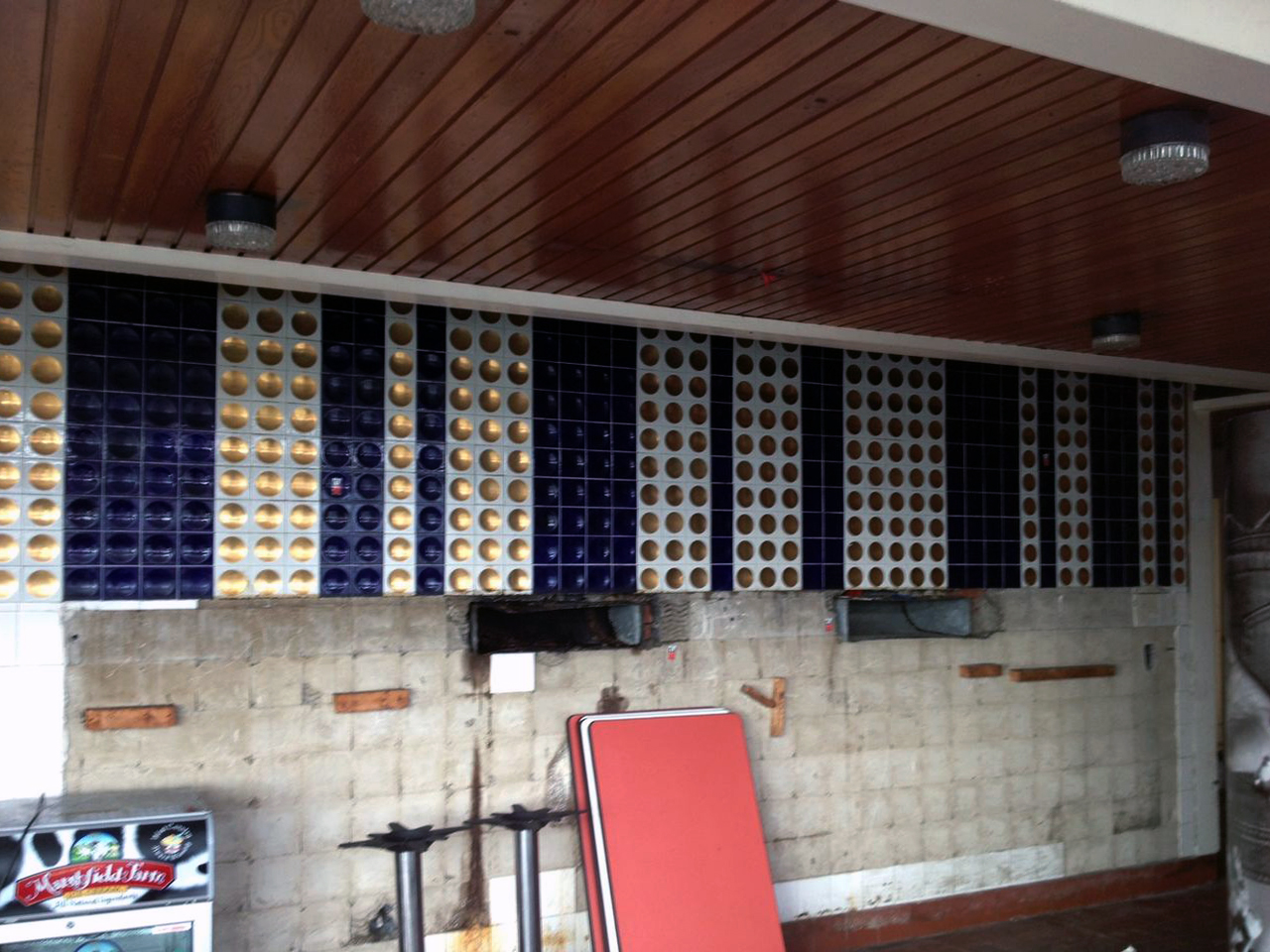
Although the tower is unique to these services, the concept of large high-level floors can be seen in many Rank services of the era, the idea of each one being to have a visible landmark and a good view of the surrounding area, such as at Hilton Park. The lower-level restaurant at Forton sticks out over the first floor, and partially in to the road, to give an optimum view. Toilets and offices were in the ground floor buildings below.
There are lots of myths flying around that the tower was forced to close by safety regulations, and that it is about to fall down. Like any building which hasn’t been used for 30 years it would take a lot of investment to get it open again, and with roadside restaurants across the country closing due to a lack of trade, nobody has come up with an convincing plan to justify investing in the Pennine Tower.




































































 Modern Mooch