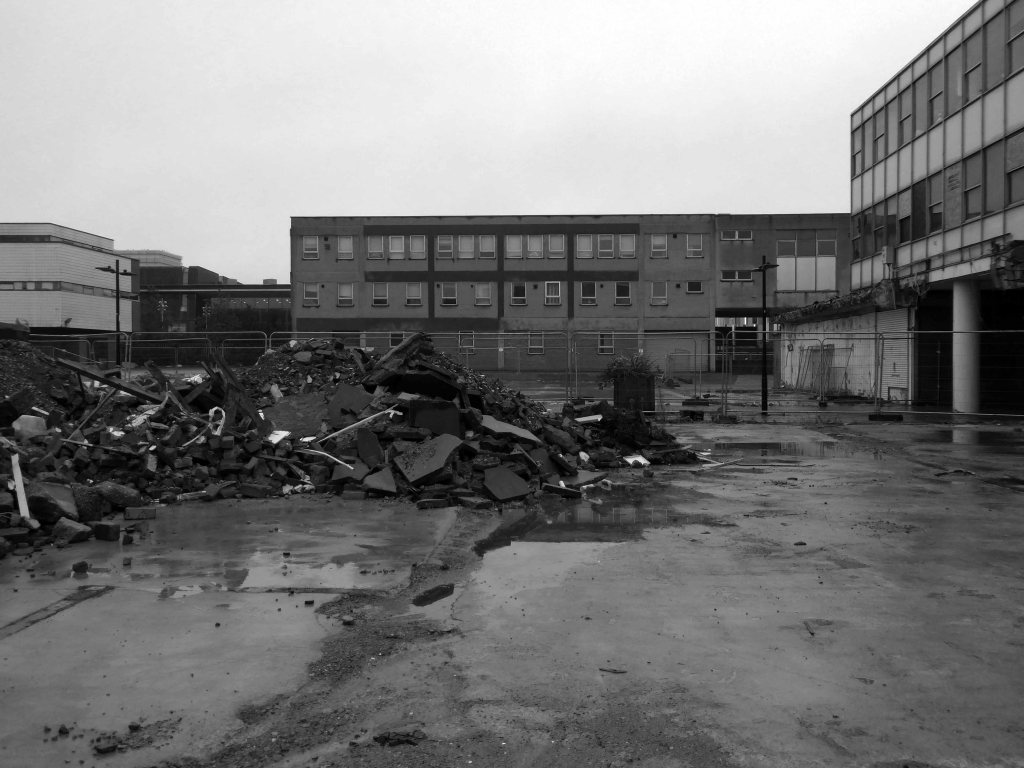
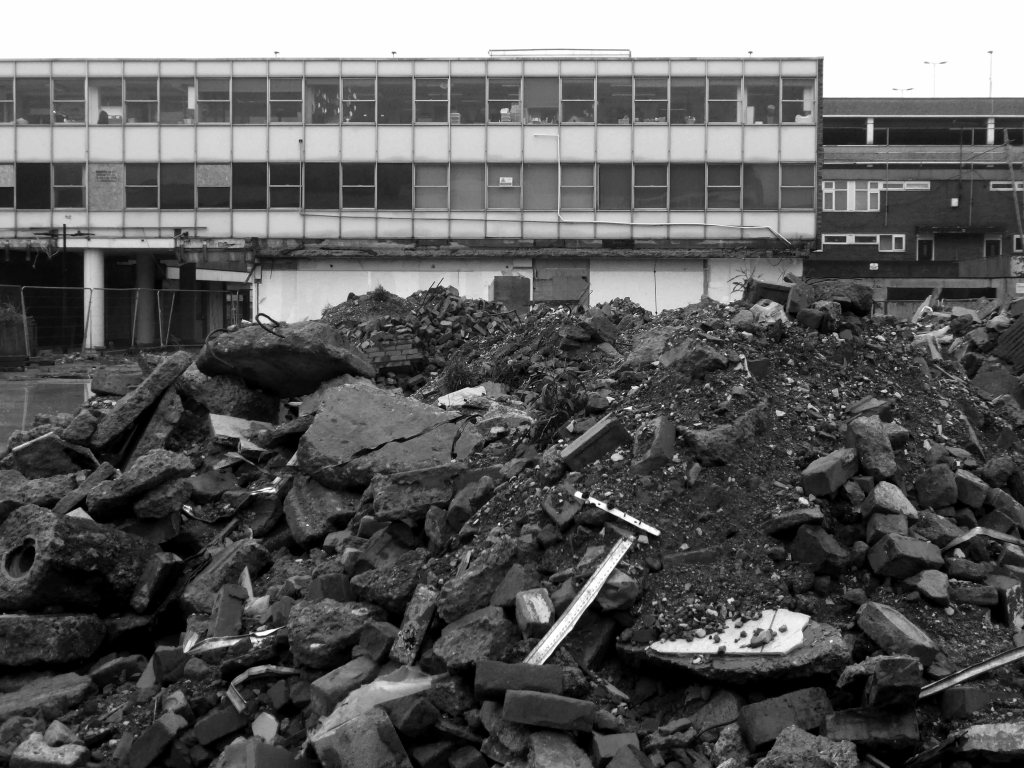
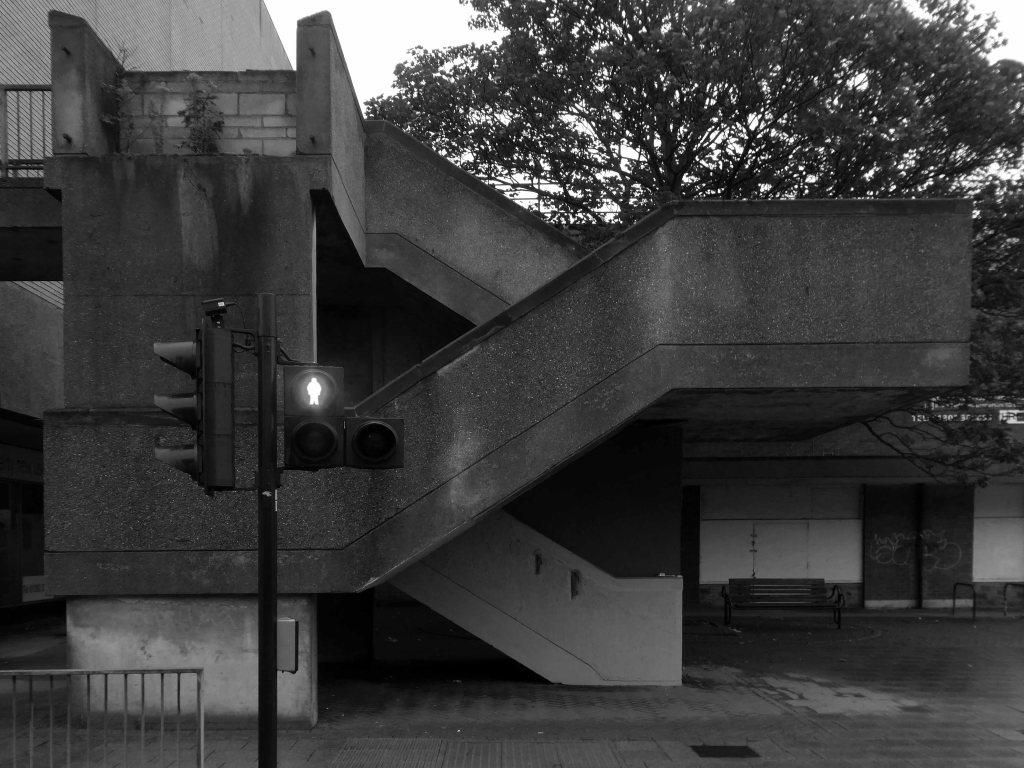
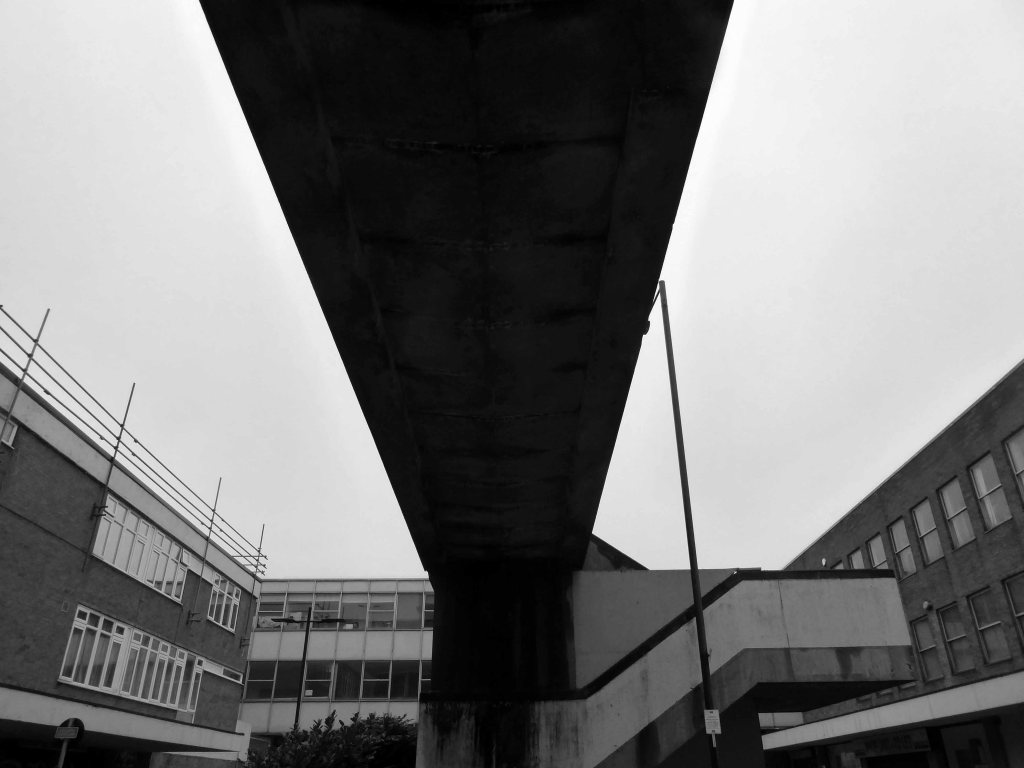
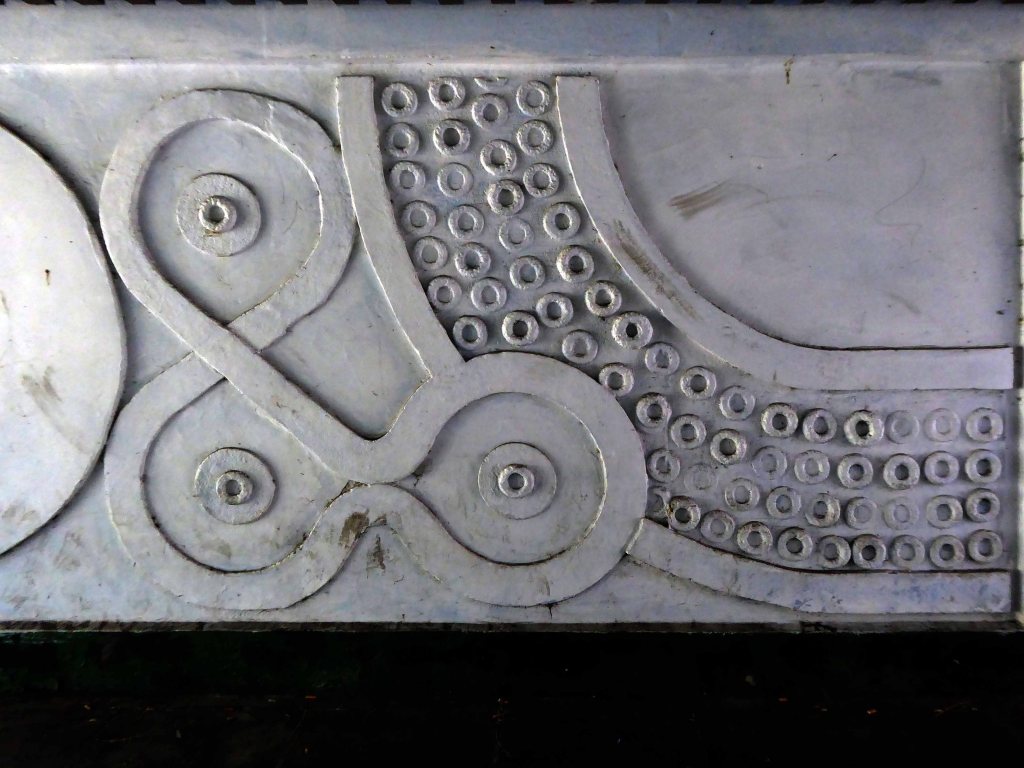
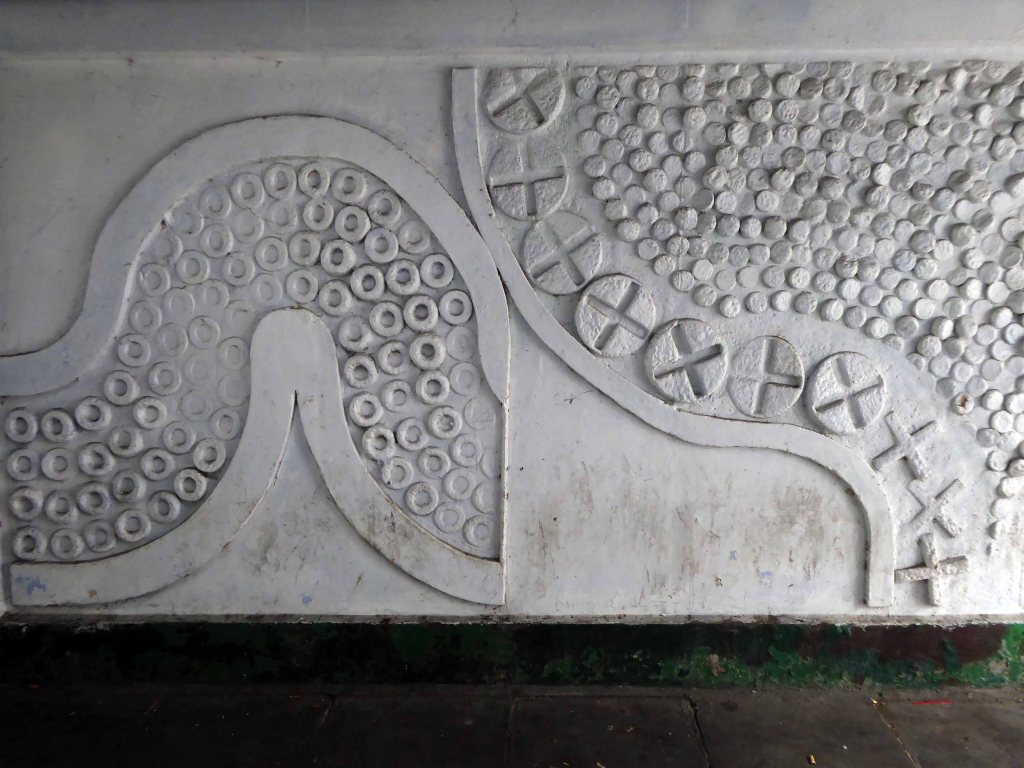
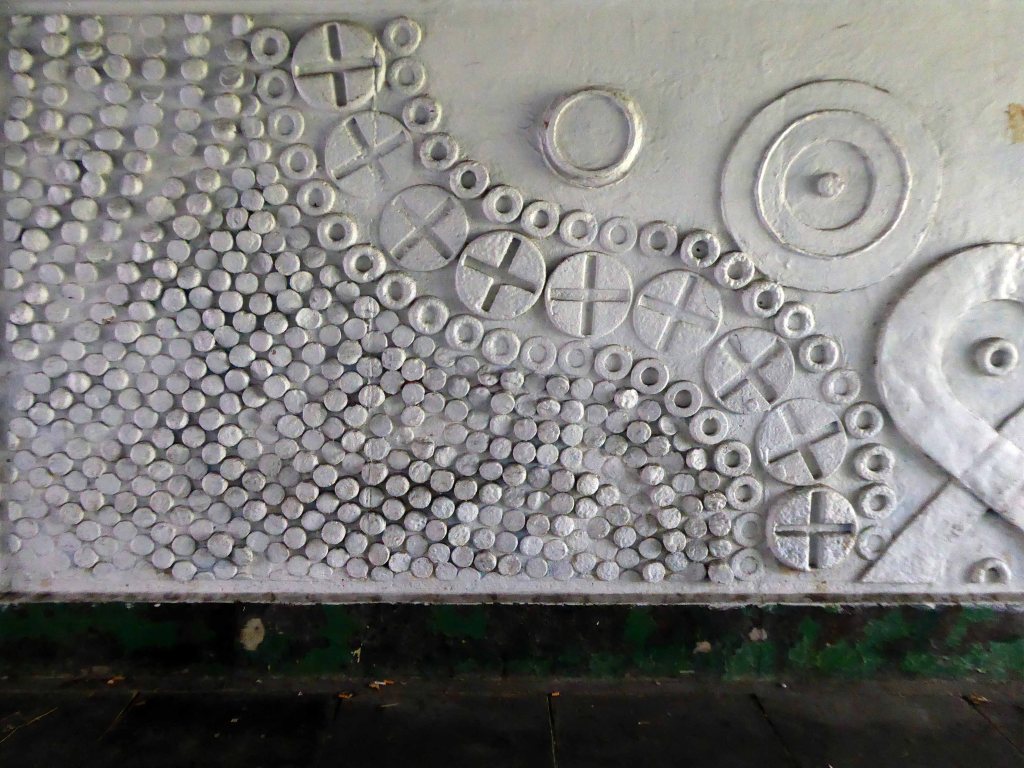
Rotherham Modernism

There comes a time in everyone’s life, when one simply must go to Rotherham, at least once – so I did.

To keep company with my personal town guide, Sheffield Modernist and local resident, Helen Angell.

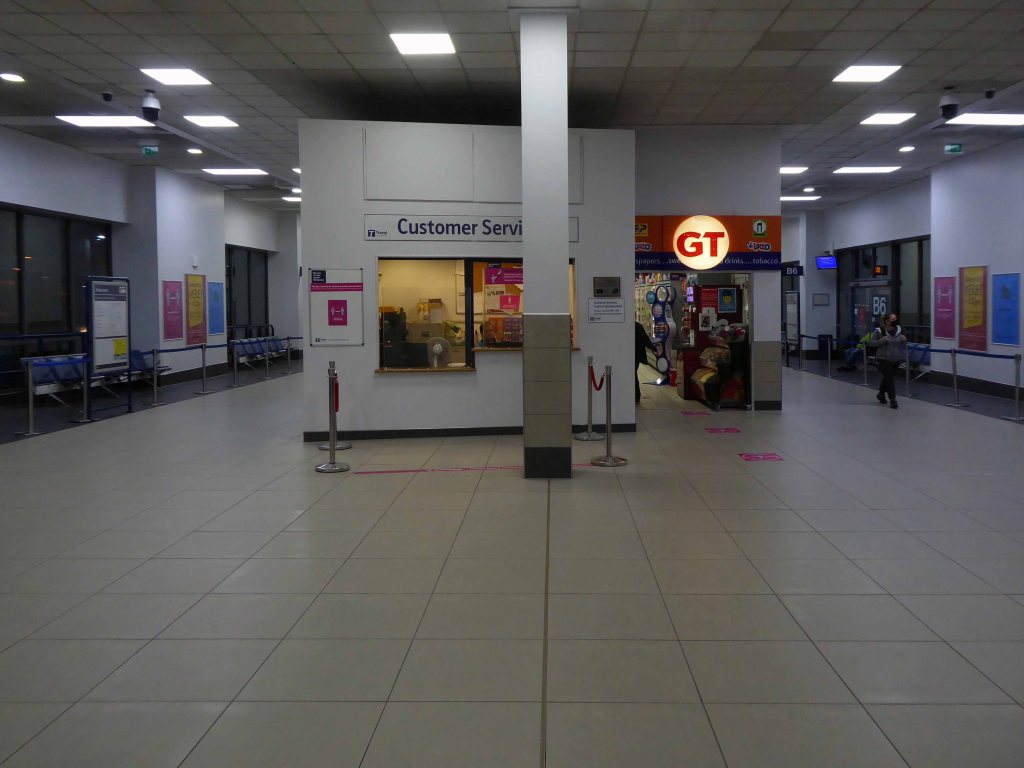
I arrived early at Rotherham Central, so went for a solo wander.

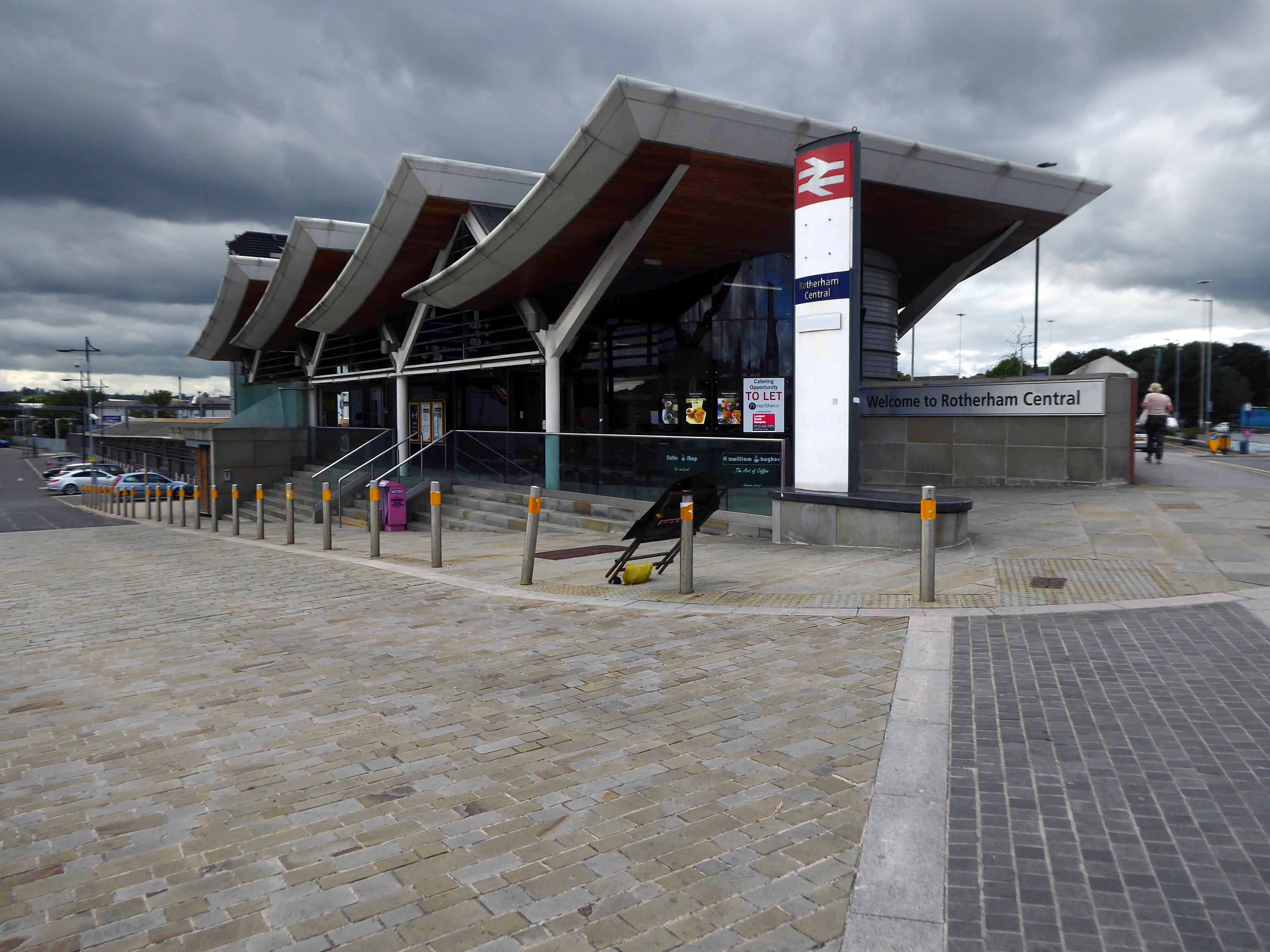
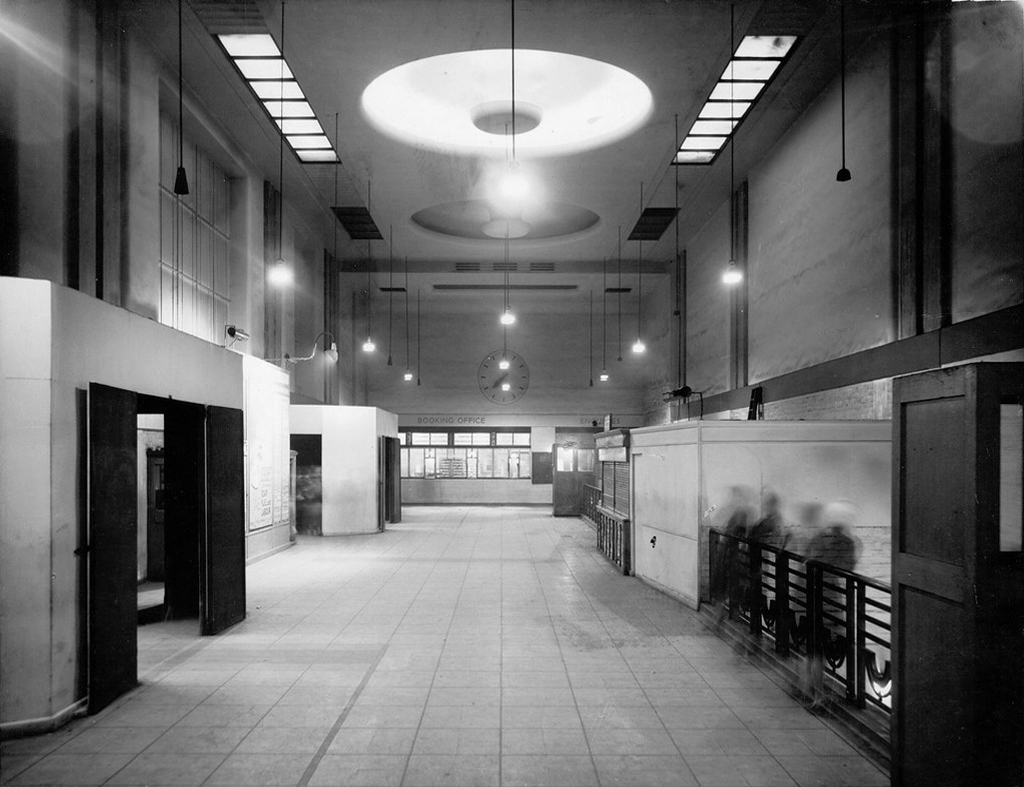
The station was originally named Rotherham, becoming Rotherham and Masborough in January 1889 and finally Rotherham Central on 25 September 1950.

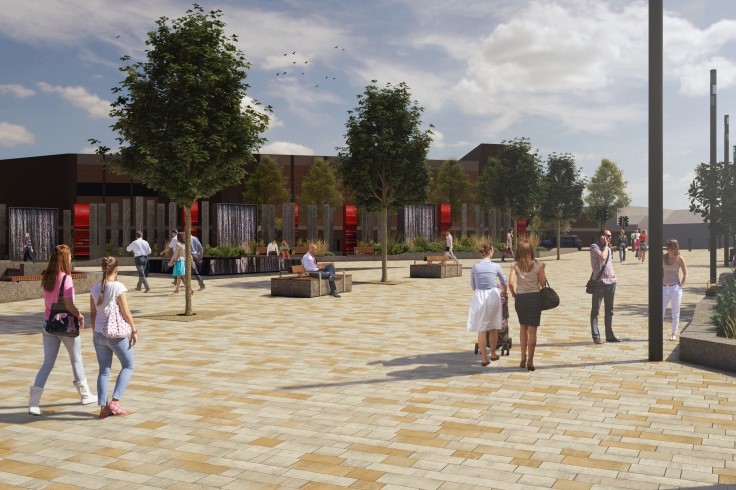
The newish Rotherham Central station was opened to passengers on 11 May 1987, the present iteration on Friday 24 February 2012, as part of the Rotherham Renaissance plans for the regeneration of the town.

Wikipedia

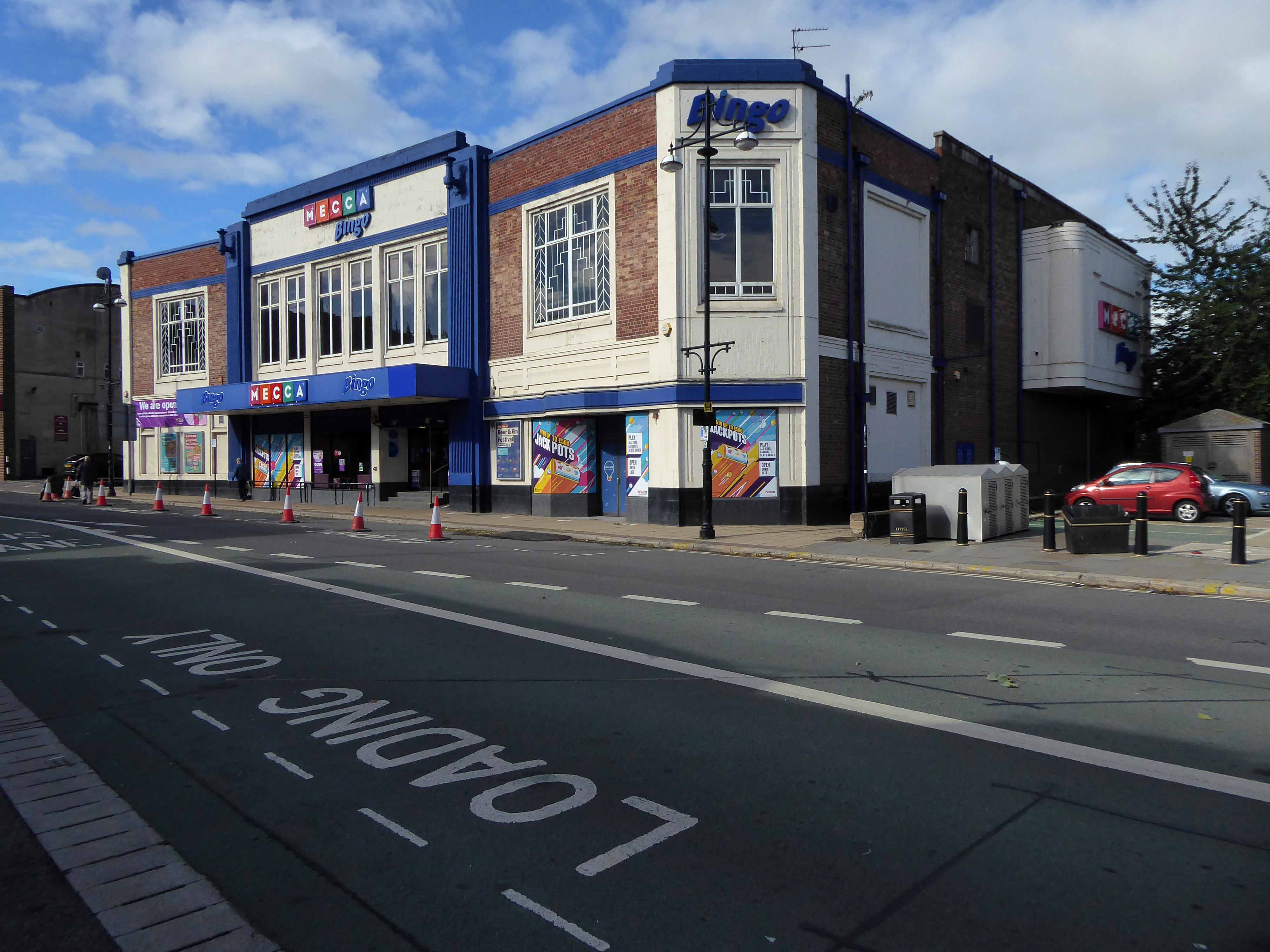
Opened 22 December 1934 as the Regal Cinema with Leslie Howard in Girls Please. Sandy Powell, the famous comedian attended opening night this 1,825 seat. It was designed by the Hull based architectural firm Messrs Blackmore & Sykes for local exhibitor Thomas Wade and was leased to the Lou Morris chain.

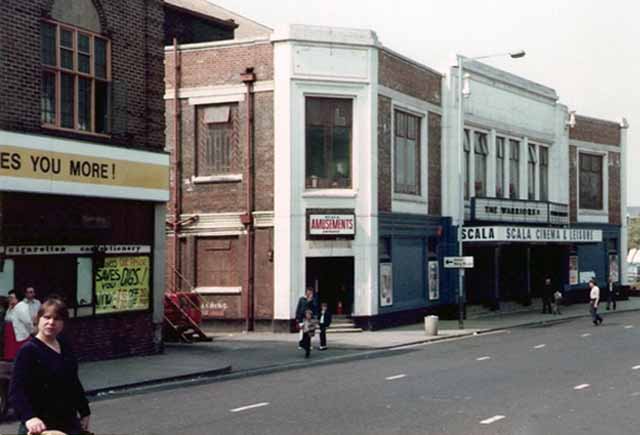
By 1937 it was operated by the London & Southern Super Cinemas Ltd. chain. The Regal Cinema was leased to the Odeon circuit in 1946 and was re-named Odeon. It was sold by the Rank Organisation to an independent operator in 1975 and renamed Scala Cinema, by 1981 using the circle only.

Closed 23rd September 1983 with the film Porky’s.

Became a bingo hall initially named Ritz but now Mecca. On 20th February 2020 the building was put up for sale by auction at an asking price of £600,000+, but failed to sell, with the maximum reached £590,000. Mecca bingo continues in the building.

Cinema Treasures

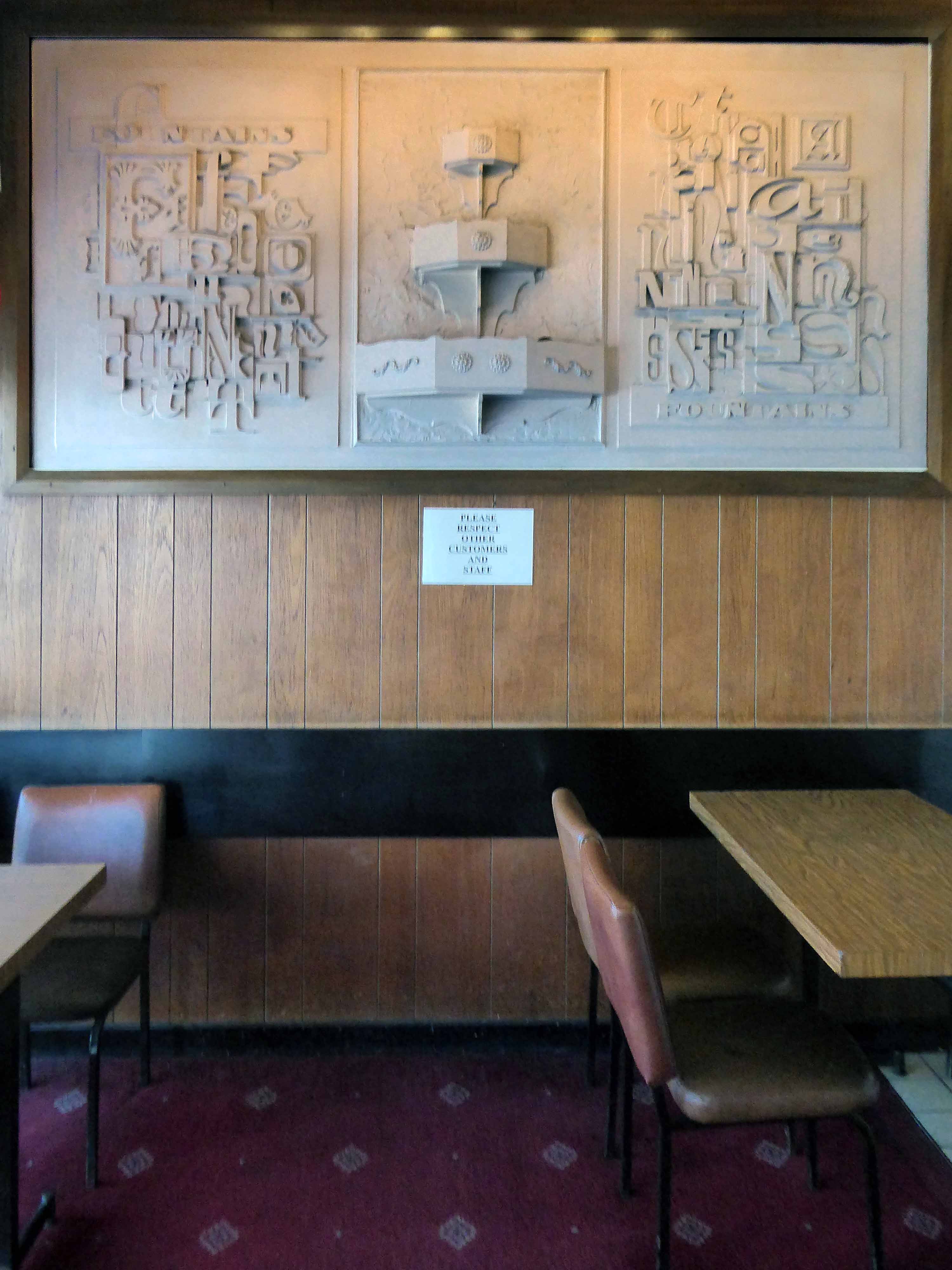
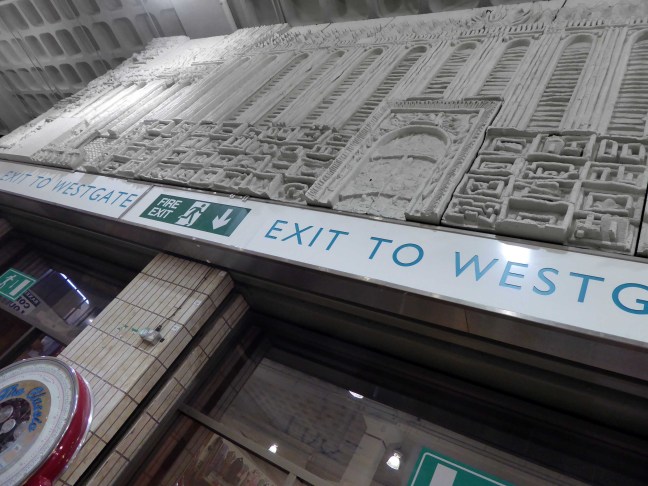
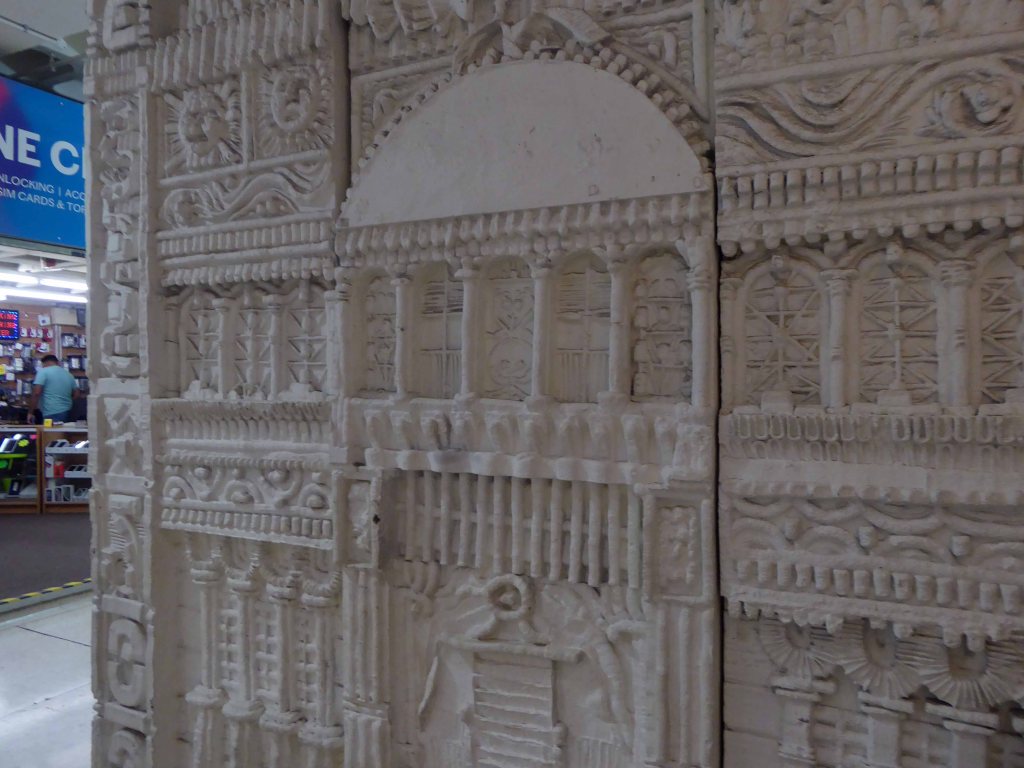
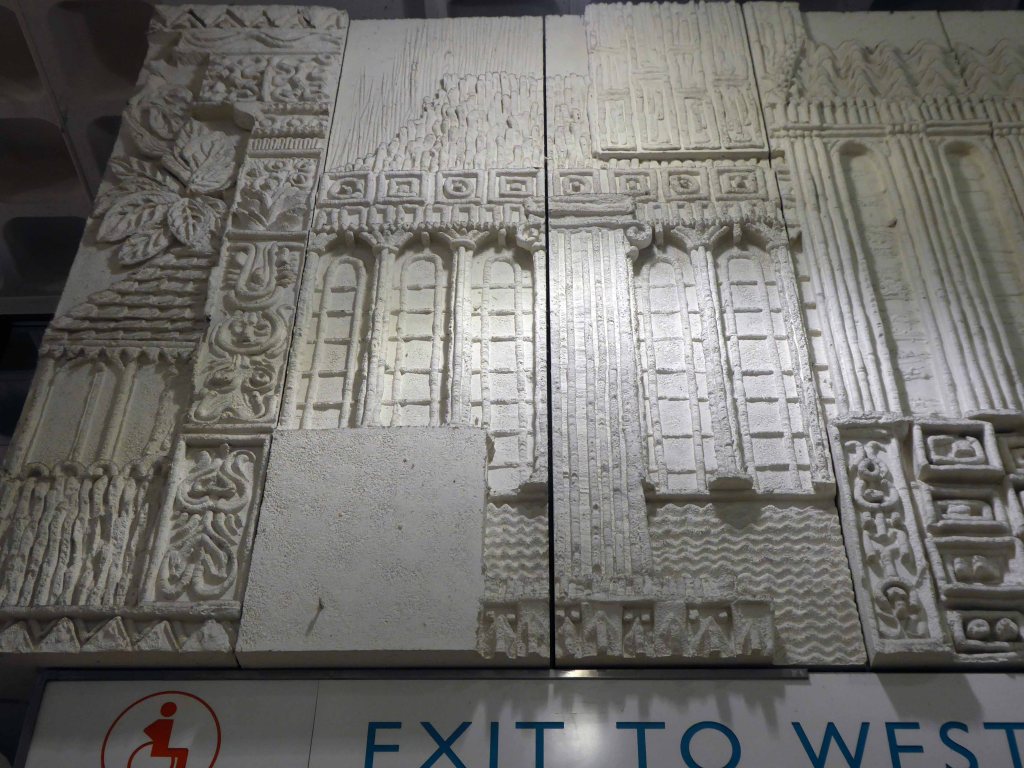
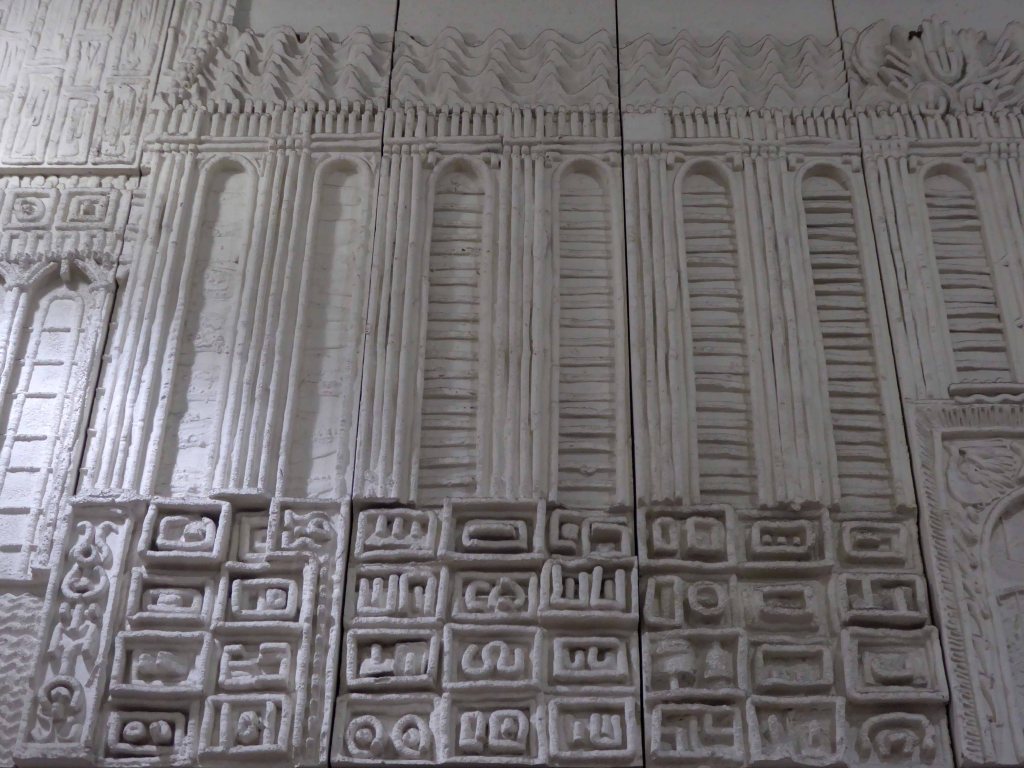
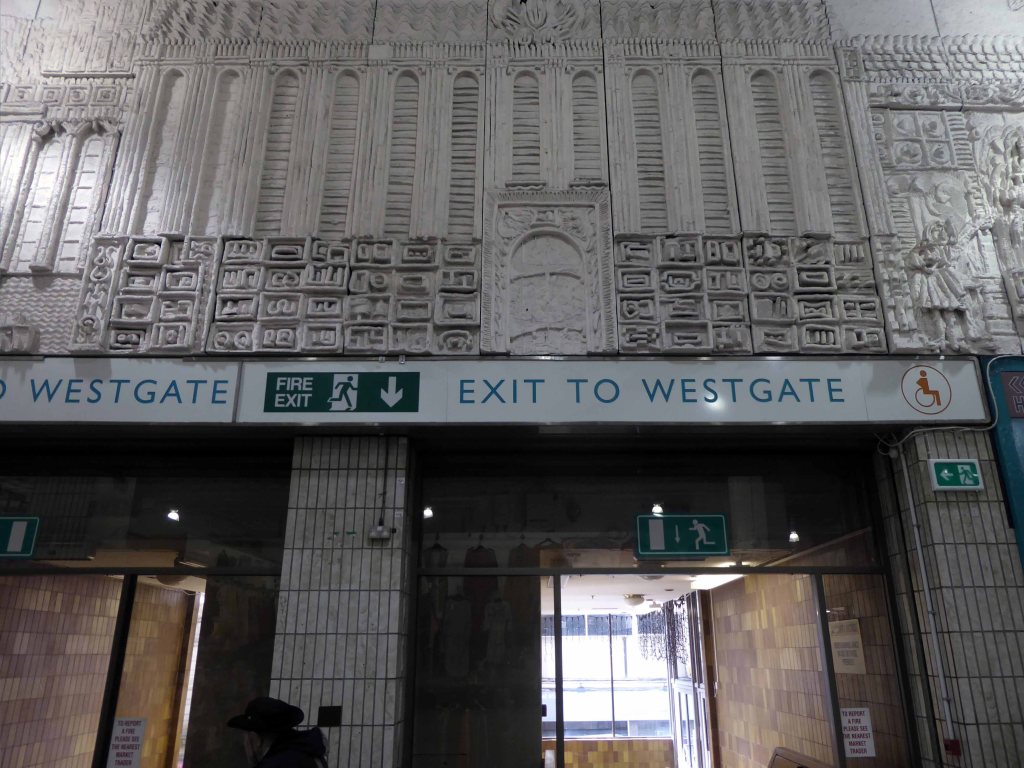
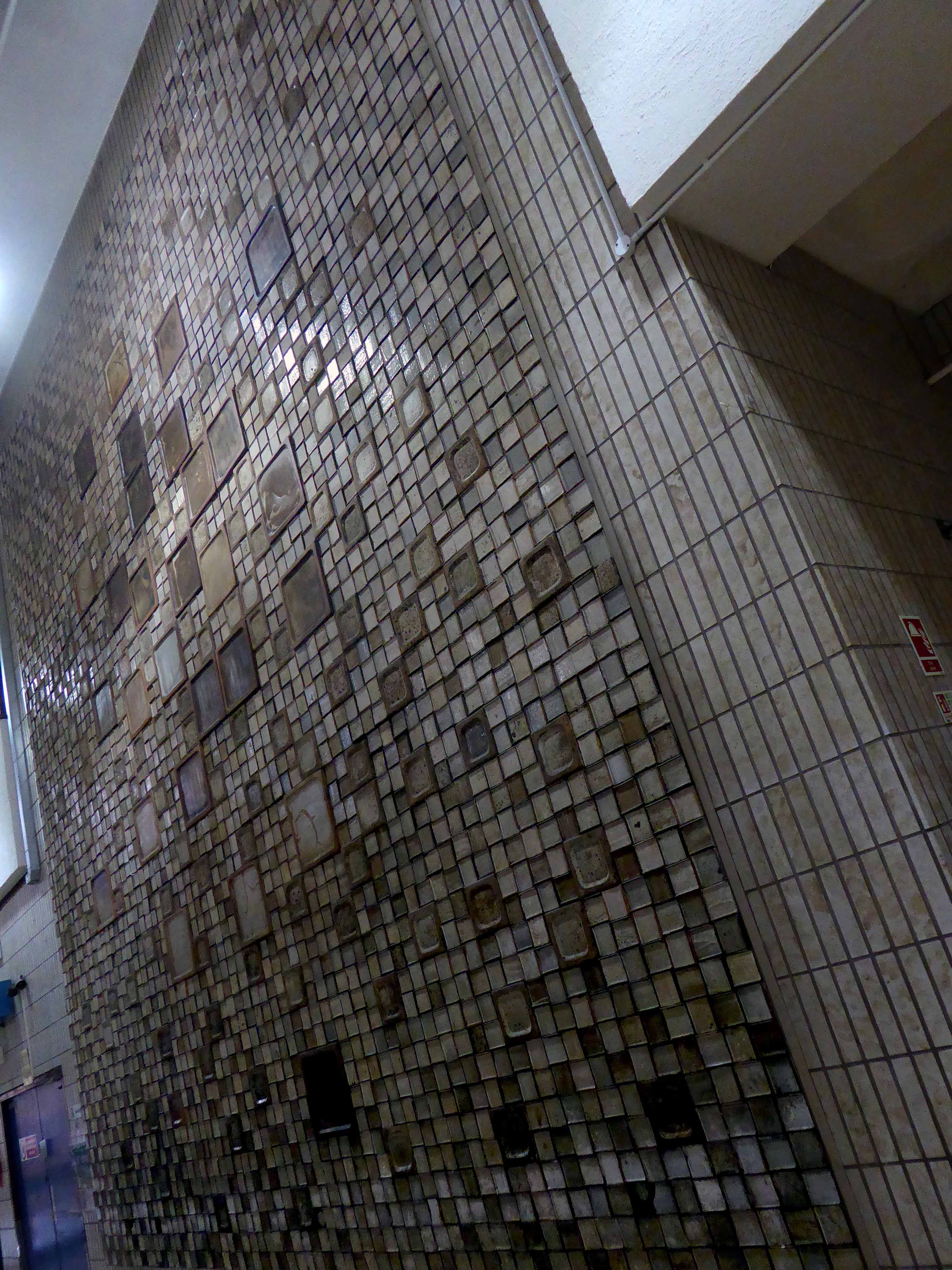
Curious corner retail development and sculpture of the Sixties – with pub archeology.

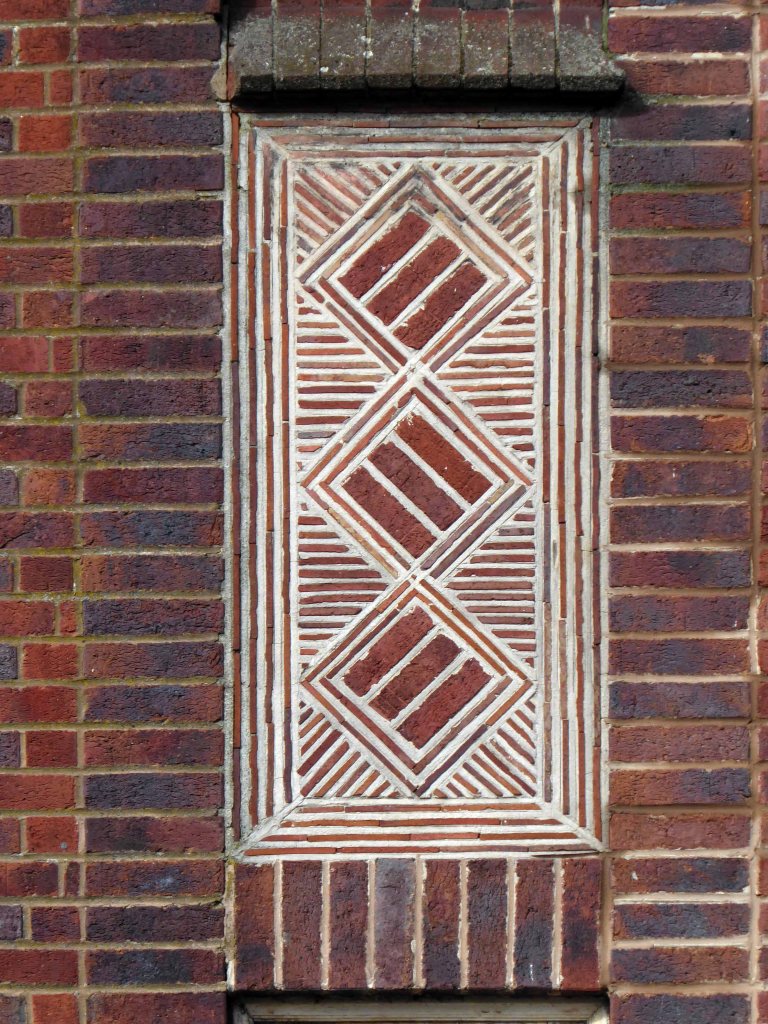
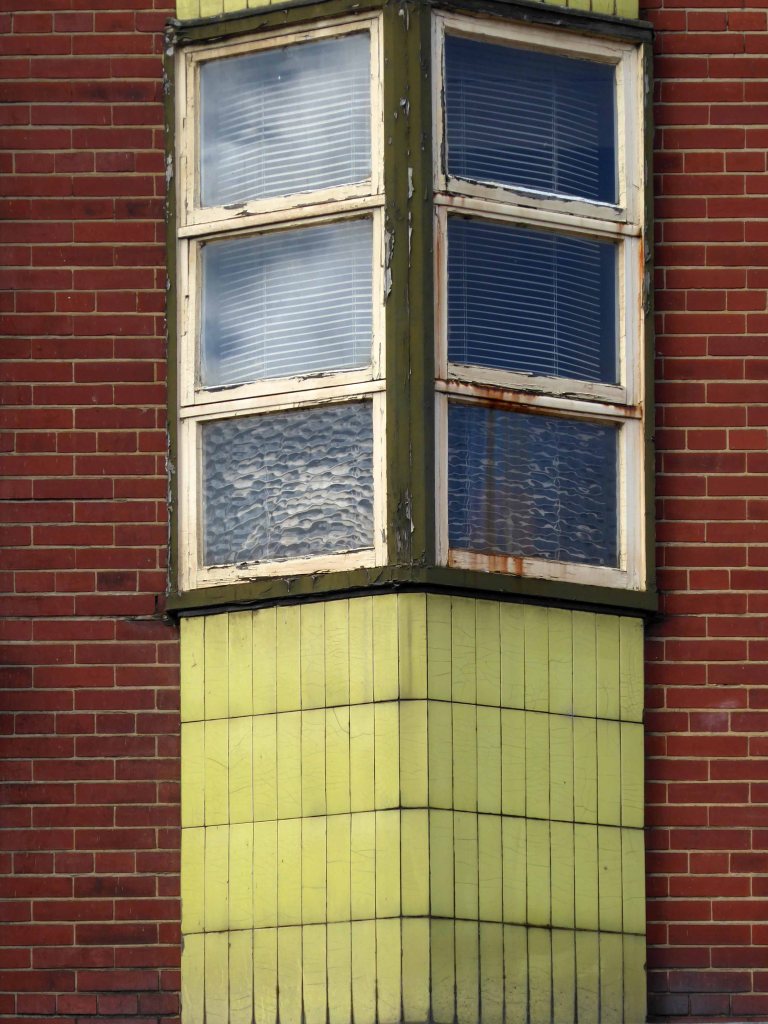
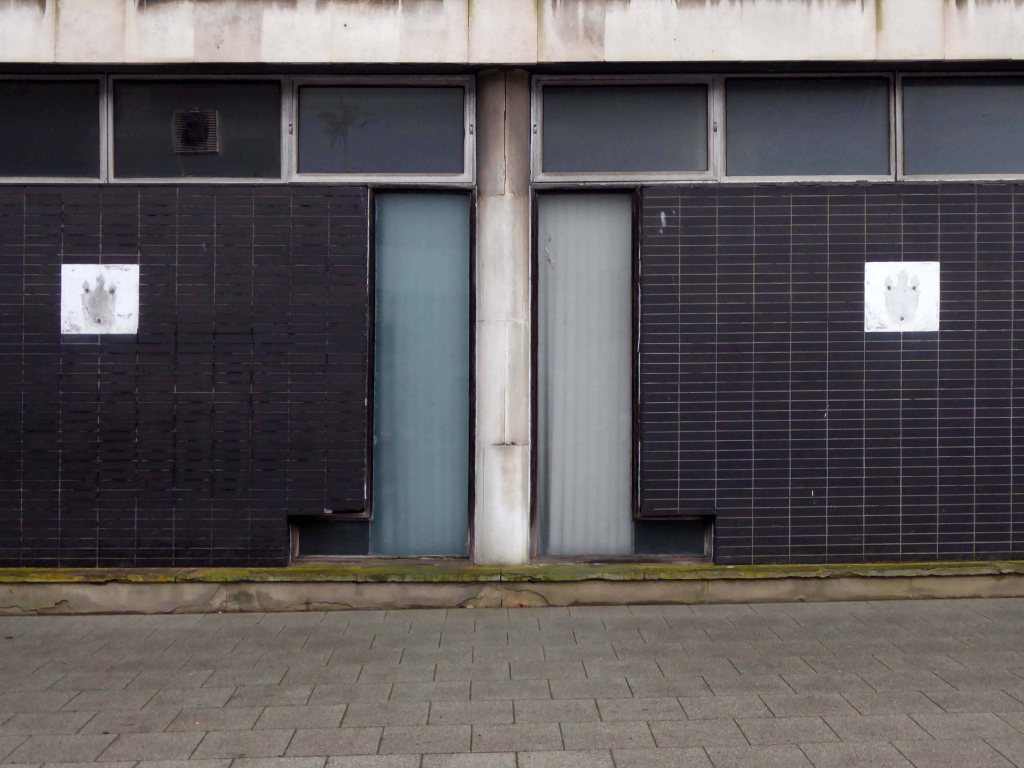
Art Deco detail and tiling.

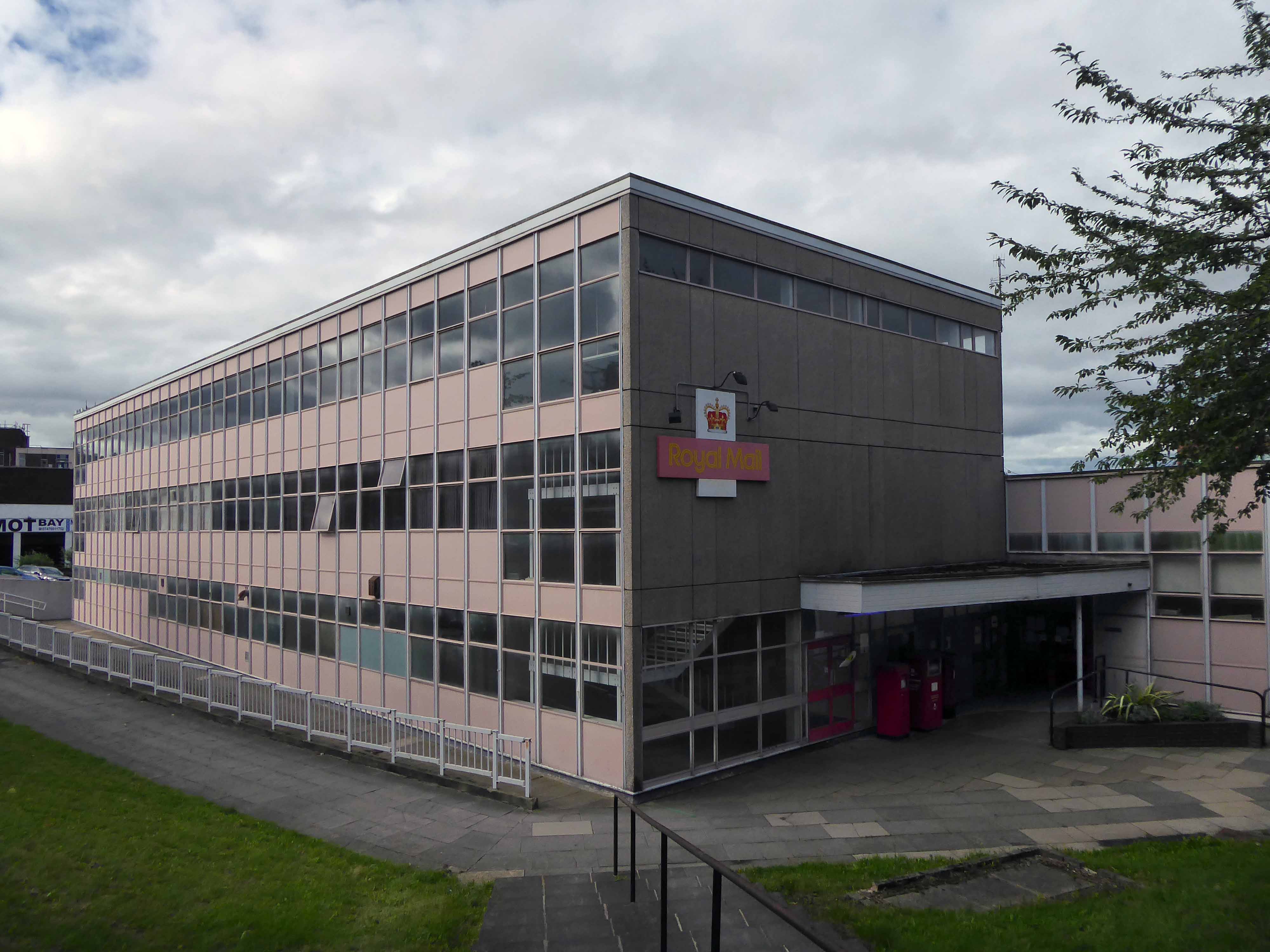
Royal Mail Sorting Office.

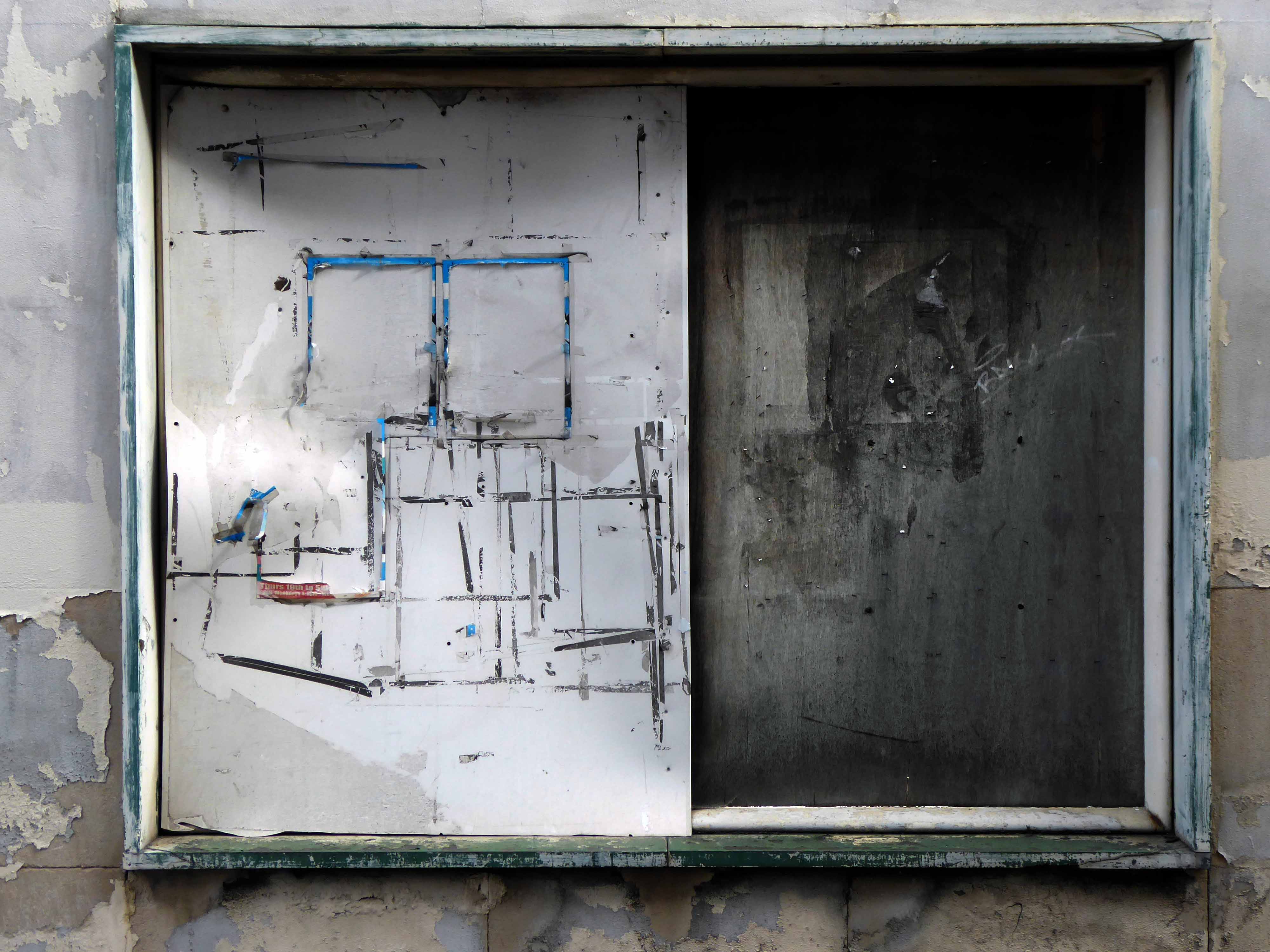
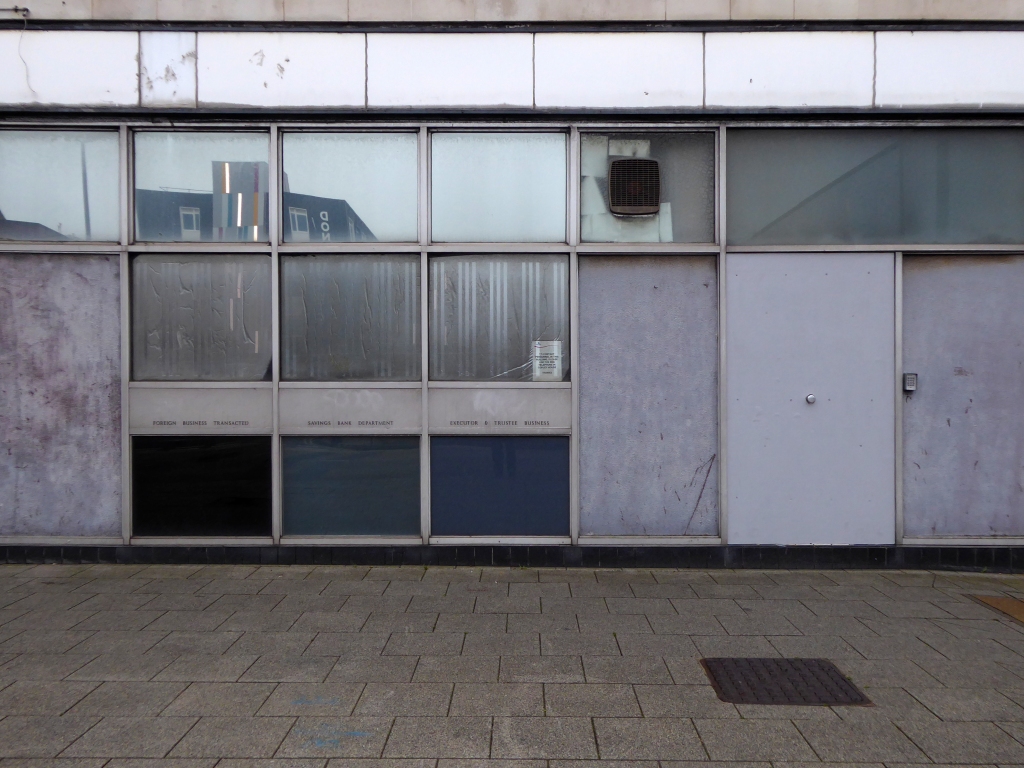
Retail detail.

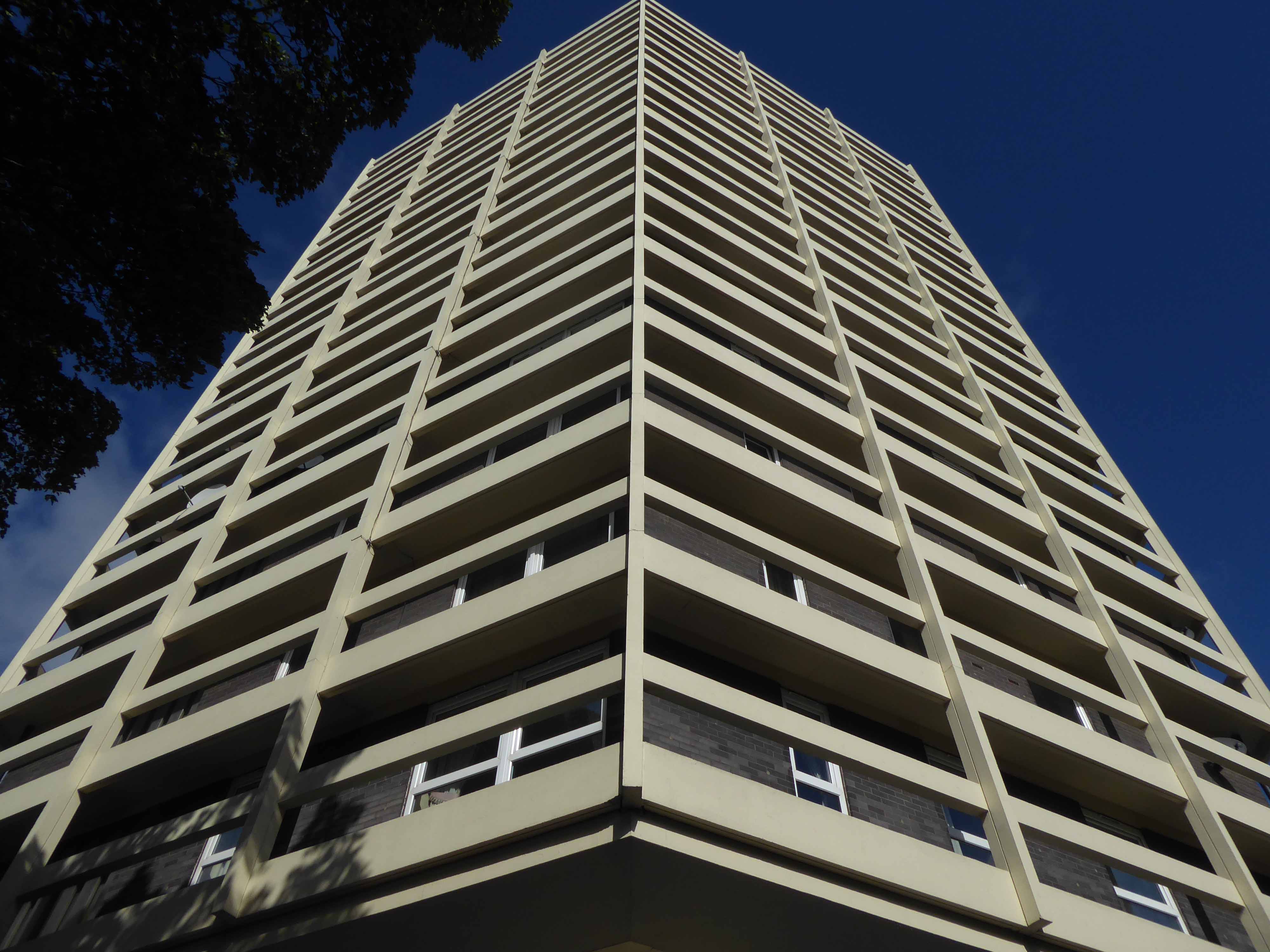
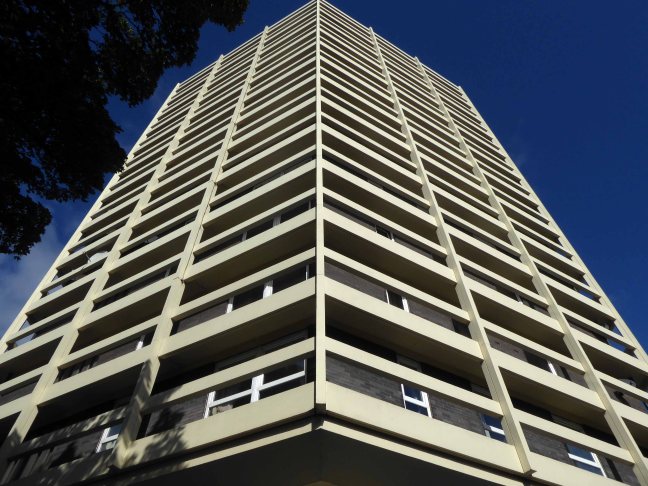
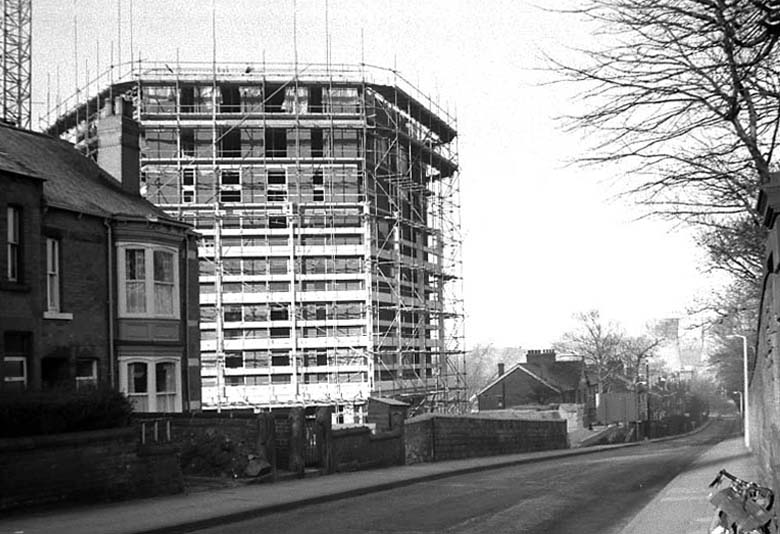
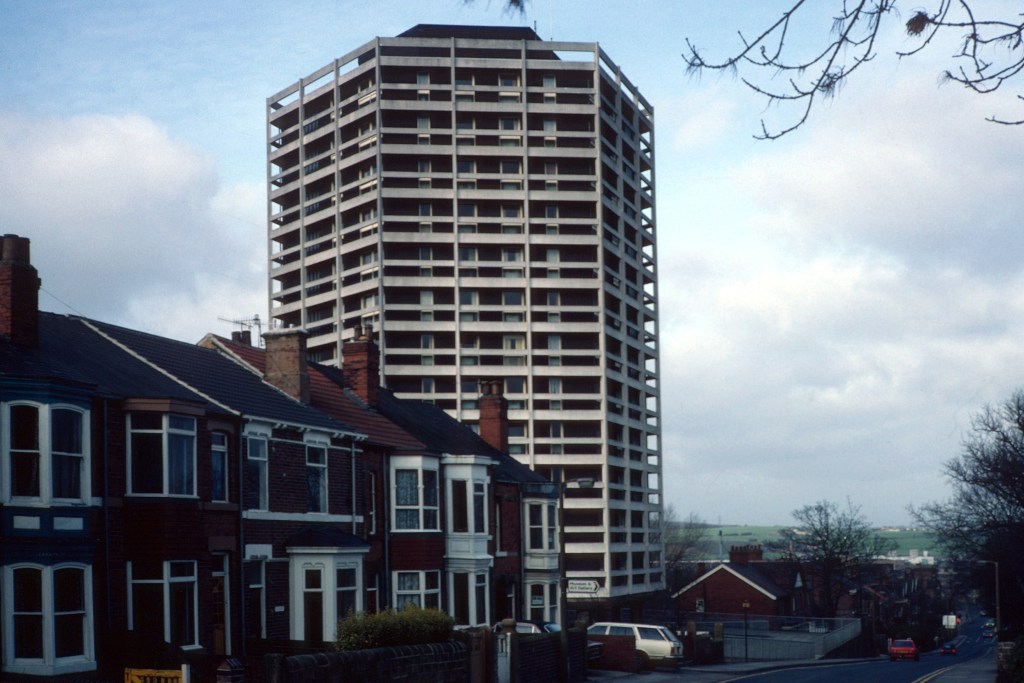
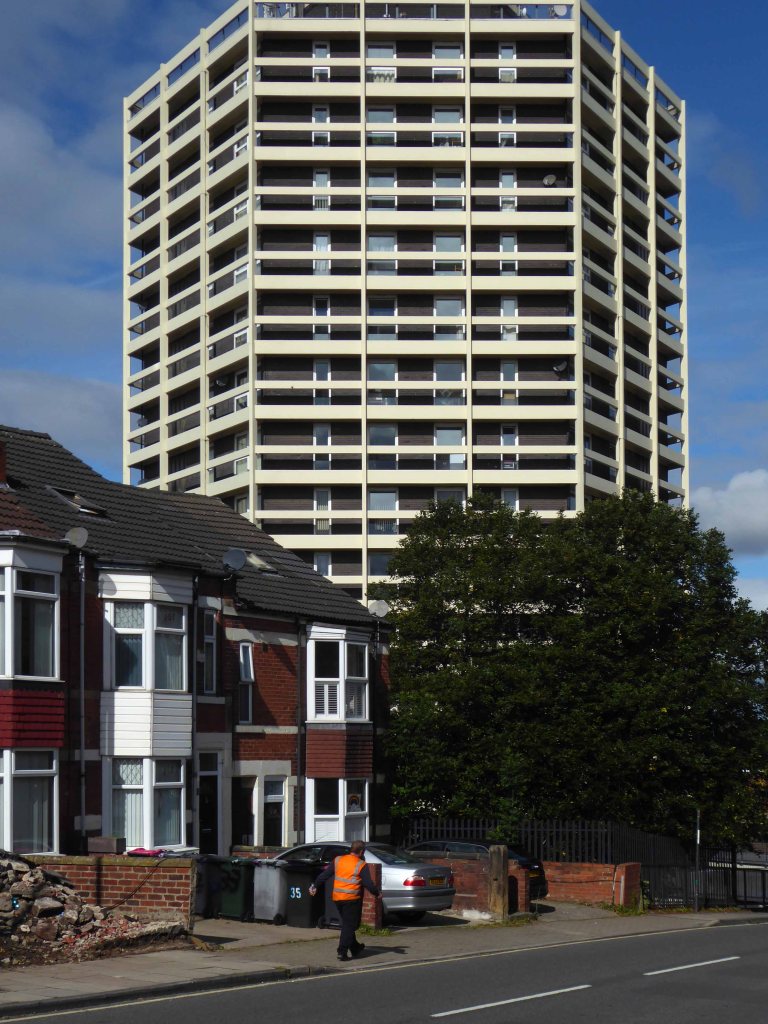
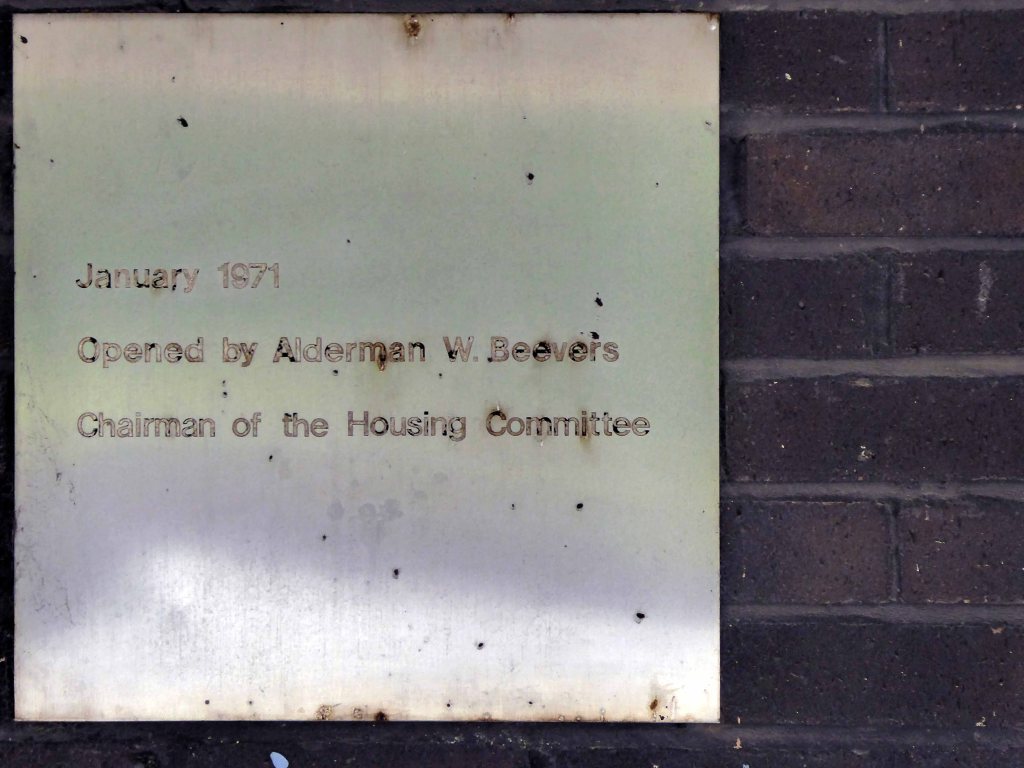
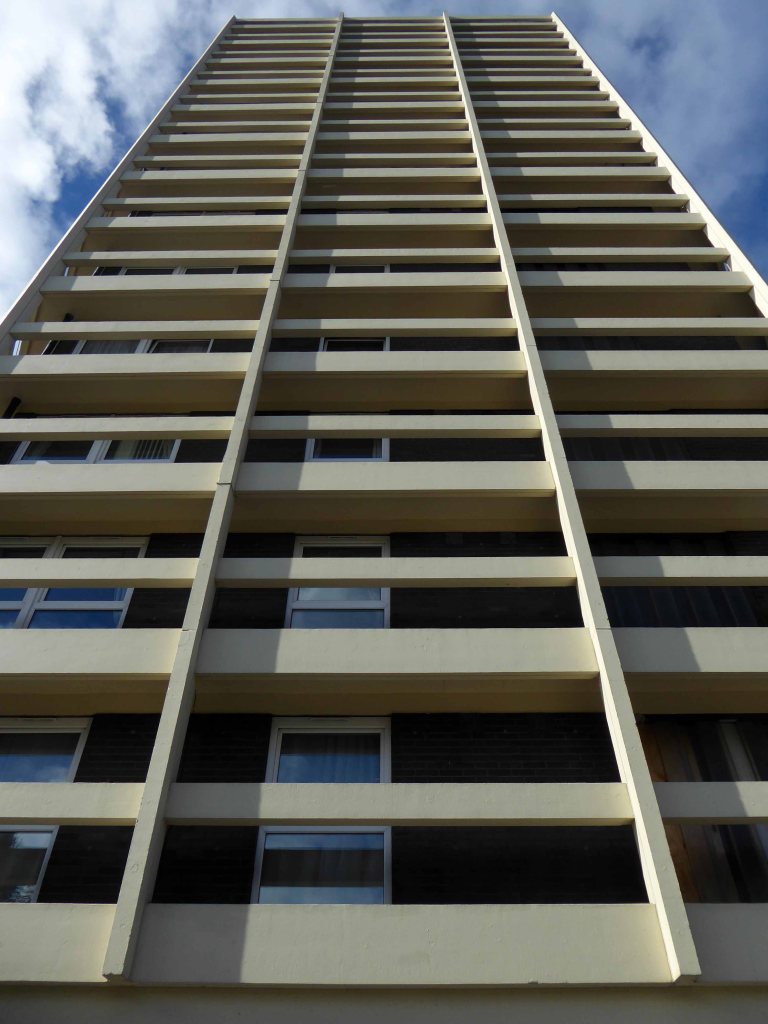
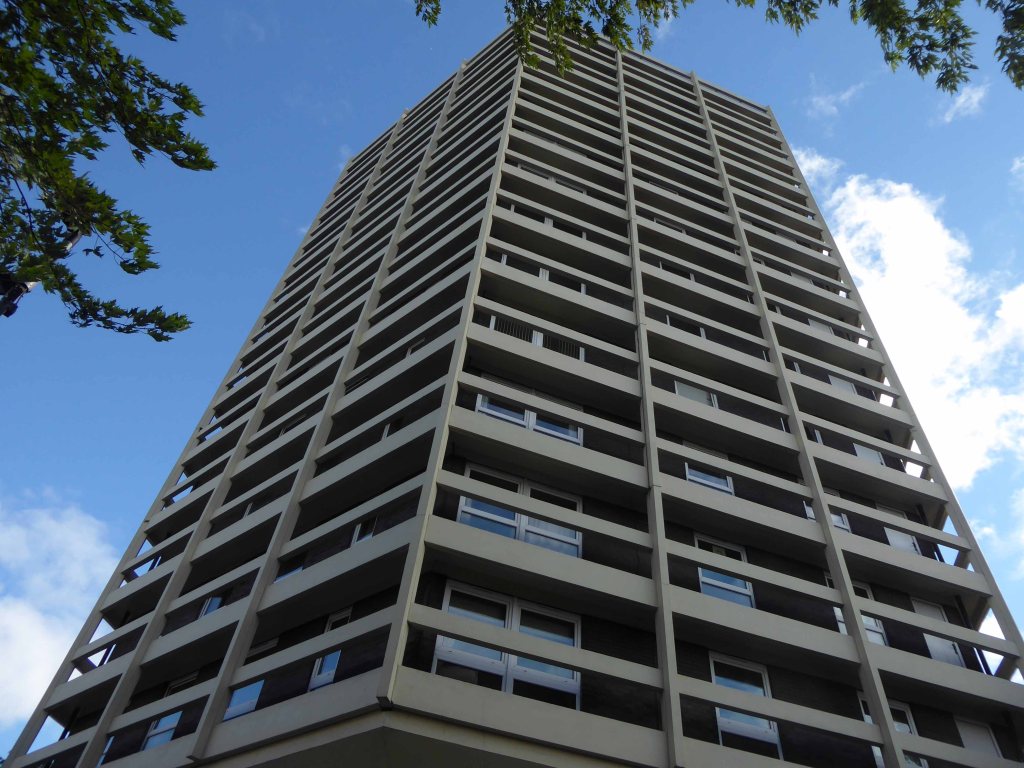
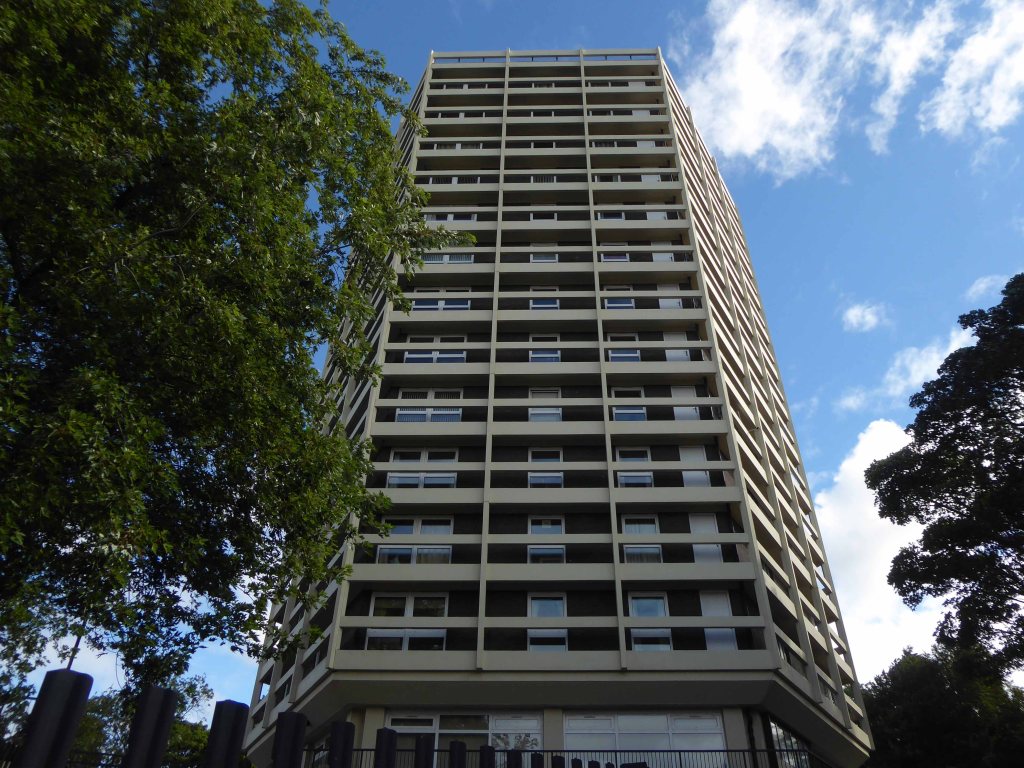
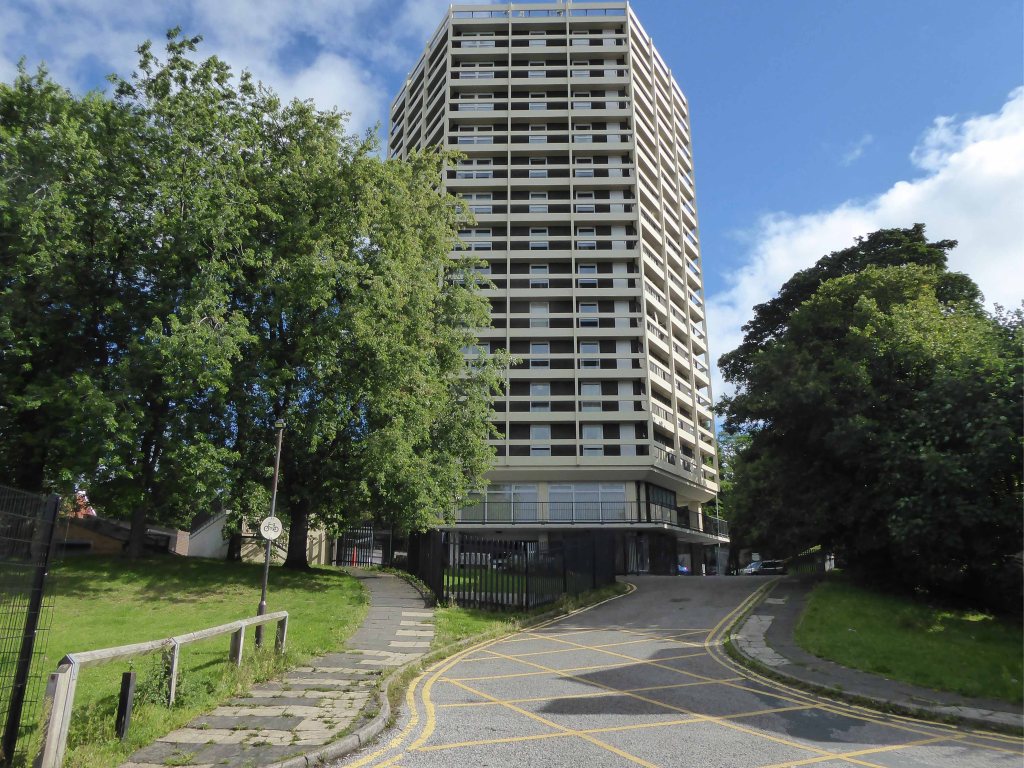
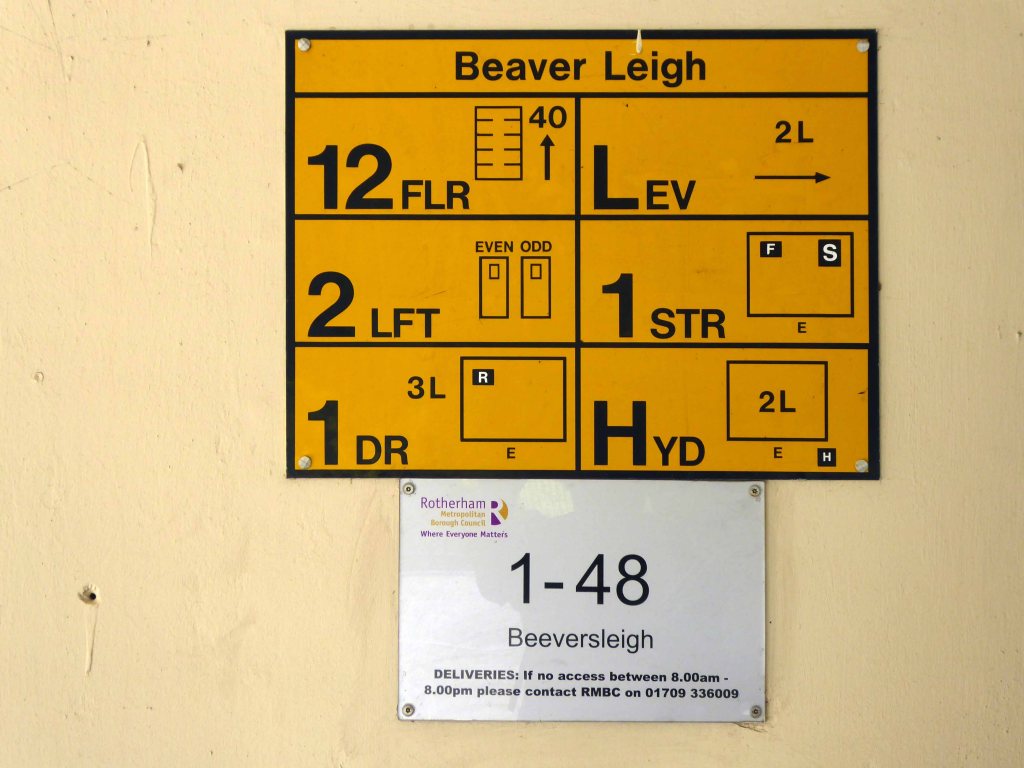
Beeversleigh Flats – built between 1968-71. 

Main contractors J. Finnegan it’s thirteen storeys high – housing forty eight dwellings.

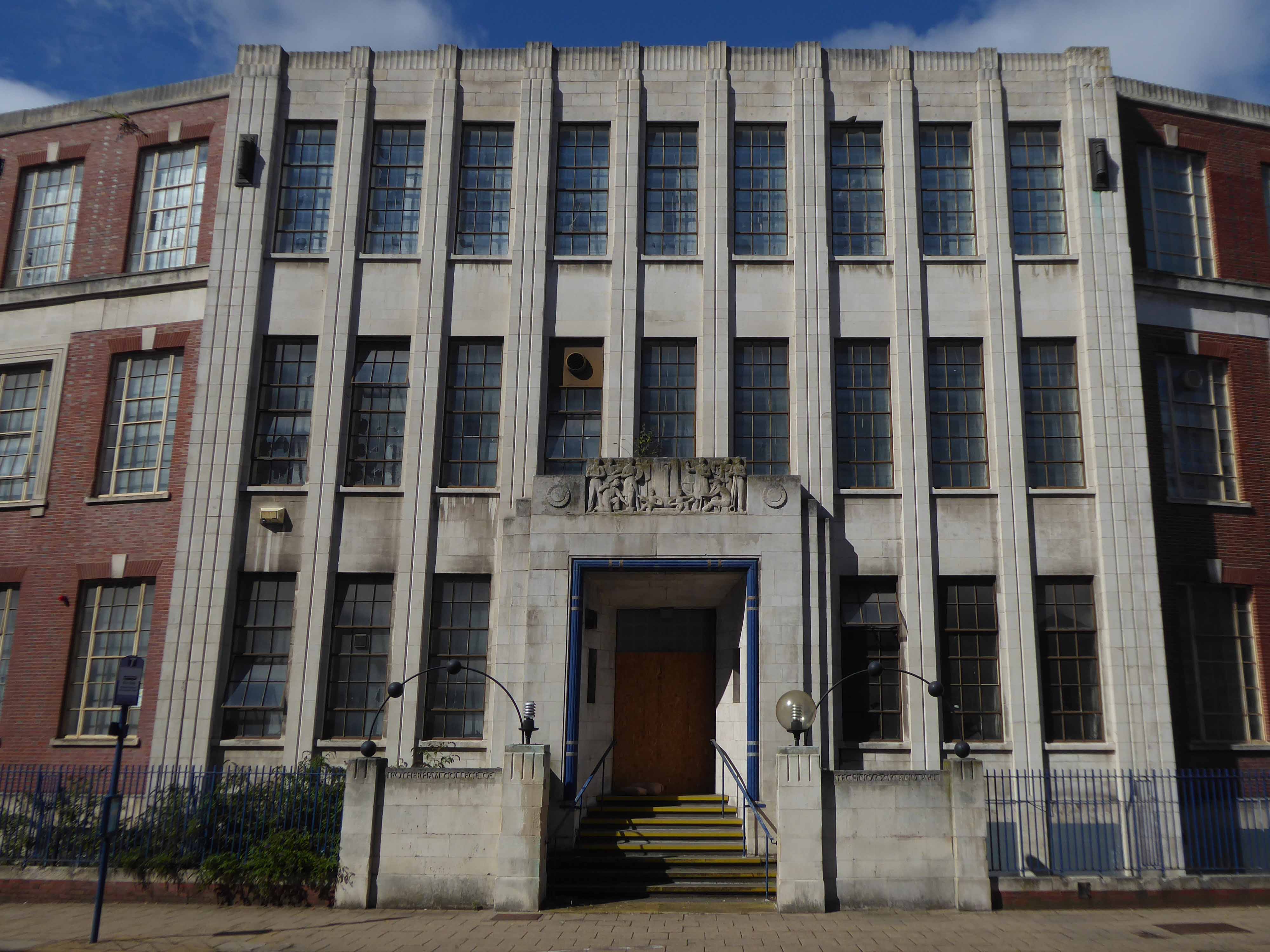
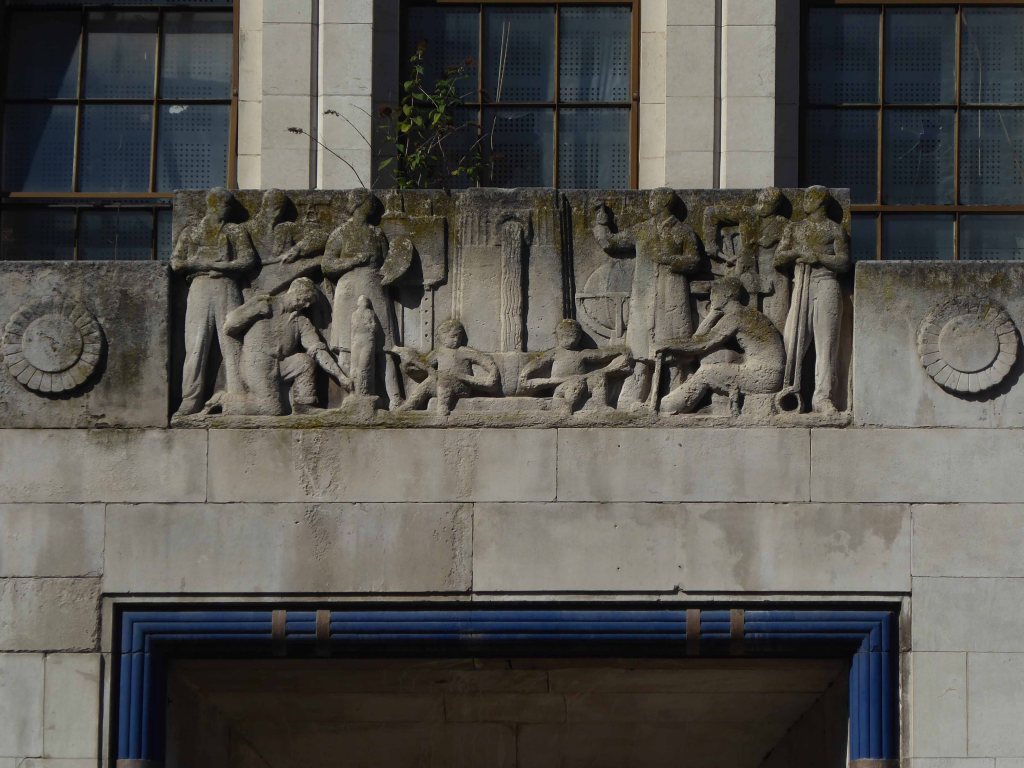
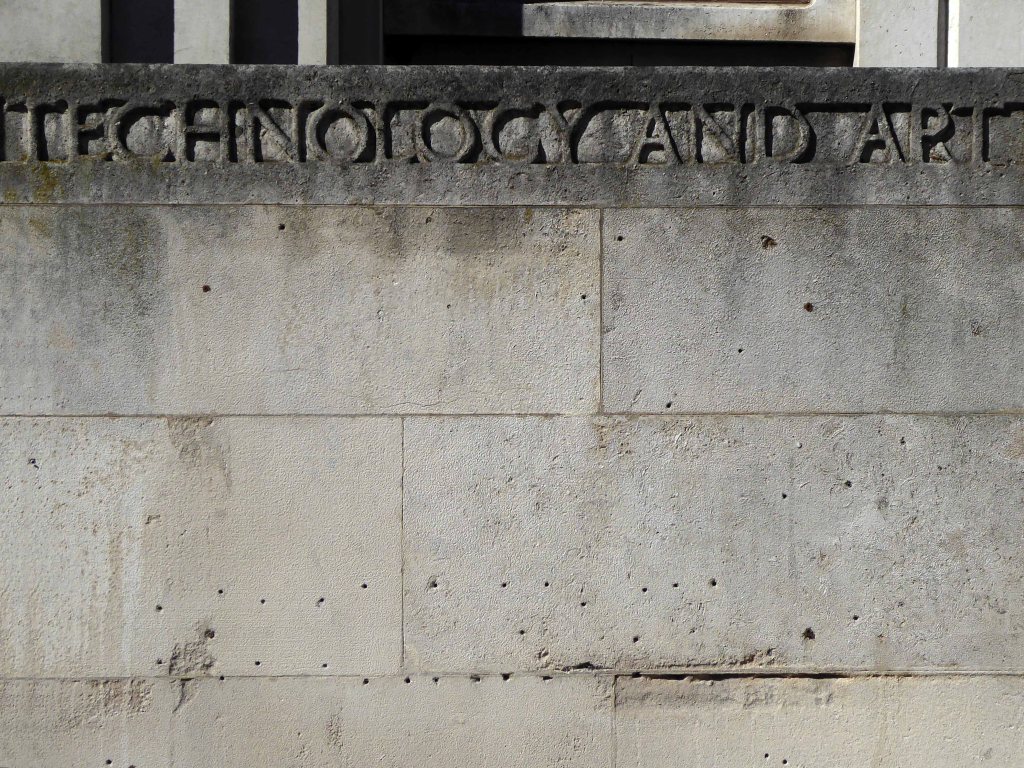
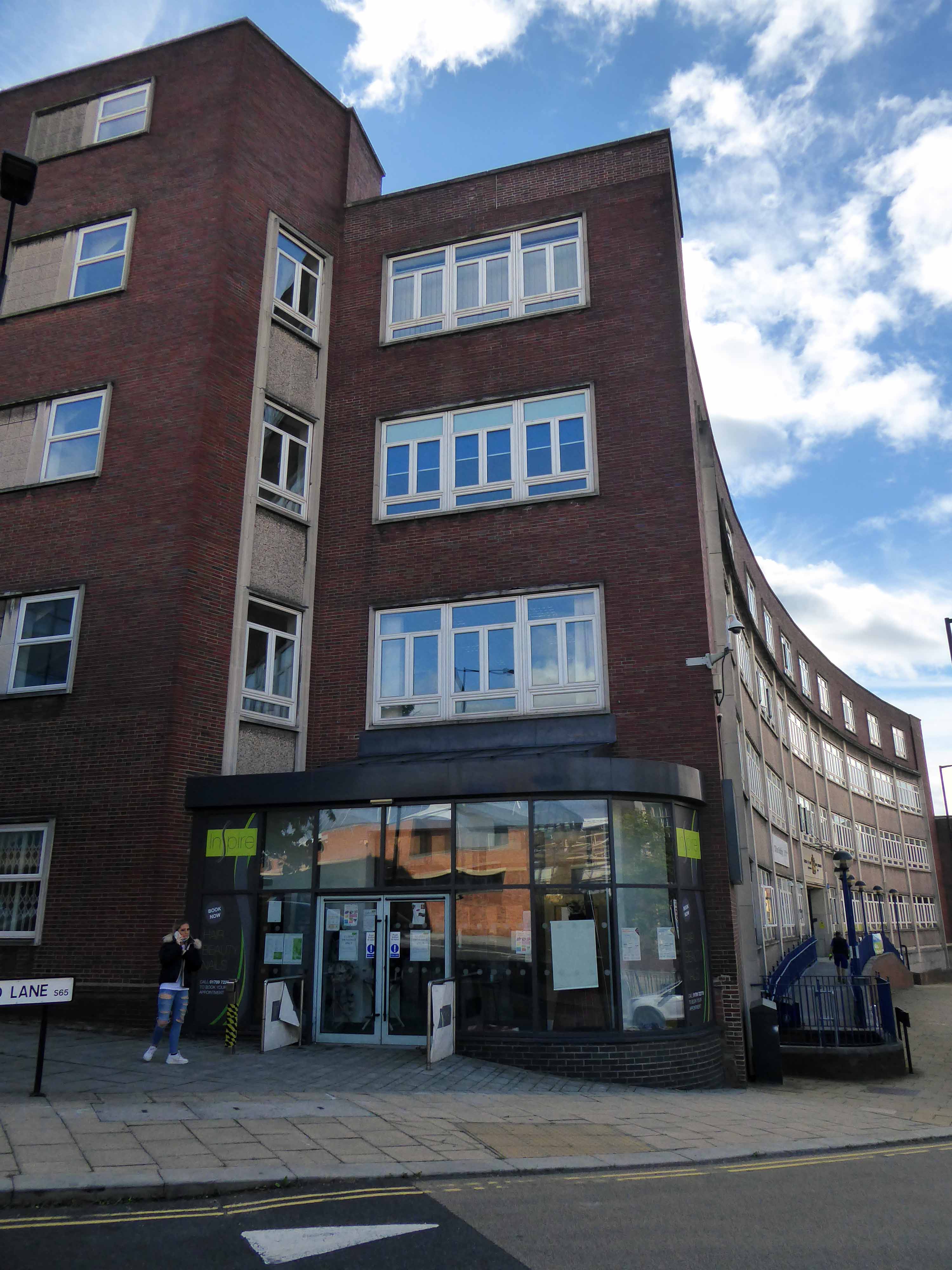
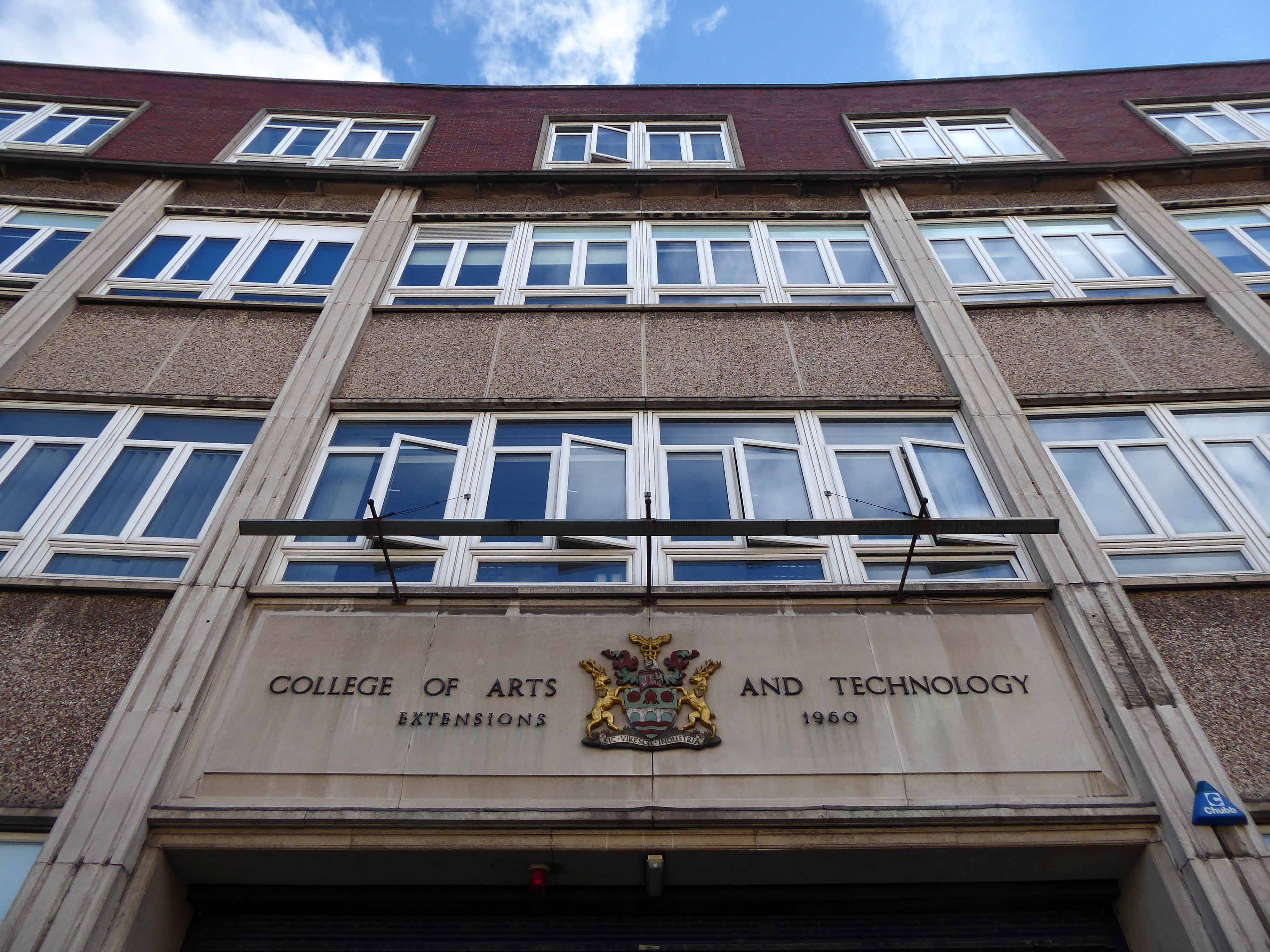
Interwar Technical College – Howard Building

From the 1930s, it provided technical-orientated education from the Howard Building on Eastwood Lane, Rotherham. In 1981, three neighbouring colleges of arts, technology and adult education were merged into one. As a result, the college became known as Rotherham College of Arts and Technology.

Revised plans to convert the historic Howard Building in Rotherham town centre into self-contained studios and apartments have been approved by the planning board at Rotherham Council.

The prominent former college building was sold prior to going to auction last September after it was advertised as a development opportunity and given a guide price of £250,000 by local auctioneers, Mark Jenkinson & son.

2015

28 Days Later

A group of rogue property directors with links to a prominent derelict building in Rotherham have been banned for a total of 54 years. The six, of Absolute Living Developments, were found to have misled more than 300 people to invest at least £12 million in residential properties.

The firm was linked through a lender to Avro Developments, which had plans passed in 2015 to renovate former college block the Howard Building in Rotherham town centre.

Rotherham Advertiser 2019

Clifton Building

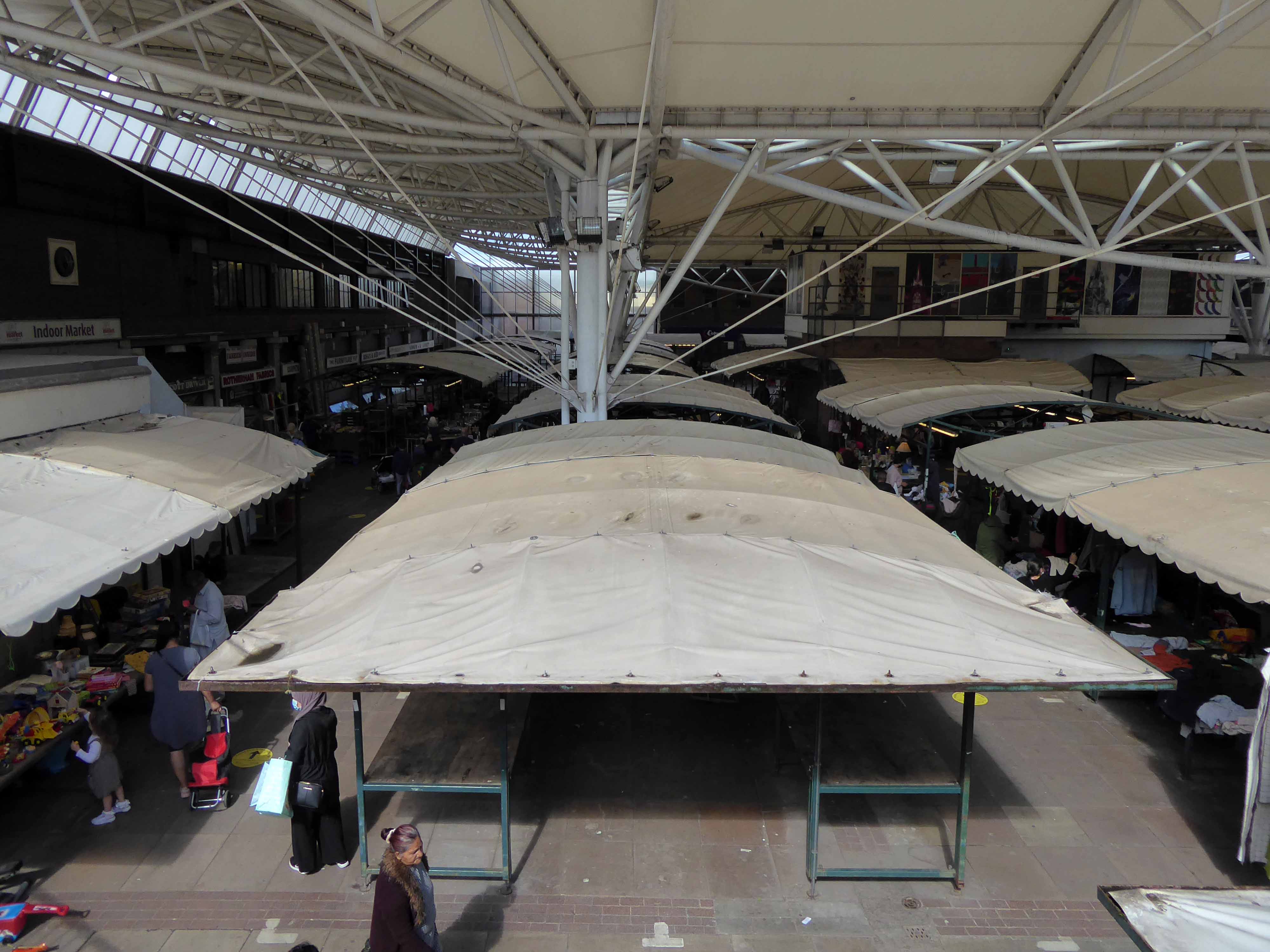
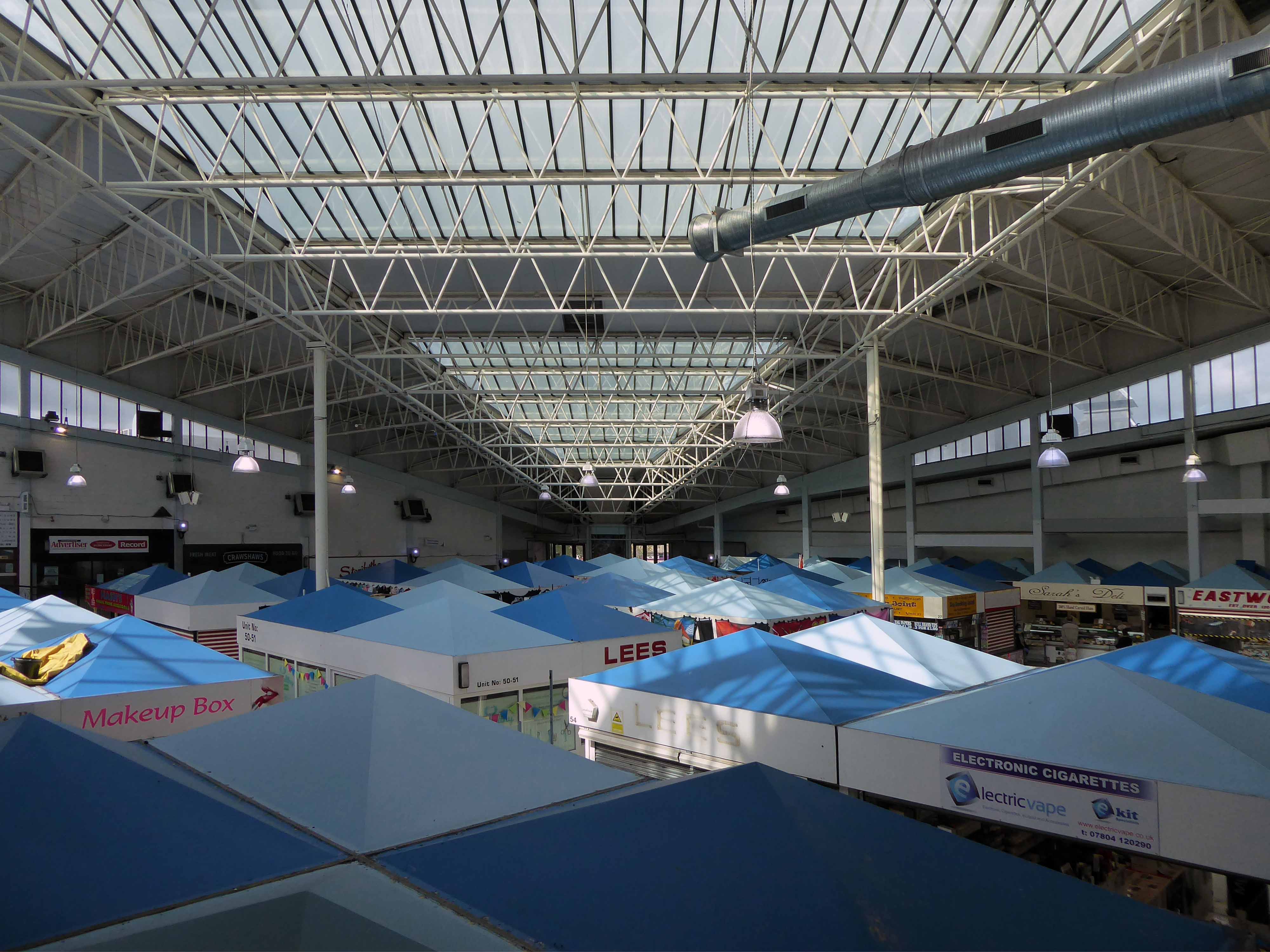
Next to the market.

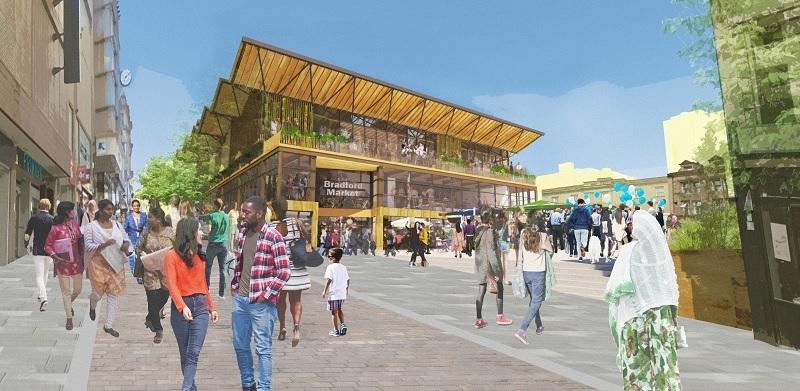
With a strident high tech canopy, very recently added – though Rotherham’s history stems back 800 years when it is thought that the original royal market charter was granted by King John in the year 1207.

There are traces of the 1970’s rebuild.

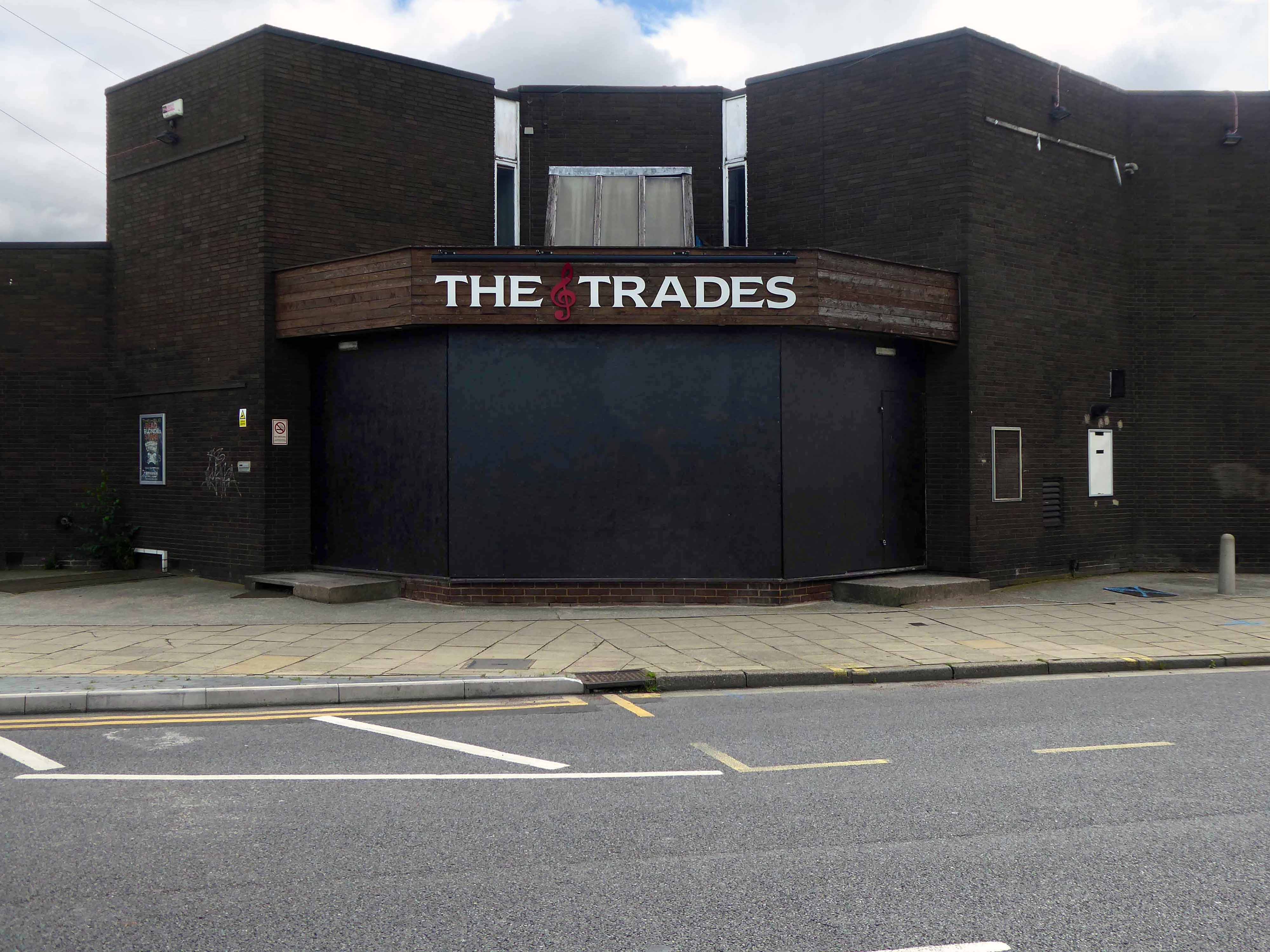
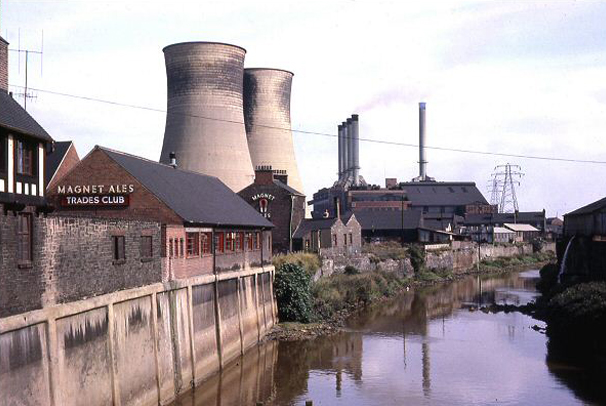
Bunker-like The Trades former music venue/pub, which replaced the former riverside Trades Club.

The PA now silenced.

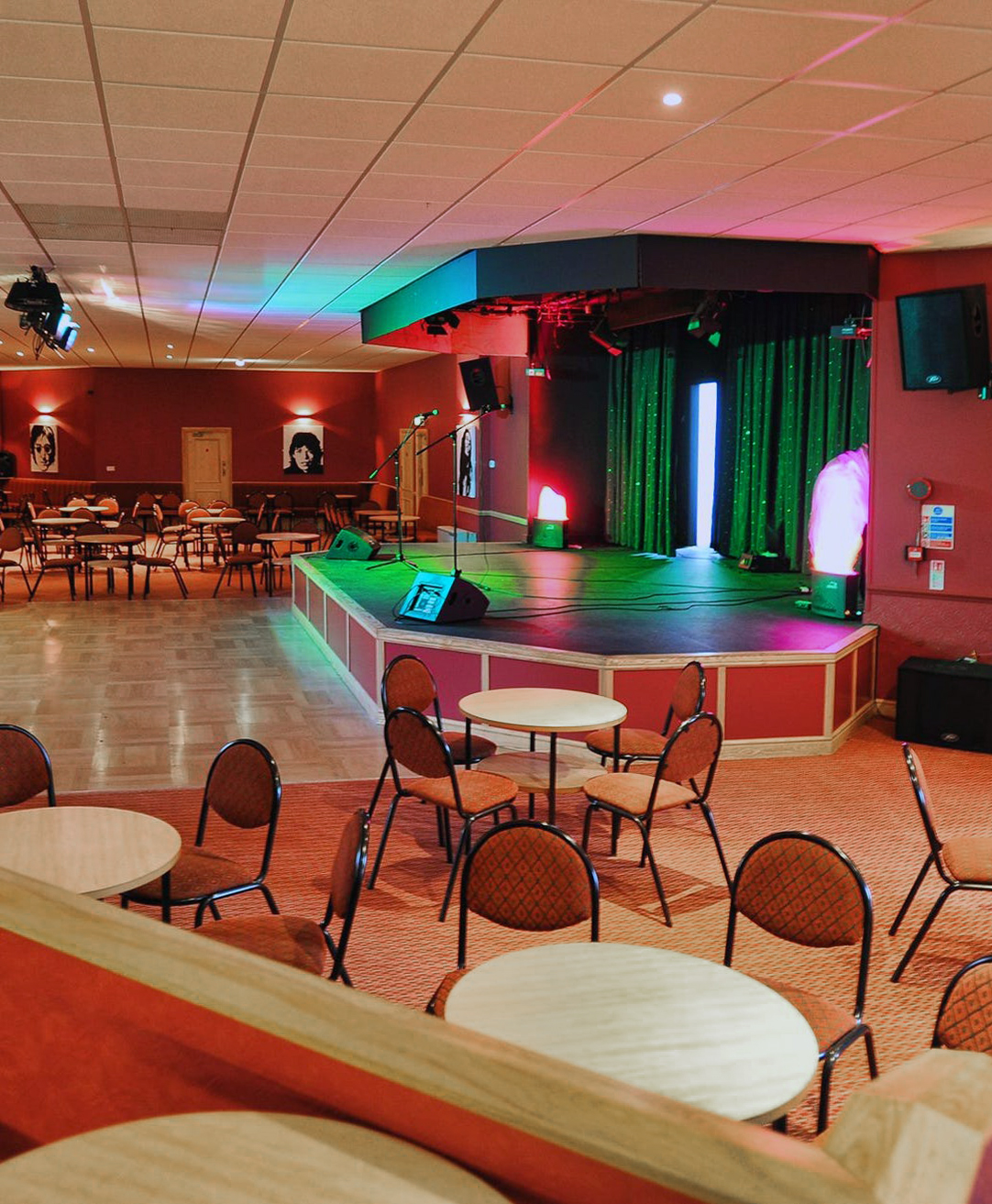
This was an amazing event. The bands were really good and the drinks offers, while limited, were good. The ceiling in the ladies toilets had fallen through and was dripping, presumably there had been a leak from all the rain, but this didn’t lessen the awesome experience.

October 2019

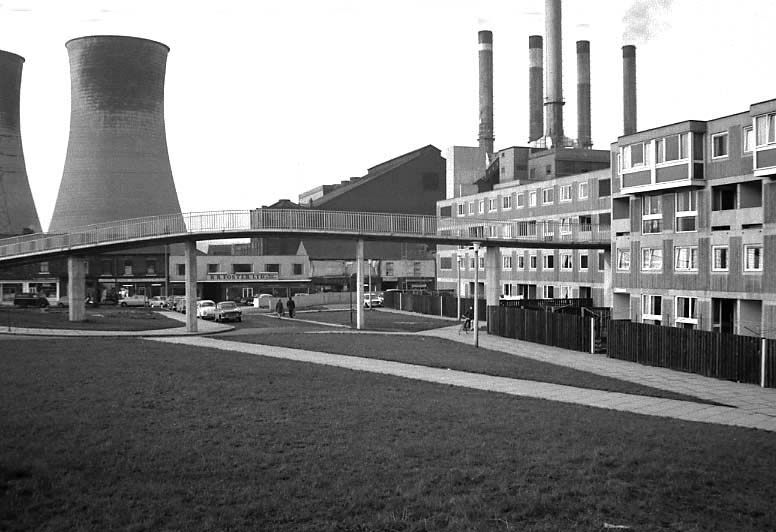
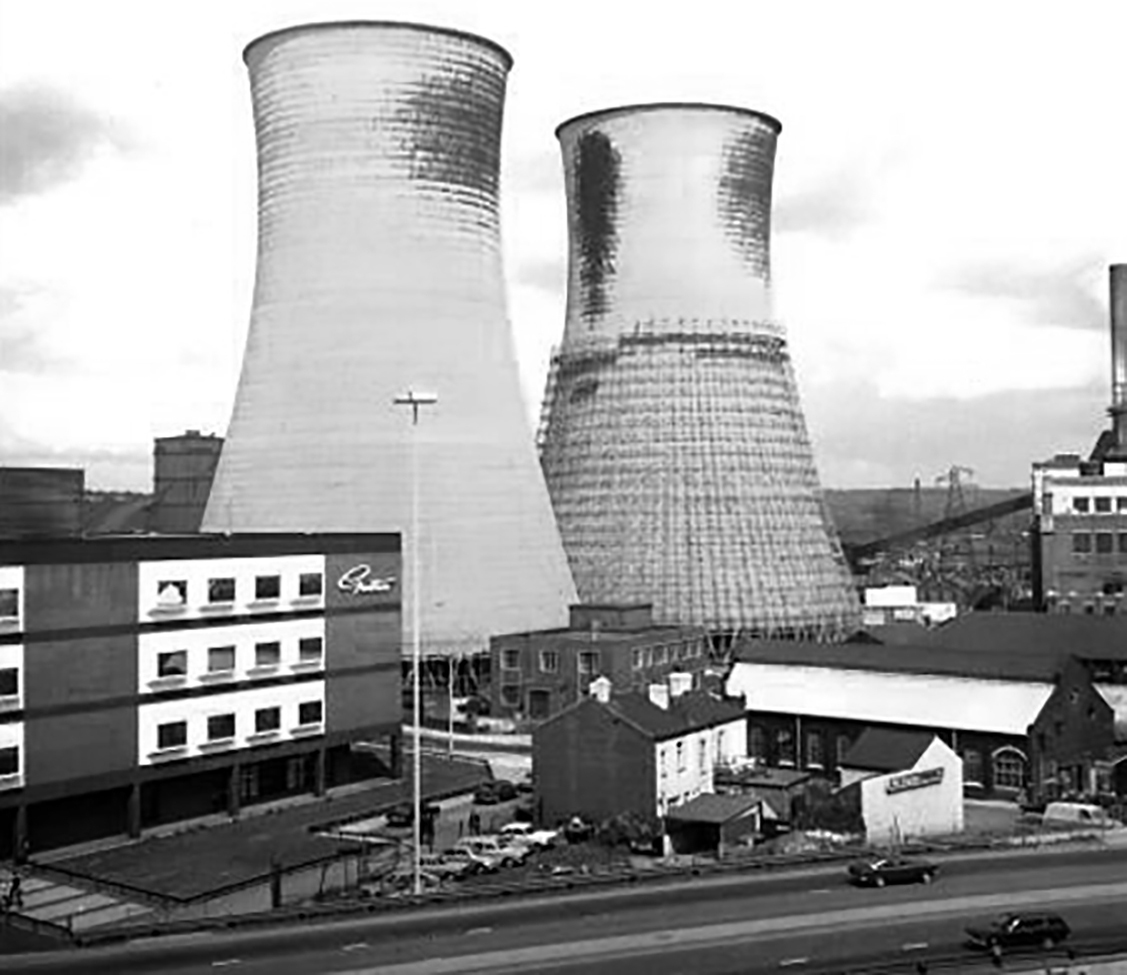
The cooling towers and flats are long gone – the coal-fired power station operated from 1923 until October 1978.

The Prince of Wales Power Station in Rotherham was located on Rawmarsh Road and was opened by the Prince of Wales – the future King Edward VIII.

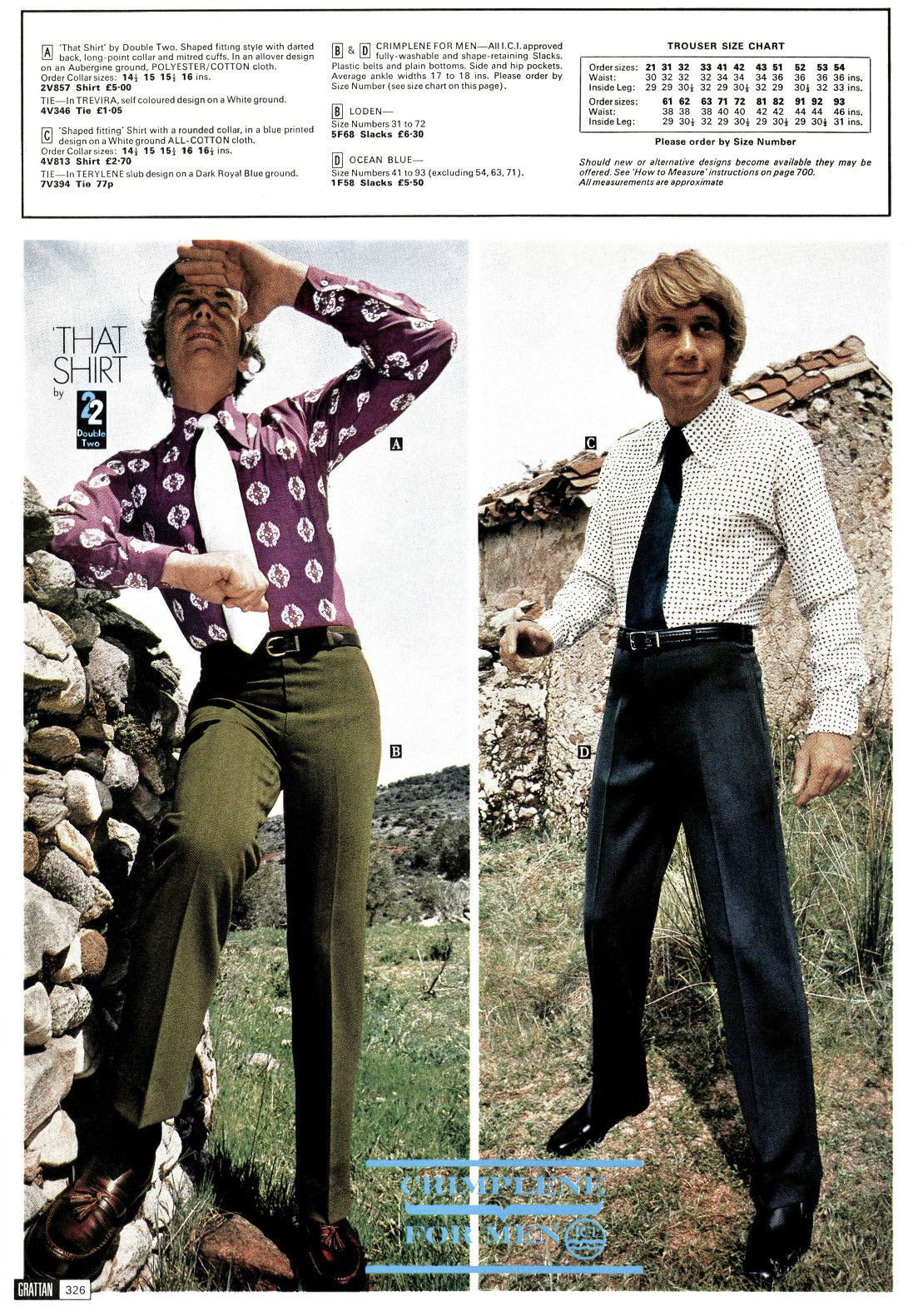
The former Grattans catalogue offices can be seen to the left.

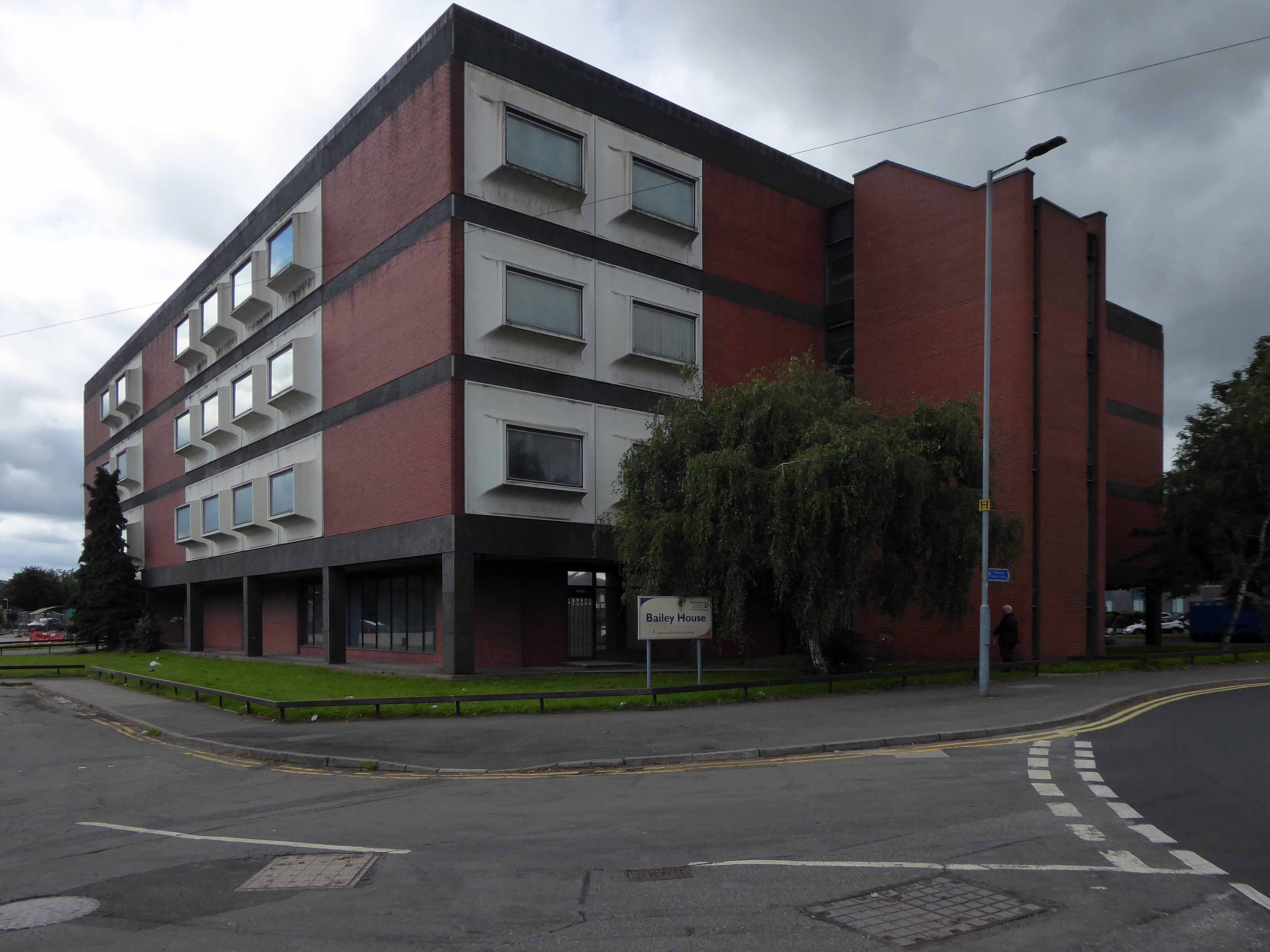
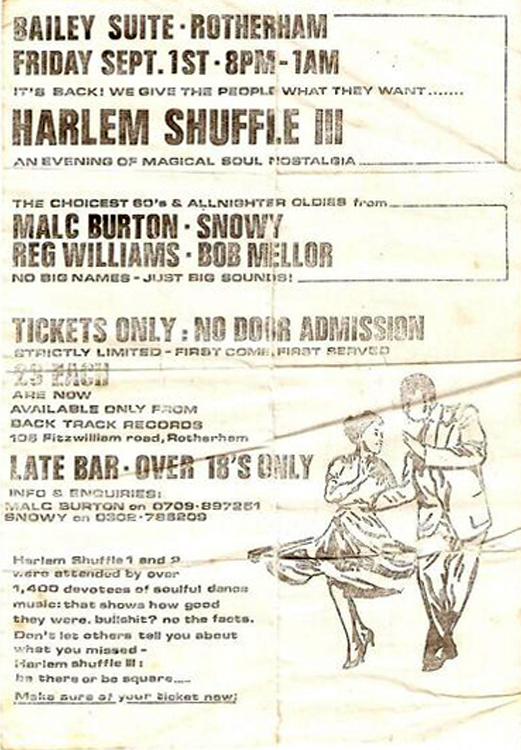
Renamed Bailey House and still in use by the local authority, its days it seems are numbered.

The building is named after Rotherham-born engineer Sir Donald Bailey whose ingenious bridge designs played a key role in shortening World War II, the house in which Bailey was born, 24 Albany Street is still standing.

Sadly no longer home to the Harlem Shuffle

No big names – just big sounds.

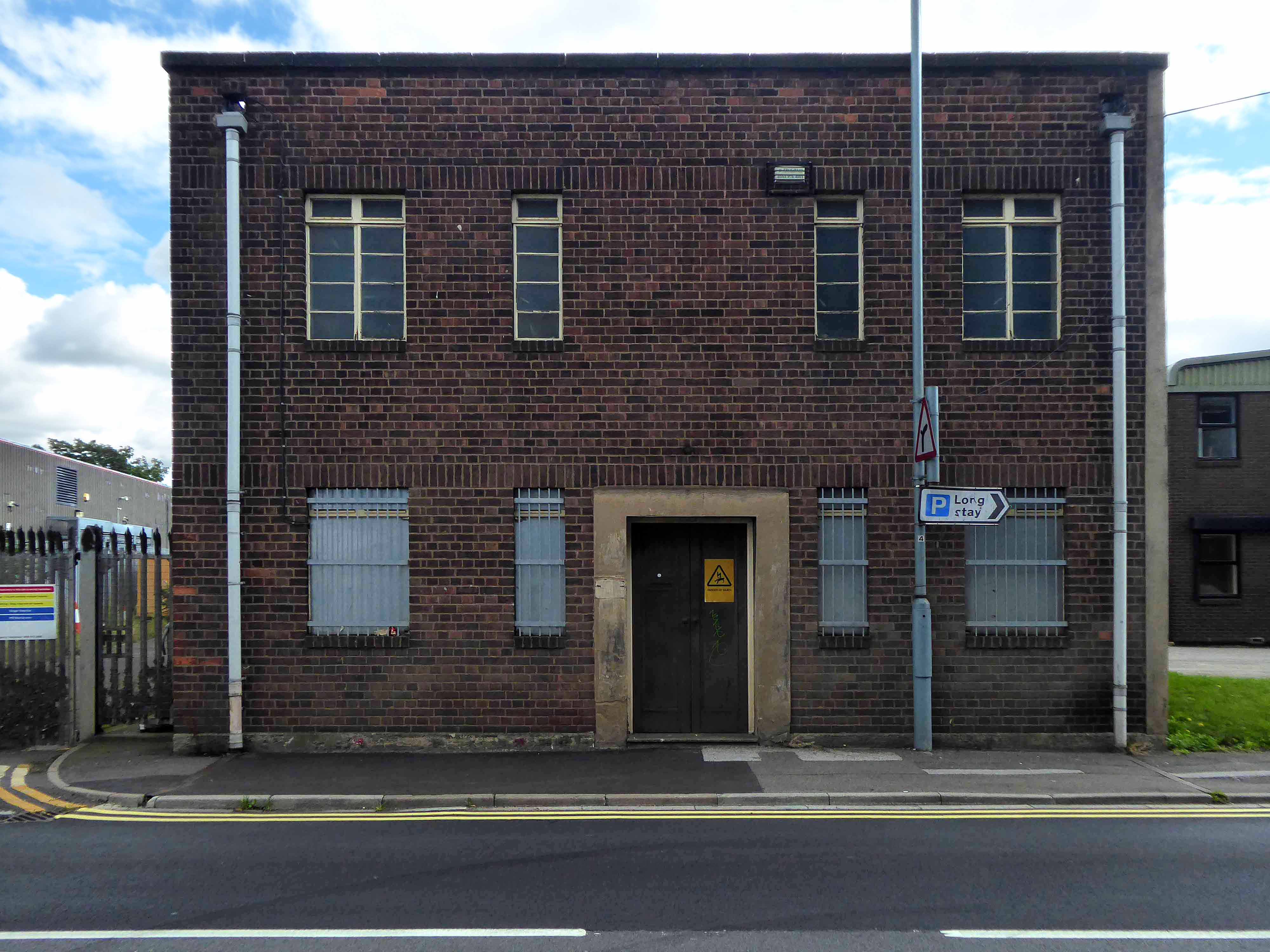
There are some surviving power station buildings.

Along with electrical infrastructure.

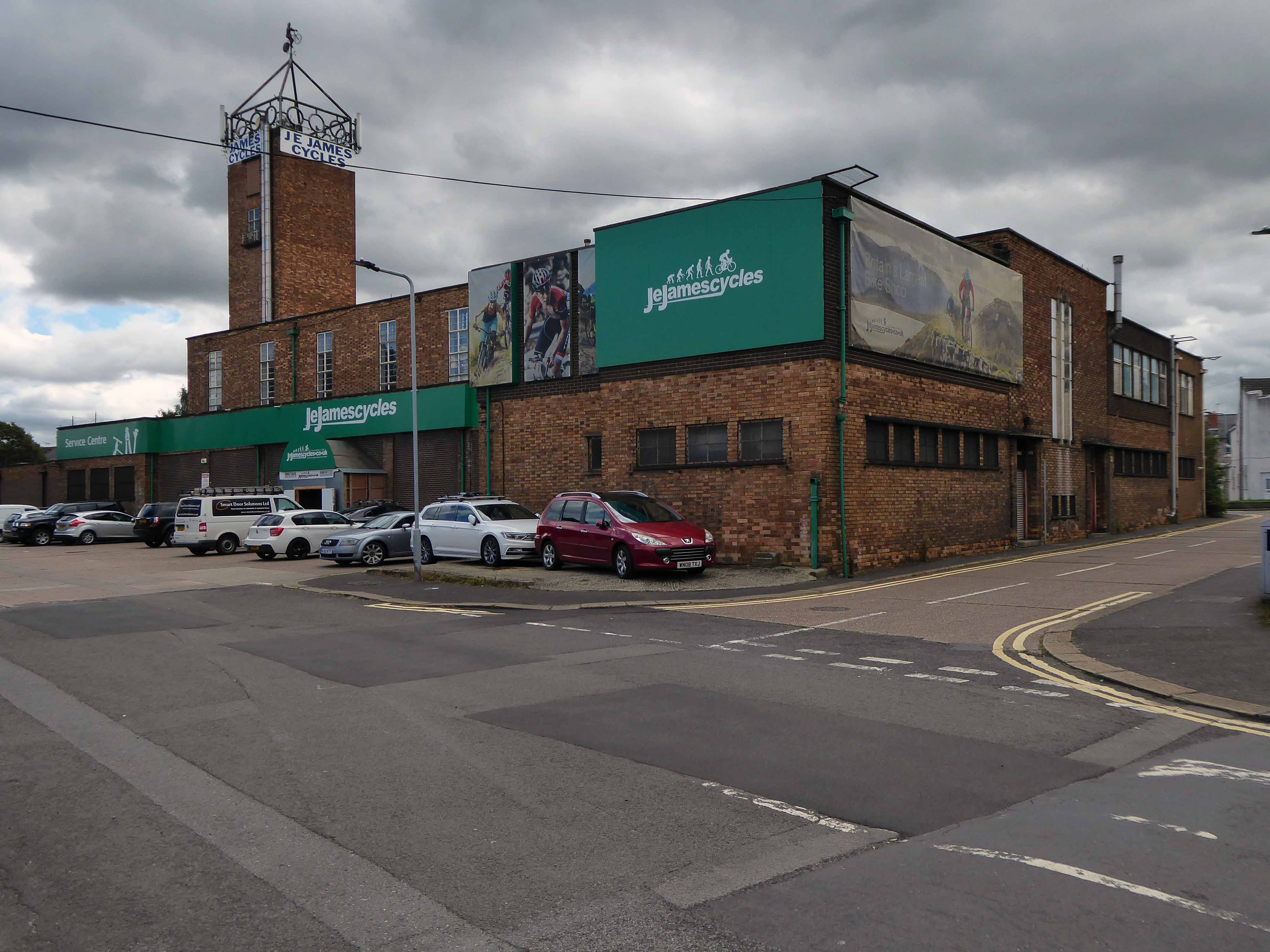
Up the road next, to the former fire station, which now houses J E James Cycles.

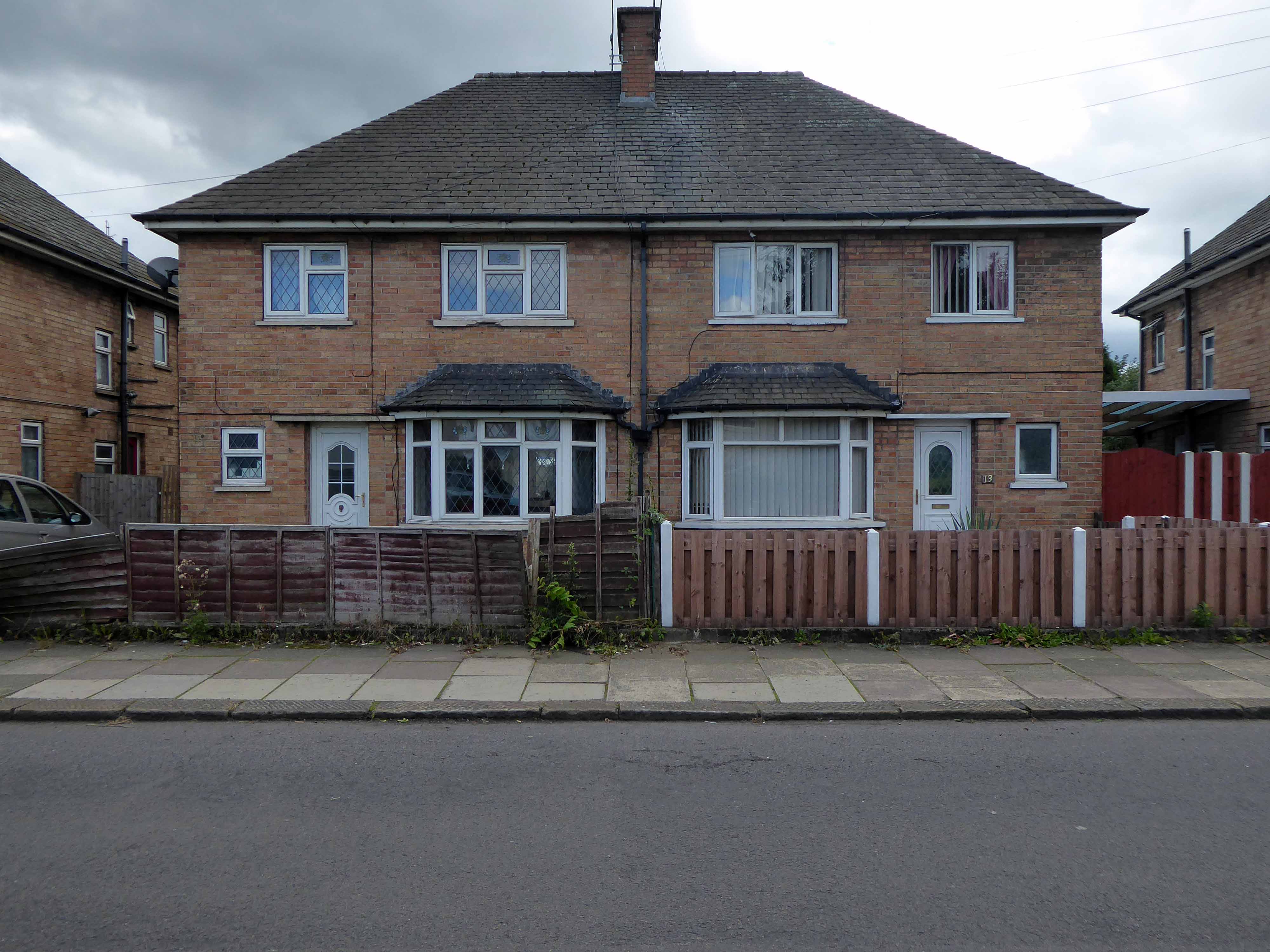
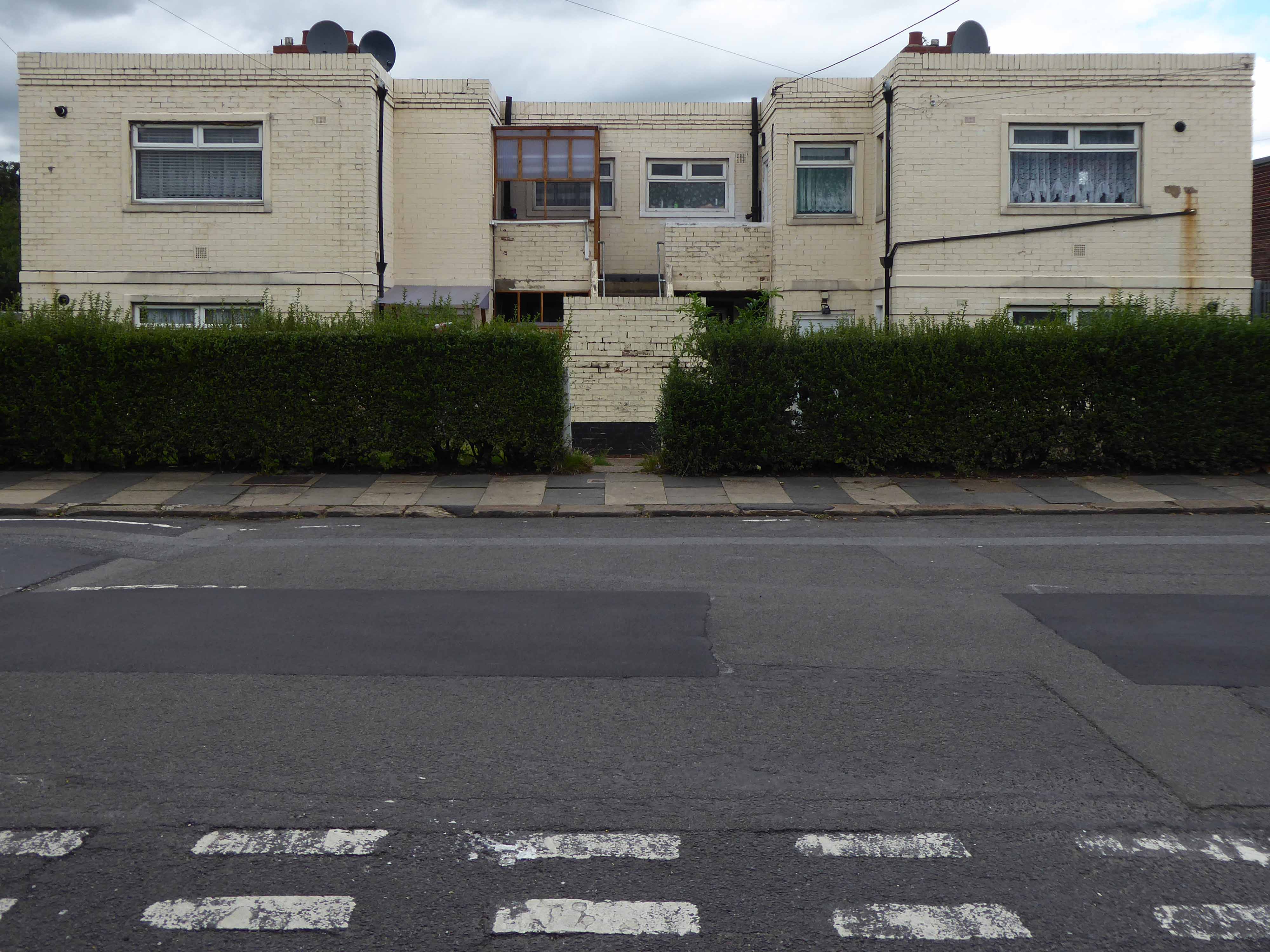
It is surrounded by typically atypical inter war housing.

I could make the wild assumption, that these flat roofed maisonettes were originally homes fit for firefighters.

A passing nod towards a former Methodist Chapel.

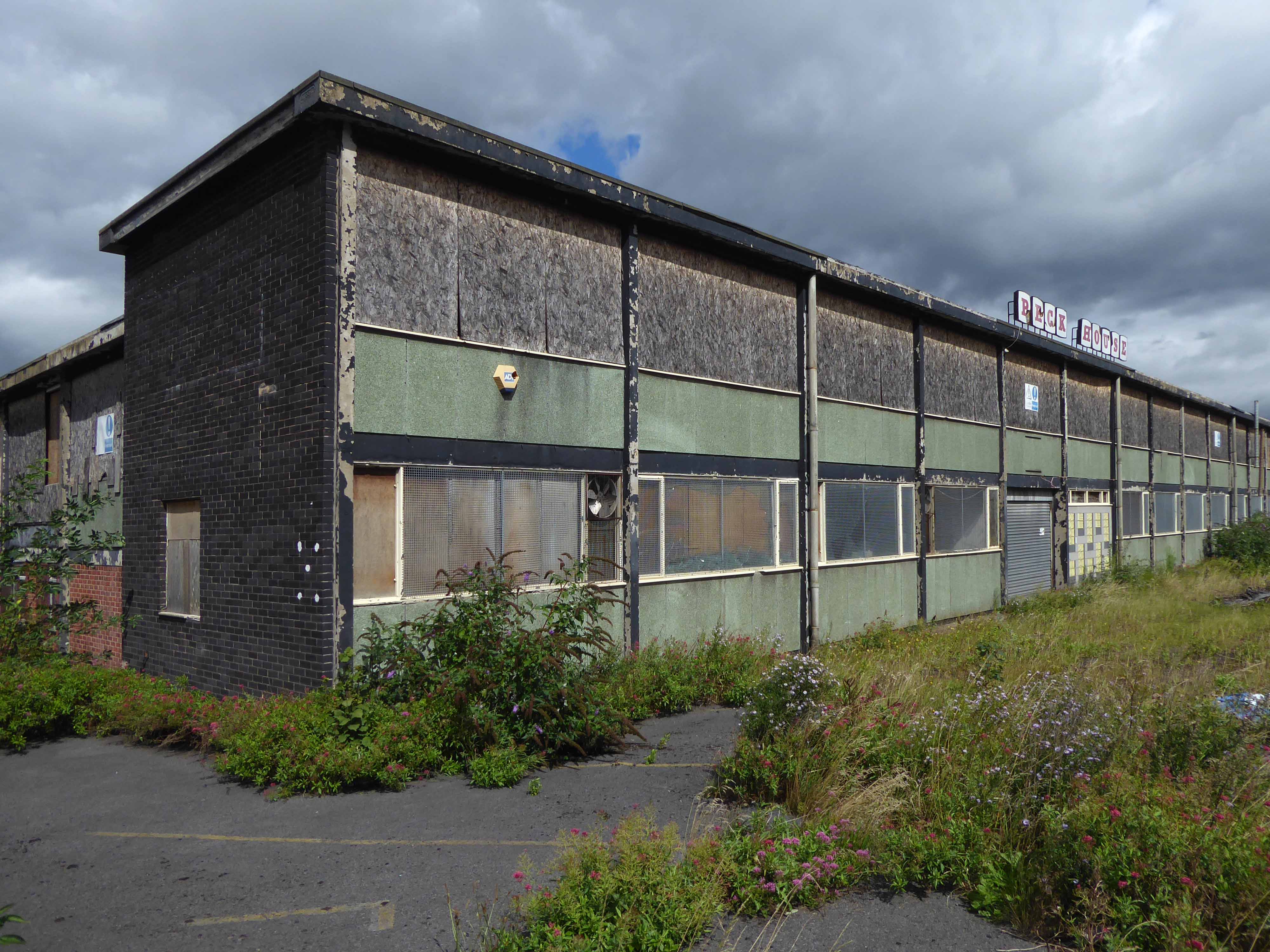
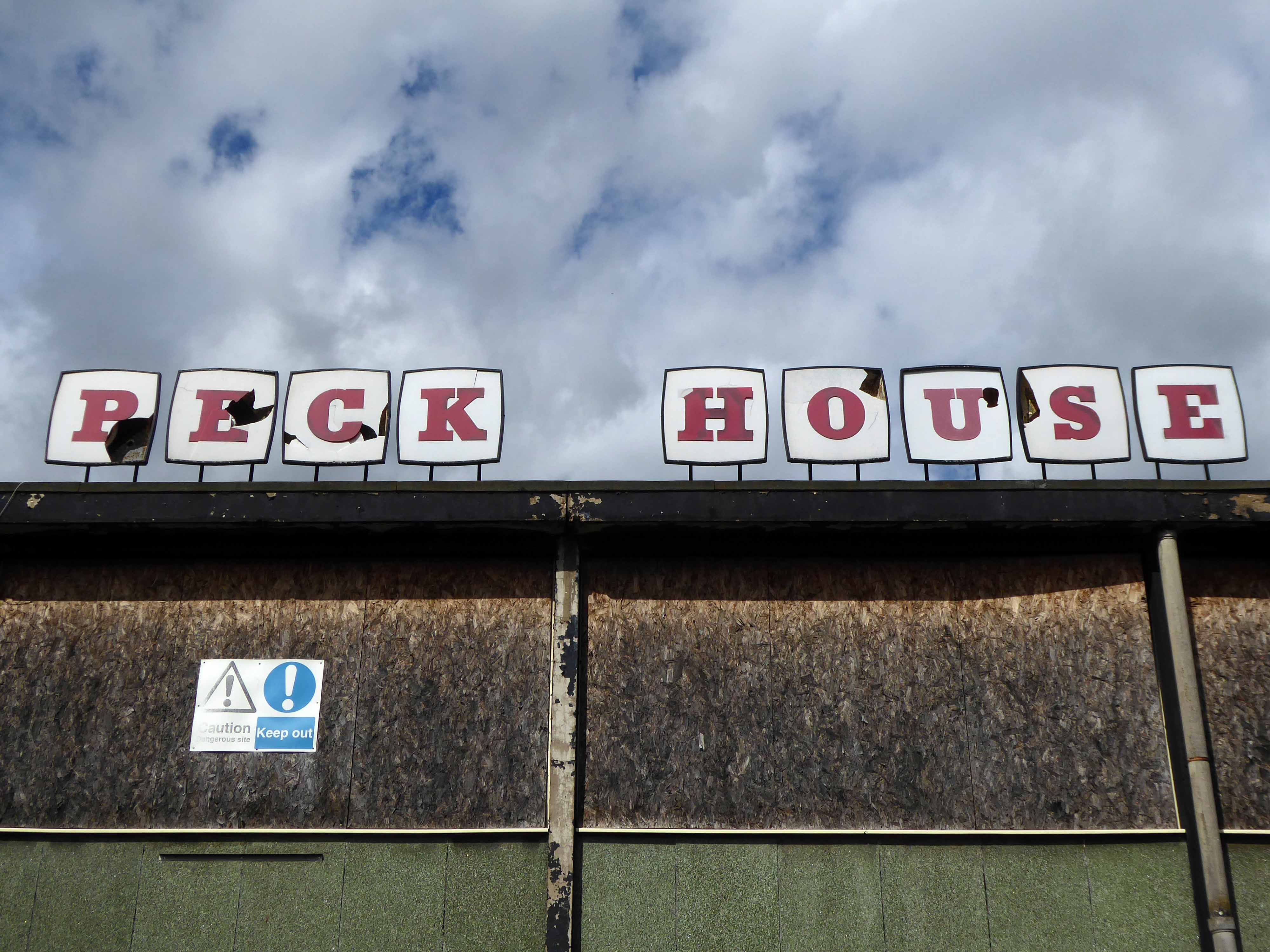
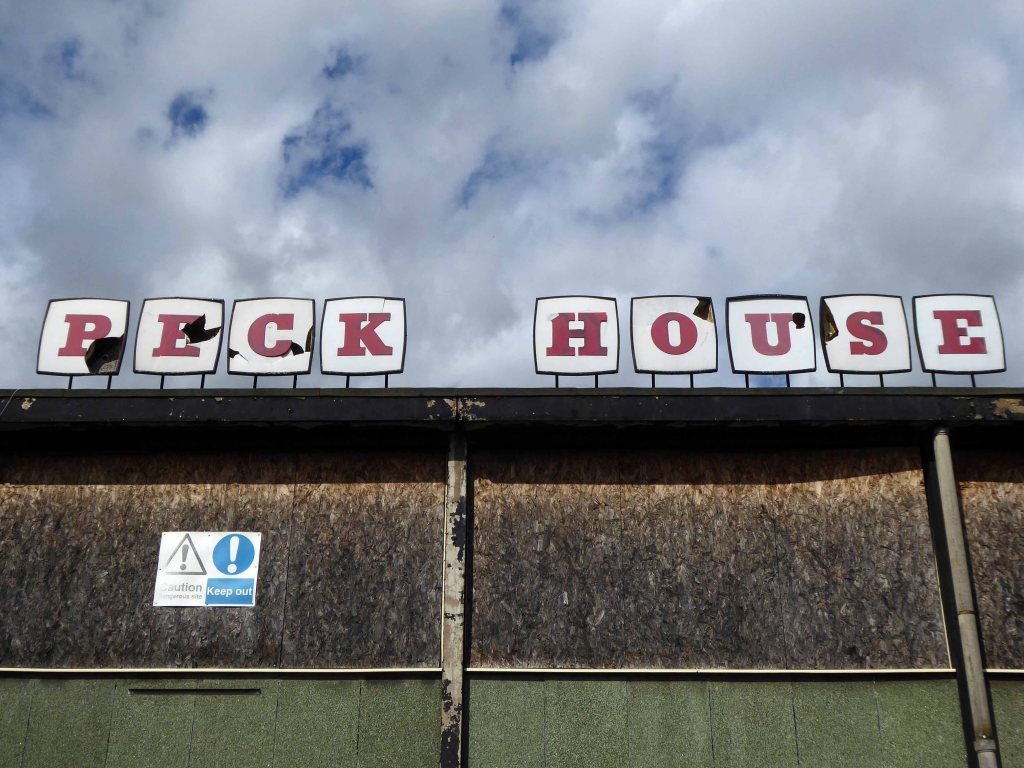
Further on up the road to Peck House.

And the attendant tiles.

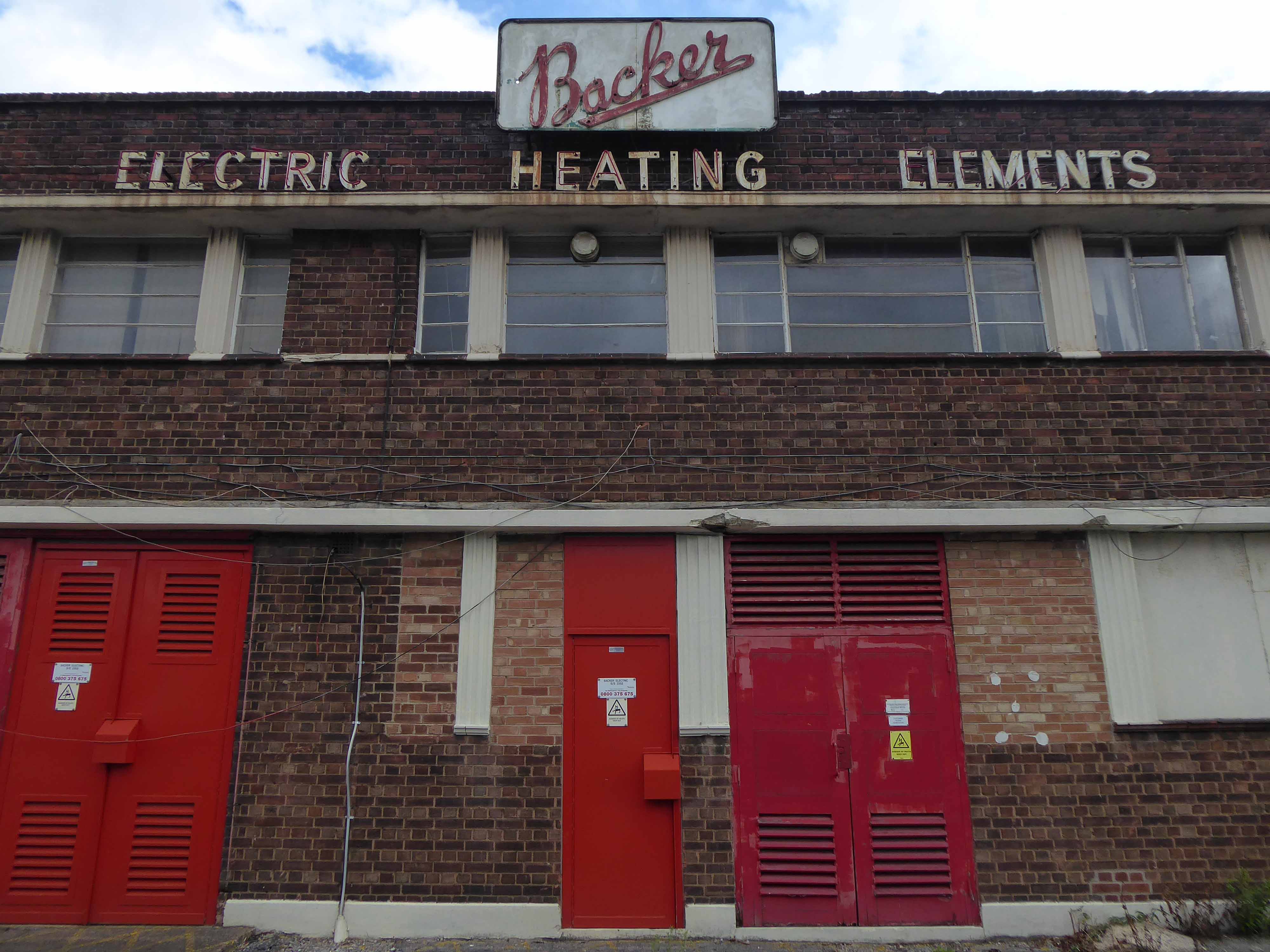
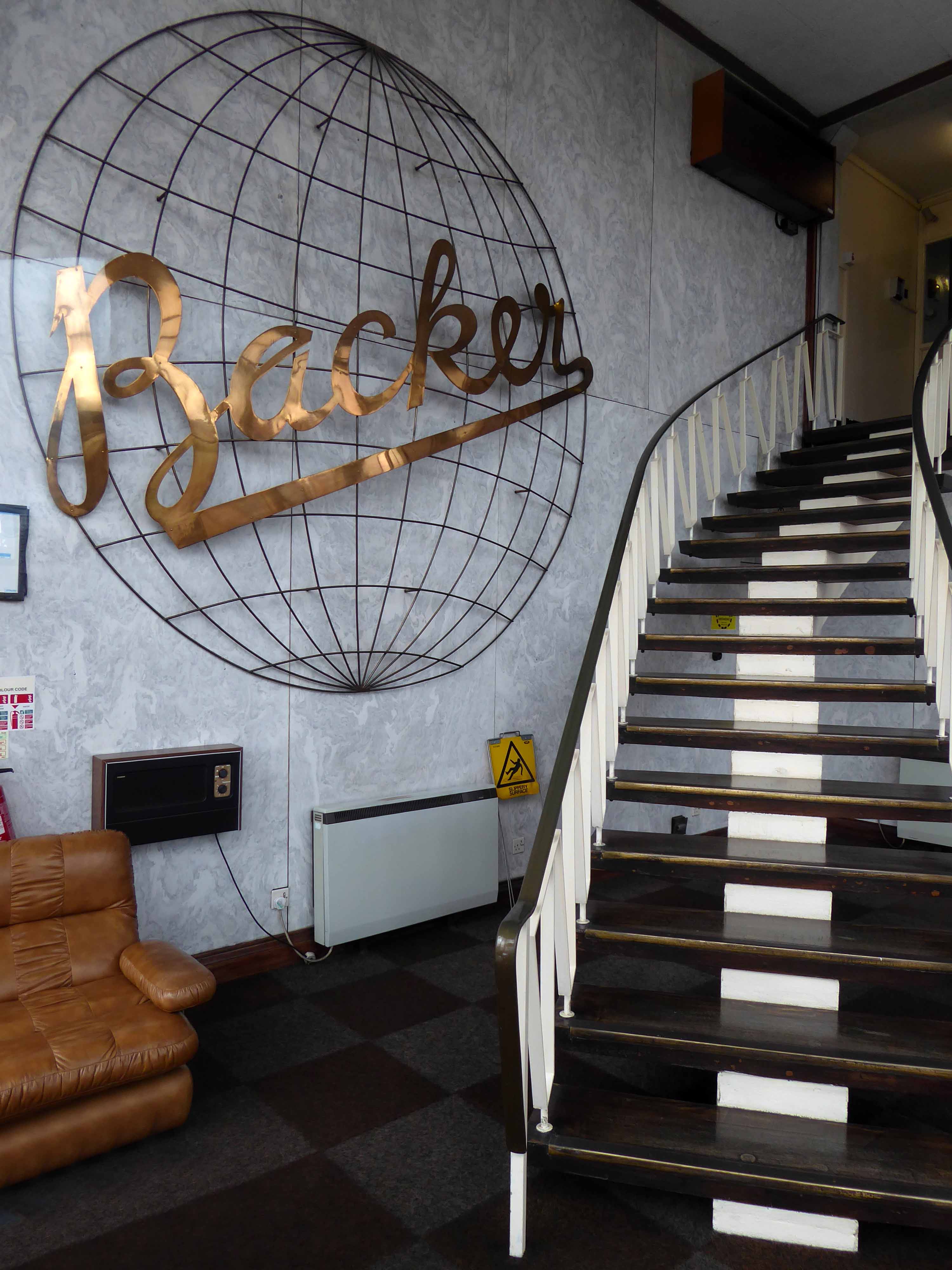
Just around the corner Backer Heating – still trading.

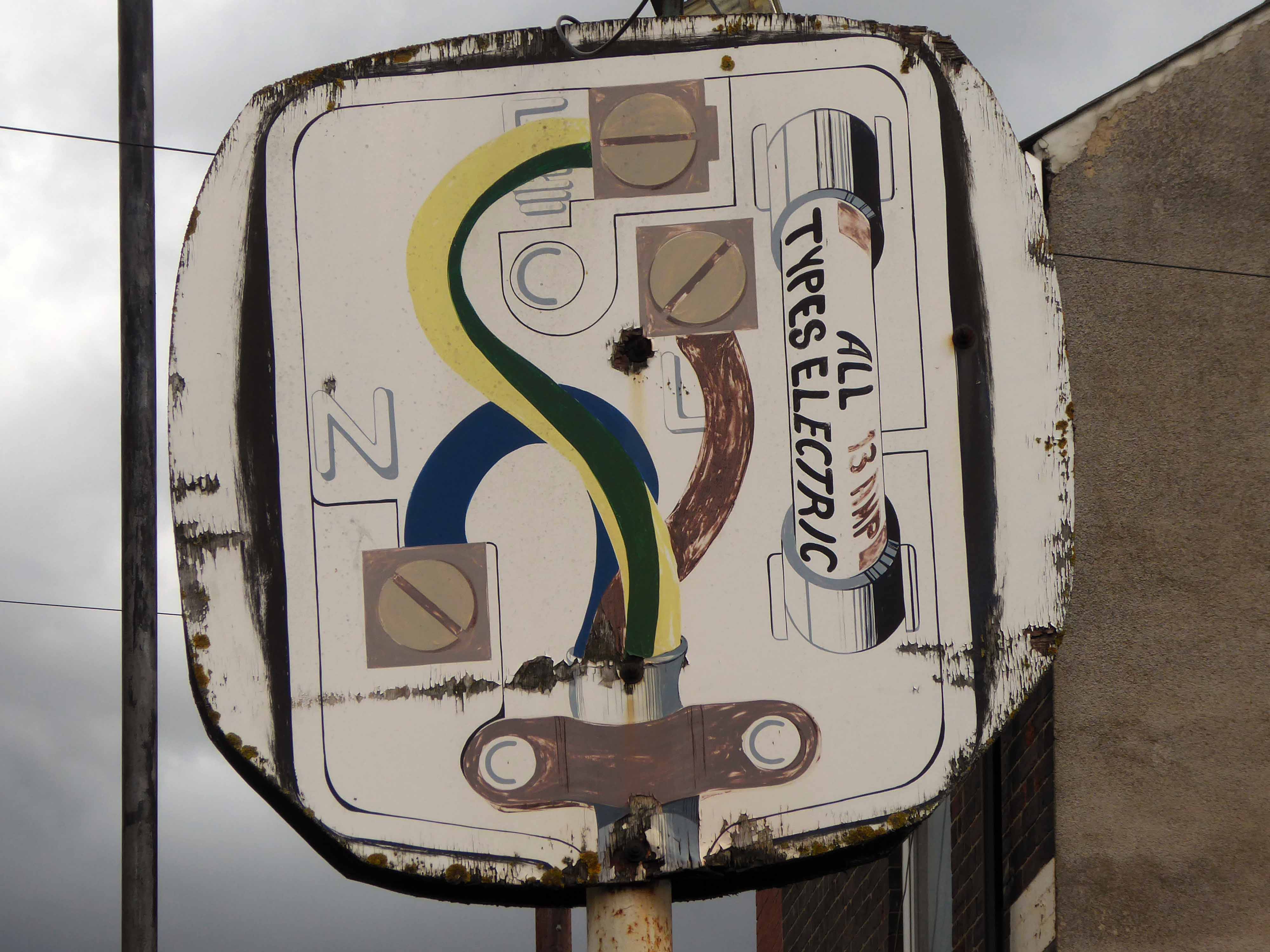
Returning toward town and enchanted by a giant 13 amp plug.

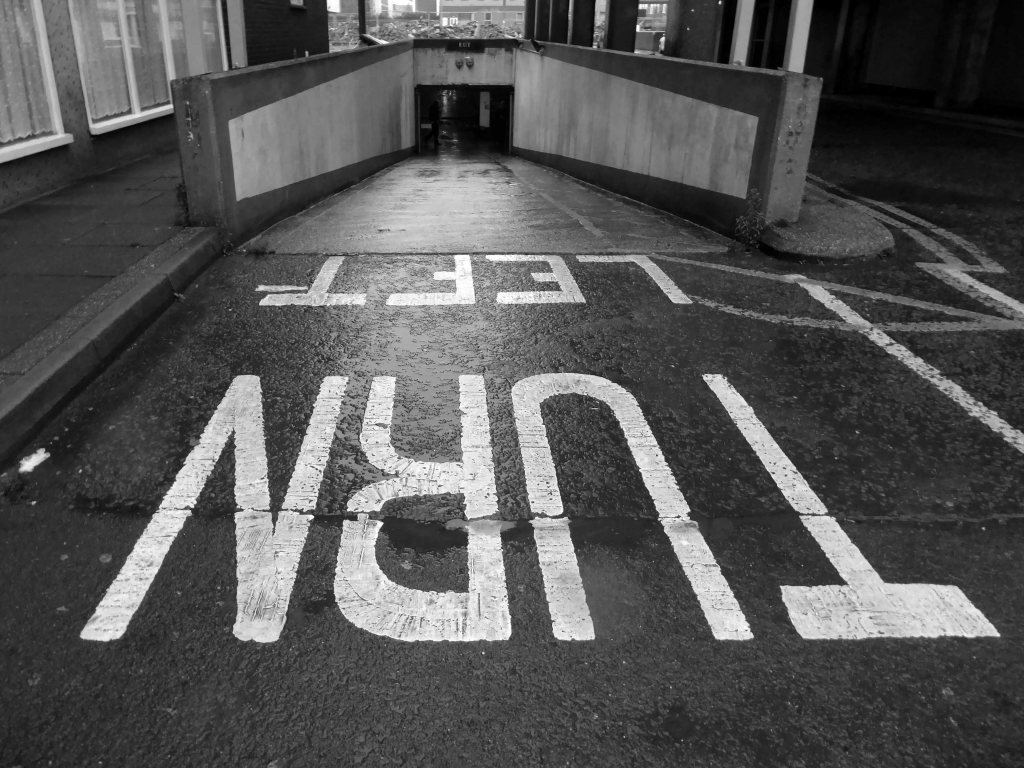
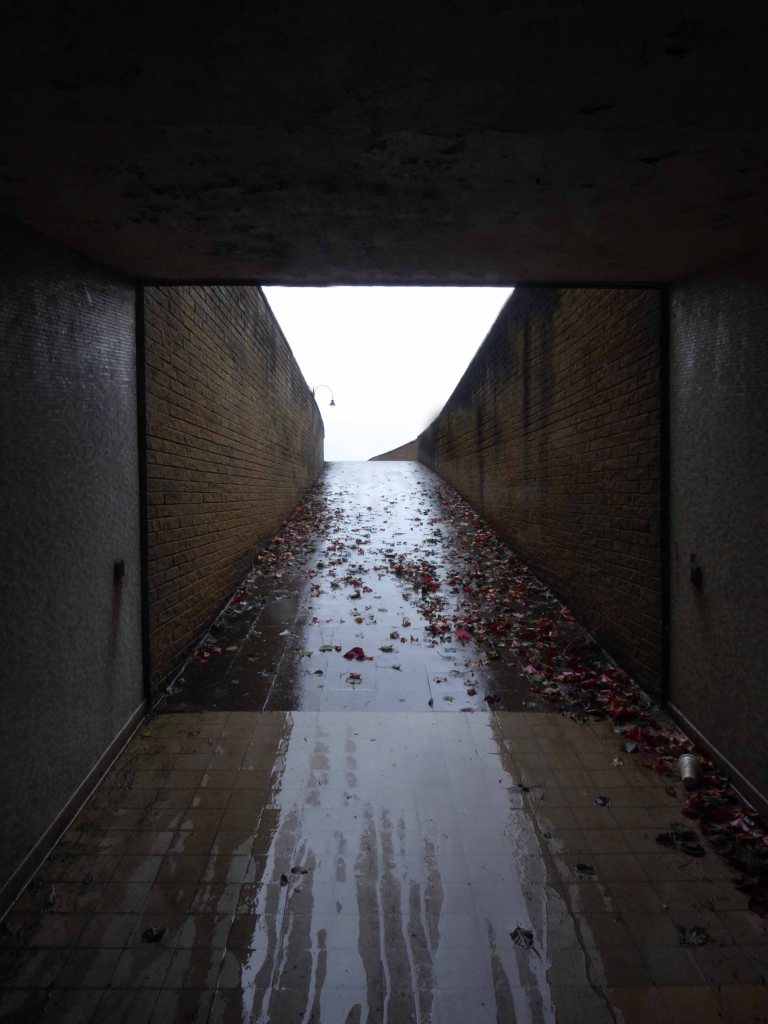
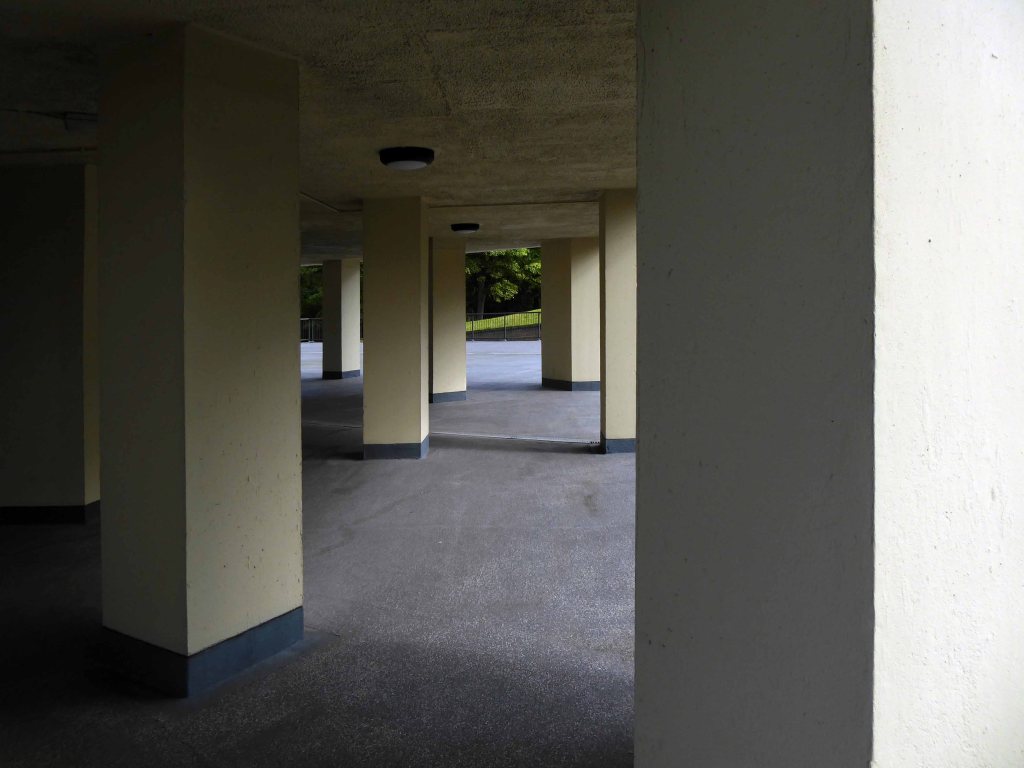
Under the underpass.

Then the other underpass.

Finally through the last underpass.

With a final notable note regarding Rotherham’s hand painted council commissioned signage – I’d like to think that they have a sign writer in their employ.

Many thanks to my learned companion Helen – thanks for a fine day out, so much to see and do!

Elim Pentecostal Church – Halifax

Hall St Halifax HX1 5AY

Elim Church

Having walked from Hebden Bridge to Halifax with Mr Phil Wood, we approached Hall Street – and gazed admiringly at this striking building, from across the A58.

Attributed to C.S. Oldfield and it was completed in 1972 apparently they did the relief too.

20th Century Society

A low serrated, ridge and furrow conical roof, corona and steel spire breaking the skyline.

Very much a building of two halves, the single storey hall, adjoining the body of the church, which is raised on a plinth.

They are linked by an internal hallway.

An intriguing mix of restrained classical detailing, along with the more modernistic roof and internal structure.

From the outside it is possible to discern the stained glass panels in the corona.

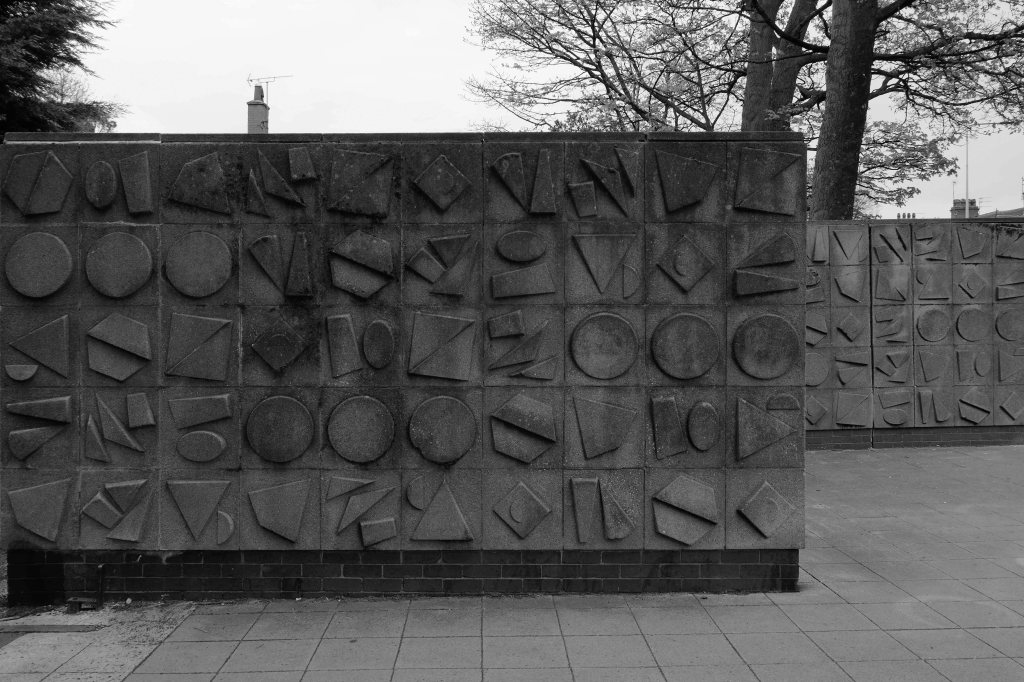
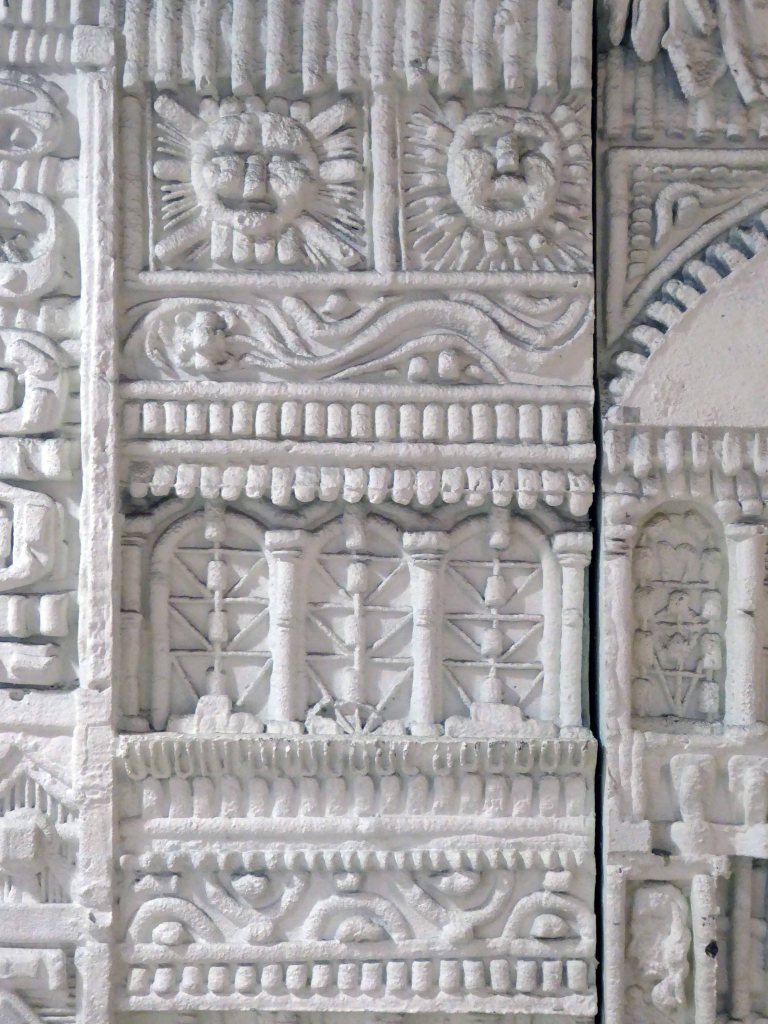
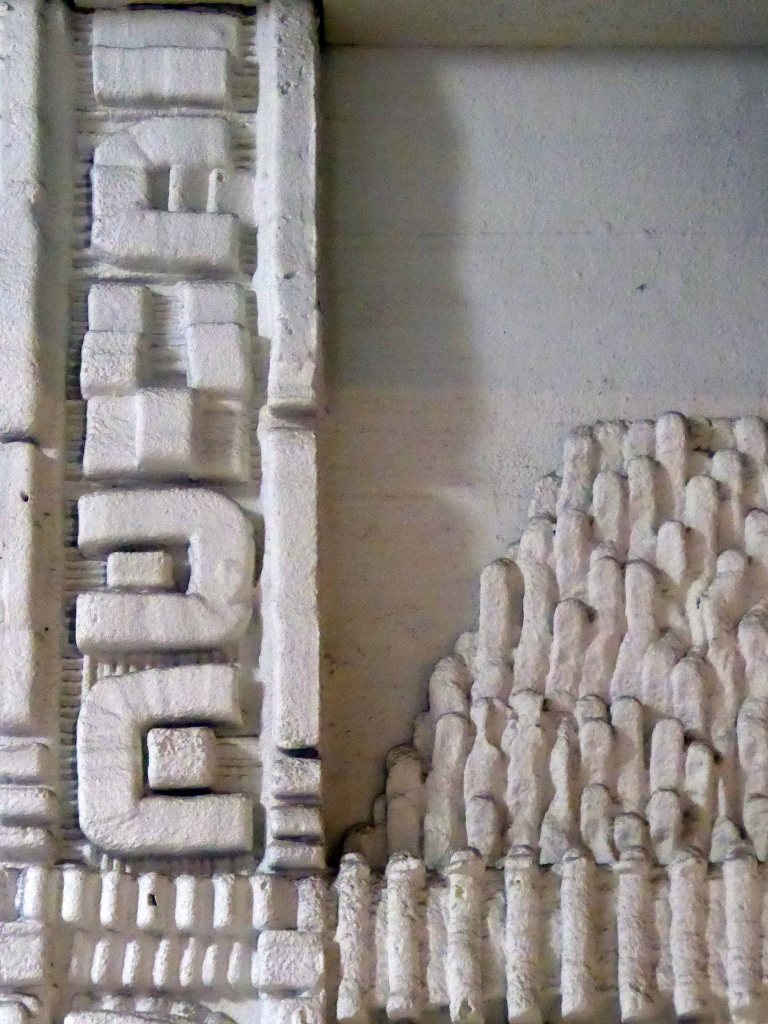
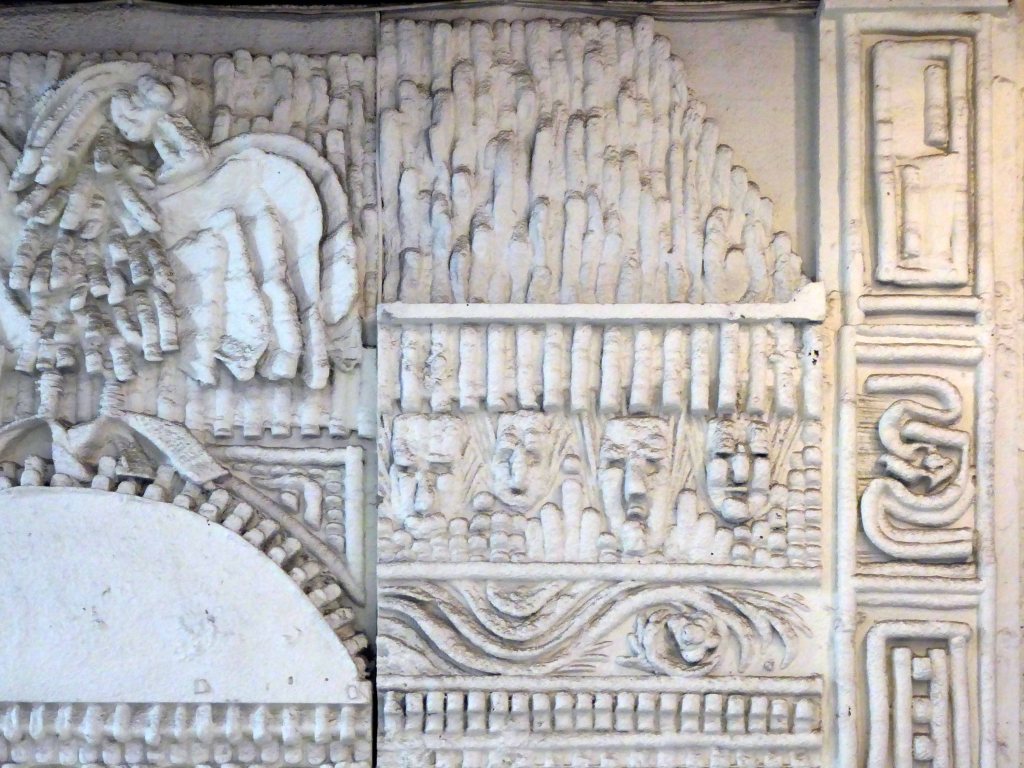
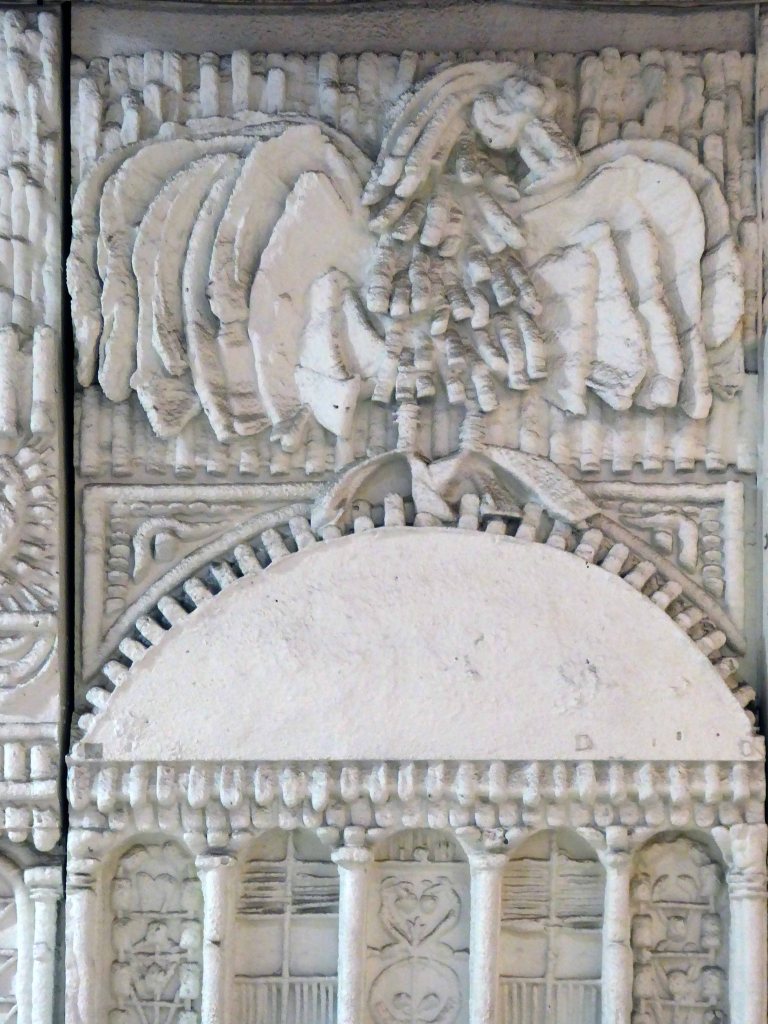
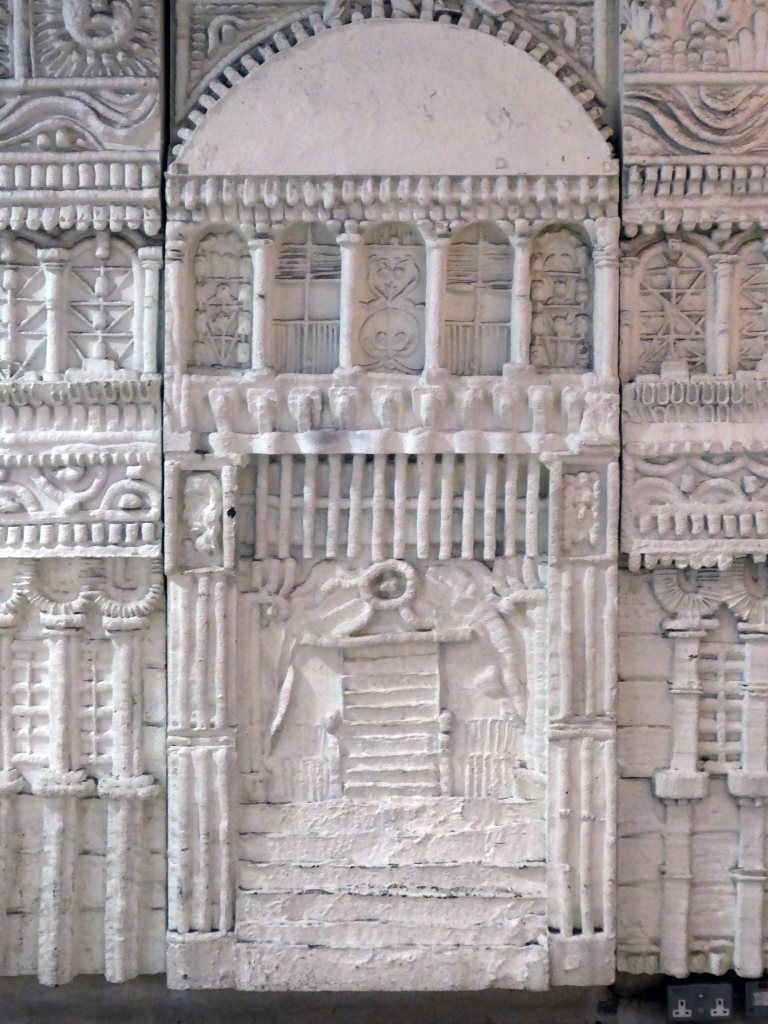
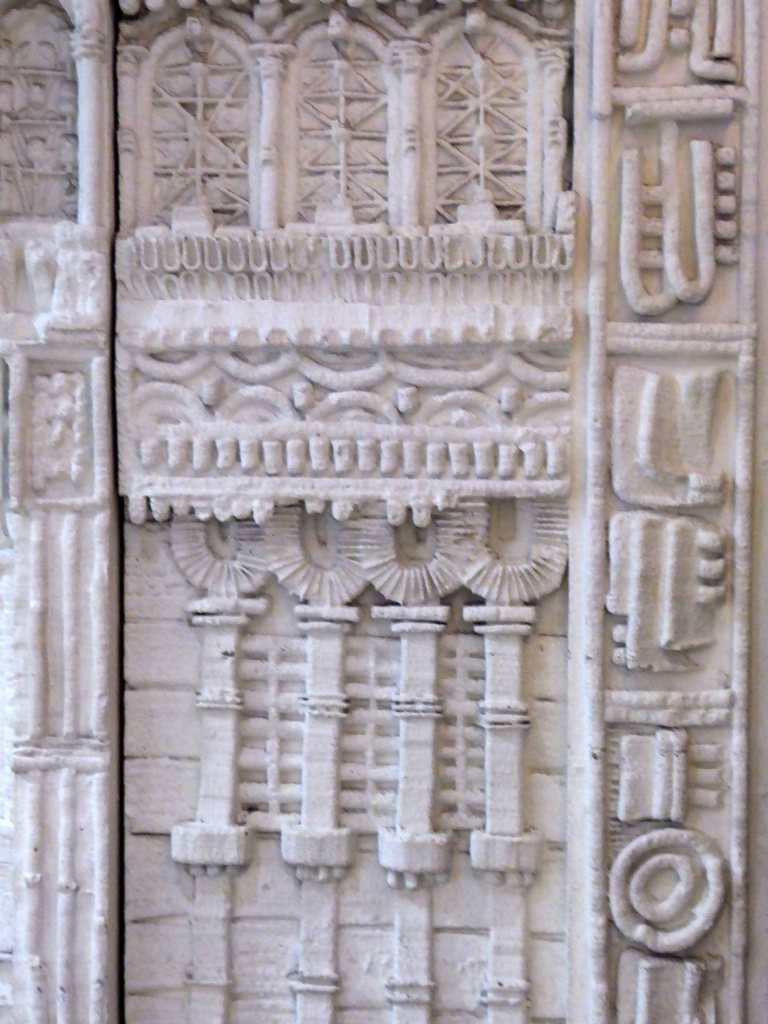
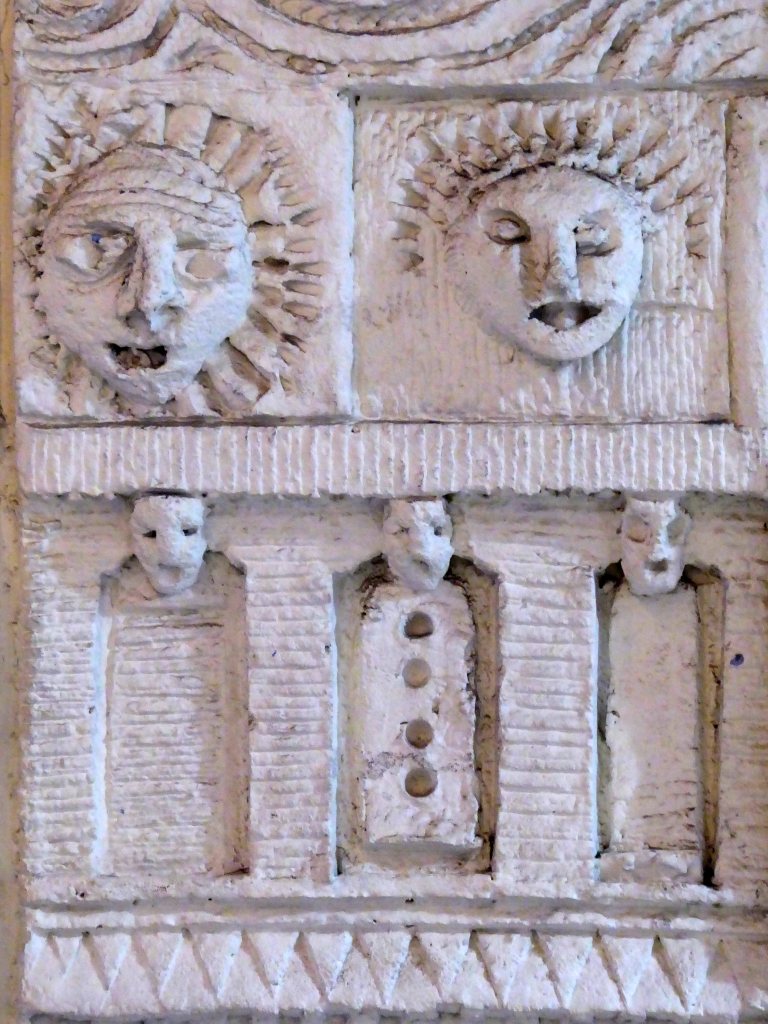
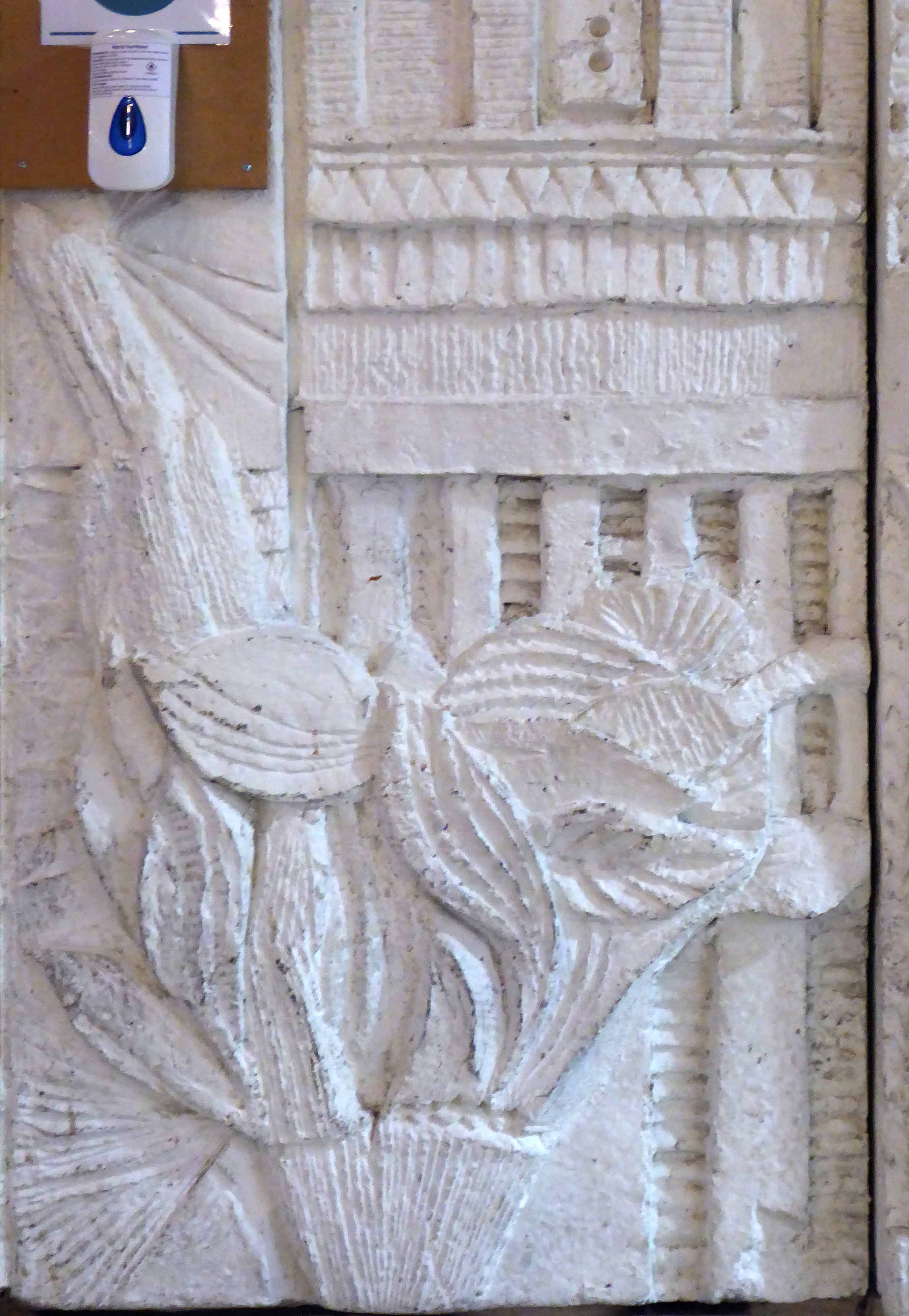
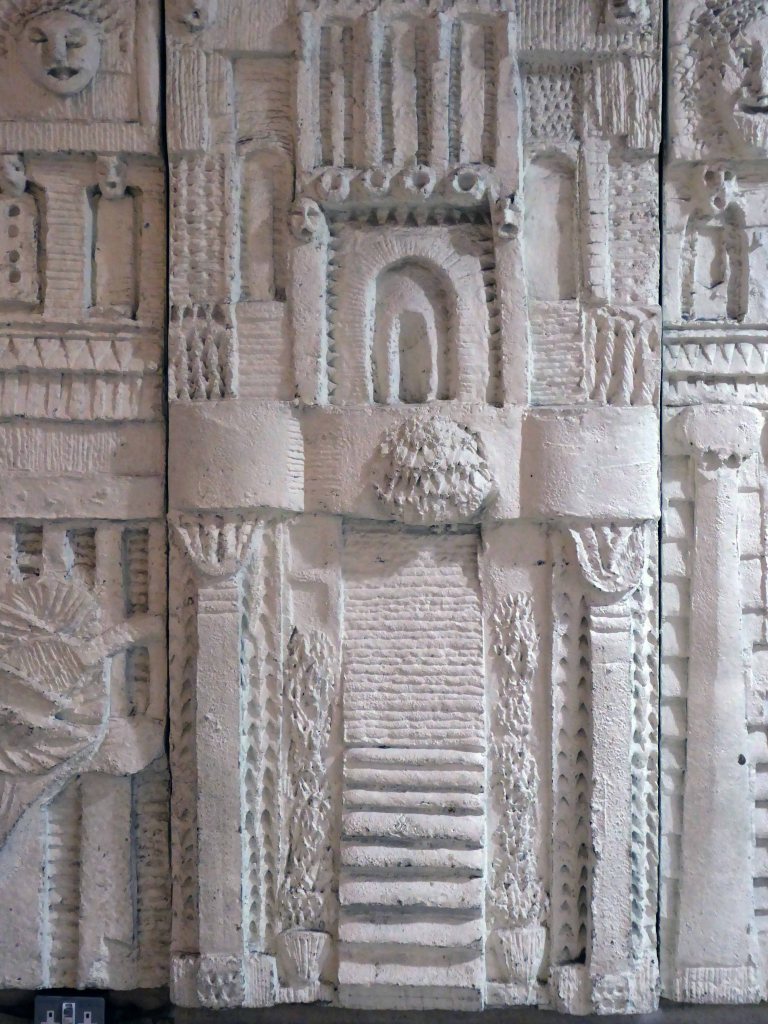
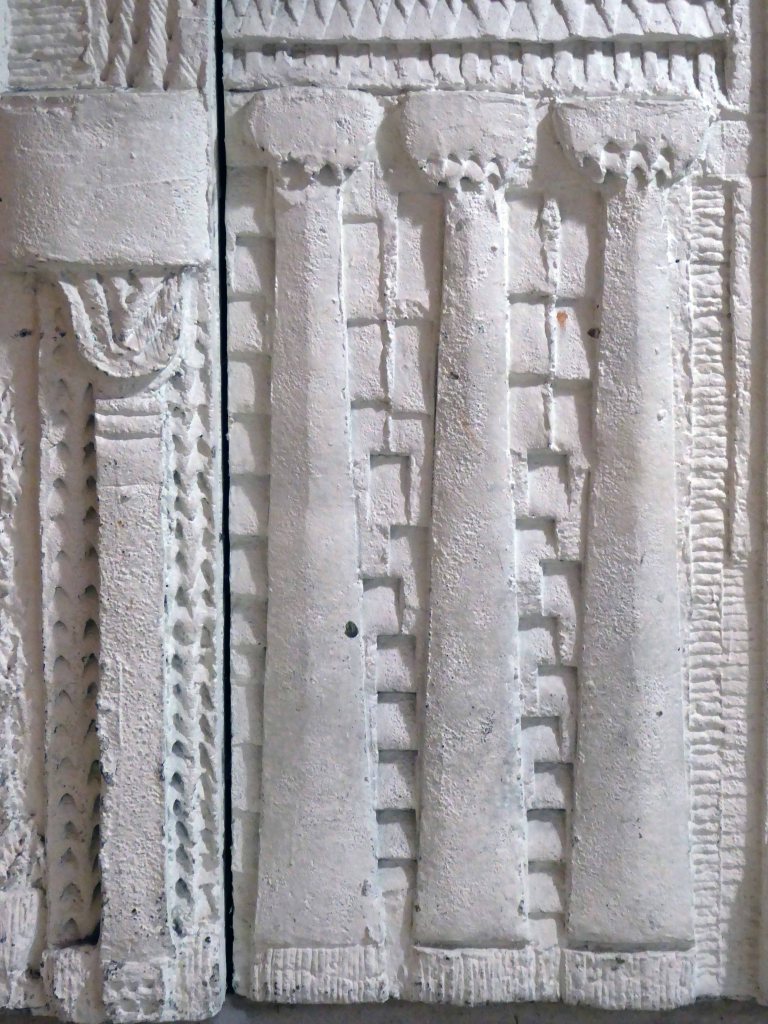
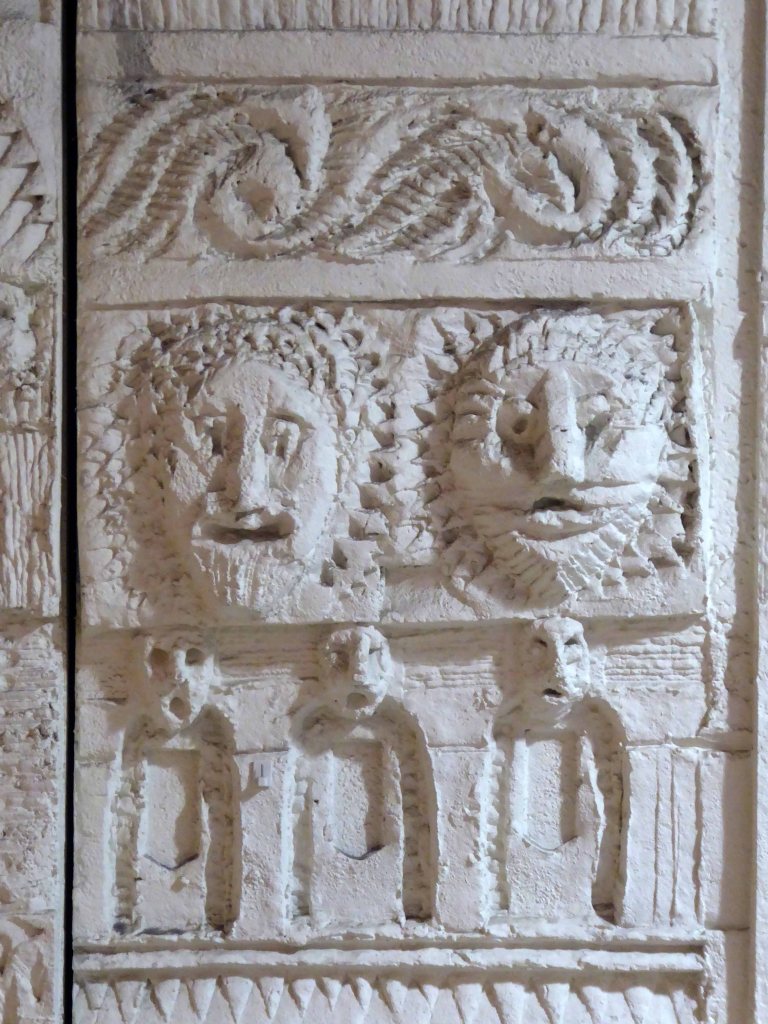
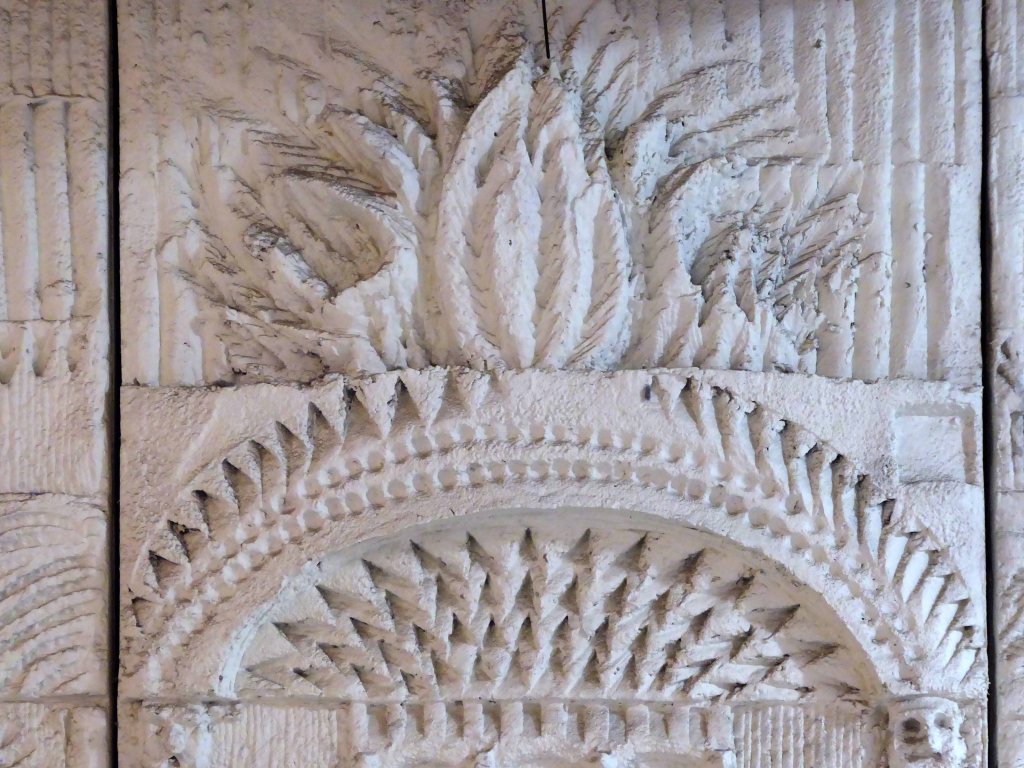
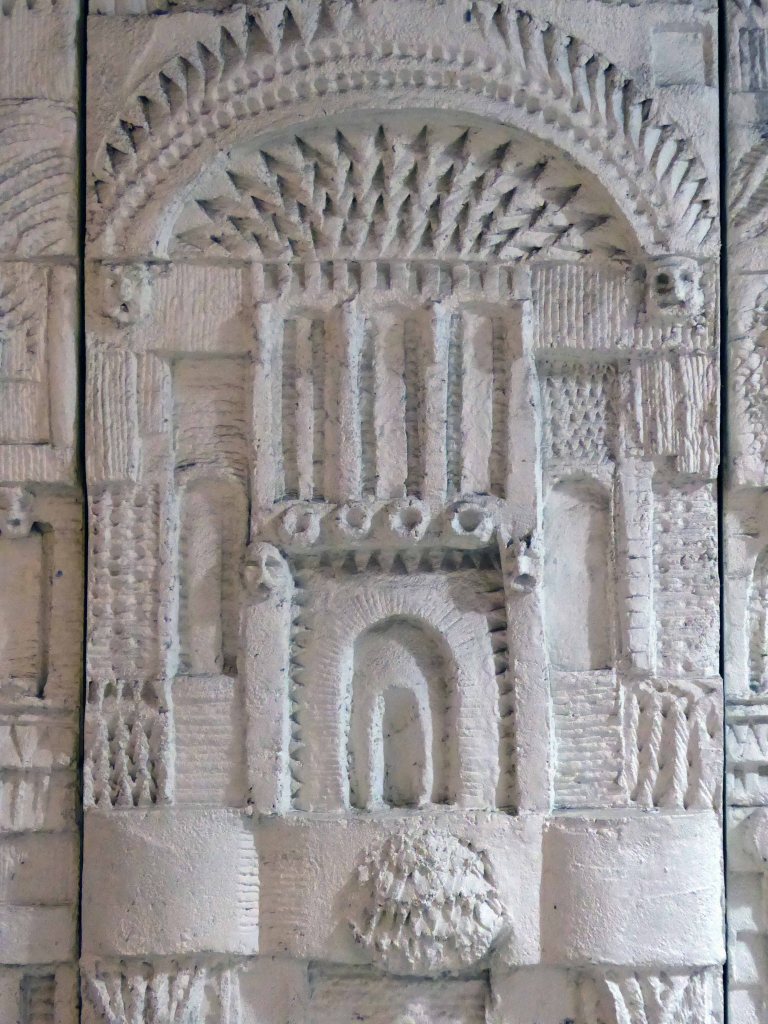
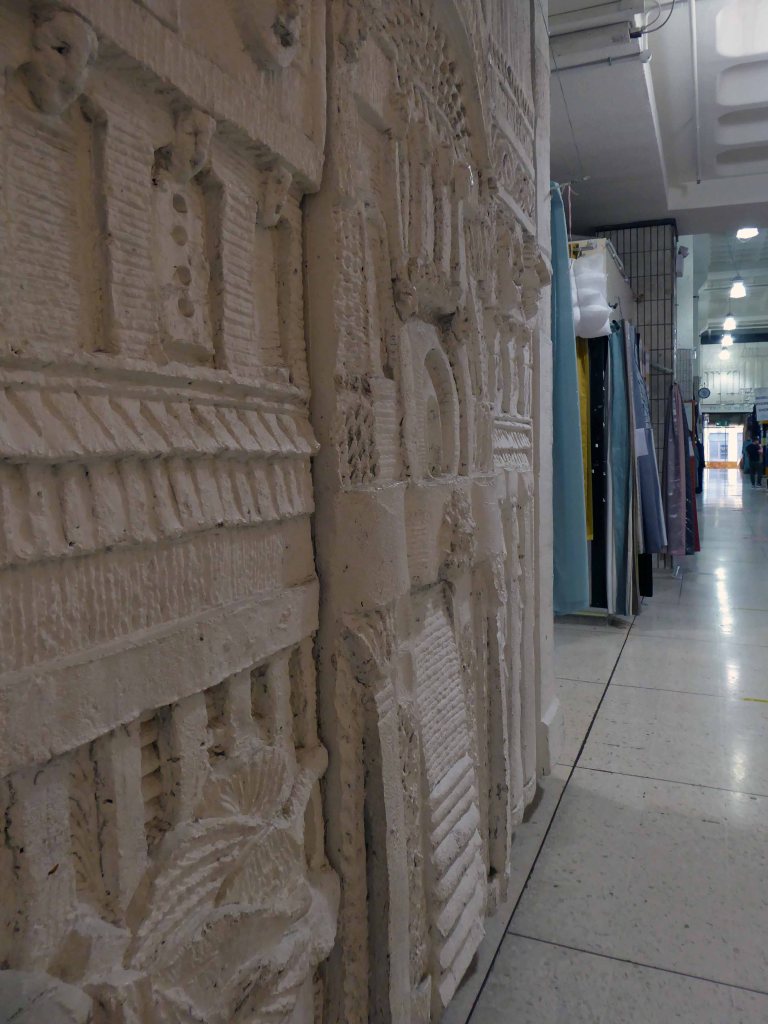
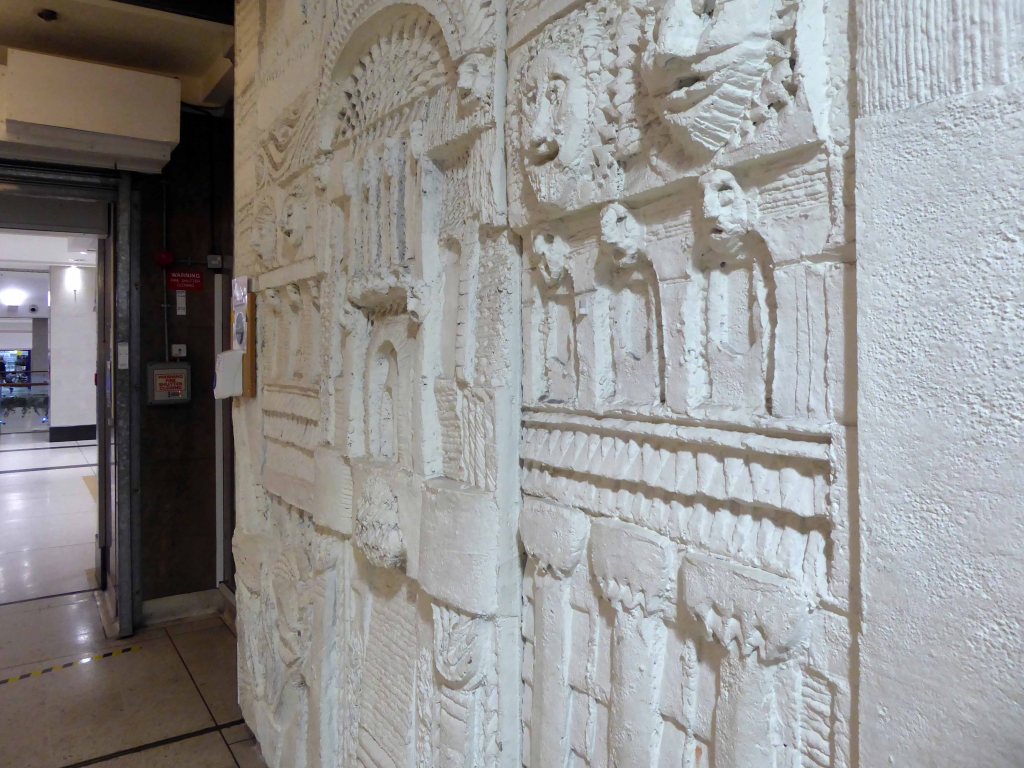
To the right of the main entrance is a modular sculptural relief, modelled in concrete cast in fibreglass.

There are eight individual modules, set in a grid of six by eleven – sixty six in total, rotated to break up the rhythm of the piece.

I was blessed on the day of my visit, with permission to photograph the interior, many thanks to Pastor Mark.

Ernest Whiteley – Bridlington

67 Promenade Bridlington YO15 2QE

Ernest Whiteley opened the shop on Easter Sunday 1901

His first week’s taking were £7 14s 1d.

He thought that he had done very well – says granddaughter Ann Clough.

Grandad lost his sight in 1940, I became his eyes. When he lost his sight and he handed over the till keys to mother, they had a little weep. He handed over to my mother because father had died three months before.

Ann has run the shop for the last sixty years, along with Sue, a full-timer for some thirty years.

The rep isn’t coming any more, ordering is online, that’s no good to us.

This is a cash only low-tech, high stock operation.

If they don’t have it – it probably doesn’t exist.

Along with Walton’s of Ashton under Lyne and the Wool Shop of Exmouth, this is one of a kind. A family business lovingly preserved and well run, trading traditional goods, in a kind and caring manner, to happy shoppers.

From the outside little has changed sine the 1930s, wide glass, well arranged windows, displaying a wide array of wondrous haberdashery.

All contained within an arcade with Art Deco detailing.

There are many, many mannequins from another age.

One man from Scotland stayed for hours, he had a fetish for the mannequins, we couldn’t get rid of him.

The side of the shop is largely given over to net curtains of every size, shape and design, labelled Monica, Daisy, Andrea, Vicky or Sarah.

The names were chosen by Sue, it’s a lot easier for people to say, I want Vicky, 36 deep, than the one with the squiggly flowers, or to remember the manufacturer’s number.

Inside is a haven of domesticity, dusters abound, along with all the other attendant cloths and towels to ensure household cleanliness.

Not forgetting the correct clothing for those domestic chores.

The original display units are a delight.

Almost every surface is awash with lady’s unmentionables – winter draws on, wrap up.

There are covers and doilies of every description.

And the finest display of sensibly priced handkerchiefs, fancy and plain.

Every sign and tag hand written with pride.

It was, as ever a privilege and a joy to spend a short time in another world, thanks ever so to Ann and Sue for their time and patience.

If your passing pop in spend a pound or two – I bought three dish cloths.

One customer told me he was going to a party dressed in a white mini-dress, purple wig, thigh boots and black tights, he came to look at nighties and tried one on in the changing cubicle. You’ve got to be broad-minded. It can be very disconcerting when you hear a man zipping up a corset.

Yorkshire Post

Ann Clough and her grandfather Ernest.

Water Pumping Plant – Bridlington

Walking the wet walkway of Bridlington’s south shore, I was pleasantly surprised by this semi-distant concrete construction.

Which cleverly accommodates a convenient public convenience.

The pumping station is the most immediately obvious aspect of the scheme , situated as it is on the promenade.

Hanson UK supplied the concrete, with a range of complex mixes required.

You’re trying to make concrete with as little water in it as possible, but it still has to move to be placed into position. The only way to achieve this is with powerful admixtures, which deflocculate the cement despite the lack of water in it to lubricate it.

This difficulty also applied to almost all the concrete above ground level for durability reasons – anything that could come into contact with seawater had to be able to withstand it.

The final major complication was the aesthetic requirements from the local council. All the visible concrete had to match an older Victorian Spa, located a little way up the beach, which had previously been refurbished using Hanson concrete.

We were asked to match the colour, shading and texture of the new concrete to the spa.

The team was forced to use white cement, which had been used in the spa, but because of durability requirements they needed to use a cement replacement to improve the overall chemical resistance of the product. They used ground granulated blast furnace slag to replace 55 per cent of the white cement, which is white in colour itself. This had the added sustainability benefit of replacing imported white cement with a local waste byproduct.

Hanson UK

All this to house the Yorkshire Water treatment plan and allow Bridlington to regain its Blue Flag status.

The extended pipework carrying the waste water far far away.

At the Headworks the Arup design concept was to extend the pumping station using pre-cast concrete panels that are sensitive to the existing facade. The development of 2015 succeeds in integrating a Brutalist aesthetic, into a largely Victorian setting. Incorporating several levels of seating and associated street furniture, affording some shelter and clear sight lines with transparent panels.

UK Water Projects

The artwork in front of the huts on Bridlington Promenade by Rachel Welford looks fantastic. The huts built by our contractors Morgan Sindall Grontmij (MGJV) were completed in August and they’re available for hire through the East Riding of Yorkshire Council. The beach huts are larger than the other beach huts on the Promenade and include disabled access and are especially suitable for family groups. Complementary artwork, also designed by Rachel Welford has been incorporated in the glass balustrade in front of the huts.

Yorkshire Water

Doncaster Modernism – Revisited

Having taken a tour around town last year, we are now revisiting Doncaster on a socially distanced Manchester Modernist walk.

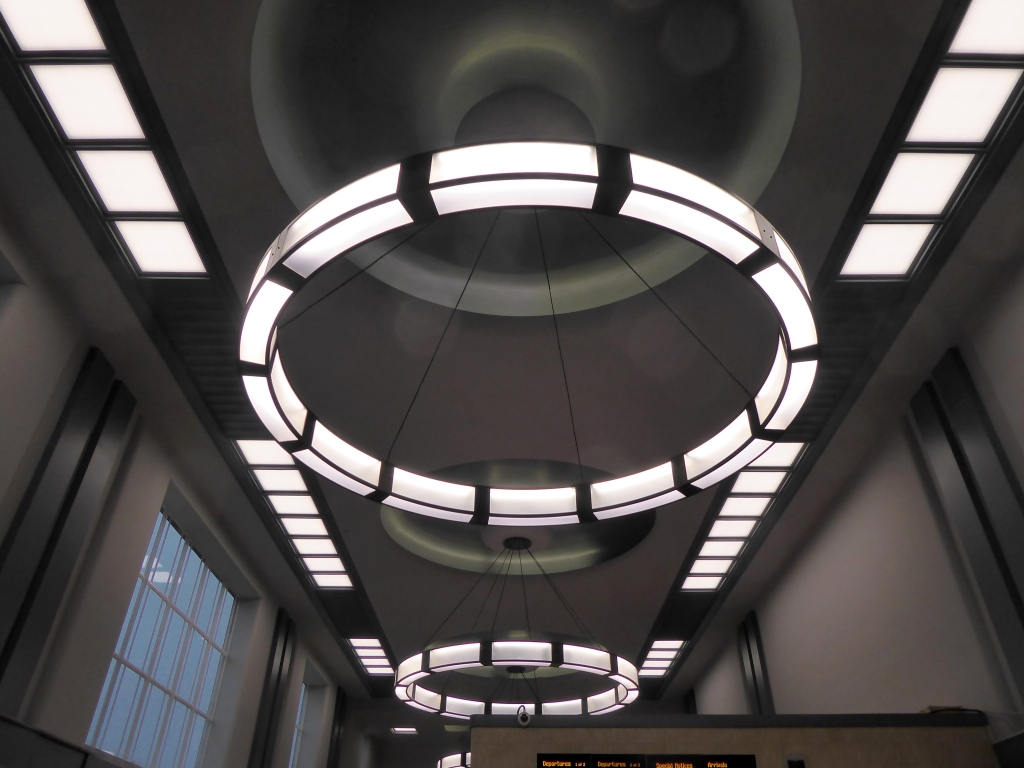
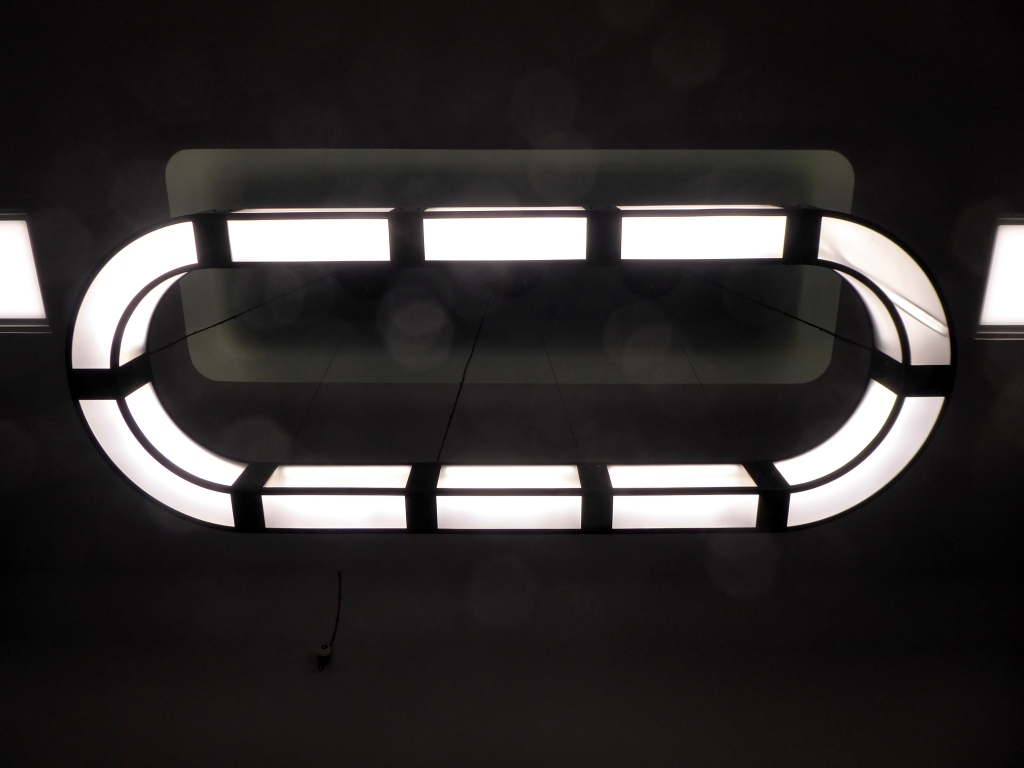
Arriving by train at 8.30, just in time to check out the new lighting scheme in the station foyer.

Replacing the previous lighting.

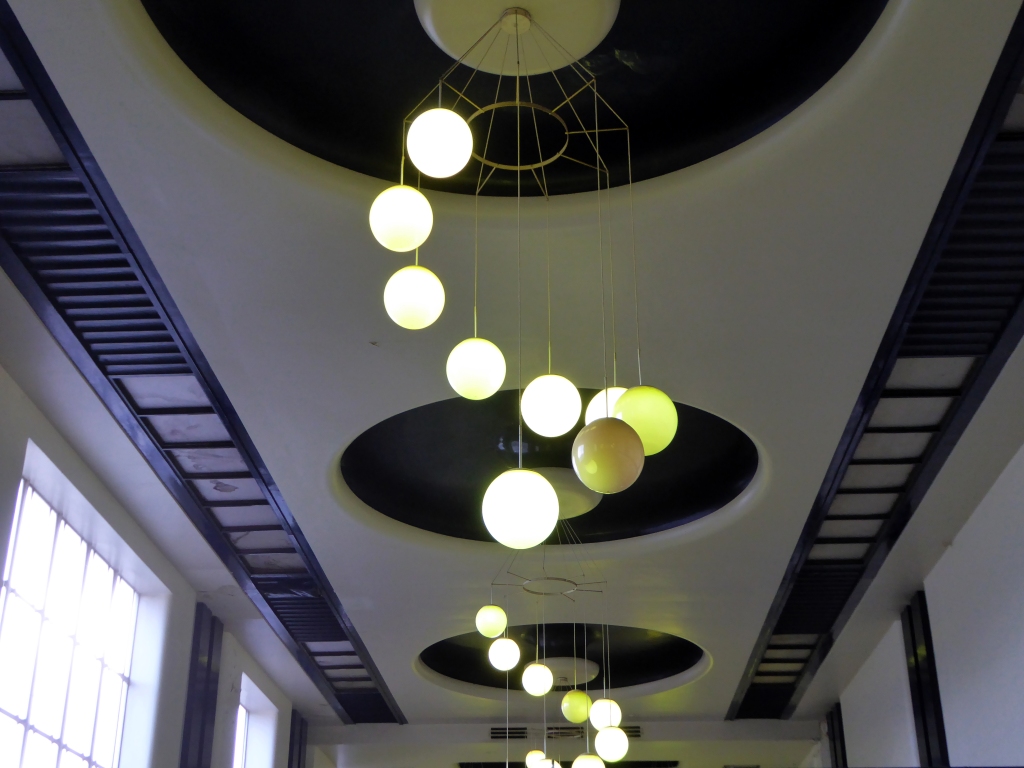
Which in turn replaced the original Thirties lighting.

The forecourt redevelopment is a work nearing completion.

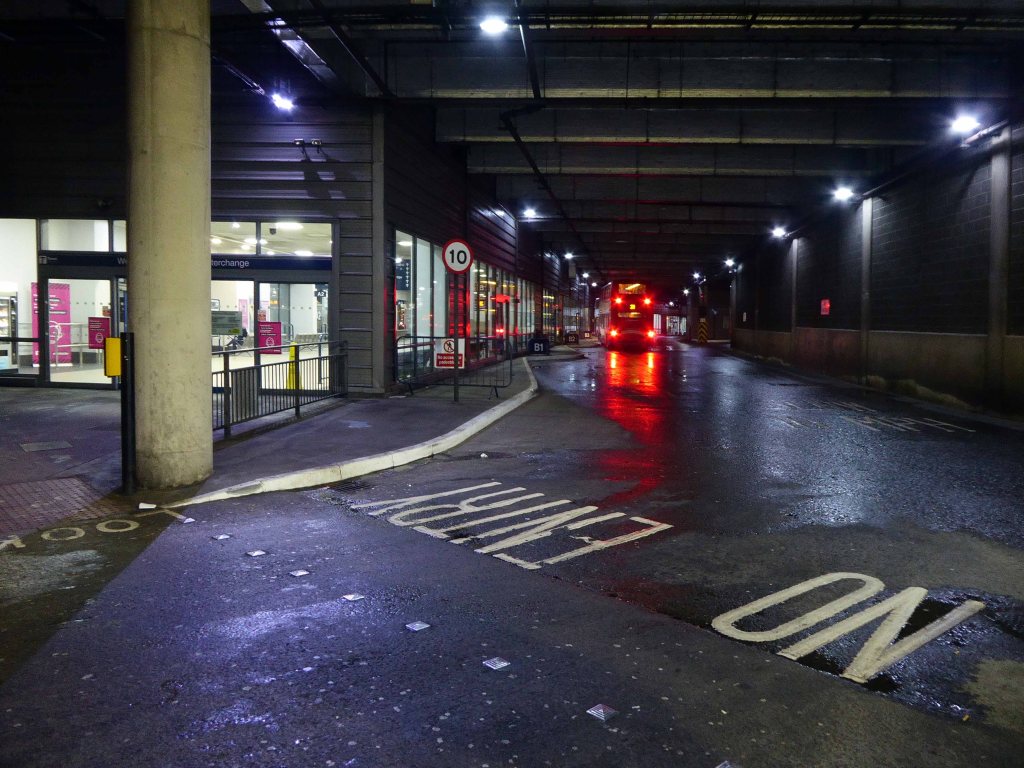
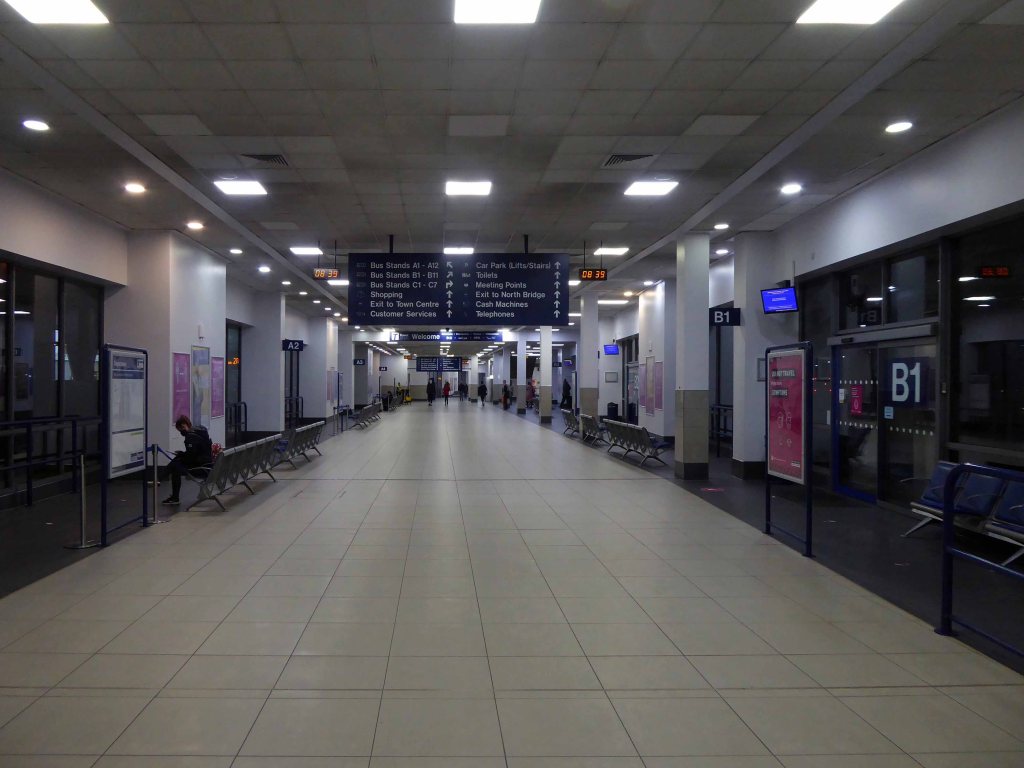
I was on my way to Intake by bus so it’s off on the 66 from the Frenchgate Inetrchange.

An urban environment so anonymous, that it can only just recognise itself. I was helpfully informed by two radio controlled security guards that photography was illegal.

More Interzone than Interchange.

Here are my transgressive snaps, I made my excuses and left – on the next available 66.

Decanting from the single decker I made my way across the way to All Saints, a George Pace church of 1956.

Built on the foundations of an unrealised Neo-Romanesque church of 1940, but reorientated east/west.

I legged it back to catch the bus back, the returning 66, much to the surprise of the surprised driver, making his return journey.

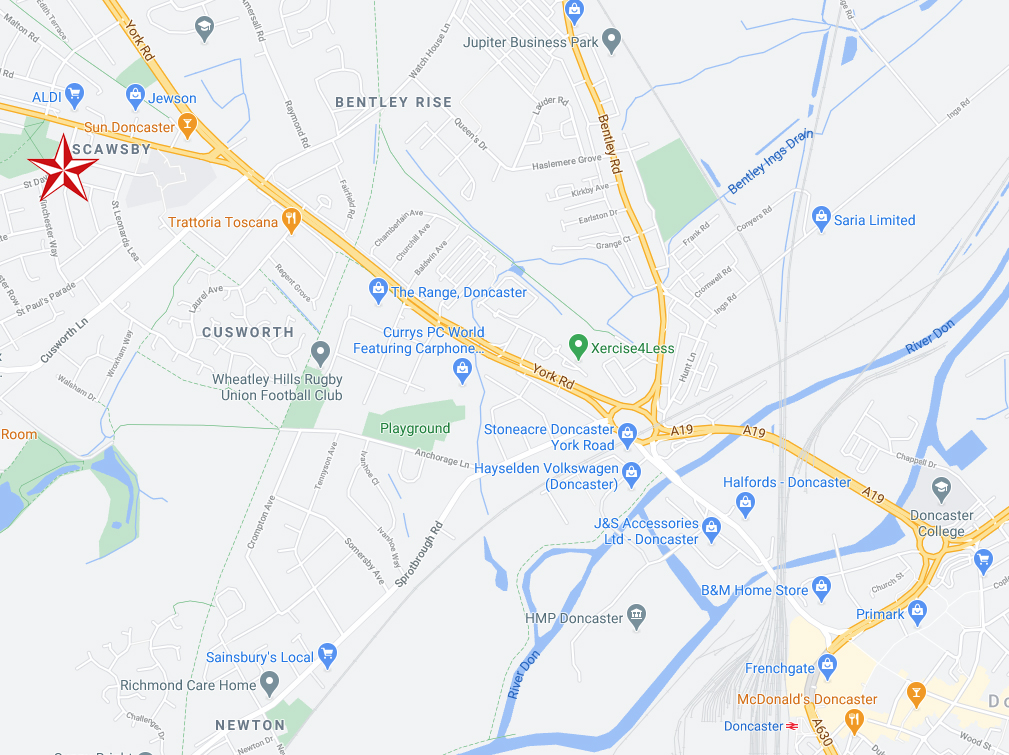
Jumping the 41A to Scawsby, displaying my risible home-printed map to the driver, requesting a shout when we arrived at the indicated destination, which he was unable to discern, and which I had failed illustrate.

I had contrived to arrive at the end of the line, a bit part player in a non-existent Béla Tarr film.

The heavy rain continued to fall.

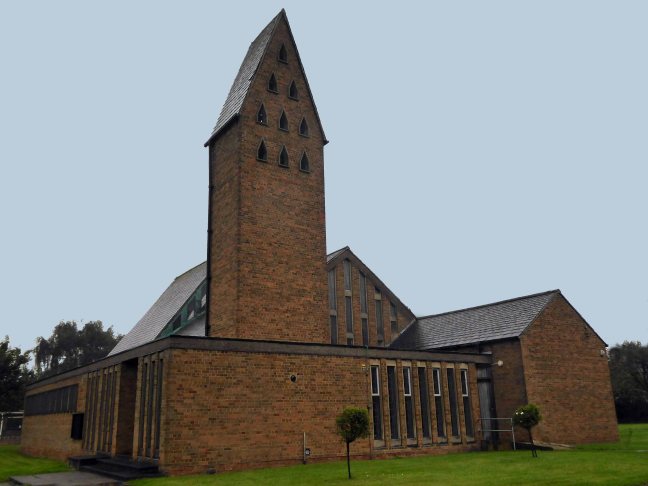
I followed the bus route back to the Church of St Leonard and St Jude on Barnsley Road.

Following a thorough tour inside and out, I returned promptly to the town centre, on the limited stop express X19.

And hotfooted it to the Waterdale Centre, a work in progress, the CGI figures being as yet, a mere figment of the development officer’s fevered dreams.

Doncaster Council documents from the planning application for the demolition say, that while the exact project is not yet fully in place, discussions are taking place with the council on the project and grant funding is being sought to help the future regeneration scheme. But the council has said it supports schemes that would revitalise the Waterdale Centre area for retail, leisure, and tourism uses.

The centre is now owned by the Doncaster-based property firm Lazarus Properties, who bought it from the Birmingham firm St Modwen.

Lazarus director Glyn Smith said his firm had faith in the local economy of Doncaster town centre, even though larger multinationals seemed to be shying away.

Doncaster Free Press

The former ABC/Cannon Cinema

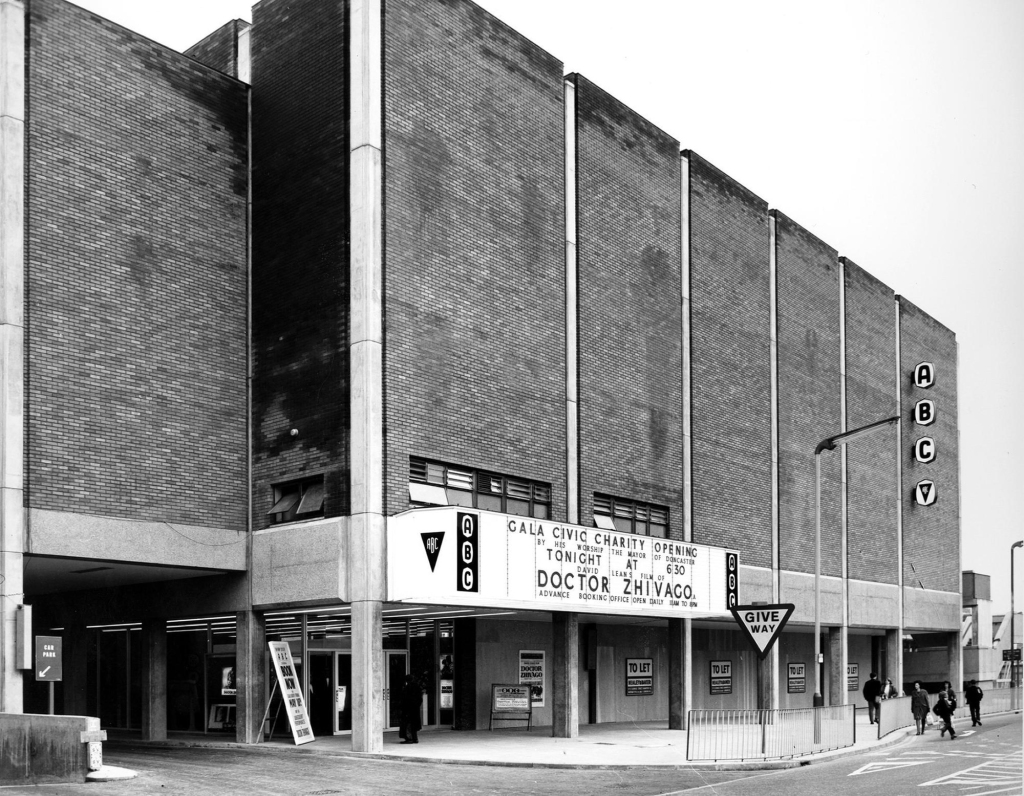
The ABC was built by Associated British Cinemas(ABC) as a replacement for their Picture House Cinema which had opened in 1914. It opened on 18th May 1967 with Omar Sharif in Doctor Zhivago presented in 70mm. Designed with 1,277 seats arranged in a stadium plan by the architectural firm Morgan & Branch, with input by architects C. ‘Jack’ Foster & Alan Morgan. It was decorated in a modern 1960’s style.

Closed in January 1981 for conversion into a triple screen it re-opened on 9th April 1981 with seating in the 3-screens.

The Cannon Group took control in the mid-1980’s and it was re-named Cannon and it closed on 18th June 1992, screening its opening film “Doctor Zhivago”.

The building has stood empty and unused since then, but in 2007, it was bought by Movie World for just £150,000. It is reputedly being re-modeled with extra screens added, however by 2009, only a clean-up of the interior has been achieved. The building sits empty and unused in 2020.

Cinema Treasures

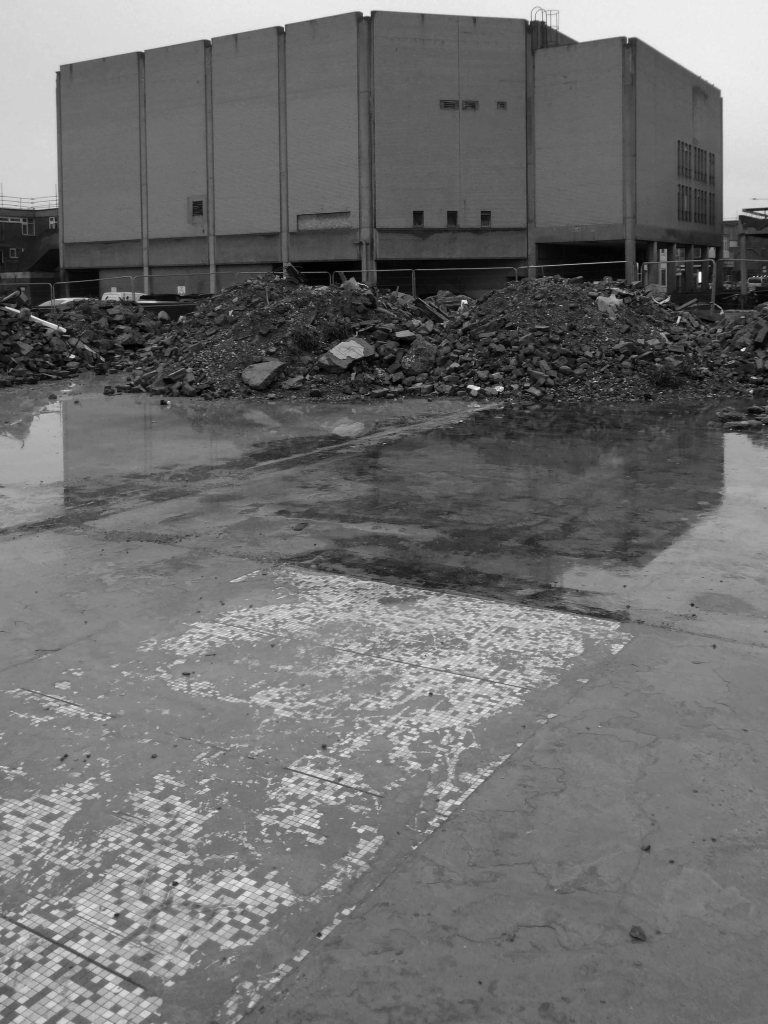
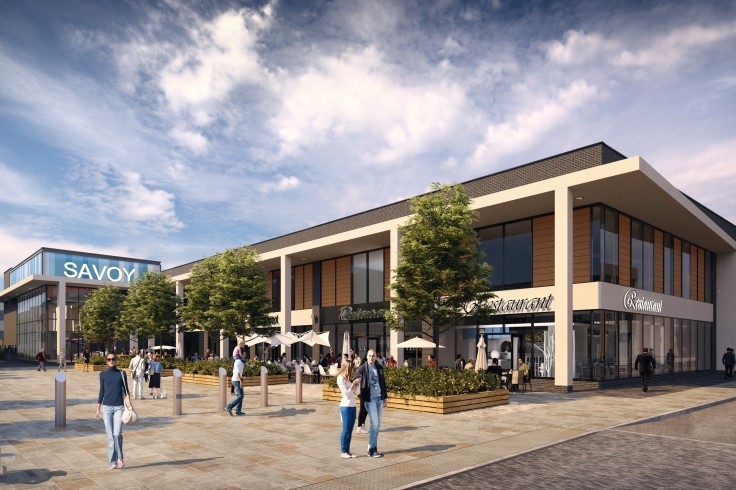
The delayed opening of the new Savoy Complex will no doubt inform the future of the Cannon.

It’s a familiar tale of the local authority, developers, leisure and retail outlets chasing dreams, cash and hopefully pulling in the live now pay later public.

It’s all part of the Doncaster Urban Centre Masterplan which will transform the way Doncaster looks and the way residents and businesses use the city core.

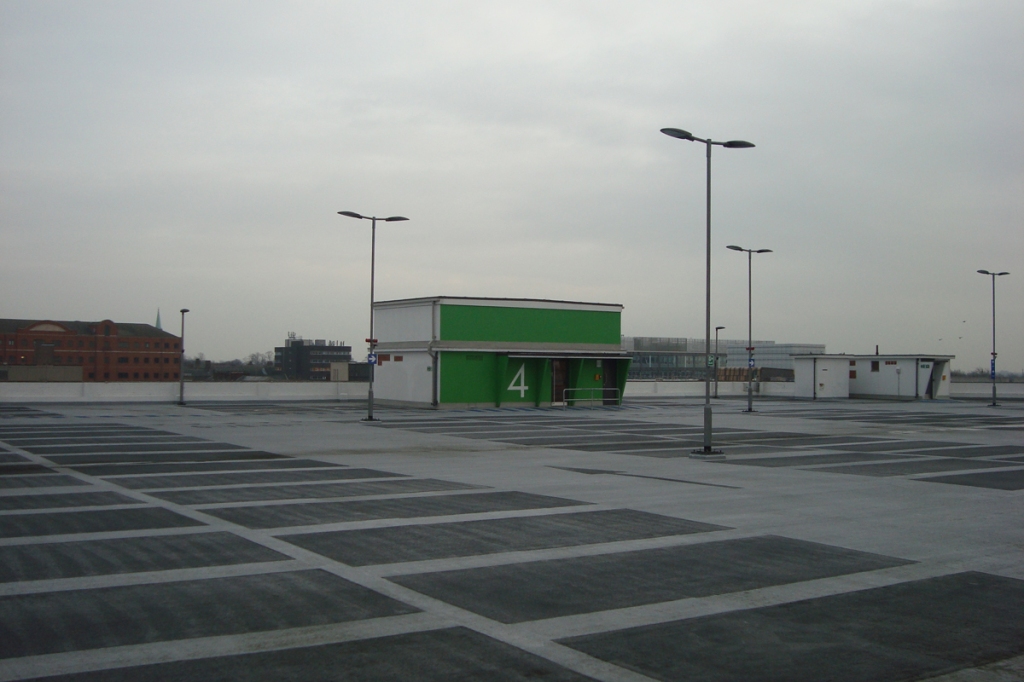
The area is a pivotal point, I sincerely hope that the Waterdale Centre is revived, along with the adjacent Civic Quarter car park.

Refurbished in 2011 by Potter Church and Holmes since closed.

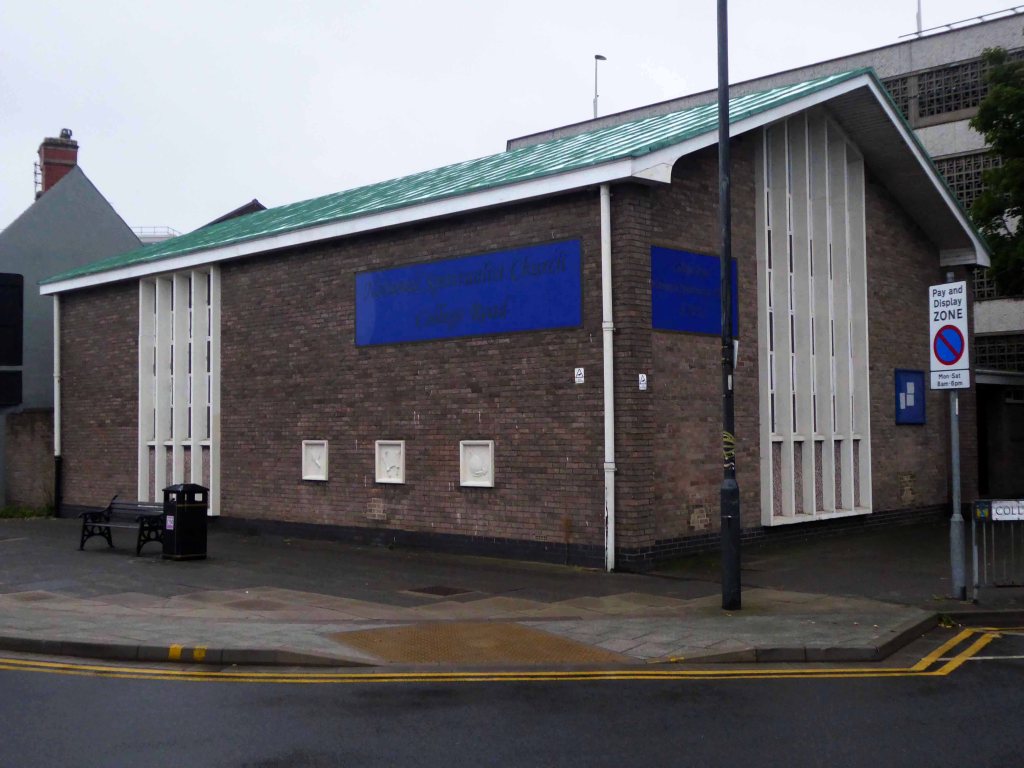
I noted the restrained Modernism of the National Spiritualist Church.

The service begins with a short prayer. The congregation sings three songs during the service using music that most people would recognise. There is usually a short reading or lesson on something to do with spiritualism or events in the world. There is also a talk by the guest medium who use their inspiration or intuition to compose an uplifting address.

Then the business of contacting the spirit world begins.

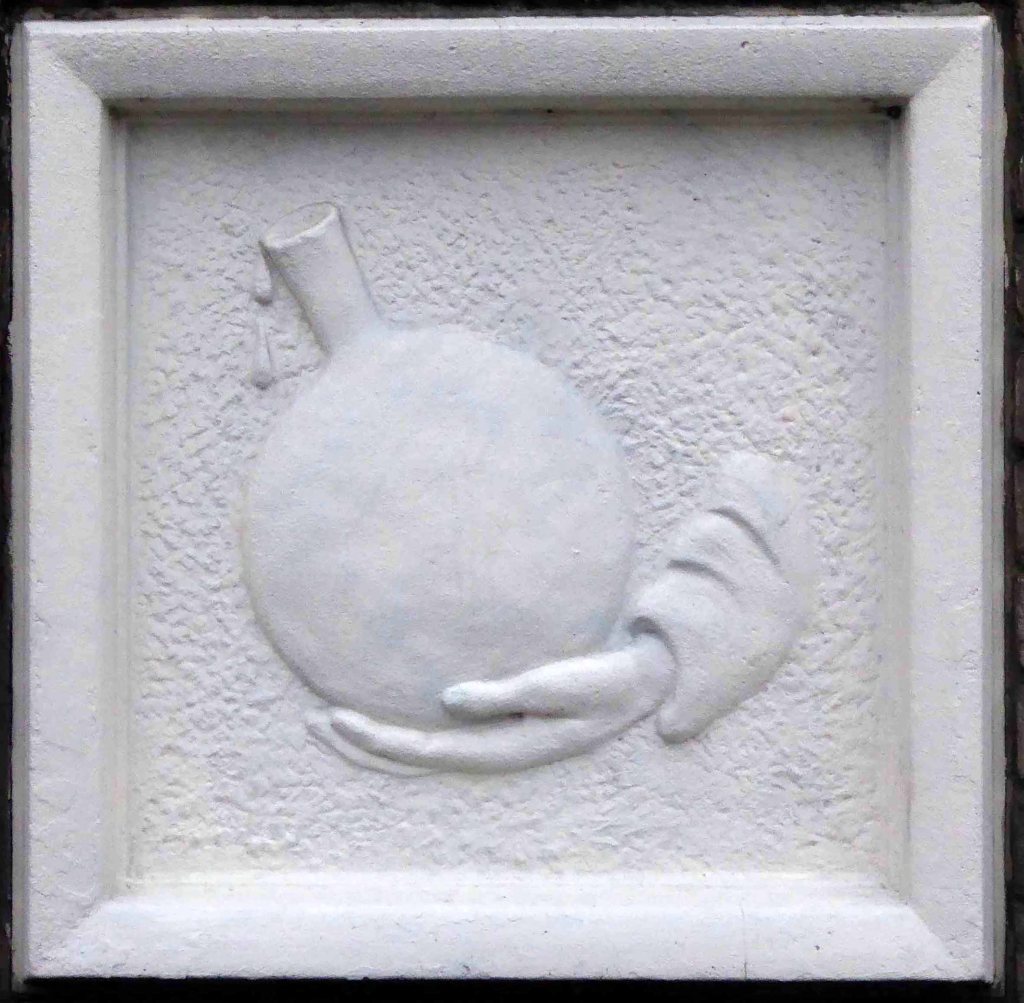
Along with its curious relief panels.

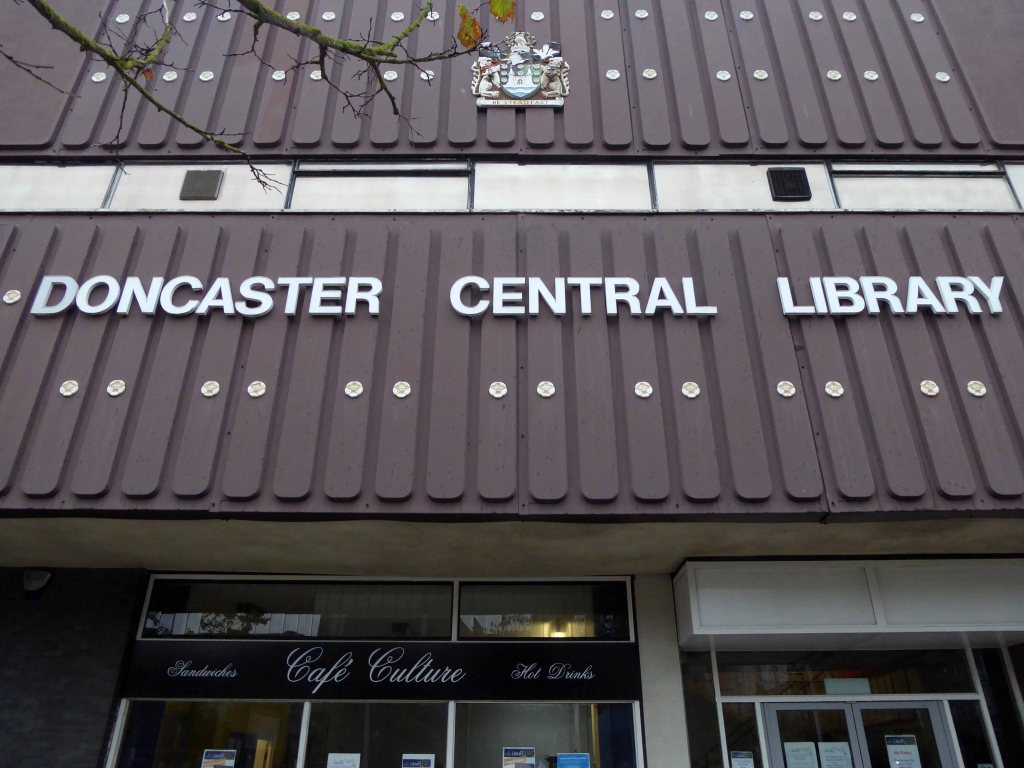
Back around to the back of the Waterdale and the surviving former bank fascia, civic offices and library.

Back through the Waterdale to discover the saddest of retail archeology.

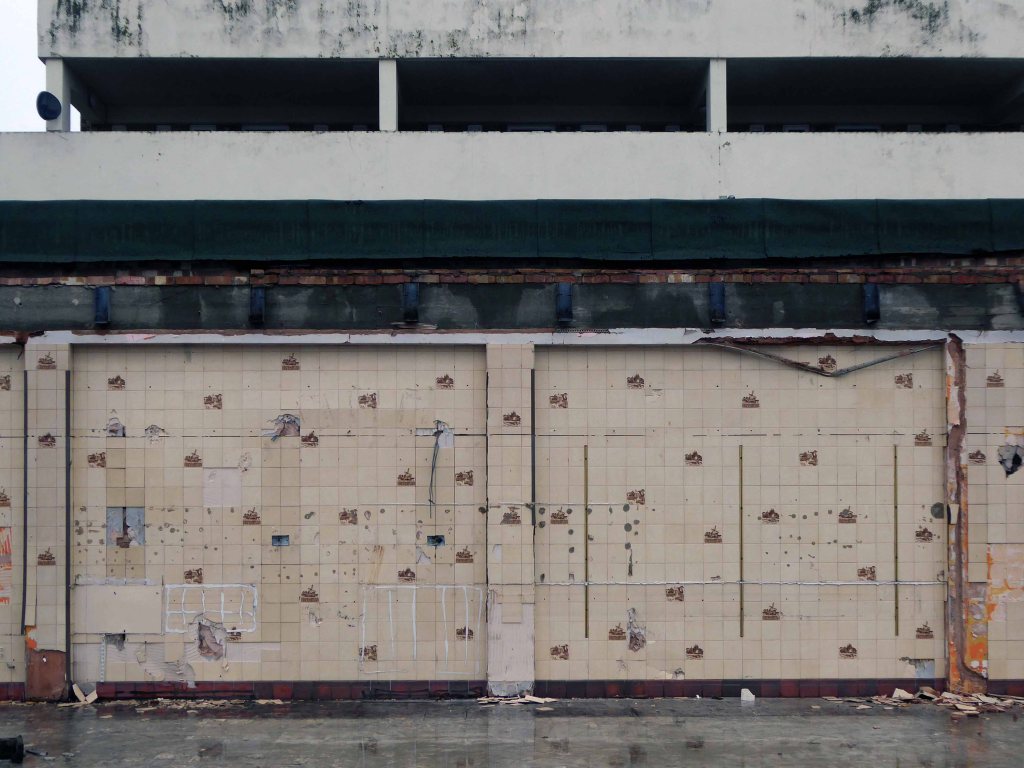
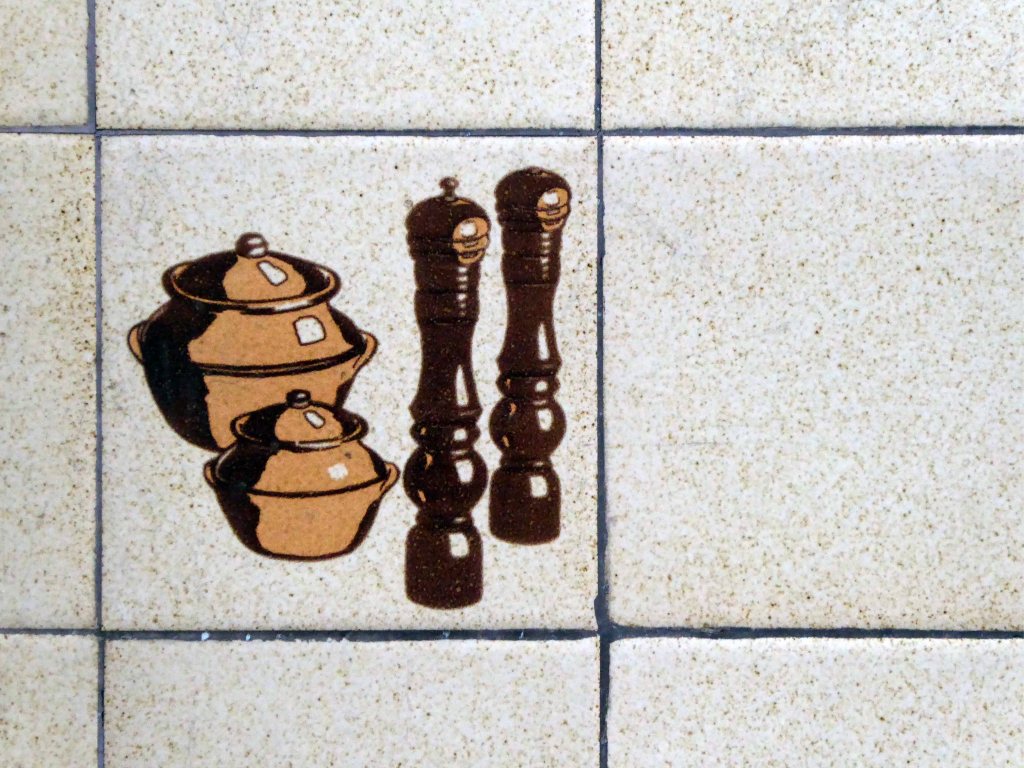
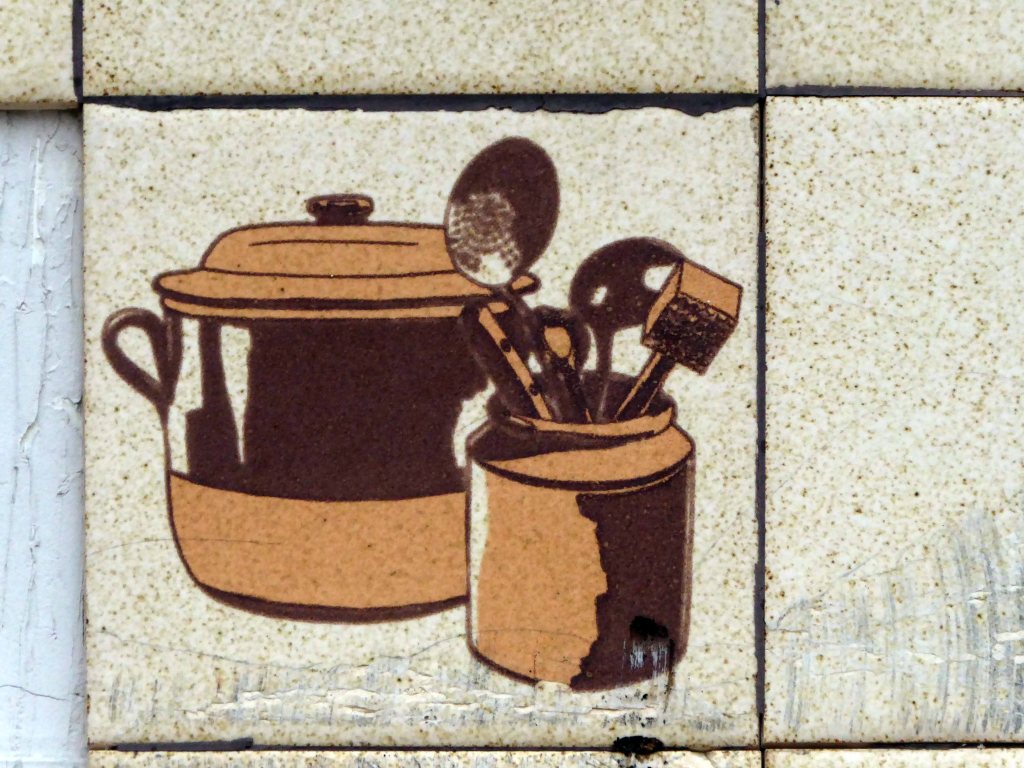
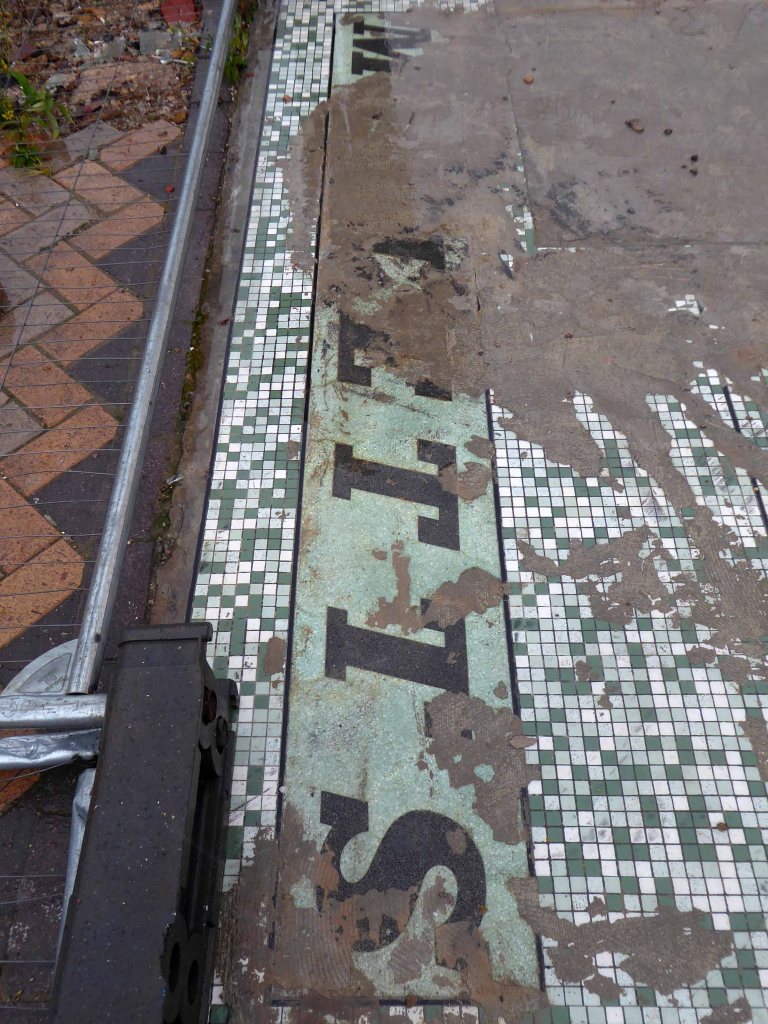
The long lost tiled café wall and a mysterious porch.

A gloomy end to a very wet day.

Church of St Leonard and St Jude – Doncaster

Barnsley Road Doncaster DN5 8QE

Constructed 1957 – 1963

Another church by architect George Pace – along with William Temple Wythenshawe, St Saviours Bradford, St Marks Broomhill and the Church of St Mark Chadderton.
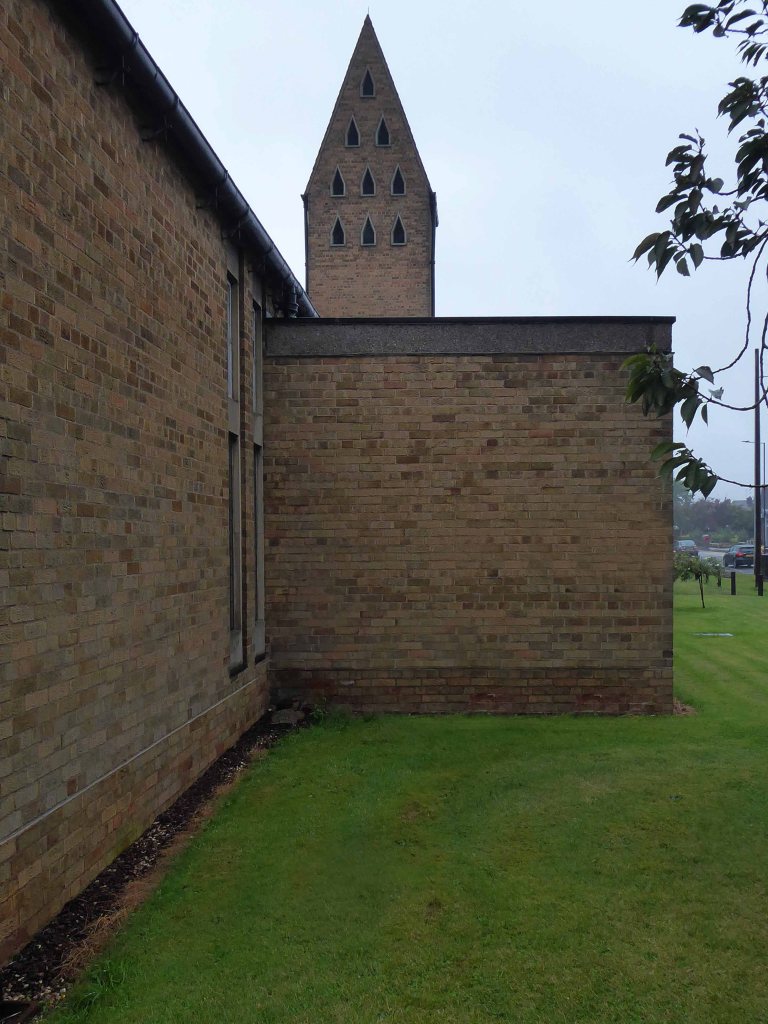
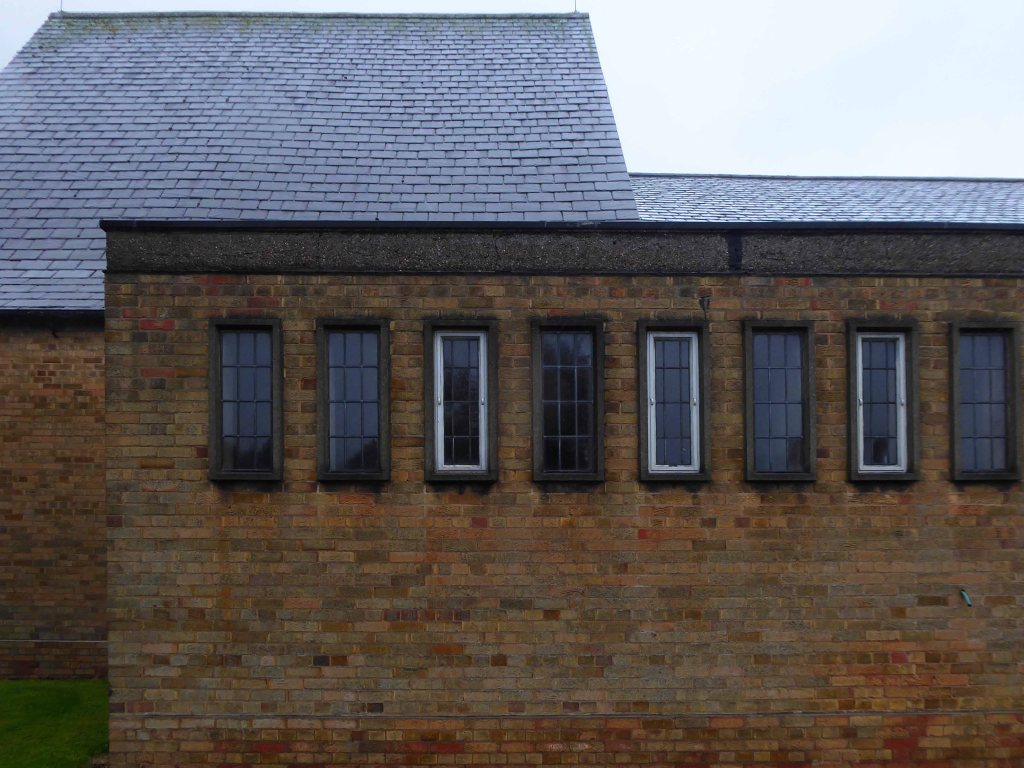
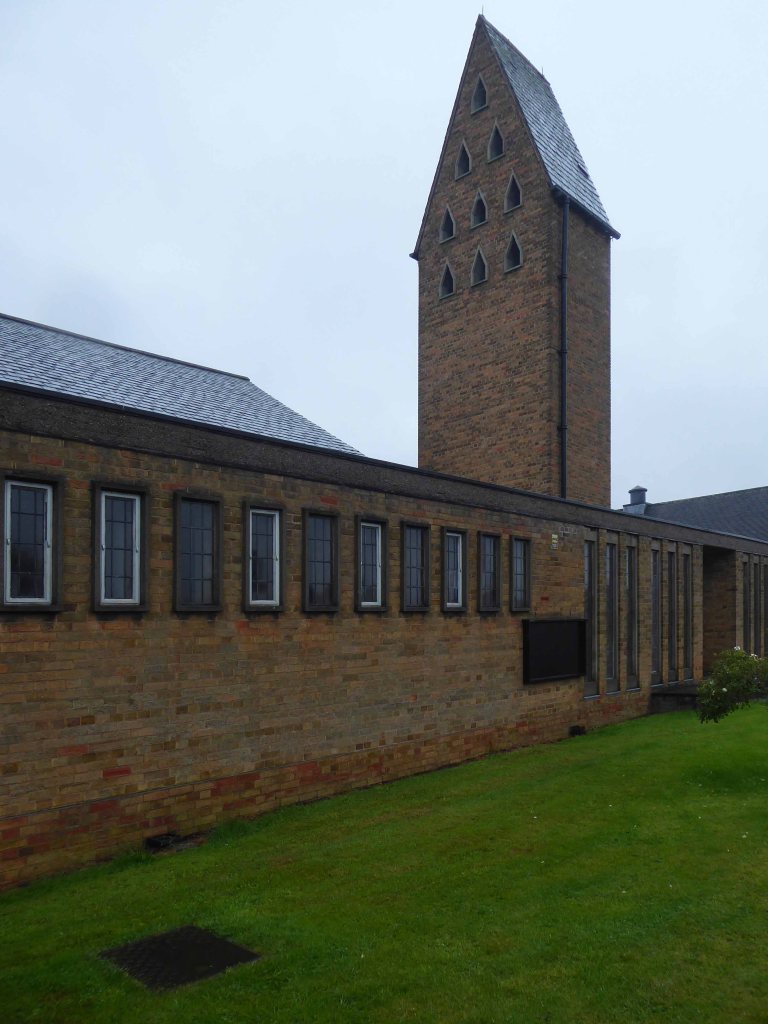
They are all built in his distinctive manner, brick and concrete, steel, wood and glass. Often working within tight budgets, respectful of the Christian Church’s early heritage, expressing mass and volume with simple geometry.
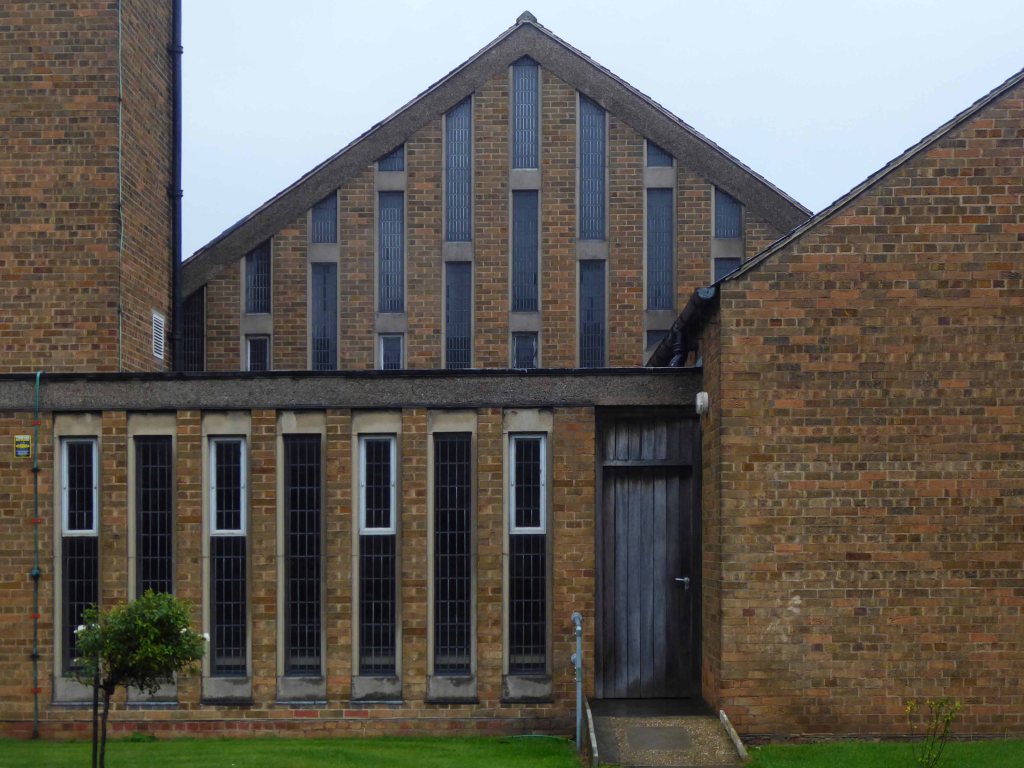
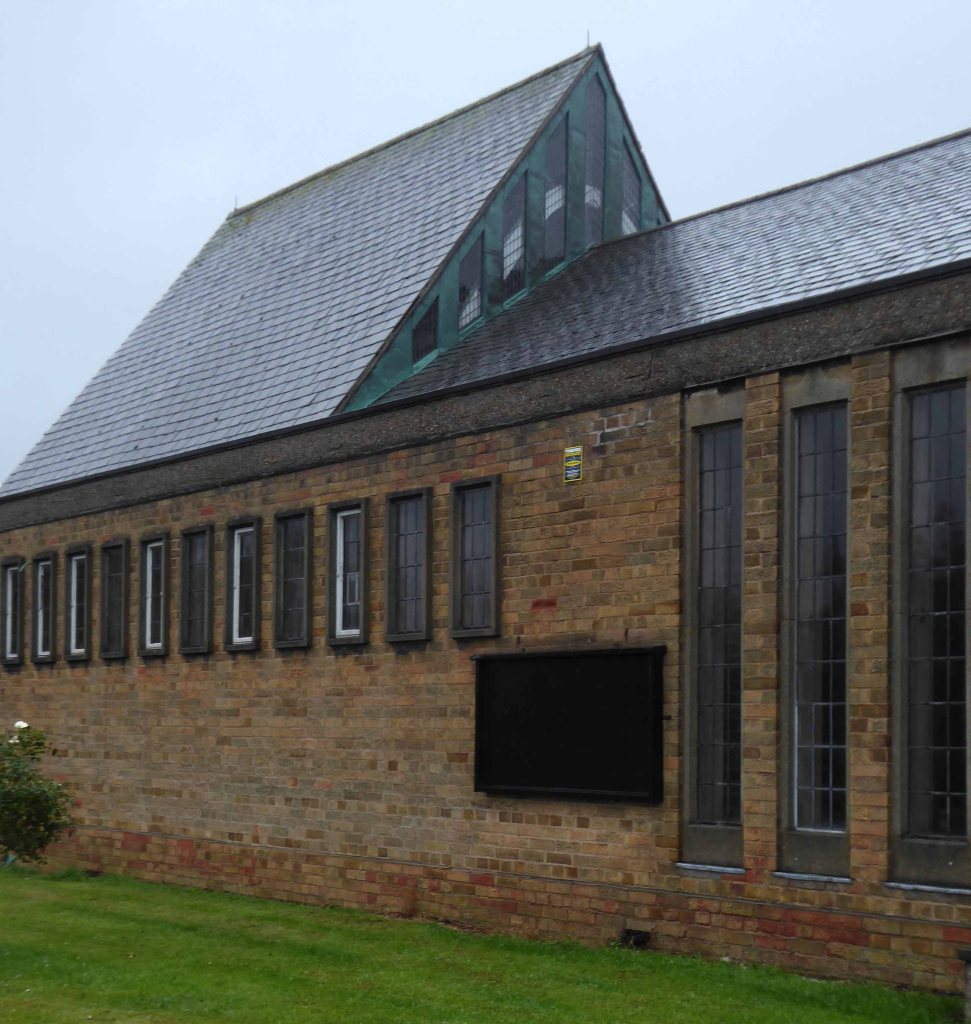
The exterior skin pierced by multiple rectangular windows, the interior revealing an elegant calm space with attendant simple decorative elements and fittings.

The body of the church has two asymmetric orthogonal outriders and a tall bell tower.

The transept chapel

The chancel and apse has a raised roof with a glazed face.

Let’s literally take an anti-clockwise look around the outside.

I was warmly welcomed by The Revd David D’Silva, Curate-in-Charge and kindly given free access to the church’s interior.

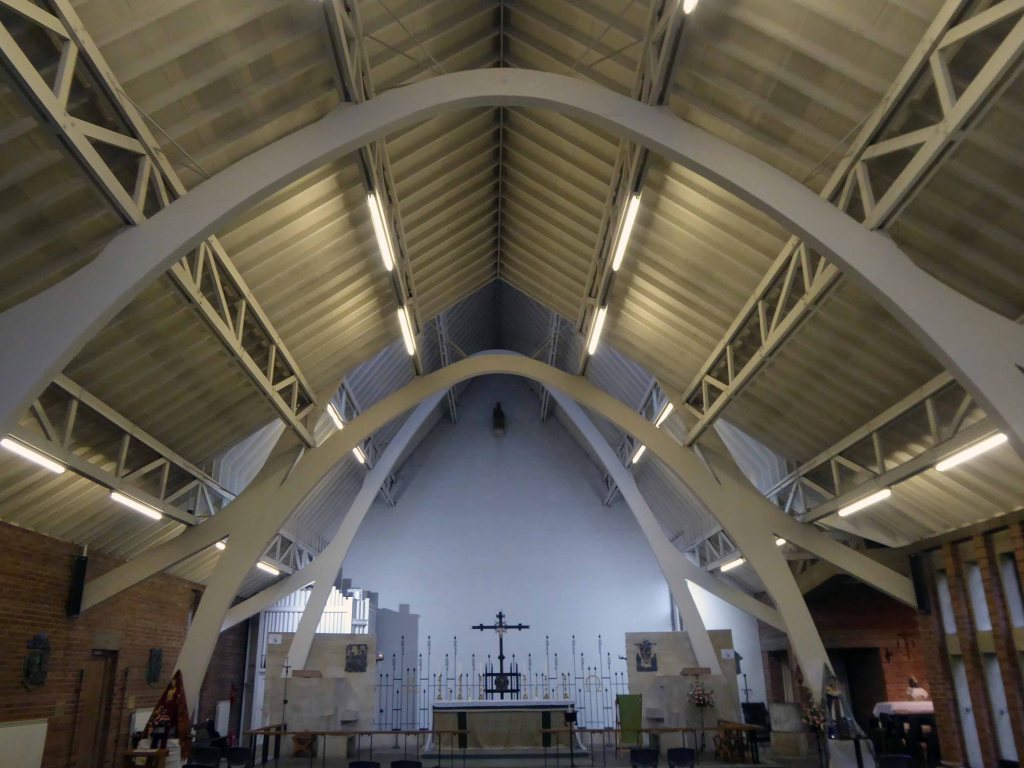
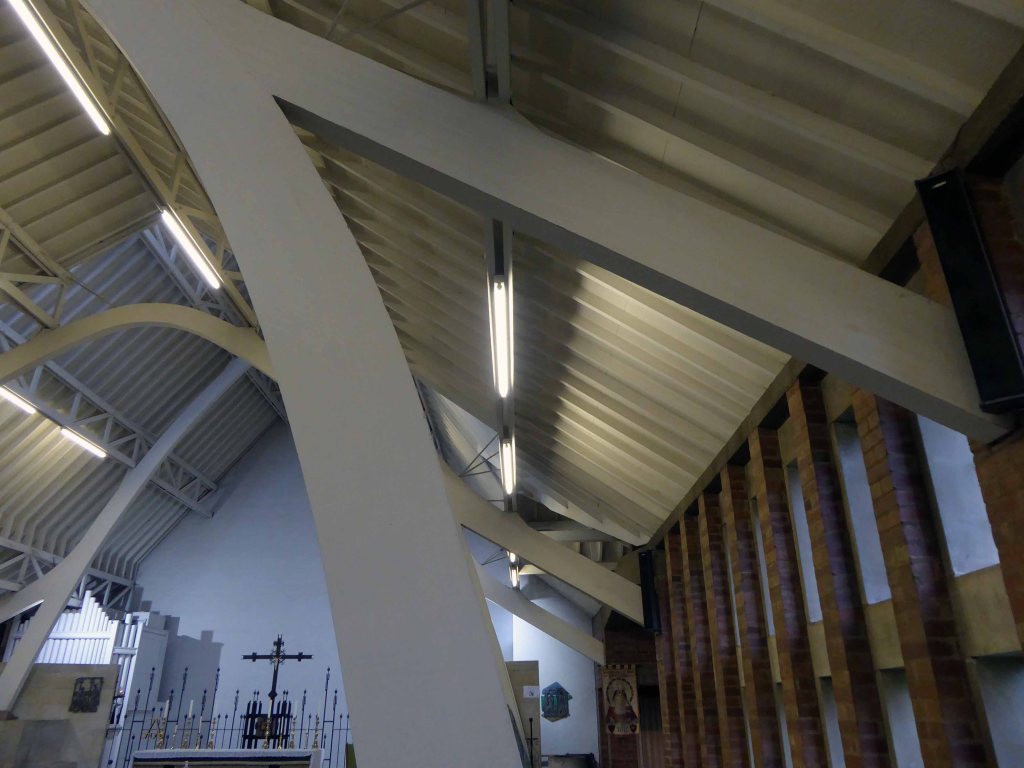
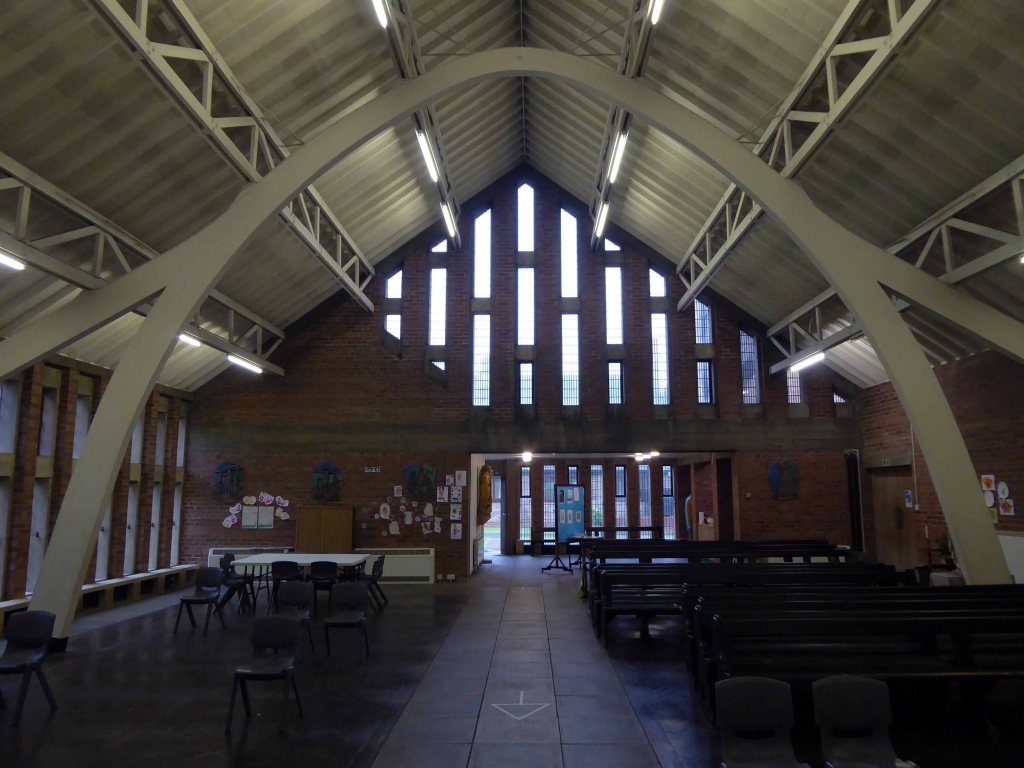
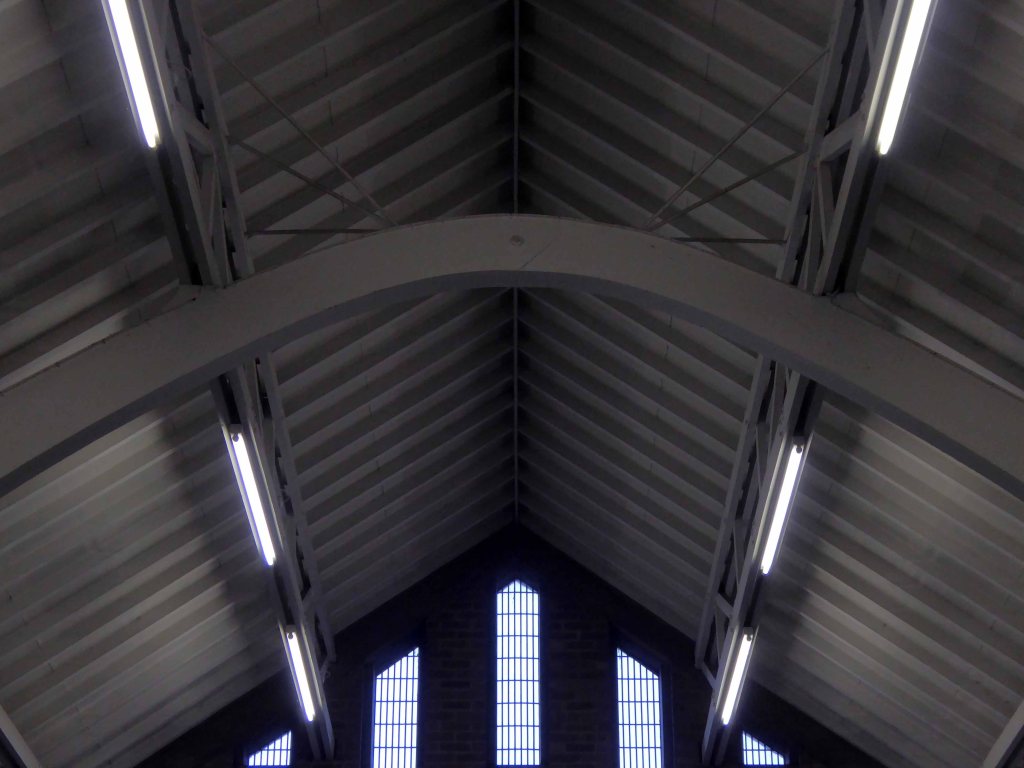
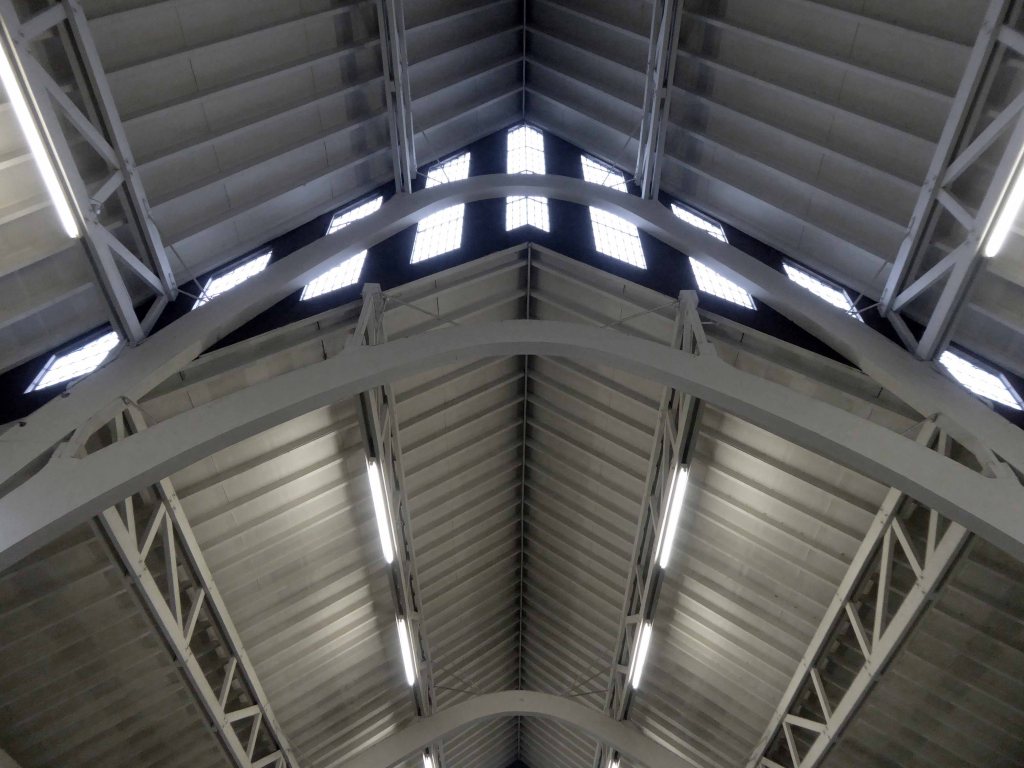
The wooden framed roof supported by huge parabolic arches of laminated timber.

There are retrieved pews, temporarily reordered to accommodate Covid requirements.

Pugin statuary.

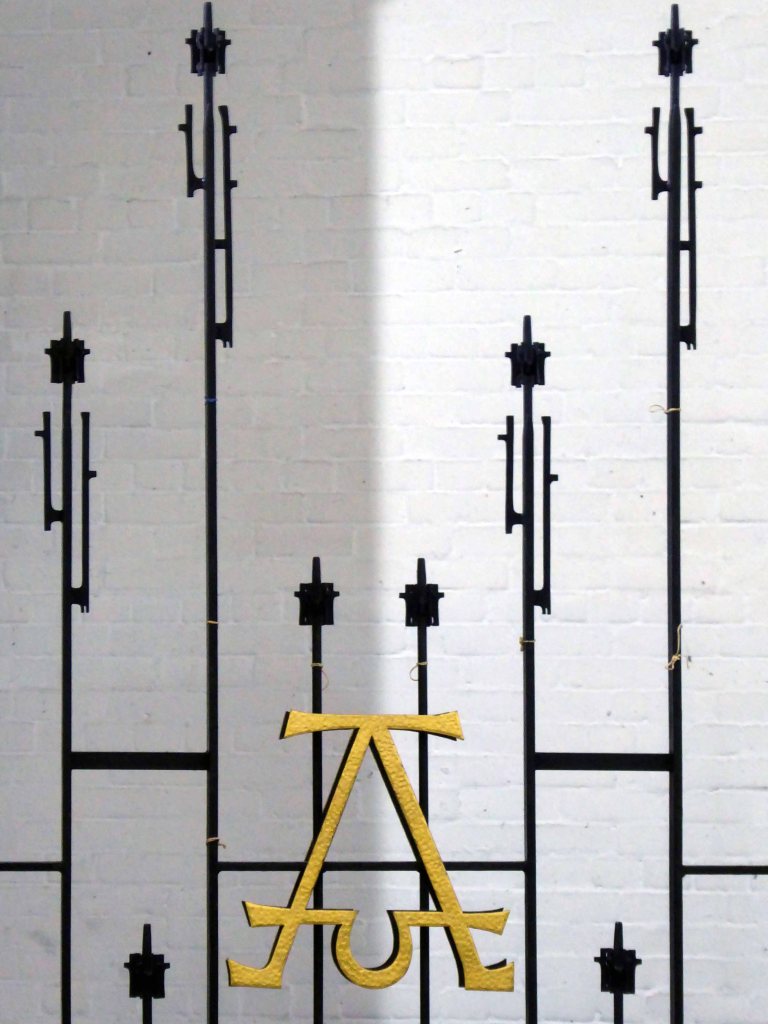
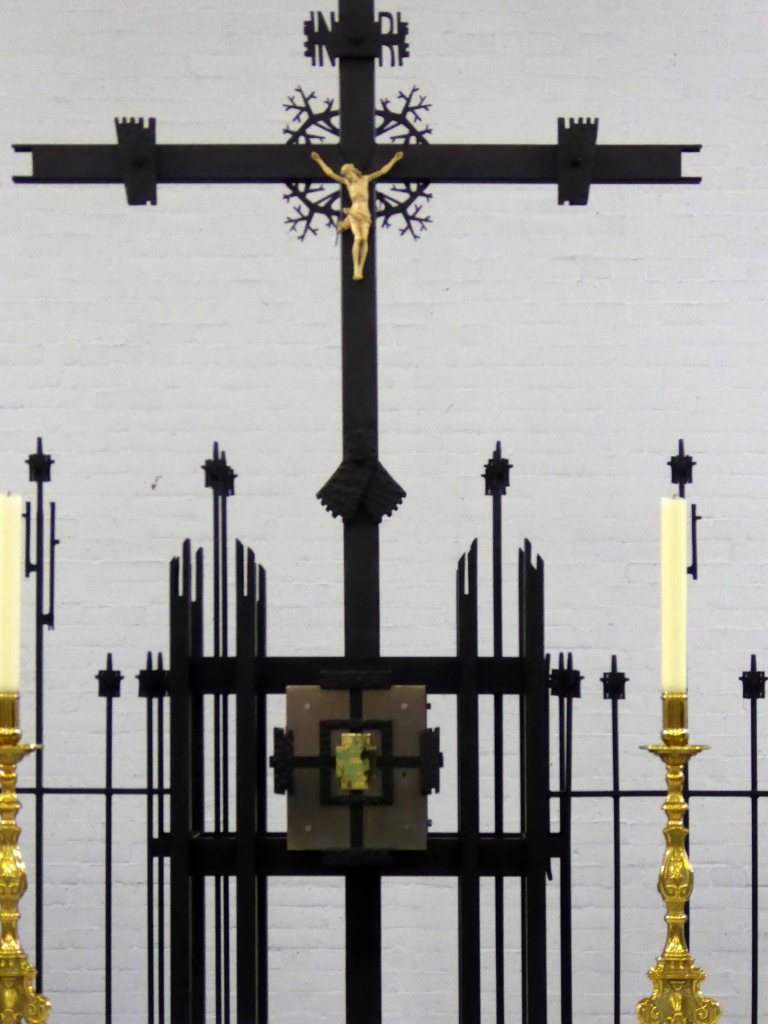
Pace’s own detailed design work in the altar screen and crucifix.

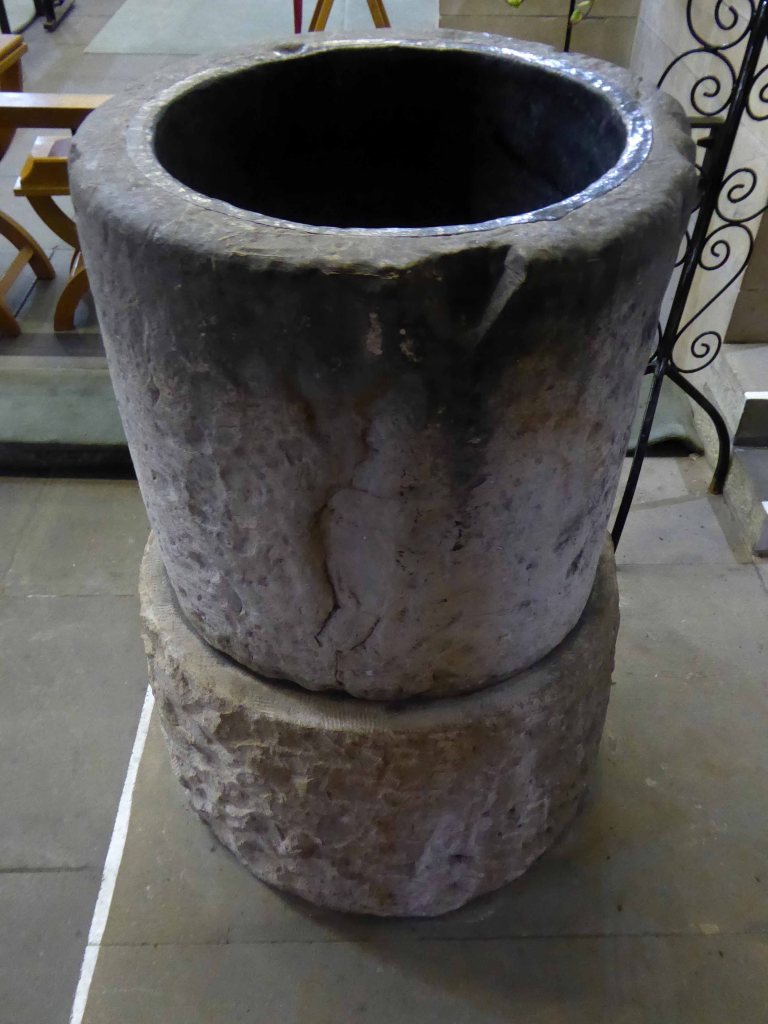
A Mediaeval font.

Light enters from several sources on three elevations.

And through the glazed area of the raised gable.

A delightful morning’s work visiting this well used and cared for church.

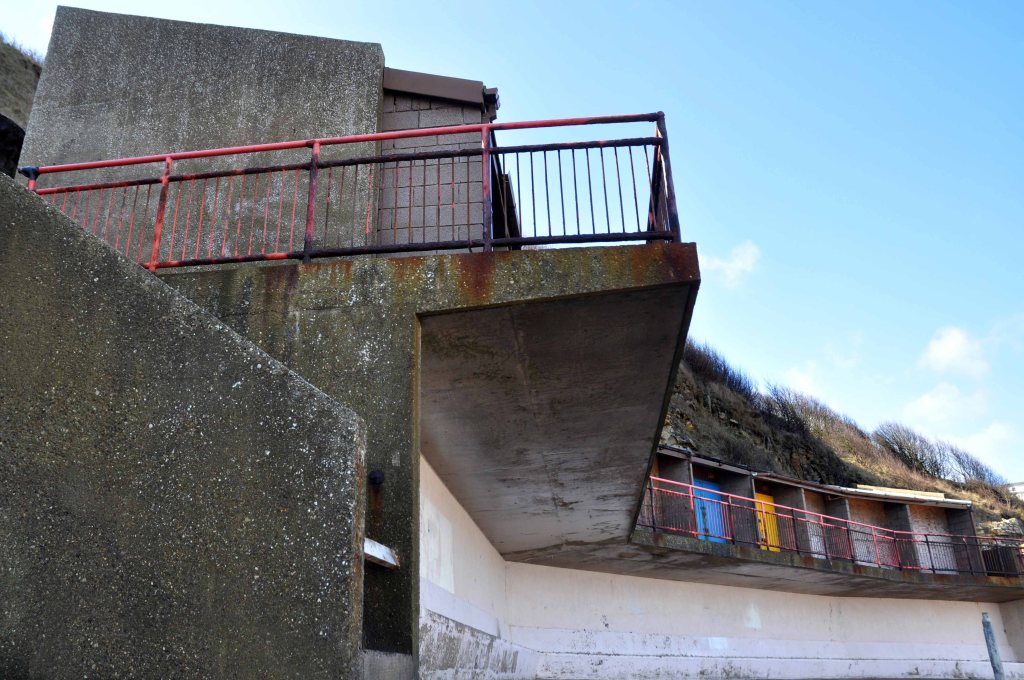
South Bay Scarborough – Chalets

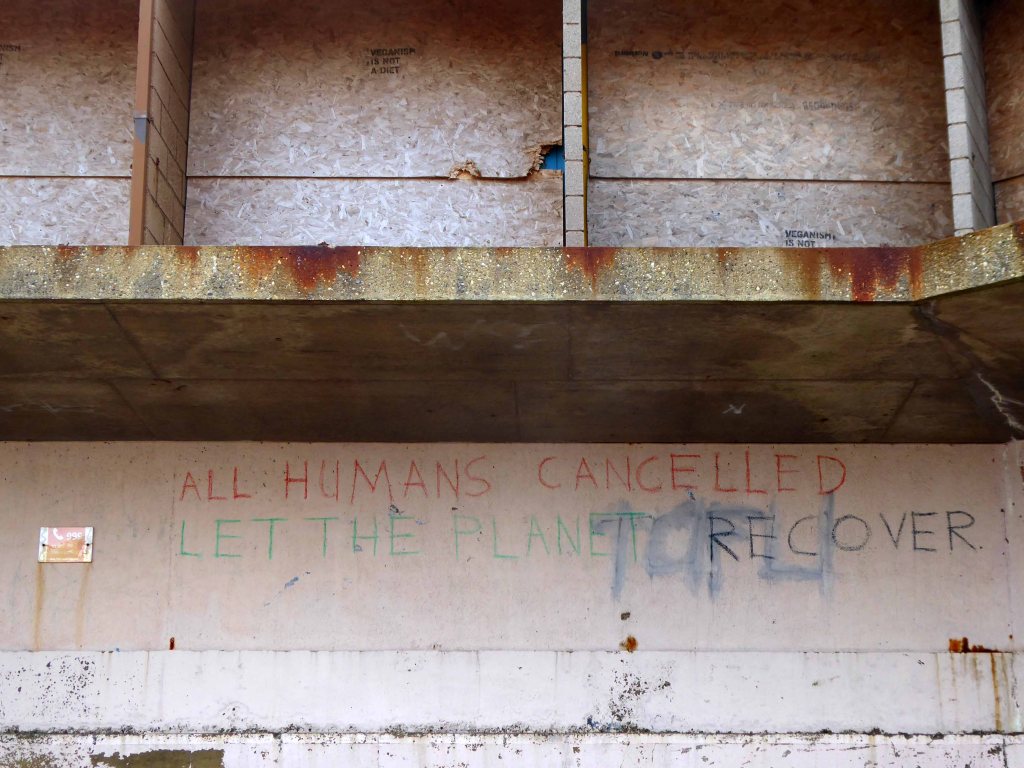
The world is inherently unstable, along comes a train a resort appears, along comes a ‘plane a resort disappears, along comes a virus and people disappear.

Whole chunks of the land fall in the sea, eventually.

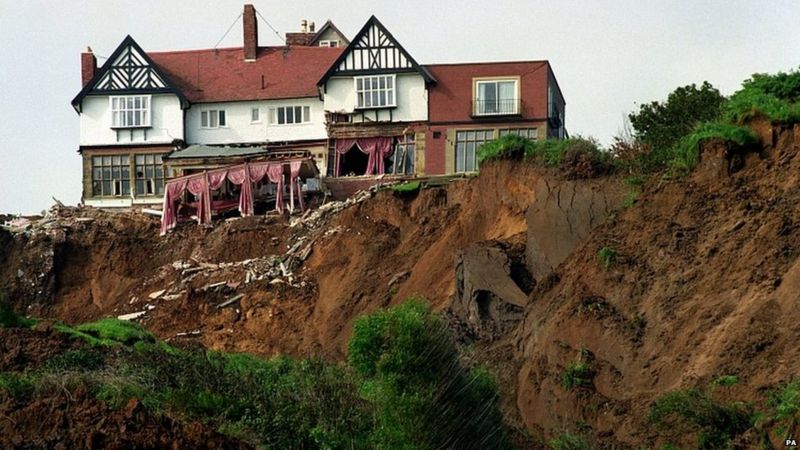
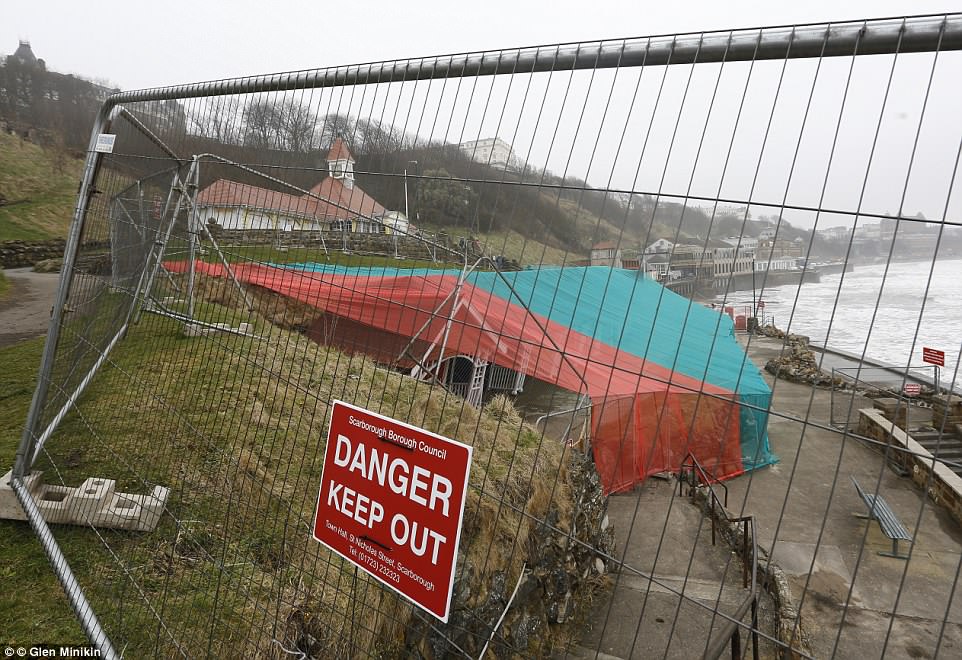
The South Bay Gardens were slipping away.

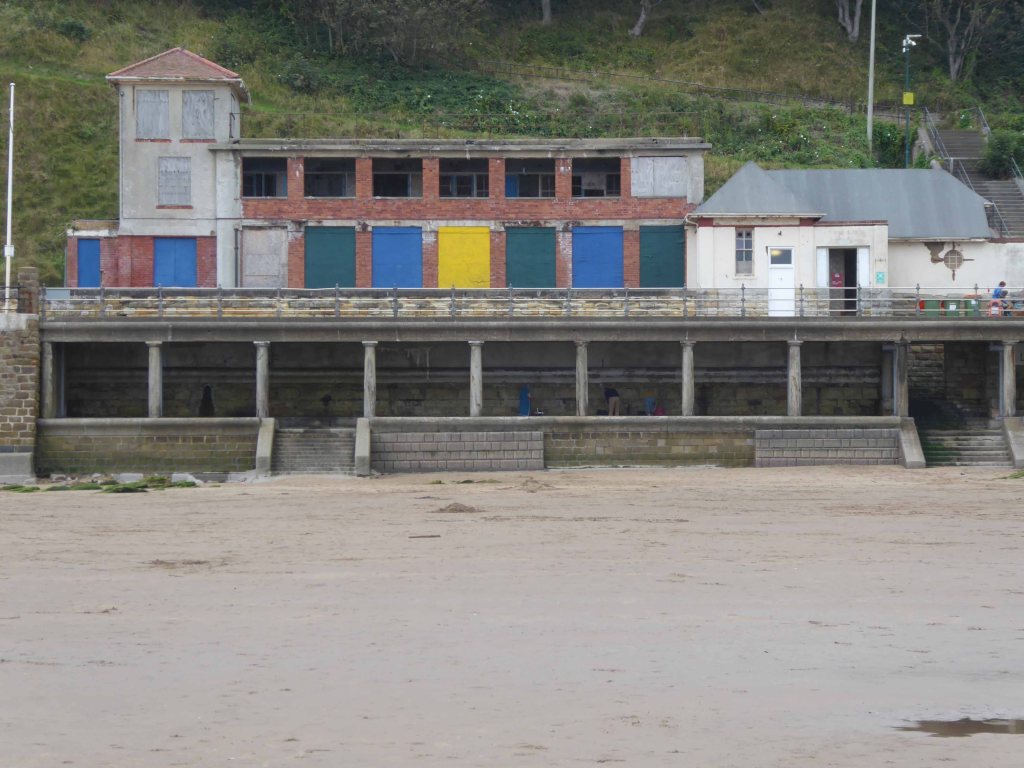
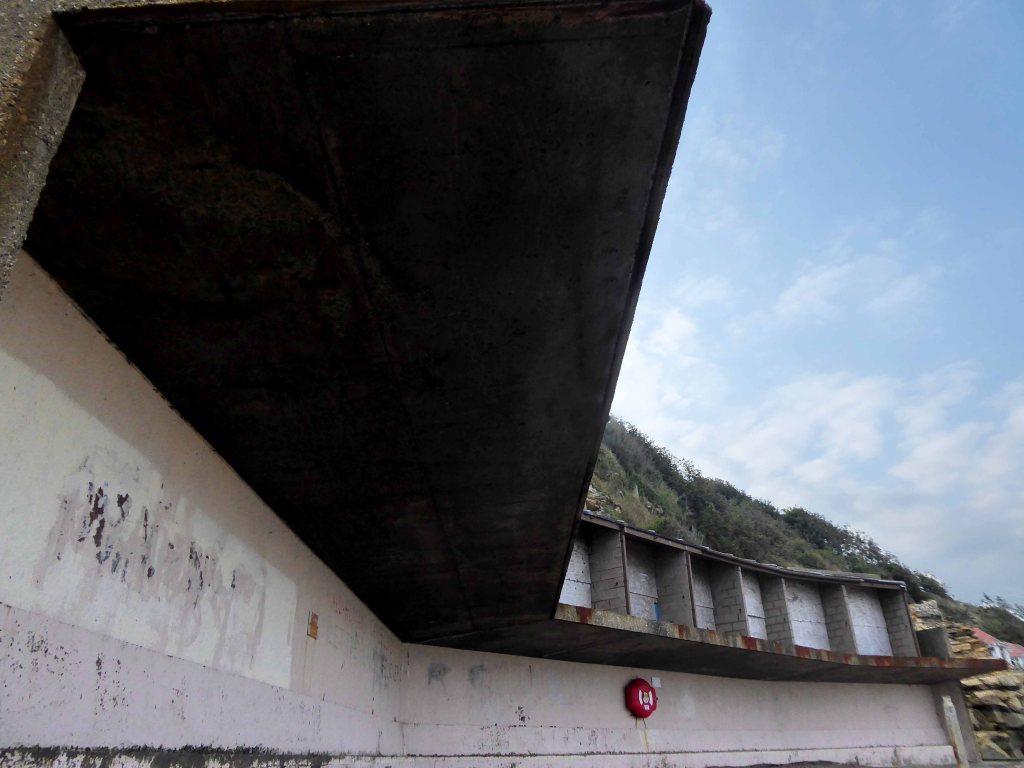
Some of the oldest sun bathing chalets almost became an Arts Hub.

Seaside chalets were under threat, with the cause believed to be the failure of a retaining wall.

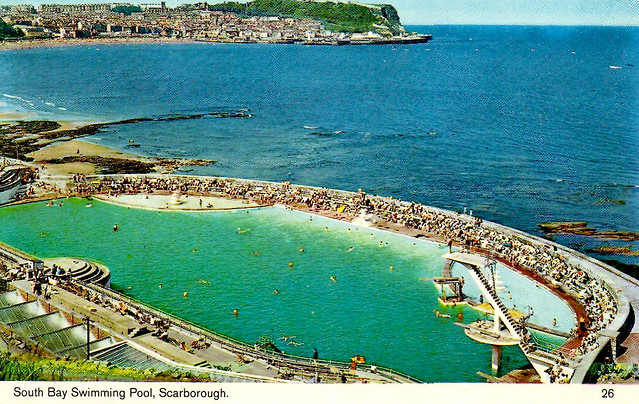
The swimming pool has been and gone, only an empty shell remains.

There are speculative plans and piecemeal repairs, but these are difficult times, and attracting substantial finance and flocks of tourists to revitalise the town, is no simple matter.

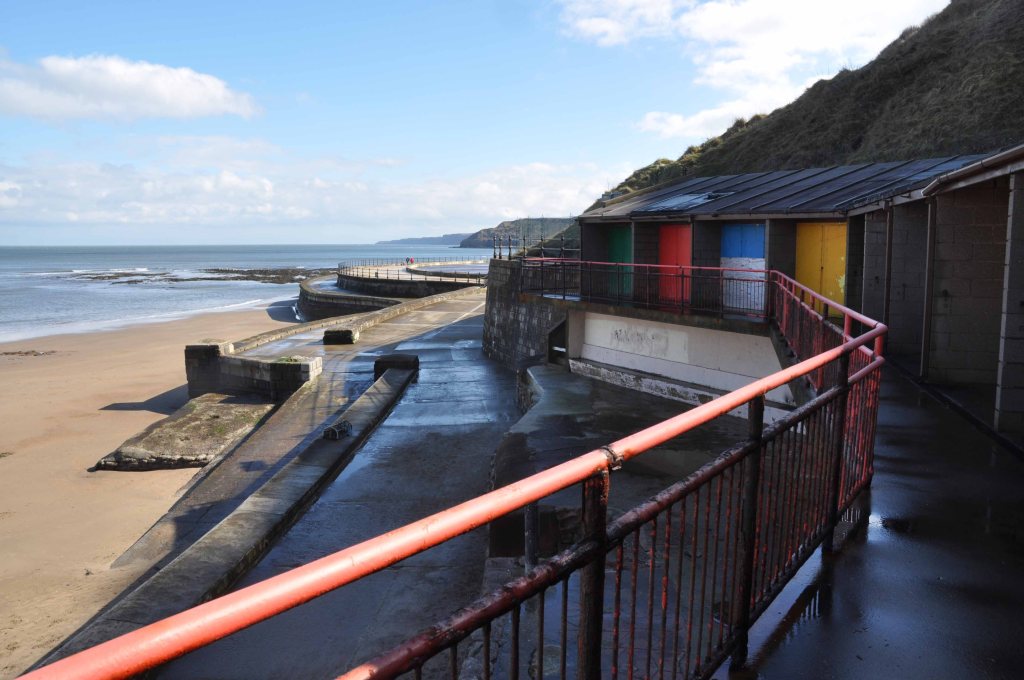
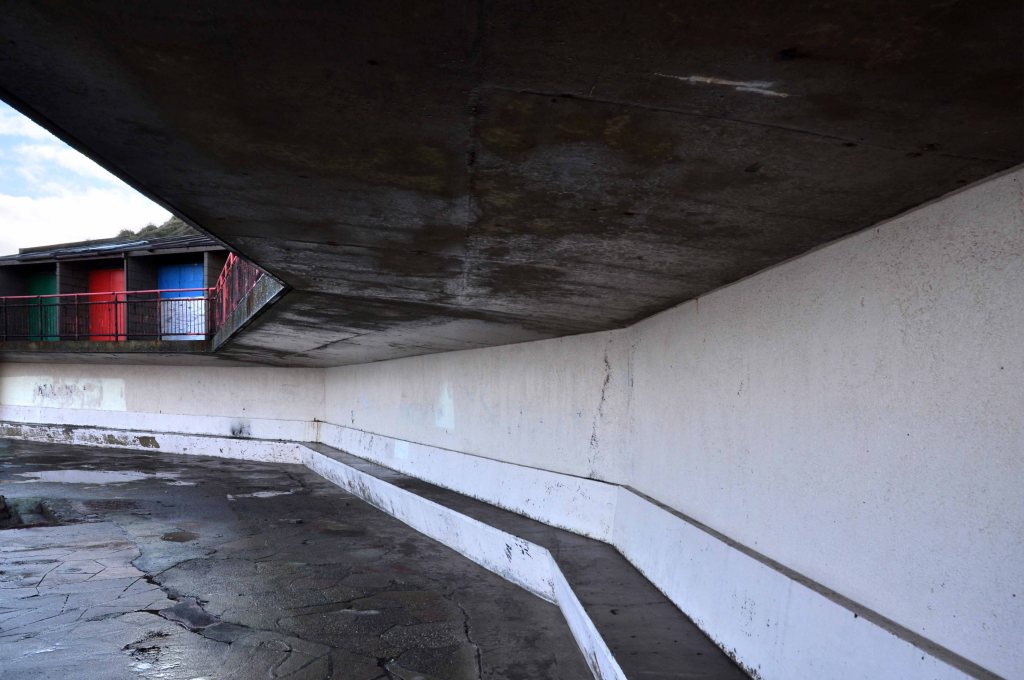
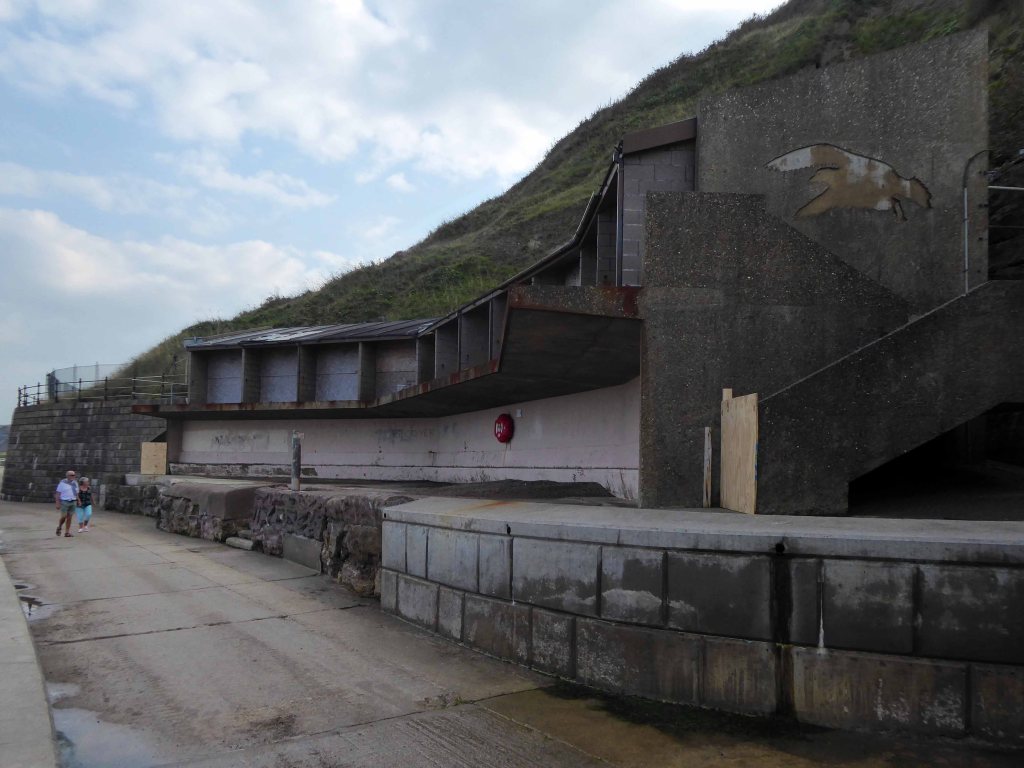
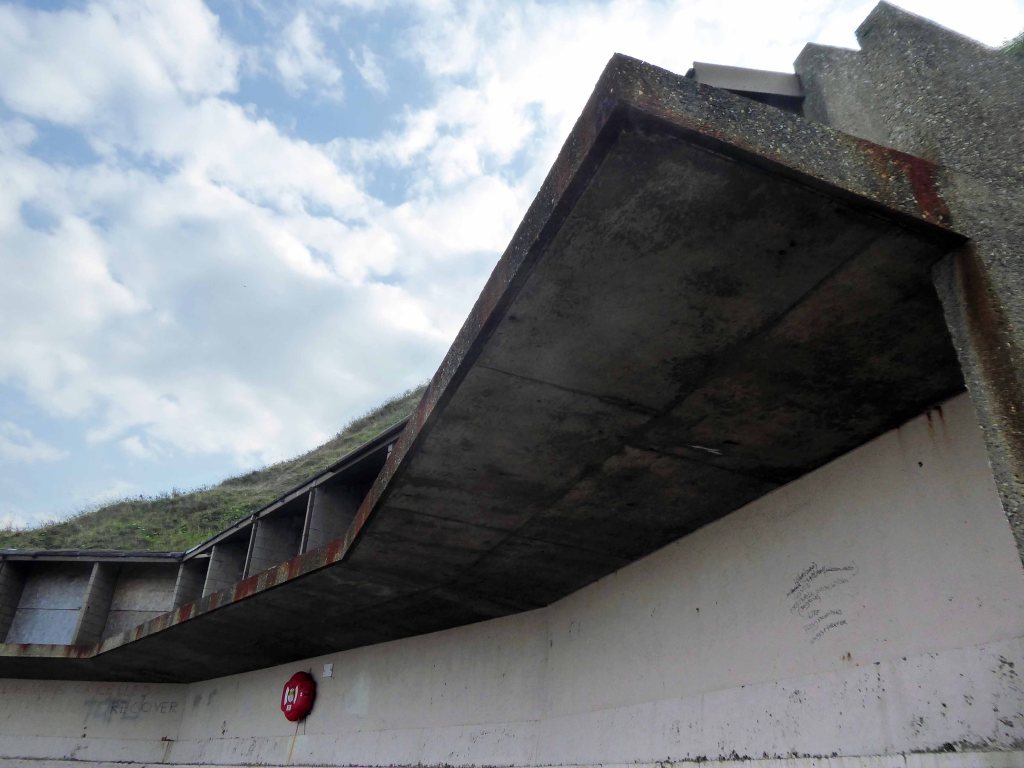
From 2011 I have visited South Bay, intrigued by all the above, but there’s a special place in my heart for these concrete chalets.

They never get a mention.

Here they are some years ago.

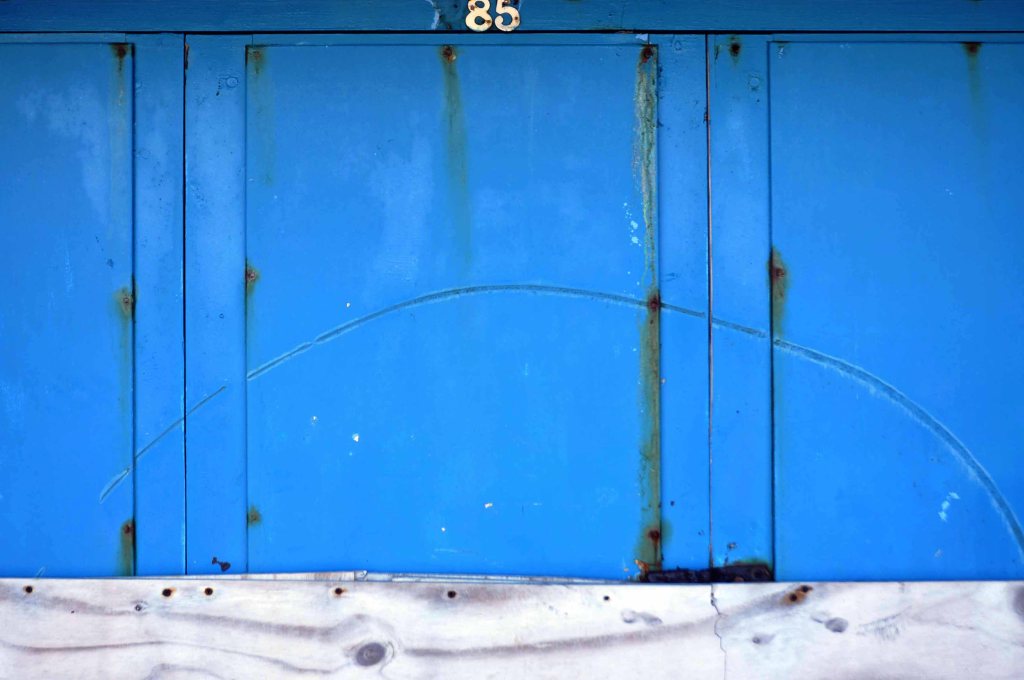
The primary coloured paint almost still fresh on their well locked doors.

They stand forlorn on the concrete shore overlooking an indifferent North Sea, hoping for a future in an uncertain age.

As I snapped I chatted to a local ANTIFA Anarcho Punk – ex Mansfield Miner and political activist, he feared that they would be swamped by some tidal wave of gentrification.

If so when, not soon.

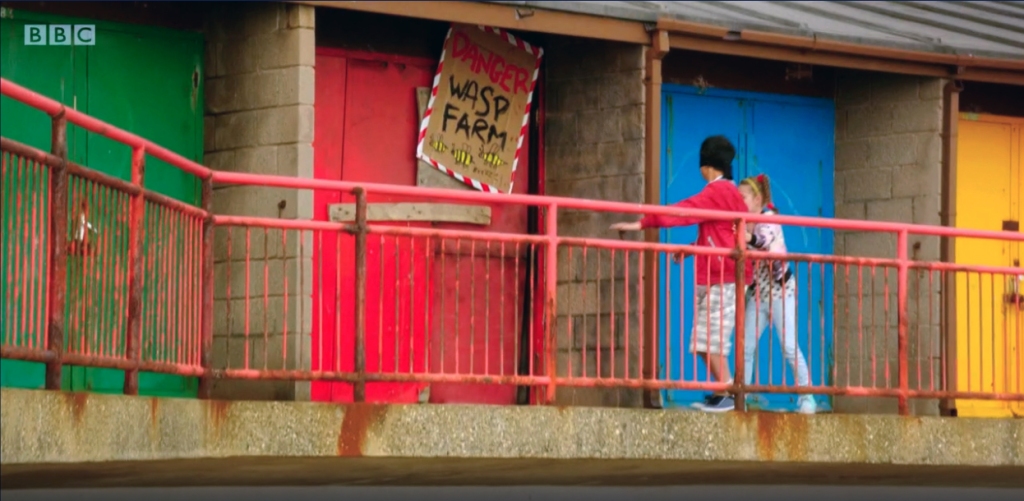
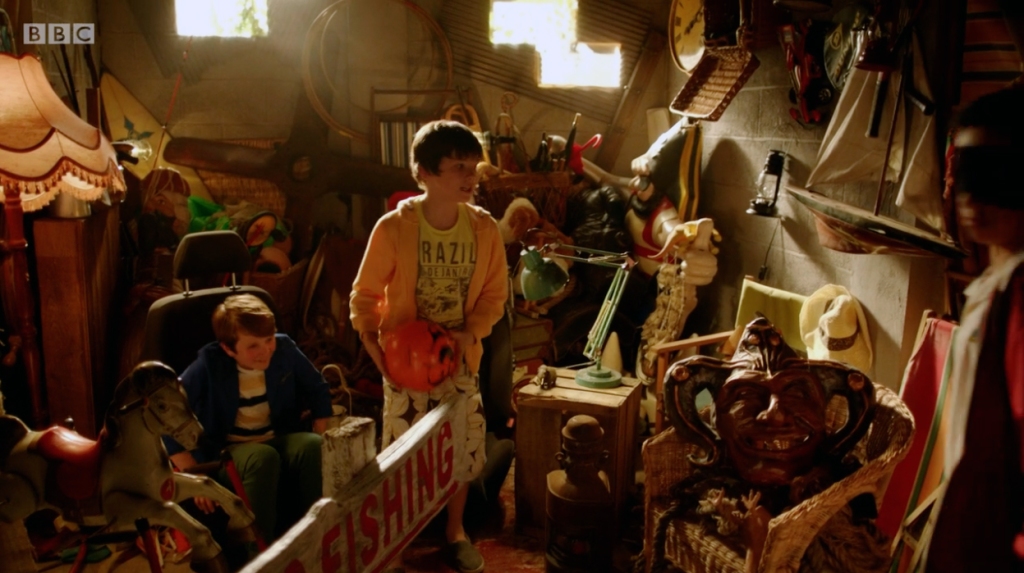
As a post script I have been informed that the site was used as a kid’s den in the CBBC TV series All at Sea!

Boyes Bridlington

29 King Street Bridlington East Riding of Yorkshire YO15 2DN

Supplier of a variety of discounted homewares and DIY products, toys, clothes and stationery.

In 1881 William Boyes opened a small store in Eastborough, Scarborough selling odd lots and remnants from merchants. There was great poverty in the working classes and housewives were even keener for a bargain than they are today. When customers found that they could buy enough material to make a coat or a dress cheaper than anywhere else, they soon spread the word and trade increased to such an extent that William had to look for larger premises.

William rented a large warehouse just off the main street where business continued to grow. By 1886 he purchased further units in Market Street and Queen Street and knocked them into one large store and named it ‘The Remnant Warehouse’. Older customers in Scarborough still refer to the shop as ‘The Rem’. As time went on William expanded his range and bought other clearance lines from merchants developing the warehouse into a department store.

Business continued to grow and go from strength to strength and in 1910 the expansion of the company started. Today W Boyes and Co Ltd operate over 60 stores throughout Yorkshire, the North East, Lincolnshire and Nottinghamshire & Leicestershire.

Boyes

In 1969 Hammonds of Hull purchased the Carltons department store located in Bridlington, and within a year had demolished and rebuilt the store. The company’s independence did not last much longer, as in 1972 House of Fraser purchased the business for £8 million. The stores were then grouped under the Binns brand. The Bridlington store was closed in 1995 and the store stood empty for three years until Boyes opened in 1998 

My sincere thanks to Kate Yorke for her detective work.

I have been here before, enchanted by the exterior tiles, of unknown origin – yet strongly redolent of William Mitchell’s work.

These are on the southern face of the building.

On the opposing side.

They flow through into the entrance lobby.

Exploring further I encountered these striking ceramic tiles on the stairwells.

With a matching set on the others side of the store.

It’s a constant delight to discover the decorative art of the Sixties preserved in situ. Remnants of a time when investment in original work was de rigueur, reflecting the pride which companies had in their buildings and the respect they held for their customers.

The stores trade as Boyes – pronounced Boys but often mispronounced as Boys-es.

It is still owned and family run with Andrew Boyes and his son Richard as joint managing directors.

The Scarborough store was home to a number of animals in the past, including monkeys, chipmunks and budgies. The animals were used as way of encouraging customers to visit the store and purchase something whilst they visited. Two of the monkeys, Jacko and Dinah, are famous to a generation of Scarborough shoppers.

Wikipedia

Scarborough Technical College

Gollins Melvin Ward & Partners 1961

Scarborough TEC formerly known as Yorkshire Coast College, Scarborough Technical College, Scarborough Technical Institute, and Scarborough School of Art is a further education college located on Lady Edith’s Drive Scarborough. It is a constituent college of the Grimsby Institute of Further & Higher Education.

Yorkshire Coast College was originally an independently controlled institution, but due to consistently poor results and long-term financial difficulties was taken over by the Grimsby Institute in January 2010.

In November 2016, the name was changed from Yorkshire Coast College to Scarborough TEC, with the TEC standing for Training, Education, Careers.

Wikipedia

Now it’s closed, the land to be sold for a housing development.

Colleges, once under the stewardship of the local authority are now independent businesses and as such subject to mergers and acquisition, for better or for worse.

1961

This is a building of architectural significance, GMW being responsible for several other ground breaking curtain wall towers and blocks – including Castrol House, now Marathon House one of the first curtain wall buildings in the UK, along with the Arts Tower in Sheffield.

In August 2015, GMW was taken over by another business, Scott Brownrigg, “as part of plans to move into the airport sector.”

It represents a time when vocational education was in the ascendancy, building for a manufacturing future with forward thinking, open, democratic and accessible architecture.

That optimism along with the attendant architecture are no longer, it seems – dish of the day.

It was a proud boast for many people in Scarborough that Robert Allen Palmer, the pop music icon, was raised and schooled there. Robert went to Scarborough Boys’ High School and studied art at Scarborough Technical College.

Photograph copyright Brian Cooke 2011

He played in his his first band there, The Mandrakes evolving from a gathering of pupils from the Scarborough High School for Boys during the summer of 1964.  Meetings and practice under the work in progress title of The Titans, first in the crypt of a church and then a former chicken hut, took place.  Allen – to become Robert in 1969 Palmer, joined after a successful audition and the first gig took place in a local youth club towards the end of the year.

British Music Archive

Robert’s Mum says fame never changed him, “He never seemed any different, he took us on Concorde two or three times and the Orient Express and we always celebrated birthdays, anniversaries and Christmas, everything, together.”

BBC

So I bowled up last Thursday following a tip from local lad Mr Ben Vickers, it rained and rained, armed with a Poundland one pound umbrella I took my chances and took some snaps.

Broken and boarded windows, spooky drips dripping and ghosts for company, heavy hearted marking the passing of an abandoned future and rapidly receding past.

Underpass – Scarborough Again

I’ve been here before on a much sunnier day.

Avoiding heavy showers and even heavier seas, I’m here again.

Three ways in and out of a doughnut on Scarborough’s South Bay.

One way in and out of the North Sea.

The underpass it seems is generally under threat, unsafe, often unloved and underground – often underused.

Once thought to be the answer to the threat posed to the pedestrian, by increased motor traffic, they are now deemed unsafe – poorly lit, badly maintained and scenes of anti-social activity.

Havens for those who are a threat to themselves.

Don’t let that put you off, get down and get with it!

Why not treat yourself to a walk around the South Bay Underground Car Park?

Then get out of it rapido.

The Trawl – Bridlington

5-7 Cliff Street Town Centre Bridlington YO15 2NJ

The best chippy in Bridlington

I first bowled up in 2011 – walking the wild streets of East Yorkshire – eager to eat.

I was instantly enchanted by your fragrant fish and chips, peg board menu and marvellous tiles.

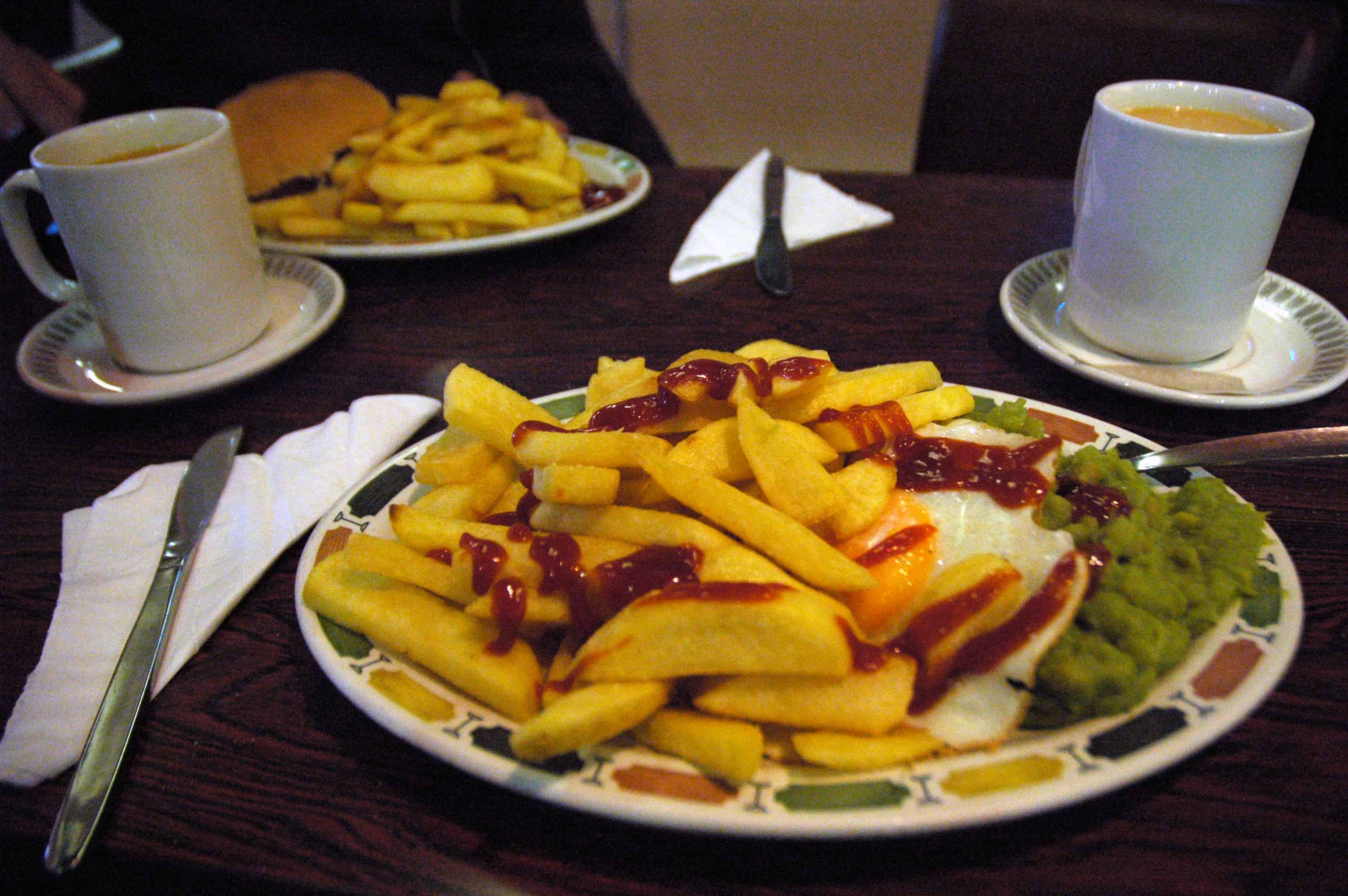
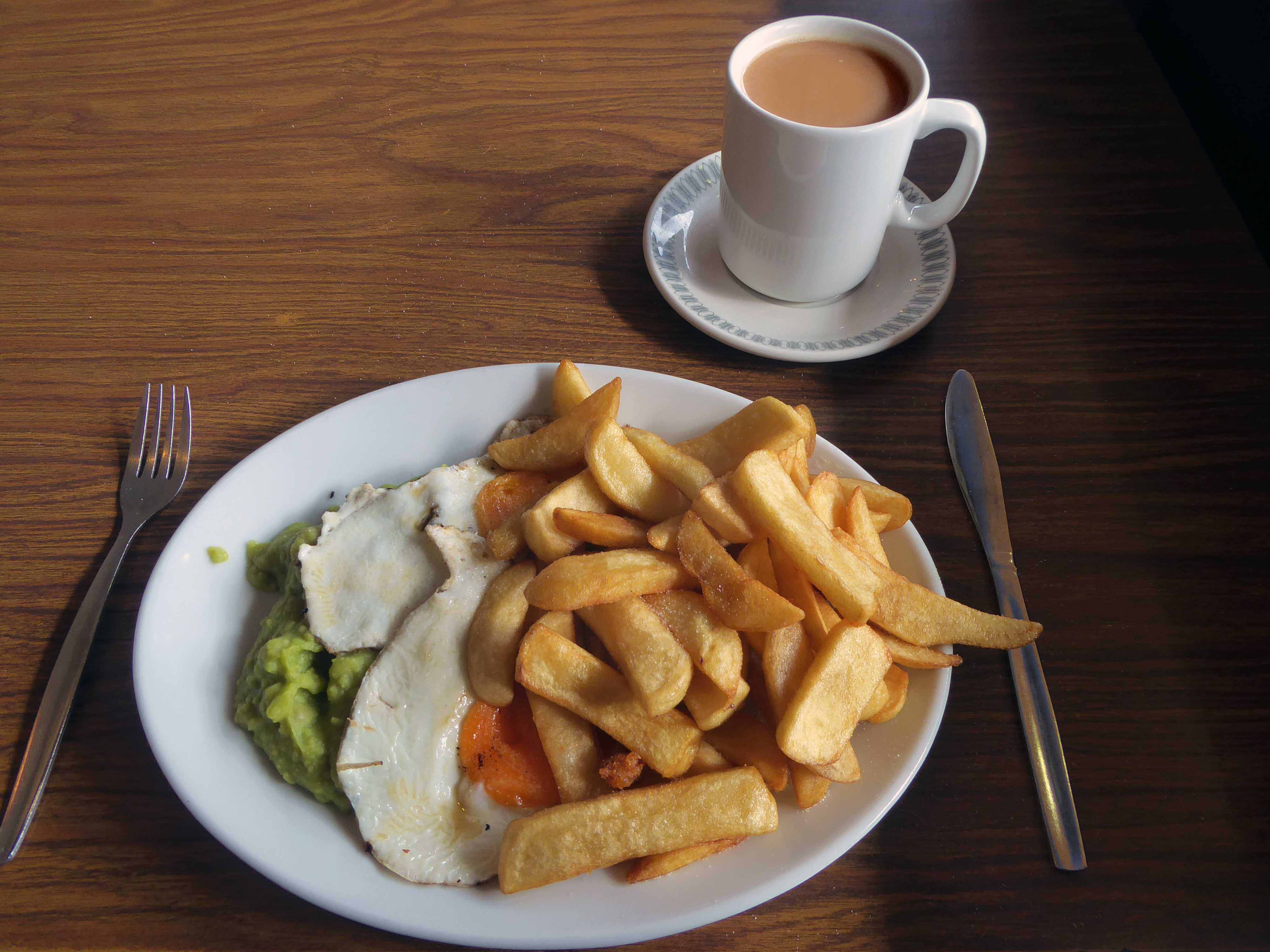
It would have been rude not to walk right in, sit right down and order a Haddock Special with tea – so I did.

Delightful.

Fast forward to 2014 and here we are again, some minor adjustments to prices and layout, but essentially business as usual.

One more time please – a Haddock Special with tea.

2020 and this time it’s serious I’m going in, armed with an insatiable curiosity, a Panasonic Lumix TZ70 and a healthy appetite – in that order.

I ordered a Haddock Special with tea.

The food was as ever superb, served with winning smile and cooked to perfection by the same owner who had dealt a winning hand nine years ago.

Whilst I awaited my food, I sat patiently taking in my surroundings and a few snaps.

Noting the notice my host observed that she loved children but couldn’t eat a whole one.

For the very first time I noticed the illustrative pictorial panels adorning the range counter.

And the menu above the entrance.

Replete, enough is as good as a feast – I complimented the chef, thanked all and sundry, exited stage right.

Once out on the streets once more, I surveyed the fascia, its tiles and newish fascia.

One thing is for sure I will return, if the good Lord’s willin’ and the creeks don’t rise.

So a big Bird goodbye from the old fish.

And hello to the new.

Beeversleigh Flats Clifton Rotherham

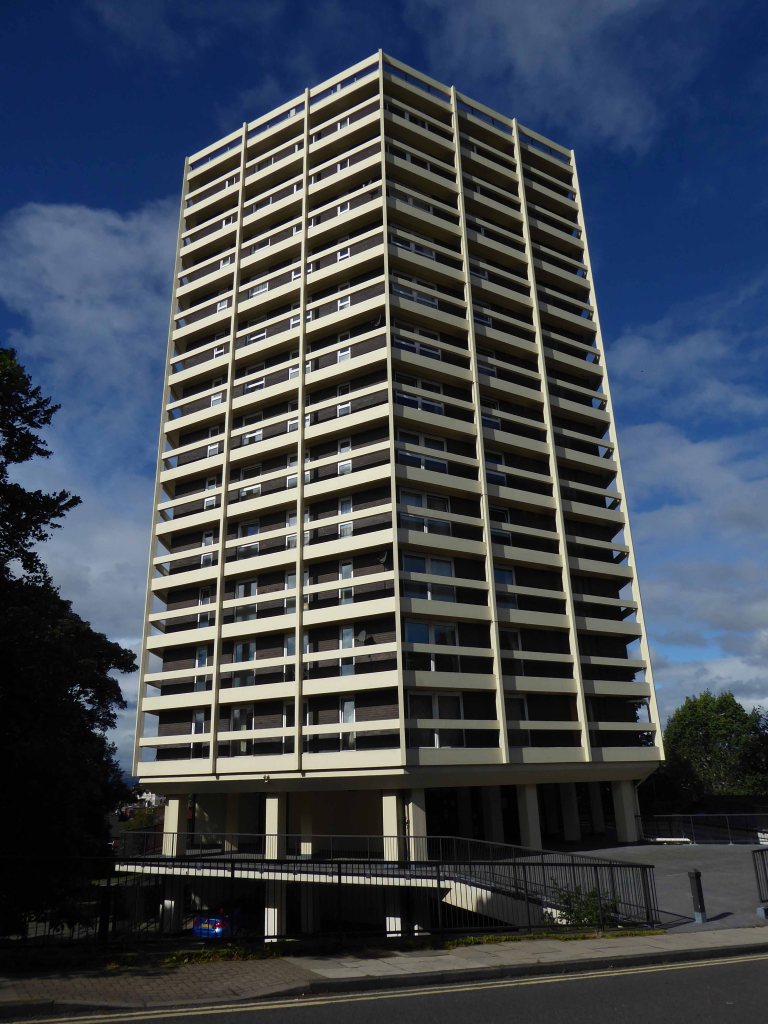
What’s got six faces and several legs and stands next to Clifton Park?

The Beeversleigh tower block that’s what!

Built between 1968-71.

Main contractors J. Finnegan it’s thirteen storeys high – housing forty eight dwellings.

Tower Block

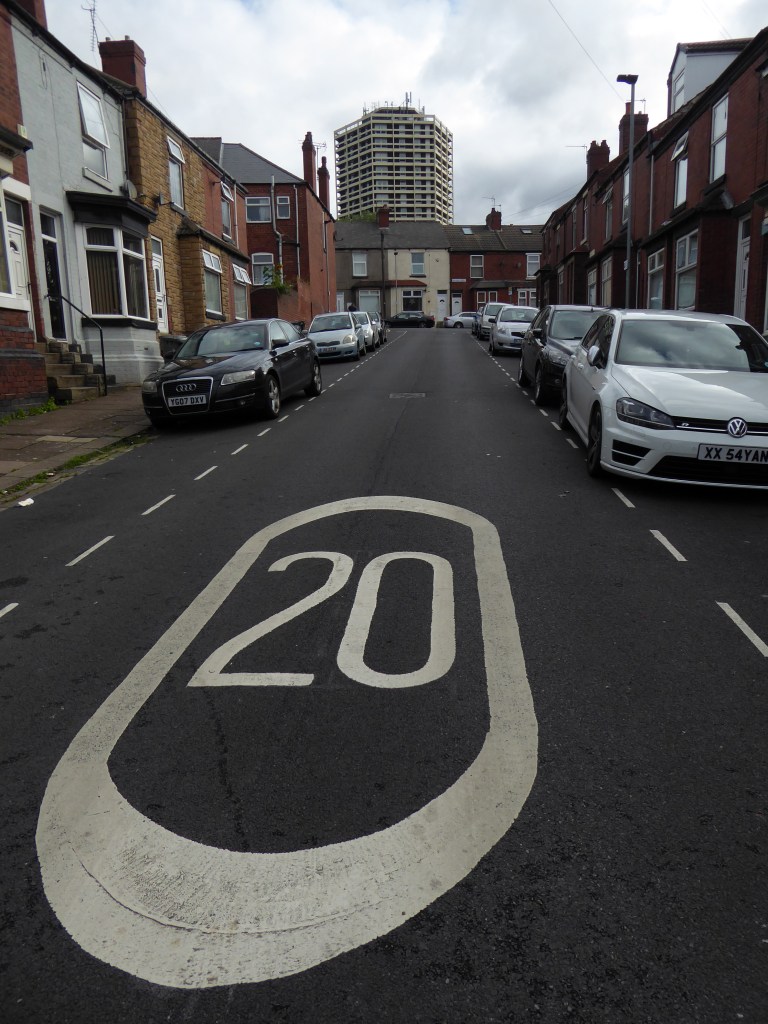
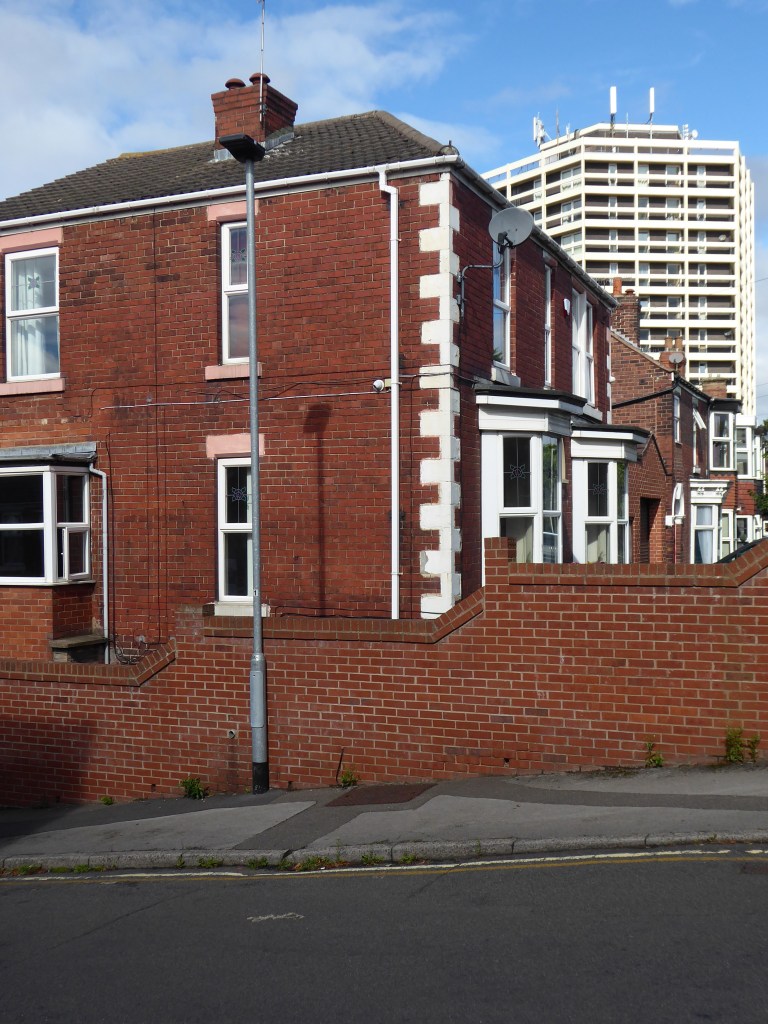
It can be seen clearly from the town below, Rotherham’s only high rise.

I wandered on.

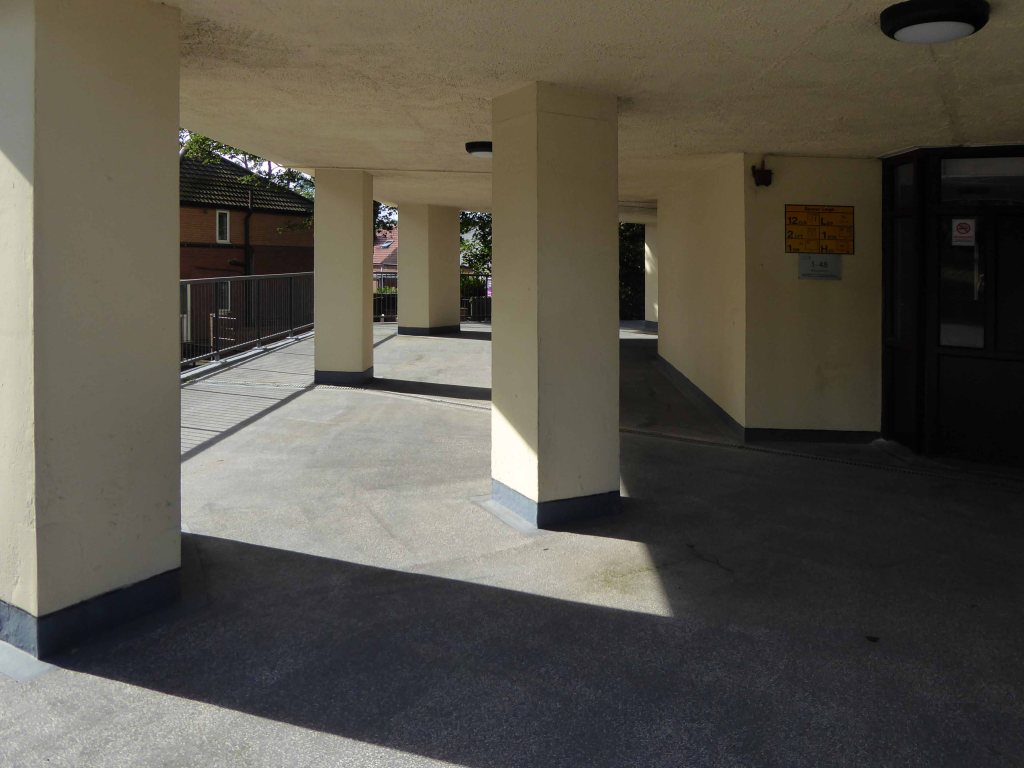
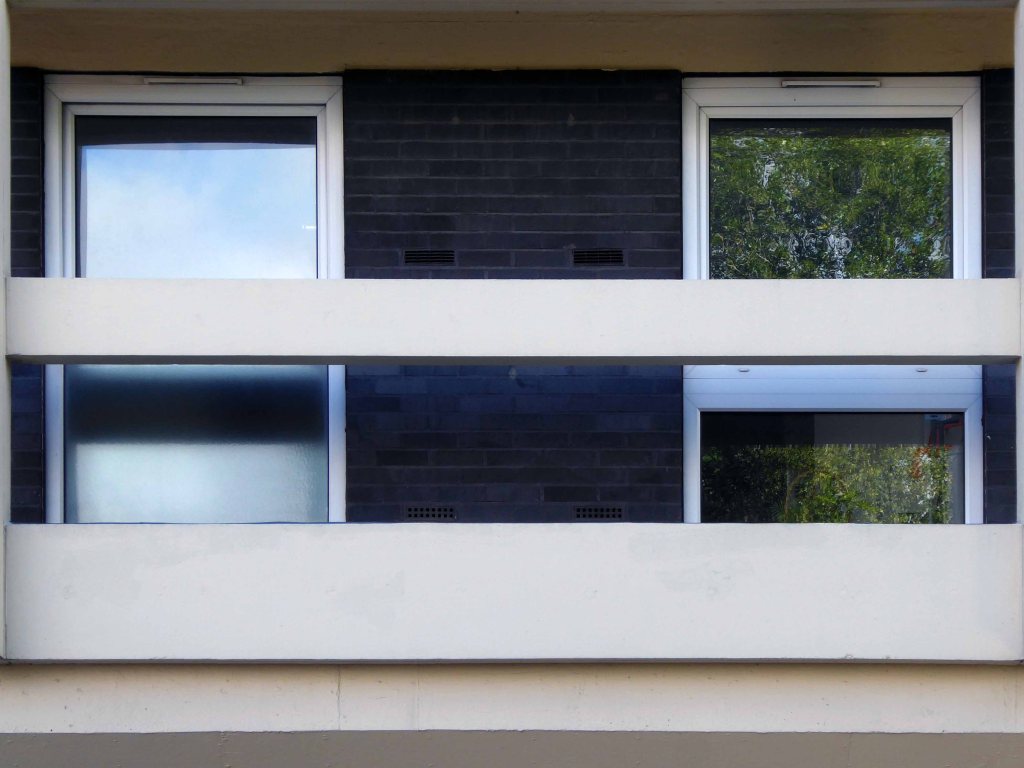
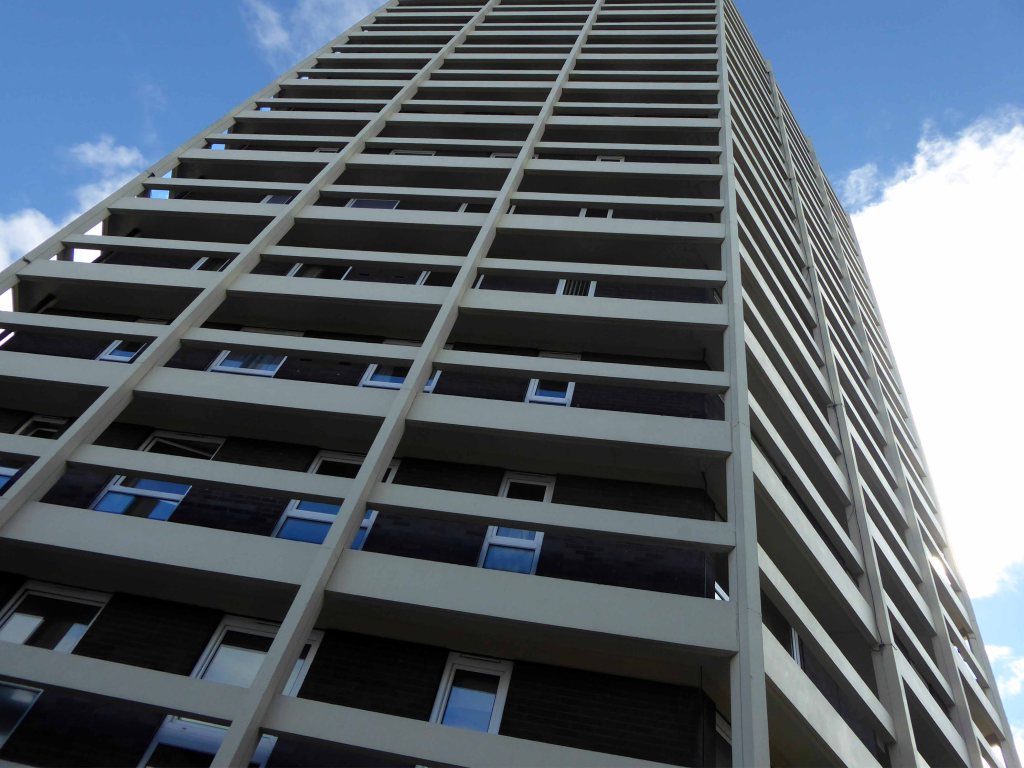
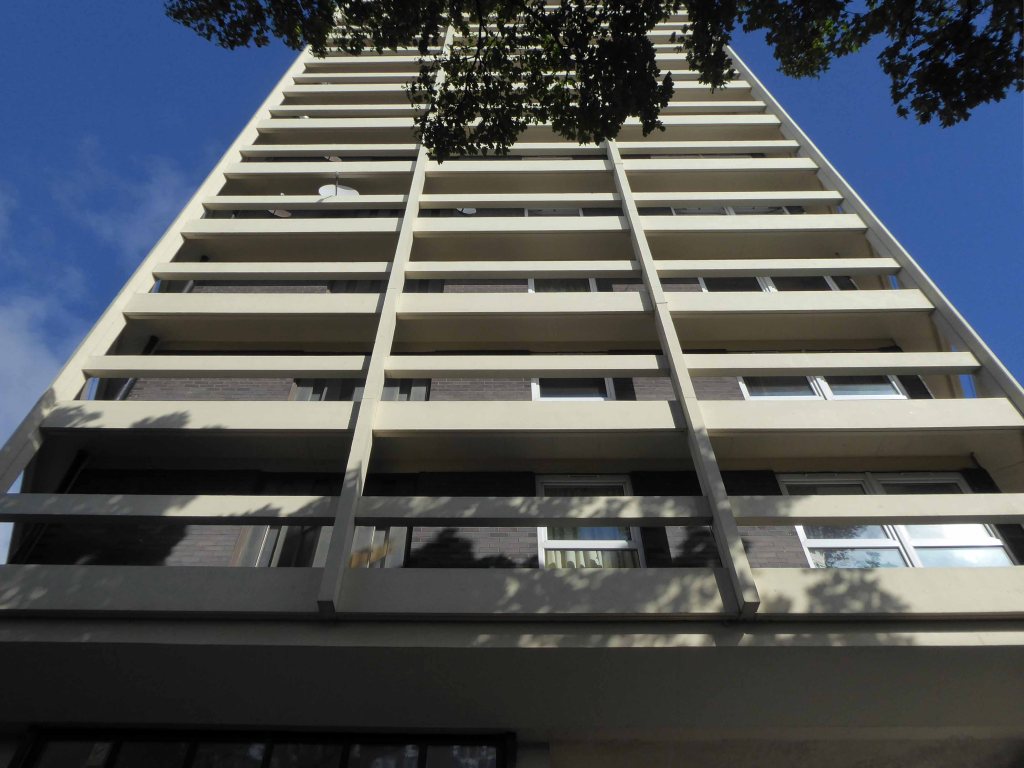
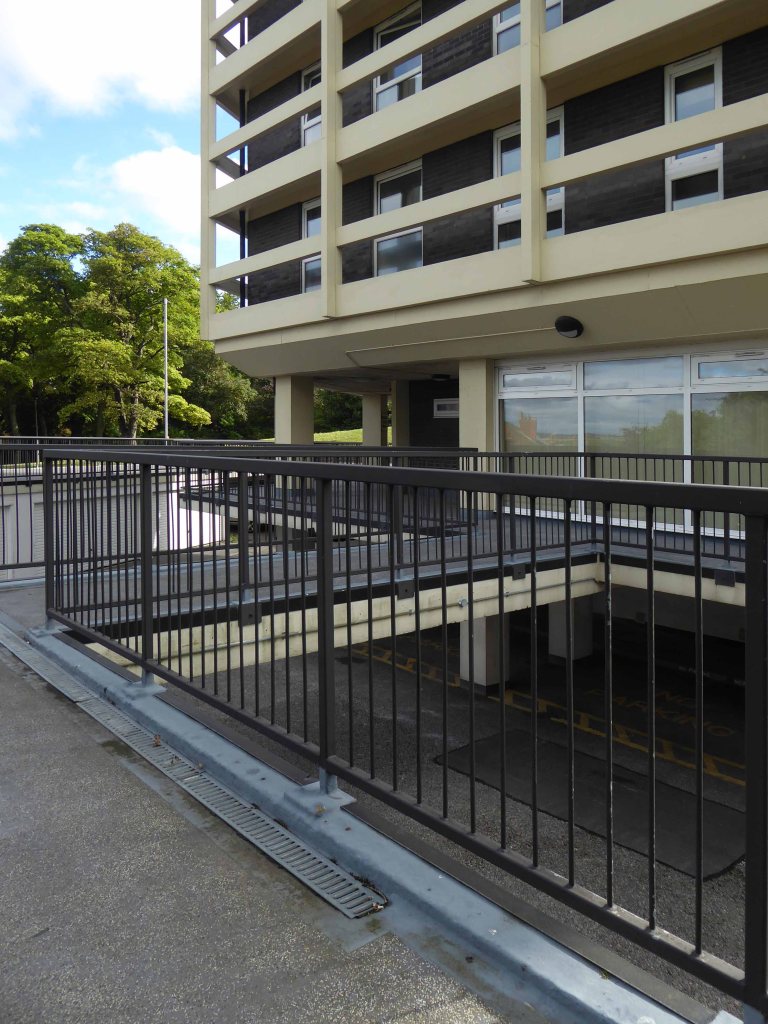
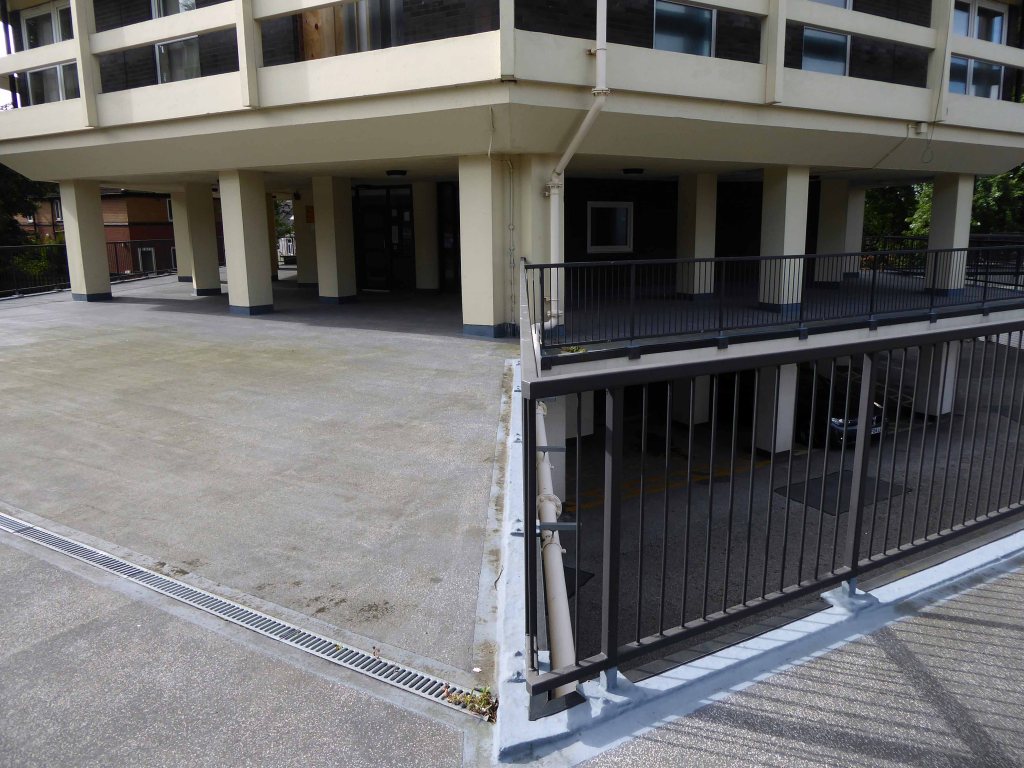
With an unusual exterior grid of concrete encasing the central hexagonal structure, creating balconies which encircle the homes.

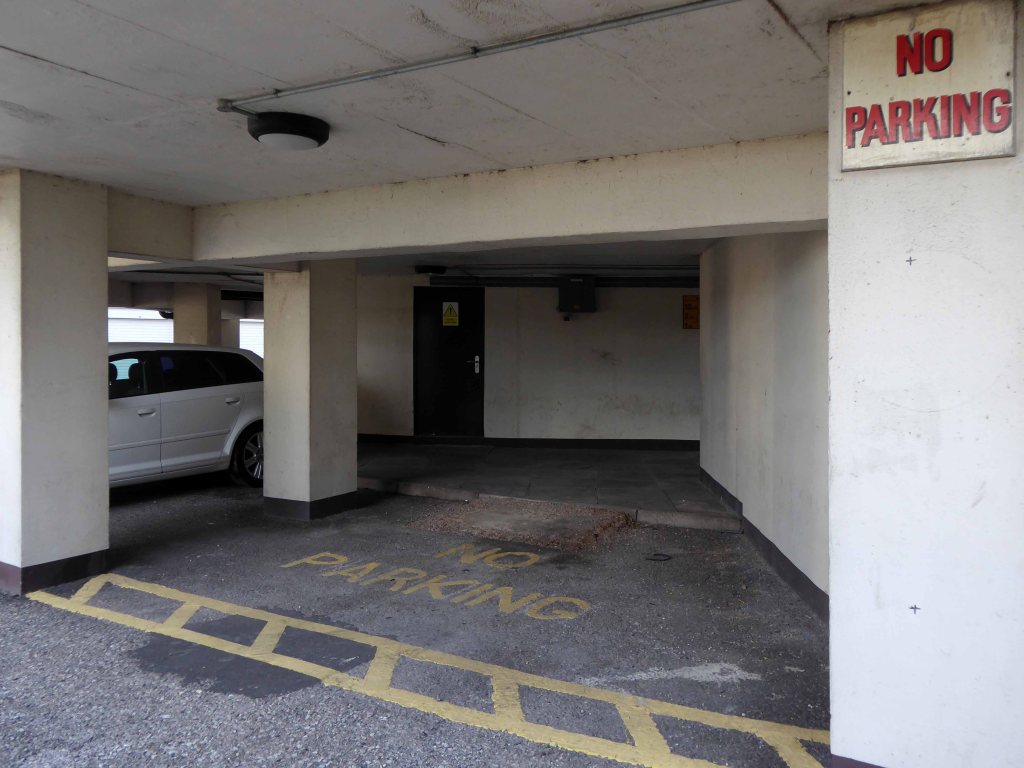
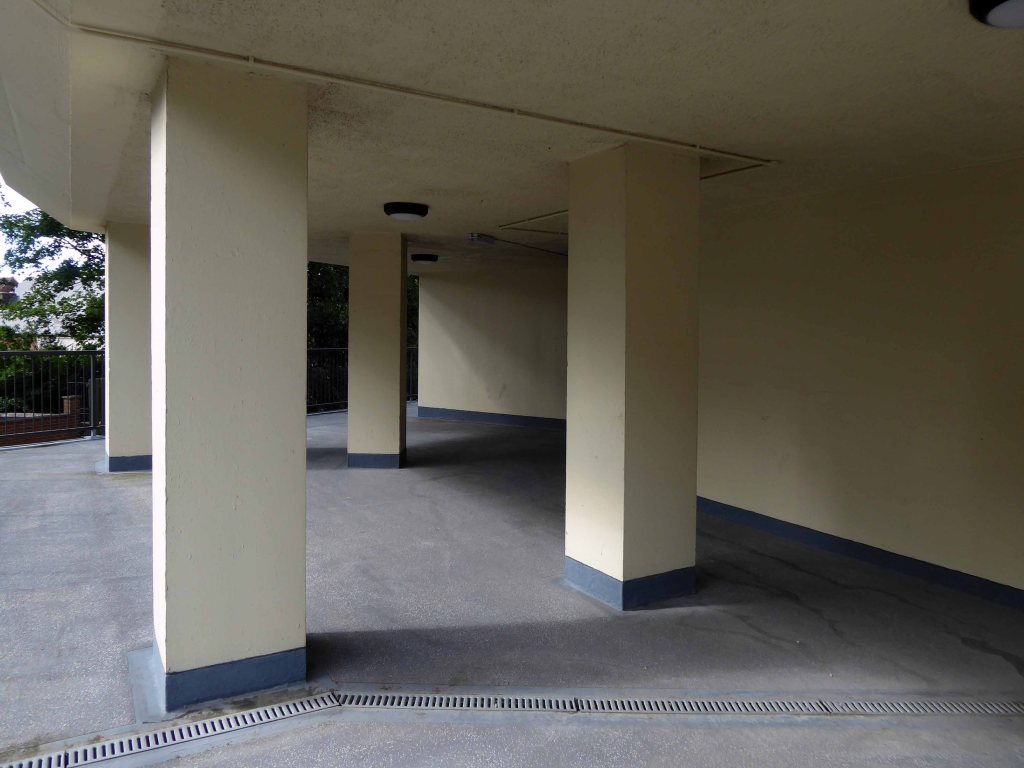
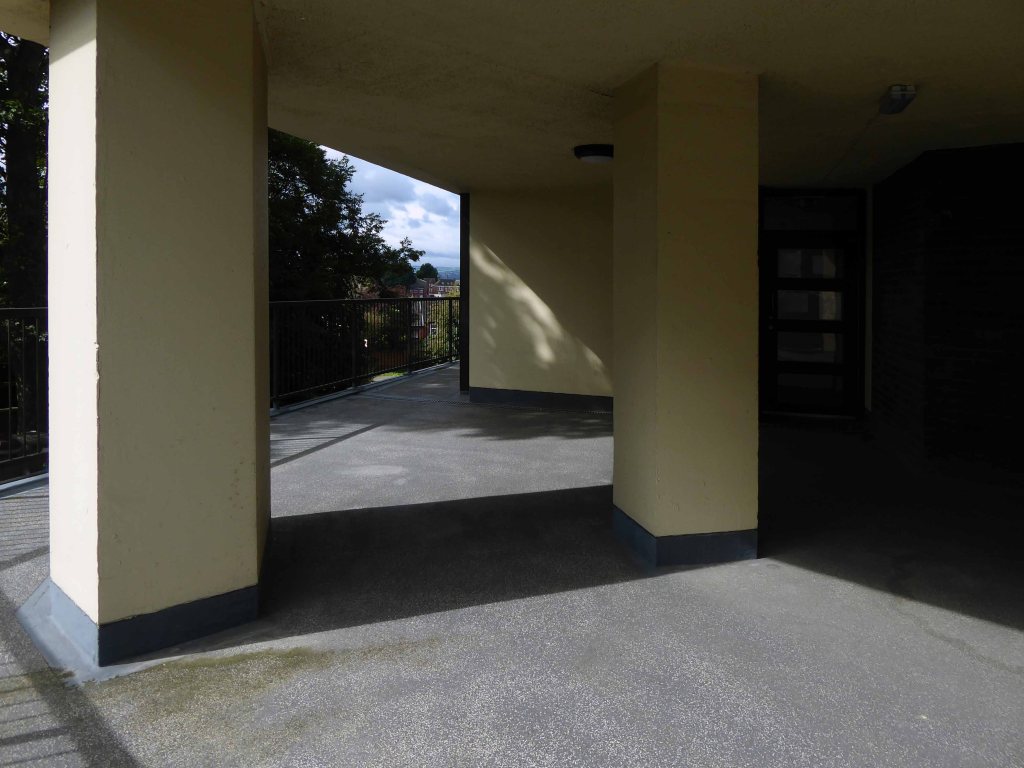
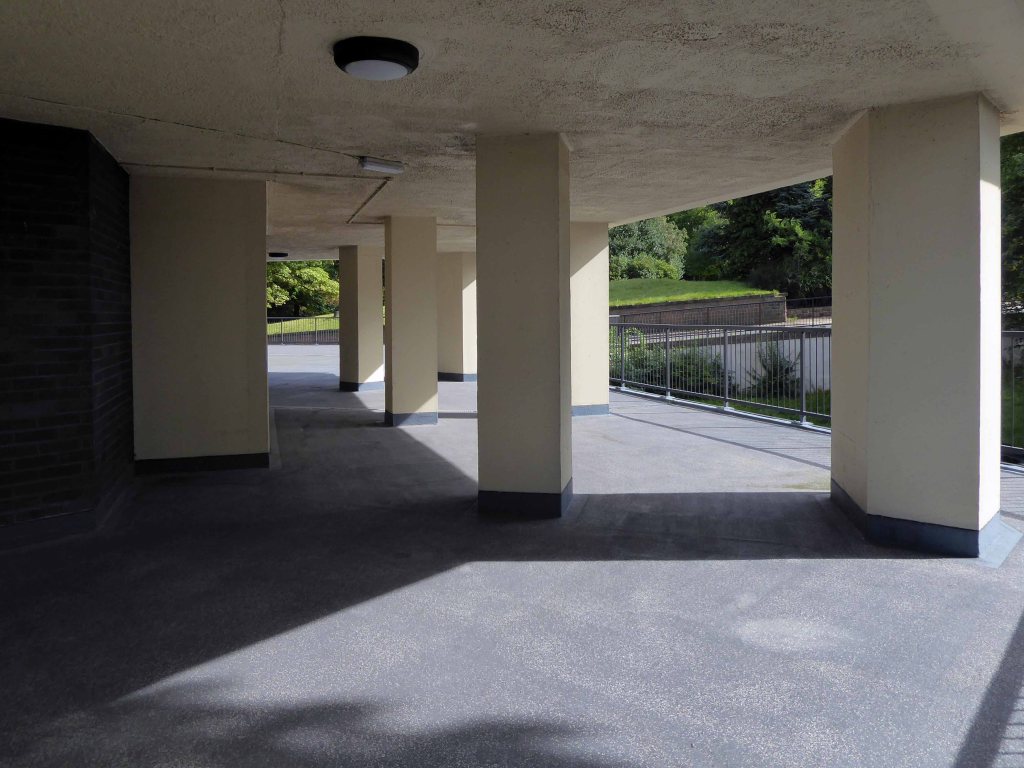
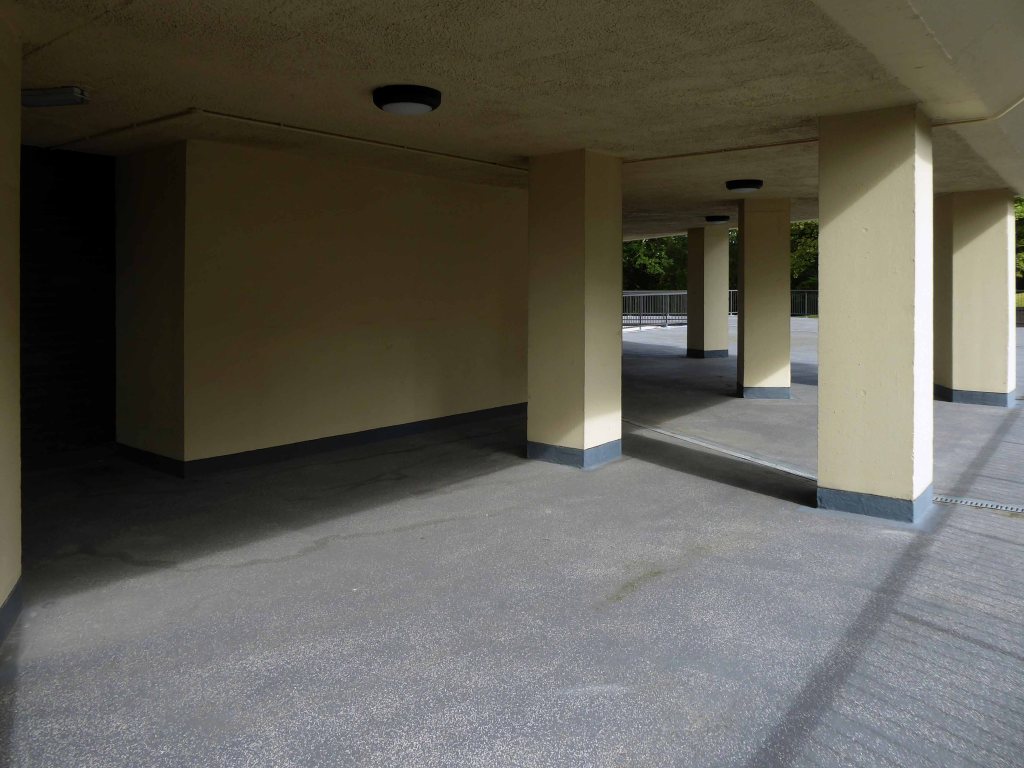
Perched on two levels of concrete columns, on a sloping site.

Looking luminous on a bright August morning.

I was enchanted and amazed, taking time to walk around look and snap.

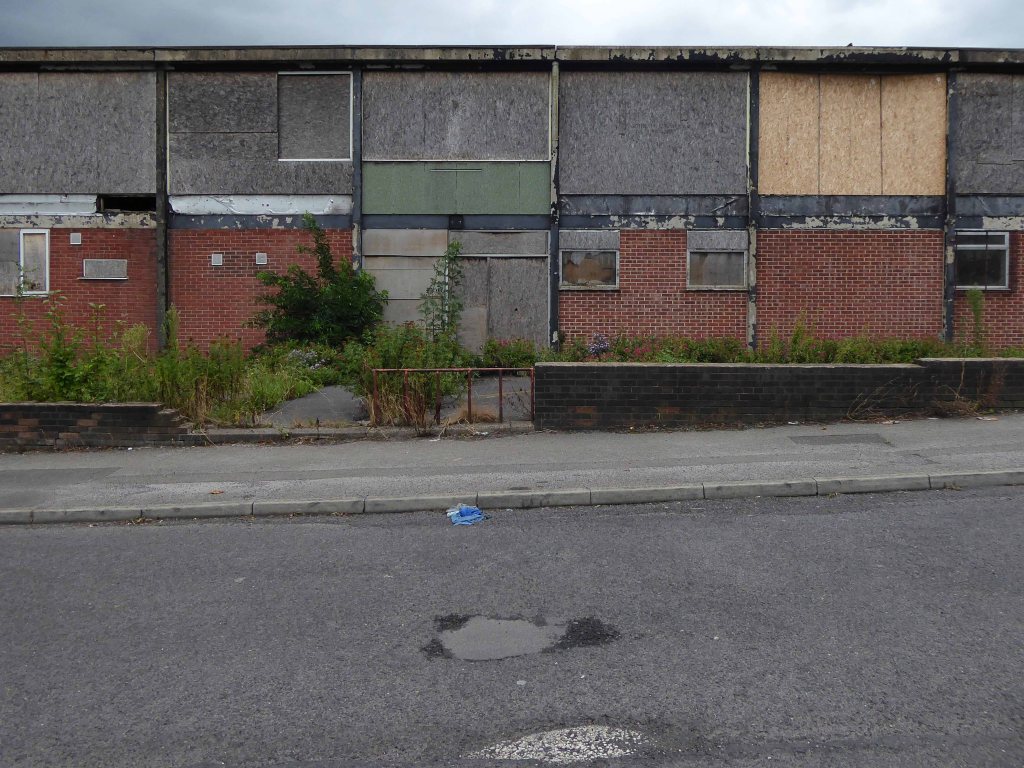
Peck House Rotherham

Peck House, a long vacant commercial property on a prominent route into Rotherham, could be flattened for redevelopment as the owners begin discussions with the Council over its future.

The building on Eastwood Trading Estate, and its unique stylings, was the headquarters of Joseph Peck departments stores
.

Rotherham Business News 2017

The owners of the site, Backer Electric, occupy the adjacent building where they continue to manufacture heating elements, supplying products in high volume to the majority of household brand names. Options to reuse Peck House and the site have been investigated for a number of years.

A structural survey was carried out which found the building to be structurally sound and secure and therefore the Council has not been in a position to insist on its demolition.

In 1985, plans came forward to change of use of the retail/wholesale store to a church. In 2004, outline plans were submitted for a development including a hotel, restaurant, hot food takeaway and petrol station for the wider area. In 2014, Peck House was one of a number of sites discounted as the location for a new £5m primary school.

As of Wednesday 26th August 2020 it’s still there underdeveloped and overgrown.

In the company of local resident Helen Angell and having become aware of the site through the paintings of Mandy Payne and the photographs of Sean Madner – I was eager to pay a visit.

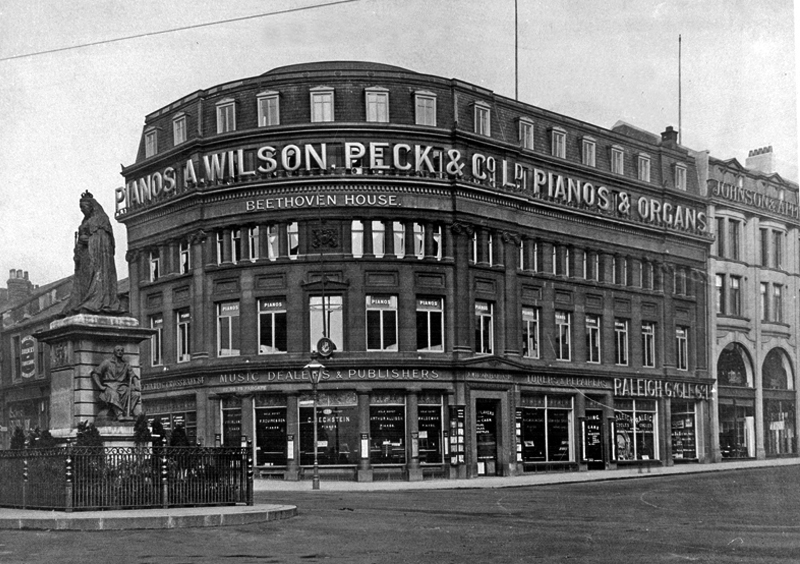
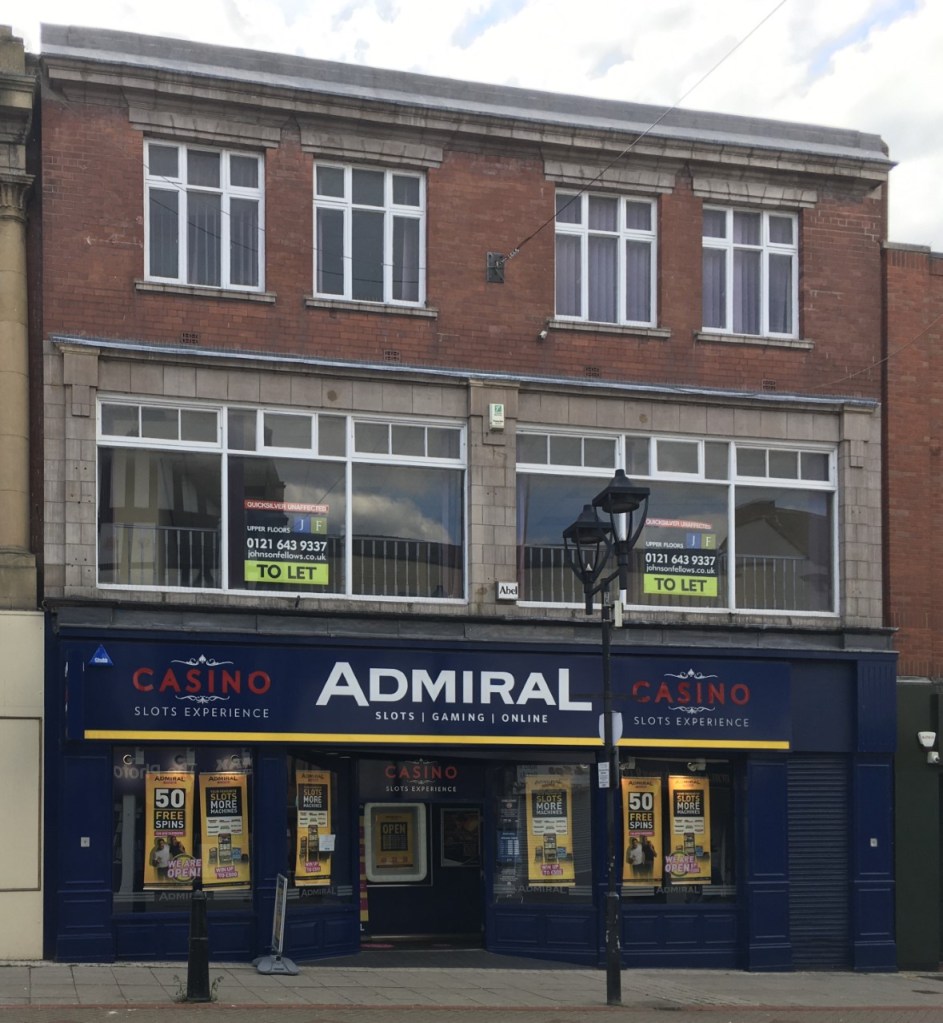
Joseph Peck departments stores originated in Rotherham in the late 1800s and had branches in Worksop, Barnsley and Sheffield.

I have only been able to find evidence of the Sheffield store – which may not be linked.

Though there are references to a Rotherham store on Bridgegate.

Joseph Peck was in Bridgegate in Rotherham, and in the late 40’s at Christmas, they had a grotto and a Father Christmas. The queues of parents and children would go down the yard and up Bridgegate. My mum and dad always took my brother and I to see Father Christmas and get a present from him. The store was a department store selling just about everything that was available just after the war. Mum took my brother and I coming up to one Christmas, she was trying to find a bicycle for my brother and I, but they didn’t have one. As we came out of the store, one of old fashioned three wheel railway delivery lorries was just pulling out of the yard. On the back was a blue bike. Mum stopped the driver and asked him where he was taking it. He told her ‘Redgates at the bottom of Ecclesall Road in Sheffield. She shouted ‘Taxi’, and told the driver to ‘follow that lorry’. Just before the lorry arrived on The Moor, she told the taxi driver to overtake the lorry and go to Redgates. We rushed in, she found the manager and asked him about the bike. He hadn’t known that one was being delivered so Mum told him she’d have it without even asking the price. The lorry driver didn’t even have to take it off the lorry, and delivered it to our house next day.

My elder brother had it first, then me, then my younger brother, and finally our young sister. It was still being used when I flew the nest in 1959. 

Merry Christmas everybody.

Sheffield Forum

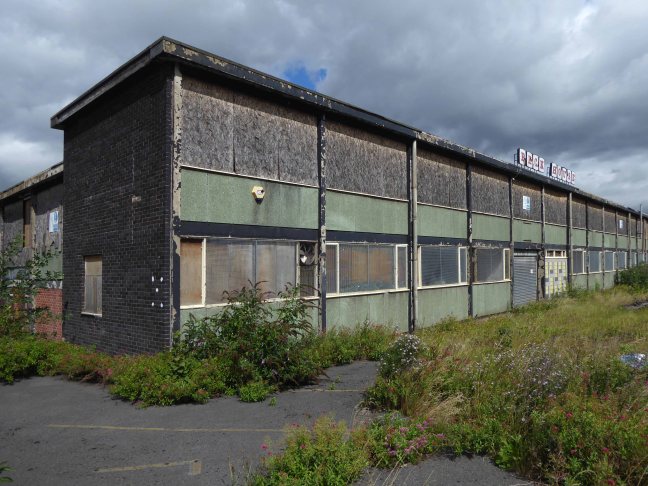
So here we are confronted with some tip top architectural type high atop the low-rise industrial facility.

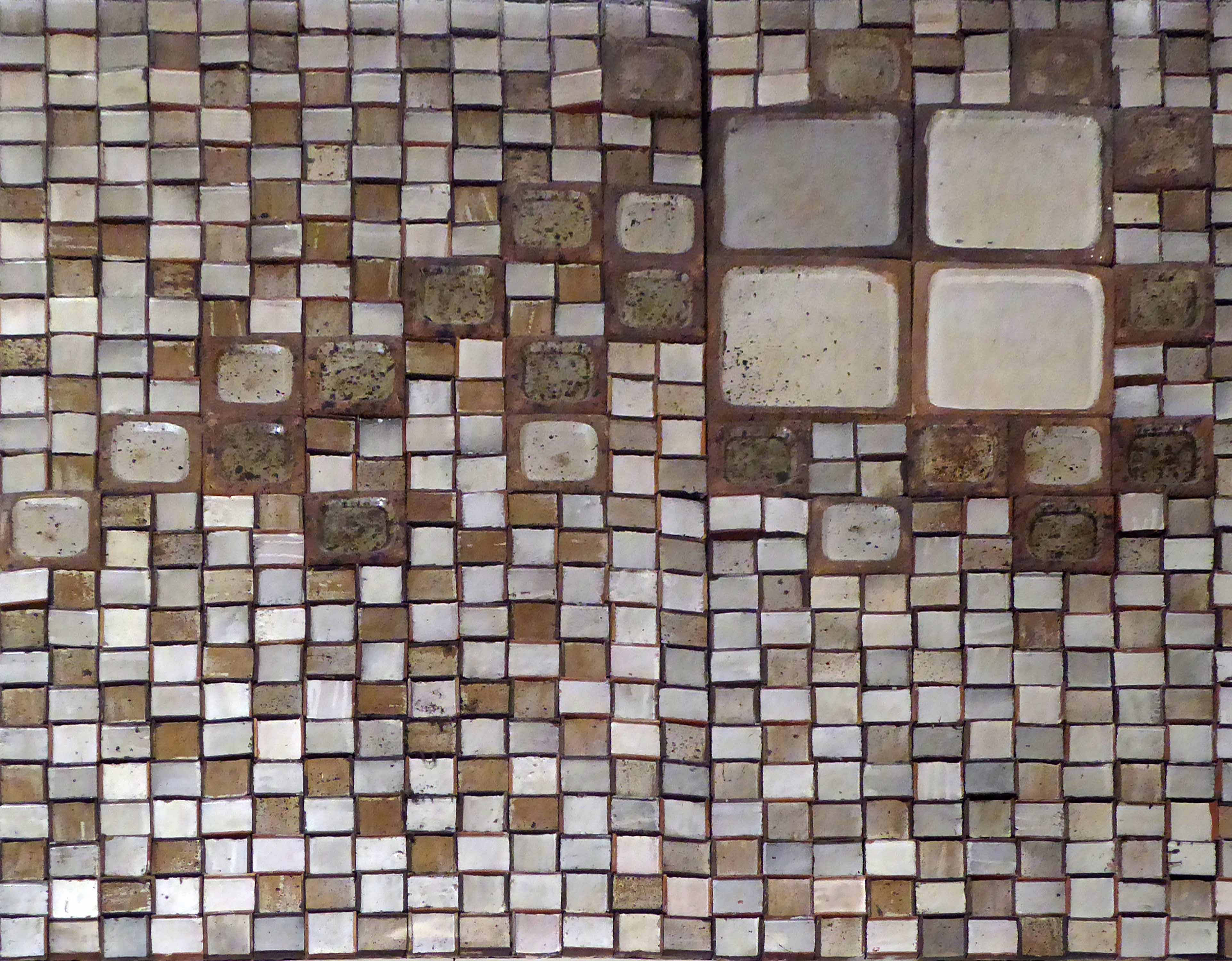
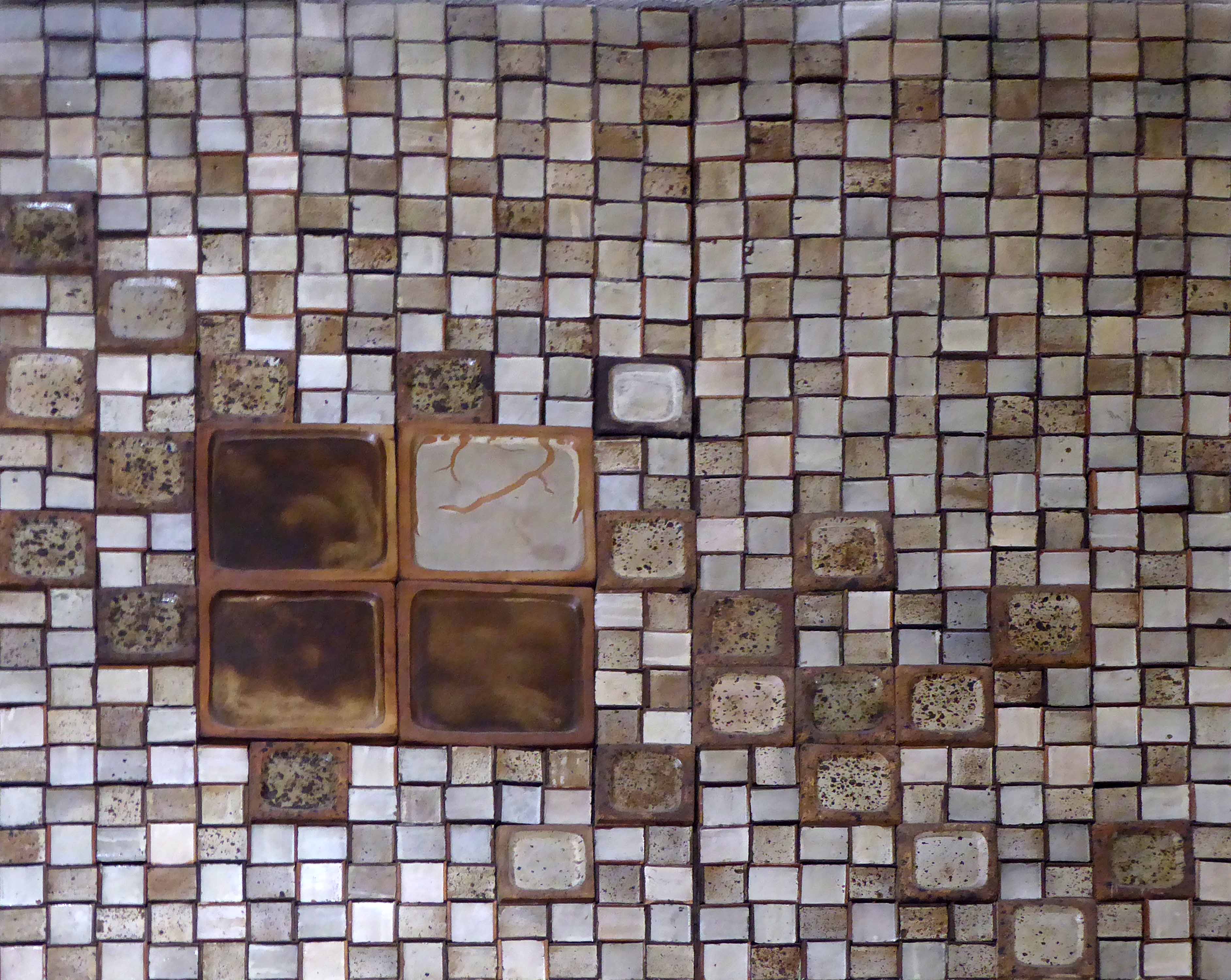
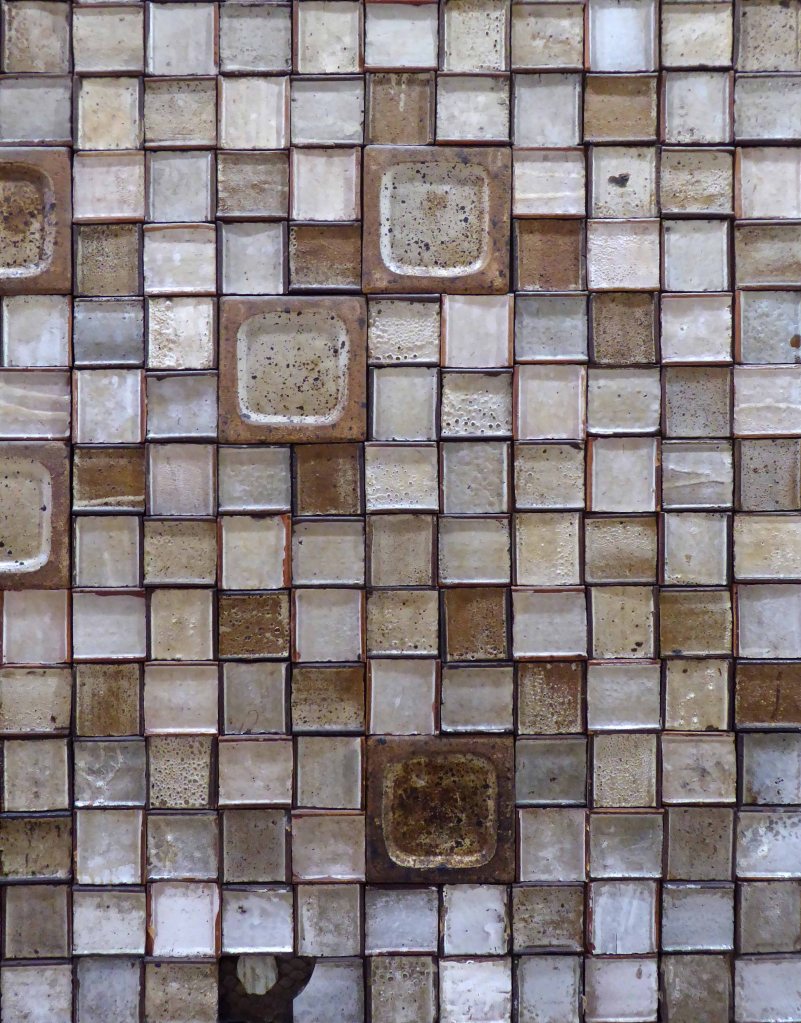
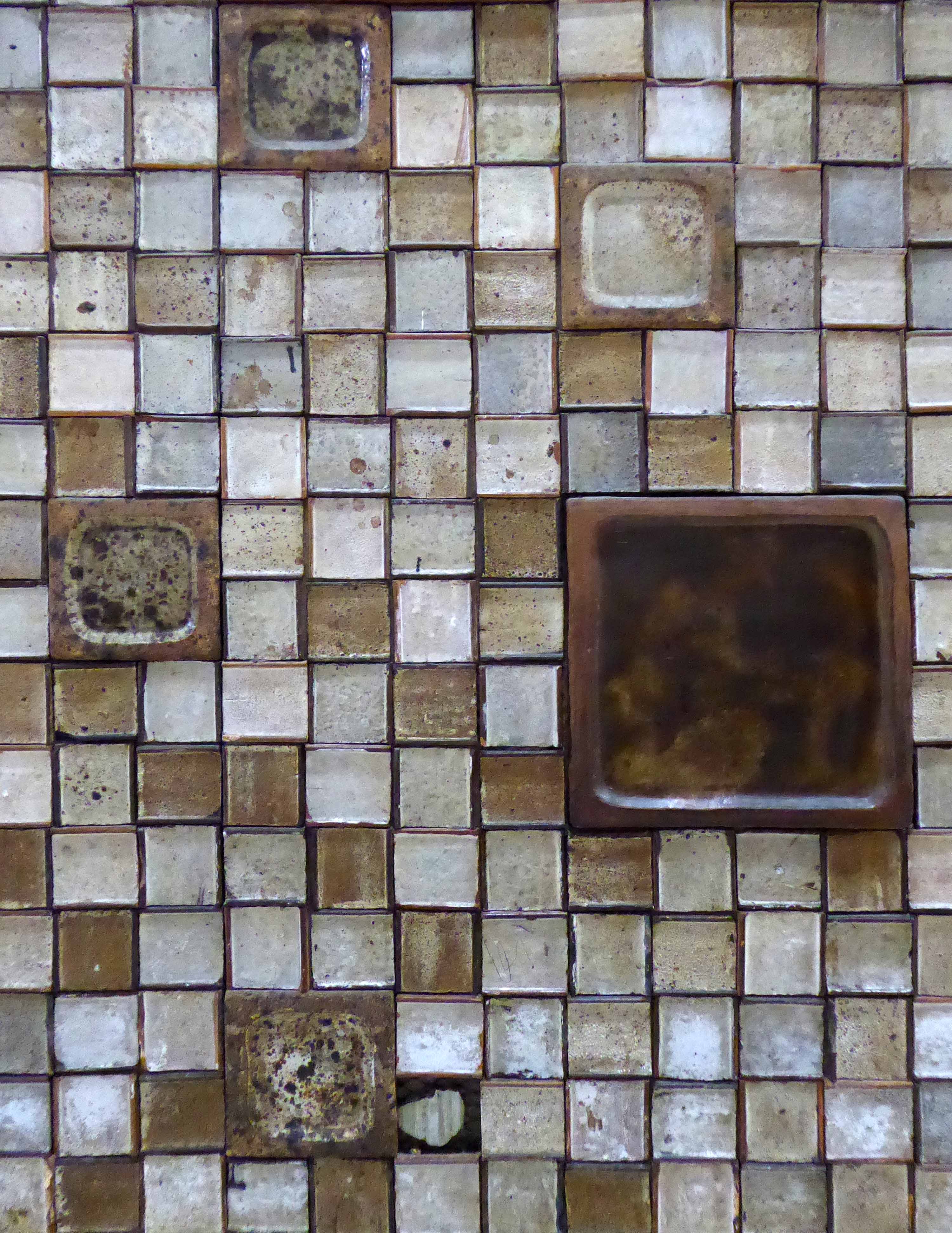
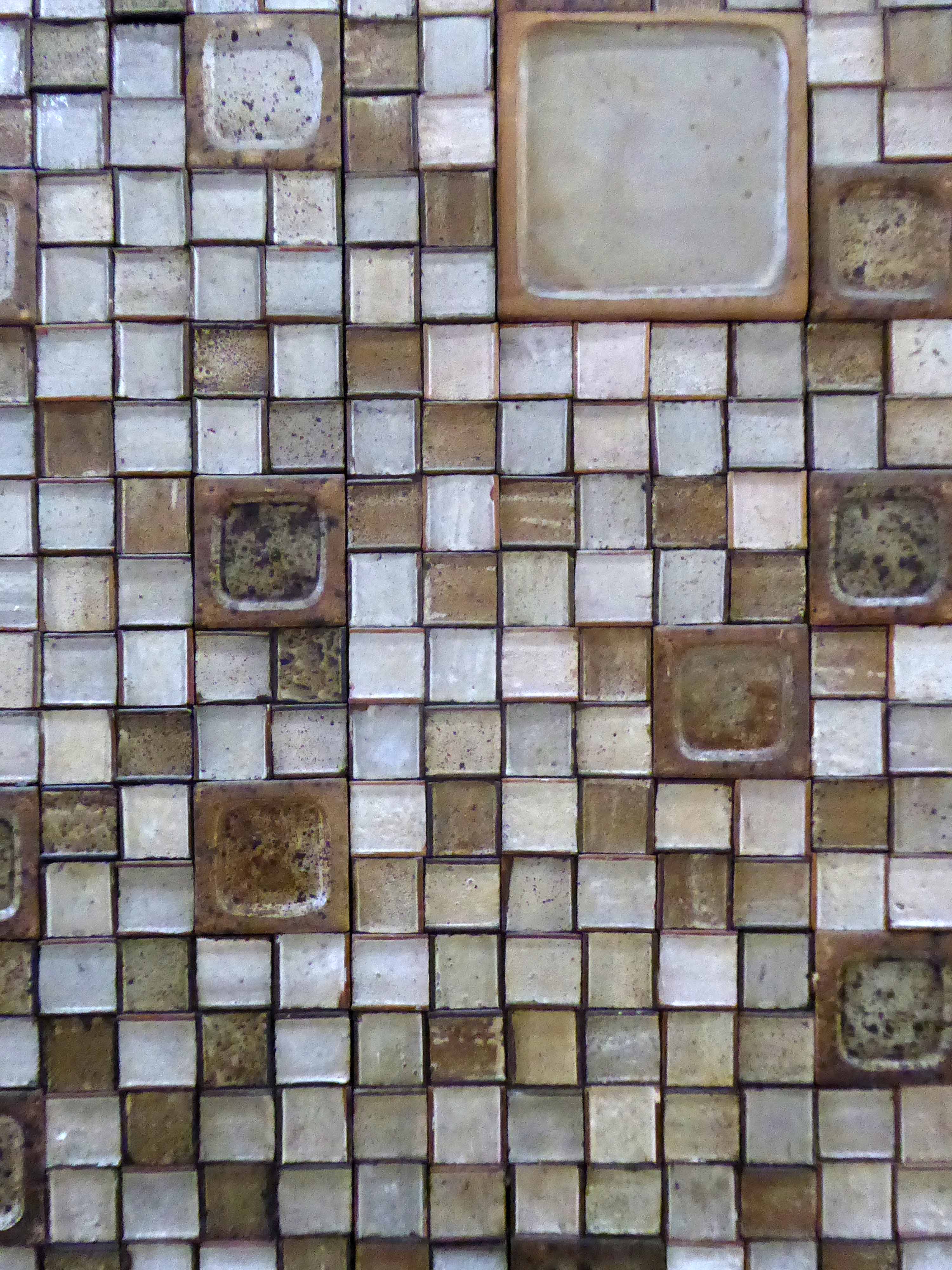
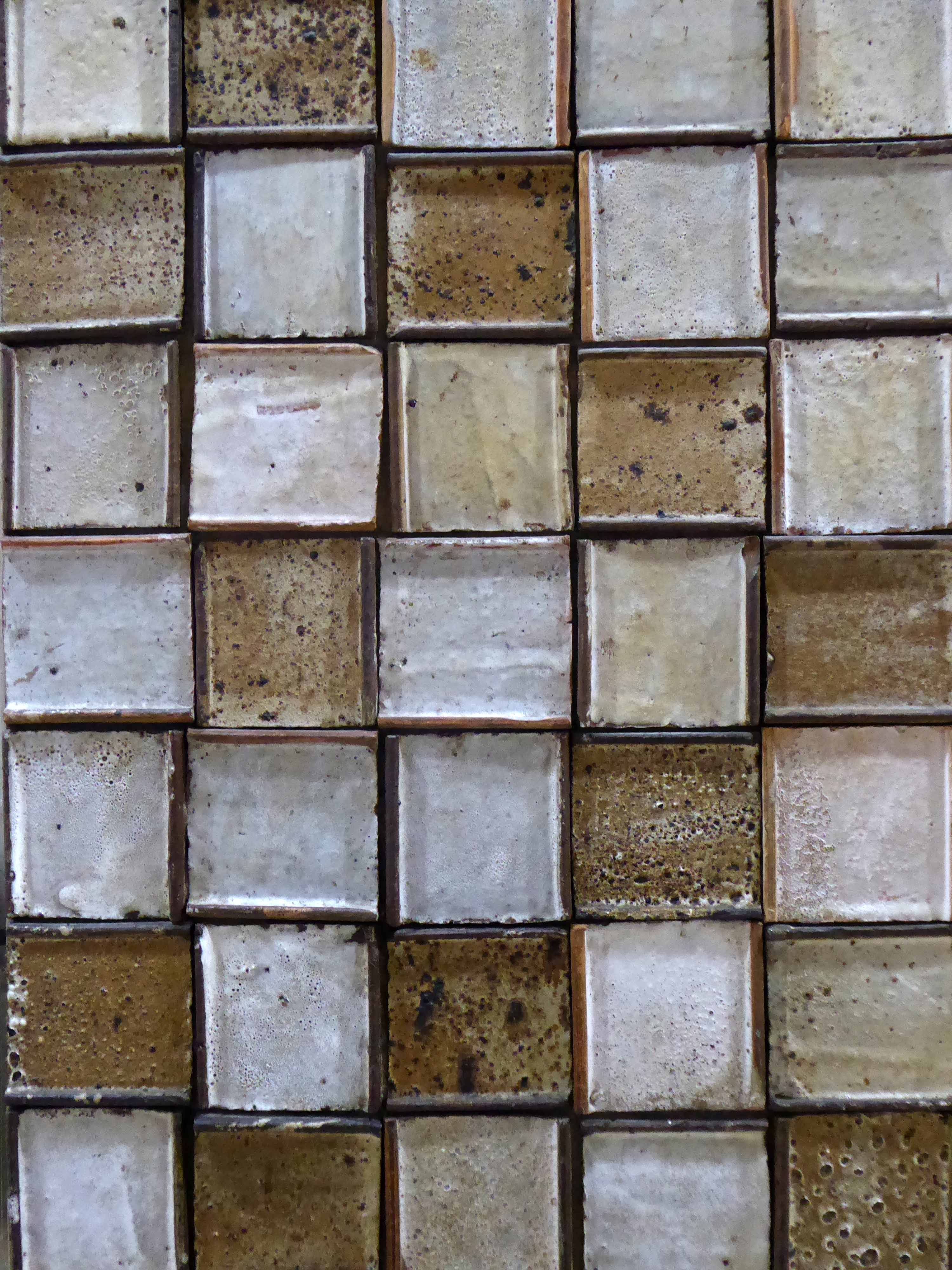
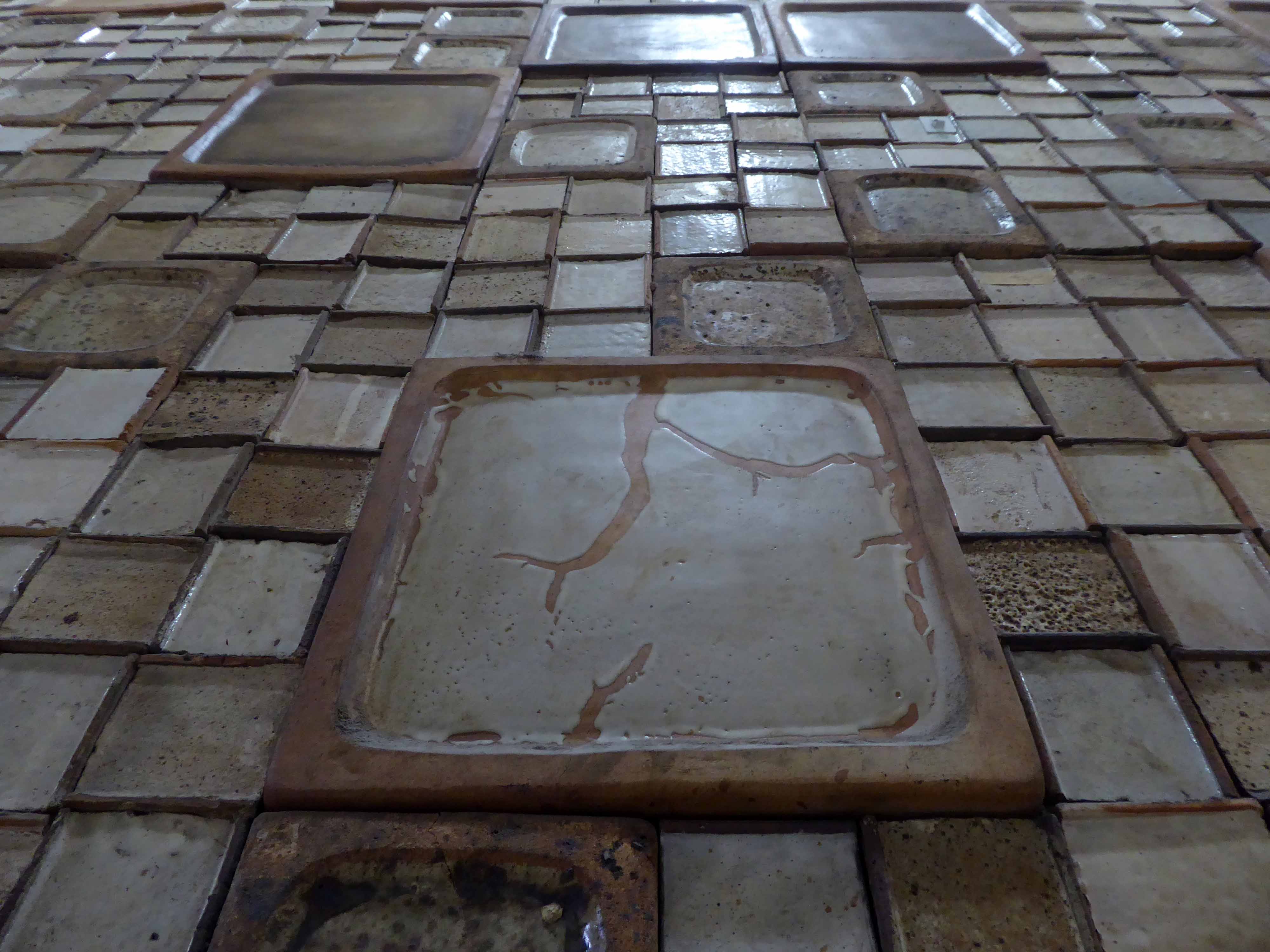
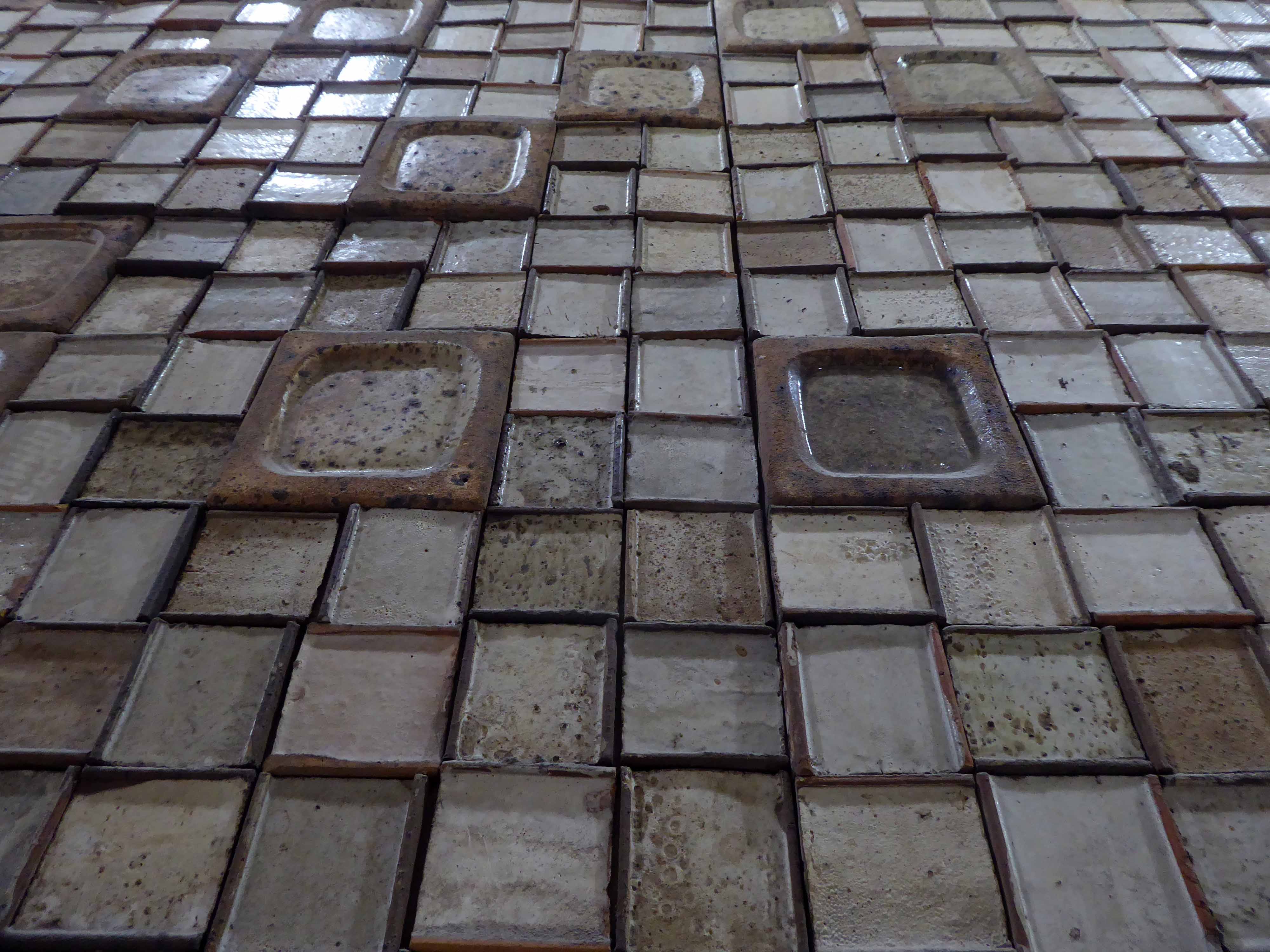
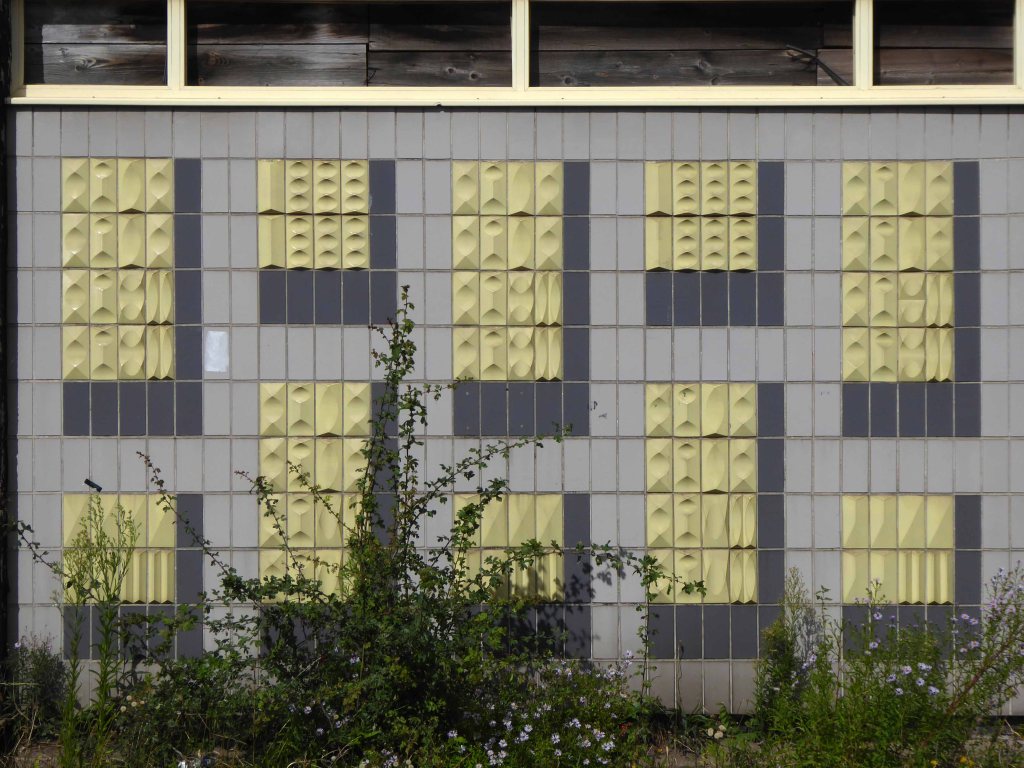
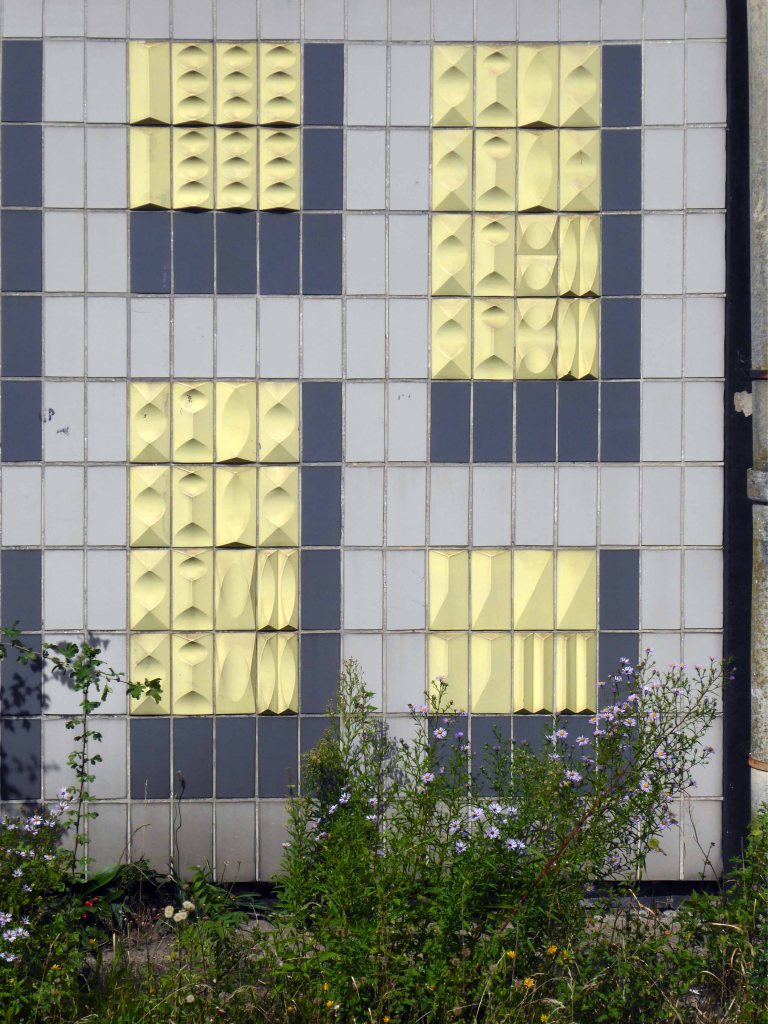
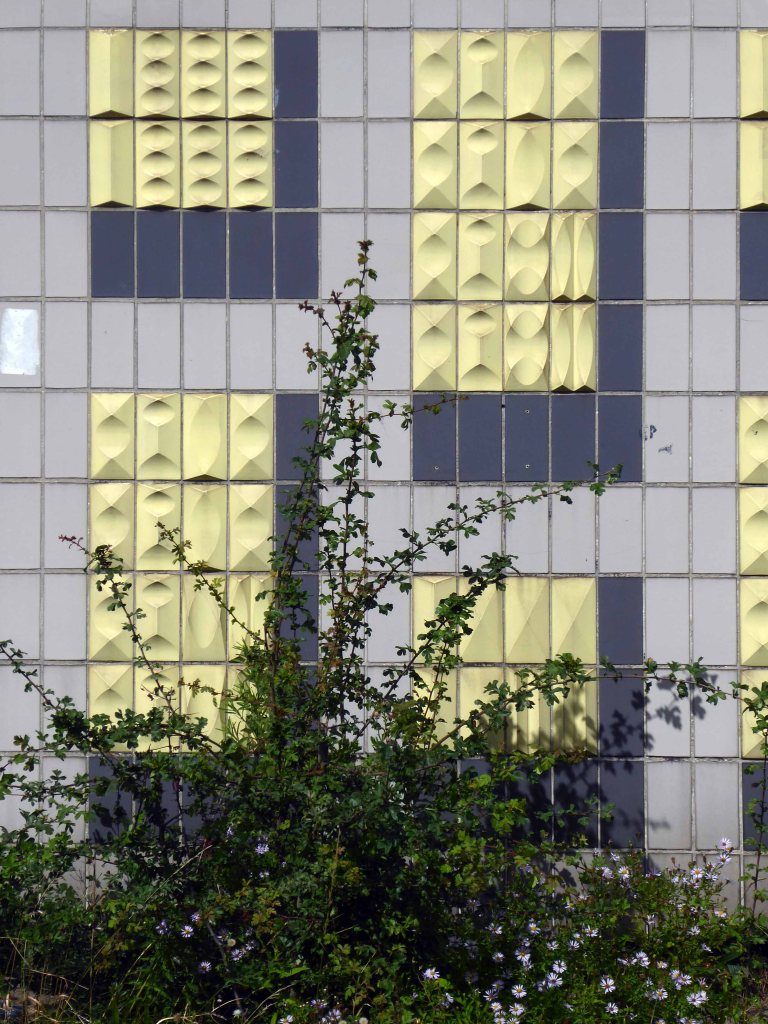
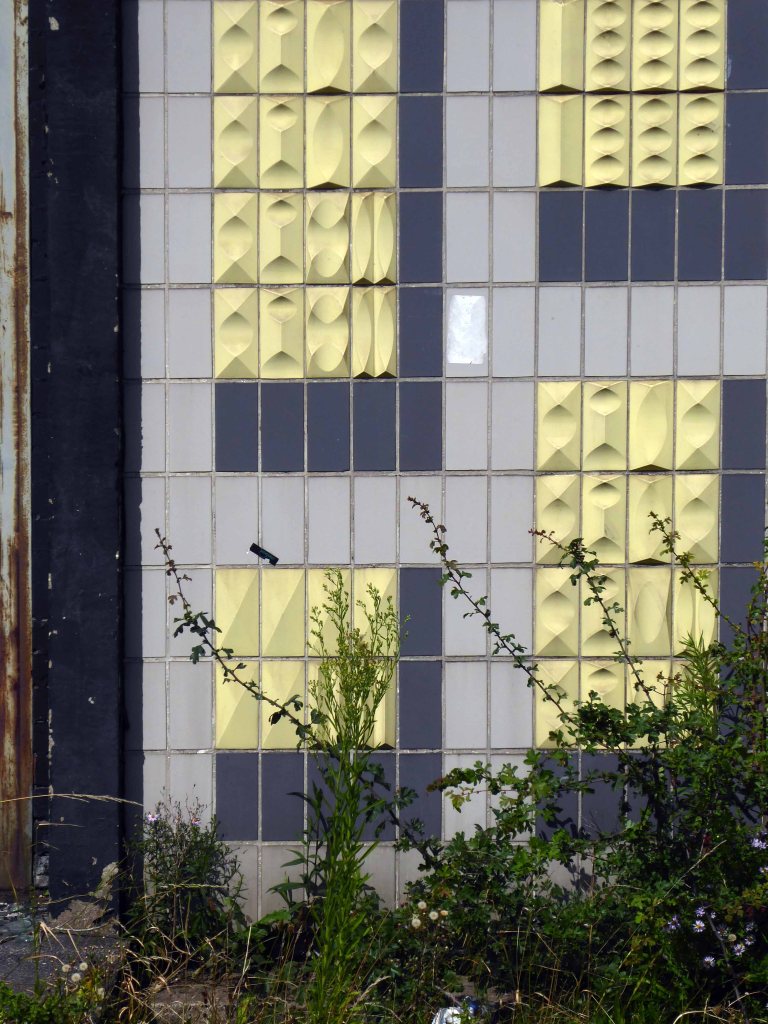
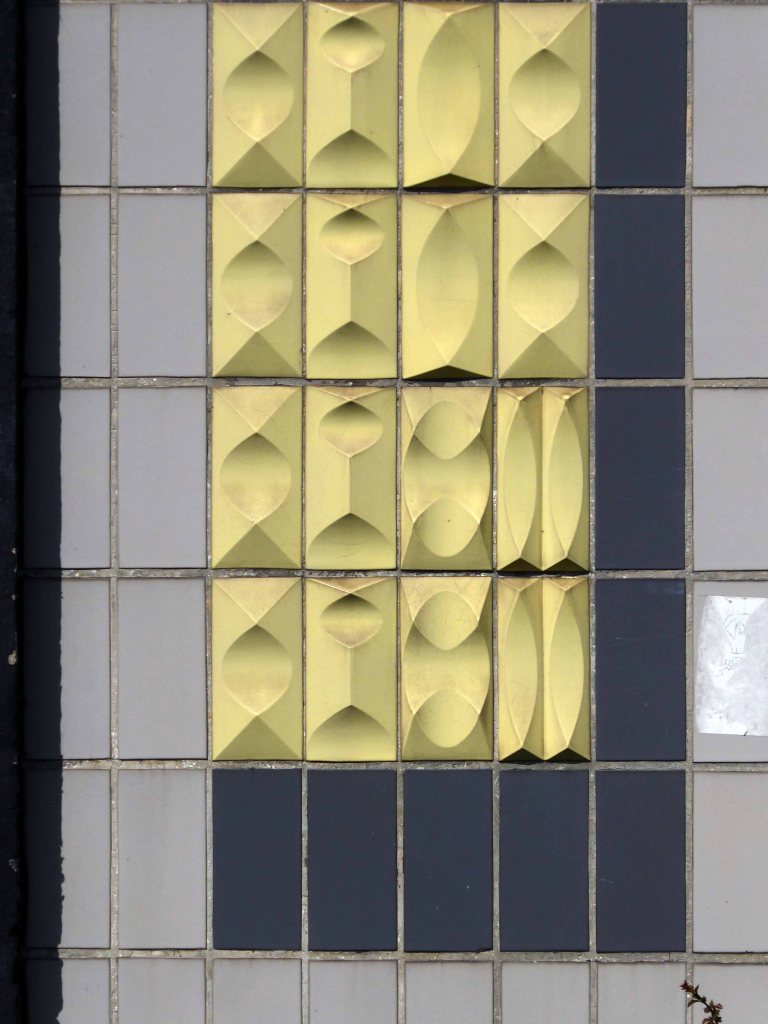
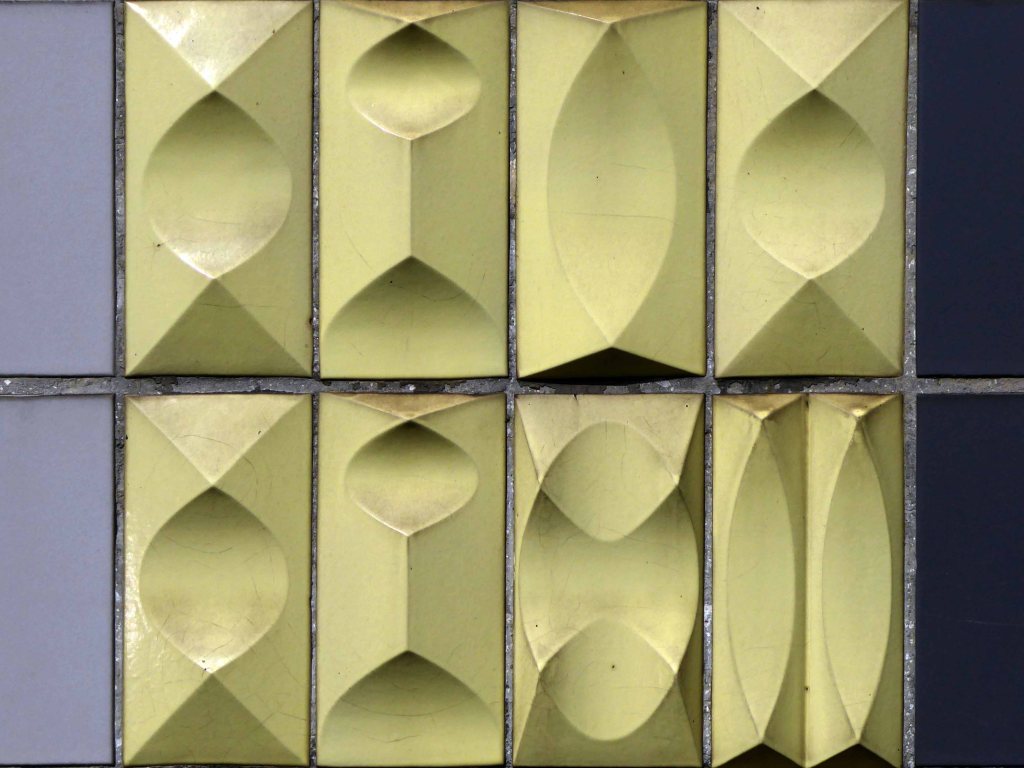
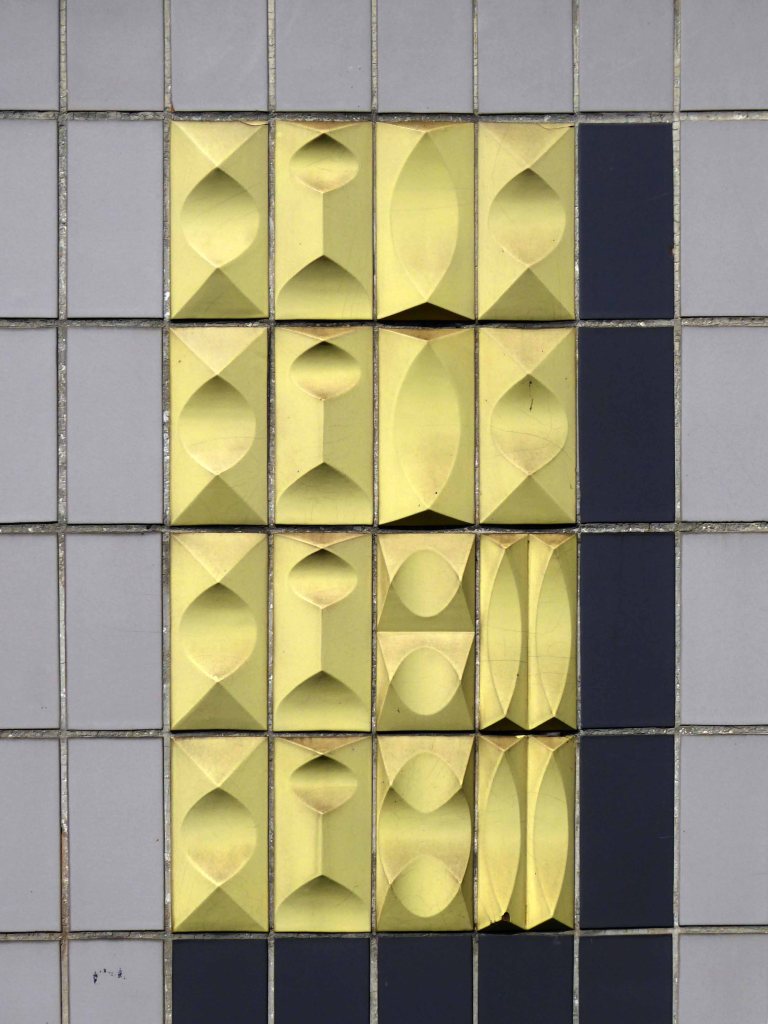
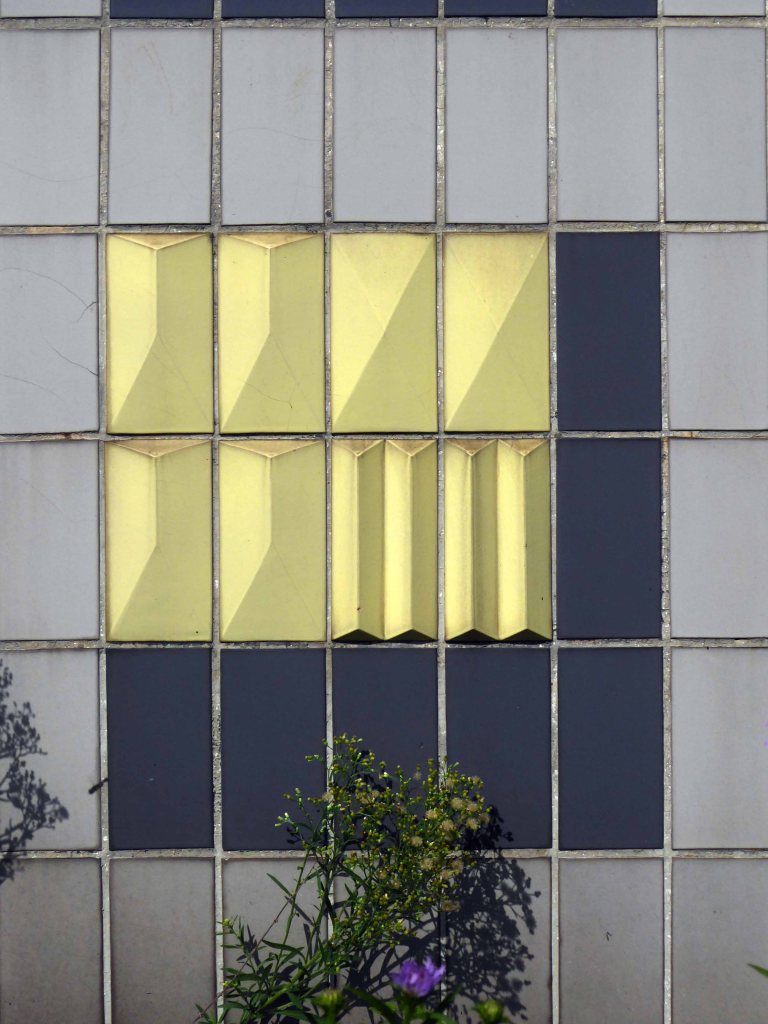
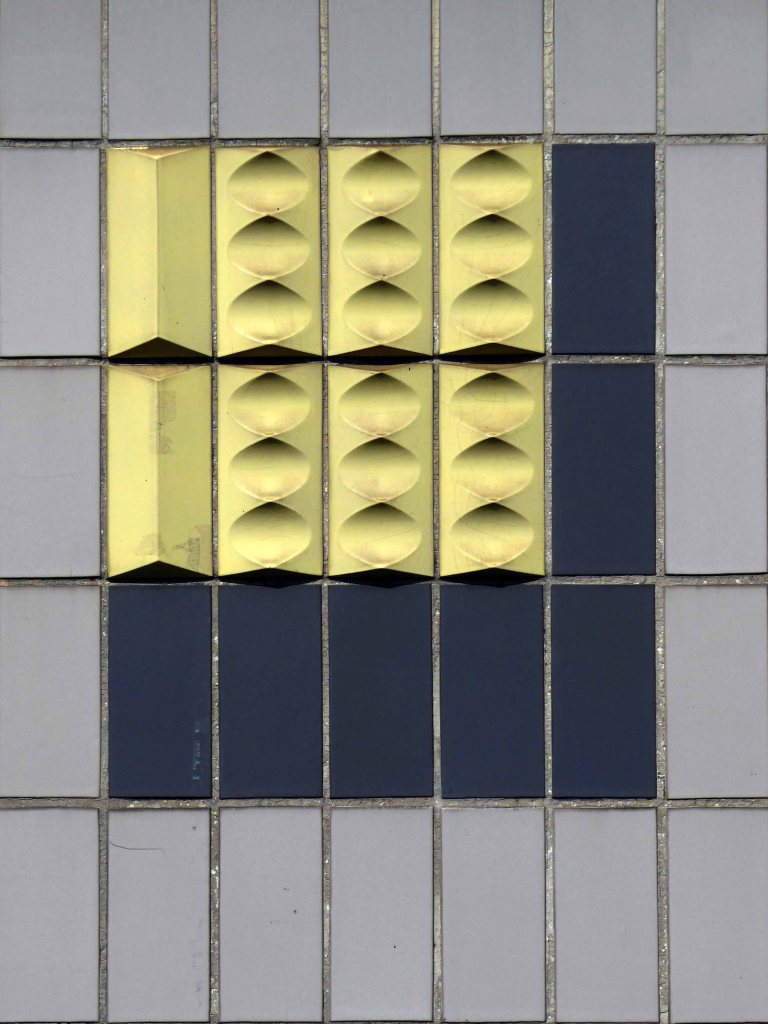
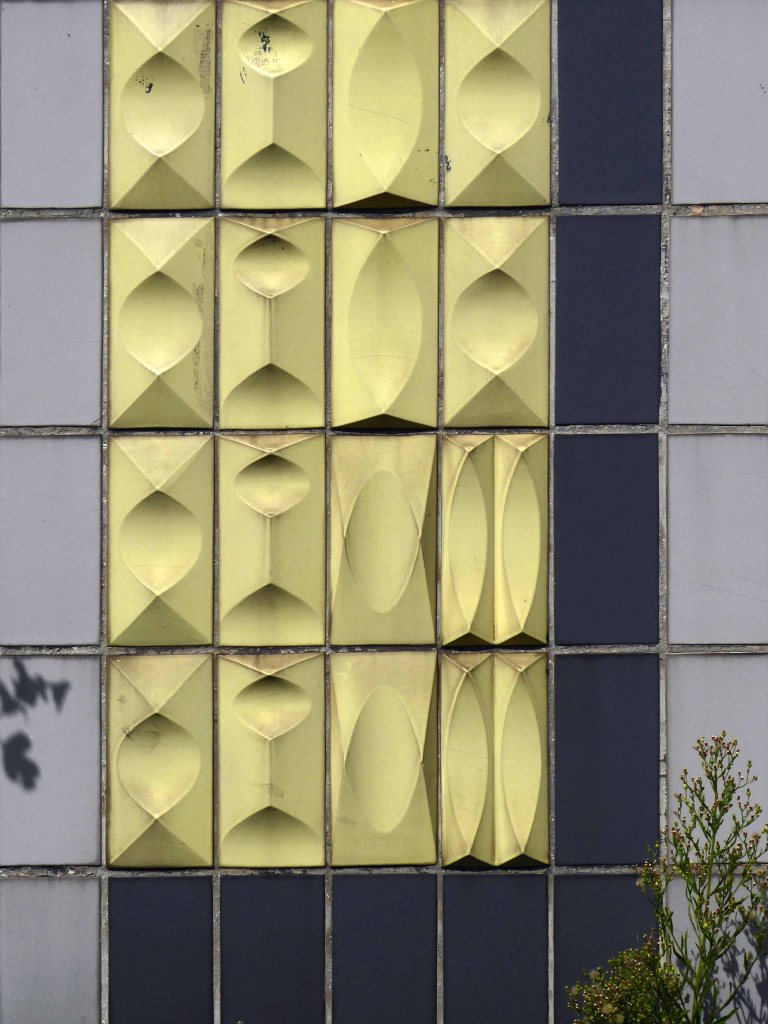
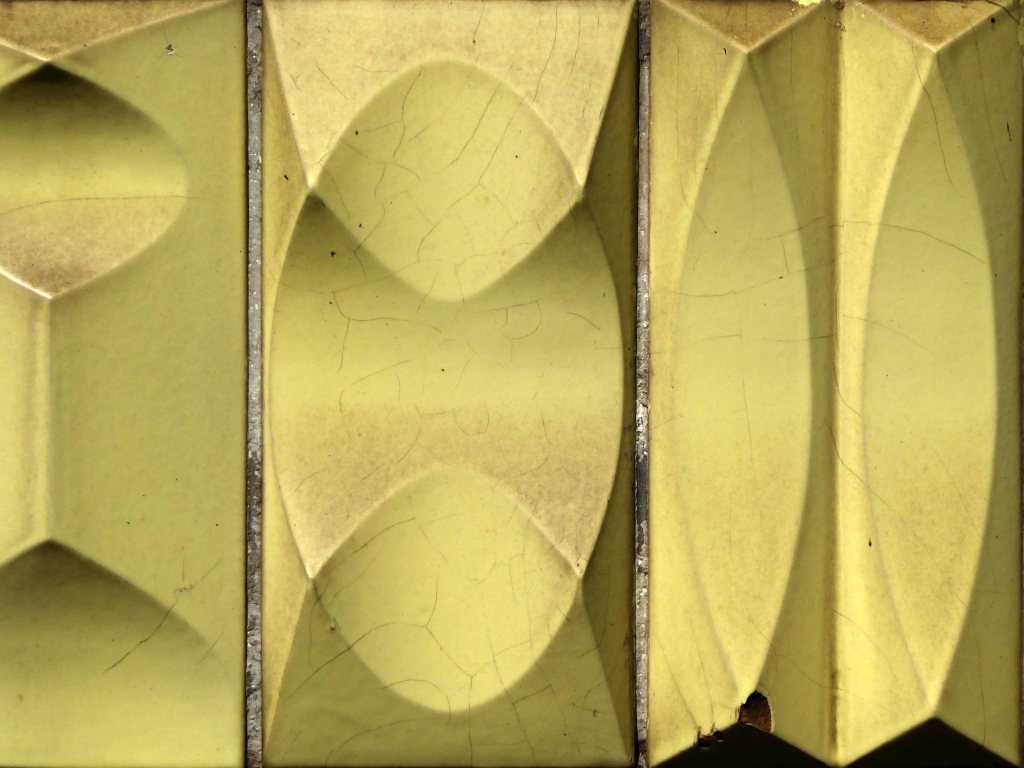
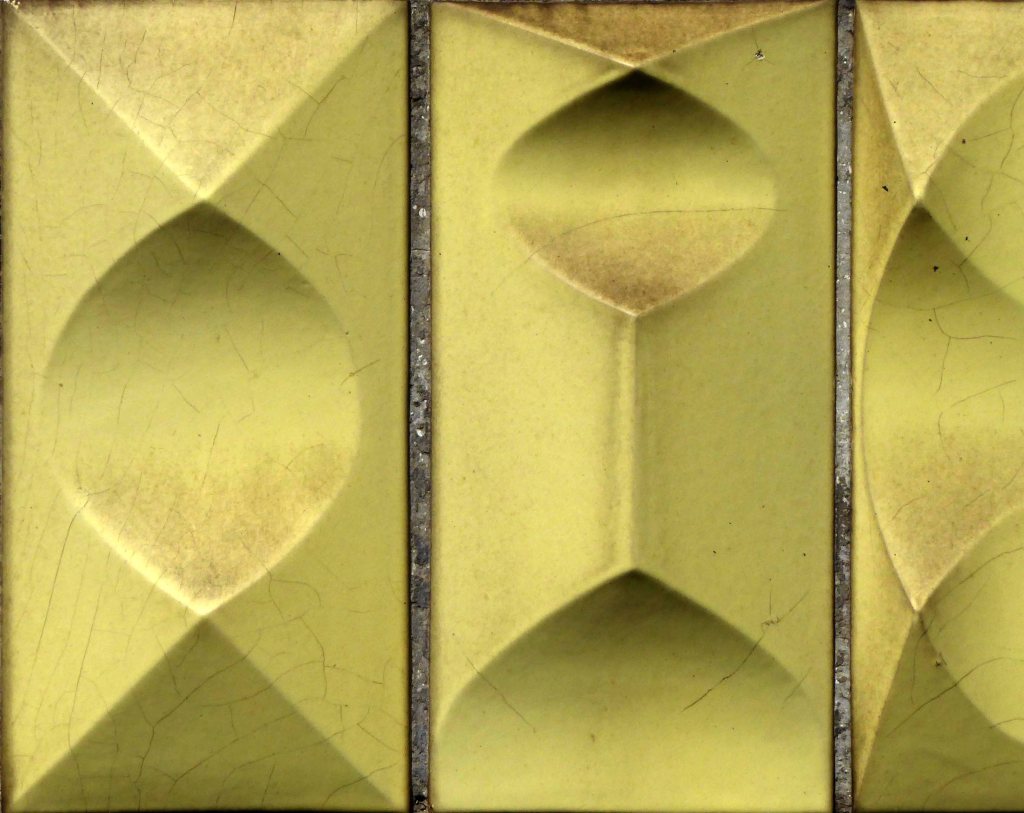
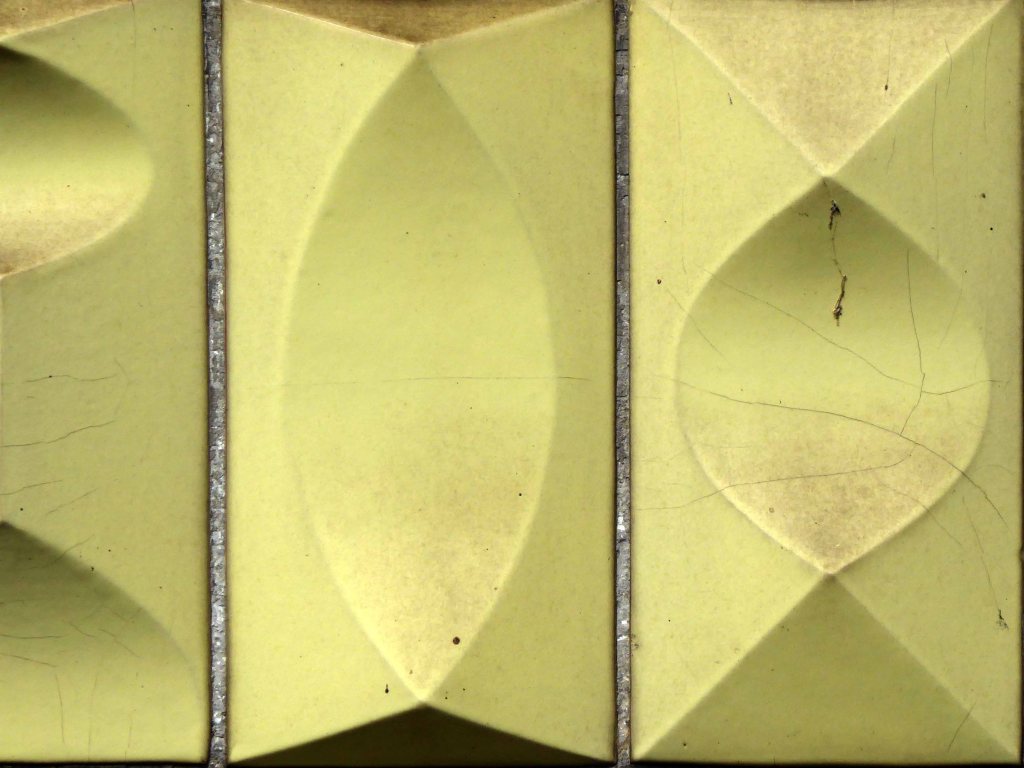
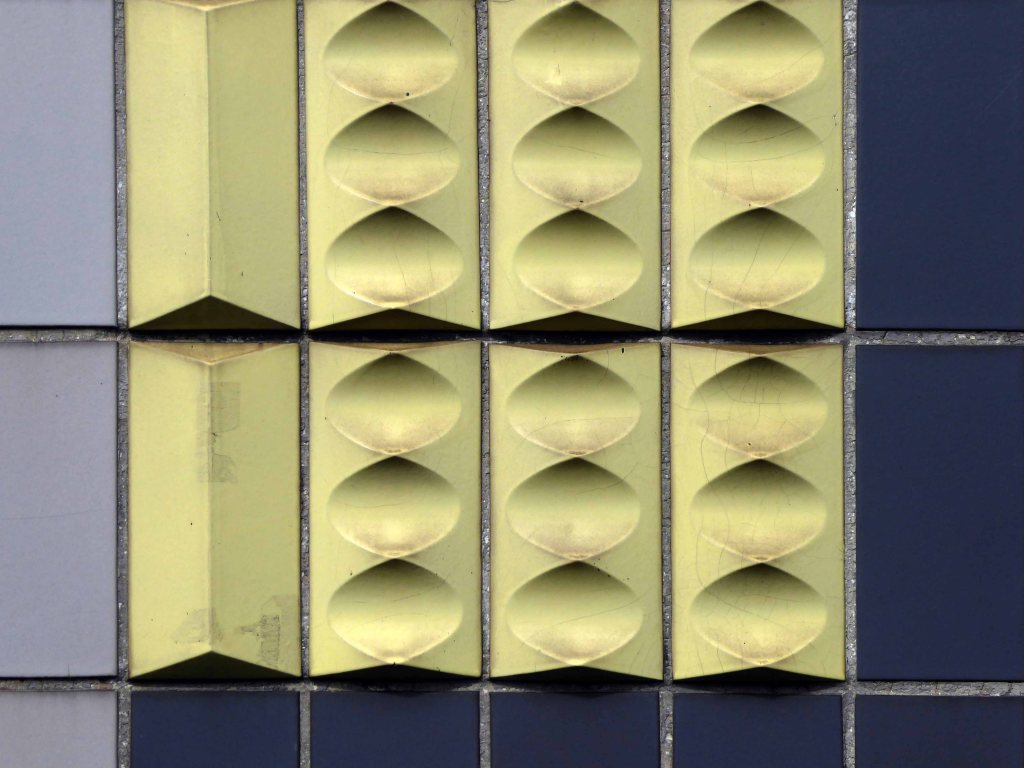
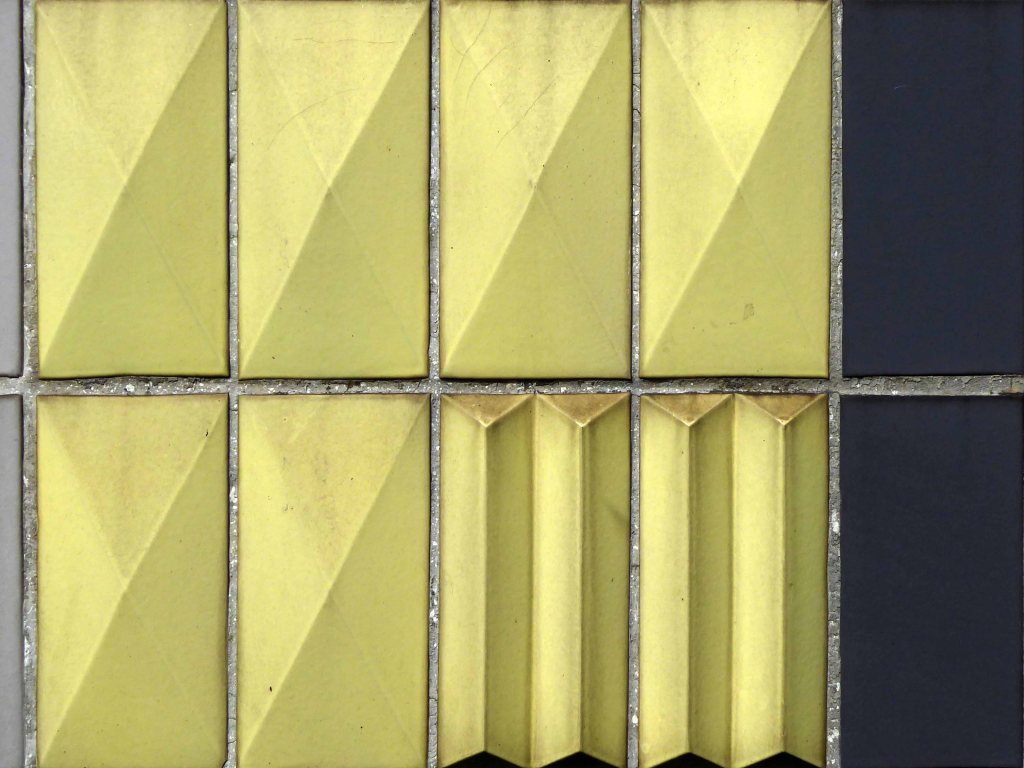
What’s more there is a panel of ceramic tiles many with a pronounced profile in relief – a fugue in lemon, grey and a deep Prussian Blue.

No reference to the manufacturer or date online sadly, suffice to say that they are truly enchanting – look!

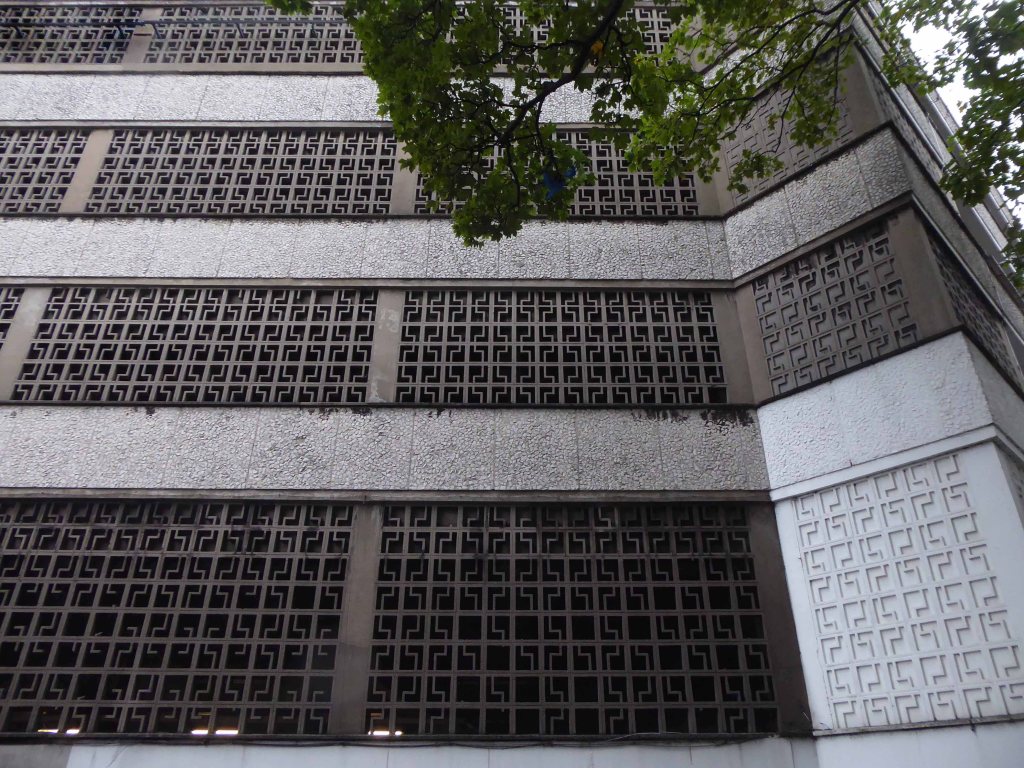
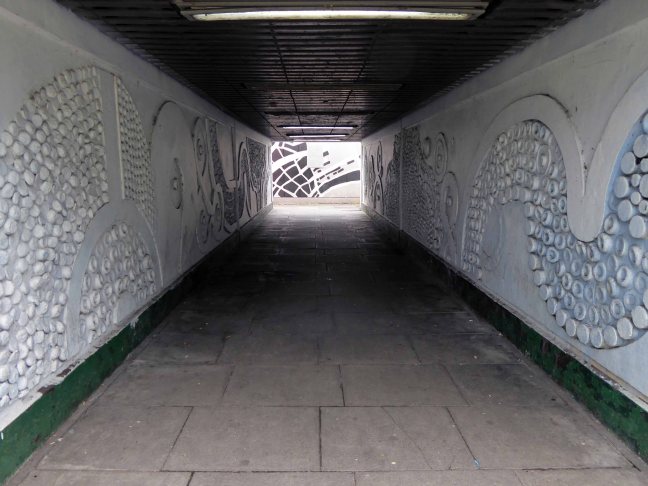
Rotherham Underpass #3

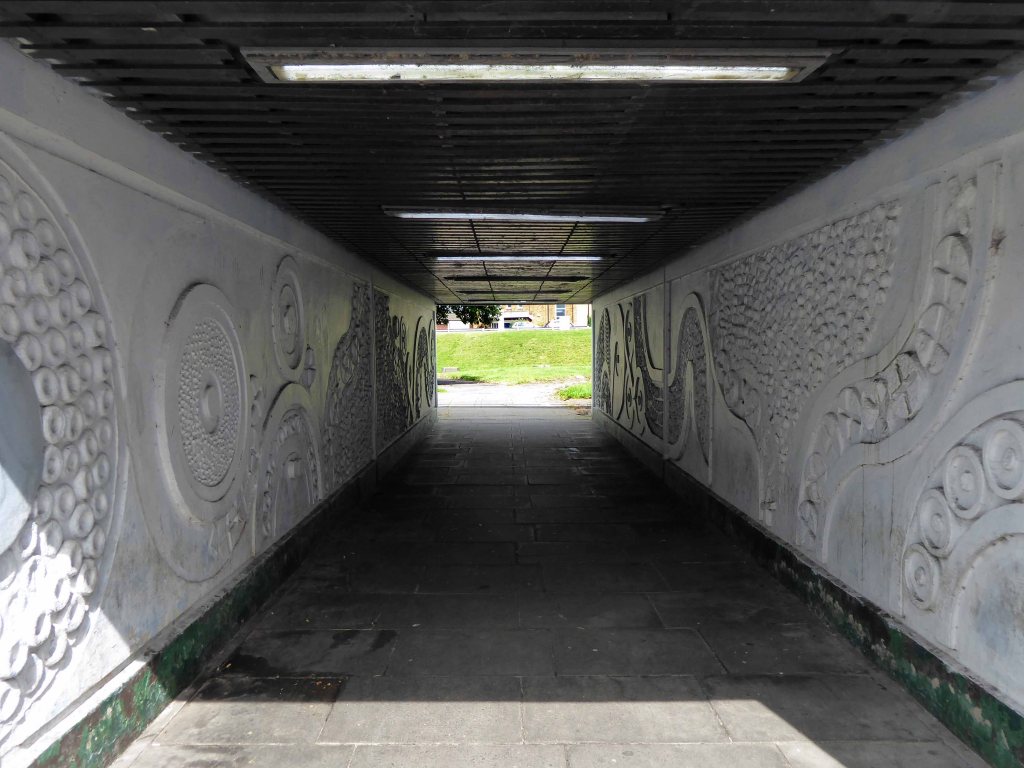
First there was the first, then secondly the second – this is the third and last underpass.

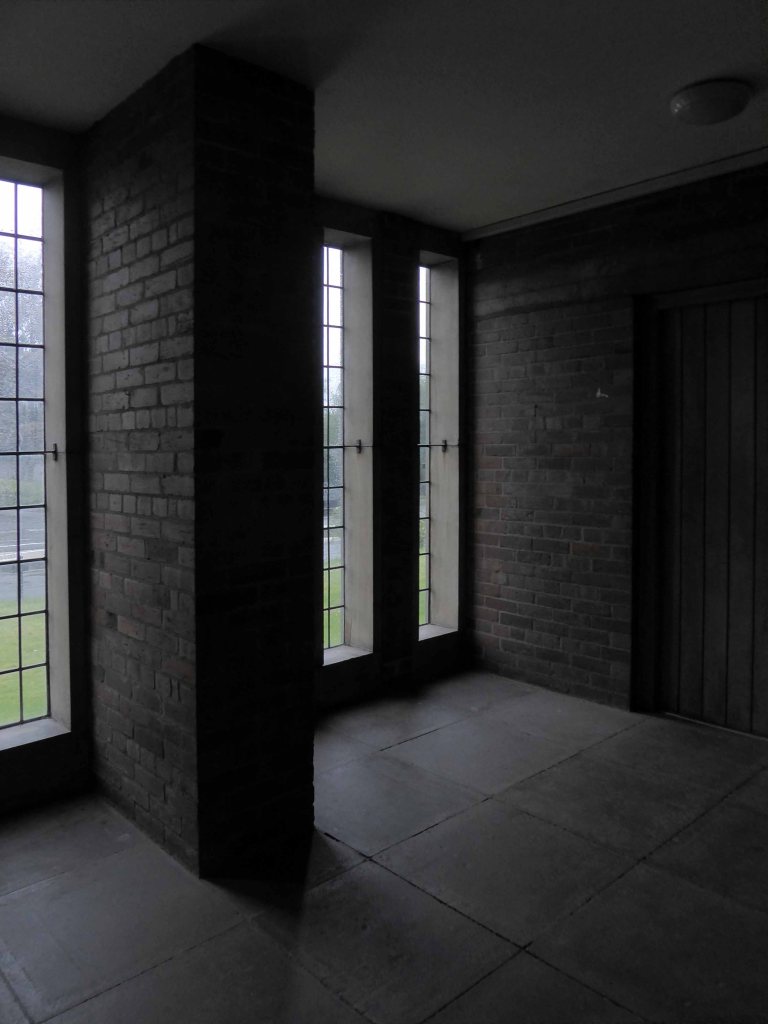
A fitting finish to the series as we pass through the final subterranean frontier out into the clear light of the South Yorkshire day.

Each one is a neglected gem of municipal modernism, the underpass a feature under threat, the pedestrian often subsumed by the drive to accommodate the motor car.

As of last Wednesday, we all seem to have tenuously hung on in there.

Oh we’ll hear the thunder roar, feel the lightning strike.
At a point we’ll both decide to meet at the same time tonight
.

Rotherham Underpass #2

Having posted the first underpass – let’s take a look at the second.

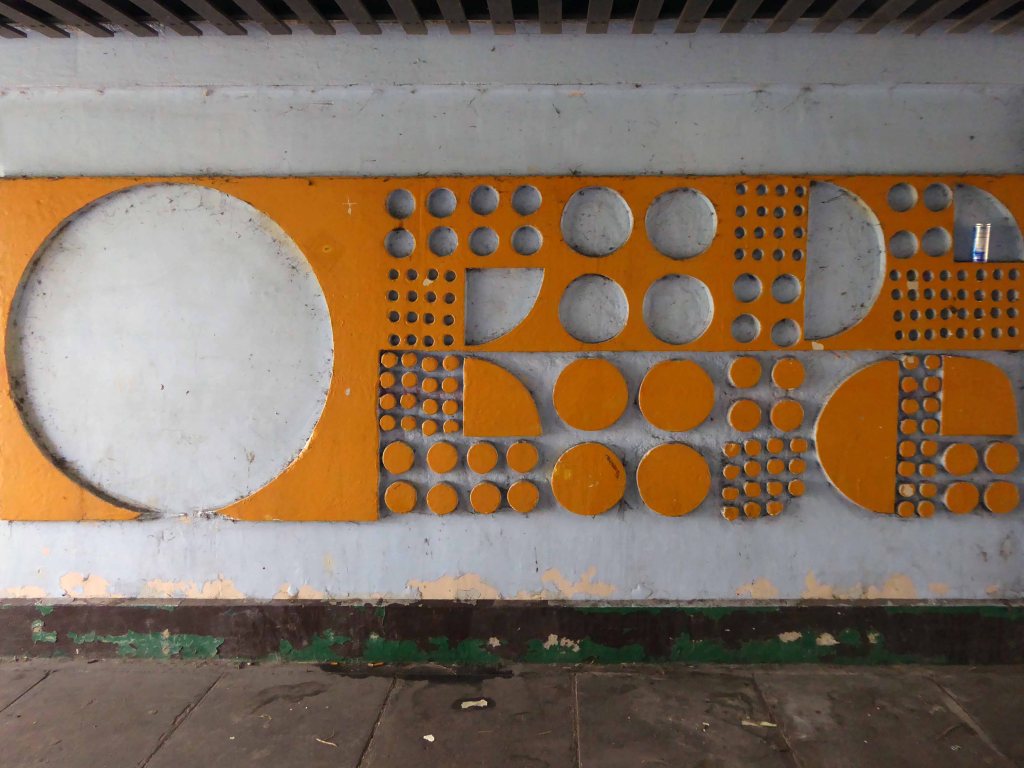
Orange on white, circles within circles squared.

Rotherham Underpass #1

I had seen a photograph posted by Mandy Payne of an underpass in Rotherham – illustrating a delightful concrete relief.

Enlisting the assistance of friend and local resident Helen Angell, we set out on a mission to visit the roundabout in back of the big Tesco, which housed the three underpasses.

This is the first – painted white, well whiteish – more than somewhat disabused by the passage of time and the passage of users of the underpass.

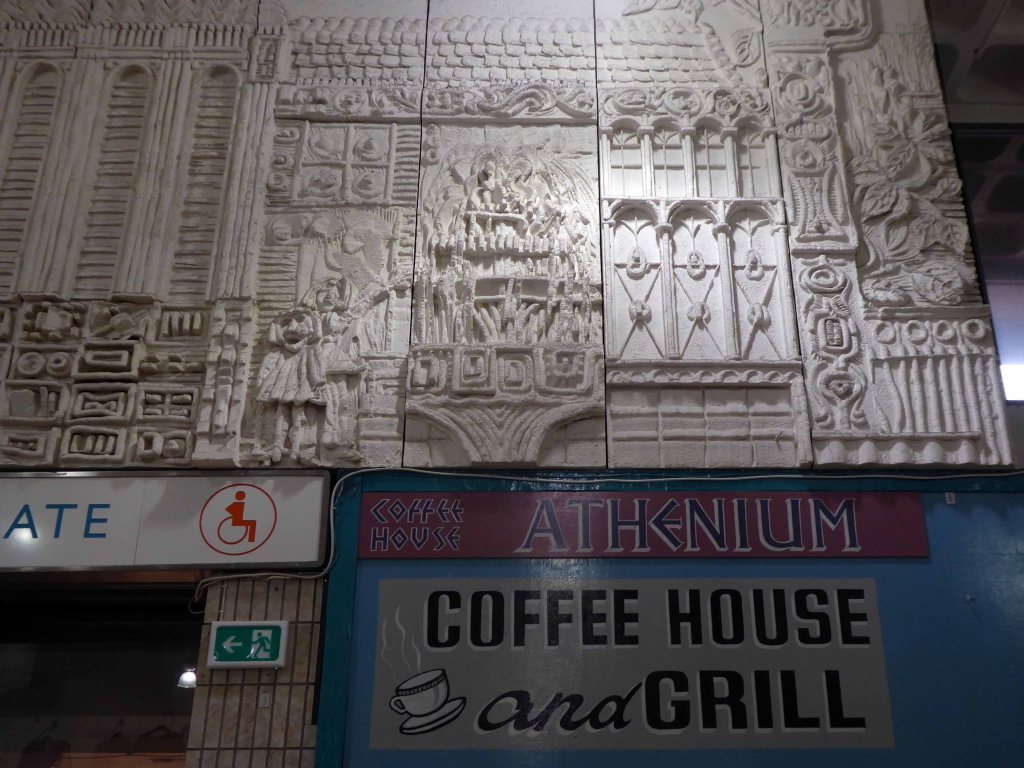
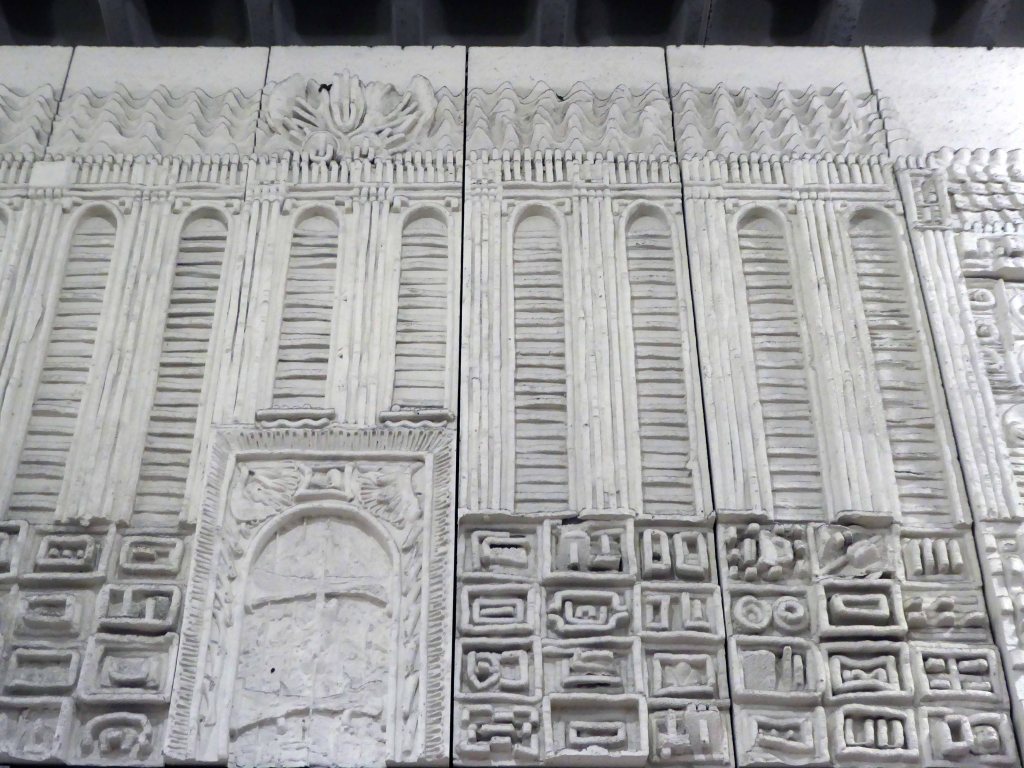
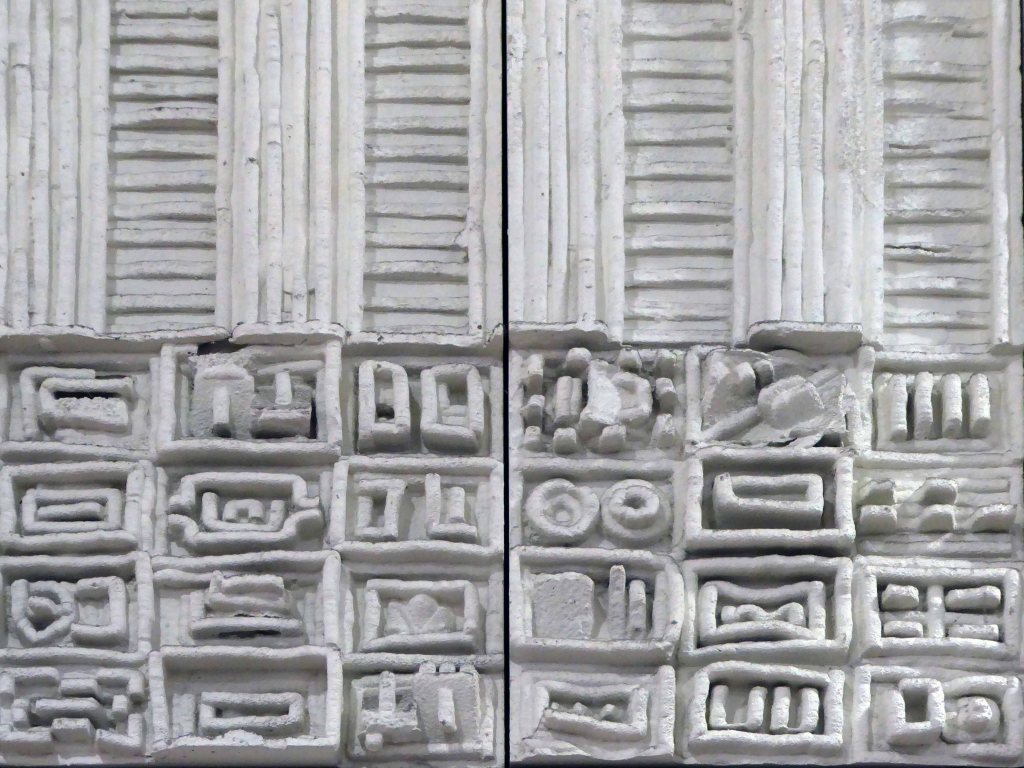
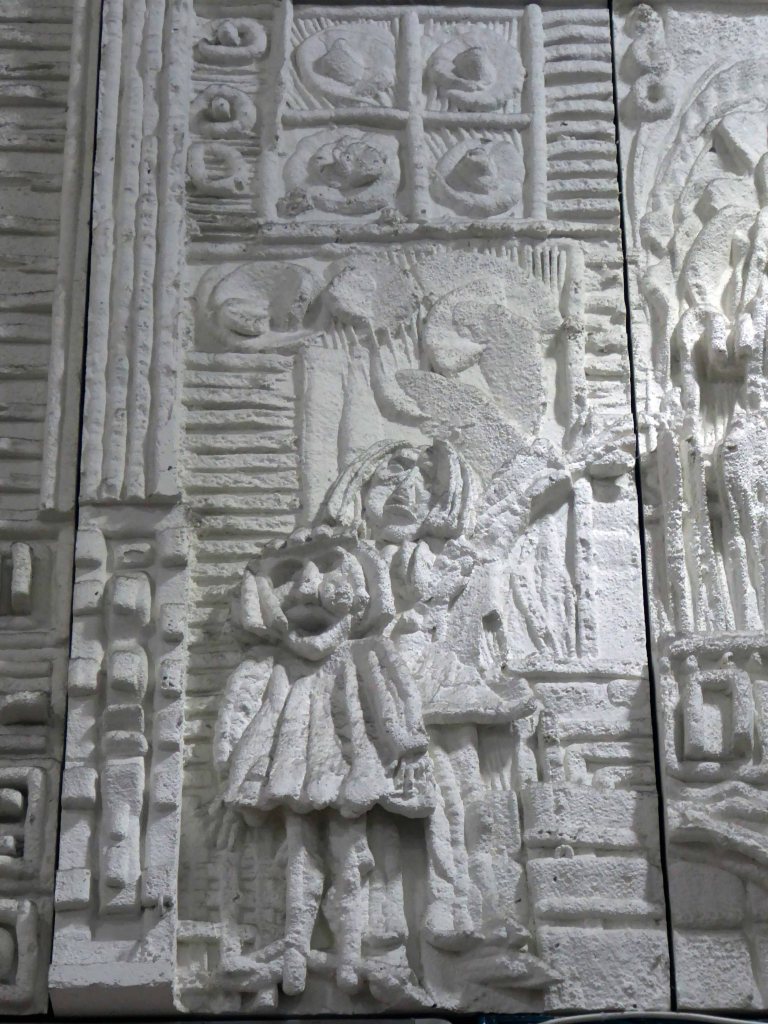
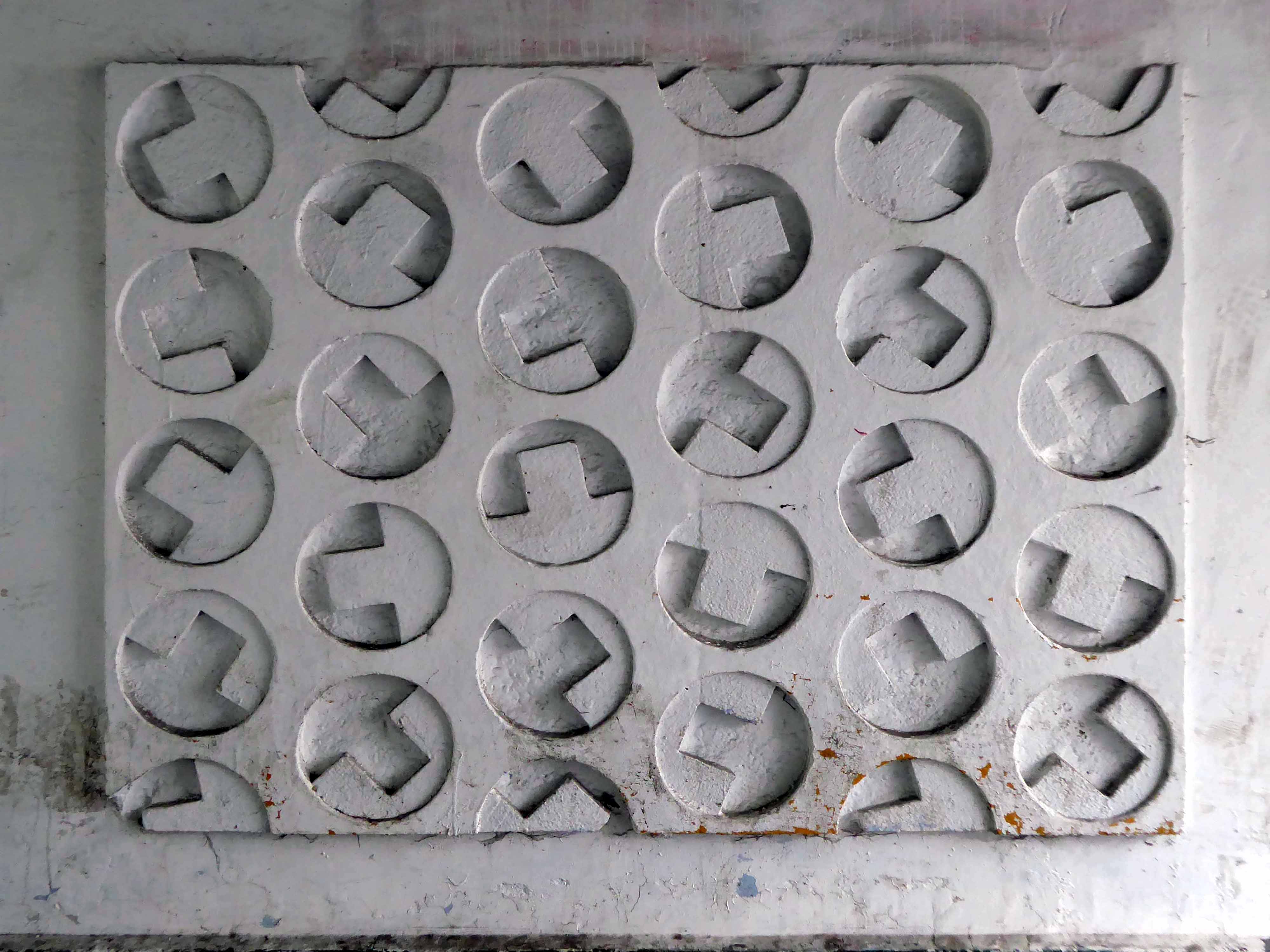
Brute and angular, incised and cursive and currently lacking authorship or attribution.

Leeds University – Roger Stevens Building

The Roger Stevens Building 1970 – by Chamberlin, Powell and Bon for Leeds University South Campus is designated at Grade II

The building represents the high point of their Leeds University work.

Architecture: the building is an outstanding and individual design with bold external shapes and carefully designed interiors

Planning: the internal spaces are the result of extensive research on the requirements of the university and introduce innovative and influential features such as individual doors into the lecture theatres, and external links intimately with other buildings on the campus by means of multi-level walkways

Intactness: despite the changing requirements of universities, the building has remained largely unchanged, proving the success of its design

Group Value: the building provides a fitting centrepiece to the group of university buildings on the South Campus at Leeds, also recommended for designation.

Historic England

I was asked by the Leeds Modernists to put together a walk which avoids the the Roger Stevens Building, so I did just that.

That didn’t stop me visiting the site on the day of my visit.

This is what I saw:

Orange March – Scarborough

The future is overcast.

The future is not Orange.

The Orange Order is a conservative unionist organisation, with links to Ulster loyalism. It campaigned against Scottish independence in 2014. The Order sees itself as defending Protestant civil and religious liberties, whilst critics accuse the Order of being sectarian, triumphalist, and supremacist. As a strict Protestant society, it does not accept non-Protestants as members unless they convert and adhere to the principles of Orangeism, nor does it accept Protestants married to Catholics. Although many Orange marches are without incident, marches through mainly Catholic and Irish nationalist neighbourhoods are controversial and have often led to violence.

On the morning of March 28th 2015 I had taken the train to Scarborough, to spend a few days by the sea. As we passed through Huddersfield and on into deepest Yorkshire, the carriage began to fill up at each stop with men, mainly men.

Men in dark overcoats, men with cropped hair, men sharing an unfamiliar familiarity. Intrigued, I enquired of my cultish companions the what, where, when and why of their collective purpose.

It transpired that they were all adherents of the Orange Order, Scarborough bound to participate in the annual Orange March.

On arrival we parted, but we were to meet up later in the day – I walked down to the foreshore and waited.

This is what I saw.

This year the march was cancelled.

You wouldn’t want anyone to catch anything, would you now?

St Saviour’s Church – Bradford

St Saviours 25 Ings Way Bradford BD8 0LU

What a delight – the stunning surprise that awaits you, around one particular suburban corner of Bradford.

I had called ahead, to arrange the visit – the Reverend Dorothy Stewart had gracefully invited me to join members of the community and herself, one wild and windy Wednesday.

Steel frame and shuttered concrete with dark red brick walls in stretcher bond, and slate roofs.

Church of 1966 with attached hall of 1971, both designed by architect George Pace. Characterised by asymmetric arrangement of roofs, exposed structure and juxtaposition of materials, this is a complete and largely unaltered example of Pace’s work. The asphalt roof and windows are in very poor condition. Repair works to the roof were carried out in 2016 with funding from the National Lottery Heritage Fund’s former Grants for Places of Worship scheme.

Listed November 2007

The exterior is stark and angular, the body of the church is a broad rectangle with no division between nave and chancel, with a bell tower to the east, vestries to the north-west and a chapel to the west. At the western end is the church hall, added in 1971. Externally a single asymmetric roof covers the main body of the church, rising at the east end to form a mono-pitch section over the altar area and incorporating the bell tower. There is a porch at the east end of the north side, and a transept with a double pitch roof. To the west is a single storey, flat roof section with an entrance to the north, extending to the transept. West of the main body of the church on the south side is a separate roof, housing a chapel. To the west is the church hall, with a north-south asymmetric roof. All the windows are rectangular, of varying sizes, with plain glass in rectangular leaded lights. Lintels over the doors and the parapet of the flat roofed block are of shuttered concrete, as are the window surrounds.

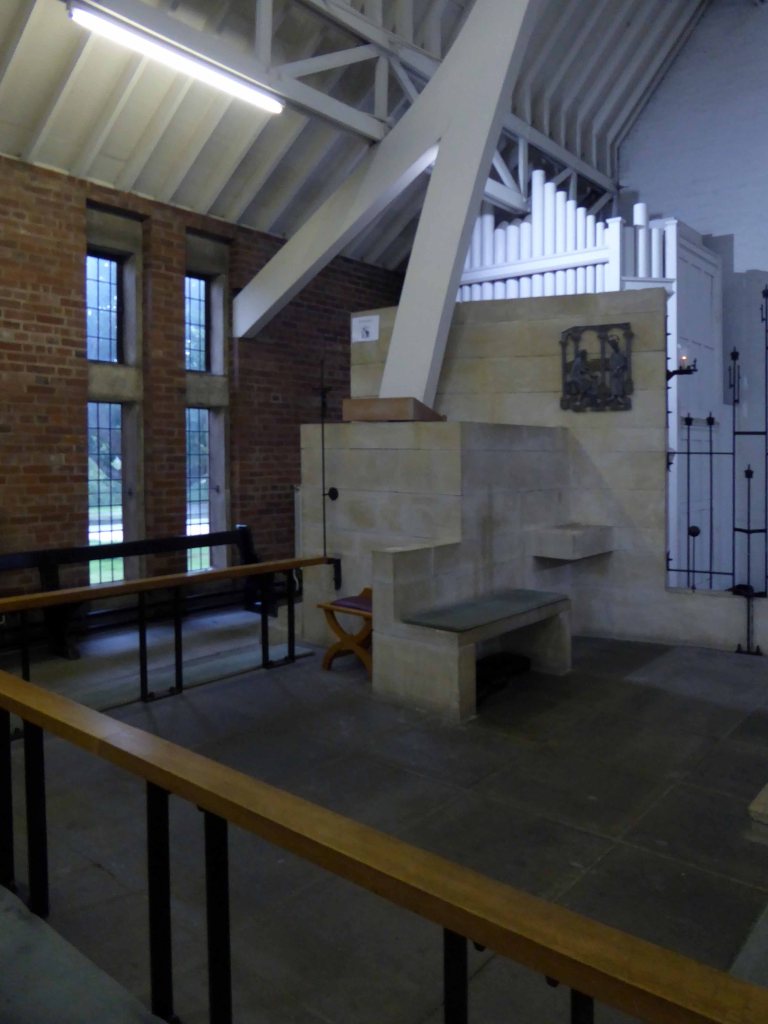
The body of the church contains Victorian stripped oak bench pews derived from St John’s church in Little Horton, arranged with a central aisle. To the north side is a range of contemporary pews in wood with vertical slatted fronts, in front of the organ, recovered from St. Chrysostom’s Bradford , by Driver and Haigh of Bradford, which is housed in the transept with a matching front of vertical wooden slats.

Let’s take a look.

To the rear is the cylindrical font in white concrete with a wooden lid, set on a raised platform. Suspended above it is a large light fitting in black metal, inscribed around the edges with the words: “This font is erected by relatives and parishioners in memory of/ Beatrice May Parkin, for over forty years a Sunday School teacher and/ worker for St Saviour’s Church, who died 2nd March 1961”.

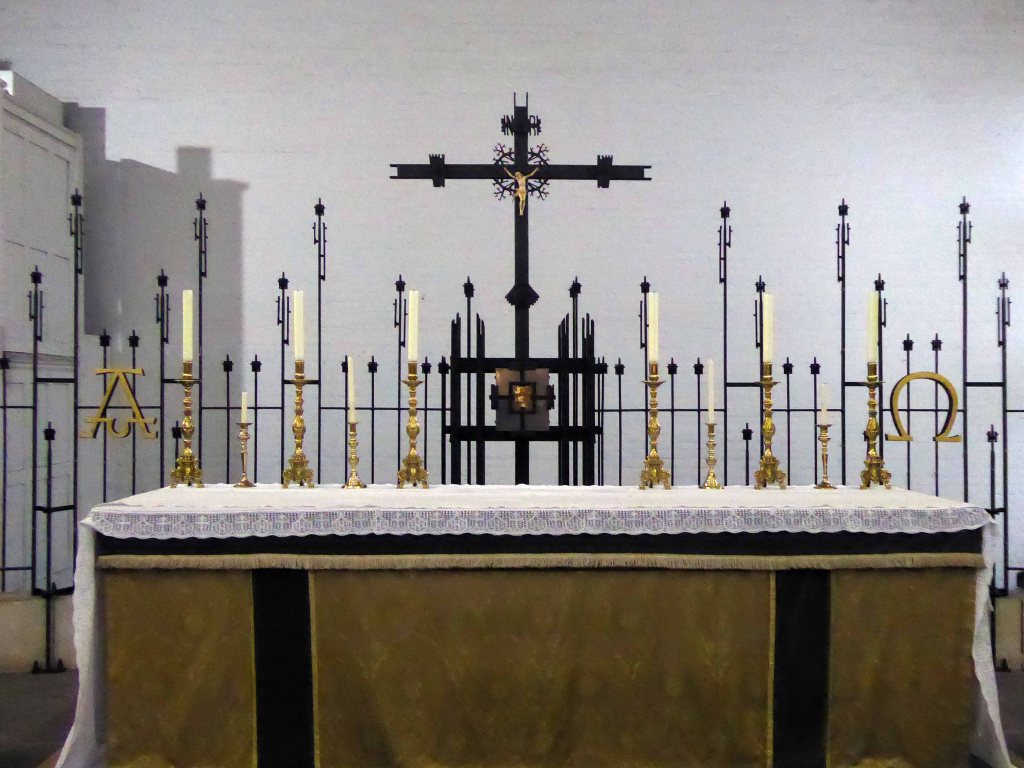
There is no separate chancel, and the finishes throughout are exposed brick, shuttered concrete and limed oak. The sanctuary area is in the south-east corner and consists of a tall angled purple brick reredos, topped with concrete, and a lower detached, angled purple brick pillar to each side each holding a shelf and incorporating a wooden seat. In front of the central reredos is an integral wooden bench with three backs, and a large black metal cross in the same style as those on the exterior but with more elaboration, fixed to the floor on a raised concrete block. To the fore is the altar table on a low raised platform. The whole is enclosed within an altar rail of iron and wood, open to the centre.

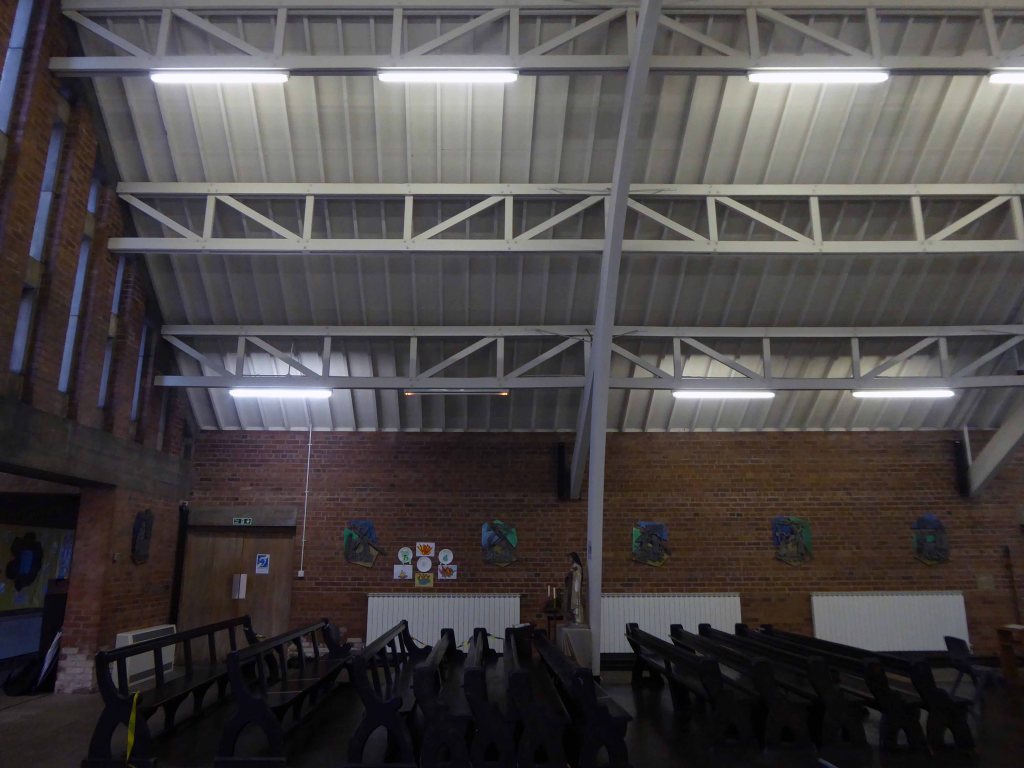
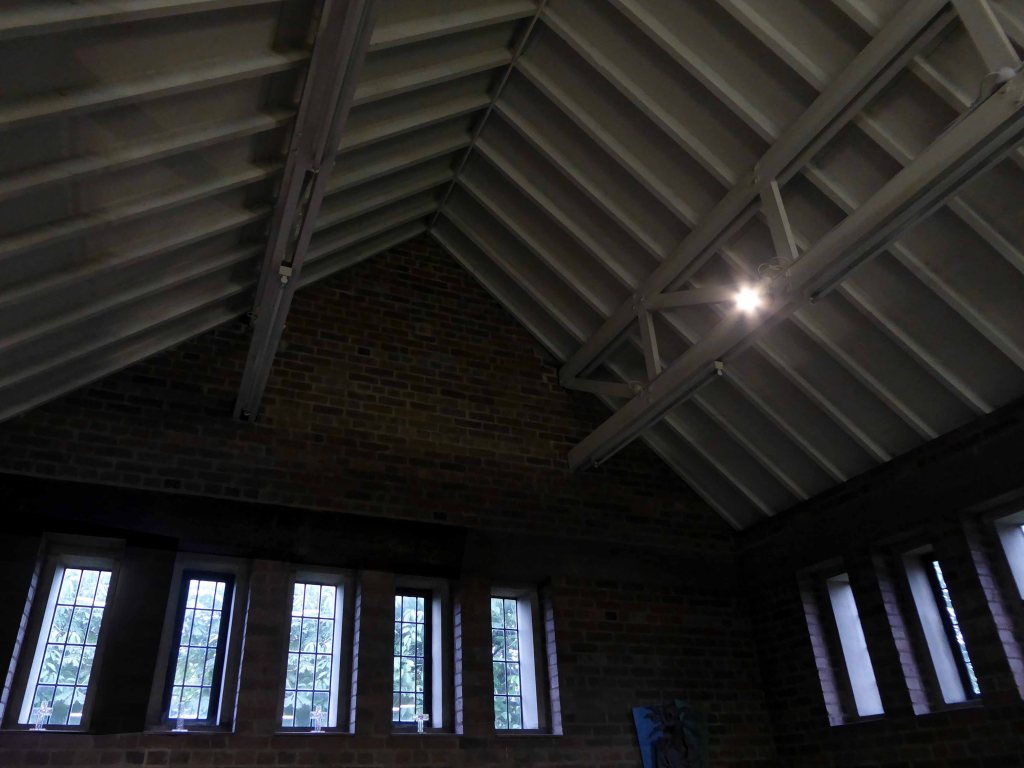
The main roof has exposed wooden trusses supported on concrete pillars and beams, with rafters and purlins also exposed creating a latticework pattern.

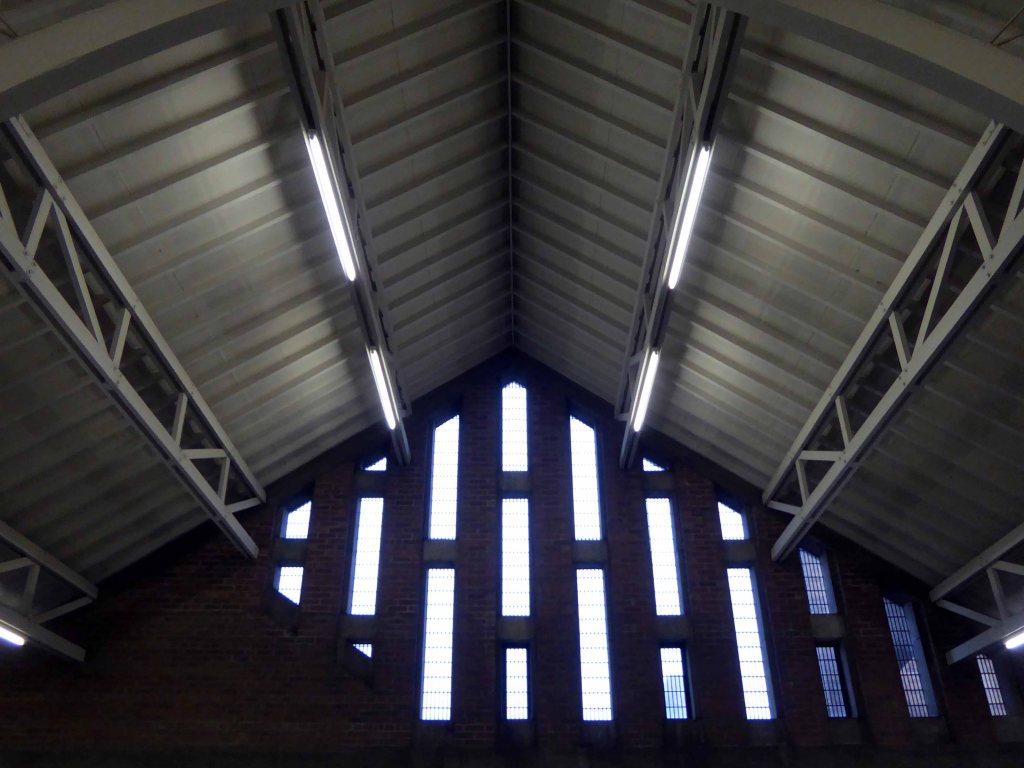
The whole interior order is orderly, calm and coherent, a simple consistency of materials and architectural intent.

The solid wood, studded chapel door has the words “I am the Good Shepherd” engraved on it. The chapel has exposed beams and rafters, and an altar to the north with iron and wood altar rail in front. Pews are as in the church. There is a mosaic plaque behind the altar which came from St John’s church in Little Horton.

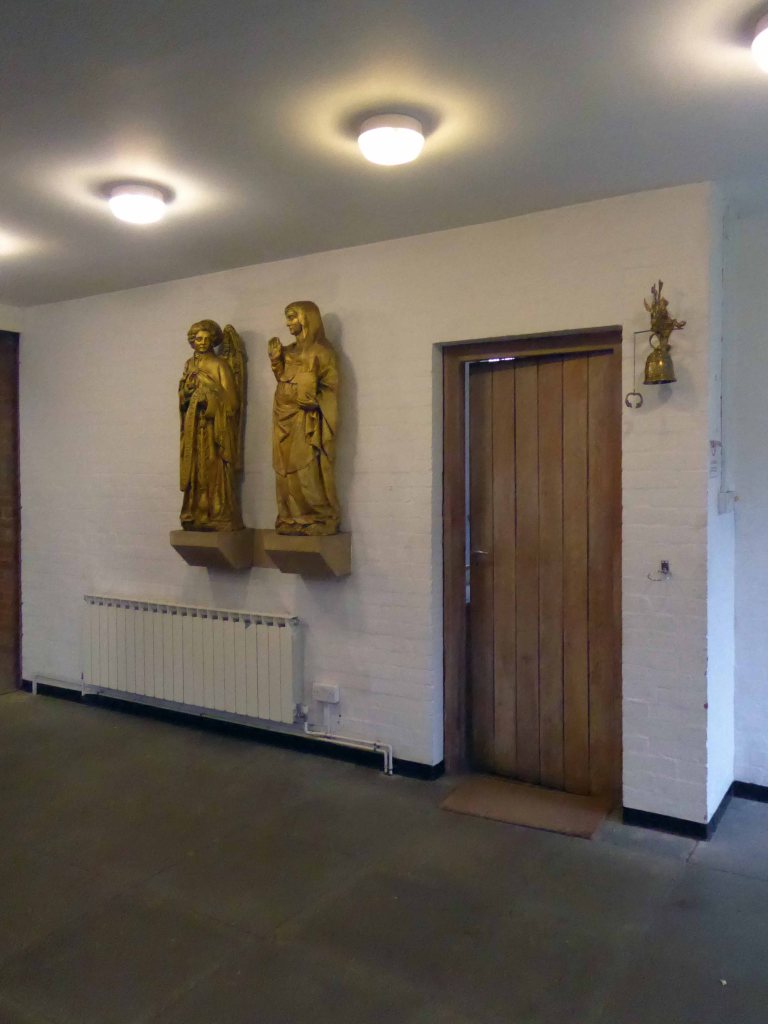
Beyond to the west is the narthex, with shuttered concrete ceilings pierced by circular skylights, exposed brick walls and doors to the chapel, service rooms and hall. 

Such a pleasure to visit such an enchanting church – it was a precious privilege to be welcomed by the congregation, warden and Reverend Dorothy.

Once again – many sincere thanks.

See also: William Temple Church of St Mark’s and St Mark’s Broomhill

Cecil Cinema – Hull

Anlaby Road and Ferensway Hull HU1 2NR

After you, Claude – no, after you Cecil

The Theatre De-Luxe was built in 1911 at the corner of Anlaby Road and Ferensway with its entrance in Anlaby Road and its auditorium along the side of the pavement in Ferensway. Kinematograph Year Book of 1914 lists 600 seats and the owners as National Electric Picture Theatres Ltd.

In 1925, the theatre was rebuilt to a radically altered ground-plan and renamed the Cecil Theatre. The opening night was Monday 28th September 1925. The entrance was in a curved façade at the Anlaby Road/Ferensway corner. The alignment of the new, larger, auditorium was at right angles to Ferensway, and parallel to Anlaby Road. Effectively, the length of the Theatre De-Luxe auditorium became the width of the Cecil Theatre’s. Seating was 1,700 with 700 of those in the balcony, according to the Hull Daily Mail. The Cecil Theatre was originally designed for silent movies with a full orchestra pit. KYB 1931 lists it having Western Electric sound installed; and a 1931 aerial view shows that a brick horn-chamber had been built onto the wall at the rear of the stage. It had a 35 feet wide proscenium. The cinema also had a café attached.

The Cecil Theatre’s demise came during bombing on the night of 7/8 May 1941 when German incendiary bombs reduced the building to a shell; and it remained like that until demolition in 1953.

Cinema Treasures

Work on the new Cecil Theatre was begun in April 1955 and it was opened on 28th November 1955 with 1,374 seats in the stalls and 678 in the balcony.

Architects: Gelder & Kitchca

At the time of opening it had the largest CinemaScope screen in the country measuring 57 feet wide, and the first film shown was Marilyn Monroe The Seven Year Itch. The proscenium was 60 feet wide, and the cinema was equipped with a Marshall Sykes 3Manual/15Ranks organ, which was opened by organist Vivian Newall.

There was also a 100-seat restaurant & bar which in 1971 was converted into a second screen seating 137 (Cecil 2). The following year the main auditorium was spilt into 2 smaller cinemas in the balcony (Cecil 1 & 3 each seating 307) and an entertainment hall in the former stalls which became a Mecca Bingo Club, with Mecca also operating the cinemas.

In the 1980’s it was taken over by the Cannon Cinemas chain. The cinema operation was closed on 23rd March 1992 and the cinemas were ‘For Sale and/or Lease. It was taken over by Take Two Cinemas and renamed Take Two Cinema. It was closed on 27th February 1997 and the two screens in the former circle were stripped out and converted into a snooker club.

Whilst bingo continues in the former stalls area of this post war 
cinema, the former mini cinemas in the circle still contain the snooker tables, but the space is unused. The screen in the former restaurant/cafe area remains basically intact, but is unused.

Cinema Treasures

I worked at the Cecil in the three years before it closed in the 90’s. MGM owned the place before the Virgin group bought it and closed it. It was a good place to work and an interesting building. Behind the scenes had remained unchanged since Anna Neagle first opened it. The organ had been removed however but the organ room was still in tact in the bingo section of the building. The fire exits led to long dark corridors that were always being infiltrated by kids sneeking in for a free shows. I understand that this was always the case. The resturant kitchen was fully intact and resembled something out of a Kubrick film – very spooky place!

Bilko2000

And so the projectors whirr no more, house is called at the Cecil – possibly the most oddly named cinema in the land.

Happily it remains an imposing presence in the centre of the city – a mammoth modern temple of entertainment – reflecting the ever changing tastes of the day and the morning after.