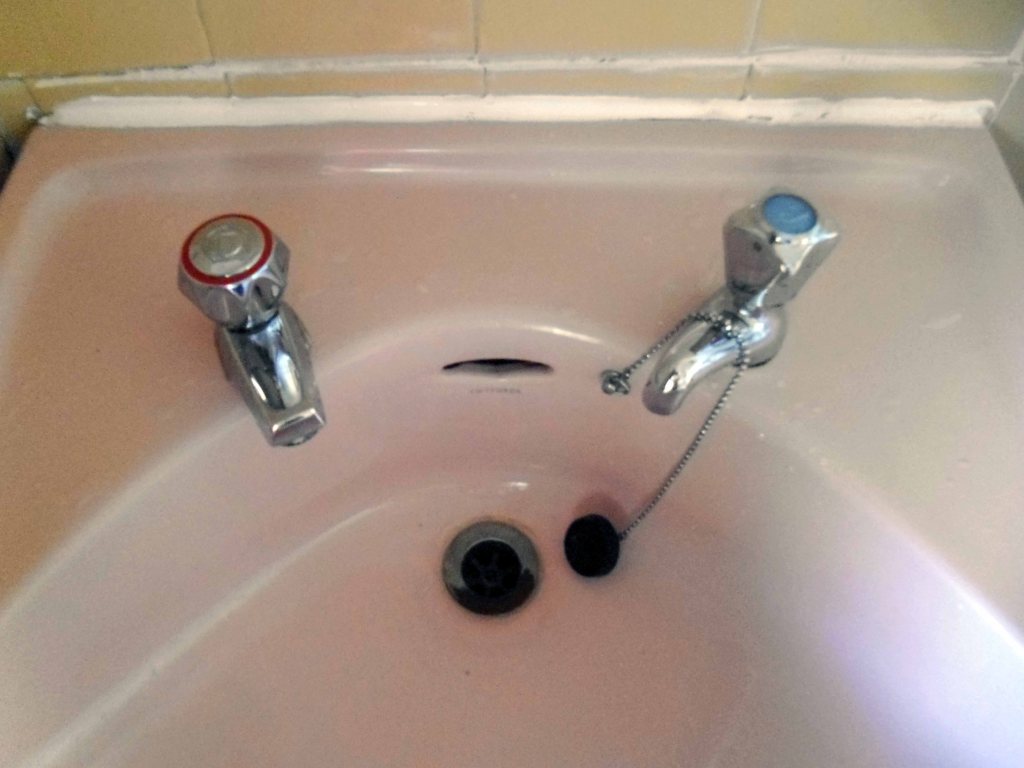
It’s Tuesday 5th August 2015 and the taps don’t match – is this a good omen?
Or simply proprietorial pragmatism?
And why is the sink a funny shape?
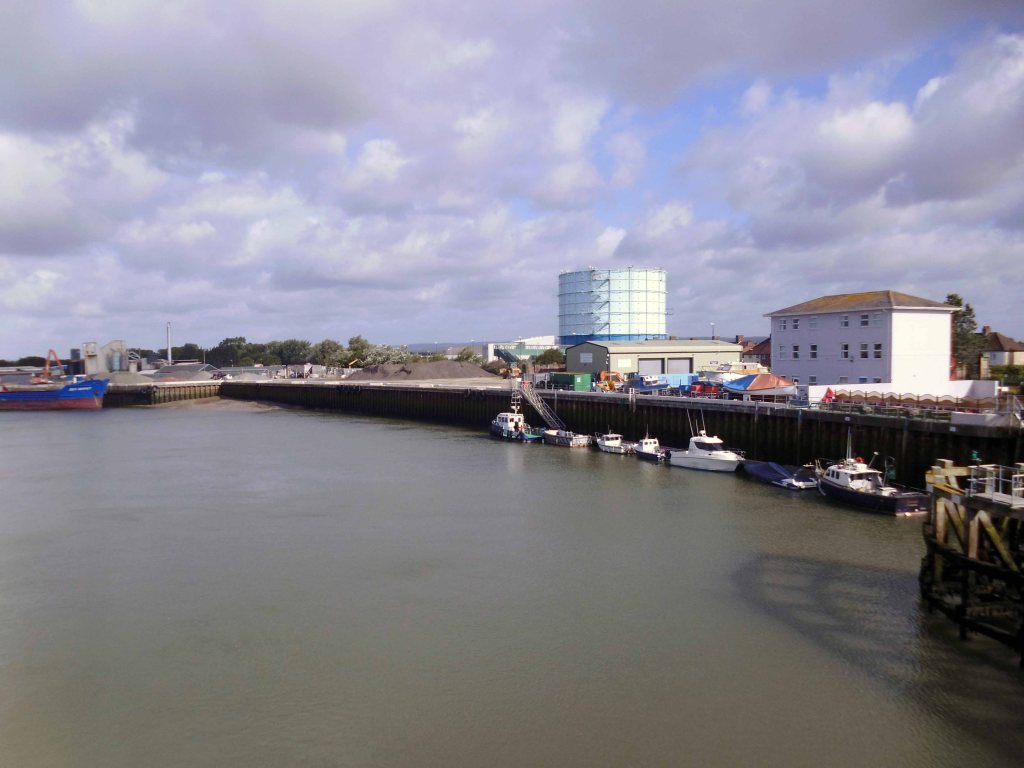
Any road up we’re off up the road, the sun’s a shining and here we are in Littlehampton.
Looking at a pale blue gas holder, some way off in the middle distance.
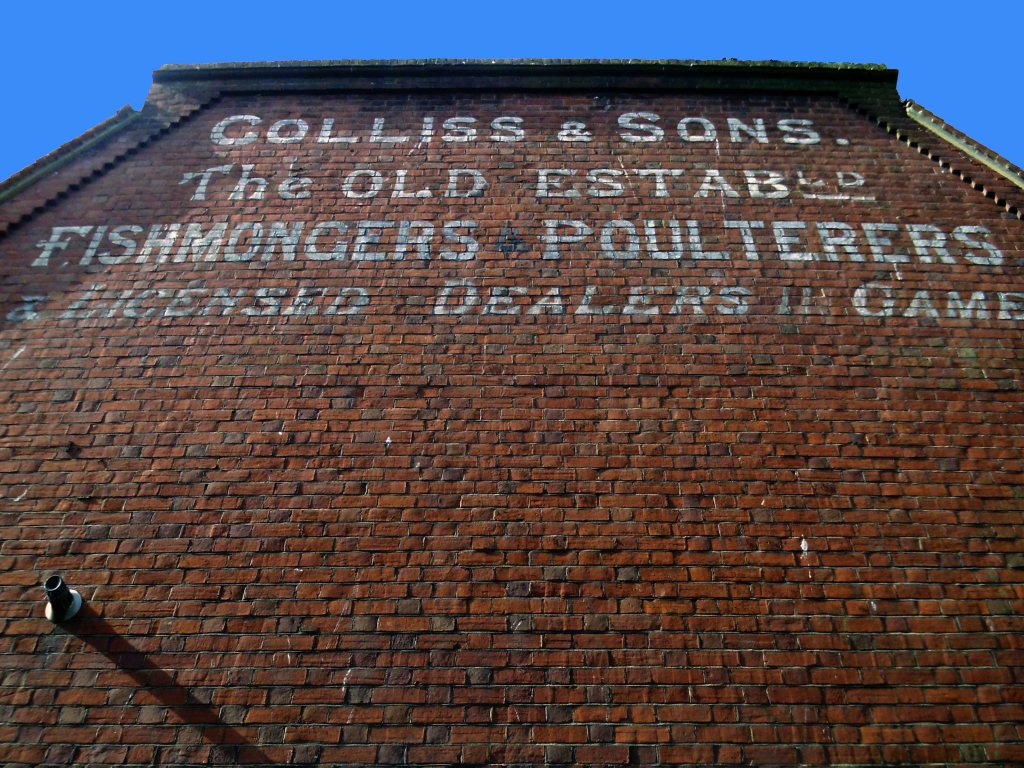
Staring up at a fishmonger’s ghost.
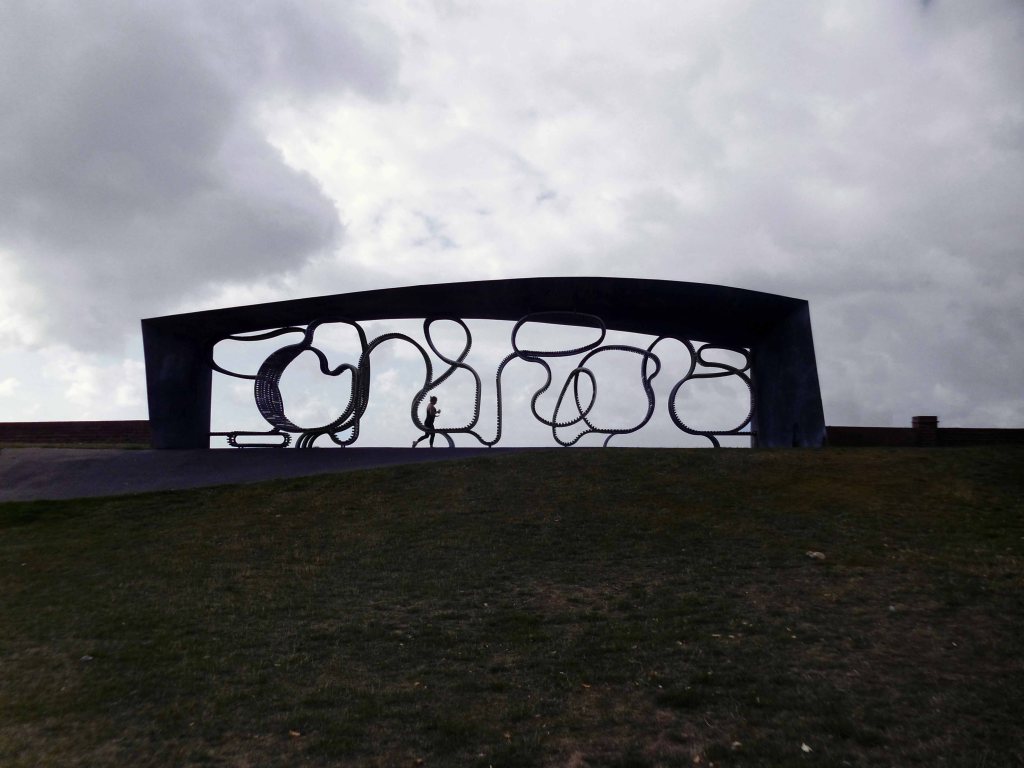
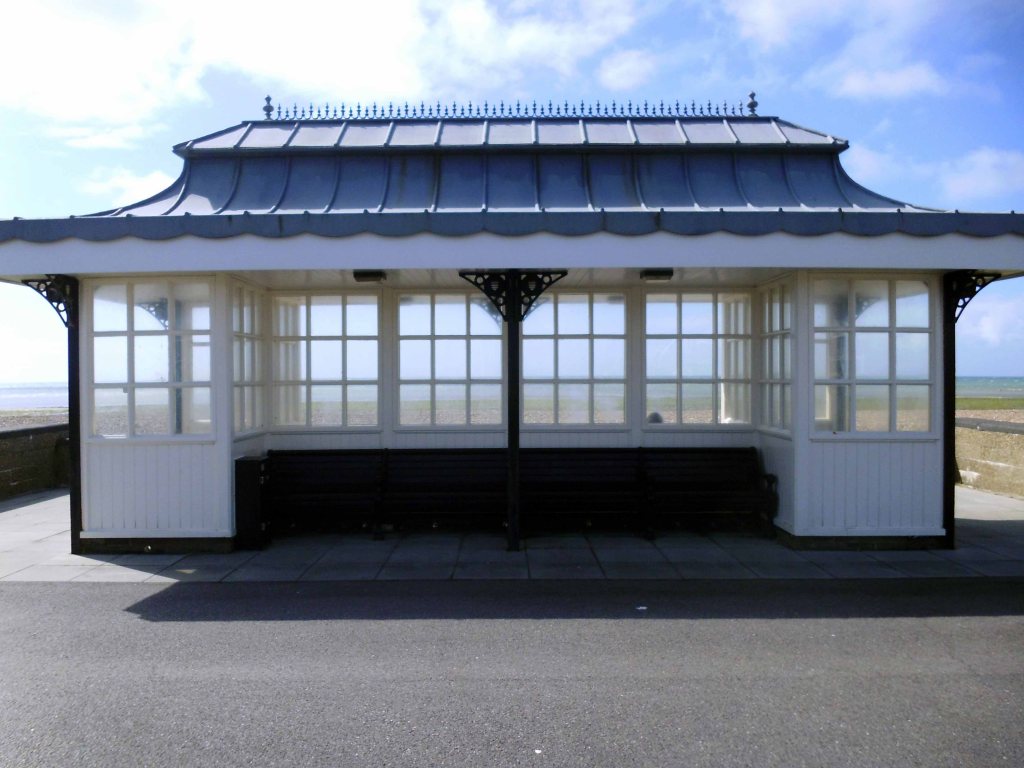
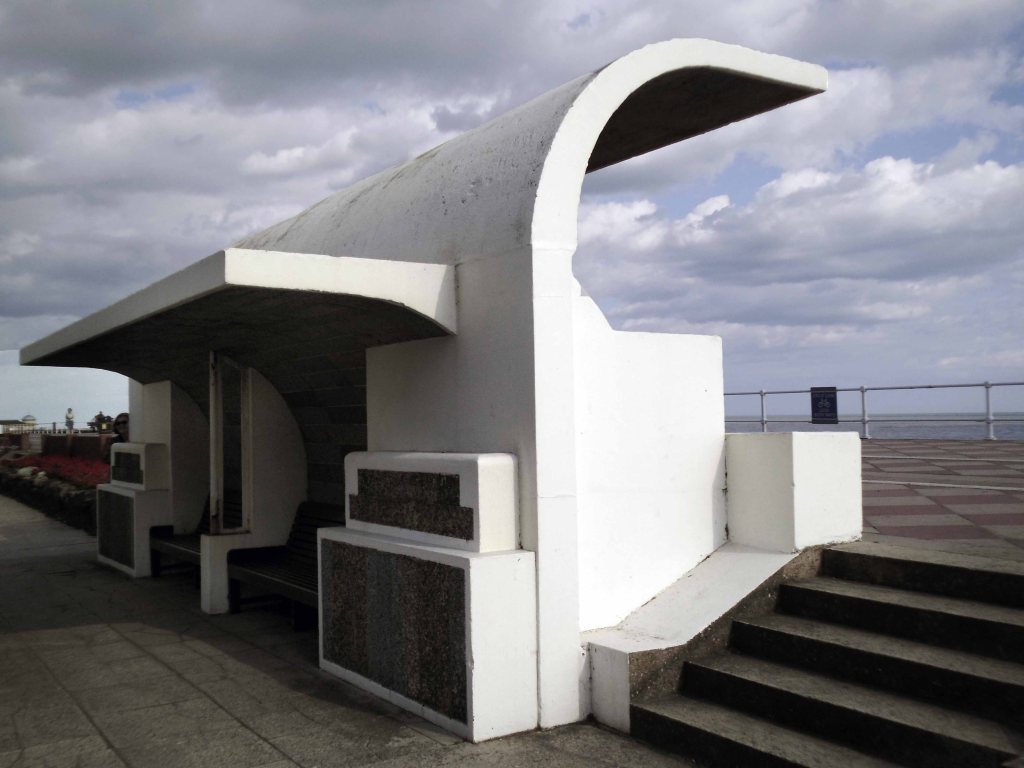
Passing by an ultra-squiggly seaside shelter as a runner passes by.
The Long Bench at Littlehampton is thought to be the longest bench in Britain and one of the longest in the world. The wood and stainless steel bench ‘flows’ along the promenade at Littlehampton in West Sussex – curving round lamp posts and obstacles, twisting up into the seafront shelters, dropping down to paths and crossings.
The bench was opened in July 2010 and can seat over 300 people. It was funded by Arun District Council and CABE’s ‘Sea Change’ capital grants programme for cultural and creative regeneration in seaside resorts. The bench was also supported by a private donation from Gordon Roddick as a tribute to his late wife Anita, the founder of the Body Shop, which first began trading in Littlehampton.
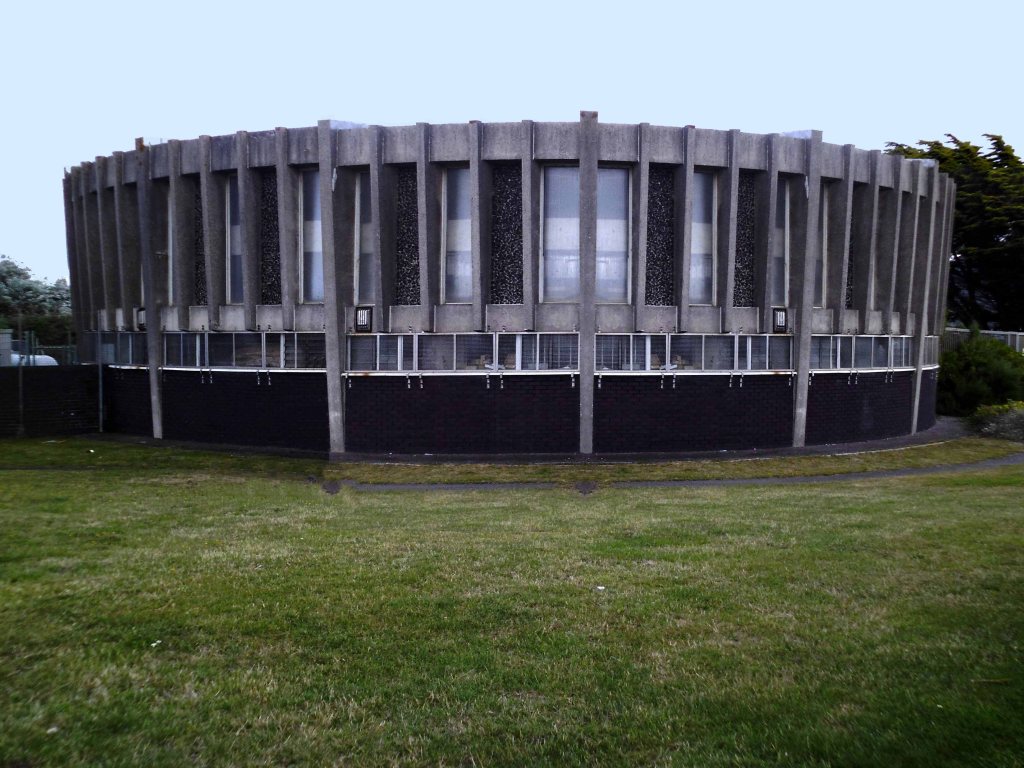
Water treatment plant.
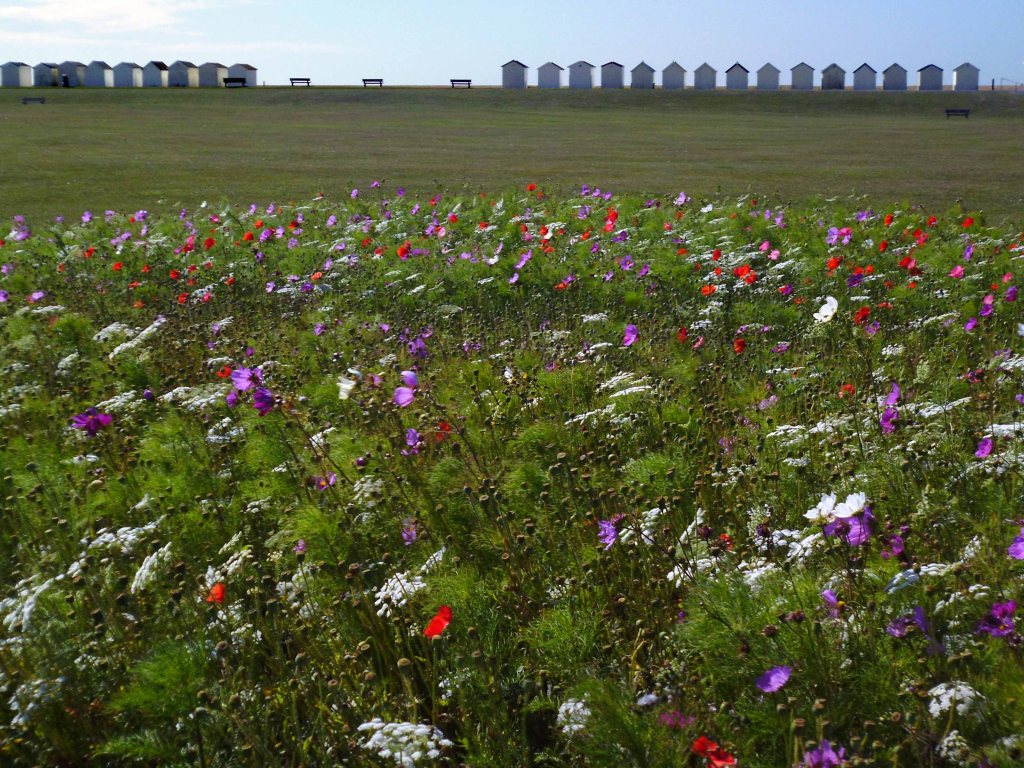
Nothing lifts the spirits quite like a wildflower meadow.
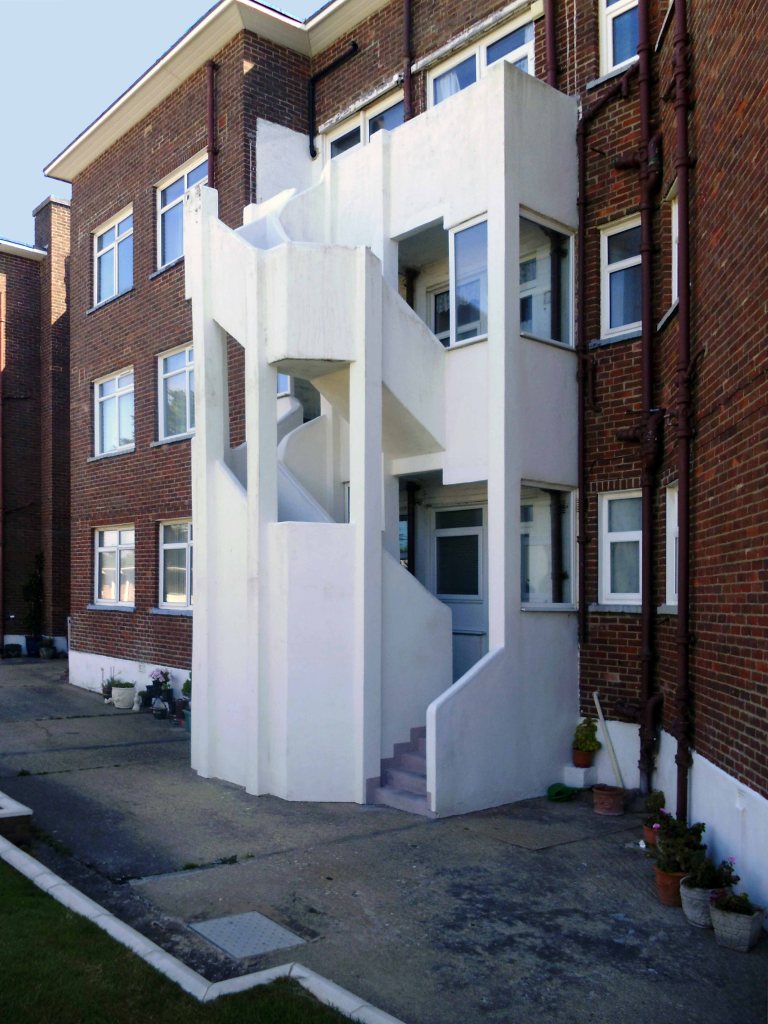
Imagine my surprise having gone around the back – an expressionist concrete spiral stairway.
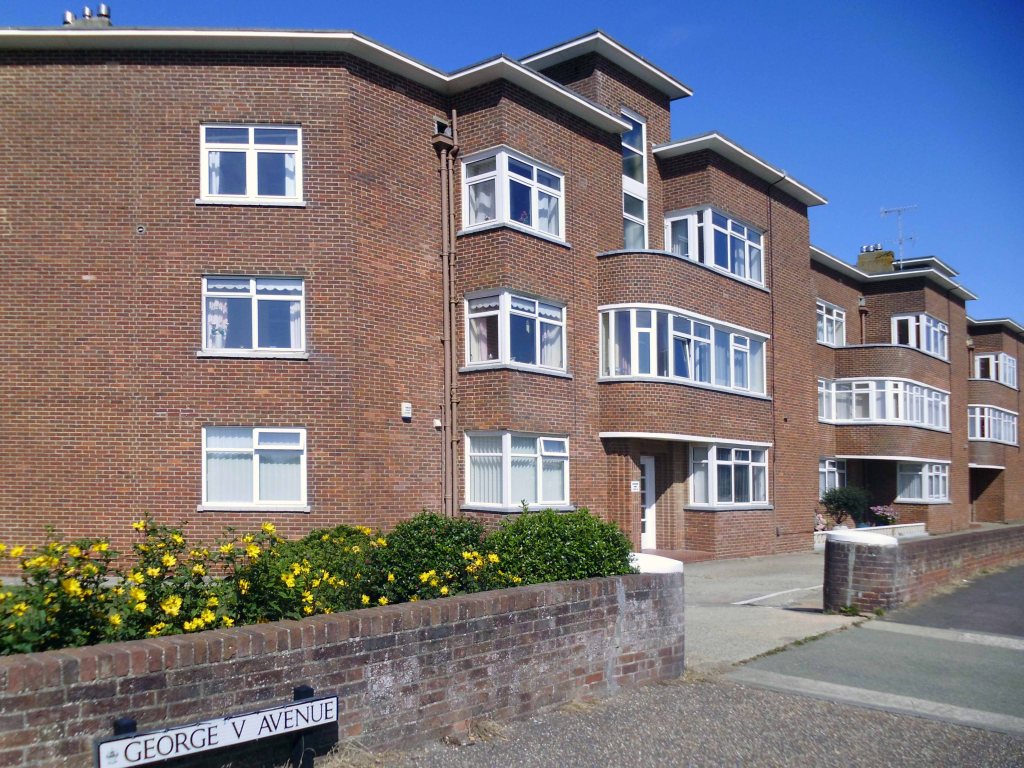
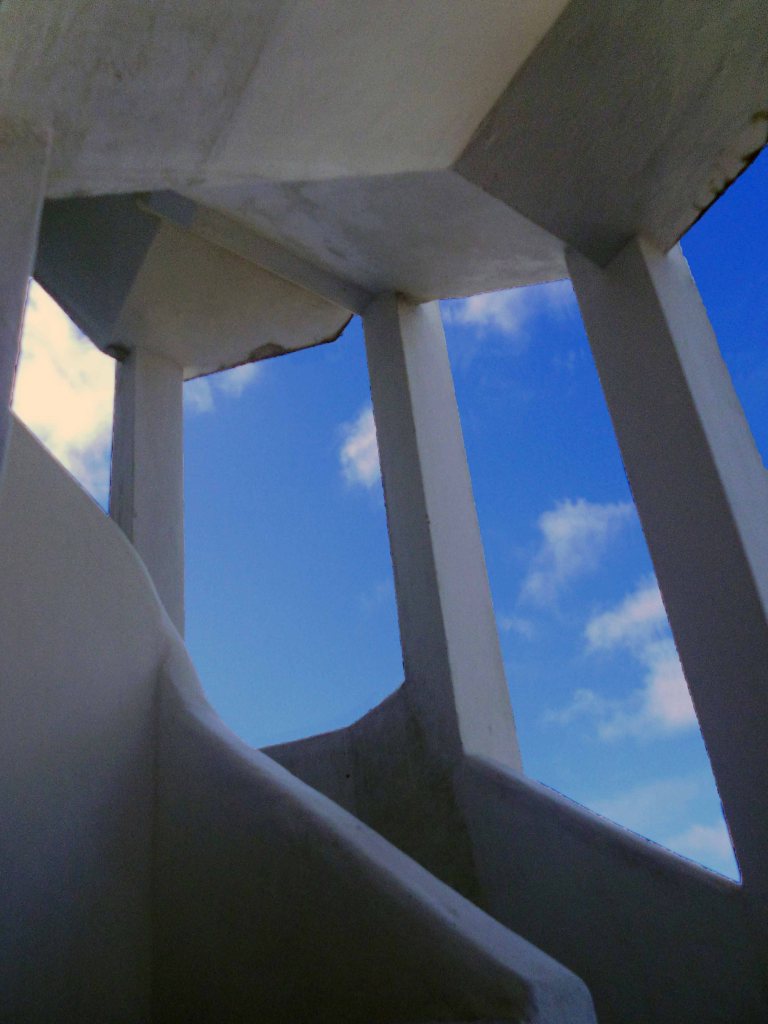
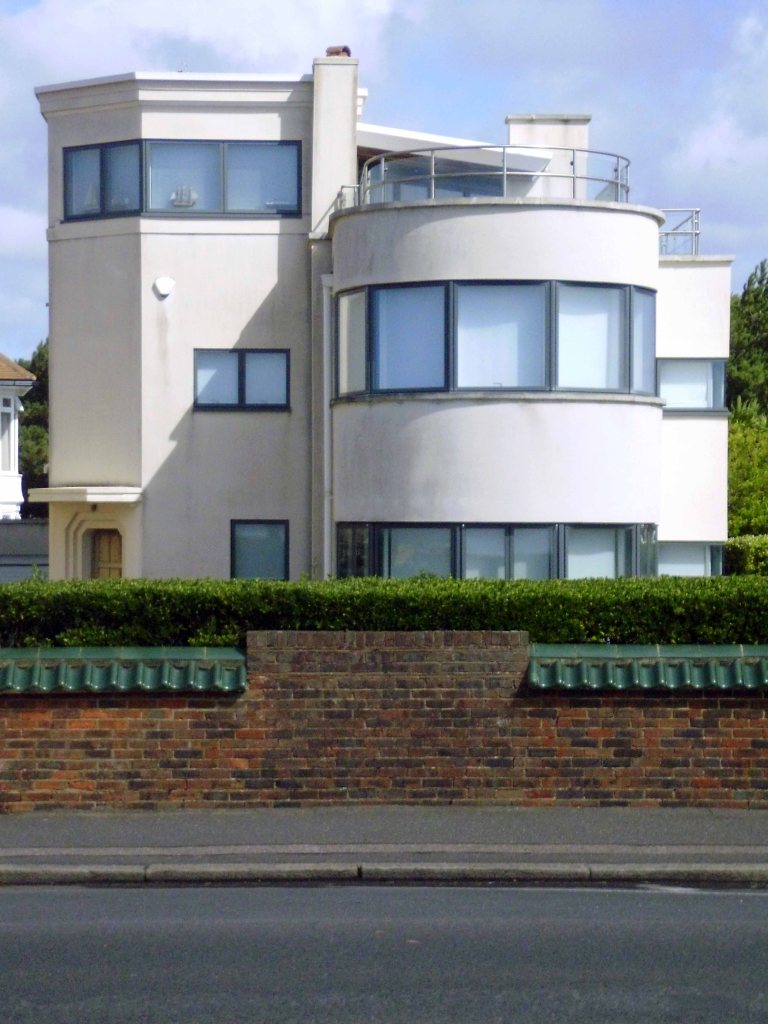
Letting the sky leak in here at Burlington Court in Goring on Sea
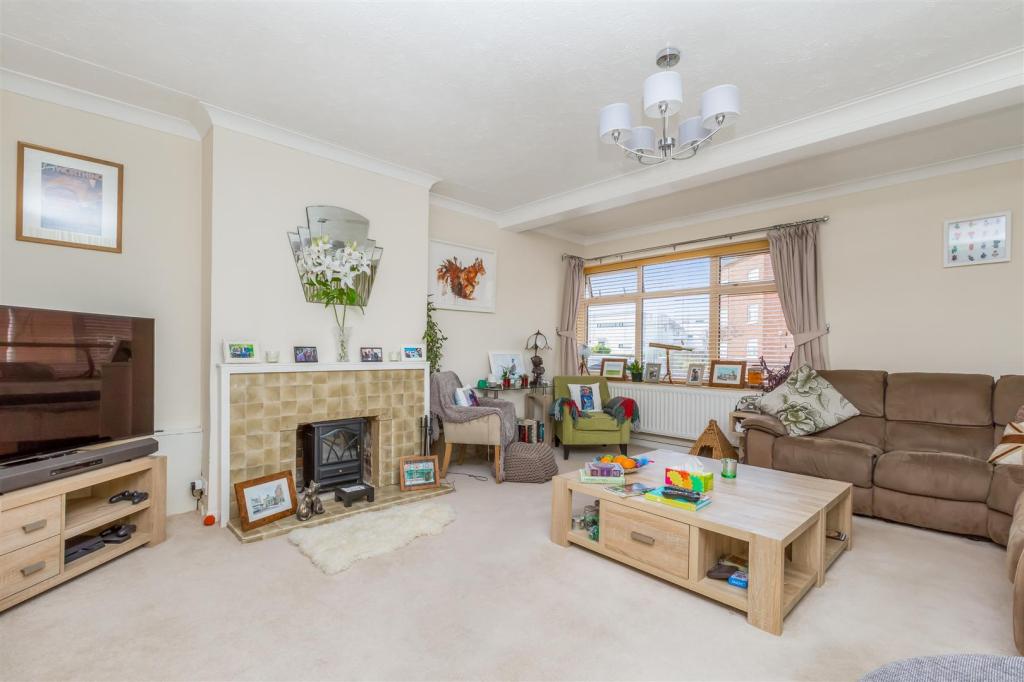
The phrase deceptively spacious is one that is often overused within the property industry, however it sums up this ground floor flat prospectively. Offering a great alternative to a bungalow and providing spacious and versatile living accommodation, this is an absolute must for your viewing list.
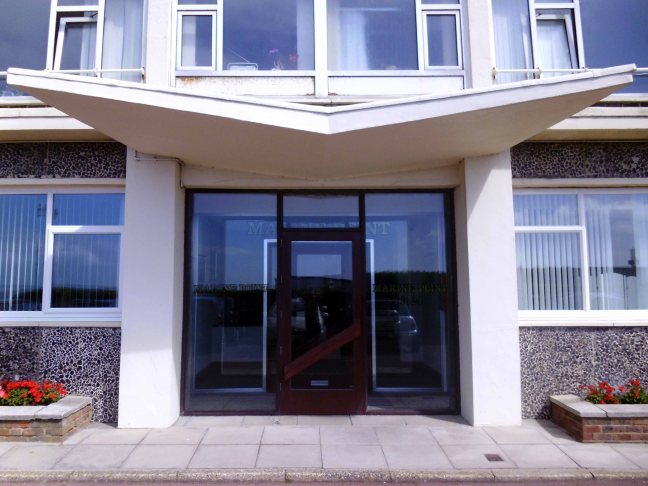
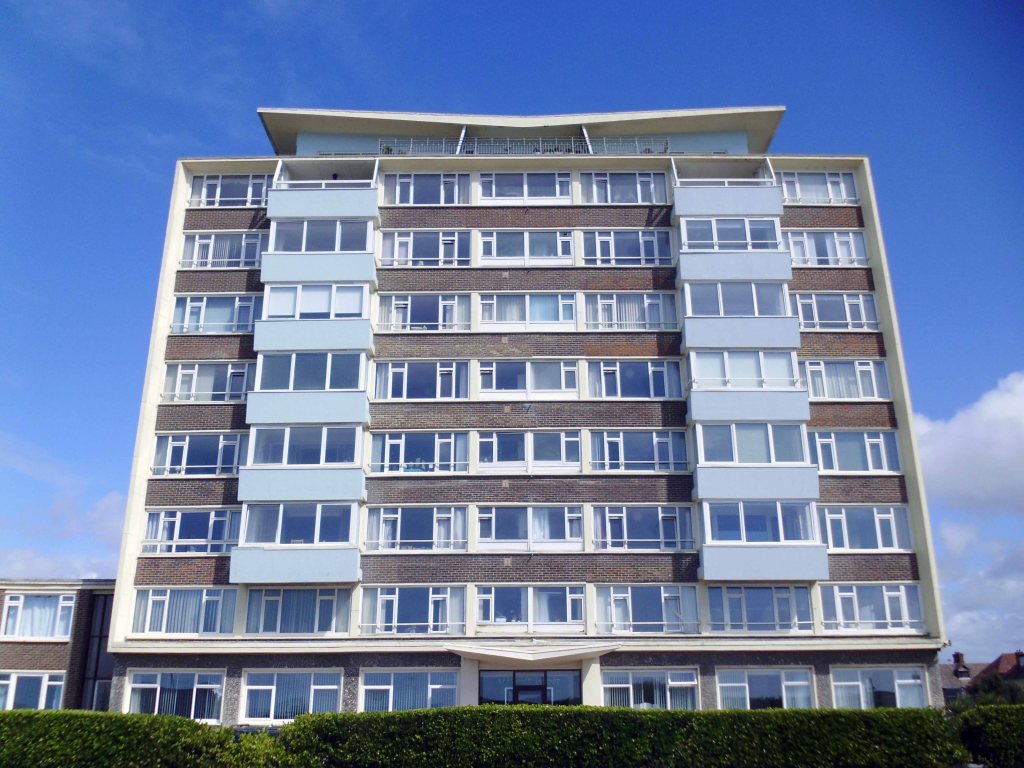
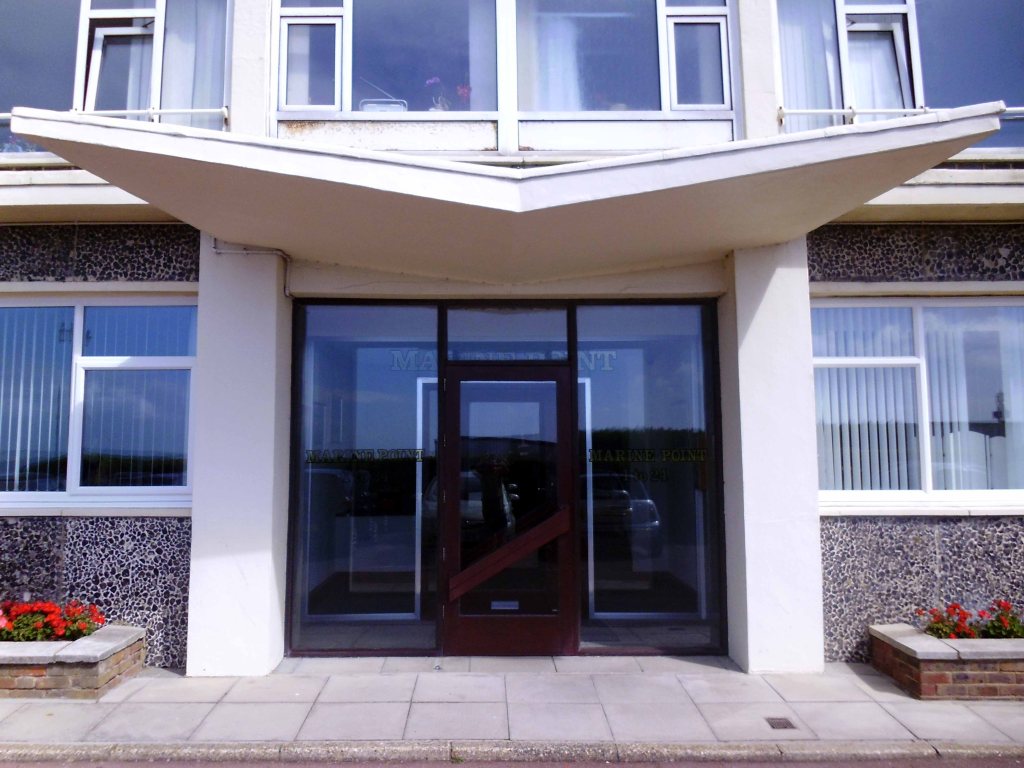
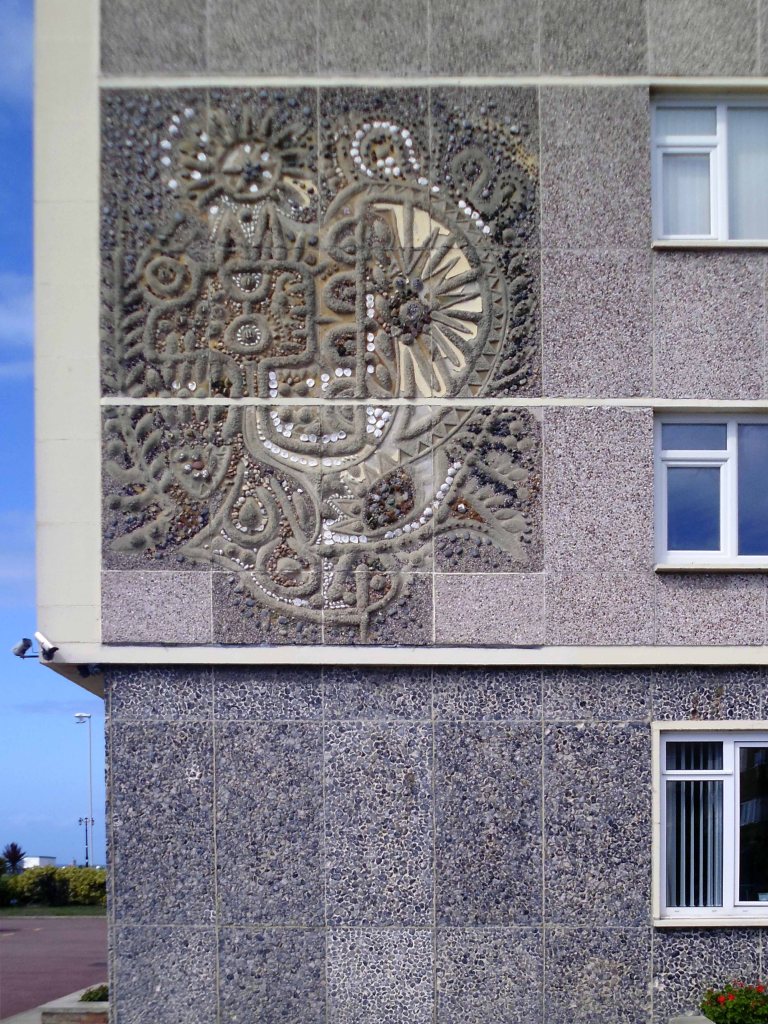
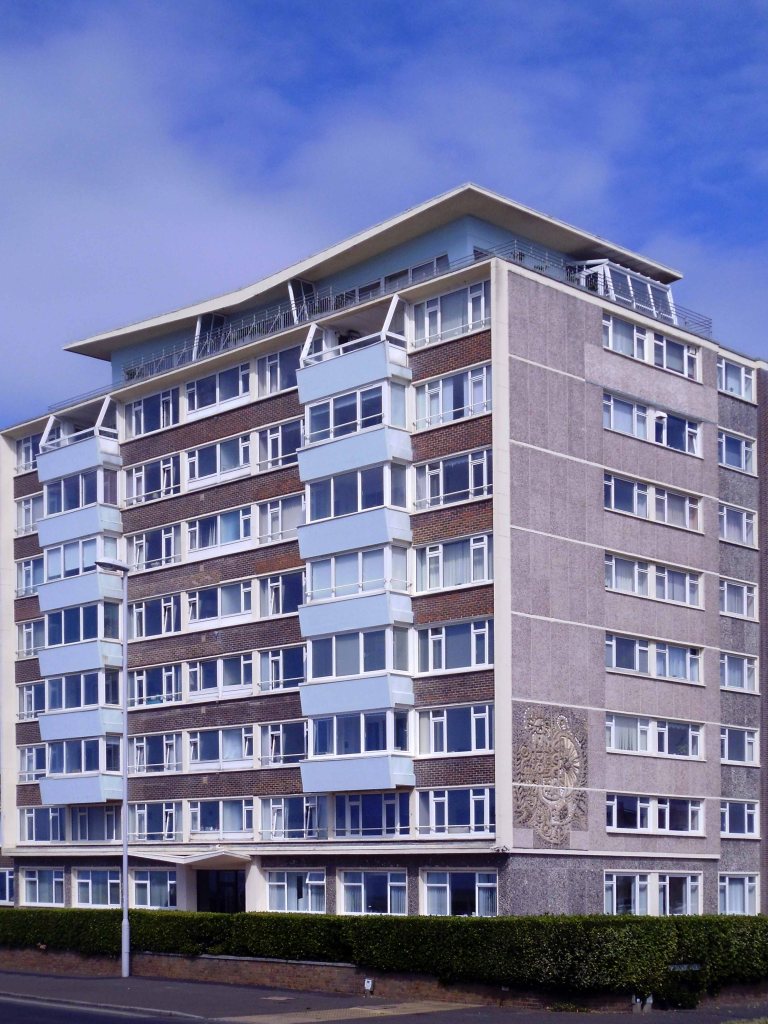
What a delightful Modernist frieze on the side of Marine Point – Worthing!
With lifts to all floors this triple aspect corner apartment is situated on the fifth level and has outstanding panoramic sea views across from Beachy Head to Brighton through to the Isle of Wight. It is also benefits from stunning South Down views to the west and north. The property has been recently refurbished to a high specification and includes features such as: Quick-Step flooring, security fitted double glazed windows, a hallway motion sensor lighting system, extensive storage space and two double bedrooms.
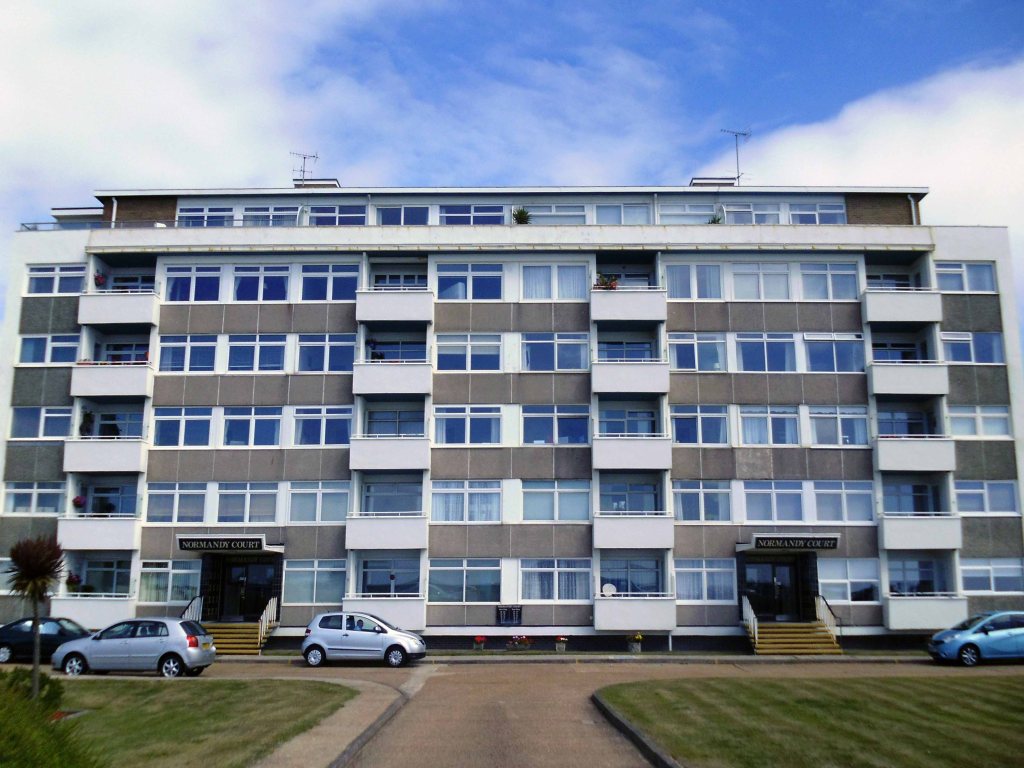
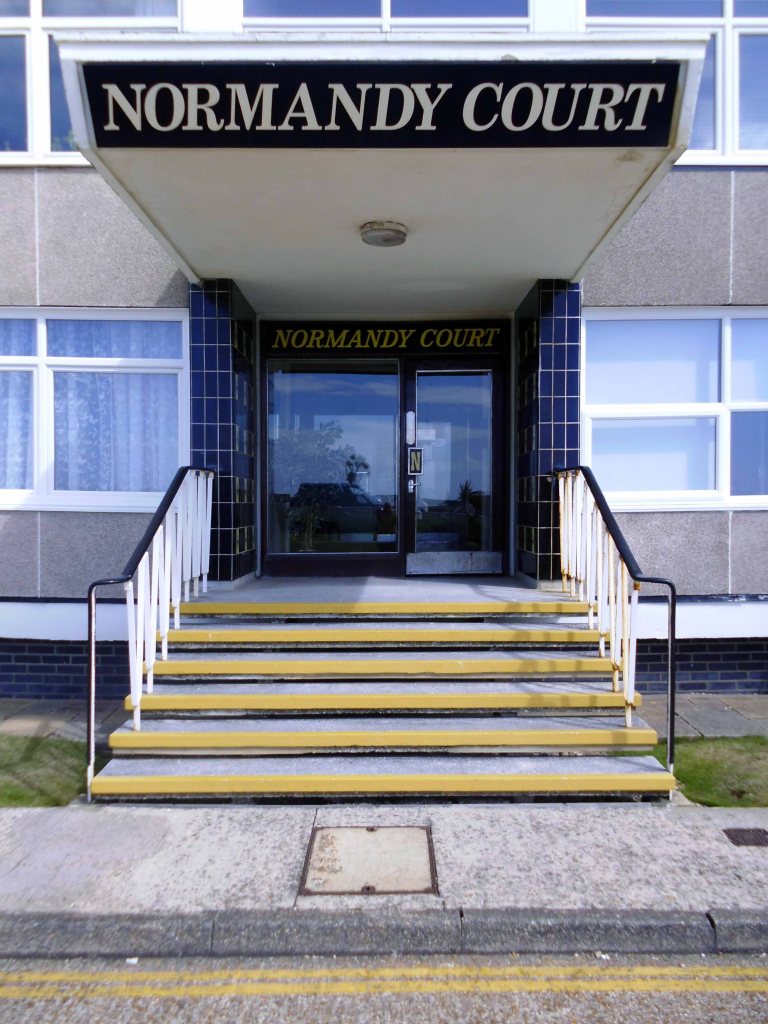
Fox and Sons are delighted to offer For Sale this immaculate seafront penthouse located within the highly desirable Normandy Court situated on the sought after West Parade, Worthing. Upon entry you will notice that the communal areas are kept in good condition throughout.
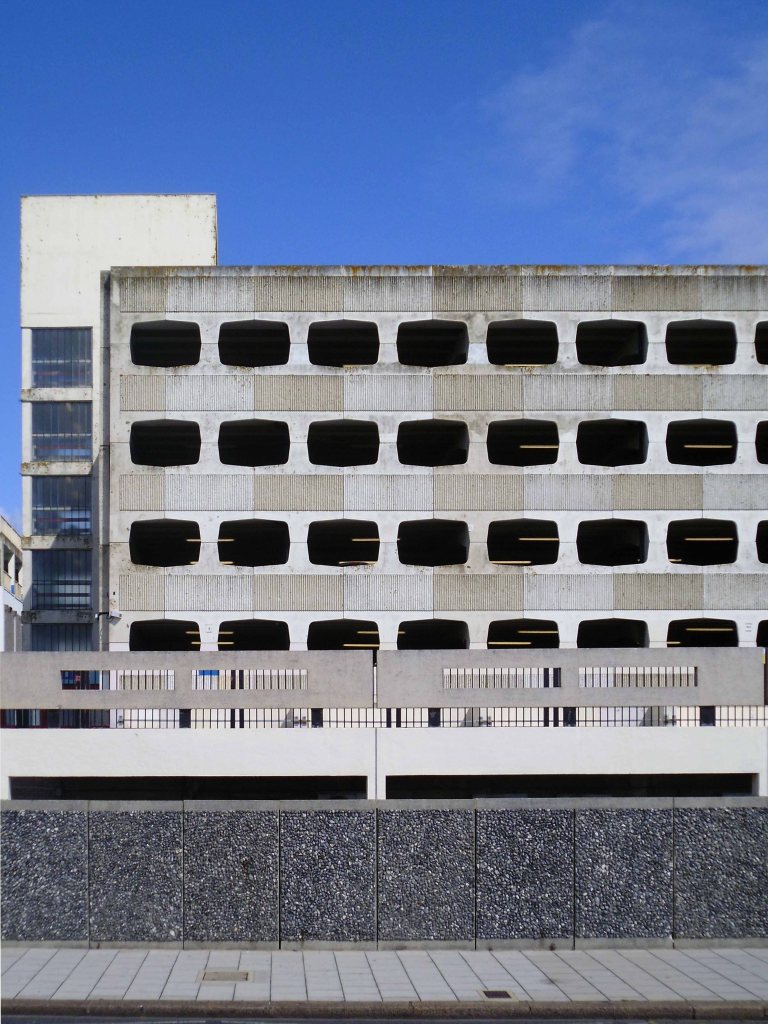
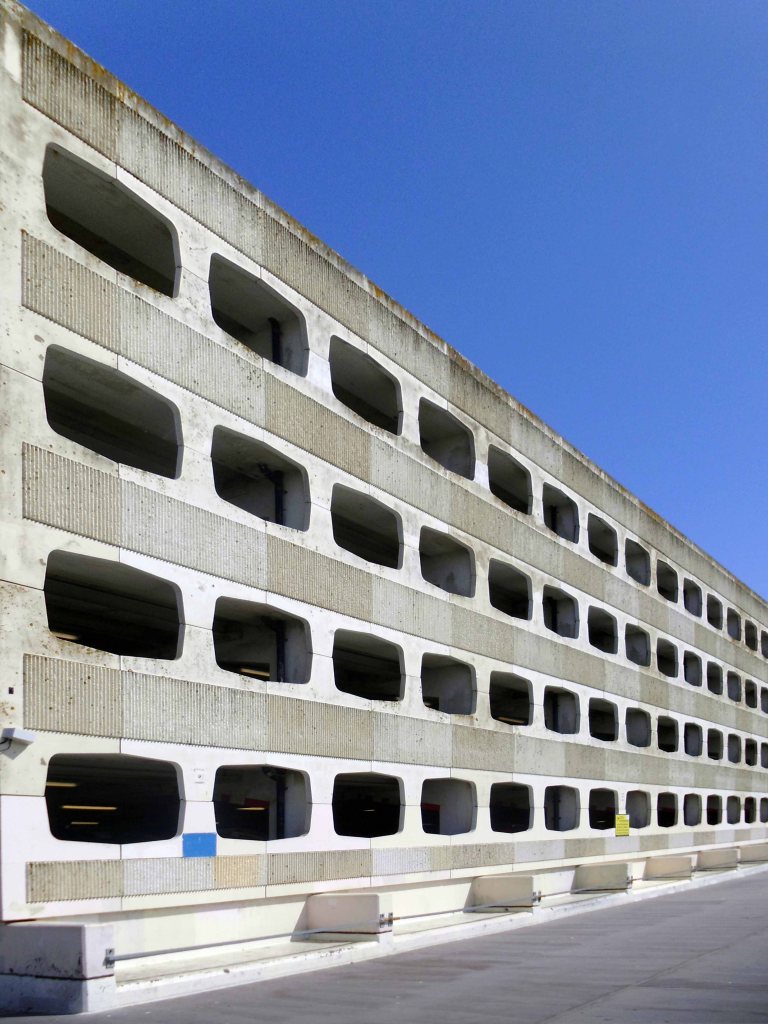
One of the finest modular pre-cast concrete car parks in the land.
Borough council officers have recommended developing the Grafton car park, with a fresh study recommending that building new homes there is key – saying it is important to help revitalise the town centre and bring in new cutlural and leisure activities.
The car park is currently undergoing essential maintenance to be able to keep it open in the short term but the recommendation is that it should eventually be demolished to make way for the new development.
Day three Wednesday 3rd September – leaving Southend under a cloud.
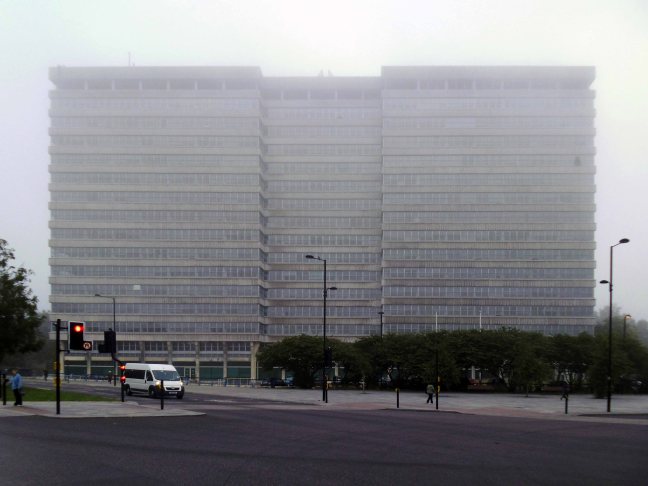
The huge slab of the Civic Centre shrouded in sea mist
Oops actually Alexander House – built around 1970 to house the then new V.A.T. HQ.
Designed by borough architect – PF Burridge.
Queen Mum Opens Civic Centre – It took a while to get there, since 1958 when the council agreed to embark on a quest to build a new home for itself; but on 31st October 1967 HRH the Queen Mother did the honours and formally opened the spanking new Civic Centre. During its build Southend was classed as being in the top ten in the country for full employment, due to this workers were hard to come by and bus loads of workers were brought in to complete this and the many other projects shooting up along Victoria Avenue at the same time.
Cllr Beryl Scholfield commented later on the day – The Queen Mother opened the Civic Centre in 1967, when my husband was chairman of the town hall committee, and we had lunch with her at Porters. We were presented to her when she came in. There were no more than about 30 of us there. It was a most exciting day.
She was as natural as you see her on the television.
Postscript 2002
A Union Jack lowered to half-mast in tribute to the Queen Mum has been stolen from Southend’s Civic Centre. A council spokeswoman today denounced the theft as – a despicable act at a time of great sadness and national mourning.
The outrage has caused extra sadness for royalist residents in the town because of the Queen Mother’s special place in the history of the Civic Centre.
The Leda and the Swan statue by Lucette Cartwright, which used to be in the Civic Centre atrium, gets a polish in May 1987.
A bronze statue depicting a mythological rape has finally found a new home at the mayor of Southend’s official residence. The controversial statue of Leda and the Swan was specially commissioned by Southend Council in the Sixties and first stood outside the courthouse in Victoria Avenue.
Later it was moved to the Civic Square and then to the courtyard of the Palace Theatre, in Westcliff. Later, it was moved to the Civic Centre when it caused outrage among staff. Workers claimed the statue, representing the rape of Leda by the Greek god Zeus disguised as a swan, glorified rape as an art form.
Last week, the statue was removed from the Civic Centre and is now at the mayor’s residence, Porters, in Southend.
Rob Tinlin, Southend Council’s chief executive and town clerk said – The statue of Leda and the Swan was located at the Civic Centre until a suitable location was found. The statue is permanently on display in the garden of the mayor’s residence, Porters in Southchurch Road.
It is in an appropriately landscaped area next to the pond.
Photo Phil Parsons
Misty eyed I missed the sculptural fountain – William Mitchell I presume?
Said farewell to Neptunes unilluminating assorted fish.
Heading out of town past noisy scenes of quiet despair, no more fancy goods, no more confectionary – shake that.
Heading inland, away from the wibbly wobbly estuarine coast of higgledy piggledy Essex, through freshly mown pasture and solitary haywains.
This is Constable country:
Like many artists practising at the time, Constable used sketches as source material for fully worked-up compositions. He did not find the production of finished paintings easy, which probably contributed to his late recognition by the art establishment.
Passing by solitary bus shelters, patiently awaiting passengers.
Waterworks works in the palatial neo-classical manner, with a restrained nod to incipient Art Deco.
Encountering the occasional leafy lane.
I eventually found myself on the outskirts of Colchester, outside St Theresa Of Lisieux .
A striking pre-cast concrete frame design of 1971, with a dramatic and well-lit interior, lively modulation of wall surfaces and some furnishings and artworks of note.
Architect – JH Dabrowski
The entrance façade has a large gable and projecting entrance canopy, above which is a bronze statue of the Risen Christ, by local artist Tita Madden – 1977
This is a large modern church, built with a pre-cast concrete frame with a crossover roof beam system, allowing for dramatic internal effects. Within the bays created by the frame, the walling is mostly brick, with some pre-cast concrete panels, and large areas of glazing. Concrete is also used for the window mullions and surrounds. Each bay has the brickwork slightly angled or faceted, giving the design a great sense of movement and liveliness, both inside and out.
£240,000 will get you an Art Deco maisonette in Vint Crescent from Wowhaus:
This one is a ground floor apartment, which has undergone a complete refurbishment, but with one on keeping those period features to the fore – period features such as original radiators and those distinctive windows and doors are intact, rubbing shoulders with some new, high-end finishes like oak floors and updated kitchen and bathroom.
Foolishly I became more than somewhat lost and on making enquiries concerning my whereabouts and destination, I was met with gently derisive laughter. Therefore, I bypassed Colchester, took the wrong route along a mainly main road and ended up much too quickly in Clacton.
Home to several shops to let, as we shall subsequently see.
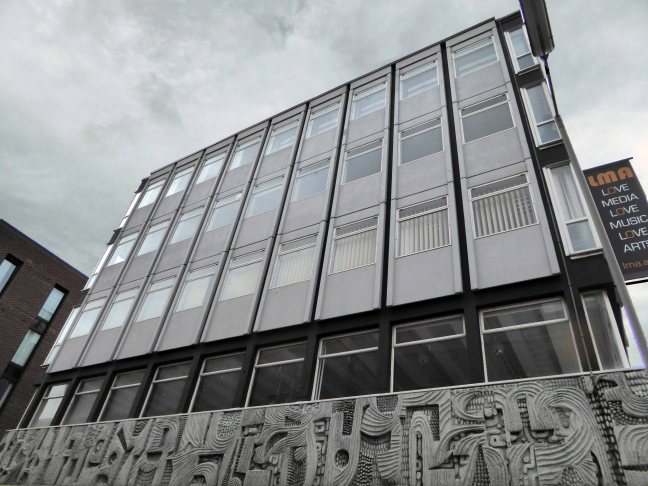
Also home to a fabulous concrete frieze on the exterior wall of the library.
Quickly ensconced in my bijou digs – I hit the town to take a look around.
I was staying right opposite this here boozer – a little too early for a pint, I’ll pop back in a bit.
Seaside shelter in a faux vernacular manner, calm seas ‘neath an azure sky – perfect.
Artifice and authenticity the sunbathing citizens sit beside an inflatable pool – perched above the sea on the pier.
Clacton Pier, which opened on 27 July 1871 was officially the first building erected in the then-new resort of Clacton-on-Sea. A wooden structure 160 yards in length and 4 yards wide, the pier served as a landing point for goods and passengers, a docking point for steamships operated by the Woolwich Steam Packet Company, and a popular spot for promenading.By 1893, Clacton had become such a popular destination for day trippers that the pier was lengthened to 1180 ft (360m) and entertainment facilities, including a pavilion and a waiting room, were added to accommodate them.
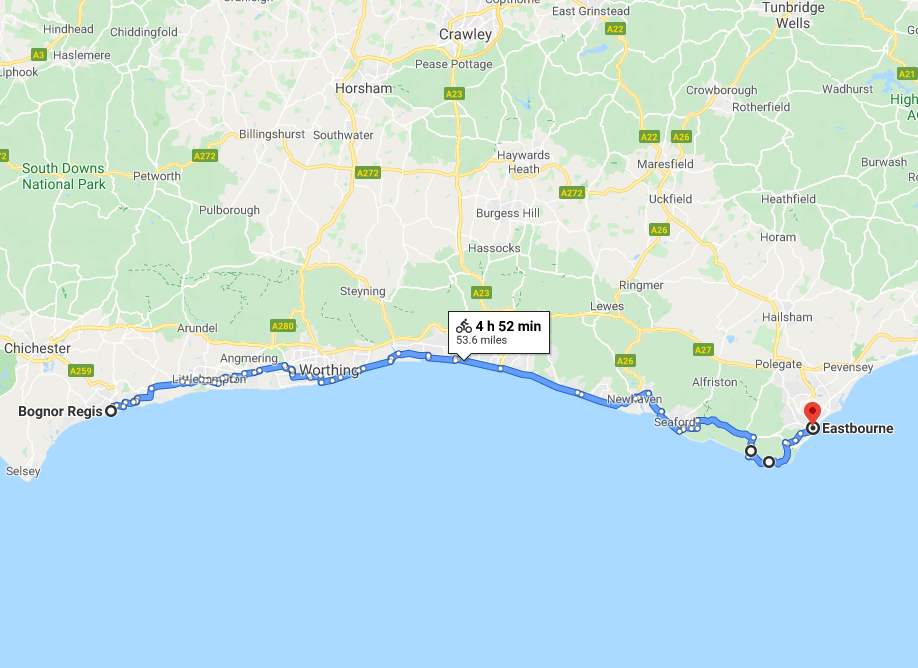
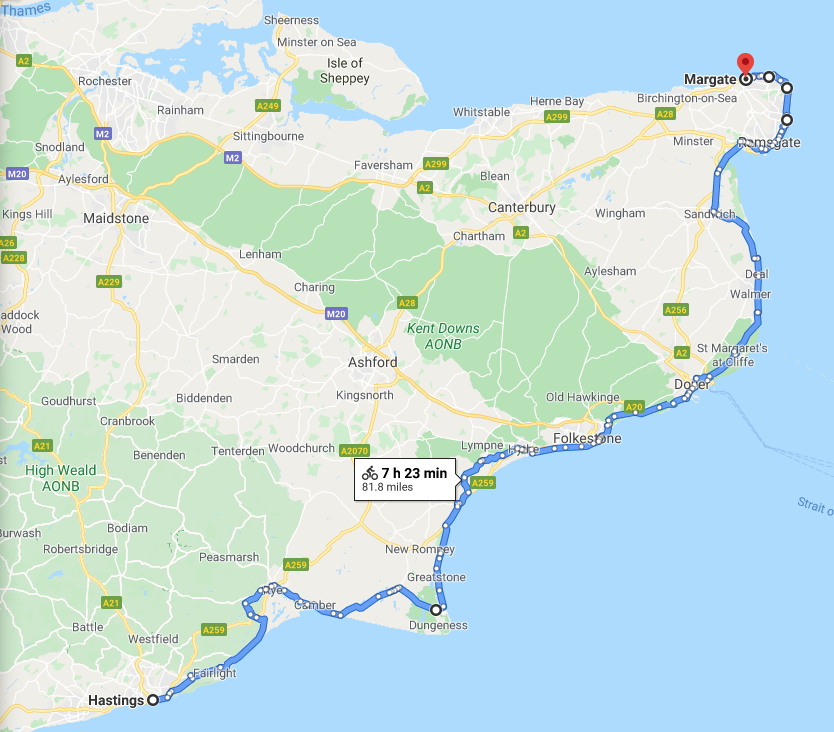
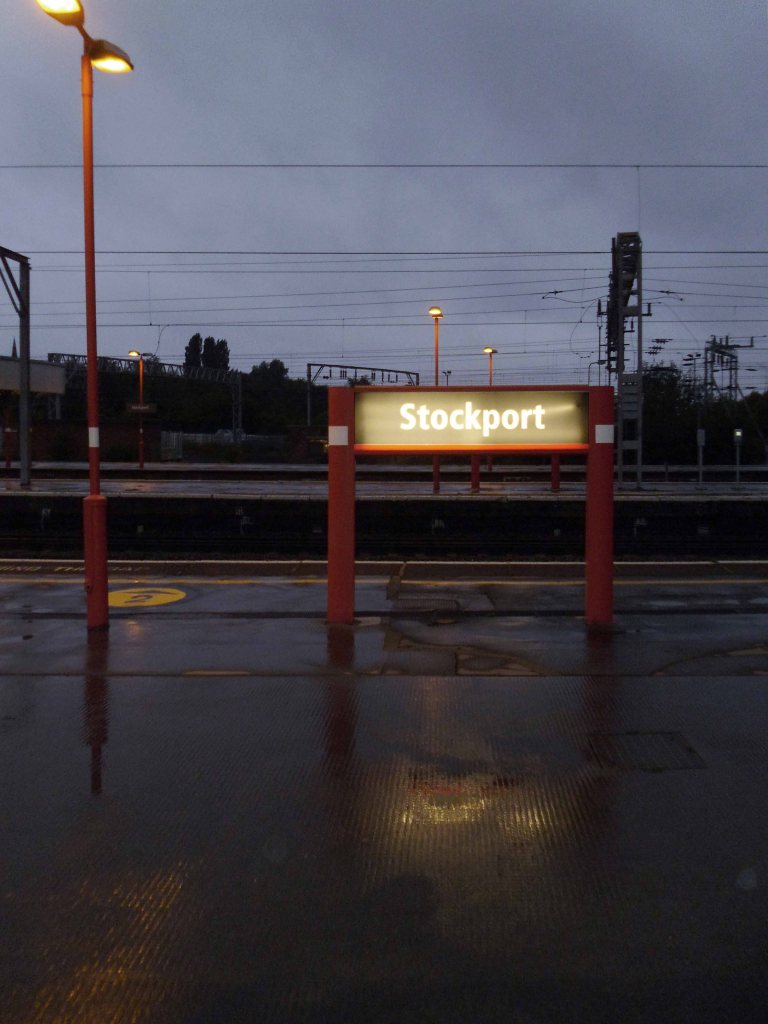
Early one morning, six o’clock on Saturday 30th August 2014 to be precise – I set out on my bike from my humble Stockport home, Pendolino’d to Euston, London Bridged to Hastings.
It was my intention to follow the coast to Cleethorpes, so I did.
Five hundred miles or so in seven highly pleasurable days awheel, largely in bright late summer sun. Into each life however, some rain must fall, so it did.
Kent, Essex, Suffolk, Norfolk and Lincolnshire flashed by slowly in lazy succession, to the right the sea – you can’t get lost, though I did. Following Sustrans signs is relatively easy, as long as they actually exist, when I reached Kings Lynn I decided to buy a map.
I set out at eight o’clock on Monday 1st September – I had taken early retirement in March. I would have normally been enrolling new students and teaching photography in a Manchester Further Education College, as I had done for the previous thirty years.
Not today thanks.
With the wind and my former career behind me, I cycled on with an unsurpassable sense of lightness and elation.
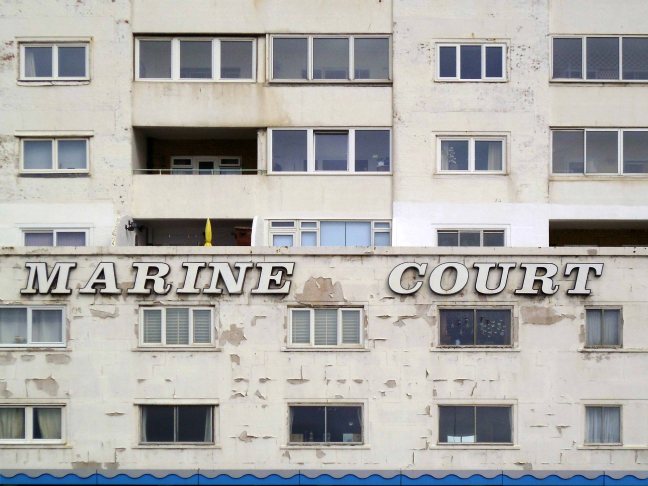
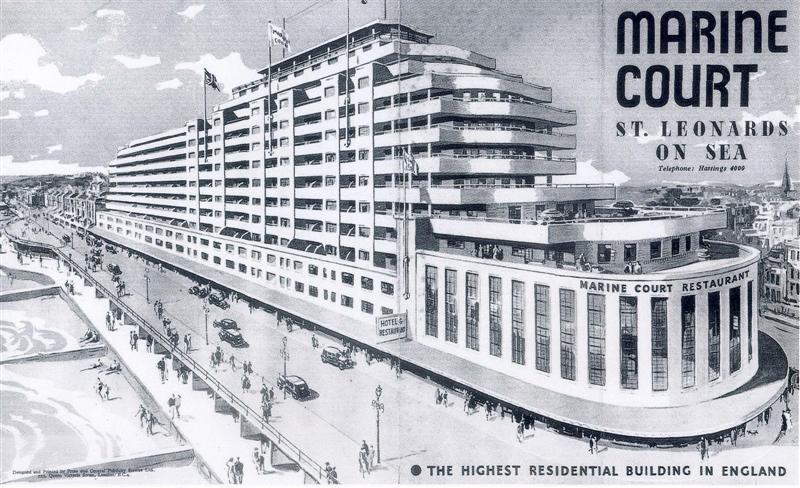
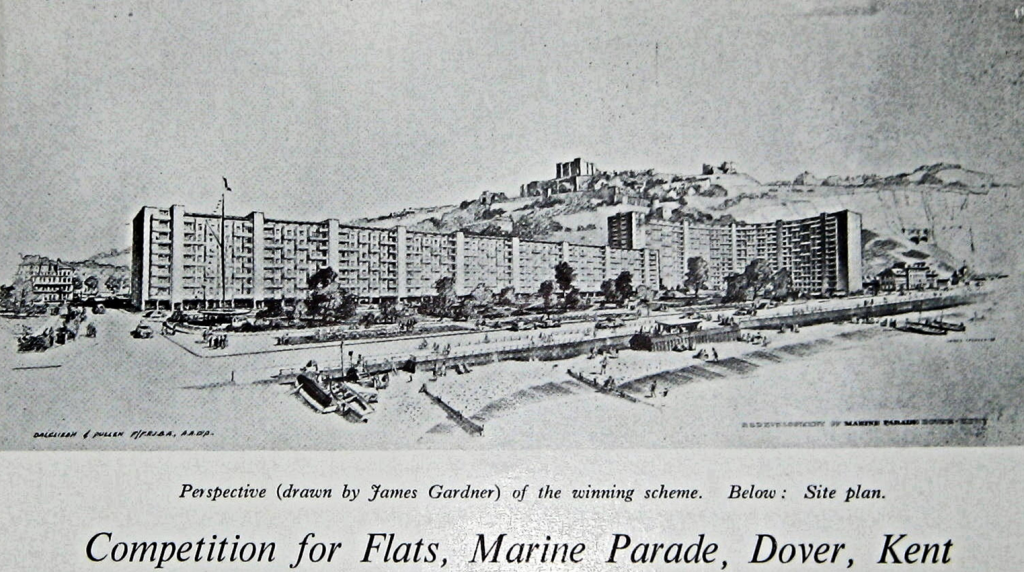
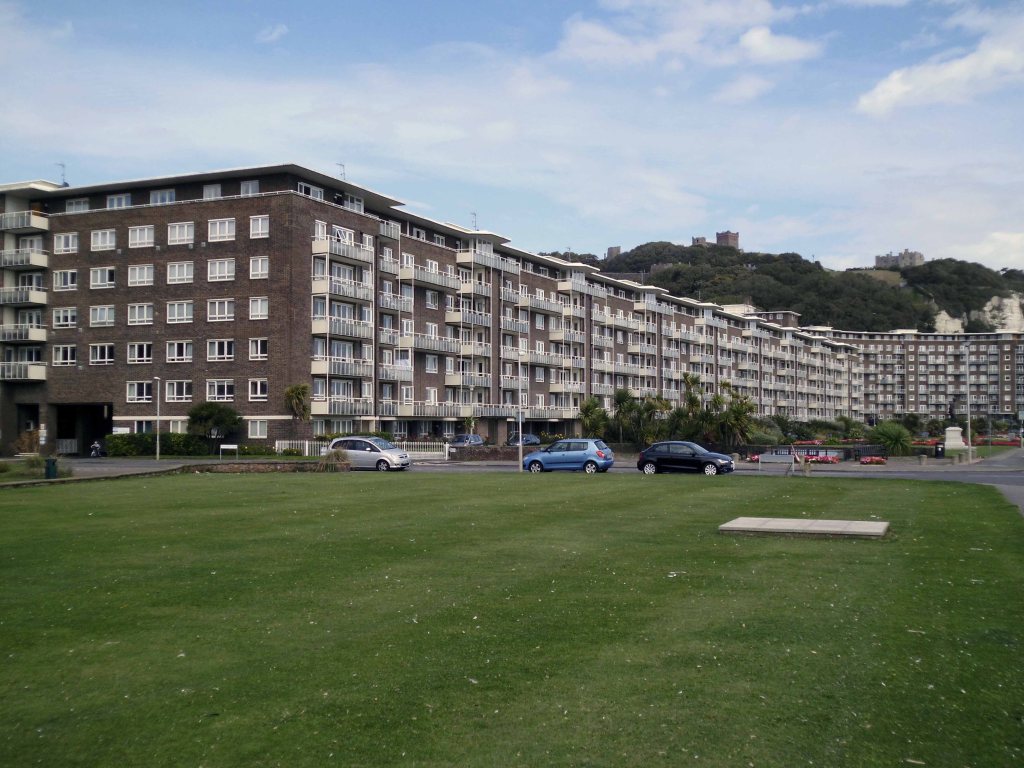
The building was designed by architects Kenneth Dalgleish and Roger K Pullen, with overt references to the Cunard White-Star Line Queen Mary, which had entered commercial transatlantic service in 1936. The east end of Marine Court is shaped to imitate the curved, stacked bridge front of the Queen Mary; the eastern restaurant served to imitate the fo’c’sle deck of the ship.
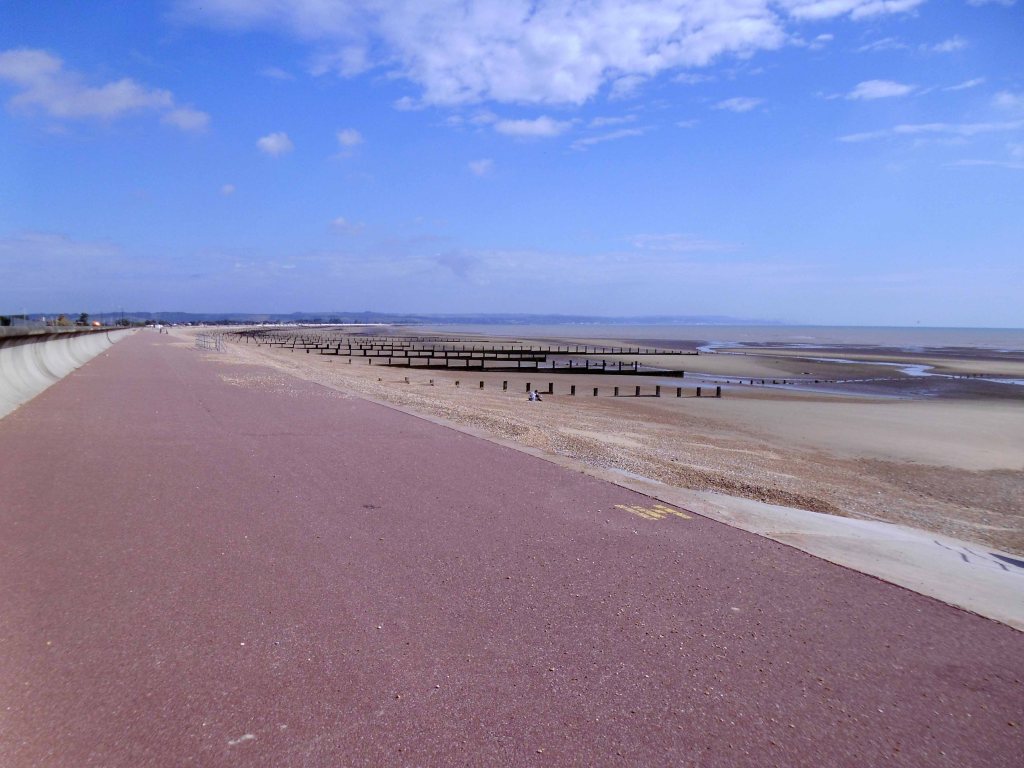
Heading towards Hythe on the coastal defence path.
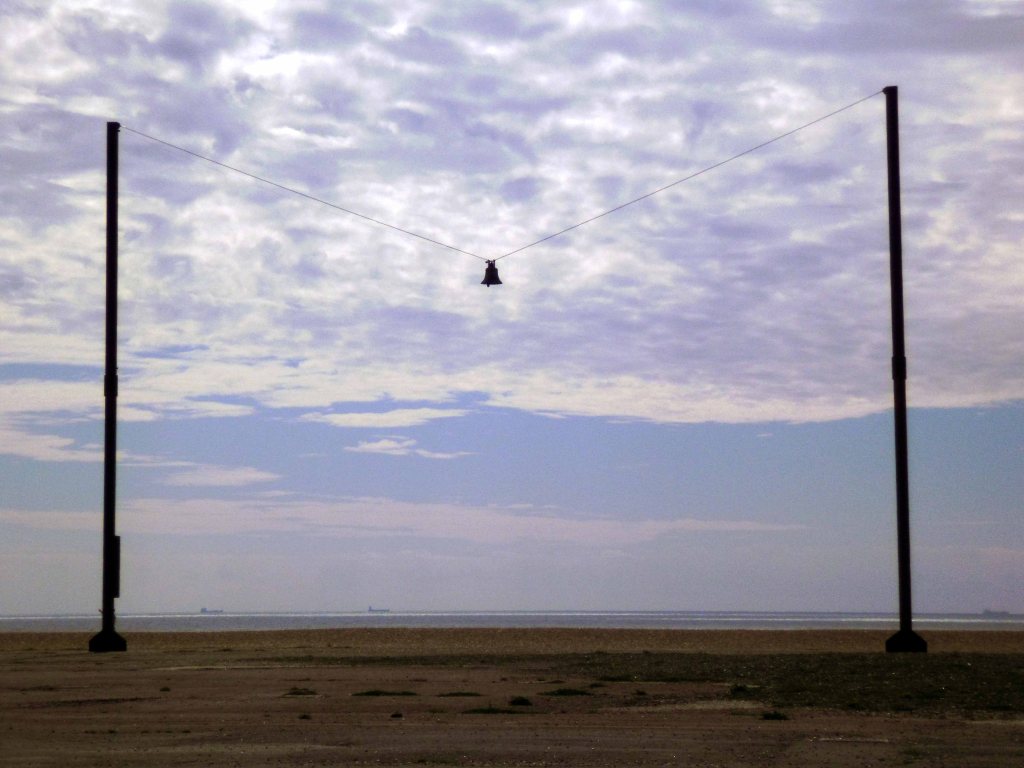
Out of Tune Folkestone Seafront, opposite The Leas Lift – is home to AK Dolven’s installation. It features a 16th-century tenor bell from Scraptoft Church in Leicestershire, which had been removed for not being in tune with the others. It is suspended from a steel cable strung between two 20m high steel beams, placed 30m apart.
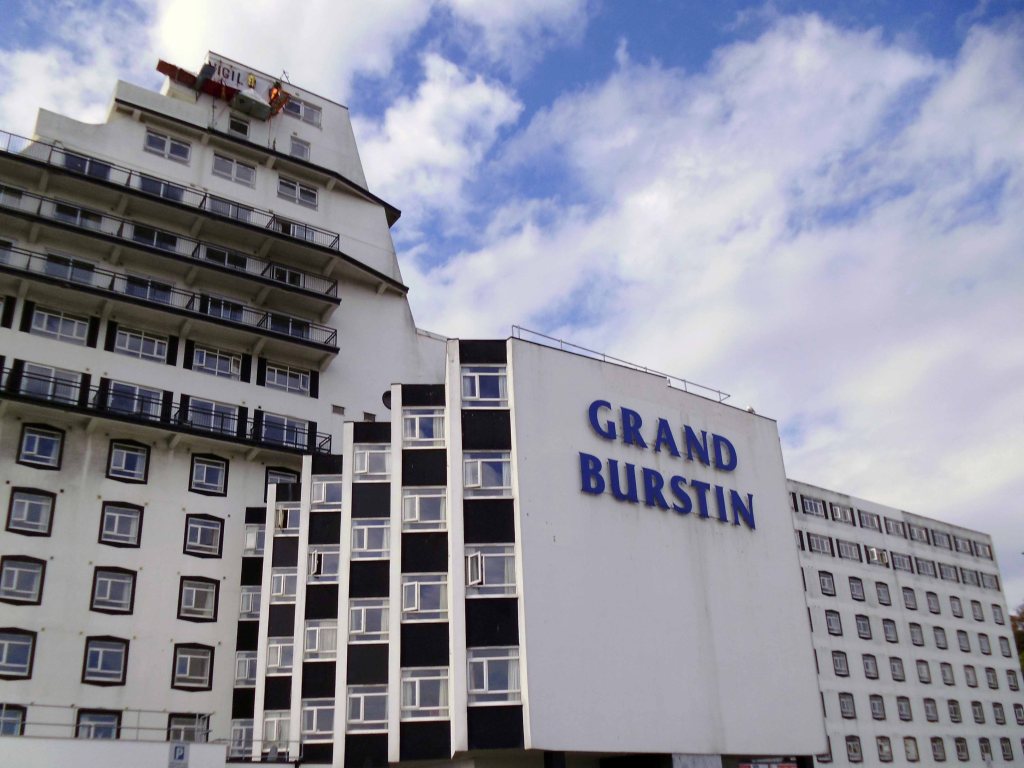
For Folkestone Triennial 2014, Alex Hartley’s response to the title Lookout is inspired by the imposing architecture of the Grand Burstin Hotel, which overlooks the Harbour. For his project Vigil, Hartley will use state of the art climbing technology to make a lookout point suspended from the highest point of the hotel. This climber’s camp will be inhabited for the duration of the Triennial, by the artist and by volunteers, all of whom will keep a log of what they observe.
The current hotel was built in 1984 from the foundations of the Royal Pavilion Hotel, originally built in 1843. Out of the 4,094 reviews currently on TripAdvisor 974 are of the terrible rating which doesn’t inspire much hope.
The most recent review is titled – Dirty Dated Hotel With Clueless Staff.
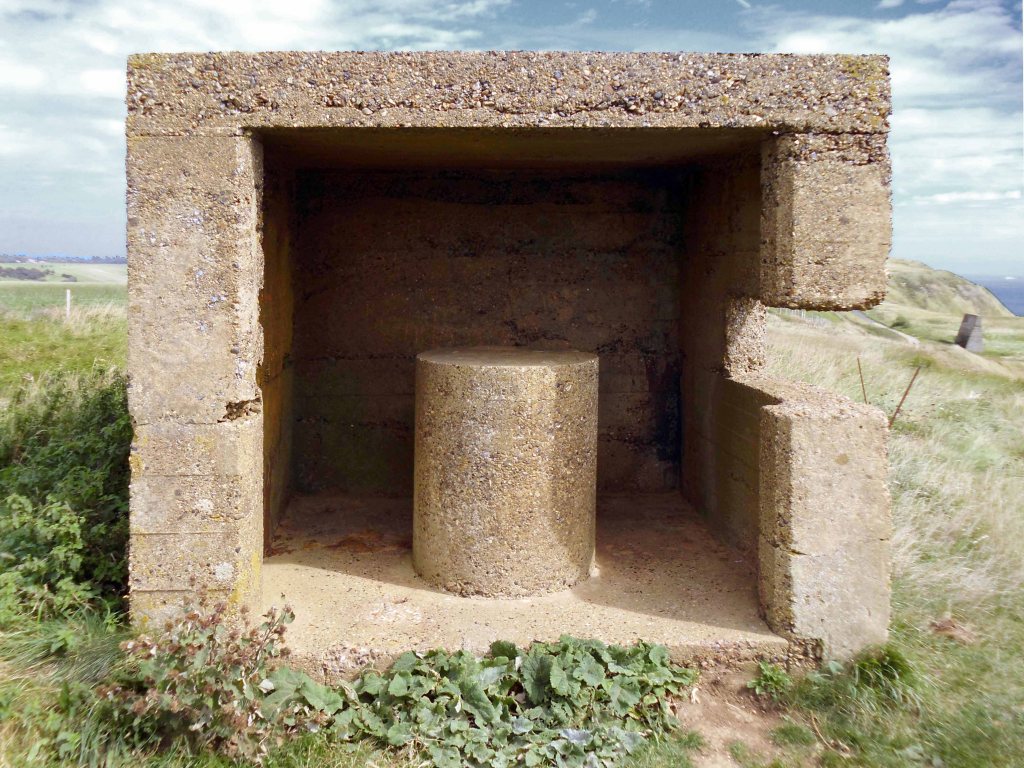
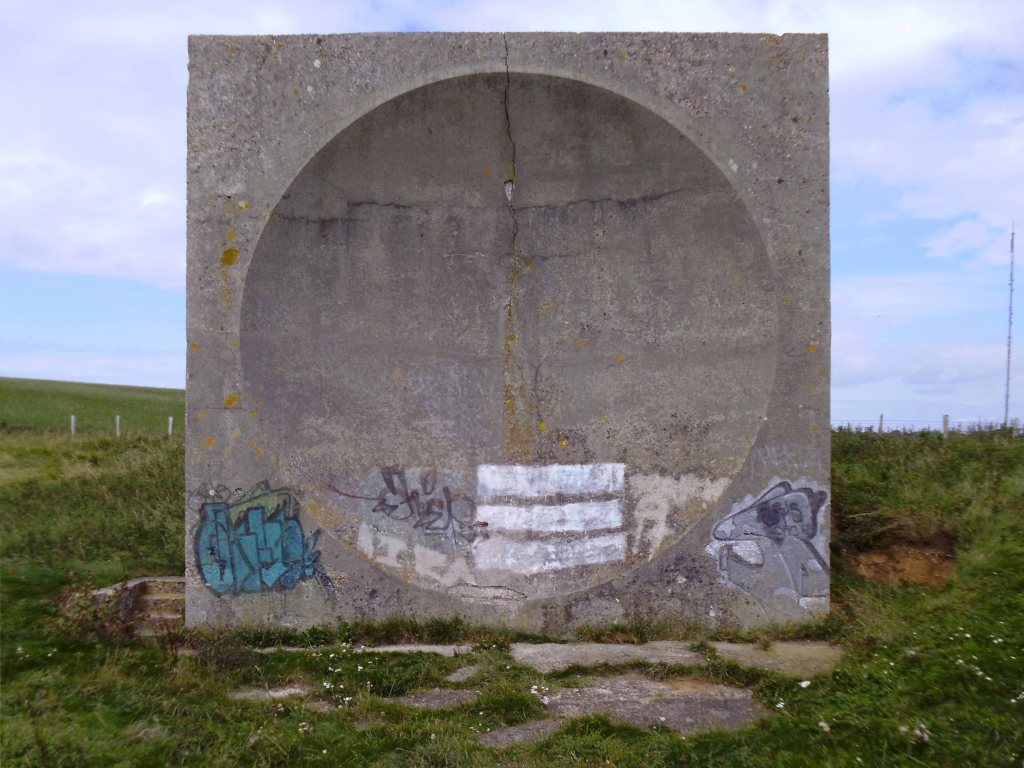
Before the advent of radar, there was an experimental programme during the 1920s and 30s in which a number of concrete sound reflectors, in a variety of shapes, were built at coastal locations in order to provide early warning of approaching enemy aircraft. A microphone, placed at a focal point, was used to detect the sound waves arriving at and concentrated by the acoustic mirror. These concrete structures were in fixed positions and were spherical, rather than paraboloidal, reflectors. This meant that direction finding could be achieved by altering the position of the microphone rather than moving the mirror.
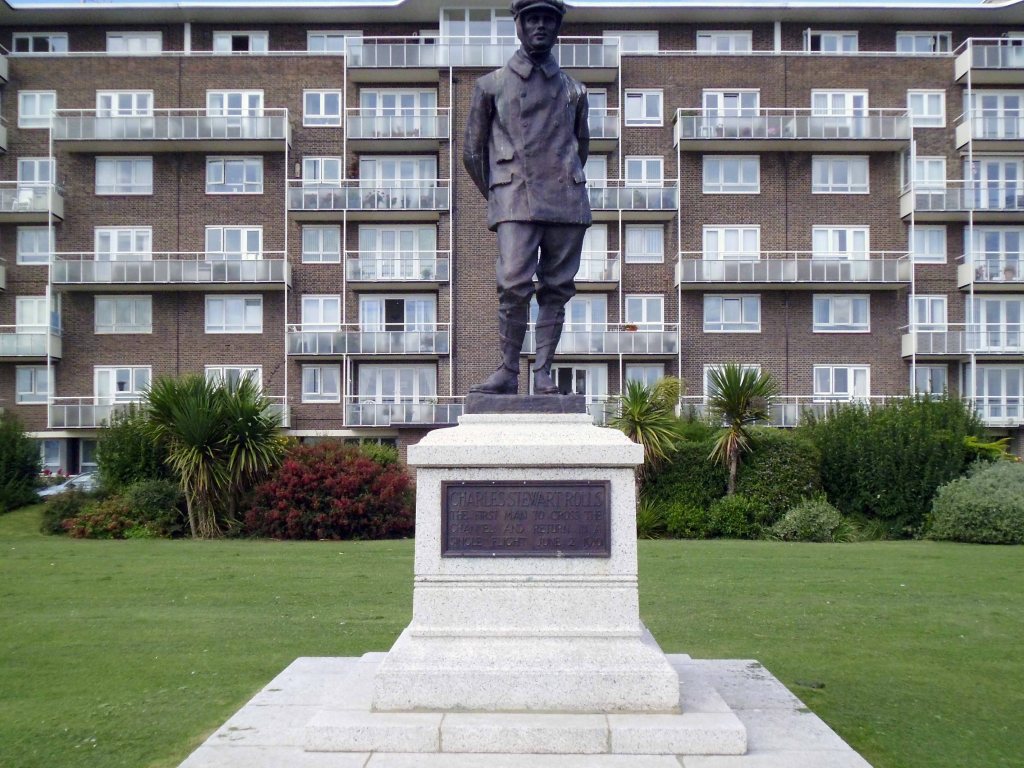
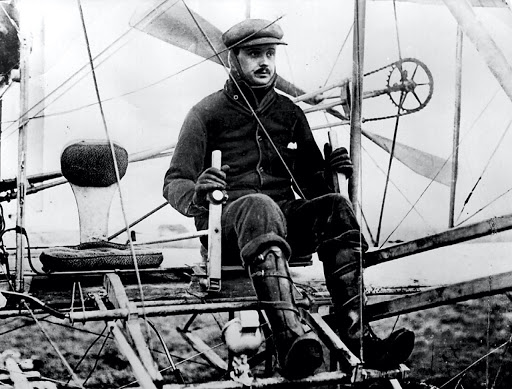
Charles Stewart Rolls was a Welsh motoring and aviation pioneer. With Henry Royce, he co-founded the Rolls-Royce car manufacturing firm. He was the first Briton to be killed in an aeronautical accident with a powered aircraft, when the tail of his Wright Flyer broke off during a flying display in Bournemouth.
In September 1953 it was announced that Roger K Pullen and Kenneth Dalglish had won and were to receive 100 guineas, for a design for the Gateway Flats.
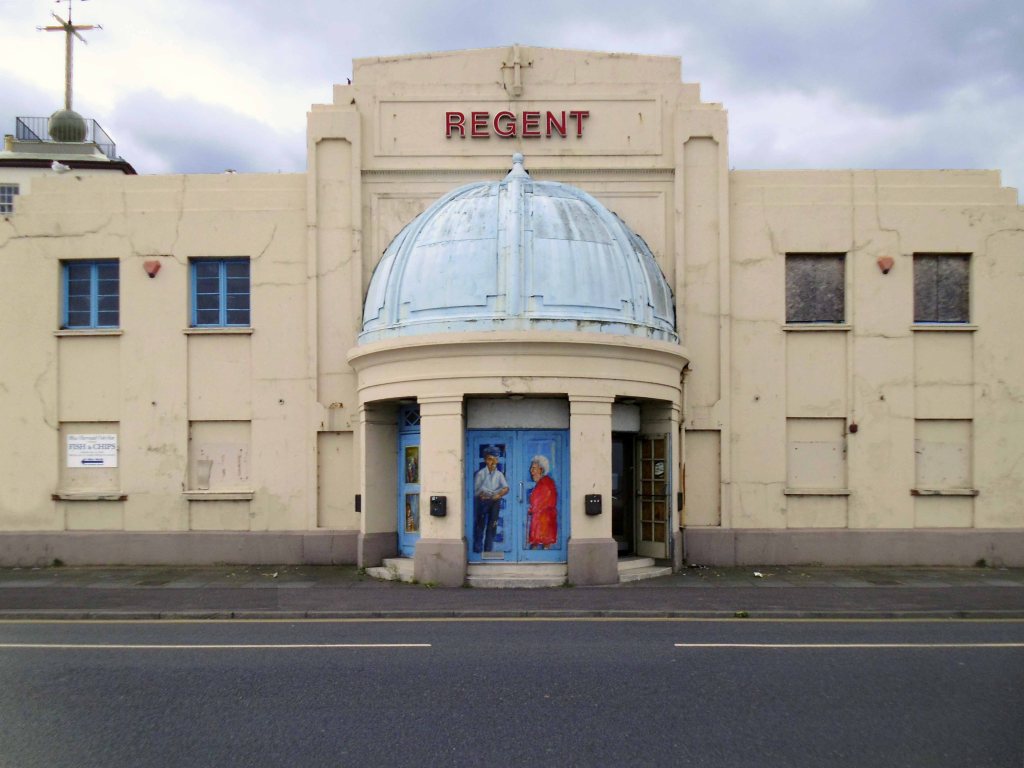
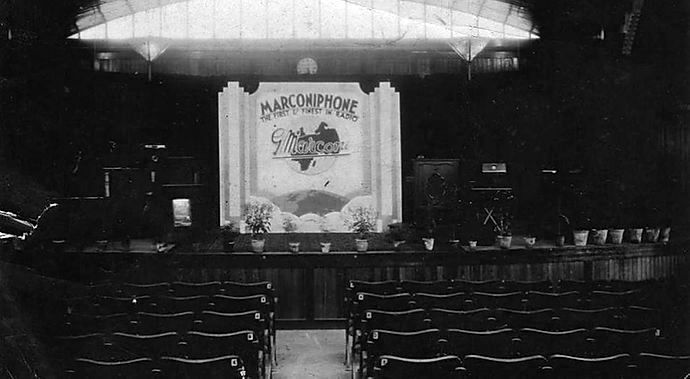
Behind the Art Deco facade of the Regent was once a grand ironwork and glass Pavilion, built to house regular performances by military bands, which the Edwardian holidaymakers loved. The Lord Warden of the Cinque ports, Lord Beauchamp, officially opened the Pavilion Theatre on Deal’s seafront in 1928.
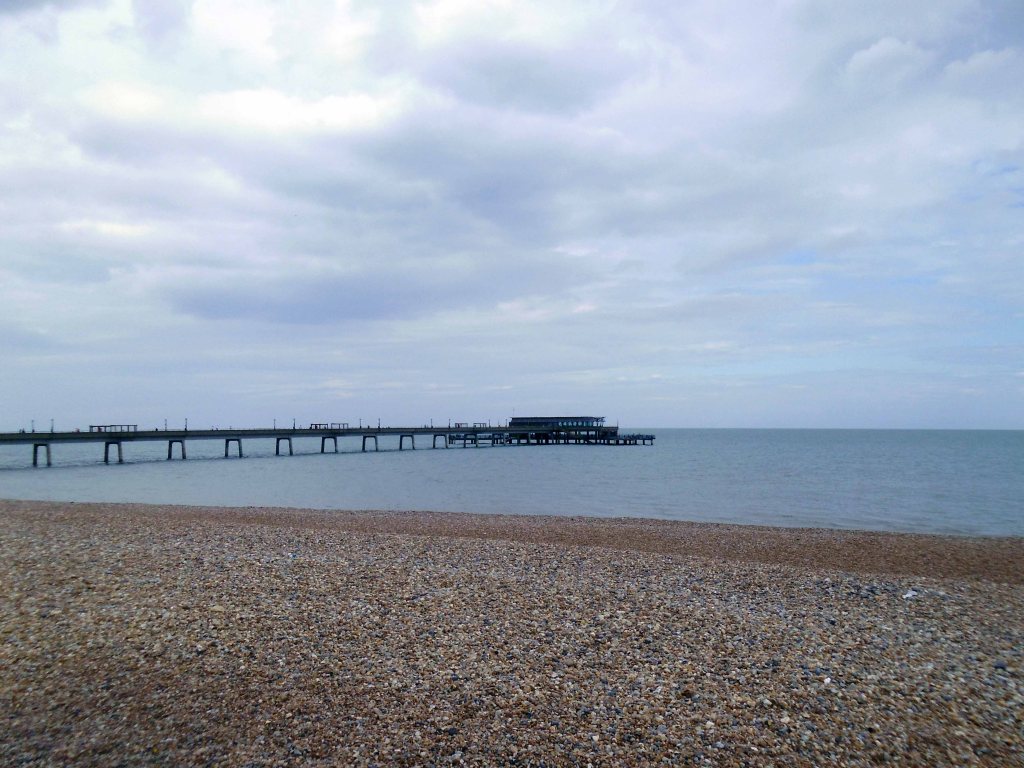
Deal Pier was designed by Eugenius Birch and opened on 8th November 1864, in 1954 work started on Deal’s third and present-day pier. The new pier took three years to build and was formally opened by the Duke of Edinburgh on 19 November 1957. It was the first seaside pleasure pier of any size to be built since 1910. Designed by Sir W Halcrow and Partners, the 1026ft-long structure comprises steel piles surrounded by concrete casings for the main supports. The pier head originally had three levels but, these days, the lower deck normally remains submerged.
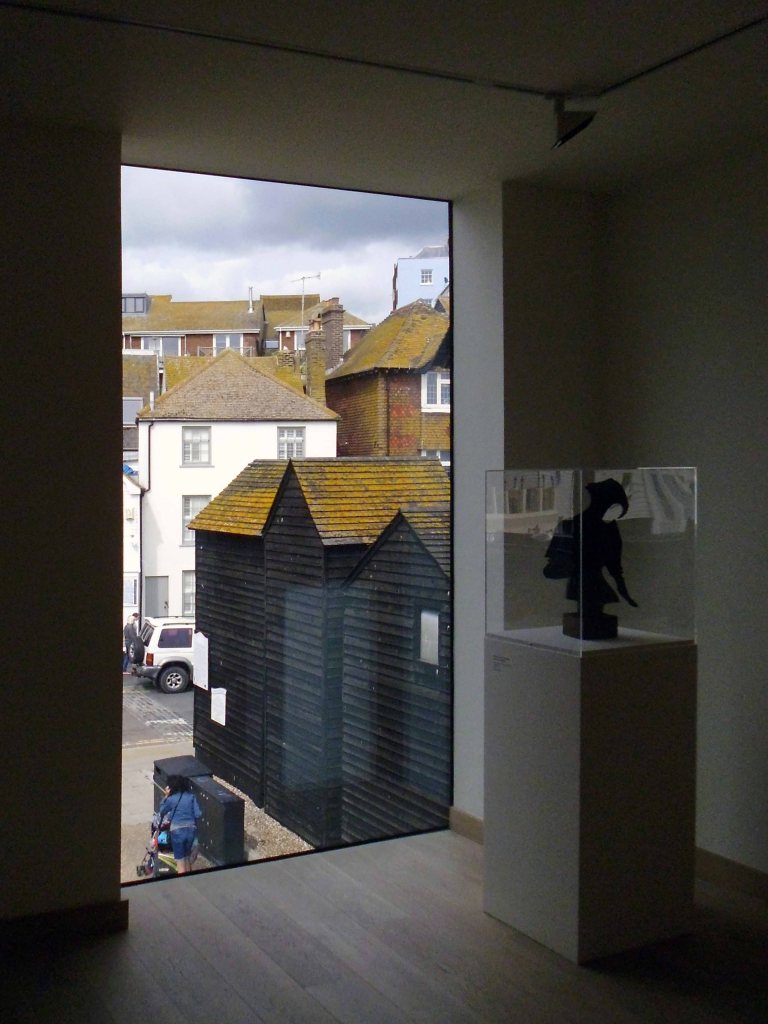
The building was designed by David Chipperfield – It was built on the raised promenade following a flood risk analysis. Construction started in 2008, and was completed for opening in April 2011, at a cost of £17.5 million. The gallery opened on 16 April 2011.
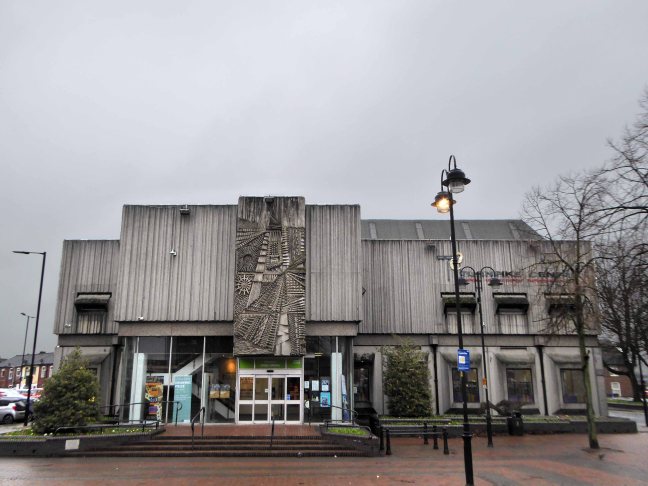
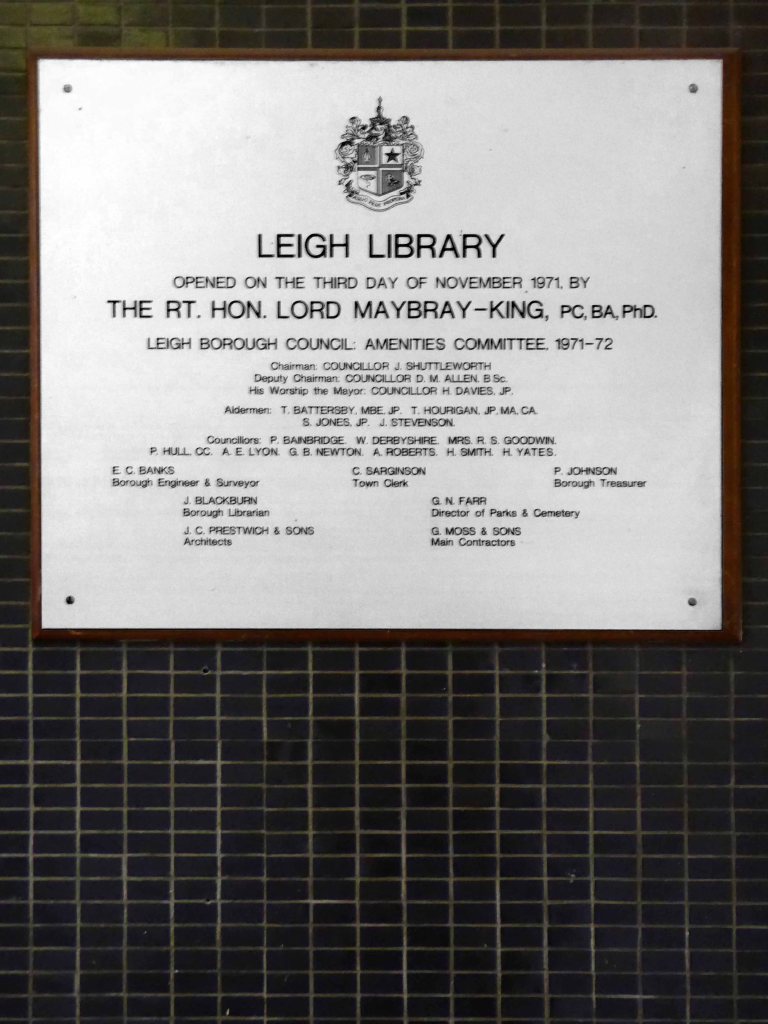
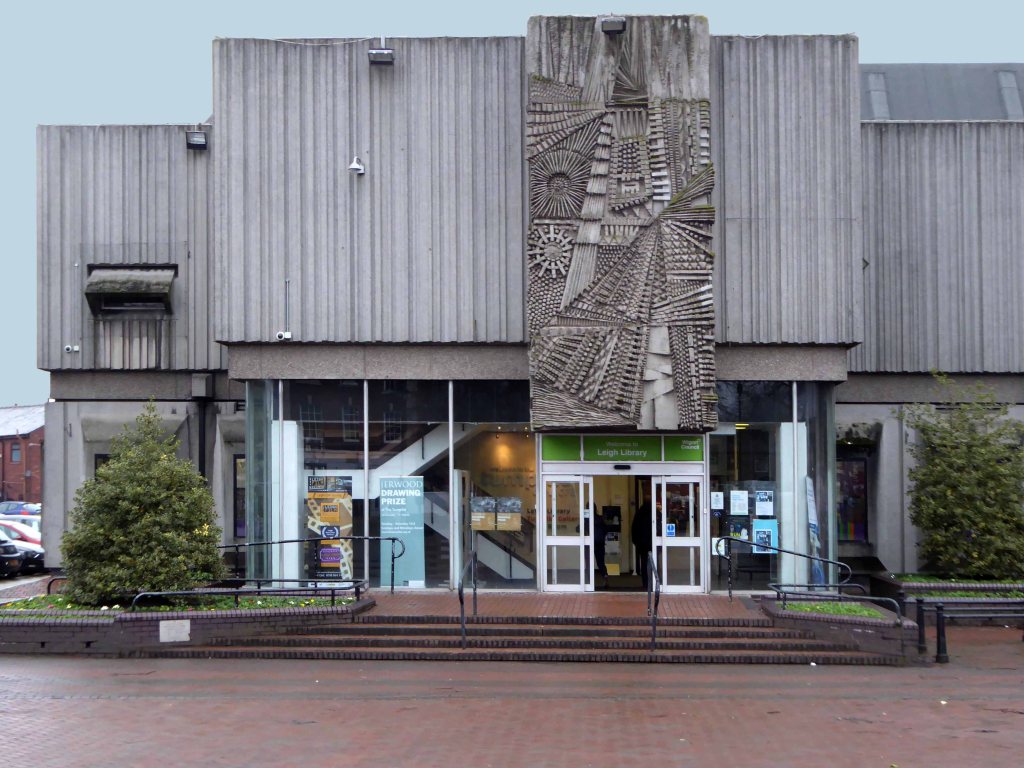
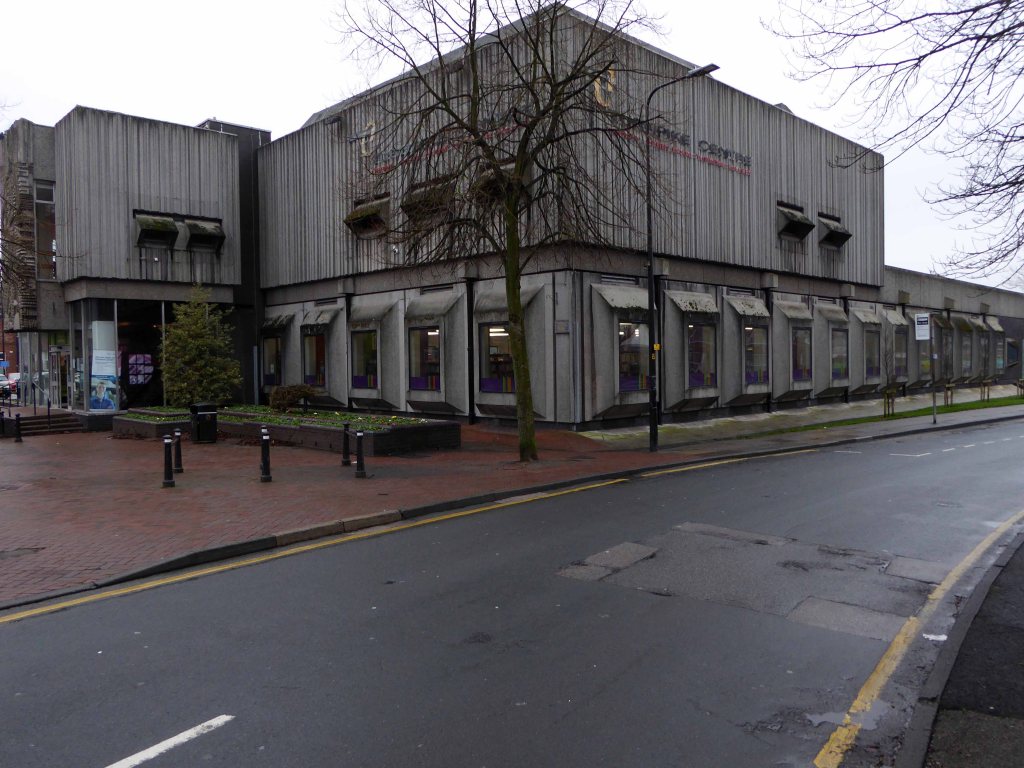
The Turnpike Centre was designed by J C Prestwich and Sons architects, who, incidentally, also designed Leigh Town Hall nearly 70 years earlier.
Since its opening in 1971, the bustling library, thriving art gallery and popular meeting rooms have seen a phenomenal 12 million people walk through the doors, while staff have answered almost 400 thousand questions and issued more than 17 million books, cassettes and CDs.
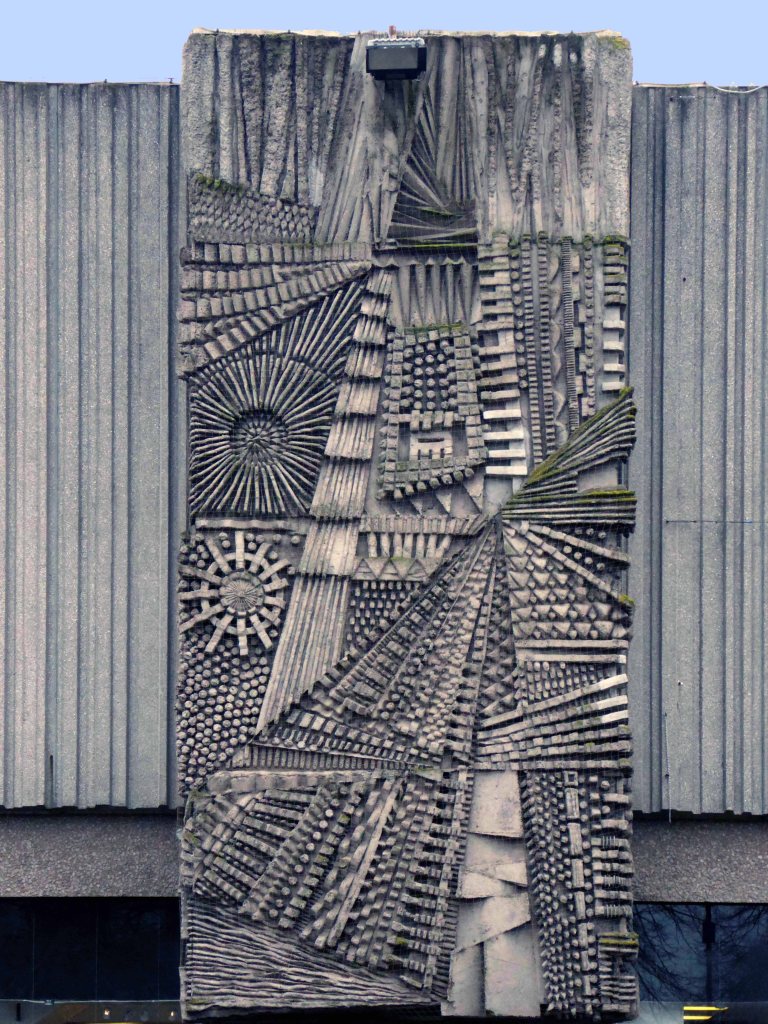
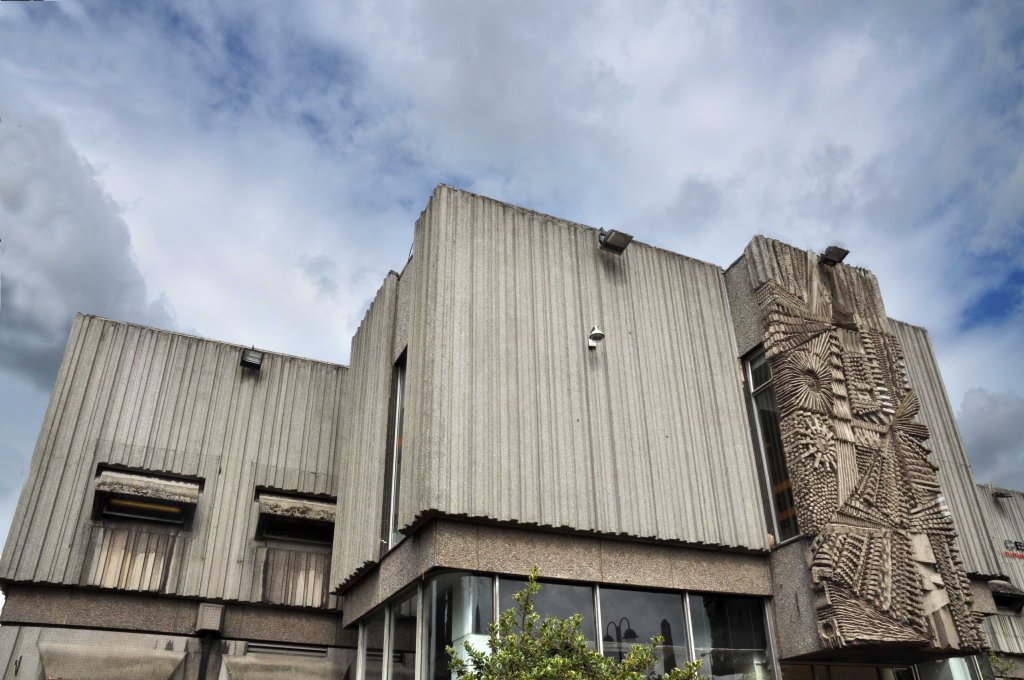
The fascia is graced by a grand cast concrete relief the work of William Mitchell.
All but abandoned by the cash-strapped local council in 2013, Turnpike Gallery in the former mining town of Leigh near Wigan, is entering a new stage in its history with the creation of a community interest company to run its programme.
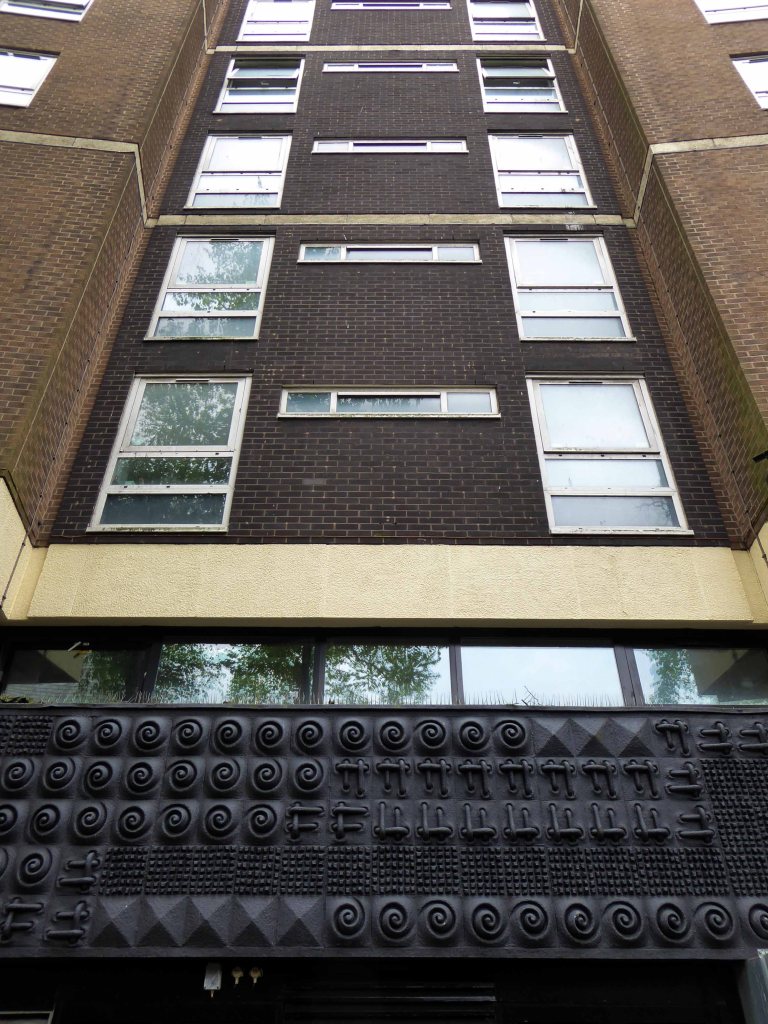
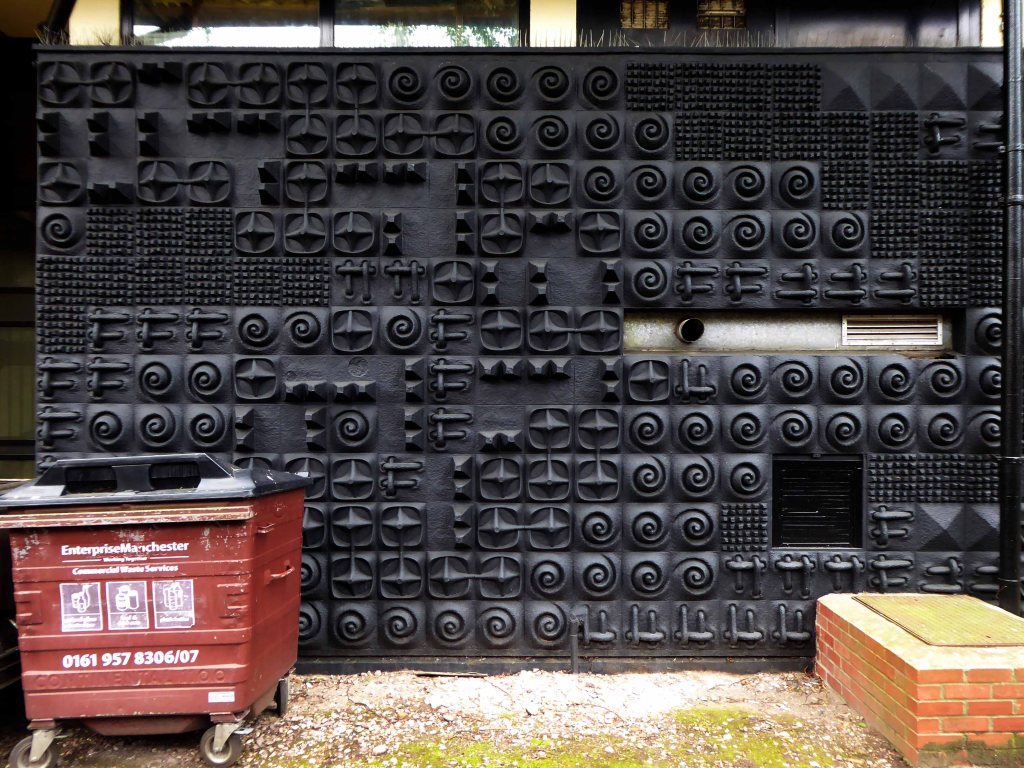
We have of course been here before visiting Mitzi Cunliffe and her work – Cosmos
Mitzi Solomon Cunliffe January 1st 1918 December 30th 2006
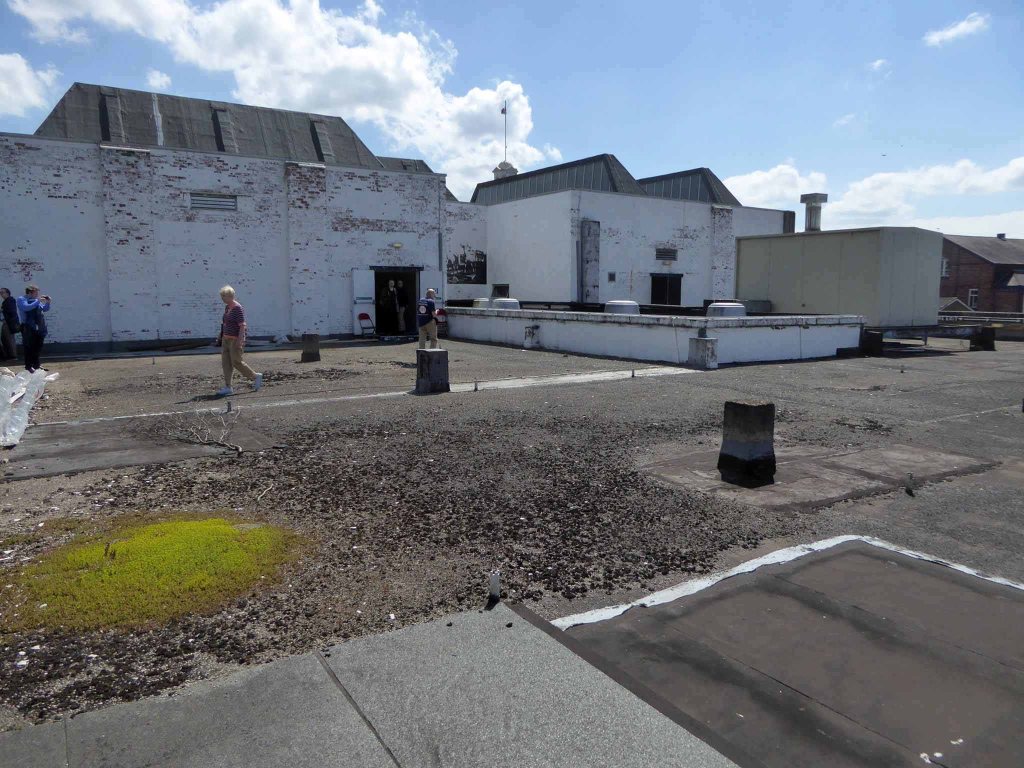
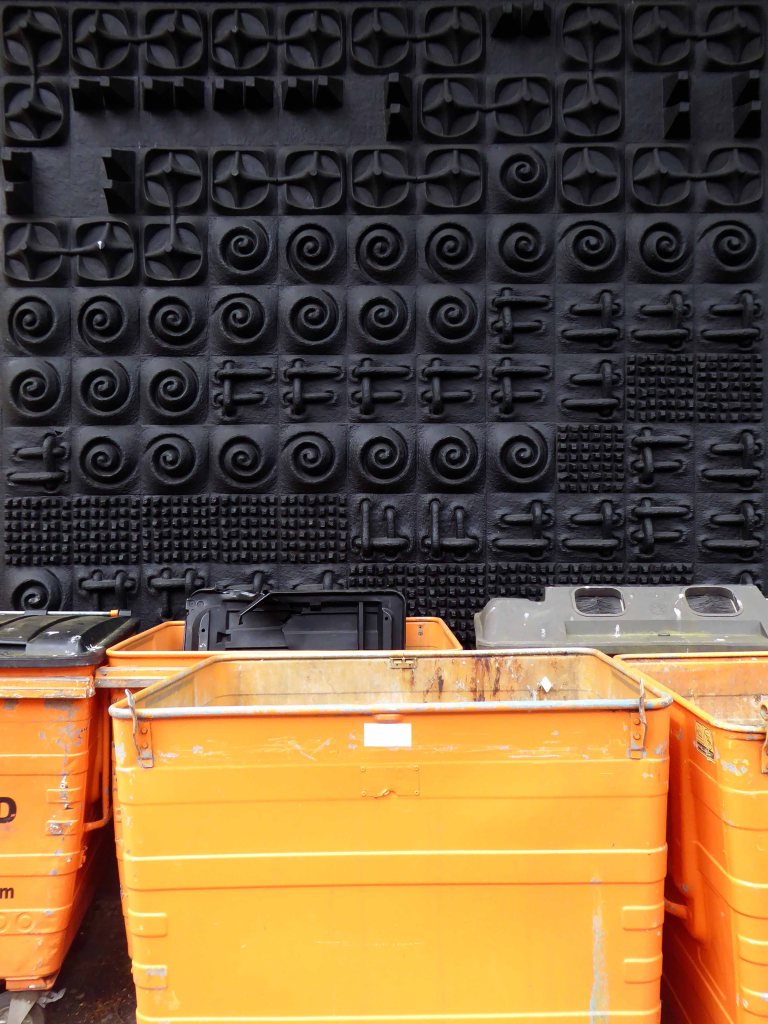
This time we are taking a peek around the back.
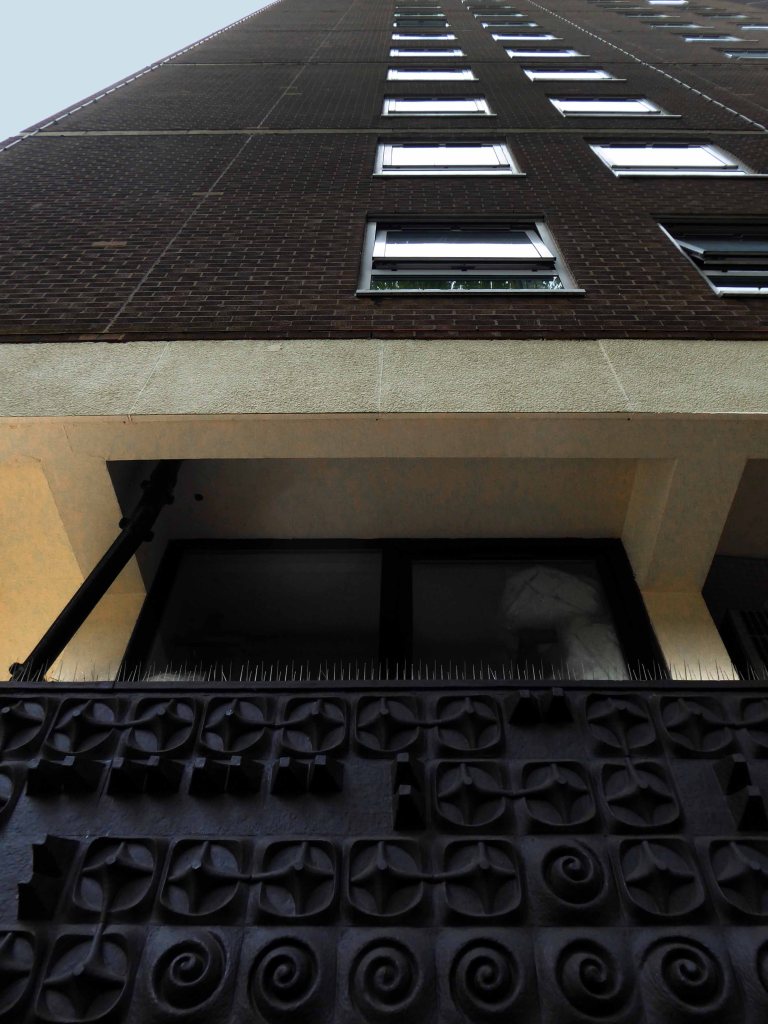
Having passed by on the top deck deck of the 42 on my way home to Stockport, I espied an extension of the sculpture to the rear of the tower.
I vowed to return!
Fighting through extraction units, wheelie bins, hoppers, plus a disused and disabused vacuum cleaner, I found myself in the narrow service area, where I did my best to get back from the wall, hard against the chain link fence.
The things you do.
For some much needed light relief, air and open space I revisited the front face of the tower.
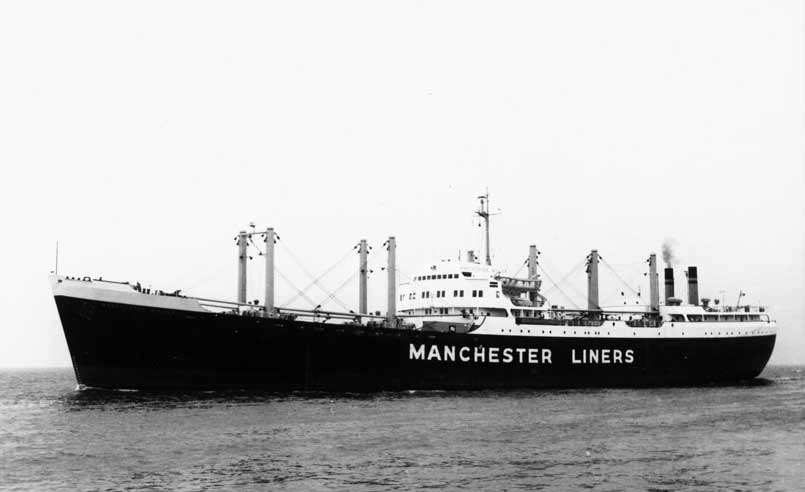
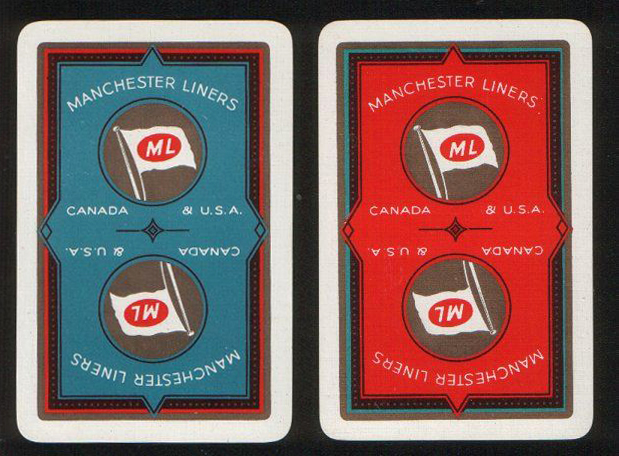
In 1898 Manchester Liners Ltd was launched, four second hand ships were purchased and the company naming policy of applying the prefix Manchester was established.
The company began to operate services to Canada and the USA. Manchester Liners started WW1 with 15 ships in its fleet. During the war 10 ships were lost to enemy action, but because of the purchase of replacements the fleet was at 12 in 1918.At the outbreak of WW2, Manchester Liners had 10 ships in service. War losses were 7 ships, but the delivery of war-standard ships maintained the fleet at 8, which was sufficient to resume a weekly service to Canada.
The Manchester dockworkers strike record became so bad, that in 1973 the company decided to move half of its container services to Felixstowe. Furthermore, to obtain lower costs per unit, container ships were becoming bigger than the Canal limits.
This was a history of economic growth and prosperity, for some. Tangible commerce, the wealth of a nation built on making things, moving things. Cranes, ships, stevedores and sailors, the world and his wife converging at the base of the Manchester Ship Canal.
All this is long gone, containerisation, recession and state engineered shifts in global manufacture and trade.
They took away the cranes.
The area is now awash with intangible activity – what goes on behind the smoked and mirrored glass?
Just who is moving what around, how, where and why?
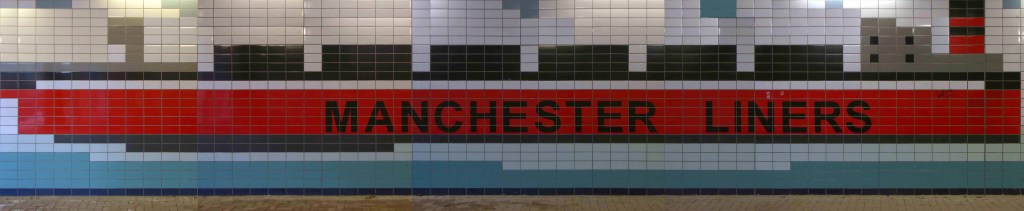
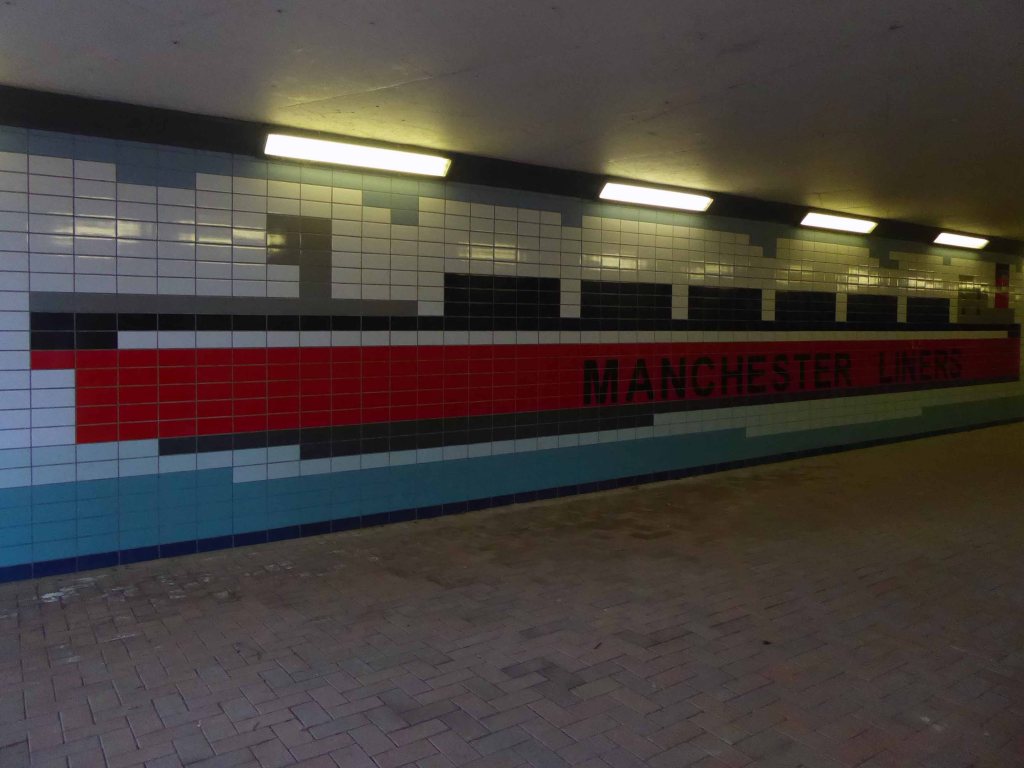
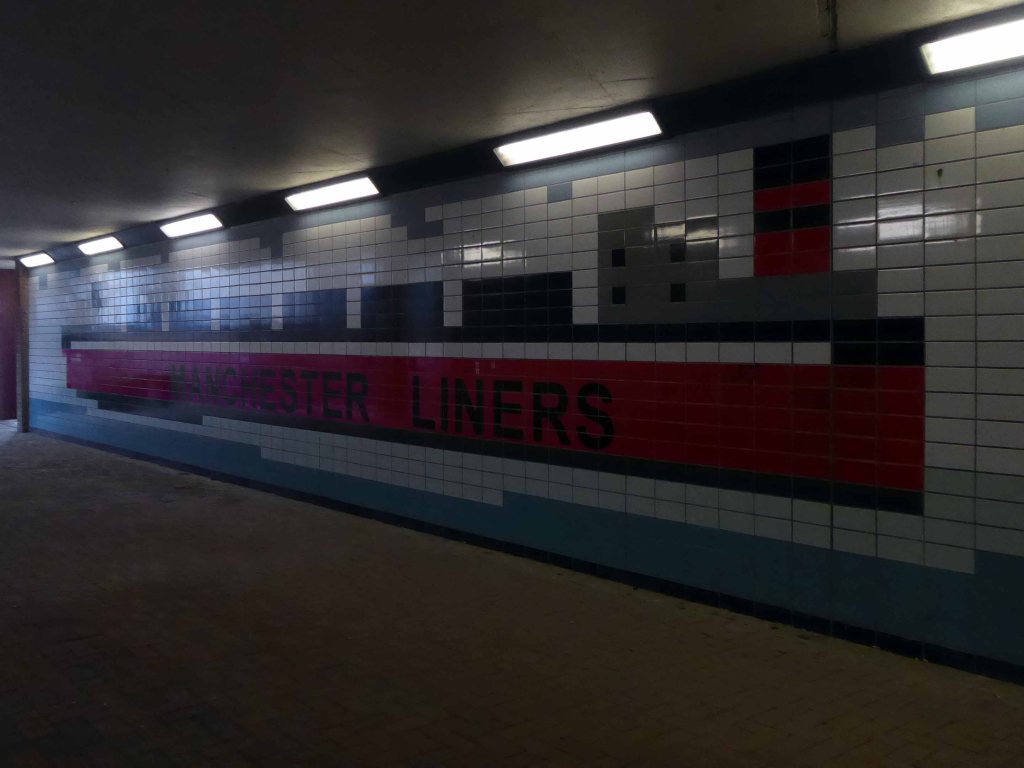
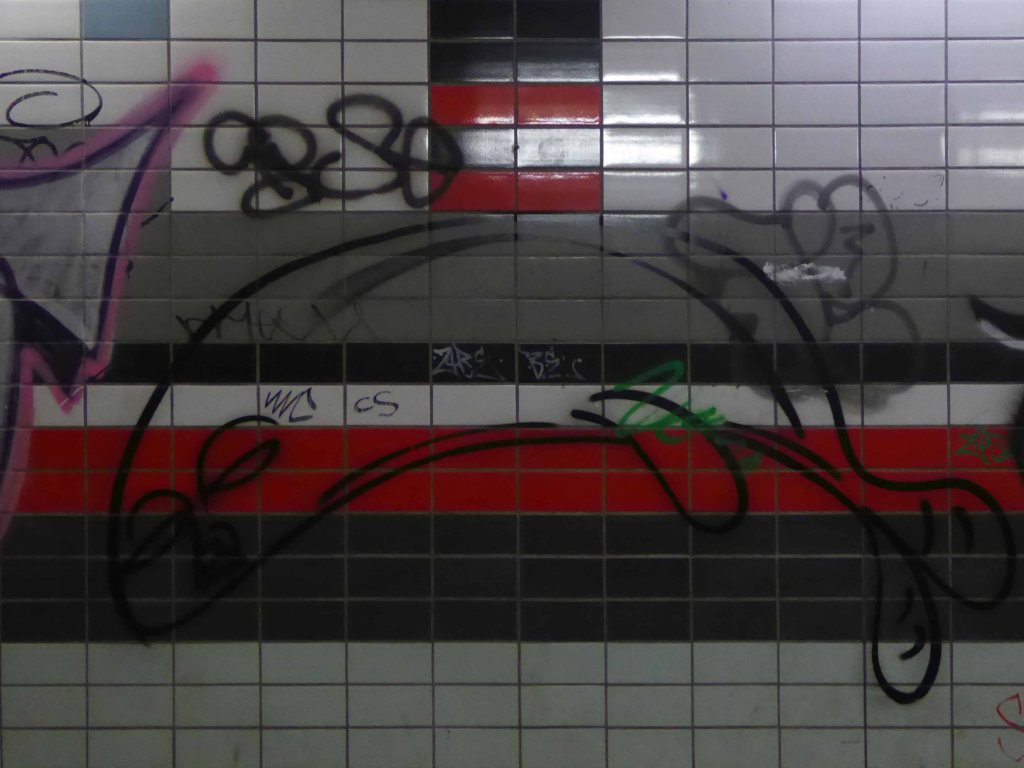
But hidden away between here and there is a tiled underpass.
A permissive path.
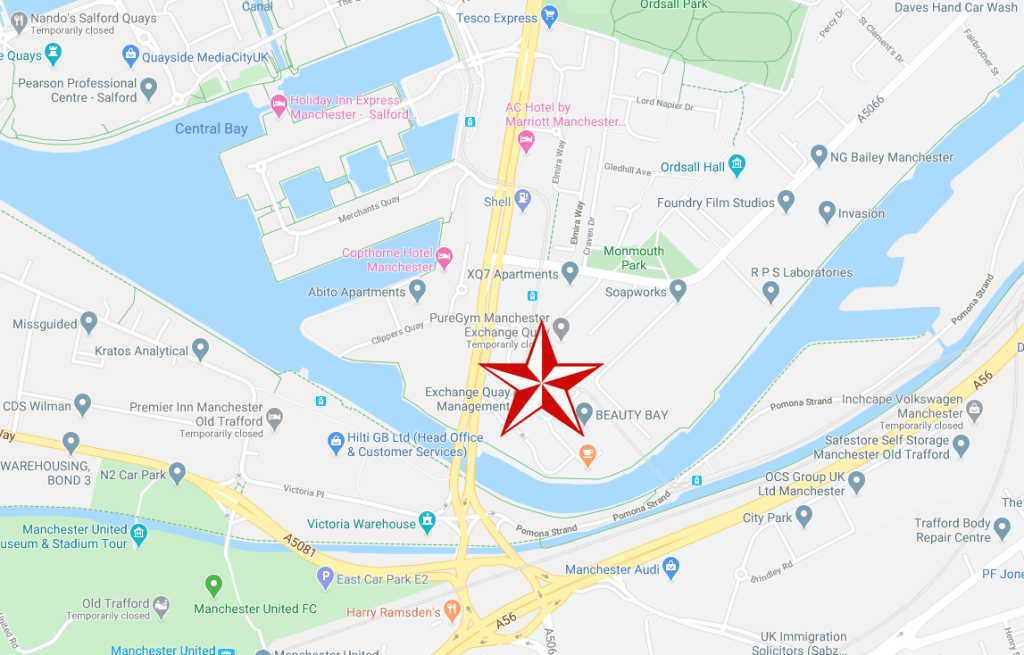
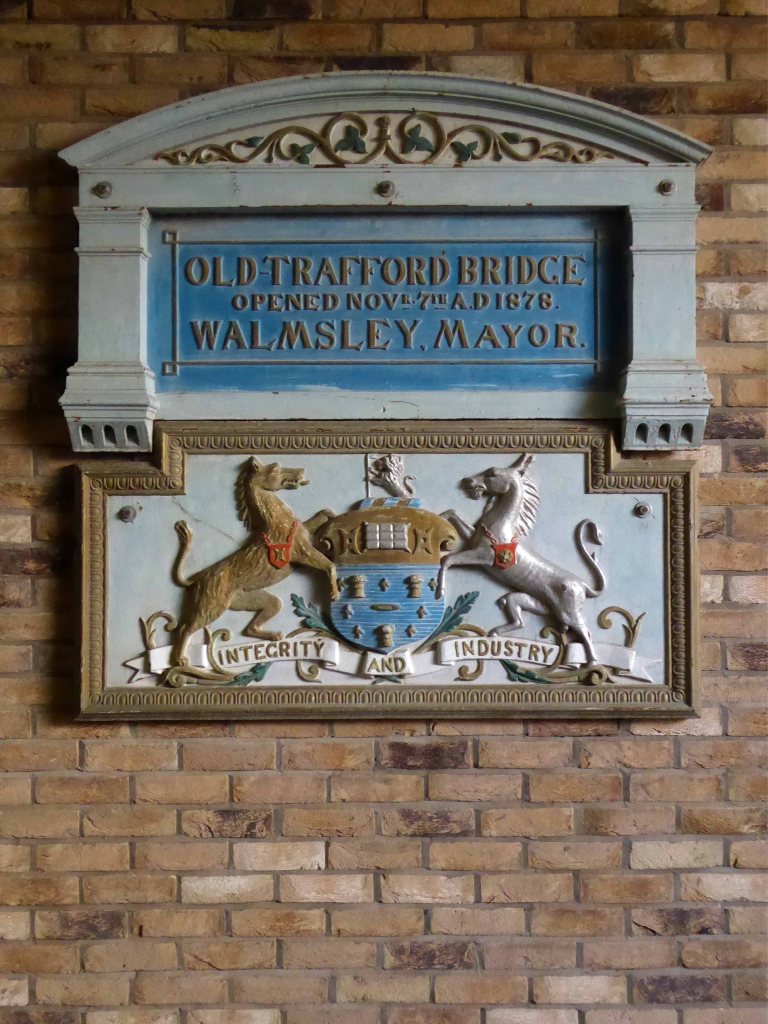
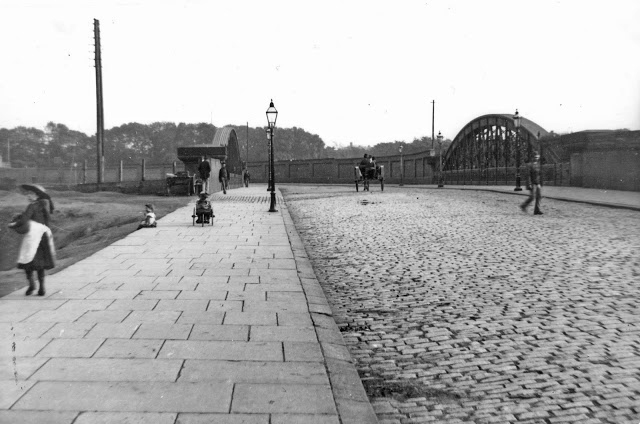
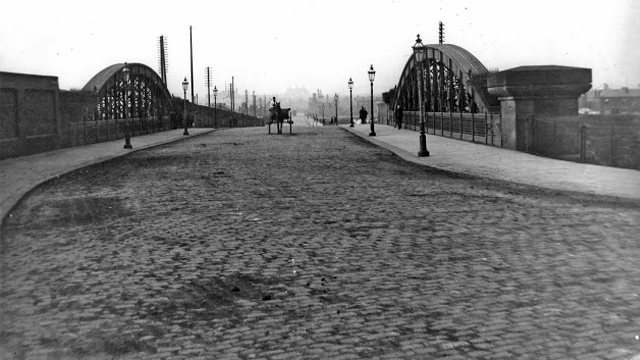
Where once there was a bridge – before the Manchester Ship Canal was built, the course of the River Irwell was approx. 50-100 yards further north of where the Ship Canal now passes under Trafford Road. This plaque is next to a pedestrian tunnel under Trafford Road, roughly on the line of the old navigation.
So here it is a hidden, harshly lit, slightly disabused tribute to the brave souls who sailed the seven seas, stayed ashore, weighed, loaded and shifted stuff.
It’s lockdown so we can’t go far, so from home in Stockport to Collyhurst is within my daily exercise allowance.
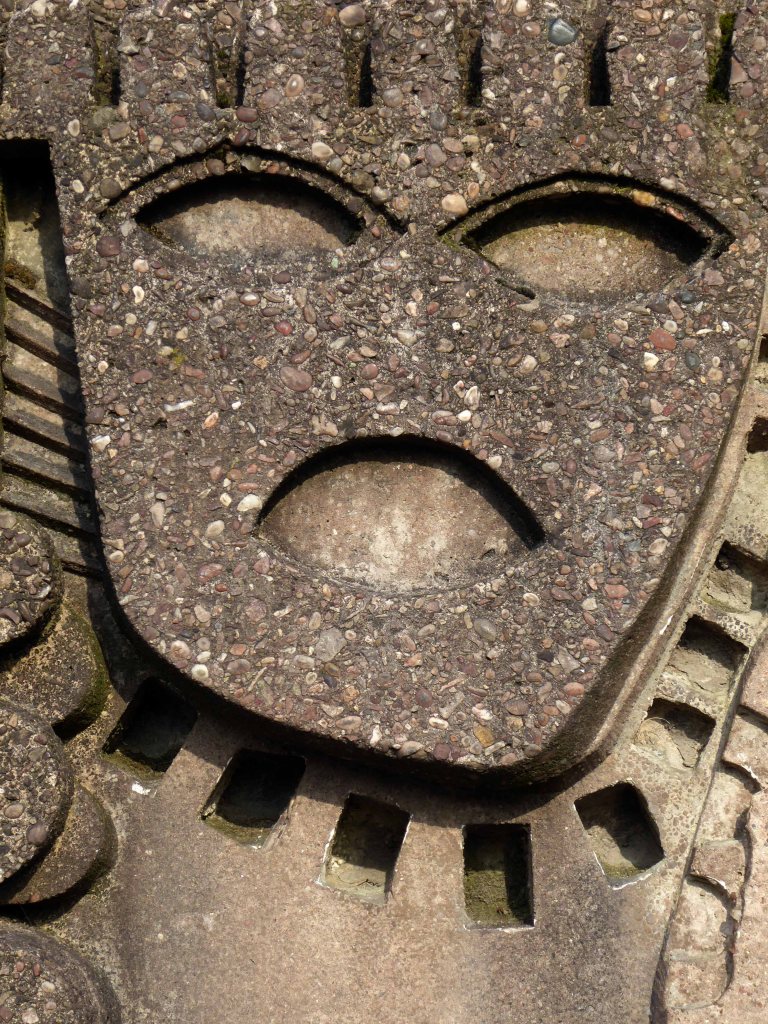
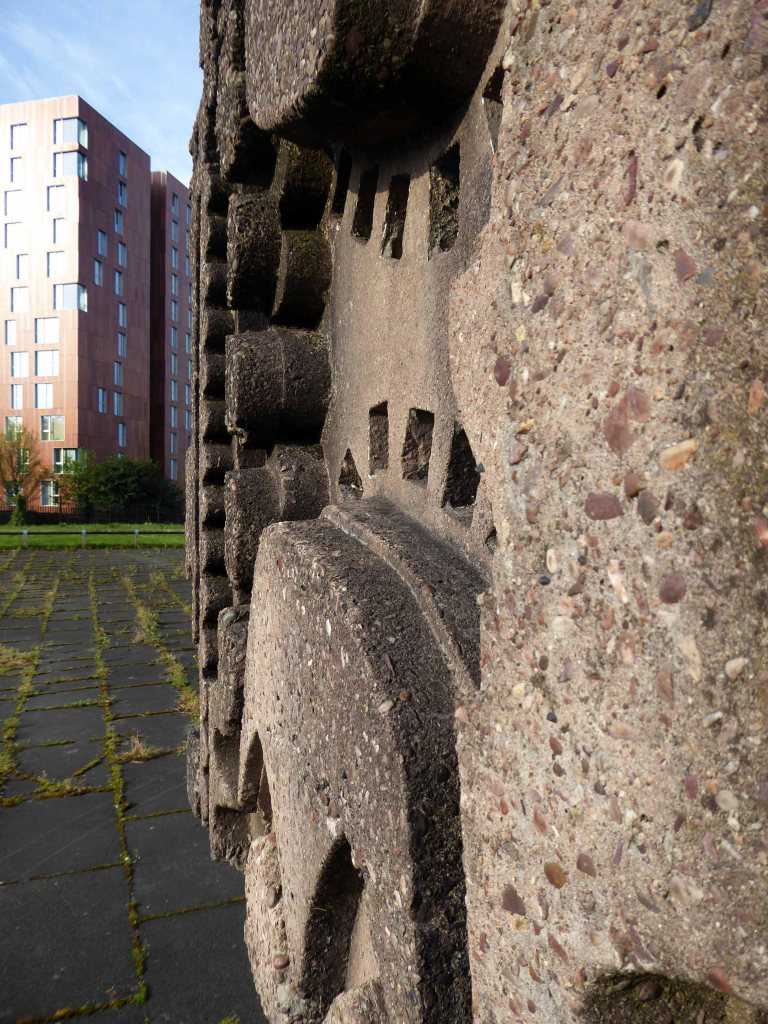
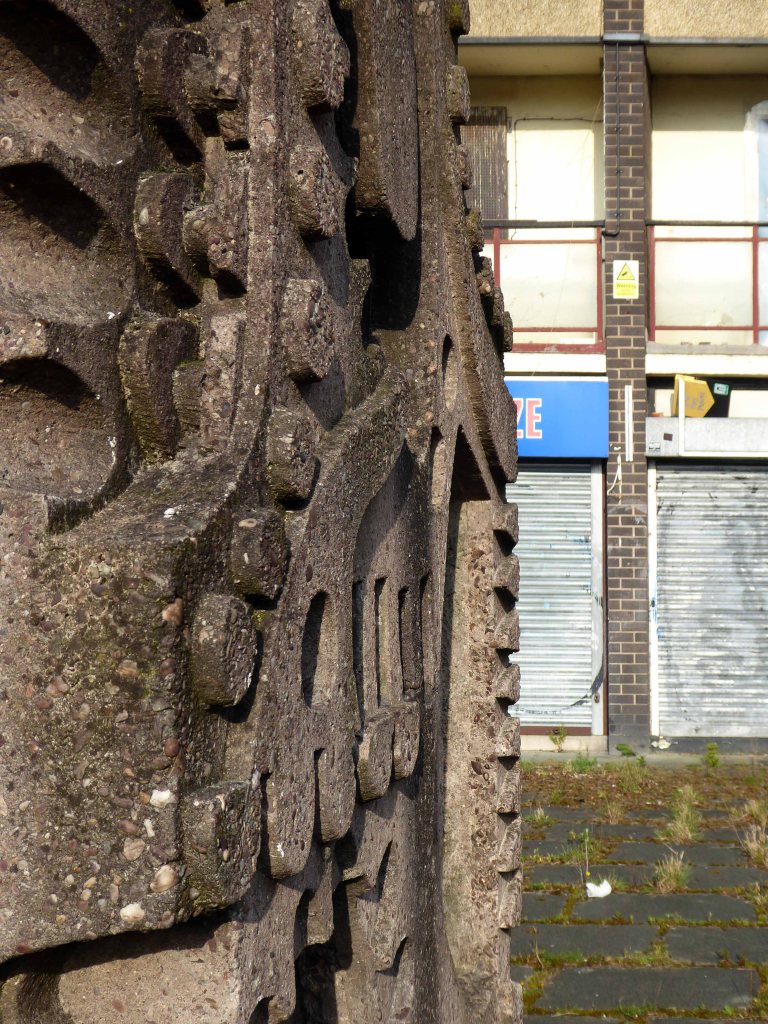
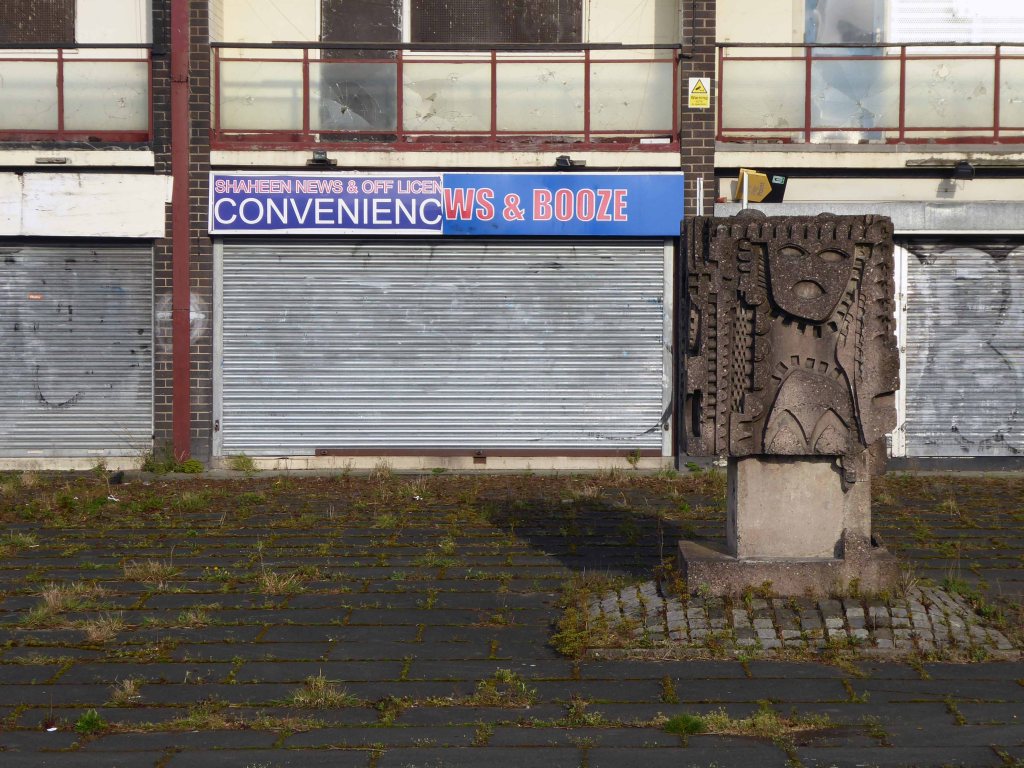
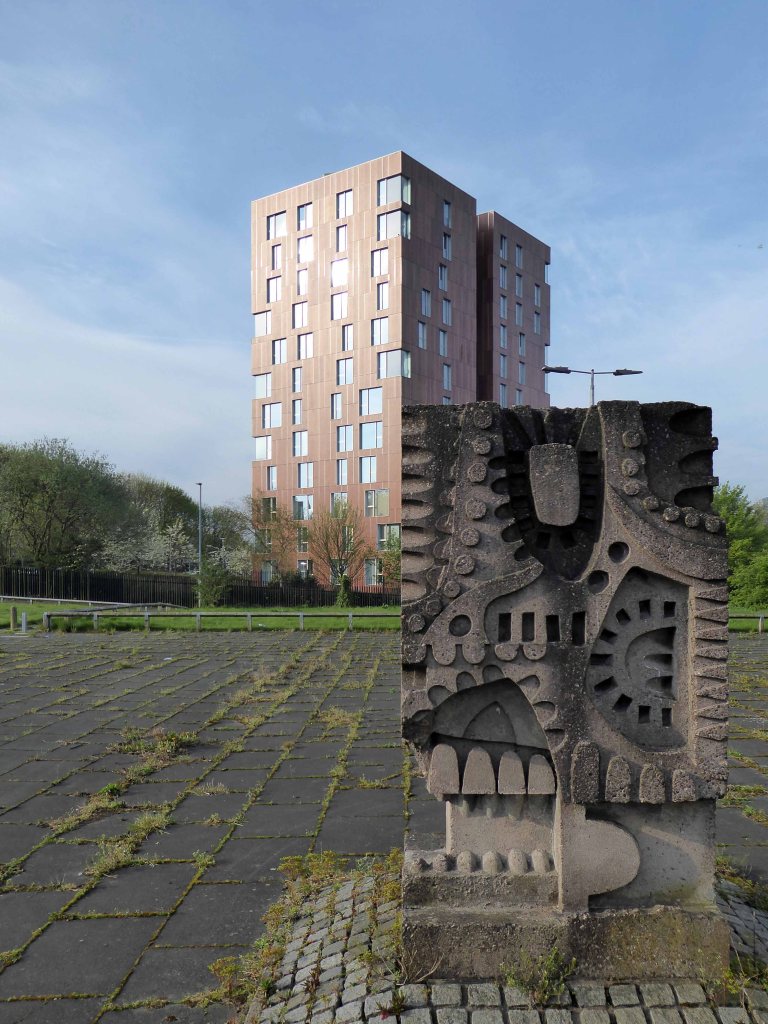
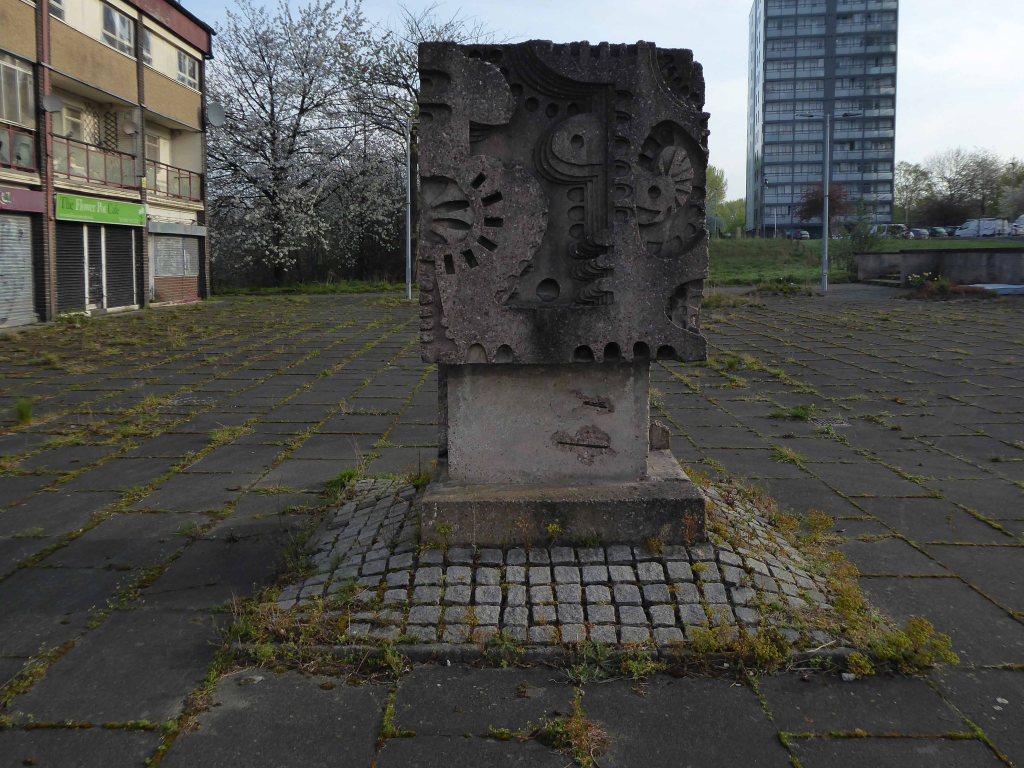
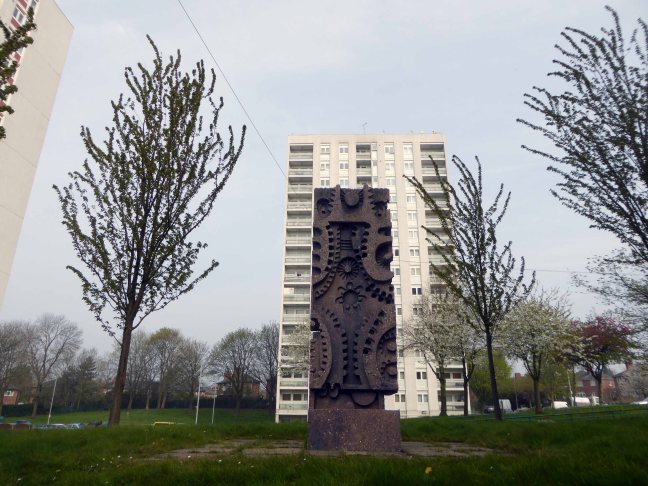
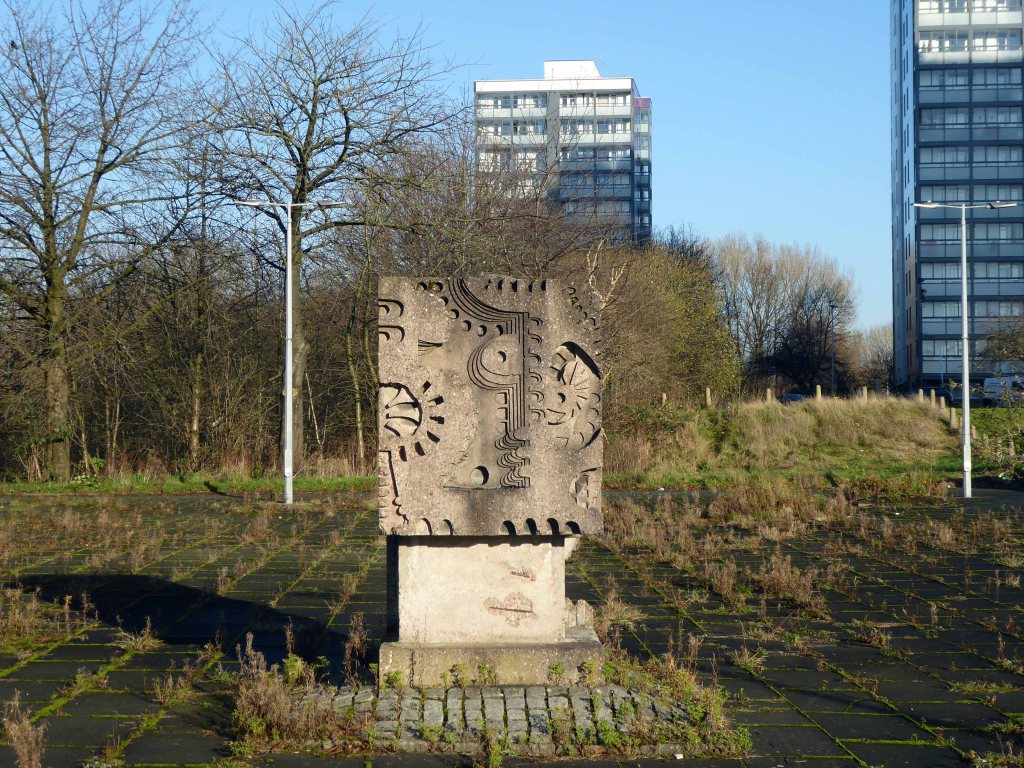
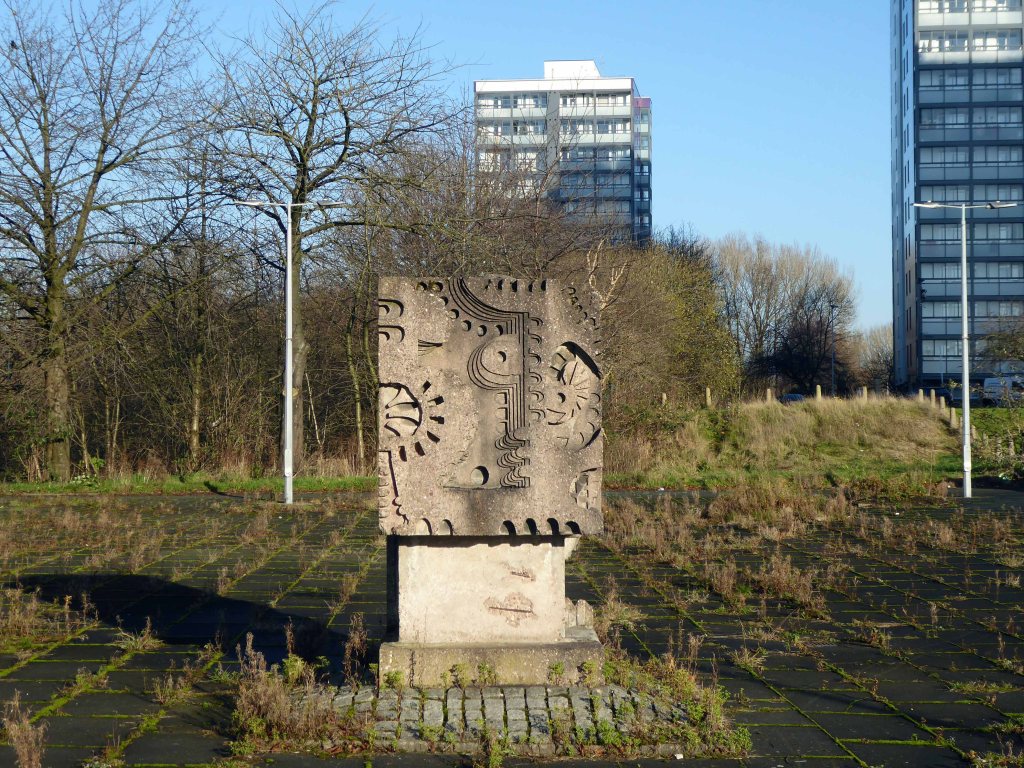
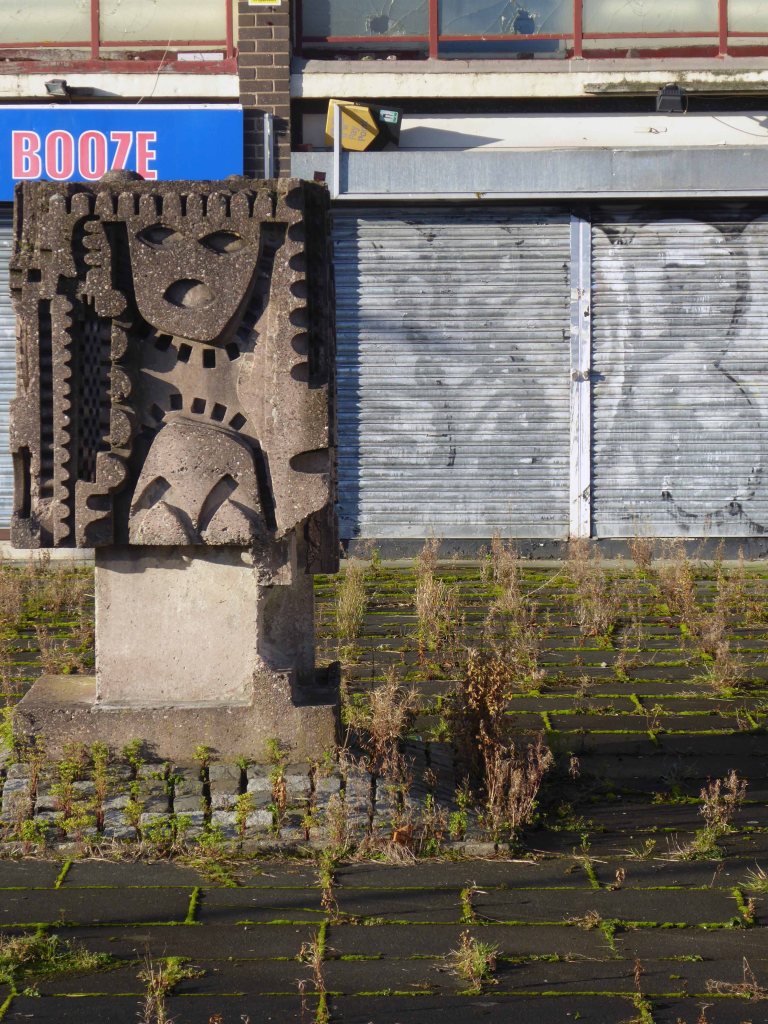
There is talk of relocation for the diminutive Mitchell totem, but as of today no sign of any action – all is in abeyance.
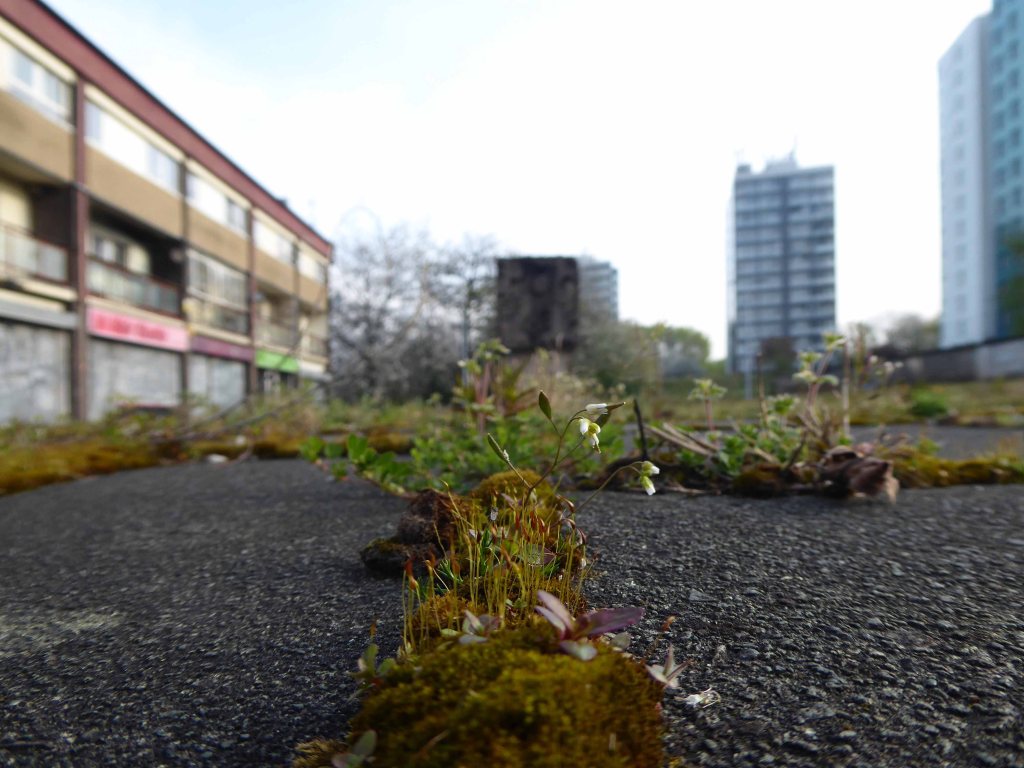
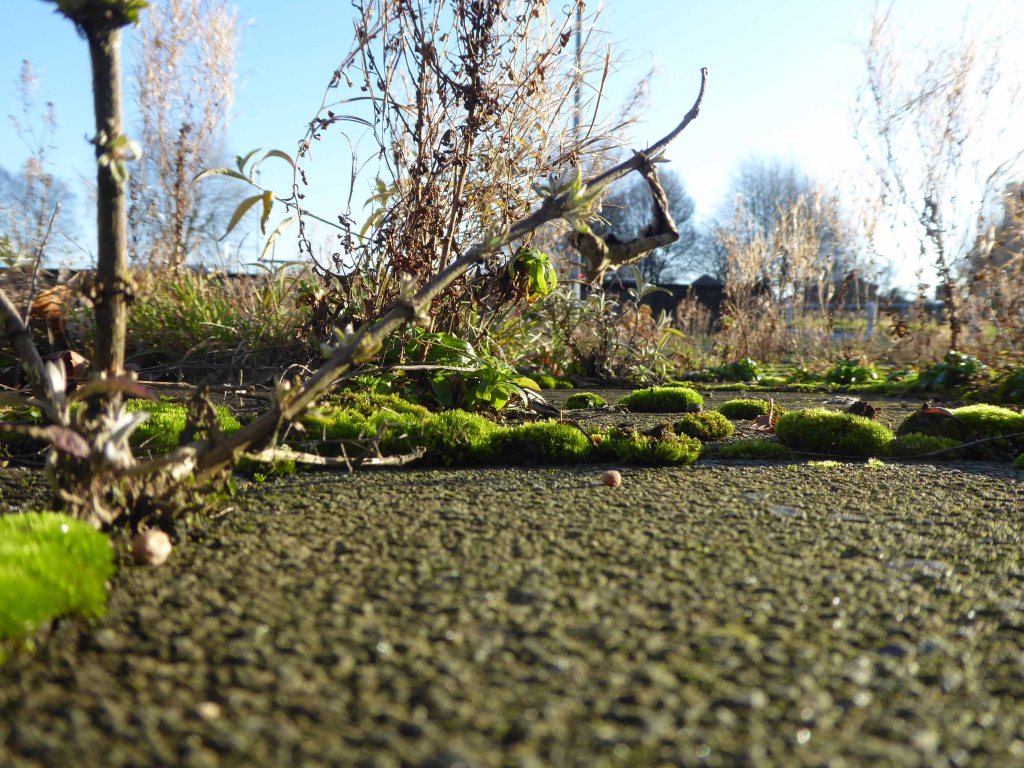
What we do see is the encroachment of flora, cleaner air, low or no level human activity encourages growth between the cracks.
And at the base of the plinth
I took the opportunity to get in close.
Move around in a merry dance.
Quite something to spend time in an ever changing urban space – devoid of company, save for the calming sound of birdsong and the distant rumble of a distant train.
I have even ventured as far afield as Huyton in search of other exemplars.
This is work of the highest order and importance.
It sits by a busy London Road, behind an intrusive green steel fence, slowly acquiring a green patina – as moss and lichen attach themselves to the well weathered concrete.
Receiving occasional visits from the errant urban tagger.
It deserves much better – a lush grassed apron, discrete public seating, regular tree maintenance – respect.
We do not suffer from a surfeit of significant mid-century public art – its guardians should straighten up and fly right.
Today on my way elsewhere, in search of something or other, I walked into the lobby of the CIS.
I asked permission from the Receptionist to take a few snaps, was referred to the Head of Security, who referred me to the Receptionist, who ‘phoned Paul, who turned out to be Steve, who thought that it would be OK.
So I did – here are those very snaps, my thanks to the cooperative staff of the Cooperative Insurance Society.
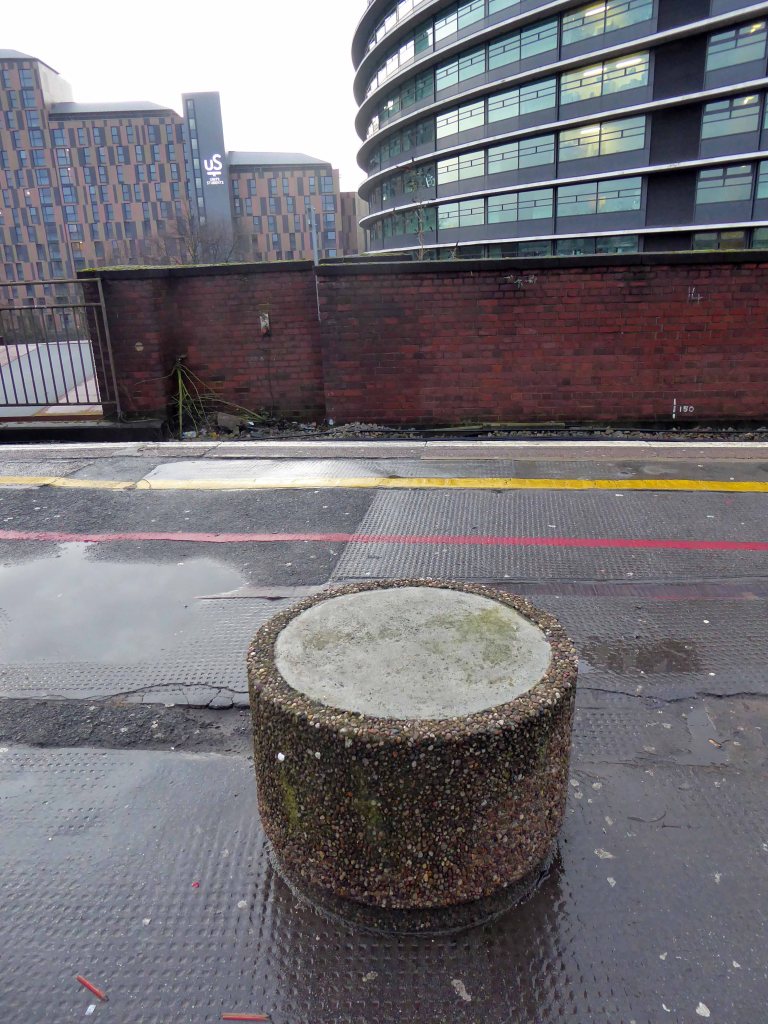
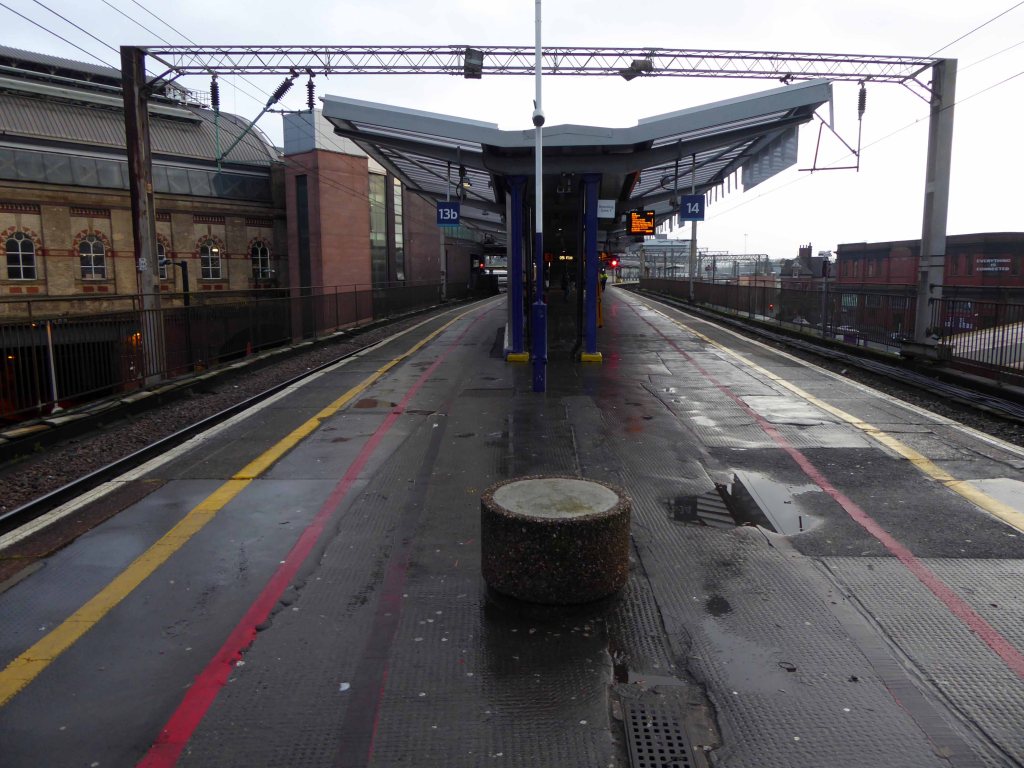
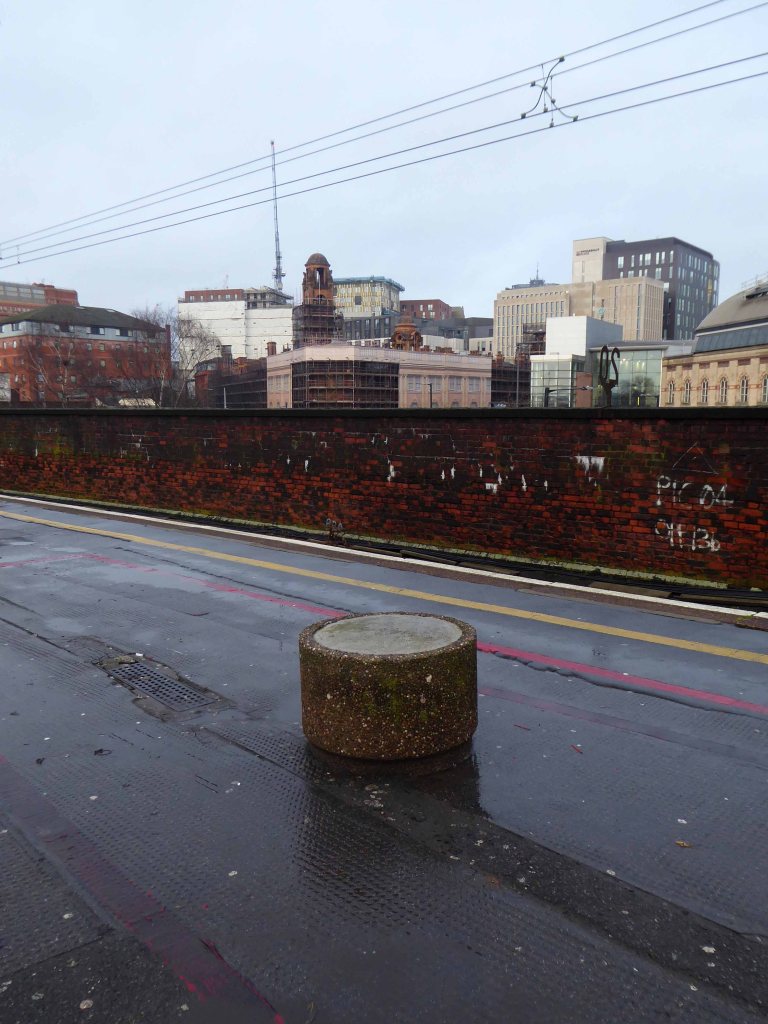
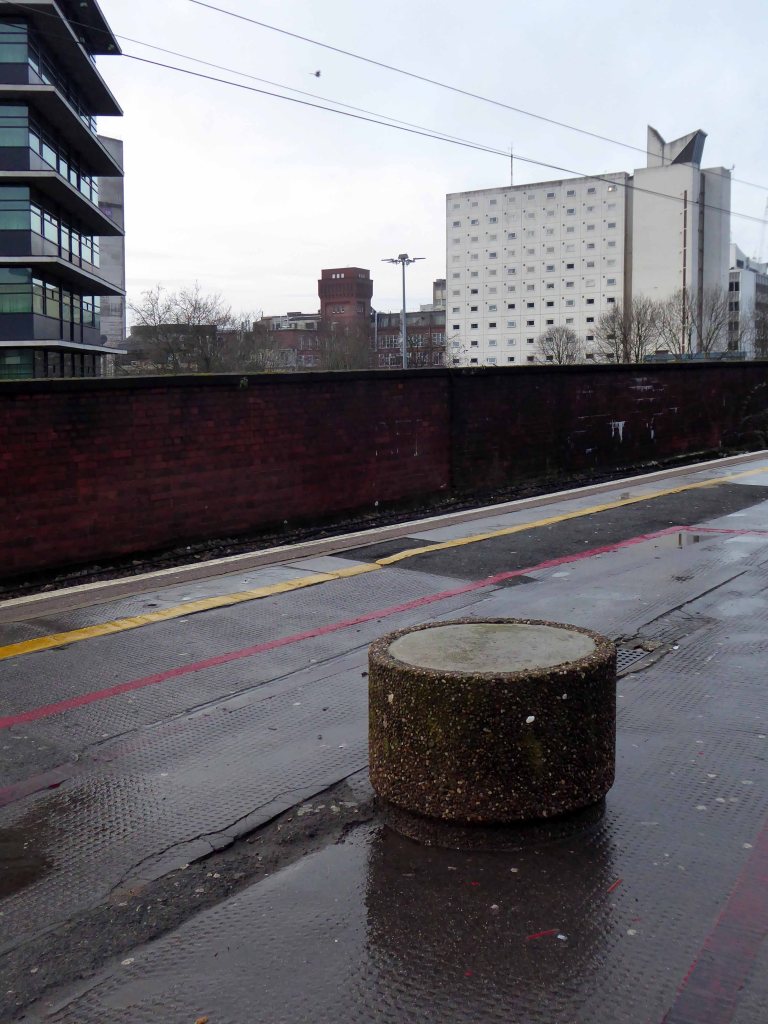
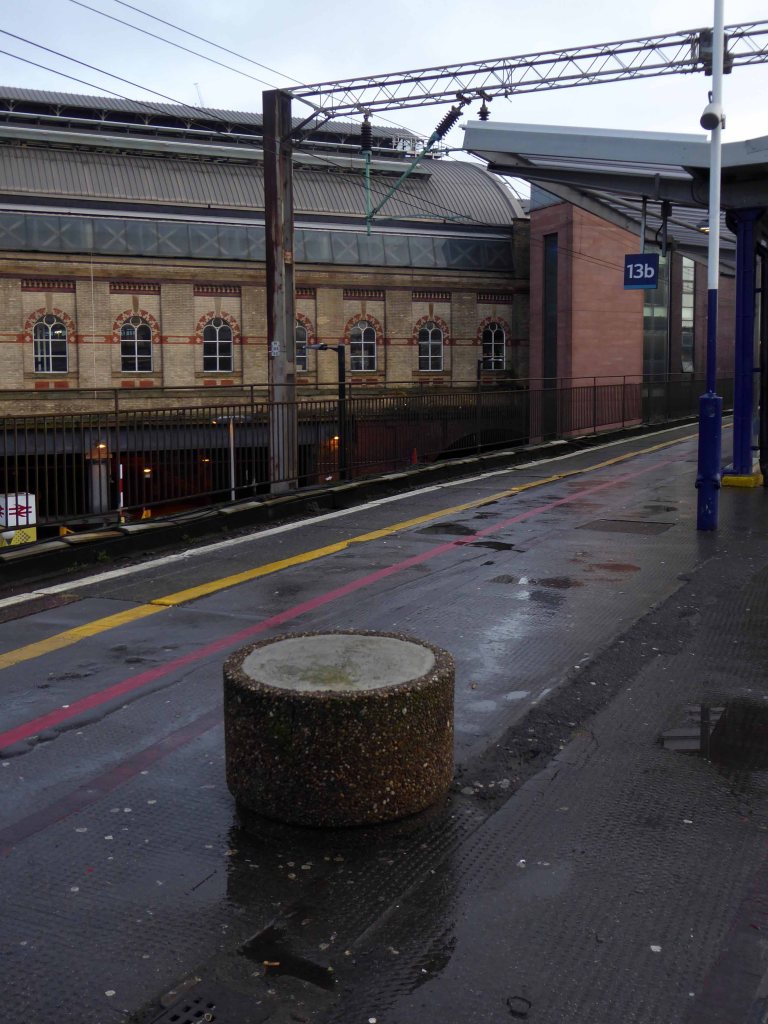
So here we are again at Piccadilly Station – stood standing at the western end of Platforms 13 and 14, waiting on a Southport train.
Time to spare and spend a few more magic moments with an old and trusted friend.
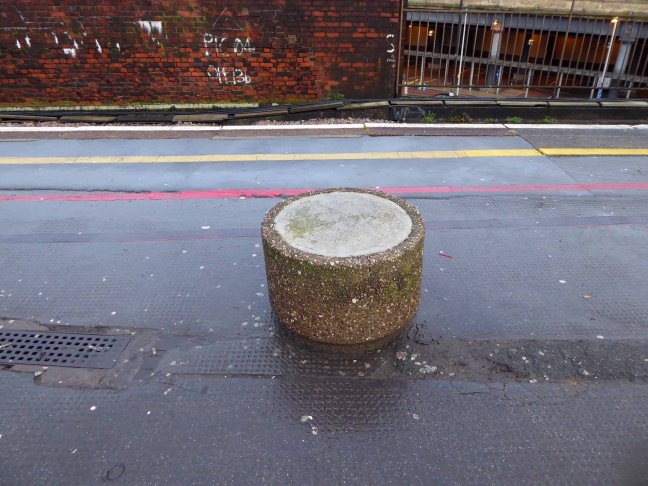
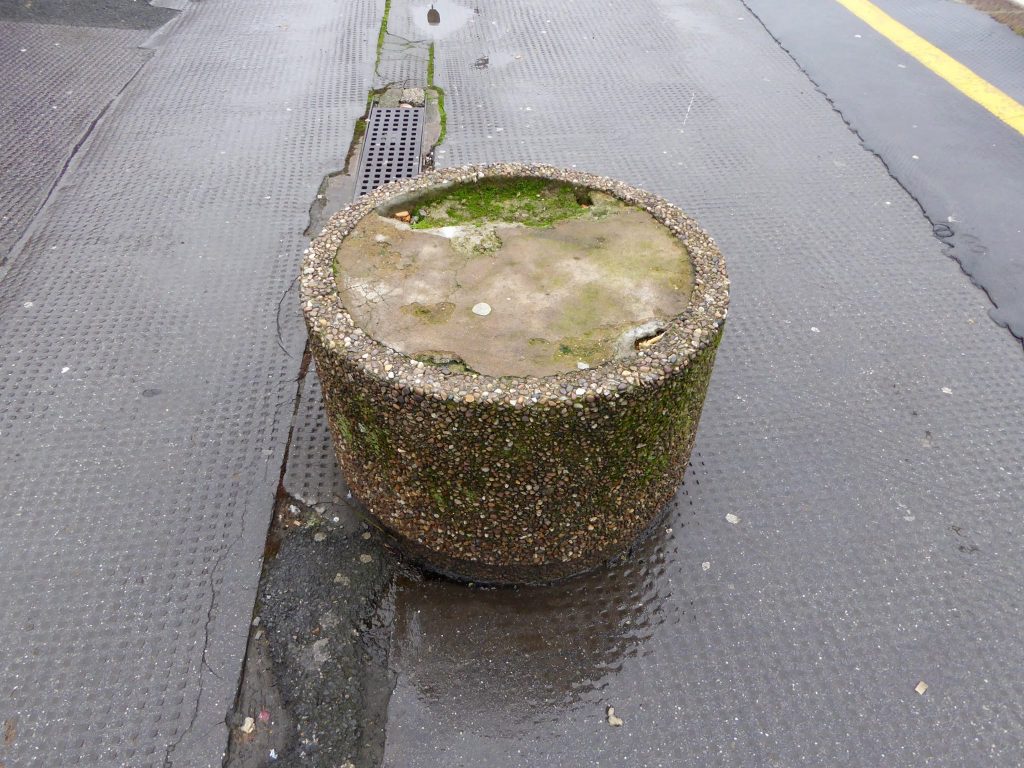
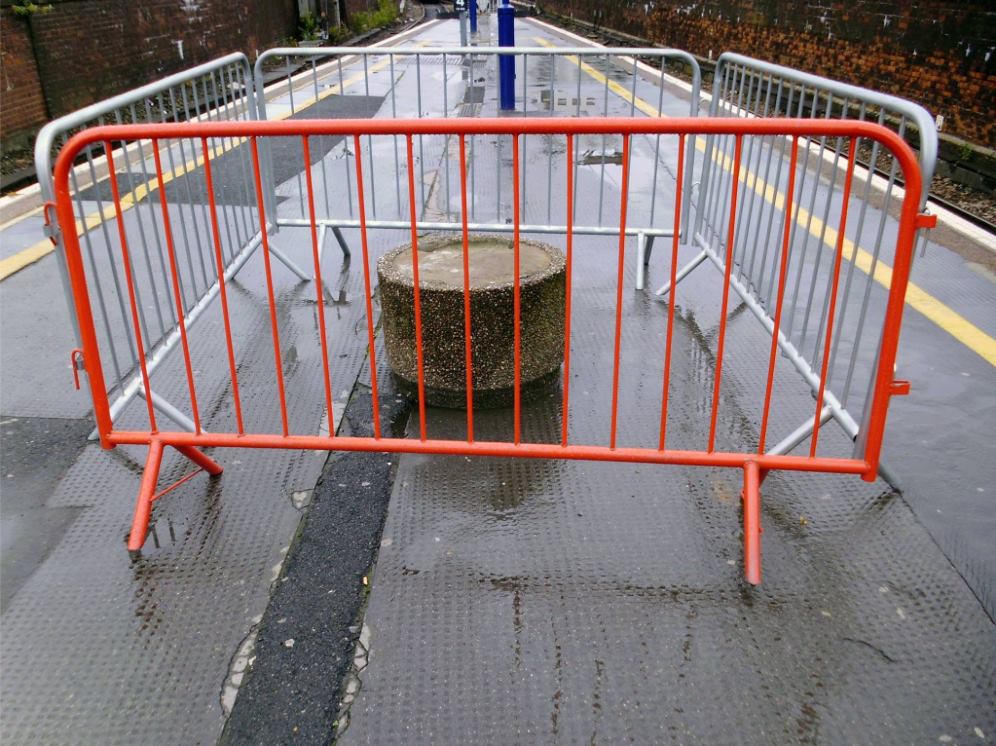
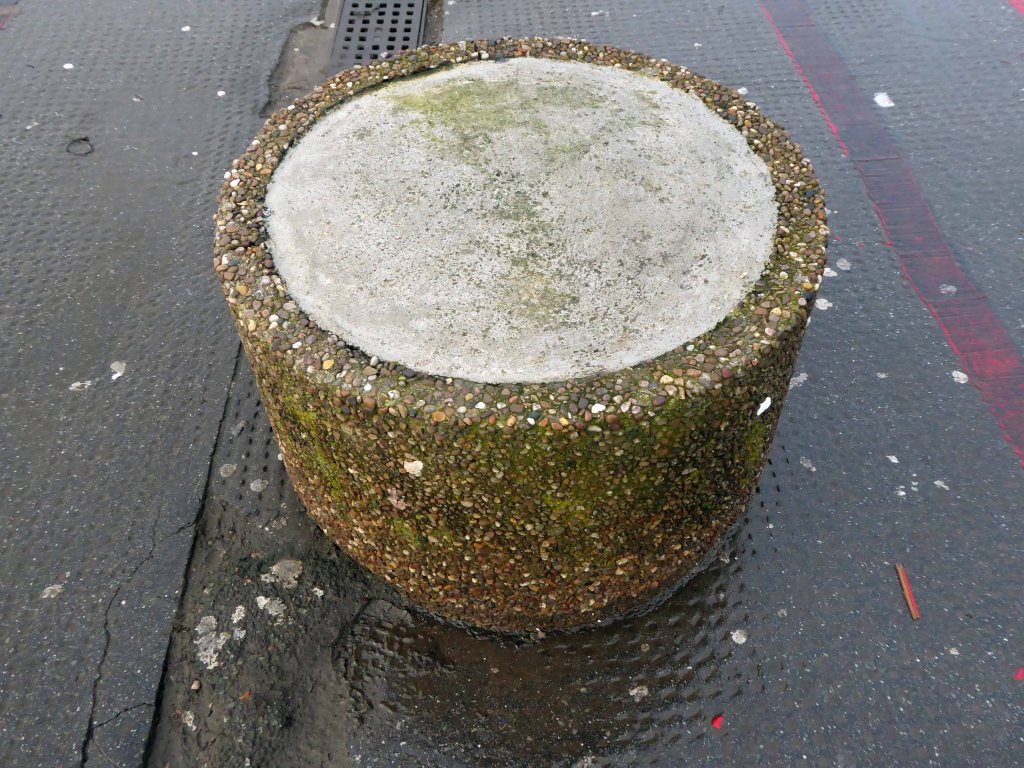
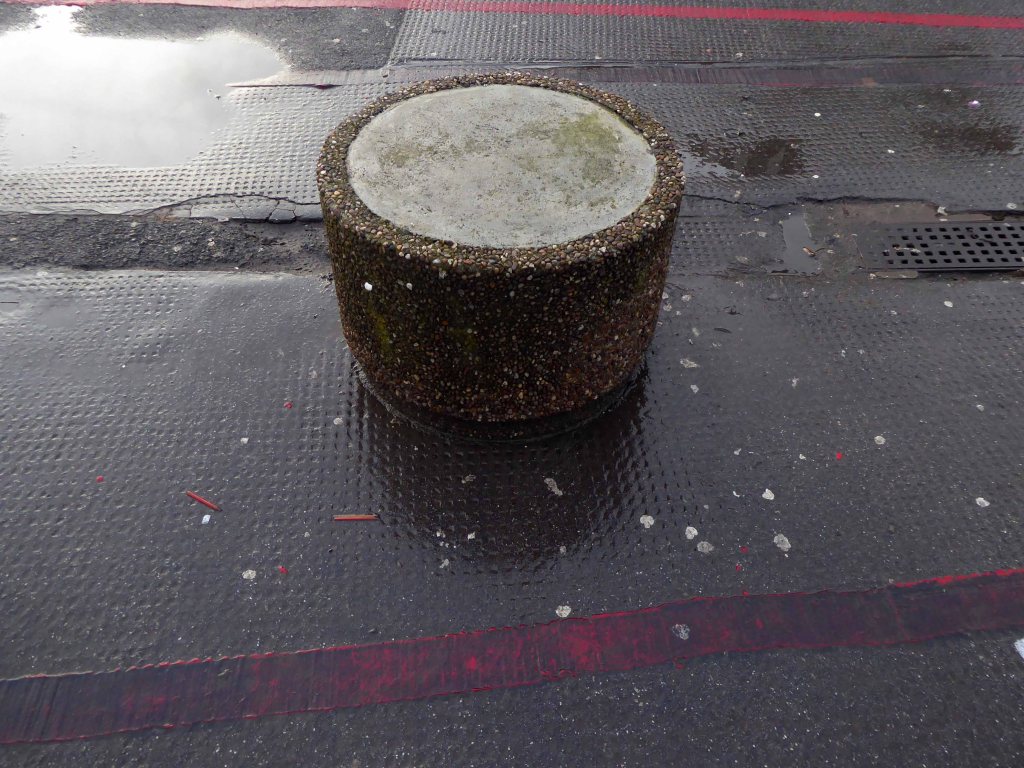
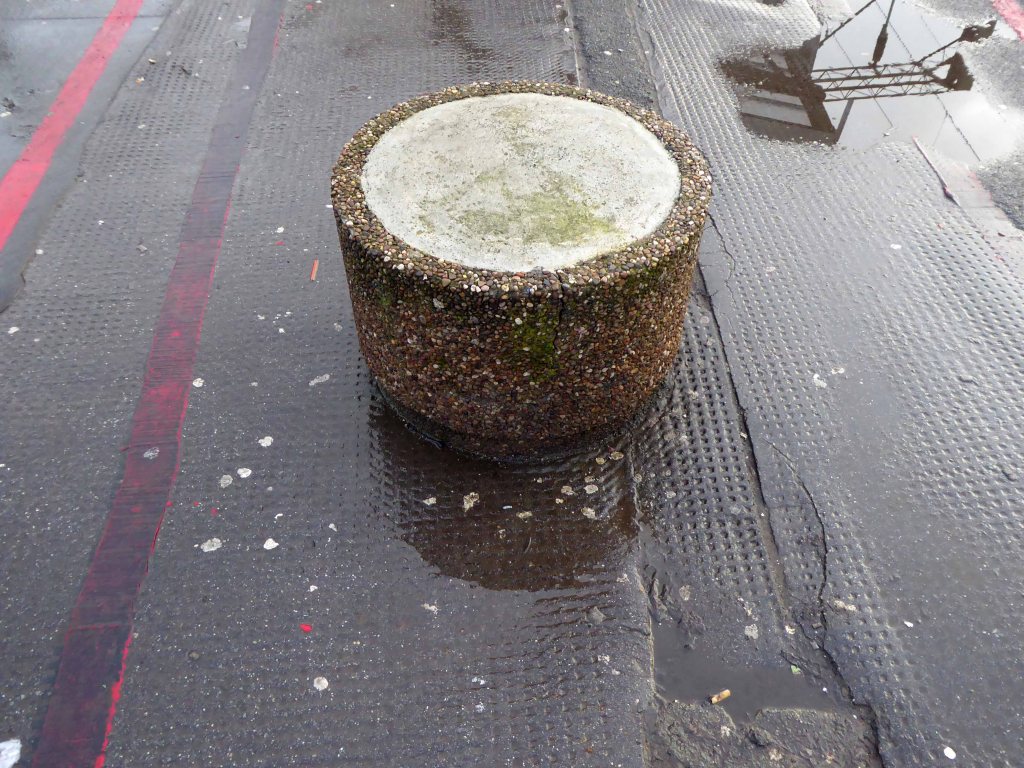
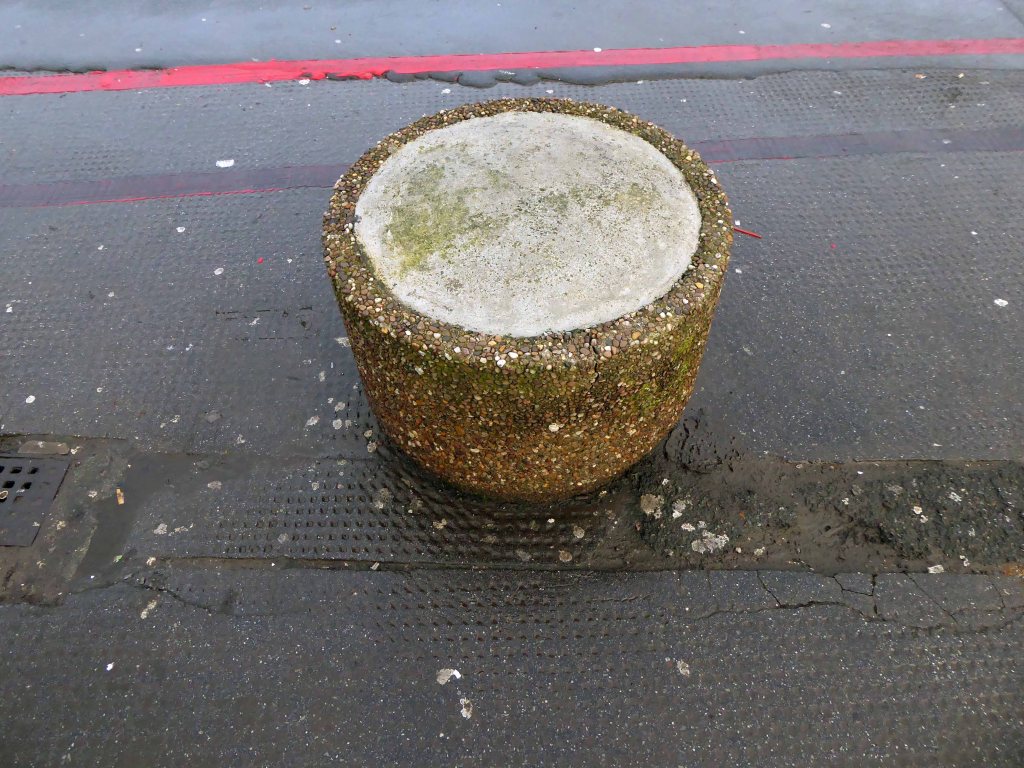
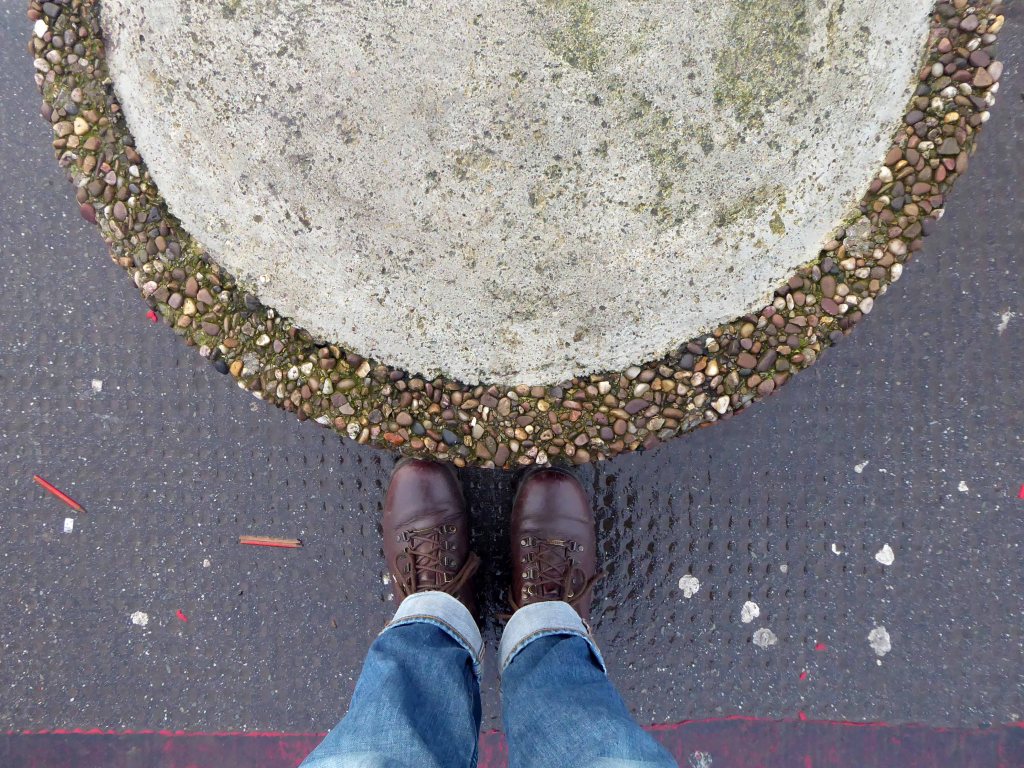
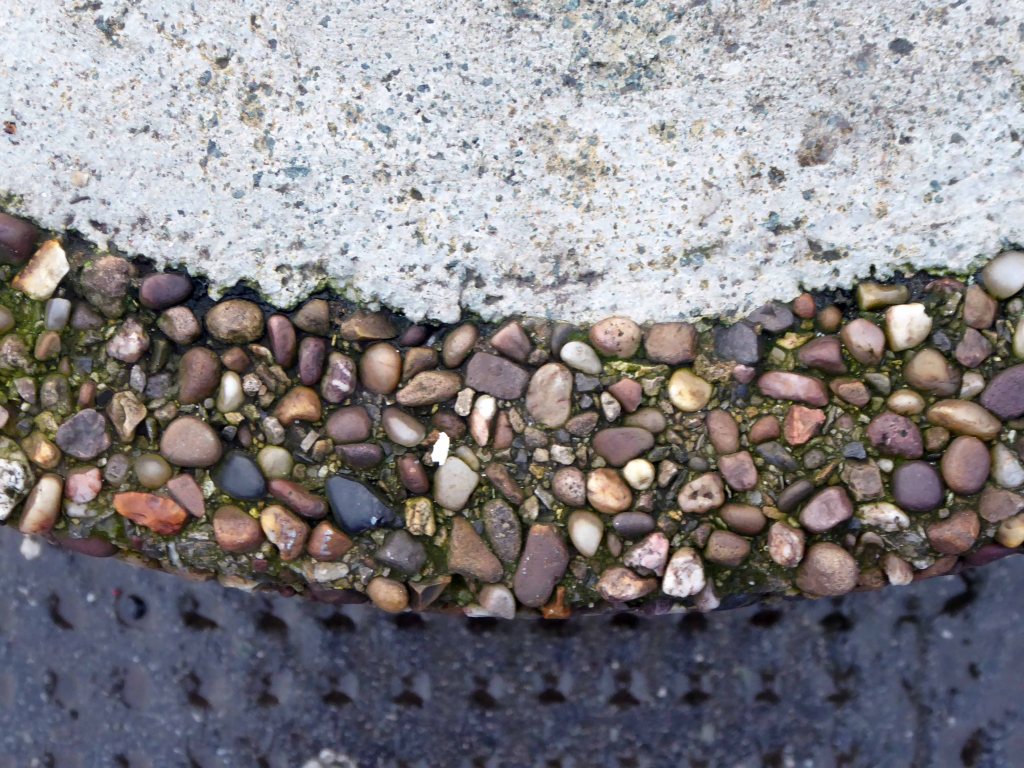
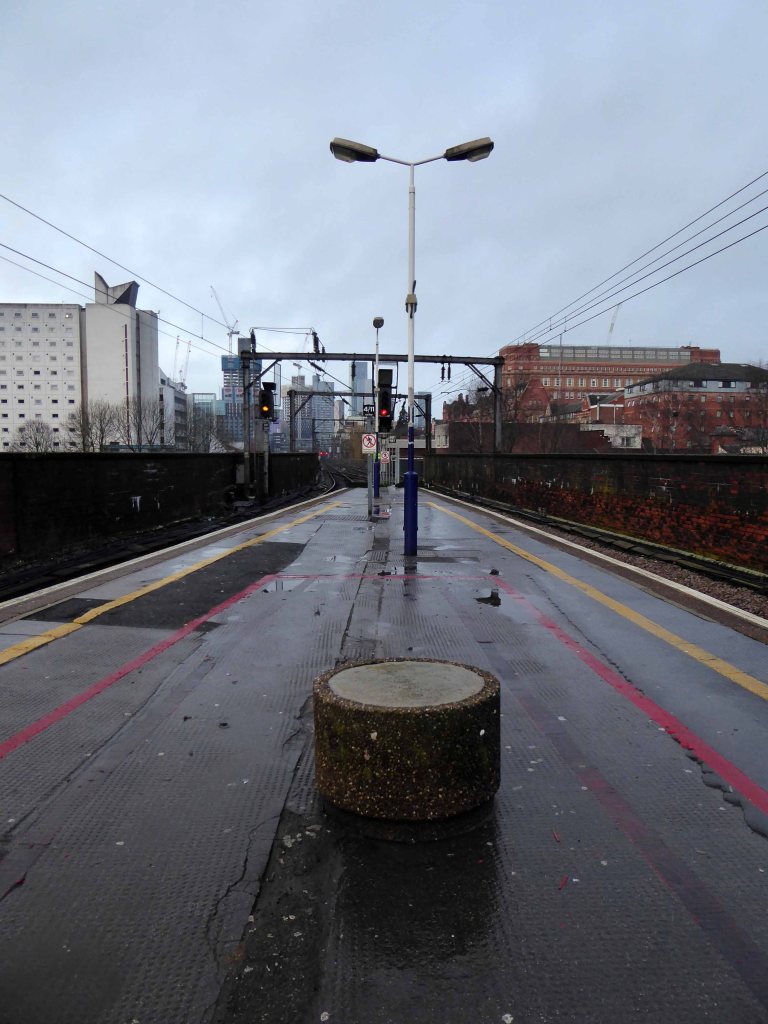
The back-filled concrete planter.
Seen here in a neglected and forlorn state, awaiting minor repairs to its upper sealed surface.
Once incarcerated and seemingly set for demolition, our diminutive concrete pal has lived to fight another day.
Standing alone in all elements, disabused by illicit smokers, grabbing a serruptitious chuff, whilst avoiding the ubiquitous Network Rail CCTV.
Sat upon by the indolent leg weary traveller, having missed yet another cancelled train.
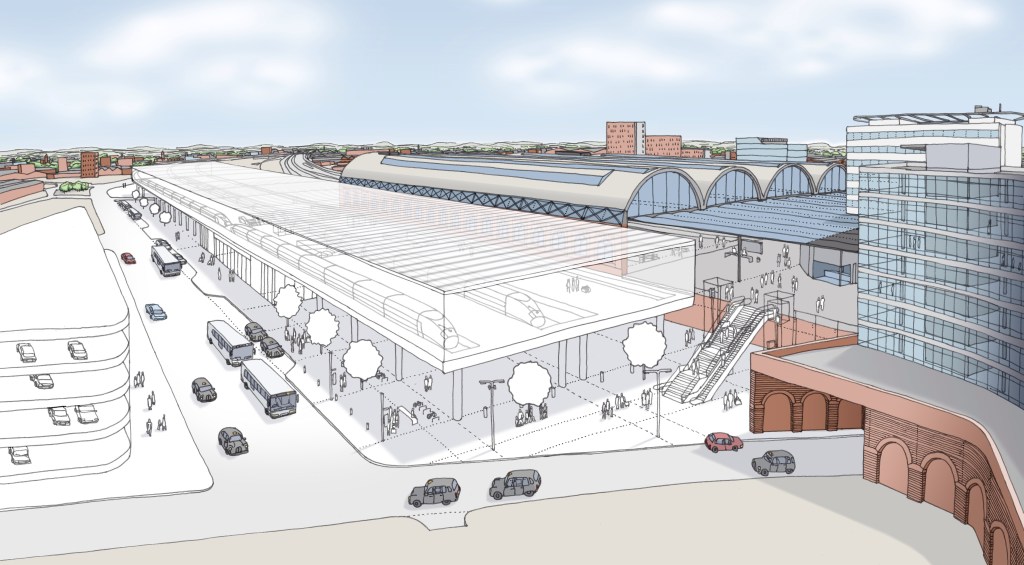
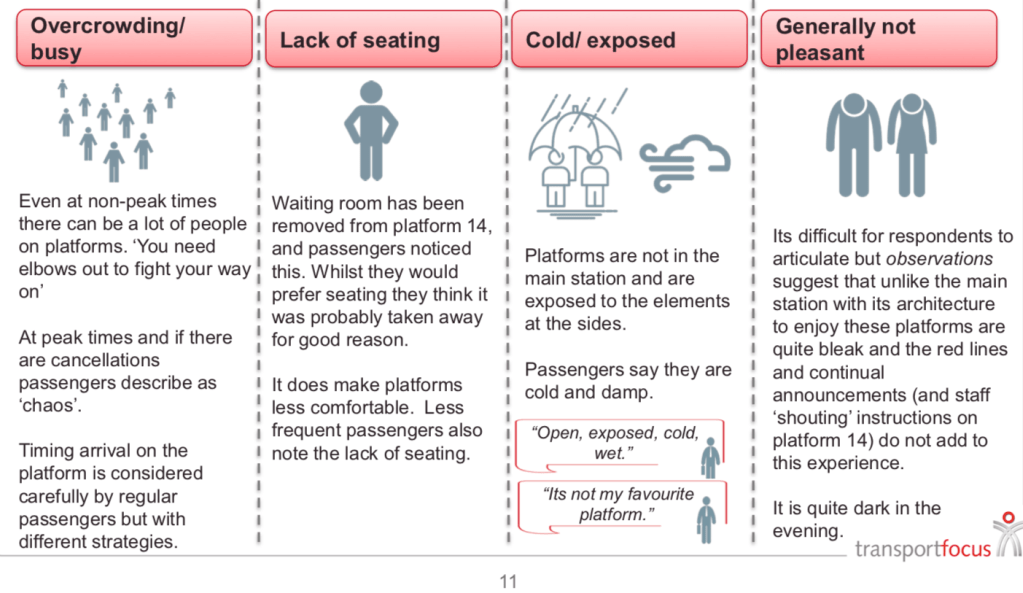
Your days may yet be numbered, as the platforms are part of a Station upgrade – the platforms are not thought to be commodious by the majority of train users.
I for one shall campaign for your preservation and reinstatement – right at the heart of matters.
My personal, totemic modernist work of public art.
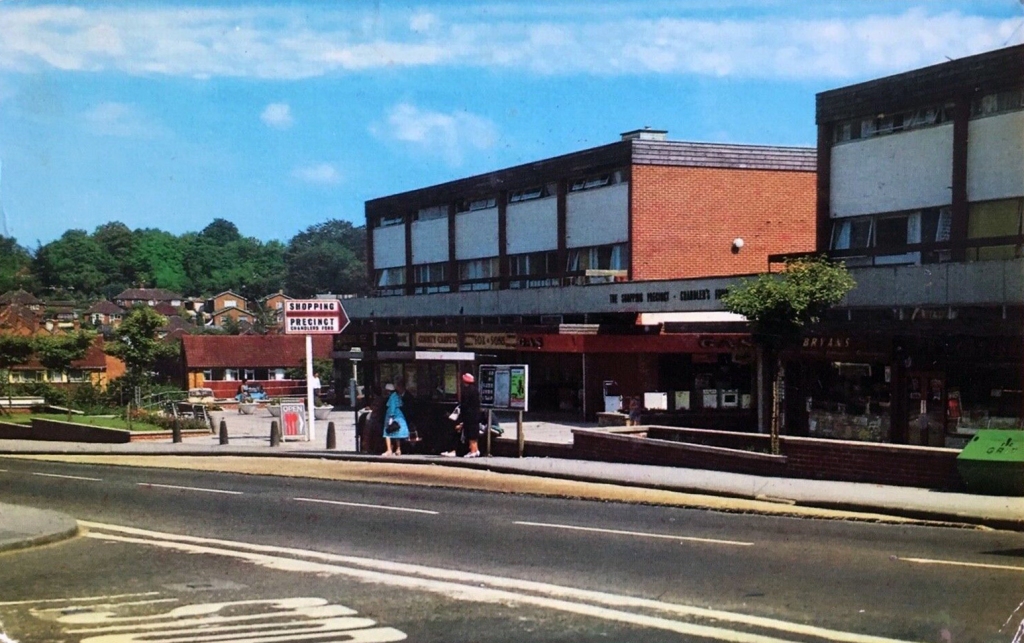
This time of year, with limited light and an inclement climate, it’s far easier to travel by picture postcard. Researching and searching eBay to bring you the finest four colour repro pictures of our retail realm.
We have of course been here before – via a previous post.
It is however important to keep abreast of current coming and goings, developments are ever so often overwritten by further developments.
Precincts my appear and disappear at will – so let’s take a look.
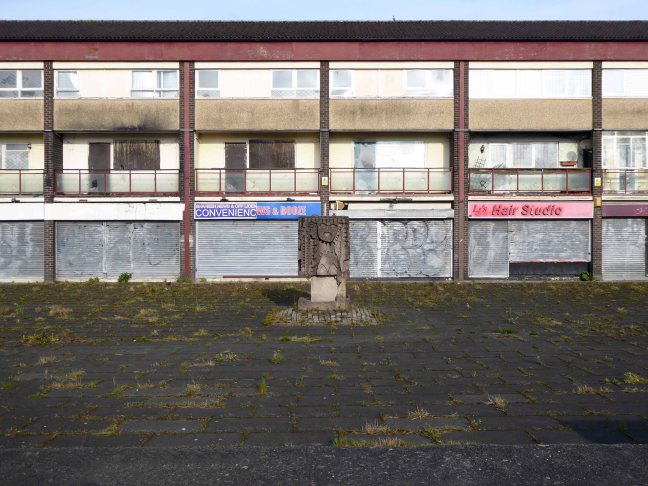
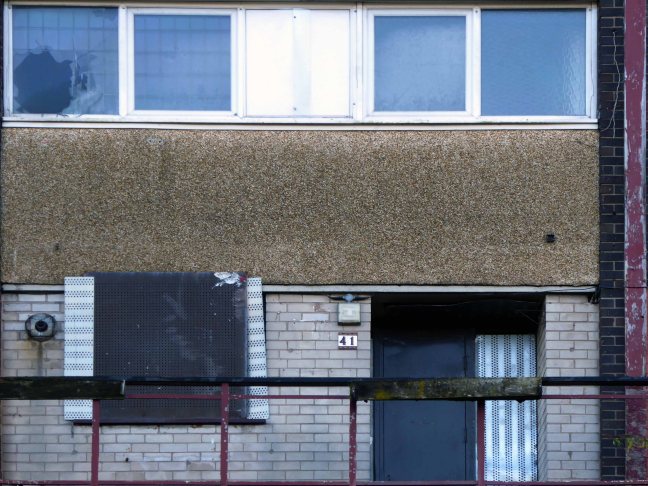
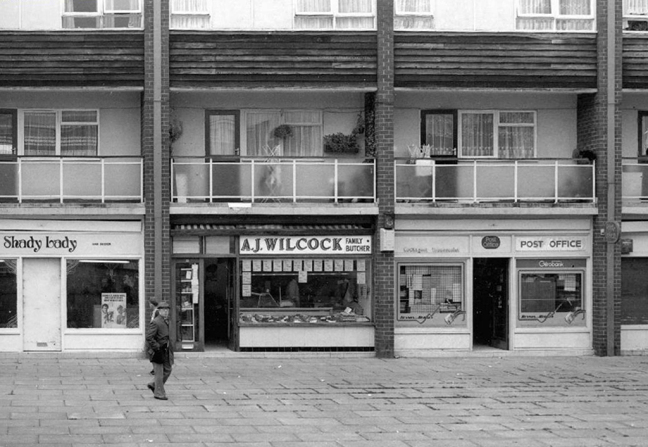
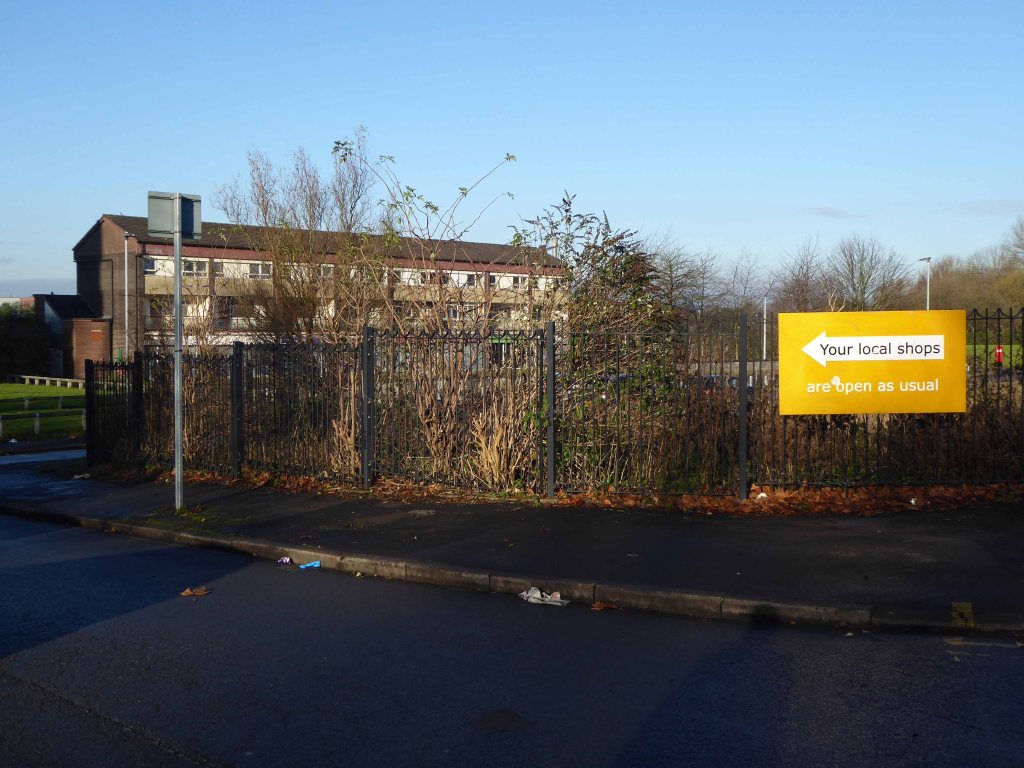
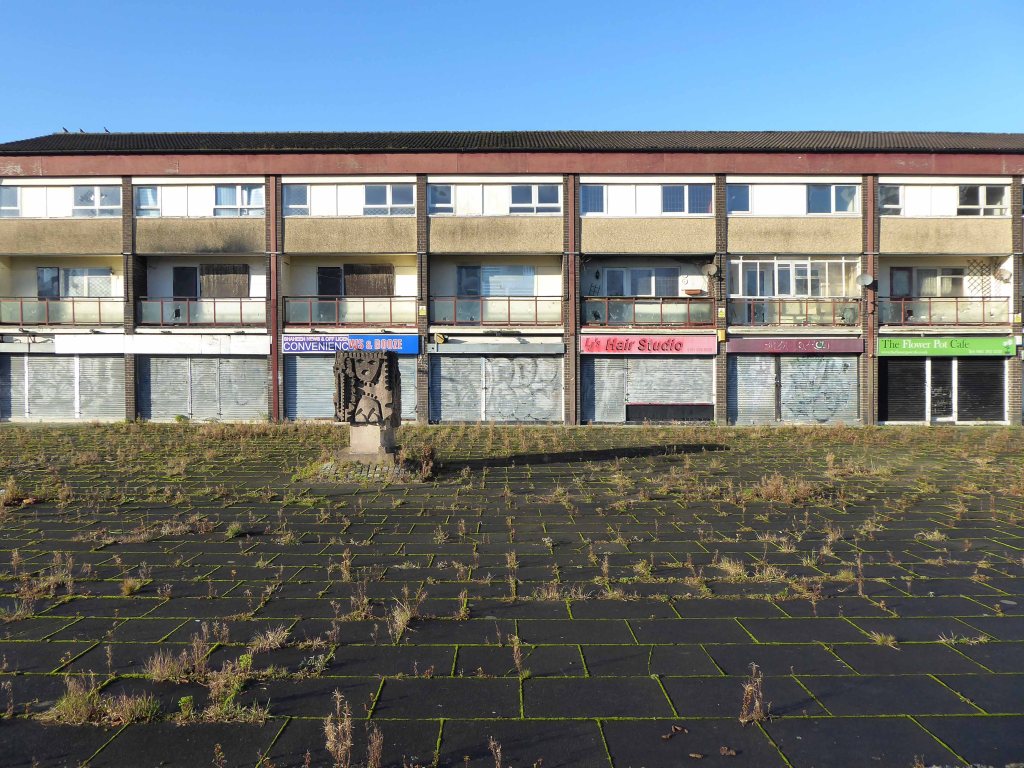
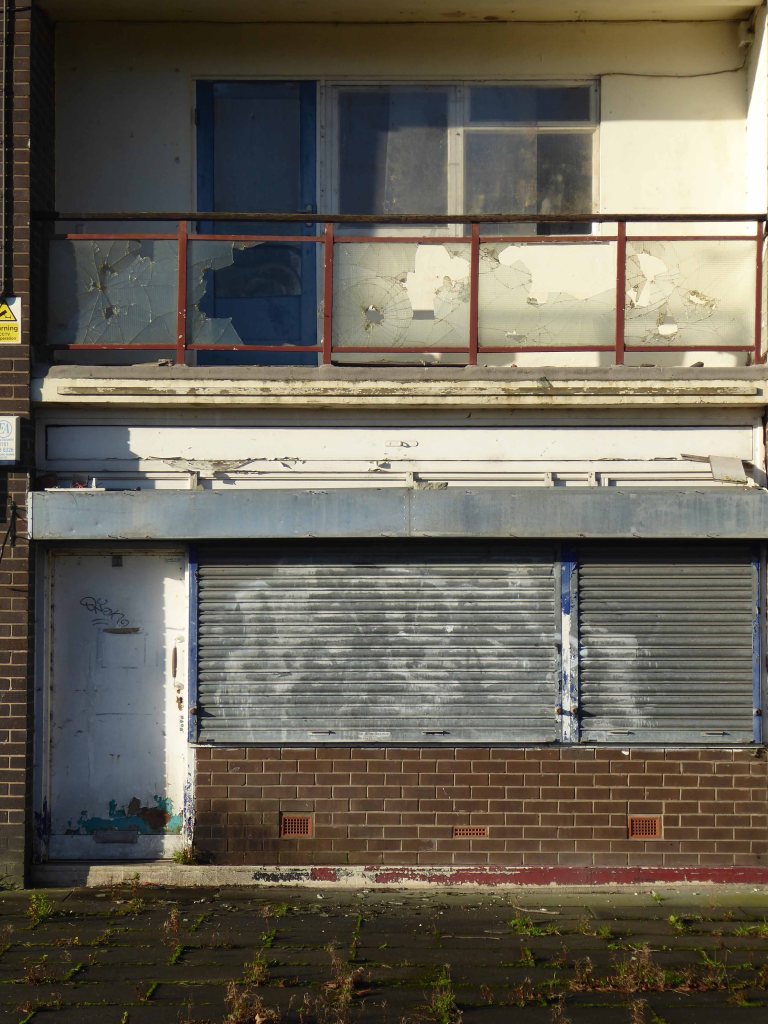
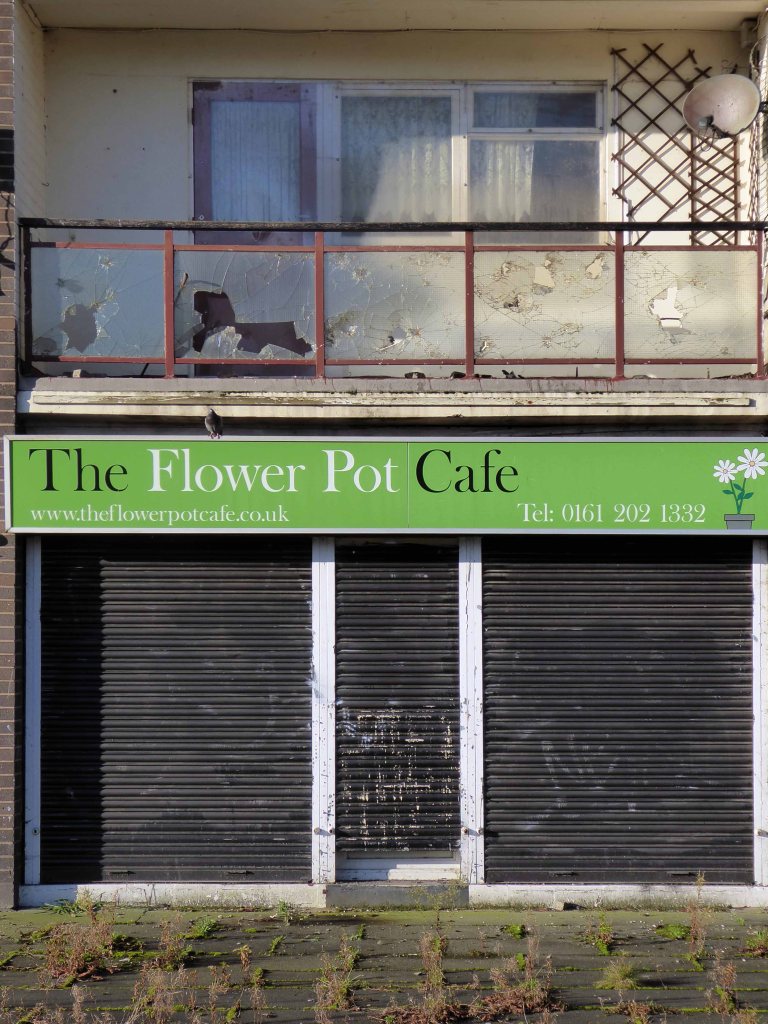
Stasis is the order of the day – the last stand for this forlorn stand of shops.
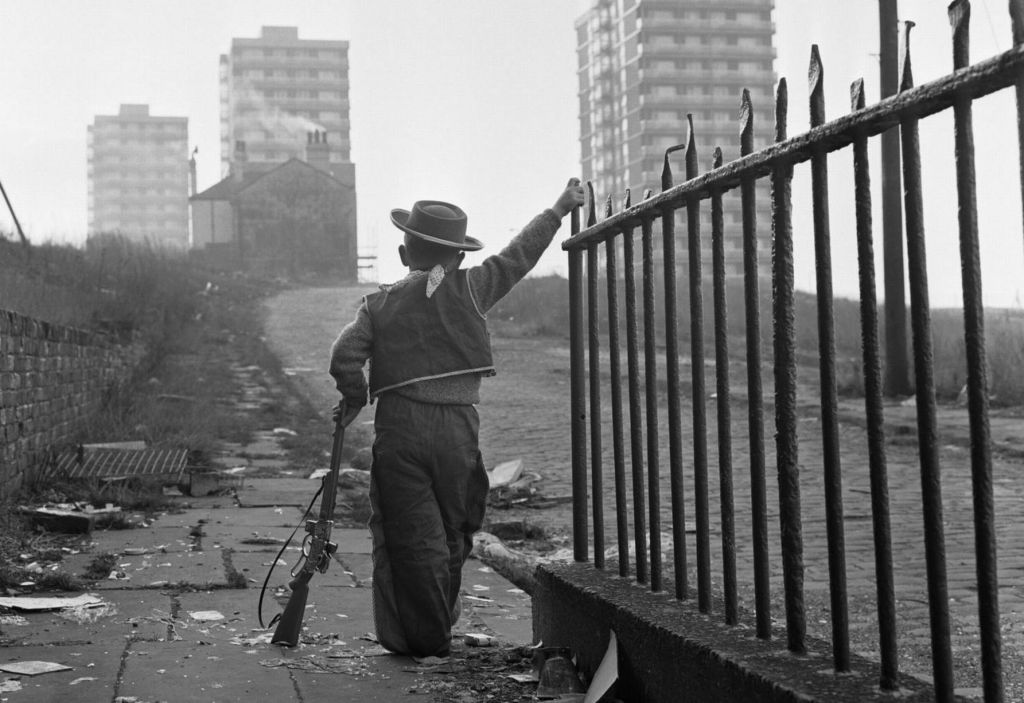
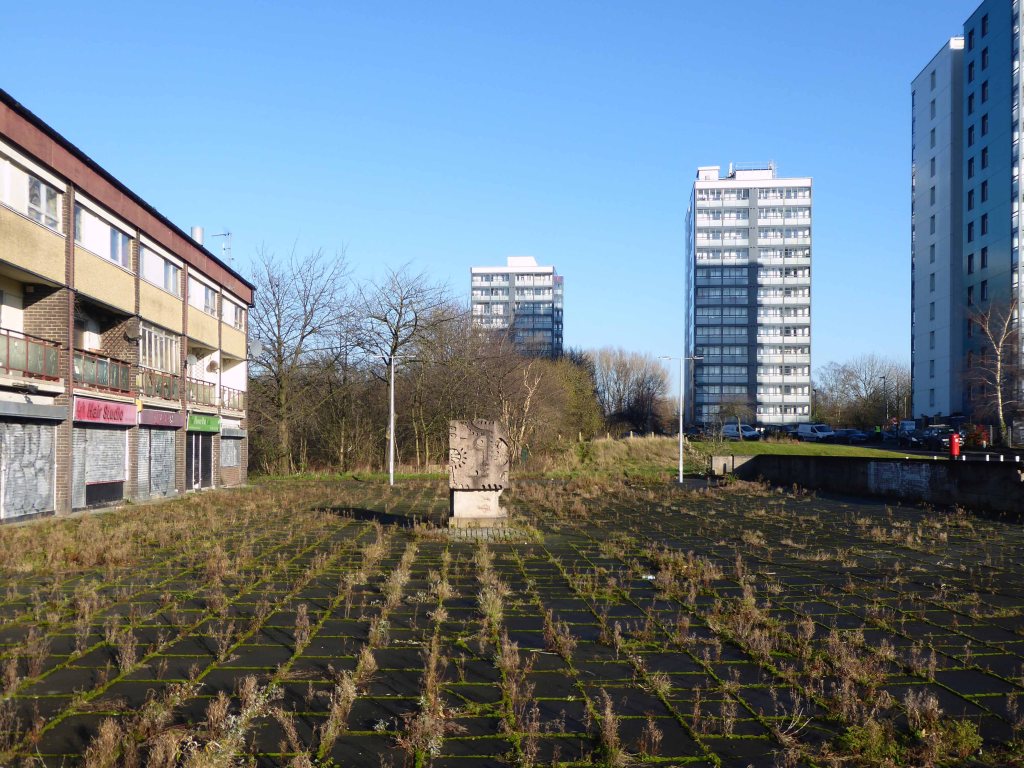
Once the realm of cobbles, railings, high rise arrivals and urban cowboys – an area overwhelmed by the weight of its past and the insubstantial promise of a sustainable future.
Where once productive and fulfilling lives were lived, buddleia now blooms, whilst thin grass entwines around forlorn fencing and betwixt ever widening cracks in the uneven paving.
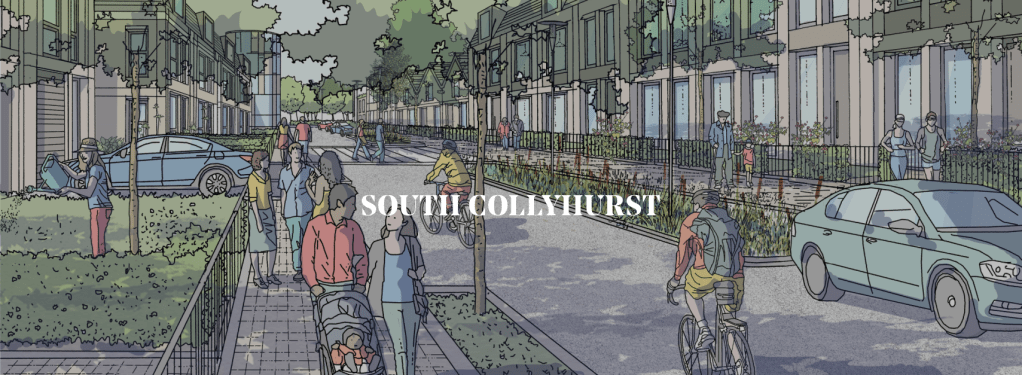
Development in South Collyhurst will take the form of residential-led, family-focused neighbourhoods. We’ll be providing a variety of housing types and tenures to encourage diversity, along with a mix of social and community infrastructure that supports a family lifestyle in close proximity to the city centre.
There are two ideas of government. There are those who believe that if you just legislate to make the well-to-do prosperous, that their prosperity will leak through on those below. The Democratic idea has been that if you legislate to make the masses prosperous their prosperity will find its way up and through every class that rests upon it.
William Jennings Bryan 1896
Indeed, You have turned the city into a heap of rubble, a fortified town into ruins; the fortress of strangers is a city no more; it will never be rebuilt.
Isiah 25:2
And they that shall be of thee shall build the old waste places: thou shalt raise up the foundations of many generations; and thou shalt be called, the repairer of the breach, the restorer of paths to dwell in.
Isiah 58:12
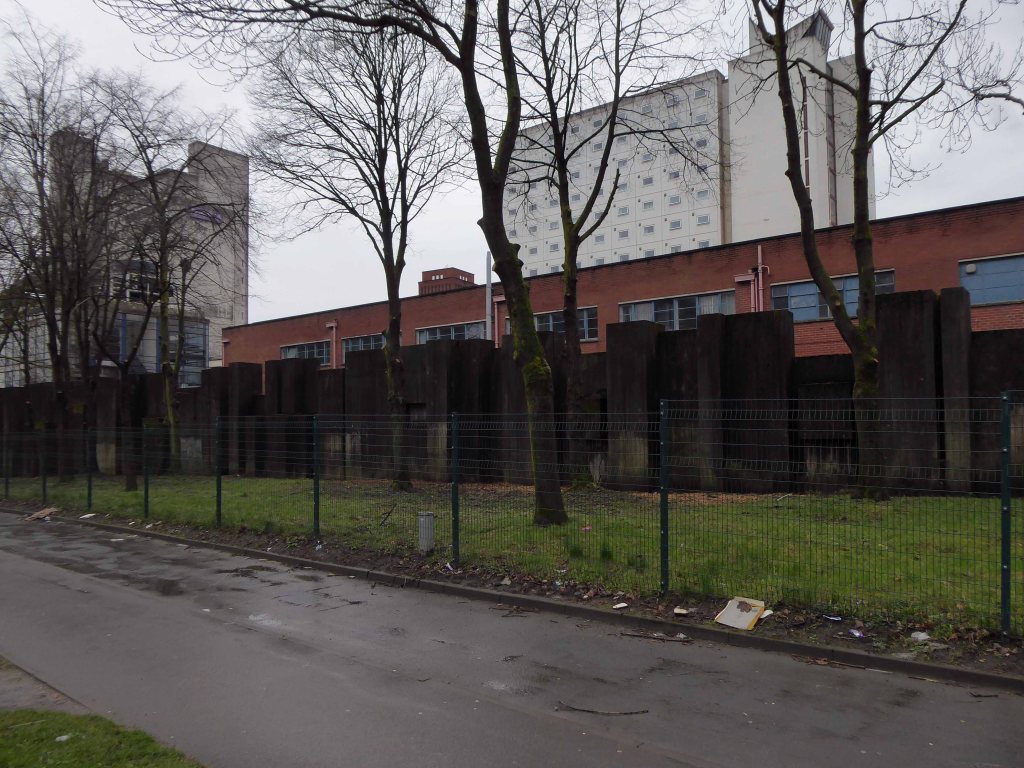
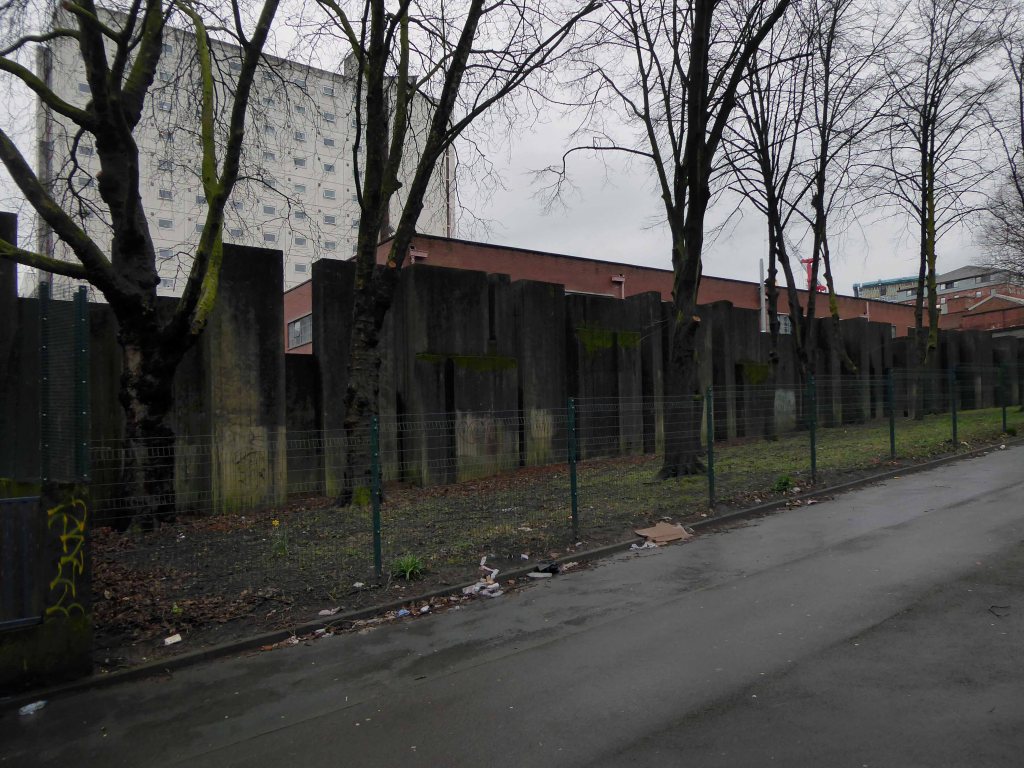
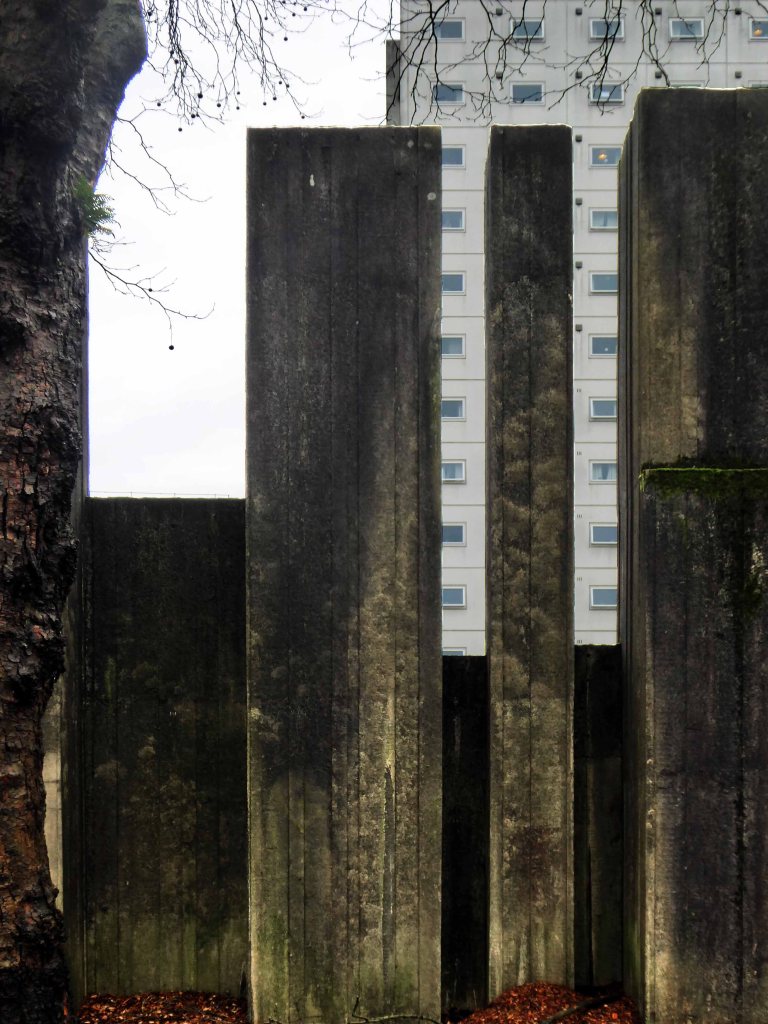
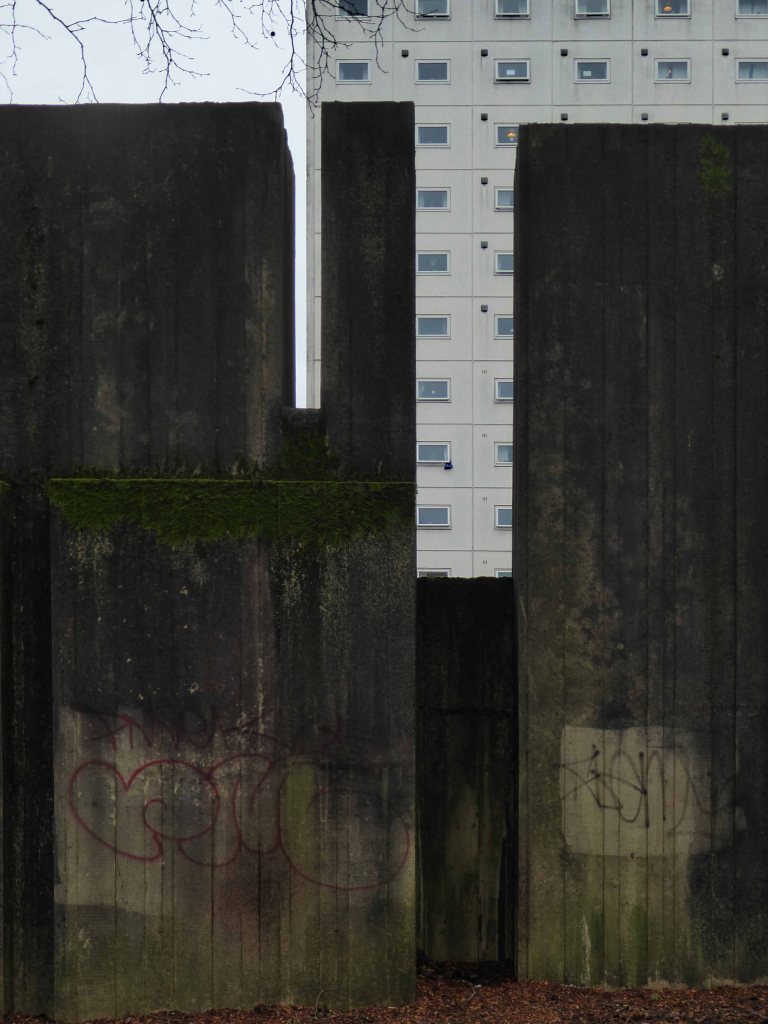
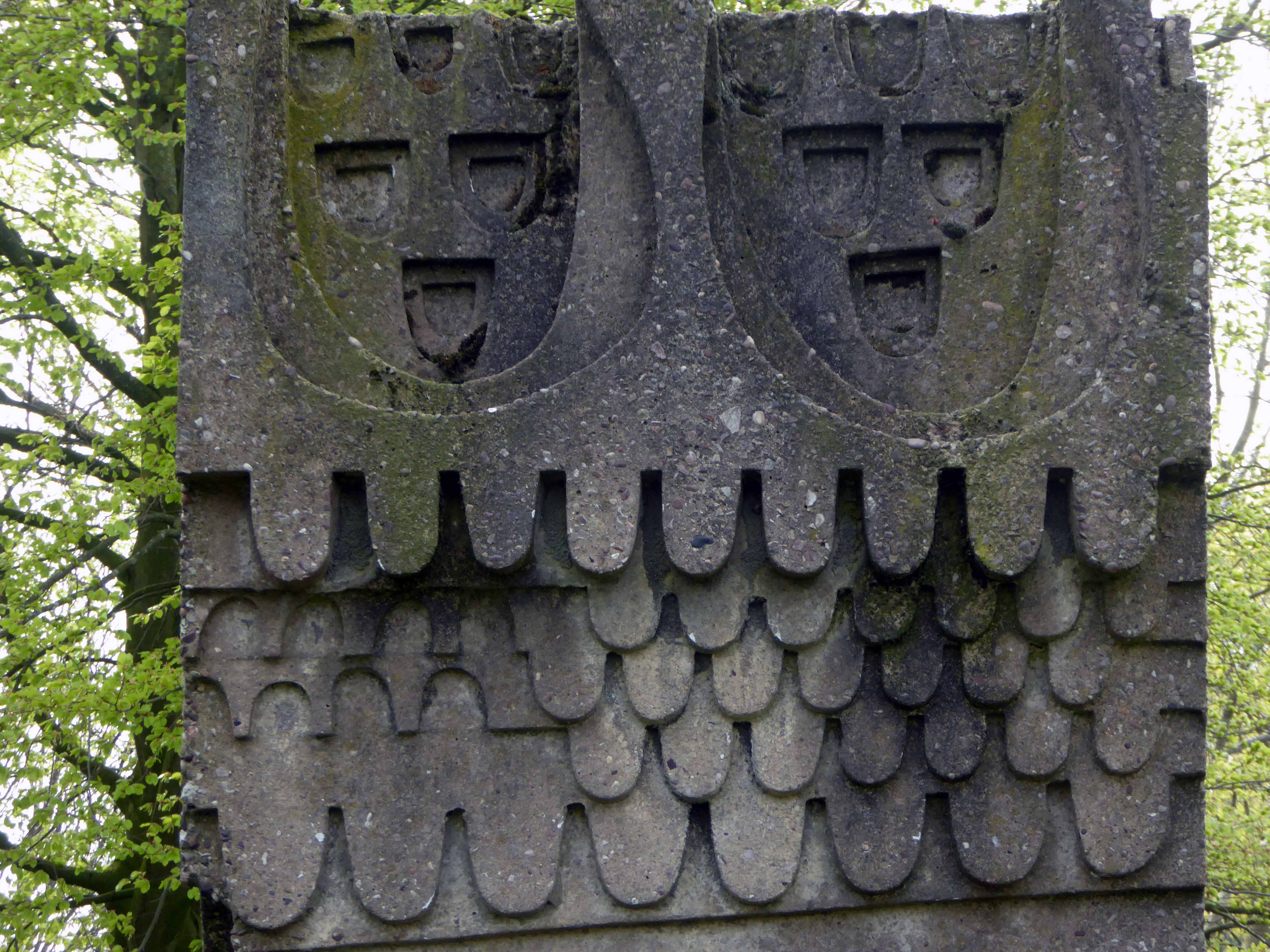
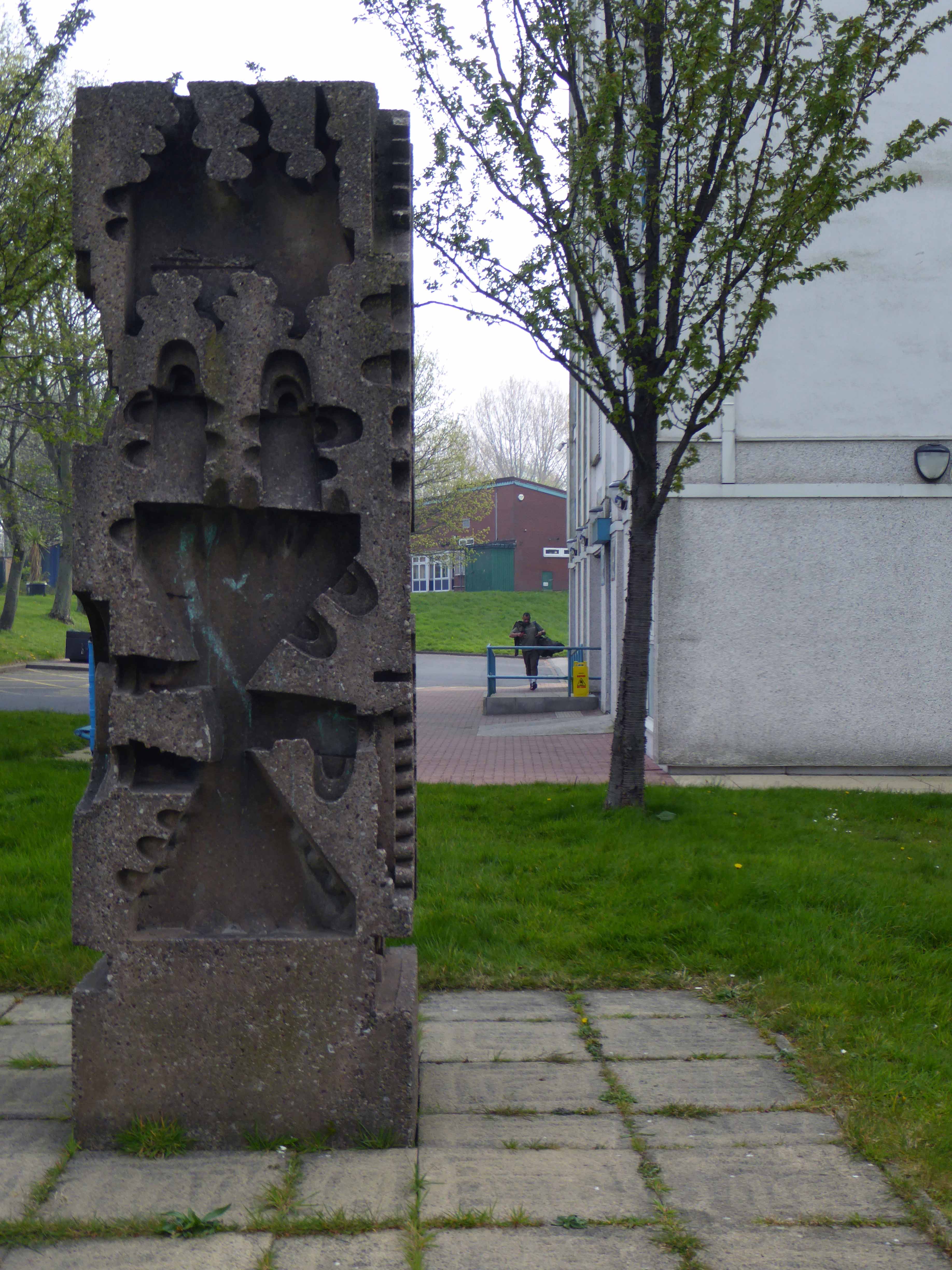
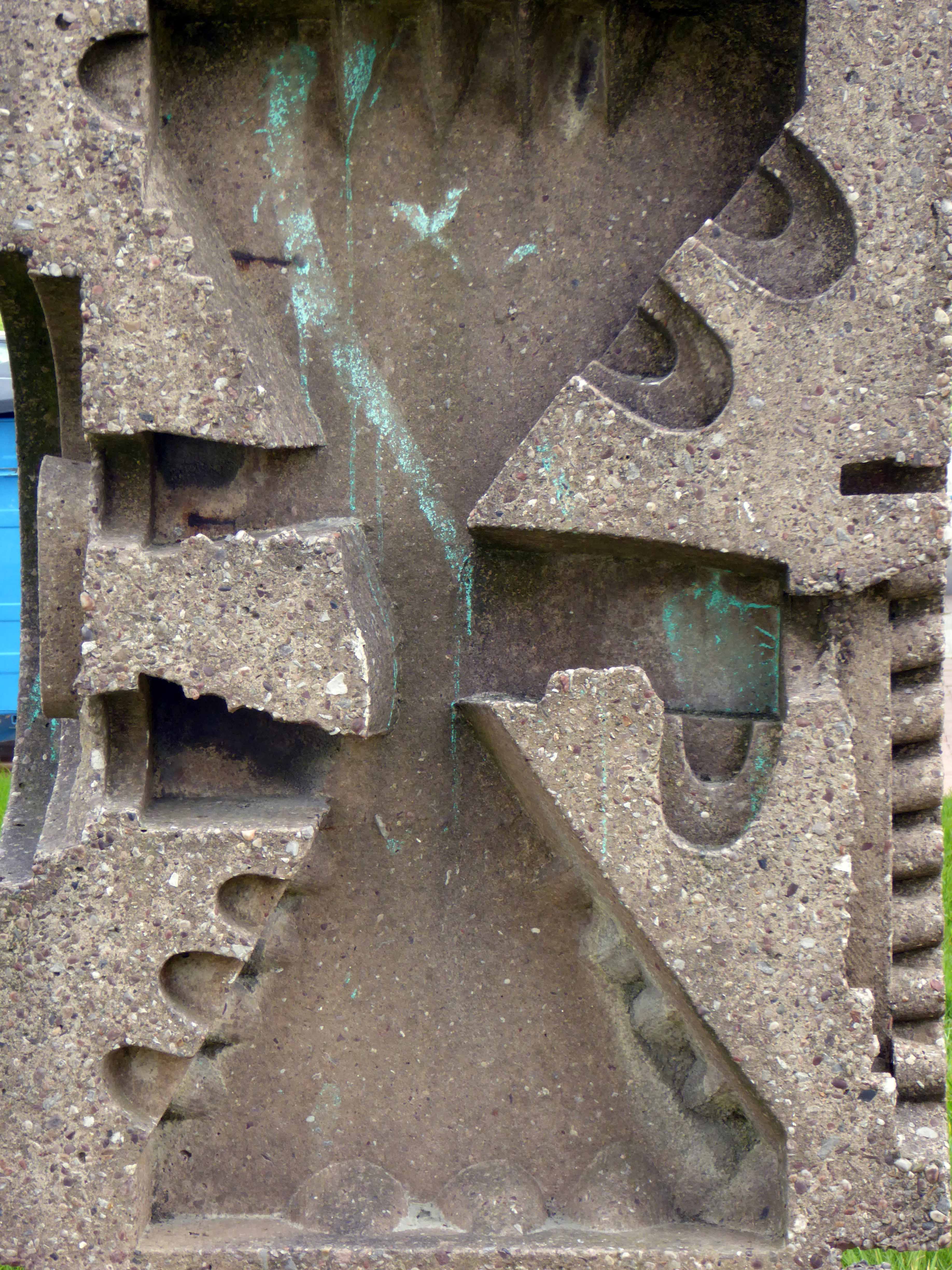
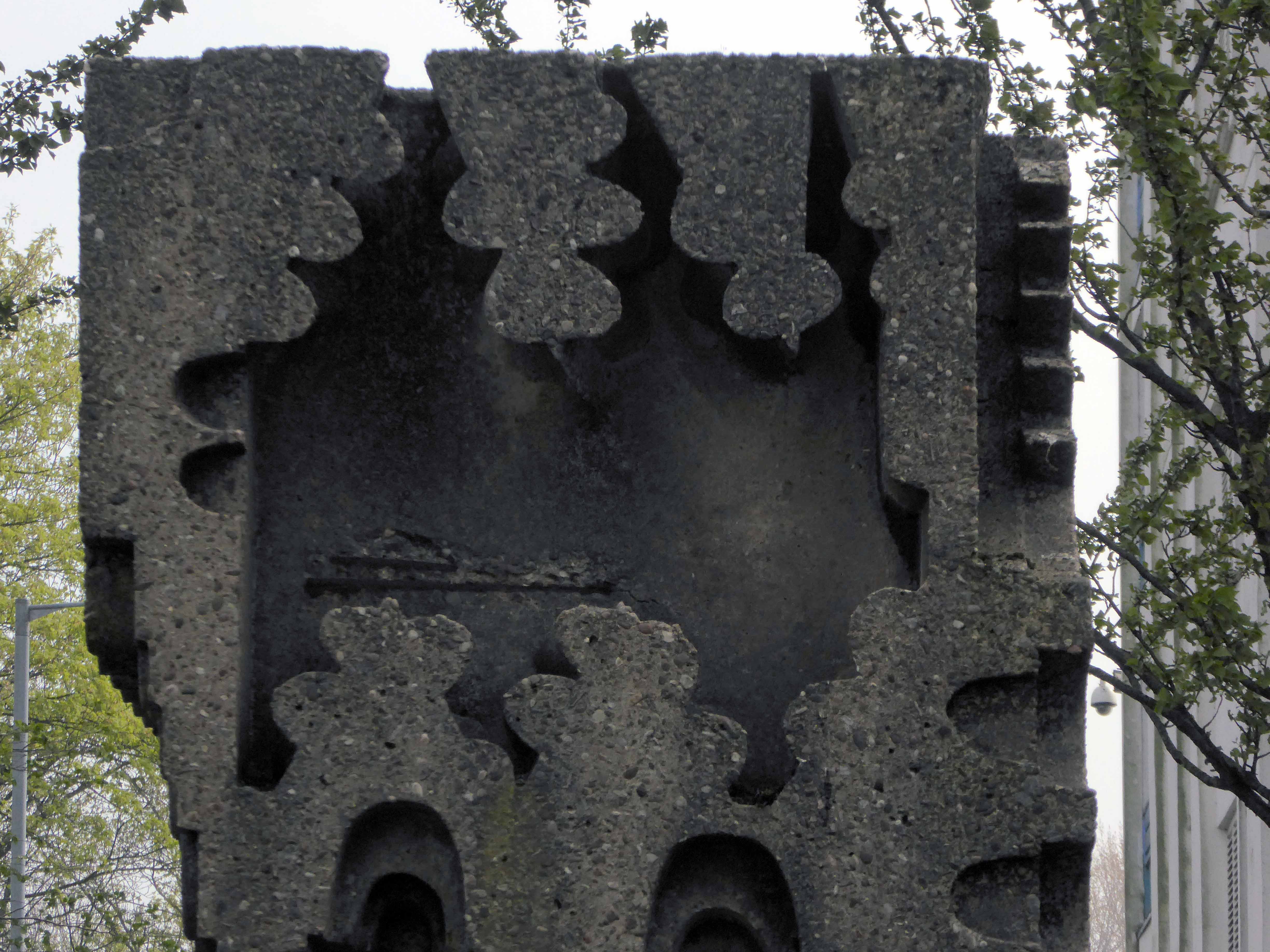
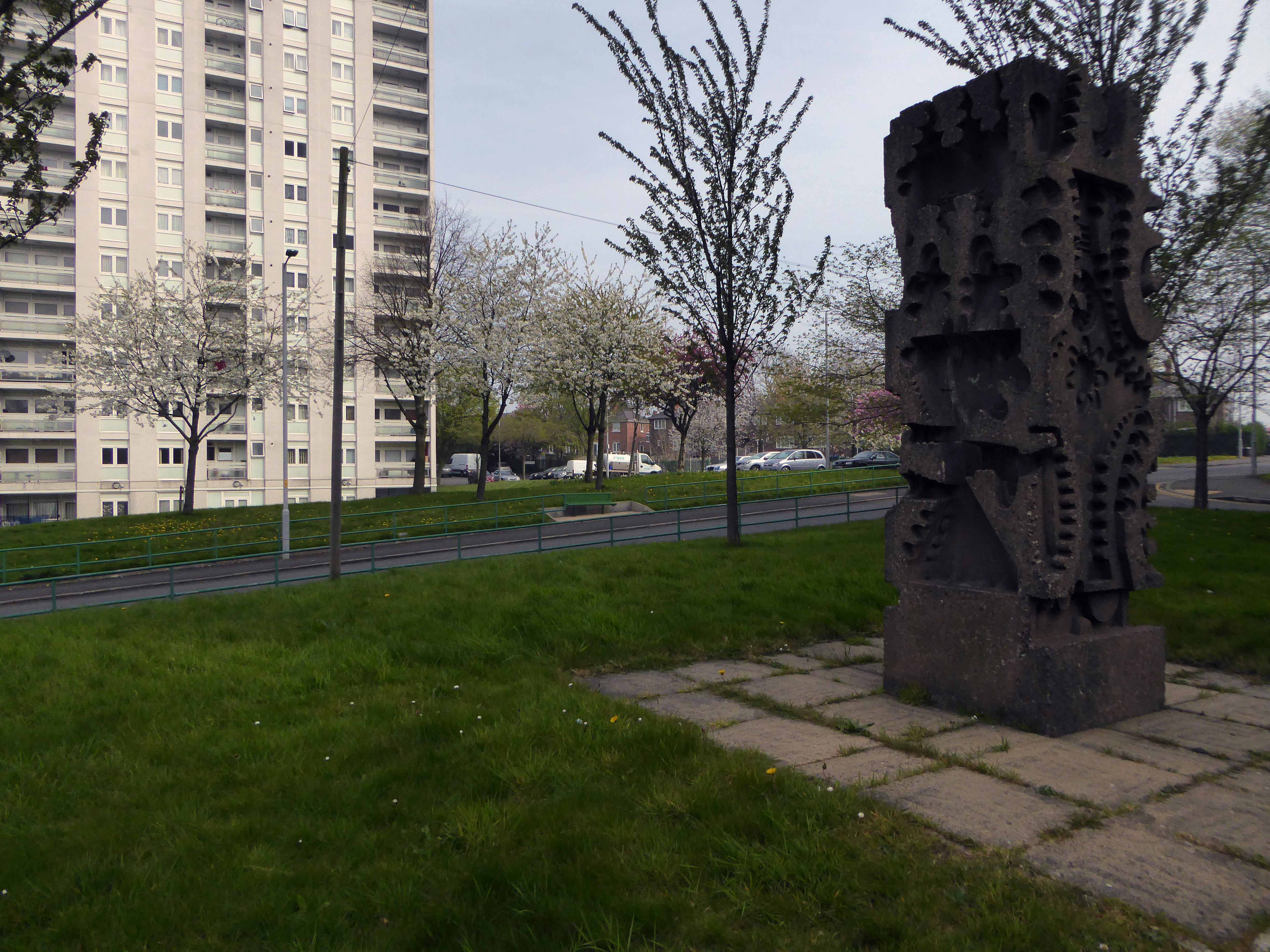
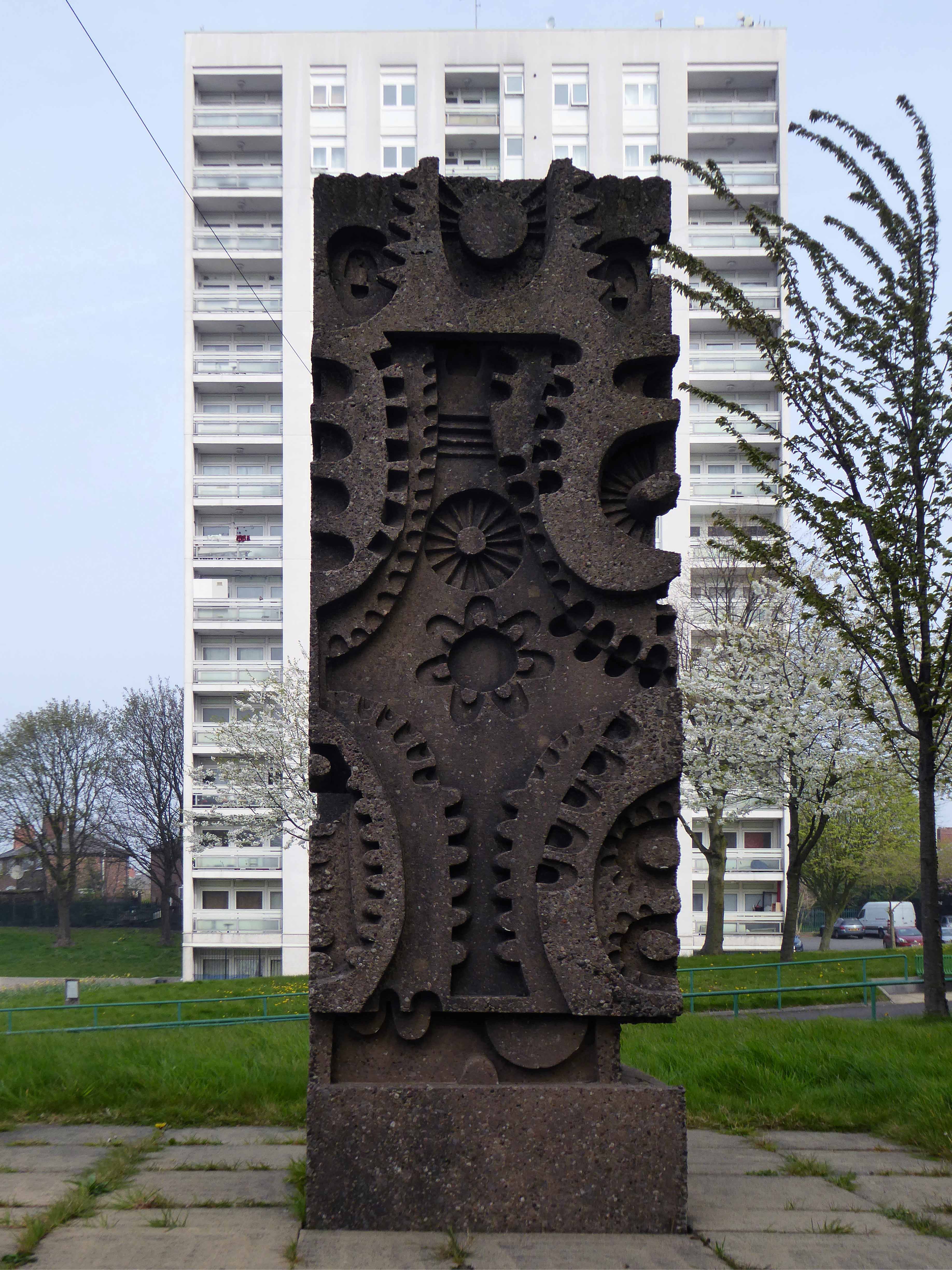
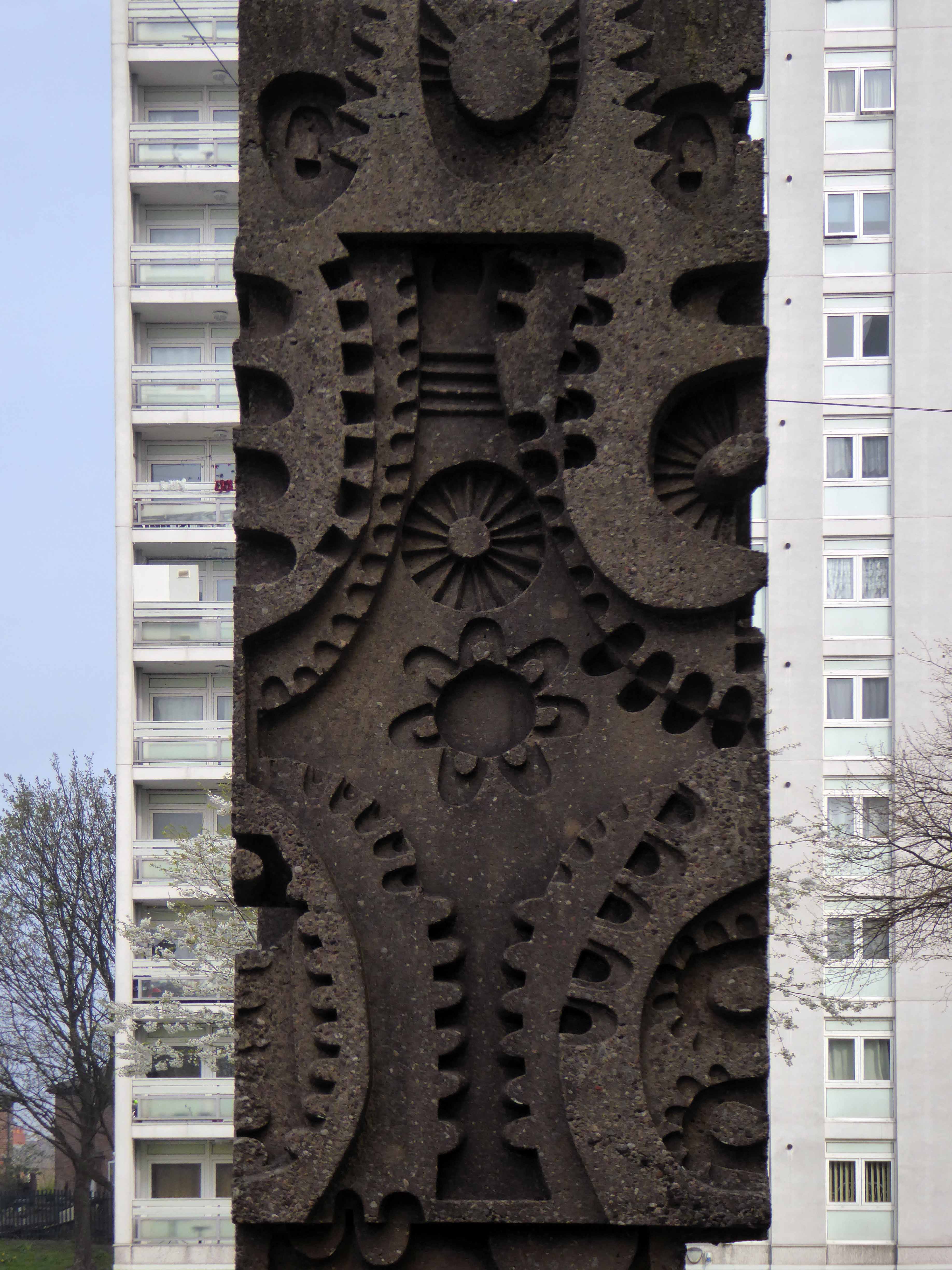
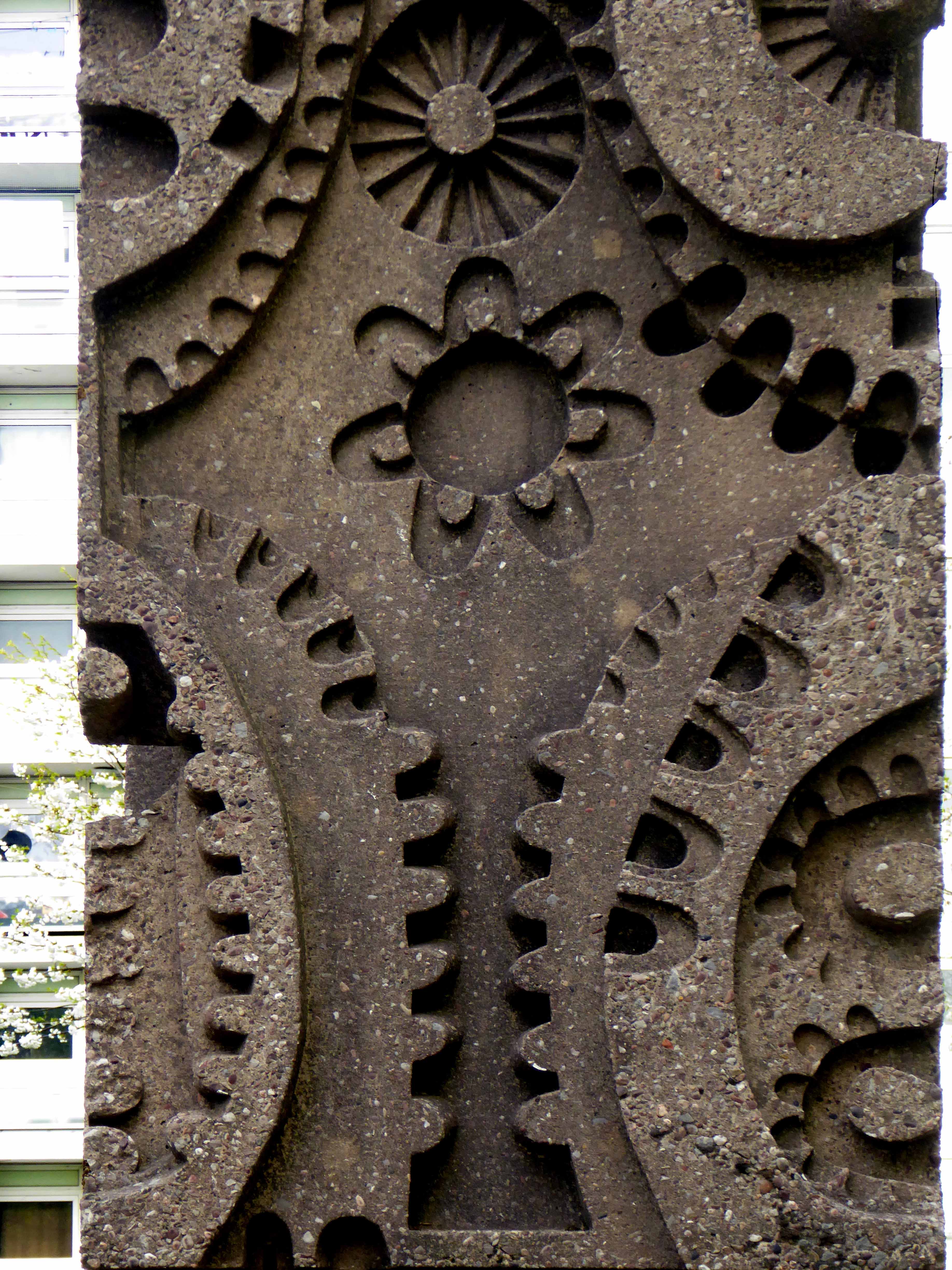
The putative William Mitchell cast concrete block stares stolidly at its surroundings, overseeing a slow and painful decline.
All that is solid melts into air, all that is holy is profaned, and man is at last compelled to face with sober senses his real conditions of life, and his relations with his kind.
There’s no business like no business – it’s no better out the back.
This is an unprecedented opportunity to deliver a significant residential-led development connecting the north to the centre of Manchester. Working with our partners we’re re-imagining the essential neighbourhoods of our city.
We were there at the behest of Esther and Leigh, gathering to say farewell to Alan Boyson’s Three Ships, as it transpired we were there to celebrate its reprieve, following their campaign for listing.
Over a million tesserae glowed in the low winter sun – so did we.
As Helen Angell read her poem – Christopher Marsden and Esther Johnson recording the performance for posterity.
The Three Ships are attached to a former Cooperative Store – complete with a formerly working Cooperative Store clock – where we meet at four minutes to six – forever.
We had previously encountered Hammonds of Hull/House of Fraser – soon to be a food court, artisan everything outlet.
And this Festival of Britain style functionalist council building.
Onward to the Queens Gardens the almost filled in former Queens Dock – forever fourteen feet below sea level.
We encounter Ton Liu’s Solar Gate – a sundial that uses solar alignment to mark significant times and dates in Hull. The super-light innovative two-shell structure is place-specific, responding to pivotal historic events and to the cultural context of its location in Hull’s Queens Gardens adjacent to the ancient site of Beverley Gate.
Carved stone panels Kenneth Carter 1960 – Ken’s art career began as an inspiring teacher, first at his alma mater, Hull College of Art, and later as principal lecturer at Exeter College of Art.
A number of decorative fountains featured in the ponds; those at the eastern end designed as part of the sculptured panels of 1960, by Robert Adams, described by Herbert Read as belonging to:
The iconography of despair. Here are images of flight, of ragged claws, scuttling across floors of silent seas, of excoriated flesh, frustrated sex, the geometry of fear.
Top of the shop William Mitchells relief – time to pause and reflect.
Paying homage to Frederick Gibberd author of the College and Queens Gardens scheme.
En passant catching a glimpse of this splendid non-functioning water feature.
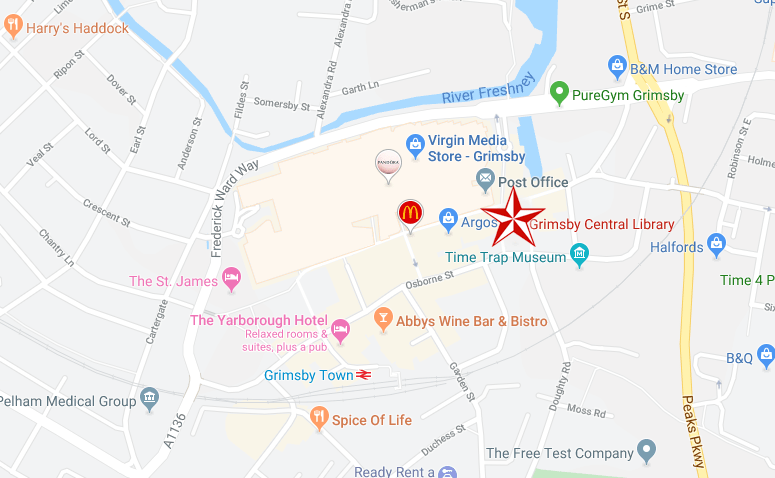
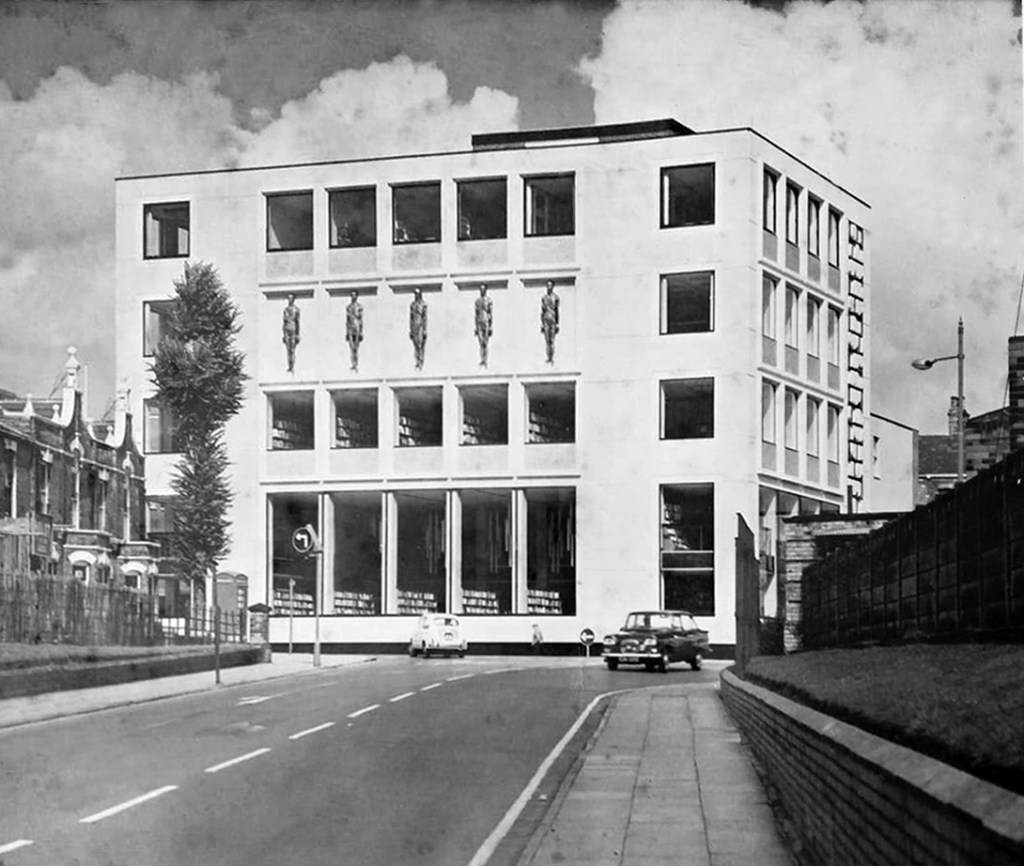
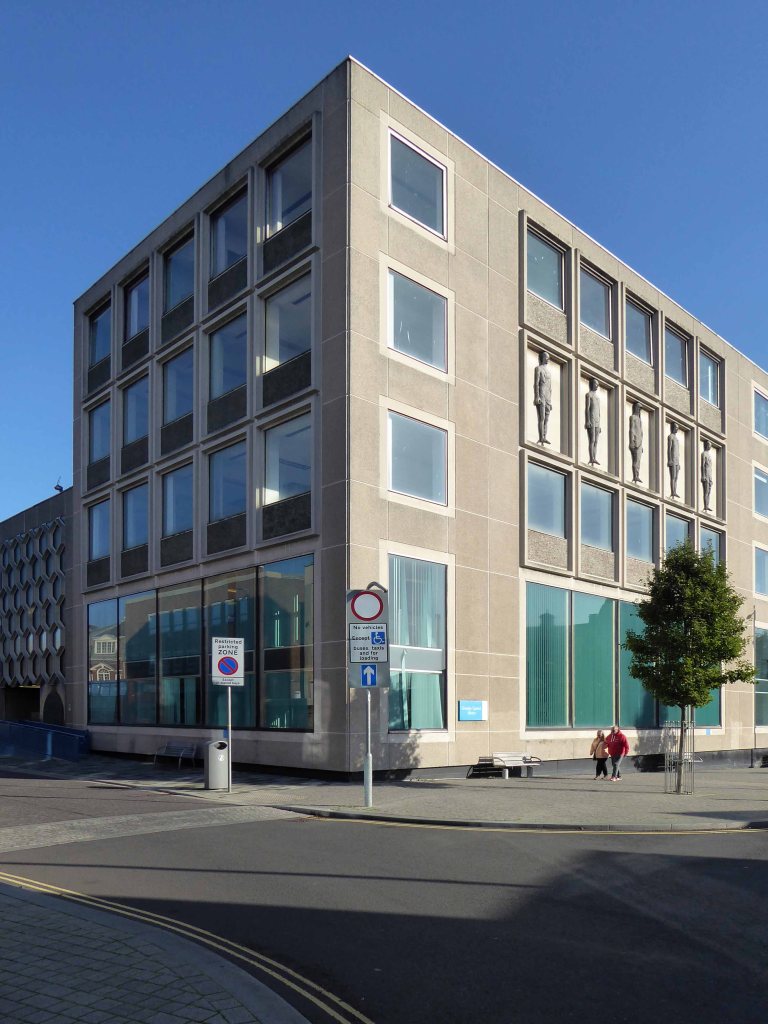
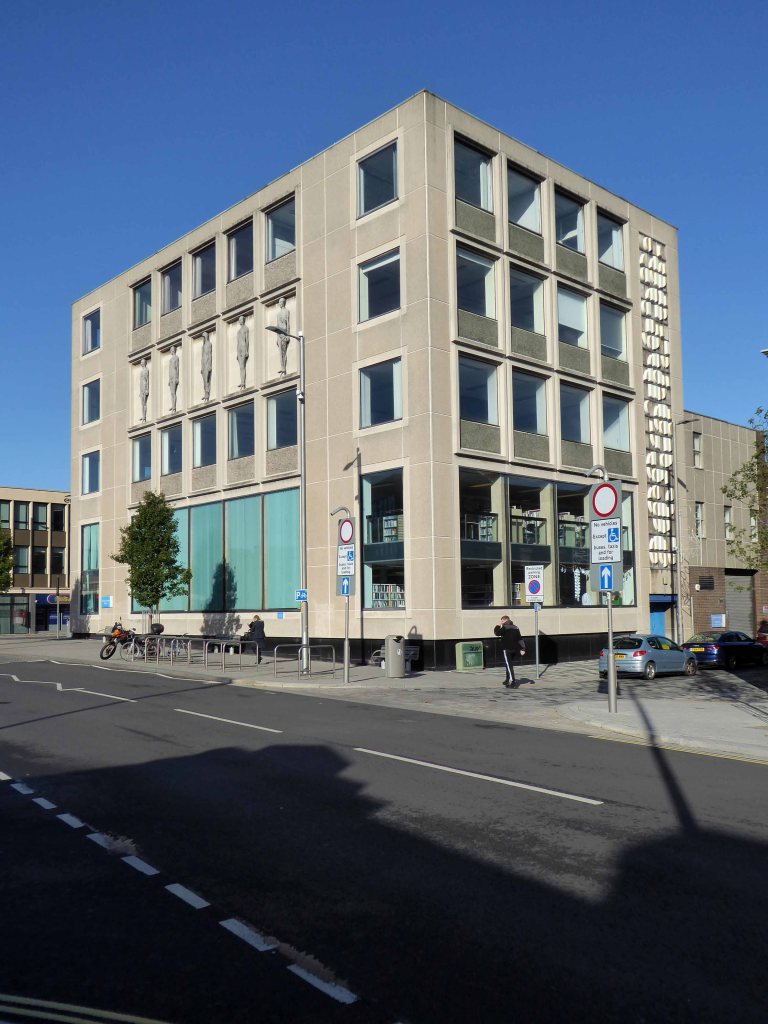
This is Grimsby Central Library – a proud public building of real quality, reflecting the cautious optimism and fierce civic pride of the Sixties. Built to last, in the modern manner – gently monumental, softened by the easy grace of the restrained decoration and a refined palette of stone, glass and concrete.
By the Borough Architect – JM Milner ARIBA assisted by E L Shepherd
This image was used as the Mayor’s Xmas card in 1969.
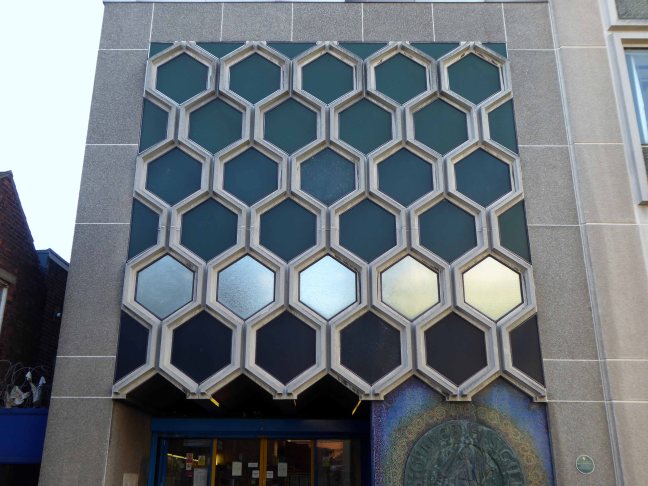
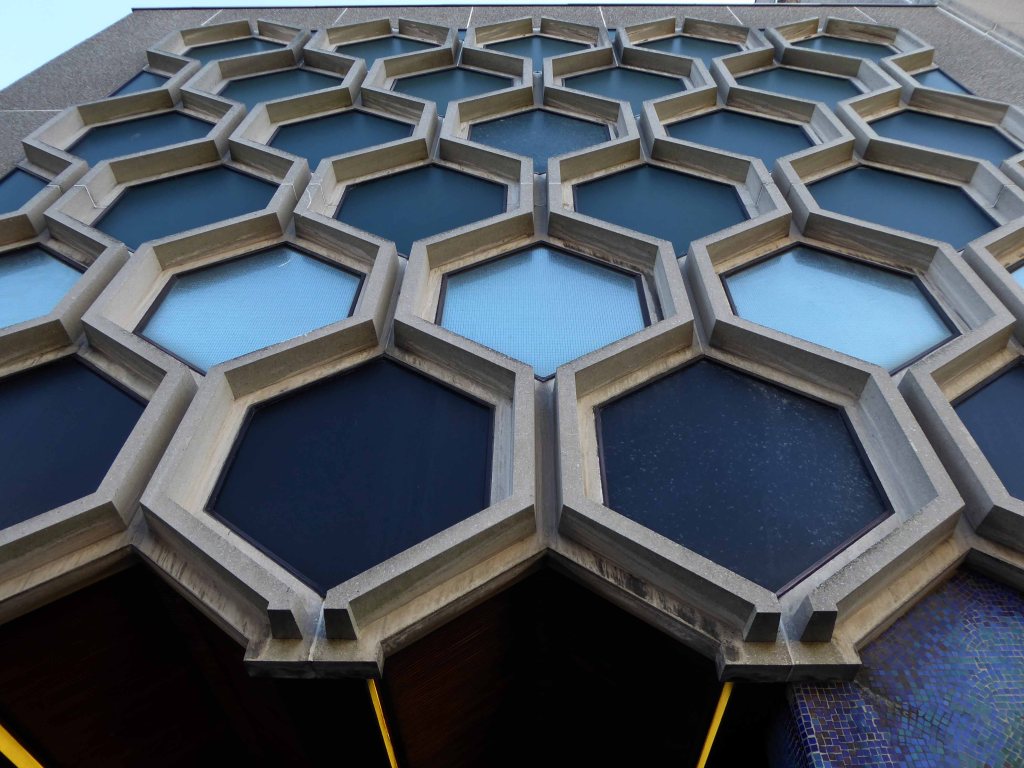
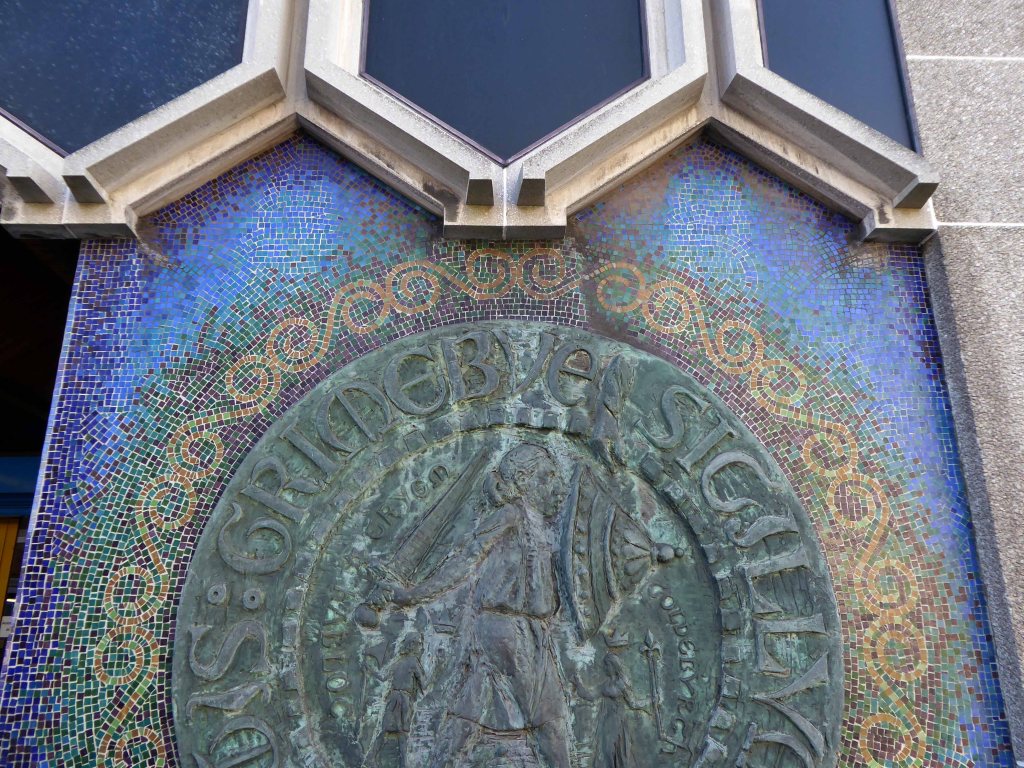
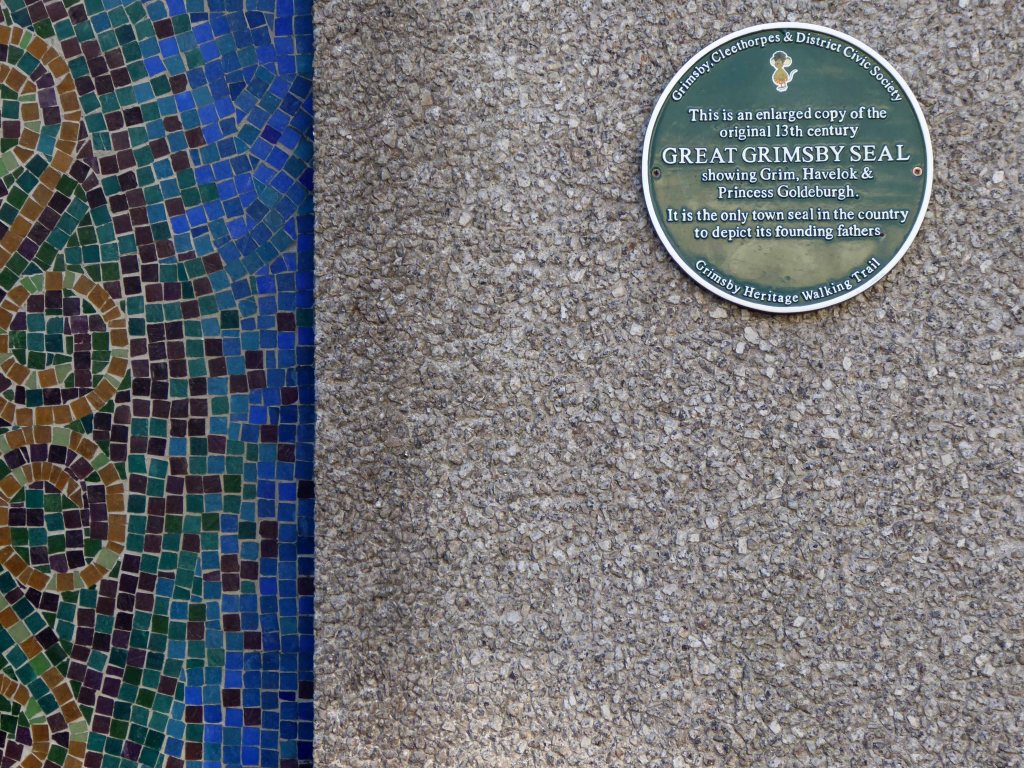
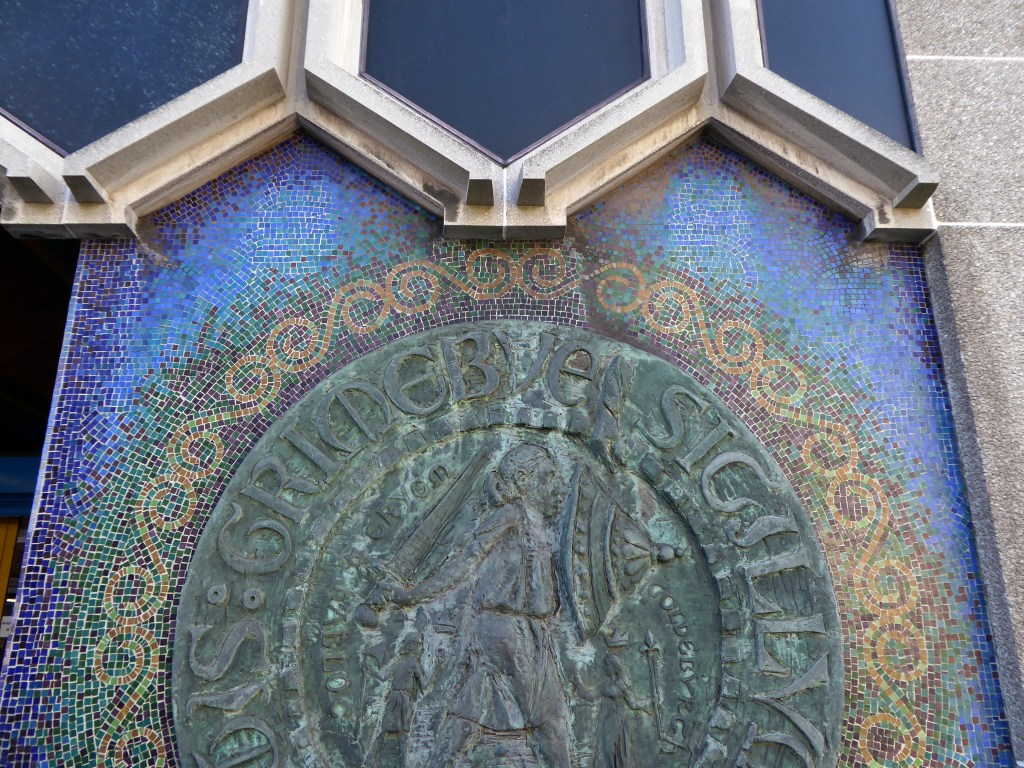
The bold exterior grid is enhanced by a honeycombed grille above the entrance, along with a mosaic depicting the town’s seal.
The mosaic is the work of Harold Gosney – who is also responsible for the Abbey Walk reliefs
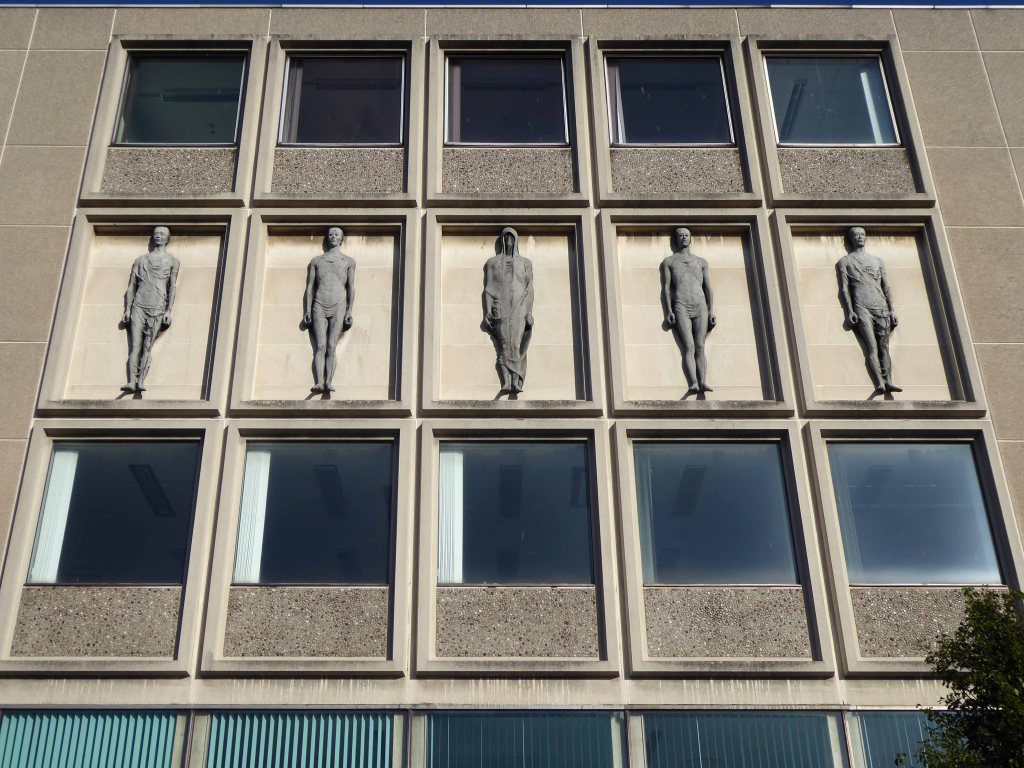
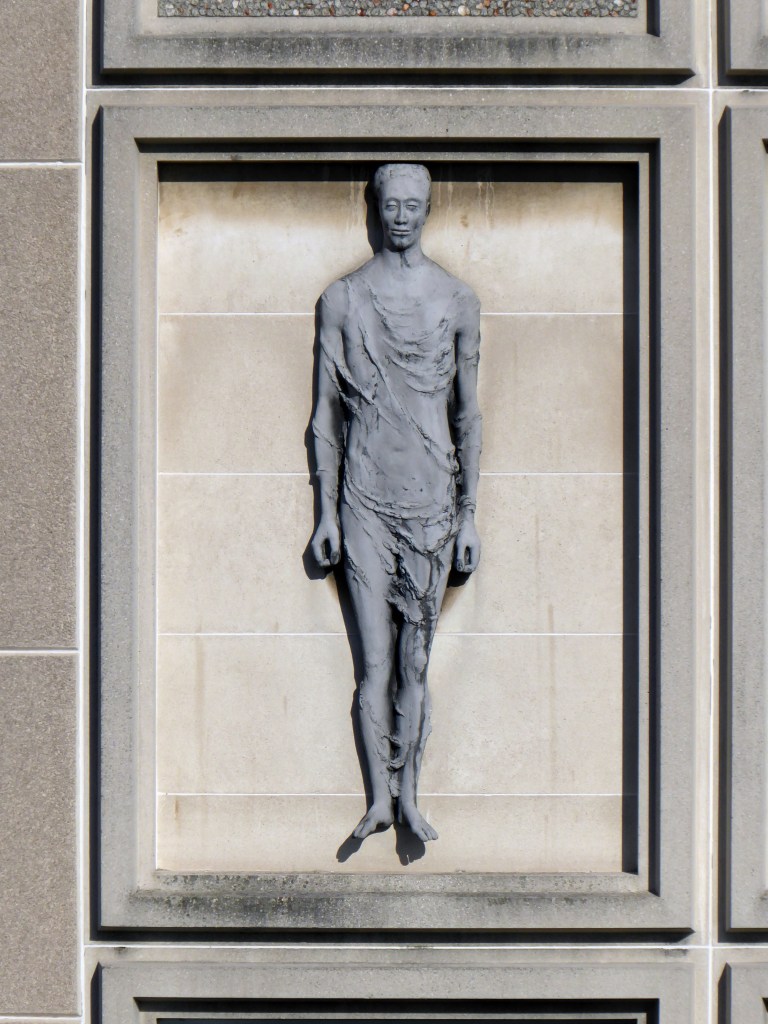
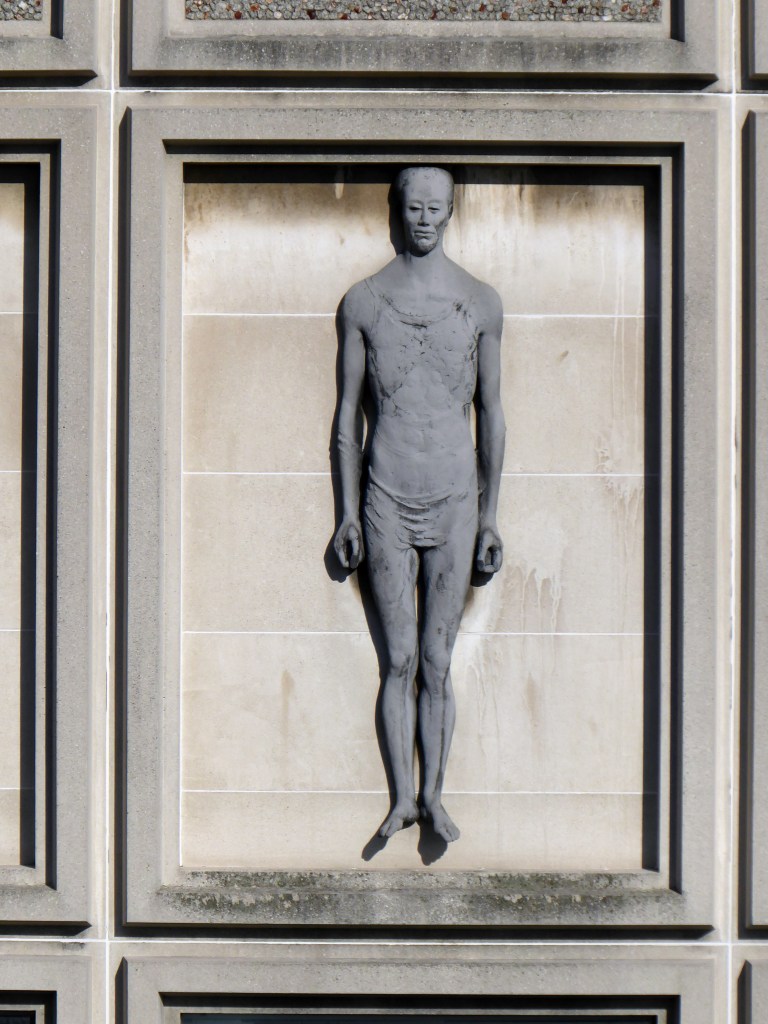
The Guardians of Knowledge which adorn the south facing elevation of the library are the work of Peter Todd former head of Grimsby Art School
To the rear of the building is a modular relief.
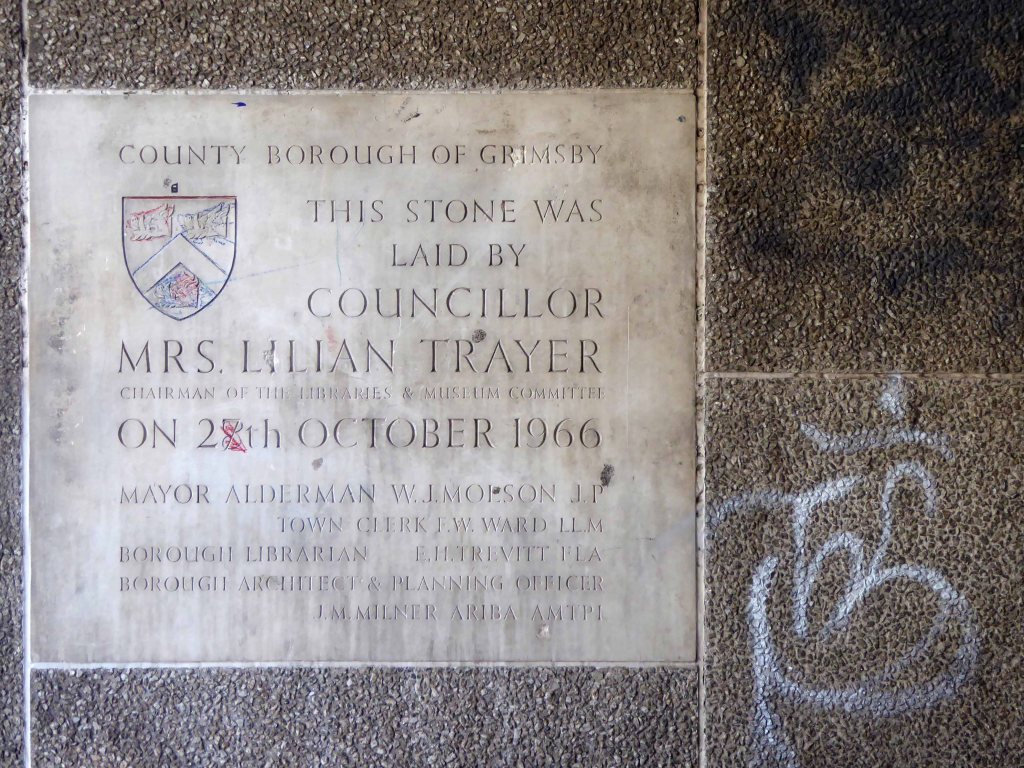
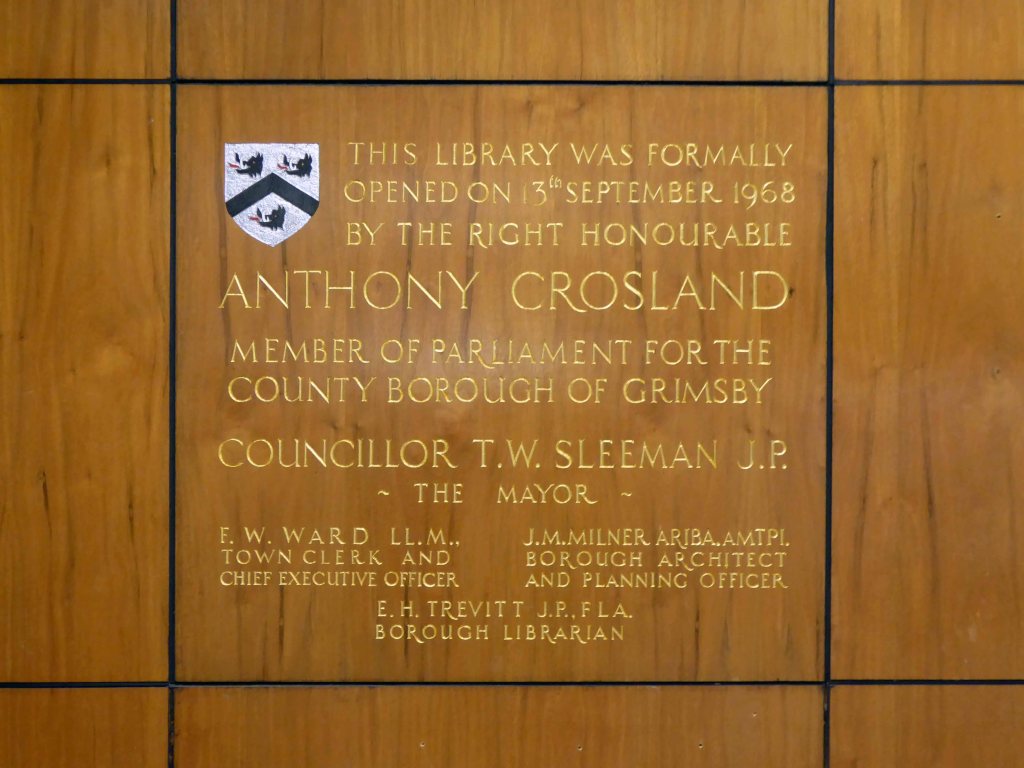
Inside the entrance porch a commemorative plaque.
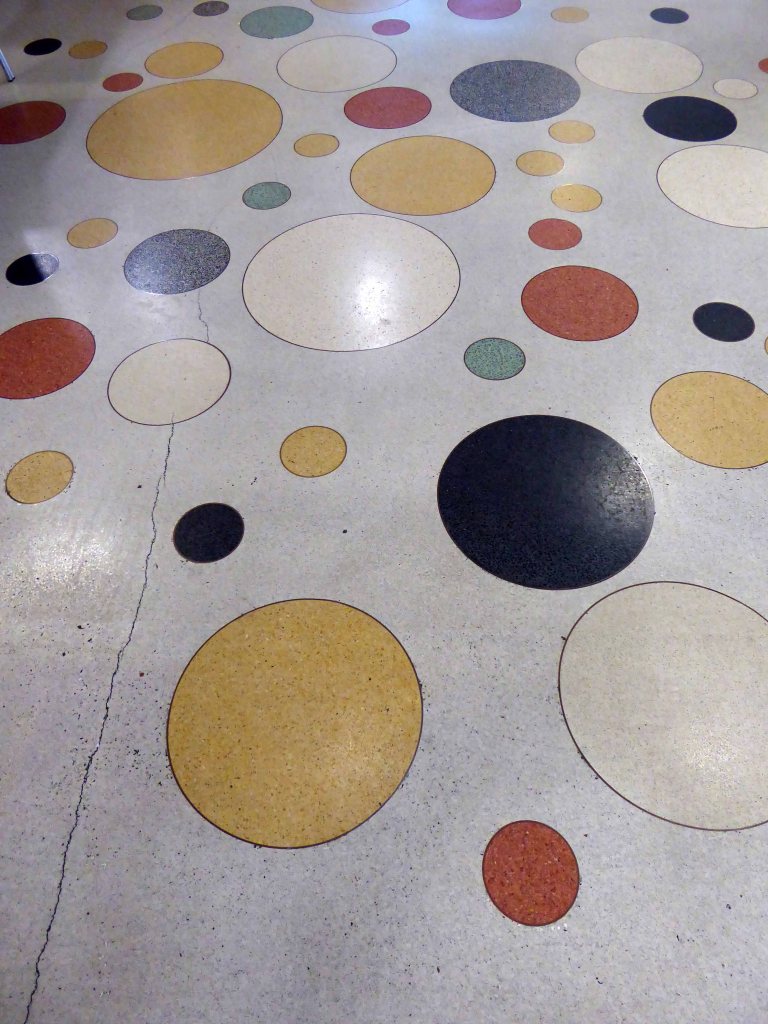
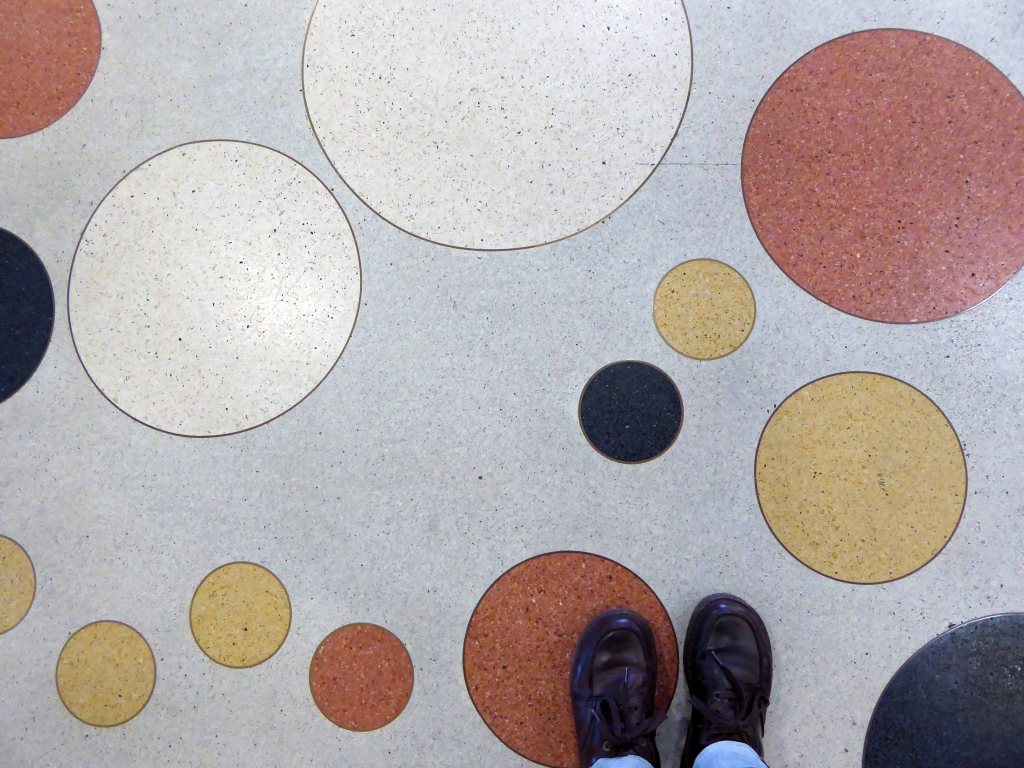
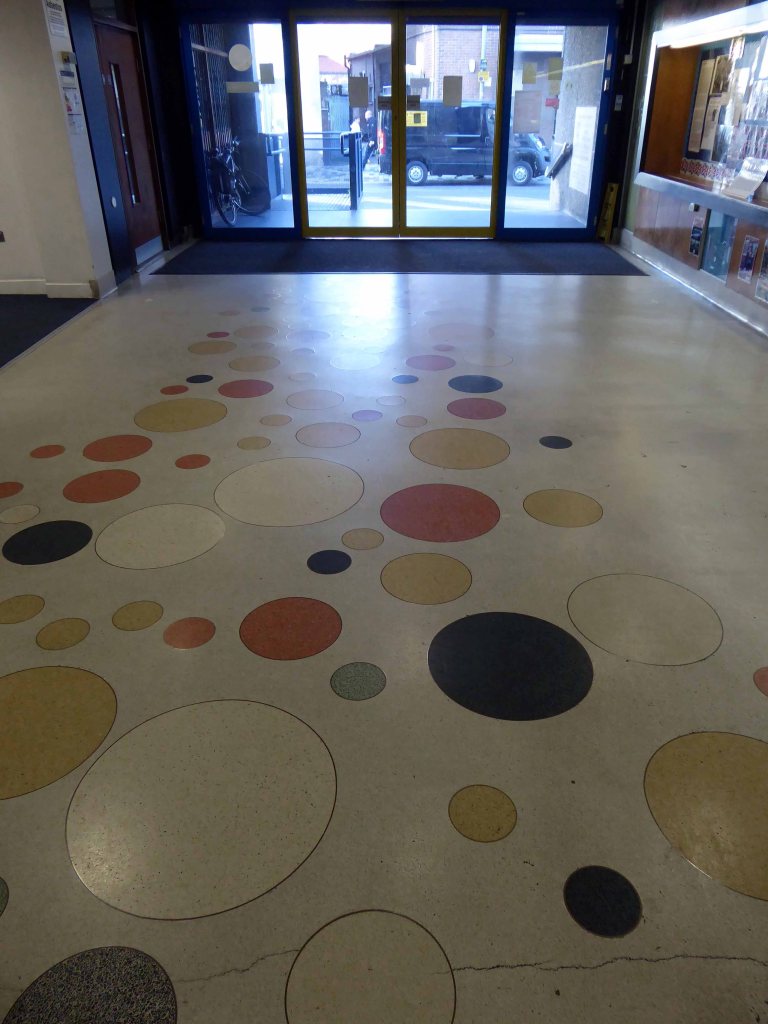
Once inside, what a pleasure it is tread upon this interstellar inset stone flooring.
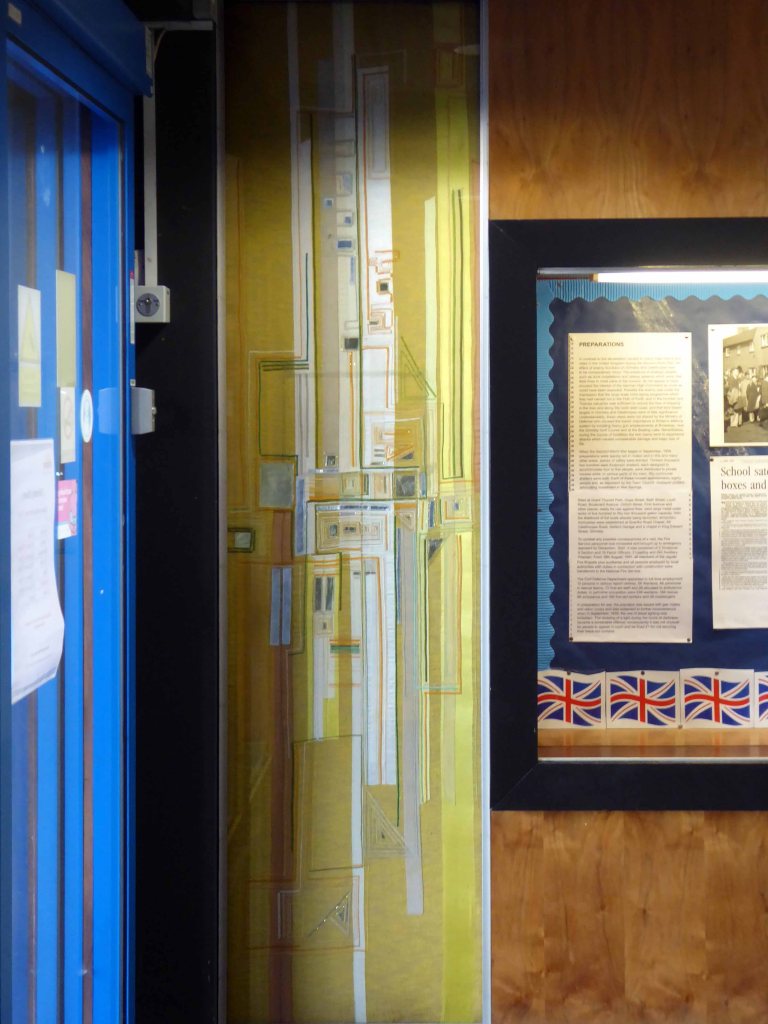
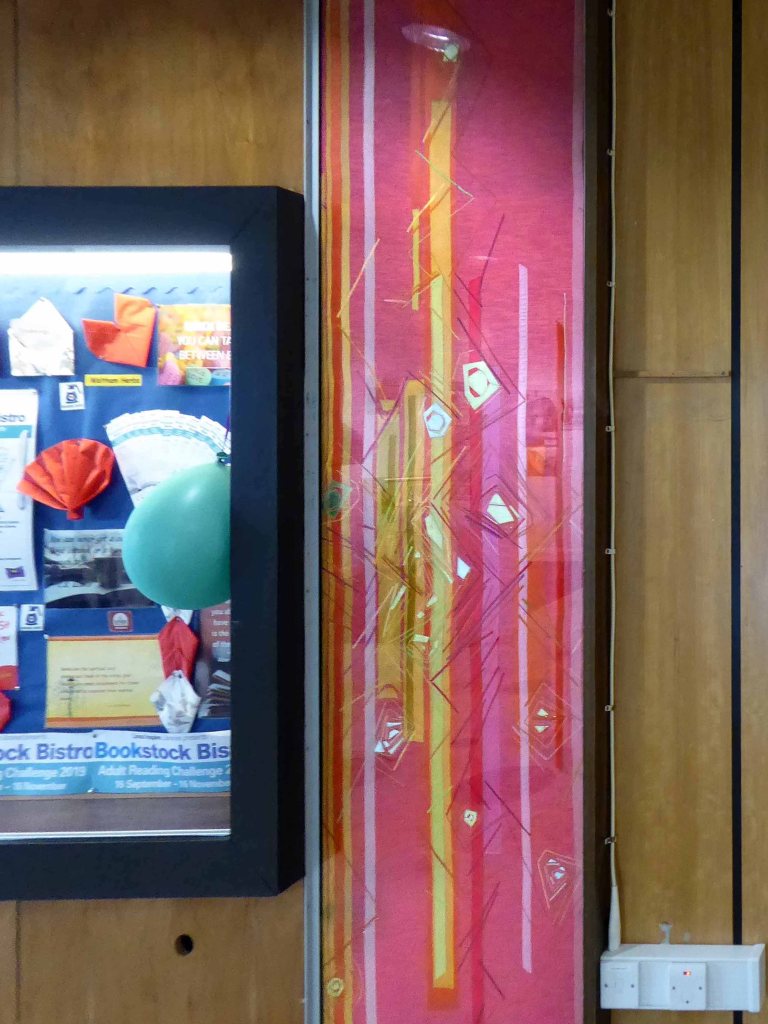
Either side of the lobby display case there are two vertical tapestries.
Along with a further plaque commemorating the opening on the 3rd September 1968 – by the then local MP Anthony Crosland.
Crosland looked ahead to a time where “personal freedom, happiness and cultural endeavour; the cultivation of leisure, beauty, grace, gaiety and excitement… might be pursued.” After he was elected MP for Grimsby in 1959, he referred to the above passage in an early speech, insisting – to much laughter, cheering and applause from the audience, that “it is possible to achieve all these things in Grimsby, and especially at Blundell Park.”
May I take this opportunity to thank the ever so helpful library staff – for kindly granting me permission to photograph the main body of the library.
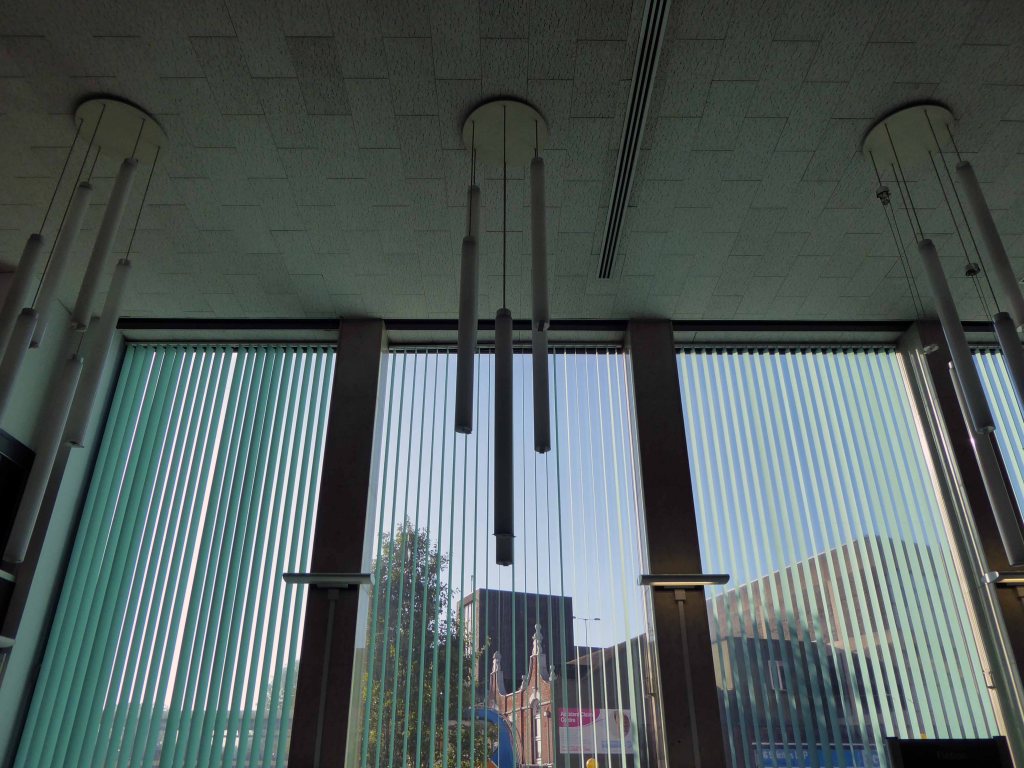
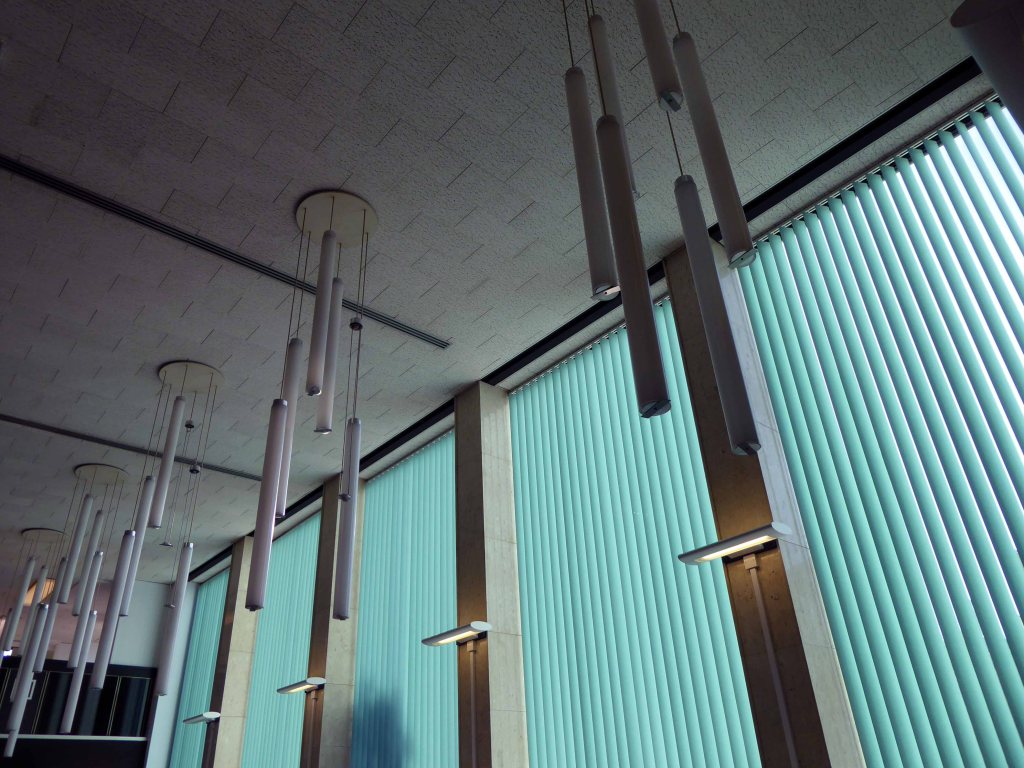
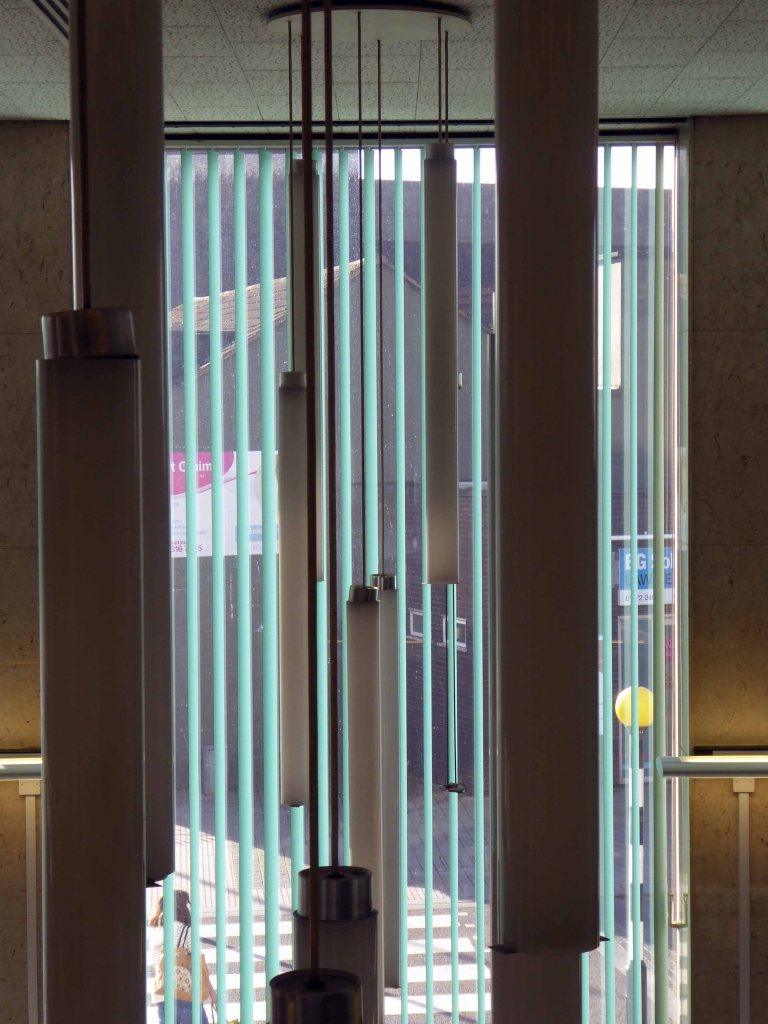
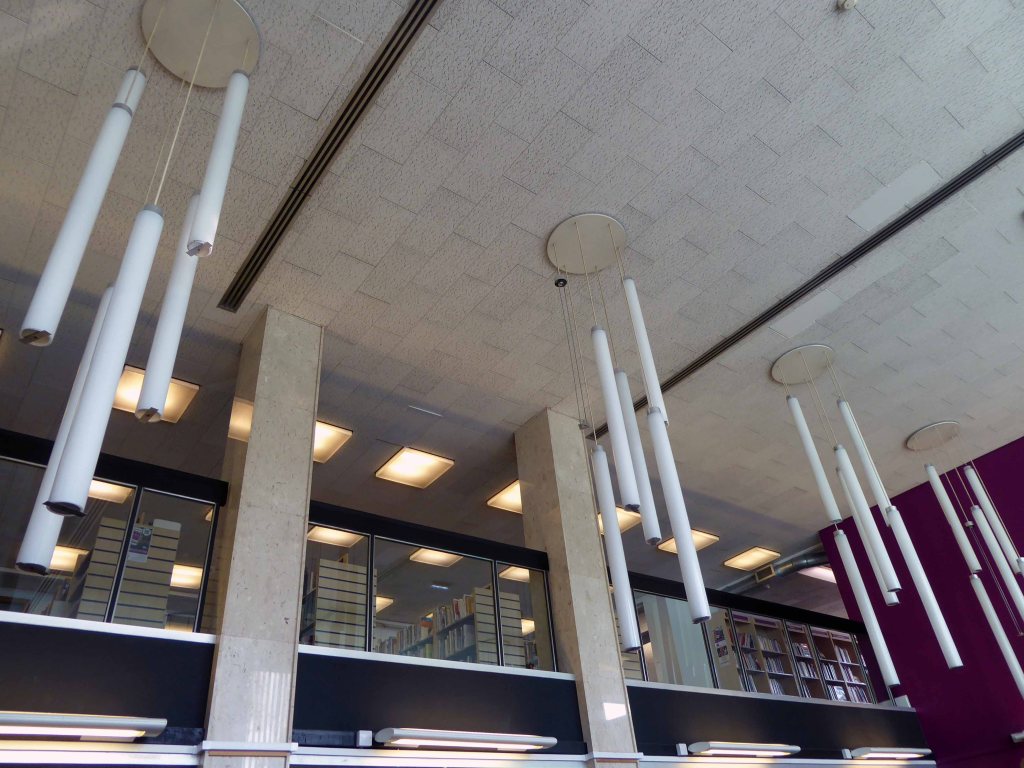
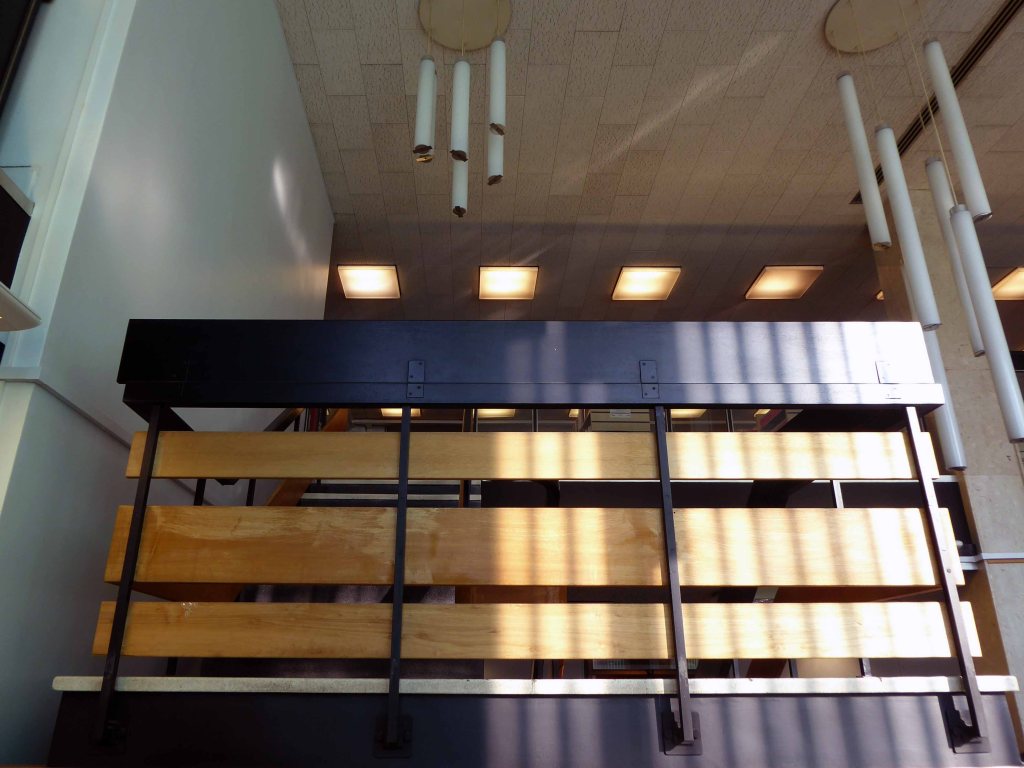
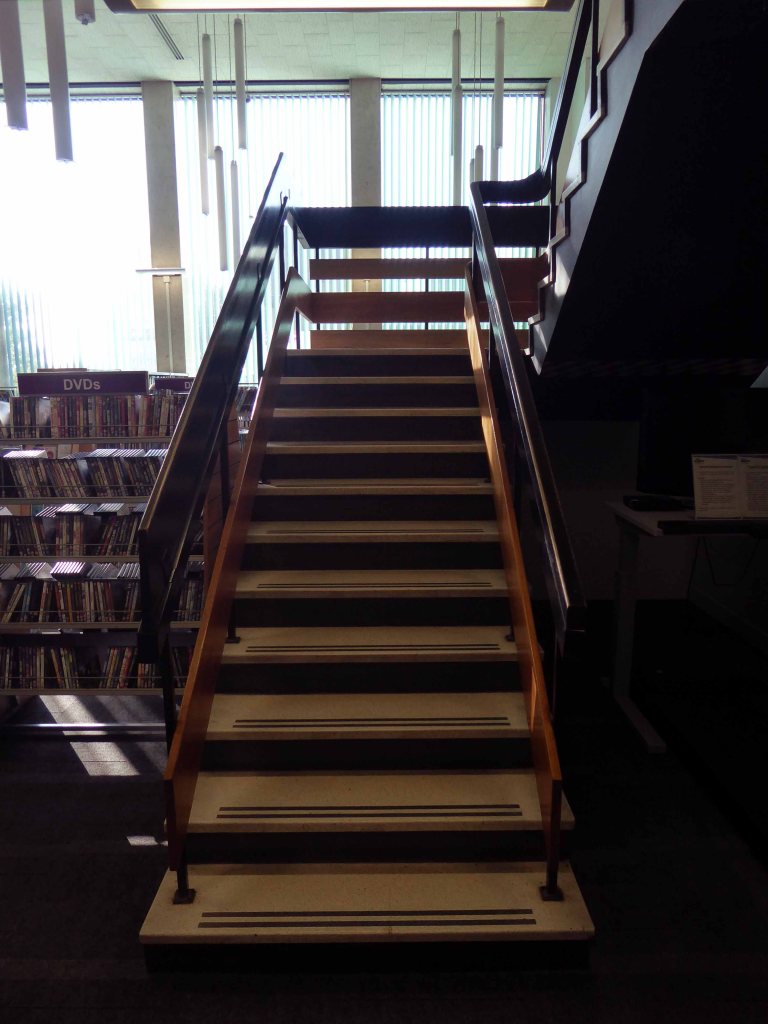
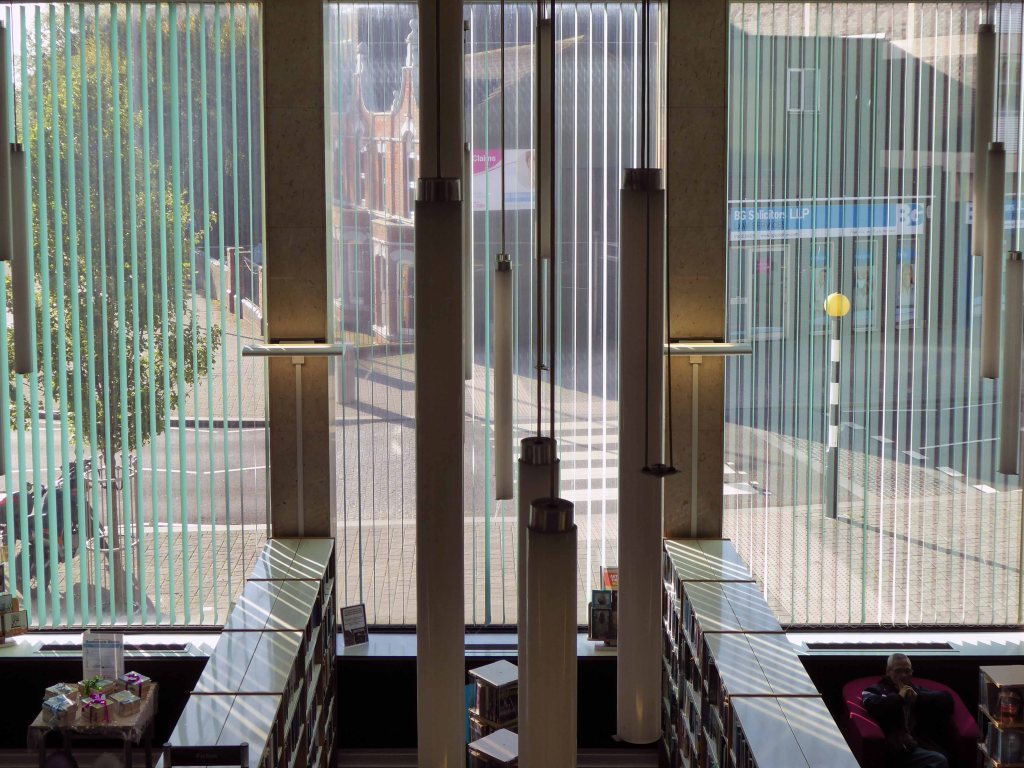
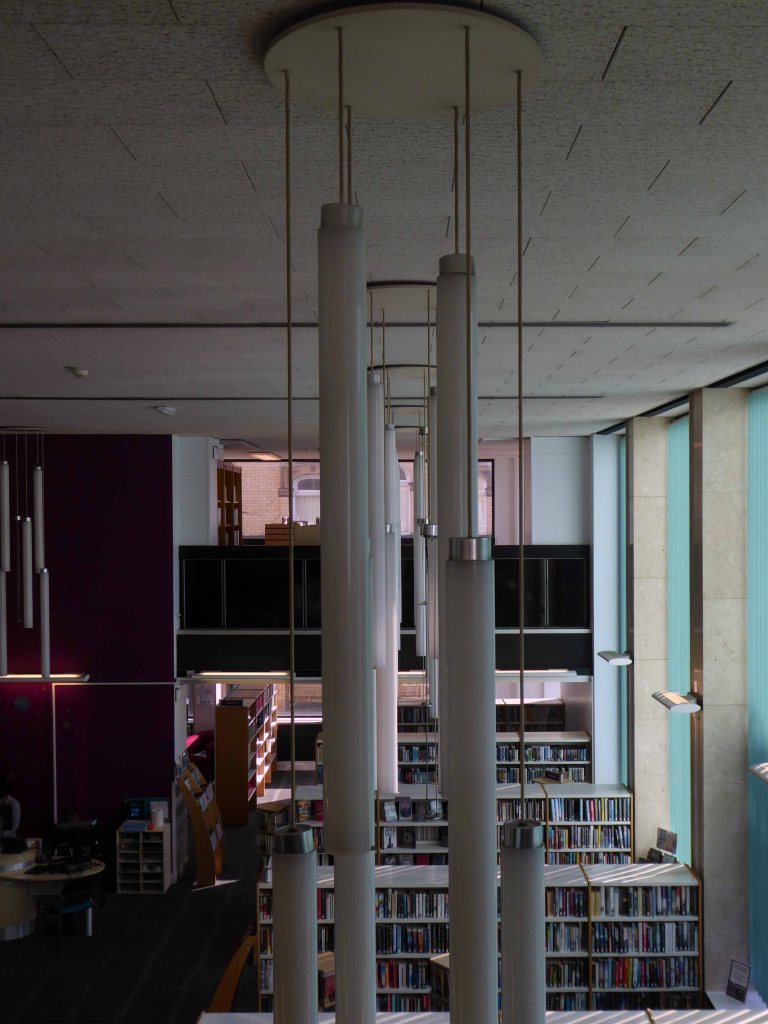
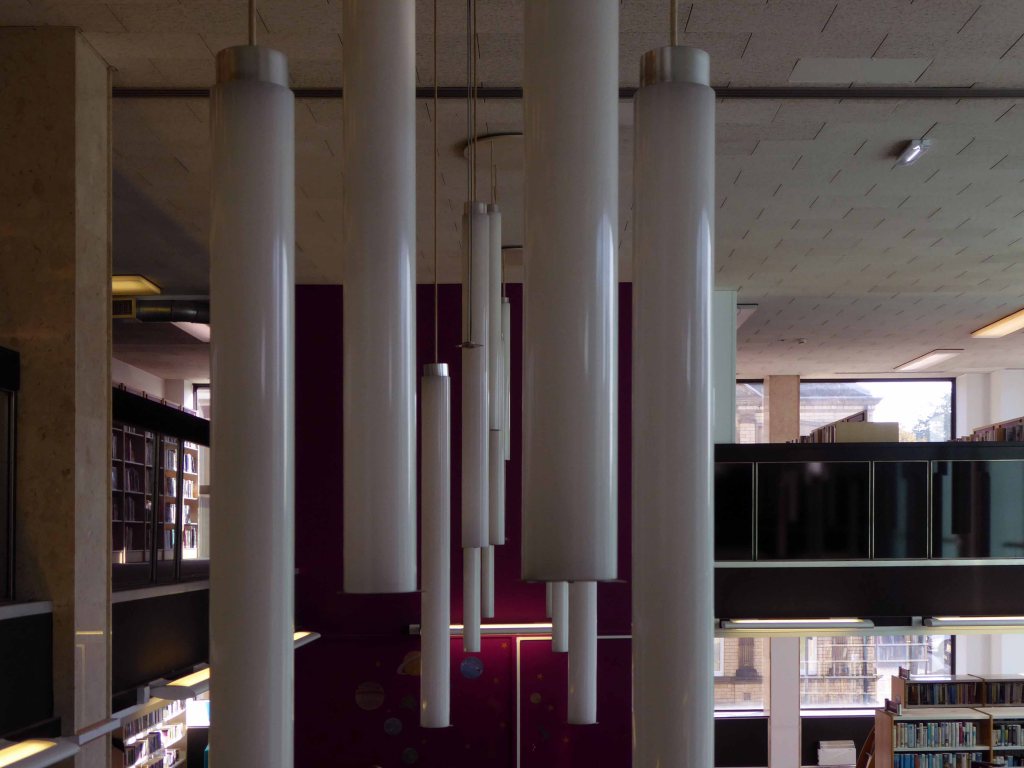
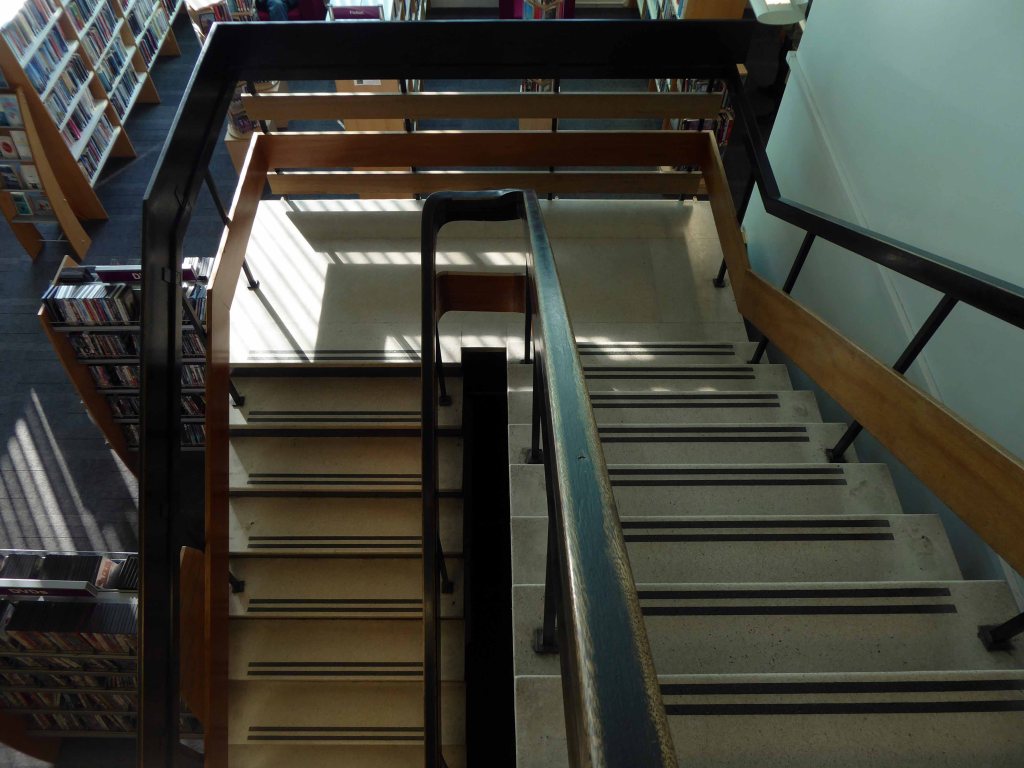
Many original fittings and fixtures are intact – particularly the distinctive vertical suspended lighting system and the steel and wood stairways.
The facilities were well used and lit by the expansive window space.
Let’s take another final look outside, and say a fond farewell to this fine building – go on treat yourself, take a trip to the East Coast and feast your eyes, heart and mind on this beauty.
I was in town, just looking around, just looking for modernity, just looking.
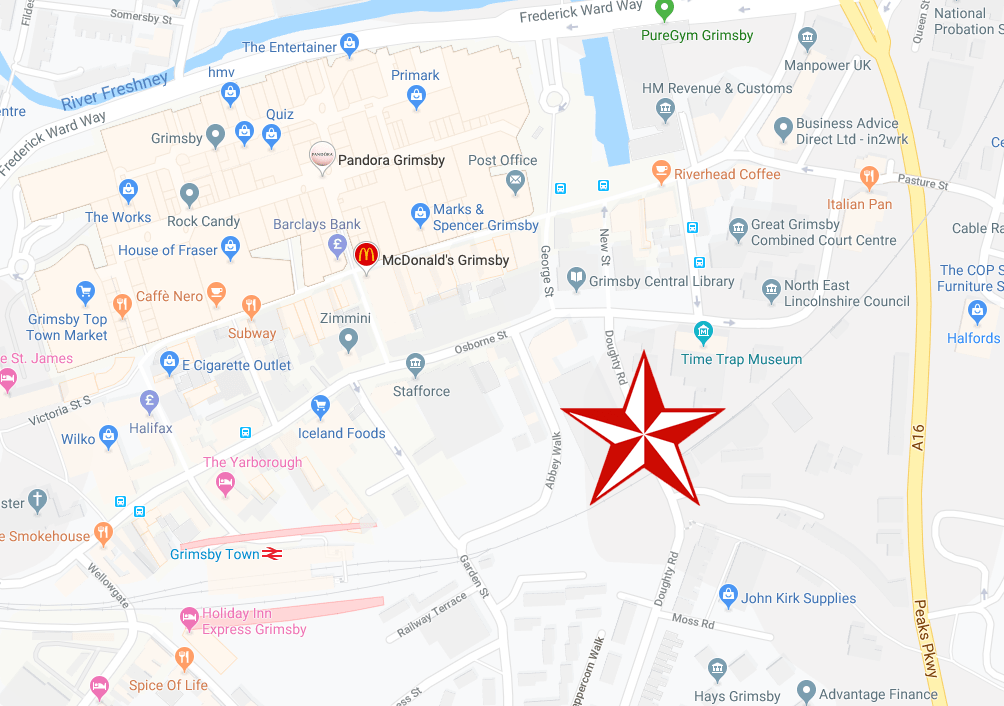
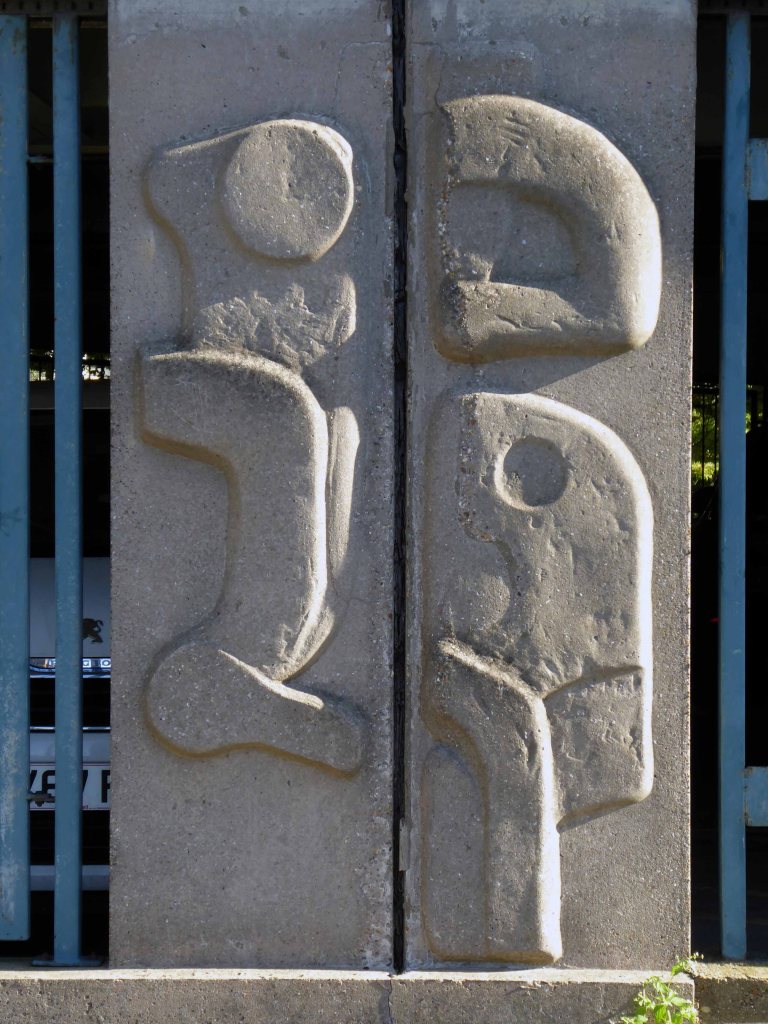
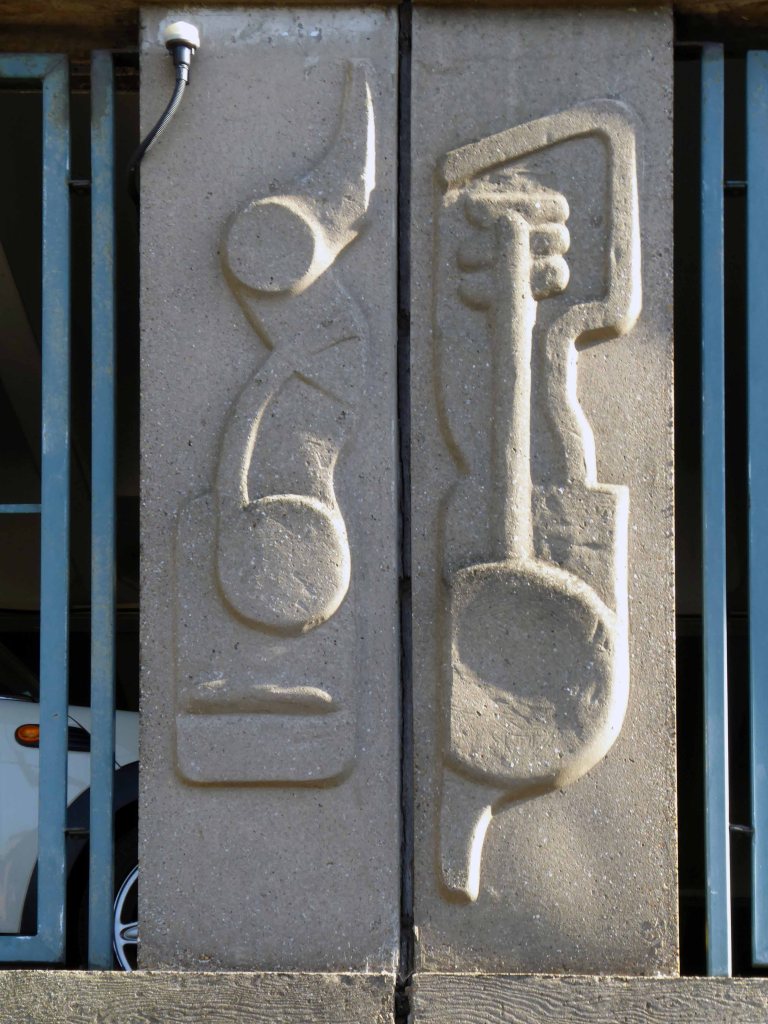
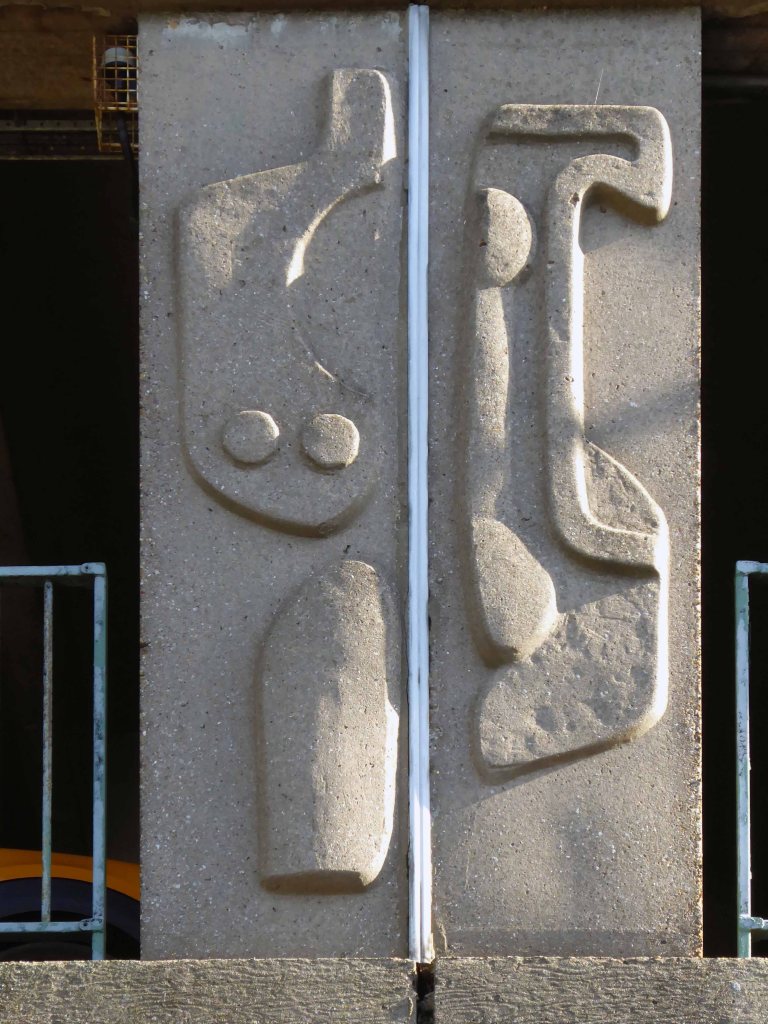
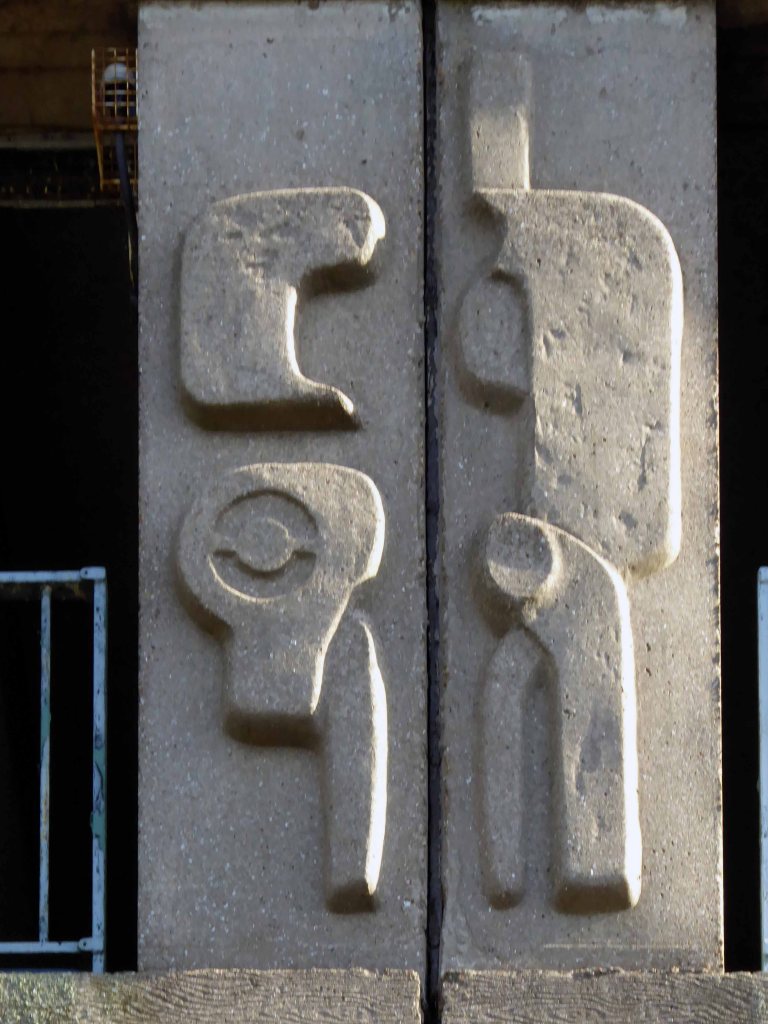
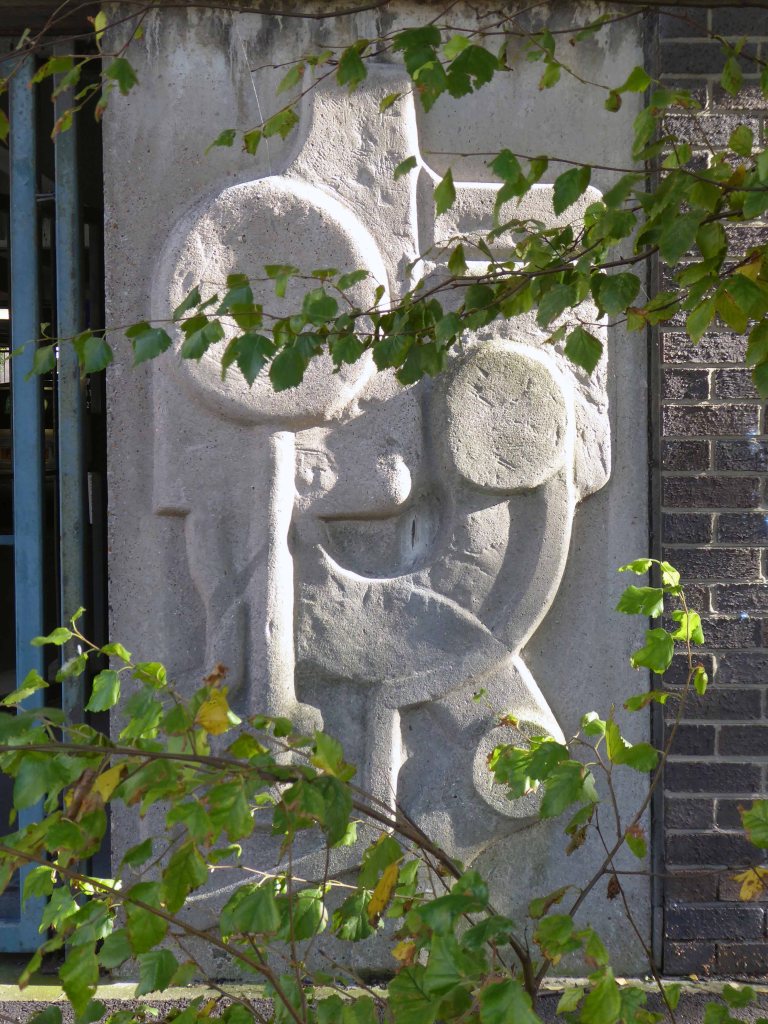
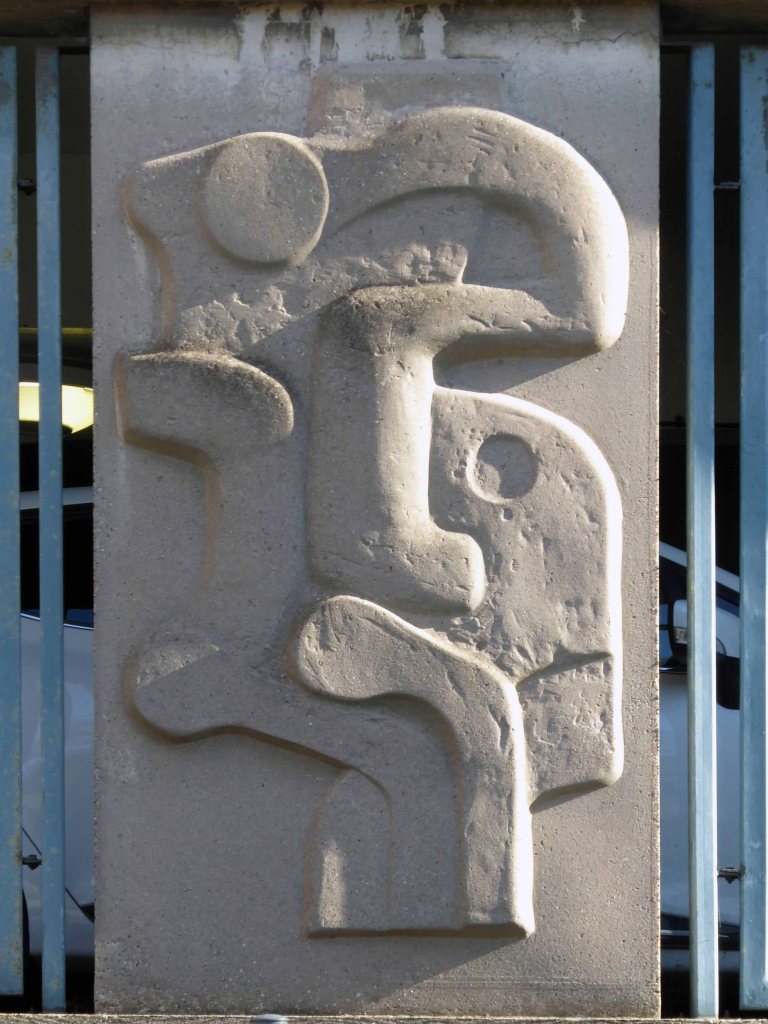
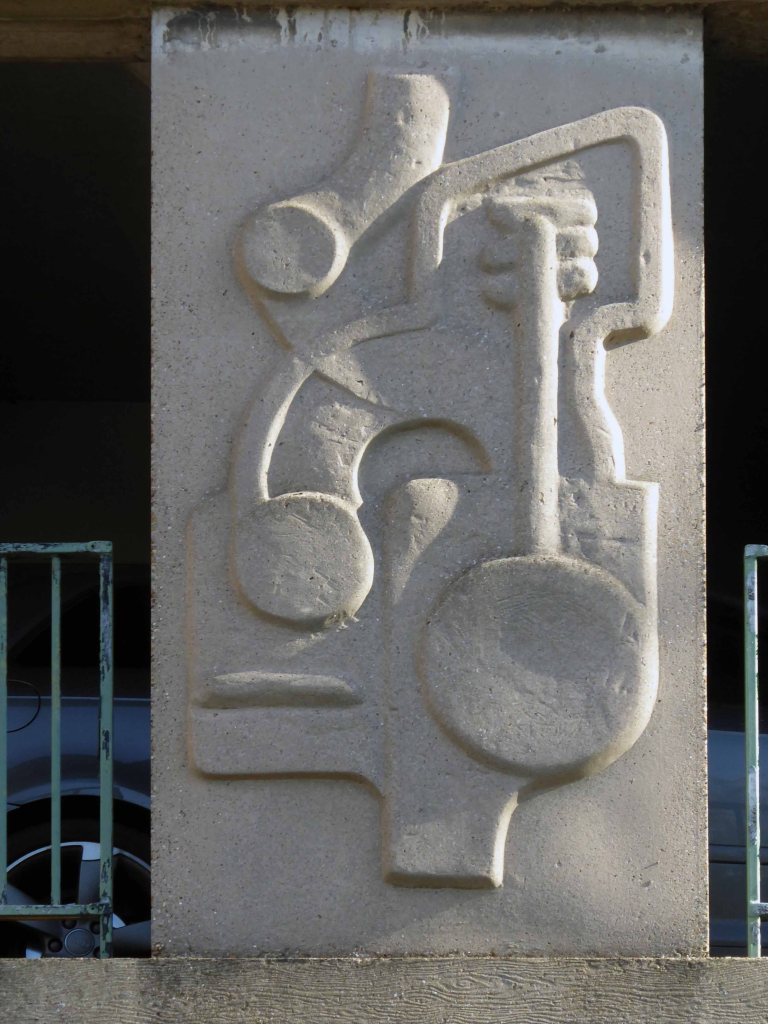
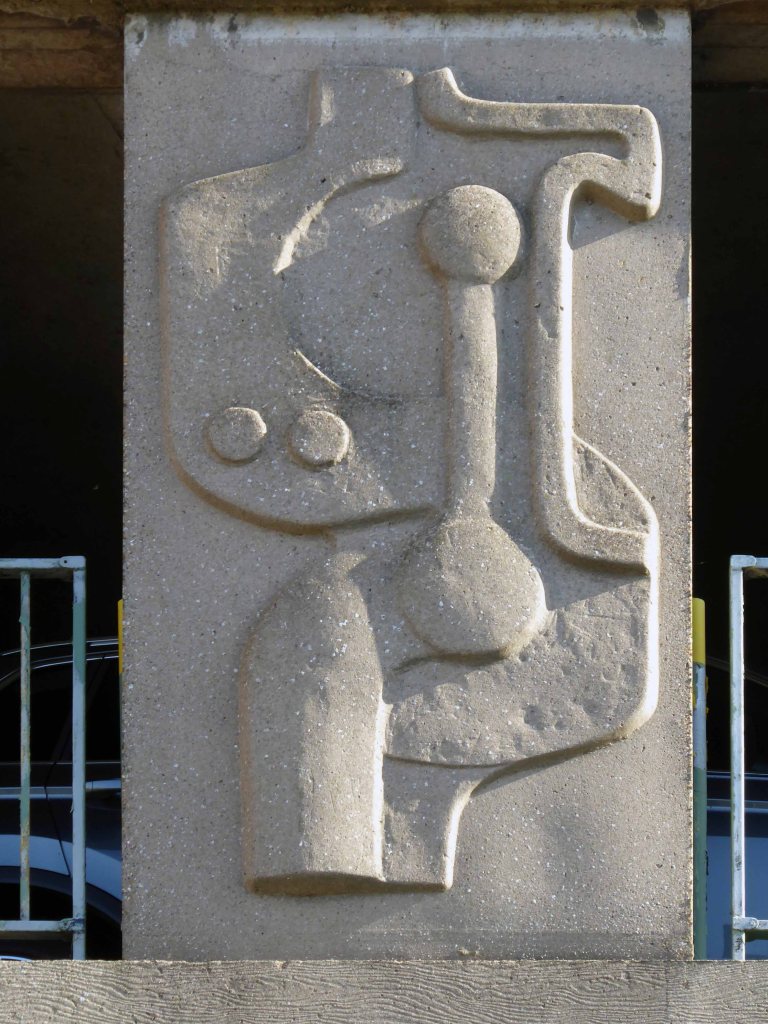
I found you by chance between the railway and the high street, so I took a good look around, fascinated by the concrete sculptural panels on your fascia columns, those facing Abbey Walk.
Research tells me that they the work of Harold Gosney – born in Sheffield, he studied at Grimsby School of Art and London’s Slade School of Fine Art.
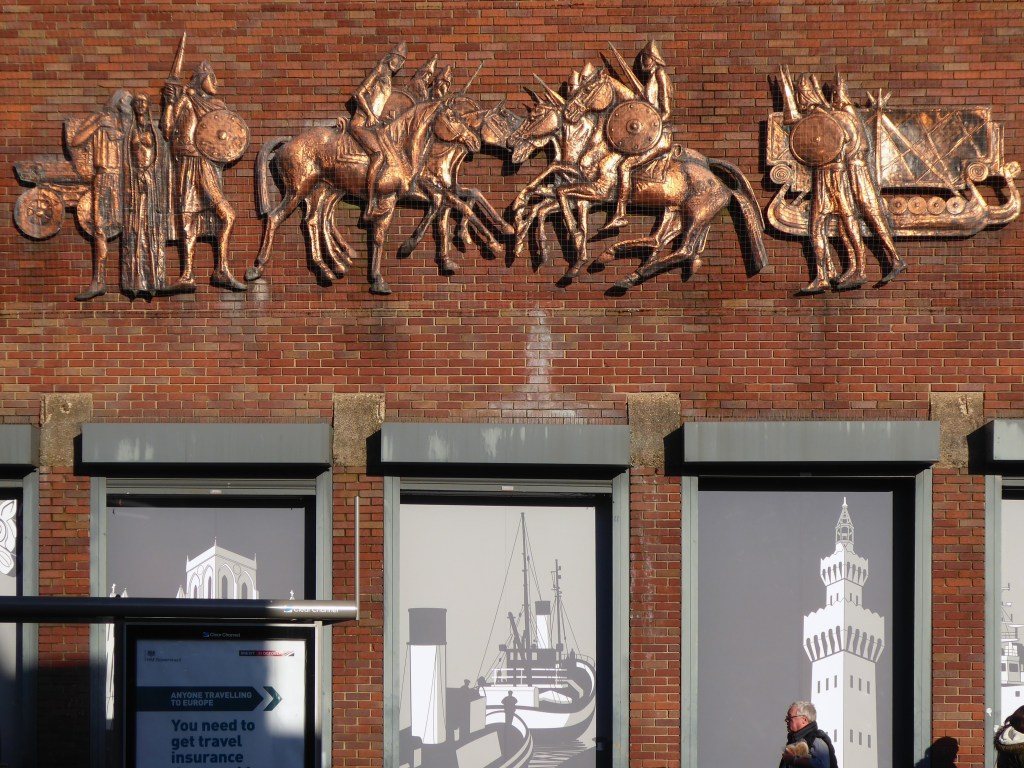
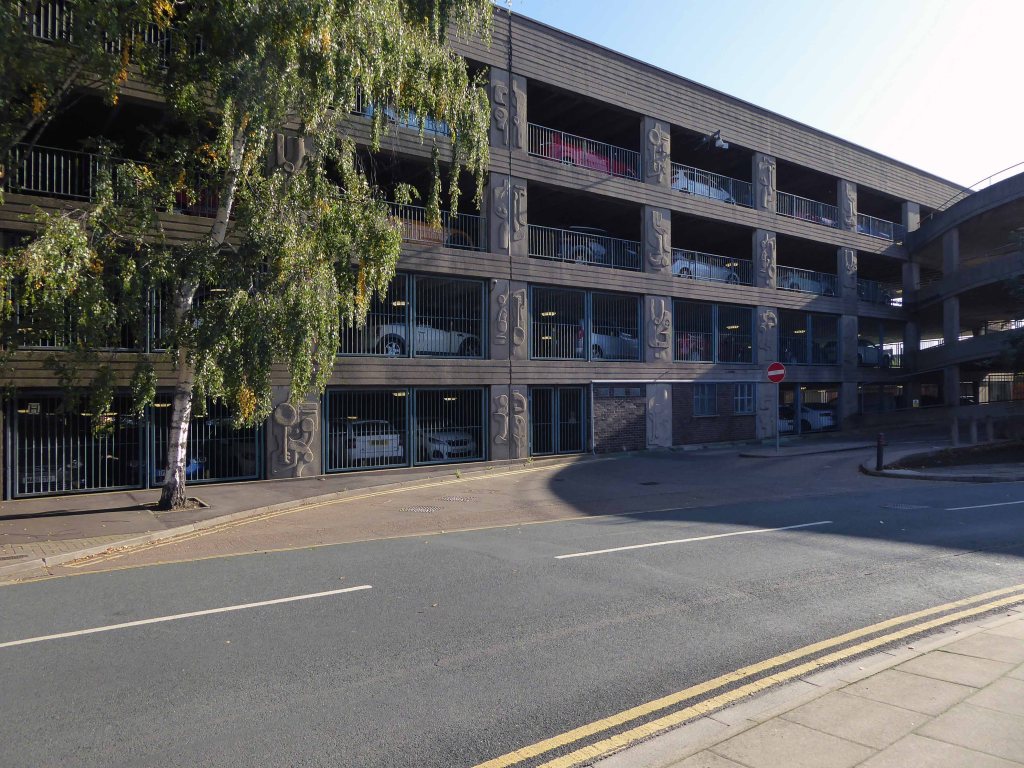
The majority of Gosney’s early commissions were collaborations with architects and he has made a significant contribution to public art in Grimsby. He is the artist responsible for the reliefs on the Abbey Walk car park, the large Grimsby seal by the entrance to the Grimsby Central Library and the Grim and Havelok themed copper relief on the side of Wilko store in Old Market Place.
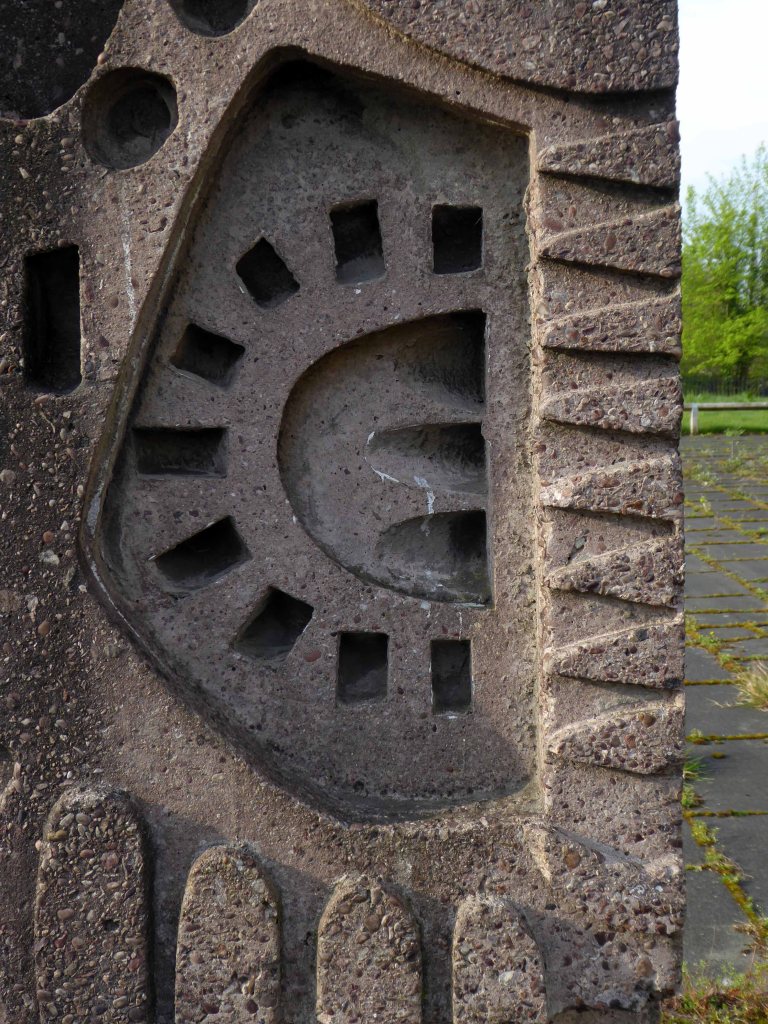
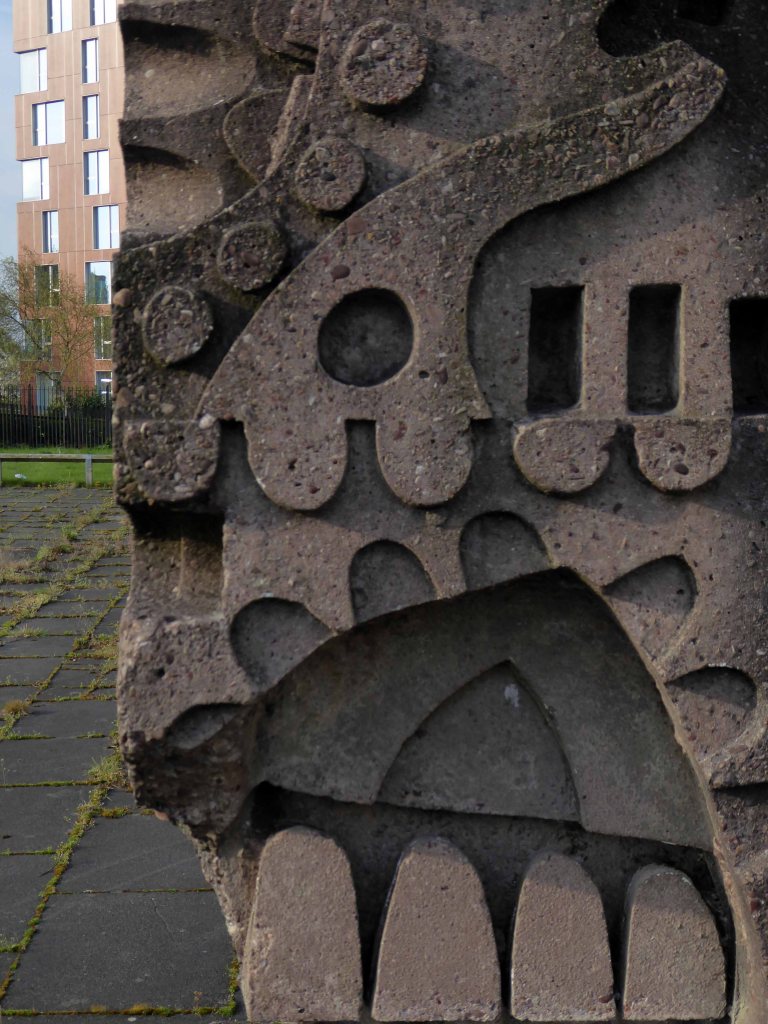
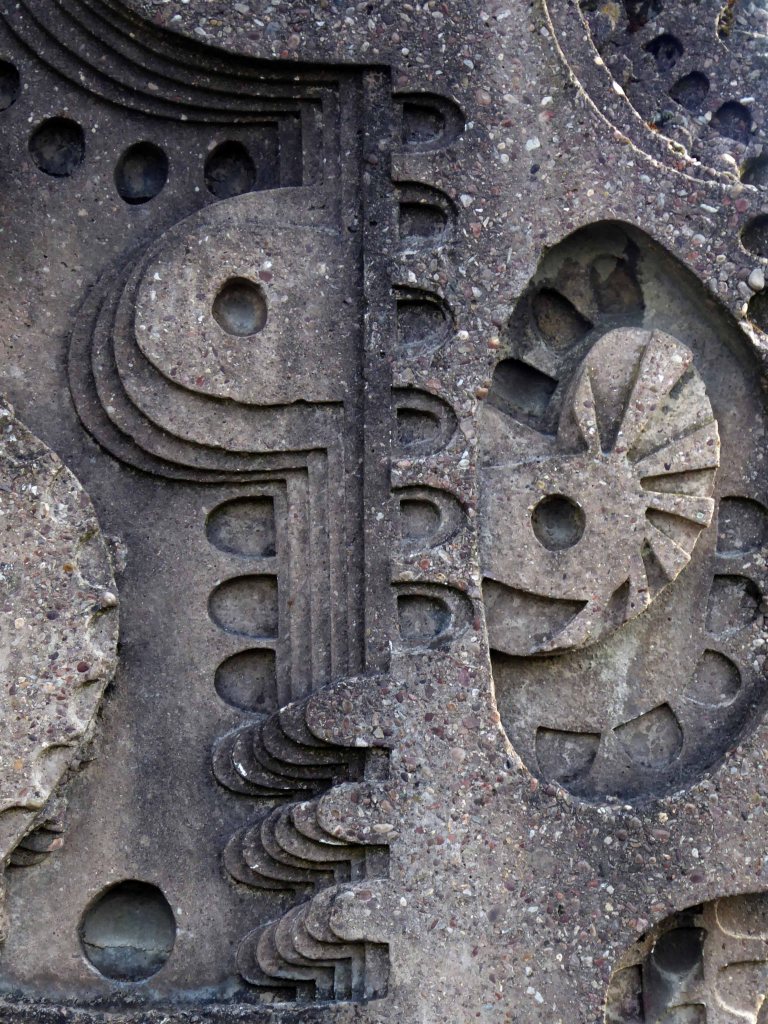
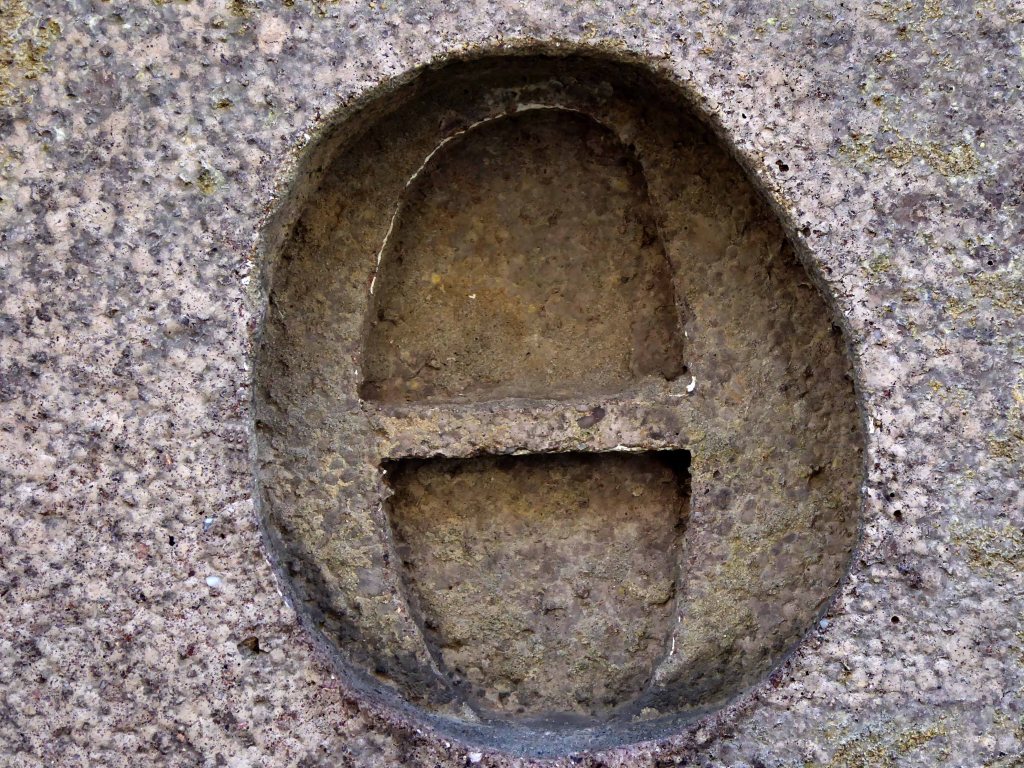
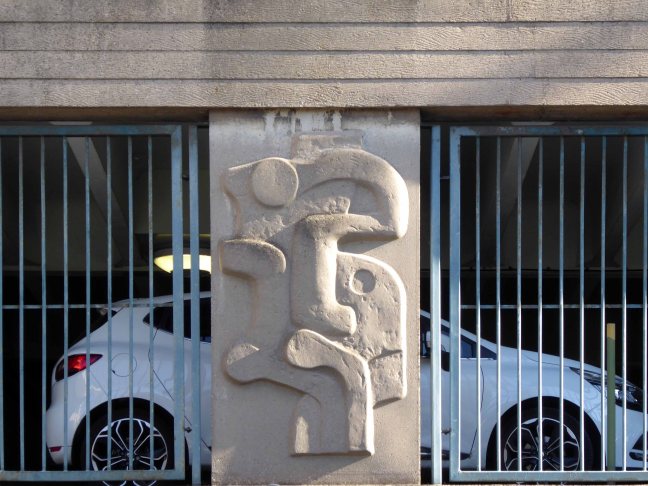
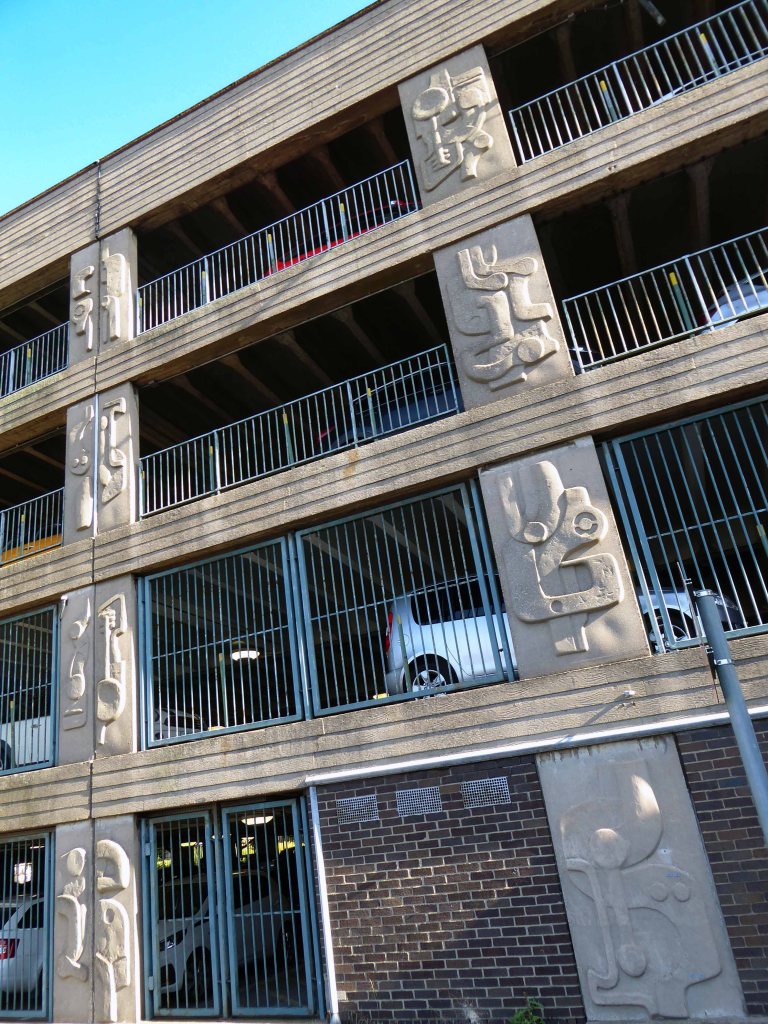
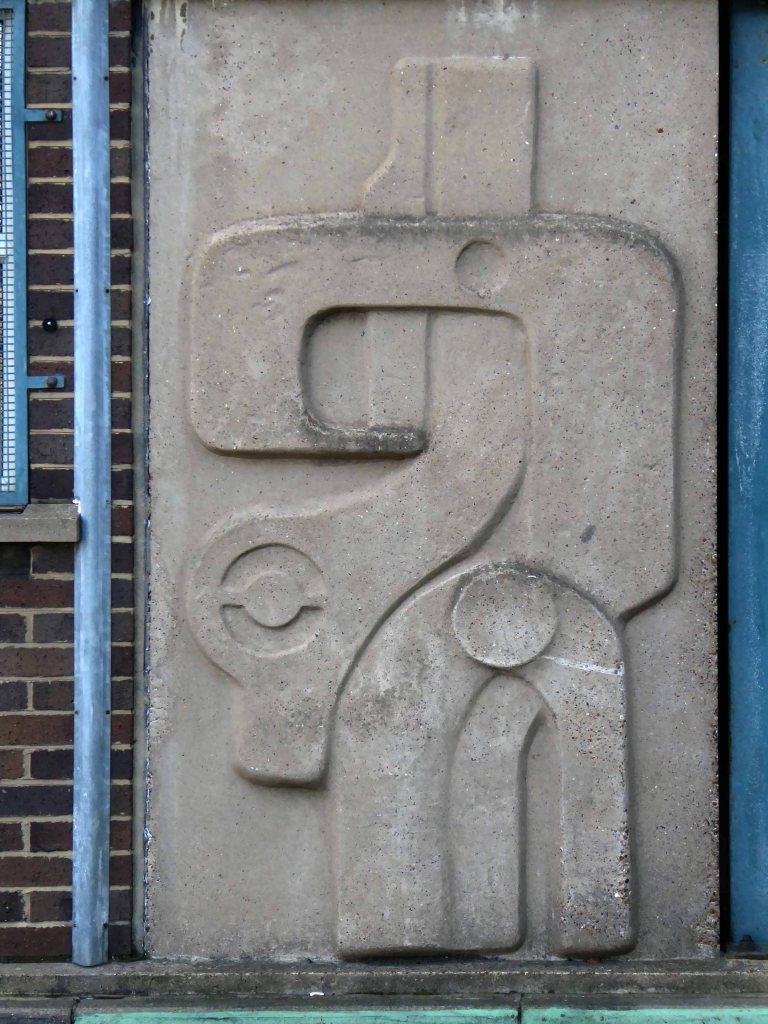
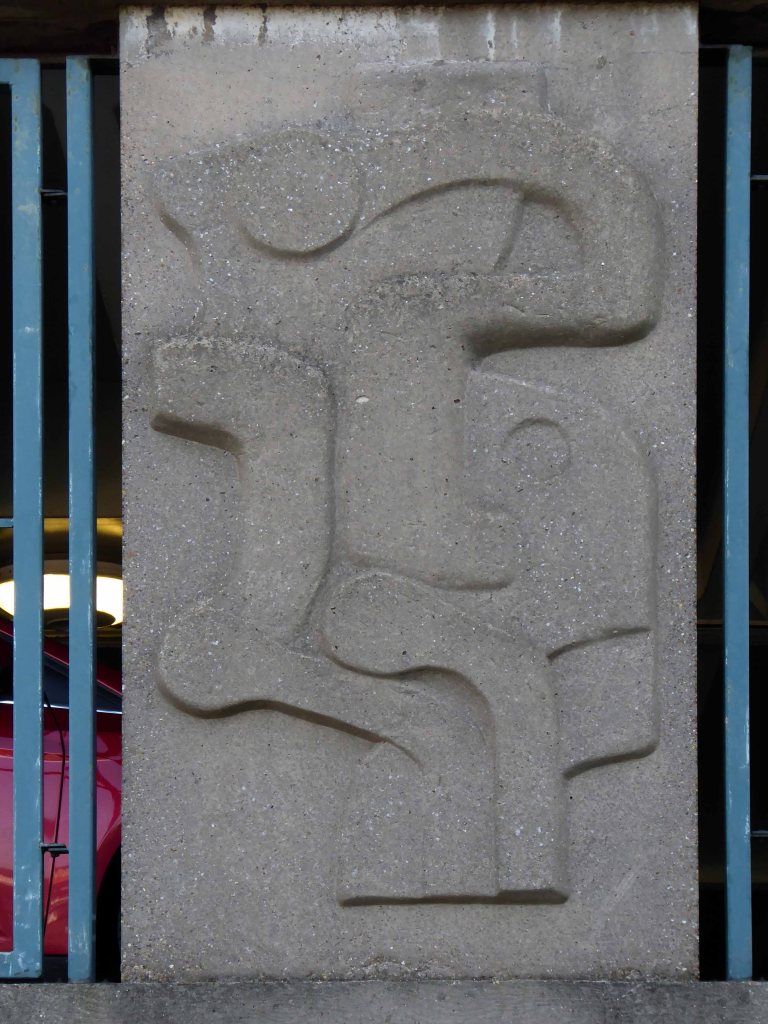
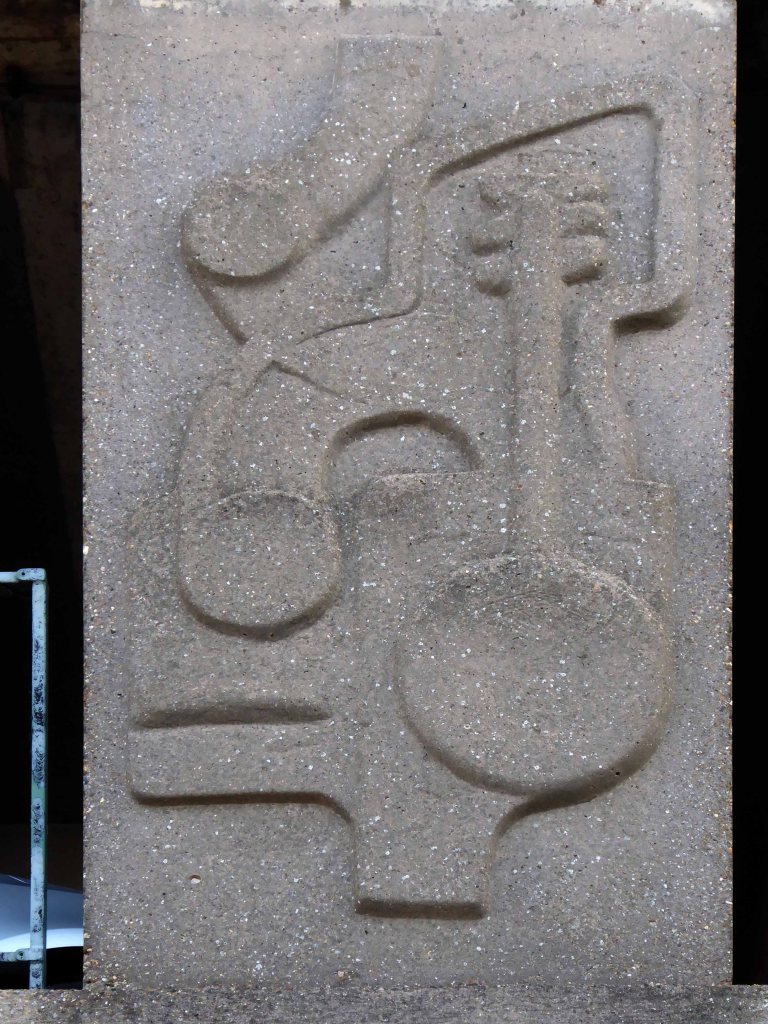
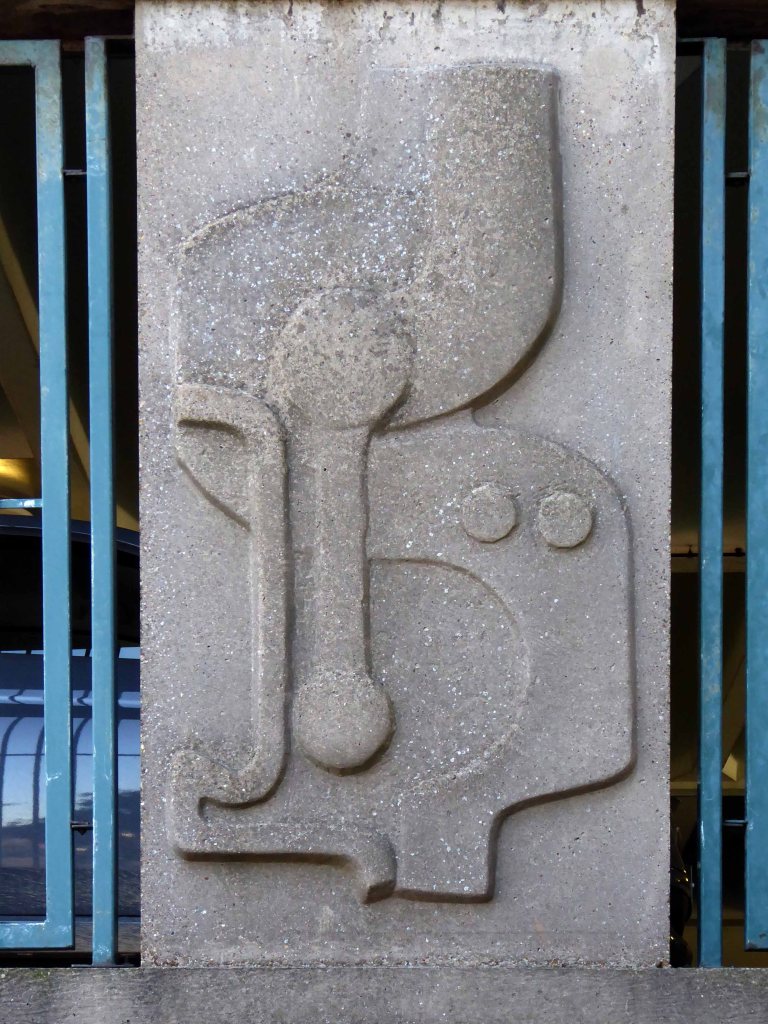
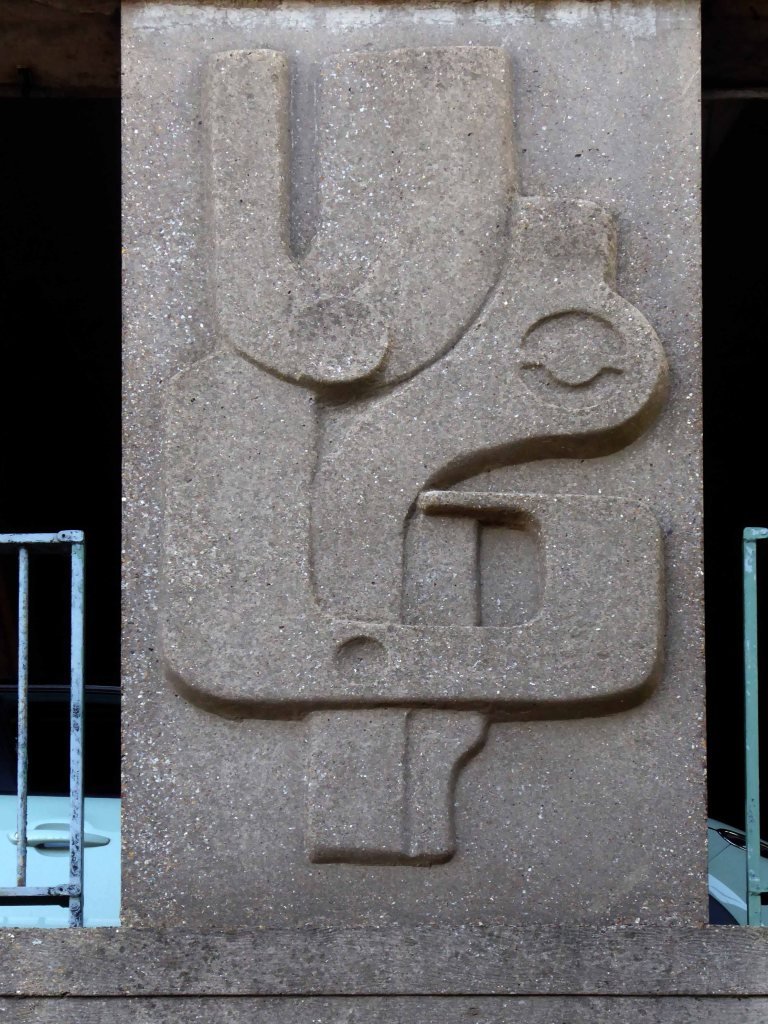
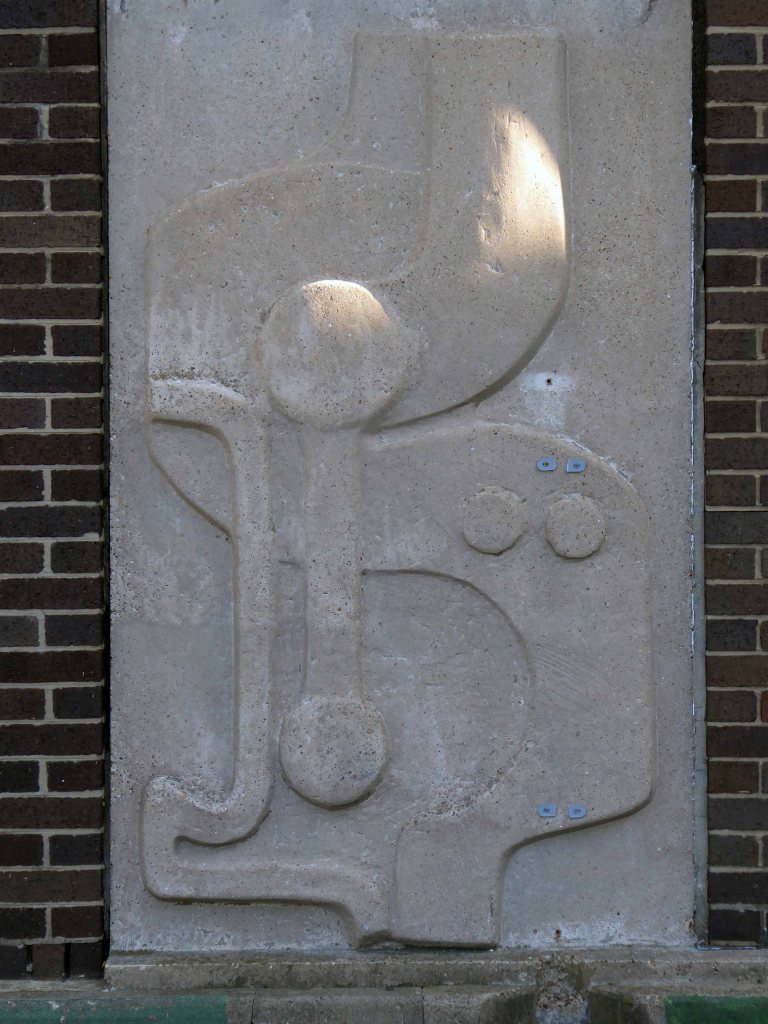
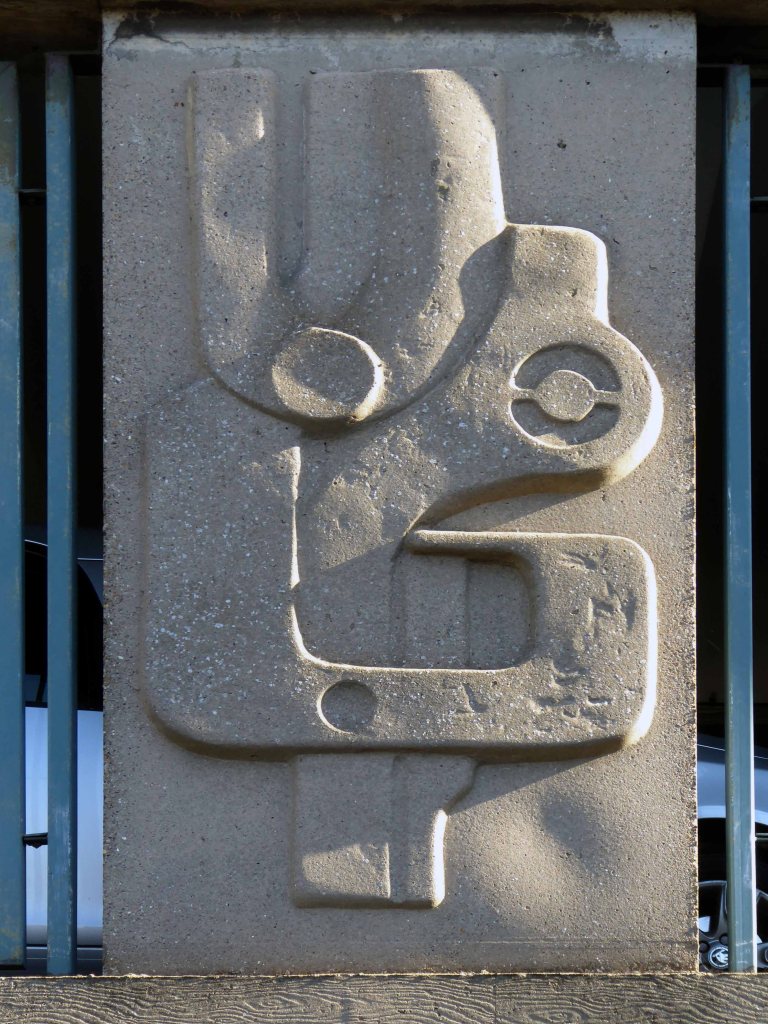
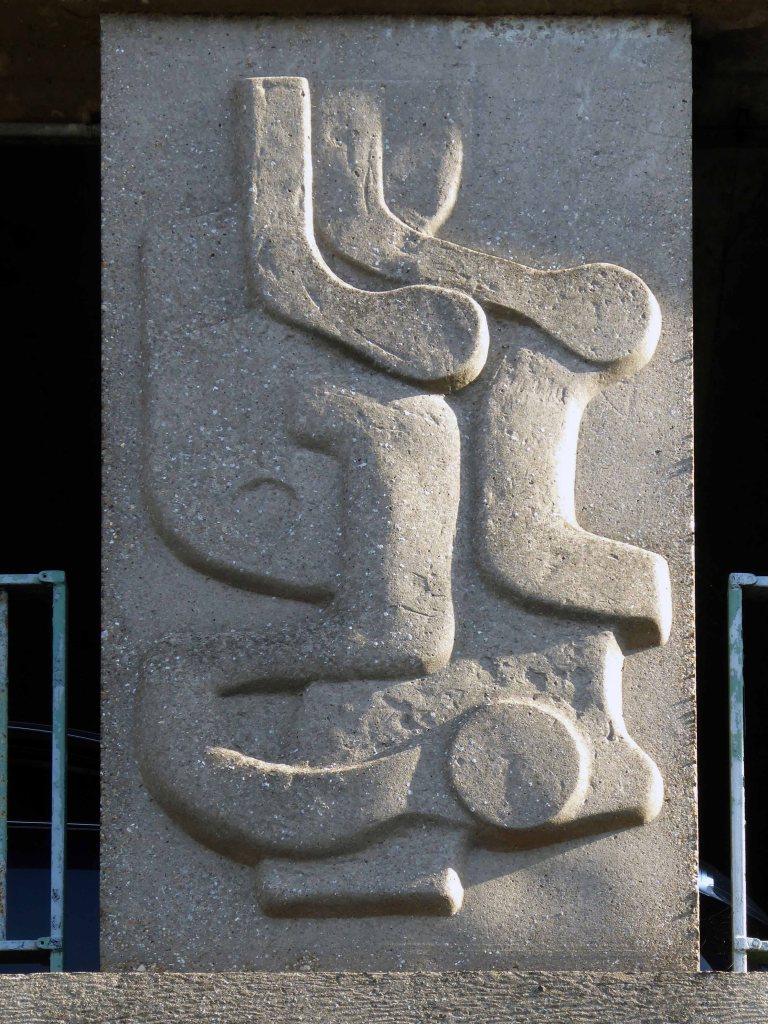
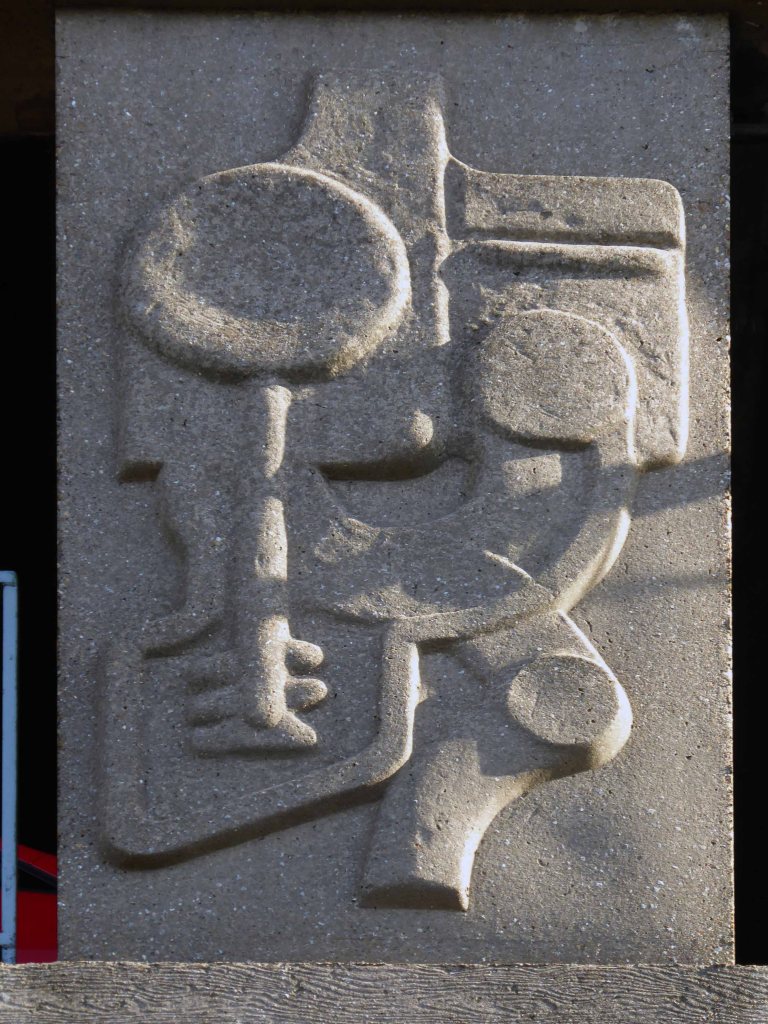
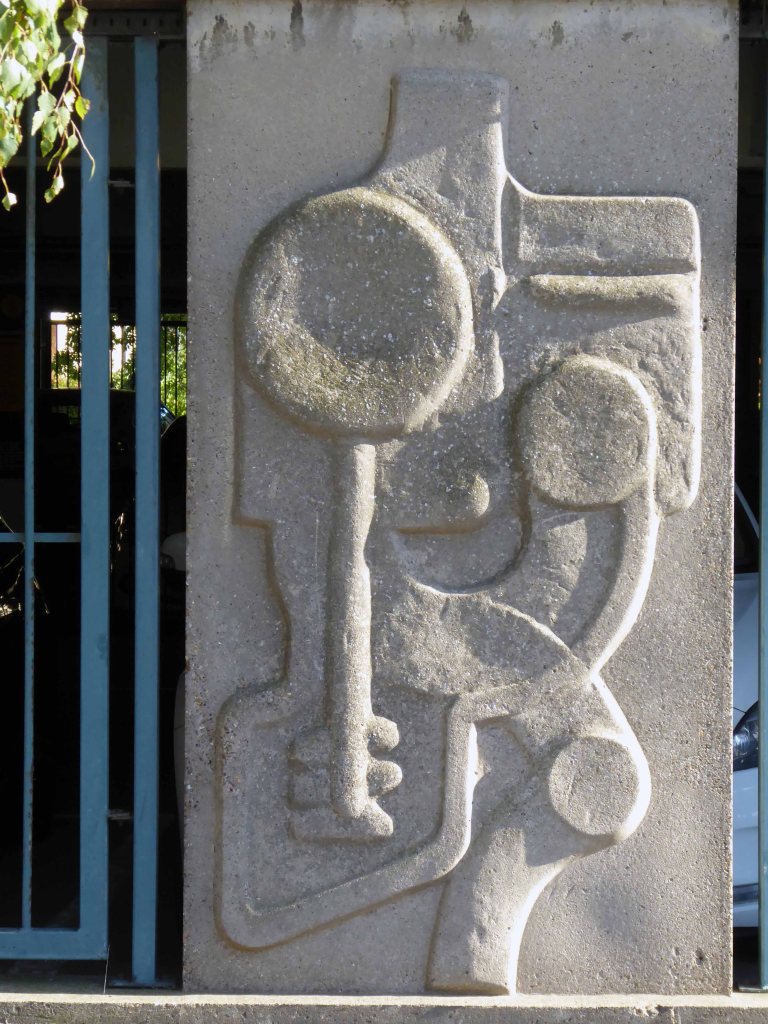
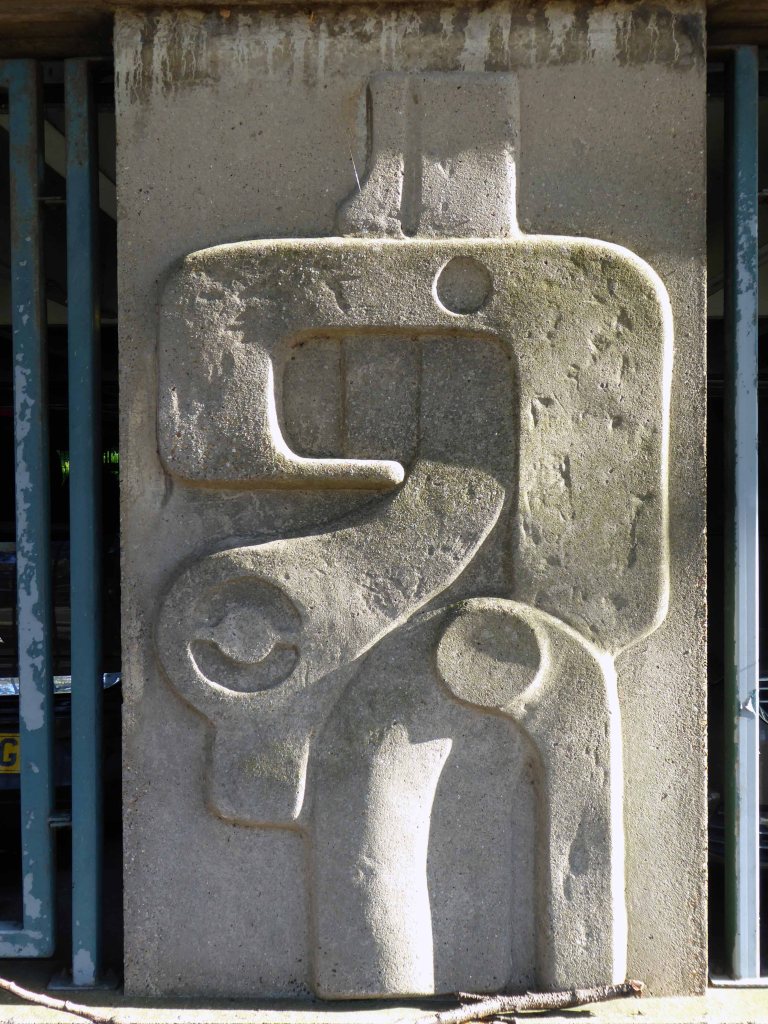
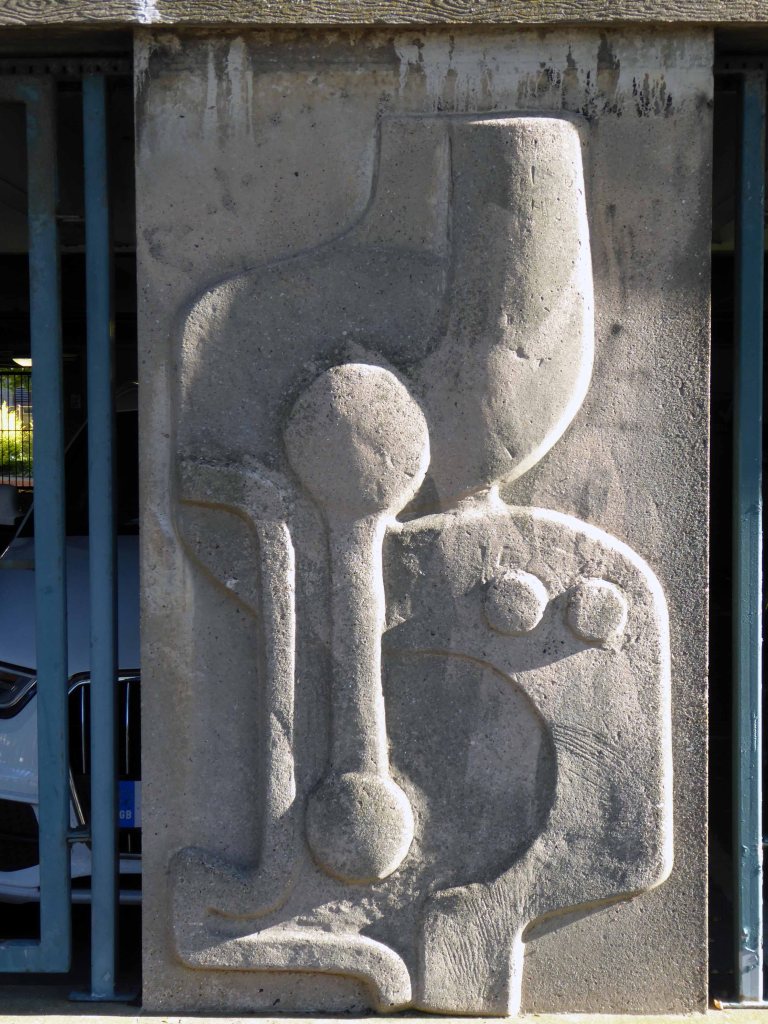
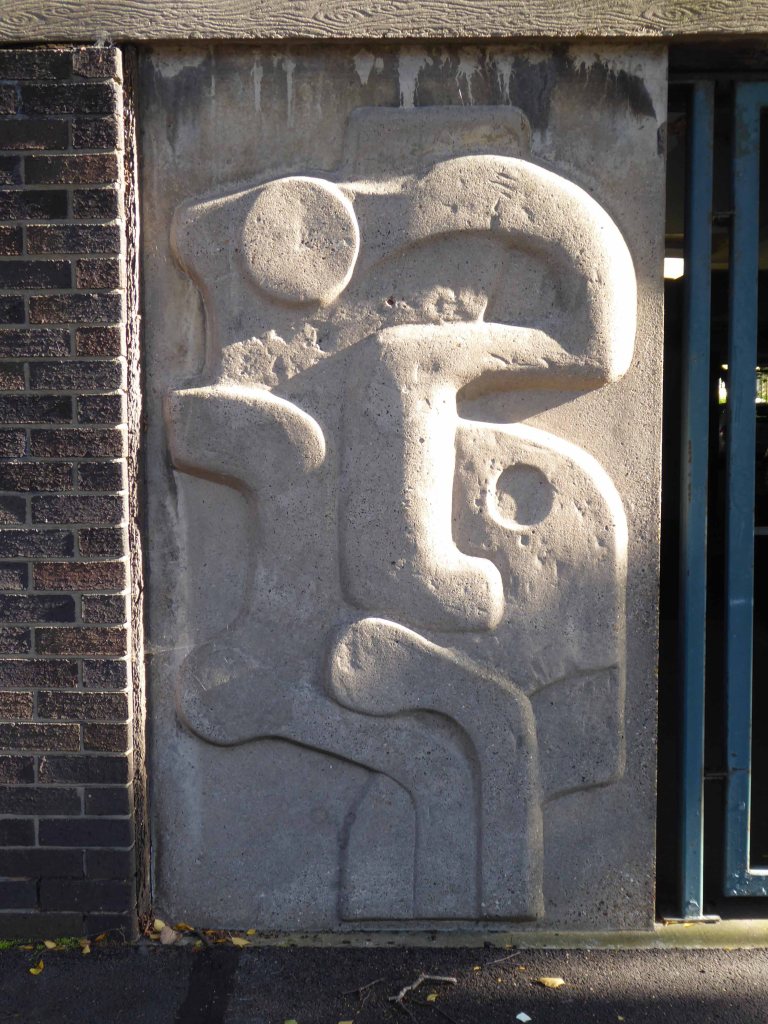
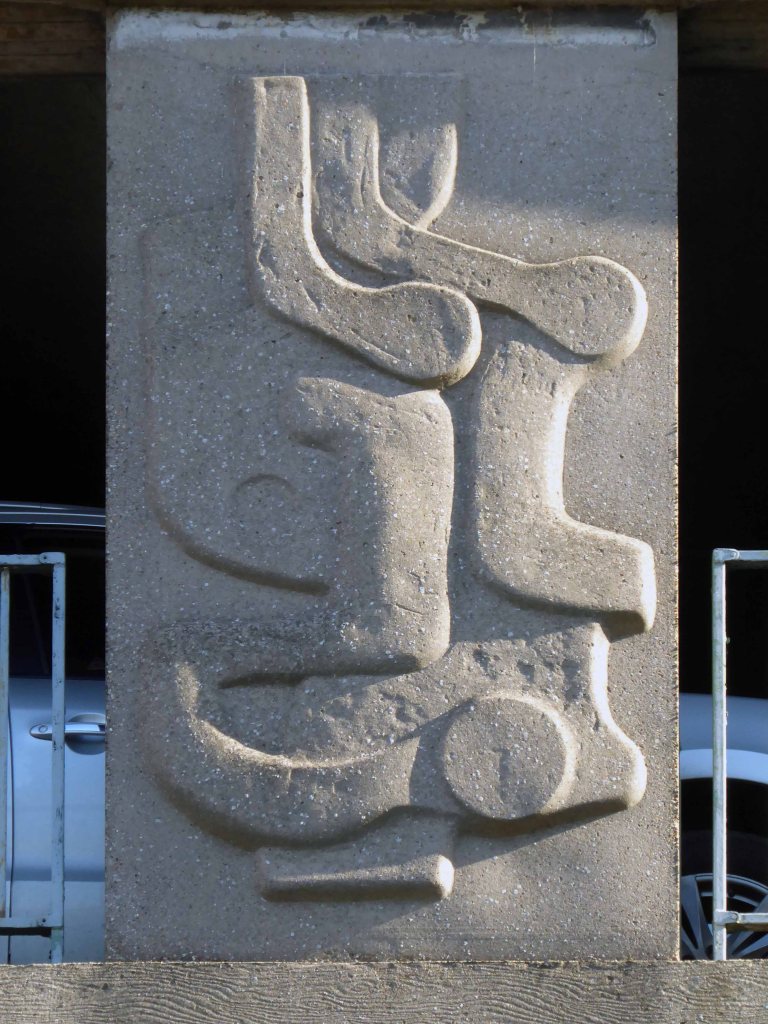
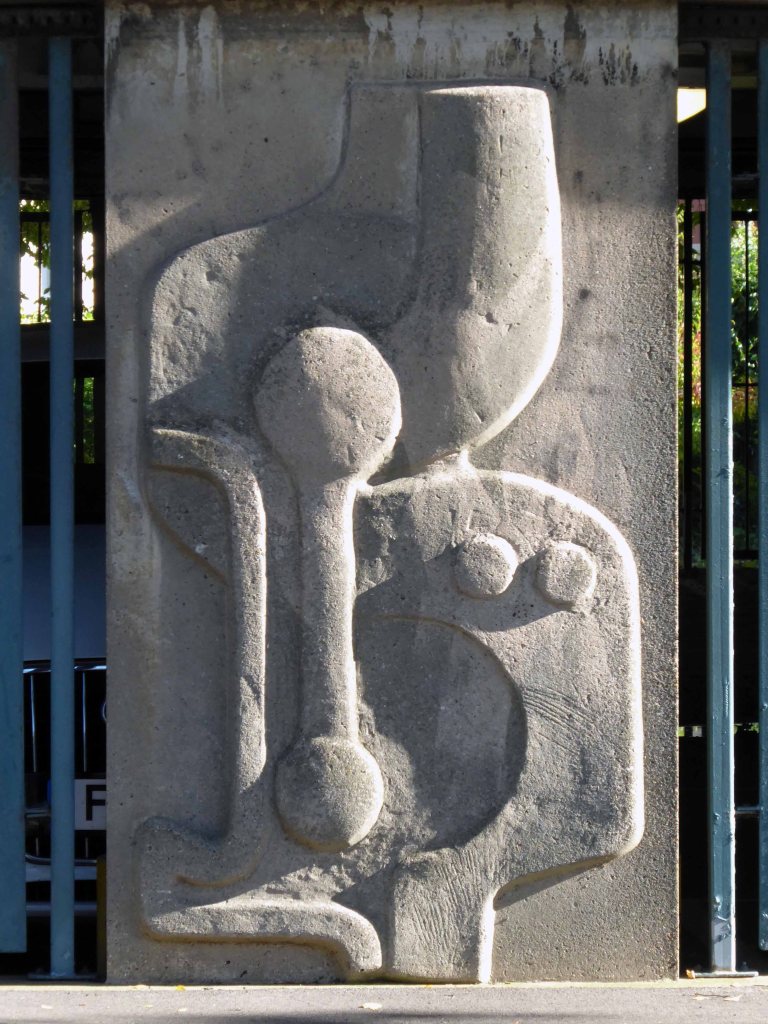
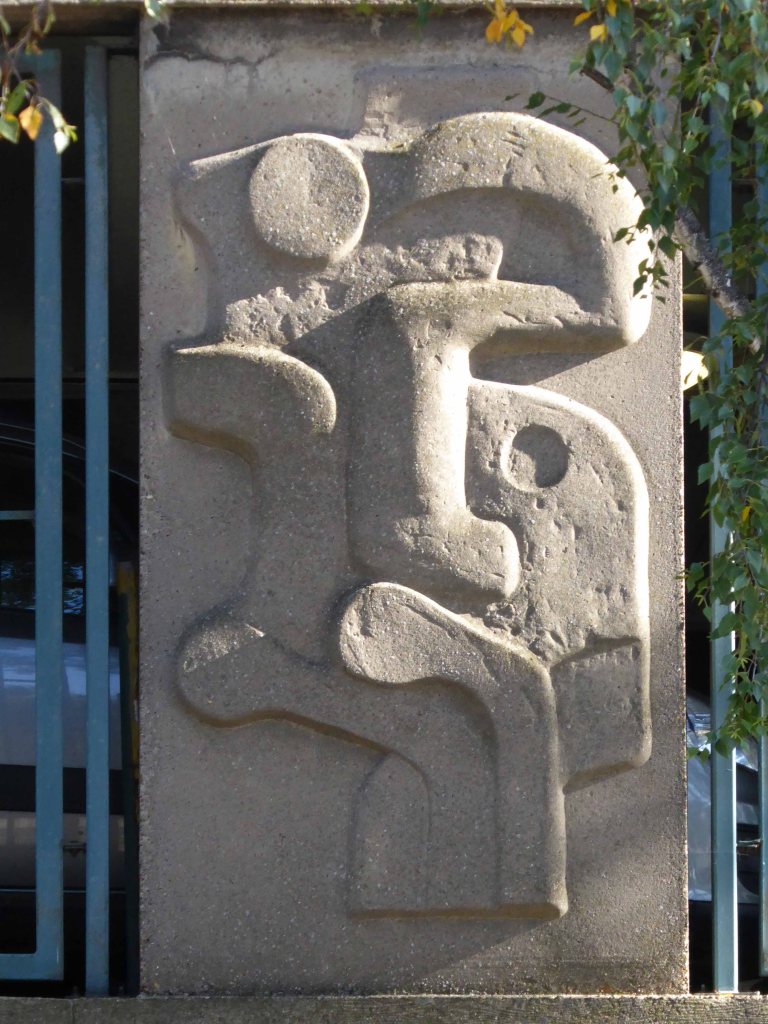
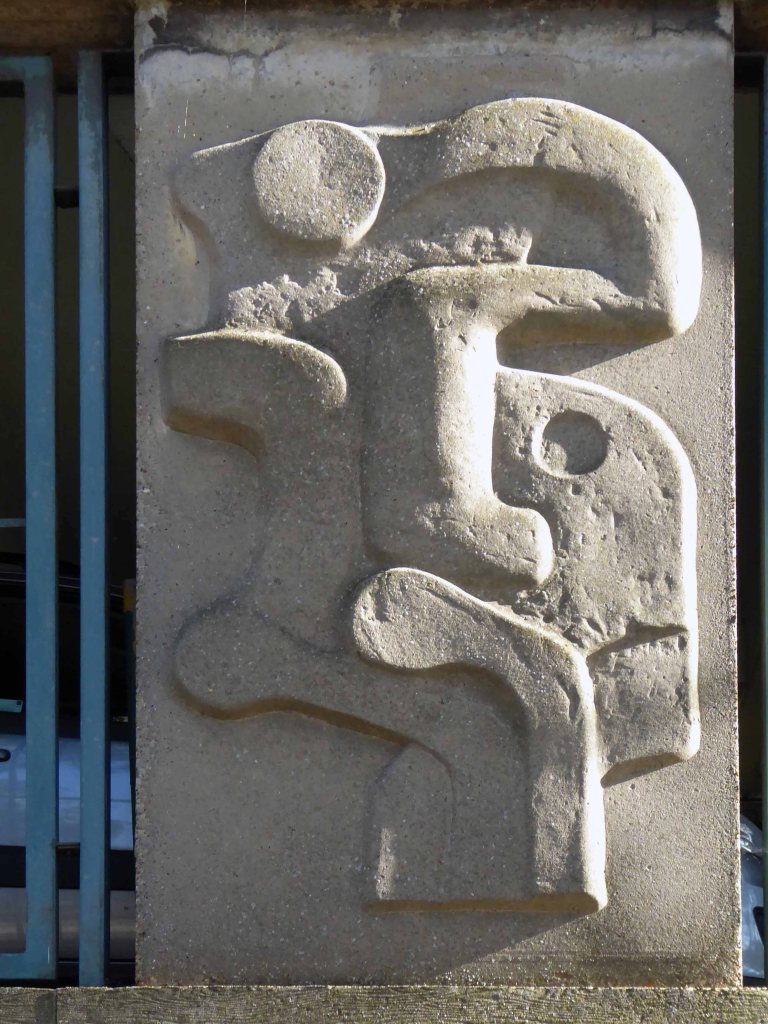
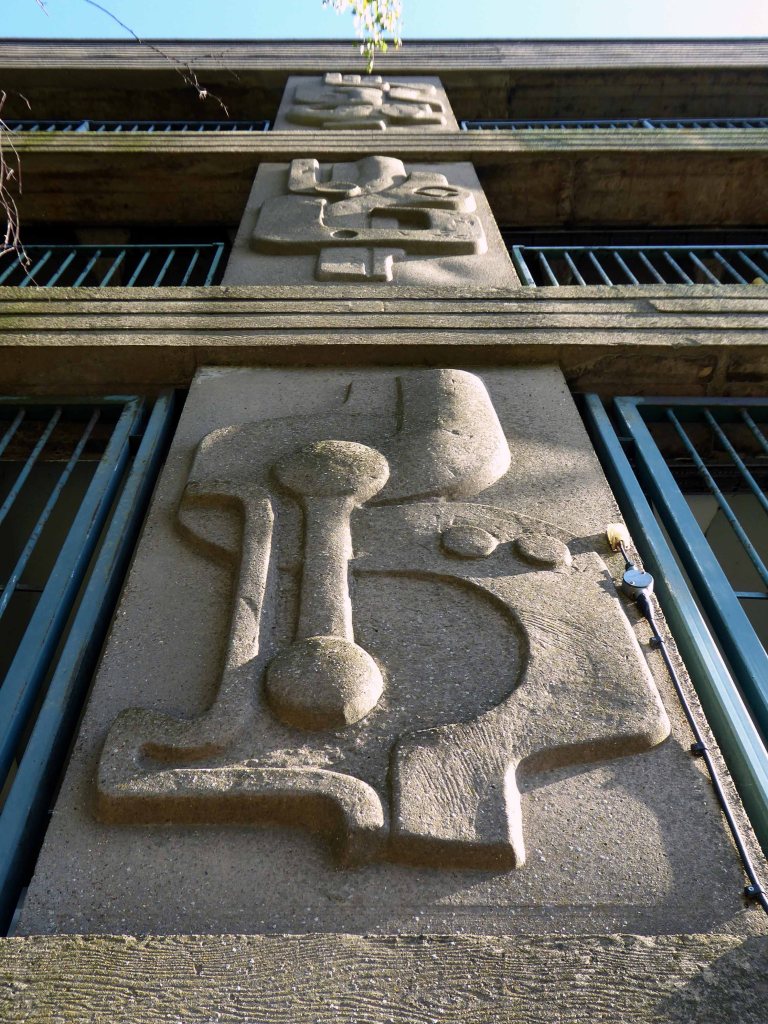
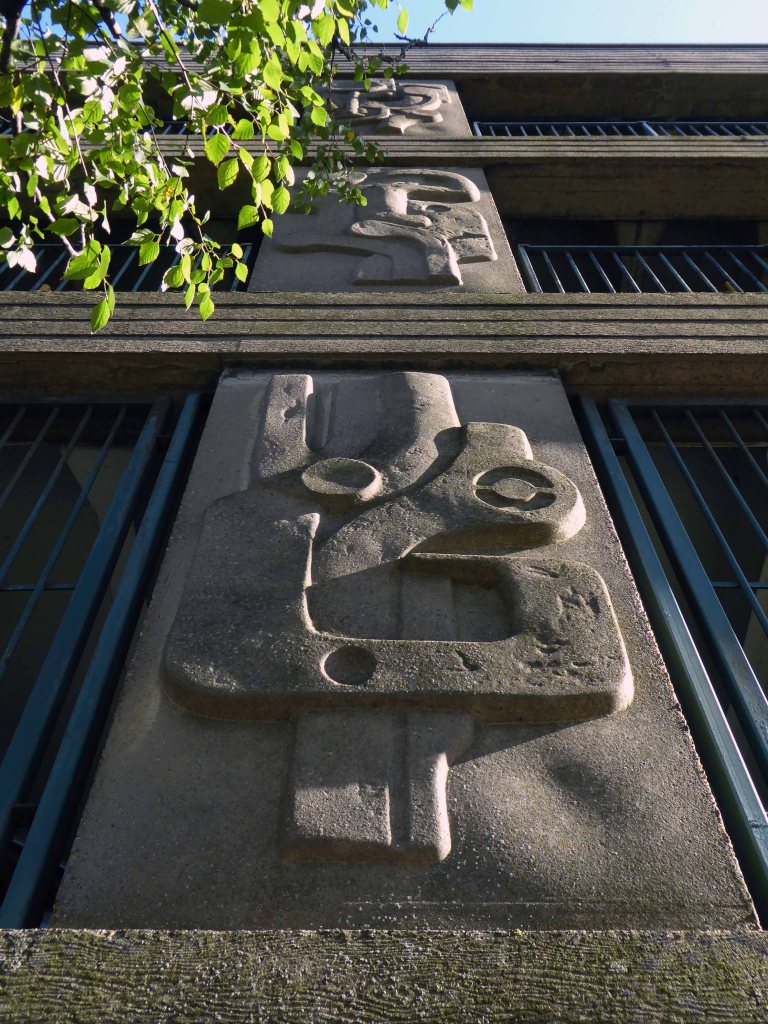
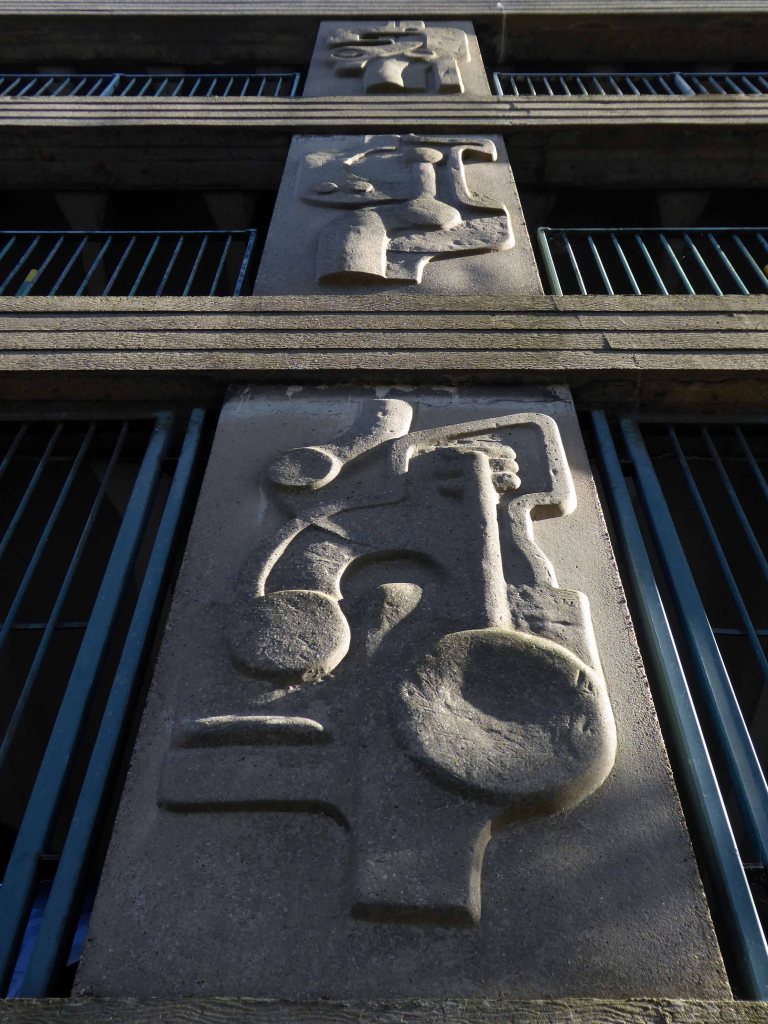
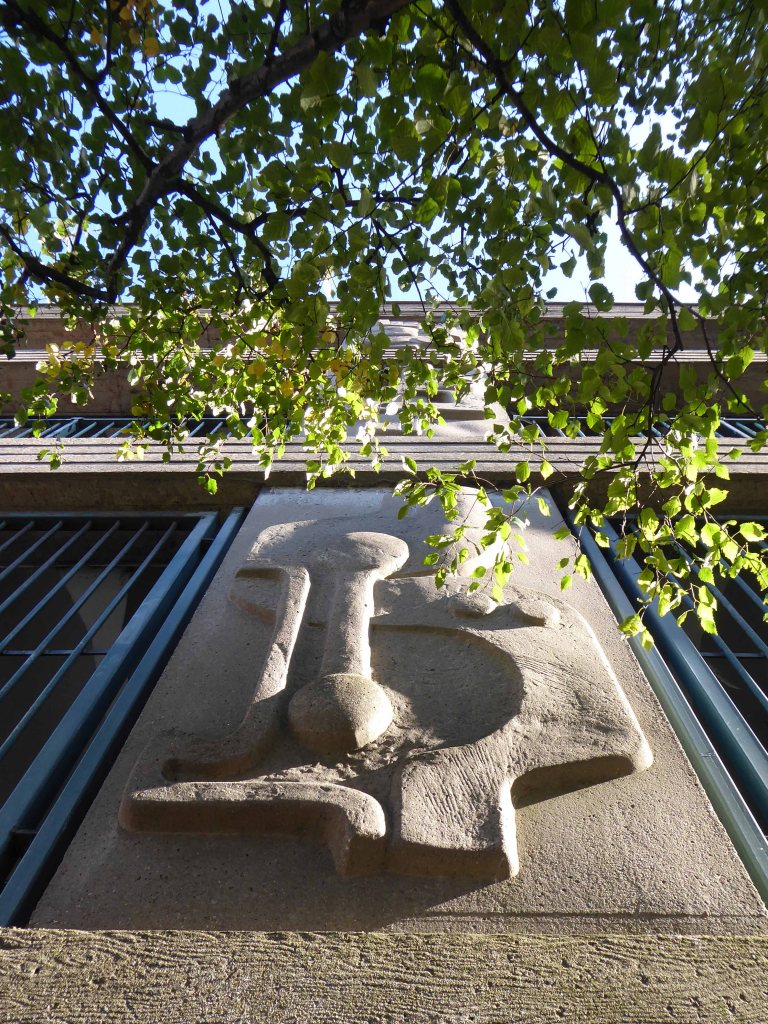
Abbey Walk was designed by architects Nicholson & Rushton and built in 1969 by Holst & Company of Scunthorpe at a cost of approximately £200,000. The concrete panels were structural pillars, cast in situ and featuring a repeated series of four abstract designs – some flipped 180 degrees.
In an interview with the BBC, Gosney explained the inspiration for these: “The four designs I produced were inspired by drawings in the handbook of the car that I had at the time, which was an Austin Cambridge estate car, and included suspension, carburettor, etc.”
The car park has been the subject of some speculative repairs and refurbishment:
In total, the scheme will cost the council £1.54 million.
The authority will borrow £1.34 million to fund the project with a further £200,000 coming from a local transport grant. But the council said that the improvements made could help increase revenue from the car park of around £34,000 a year.
Councillor Matthew Patrick, portfolio holder for transport at the council, said that the work is essential to “brighten up” the building and attract people into Grimsby.
“It’s one of the largest car parks in the town,” he said.
“It will attract more people into the town centre and help to improve the offering of the car park.”
So here we are faced with a rare, precious and beautiful example of municipal modernism, a bold and brave attempt to decorate what is often the most functional of functional structures.
Owing something to the work of both Henry Moore and Pablo Picasso the imagery is derived from automotive parts, along with it seems to me, vague intimations of figuration.
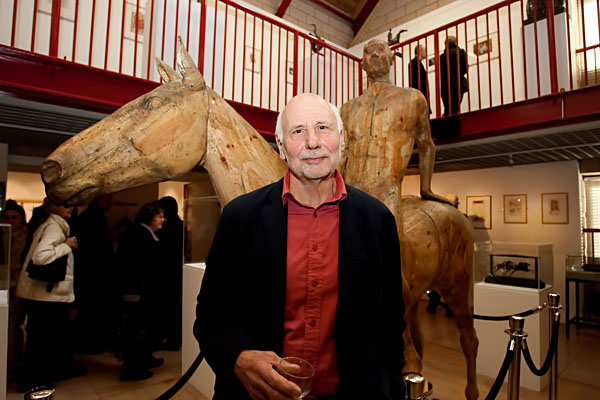
Antony Holloway – artist born March 8th 1928 he died on August 9th 2000.
Dorset was where he was born and grew up and the Dorset landscape was always there deep within him. He was educated at Poole grammar school between 1939 and 1945. After national service in the Royal Air Force in Dorset and Germany from 1948 to 1953 he studied at Bournemouth College of Art. Then came the RCA.
Tony began work as a stained glass and mural designer and jumped, with astonishing confidence, into working as a consultant designer with the architects’ division of the London County Council. He learned how to deal with architects and builders, and became adept at getting as much out of the money available – never enough – for his projects.
In 1963 he was introduced to the Manchester architect, Harry Fairhurst. Eight years later, after they had worked together on commissions in Cheshire and Liverpool, Fairhurst sought Tony’s advice about a plan for five large stained-glass windows in Manchester Cathedral.
Tony asked to design and make the first window, the St George in the inner south-west aisle. It was completed in 1973. Further windows followed in 1976 and 1980 and the final window, Revelation was installed in 1995.
Partially covered with greenery and now securely contained within spiked railings, I circumnavigated the site catching and snapping the structure where I could – here are those very snaps.
On meeting an old friend in Manchester – following previous encounters in Coventry, Salford and Liverpool
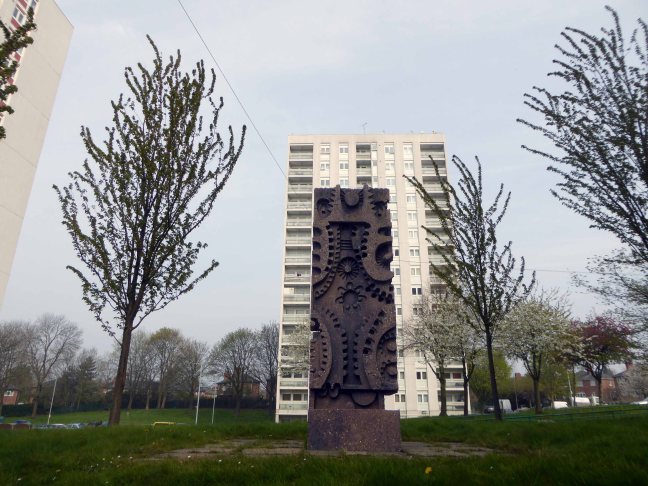
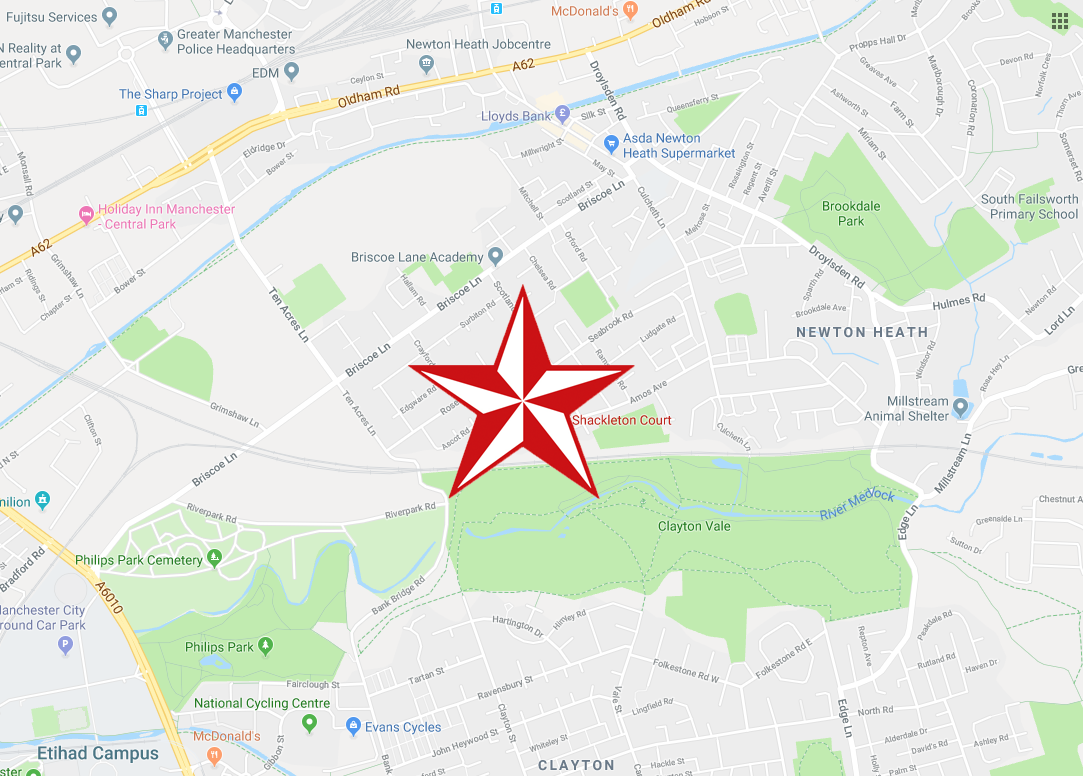
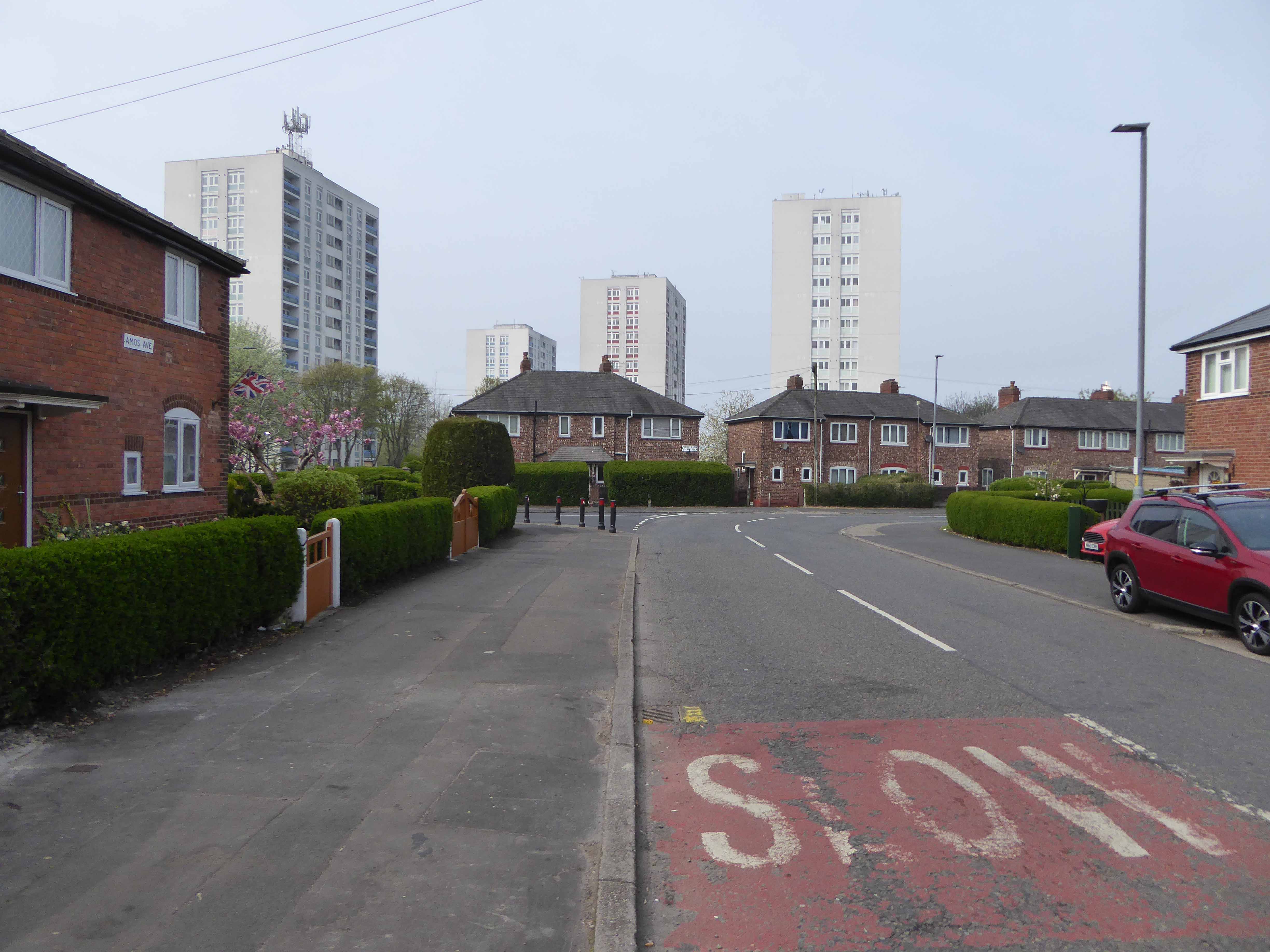
Following a lead from Neil Simpson I cycled along Clayton Vale and emerged on Amos Avenue where the flats came into view.
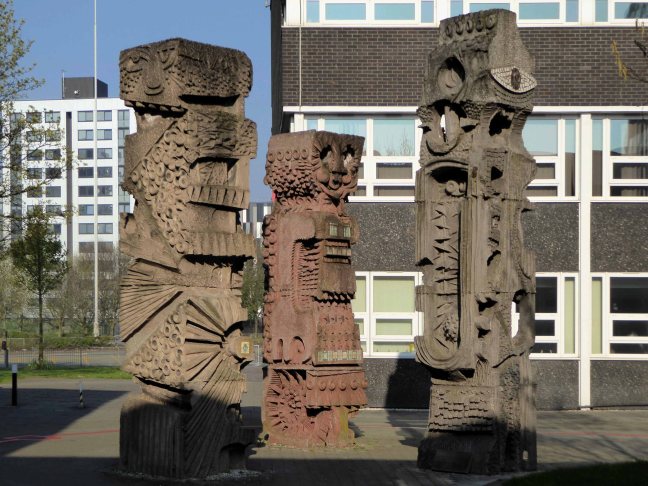
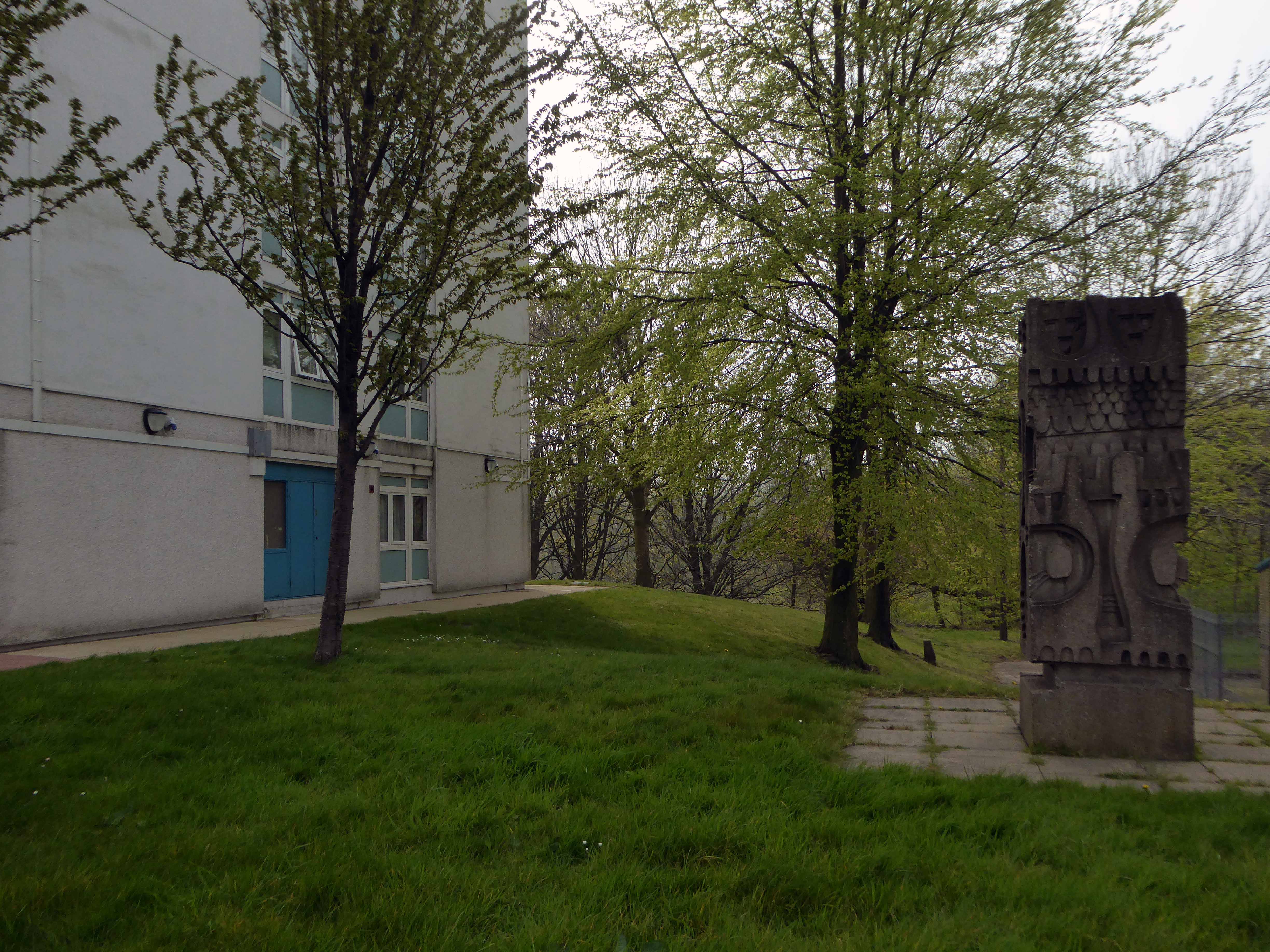
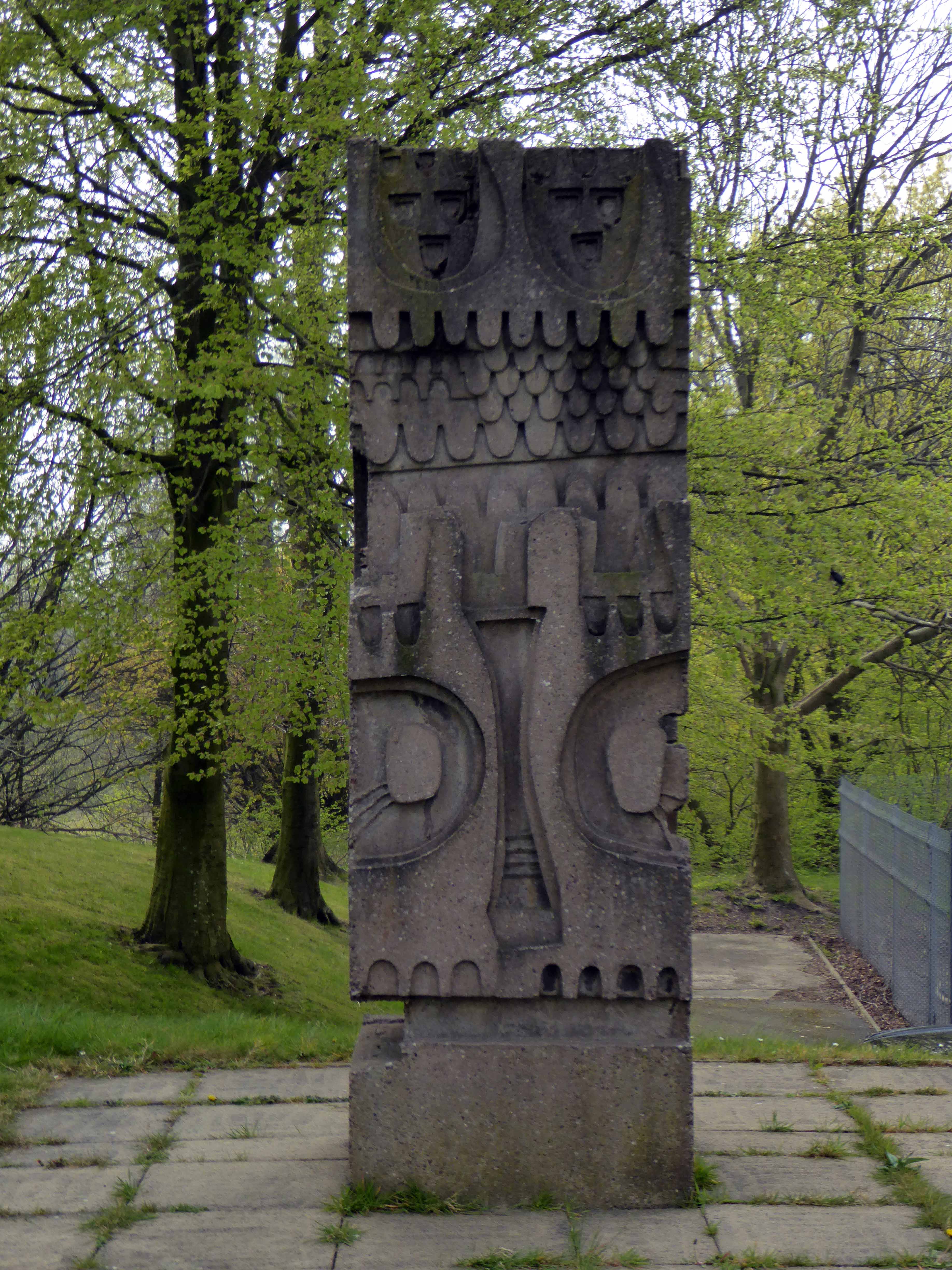
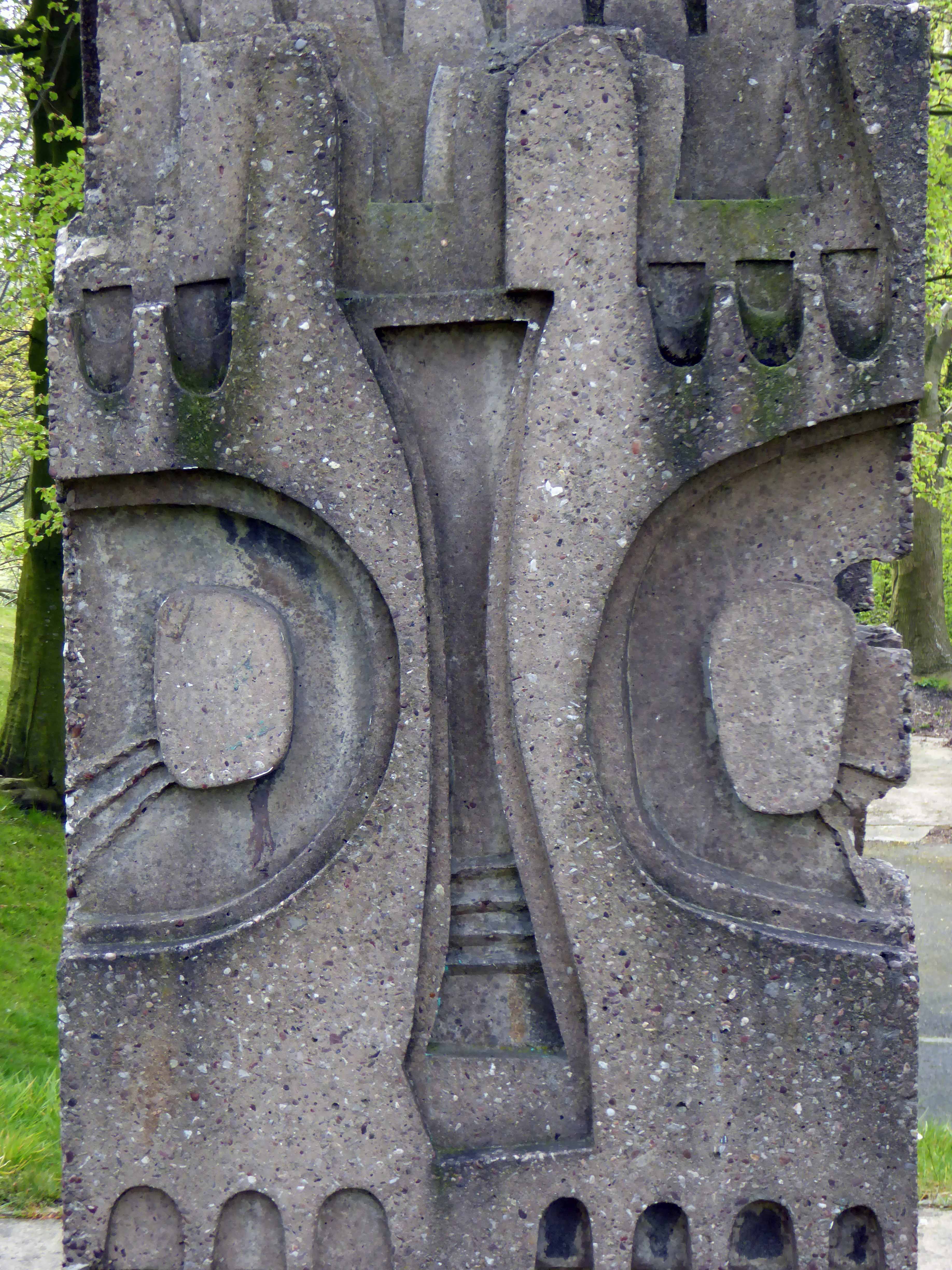
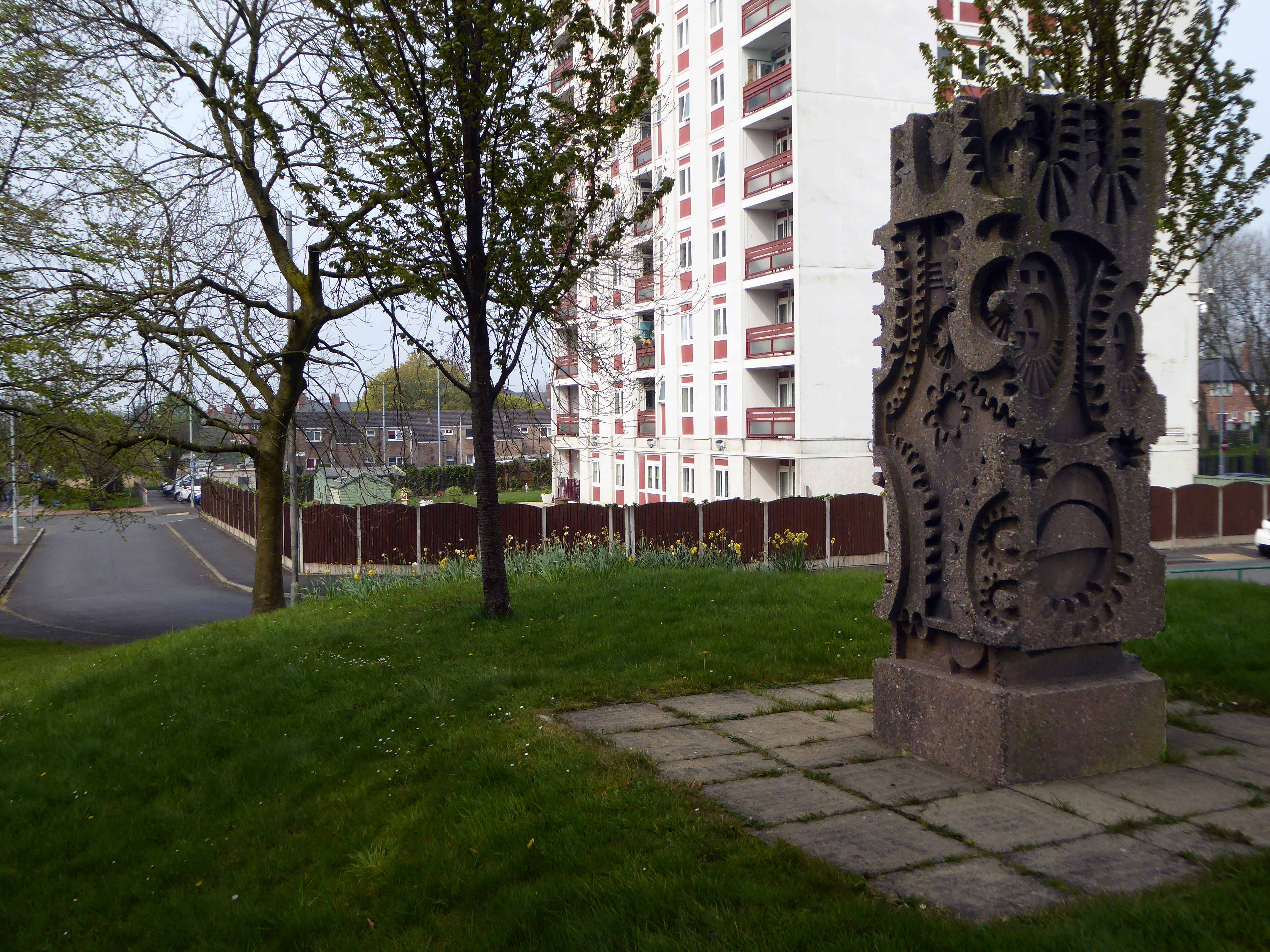
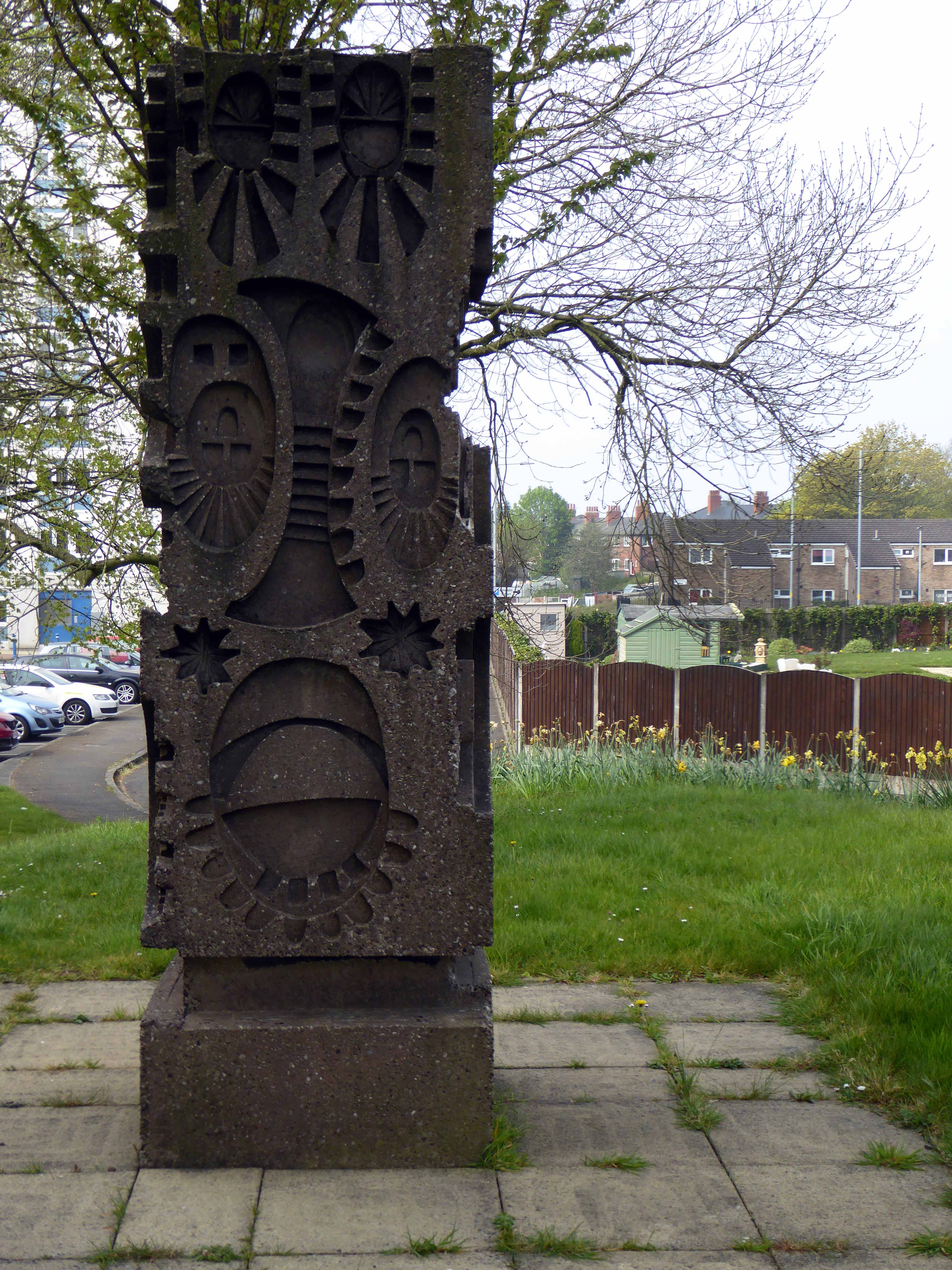
I was in search of an an averaged sized totemic concrete municipal public art pillar – similar to the example to be found in Eastford Square.
It belongs to a time when Municipal Modernism was very much in vogue – the provision of social housing along with the commissioning of murals, sculptures, mosaics and tiled reliefs.
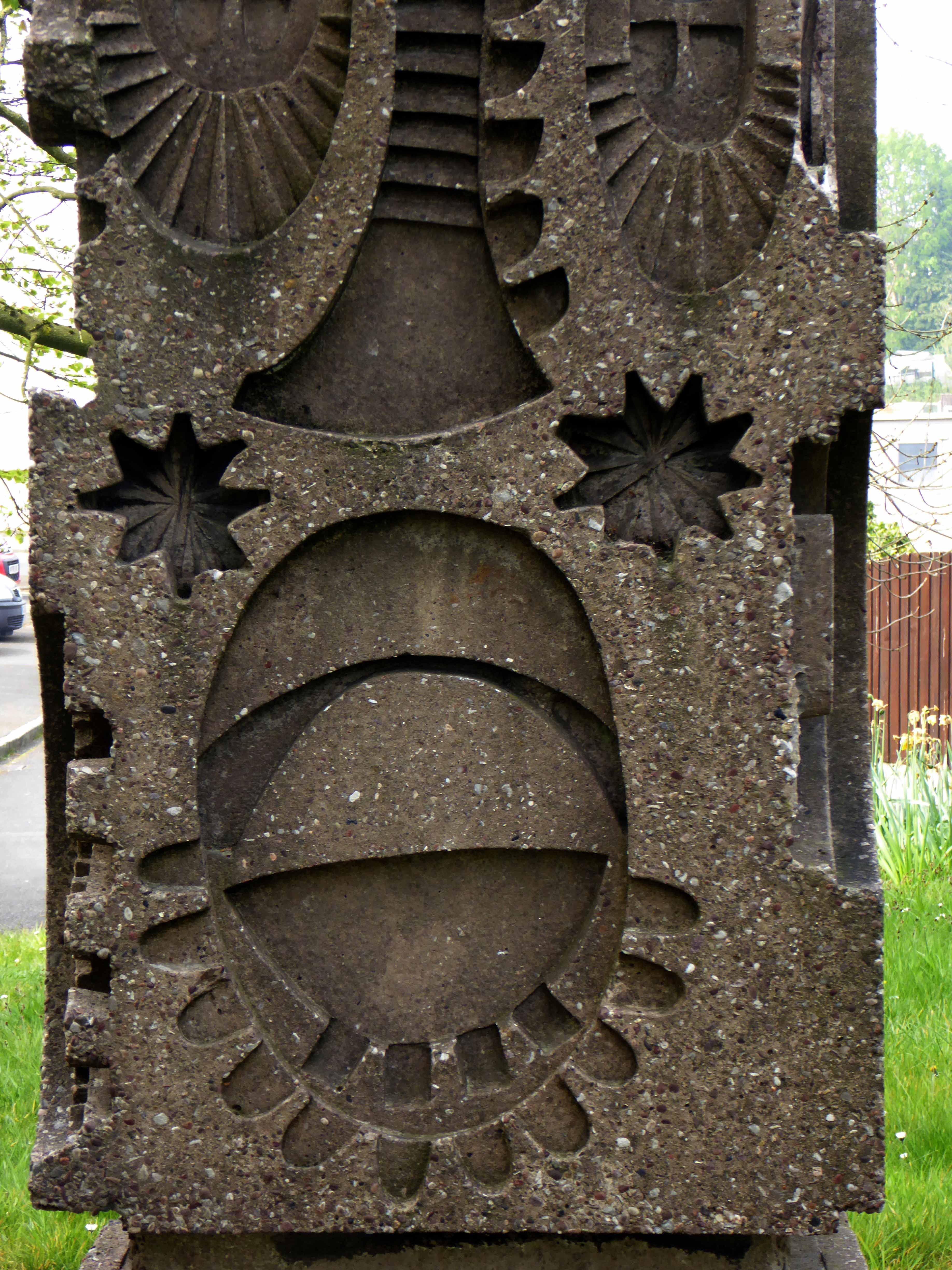
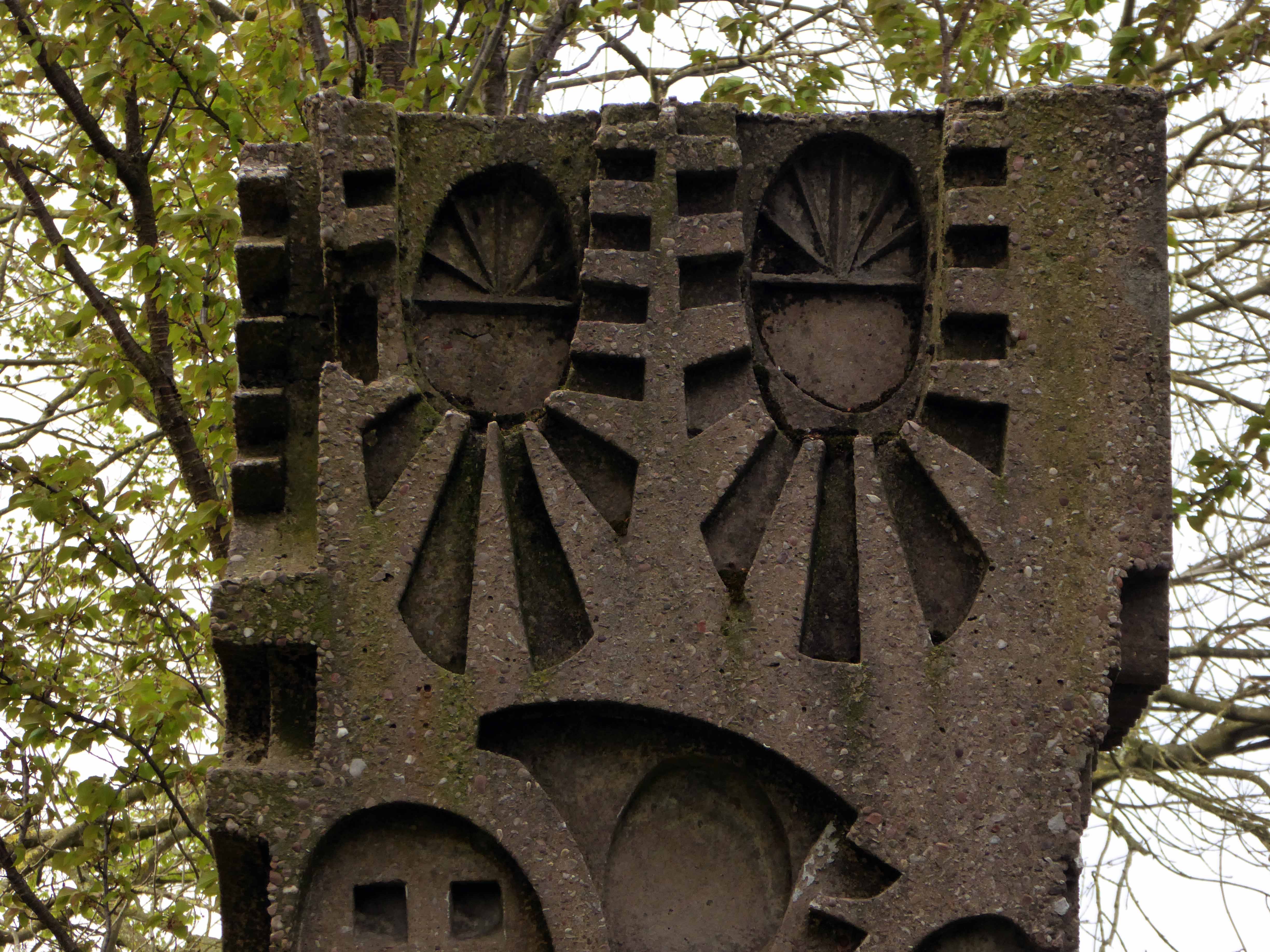
There has been some discussion regarding its authorship – it may or may not be the work of William Mitchell – both Skyliner and The Shrieking Violets have tried to find an answer.
Inevitably my only concern is art over authenticity – does it move you?
I’ve been to the Barbican before, wandering the walkways without purpose.
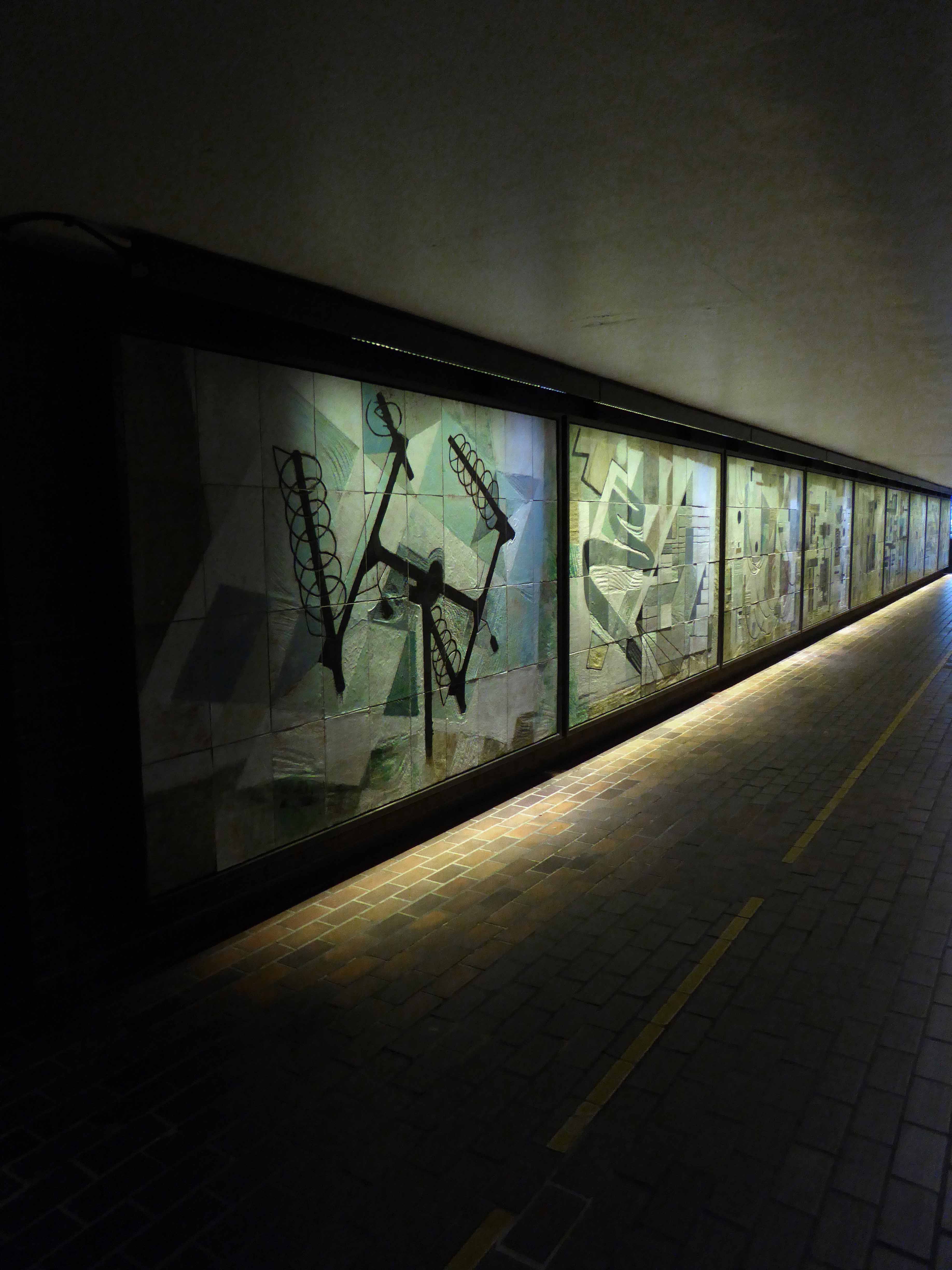
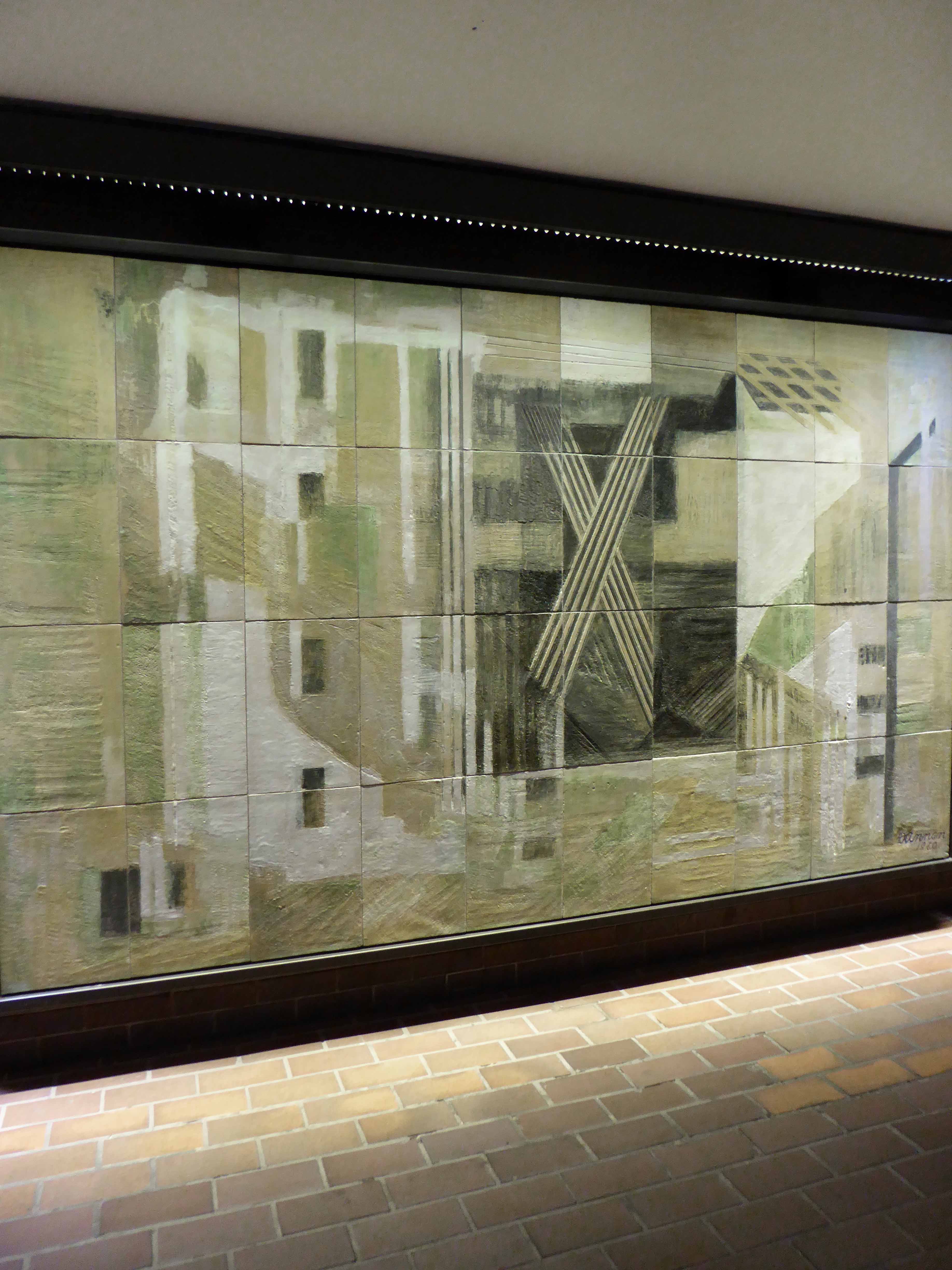
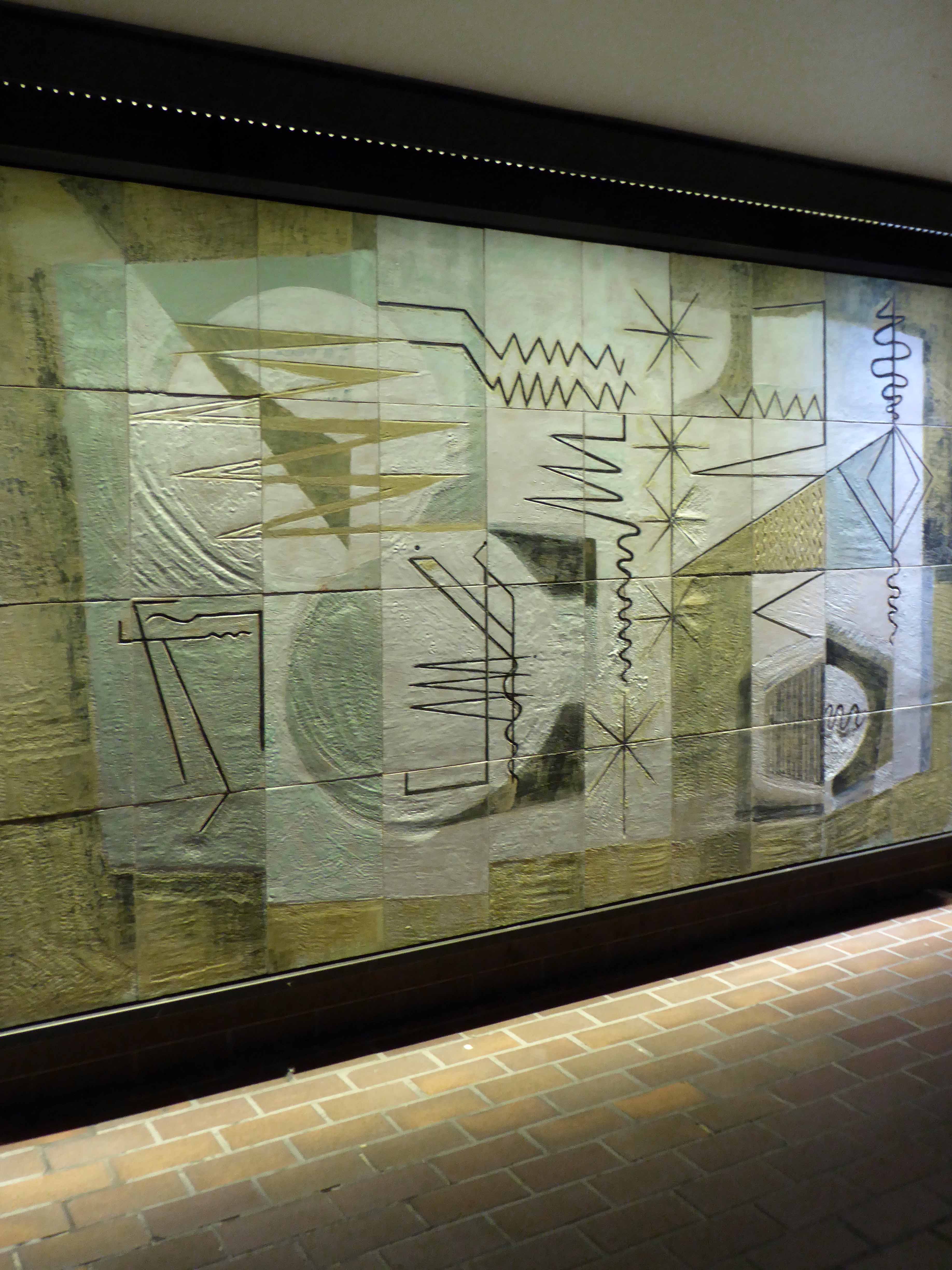
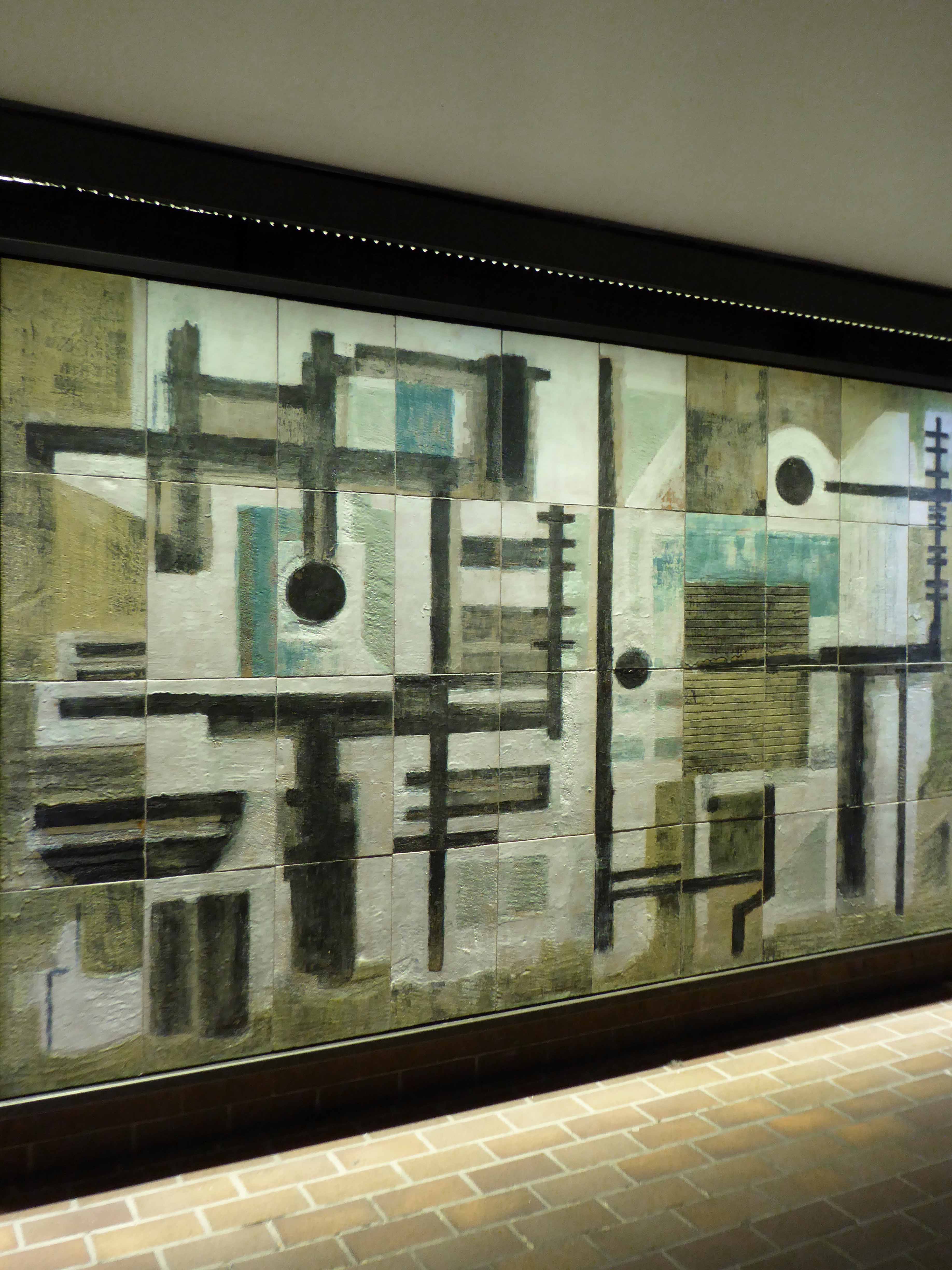
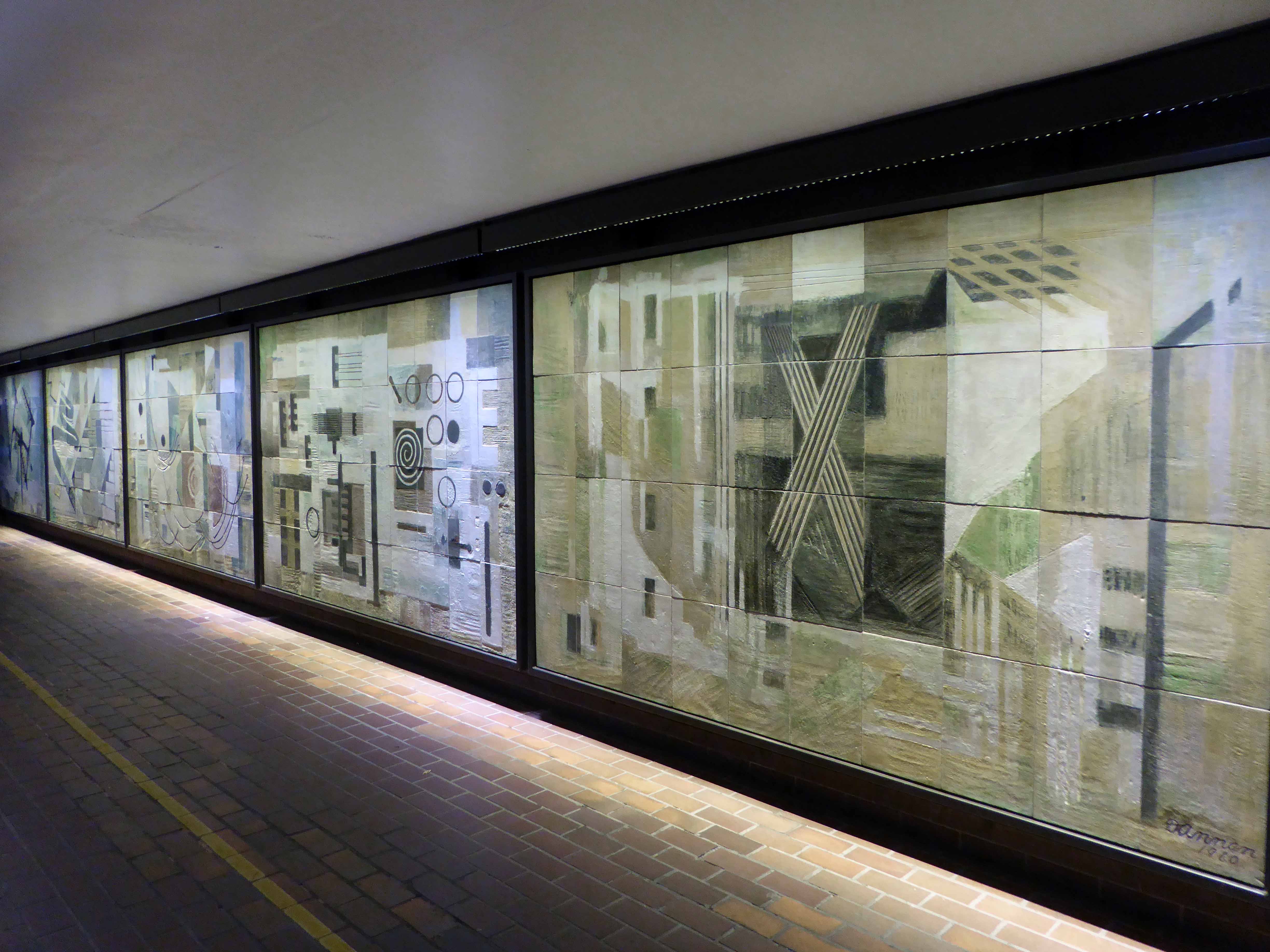
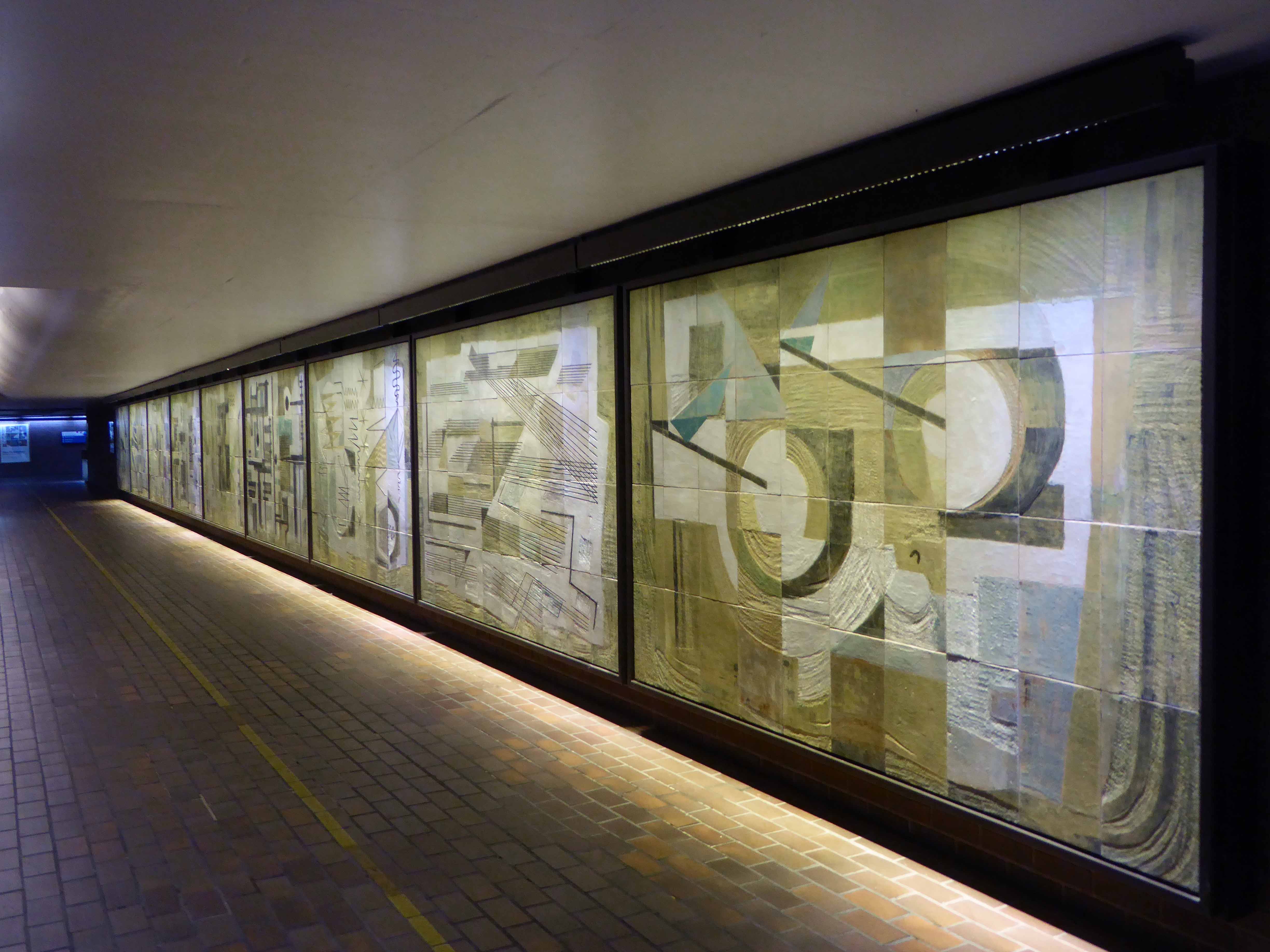
This is a whole new box of tiles, the search for a re-sited mural, a first time meeting with what would seem at once like an old and well-loved friend.
Dorothy Annan20 January 1900 – 28 June 1983
Was an English painter, potter and muralist, married to the painter and sculptor Trevor Tennant. She was born in Brazil to British parents and was educated in France and Germany.
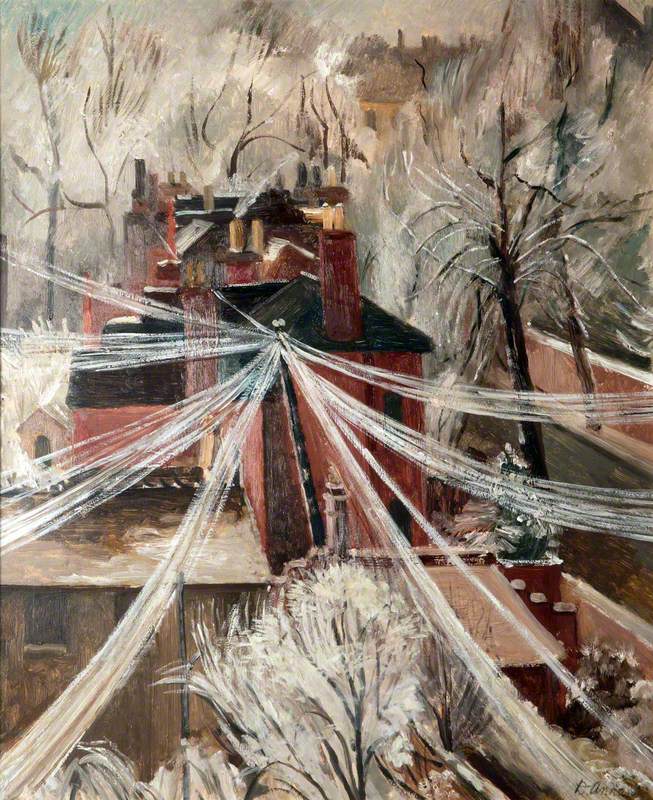
Christmas 1944 – Manchester Art Gallery
Annan’s paintings are in many national collections, she is also known for her tile murals, many of which have been destroyed in recent decades. Only three of her major public murals are believed to survive, the largest single example, the Expanding Universe at the Bank of England, was destroyed in 1997.
Gouache Sketch
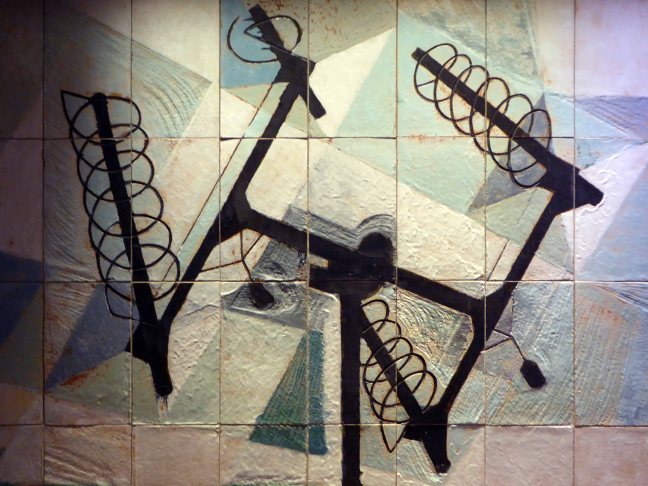
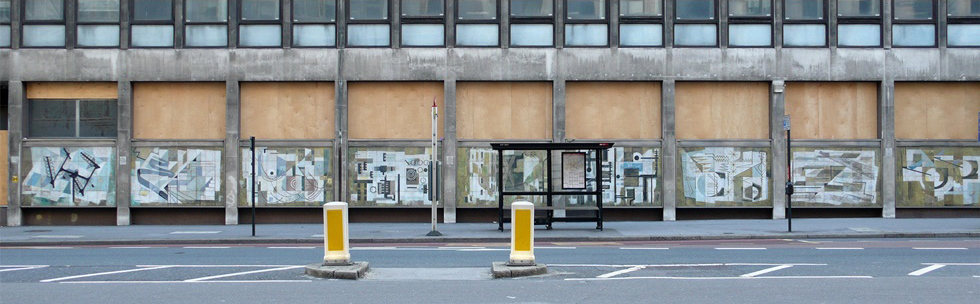
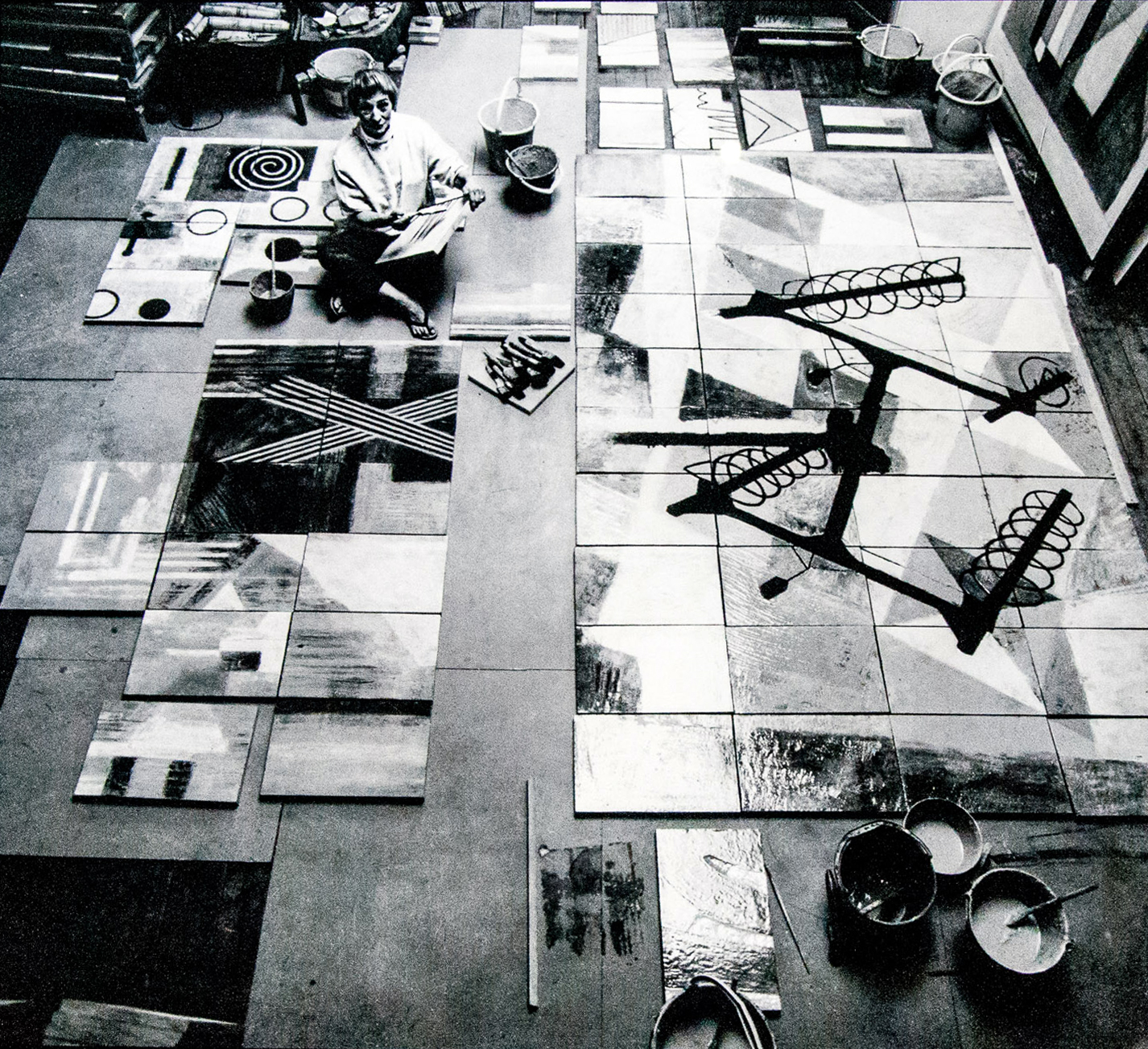
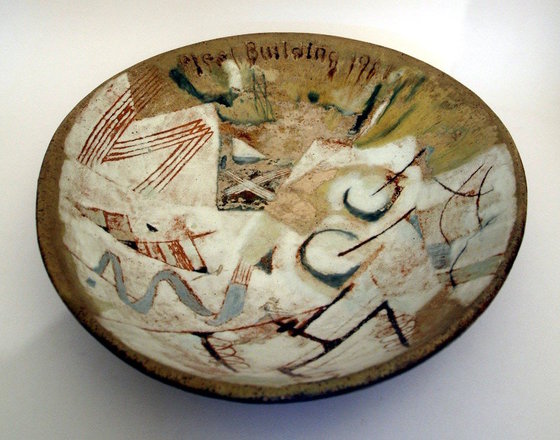
I was looking for her mural which illustrates the telecommunications industry – formerly of the Fleet Building Telephone Exchange Farringdon Road.
Michael Bojkowski
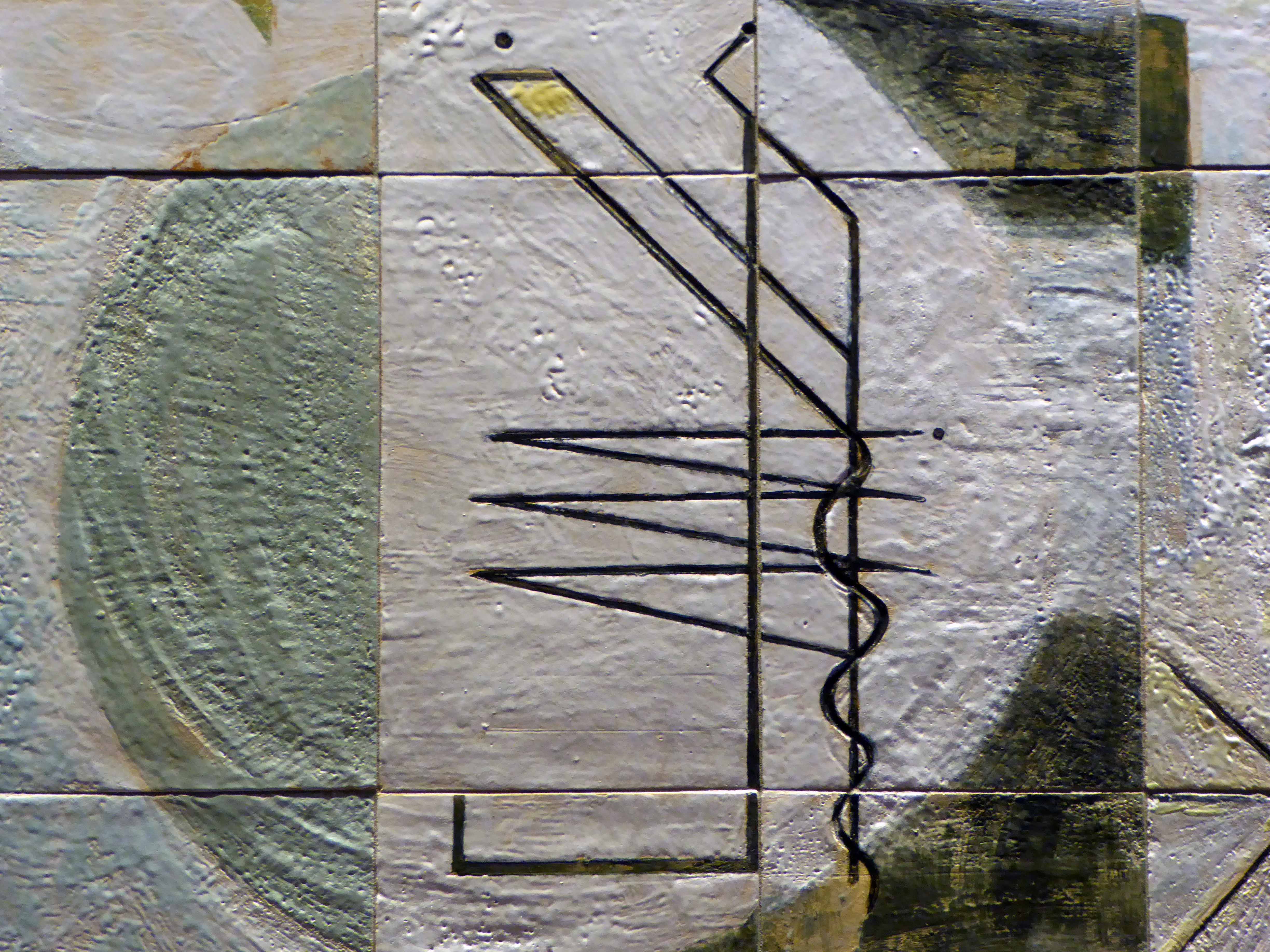
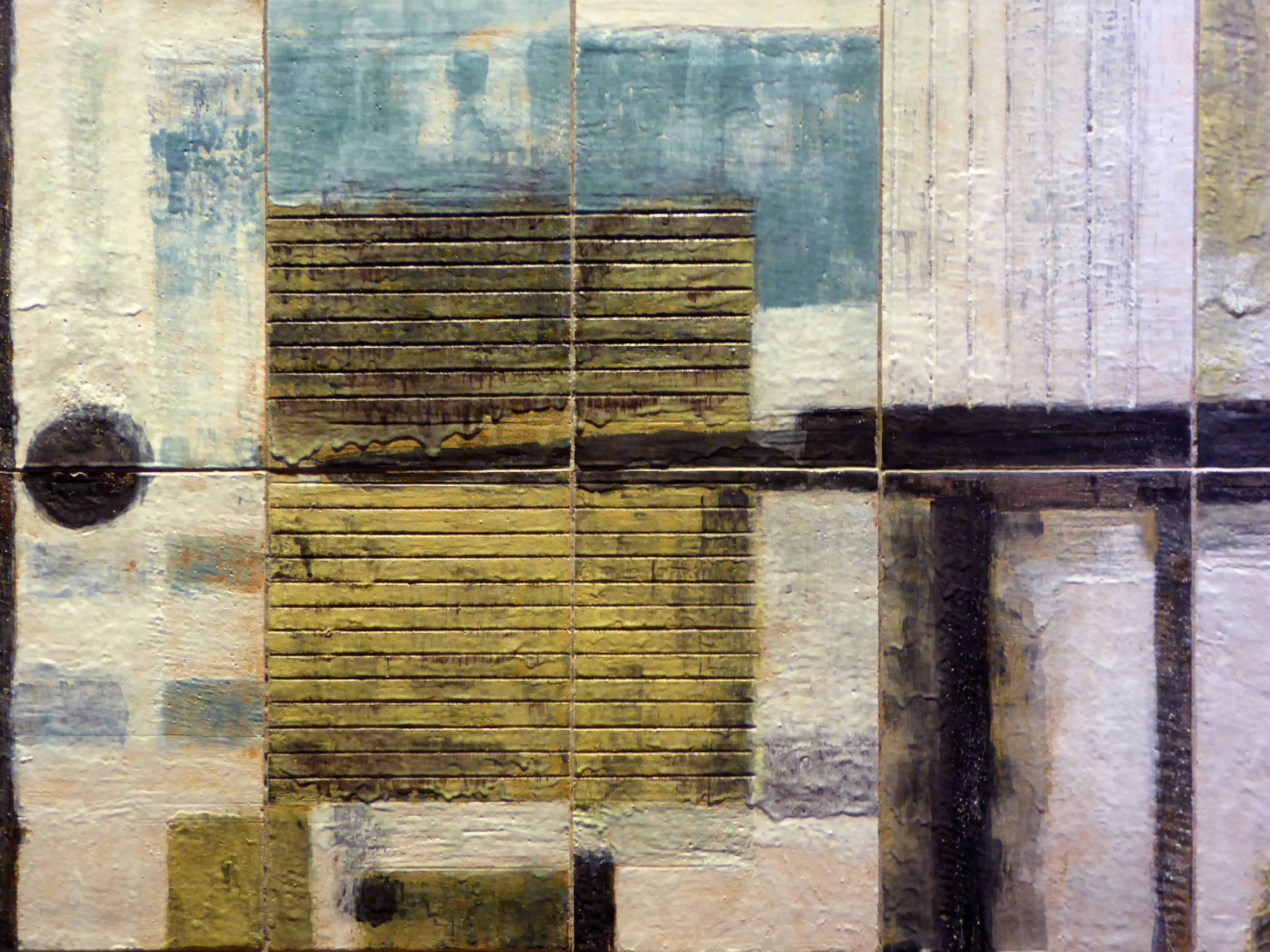
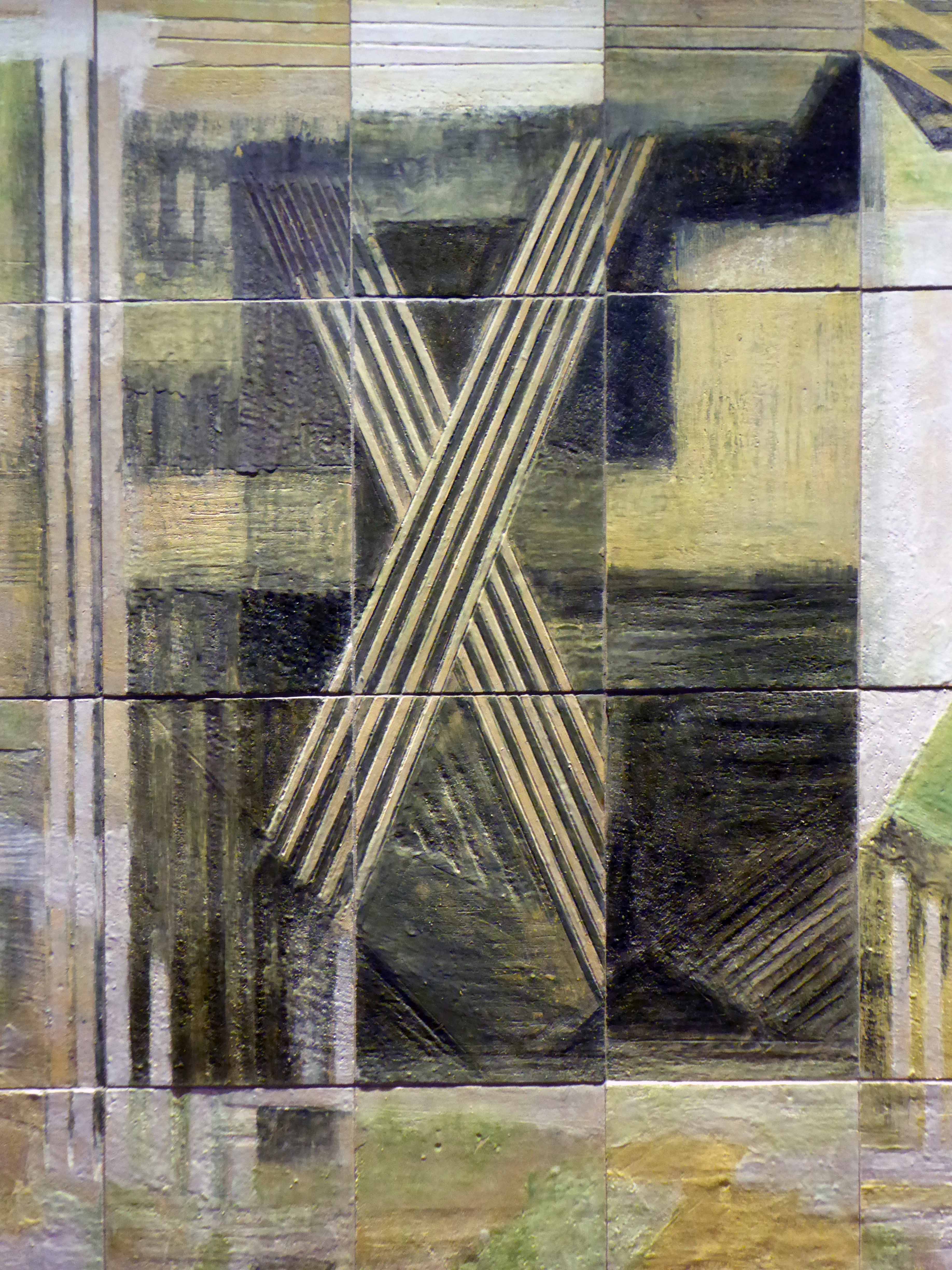
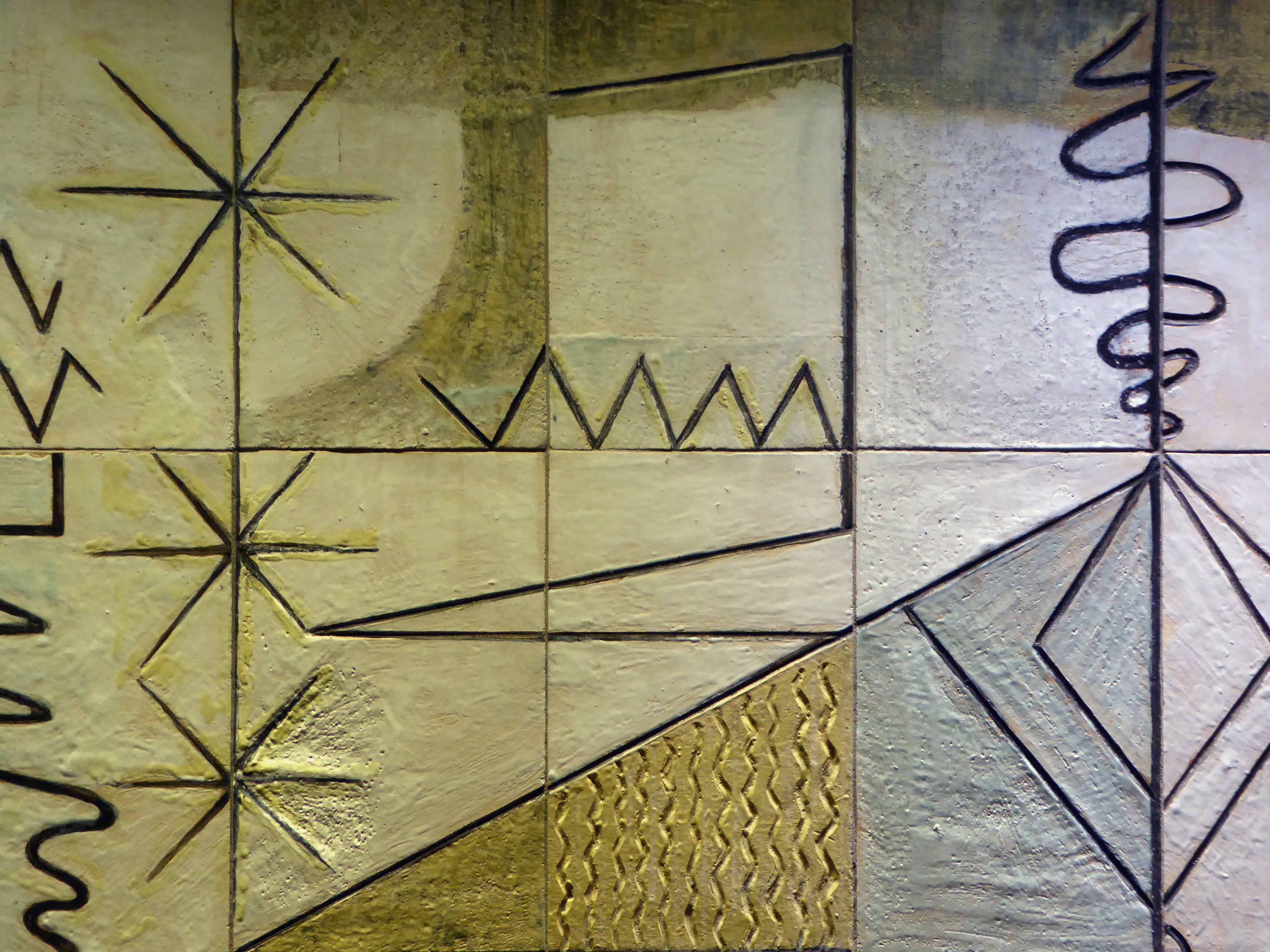
The murals were commissioned at a cost of £300 per panel in 1960. Annan visited the Hathernware Pottery in Loughborough and hand-scored her designs onto each wet clay tile, her brush marks can also be seen in the fired panels.
Charles Trusler
The building was owned by Goldman Sachs, who wished to redevelop the site and opposed the listing of the murals.
In January 2013, the City of London Corporation agreed to take ownership of the murals, and in September 2013 these were moved to a permanent location in publicly accessible part of the Barbican Estate. They are displayed in their original sequence within an enclosed section of the Barbican High Walk between Speed House and the Barbican Centre.
Commemorative Bowl
So following a discursive and somewhat undirected circumnavigation of the Center we were finally united – it only seemed polite to linger a while and take some snaps – here they are.
We could not have been made more welcome by The Reverend Canon Philip Miller – Vicar of Langley and his team, many thanks for their warm hospitality.
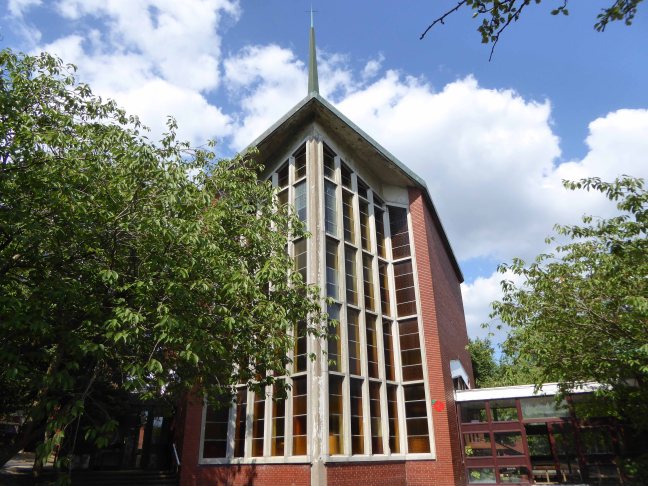
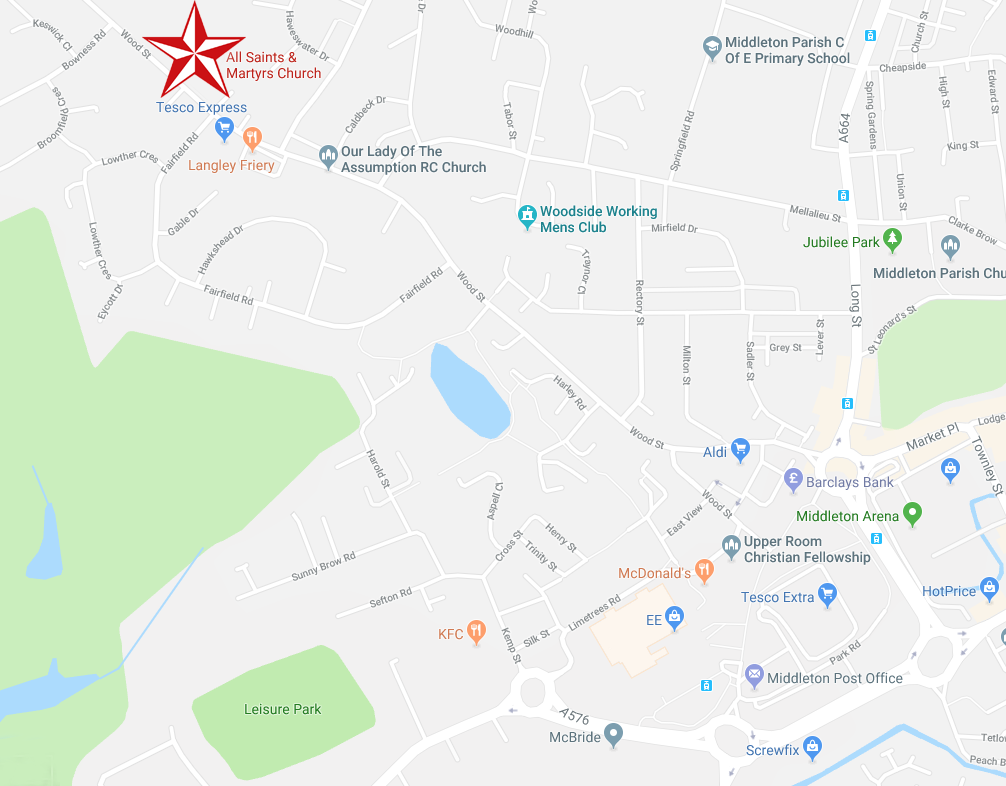
Set on the Langley Estate, one of many developed by Manchester Council as overspill social housing, the church serves a large community to the north of the city.
The architect was Albert Walker of Leach Rhodes Walker – this was the first church that they had built, having previously specialised in shopping precincts.
Leach, Rhodes and Walker had involved Geoffrey Clarke RA with their earlier new church building for All Saints, Barton Road, Stretford. (1957) here his contribution was chiefly a large stained glass window depicting the Trinity. LRW continued to collaborate with Clarke in their church projects, in the years following at Langley. In a letter to the church at the time he wrote: “Start saving now for a new West End Window – only £10 p.s.f – for the greatest window in the North…. I have just done some windows I’m rather pleased with..”
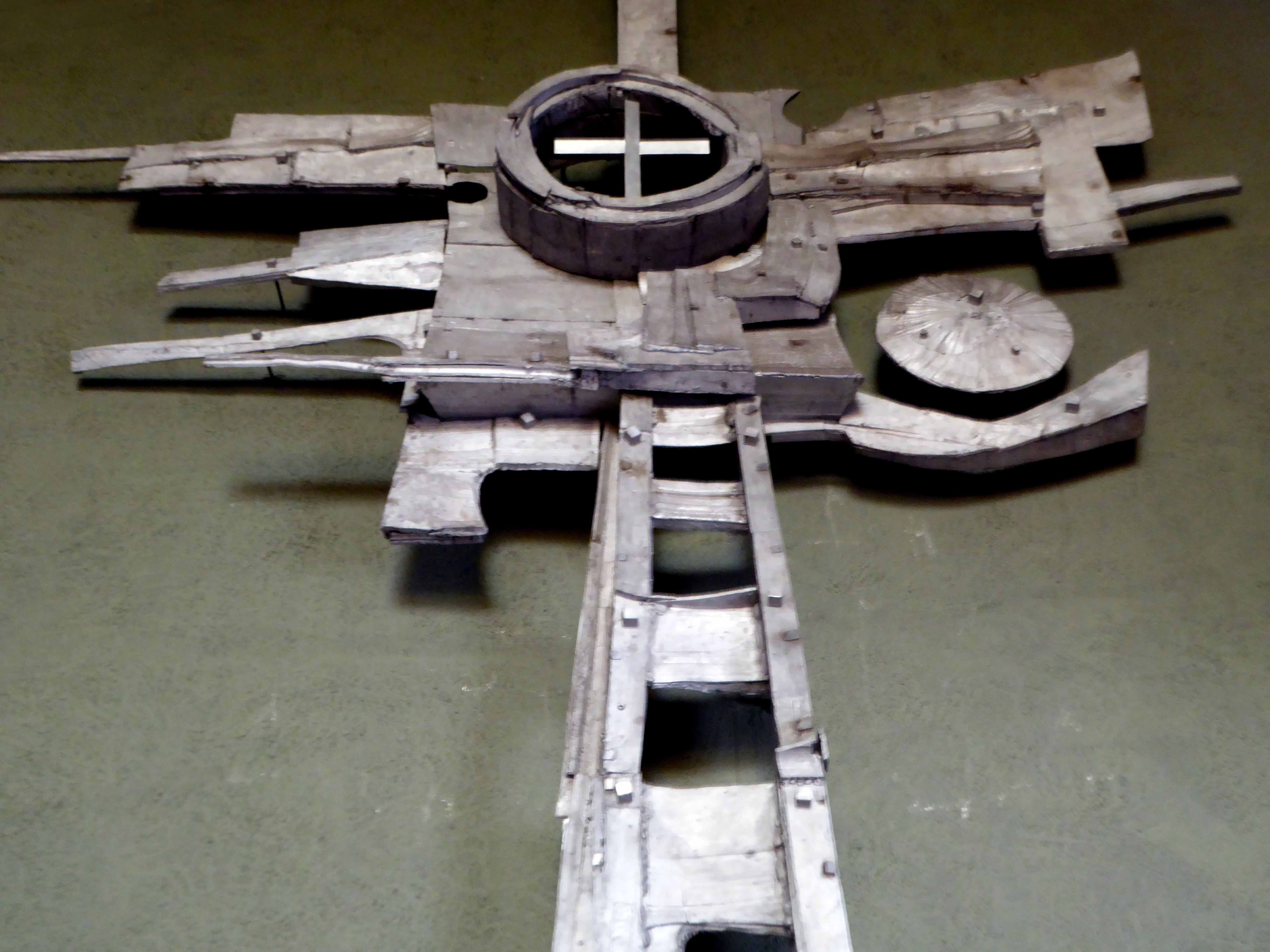
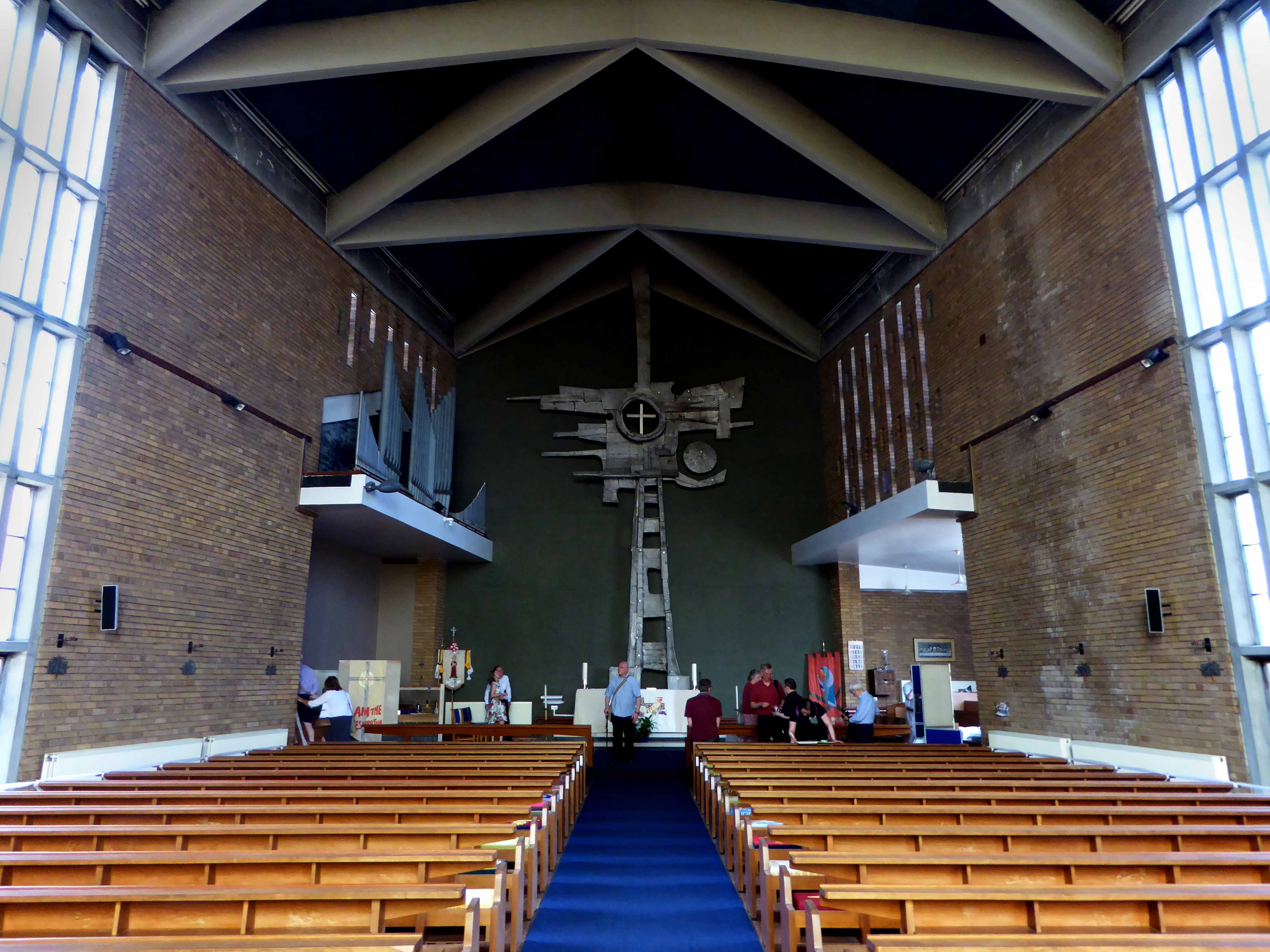
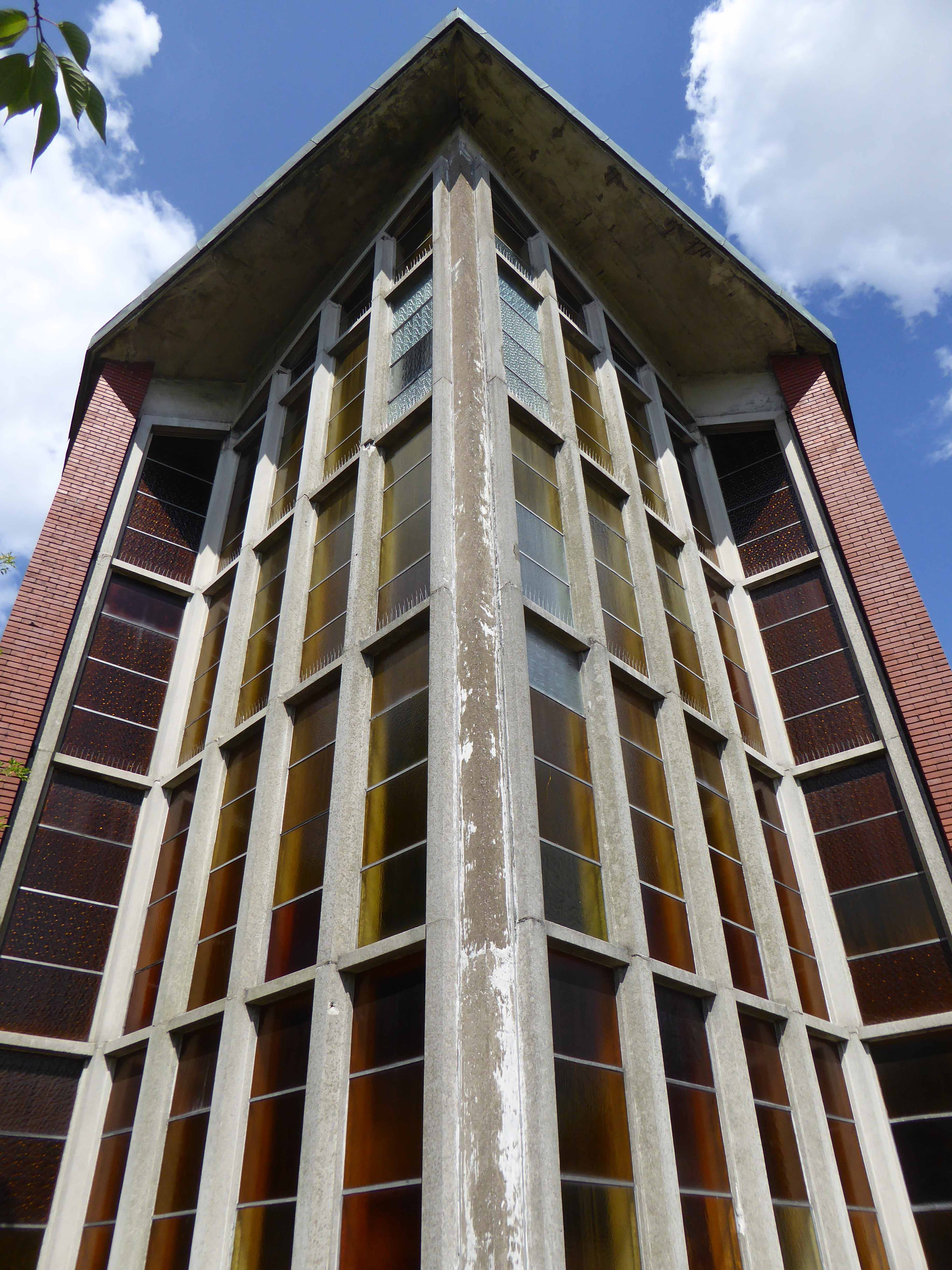
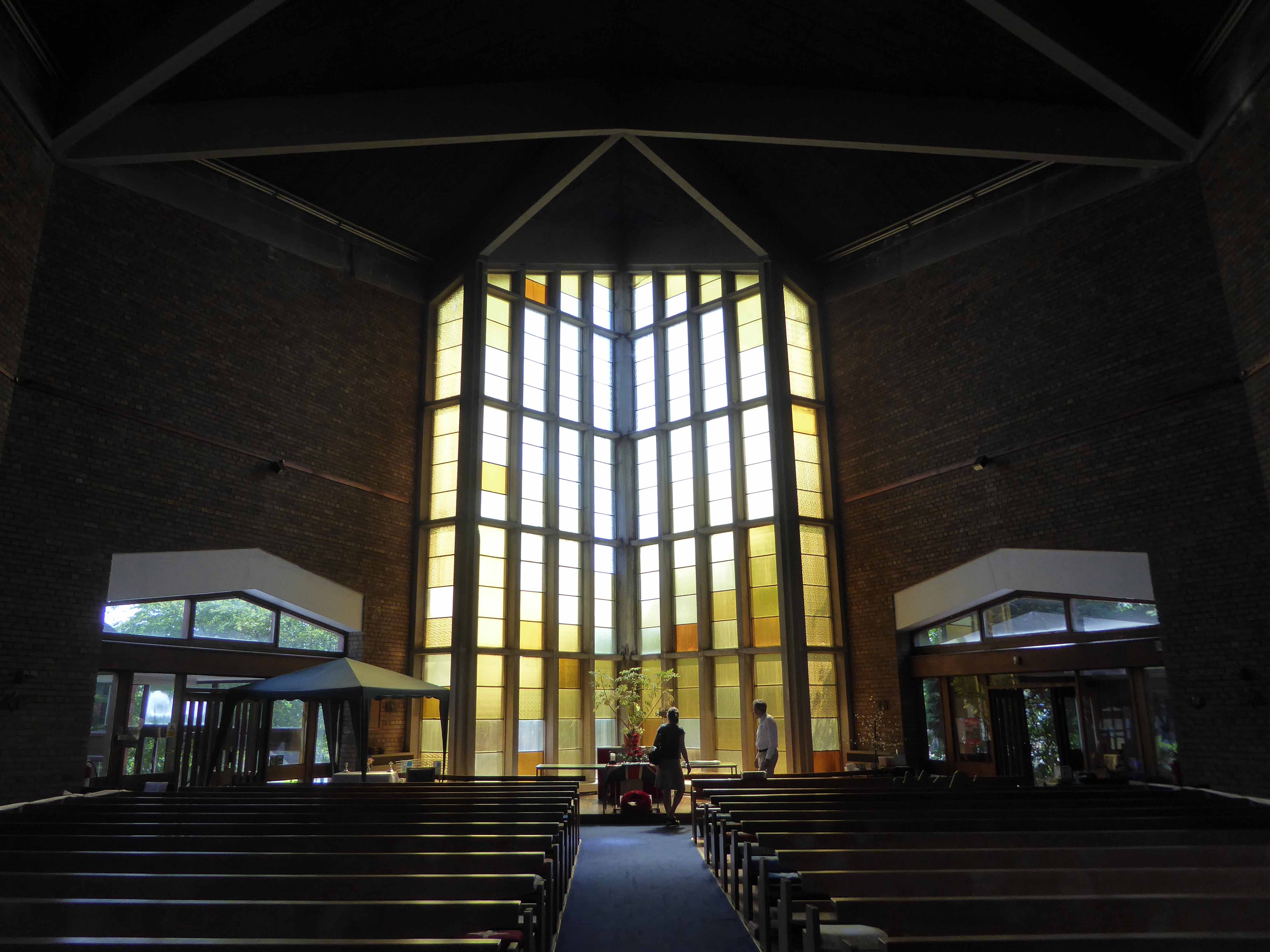
The church is an imposing angular structure, its height possibly determined by the treasure within – The Langley Cross.
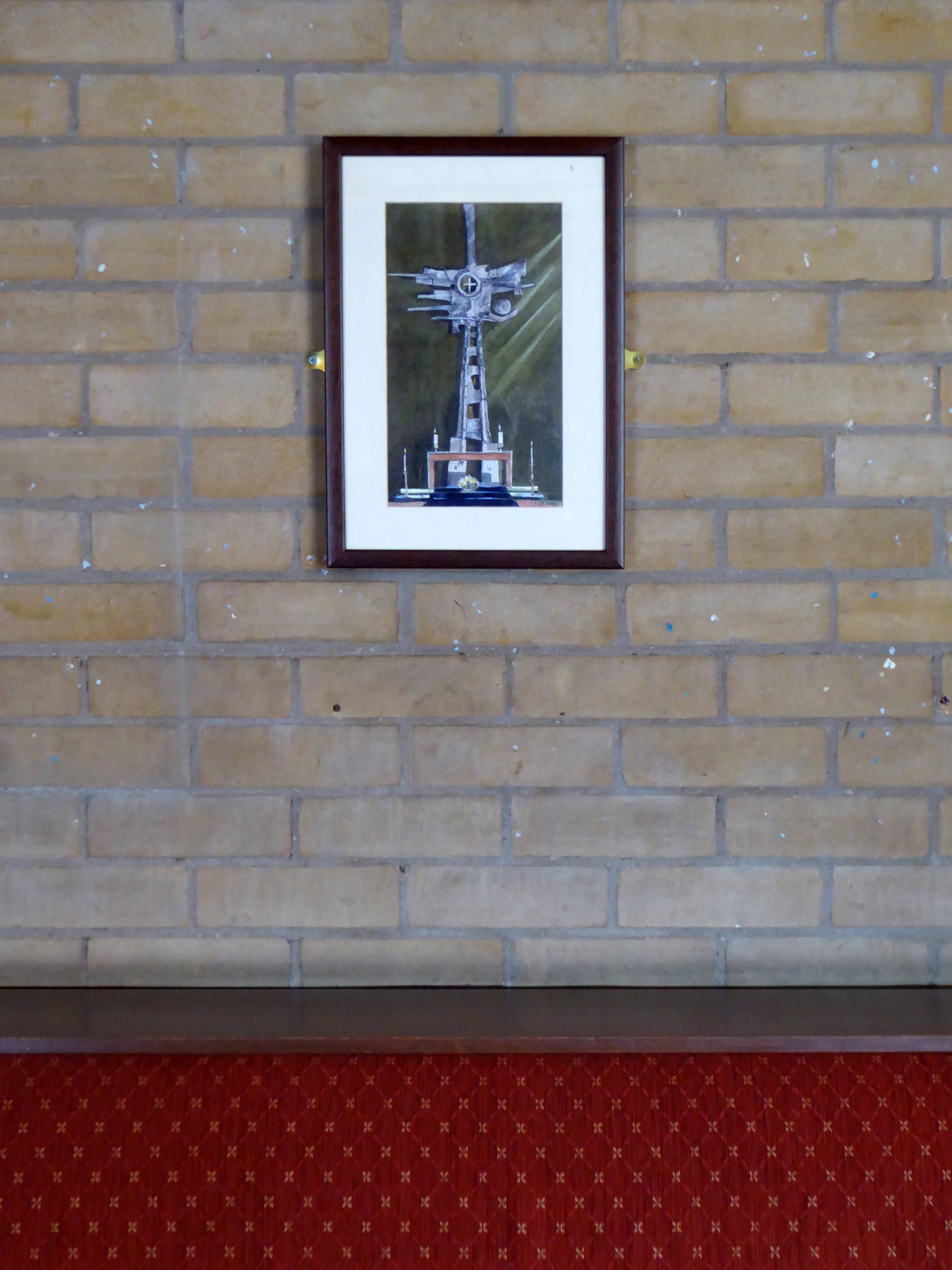
Consecrated in 1964, All Saints and Martyrs is home to the Langley Cross. This unique structure, which adorns our east wall, is the work of internationally renowned artist, Geoffrey Clarke RA, who has won reputation by his contributions to Coventry Cathedral.
The sculpture itself is 37 feet high and about 20 feet wide at the extremities of the transverse shaft and made of cast aluminium metal.
This is work of national and international significance.
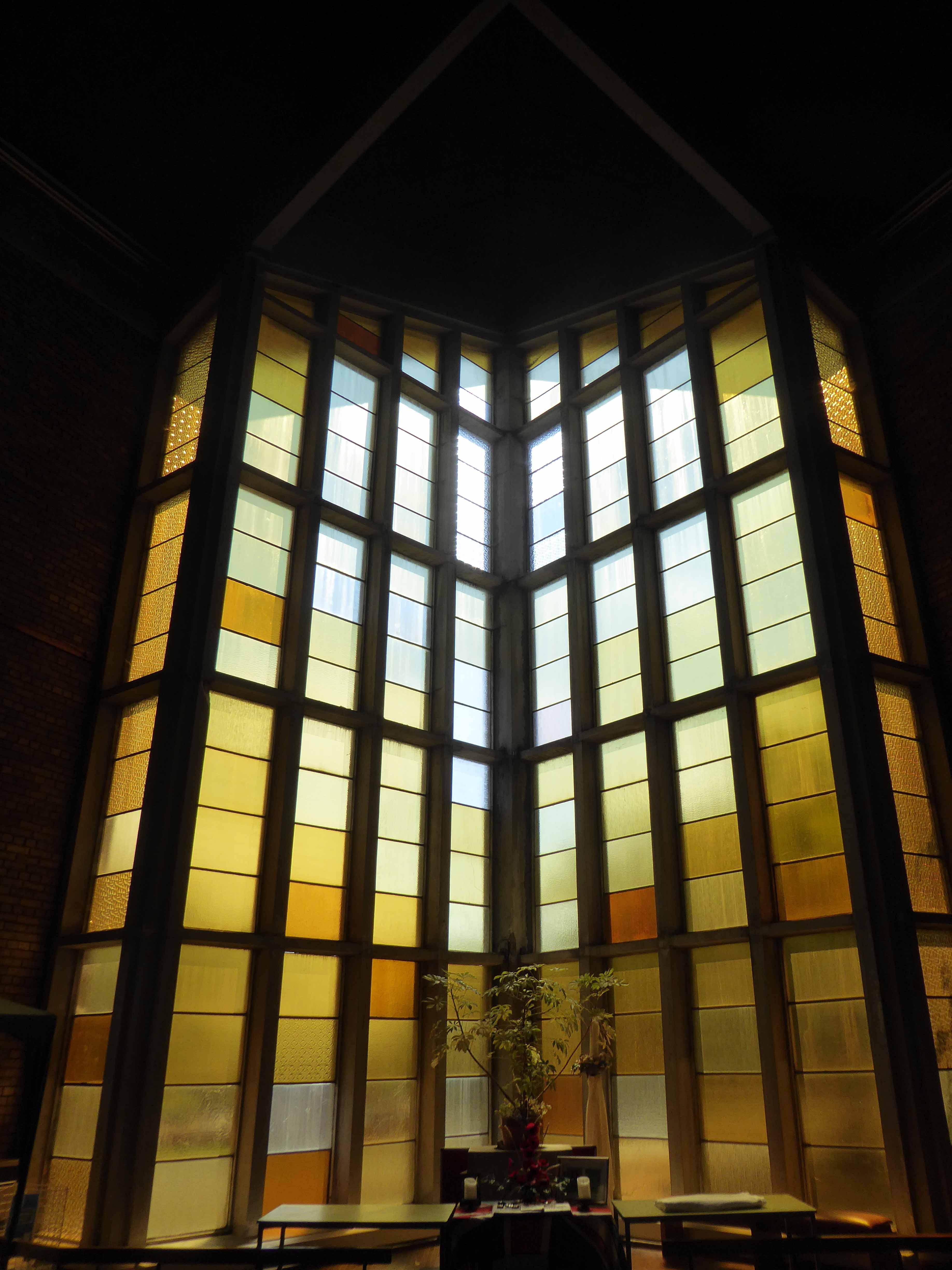
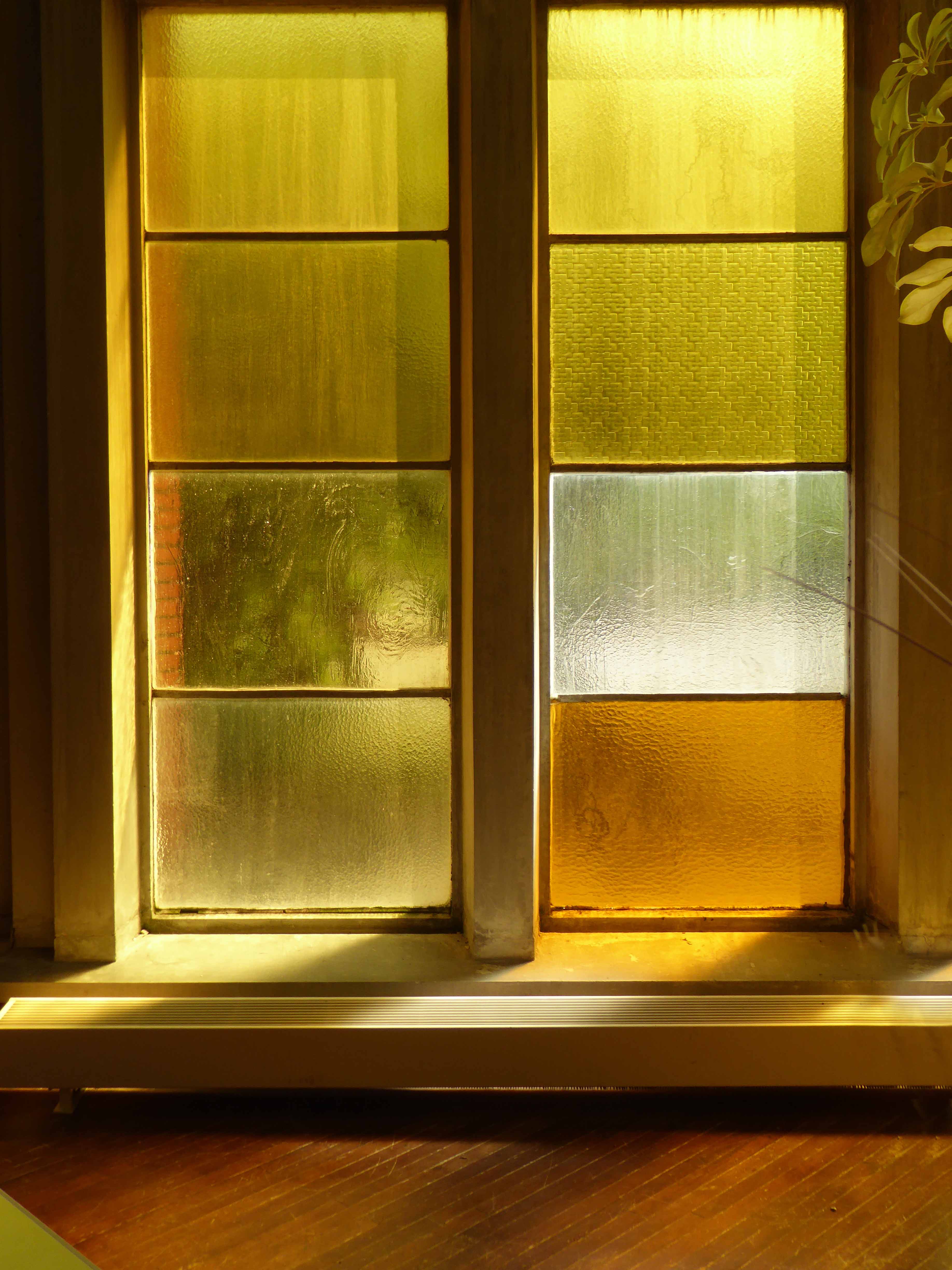
The church is lit from the west by a large yellow and white window, formed of French stained glass. Though seriously damaged over time, it has subsequently been repaired and forms an imposing counterpoint to the facing cross.
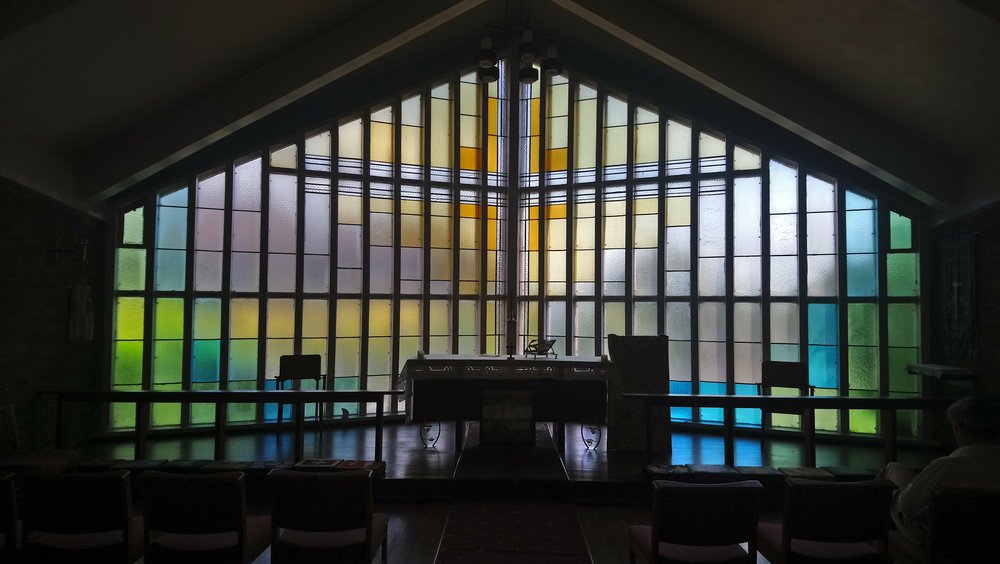
To the right of the main entrance is a delightful chapel, illuminated by a large stained glass window.
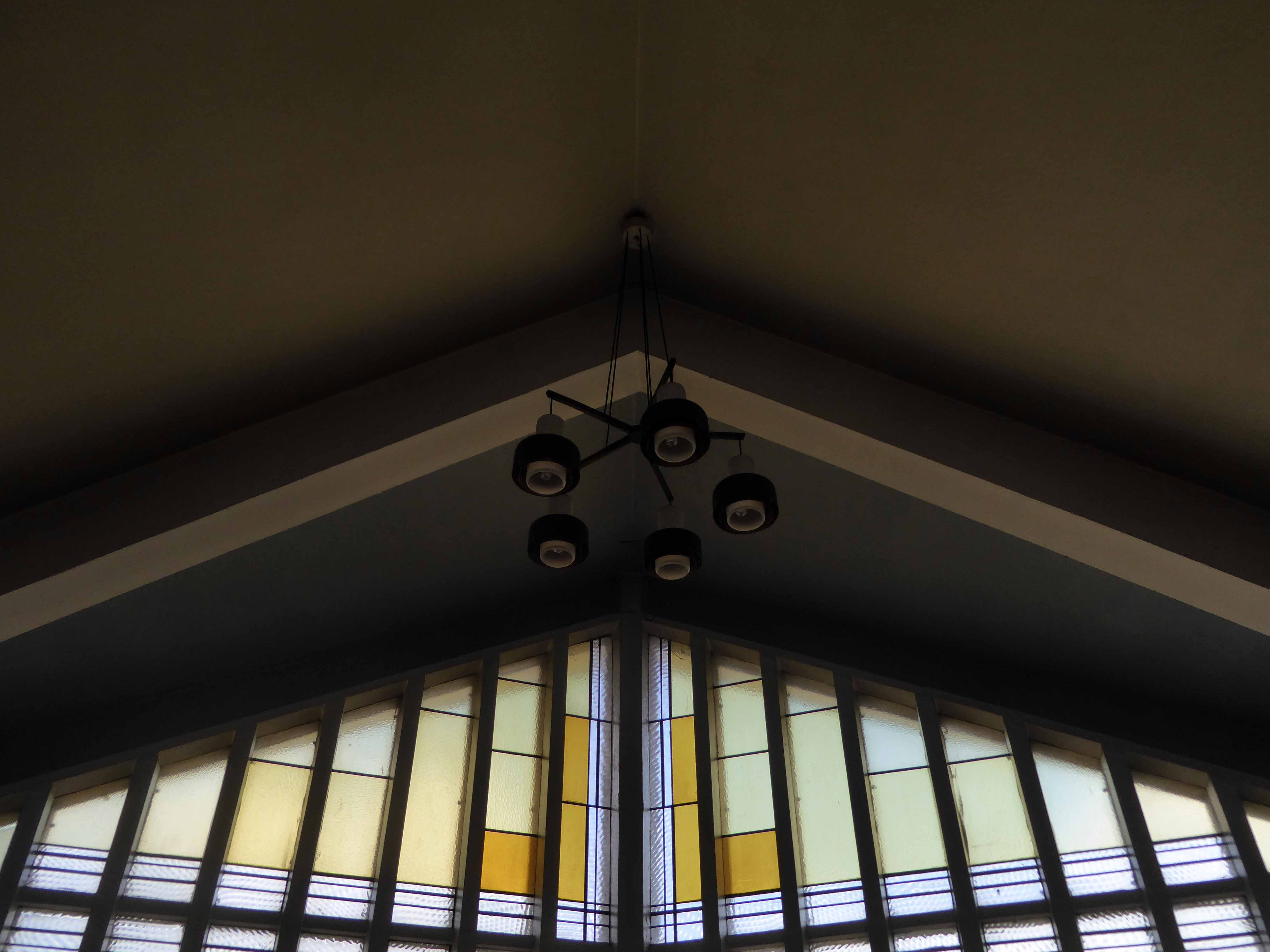
And in addition a charming period light fitting.
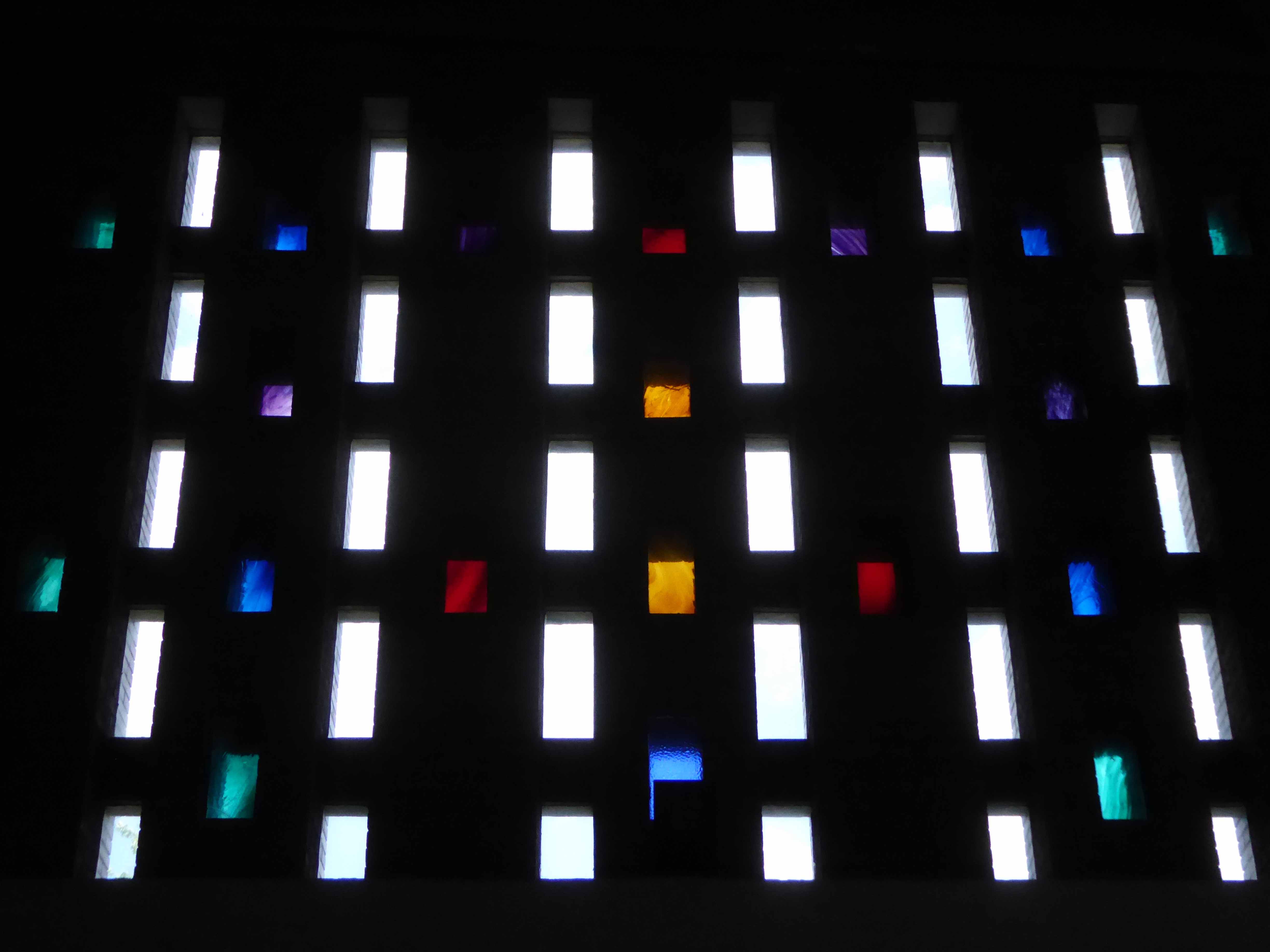
To the right of the altar and cross are pierced stained glass windows.
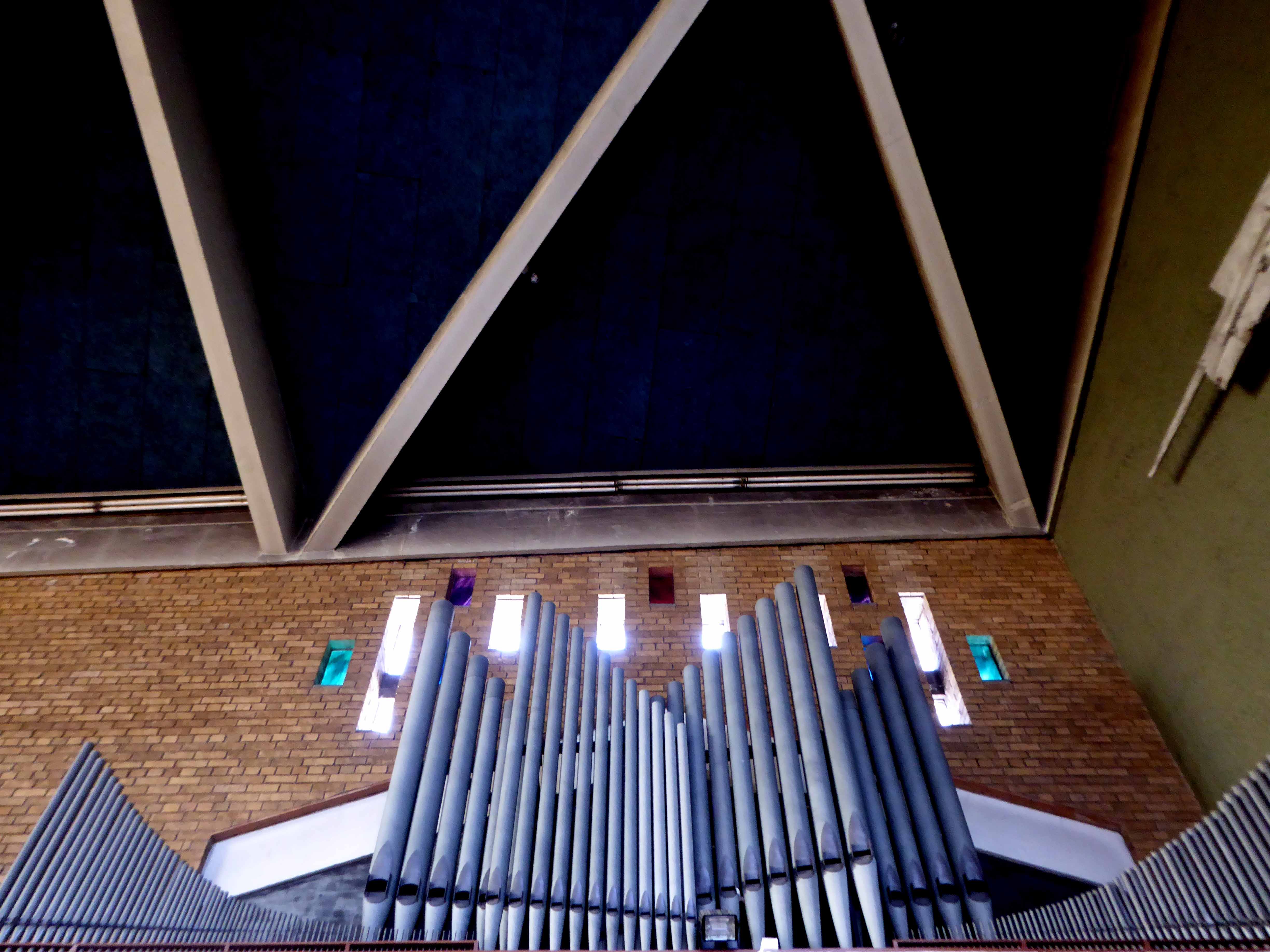
And to the left the sculptural organ pipes and further pierced stained glass.
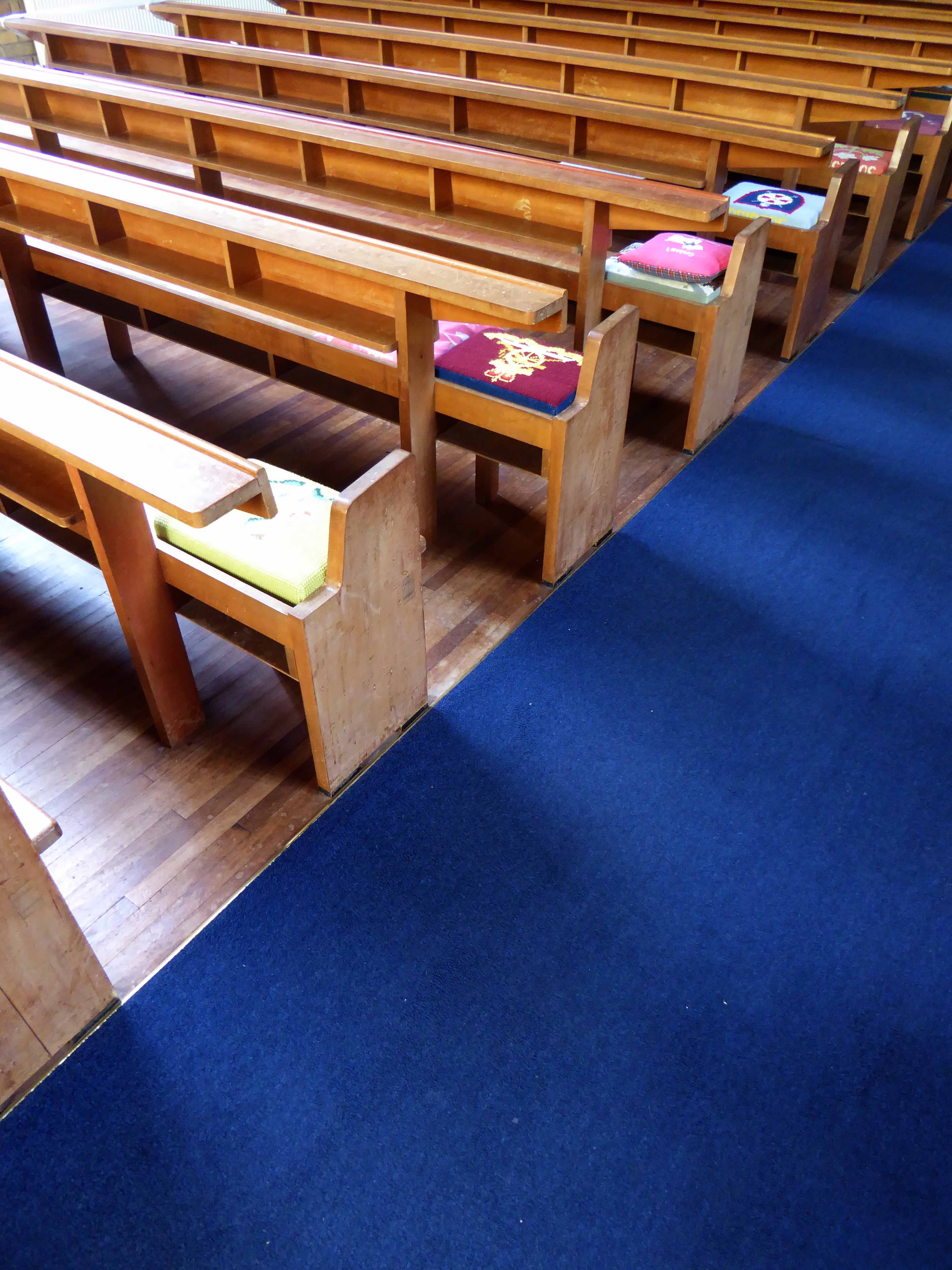
The church has retained much of its original furnishings.
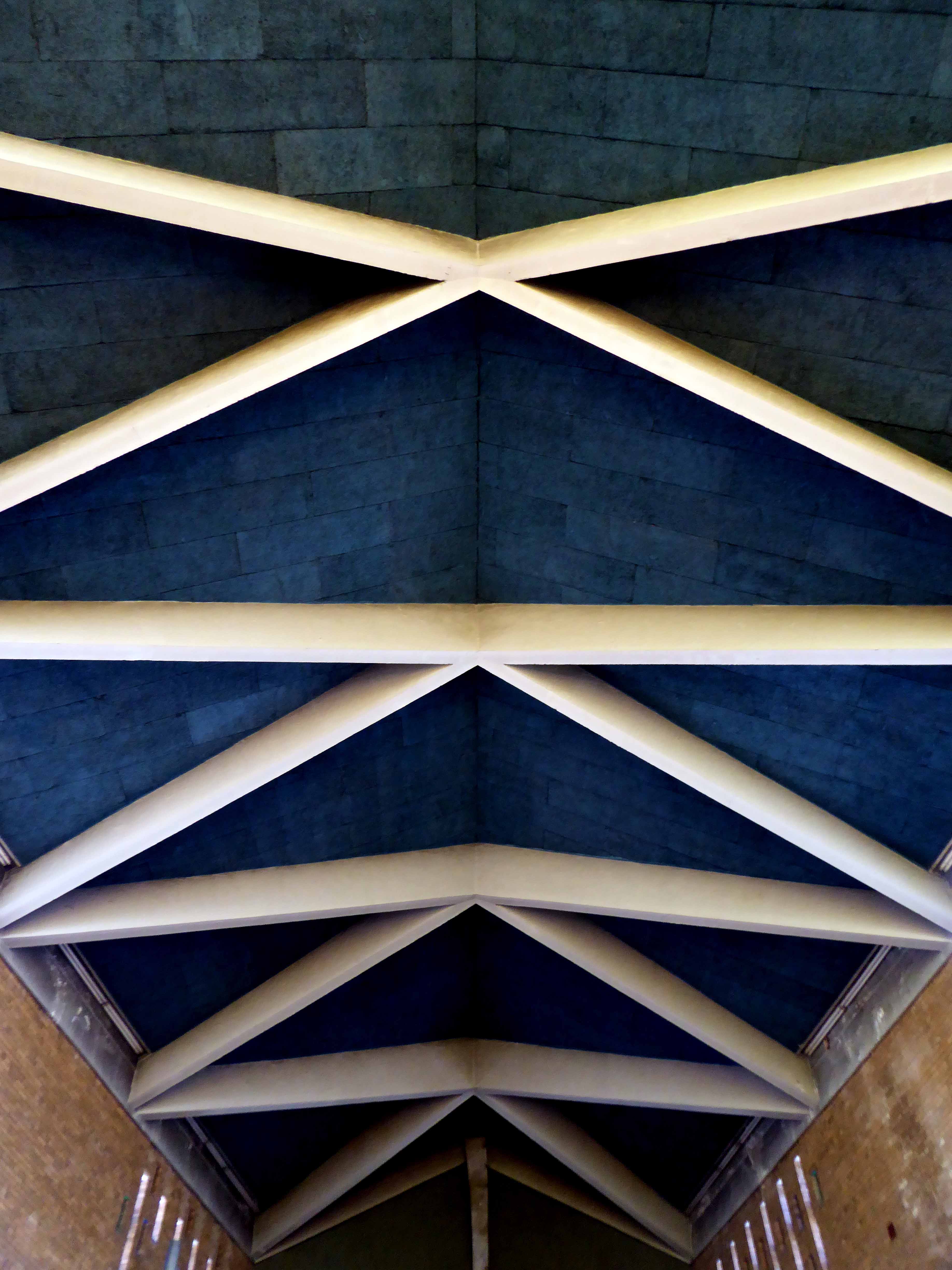
The roof is formed of intersecting concrete beams and coloured blocks.
The adjoining ground floor space was once used for an overflowing congregation, it has retrospectively been partitioned and serves as a social meeting area.
It was here that we were so generously treated to tea and cakes.
And given the opportunity to view examples from the church’s extensive archive.
The building is not without its problems – the ingress of water and the cost of maintaining the structure require outside assistance, through grant aiding, fund raising and donation. We should all make every effort to ensure that All Saints and Martyrs survives intact for generations to come.
Here is a building of great distinction, housing public art of the highest quality, built at a time when the ethos of nothing but the best for all was commonplace.
I can only thank Phil once again for his warm welcome and wish he and his parishioners – nothing but the best for the future!
If you have the opportunity, go and take a look for yourself.
I was lured here, siren like, by an un-purchased eBay postcard – which precipitated a virtual four colour process printed journey around the shopping precincts of the UK.
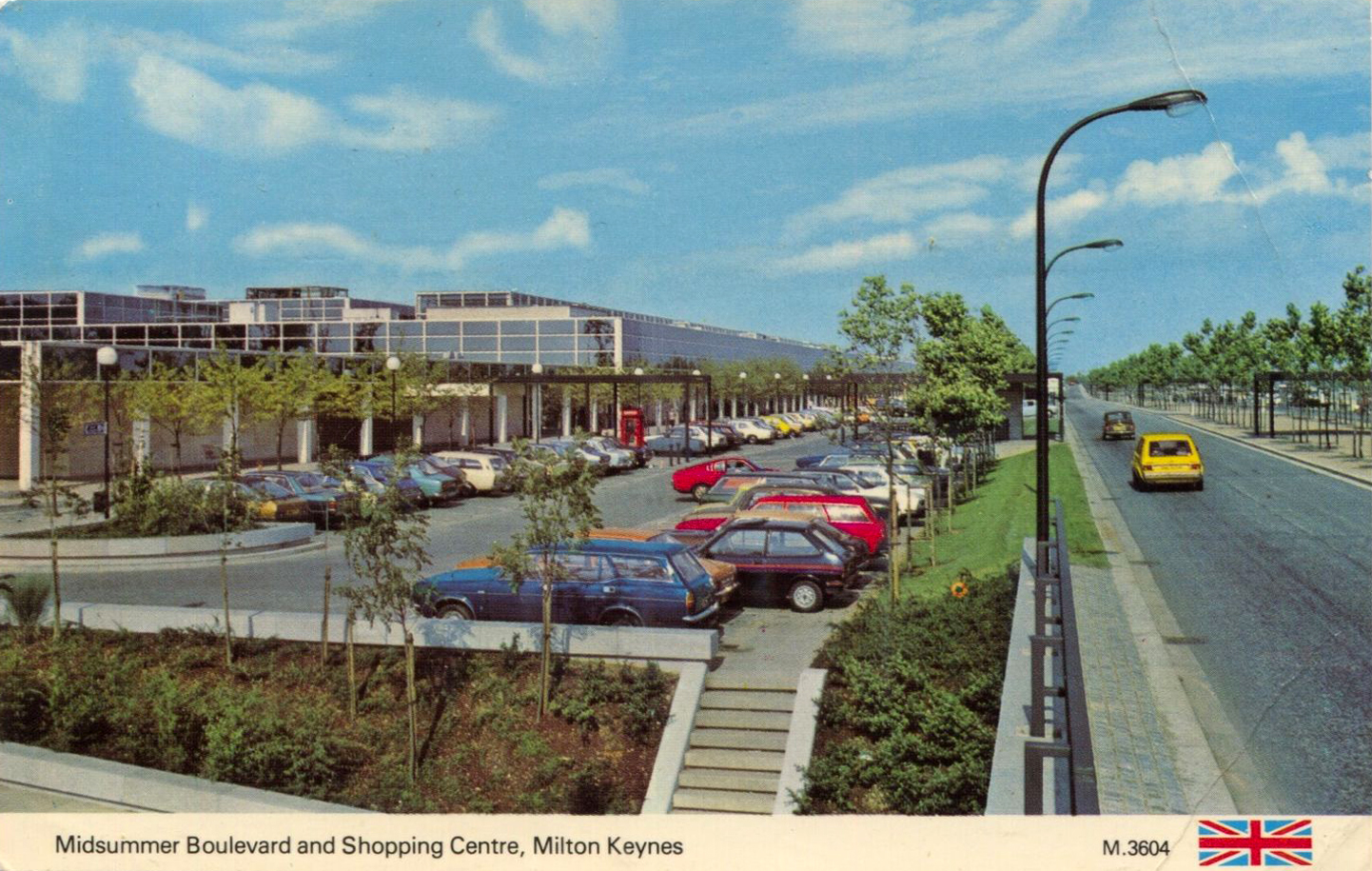
It only seemed appropriate to finally arrive at MK Central in real life, by train from Stockport – walking at last wide-eyed and expectant, along the whole length and width of Midsummer Boulevard to centre:mk
The Milton Keynes Development Corporation began work on the Shopping Building in 1973. It was to be the largest building of Central Milton Keynes. It had a total length of over one kilometre and a maximum width of one hundred and sixteen metres . It was built at the highest point in the New City. The architects were Derek Walker, Stuart Mosscrop, and Christopher Woodward, who had been significant architects at the MK Development Corporation; and the engineers were Felix Samuely and Partners. The shopping area was opened on 25th September 1979 by Margaret Thatcher. The building’s sleek envelope accommodated one hundred and thirty shops and six department stores, arranged along two parallel day-lit arcades, each eight hundred meters long and planted with sub-tropical and temperate trees.
A big bad Miesian box of glass and steel that goes on forever and forever.
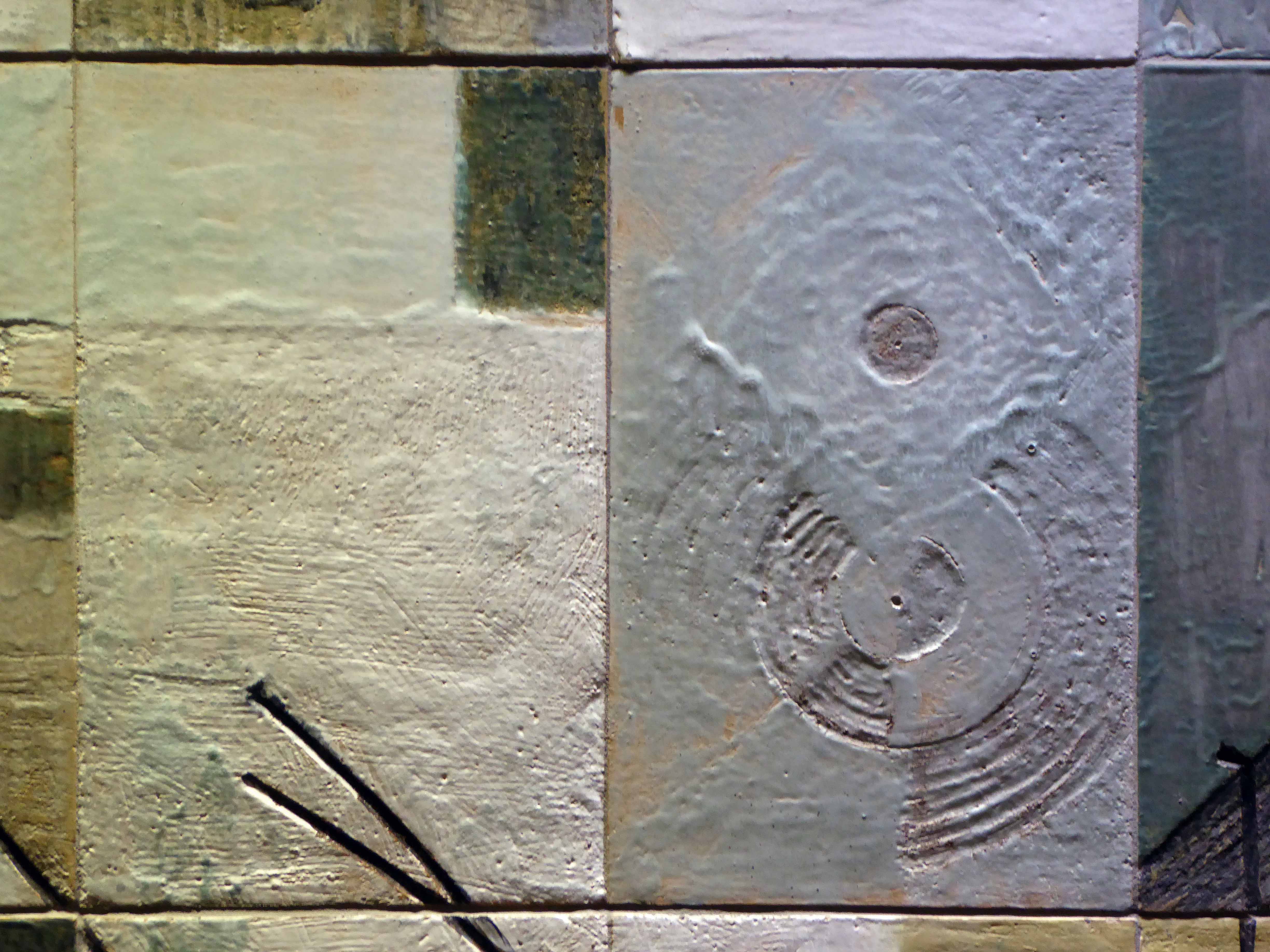
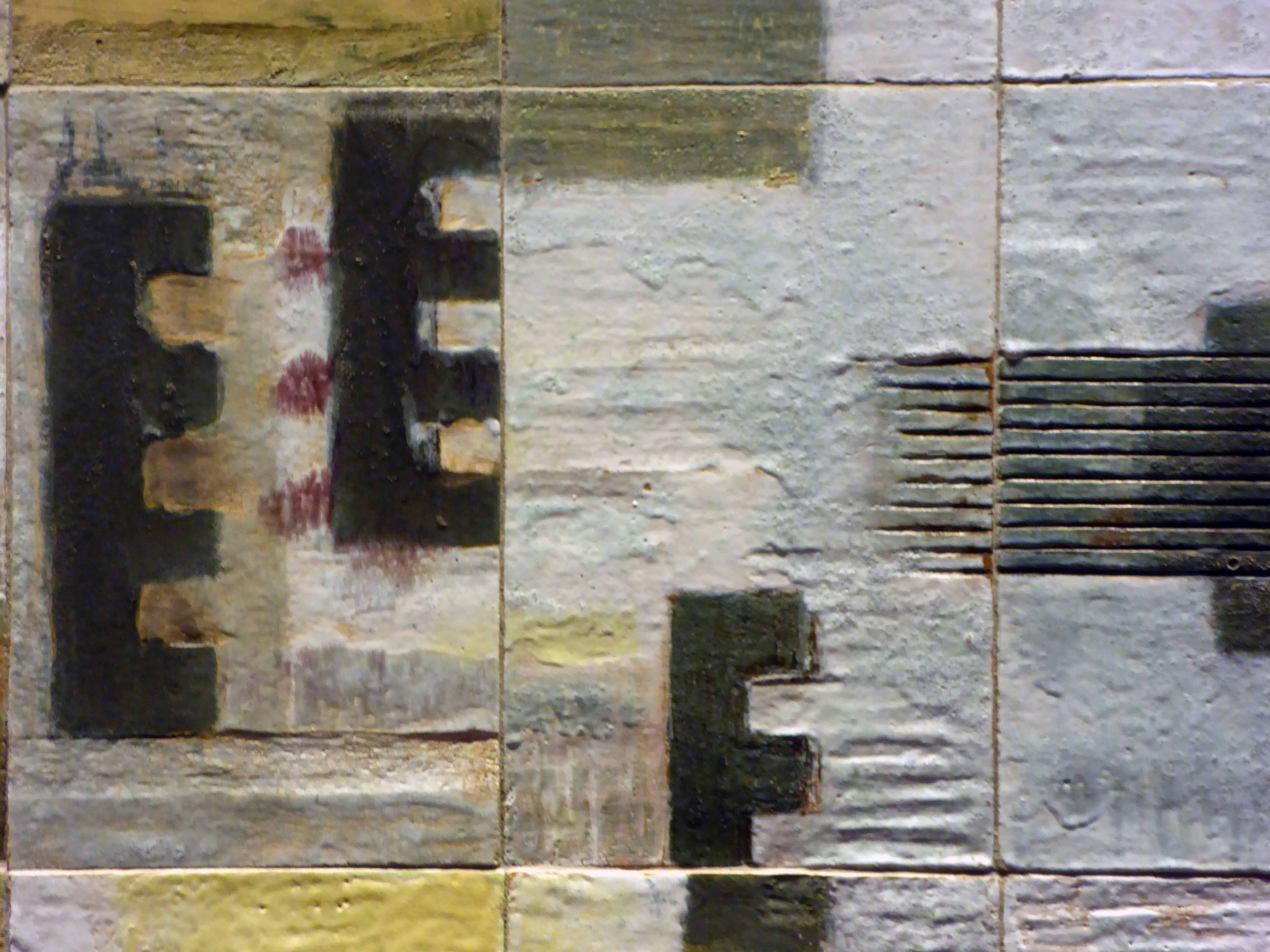
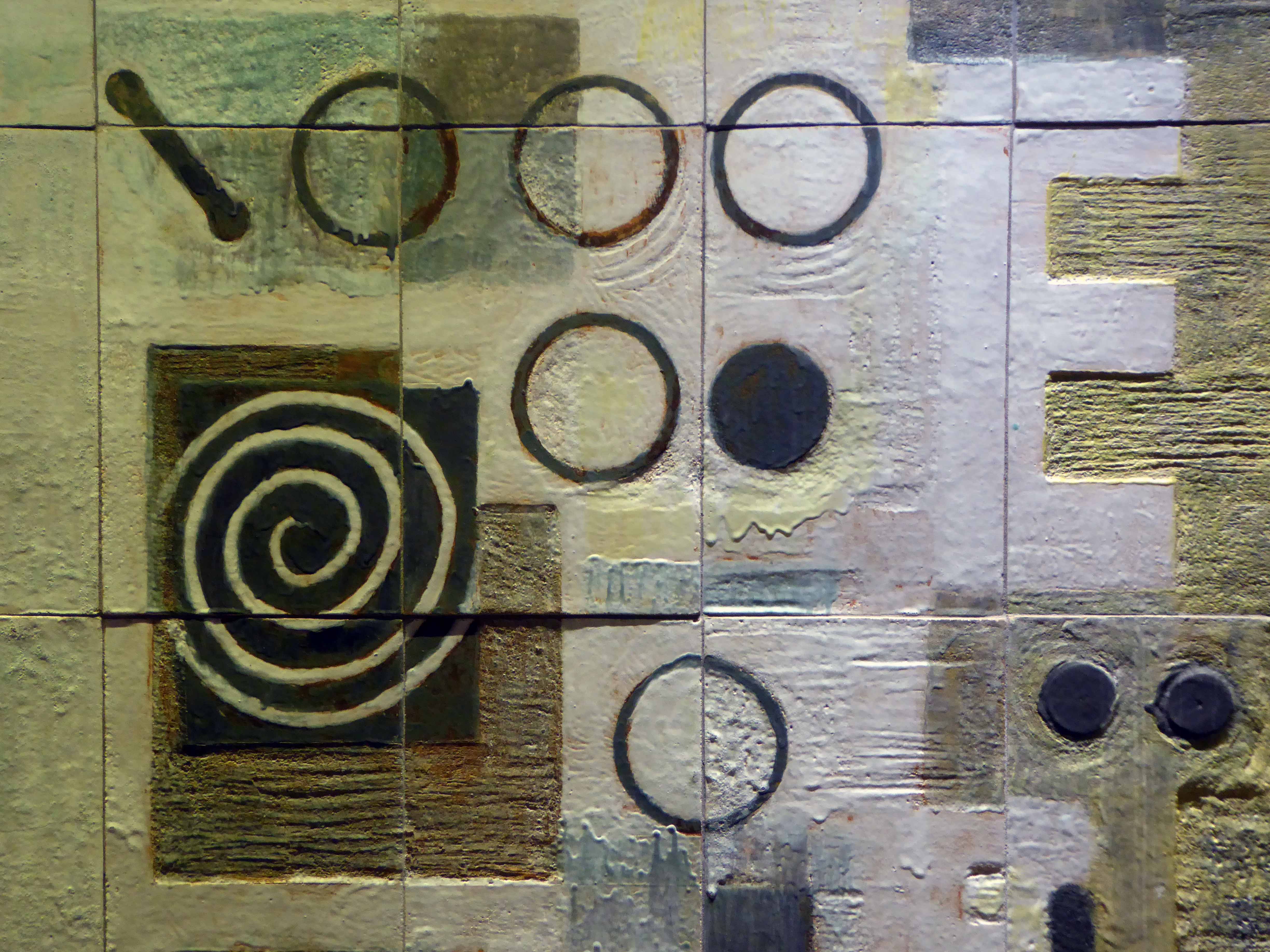
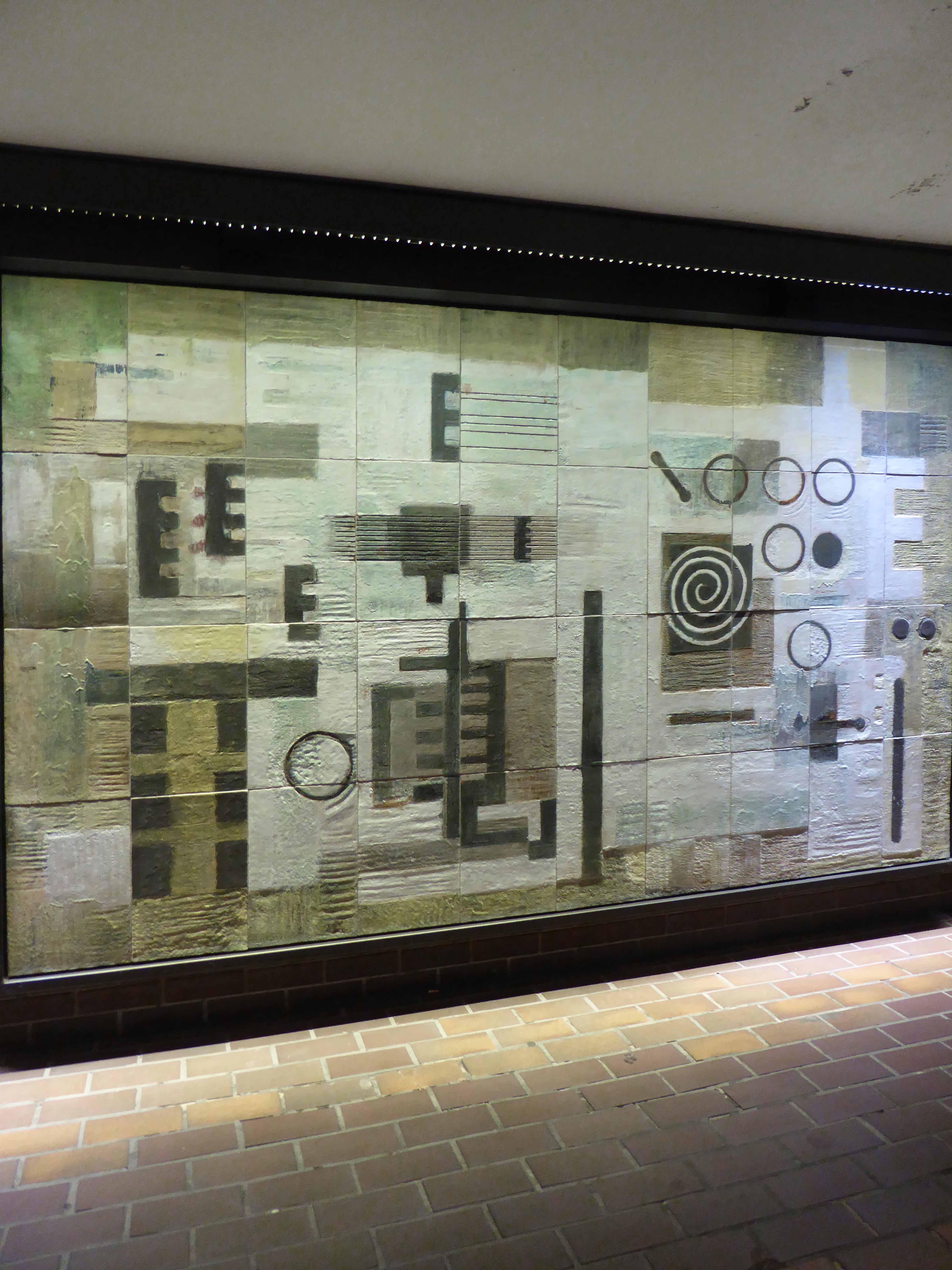
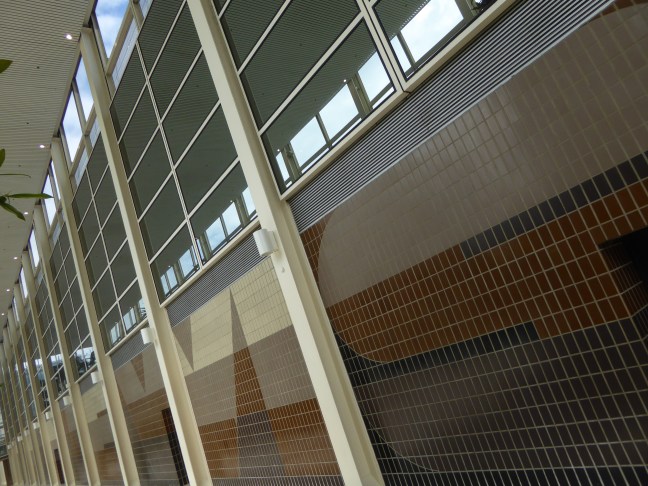
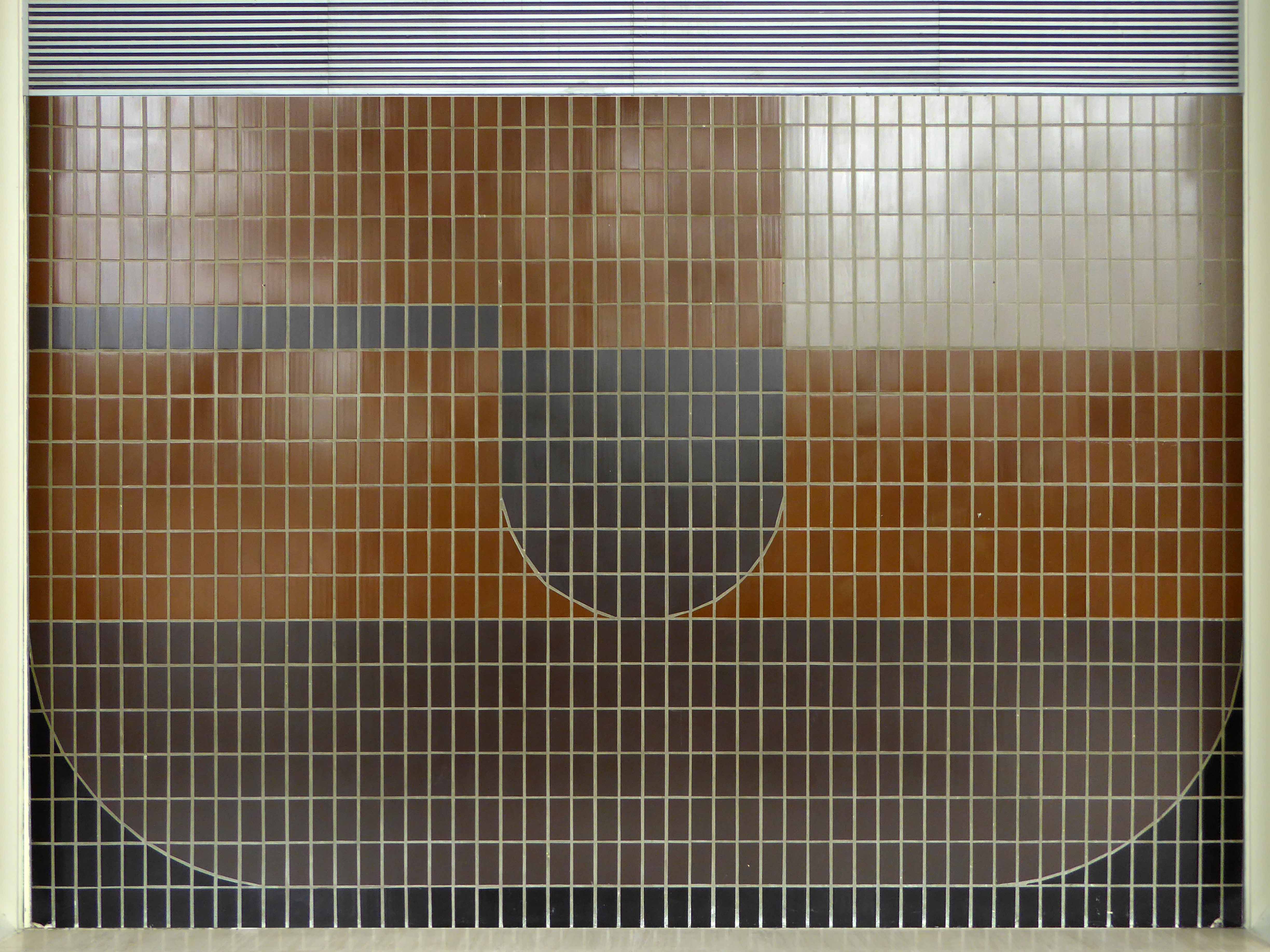
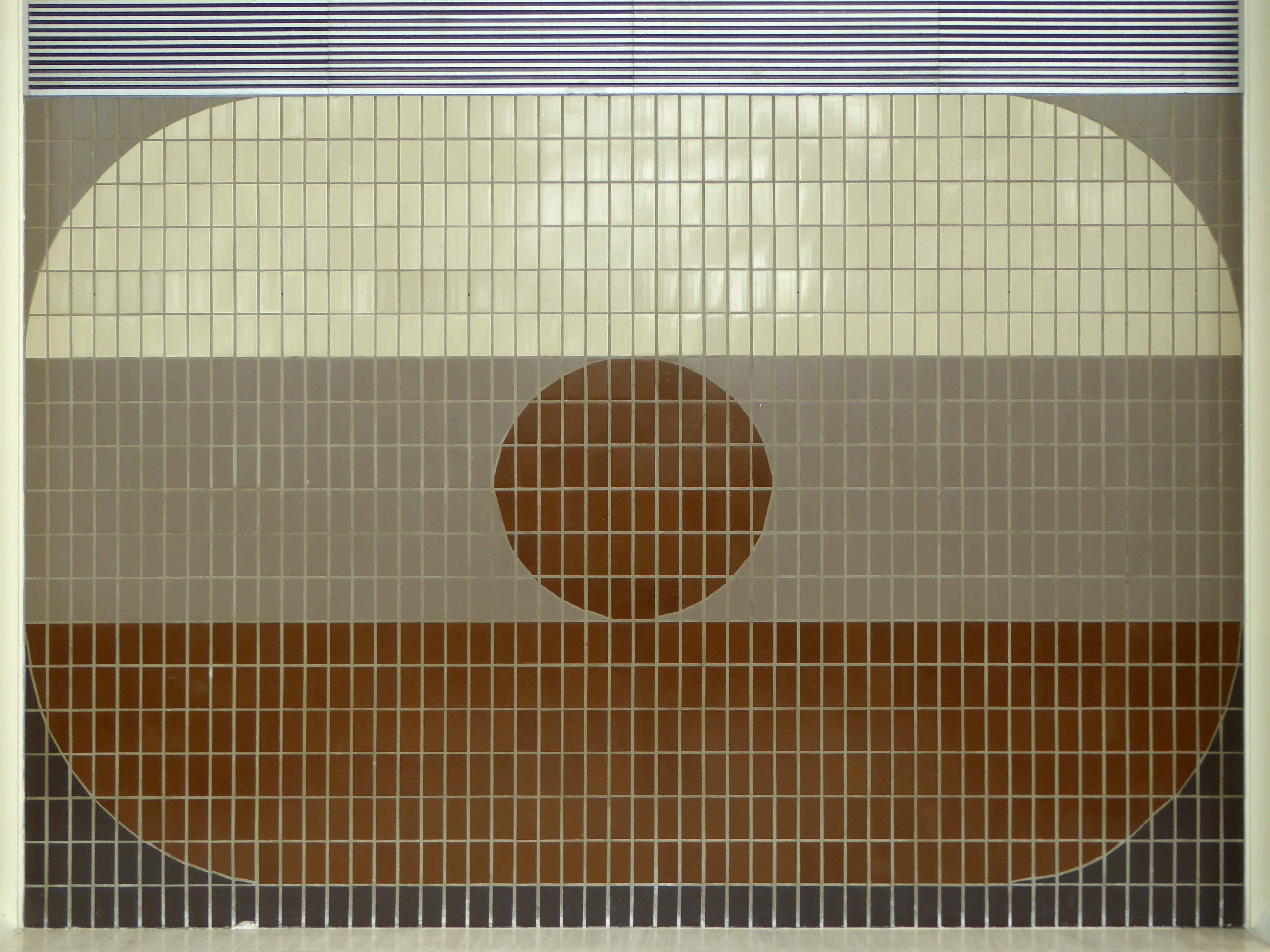
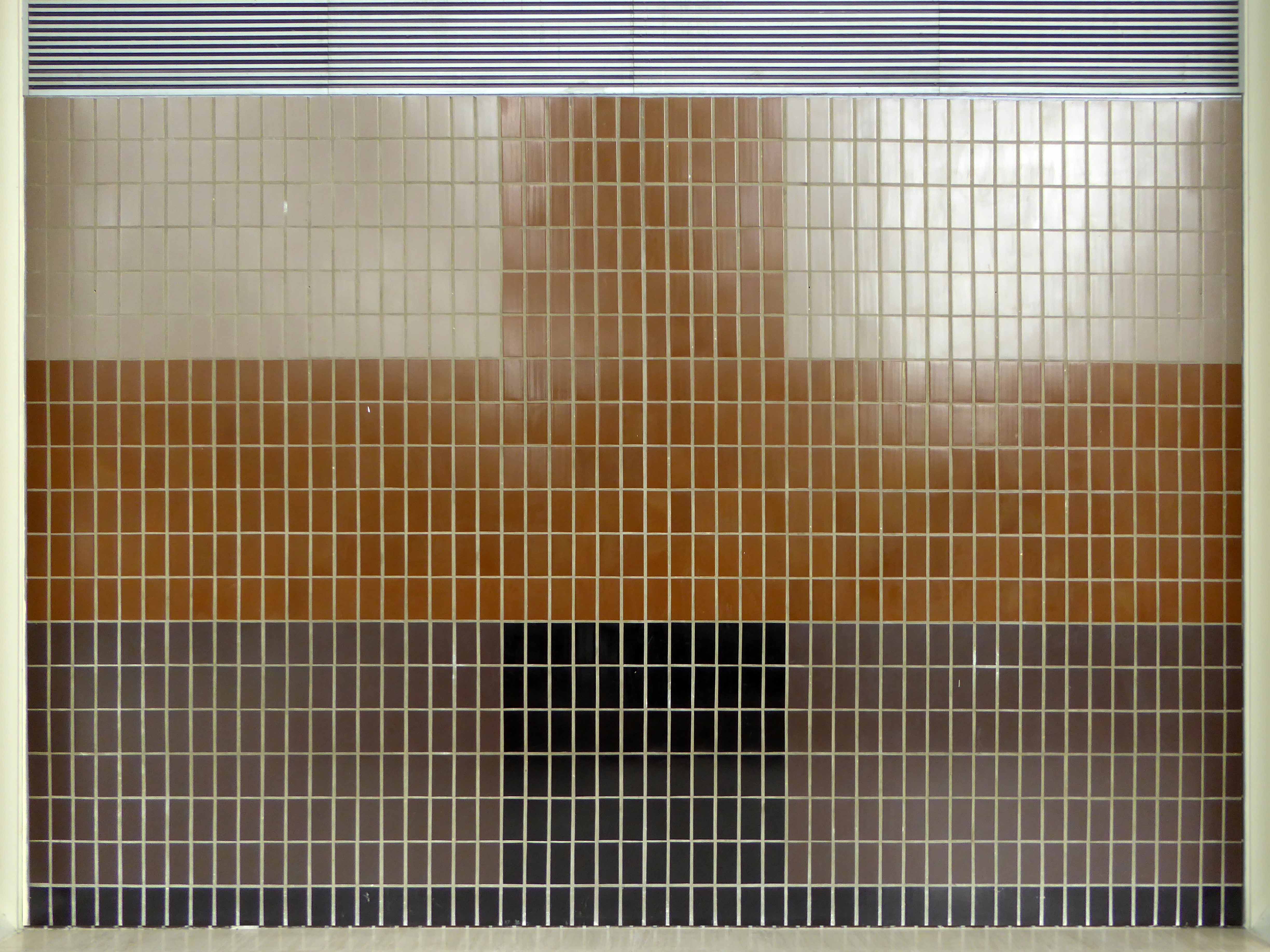
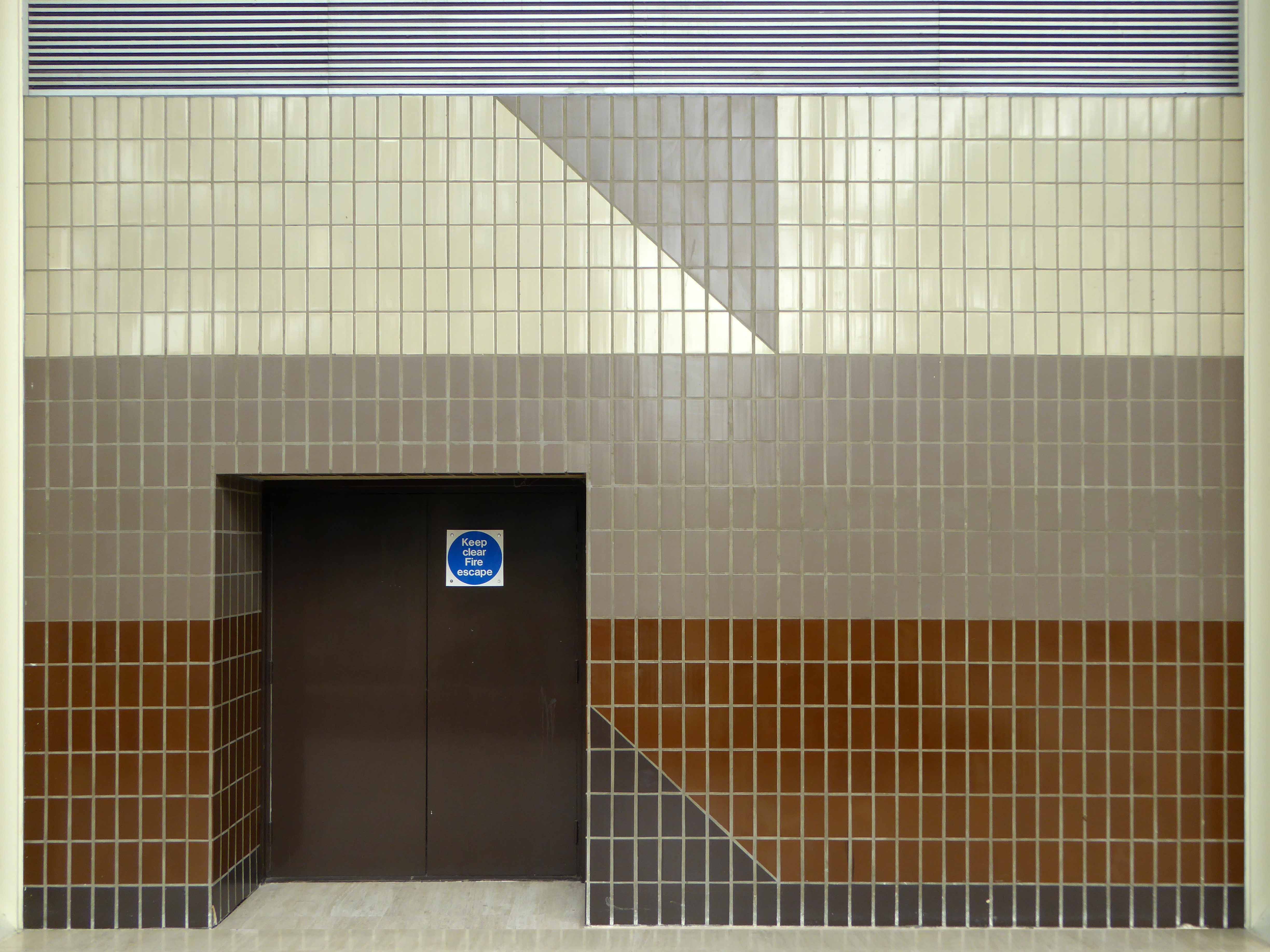
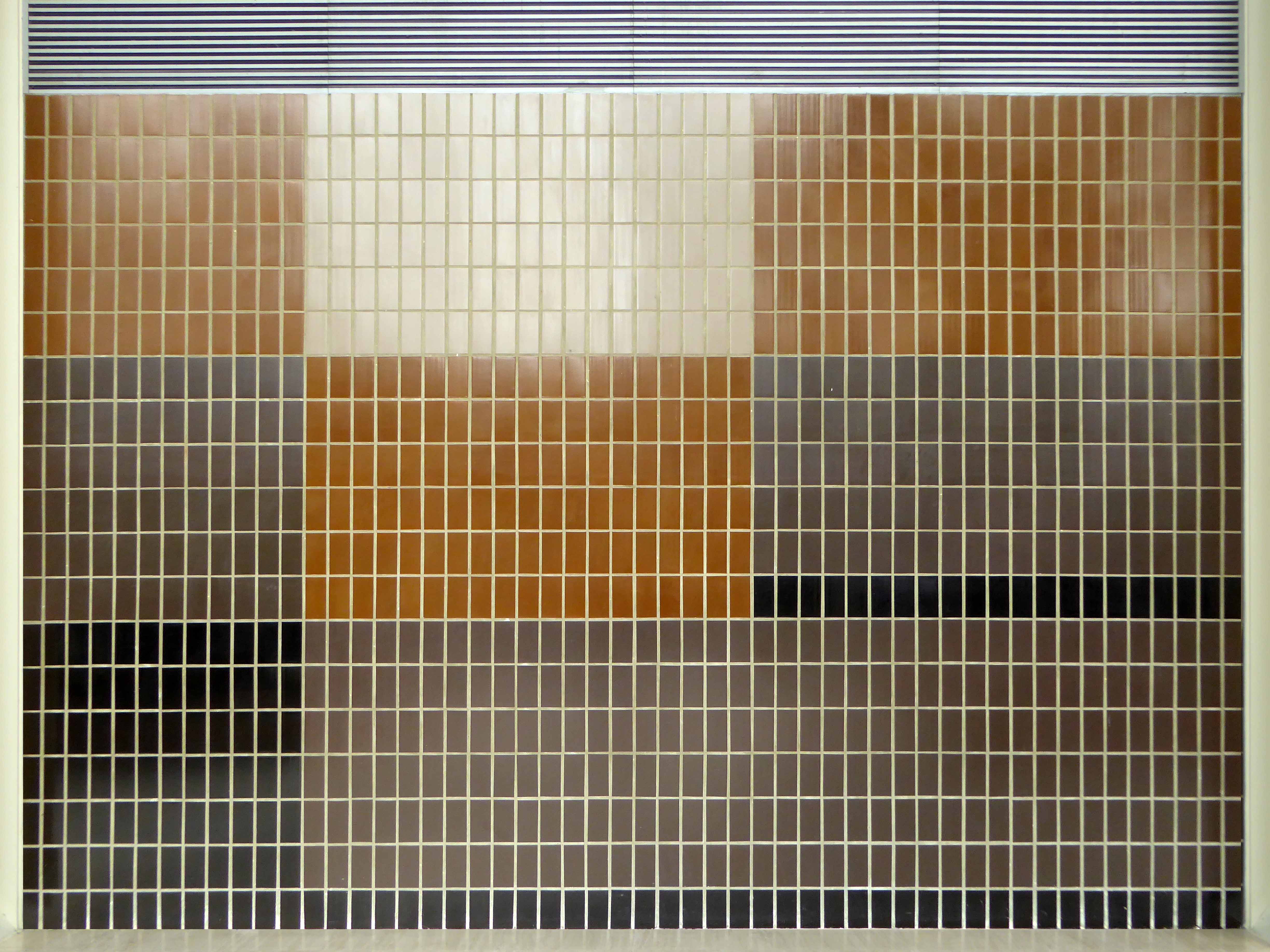
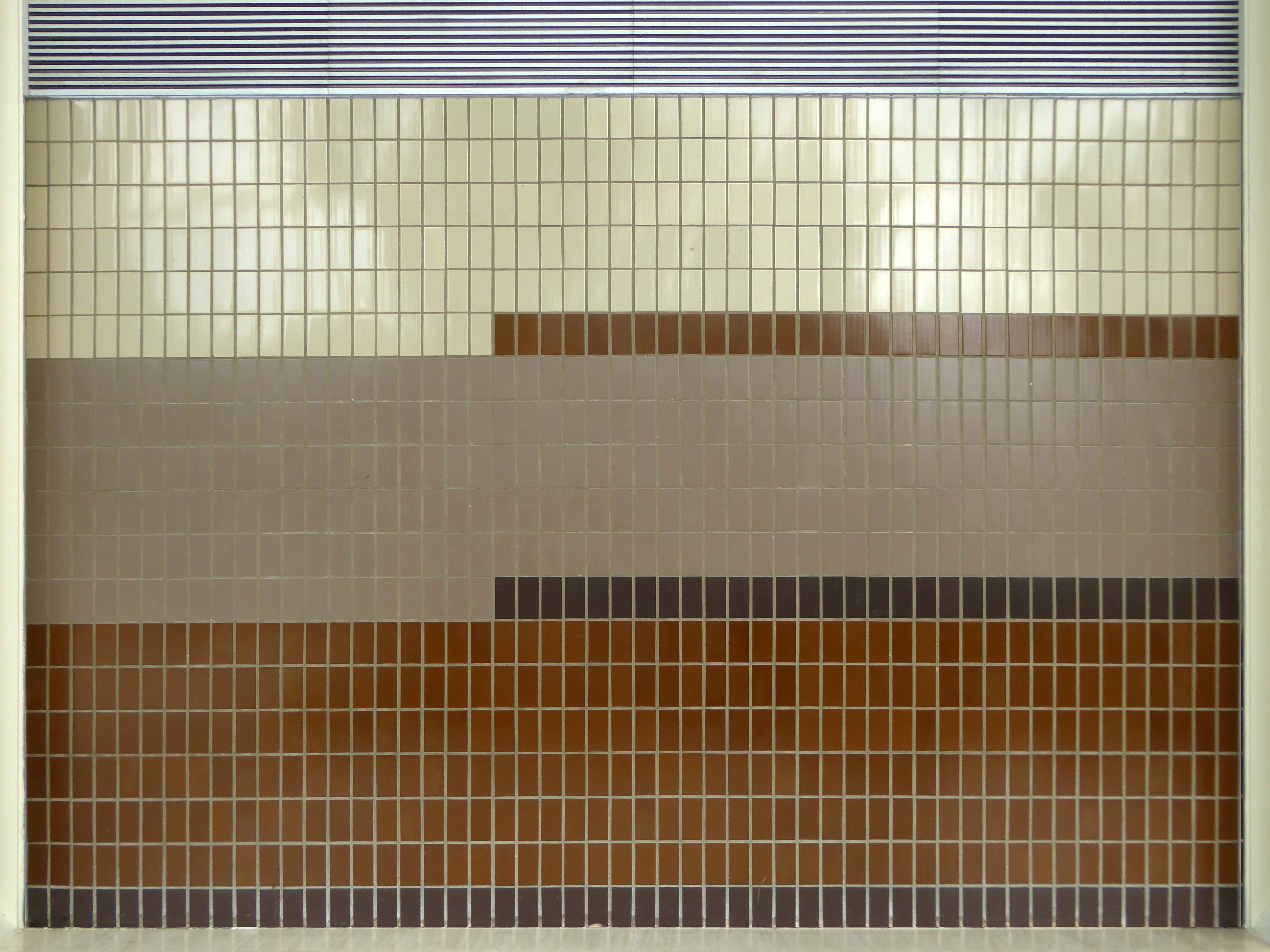
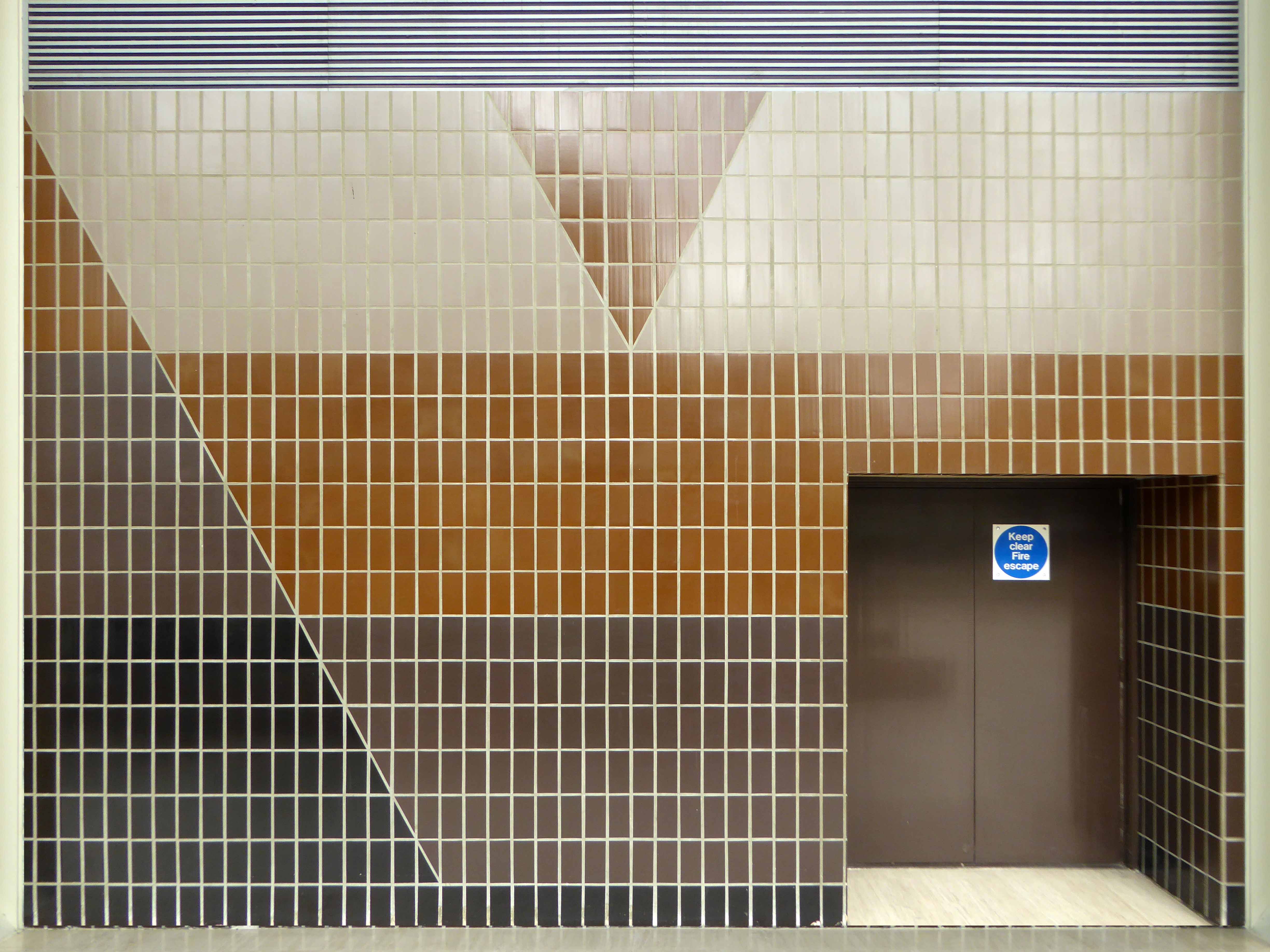
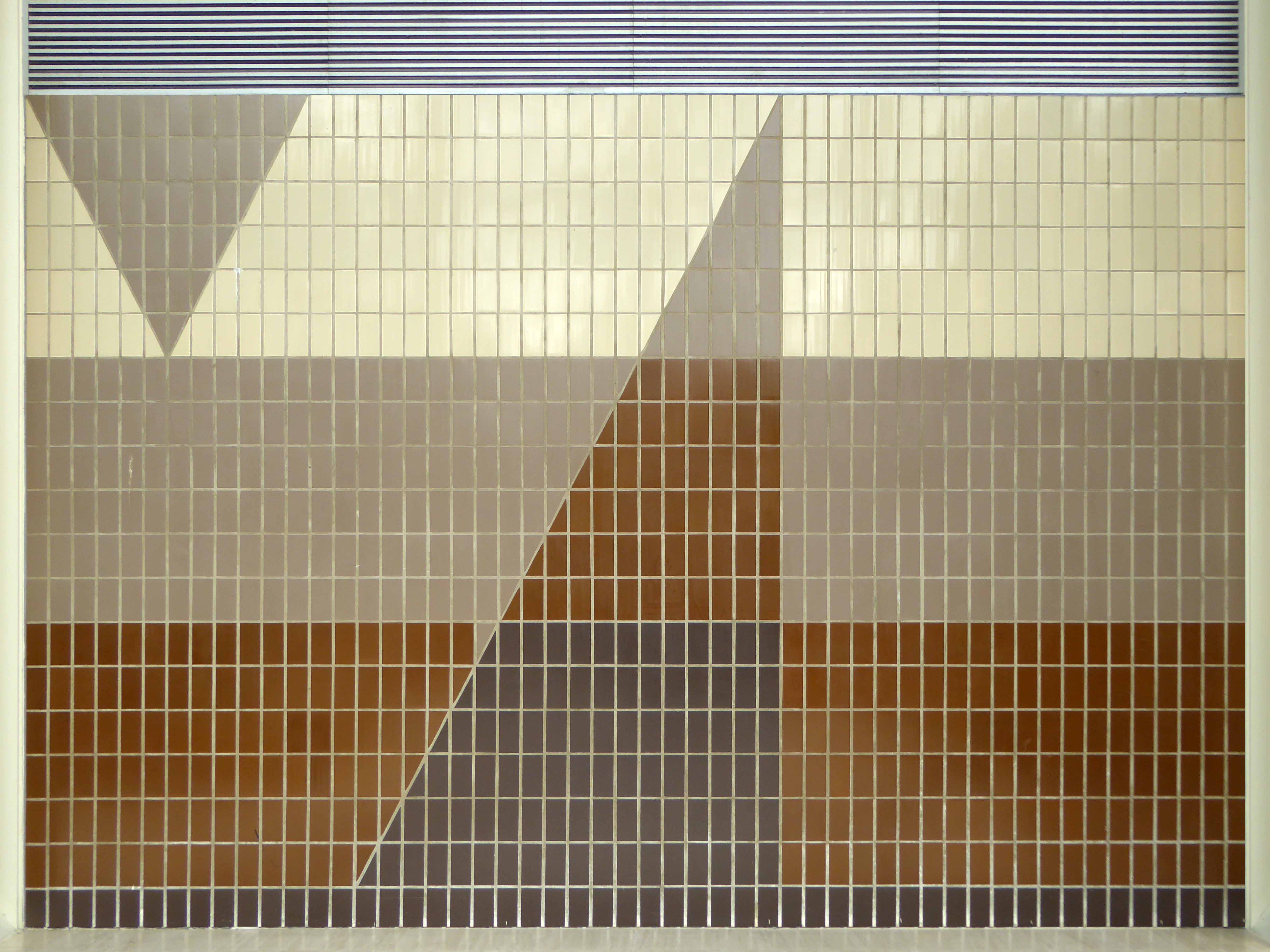
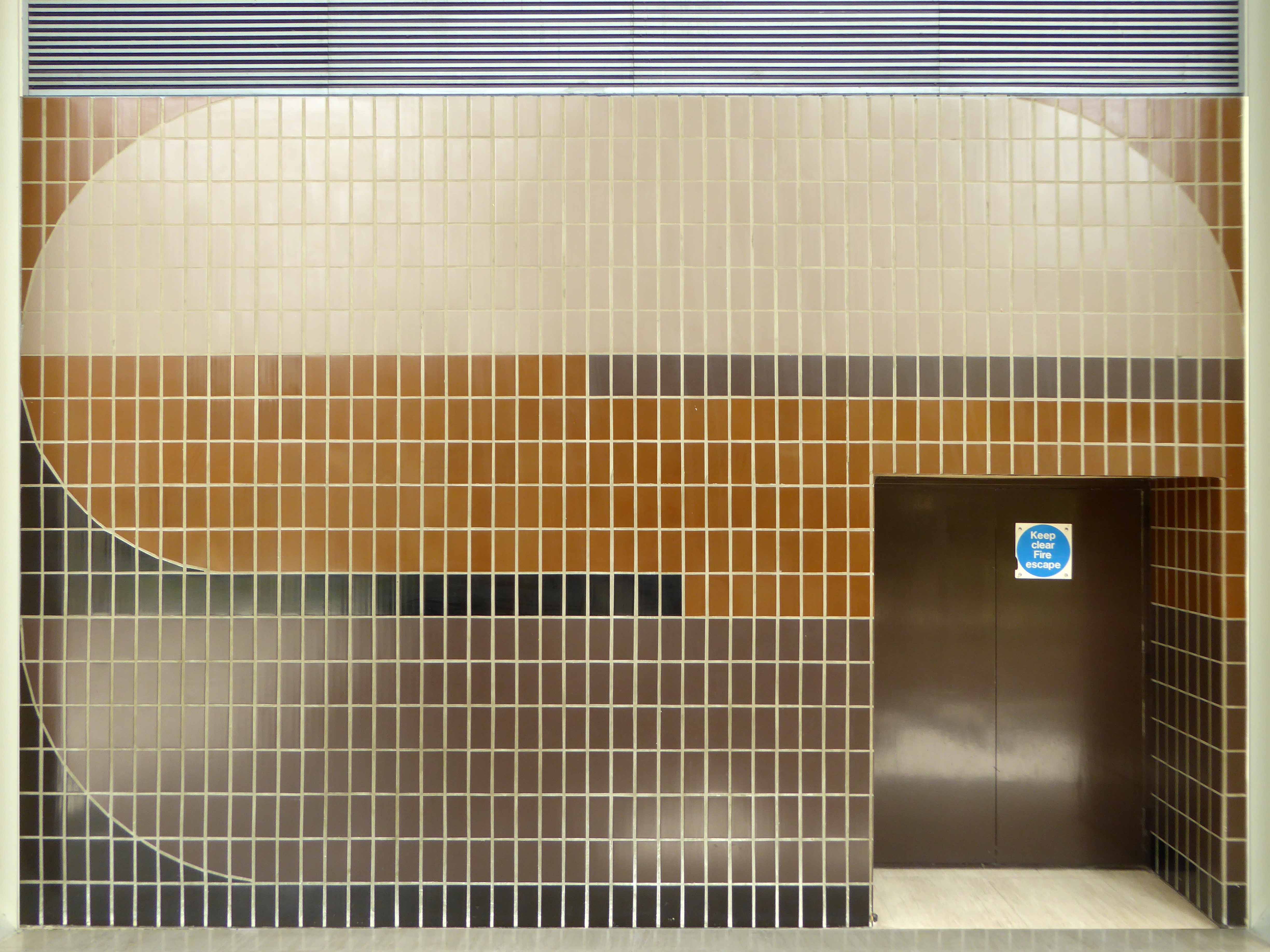
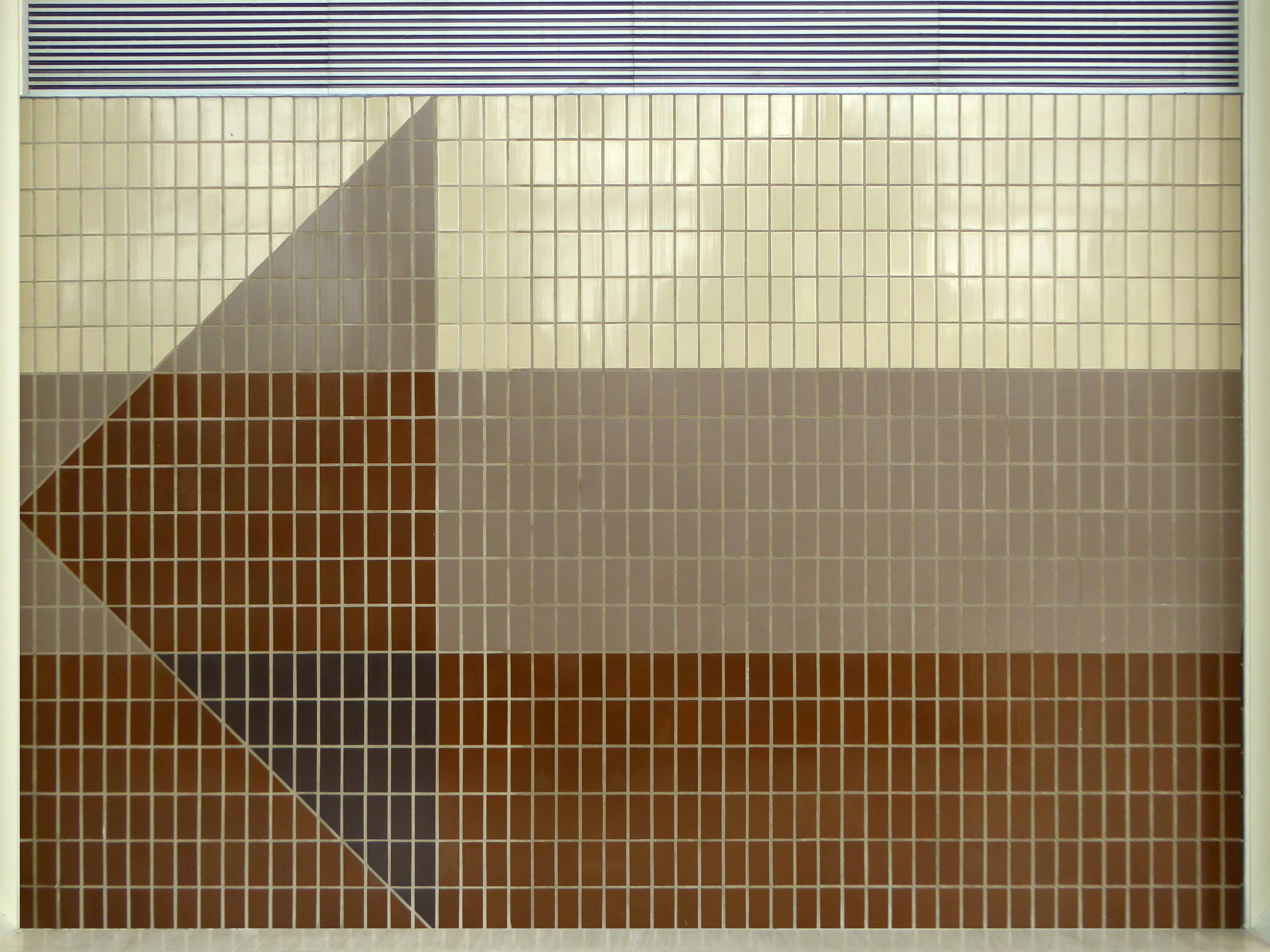
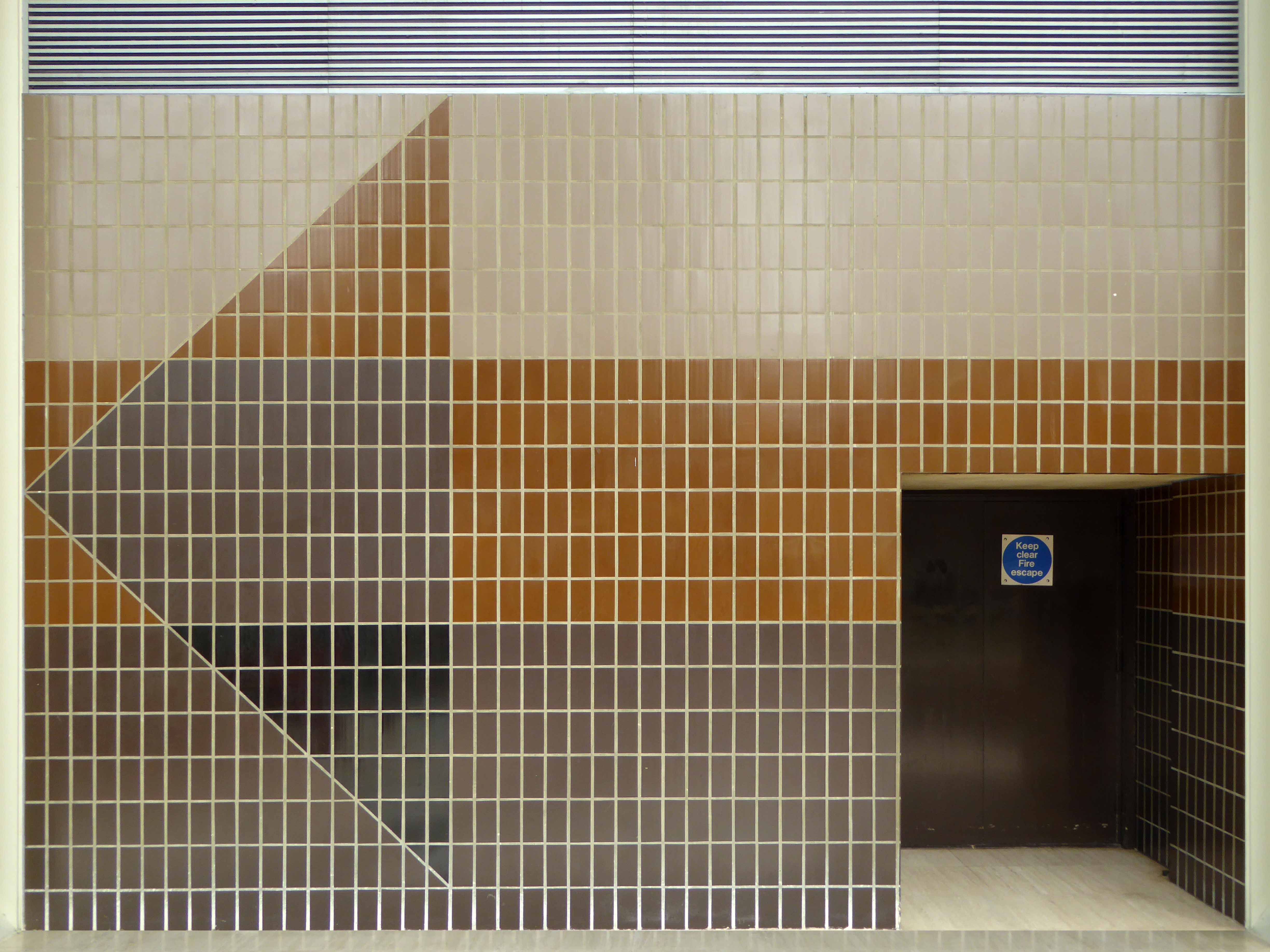
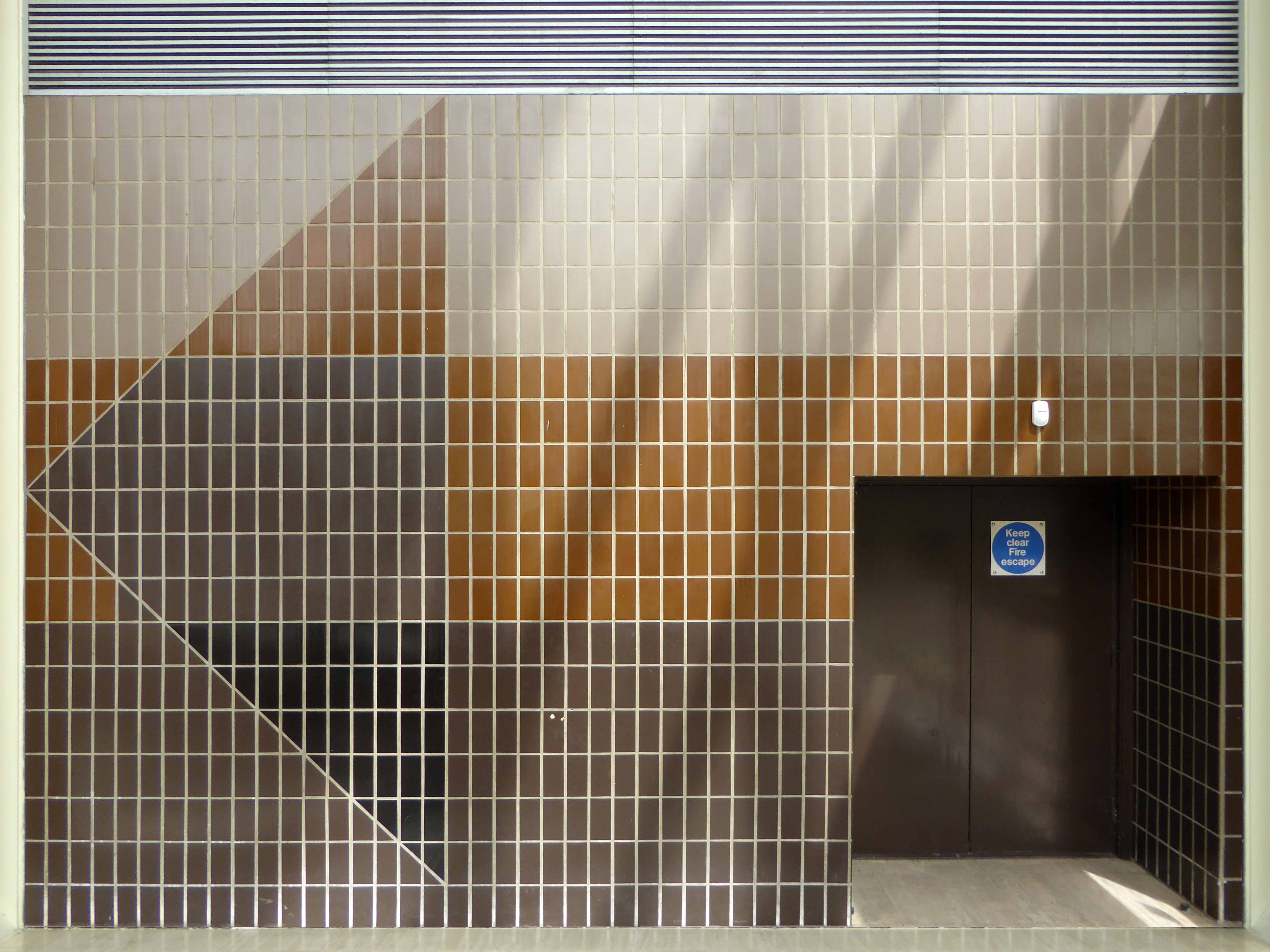
At the very far end of forever is the John Lewis store, to the right of the entrance there are a series of tiled panels – these are possibly the work of Lucienne and Robin Day
Way back when, when brown was the new brown, brown still is the new brown.
Fresh and crisp and even.
Bobbing up and down precipitously on low marble walls, from amongst the sub-tropical and temperate trees, I bring you these thirteen tiled panels.
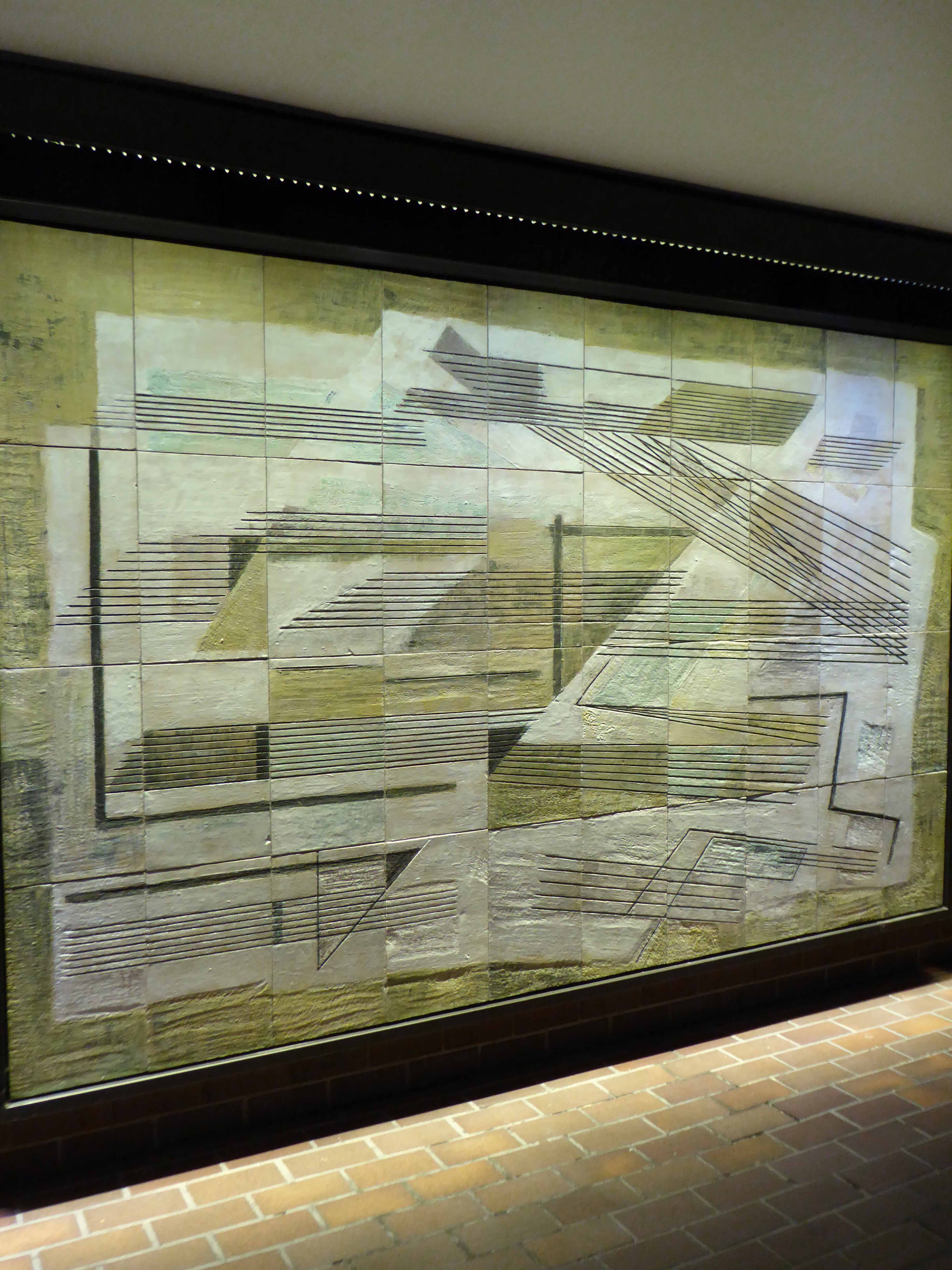
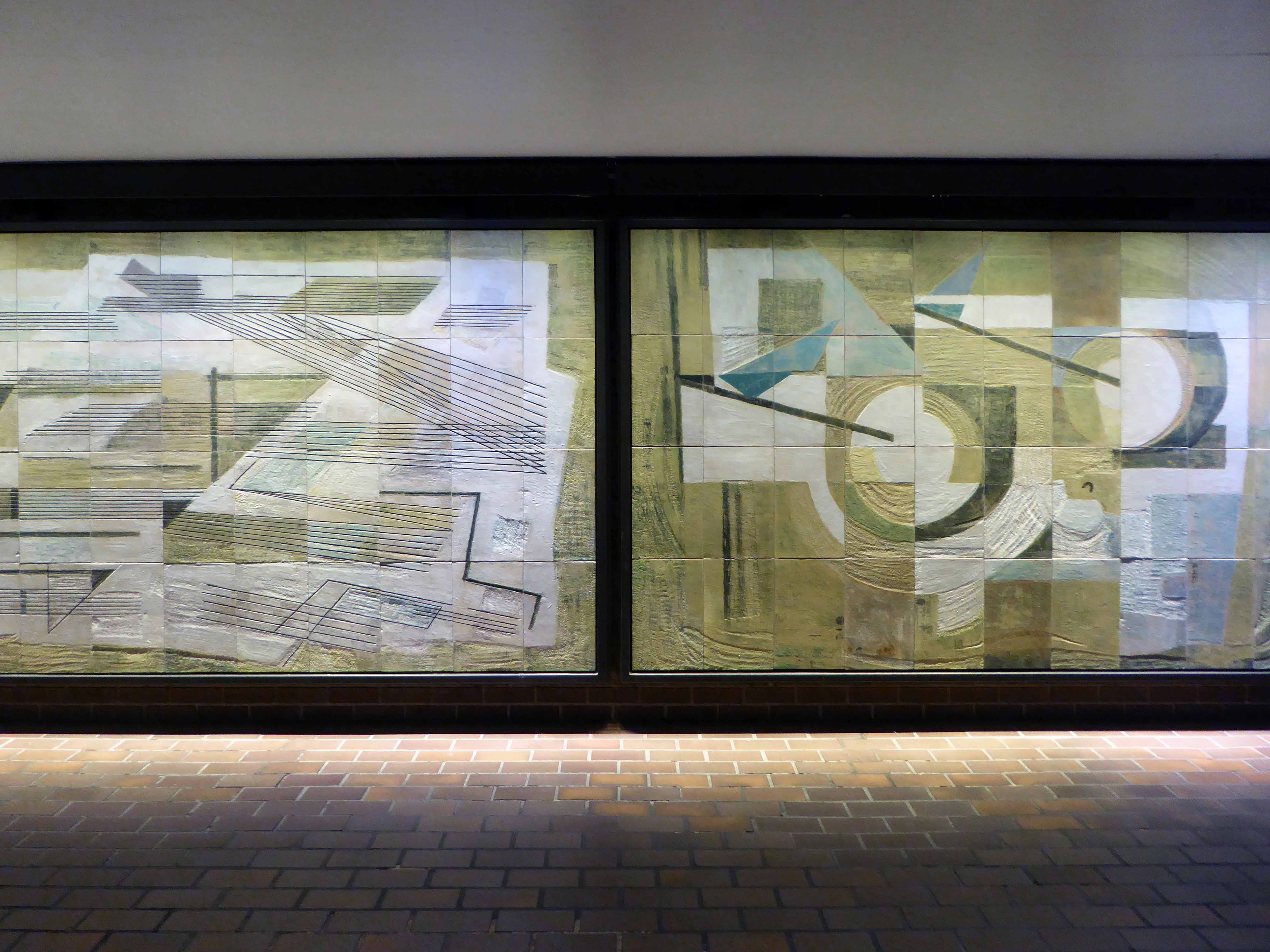
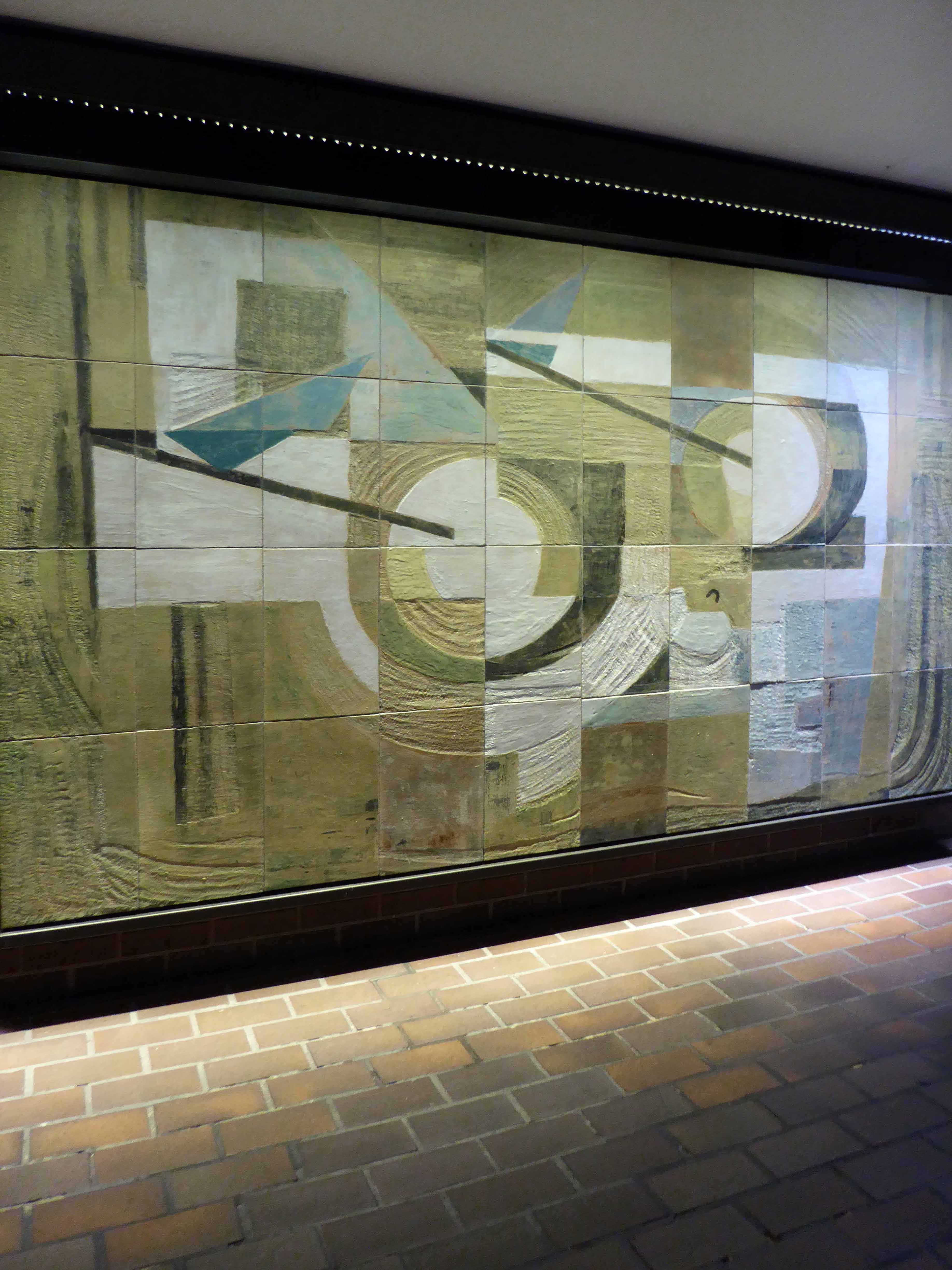
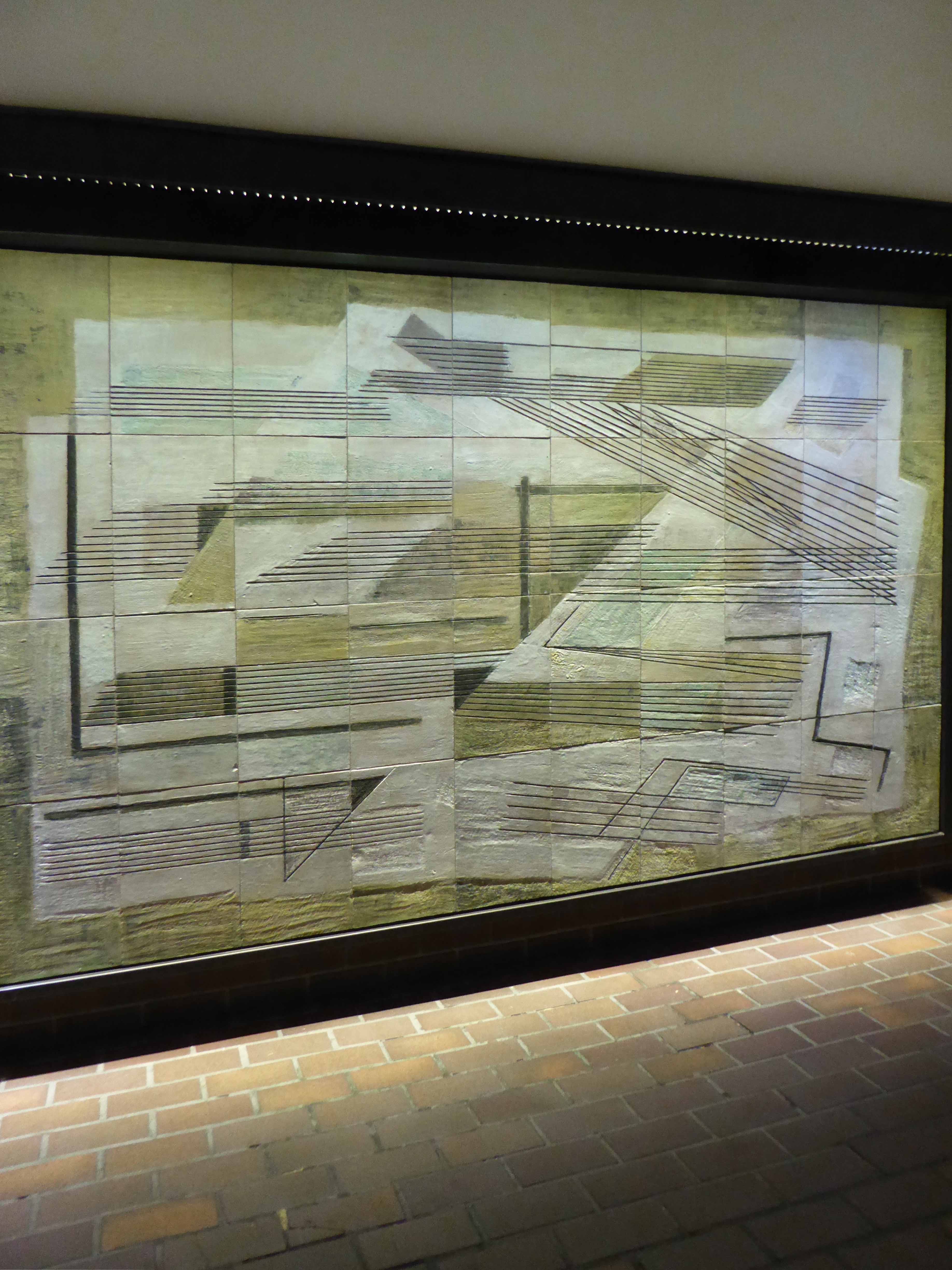
Working so close up and personal at altitude, photographing such large pieces in confined spaces, it’s not until you arrive home that you discover that together they spell:



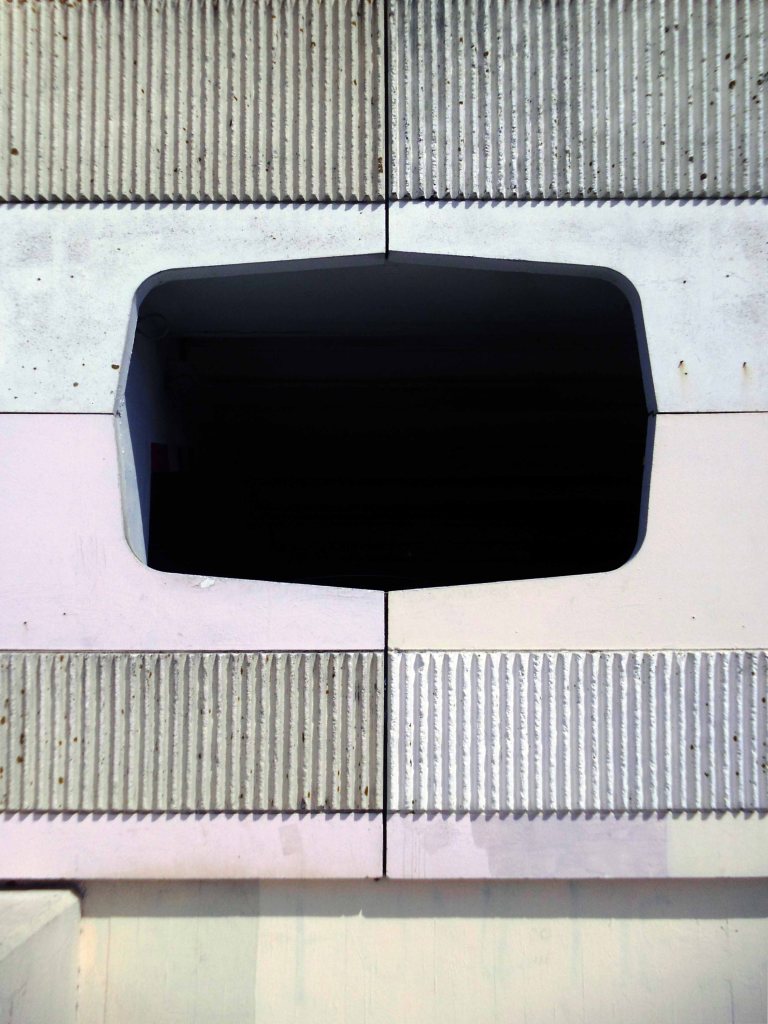

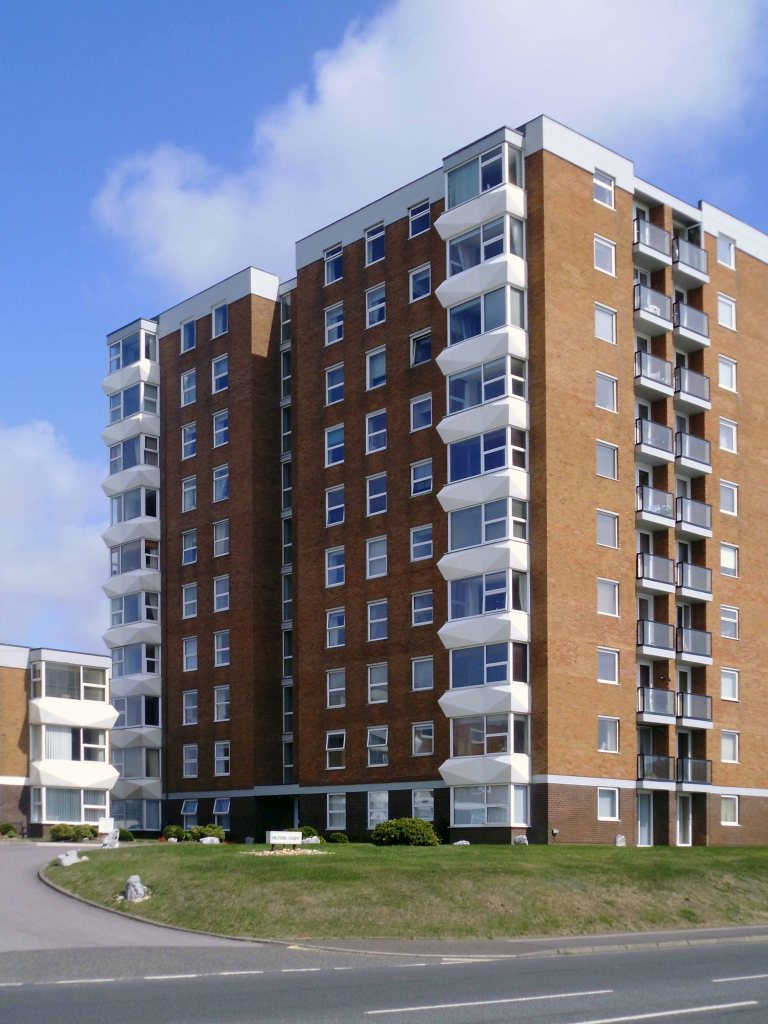
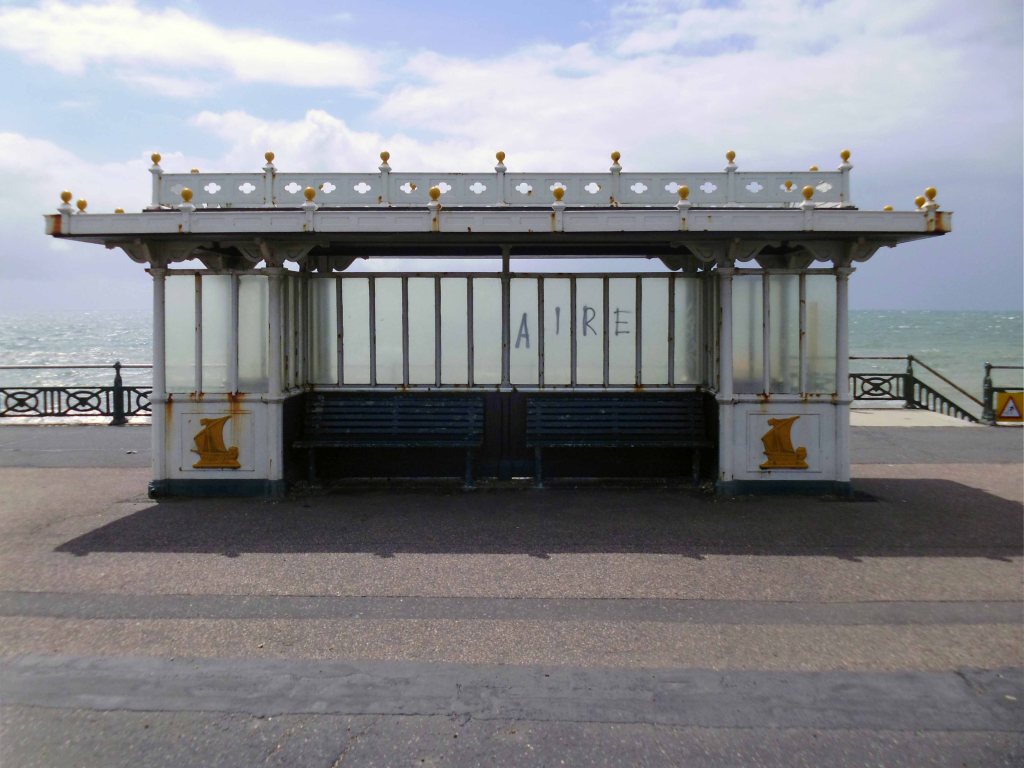
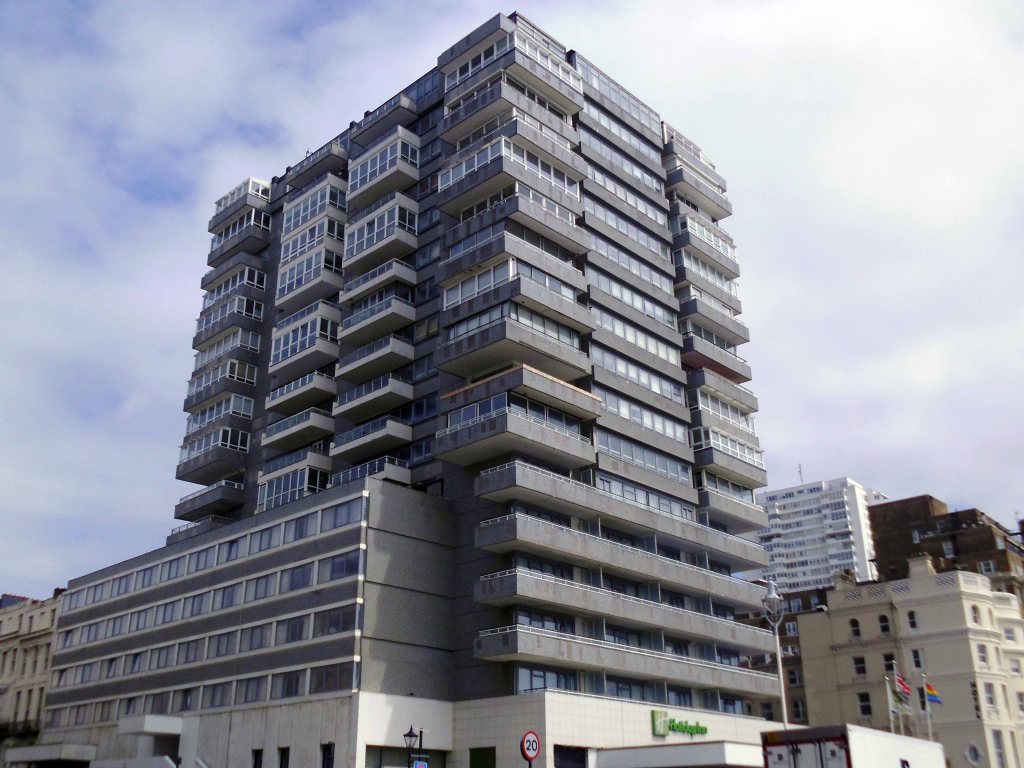


























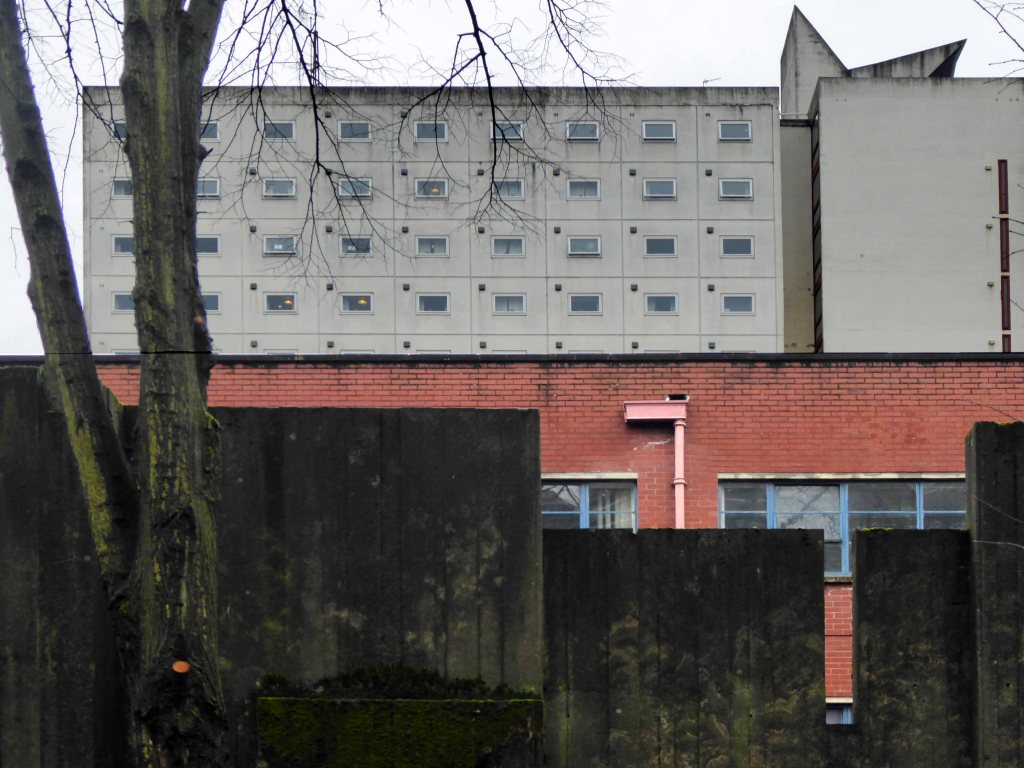
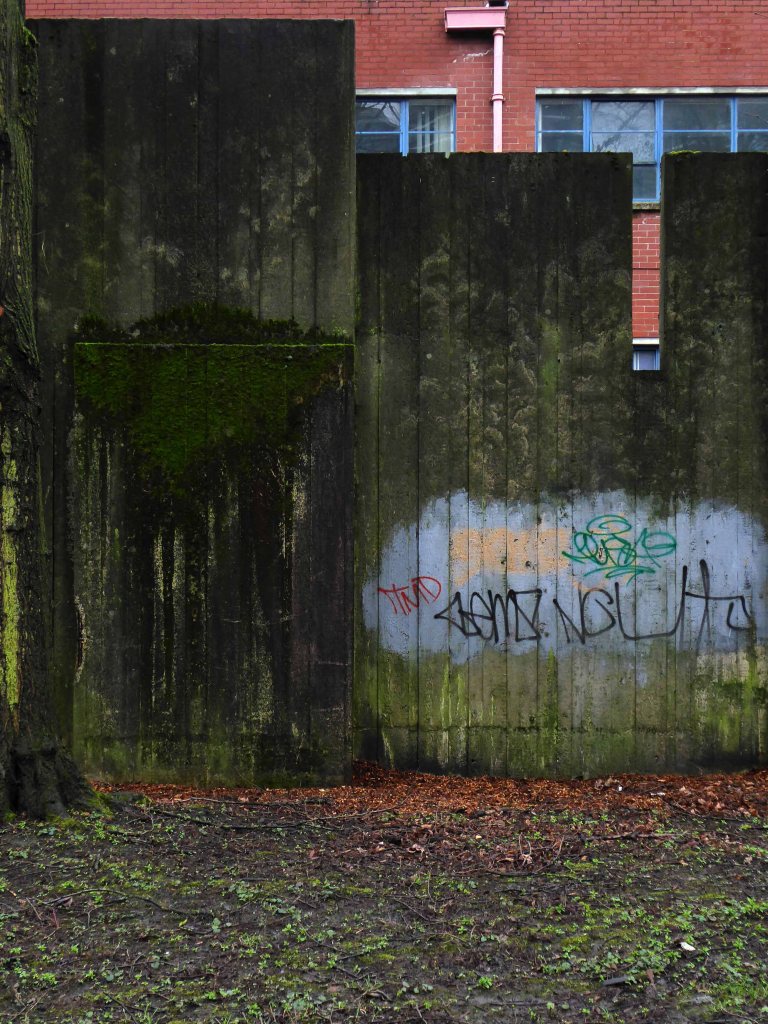
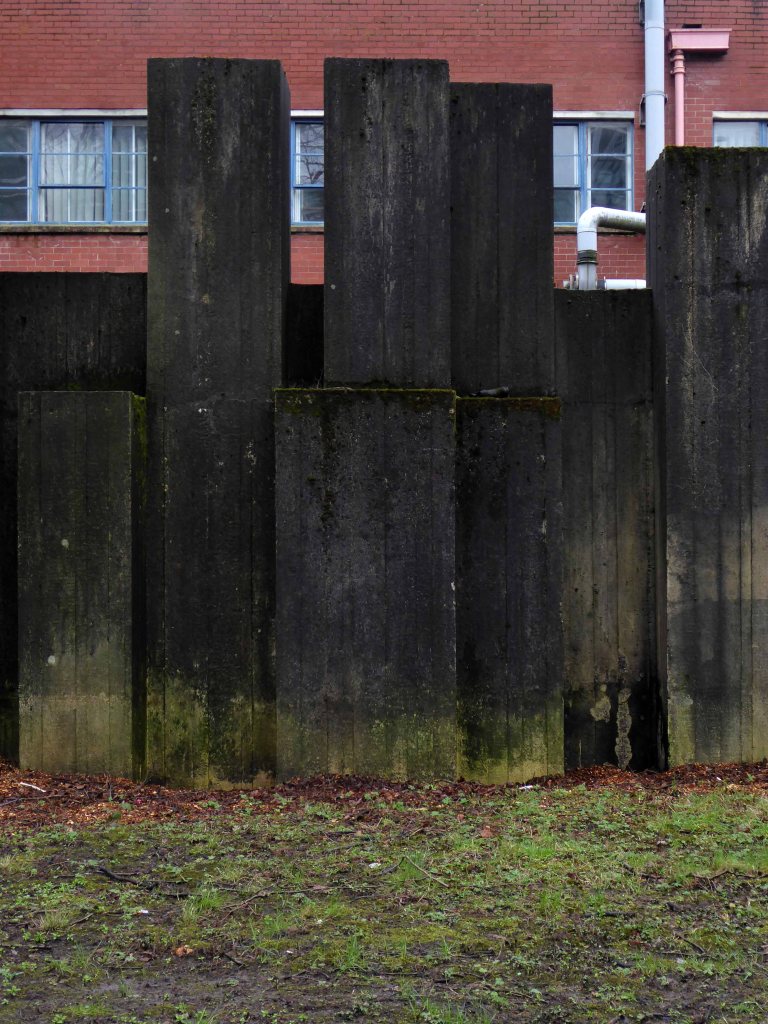
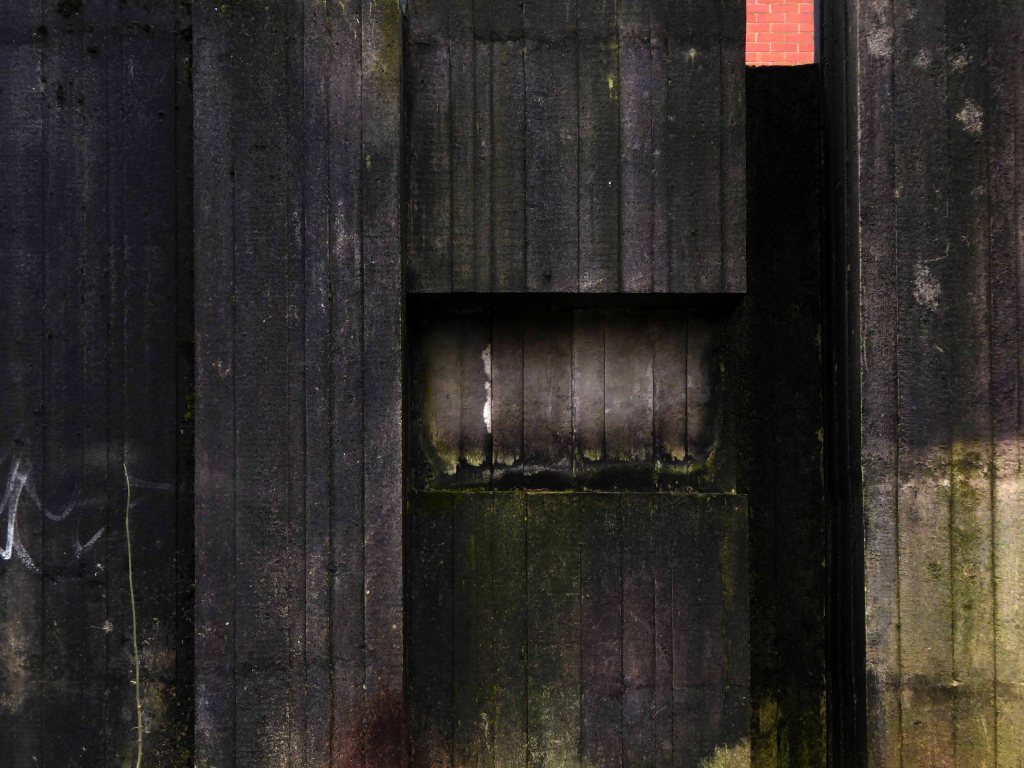














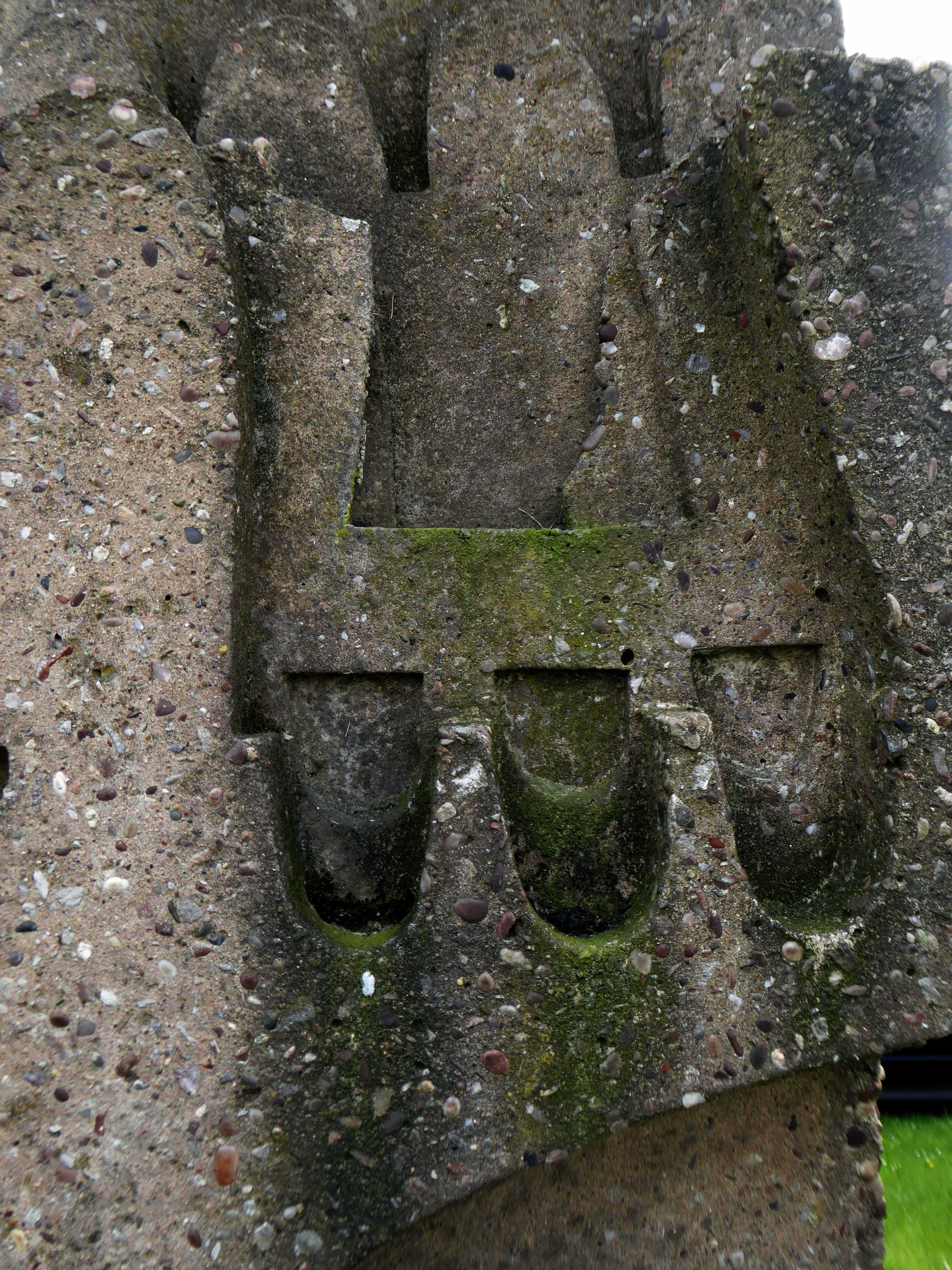
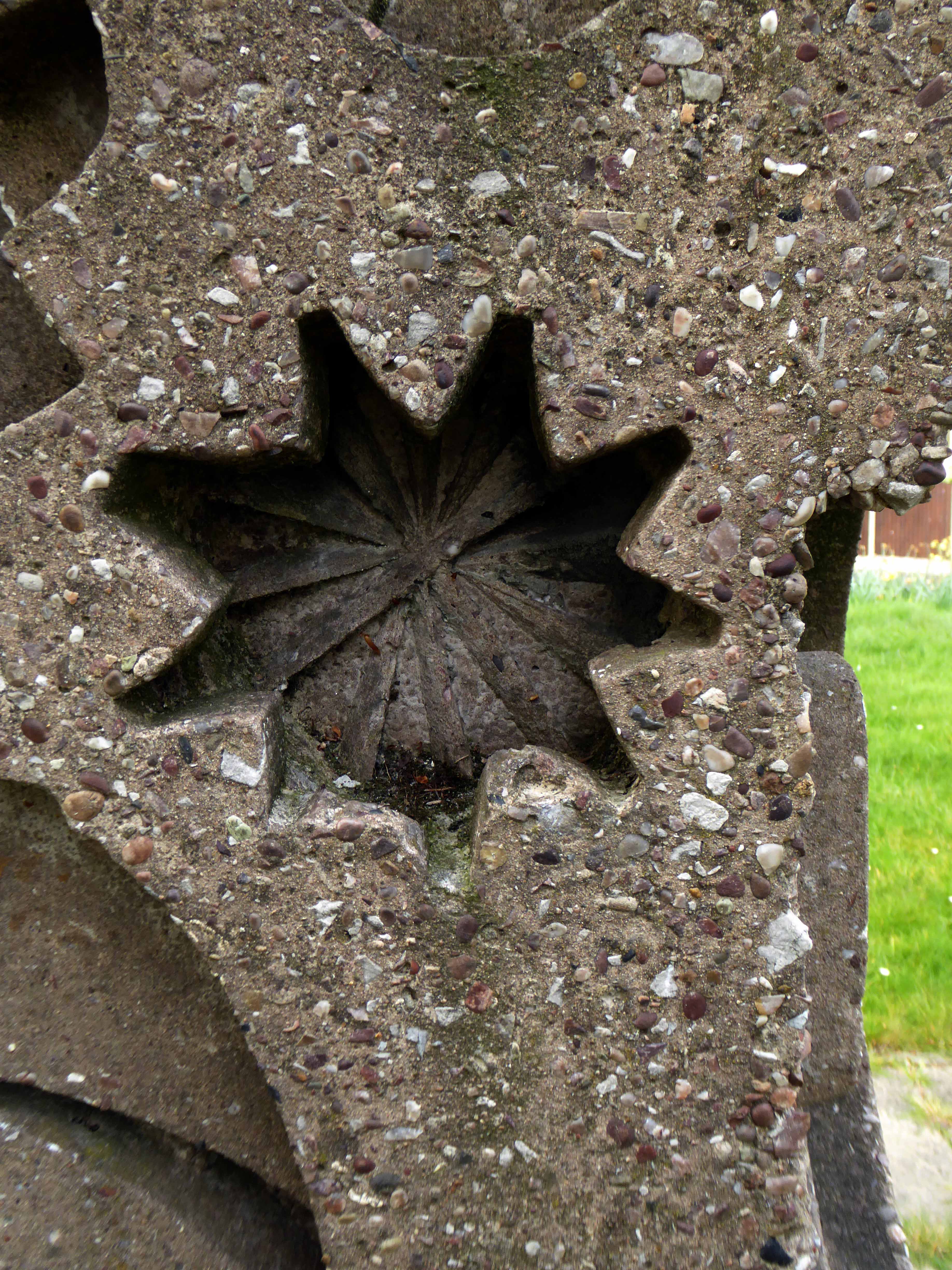


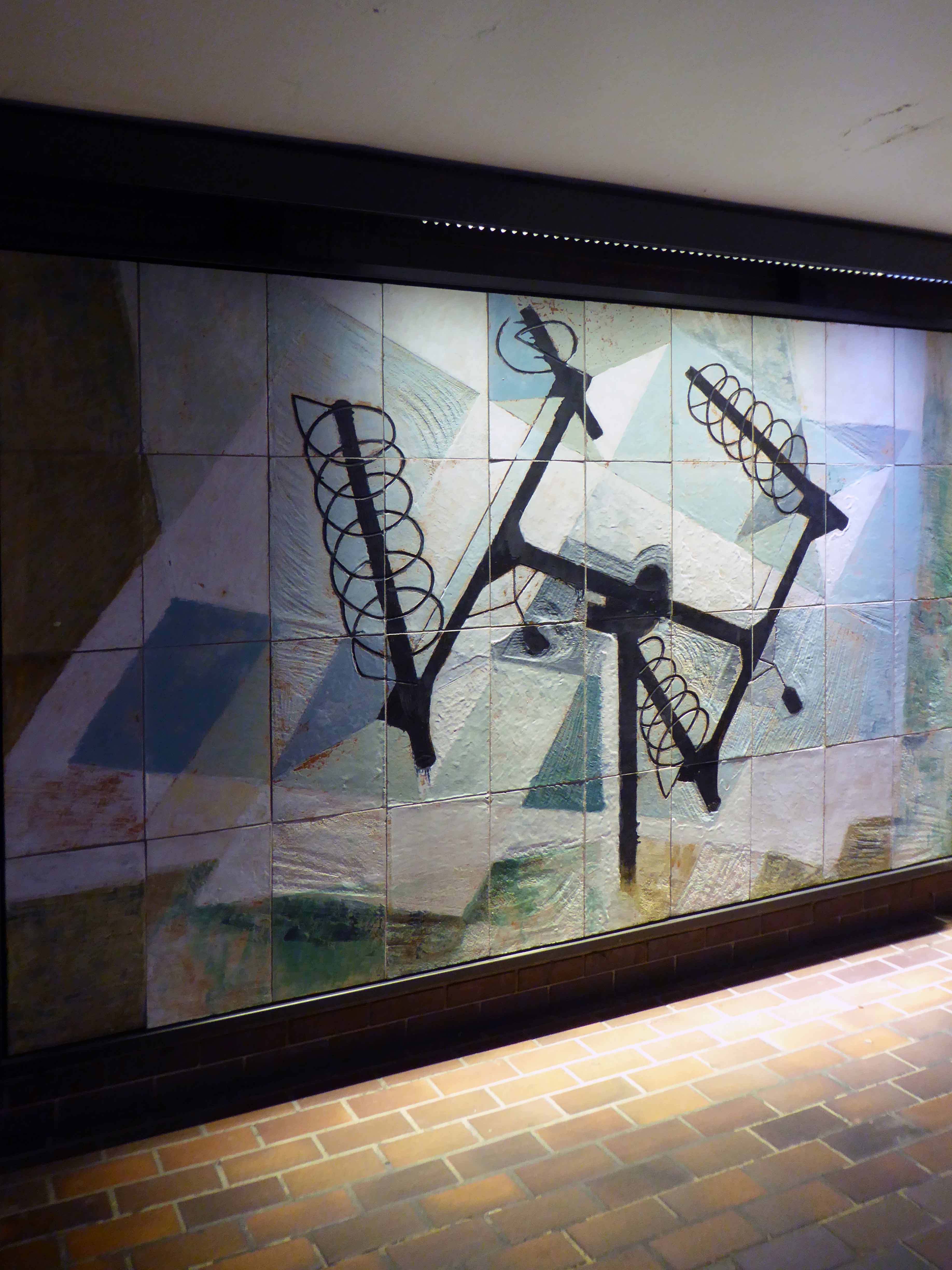
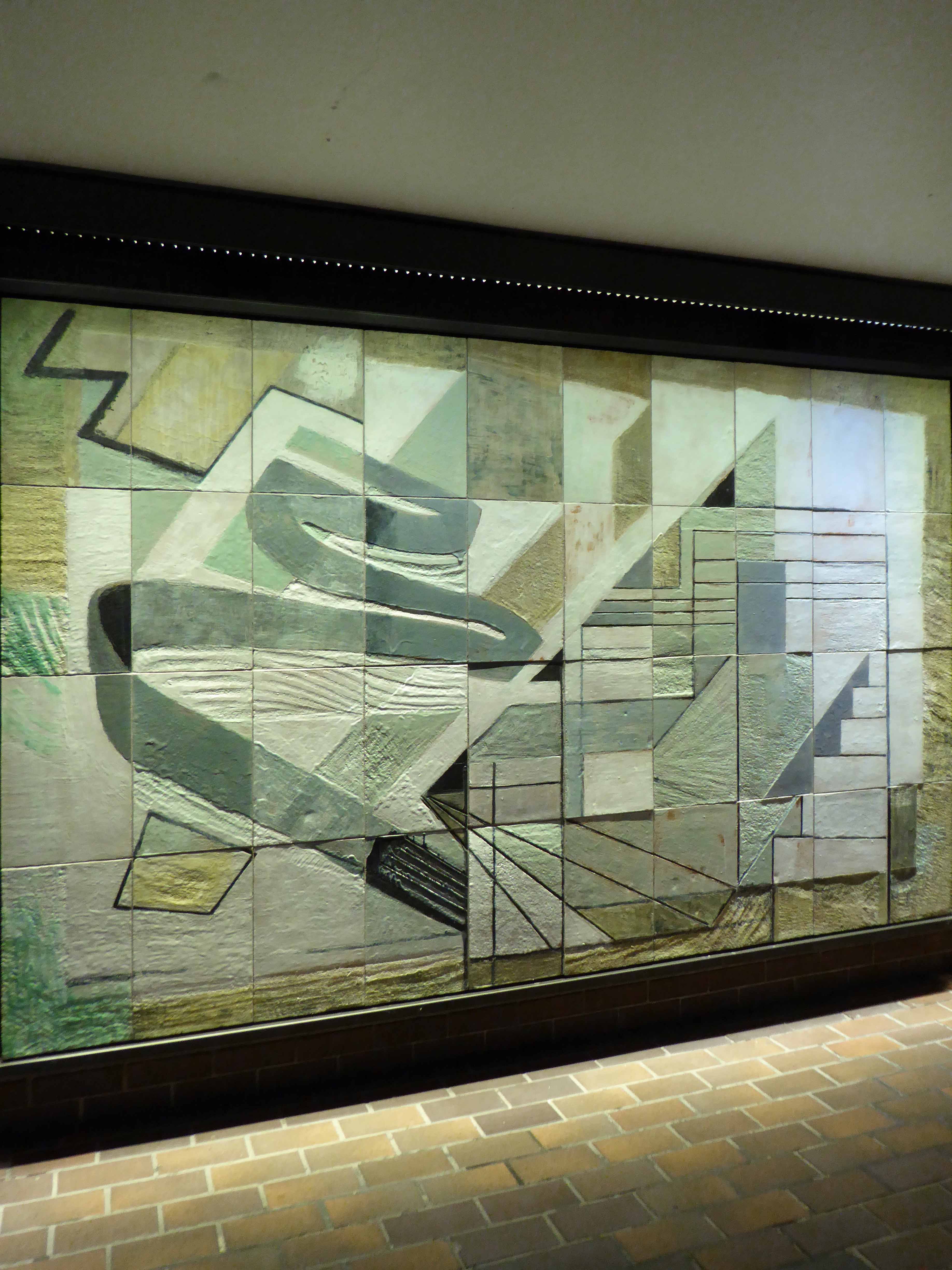
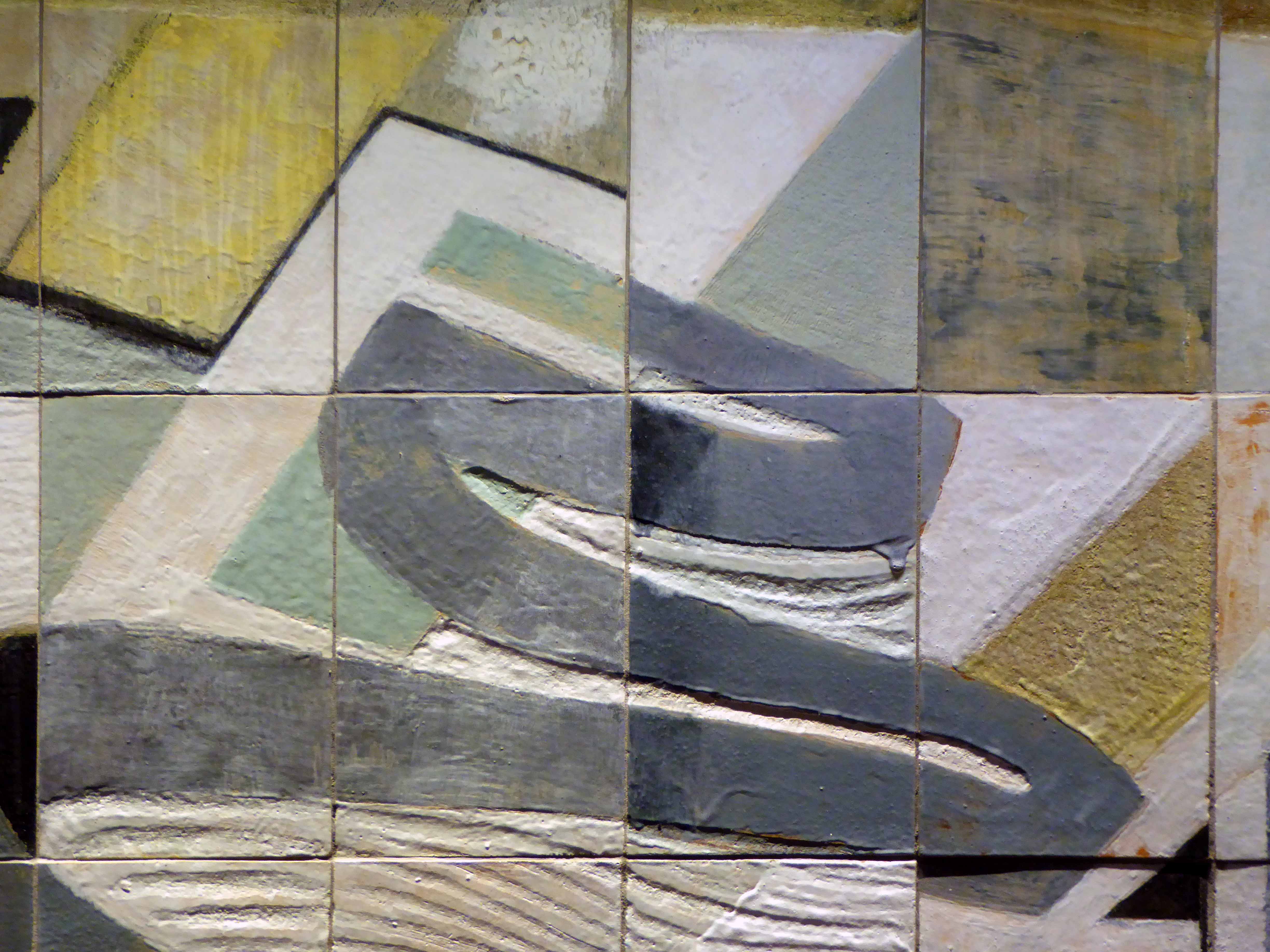
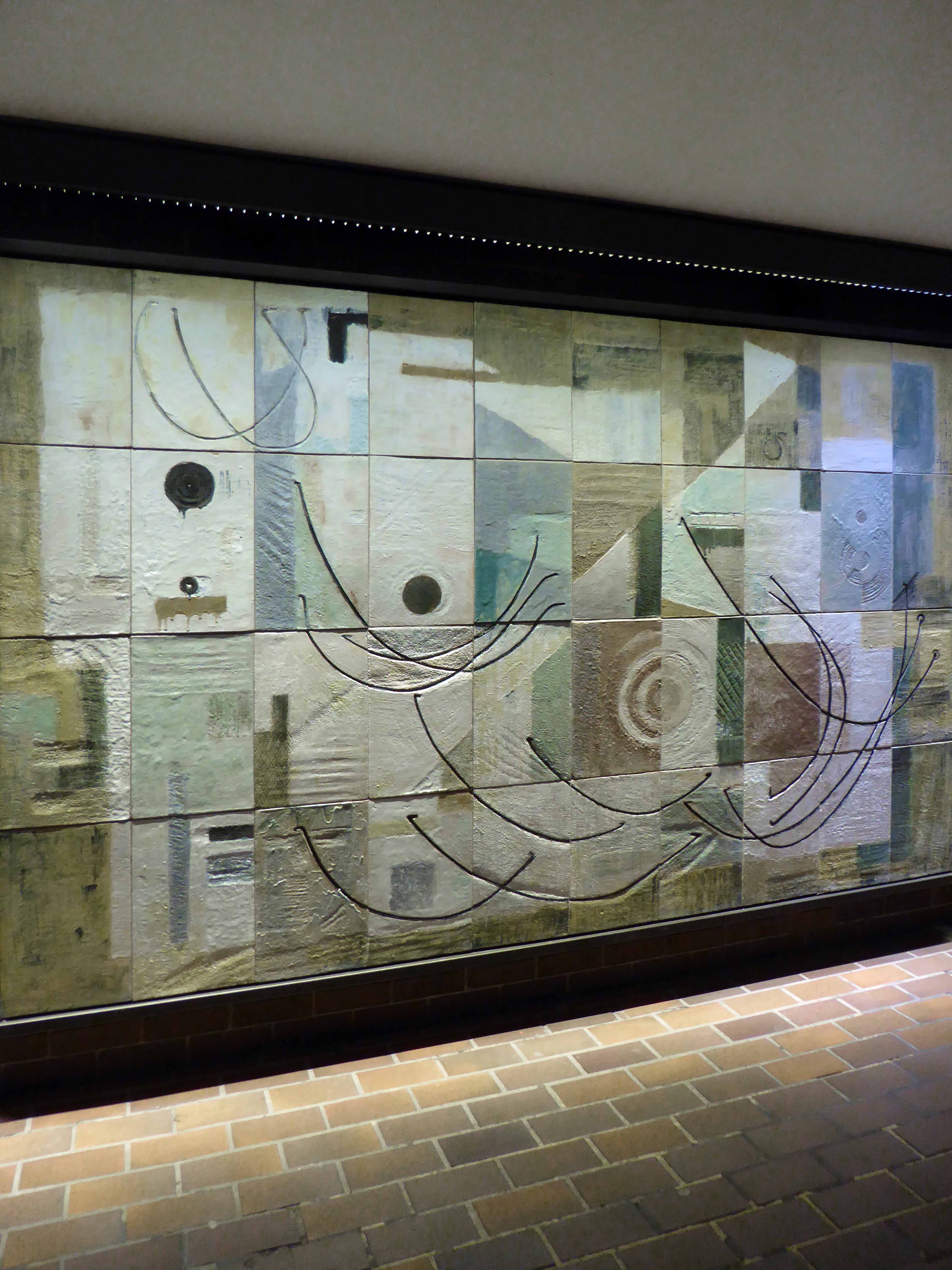







 Modern Mooch