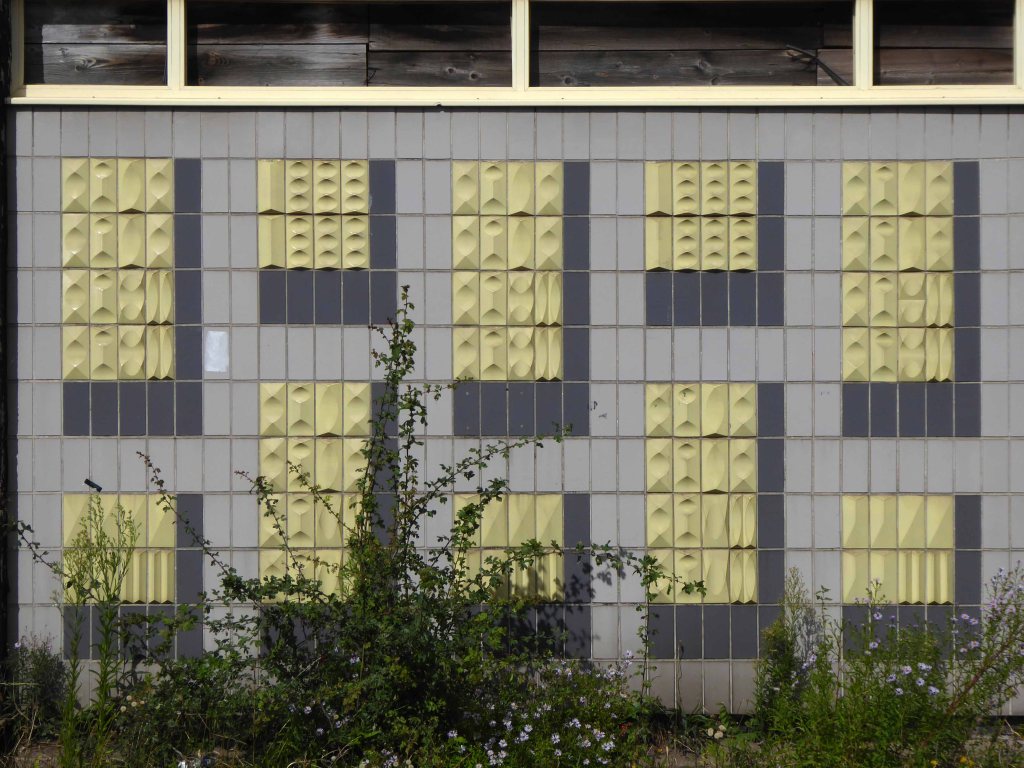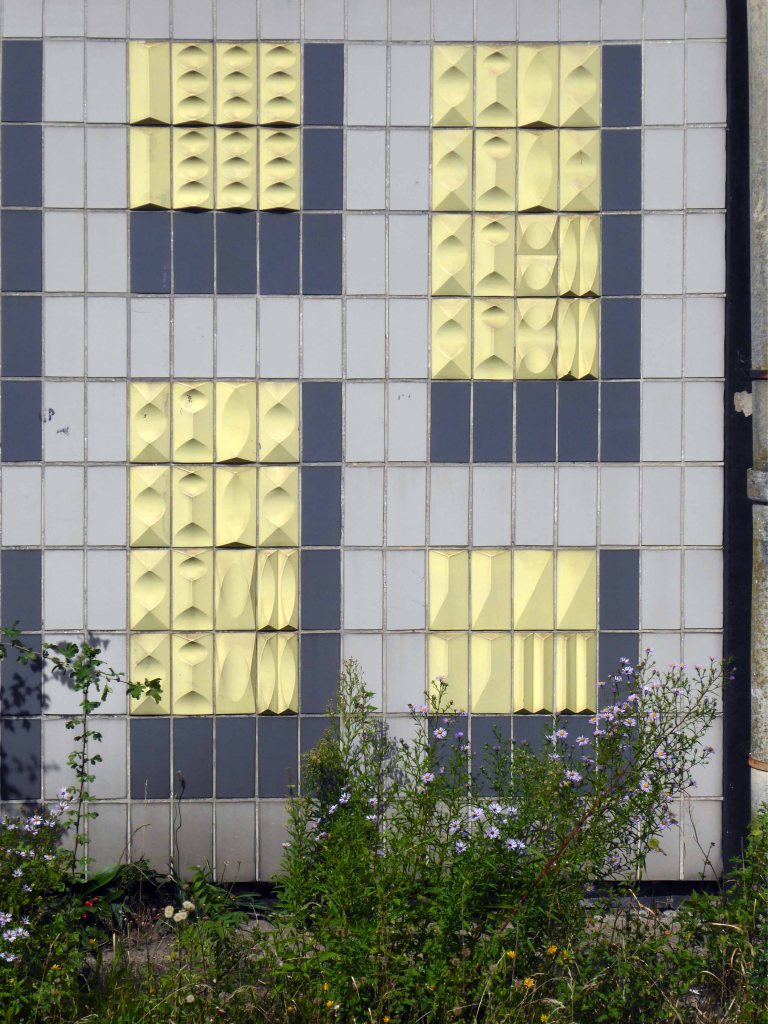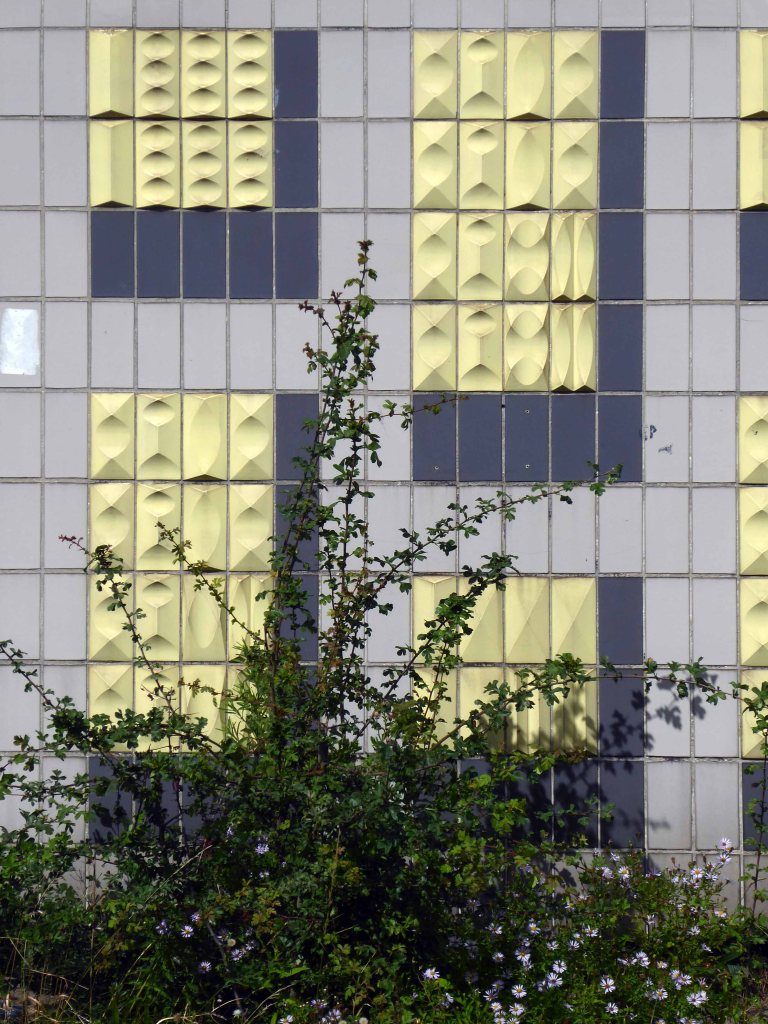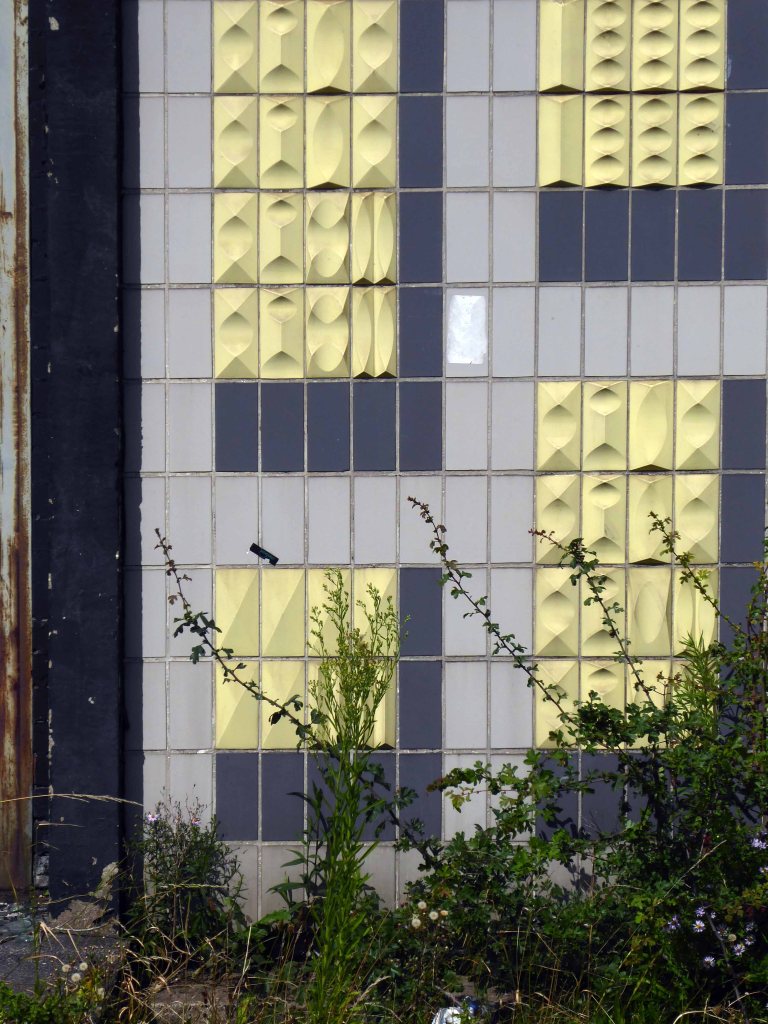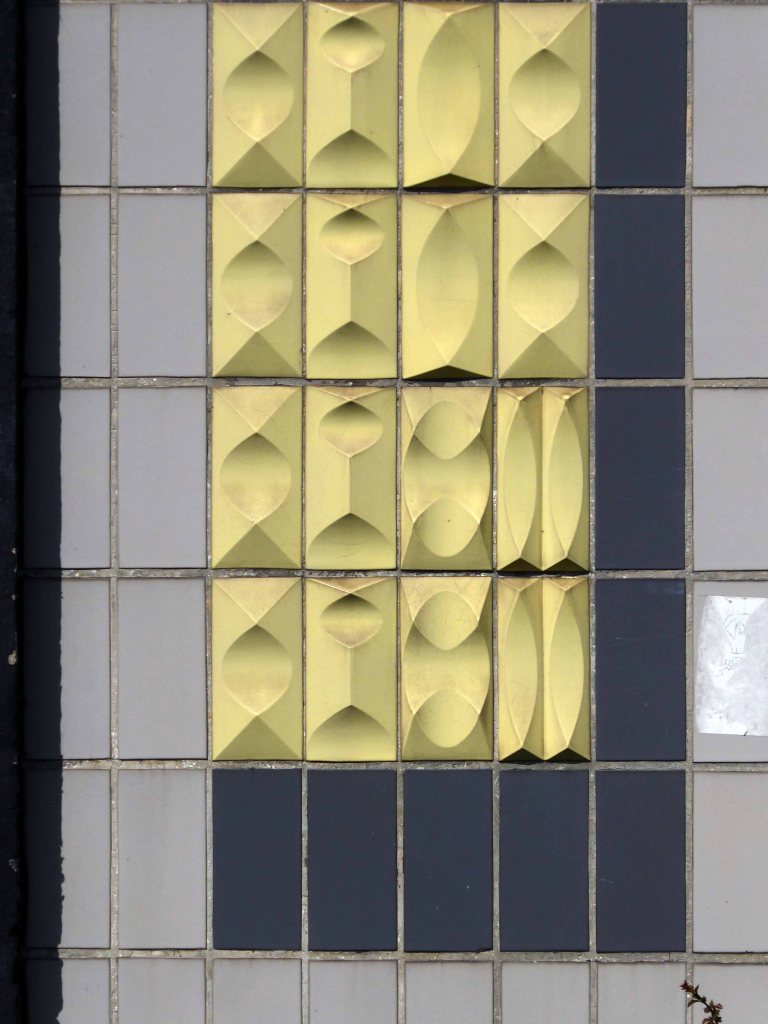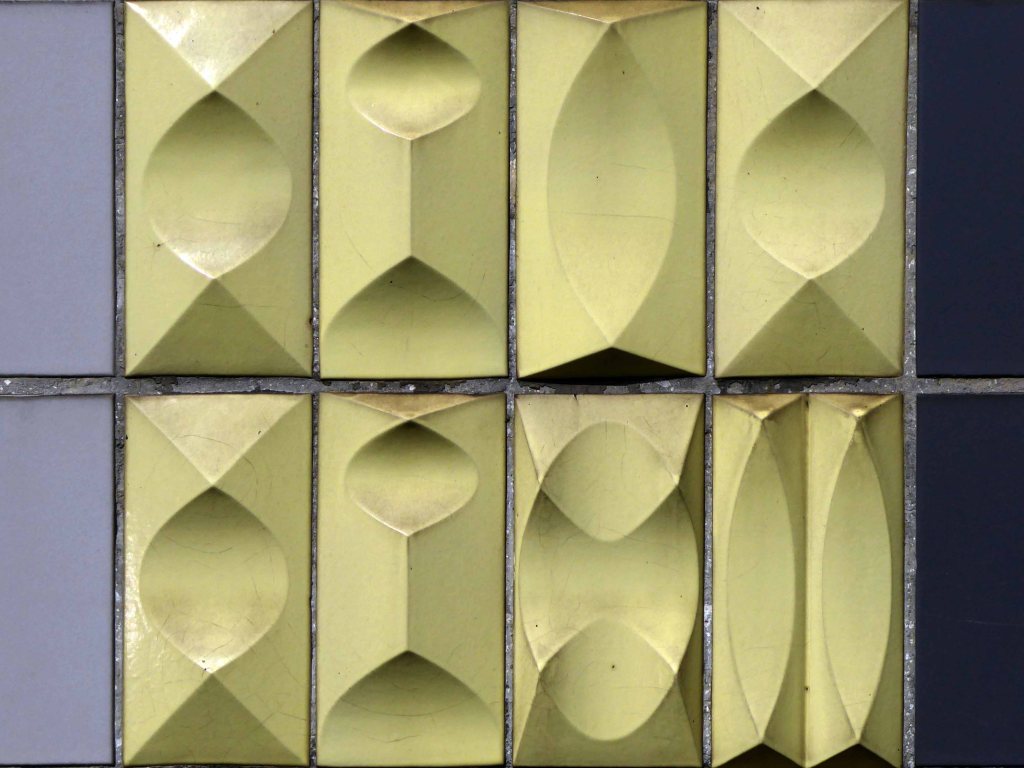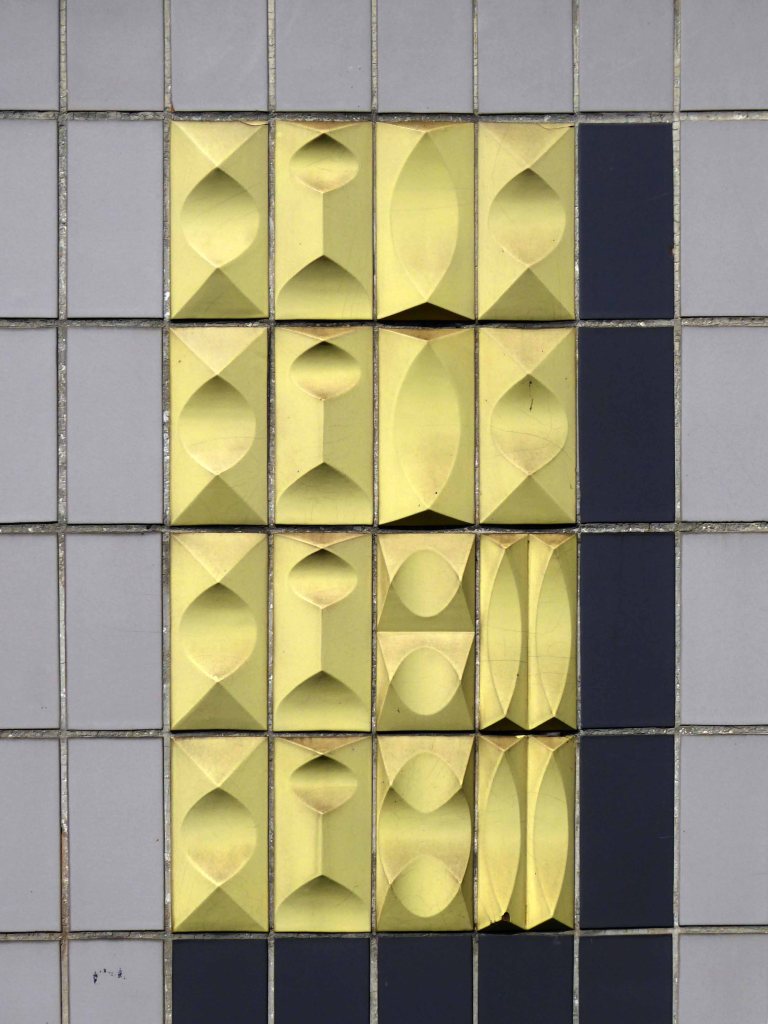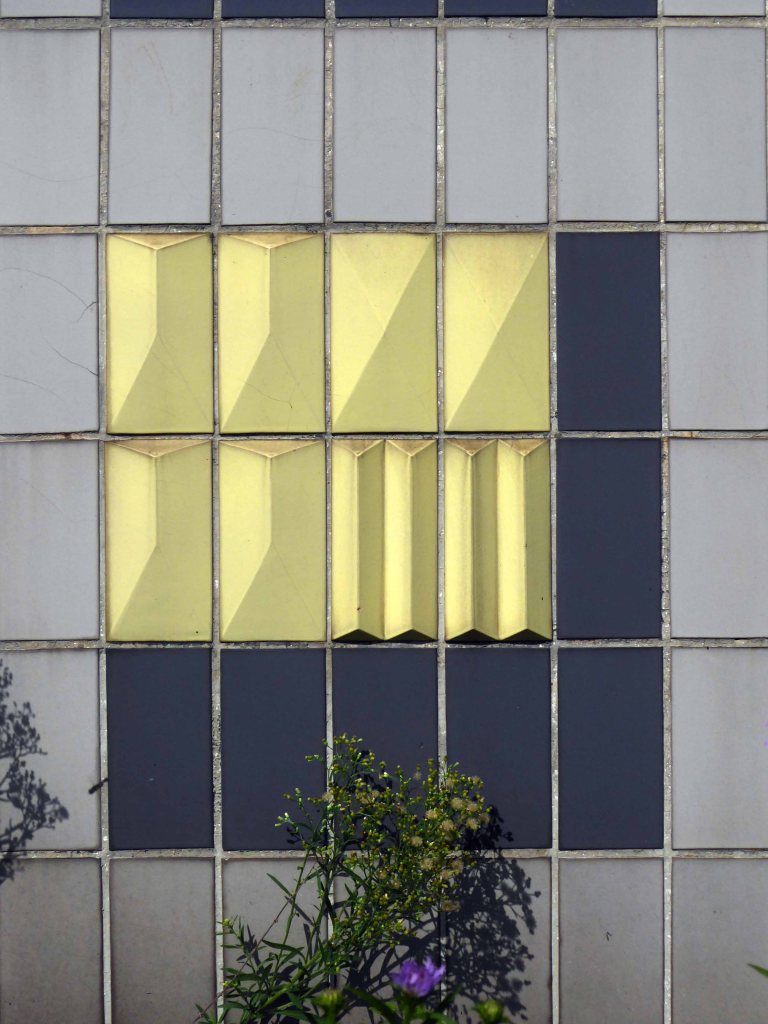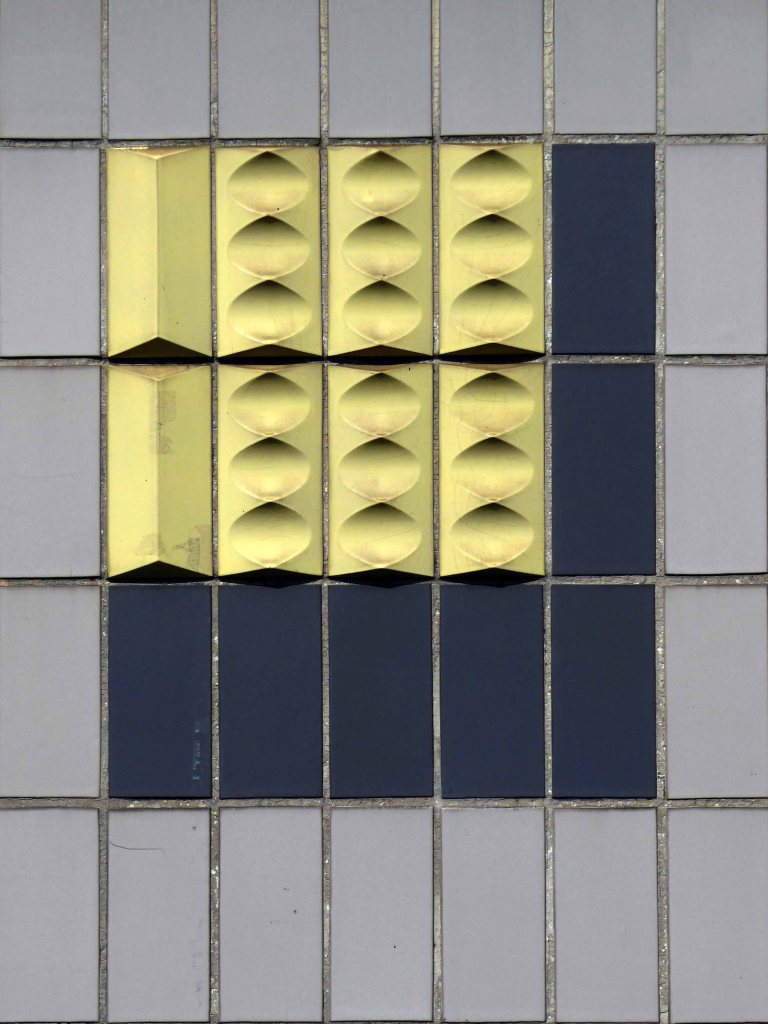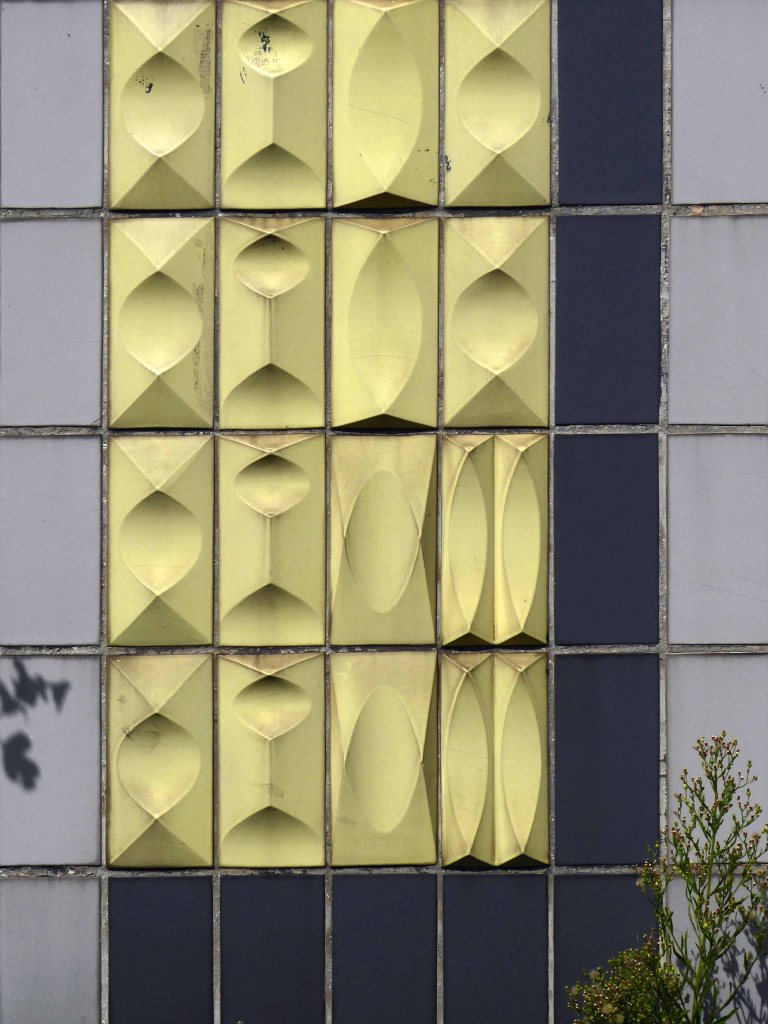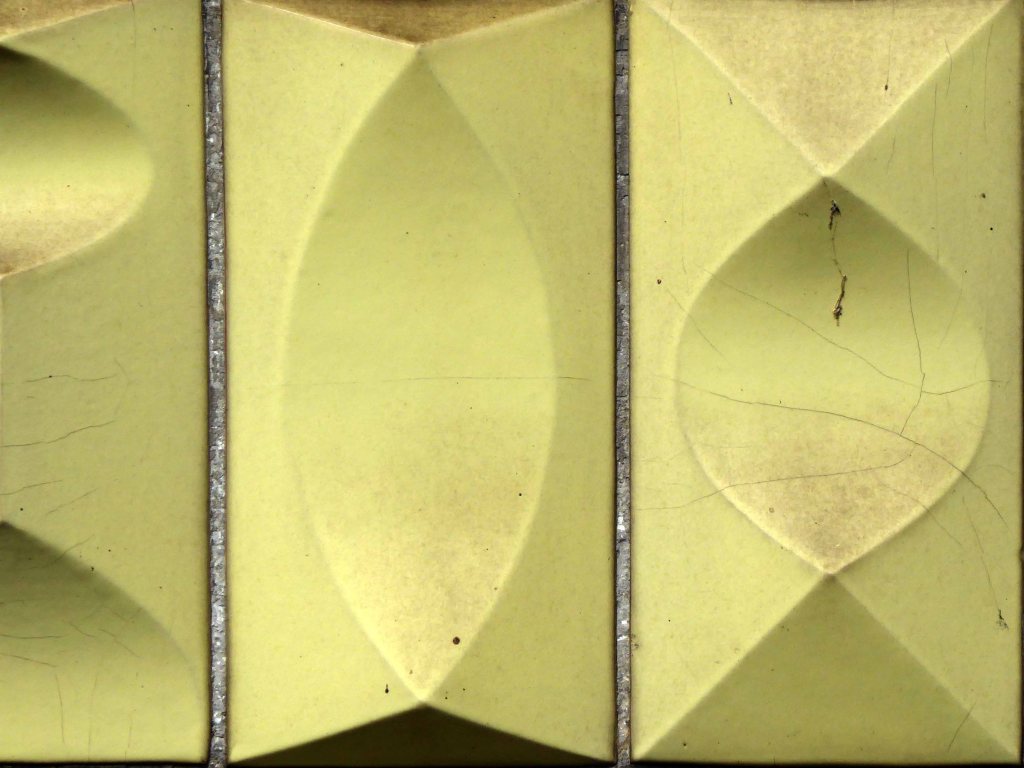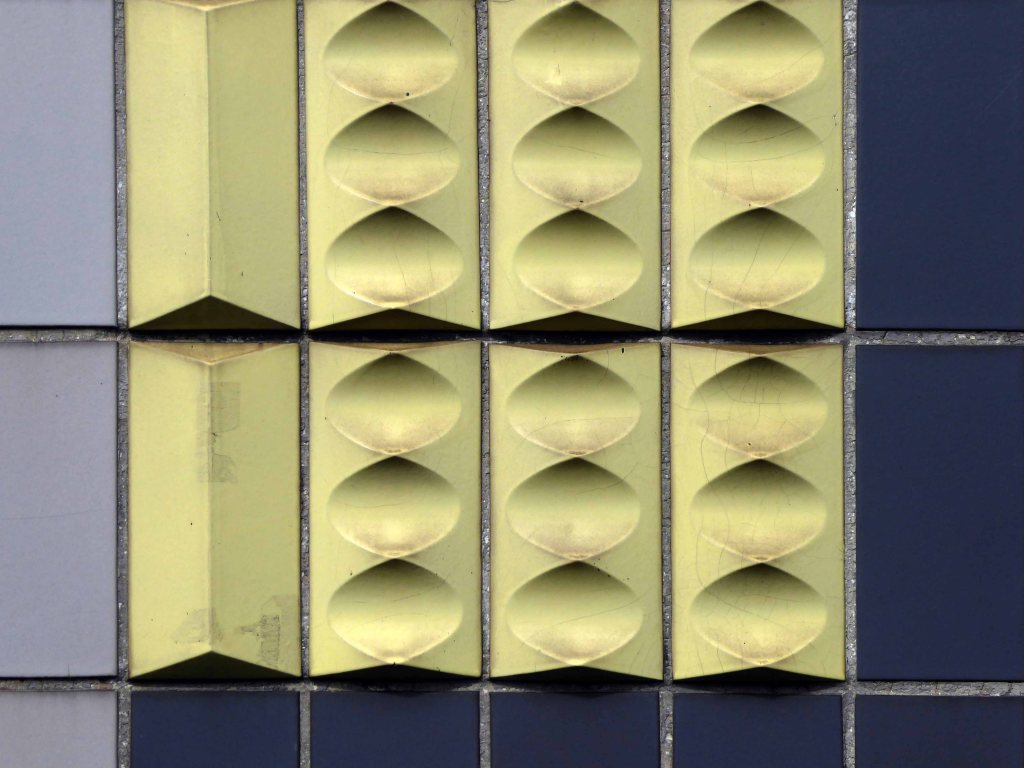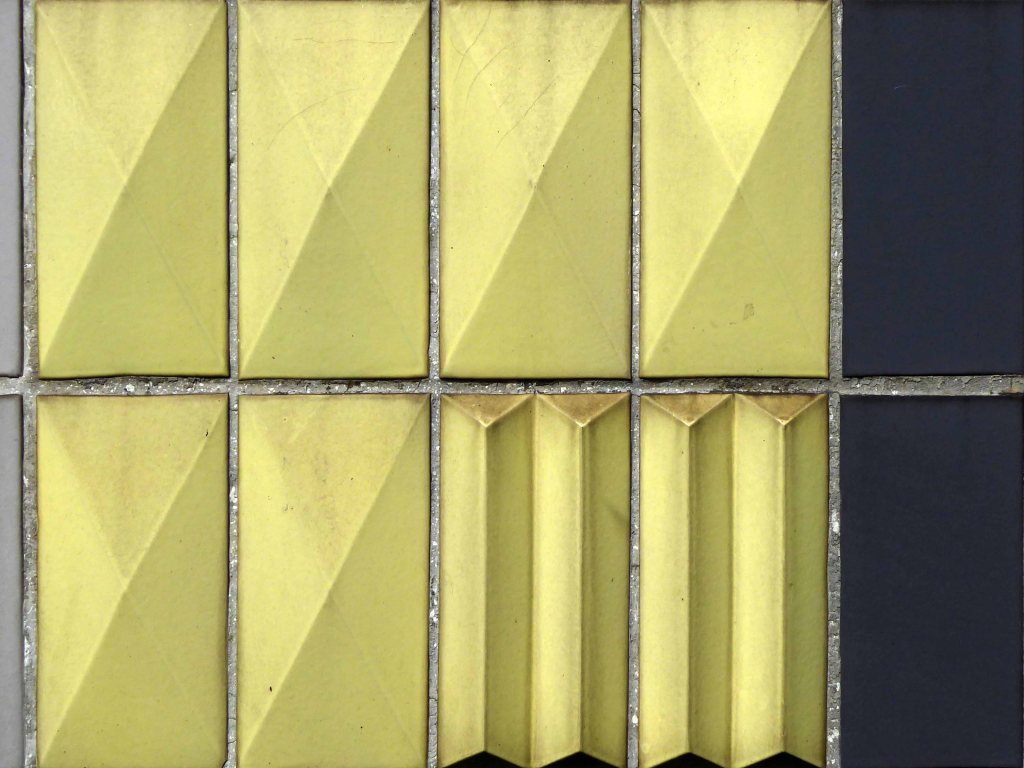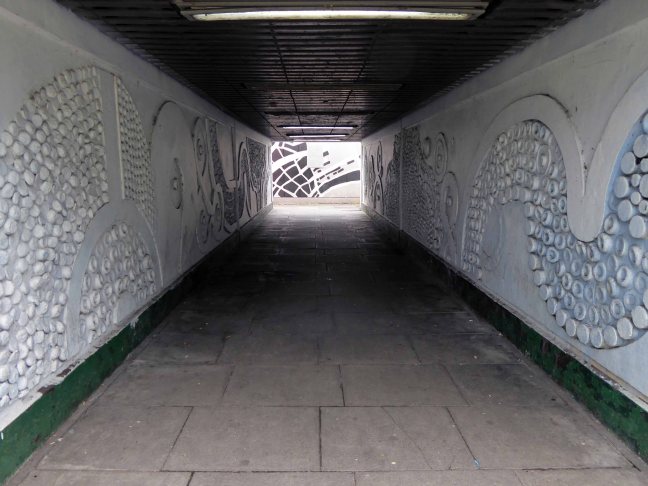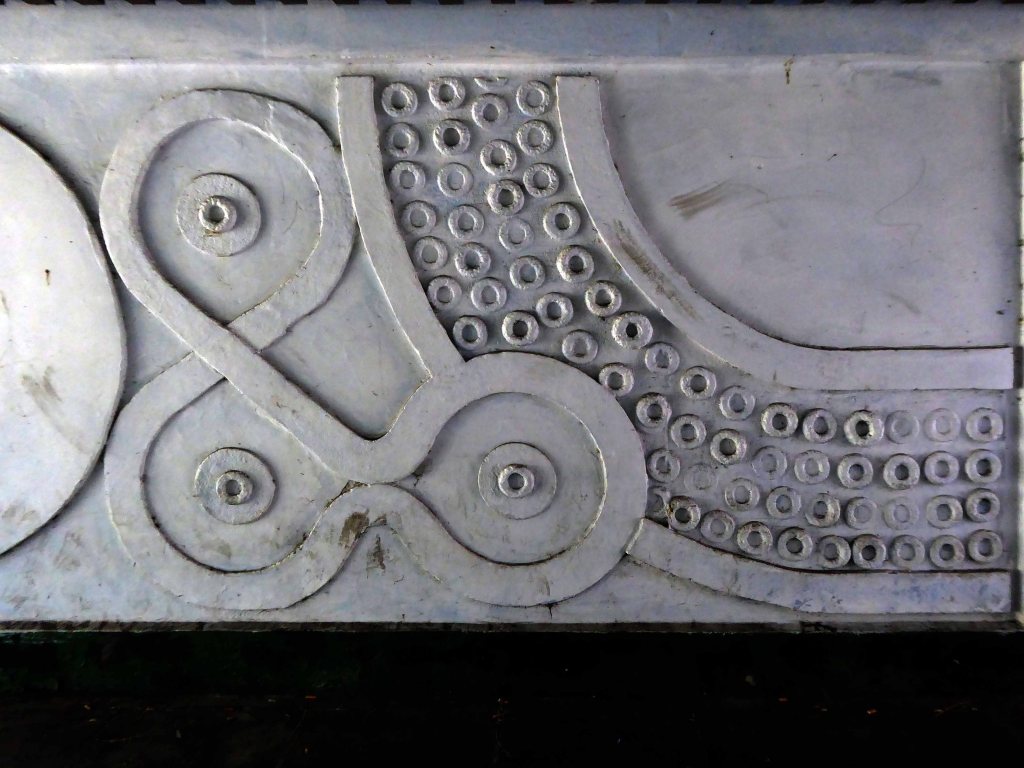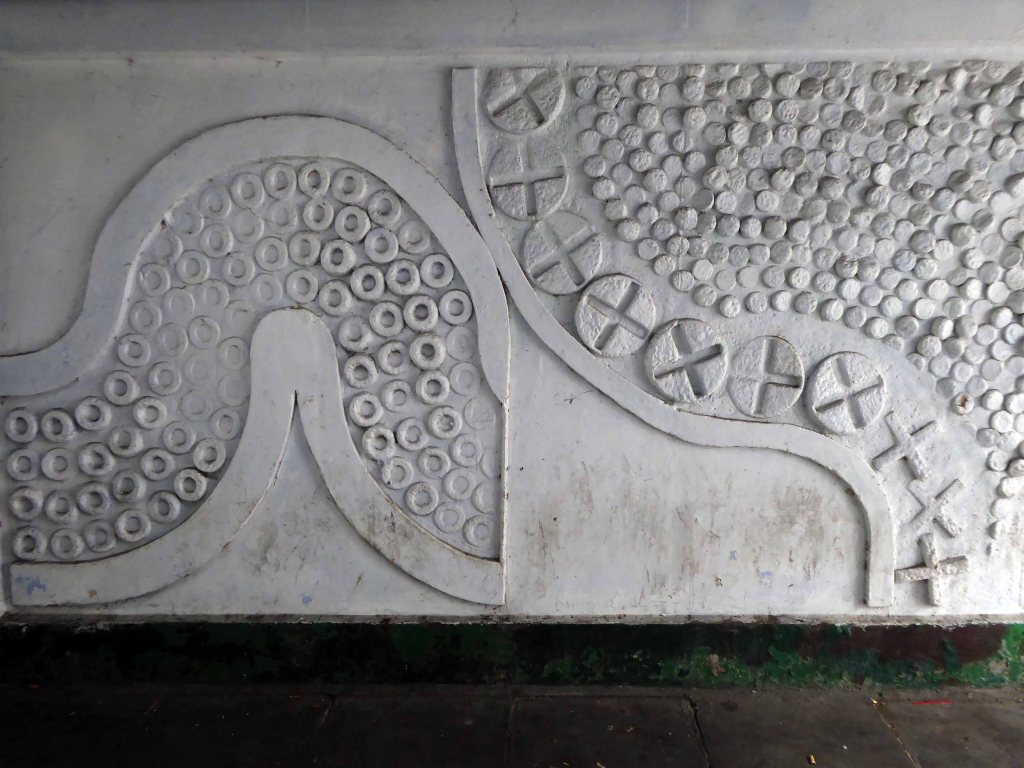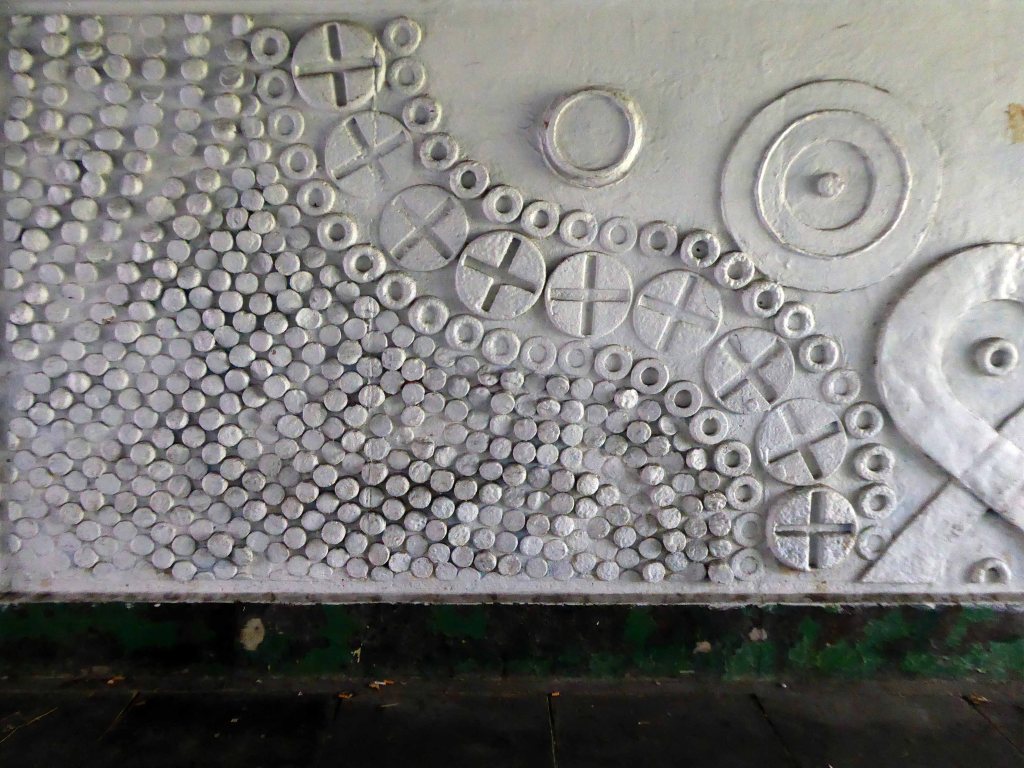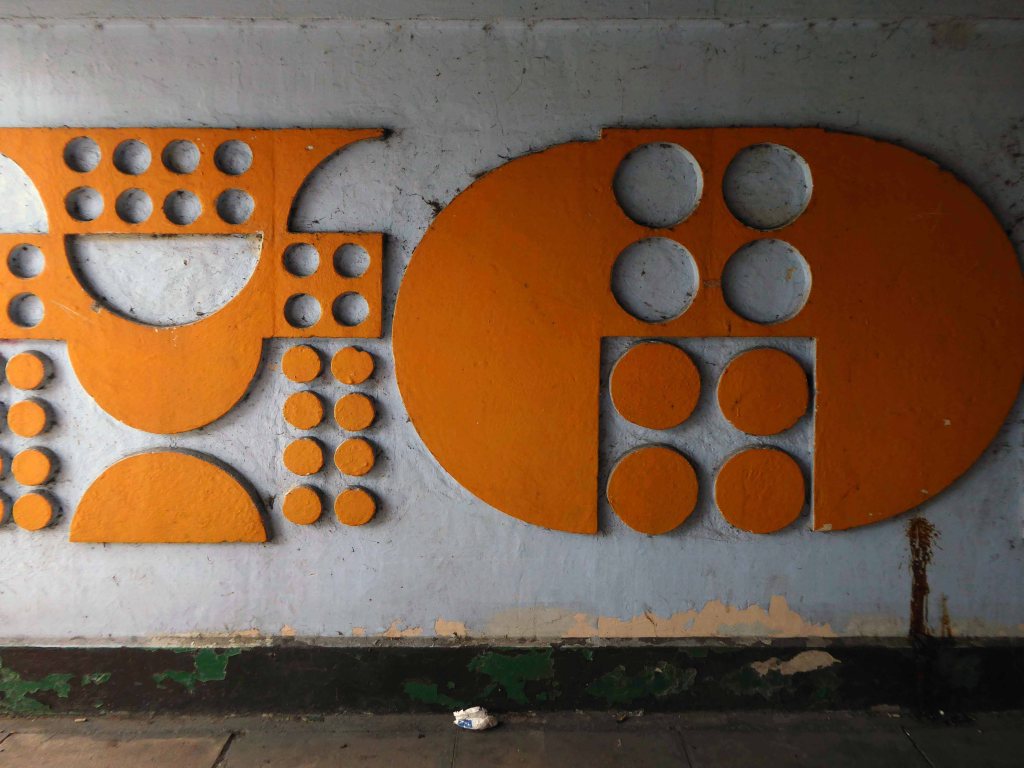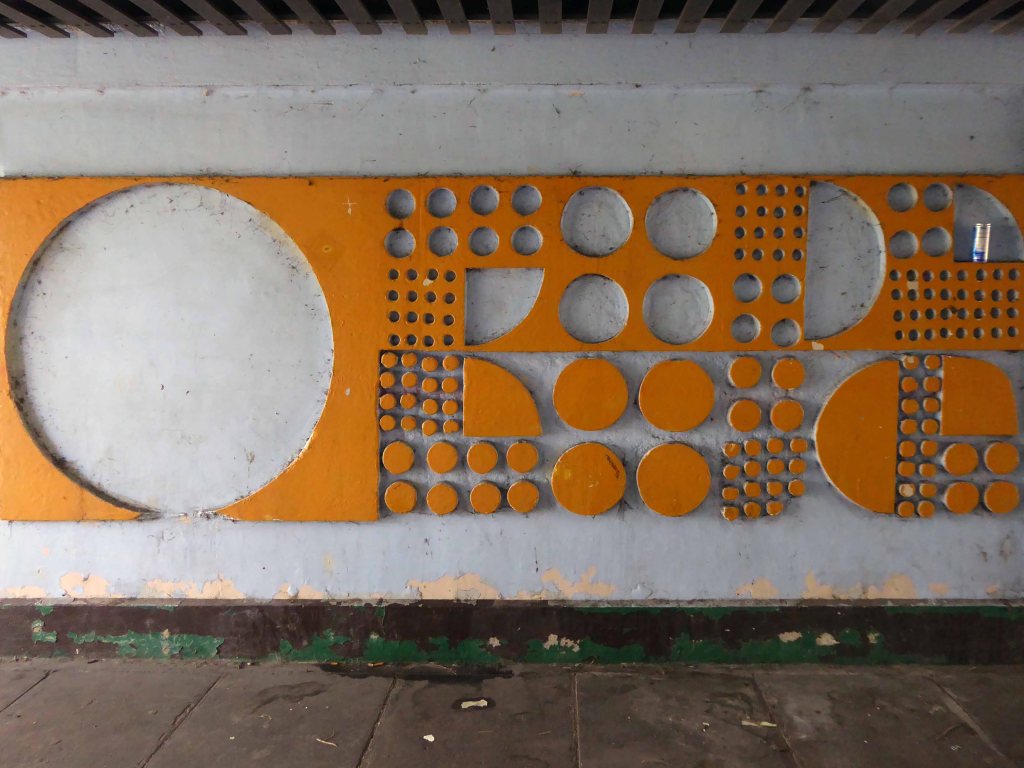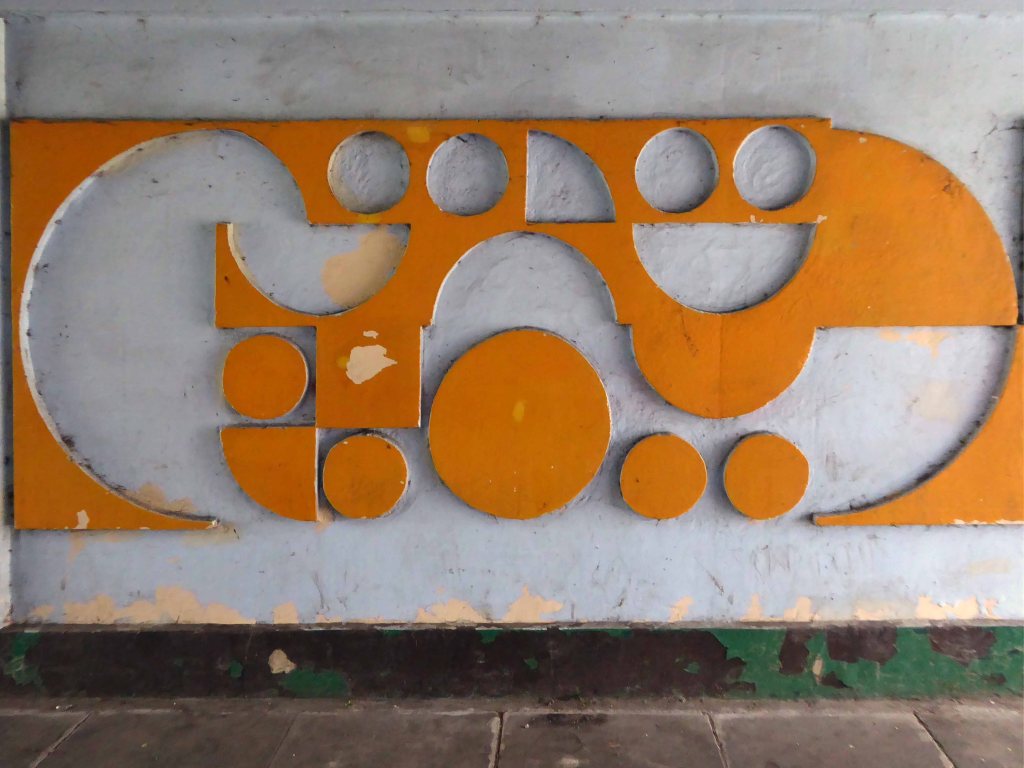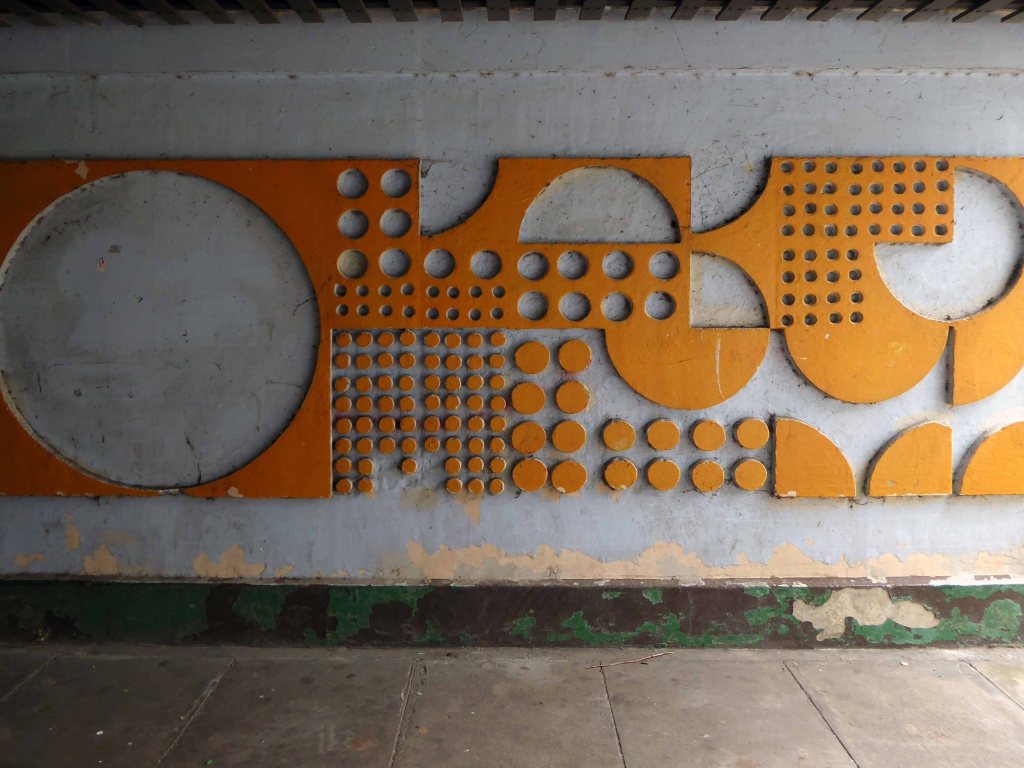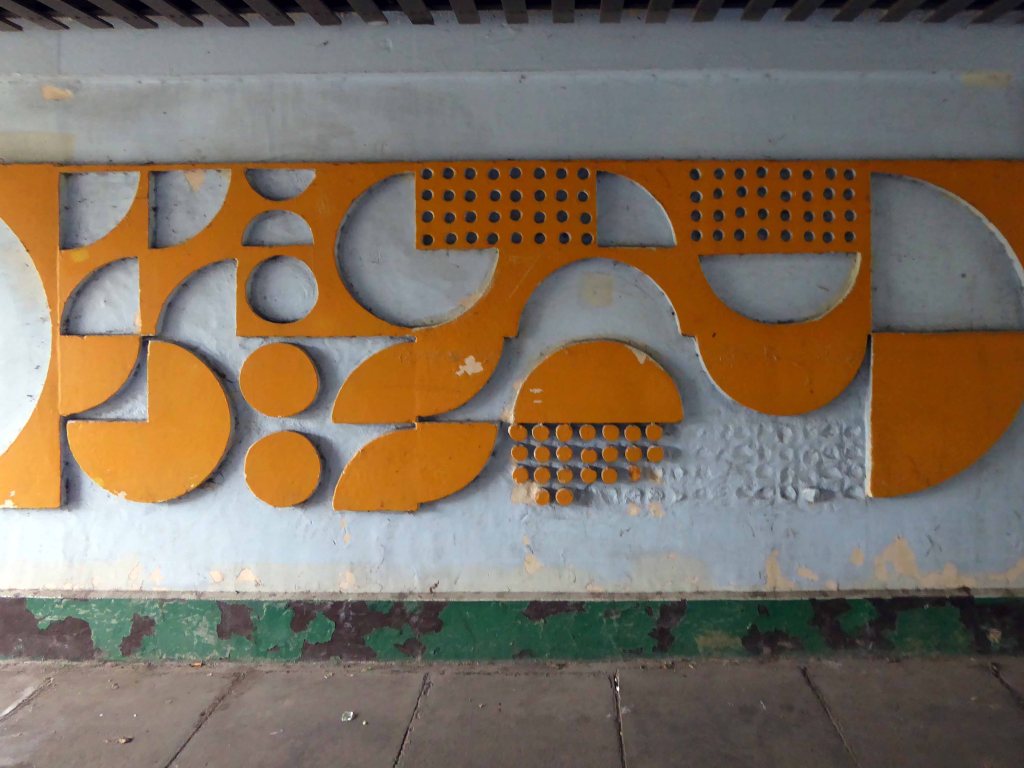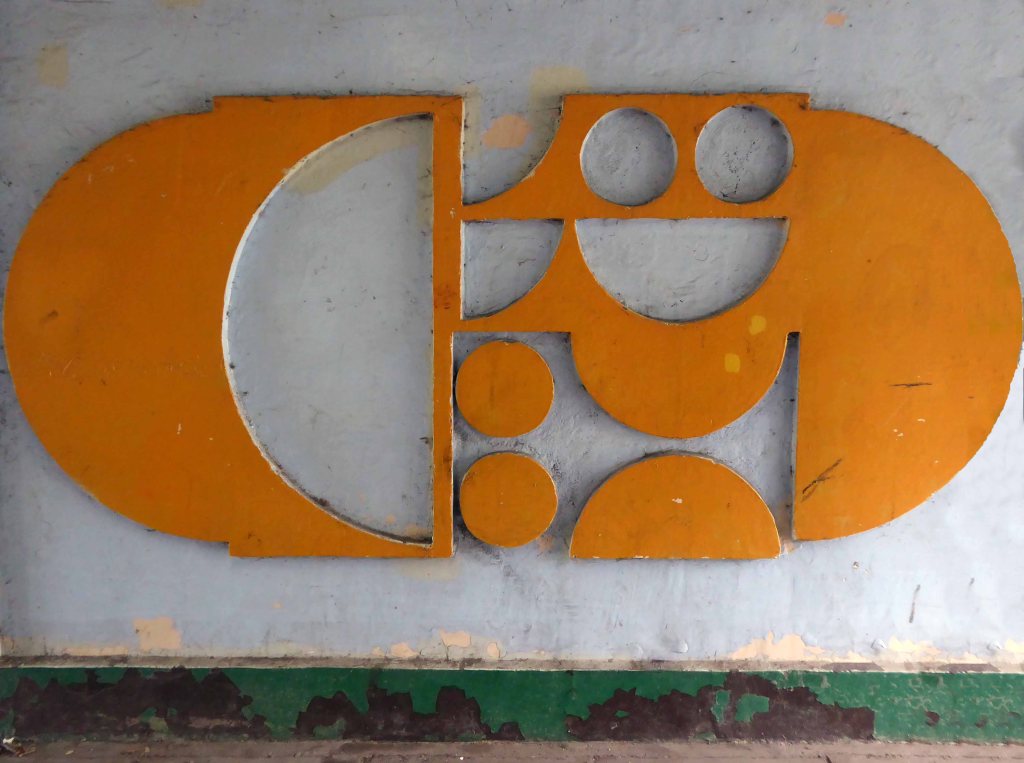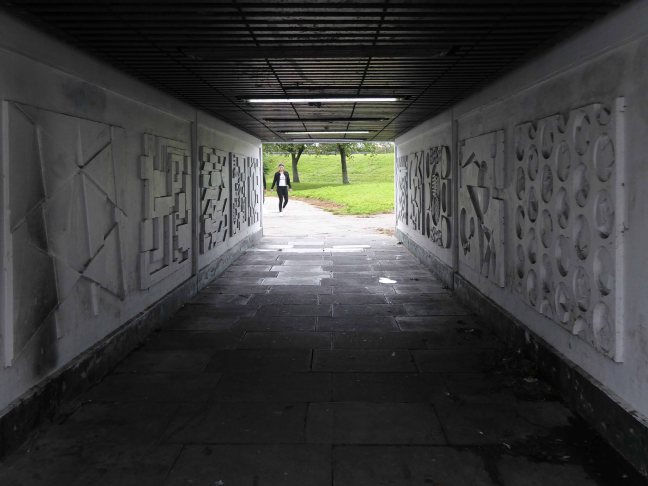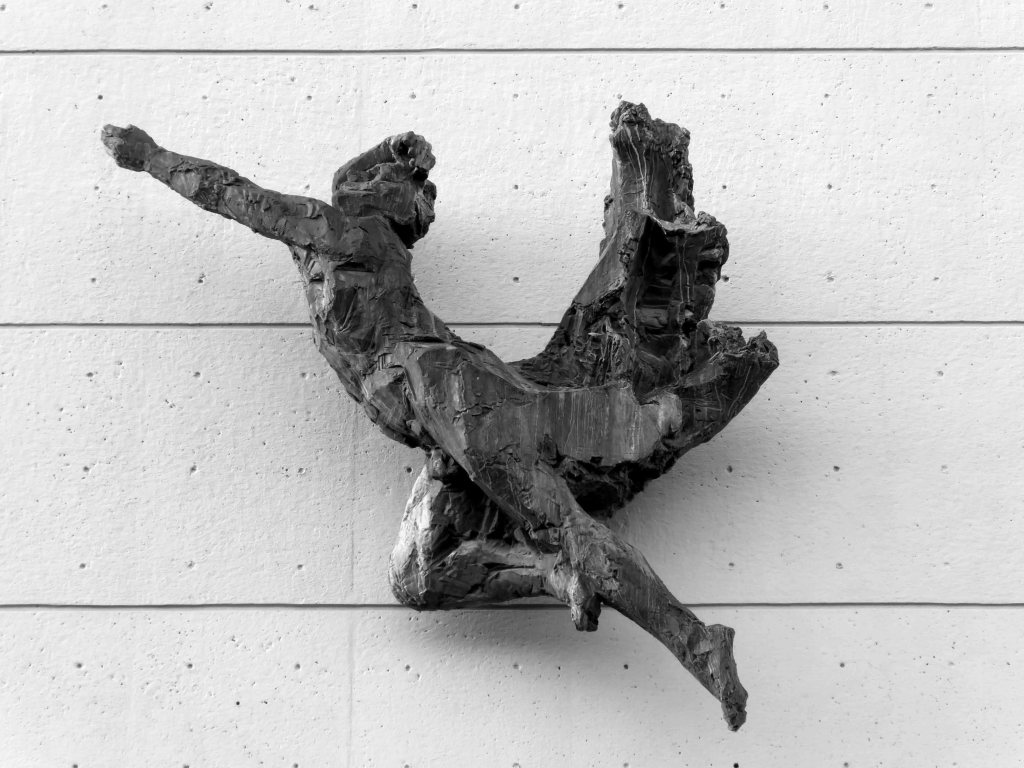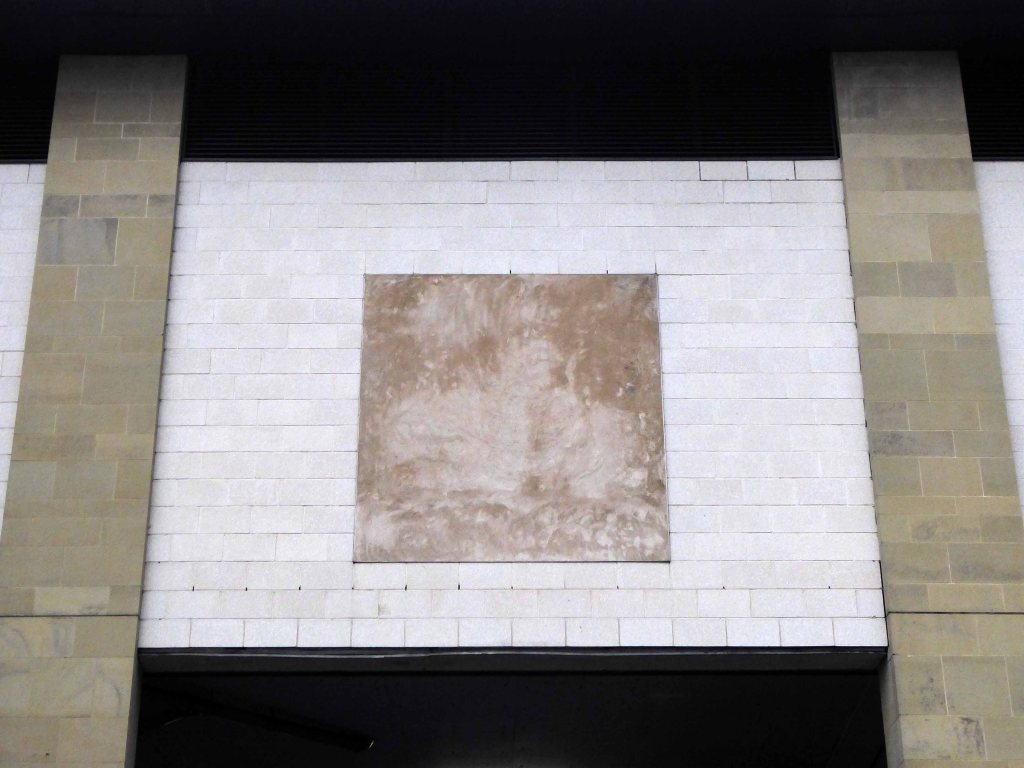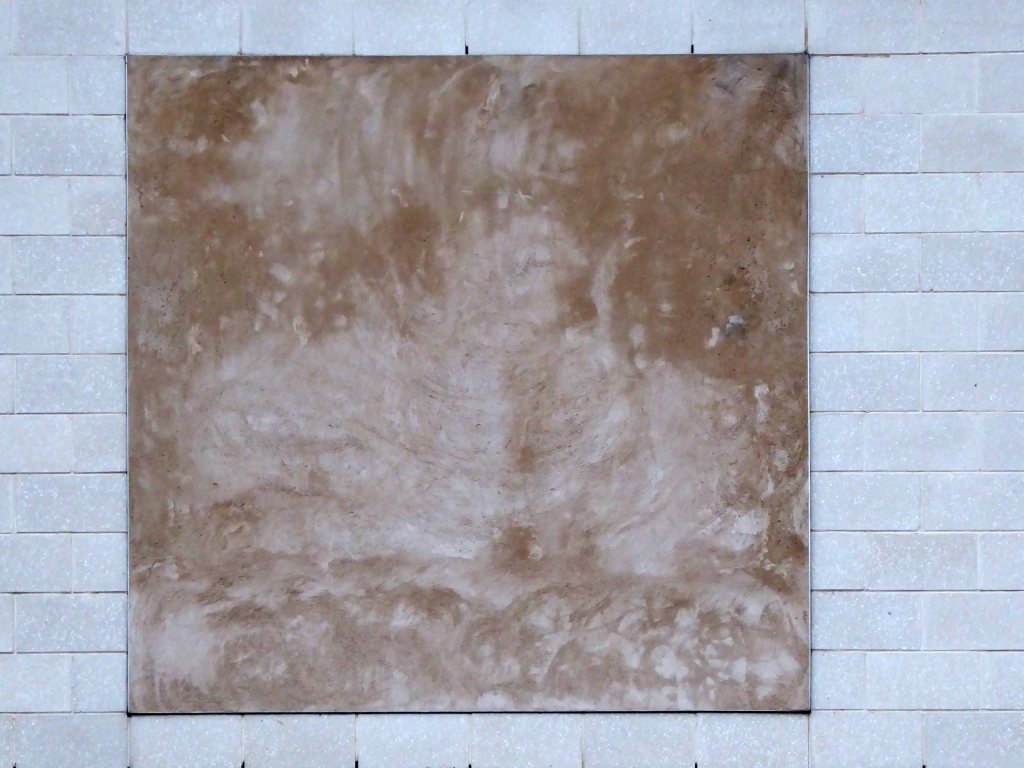
I had seen a photograph posted by Mandy Payne of an underpass in Rotherham – illustrating a delightful concrete relief.
Enlisting the assistance of friend and local resident Helen Angell, we set out on a mission to visit the roundabout in back of the big Tesco, which housed the three underpasses.
This is the first – painted white, well whiteish – more than somewhat disabused by the passage of time and the passage of users of the underpass.
Brute and angular, incised and cursive and currently lacking authorship or attribution.
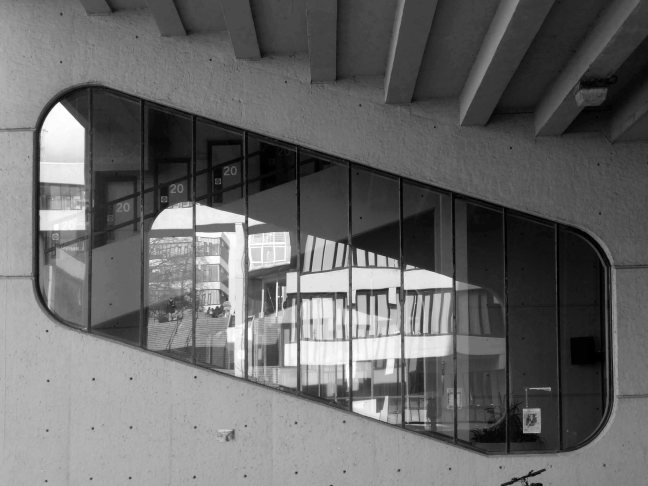
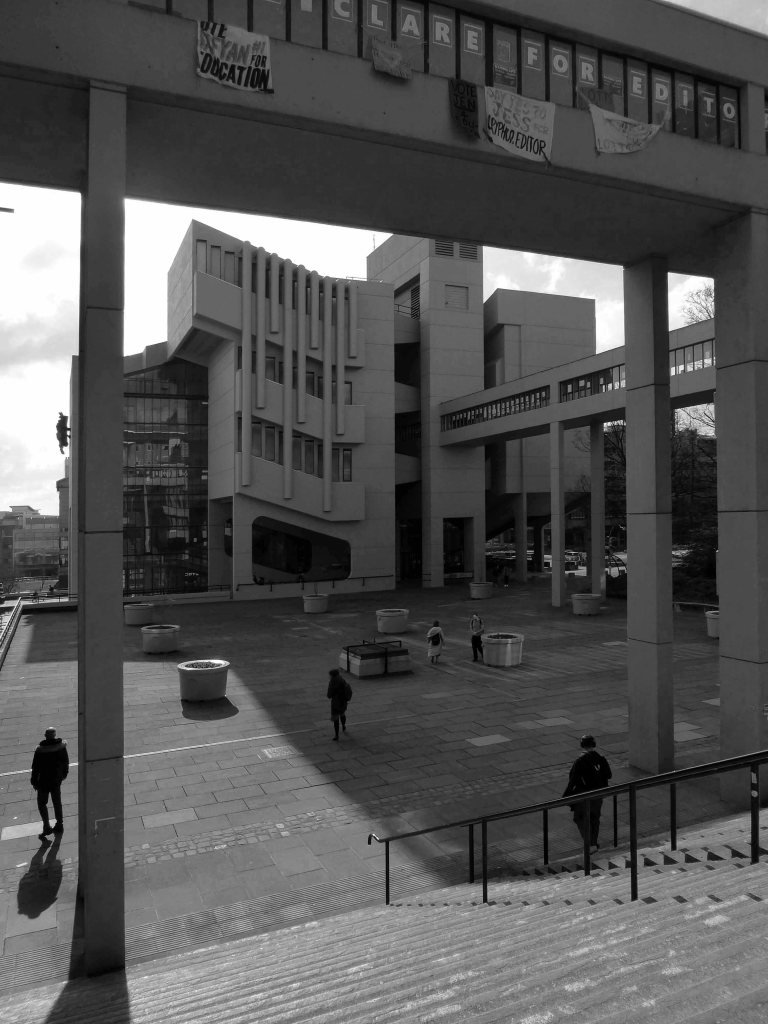
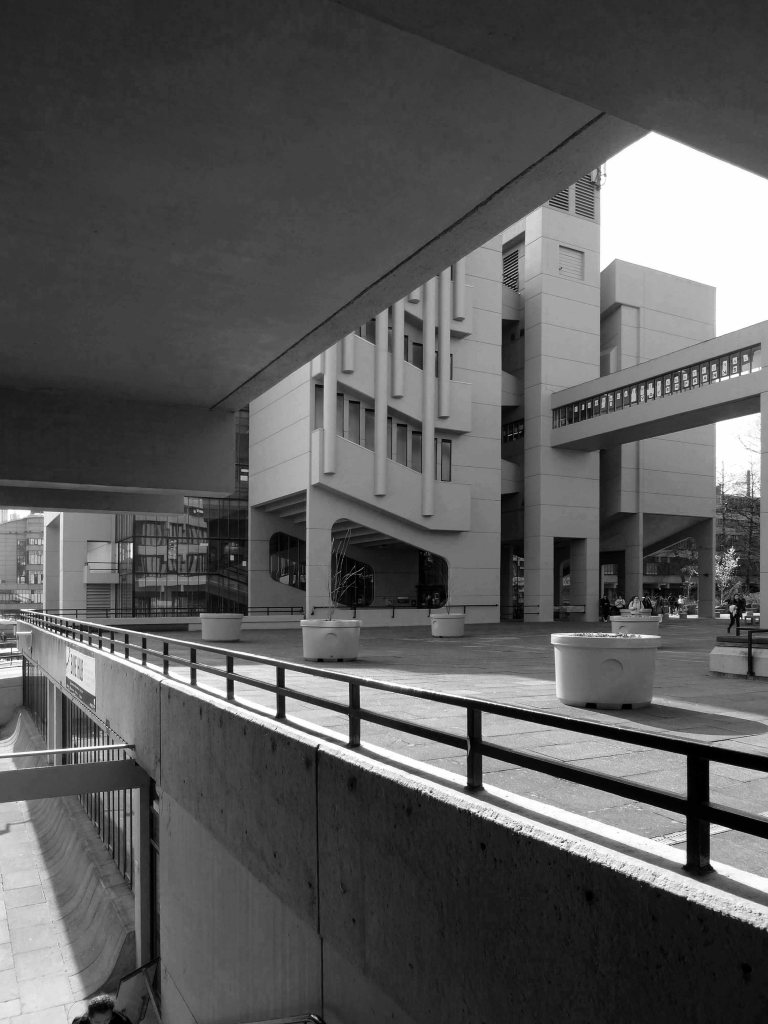
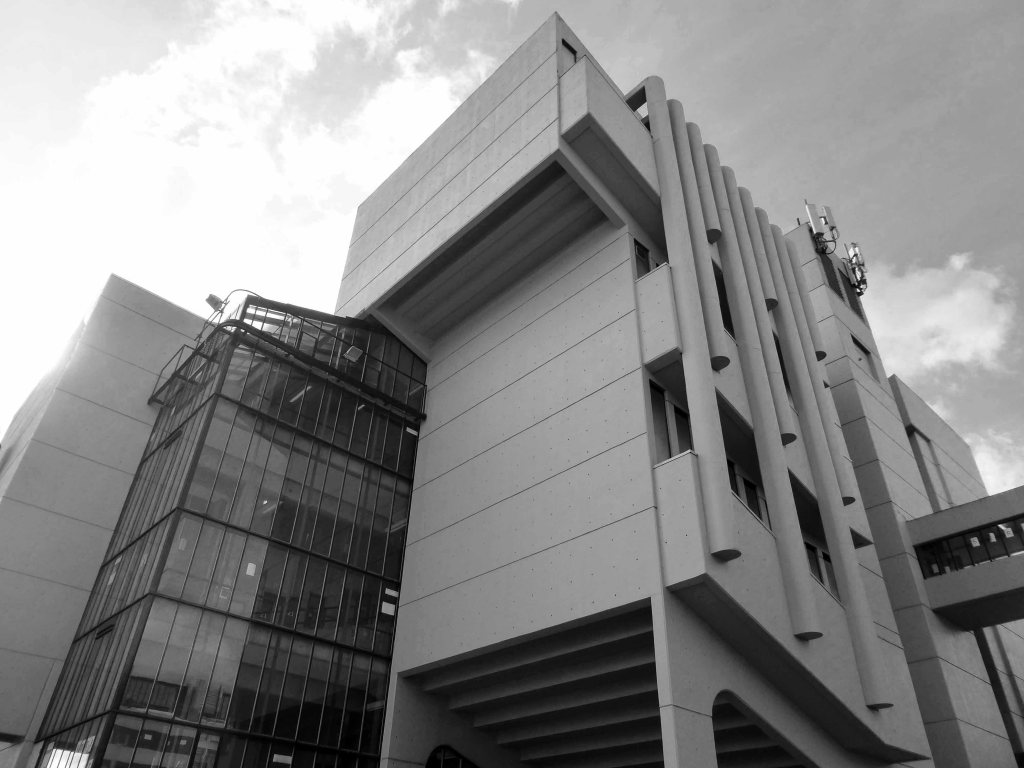
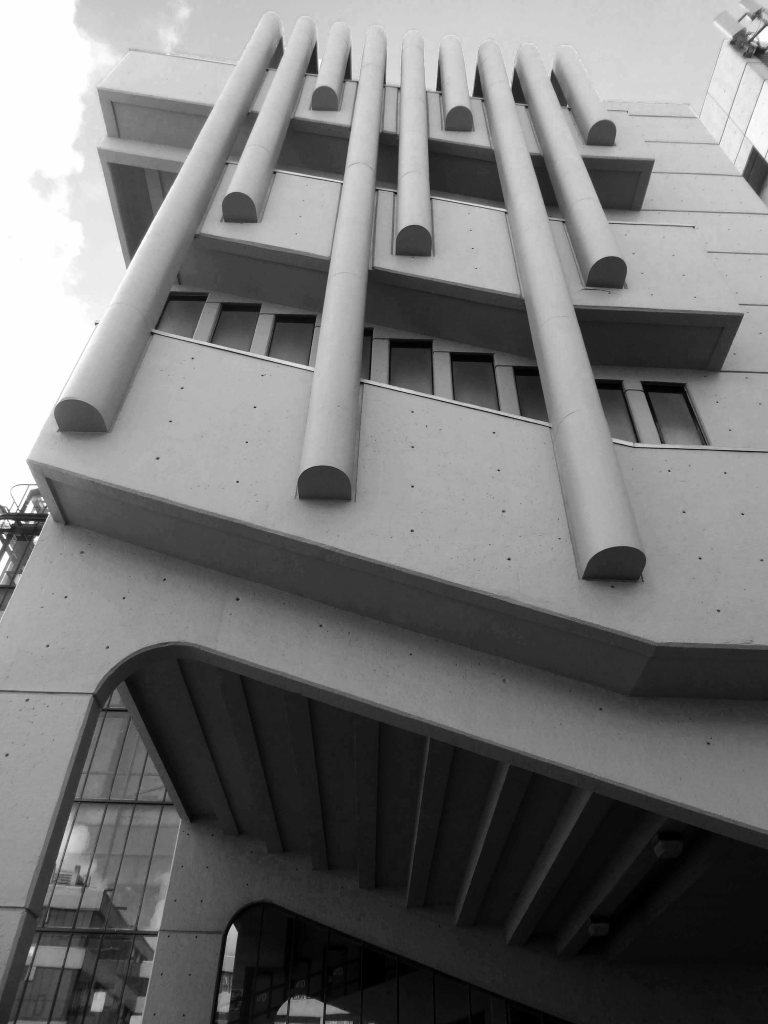
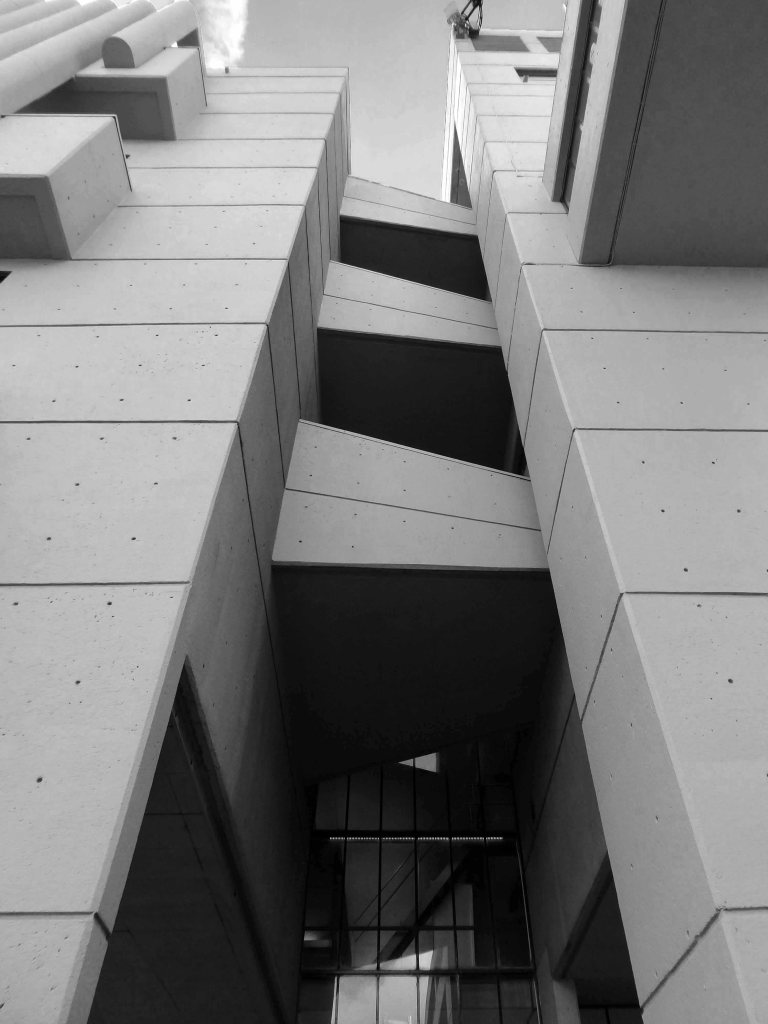
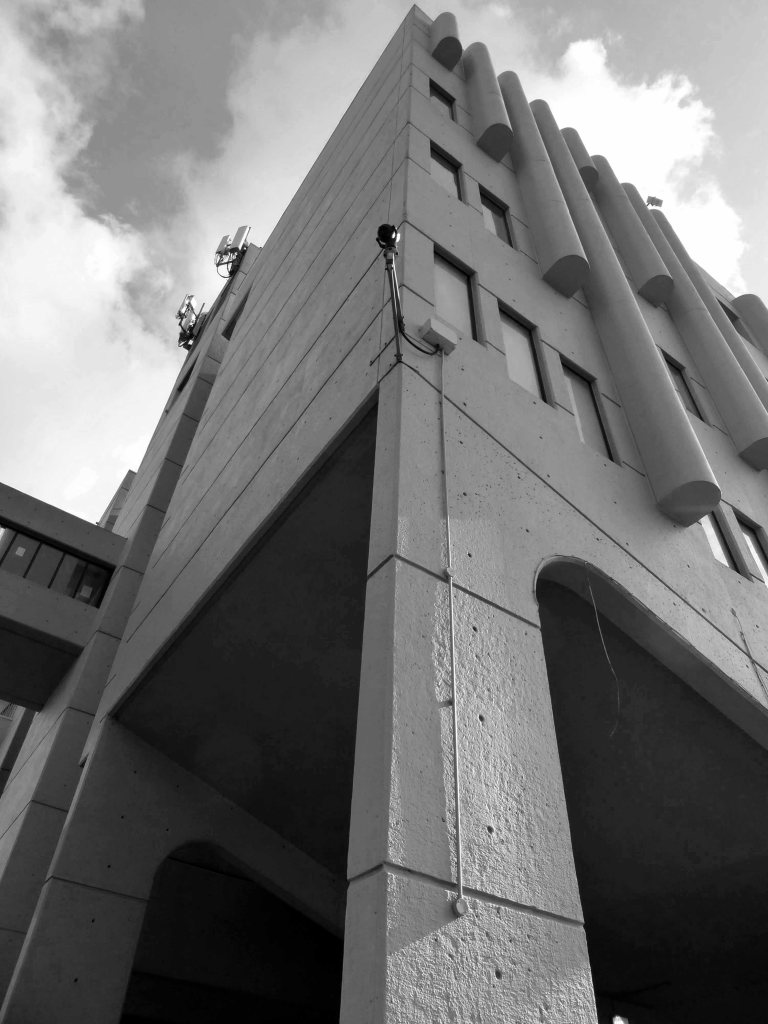
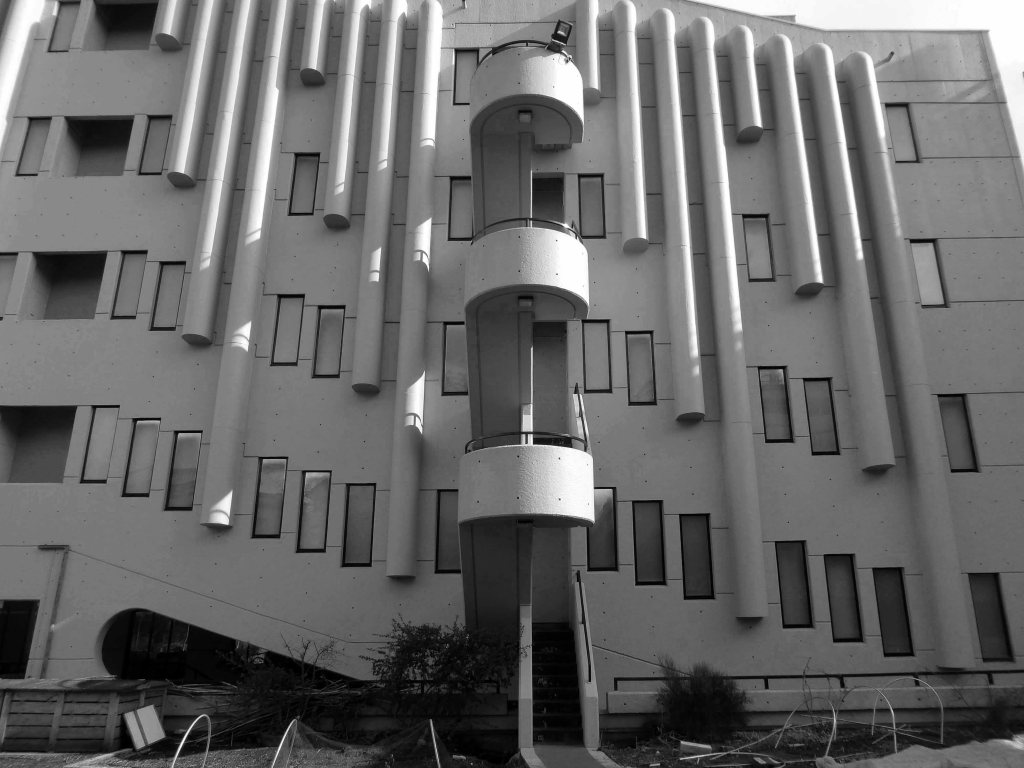
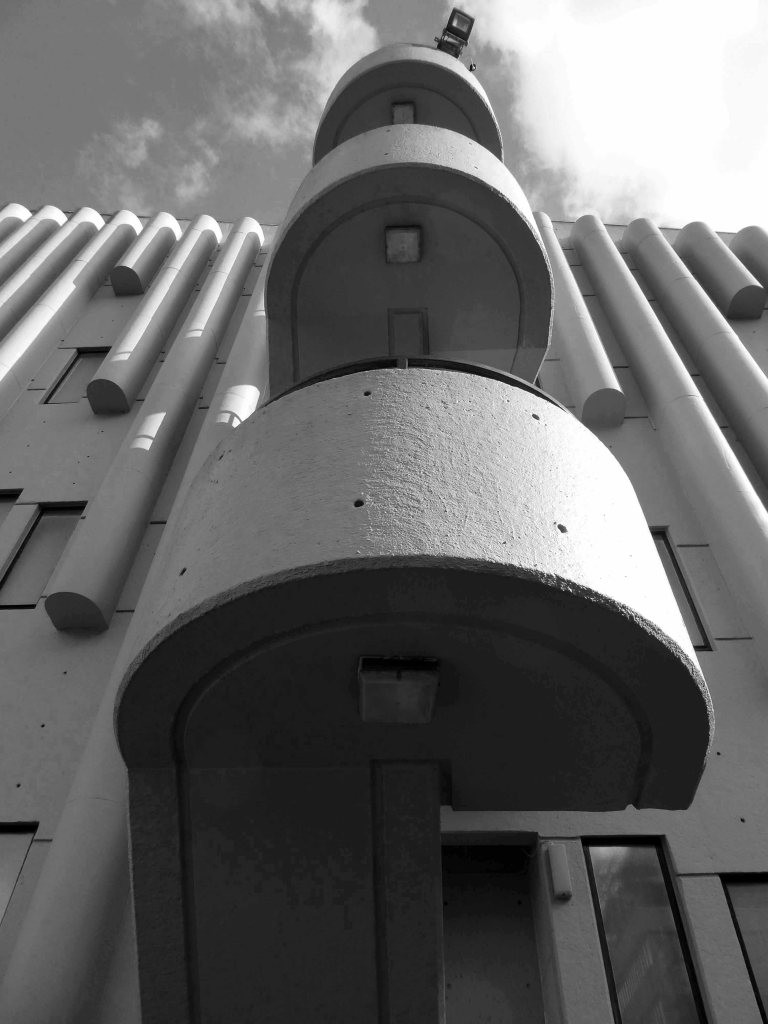
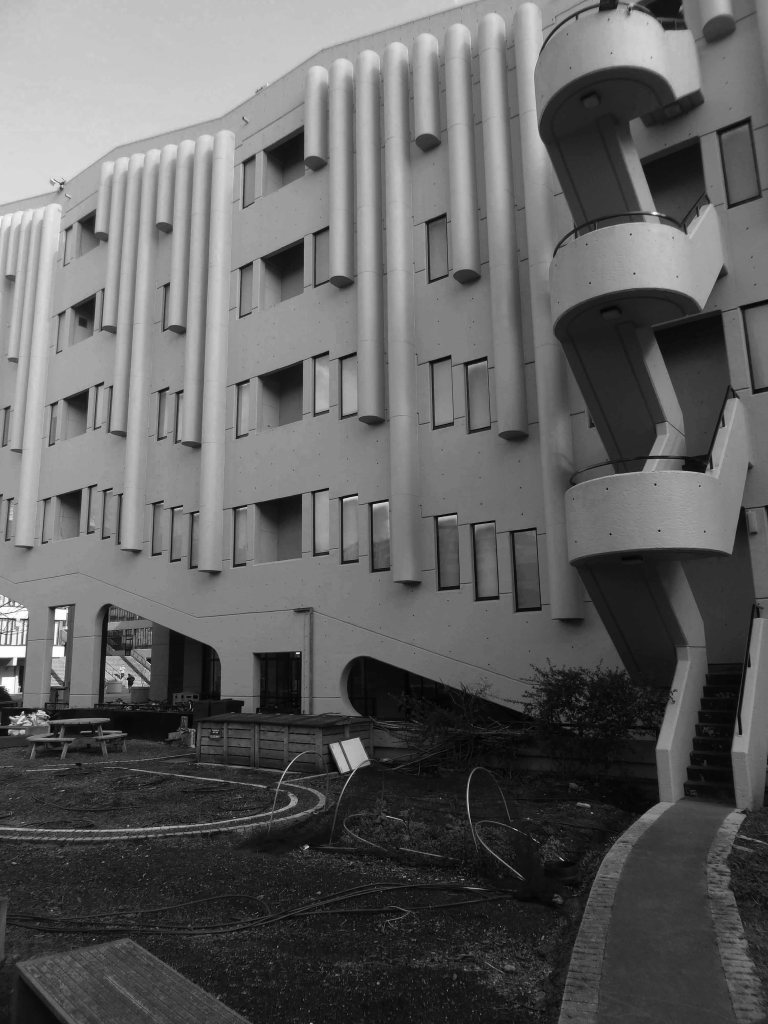
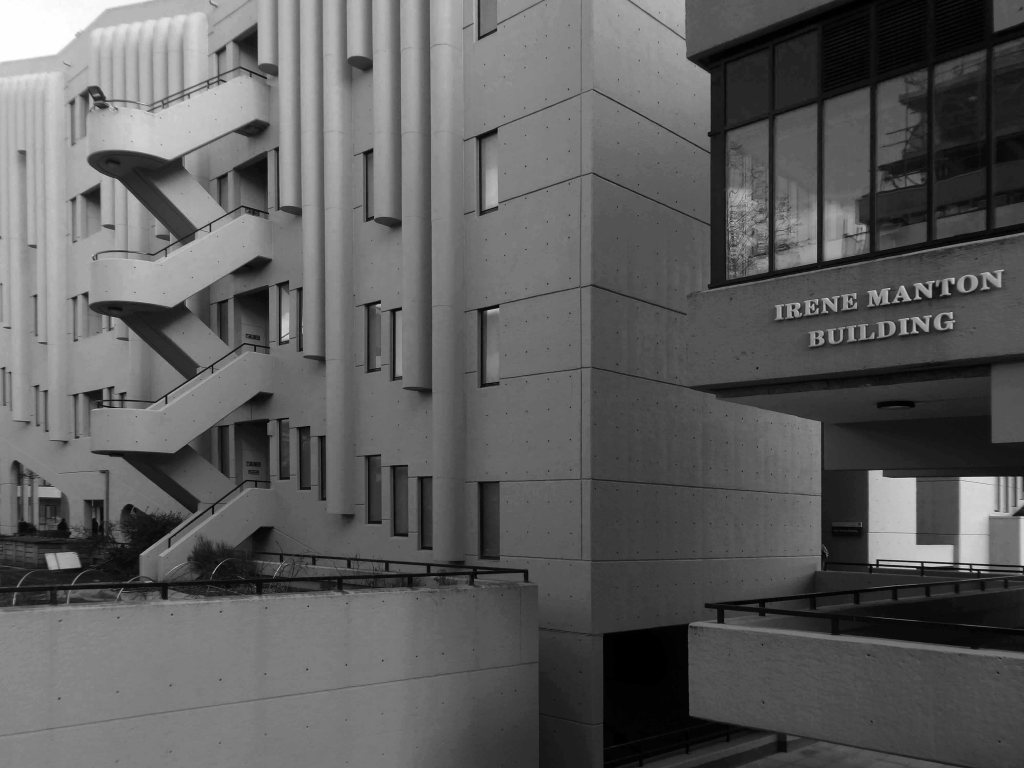
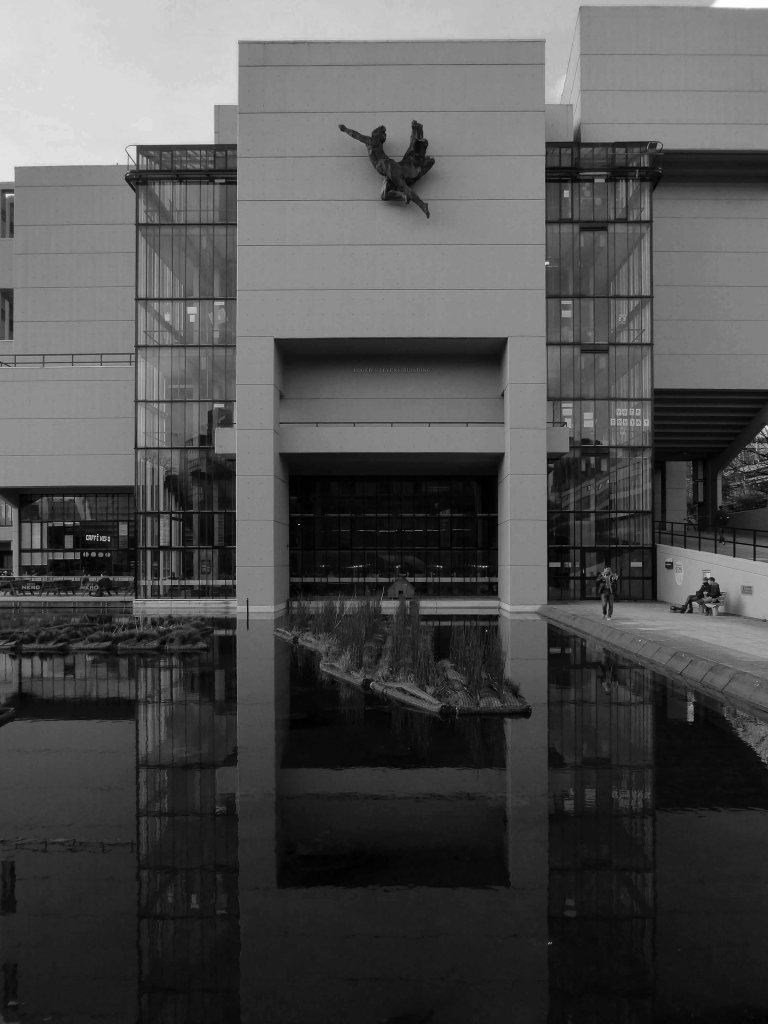
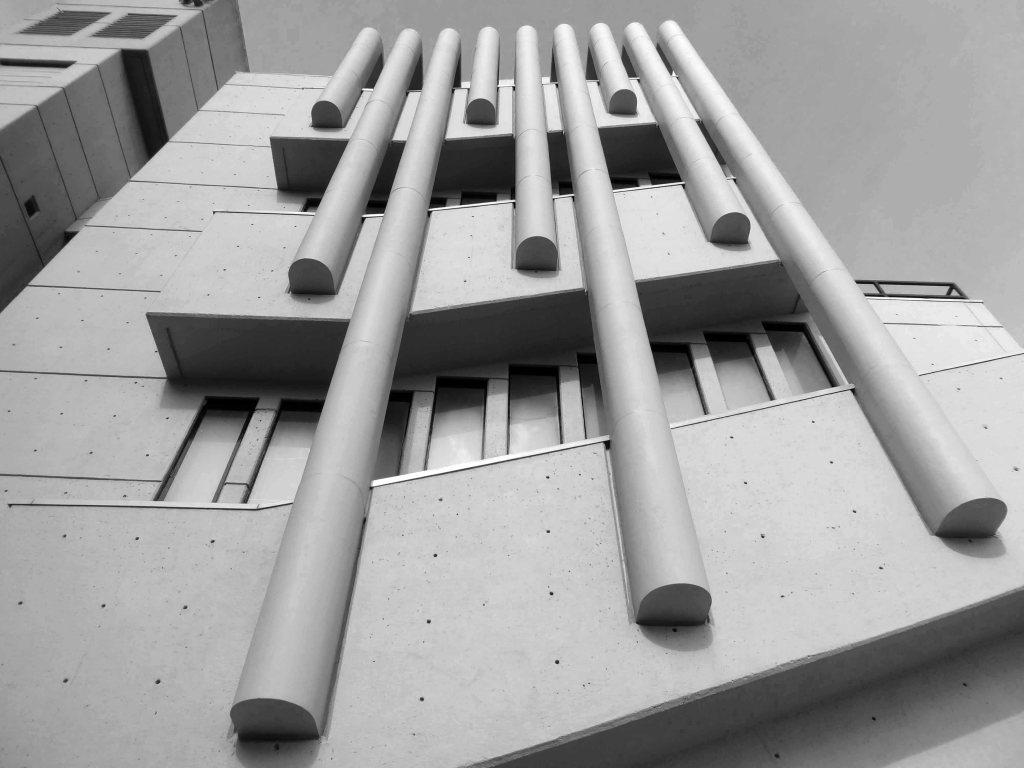
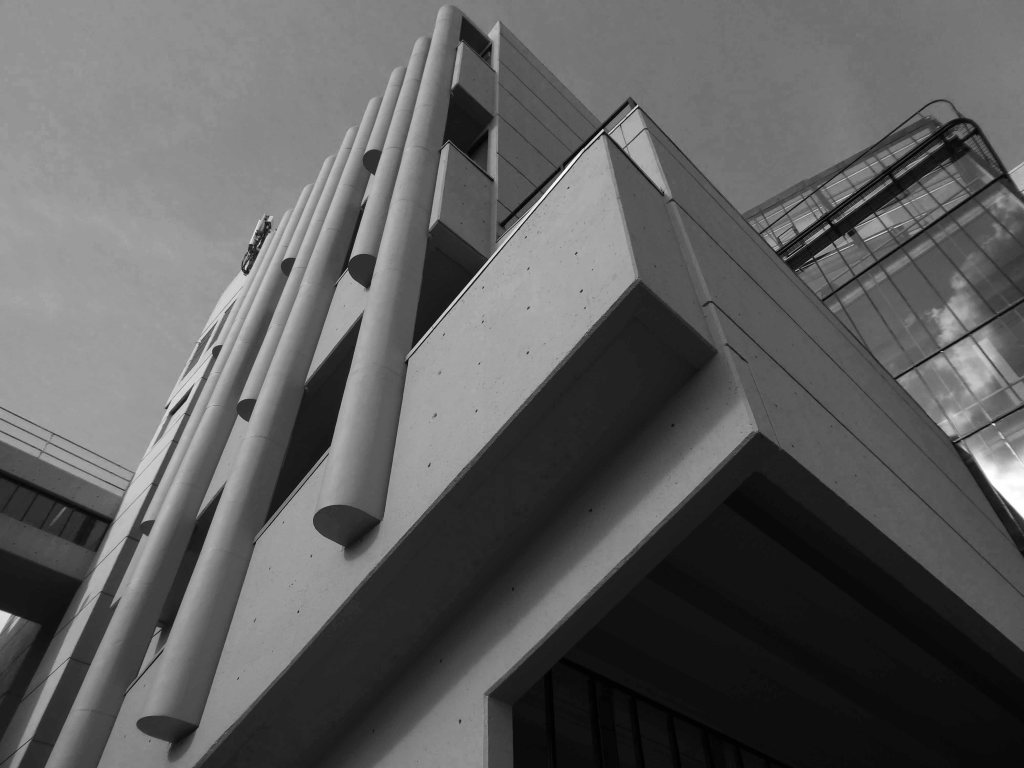
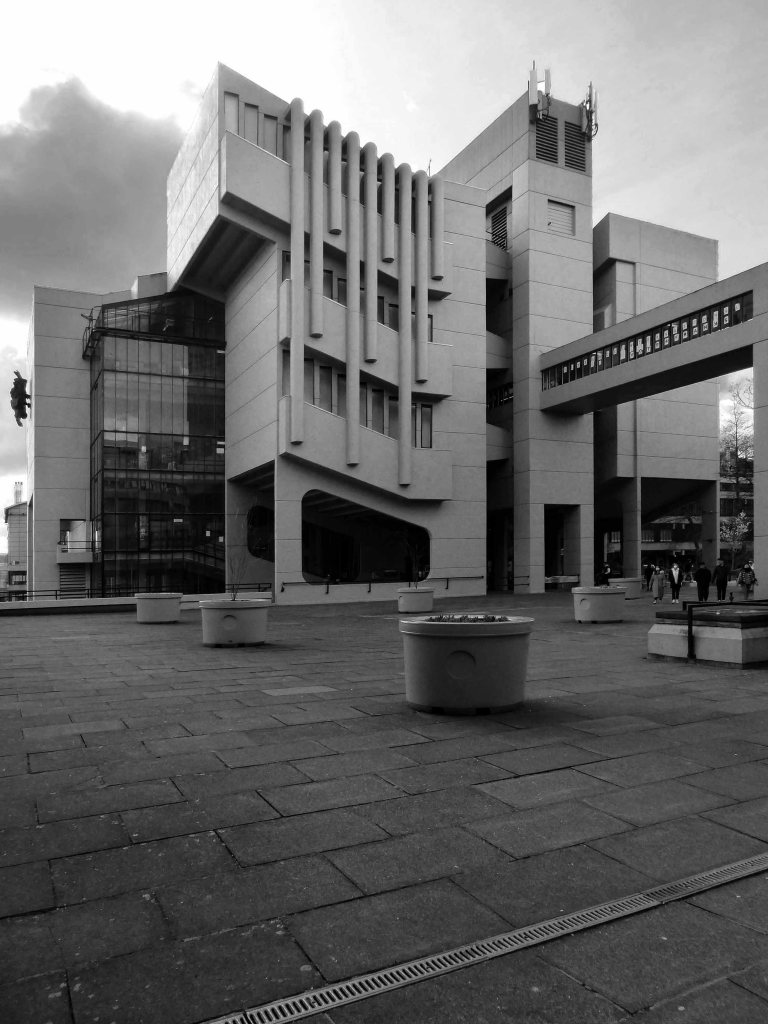
The Roger Stevens Building 1970 – by Chamberlin, Powell and Bon for Leeds University South Campus is designated at Grade II
The building represents the high point of their Leeds University work.
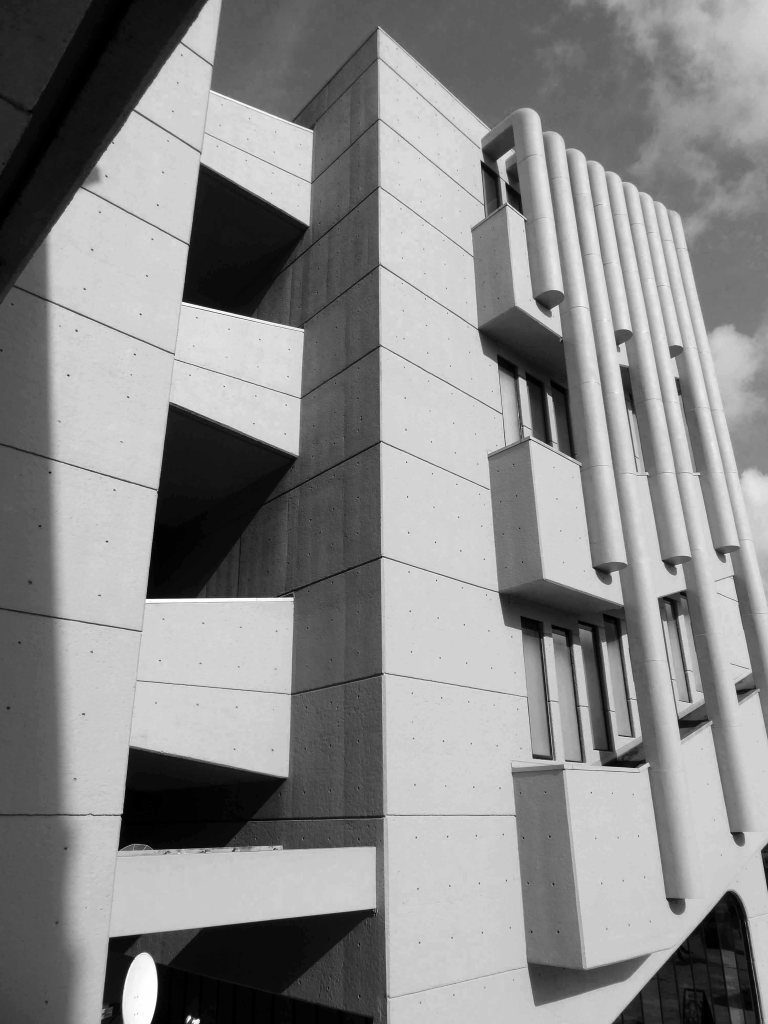
Architecture: the building is an outstanding and individual design with bold external shapes and carefully designed interiors
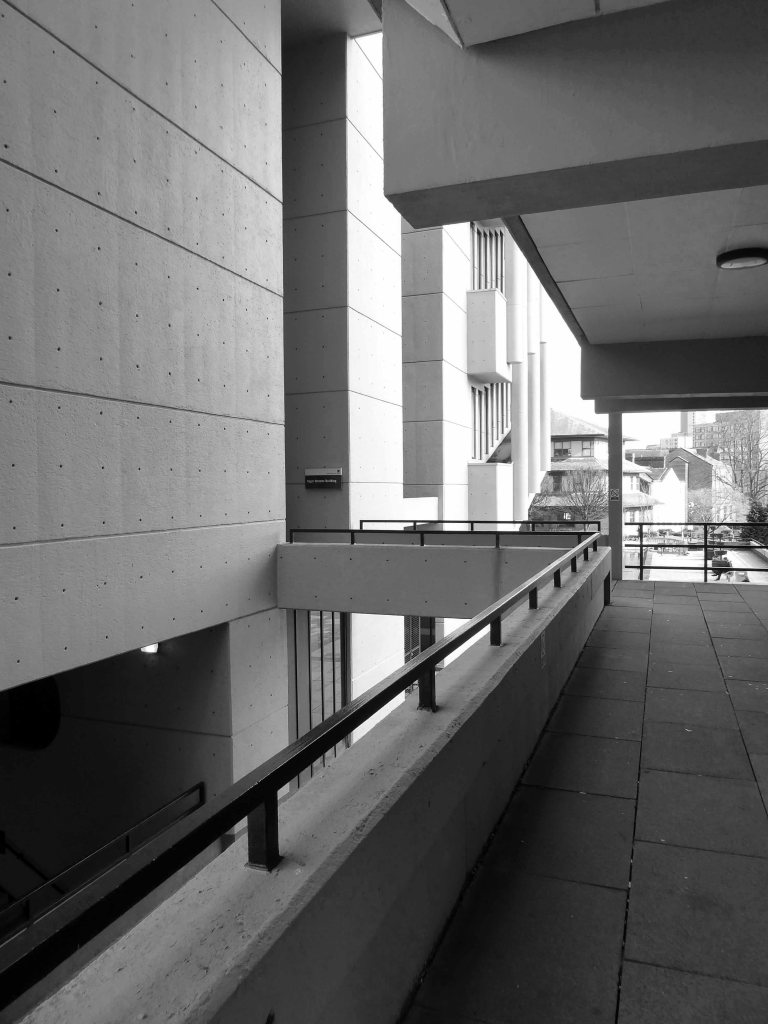
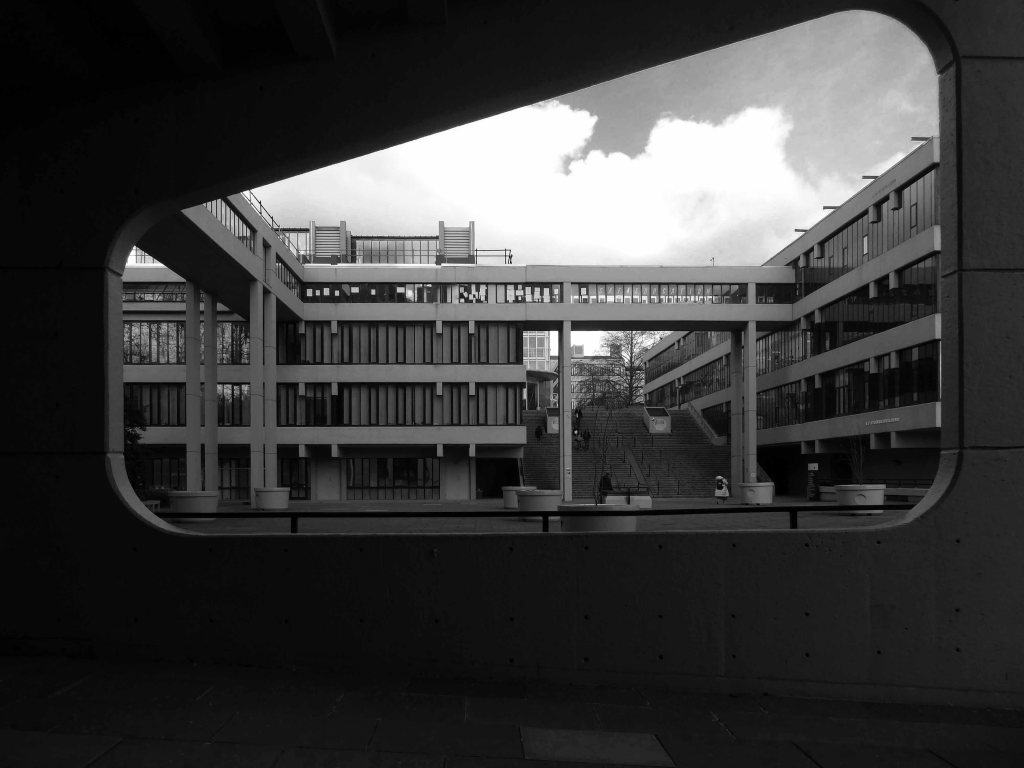
Planning: the internal spaces are the result of extensive research on the requirements of the university and introduce innovative and influential features such as individual doors into the lecture theatres, and external links intimately with other buildings on the campus by means of multi-level walkways
Intactness: despite the changing requirements of universities, the building has remained largely unchanged, proving the success of its design
Group Value: the building provides a fitting centrepiece to the group of university buildings on the South Campus at Leeds, also recommended for designation.
The Orange Order is a conservative unionist organisation, with links to Ulster loyalism. It campaigned against Scottish independence in 2014. The Order sees itself as defending Protestant civil and religious liberties, whilst critics accuse the Order of being sectarian, triumphalist, and supremacist. As a strict Protestant society, it does not accept non-Protestants as members unless they convert and adhere to the principles of Orangeism, nor does it accept Protestants married to Catholics. Although many Orange marches are without incident, marches through mainly Catholic and Irish nationalist neighbourhoods are controversial and have often led to violence.
On the morning of March 28th 2015 I had taken the train to Scarborough, to spend a few days by the sea. As we passed through Huddersfield and on into deepest Yorkshire, the carriage began to fill up at each stop with men, mainly men.
Men in dark overcoats, men with cropped hair, men sharing an unfamiliar familiarity. Intrigued, I enquired of my cultish companions the what, where, when and why of their collective purpose.
It transpired that they were all adherents of the Orange Order, Scarborough bound to participate in the annual Orange March.
On arrival we parted, but we were to meet up later in the day – I walked down to the foreshore and waited.
This is what I saw.
This year the march was cancelled.
You wouldn’t want anyone to catch anything, would you now?
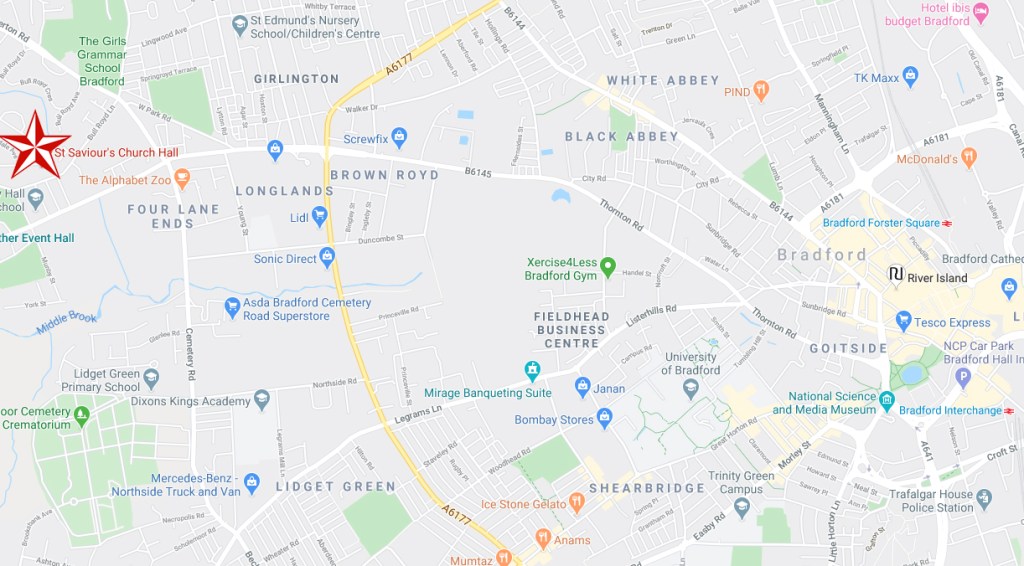
What a delight – the stunning surprise that awaits you, around one particular suburban corner of Bradford.
I had called ahead, to arrange the visit – the Reverend Dorothy Stewart had gracefully invited me to join members of the community and herself, one wild and windy Wednesday.
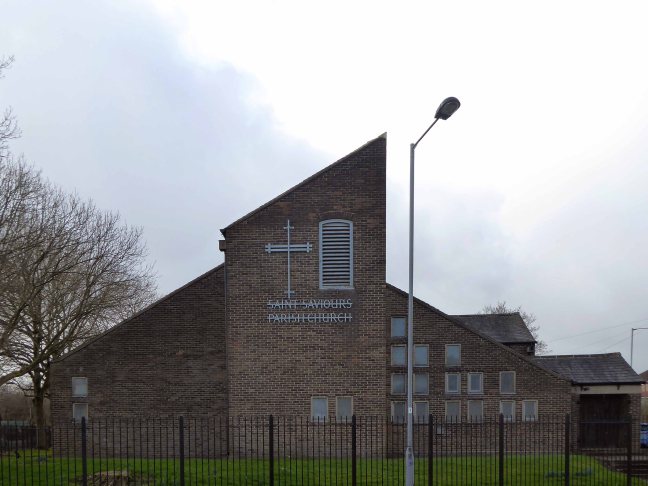
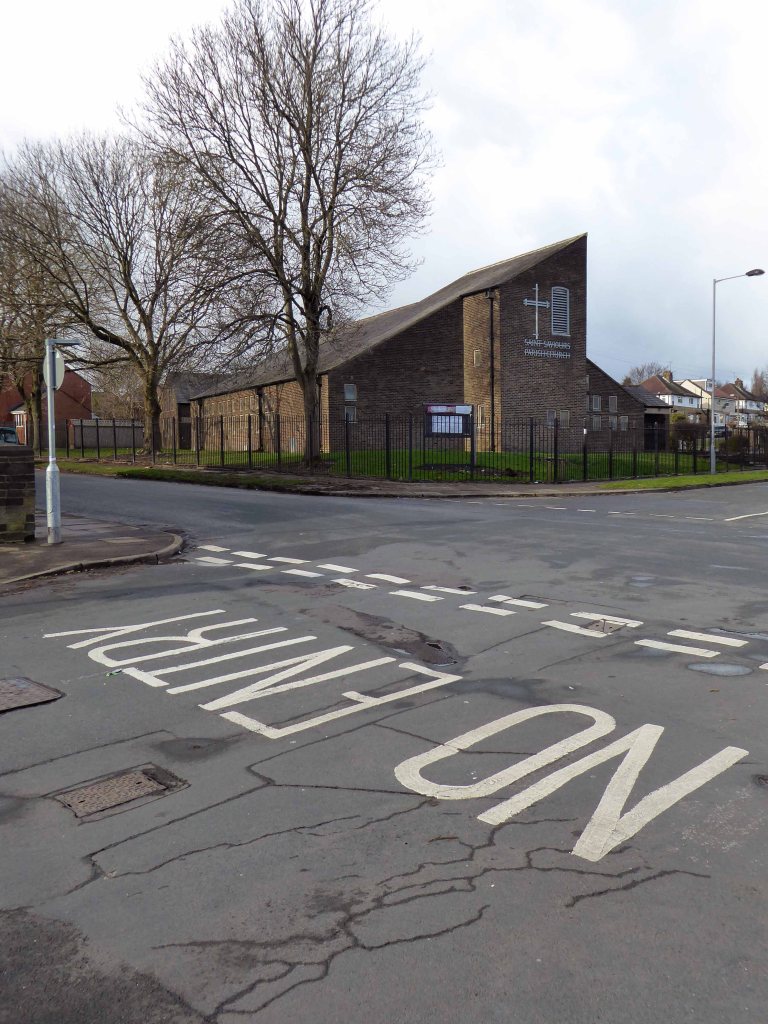
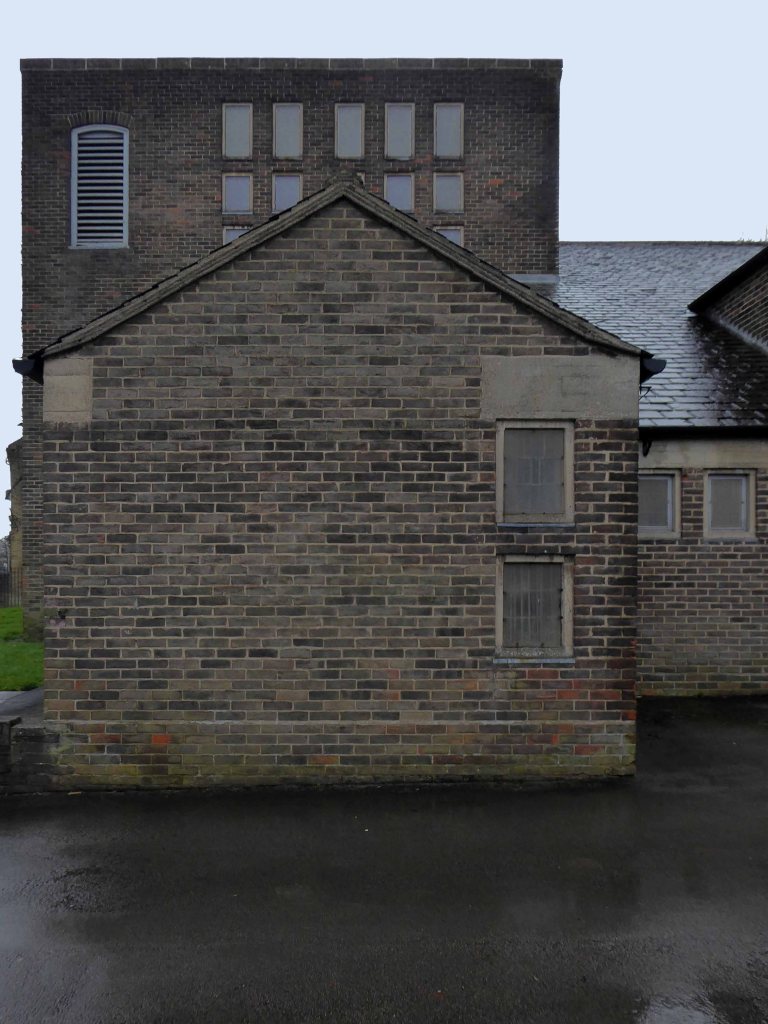
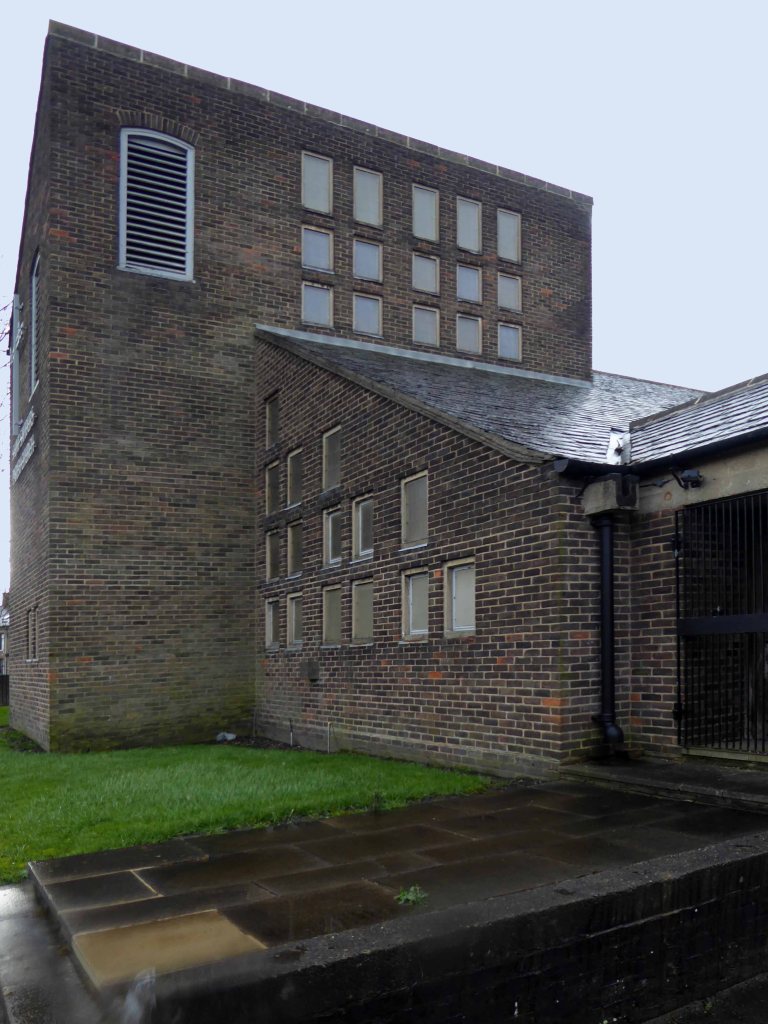
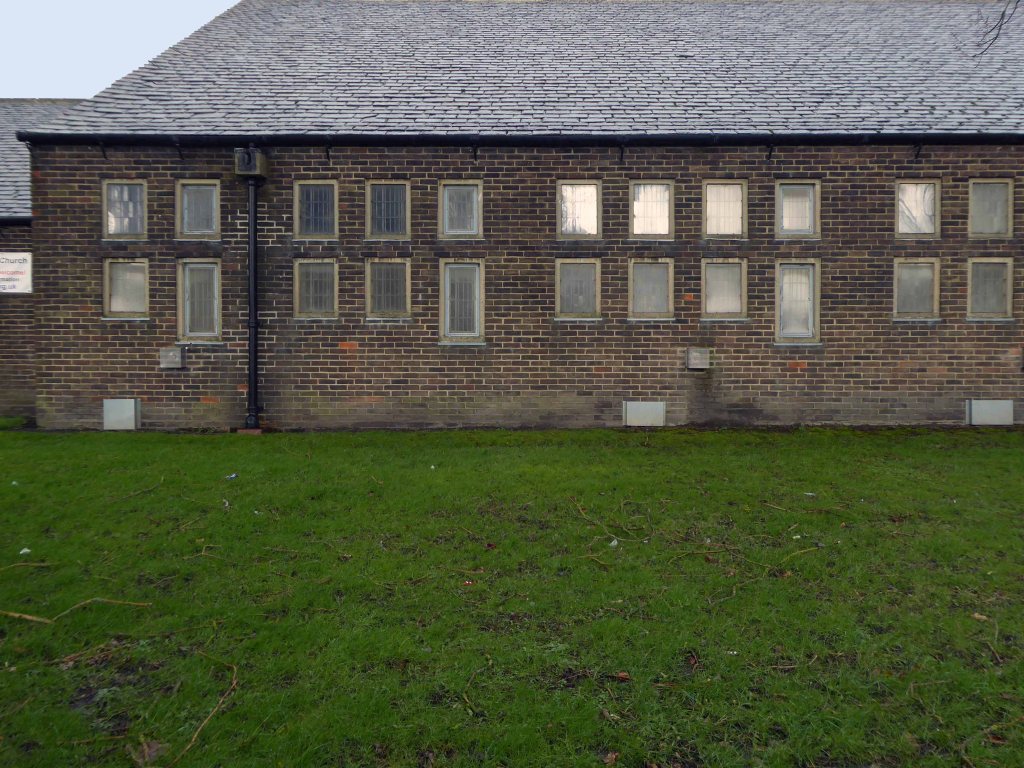
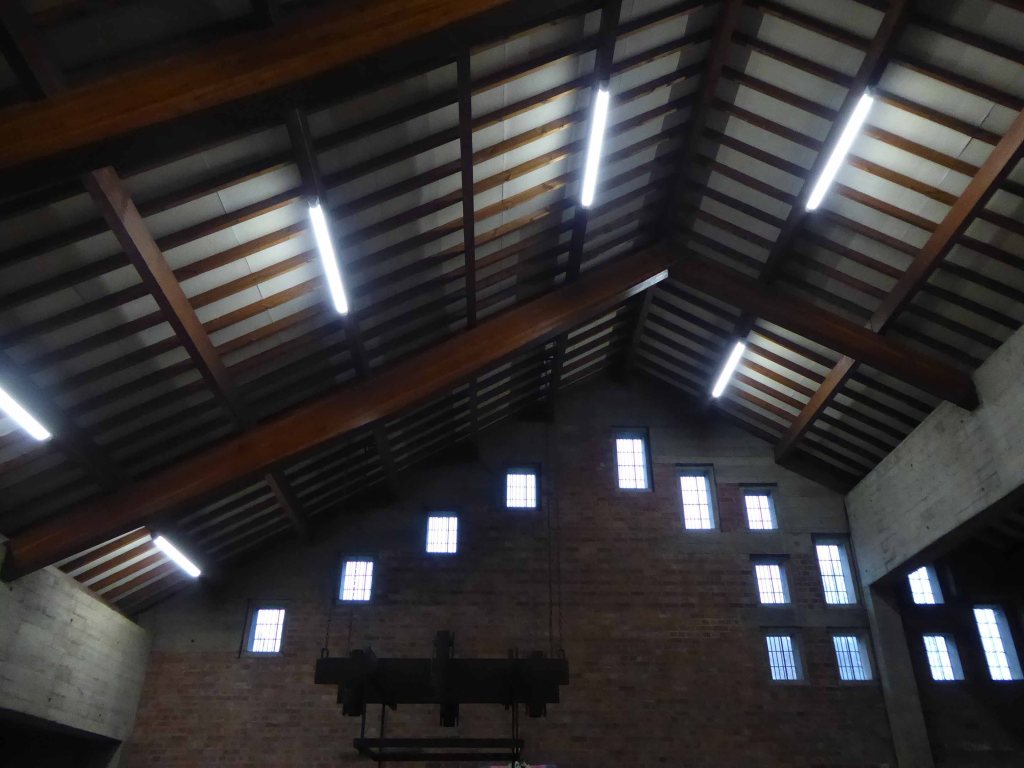
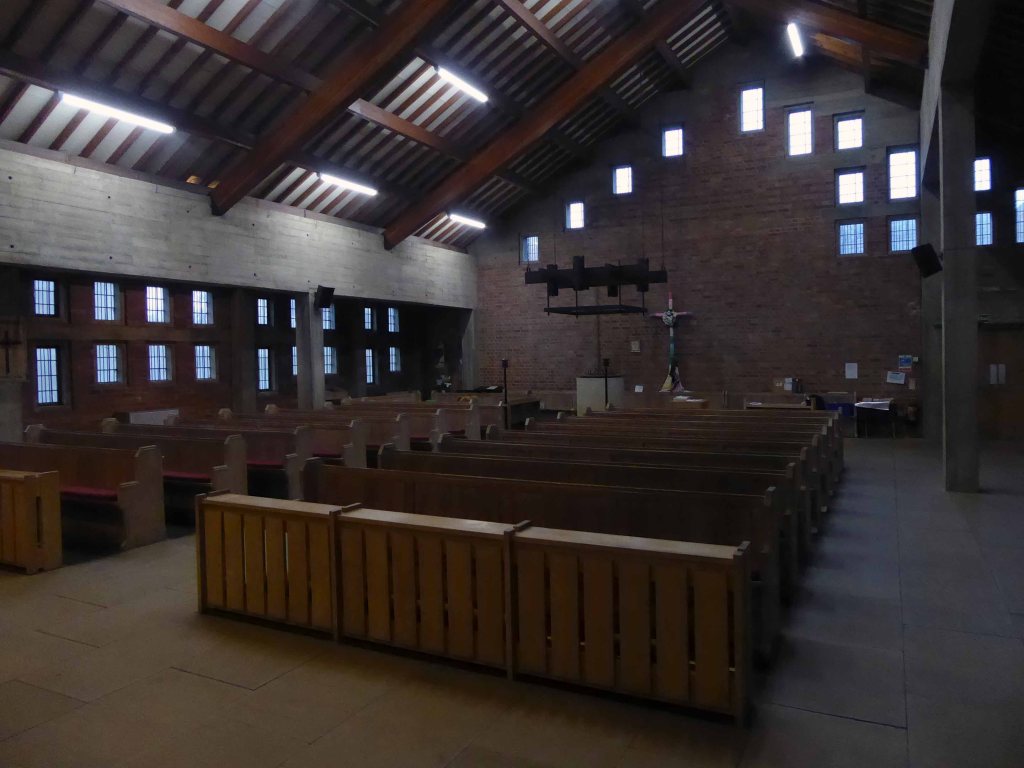
Steel frame and shuttered concrete with dark red brick walls in stretcher bond, and slate roofs.
Church of 1966 with attached hall of 1971, both designed by architect George Pace. Characterised by asymmetric arrangement of roofs, exposed structure and juxtaposition of materials, this is a complete and largely unaltered example of Pace’s work. The asphalt roof and windows are in very poor condition. Repair works to the roof were carried out in 2016 with funding from the National Lottery Heritage Fund’s former Grants for Places of Worship scheme.
The exterior is stark and angular, the body of the church is a broad rectangle with no division between nave and chancel, with a bell tower to the east, vestries to the north-west and a chapel to the west. At the western end is the church hall, added in 1971. Externally a single asymmetric roof covers the main body of the church, rising at the east end to form a mono-pitch section over the altar area and incorporating the bell tower. There is a porch at the east end of the north side, and a transept with a double pitch roof. To the west is a single storey, flat roof section with an entrance to the north, extending to the transept. West of the main body of the church on the south side is a separate roof, housing a chapel. To the west is the church hall, with a north-south asymmetric roof. All the windows are rectangular, of varying sizes, with plain glass in rectangular leaded lights. Lintels over the doors and the parapet of the flat roofed block are of shuttered concrete, as are the window surrounds.
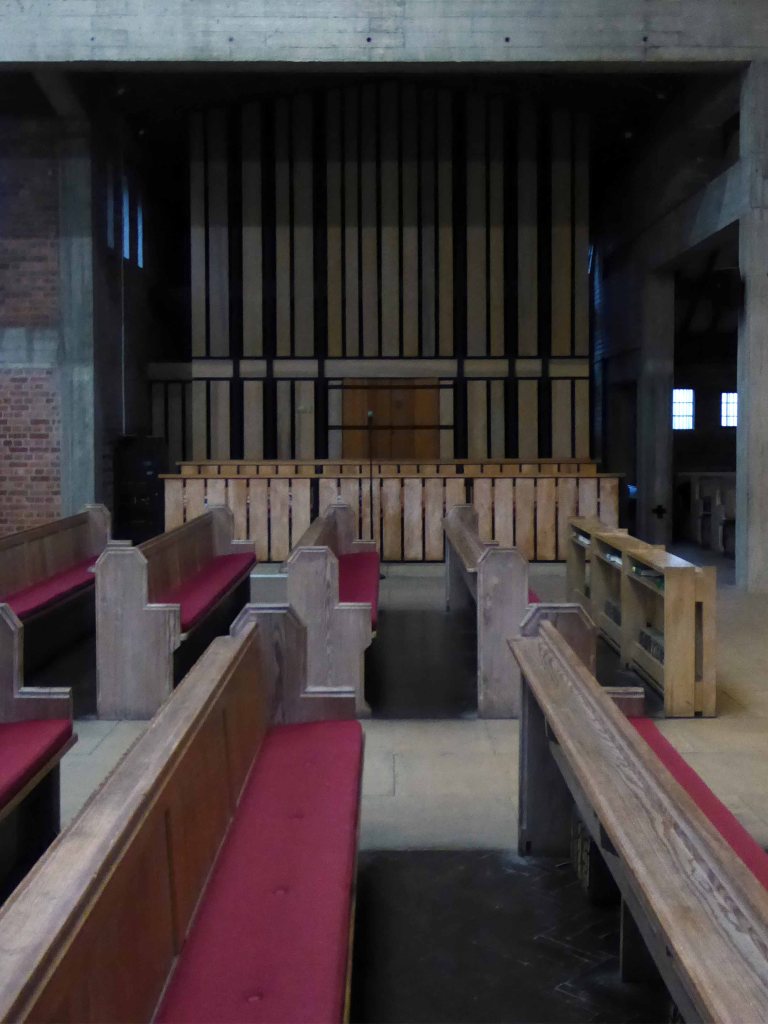
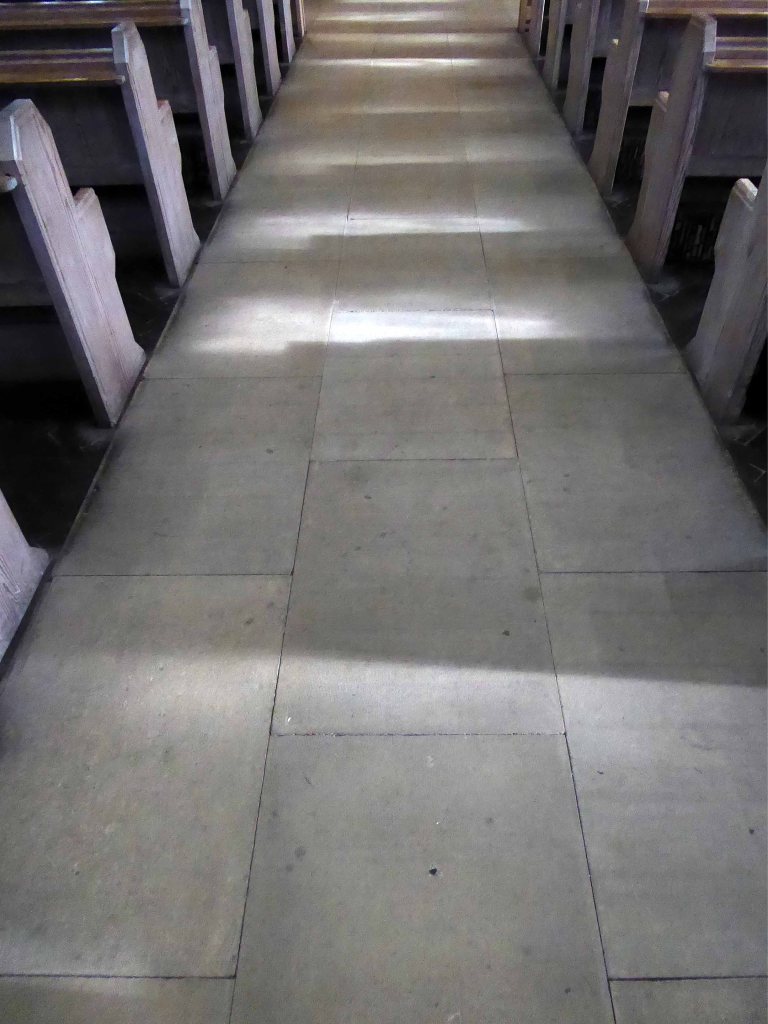
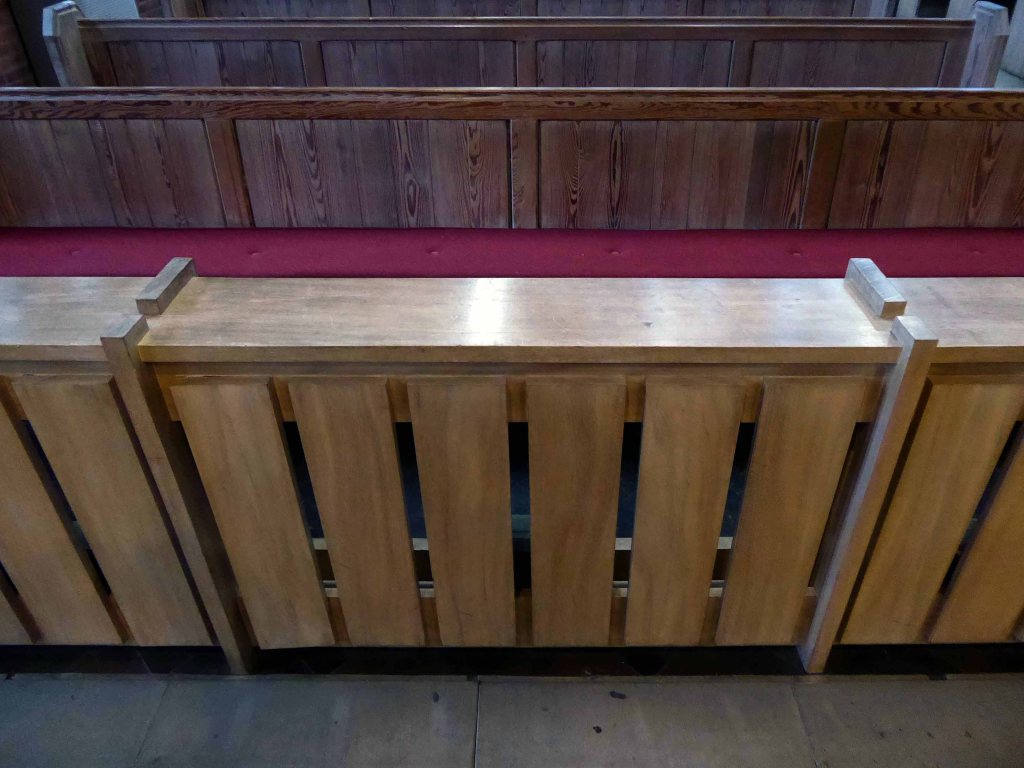
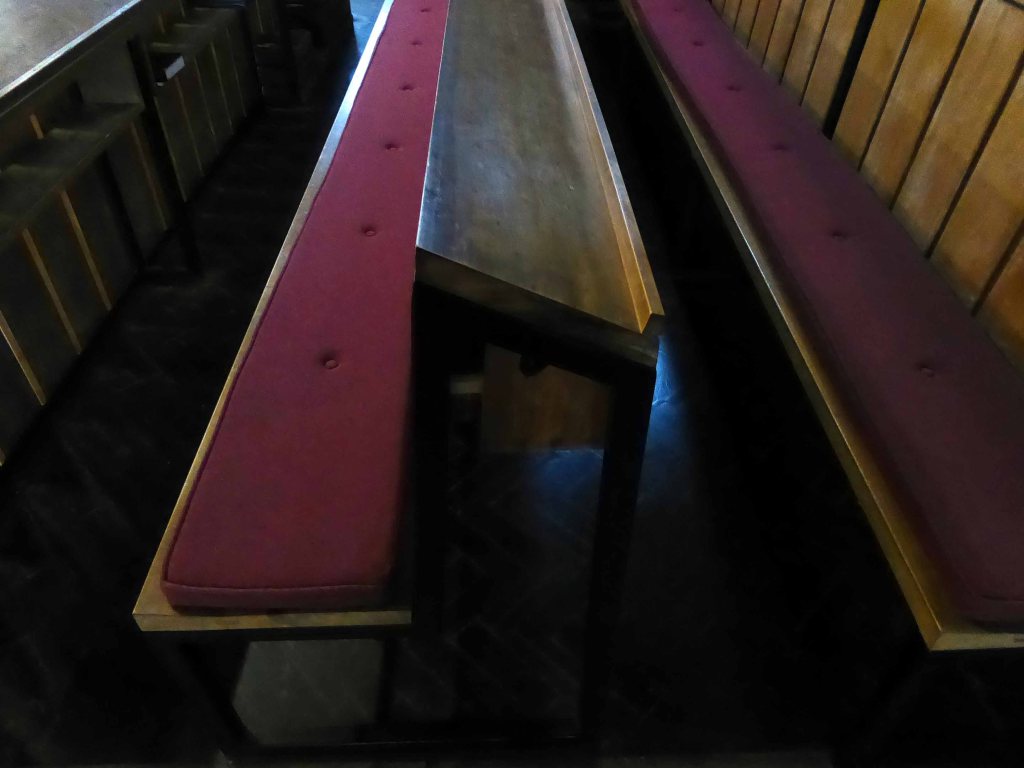
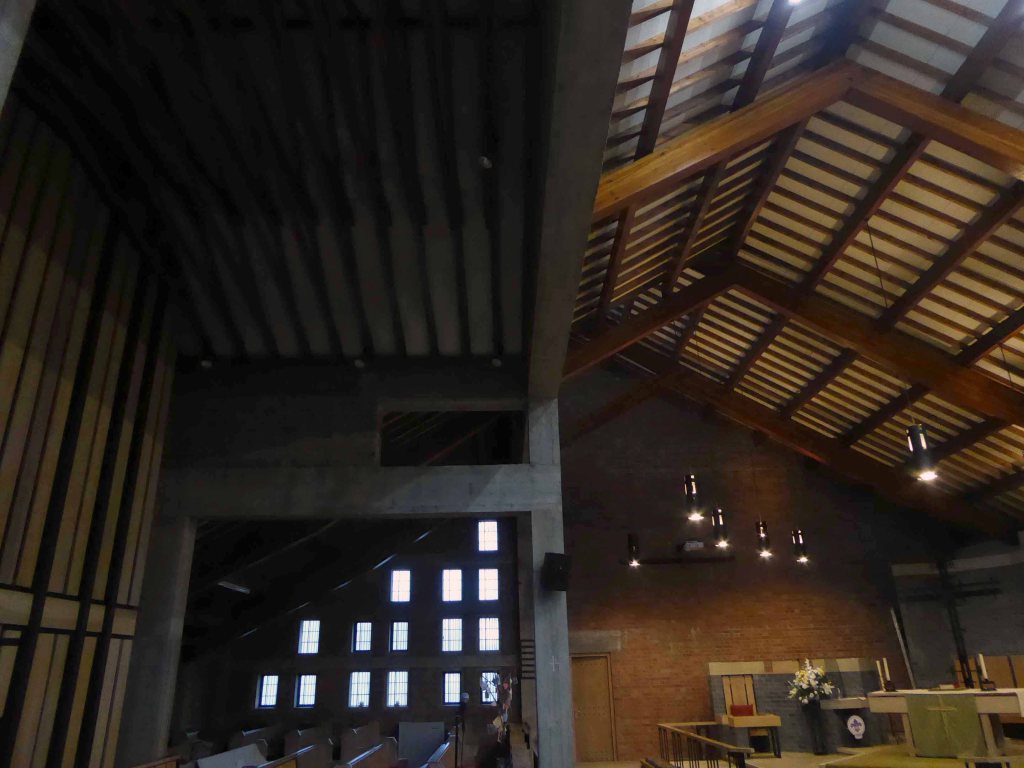
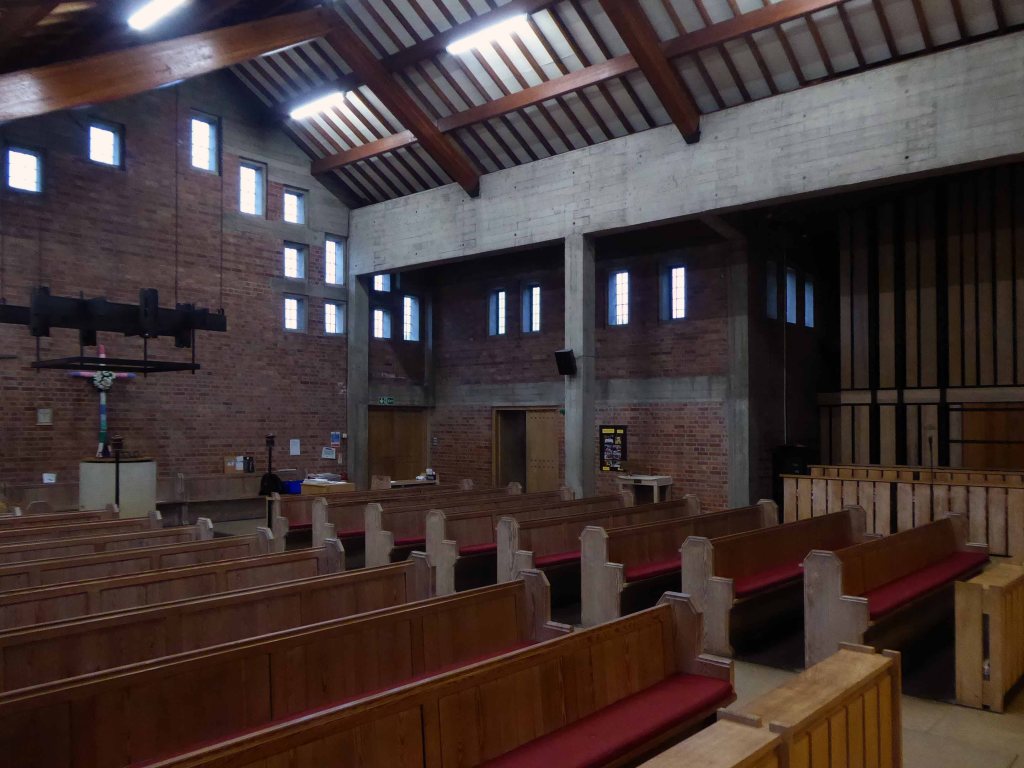
The body of the church contains Victorian stripped oak bench pews derived from St John’s church in Little Horton, arranged with a central aisle. To the north side is a range of contemporary pews in wood with vertical slatted fronts, in front of the organ, recovered from St. Chrysostom’s Bradford , by Driver and Haigh of Bradford, which is housed in the transept with a matching front of vertical wooden slats.
Let’s take a look.
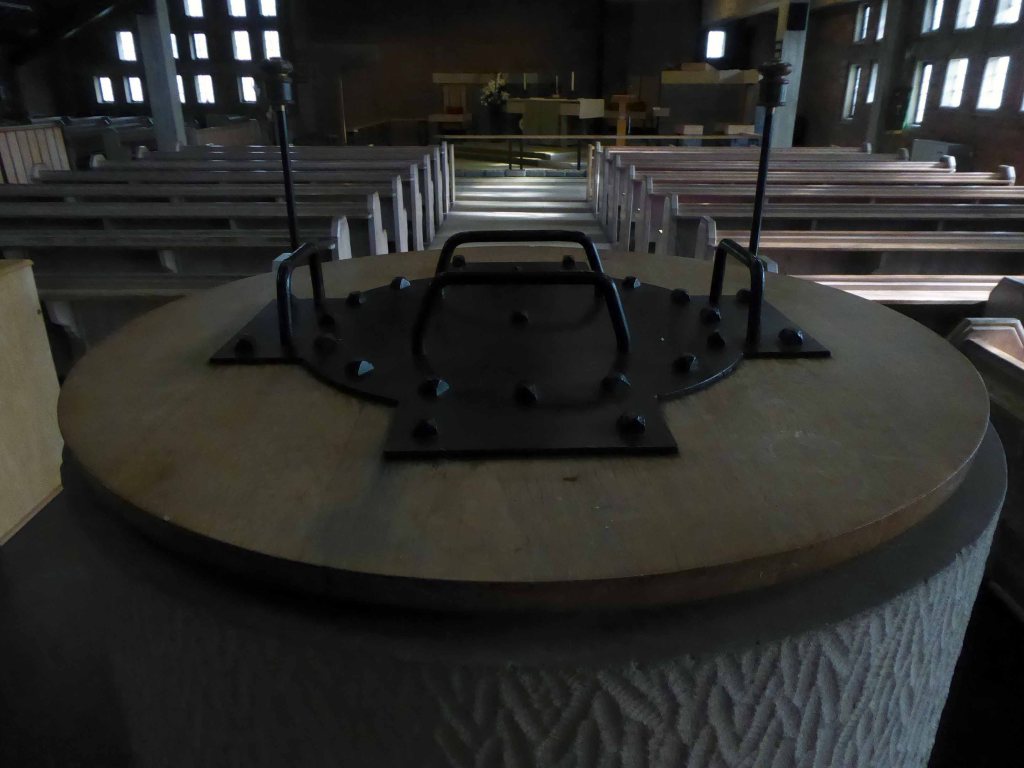
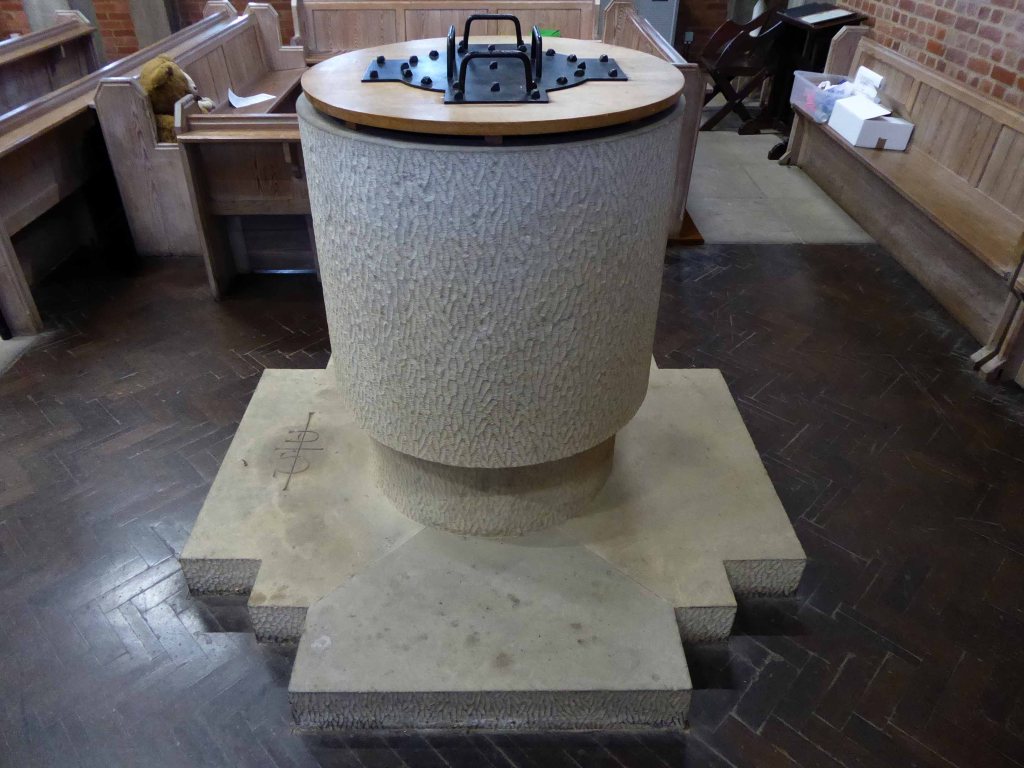
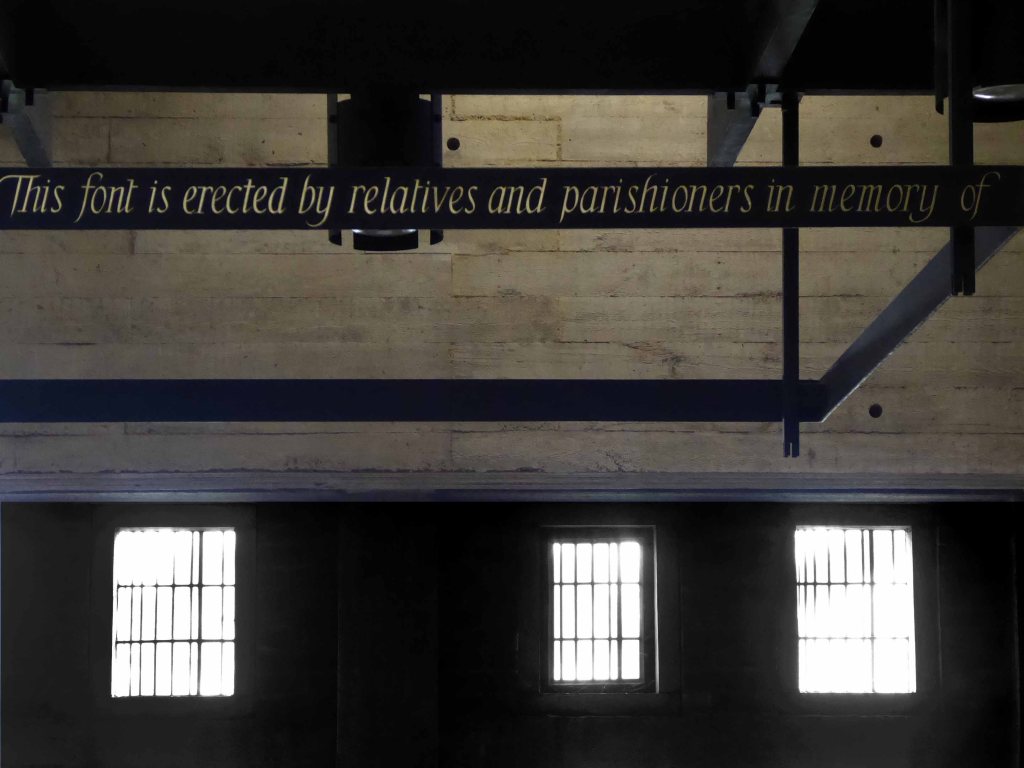
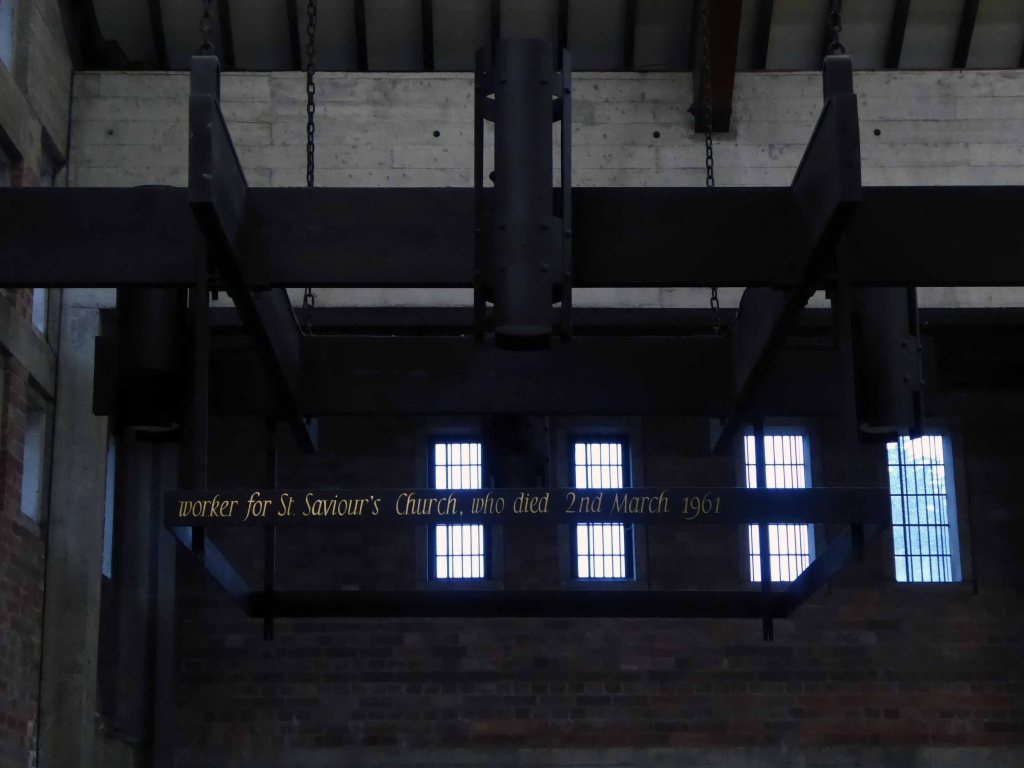
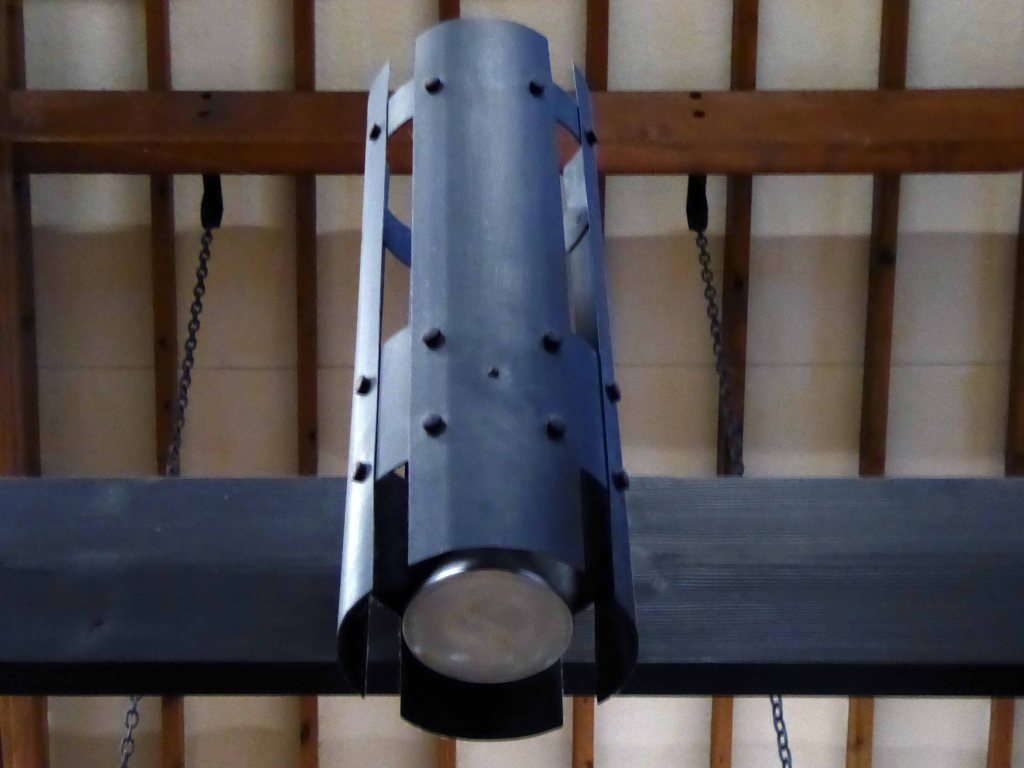
To the rear is the cylindrical font in white concrete with a wooden lid, set on a raised platform. Suspended above it is a large light fitting in black metal, inscribed around the edges with the words: “This font is erected by relatives and parishioners in memory of/ Beatrice May Parkin, for over forty years a Sunday School teacher and/ worker for St Saviour’s Church, who died 2nd March 1961”.
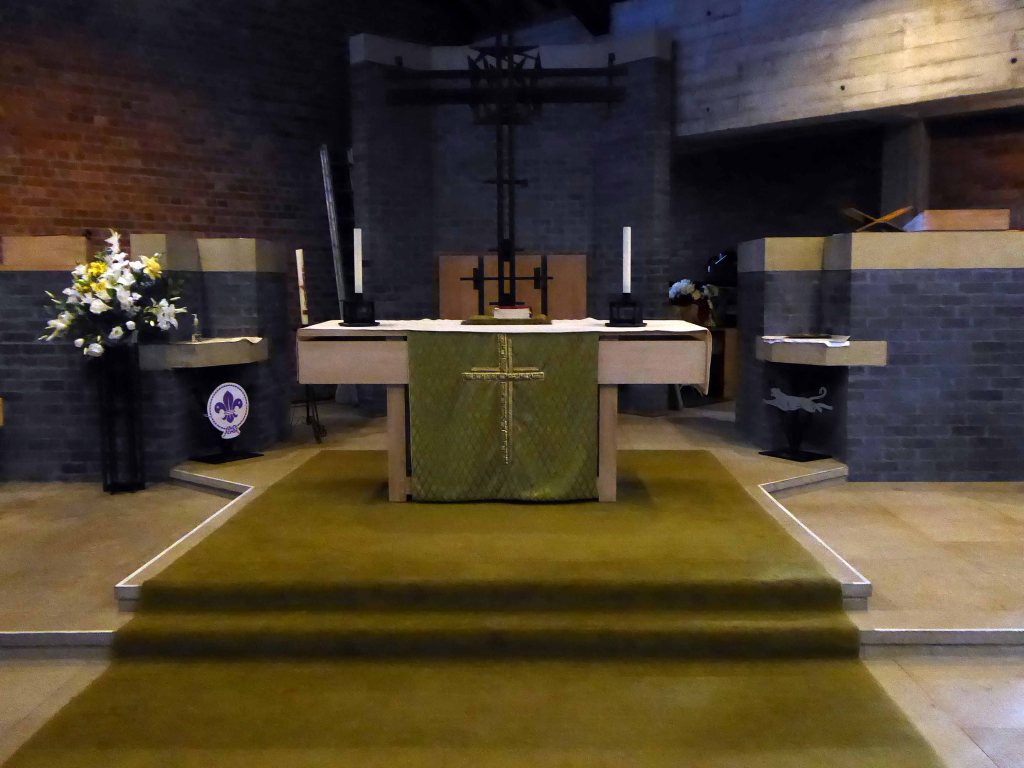
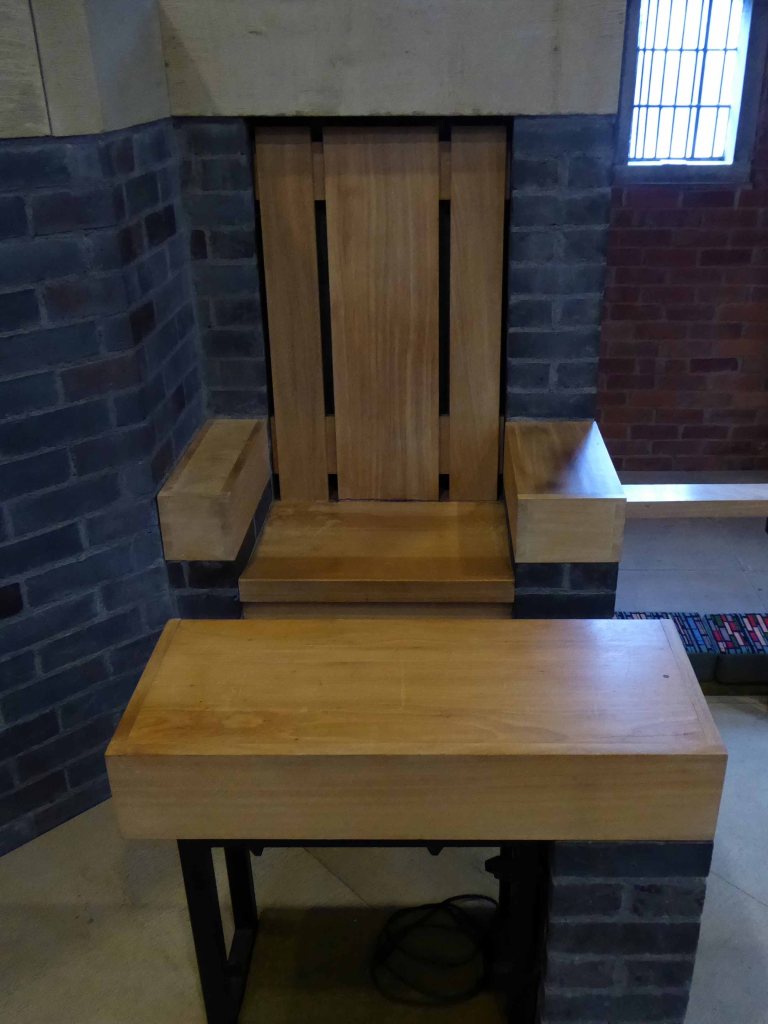
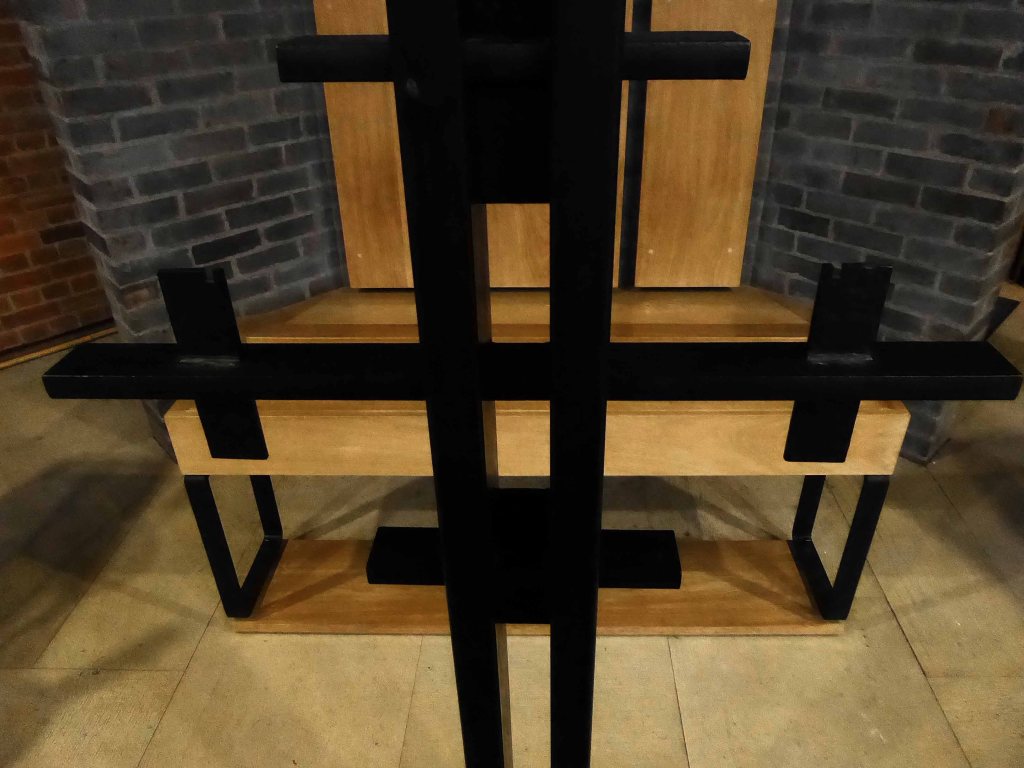
There is no separate chancel, and the finishes throughout are exposed brick, shuttered concrete and limed oak. The sanctuary area is in the south-east corner and consists of a tall angled purple brick reredos, topped with concrete, and a lower detached, angled purple brick pillar to each side each holding a shelf and incorporating a wooden seat. In front of the central reredos is an integral wooden bench with three backs, and a large black metal cross in the same style as those on the exterior but with more elaboration, fixed to the floor on a raised concrete block. To the fore is the altar table on a low raised platform. The whole is enclosed within an altar rail of iron and wood, open to the centre.
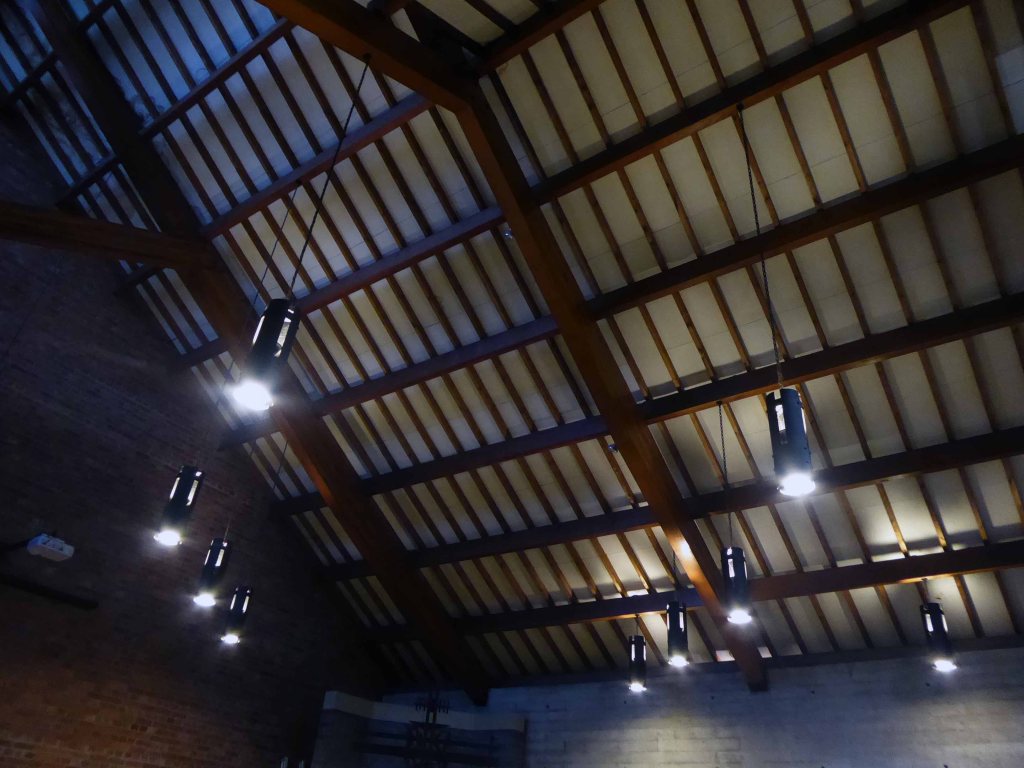
The main roof has exposed wooden trusses supported on concrete pillars and beams, with rafters and purlins also exposed creating a latticework pattern.
The whole interior order is orderly, calm and coherent, a simple consistency of materials and architectural intent.
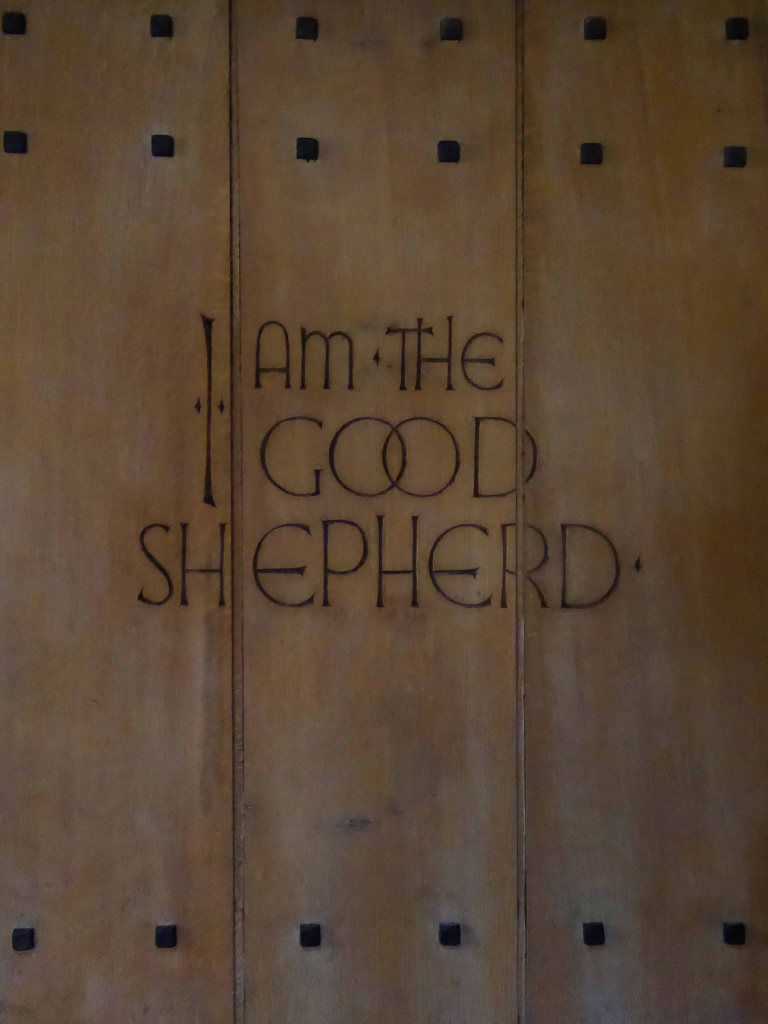
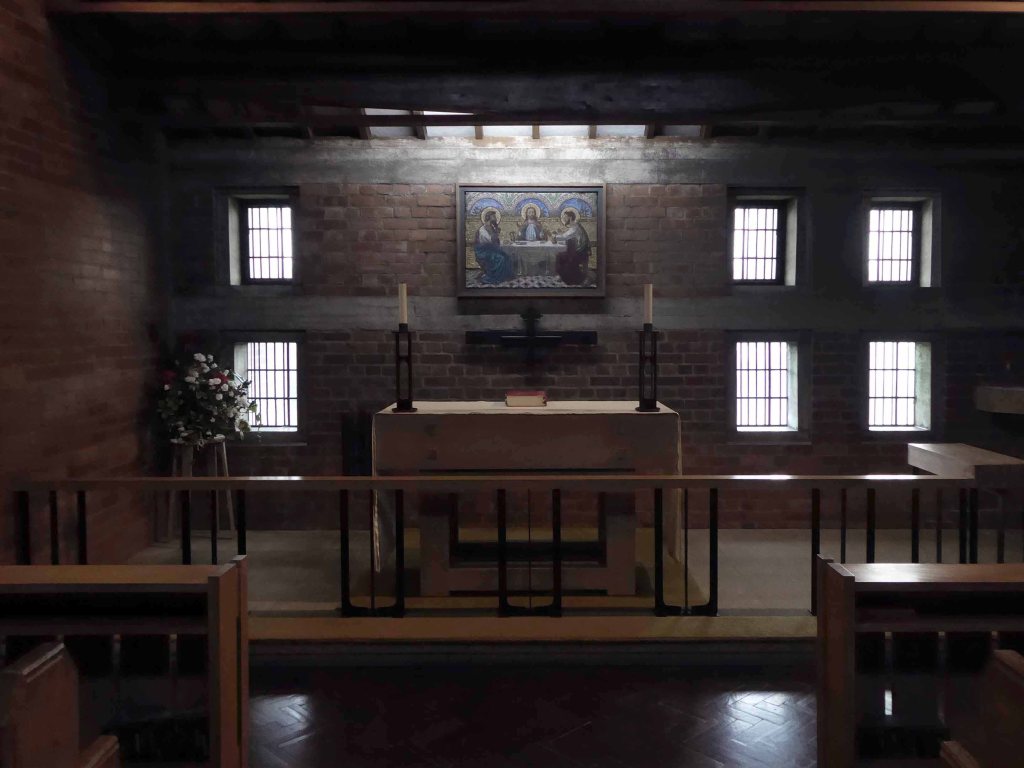
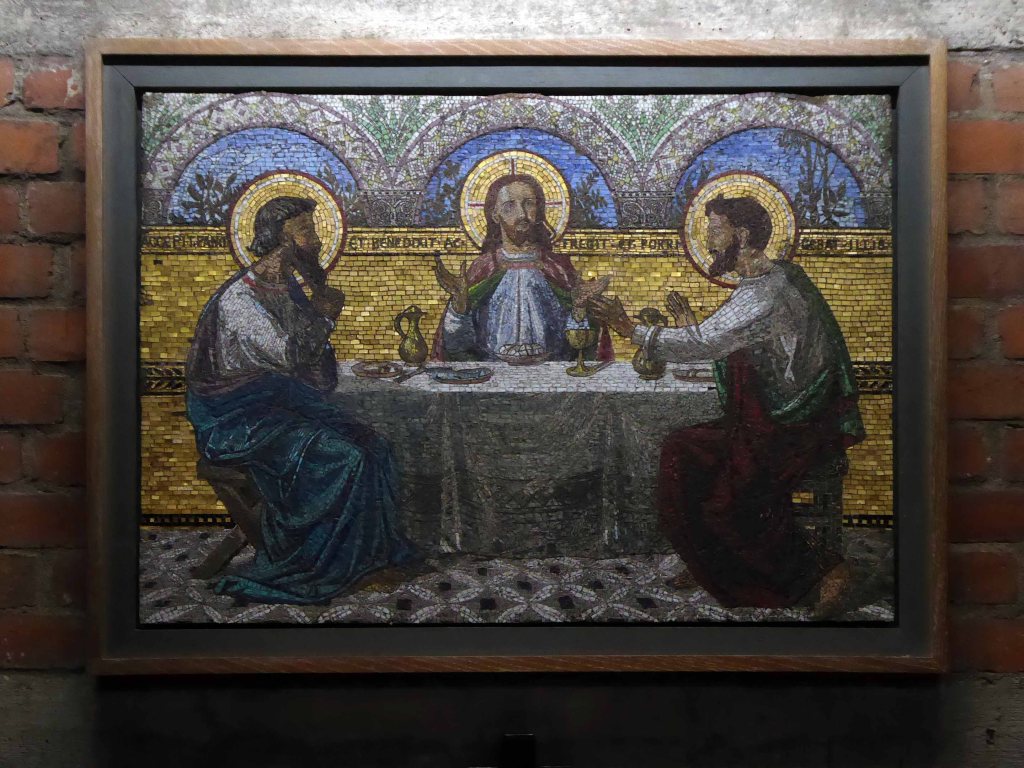
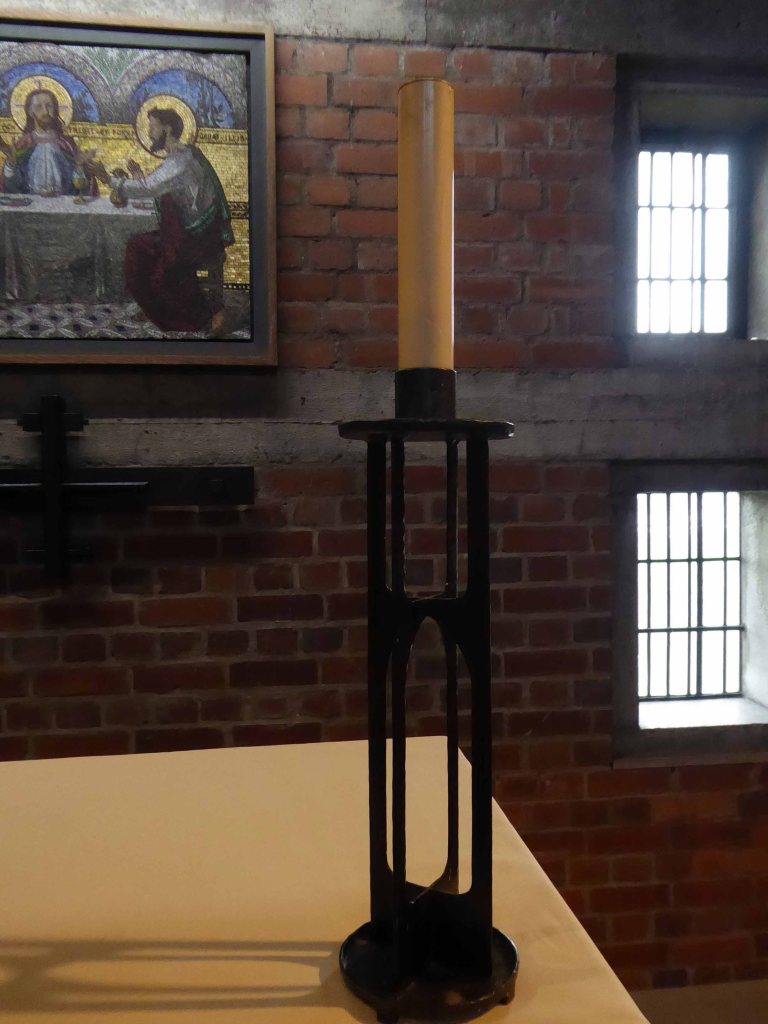
The solid wood, studded chapel door has the words “I am the Good Shepherd” engraved on it. The chapel has exposed beams and rafters, and an altar to the north with iron and wood altar rail in front. Pews are as in the church. There is a mosaic plaque behind the altar which came from St John’s church in Little Horton.
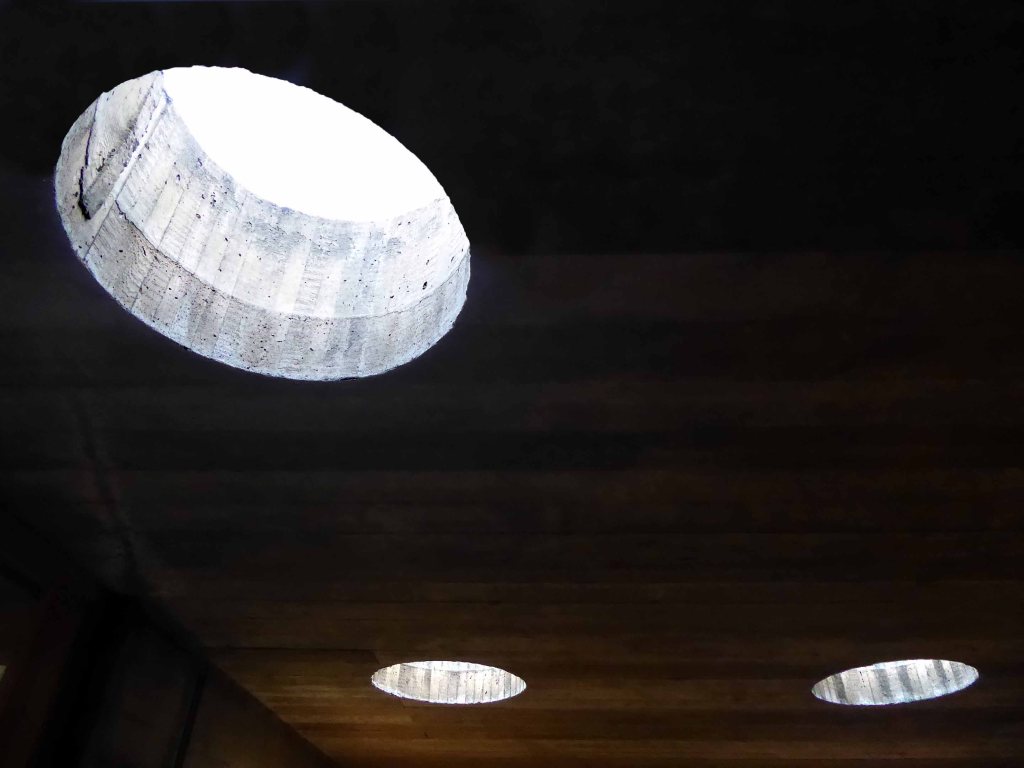
Beyond to the west is the narthex, with shuttered concrete ceilings pierced by circular skylights, exposed brick walls and doors to the chapel, service rooms and hall.
Such a pleasure to visit such an enchanting church – it was a precious privilege to be welcomed by the congregation, warden and Reverend Dorothy.
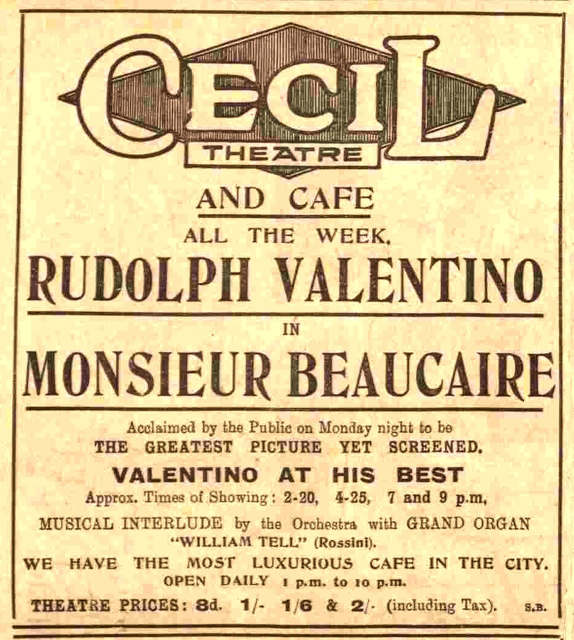
The Theatre De-Luxe was built in 1911 at the corner of Anlaby Road and Ferensway with its entrance in Anlaby Road and its auditorium along the side of the pavement in Ferensway. Kinematograph Year Book of 1914 lists 600 seats and the owners as National Electric Picture Theatres Ltd.
In 1925, the theatre was rebuilt to a radically altered ground-plan and renamed the Cecil Theatre. The opening night was Monday 28th September 1925. The entrance was in a curved façade at the Anlaby Road/Ferensway corner. The alignment of the new, larger, auditorium was at right angles to Ferensway, and parallel to Anlaby Road. Effectively, the length of the Theatre De-Luxe auditorium became the width of the Cecil Theatre’s. Seating was 1,700 with 700 of those in the balcony, according to the Hull Daily Mail. The Cecil Theatre was originally designed for silent movies with a full orchestra pit. KYB 1931 lists it having Western Electric sound installed; and a 1931 aerial view shows that a brick horn-chamber had been built onto the wall at the rear of the stage. It had a 35 feet wide proscenium. The cinema also had a café attached.
The Cecil Theatre’s demise came during bombing on the night of 7/8 May 1941 when German incendiary bombs reduced the building to a shell; and it remained like that until demolition in 1953.
Work on the new Cecil Theatre was begun in April 1955 and it was opened on 28th November 1955 with 1,374 seats in the stalls and 678 in the balcony.
Architects: Gelder & Kitchca
At the time of opening it had the largest CinemaScope screen in the country measuring 57 feet wide, and the first film shown was Marilyn Monroe The Seven Year Itch. The proscenium was 60 feet wide, and the cinema was equipped with a Marshall Sykes 3Manual/15Ranks organ, which was opened by organist Vivian Newall.
There was also a 100-seat restaurant & bar which in 1971 was converted into a second screen seating 137 (Cecil 2). The following year the main auditorium was spilt into 2 smaller cinemas in the balcony (Cecil 1 & 3 each seating 307) and an entertainment hall in the former stalls which became a Mecca Bingo Club, with Mecca also operating the cinemas.
In the 1980’s it was taken over by the Cannon Cinemas chain. The cinema operation was closed on 23rd March 1992 and the cinemas were ‘For Sale and/or Lease. It was taken over by Take Two Cinemas and renamed Take Two Cinema. It was closed on 27th February 1997 and the two screens in the former circle were stripped out and converted into a snooker club.
Whilst bingo continues in the former stalls area of this post war cinema, the former mini cinemas in the circle still contain the snooker tables, but the space is unused. The screen in the former restaurant/cafe area remains basically intact, but is unused.
I worked at the Cecil in the three years before it closed in the 90’s. MGM owned the place before the Virgin group bought it and closed it. It was a good place to work and an interesting building. Behind the scenes had remained unchanged since Anna Neagle first opened it. The organ had been removed however but the organ room was still in tact in the bingo section of the building. The fire exits led to long dark corridors that were always being infiltrated by kids sneeking in for a free shows. I understand that this was always the case. The resturant kitchen was fully intact and resembled something out of a Kubrick film – very spooky place!
Bilko2000
And so the projectors whirr no more, house is called at the Cecil – possibly the most oddly named cinema in the land.
Happily it remains an imposing presence in the centre of the city – a mammoth modern temple of entertainment – reflecting the ever changing tastes of the day and the morning after.
The Humber Ferry was a ferry service on the Humber between Kingston upon Hull and New Holland in Lincolnshire which operated until 1984, after the completion of the Humber Bridge in 1981.
I walked from Hull to Hessle – but you were always on my mind.
Glimpsed once or twice from a train, I’d never been up close and personal.
The Humber Bridge was opened by Her Majesty Queen Elizabeth II in 1981.
It is one of the marvels of modern engineering and was, until 1998, the longest single span suspension bridge in the world but there are now five other longer bridges of this type. However it is still the longest that can be used by pedestrians.
The bridge is 2,220 metres long and the towers, which are farther apart at the top than the bottom to compensate for the curvature of the earth, are 155 metres high. It was built at the narrowest point of the estuary known as the ‘Hessle Whelps’ and when completed it was admired for its design and elegance, but reviled by others as a bridge from nowhere to nowhere, the crossing comprises a dual carriageway with walkways for pedestrians and cyclists on both sides.
Although approval to build the bridge was granted in 1959 work did not begin until 1972 due to difficulties in financing the project. In 1966 Harold Wilson, the Prime Minister of the day, allowed Barbara Castle, the Minister for Transport, to give permission for the bridge to be built, hoping that the announcement would be a vote winner in the forthcoming Hull North by-election.
Construction Team
The consulting engineers for the project were Freeman Fox & Partners . Sir Ralph Freeman had produced the first ideas in 1927 and in the early 1930s the cost of the project was estimated at £1.725 million and that the bridge would be unlikely to recoup the construction or maintenance costs. In 1935 he had an idea for a 4,500-foot suspension bridge for the Humber Tunnel Executive Committee. Sir Gilbert Roberts produced more ideas in 1955 for a bridge with a 4,500-foot central span, costing £15 million, to be paid for by East Riding County Council and Lindsey County Council. Once it was likely that a bridge would be constructed, Bernard Wex produced the design in 1964 that was actually built. The bridge was built to last 120 years.
The architect was R. E. Slater ARIBA. The administration building for the tolls, was designed by Parker & Rosner. The landscaping was designed by Prof Arnold Weddle. Wind tunnel testing took place at the National Maritime Institute at Teddington and the road deck is designed for wind speeds up to 105 miles per hour (170 km/h).
Even on the calmest of days the power and sway, push and pull of wind and tide is an uplifting, hair-raising and visceral experience.
The elegantly engineered giant towers above as you gaze from the shore.
An elegy to human endeavour in concrete and steel.
The bridge is of necessity firmly anchored to the ground.
The walkway wide and high astride the estuary.
The tall towers towering above.
The whole structure tied down, anchored and suspended securely.
The mid brown waters of the Humber flowing gently below.
I walked back and to in the company of a handful of fellow travellers, on foot and bike, one of life’s best ever free rides, and reluctantly bade farewell as I headed home to Hull.
But just like just like General MacArthur I came through andI shall return.
My previous Hull walk was was linear, along the Humber Estuary open and expansive.
This was a very different kettle of fish – spiralling out of control, rising and falling, walking the ramp, a journey into one’s inner self.
Possibly the worst multi storey I have been in for years.
Spooky, filthy, bays too small, machines remote, access tortuous.
Avoid.
So says Nick Shields
Dark, Gloomy and Rotting .
Looks a good candidate for a location for a crime watch reconstruction.
Quoth Peter Campbell
It’s a multi story multi Storey and no mistake
I couldn’t possibly pass comment, I walk can’t drive, won’t drive – though simply can’t resist exploring car parks.
Though the local paper has identified an issue of fitness to fit.
Heard the one about a city centre car park where you can’t easily park your car?It might sound like a joke but it’s no laughing matter for drivers trying to squeeze into vacant spaces at Hull City Council’s multi-storey car park in George Street.For motorists are finding it increasingly difficult to manoeuvre into its tight parking bays.
I myself navigated the bays with ease, though not without that unique sense of foreboding and unease, generated by an empty concrete carapace where car space, decay and ingress are issues.
It was designed and developed by Maurice Weston in the 1960s. He had two companies, Multidek and Dekotel, and built circular continuous ramp car parks in Hull, Nottingham, Leicester, Bristol and Bournemouth, some of them also involving circular hotels on the upper floors. In its day, the bays were easily wide enough for most cars. When I used George Street myself, it felt great to use, because you could easily reverse into the pitches and there were no tight corners to negotiate. But car widths have probably got the better of it, these days, and you can’t widen the pitches because of the position of the pillars.
The plans were very complicated to get approved because the George pub was a listed building and the car park had to be built around it. Incidentally, Maurice Weston also had an option to develop the wasteland on Ferensway in the 60s, but his hotel and entertainment centre project didn’t get past the council.
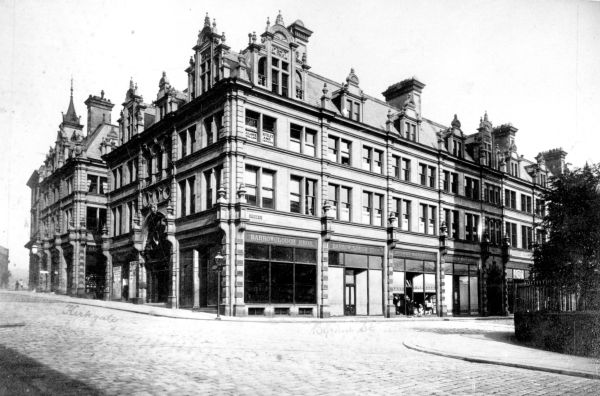
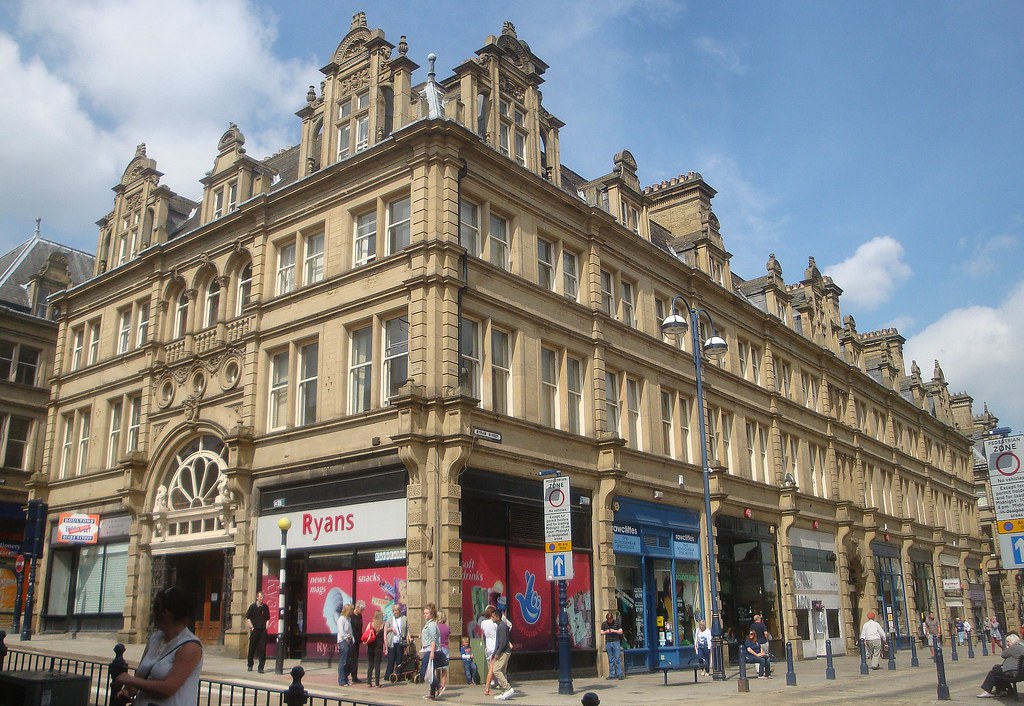
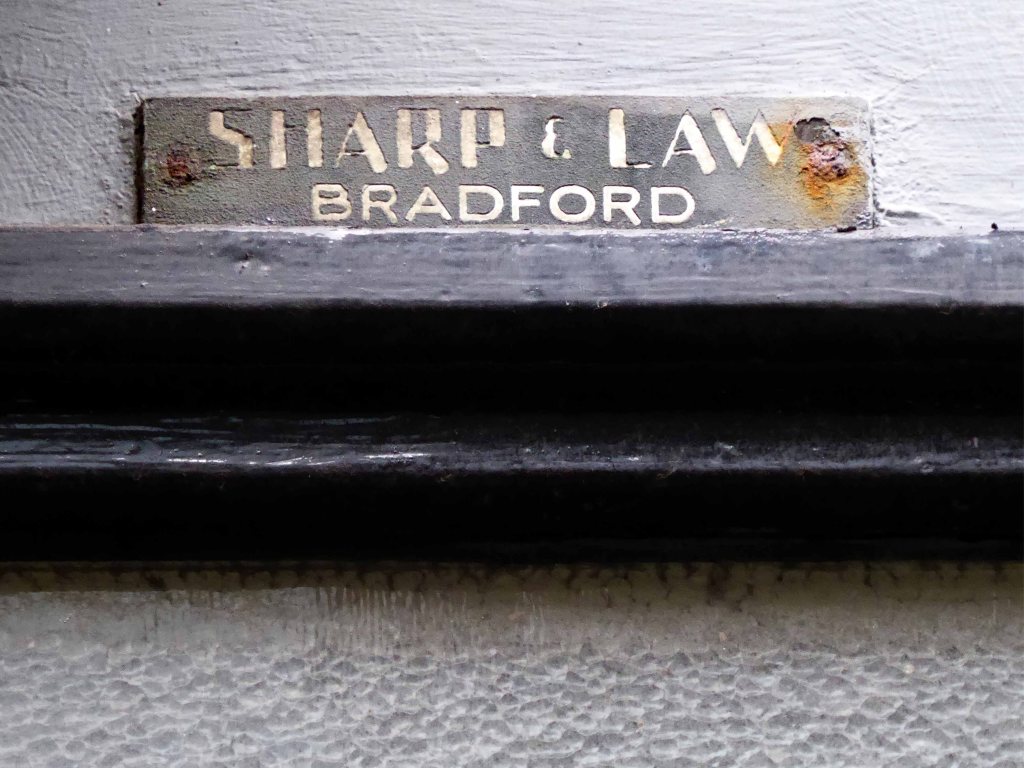
Commercial building with ground-floor retail units and offices to the upper floors, c1883, by W H Crossland with sculptural work by C E Fucigna. Sandstone ashlar, slate roof, substantial ashlar ridge stacks. C19 Queen Anne style with French influences and classical Greek sculpture. One of the ground-floor shop units was remodelled in 1935 by Sharp and Law of Bradford with Moderne shopfronts and interior fittings.
The cultural and visual collision is immediate – the pairing of Huddersfield’s grand Victorian manner with the latest of European Moderne.
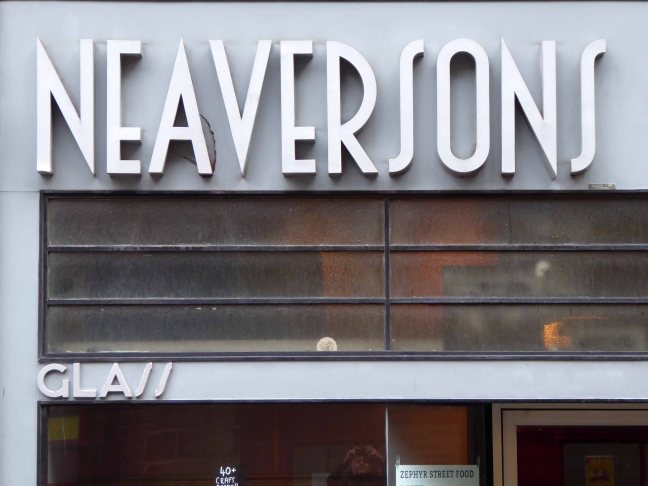
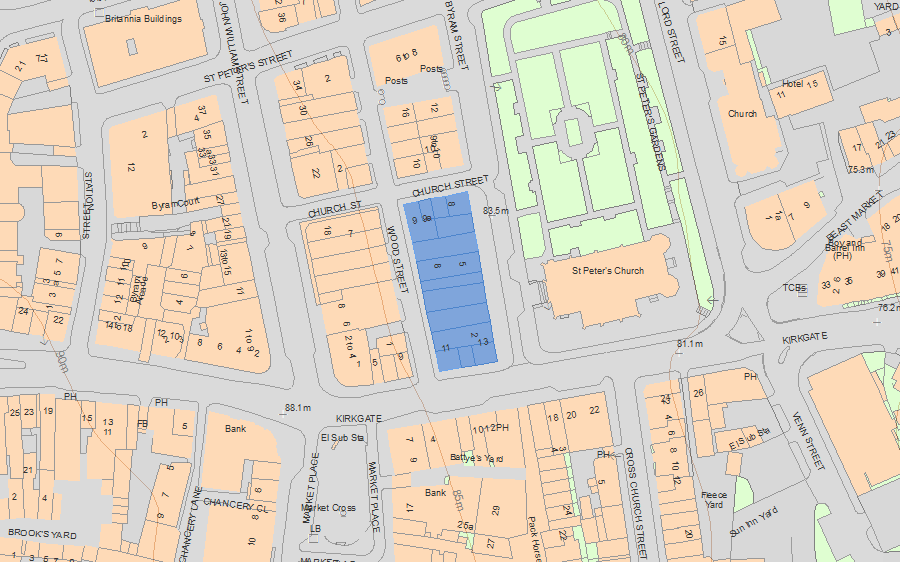
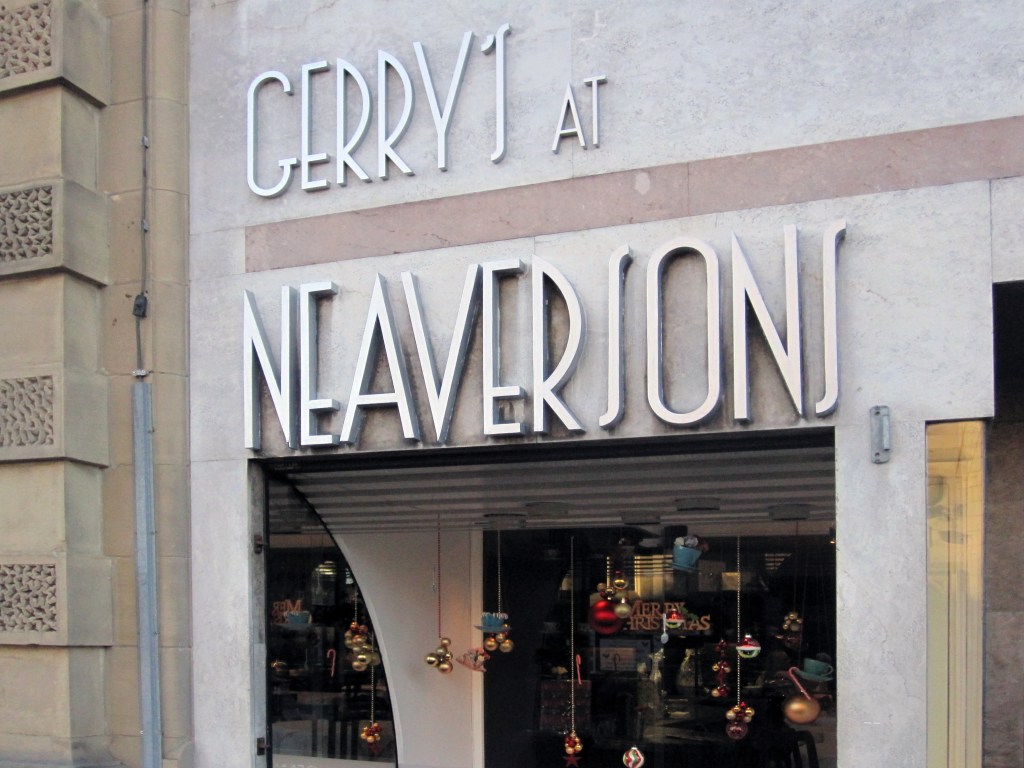
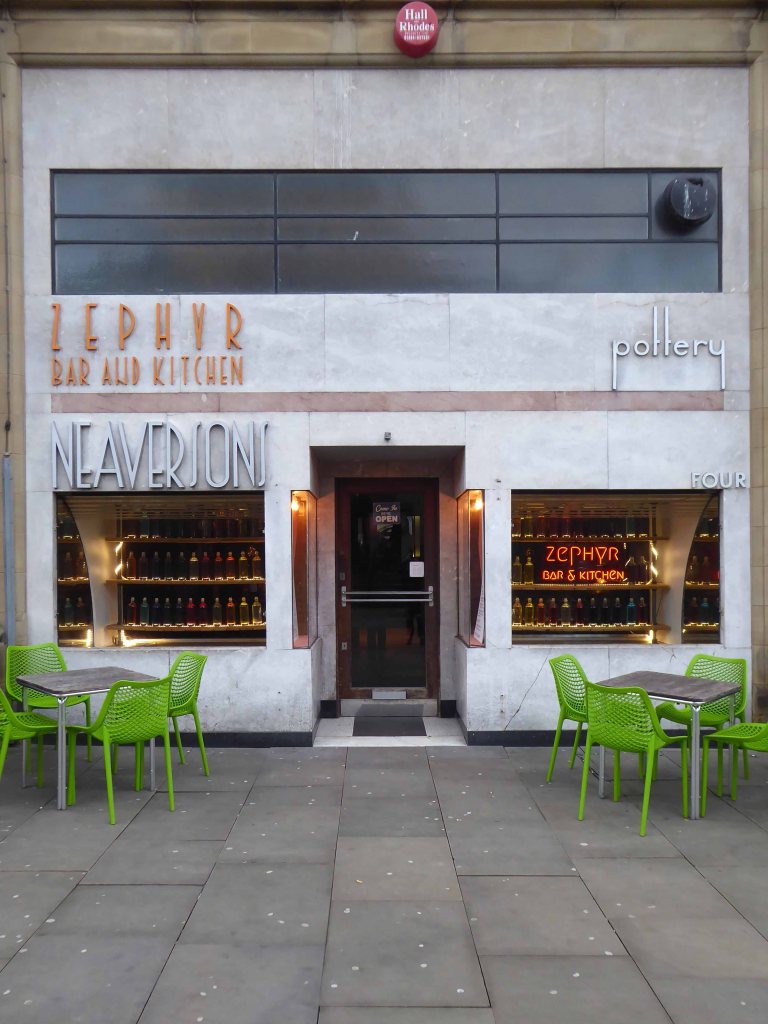
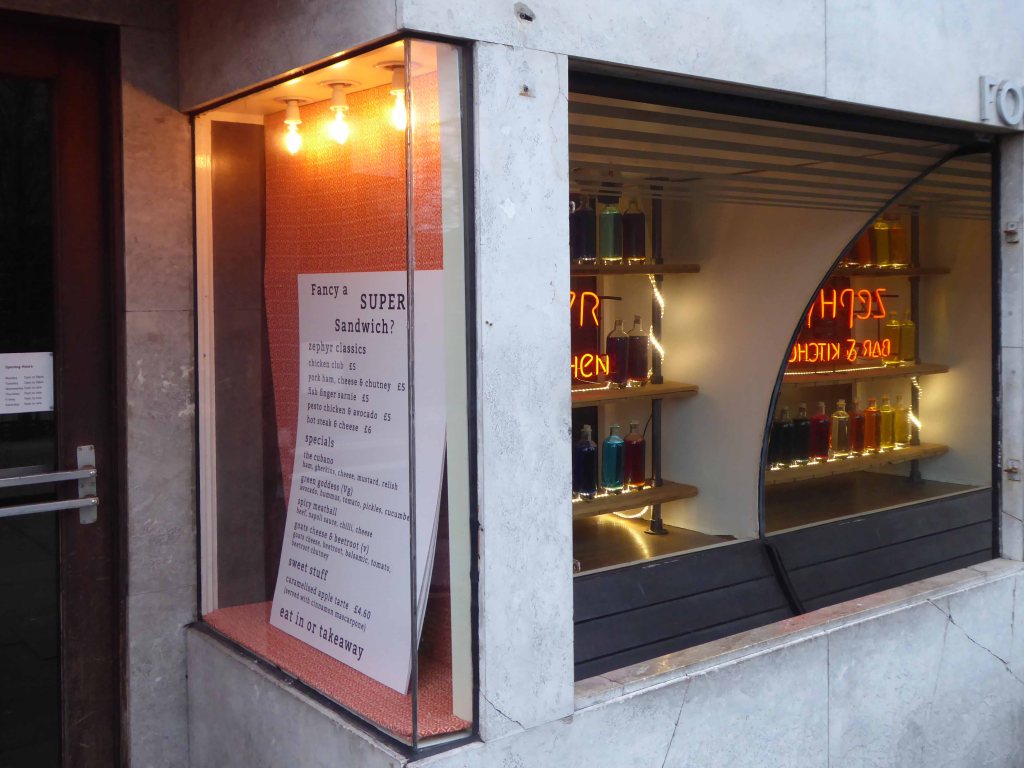
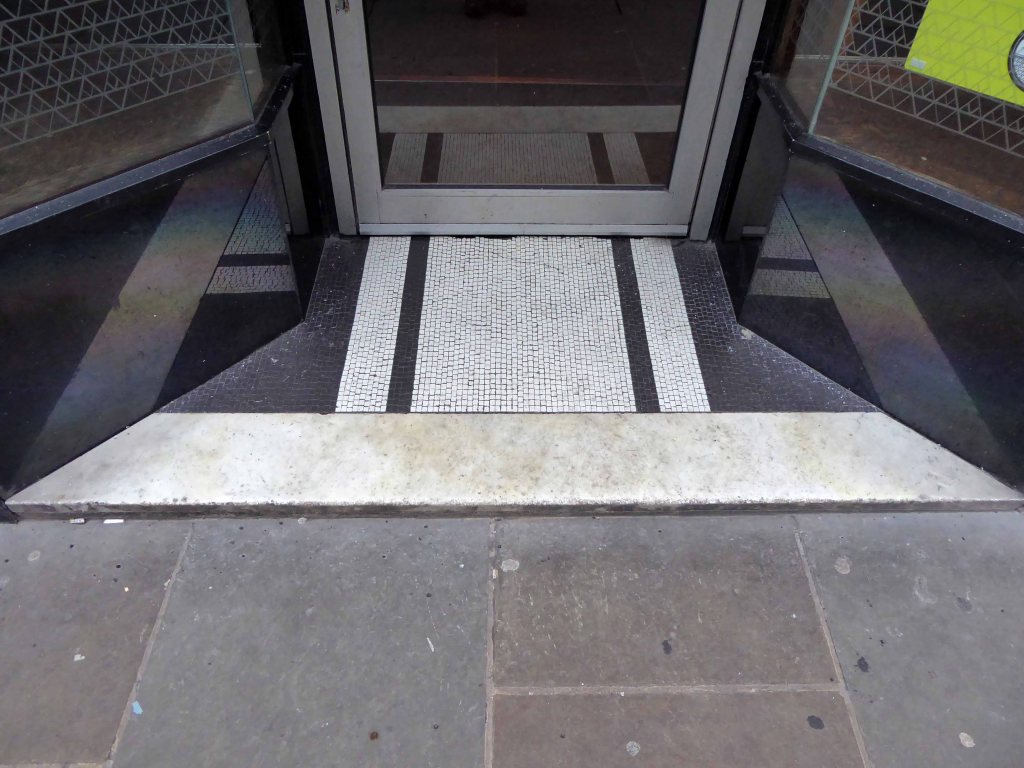
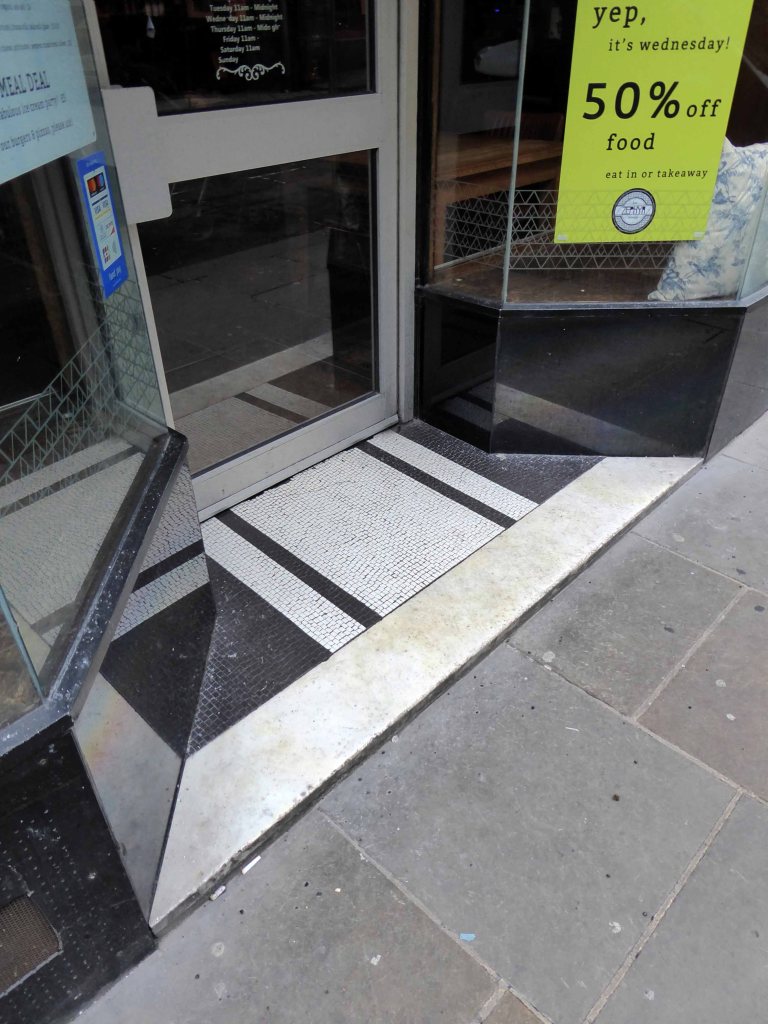
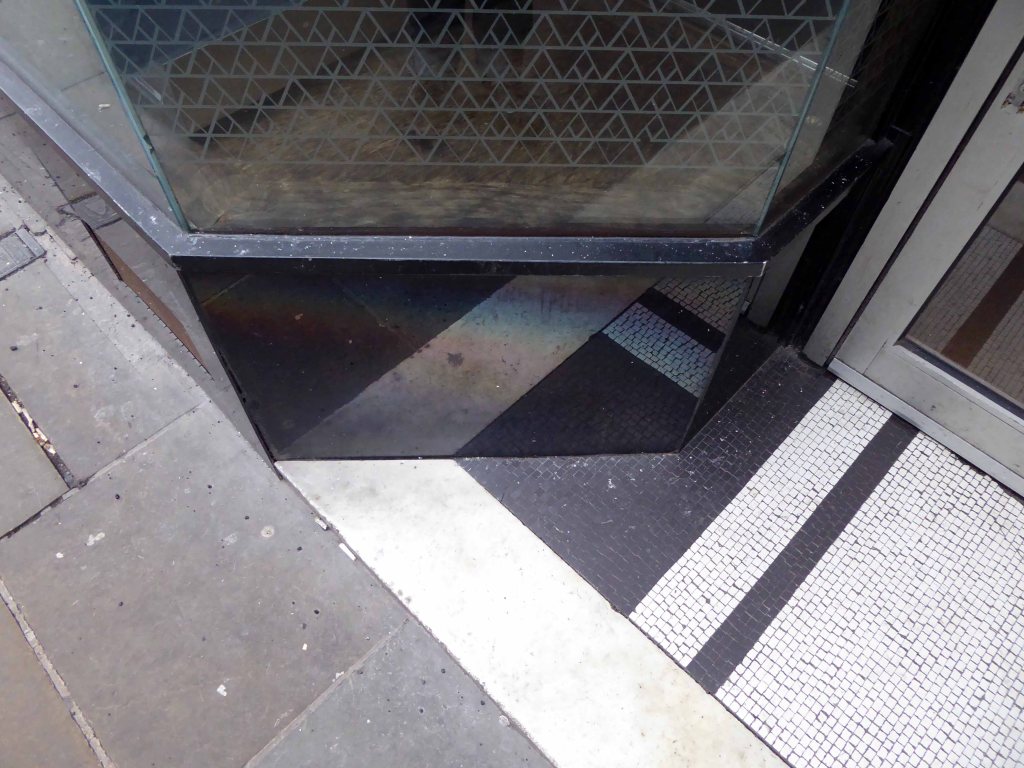
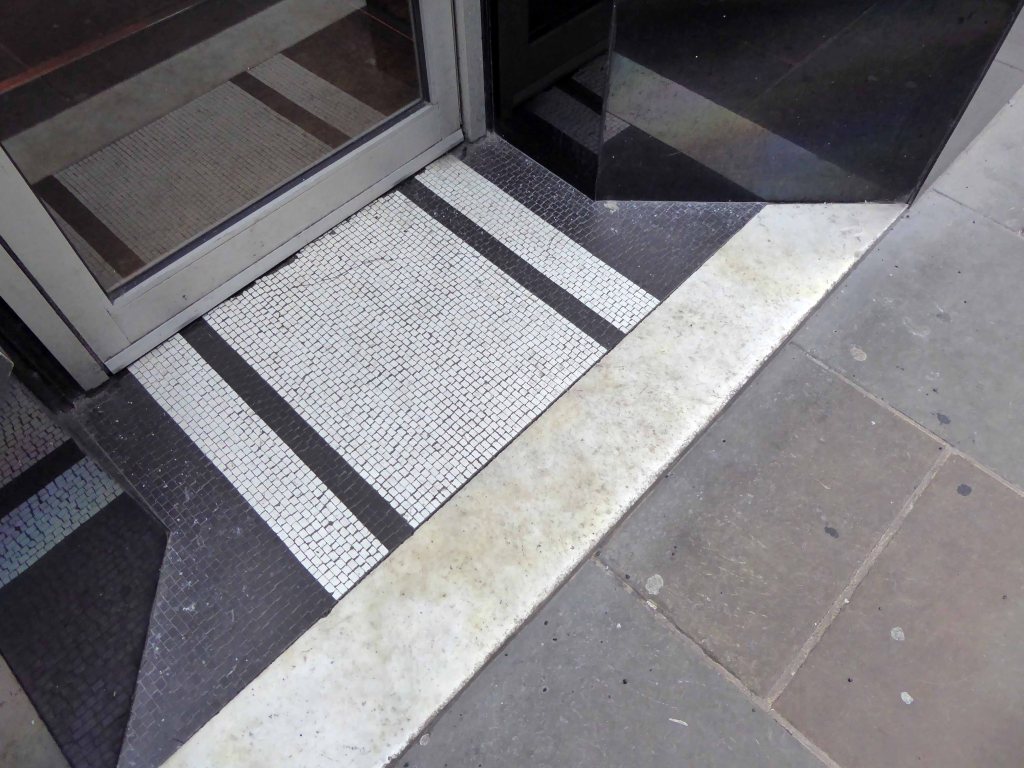
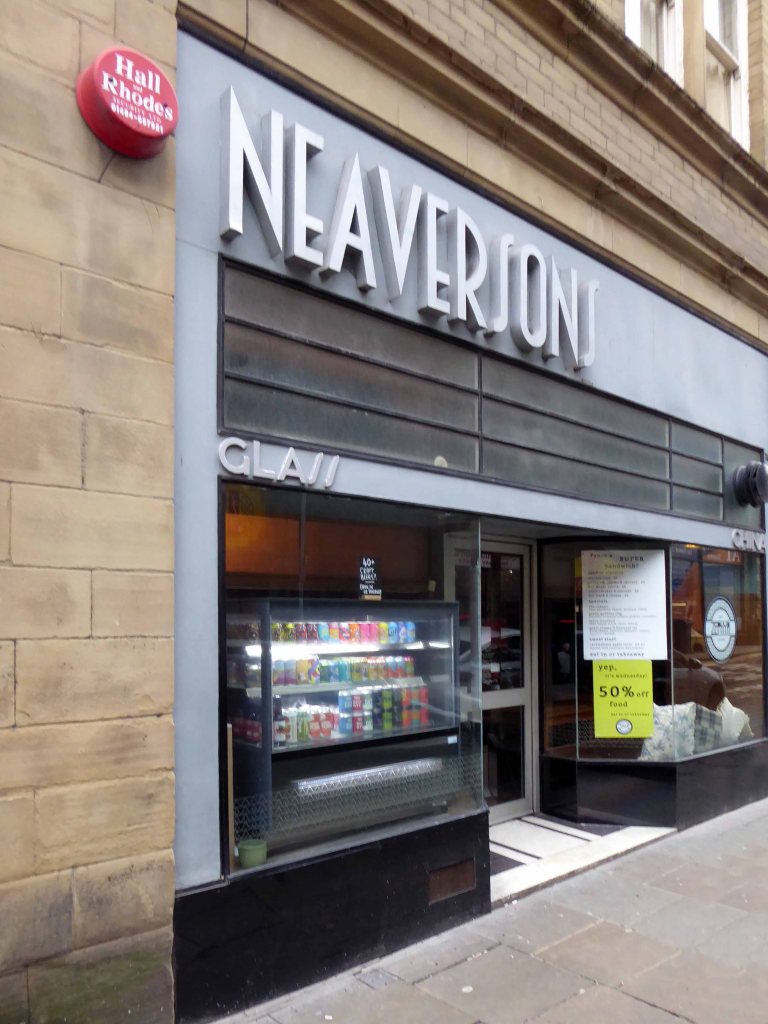
Neaverson’s – purveyors of pottery and glass began life in 1893 in premises on Cross Church Street, before moving to the Grade I-listed Byram Street building in 1935.
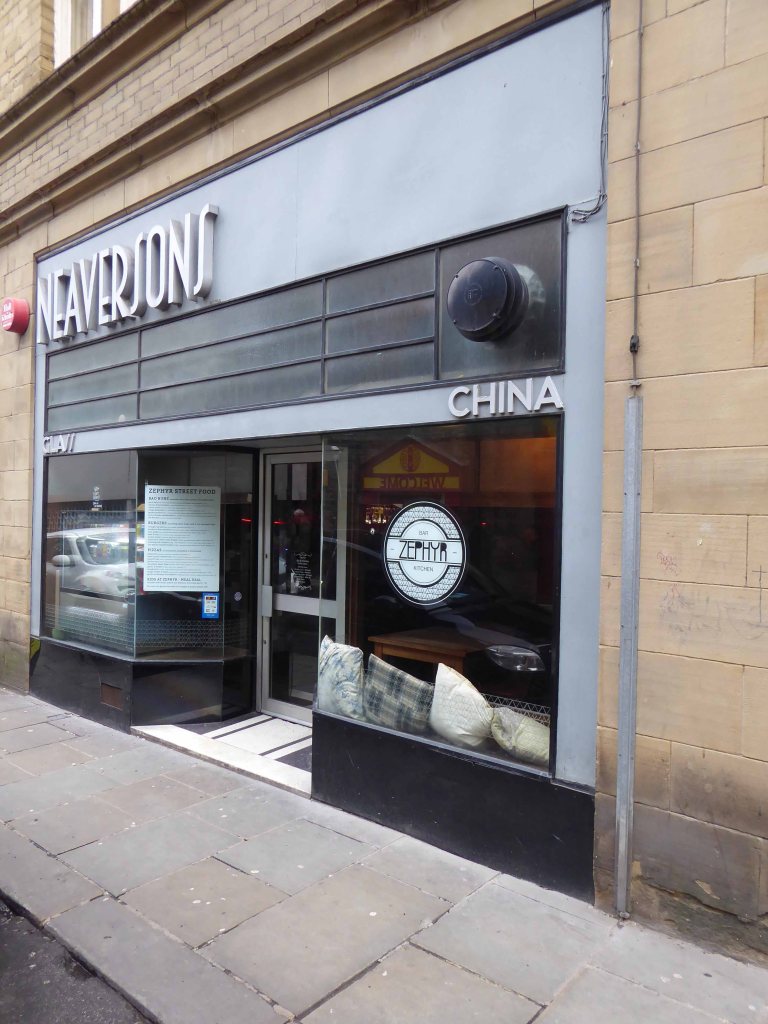
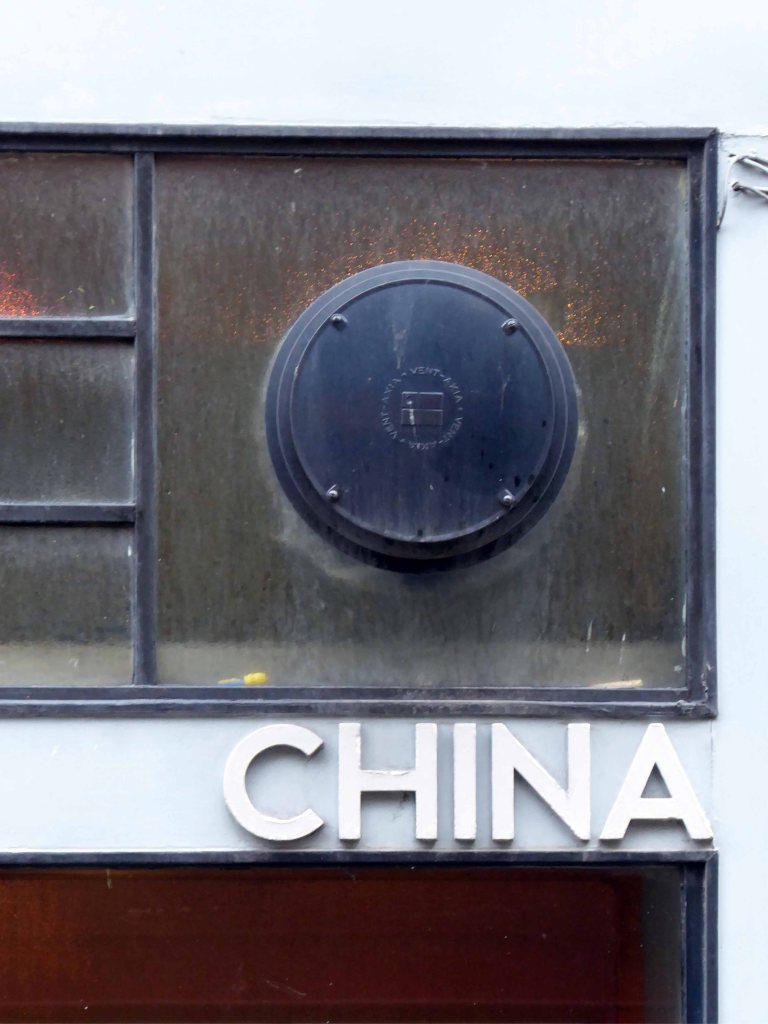
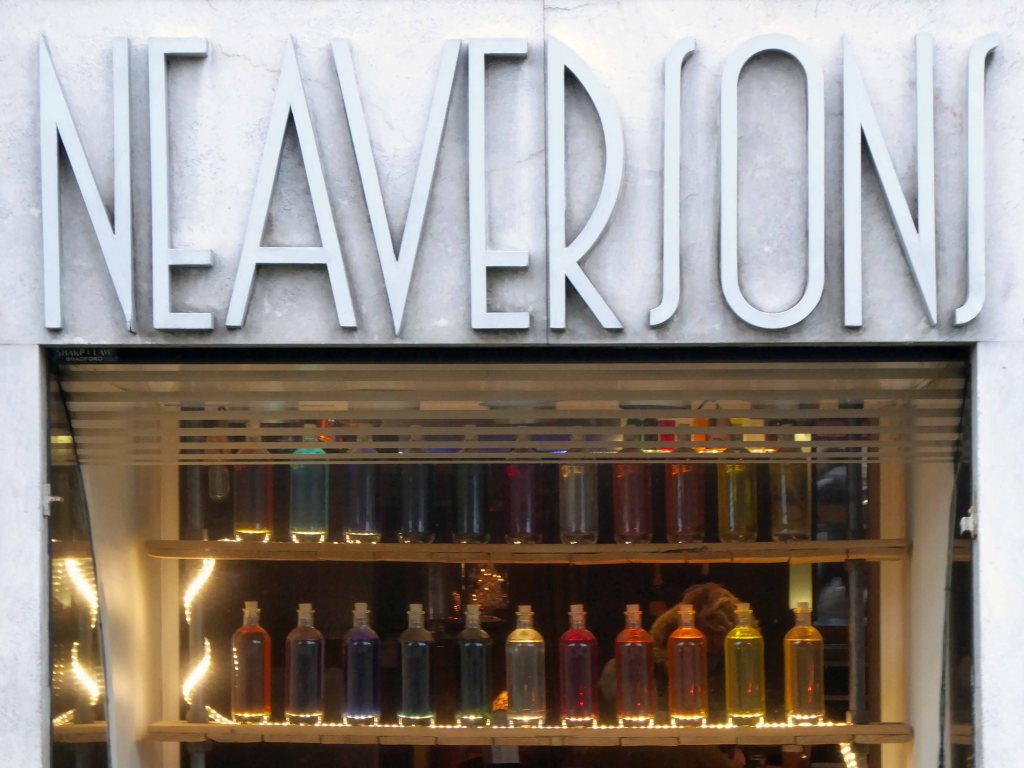
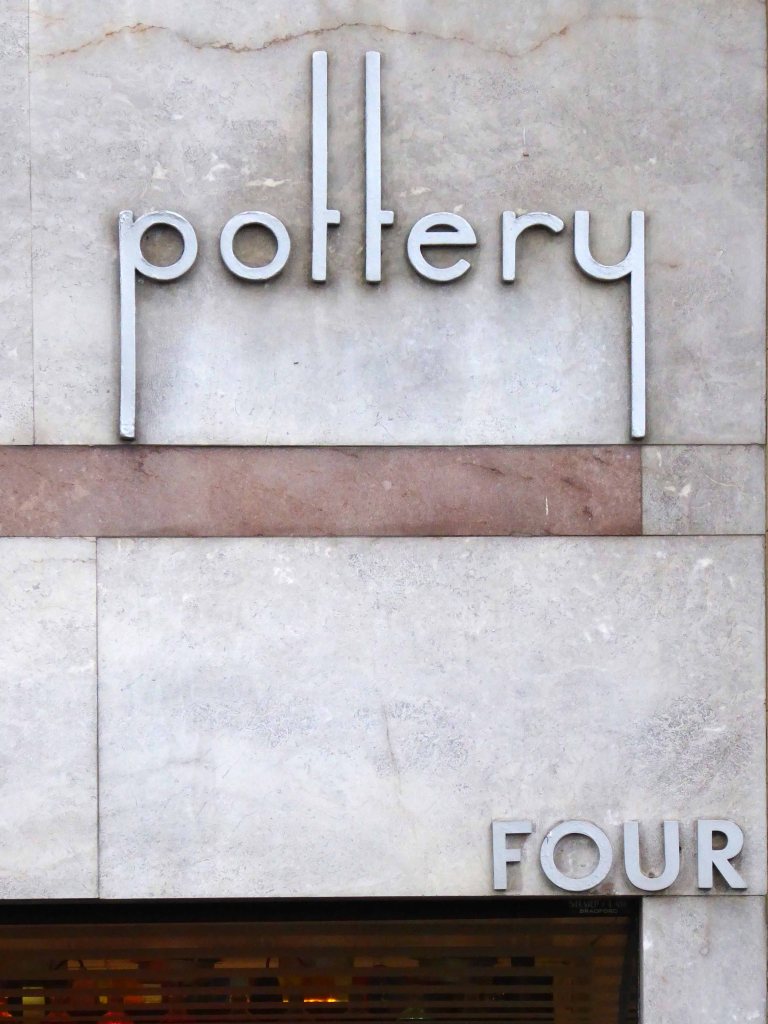
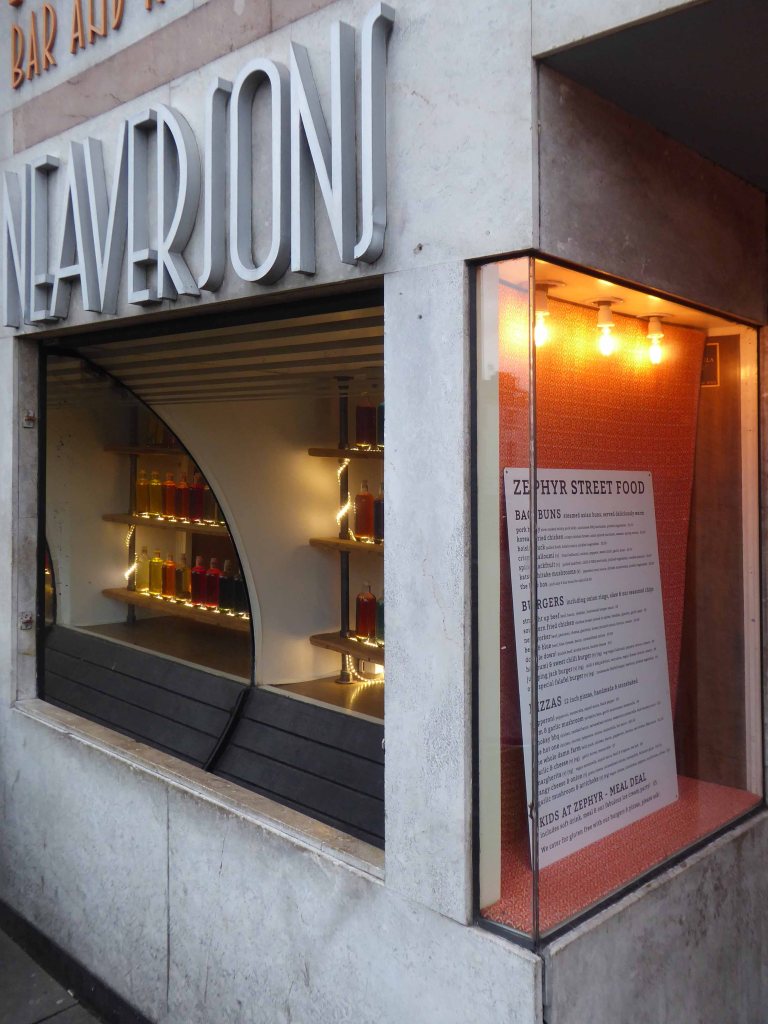
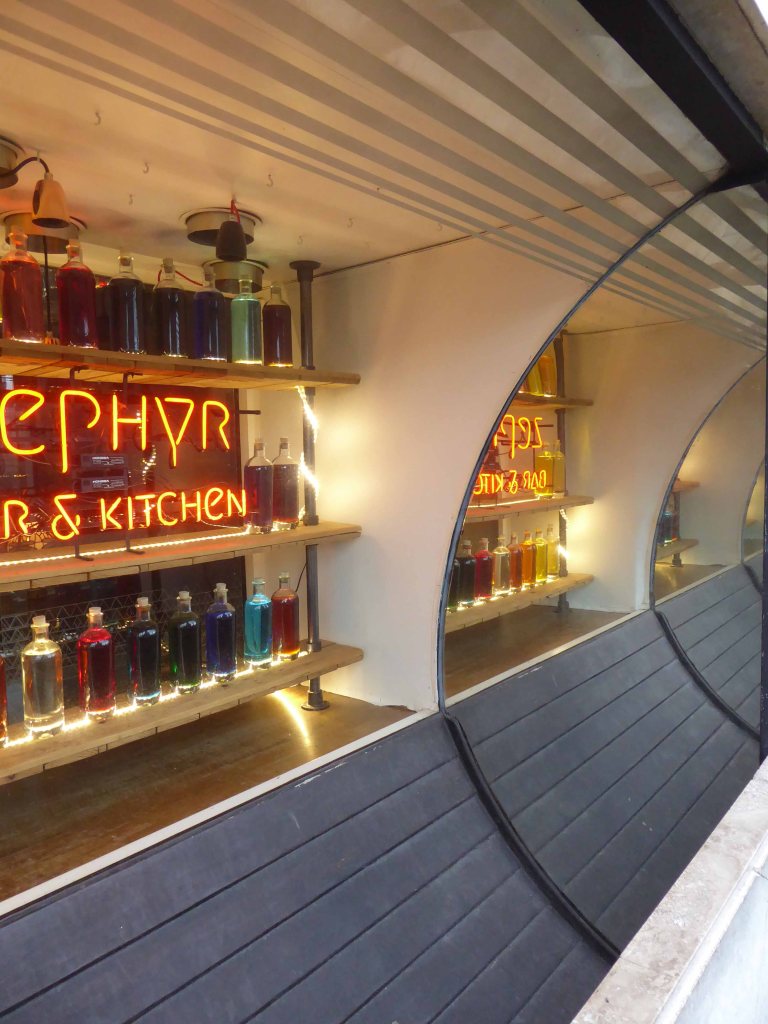
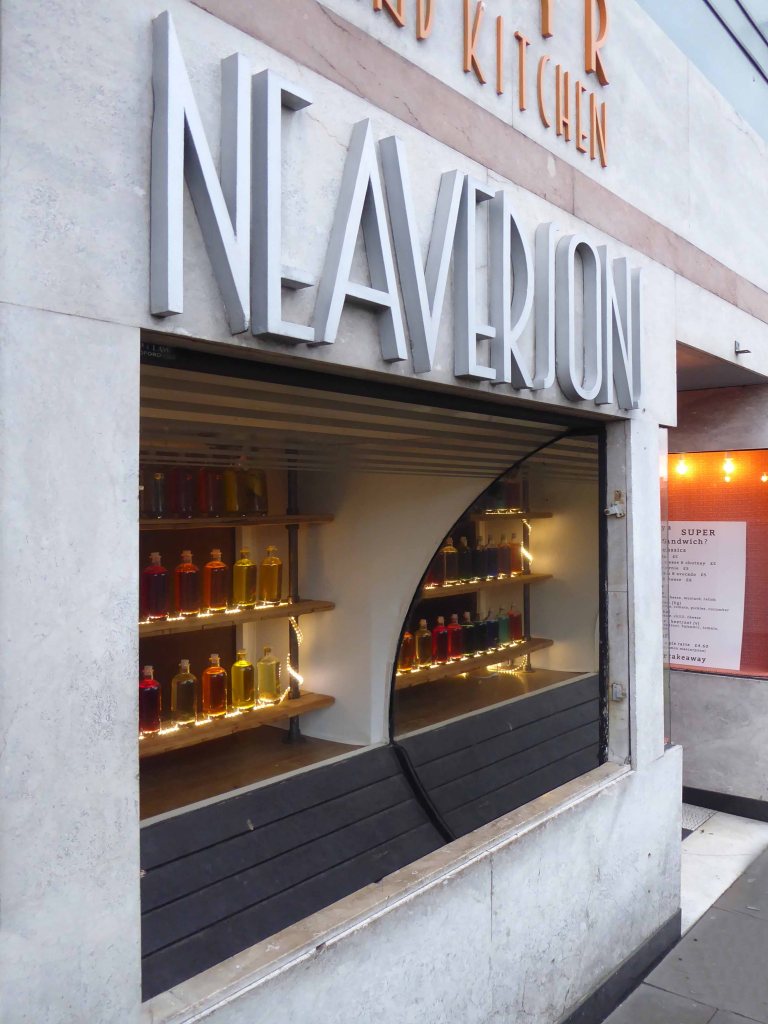
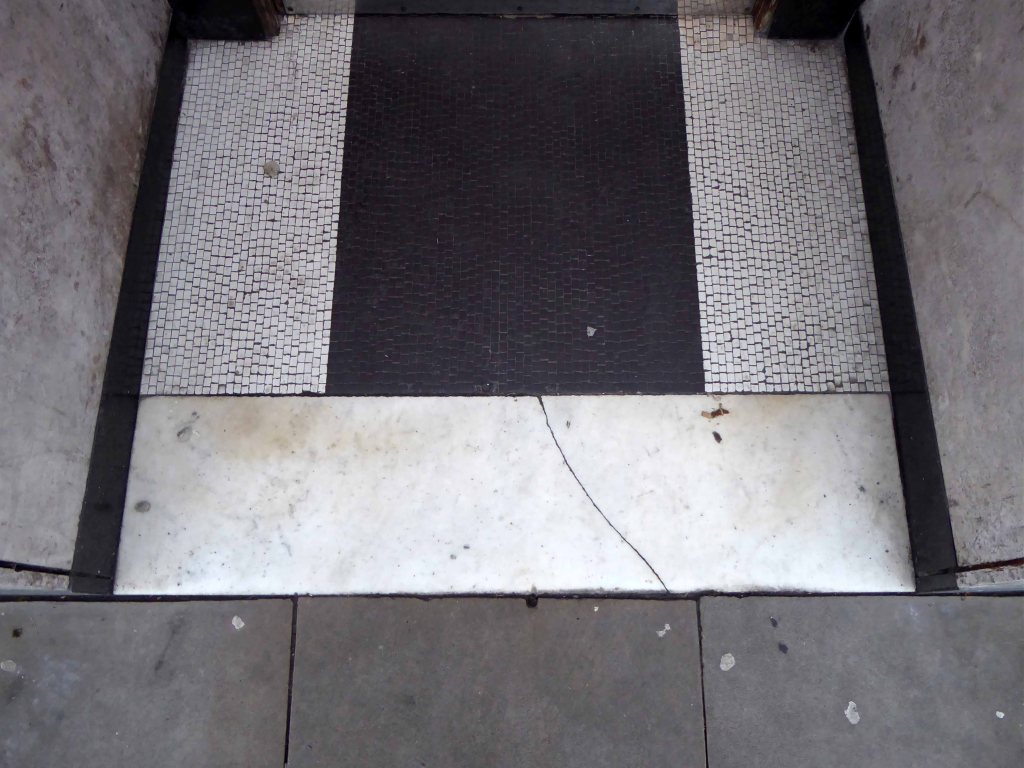
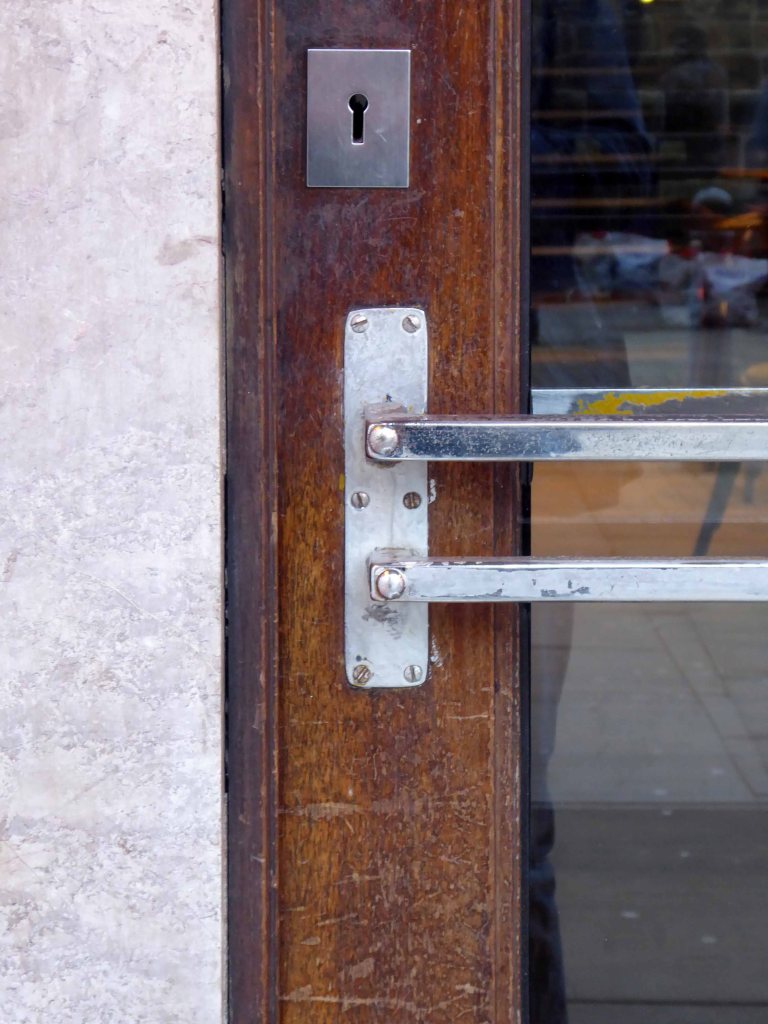
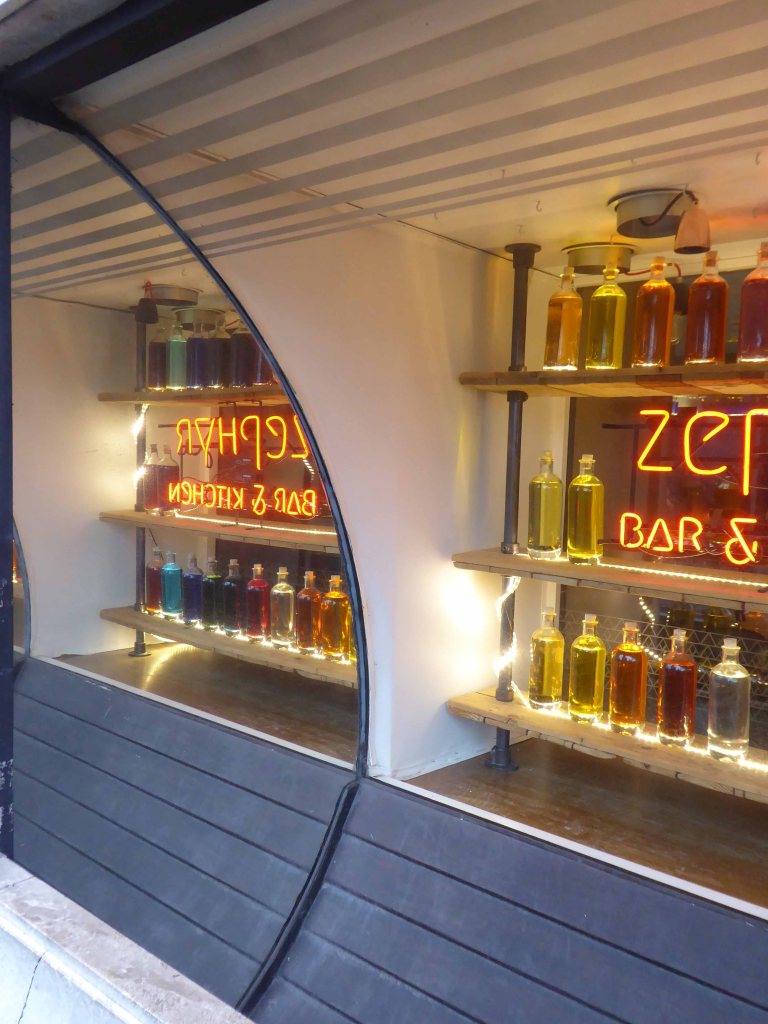
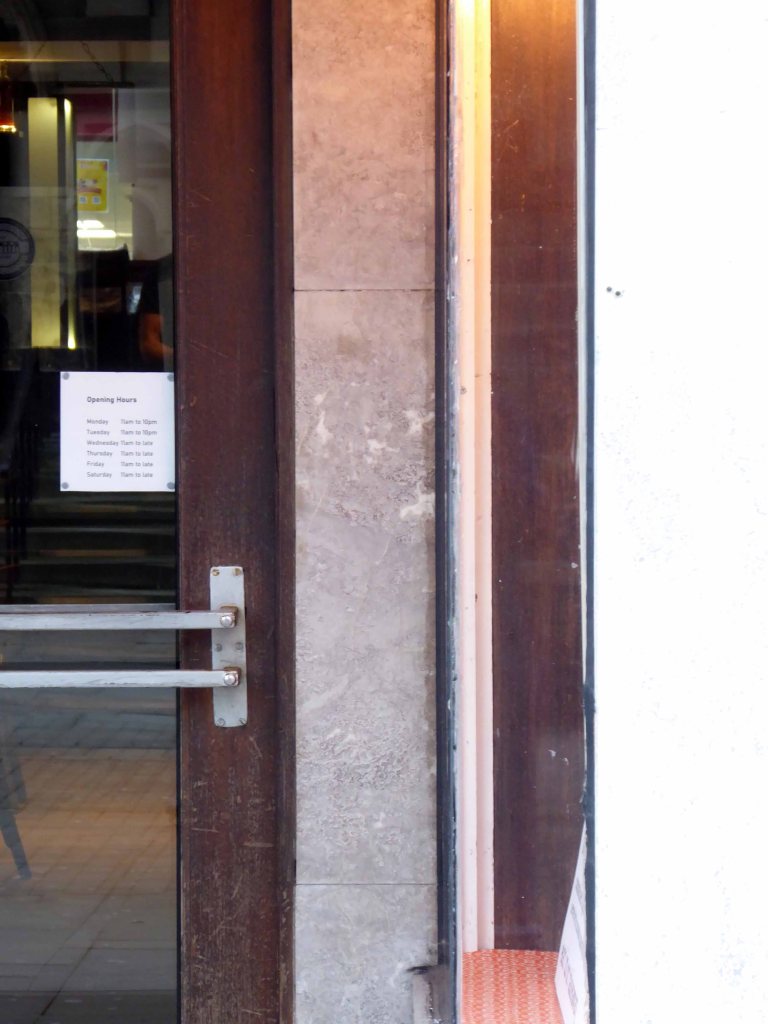
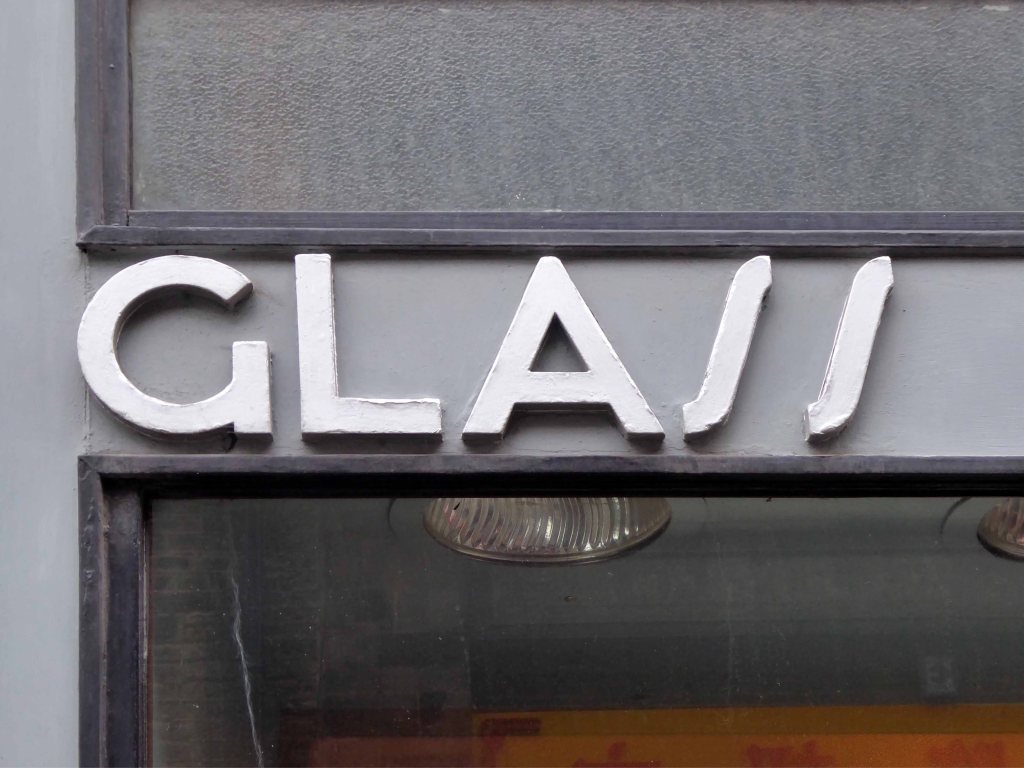
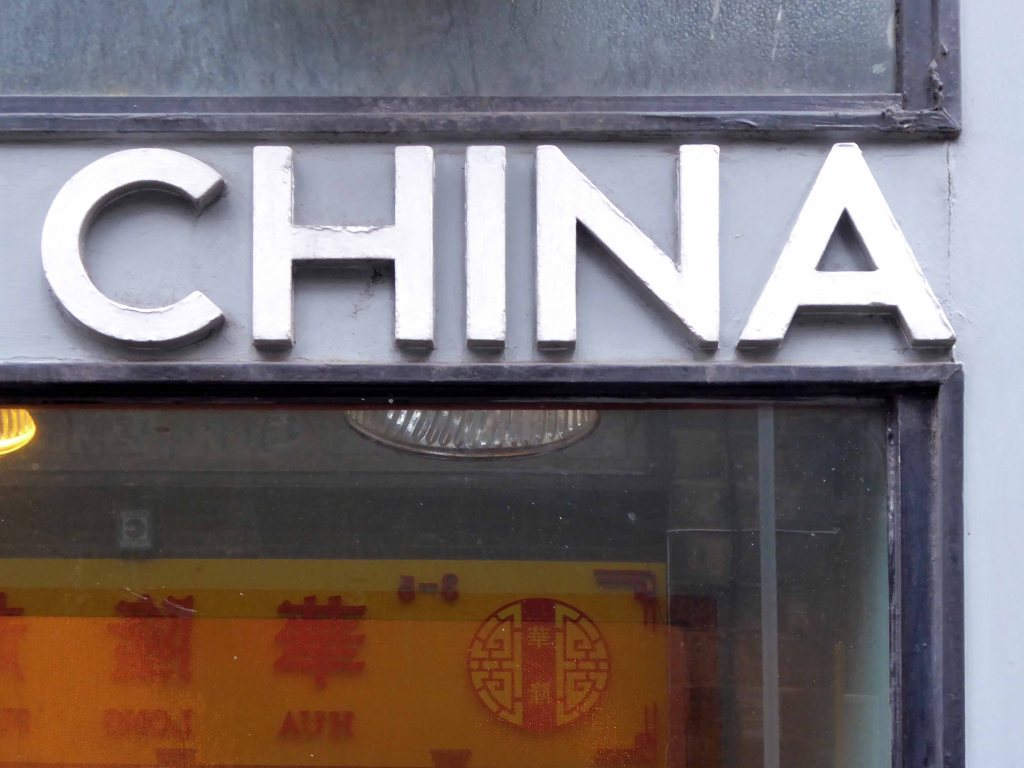
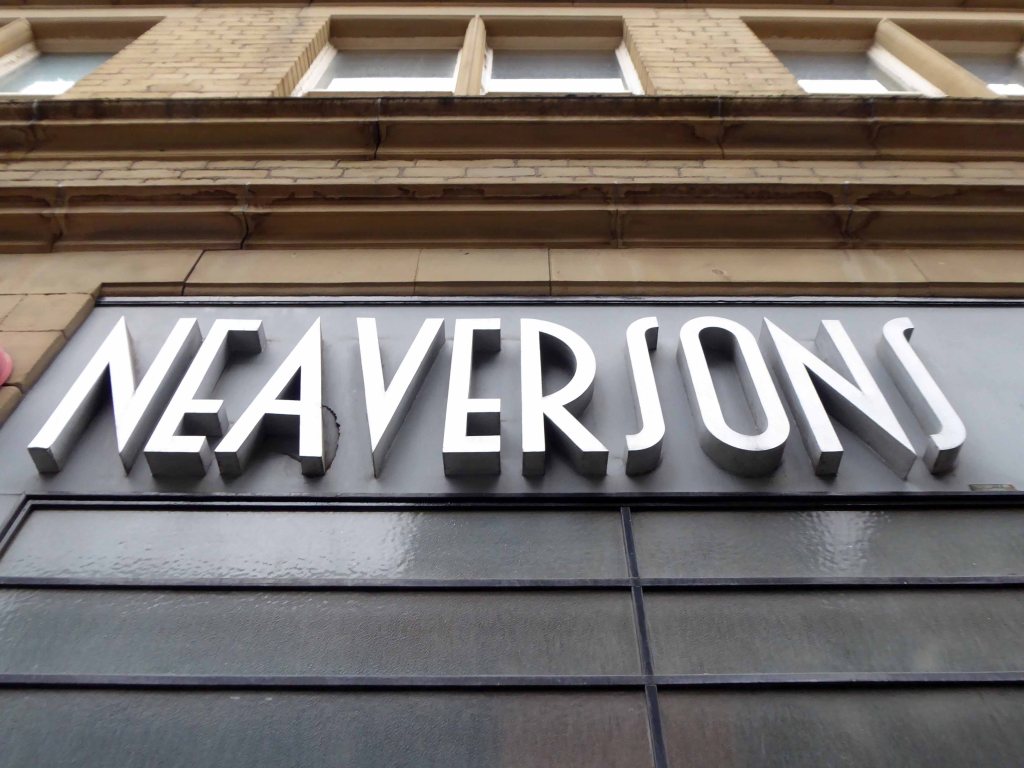
Set to the ground floor of bay 4 is a 1935 Moderne shopfront by Sharp and Law of Bradford. The shopfront is of grey and pink/beige marble with unmoulded windows that are curved to eliminate reflection, and has a glazed door set within a recessed porch. Set below the top of the shopfront is a ribbon window with dark tinted glazing and slender vertical and horizontal muntin bars arranged in a geometric pattern. The original metal signage in stylised sans-serif relief lettering reads ‘NEAVERSONS’, ‘pottery’ and ‘four’.
Thought to echo Susie Cooper’s London shop and unswervingly now – the fascia must have been something of a shock to the taciturn Tykes.
There is not a day goes by when I don’t see some of my customers asking what went wrong. They think I was a failure and that is so not the truth.
Along came a restaurant:
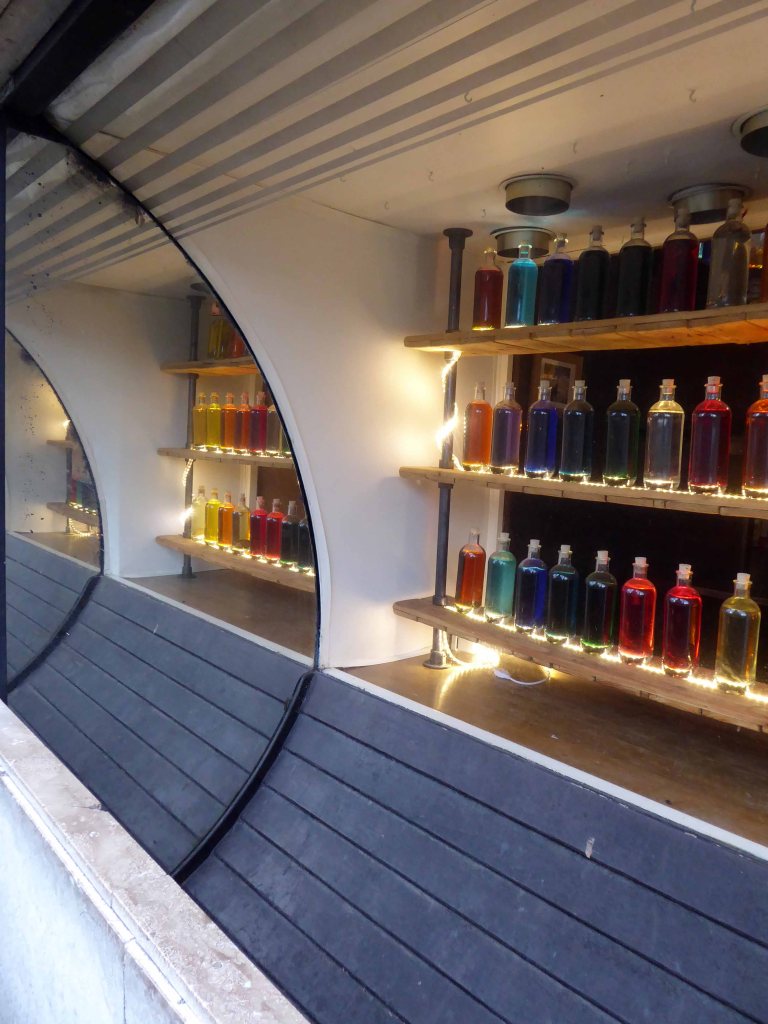
The Grade II 1930’s interior has been refurbished by the new owners and exudes understated sophistication.
“Wow, I feel like I’m in London,” said Trish as she stepped into the newly-opened Neaversons restaurant, having just arrived on the train from the capital.
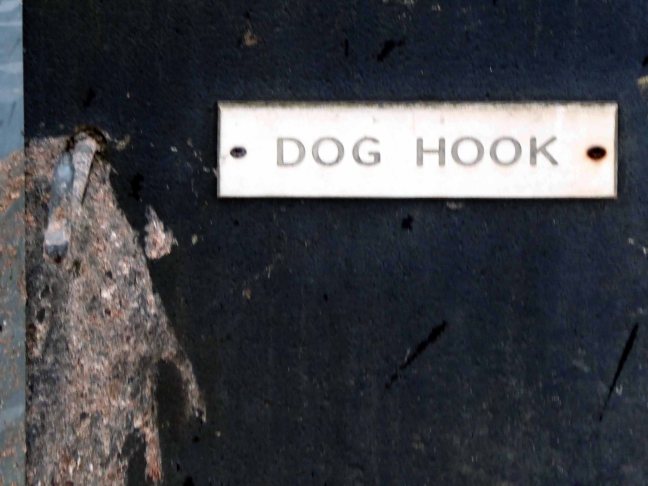
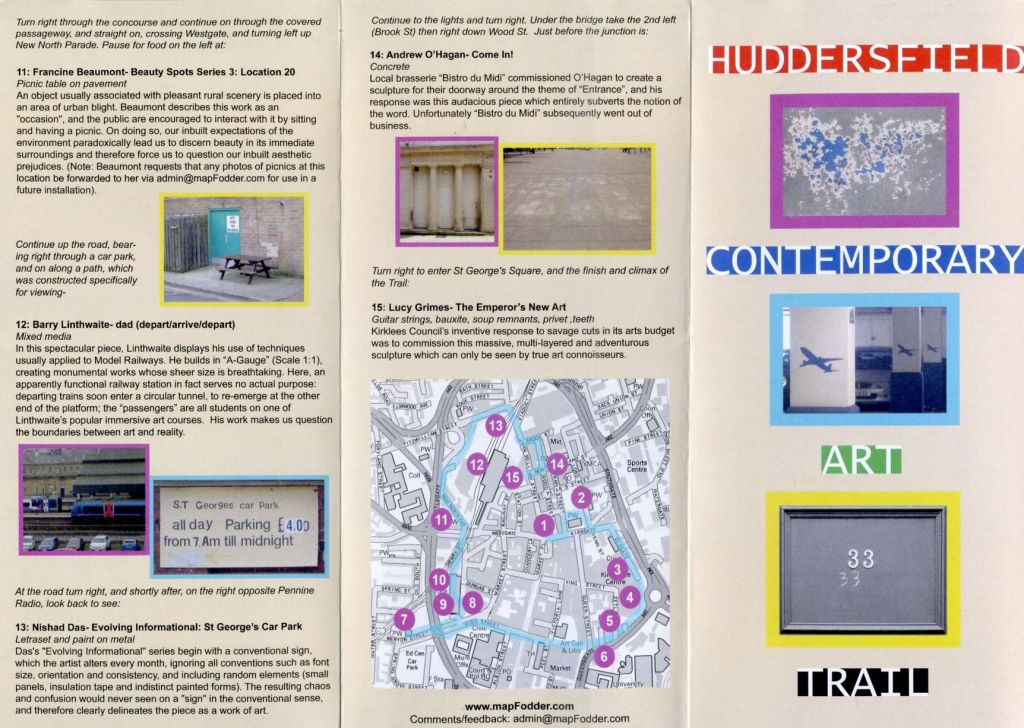
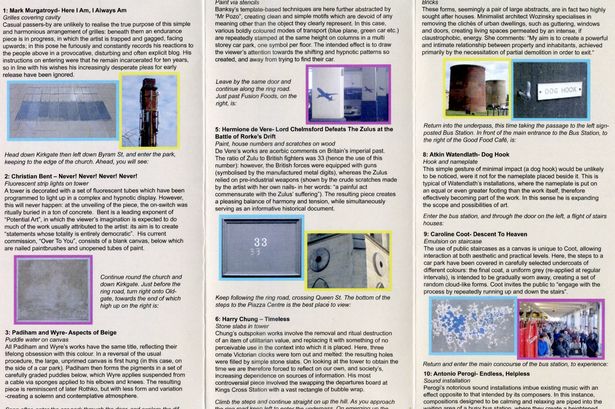
An alternate art trip devised by local art trippers Red Fodder.
We set forth from Huddersfield Station on Monday 13th January 2020 at the prearranged time of 14.00 hours. The weather was resolutely overcast and increasingly cold, with an ever present threat of rain.
Never to be knowingly deterred we made good progress around the town – we were hungry for art, the more contemporary the better.
Almost every avenue, alley and byway explored these are the snaps I snapped during our crazy Kirklees caper.
Along the way I added my own small contribution to the town’s contemporary art stock.
A veil was finally drawn over the afternoon’s cultural caprice with fine glasses of foaming ale in The Grove, where I finally came face to face with the Red Fodder folk for the very first time.
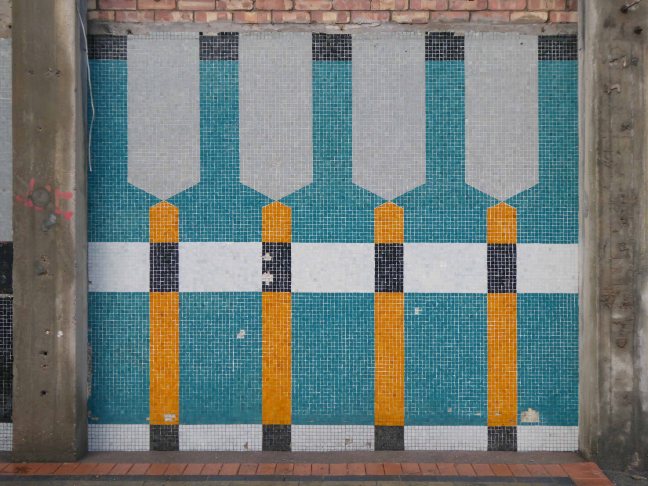
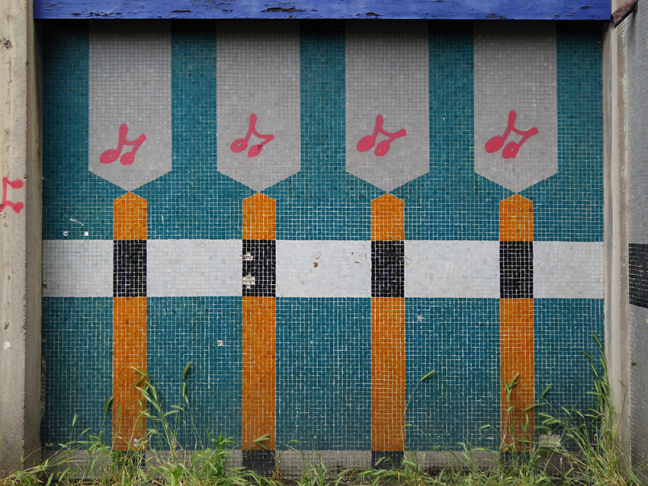
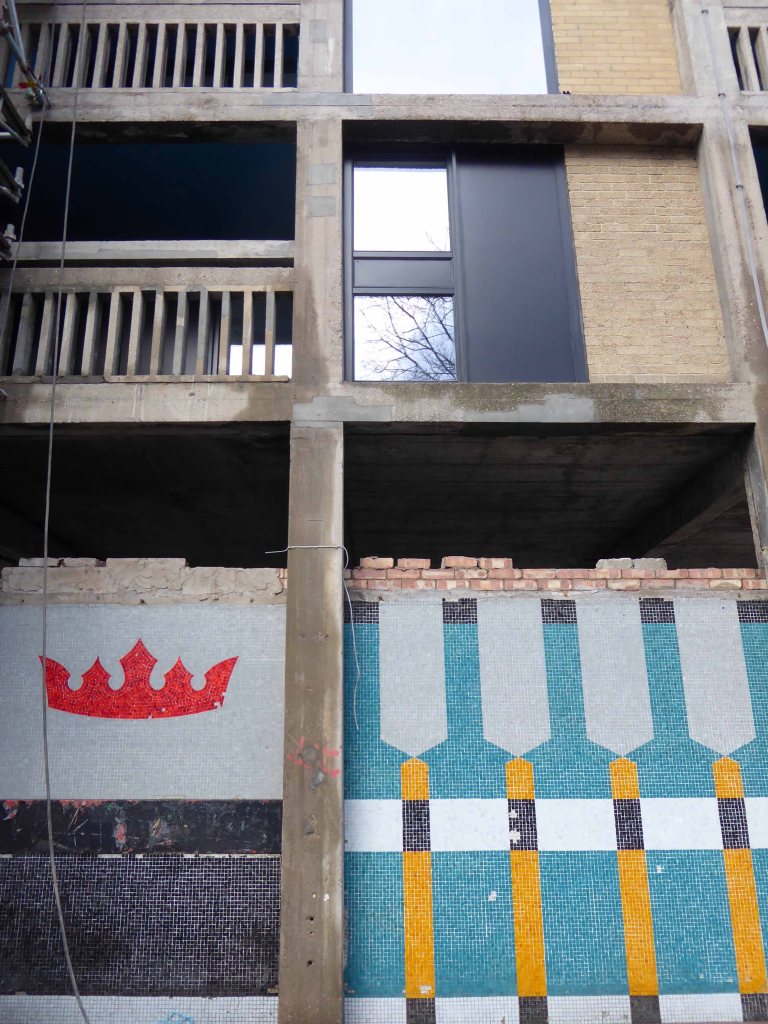
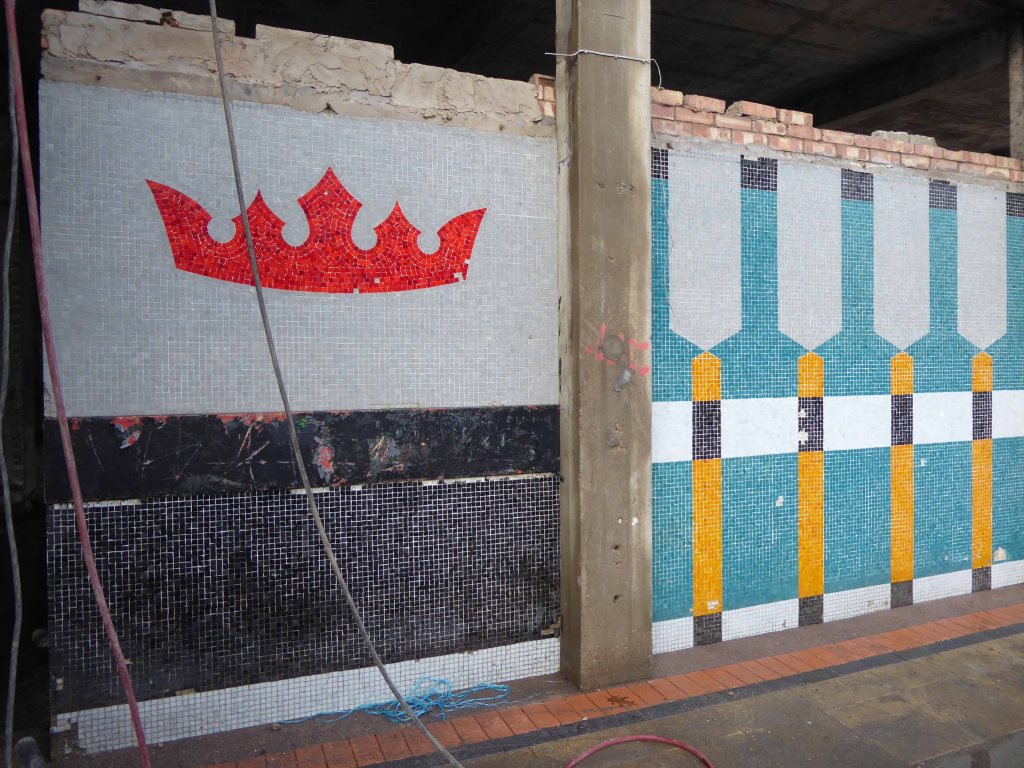
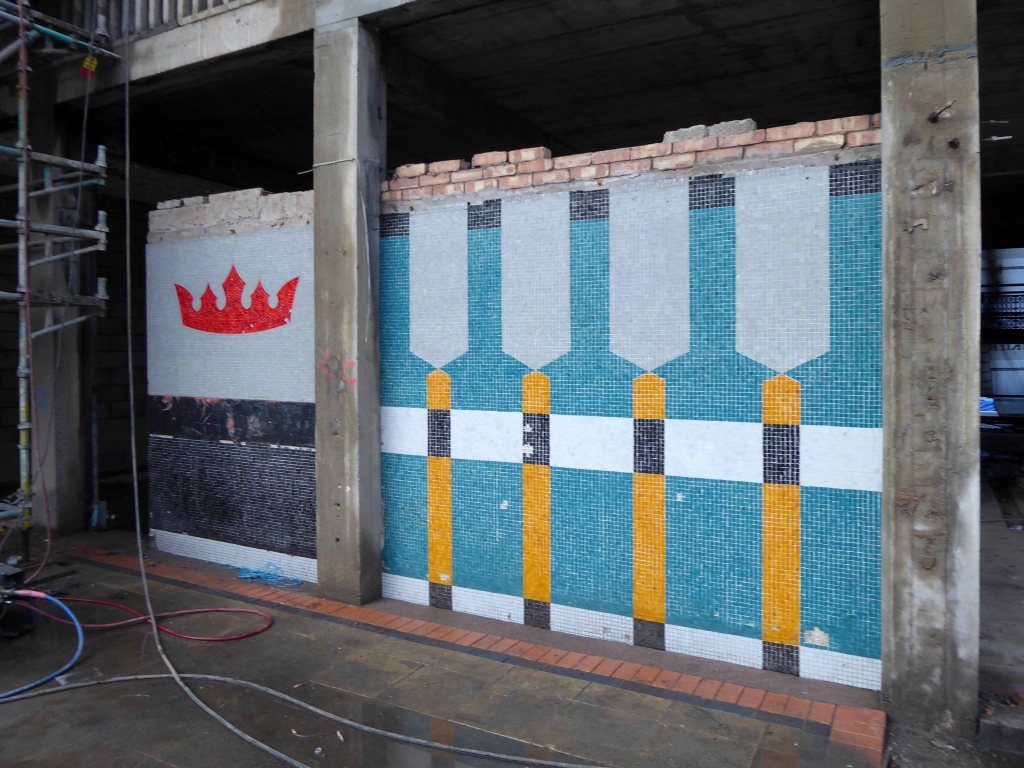
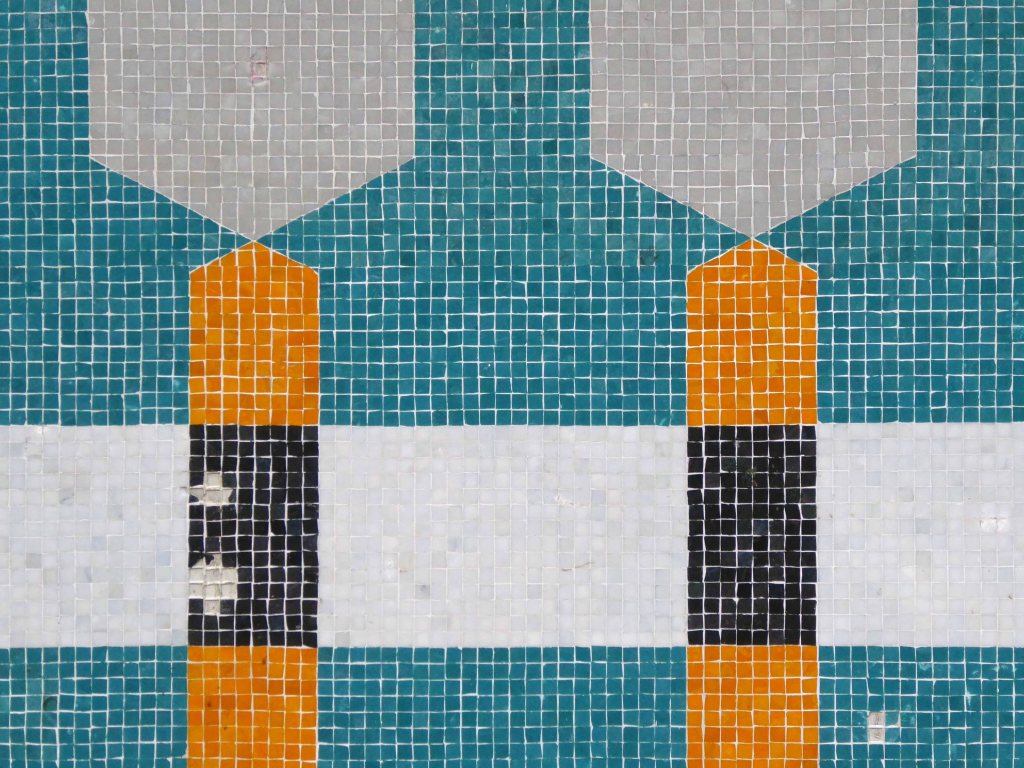
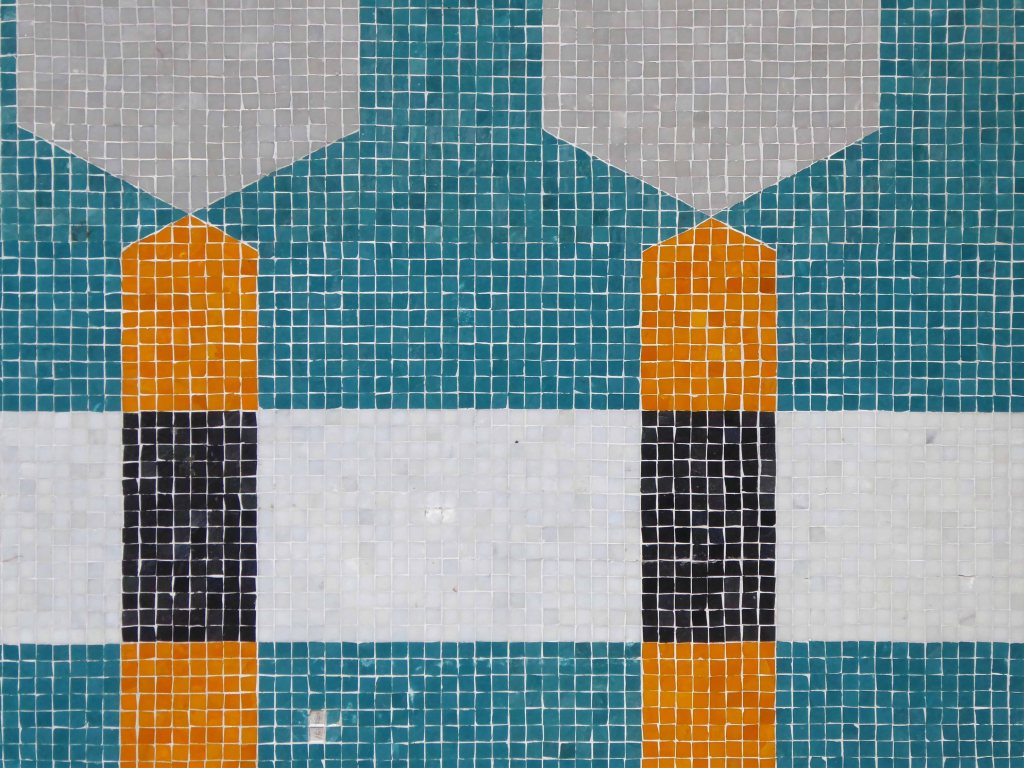
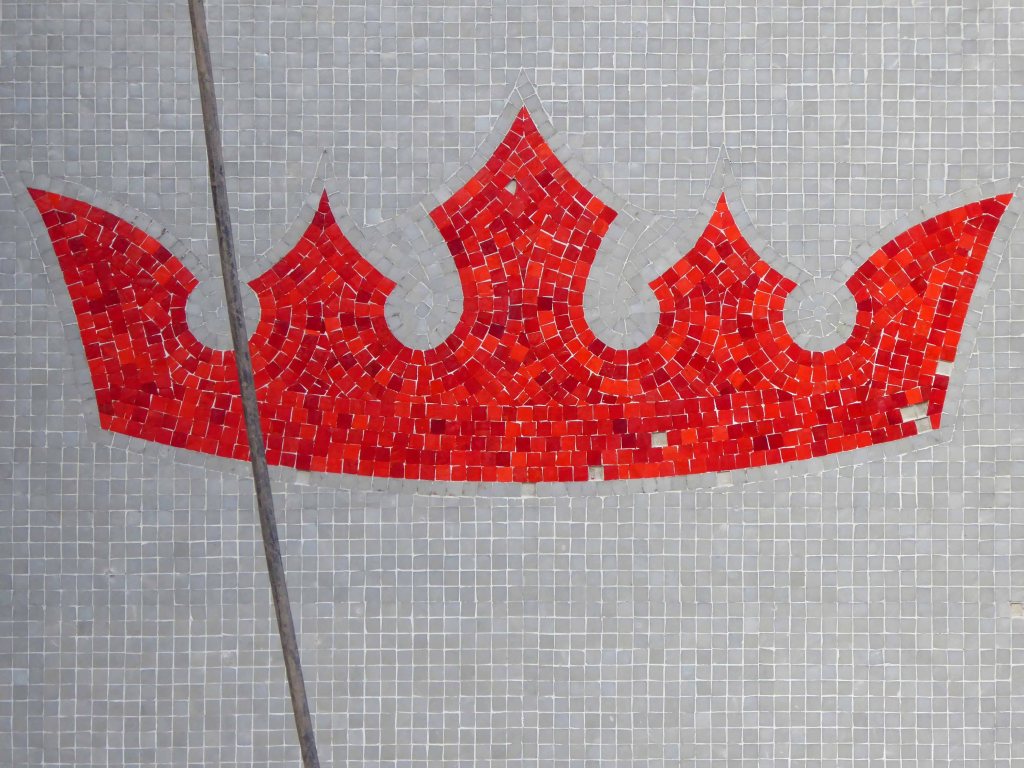
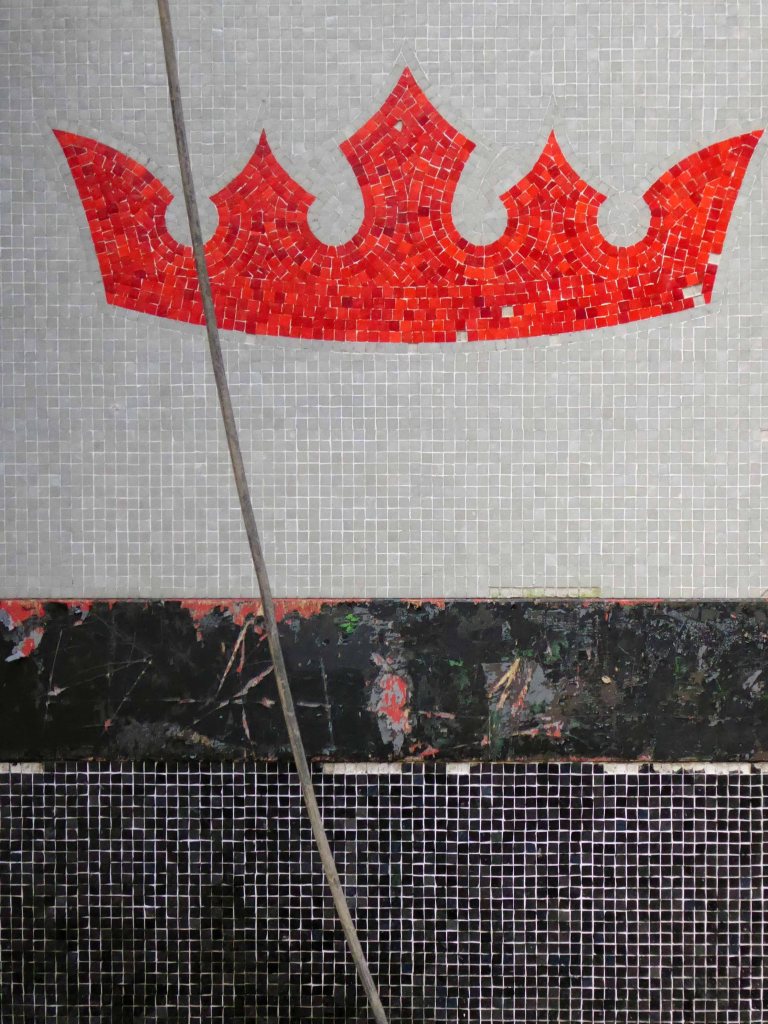
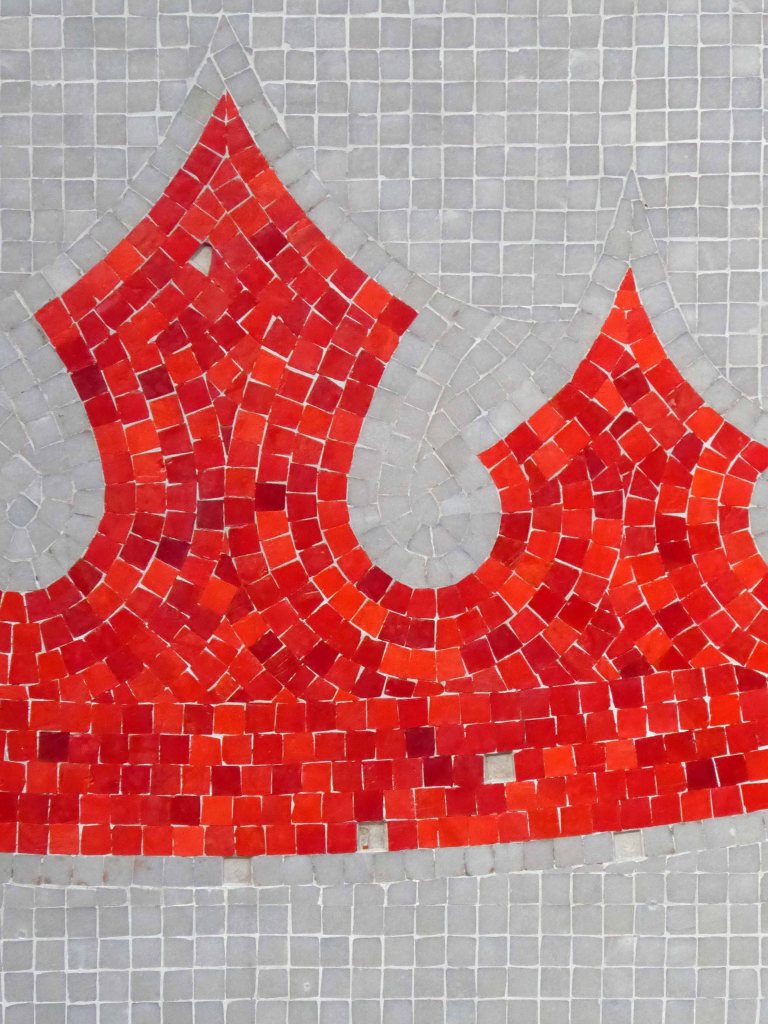
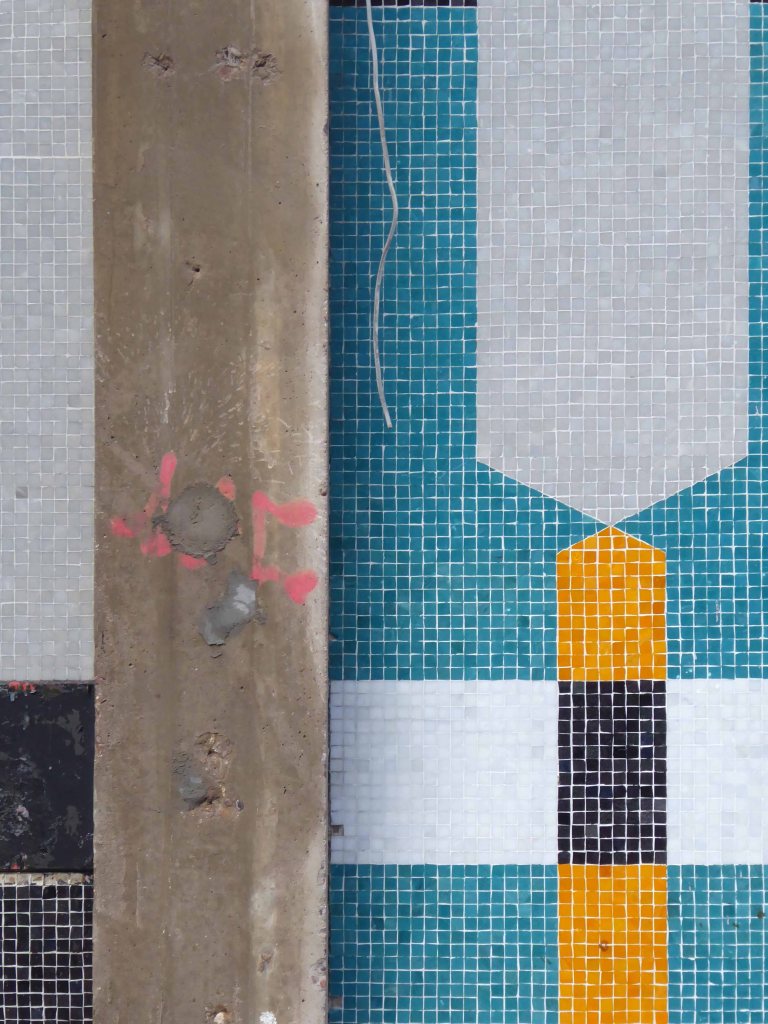
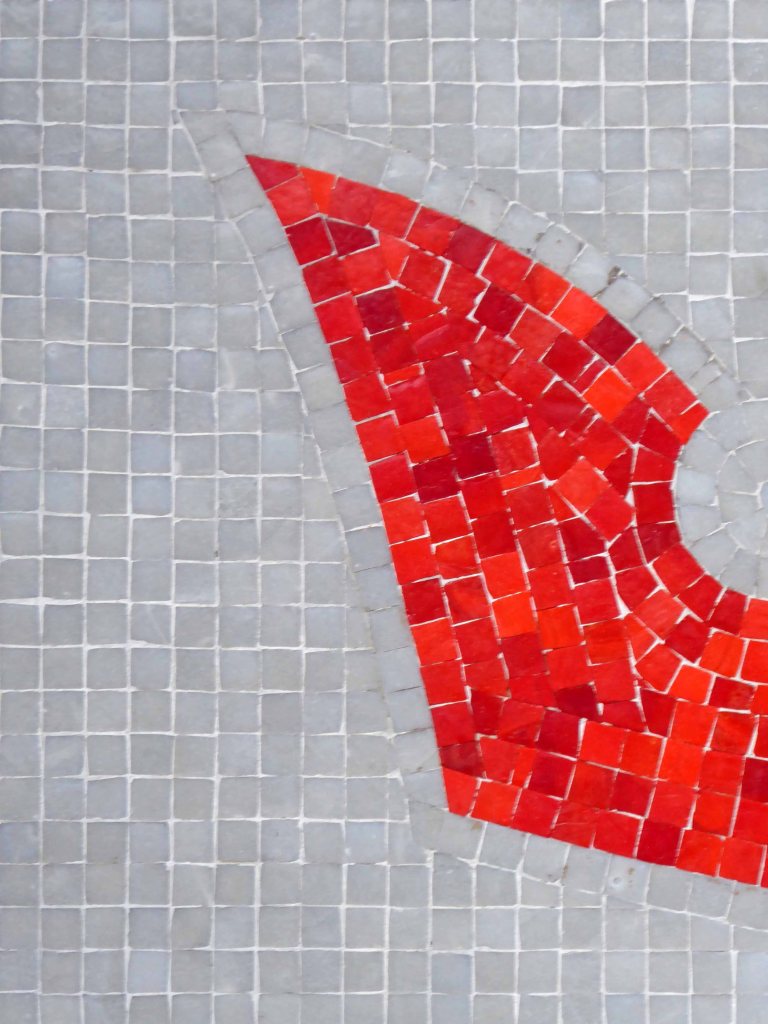
Your bold mosaic whilst once exposed, was sadly disabused, then unthinkingly covered.
Has subsequently been uncovered, steam cleaned and proudly on view, as a central part of the most recent of the estate’s phases of redevelopment.
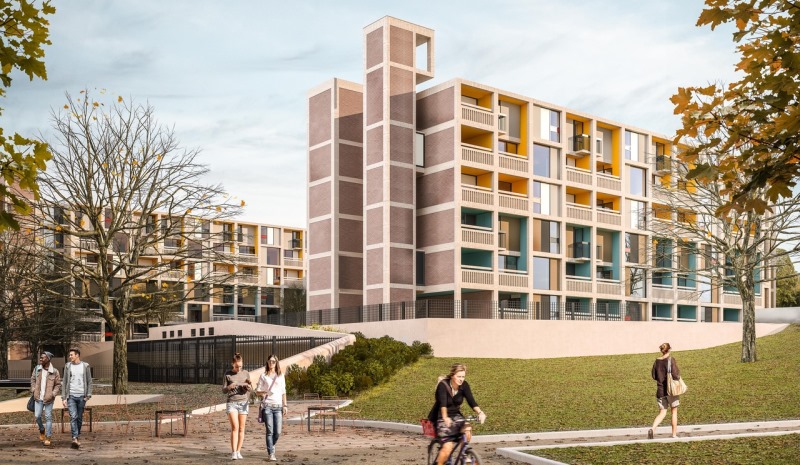
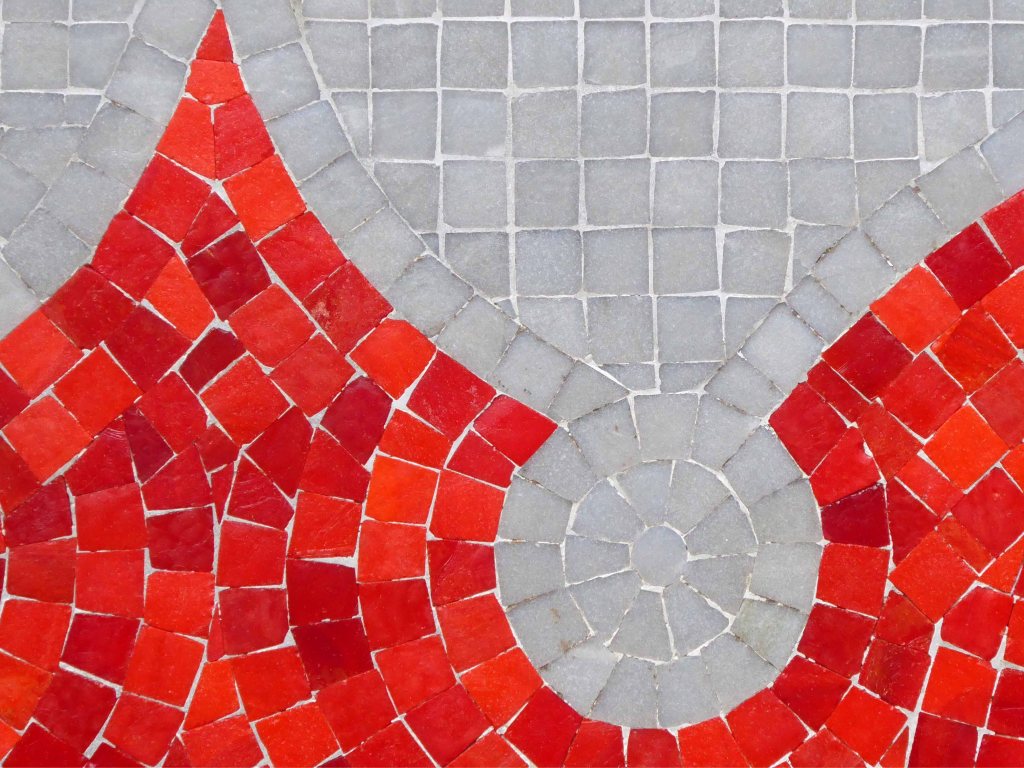
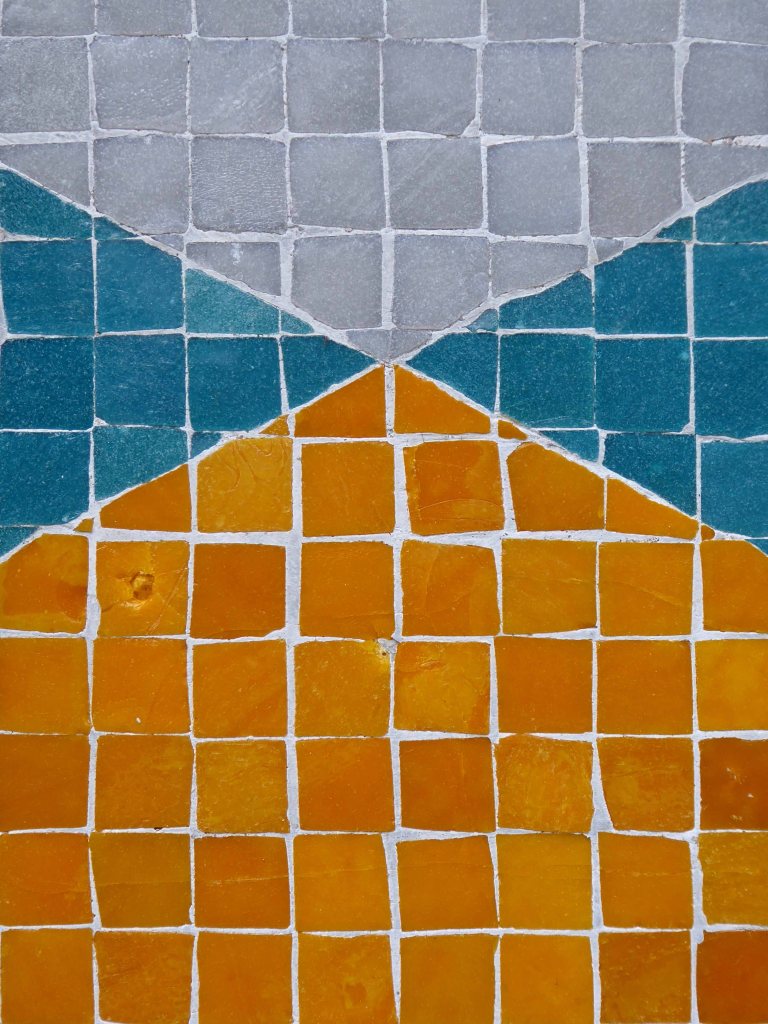
The block is to become student housing, the distinctive tan, turquoise blue and bold red colours of the mosaic, integrated into the banding of the newly refurbished building.
My face was a picture of delight, viewing the multicoloured tesserae – as we were privileged to be guided around the site by Kier Construction, Matthew Borland from Whittam Cox Architects, who are working with Alumno on Béton House and Urban Splash – my thanks to all and particularly PR Surriya Falconer.
So here it is living and breathing the South Yorkshire air once more.
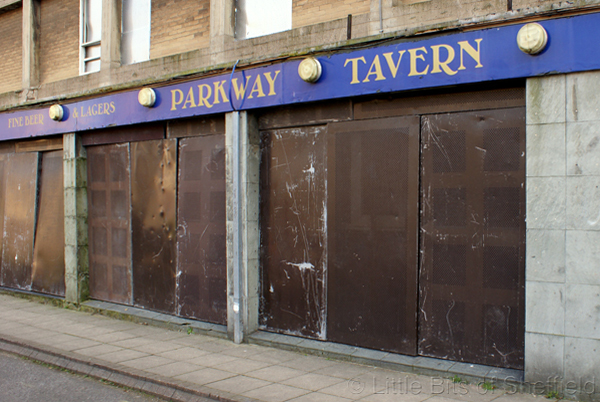
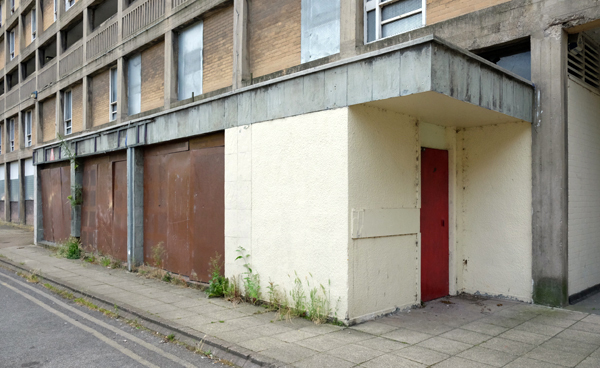
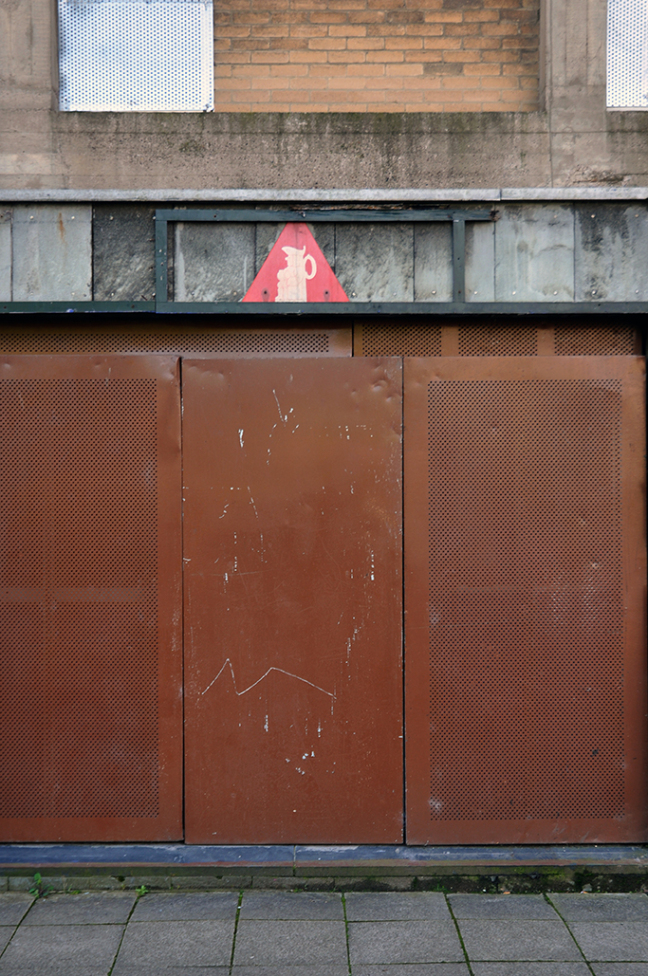
Alas the Parkway is a pub no more – simply an empty shell.
But hush – can you not catch the chink of pint pots and gales of merry laughter, carried gently on the passing breeze?
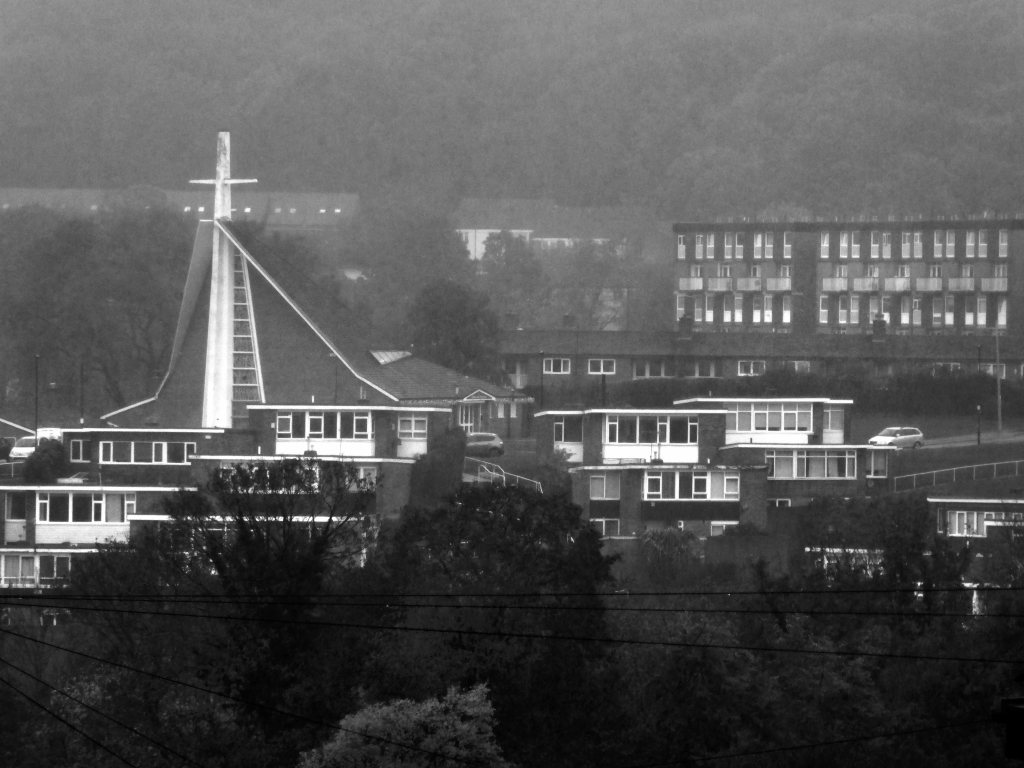
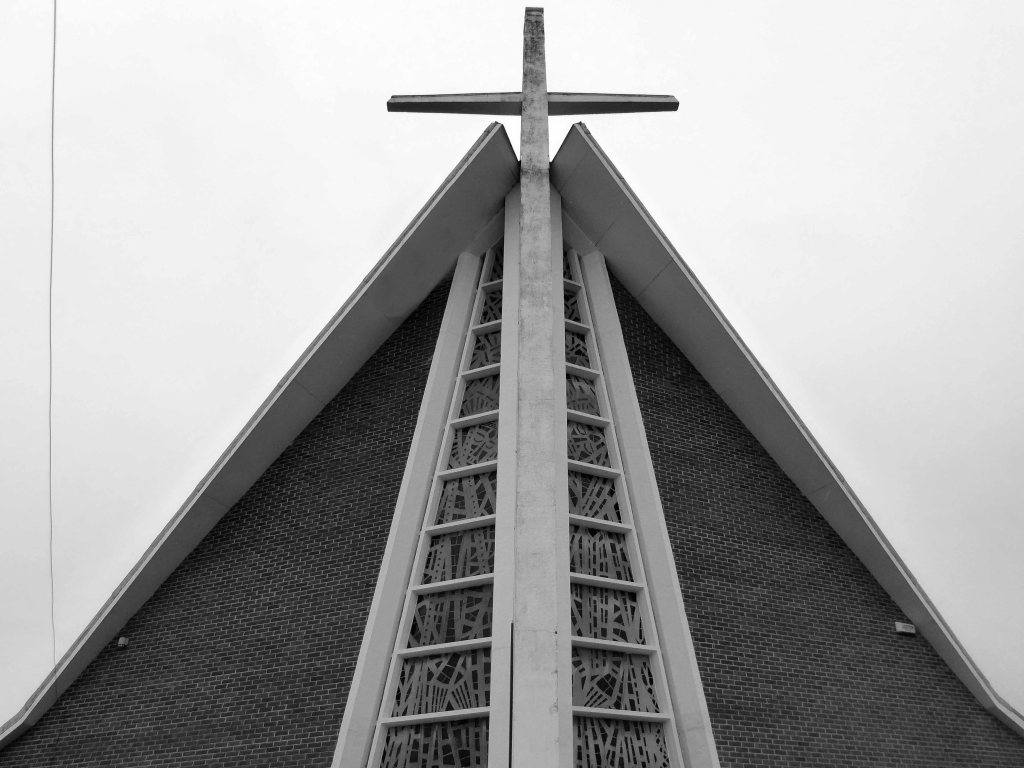
Holy Cross is positioned in a spectacular position among the houses on the Rollestone hillside.
Holy Cross is a church for people of all ages and stages of life.
Apart from the warm welcome at Holy Cross, you will always find something that is relevant to your age and stage in life – however old you are and whatever walk of life you come from.
It has a canted front which is triangular in shape which has a large white cross at its apex.
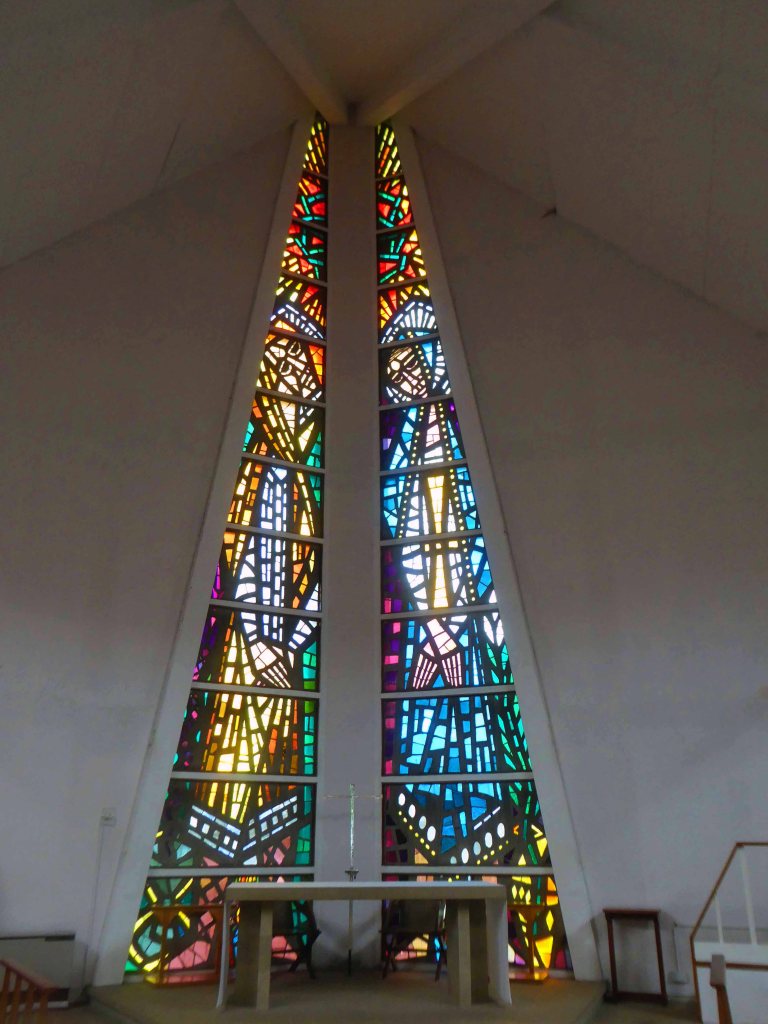
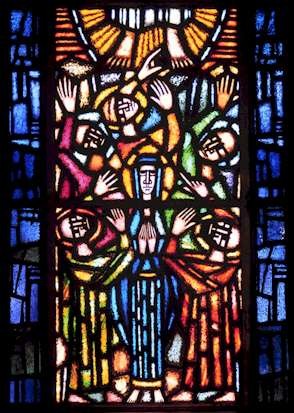
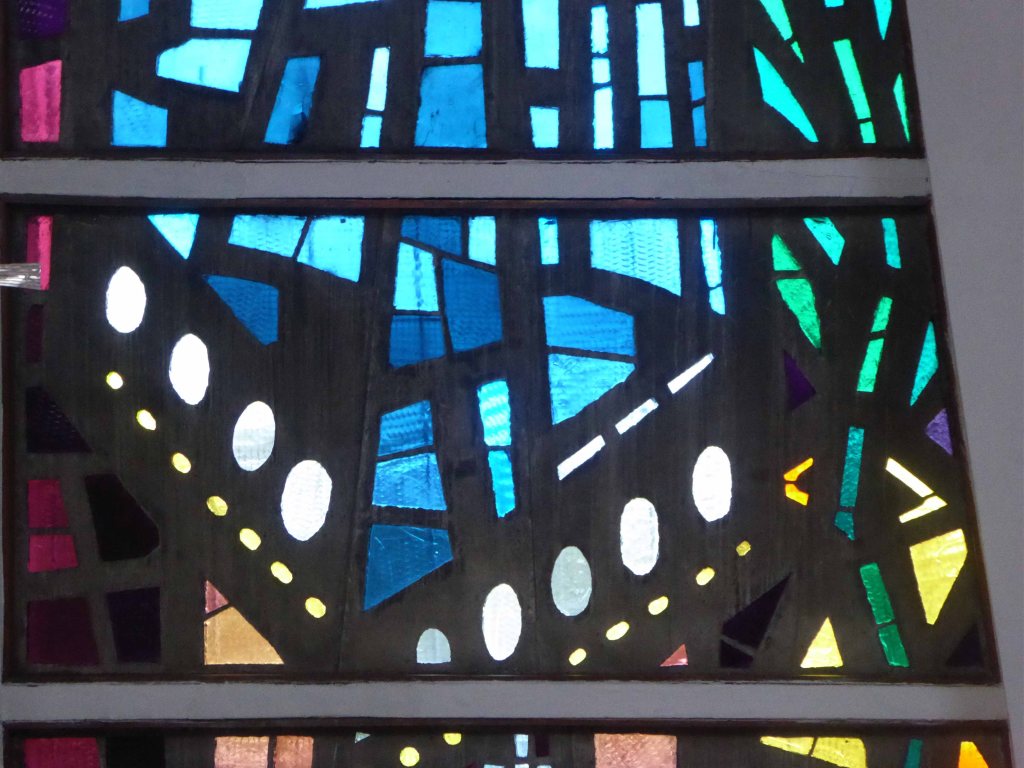
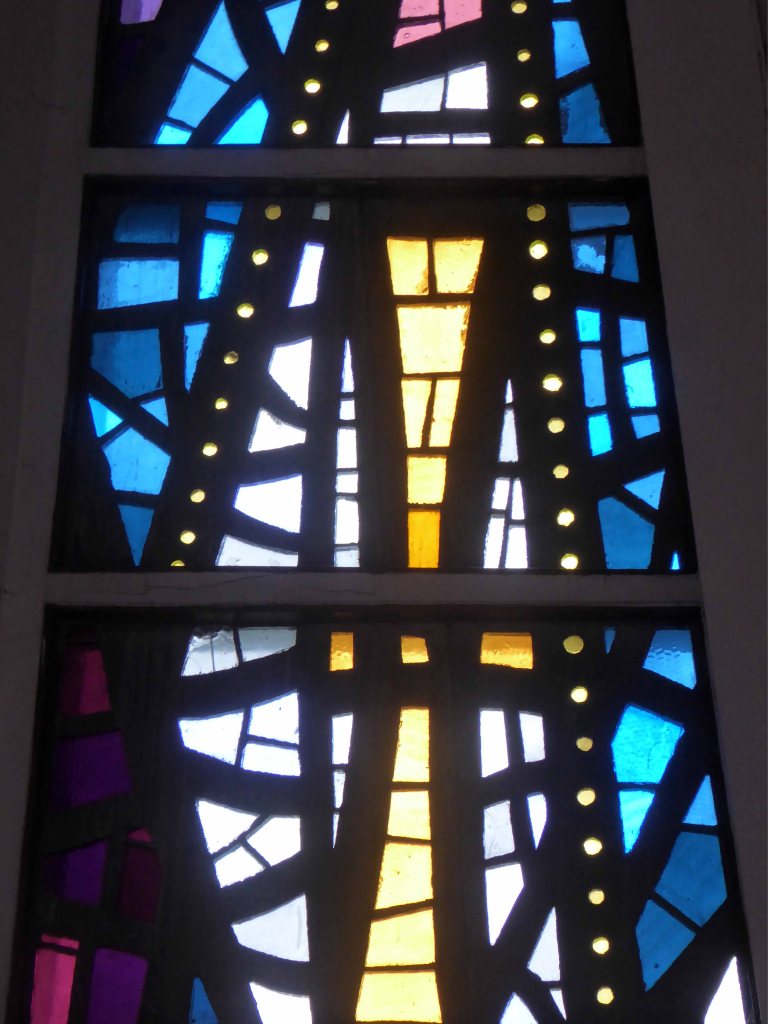
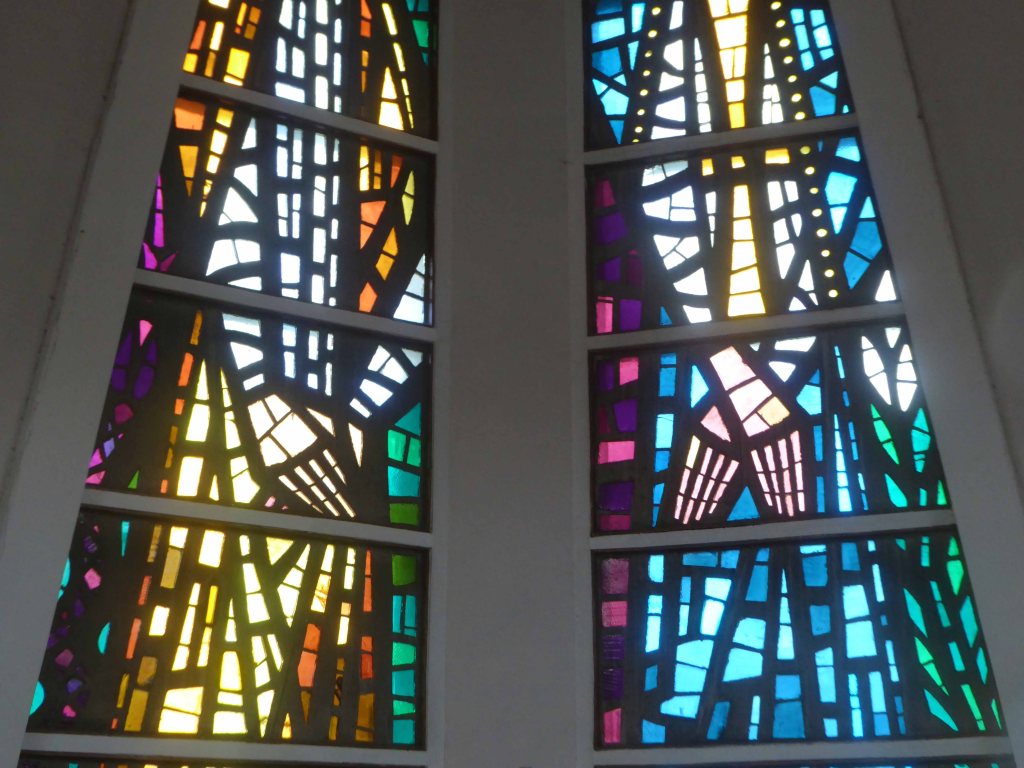
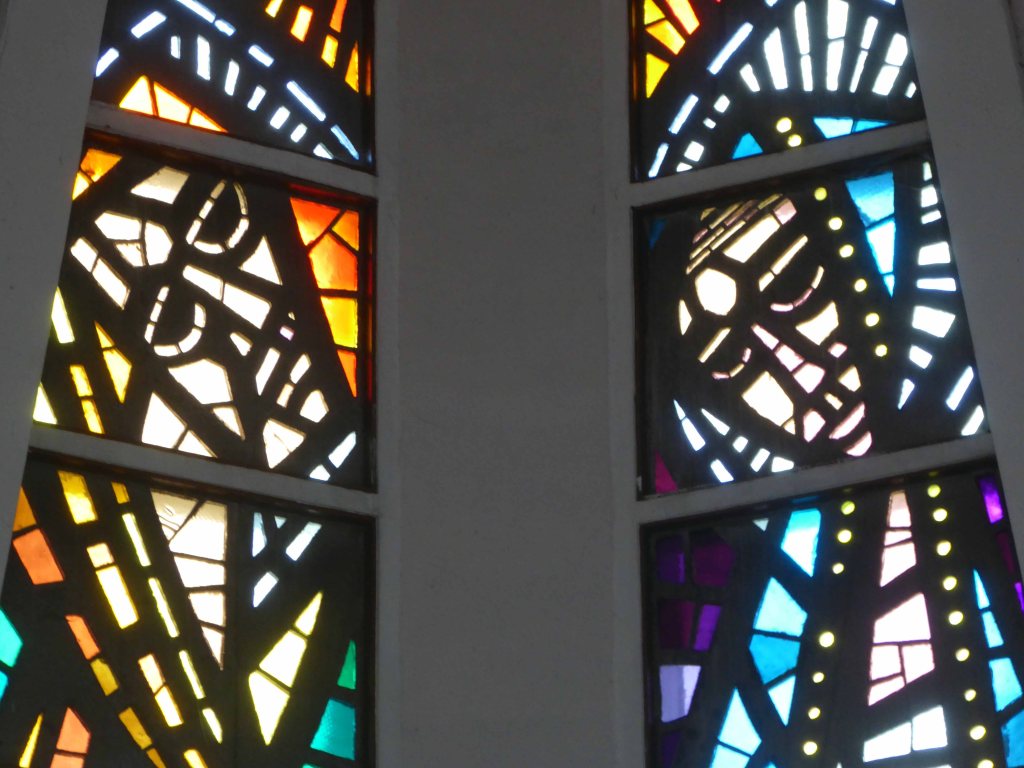
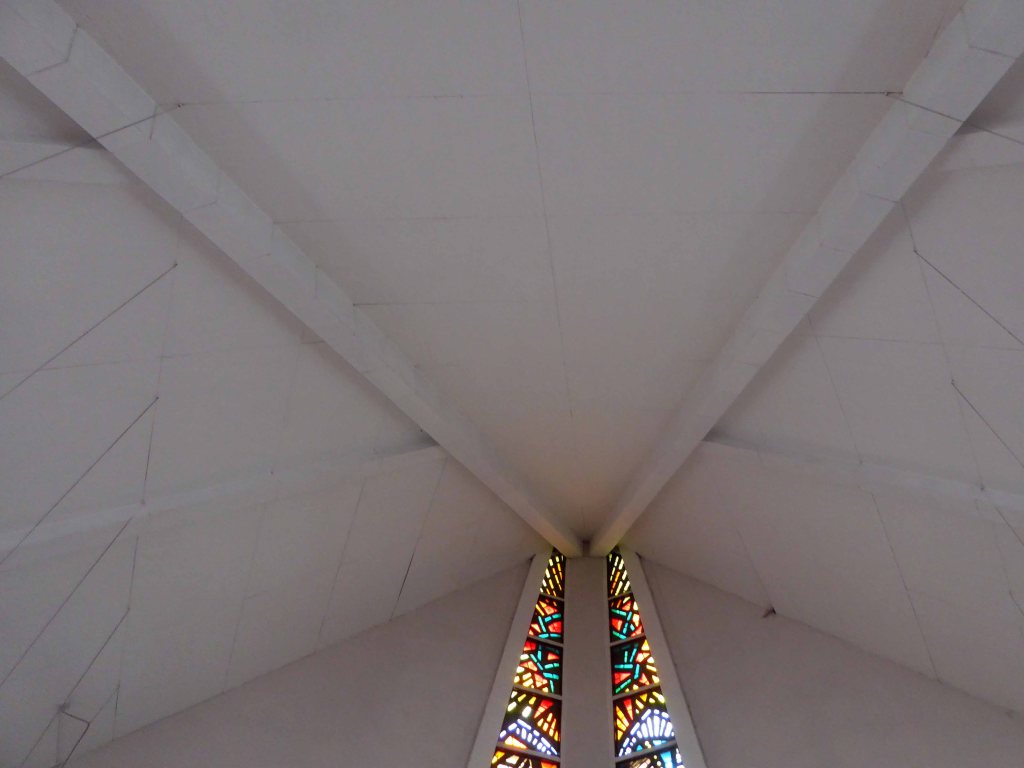
The interior features full height stained glass windows of the Virgin Mary and St John by John Baker Ltd.
Born in 1916, John aka Jack studied at the Central School in London and worked under James Hogan at the Whitefriars stained-glass studios before joining Samuel Caldwell junior at Canterbury Cathedral in 1948 to help reinstate the medieval glass removed for safekeeping during the Second World War.
He subsequently authored English Stained Glass; the revised edition of this work, English Stained glass of the Medieval Period , which was to become one of the most popular soft back books on English medieval glass ever published.
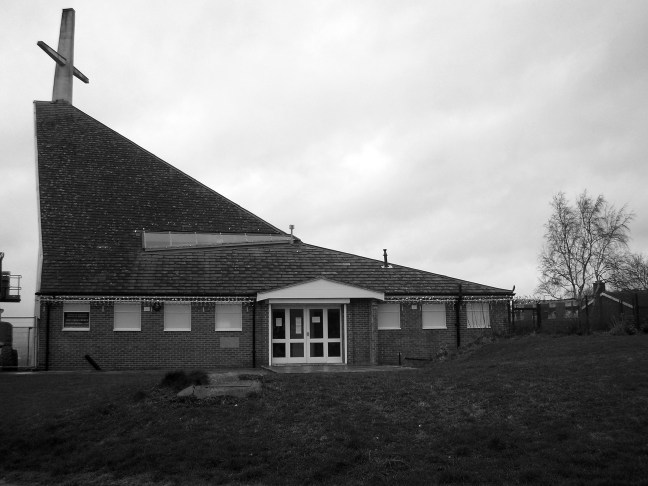
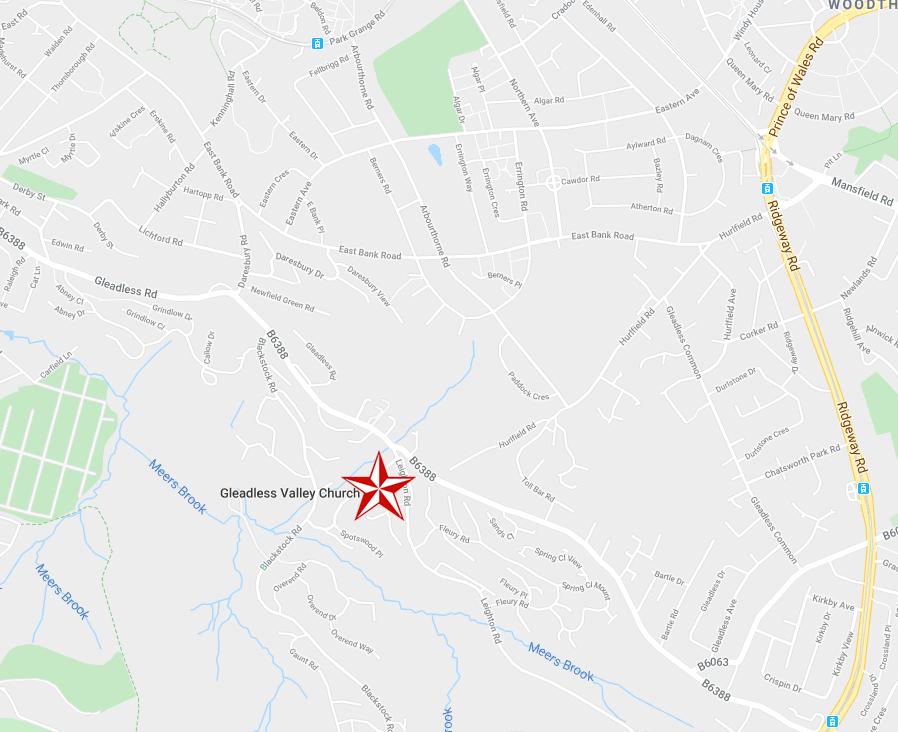
Apart from his conservation skills, John was also an inspired teacher at Kingston College of Art. He produced windows for a number of churches, including eleven windows for the church of the Holy Name, Bow Common Lane, Mile End; two windows and a brick sculpture for the church of Little St Peter, Cricklewood; eighteen windows for St Anne’s church, East Wittering, Sussex; two large abstract windows for Broomfield Chapel, Abbots Langley; ten large concrete and glass windows for the new parish church, Gleadless Valley, Sheffield; and twenty-two glass windows for the Convent Chapel, St Michaels, Finchley. He also created a huge Jesse window for the church at Farnham Royal. The church was demolished in 2004, but the glass is now in storage, and some of the panes will be installed in the welcome are of the new church.
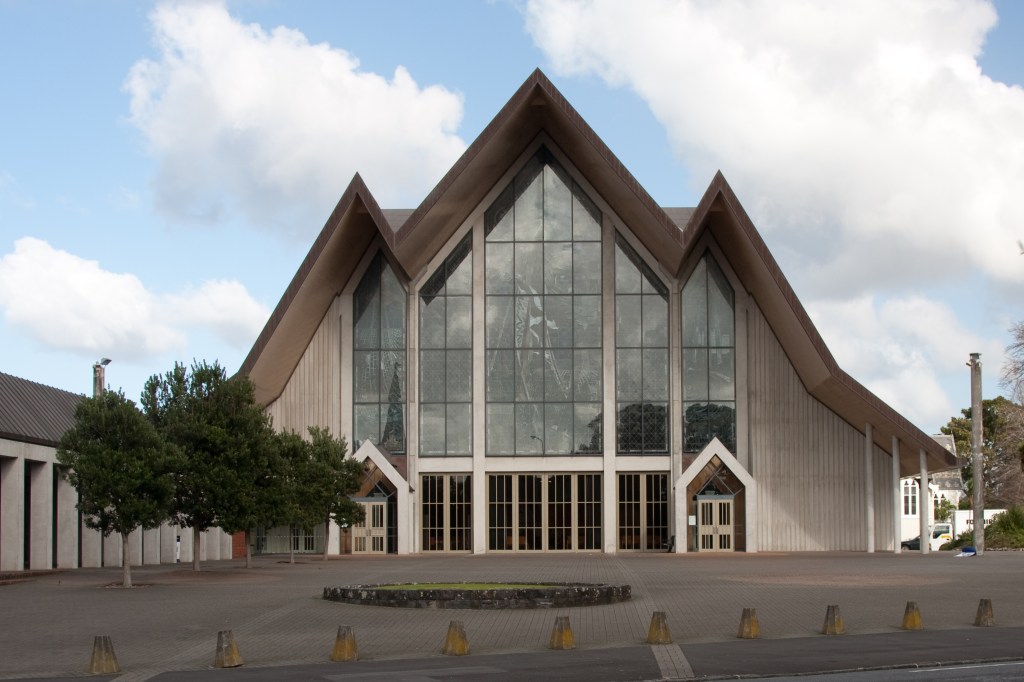
His favourite works were the windows he produced for Auckland Cathedral, New Zealand – as seen above.
John Baker, born Birmingham, 11 March 1916, died Hastings, 20 December 2007.
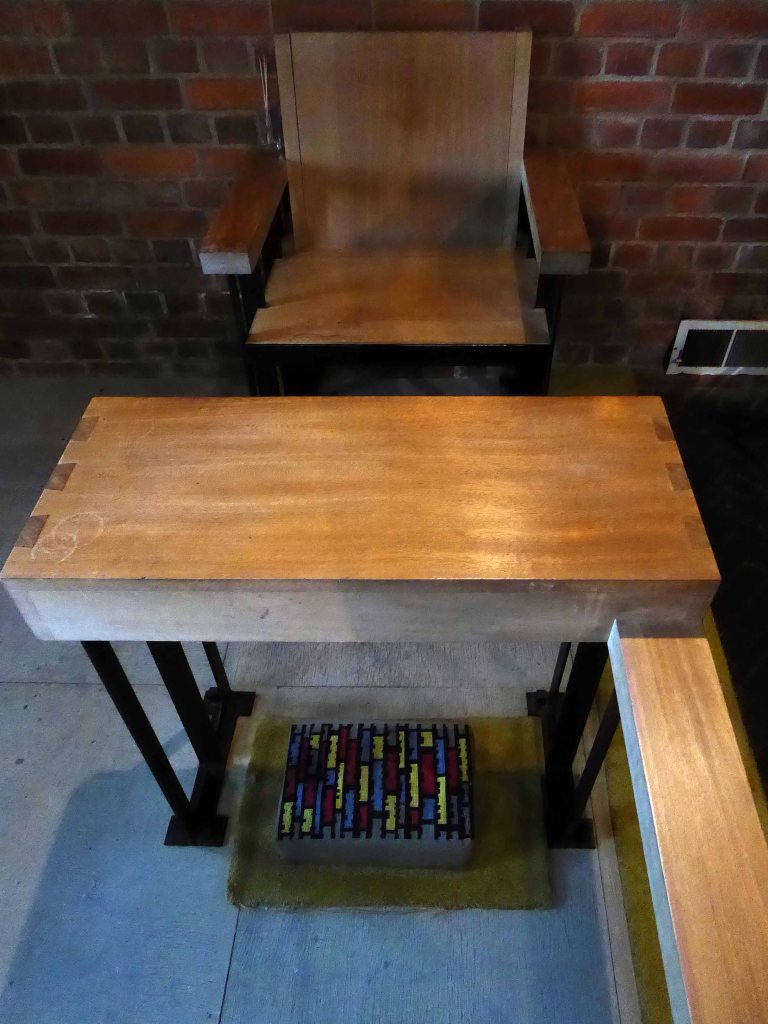
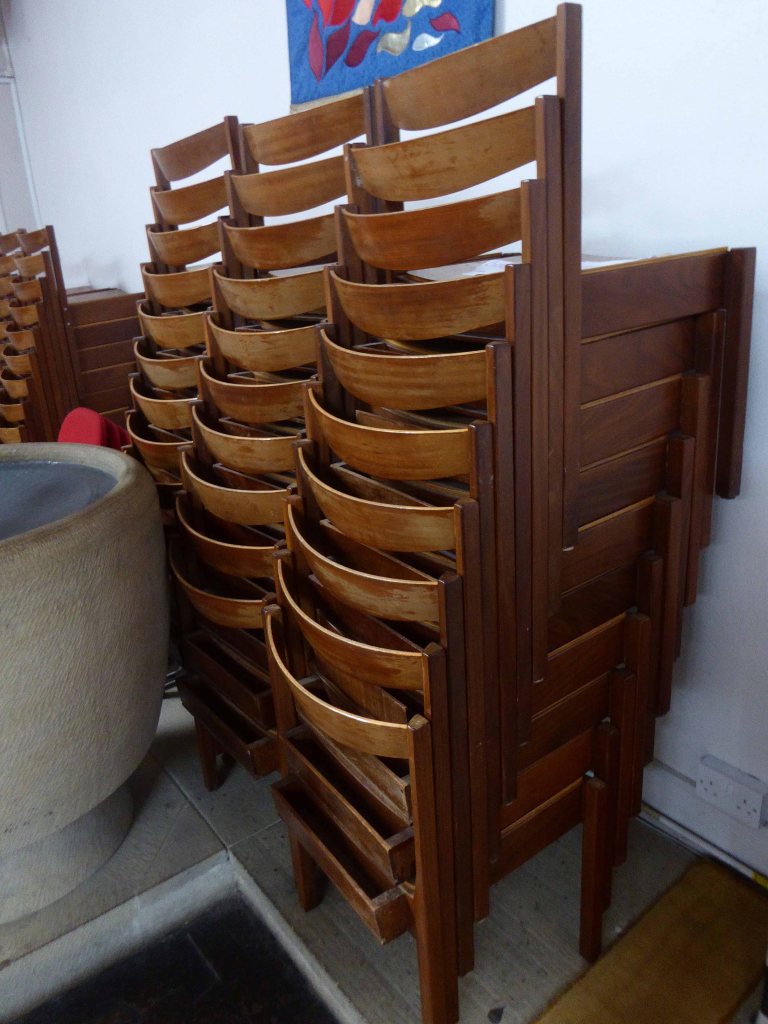
The concrete altar is set on a raised paved podium, complemented by a silver cross and distinctive Arts and Crafts style oak chairs.
The original seating seems to be no longer in use, replaced by a newer more comfortable alternative.
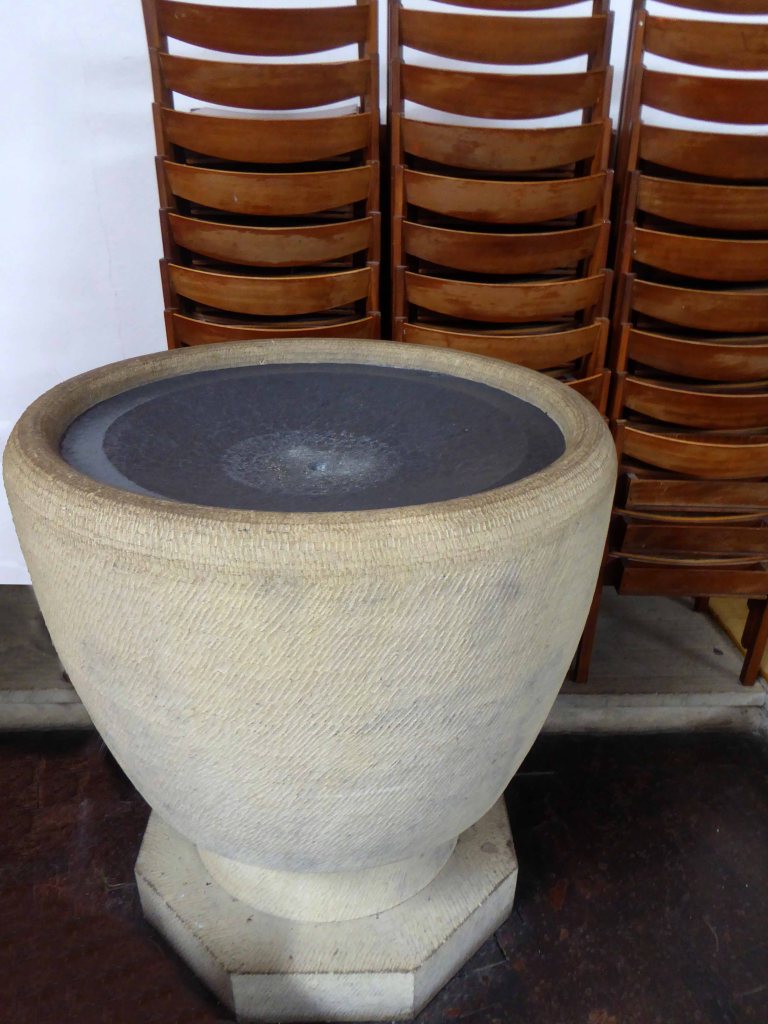
There is a large carved stone font.
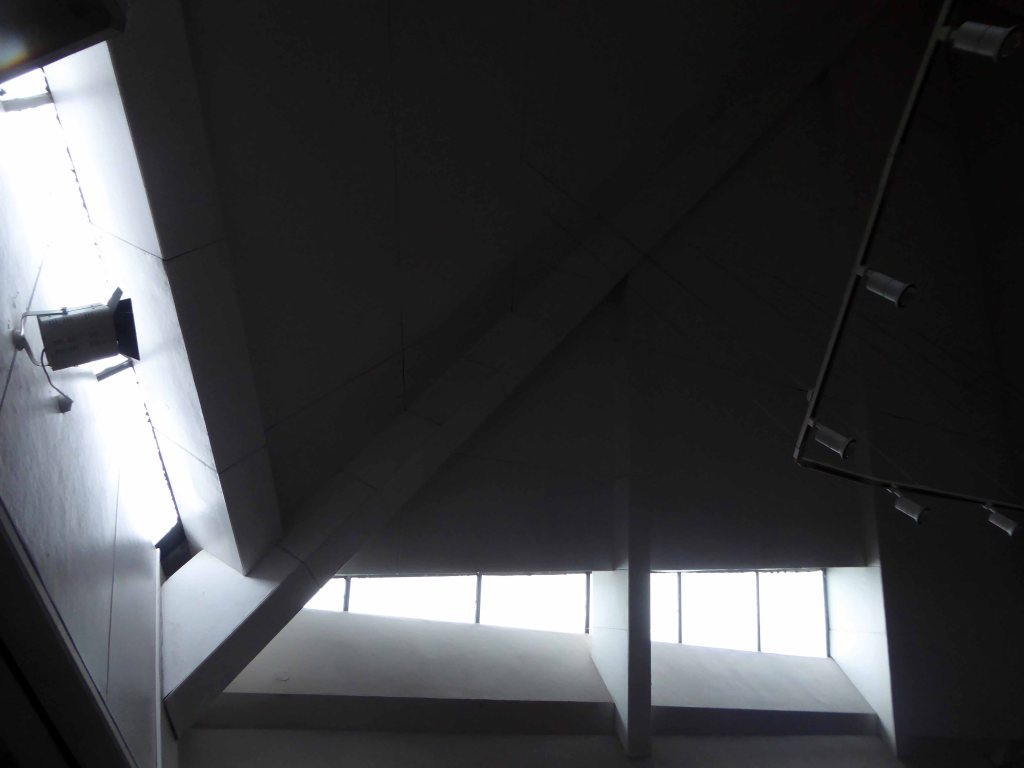
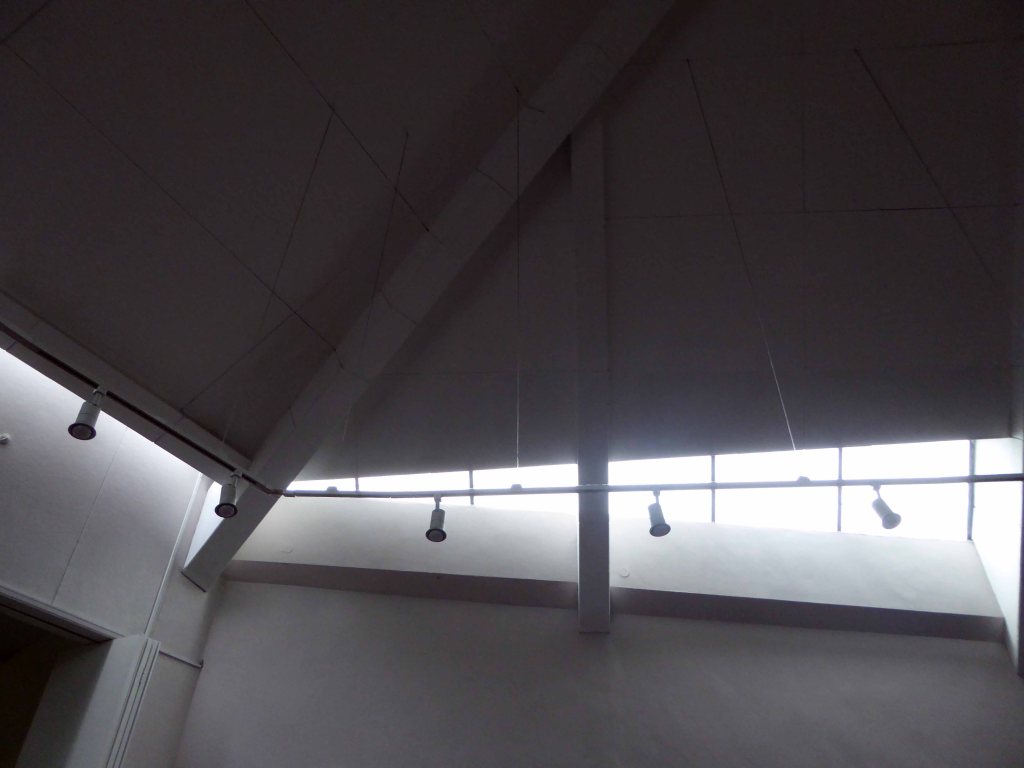
The main body of the steeply pitched roof space is illuminated by slotted windows.
Many thanks to the key holders and parishioners at Holy Cross, our Sheffield guide Mick Nott and Claire Thornley at Eleven Design – for making our visit possible.
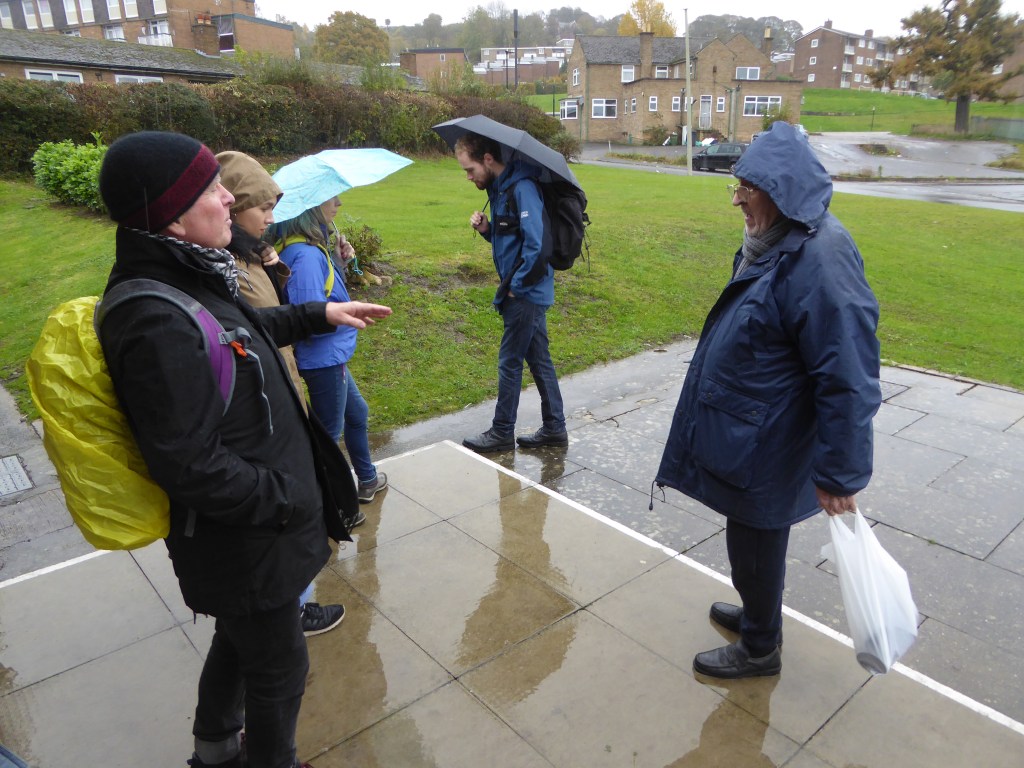
Thanks also to all those who turned up on Saturday to walk a very, very wet Gleadless Valley.
So here we are outside, you and I in 2015 – it seems like yesterday.
Whereas yesterday I was inside not outside, but more of that in a moment.
It seems that you were listed in 2009 and deservedly so.
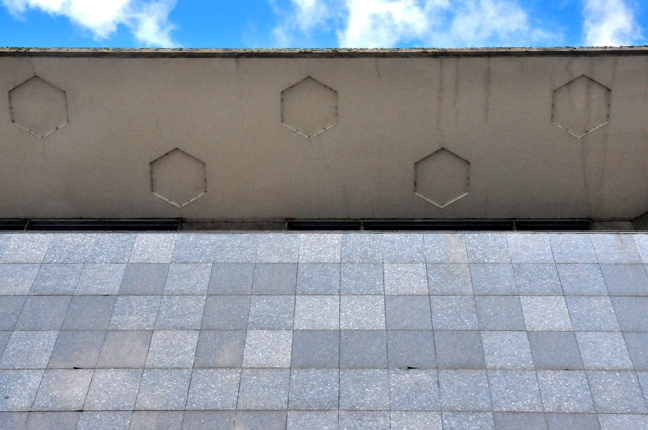
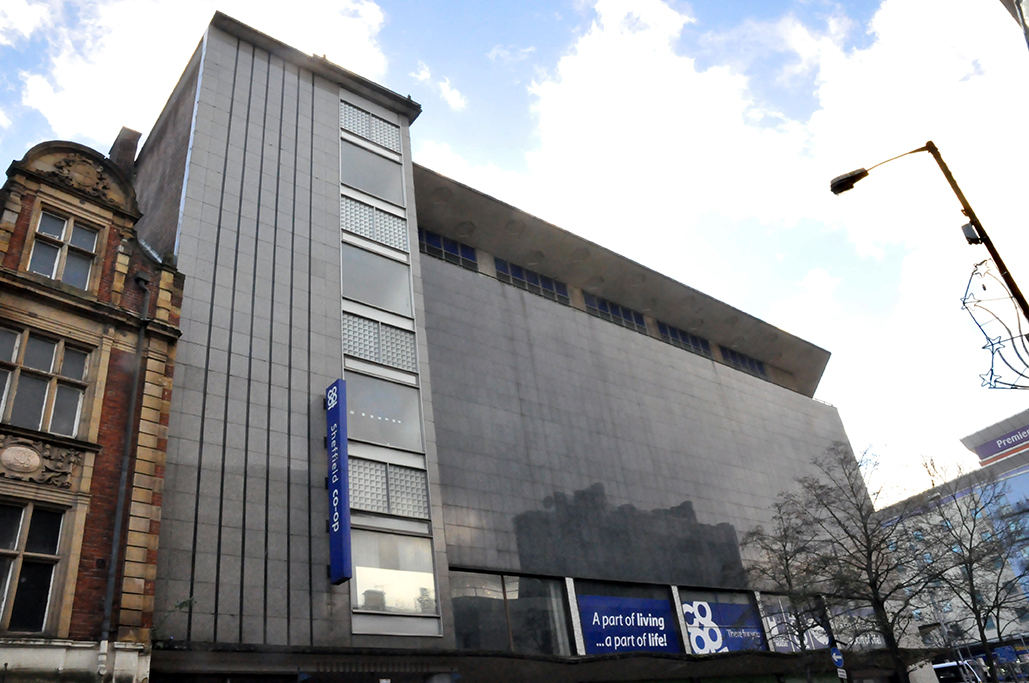
1964 by George S Hay, Chief Architect for CWS, with interior design by Stanley Layland, interior designer for CWS. Reinforced concrete with Blue Pearl granite tiles and veneers, grey granite tiles and veneers, buff granite blocks, glass, and brick.
There’s just so much to stand and stare and marvel at.
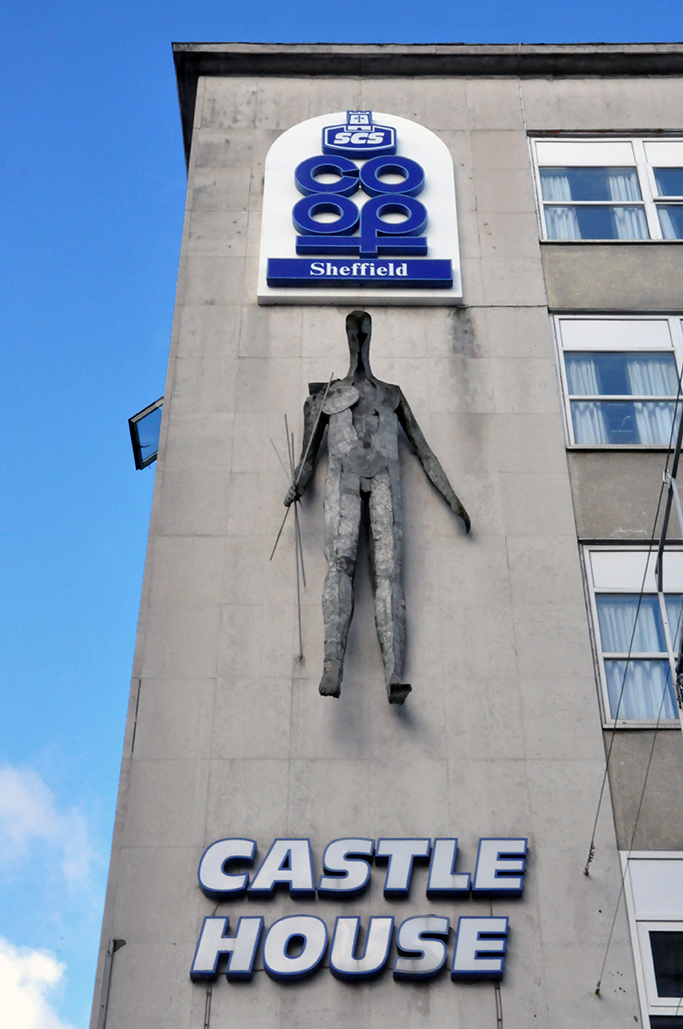
Vulcan by Boris Tietze commisioned by Horne Brothers 1961 for their head office building No. 1 King Street. Glass fibre on a metal armature the 8 foot high figure holding a bundle of metal rods.
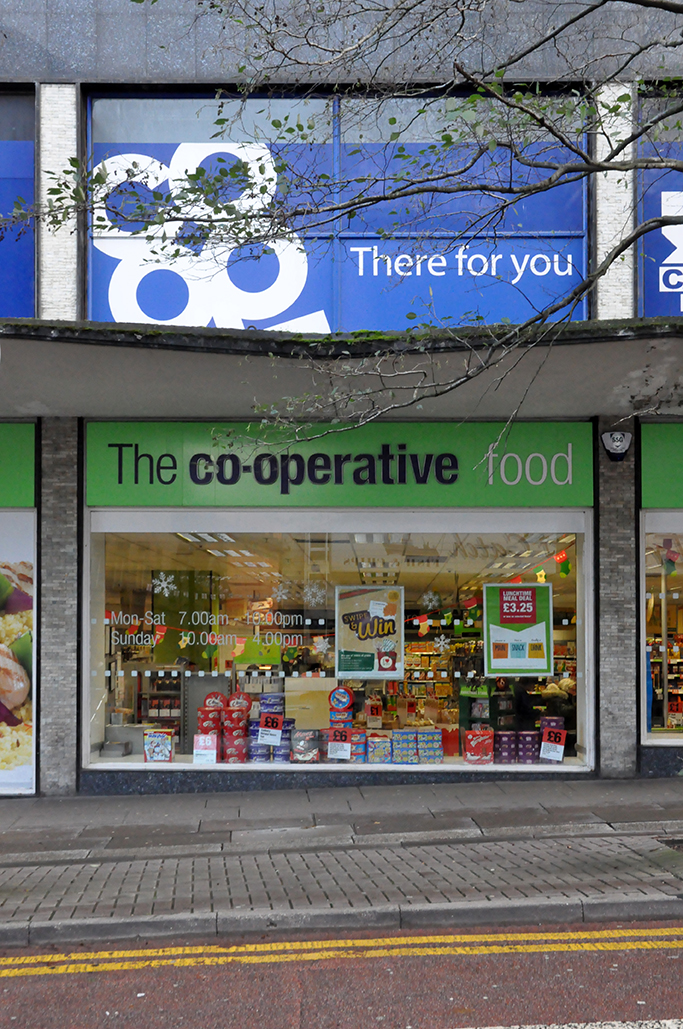
You were just about still open then, then you weren’t, then you were again – but a Co-op no more alas.
Work is underway on plans for a tech hub in Sheffield after a funding package was agreed.
Followed by a casual stroll towards 2019 where we are talking a peep inside courtesy of owners Kollider and book shop La Biblioteka.
I’d never ever seen the interior, save through the photographs of Sean Madner who captured the key features in 2014, prior to refurbishment.
So the Modernists and I pitched up this Sunday afternoon, the conclusion of our Sheffield Walk.
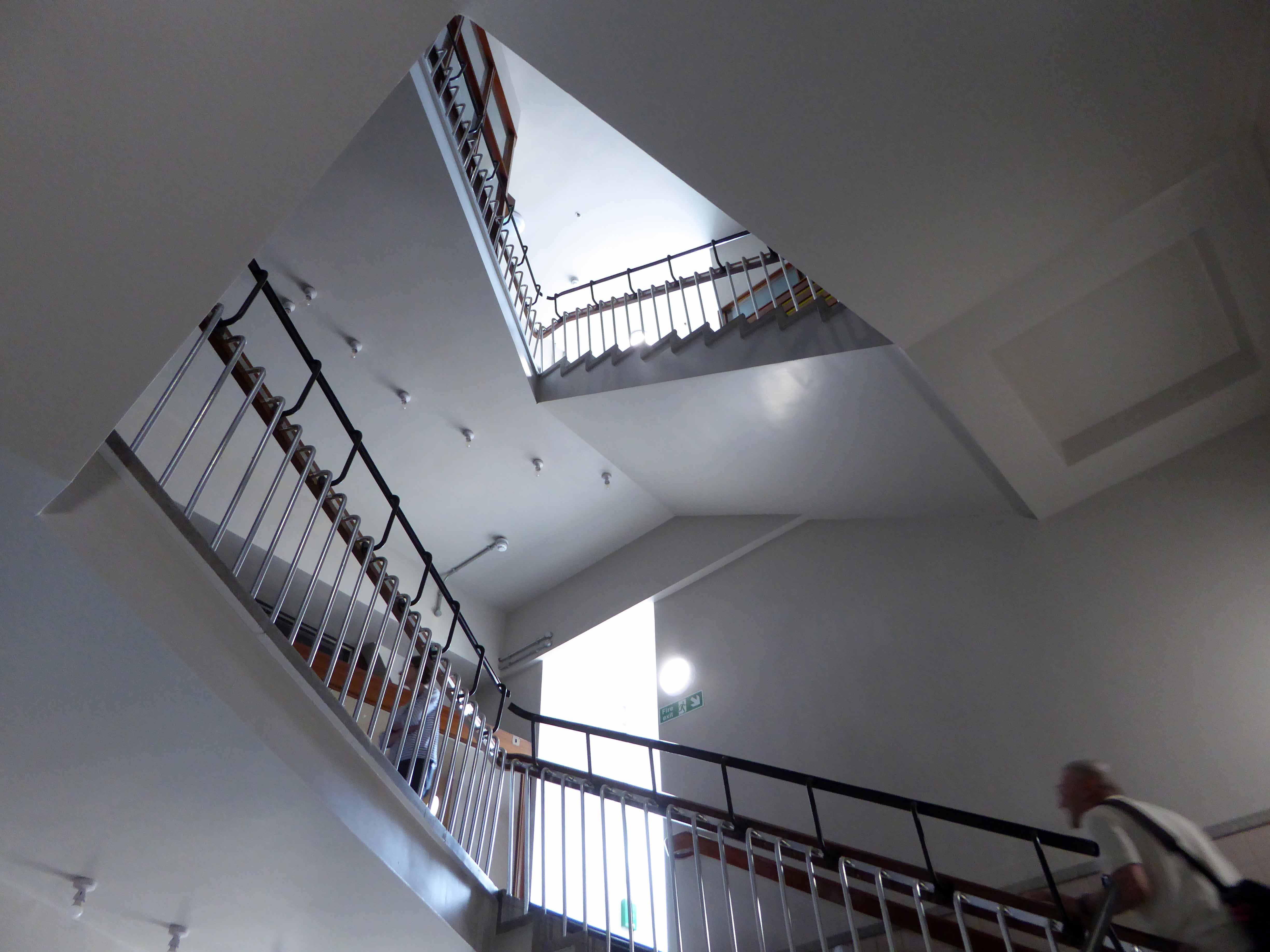
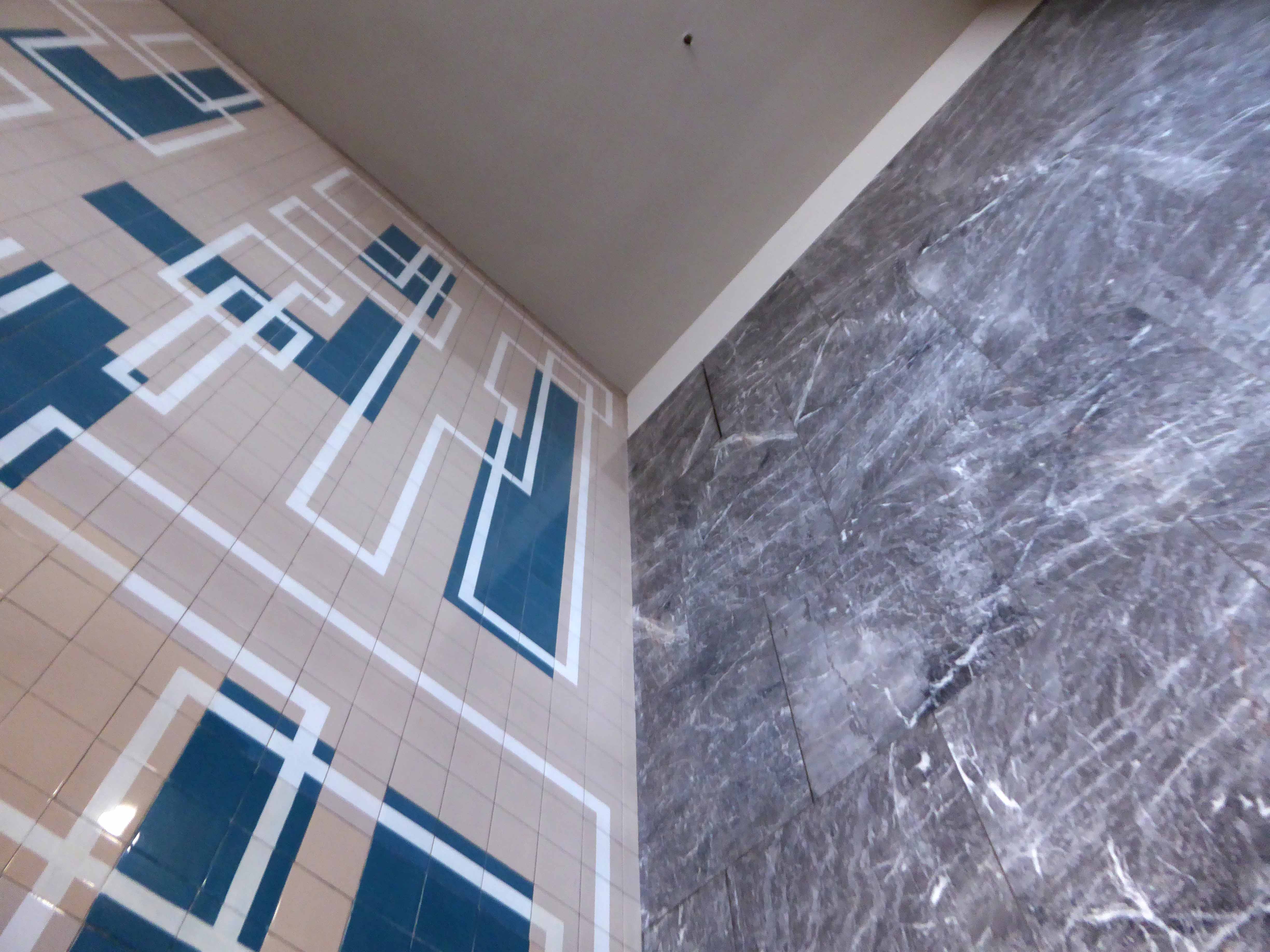
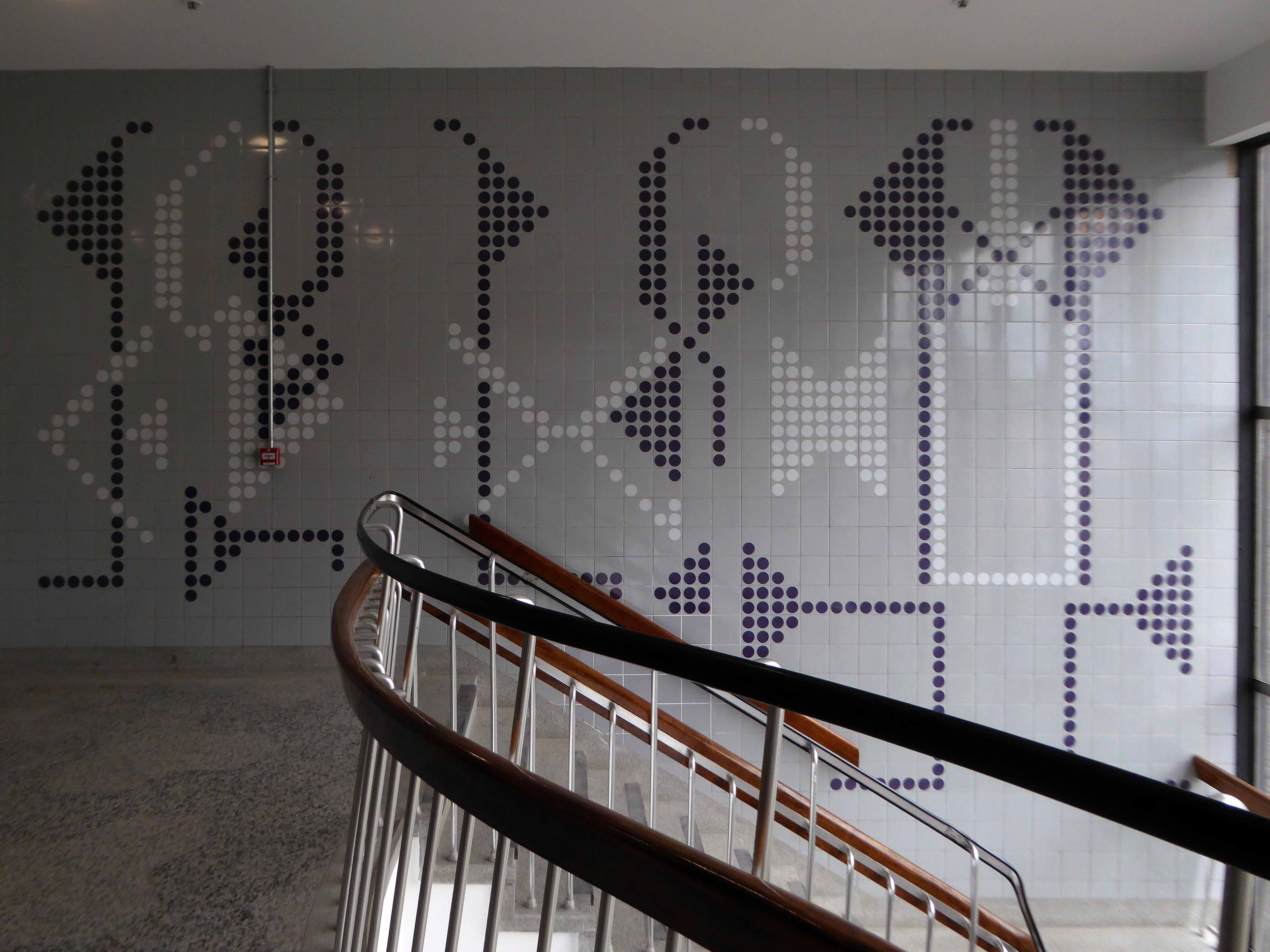
Lets take a look at the end stairwells, two very distinct designs one dotty one linear, both using Carter’s Tiles.
Configured from combinations and rotations of these nine modular units and two plain tiles.
Configured from combinations and rotations of these twelve modular units and two plain tiles.
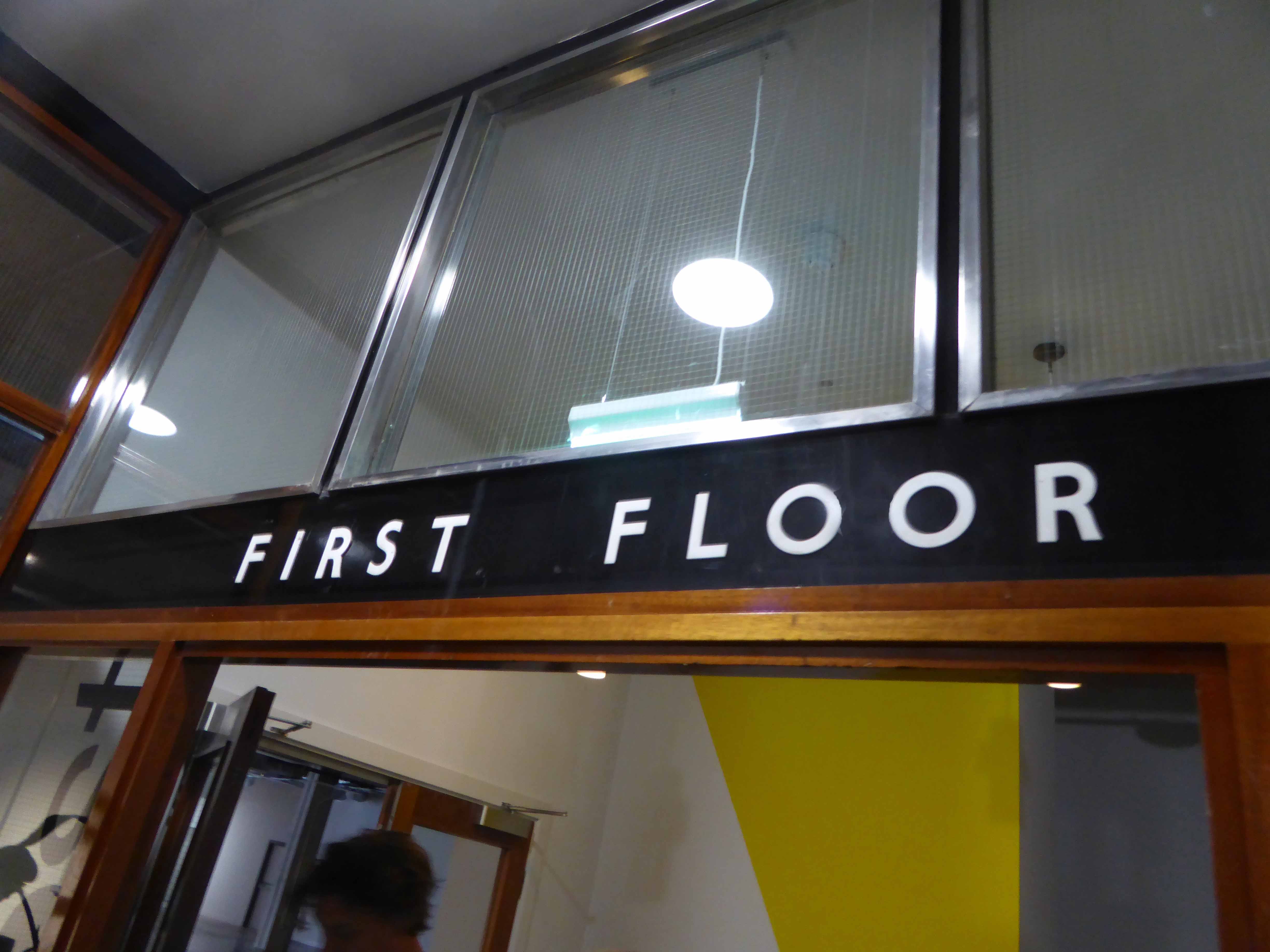
The site has retained some of its original architectural typography.
The former top floor restaurant has a suspended geometric ceiling with recently fitted custom made lighting.
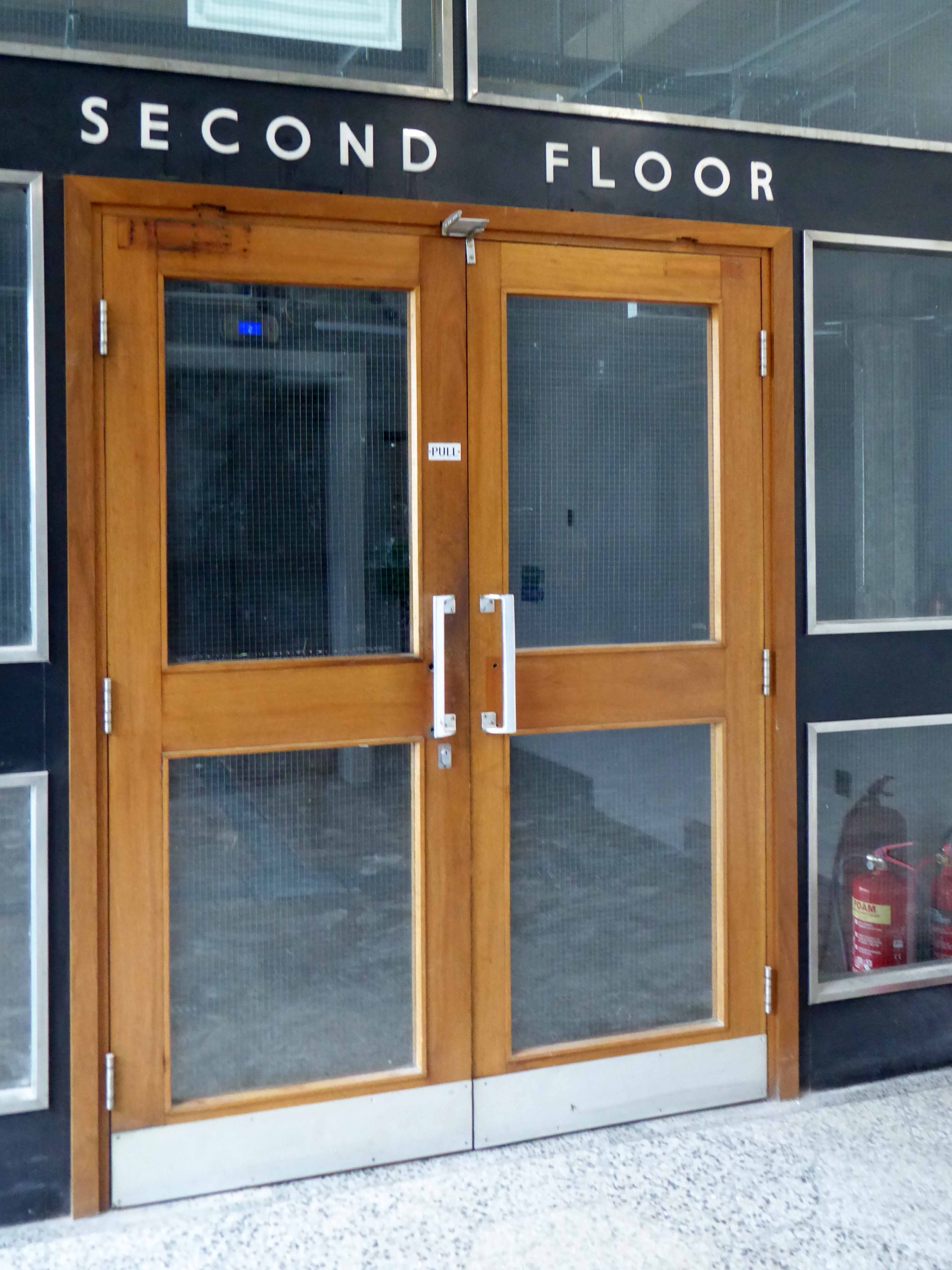
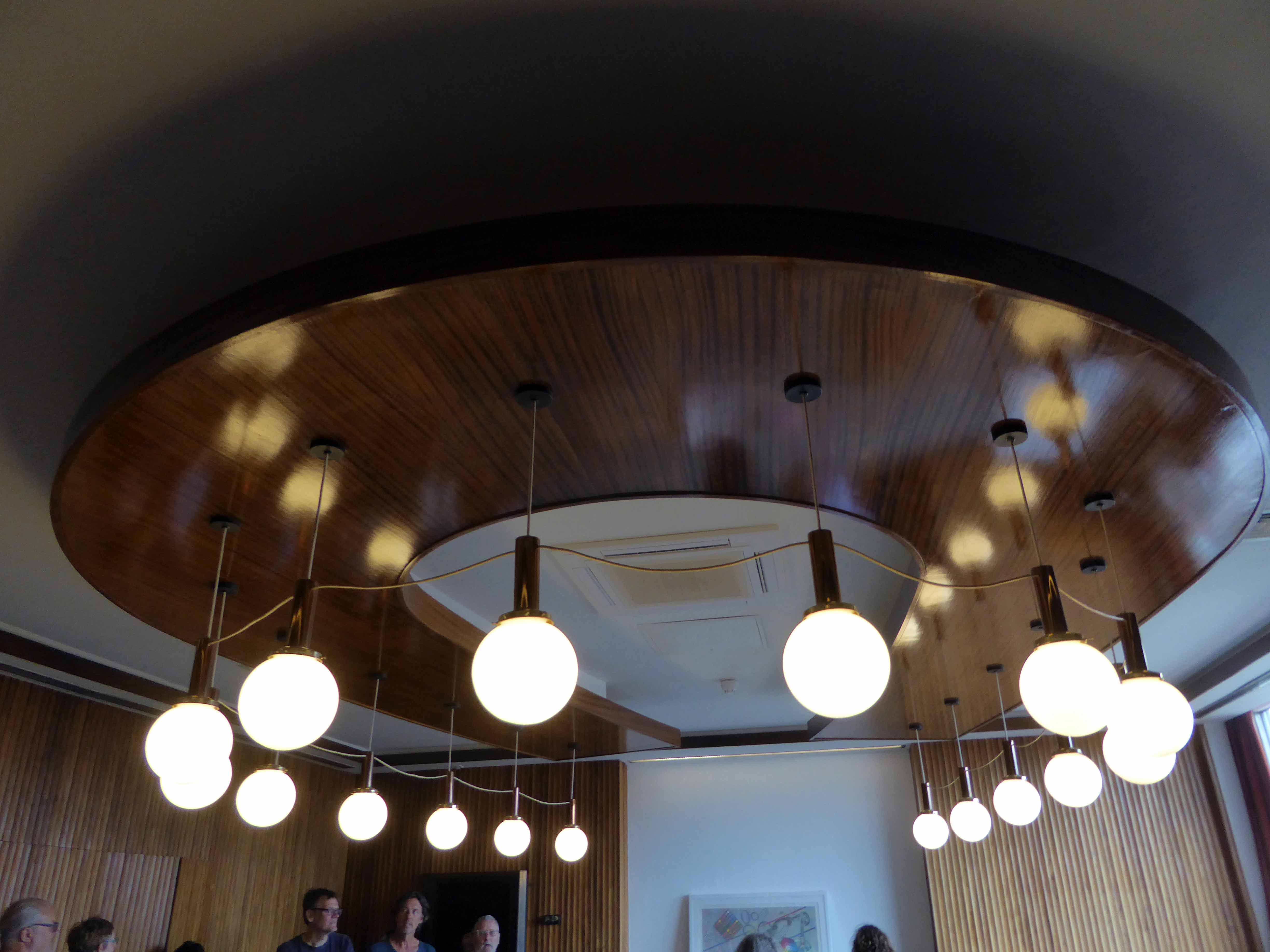
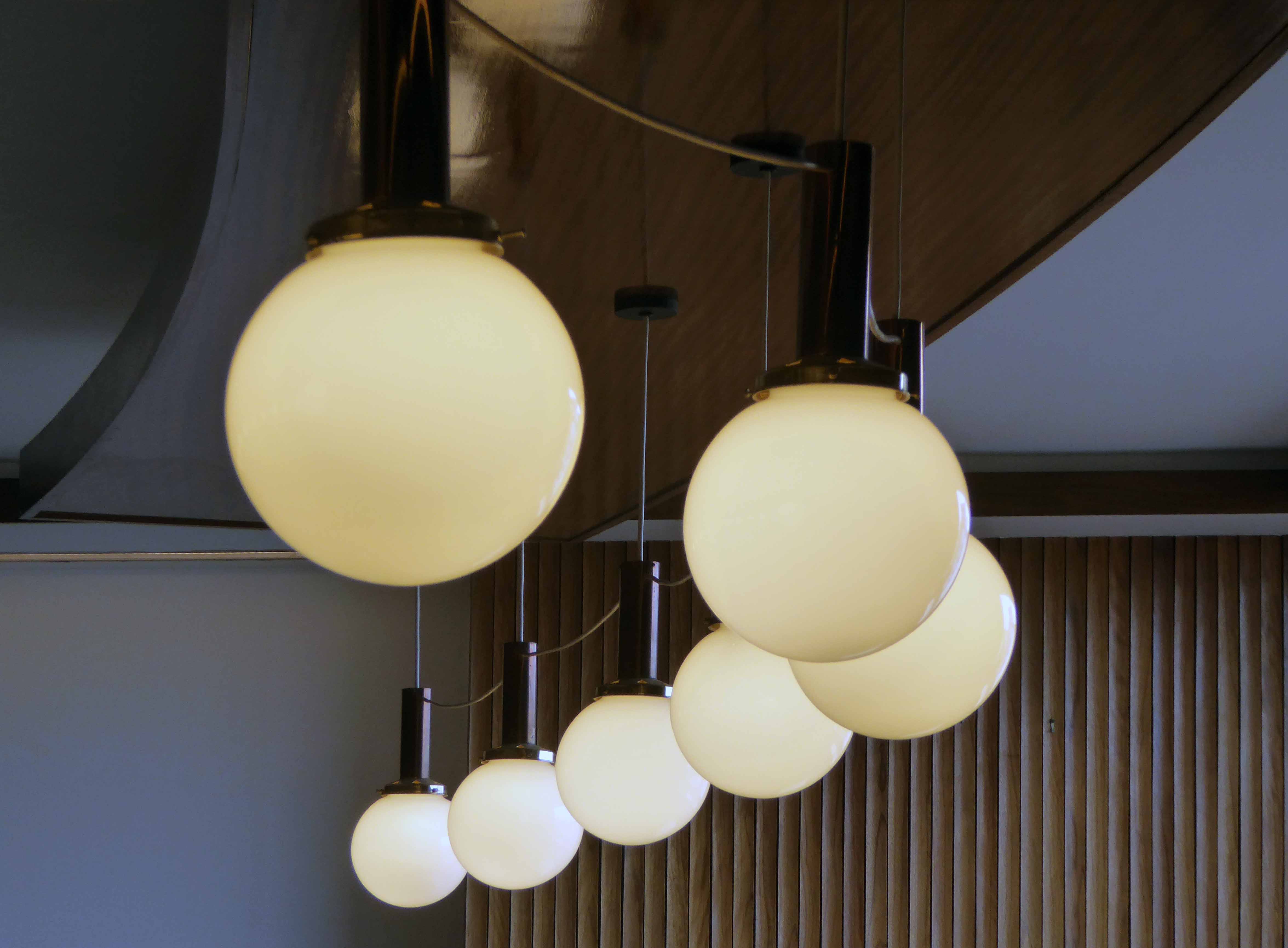
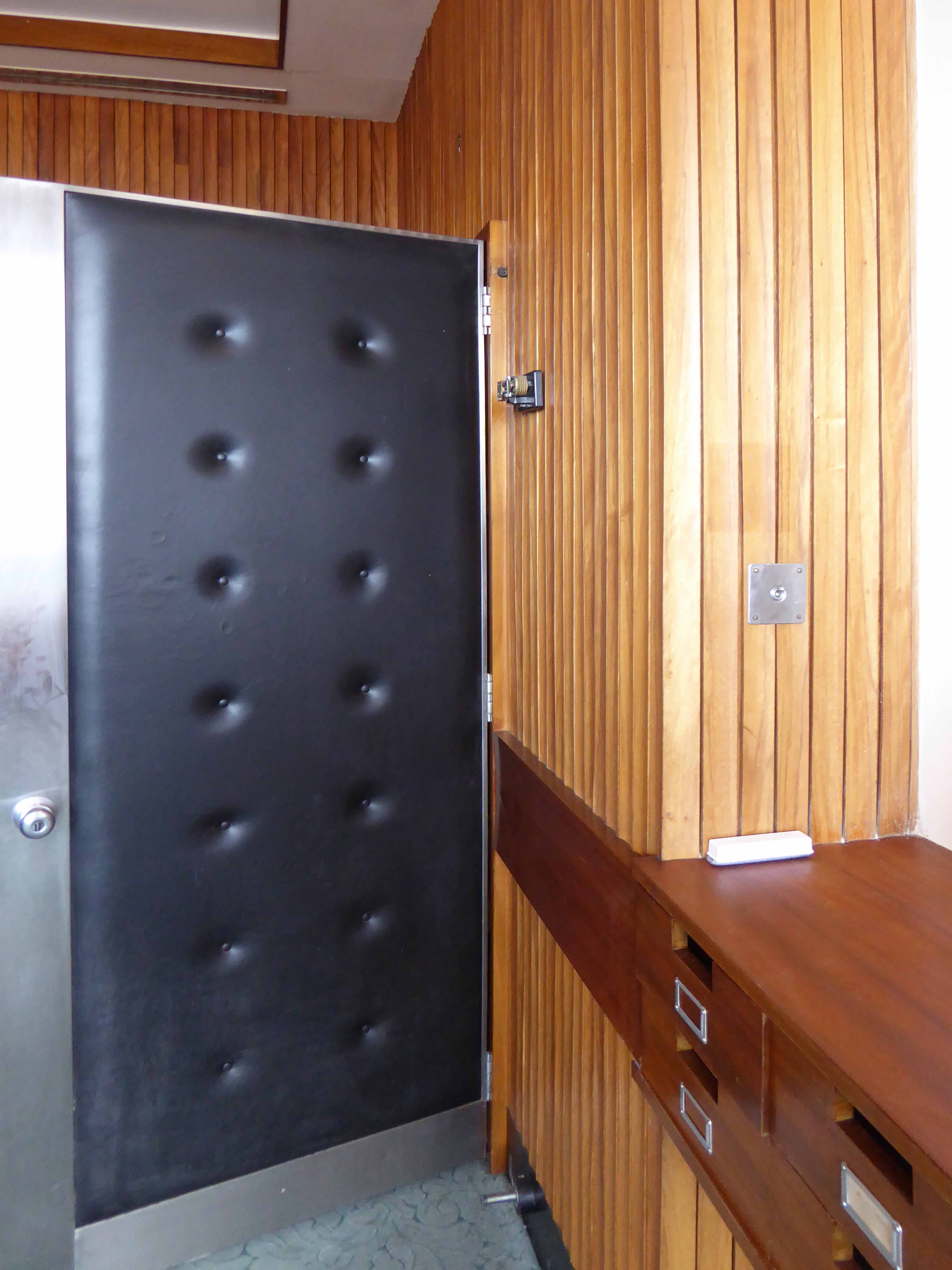
The timber-lined boardroom has a distinctive horseshoe of lighting, augmenting the board room table – which is currently away for repair, oh yes and a delightful door.
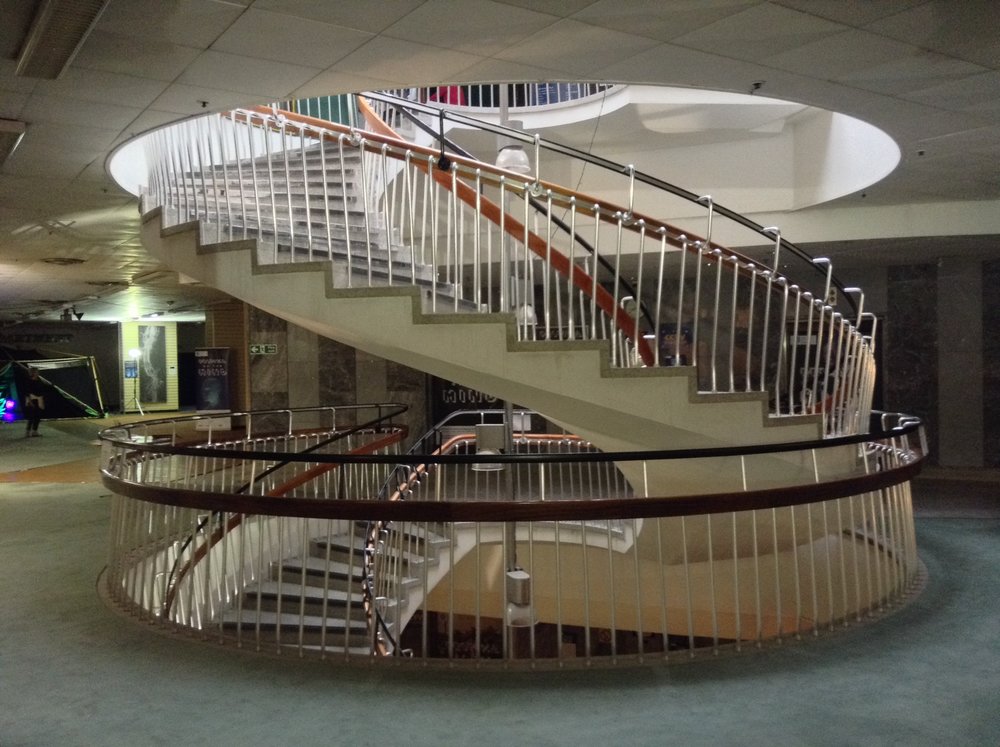
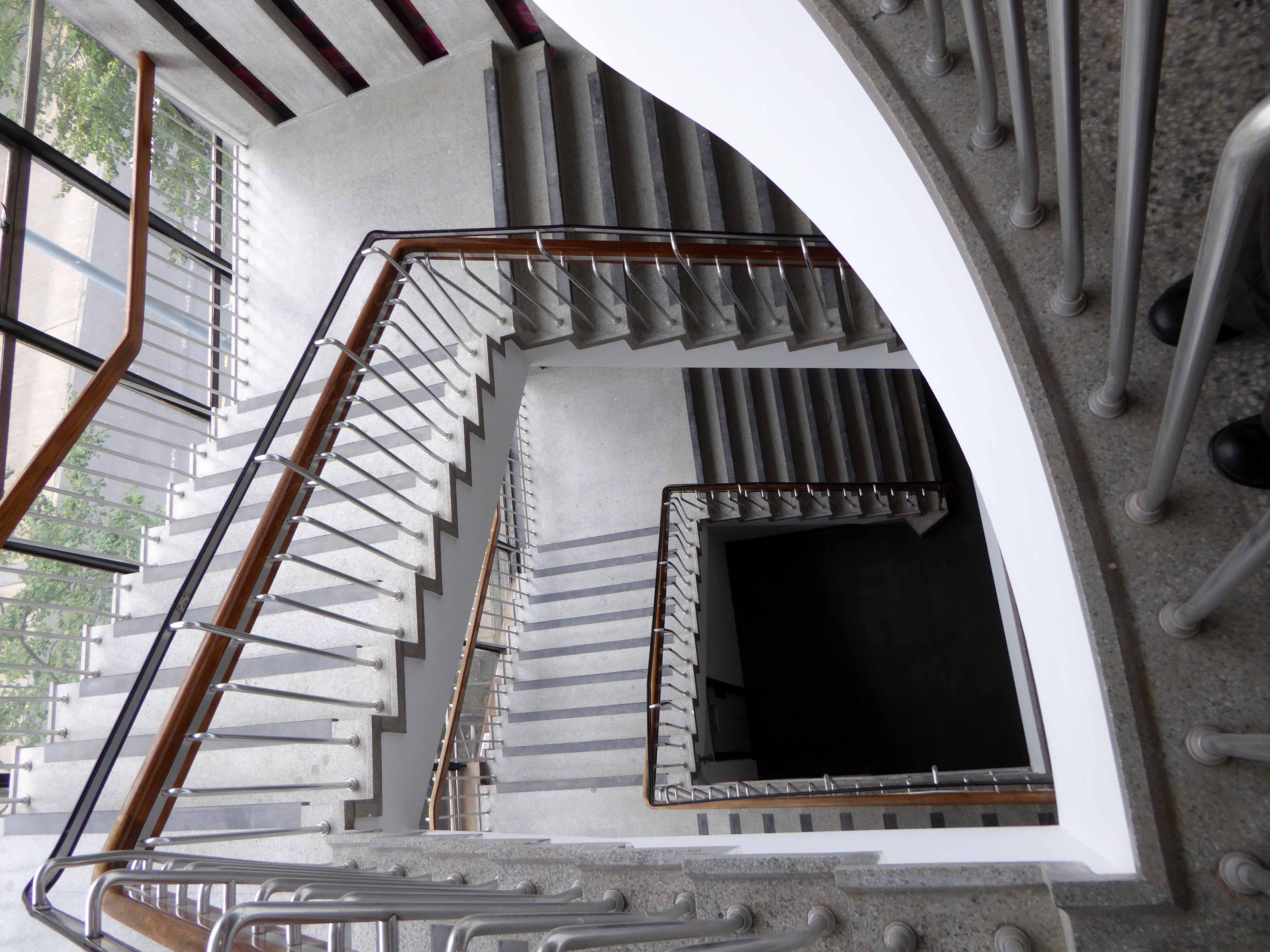
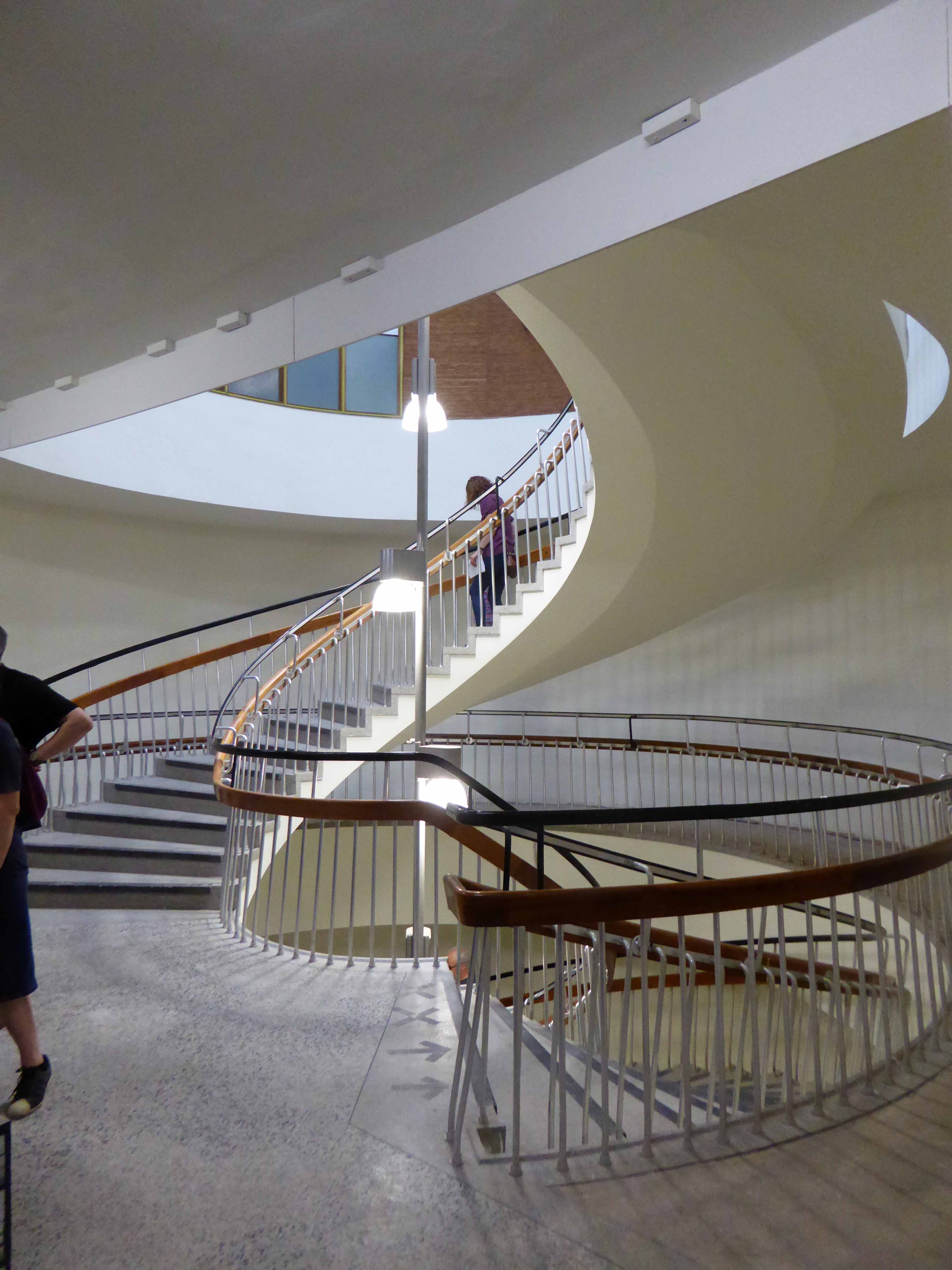
High atop the intoxicating vertiginous swirl of the central spiral stairway is the relief mural representing a cockerel and fish made of aluminium, copper and metal rod, with red French glass for the fish’s eye and cockerel’s comb.
Illuminated from above by this pierced concrete and glass skylight.
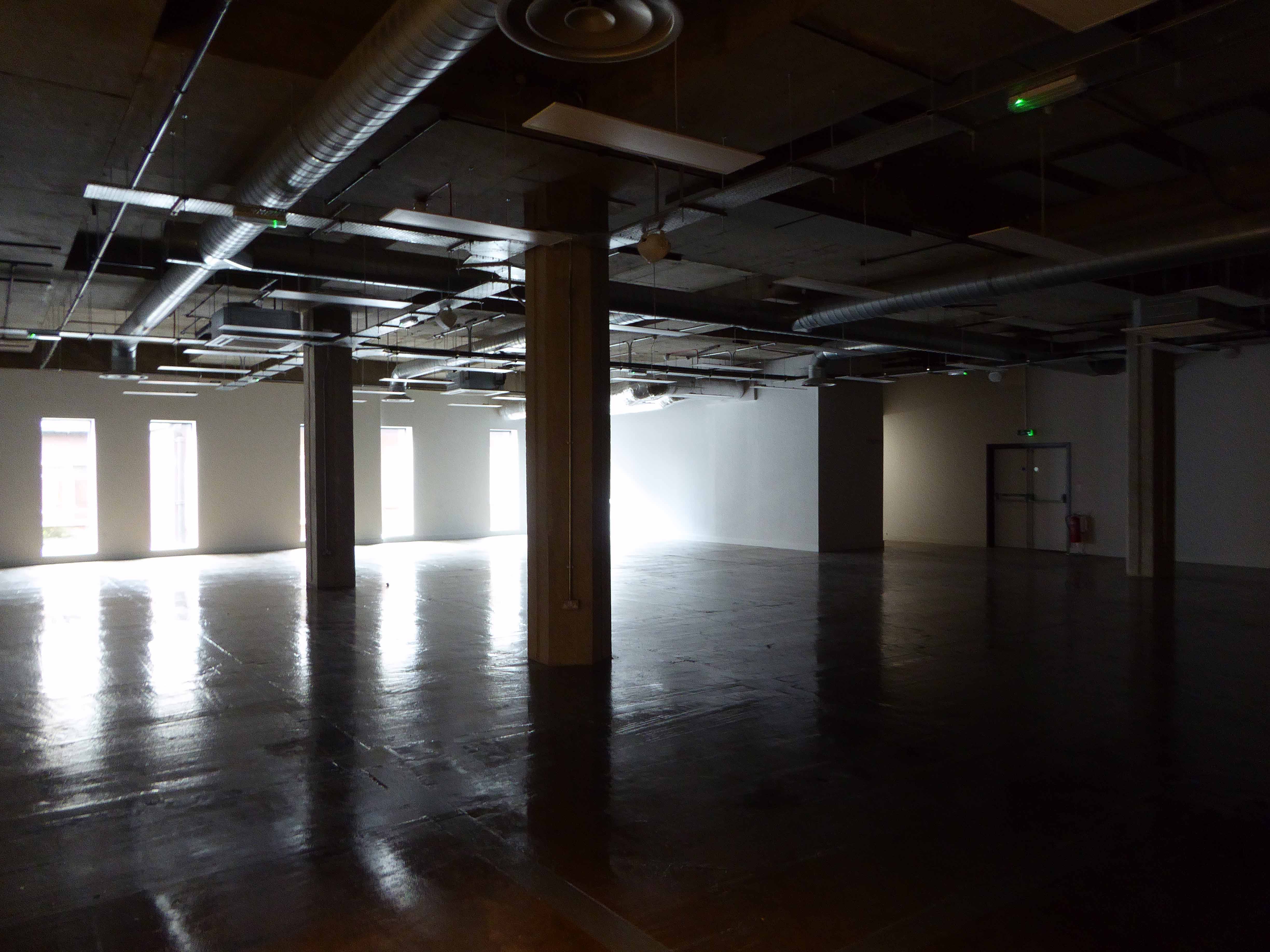
Many of the internal spaces have been ready for their new tenants.
This is a fine example of Modernist retail architecture saved from decay and degradation by the timely intervention of a sympathetic tenant.
Long may they and Castle House prosper – Sheffield we salute you!
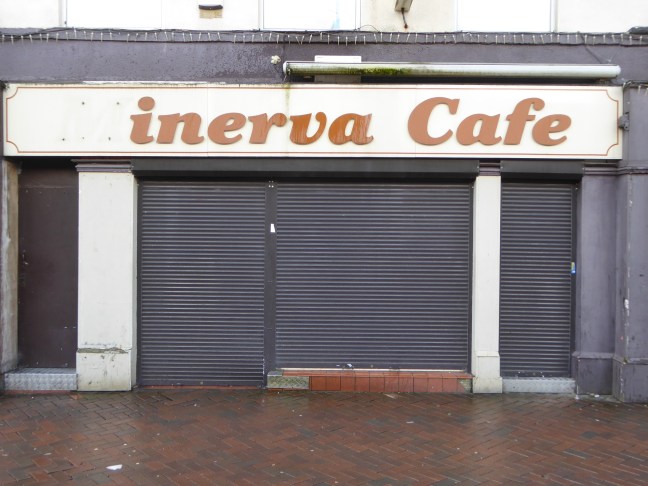
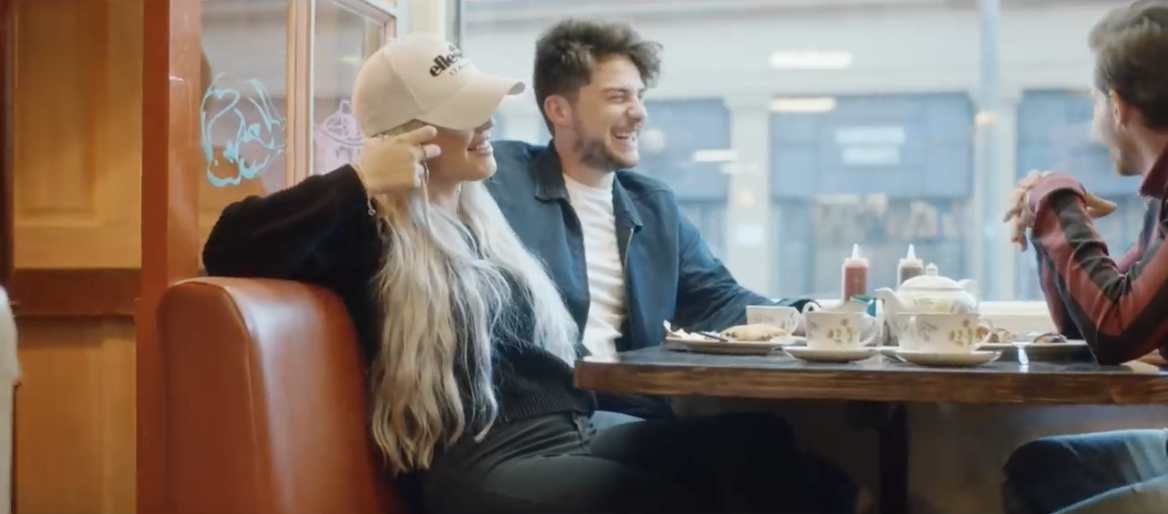
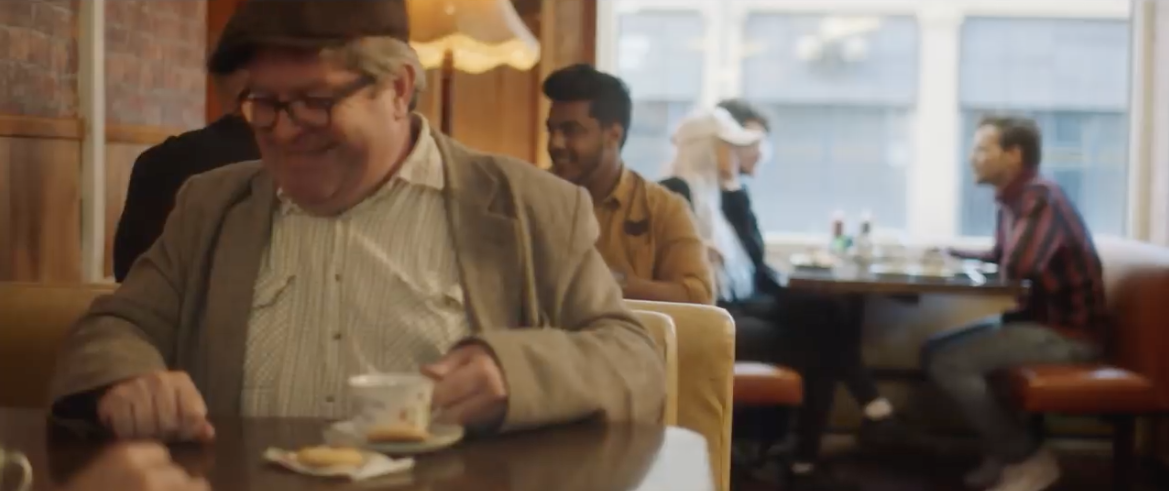
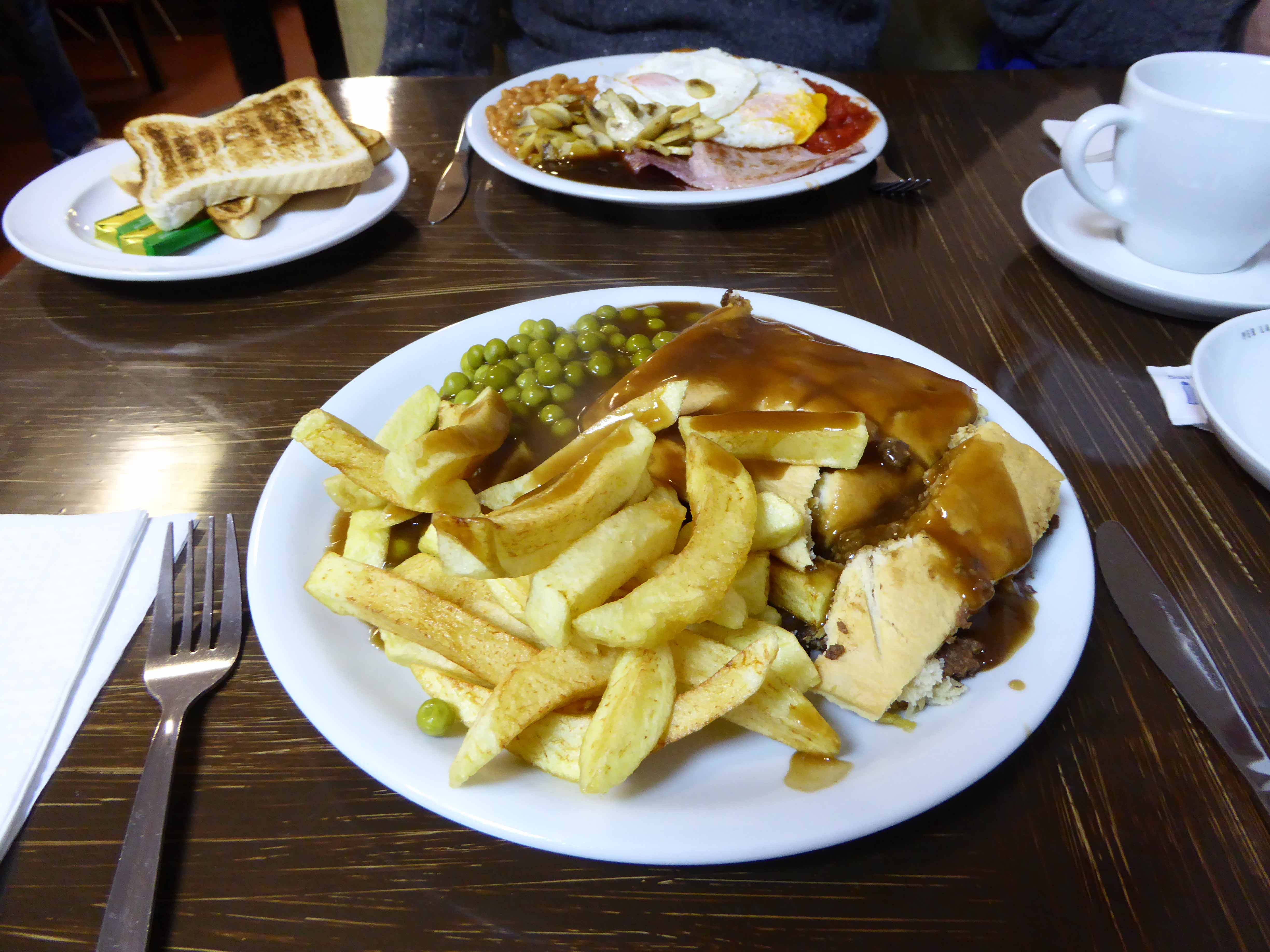
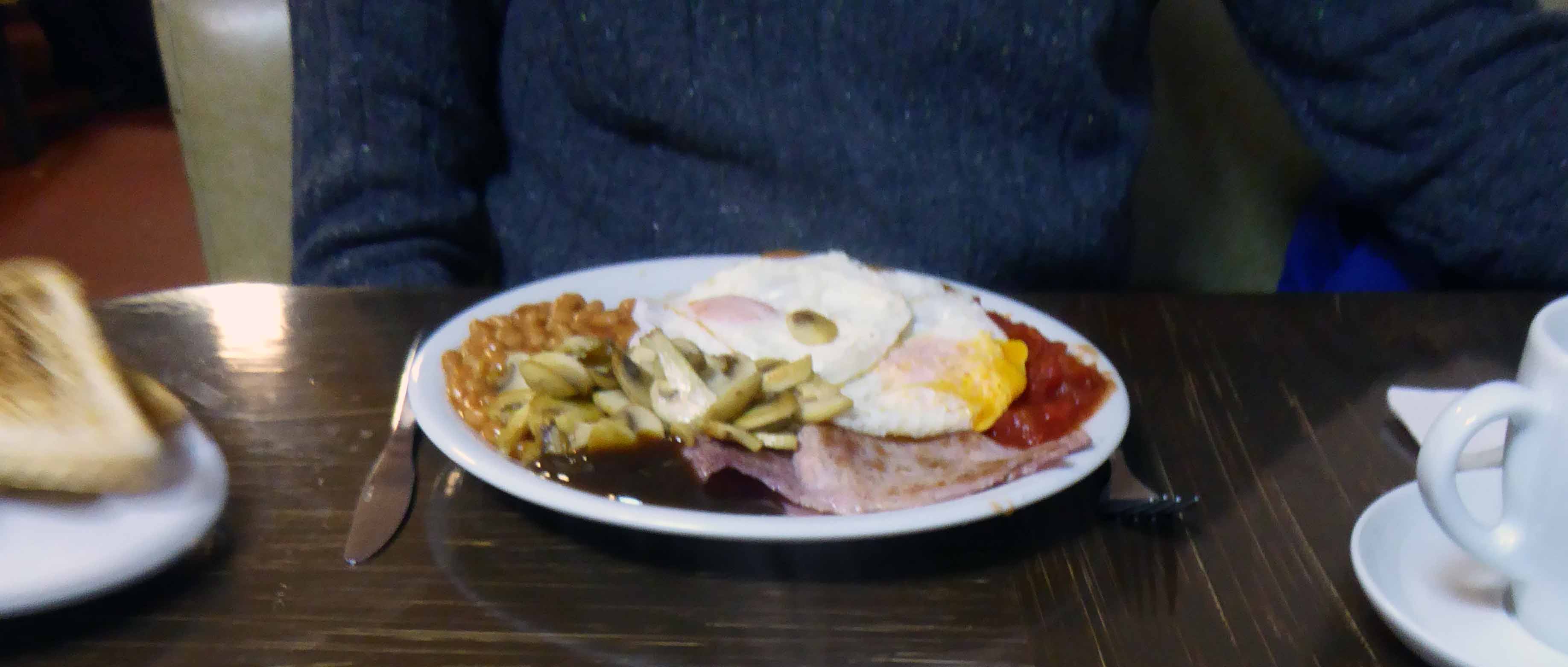
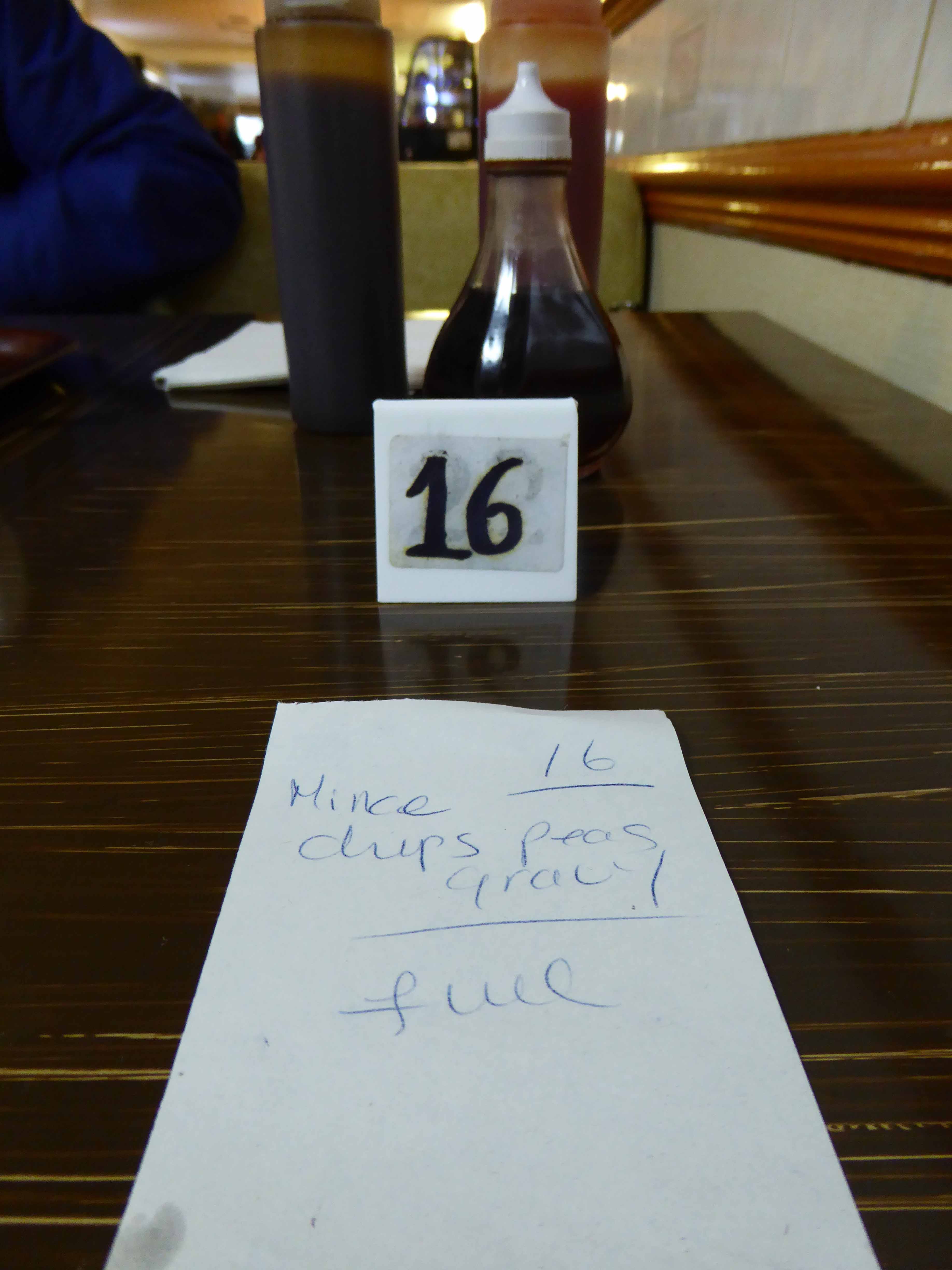
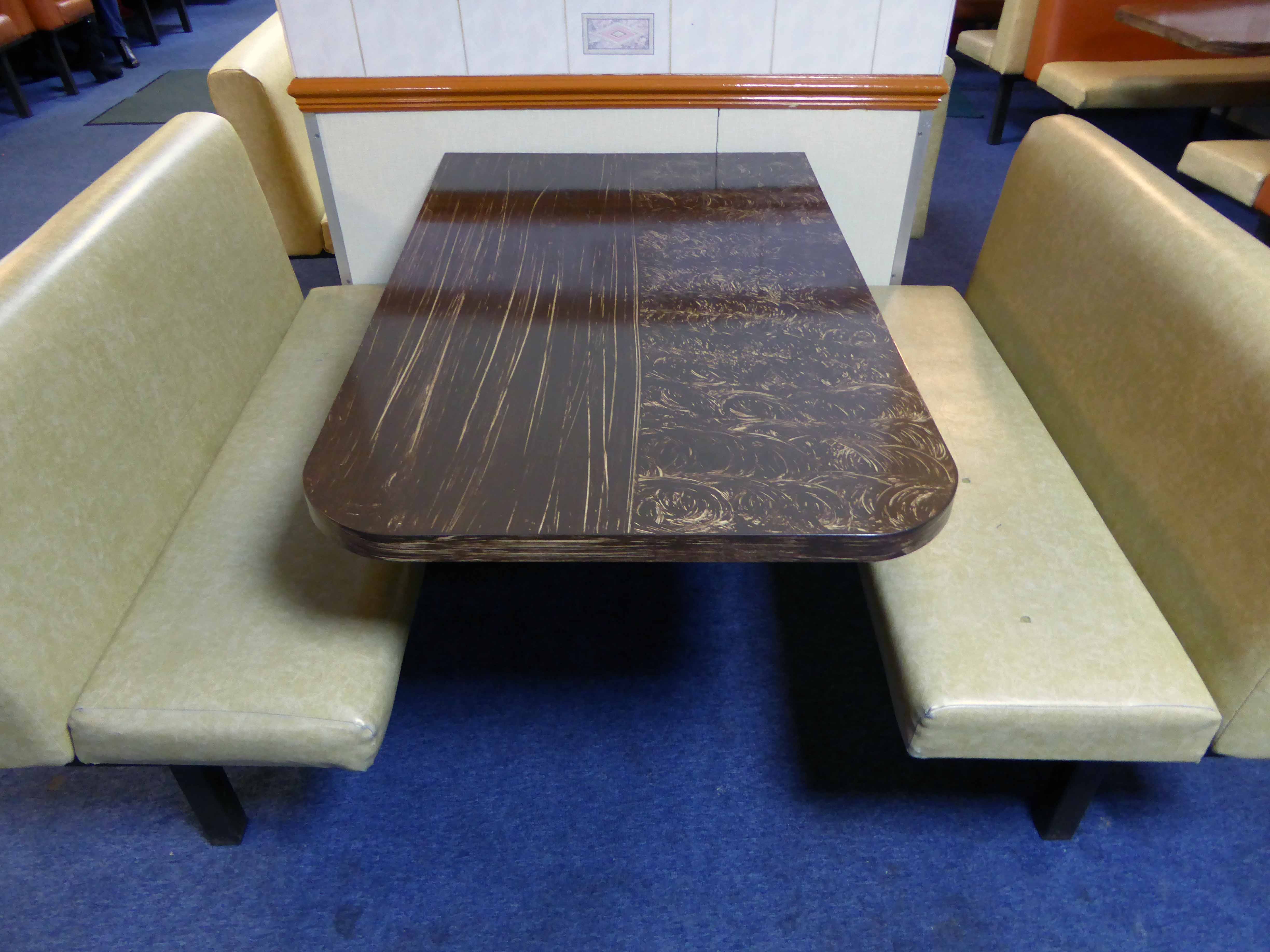
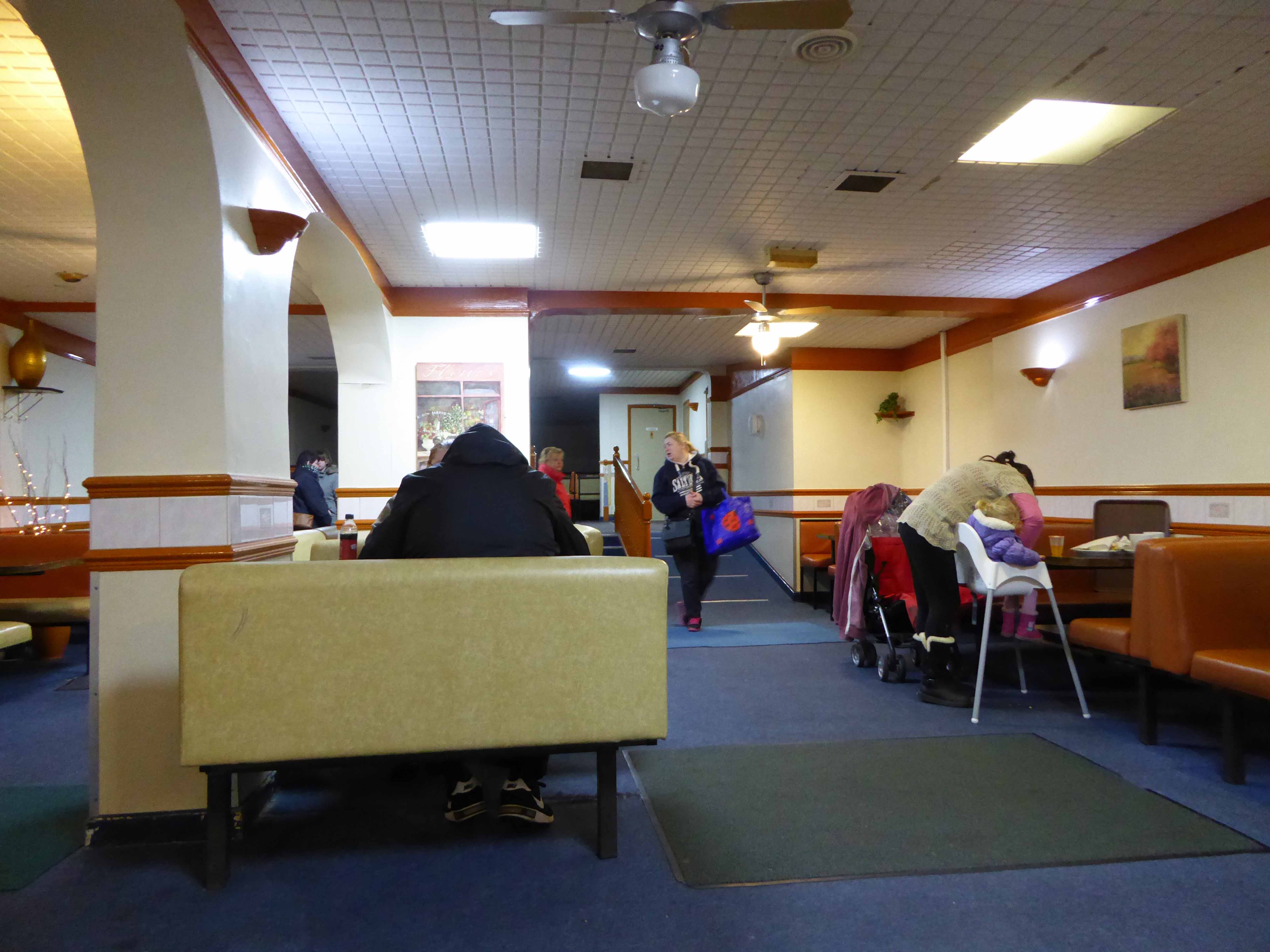
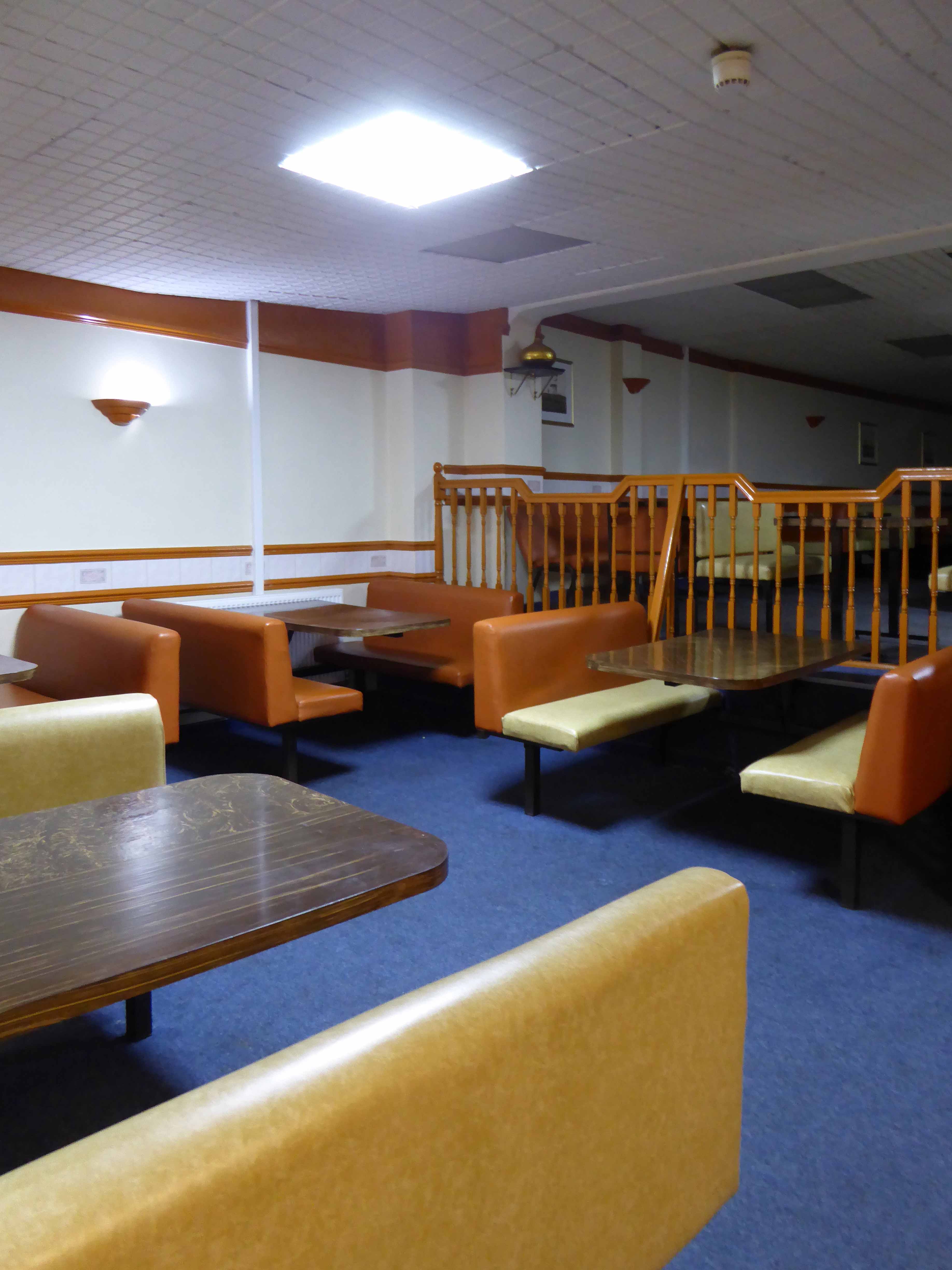
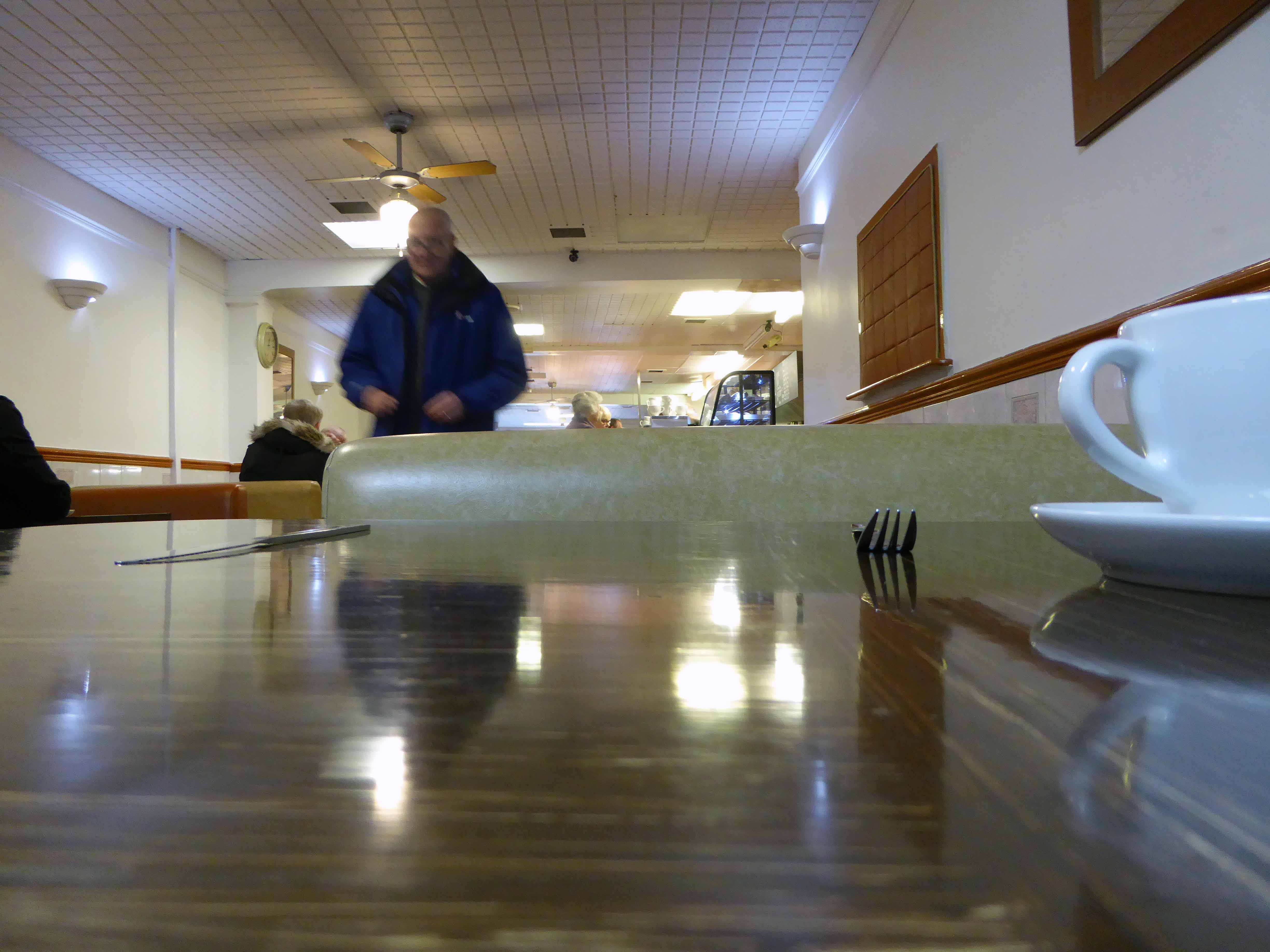
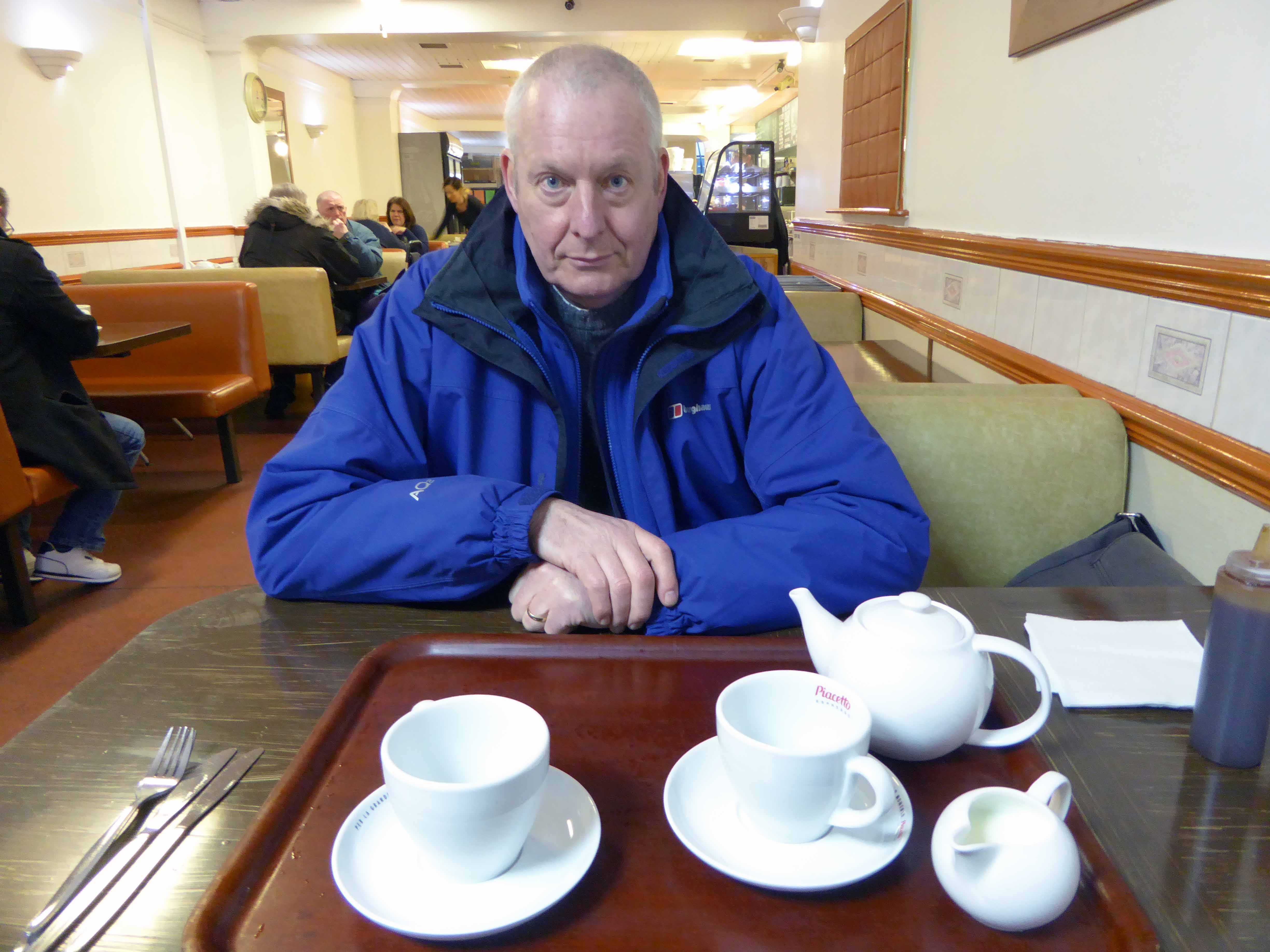
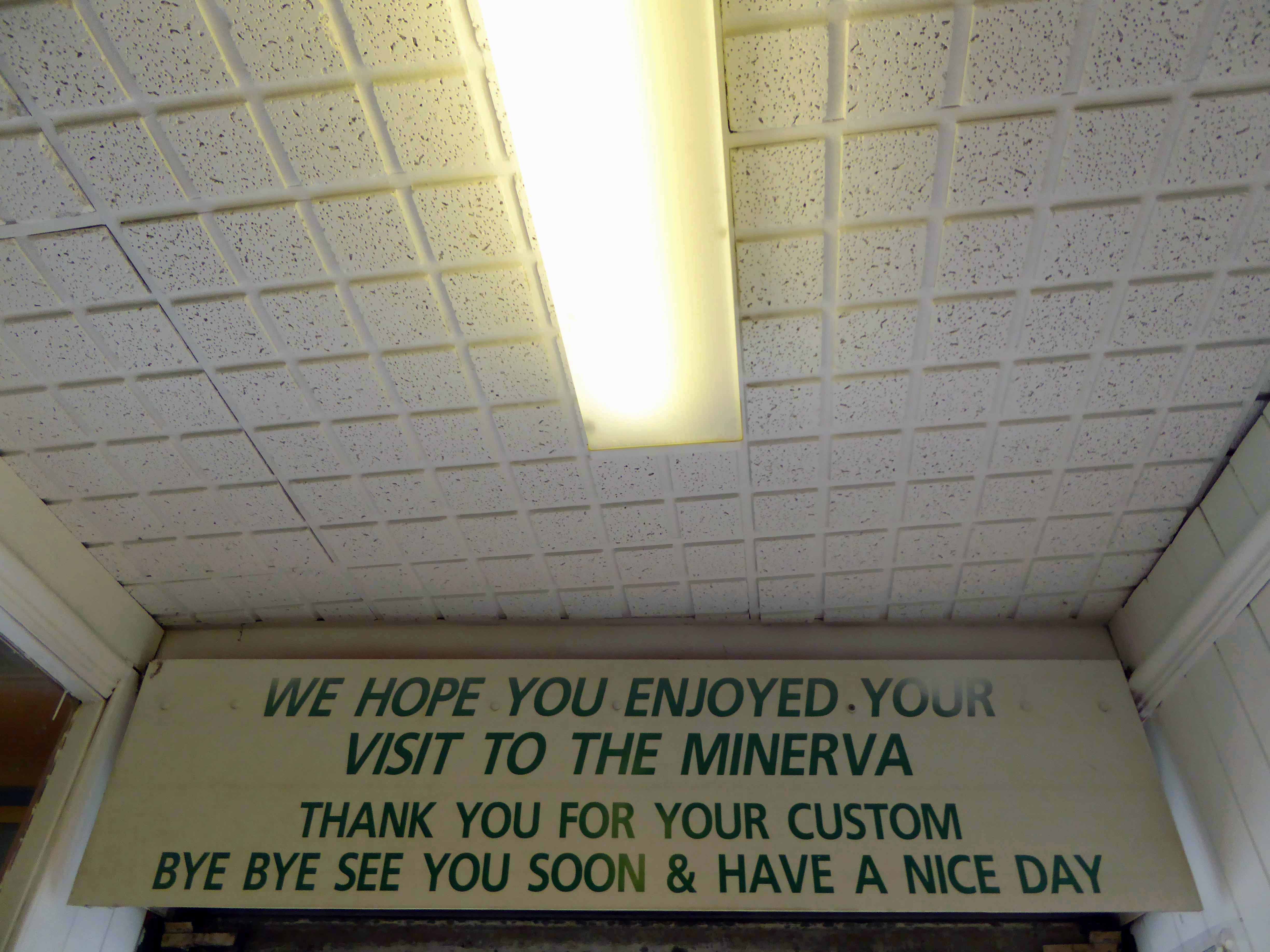
A Doncaster town centre cafe, once used by former pop star Louis Tomlinson to film a pop video, has closed after trading for more nearly 50 years near the market. The Minerva Cafe has closed down after trading sine the 1970s offering breakfasts and lunches to shoppers.
The shutters are now down on the shop, which has not now been used for two weeks, say neighbouring businesses. Minerva was well known for its big breakfasts which often earned rave reviews on the internet. It also had a celebrity link, having been used by the former One Direction star Louis Tomlinson for the shooting of his Back to You video, last year. Doncaster Council town center bosses confirmed they understood the cafe had closed down, but did not know the reason. Long serving Doncaster market trader Nigel Berrysaid he had seen no sign of activity at the cafe for two weeks. He said: It has been here in the market for such a long time. It’s been there since I first started on the market in 1971. People have commented to me it feels like it has been there forever.
“It is a shame to see it closed. It has been a bit of an institution round here.”
Son of Coventry – architect, author and leading post-war planner.
From 1949 onwards plans were afoot to develop the Waterdale area of Doncaster – civic buildings, courts, educational provision and the like WH Price the Borough Surveyor at the helm. In 1955 Gibberd was appointed to oversee the site, though many of his designs were unrealised, his Police Station and Law Courts opened in 1969.
The area was also home to the Technical College and Coal – later Council House, both now demolished.
The Courts and Police Station now nestle behind the much newer civic developments, part of much wider regeneration scheme.
So let’s go back in time to a wet day in 2016 – when first I chanced upon these municipal concrete bunkers of law and order – where Brutalism is embodied in the buildings content and purpose, as well as its style.
This is an architecture that instructs you to avoid wrongdoing at all costs – or suffer the inevitable consequences.
Come and have a go if you think you’re hard enough.
2019 and I’m back again – architecturally little or nothing has changed, still standing – stolid solid pillars of justice. The day is brighter ever so slightly softening the harsh precast panels against a bluer spring sky.
I had time to kill – in search of early Sunday morning visual thrills.
I took to the mean streets of Steeltown UK.
Down these mean streets a man must go who is not himself mean, who is neither tarnished nor afraid. He is the hero; he is everything. He must be a complete man and a common man and yet an unusual man. He must be, to use a rather weathered phrase, a man of honor—by instinct, by inevitability, without thought of it, and certainly without saying it. He must be the best man in his world and a good enough man for any world.
He will take no man’s money dishonestly and no man’s insolence without a due and dispassionate revenge. He is a lonely man and his pride is that you will treat him as a proud man or be very sorry you ever saw him.
The story is this man’s adventure in search of a hidden truth, and it would be no adventure if it did not happen to a man fit for adventure. If there were enough like him, the world would be a very safe place to live in, without becoming too dull to be worth living in.
Raymond Chandler
It was 8am – low bright sun pierced the achingly empty space between the long high industrial buildings.
There was nobody to share the morning – yet the clearly audible kling and klang of work pervaded the air, along with the lingering aroma of engine oil and decay.
A city once awash with industry and ale – a myriad of pubs slaking the thirst of the thirsty steel workers.
A liquid equilibrium flowing and flowering for over a century.
The Lower Don Valley once home to a wealth of boozers, tells a different tale today.
A fall in production produced a proportionate reduction in consumption.
The clatter of clogs on cobbles, metal on metal is but a distant memory, along with the sound of pints pulled and hastily glugged.
The architecture of ale still prevails – now purveying pleasures and delights of a different stripe, whatever takes your fancy, as long as it’s not too fancy.
And doesn’t involve taking a drink.
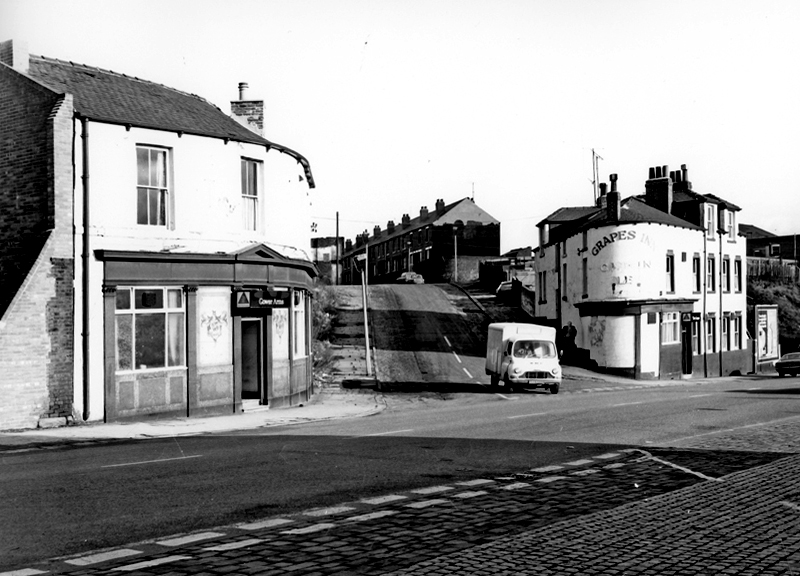
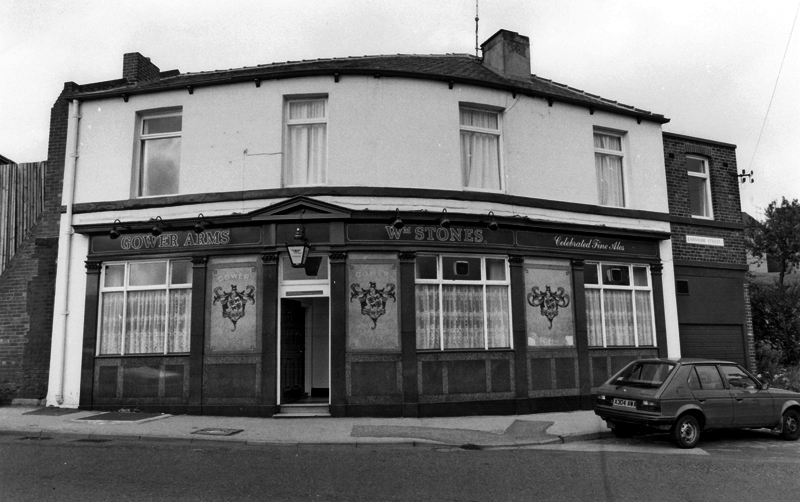
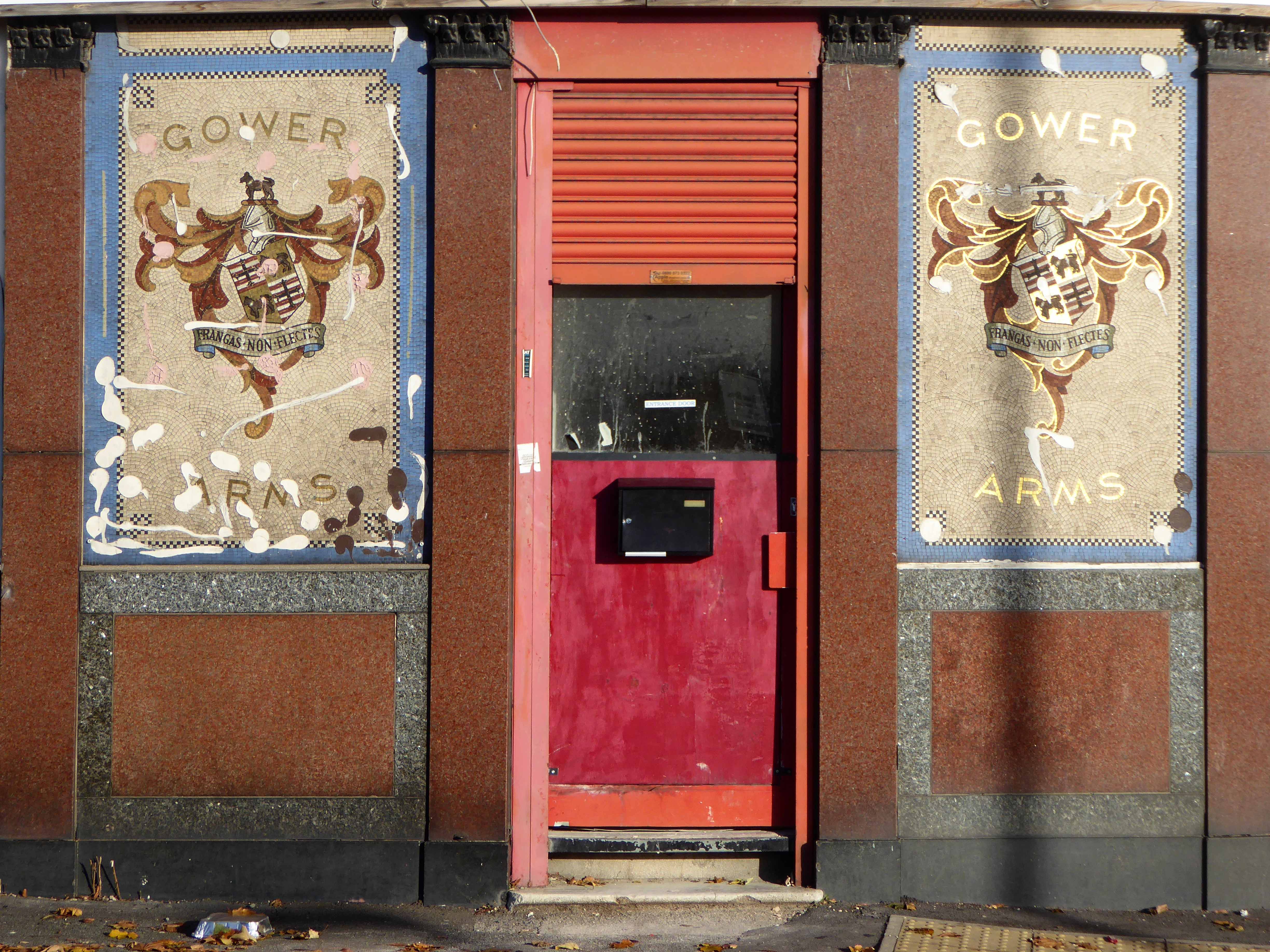
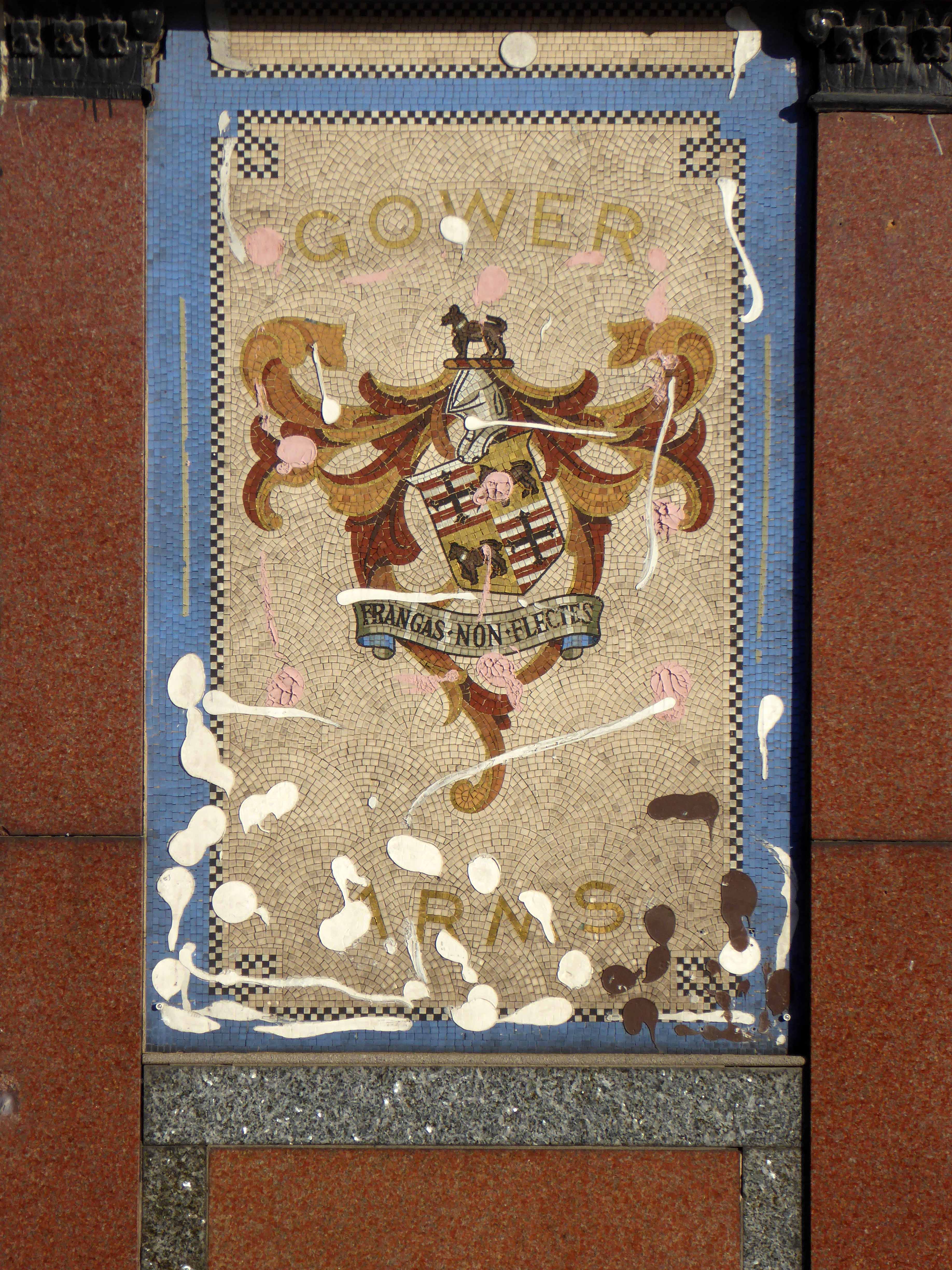
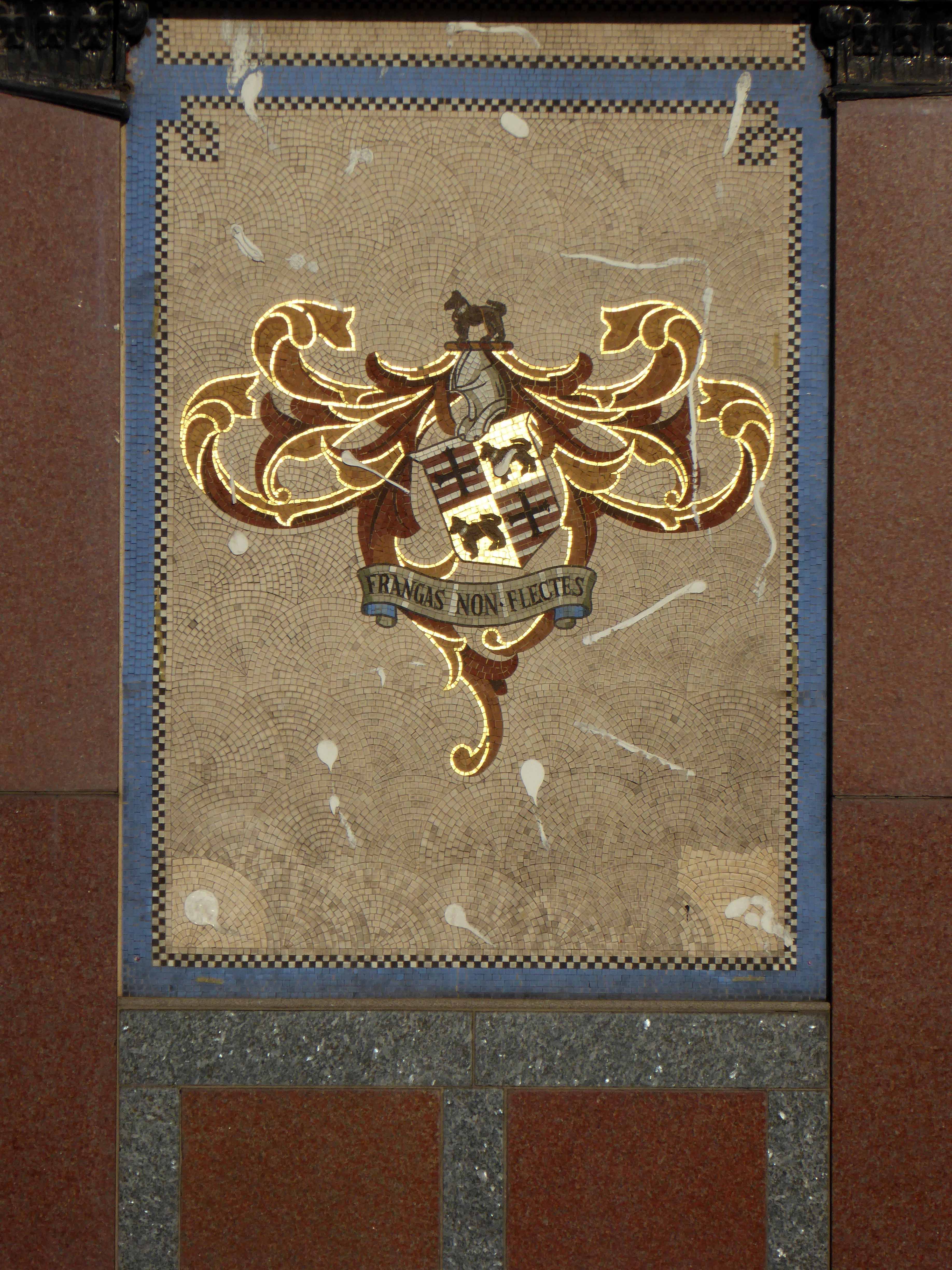
The Gower Arms – 47 Gower Street Burngreave Sheffield S4 7JW
I drink down there – top pubs methinks. They are old fashioned pubs with some real characters. Will be there Friday night in the Staff first, Royal Oak, Gower, Grapes and back to the Staff till I drop.
Blade Bloke 2007
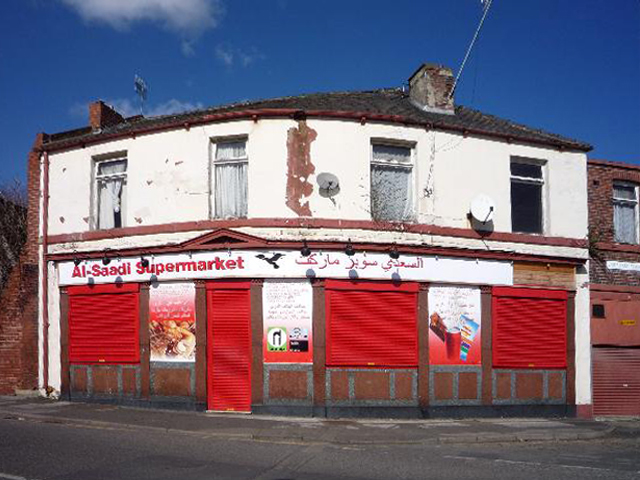
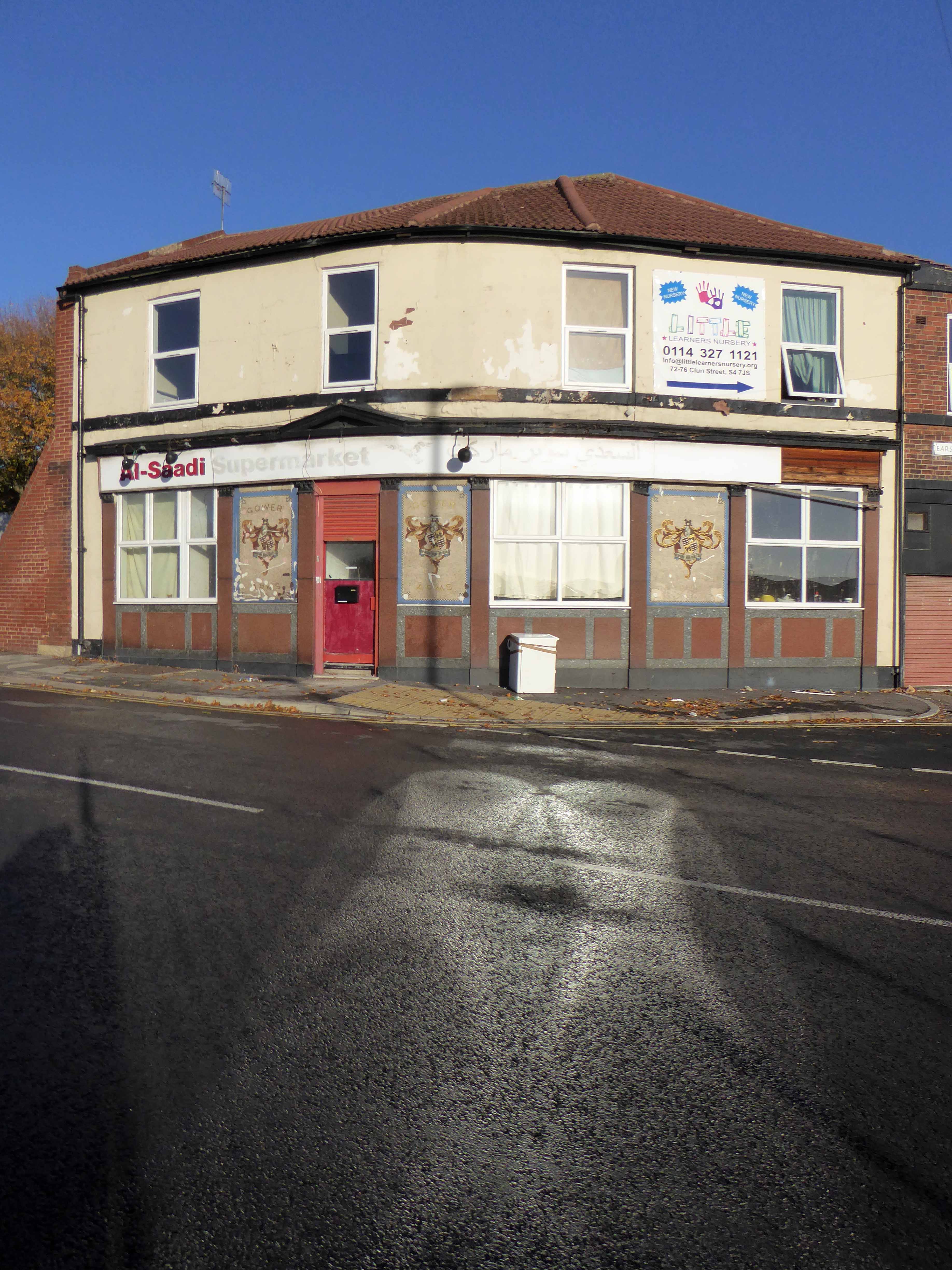
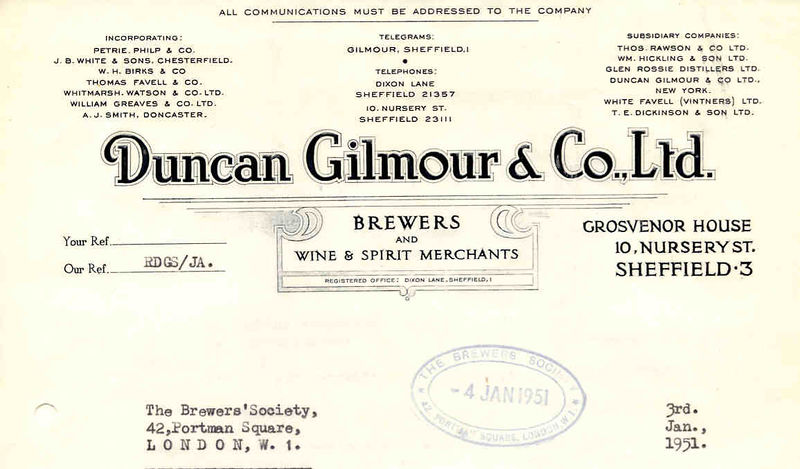
From top pub to closed corner supermarket in two shakes of a monkey’s tale.
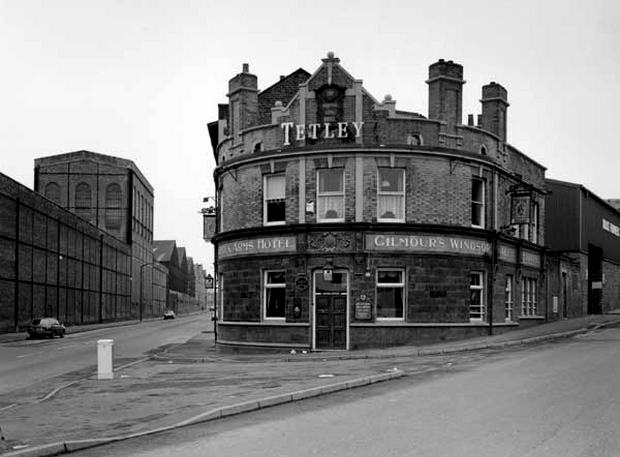
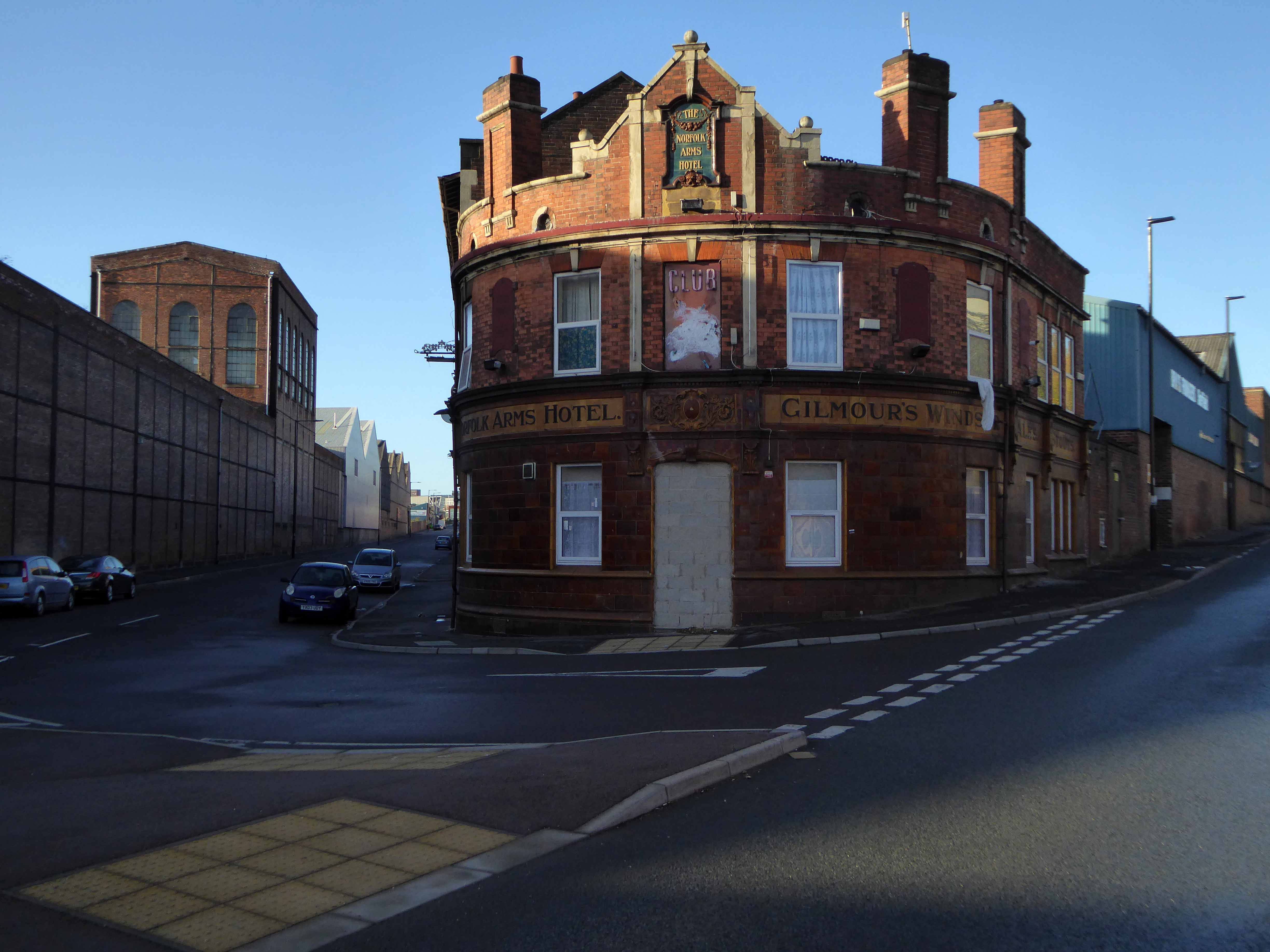
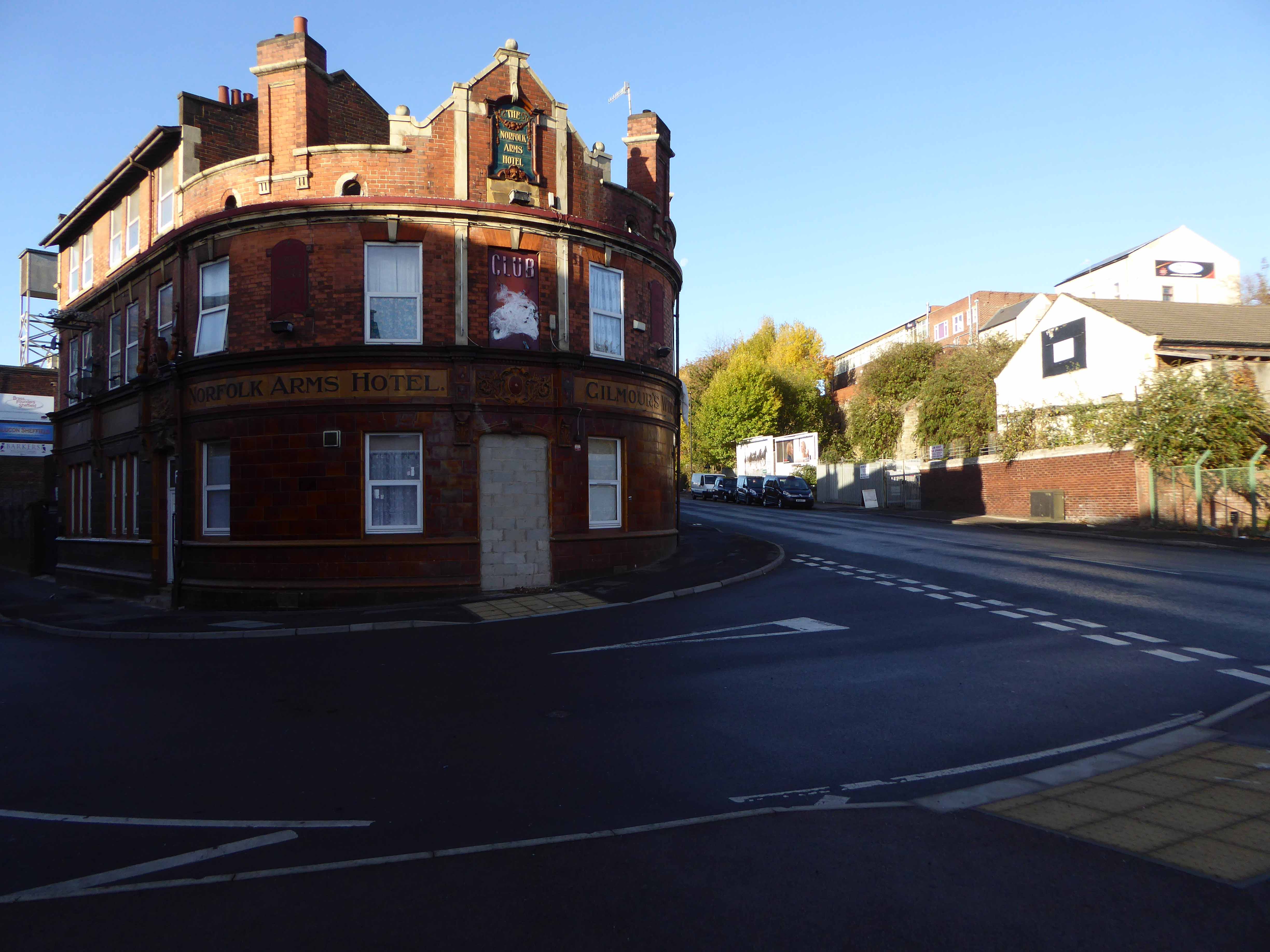
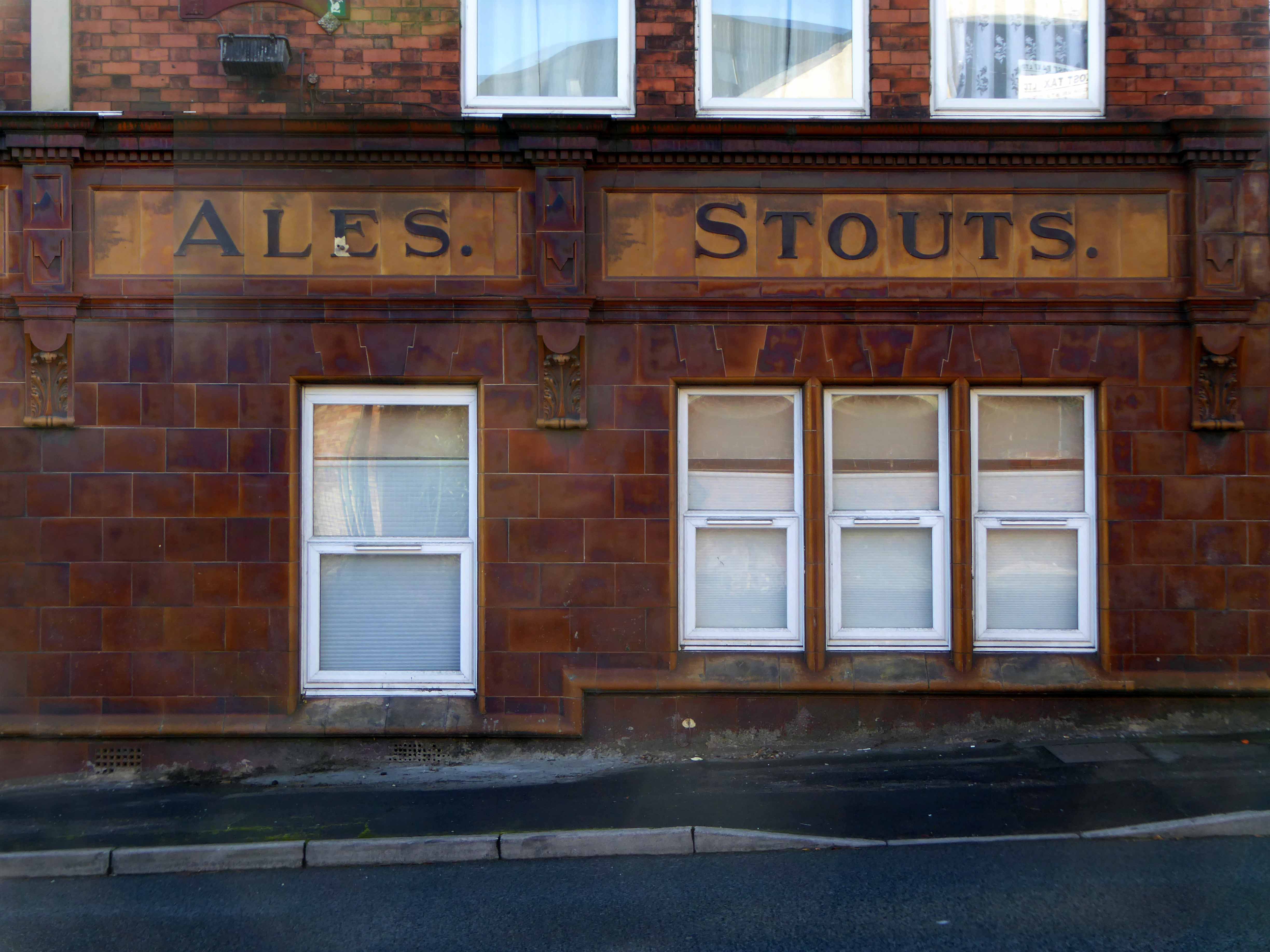
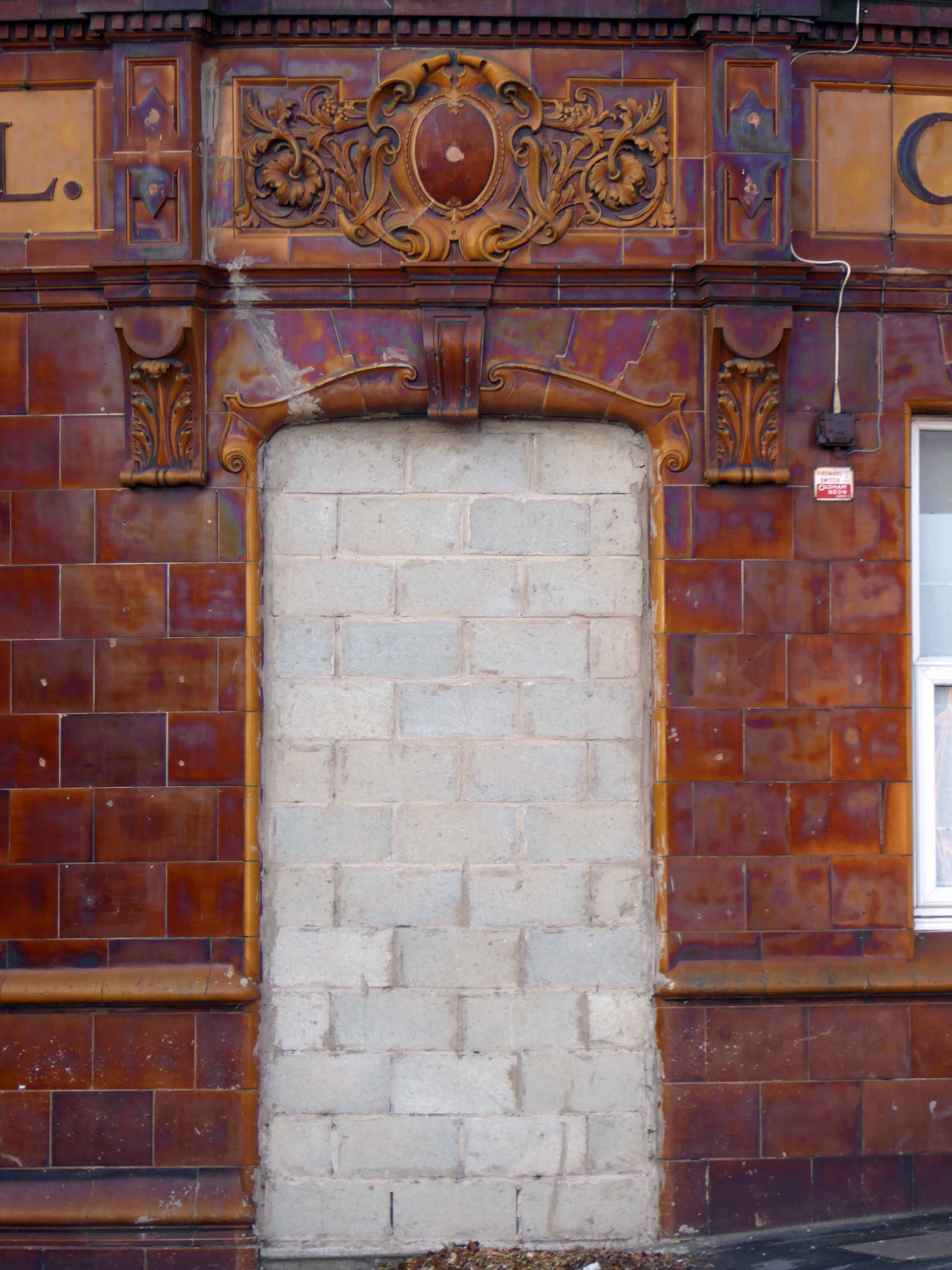
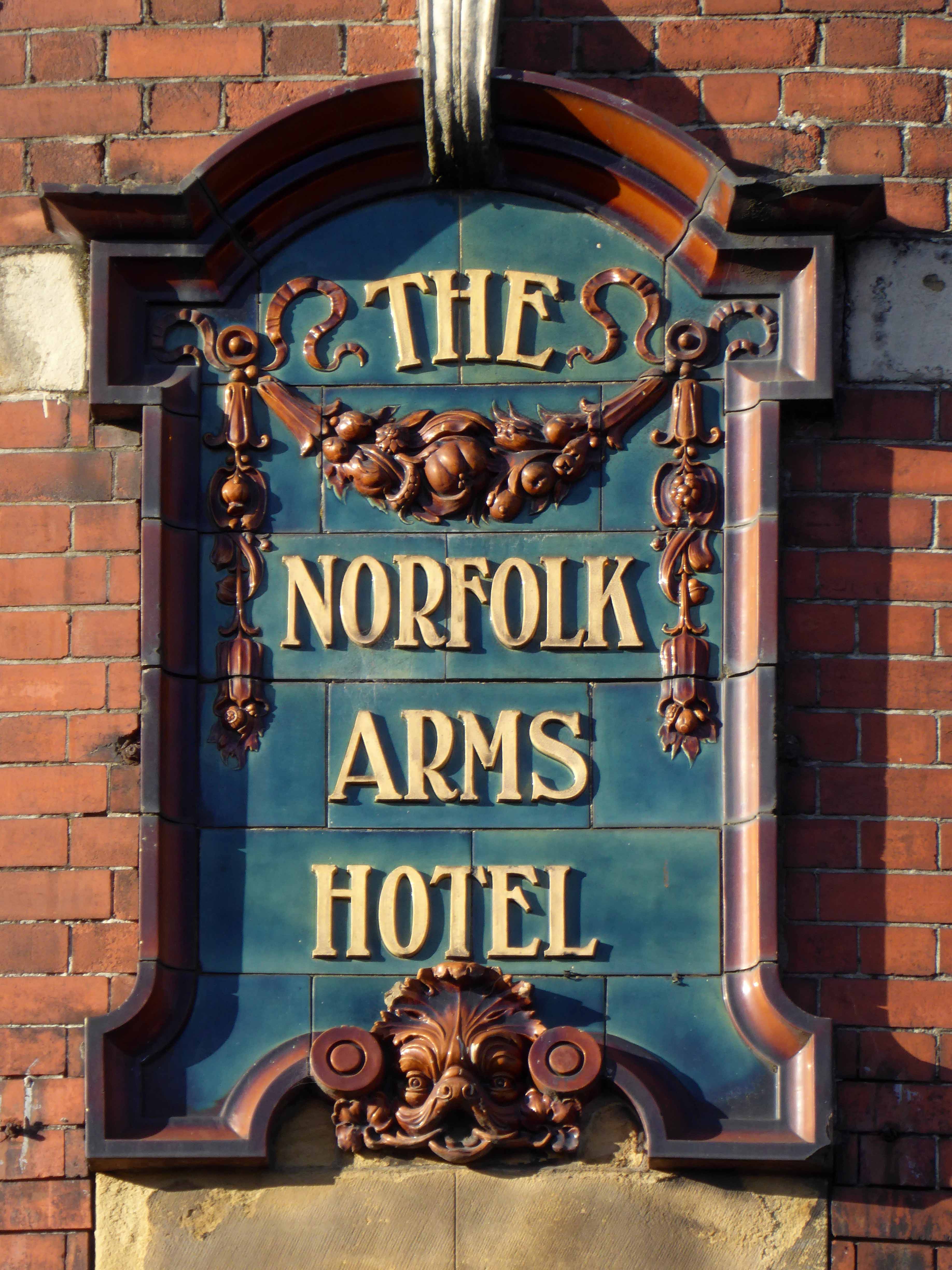
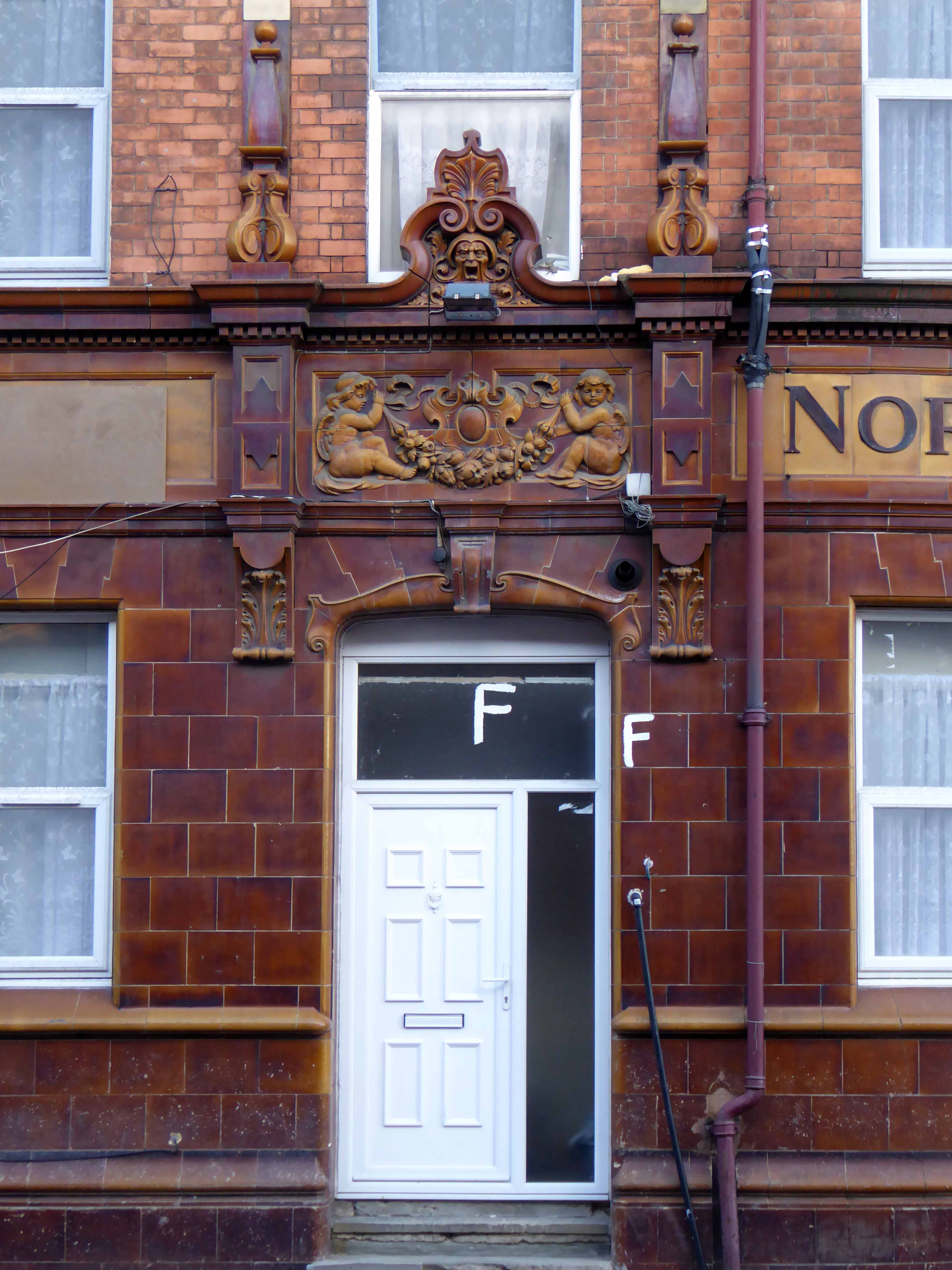
The Norfolk Arms Hotel – 195/199 Carlisle Street Sheffield S4 7LJ
From a Gilmour’s tap, Tetley tavern to a temple of trendy funk.
Club Xes is a nightclub in Sheffield described as a vibrant and thrilling, and full of Sheffield’s young and trendy crowd. The DJs are renowned for providing the newest funkiest records.
Premises Type – This place does not serve real ale.
Premises Description – Gay nightclub.
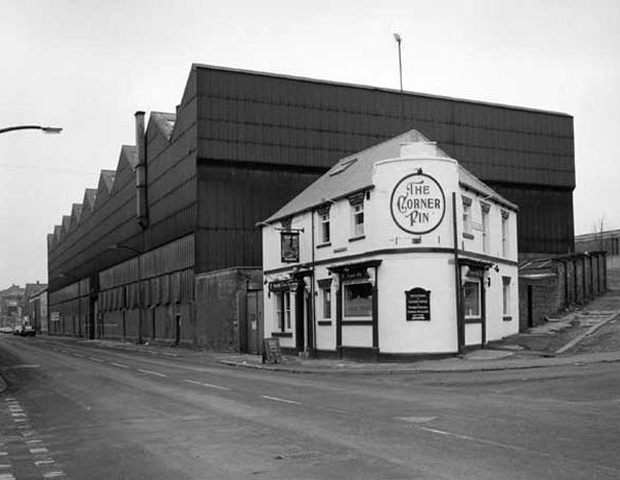
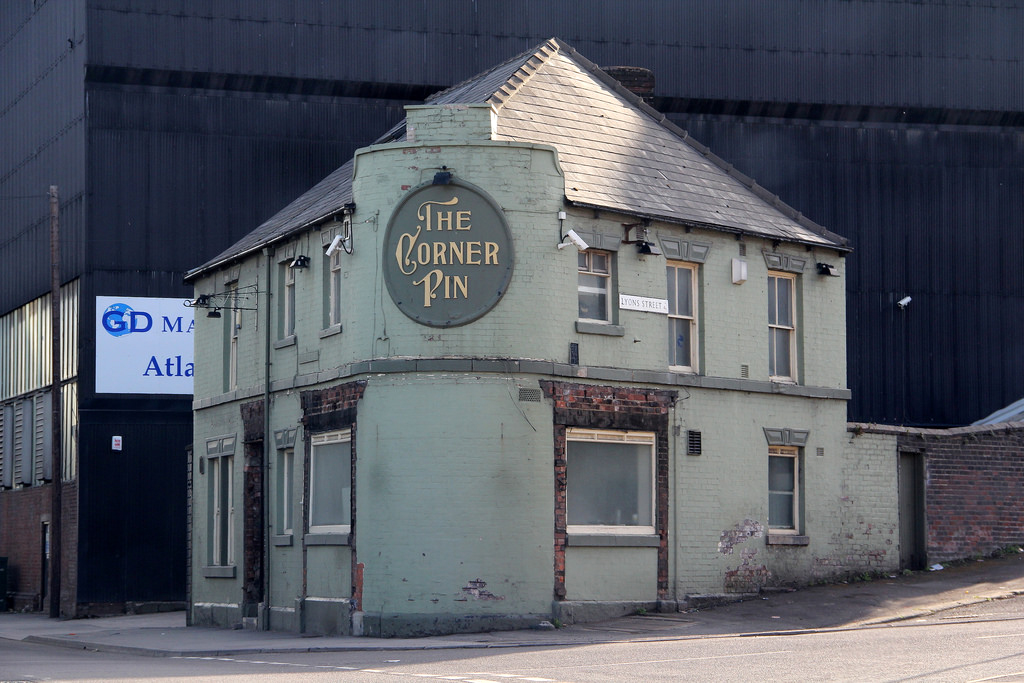
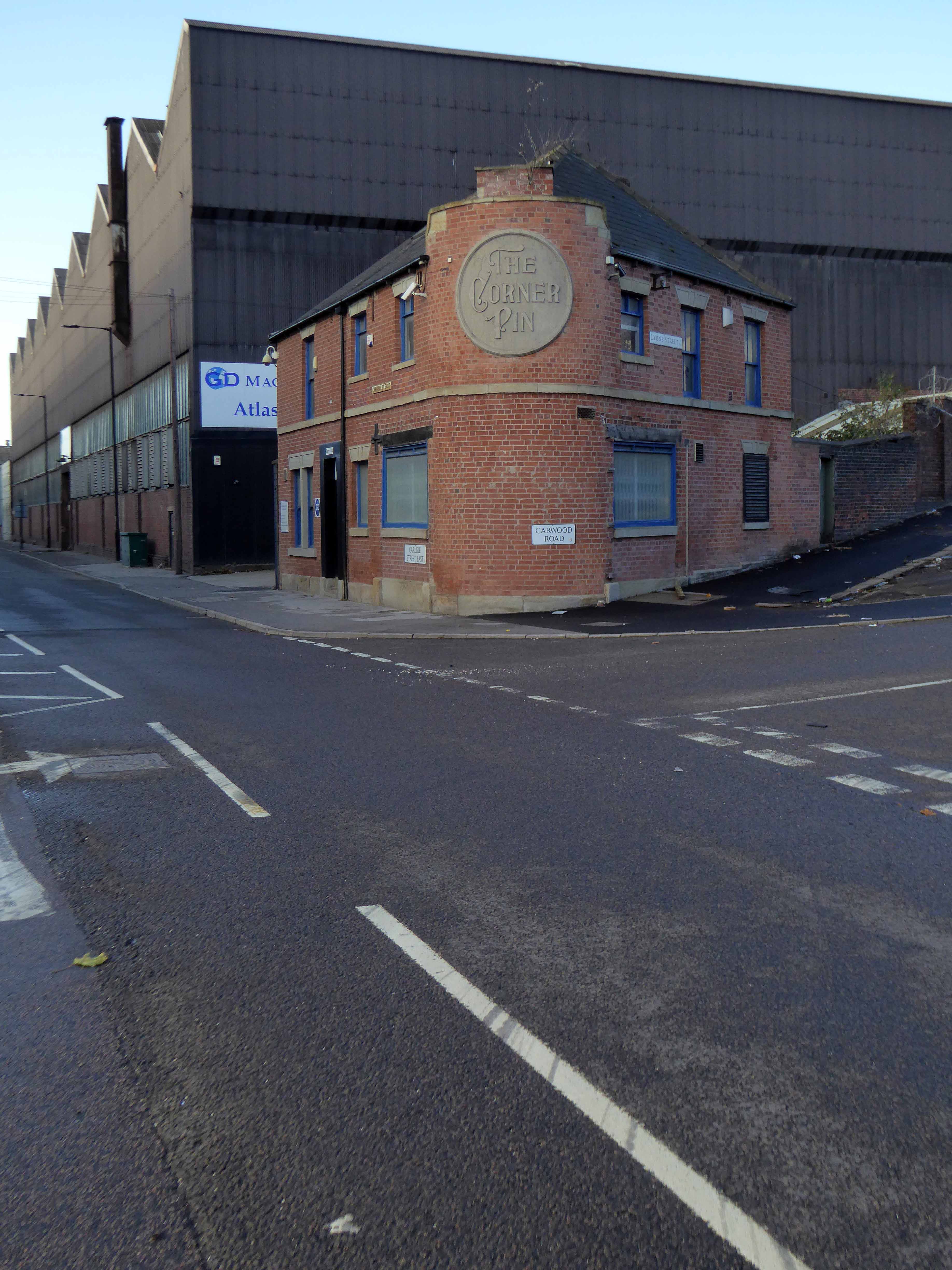
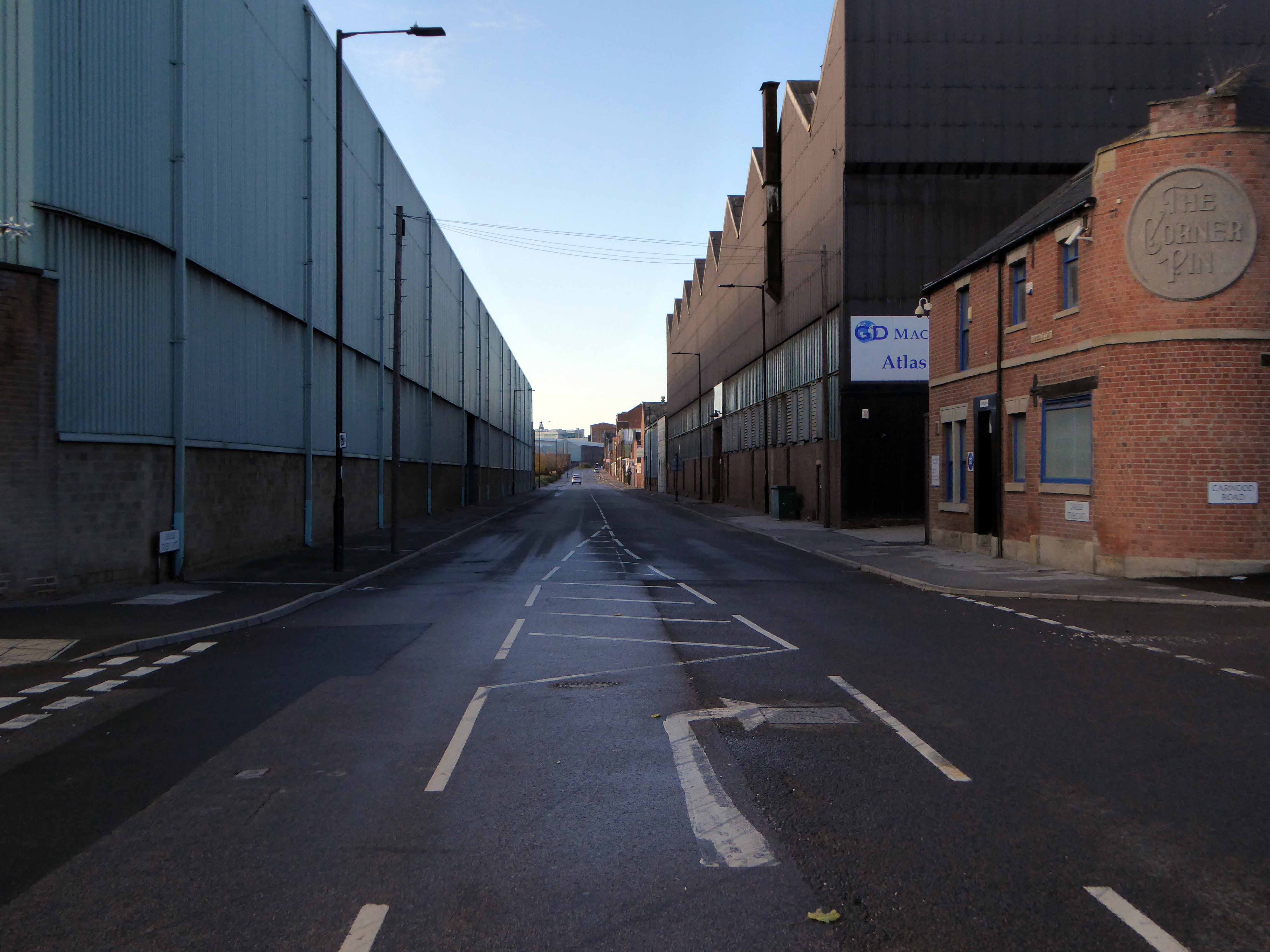
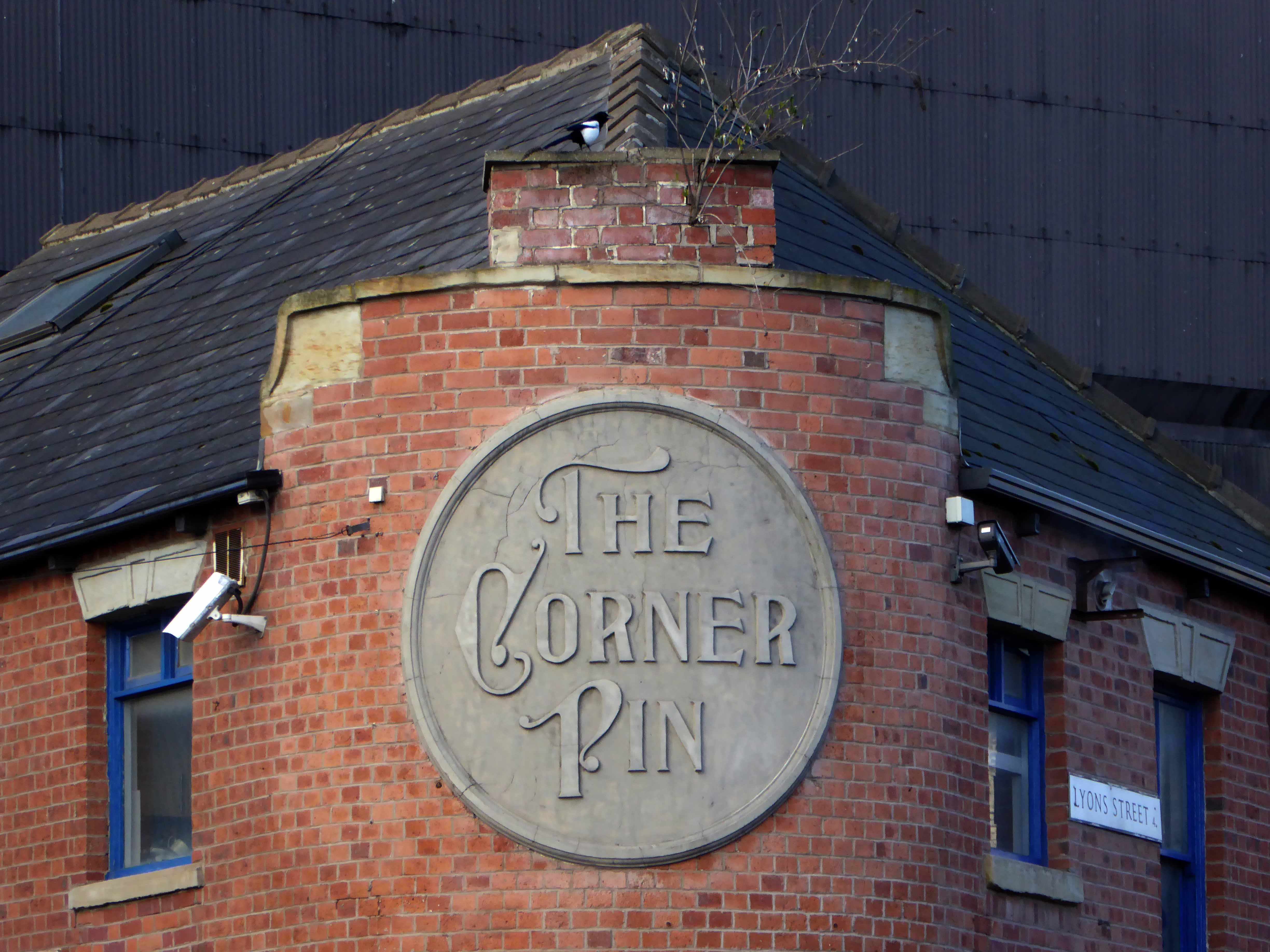
The Corner Pin – 231-233 Carlisle Street East Sheffield S4 7QN
First licensed to sell beer in 1840. One of 26 public houses serving the steel industry along a three- quarter mile stretch of Carlisle Street. It is said to have a ghost who likes to turn the lights on in the middle of the night and footfalls can be heard.
The Corner Pin was the last of the Steelmakers pubs in Sheffield and was one of my favourite places to visit for a real good pint! I would come over from Melbourne once or twice a year, still do, and meet up with Chris Payling and many others still left over from the days of Sheffield Steel, but now all gone.
They even took away your window frames, along with your dignity once a pale green shadow of yourself, stripped back to brick.
Stop dreaming of a foaming pint right now – you’re an office.
Obviously, stating the obvious in Comic Sans on a shocking pink ground may ease the pain of industrial decline and its attendant social and economic ills.
Sheffield along with the majority of British manufacturing towns and cities, has seen the wealth created by over a century of hard labour spirited elsewhere, and the means by which that wealth was created shipped overseas or overwritten by new technologies.
This has not been an accident or unfortunate consequence of global trends, it has been government policy.
It has not been government policy to regenerate these towns and cities.
So Sheffield has taken the initiative to become – The fastest growing British city outside London.
Though that may do little to redress the structural economic divides within the city.
So I walked the avenues and alleyways of the Lower Don Valley, early on an October Sunday morning, mourning the passing of the clang and clamour that once fuelled the city and the nation.
An aroma of engine oil and the sound of metal on metal still permeates the area, and the low autumnal sun warms the long straight streets.
The church building, designed by John Mark Mansell Jenkinson, the second generation of a Sheffield firm of architects, was opened in 1971. A steel cross, fixed to the facade in 1989, is a memorial to their work here and in the city.
The church, which stands at the side of a main road, has a grey concrete exterior, once white, which rises like a cliff, echoing the natural cliff face of the rocks behind. Three carved roundels in the lowest quarter of the facade soften the exterior as does a brown brick tower which guards the entrance steps and houses a lift which was added in 2004.
The steps lead into a narthex where two plaques outline the history of the three Congregational Churches which came together to instigate the building of this church. The doors to the left, which lead into the worship area, suggest the influence of Charles Rennie Mackintosh and Frank Lloyd Wright upon John Jenkinson.
The hexagonal church interior, which is well lit from the sides and the roof, is clad in golden brown stone. There is an air of Puritan simplicity. The tiered seating looks towards the raised sanctuary area which has a stone pulpit, lectern, communion table, and chairs; the font was carved by James Stone. There are stained glass windows, a banner, and a gold cross, designed by David Mellor, above the pulpit. At noon on sunny days the light strikes the top of the cross and brings the building to life. The organ console which is at the side of the churchcame from Zion Congregational Church at Attercliffe. It was originally built for Weetwood, the home of Sir William Ellis, a Sheffield Industrialist.
The banner is one of four fabric collages depicting the seasons, designed by Elaine Beckingham and made by the children of Junior Church. The other three are also displayed in the church
The church area leads into what survives of Endcliffe Park Congregational Church, notably a large hall with an organ to match which, along with the benches which served as pews, are reminders of its former days. It has a gallery divided by moveable partitions to facilitate use as classrooms.
He brought a breath of fresh air to British industry.
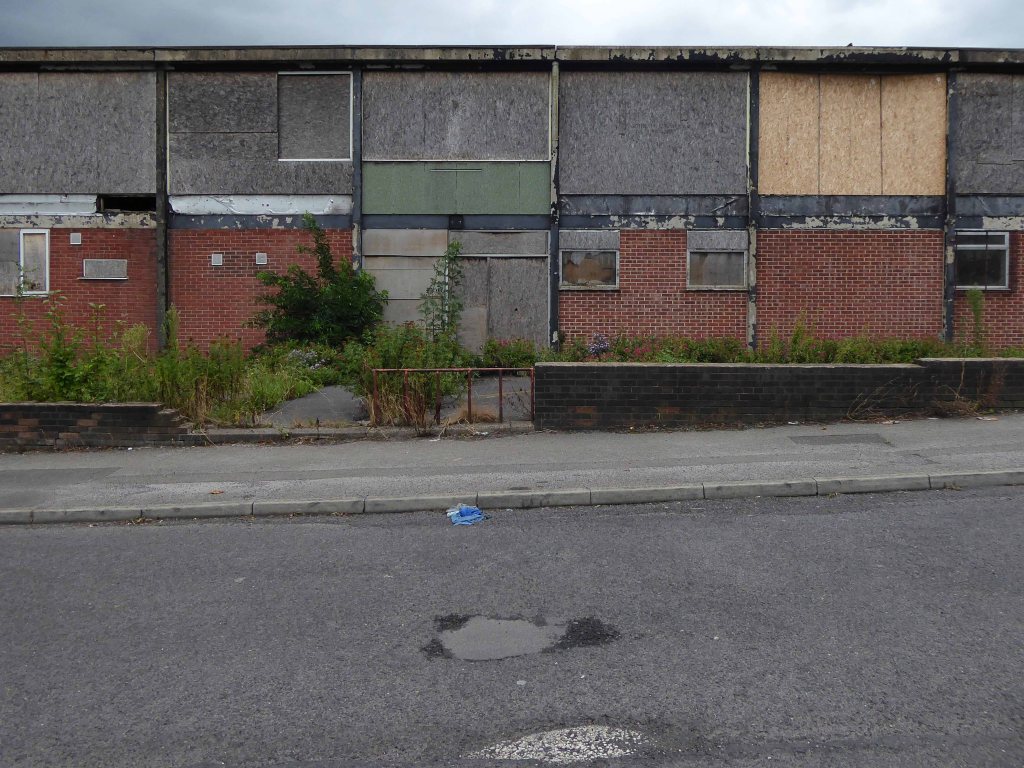
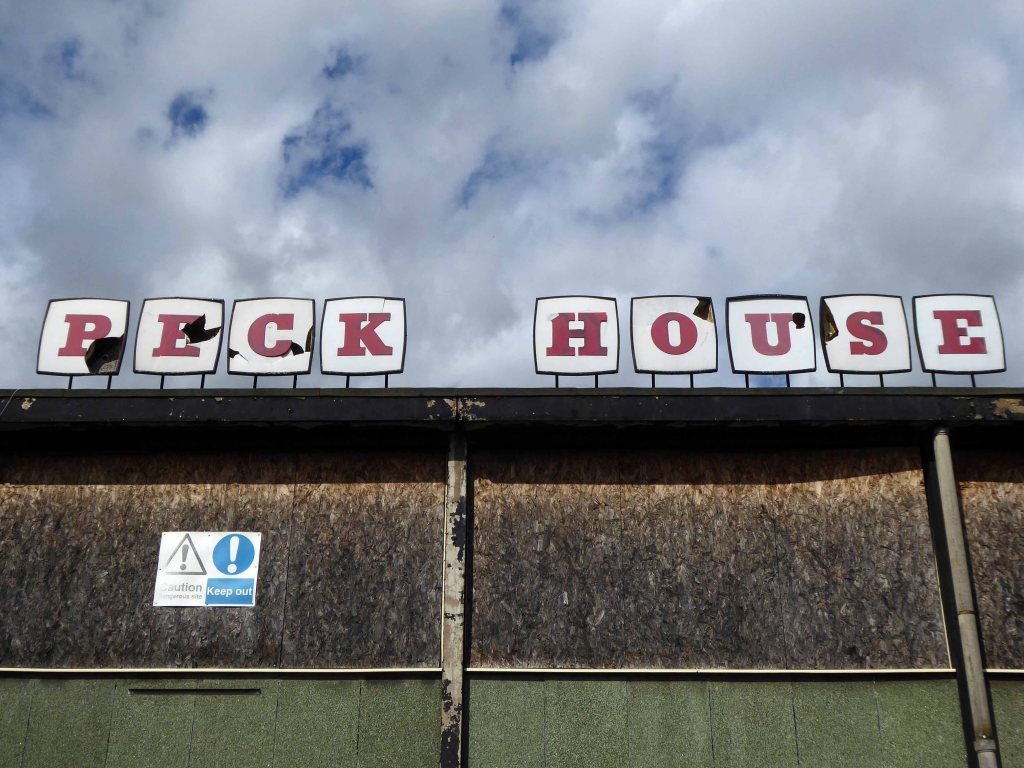
The fifth horseman of the industrial apocalypse – bringing pit-closure, redundancy the deindustrialisation of a whole area.
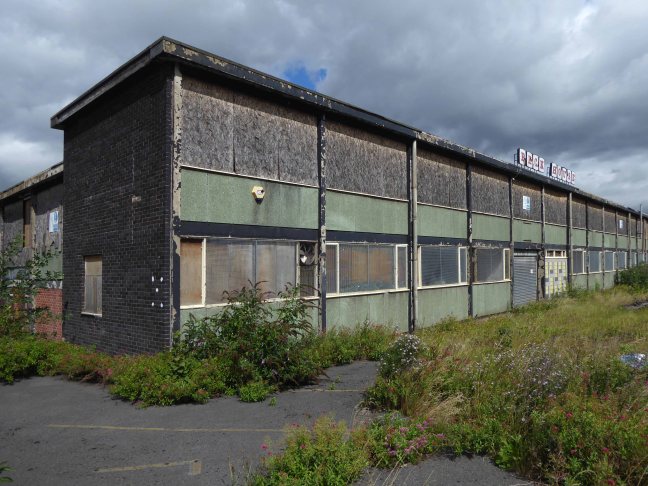
Offices and citizens are tinned-up, brassed-off and abandoned.
This is now the architecture of civic optimism eagerly awaiting repurposing.
There is talk of conversion to housing, talk is cheap.
A planning application has been drawn up requesting permission to change the use of Chantry House from offices to one and two bedroom residential units. The application has been submitted by The Freshwater Group, the development arm of Watermark Retirement Communities.