New Face In Hull

And lo it came to pass – I came to Hull.

Again.

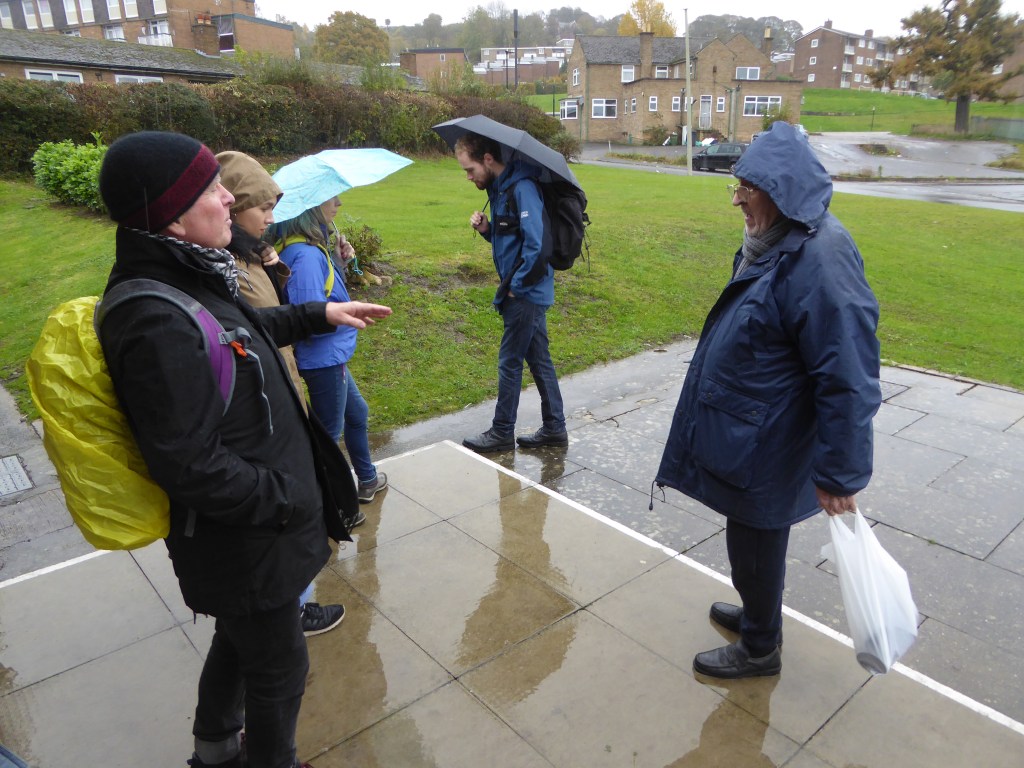
Guiding a group of willing Modernists on a walk.

We were there at the behest of Esther and Leigh, gathering to say farewell to Alan Boyson’s Three Ships, as it transpired we were there to celebrate its reprieve, following their campaign for listing.

Over a million tesserae glowed in the low winter sun – so did we.

As Helen Angell read her poem – Christopher Marsden and Esther Johnson recording the performance for posterity.

The Three Ships are attached to a former Cooperative Store – complete with a formerly working Cooperative Store clock – where we meet at four minutes to six – forever.

We had previously encountered Hammonds of Hull/House of Fraser – soon to be a food court, artisan everything outlet.

And this Festival of Britain style functionalist council building.

Onward to the Queens Gardens the almost filled in former Queens Dock – forever fourteen feet below sea level.

We encounter Ton Liu’s Solar Gate – a sundial that uses solar alignment to mark significant times and dates in Hull. The super-light innovative two-shell structure is place-specific, responding to pivotal historic events and to the cultural context of its location in Hull’s Queens Gardens adjacent to the ancient site of Beverley Gate.

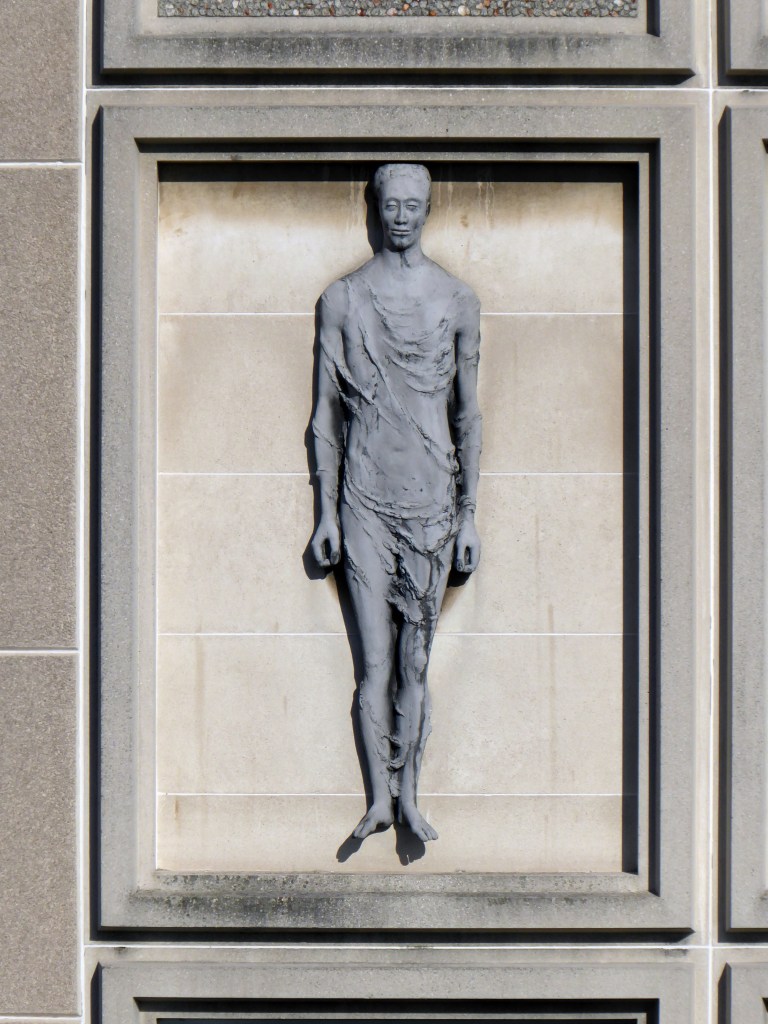
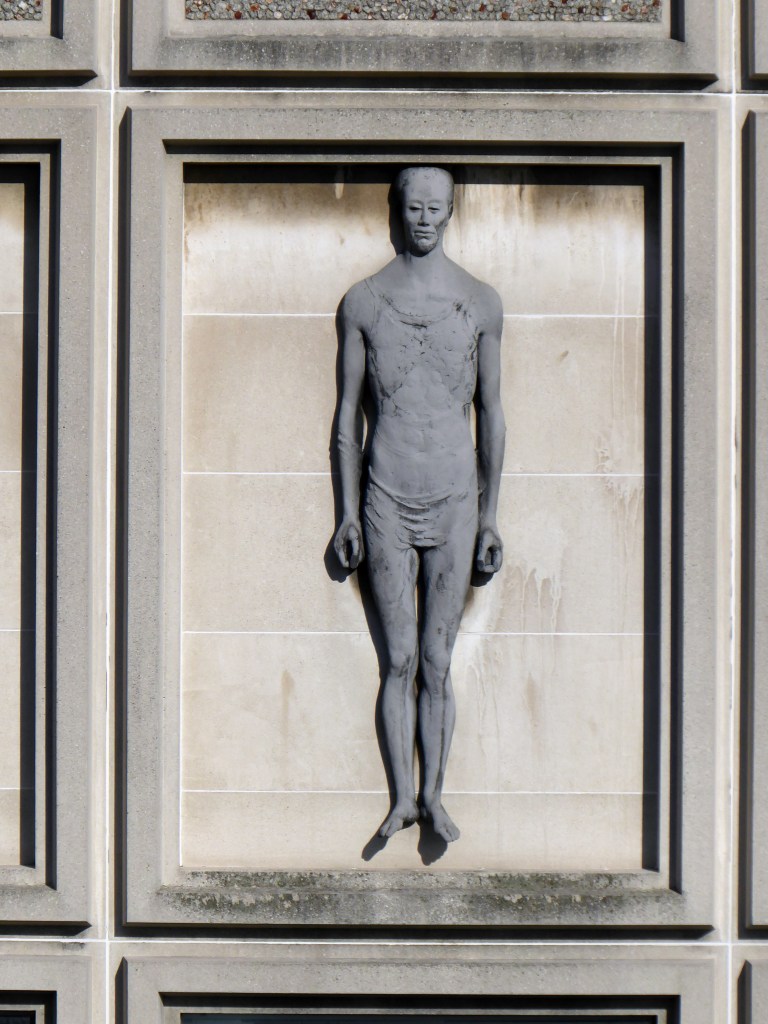
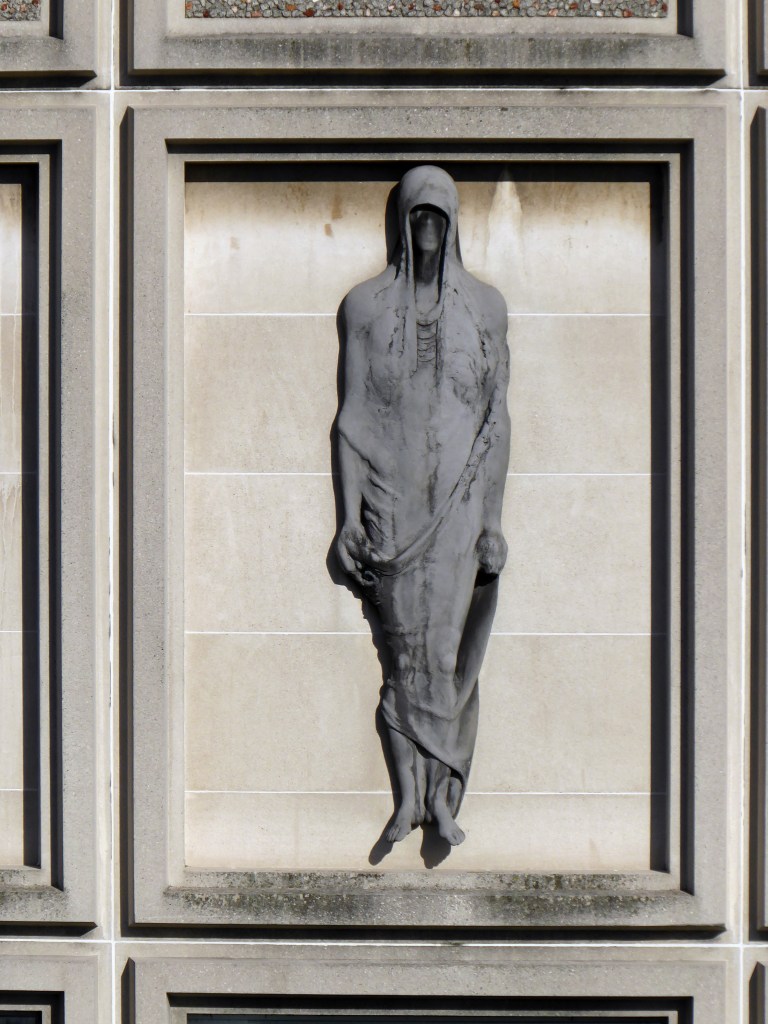
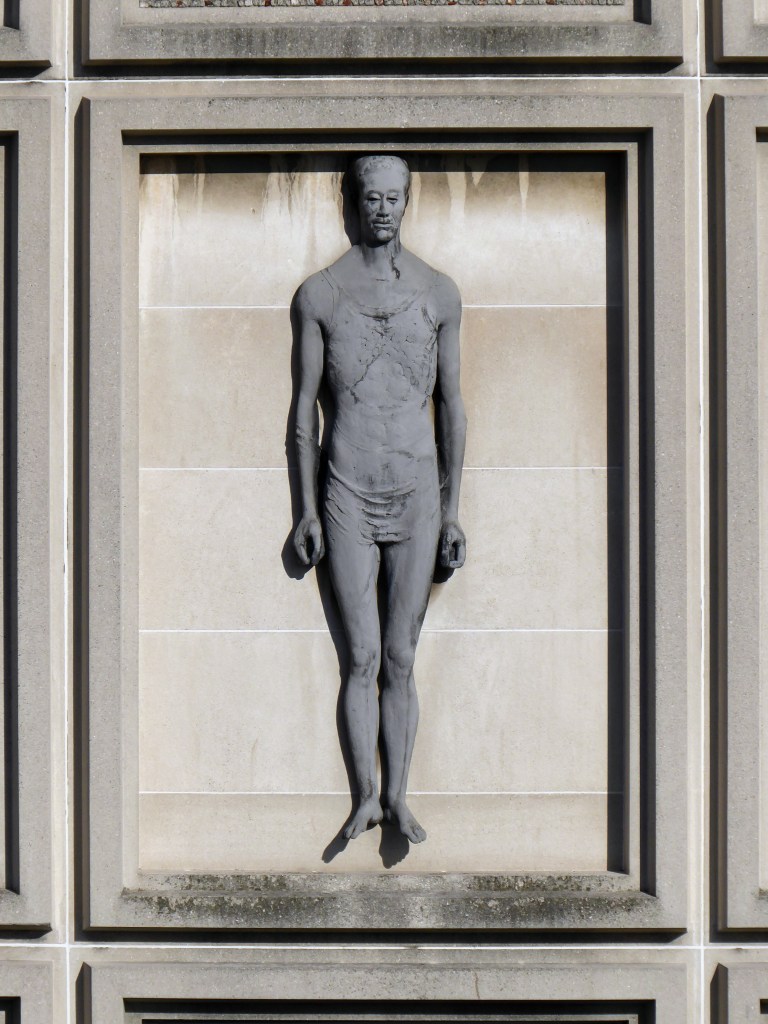
Carved stone panels Kenneth Carter 1960 – Ken’s art career began as an inspiring teacher, first at his alma mater, Hull College of Art, and later as principal lecturer at Exeter College of Art.

A number of decorative fountains featured in the ponds; those at the eastern end designed as part of the sculptured panels of 1960, by Robert Adams, described by Herbert Read as belonging to: 

The iconography of despair. Here are images of flight, of ragged claws, scuttling across floors of silent seas, of excoriated flesh, frustrated sex, the geometry of fear.

Top of the shop William Mitchells relief – time to pause and reflect.

Paying homage to Frederick Gibberd author of the College and Queens Gardens scheme.

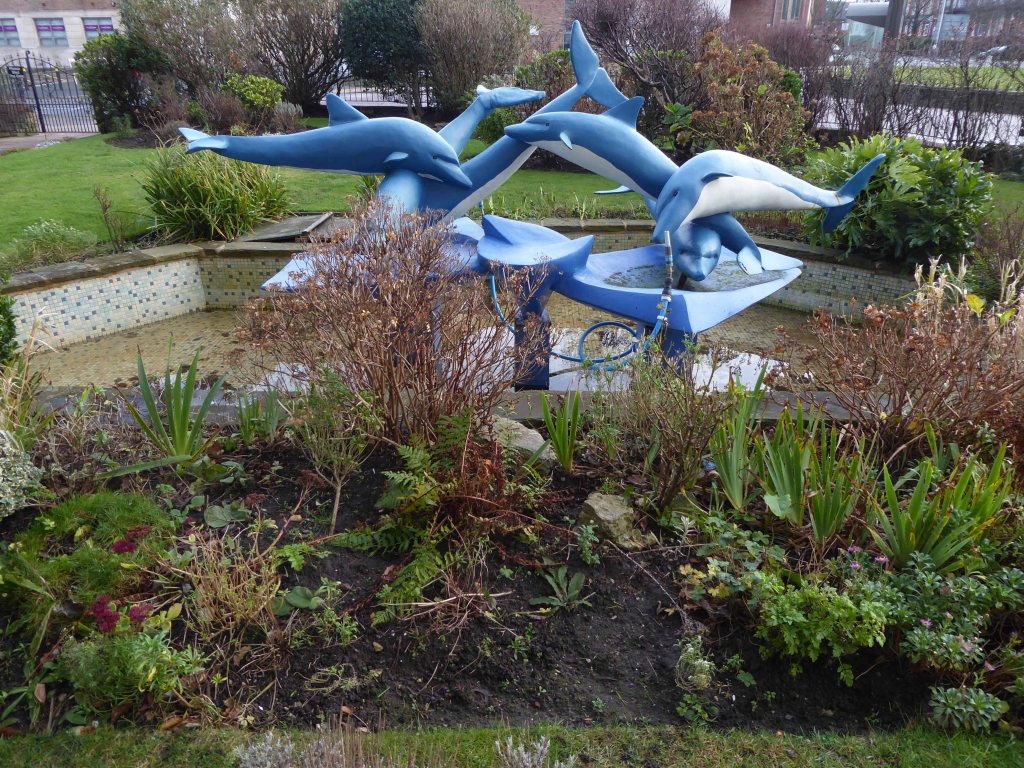
En passant catching a glimpse of this splendid non-functioning water feature.

Off on the bus to St Anthony and Our Lady of Mercy just off Beverley Road.

More of which here.

A swift walk around the corner for a swift walk around the University of Hull campus, first encountering the Gulbenkian Building.

And a brief encounter with the Brynmor Jones Philip Larkin Library.

Thanks again to Esther for pointing out this delightful owl – the work of Willi Soukop

My life was never planned, it just happened.

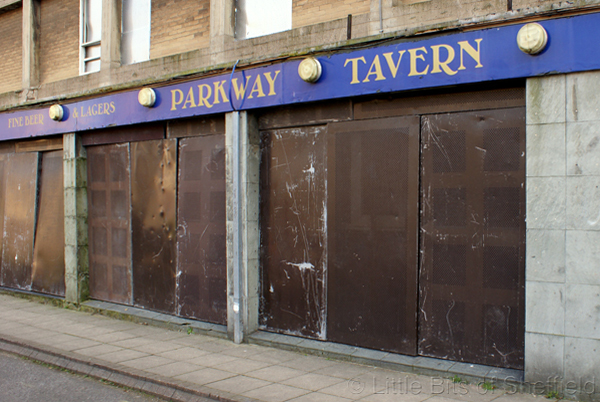
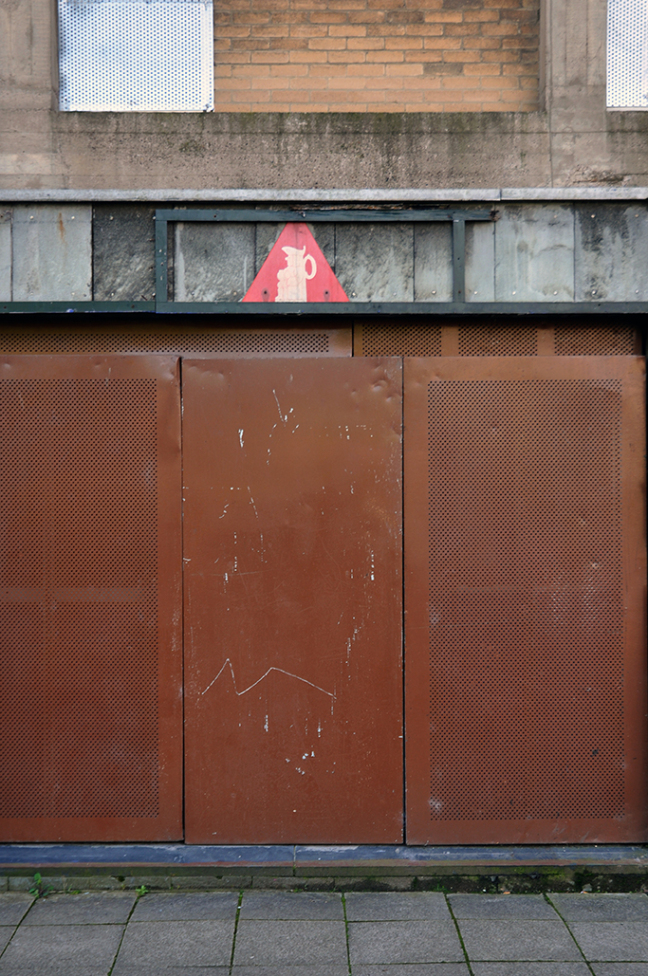
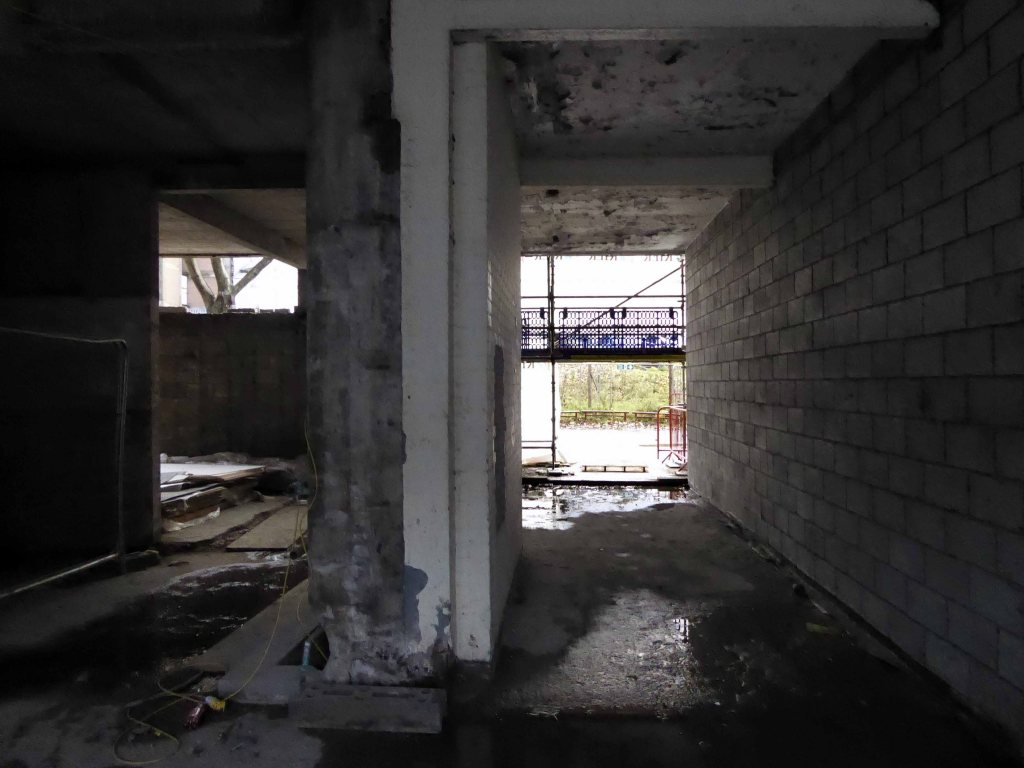
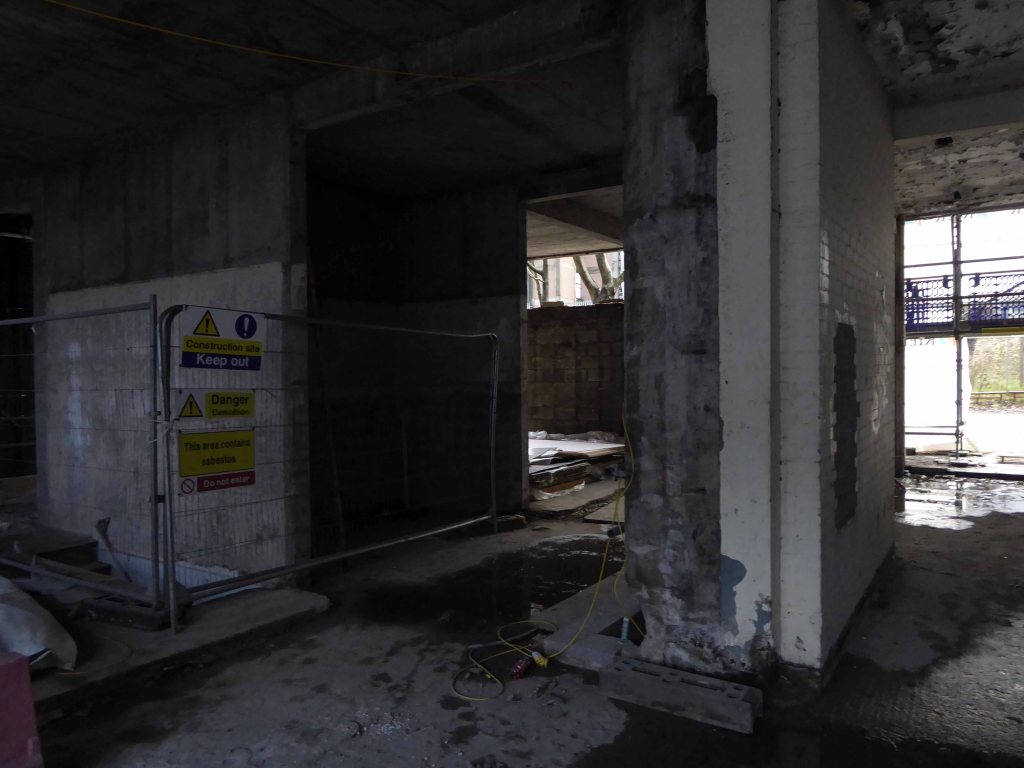
The Parkway Pub – Park Hill Sheffield

I’ve been here before, virtually – in my online guide to Park Hill Pubs.

I’ve been here before, actually – on my visits to Park Hill Estate

But hark, what news of the Parkway pub?

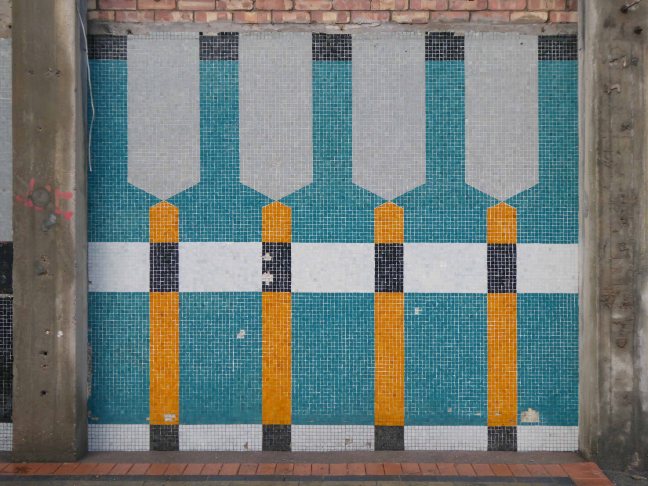
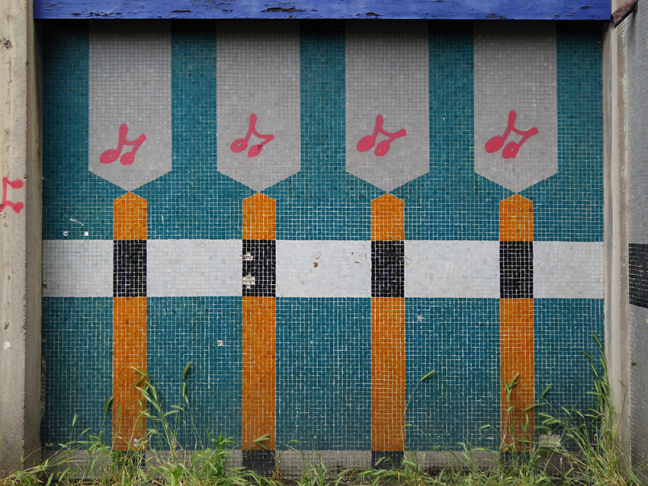
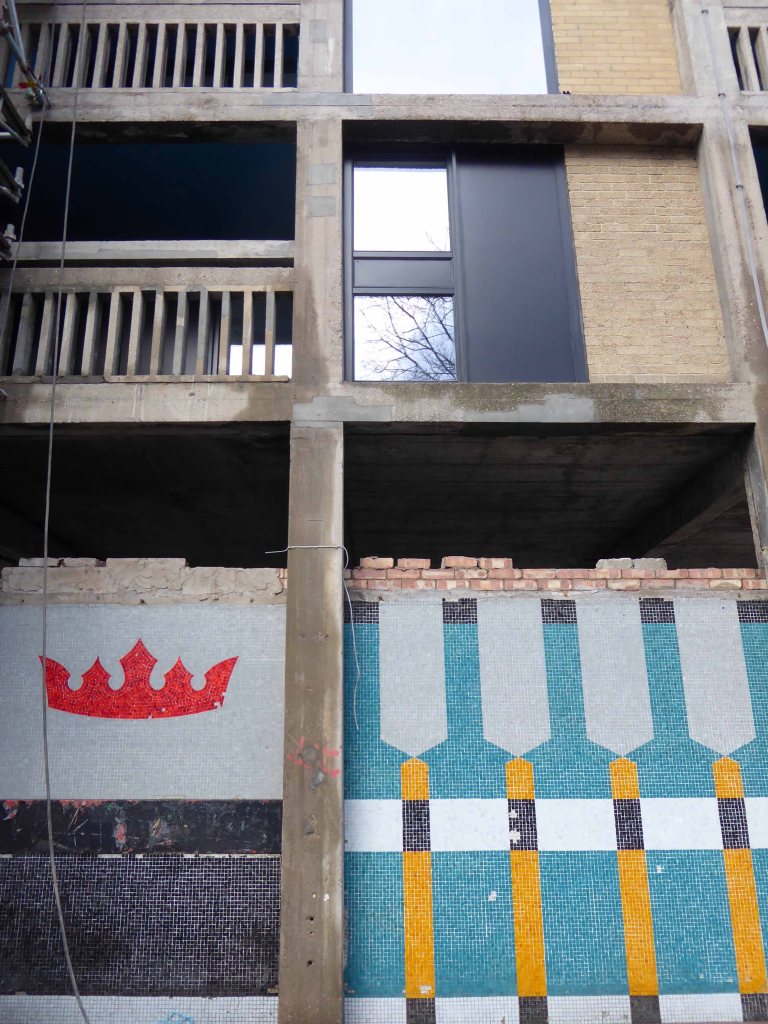
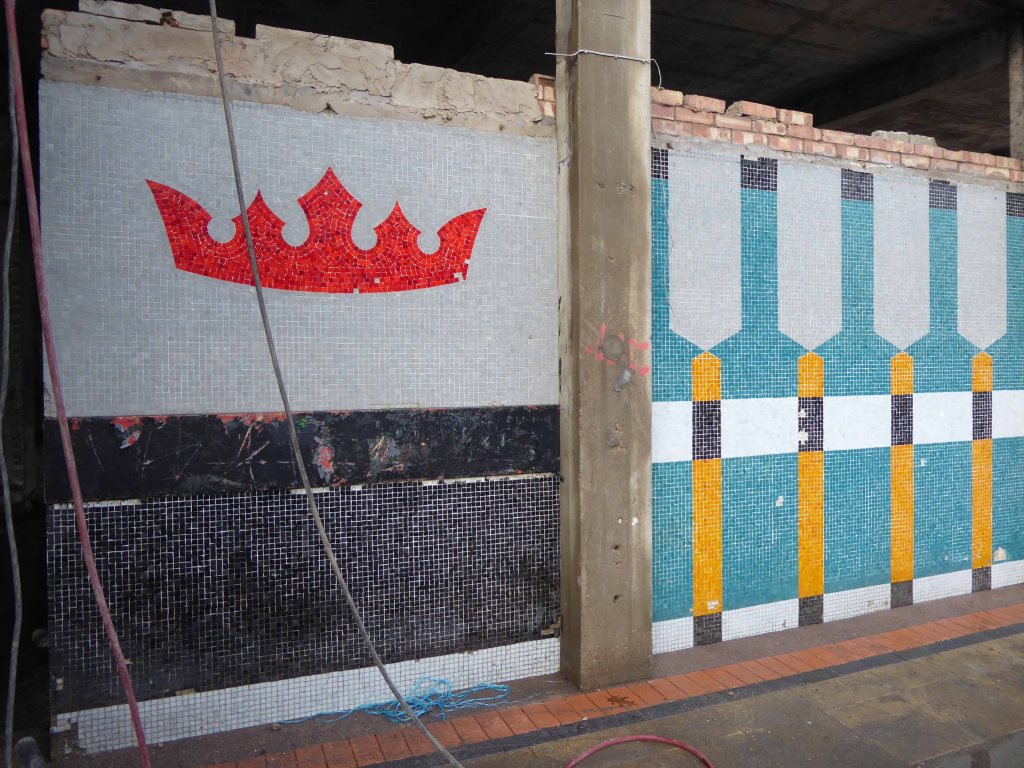
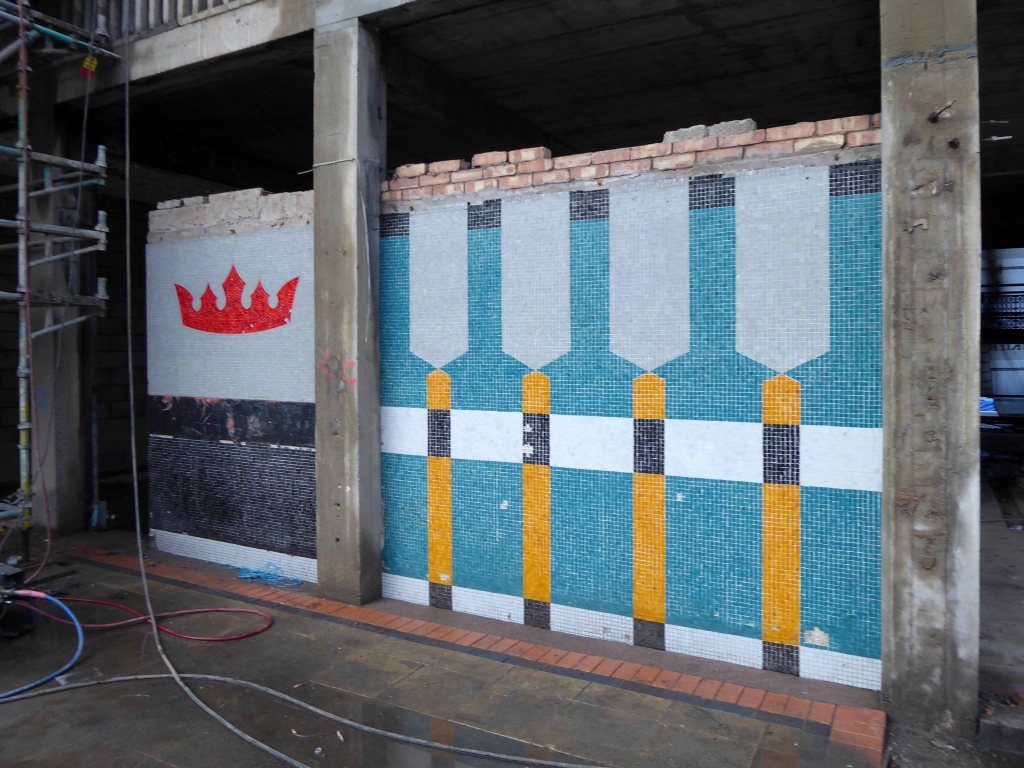
Your bold mosaic whilst once exposed, was sadly disabused, then unthinkingly covered.

Has subsequently been uncovered, steam cleaned and proudly on view, as a central part of the most recent of the estate’s phases of redevelopment.

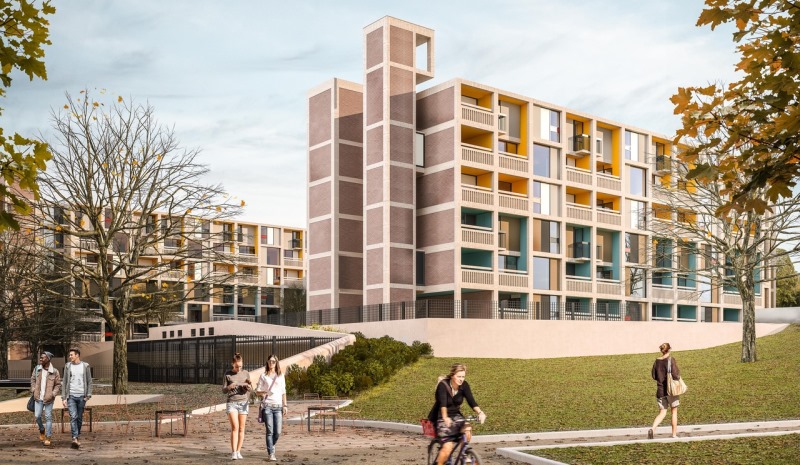
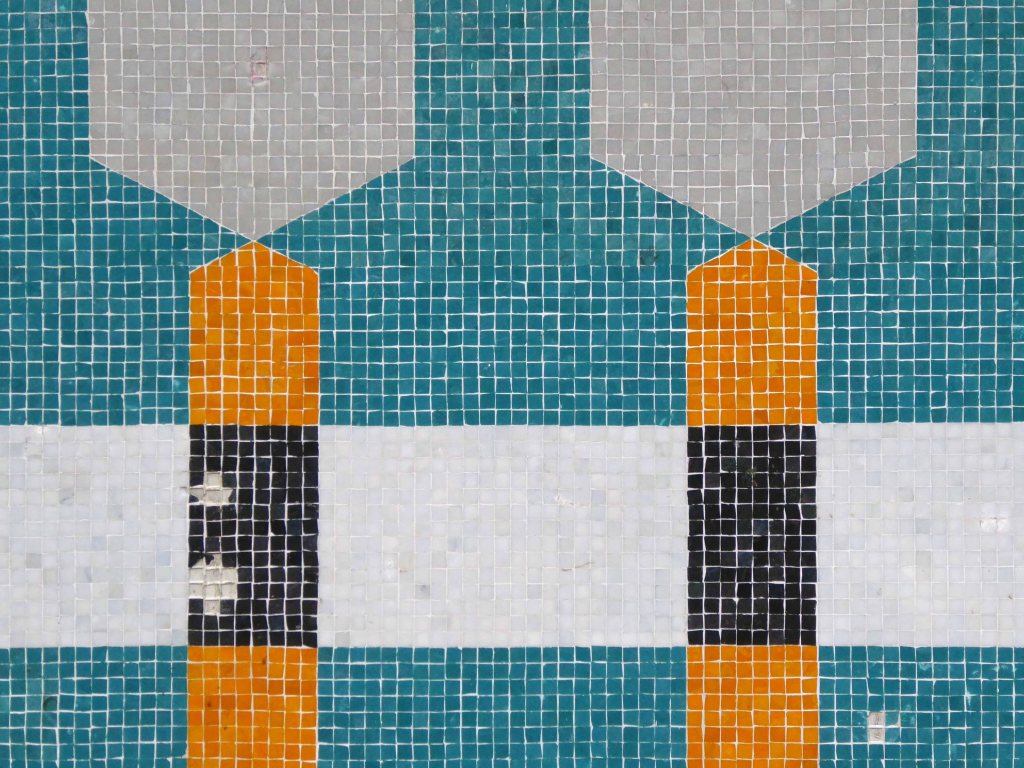
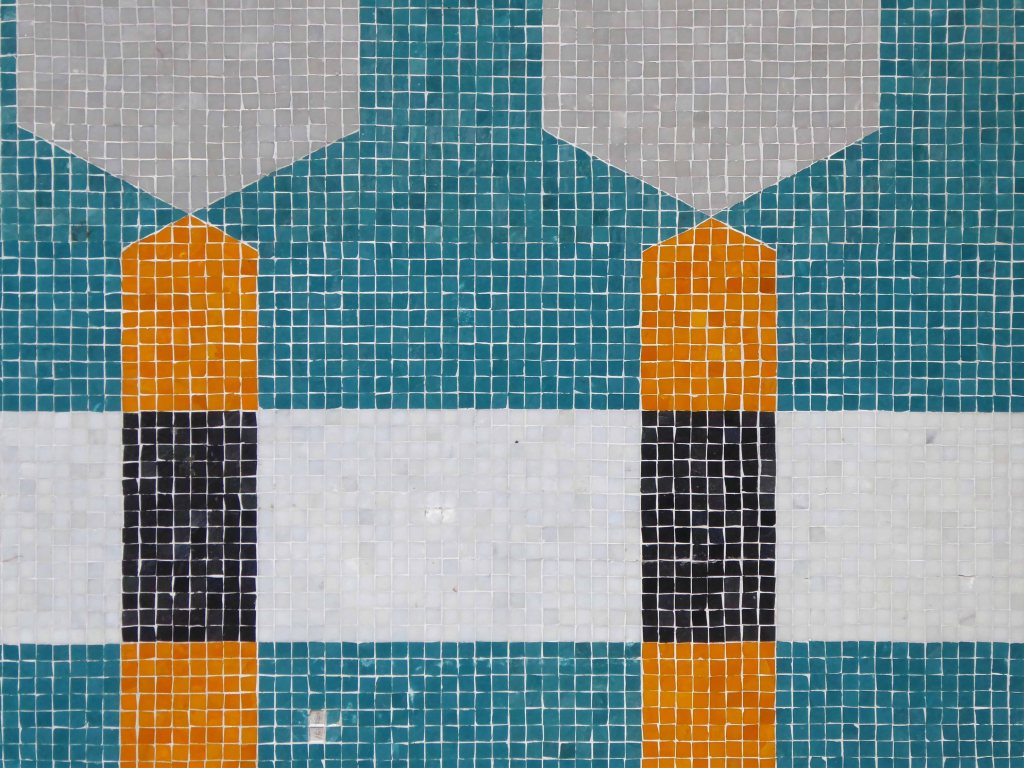
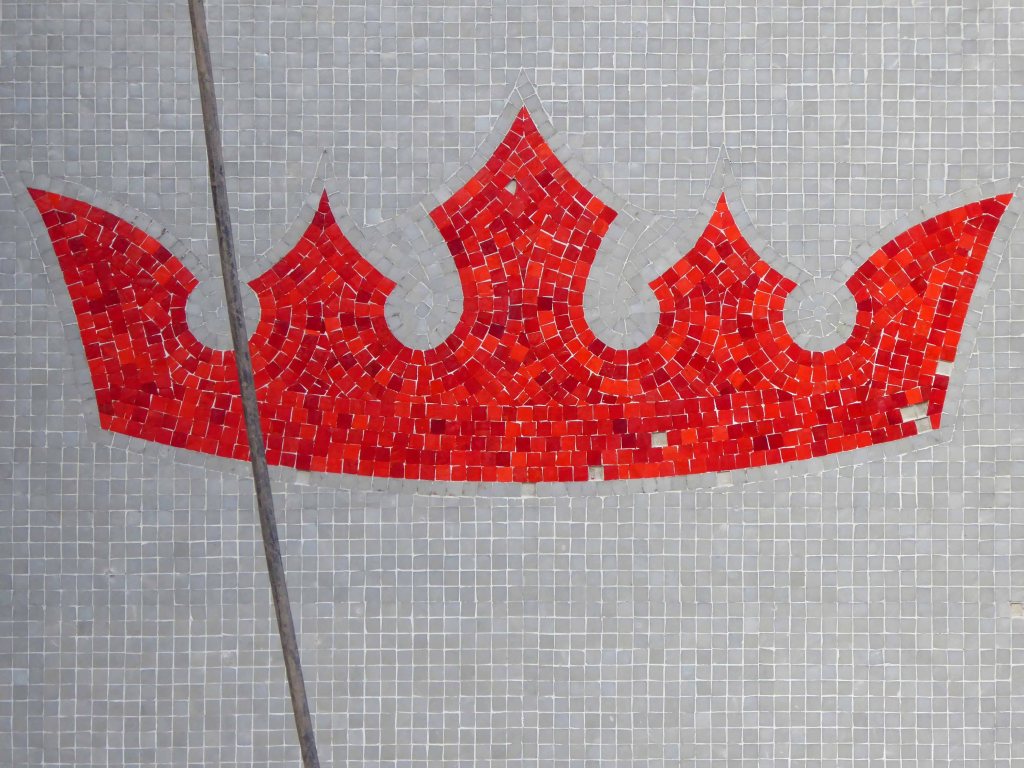
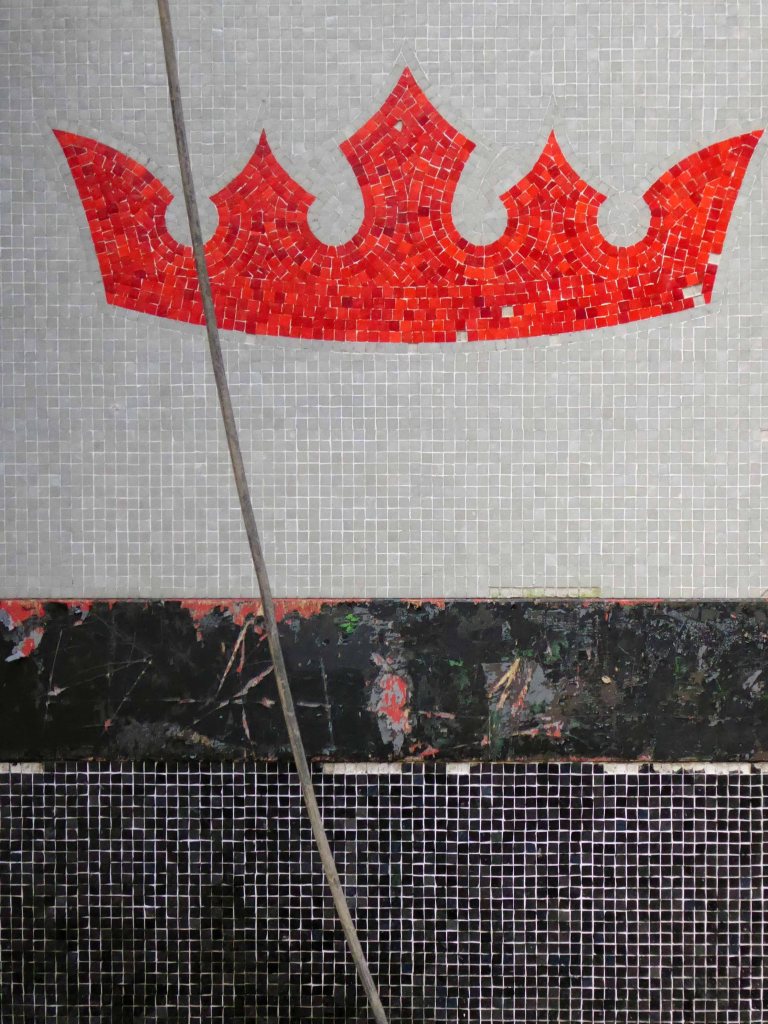
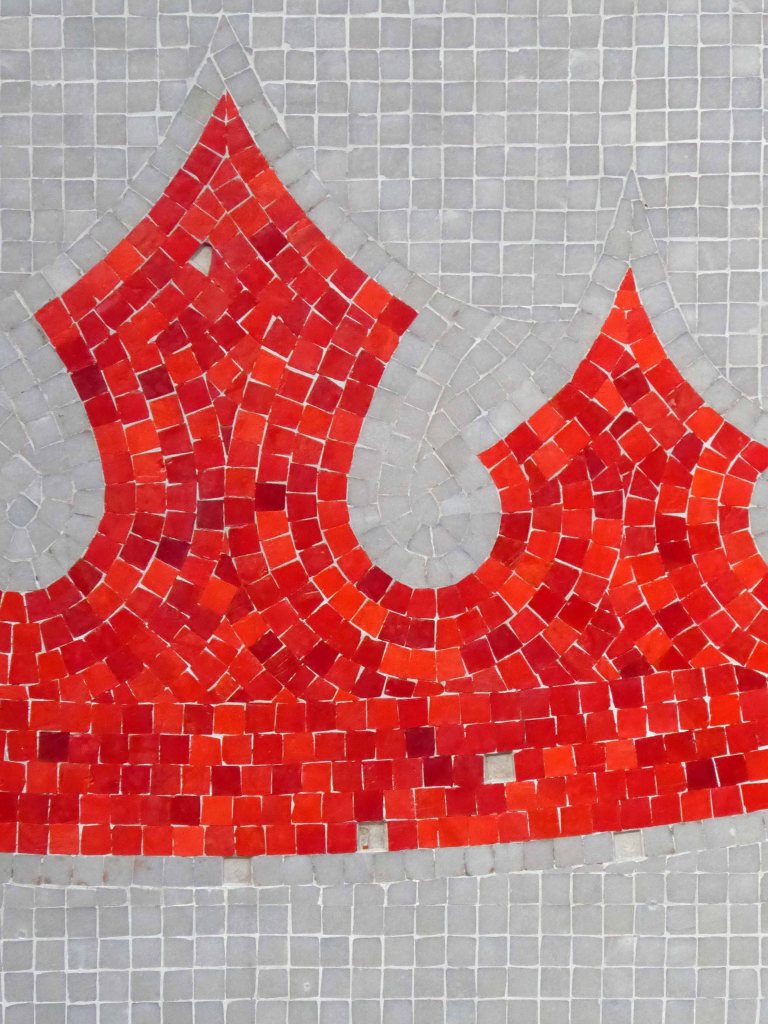
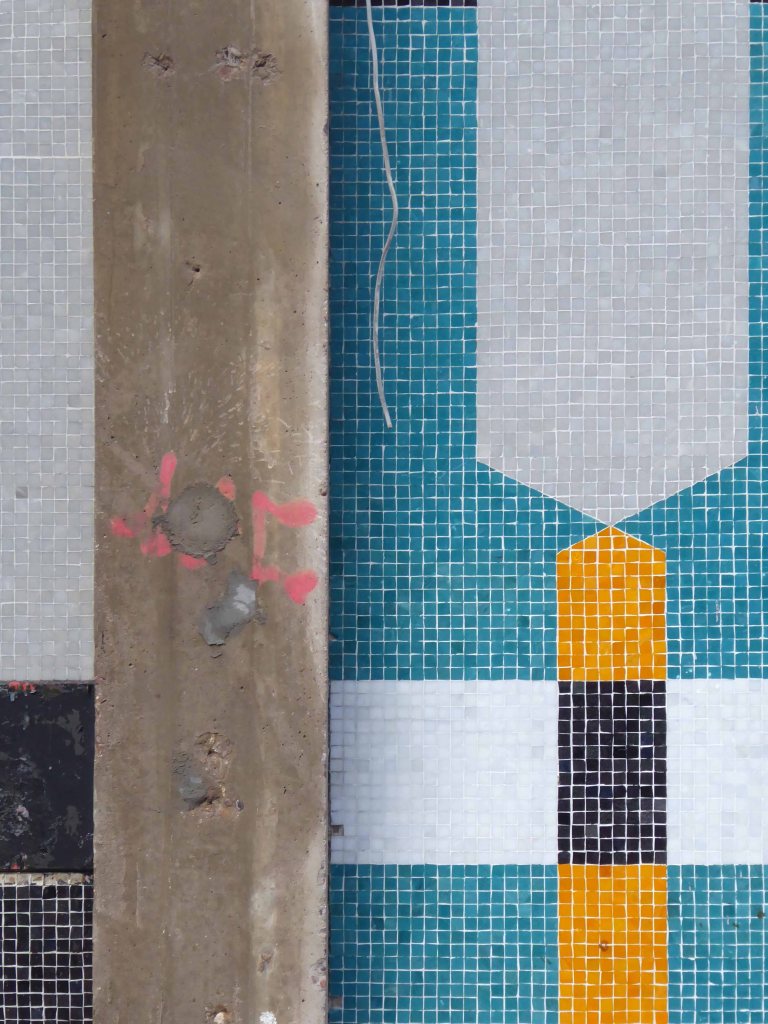
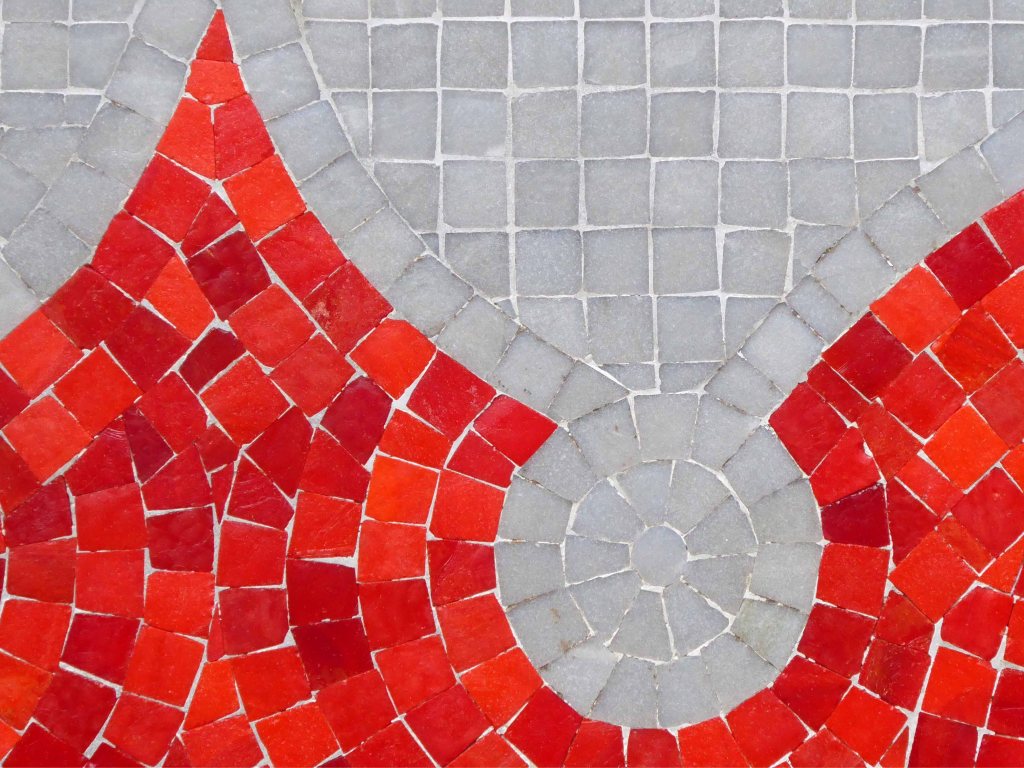
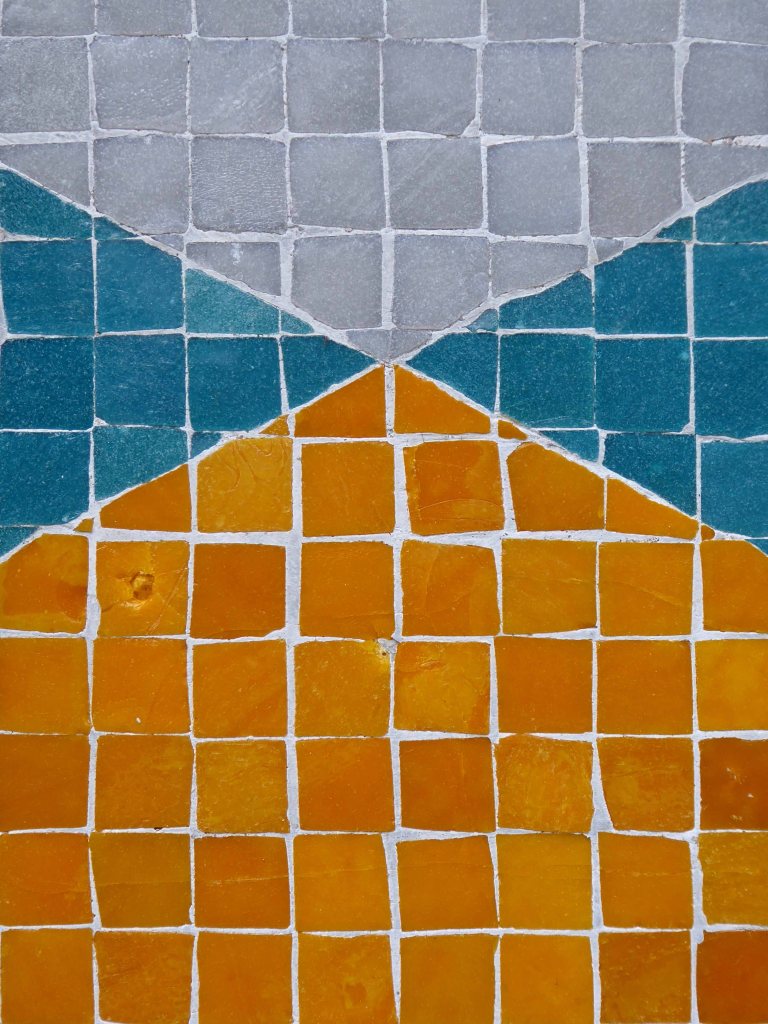
The block is to become student housing, the distinctive tan, turquoise blue and bold red colours of the mosaic, integrated into the banding of the newly refurbished building.

My face was a picture of delight, viewing the multicoloured tesserae – as we were privileged to be guided around the site by Kier Construction, Matthew Borland from Whittam Cox Architects, who are working with Alumno on Béton House and Urban Splash – my thanks to all and particularly PR Surriya Falconer.

So here it is living and breathing the South Yorkshire air once more.

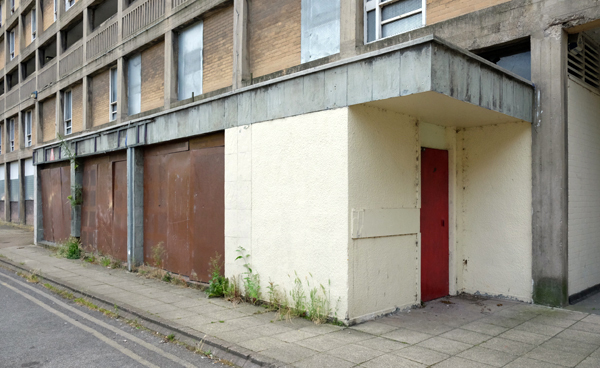
Alas the Parkway is a pub no more – simply an empty shell.

But hush – can you not catch the chink of pint pots and gales of merry laughter, carried gently on the passing breeze?

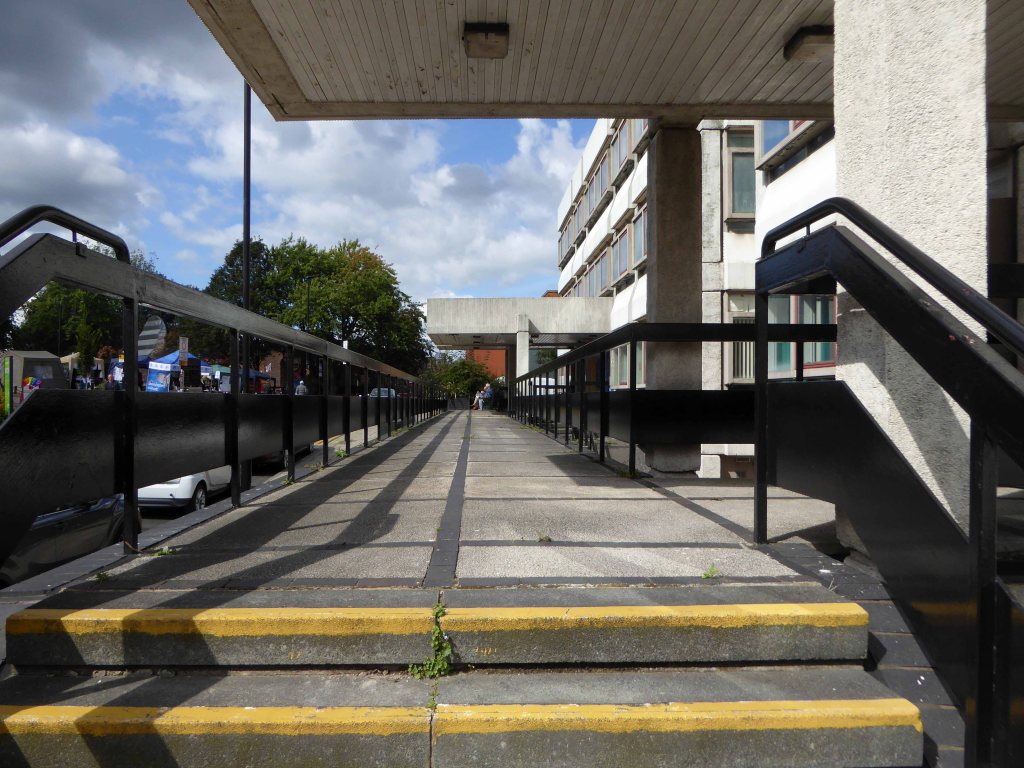
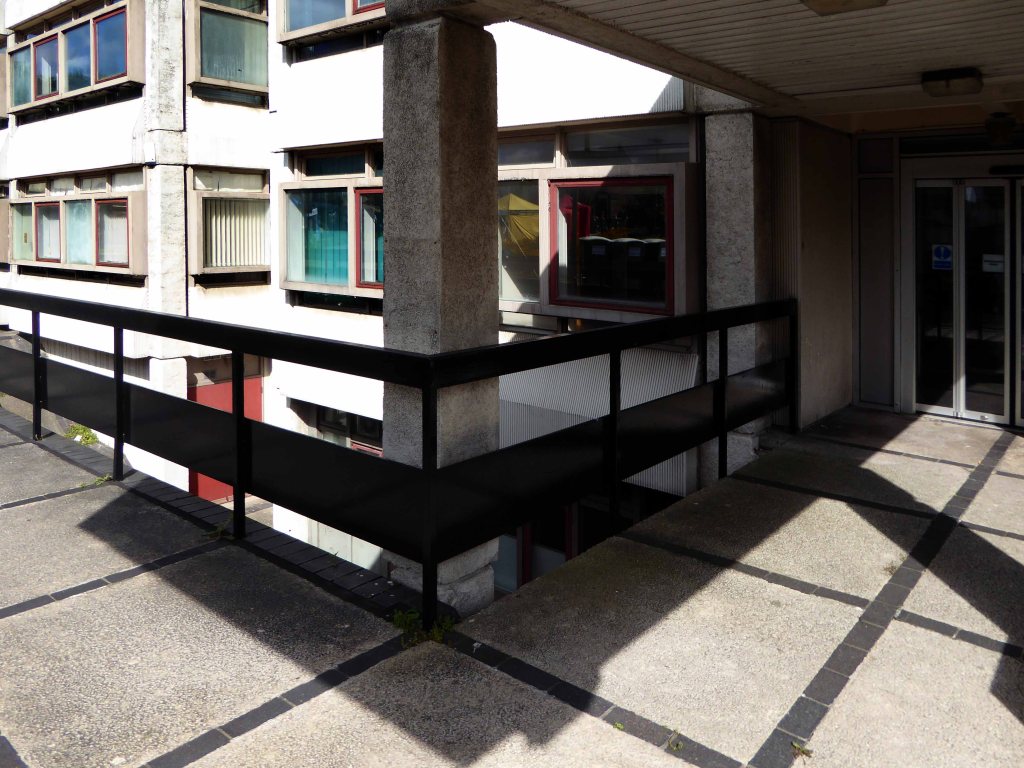
Ellen Wilkinson Humanities Building – The University of Manchester

I don’t usually walk this way – so I walked this way.

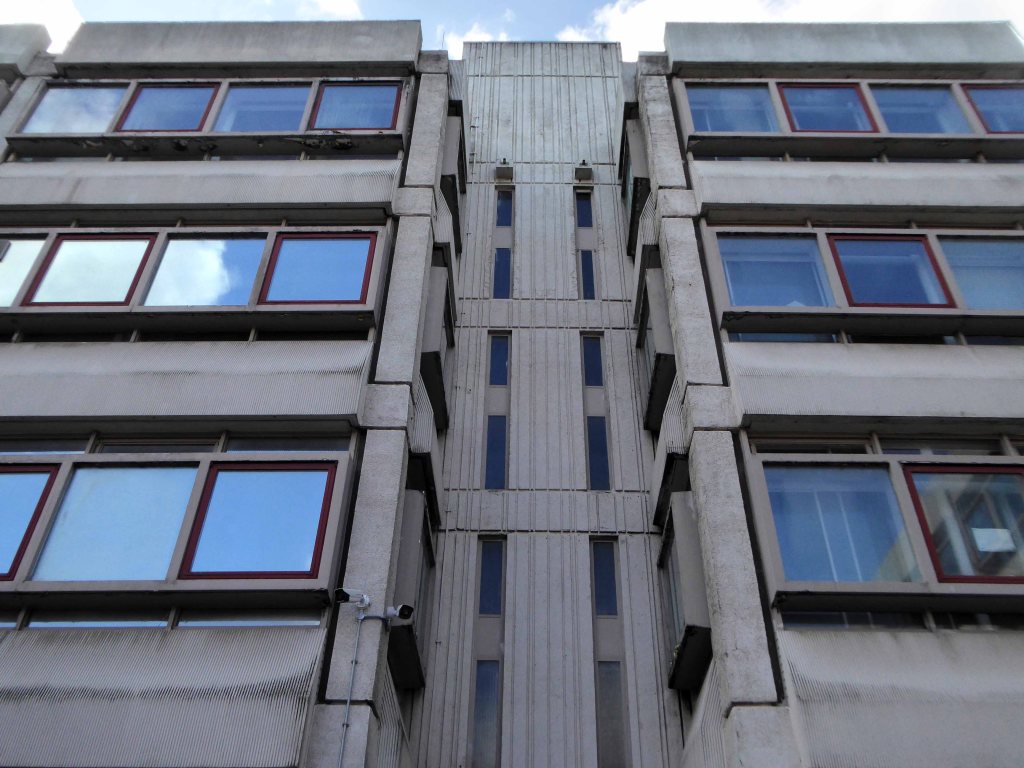
I discovered the rear of building, a building formerly only known from the others side, when seen from Oxford Road.

Whilst making my way from The Gamecock to elsewhere, I serendipitously discovered the other other side.

The Humanities Building now named the Ellen Wilkinson Building.

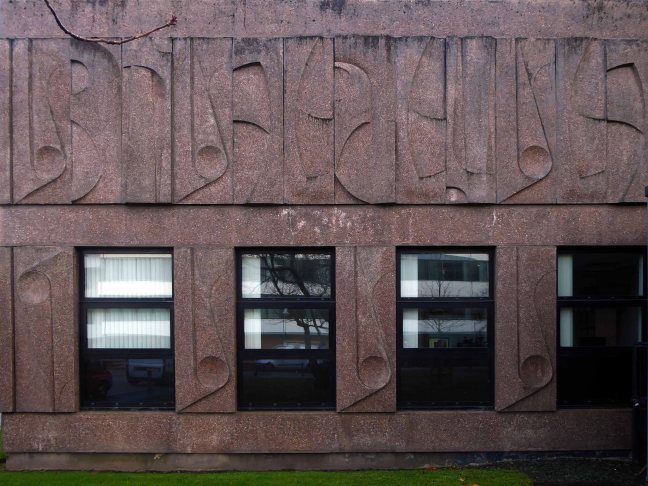
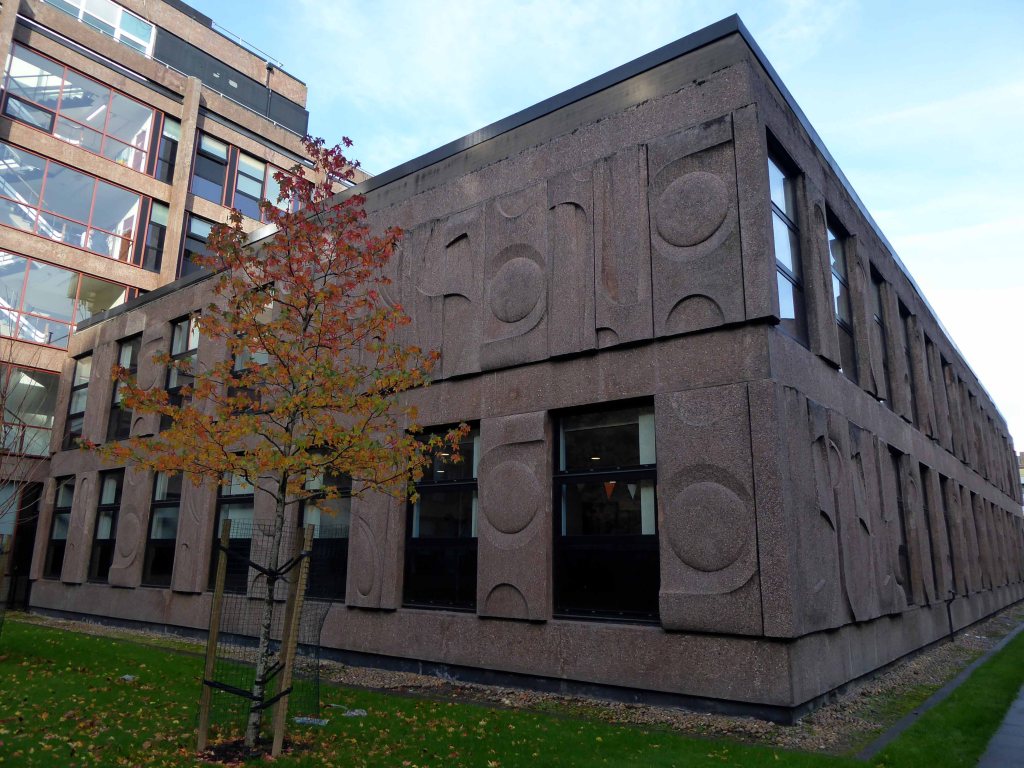
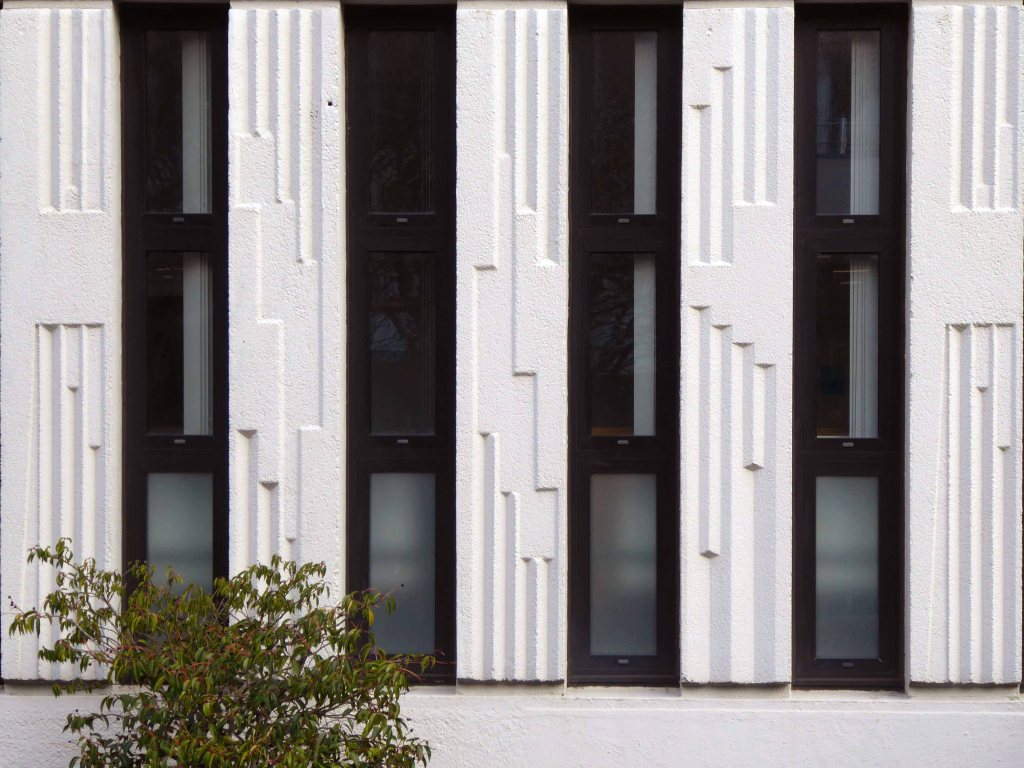
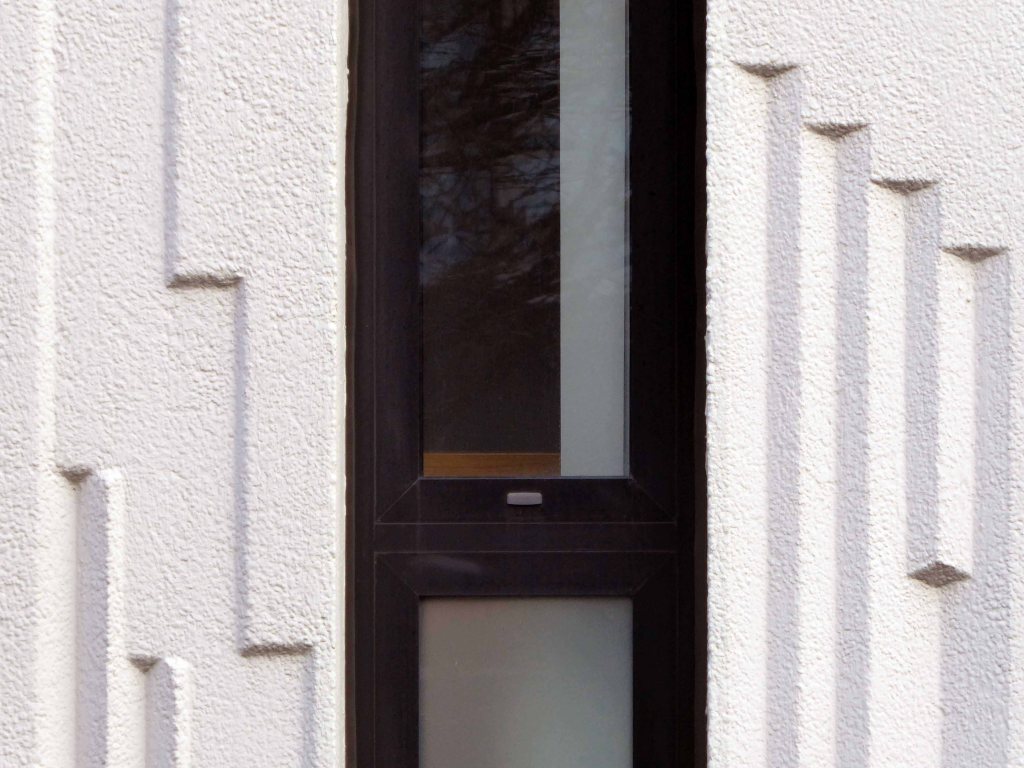
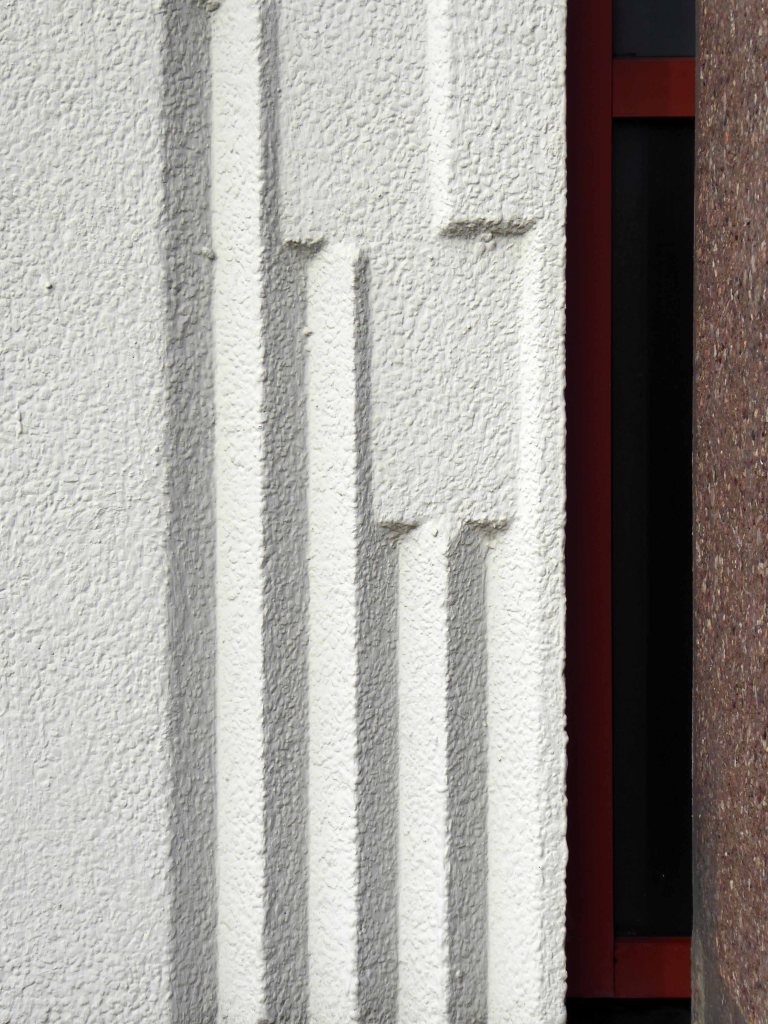
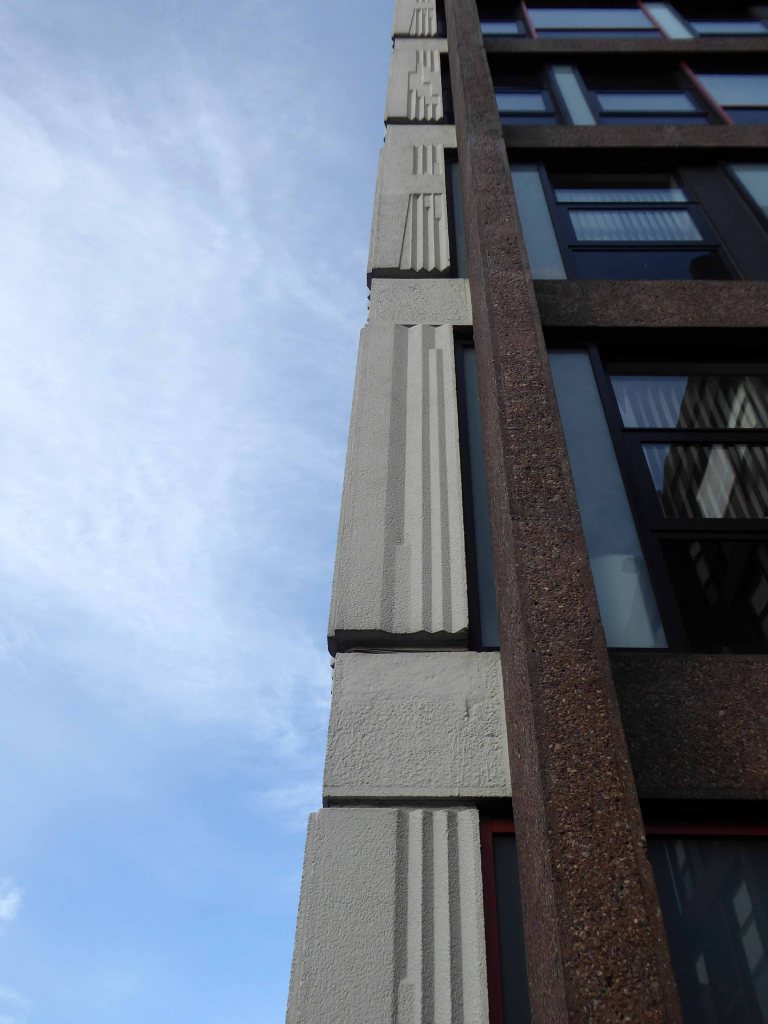
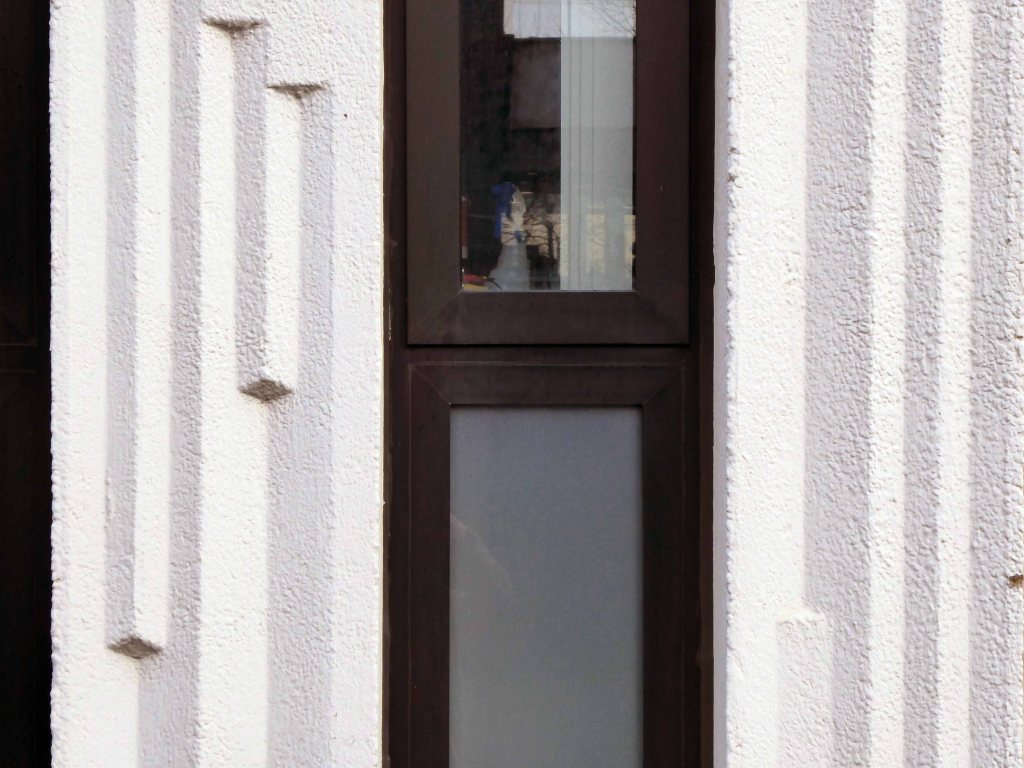
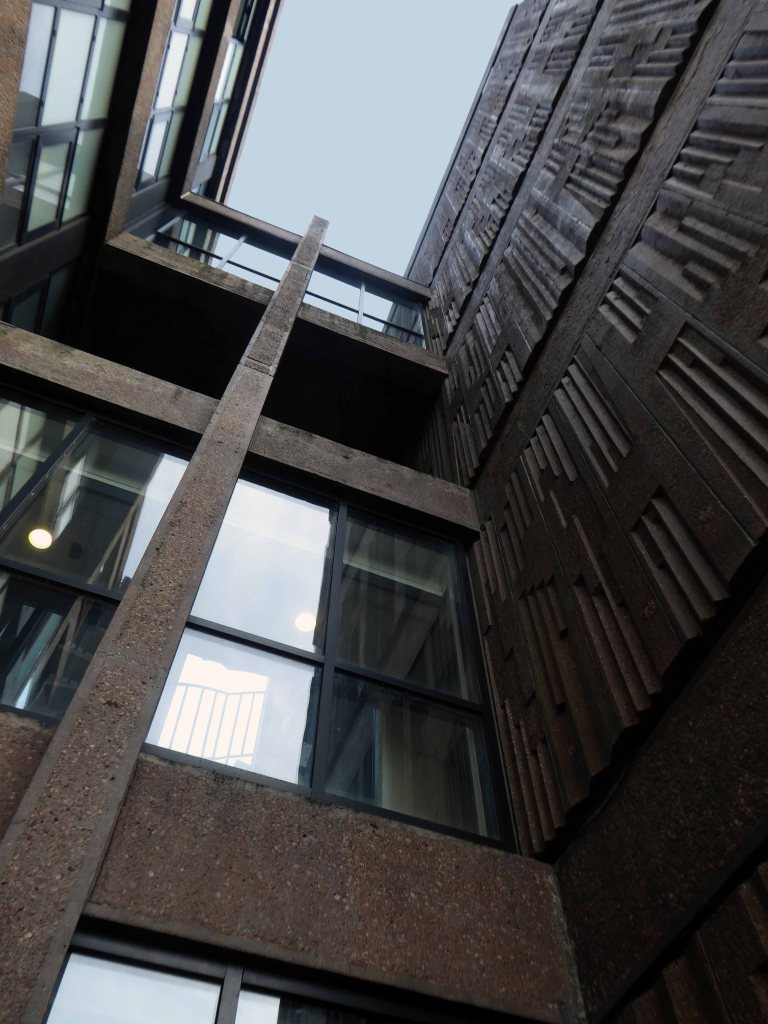
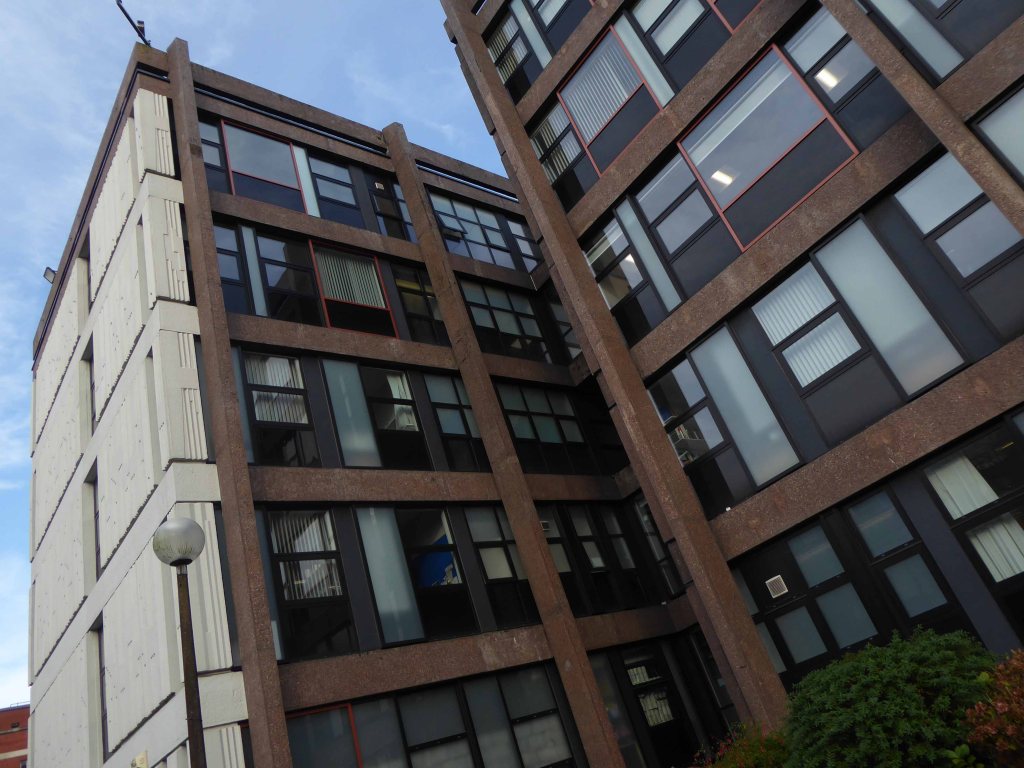
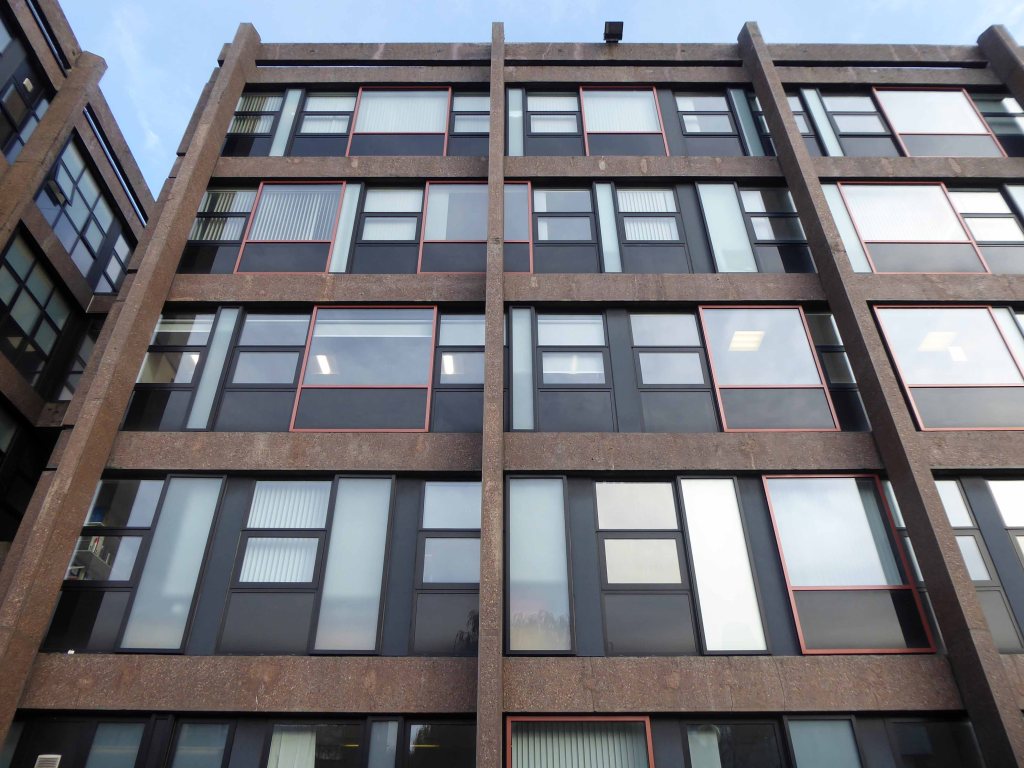
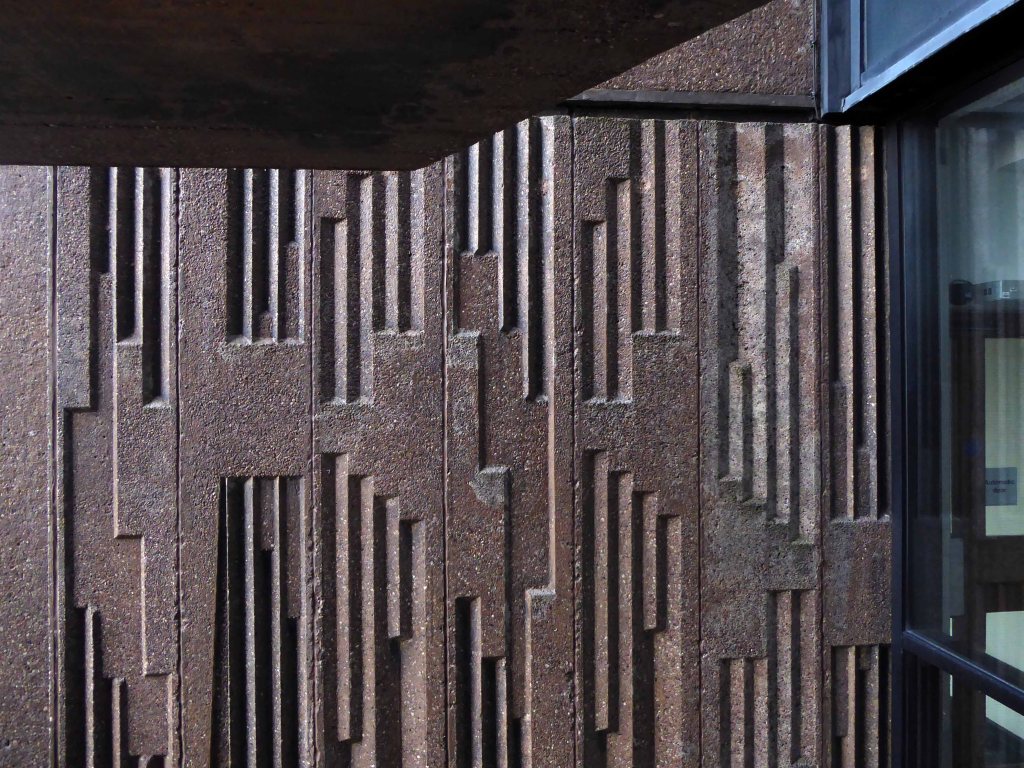
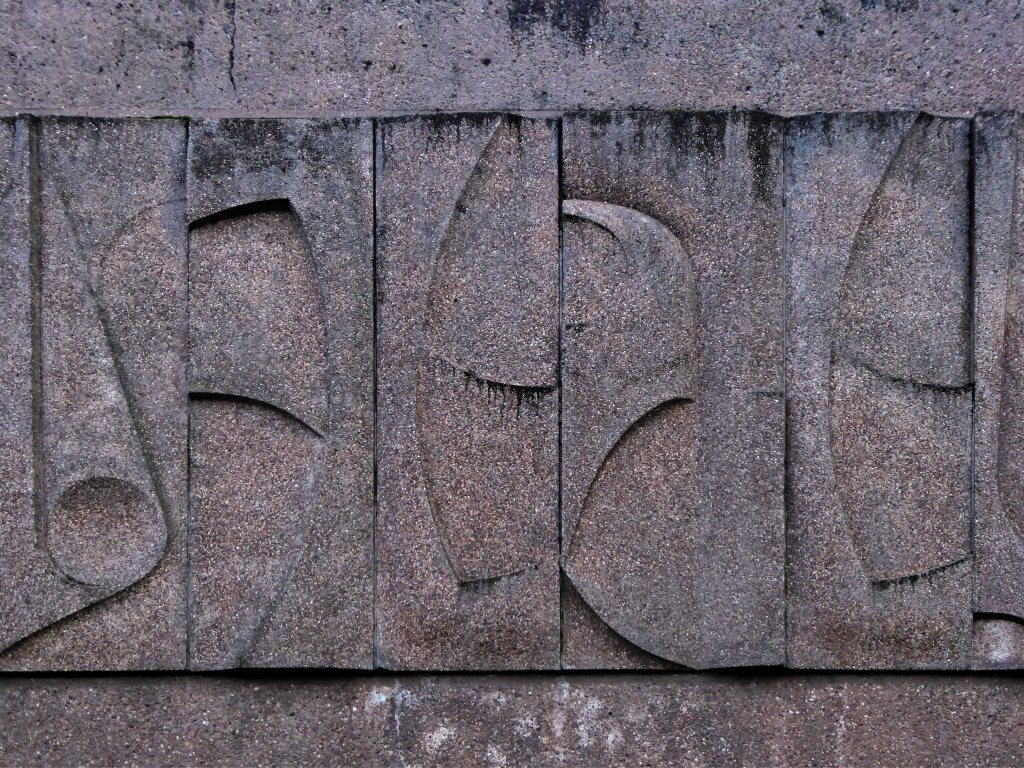
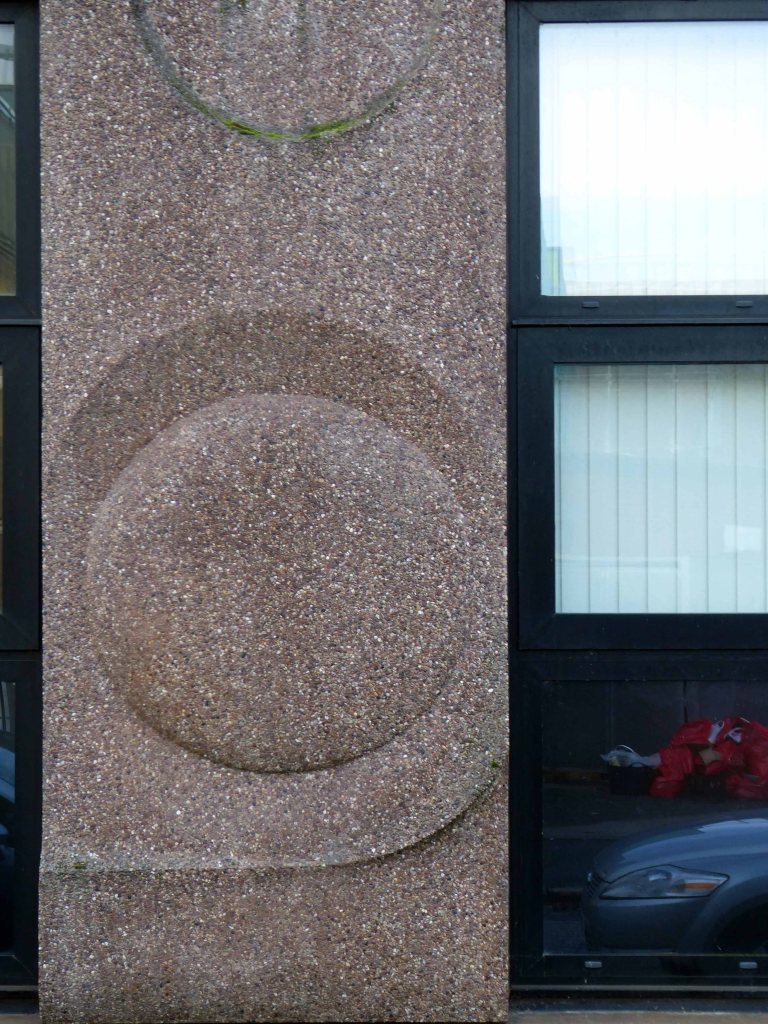
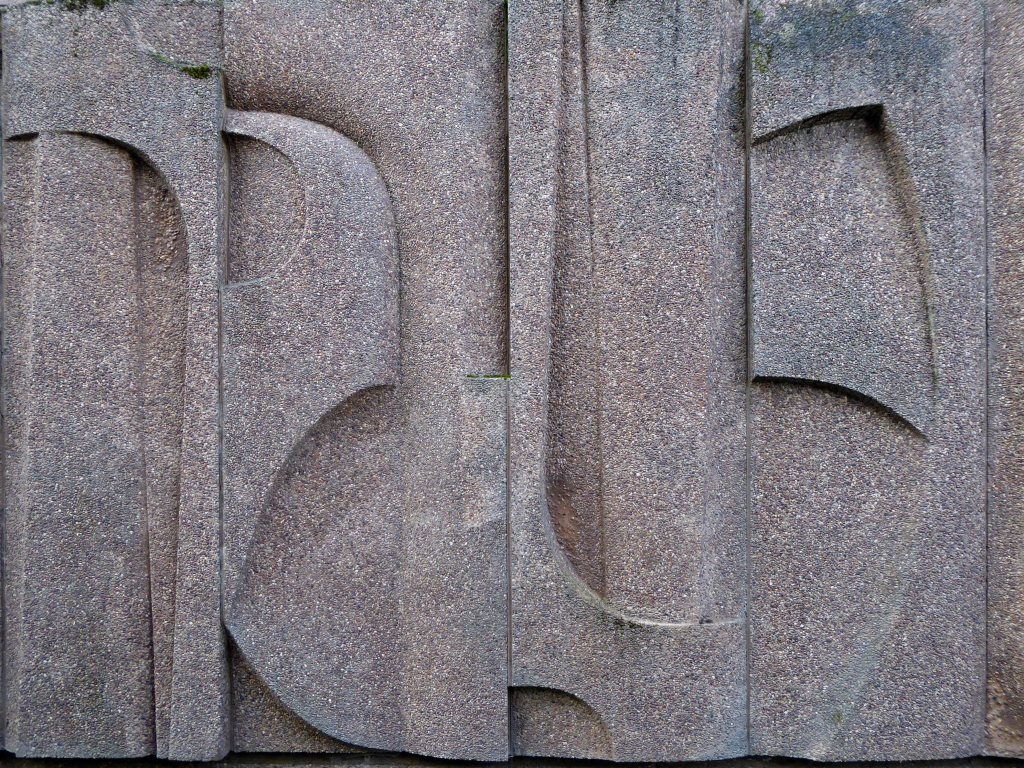
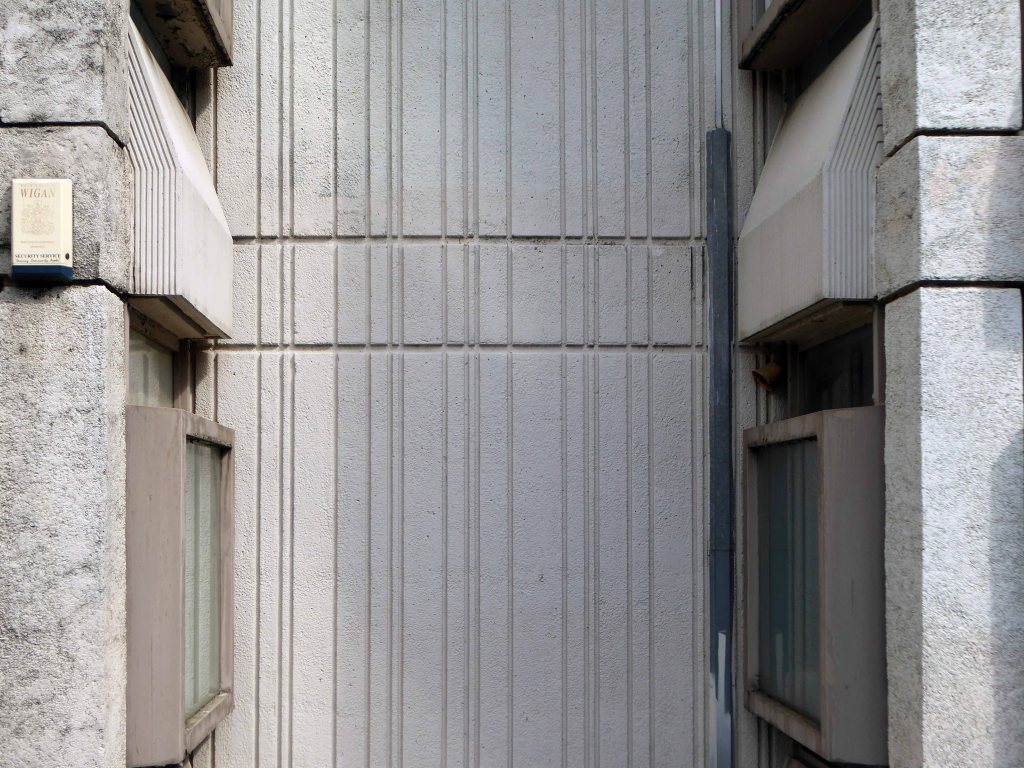
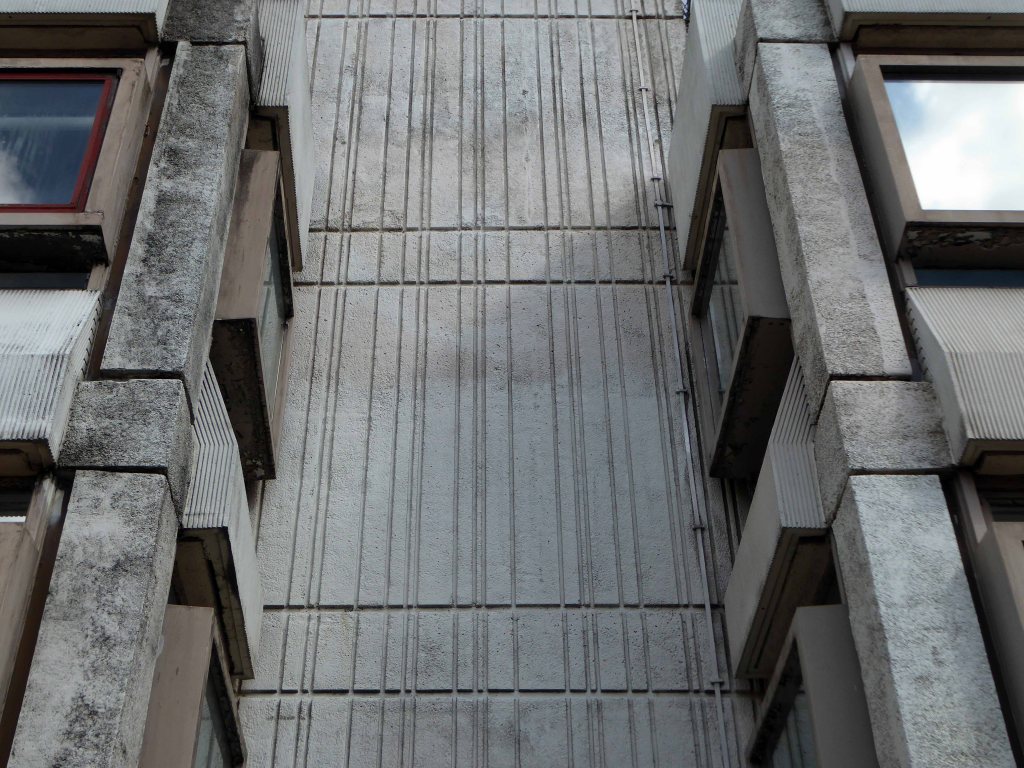
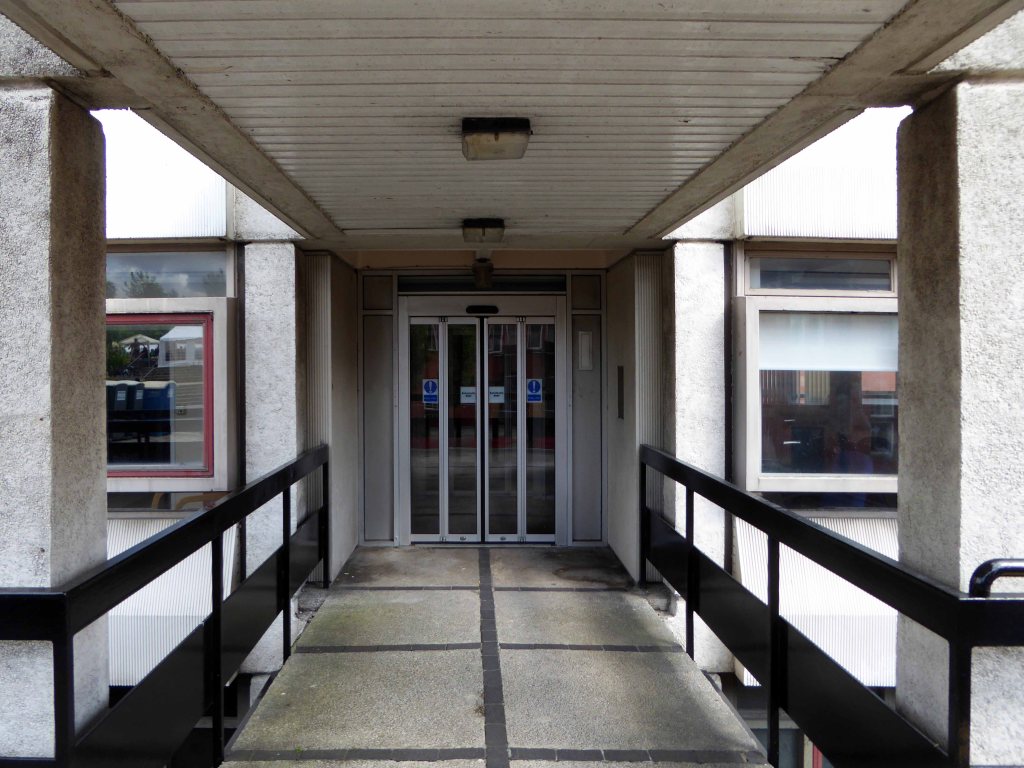
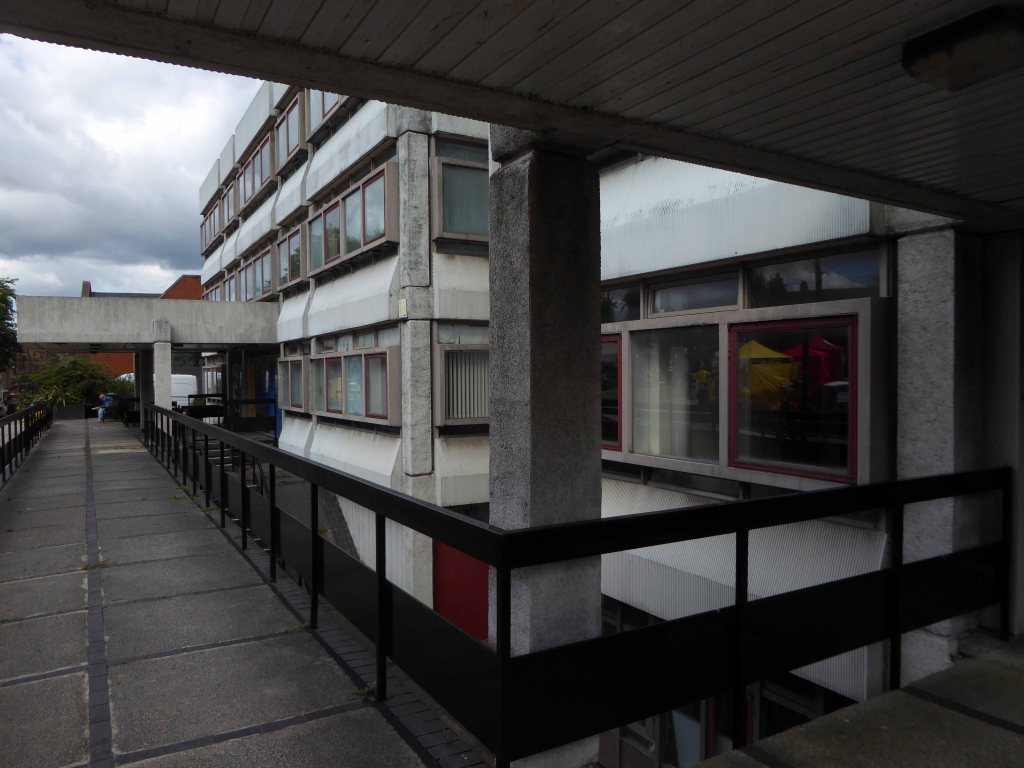
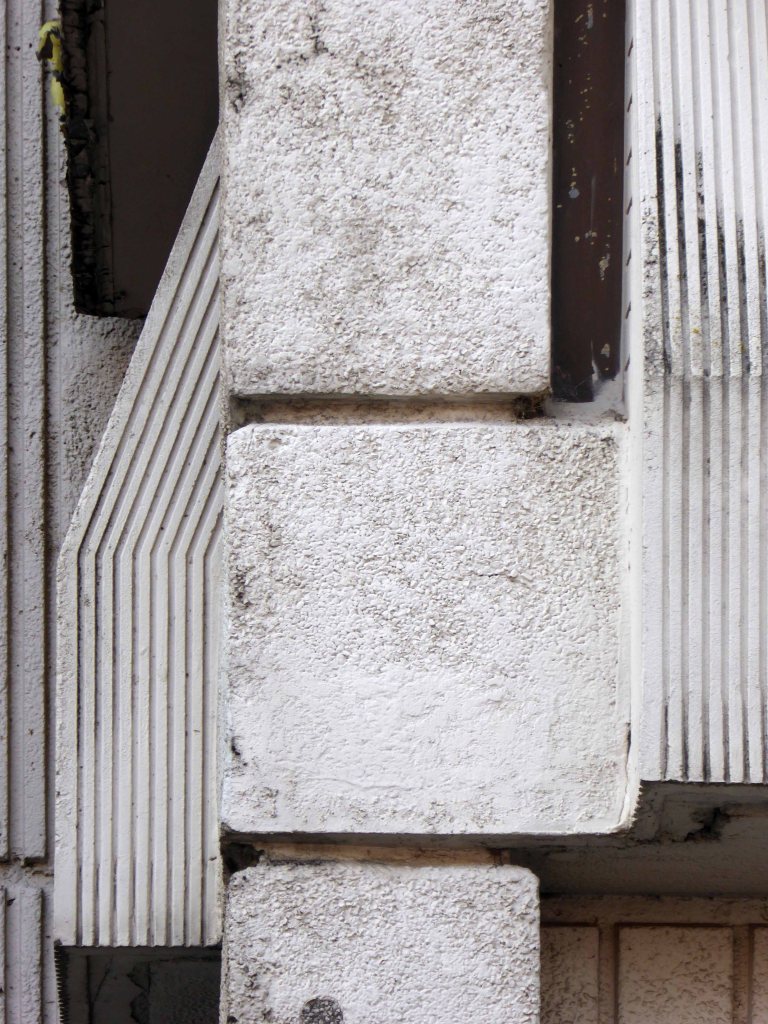
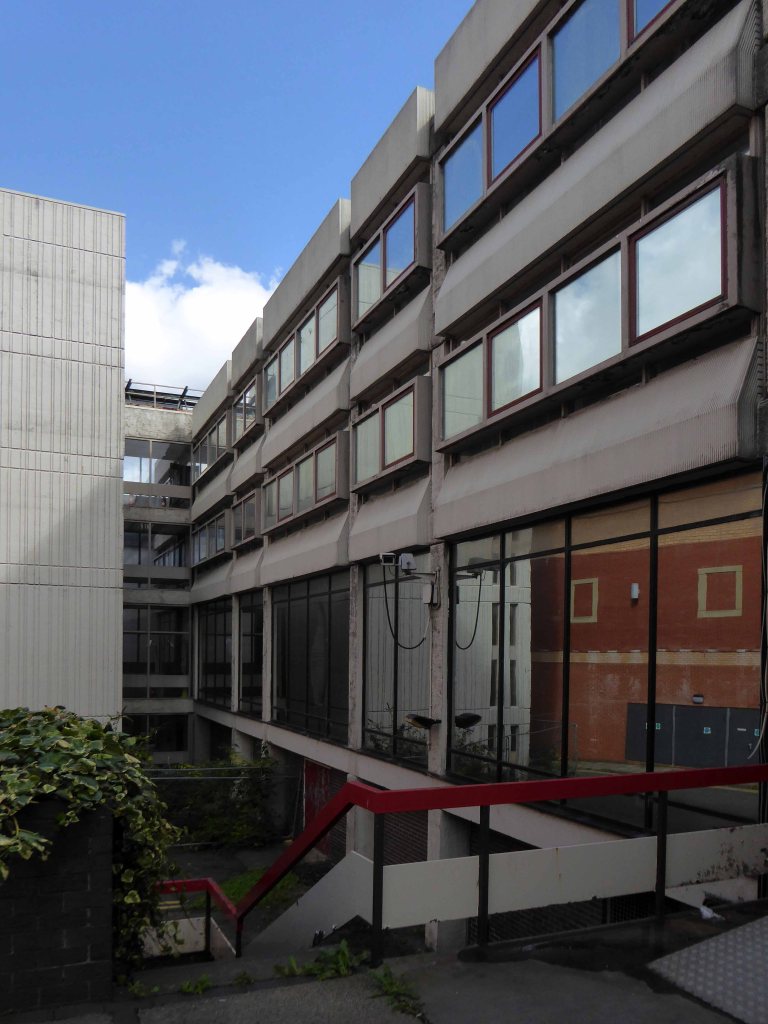
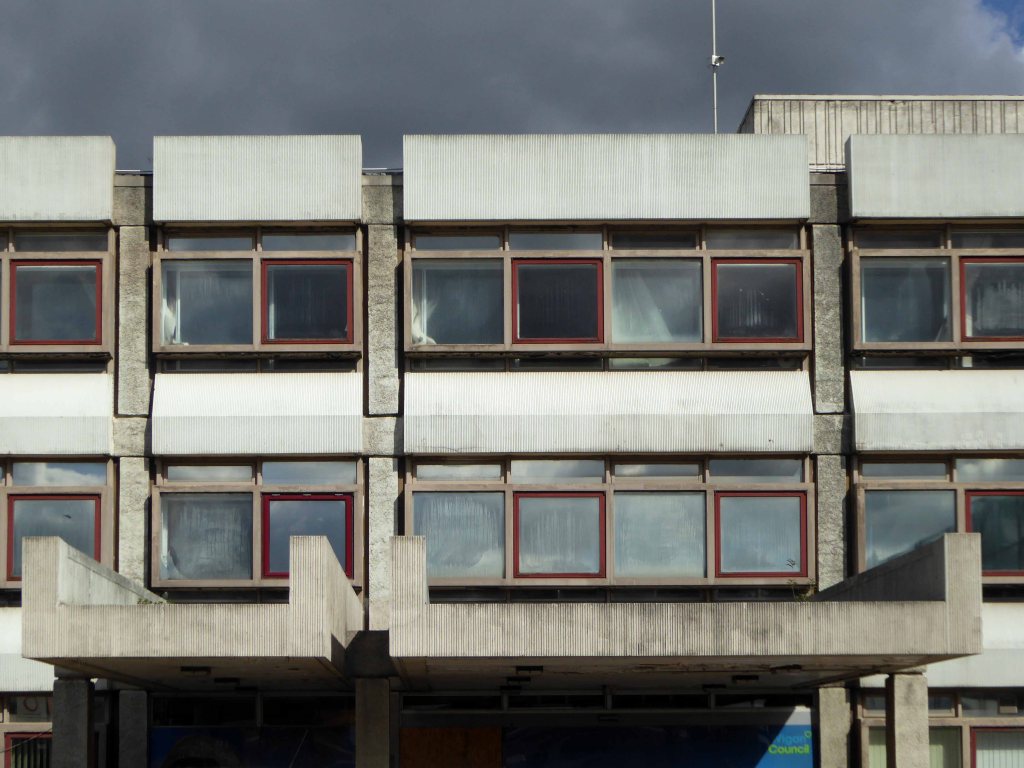
This Building Design Partnership scheme pre-dates Wilson Womersley’s appointment as master planners for the Education Precinct but exists harmoniously with the later series of buildings. This is most likely due to the method of development before any ‘grand concept’. The incremental expansion of the University, following WWII, was largely dictated by the progress of compulsory purchase orders; this group was no exception. At the planning stages, the lack of a masterplan led to organising the wings of the buildings in an open, orthogonal arrangement. This would allow expansion in a number of directions, according to the next available site in ‘the dynamic situation’. The result was the creation of a small courtyard flanked by two five-storey blocks and a two-storey structure. All three buildings use the same pink-grey concrete. The plastic qualities of concrete were explored in both cladding and structural panels and the textural qualities exposed in the bush hammered columns, to reveal the Derbyshire gravel aggregate. The sculpted and moulded panels on the two-storey block and on the gable ends of the larger blocks were designed in collaboration with William Mitchell. The only other materials in the external envelope were the windows of variously clear and tinted glass. The window modules were set out against a basic geometry in three standard patterns and applied across the façade. This resulted in a clever interplay of vertical and horizontal expression. 

Mainstream Modern

Ellen Wilkinson was born into a poor though ambitious Manchester family and she embraced socialism at an early age. After graduating from the University of Manchester, she worked for a women’s suffrage organisation and later as a trade union officer. Inspired by the Russian Revolution of 1917, Wilkinson joined the British Communist Party, and preached revolutionary socialism while seeking constitutional routes to political power through the Labour Party. She was elected Labour MP for Middlesbrough East in 1924, and supported the 1926 General Strike. In the 1929–31 Labour government, she served as Parliamentary Private Secretary to the junior Health Minister. She made a connection with a young female member and activist Jennie Lee. Following her defeat at Middlesbrough in 1931, Wilkinson became a prolific journalist and writer, before returning to parliament as Jarrow’s MP in 1935. She was a strong advocate for the Republican government in the Spanish Civil War, and made several visits to the battle zones.

During the Second World War, Wilkinson served in Churchill’s wartime coalition as a junior minister, mainly at the Ministry of Home Security where she worked under Herbert Morrison. She supported Morrison’s attempts to replace Clement Attlee as the Labour Party’s leader; nevertheless, when he formed his postwar government, Attlee appointed Wilkinson as Minister of Education. By this time, her health was poor, a legacy of years of overwork. She saw her main task in office as the implementation of the wartime coalition’s 1944 Education Act, rather than the more radical introduction of comprehensive schools favoured by many in the Labour Party. Much of her energy was applied to organising the raising of the school-leaving age from 14 to 15. During the exceptionally cold weather of early 1947, she succumbed to a bronchial disease, and died after an overdose of medication, which the coroner at her inquest declared was accidental.

Wikipedia

So here we are now – a significant building, named for a significant figure.

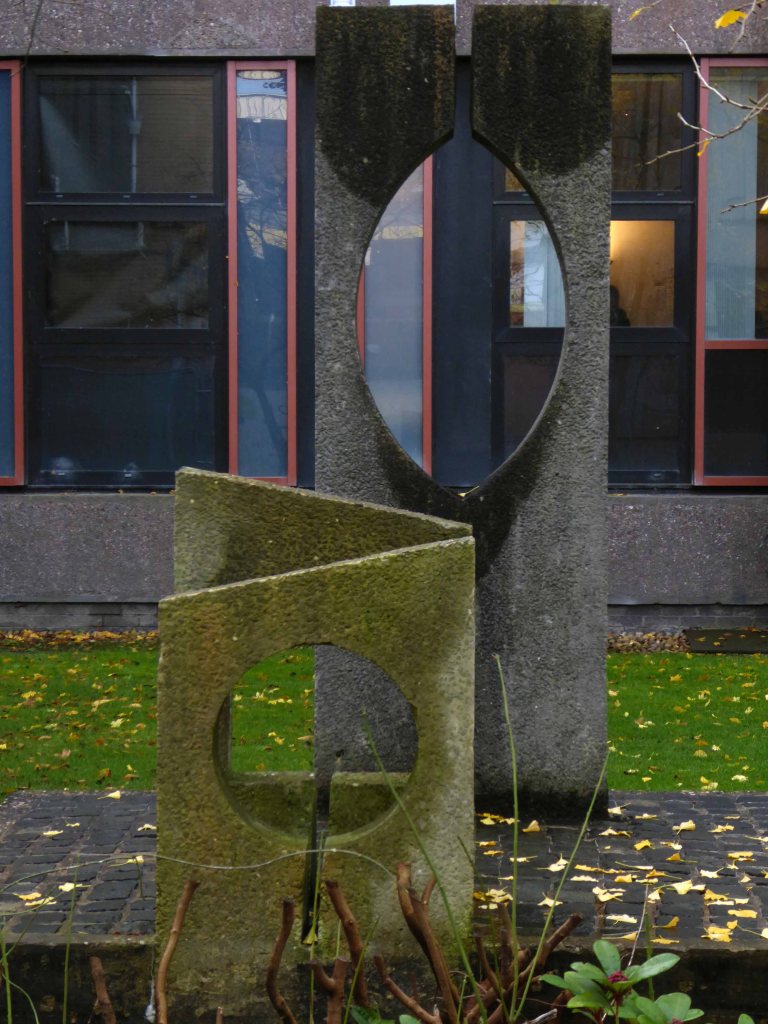
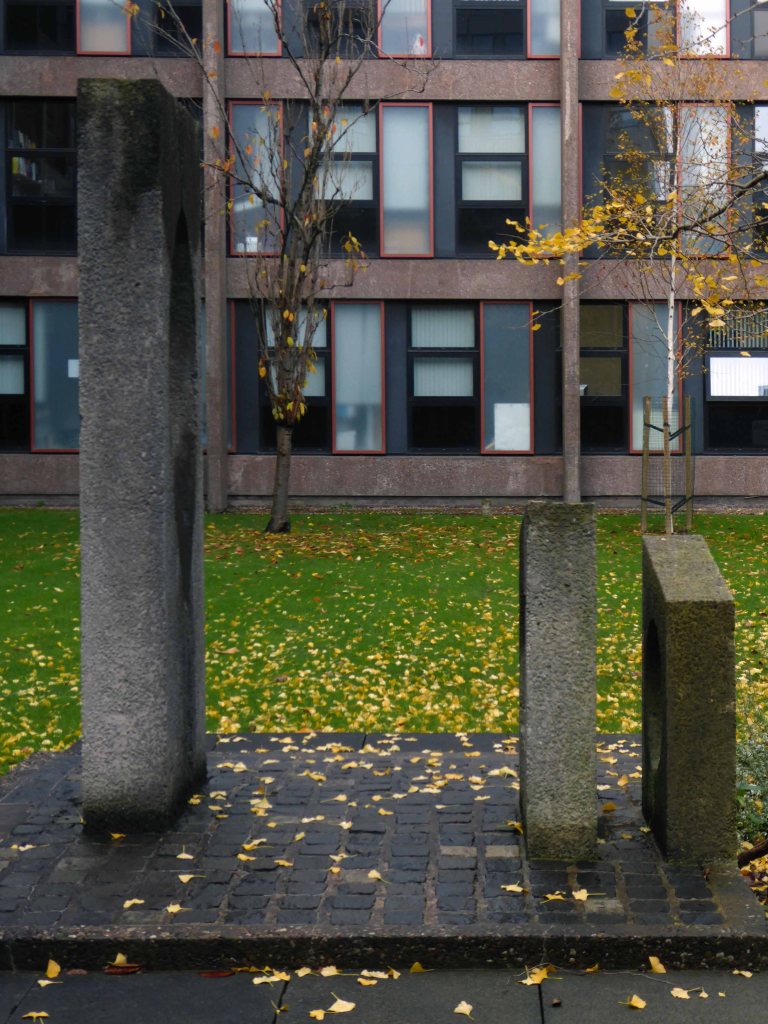
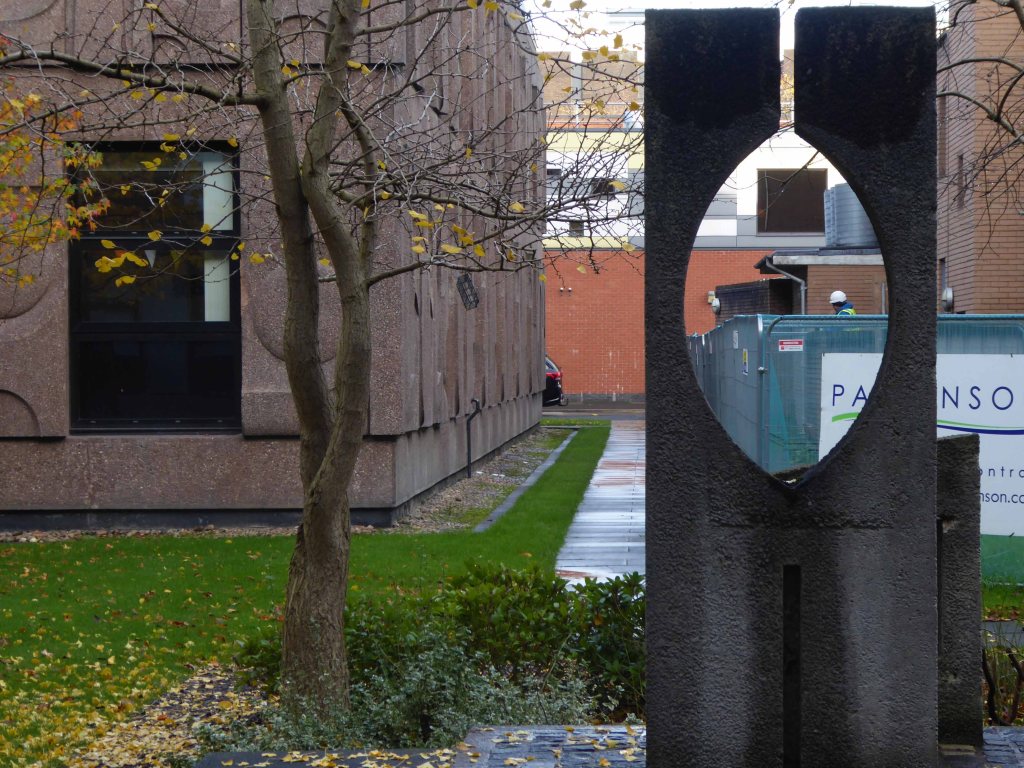
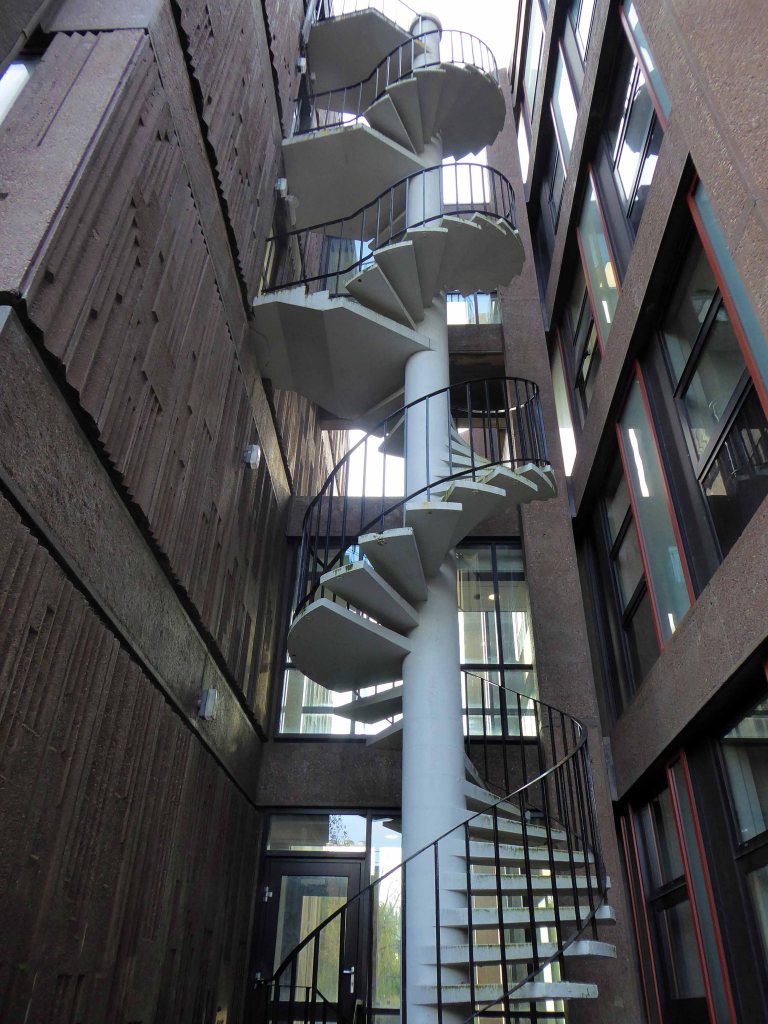
I wandered around, pale painted rectangular reliefs abutting darker rectangular reliefs. Strict window grids at a variety of heights. Warmer rounder rounded reliefs to the east, contrasting with their orthogonal cousins. A surprising courtyard contains a diminutive but charming concrete sculpture and an almost hidden exterior spiral stairway.

Sometimes it pays to get almost lost.

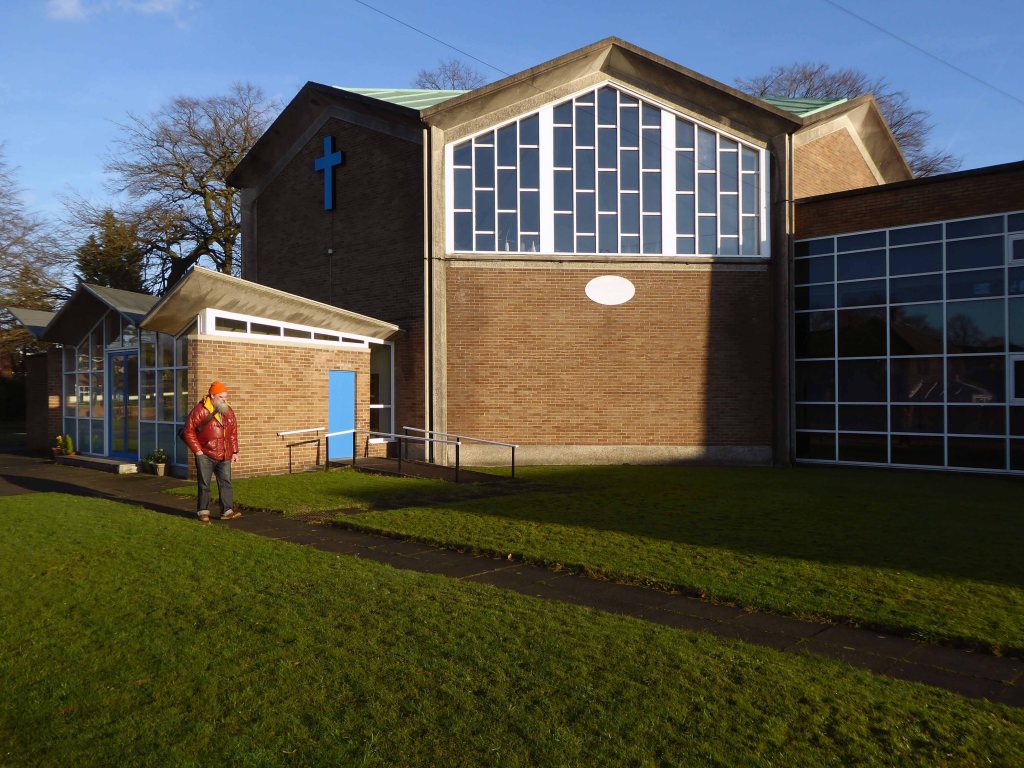
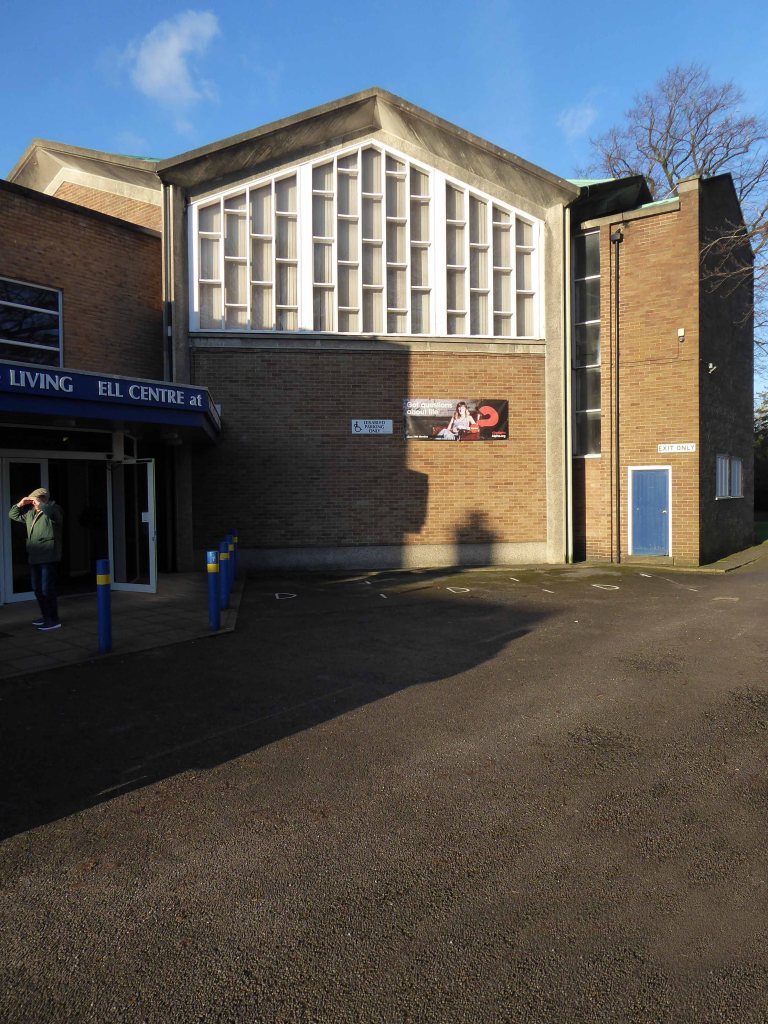
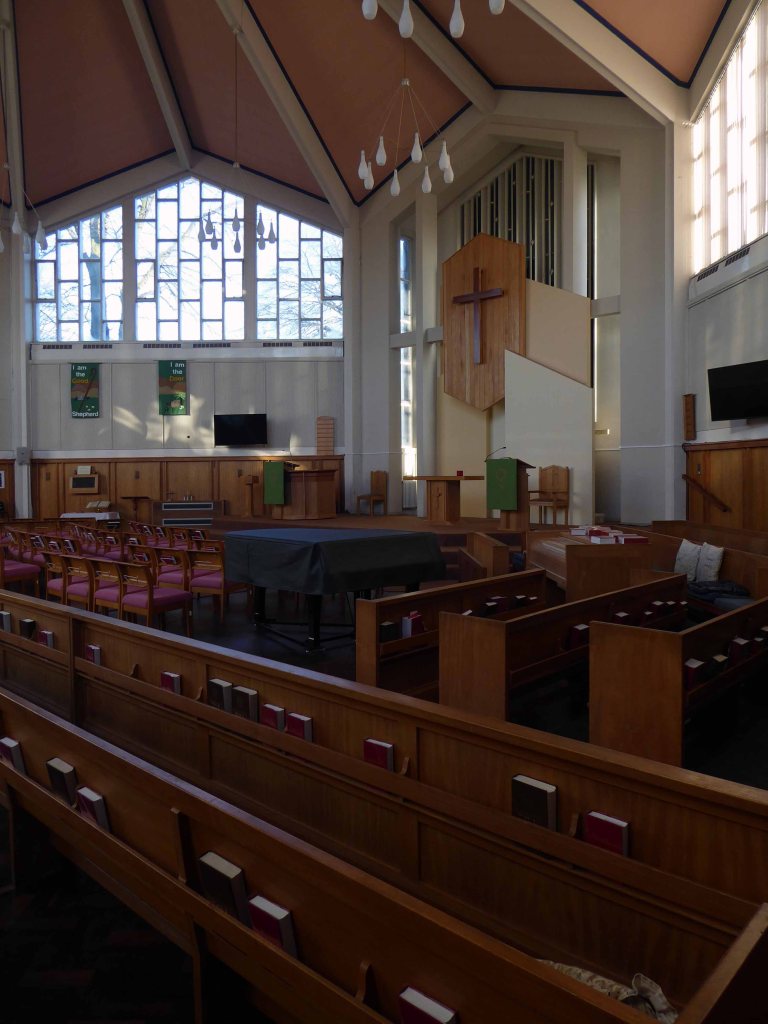
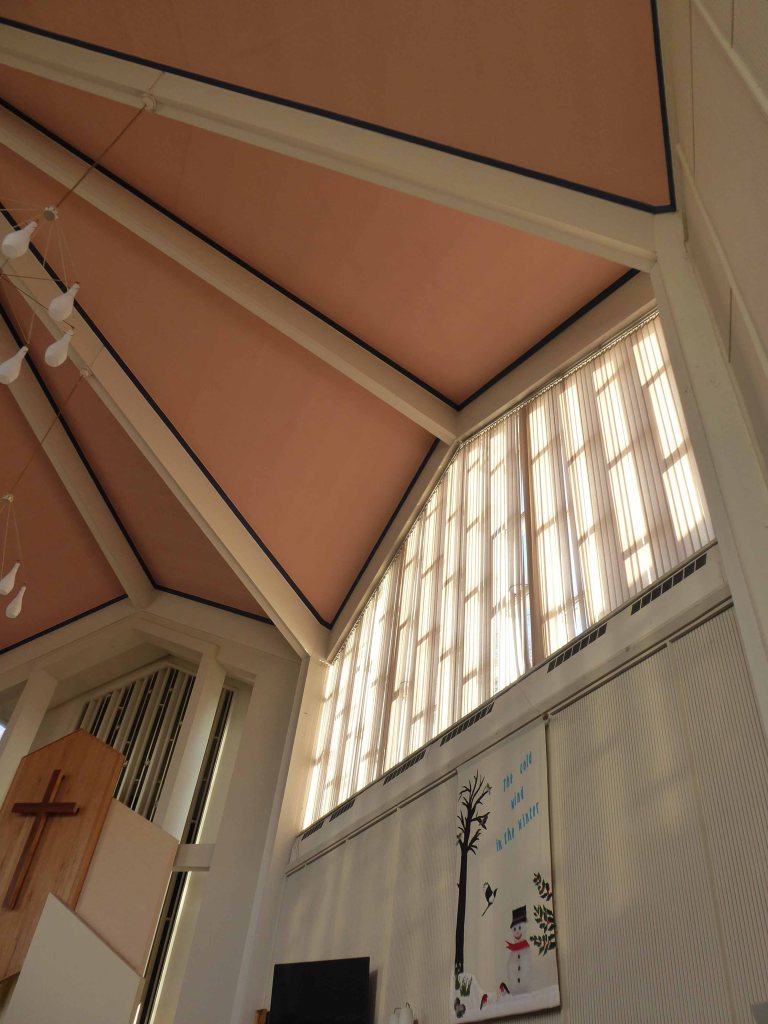
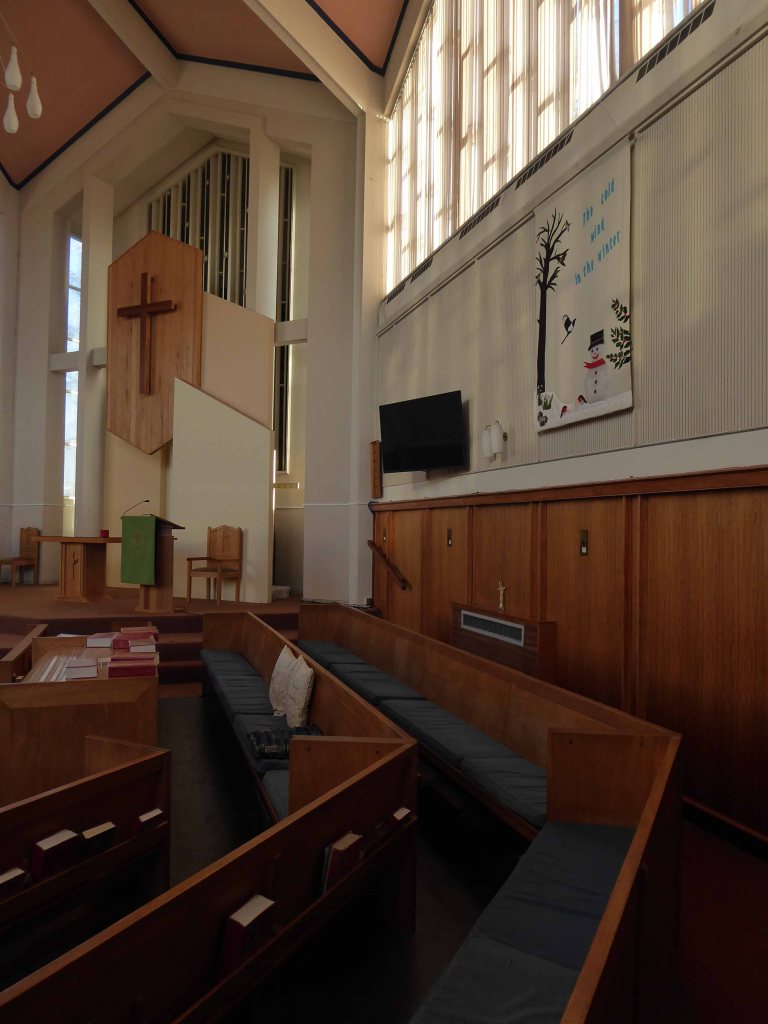
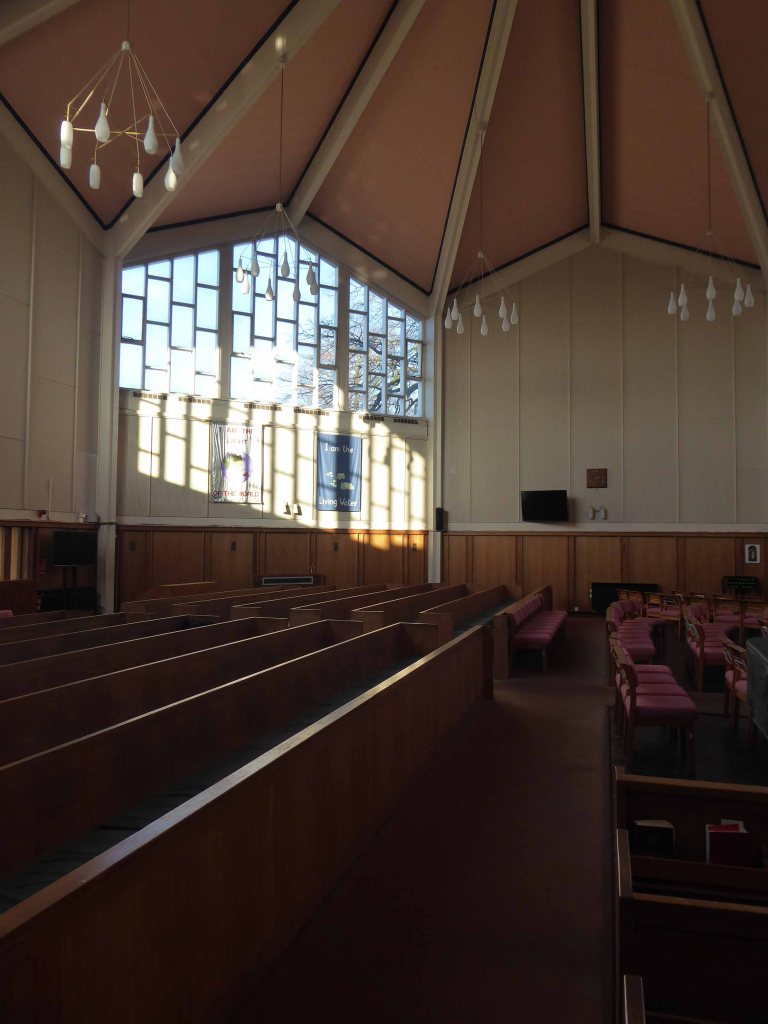
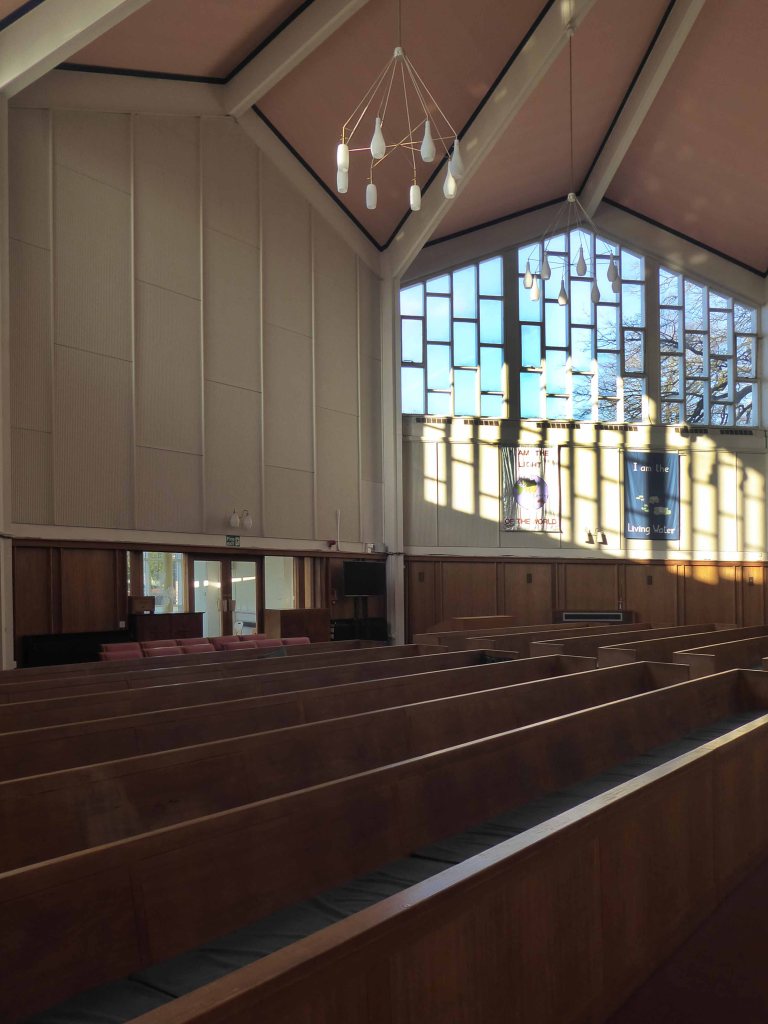
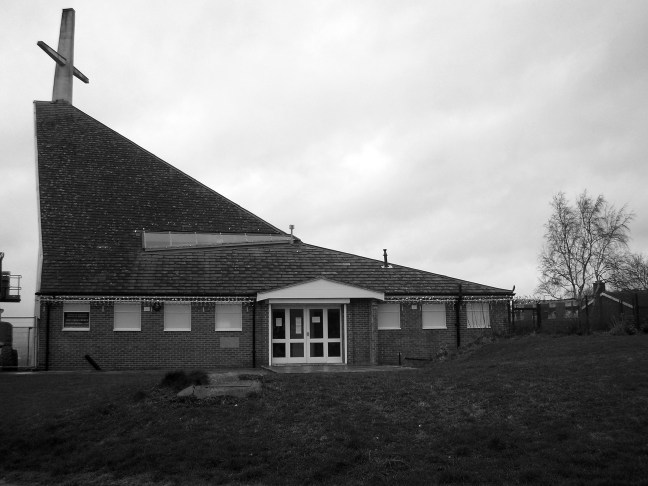
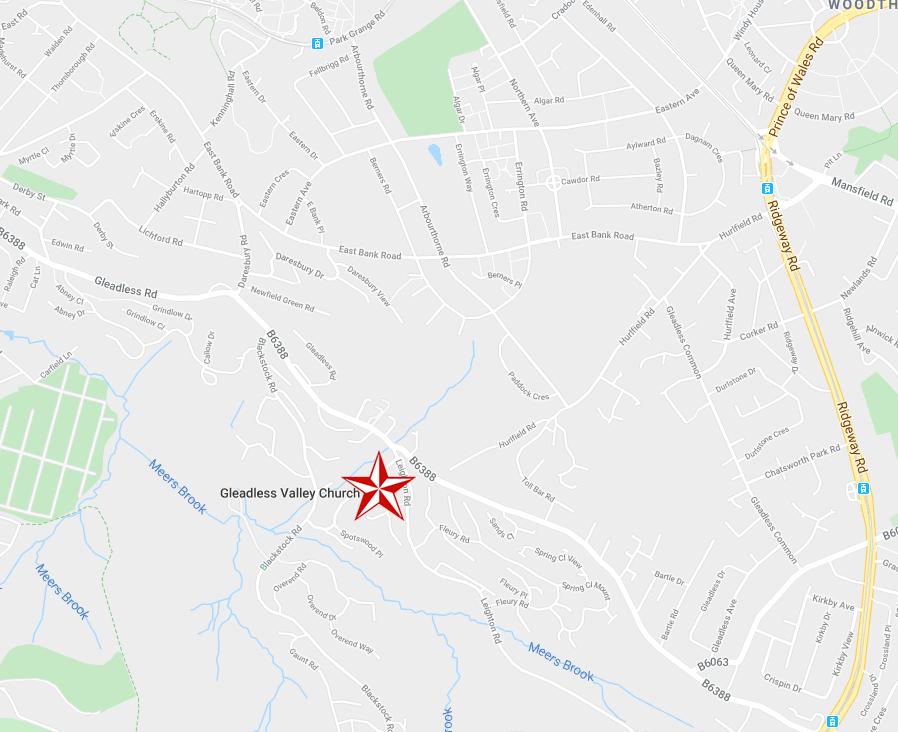
Holy Cross Church – Gleadless Valley Sheffield

Spotswood Mount, Sheffield S14 1LG

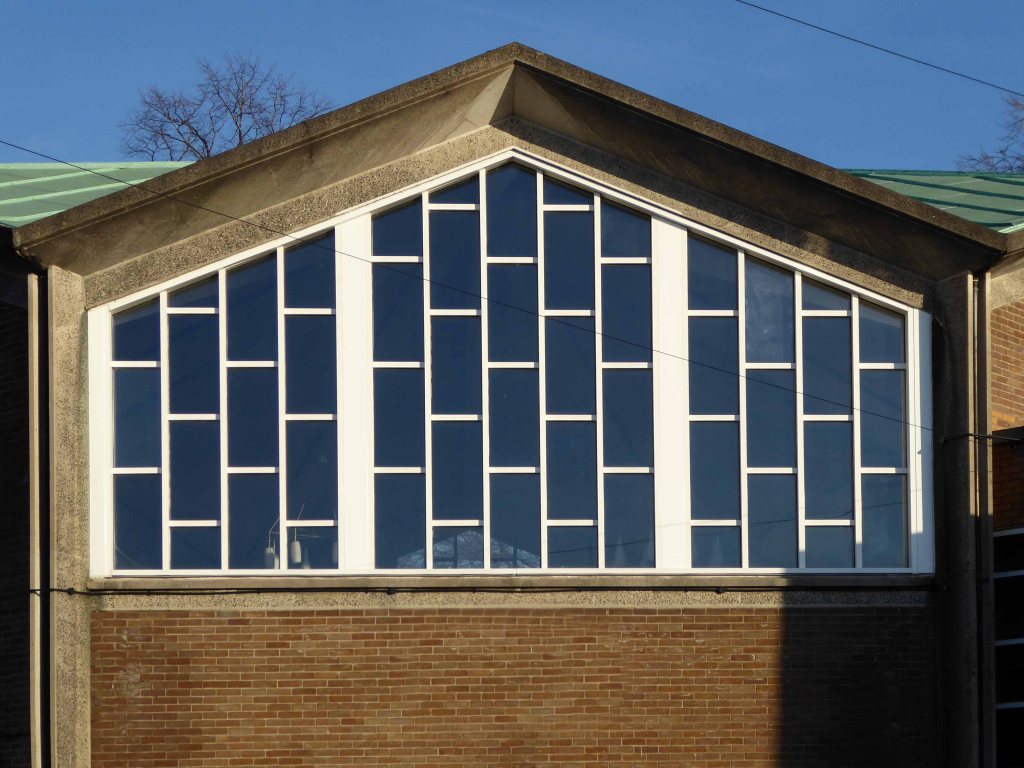
Constructed between 1964 and 1965 and designed by the architects Braddock & Martin-Smith.

Completed in 1936 John Keble Church in Edgware was also designed by DF Martin Smith 1900-84.

Martin Smith later went into partnership with Henry Braddock and together designed St. Mary’s church in Crawley. 

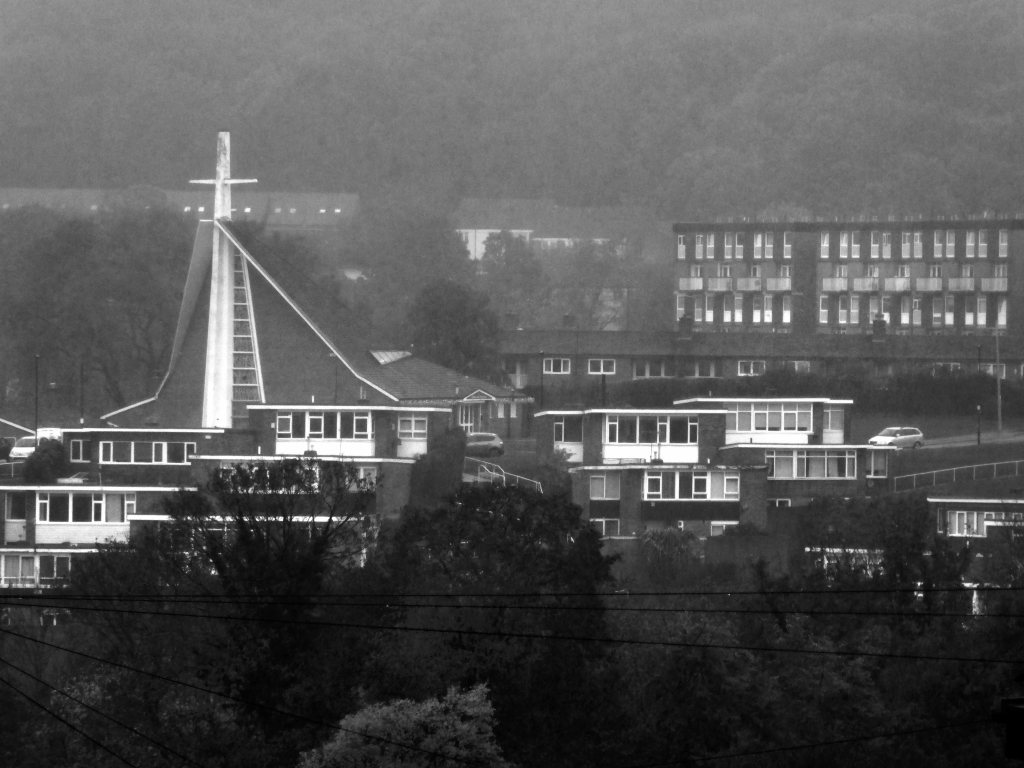
Holy Cross is positioned in a spectacular position among the houses on the Rollestone hillside.

Holy Cross is a church for people of all ages and stages of life.

Apart from the warm welcome at Holy Cross, you will always find something that is relevant to your age and stage in life – however old you are and whatever walk of life you come from.

Built to serve the Gleadless Valley Estate perched high above the Sheffield city centre.

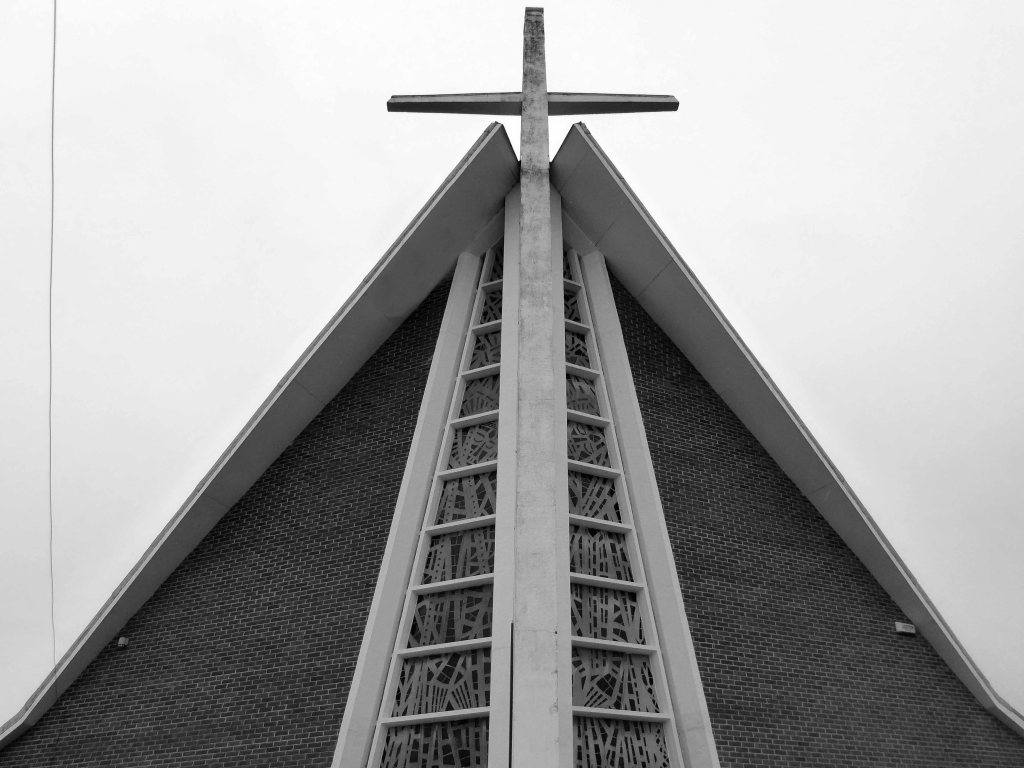
It has a canted front which is triangular in shape which has a large white cross at its apex.

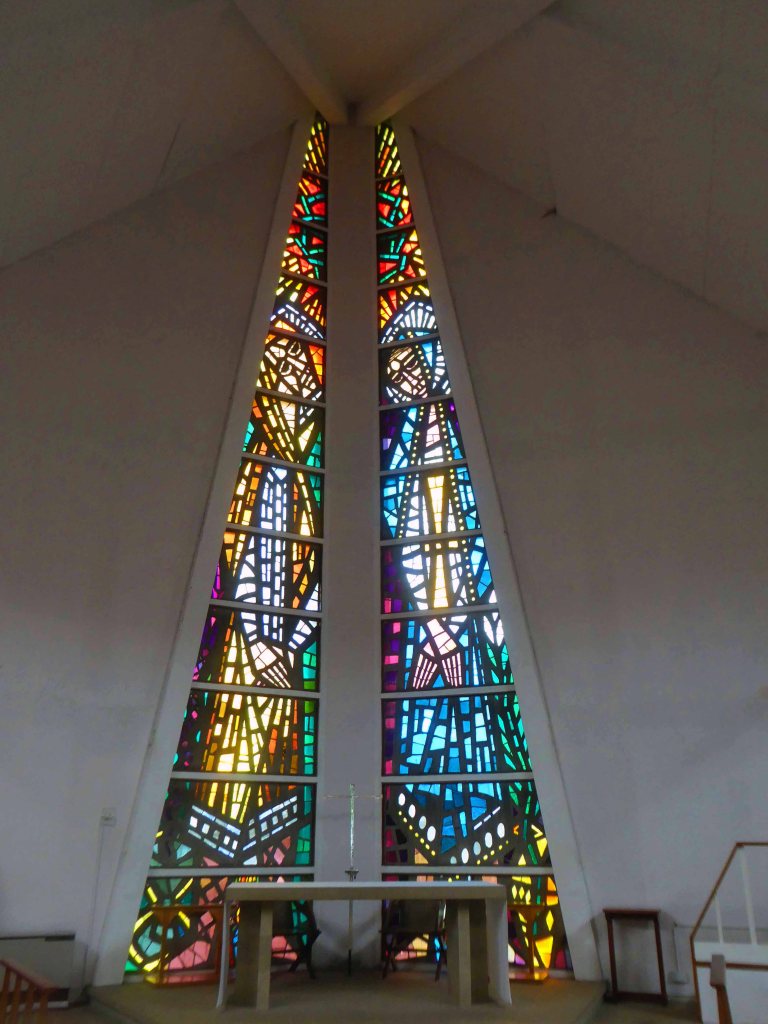
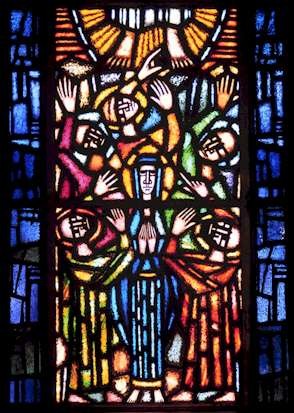
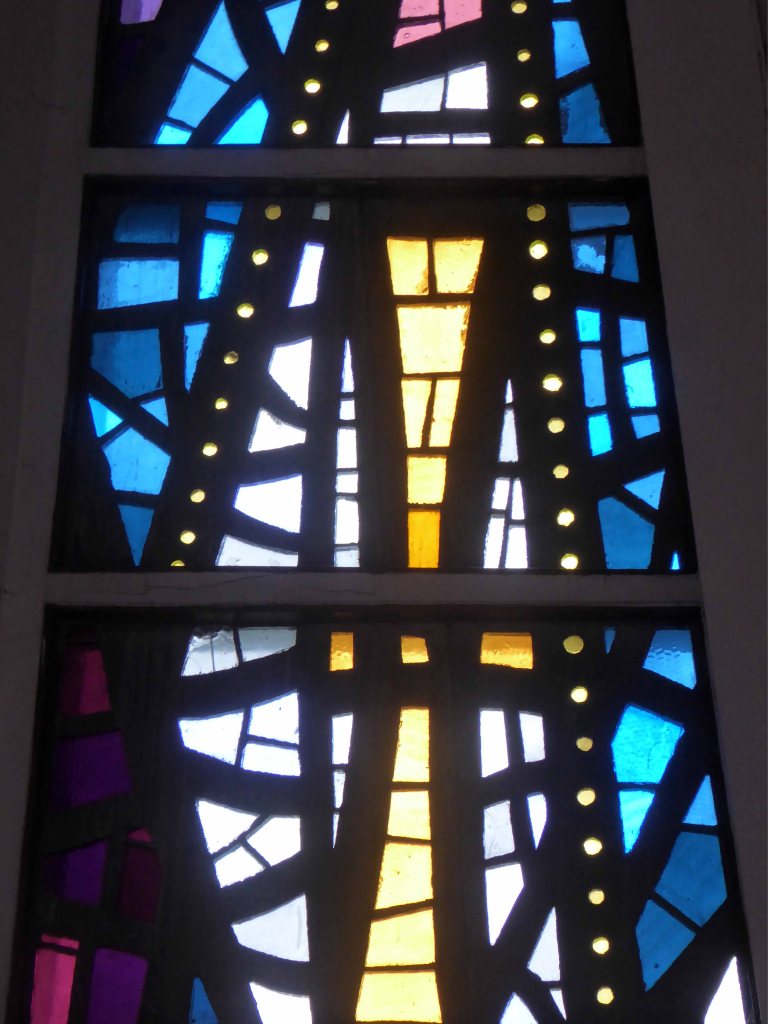
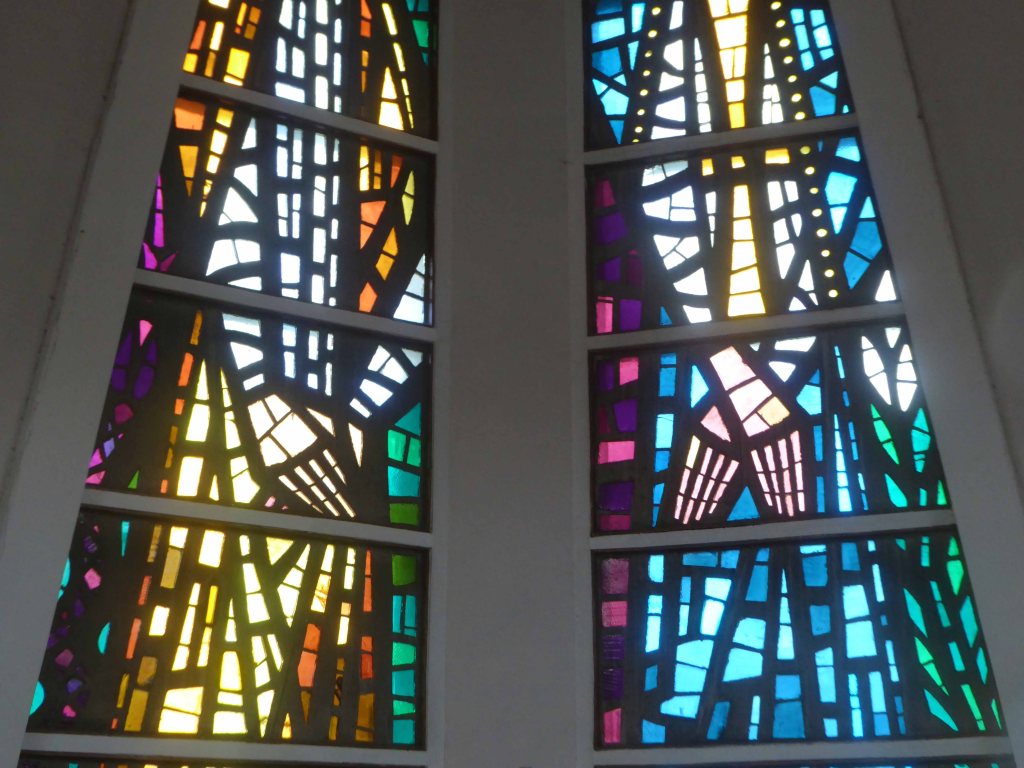
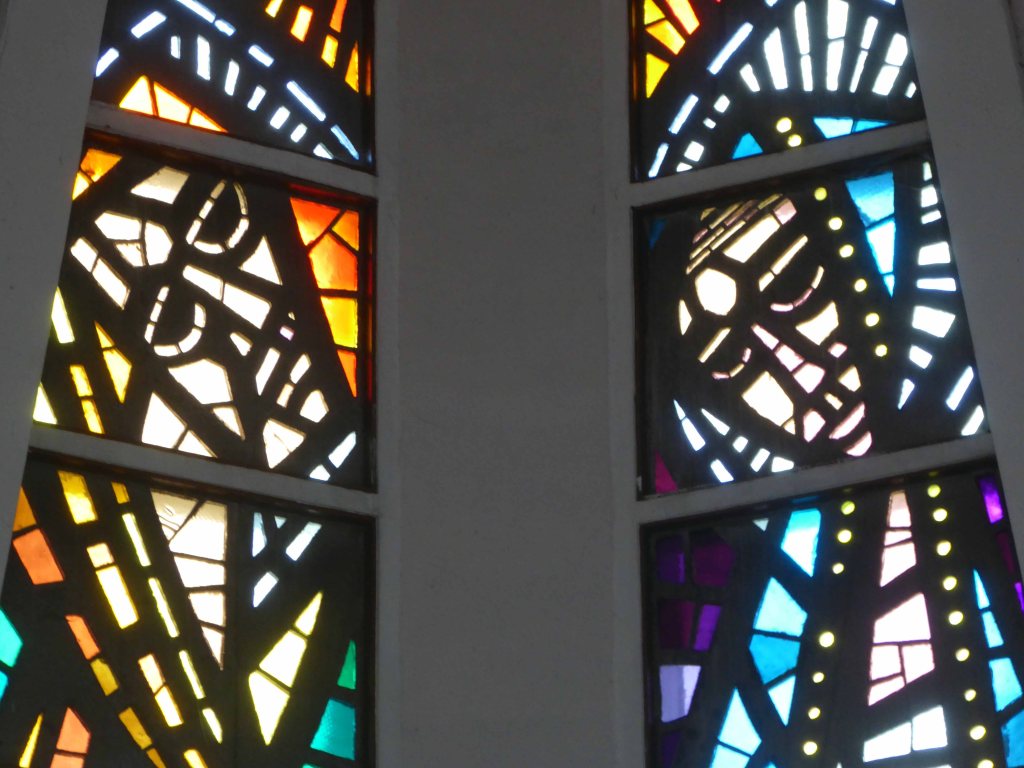
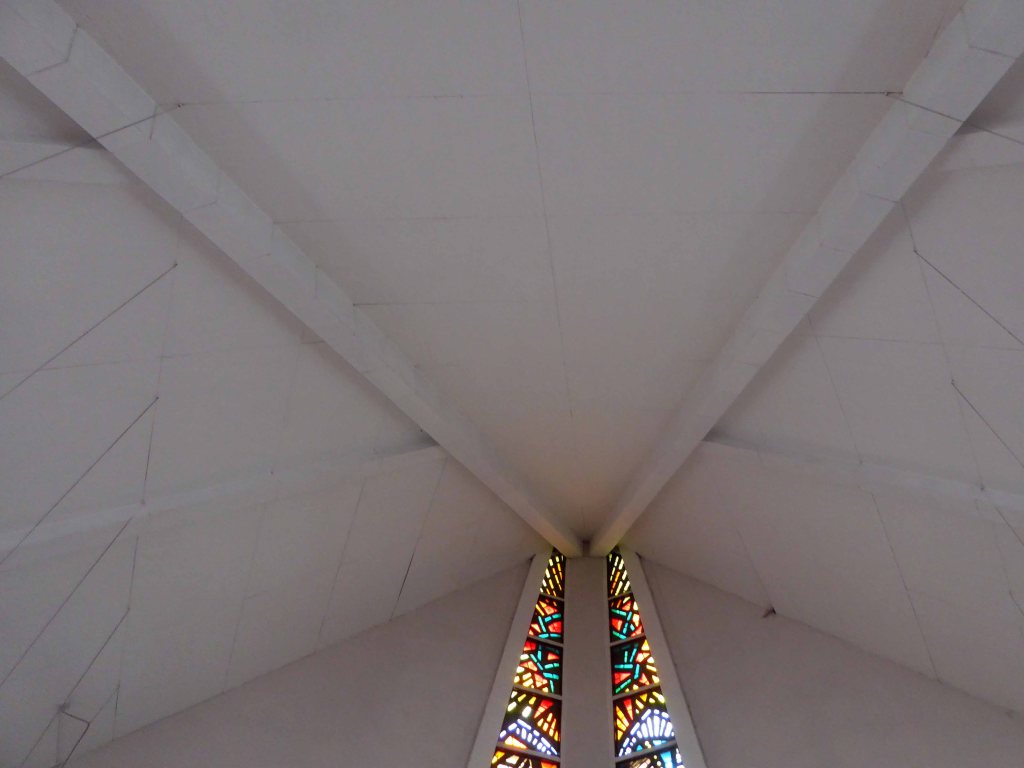
The interior features full height stained glass windows of the Virgin Mary and St John by John Baker Ltd.

Born in 1916, John aka Jack studied at the Central School in London and worked under James Hogan at the Whitefriars stained-glass studios before joining Samuel Caldwell junior at Canterbury Cathedral in 1948 to help reinstate the medieval glass removed for safekeeping during the Second World War.

He subsequently authored English Stained Glass; the revised edition of this work, English Stained glass of the Medieval Period , which was to become one of the most popular soft back books on English medieval glass ever published.

Apart from his conservation skills, John was also an inspired teacher at Kingston College of Art. He produced windows for a number of churches, including eleven windows for the church of the Holy Name, Bow Common Lane, Mile End; two windows and a brick sculpture for the church of Little St Peter, Cricklewood; eighteen windows for St Anne’s church, East Wittering, Sussex; two large abstract windows for Broomfield Chapel, Abbots Langley; ten large concrete and glass windows for the new parish church, Gleadless Valley, Sheffield; and twenty-two glass windows for the Convent Chapel, St Michaels, Finchley. He also created a huge Jesse window for the church at Farnham Royal. The church was demolished in 2004, but the glass is now in storage, and some of the panes will be installed in the welcome are of the new church.

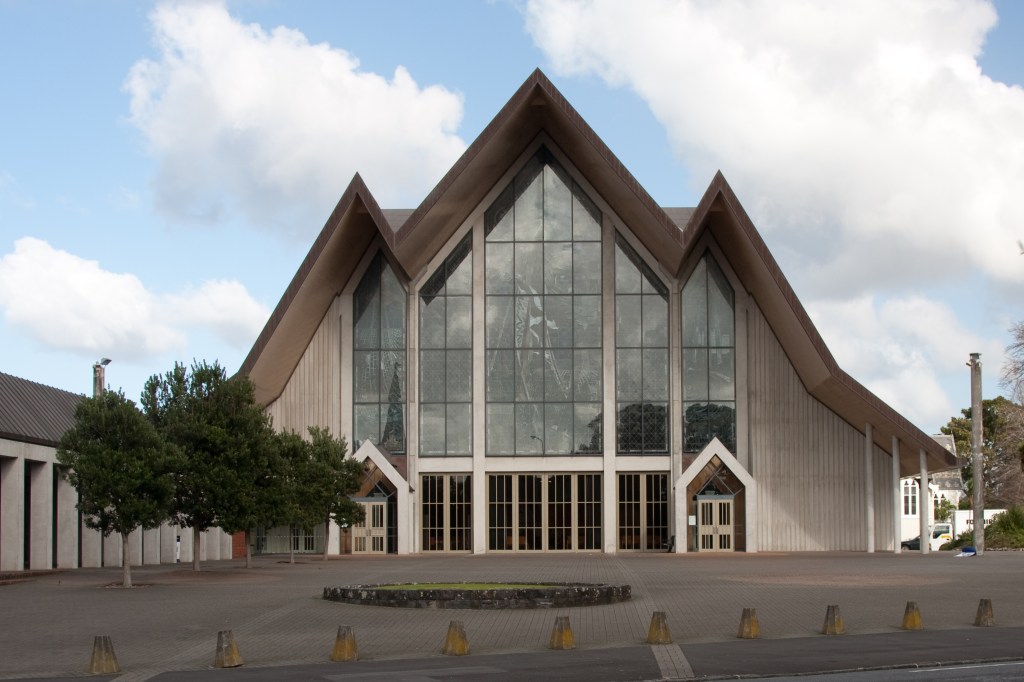
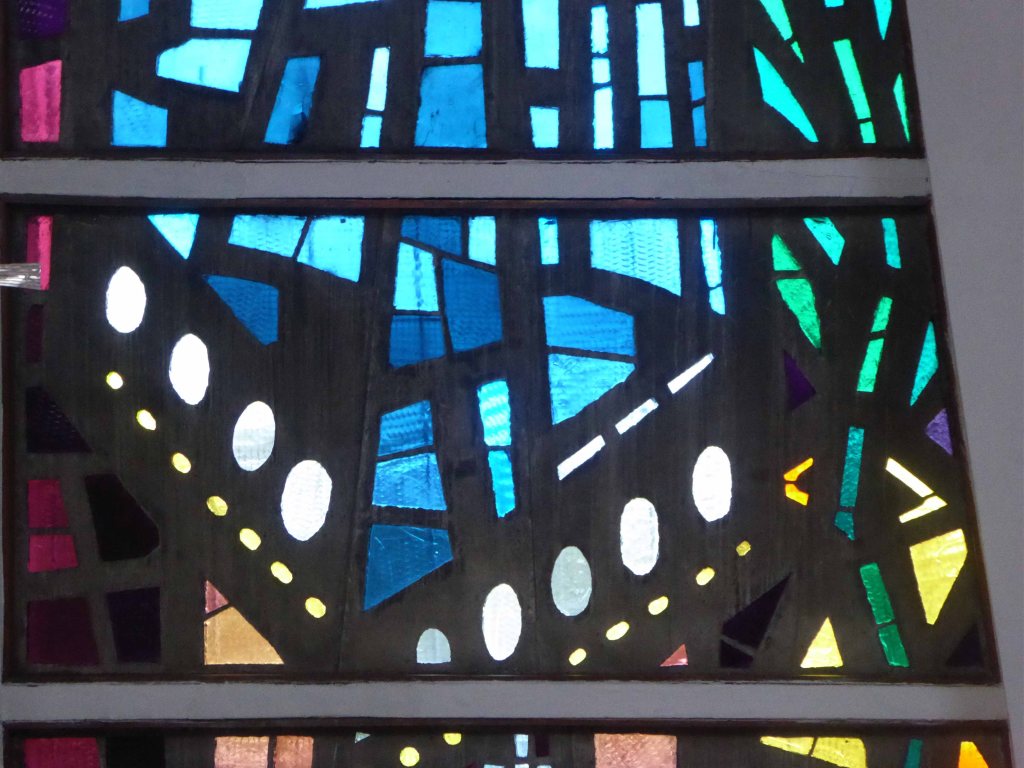
His favourite works were the windows he produced for Auckland Cathedral, New Zealand – as seen above.

John Baker, born Birmingham, 11 March 1916, died Hastings, 20 December 2007.

Vidimus

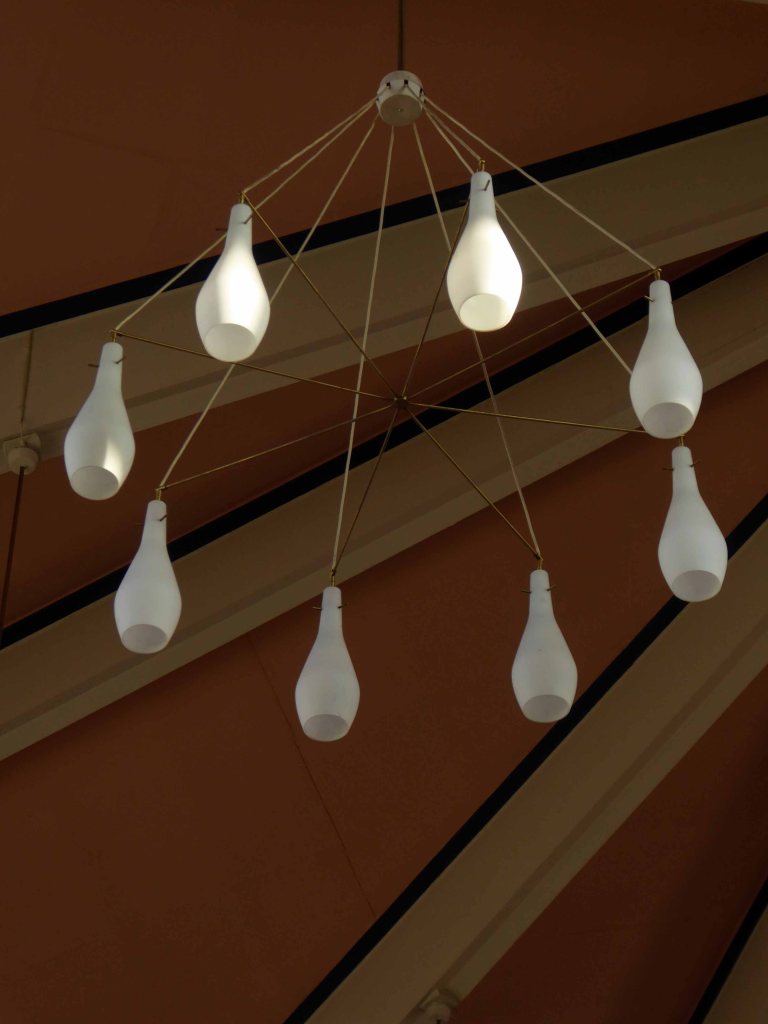
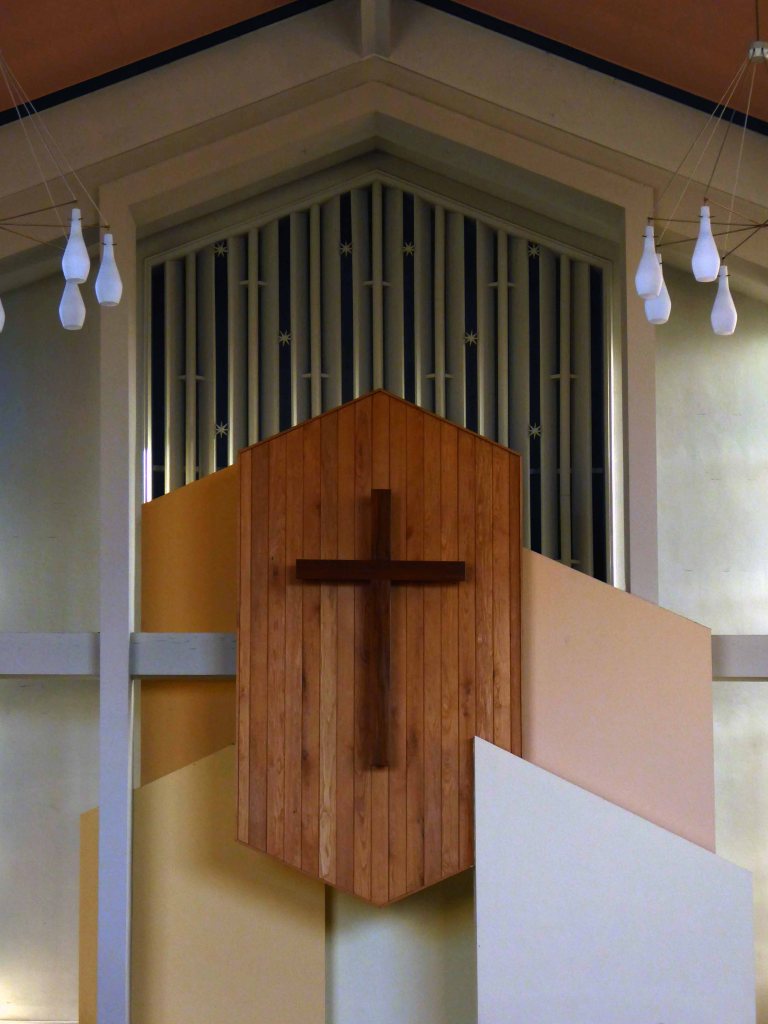
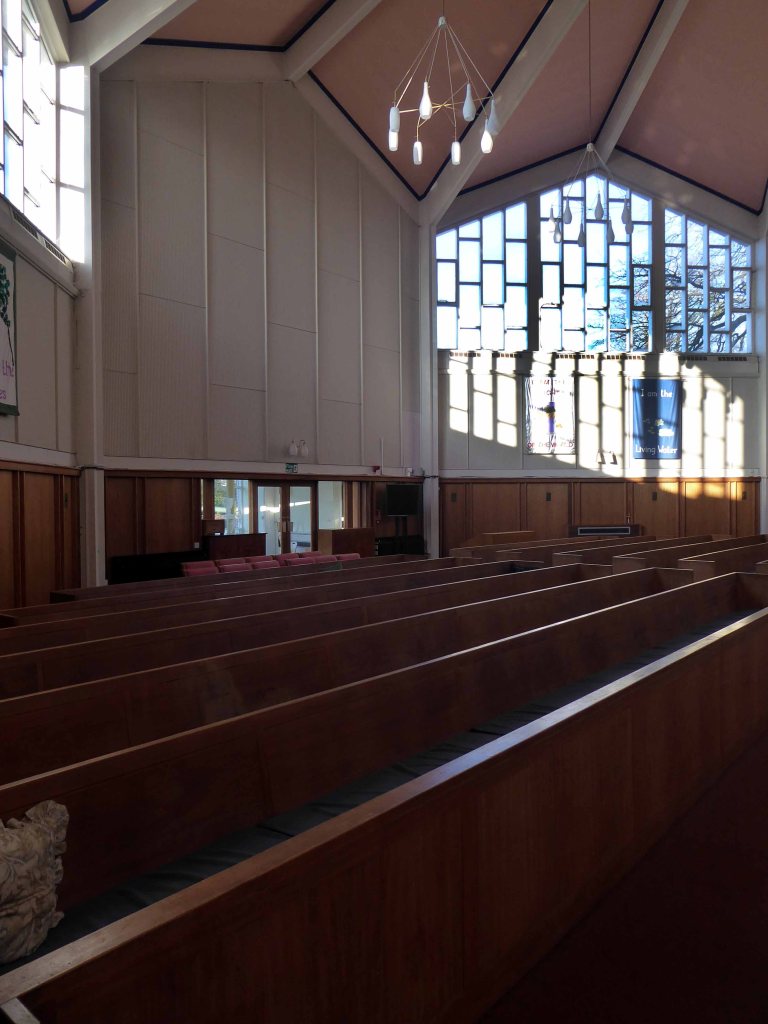
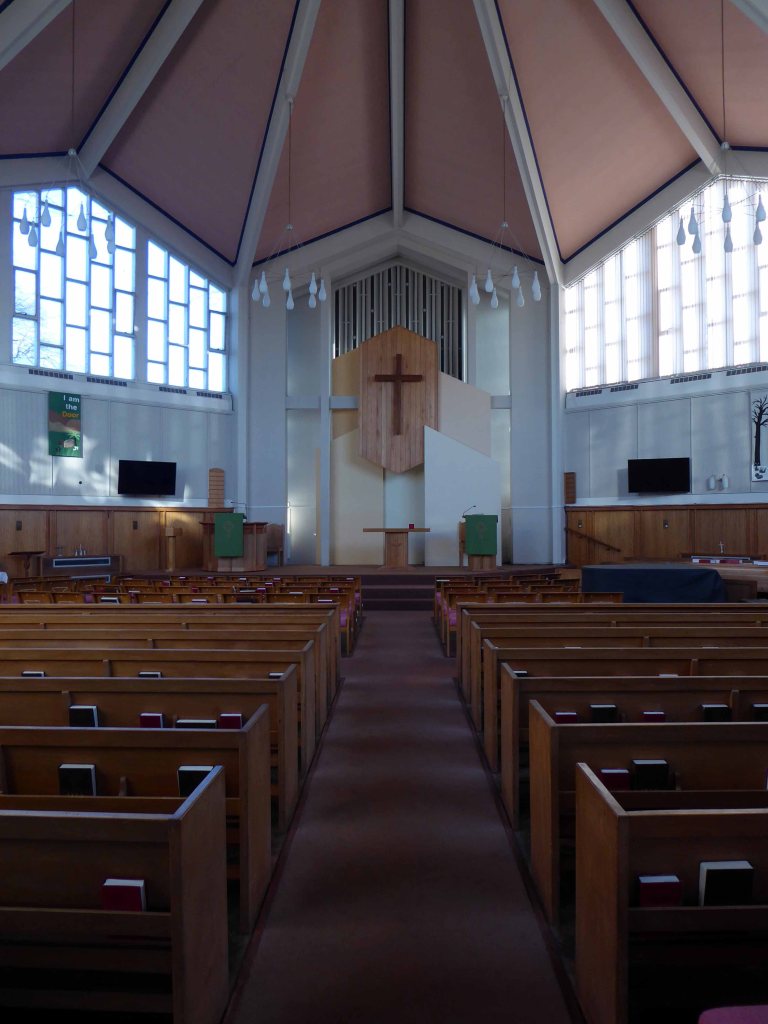
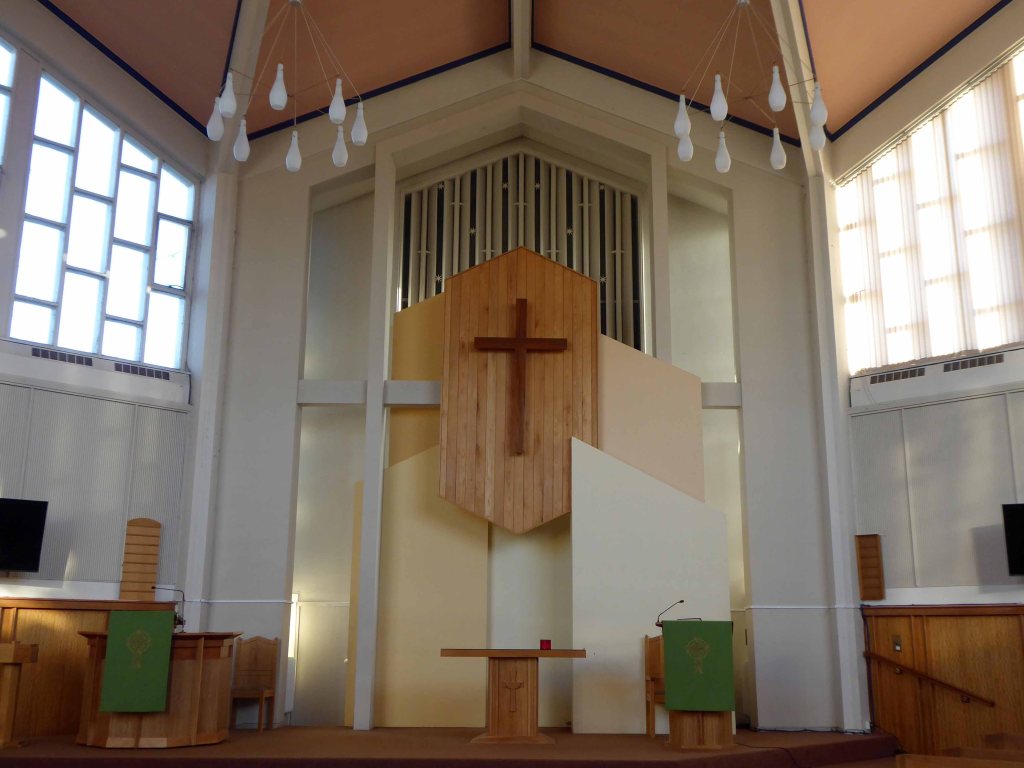
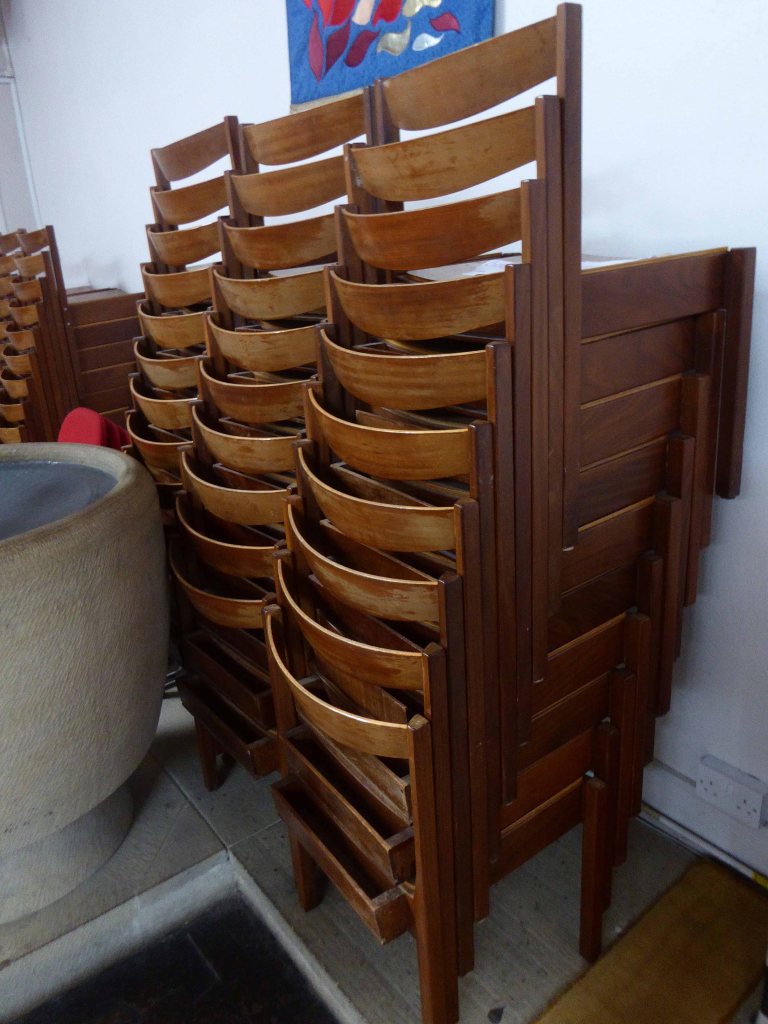
The concrete altar is set on a raised paved podium, complemented by a silver cross and distinctive Arts and Crafts style oak chairs.

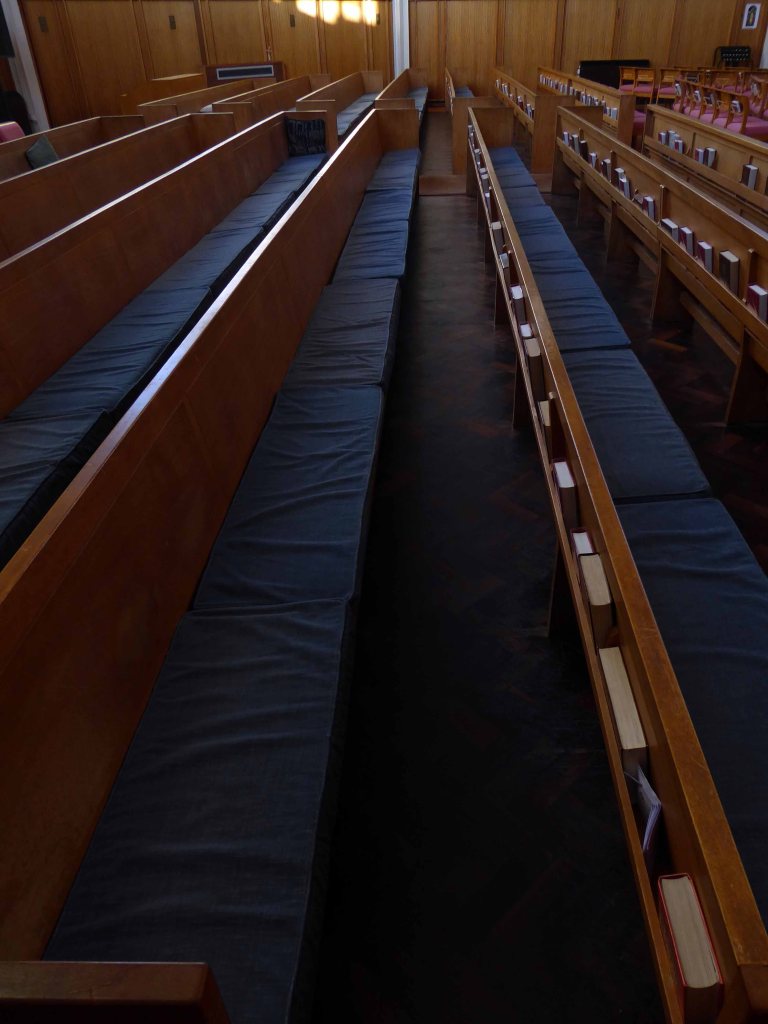
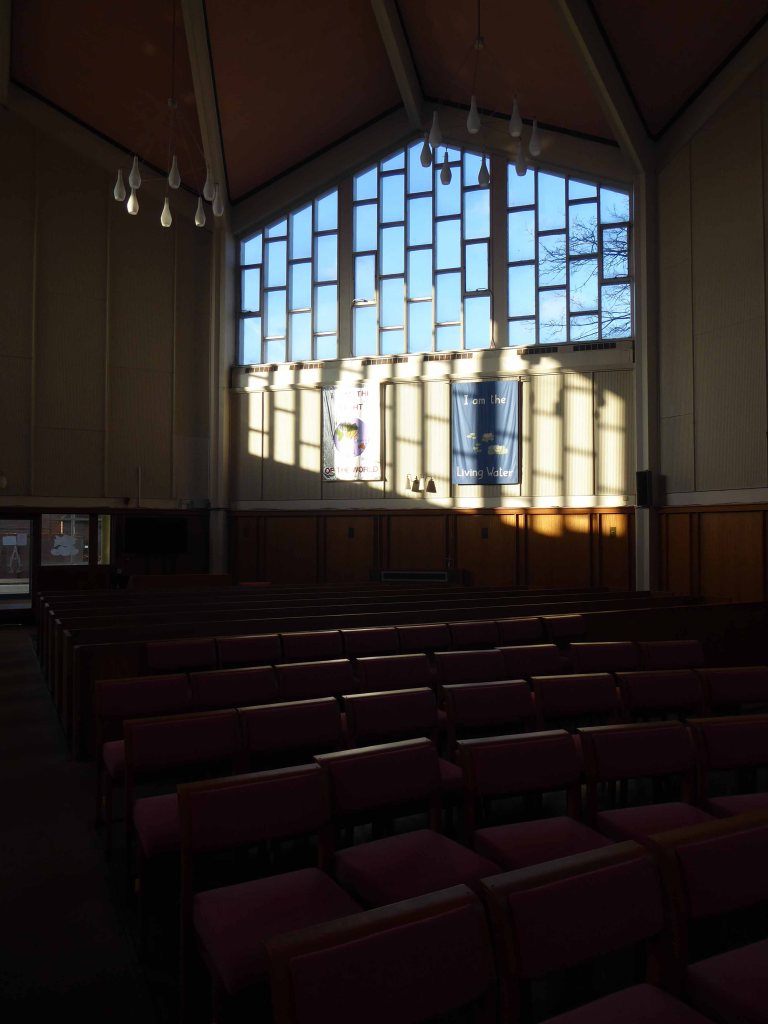
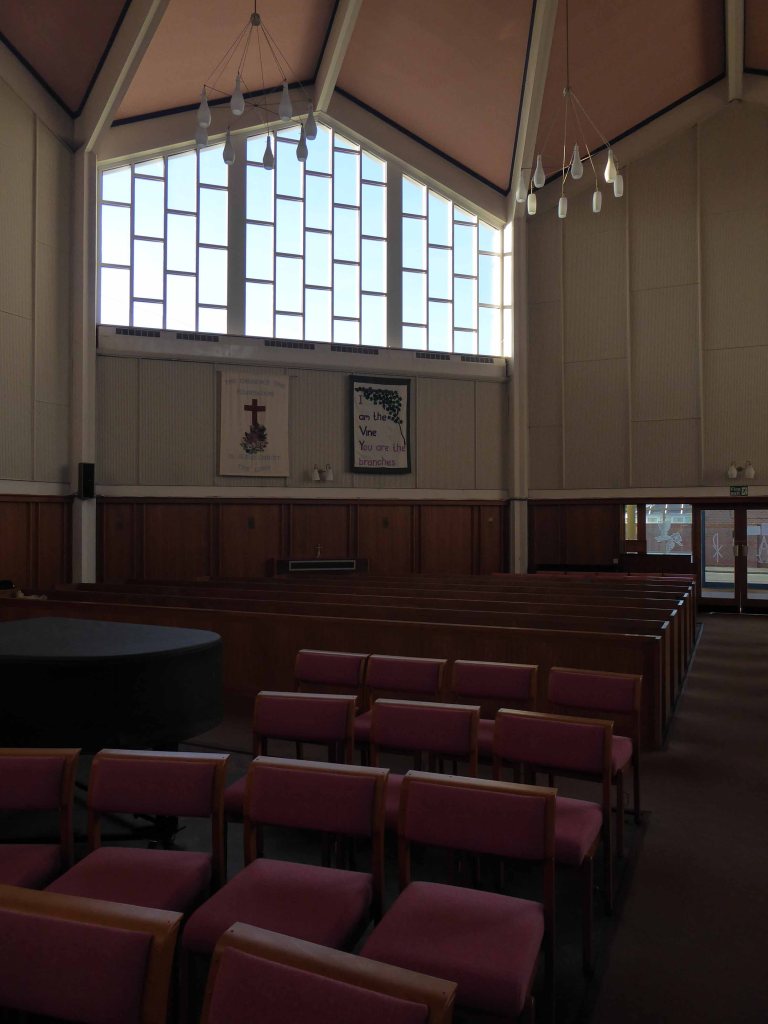
The original seating seems to be no longer in use, replaced by a newer more comfortable alternative.

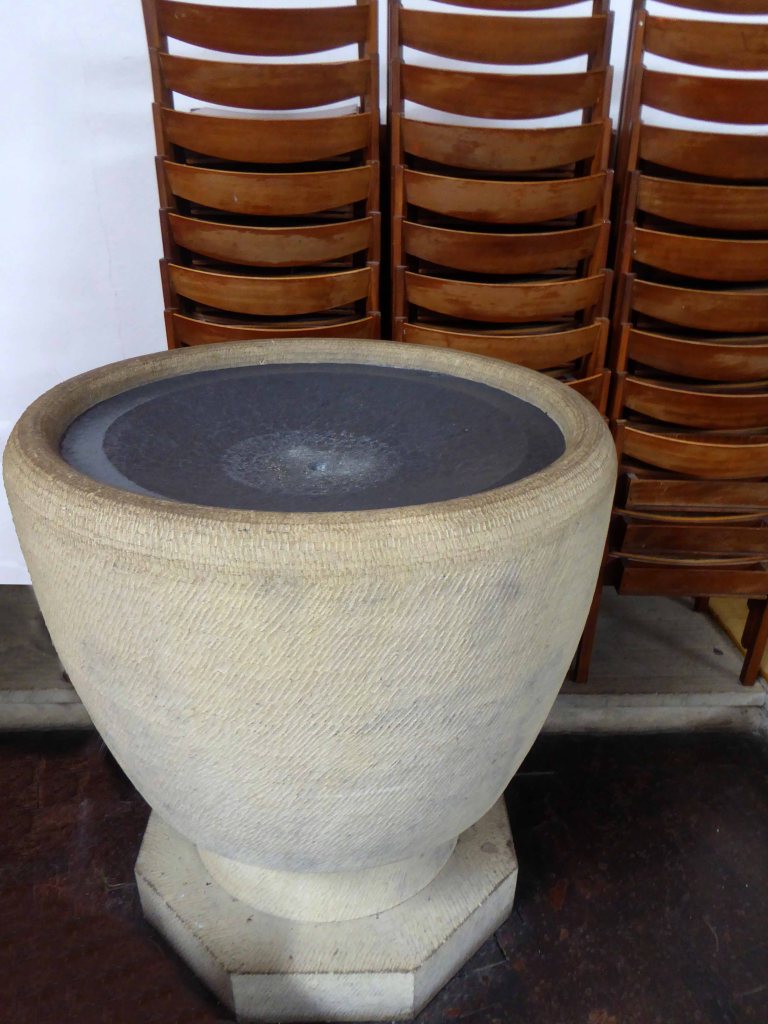
There is a large carved stone font.

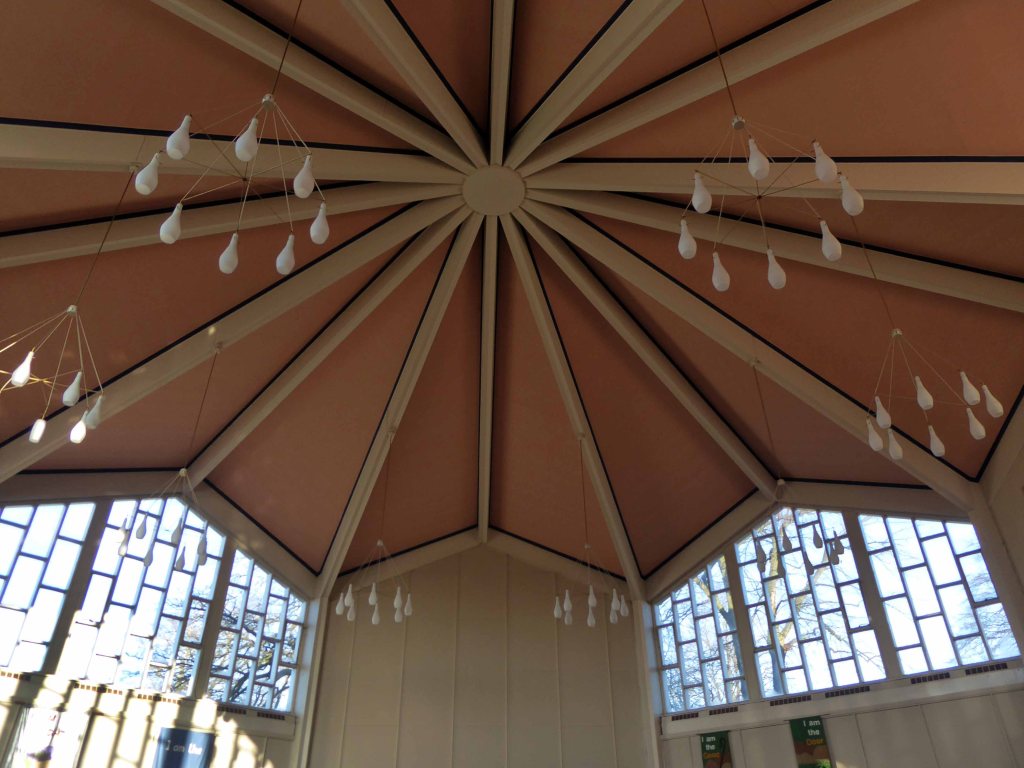
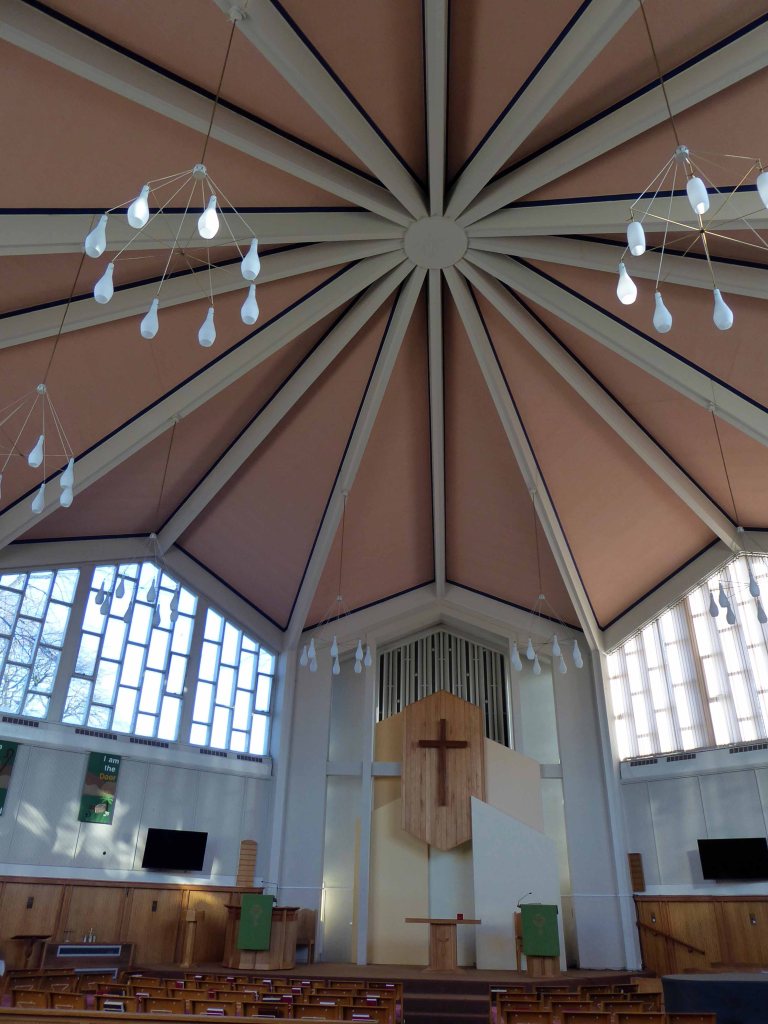
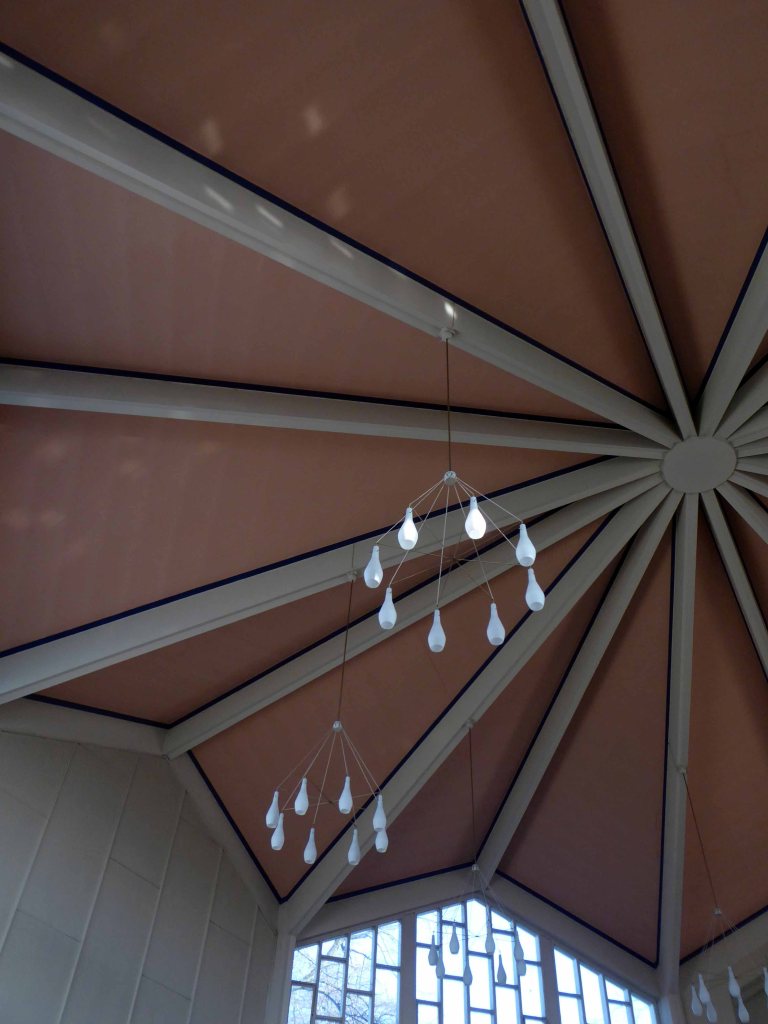
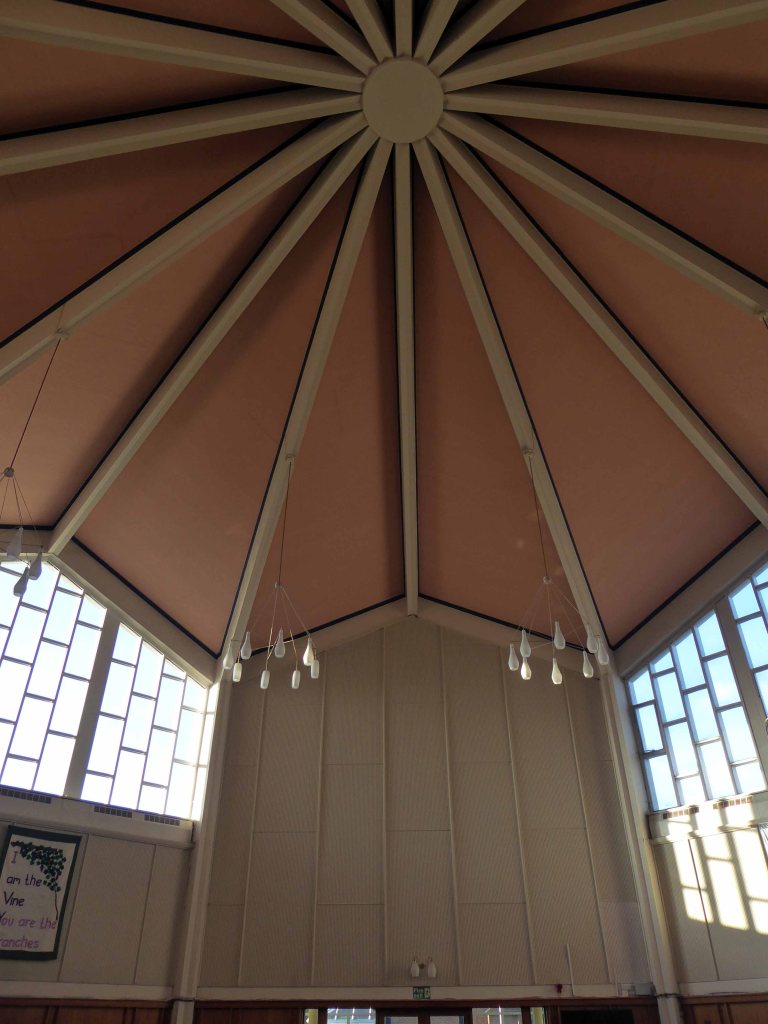
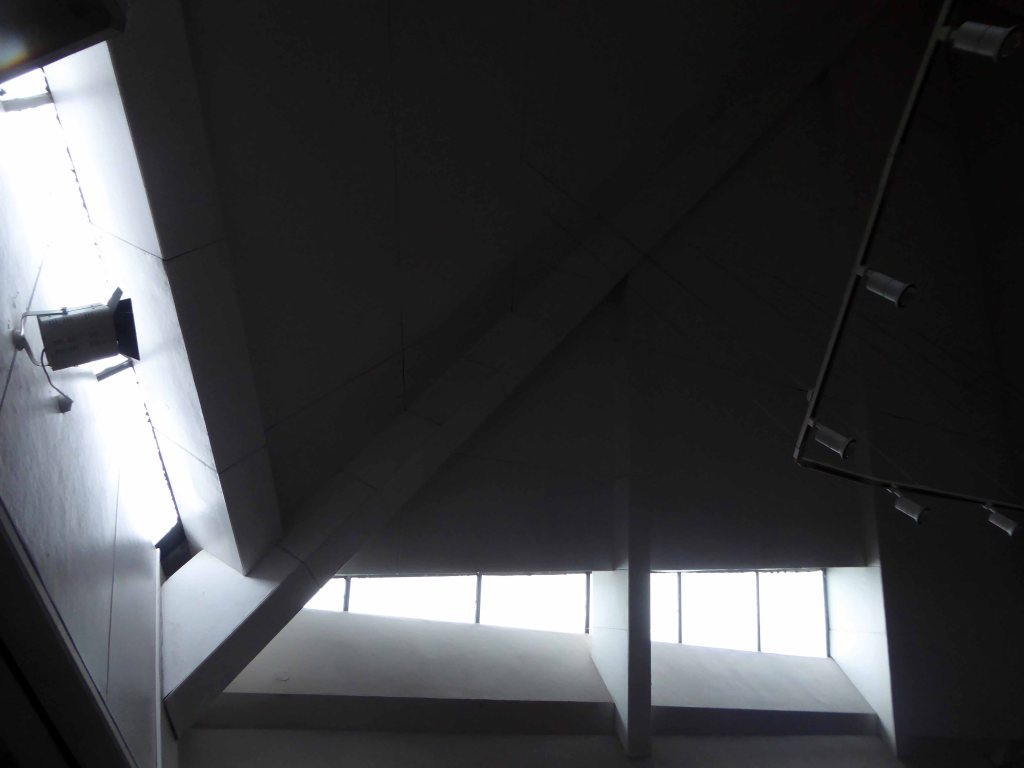
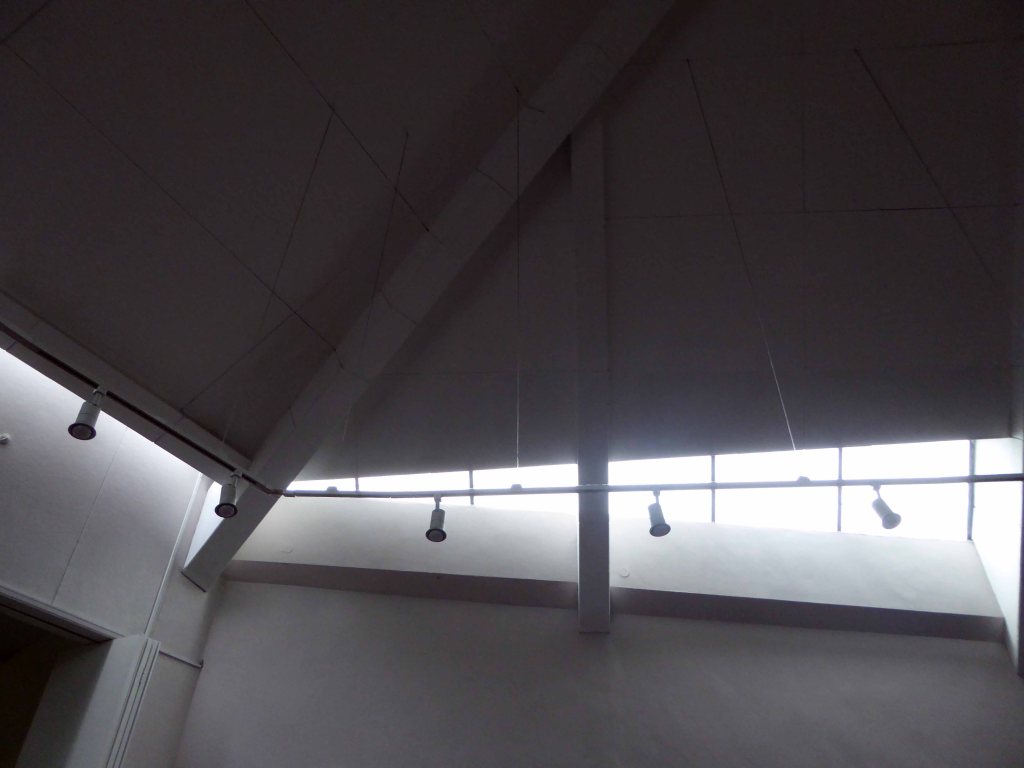
The main body of the steeply pitched roof space is illuminated by slotted windows.

Many thanks to the key holders and parishioners at Holy Cross, our Sheffield guide Mick Nott and Claire Thornley at Eleven Design – for making our visit possible.

Thanks also to all those who turned up on Saturday to walk a very, very wet Gleadless Valley.

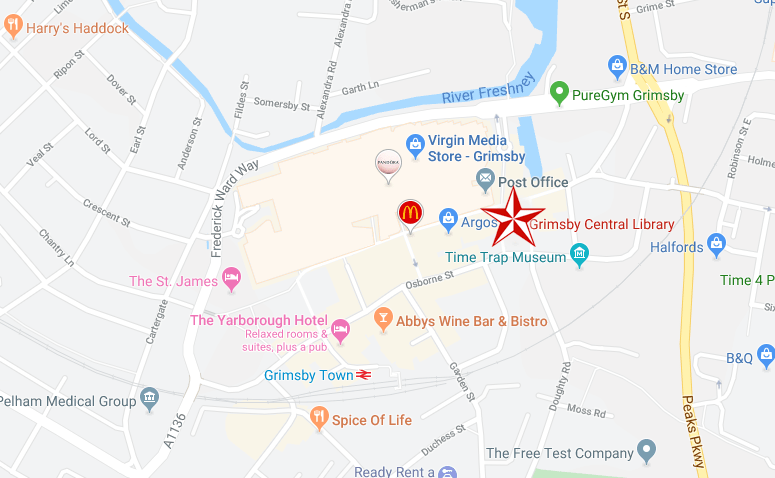
Central Library – Grimsby

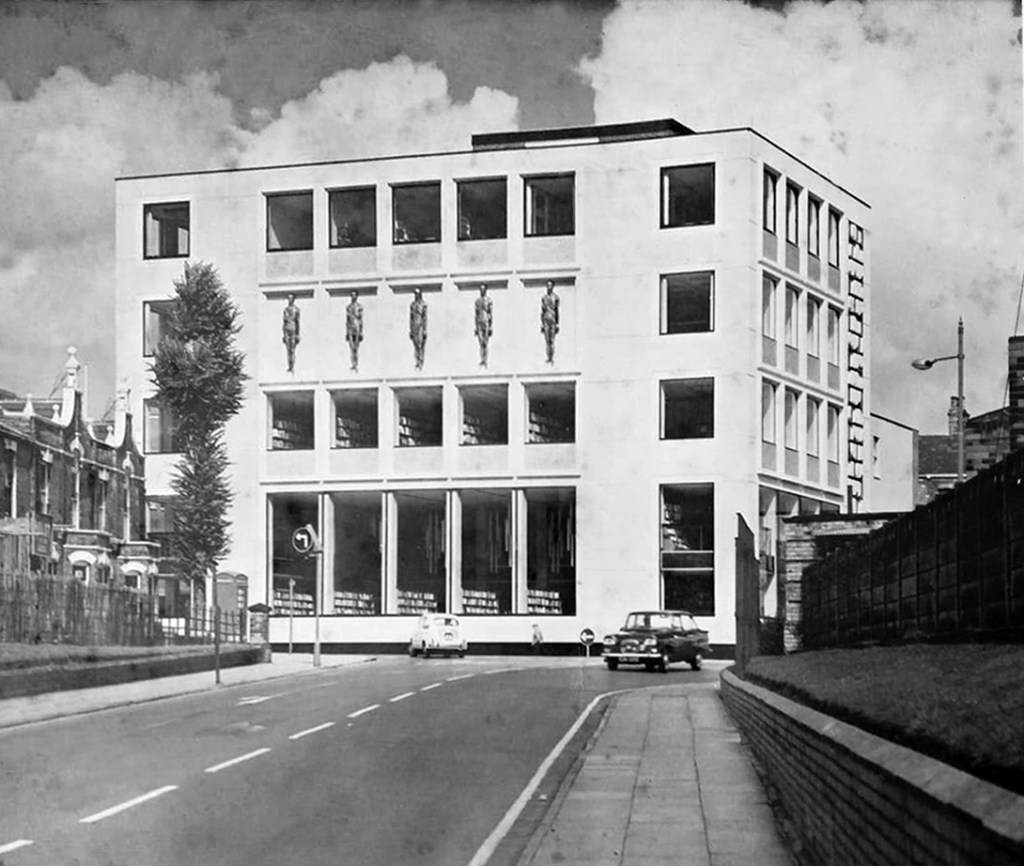
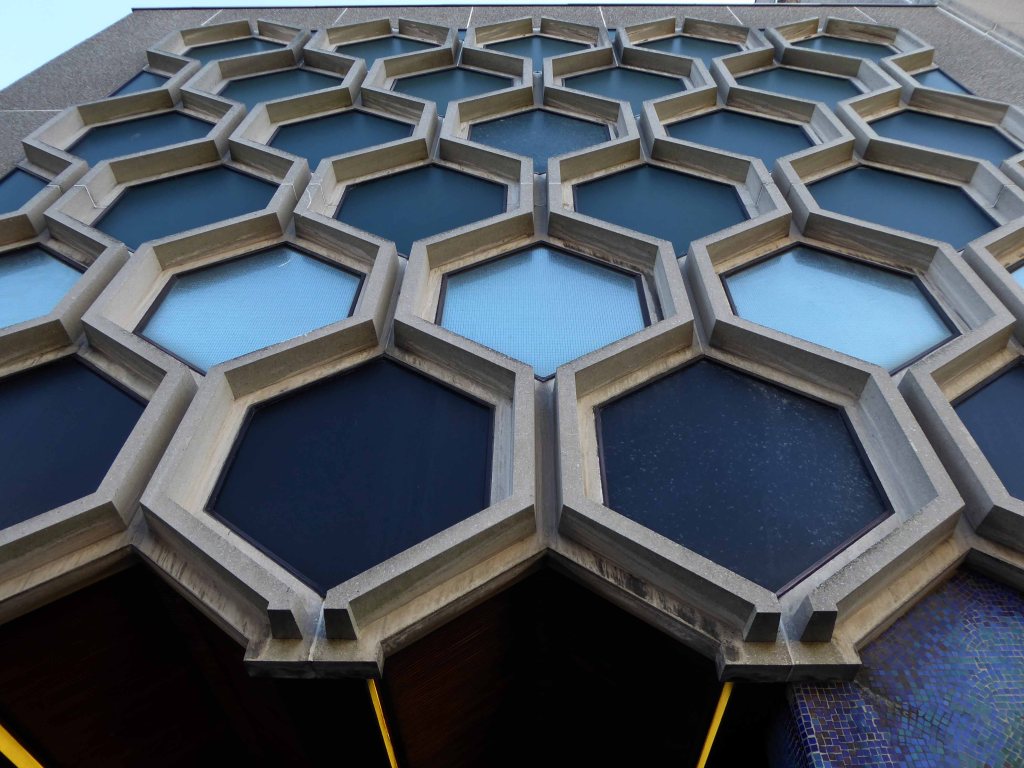
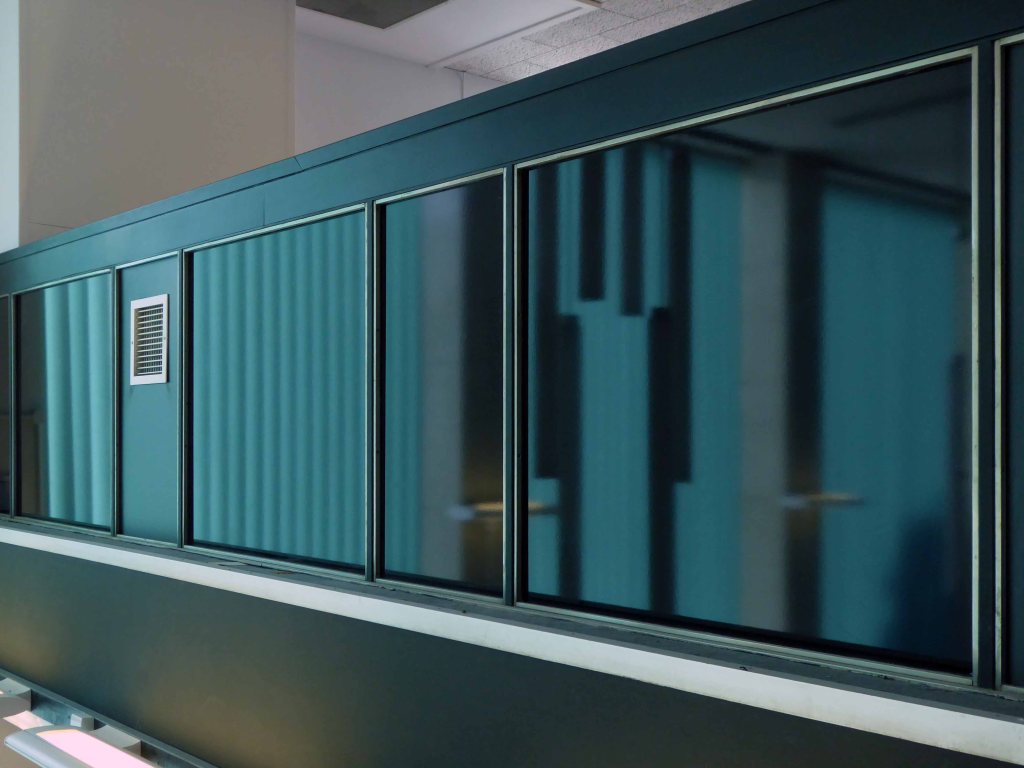
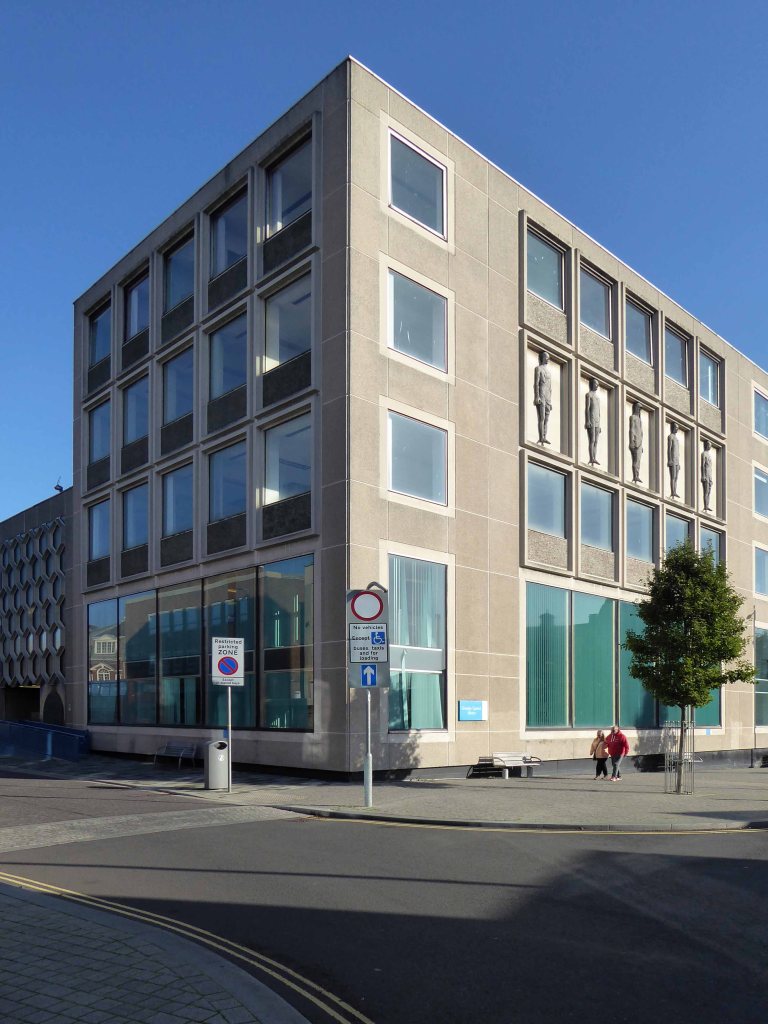
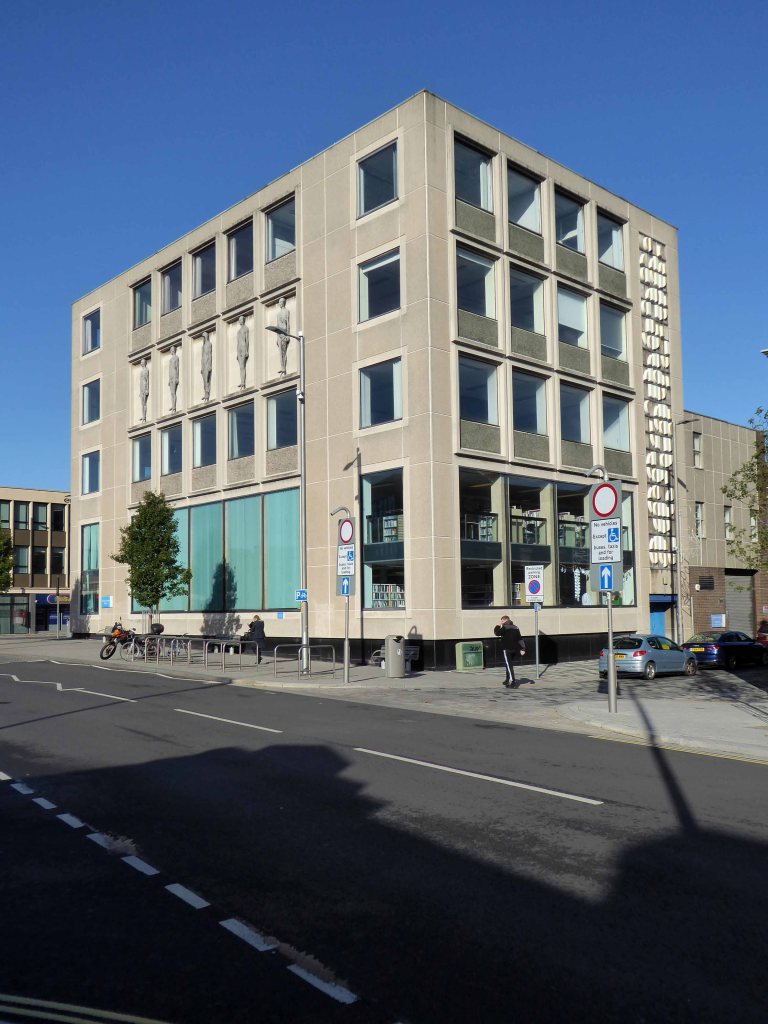
This is Grimsby Central Library – a proud public building of real quality, reflecting the cautious optimism and fierce civic pride of the Sixties. Built to last, in the modern manner – gently monumental, softened by the easy grace of the restrained decoration and a refined palette of stone, glass and concrete.

By the Borough Architect – JM Milner ARIBA assisted by E L Shepherd 

This image was used as the Mayor’s Xmas card in 1969.

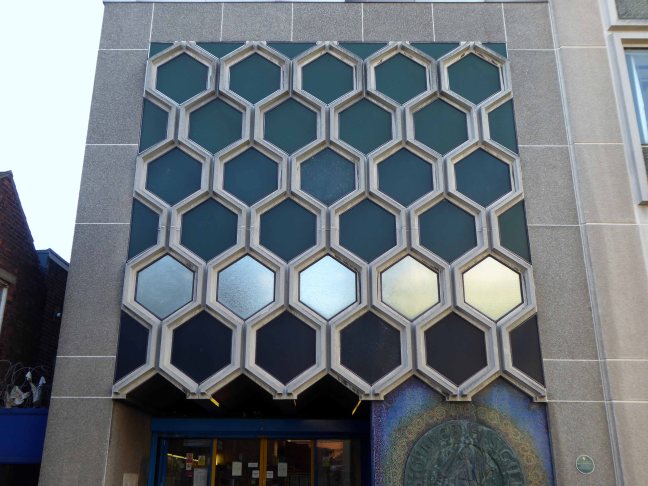
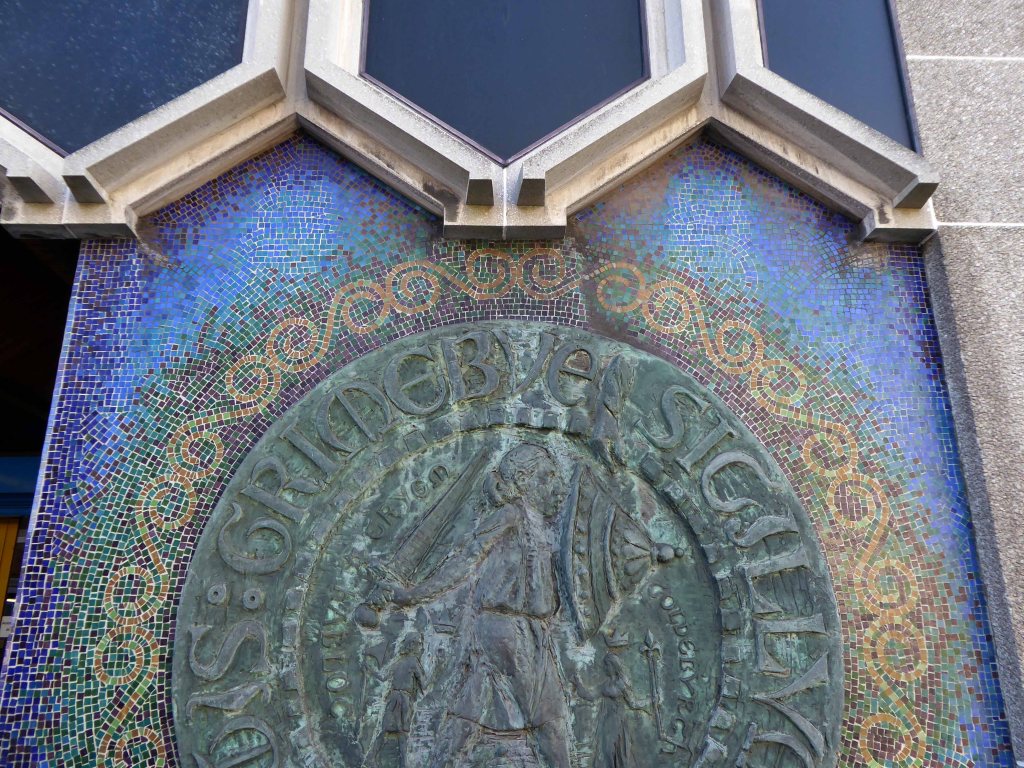
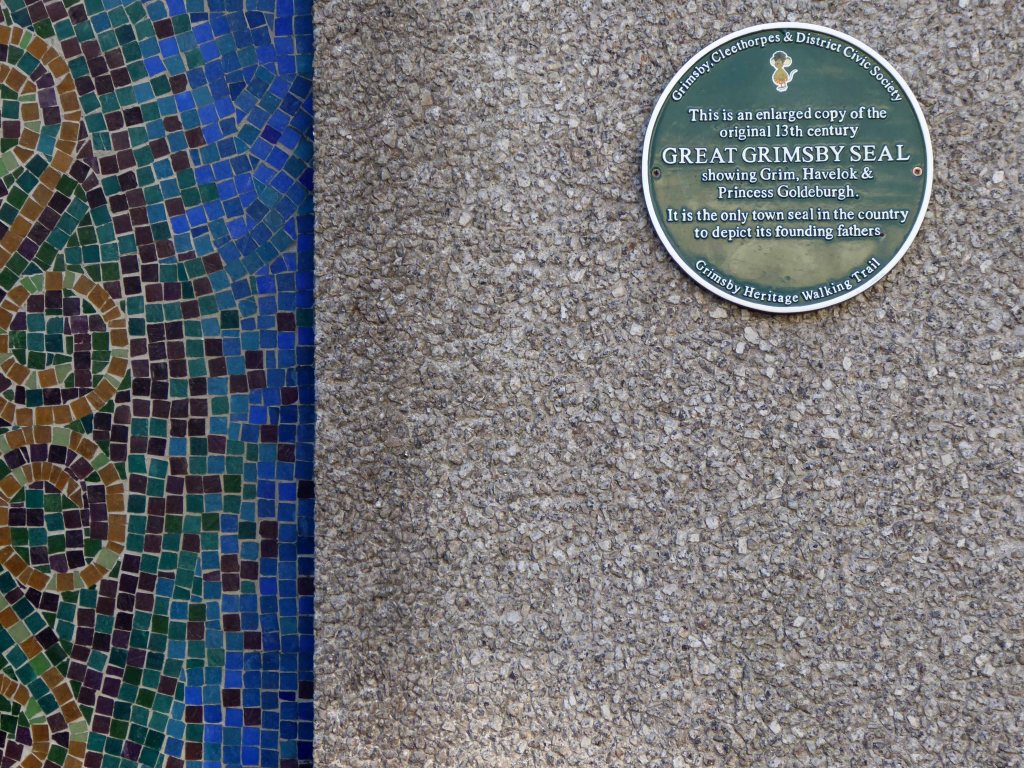
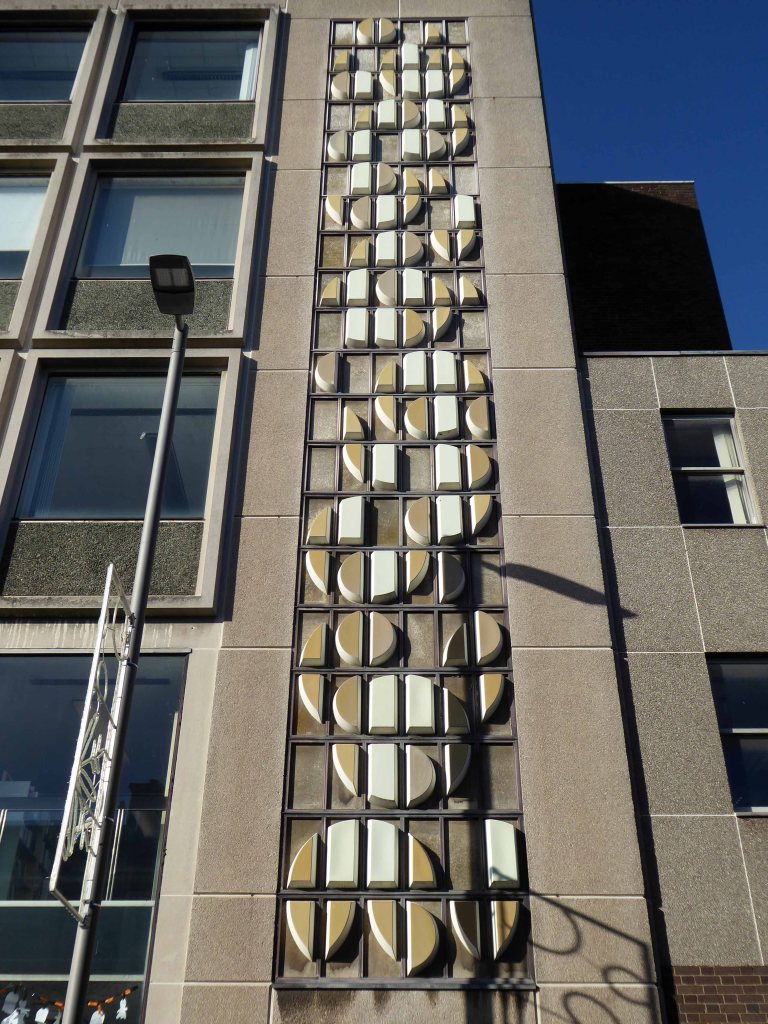
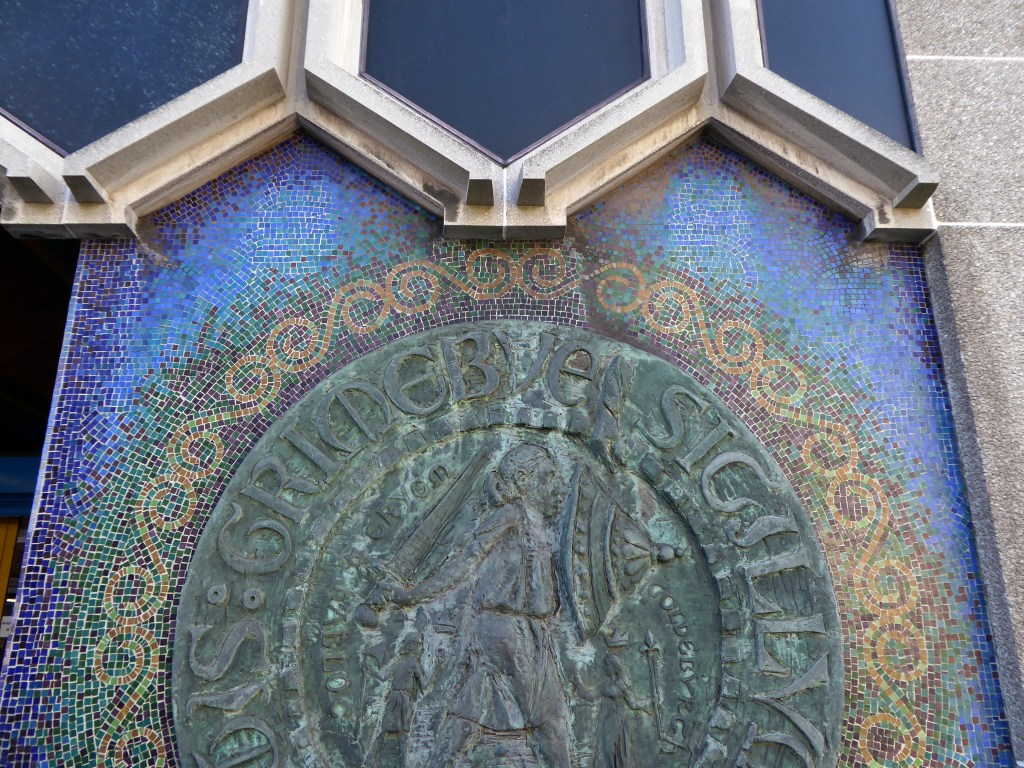
The bold exterior grid is enhanced by a honeycombed grille above the entrance, along with a mosaic depicting the town’s seal.

The mosaic is the work of Harold Gosney – who is also responsible for the Abbey Walk reliefs

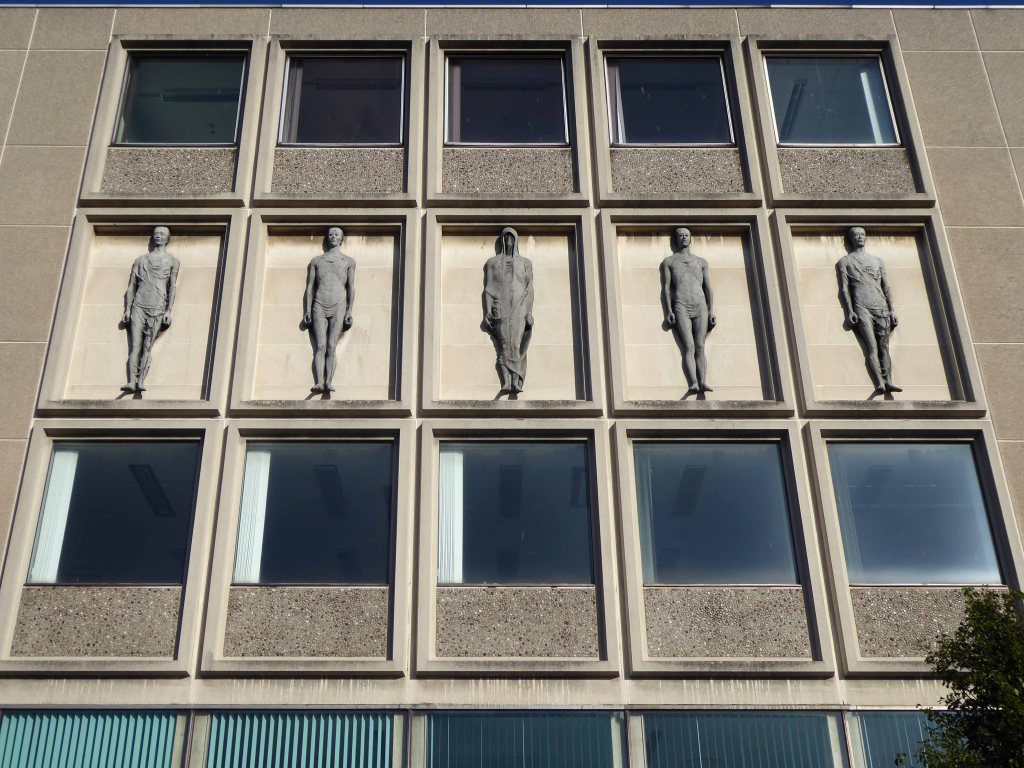
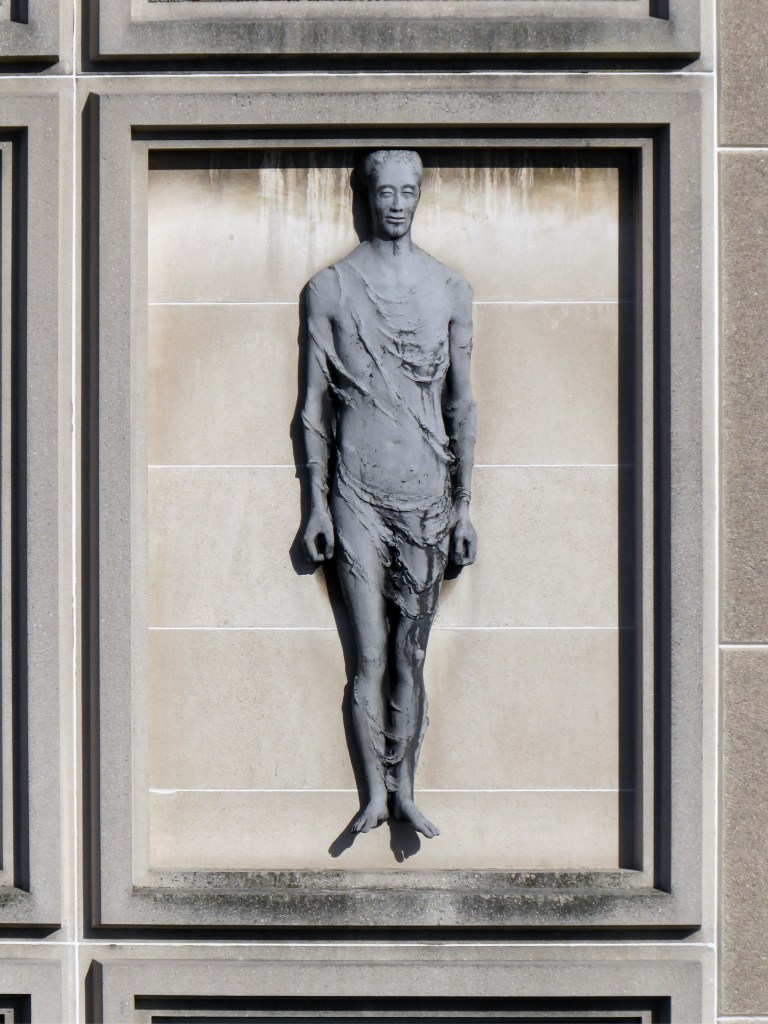
The Guardians of Knowledge which adorn the south facing elevation of the library are the work of Peter Todd former head of Grimsby Art School

To the rear of the building is a modular relief.

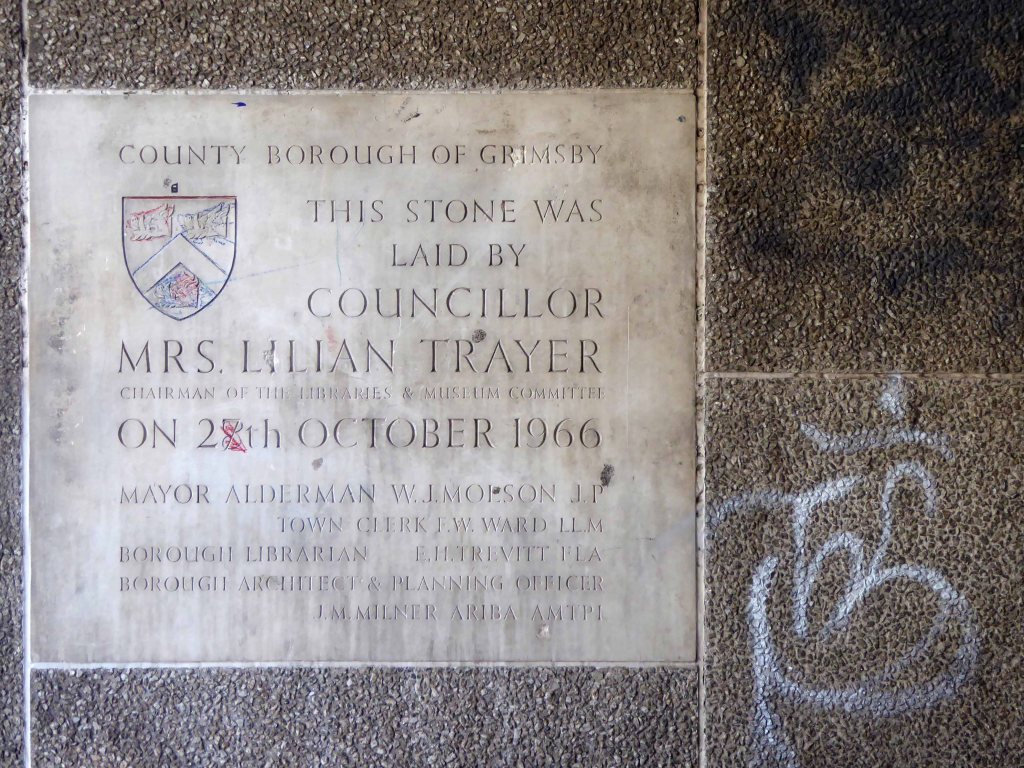
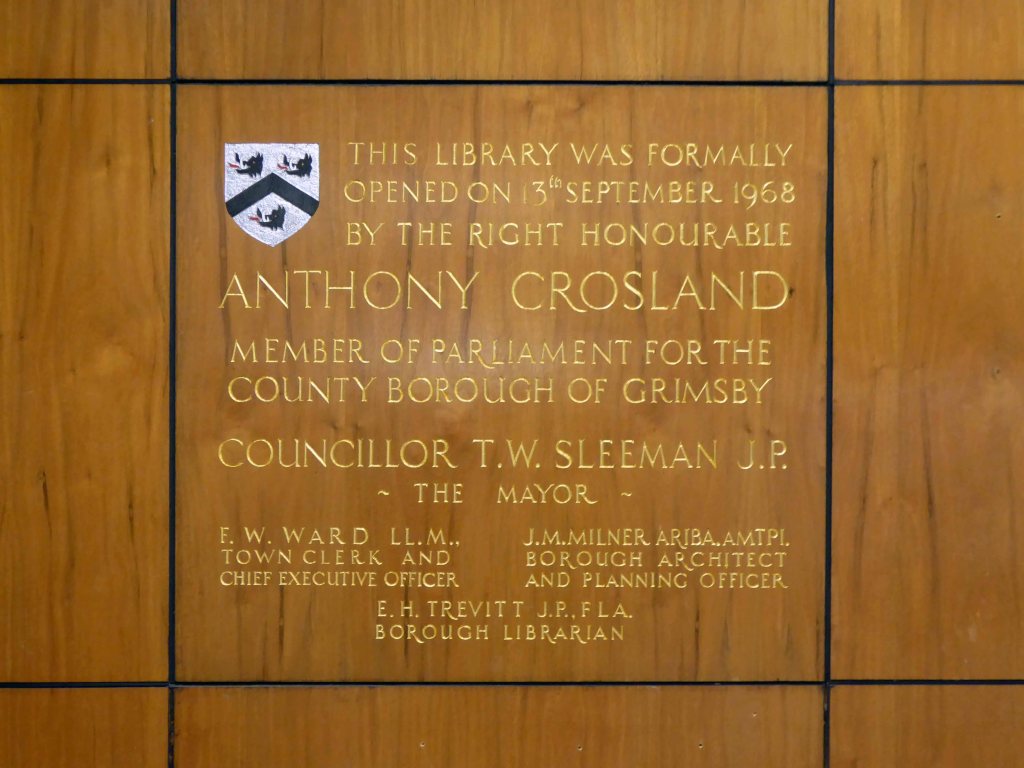
Inside the entrance porch a commemorative plaque.

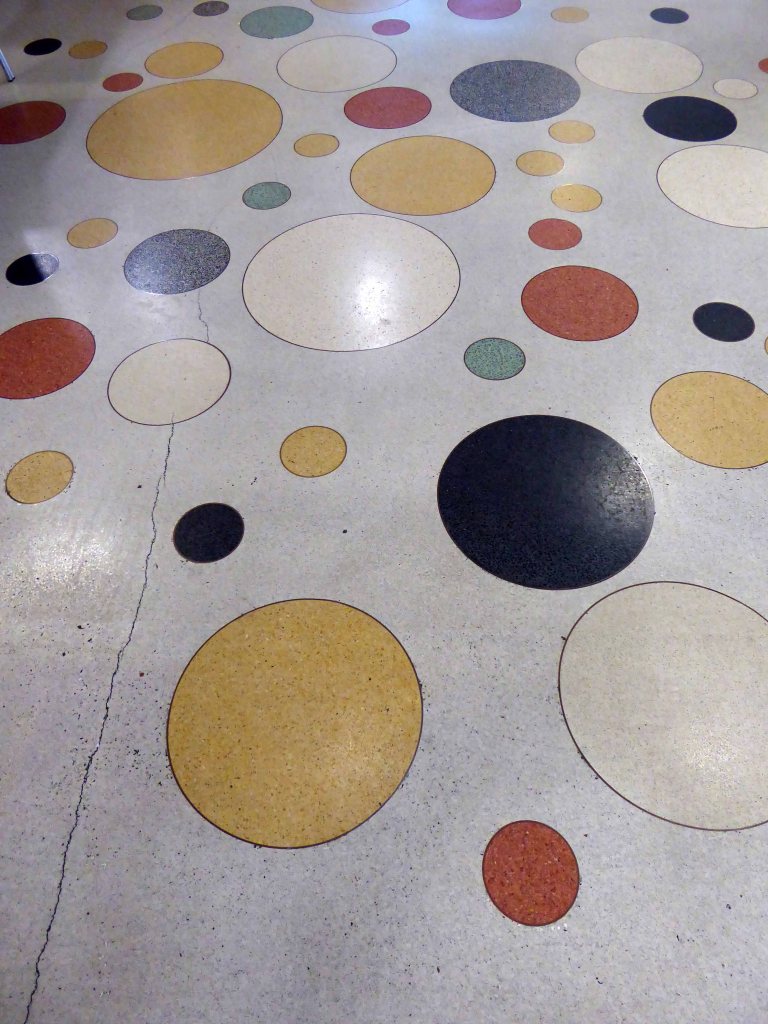
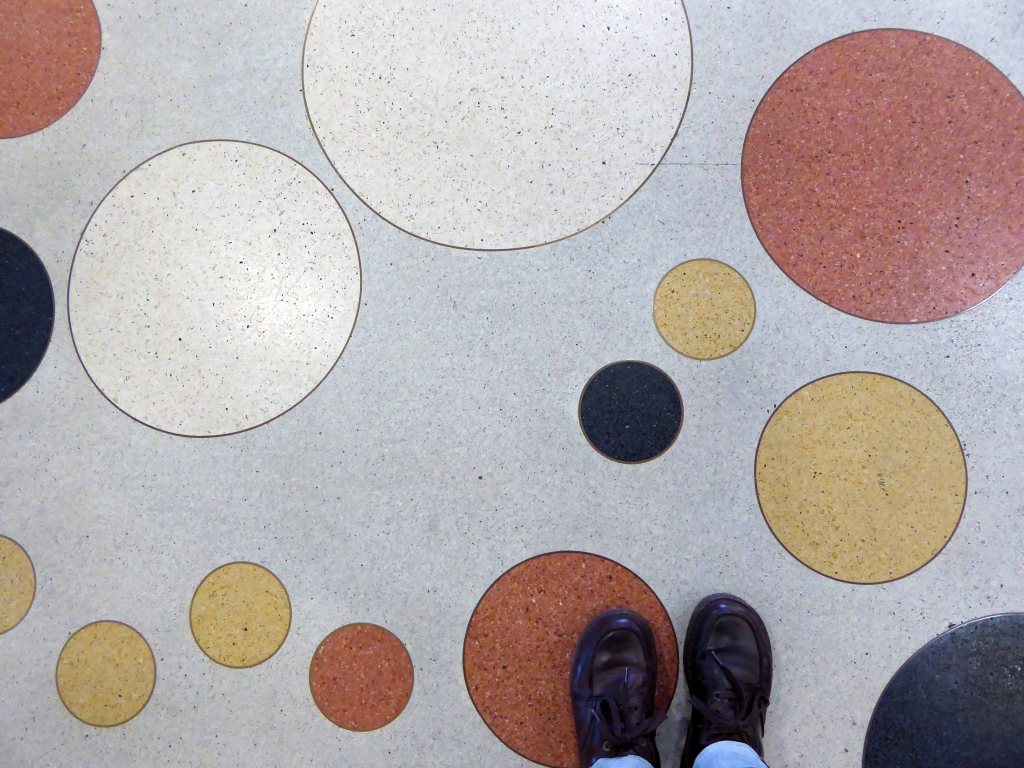
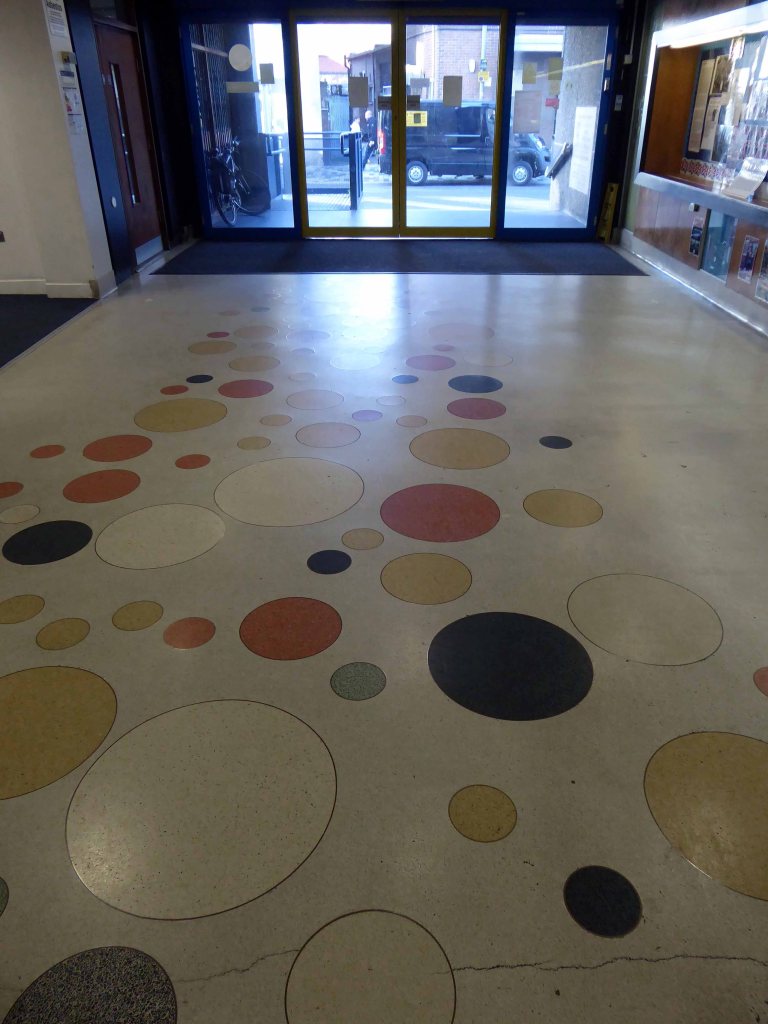
Once inside, what a pleasure it is tread upon this interstellar inset stone flooring.

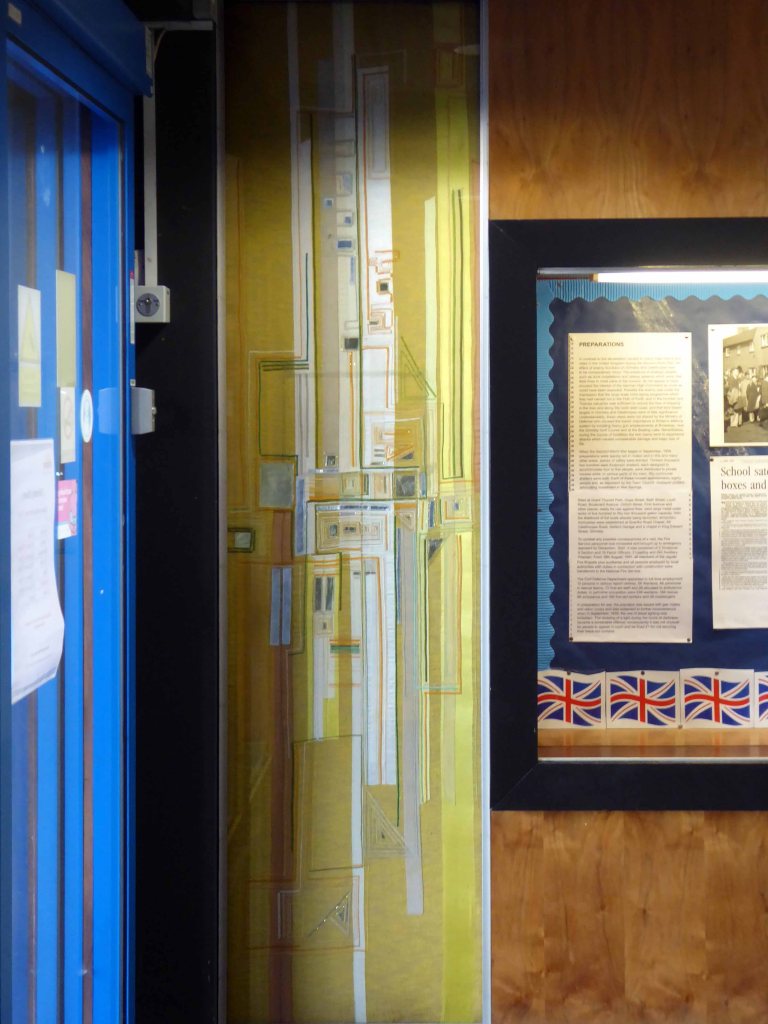
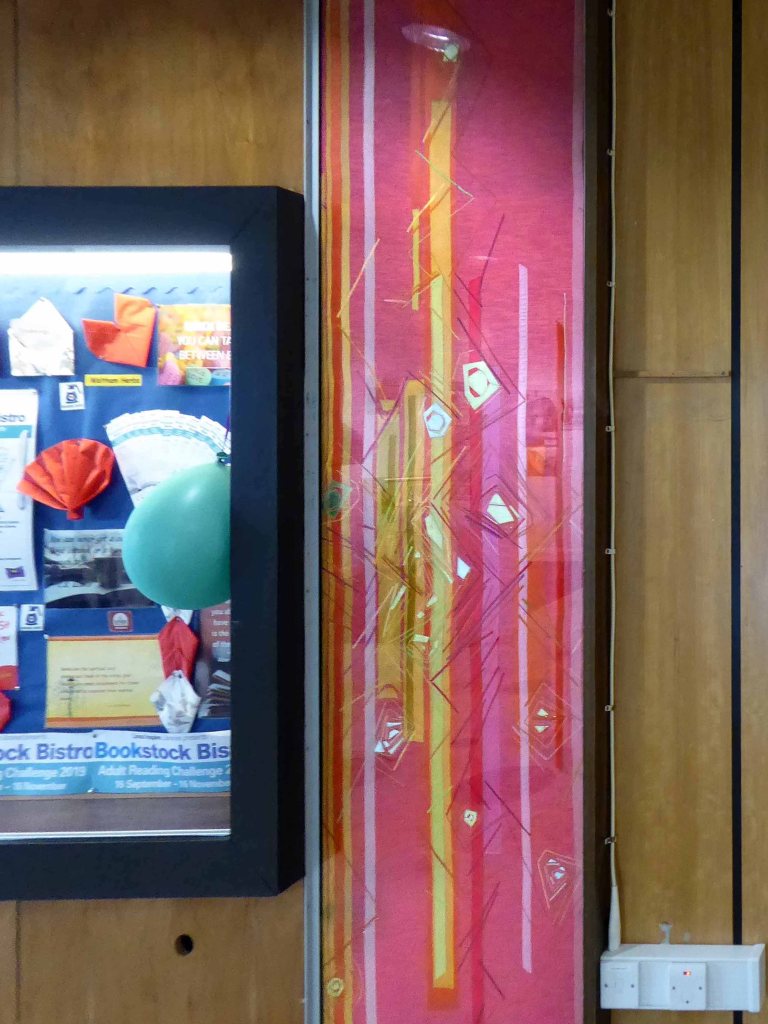
Either side of the lobby display case there are two vertical tapestries.

Along with a further plaque commemorating the opening on the 3rd September 1968 – by the then local MP Anthony Crosland.

Crosland looked ahead to a time where “personal freedom, happiness and cultural endeavour; the cultivation of leisure, beauty, grace, gaiety and excitement… might be pursued.” After he was elected MP for Grimsby in 1959, he referred to the above passage in an early speech, insisting – to much laughter, cheering and applause from the audience, that “it is possible to achieve all these things in Grimsby, and especially at Blundell Park.”

May I take this opportunity to thank the ever so helpful library staff – for kindly granting me permission to photograph the main body of the library.

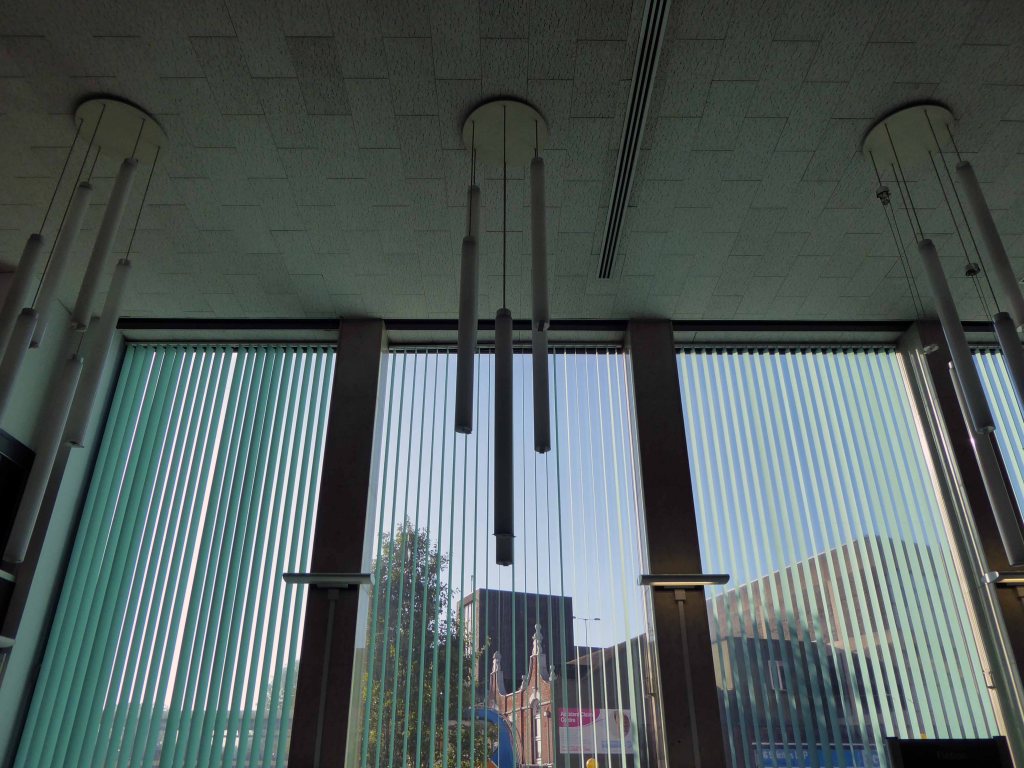
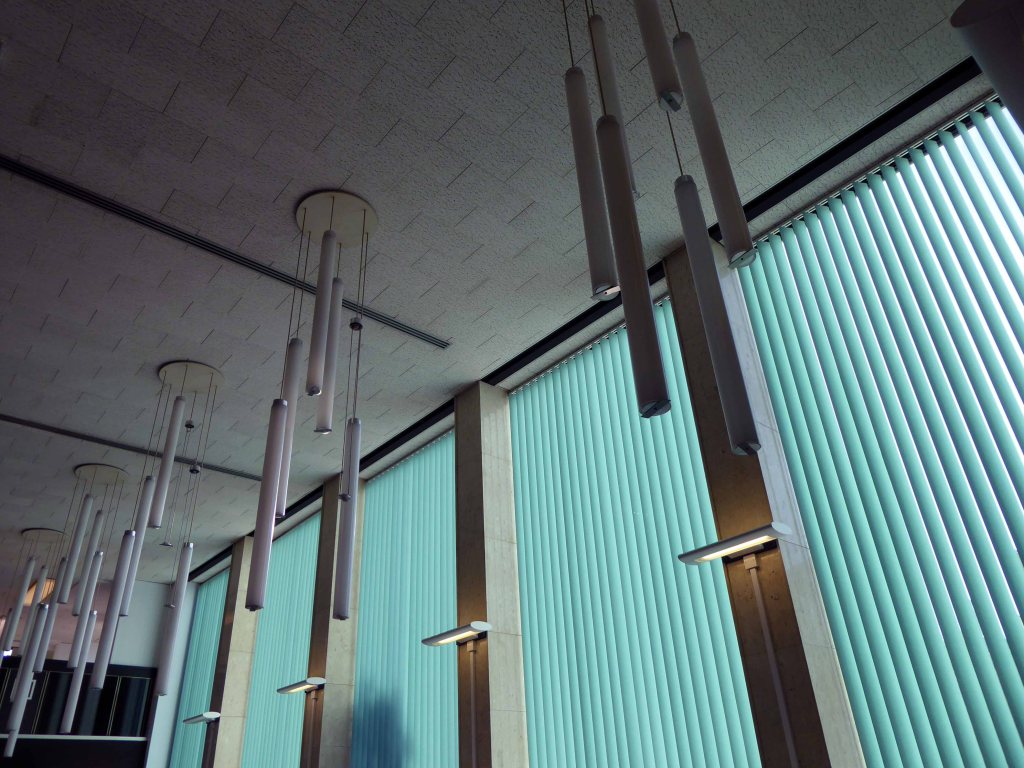
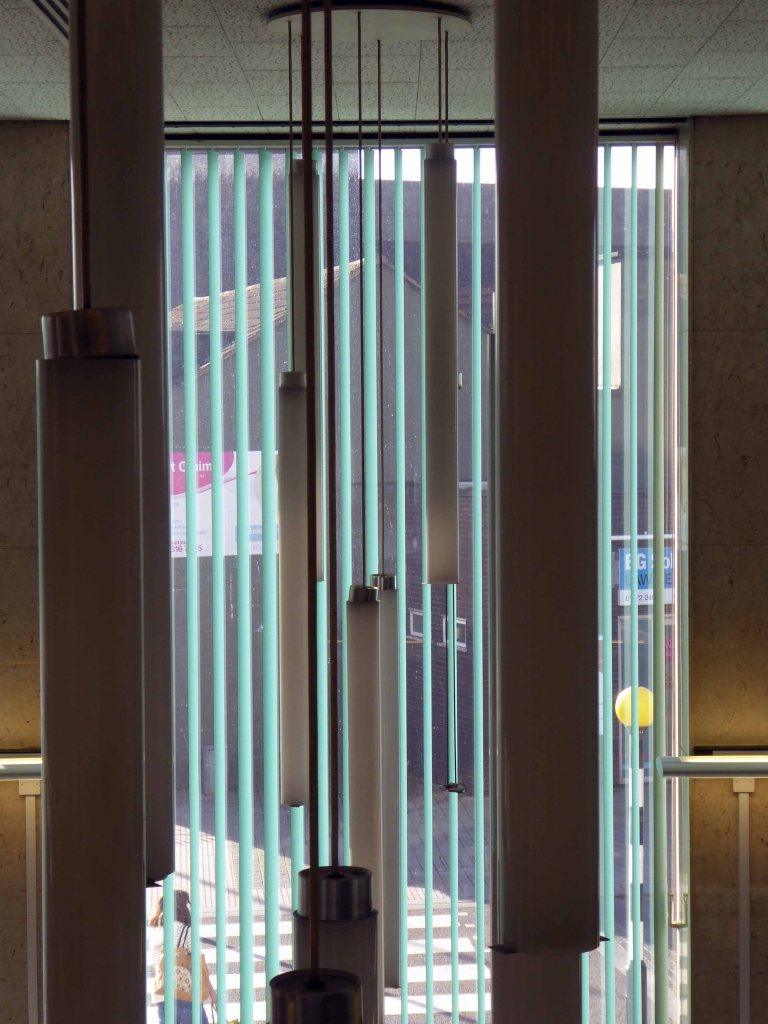
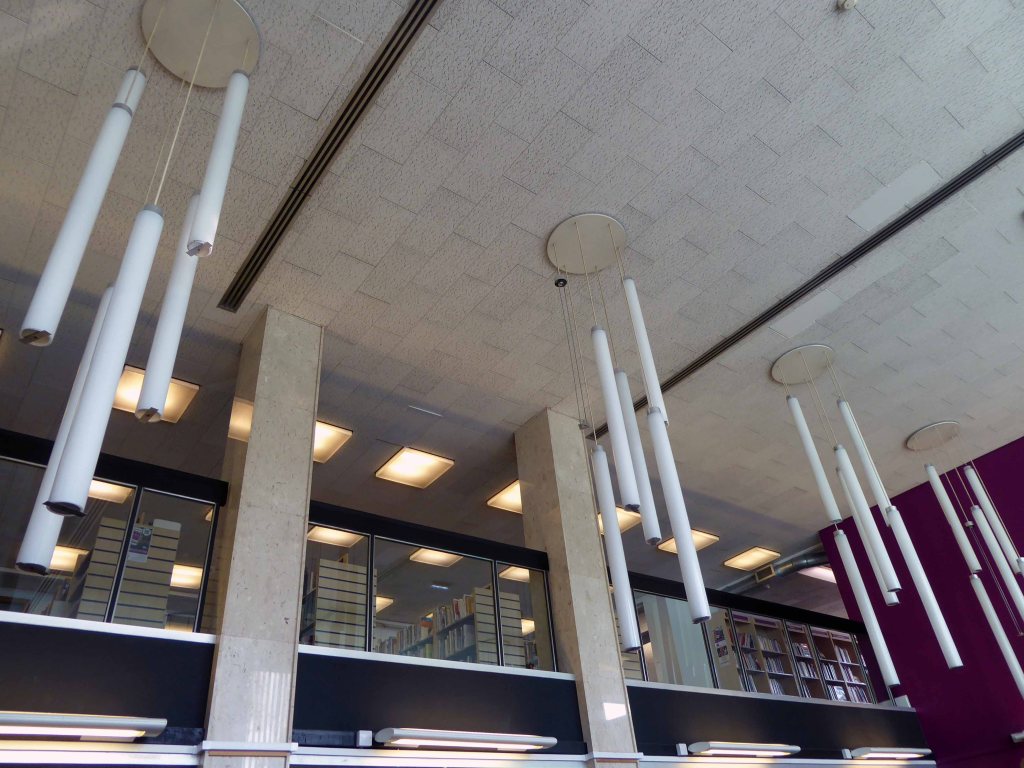
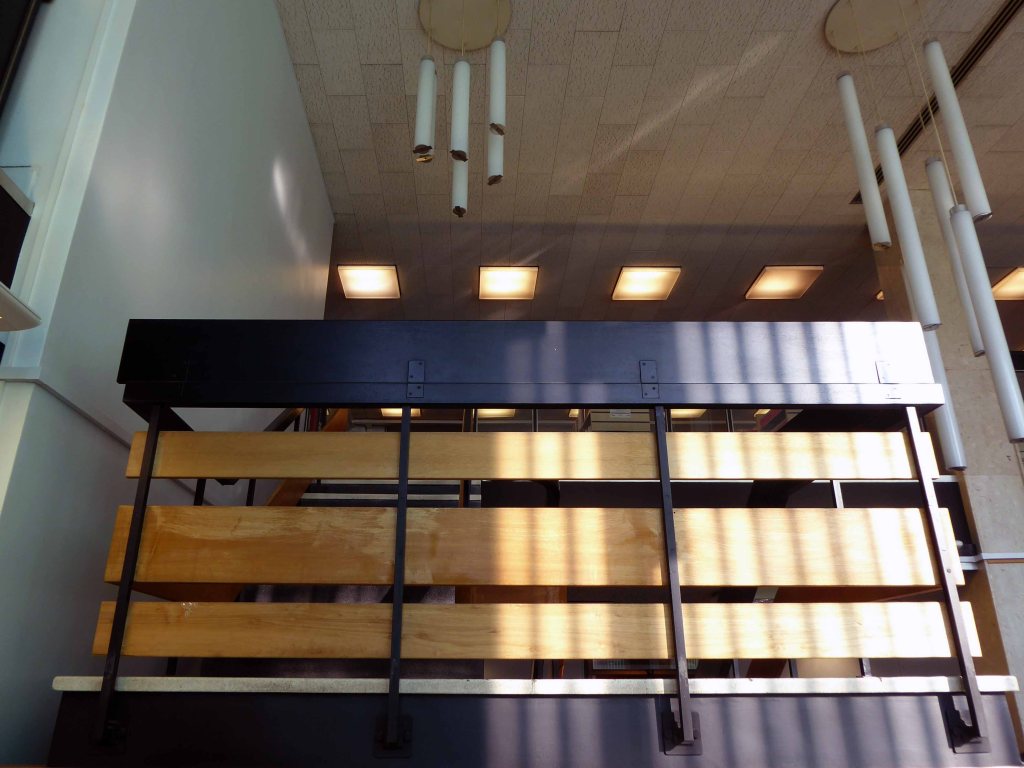
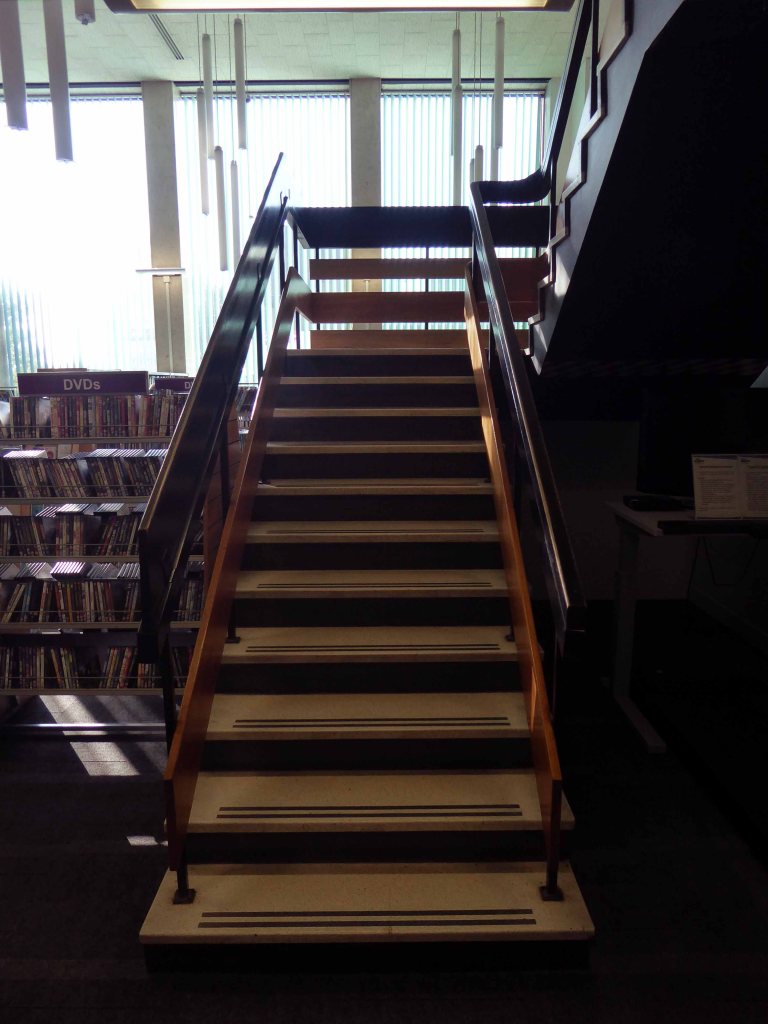
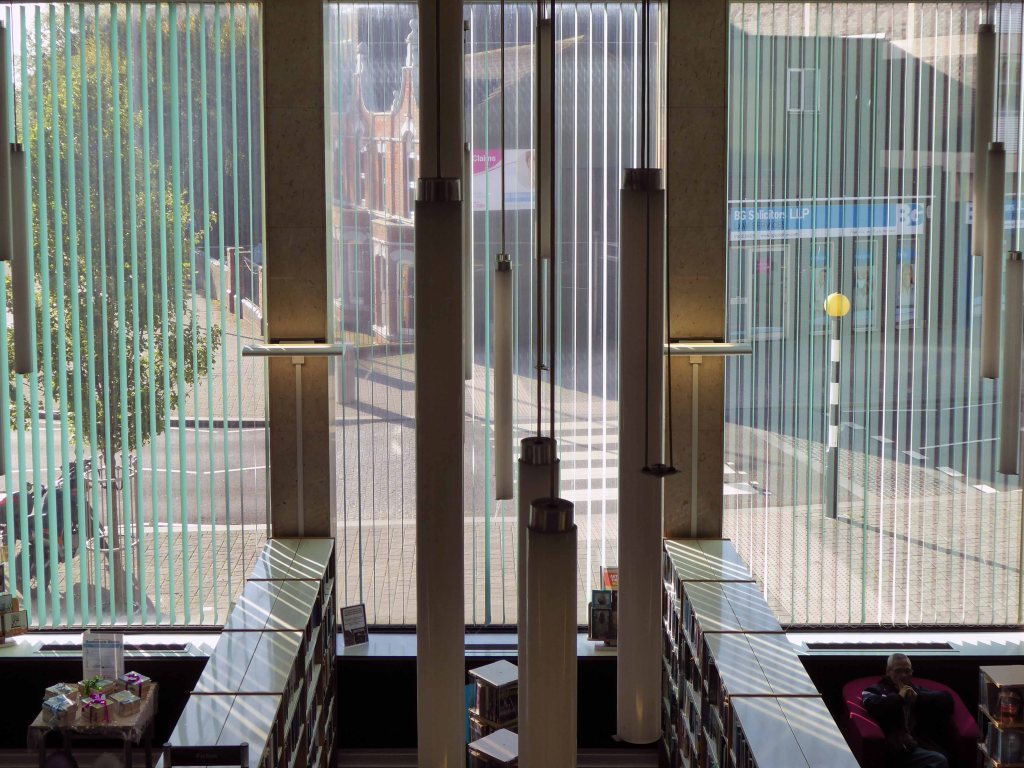
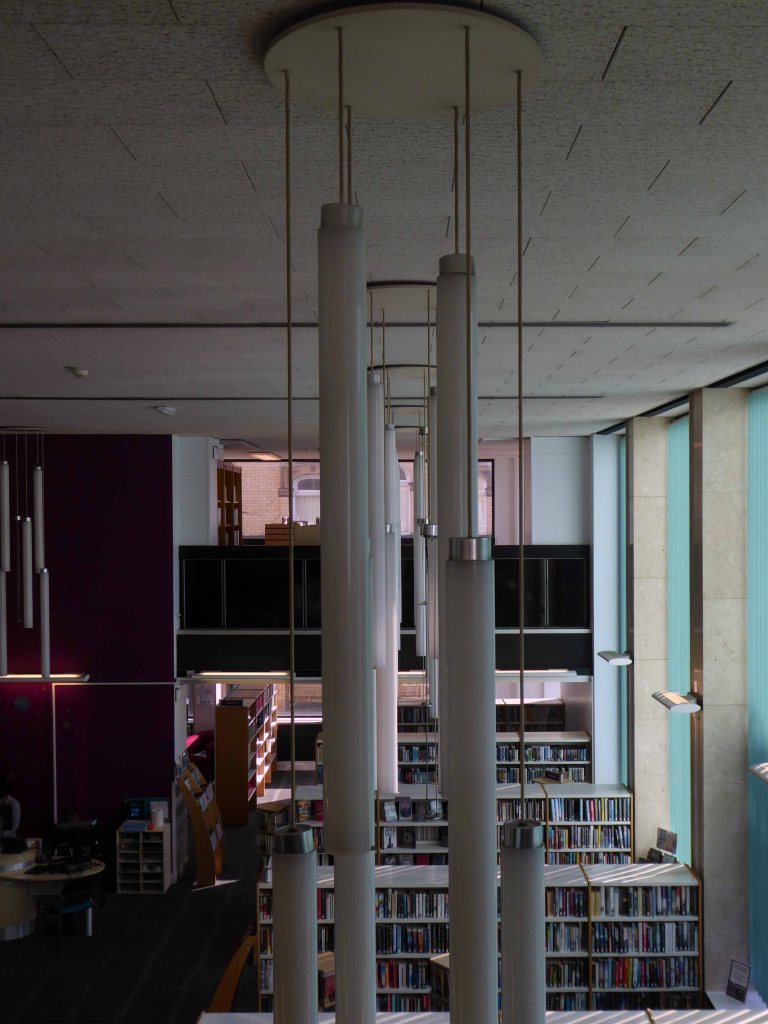
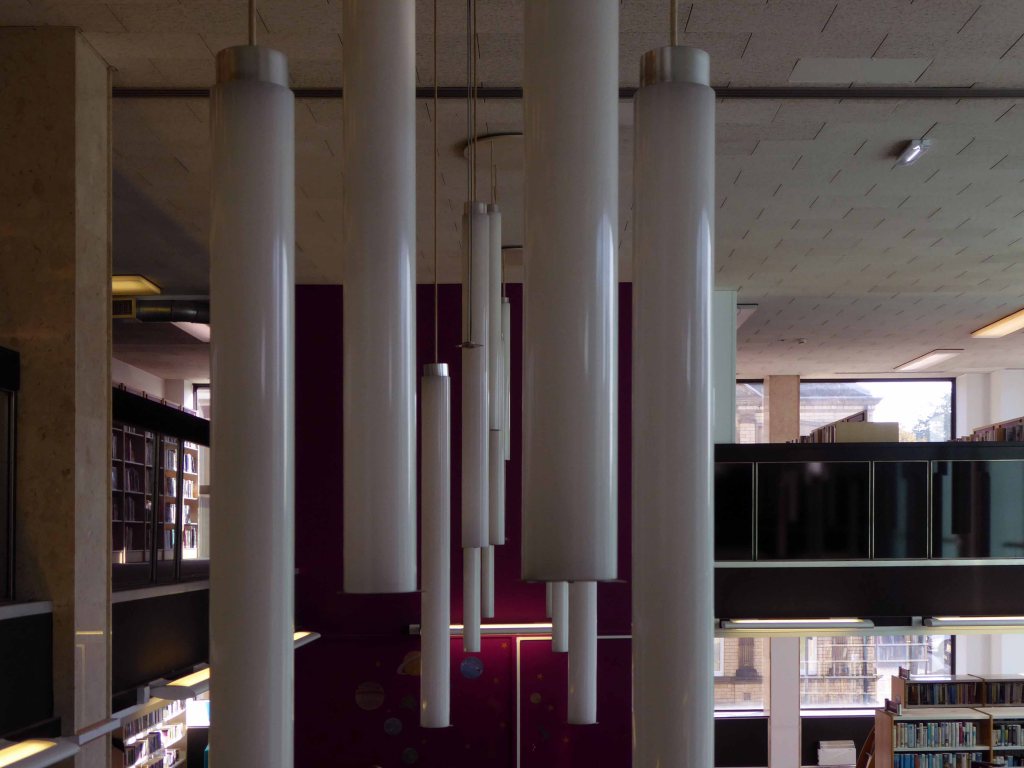
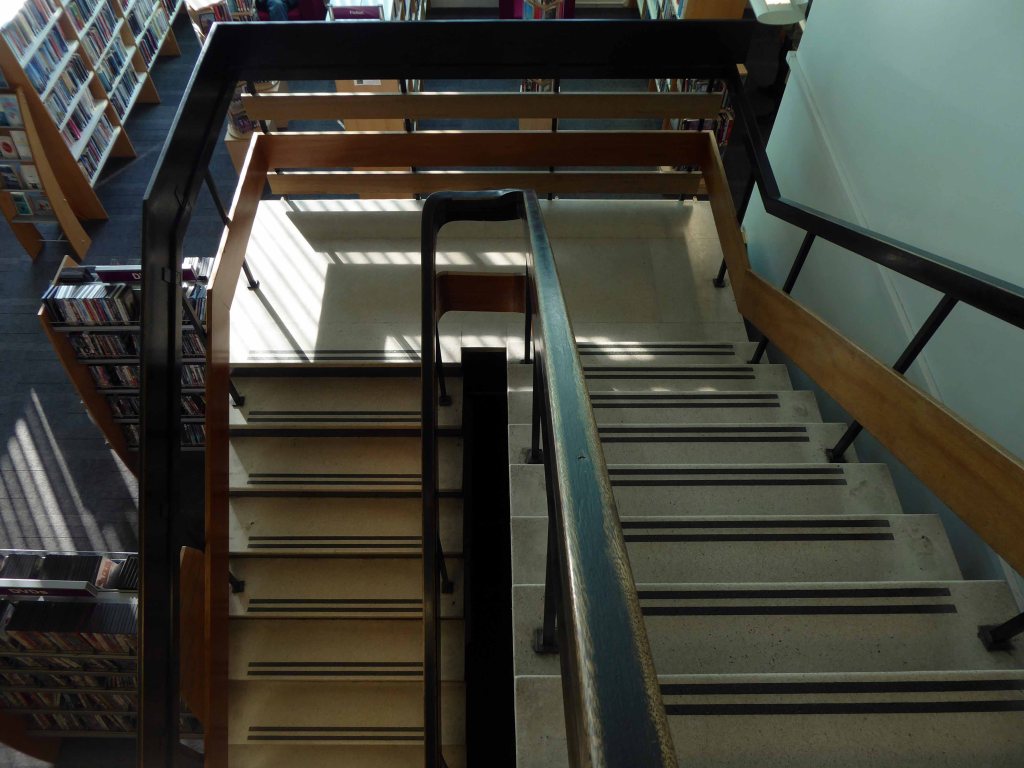
Many original fittings and fixtures are intact – particularly the distinctive vertical suspended lighting system and the steel and wood stairways.

The facilities were well used and lit by the expansive window space.

Let’s take another final look outside, and say a fond farewell to this fine building – go on treat yourself, take a trip to the East Coast and feast your eyes, heart and mind on this beauty.

Ta-ra Grimsby!

I’ll be back real soon.

Abbey Walk Car Park – Grimsby

I was in town, just looking around, just looking for modernity, just looking.

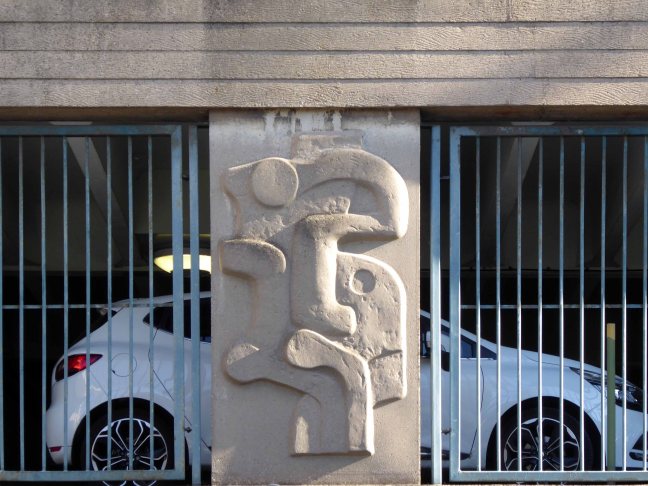
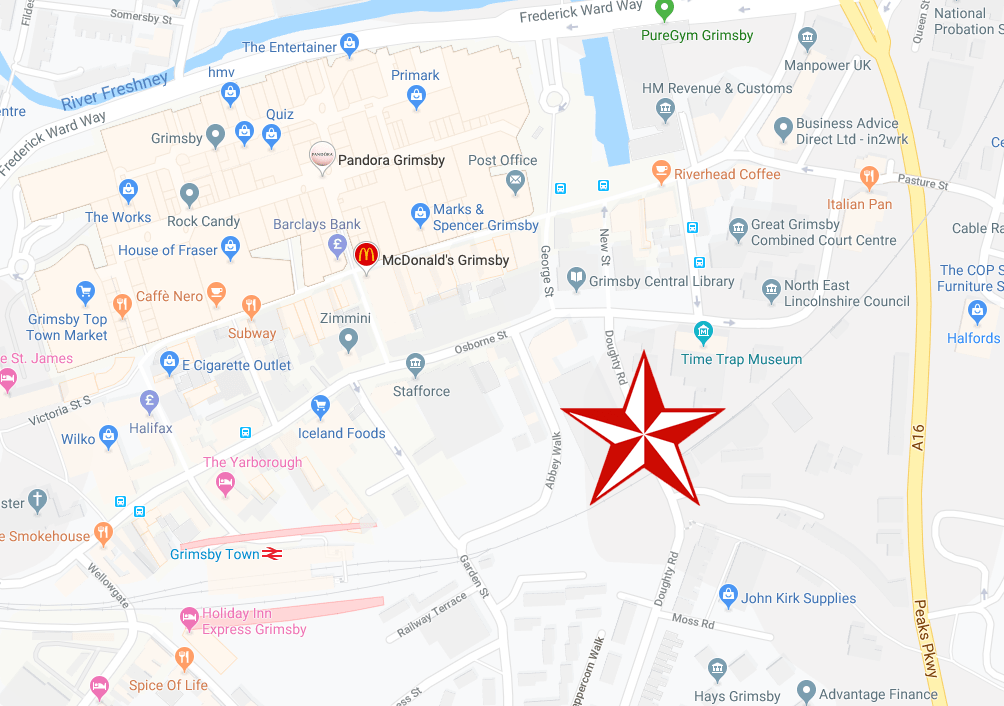
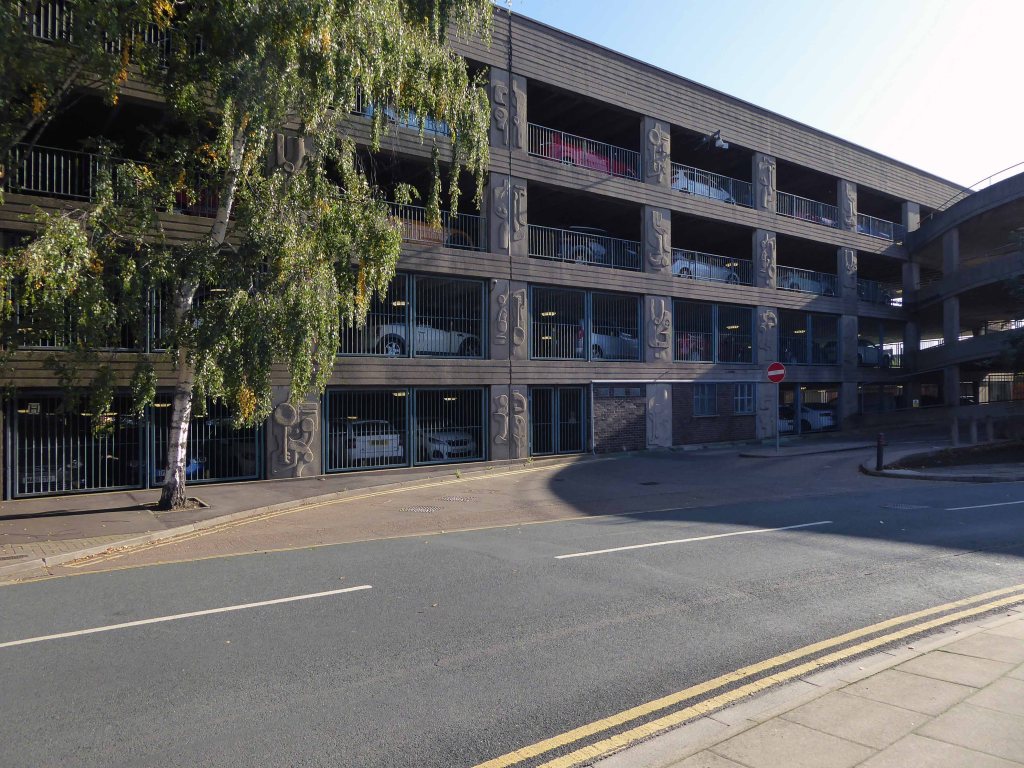
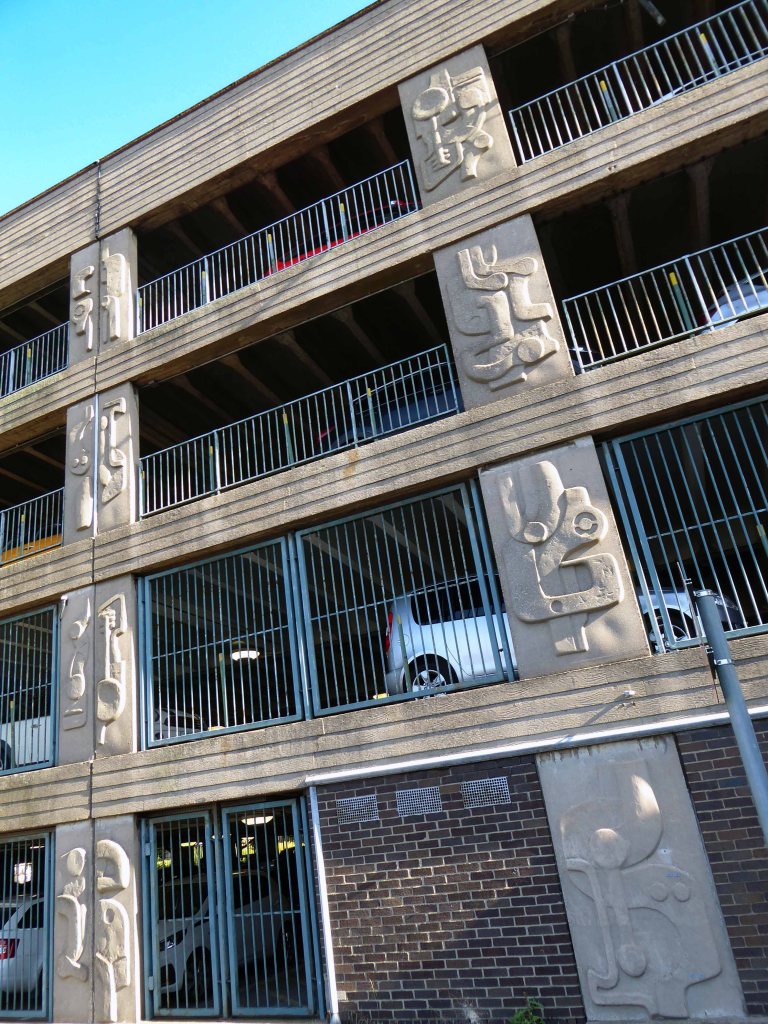
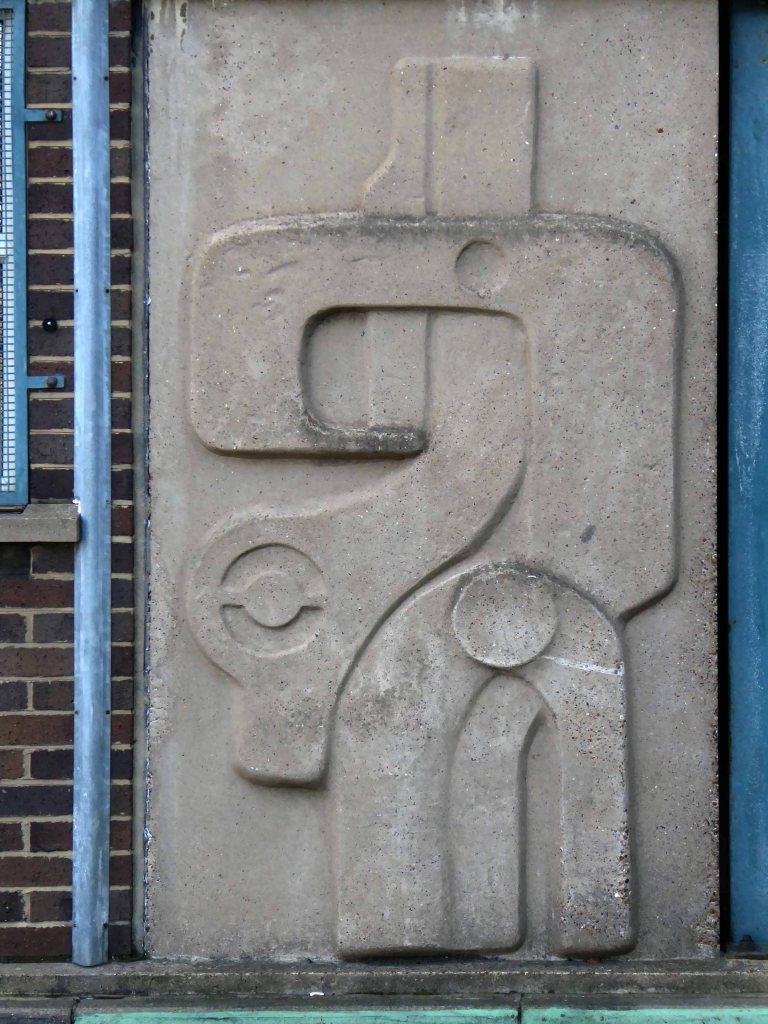
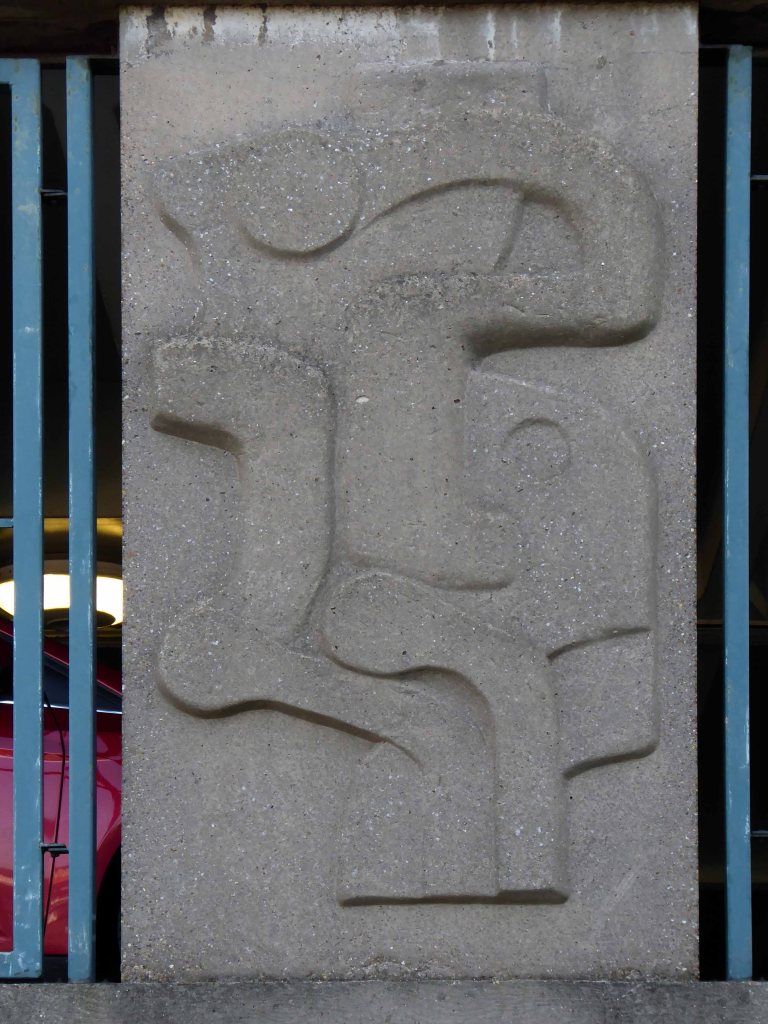
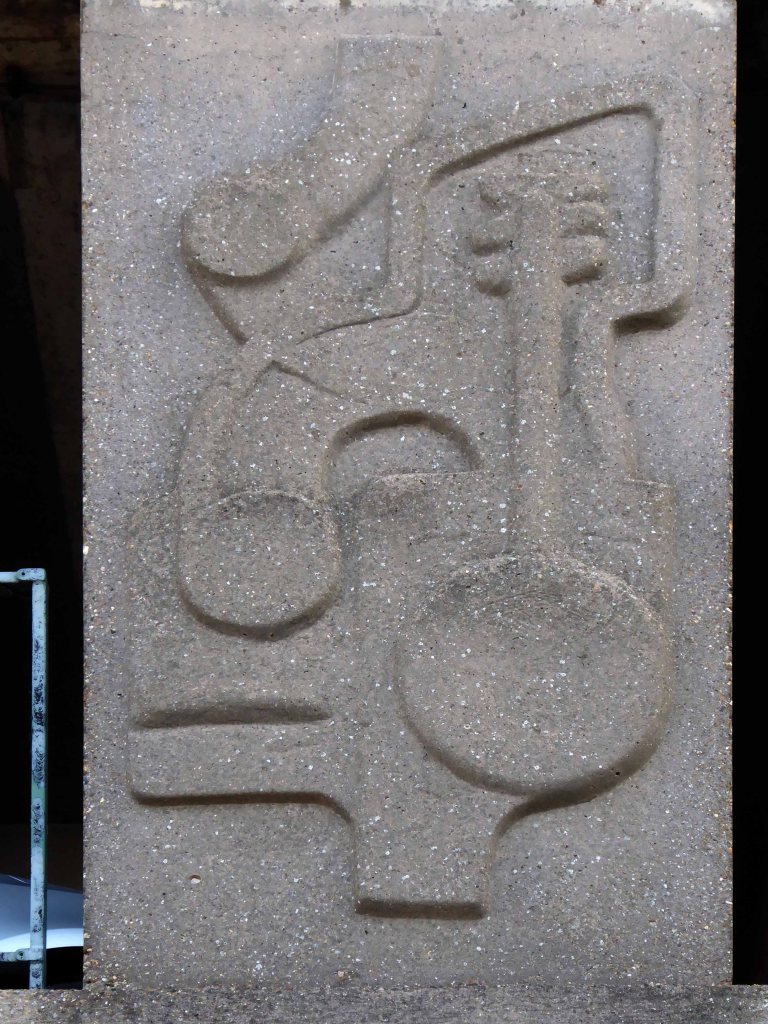
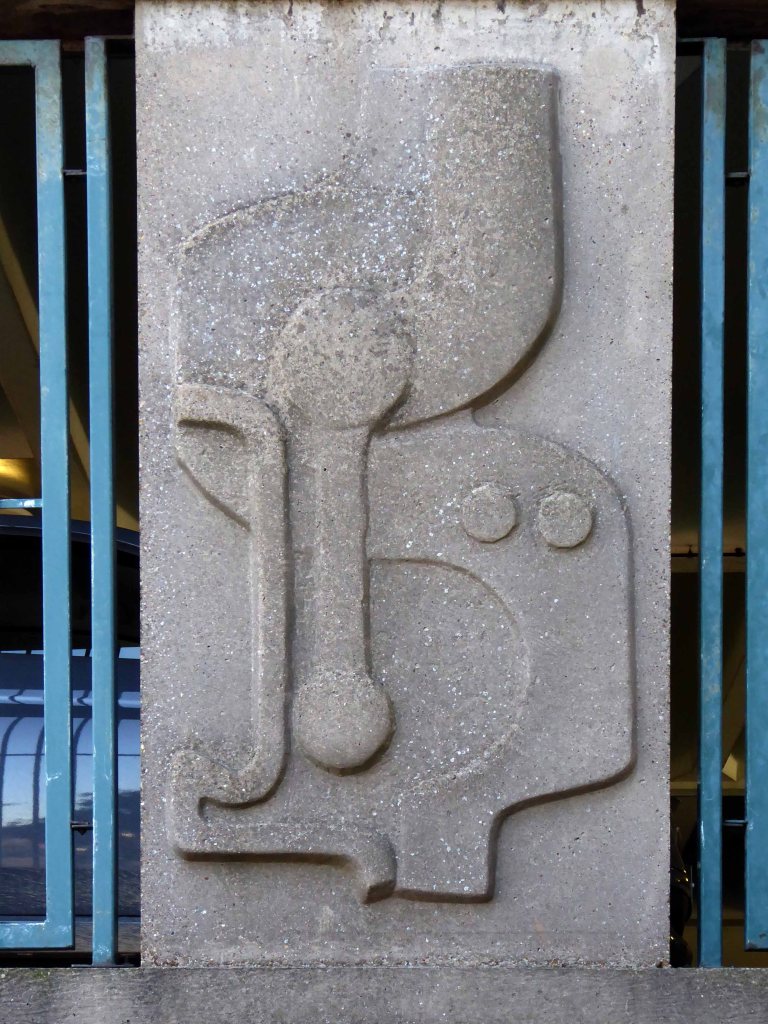
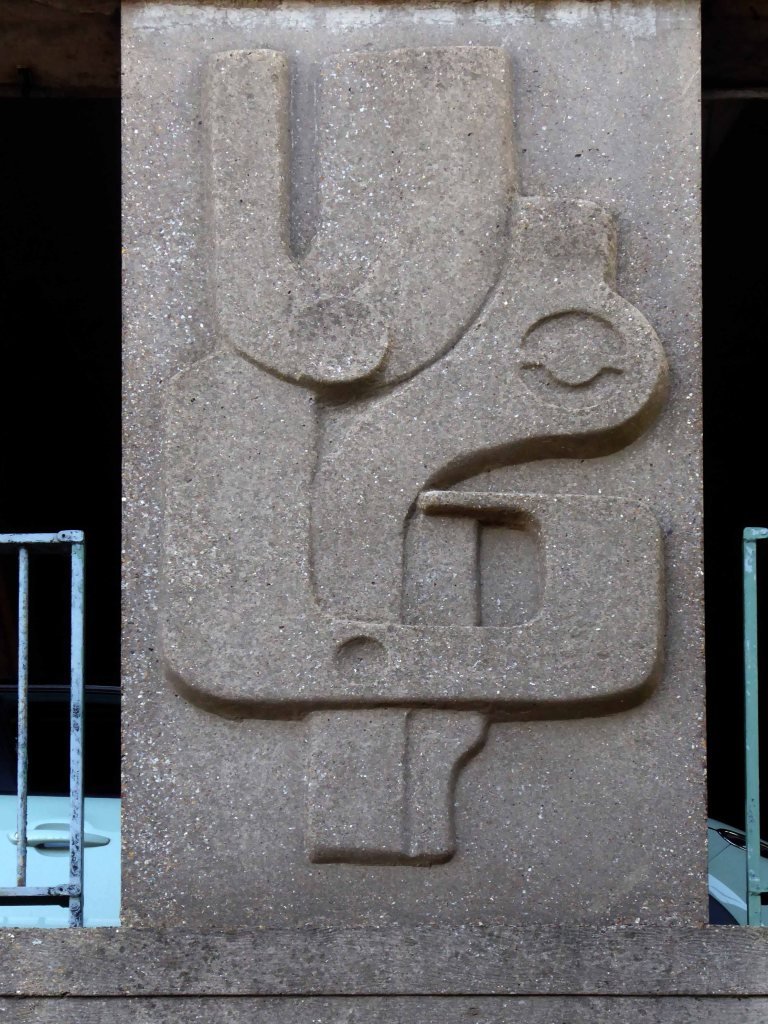
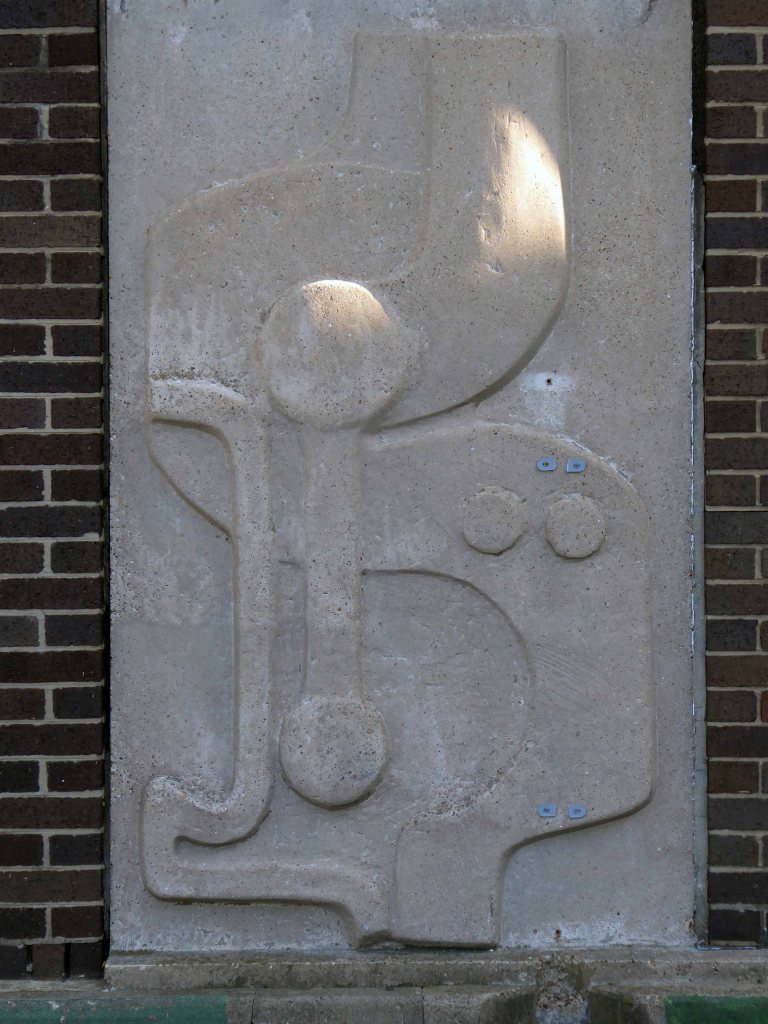
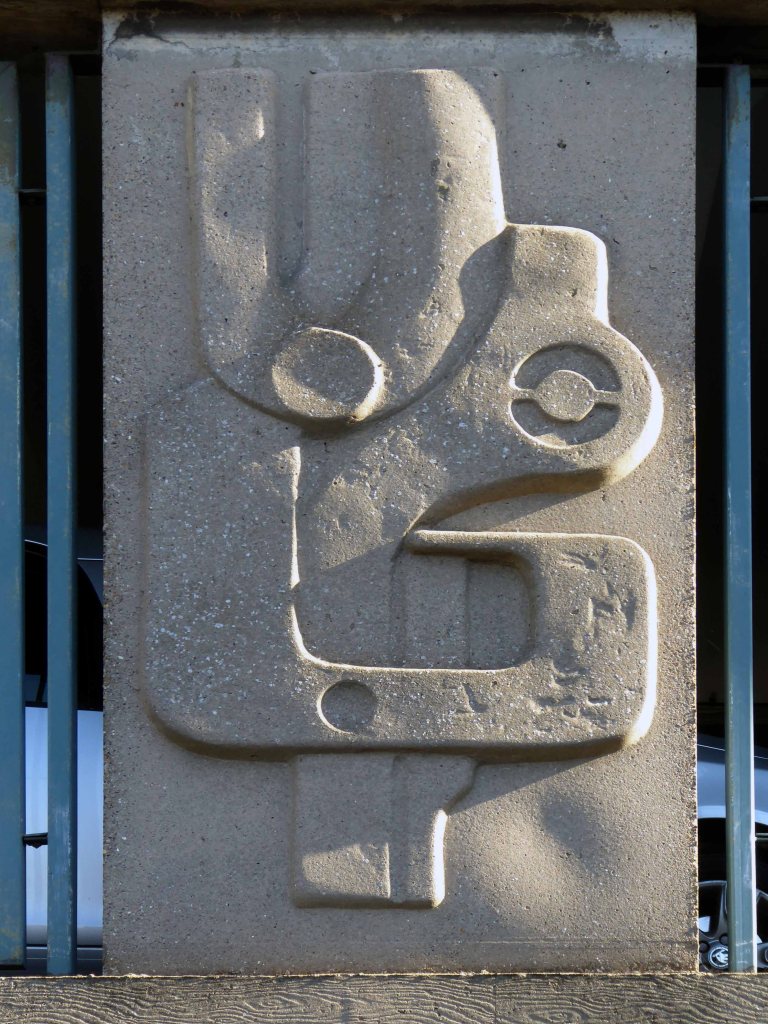
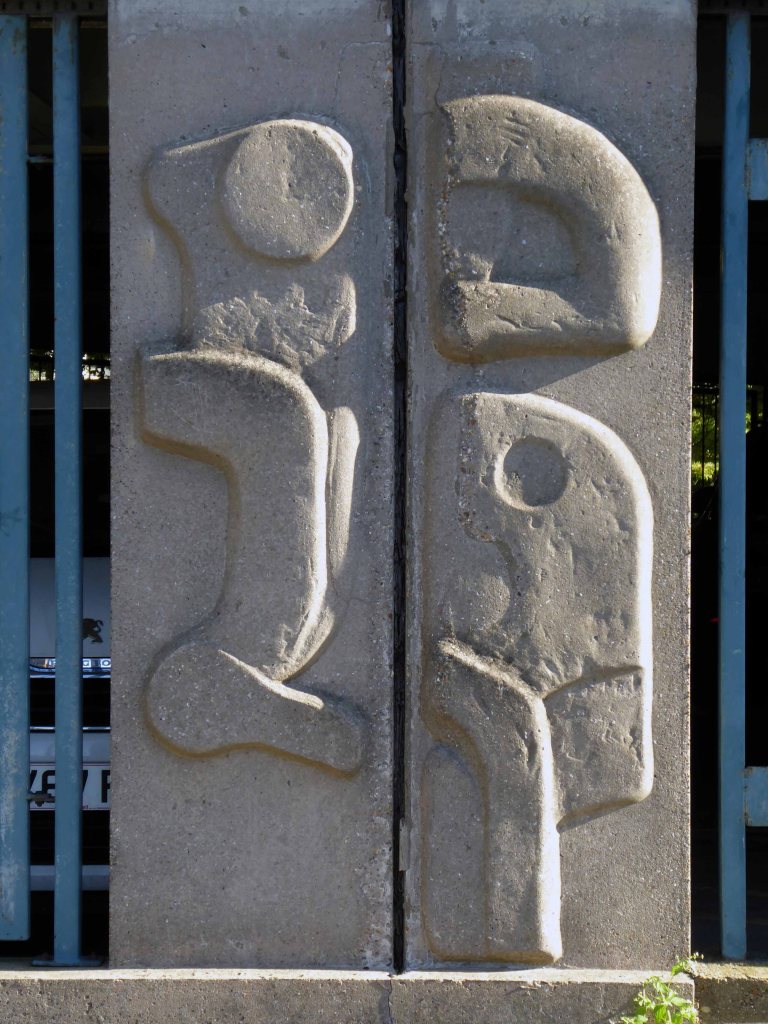
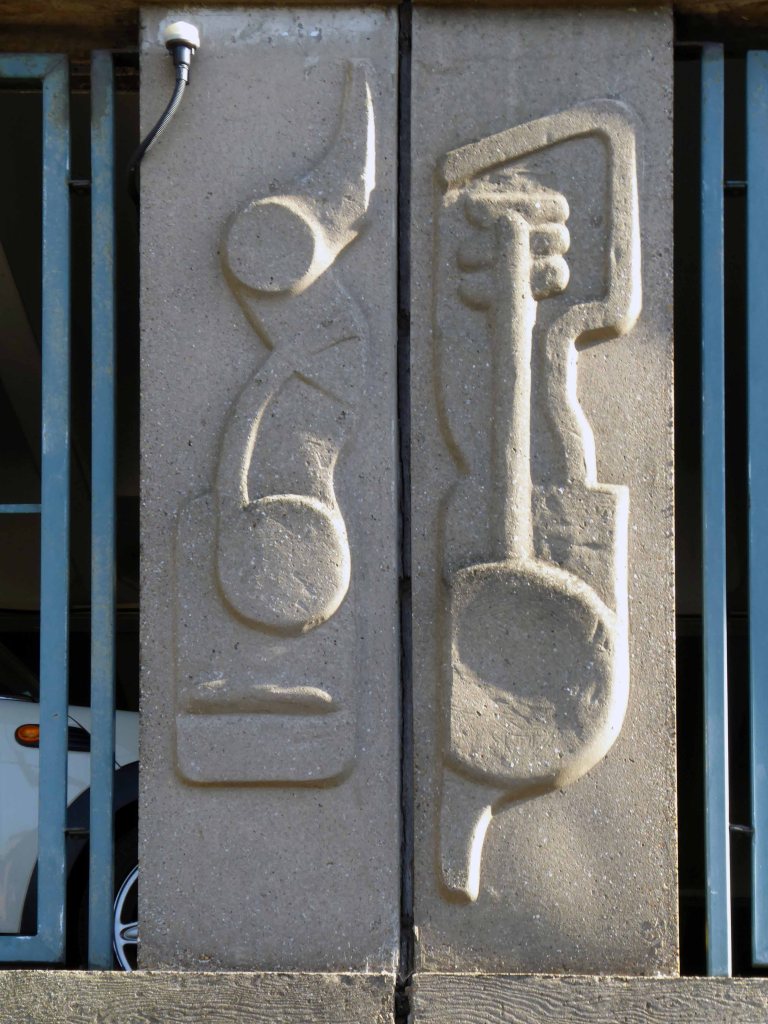
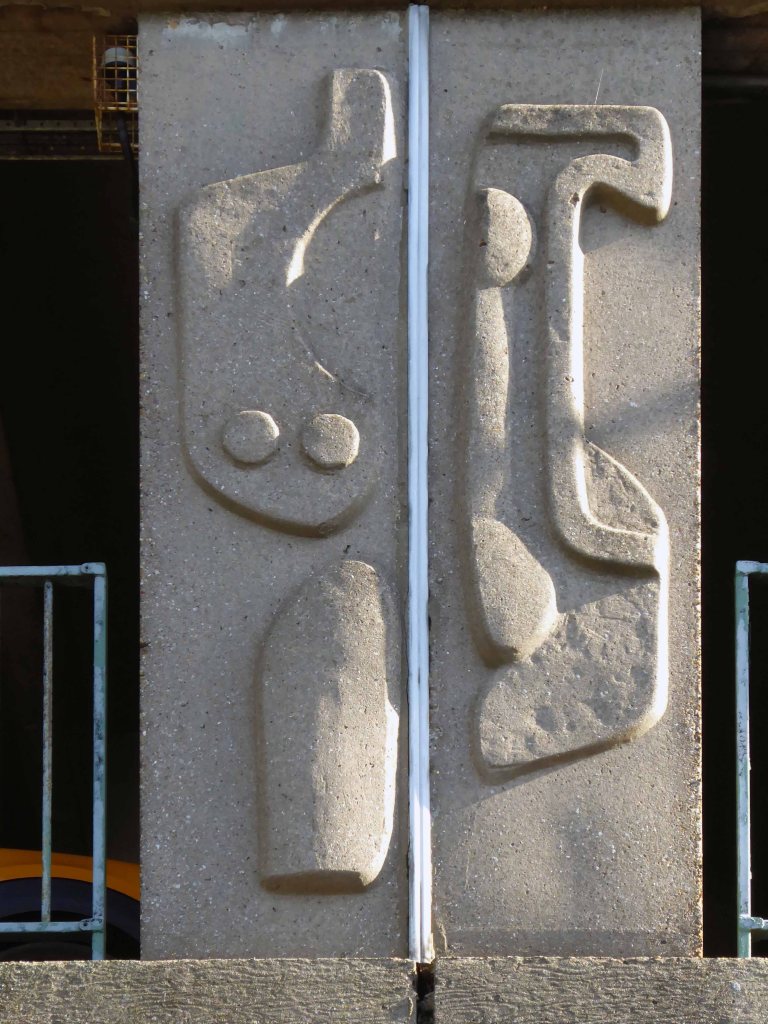
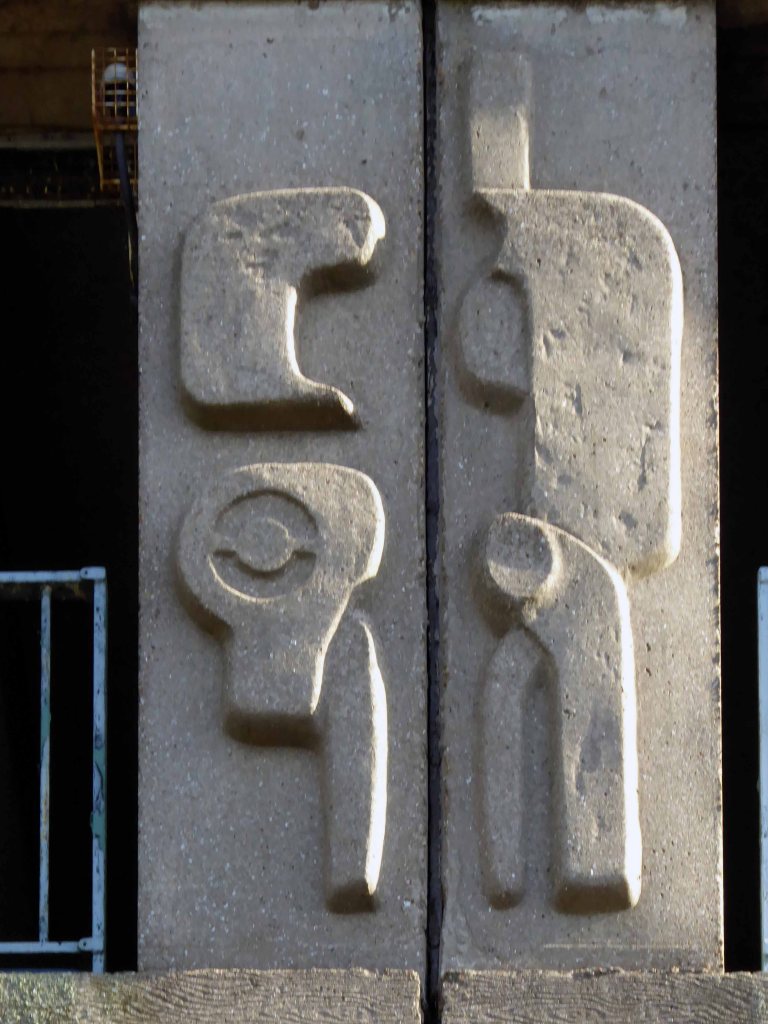
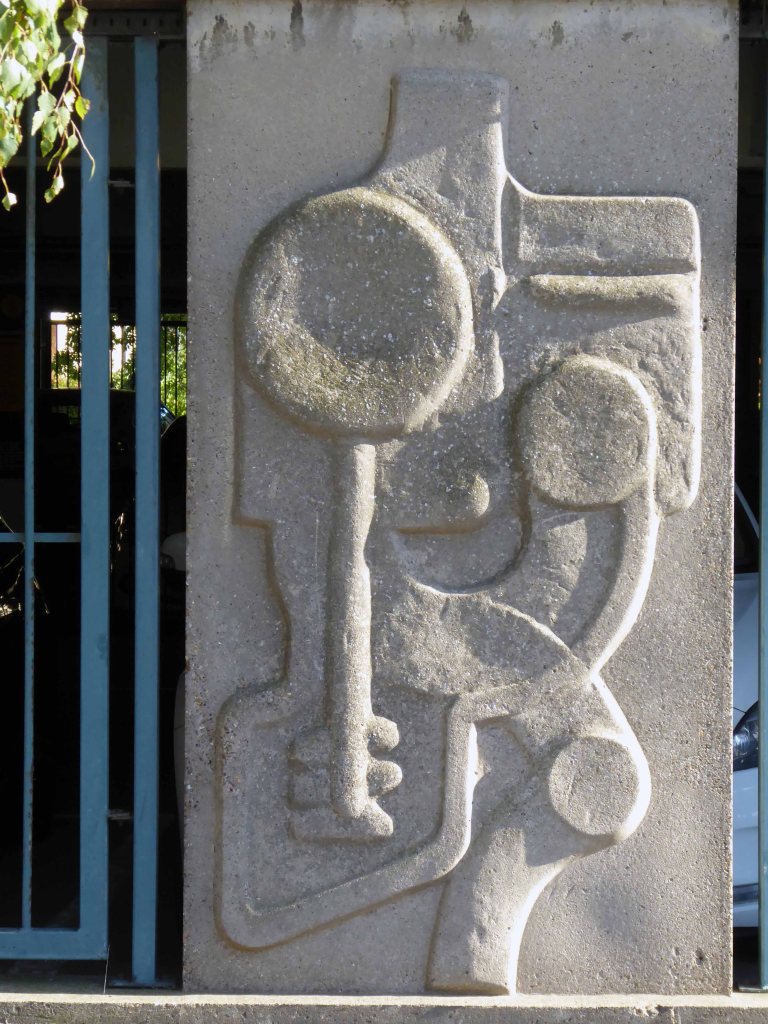
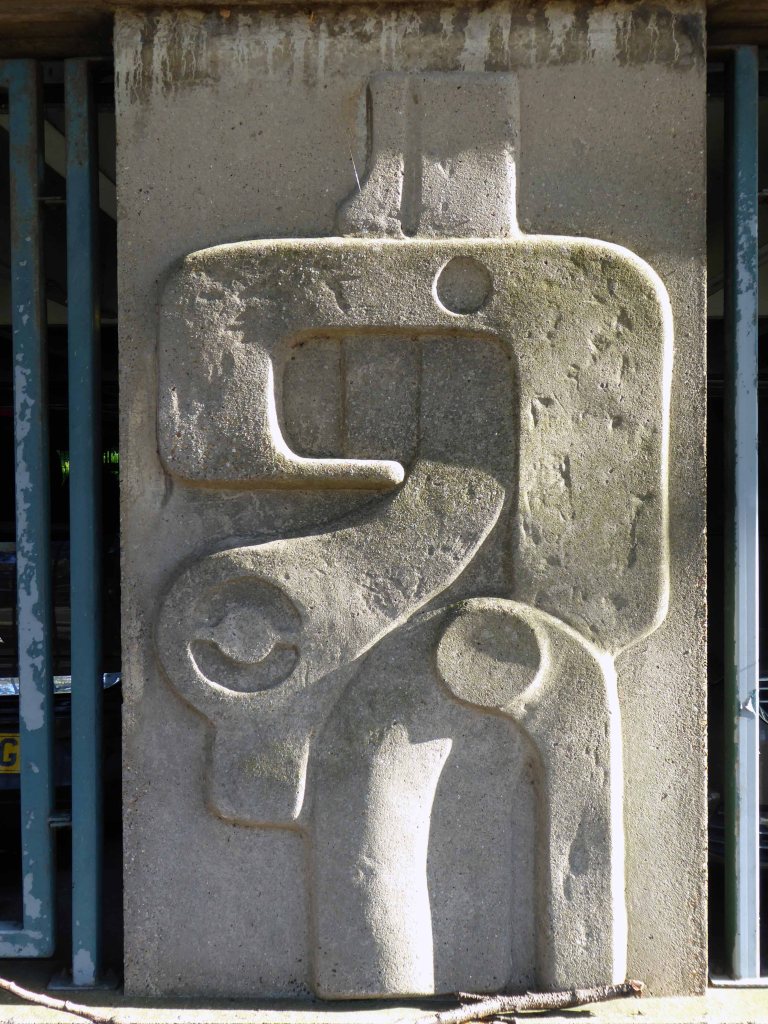
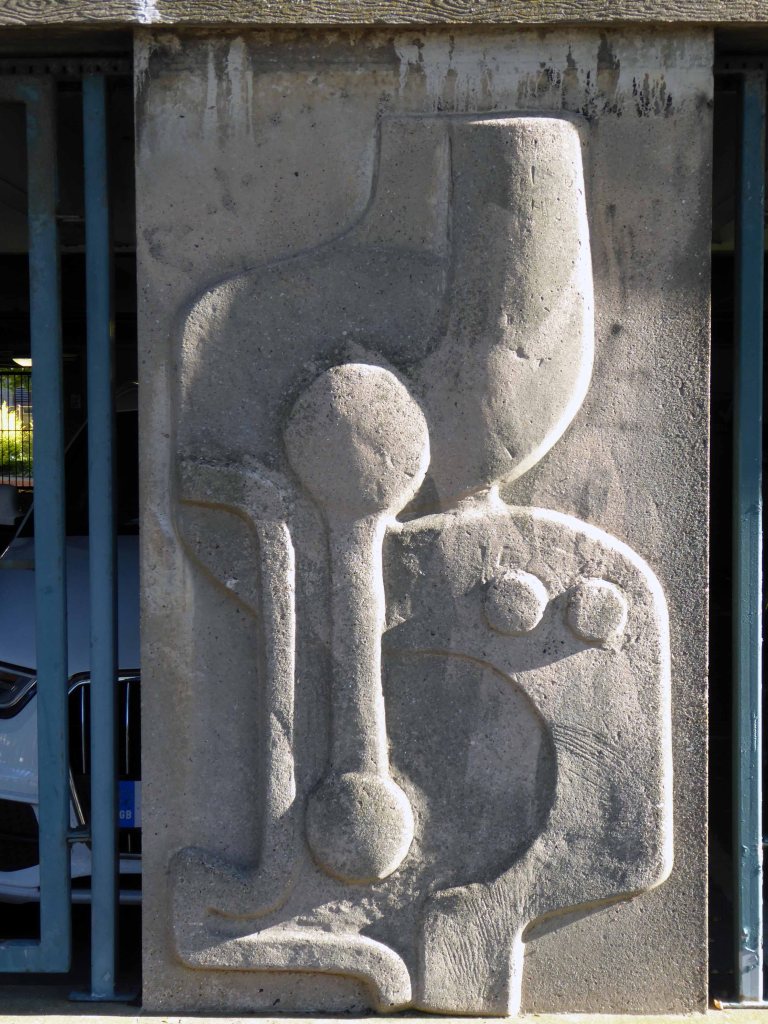
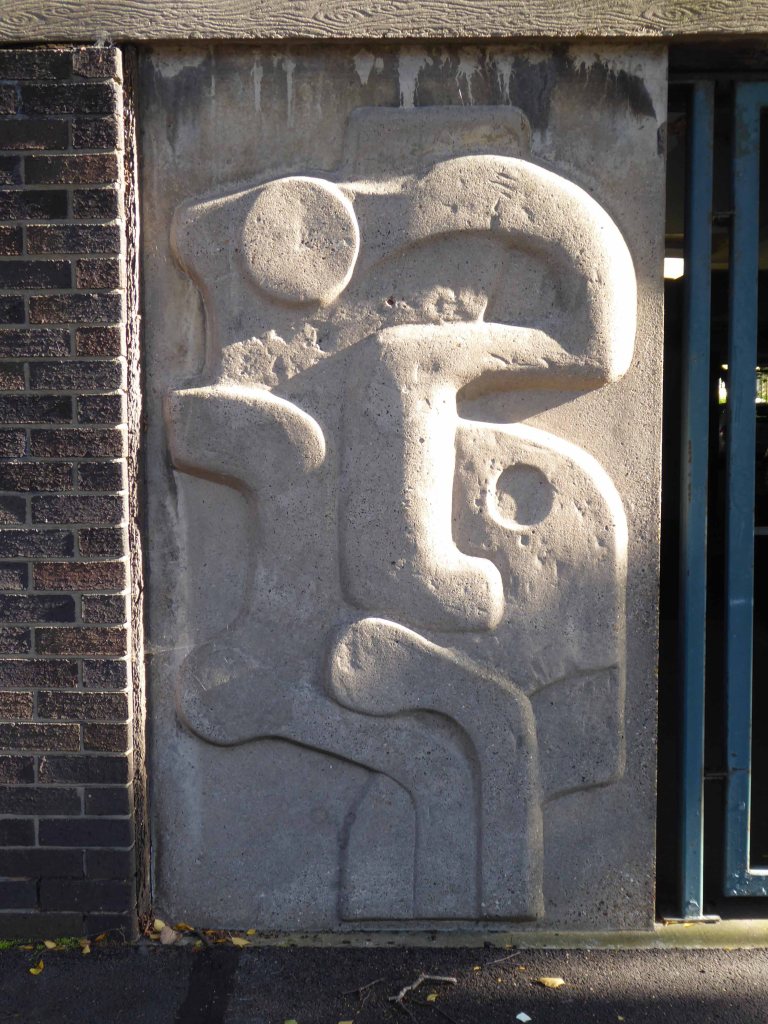
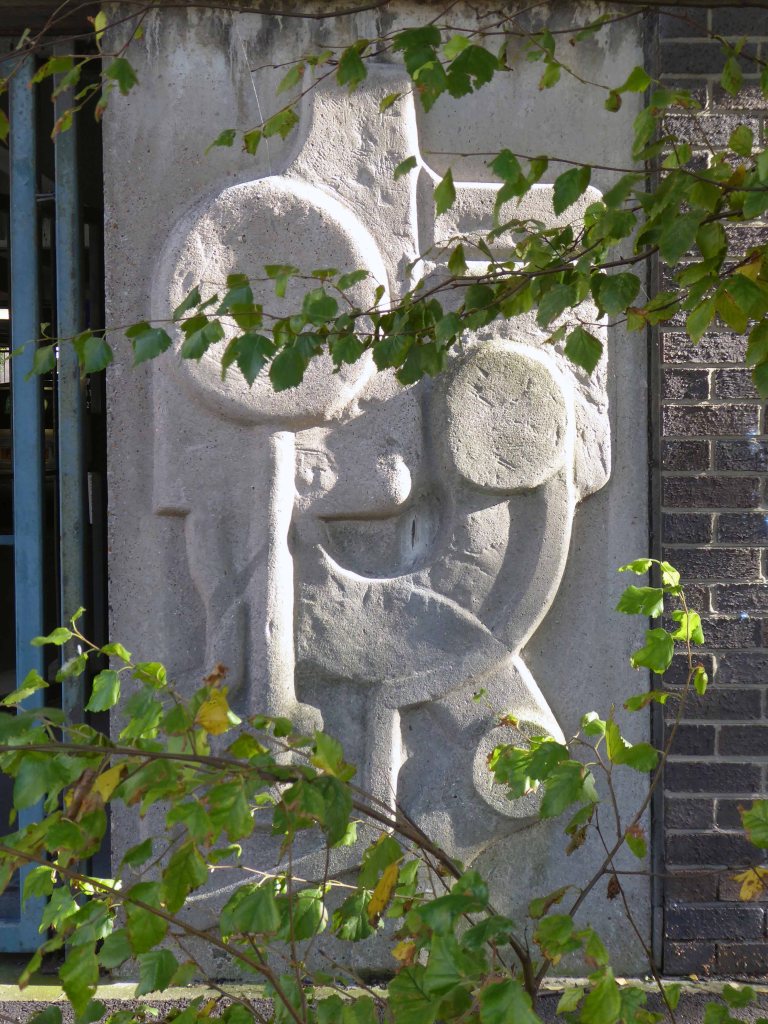
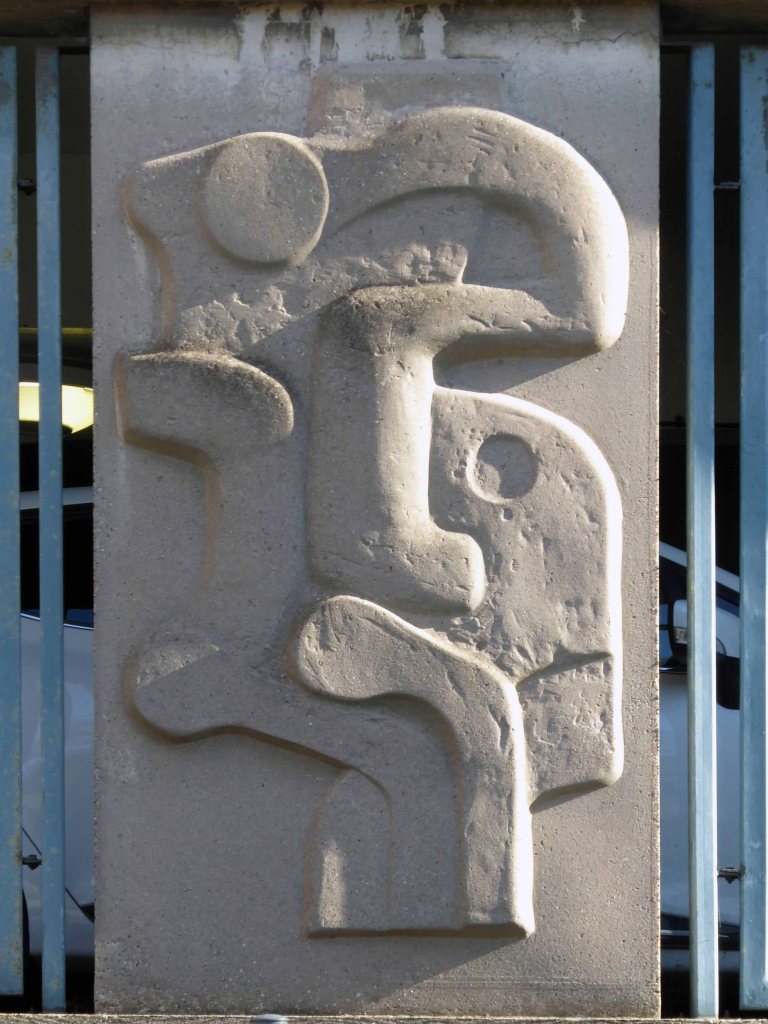
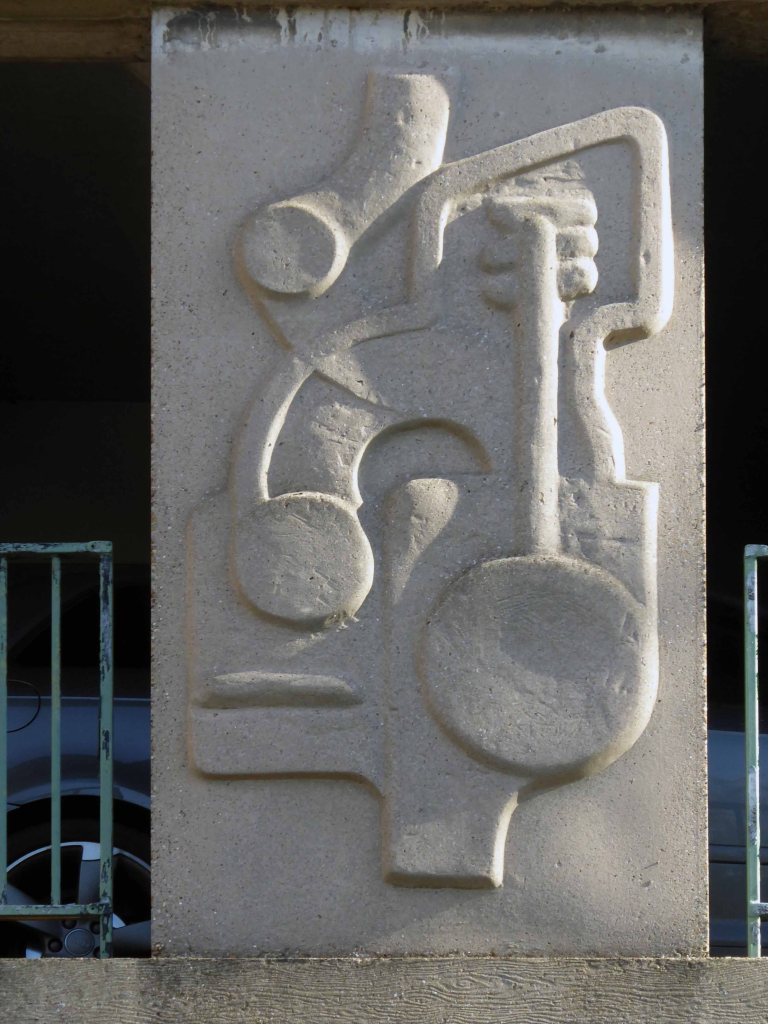
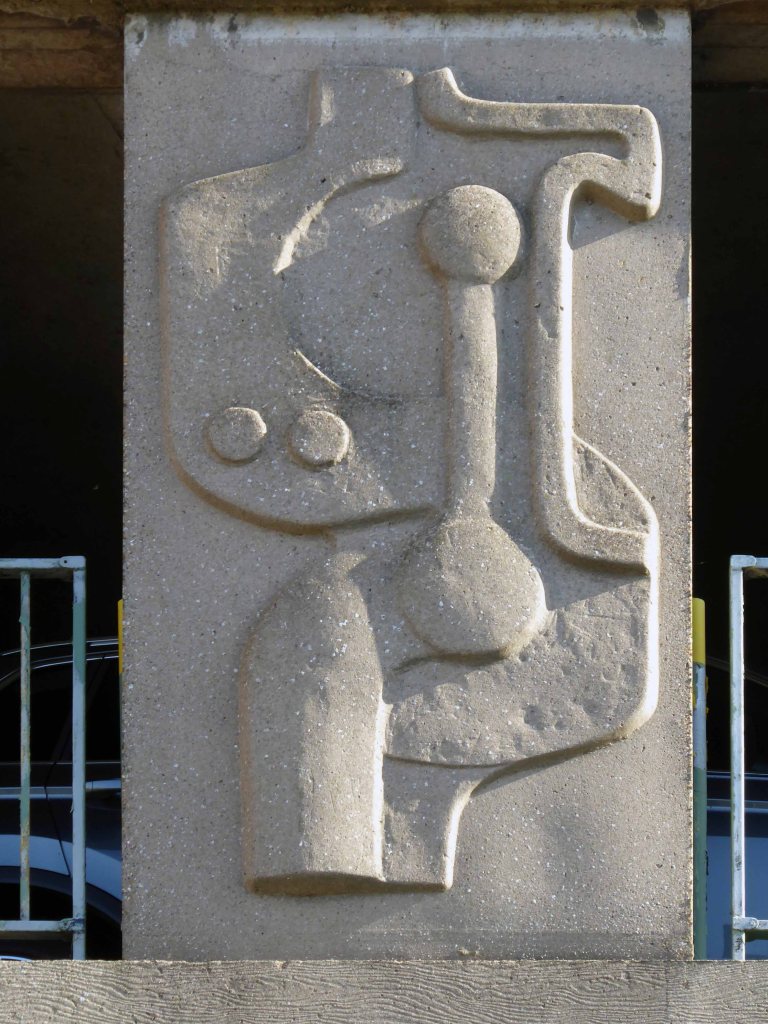
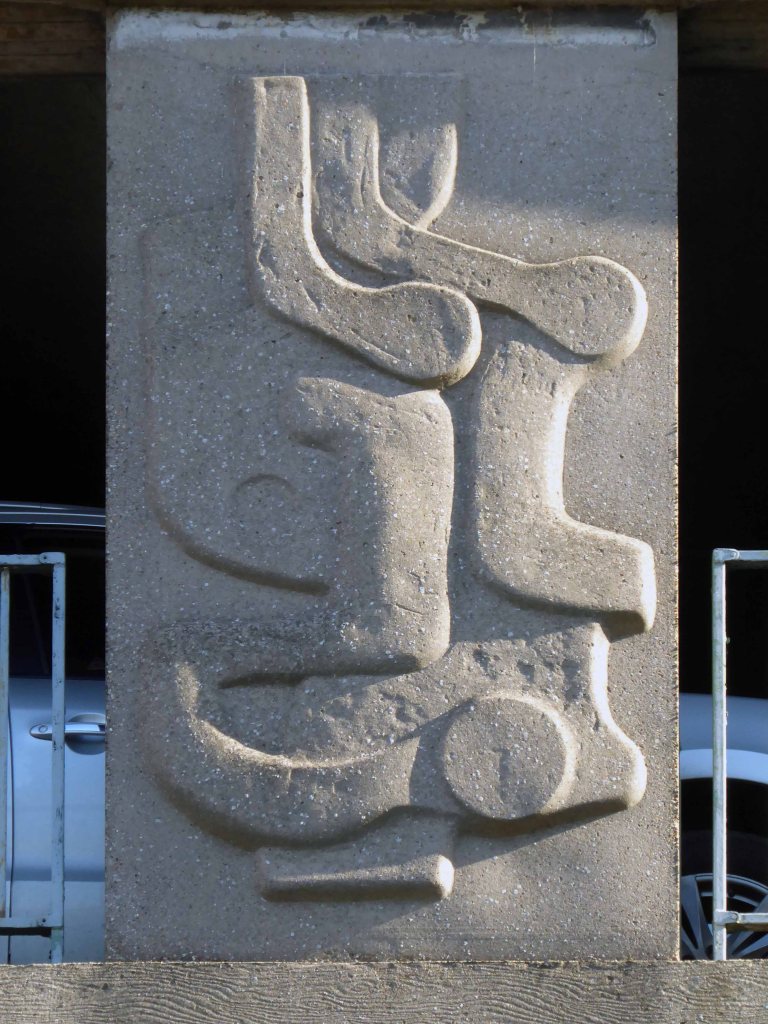
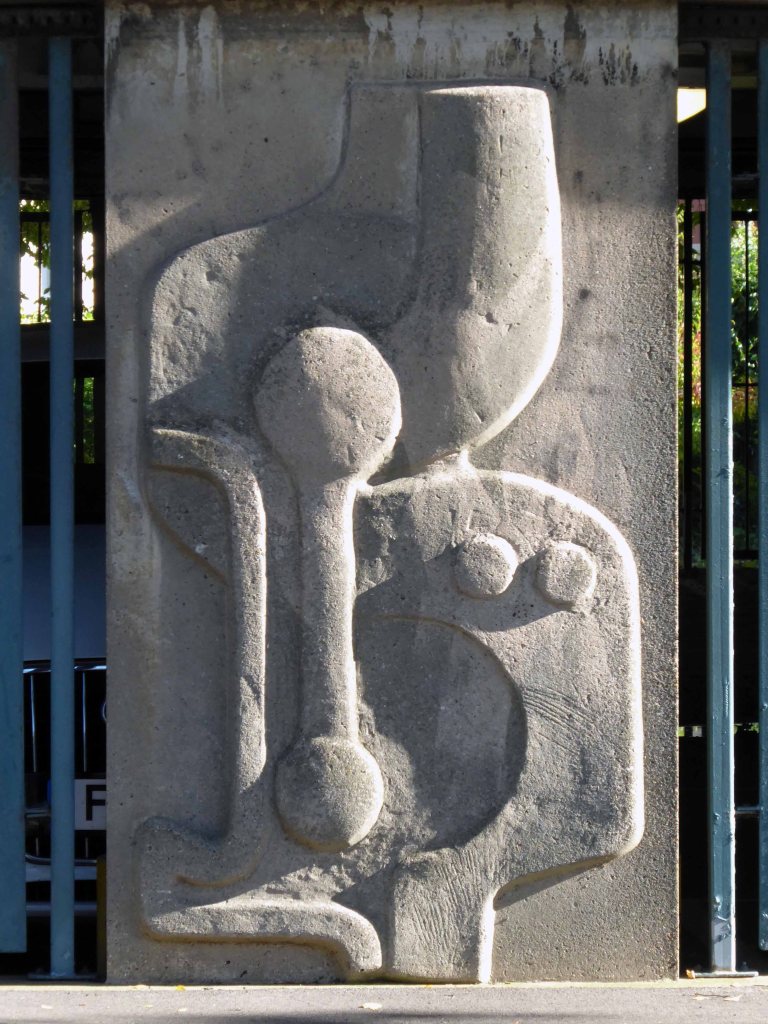
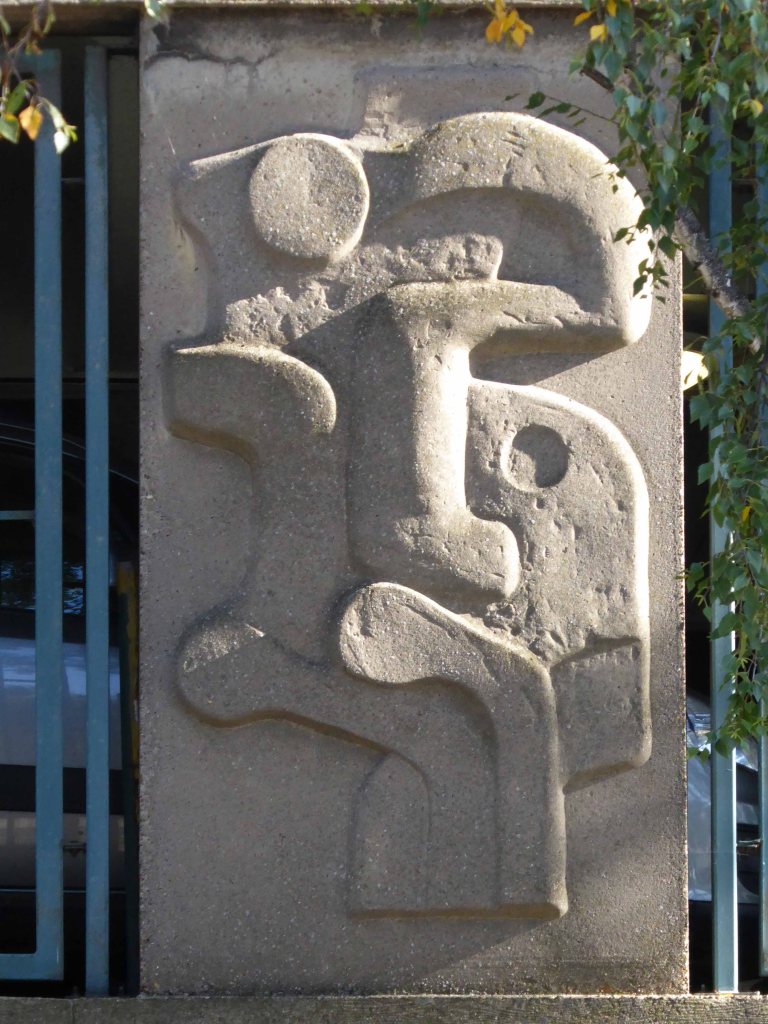
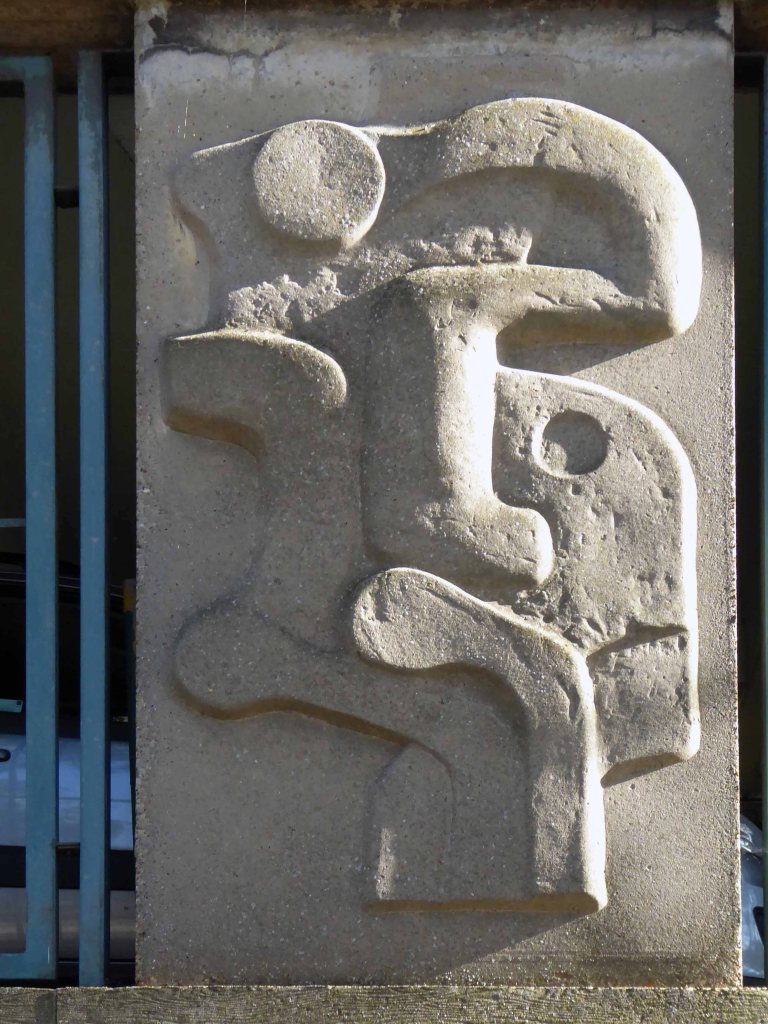
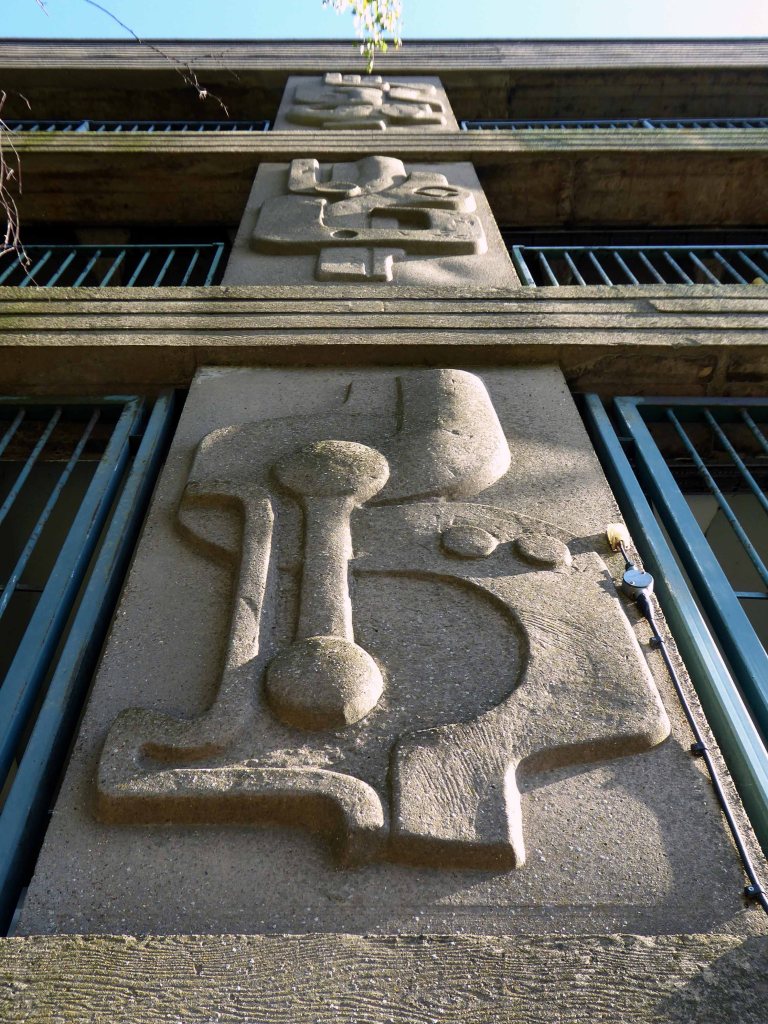
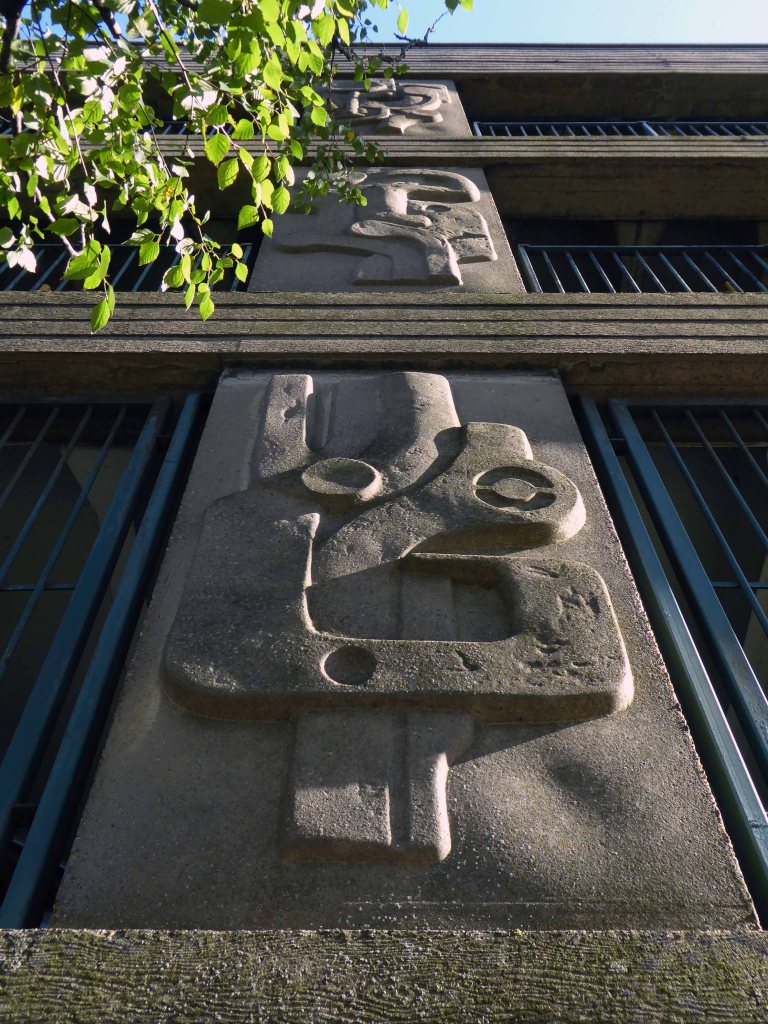
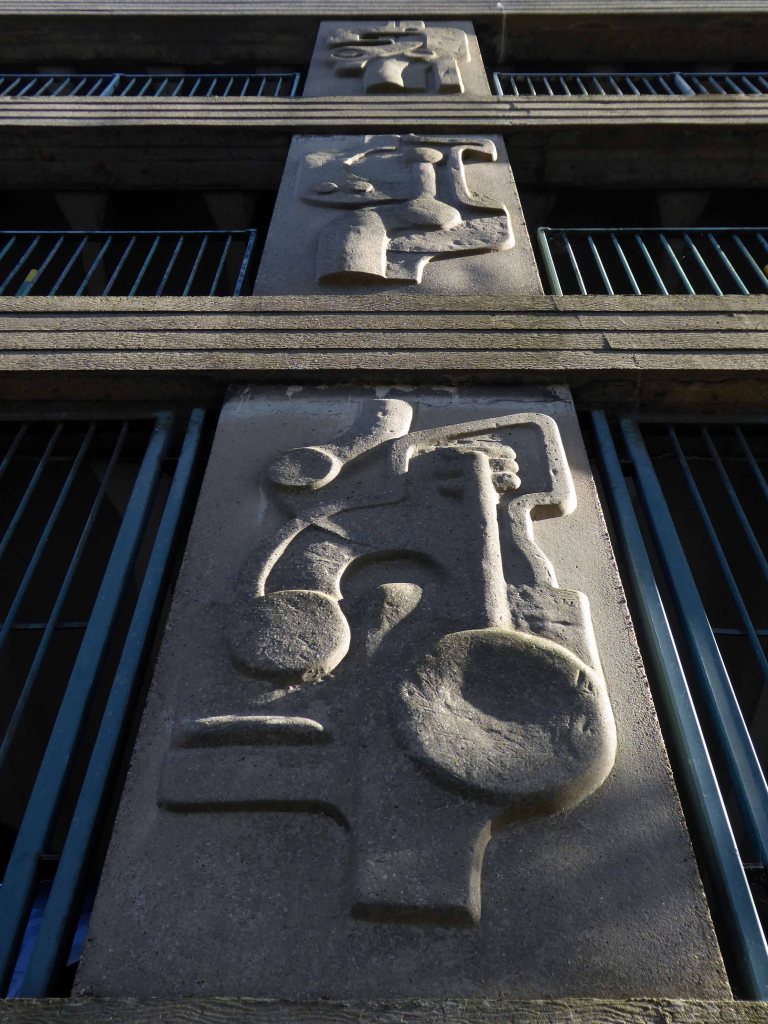
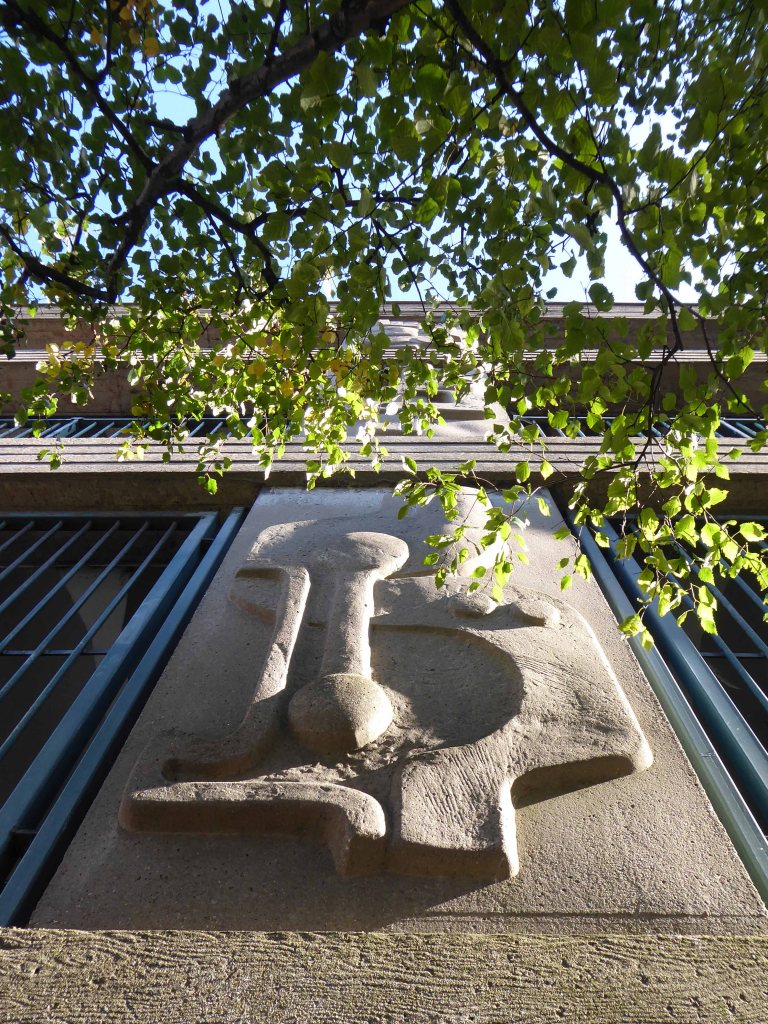
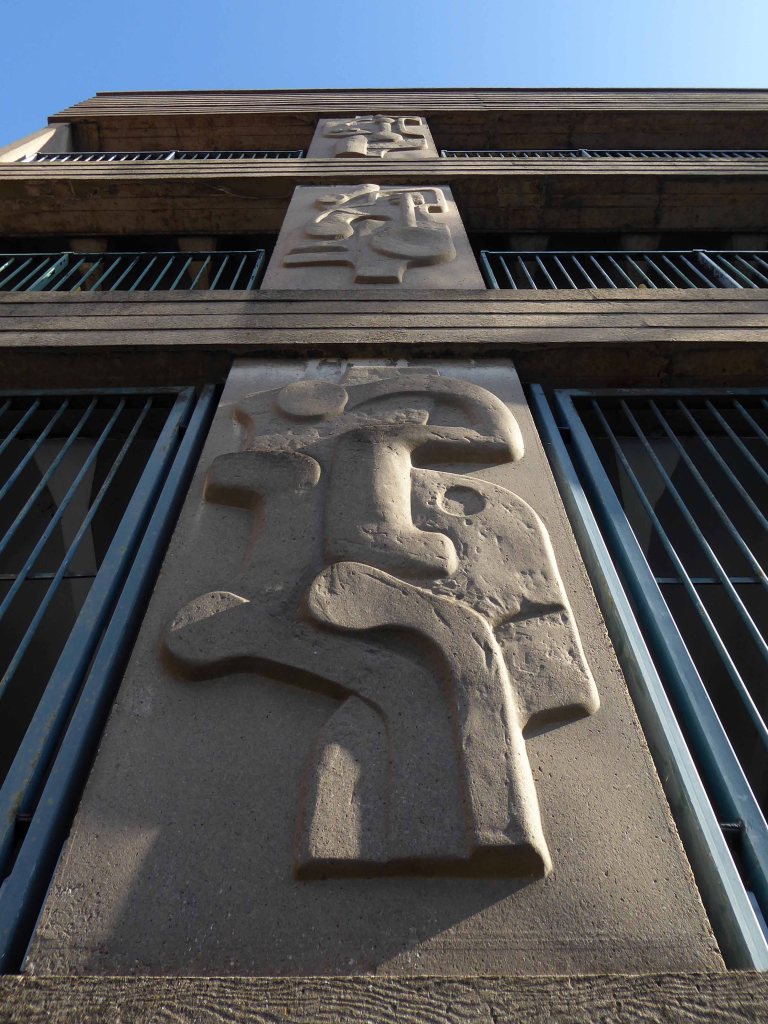
I found you by chance between the railway and the high street, so I took a good look around, fascinated by the concrete sculptural panels on your fascia columns, those facing Abbey Walk.

Research tells me that they the work of Harold Gosney – born in Sheffield, he studied at Grimsby School of Art and London’s Slade School of Fine Art.

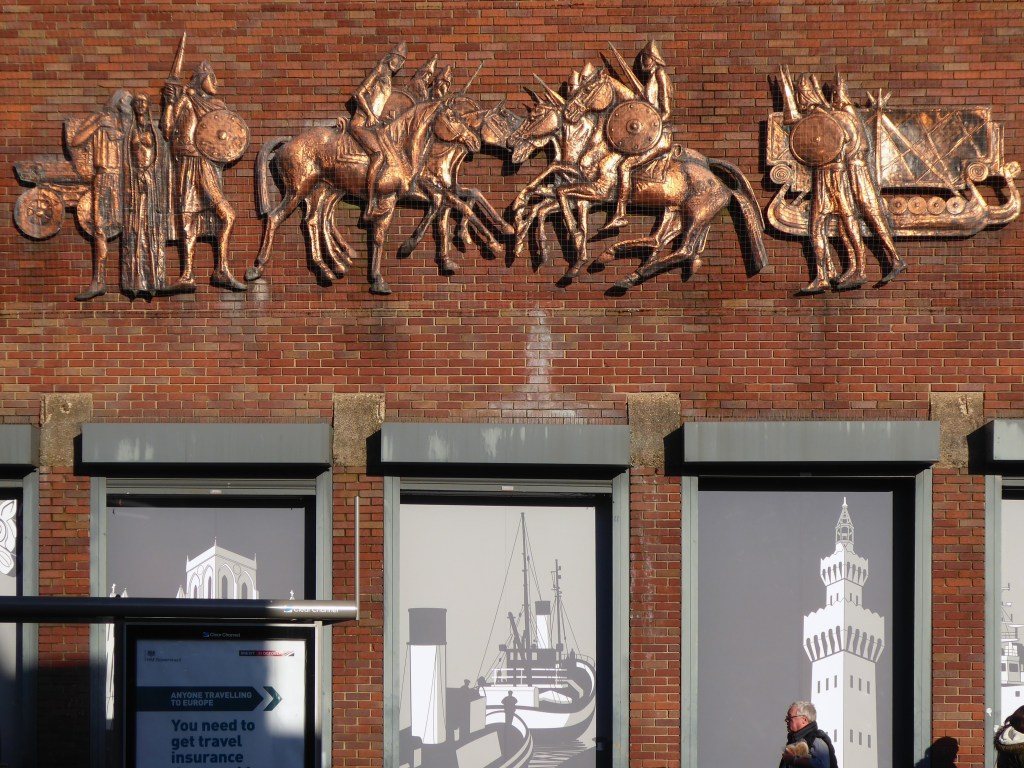
The majority of Gosney’s early commissions were collaborations with architects and he has made a significant contribution to public art in Grimsby. He is the artist responsible for the reliefs on the Abbey Walk car park, the large Grimsby seal by the entrance to the Grimsby Central Library and the Grim and Havelok themed copper relief on the side of Wilko store in Old Market Place.

Wikipedia

The car park has been the subject of some speculative repairs and refurbishment:

In total, the scheme will cost the council £1.54 million.

The authority will borrow £1.34 million to fund the project with a further £200,000 coming from a local transport grant. But the council said that the improvements made could help increase revenue from the car park of around £34,000 a year.

Councillor Matthew Patrick, portfolio holder for transport at the council, said that the work is essential to “brighten up” the building and attract people into Grimsby.

“It’s one of the largest car parks in the town,” he said.

“It will attract more people into the town centre and help to improve the offering of the car park.”

Lincolnshire Reporter

So here we are faced with a rare, precious and beautiful example of municipal modernism, a bold and brave attempt to decorate what is often the most functional of functional structures.

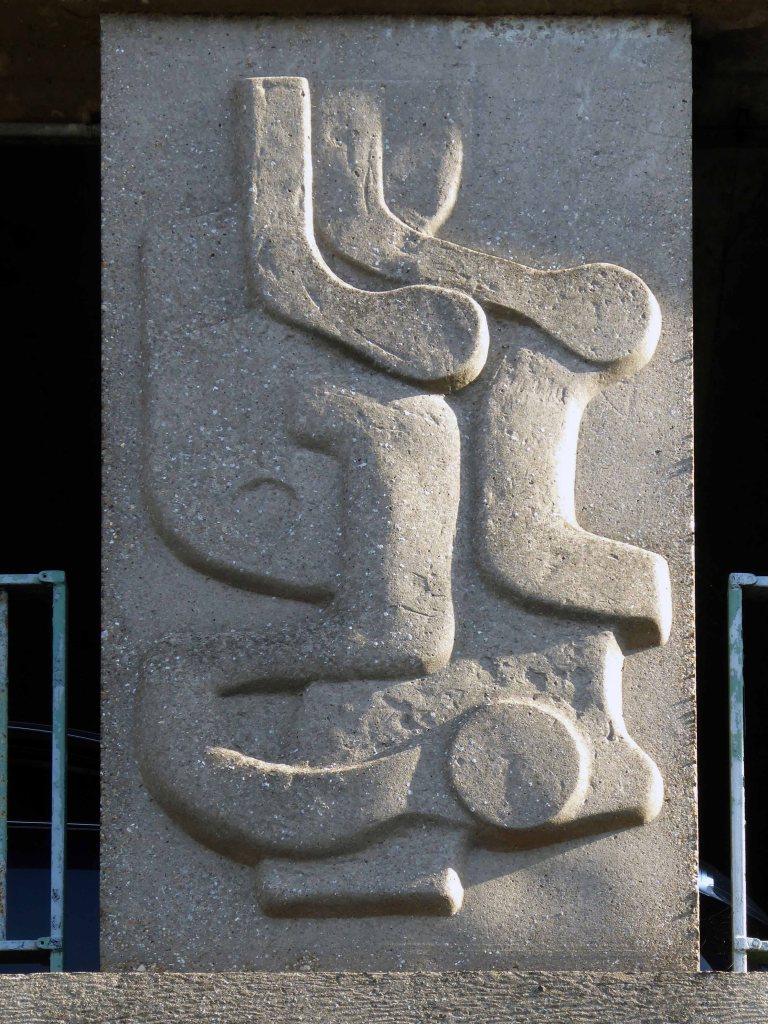
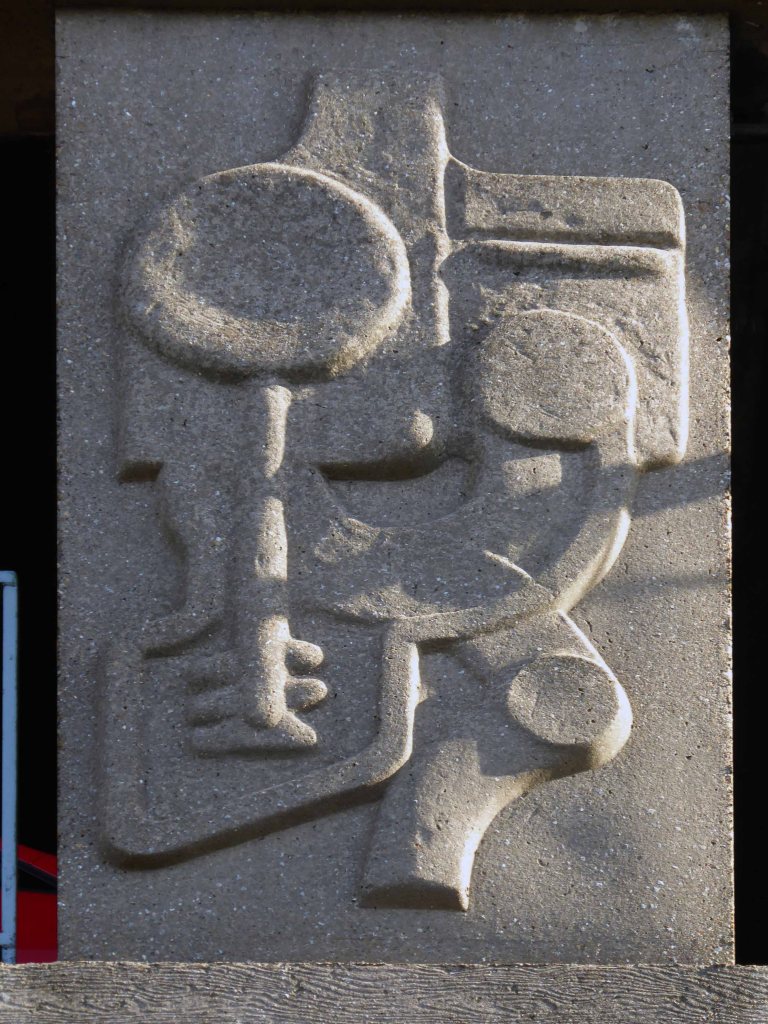
Owing something to the work of both Henry Moore and Pablo Picasso the imagery is derived from automotive parts, along with it seems to me, vague intimations of figuration.

Let’s talk a look!

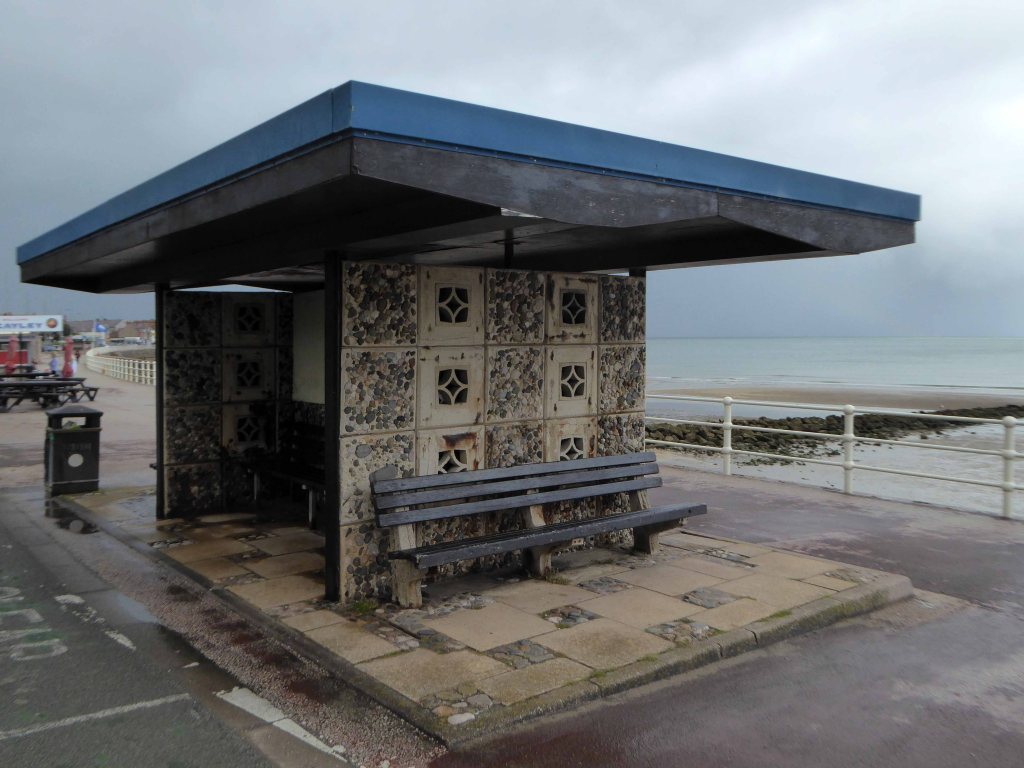
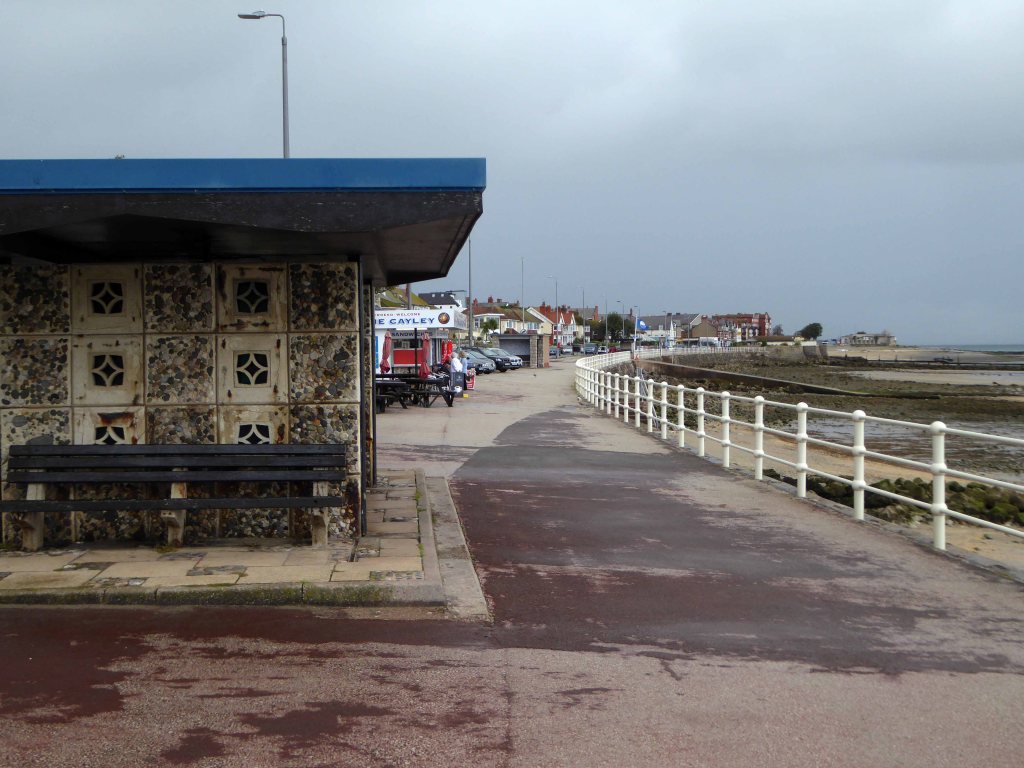
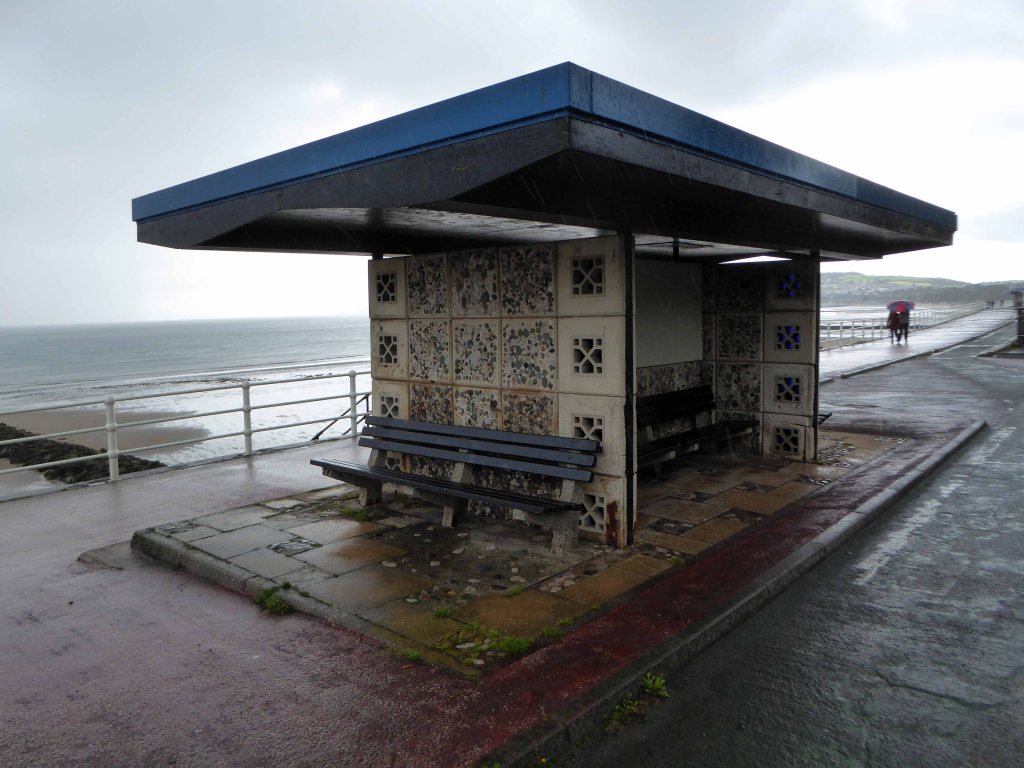
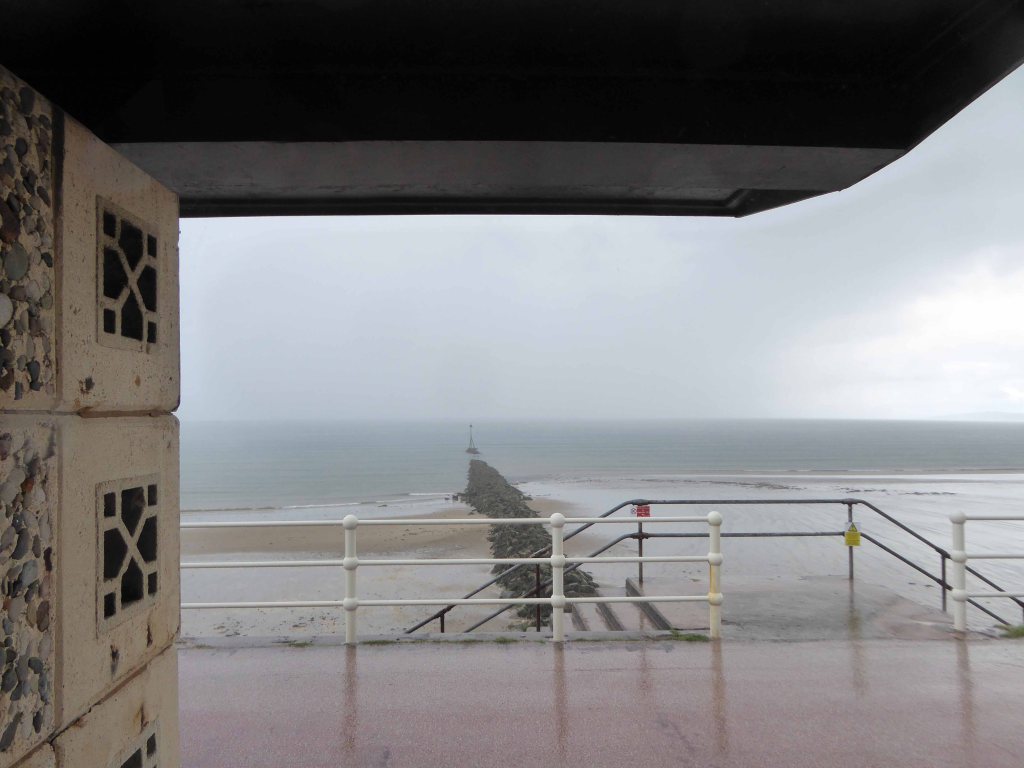
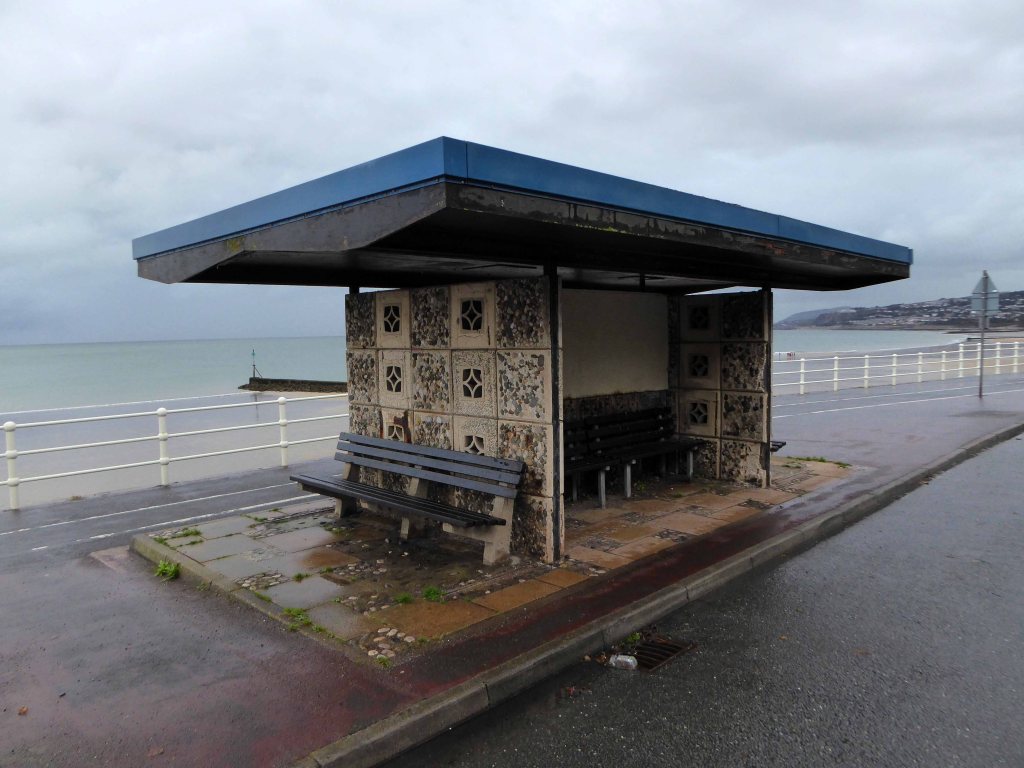
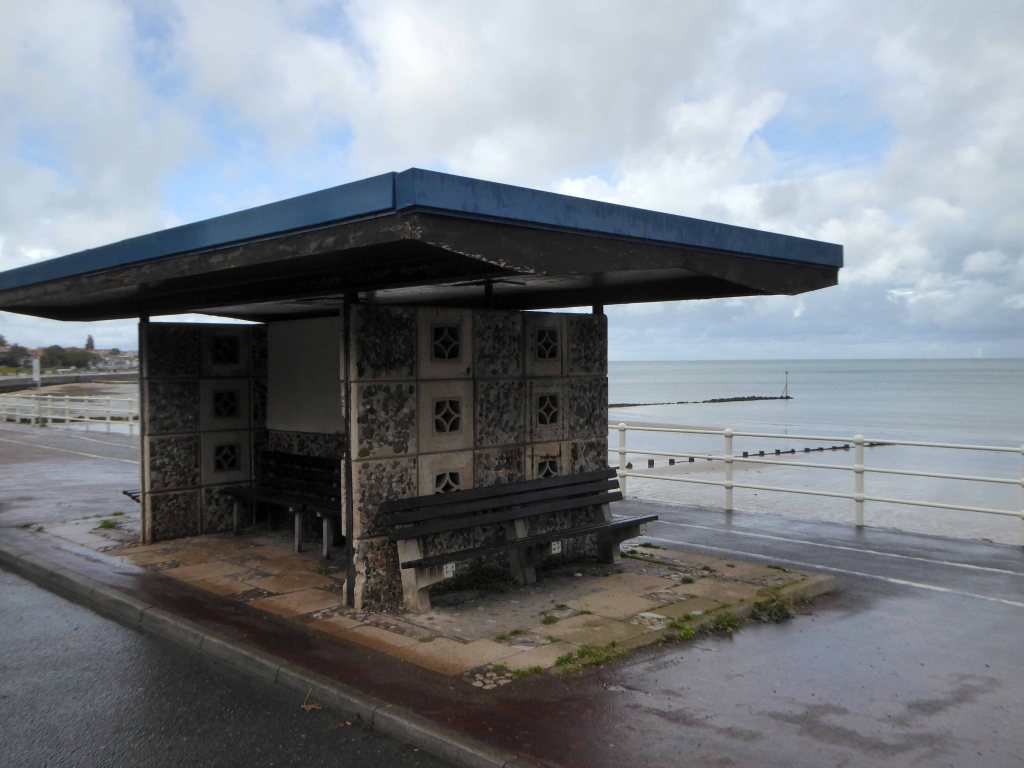
Shelters – Rhos on Sea

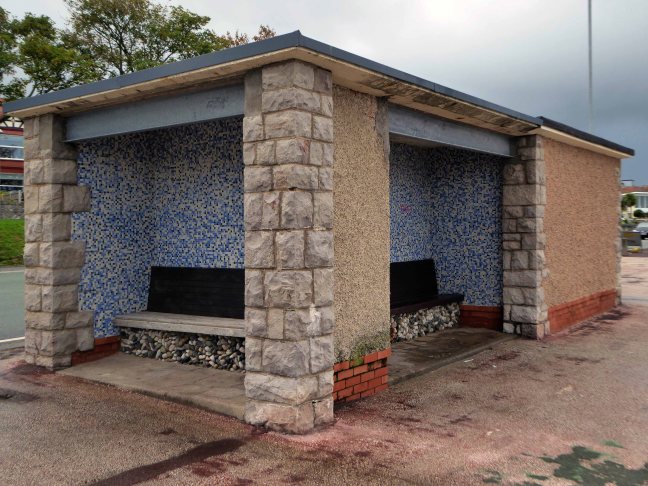
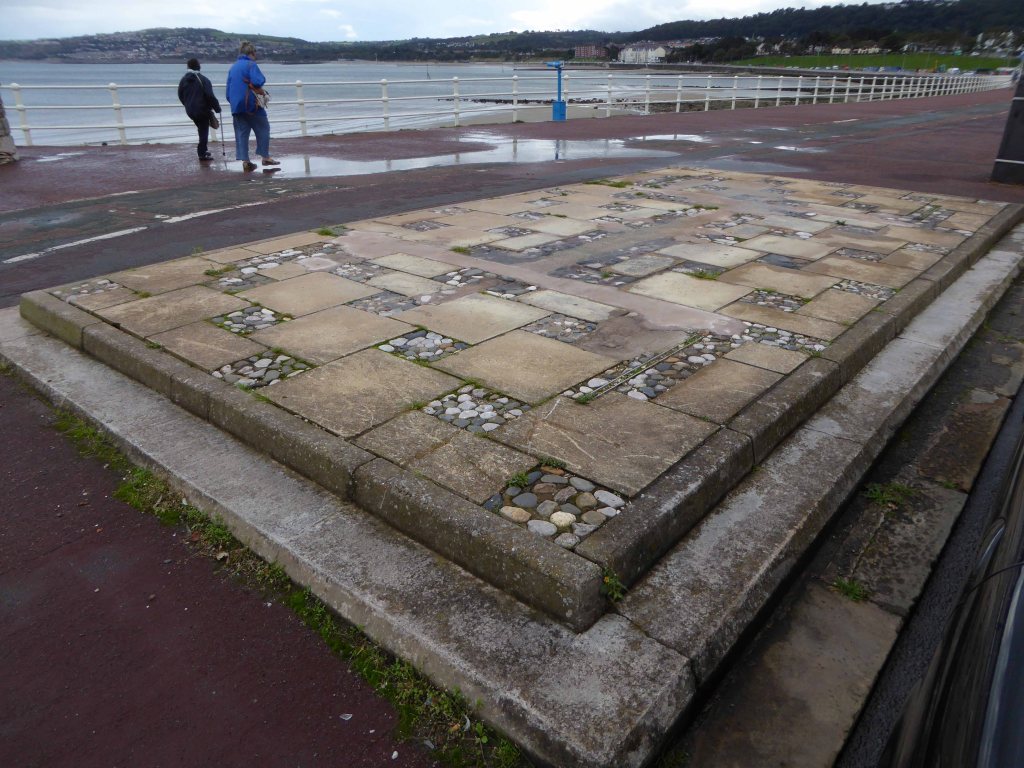
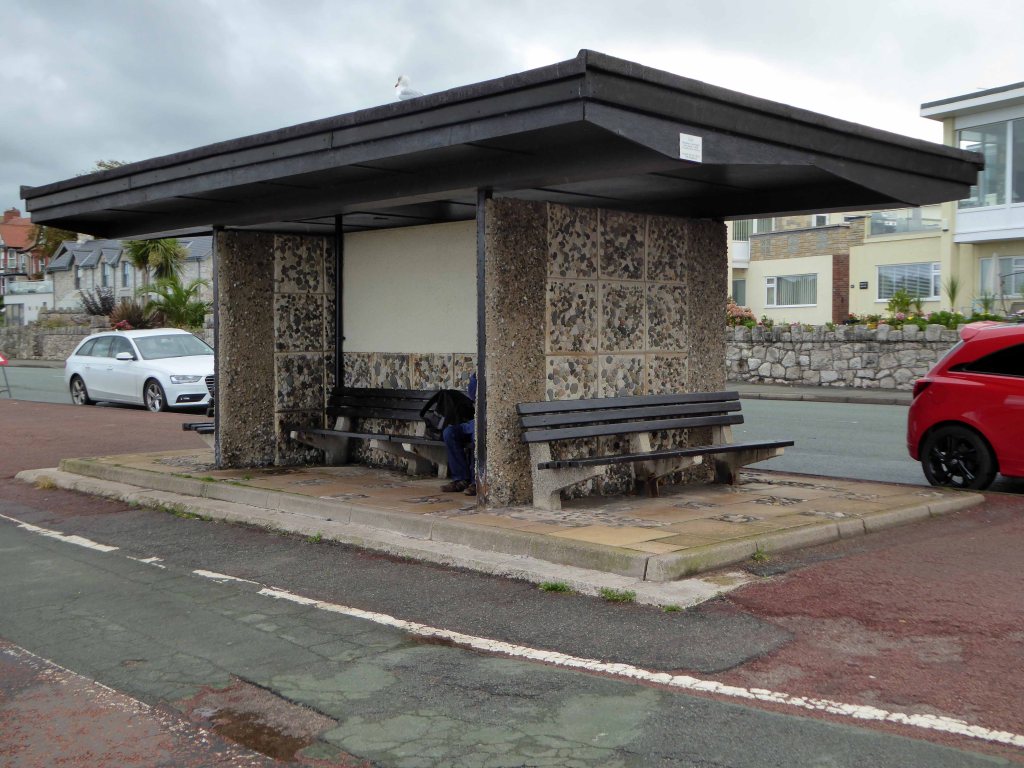
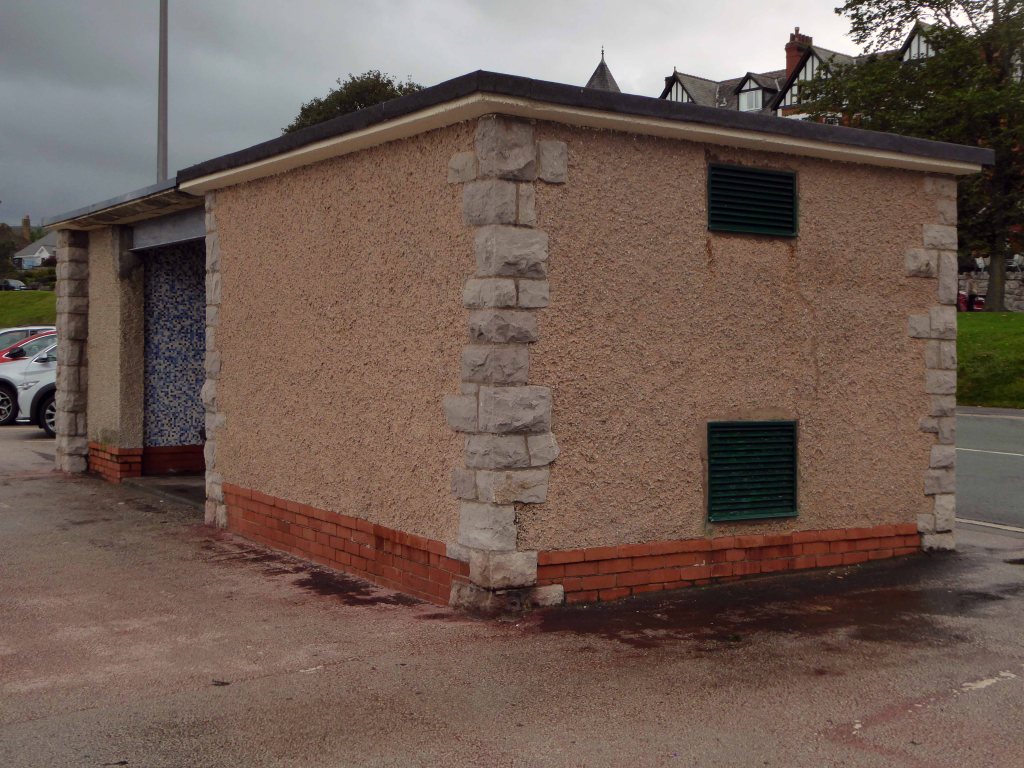
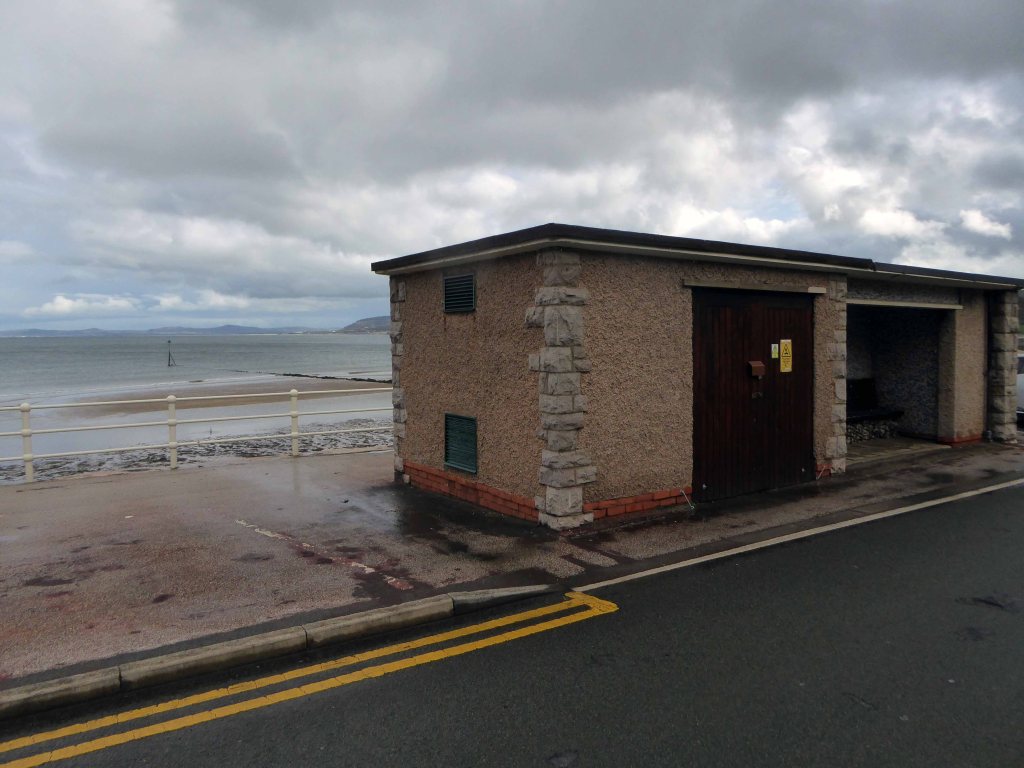
I thought that you may have all been removed – phase two of several phases reshaping the hard landscape of Wales.

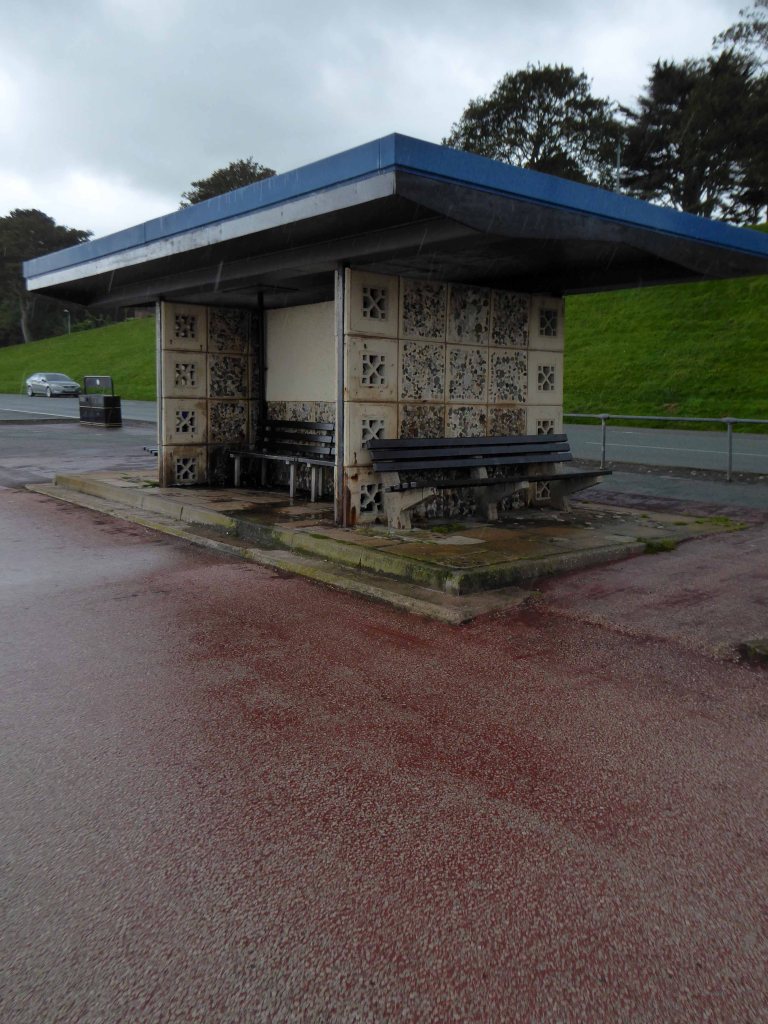
It seems I was incorrect – I’m happy to report that as of last Friday only one of our shelters is missing.

So I more or less repeated the task undertaken on my last visit.

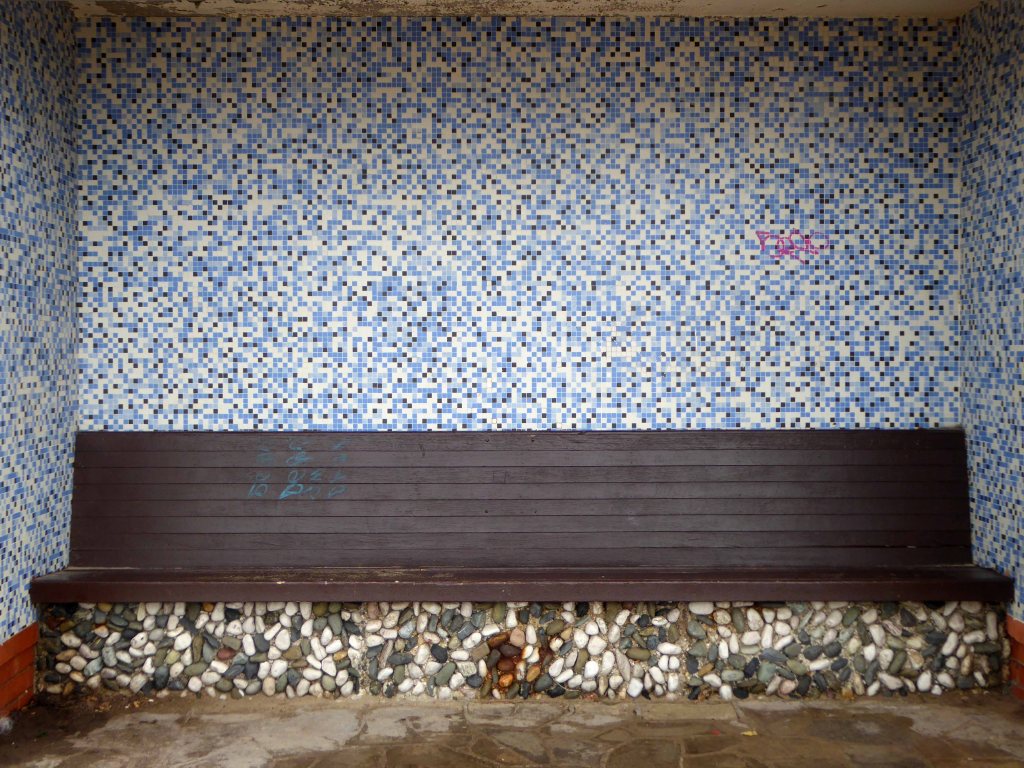
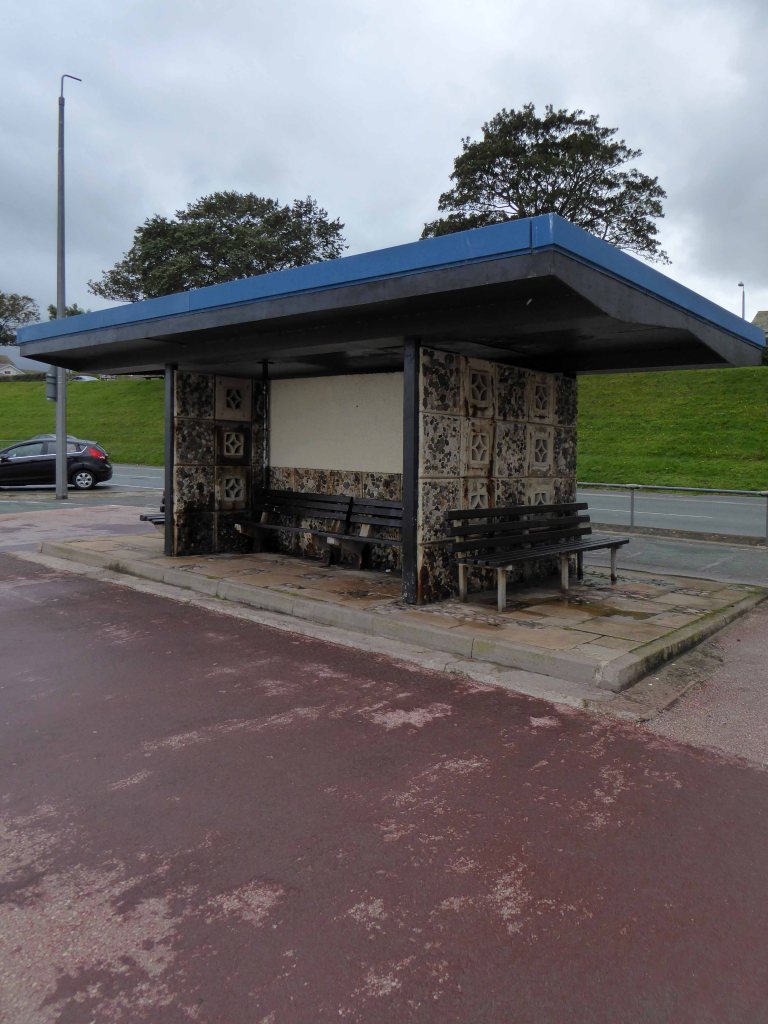
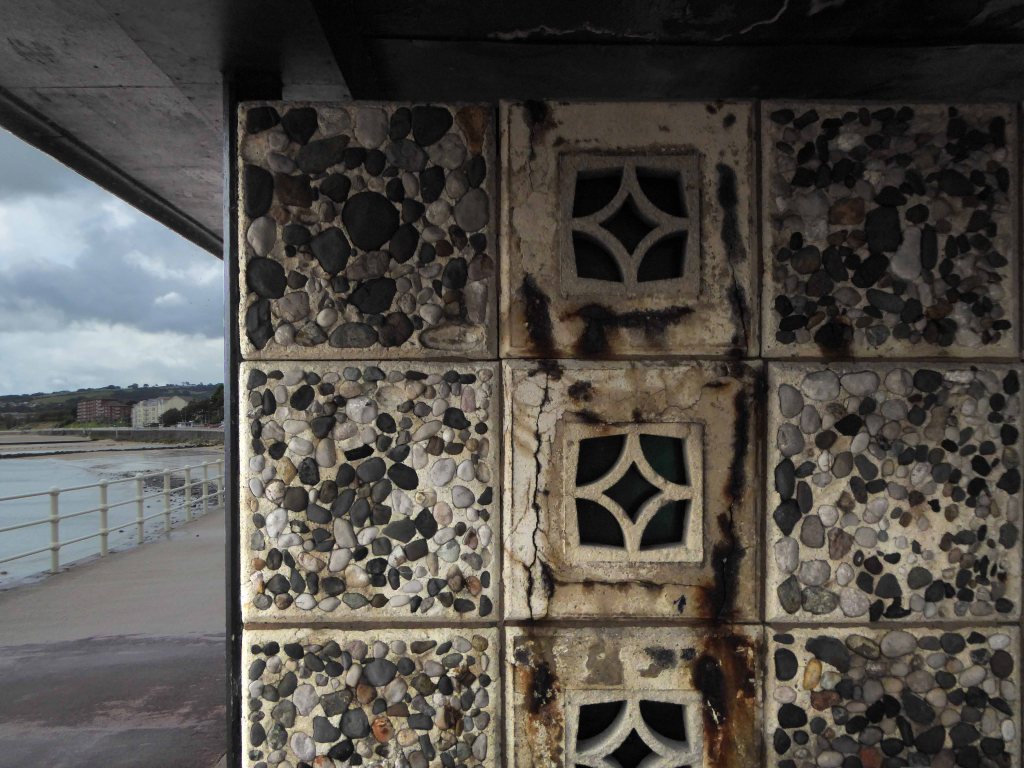
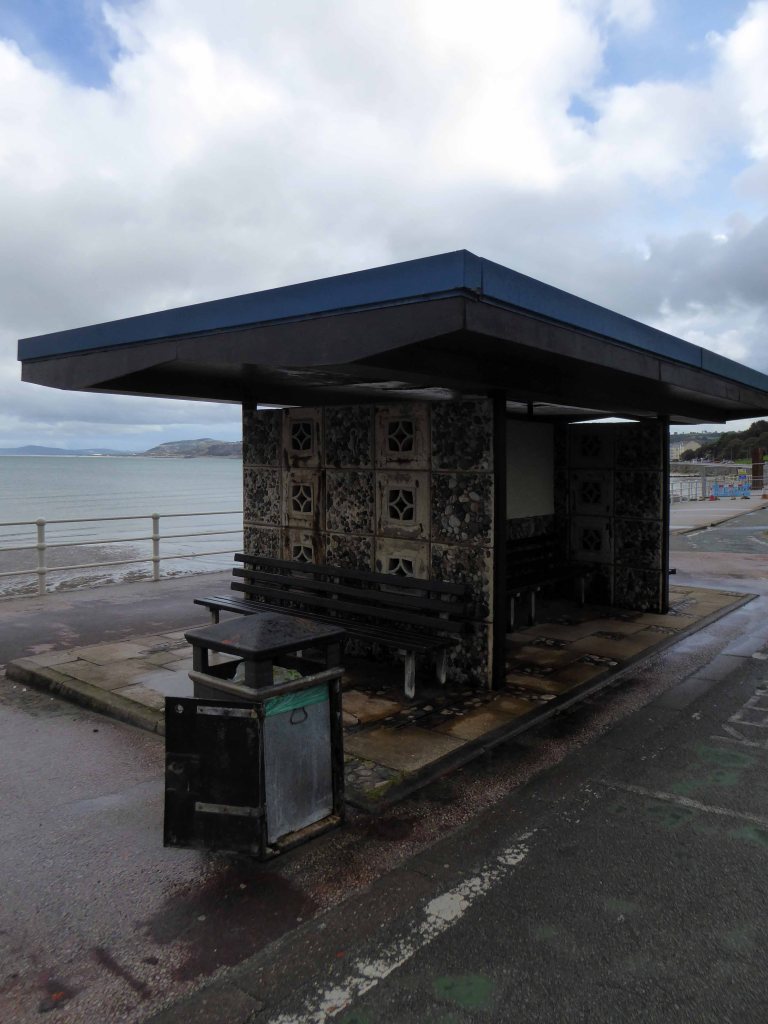
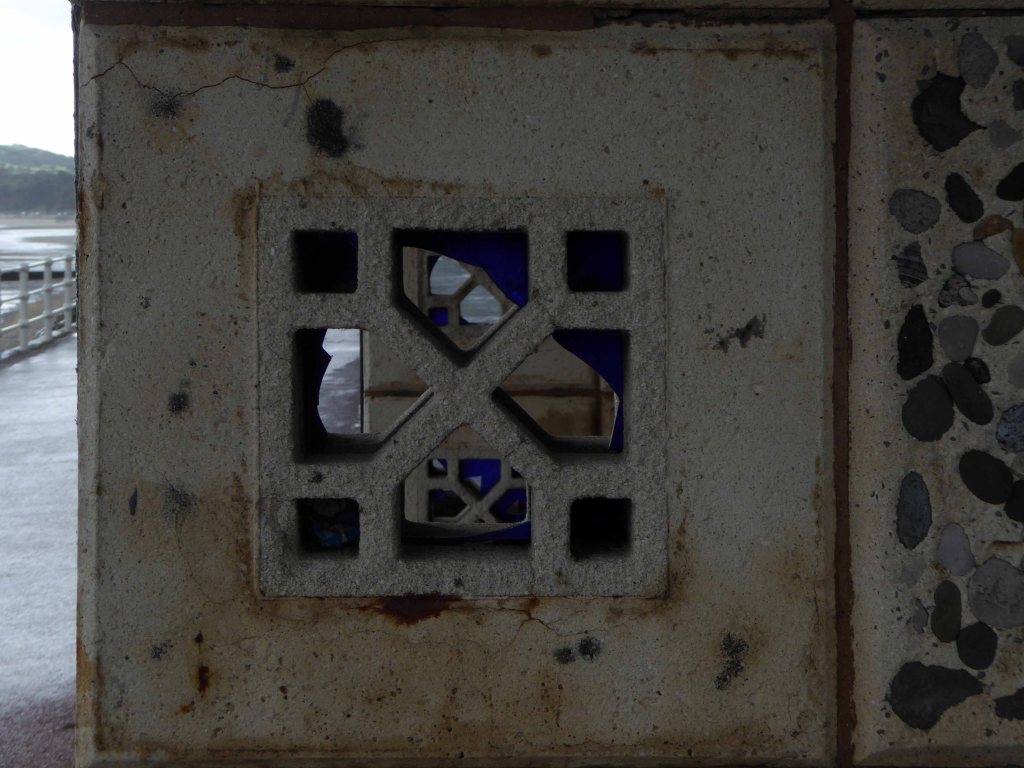
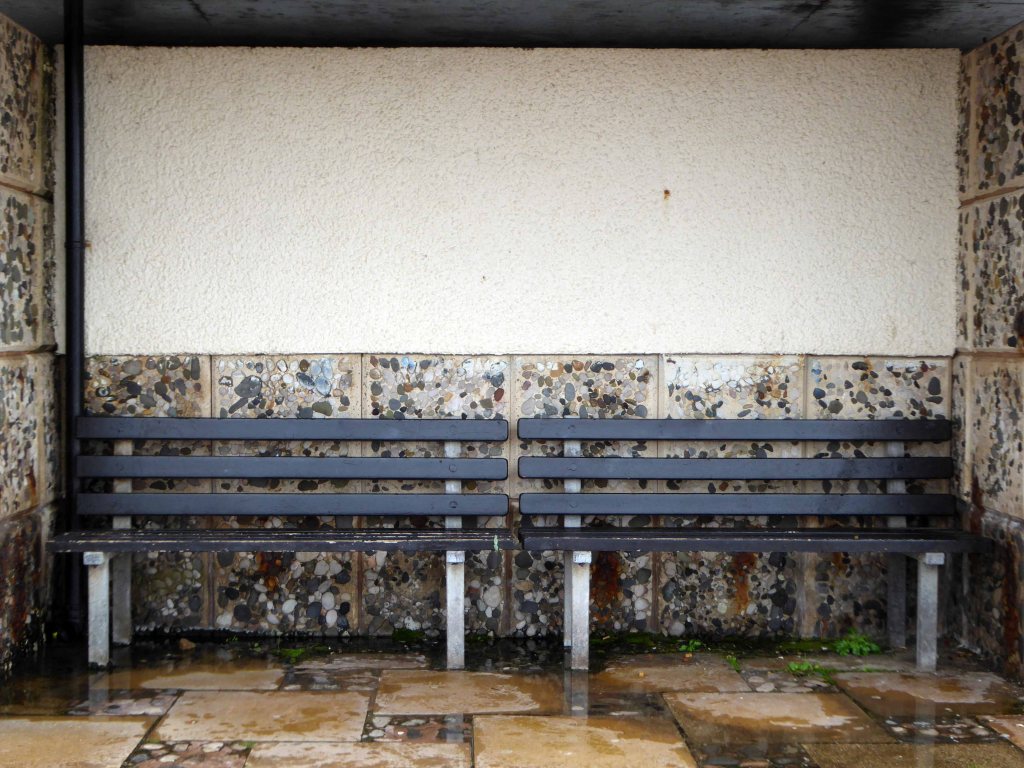
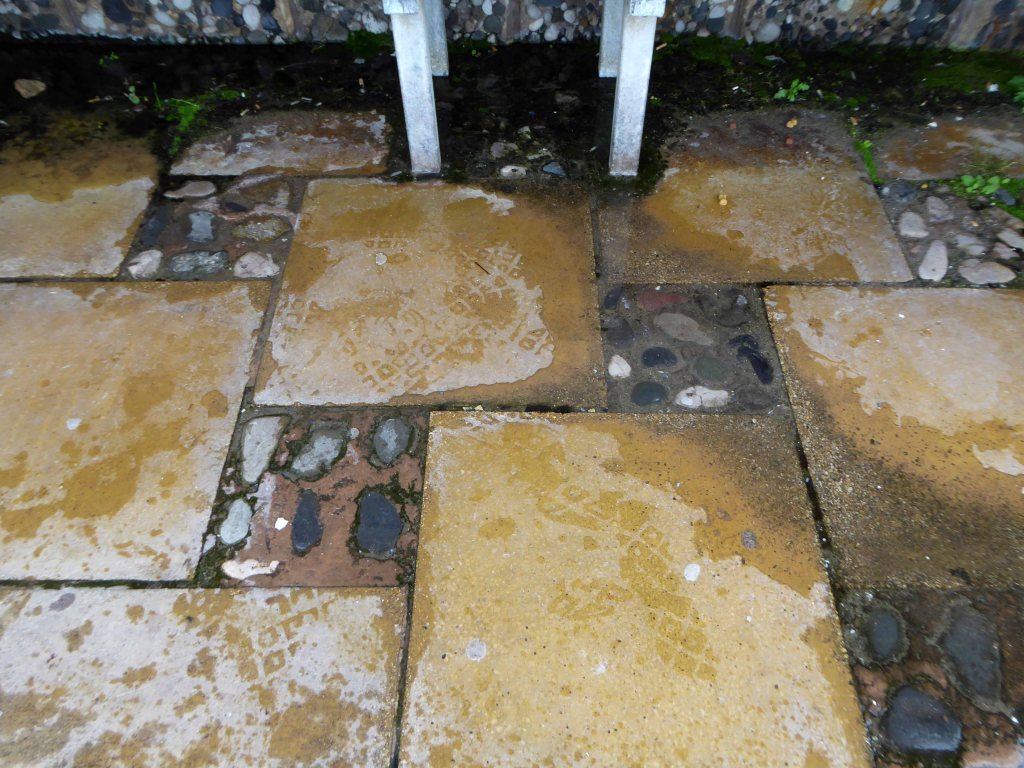
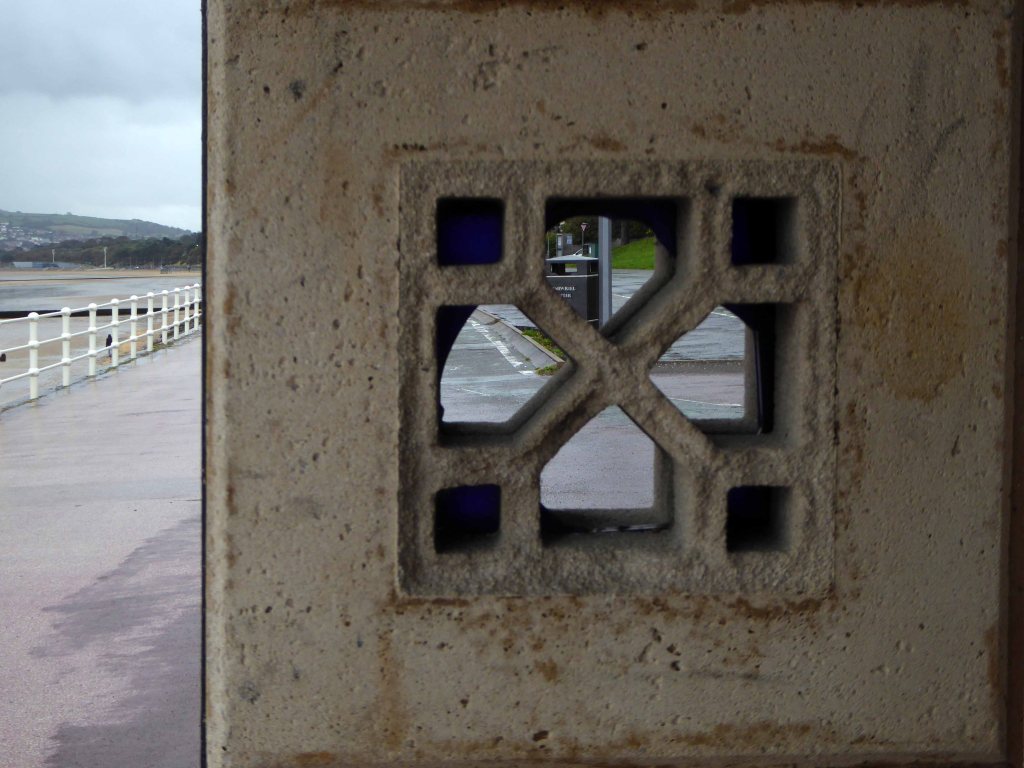
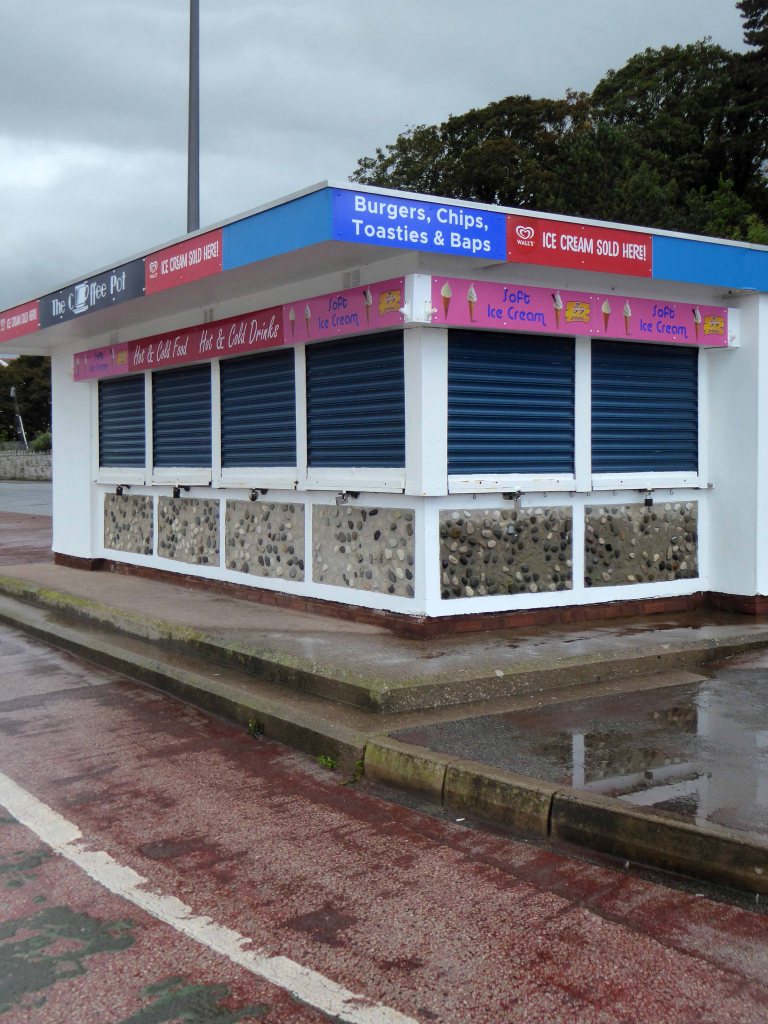
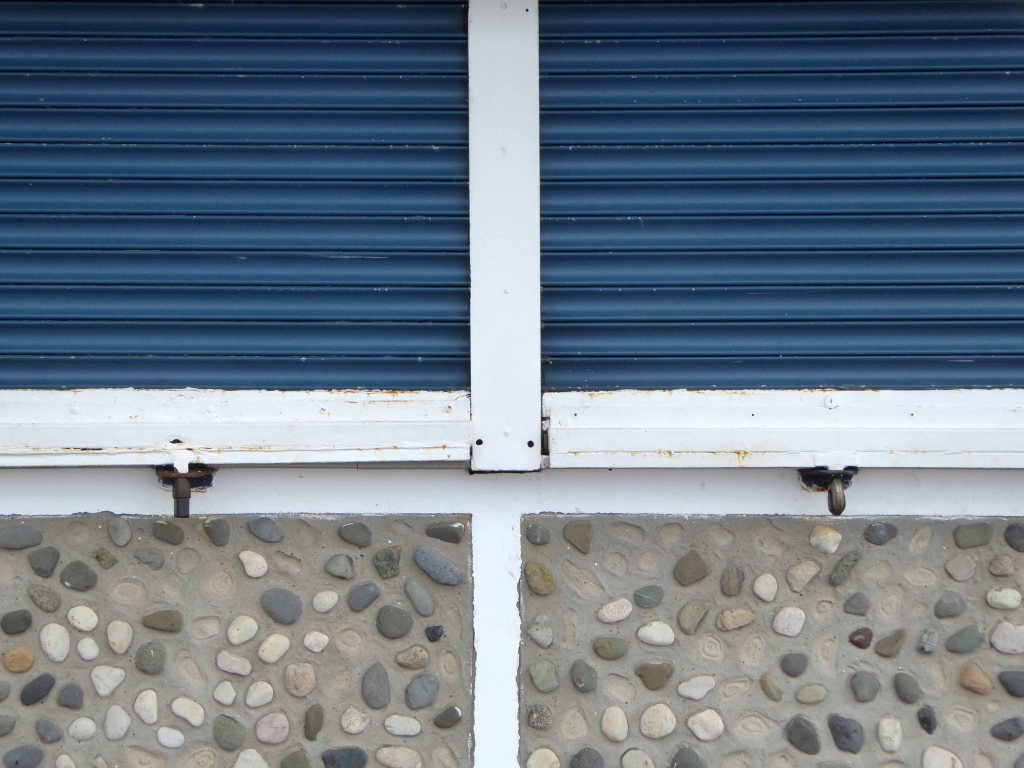
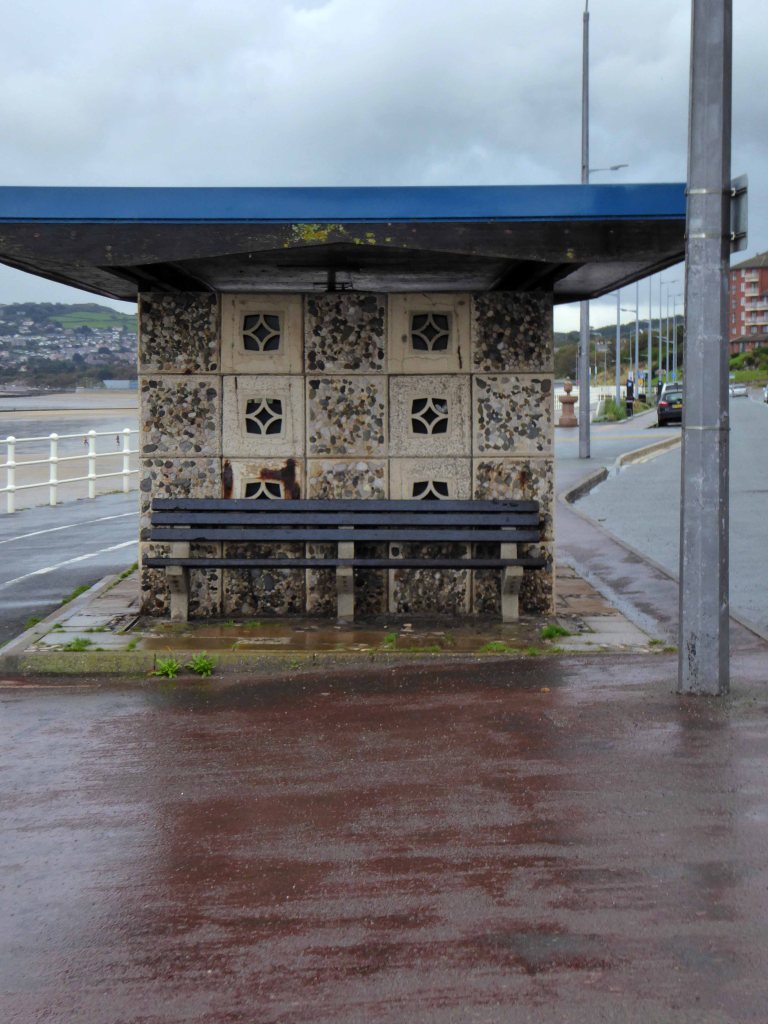
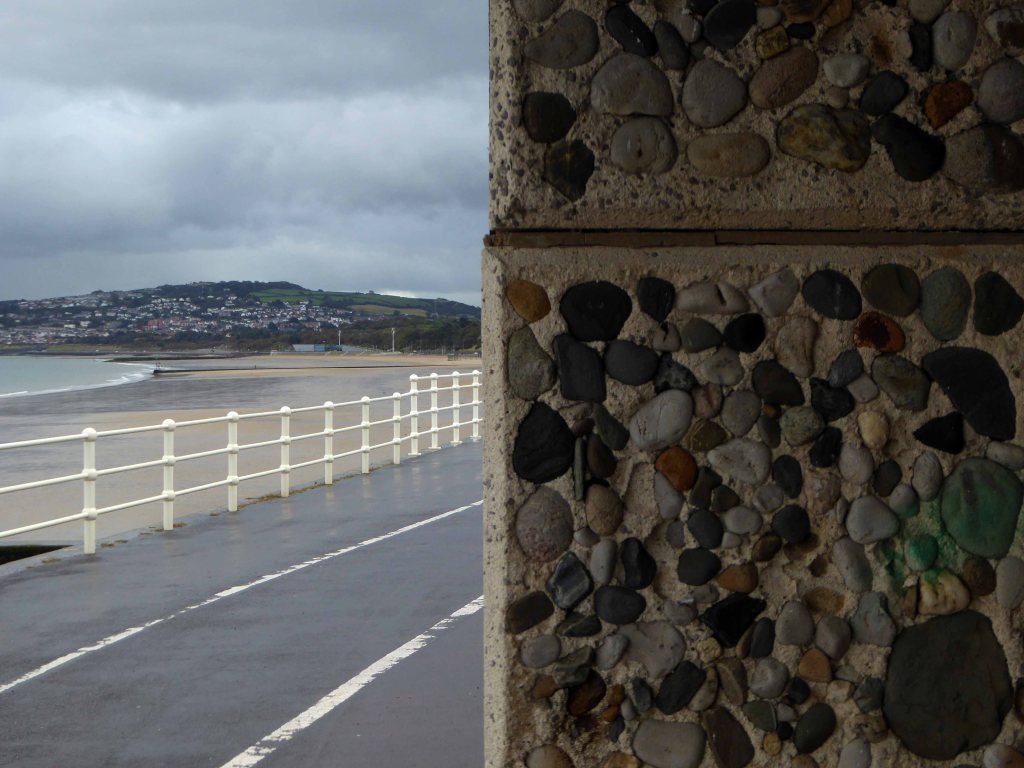
Yet another series of photographs of the amalgamated municipal mash-up – concrete glass pebbles pebbledash paving mosaic and imagination rendered corporeal courtesy of Cyngor Bwrdeistref Sirol Conwy.

And the constantly berated Undeb Ewropeaidd.

Jubilant Leave supporters in Conwy are celebrating a convincing win in the historic EU referendum vote.

The Brexit backers secured a majority of more than 5,000, winning the poll by 35,357 votes to 30,147 votes.

Daily Post

So here we are almost all present and correct – let’s take a stroll down the prom together, stopping only to snap and shelter from time to time, from the short sharp September showers.

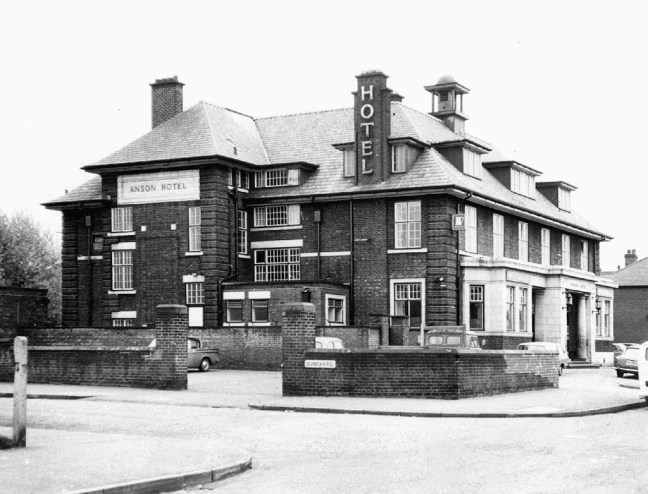
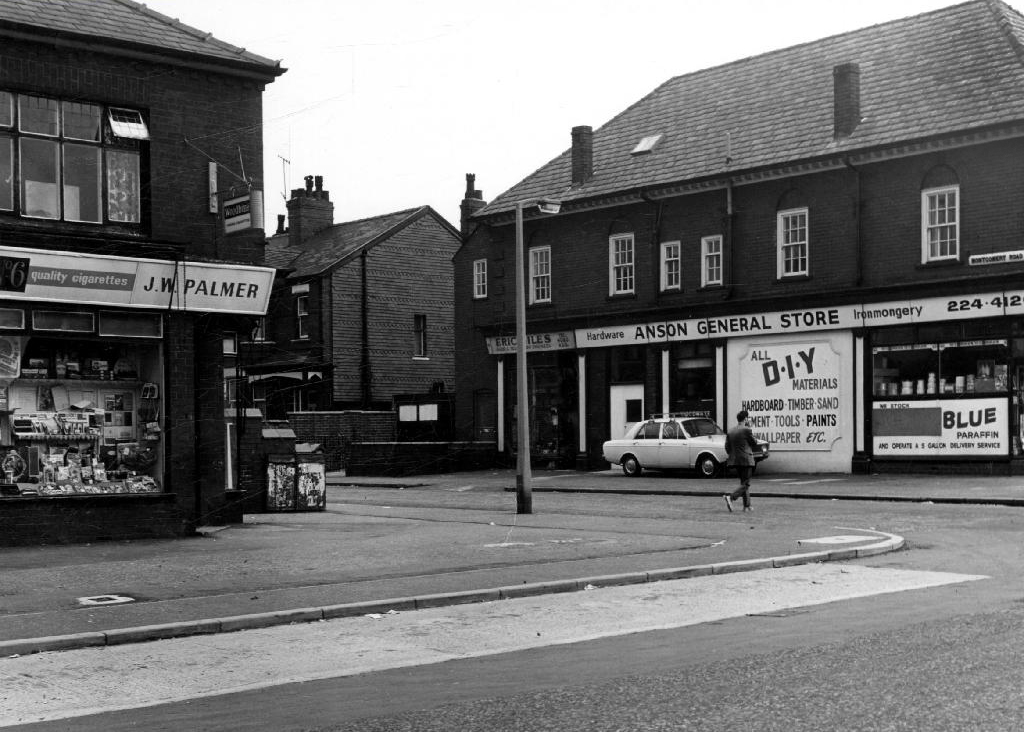
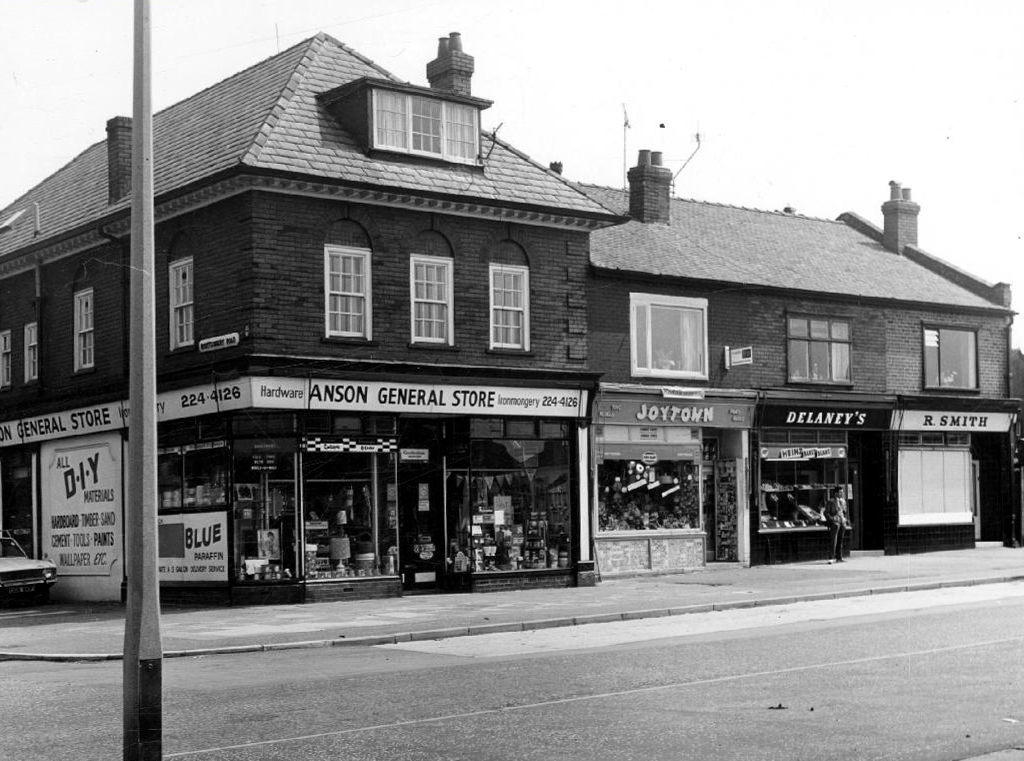
Anson Hotel – Beresford Road Manchester

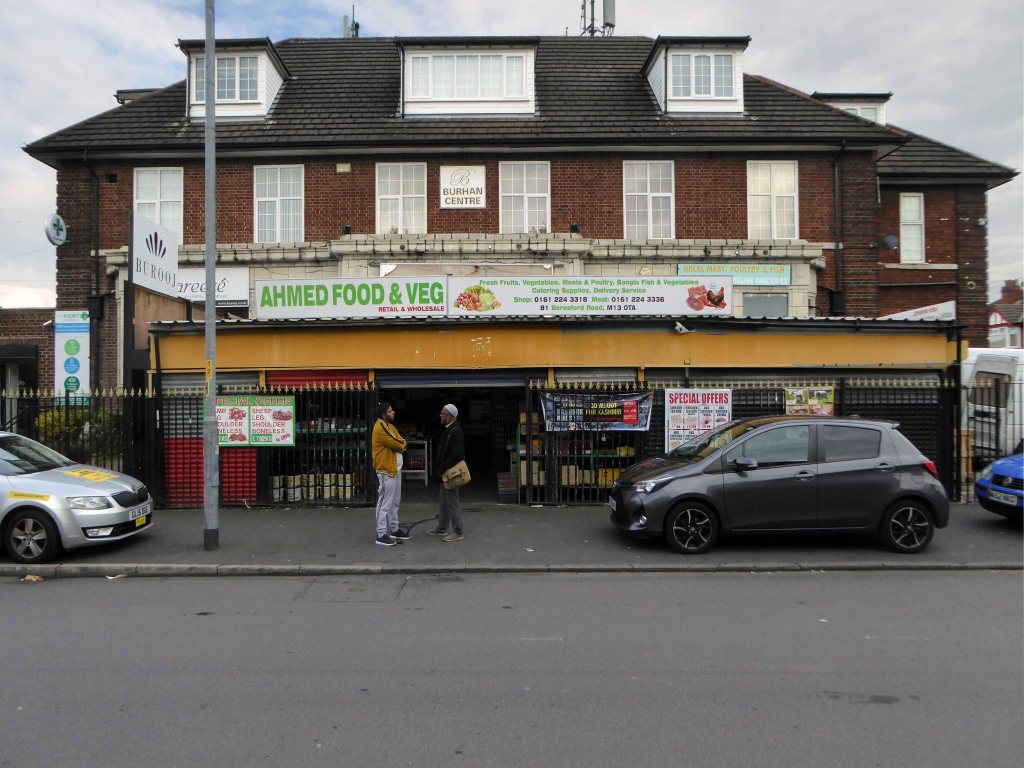
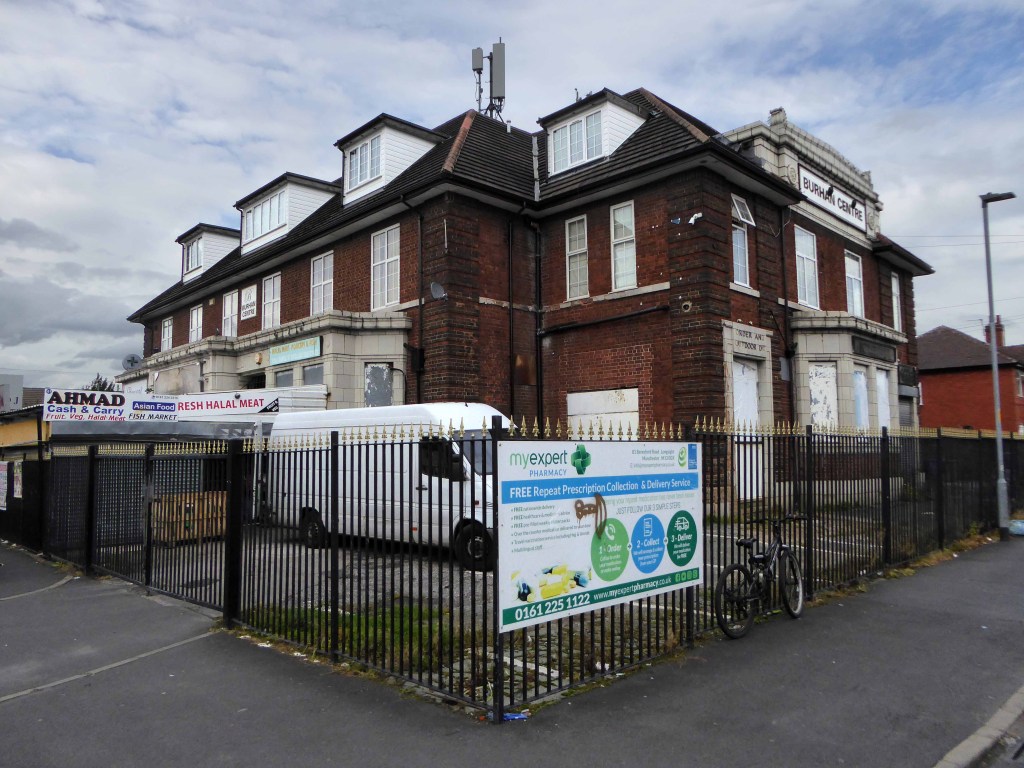
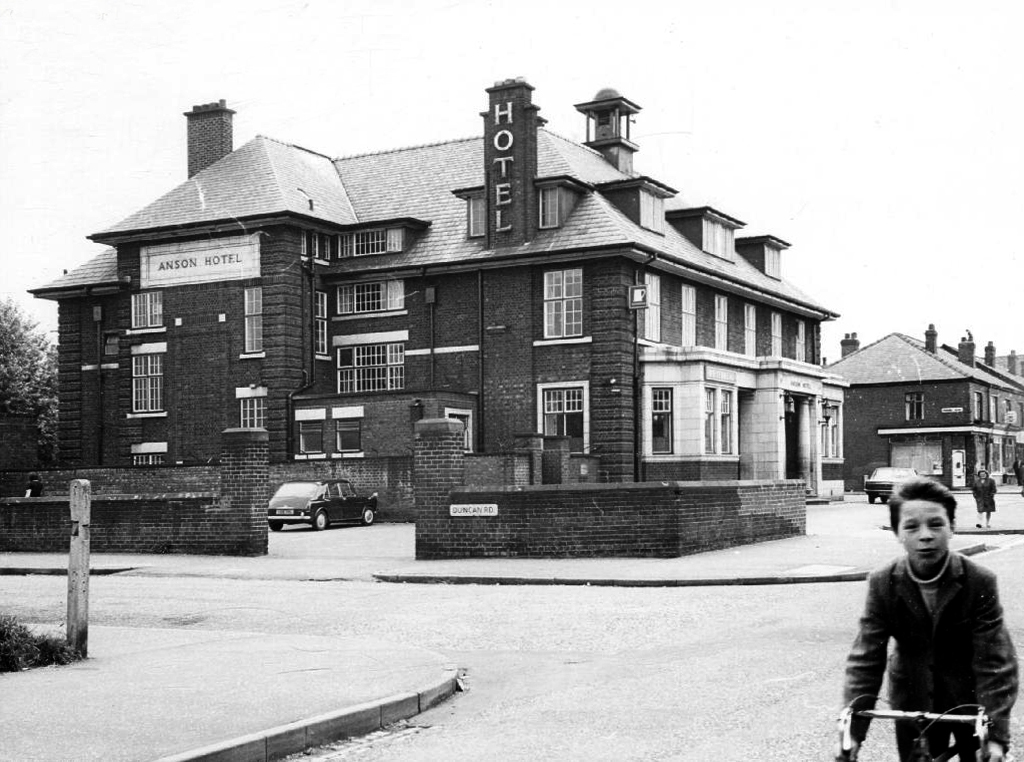
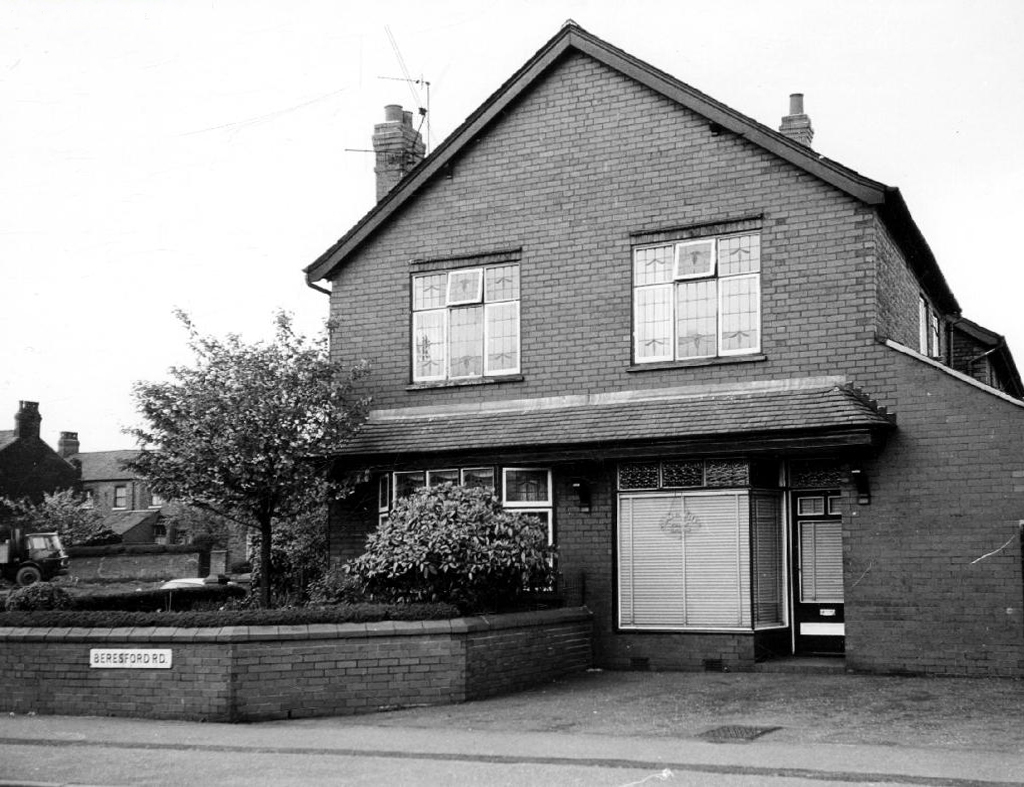
Cycling back from Town, zig zagging between the A6 and Birchfields Road, I headed down Beresford Road and bumped into a behemoth.

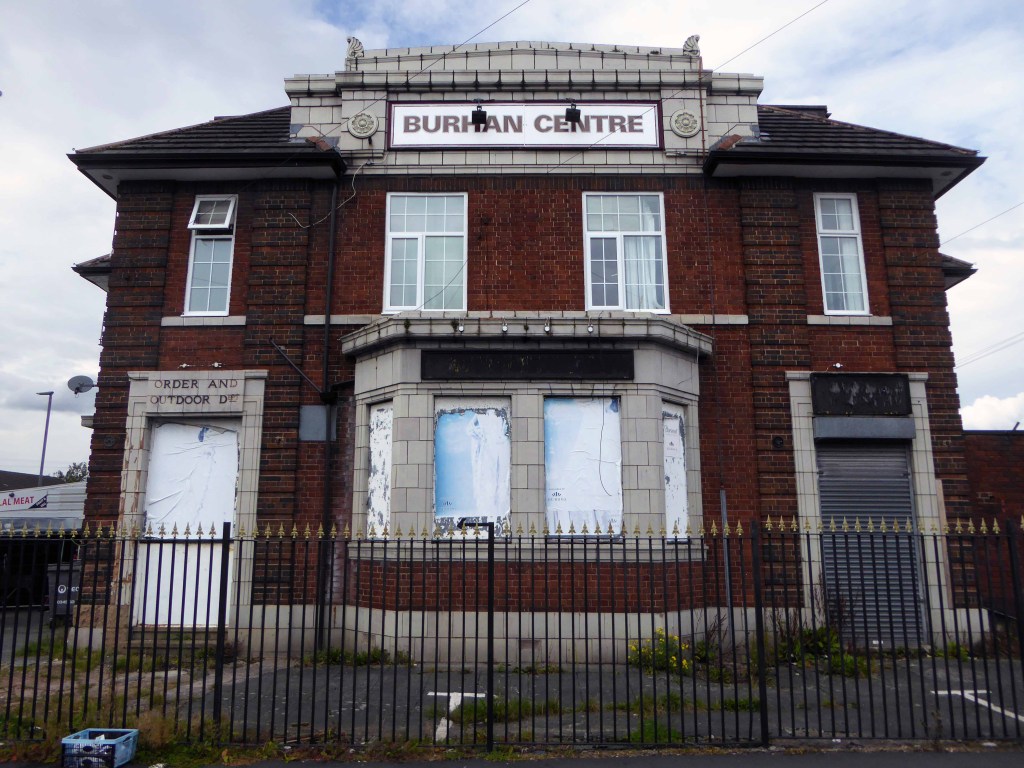
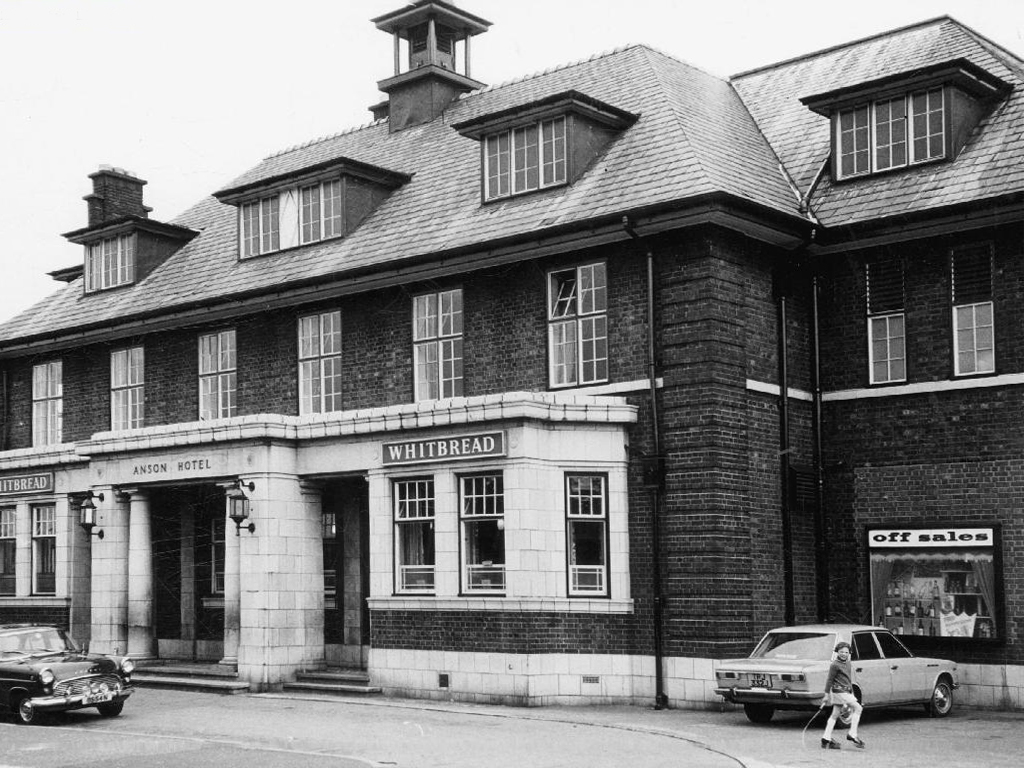
A huge inter-war Whitbread boozer long since closed, now a retail food outlet and badged as the Buhran Centre, also trading as Burooj.

This change of use is far from uncommon, the demographics, socio-economic conditions and drinking habits which shape this and countless other pubs, have since shifted away from the lost world of this immense, roadhouse-style palace of fun.

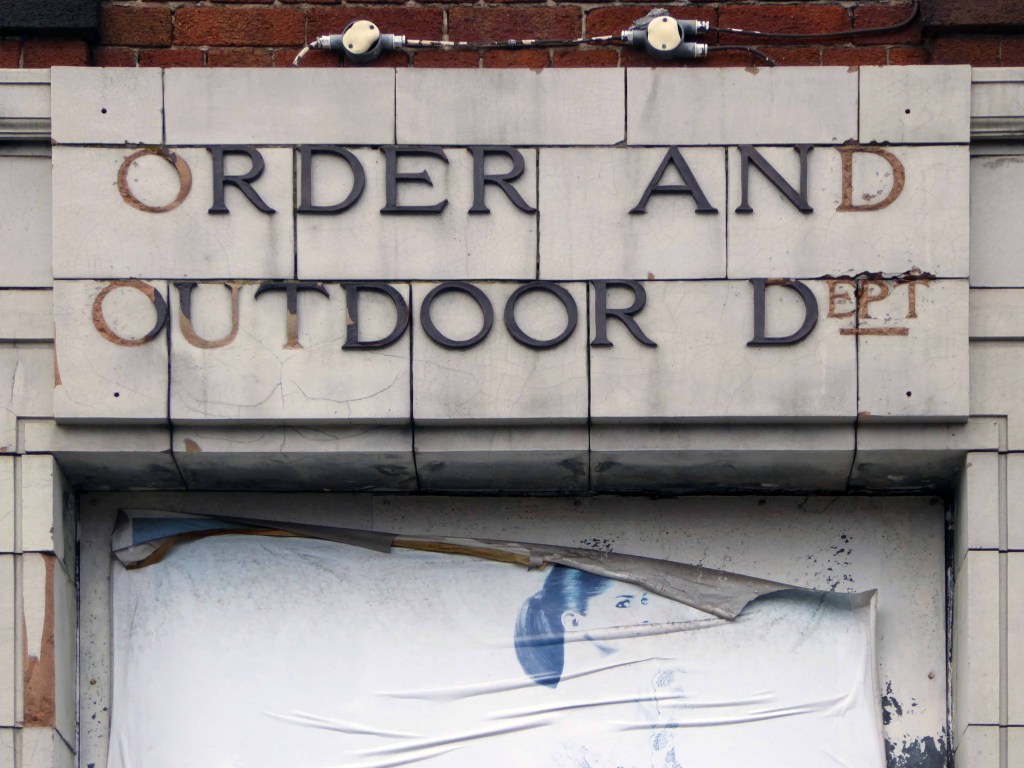
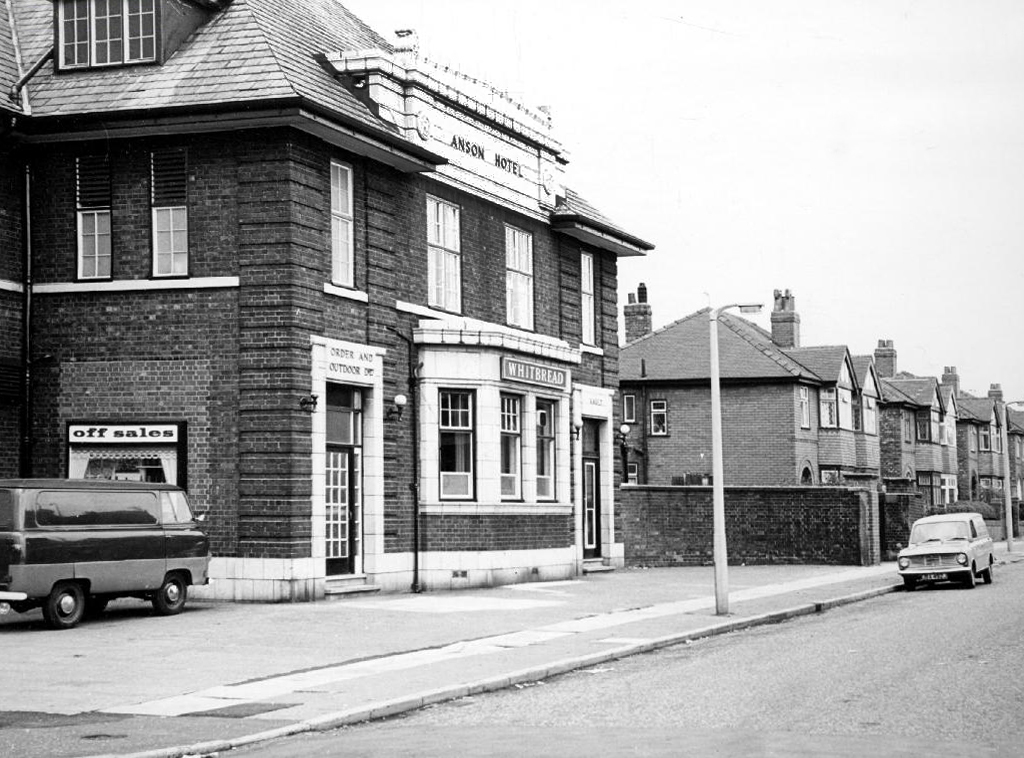
No more outdoor or orders here – the supermarket now supplies the supplies for the self satisfied home drinker.

The sheer scale of the building guaranteed its demise, a three storey house with no more stories to tell.

Searching online for some clues as to its history there is but one mention, on the Pubs of Manchester:

This is my attempt, in some small way, to redress the balance, snapping what remains of this once top pub.

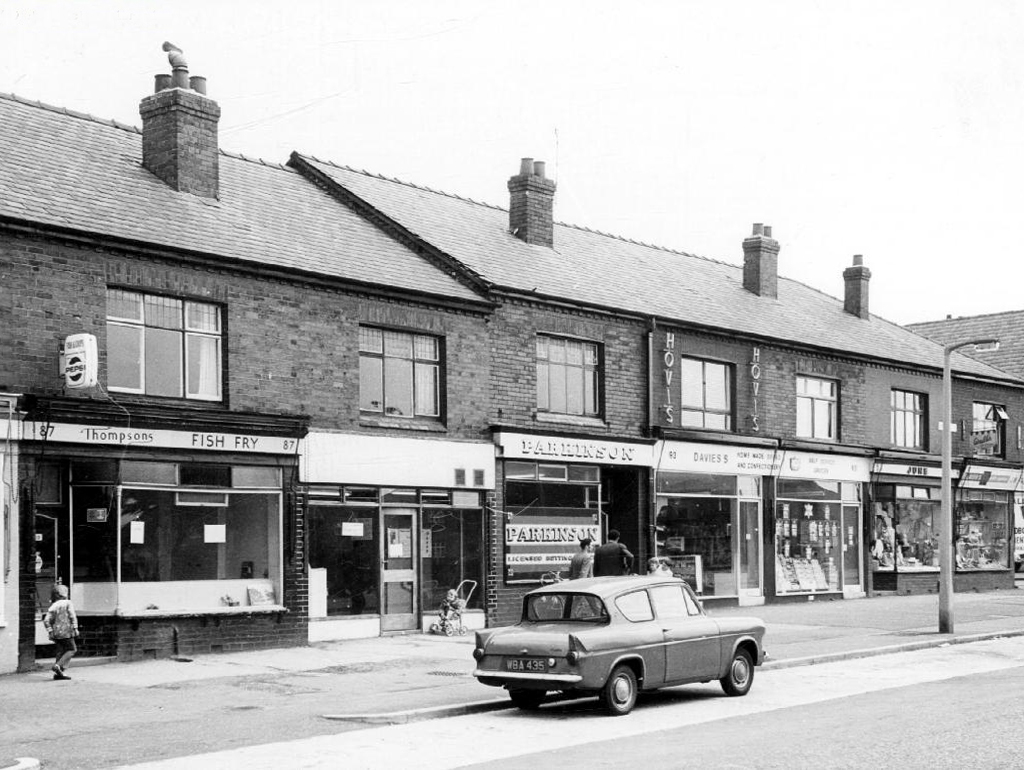
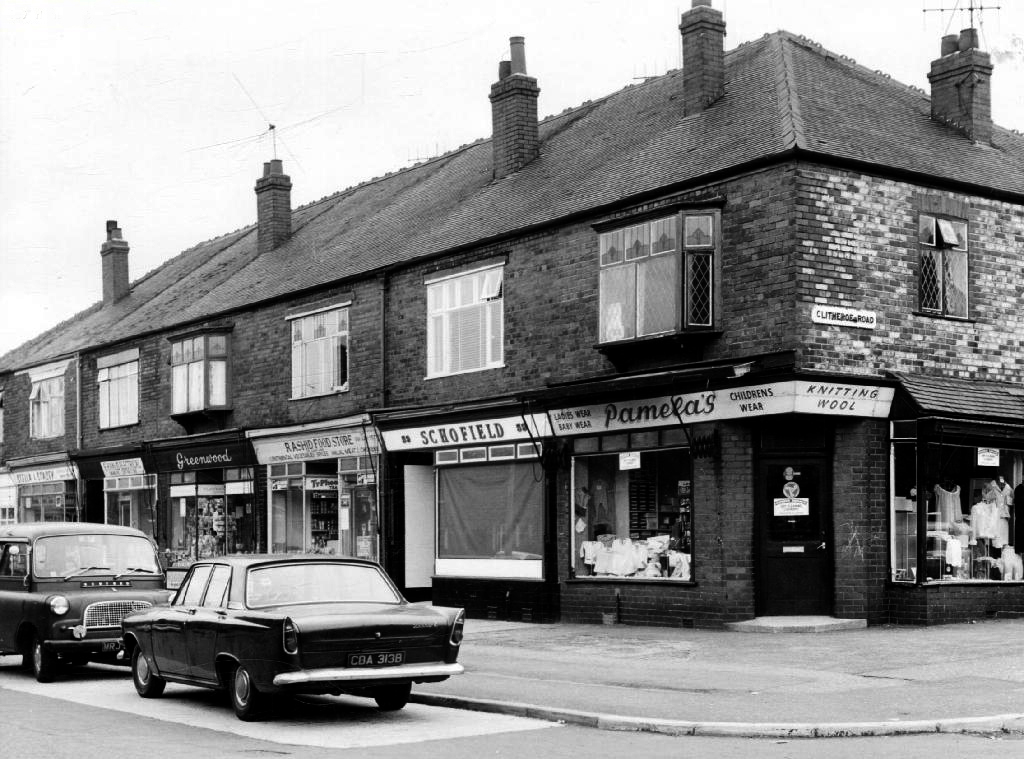
Safe home I searched the Manchester Local Image Collection, hoping to find some clues and/or images elucidating Beresford Road and the Anson in times gone by.

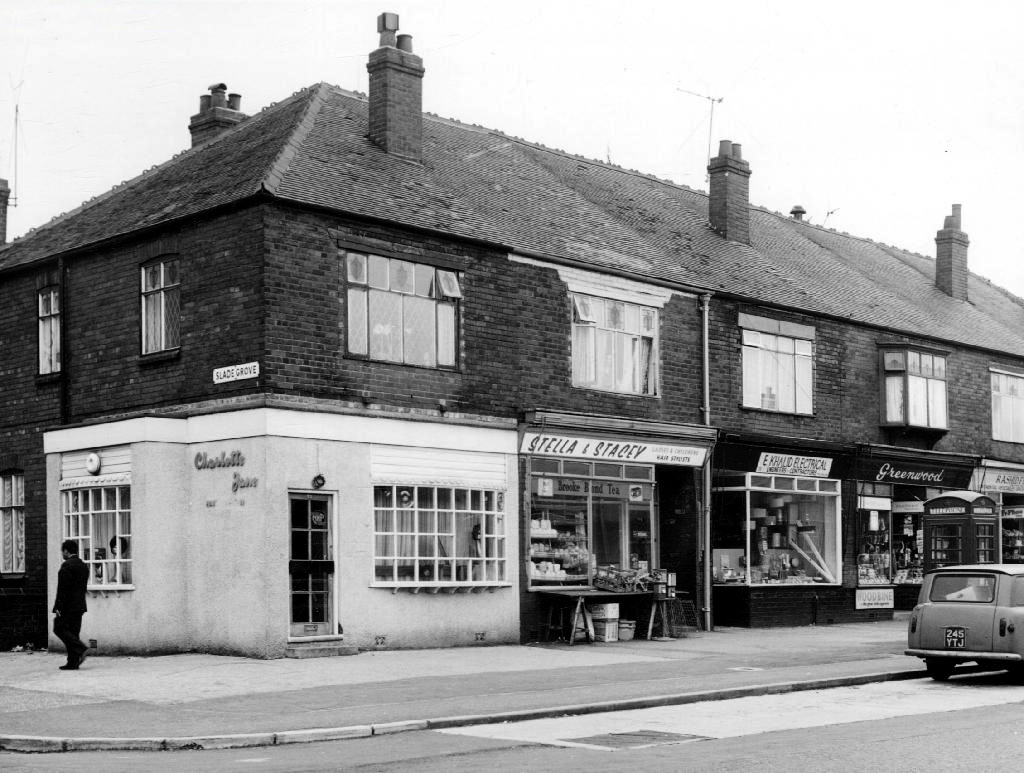
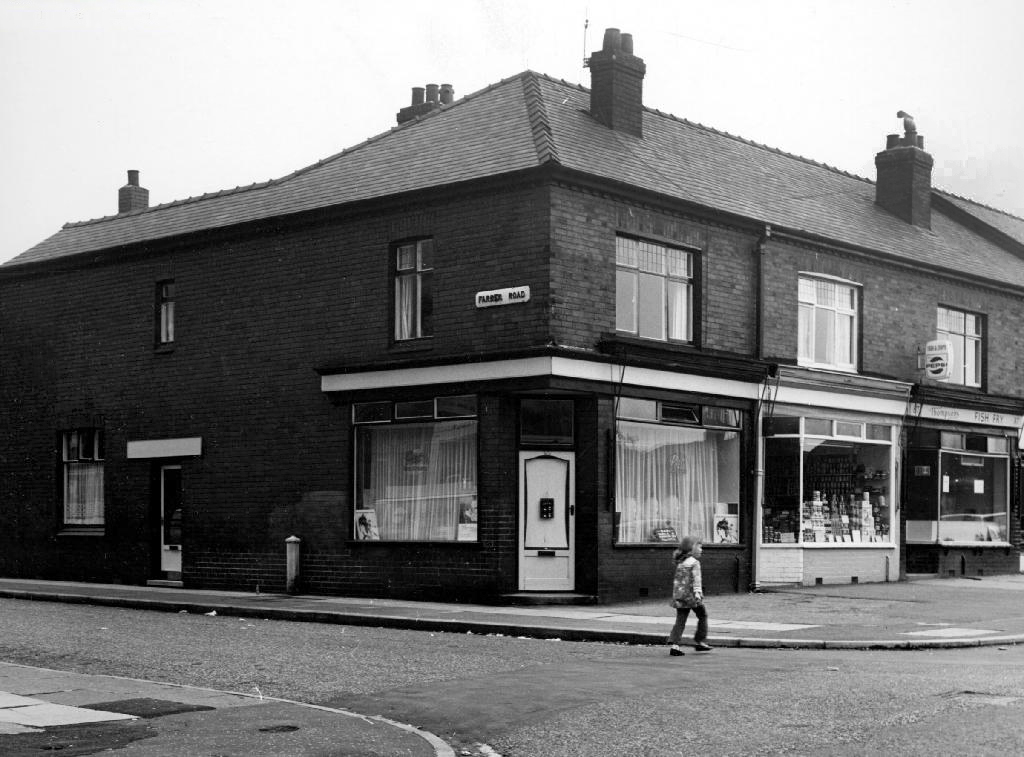
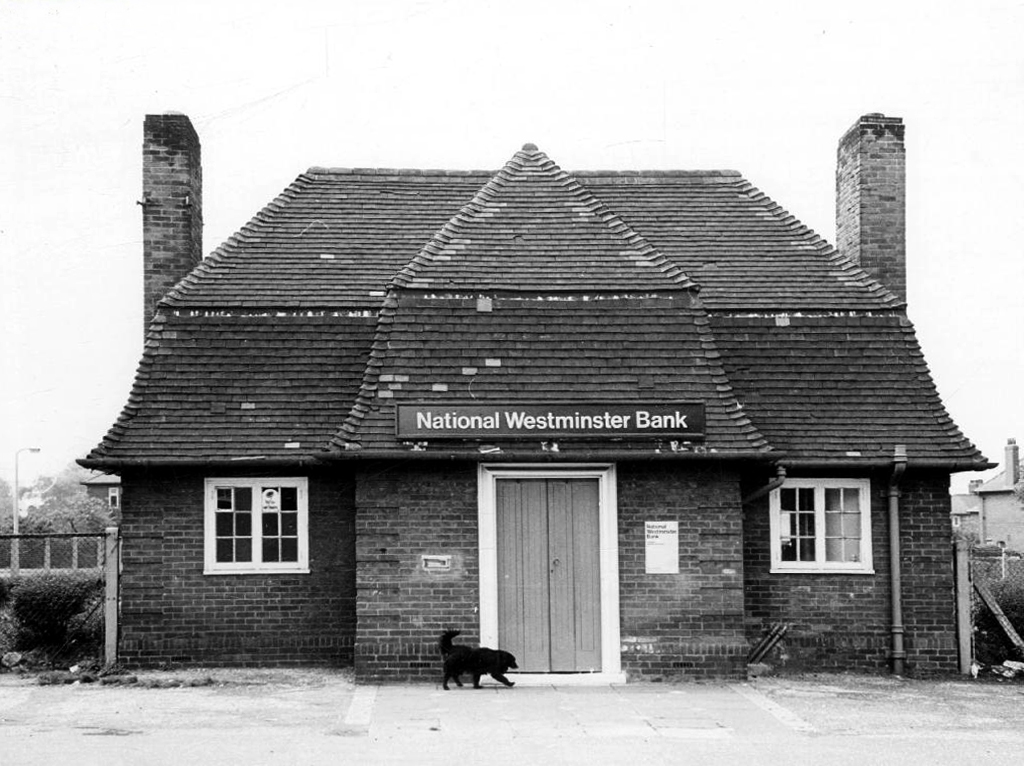
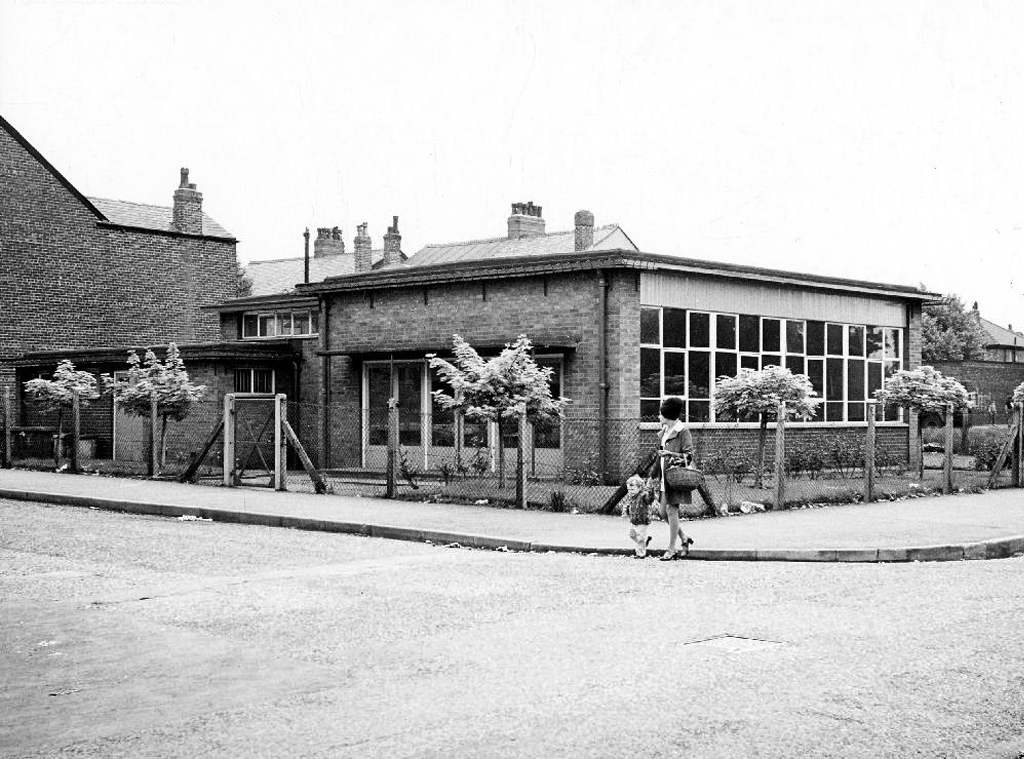
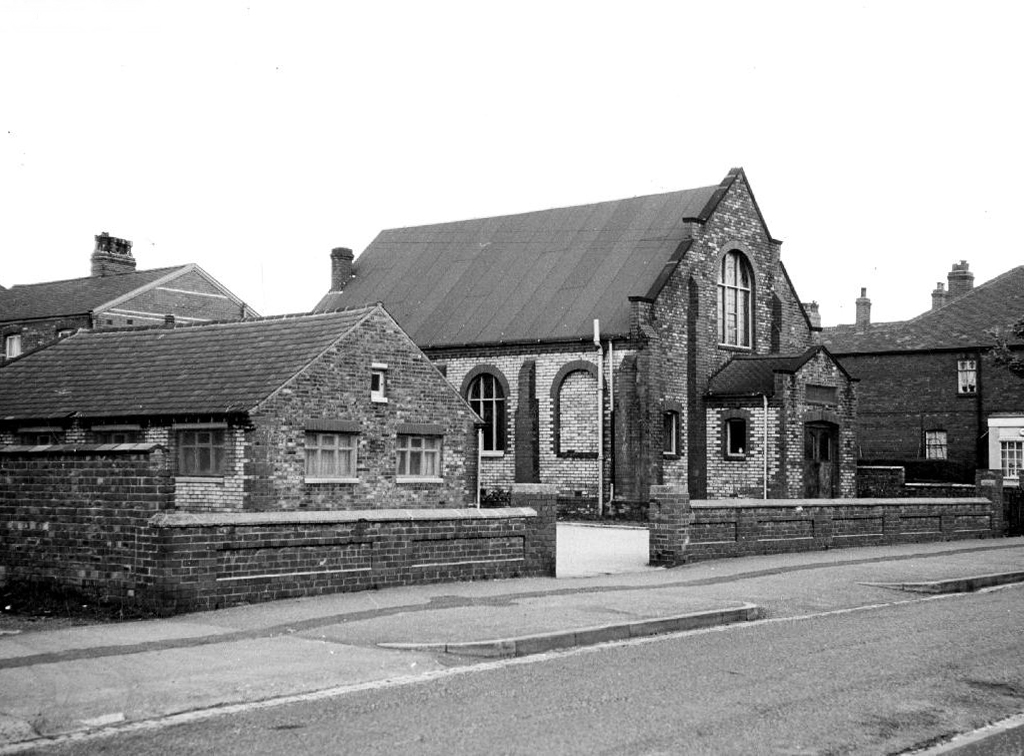
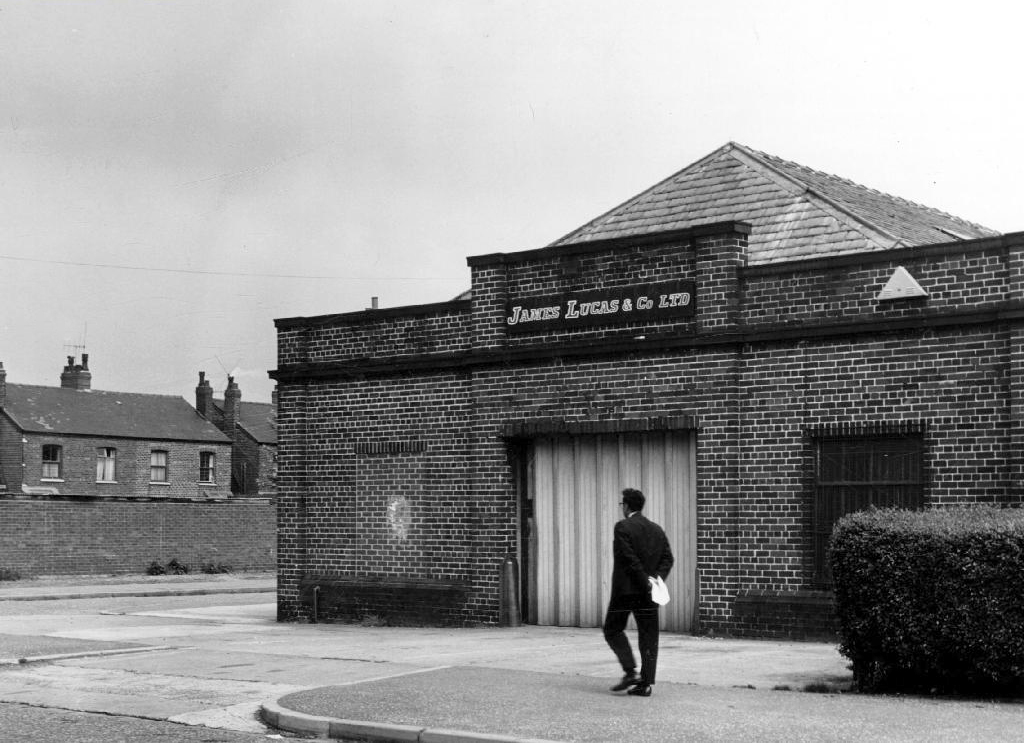
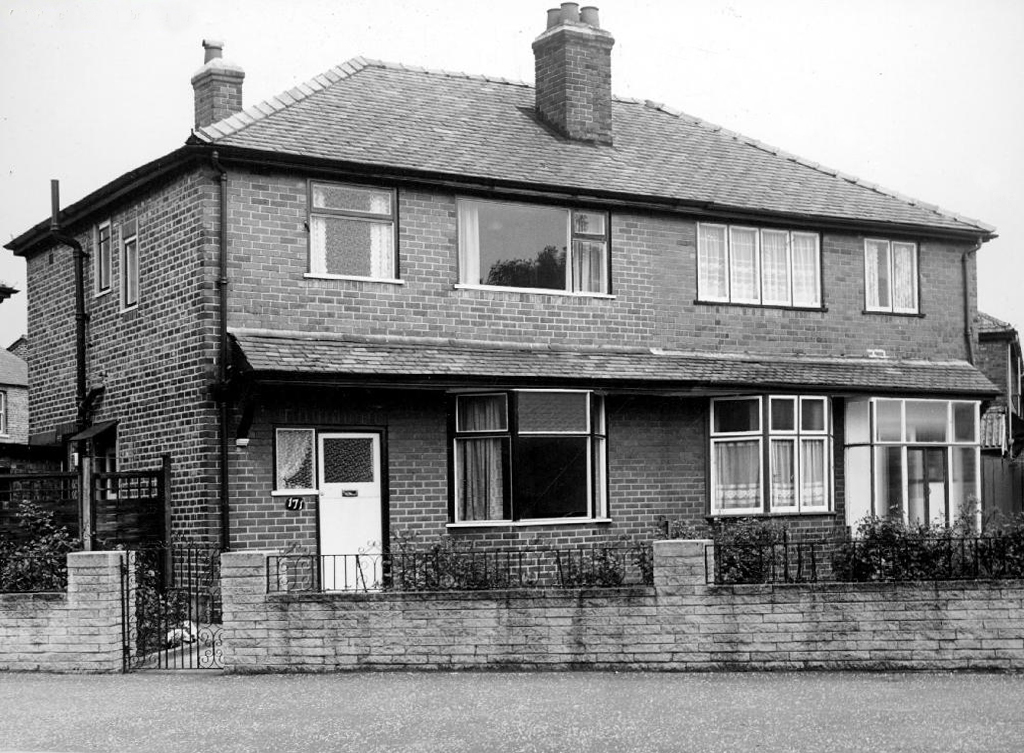
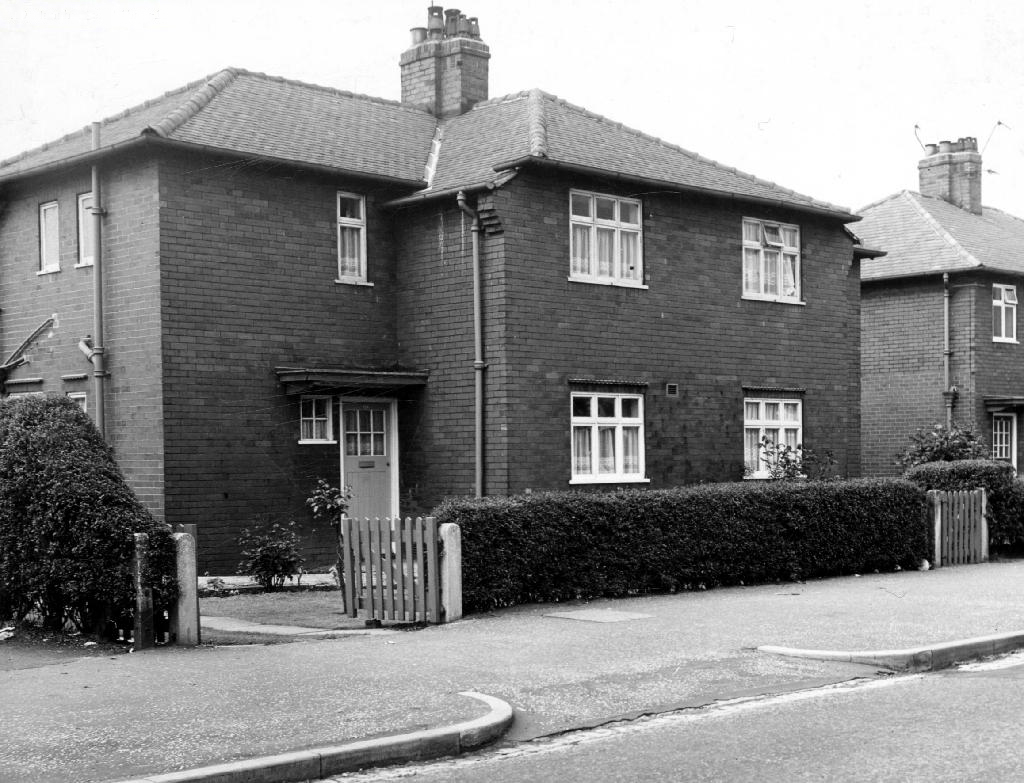
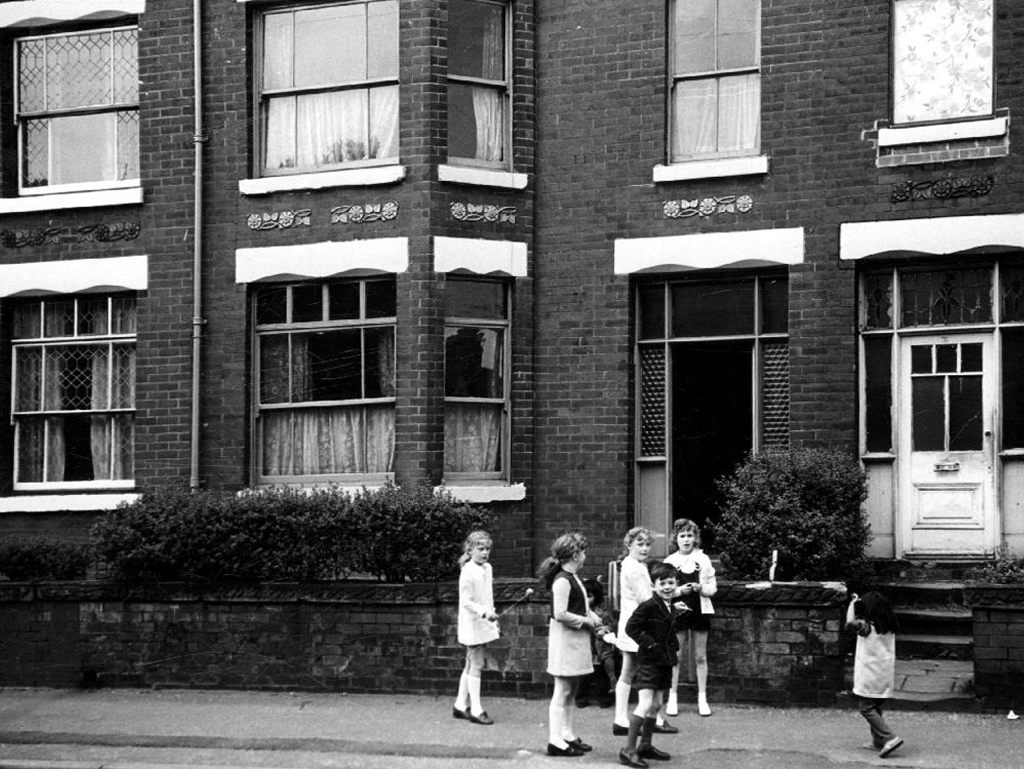
I found a typical inner Manchester suburban thoroughfare, a healthy mix of homes socially and privately owned, industry, independents shops, schools and such. Kids at play, passers-by passing by, captured in 1971 by the Council’s housing department photographers.

This was not a Golden Age – wasn’t the past much better, brighter, cheerier and cleaner reminiscence – simply a series of observations.

Things change.

Including the Anson Hotel.

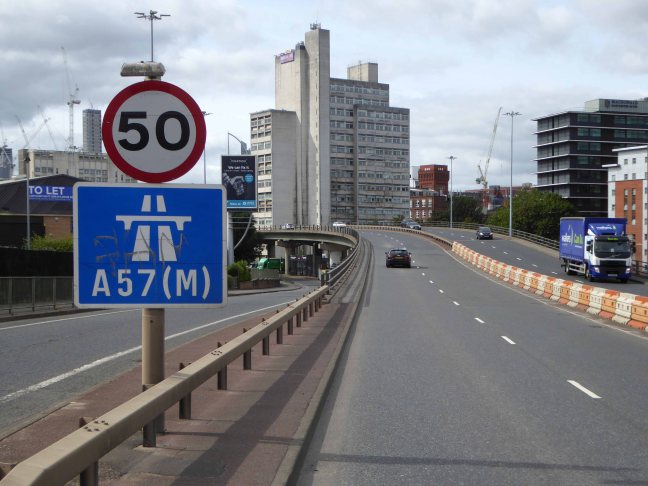
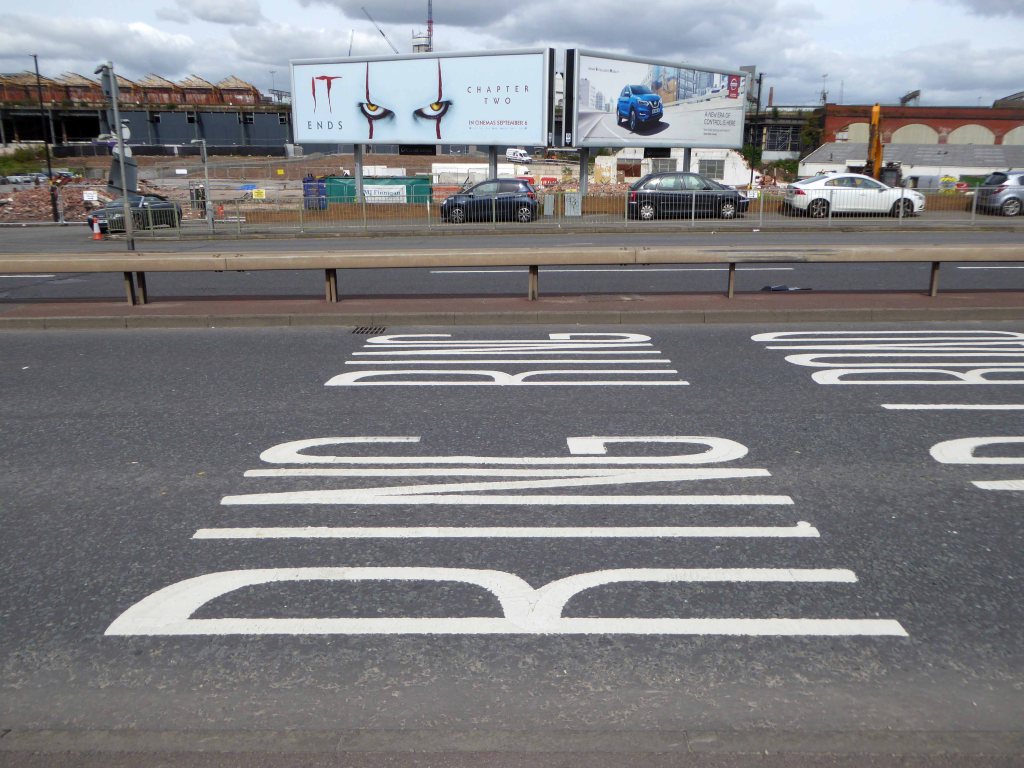
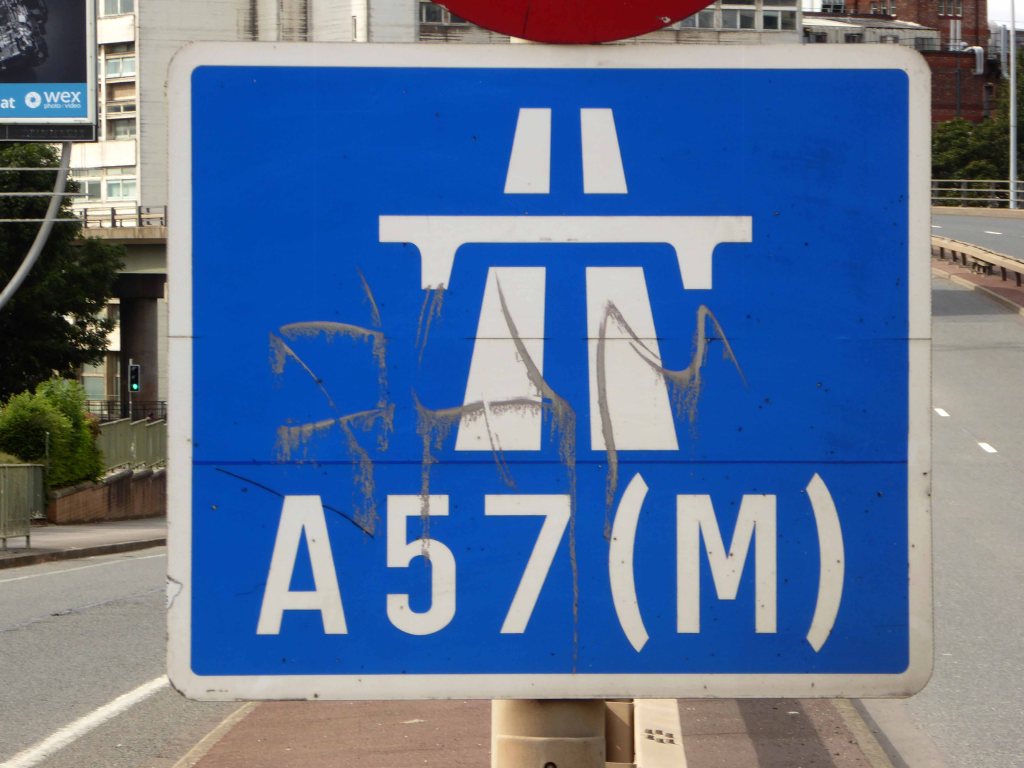
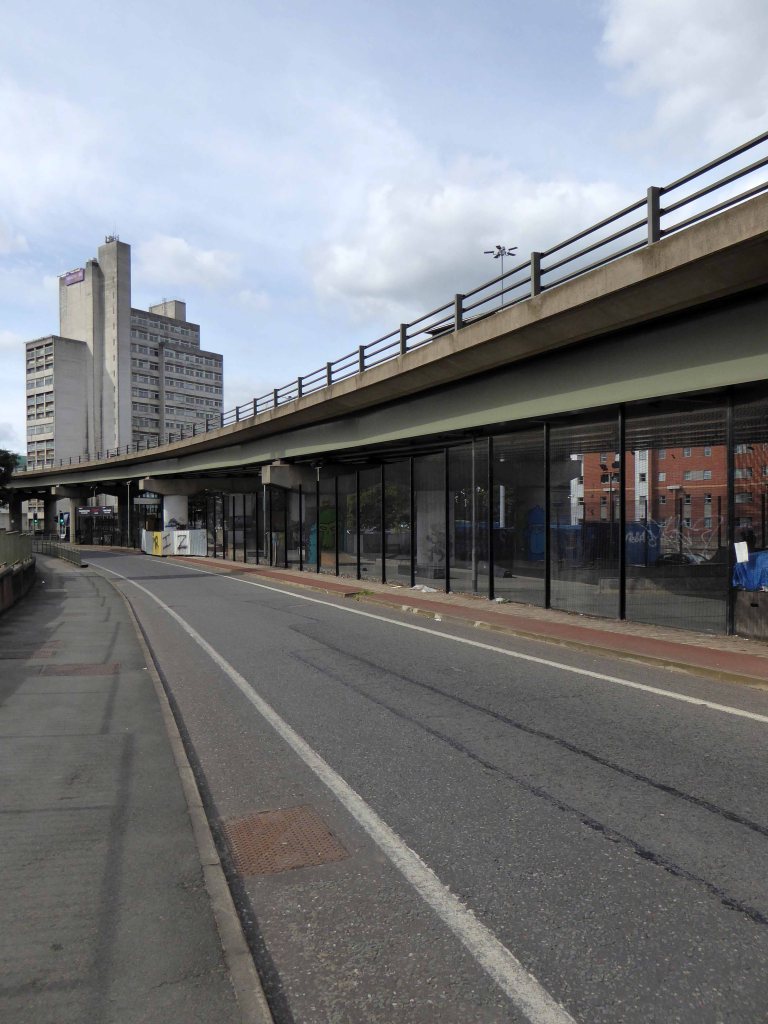
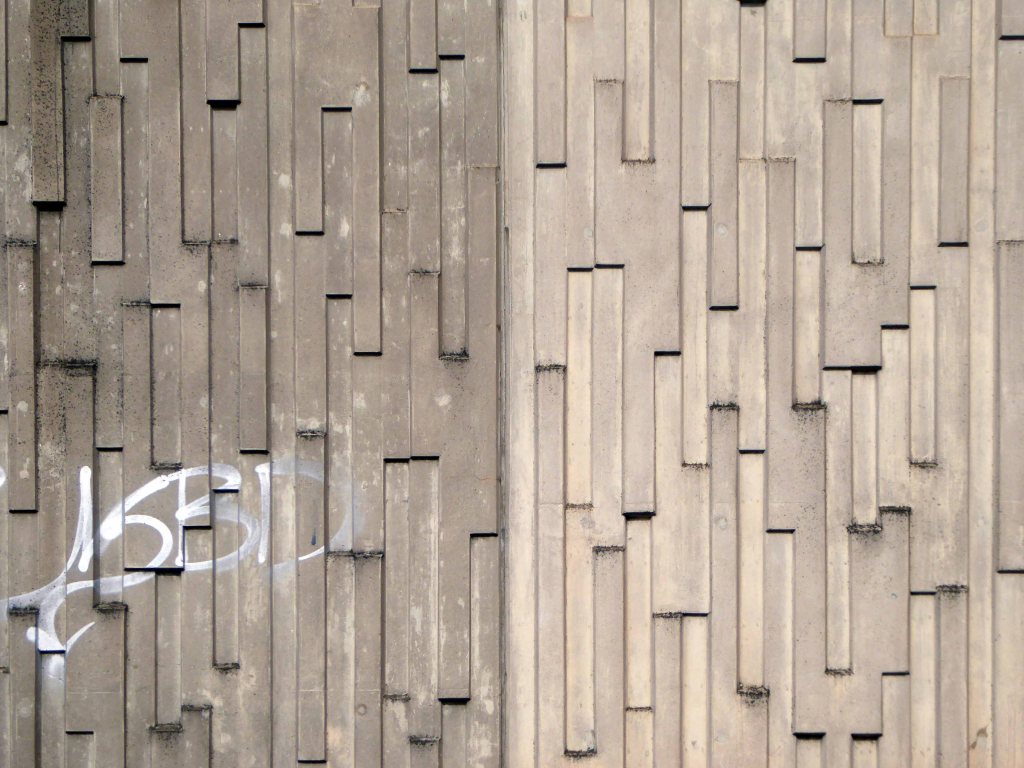
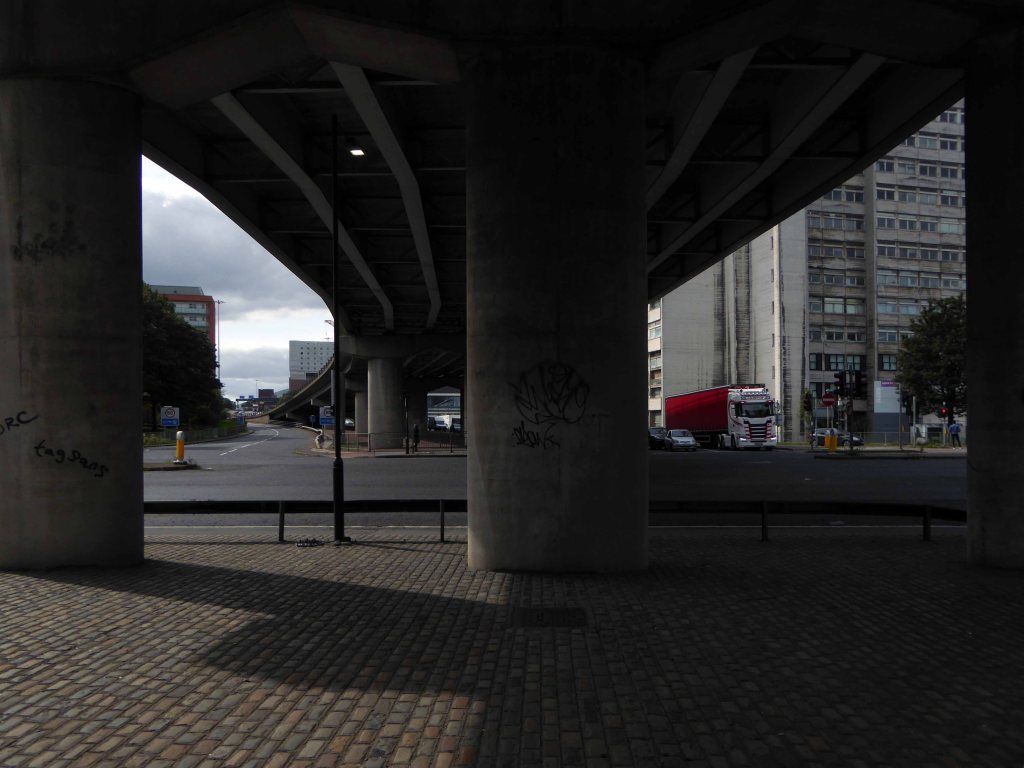
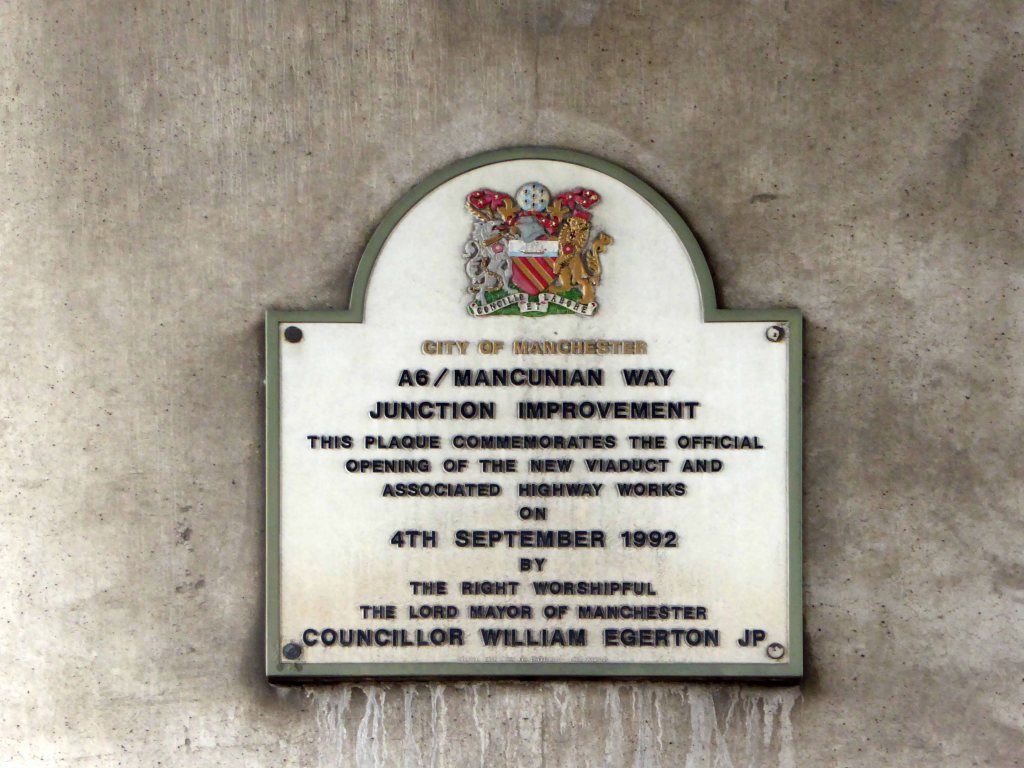
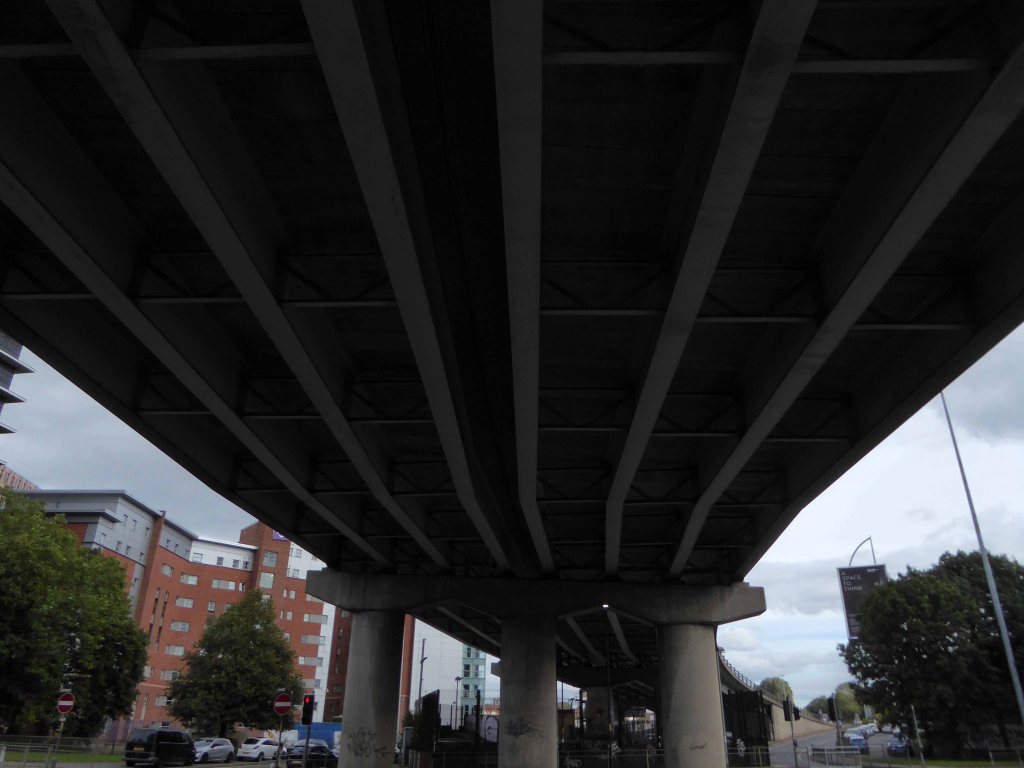
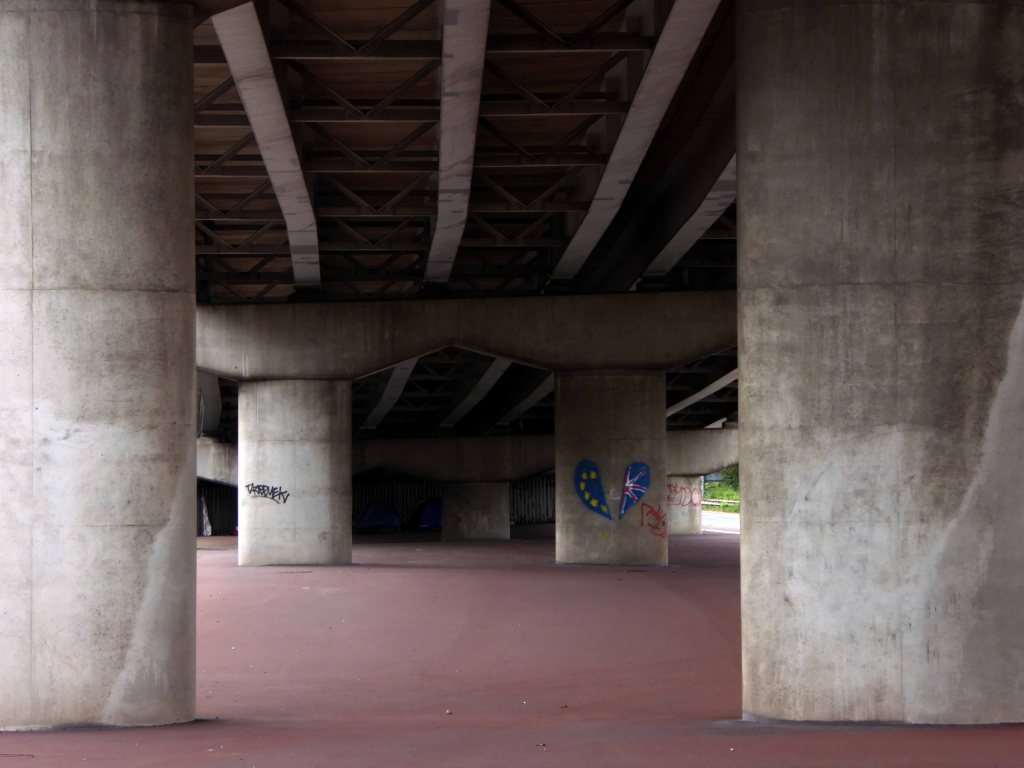
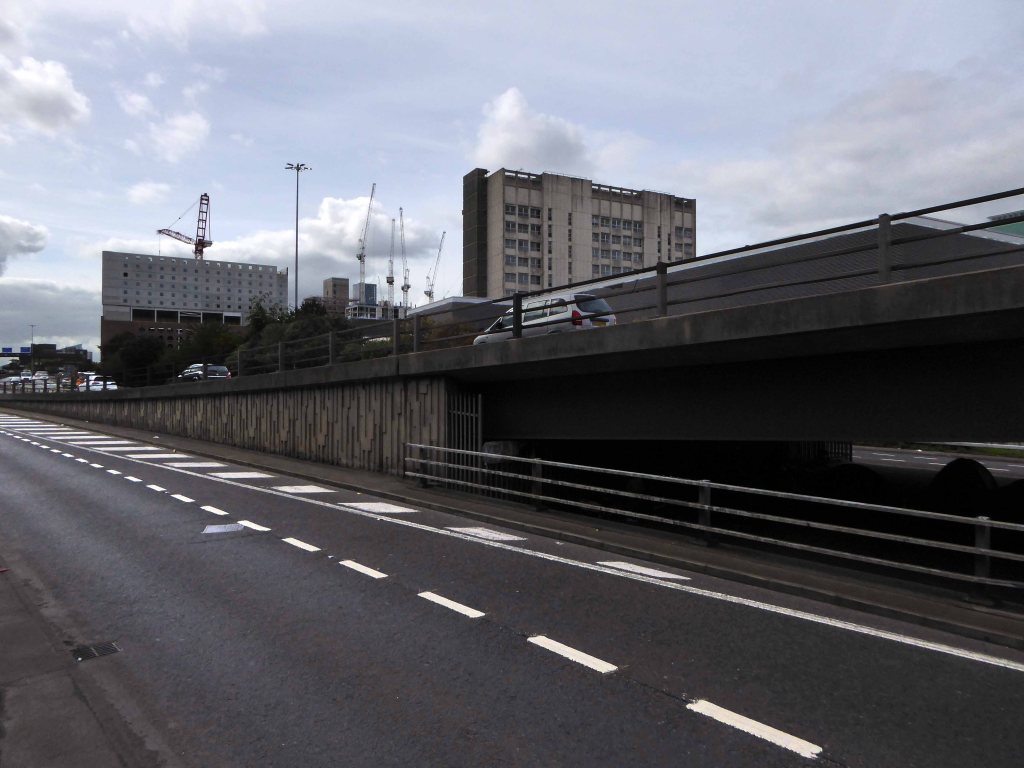
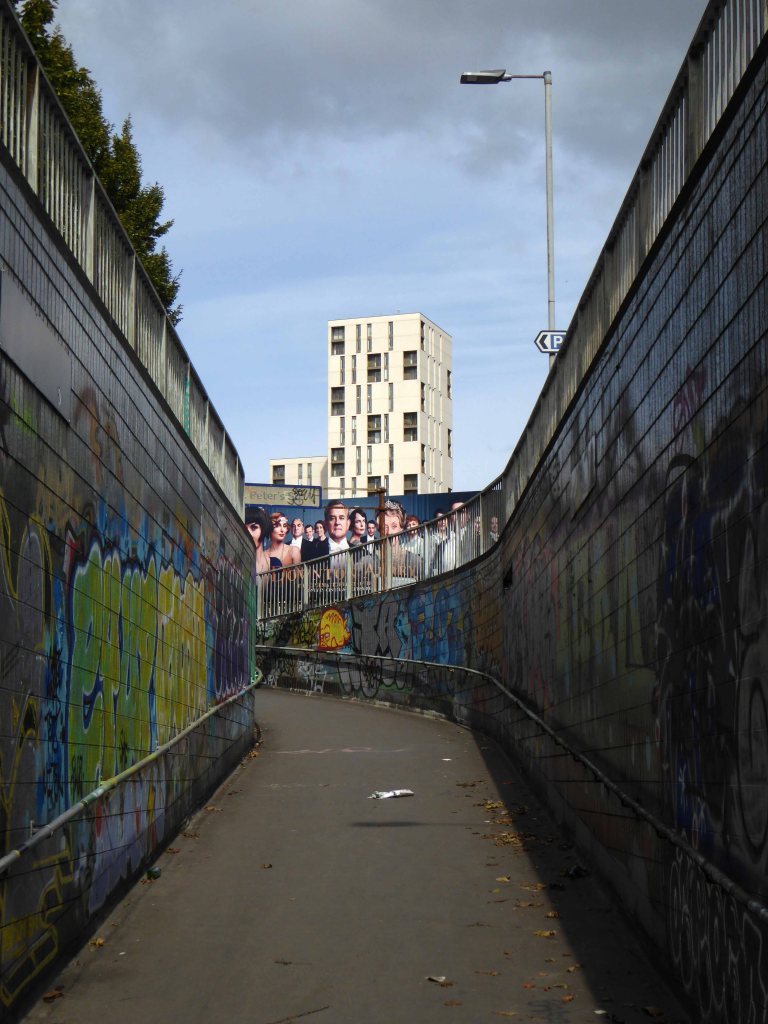
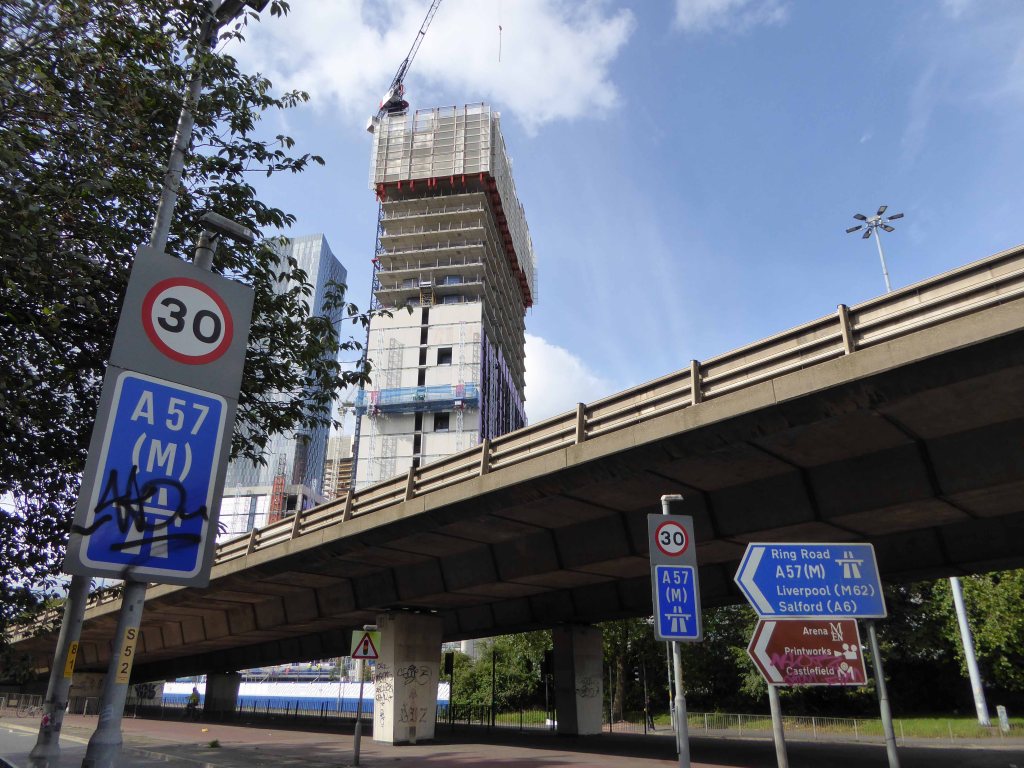
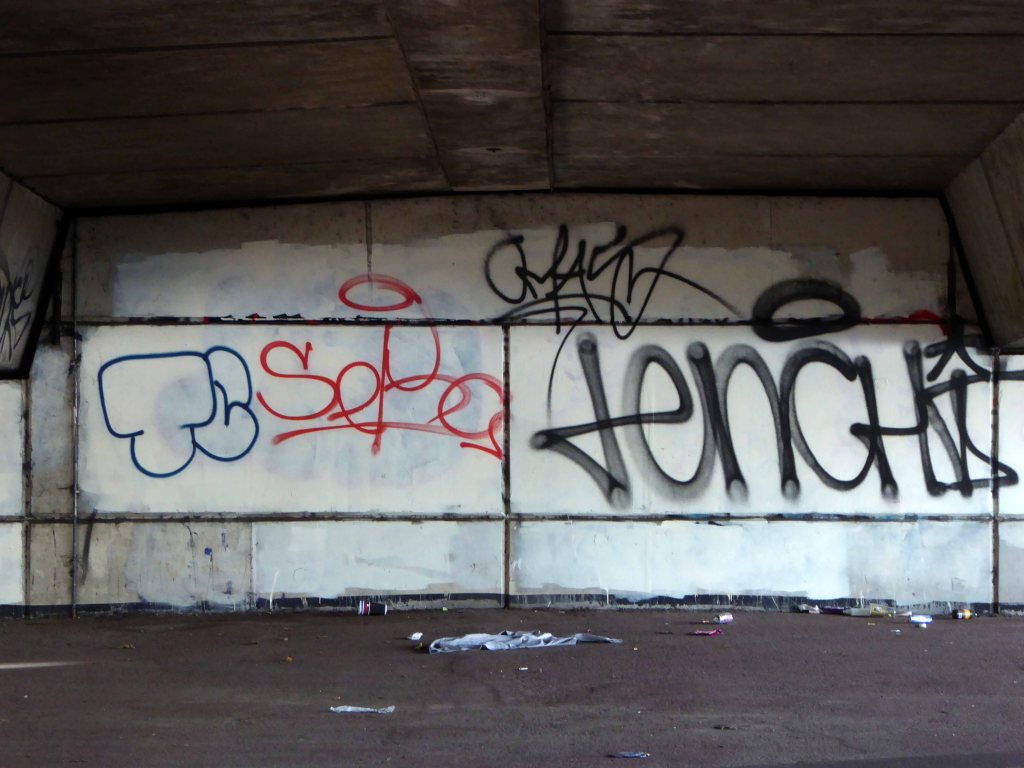
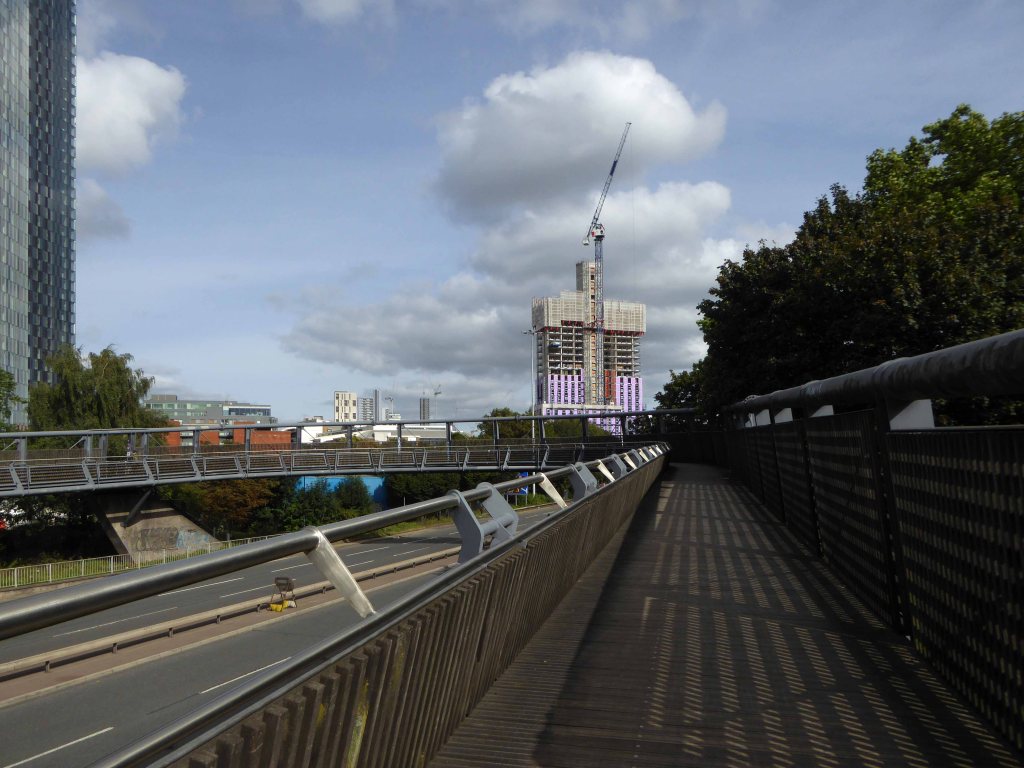
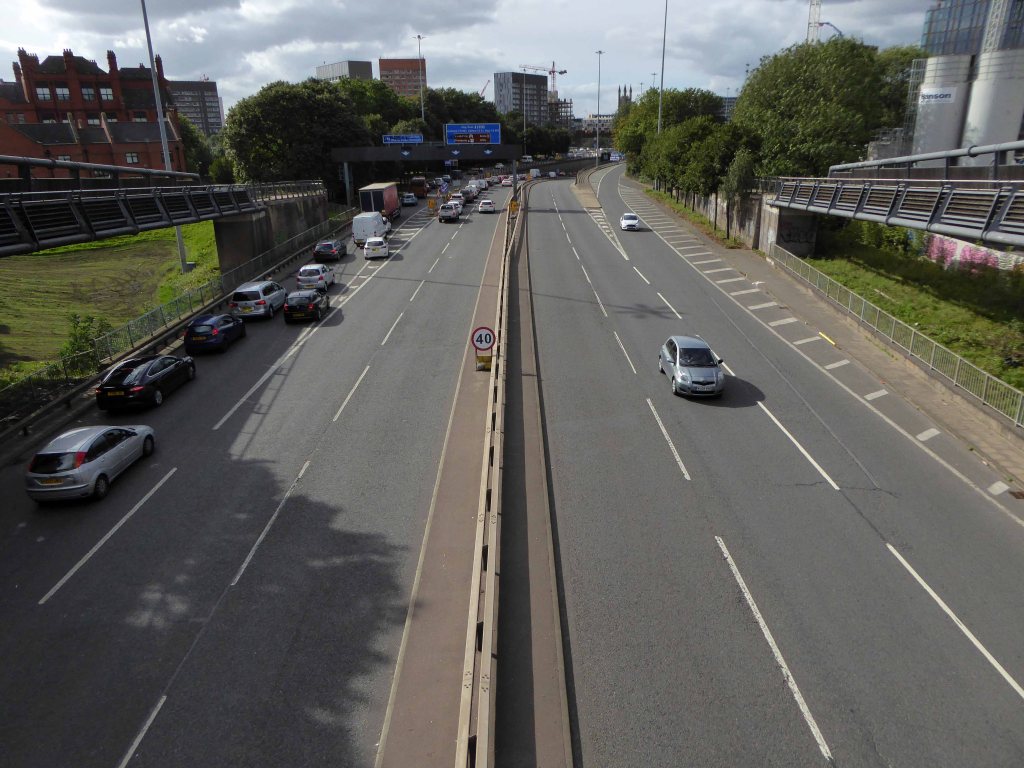
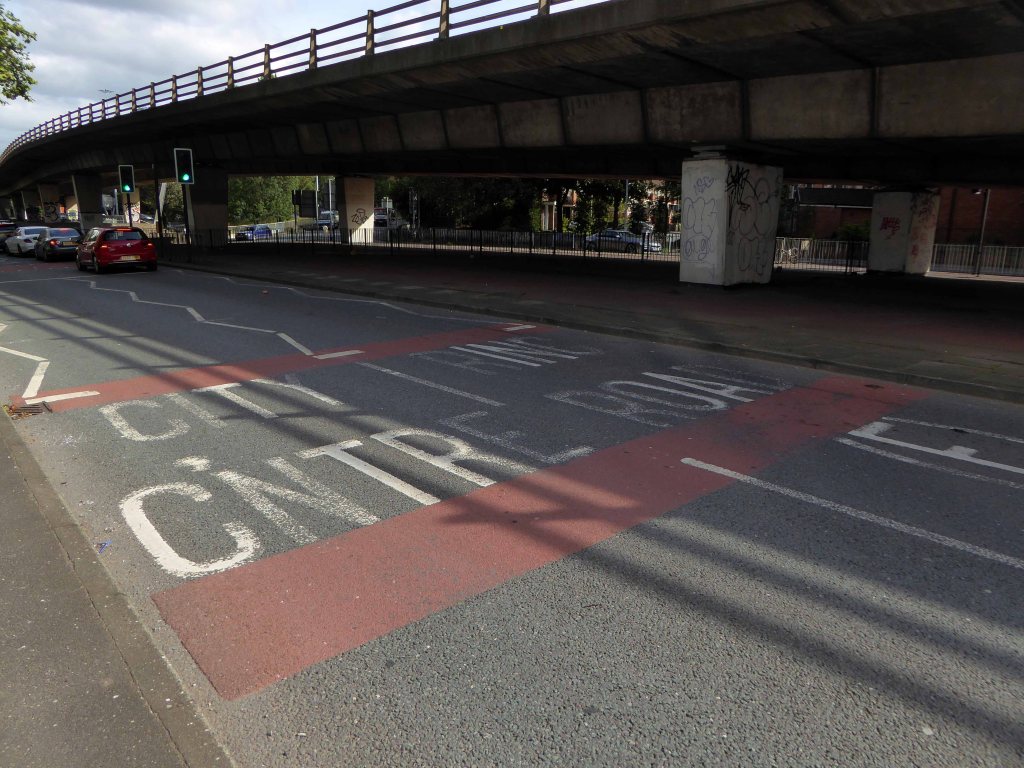
The Mancunian Way – A57(M)

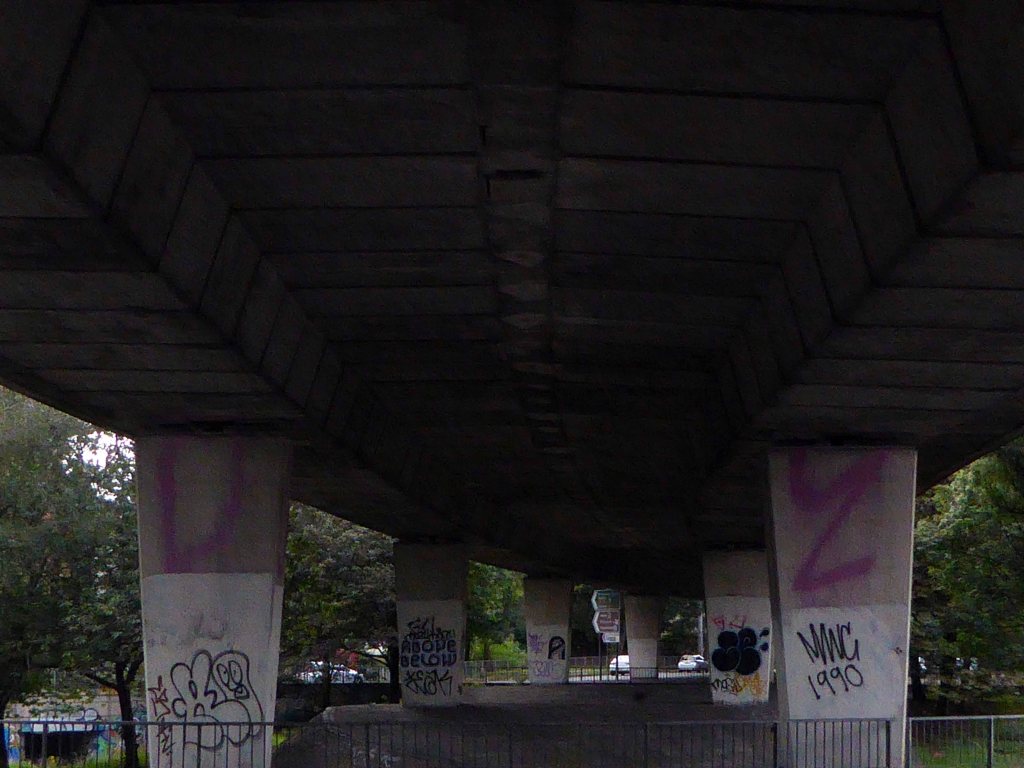
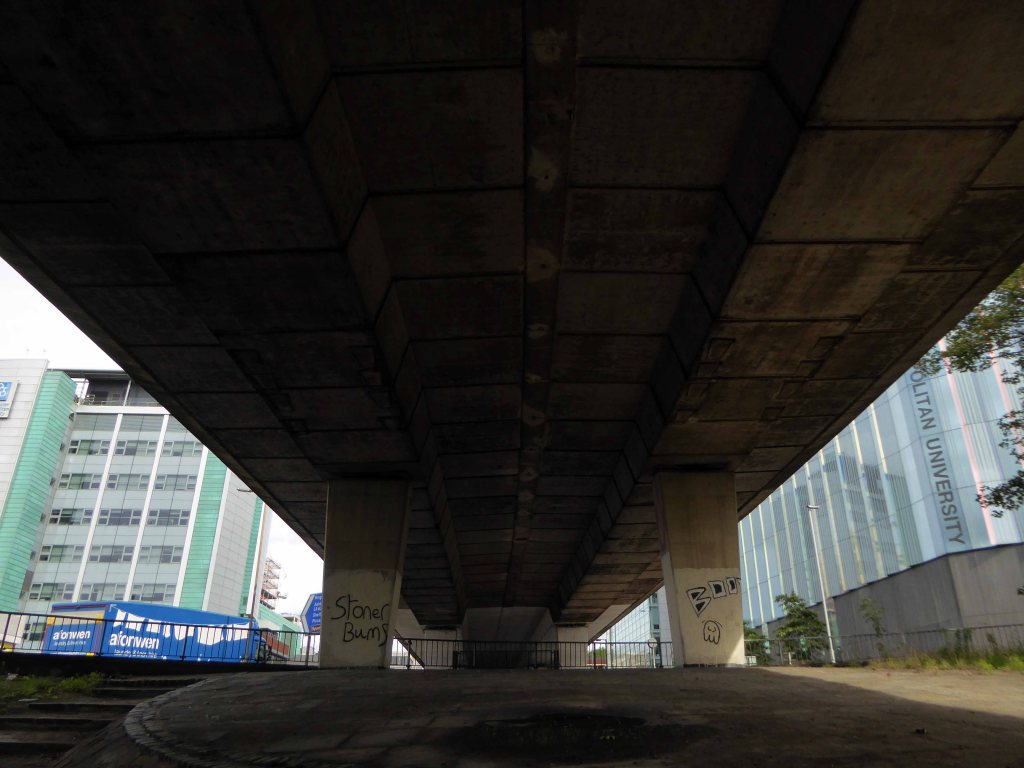
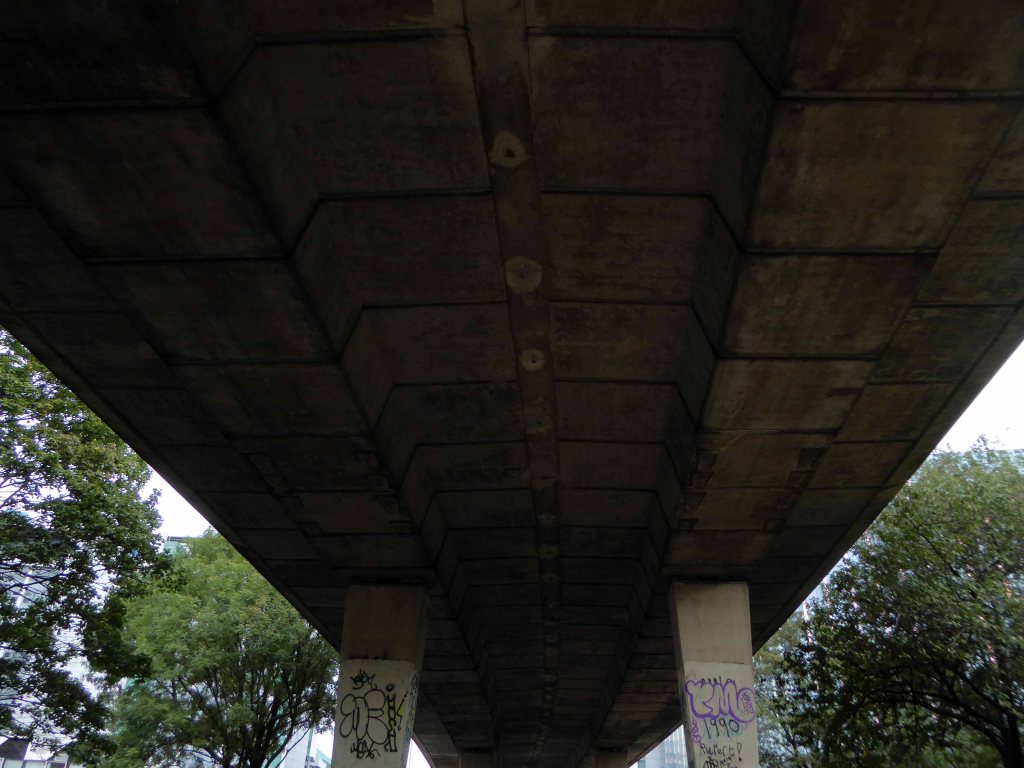
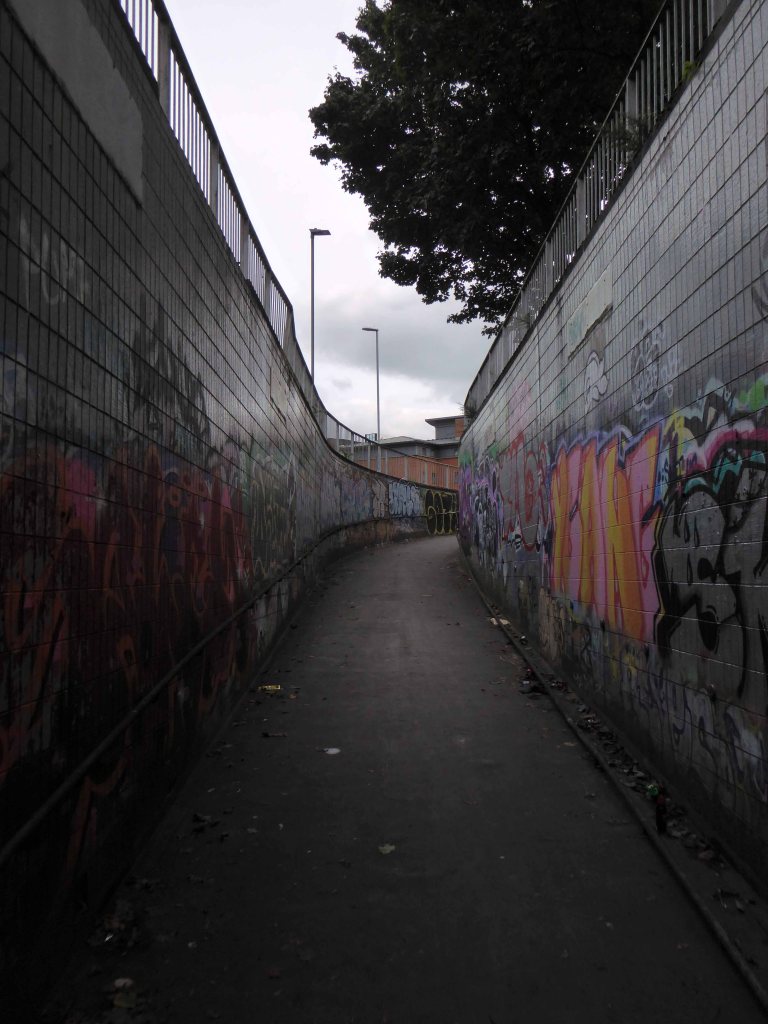
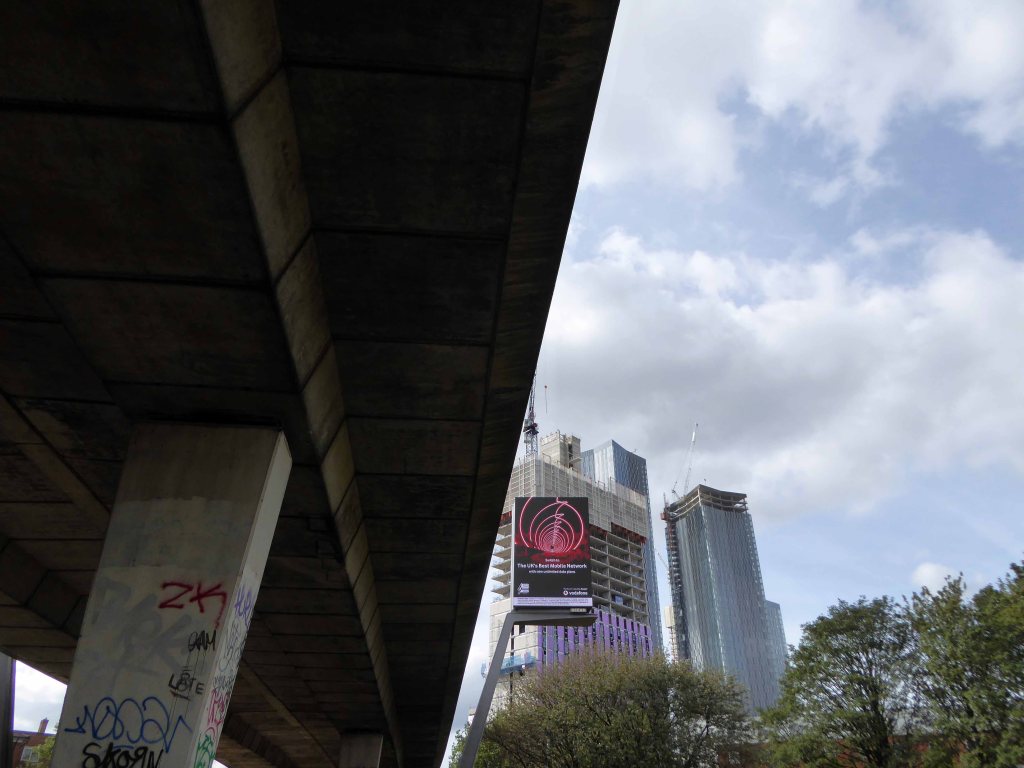
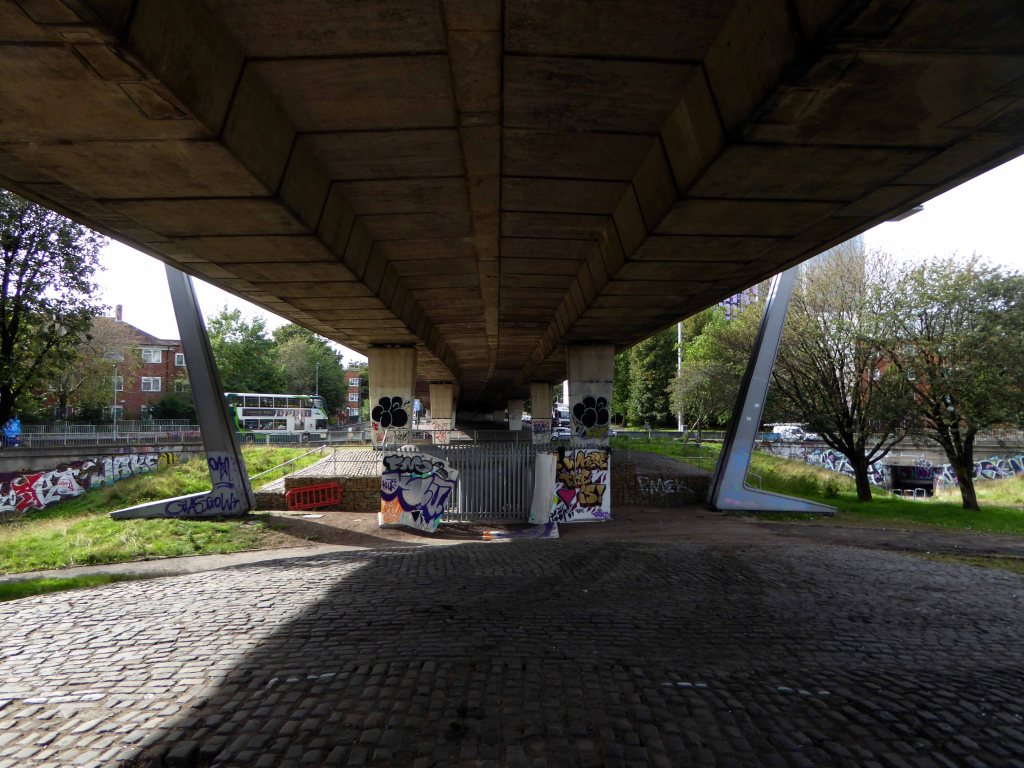
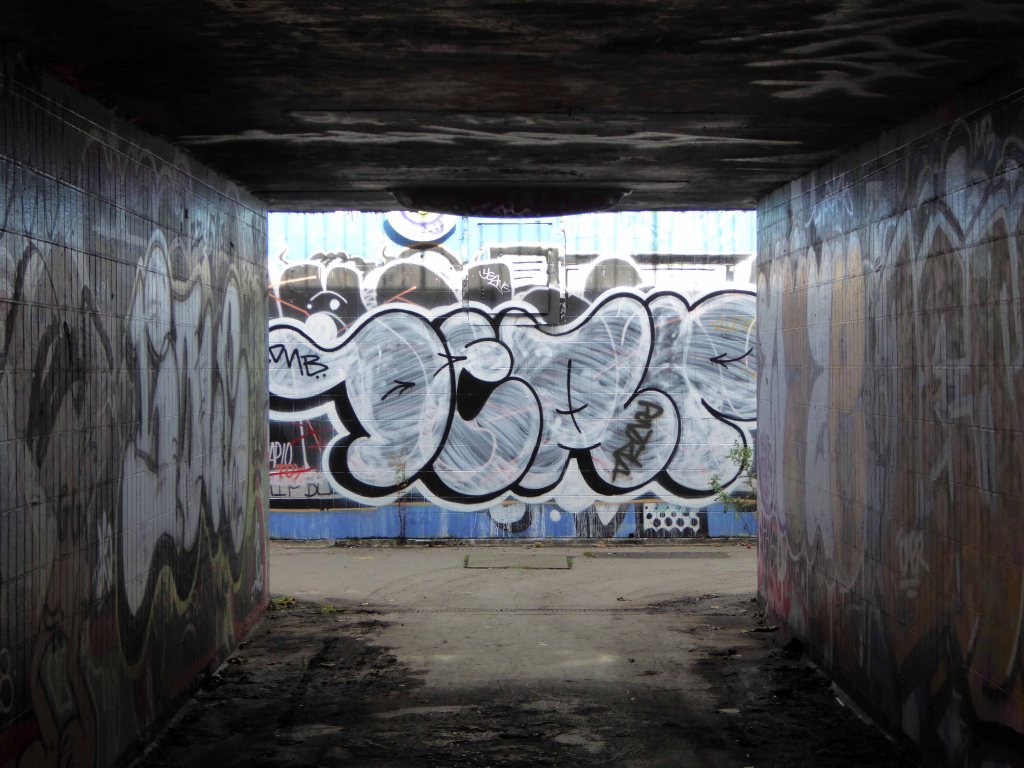
I’m walking, yes indeed I’m walking – I’m walking the Mancunian Way.

Previously posted as historical journey – this, as they say, is the real deal, one foot after another, one sunny afternoon in September.

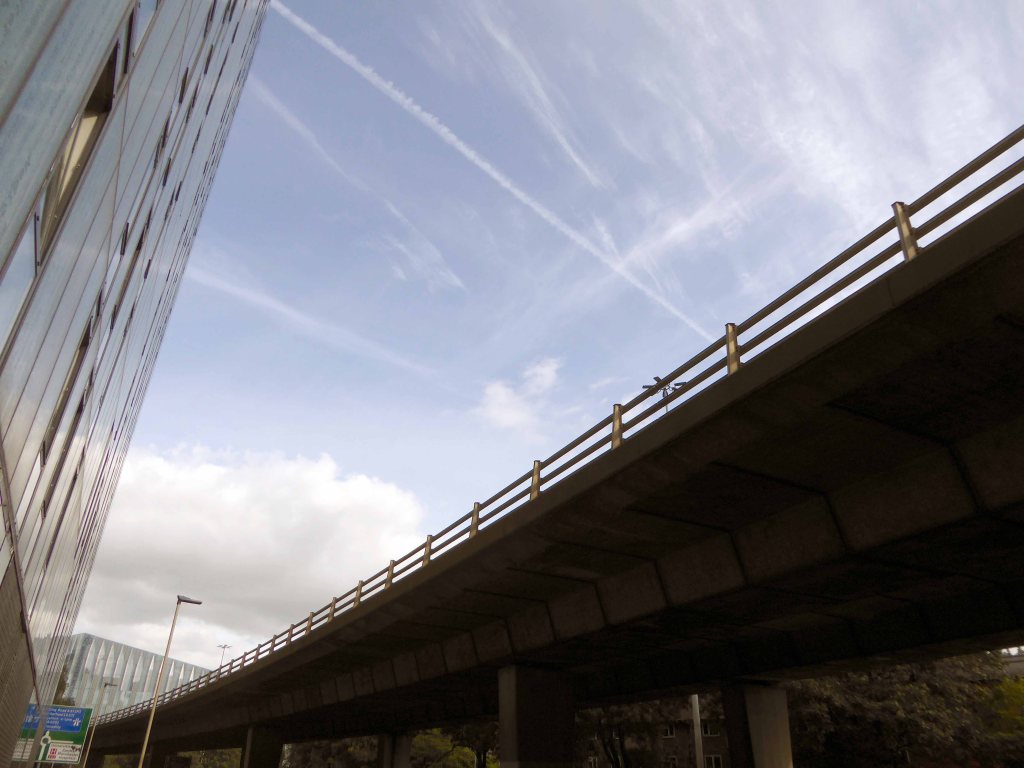
From east to west and back again – in or on, under and around our very own Highway in the Sky.

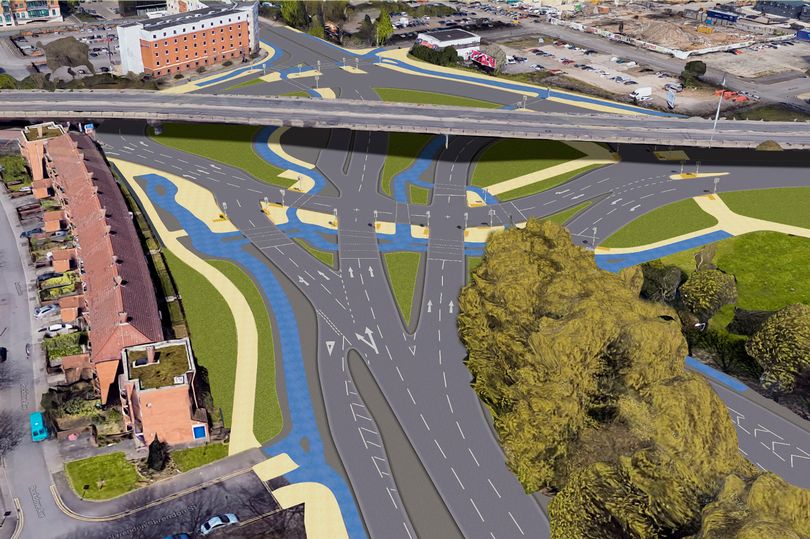
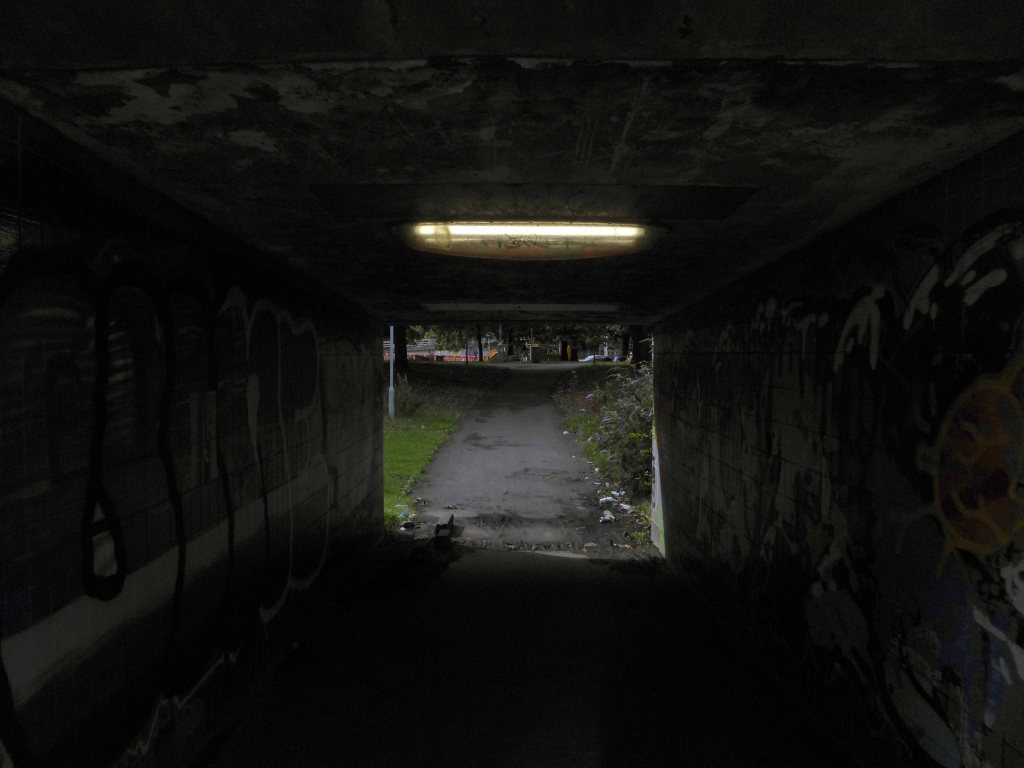
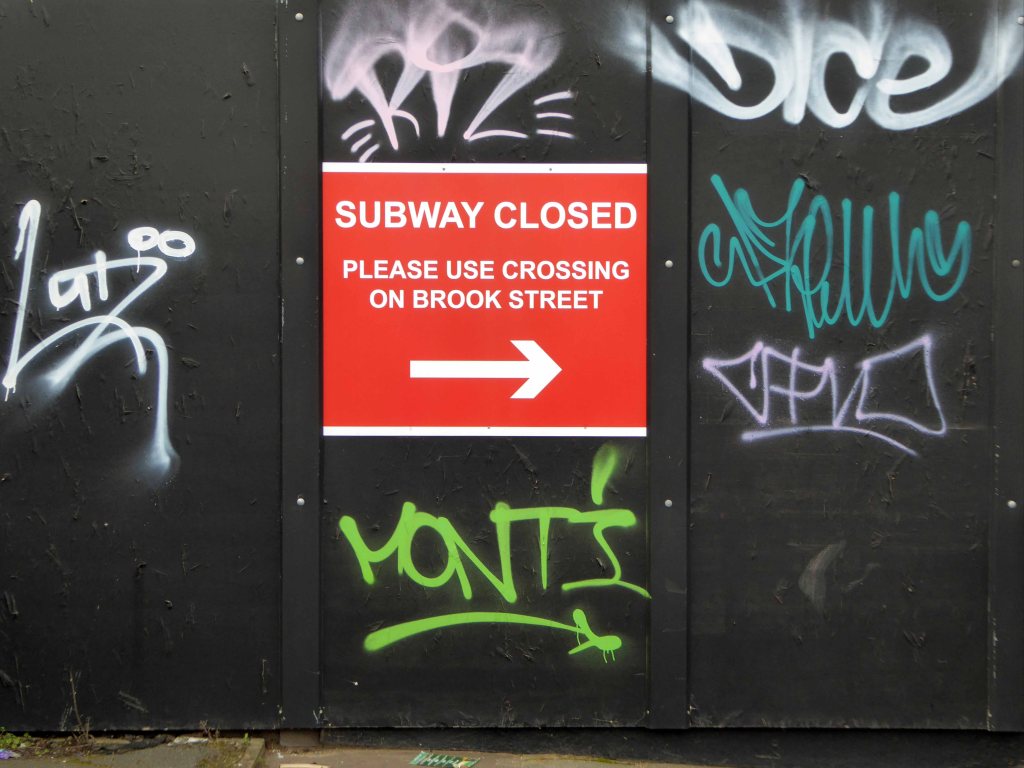
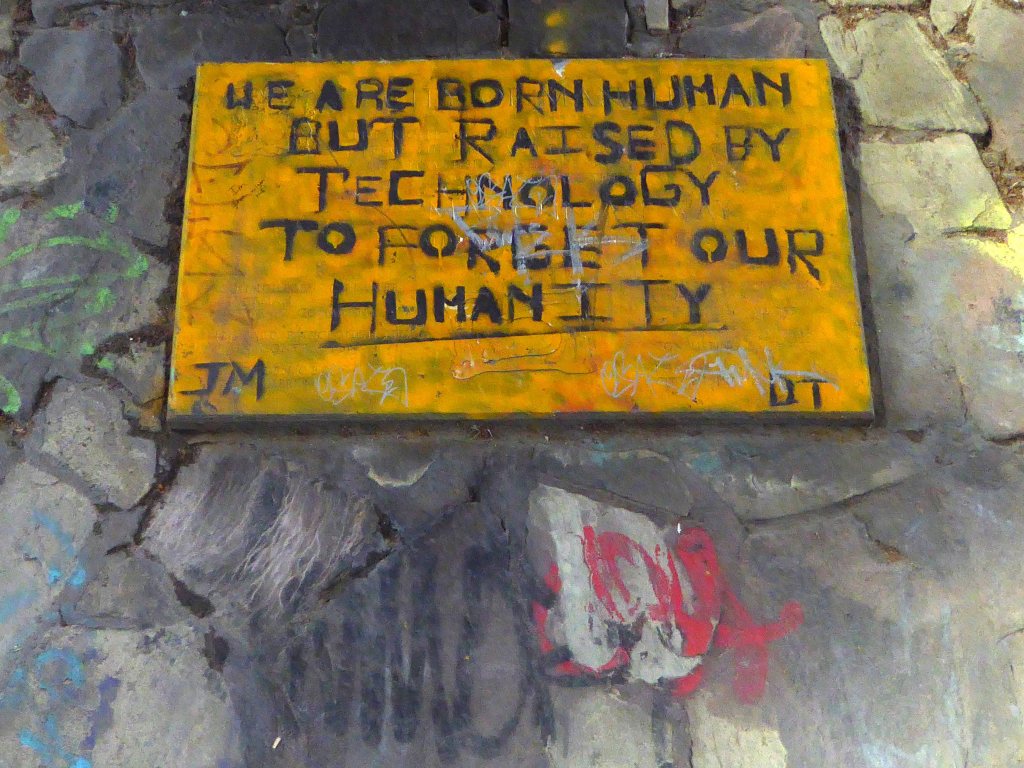
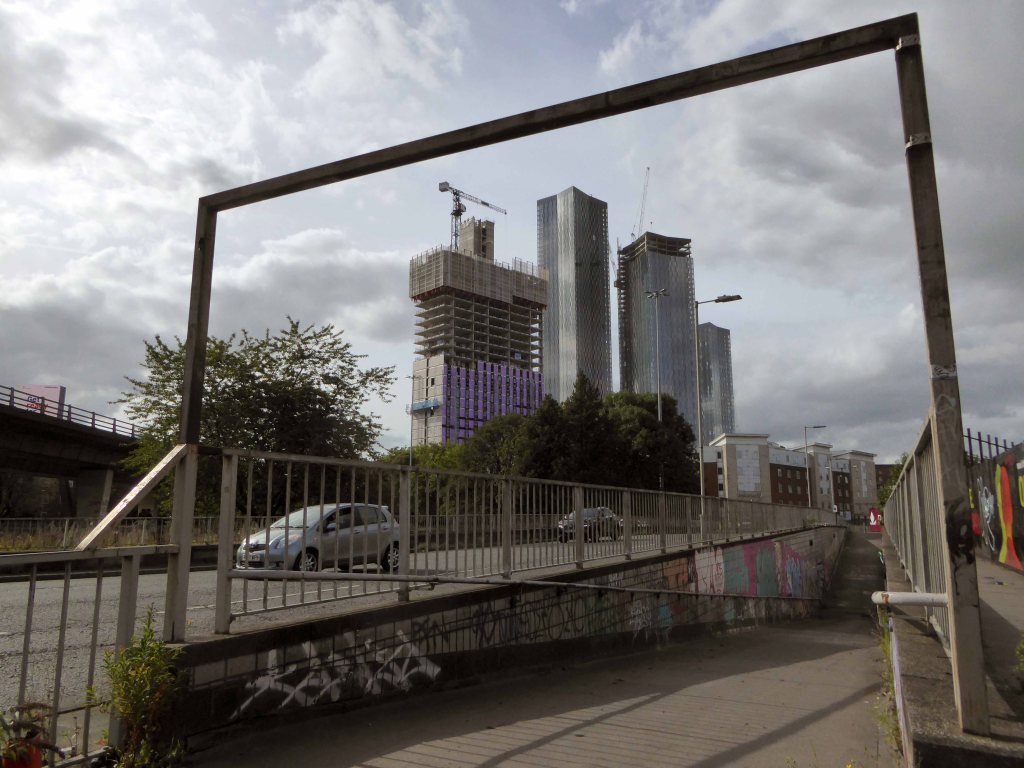
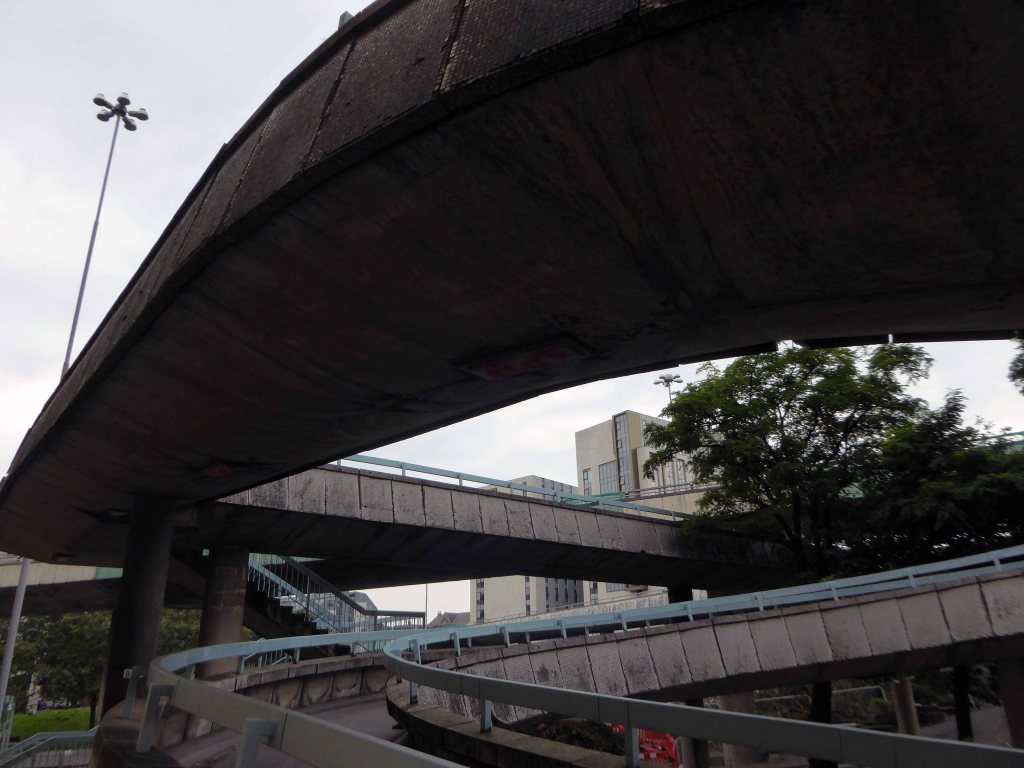
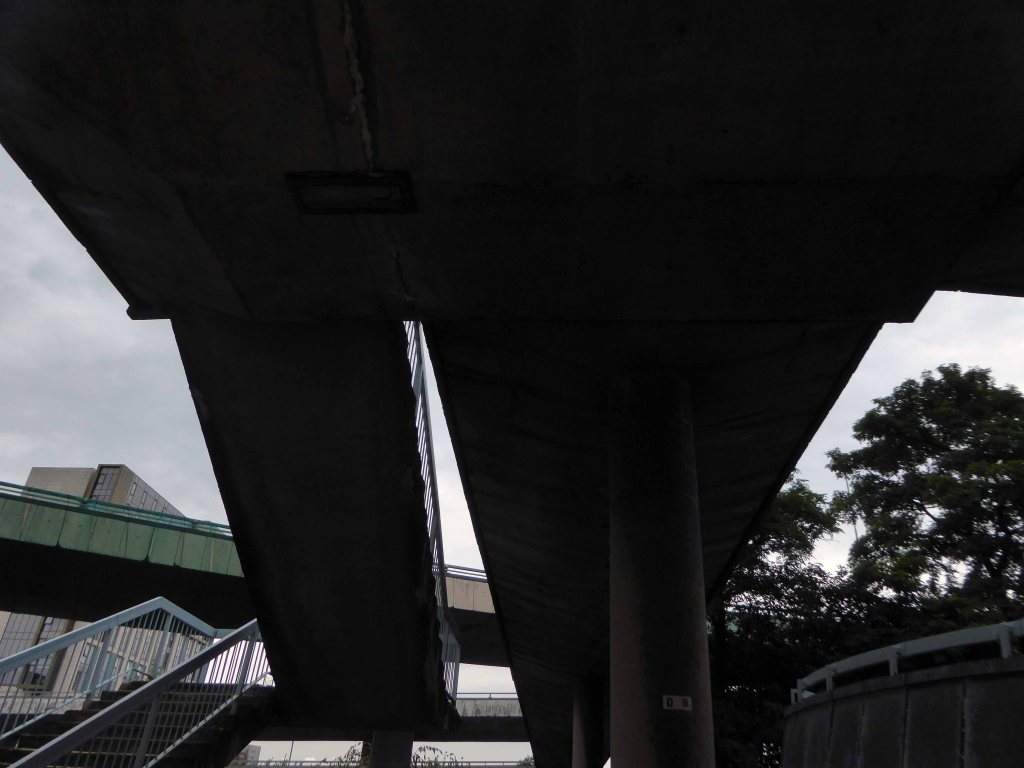
Part of the ever changing patchwork of demolition and development which defines the modern city. The carriageway prevails, whilst the pervasive rise and fall continues apace, its forlorn pedestrian underpasses may soon be superseded by wider walkways.

Manchester City Council is spending around £10million to make major changes to the junction where Princess Road meets the Mancunian Way and Medlock Street.

Much to the chagrin of local residents, who value the solace of their sole soulful green space and the frequent users, passing under the constant waves of sooty traffic.

What you see is what you get today, tomorrow is another kettle of concrete, trees, traffic and steel.

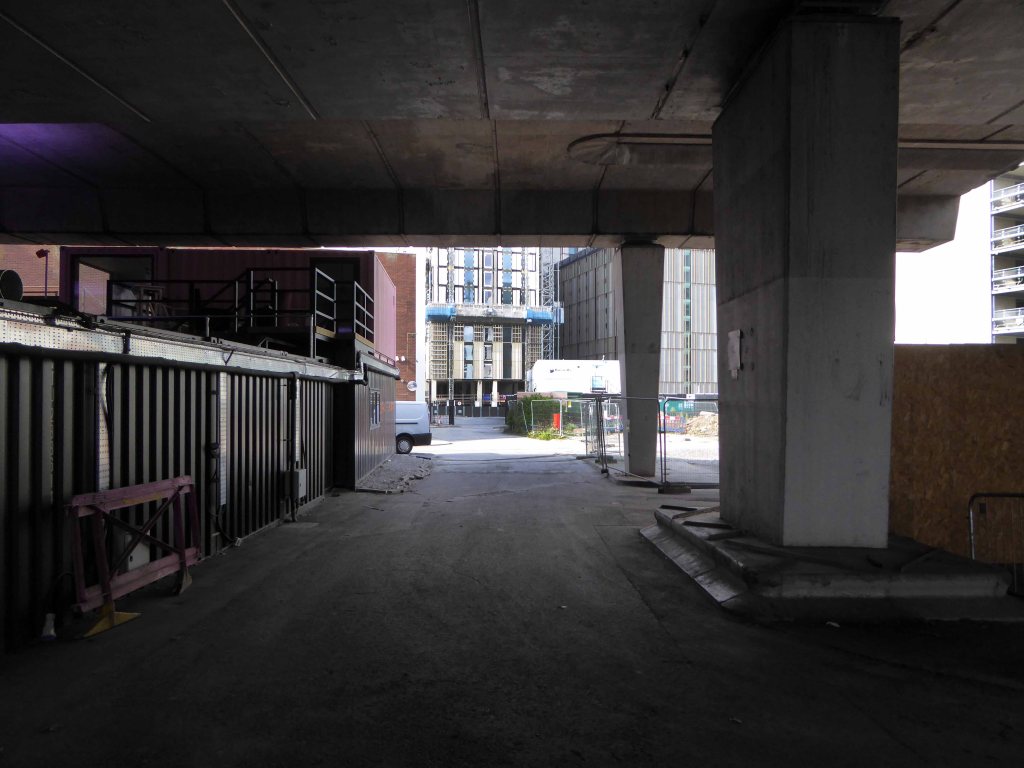
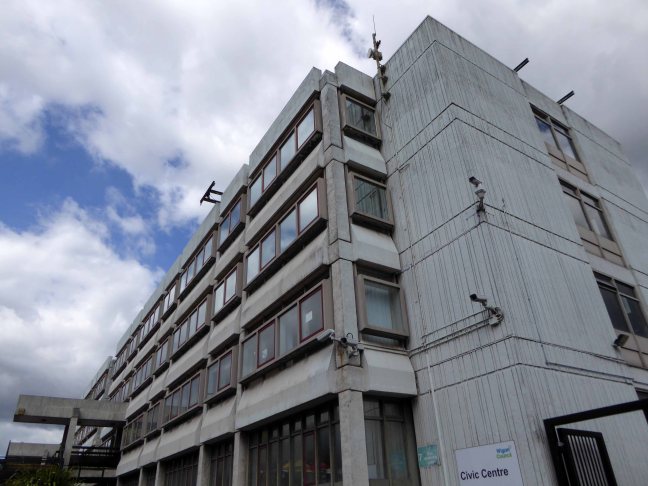
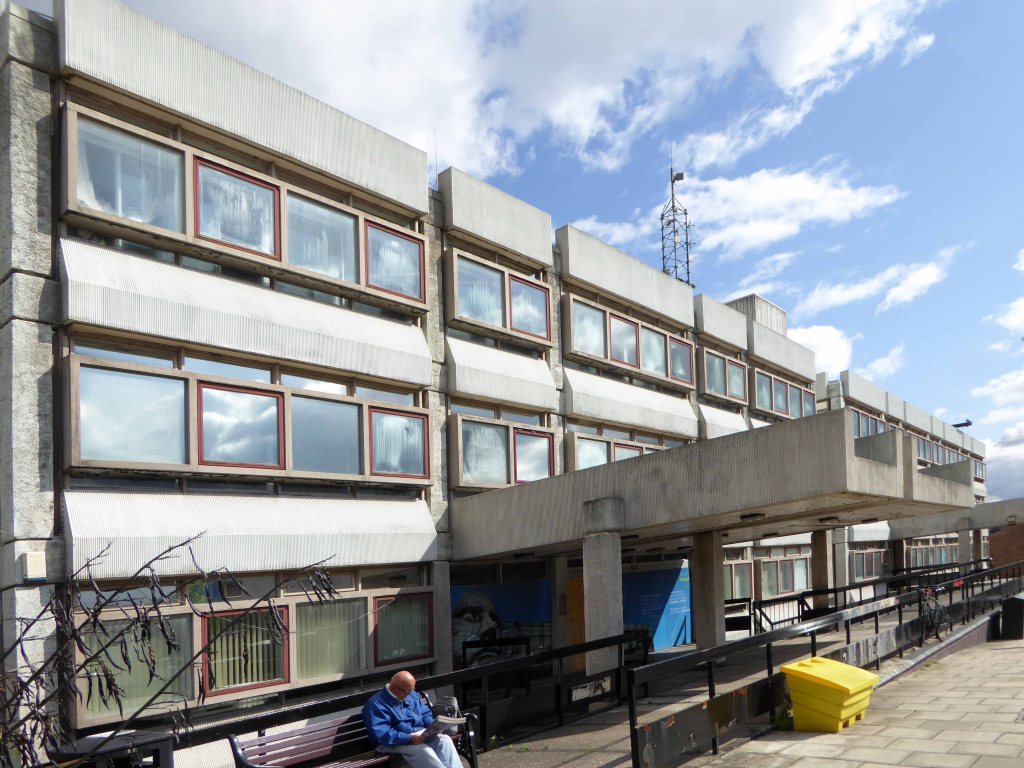
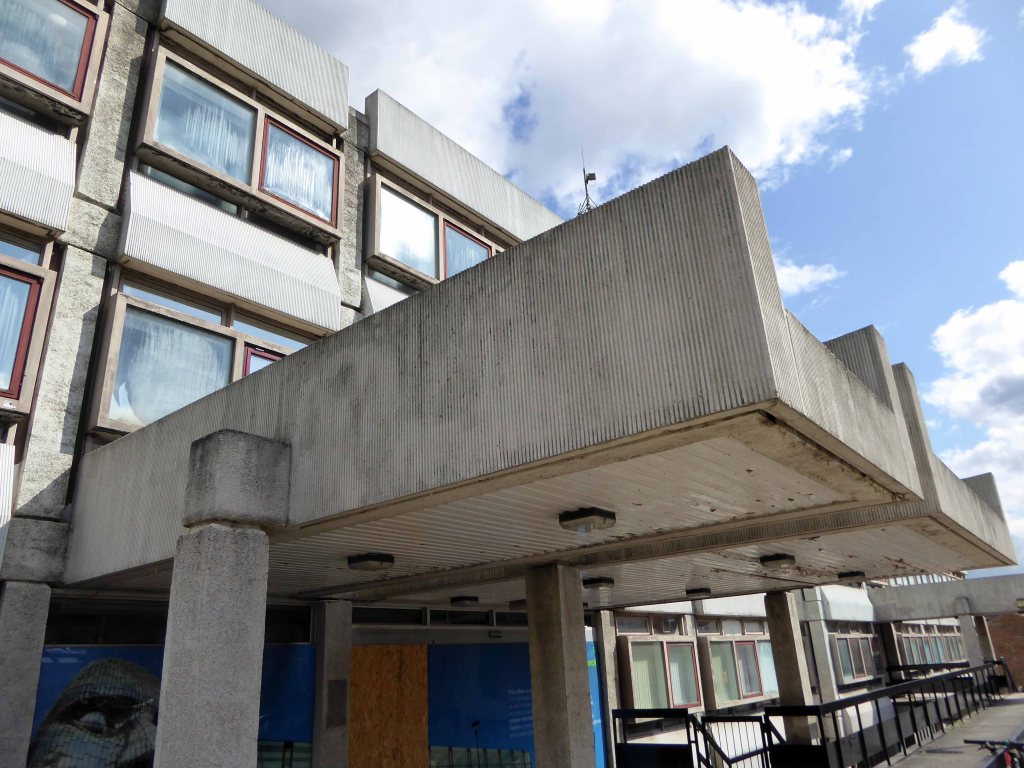
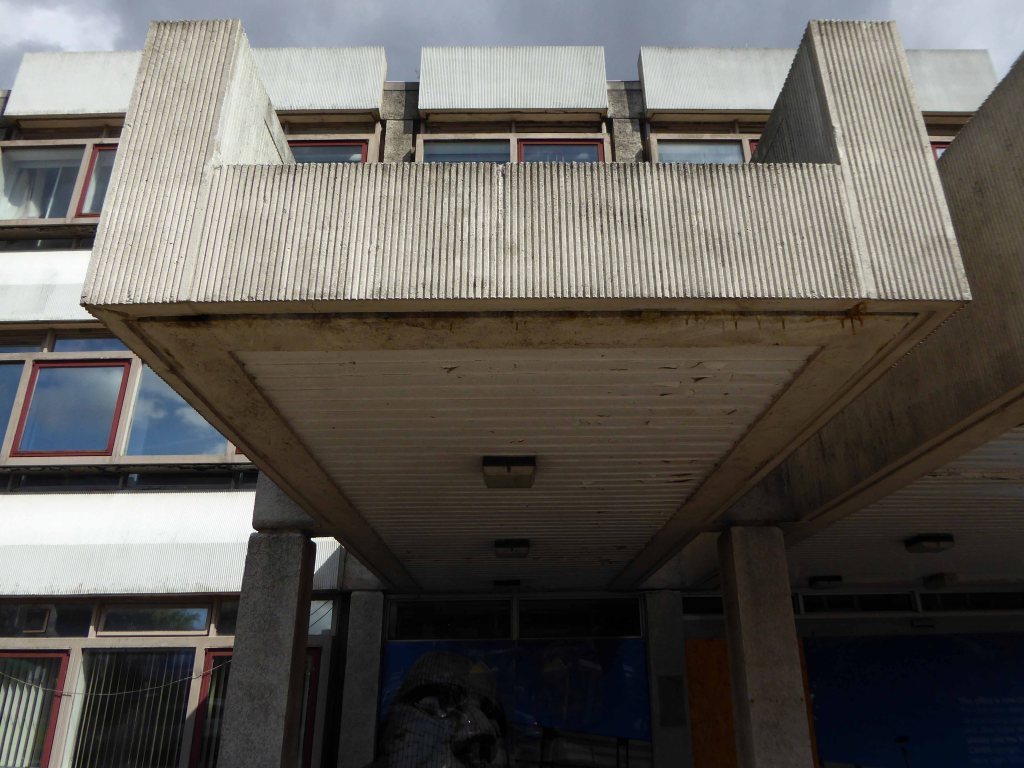
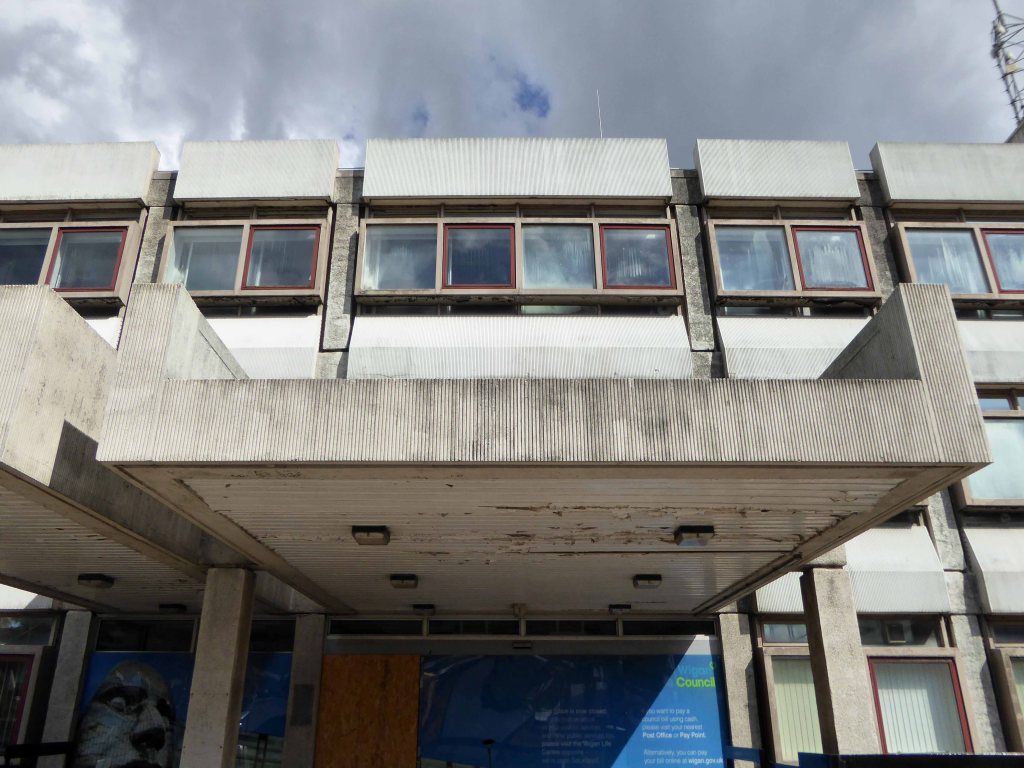
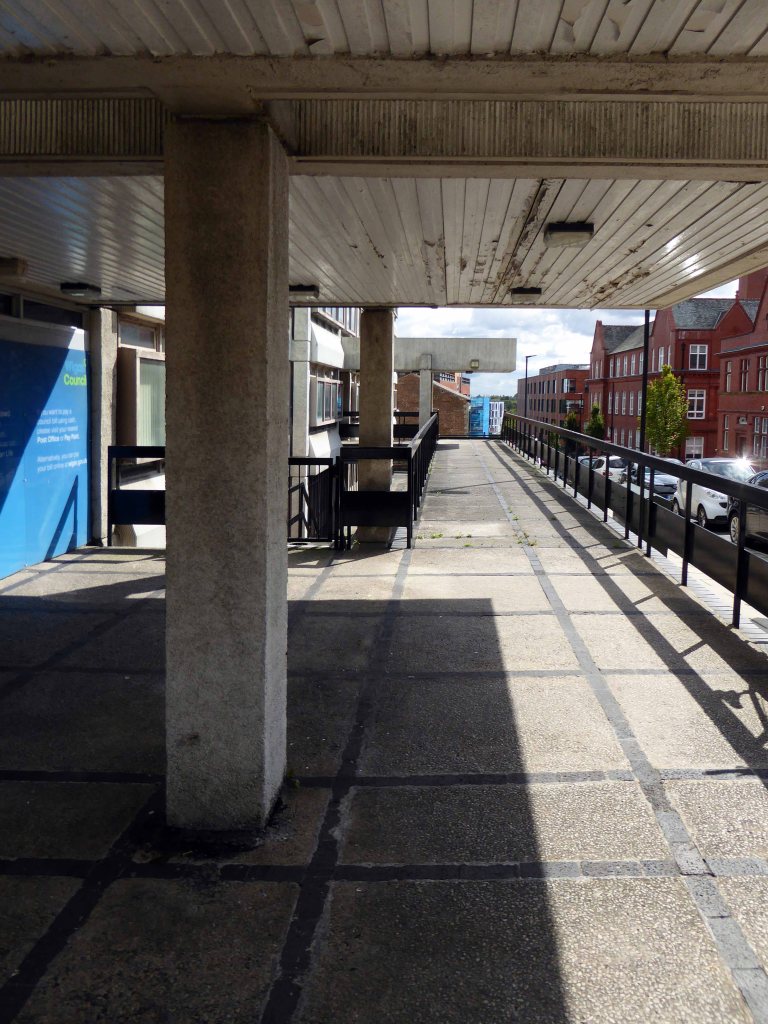
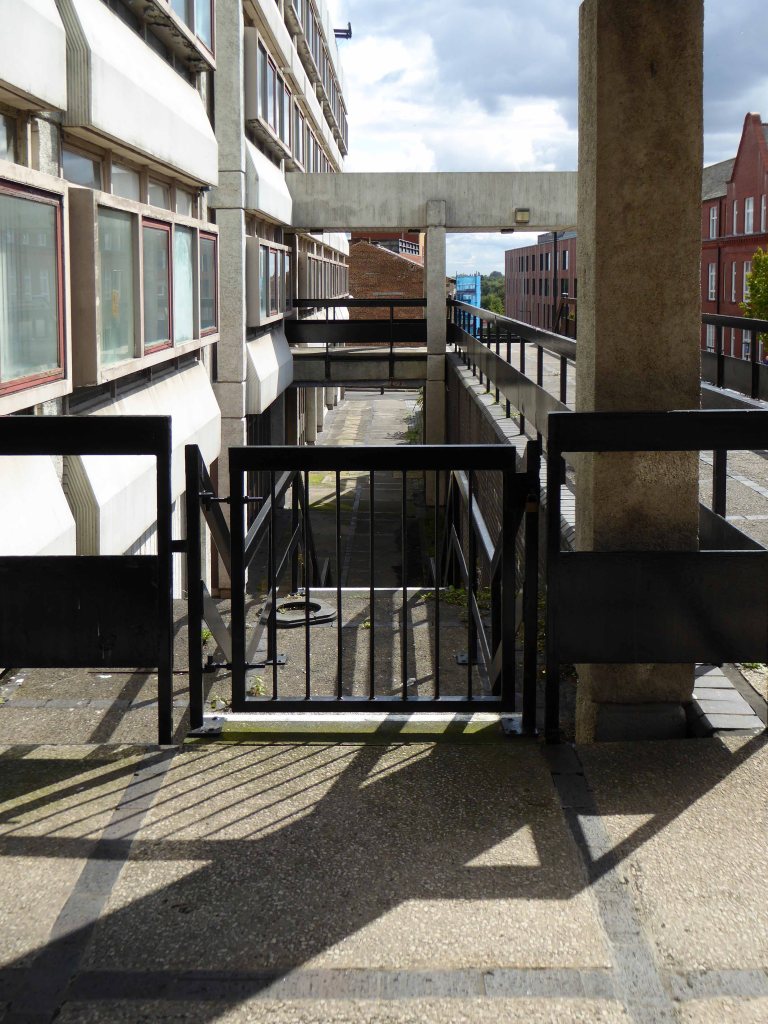
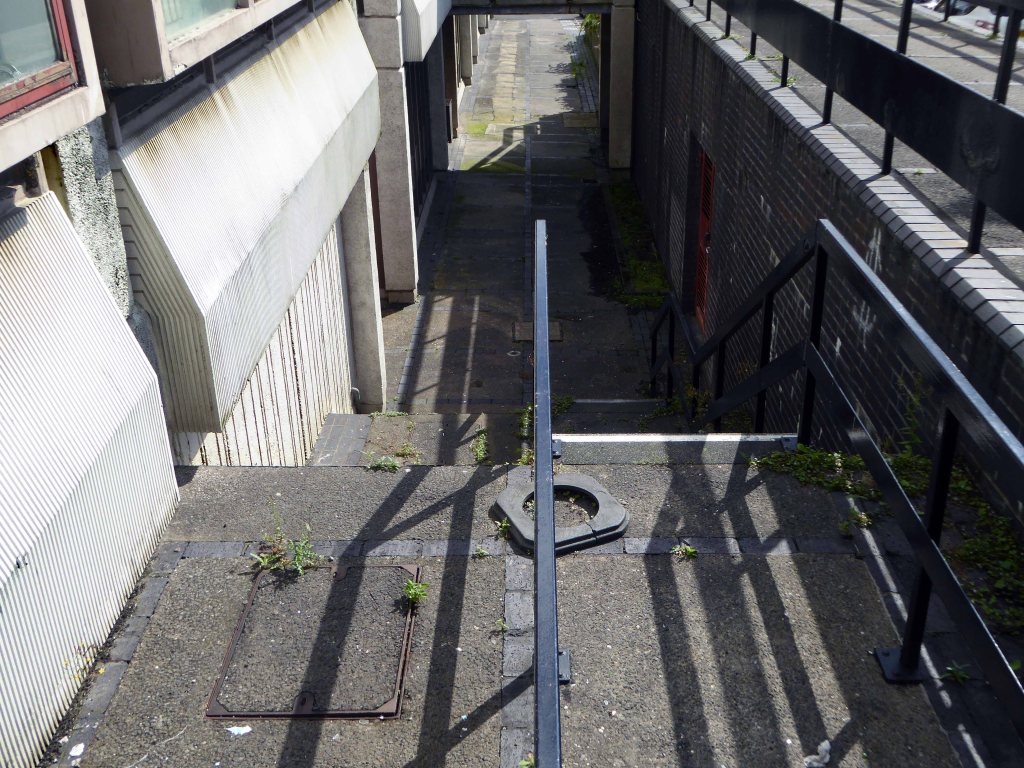
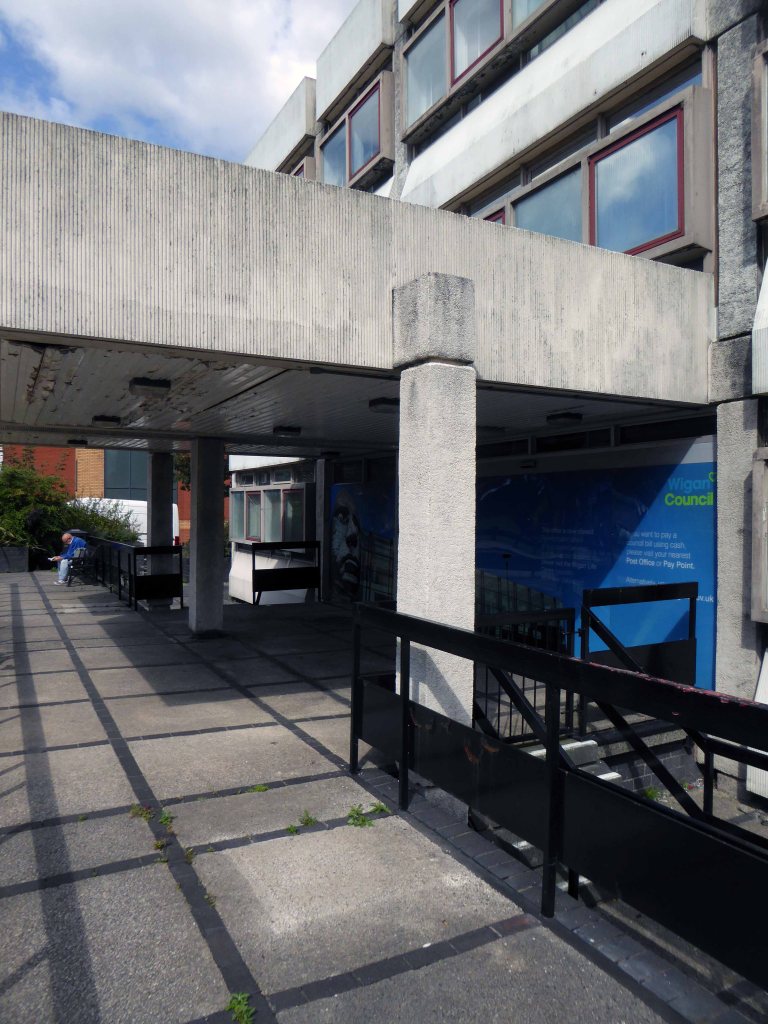
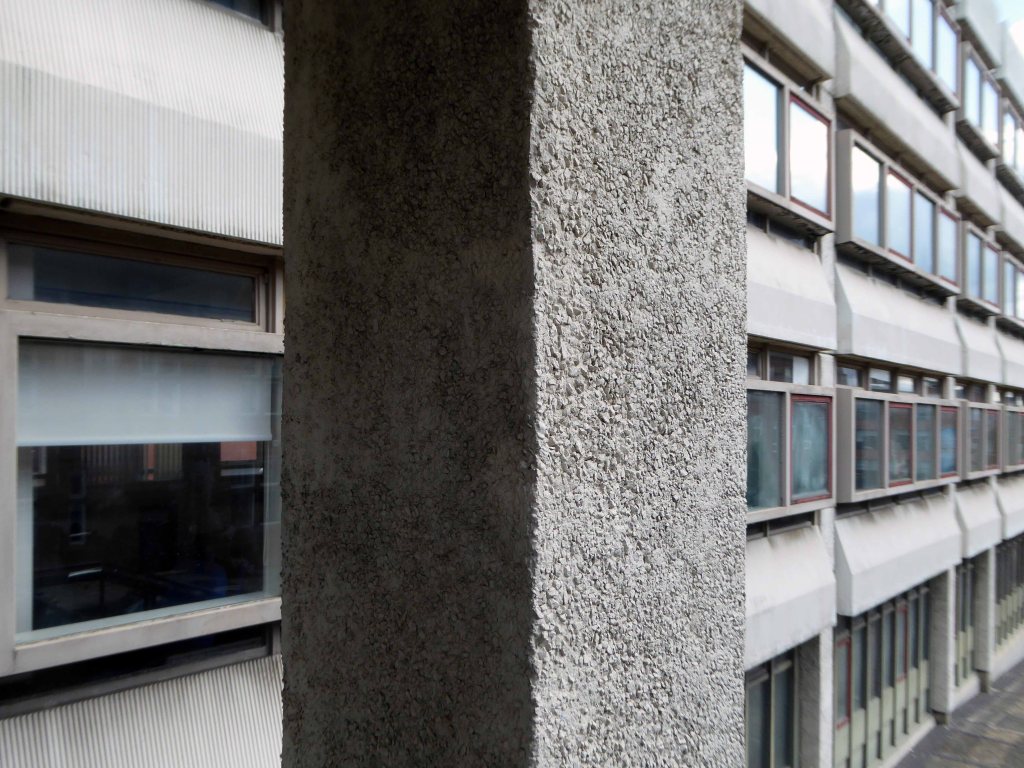
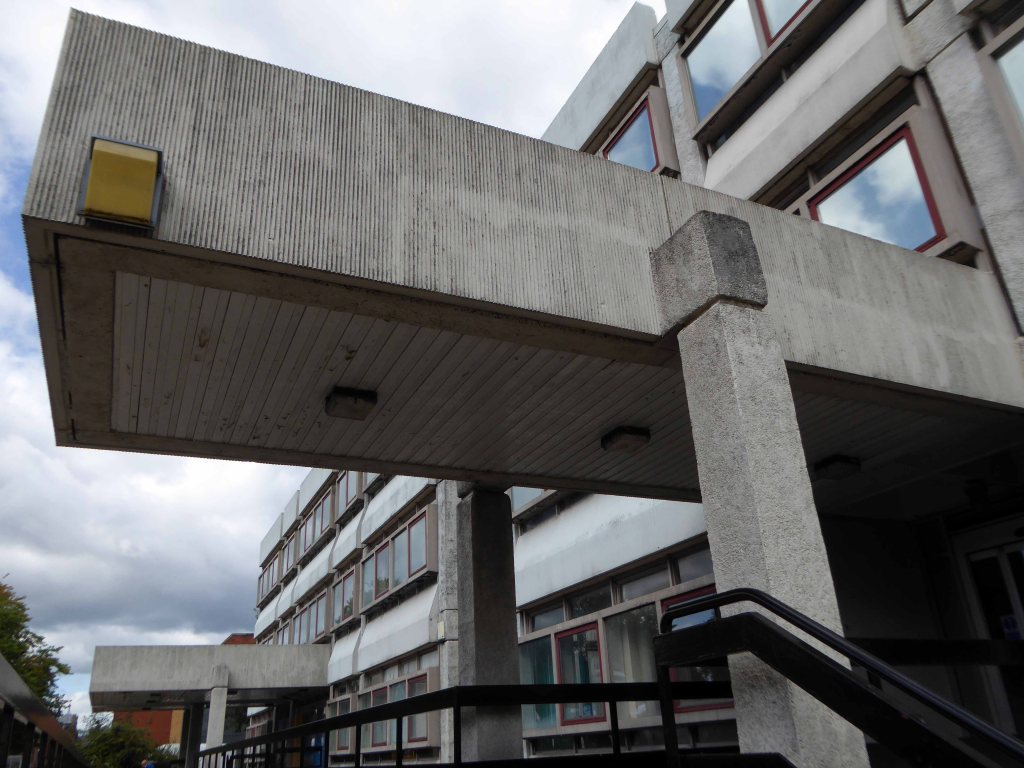
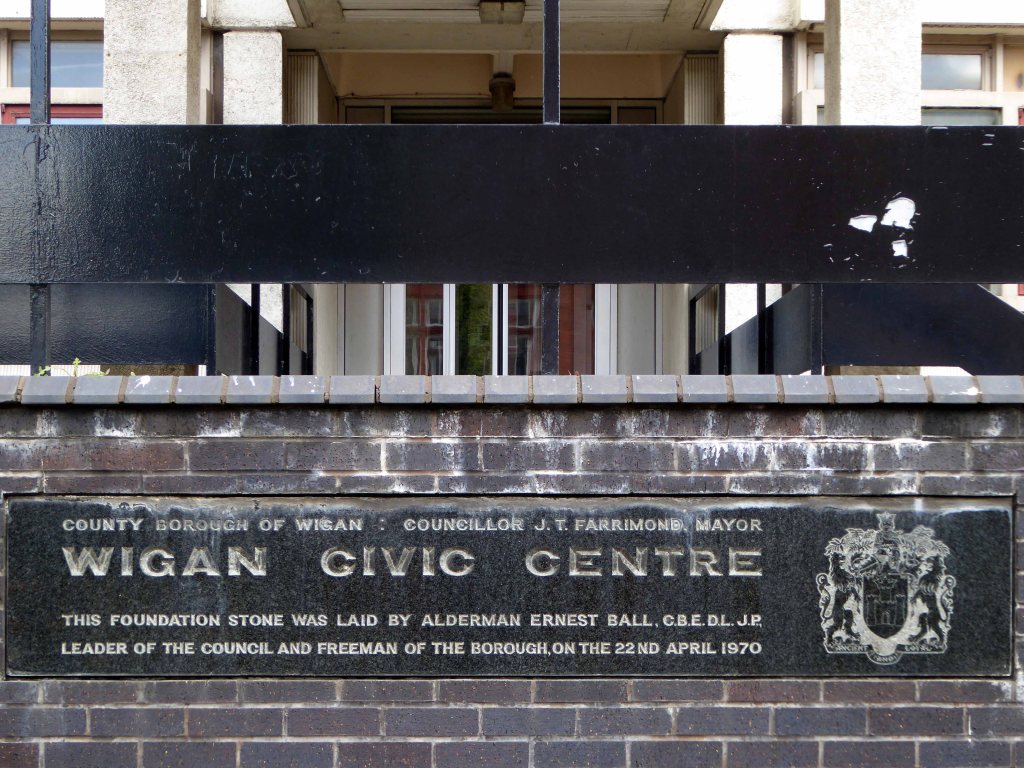
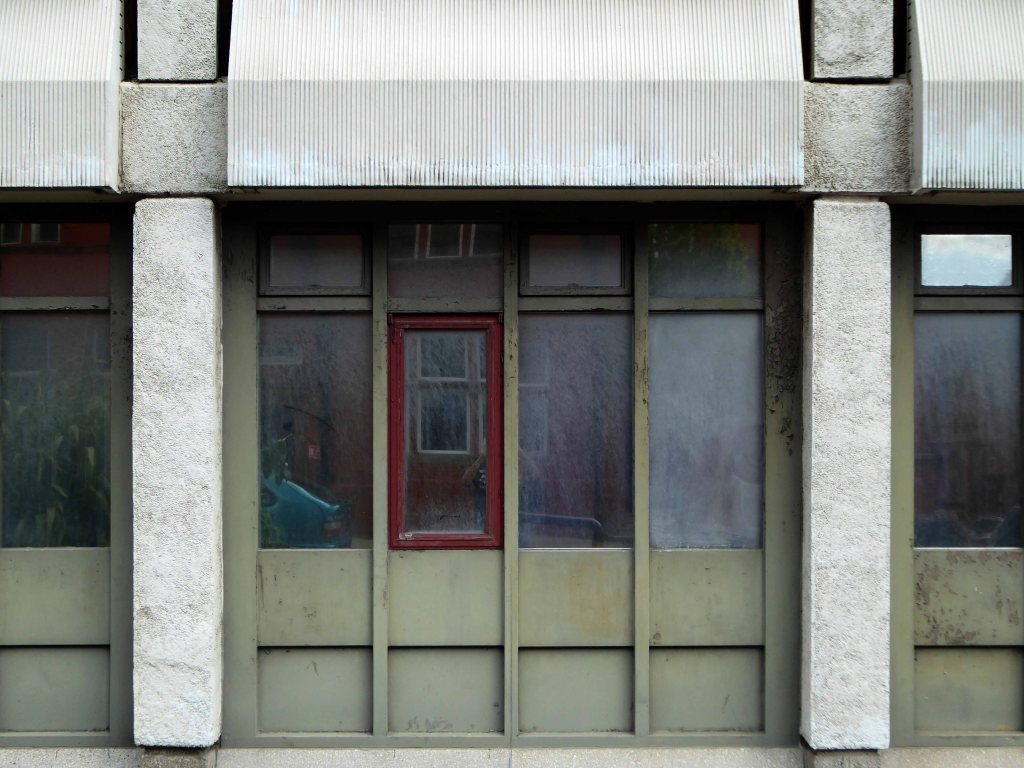
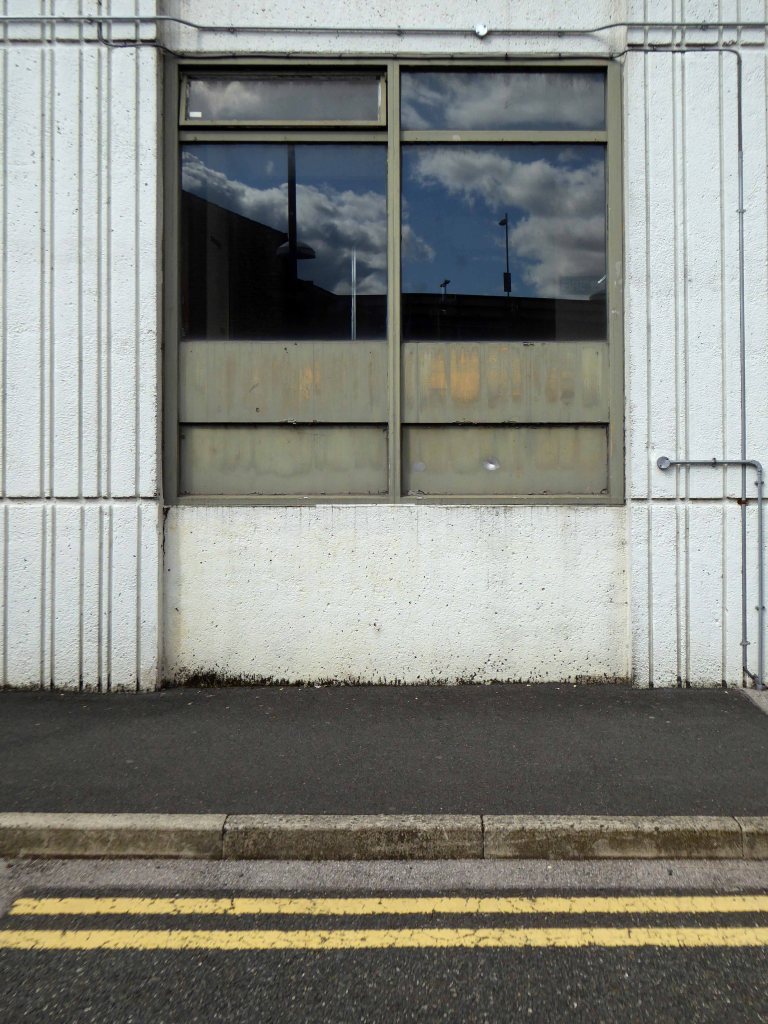
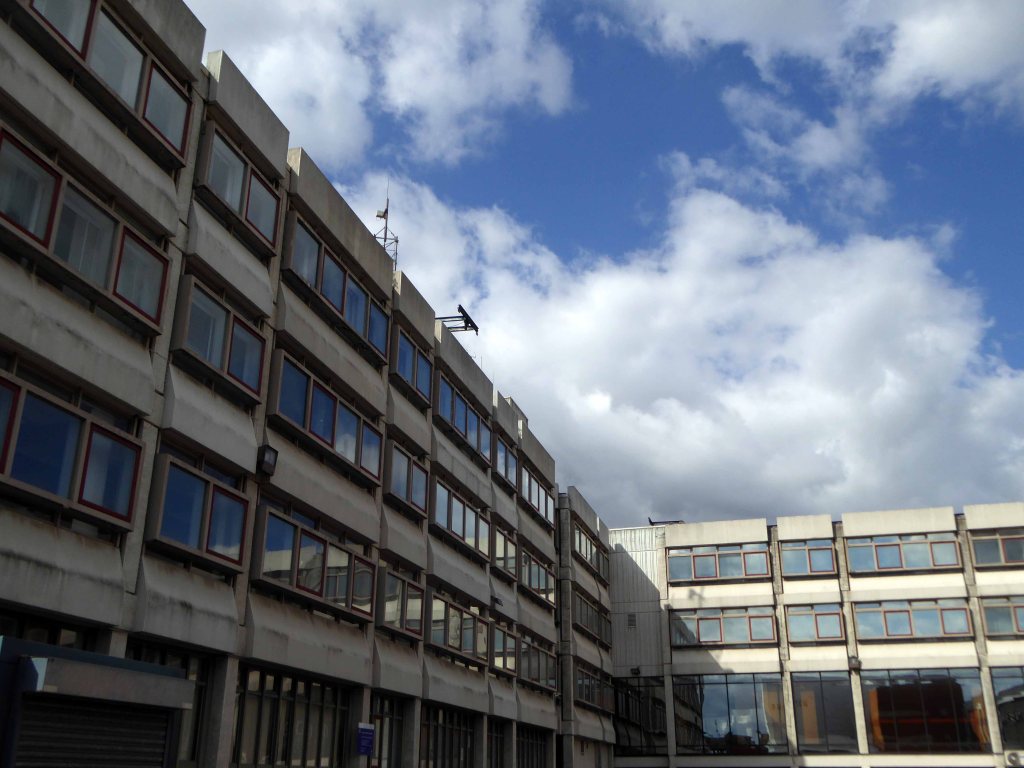
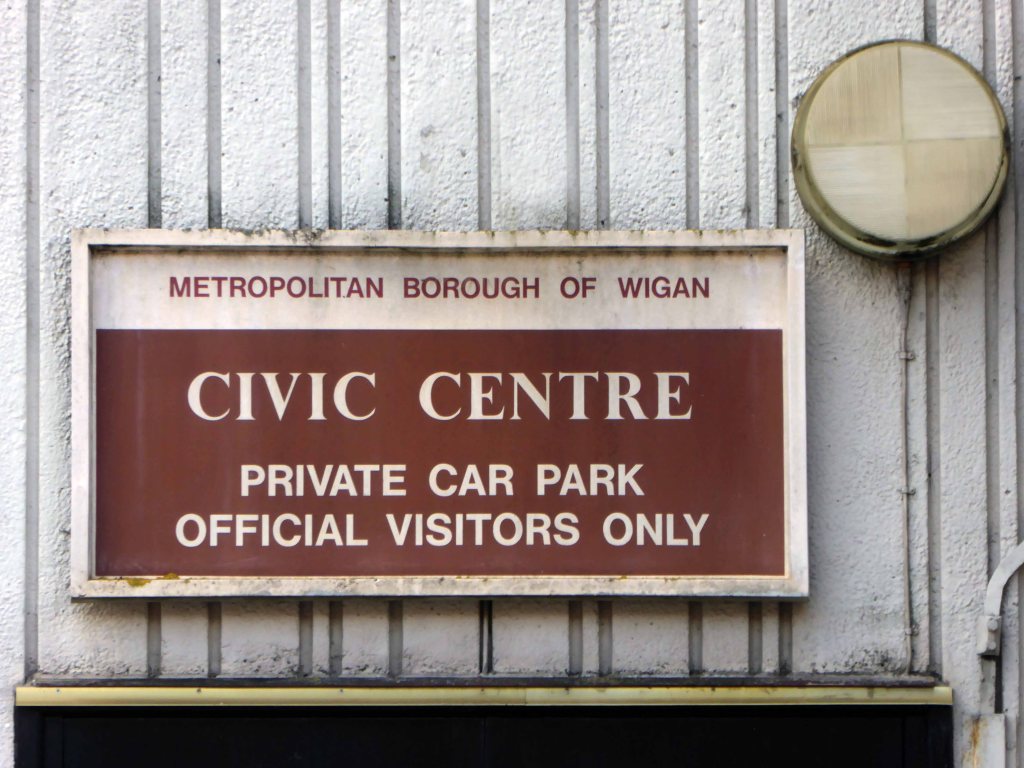
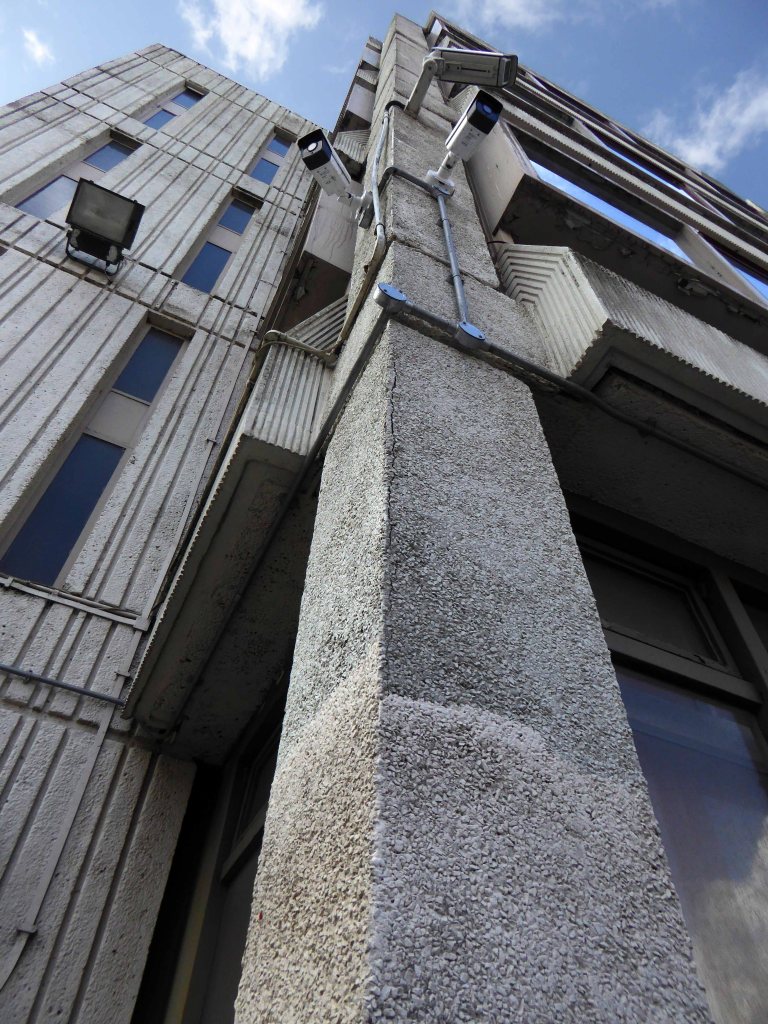
Civic Centre – Wigan Again

I’ve been here before, no not in some strange déjà vu sense.

I’ve been here before – look!

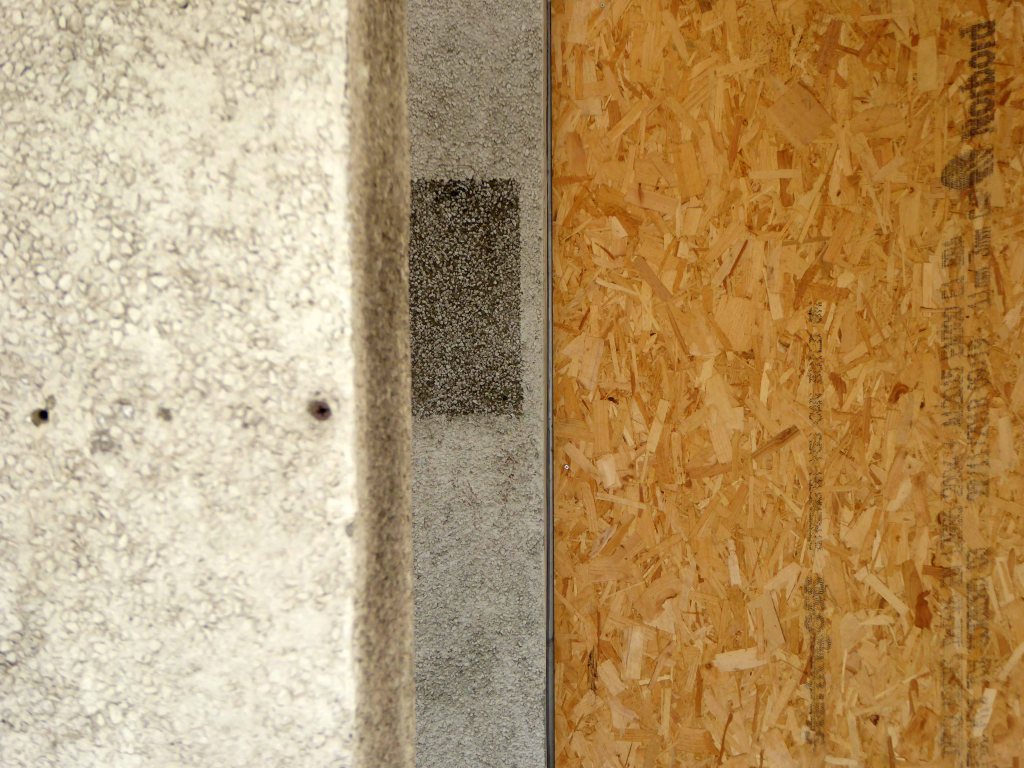
Three years on, now in the shadow of the newly built Life Centre, you stand alone unloved – empty.

But the future of the Modernist landmark, which was first put in service by the borough in the early 70s, remains unclear. There is speculation that the Millgate building, first unveiled by Wigan Mayor John Farrimond, could become a hotel.

Last October the Wigan Observer revealed how the council had enjoyed mixed fortunes when it came to marketing elements of its existing property portfolio.

But the council has been successful in offloading some venues, with Ince Town Hall now home to Little Giggles nursery.

So who knows what fate awaits you – the town I am told is on the up.

Let’s hope that the Civic Centre is not coming down

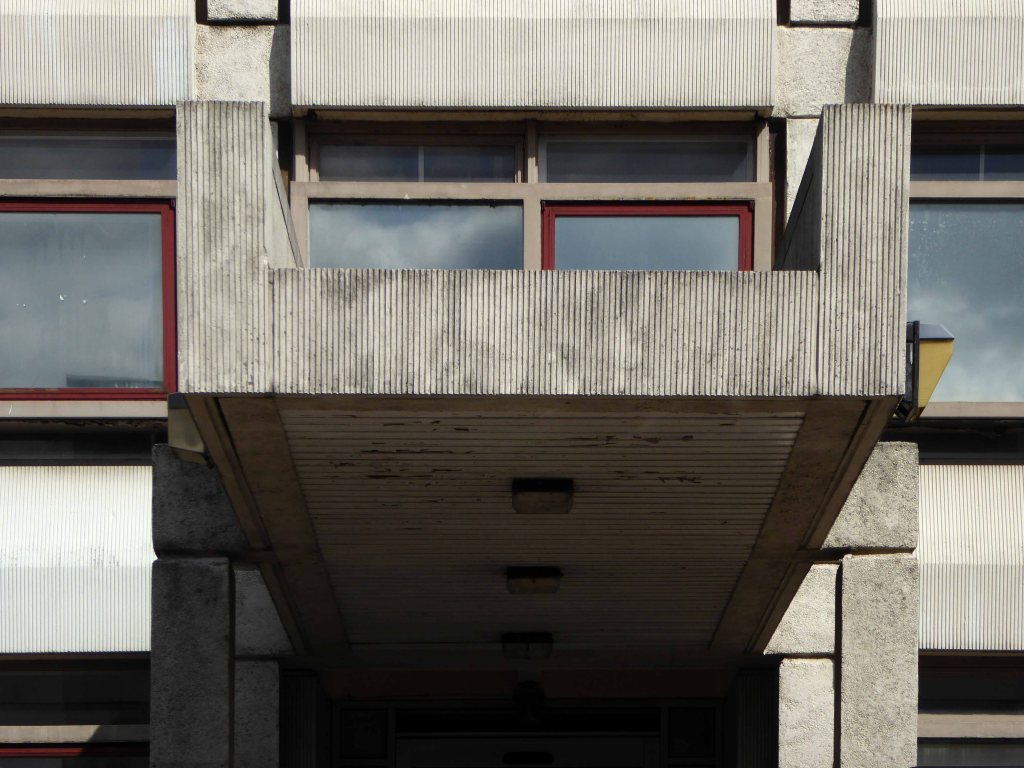
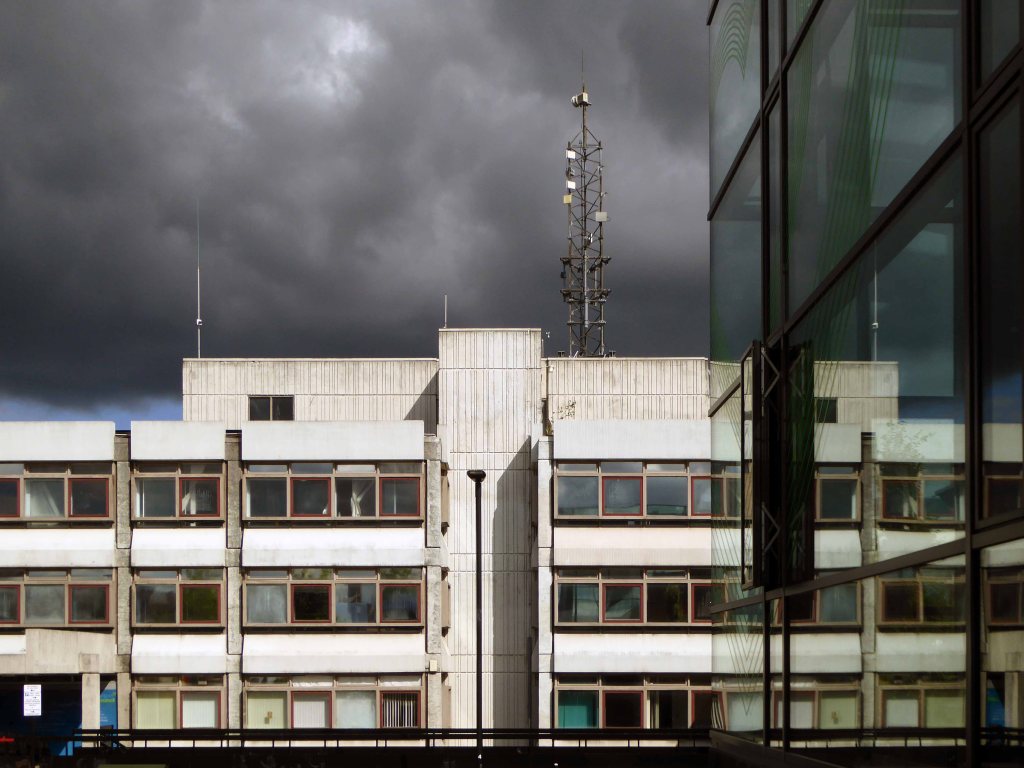
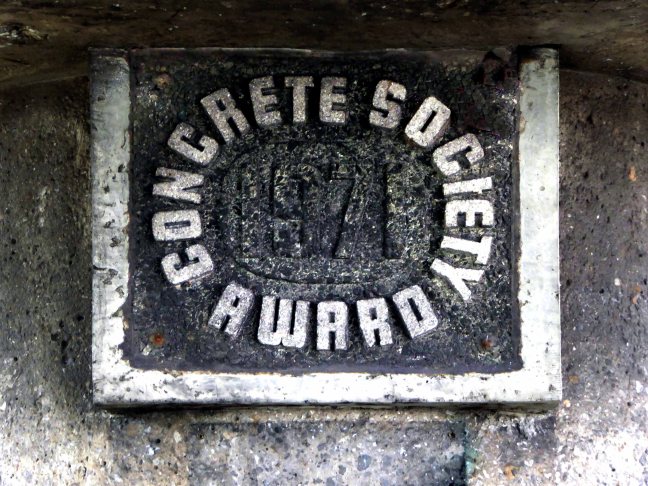
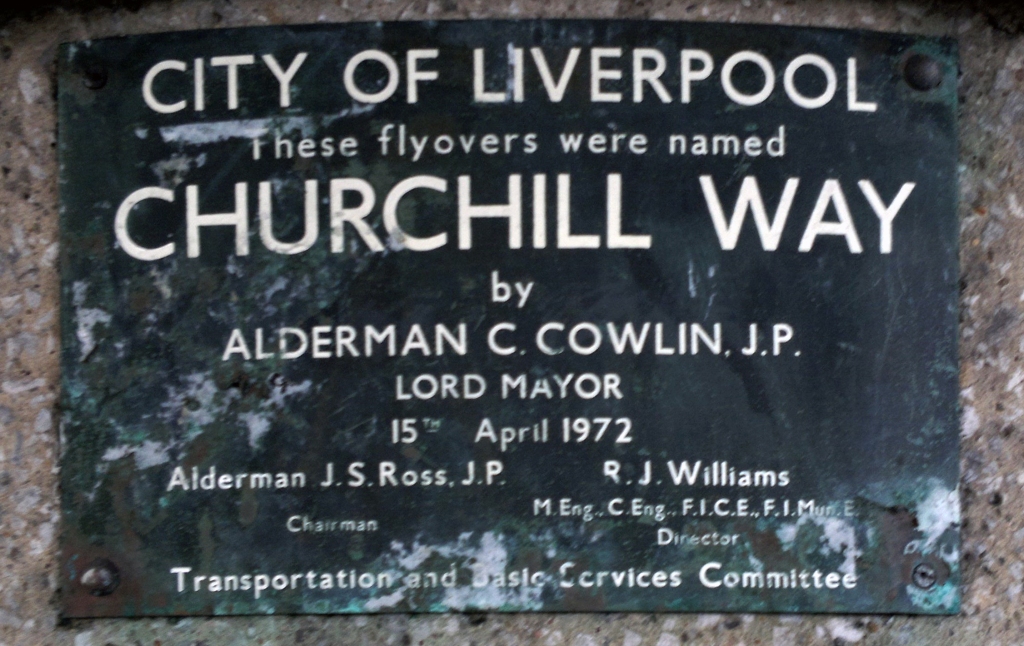
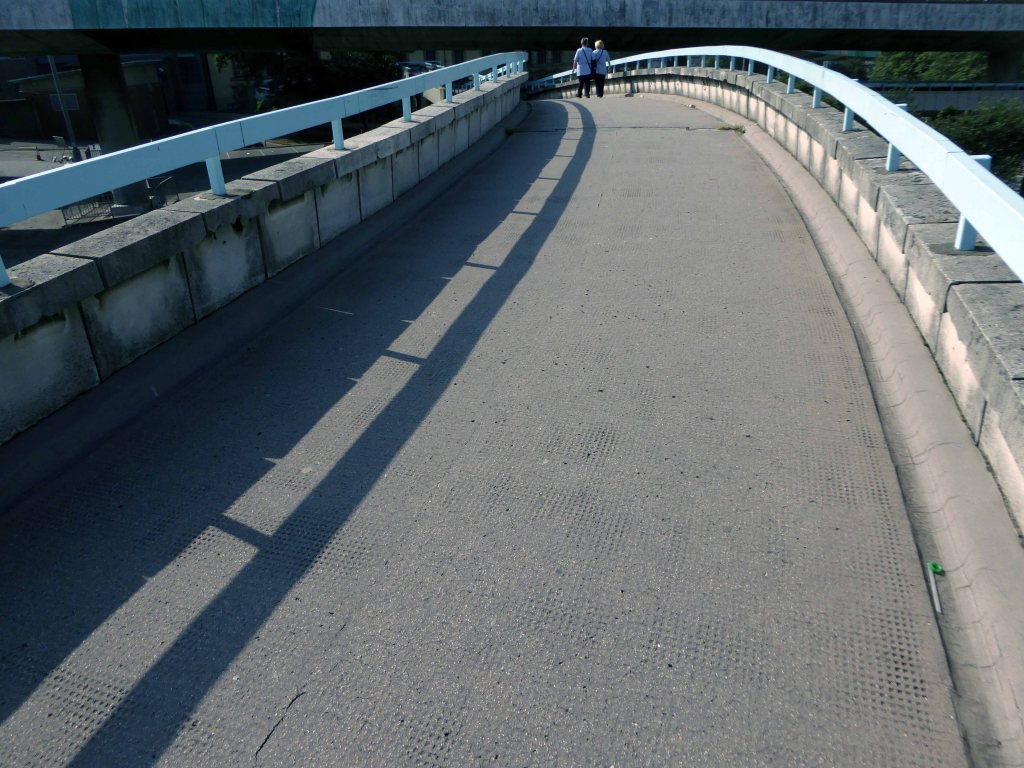
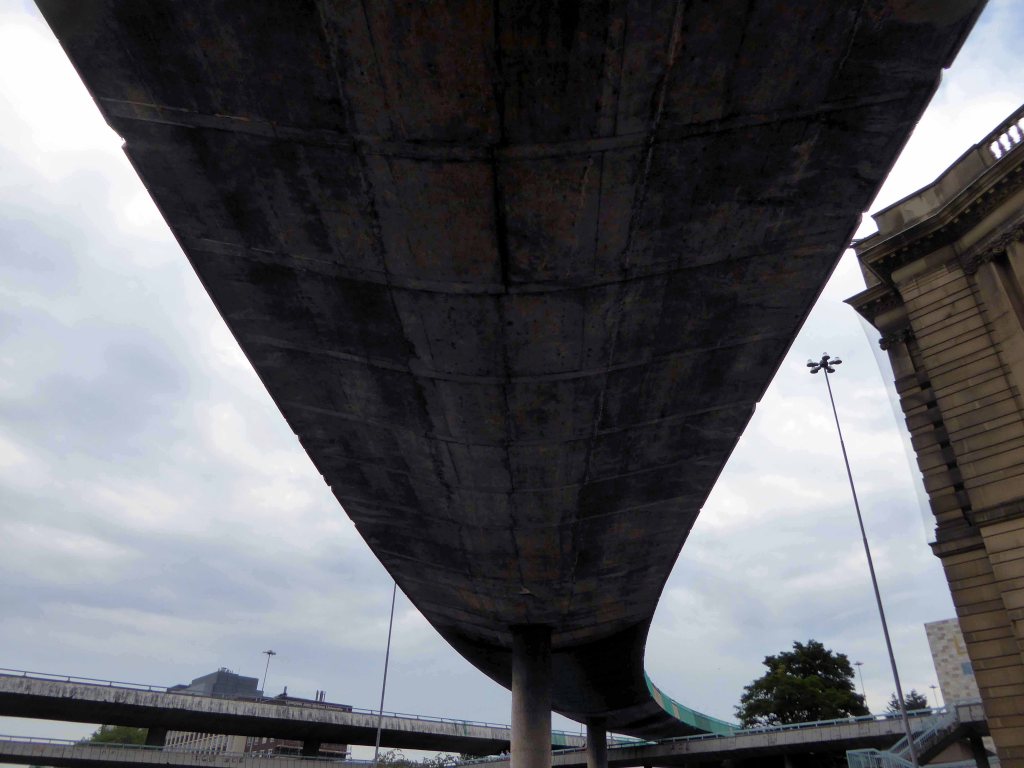
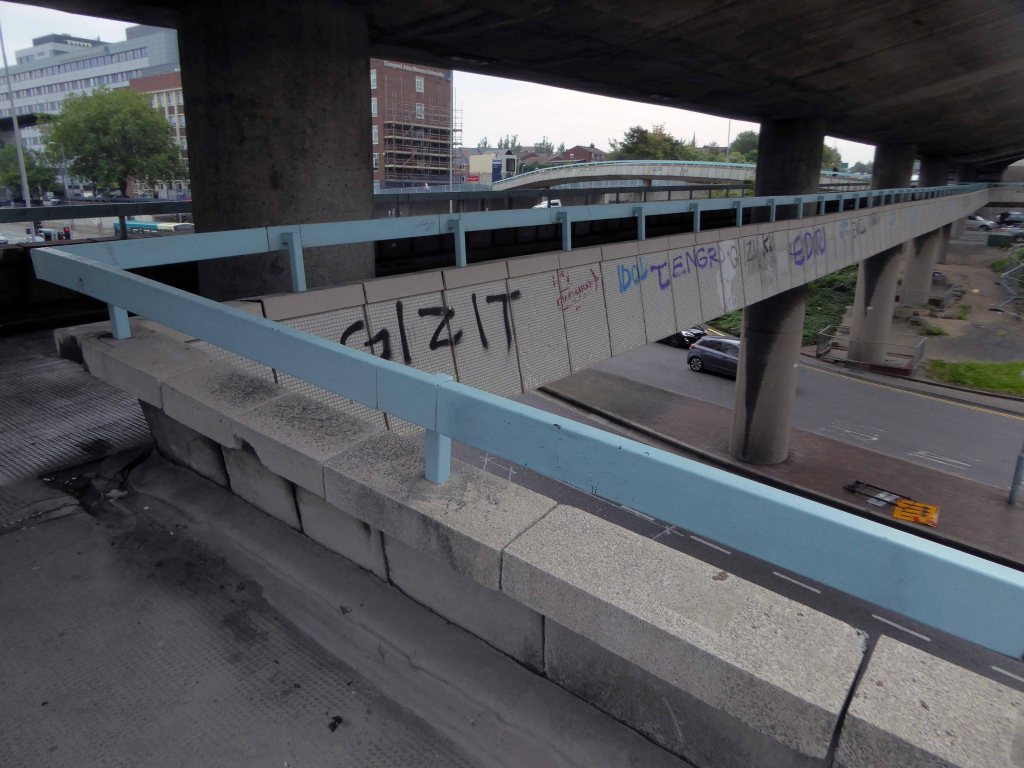
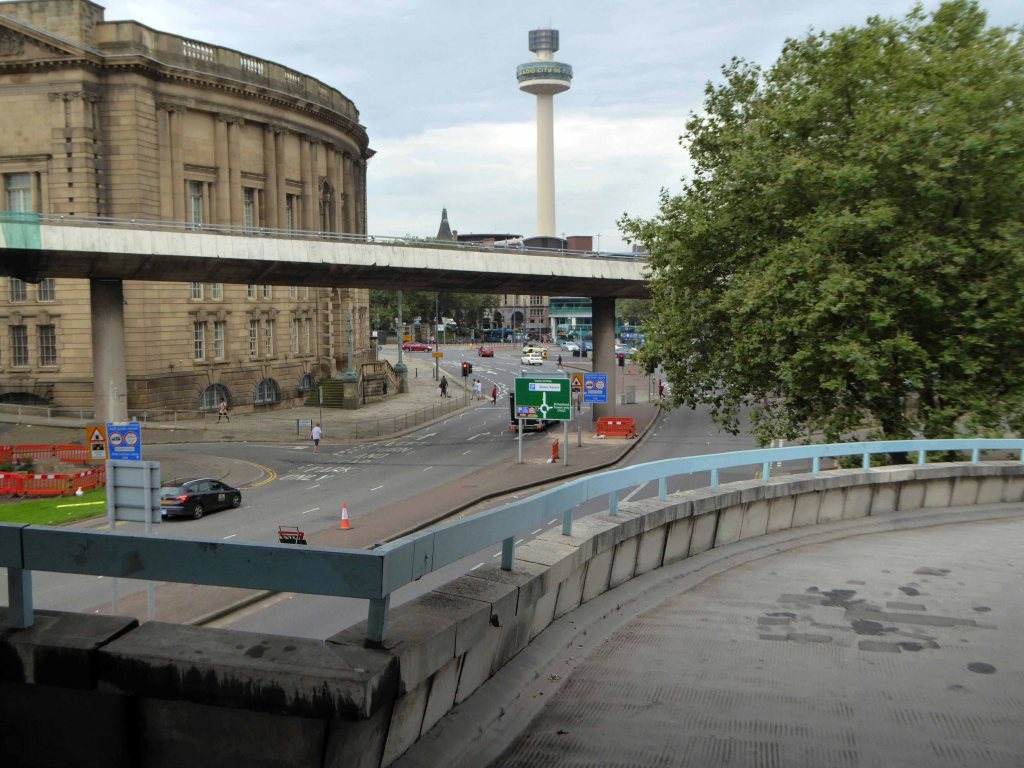
Churchill Way Flyovers and Walkways – Liverpool

It’s too late she’s gone.

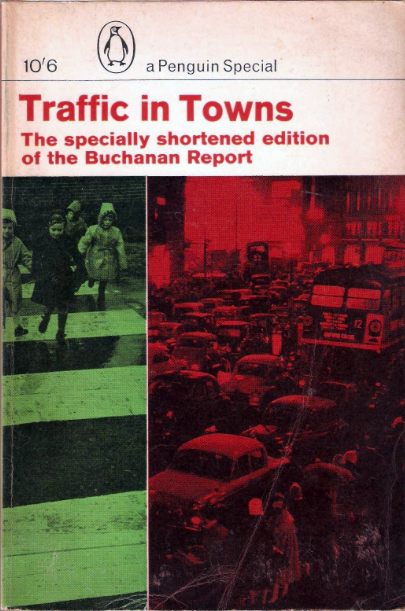
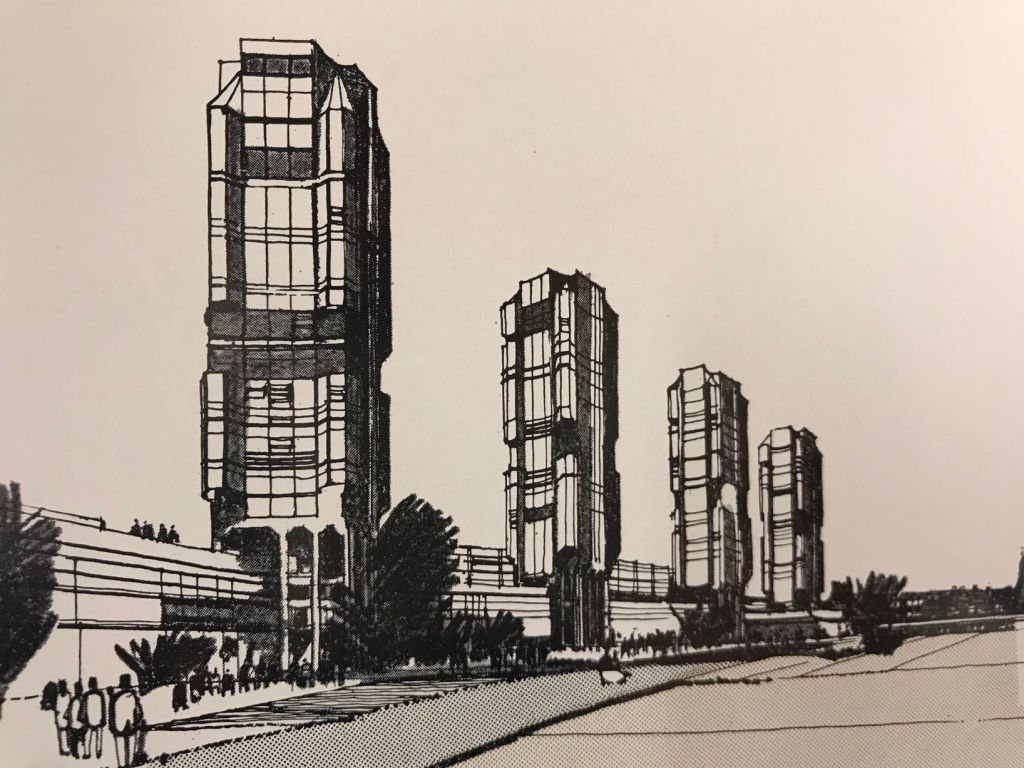
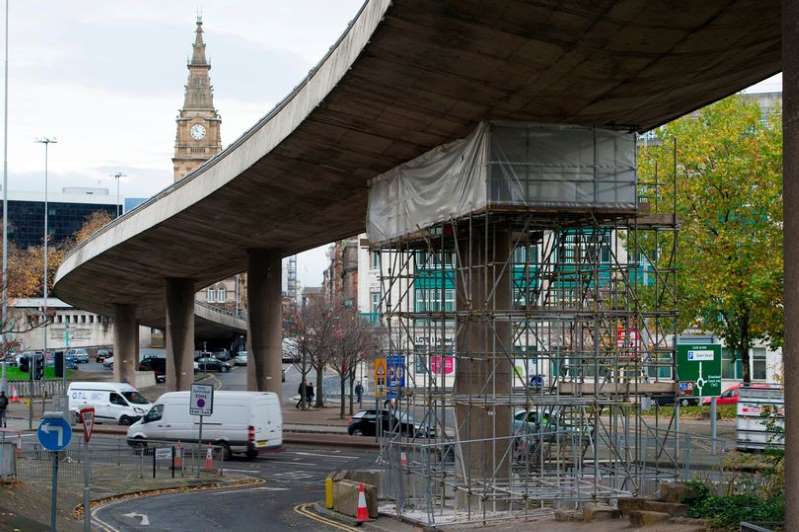
Opened in 1972 as an almost belated response to George Buchanan’s 1963 Traffic in Towns which had informed the Liverpool City Centre Plan of 1965.

The report warned of the potential damage caused by the motor car, while offering ways to mitigate it. It gave planners a set of policy blueprints to deal with its effects on the urban environment, including traffic containment and segregation, which could be balanced against urban redevelopment, new corridor and distribution roads and precincts.
These policies shaped the development of the urban landscape in the UK and some other countries for two or three decades. Unusually for a technical policy report, it was so much in demand that Penguin abridged it and republished it as a book in 1964.
The majority of the planned Walkways in the Sky remained unrealised.

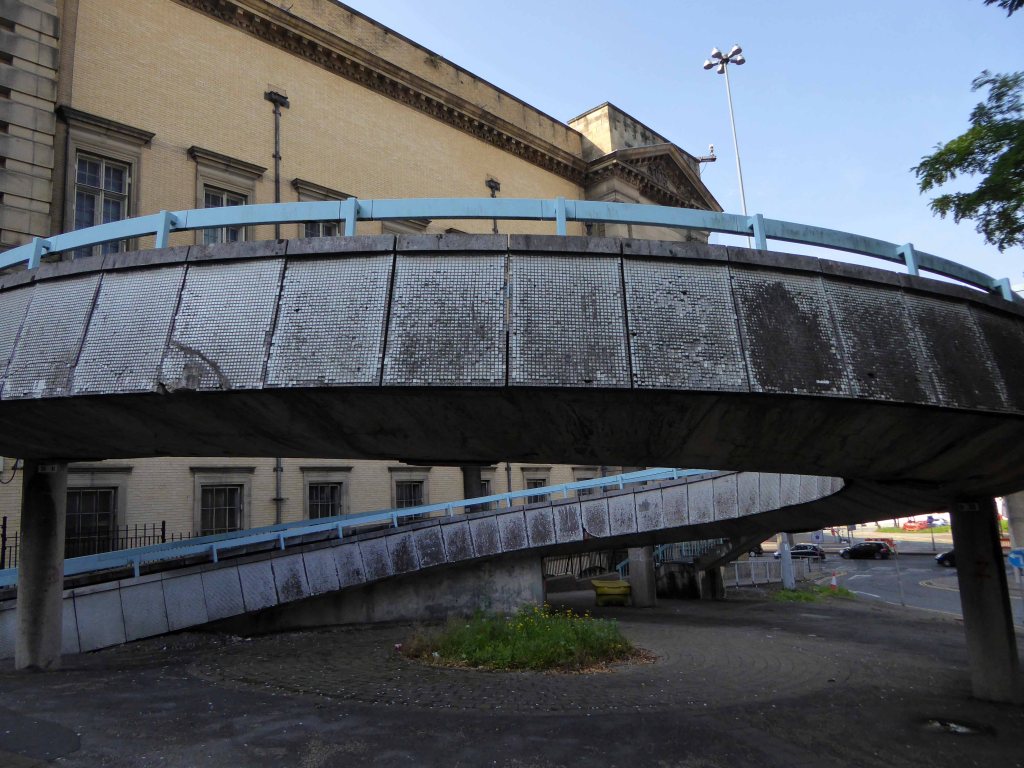
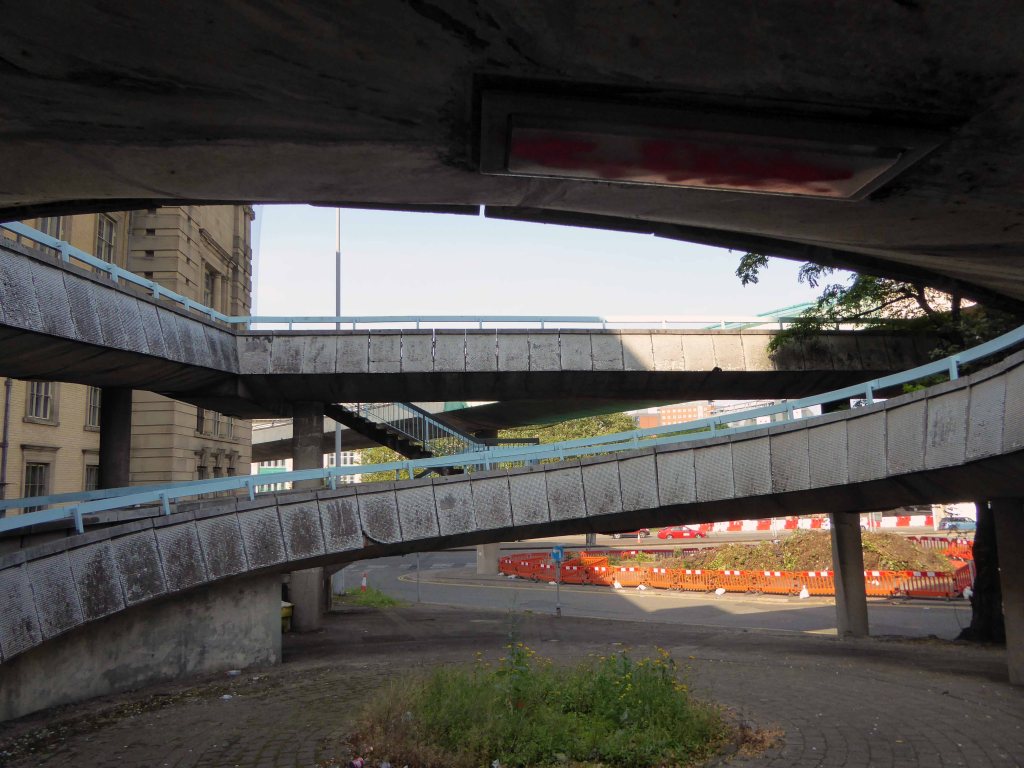
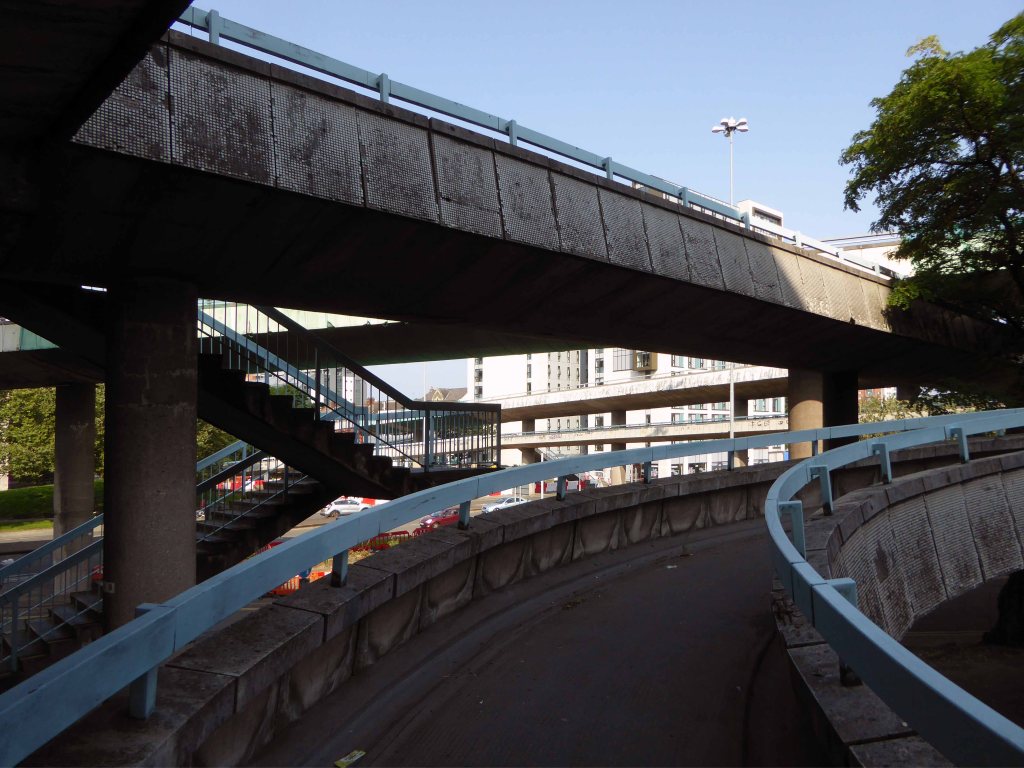
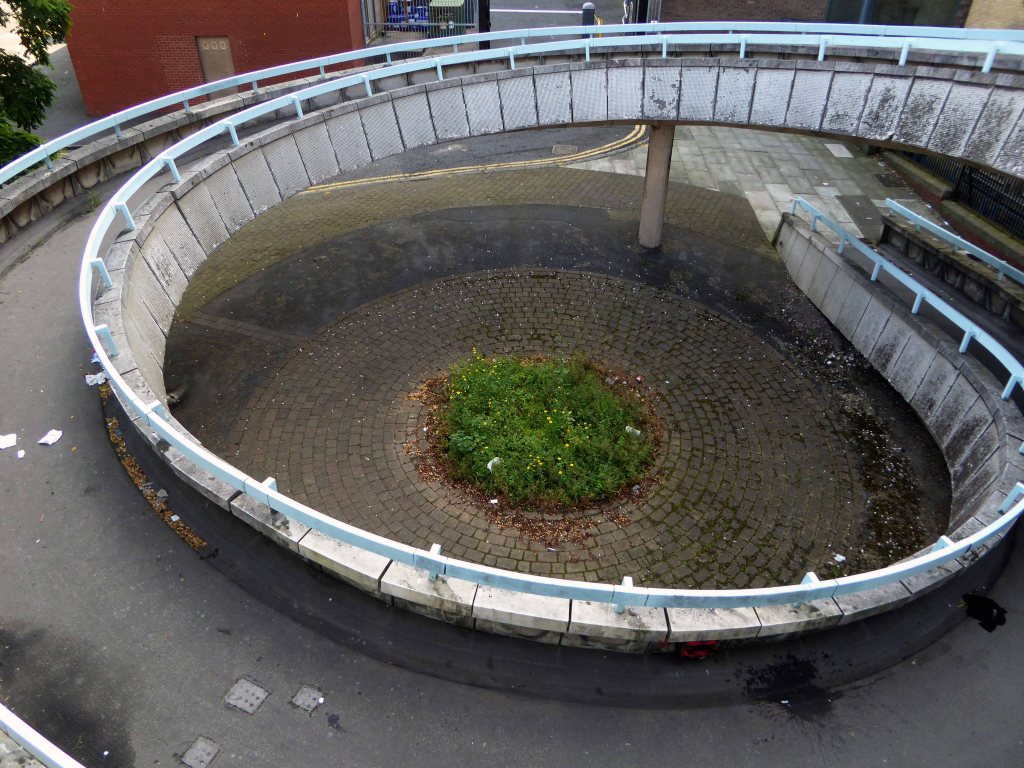
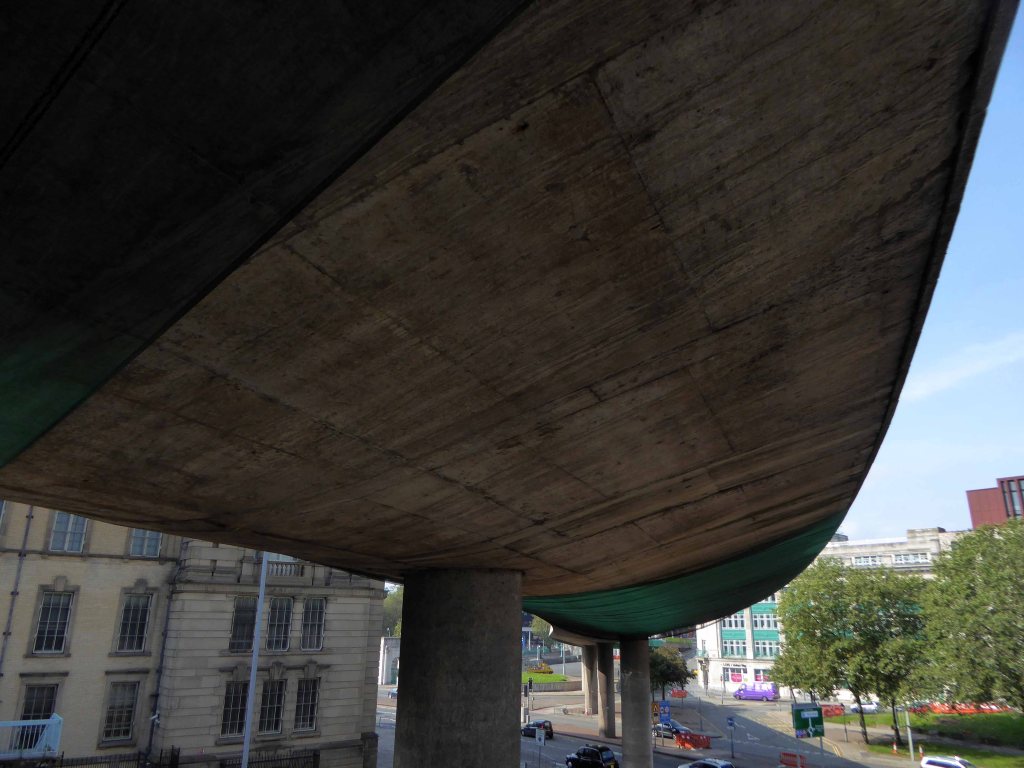
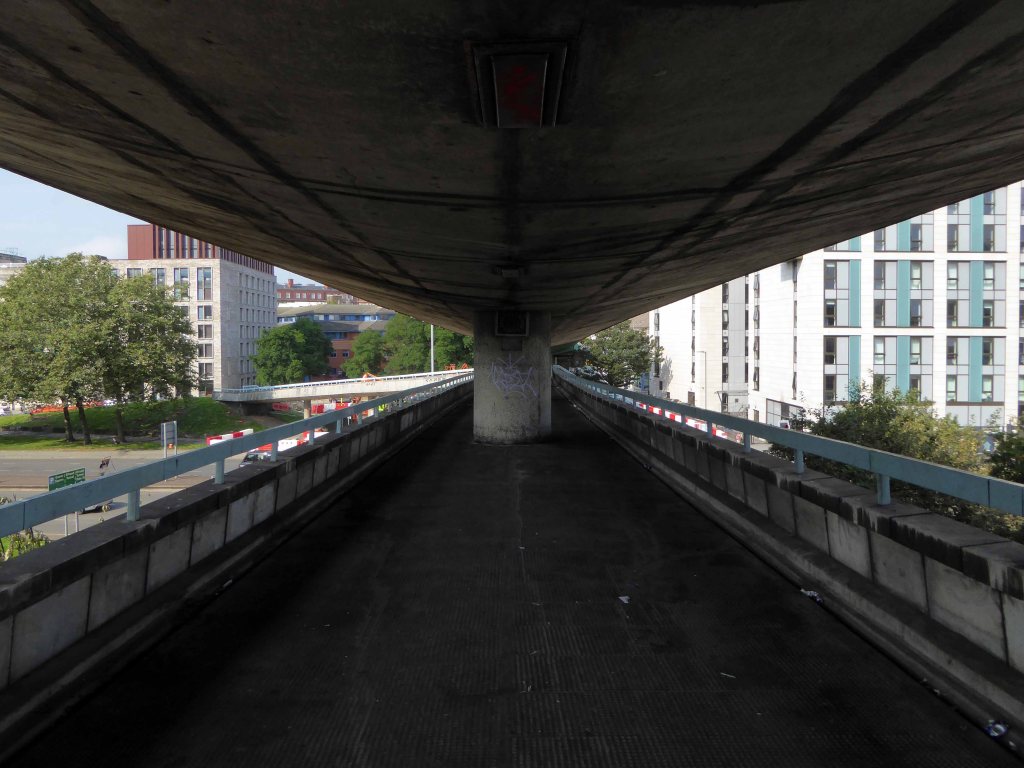
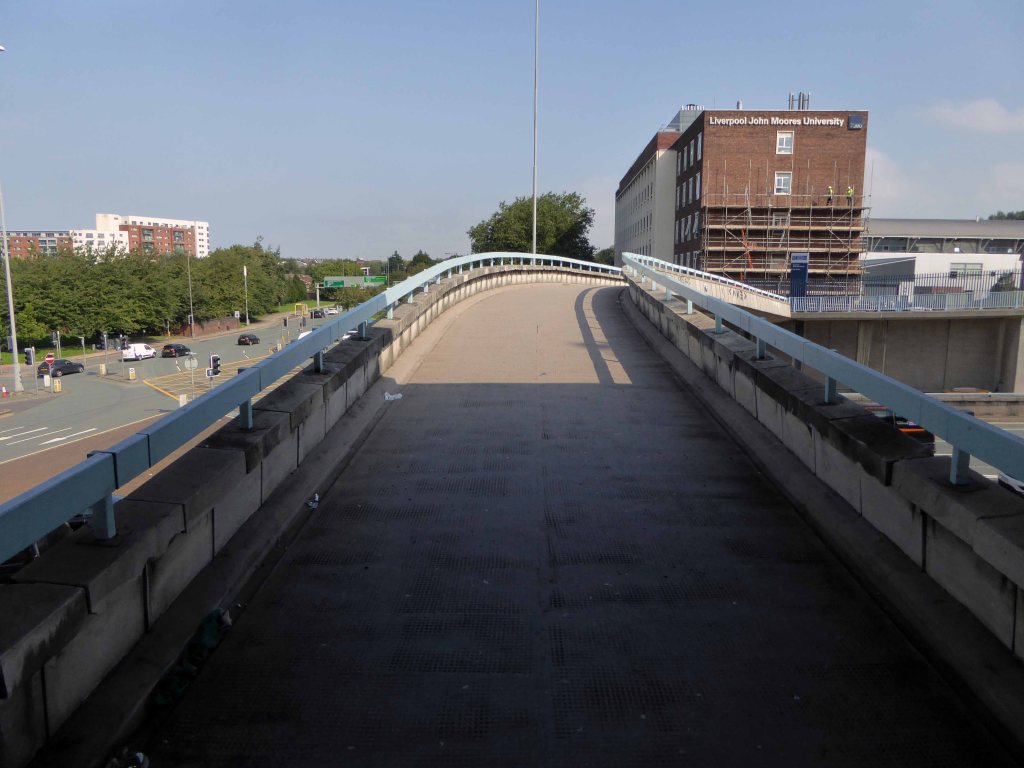
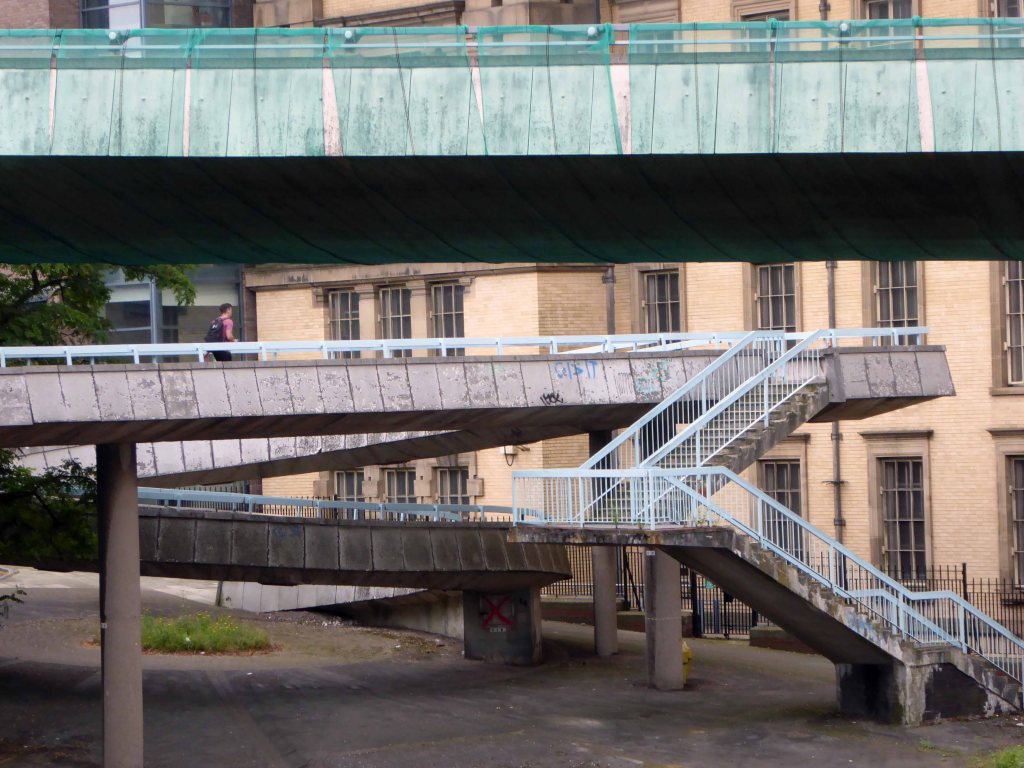
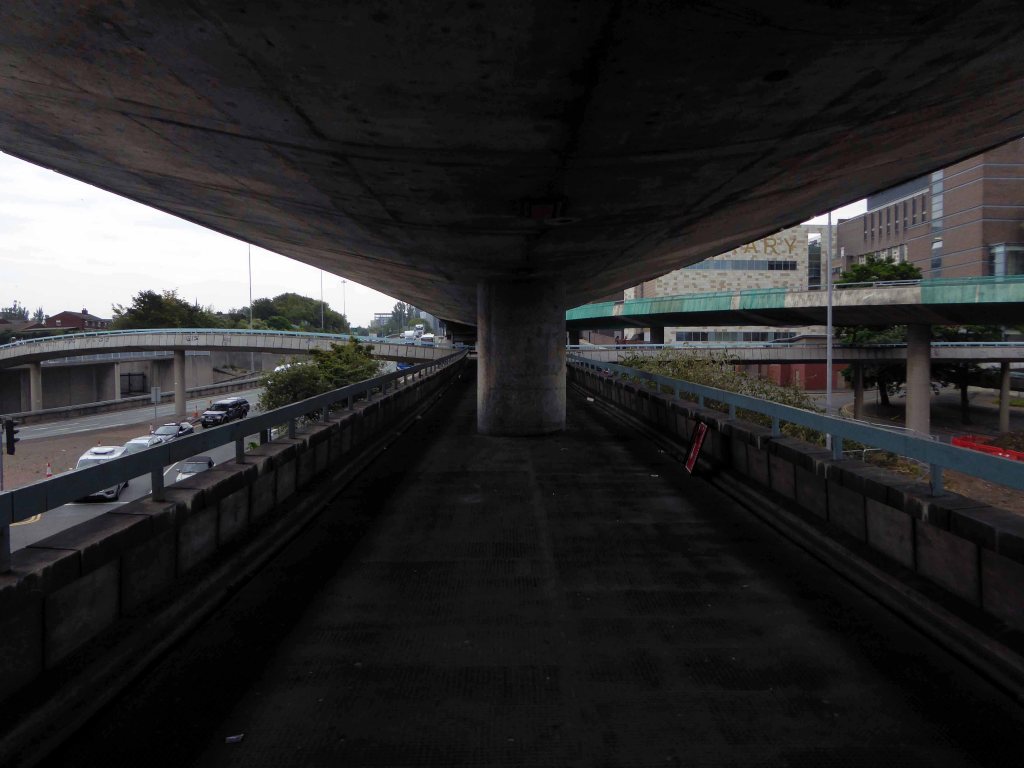
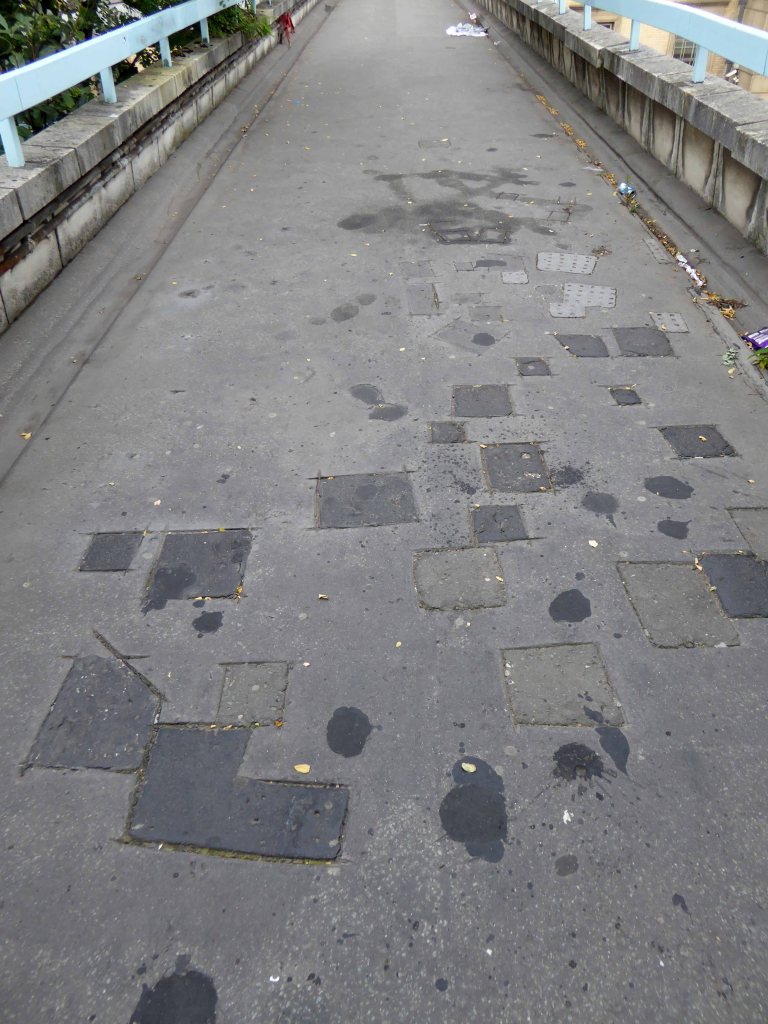
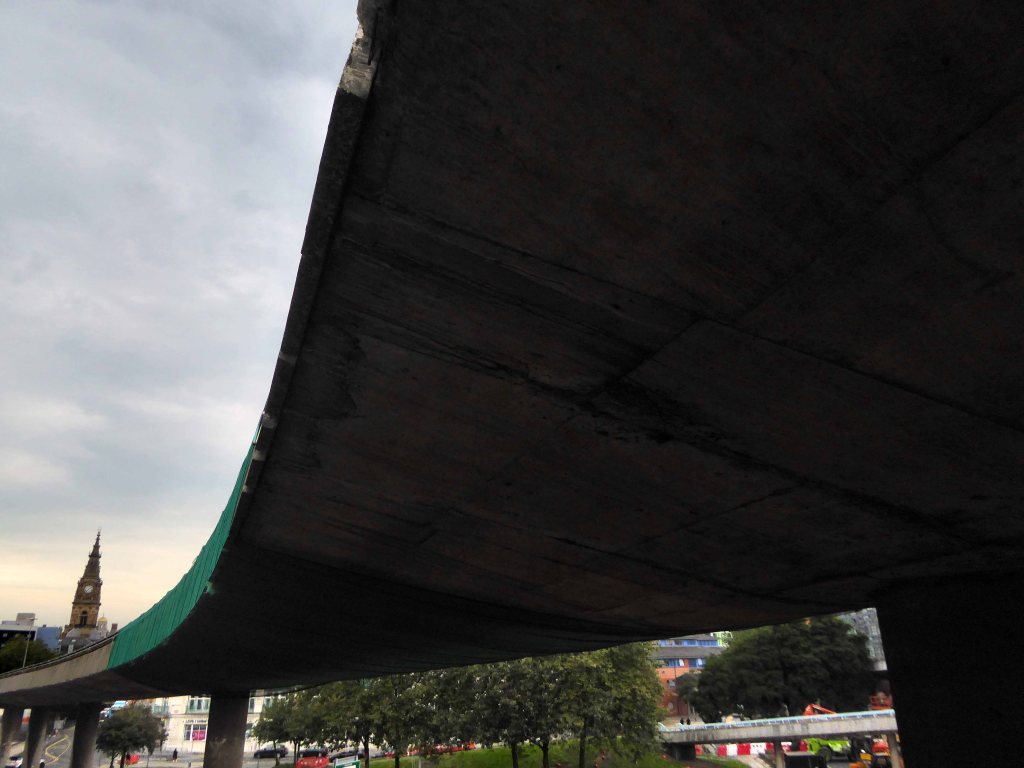
The Churchill Way was realised and remained in use until September 2nd 2019 – closed and facing a £10 million demolition programme, following a maintenance report which found them to be unsafe – and presumably beyond economic repair.

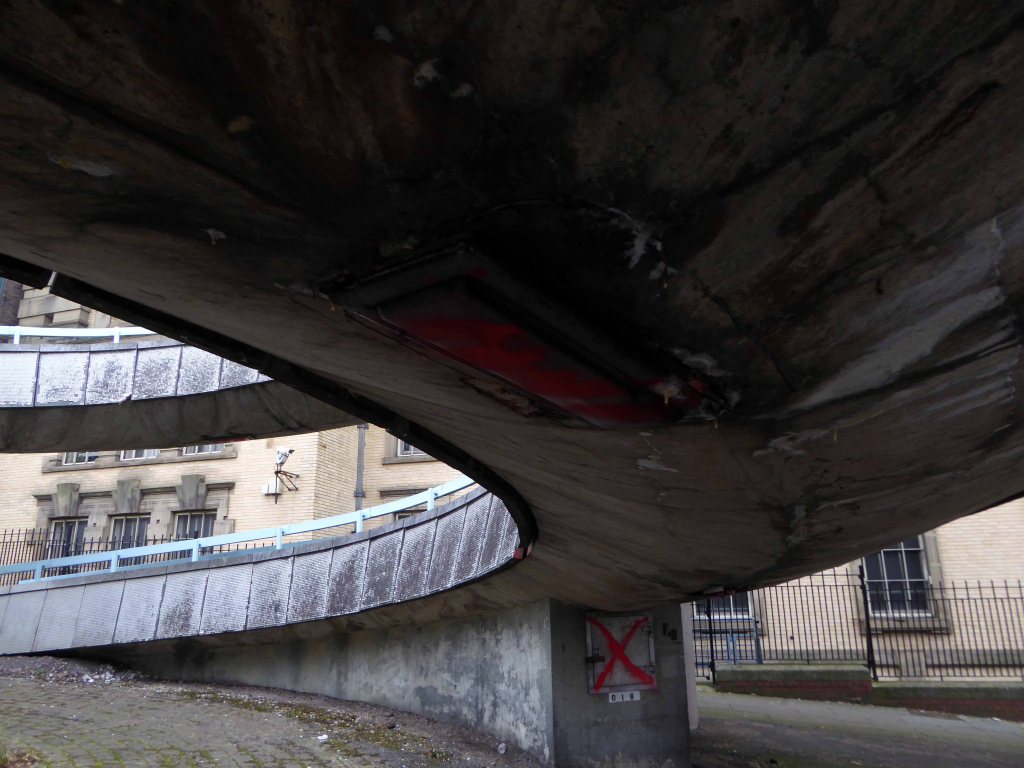
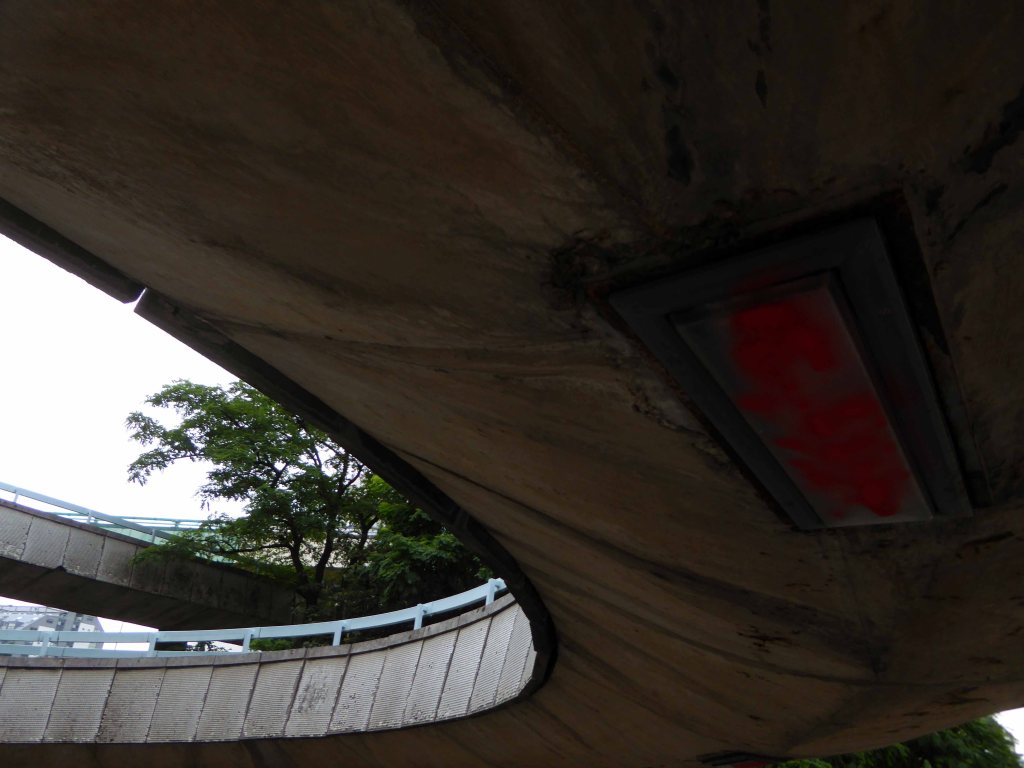
And so I took one last look around taking snaps, an epitaph to the end of an era, and the end of an idea that was once once rendered concrete.

Take a closer walk with me.

Antony Holloway – Huyton Wall

Antony Holloway – artist born March 8th 1928 he died on August 9th 2000.

Dorset was where he was born and grew up and the Dorset landscape was always there deep within him. He was educated at Poole grammar school between 1939 and 1945. After national service in the Royal Air Force in Dorset and Germany from 1948 to 1953 he studied at Bournemouth College of Art. Then came the RCA.

Tony began work as a stained glass and mural designer and jumped, with astonishing confidence, into working as a consultant designer with the architects’ division of the London County Council. He learned how to deal with architects and builders, and became adept at getting as much out of the money available – never enough – for his projects.

In 1963 he was introduced to the Manchester architect, Harry Fairhurst. Eight years later, after they had worked together on commissions in Cheshire and Liverpool, Fairhurst sought Tony’s advice about a plan for five large stained-glass windows in Manchester Cathedral.

Tony asked to design and make the first window, the St George in the inner south-west aisle. It was completed in 1973. Further windows followed in 1976 and 1980 and the final window, Revelation was installed in 1995.

The Guardian

His Sculptural Wall on London Road Manchester – an integral part of Fairhurst’s UMIST scheme, is Grade II listed.

His concrete panels clad two opposing sides of the Faraday Tower which can also be seen on the UMIST site.

I discovered further reference to his work in an old copy of Studio International – serendipitously purchased from a local charity shop.

So I bided my time, awaiting the day I could take the train to Huyton, walk along Bluebell Lane, across the busy dual carriageway to Primrose Drive.

My patience was rewarded – 7,000 square feet of cast concrete retaining wall, surrounding the tower blocks, built on a site raised above the roads.

In 1987 the wall was open to public access – one of the three tower blocks has been subsequently demolished.

Tower Block

Partially covered with greenery and now securely contained within spiked railings, I circumnavigated the site catching and snapping the structure where I could – here are those very snaps.

St Stephen RC – Droylsden

Chappell Road Droylsden Manchester M43

One fine sunny Monday morning I set out cycling to Ashton-under-Lyne to buy an enamel pie dish. Almost inevitably I was pushed and pulled in a variety of unforeseen directions, incautiously distracted and diverted serendipitously – towards Droylsden.

Idly pedalling down Greenside Lane looking this way and that I was drawn magnetically to a pitched roof tower, towering over the red brick semis. Rounding the corner I discovered the delightful St Stephen’s RC church, stood high and proud on a grassy corner, glowing golden in the March sunlight.

I leaned my bike against the presbytery wall and with the kindly bidding of a passing parishioner, I went inside. 

Thanks to Father Tierney for his time and permission to snap the interior. It was a calm space, the large open volume side lit by high octagonal honeycomb modular windows. The elegant plain pitched concrete gambrel roof beams a simple engineered solution.

The church and attached presbytery were built from designs by Greenhalgh & Williams in 1958-9, the church being consecrated on 12 May 1960. A reordering took place, probably in the 1960s or 70s, when the altar rails were removed and the altar moved forward. Probably at the same time, the font was brought into the church from the baptistery.

Taking Stock

The altar and apse beautifully restrained in colour form and choice of materials. The design and detailing on the pews so warm and understated.

I was loathe to leave.

The exterior does not disappoint, the repetition of modular window shapes, the integration of doors, brick and mixed stone facing.This is a building of elegant grandeur, well proportioned, happily at home in its setting.

I suggest you set out there soon.

Castle House Co-op Store – Sheffield

So here we are outside, you and I in 2015 – it seems like yesterday.

Whereas yesterday I was inside not outside, but more of that in a moment.

It seems that you were listed in 2009 and deservedly so.

1964 by George S Hay, Chief Architect for CWS, with interior design by Stanley Layland, interior designer for CWS. Reinforced concrete with Blue Pearl granite tiles and veneers, grey granite tiles and veneers, buff granite blocks, glass, and brick.

There’s just so much to stand and stare and marvel at.

Vulcan by Boris Tietze commisioned by Horne Brothers 1961 for their head office building No. 1 King Street. Glass fibre on a metal armature the 8 foot high figure holding a bundle of metal rods.

You were just about still open then, then you weren’t, then you were again – but a Co-op no more alas.

Fast forward to 2018

Work is underway on plans for a tech hub in Sheffield after a funding package was agreed.

Followed by a casual stroll towards 2019 where we are talking a peep inside courtesy of owners Kollider and book shop La Biblioteka.

I’d never ever seen the interior, save through the photographs of Sean Madner who captured the key features in 2014, prior to refurbishment.

So the Modernists and I pitched up this Sunday afternoon, the conclusion of our Sheffield Walk.

Lets take a look at the end stairwells, two very distinct designs one dotty one linear, both using Carter’s Tiles.

Configured from combinations and rotations of these nine modular units and two plain tiles.

Configured from combinations and rotations of these twelve modular units and two plain tiles.

The site has retained some of its original architectural typography.

The former top floor restaurant has a suspended geometric ceiling with recently fitted custom made lighting.

The timber-lined boardroom has a distinctive horseshoe of lighting, augmenting the board room table – which is currently away for repair, oh yes and a delightful door.

High atop the intoxicating vertiginous swirl of the central spiral stairway is the relief mural representing a cockerel and fish made of aluminium, copper and metal rod, with red French glass for the fish’s eye and cockerel’s comb.

Illuminated from above by this pierced concrete and glass skylight.

Many of the internal spaces have been ready for their new tenants.

This is a fine example of Modernist retail architecture saved from decay and degradation by the timely intervention of a sympathetic tenant.

Long may they and Castle House prosper – Sheffield we salute you!

Golden Lane Estate – London

Something of an iconic, totemic, pin-up poster boy/girl for the Modernists, I bumped into you one rainy day, on the way from here to there. Initially attracted by an unexpectedly bright slab of primrose yellow and white.

Golden Lane was developed in the early 1950s to create local housing for essential workers in the City of London, following the devastation of the Blitz. At the time only around 500 people actually lived in the City of London so the estate was deliberately designed with small units to house single people and couples comprised of the broad social and professional mix needed to support the local community. 554 units were built of which 359 were studios and one bedroomed flats; the remainder were maisonettes and early tenants included caretakers, clergymen, doctors, police offices, cleaners and secretaries. Today there are approximately 1,500 people living on the estate in 559 flats and maisonettes. 

Golden Lane was commissioned from architects Chamberlin, Powell and Bon by the City of London Corporation (which still manages it) and built on bombed sites previously occupied by small businesses and industries. Some of the basement areas of the former buildings were retained as sunken areas of landscaping. Building took place over a 10-year period between 1952 and 1962 when Crescent House on Goswell Road was completed. Golden Lane was listed Grade II in 1997 (Crescent House is Grade II*). When built, Great Arthur House was the tallest residential building in London and its Le Corbusier inspired design included a resident’s roof garden. The estate also included a leisure centre with a swimming pool and tennis courts. It is now run by a private operator and is open to both residents and the general public.

Academy of Urbanism

I stuck around too take a look, struck by the variety of scale, detail and space within a relatively tight integrated development. Mature greenery abounds along with a delightful water feature.

It would appear that following the 70s right to buy the estate is a 50/50 mix of social and private ownership, relatively trouble free and well maintained, something of an anomaly in our go-ahead, left behind land.

Go take a look for yourself see what you think.

Blank Street – Ancoats

As with all things material and corporeal there was a time when you simply didn’t exist.

1860 adjacent to Woodward Street and the Rochdale Canal, a simple agglomeration of loose limbed industrial buildings and such – yet to be christened Blank.

adjective

  1.  Unrelieved by decorative or other features; bare, empty, or plain a blank wall.
  2. Showing a lack of comprehension or reaction – we were met by blank looks – synonyms: expressionless, empty, vacant, deadpan, wooden, stony, impassive, inanimate, vacuous, glazed, fixed, lifeless, uninterested, emotionless, unresponsive, inscrutable.

noun

  1. A space left to be filled in a document – leave blanks to type in the appropriate names – synonyms: space, gap, blank space, empty space.
  2. A cartridge containing gunpowder but no bullet, used for training or as a signal.

verb

  1. Make (something) blank or empty – electronic countermeasures blanked out the radar signals.
  2.  Informal North American defeat (a sports team) without allowing them to score – Baltimore blanked Toronto in a 7–0 victory.

Though contradictorily I have found reference to a bankrupt foundry in the London Gazette 1857.

You appear again during the Manchester Blitz.

By 1960 you are on the map and the area is on the up and up.

Though I have to ask the question of the namers of streets – why so Blank, an off day at the office – we have whole blocks named for poets, painters, and far flung places, so why so Blank?

Hadn’t they heard of nominative determinism – born to be Blank.

Whilst in search of a Brown Cow I found a photograph on the Local Image Collection of 60’s maisonettes in the area alongside Woodward Street.

This Municipal Modernist development seems to have been short-lived and subject to yet more demolition in the area, to be replaced by late 70’s terraced housing.

Blank Street inexplicably became Fulmer Drive.

Which in turn had been tinned up and demolished around 2008.

How did that happen – seemingly viable homes previously changing hands for £100,000 deemed surplus to requirements – land banking, ahead of an as yet unseen masterplan?

Your life was short and sharp – shaped by economic shifts, world war and the local authorities ephemeral housing policies. There is little evidence of your existence, photographic or otherwise, so I want to set the record straight – draw a blank.

Here you are as of July 2019 – tarmac intact, drains fully functioning, pavements paved, awaiting orders. A circuitous run of grassy ridges resembling the remains of some Roman or Iron Age fortification.

Where do we go from here?

Woodward Court Woodward Street – Ancoats Manchester

“What’s going on?”

As Marvin Gaye so succinctly asked.

Why is there just one remaining tower block dancing unclad around Ancoats?

Let’s go back in time and see if we can find out – it seems that back in 1807 there wasn’t a Woodward Street to be found, the ever expanding industrial might of Manchester had not yet reached these particular green fields of Ancoats.

By 1824 it shows a fresh face to the world christened Woodworth Street, sparsely dotted with new development.

Almost fully formed in 1836 and renamed as Woodward Street, the area begins to accumulate the familiar domestic and industrial clutter of a burgeoning Victorian City.

By 1860 the street is fully formed and open for business.

Workers finding homes in austere and functional brick back to backs, typical of the period’s housing.

Fast forward to the early Sixties and the street is showing signs of age – the century old industries are already in decline, steady jobs, mills and factories gone west and east, well-worn housing looking terminally tired and in need of a little care and attention.

But wait what’s this coming around the bend?

The first wave of urban regeneration, post war optimism incarnate, a bright new shiny future – out with the old and in with the new, as Municipal Modernism stamps its big broad architectural feet all over Woodward Street.

Archival photographs from Manchester Local Image Collection

Our story is far from over, this optimism is short-lived the homes, houses and industry are swept away yet again, replaced with two story modern terraced housing and an all too obvious absence of regular employment – yet the tower blocks prevailed.

Former streets were over written and remain as poignant vestigial marks in the landscape.

Grand plans are made for their revival.

Paul Daly

Though their future was built on more than somewhat shifting and uncertain sands.

A tower block has been left lying empty for a whopping 18 years. The 13-storey building at Saltford Court in Ancoats has been unoccupied since Manchester council closed it in the 1990s. It was bought by top developers Urban Splash six years ago but residents have now hit out about it still being empty. Neighbours of Saltford Court say it has become an ‘eyesore’ and magnet for vermin since the firm bought it.

Manchester Evening News 2012

A large group of blocks stood tinned up and unloved, yet owned, for a number of years, victims one supposes of land-bankers, developers speculating on an even better return, as the warm waves of gentrification washed slowly over them, from nearby New Islington.

All but one was refurbished, clad and re-let.

Woodward Court was spared – set aside for the homeless.

A period piece surrounded by Post Modern and Revivalist pretenders.

Why not go take a look.

Odeon – Guide Bridge

285 Stockport Road Guide Bridge Ashton-under-Lyne

This was planned to be the Verona Cinema, a project of local builders – P Hamer Verona Cinema Ltd. The construction of the cinema was almost completed when Hamer sold the building to Oscar Deutsch and it opened as one of his Odeon theatres.

Hamer then used the proceeds of the sale to build the Roxy Cinema Holinwood, which was designed by Drury & Gomersall.

Opening date of the Odeon Theatre was 29th June 1936, when the first programme was Bing Crosby in “Anything Goes” and Harold Lloyd in “The Milky Way”. Designed by the noted cinema architectural firm of Drury & Gomersall, the frontage had a neat entrance in brick, with white stone facings on the window surrounds. There was a parade of shop units on each side of the entrance which had matching brickwork and a white stone trim.

Inside the auditorium the seating was arranged for 834 in the stalls and 330 in the circle. The side splay walls on each side of the proscenium was decorated in wide horizontal bands, and topped with a backlit illuminated grille.

The Odeon was closed by the Rank Organisation on 11th March 1961 with Kenneth More in “Man in the Moon”.

It was converted into St. Paul’s Roman Catholic Church. Former cinemas have made good conversions to churches and the fabric of the buildings are generally respected. In this case though, the sad story is that the front entrance has been rendered over and inside all details of it cinematic past have been erased. You would never know you were inside what had been been an Art Deco styled building.

Contributed by Ken Roe Cinema Treasures

I passed by nearly every day for years travelling to and from school, I played there at a wedding reception in the church social club. I sadly have no recollection of the building in use as a cinema.

It has been closed since 2010 – currently it has no purpose or seemingly any future use, there are no For Sale signs in evidence.

Fallen so quickly and absolutely from grace.

St Mary’s RC Church – Denton

Duke Street Denton Manchester M34 2AN

I remember you being built.

I remember our visit with the Manchester Modernists in 2015 – arranged by Angela Connelly and Matthew Steele of Sacred Suburbs

I popped by to see you yesterday – a truly remarkable structure set amongst the terraced housing of an unremarkable street.

The foundation stone for the present building laid by Bishop Beck in August 1962. He returned to bless and open the church on 25 June 1963. The new church was built from designs by Walter Stirrup & Sons – job architect Kevin Houghton, at a cost of about £60,000. The church is notable for its dalle de verre glass, by Carl Edwards of Whitefriars.

The church is a very striking and characterful building with a hyperbolic paraboloid roof rising in peaks on four sides, with clerestory lighting in the angles, that on the west side jutting out to form a canopy over the entrance. It was described by Nikolaus Pevsner as ‘wildly expressionist’.

Taking Stock

I suggest that you do the same and pop by to see St Mary – Our Lady of Sorrows soon.

The Odeon née Gaumont – Ashton Under Lyne

Opened 22 April 1920 with “The Forbidden City” and designed by Arnold England, the Majestic Picture House was part of the Provincial Cinematograph Theatres circuit. With 1,233 seats in stalls and balcony and a splendid facade faced in white faience tiles on two sides of the building on its prominent town centre corner site of Old Street and Delamere Street, the cinema was a great success.

It had an oak panelled foyers which had beautiful coloured tapestry’s on the walls. The interior was in a Georgian style and it was equipped with a pipe organ and a seperate tea room and cafe which were located on the upper floor.

It passed, with all the other PCT houses to Gaumont British Theatres in 1929, but it was not until 12th July 1946 that it was renamed Gaumont. The Majestic Picture House was renovated in July 1936, with new seating installed and a re-recoration of the foyer and auditorium. A new Compton 3Manual/6Rank organ was installed that was opened by organist Con Docherty.

Later being merged into the Rank Organisation, the Gaumont was re-named Odeon on 11th November 1962. It was eventually sold to an independent operator who renamed it the Metro Cinema from 6th November 1981.

With capacity now down to 946 seats, the Metro Cinema continued as a single screen operation until the middle of 2003, sometime after a multi-plex had opened in the town. In 2008 (with seats and screen intact) the building was unused except for the long foyer area, linking the front and back elevations of the Metro, which was a Slotworld Amusement Arcade. By 2011, the entire building had been stripped out and stood empty and unused.

Cinema Treasures

The cinema was used as a location for the film East is East.

Archive images Metro Majestic

It was my local cinema as a lad – attending Saturday morning matinees as a member of the Odeon Boy’s and Girls club. Hundreds of the nosiest kids. regularly warned by the manager that the film would be stopped if the raucous behaviour continued.

Now it’s just an empty shell, superseded by multiplex and latterly a lost Slotworld.

Unlisted unloved sitting at the heart of the town – too late for the last picture show.