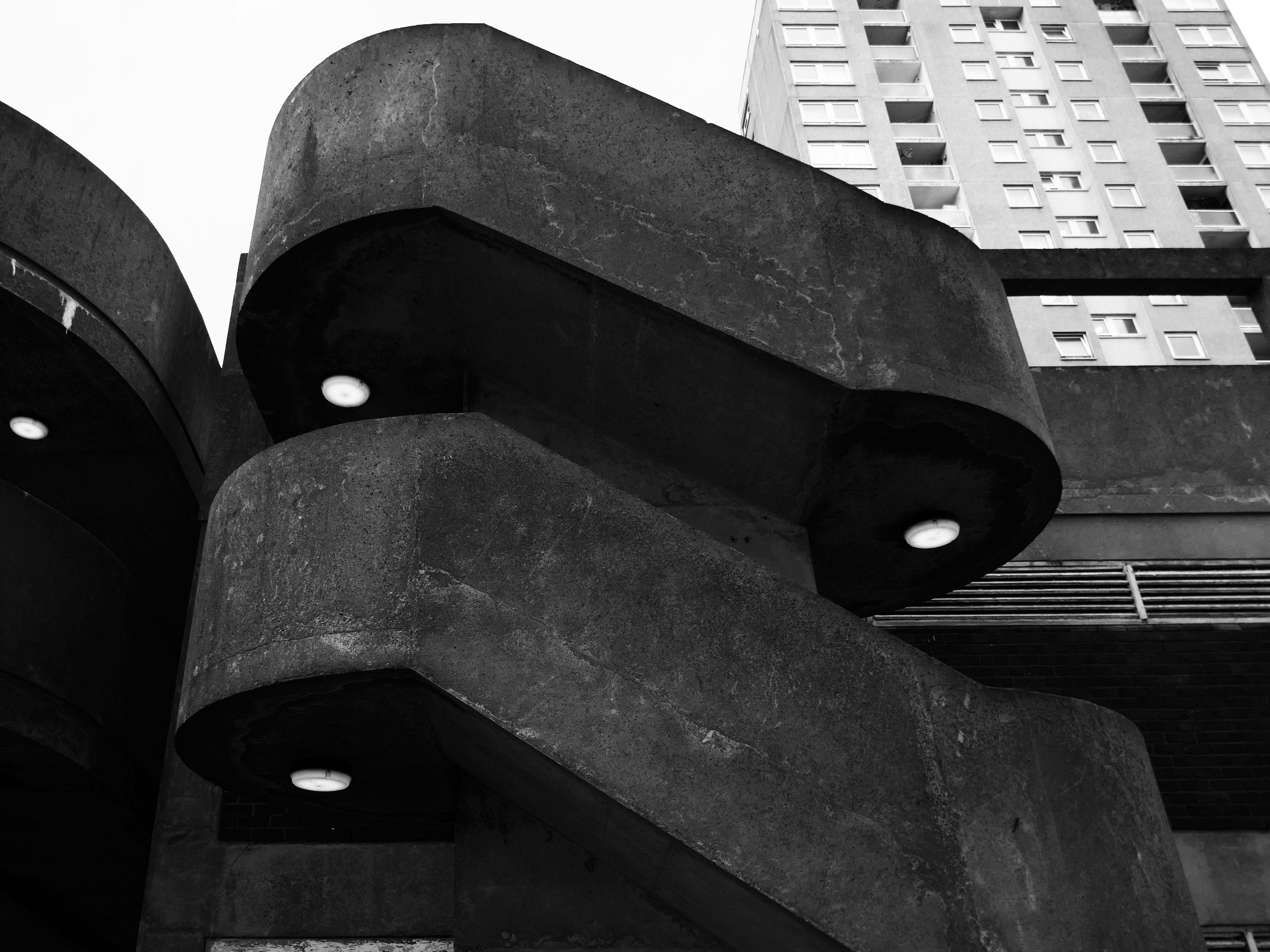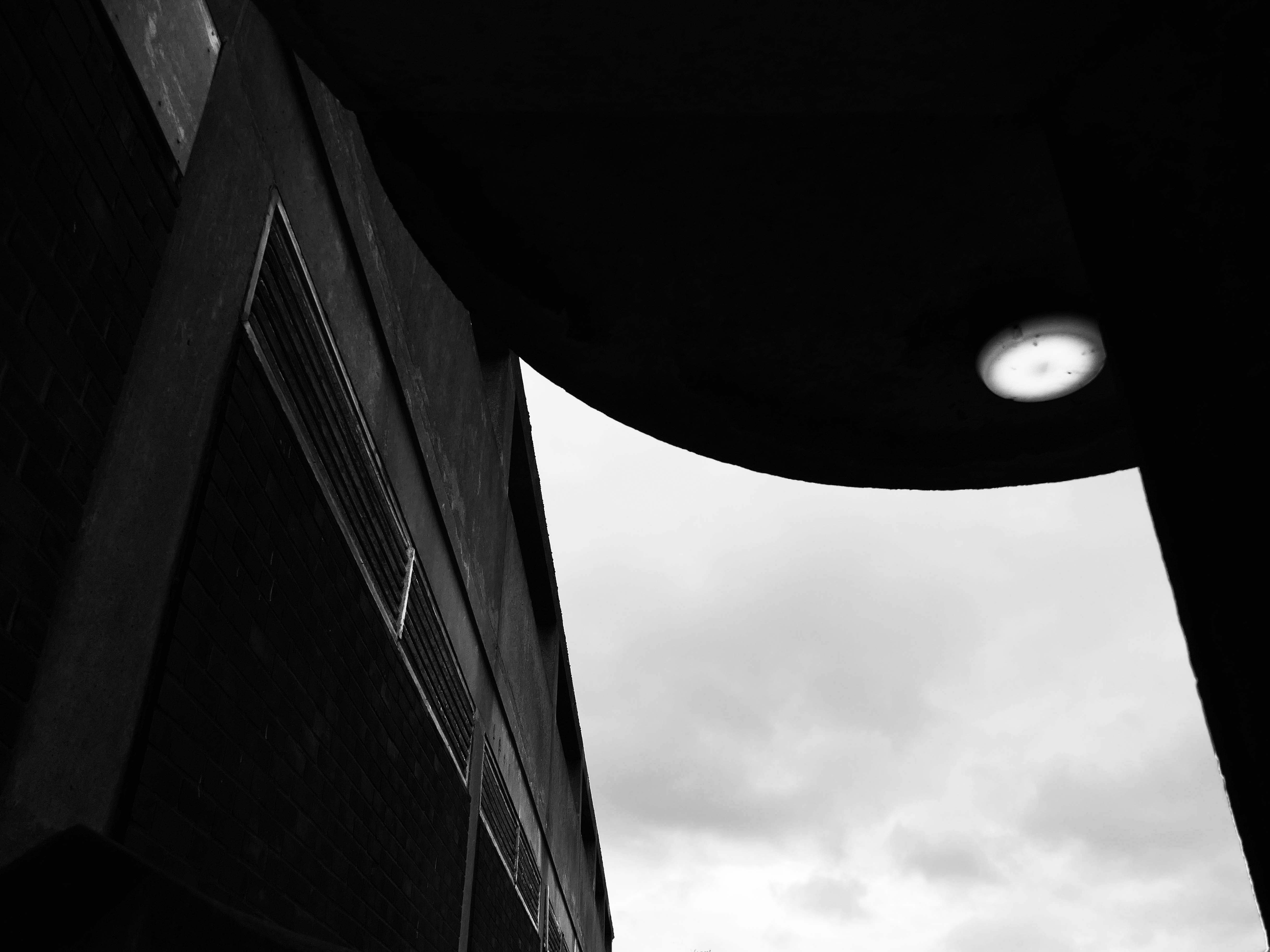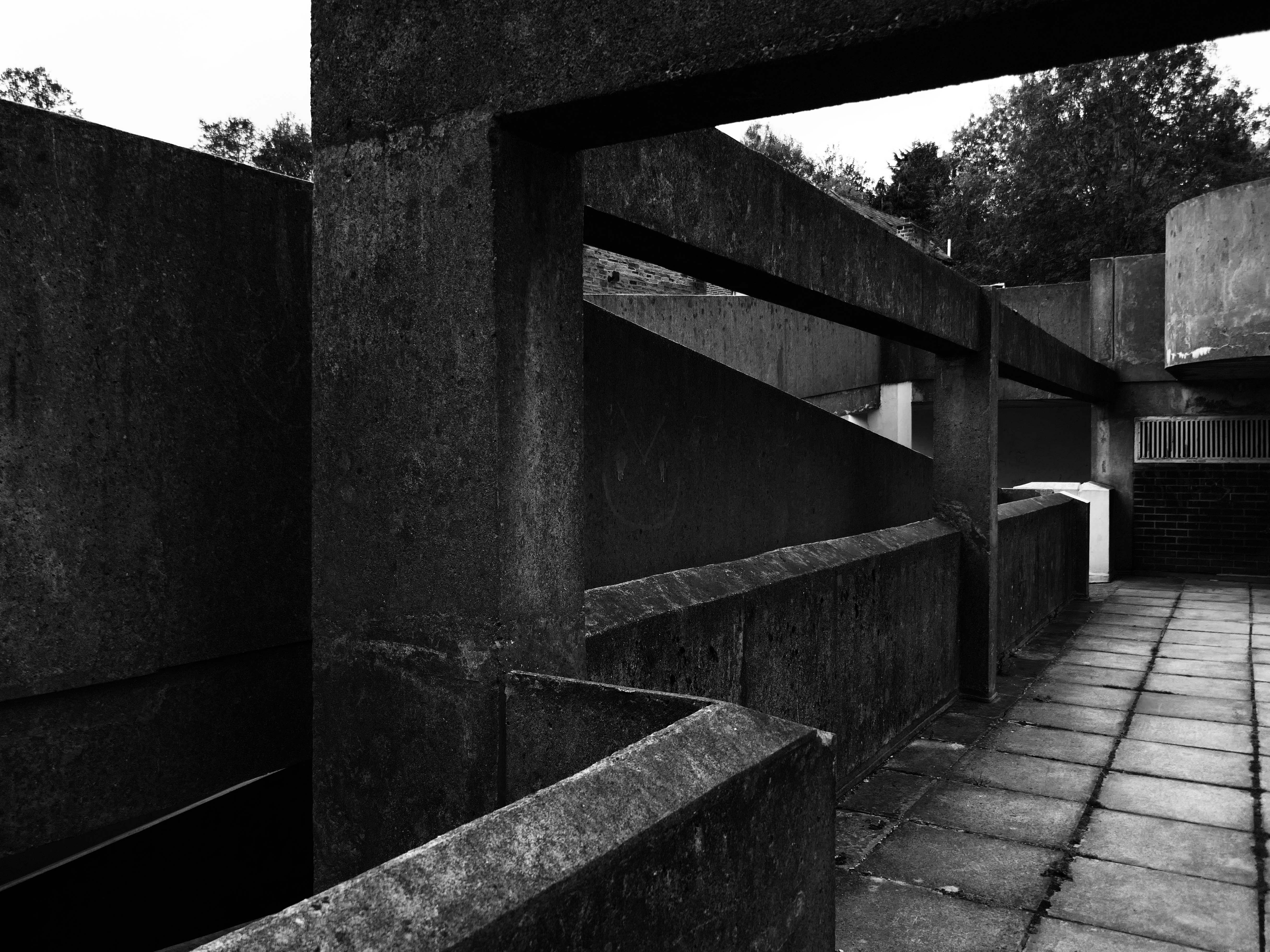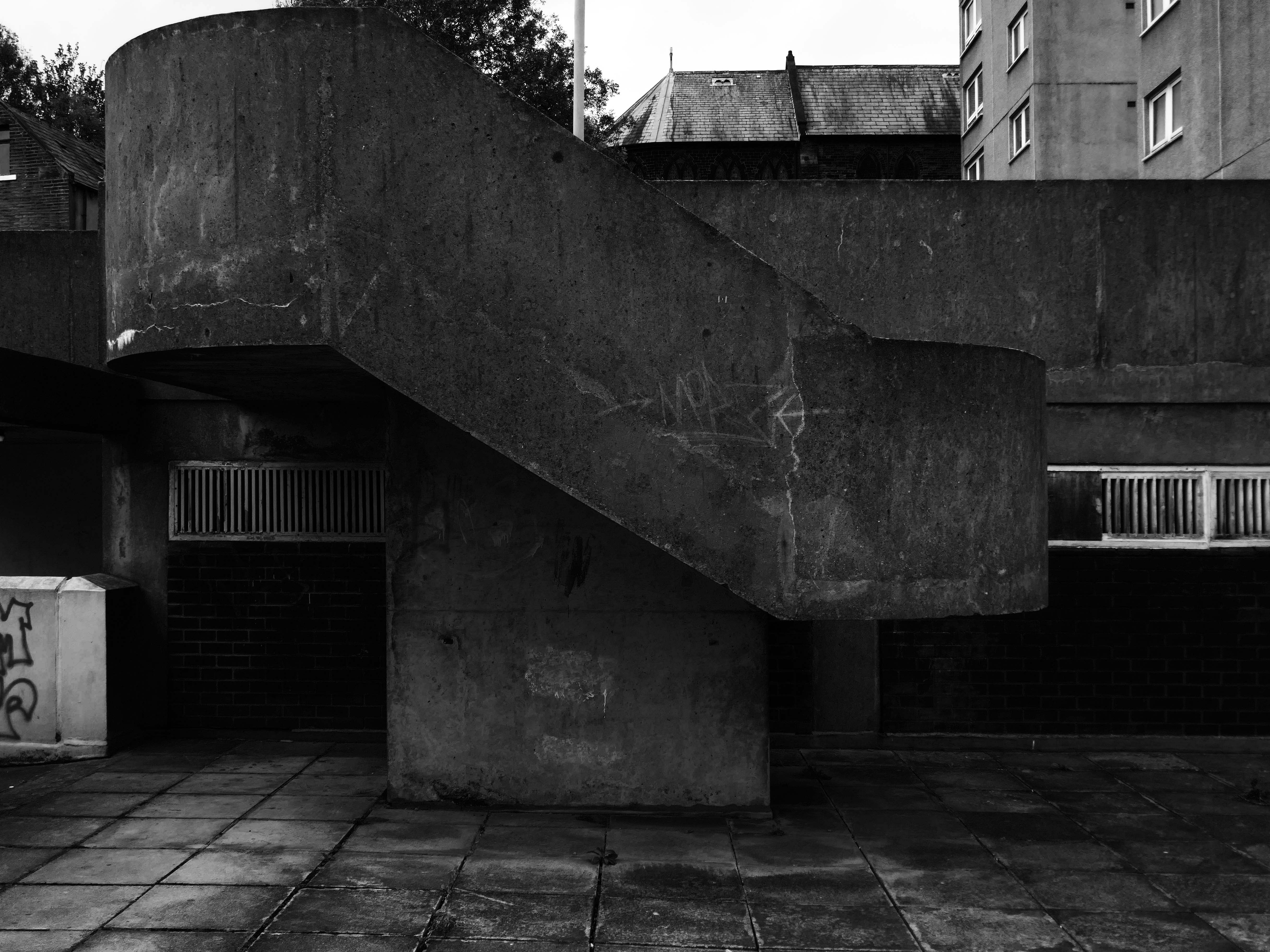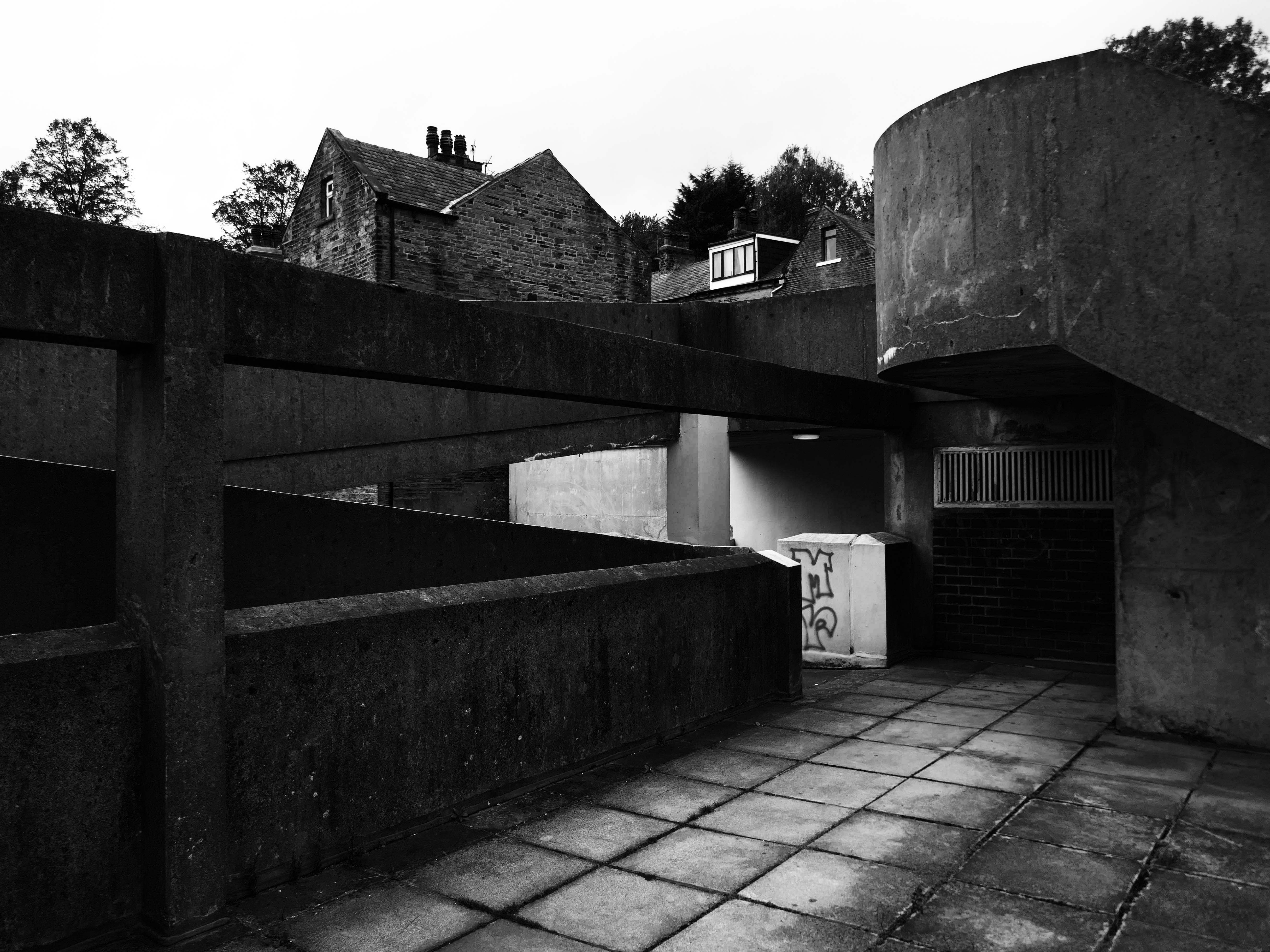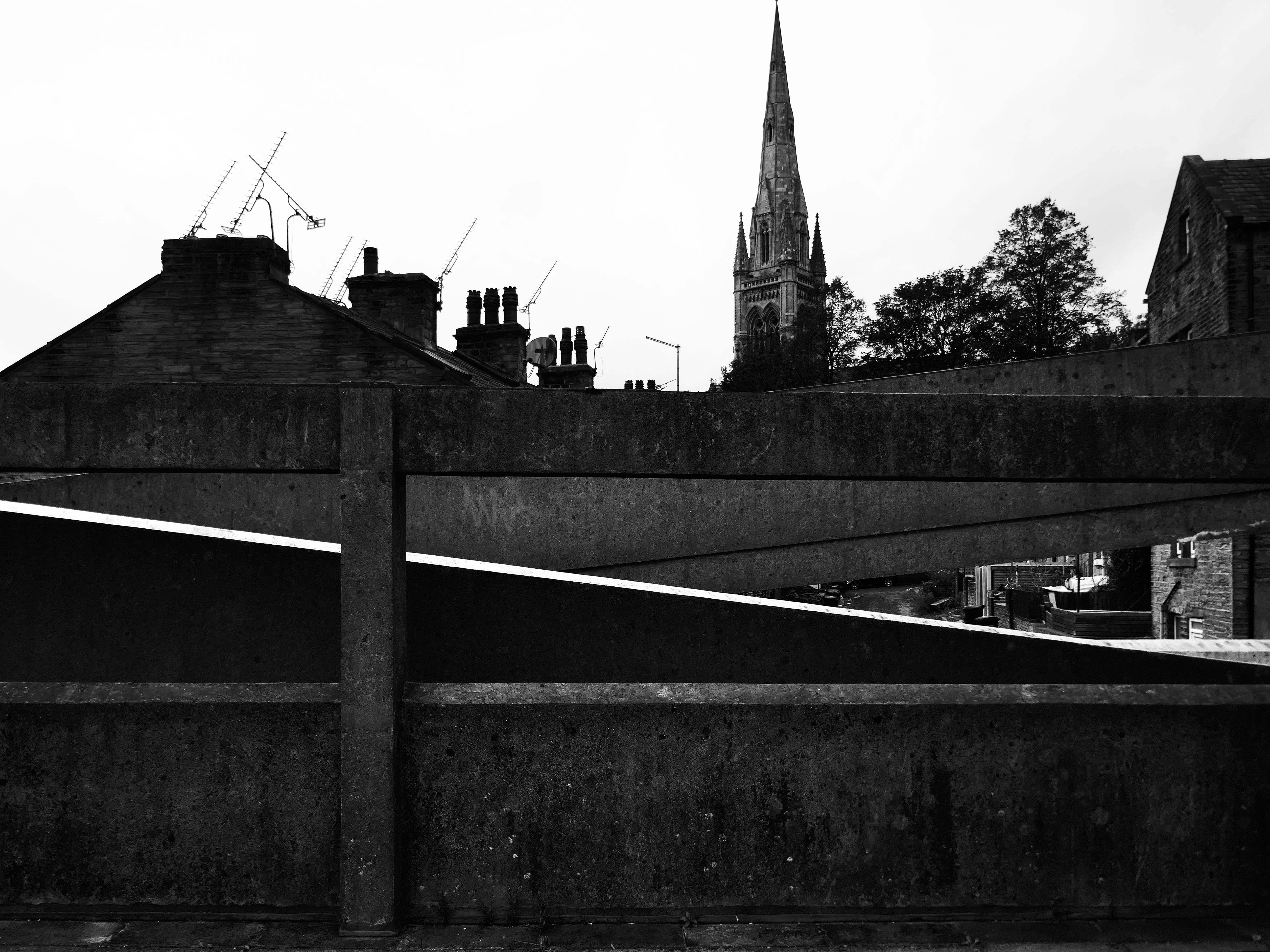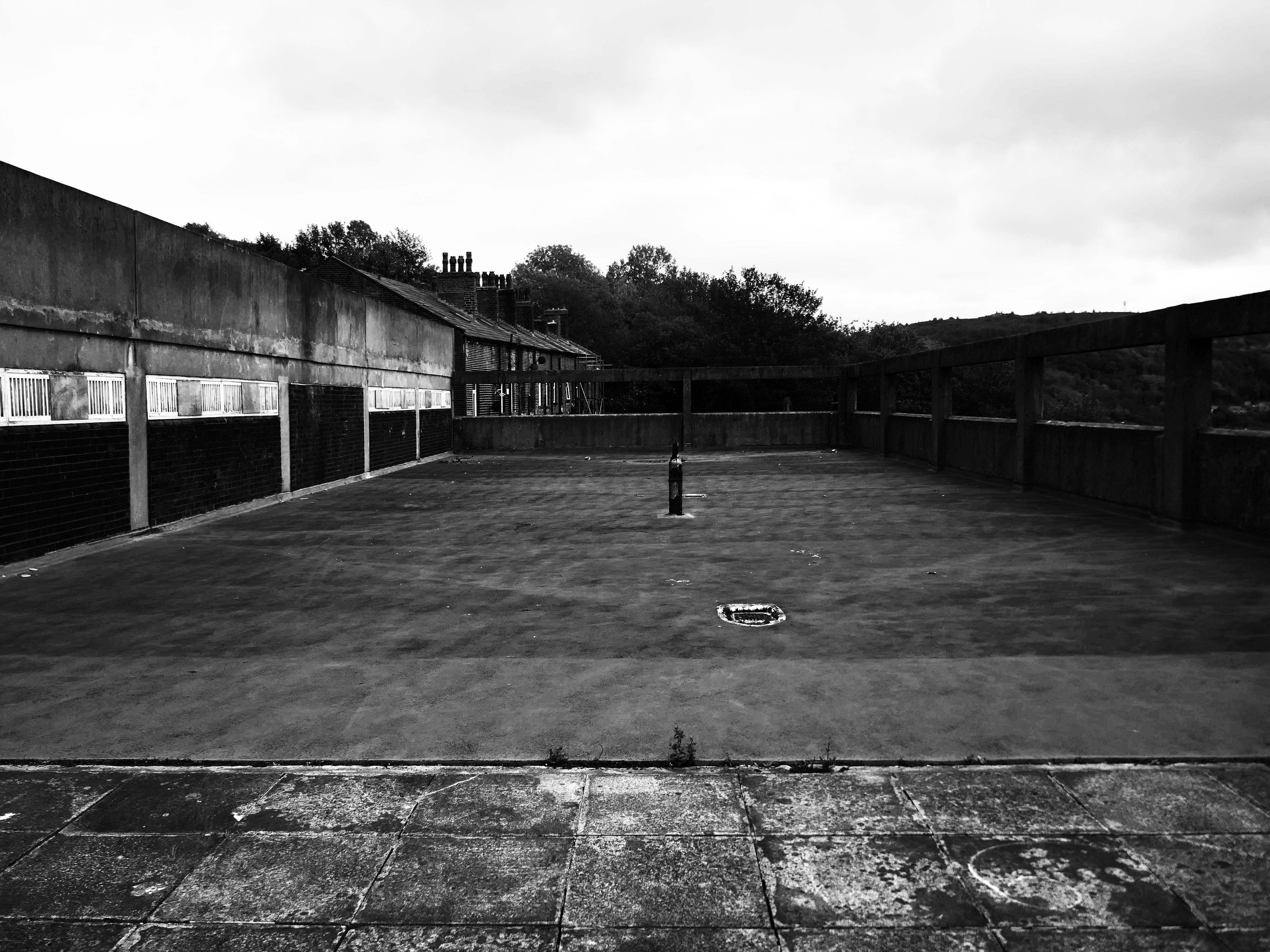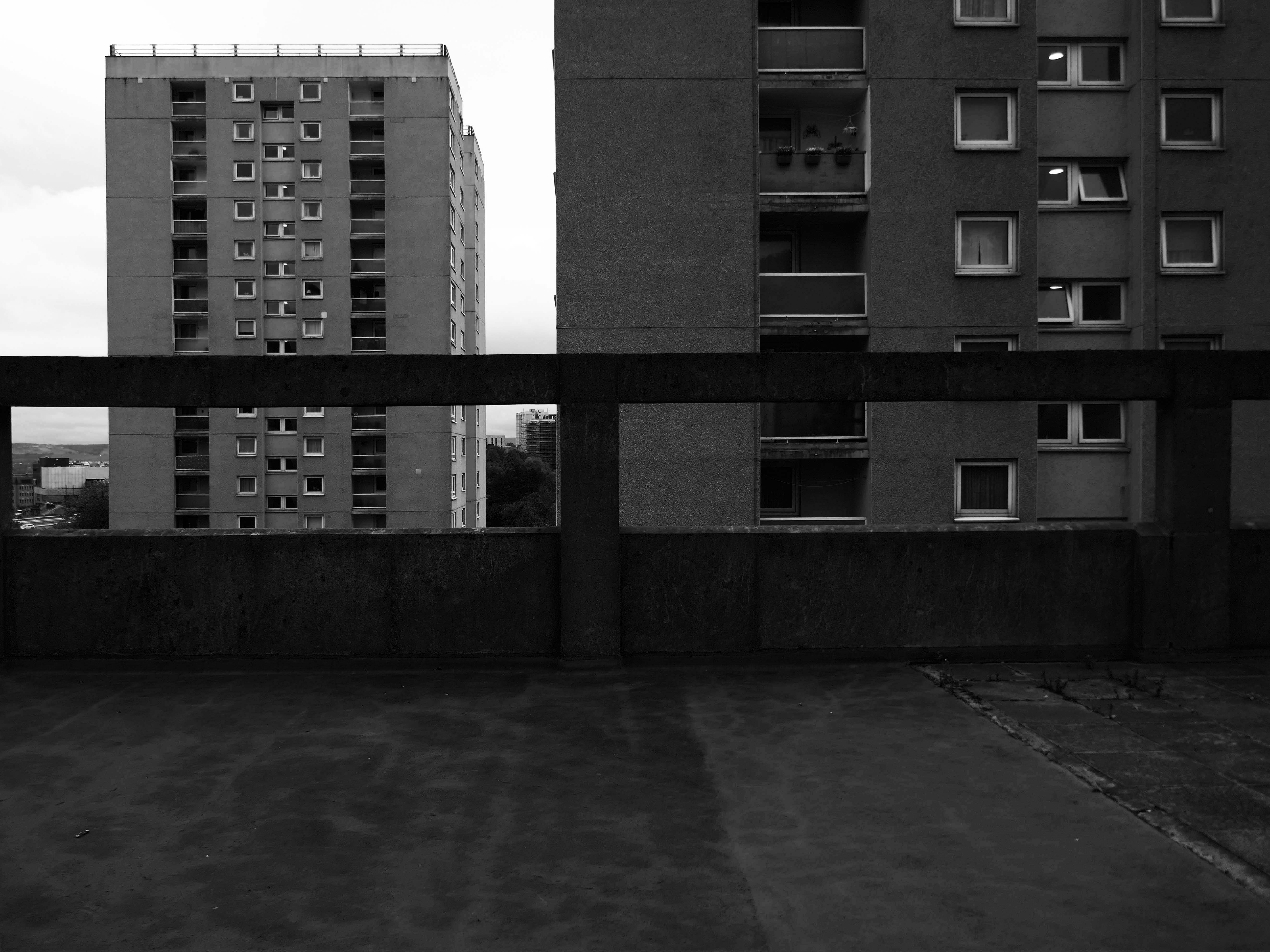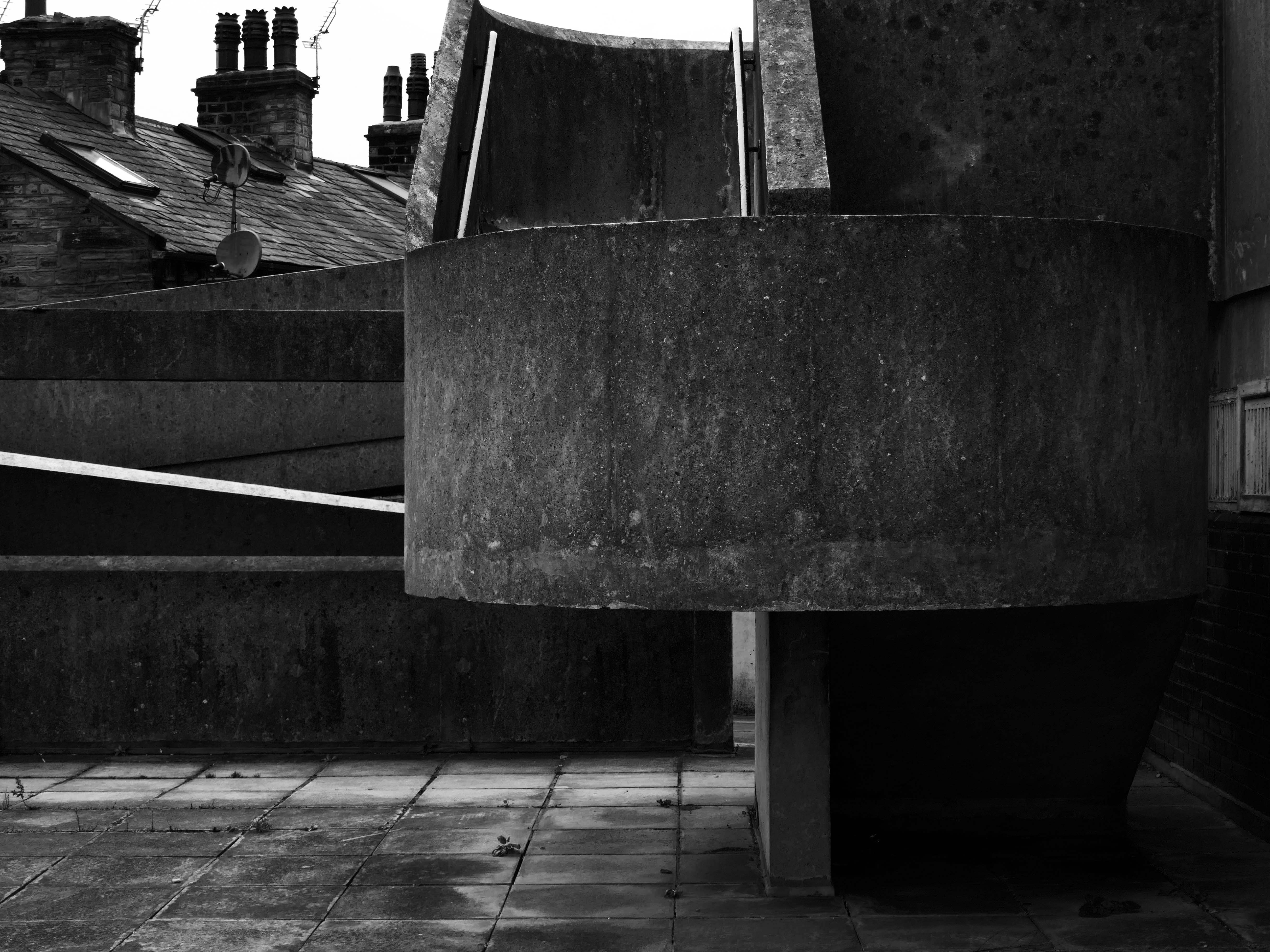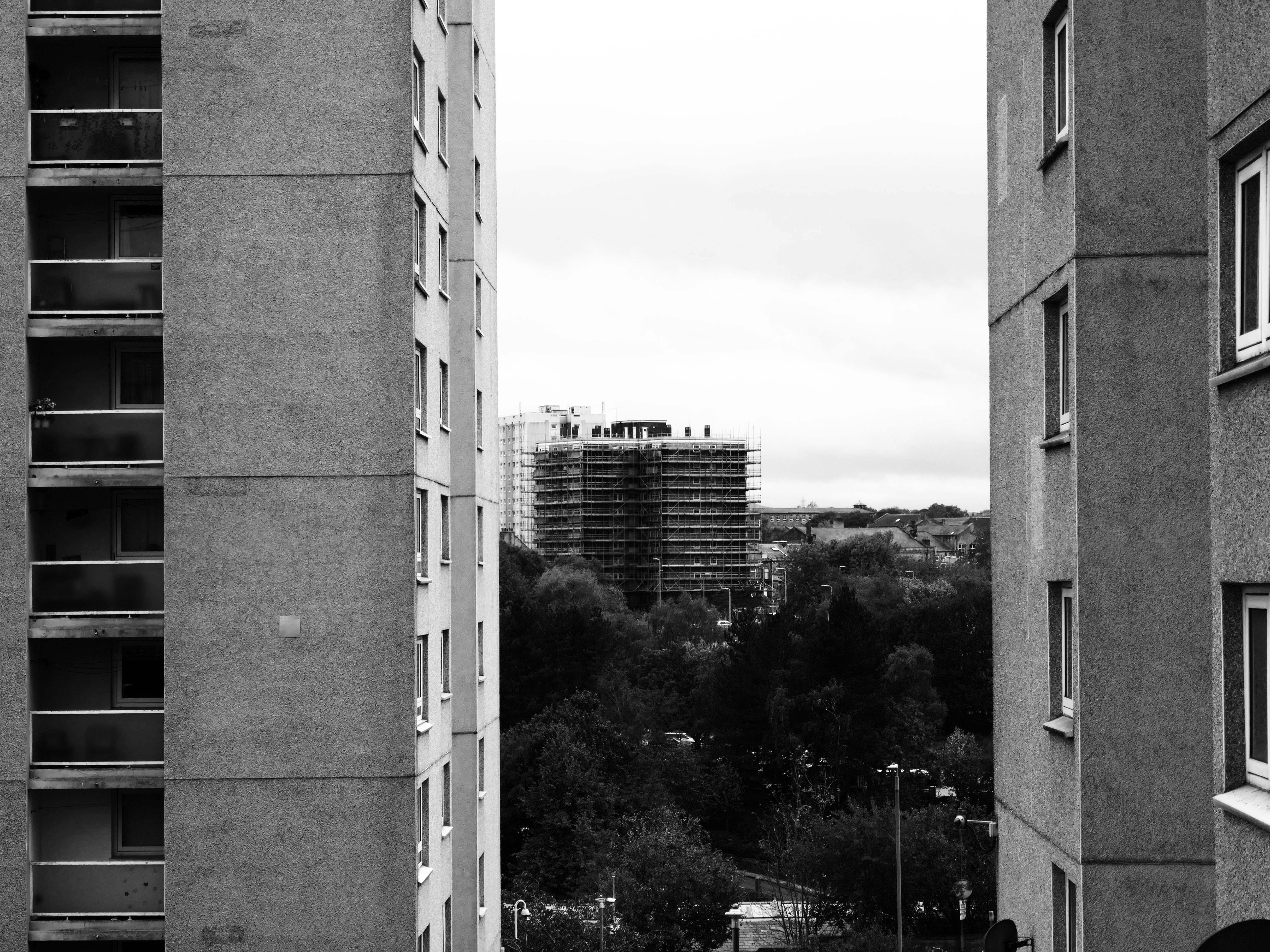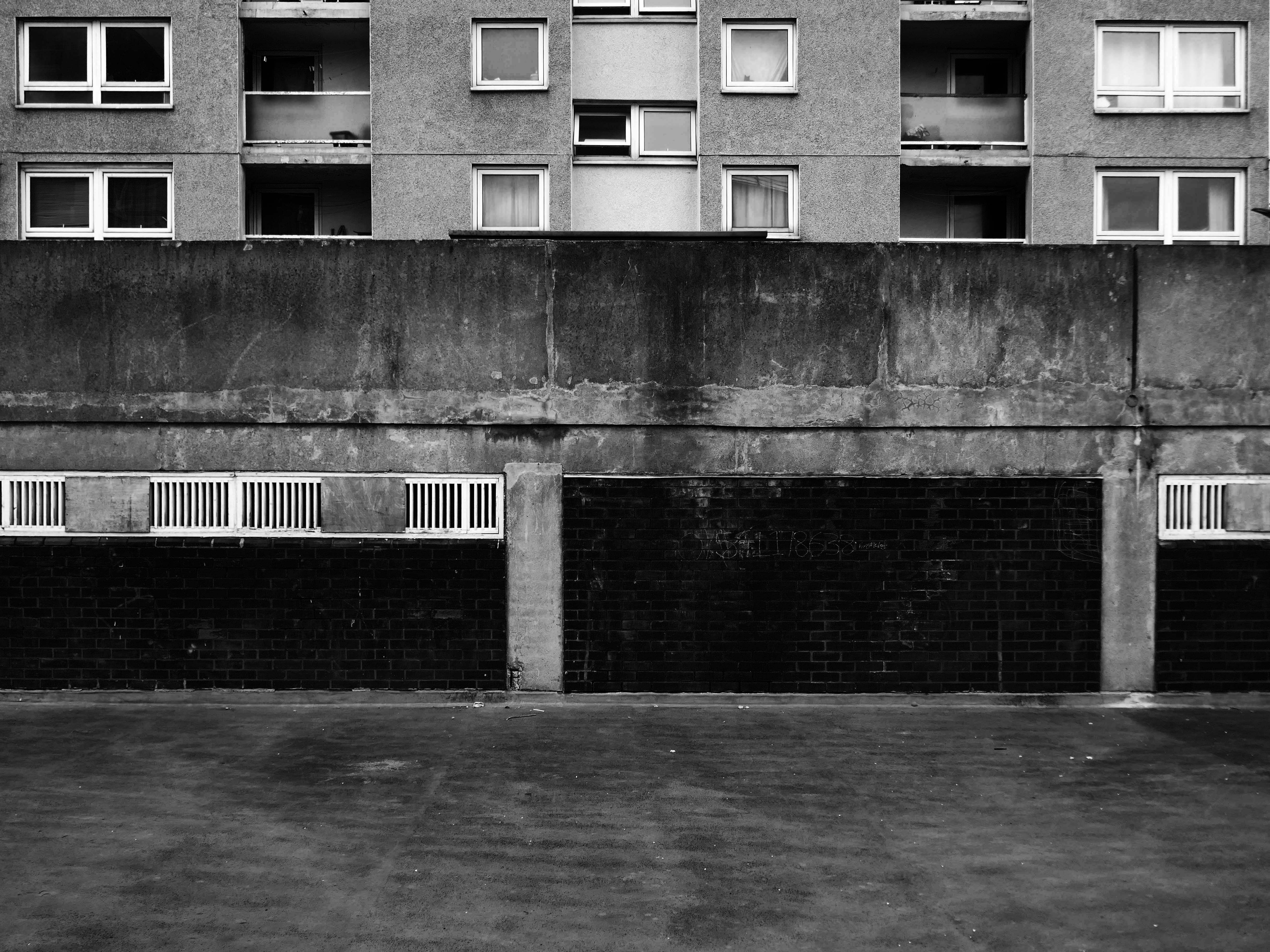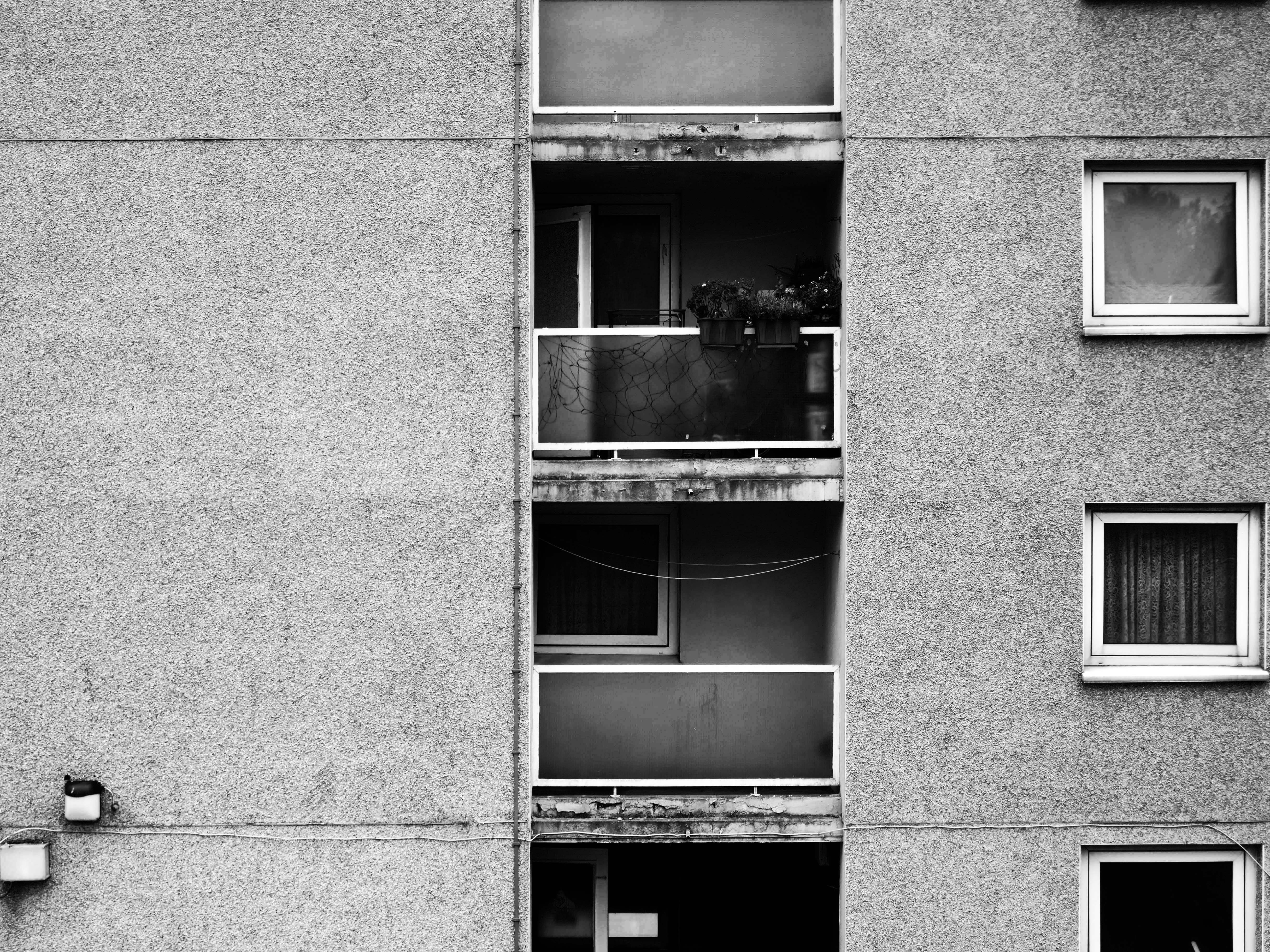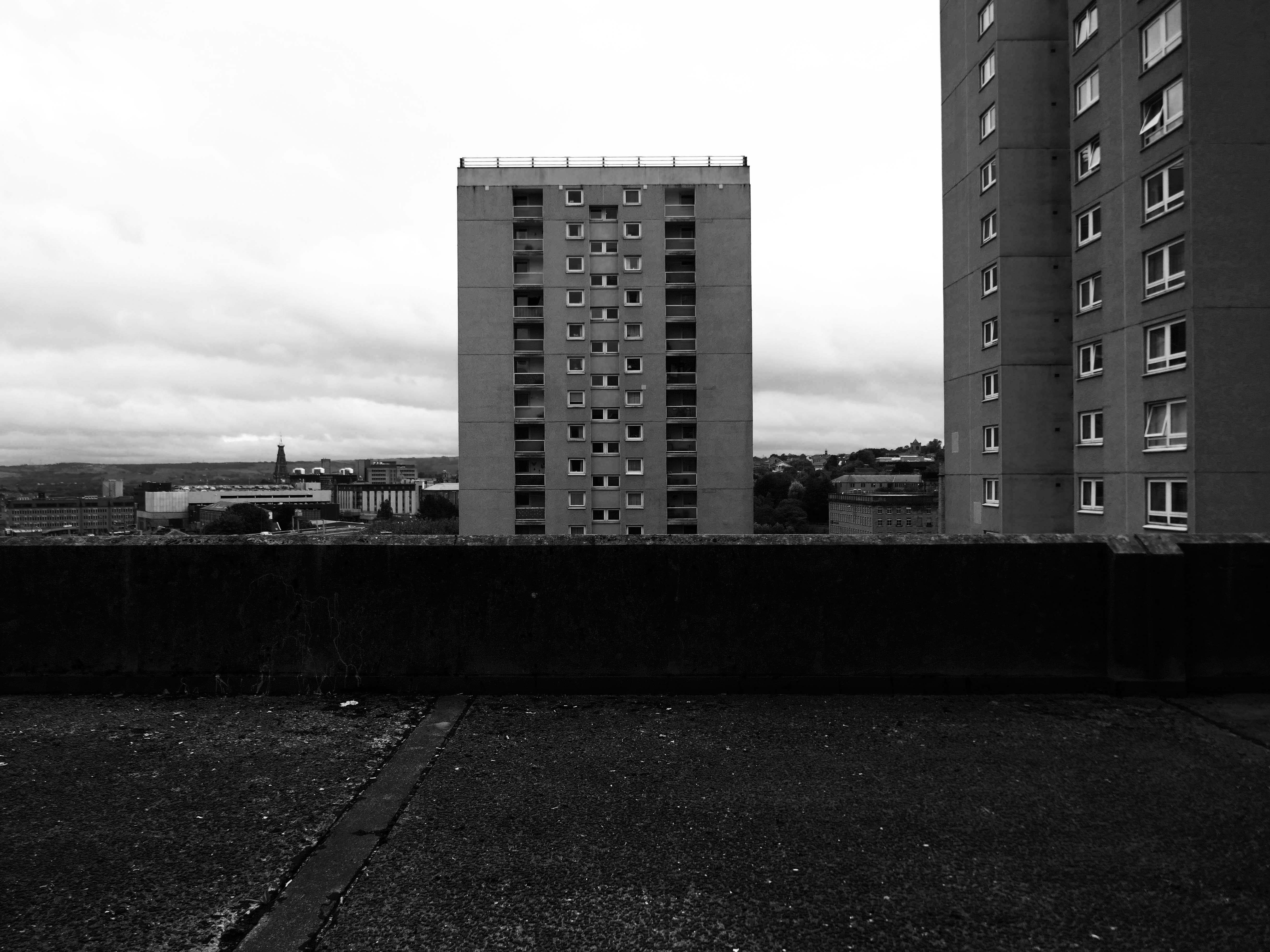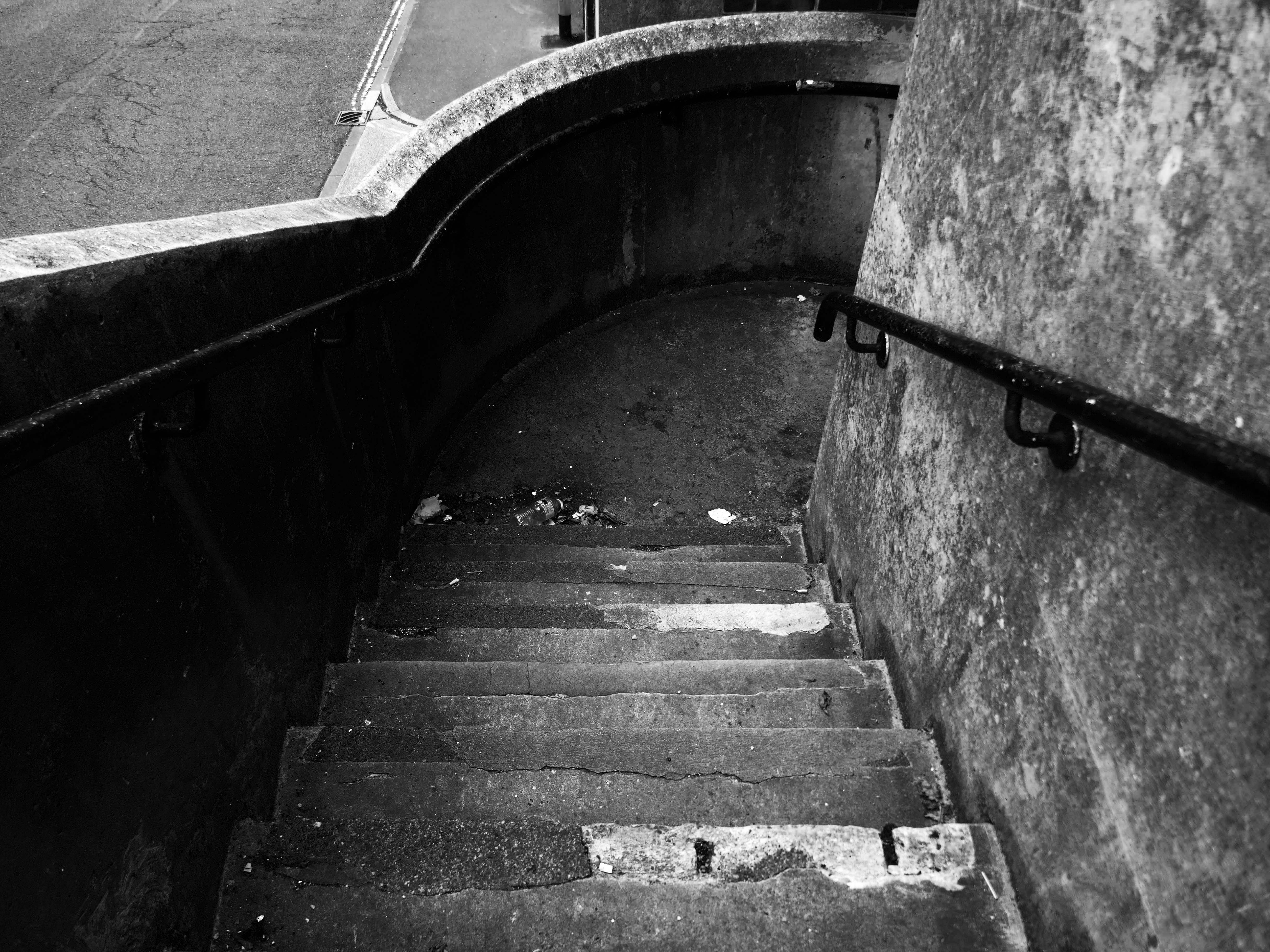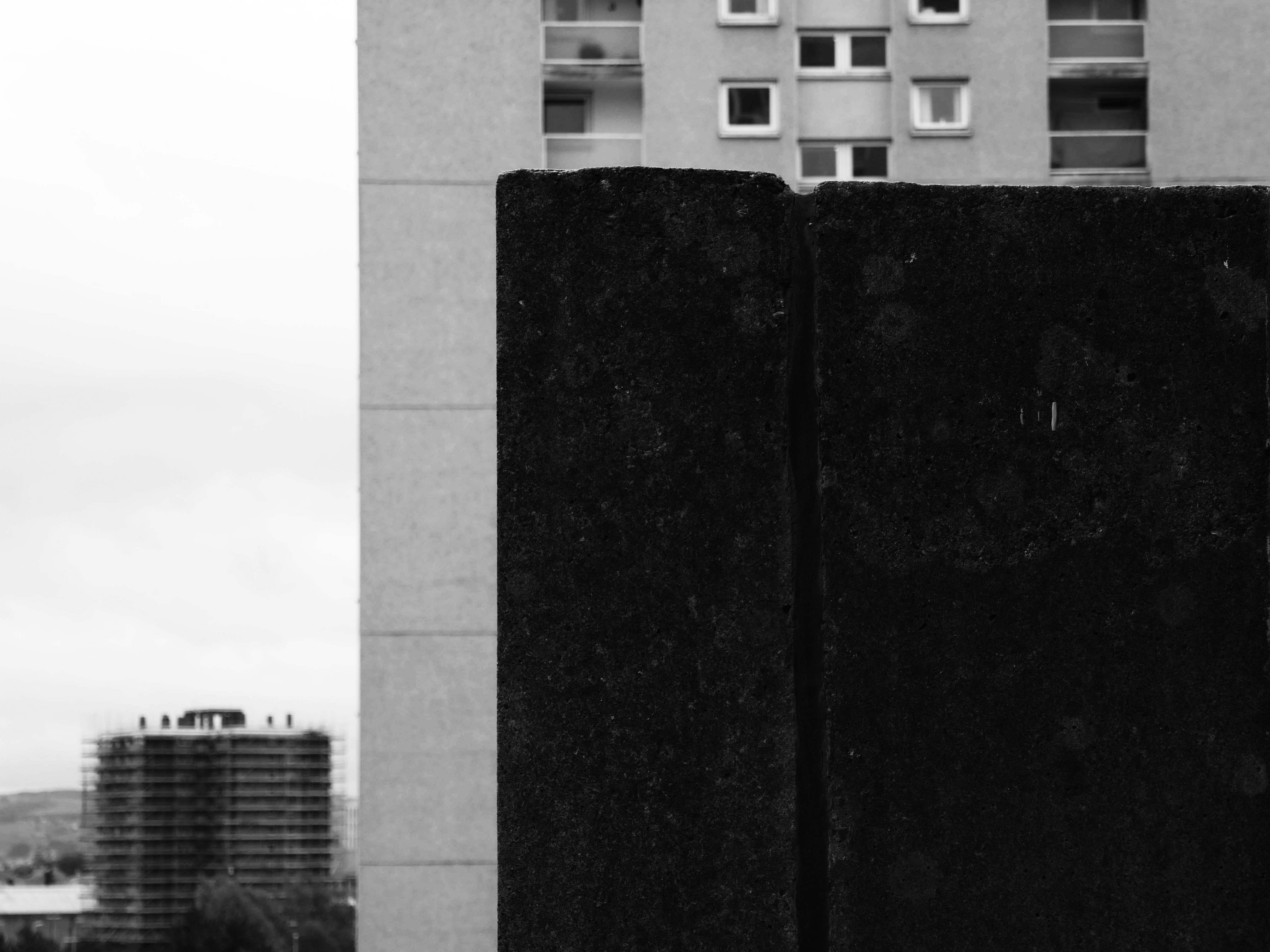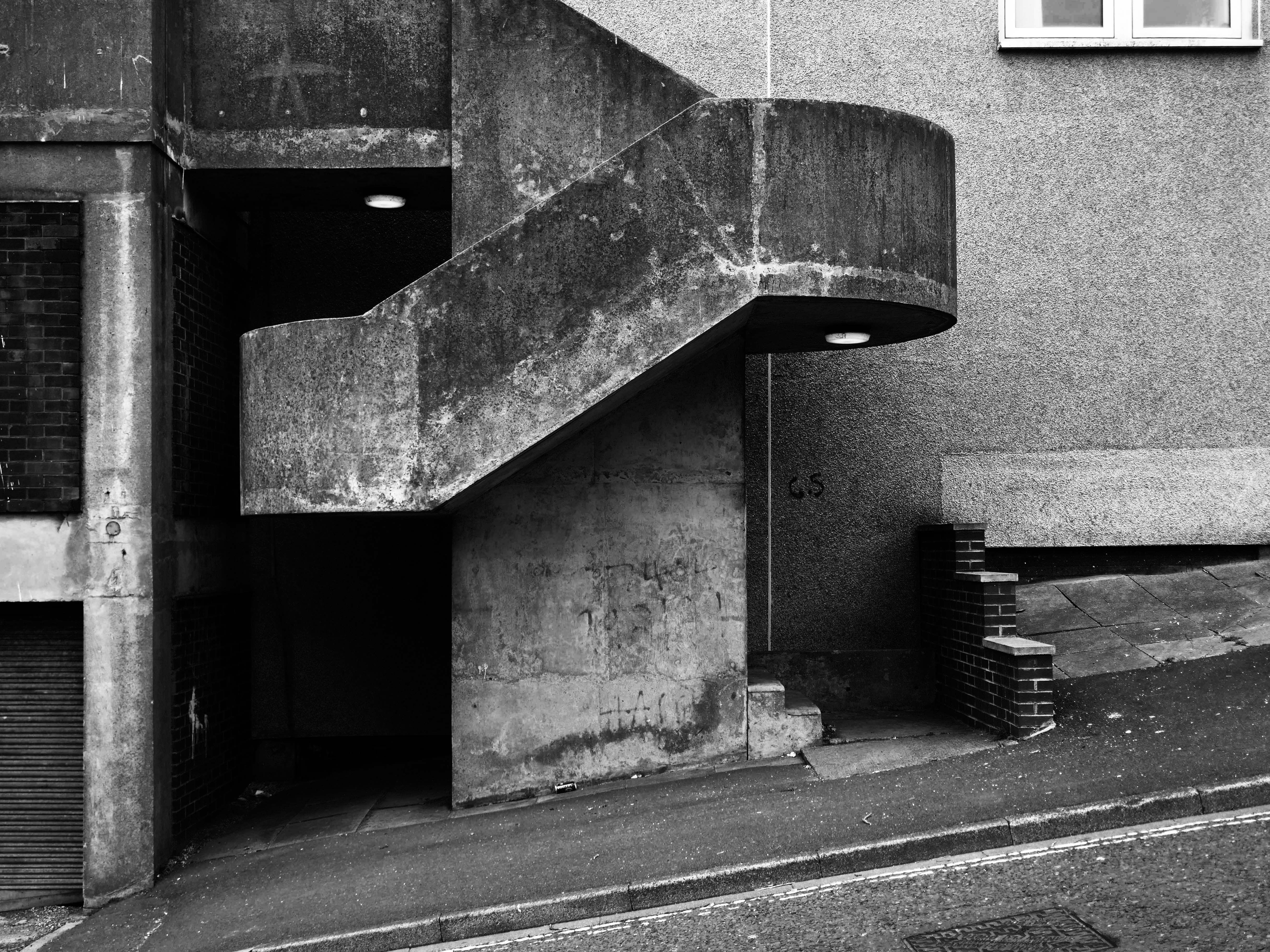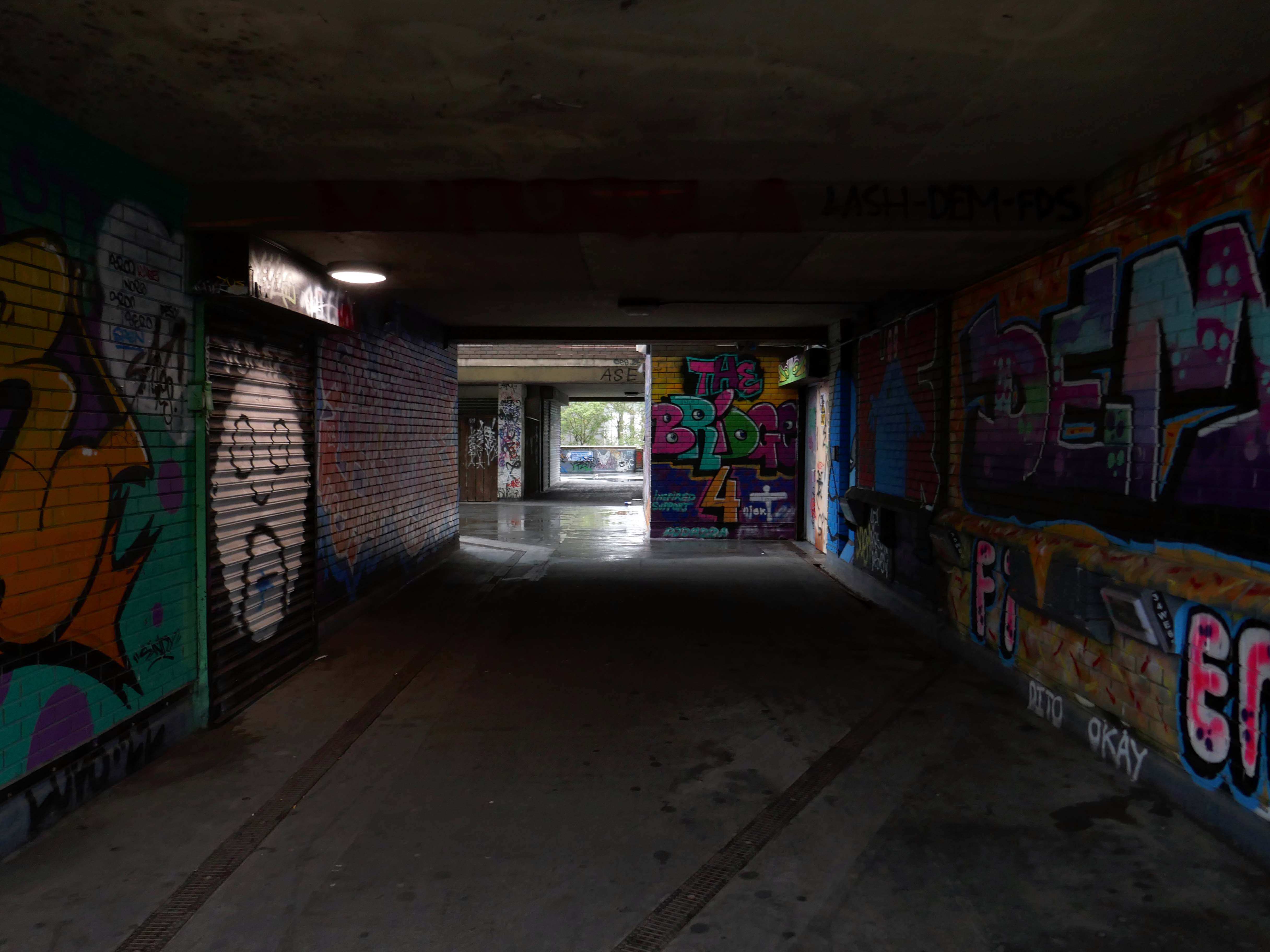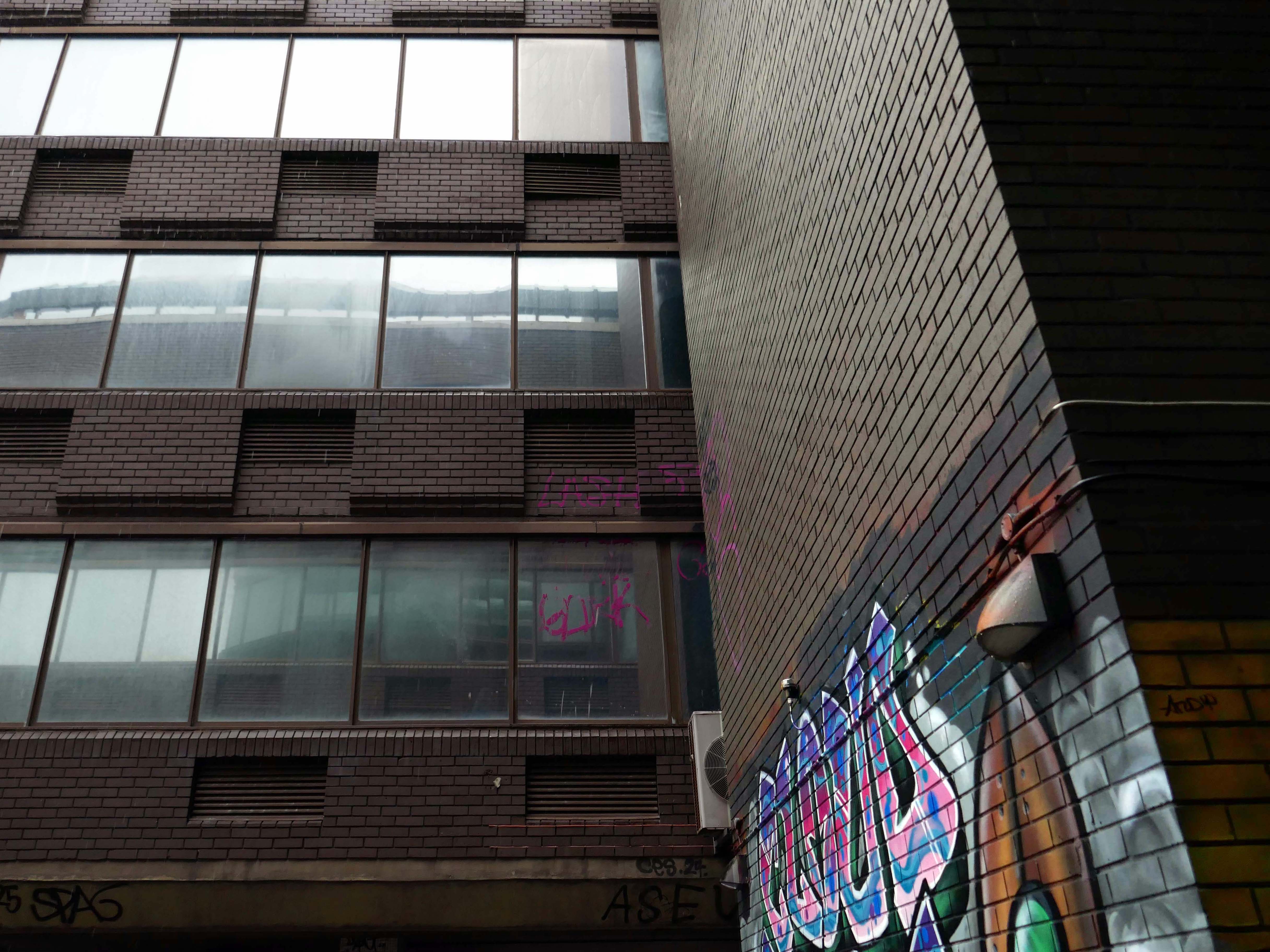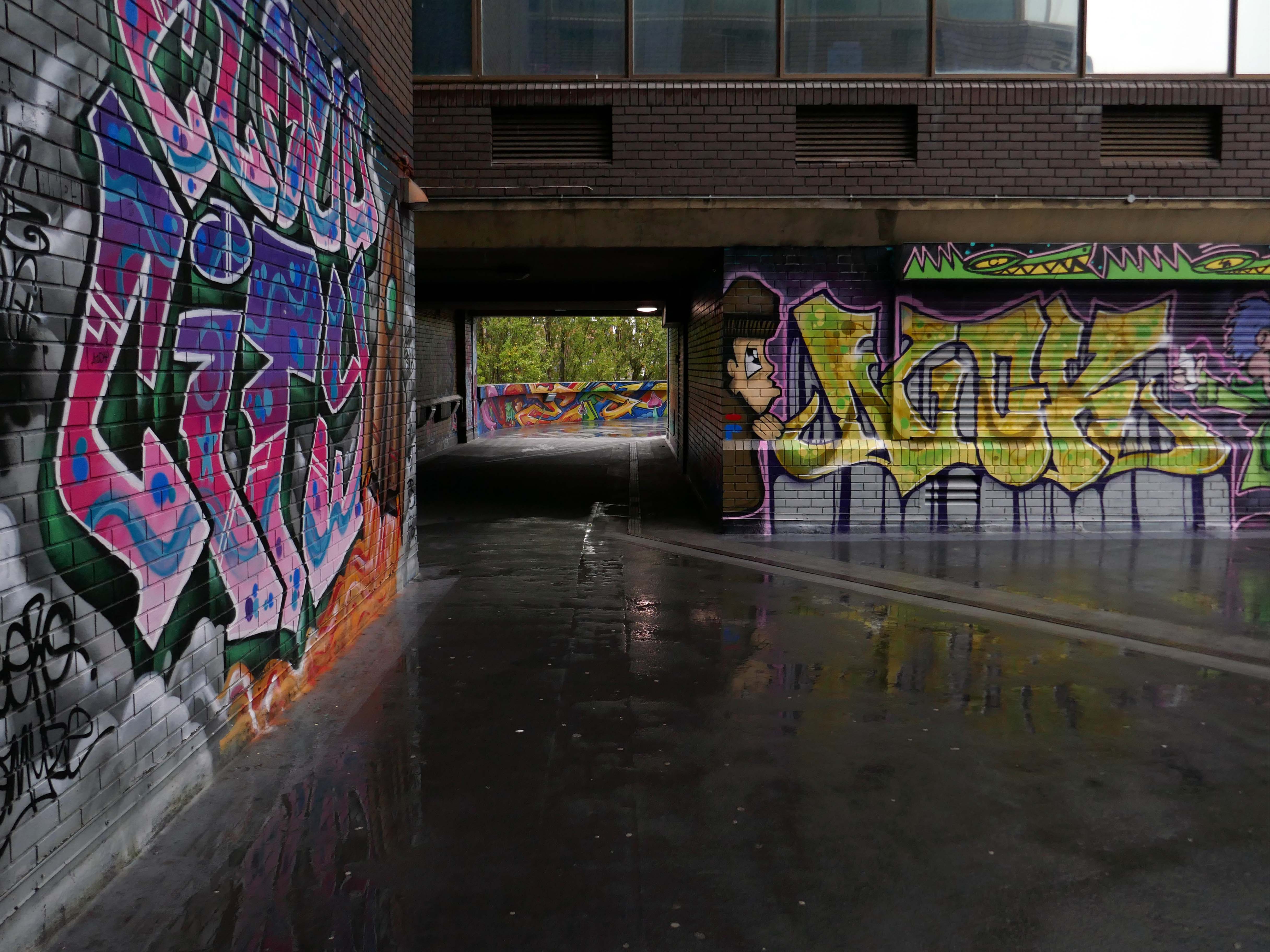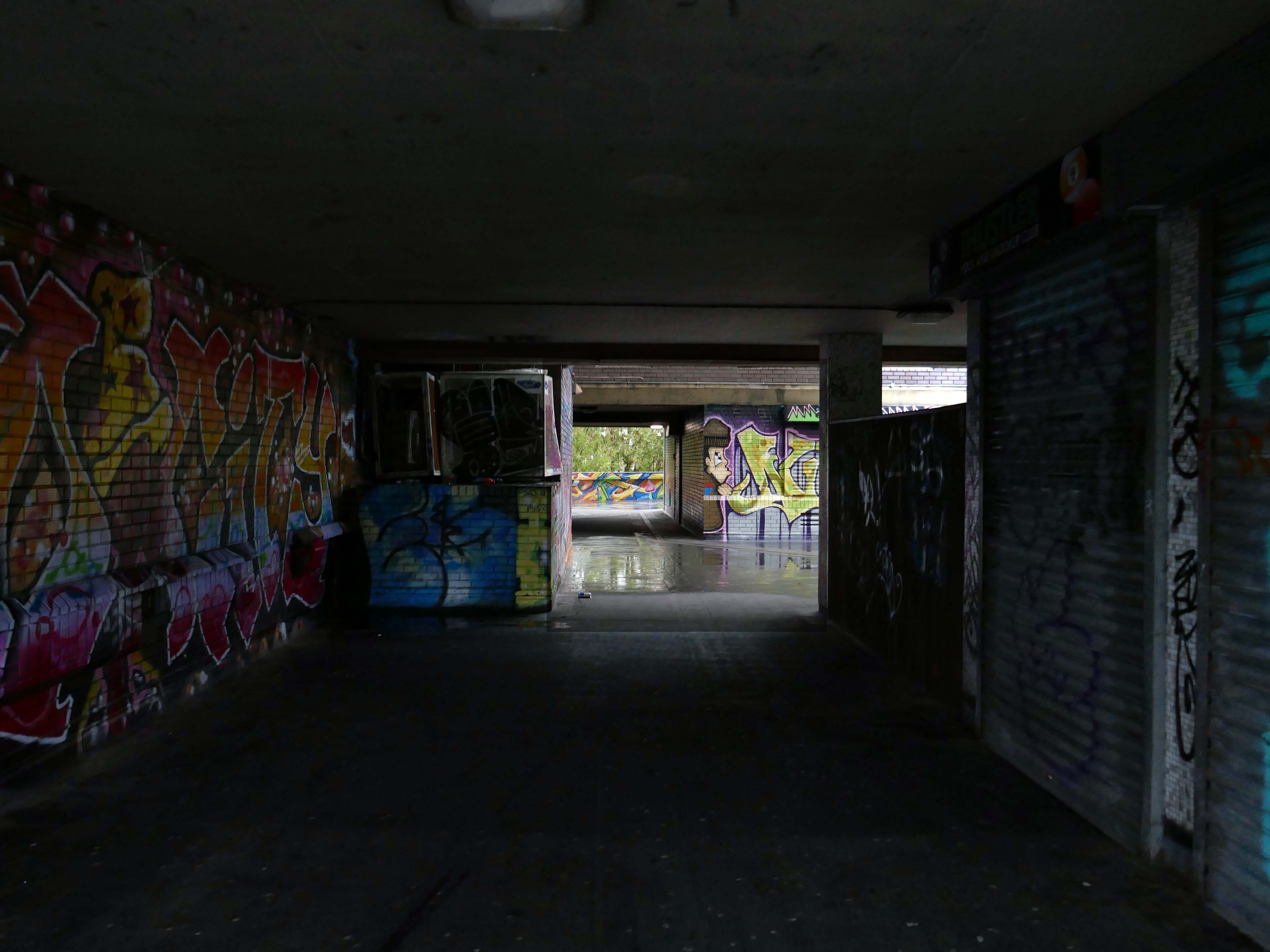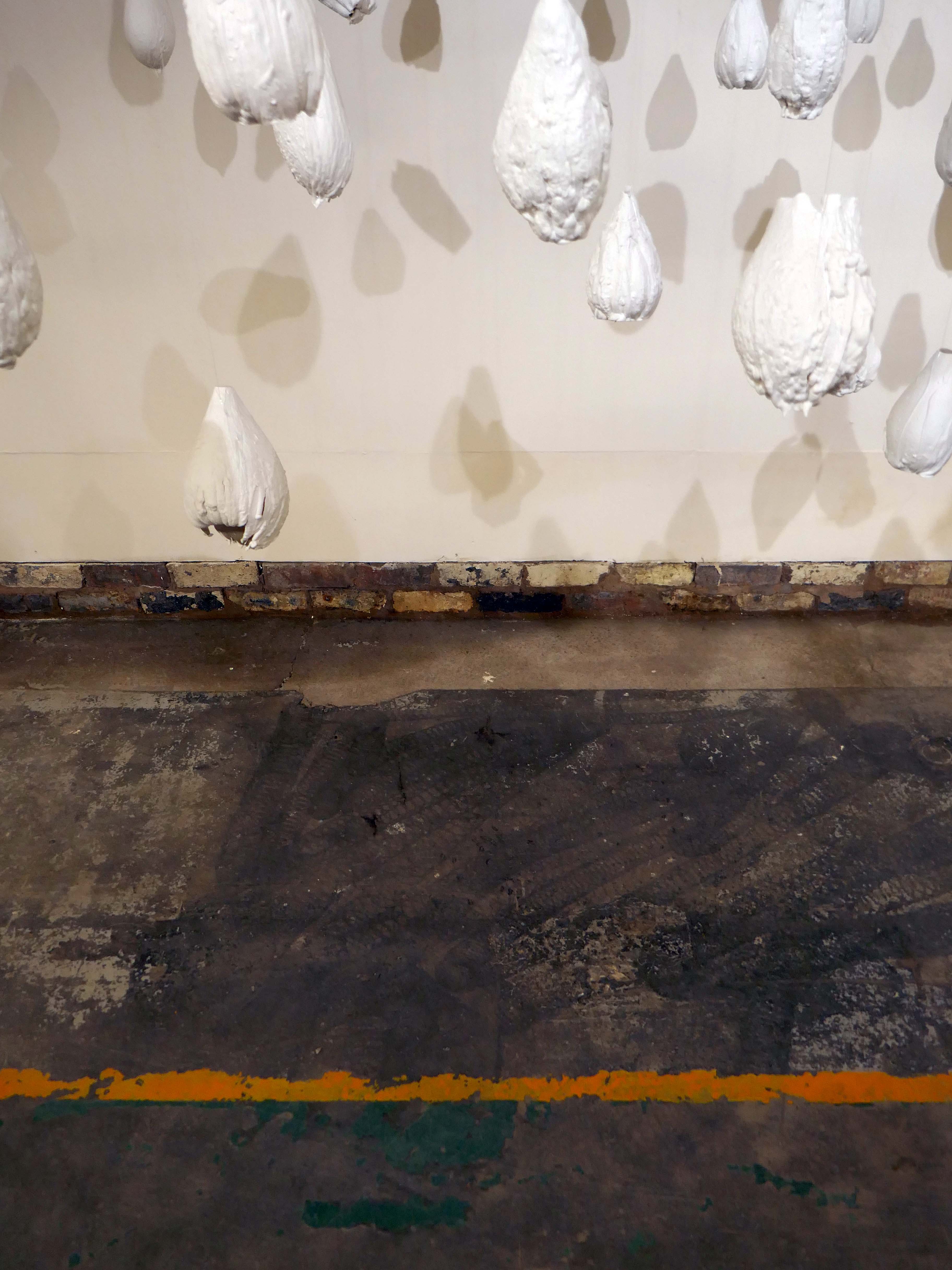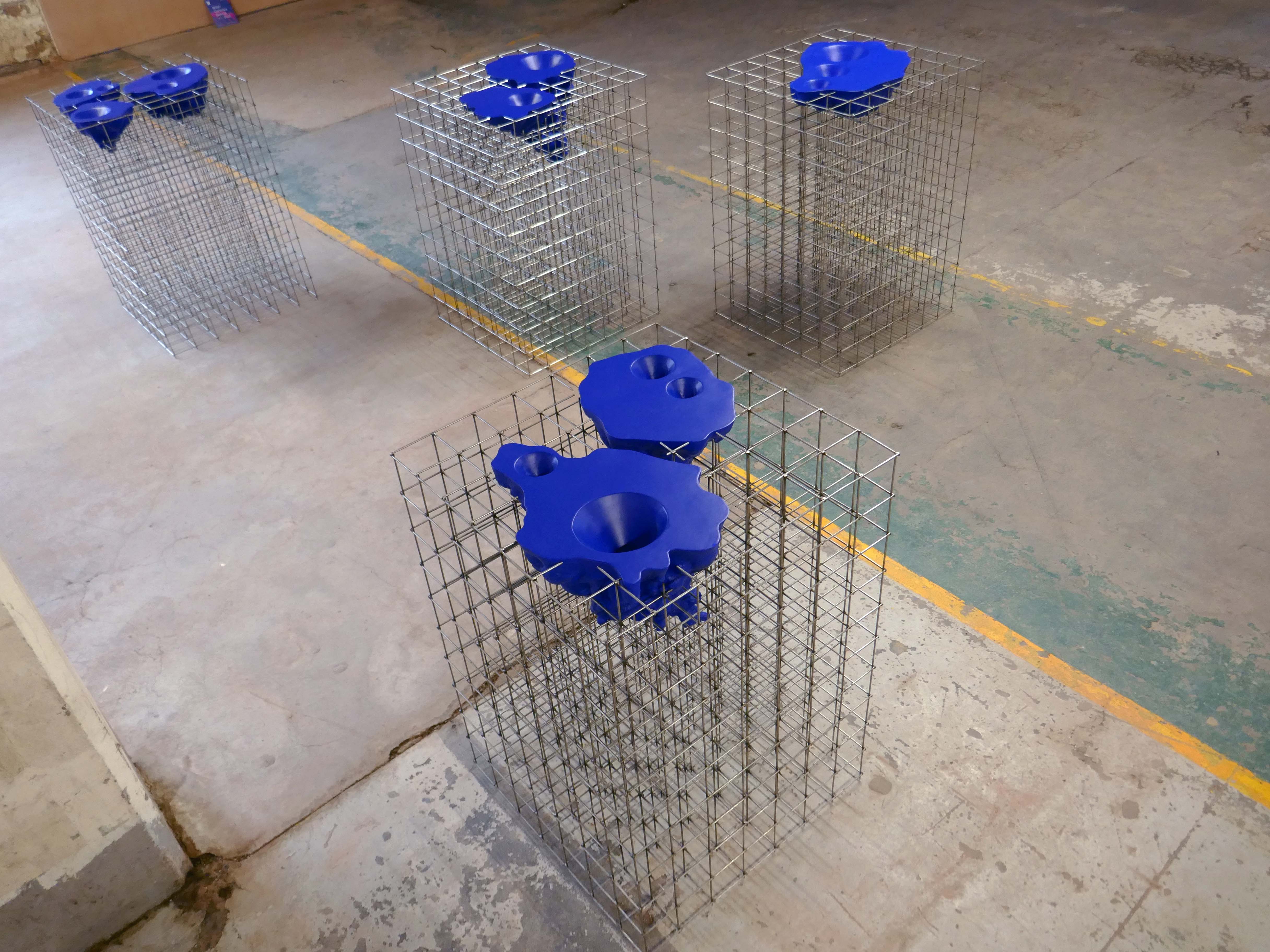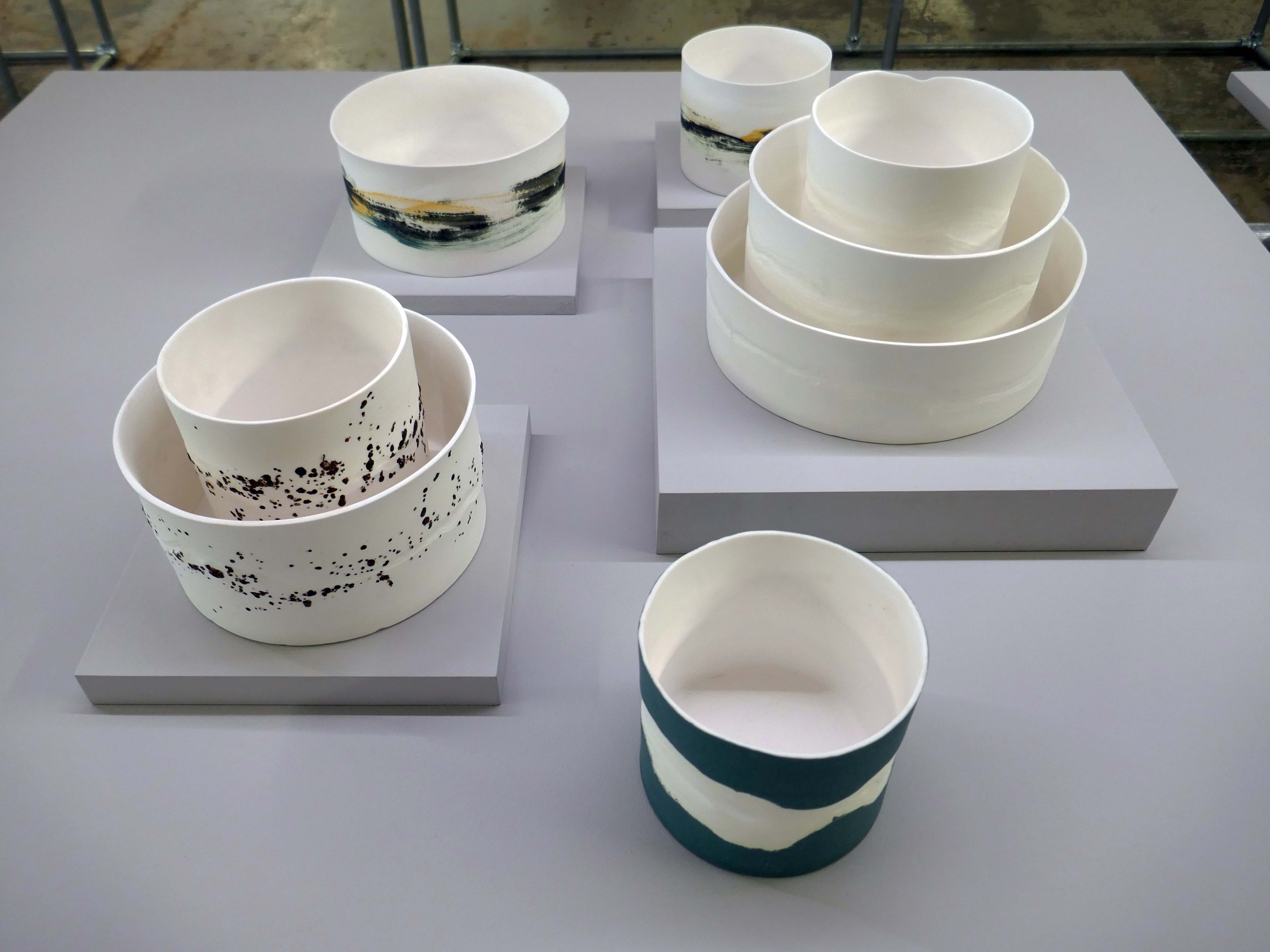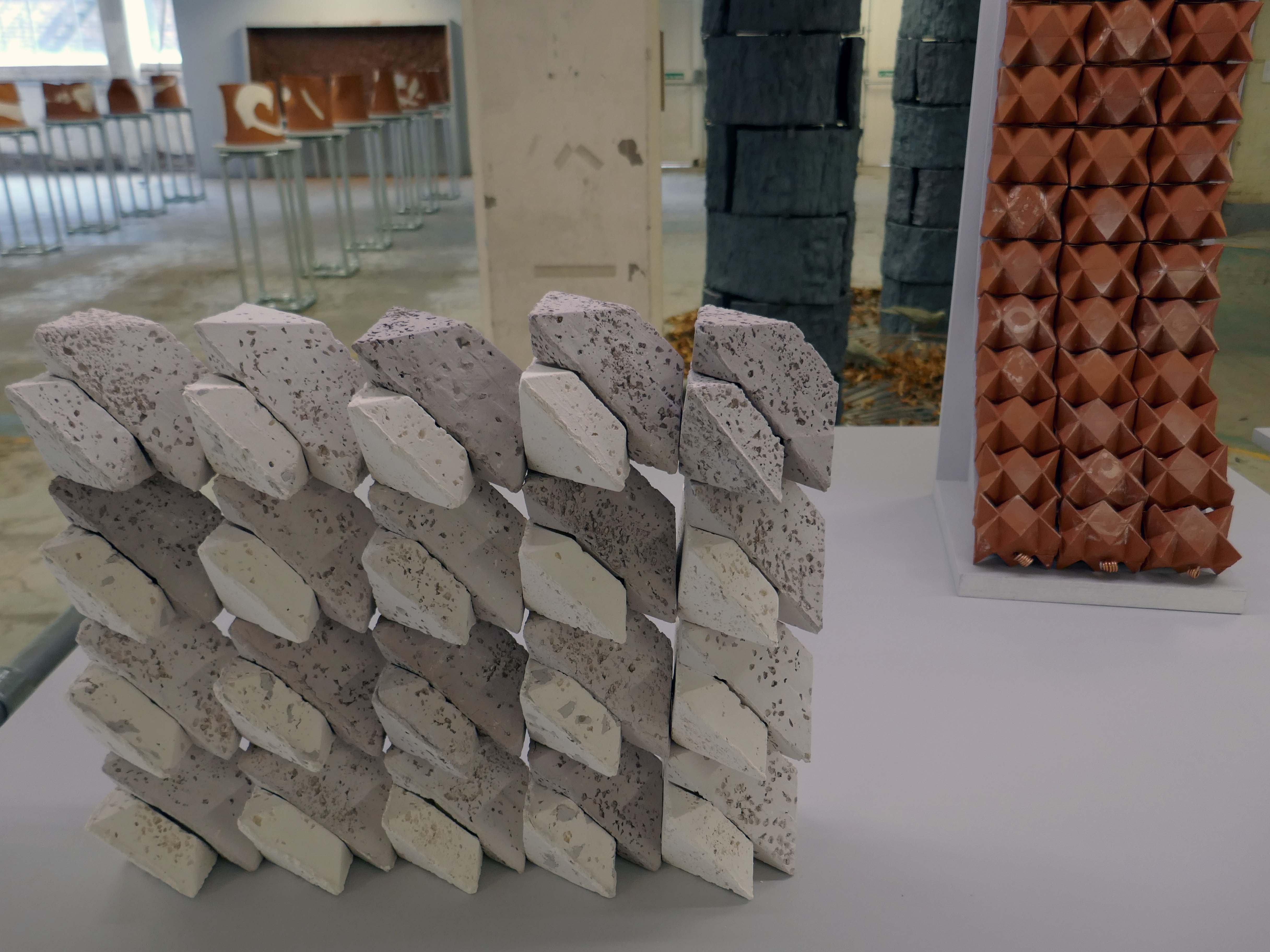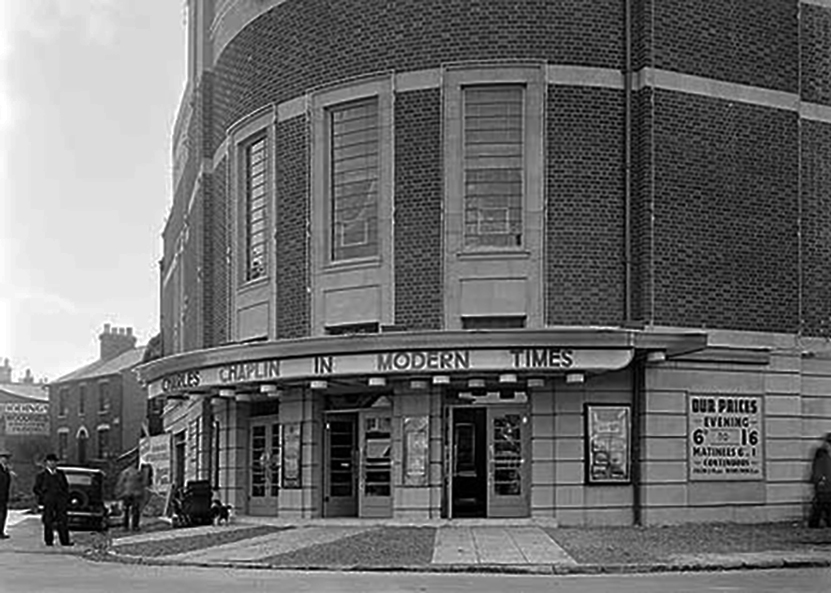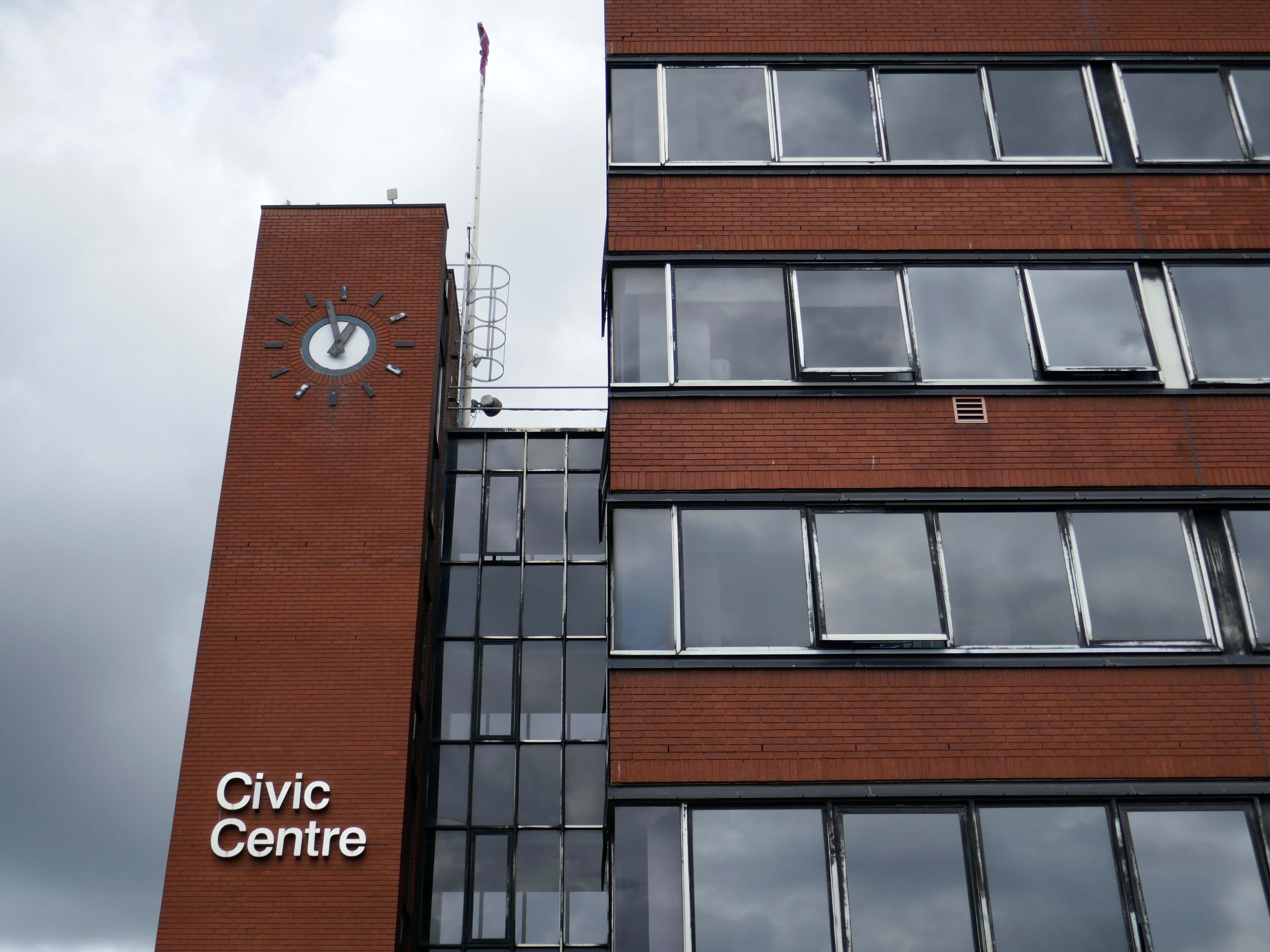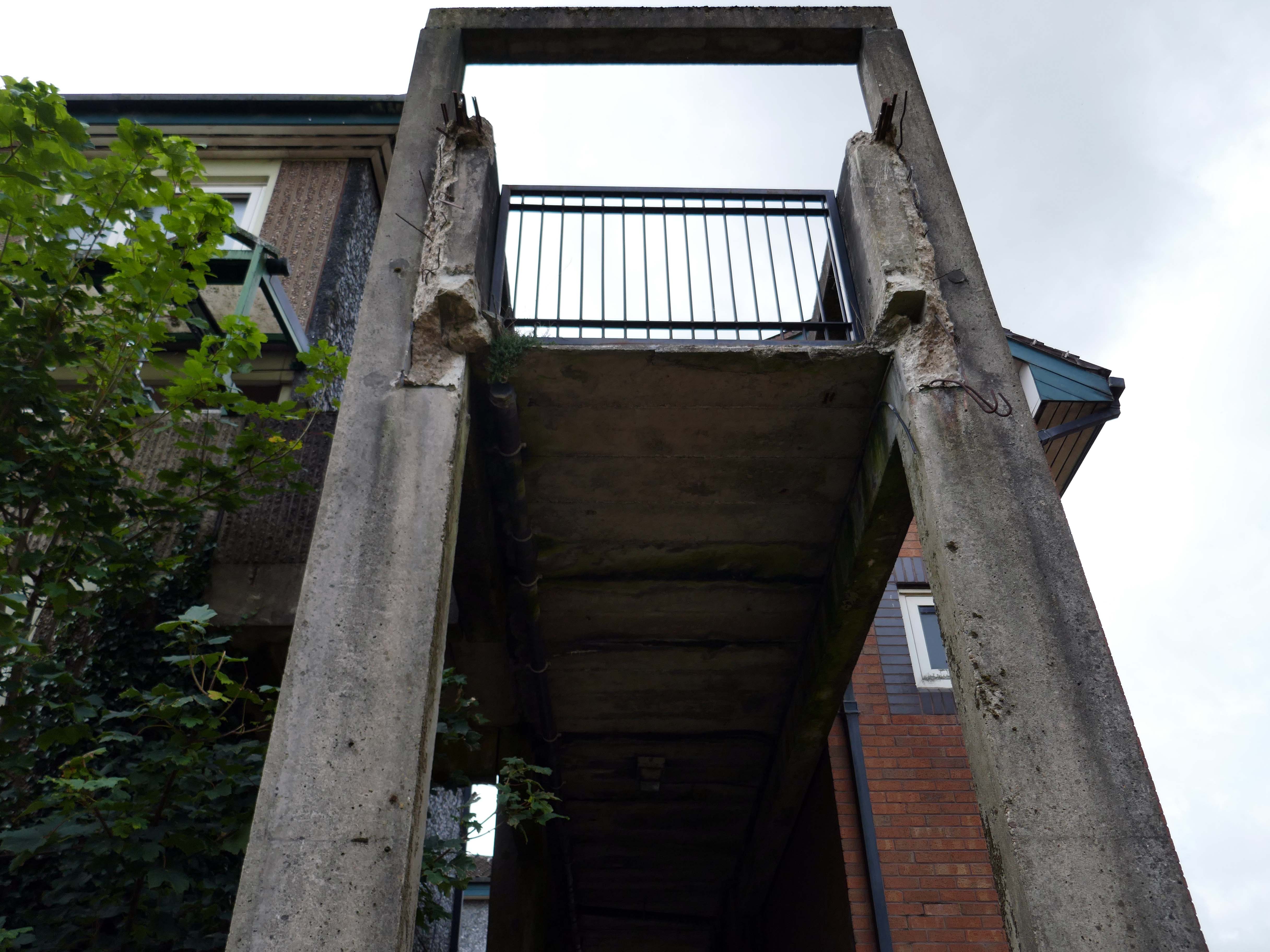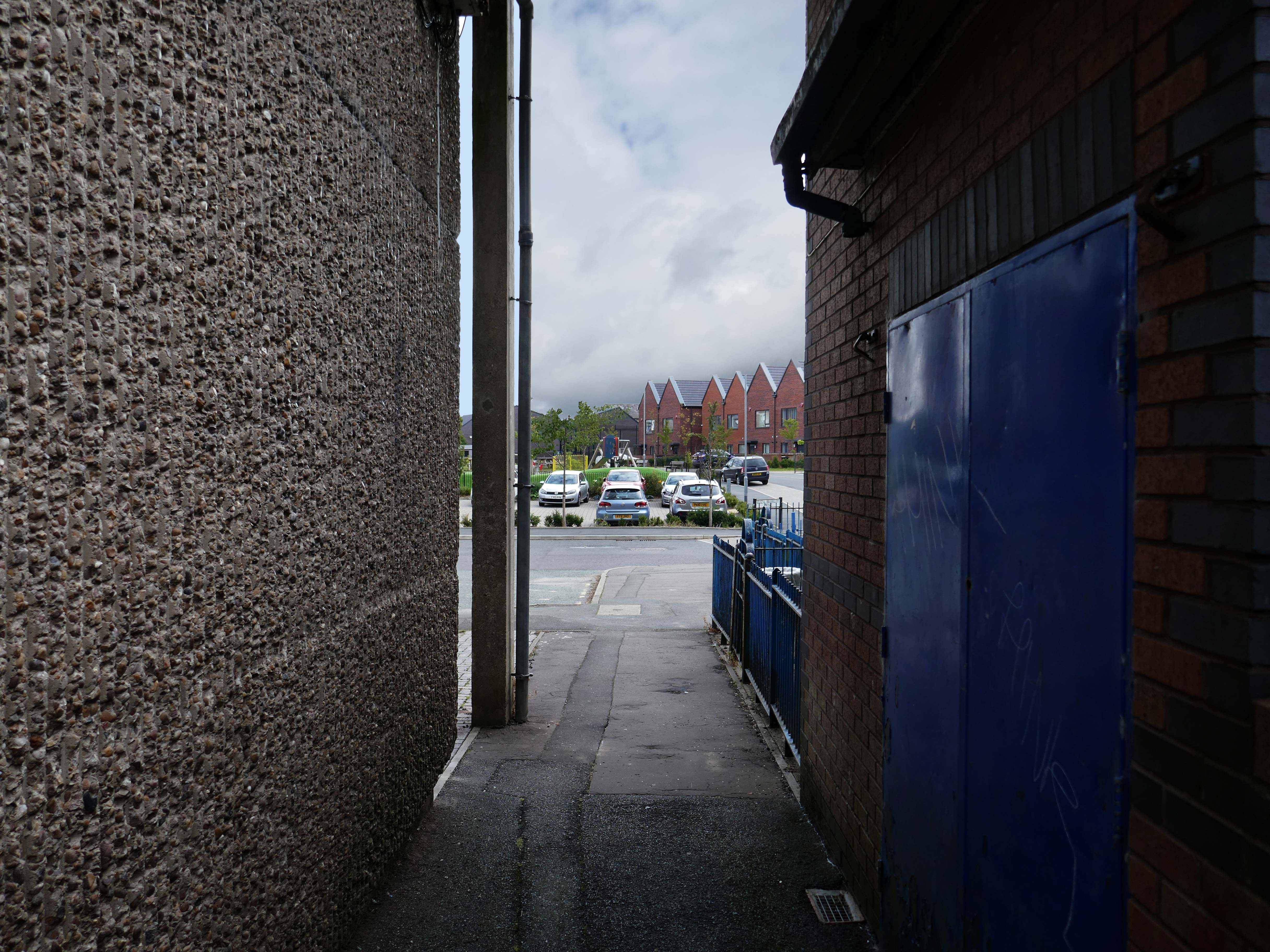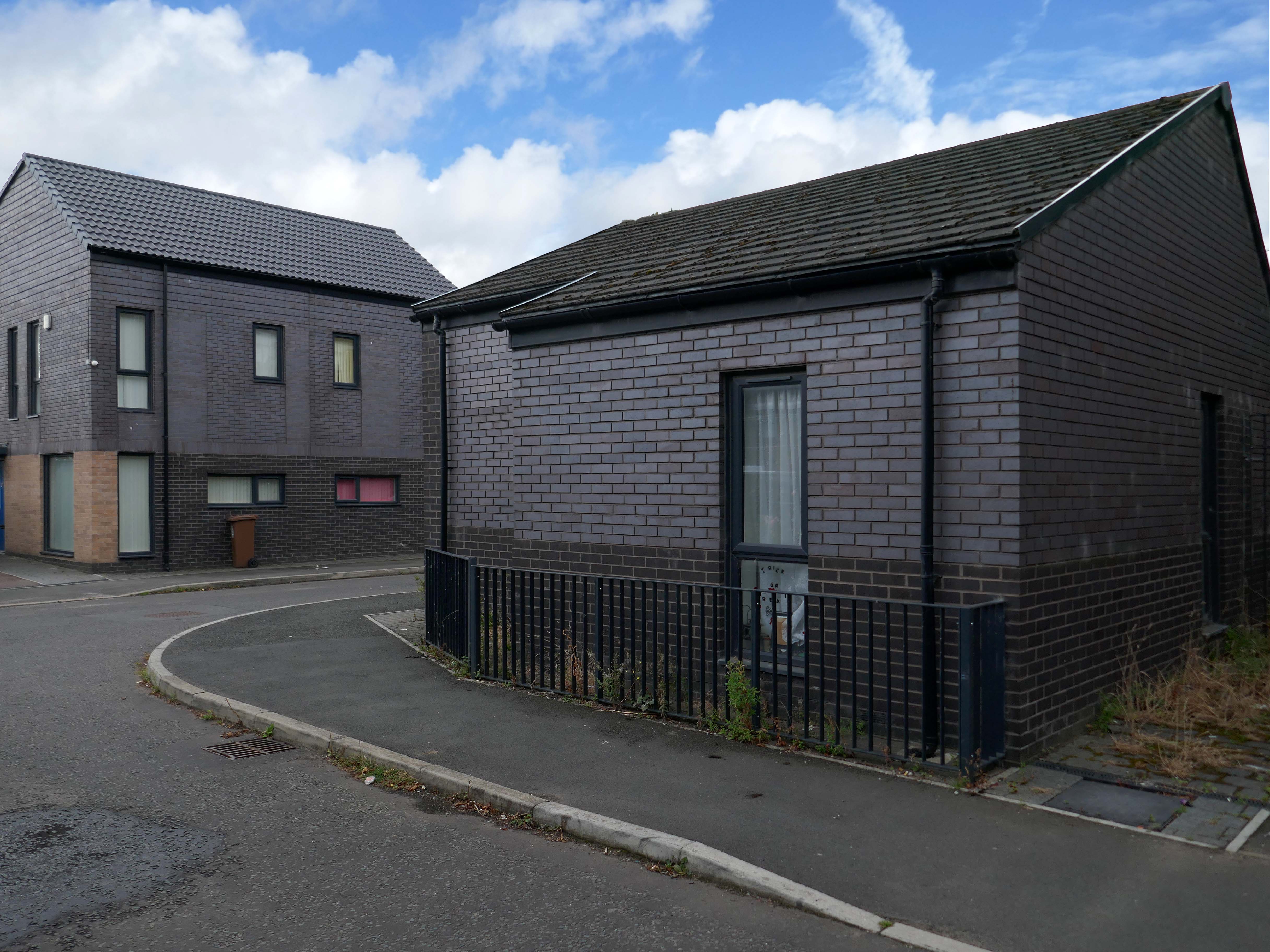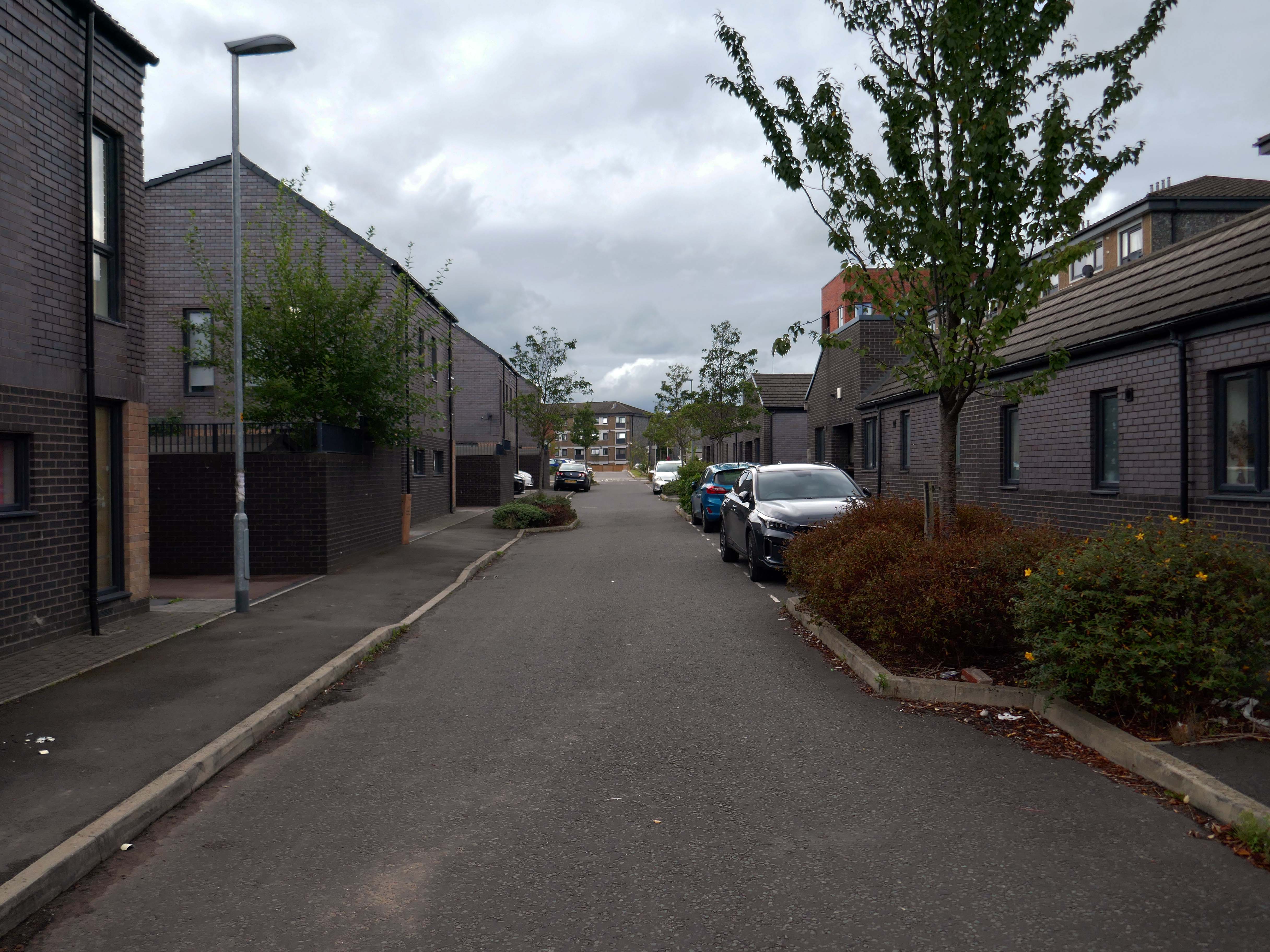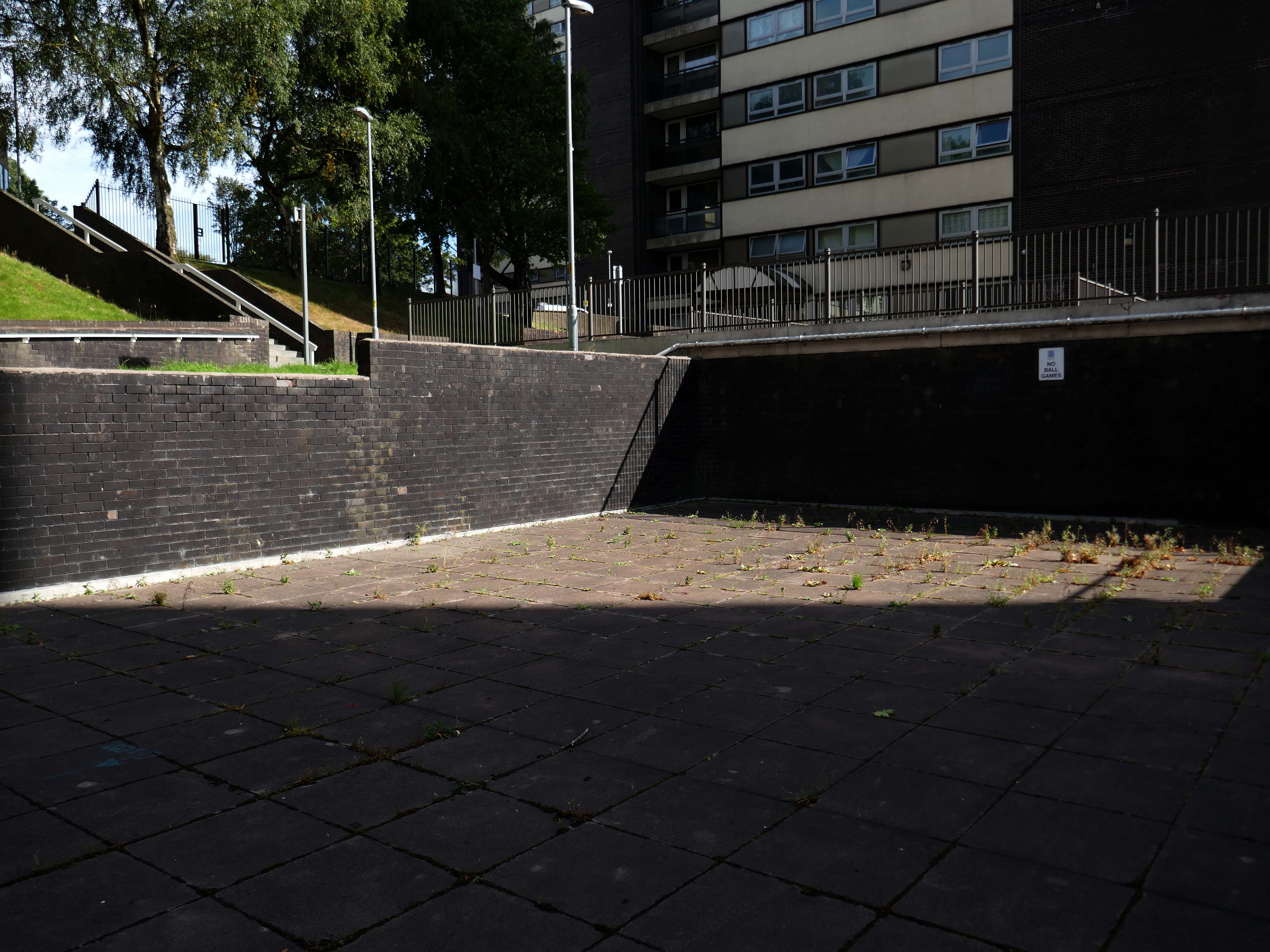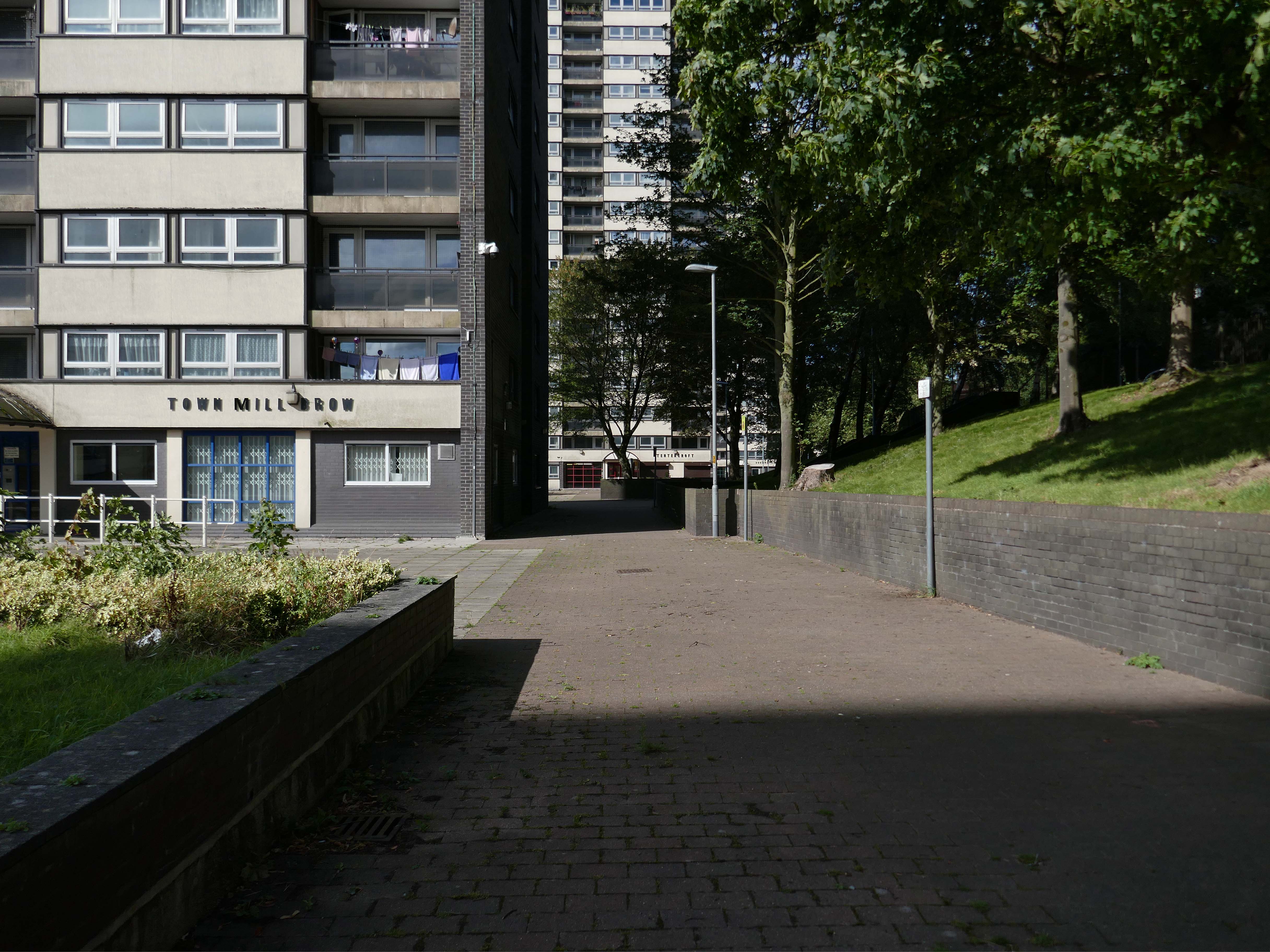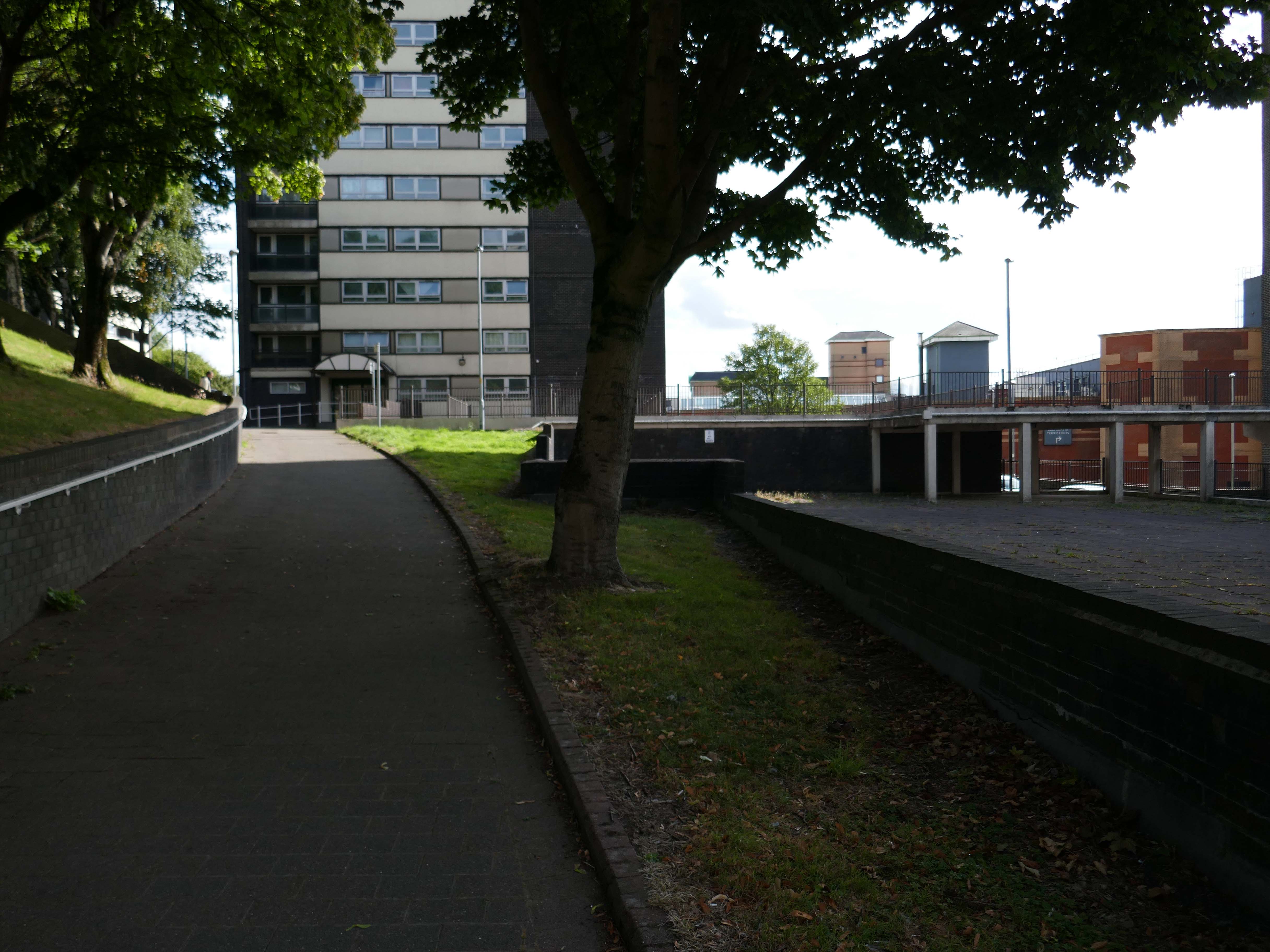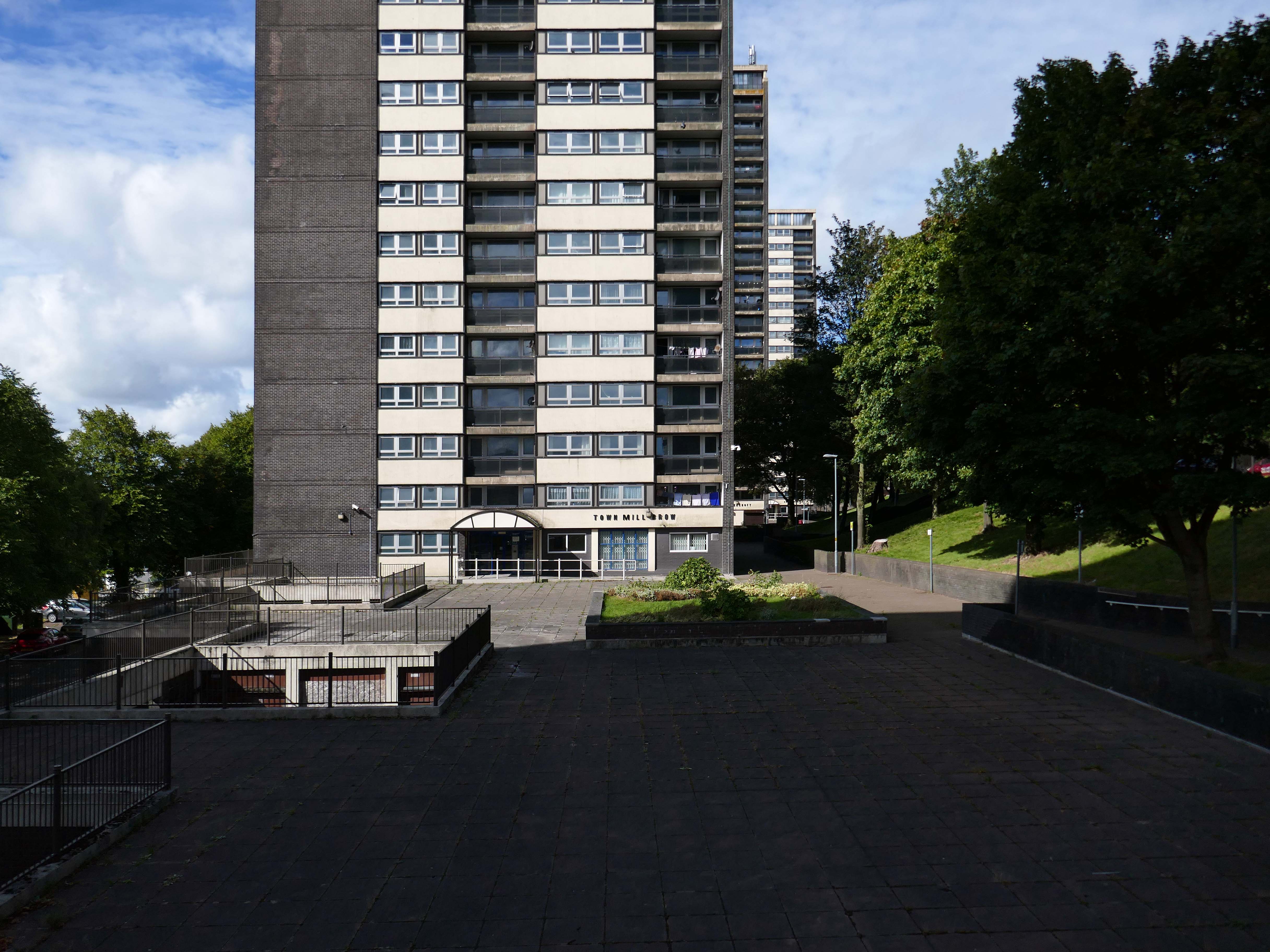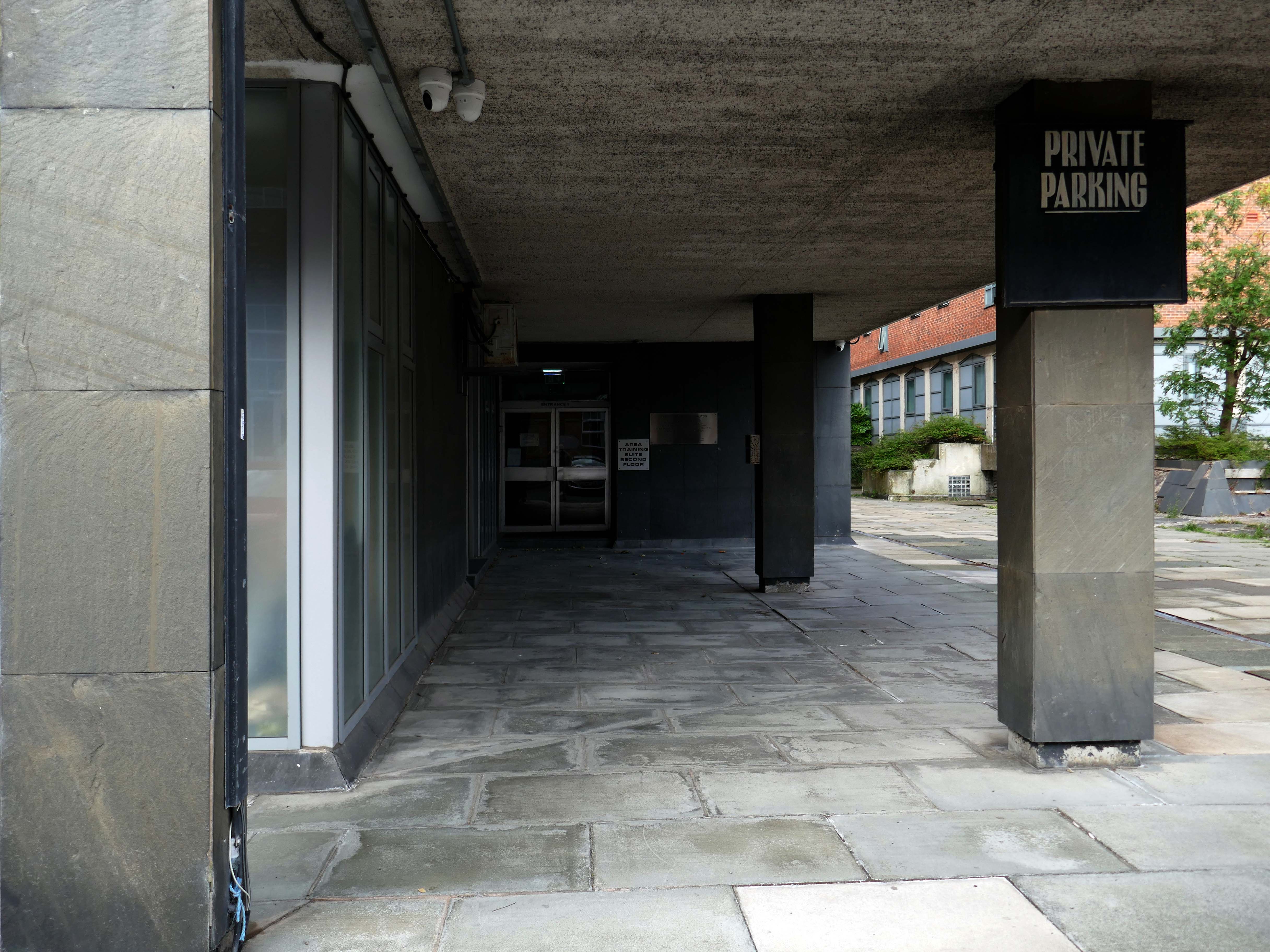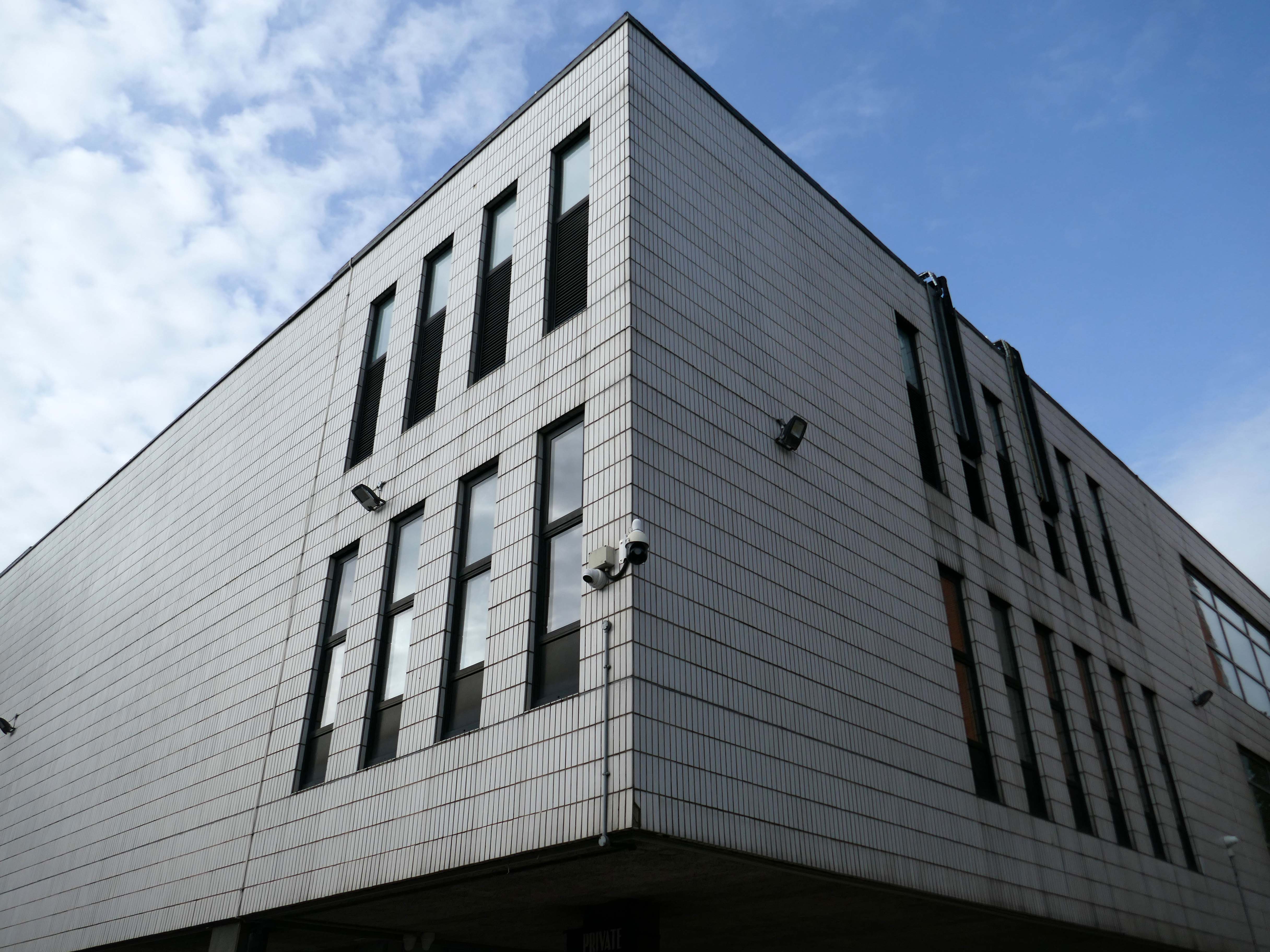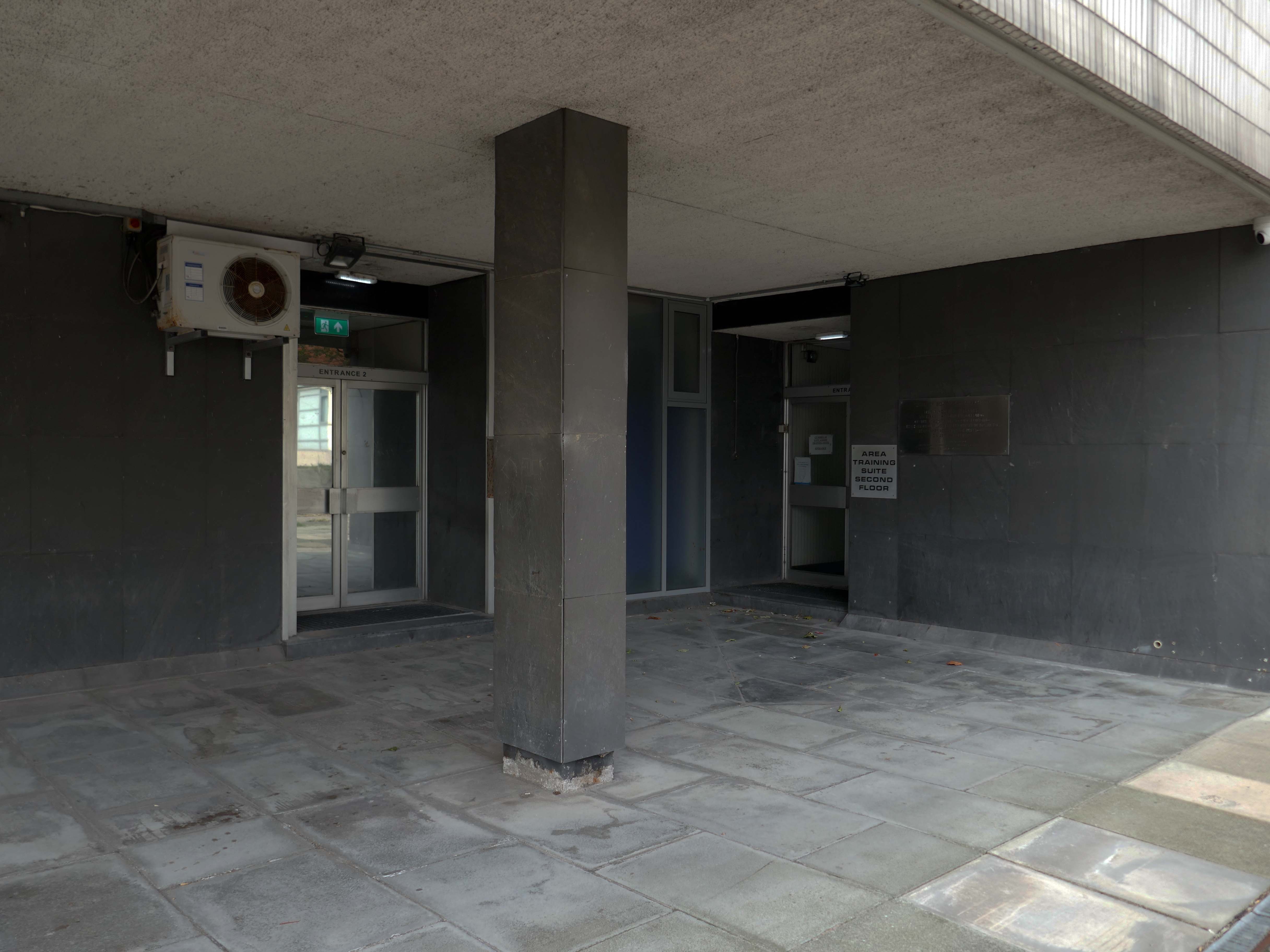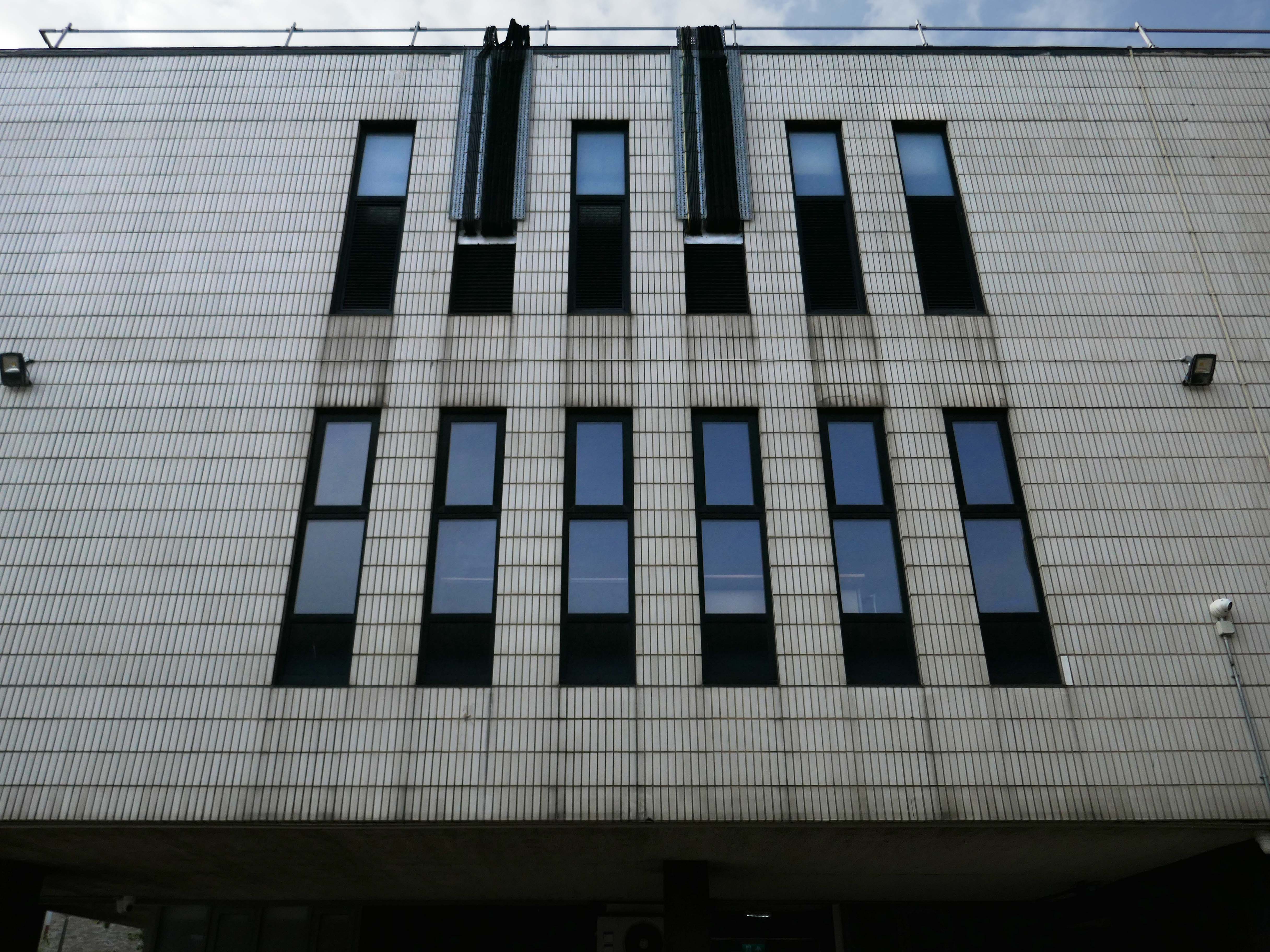
Ardwick Walk Again

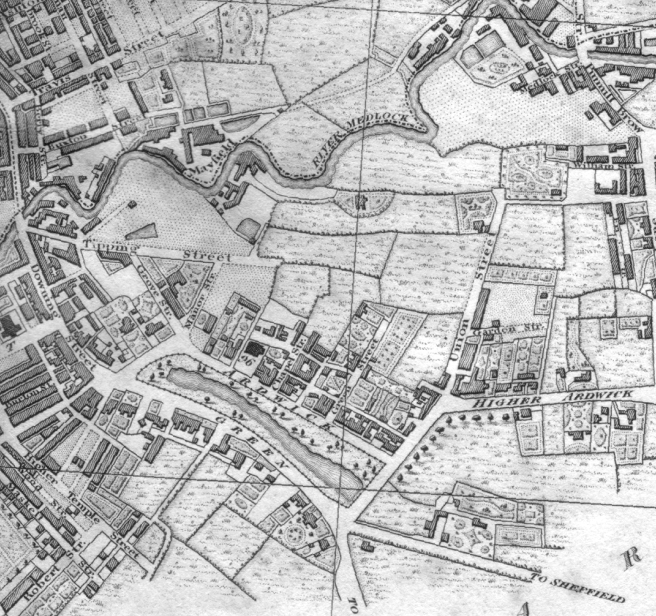
1824

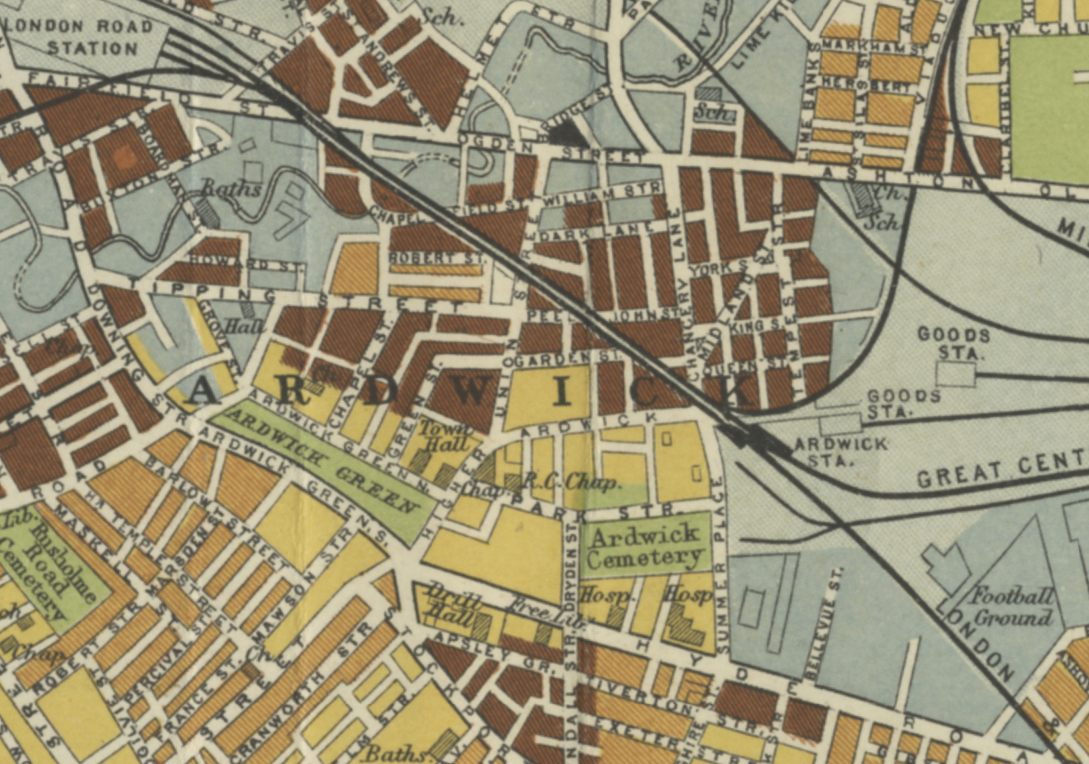
1904

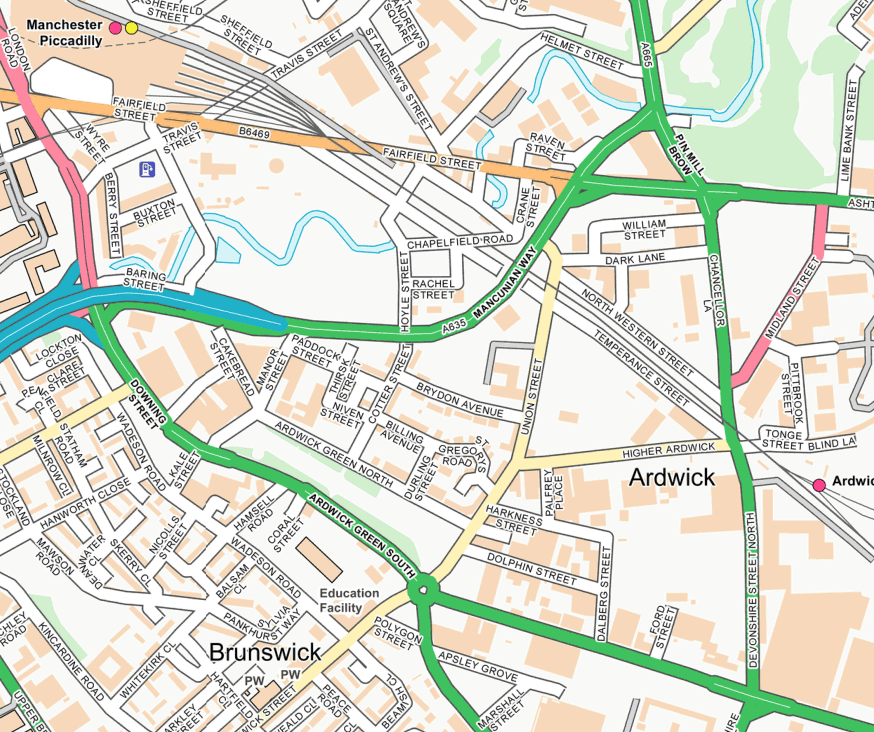
2025

Previously in February 2022 I walked the fair streets of Ardwick.

Three and a bit years on it was time to see what had been coming and going on.

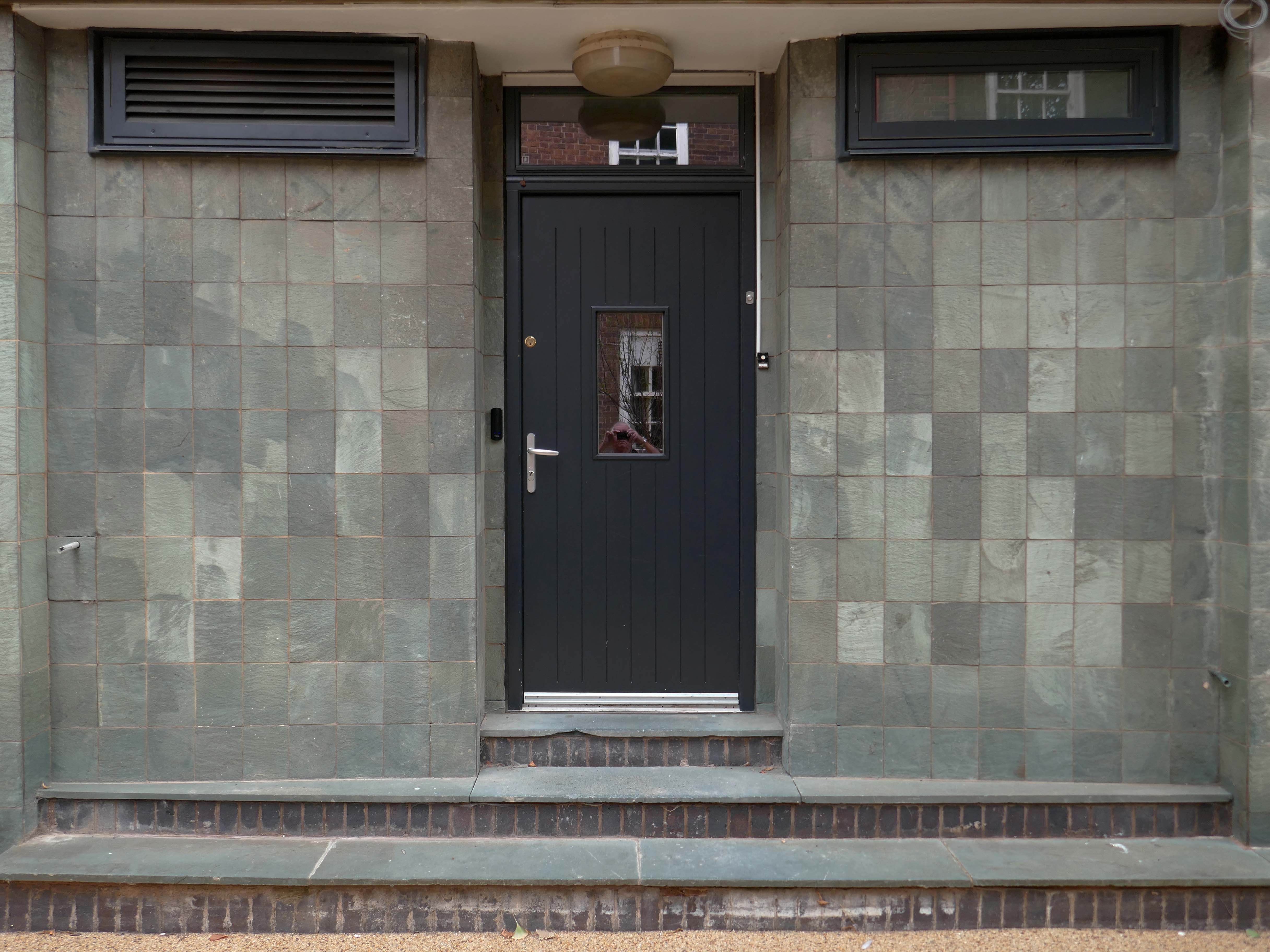
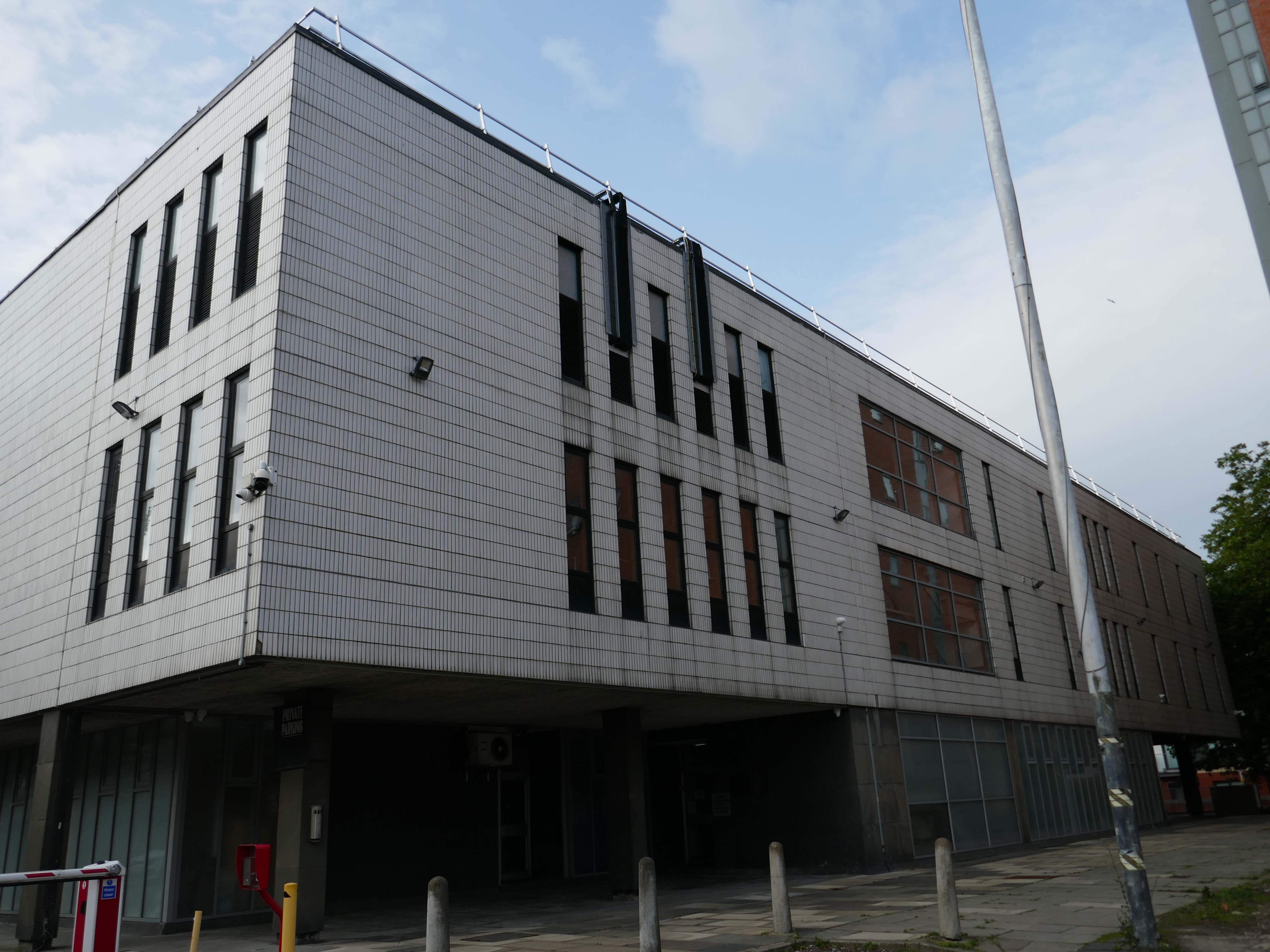
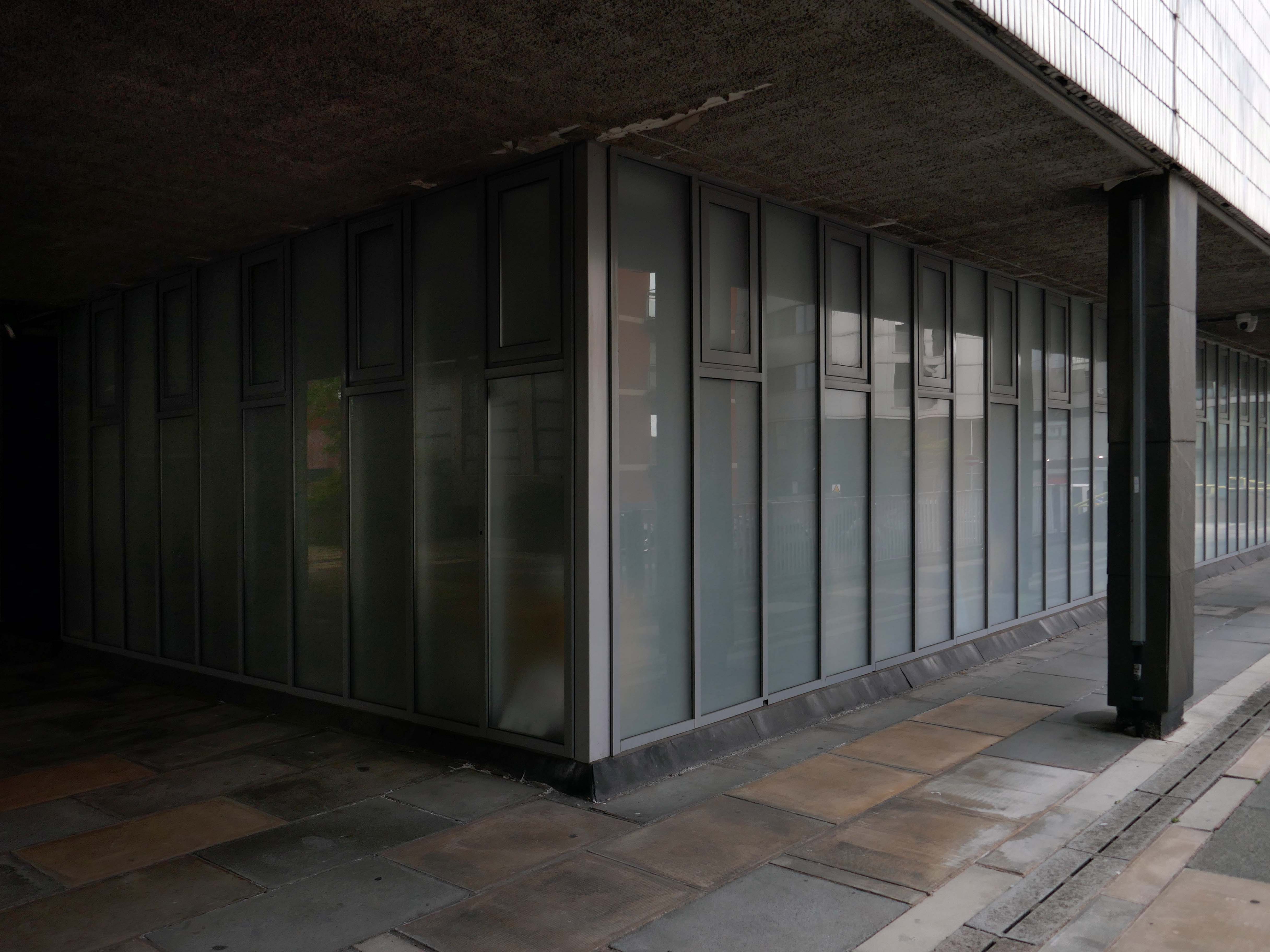
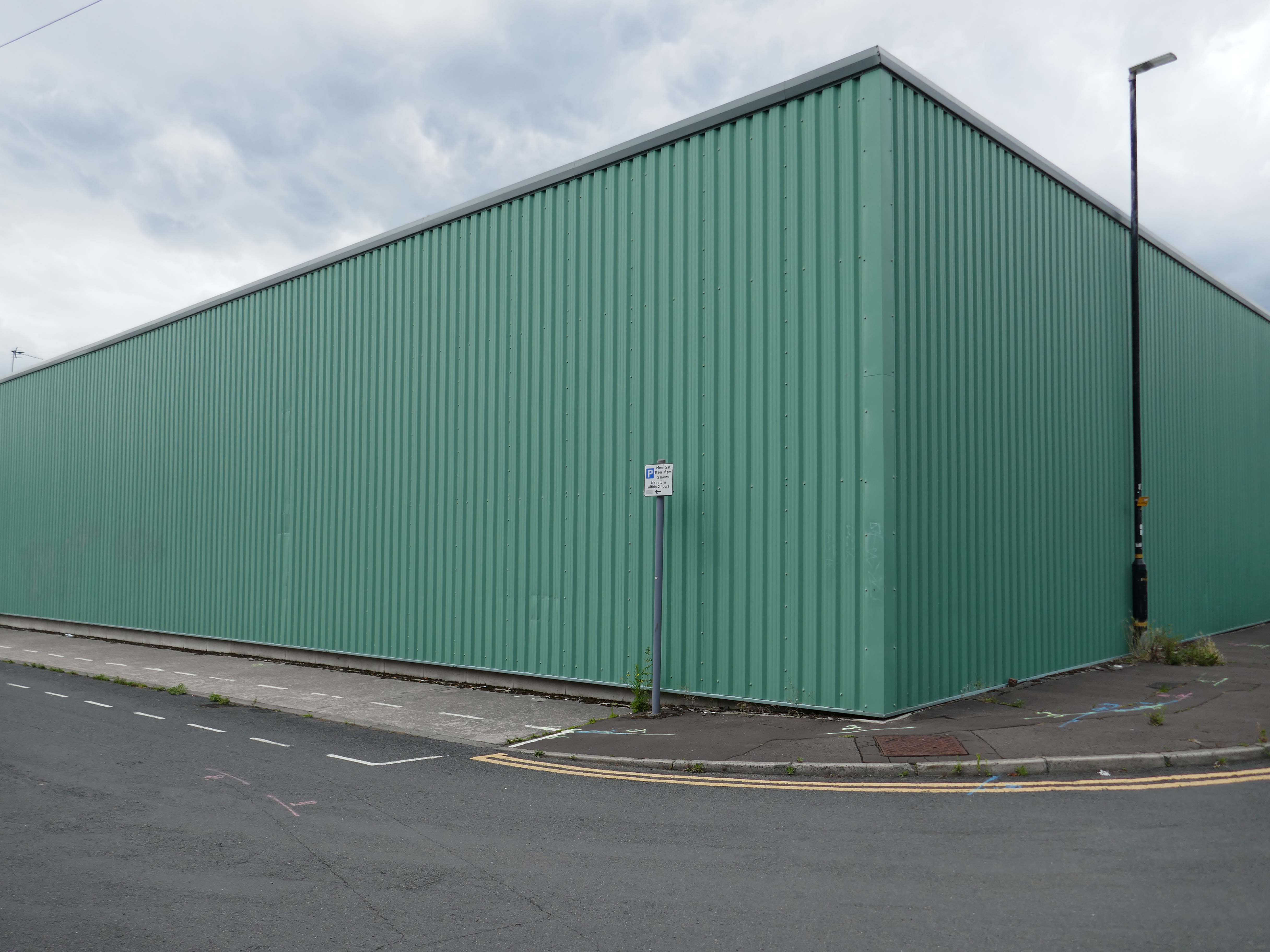
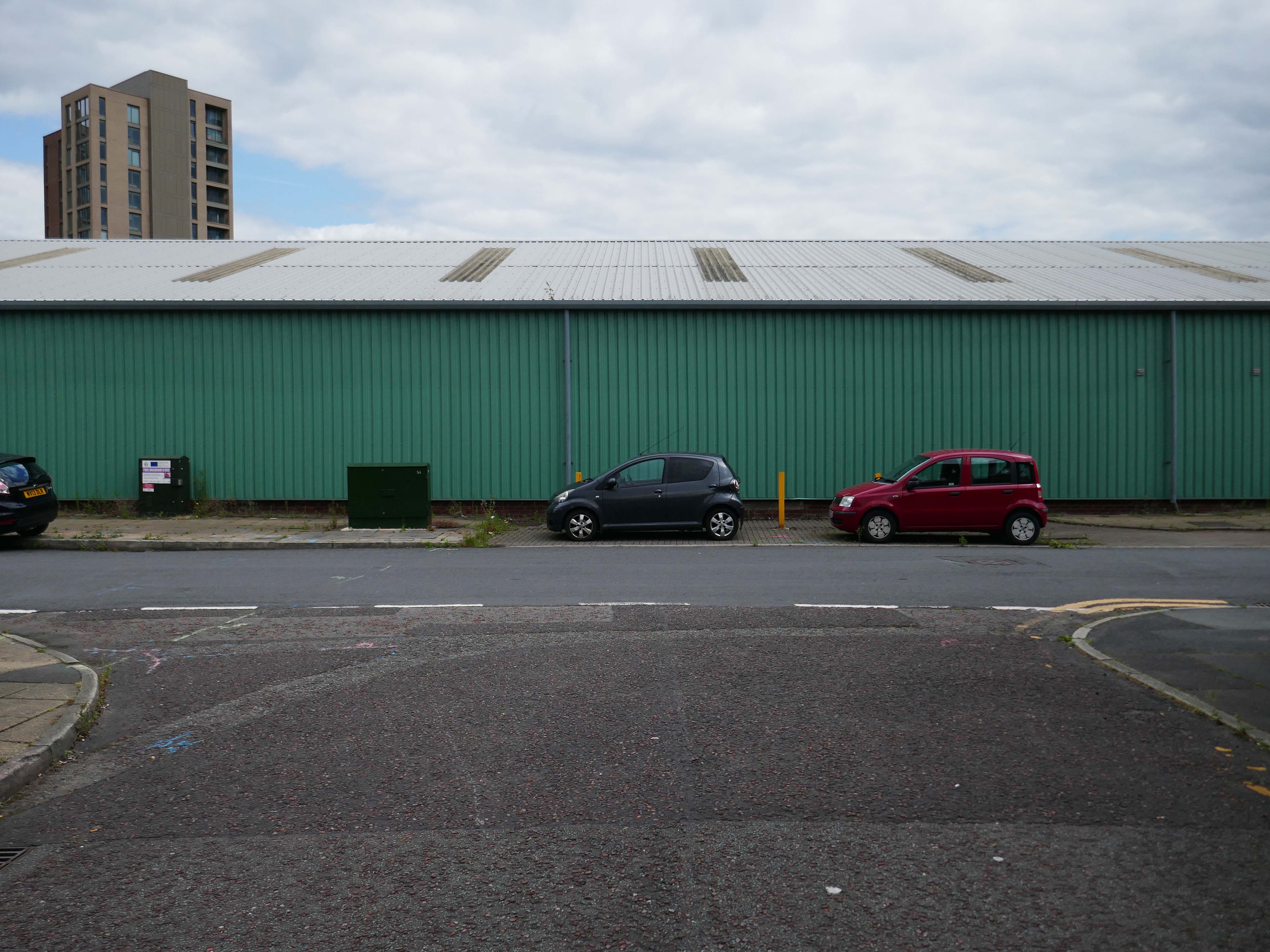
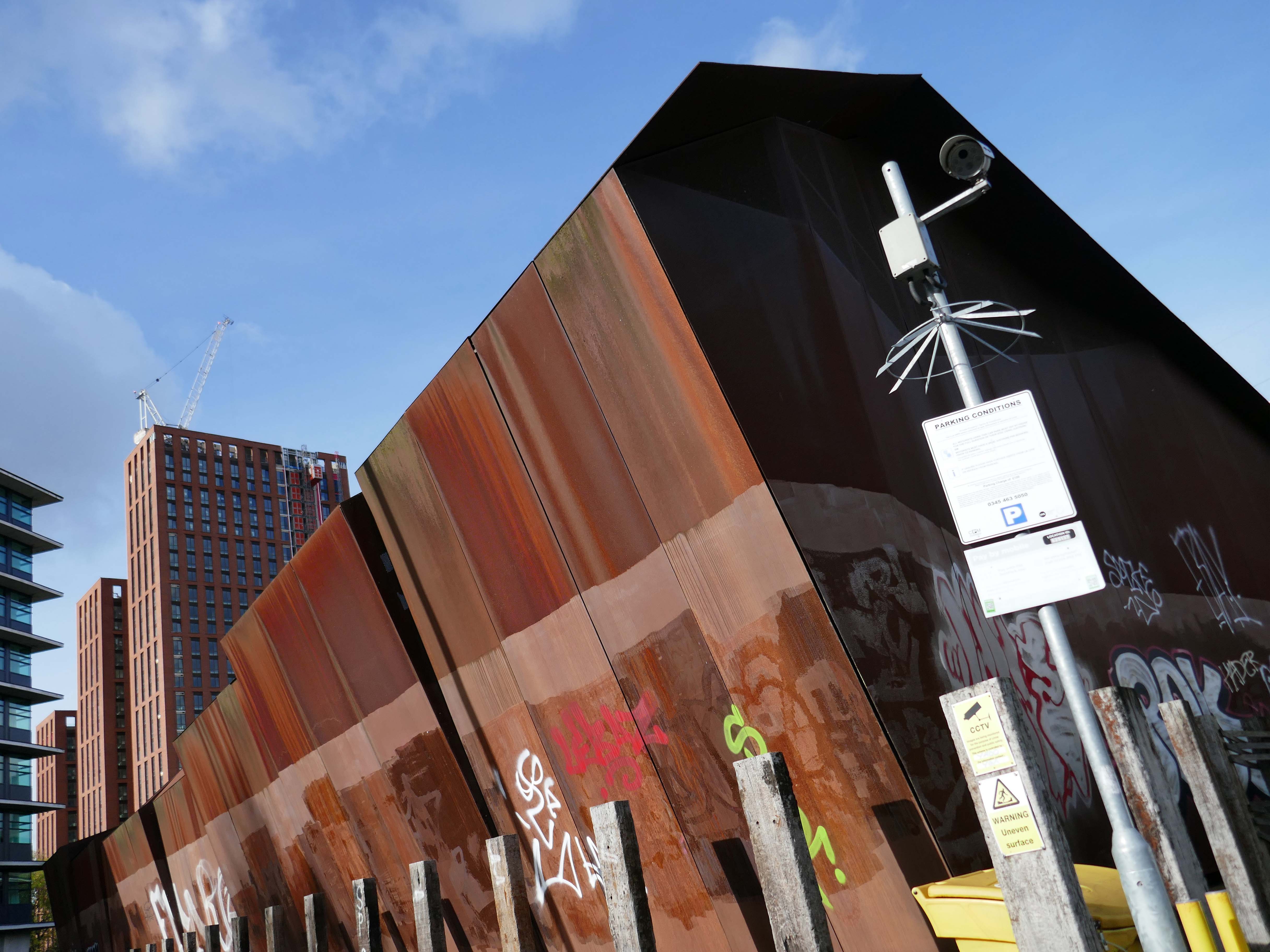
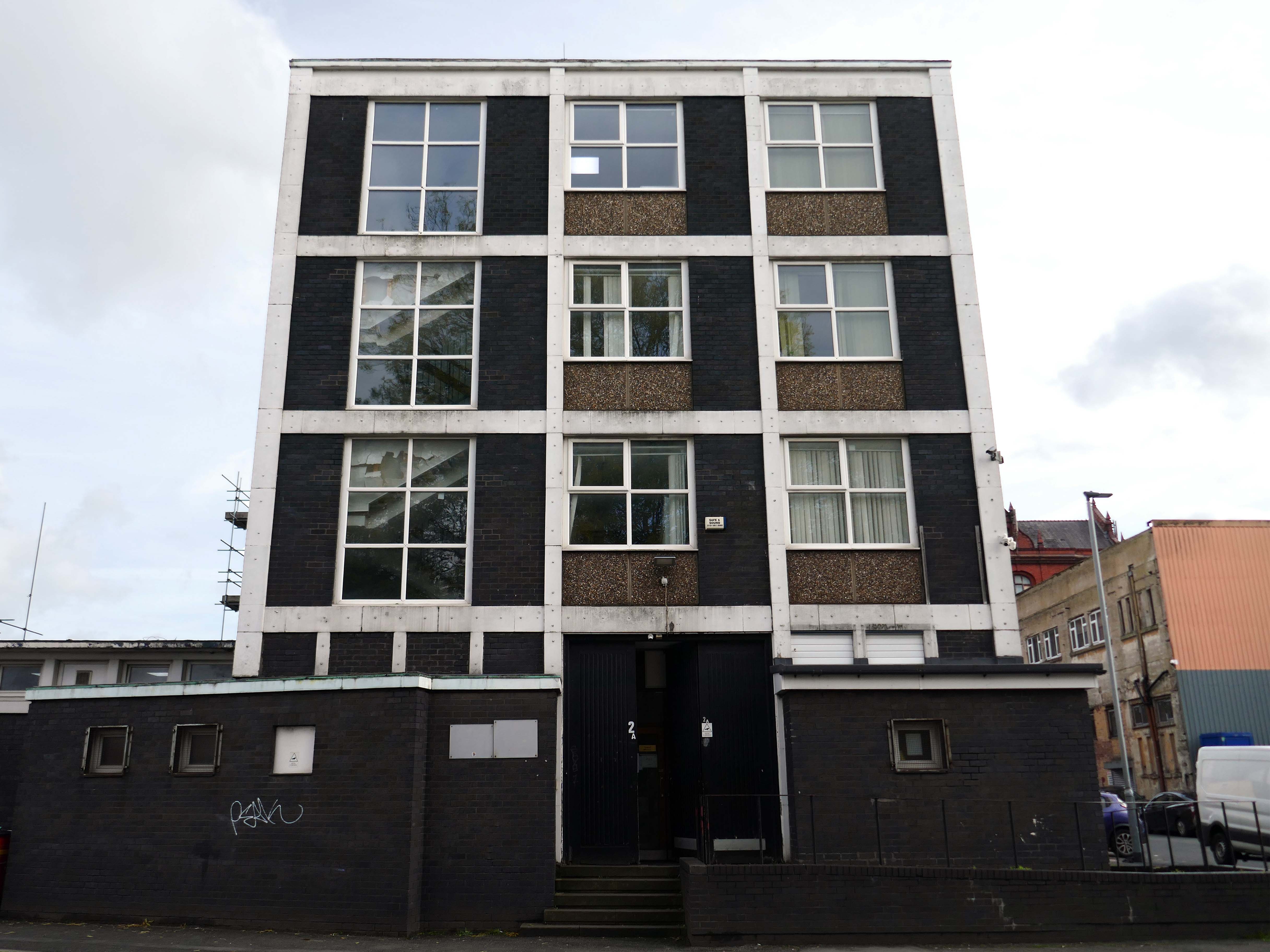
The Central Manchester Primary Substation on Travis Street is still there.

The building was cladded with a COR-TEN® steel envelope, the nature of which was relatively complex.

Corten steel sets itself apart due to the inclusion of unique alloying elements: chromium, nickel, copper and added phosphorous which gives the steel its self-protecting properties.

Architect: Walker Simpson
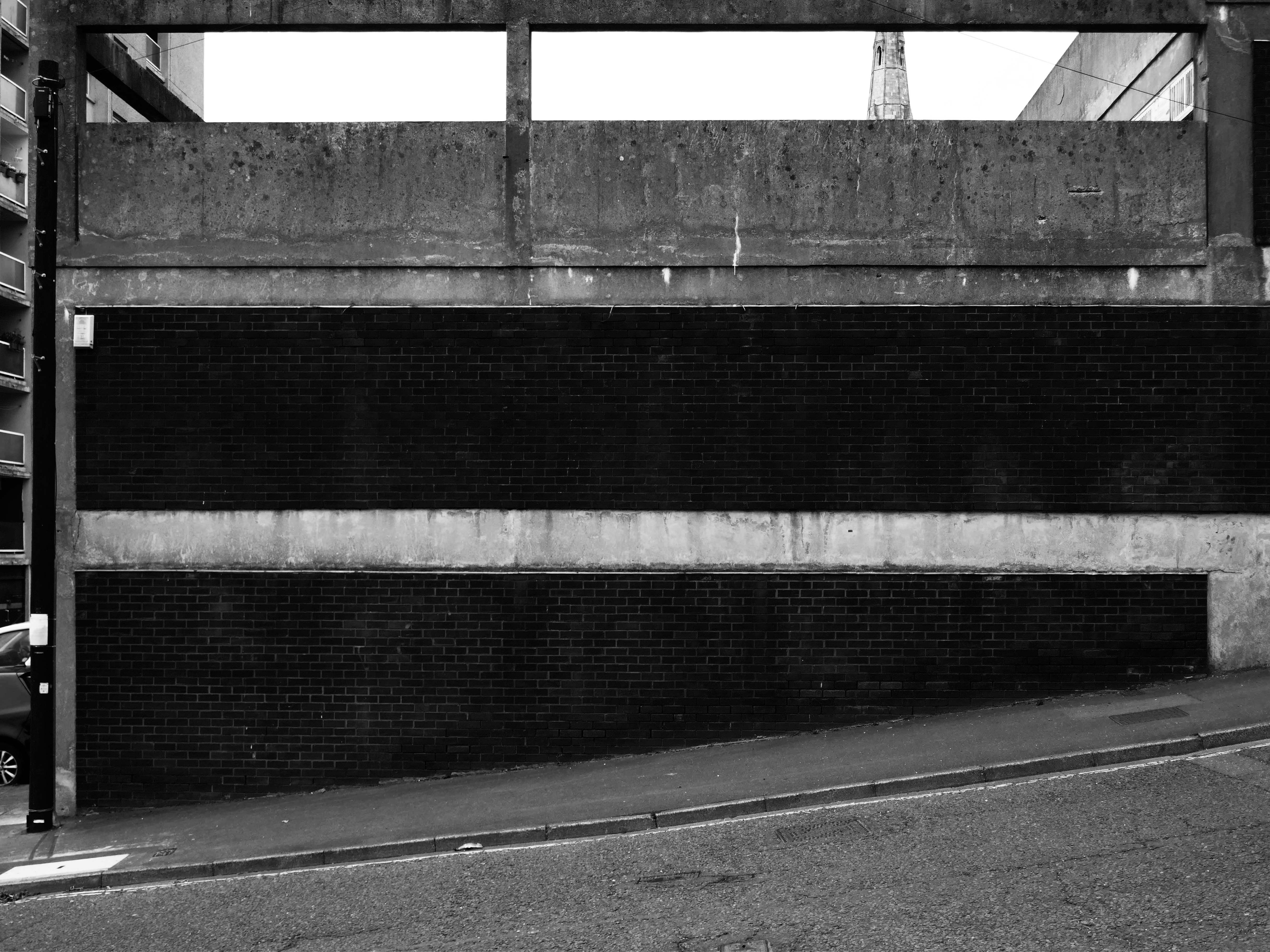
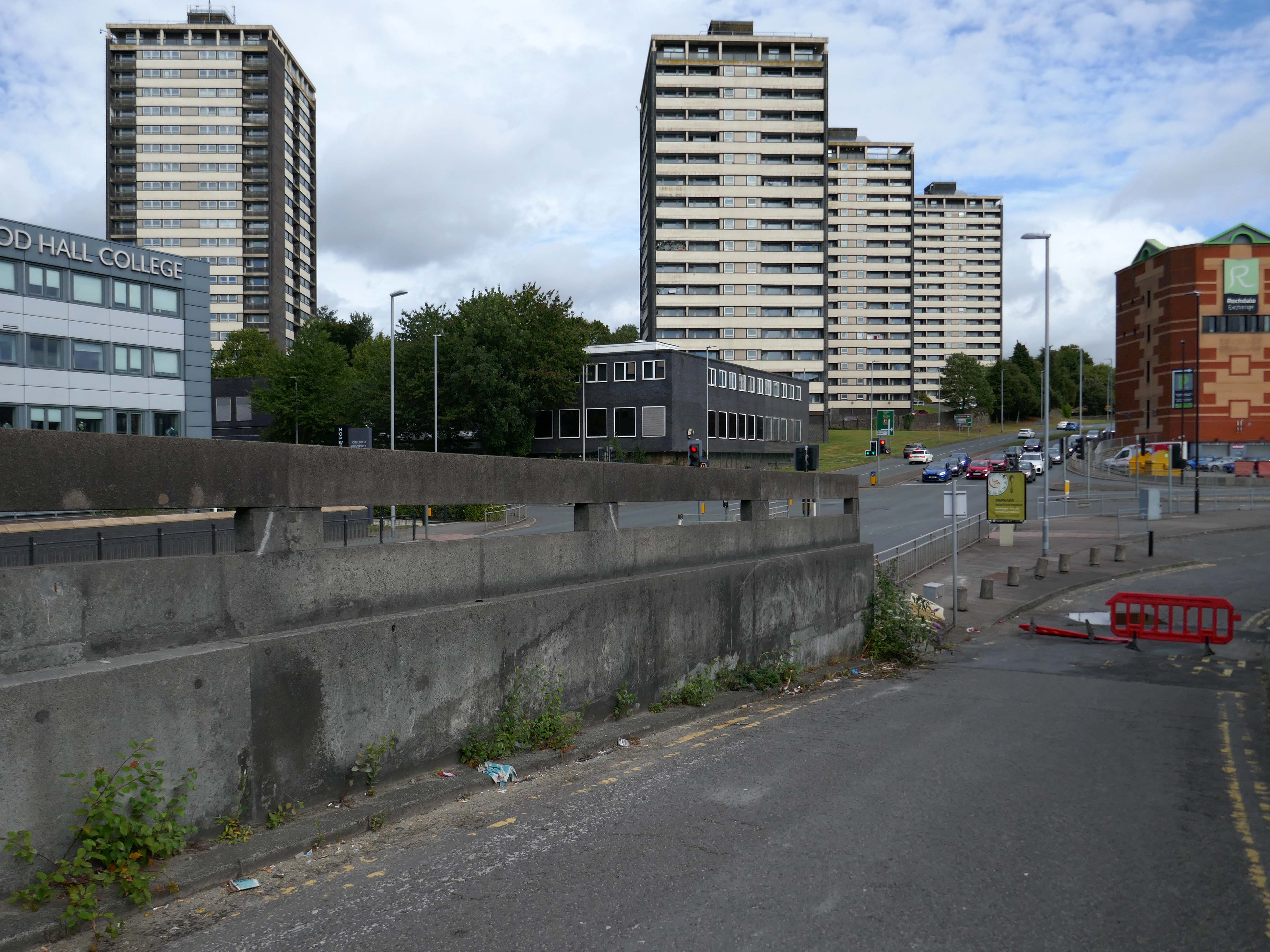
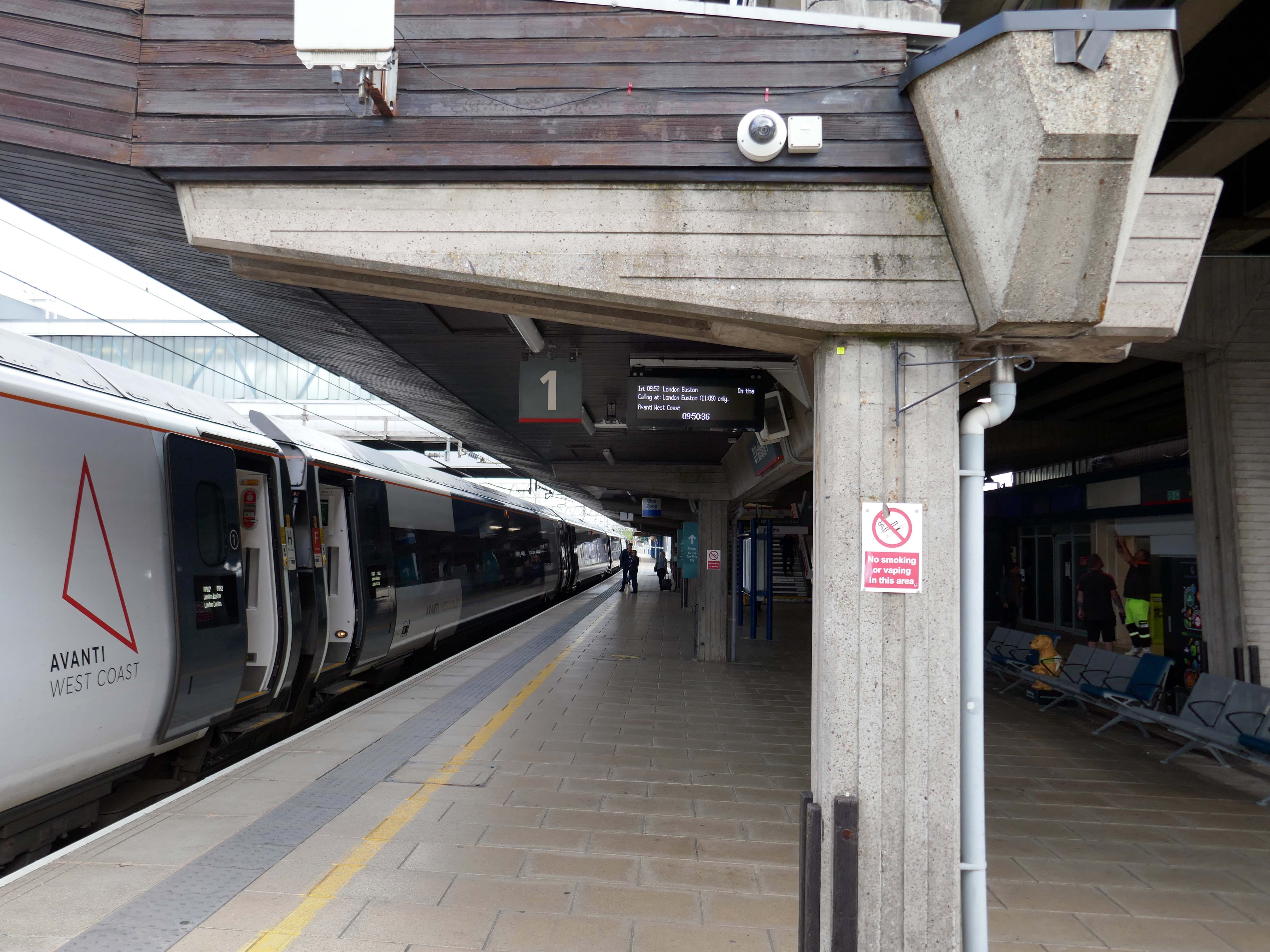
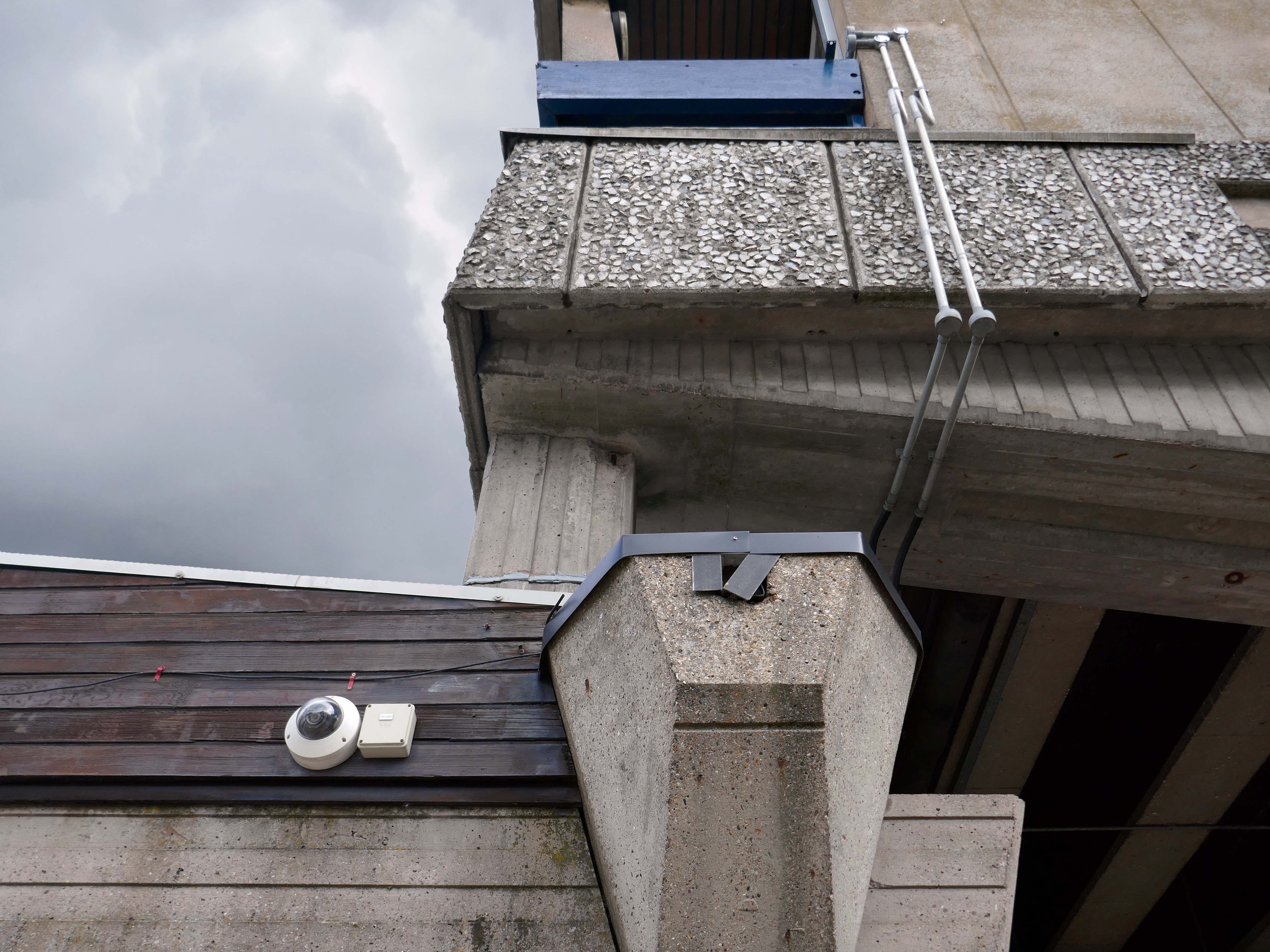
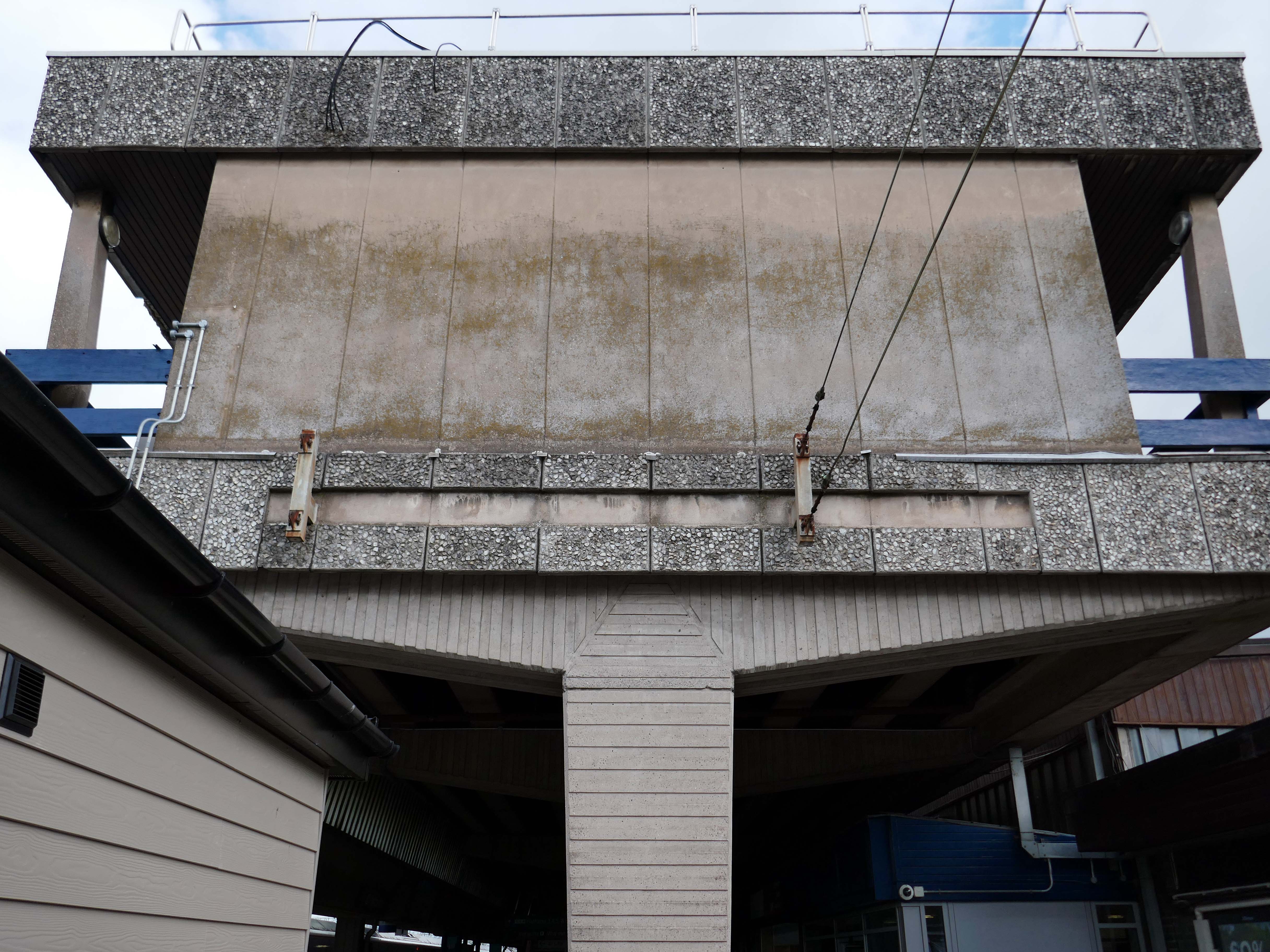
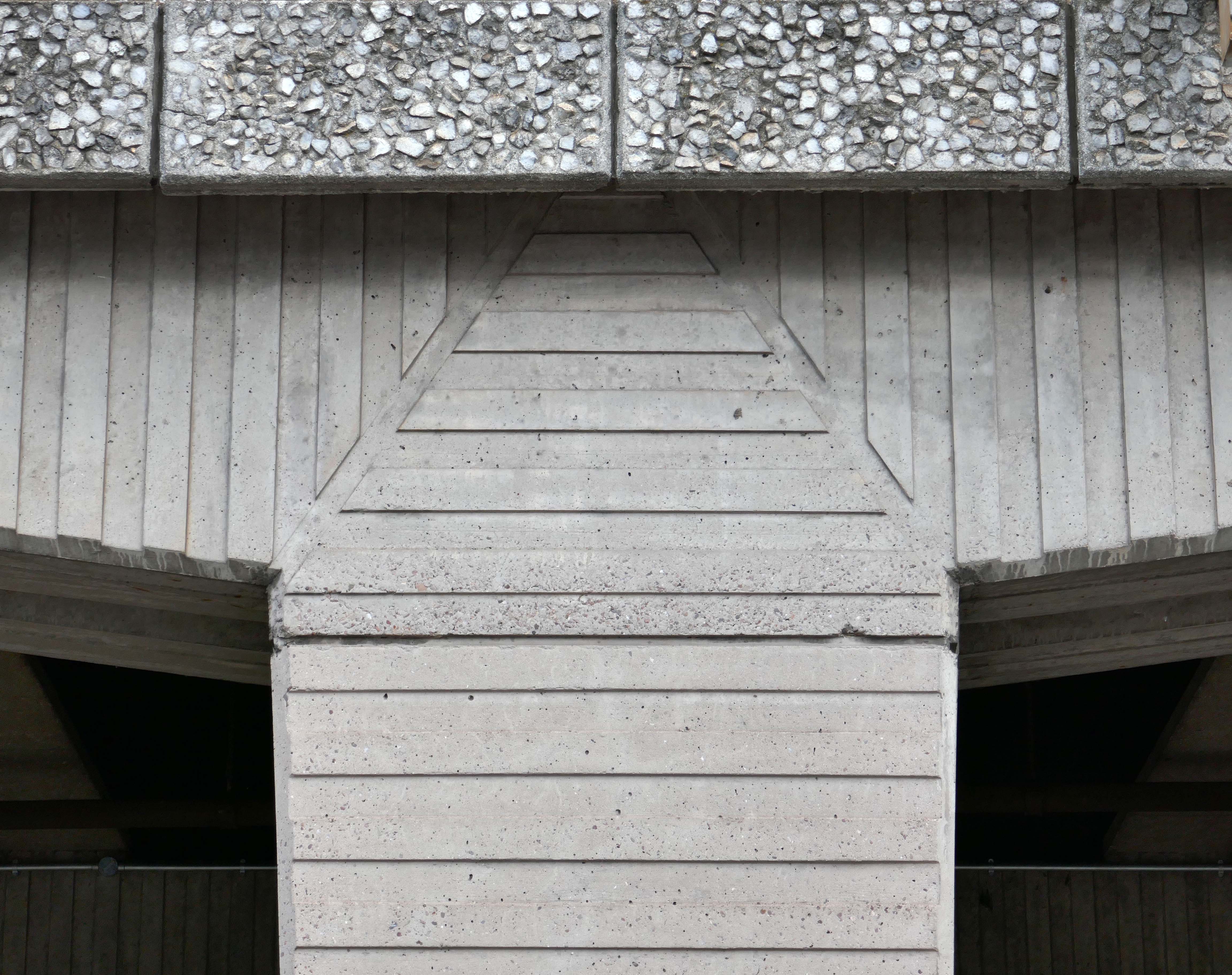
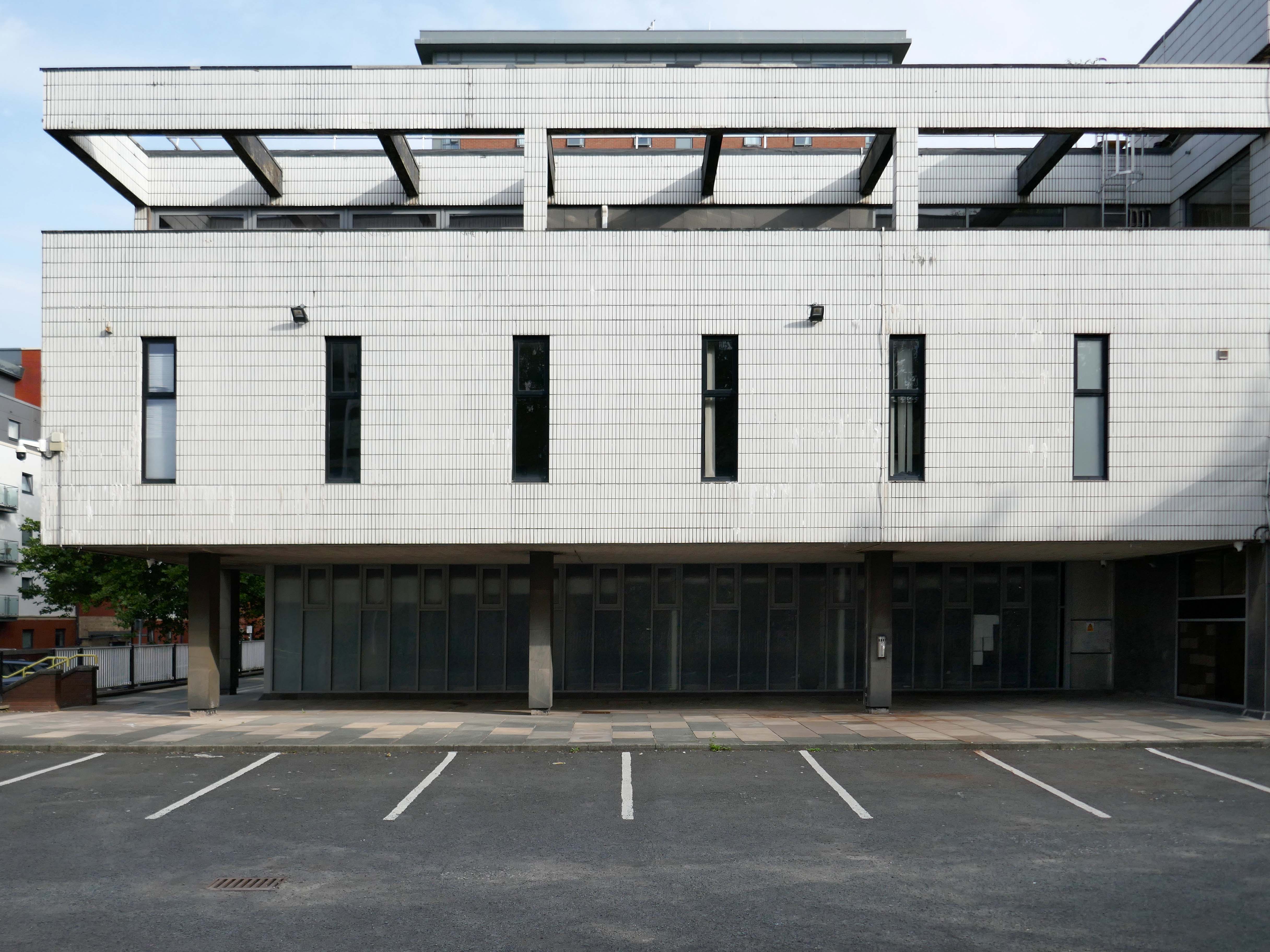
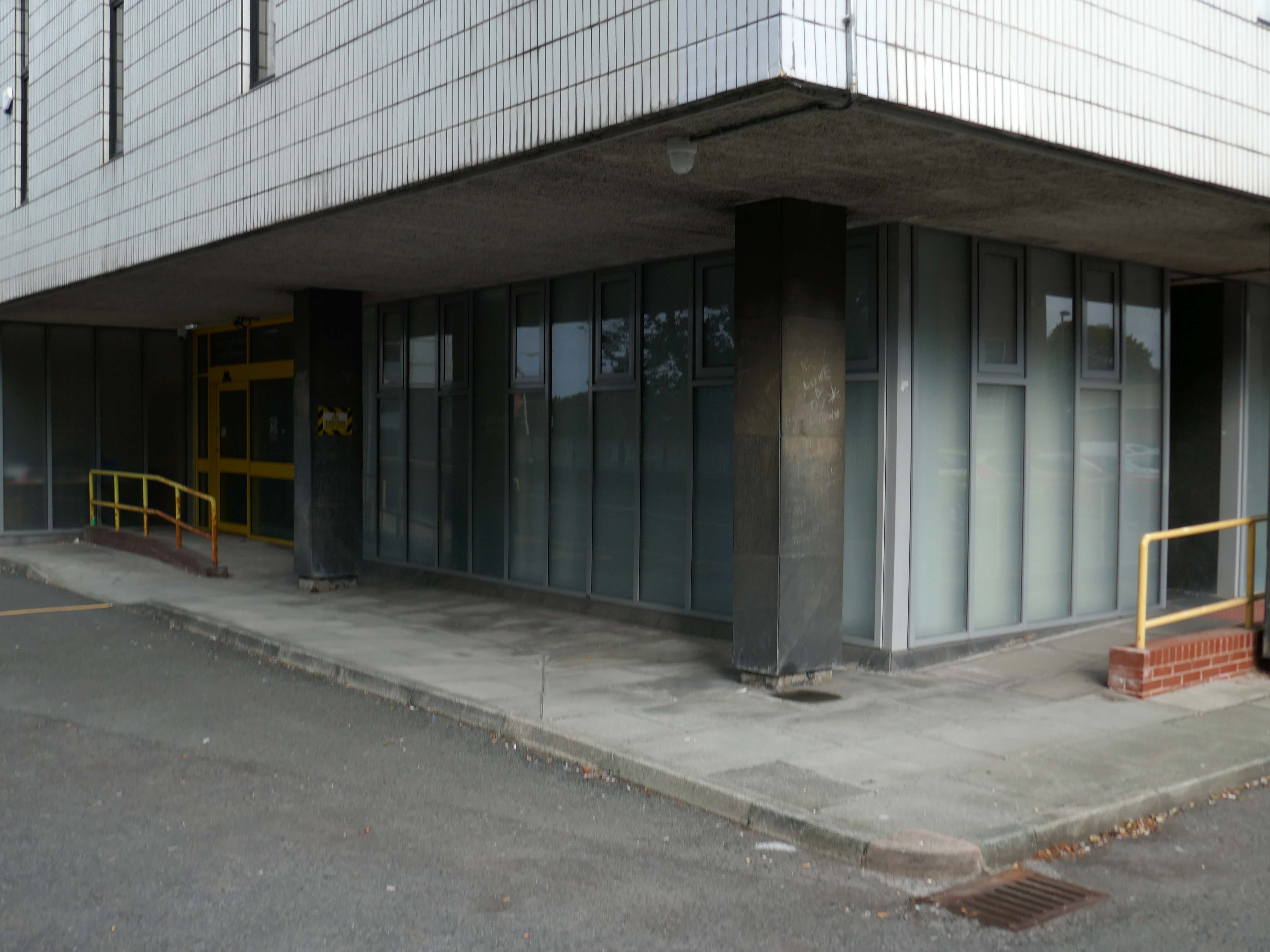
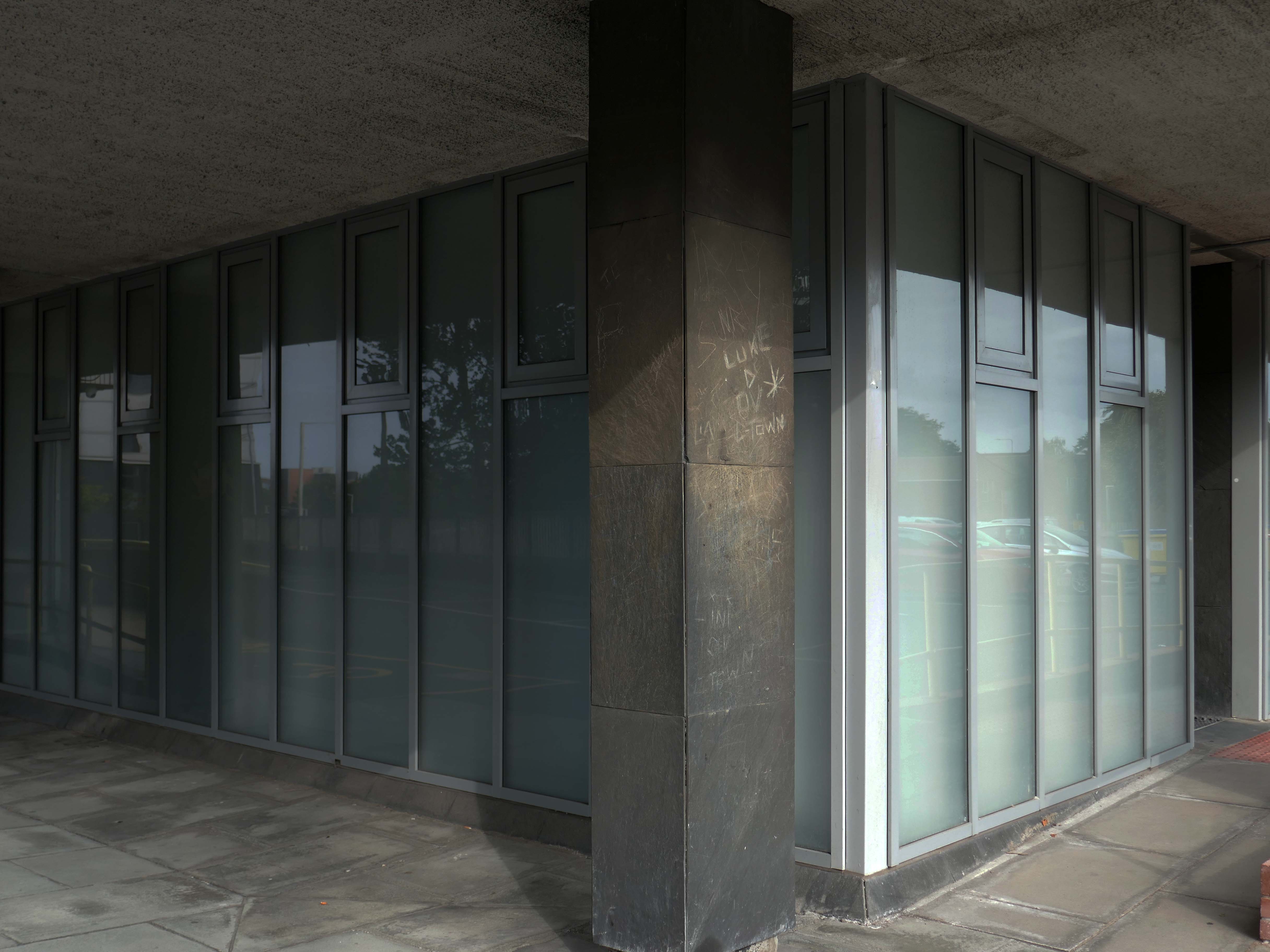
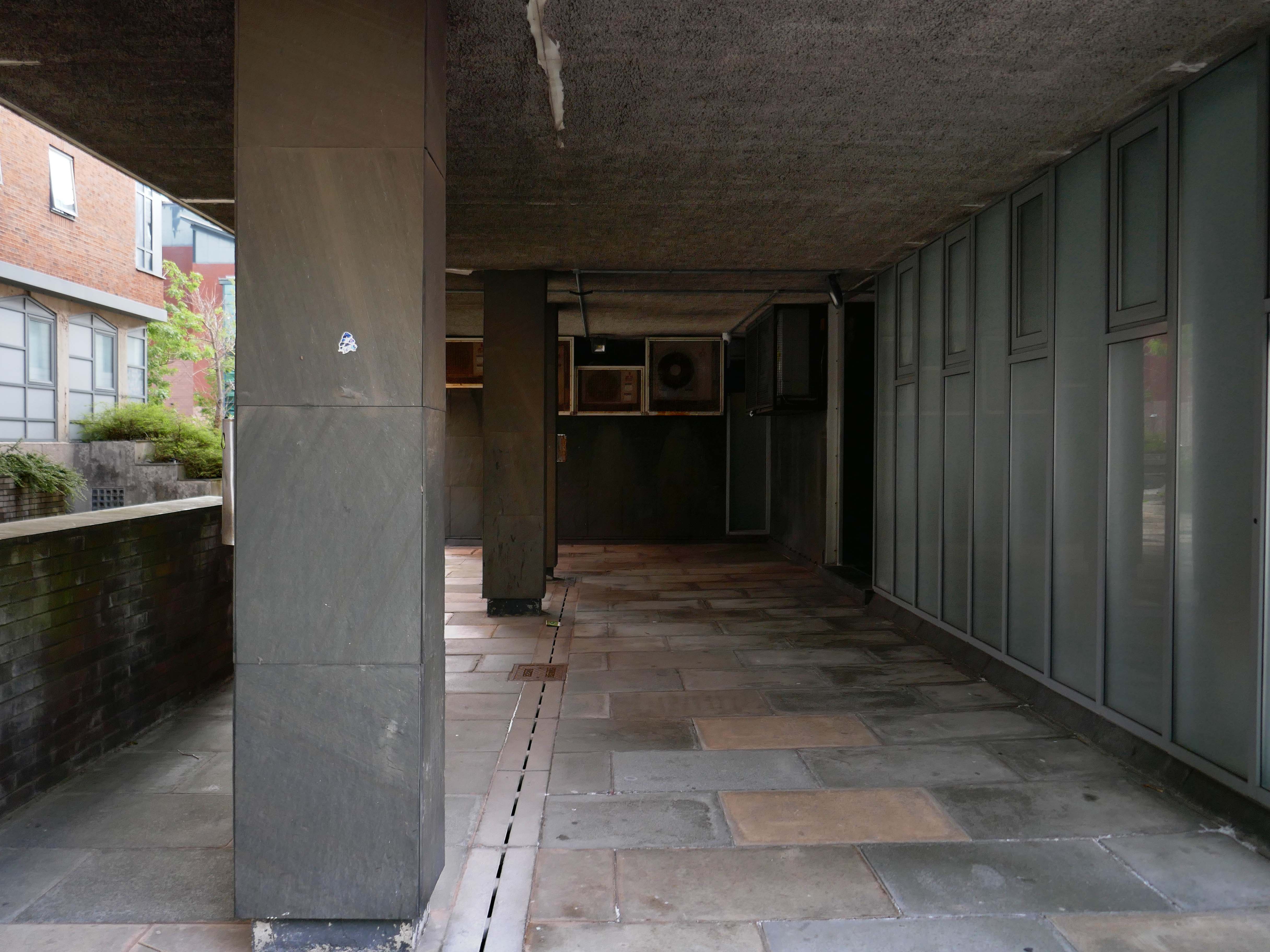
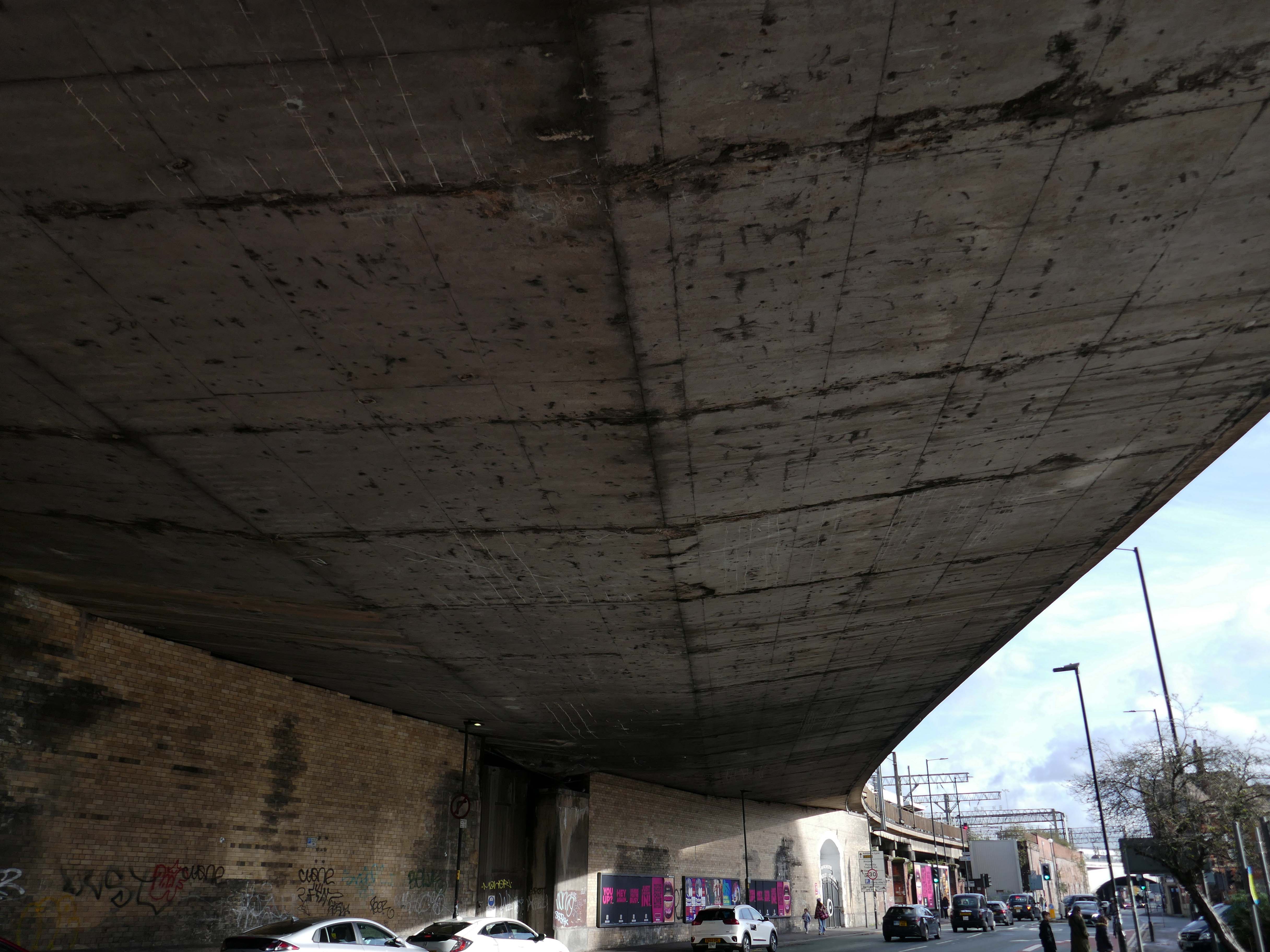
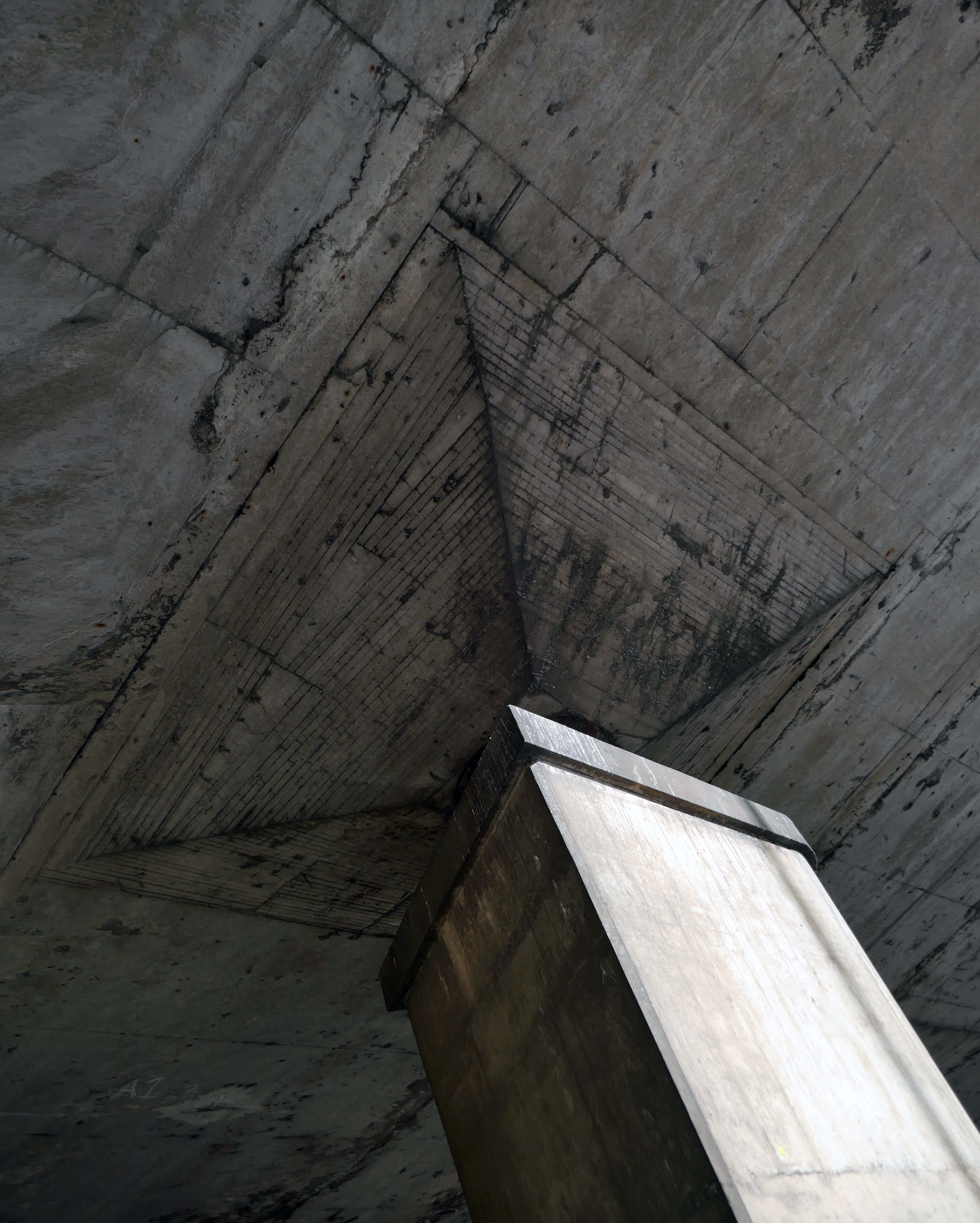
Immediately adjacent are Platforms Thirteen and Fourteen, bridged over the roadway by this vast concrete construction.

Platform 14 is primitive, I understand totally from an infrastructure standpoint because it’s on a bypass line on a bridge, but it gets too overcrowded and is windswept. The rest of the station is ok. Platforms 13/14 have not changed in 40 years, grim.
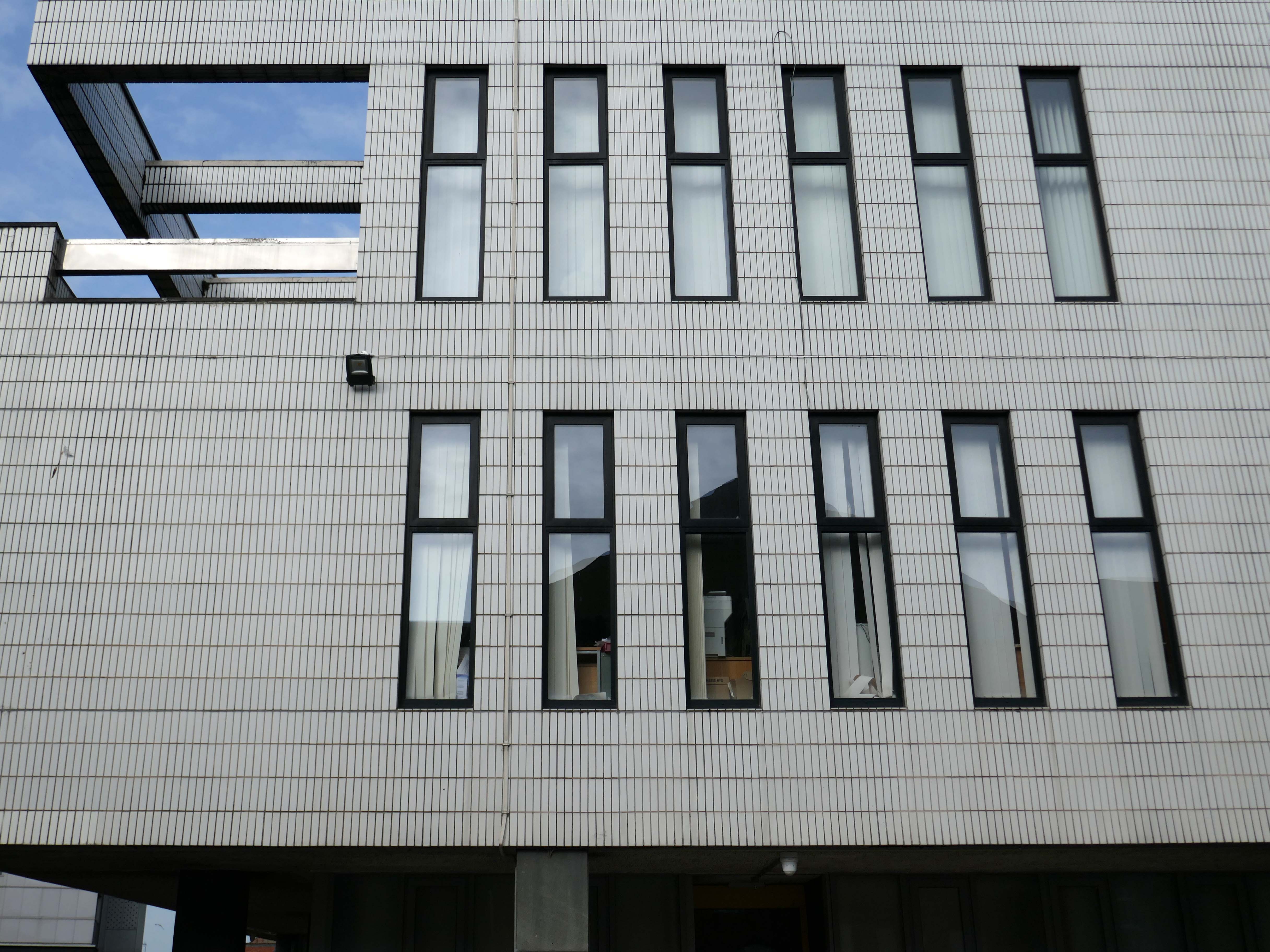
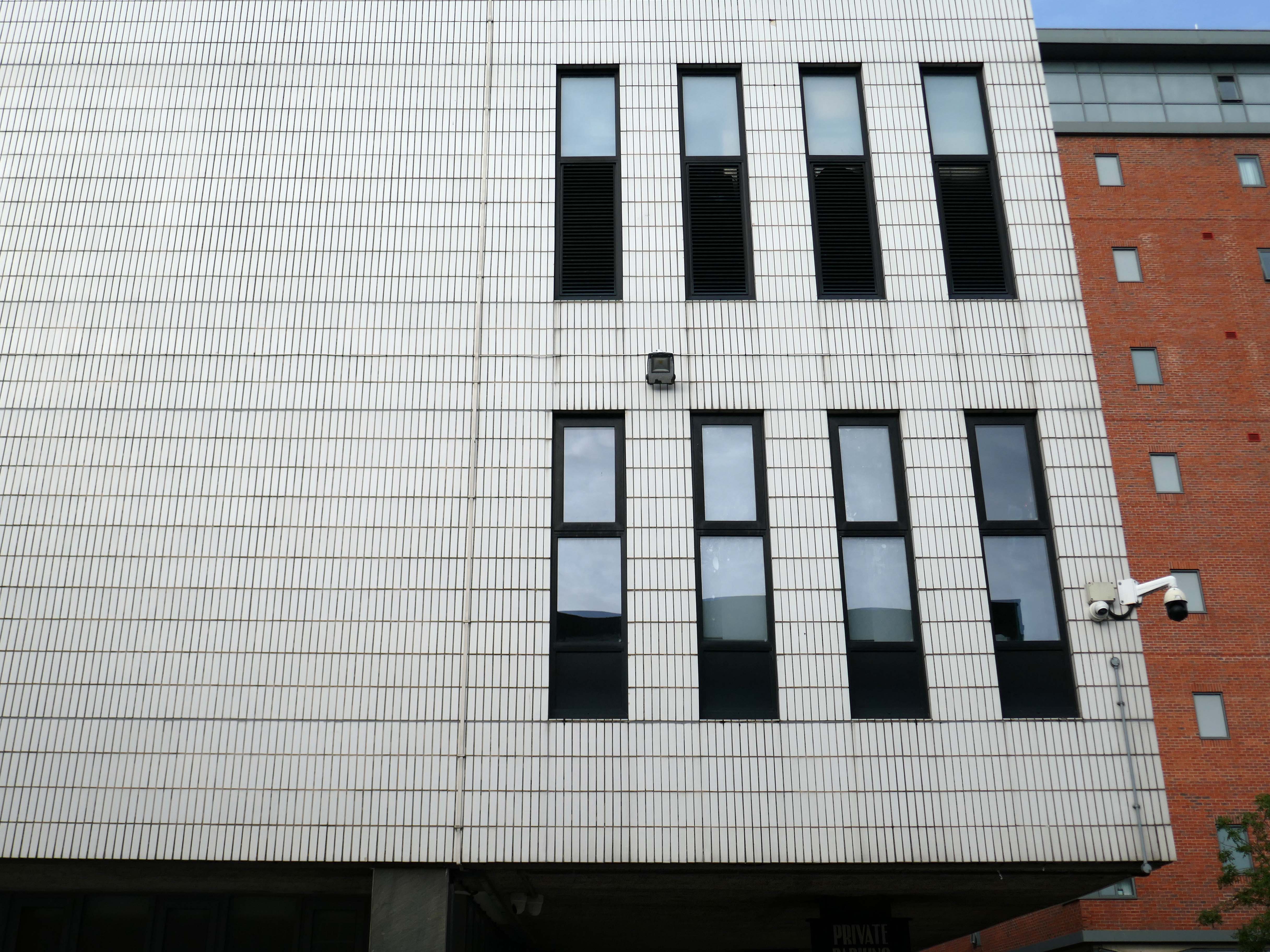
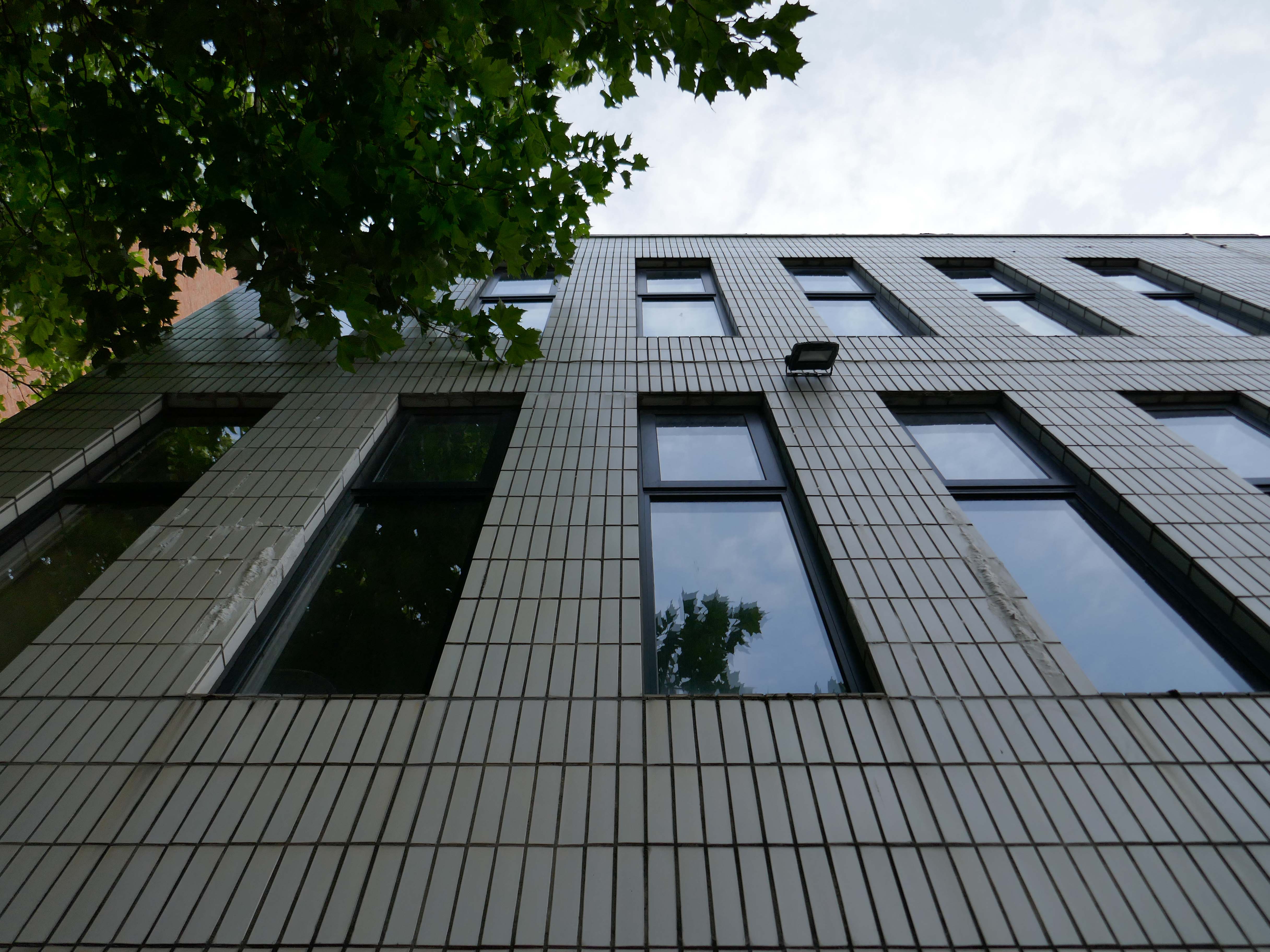
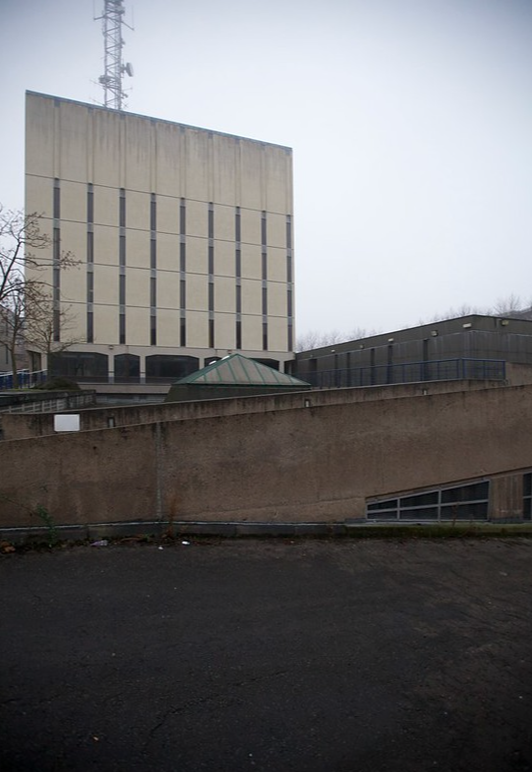
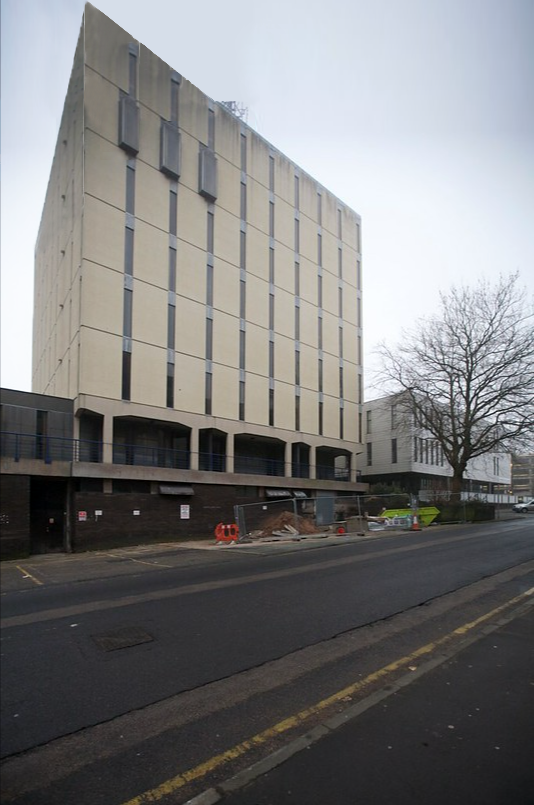
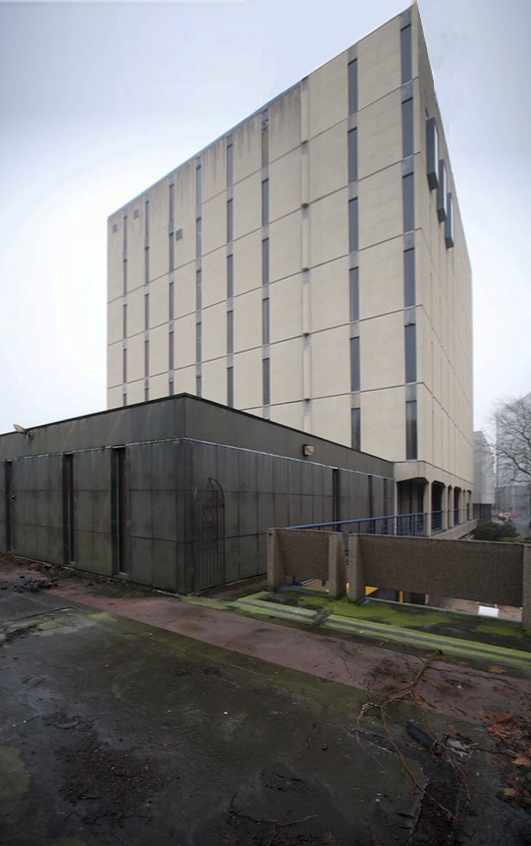
We the pass to the former BT Building – architects JW Hammond 1973.

Originally conceived as a hotel, there were no takers at the time, so it became the BT HQ.

Currently Marriot Hotel Piccadilly

Comprising 338 rooms, Manchester Marriott Hotel Piccadilly is near a shopping district, a 10-minute ride from Etihad Stadium. Offering a location right in the centre of a beautiful neighbourhood, this comfortable hotel boasts a lounge bar along with city views.
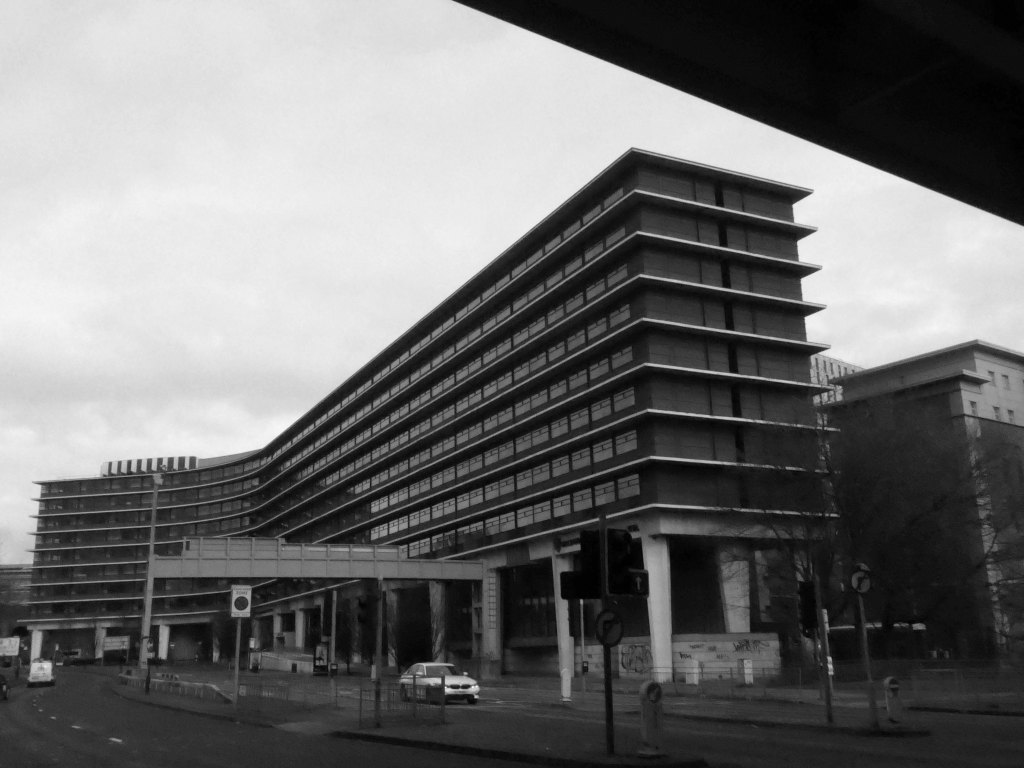
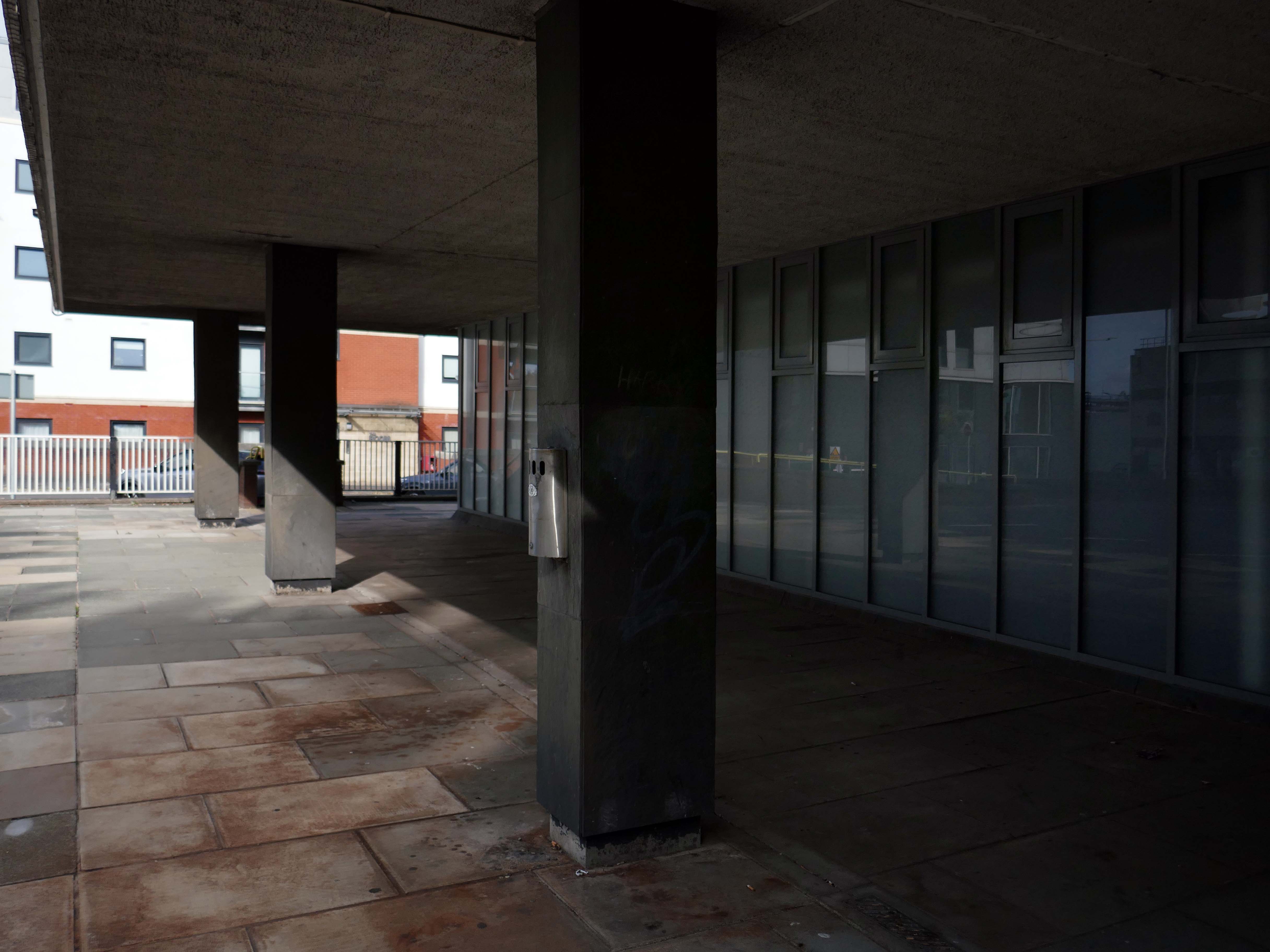
It is supported on the most magnificent piloti.
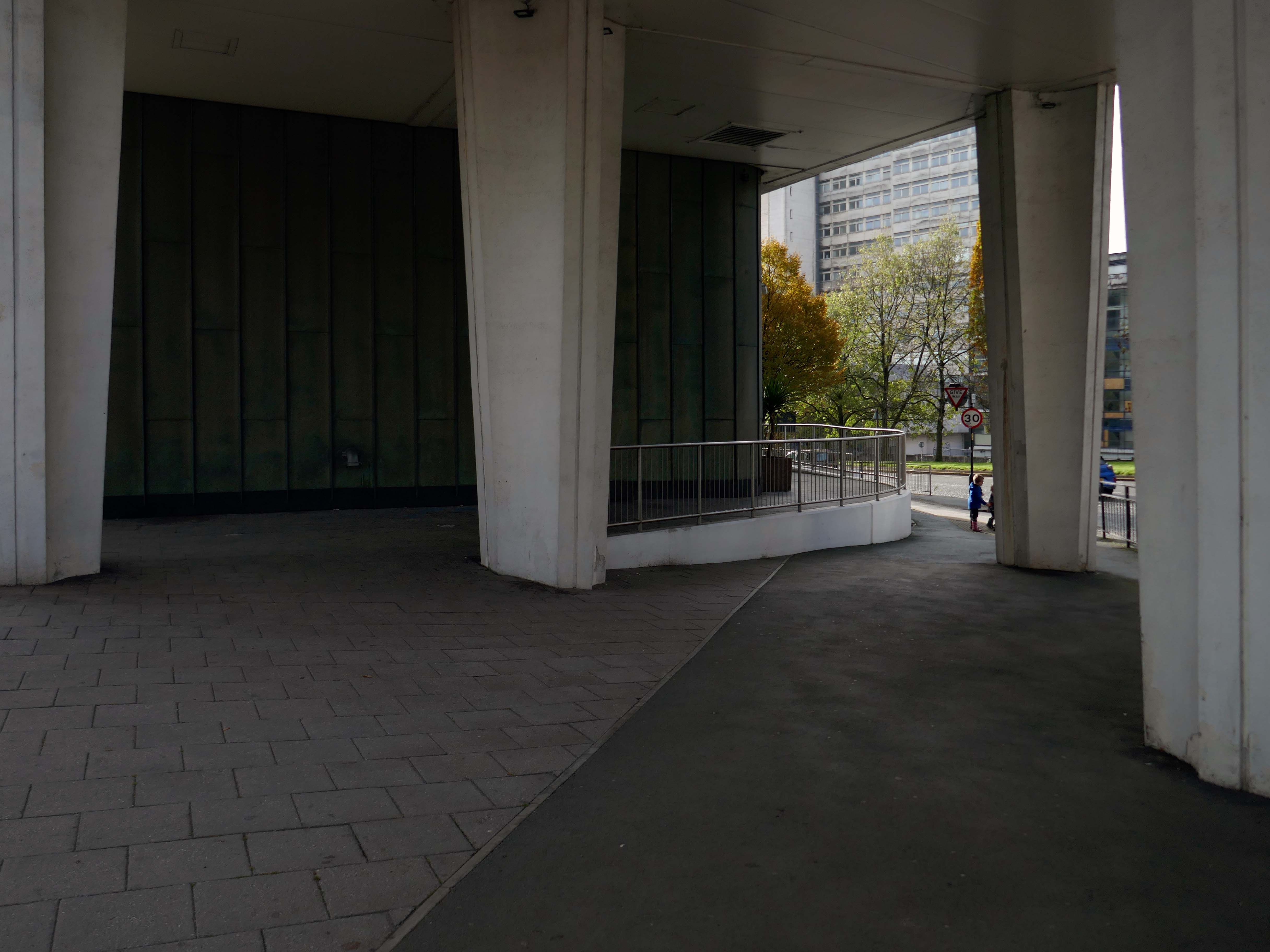
Over the road the Holloway Wall 1968 – Grade II listed but its remodelling is in the air.

The developer’s architects now propose to ‘reimagine’ the artwork and incorporate it into the foyer of the new office building. However, this ‘reimagining’ requires large sections of the artwork to be removed by cutting away and ‘folding’ around 30% of the sculpture.
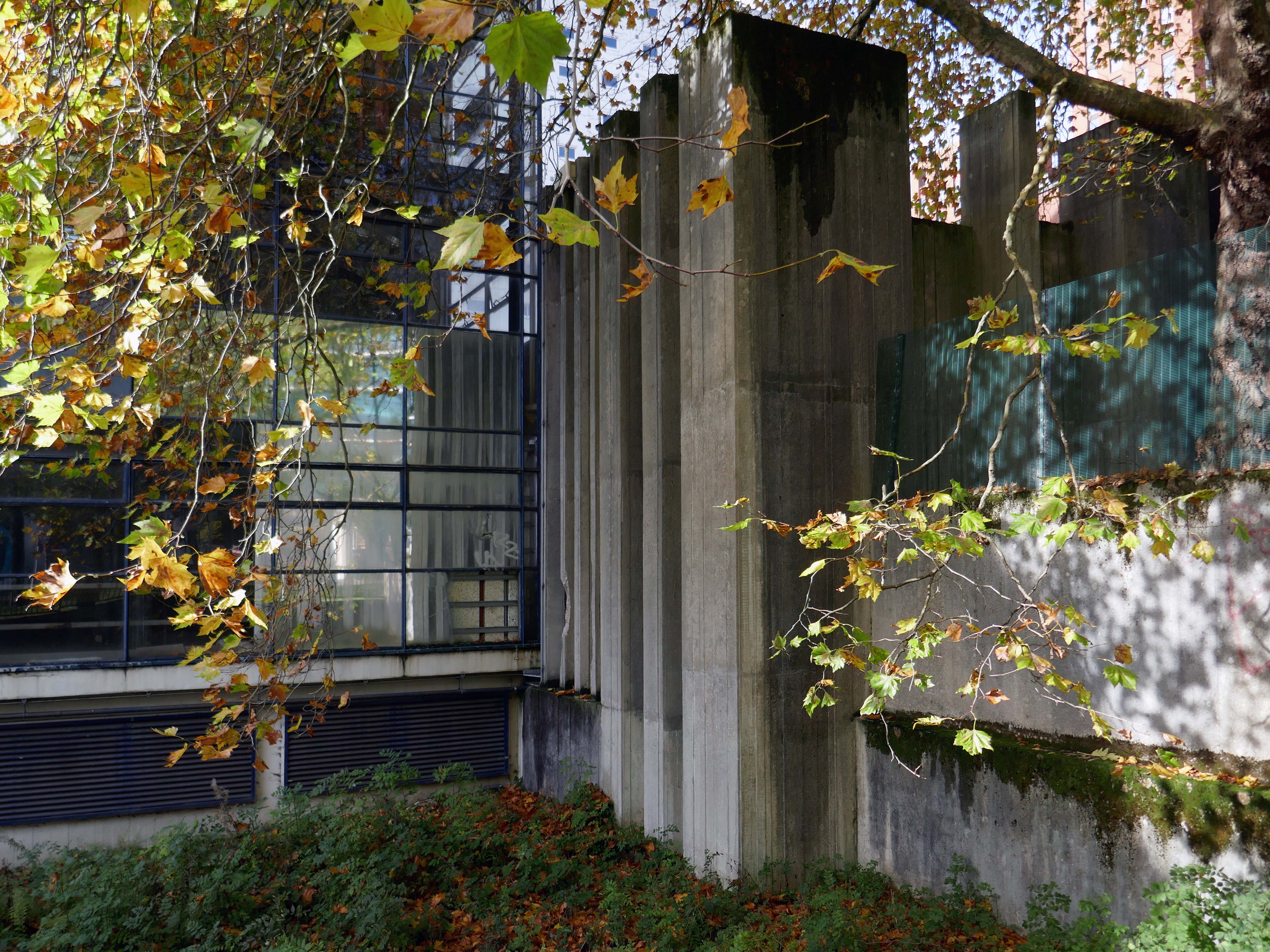
Modernist

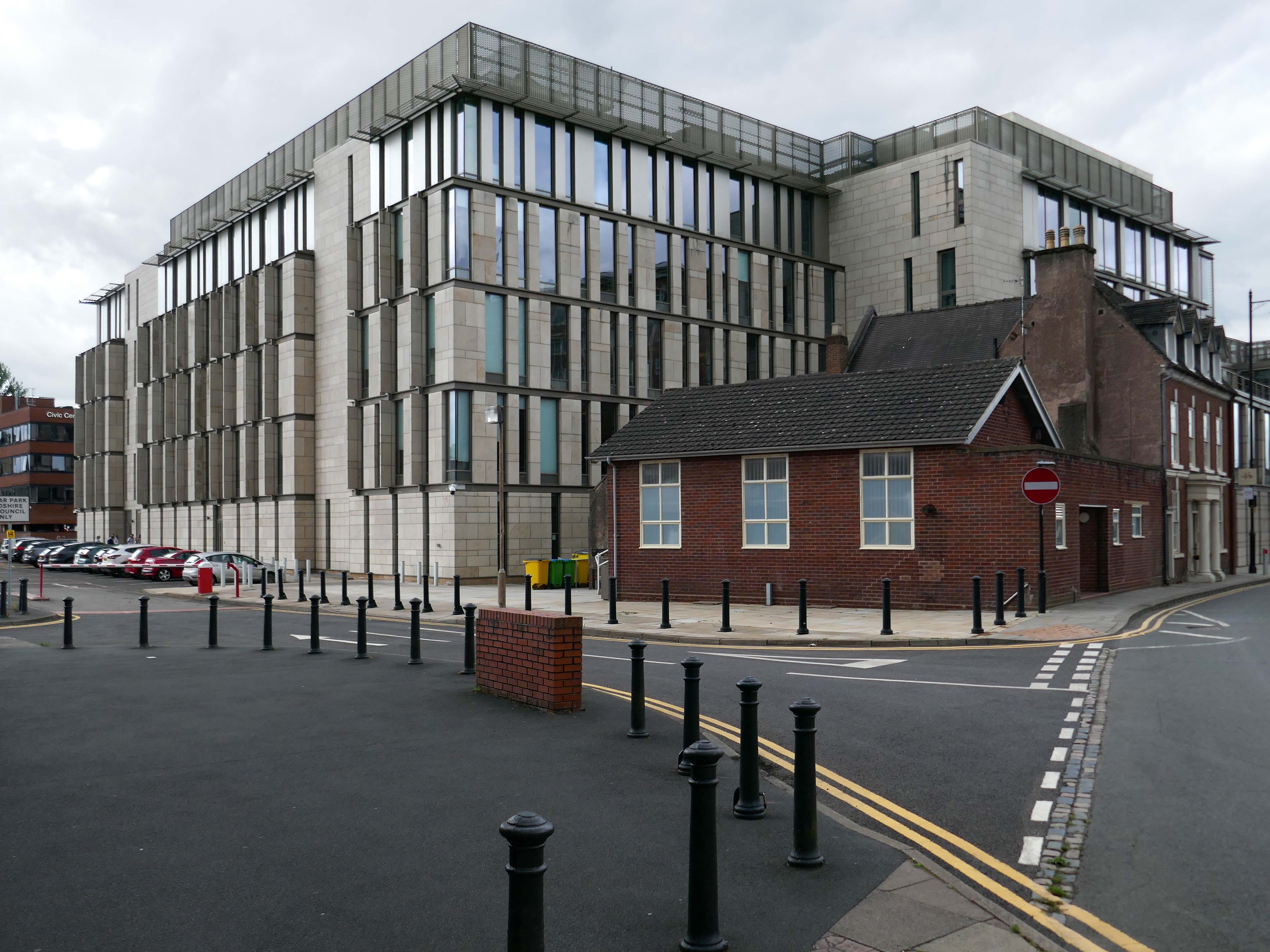
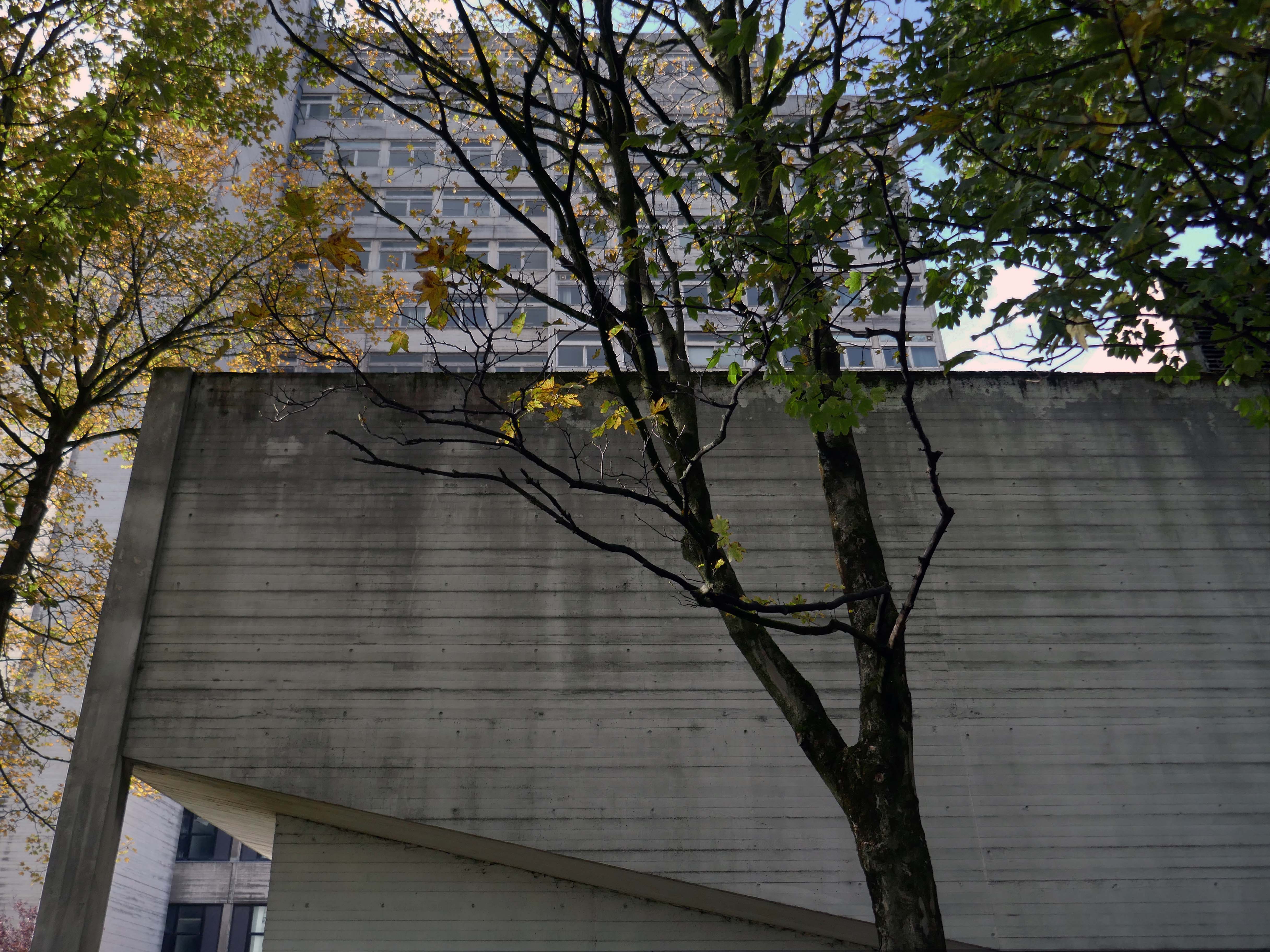
The remainder of the UMIST site is also under threat – only the Renold Building is listed and to be retained intact.

Lecture Theatre, along with the Maths and Sciences Building.
Seen here under construction before the arrival of the Mancunian Way extension.
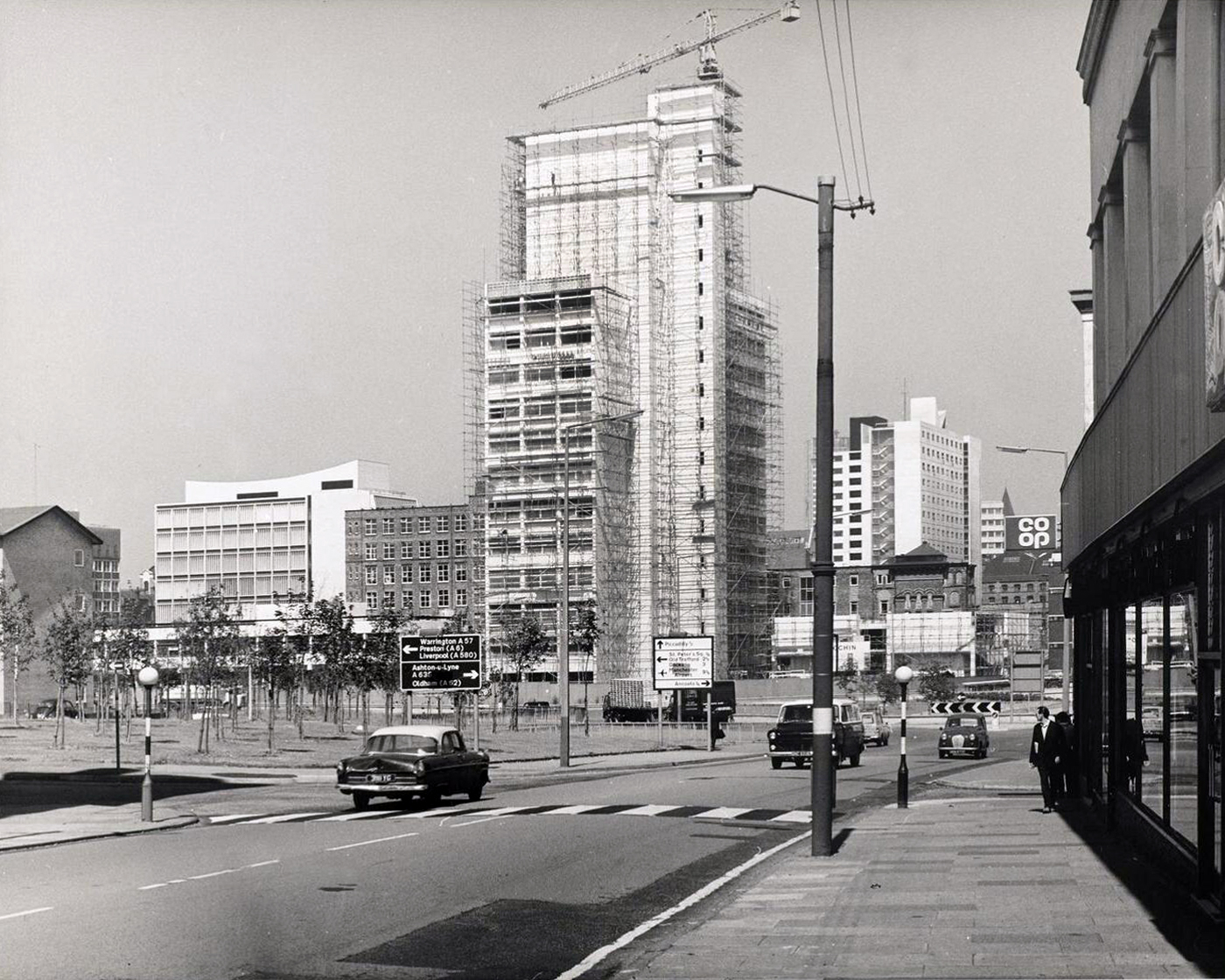
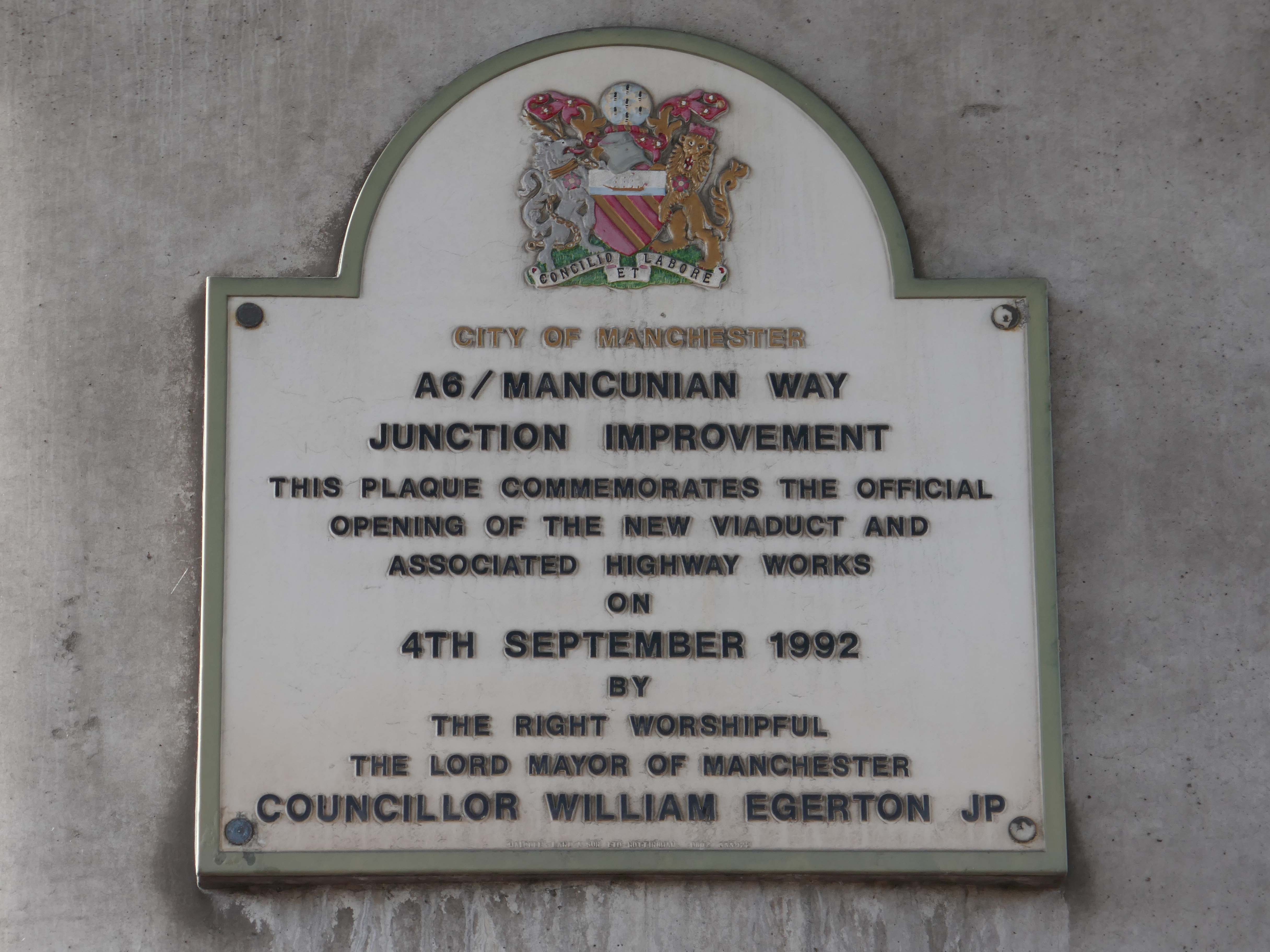
The Mancunian Way extension opened in 1992.
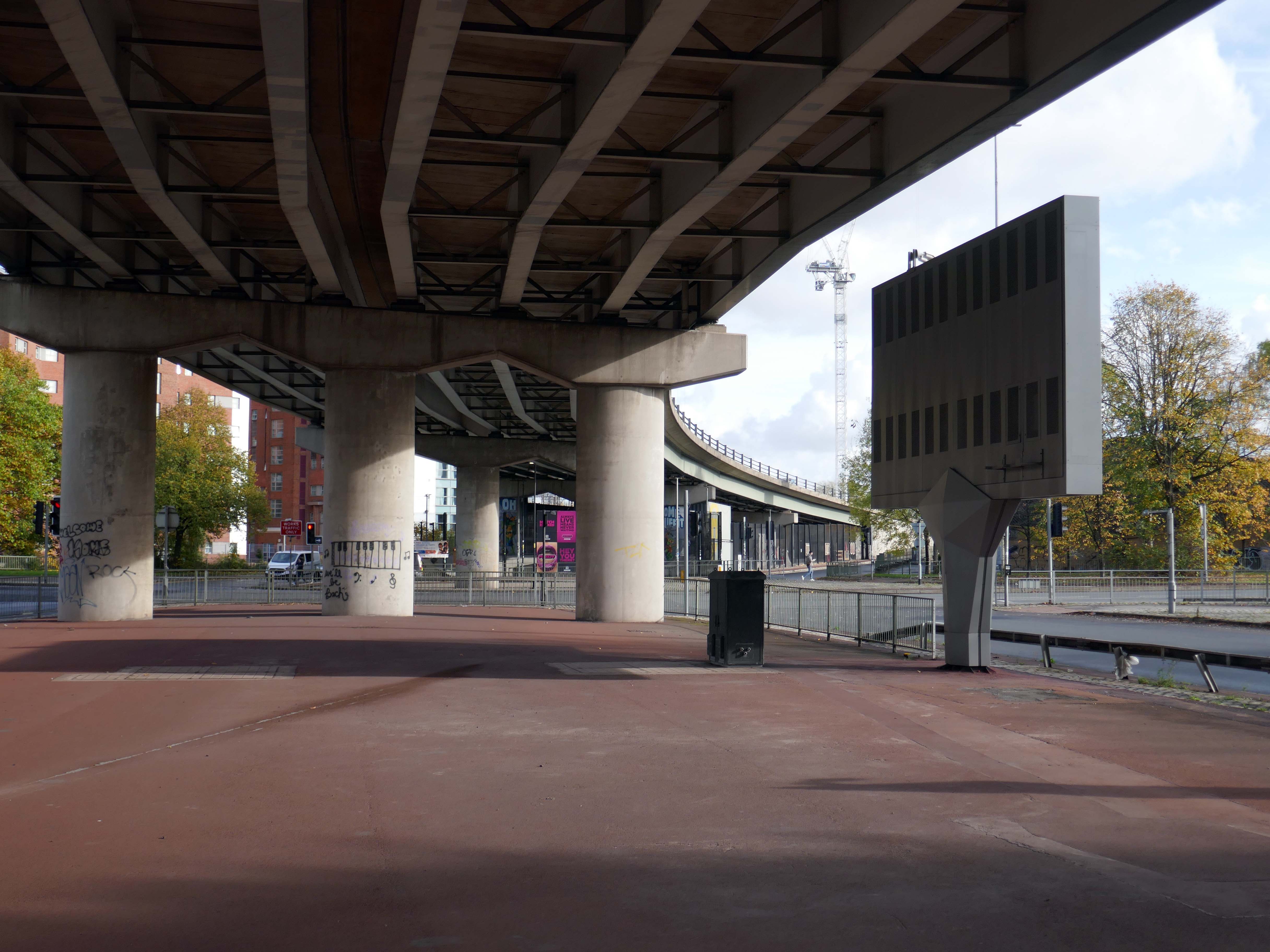
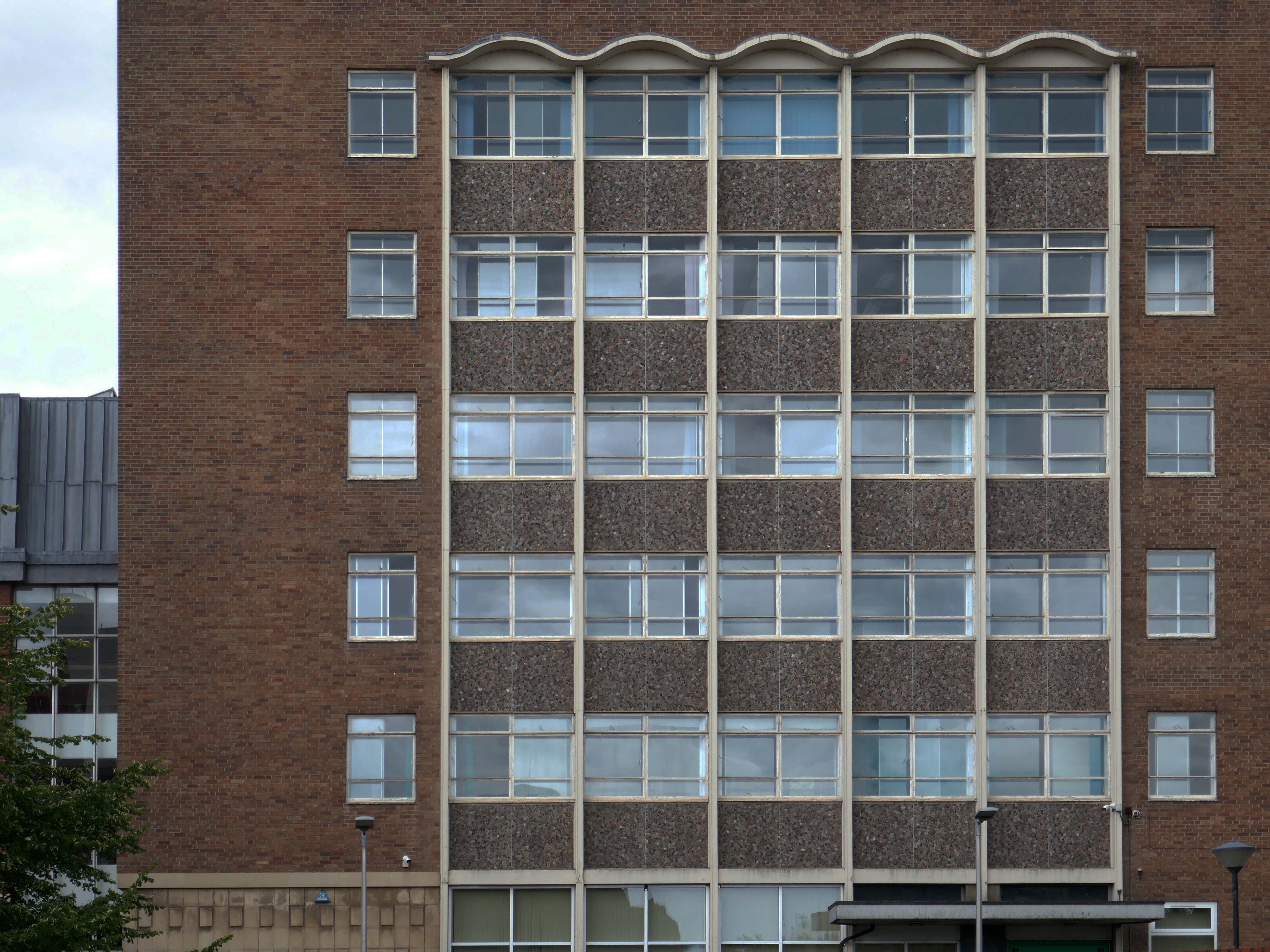
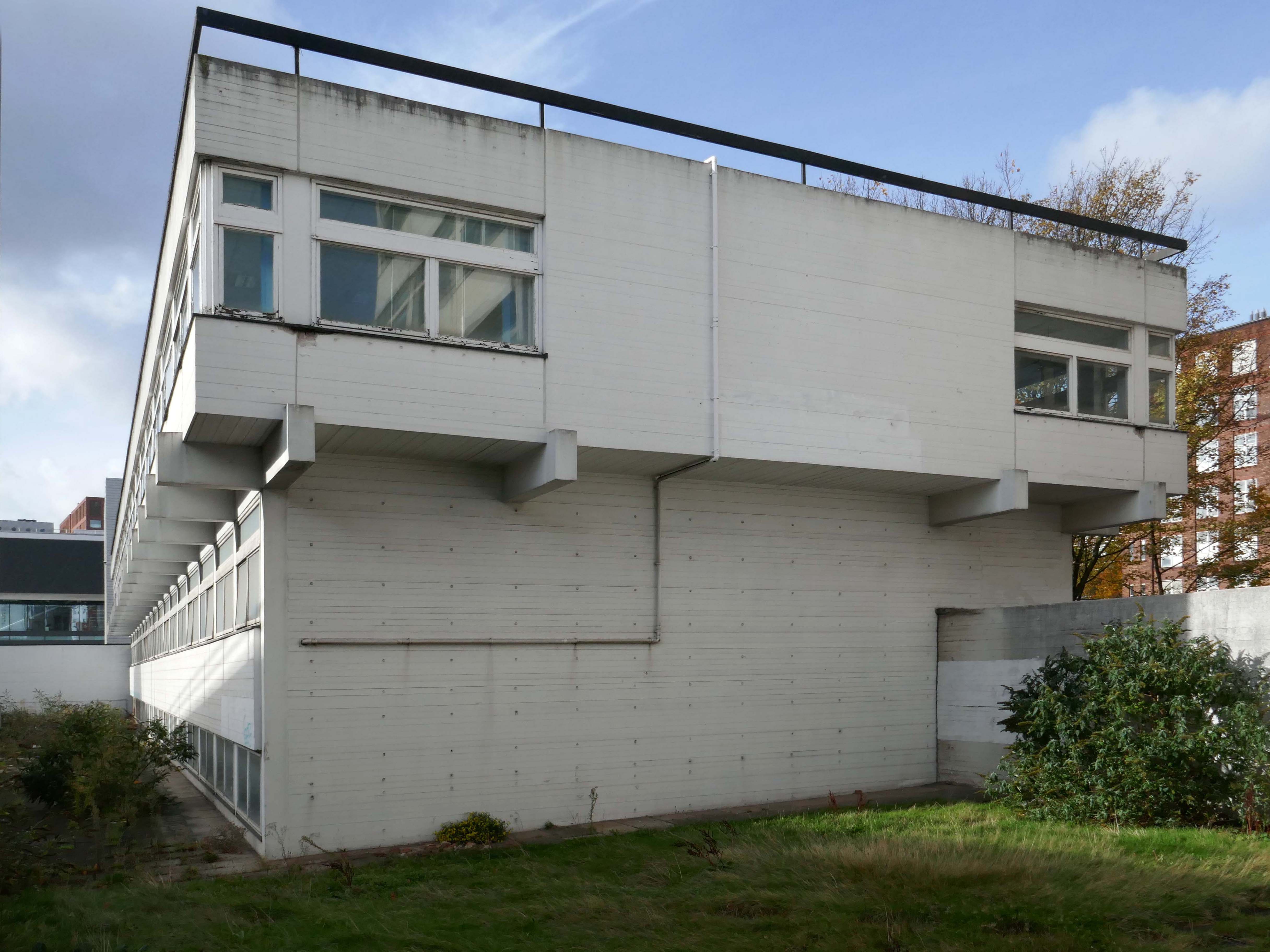
From beneath the roadway we can see the Ferranti Building.
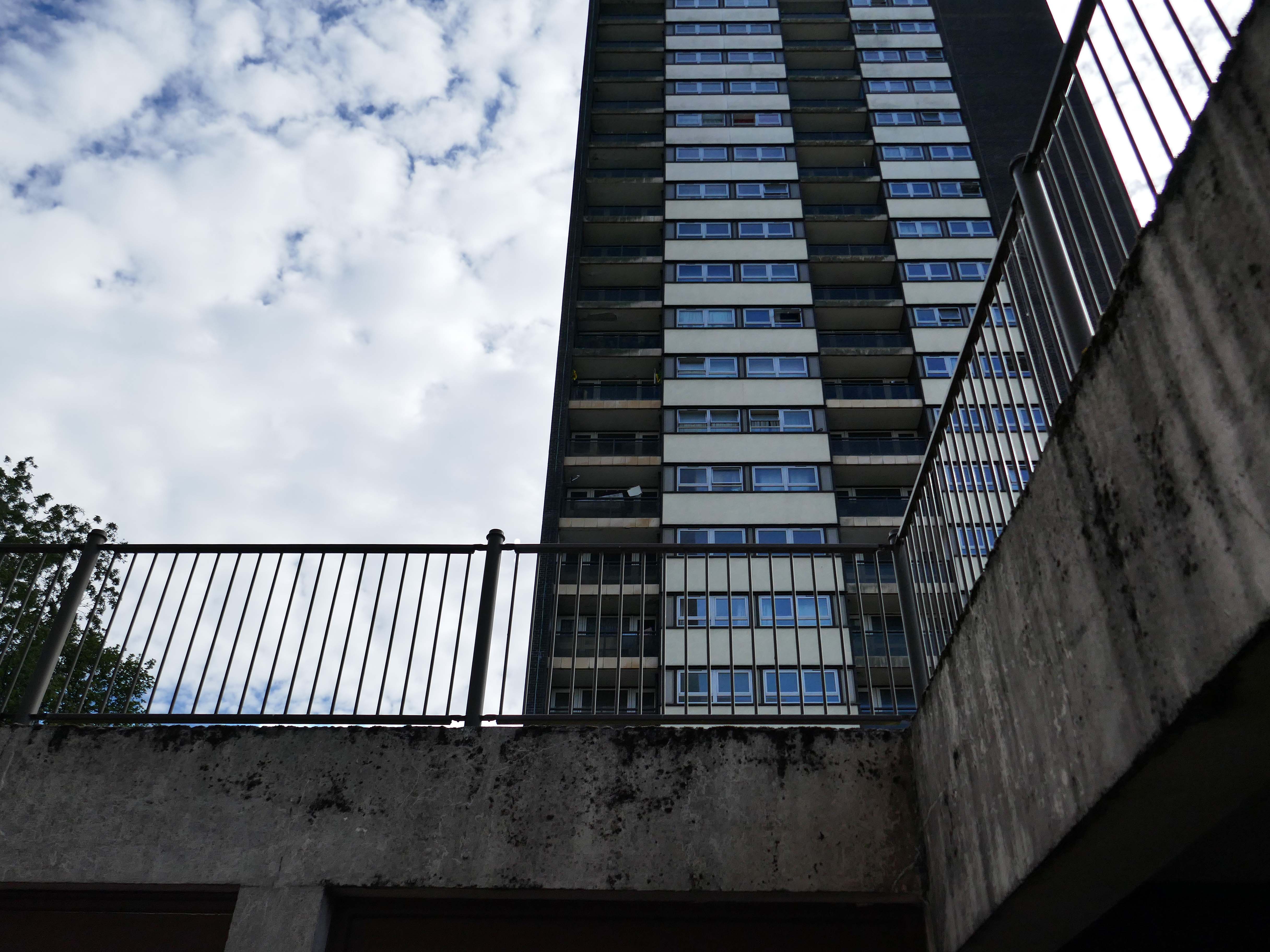
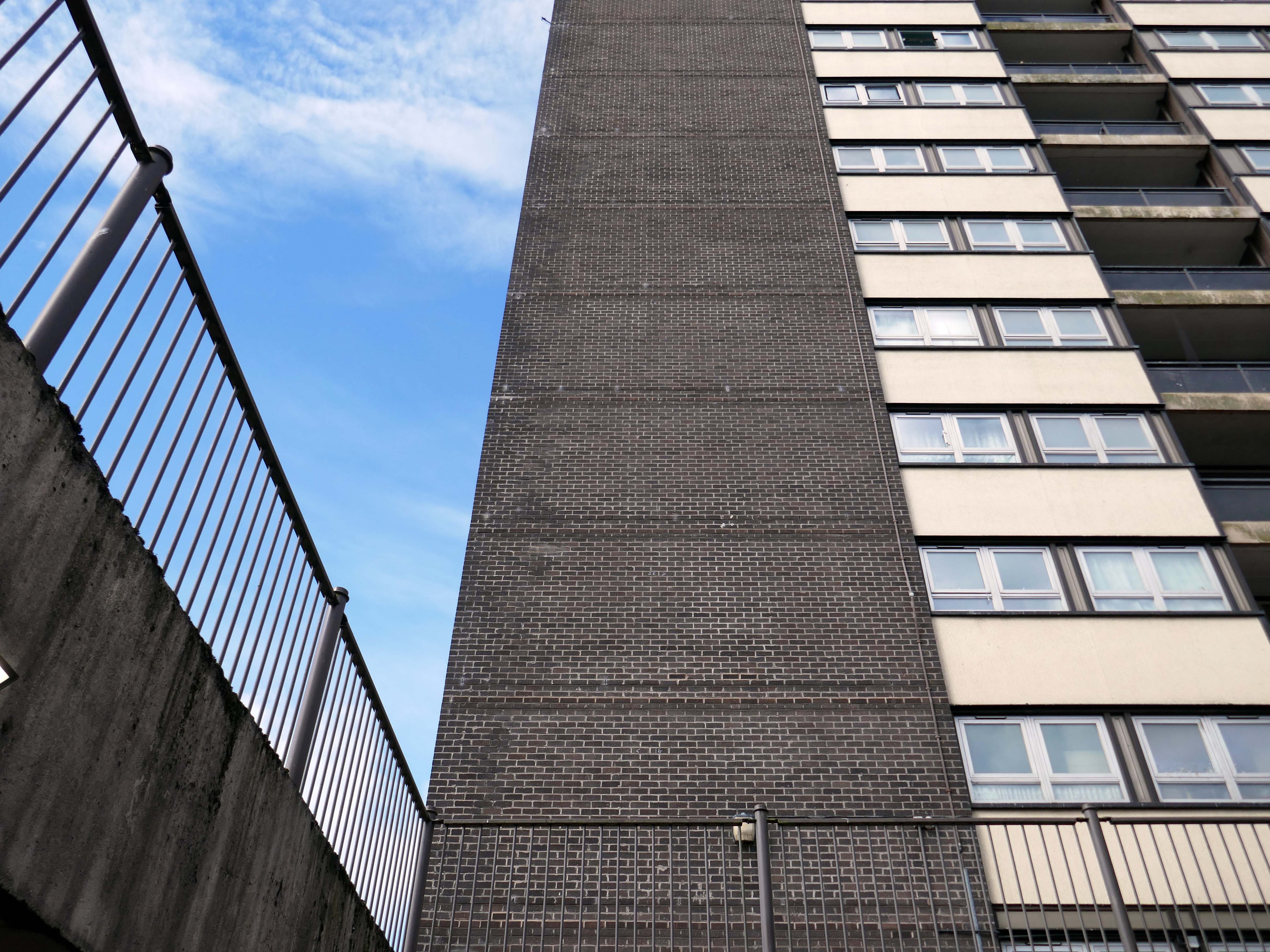
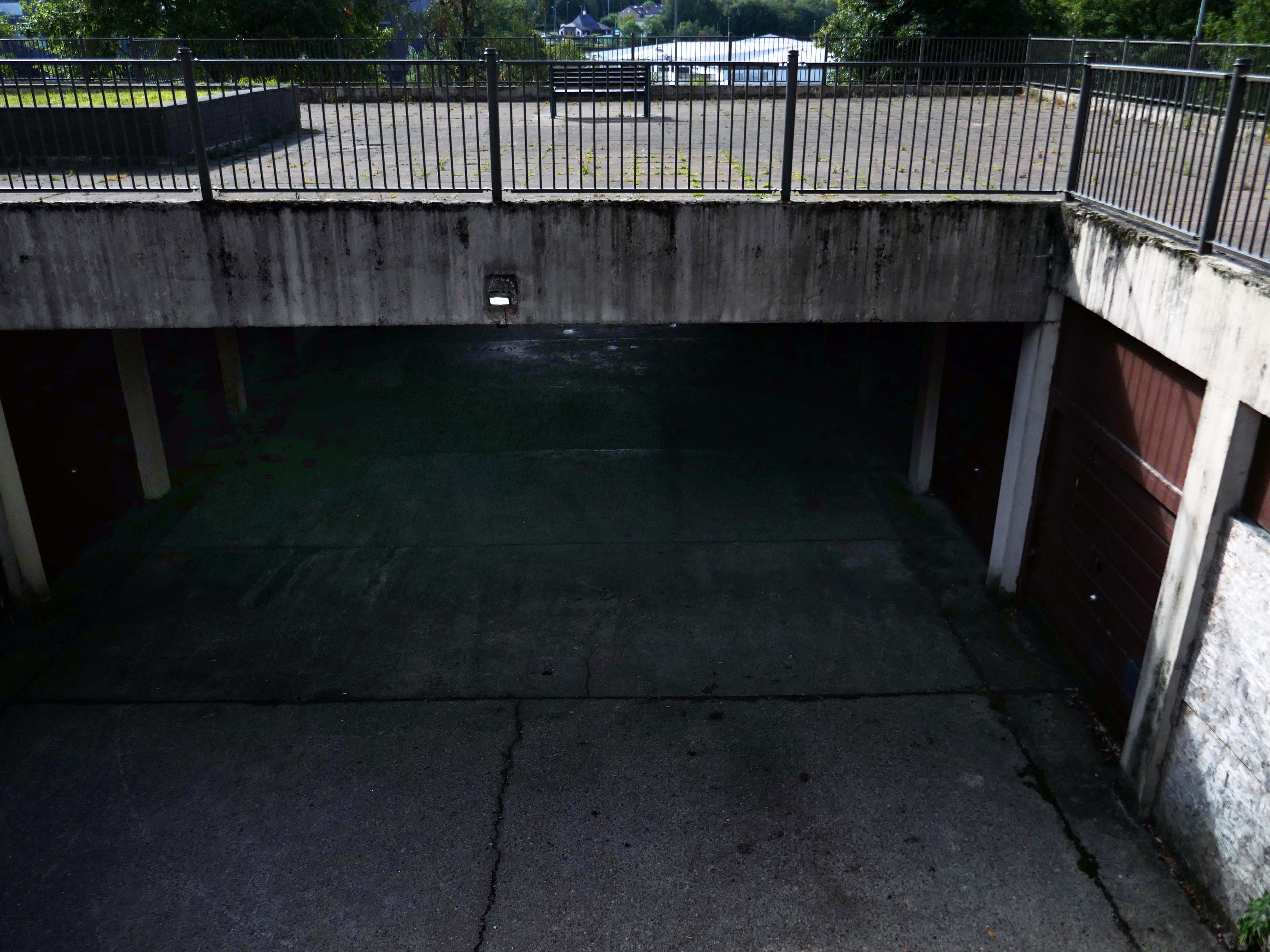
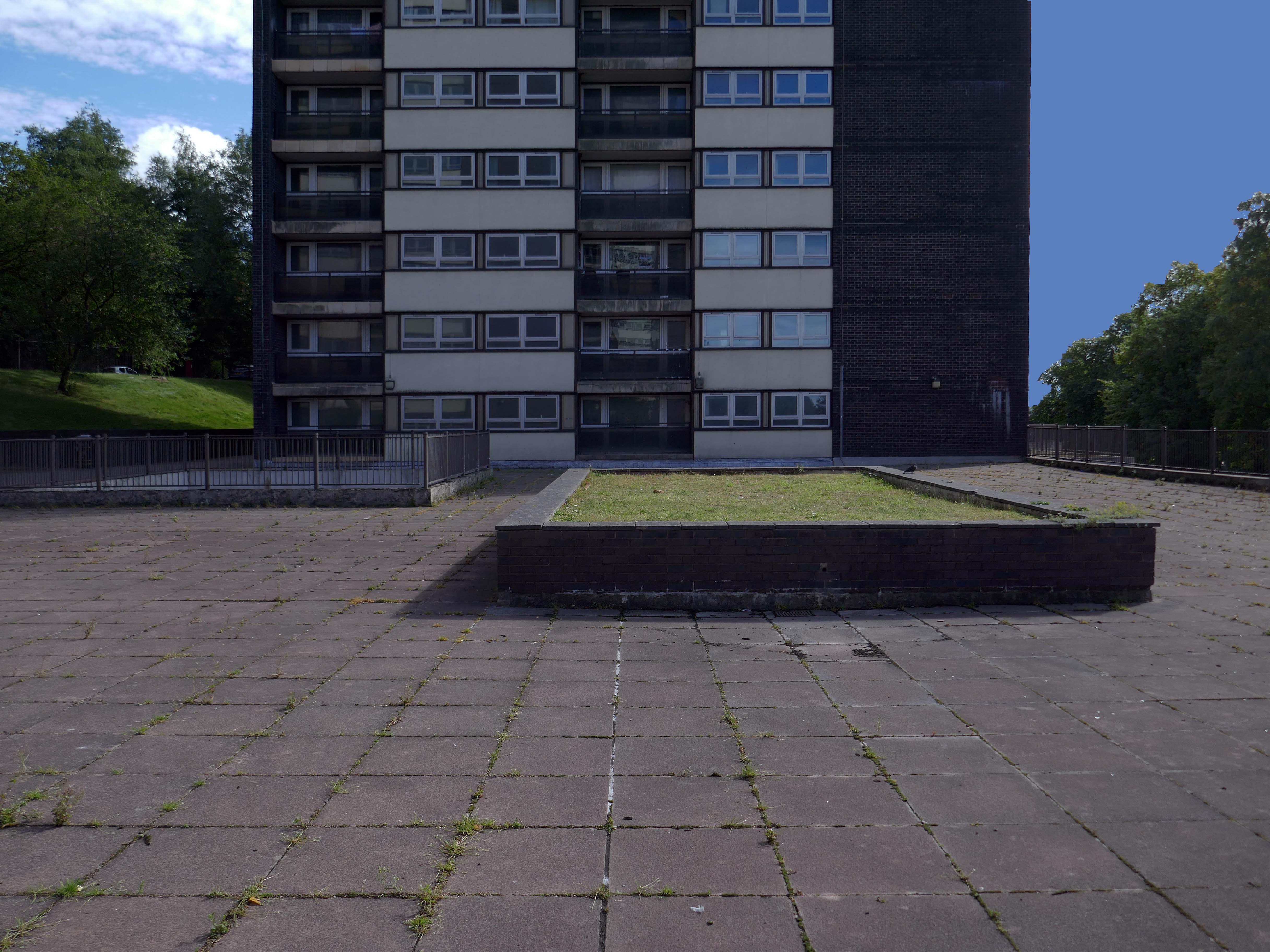
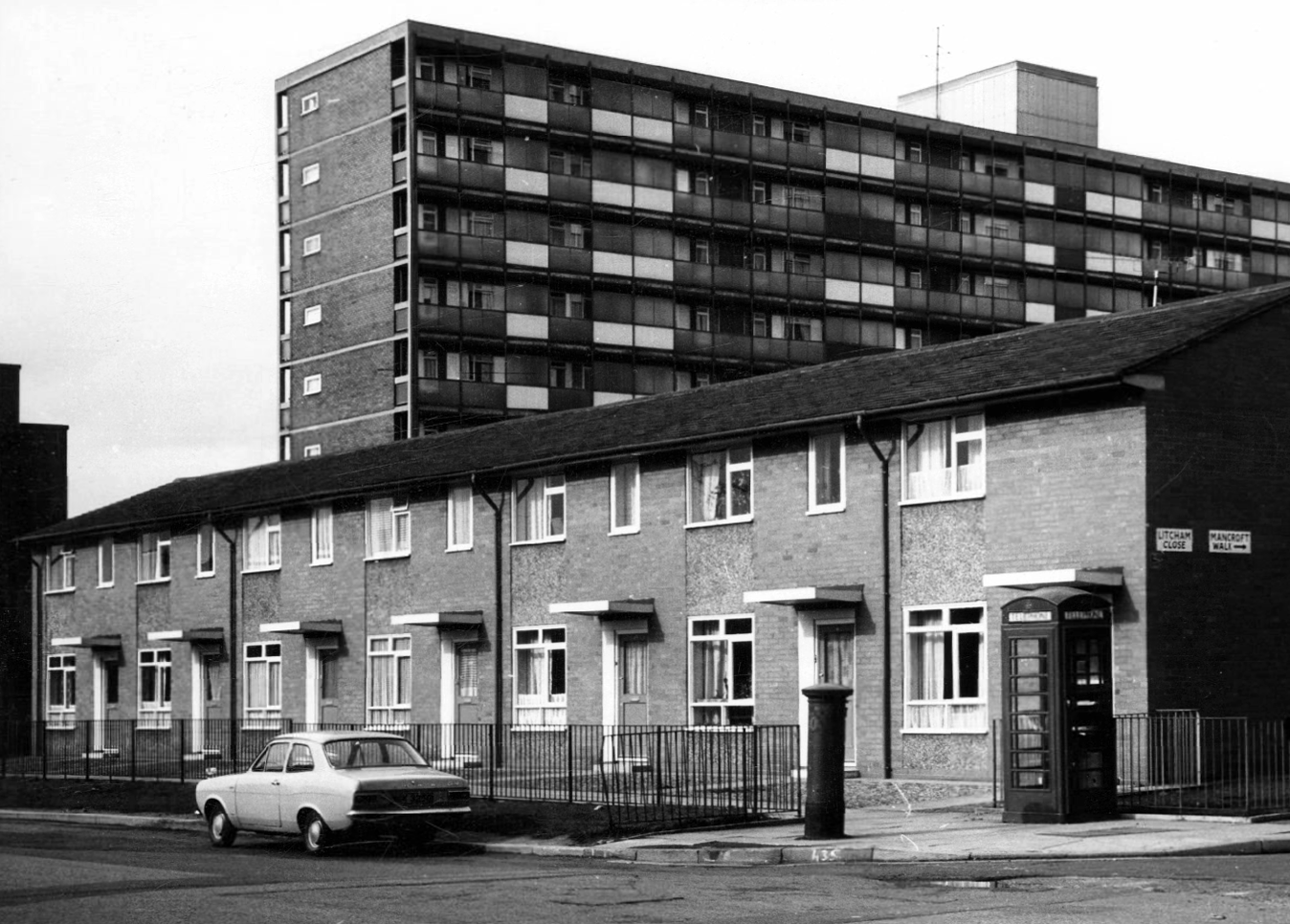
Crossing over to see the Brunswick Estate, built in the Sixties and Seventies and recently refurbished.

S4B is a partnership leading the £106m regeneration of Brunswick, Manchester. The Brunswick Regeneration PFI is a combination of government funding, private investment and expertise that will revitalise Brunswick. Improvements will include council home refurbishments, new homes for sale and to rent and an improved neighbourhood design.
Pro Manchester

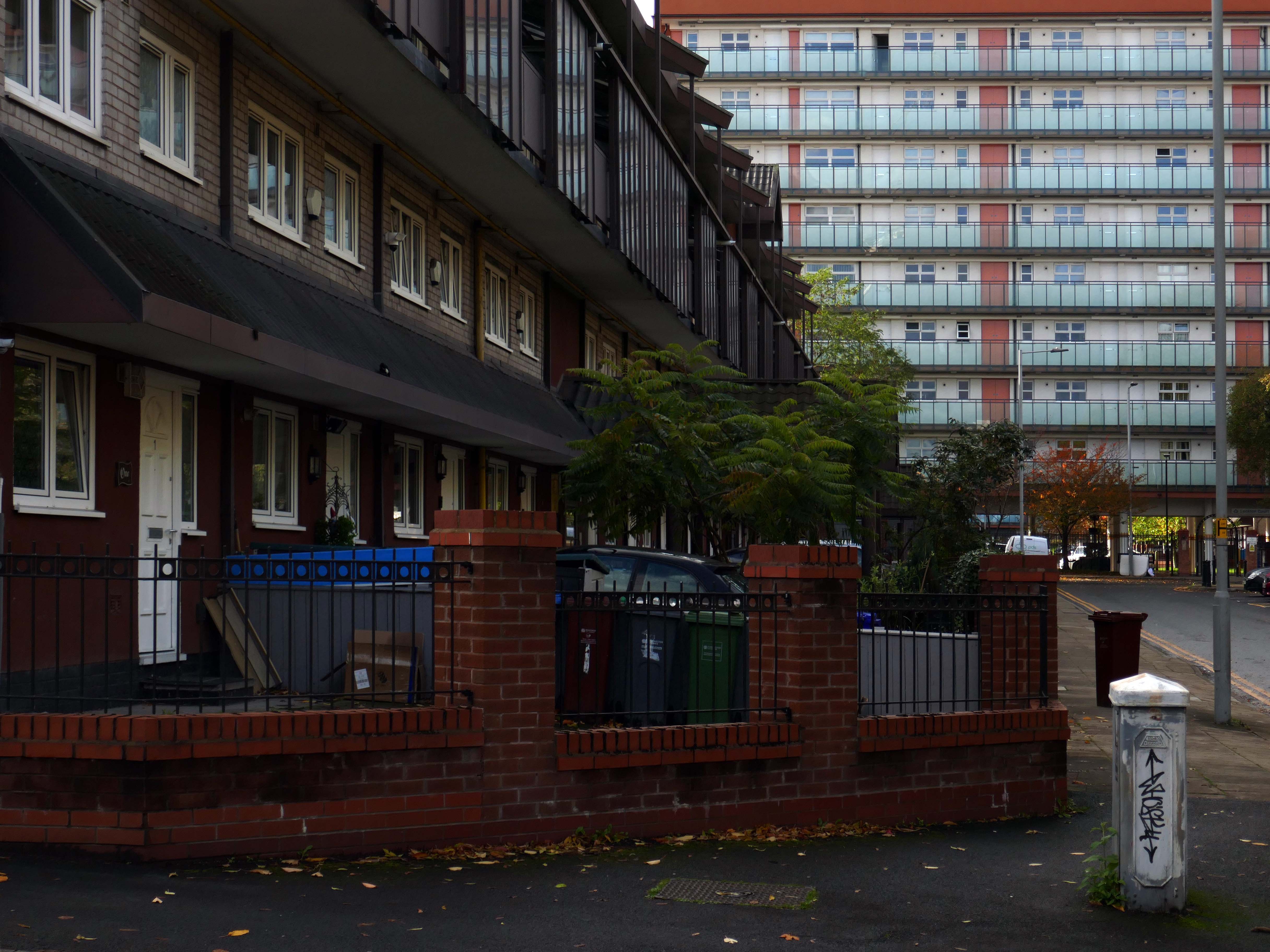
Long gone lost estate pub from the estate – King William IV a former Chesters then Whitbread estate pub was built in 1967. Closed in 1996 when it was converted to residential property. It had a brief spell 1991 to 1995 as brewery premises for the Dobbin’s West Coast Brewery, during this period the interior was stripped out to accommodate the brewery paraphernalia.
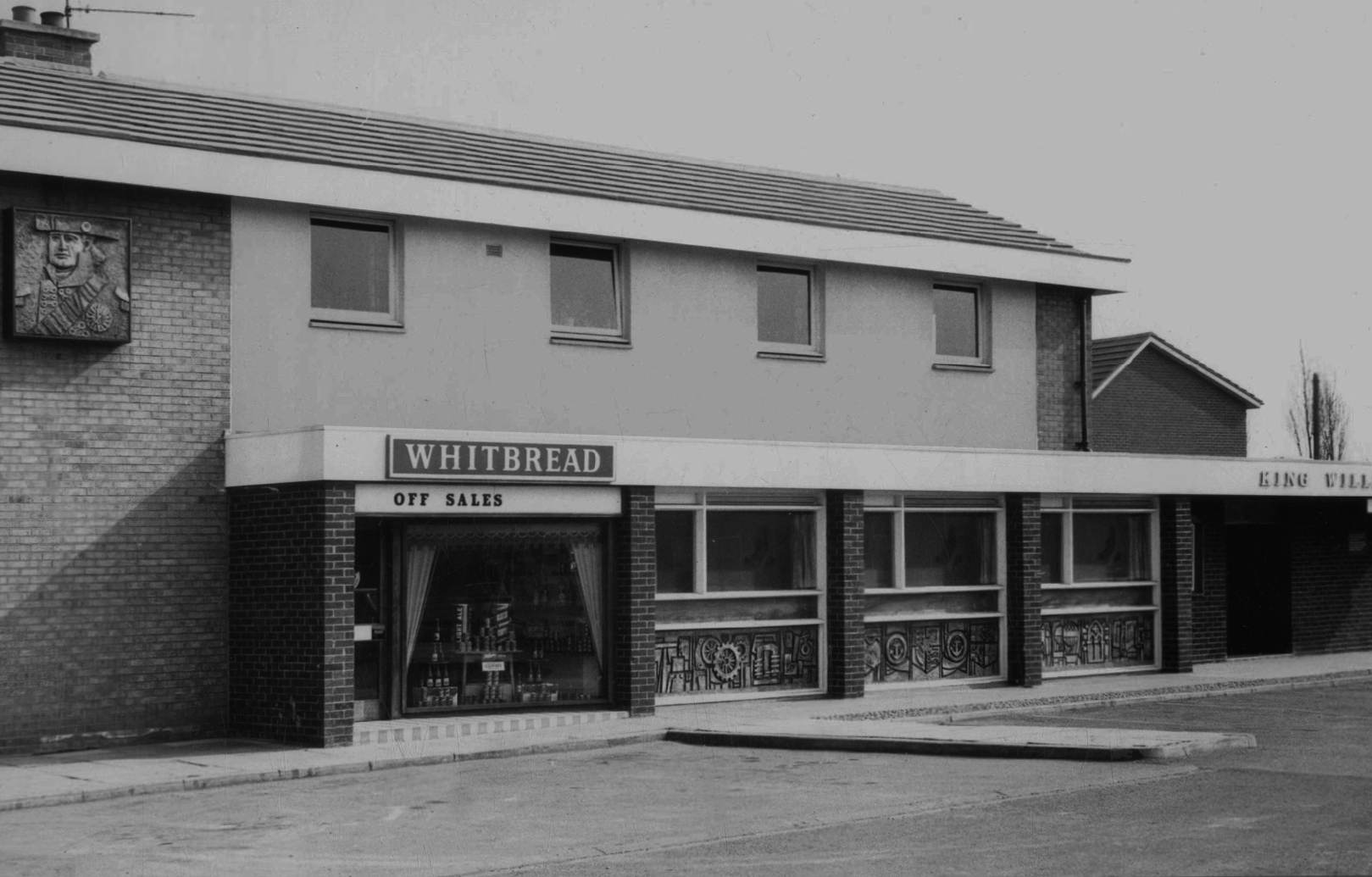
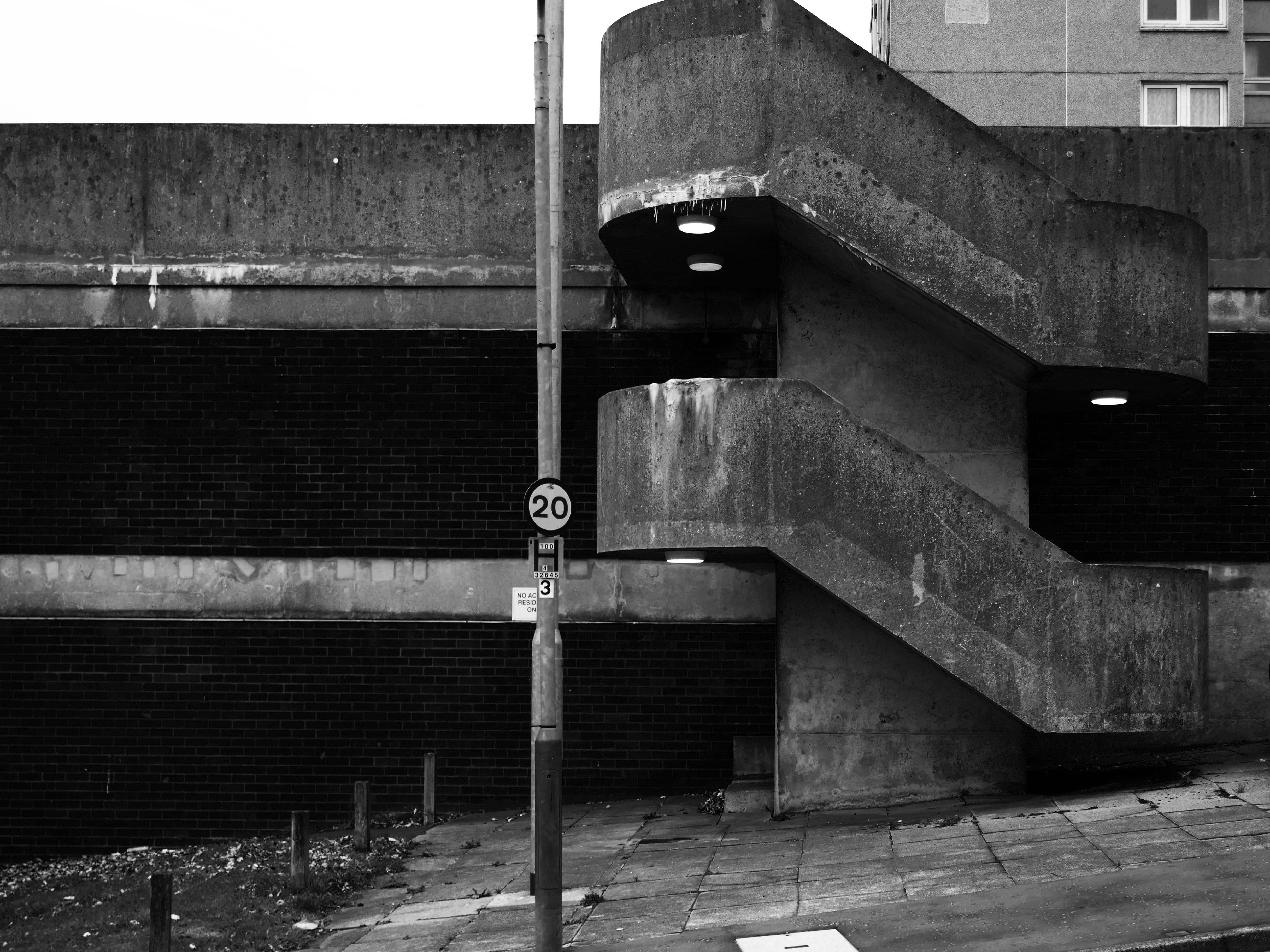
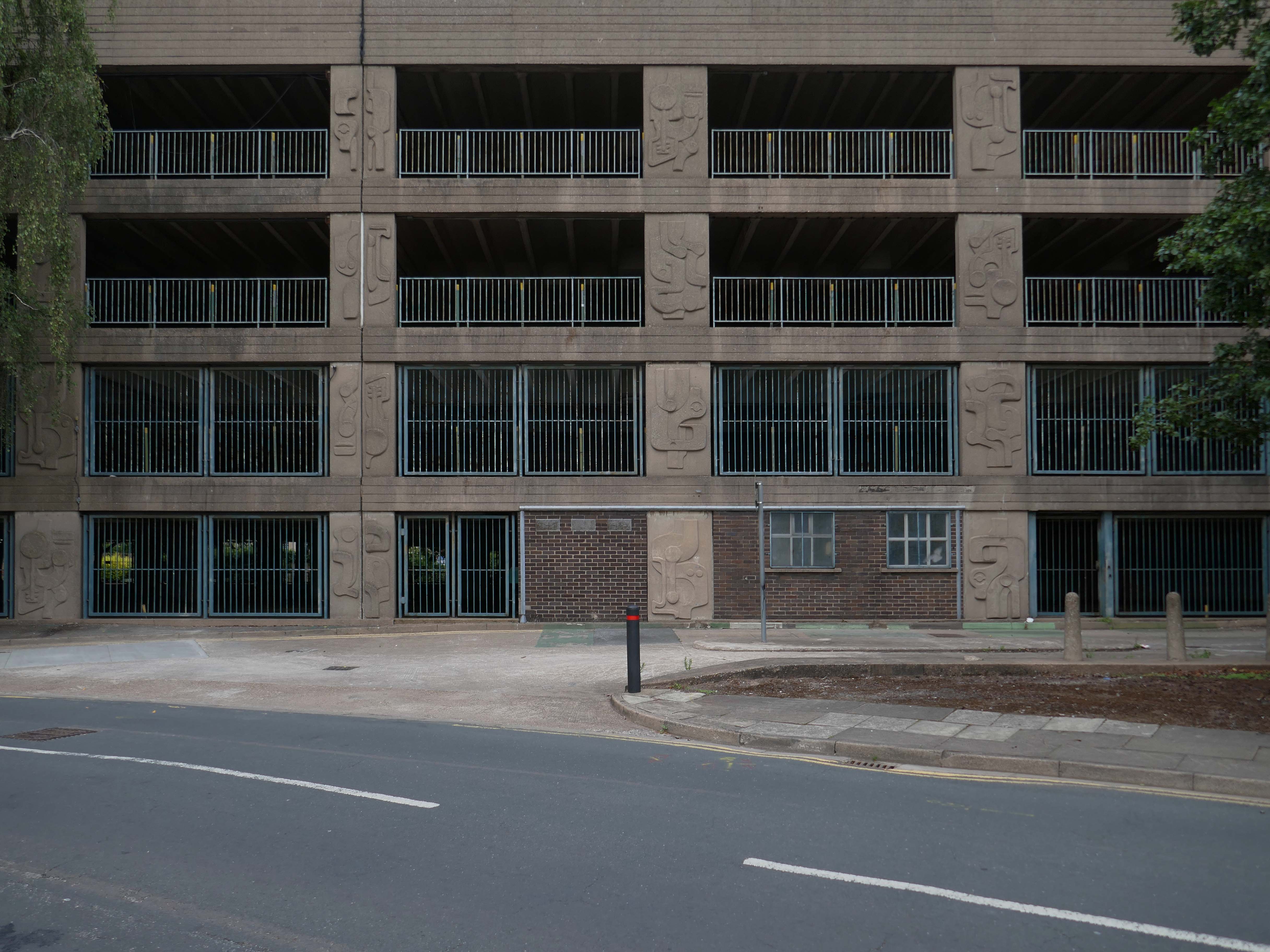
We take a jog around the block to see the concrete relief that clads the road ramp.

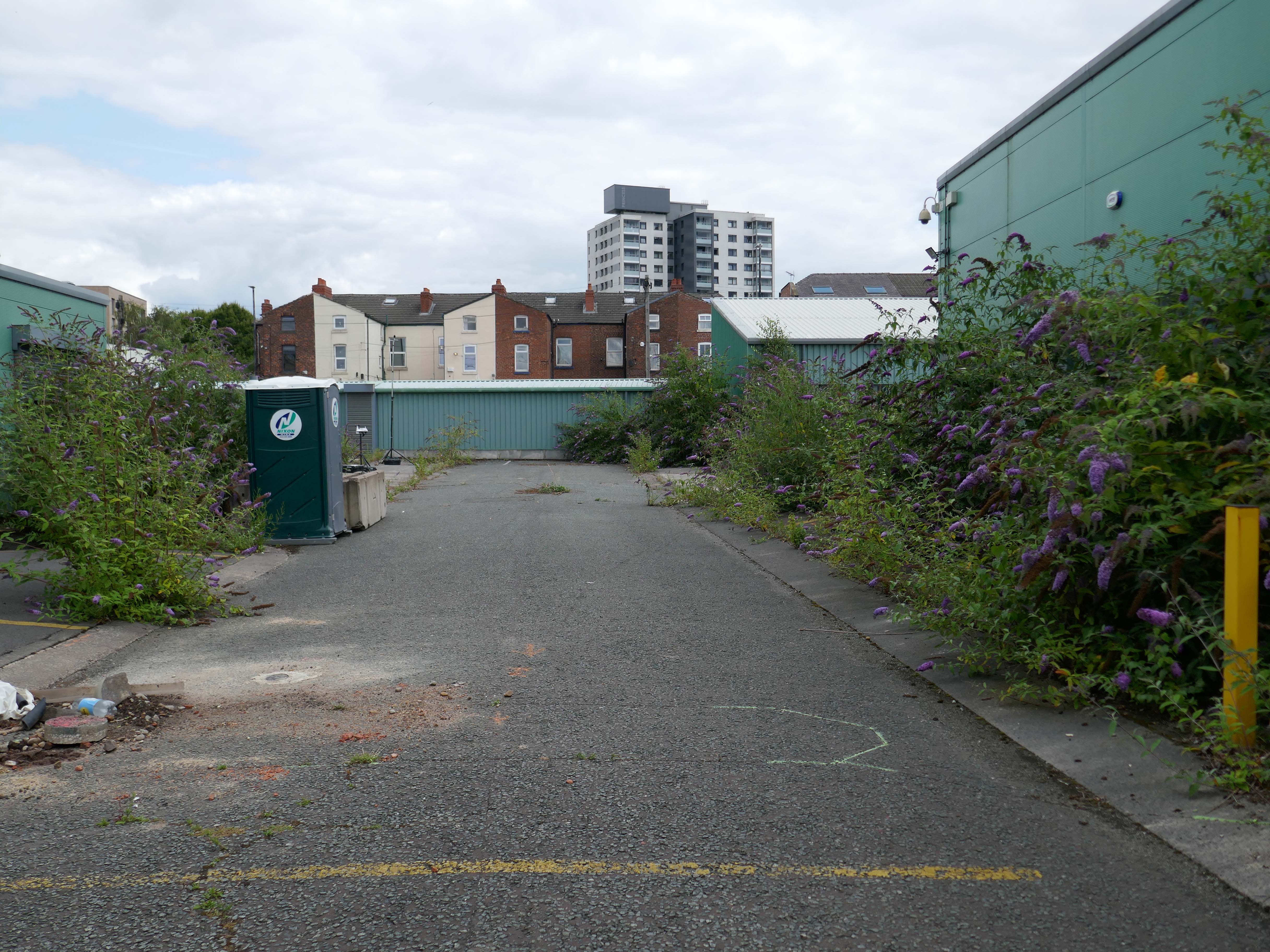
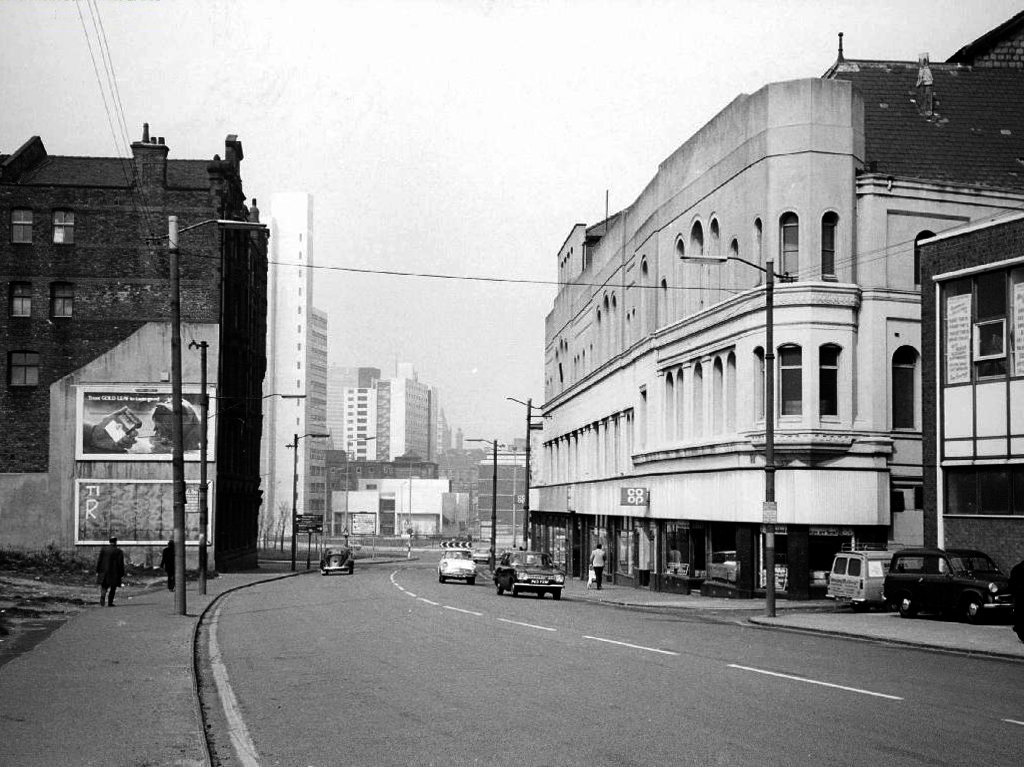
Where there was once a giant Cooperative Store there is now a light industrial and retail estate.
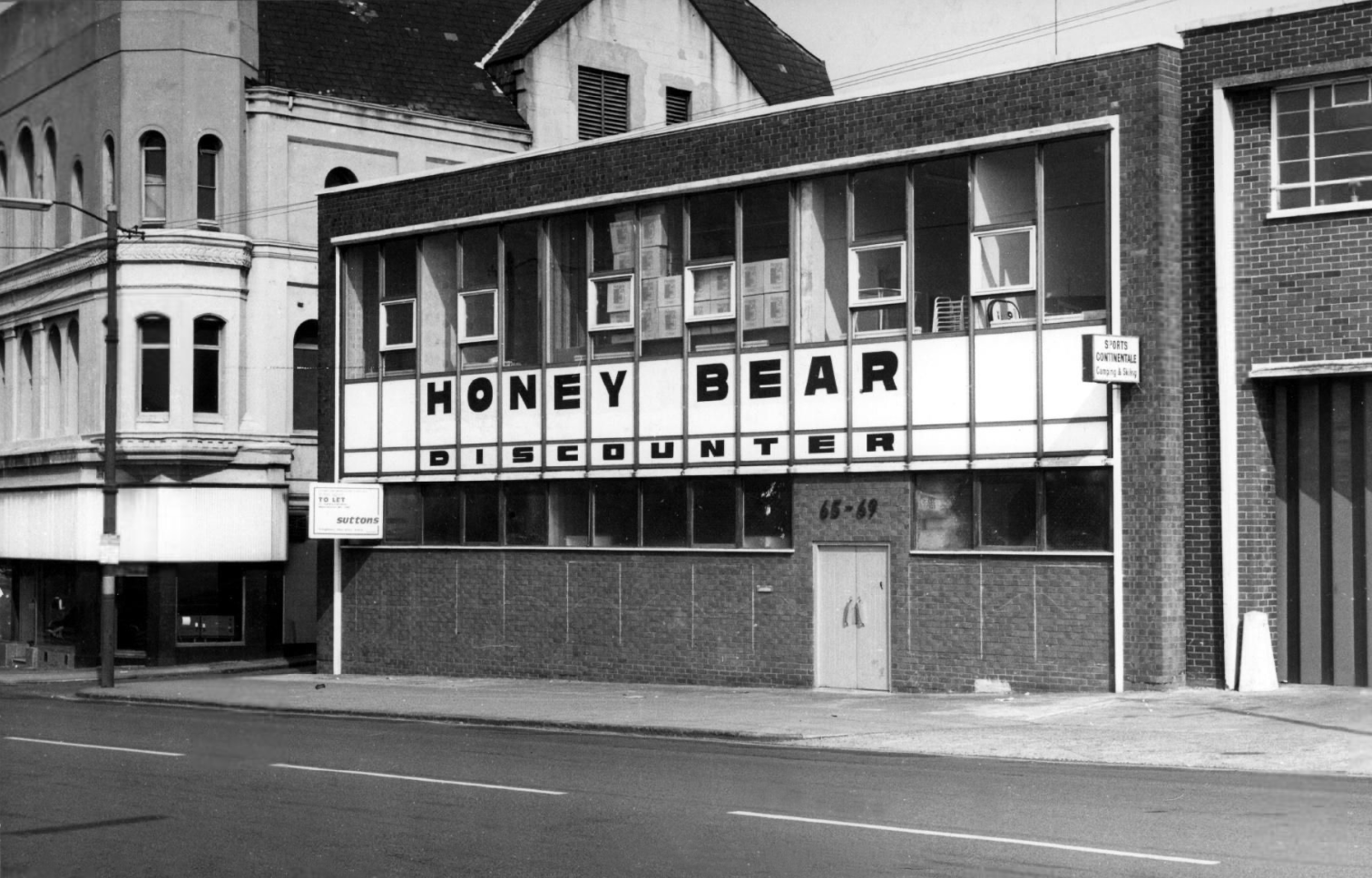
And the Honey Bear Discounter has become Spirit Studios.
And the Barracks has become the Fabric Church.

The Diocese of Manchester has been working in partnership with the Church Revitalisation Trust to open Fabric Church and refurbish the building, following a successful bid to the Church of England’s Strategic Mission and Ministry Investment Board.
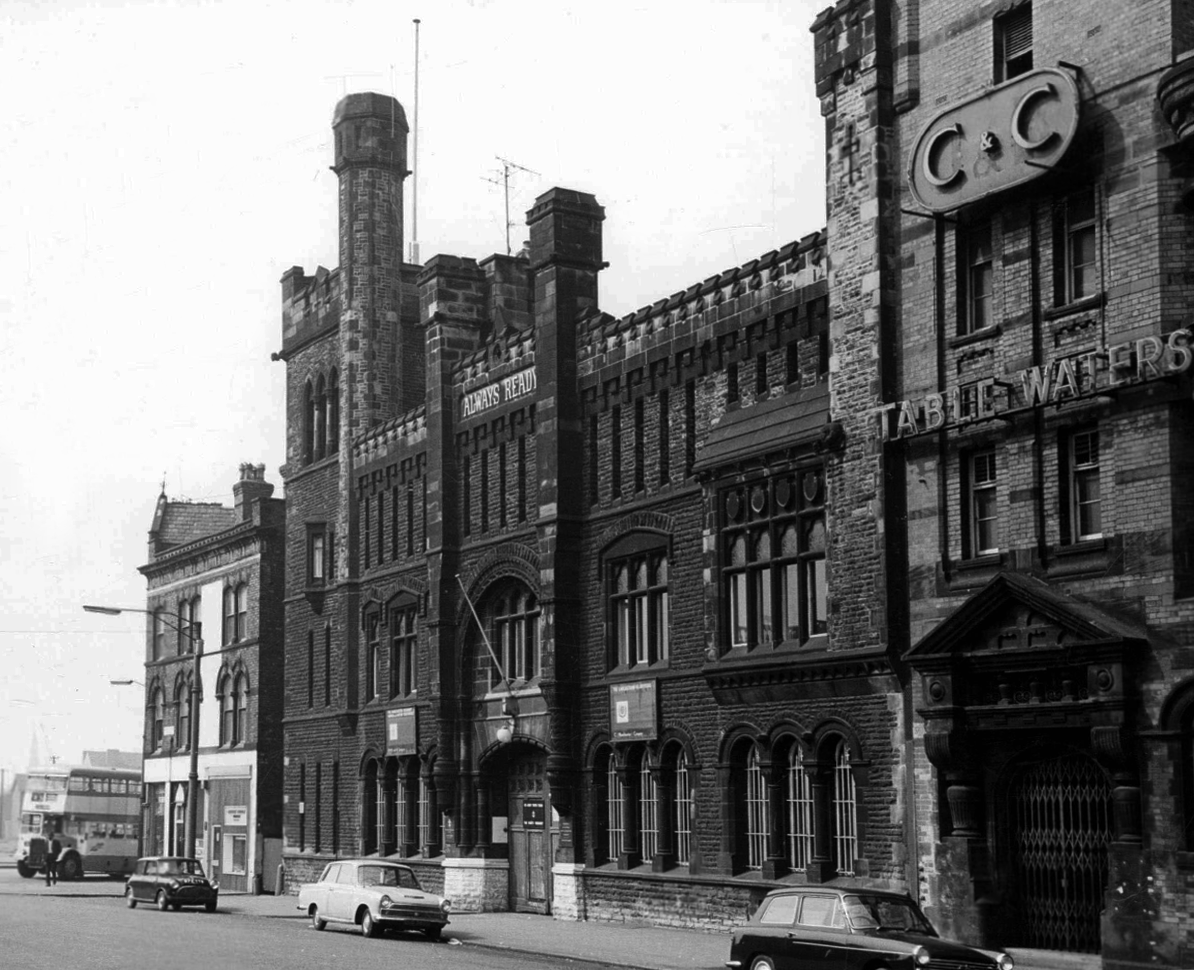
We’re excited to be working alongside Fabric Church on the transformation of the Grade II listed former Ardwick Barracks in Manchester. This ambitious refurbishment project will see the historic site reimagined as a vibrant community hub, featuring a new worship hall, community café, offices, meeting spaces, and more.
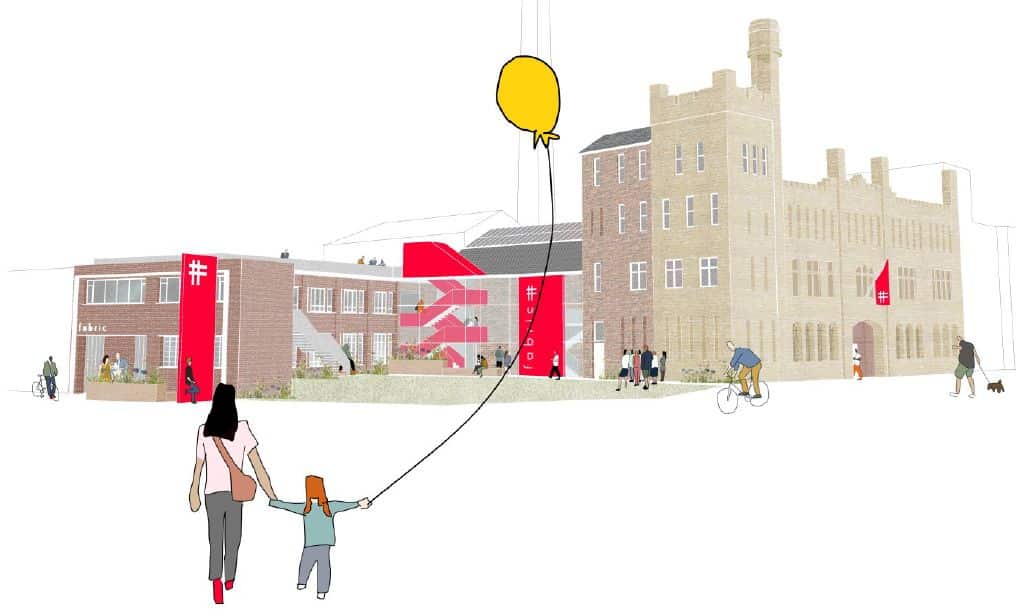
Hexaconsulting

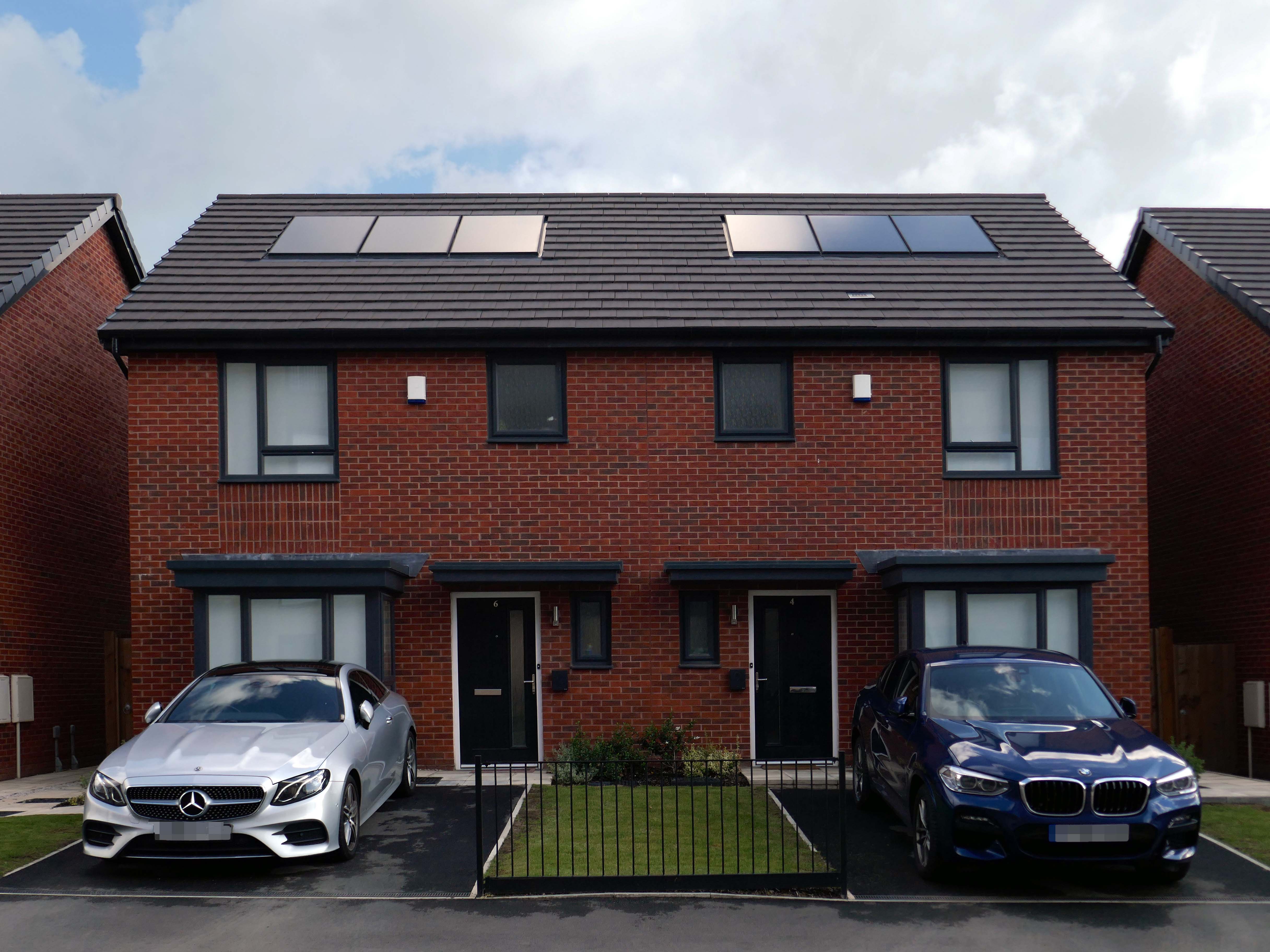
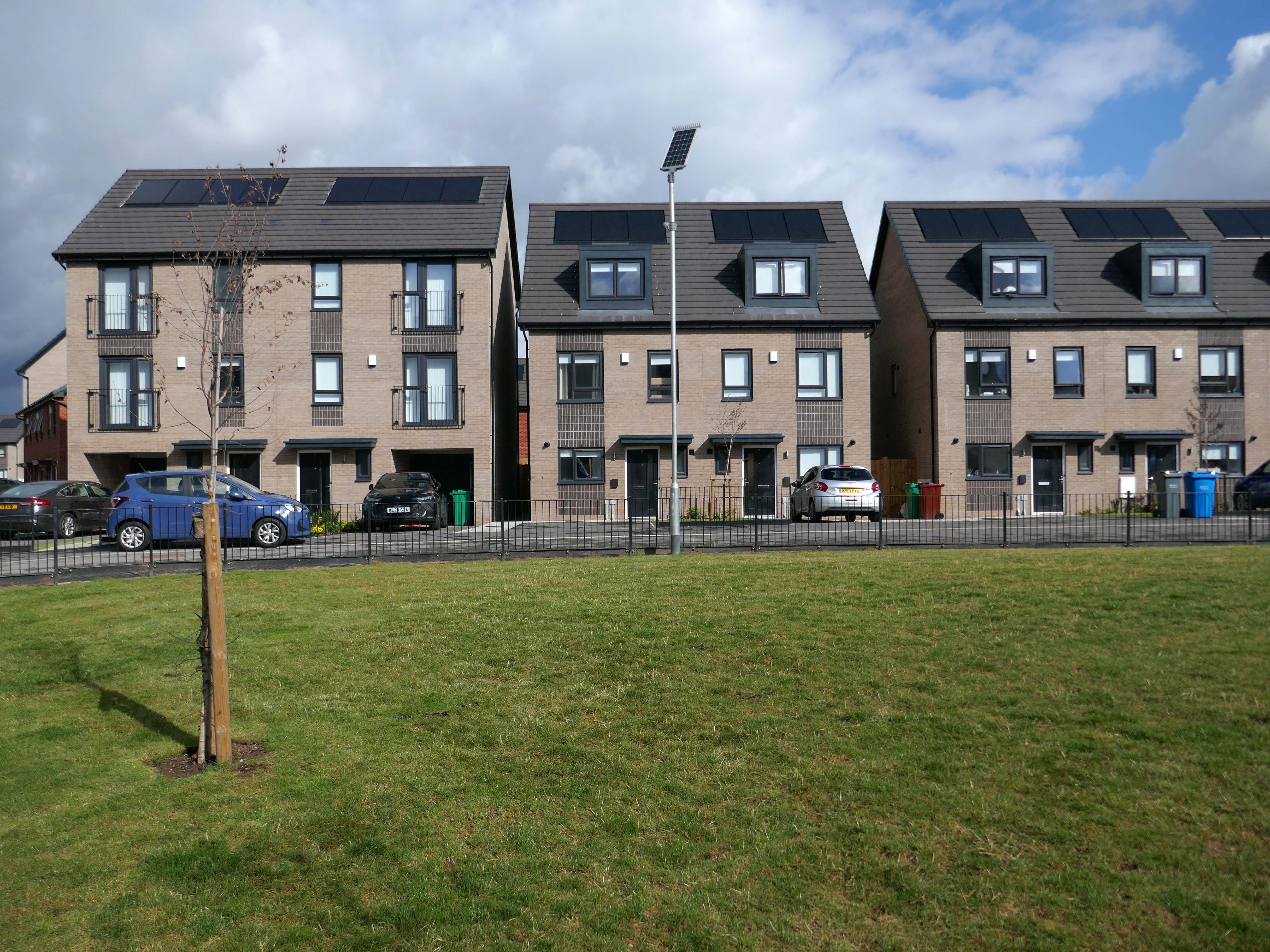
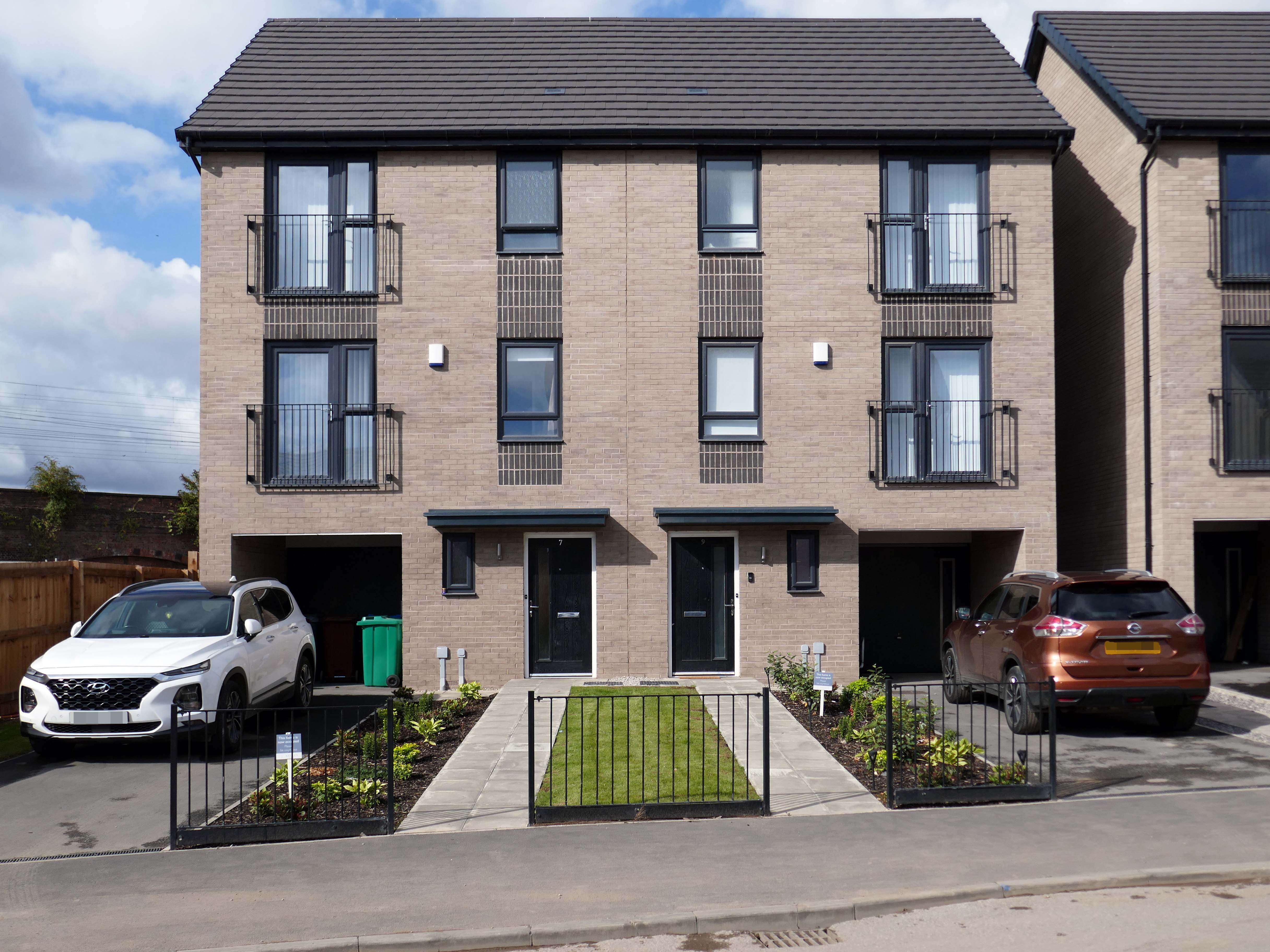
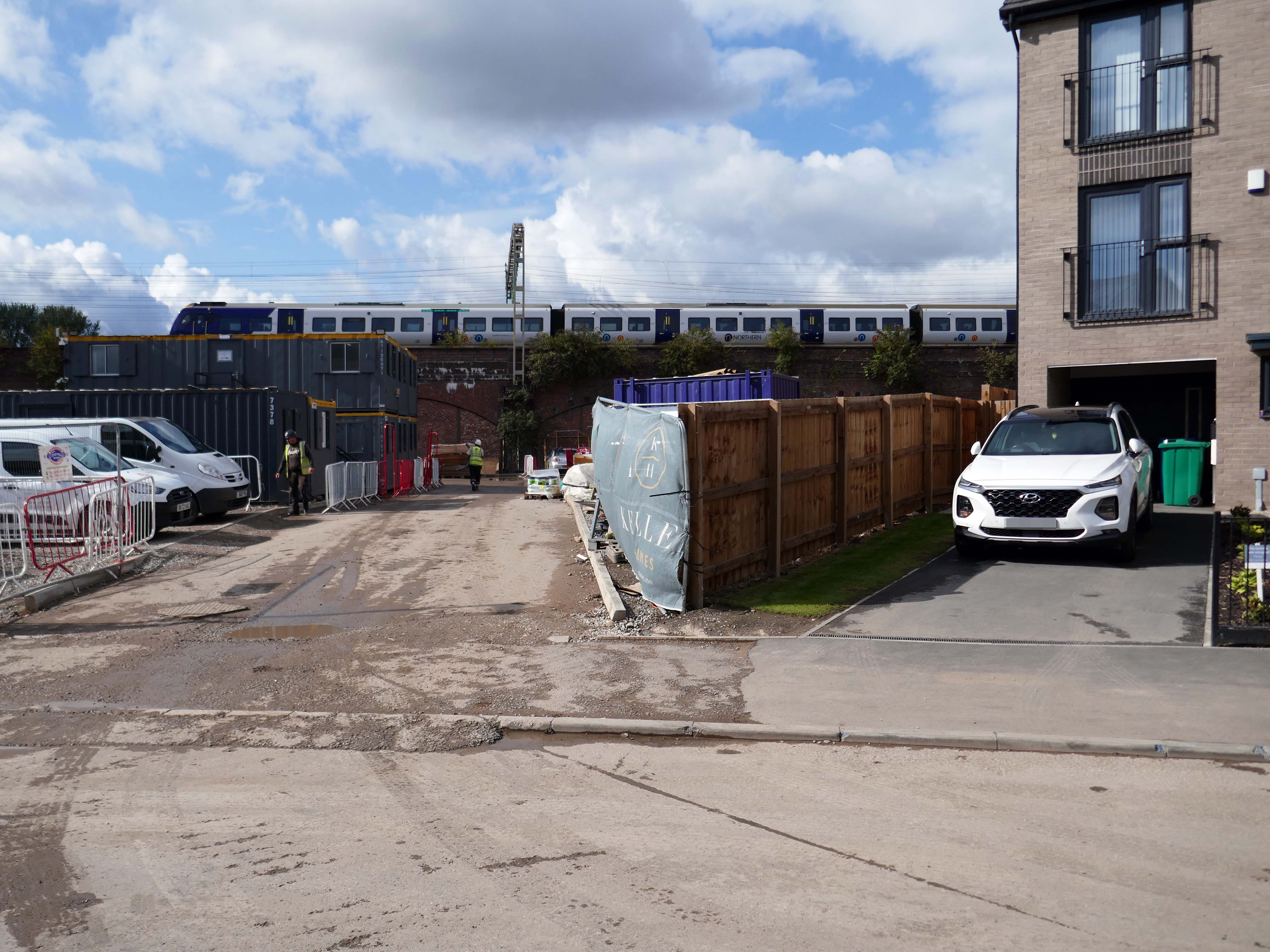
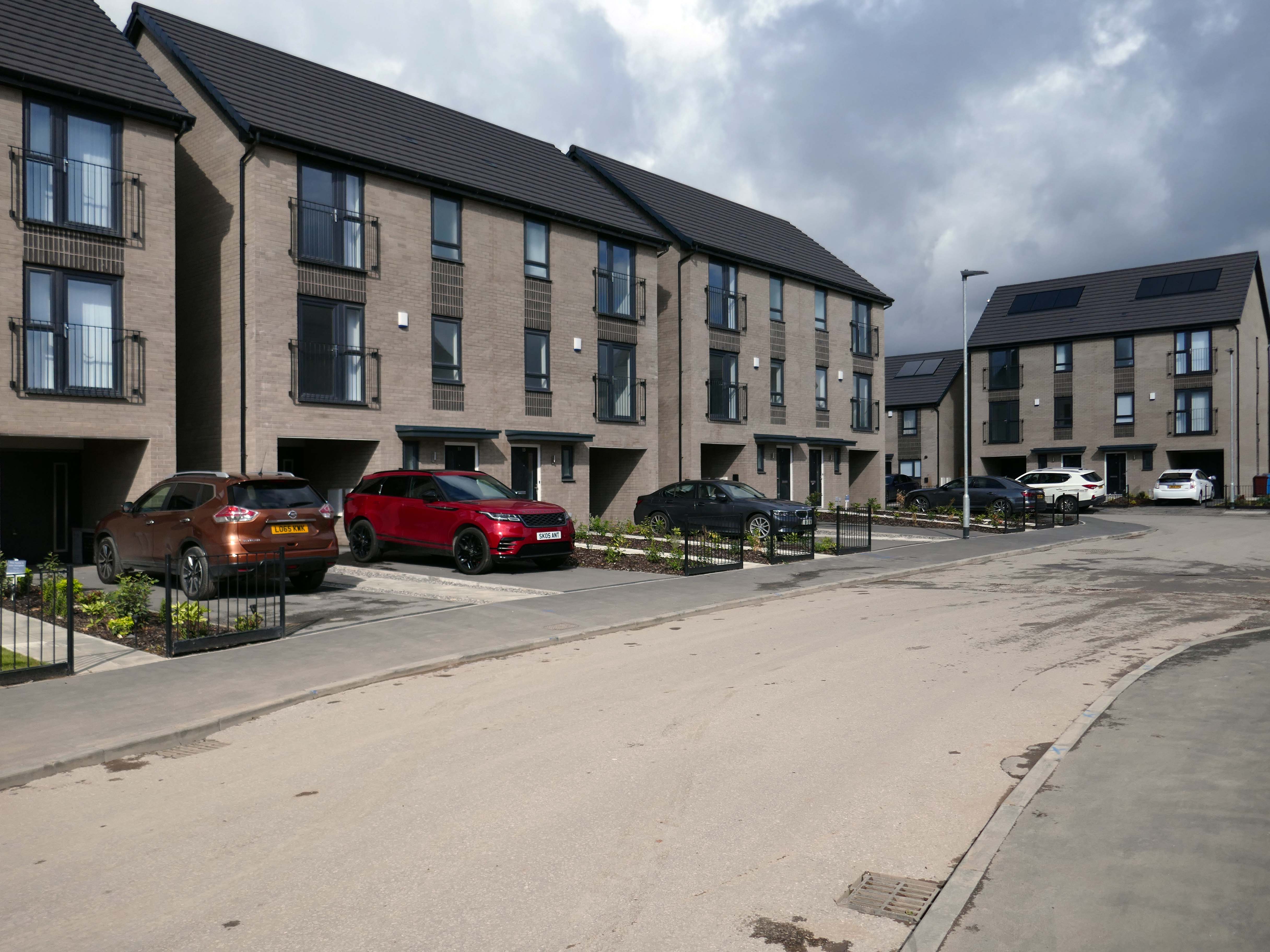
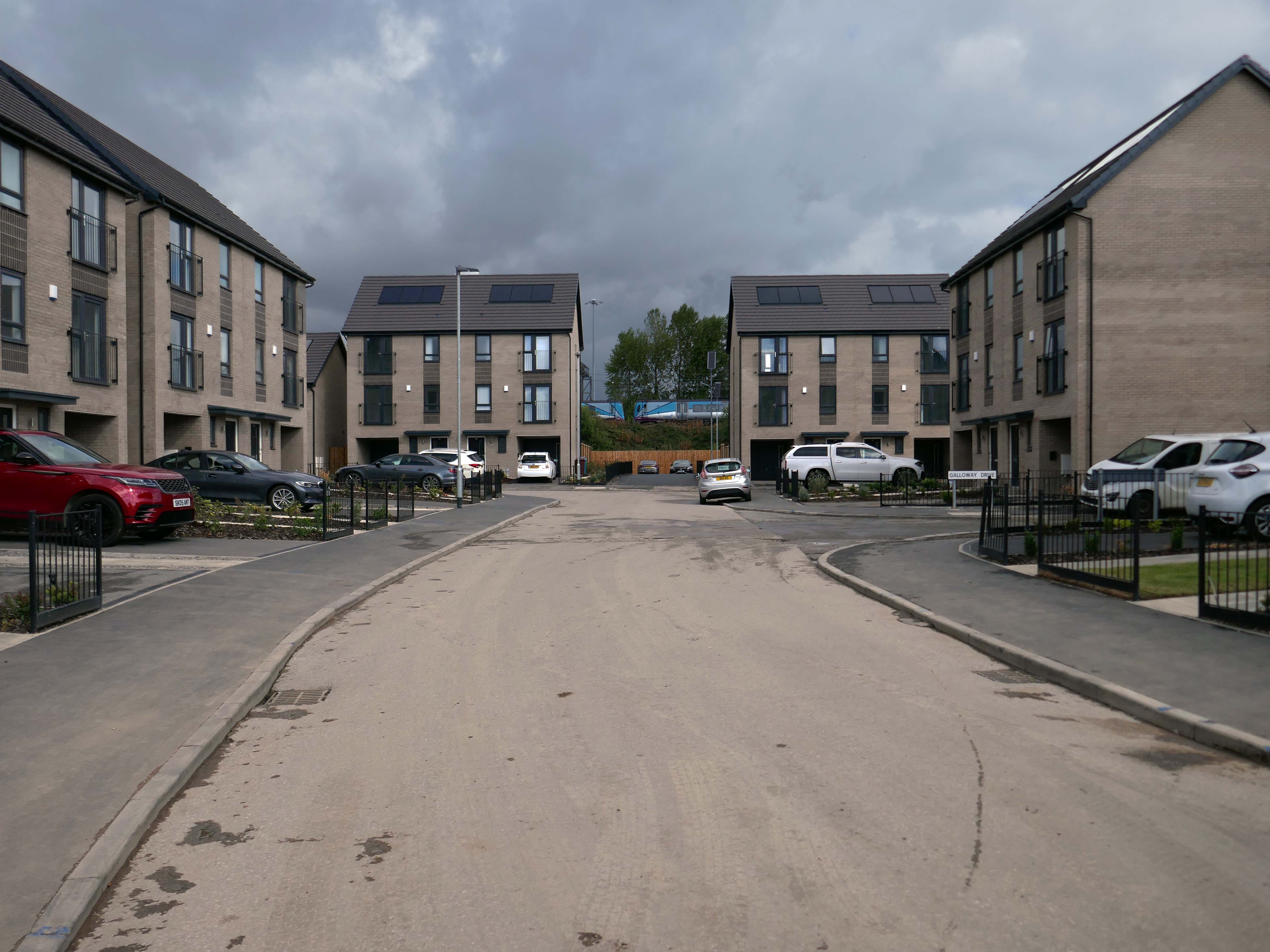
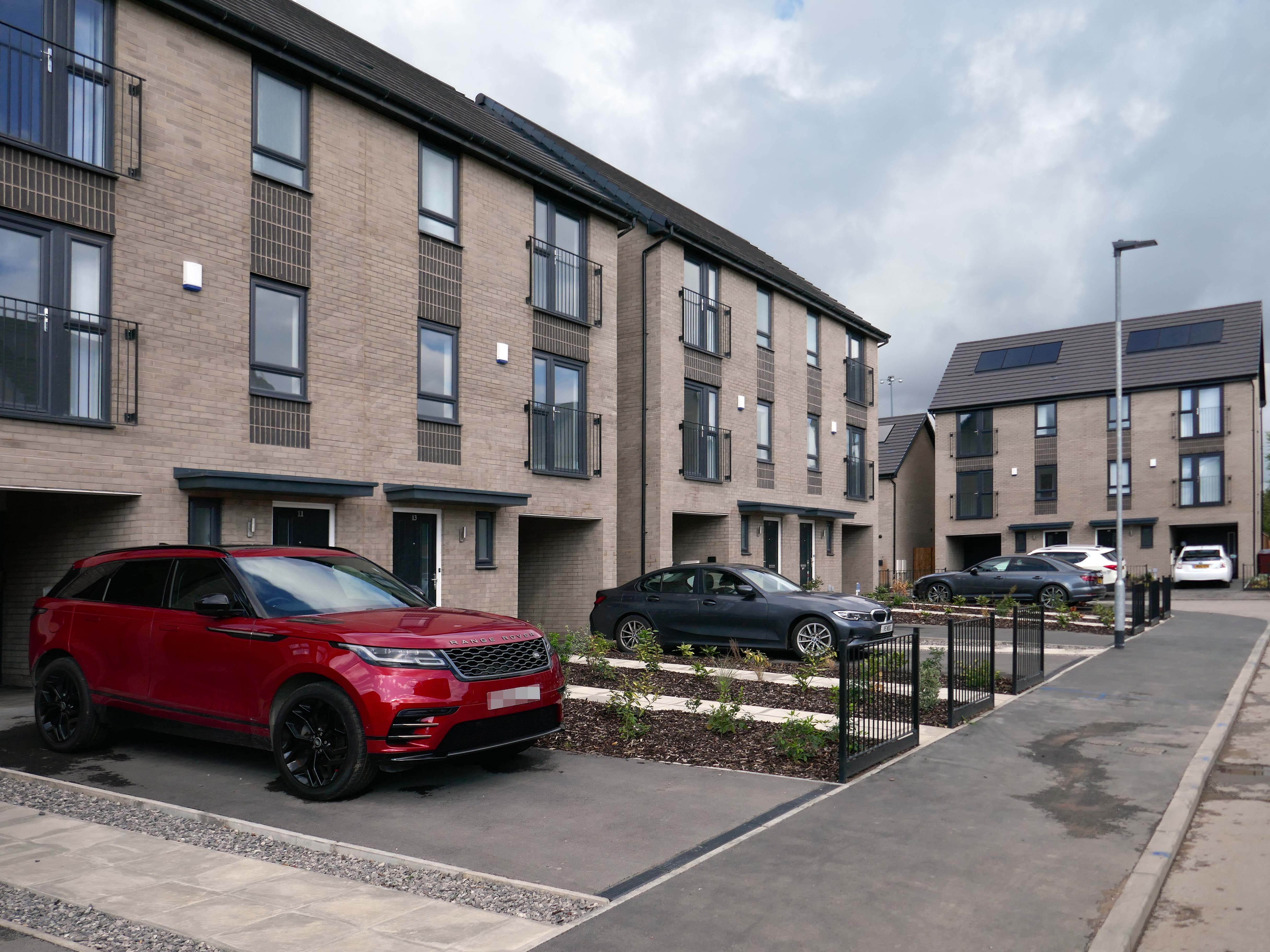
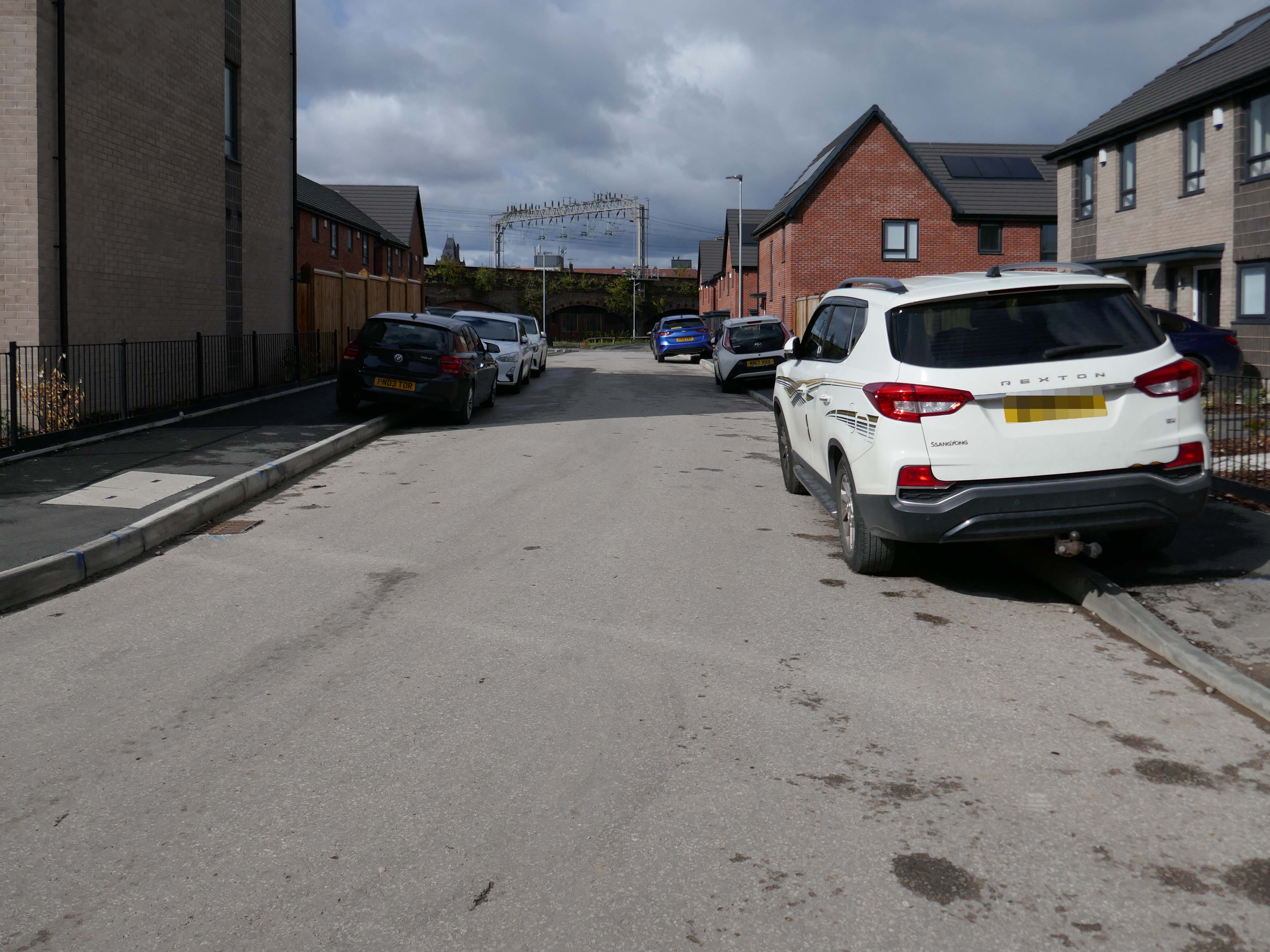
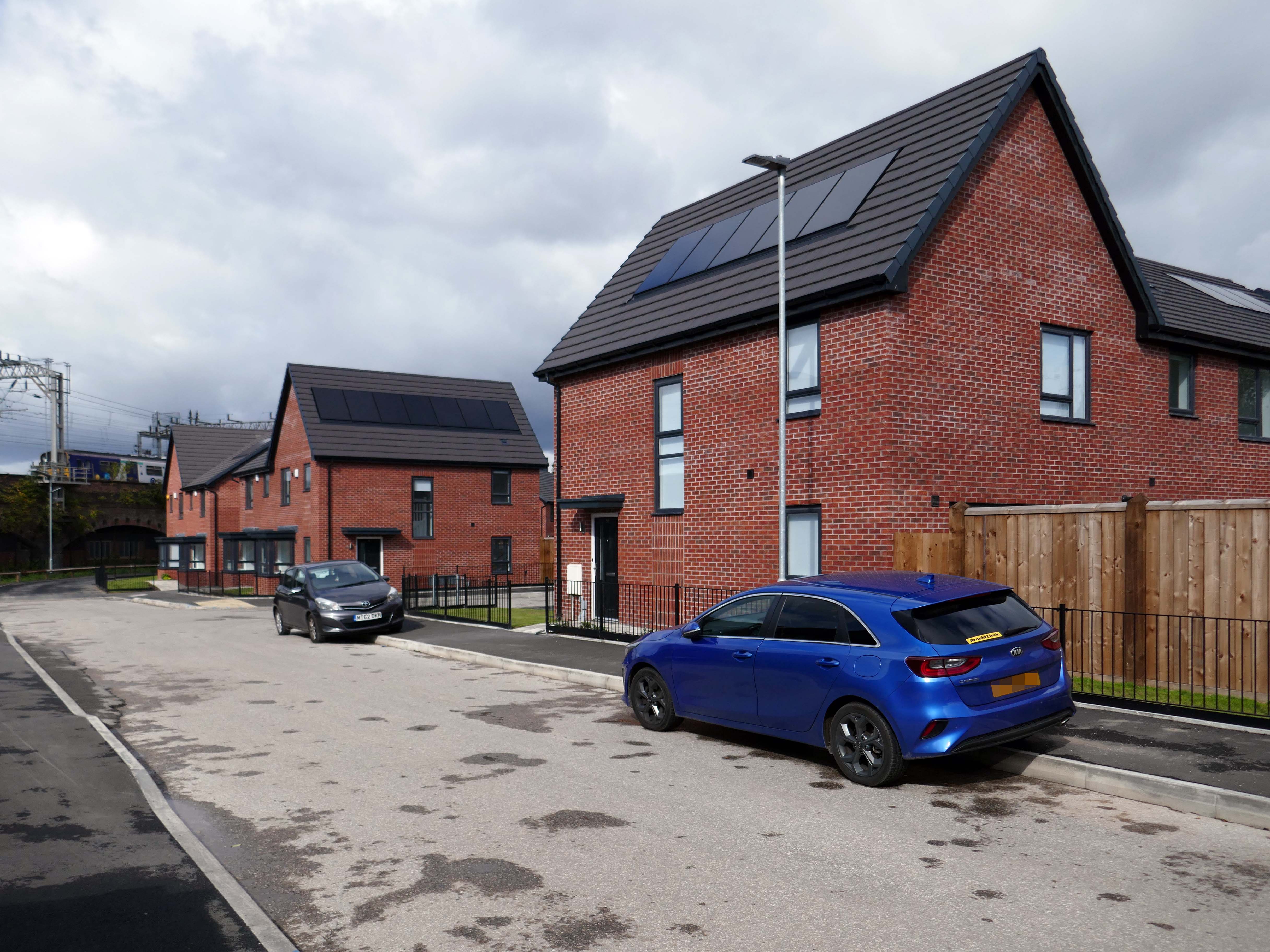
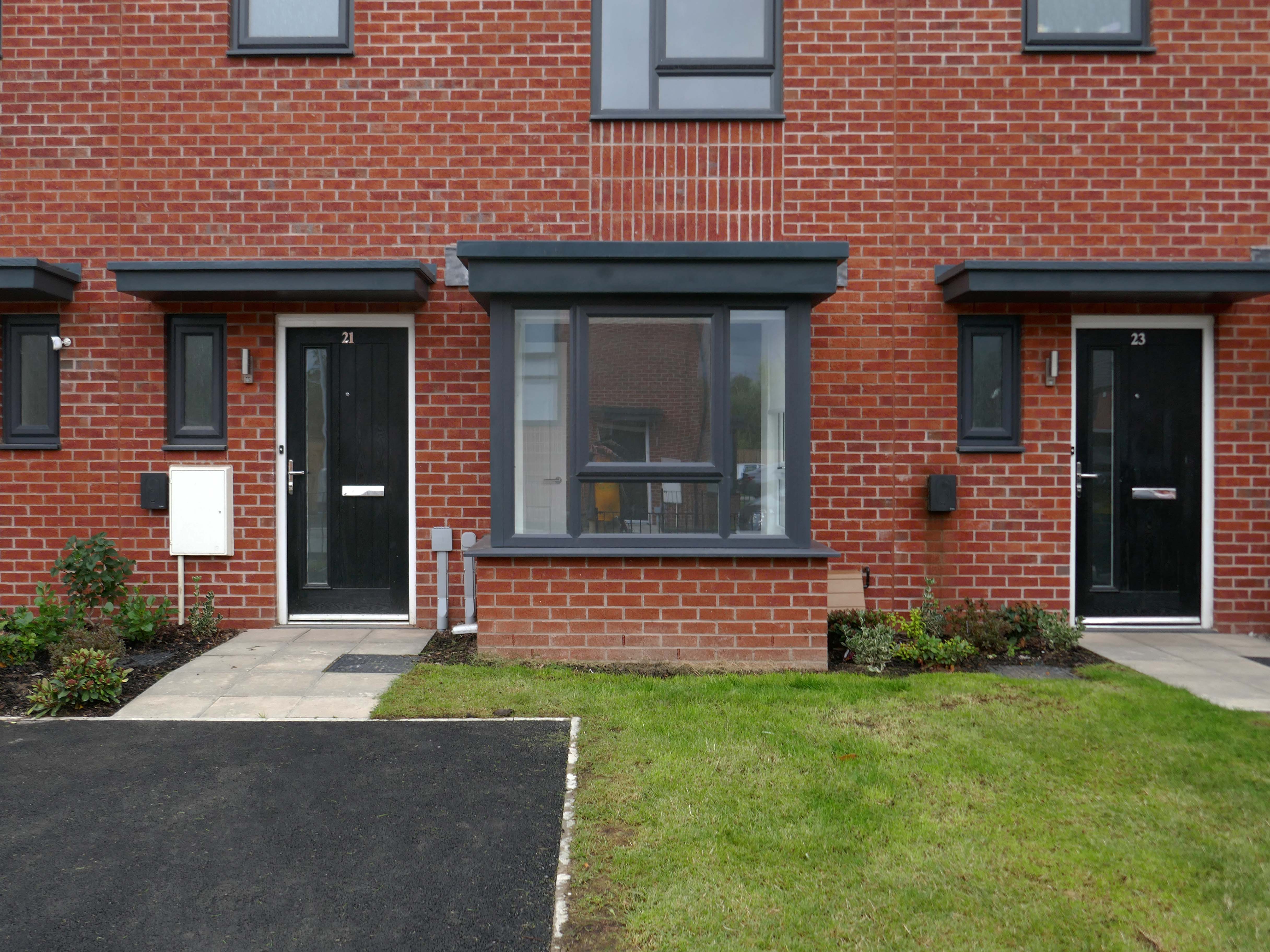
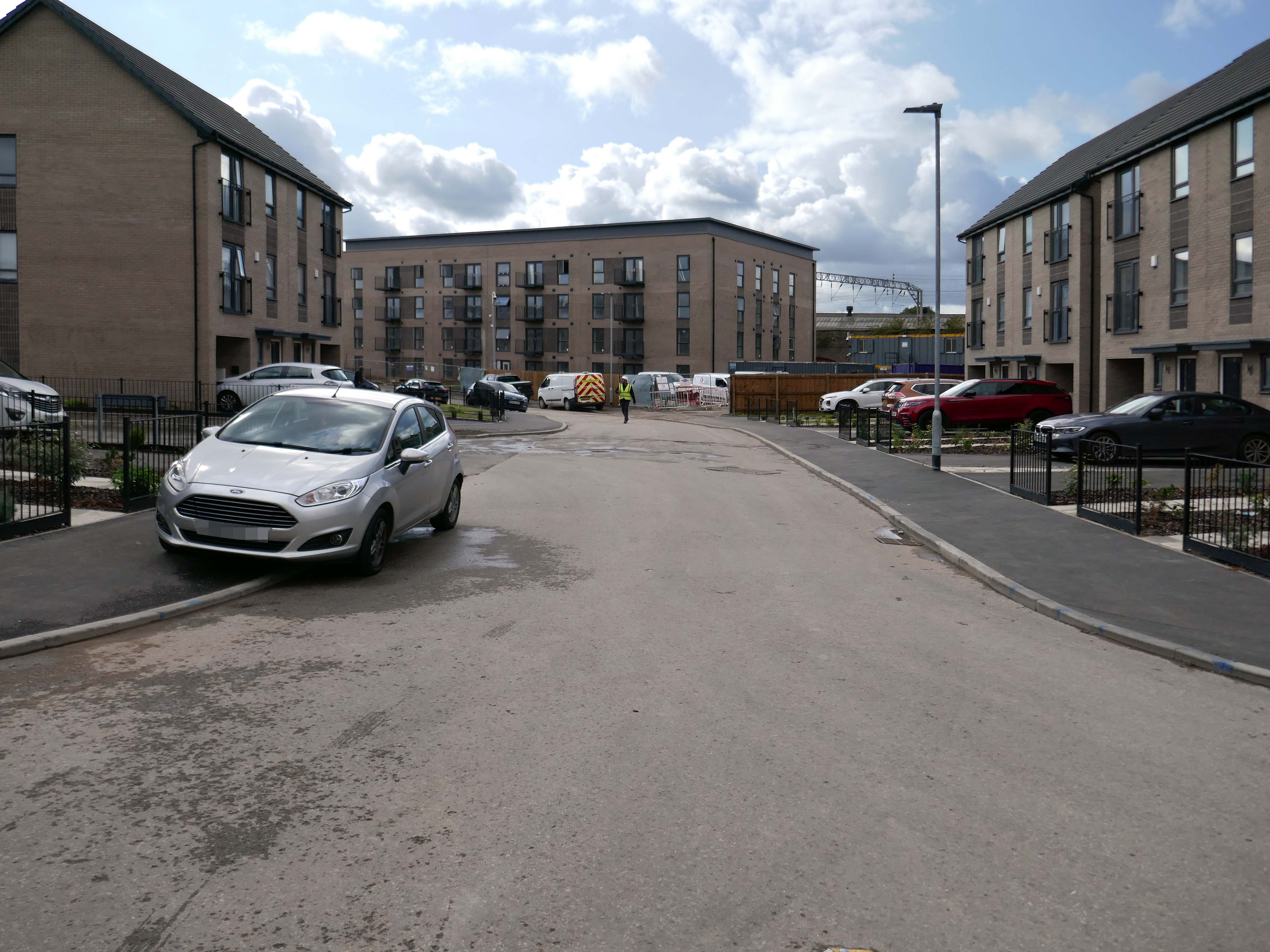
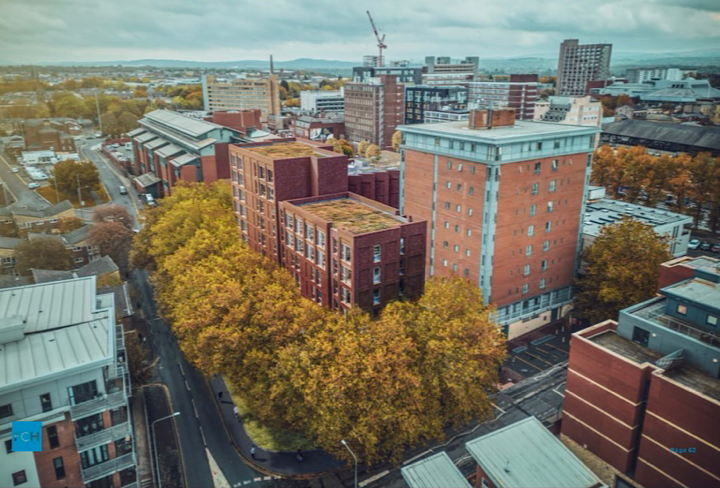
Alongside Ardwick Green Park there are new housing developments nearing completion.

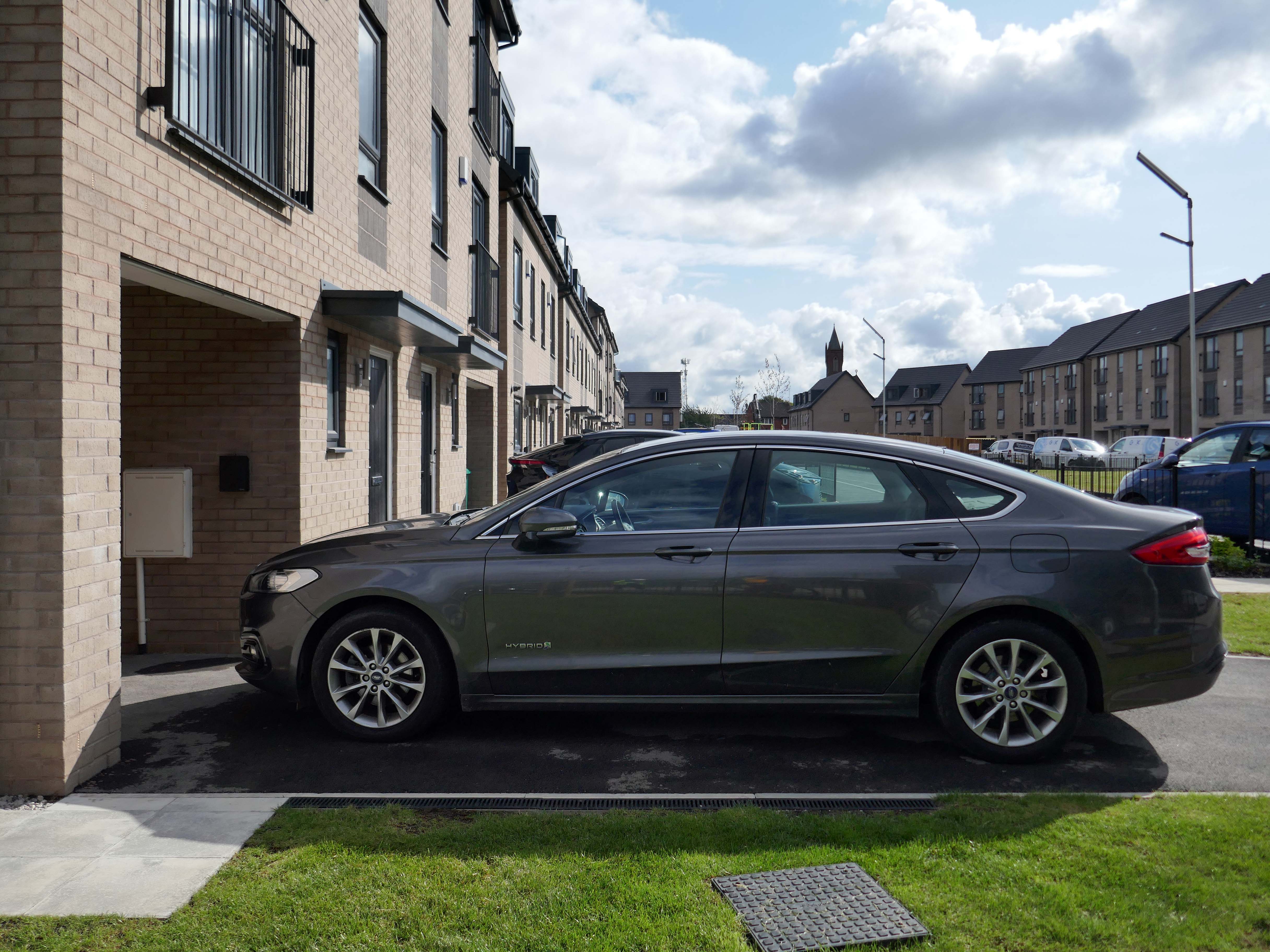
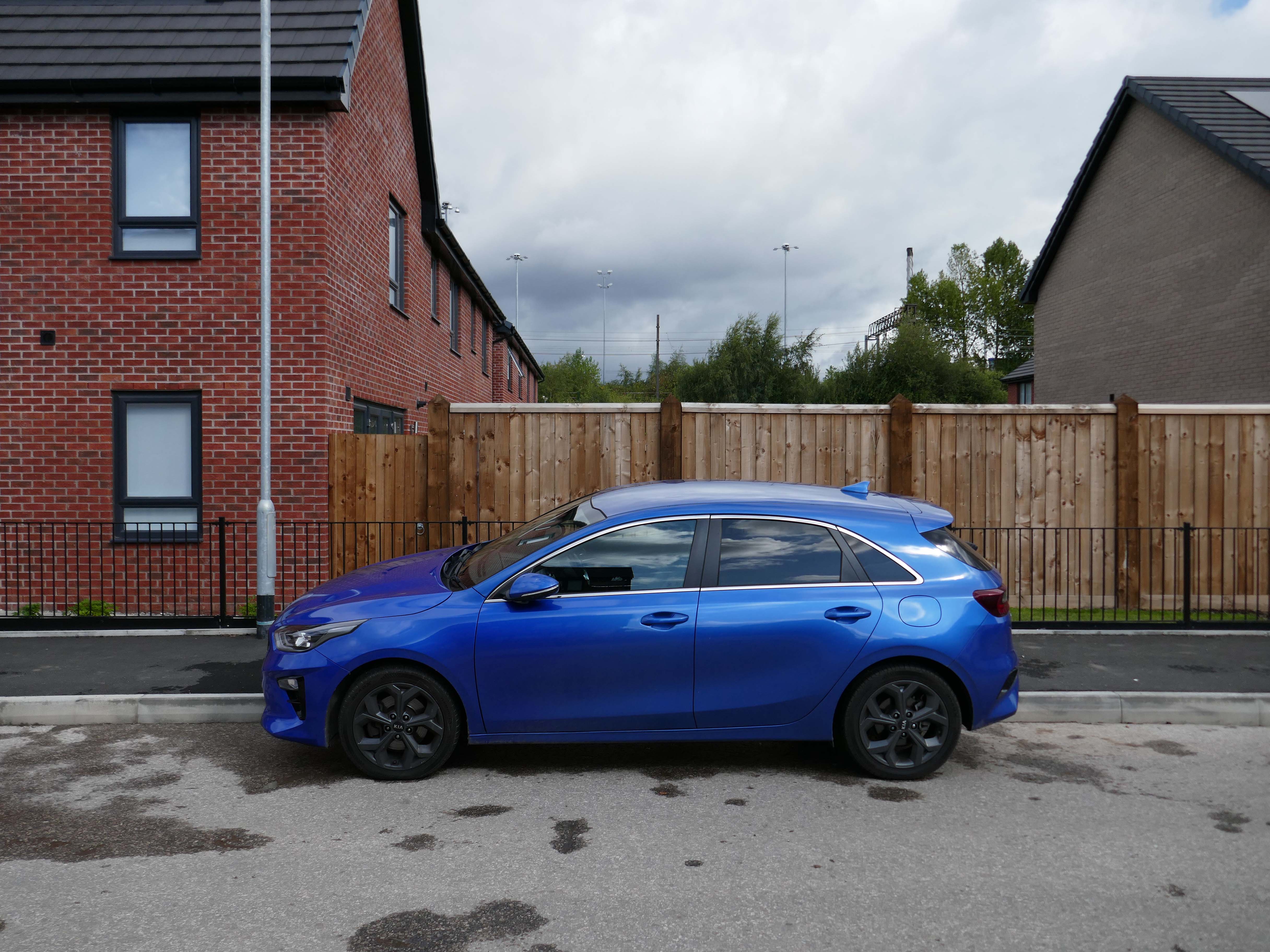
Ardwick Green combines contemporary design with great light infused spaces, offering stylish homes with a modern twist, private parking, outdoor spaces and a welcoming community atmosphere an urban retreat that truly feels like home.

With the city just moments away, living at Ardwick Green will give homeowners easy access to Manchester City Centre and beyond with its vibrant social scene, bustling business landscape and extensive transport network on your doorstep. 
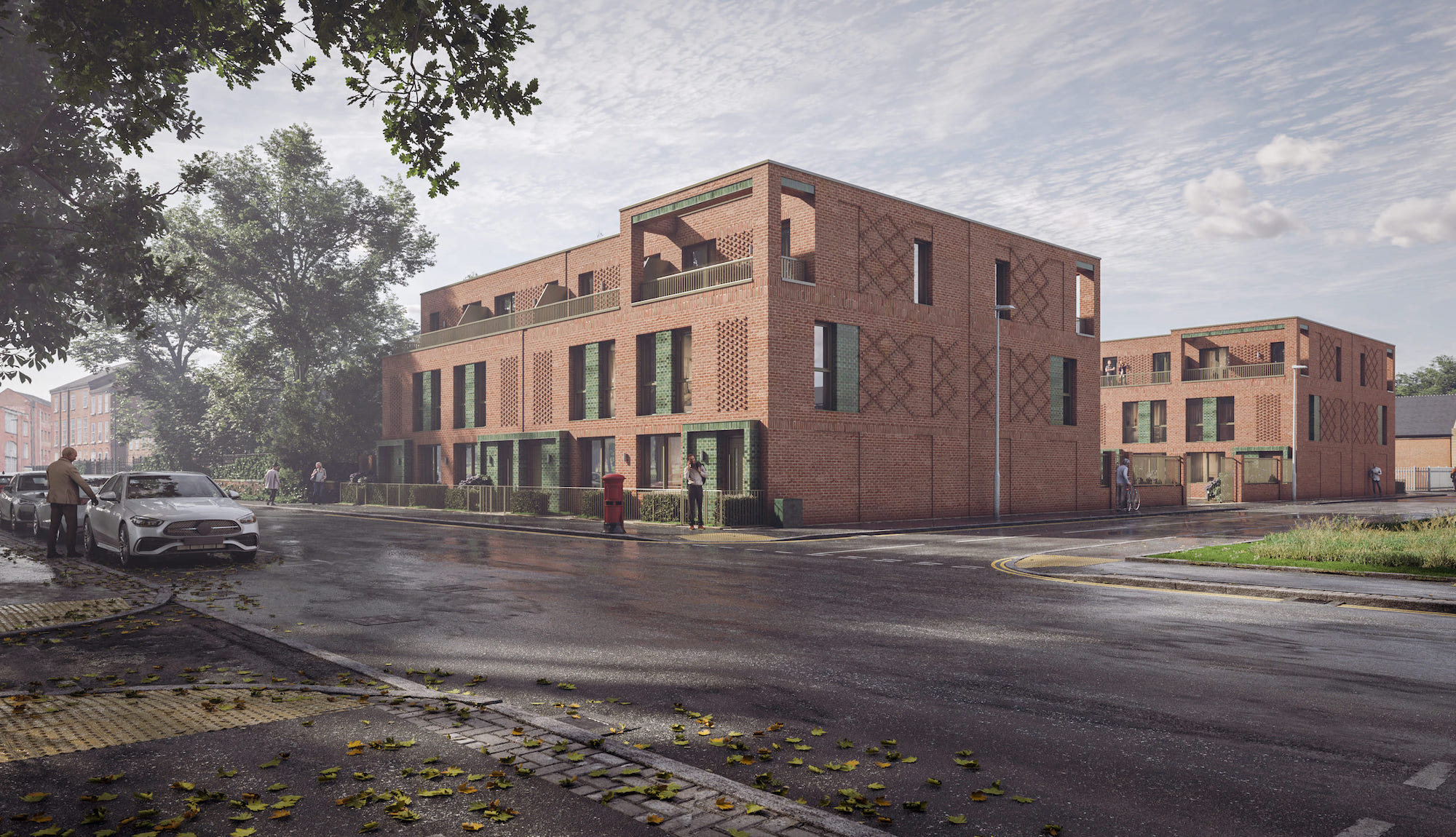
Step Places

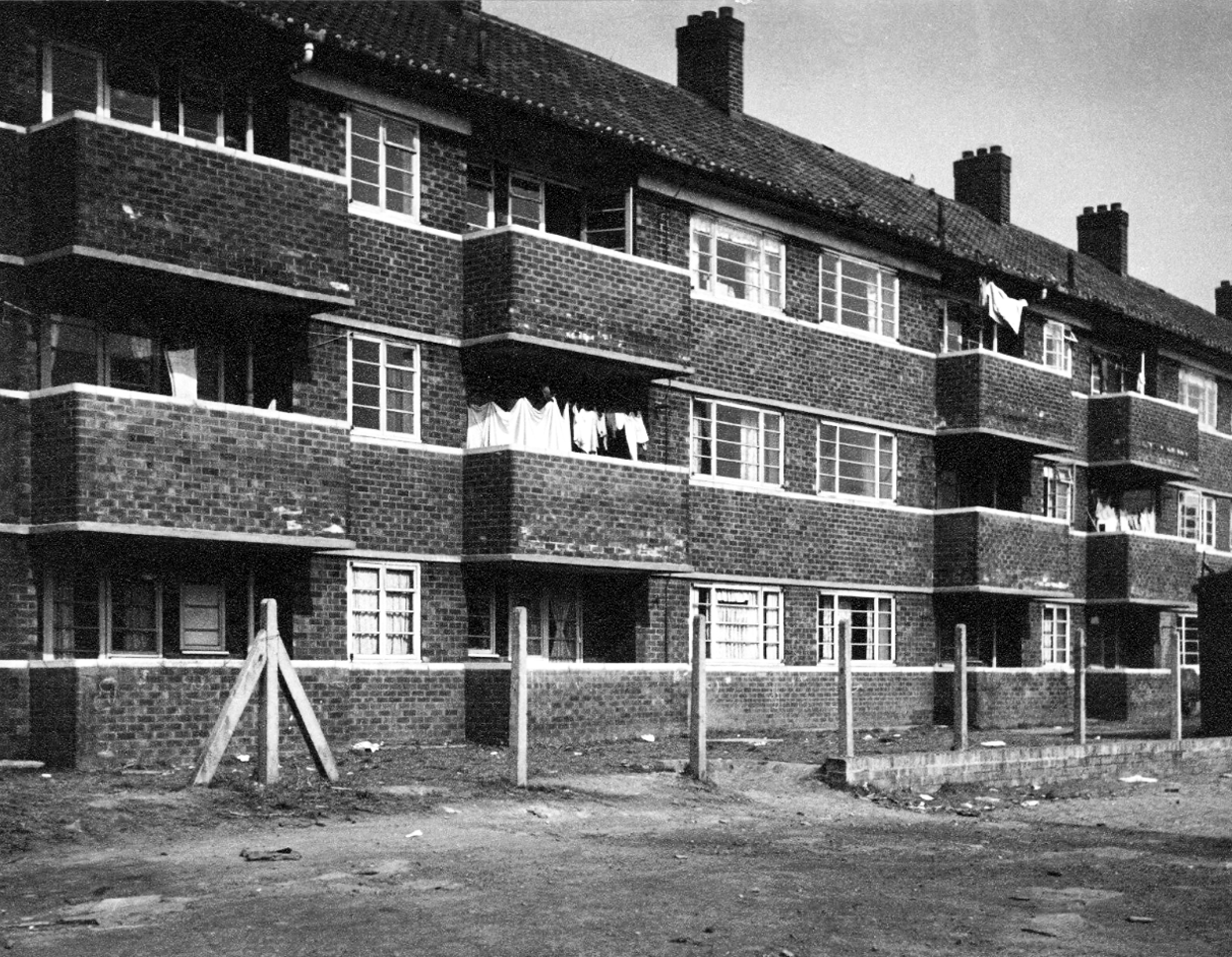
The area is home to a mixed and mongrel bunch of homes.
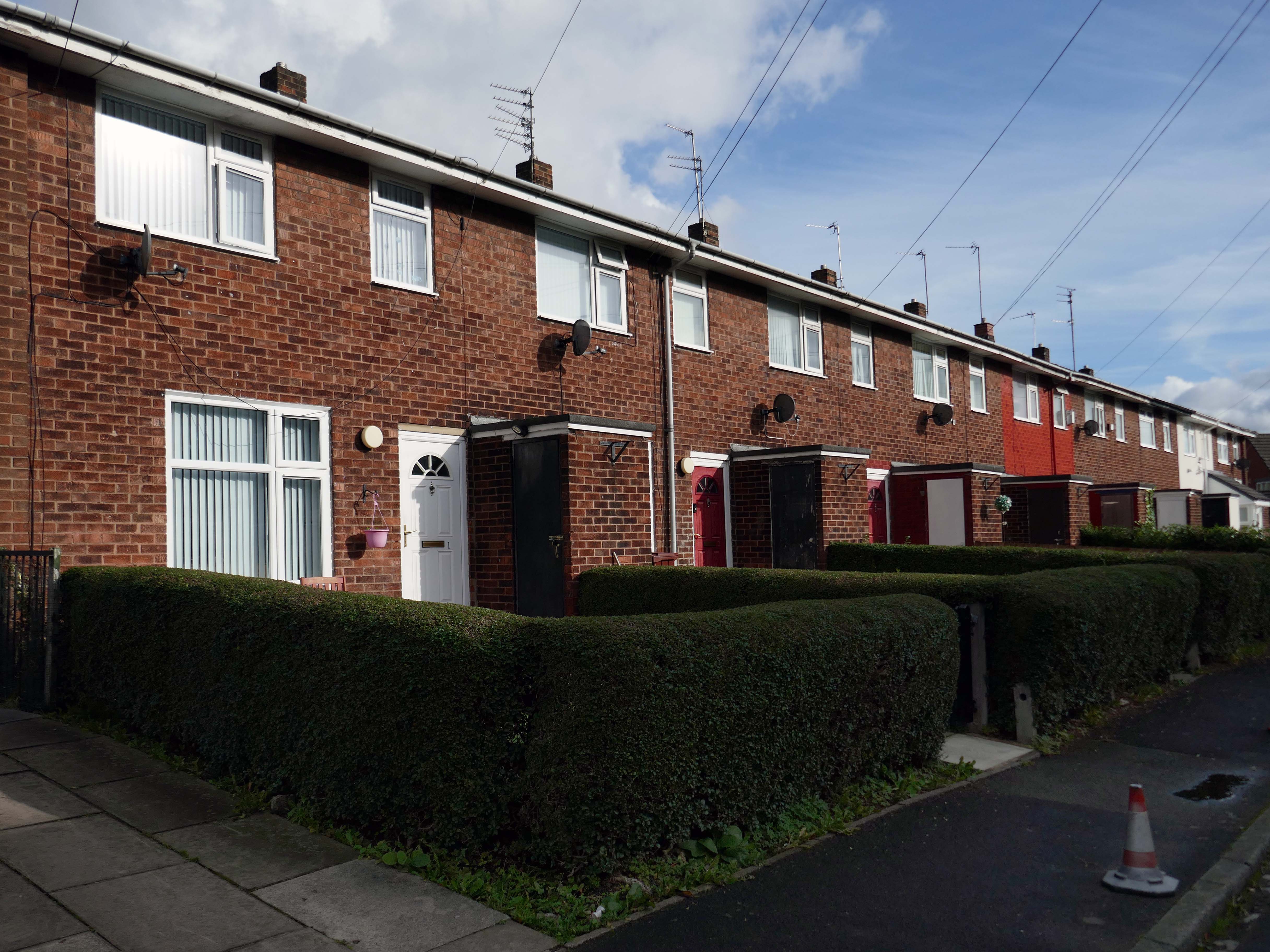
Though these interwar flats, seen here in 1956, are now long gone.
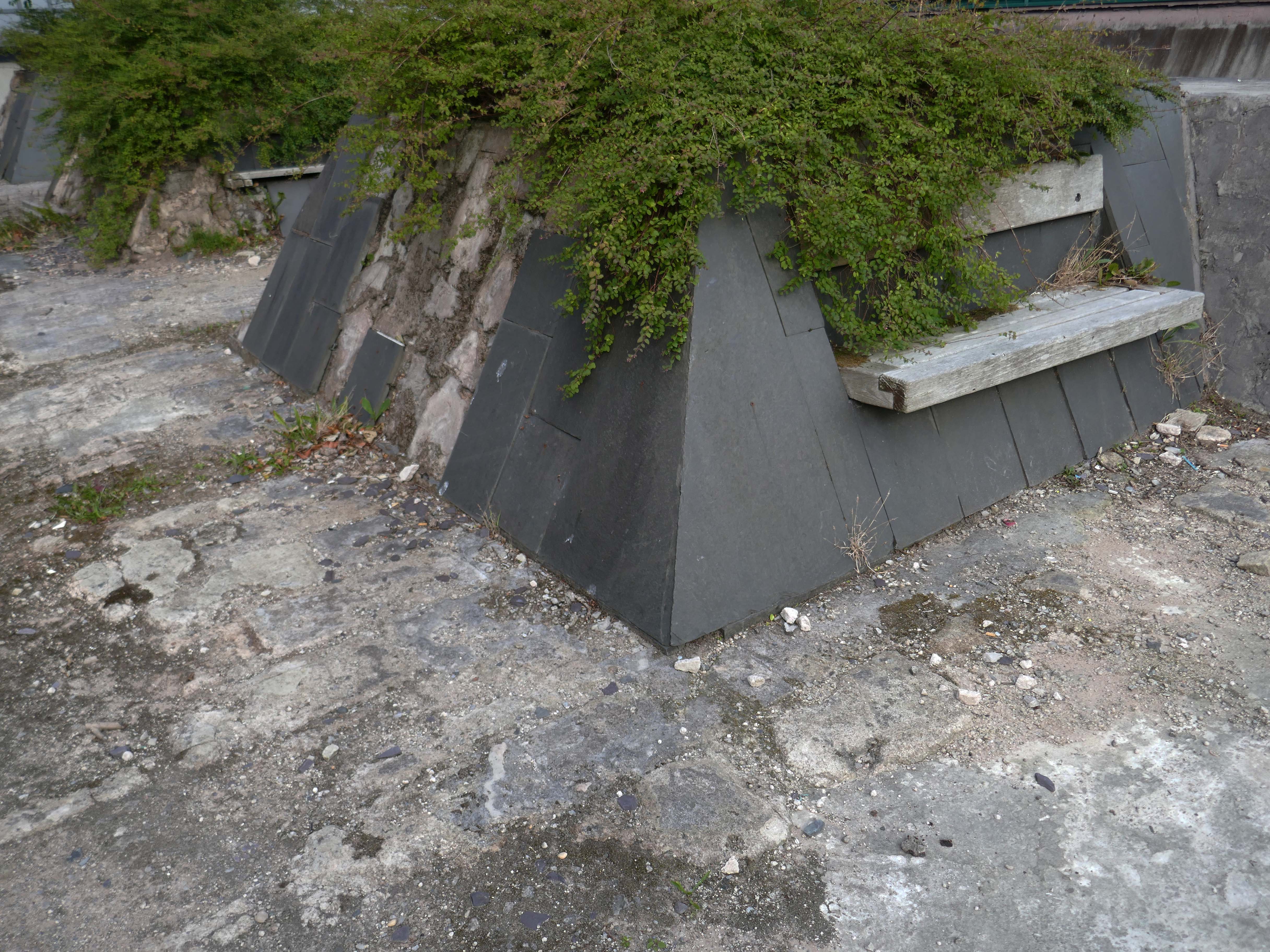
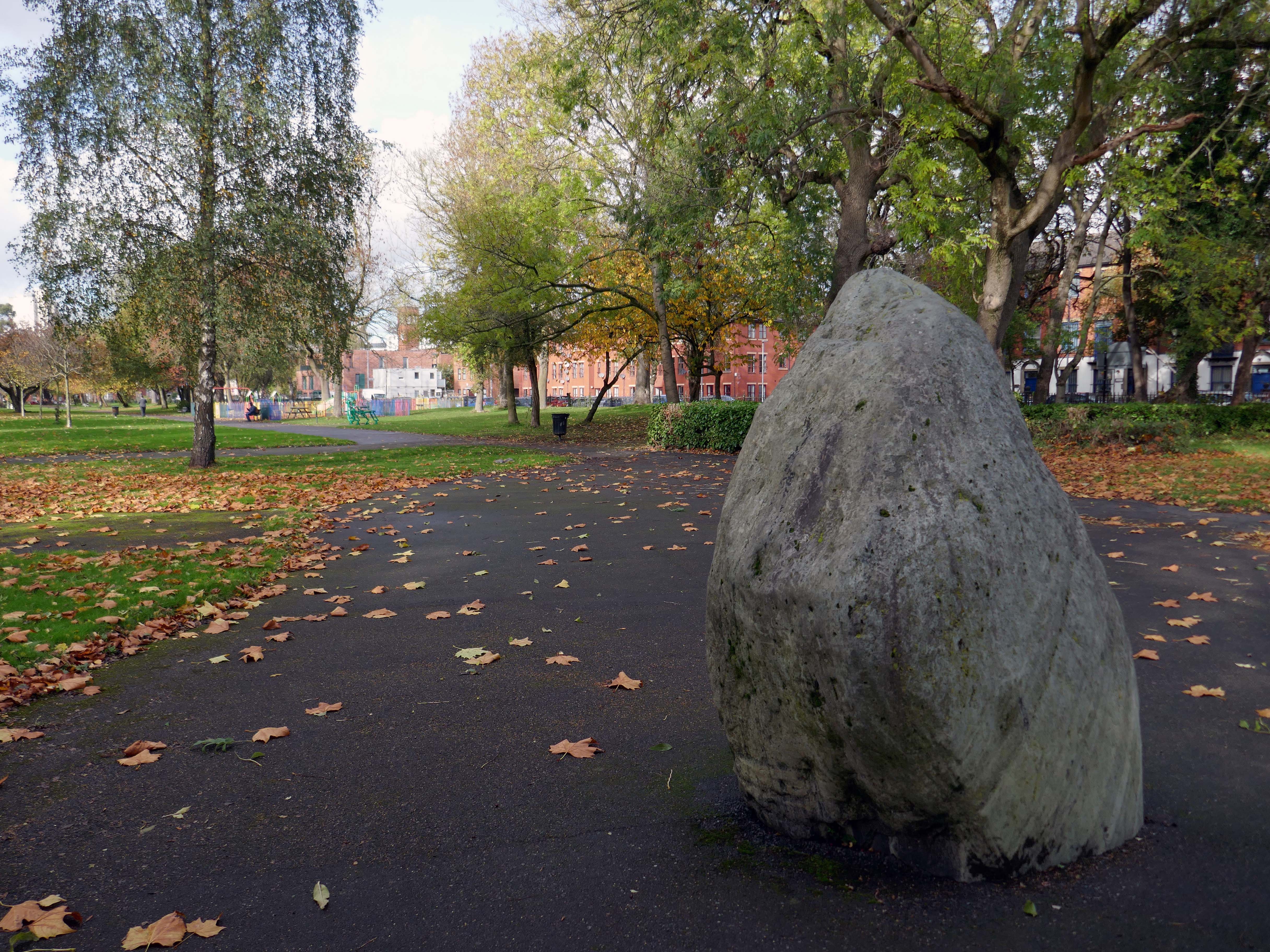
Within the park is a glacial erratic, which arrived following the Last Glacial Period .

Without which much of what we understand as the modern age would possibly not now exist.

It appears to be green slate from the Lake District, the native underlying rock in this part of Manchester is a red sandstone.
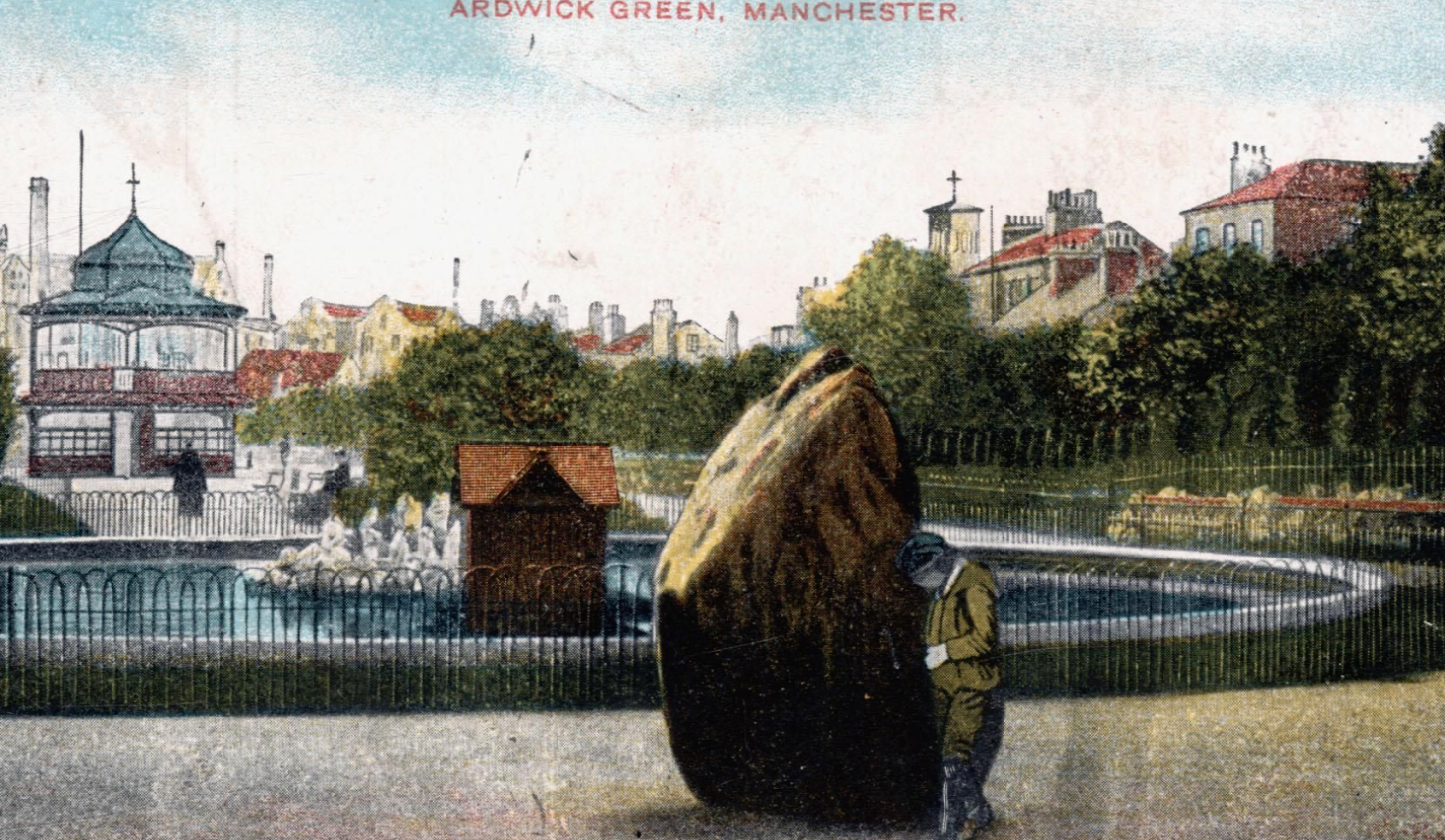
Postcard of 1906

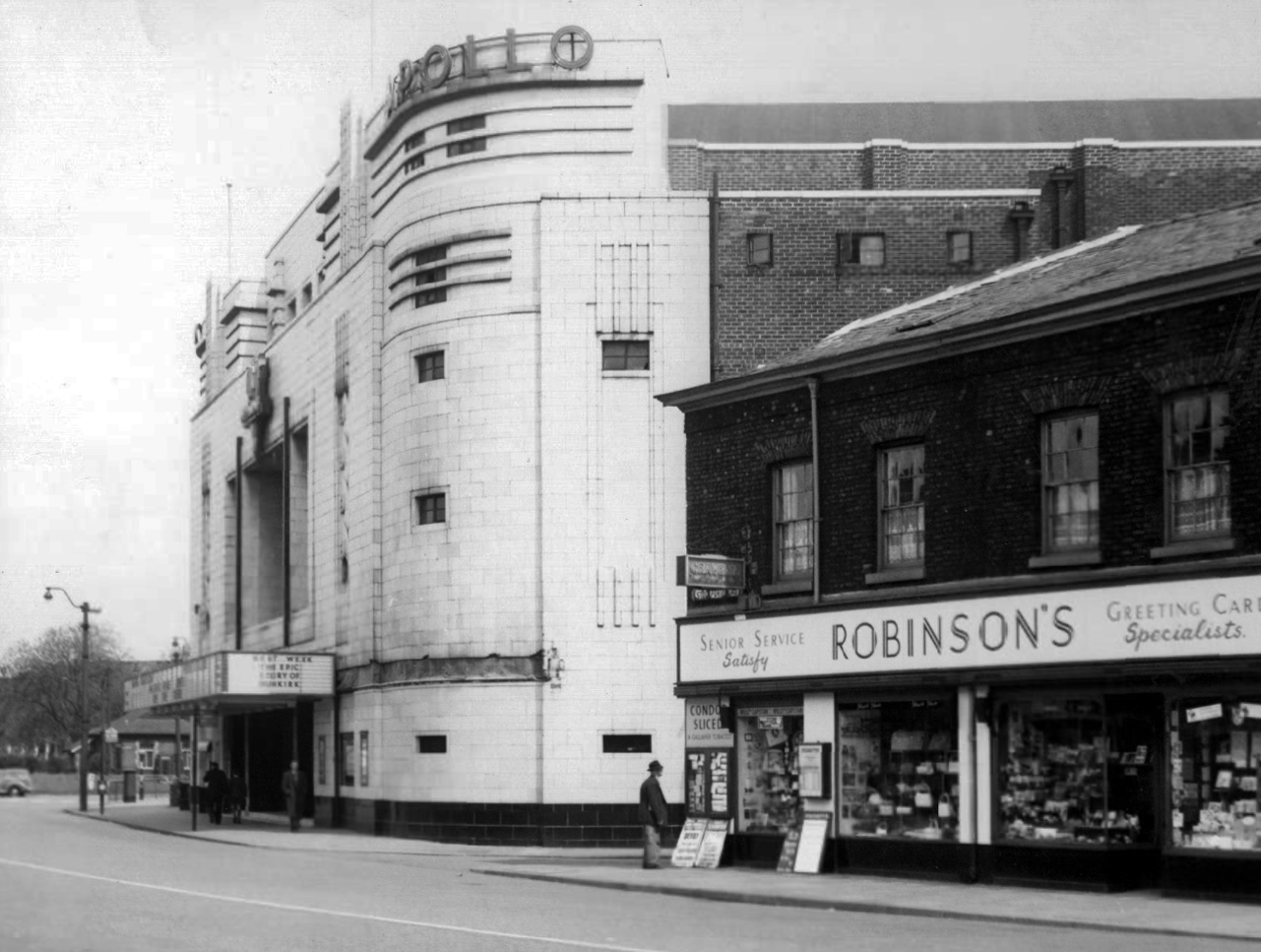
The Apollo of course prevails. – seen here in 1958

Architects: Peter Cummings Alex M Irvine

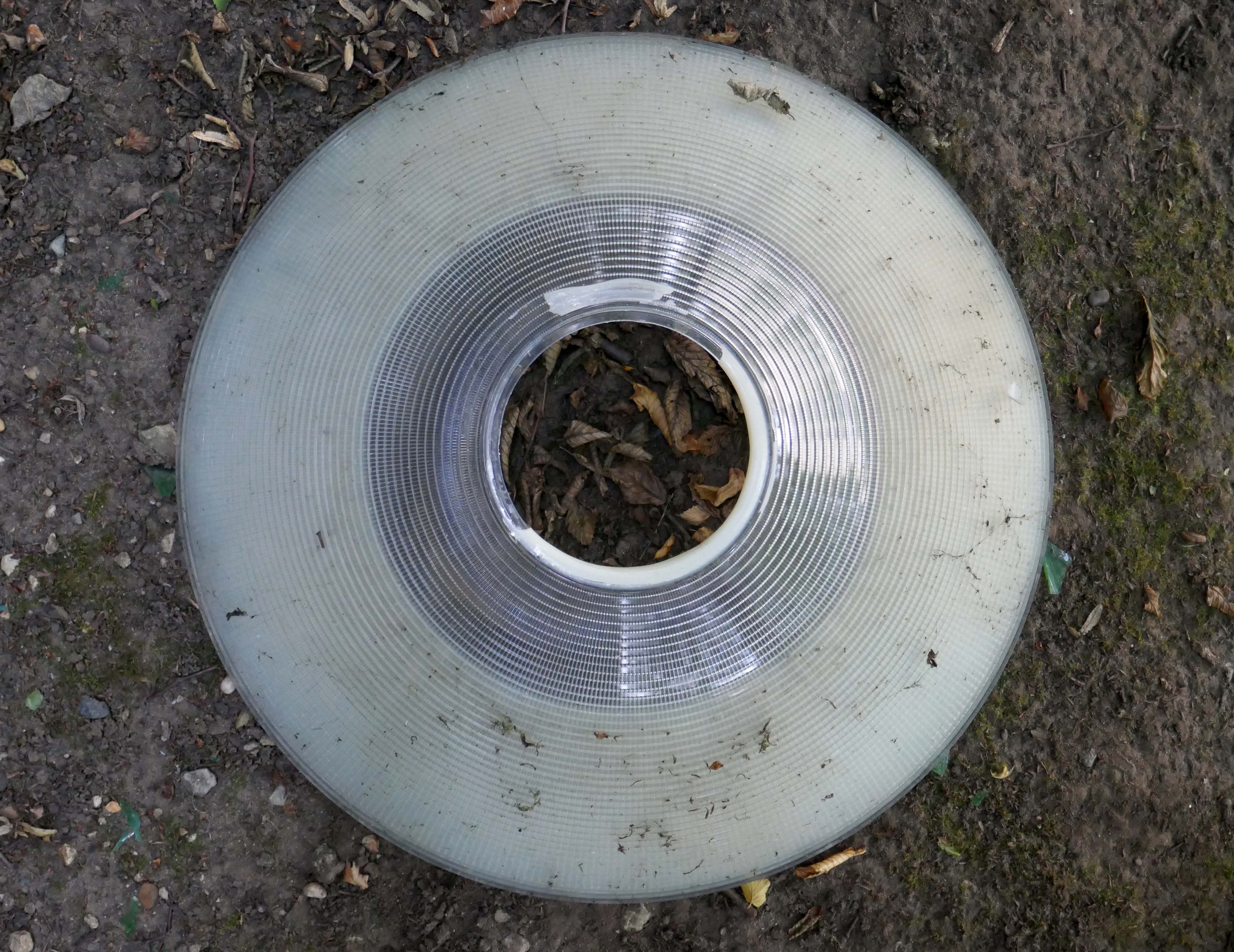
Opened on 29th August 1938 the interior decorations were carried out by noted interior designers Mollo & Egan with the Holophane lighting designed by R Gillespie Williams.
This Sixties municipal building remains a mystery.
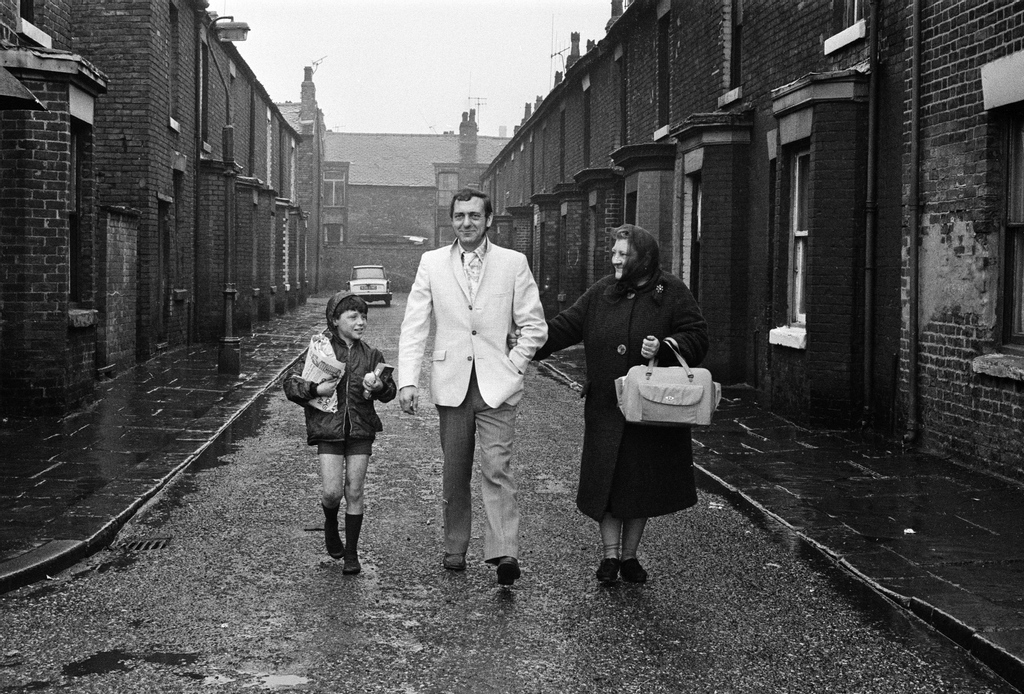
Actor Harry H Corbett visiting his childhood area in 1969, he lived on Earl Street and later in Wythenshawe.
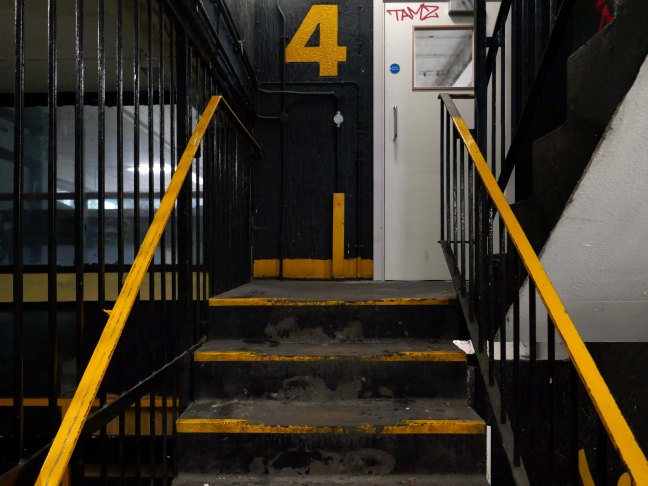
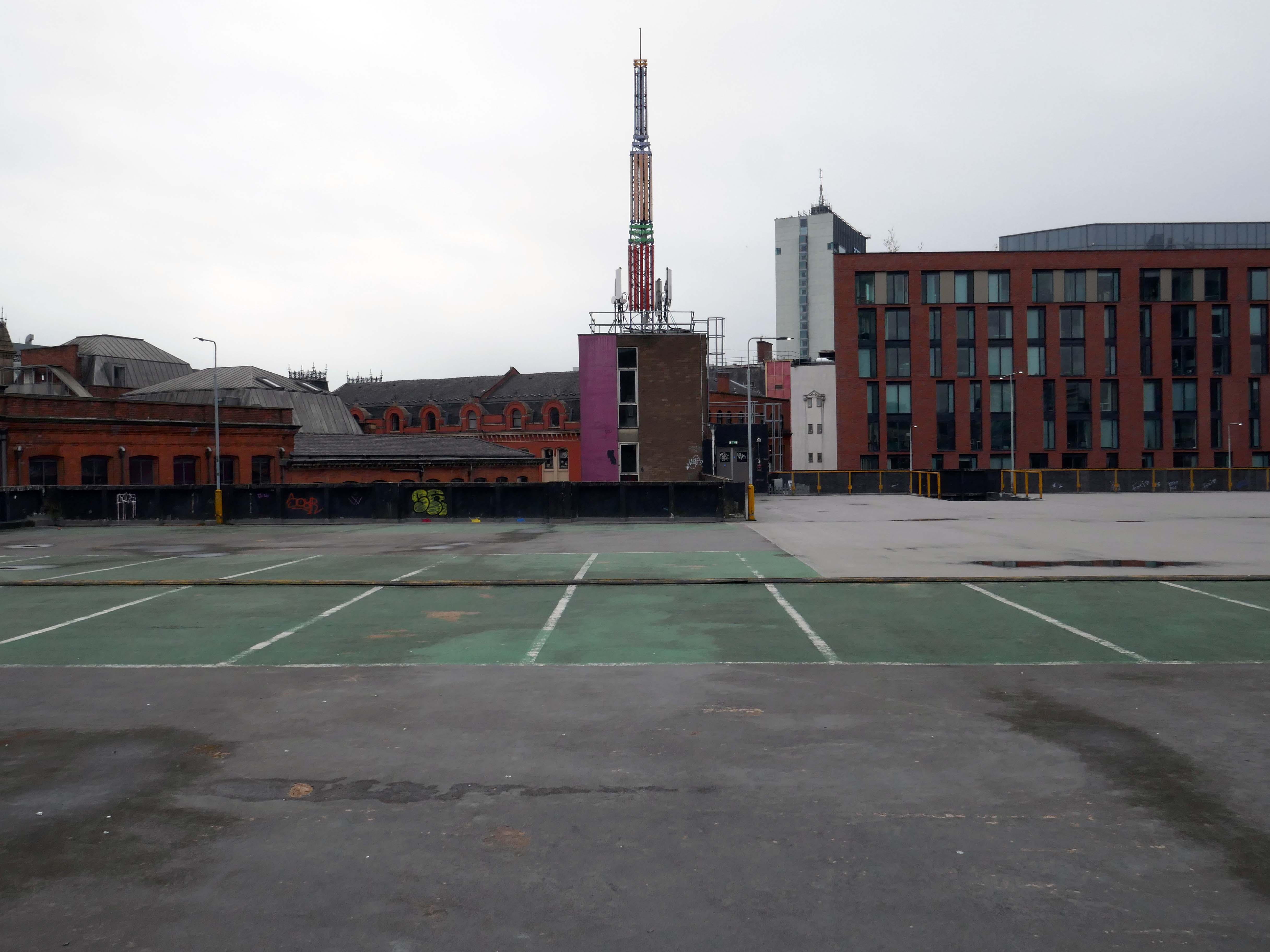
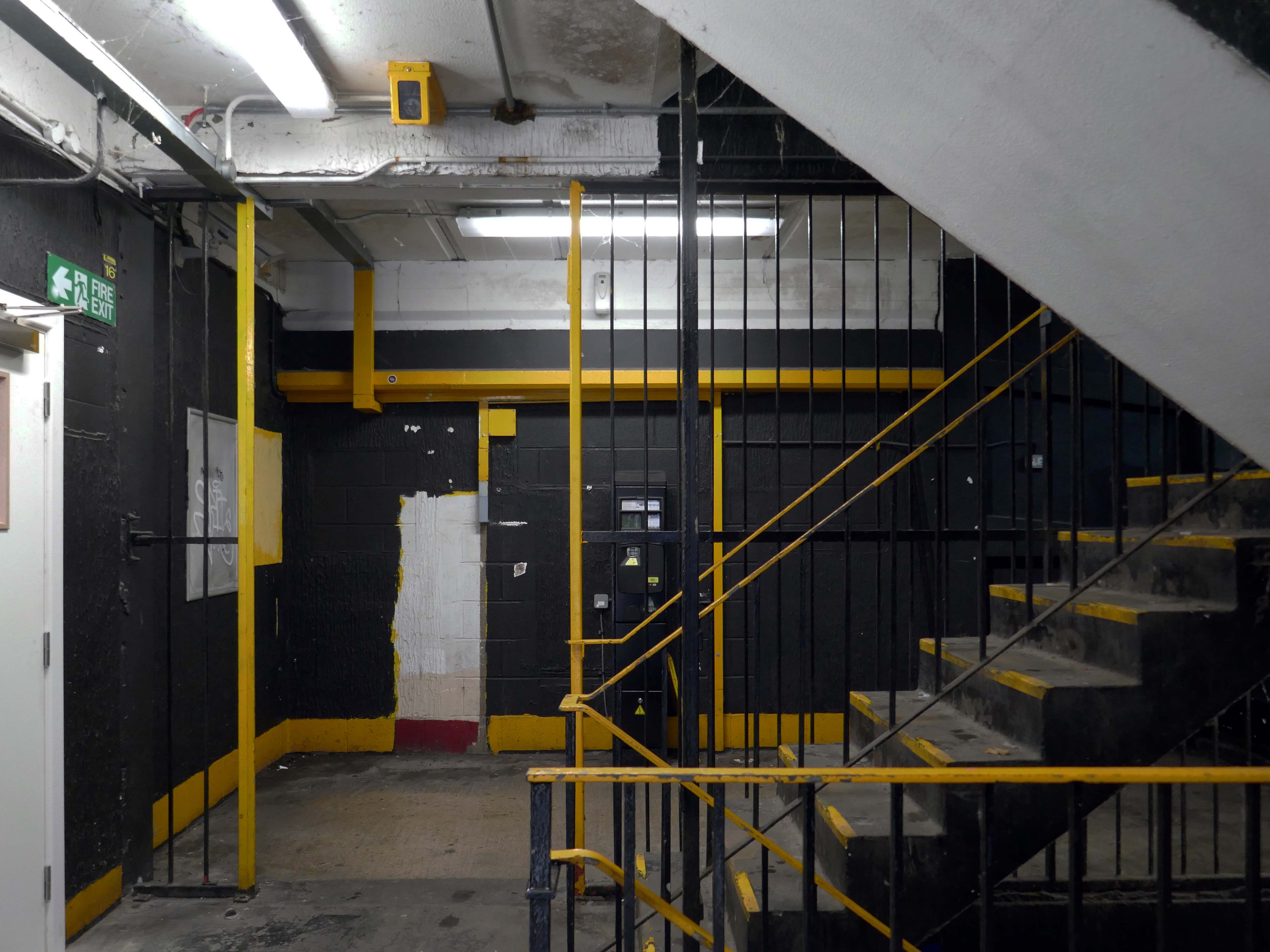
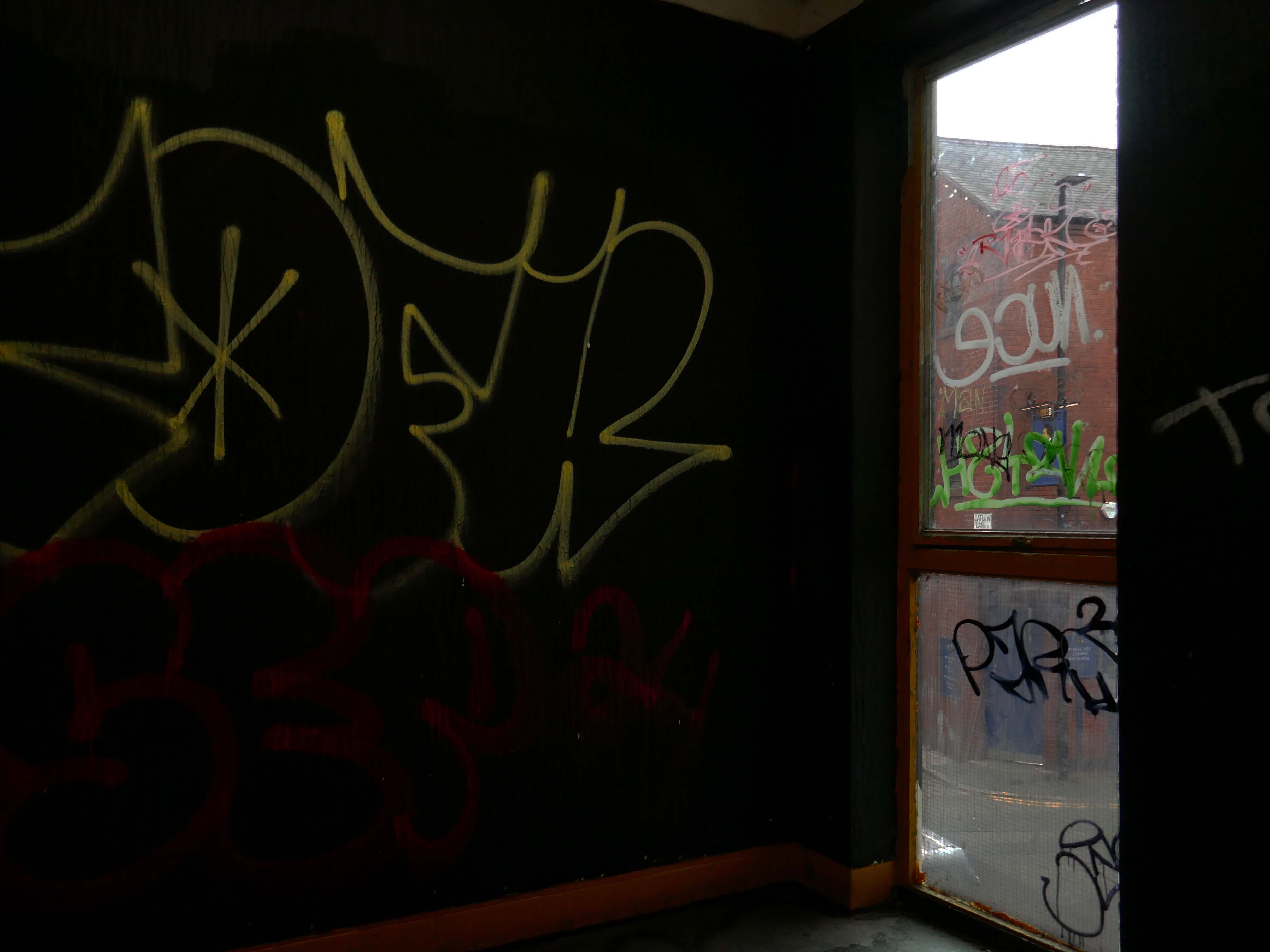
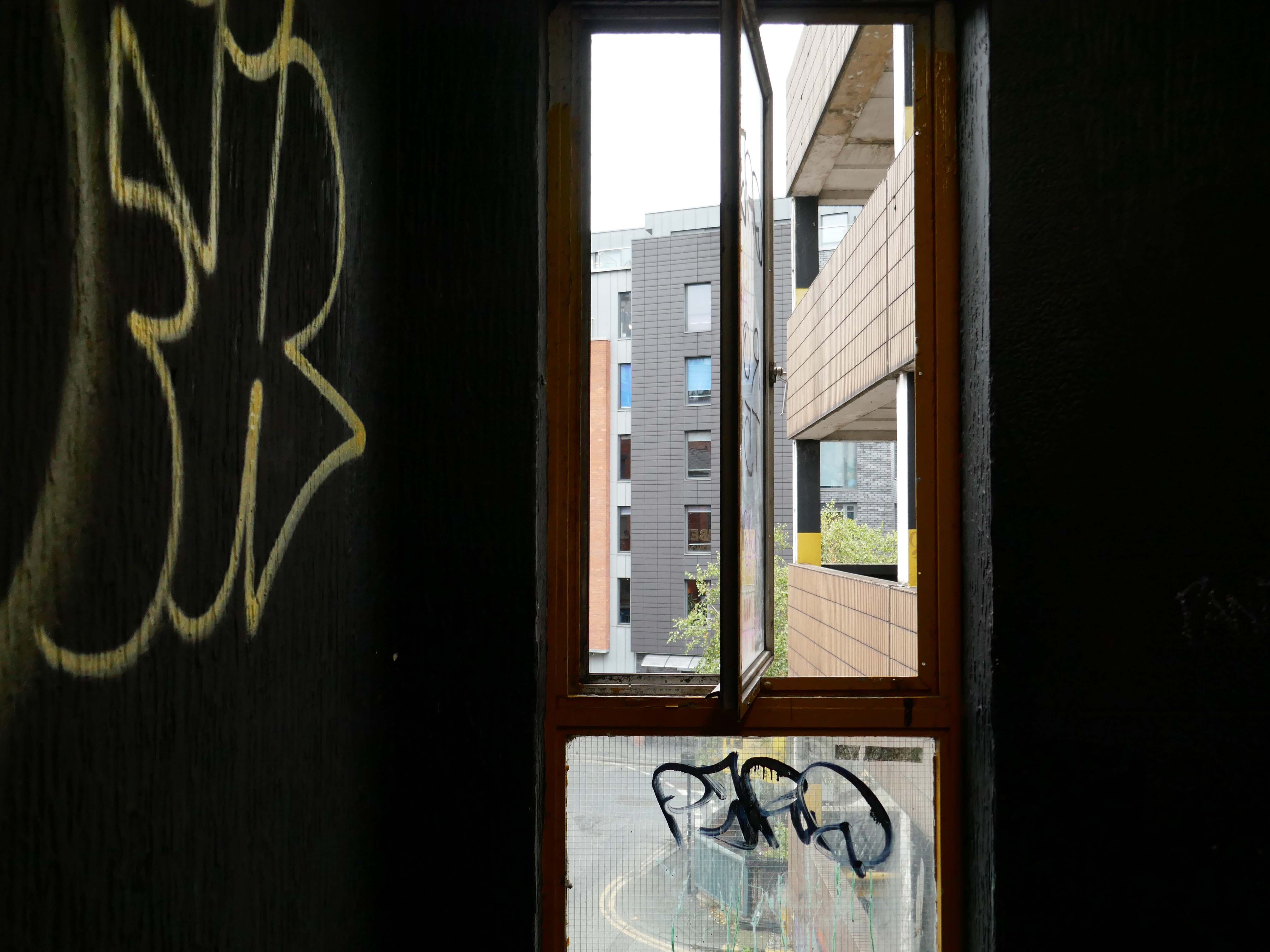
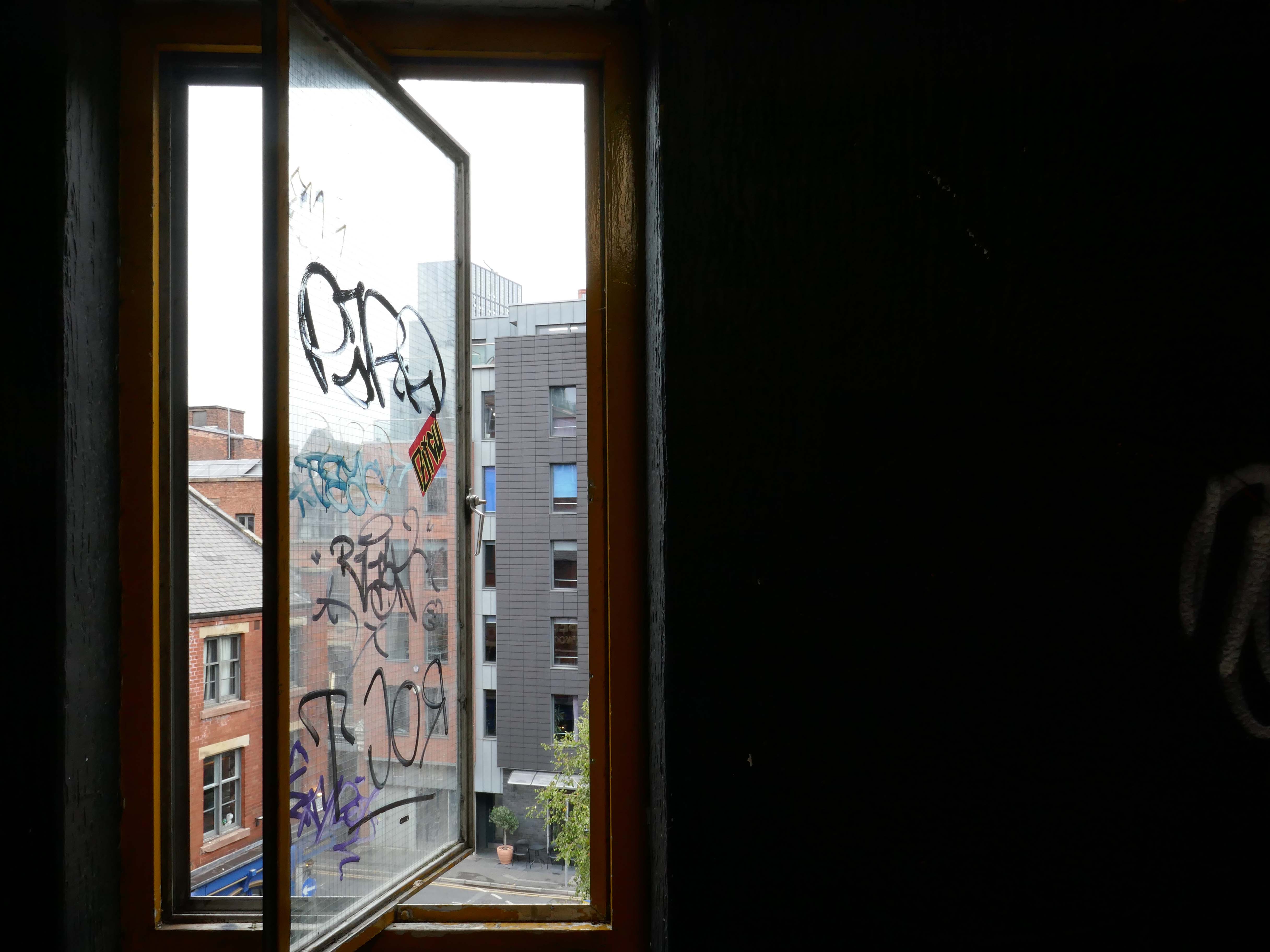
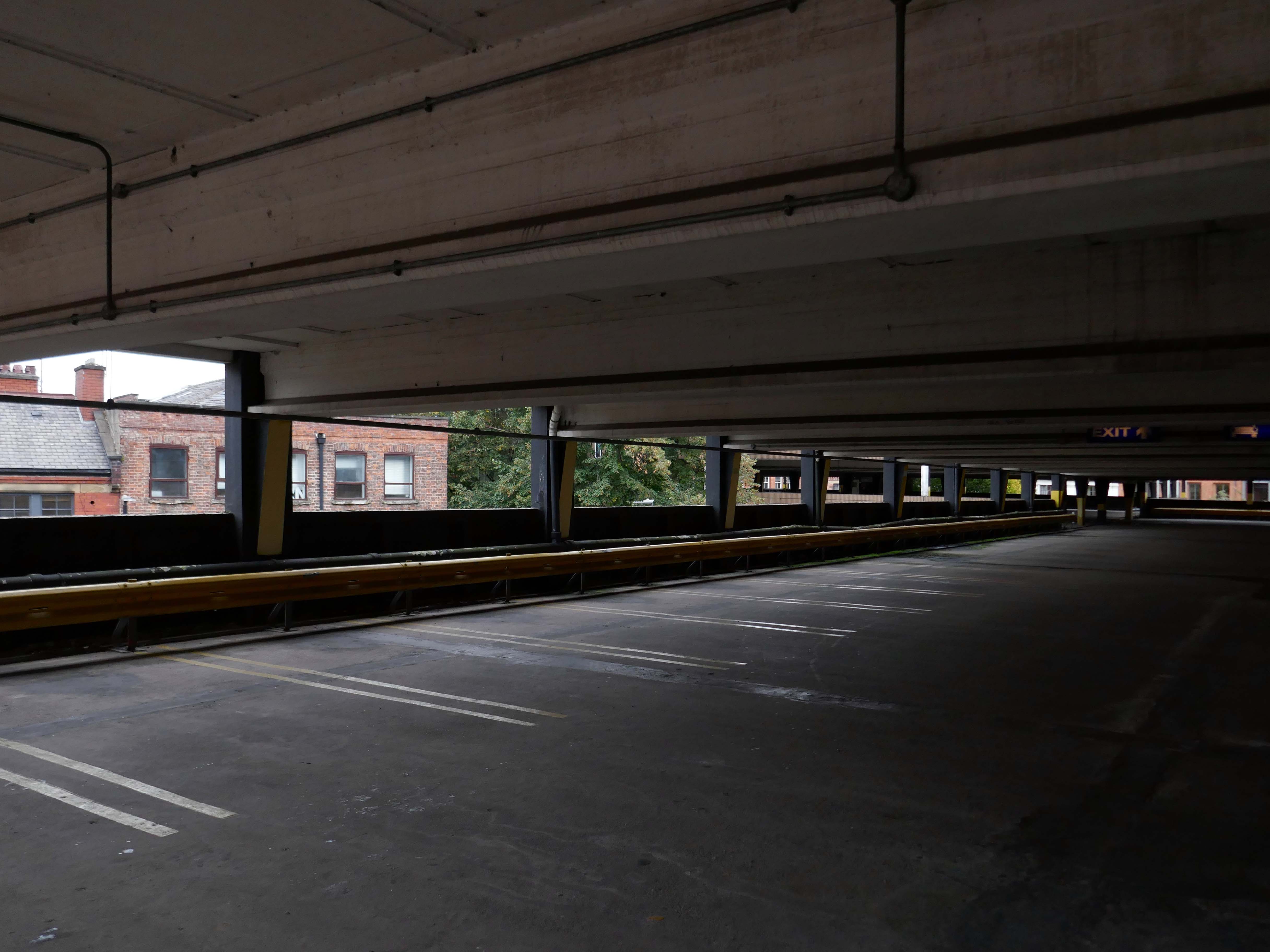
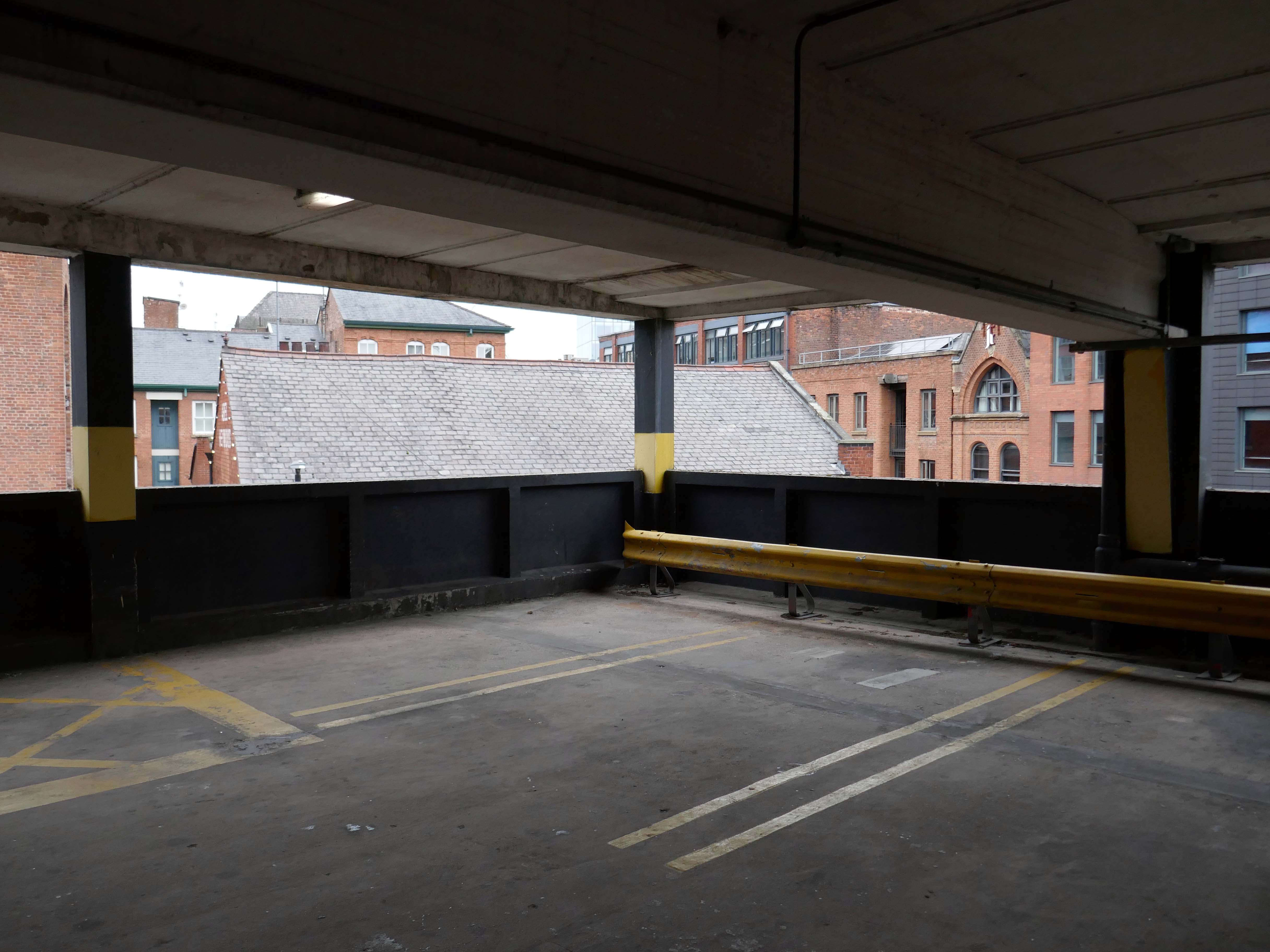
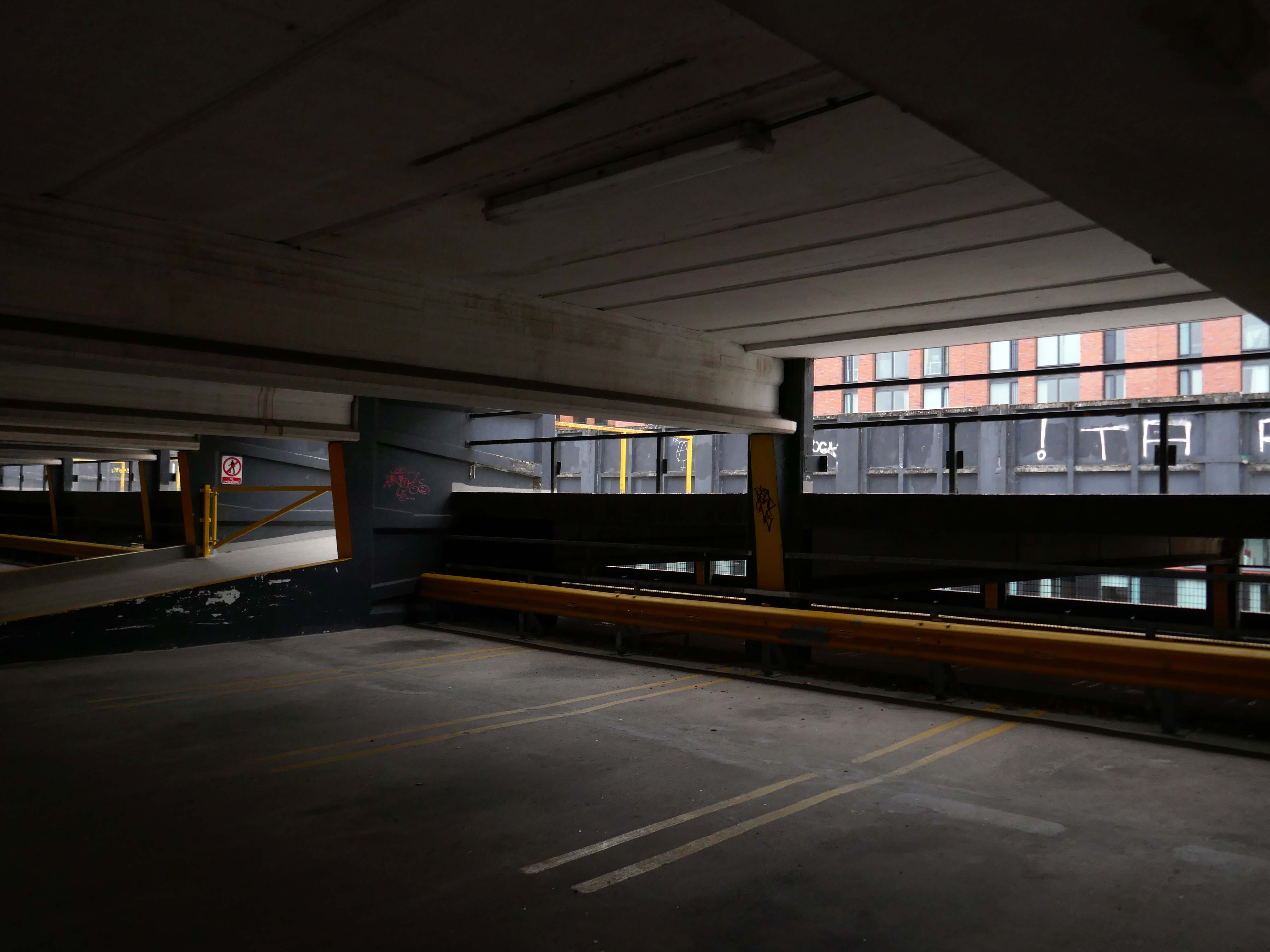
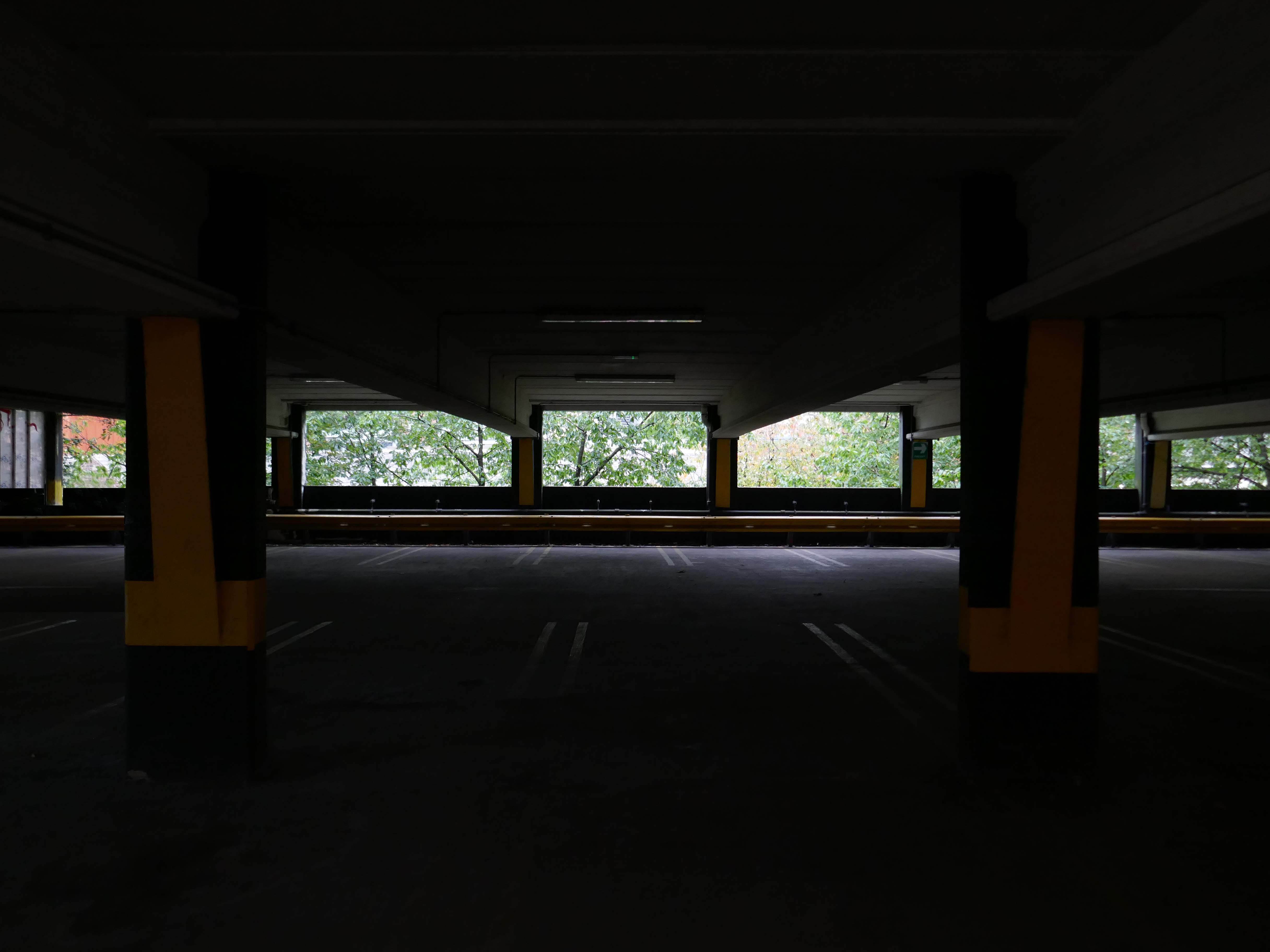
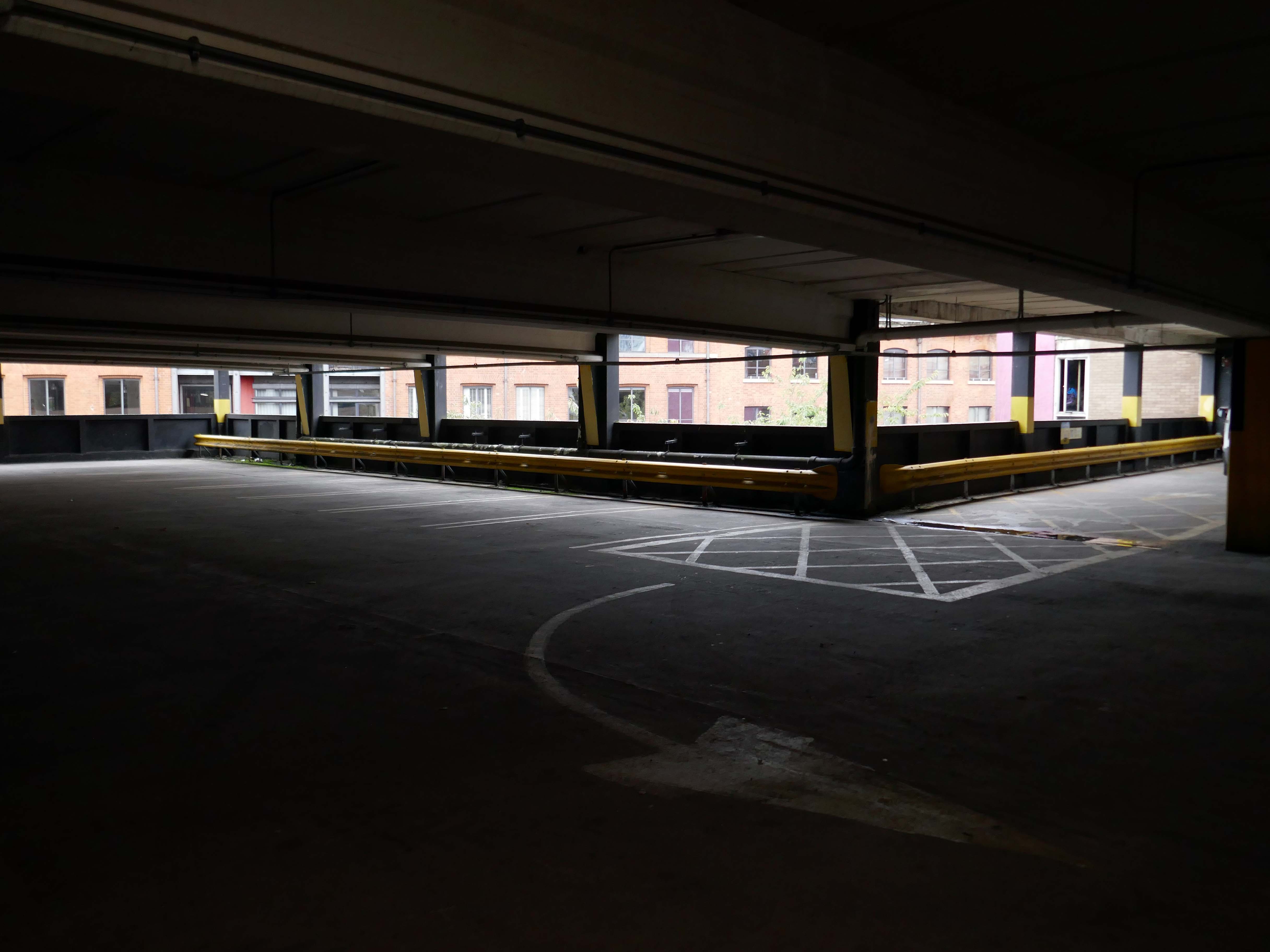
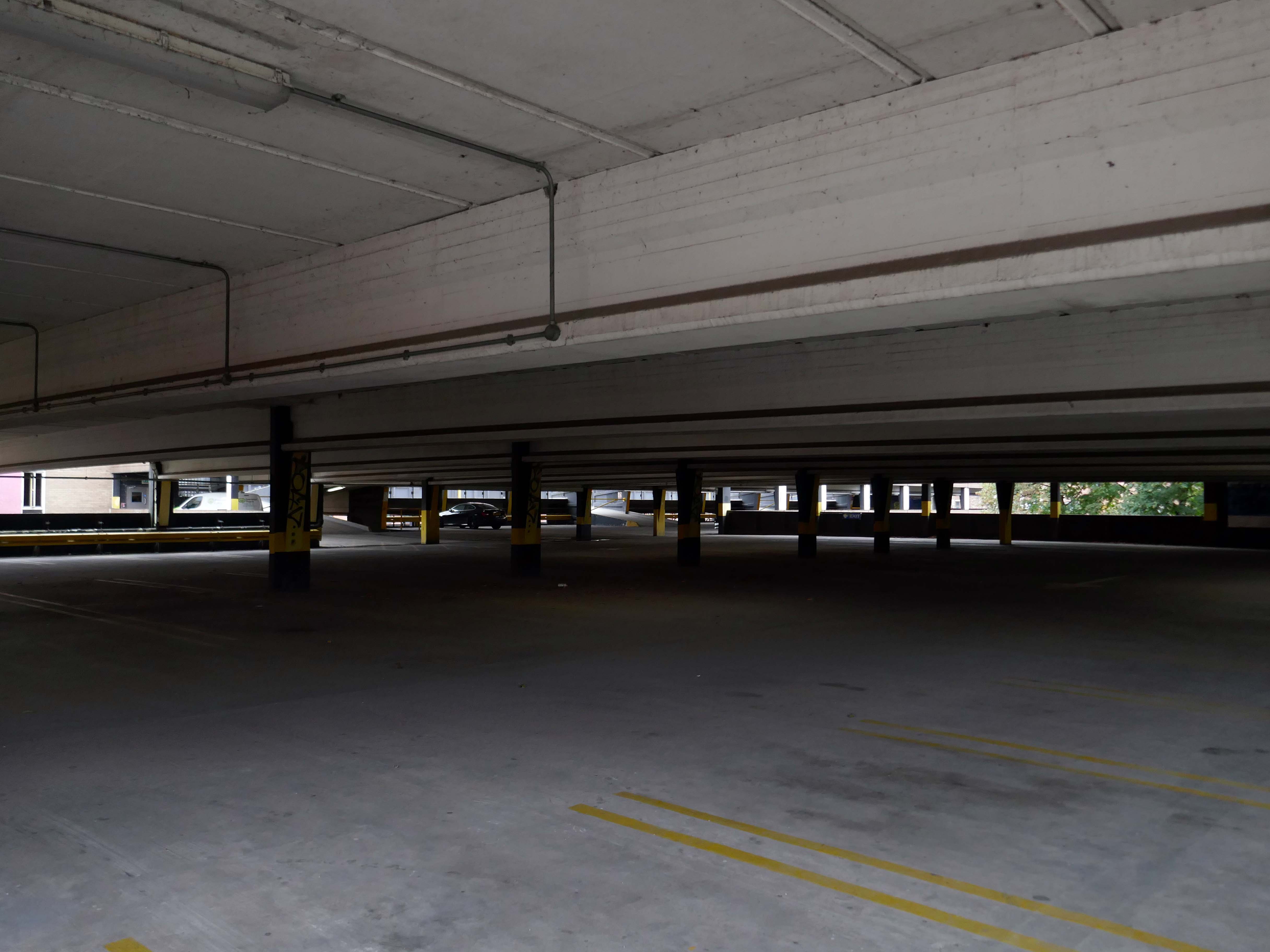
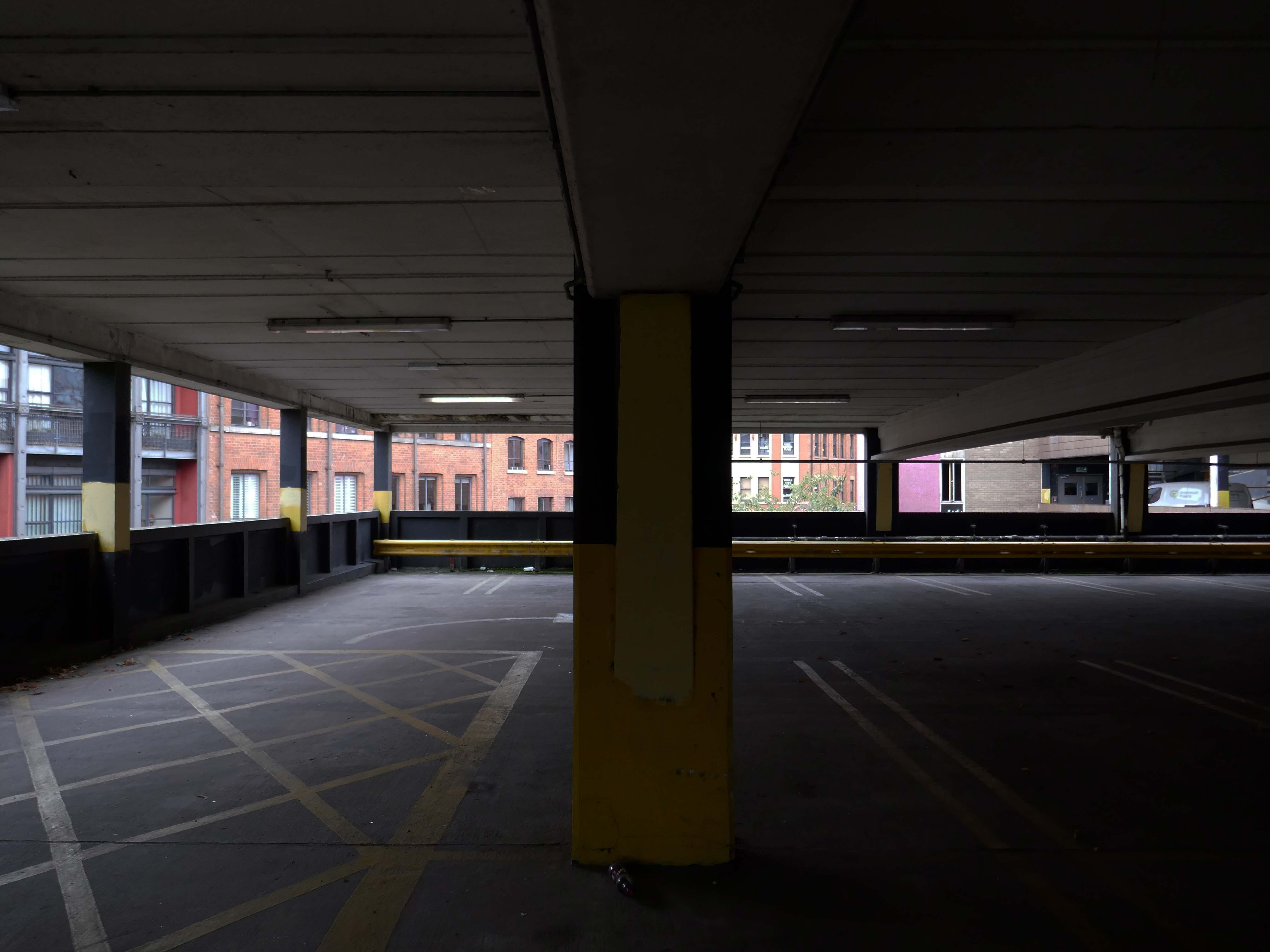
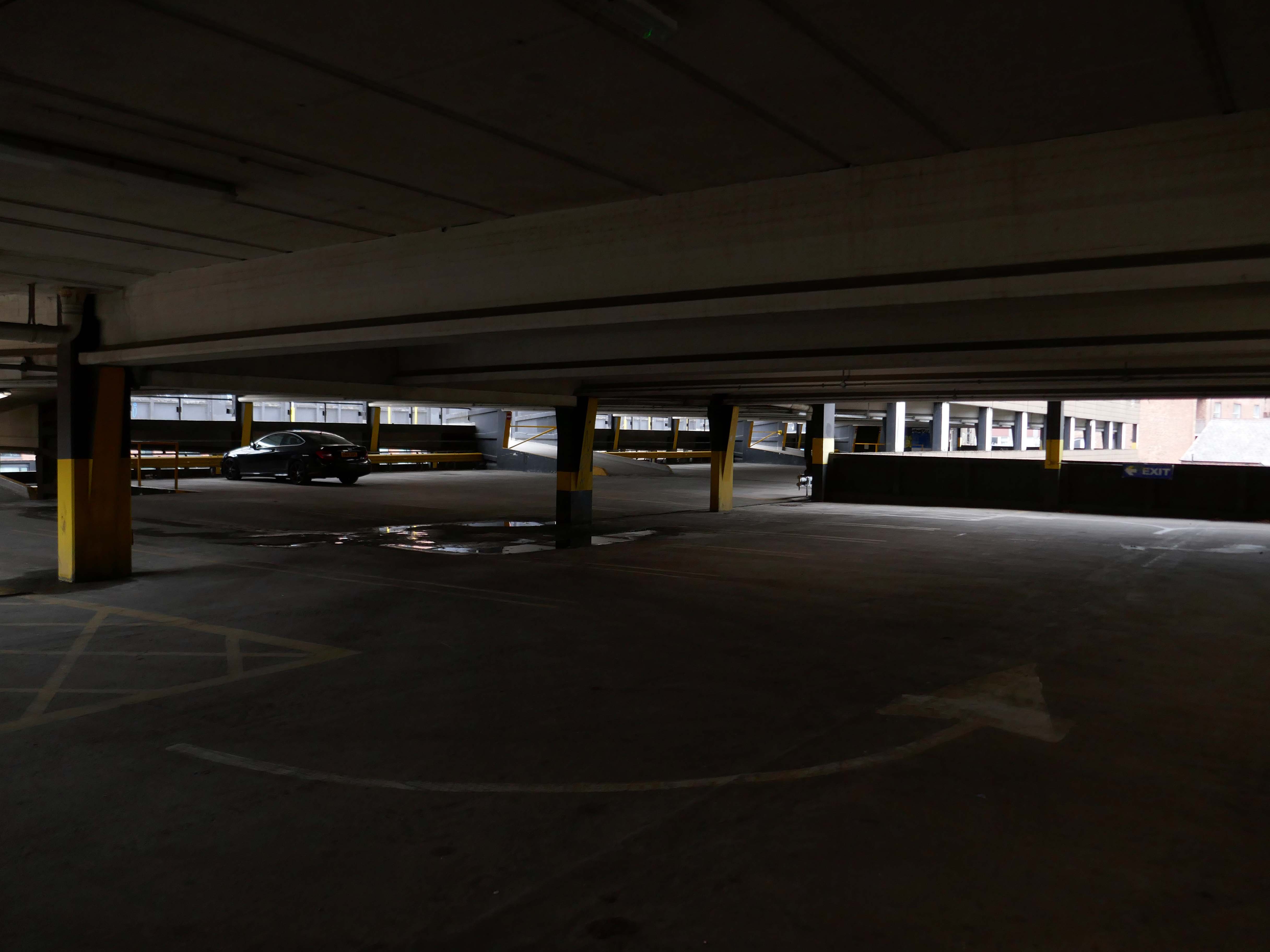
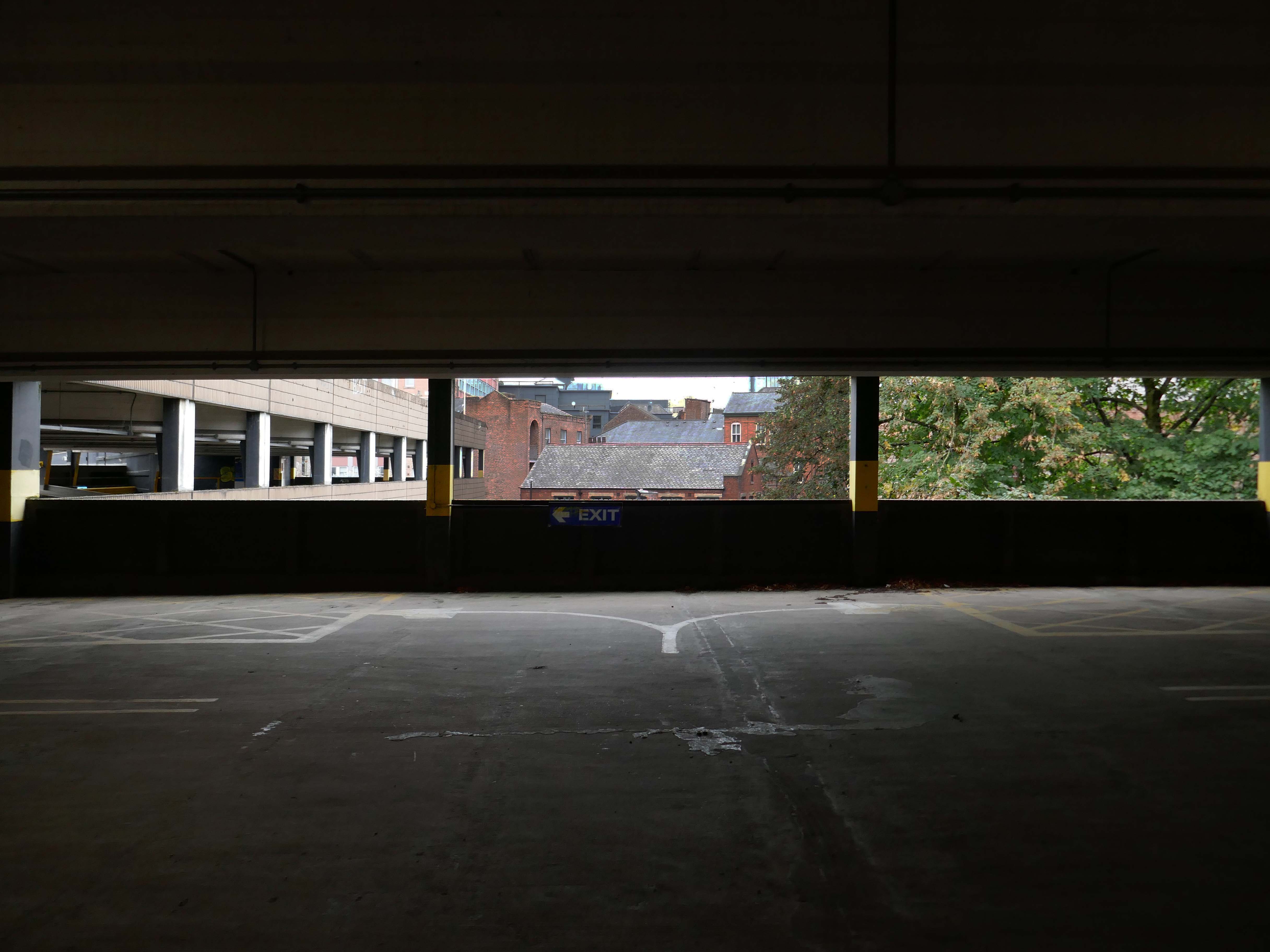
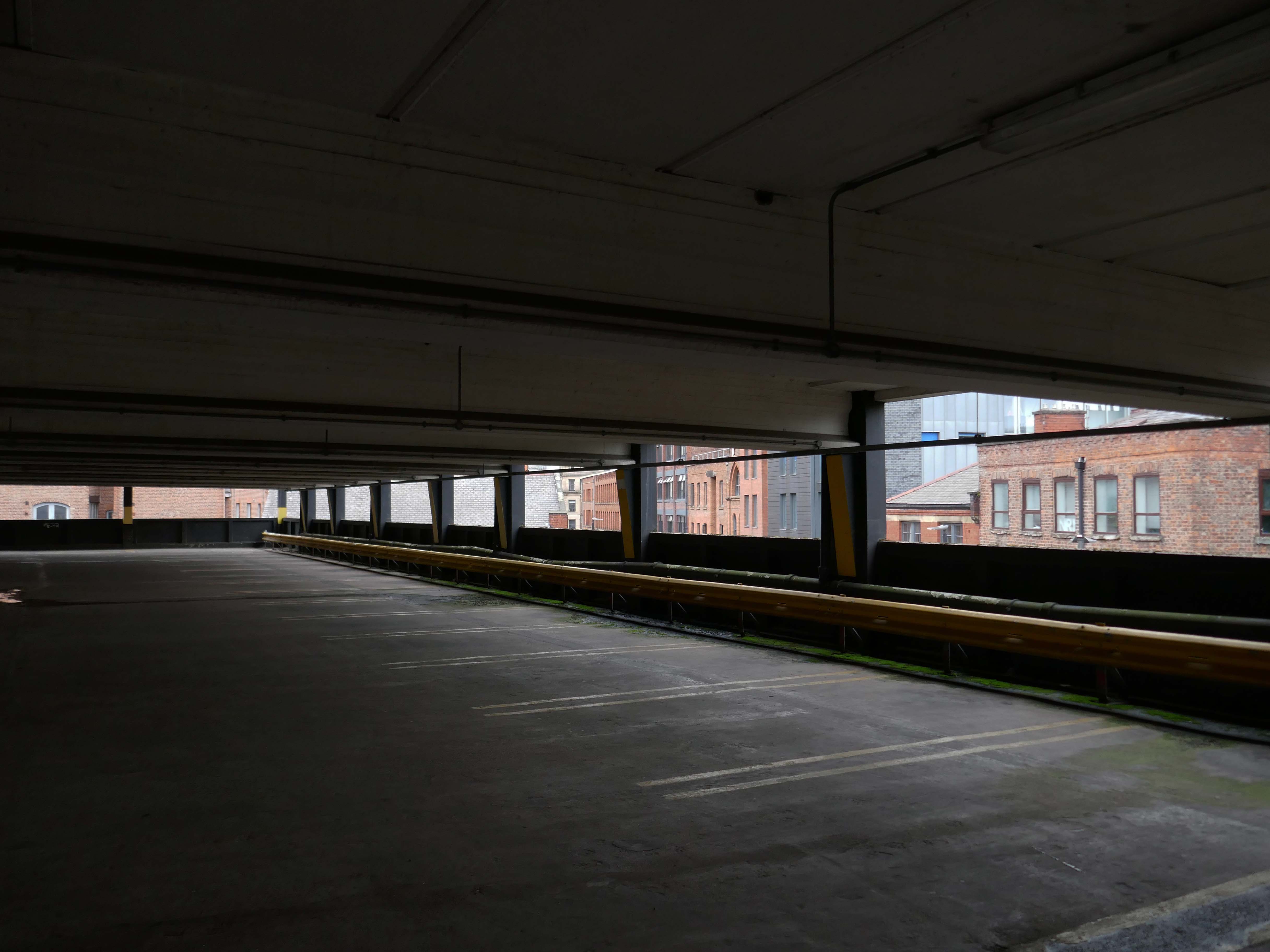
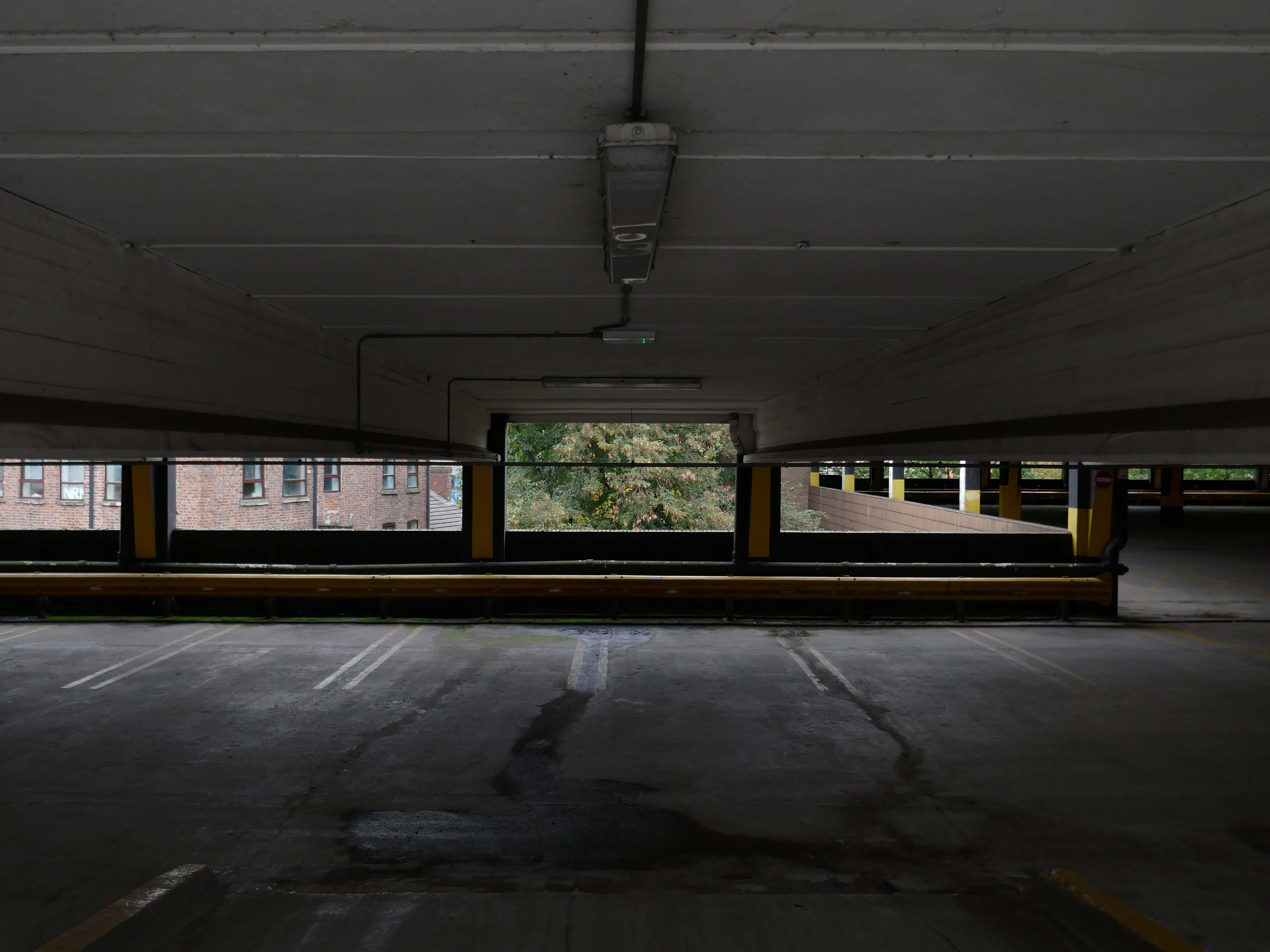
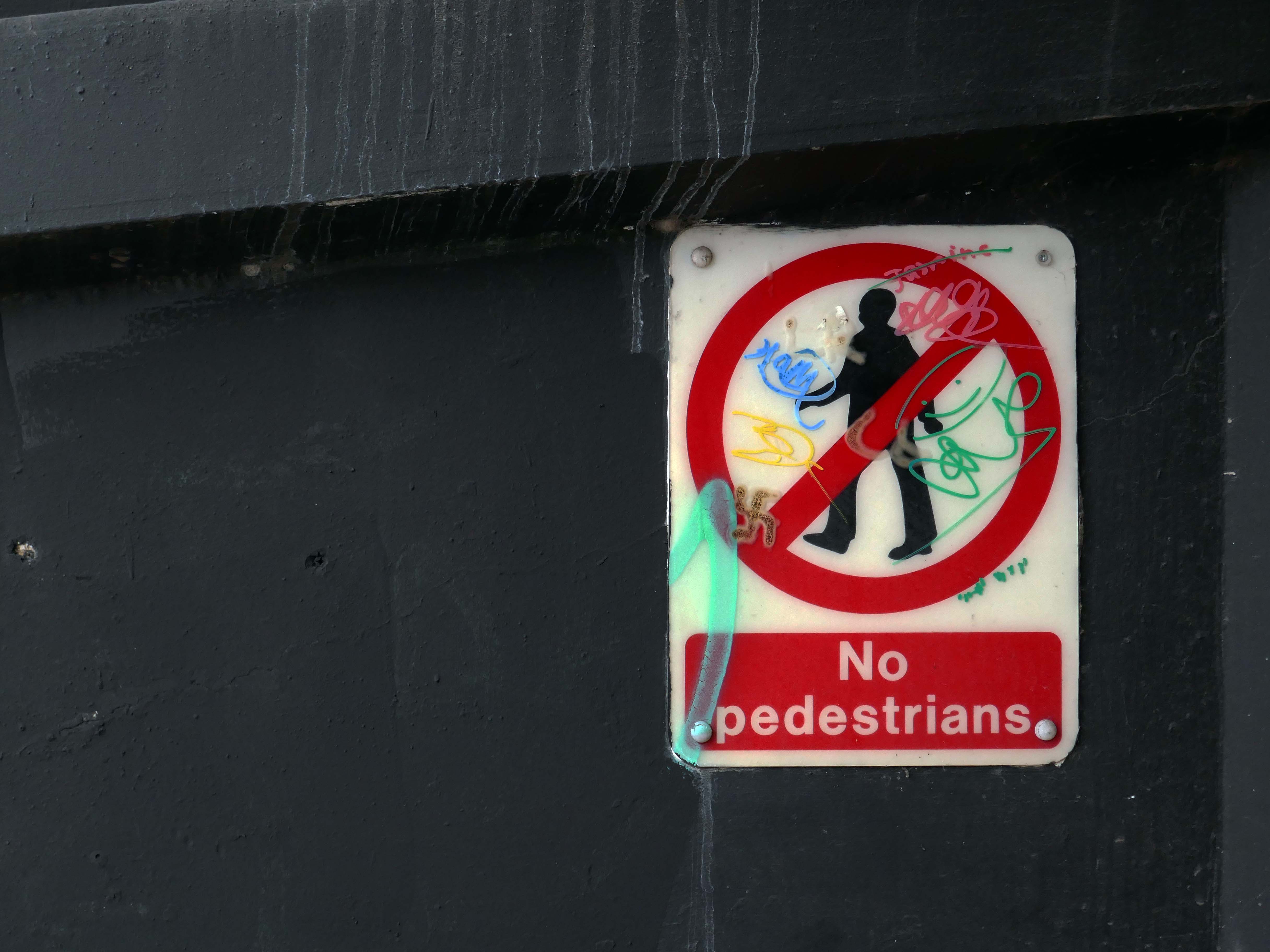
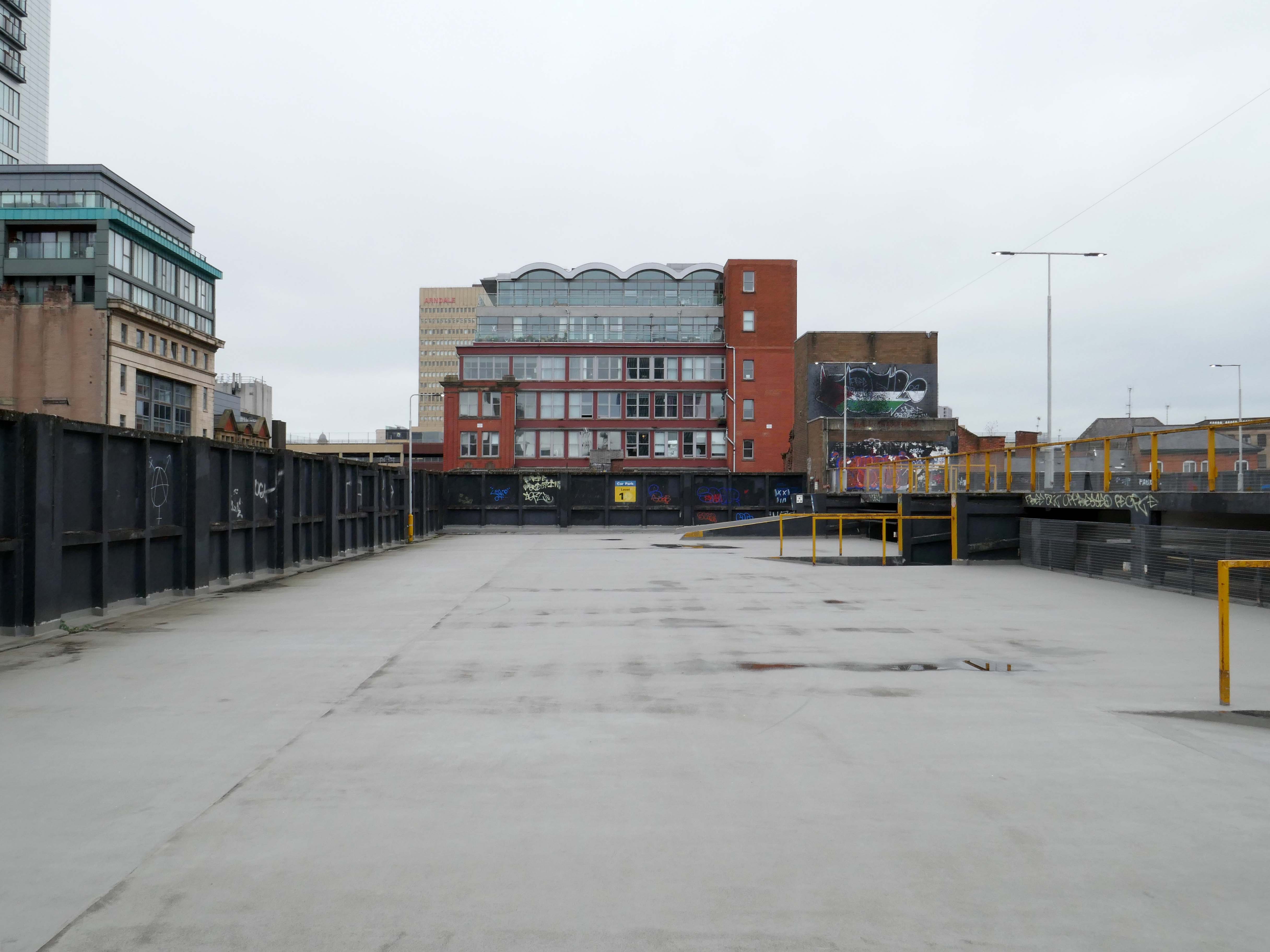
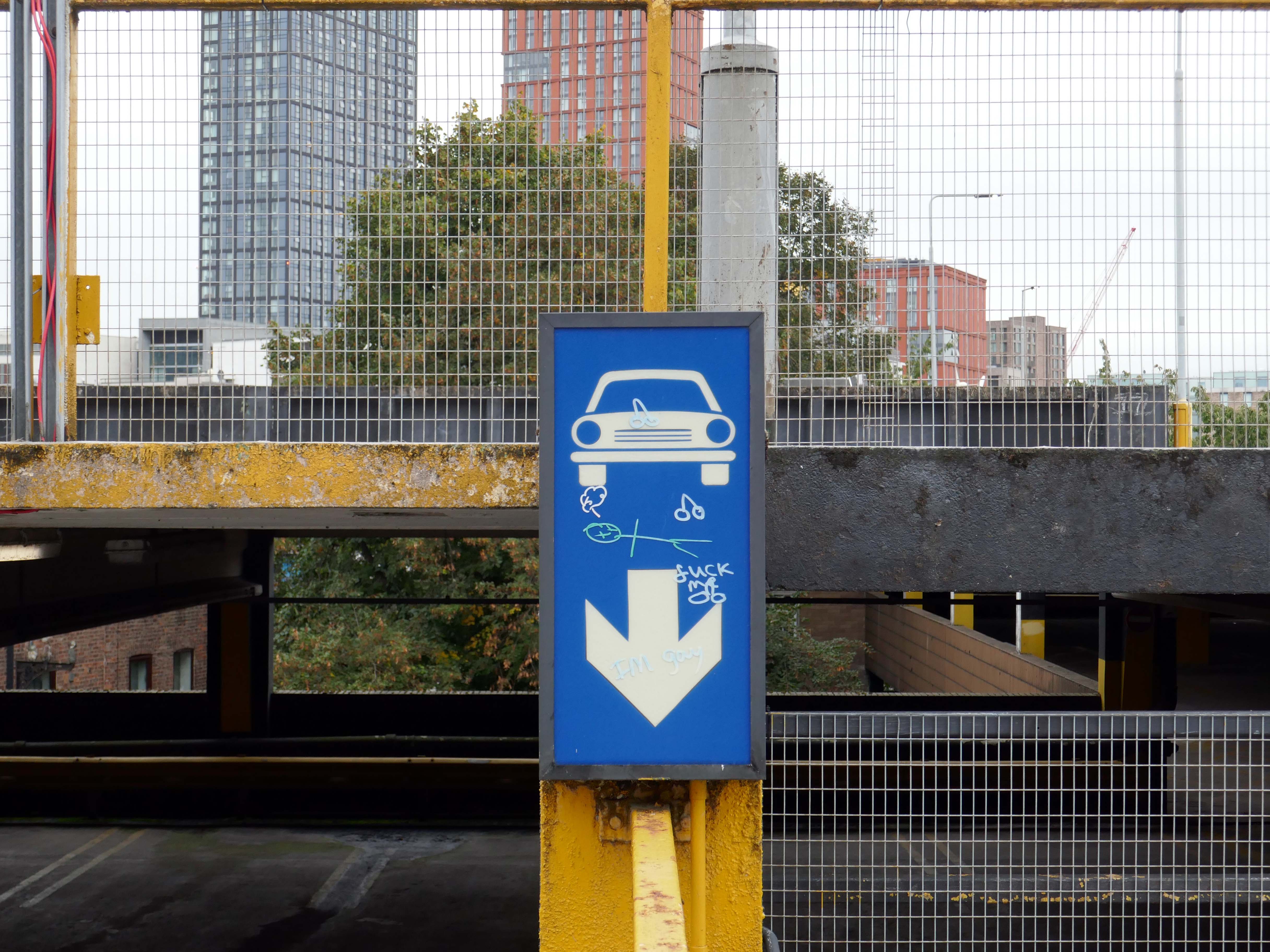
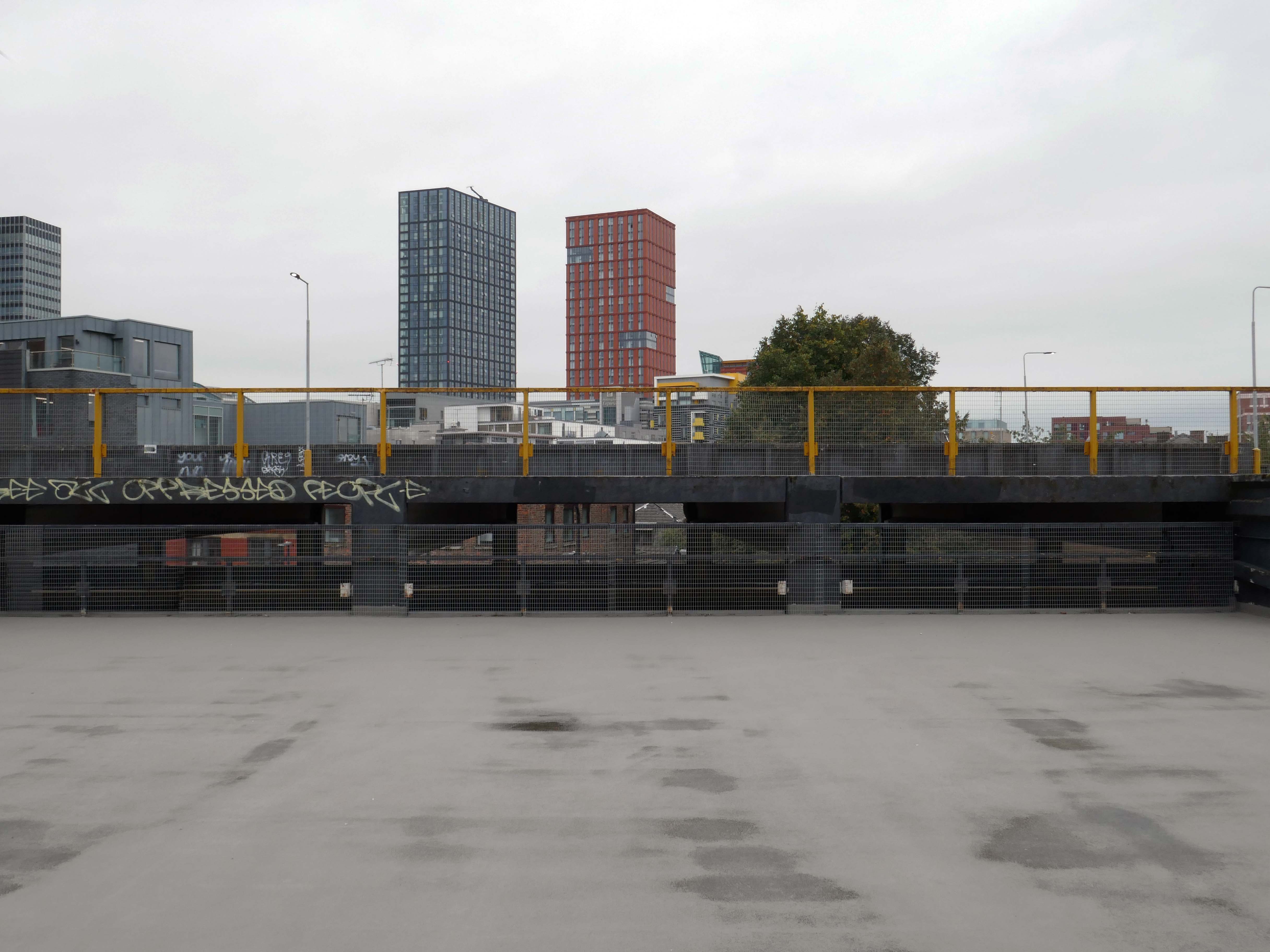
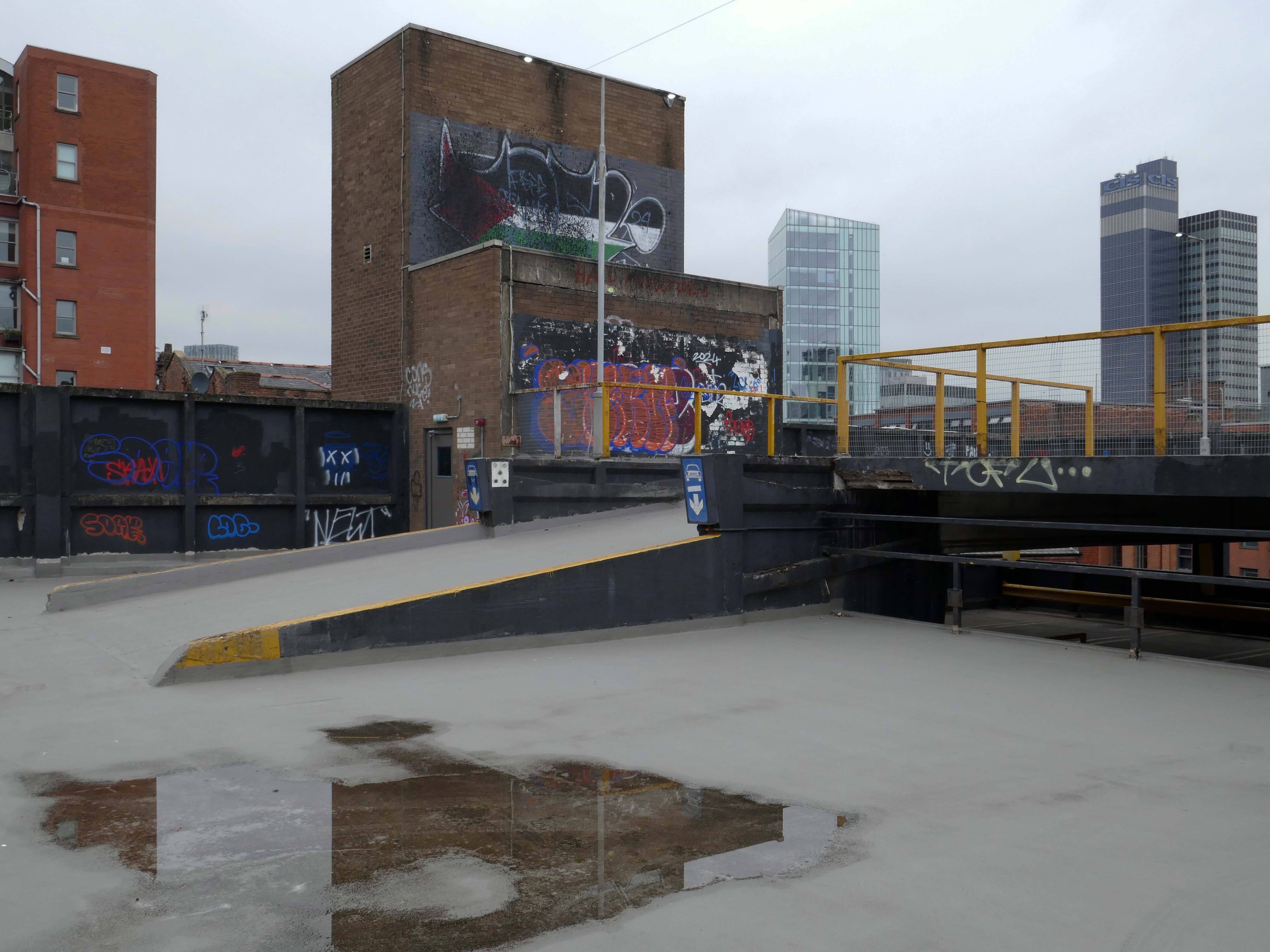
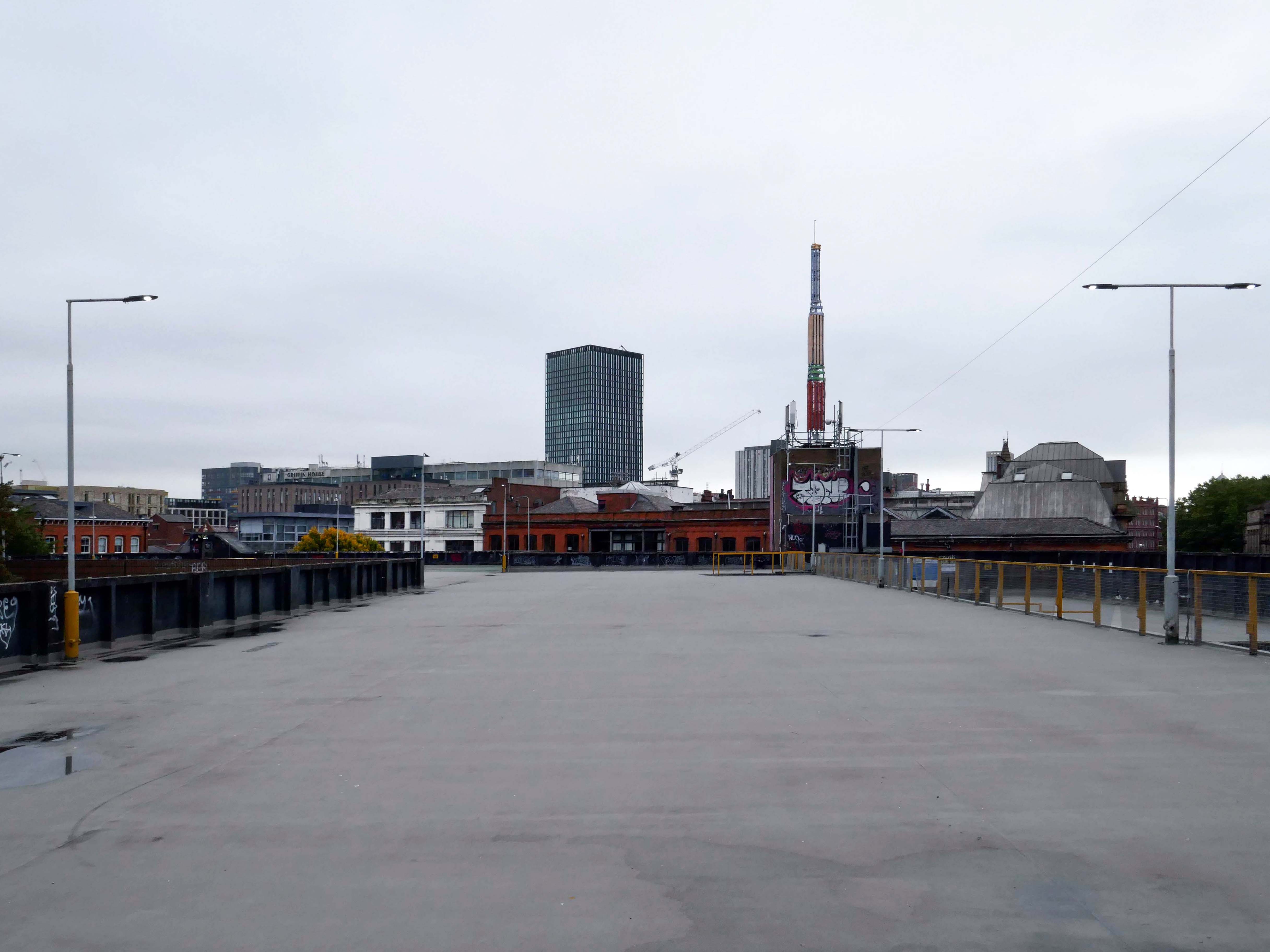
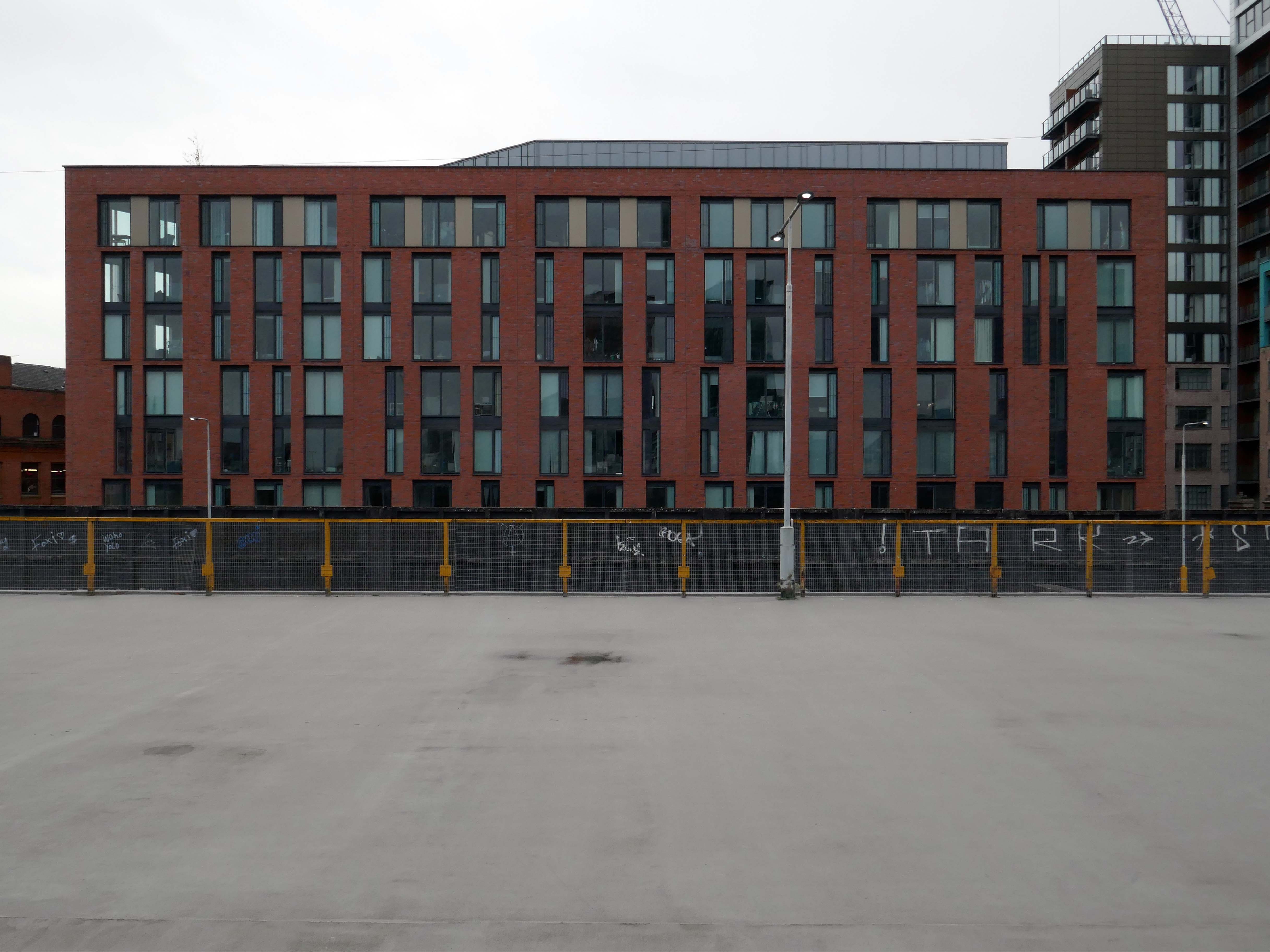
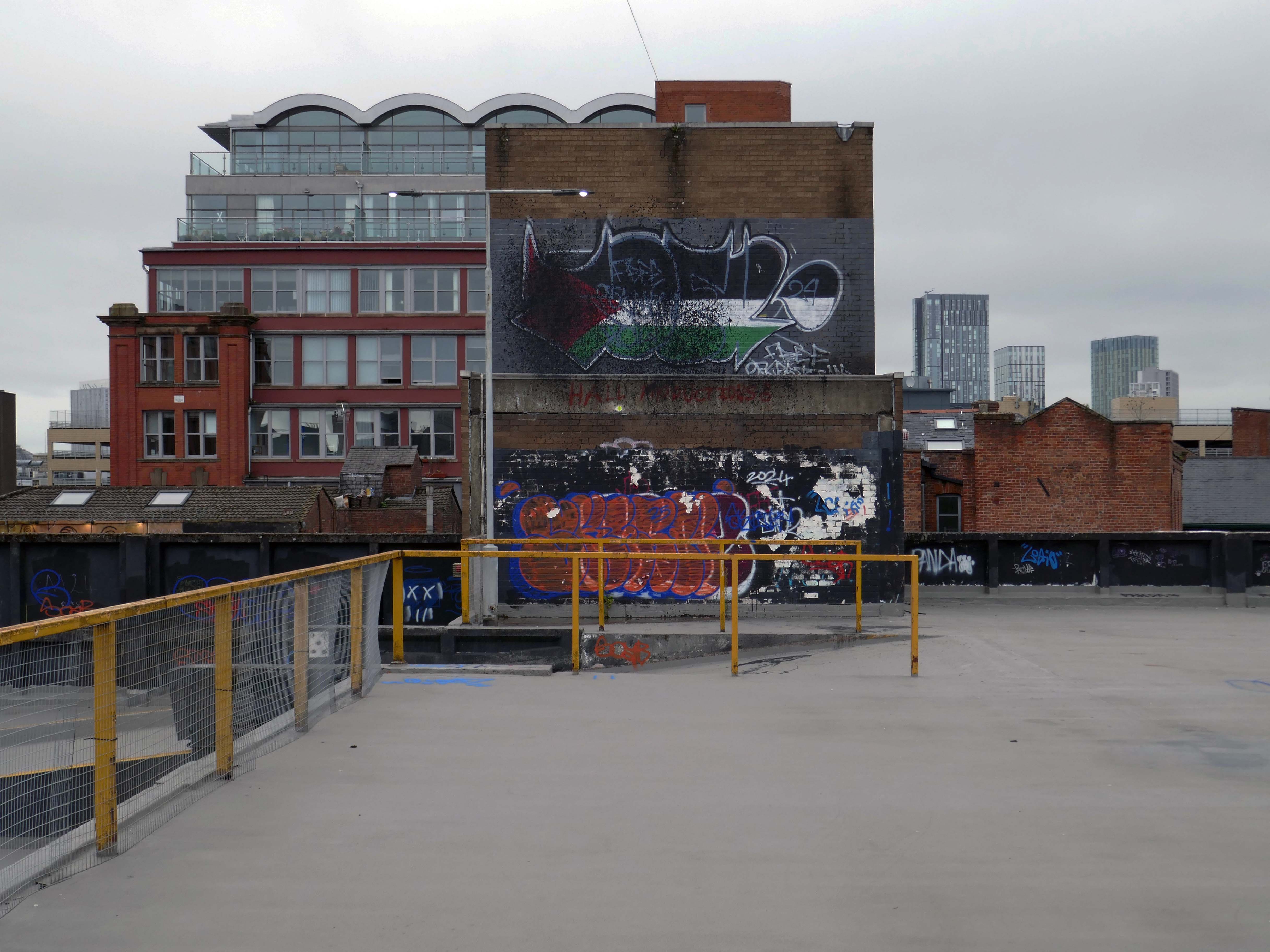
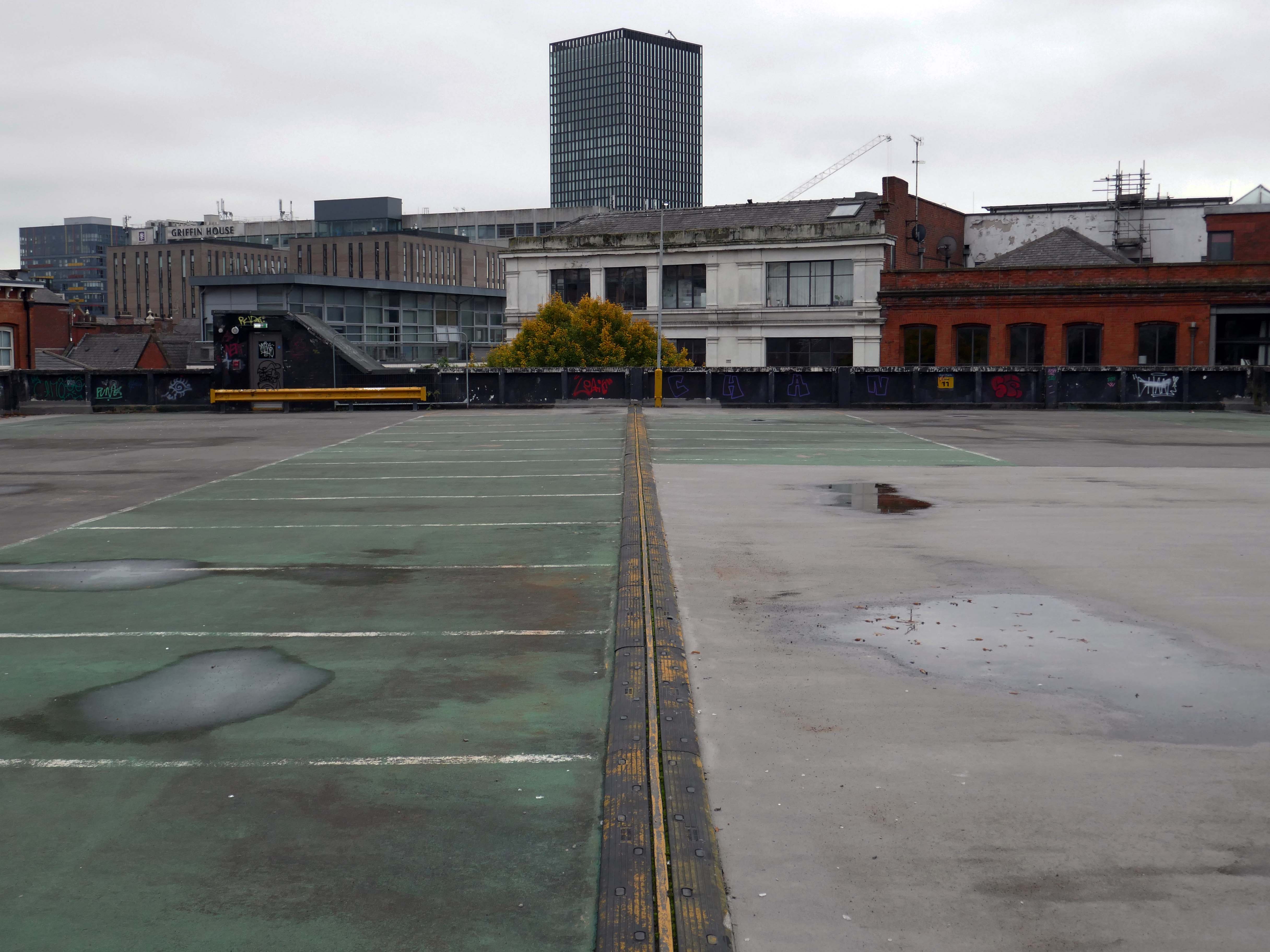
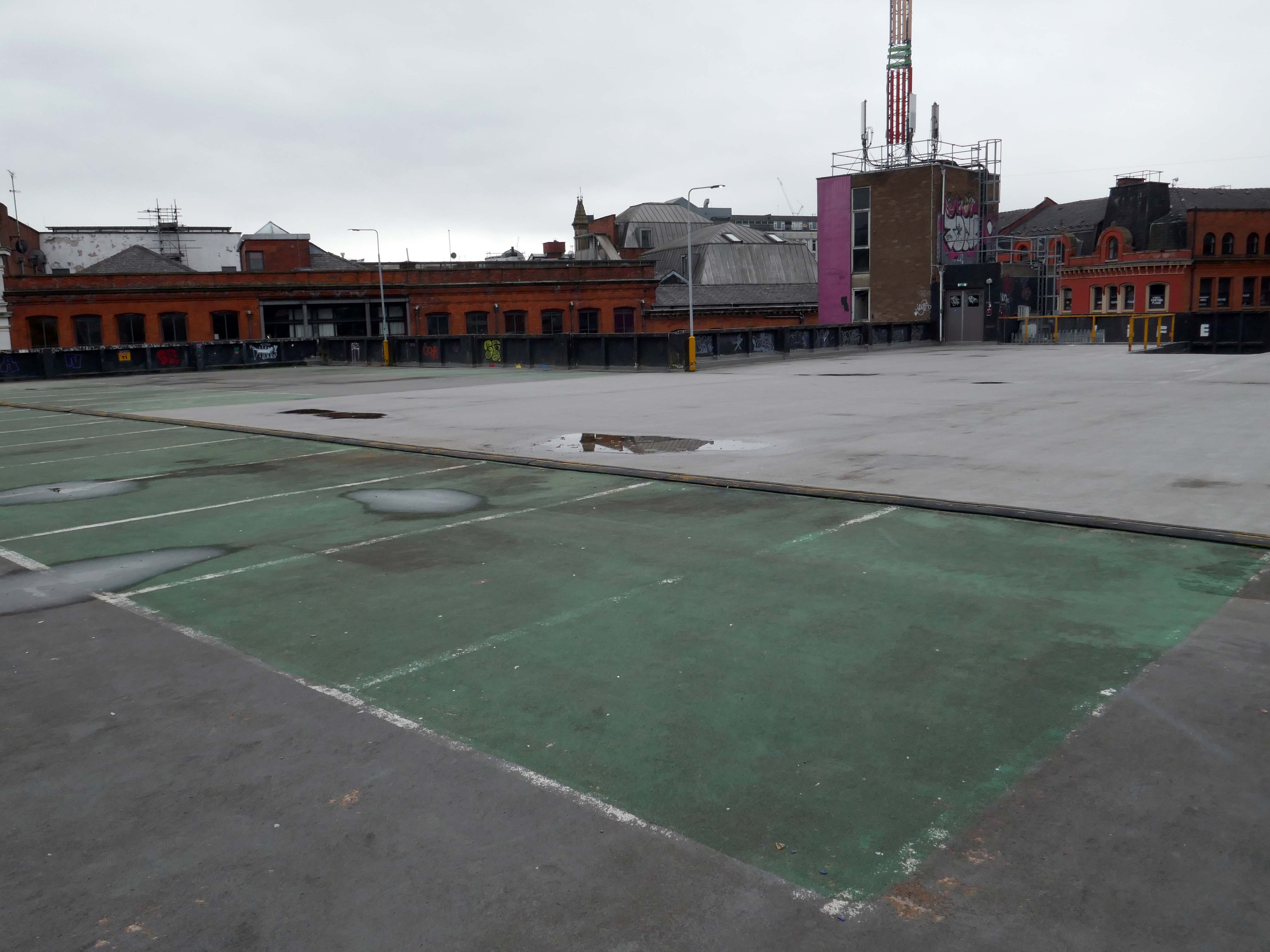
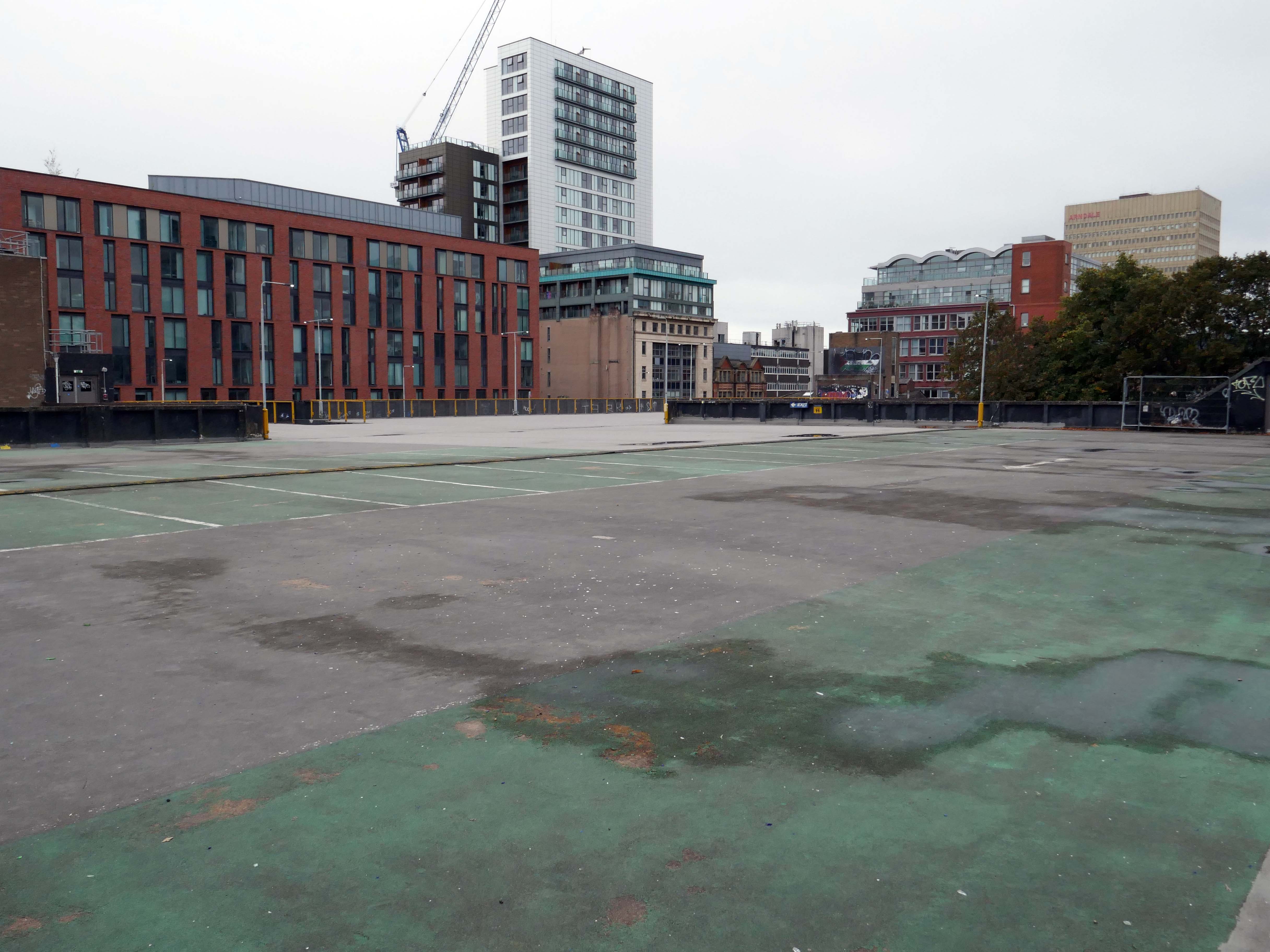
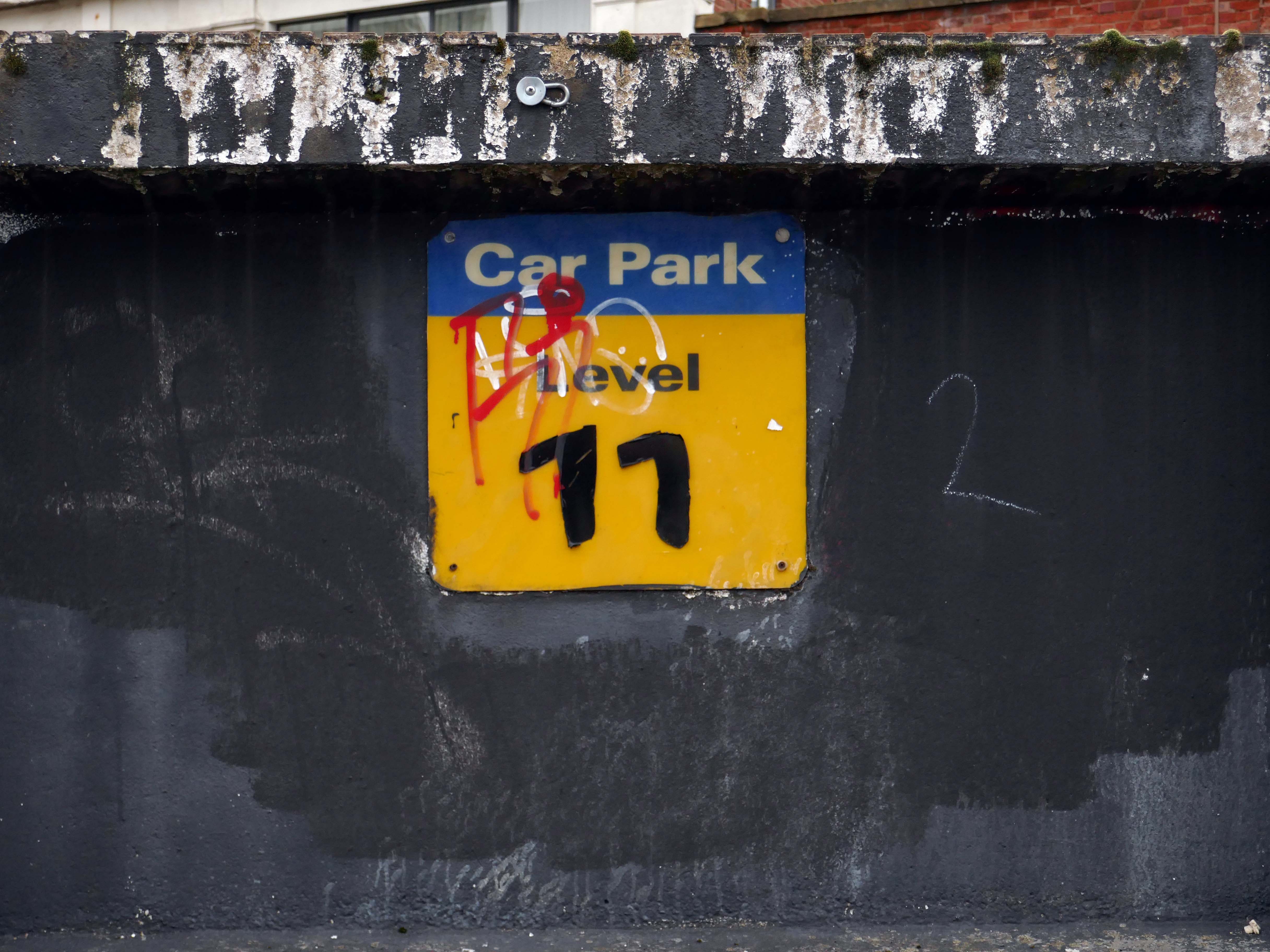
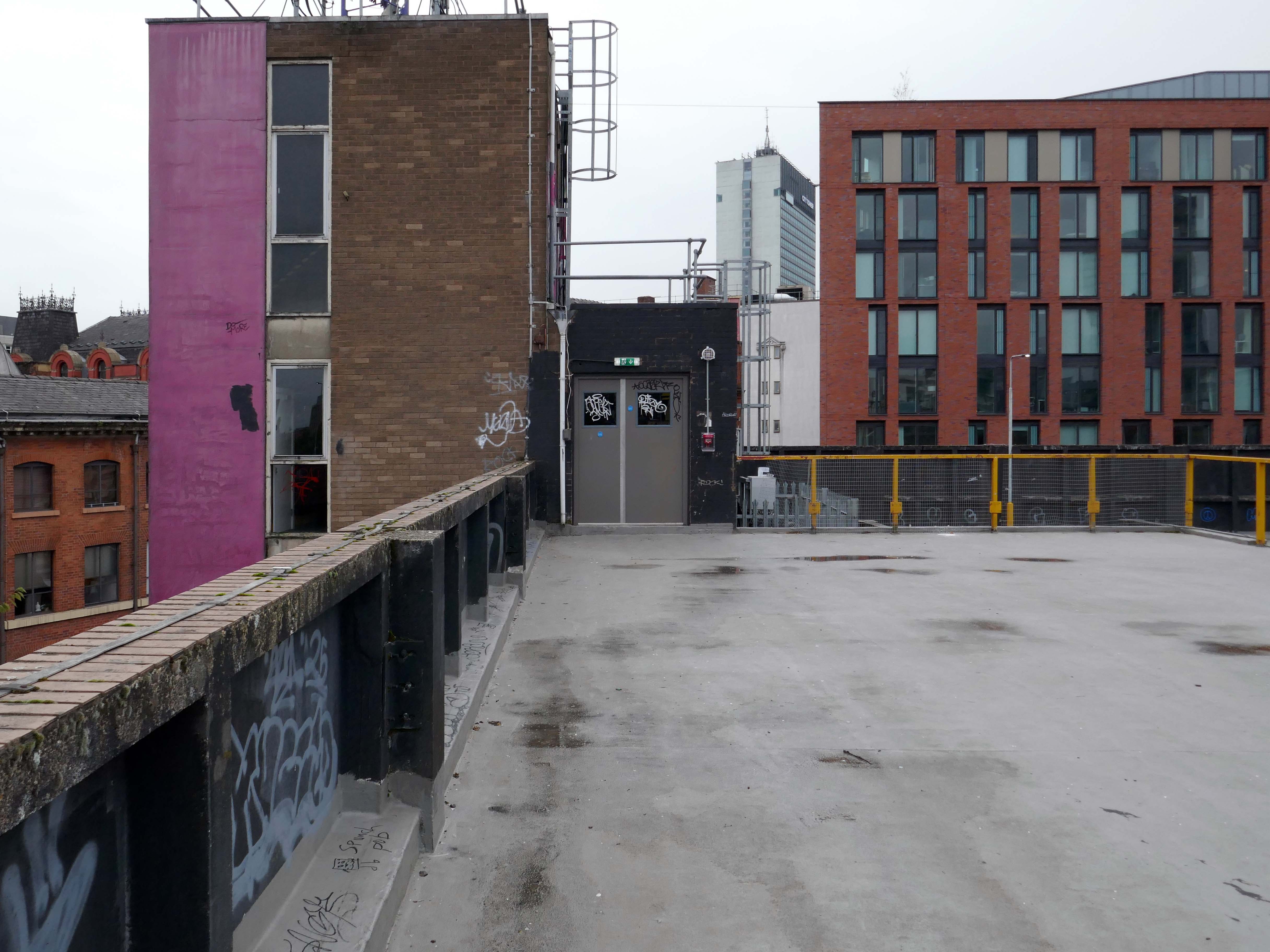
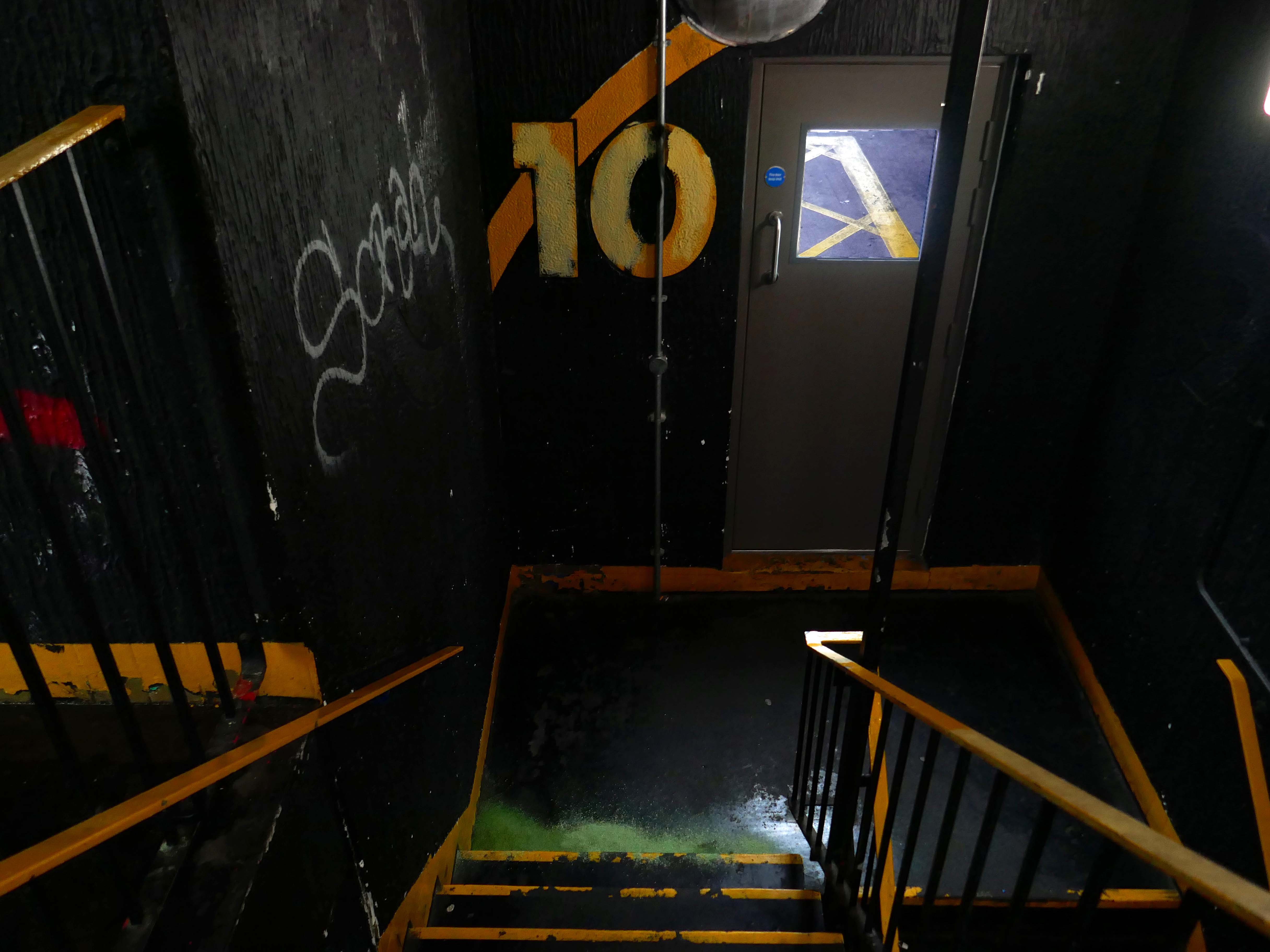
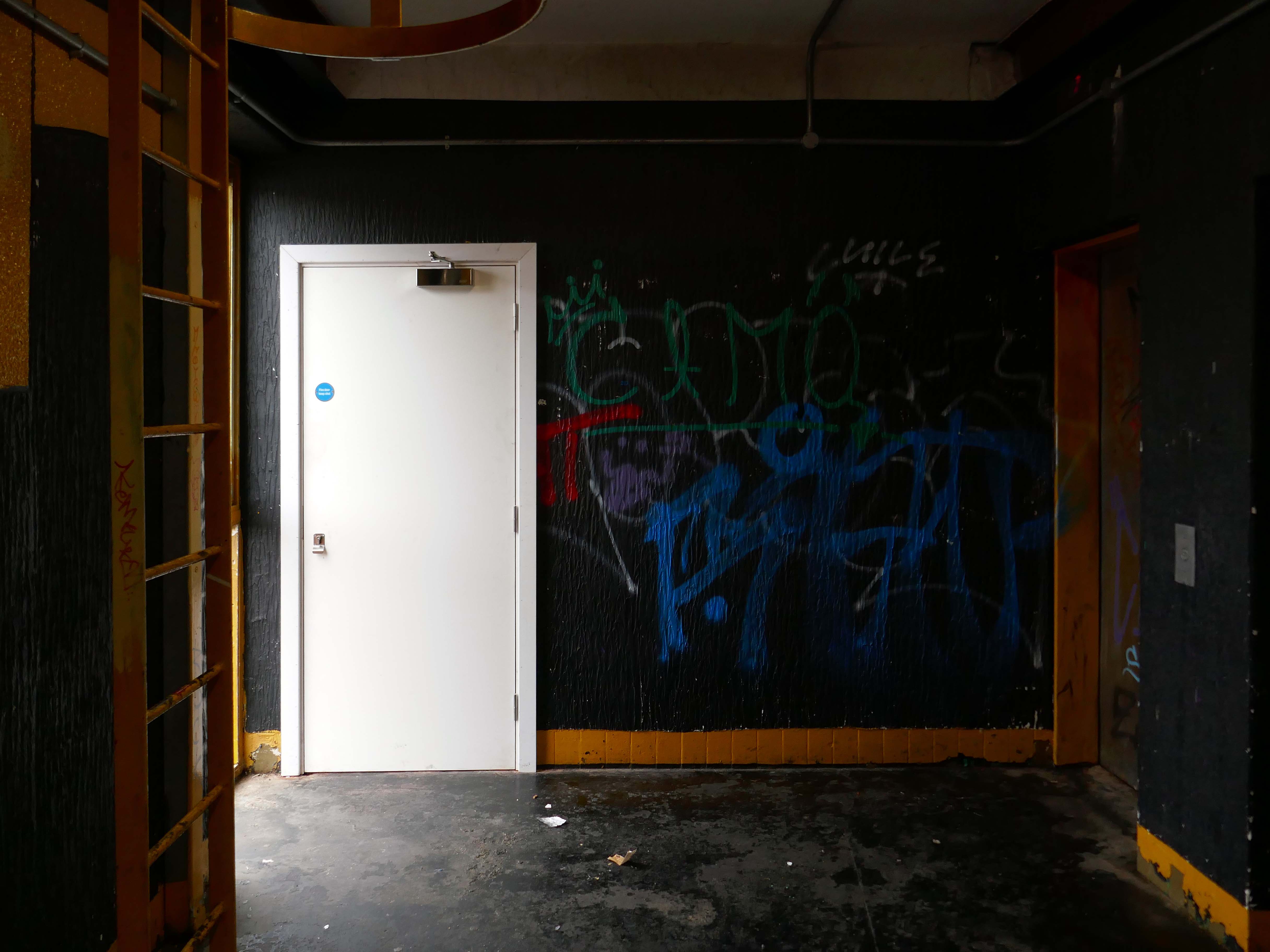
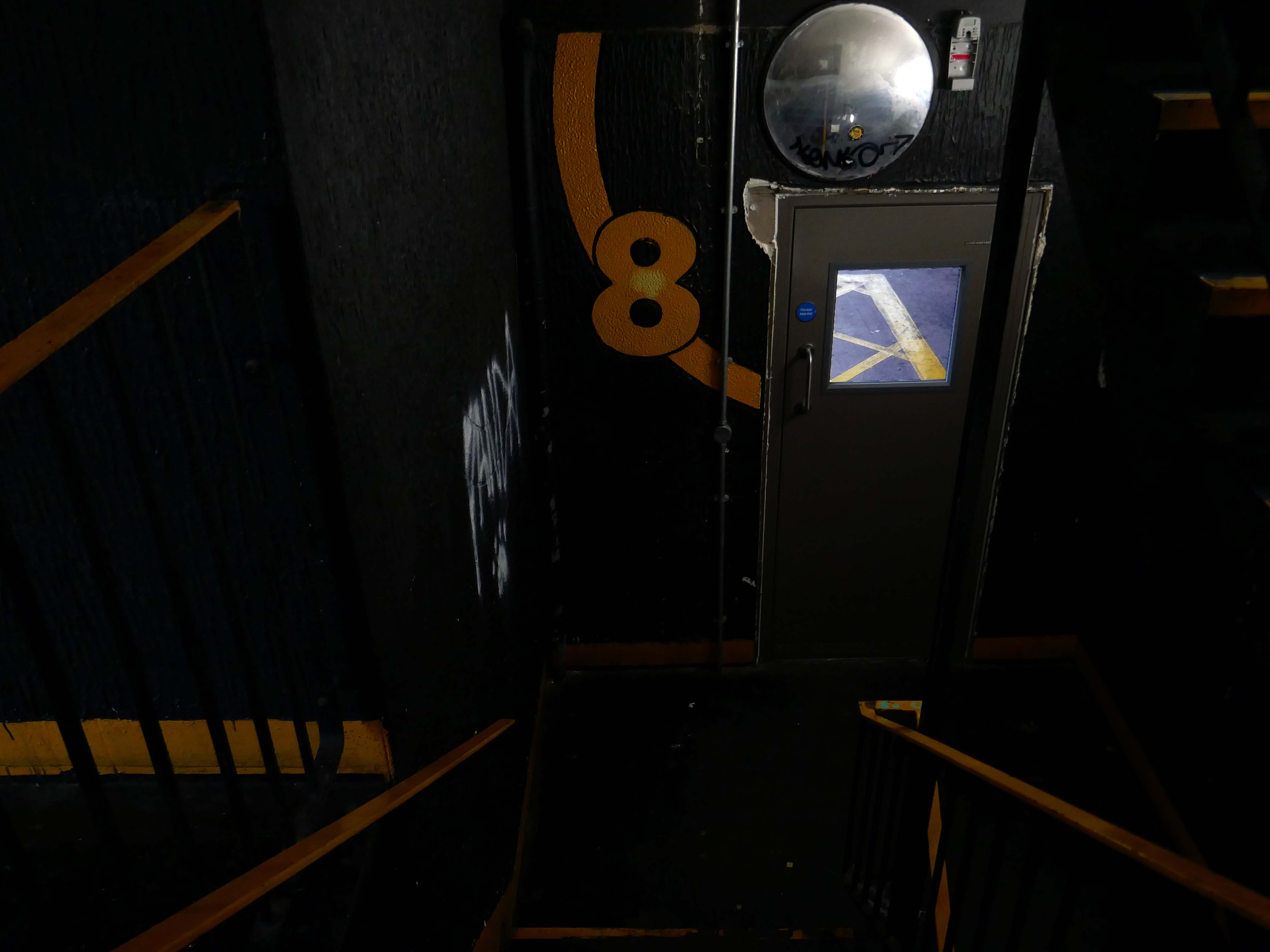
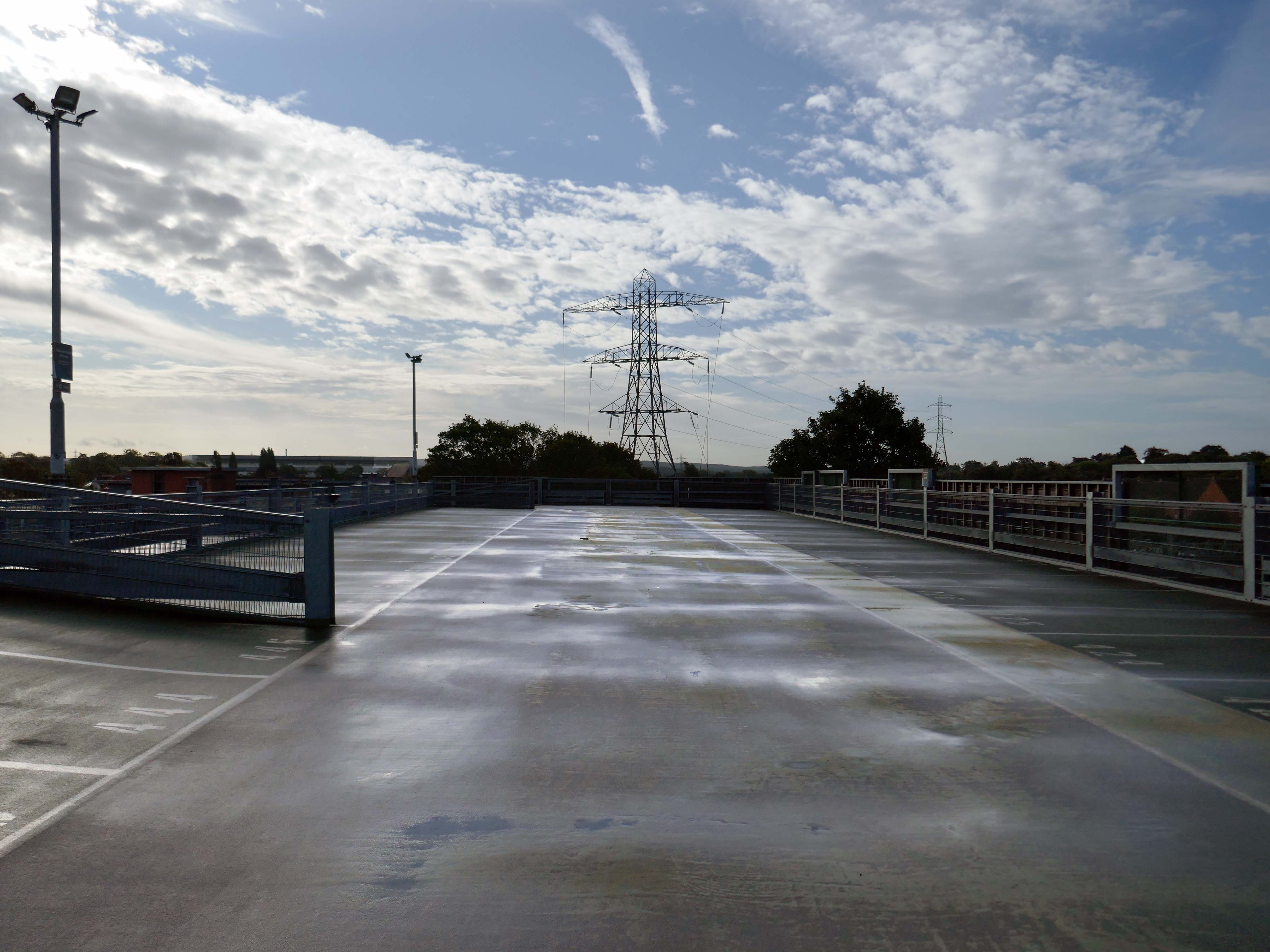
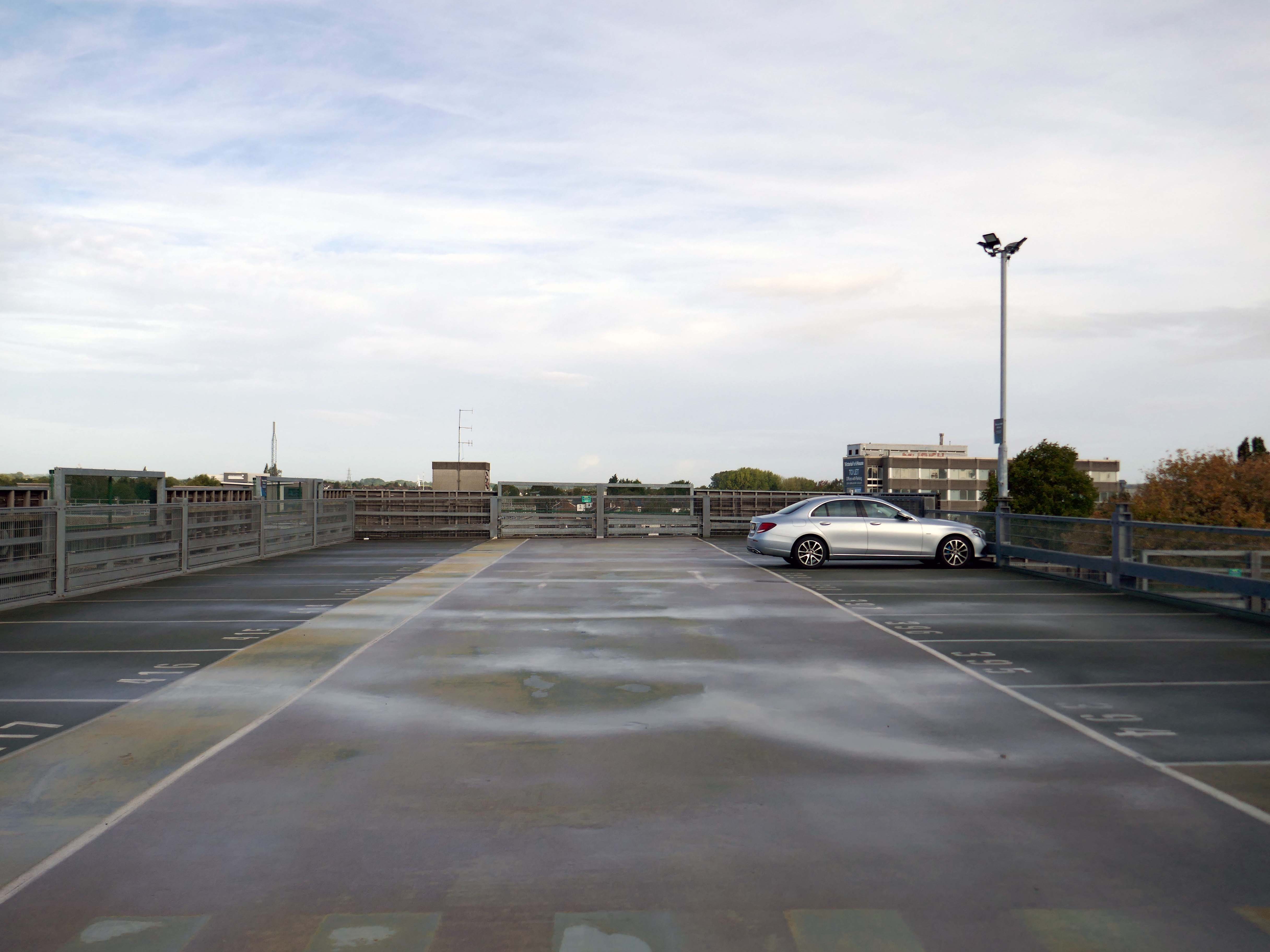
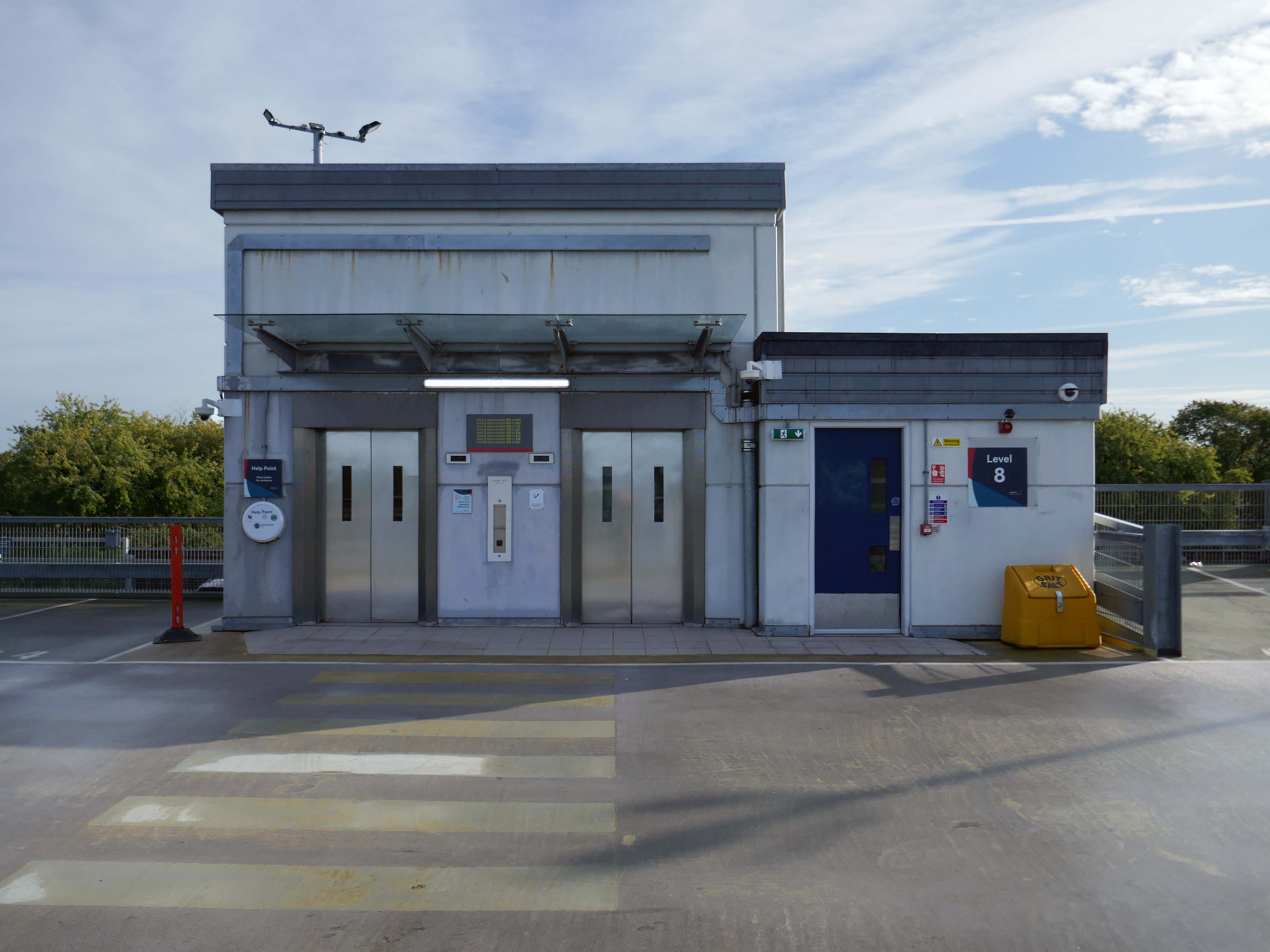
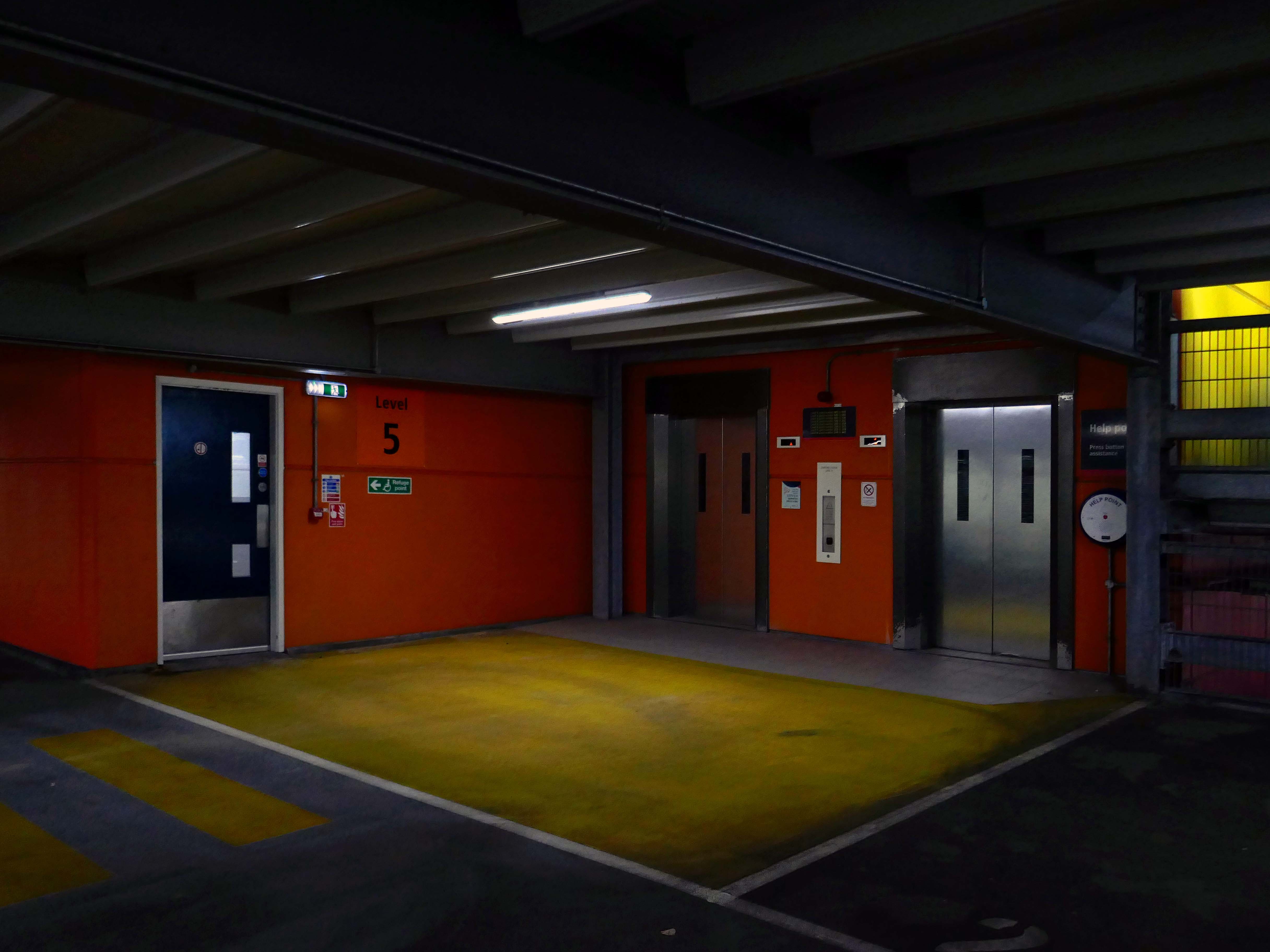
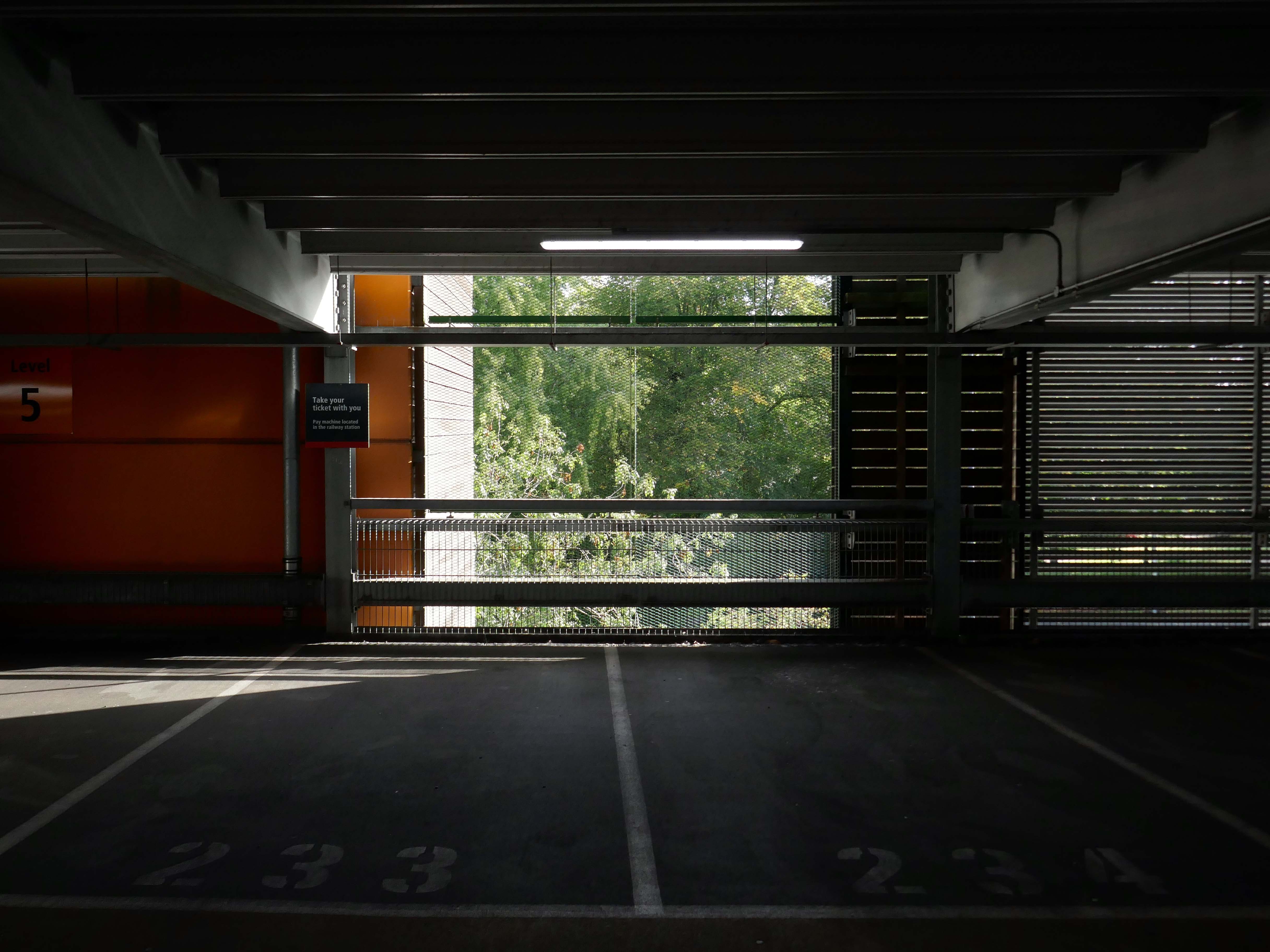
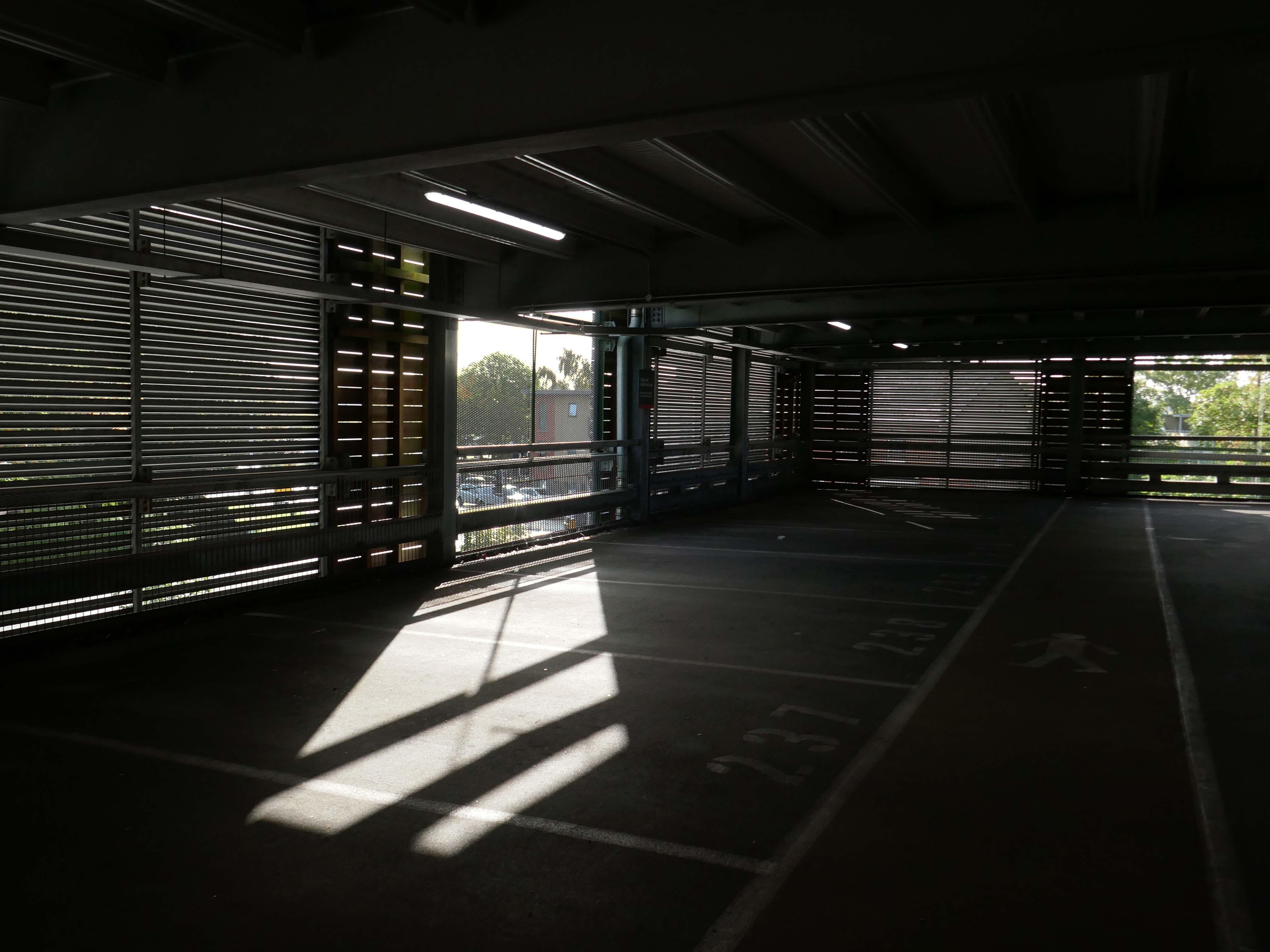
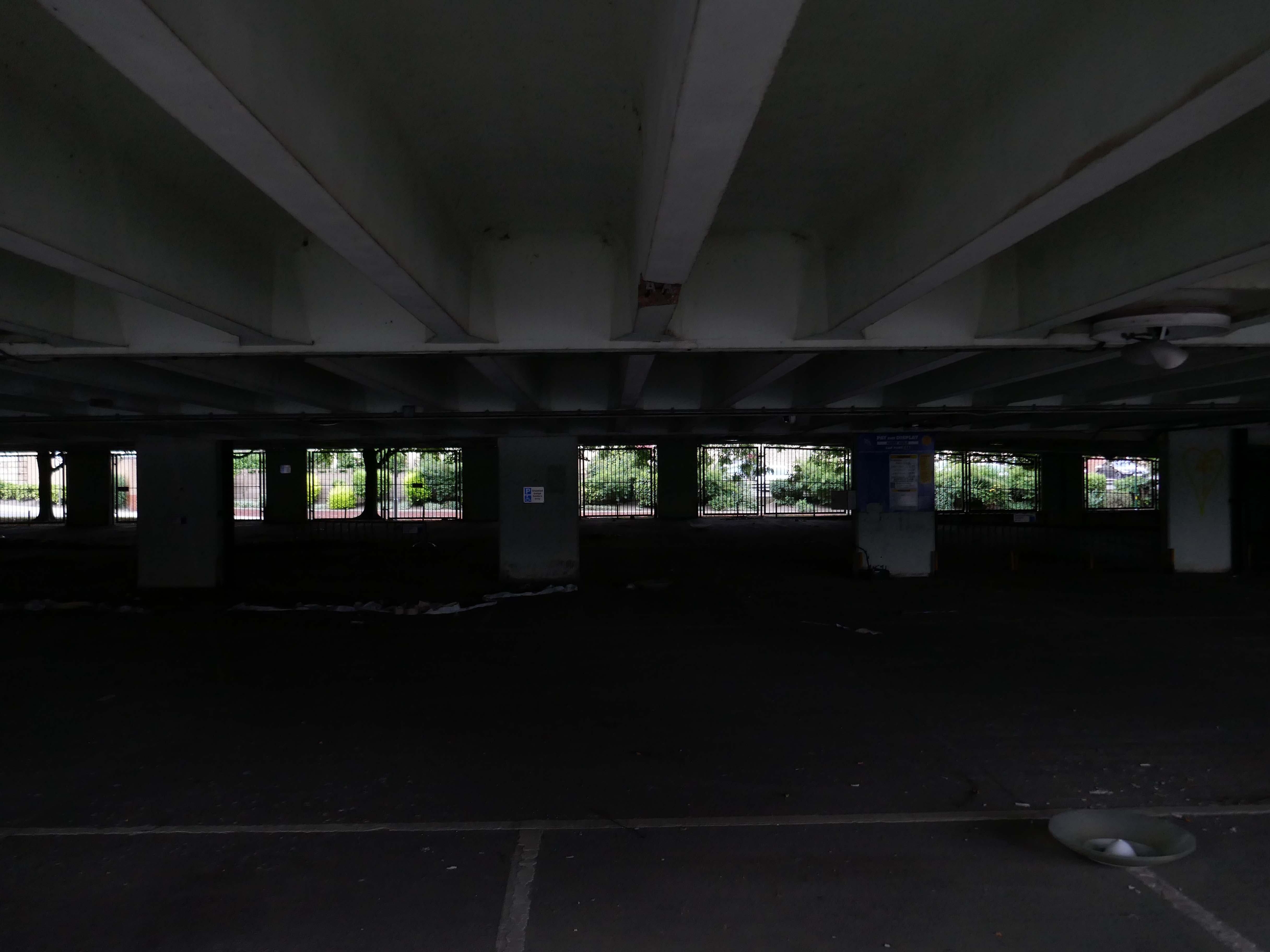
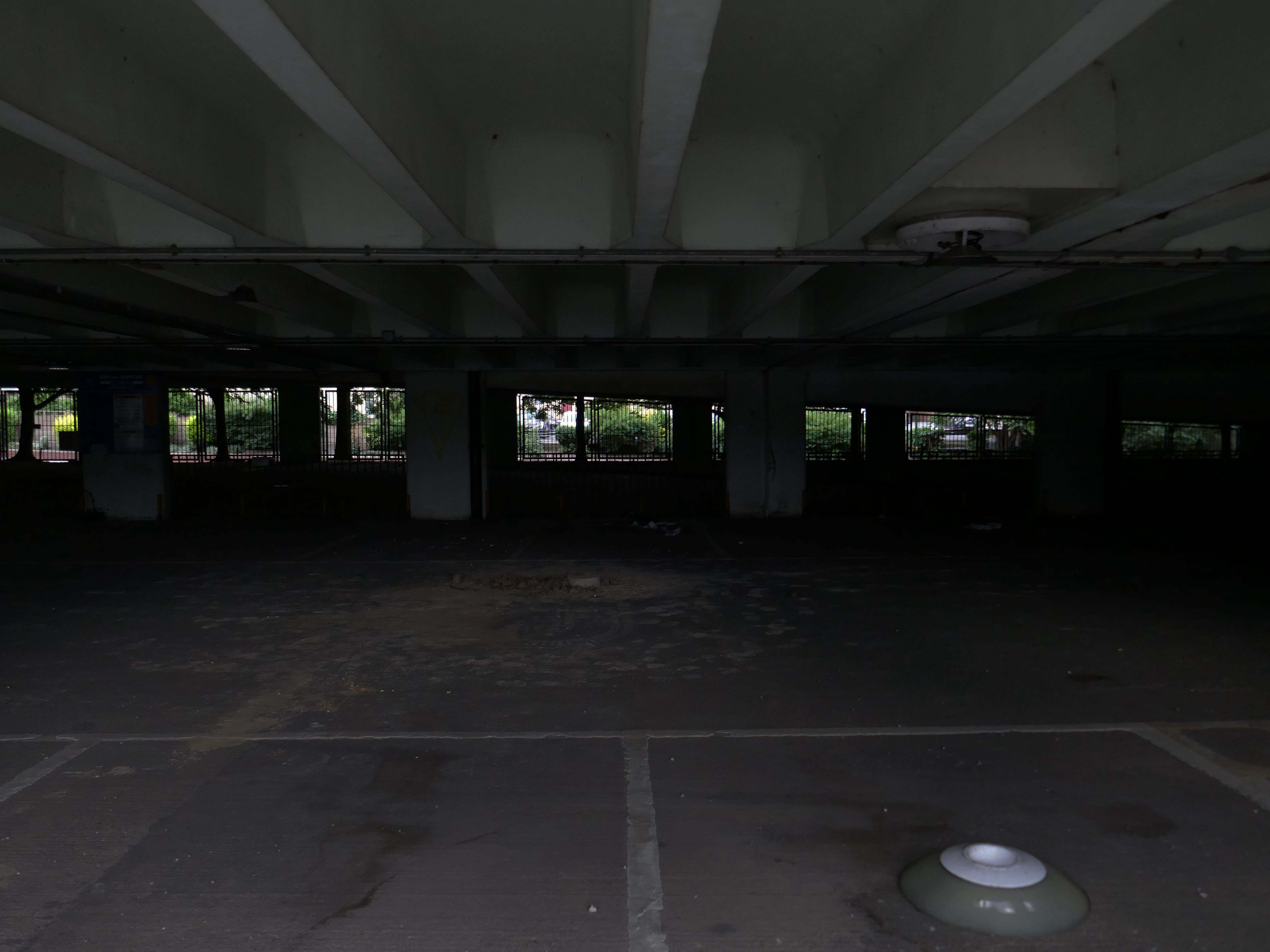
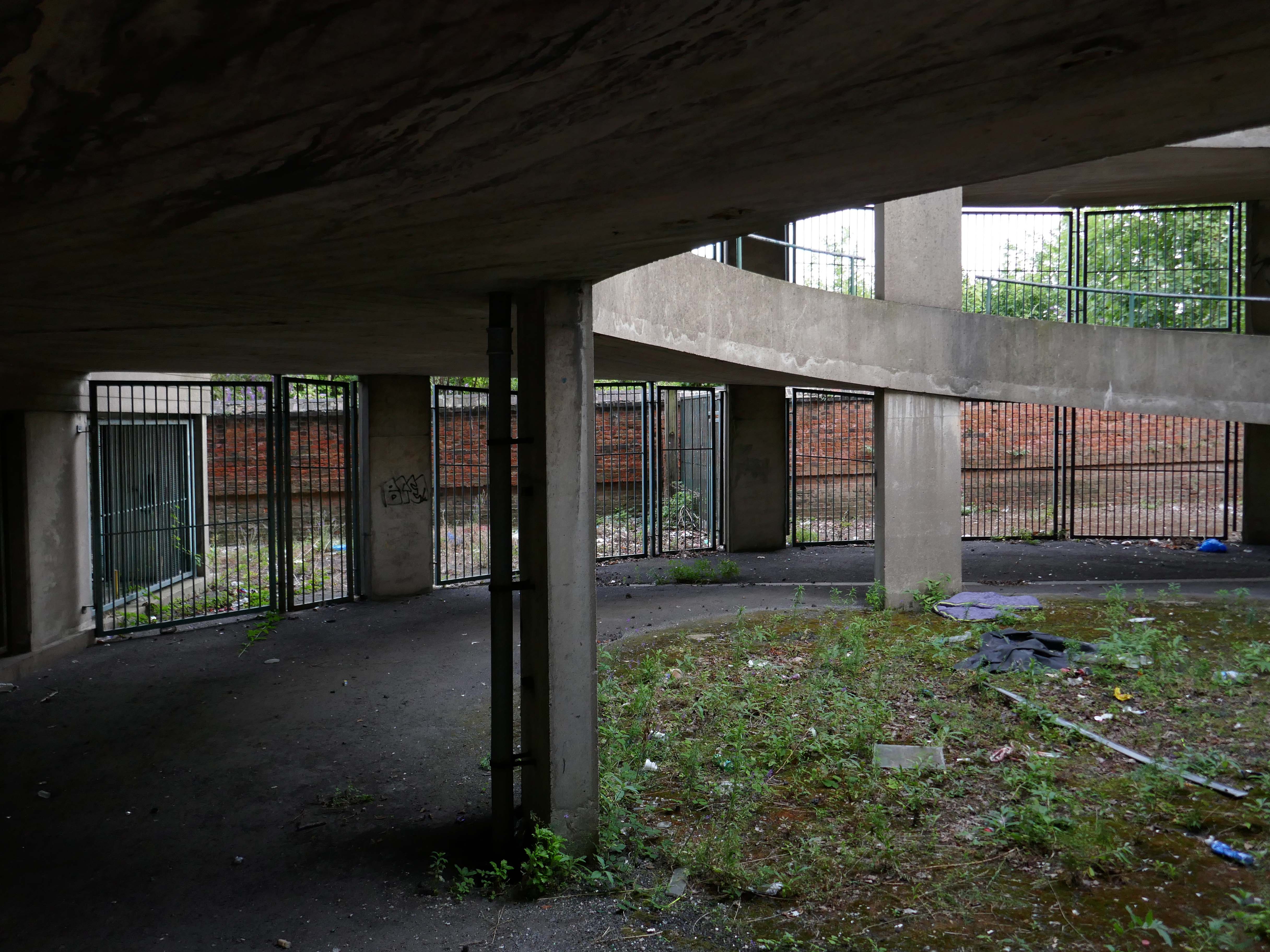
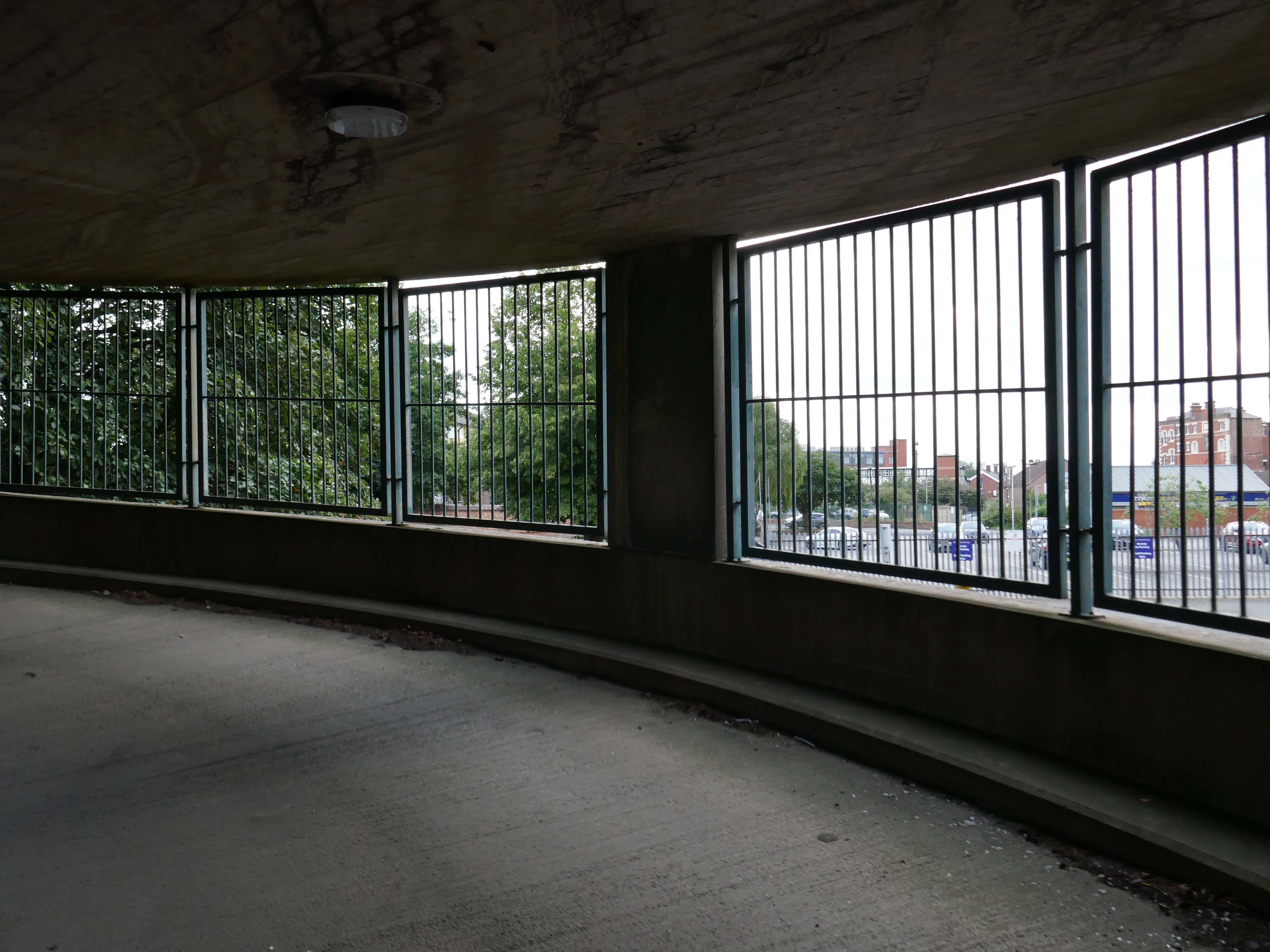
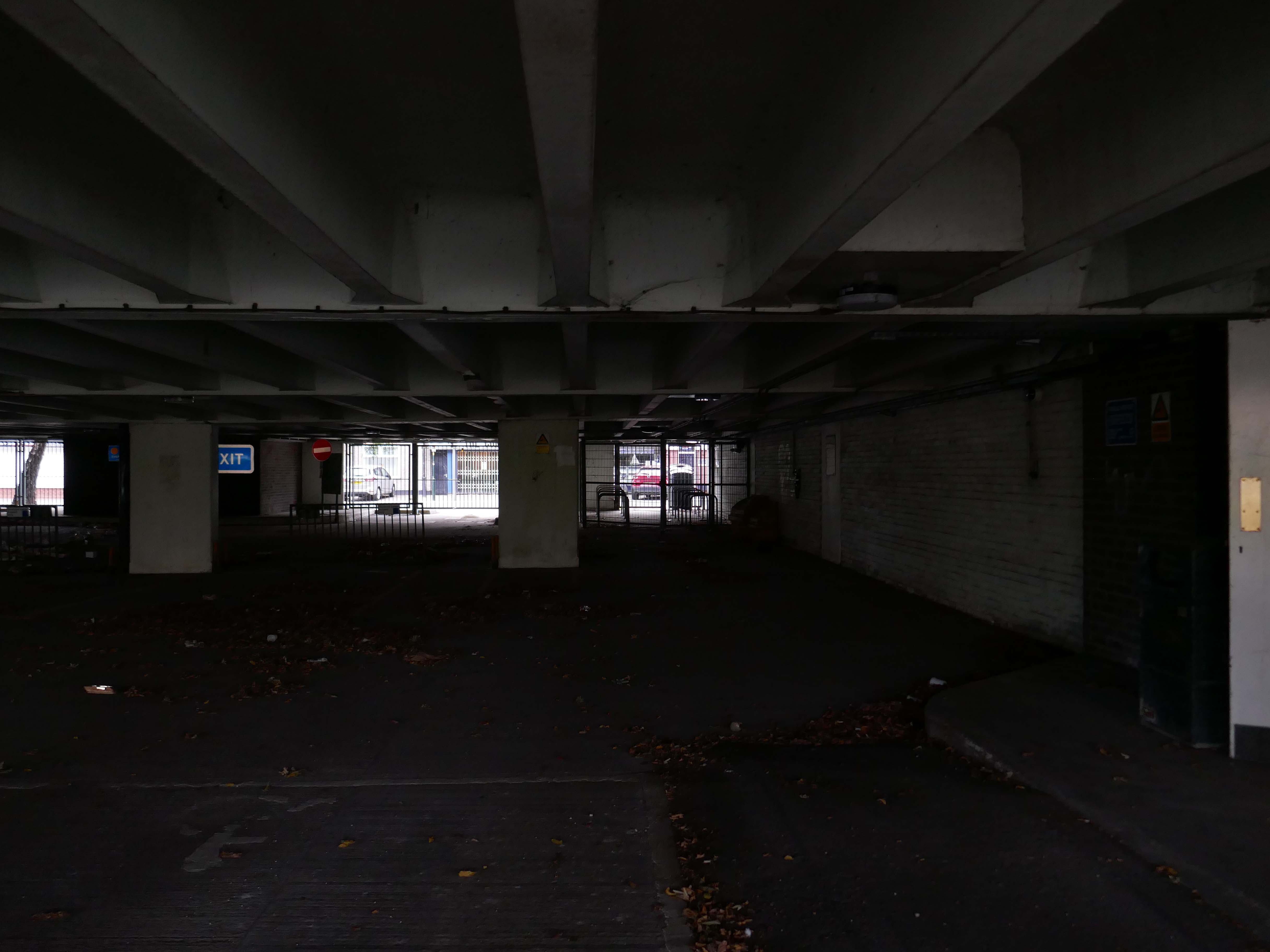
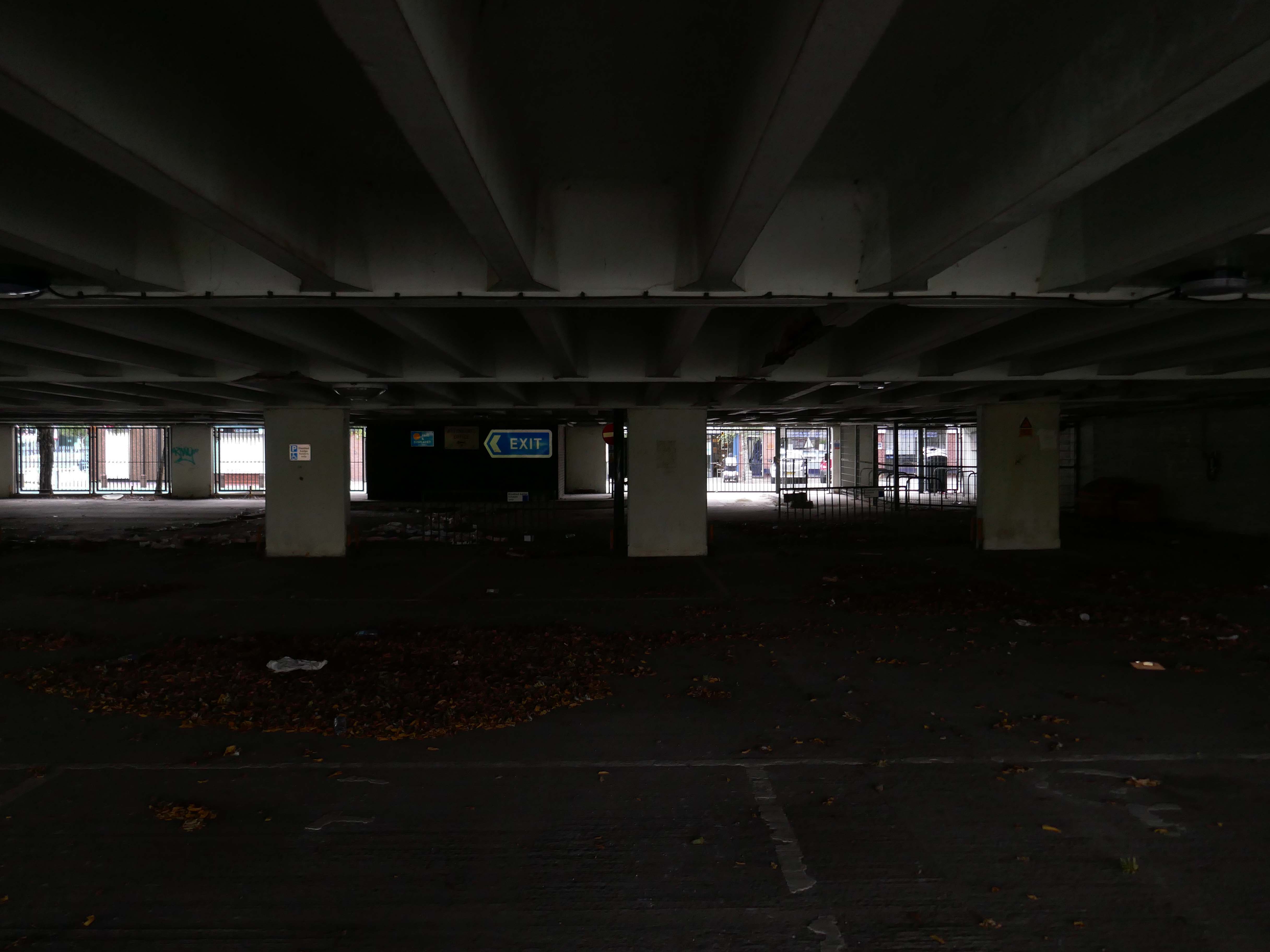
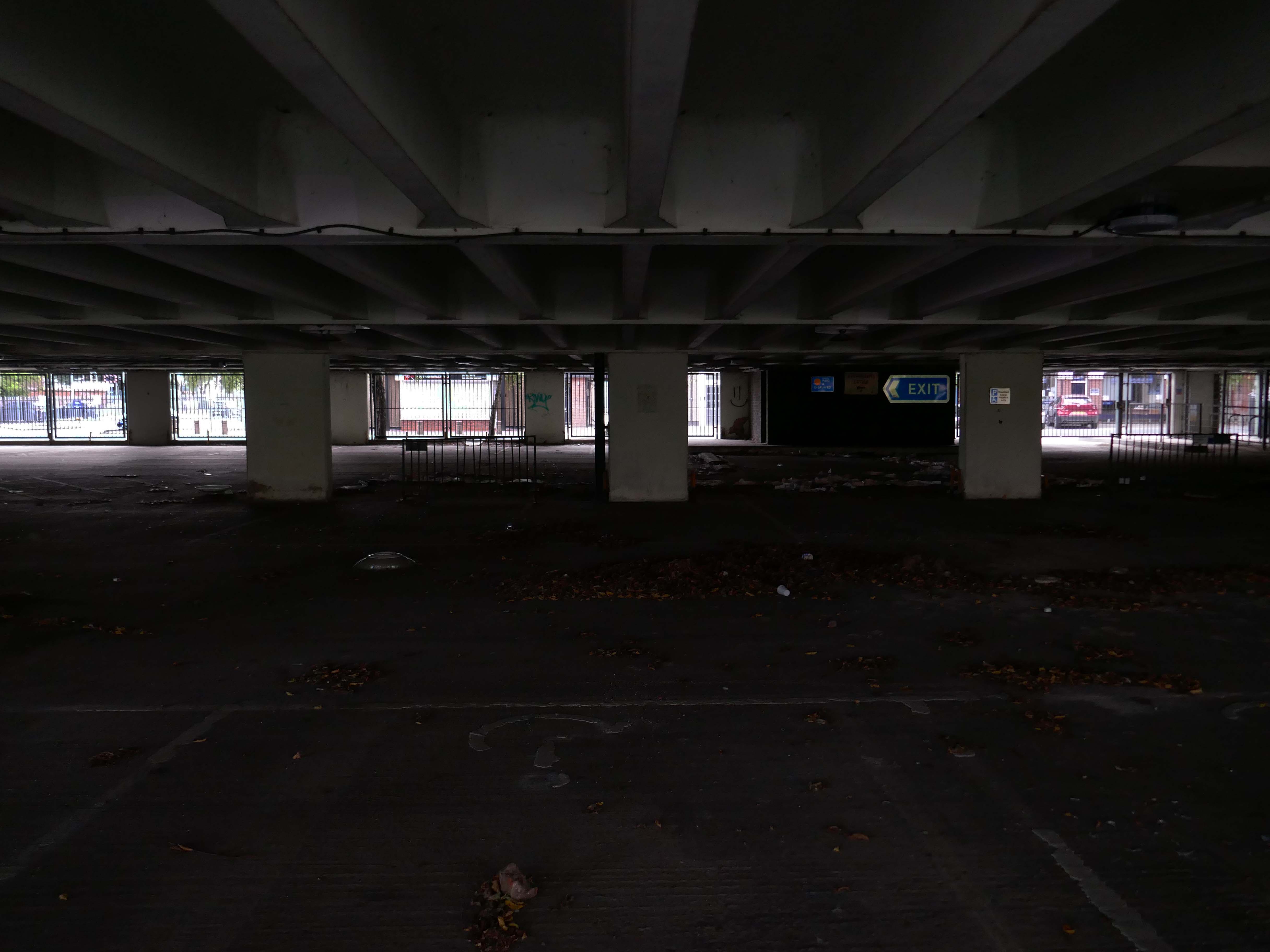
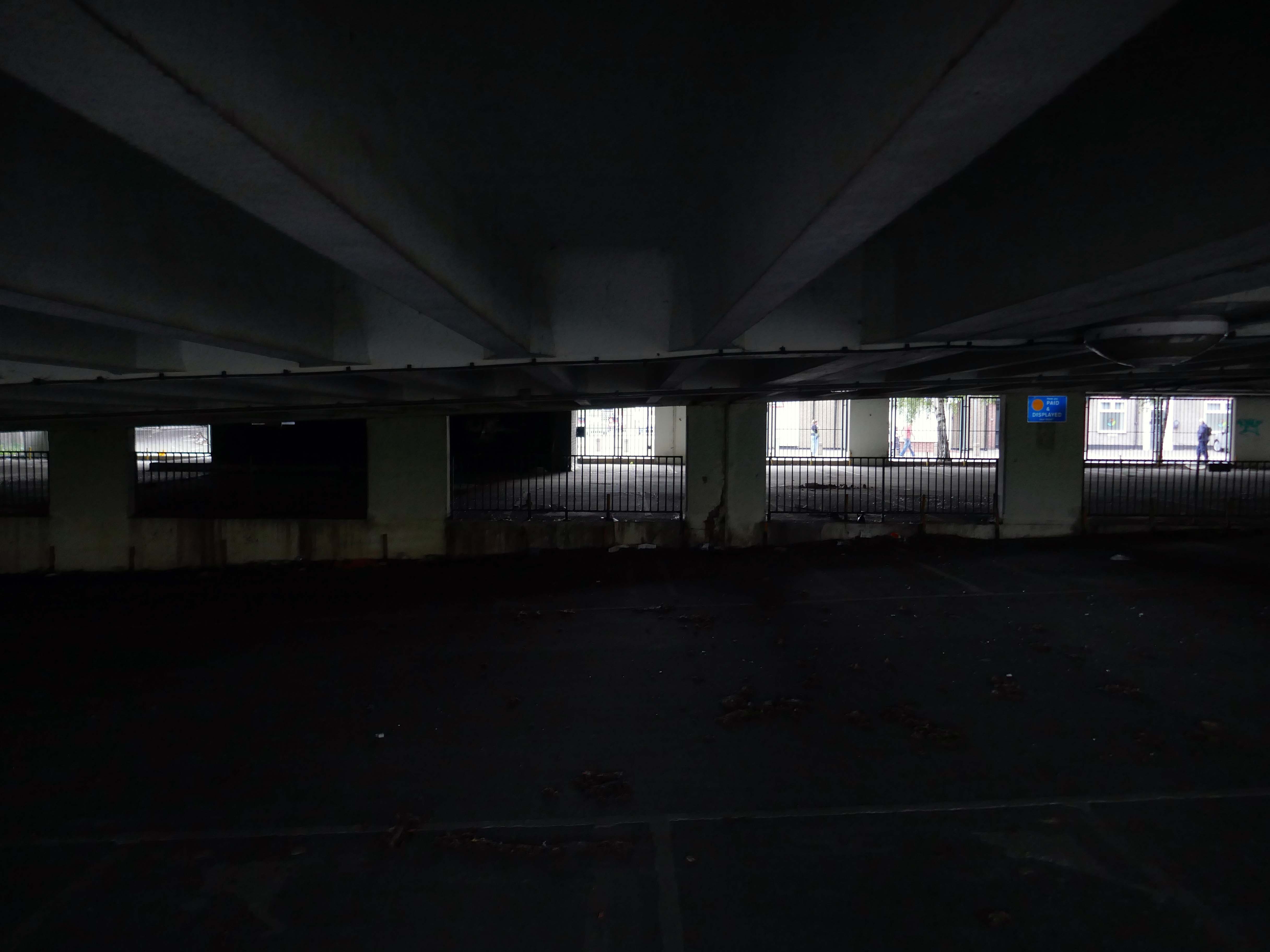
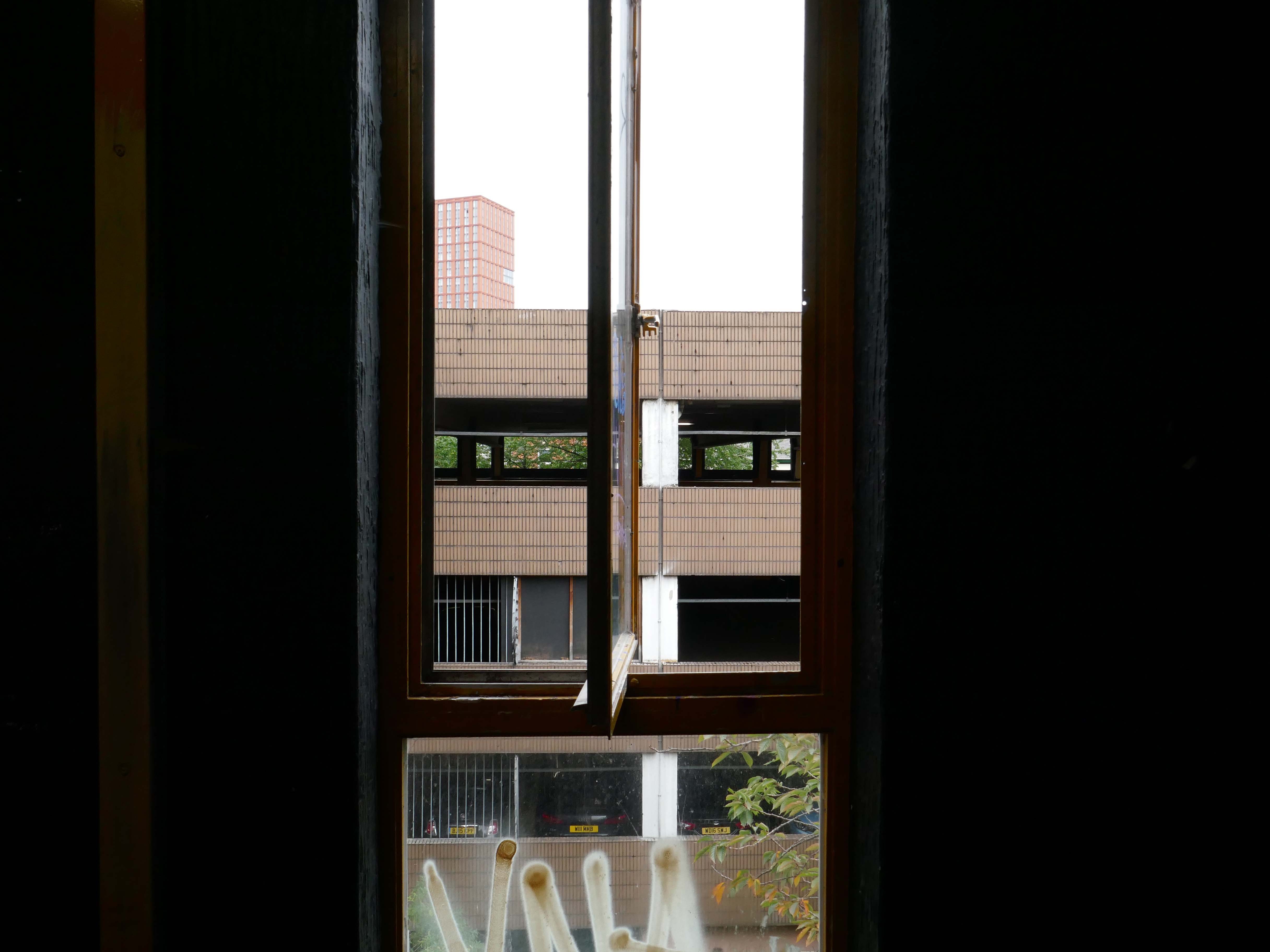
Northern Quarter Car Park – Manchester

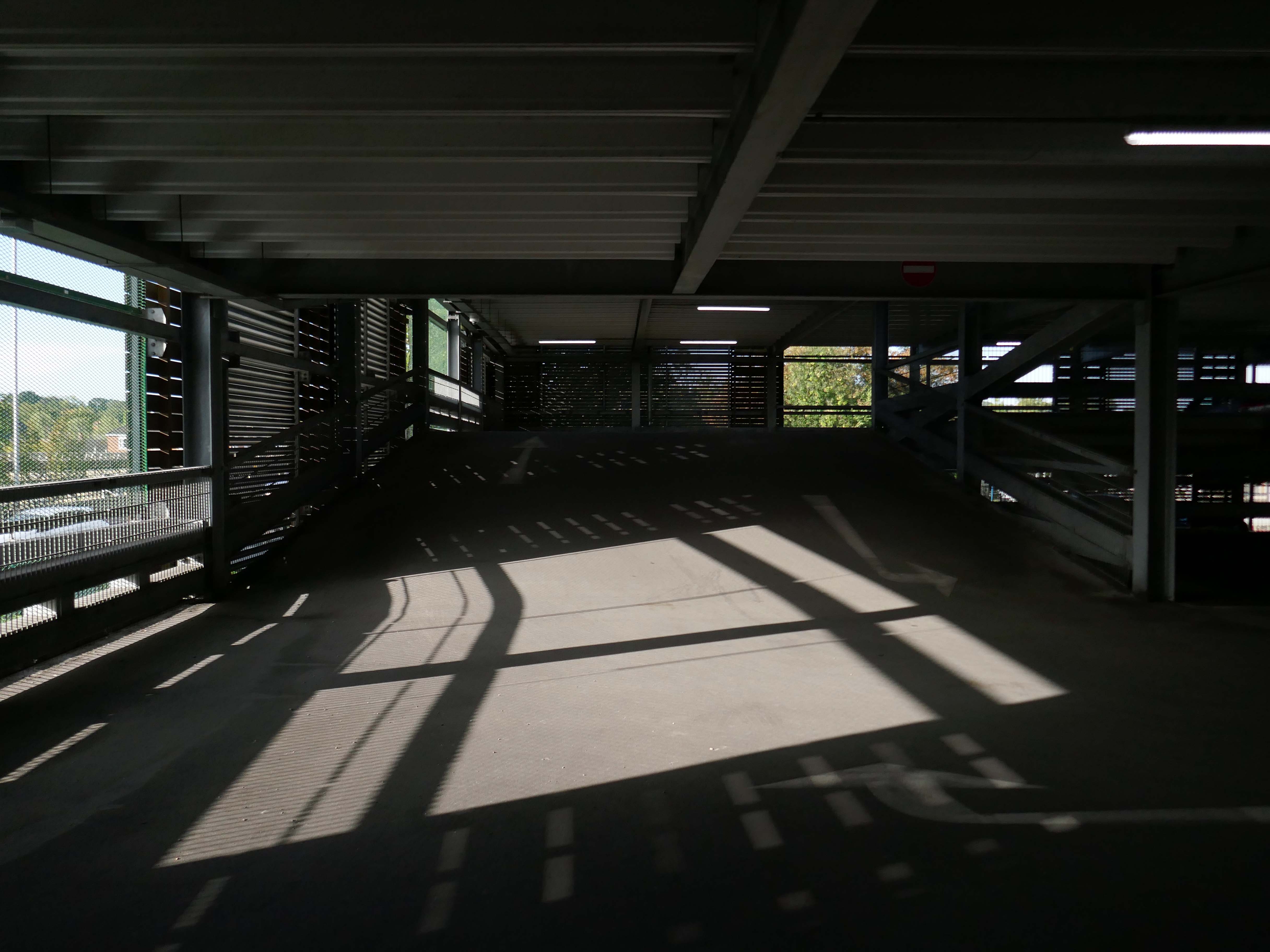
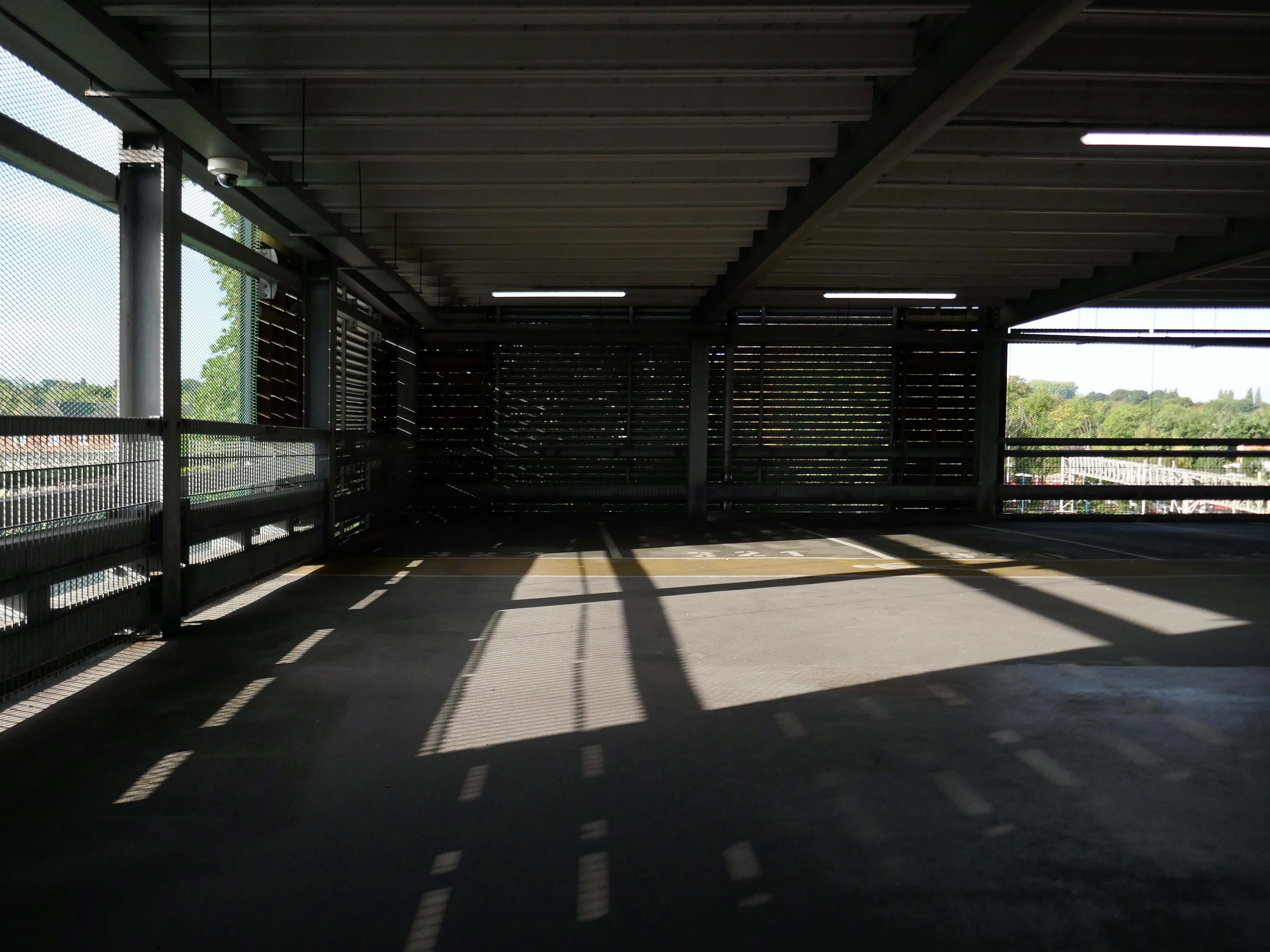
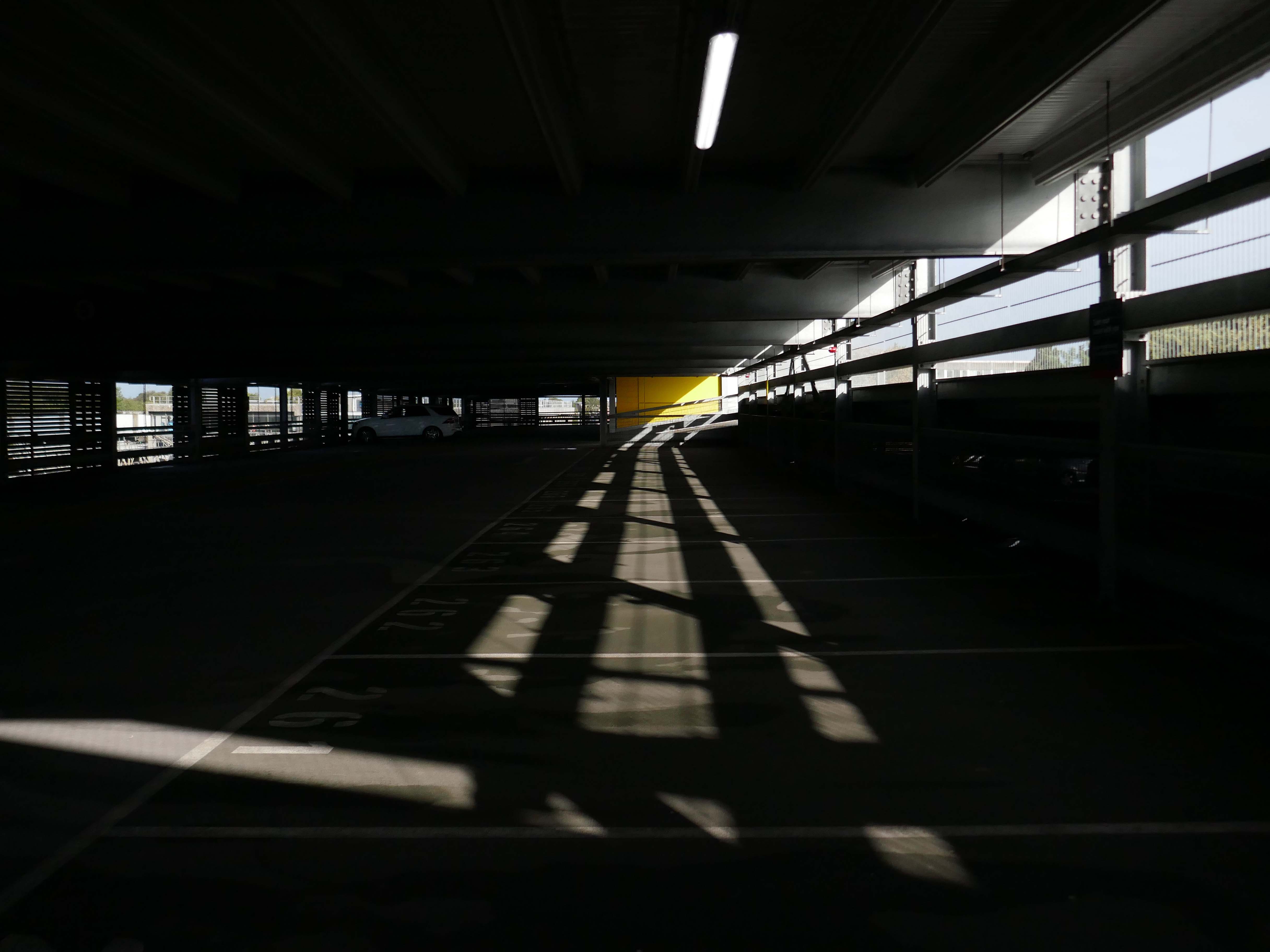
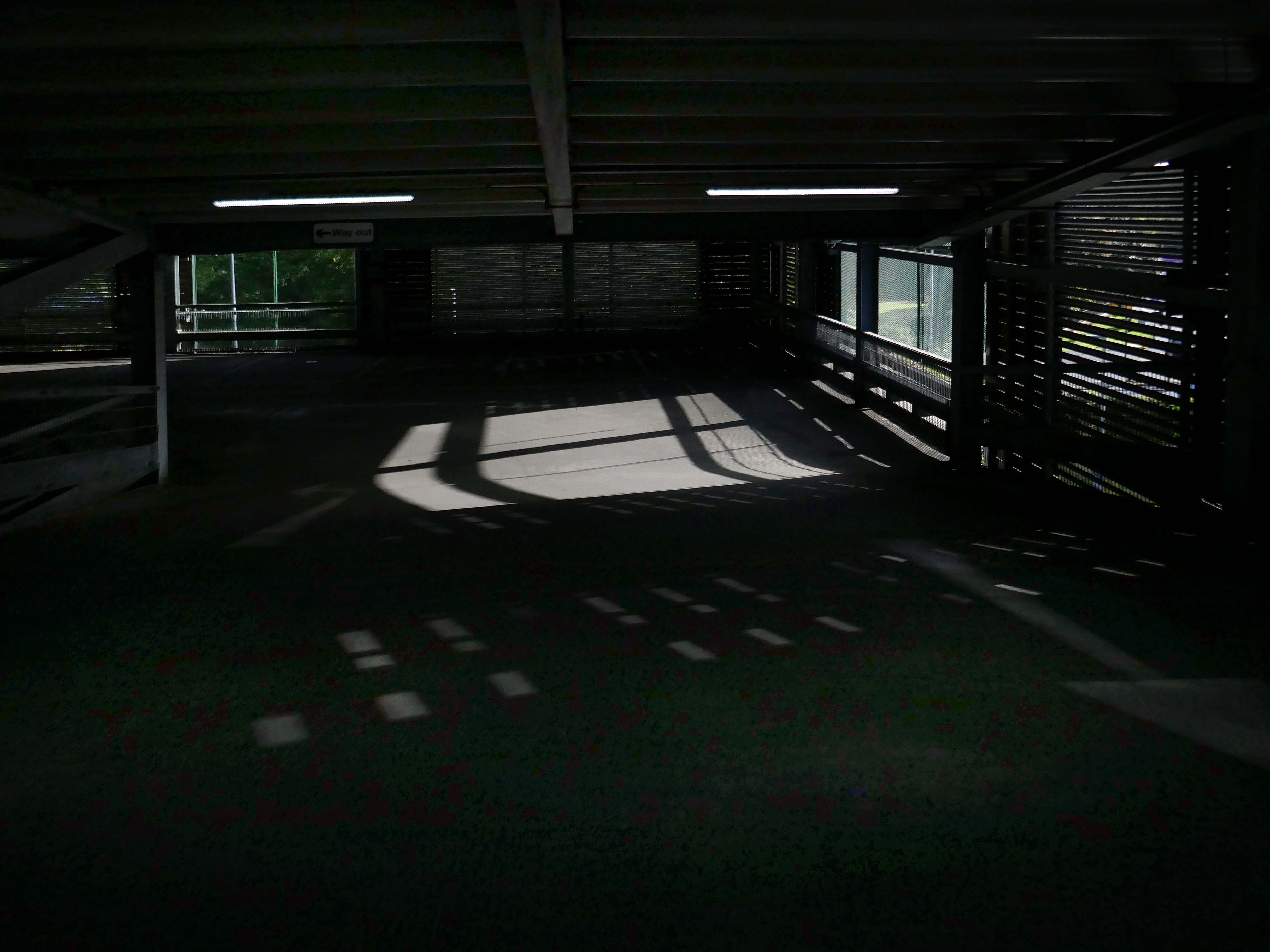
Here we am again two years on, following my previous visit.

It seems that you are not long for this world – destined for an ultra elevated multi-storey heaven.

An eyesore Northern Quarter car park is to be demolished to make way for a new development. Four new public squares will be built, the council has announced.

MEN

Glenbrook’s proposal for the 1.5-acre site, designed by Tim Groom Architects, will feature 20% affordable provision, in line with the city council’s aspirations.

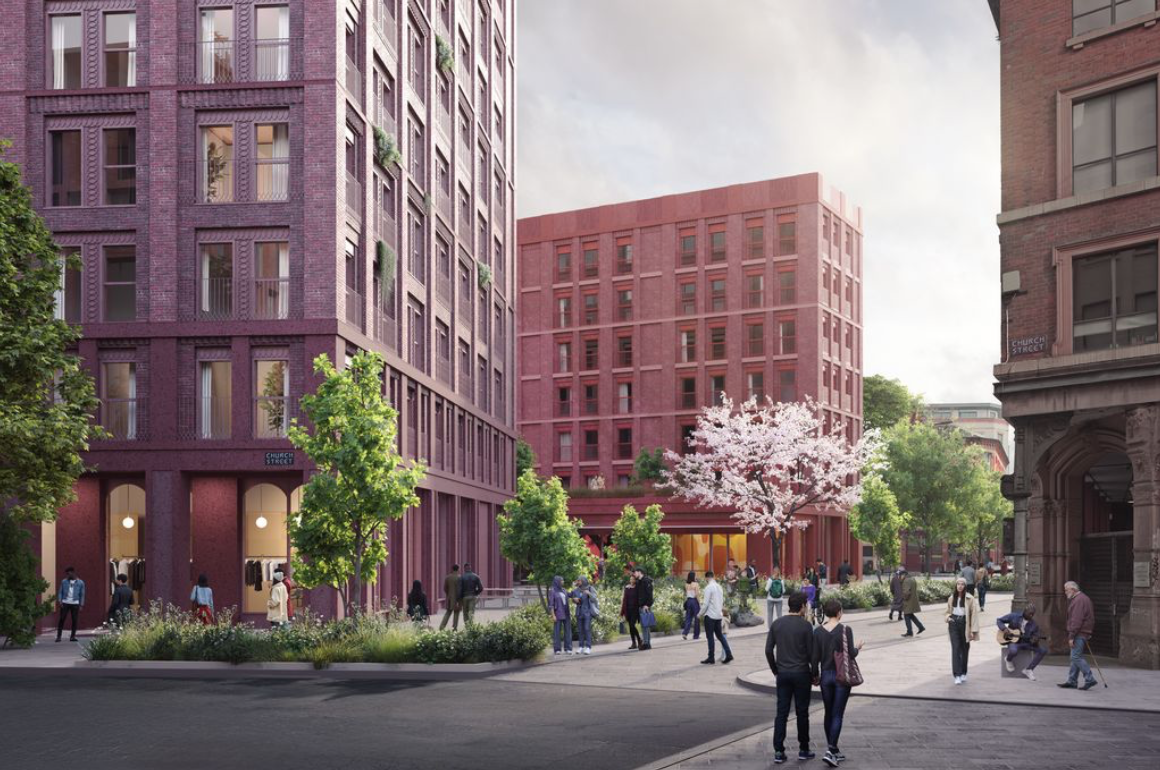
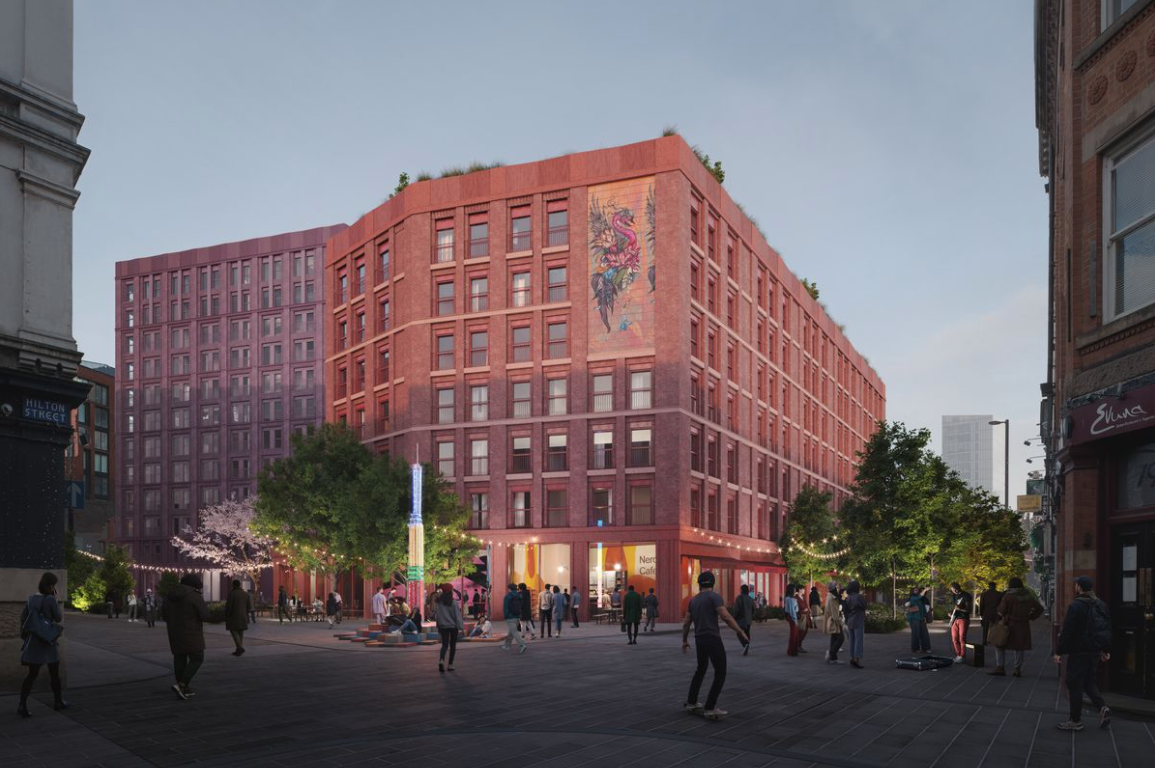
The new neighbourhood will also feature four public squares and green spaces, a flexible community and gallery space, and commercial units for local independent businesses and food and beverage outlets.

“The Church St site represents a unique opportunity in the heart of the Northern Quarter, a neighbourhood and community that is alive with energy and creativity, and Glenbrook is delighted to play an important role in its future growth,” said Ian Sherry, director at Glenbrook.

Place North West

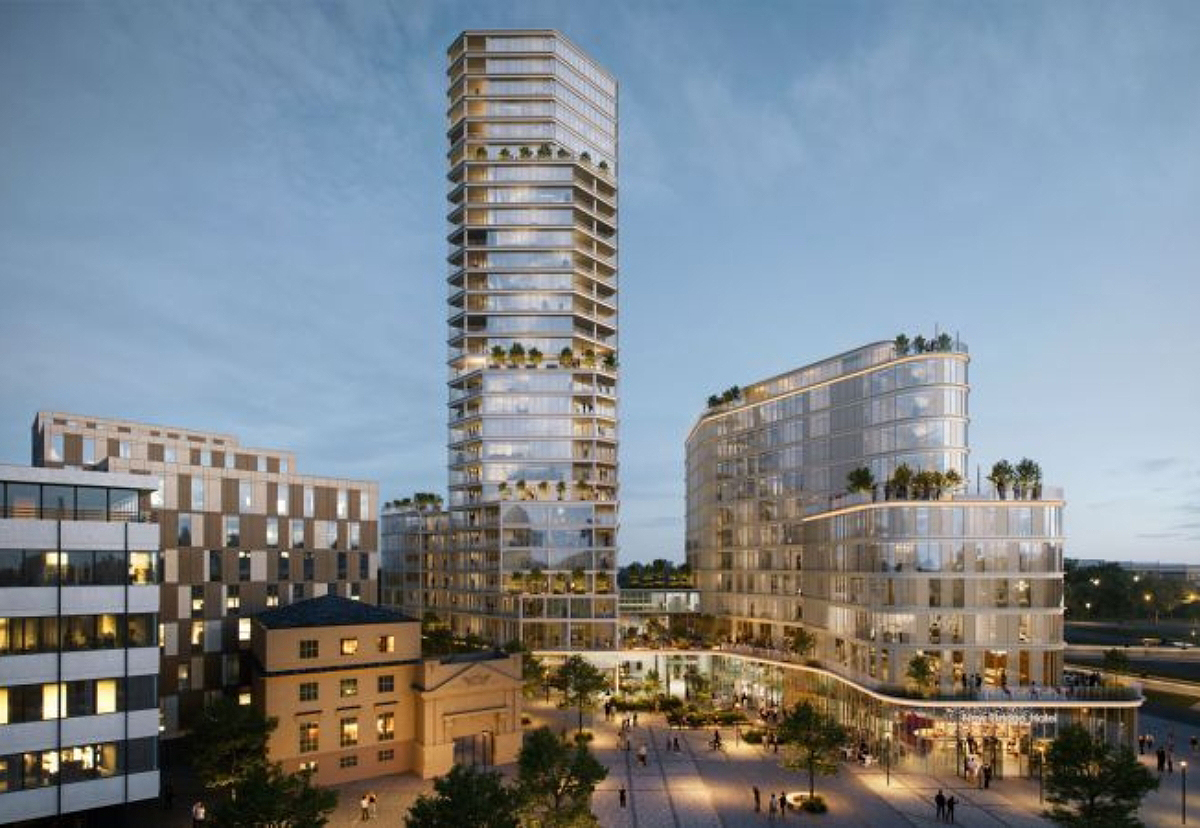
In this bang up to the minute computer generated image, it seems that the art work Big Boys Toy will be preserved.

Taken down from its top spot above the Tib Street stairs and service tower.

The remainder, one assumes, descends to the ultra modern land of land fill.

Here’s one that someone made earlier.

Ta-ra my aromatic and neglected old pal.

Other Manchester car parks are available.
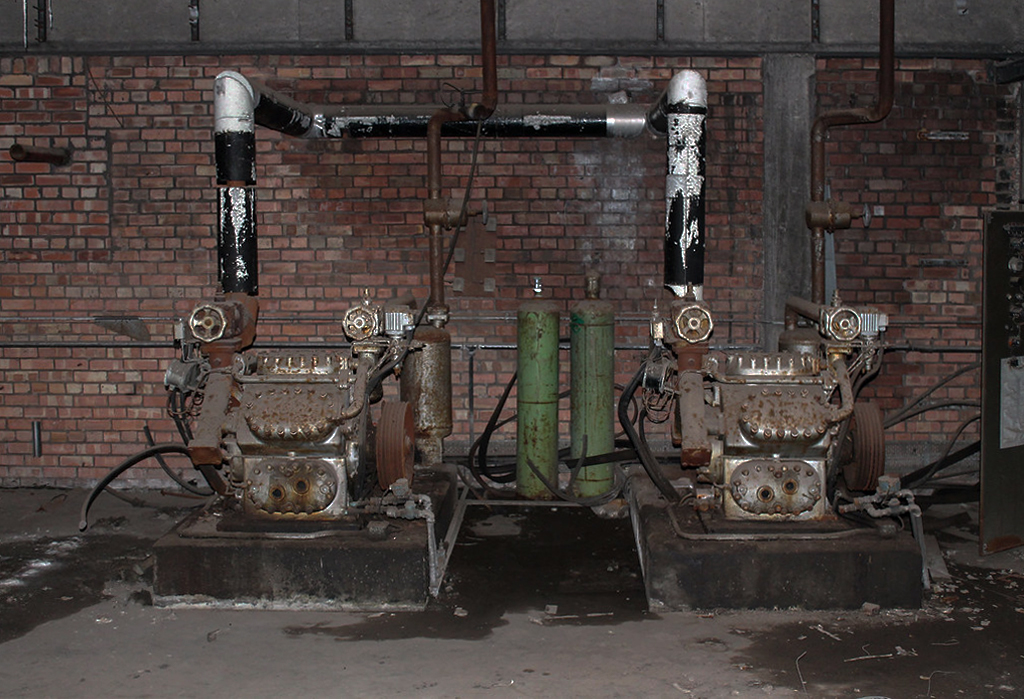
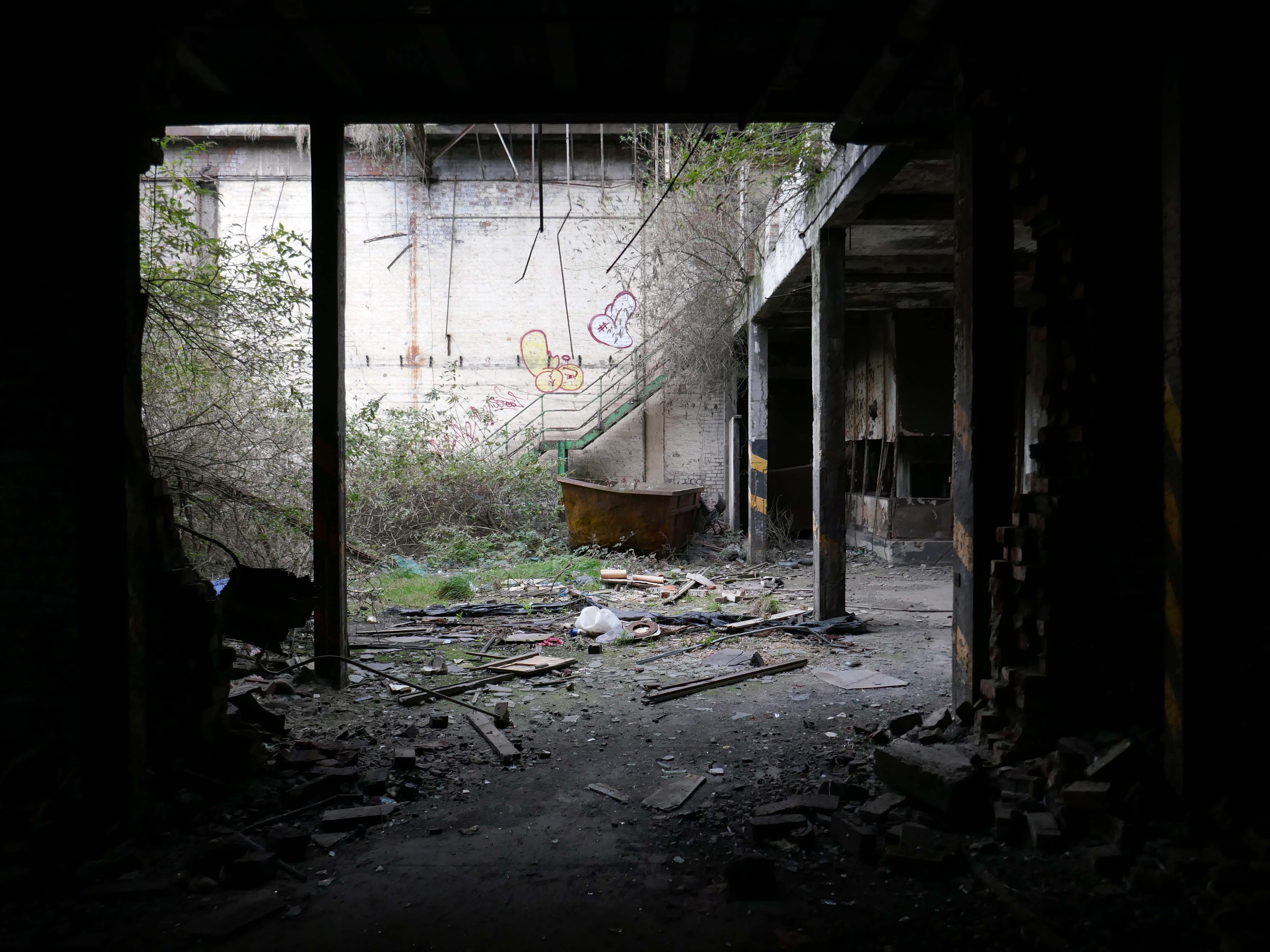
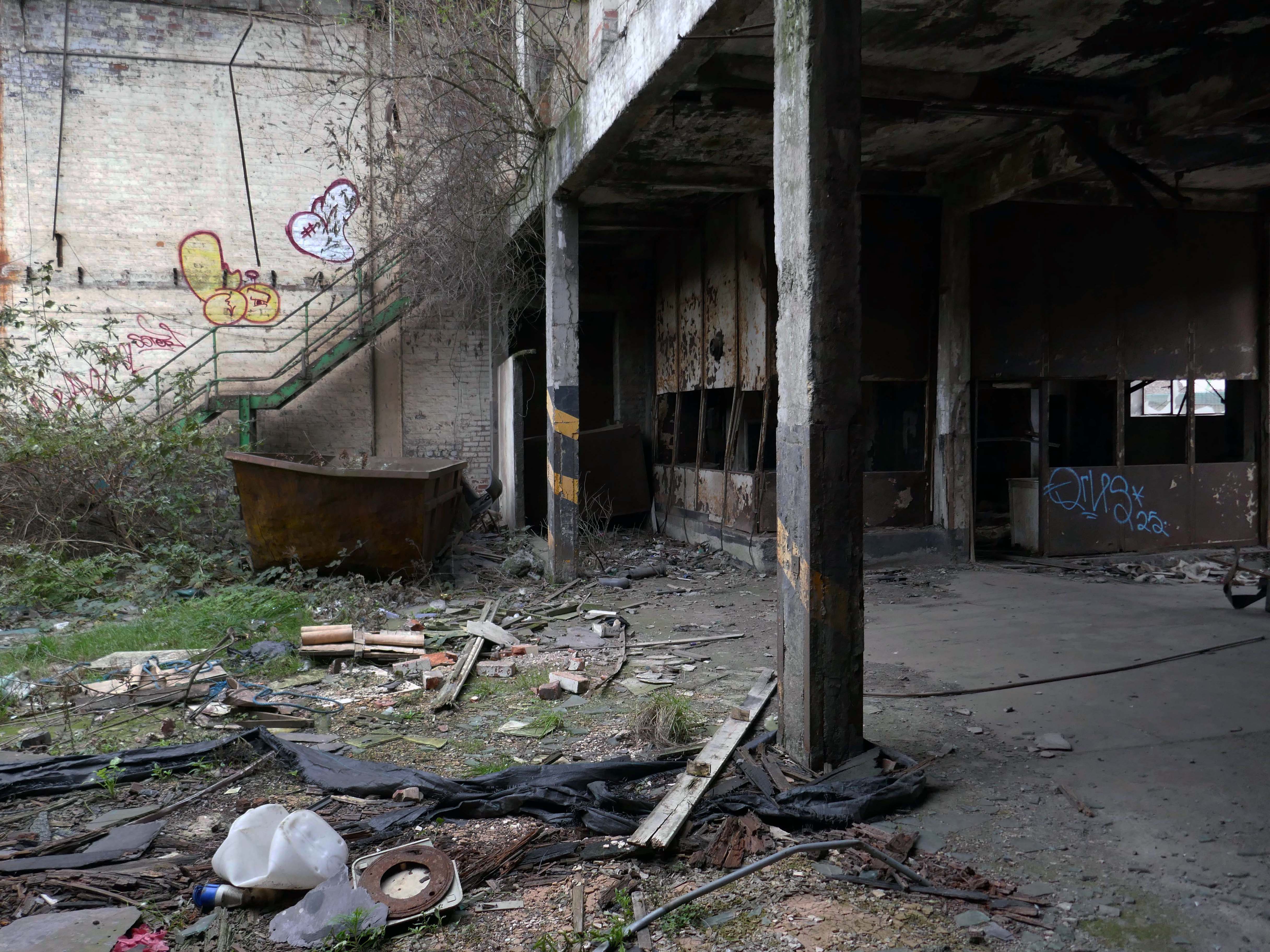
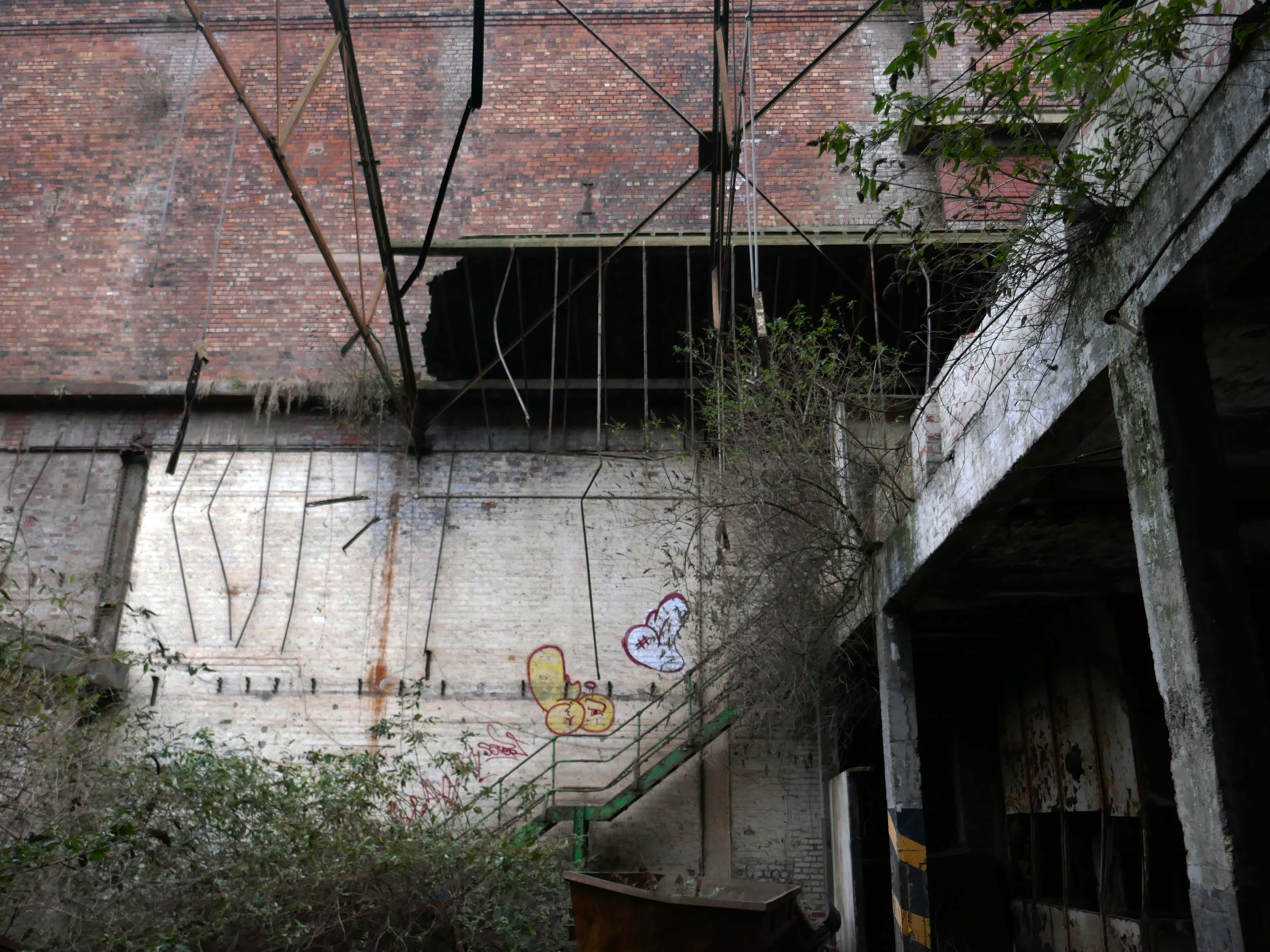
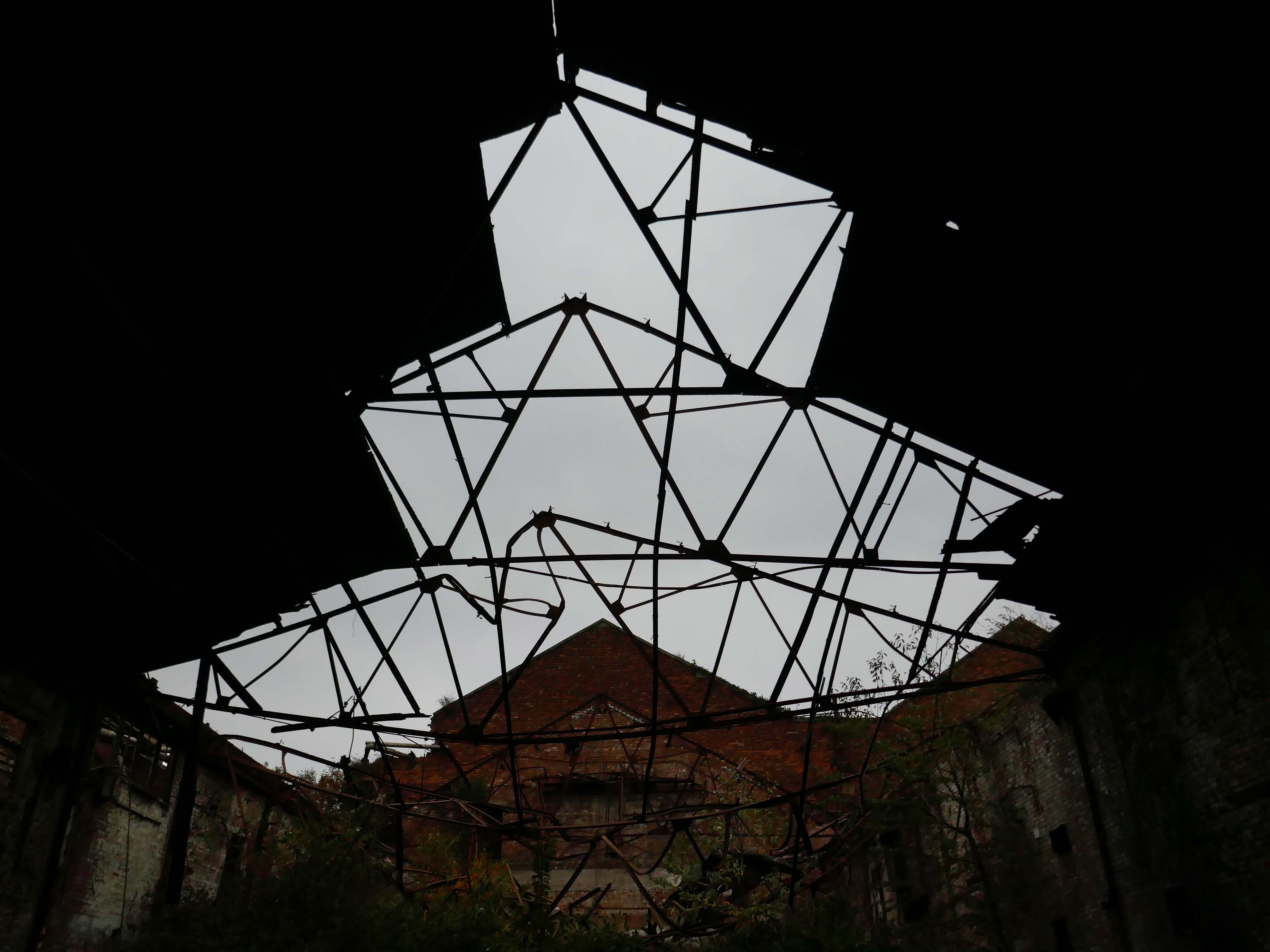
Merseyside Food Products Ltd – Liverpool

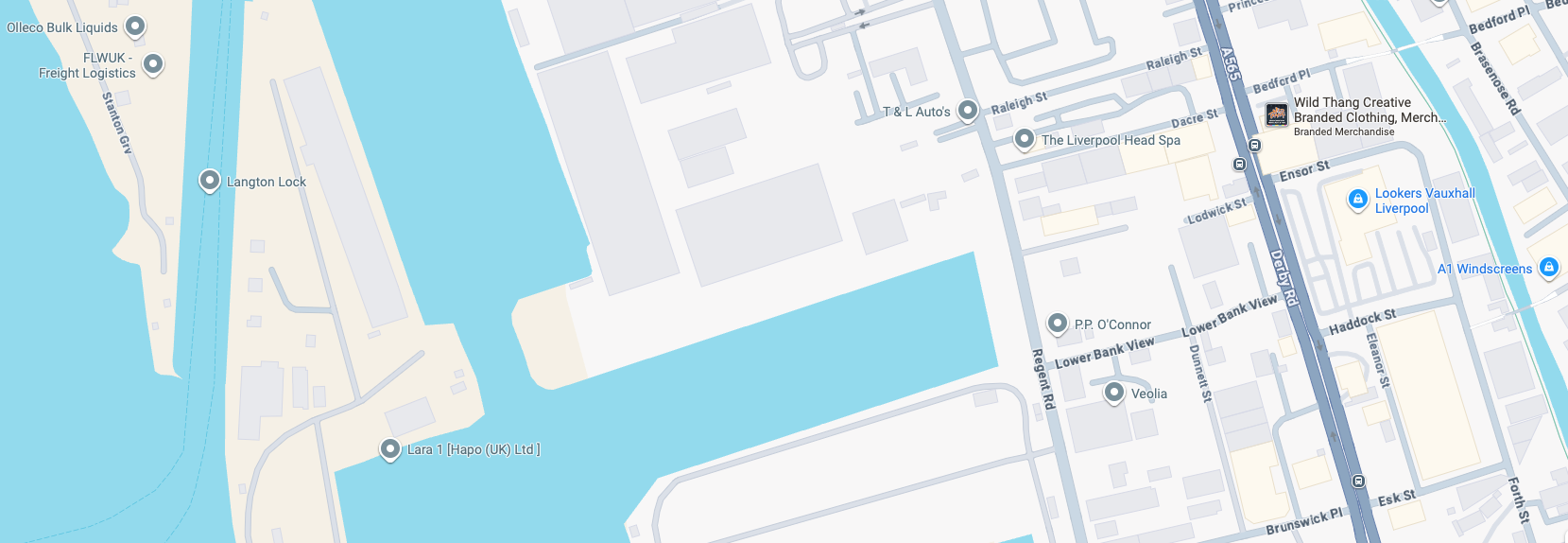
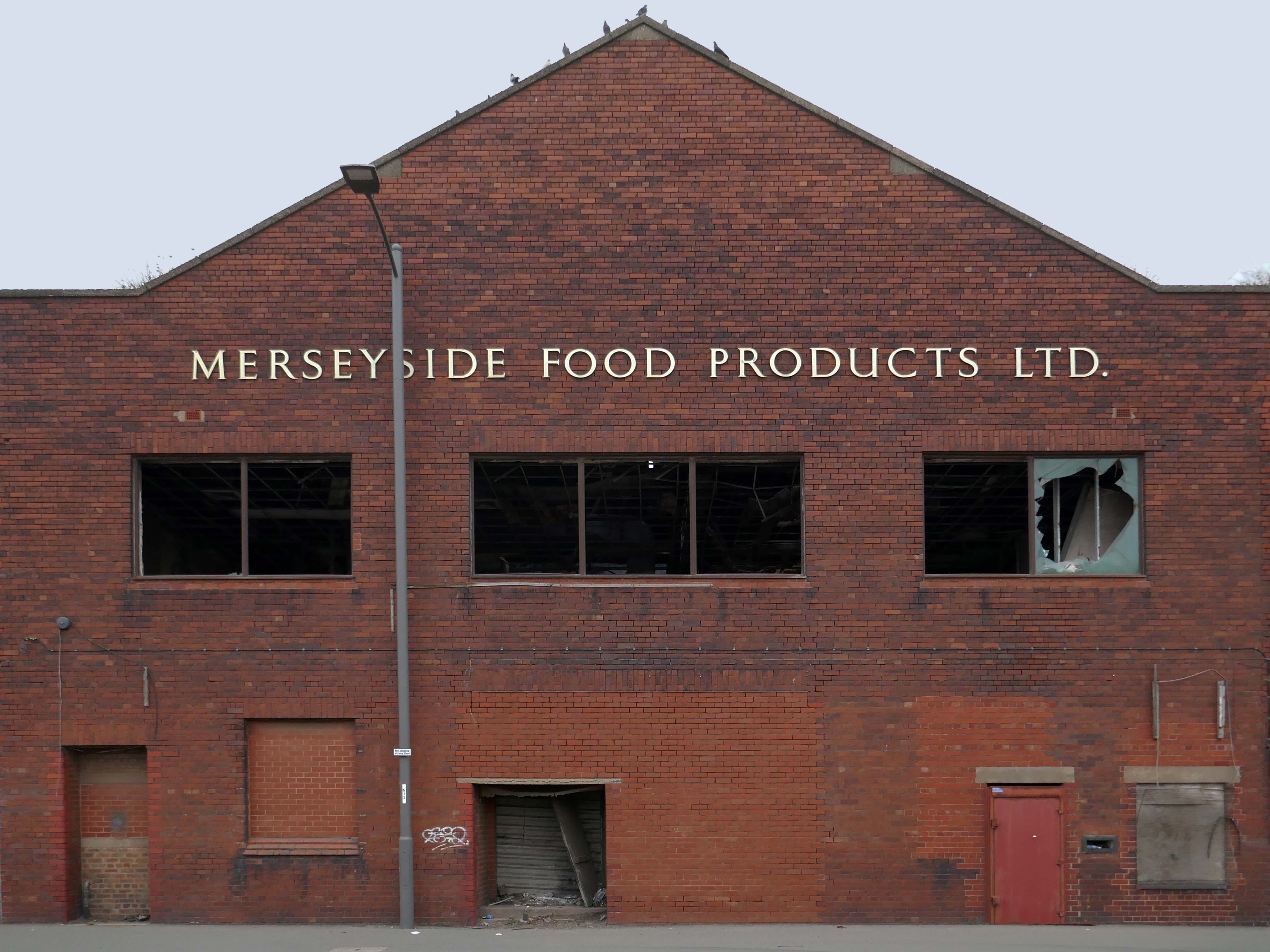
Merseyside Food Products Ltd of Marsh Lane, later 185 Regent Road.
Edible oil producers.

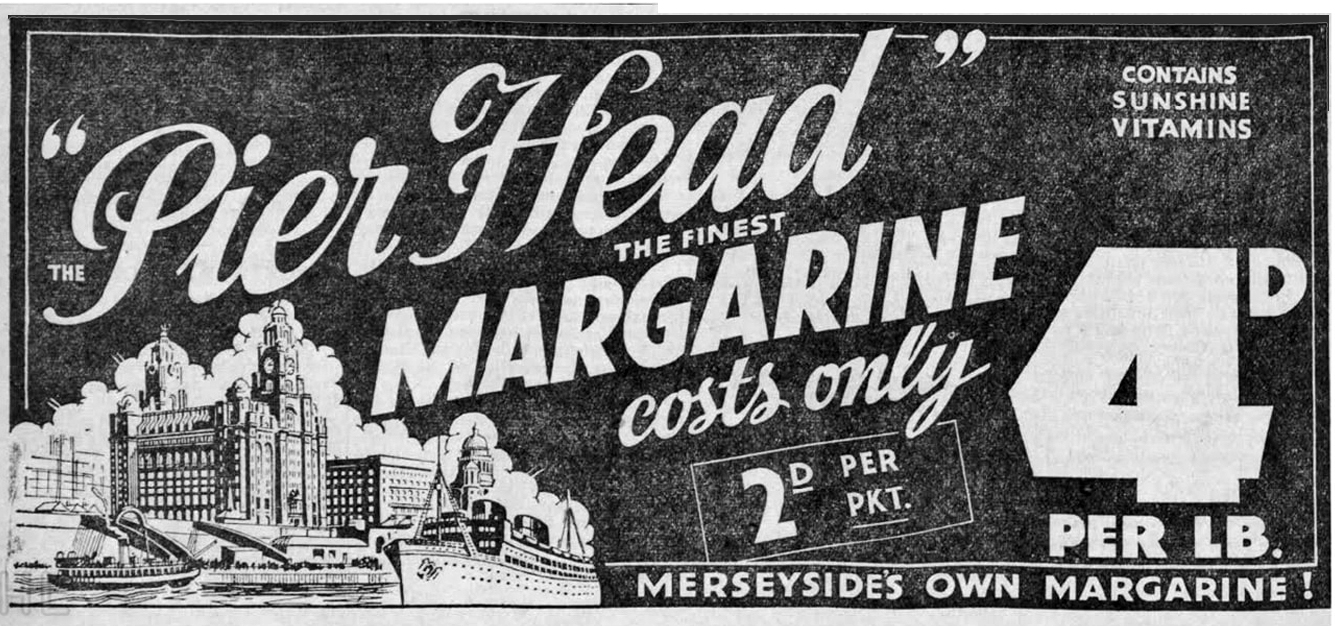
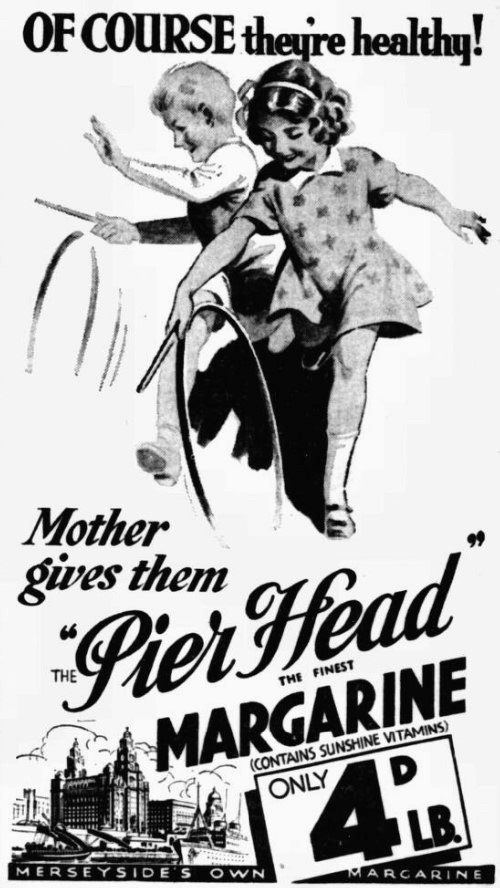
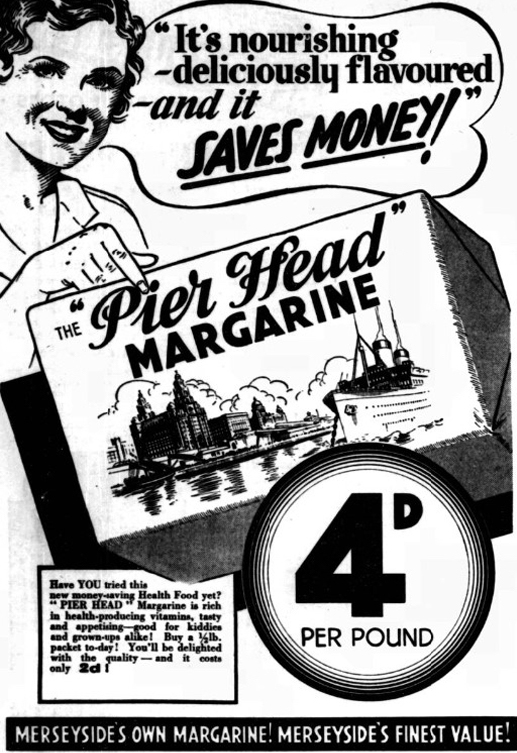
1939 Producing Pier Head brand margarine.
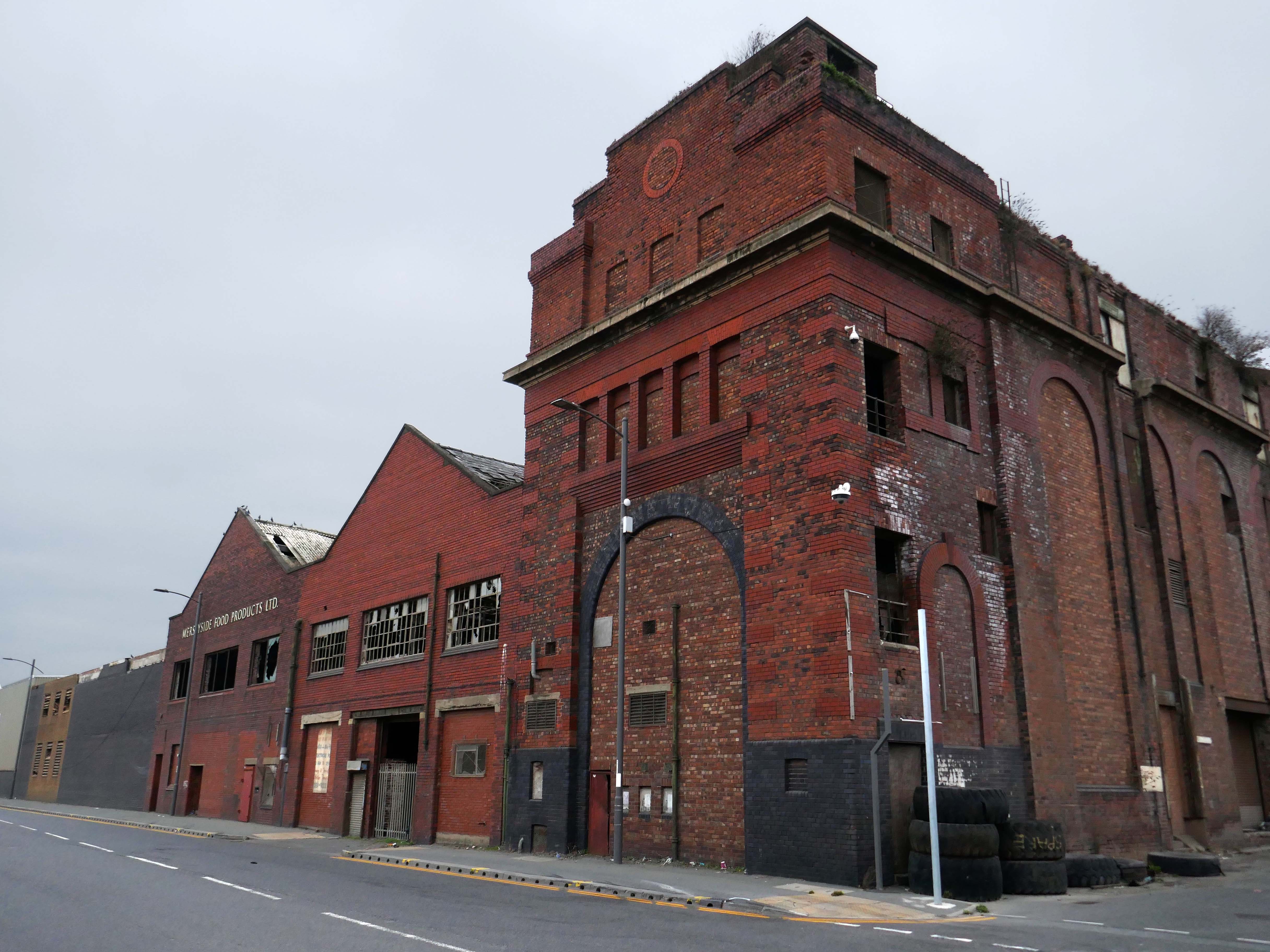
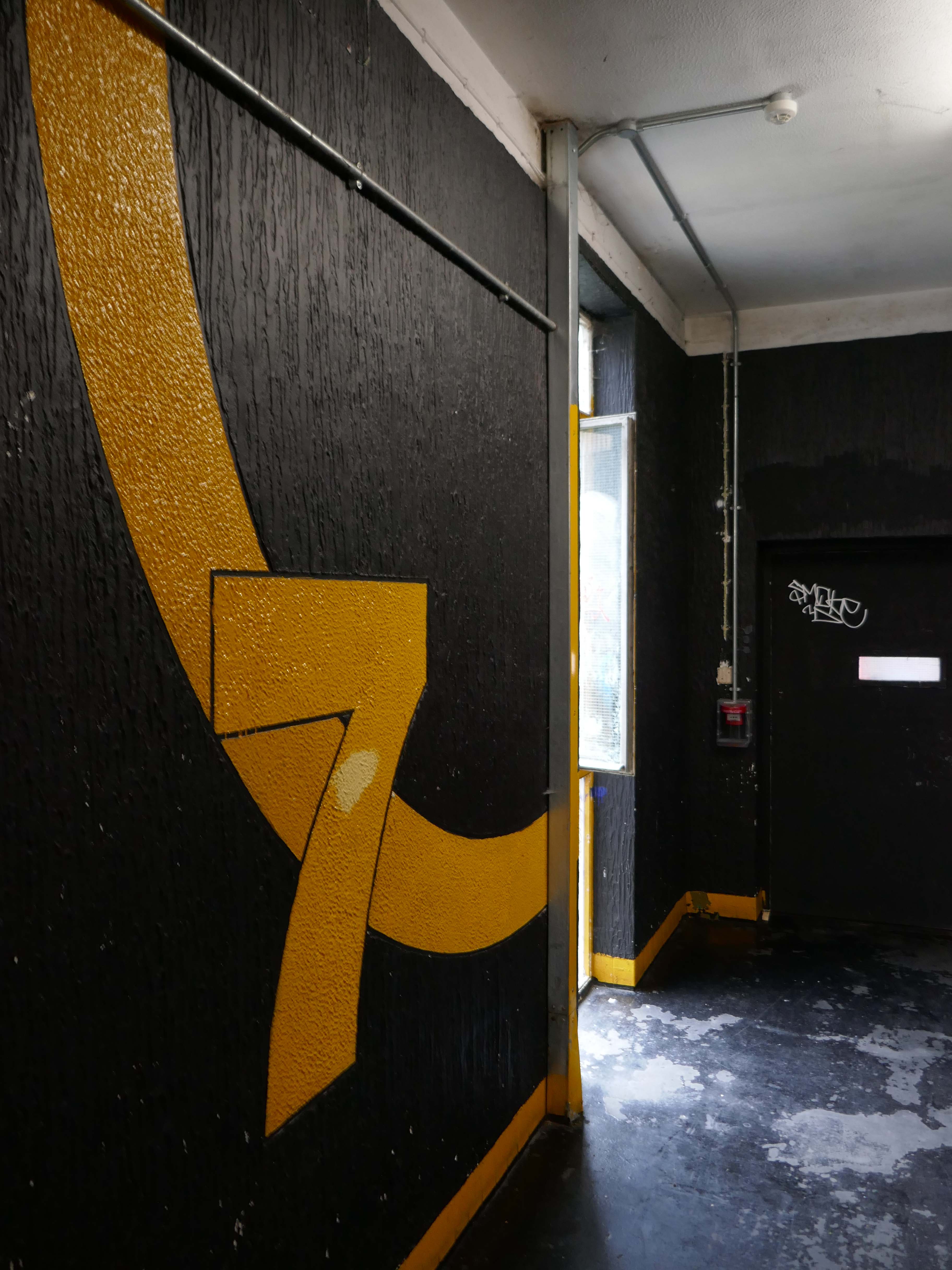
The Regent Road premises had originally been the marine engineering North Works of H&C Grayson. It appears that the southern block was converted to a warehouse at some point before being occupied by Merseyside Food Products in the 1950s. 
The Regent Road factory closed in 1984.

Graces Guide.

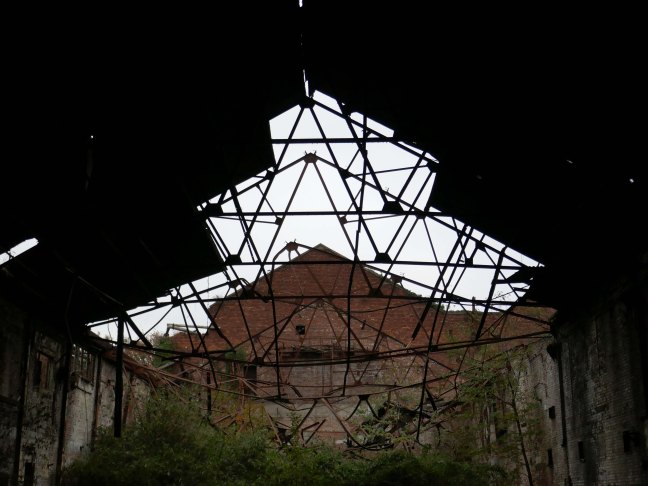
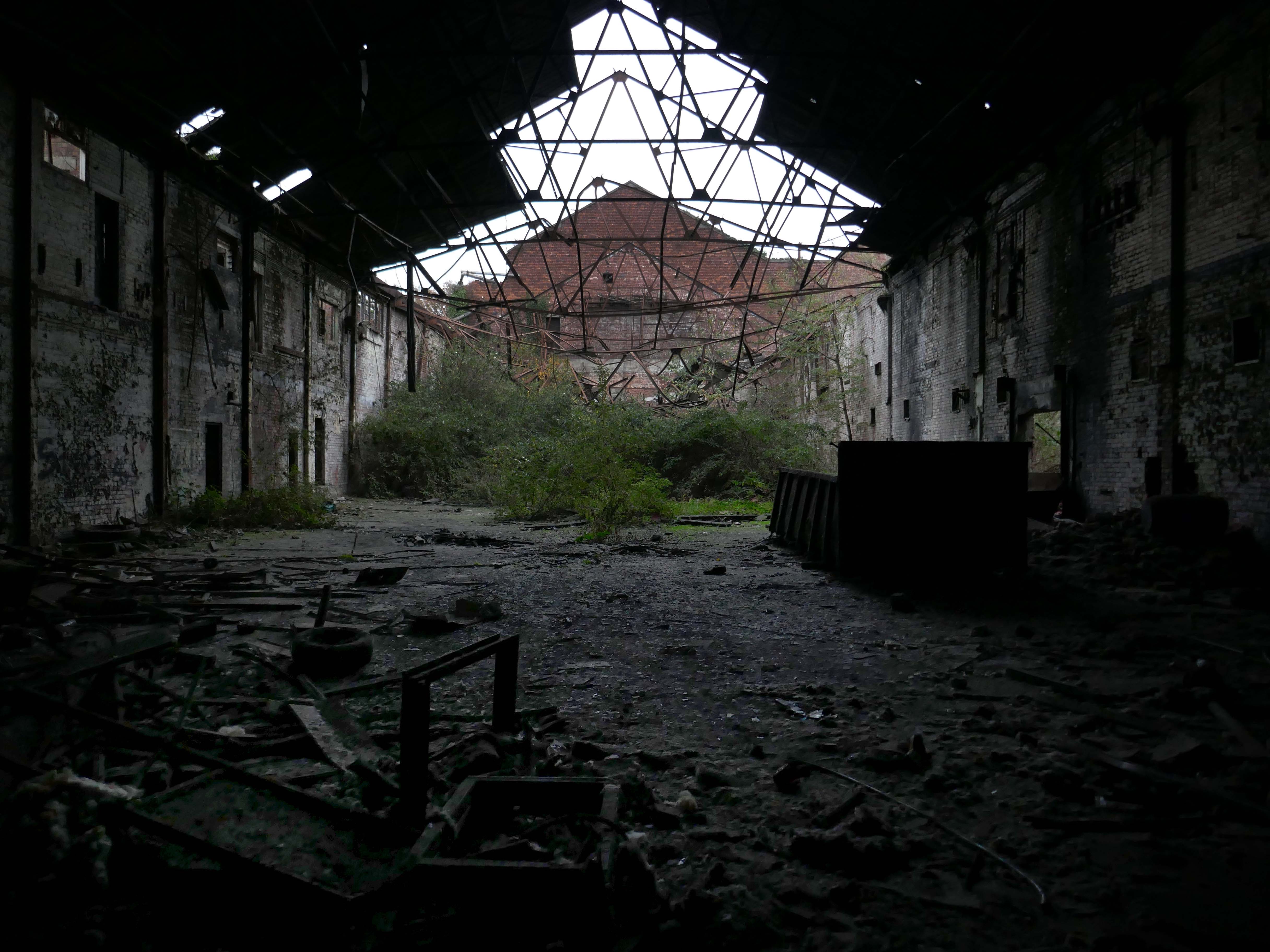
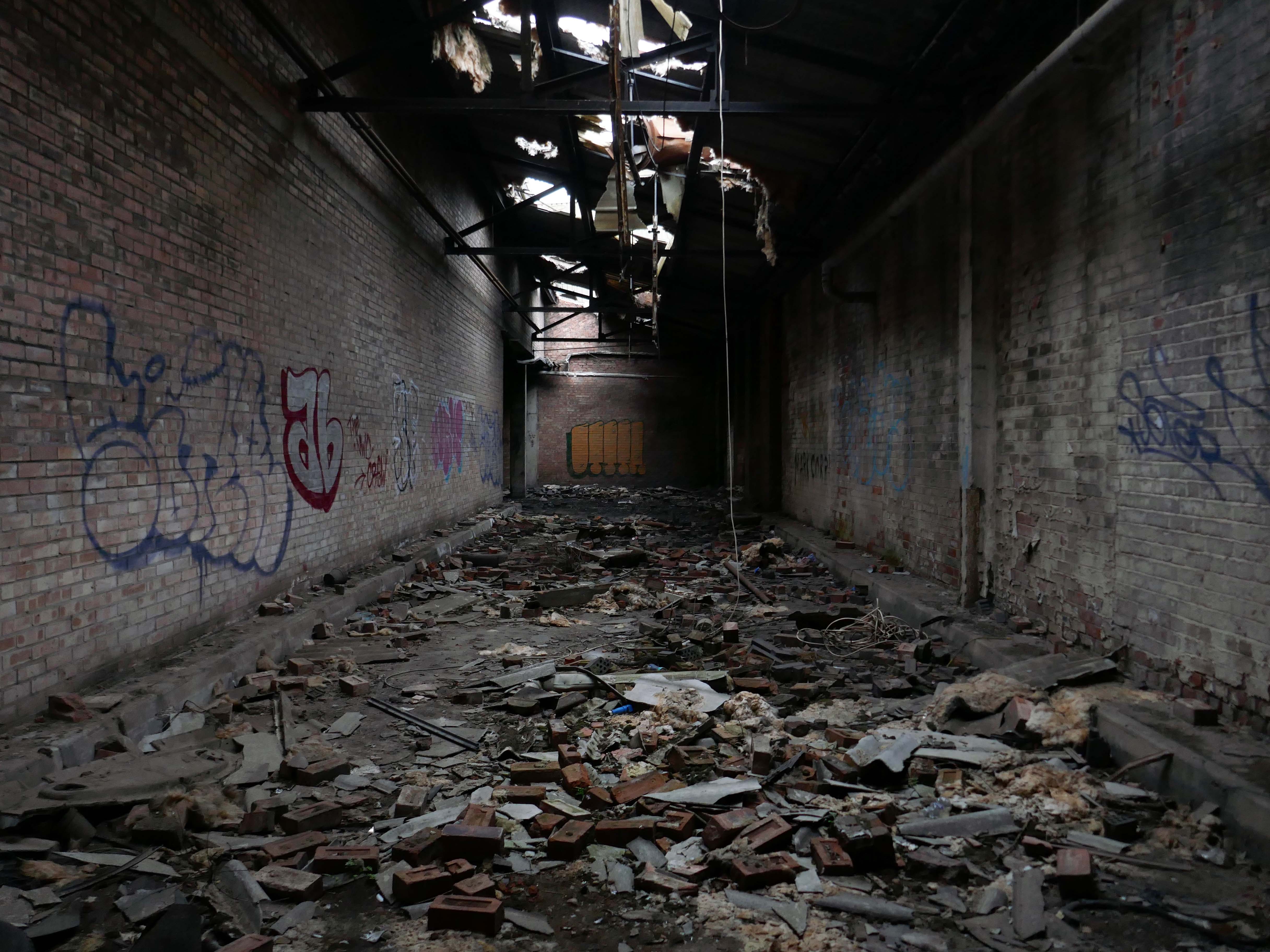
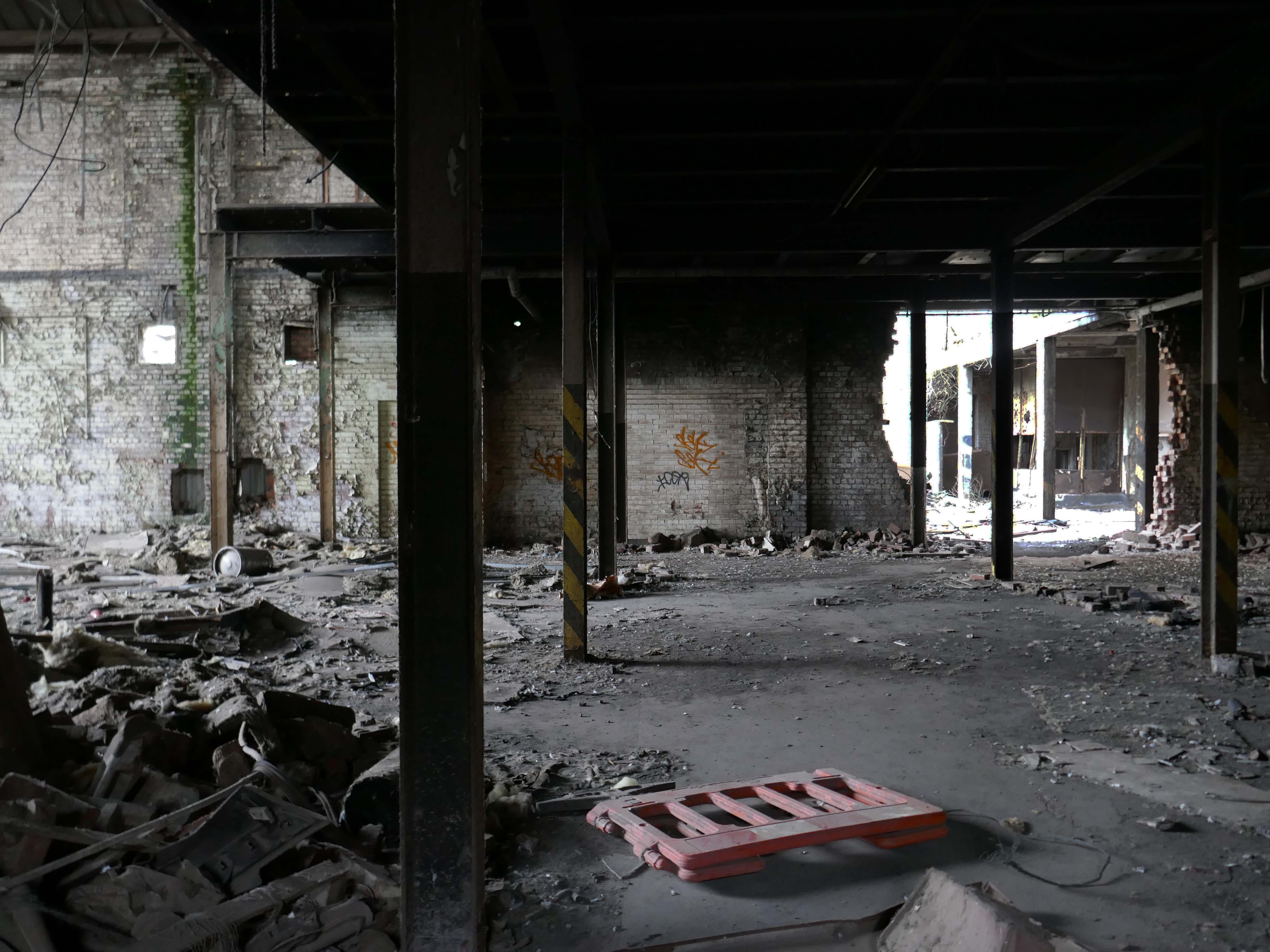
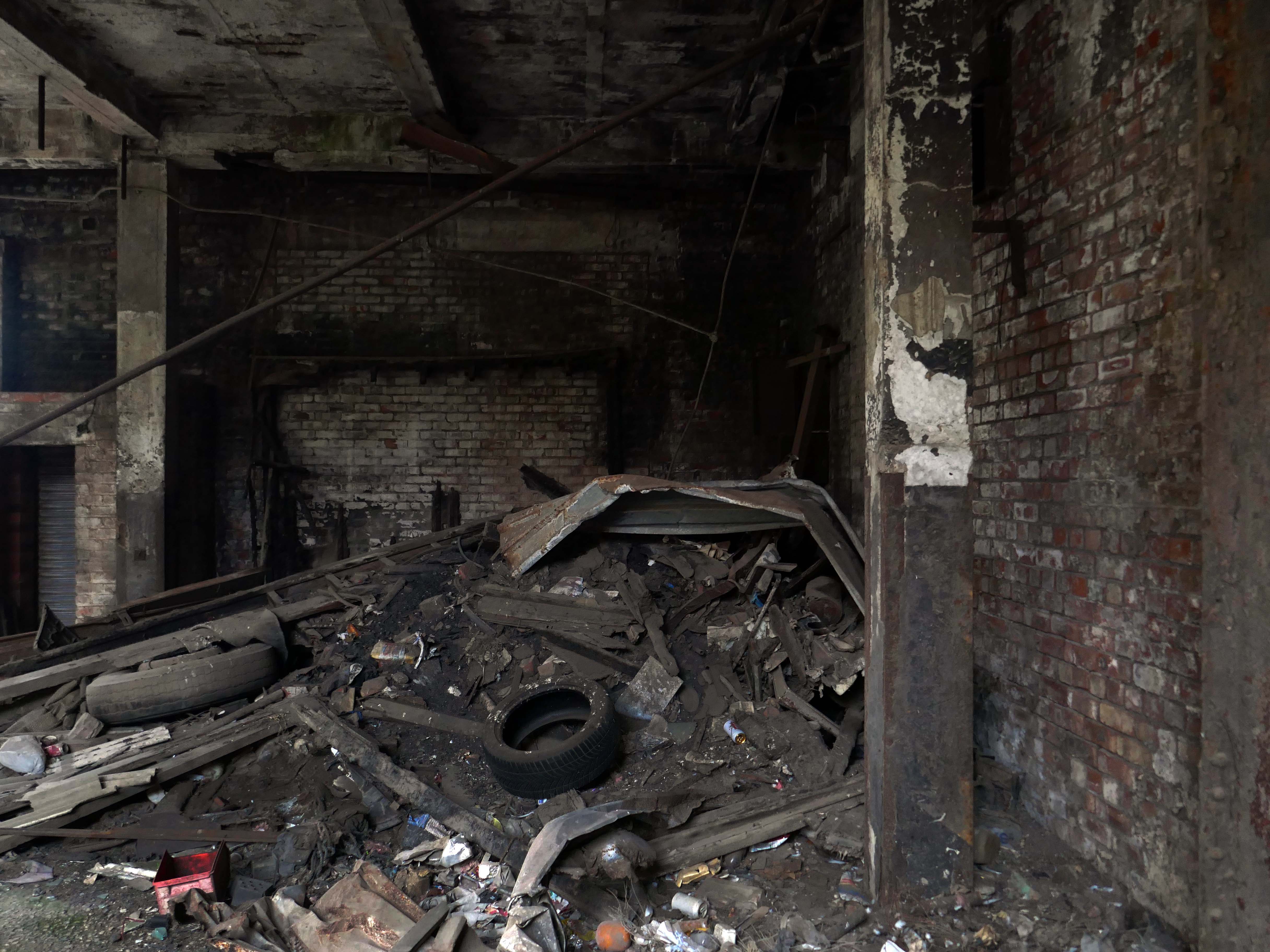
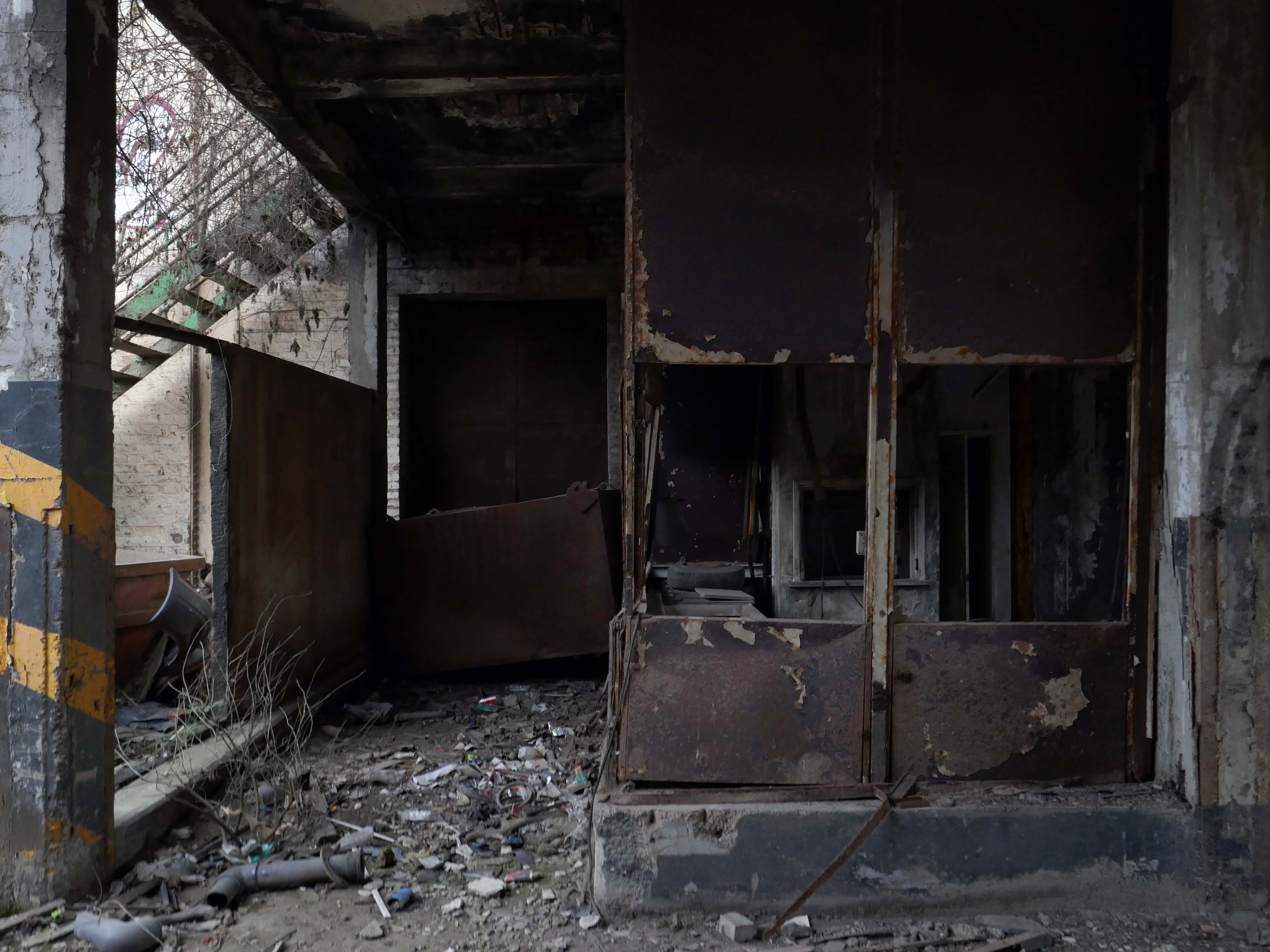
Having a casual afternoon stroll along the road, I espied a narrow gap in the railings, whilst I could never be considered a devotee of urbex, who can resist a narrow gap in the railings?

There are those who have been here before – the 28 Days Later folk take a much deeper peep.

Uncovering some of the left behind plant.

And attracting a comment from a former employee:

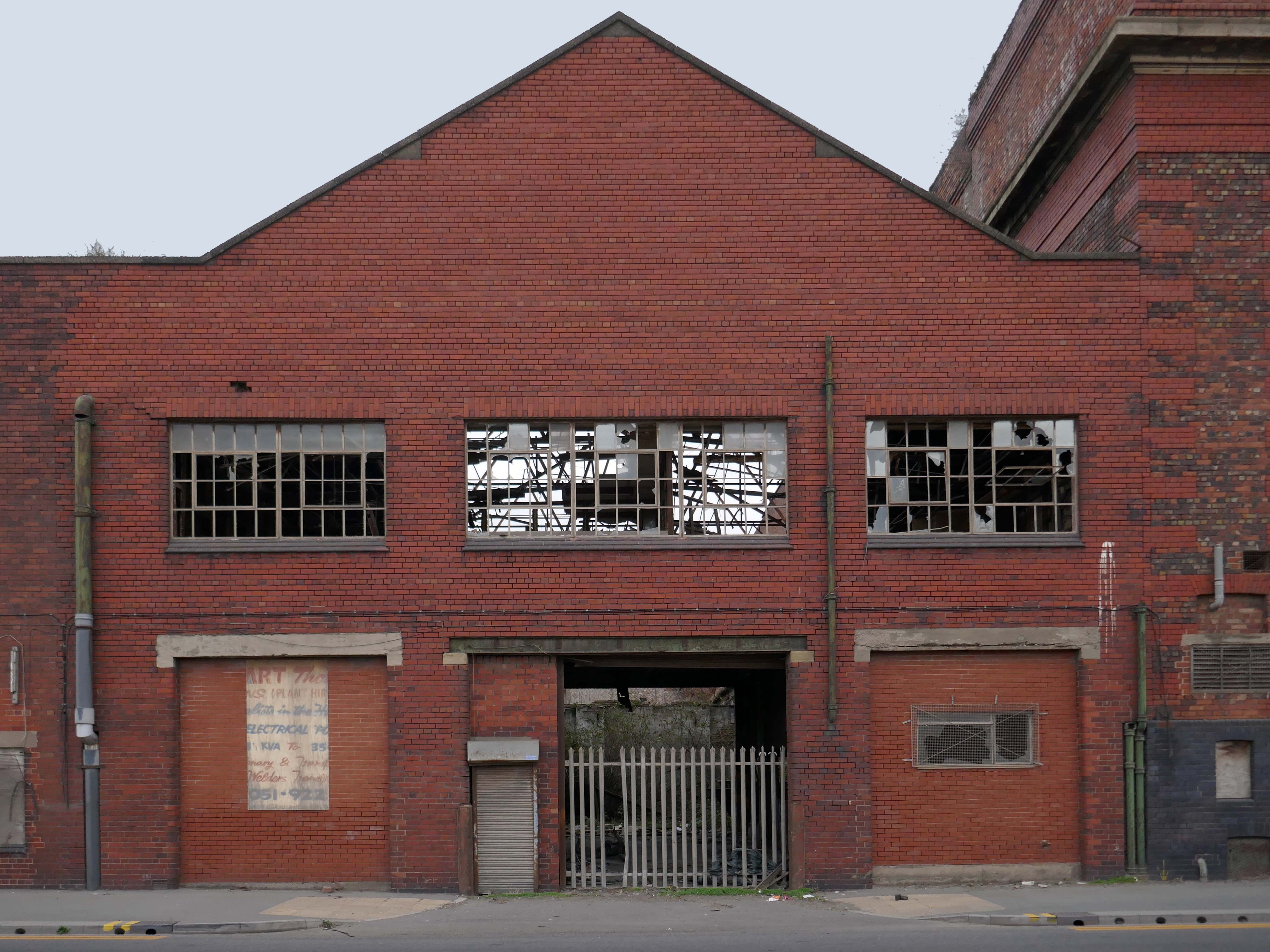
I was company microbiologist at this site, The sets of broken windows at the front of the building on the first floor were the laboratories. 

The main photograph shows the chemistry laboratory, my microbiology laboratory was next door. 
The larger windows to the left provided light to a large open plan reception and office area. Within the factory, the main area had various packing machines for margarines, from 250g paper wrapped packets to 2 Kg catering packs.

A second packing area contained a machine that produced tinned margarine for the Ministry of Defence, who supplied it to the Army overseas.

Cratedigger

urbanchemist – 18th

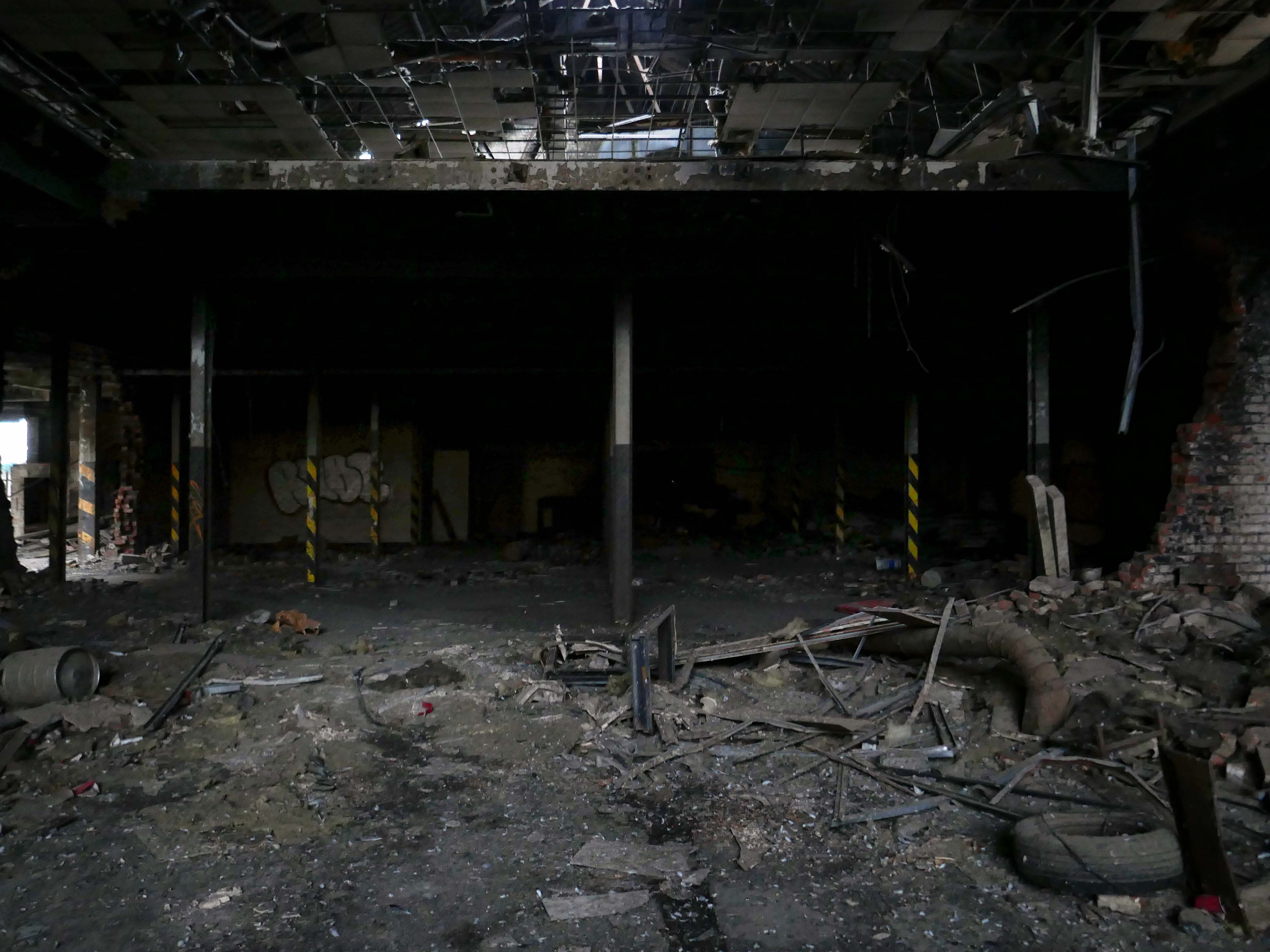
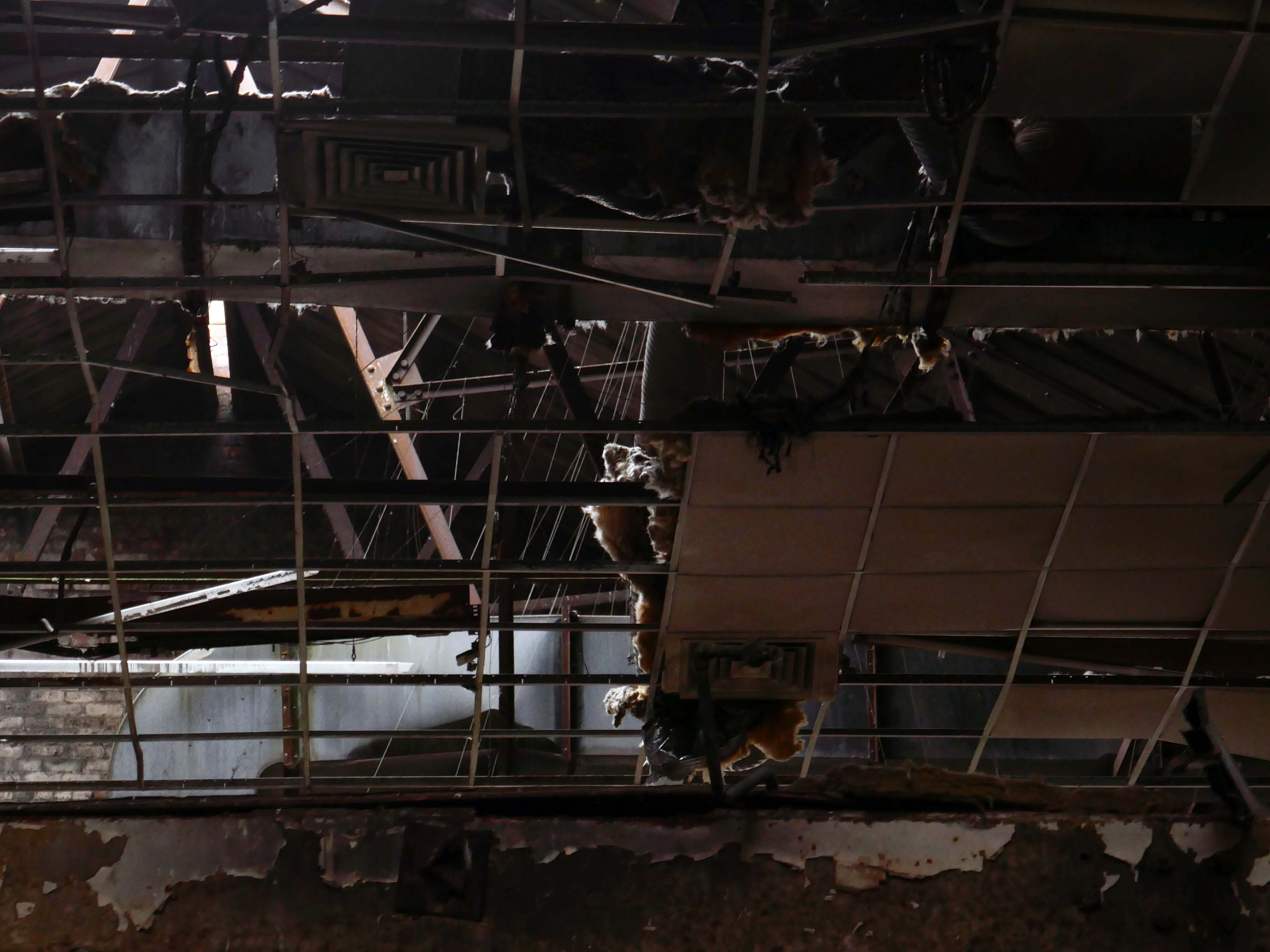
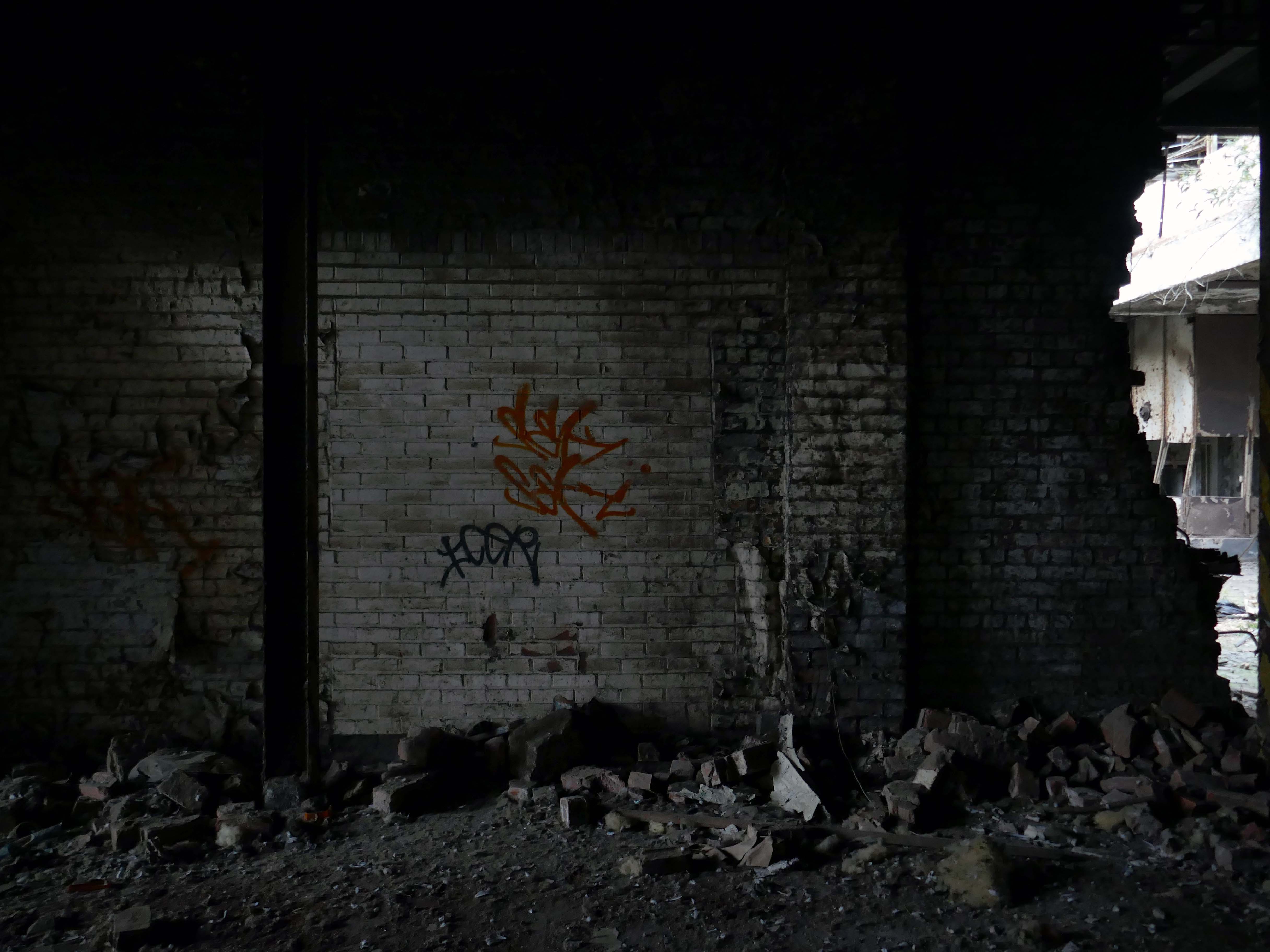
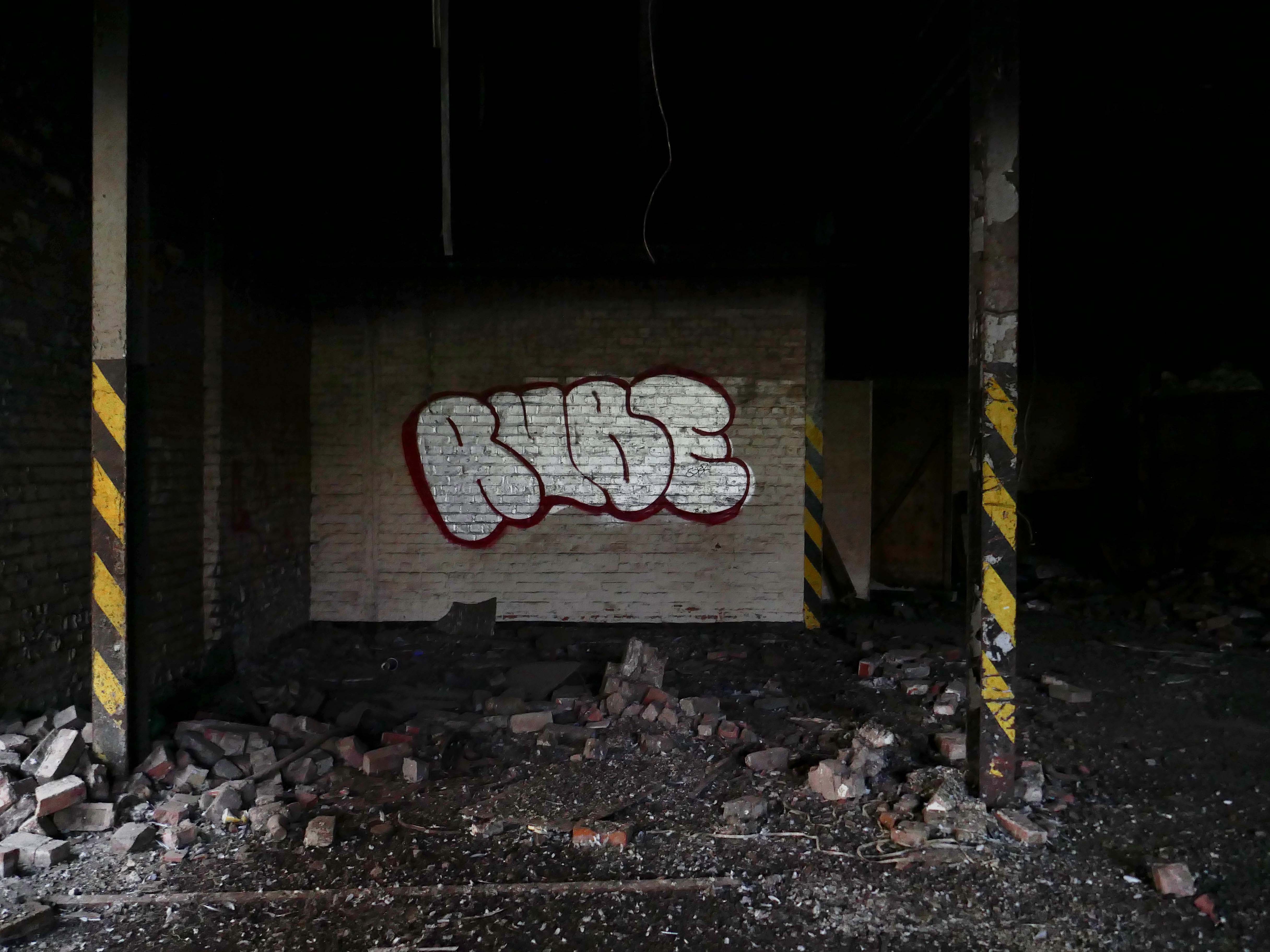
Whilst feeling that familiar frisson of mild trepidation, whilst walking through the debris, dirt and decay, it’s important to recall those who have walked and worked in these now derelict premises.

With that in mind here’s what I saw whilst feeling that familiar frisson of mild trepidation, whilst walking through the debris, dirt and decay,

Haley Hill Halifax – Yet Again

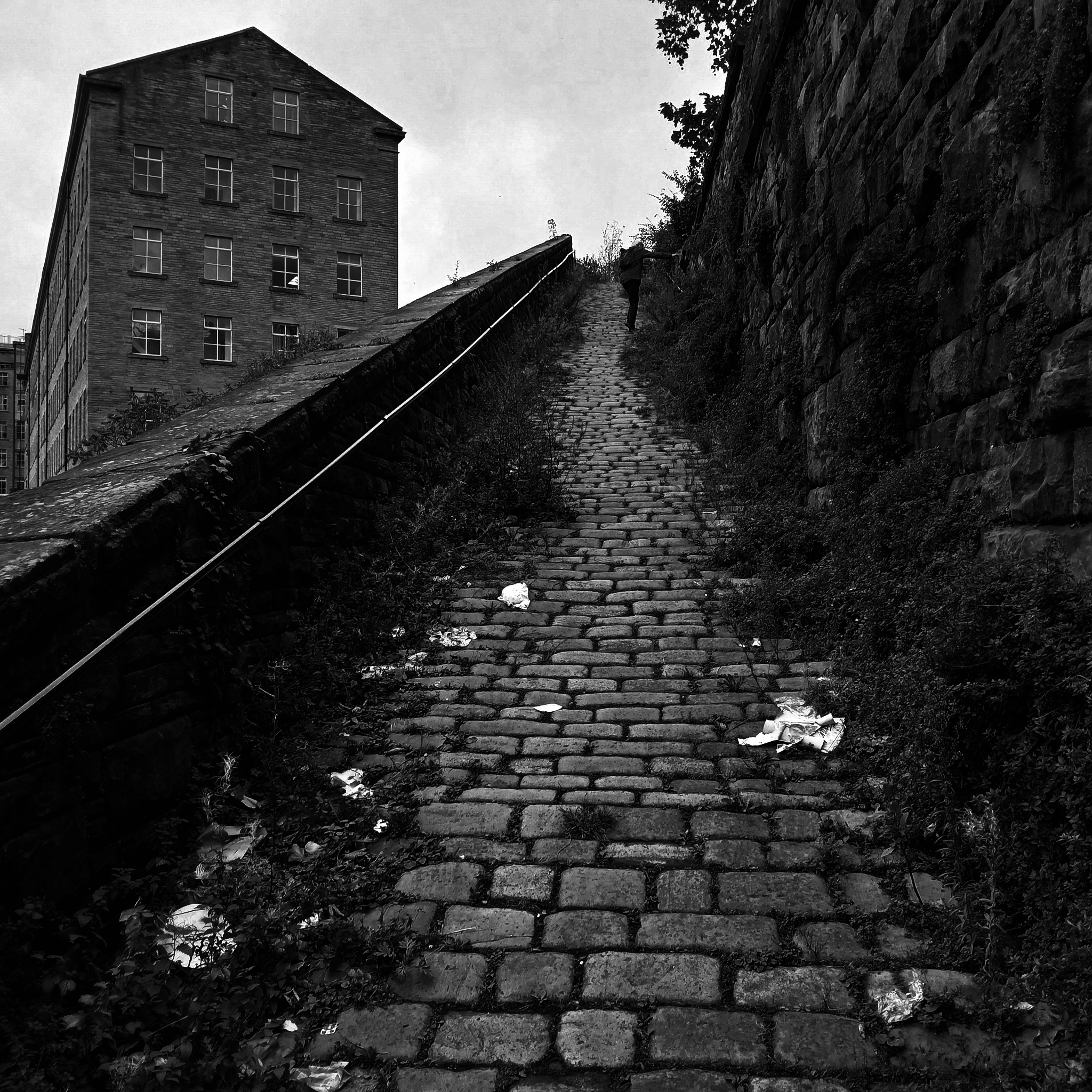
When in Halifax it’s imperative to visit Haley Hill flats, as we did in May 2025.

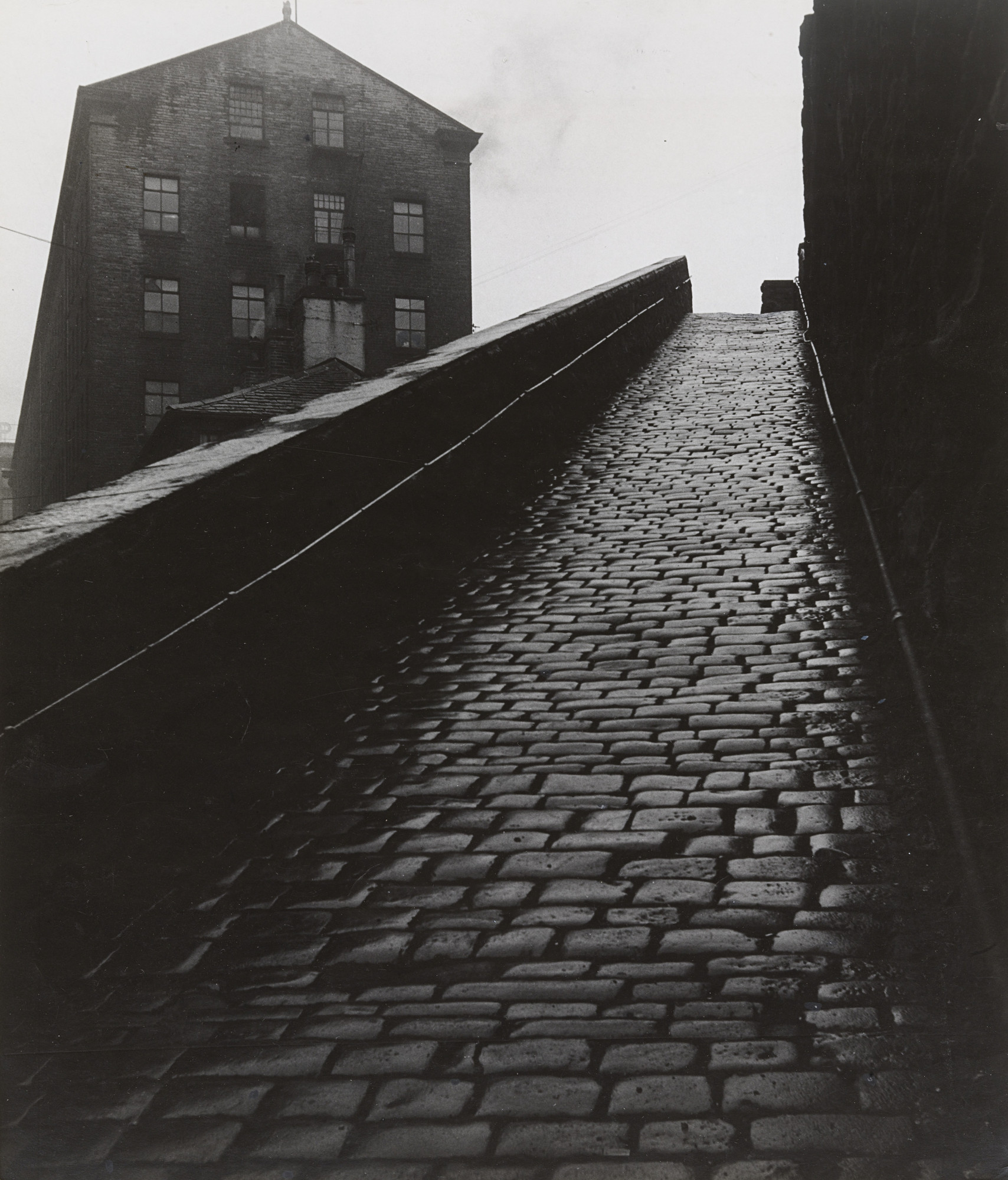
It’s a labour of love ascending the granite setts to the side of Dean Clough.

Walking in the footsteps of photographer Bill Brandt.

A Snicket in Halifax: Bill Brandt 1937

A Snicket in Halifax: Steve Marland 2025

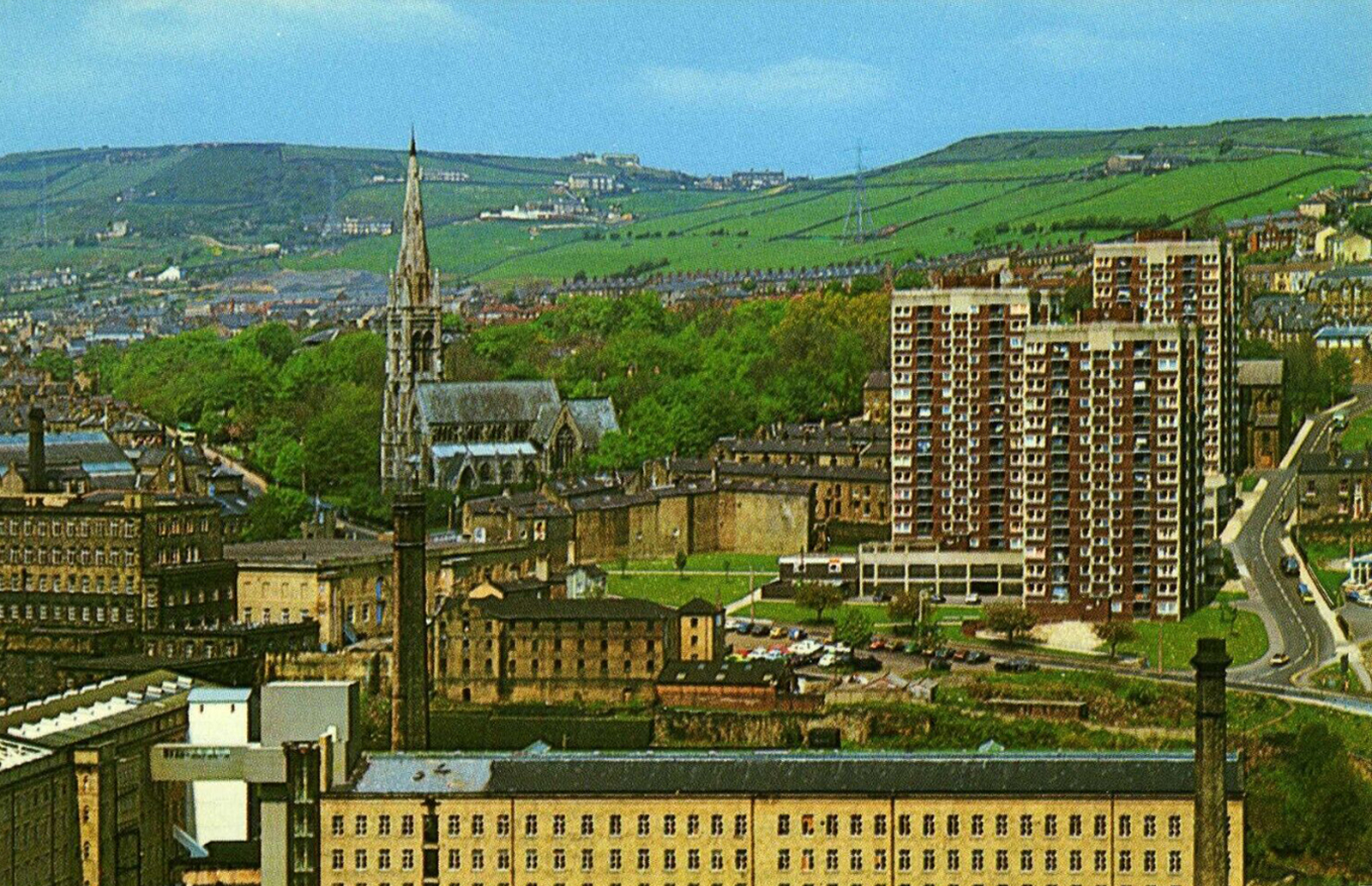
Postcard c. 1970

So it’s October 2025 and today Matthew I am mainly Bill Brandt.

Walking in the footsteps of giants.

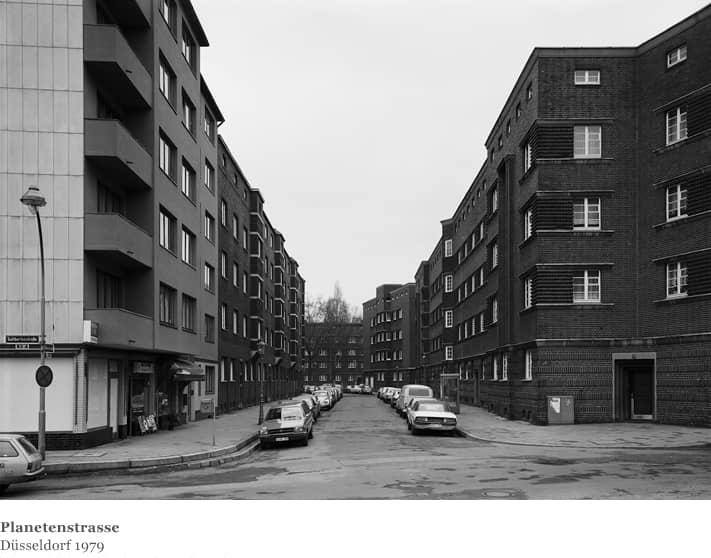
Print quality is a variable thing depending on the purpose of the image. I would expect a pure record photograph to have a full range of tone, with both shadow and highlight gradation. Against this, pictorial or art based imagery requires the range of tones best suited to making the statement. The classic case is the soot and whitewash printing of Bill Brandt. So we have a situation that carries a contradiction; blocked up shadows in applied work is not acceptable but blocked up blacks in pictorial work is often perfectly acceptable, if that lost information is not relative to the image. Burnt out highlights are more dangerous, but again Bill Brandt did it with great effect.

Bill Wisden

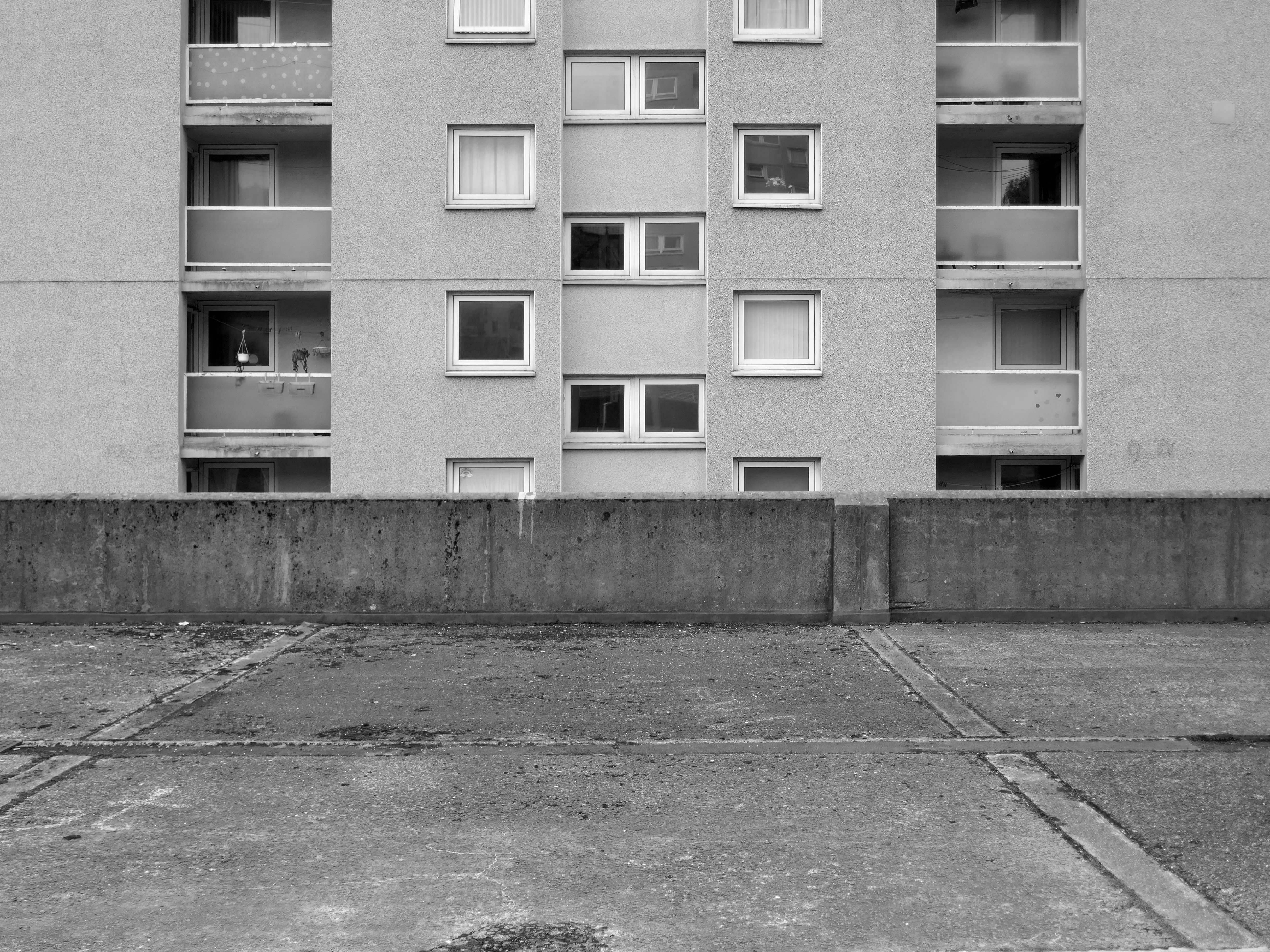
So, the record print would have an even tonality thus:

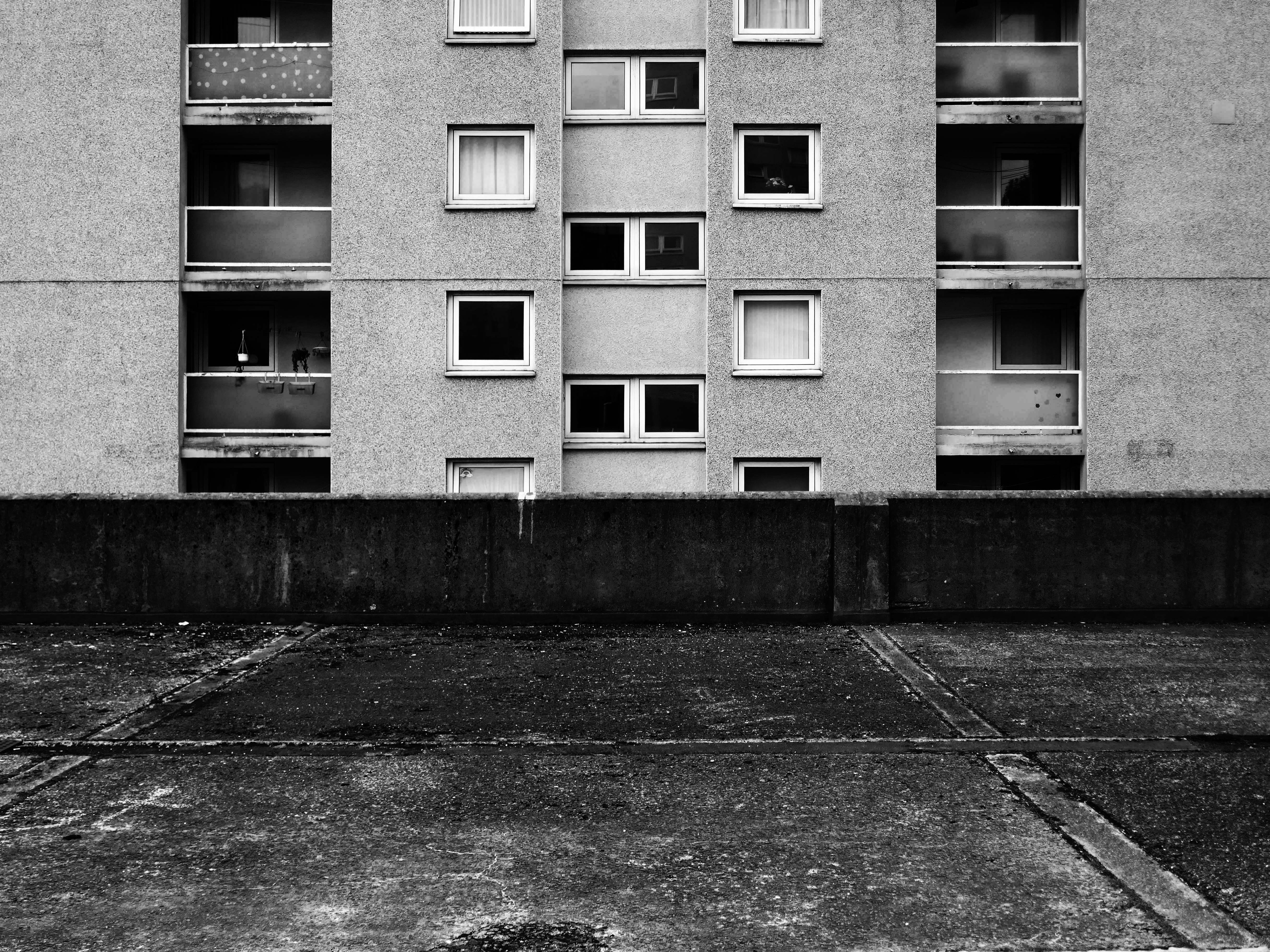
Whilst the pictorial artist may favour the higher contrast.

So eschewing the Düsseldorf School

Here we go, soot and whitewash away!

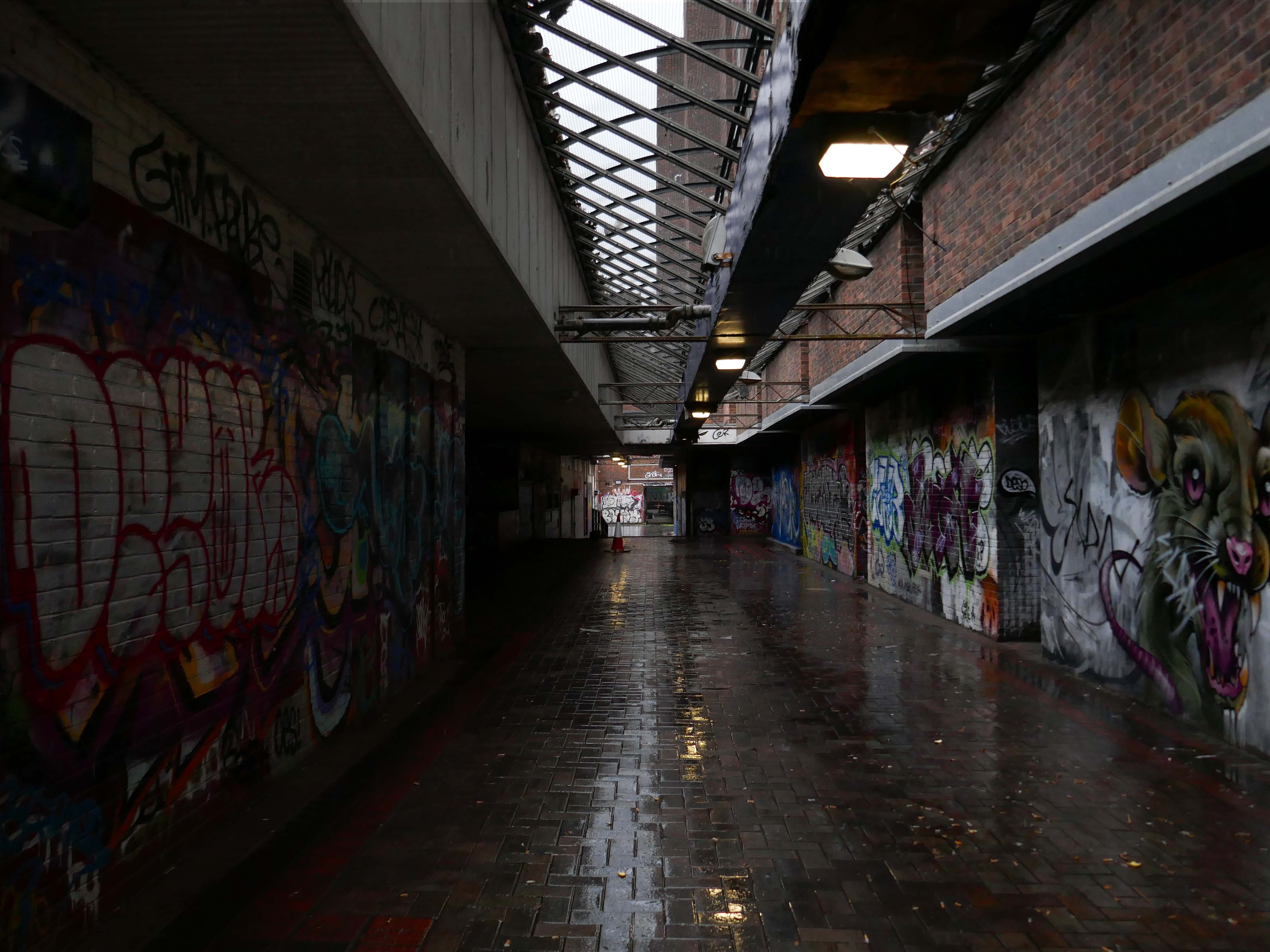
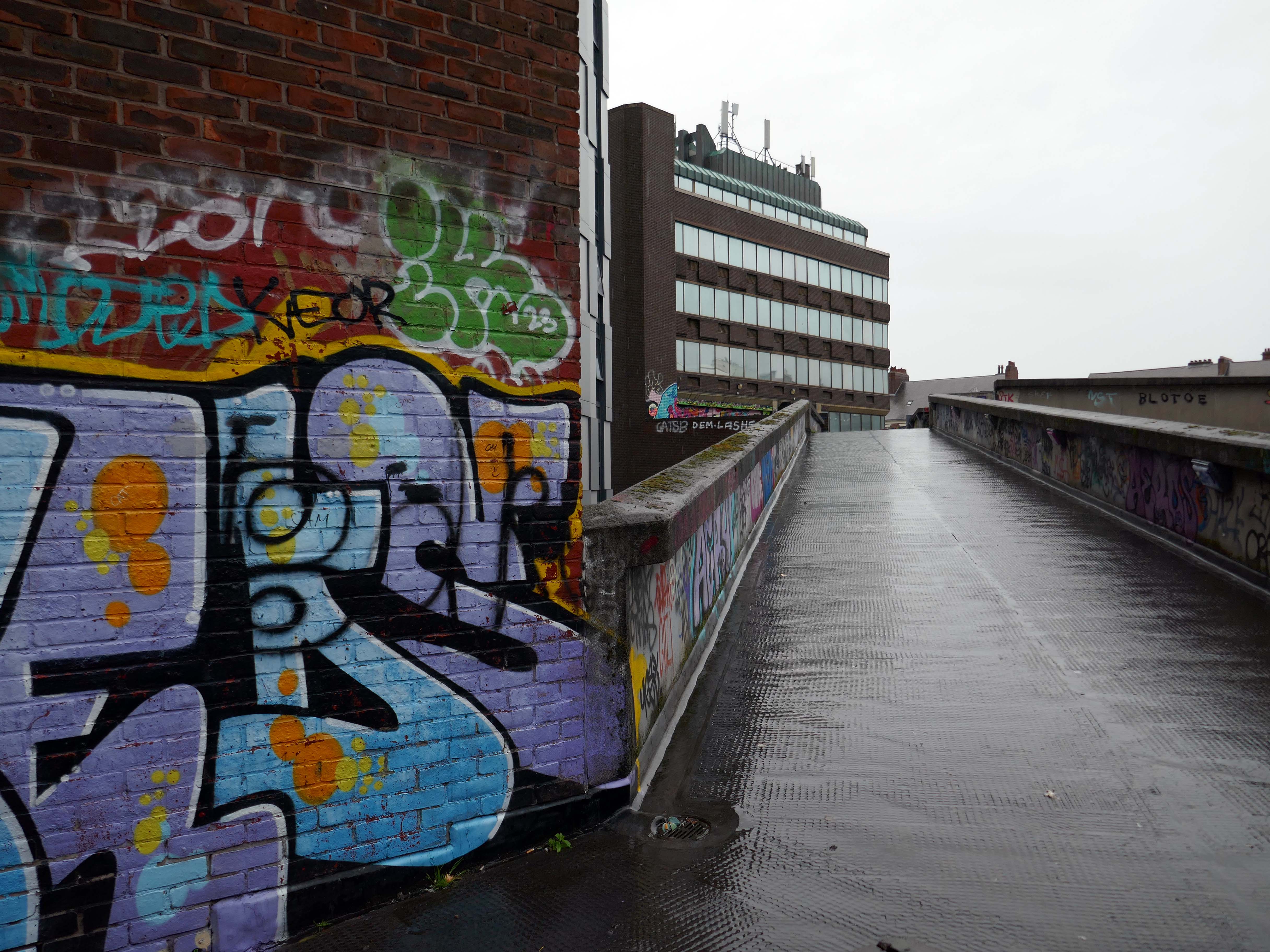
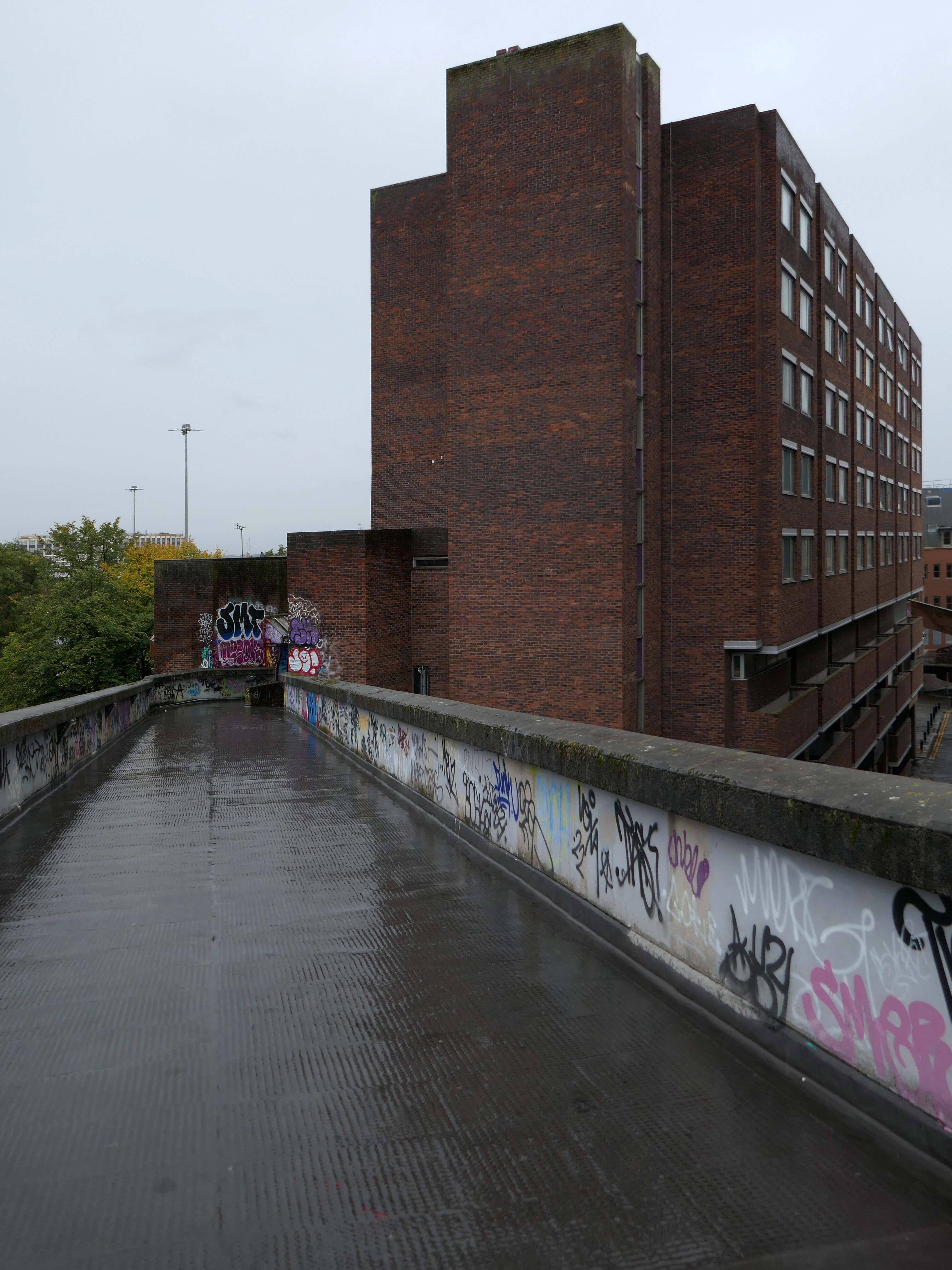
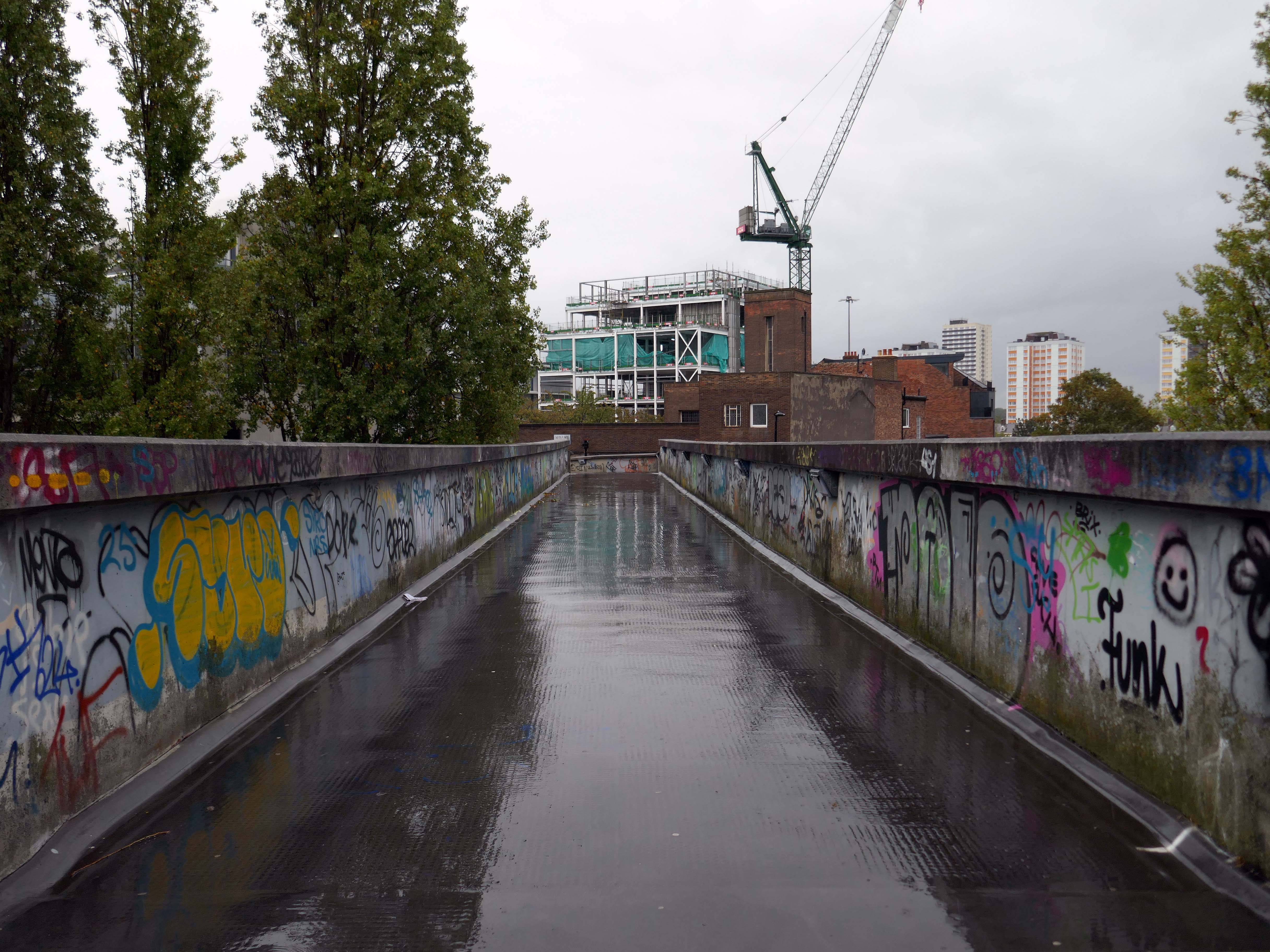
Newcastle Walkways

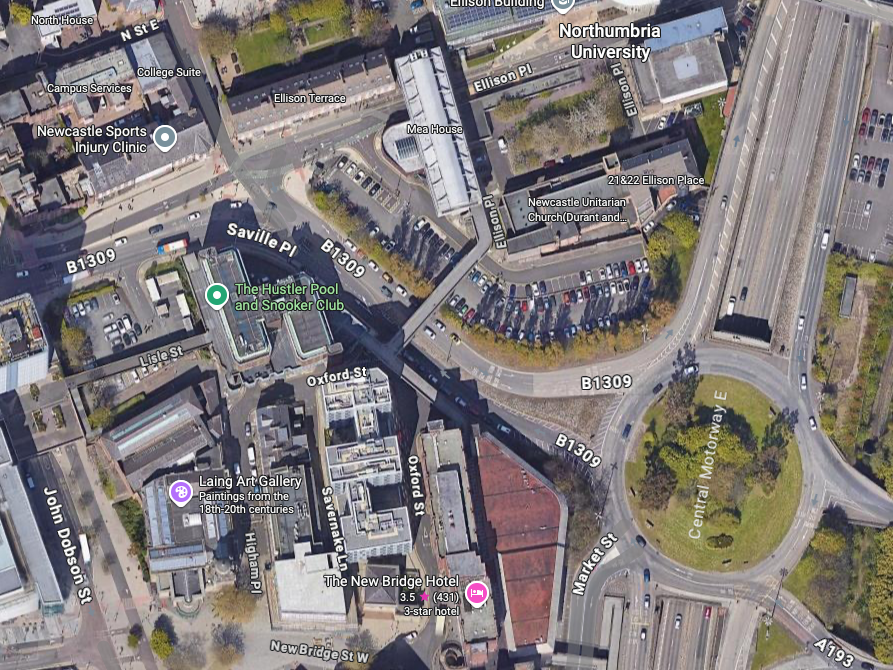
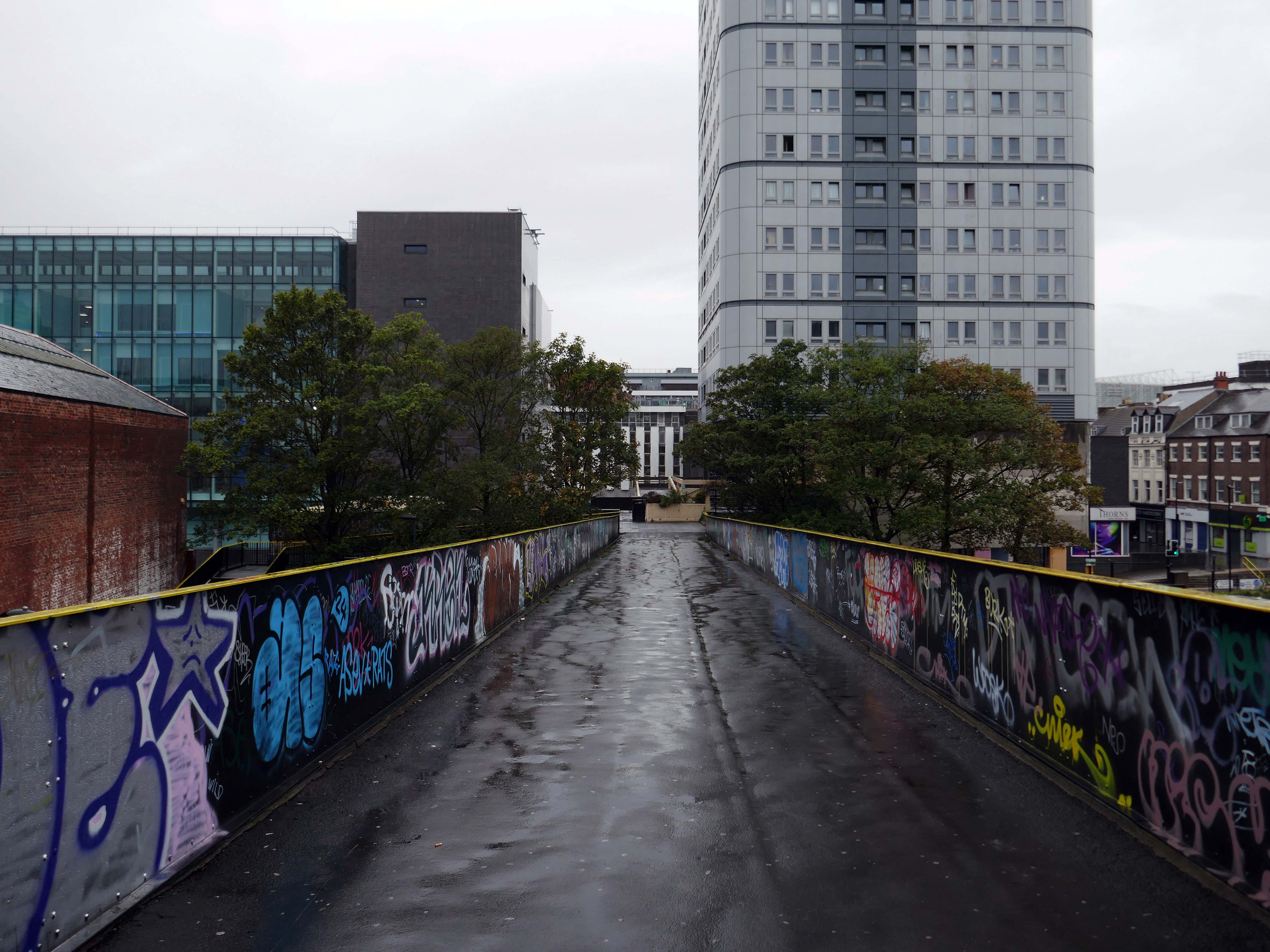
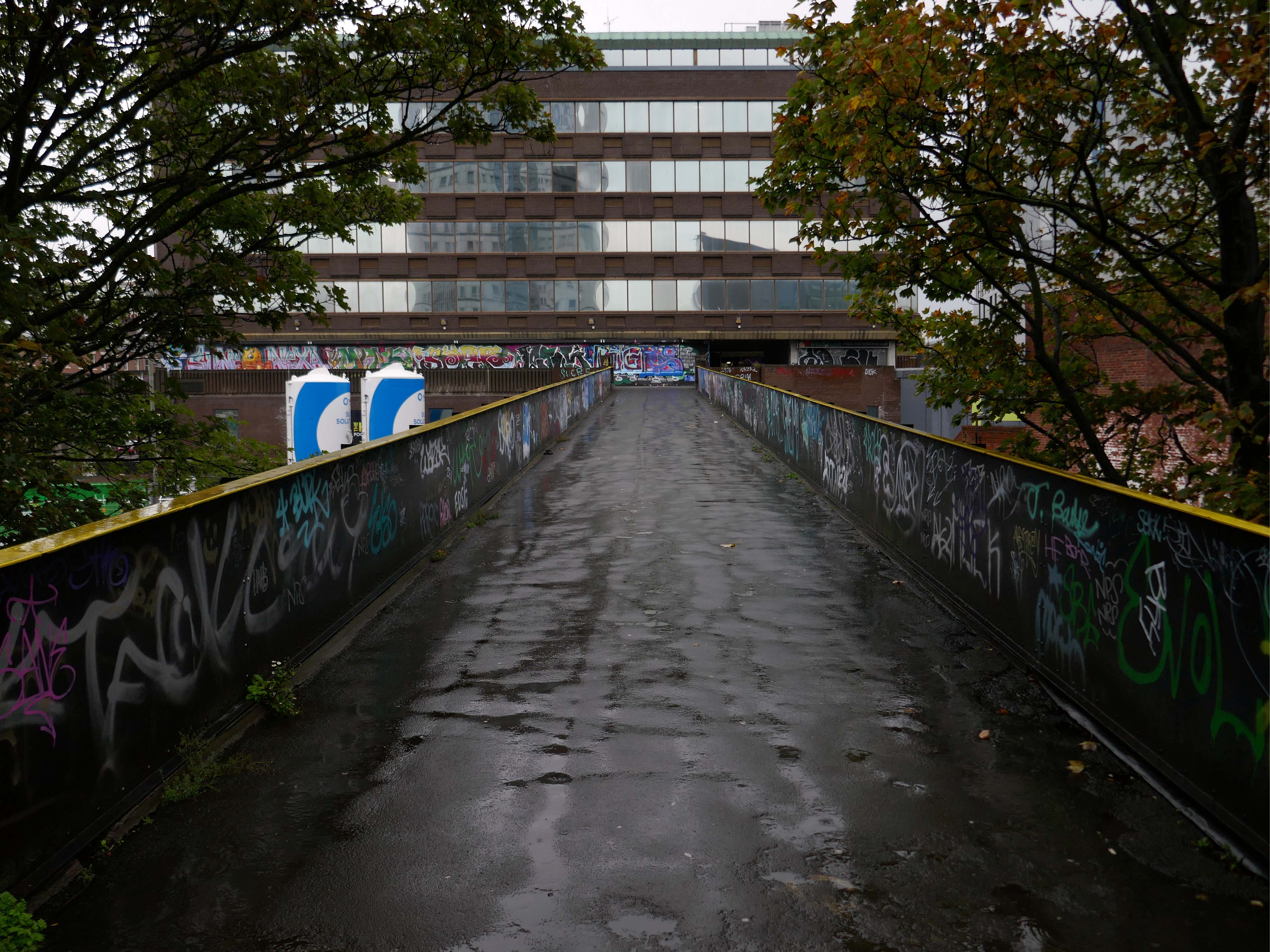
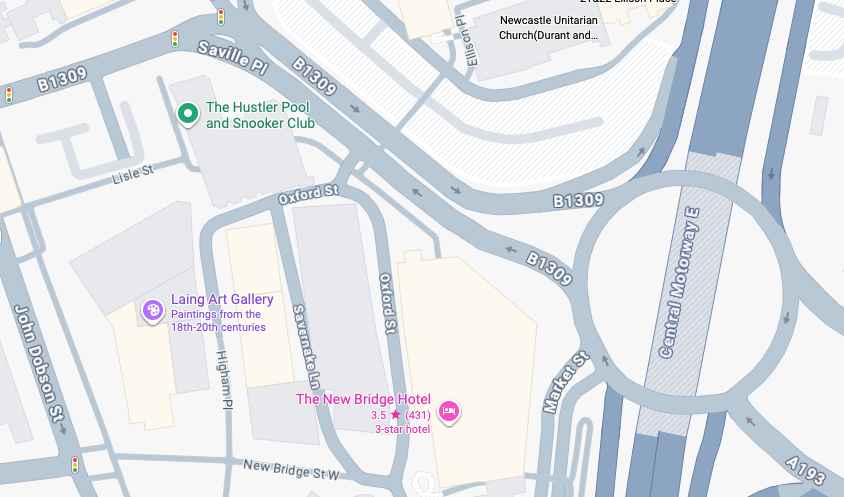
These are the streets in the sky passing between the Central Motorway, Saville Place and Oxford Street.

Streets constrained by infrastructure, a University and doomed leisure provision.

Welcome to Newbridge Hotel Newcastle upon Tyne – a charming oasis located in the heart of the vibrant city, just a short stroll from the renowned Theatre Royal and beautiful St James’ Park. Whether you’re visiting for business or leisure, the location ensures that you have easy access to the best of Newcastle, including fantastic shopping at Eldon Square and local attractions like the Metro Radio Arena.

Discover the essence of Newcastle from Newbridge Hotel, where every stay becomes a unique experience tailored to your needs.

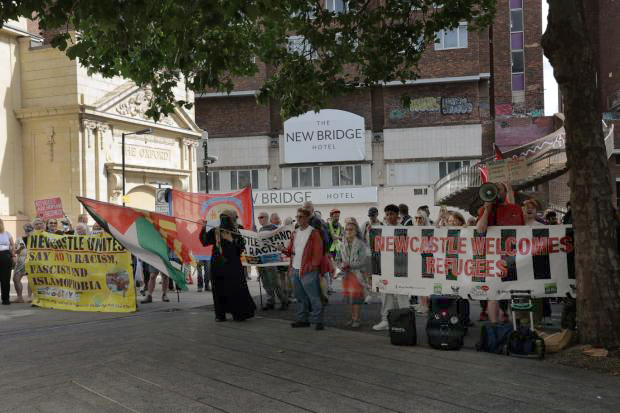
Two sets of protestors gathered outside the New Bridge Hotel in Newcastle, as “Newcastle Welcomes Refugees” stood up to “Send Them Back” protesters who want an end to migrants being housed in the hotel.

Northern Echo

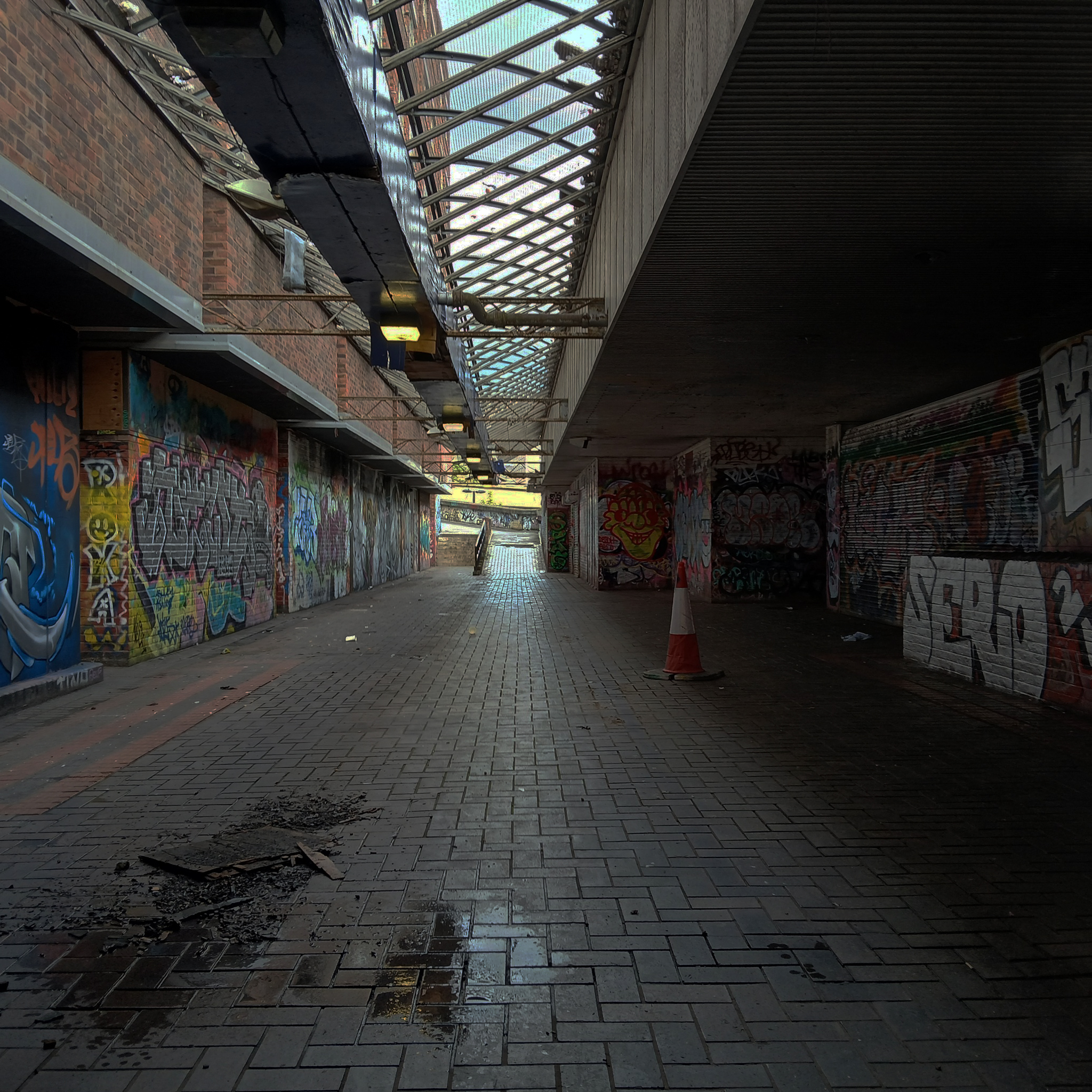
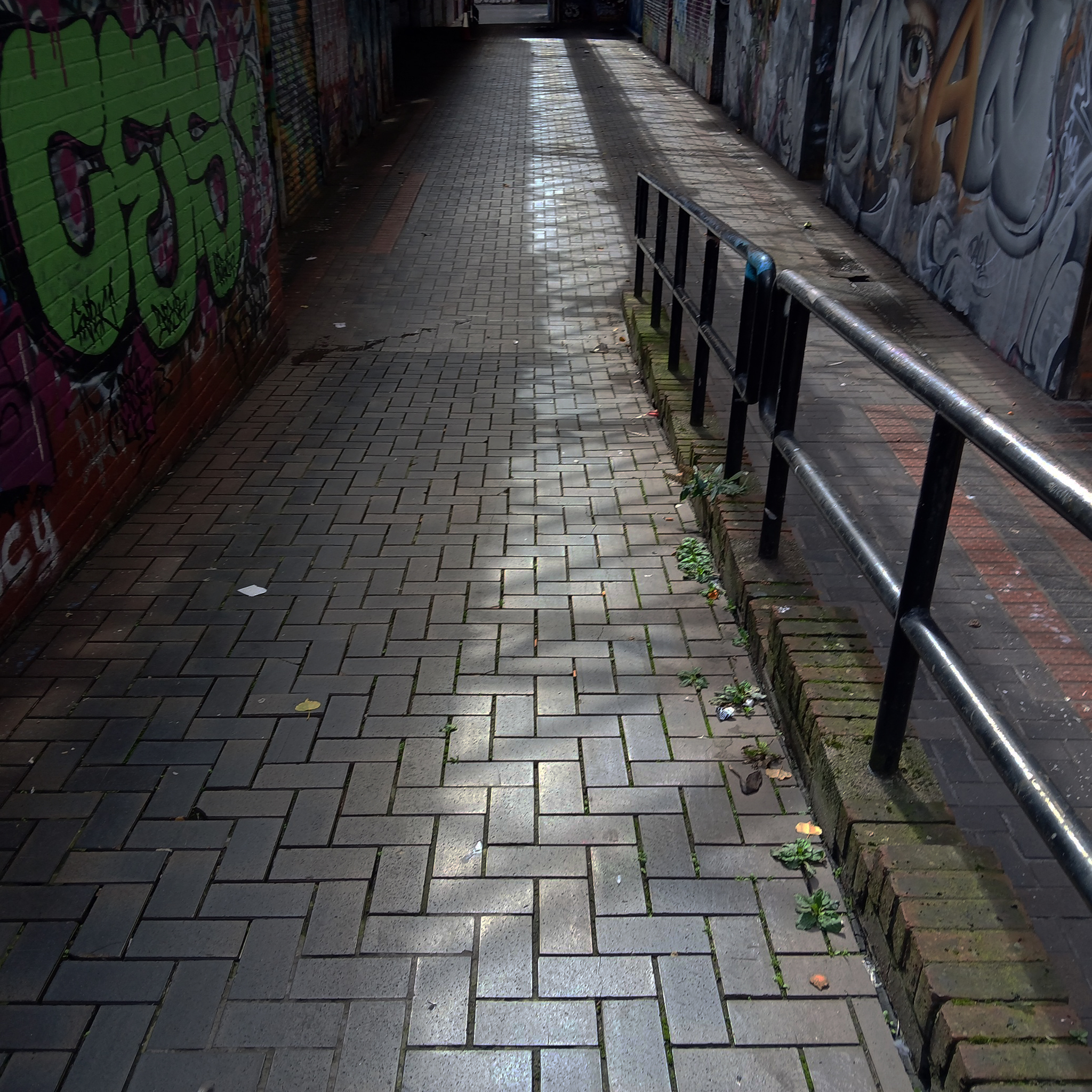
I have been here before and posted upon the subject of Newcastle Underpasses.

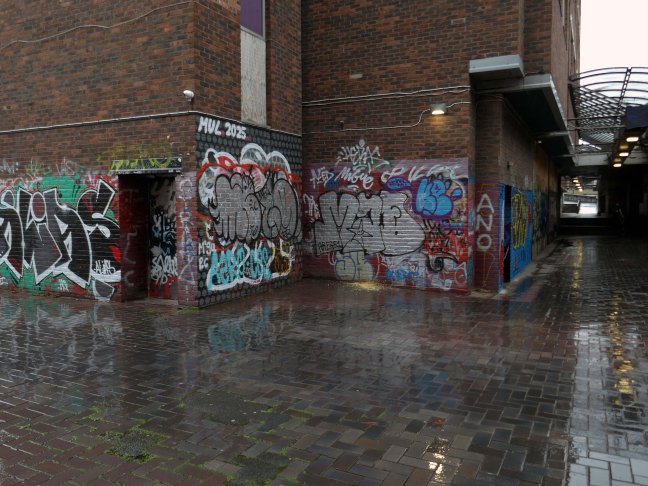
This is an inland island of anonymity, home to pigeons, shake can shakers and the terminally curious.

It always rains on Saturdays.

Happily, the sun always shines on Sunday.

Hidden within and upon the walls of the walkways are these two cast concrete panels – the work of guerrilla artist Euan Lynn.

North east property group Gainford has unveiled its revised plan for a £170m residential and hotel project to transform Newcastle’s skyline.

It plans to redevelop a former Premier Inn site on New Bridge Street, with a 29-storey tower of 185 flats, alongside a separate 150-bedroom hotel, and bars, restaurants, and leisure space.

Construction Enquirer

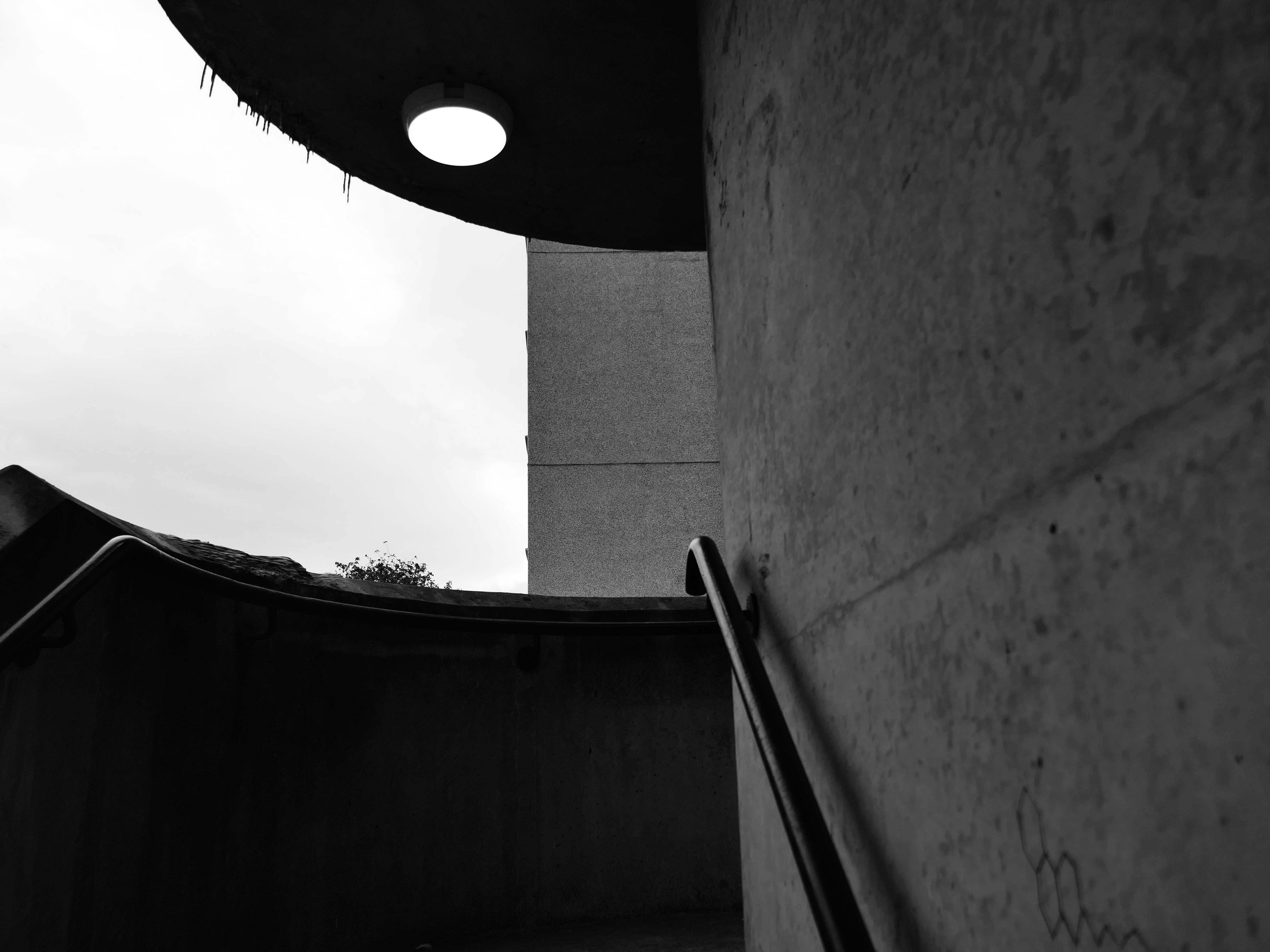
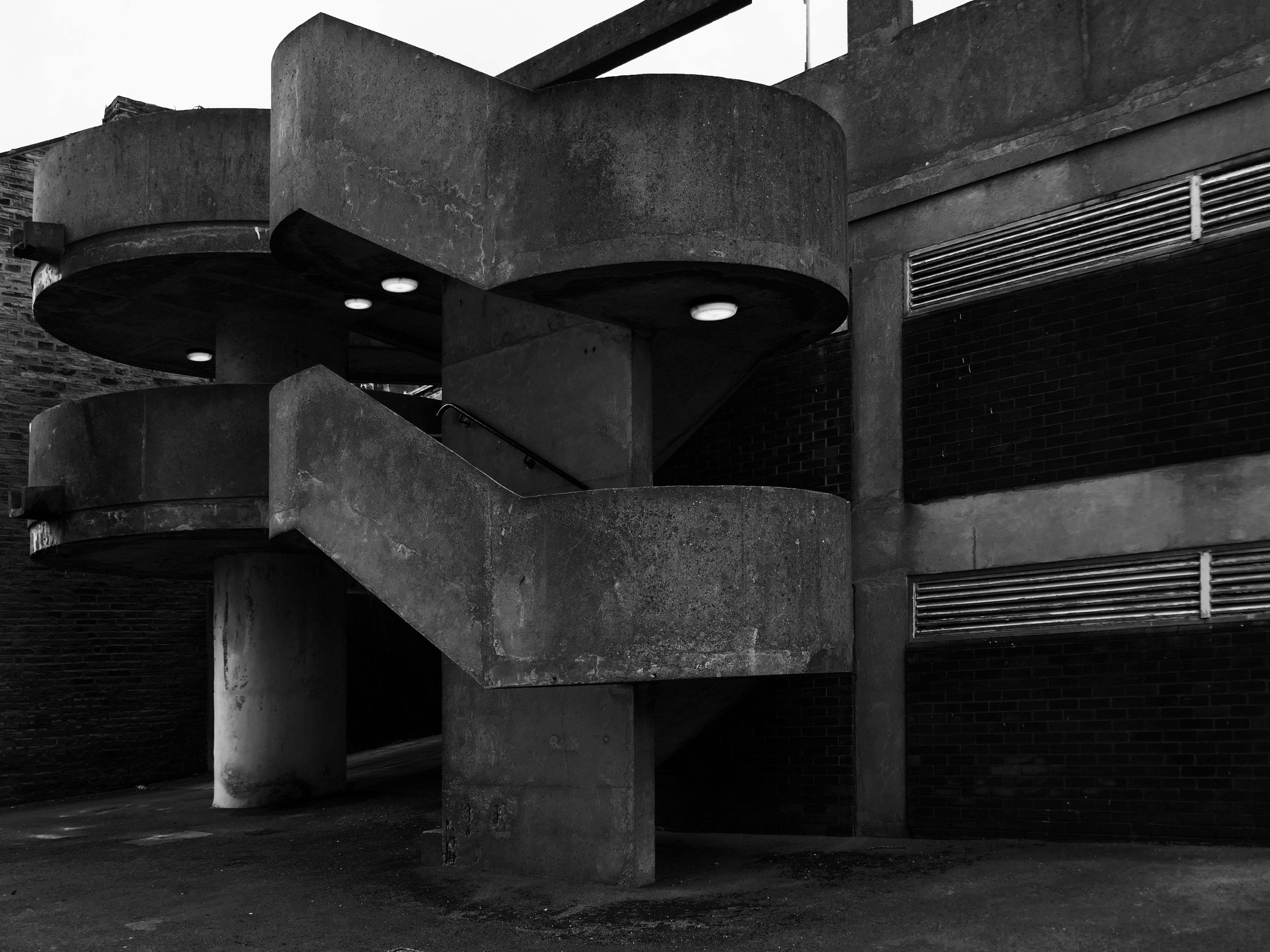
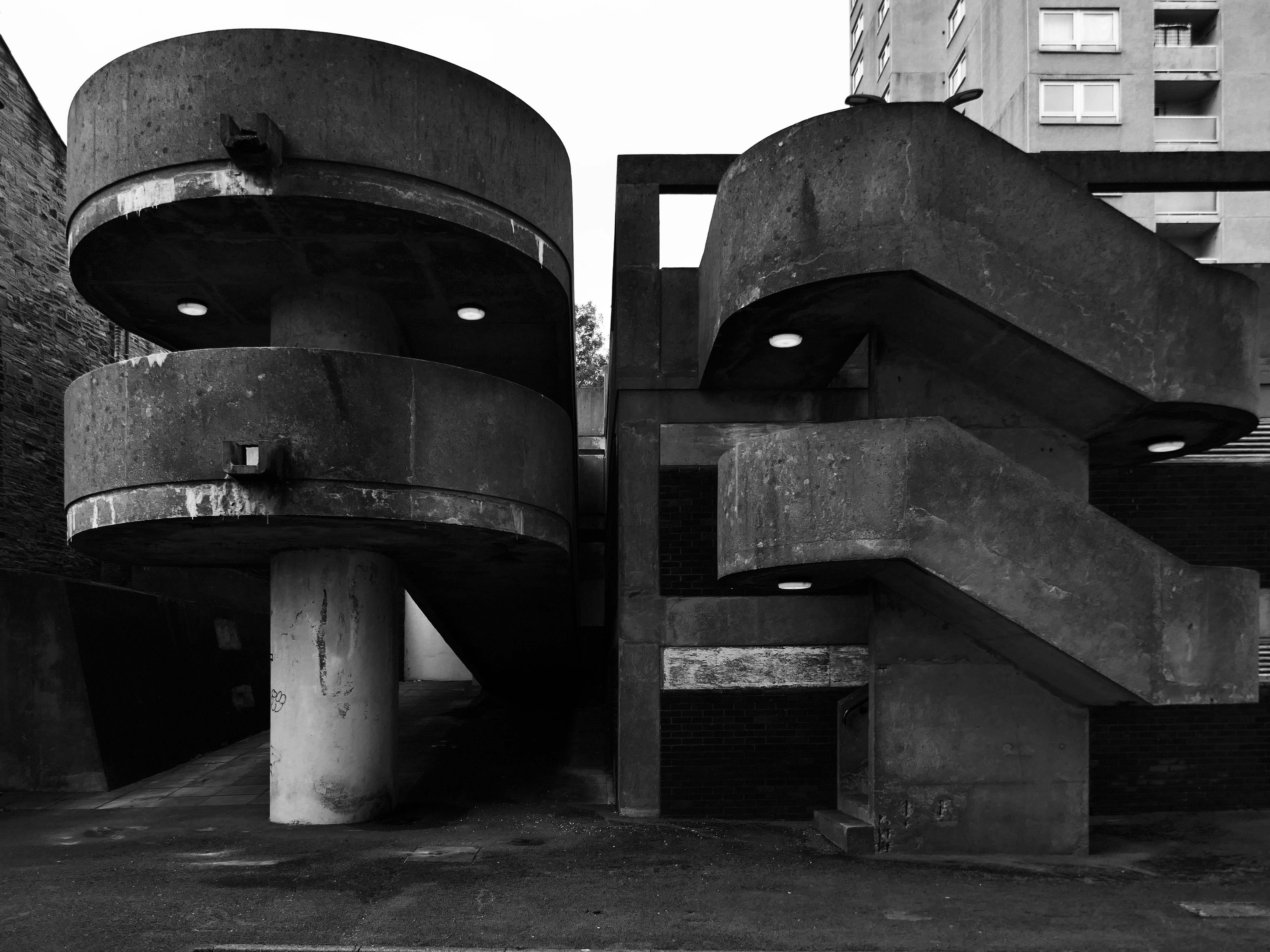
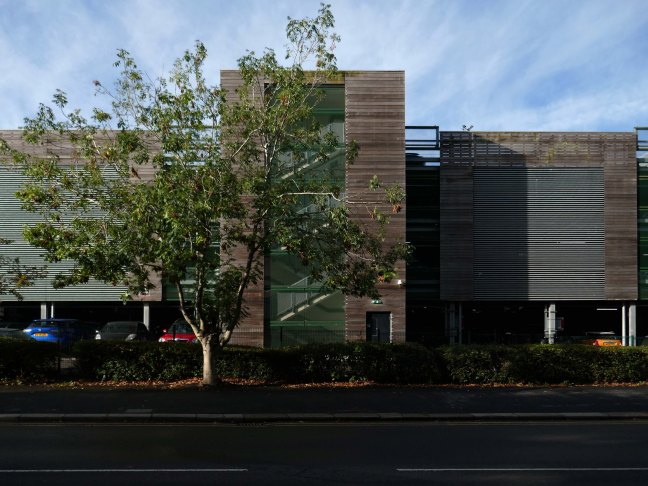
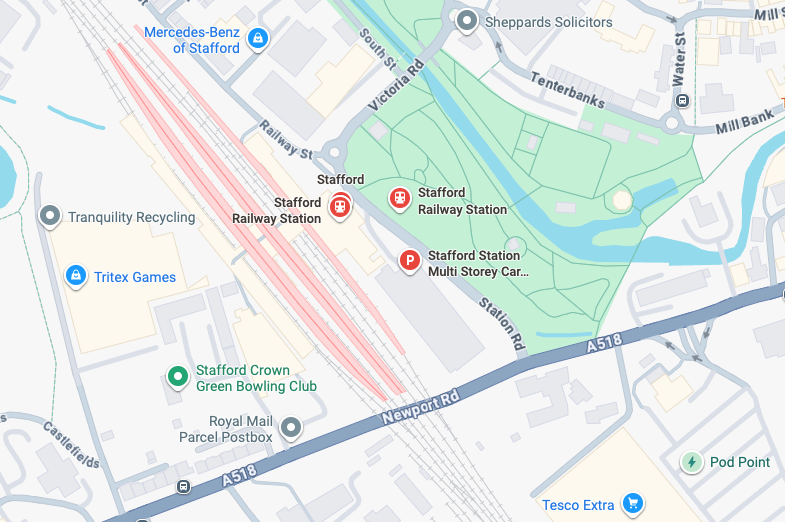
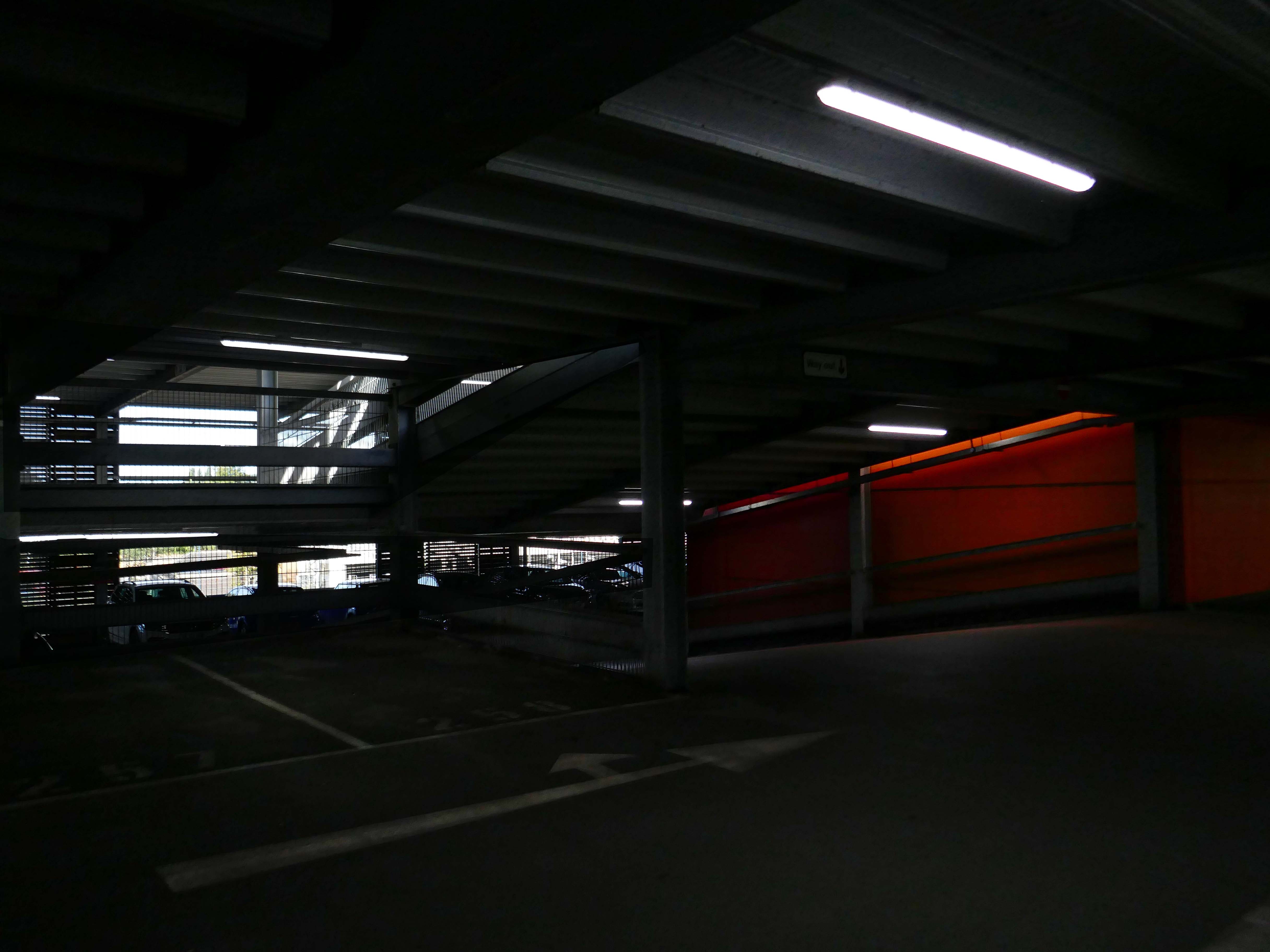
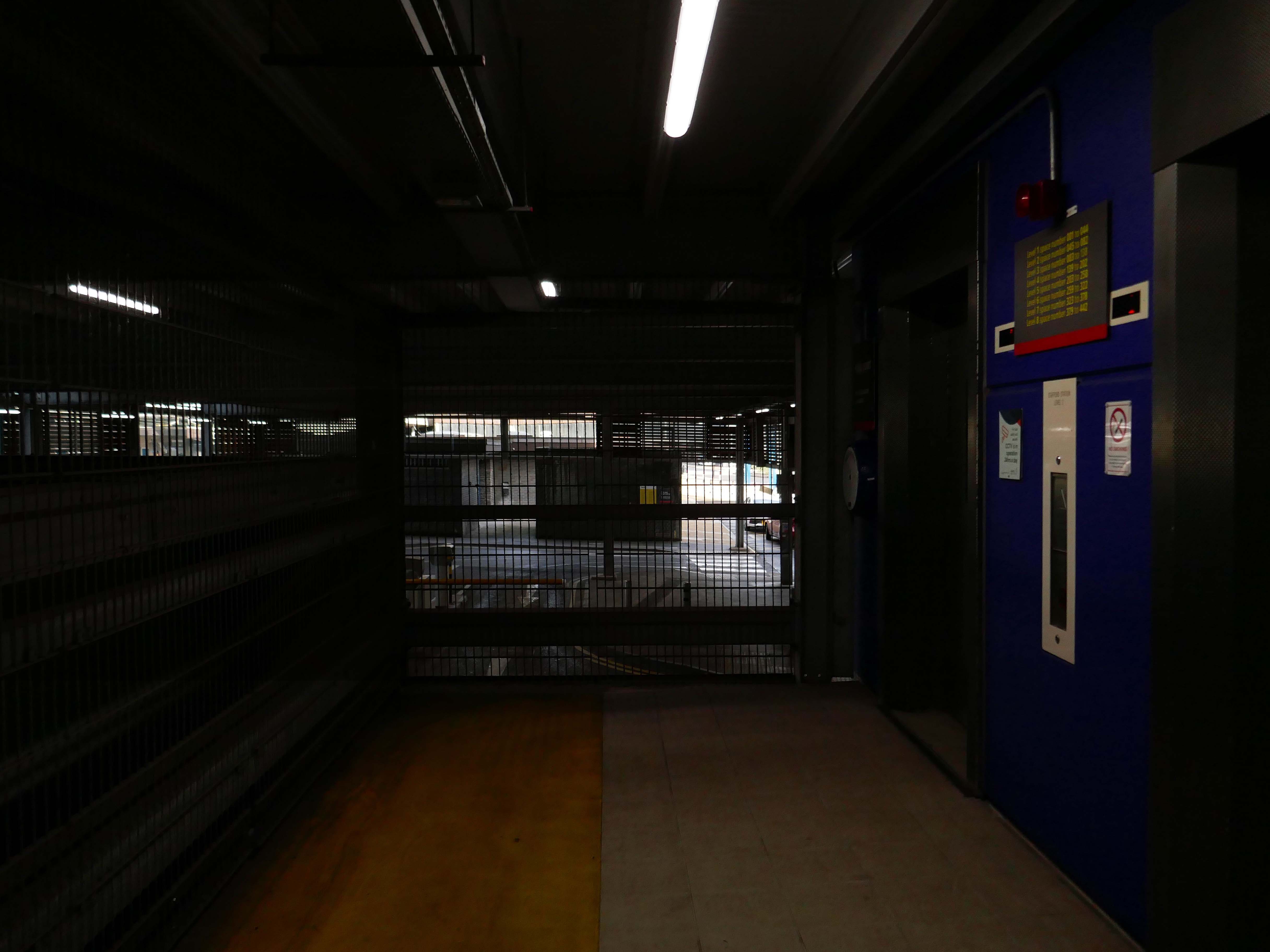
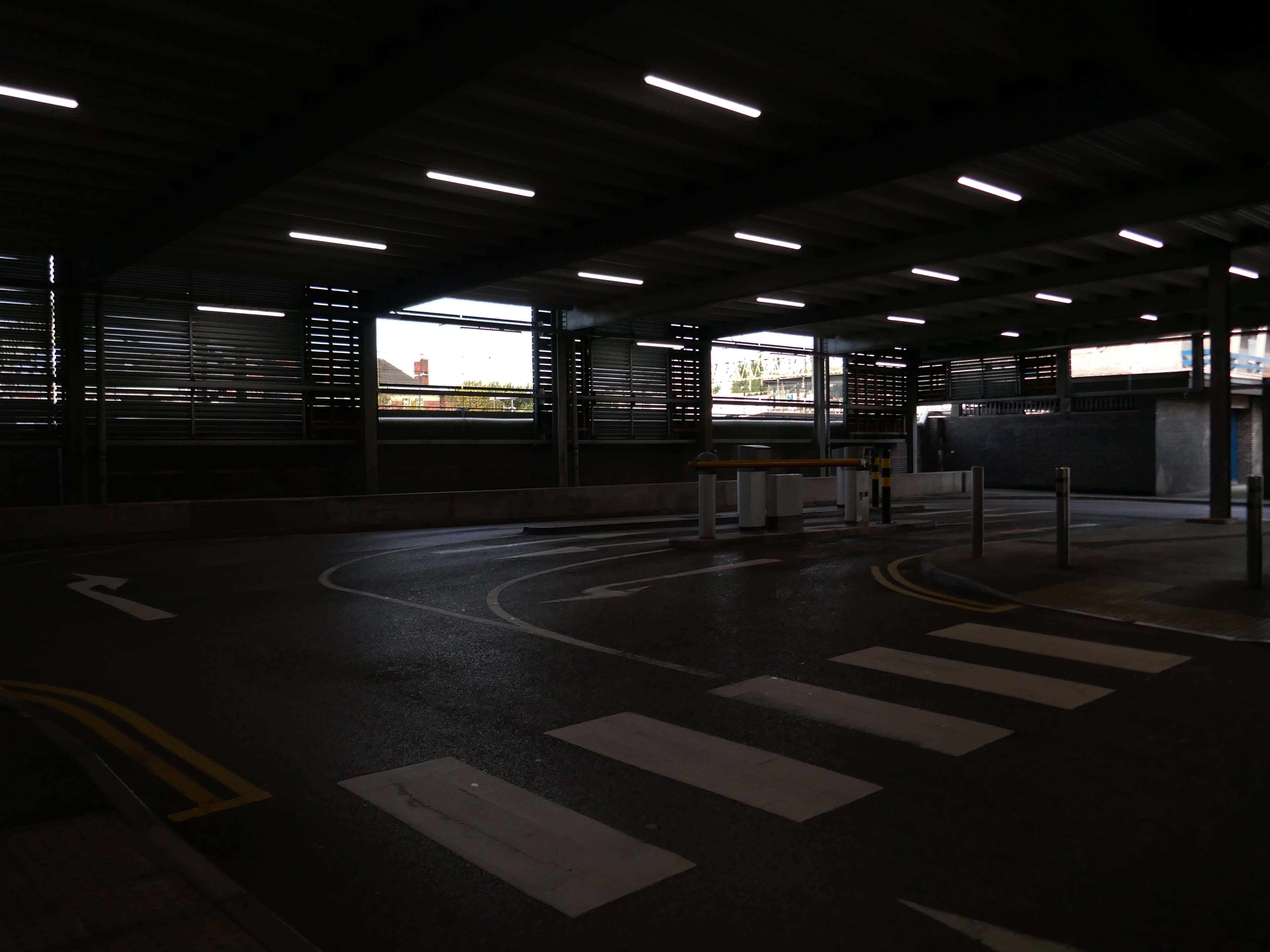
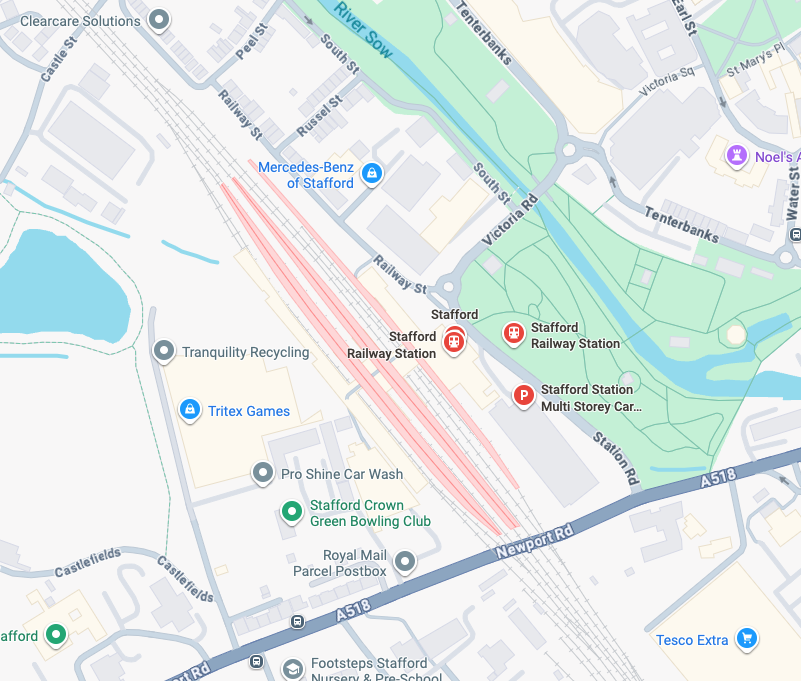
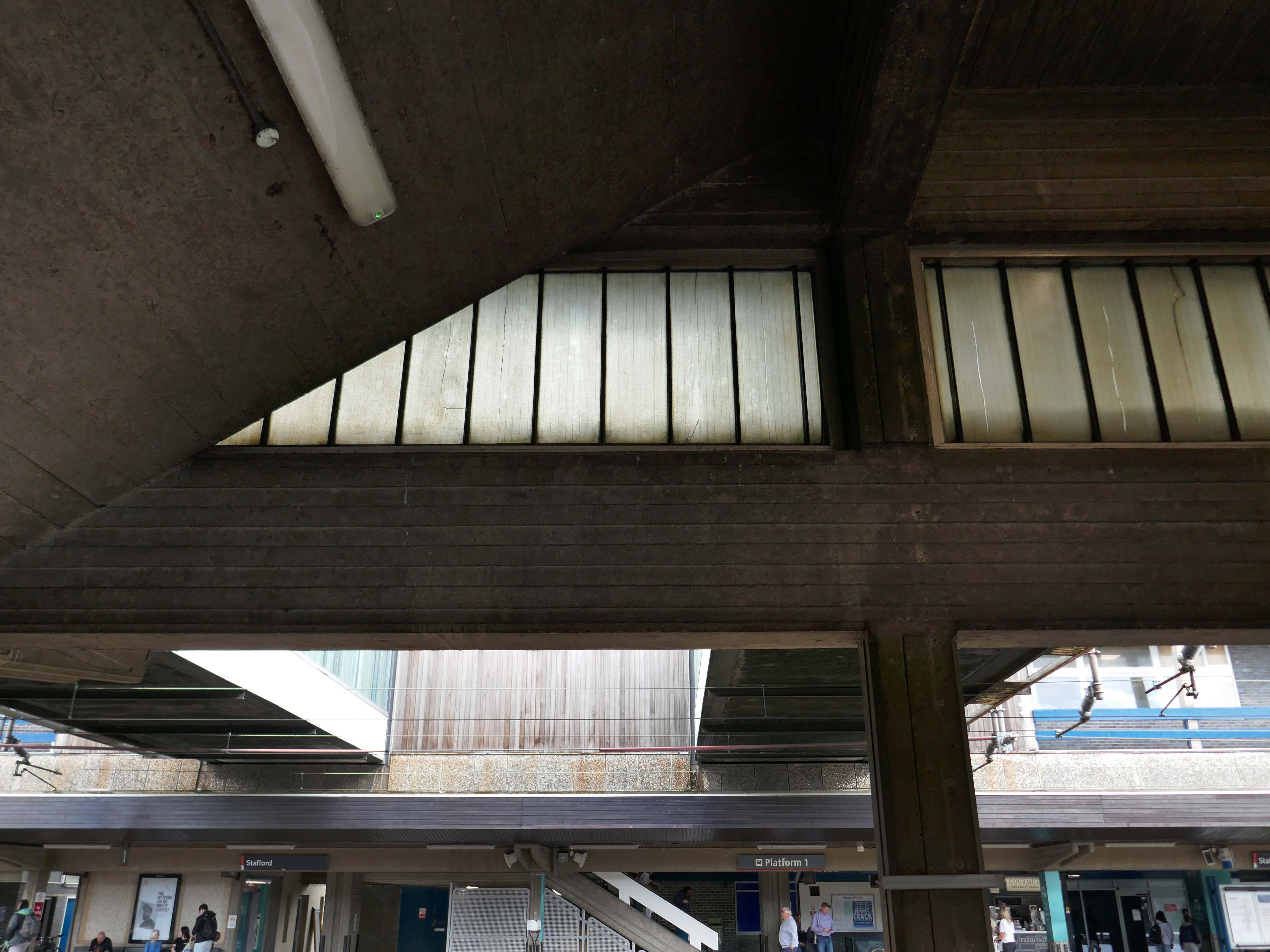
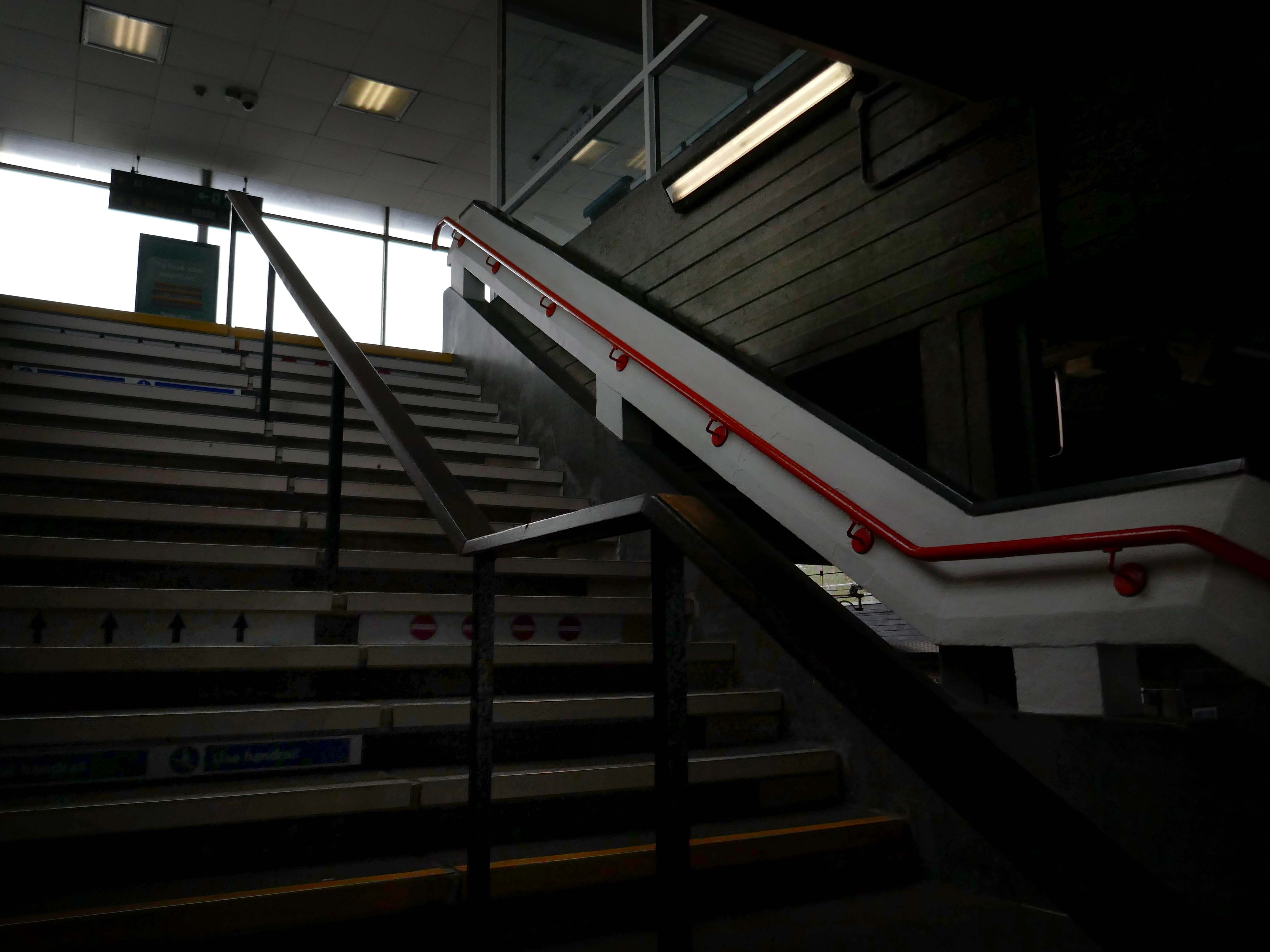
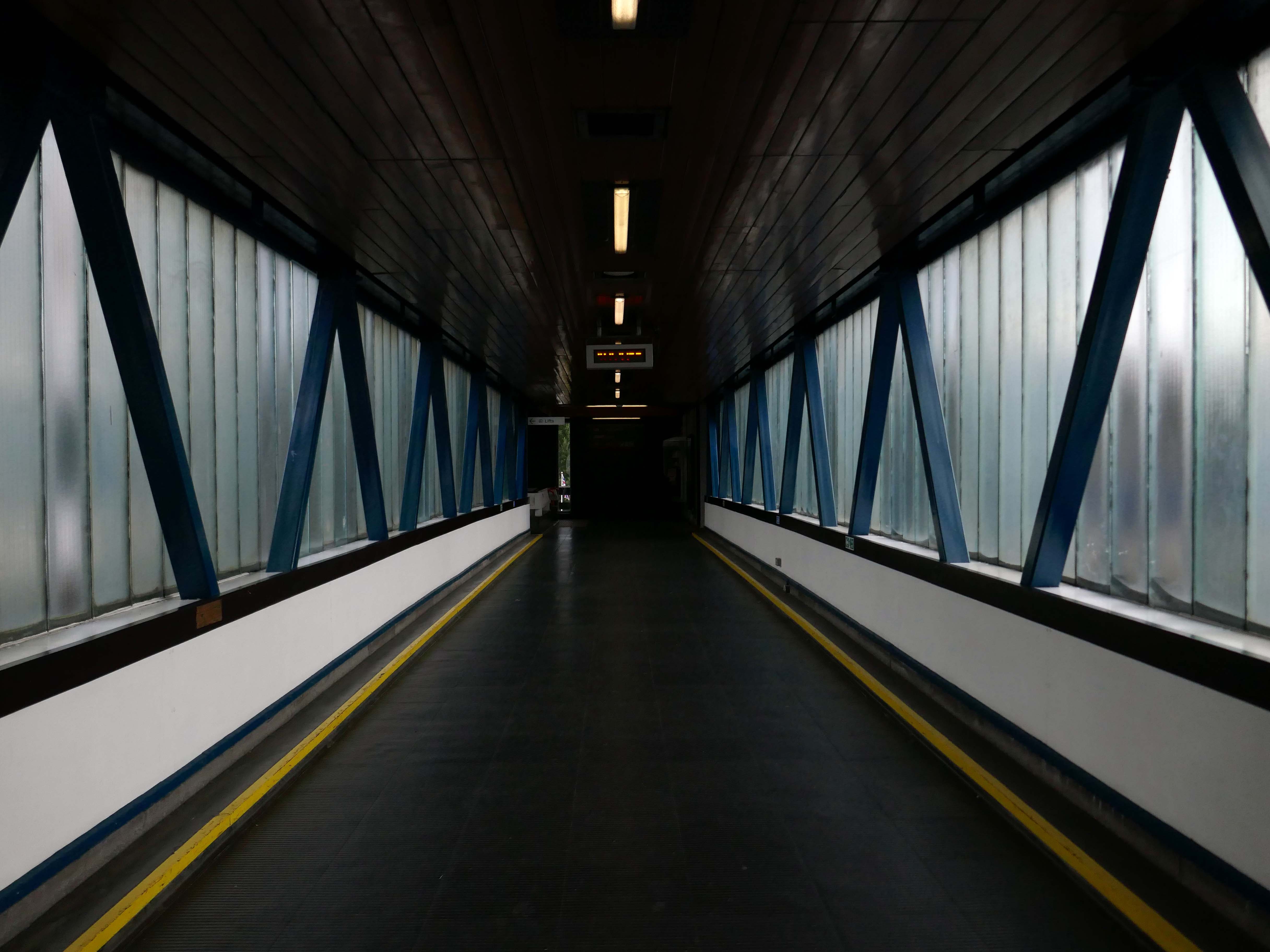
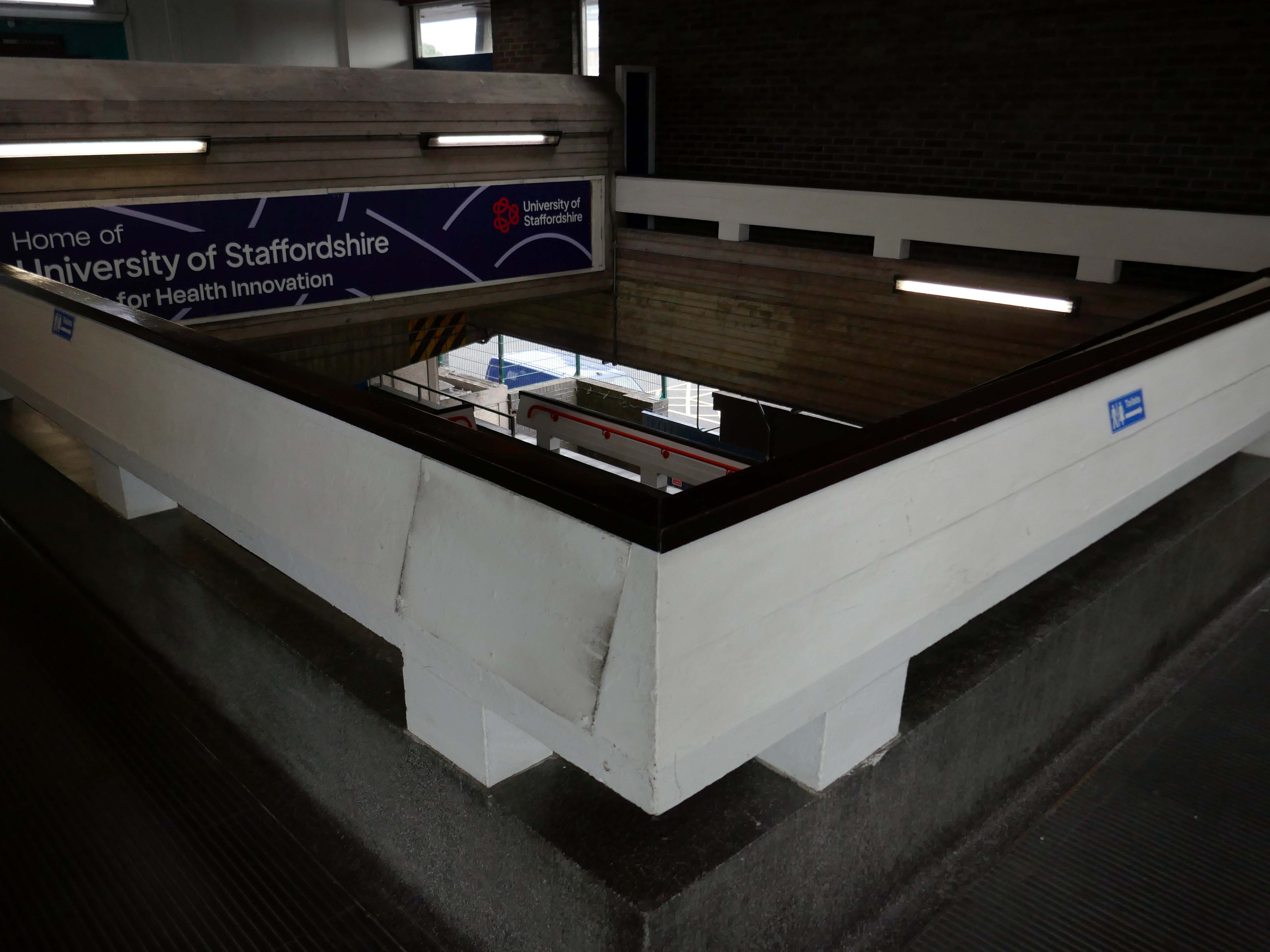
Stafford Station Multi Storey Car Park

Stafford Station – Multi-Storey Car Park Station Road ST16 2AA

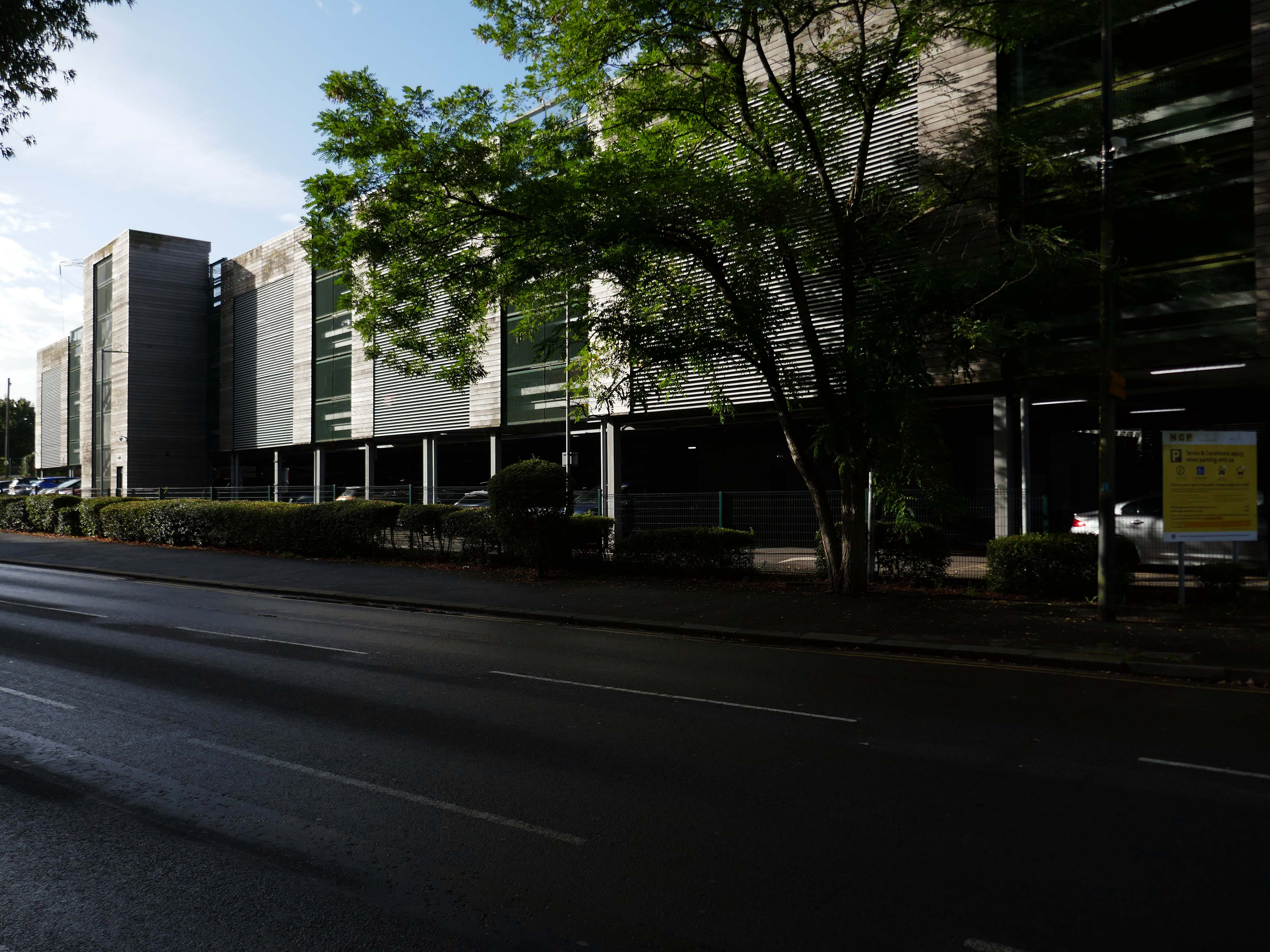
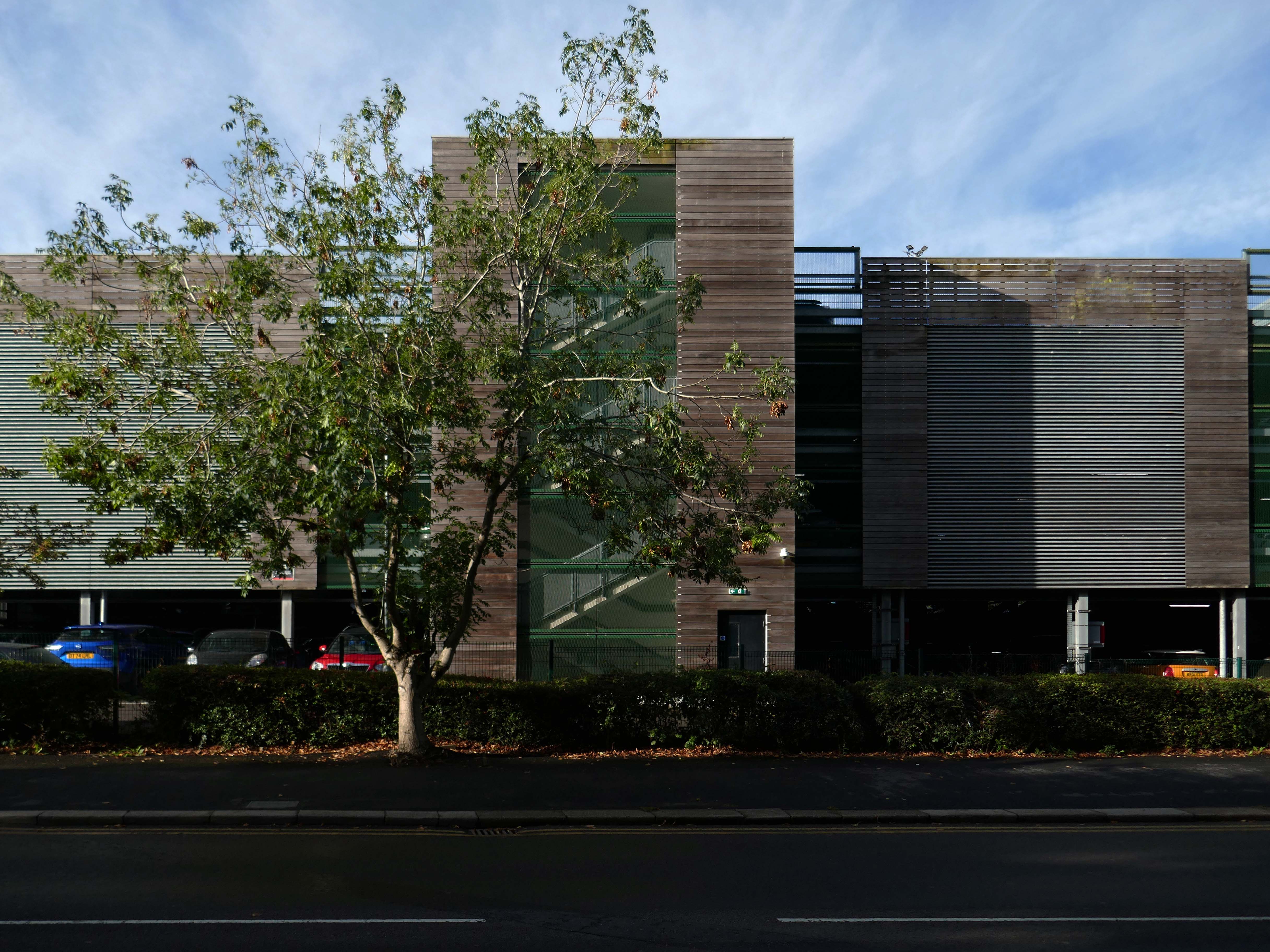
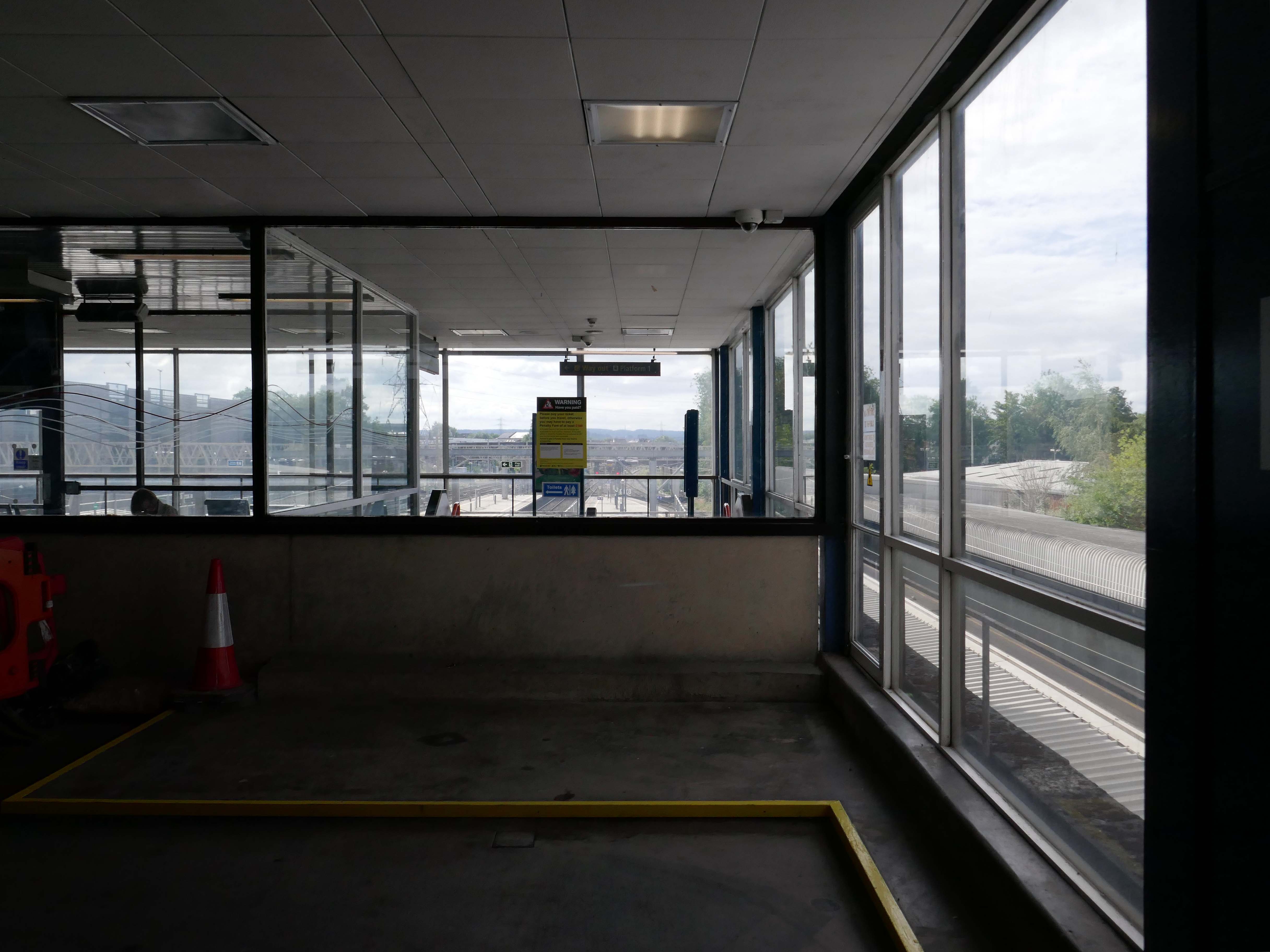
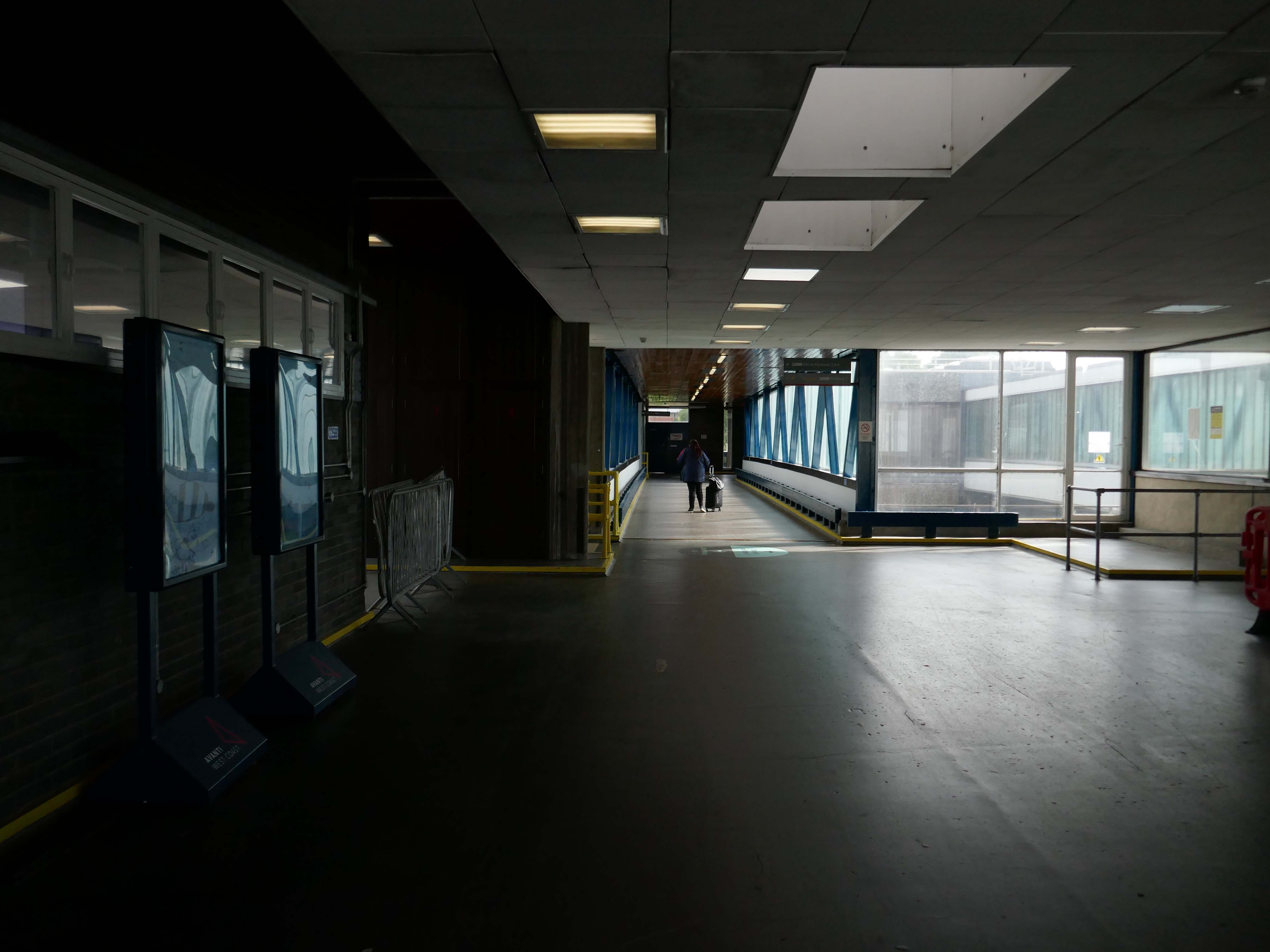
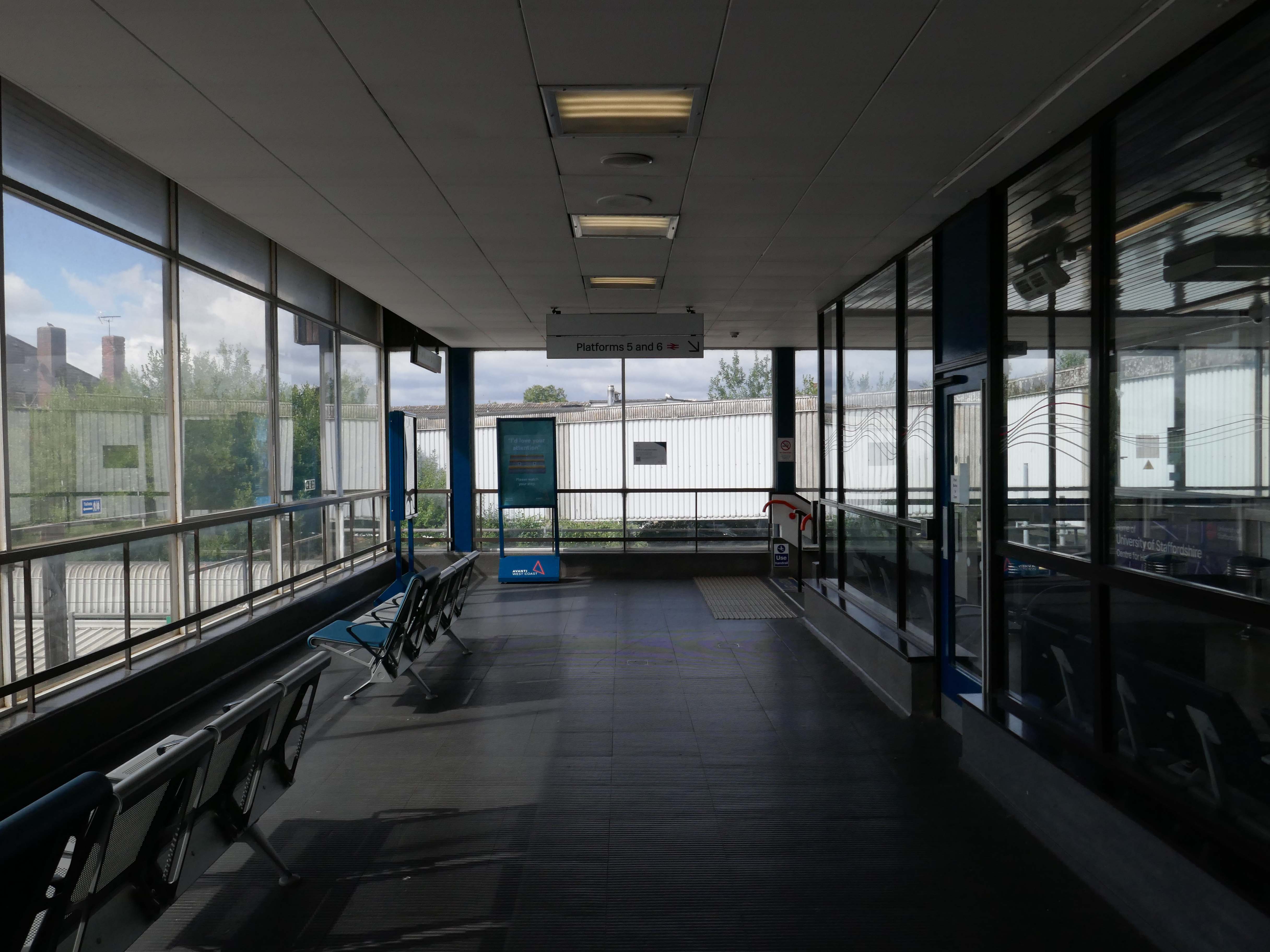
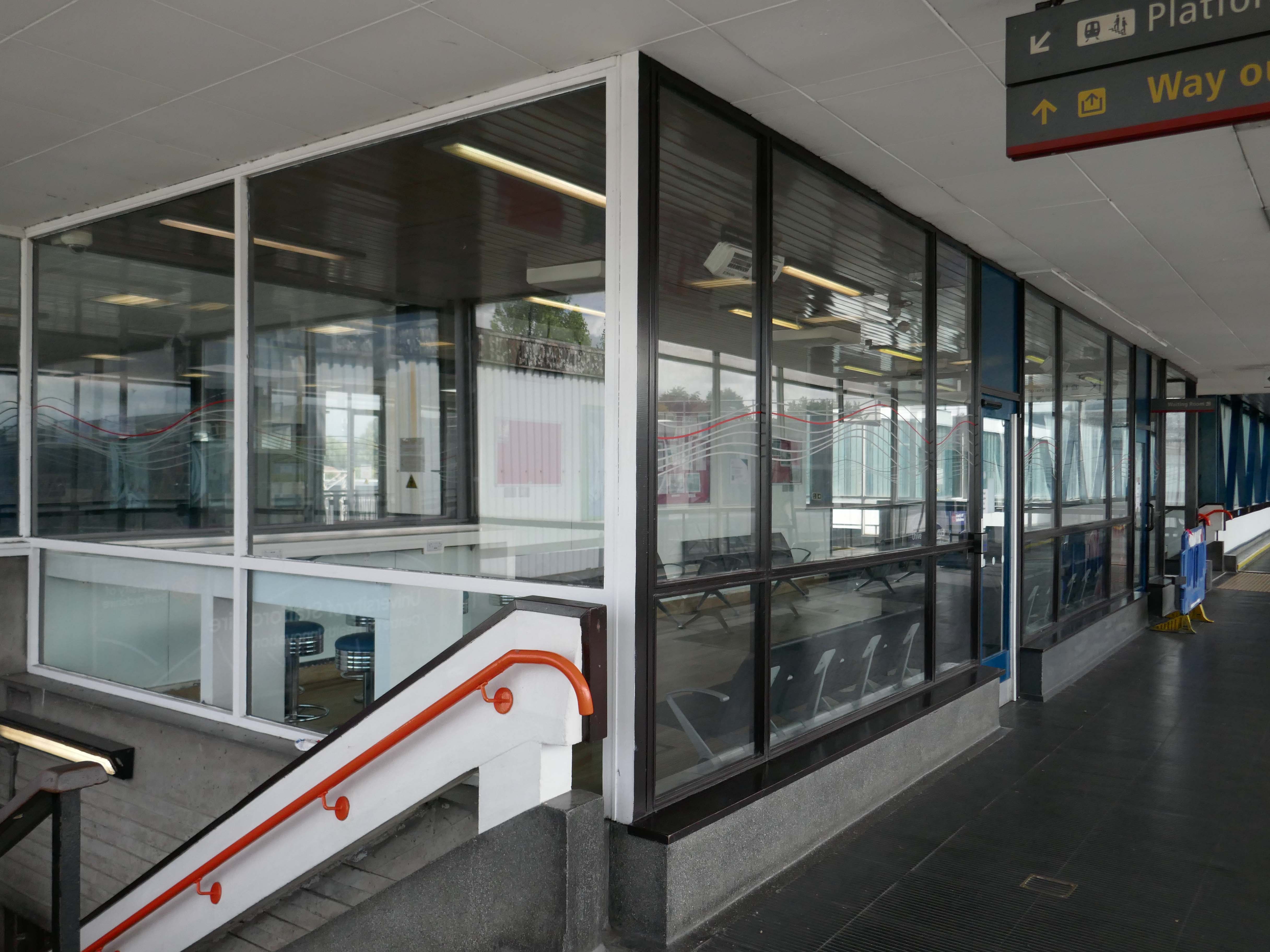
Arriving by train one Saturday morning at the Stafford Station, with time on my hands, I thought to take a look at the adjacent multi-storey car park.

As a pedestrian I found it to be first rate, clean and well signed and designed, easy access by both stairways and lifts, affording panoramic views of the town.

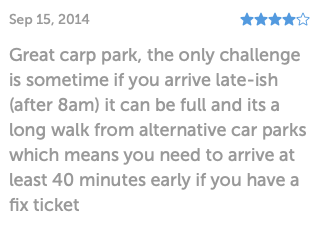
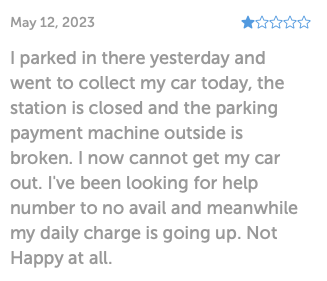
The motorists however have mixed opinions.

Parkopedia

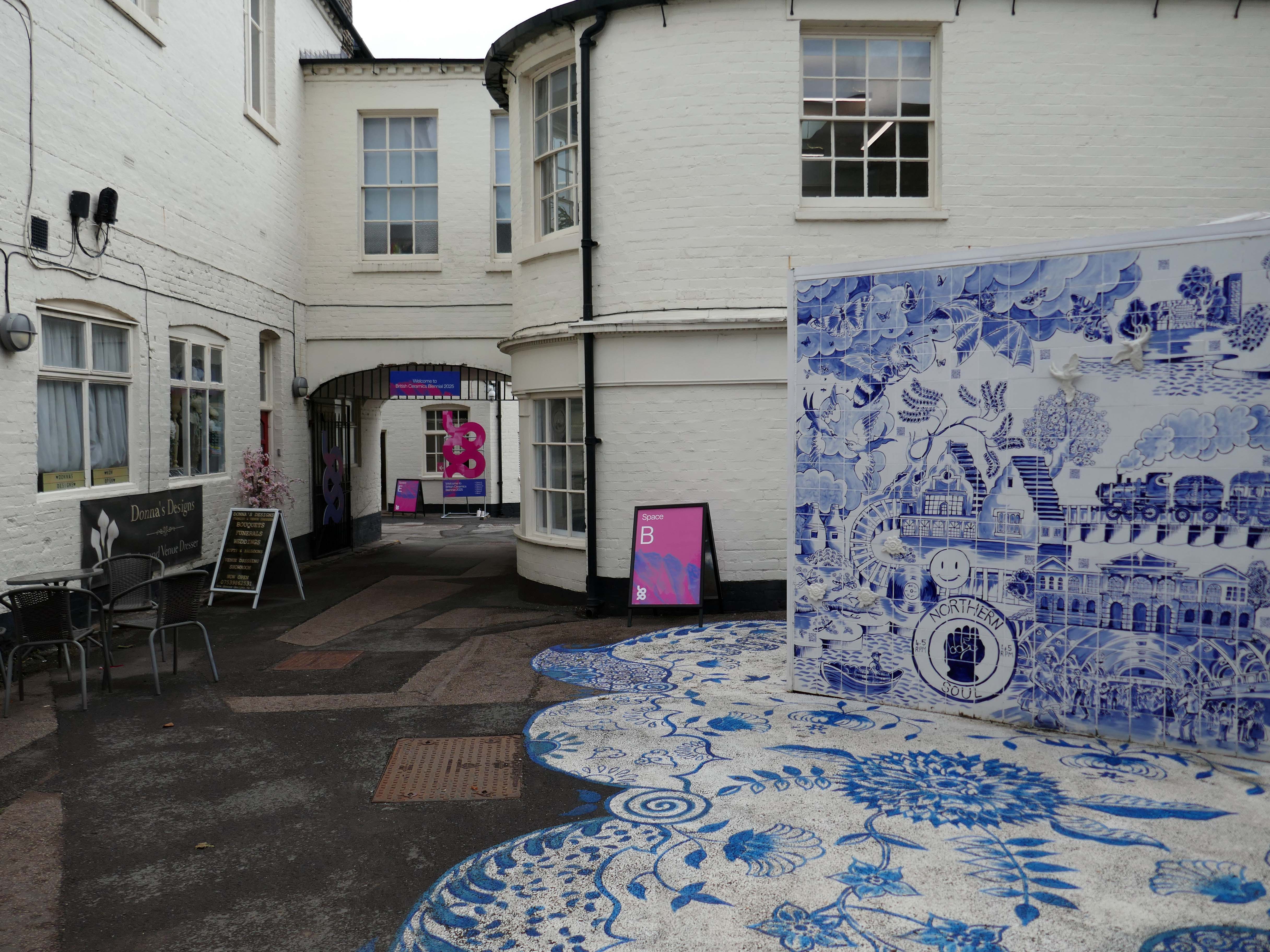
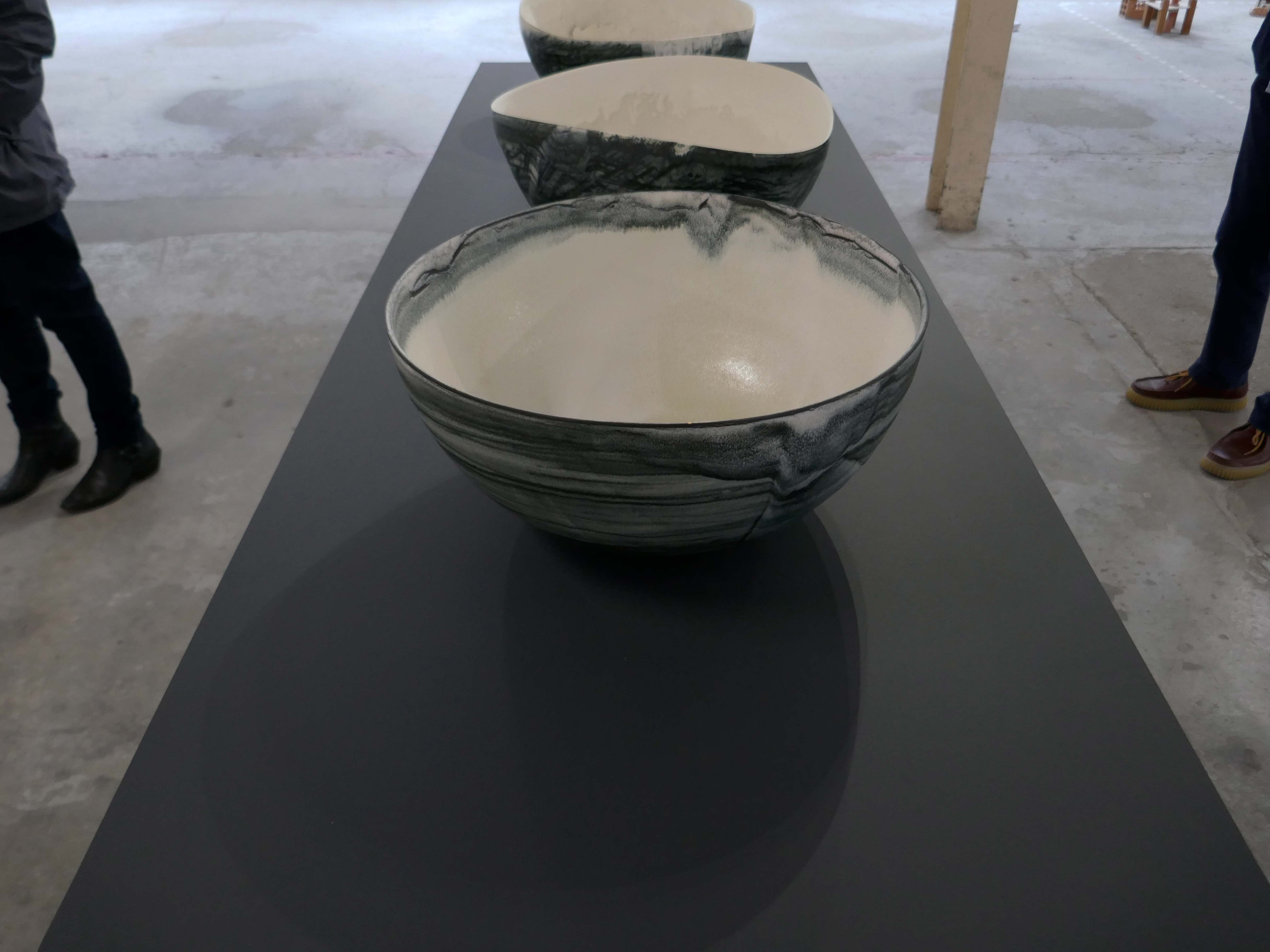
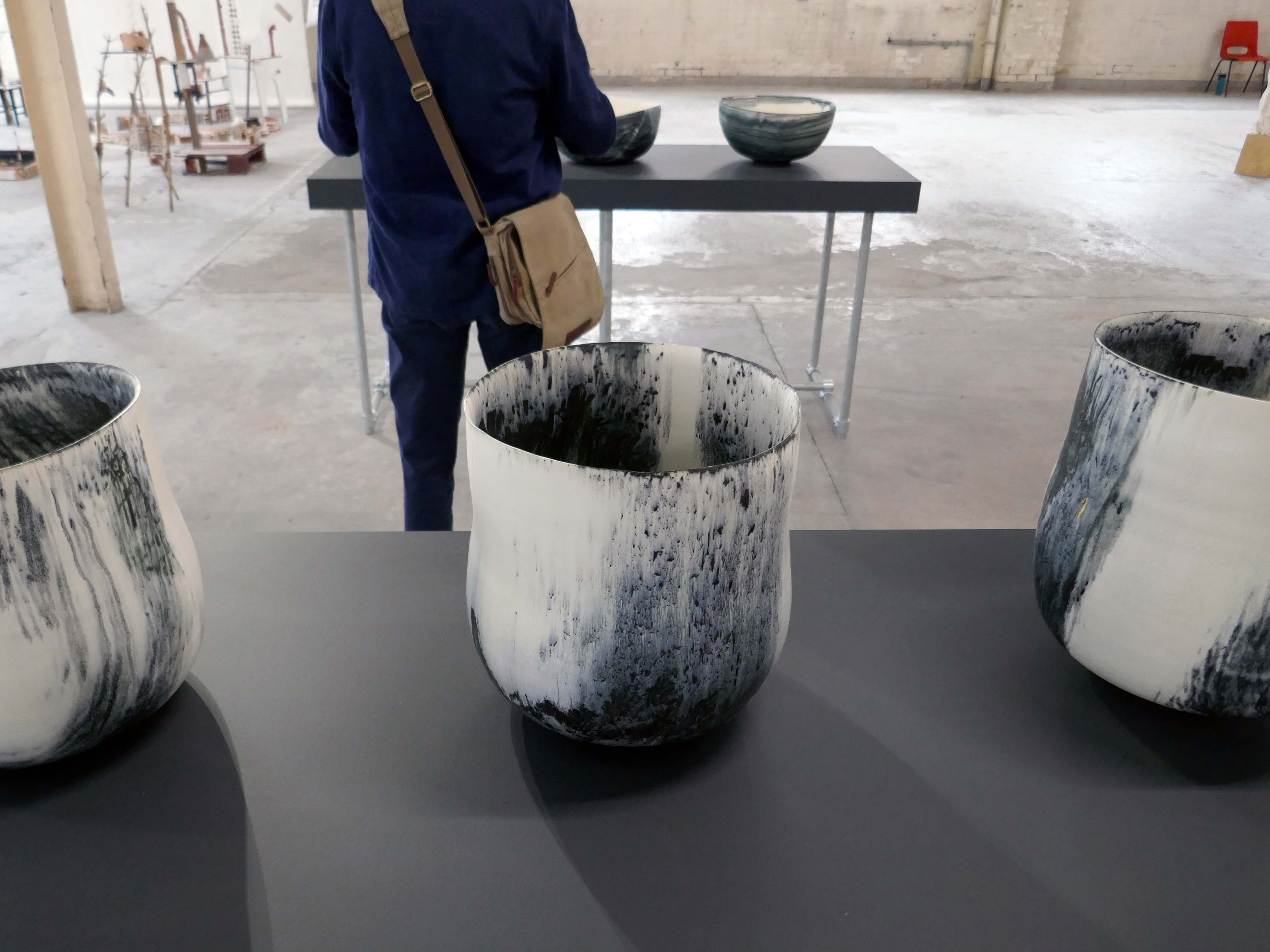
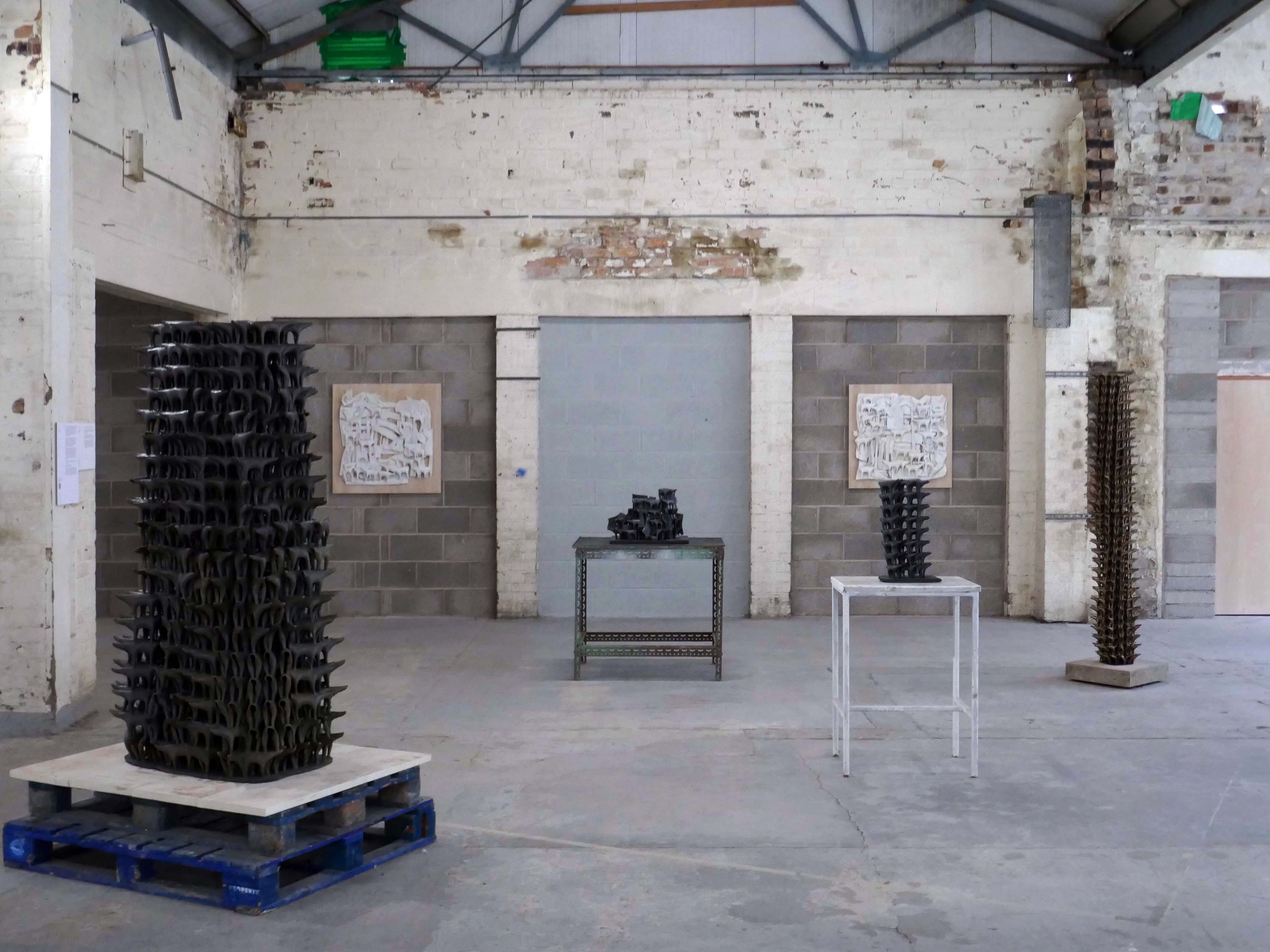
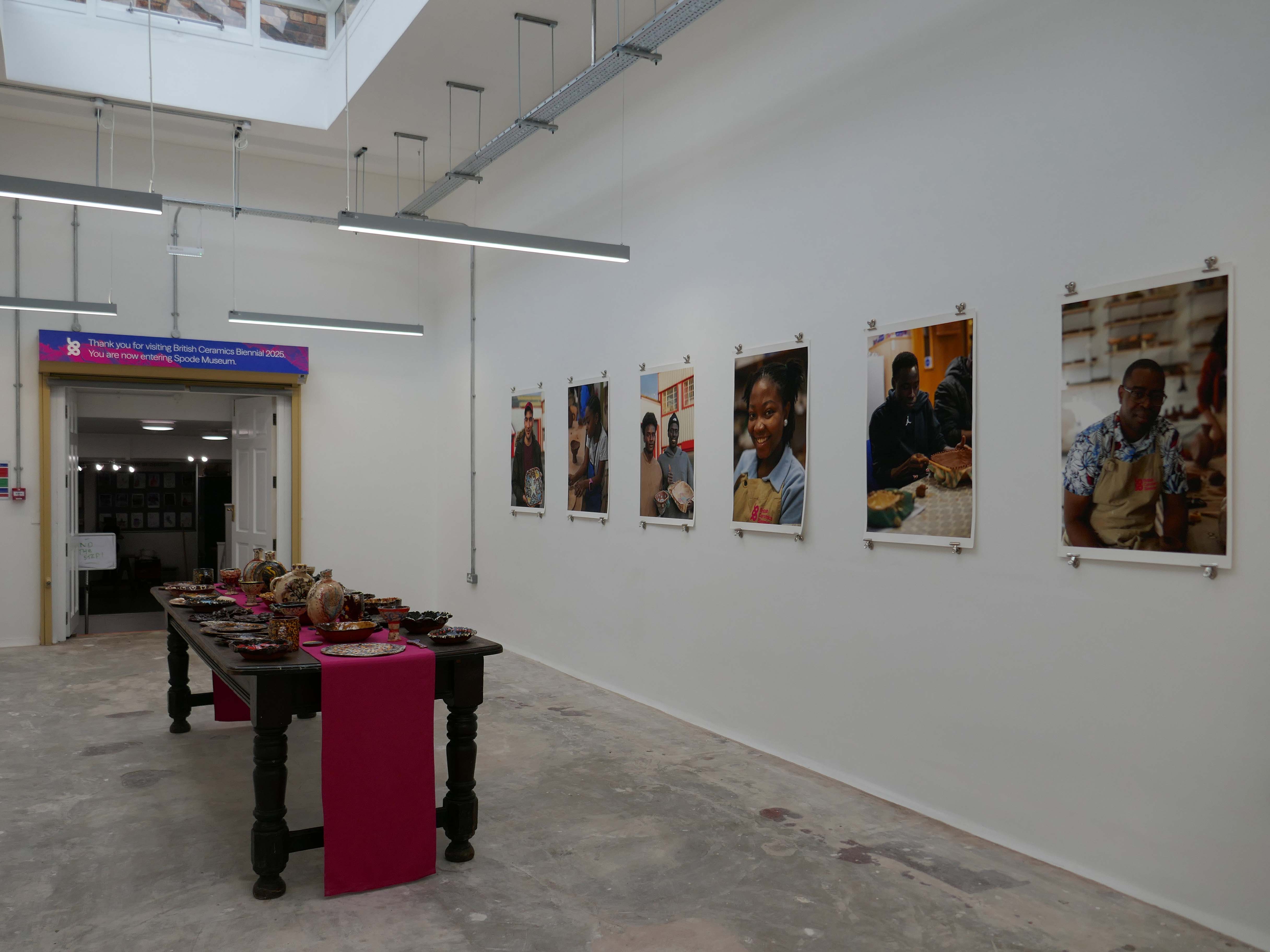
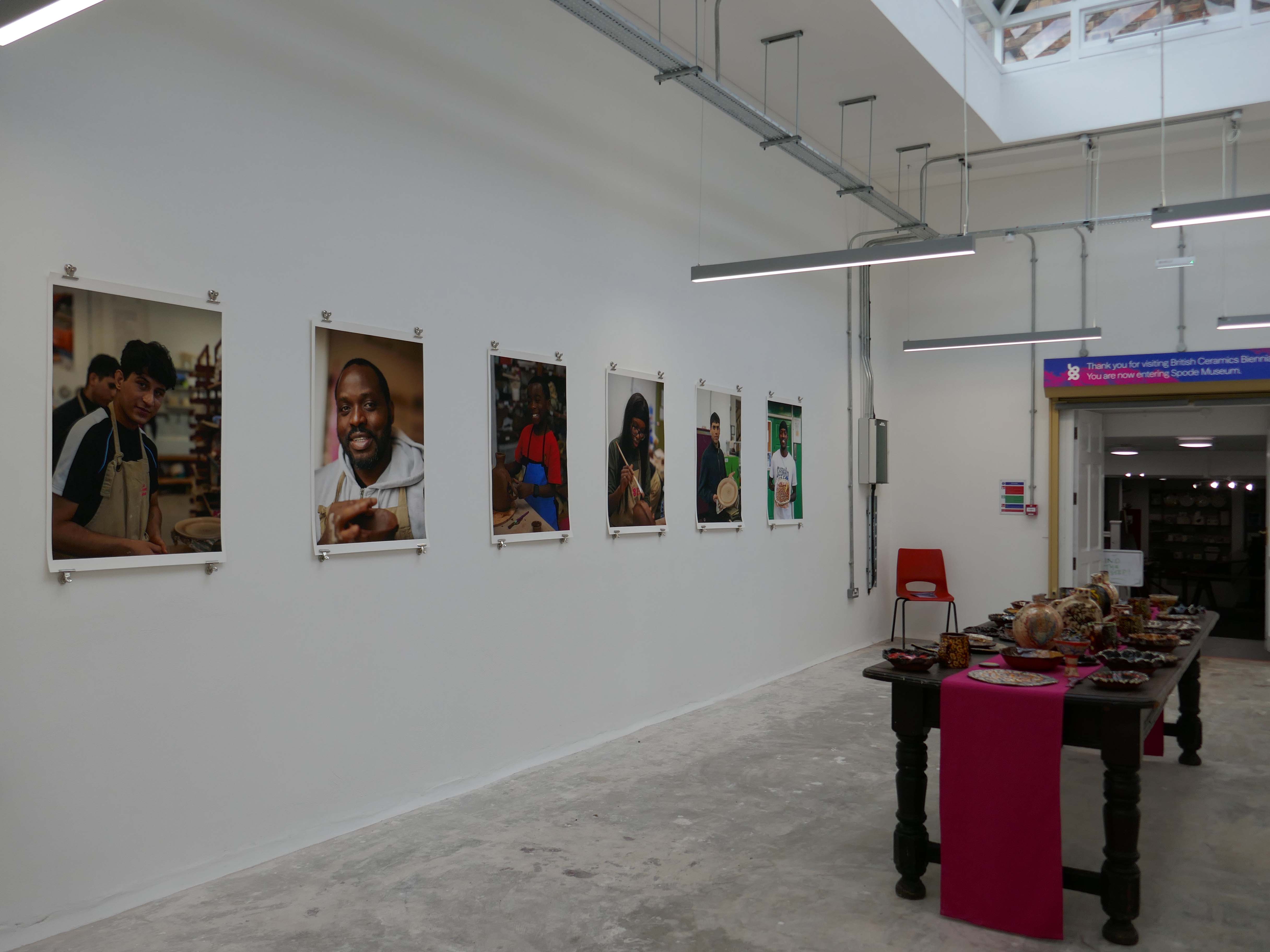
British Ceramics Biennial 2025

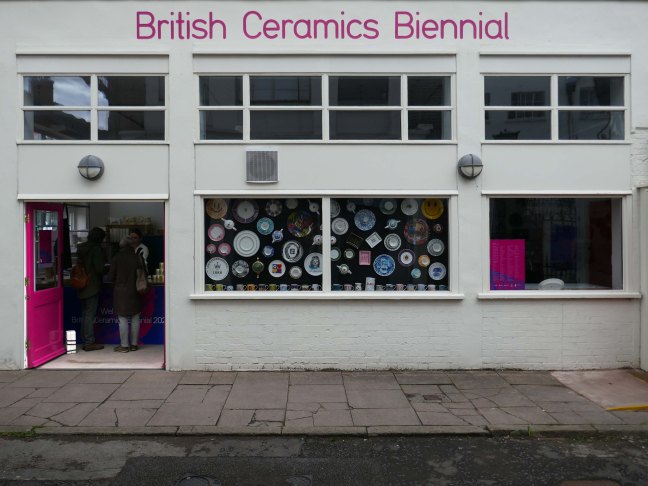
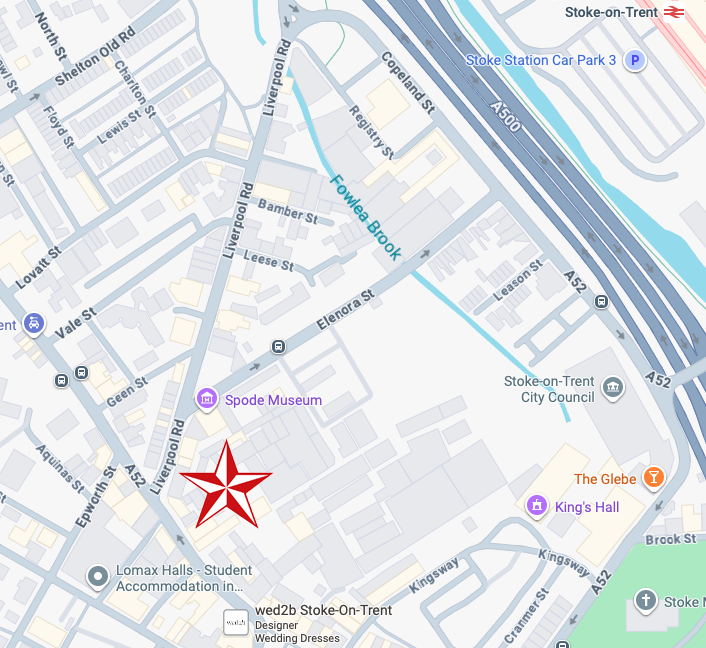
Visit the 2025 British Ceramics Biennial at Spode Works 124 Church Street ST4 1BU.

British Ceramics Biennial – BCB, is an arts organisation based in Stoke-on-Trent with a vision of making change through clay.

BCB develops, sustains and expands innovative ceramics practice and improves lives together with artists and creative communities. This is done by delivering an engaging year-round programme of artist commissions, learning and community projects. All of which feed into a contemporary ceramics biennial that takes place in Stoke-on-Trent.

British Ceramics Biennial is proud to be an Arts Council National Portfolio Organisation and has support from Stoke-on-Trent City Council and the University of Staffordshire.

BCB HOME

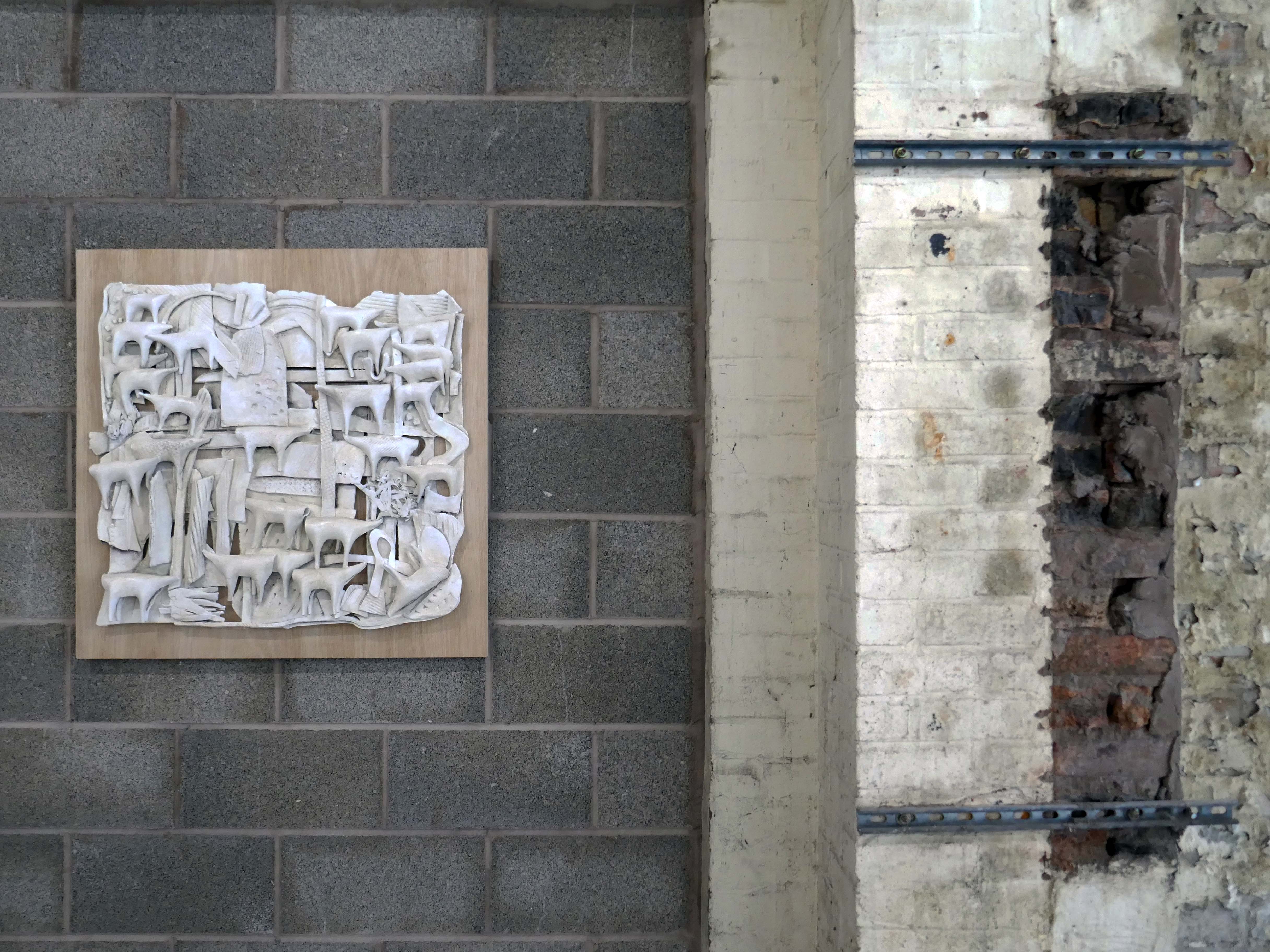
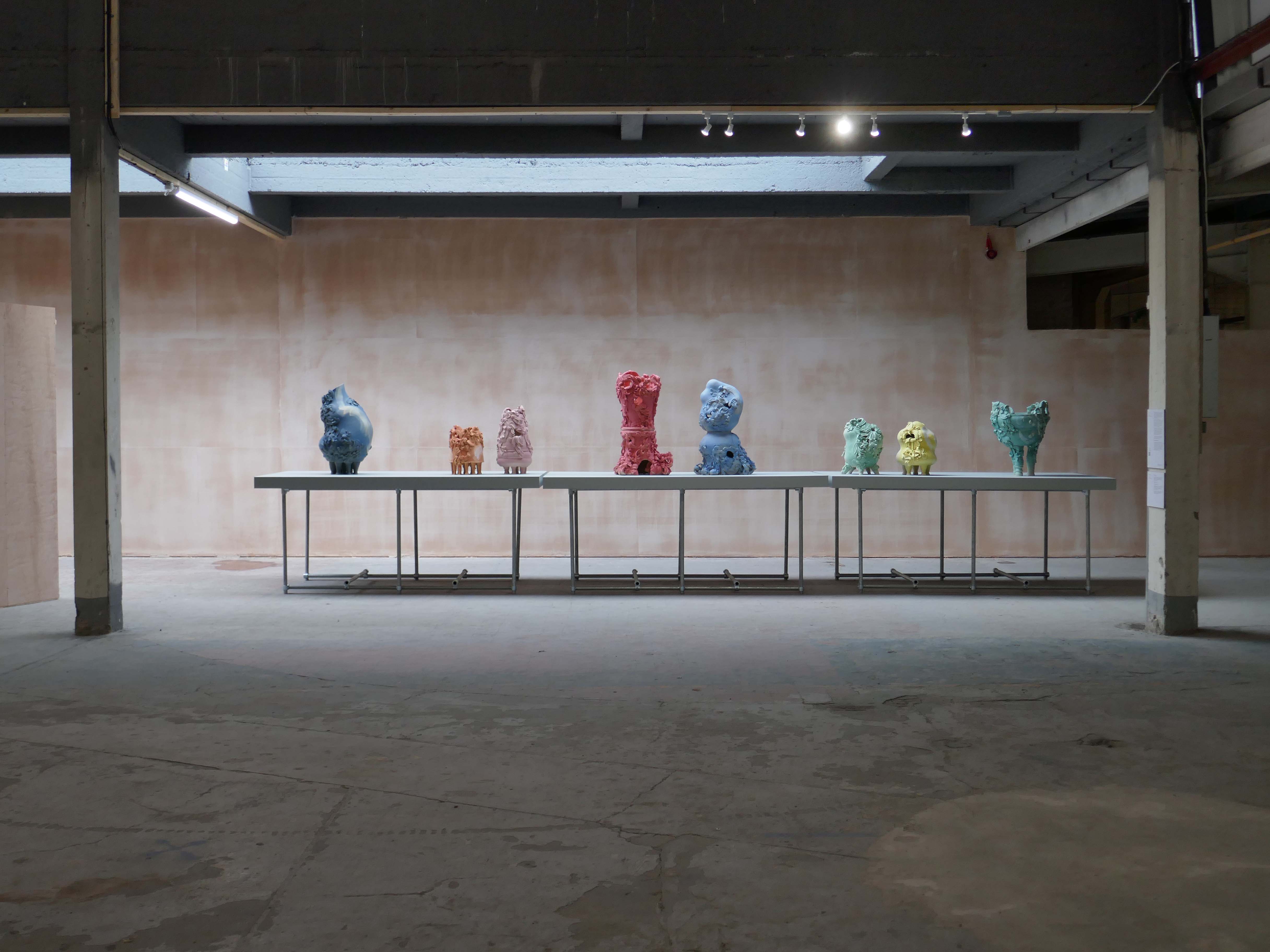
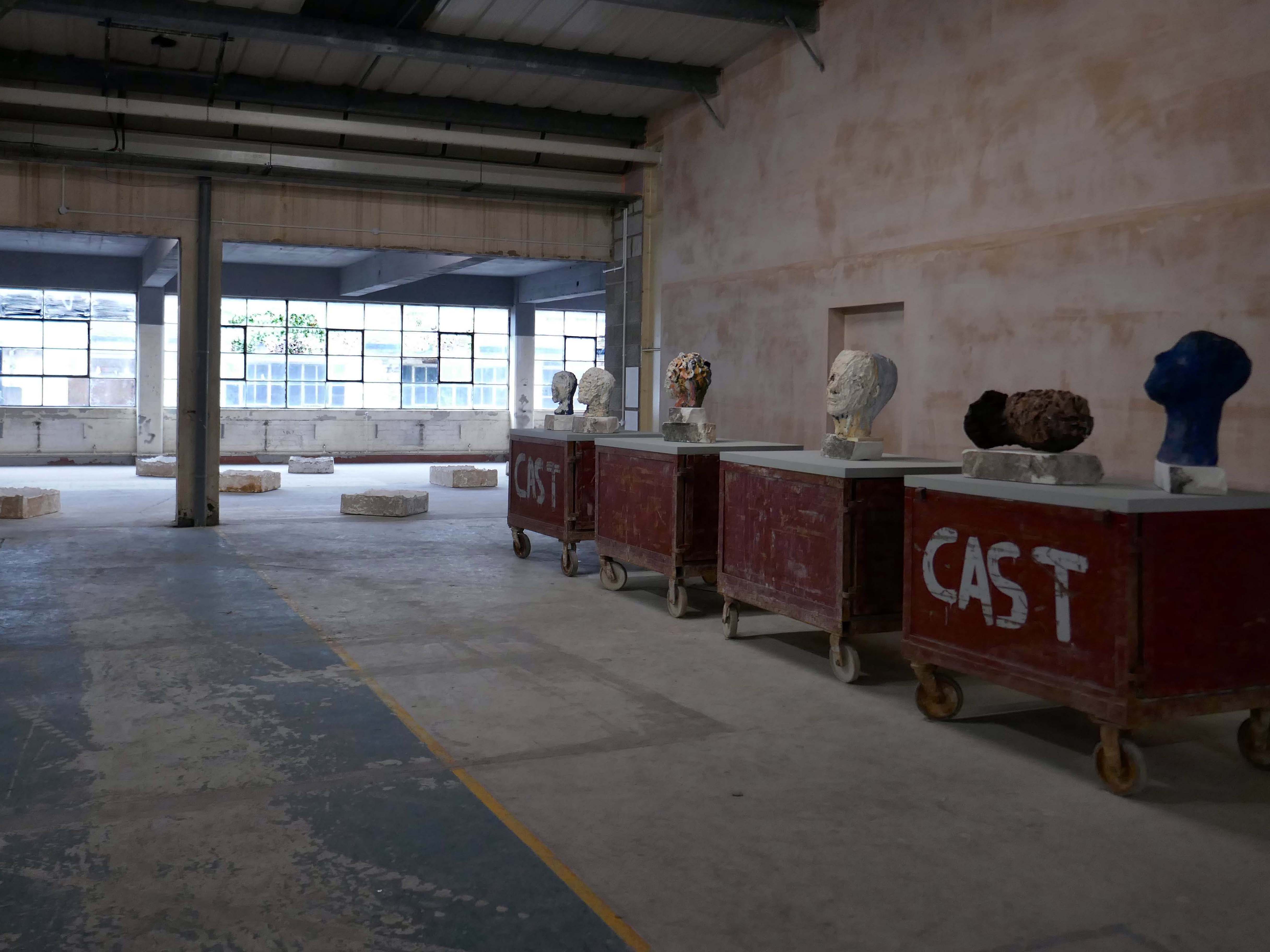
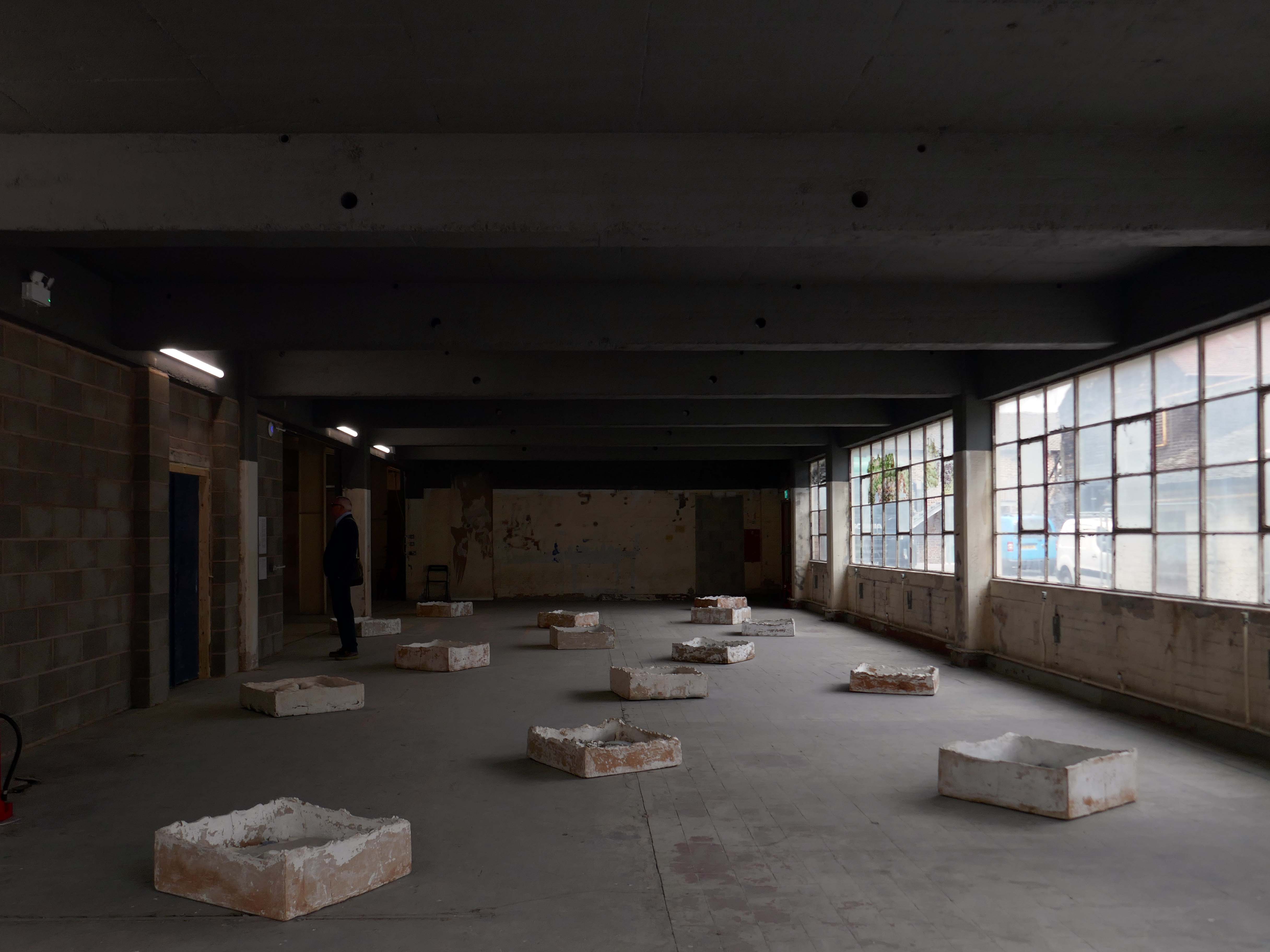
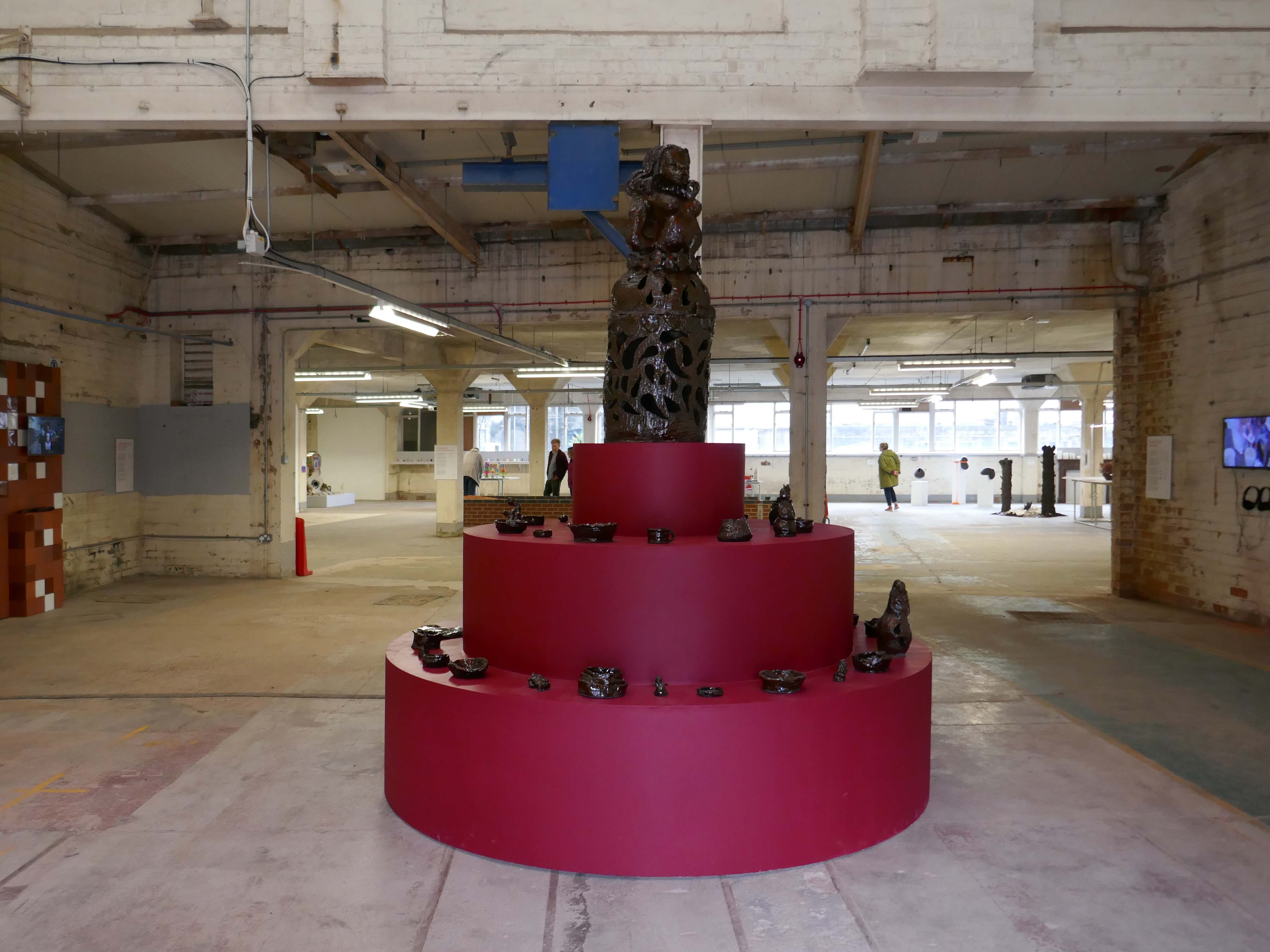
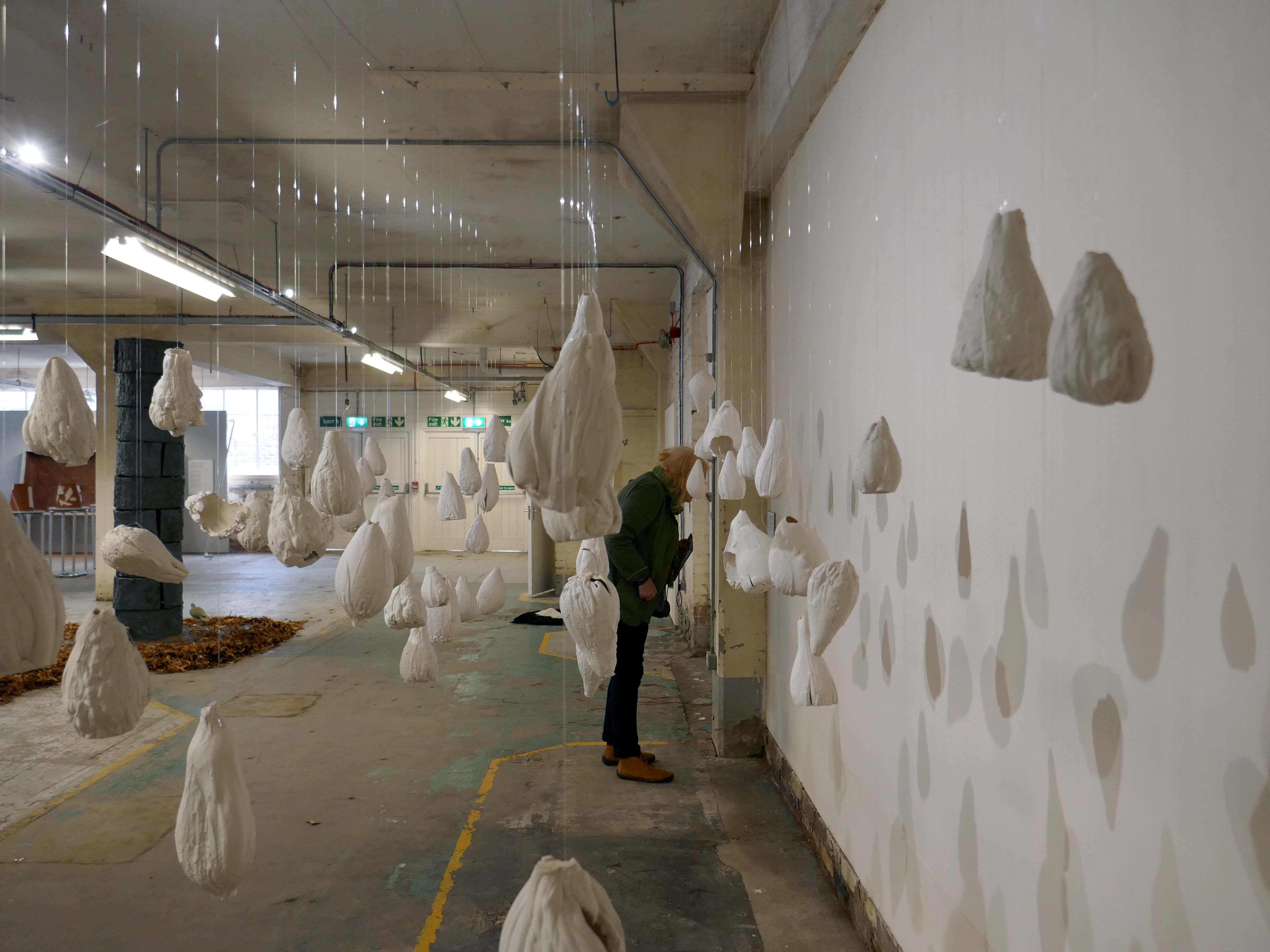
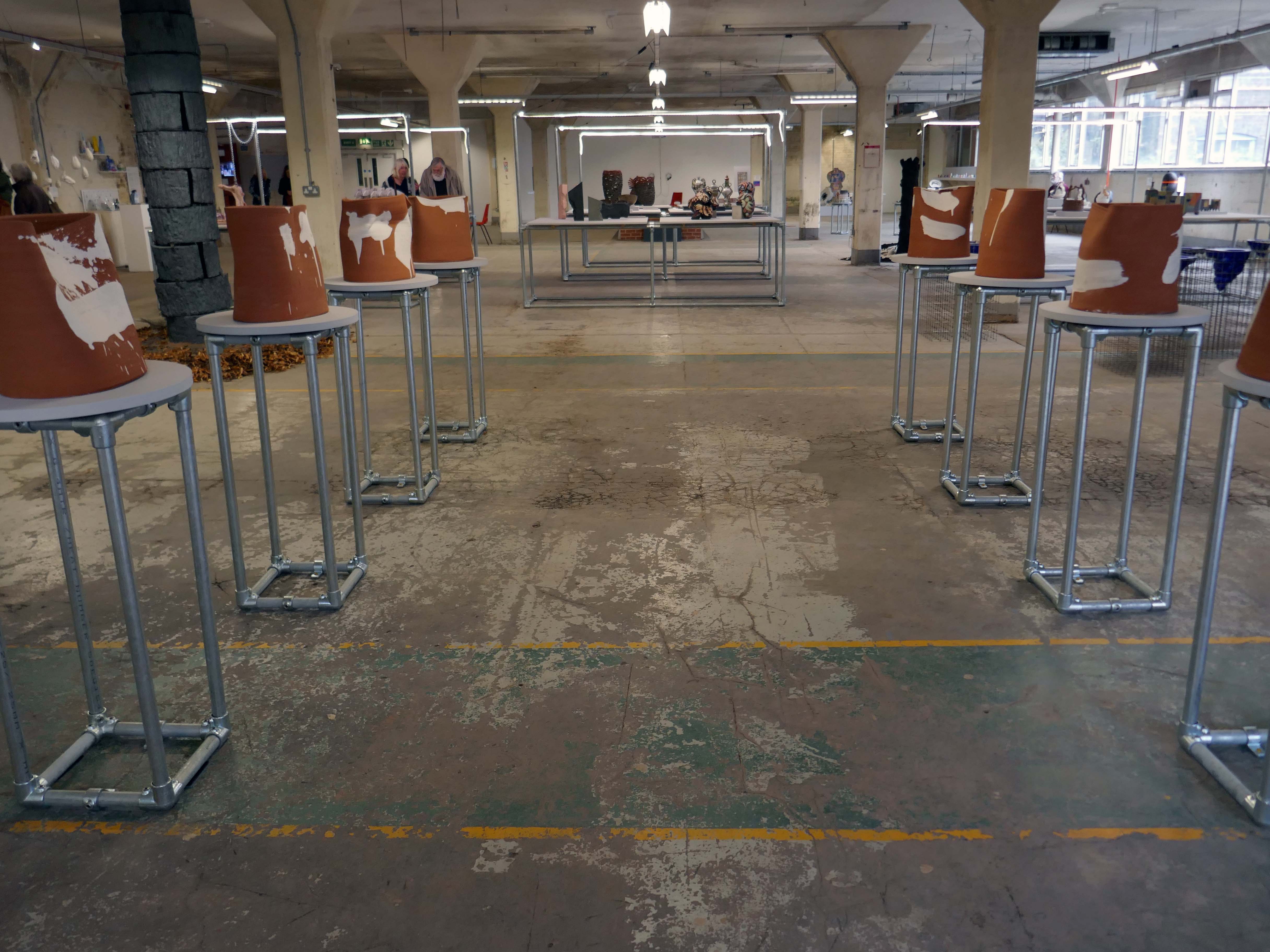
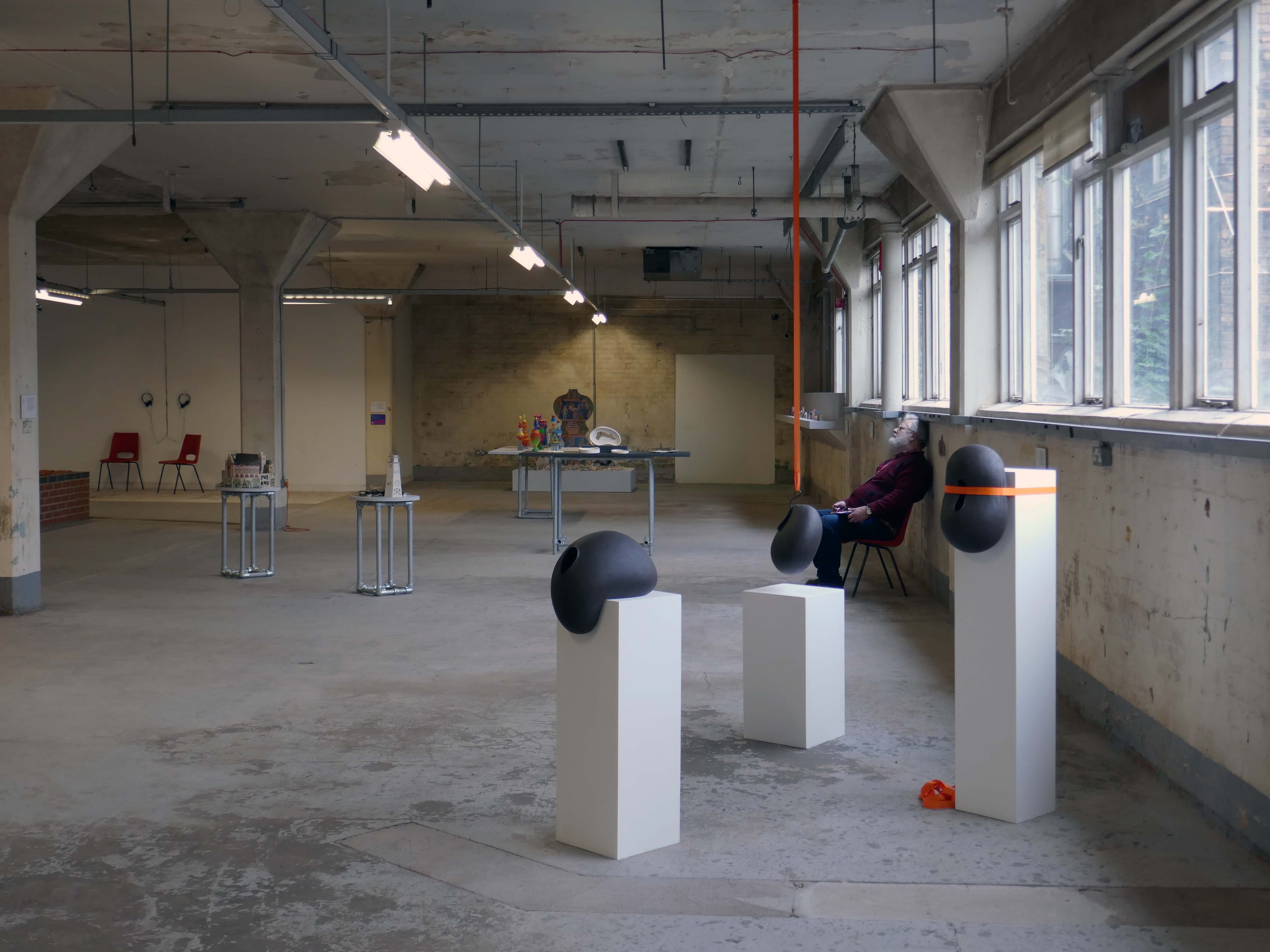
The show is housed in the former Spode Works, expansive post-industrial spaces which allow the exhibits to breath.

I urge you jump aboard a tram, train, bus or bike and make your way there.

My personal selection is far from all encompassing, my apologies to those whom I have arbitrarily excluded.

Let’s take a look:

Mella Shaw: Rare Earth Rising

Kyra Cane: Challenging Terrain

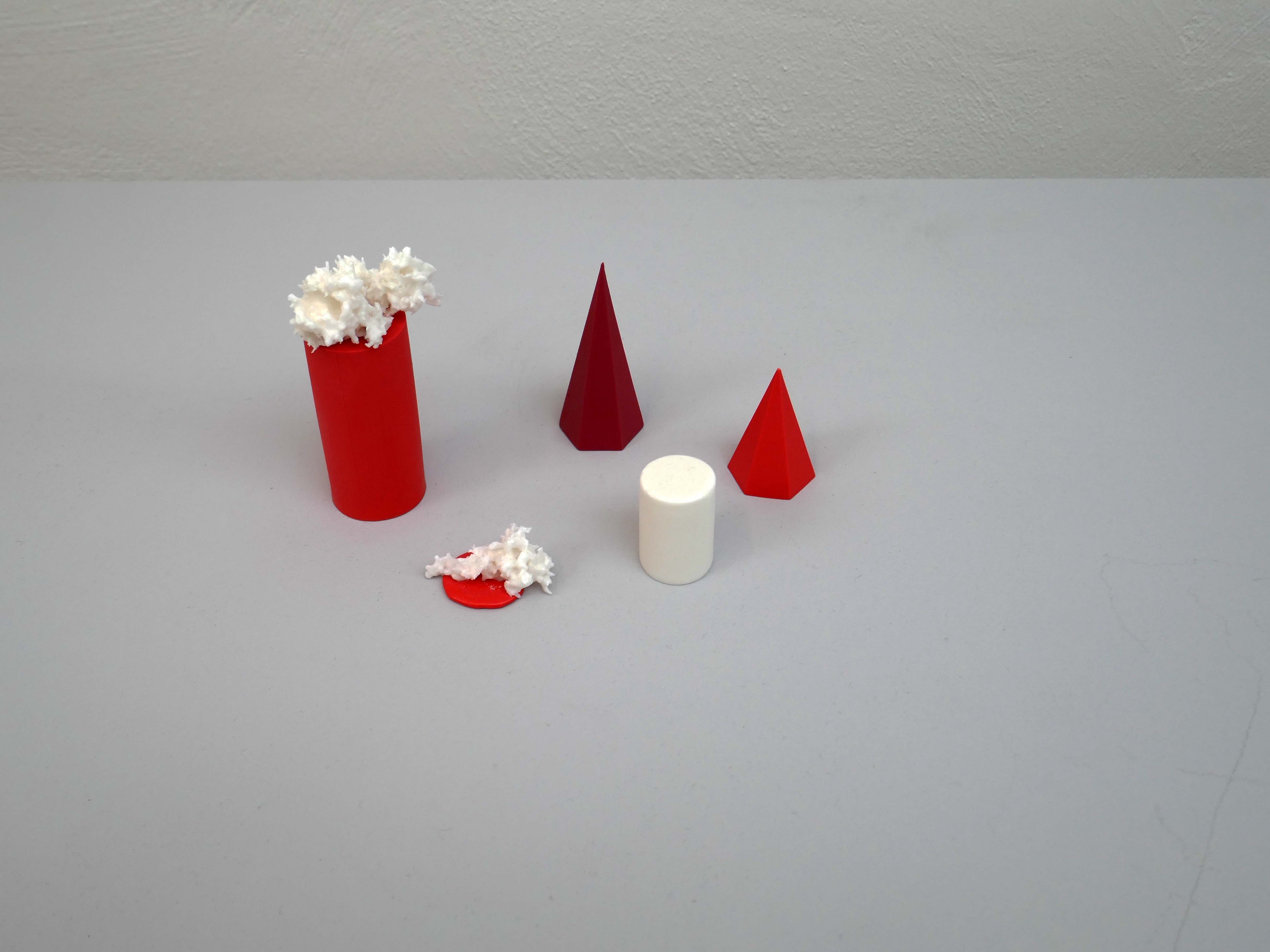
Susan Halls: Arkitypes

Jo Taylor: [Not] Guilty Pleasures

Daniel Silver:

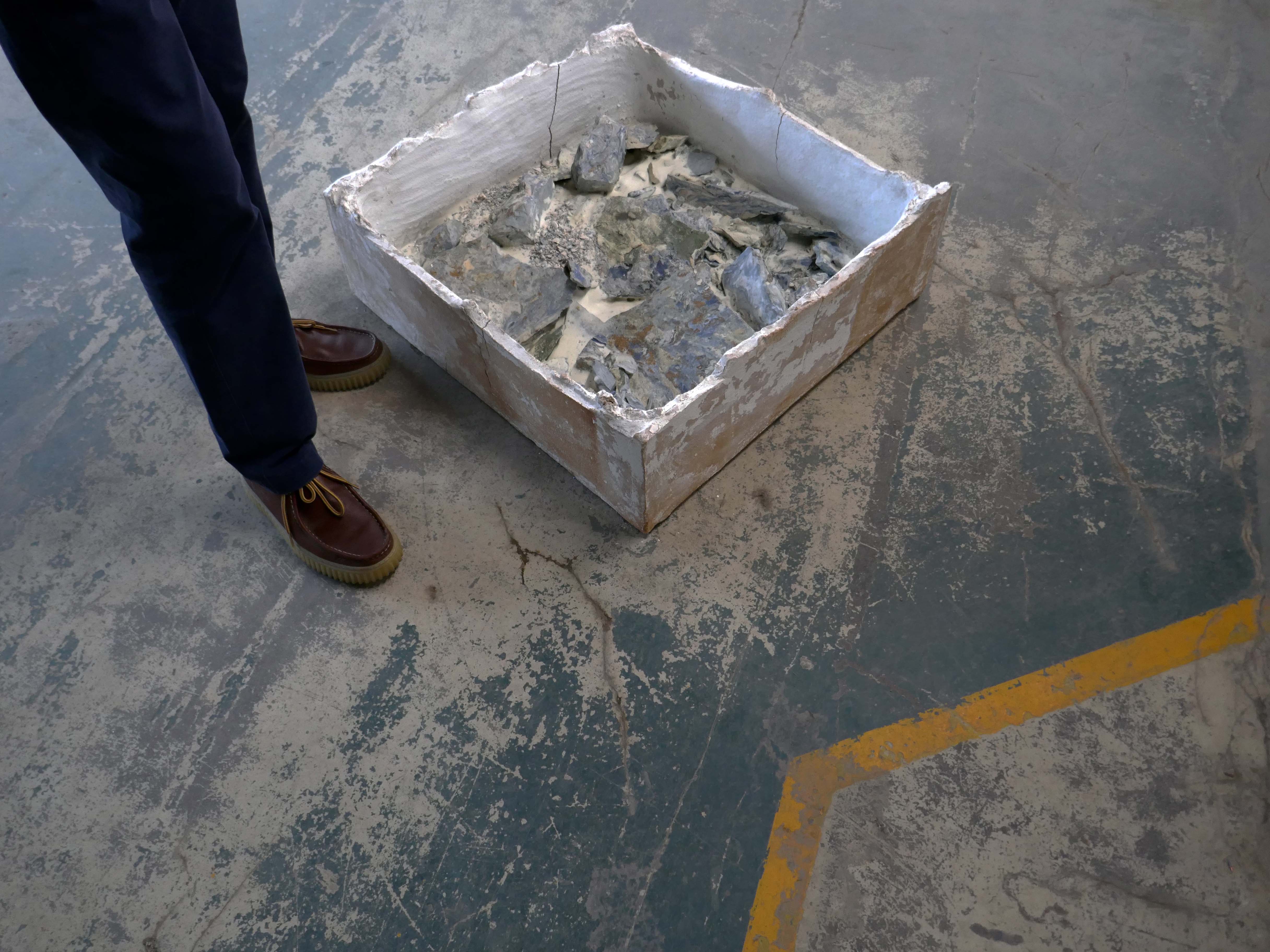
Fernando Casasempere: Sedimentary Selves

Jane Perryman: Meadow

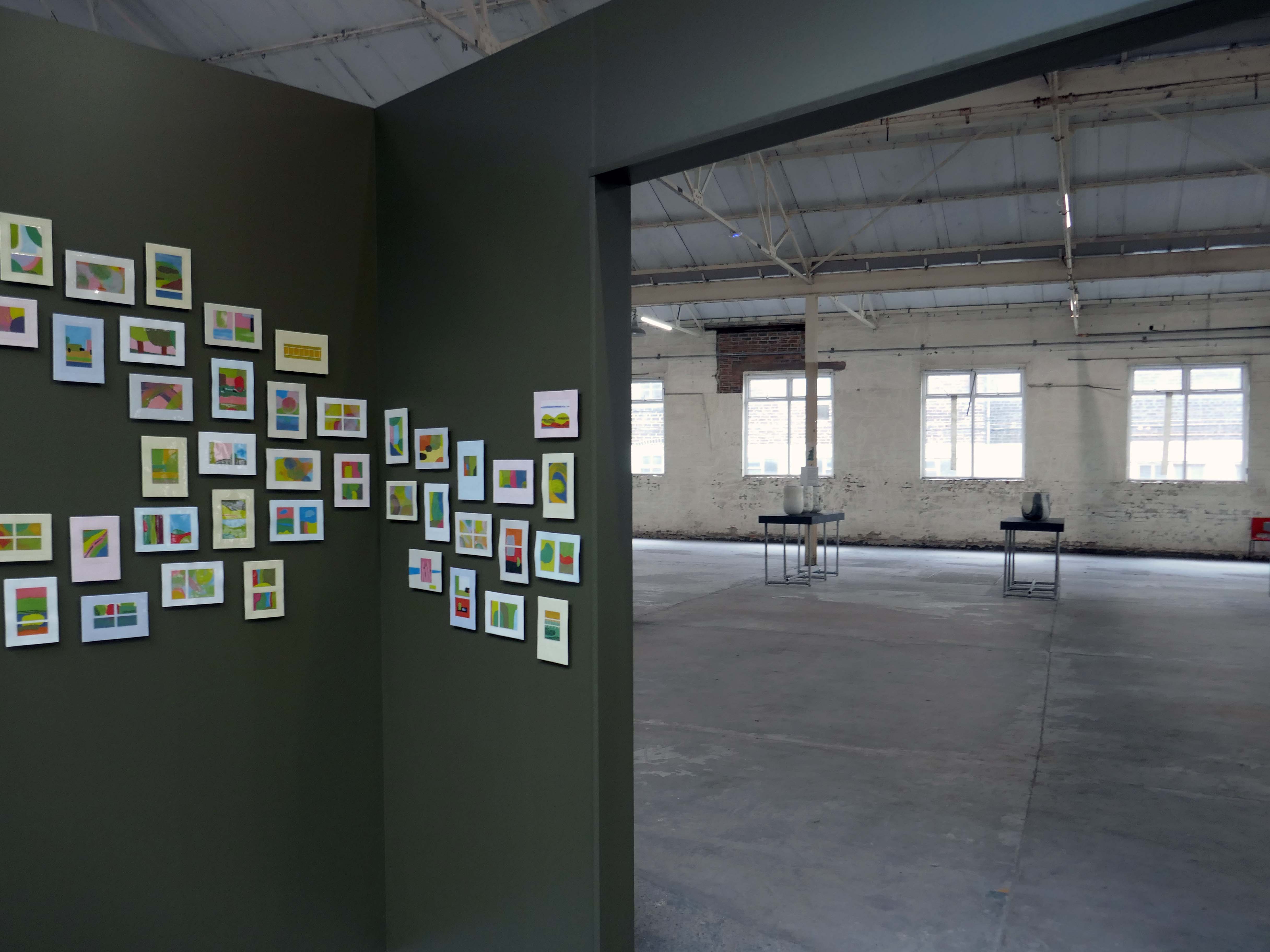
Alison Rees: LOOP: Postcards from the Green Belt

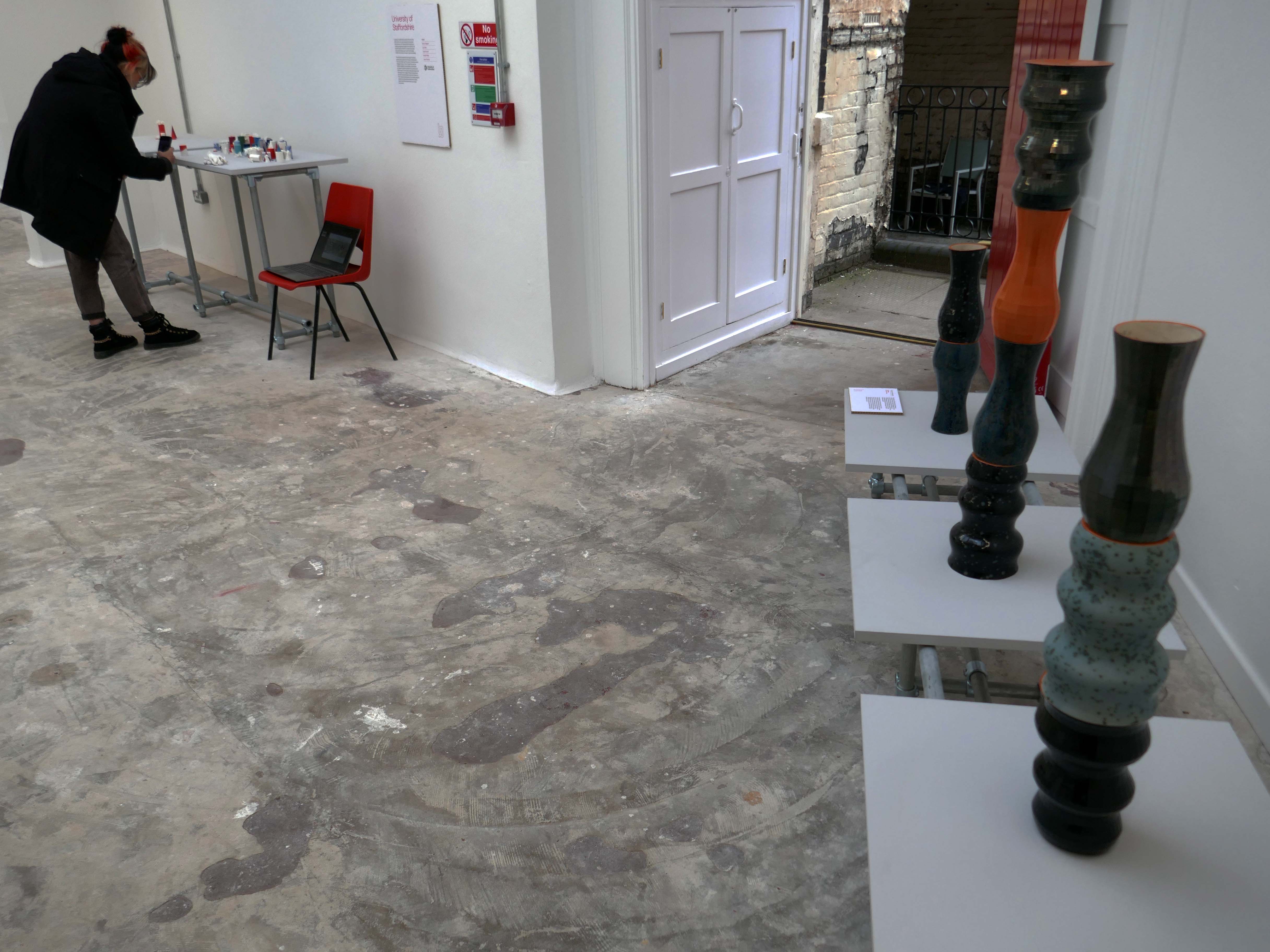
University of Staffordshire

Lily Collins

Jenny Thomas

Slip Tales

The Chimney Princess

Hanna Fastrich

Tim Fluck with Caroline Grey beyond.

Ceri Shaw

Olga Siruk

Johnny Vegas and Emma Rodgers: Just Be There

Catalin Filip foreground

If you feel like a stroll around town following your visit treat yourself to a Stoke Walk – courtesy of me the Modern Mooch.

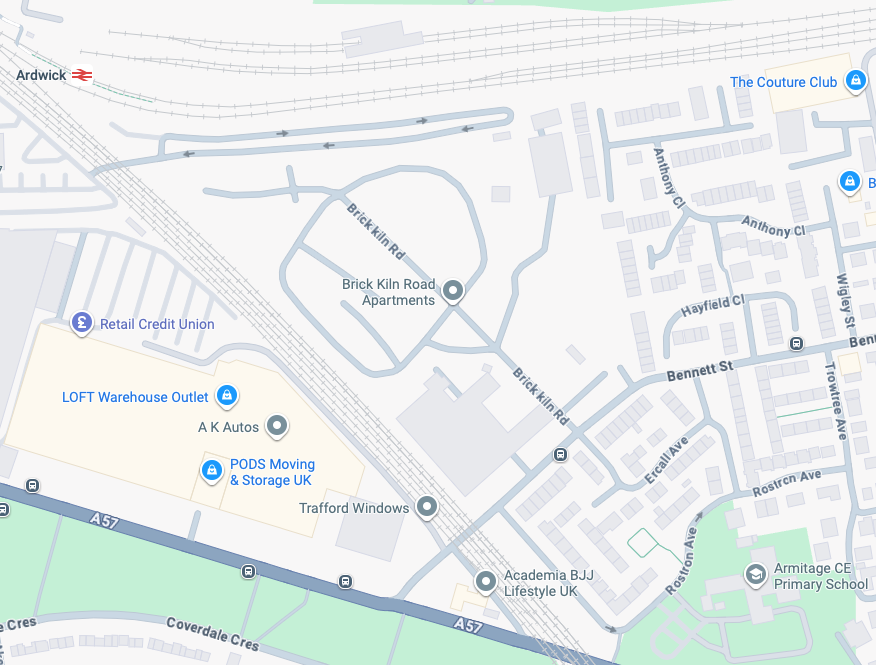
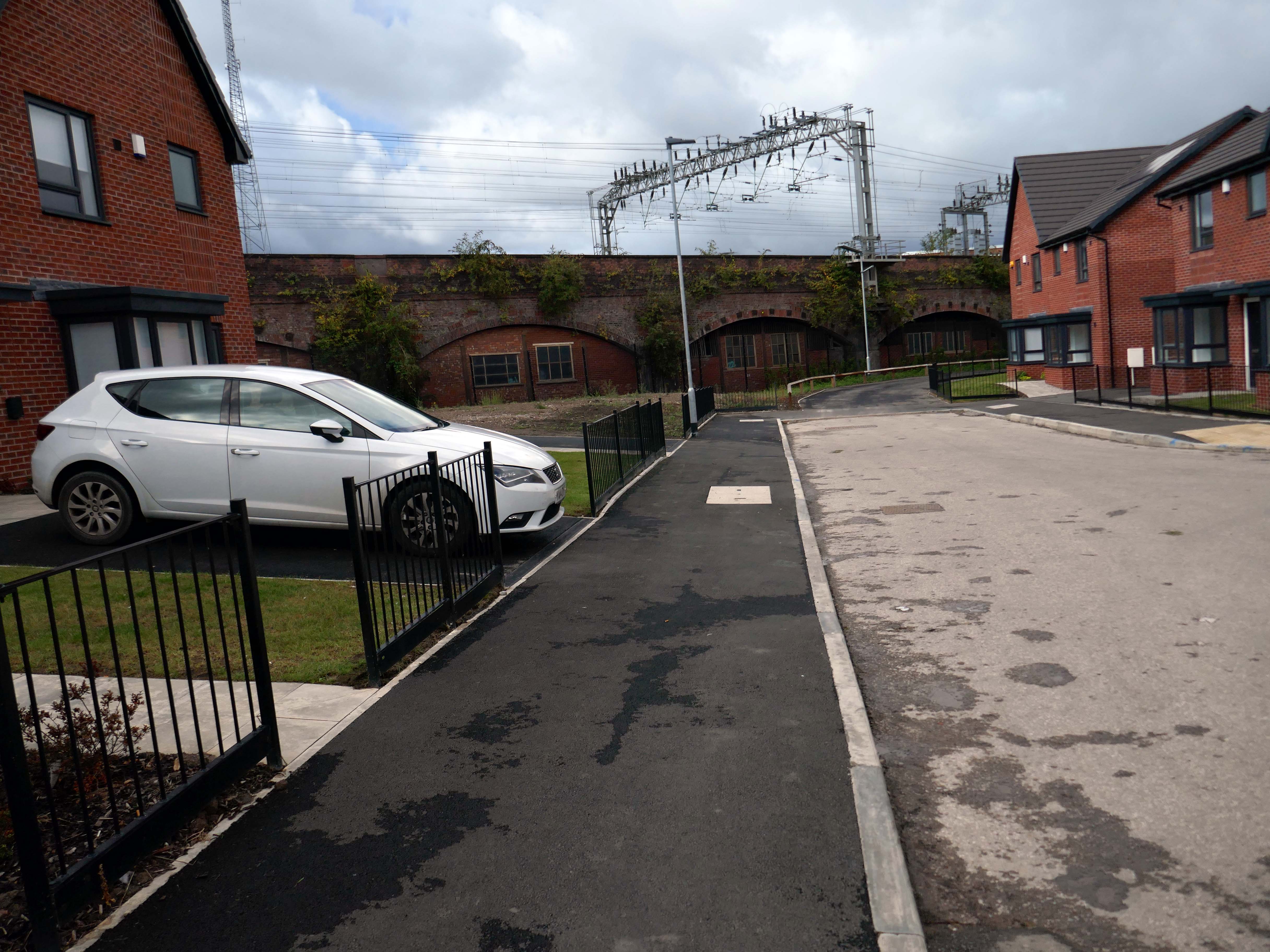
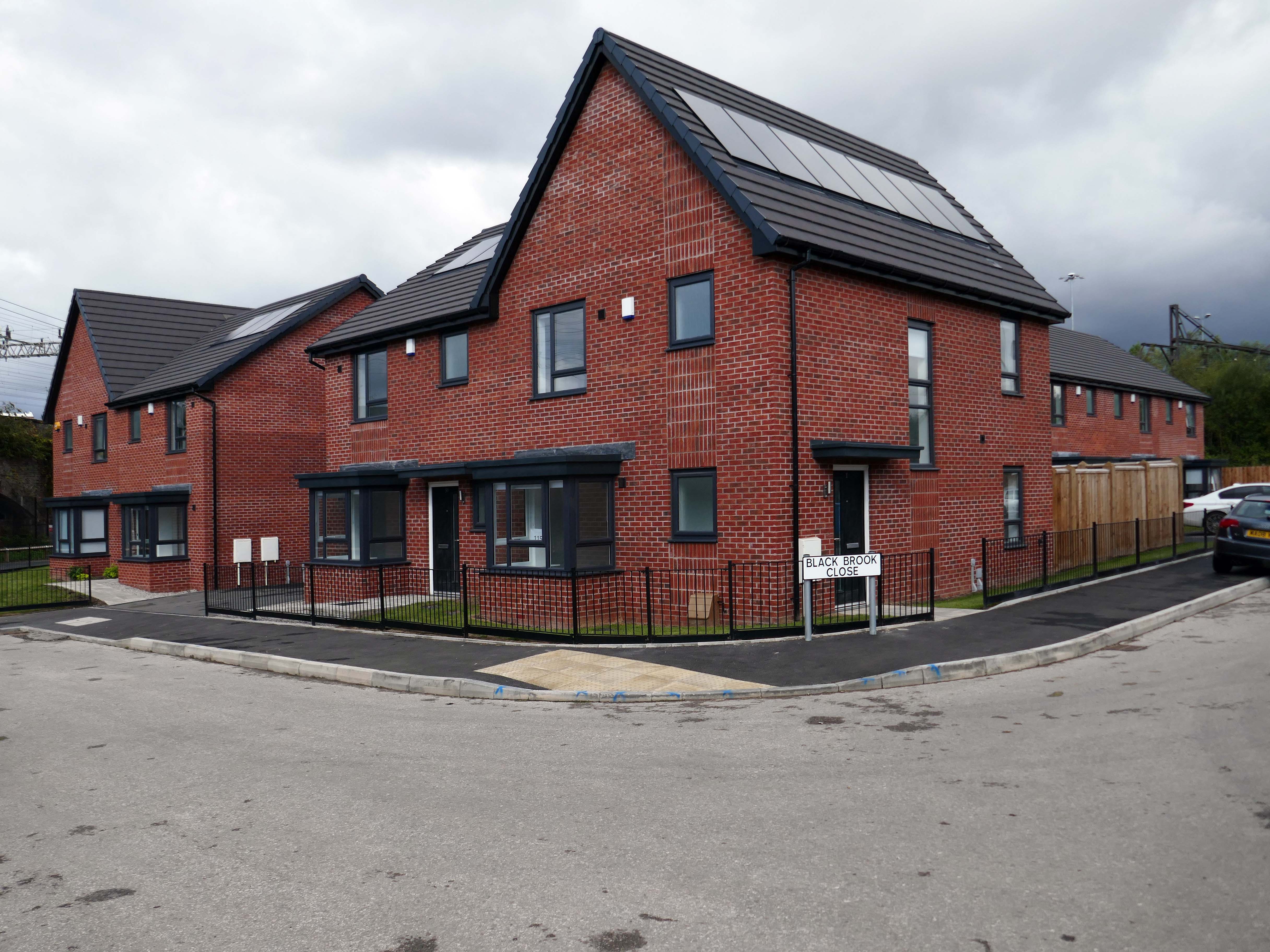
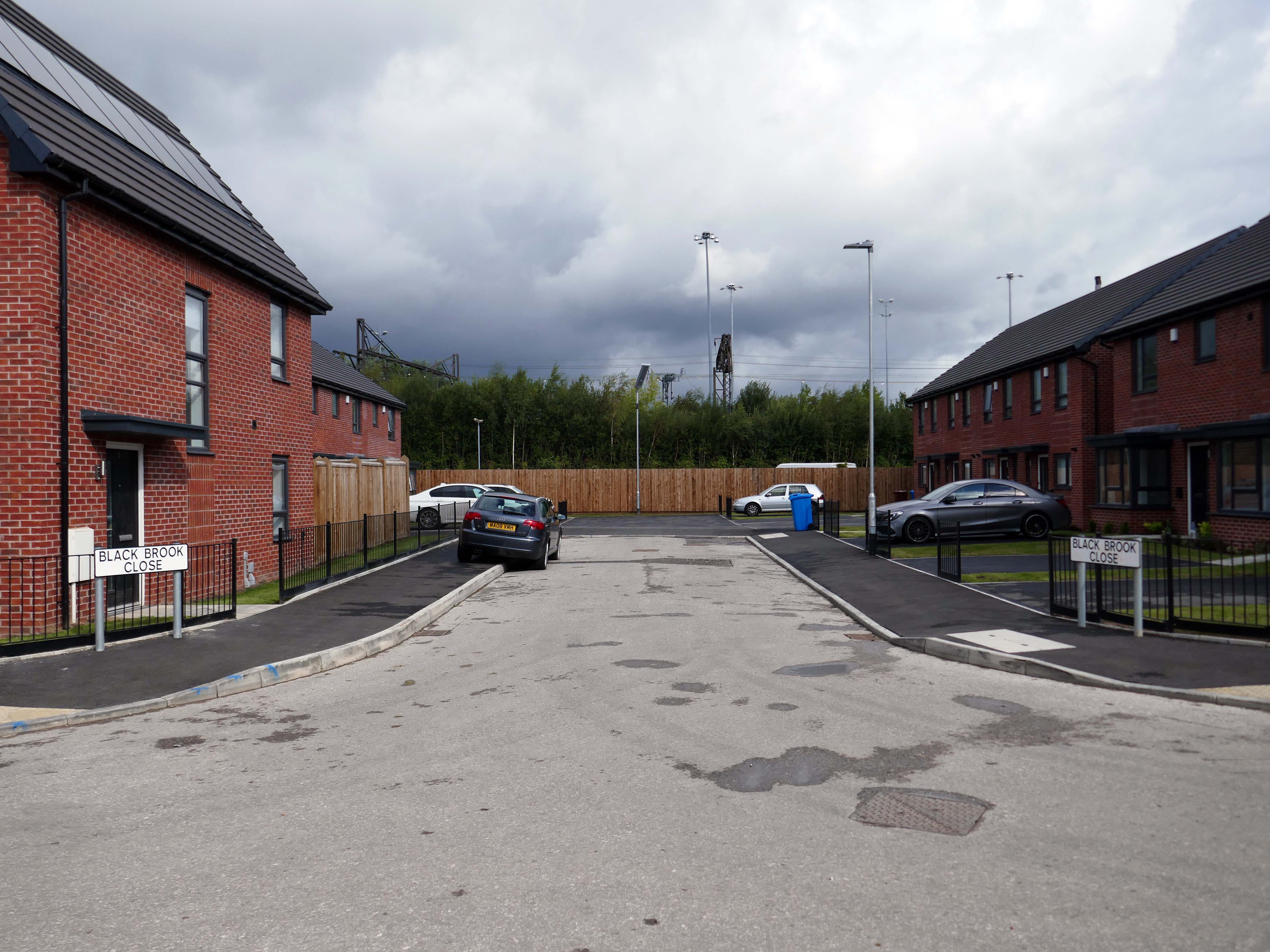
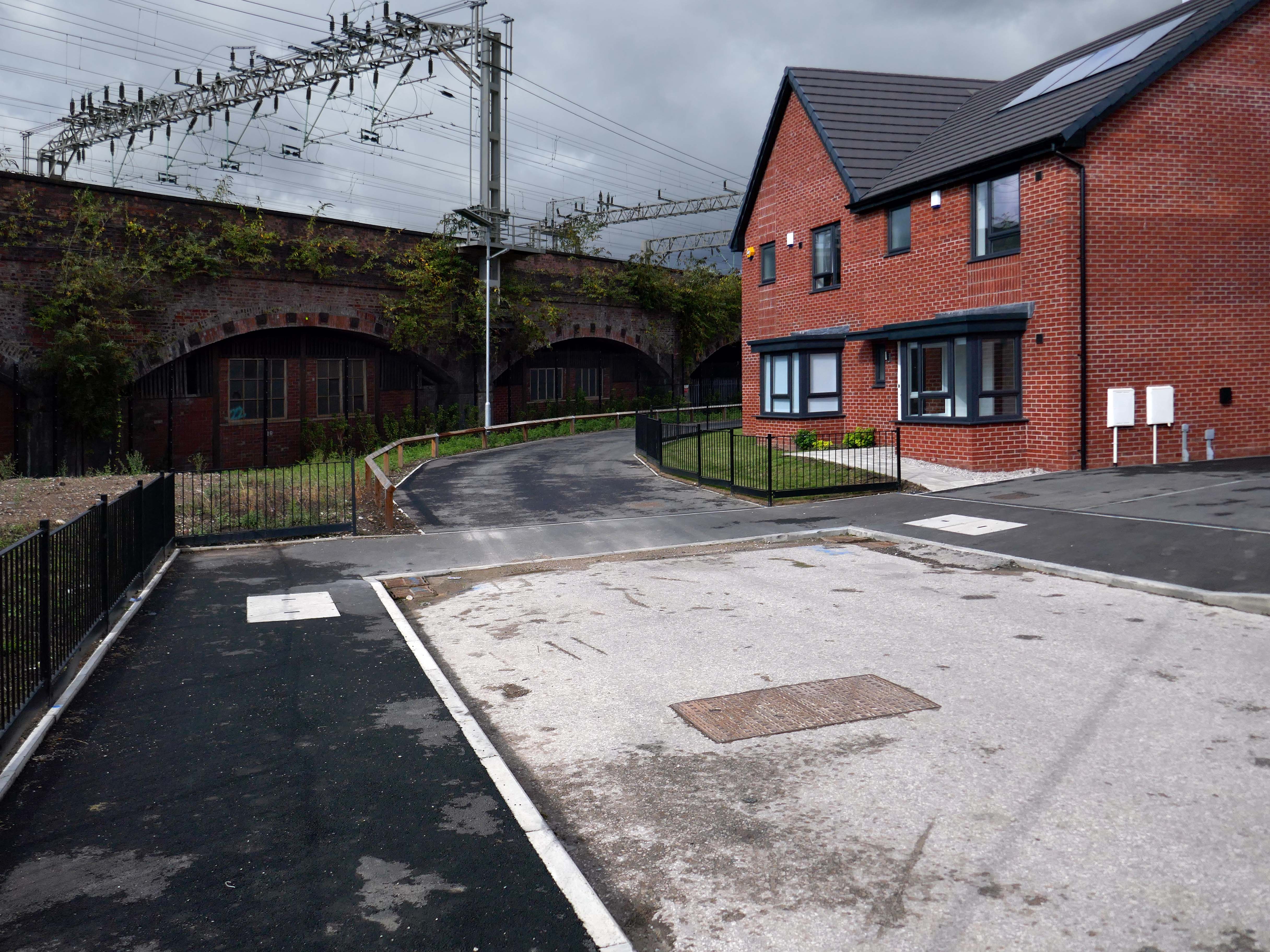
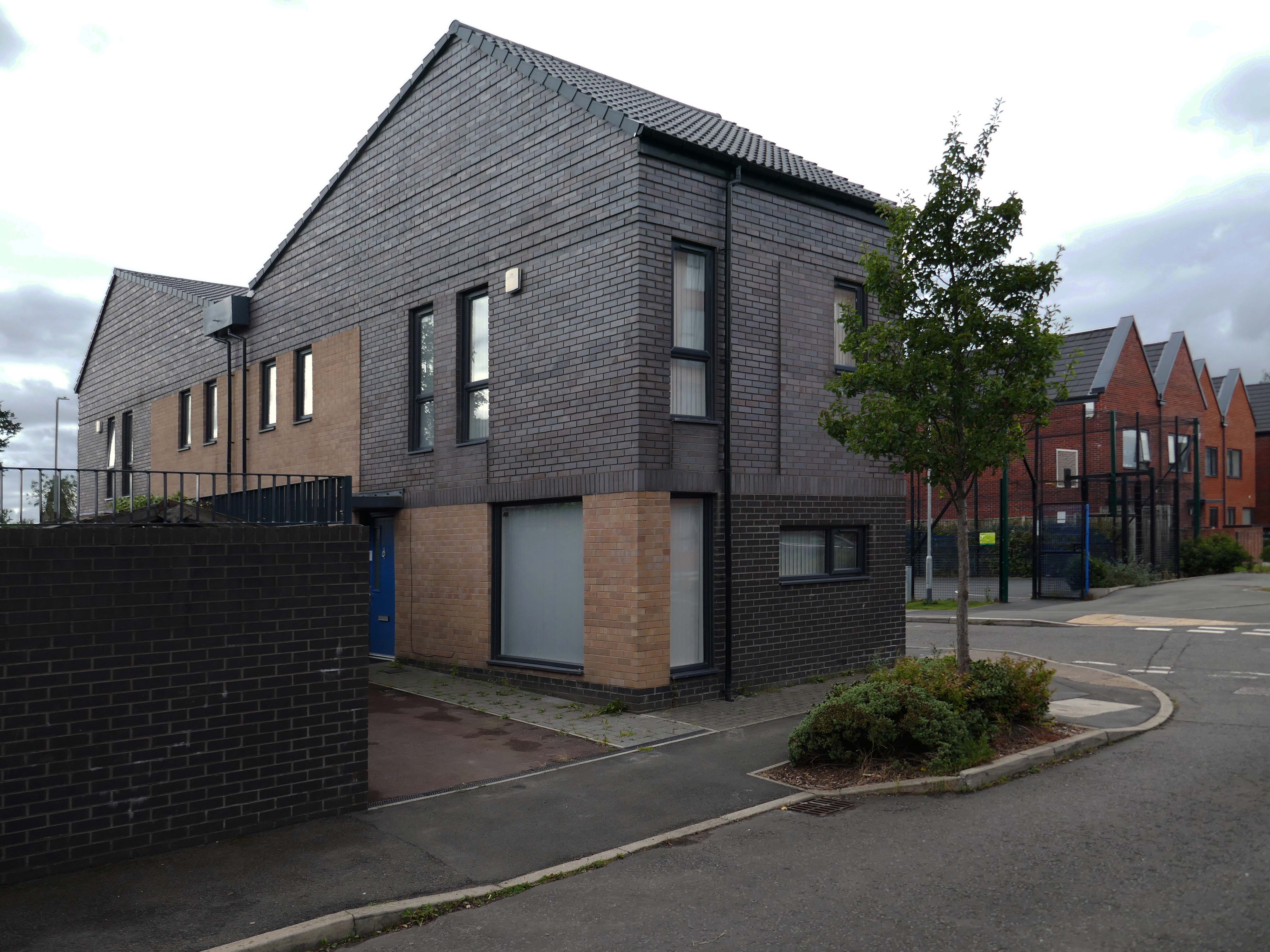
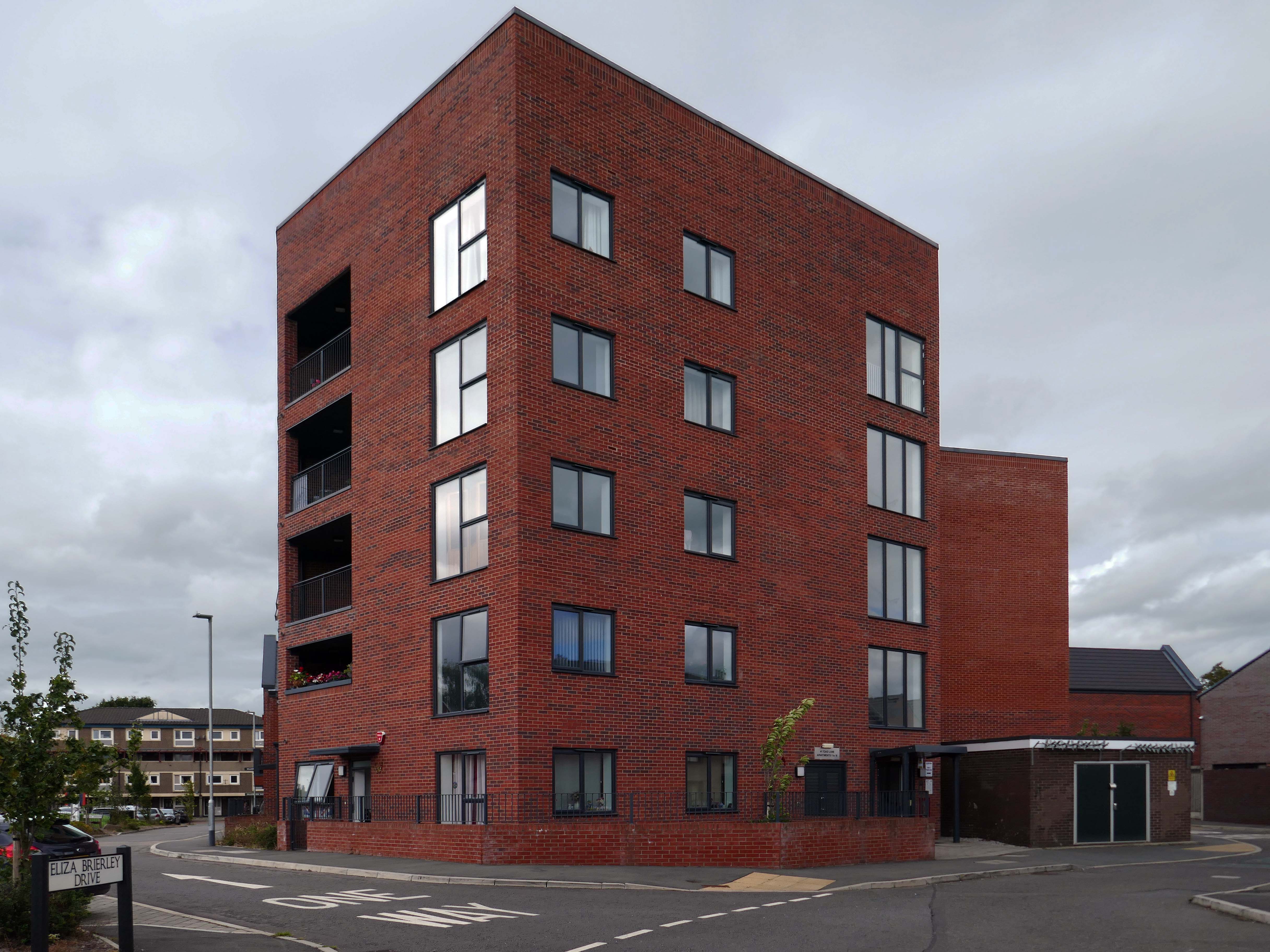
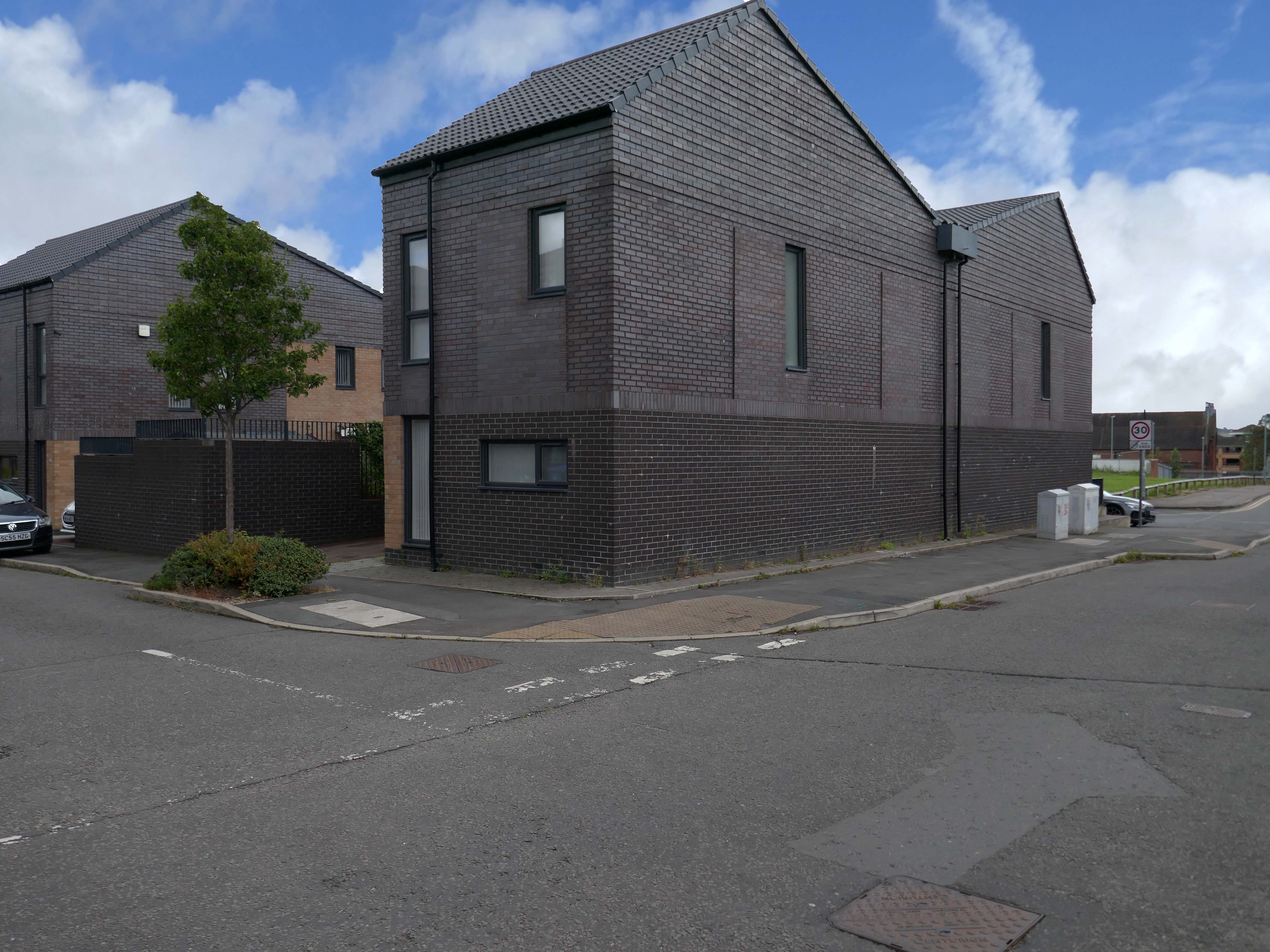
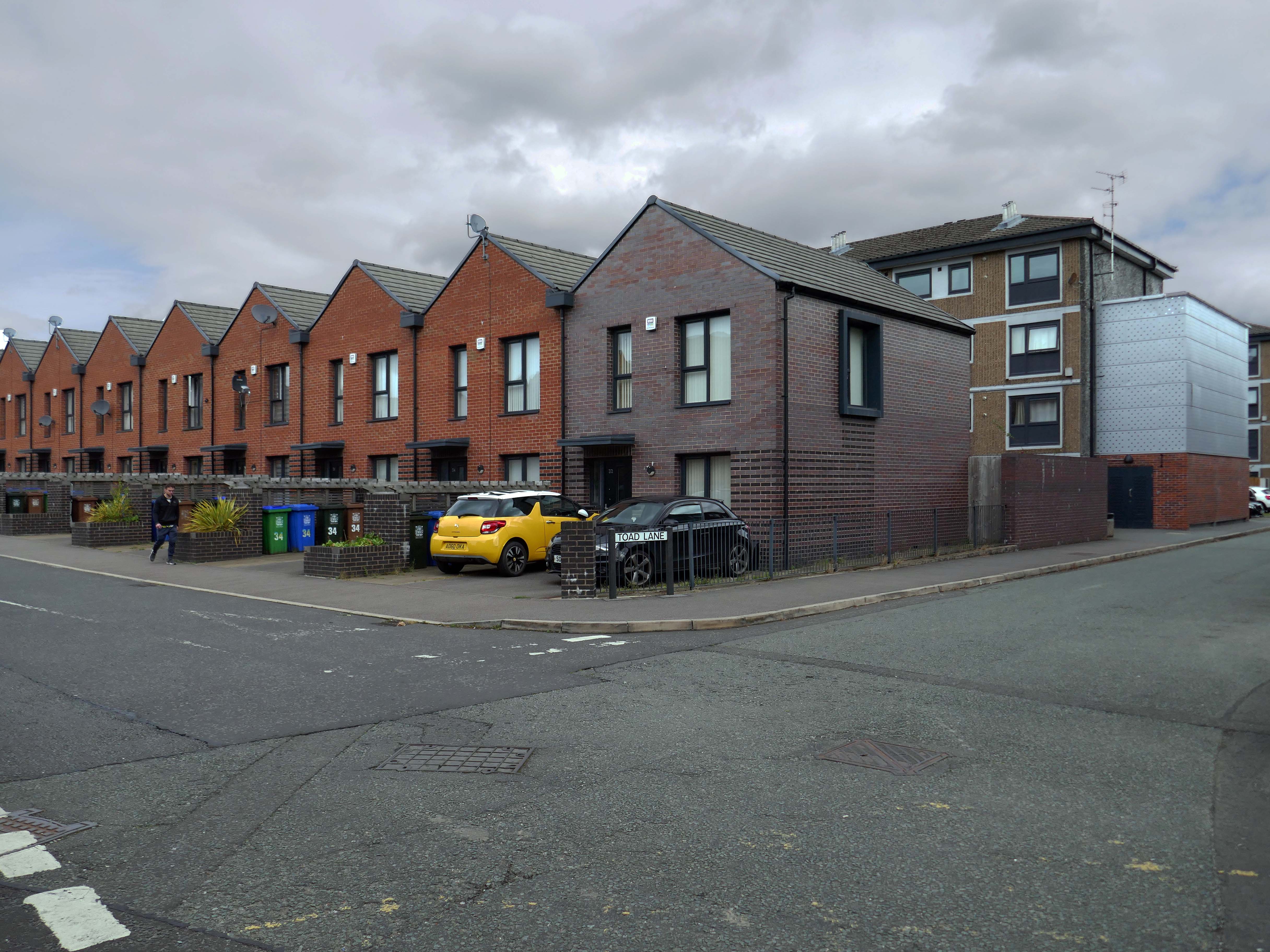
The Gateway Housing Manchester

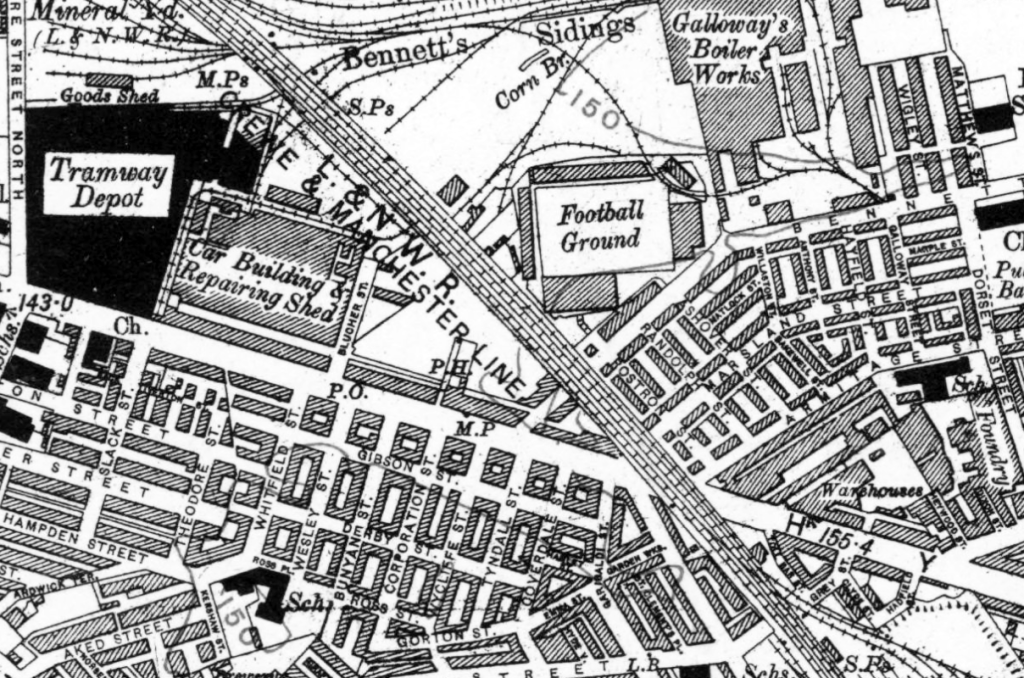
I have been here before recording the history of Manchester City FC on this site.

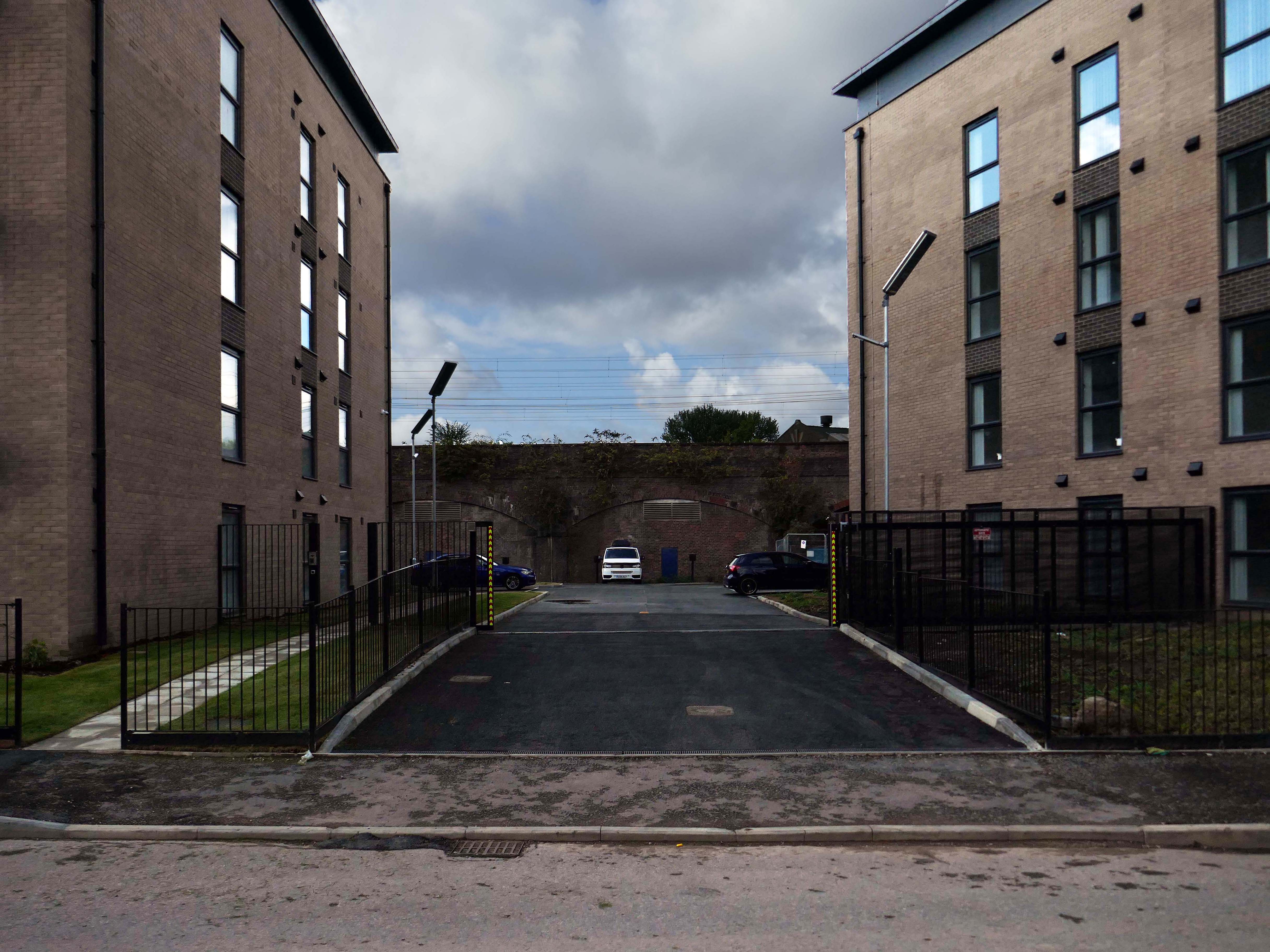
A football stadium surrounded by railways, roads, homes and industry.

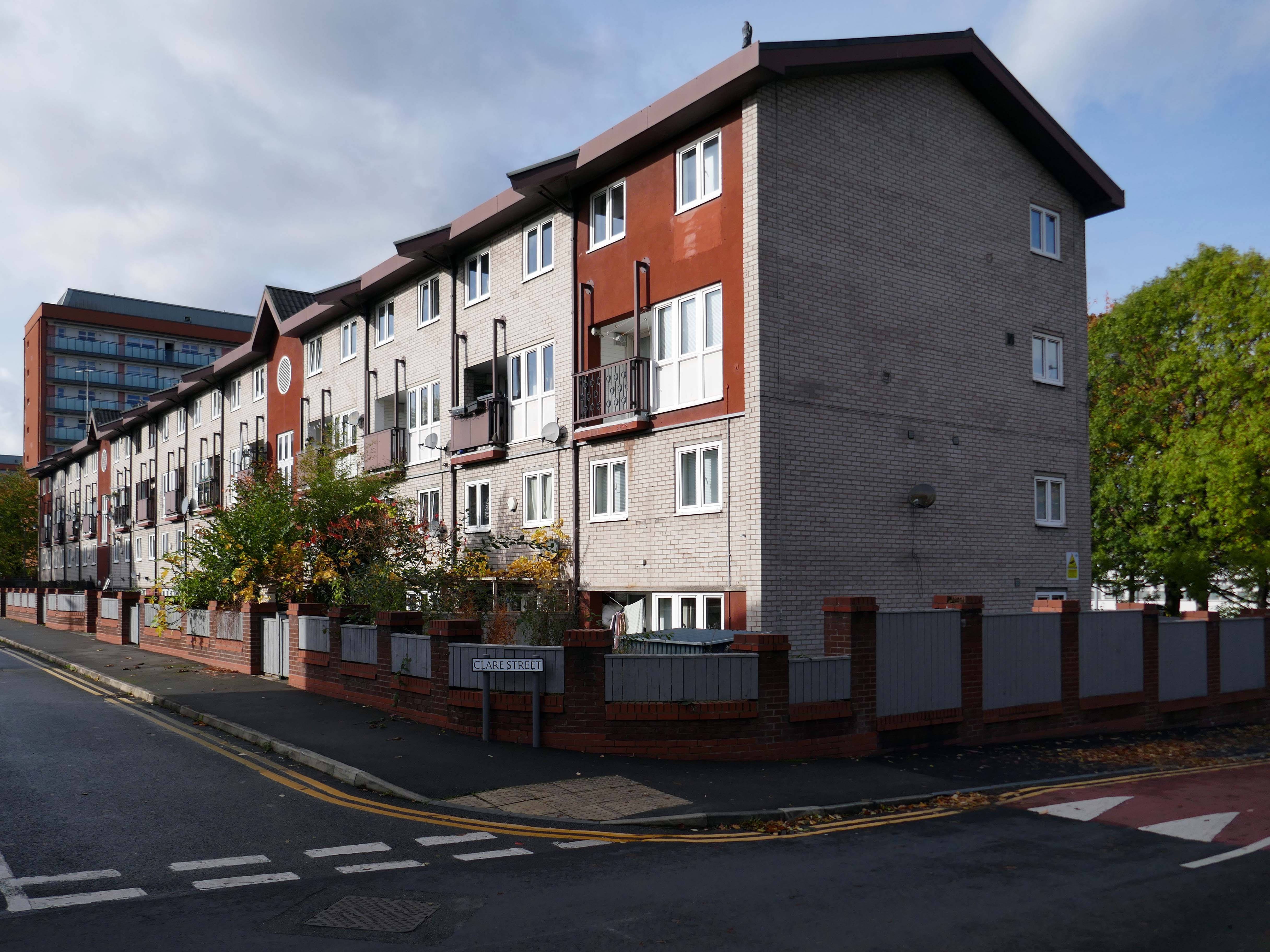
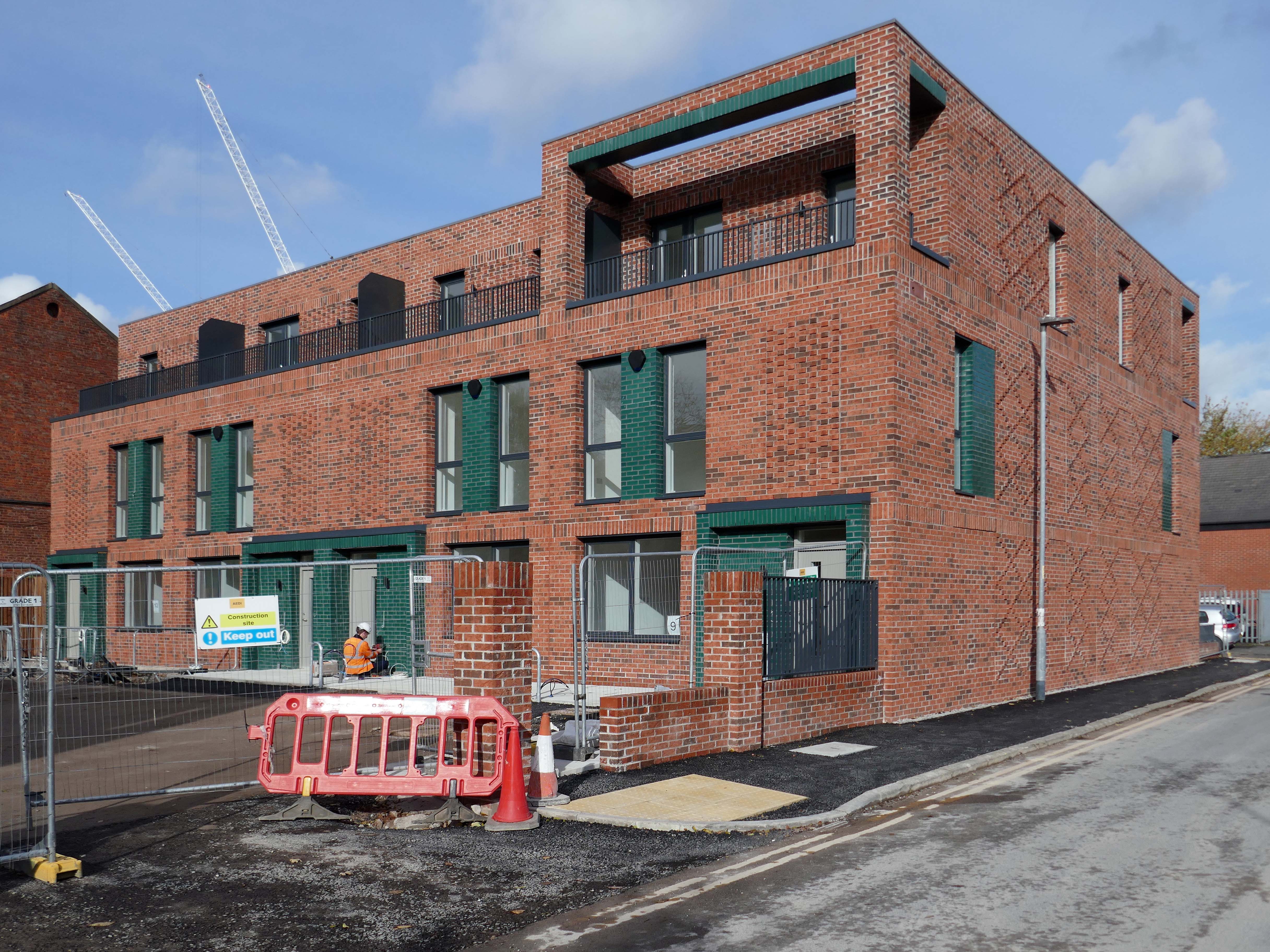
The area is now much changed, though the railways and roads remain, the homes are in a state of flux.

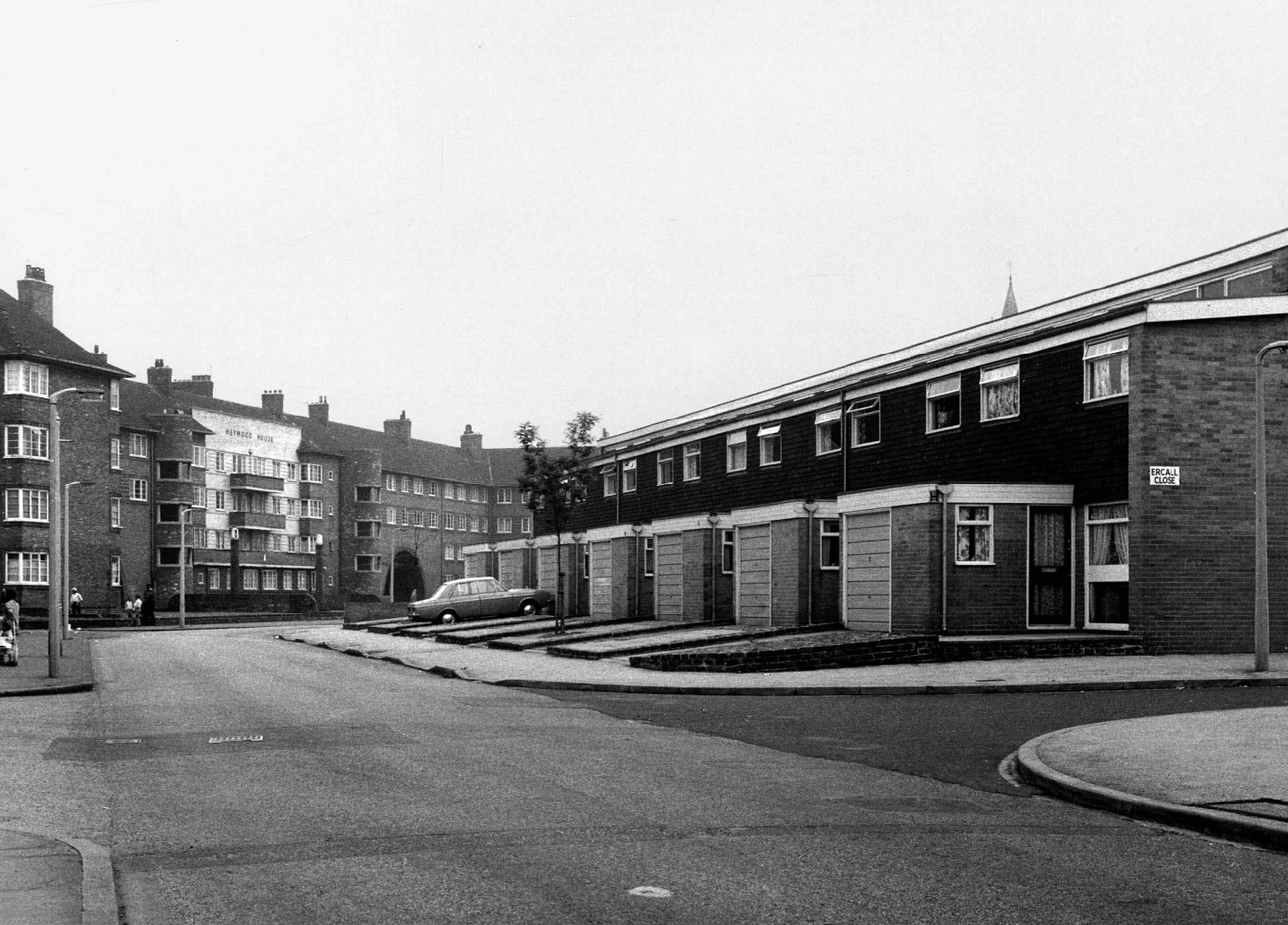
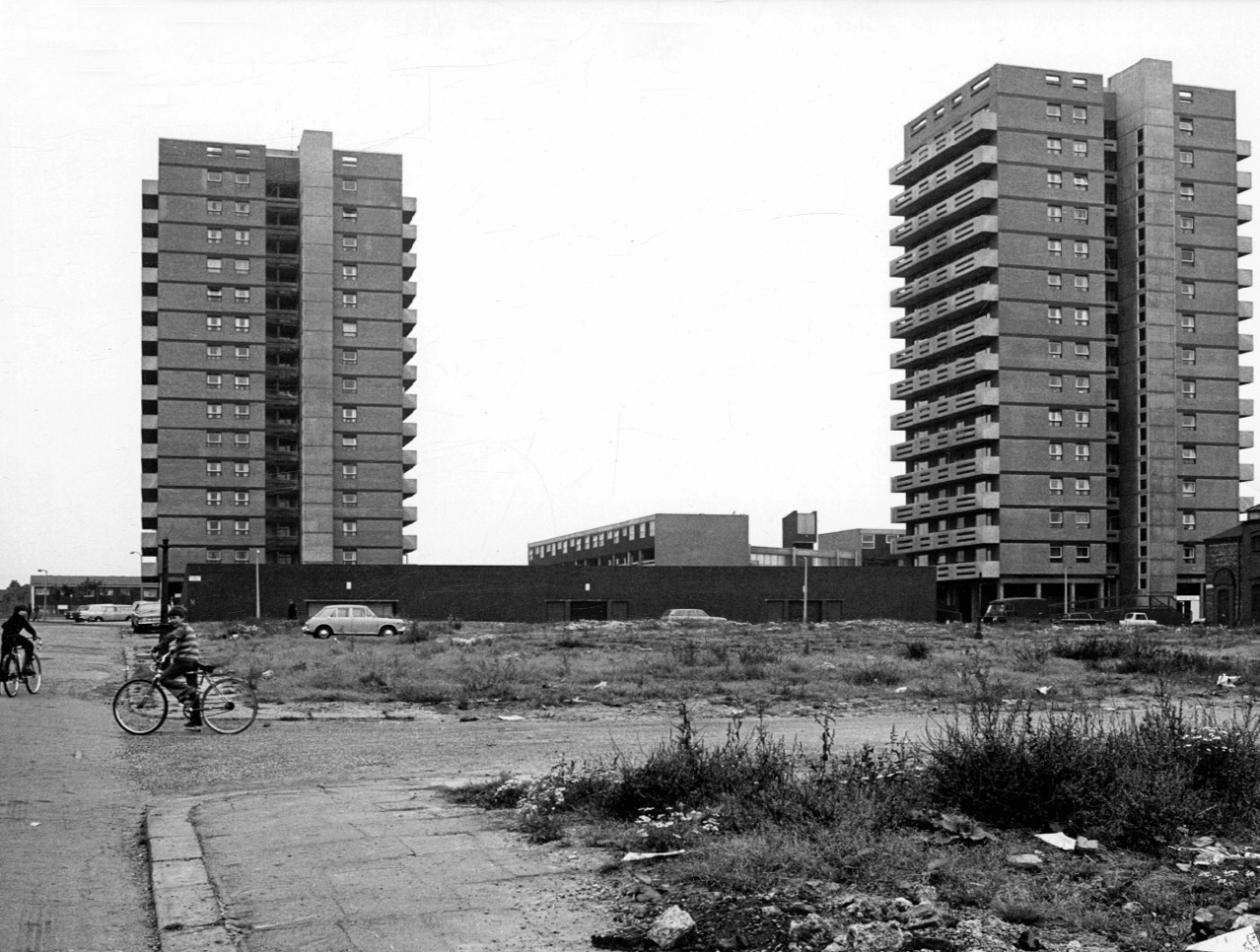
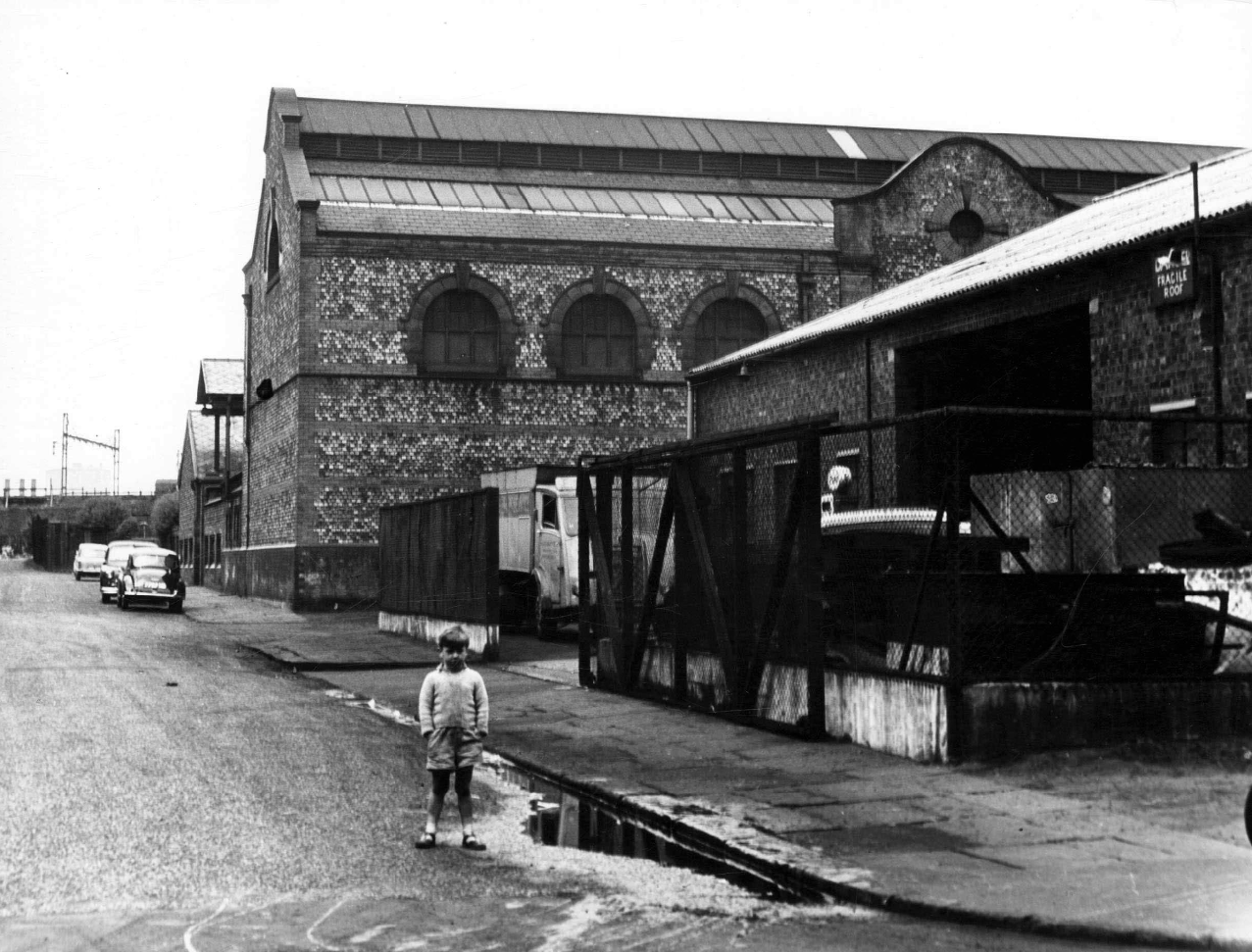
Local Image Collection: Bennett Street with Heywood House 1972 – photo Anne Jackson.

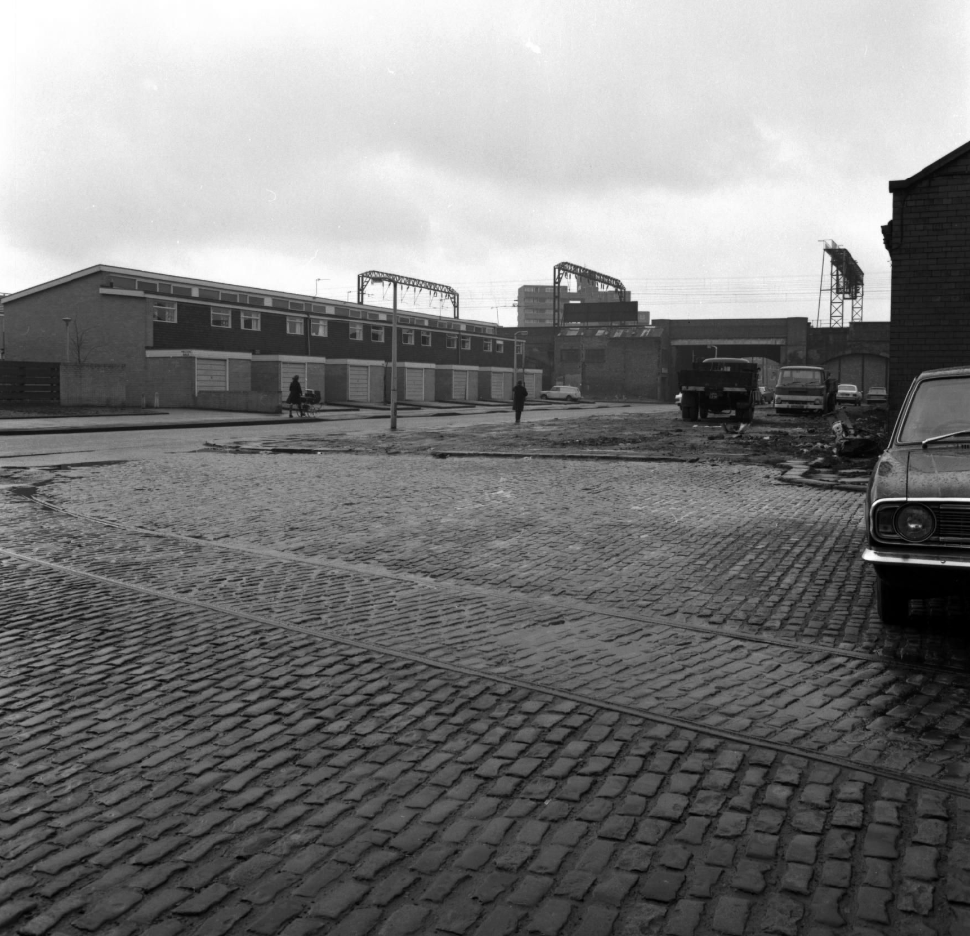
Local Image Collection: Wenlock Way flats taken from Bennett Street – Photo Ben Garth 1972

Local Image Collection: Matthews Street from Bennett Street 1964 – Photo Thomas Brooks

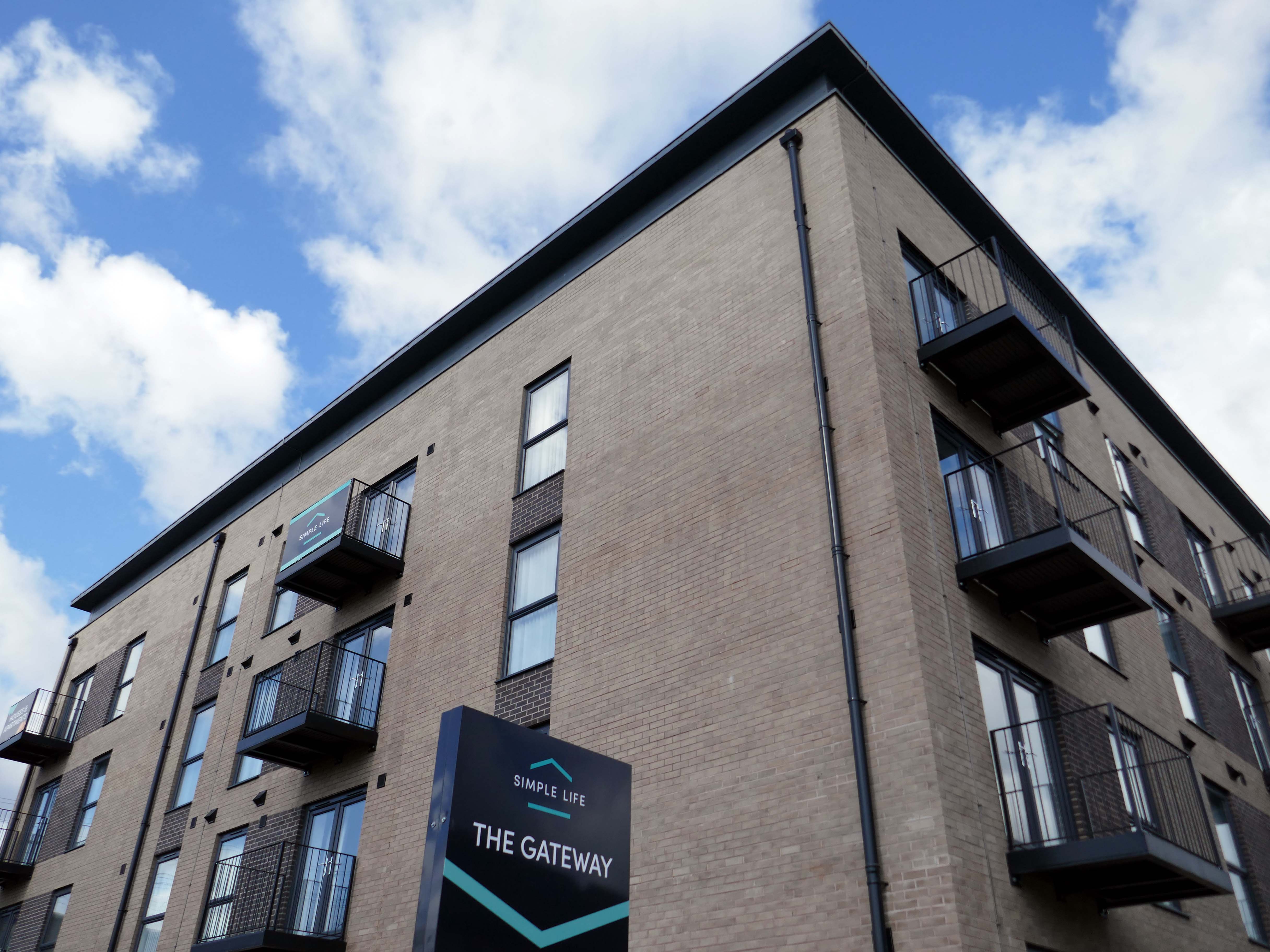
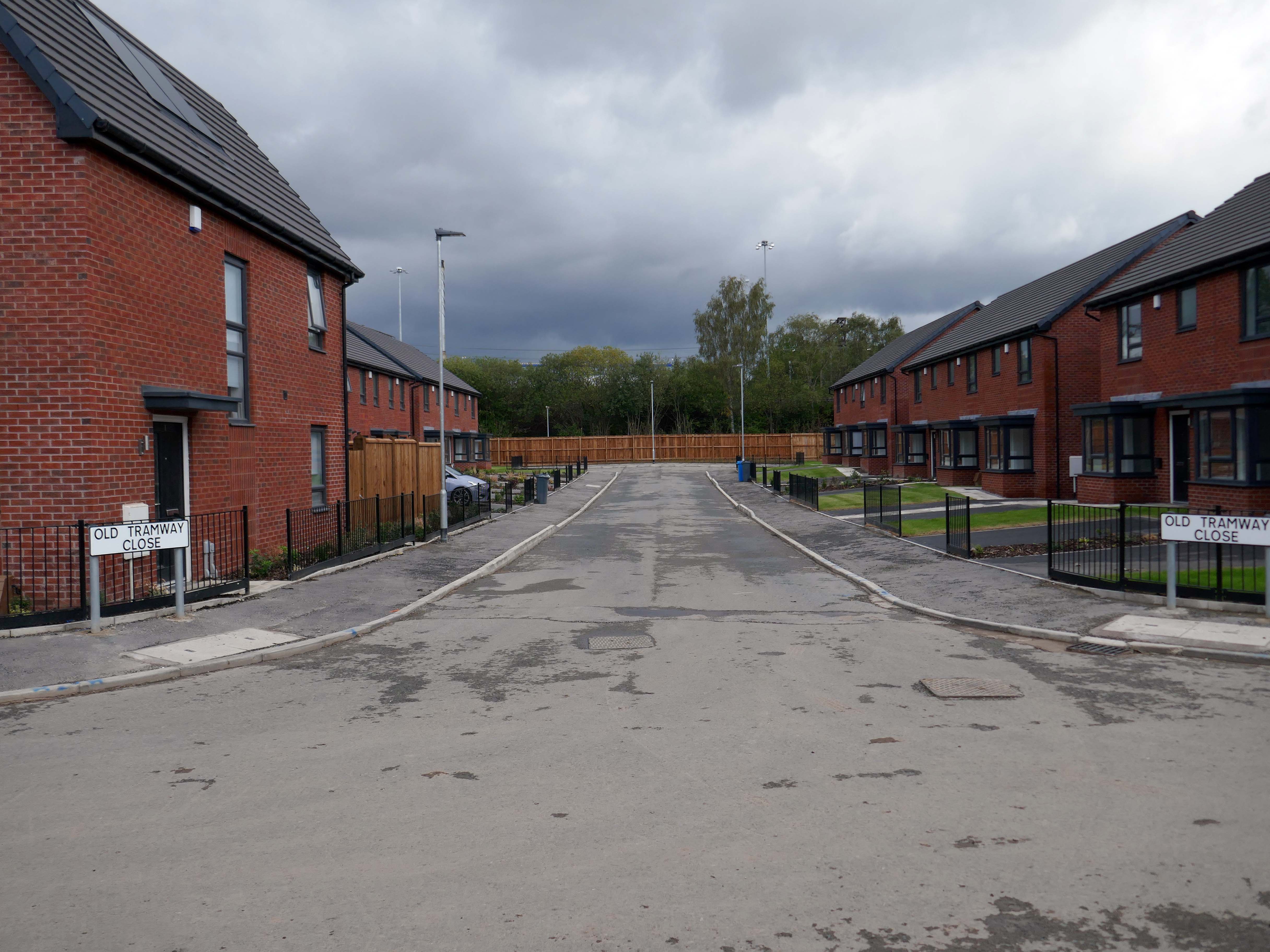
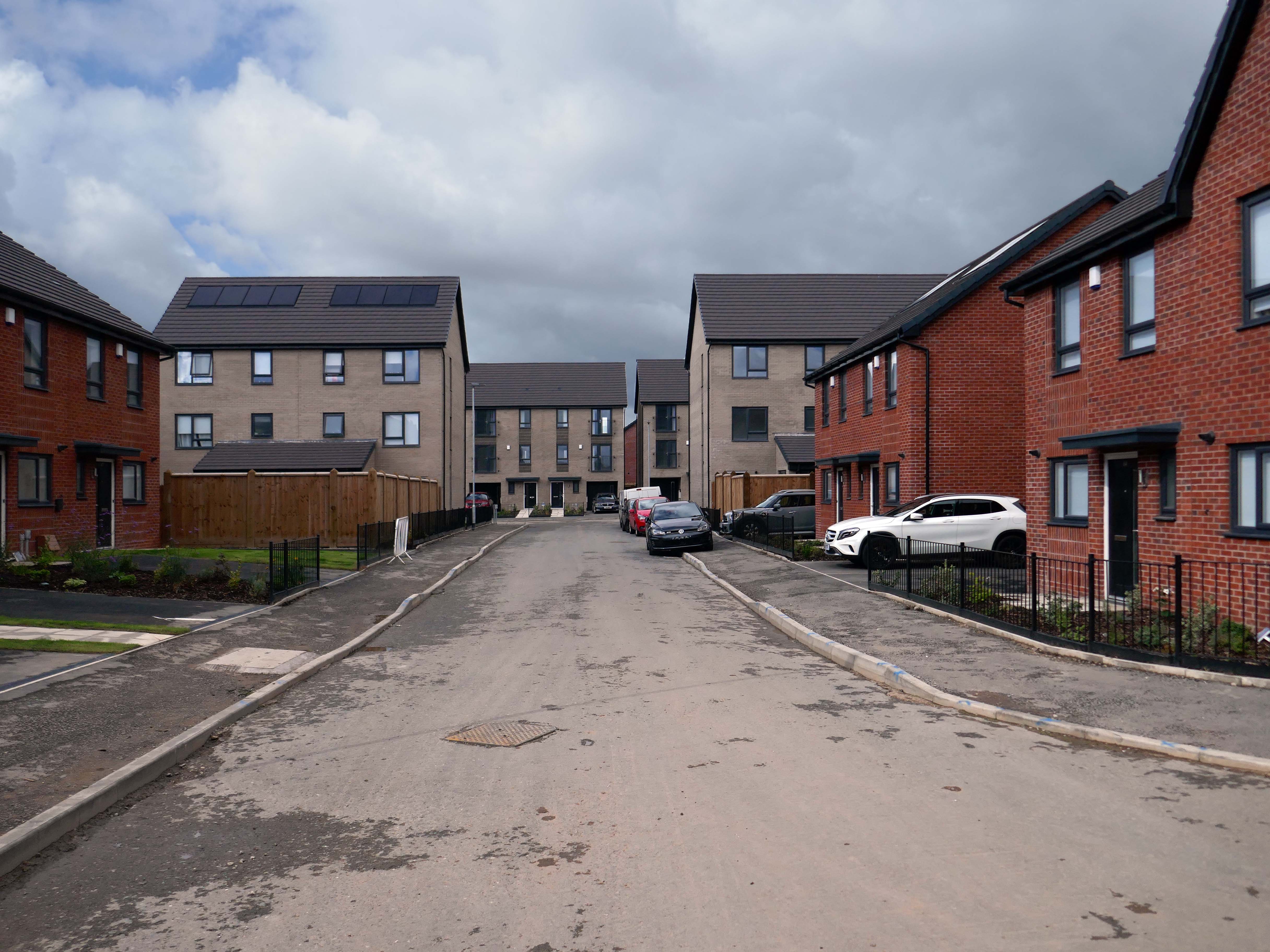
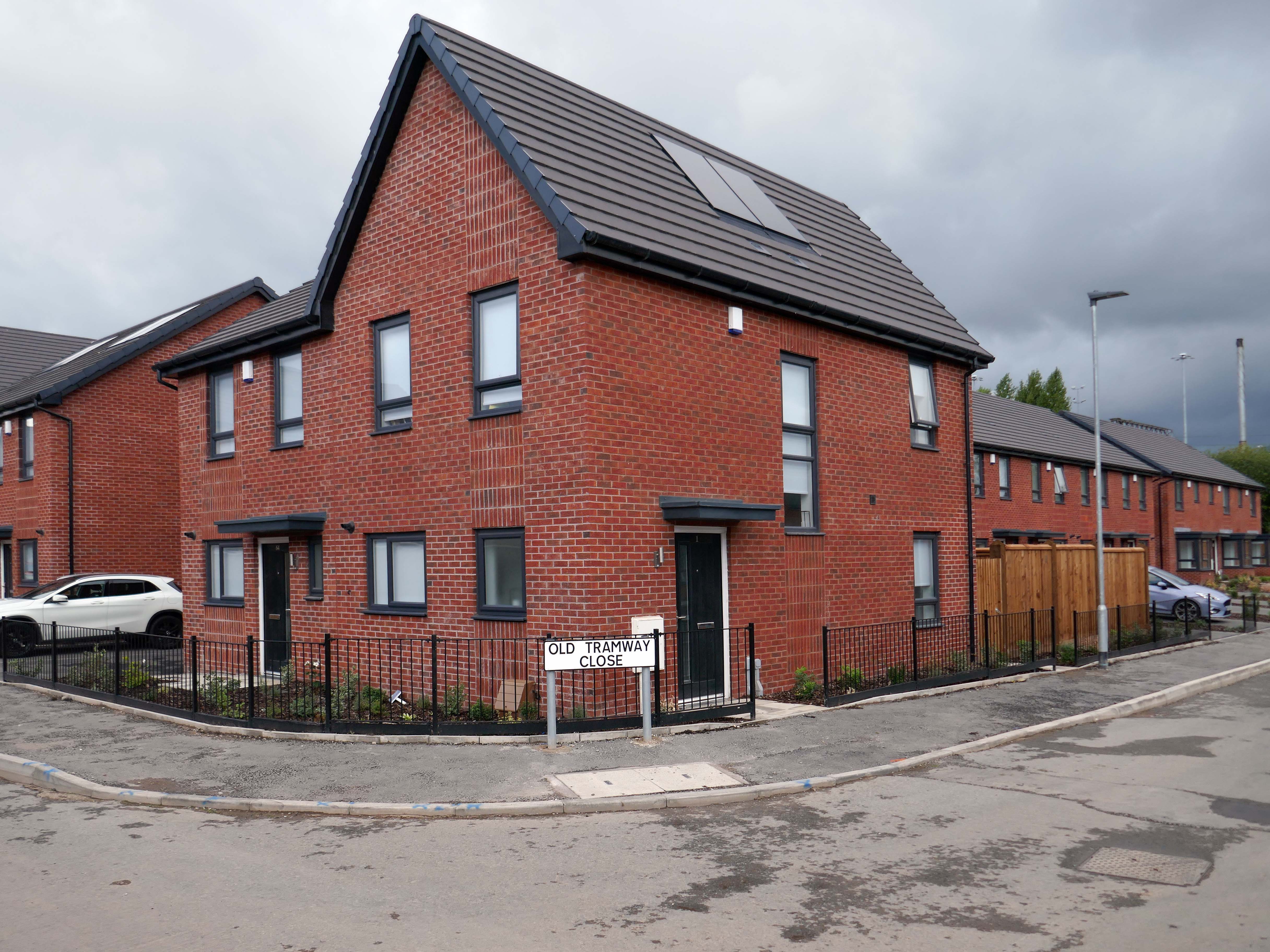
The Gateway to the Simple Life is here.

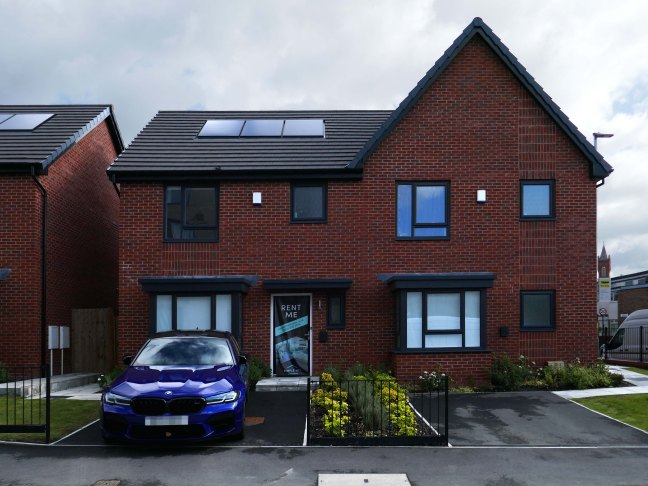
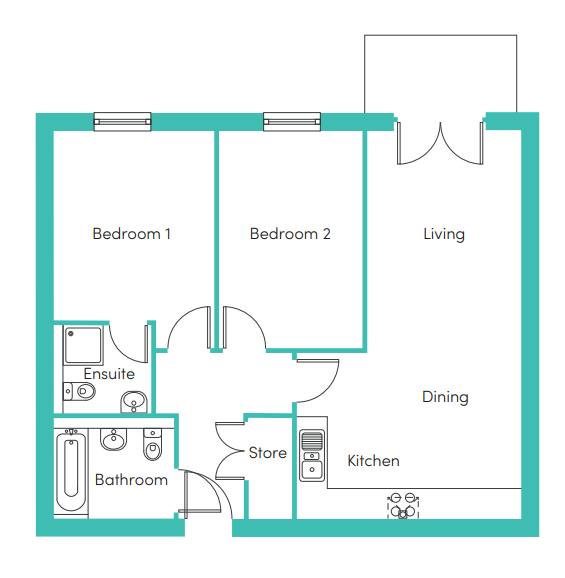
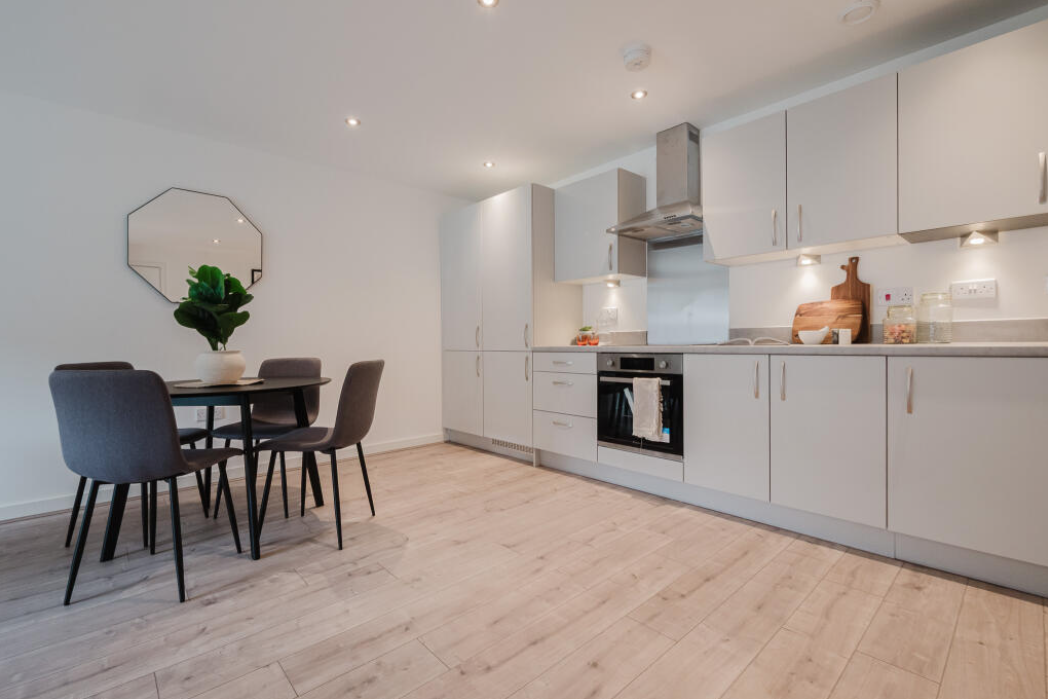
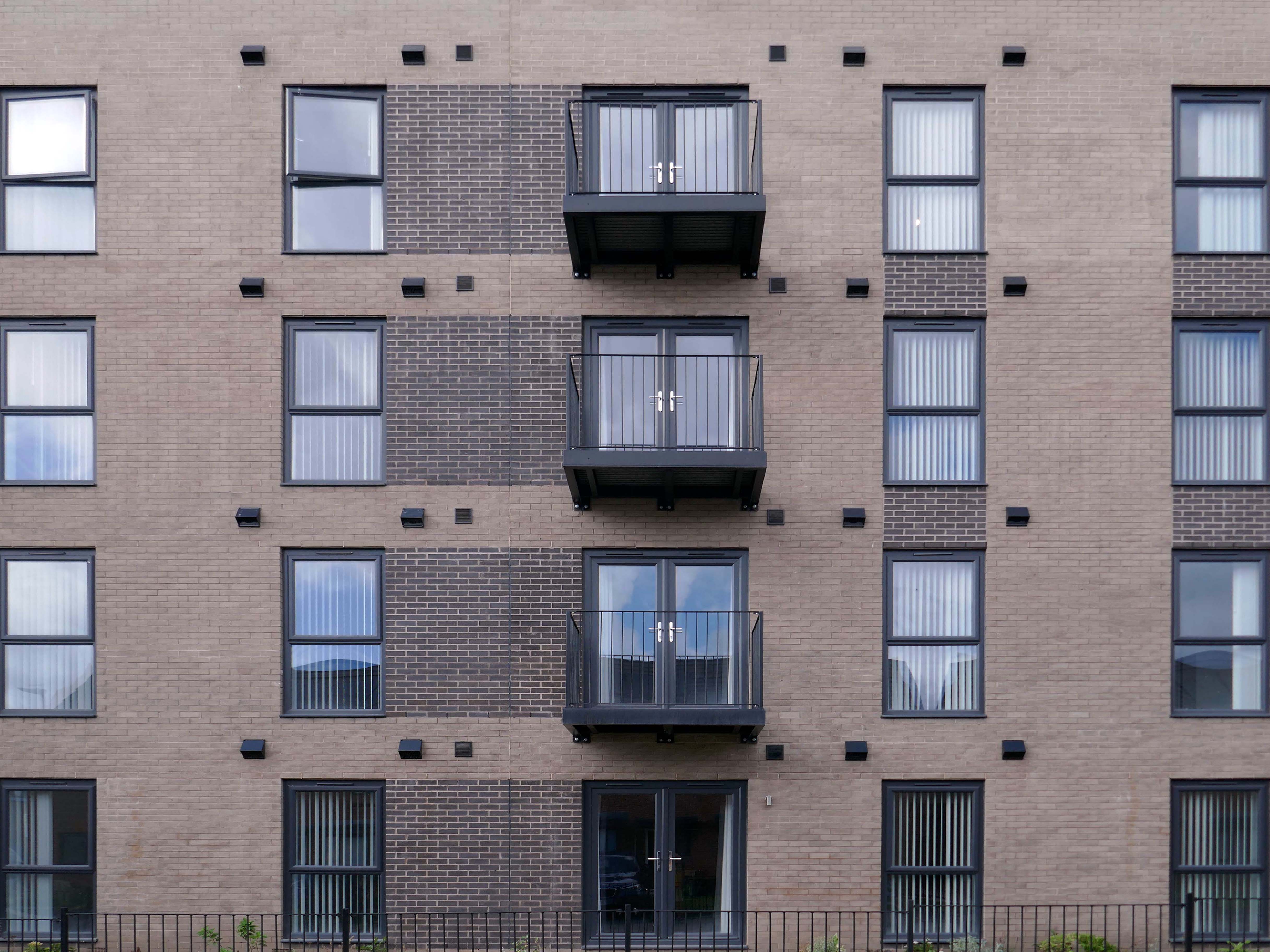
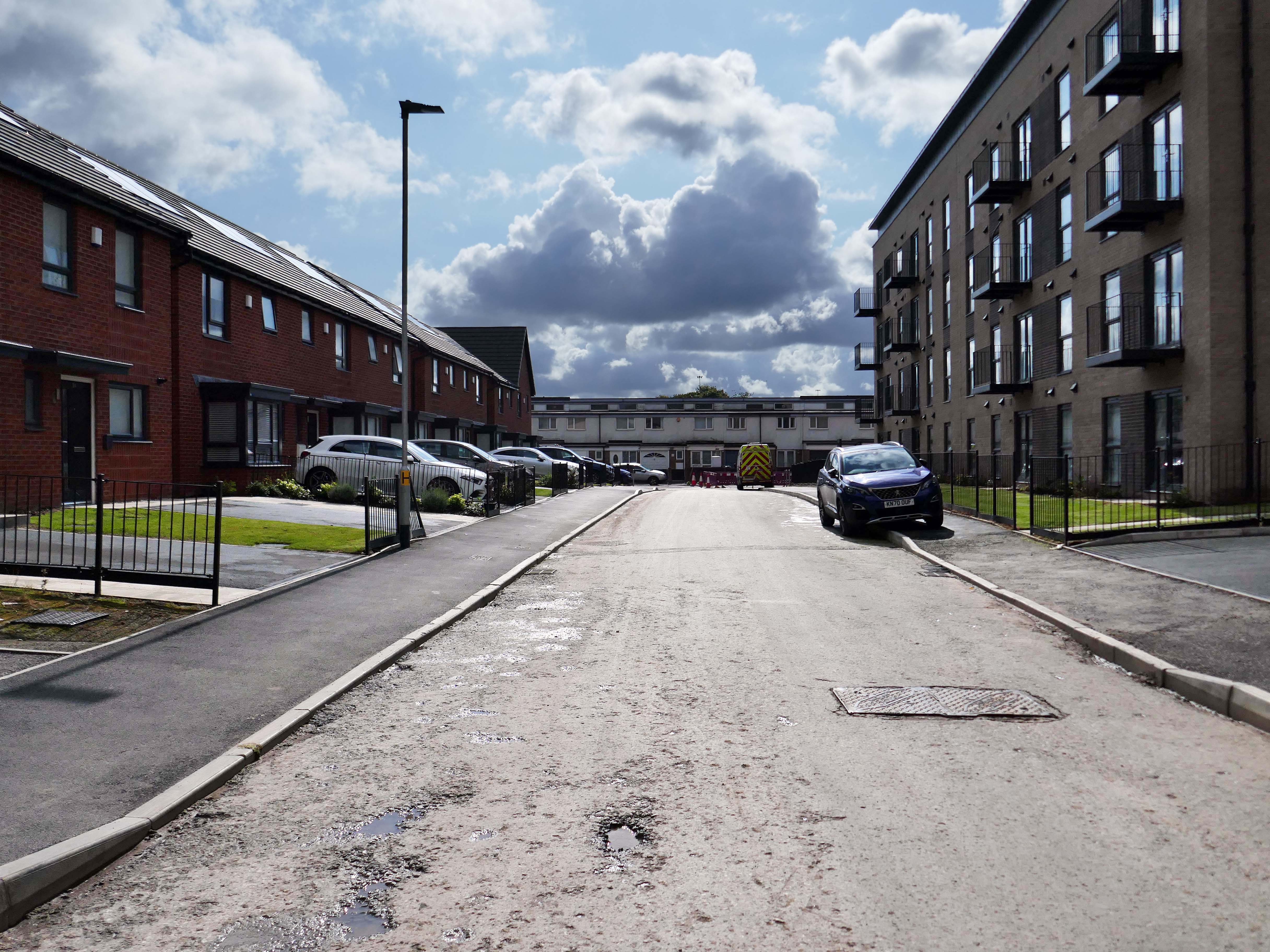
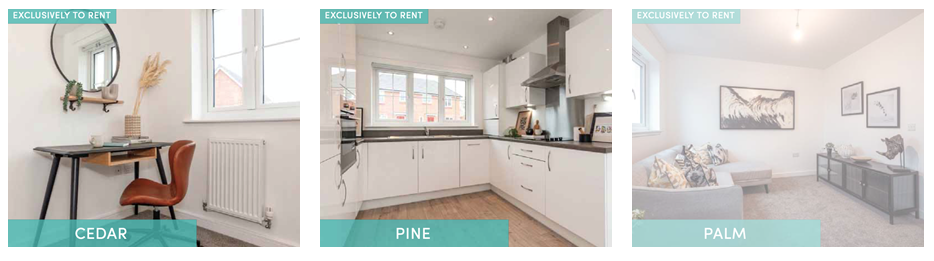
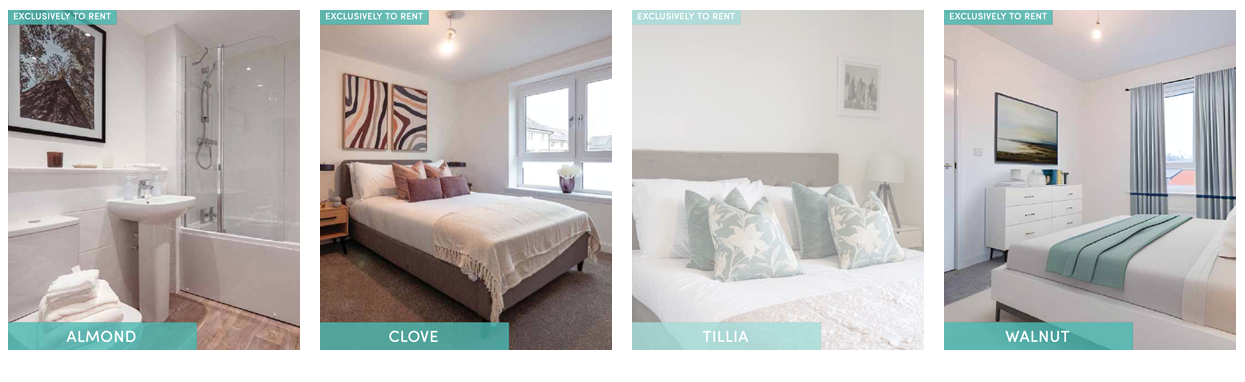
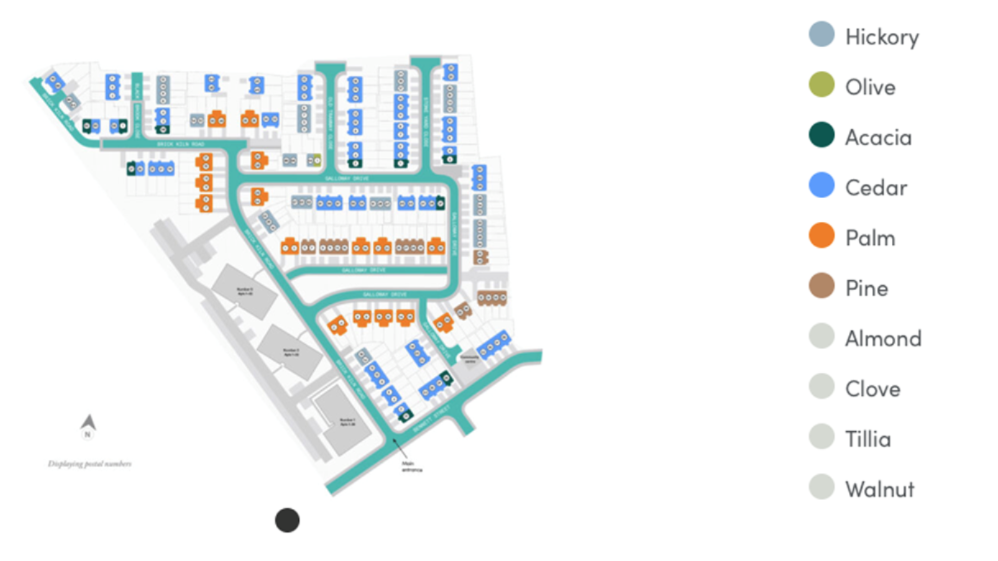
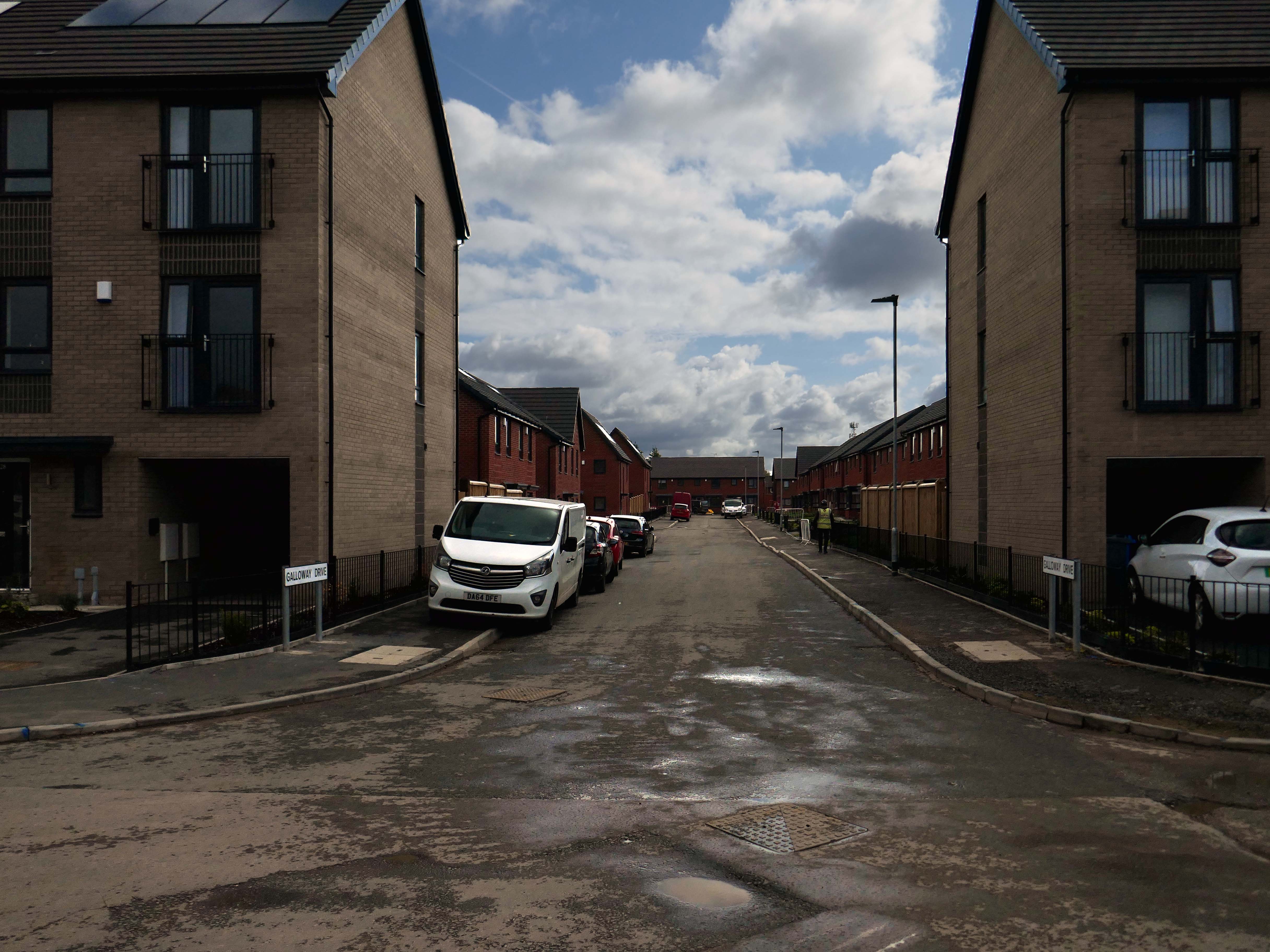
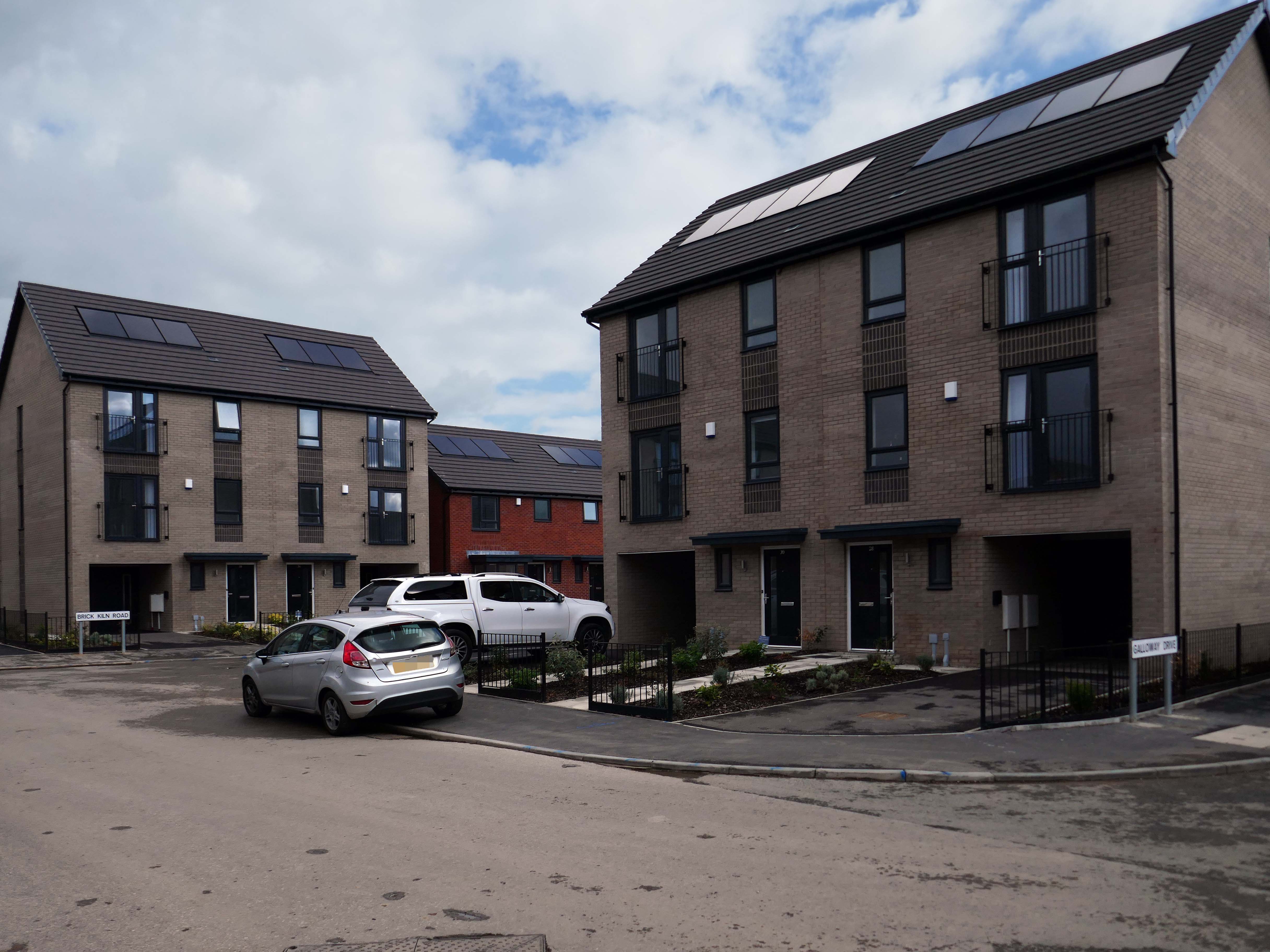
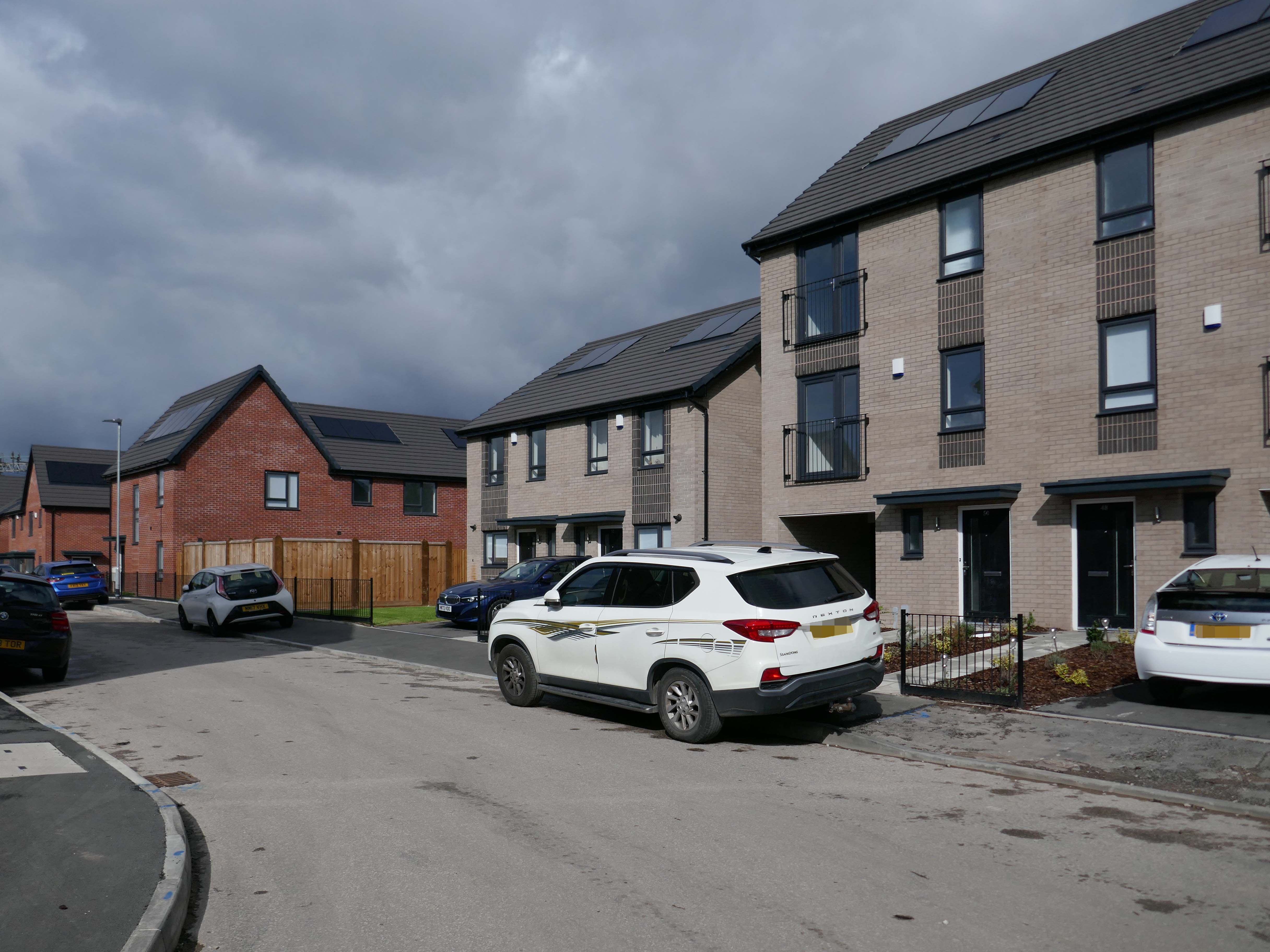
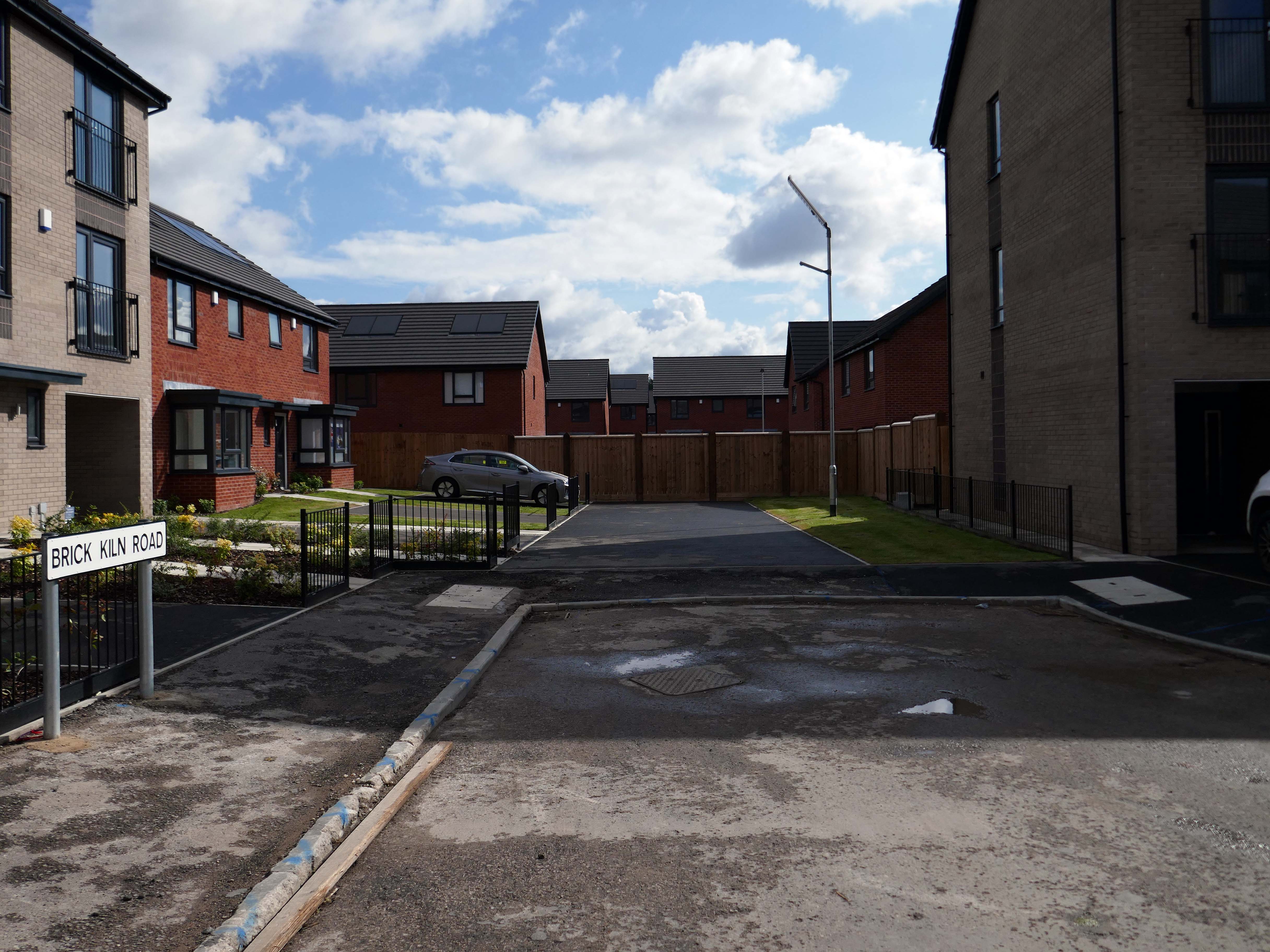
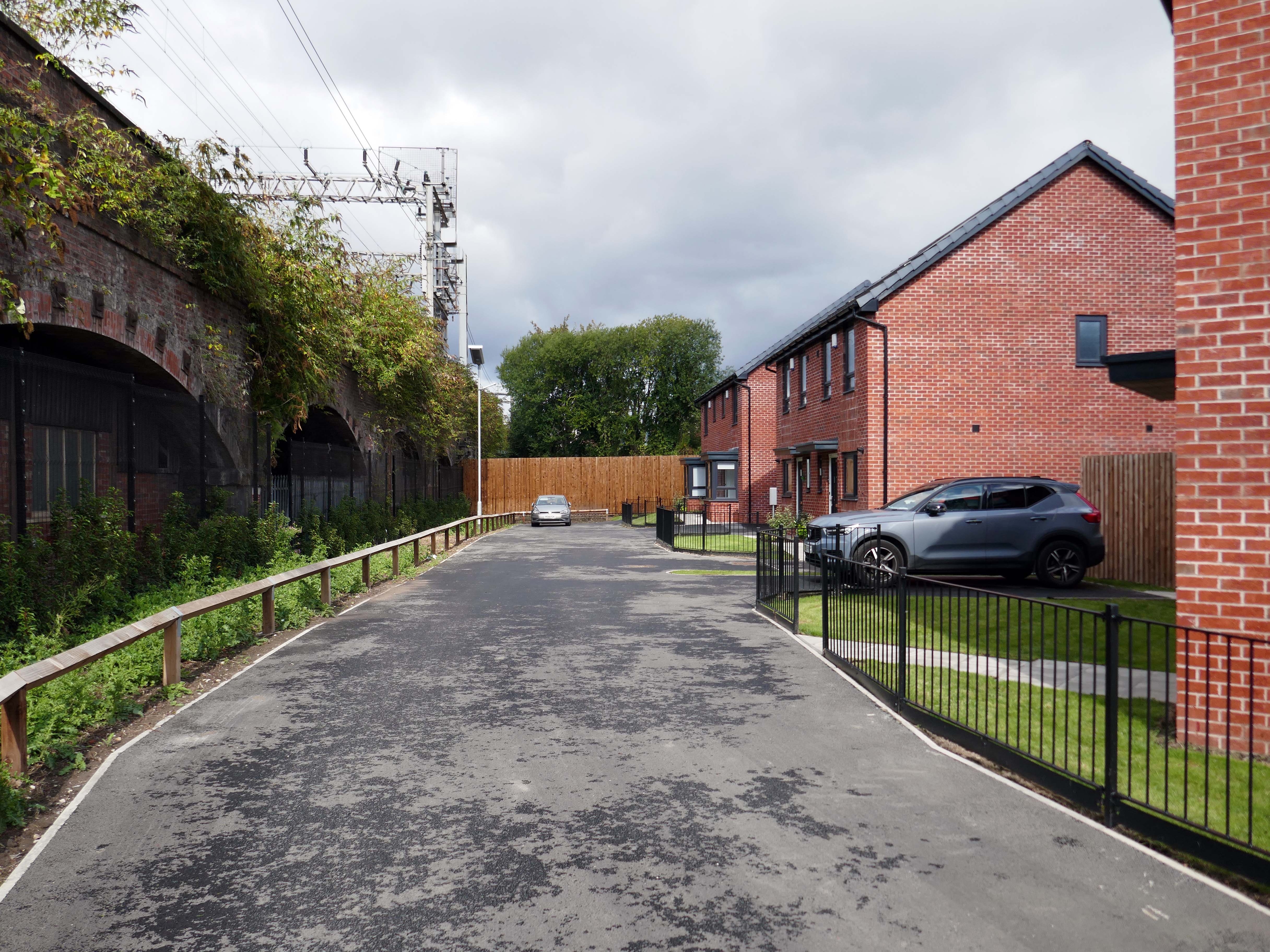
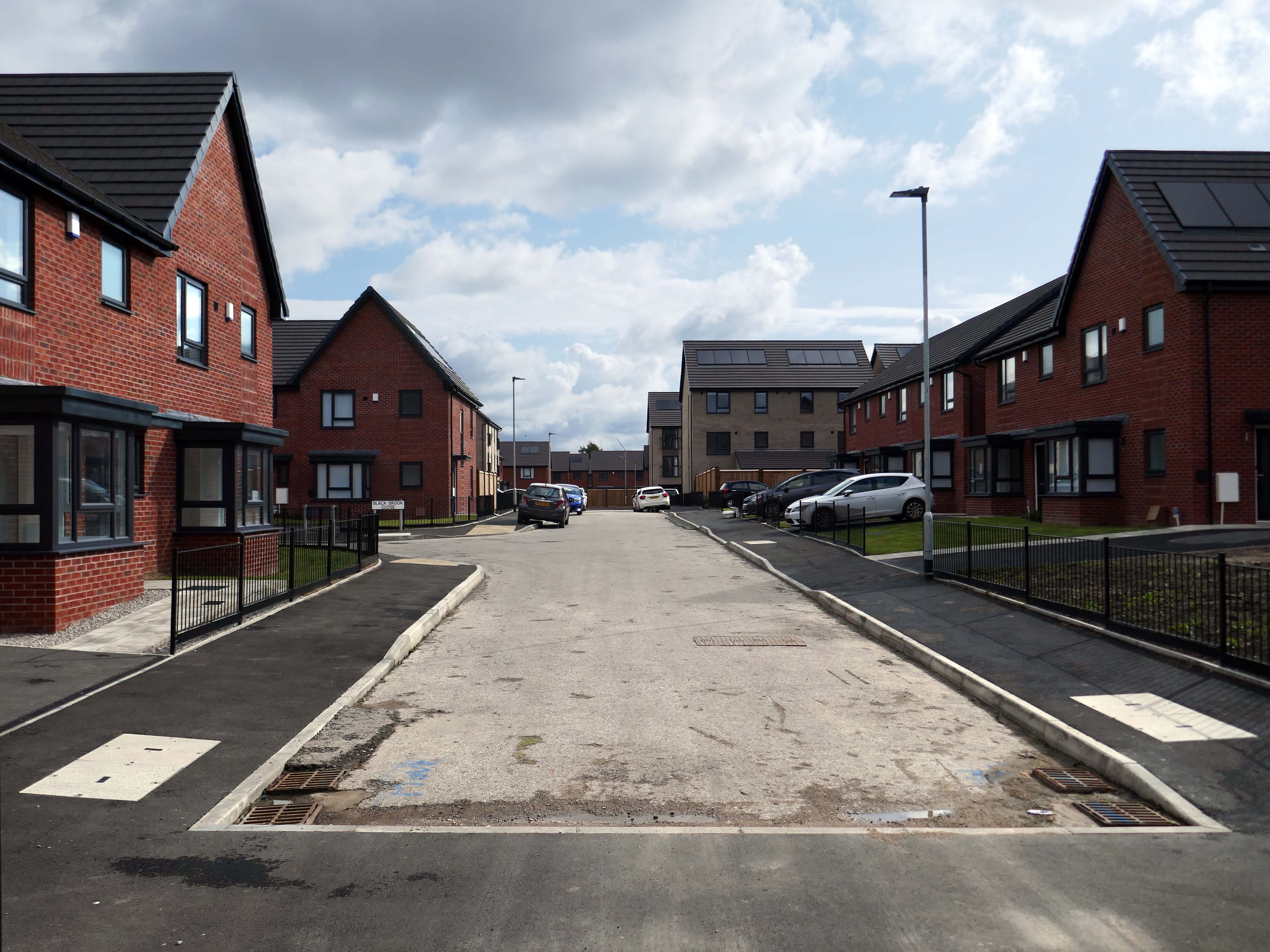
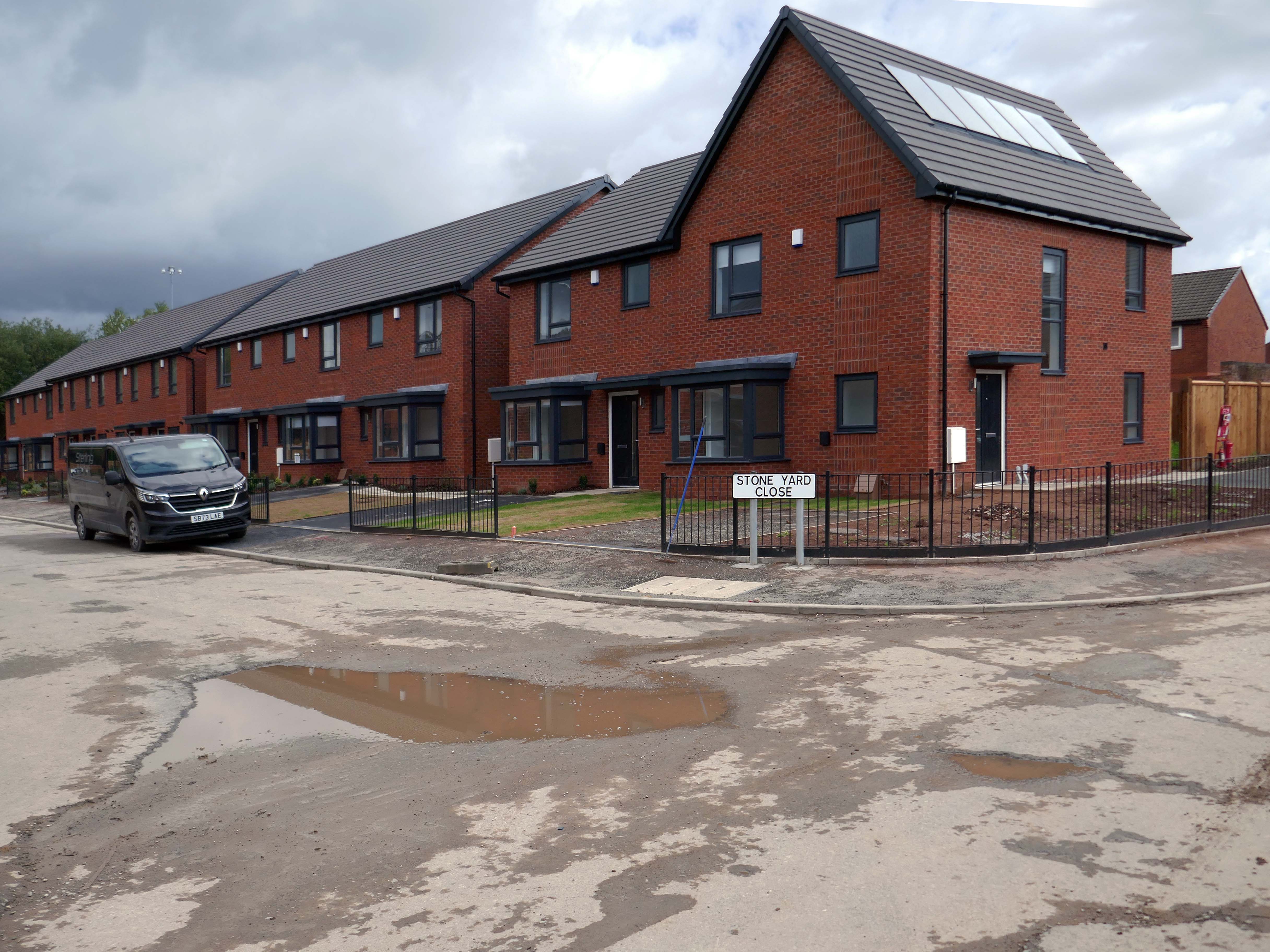
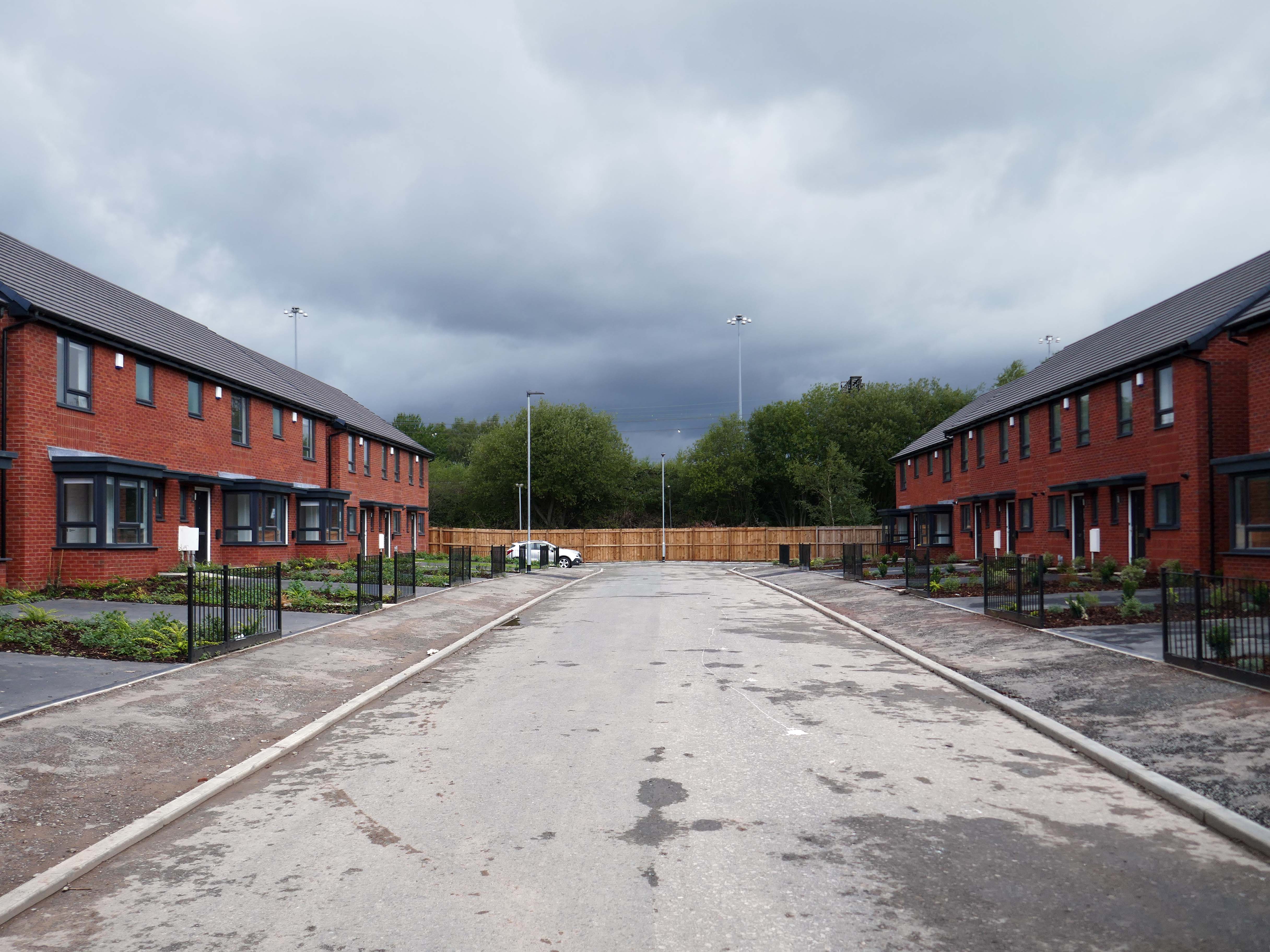
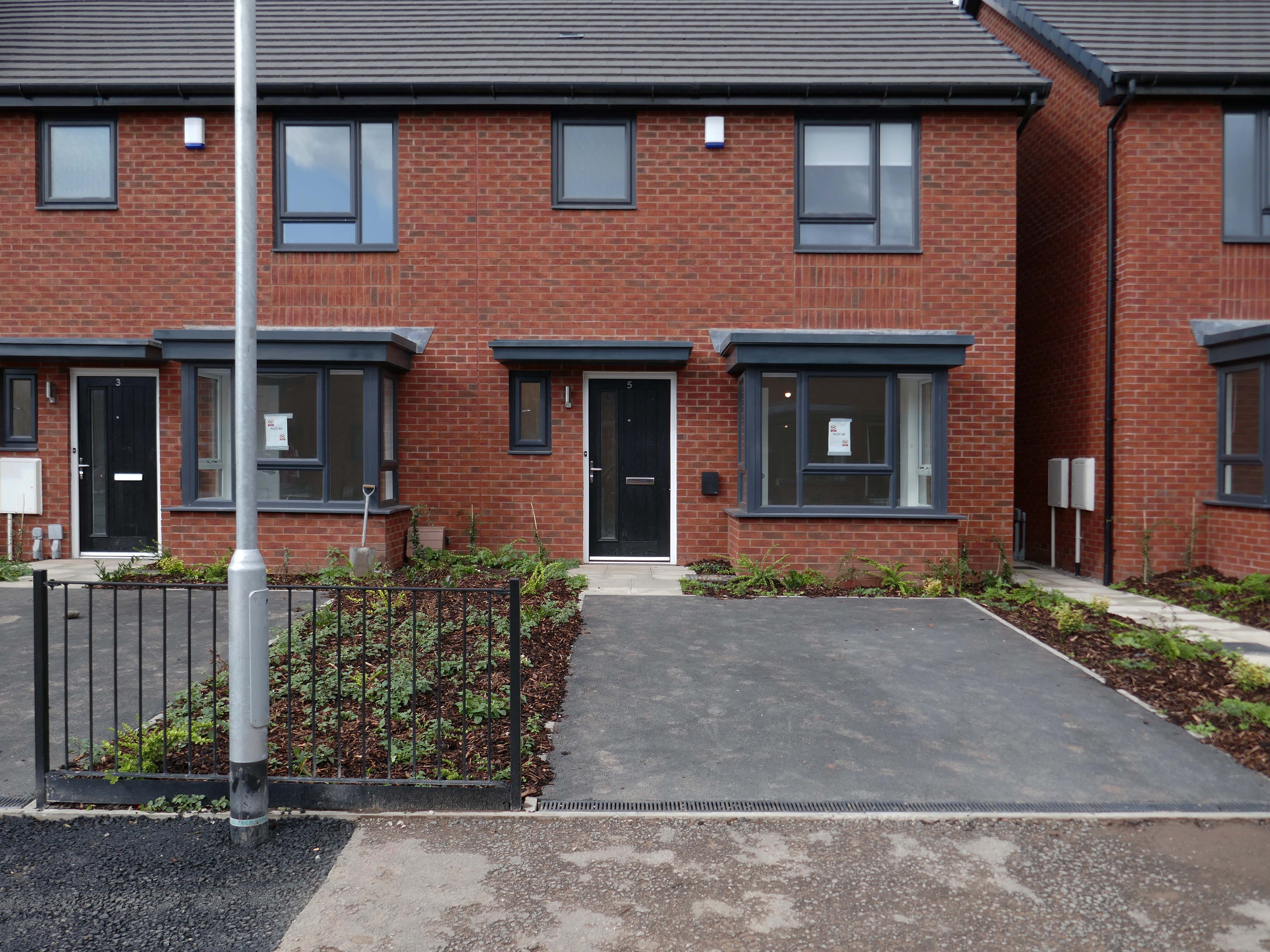
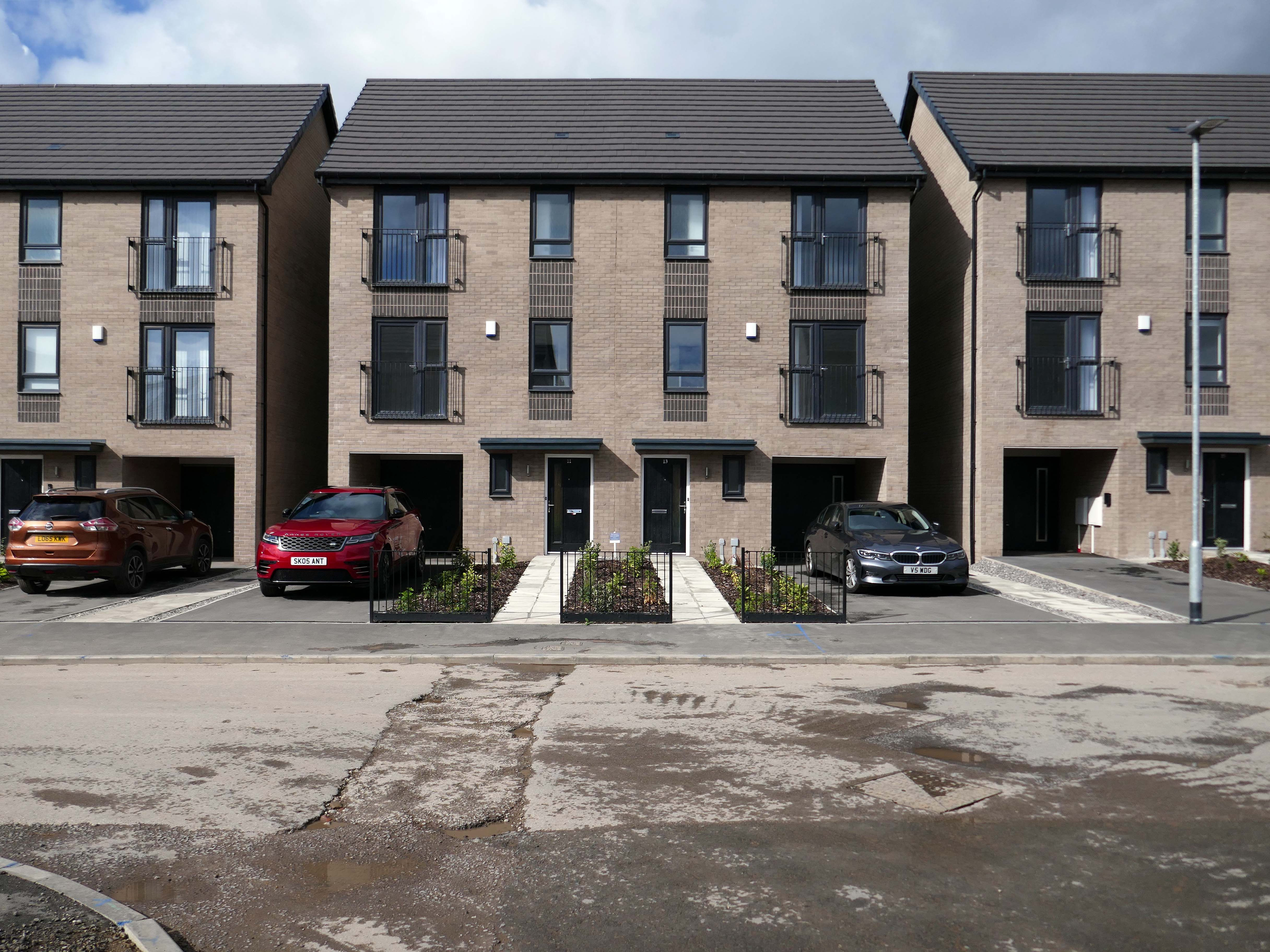
Situated in Ardwick, one mile outside of Manchester’s vibrant city centre, The Gateway is a distinctive development offering a collection of homes and apartments to rent.

Enjoy living in the prime location of Manchester’s bustling city centre, where there is a vast range of employment opportunities, cafes, bars and restaurants. All year round, you can benefit from various fun days out with events and activities available on your doorstep.

Right Move

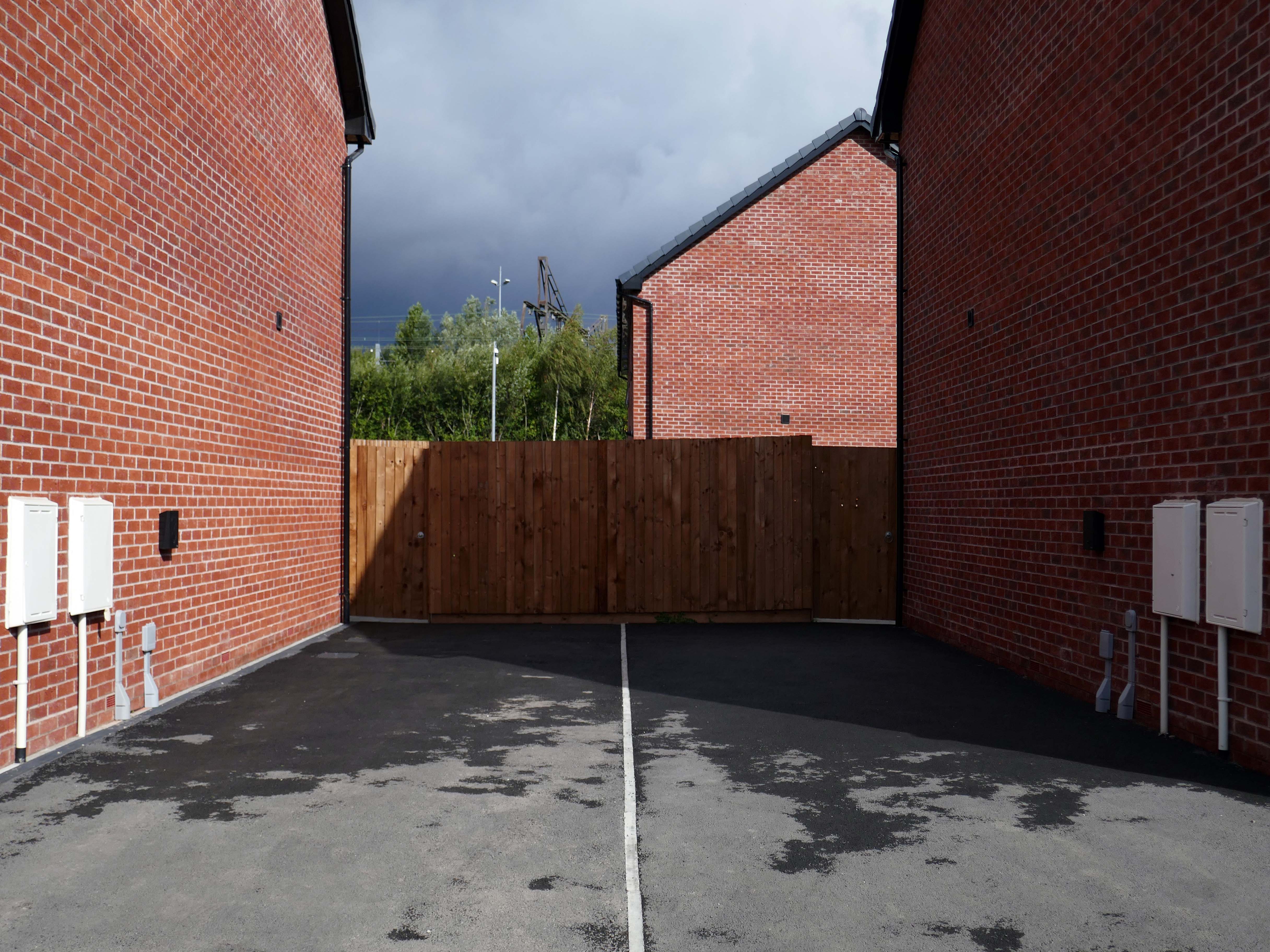
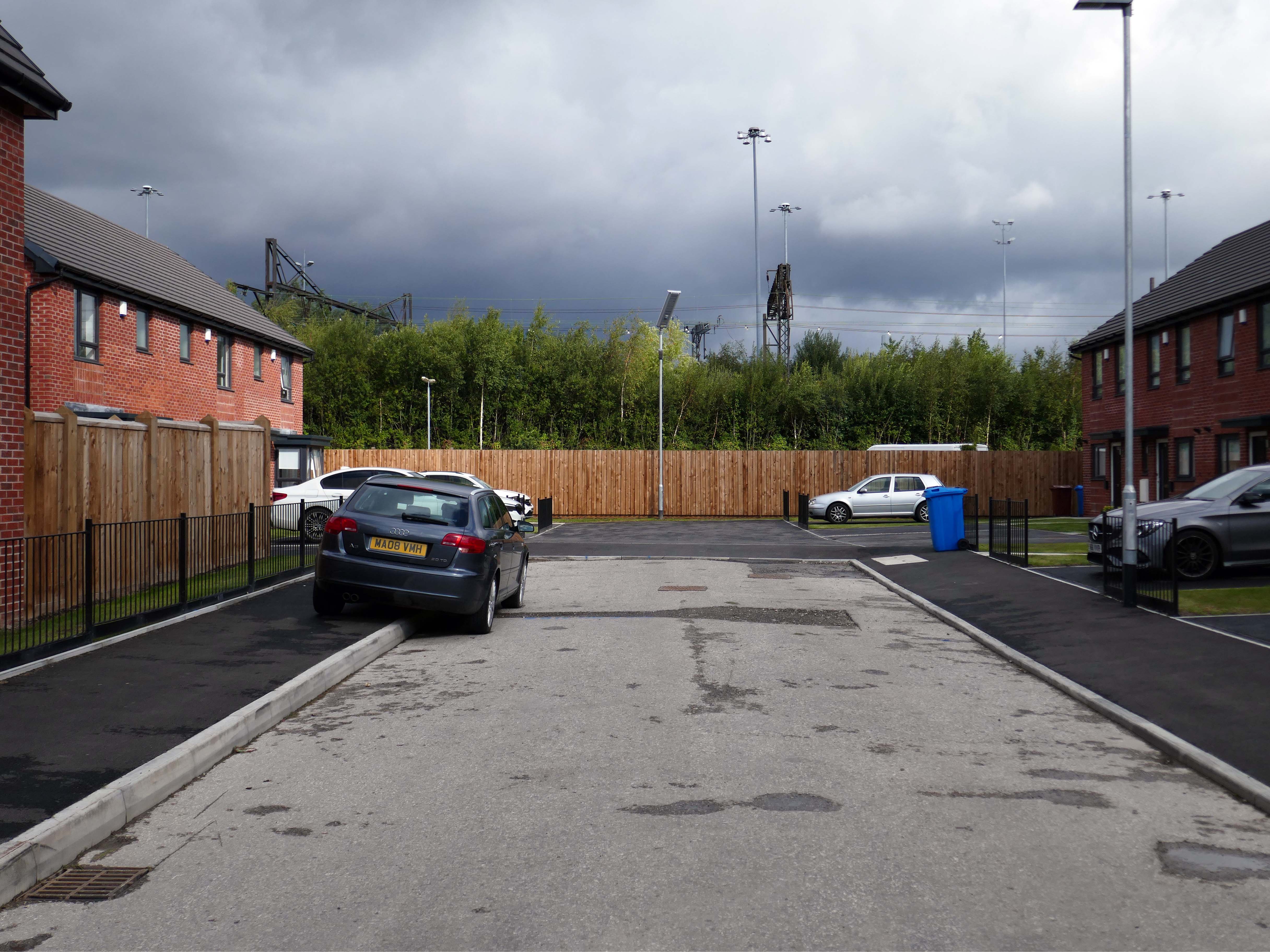
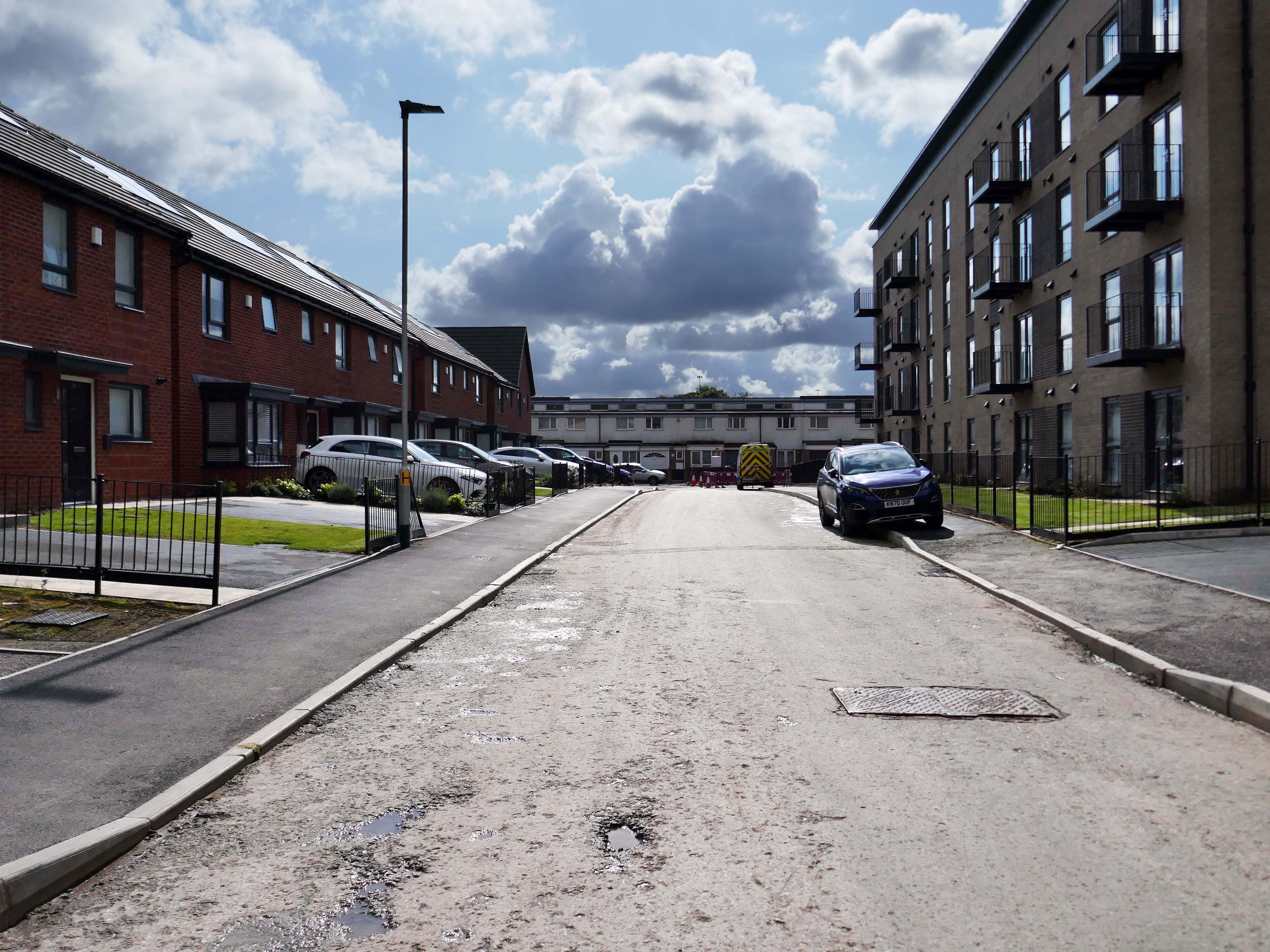
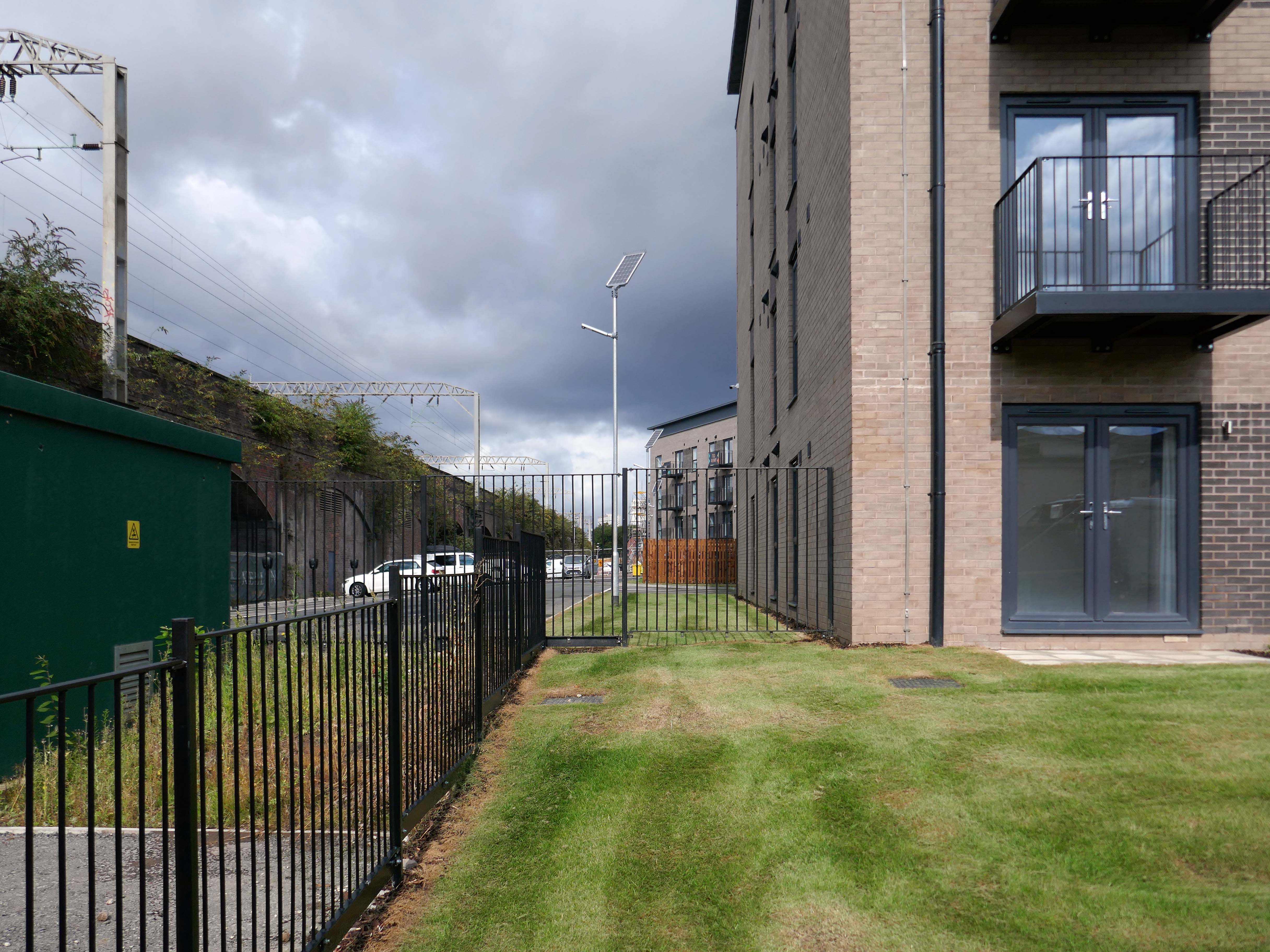
In addition to the apartments there is a mixed development of terraced, detached and semi-detached homes.

We pride ourselves on building places you can call your forever home, knowing it won’t be sold from beneath your feet. We offer renters a whole new experience which brings together the best of both worlds – all the perks of a private rental with the added excitement for customers at the start of a development to choose their own plot and watch it being built.

With home ownership becoming unaffordable for some and an unappealing lifestyle choice for others, we meet the need for a high quality home which still feels secure in the long term.

Lovetorent

Stafford Walk

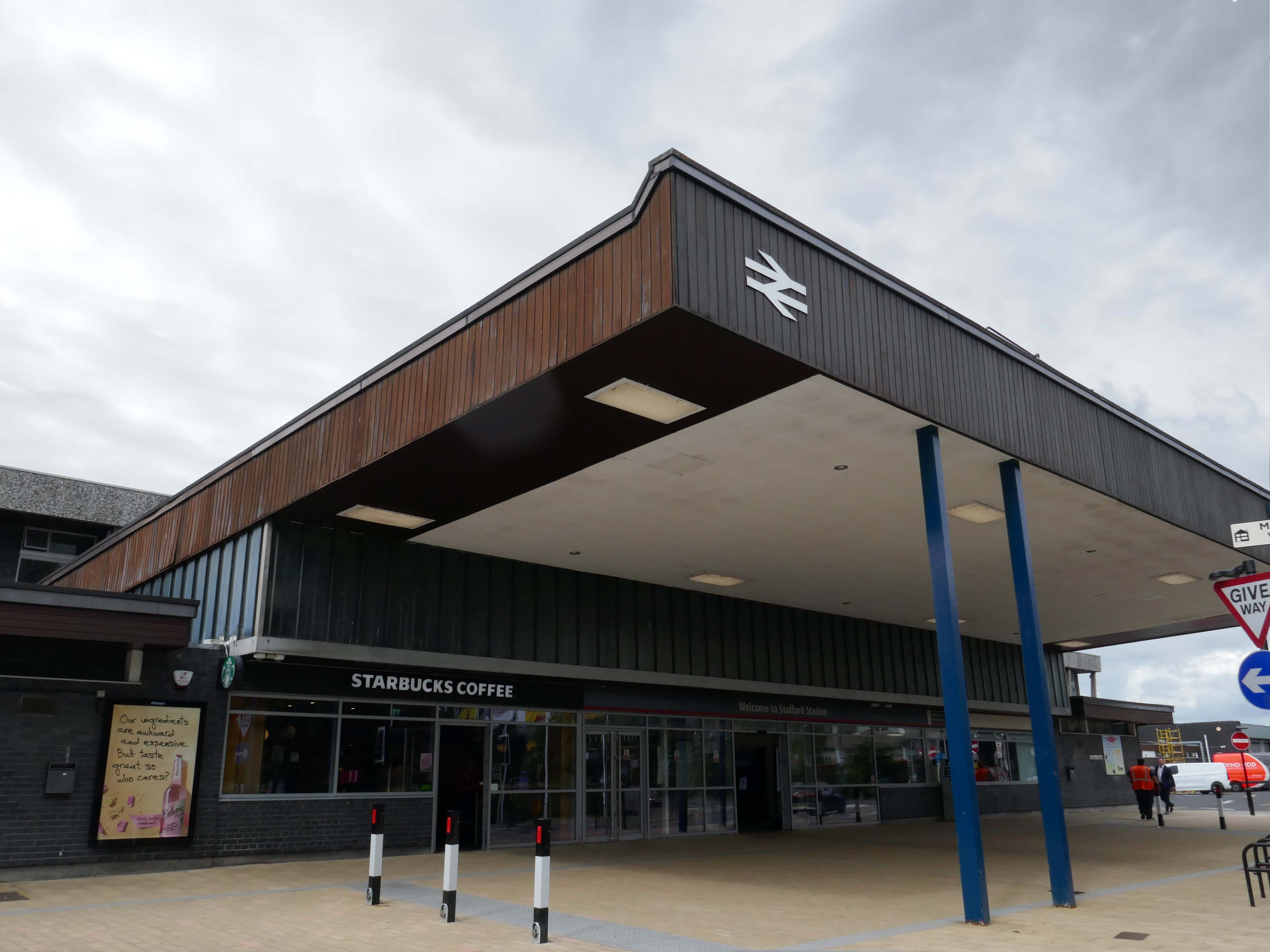
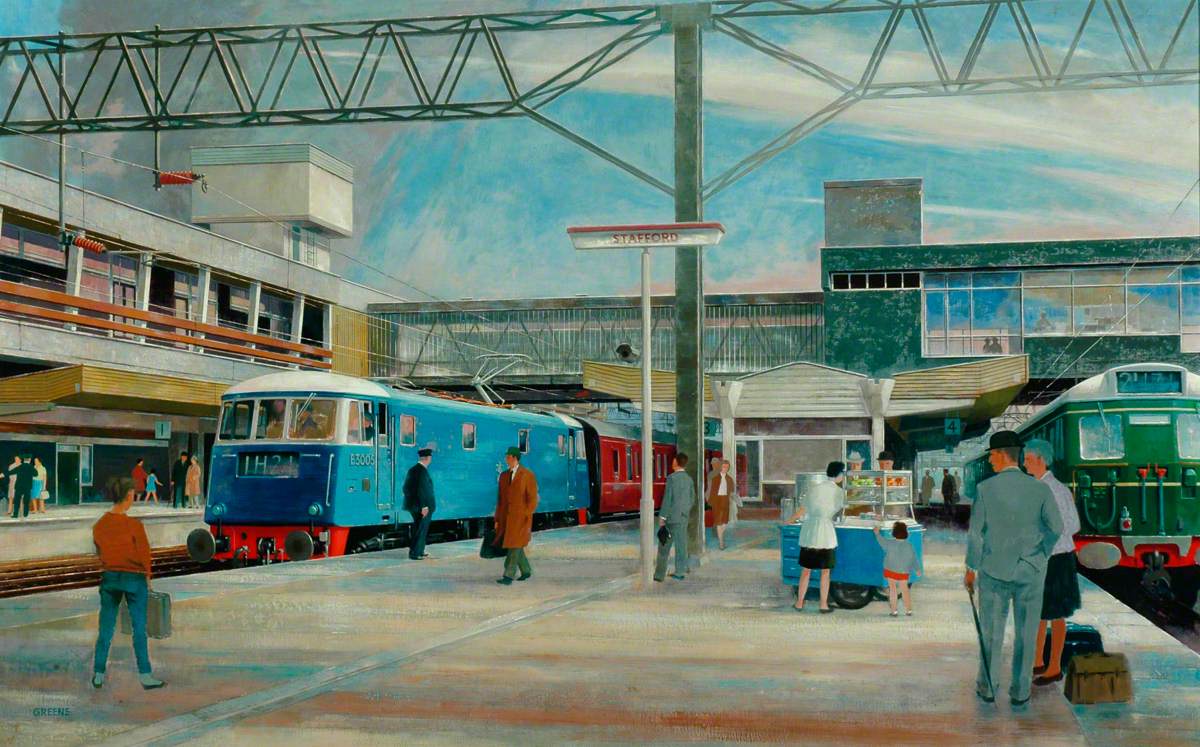
To begin at the beginning – we arrive at Stafford Railway Station.

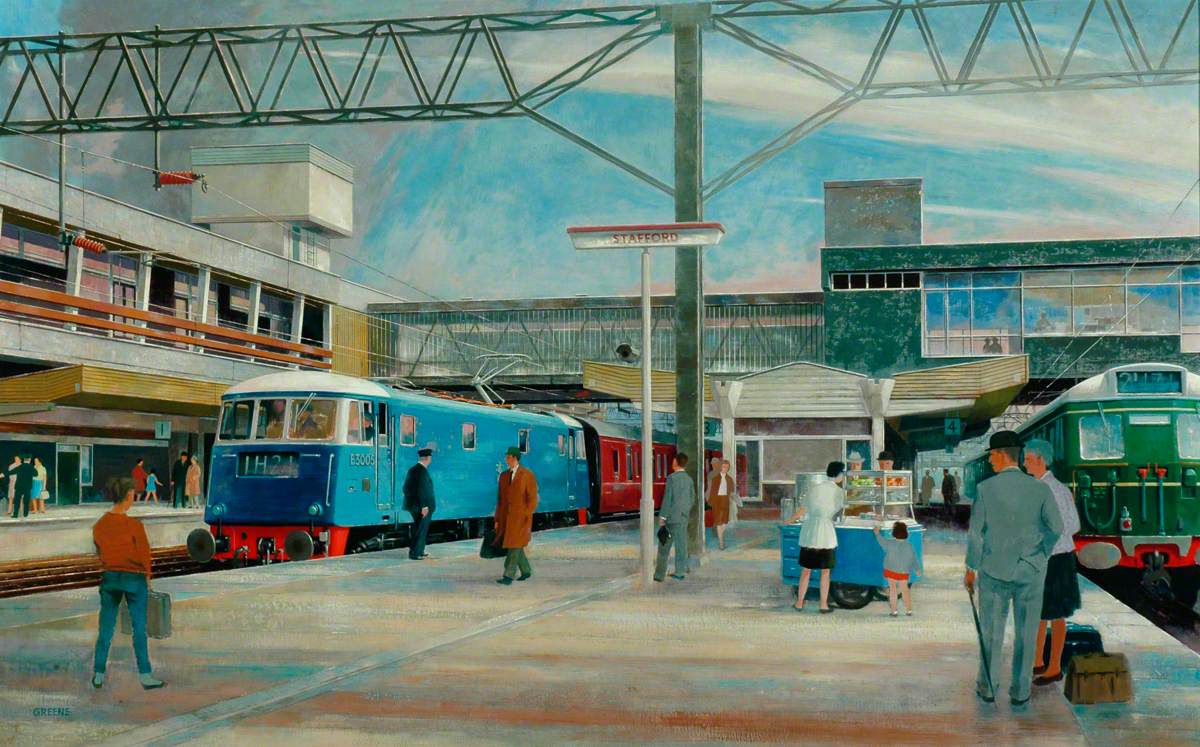
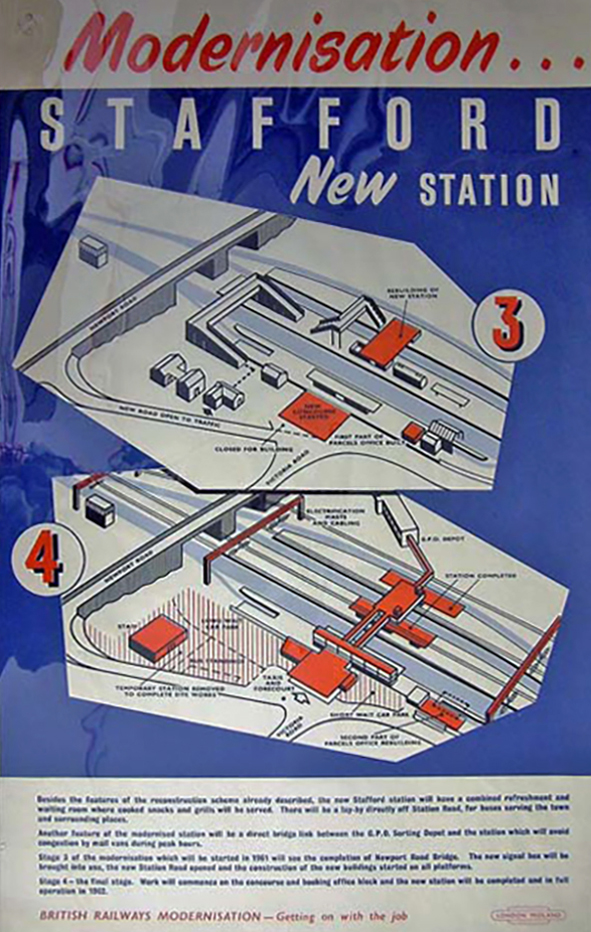
The current station was built in 1962, by the architect William Robert Headley, as part of the modernisation programme which saw the electrification of the West Coast Main Line.

Illustration: John Greene

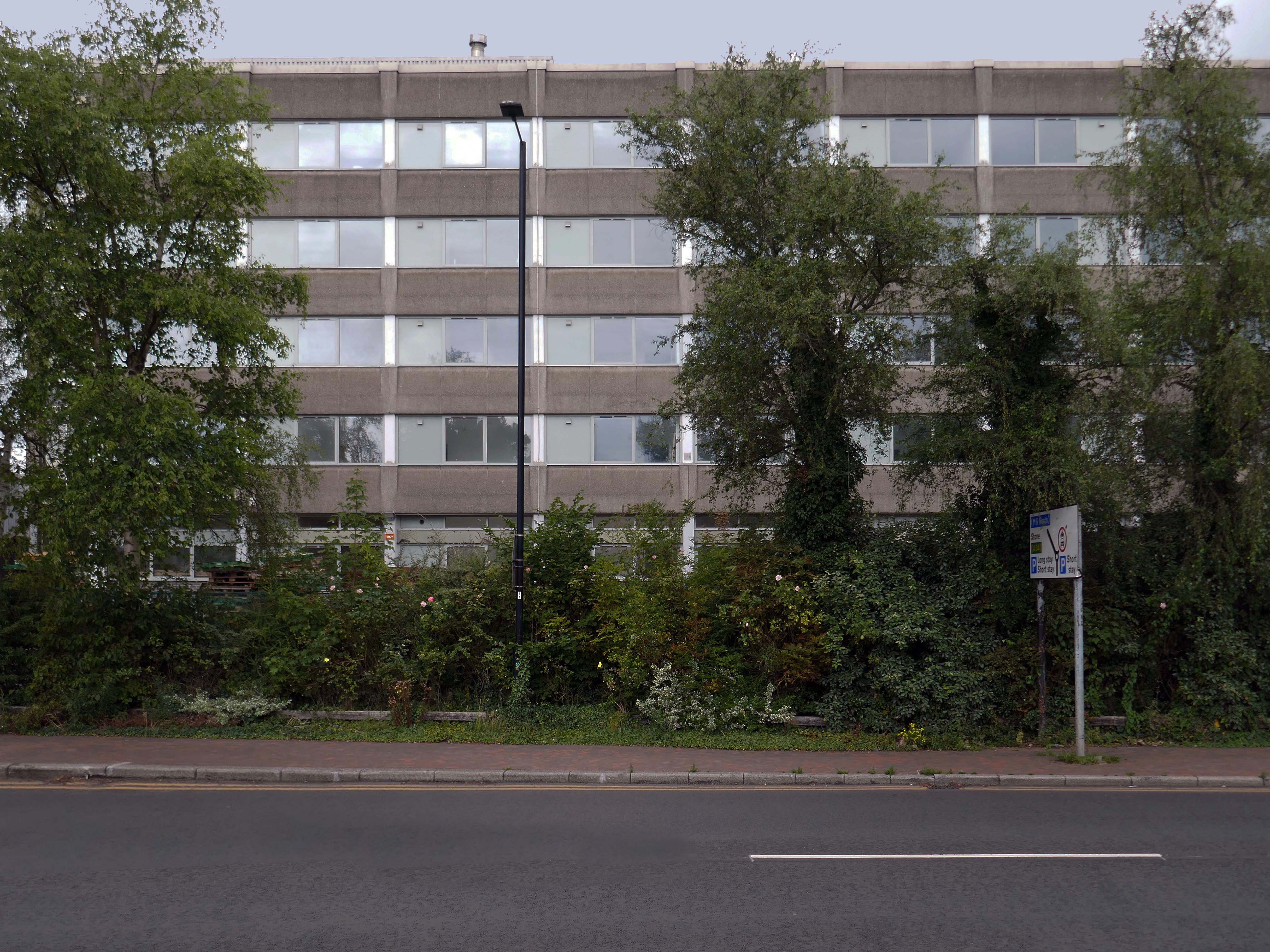
On leaving the station there is an as yet partially un-let Sixties office block to let – Victoria Park House.

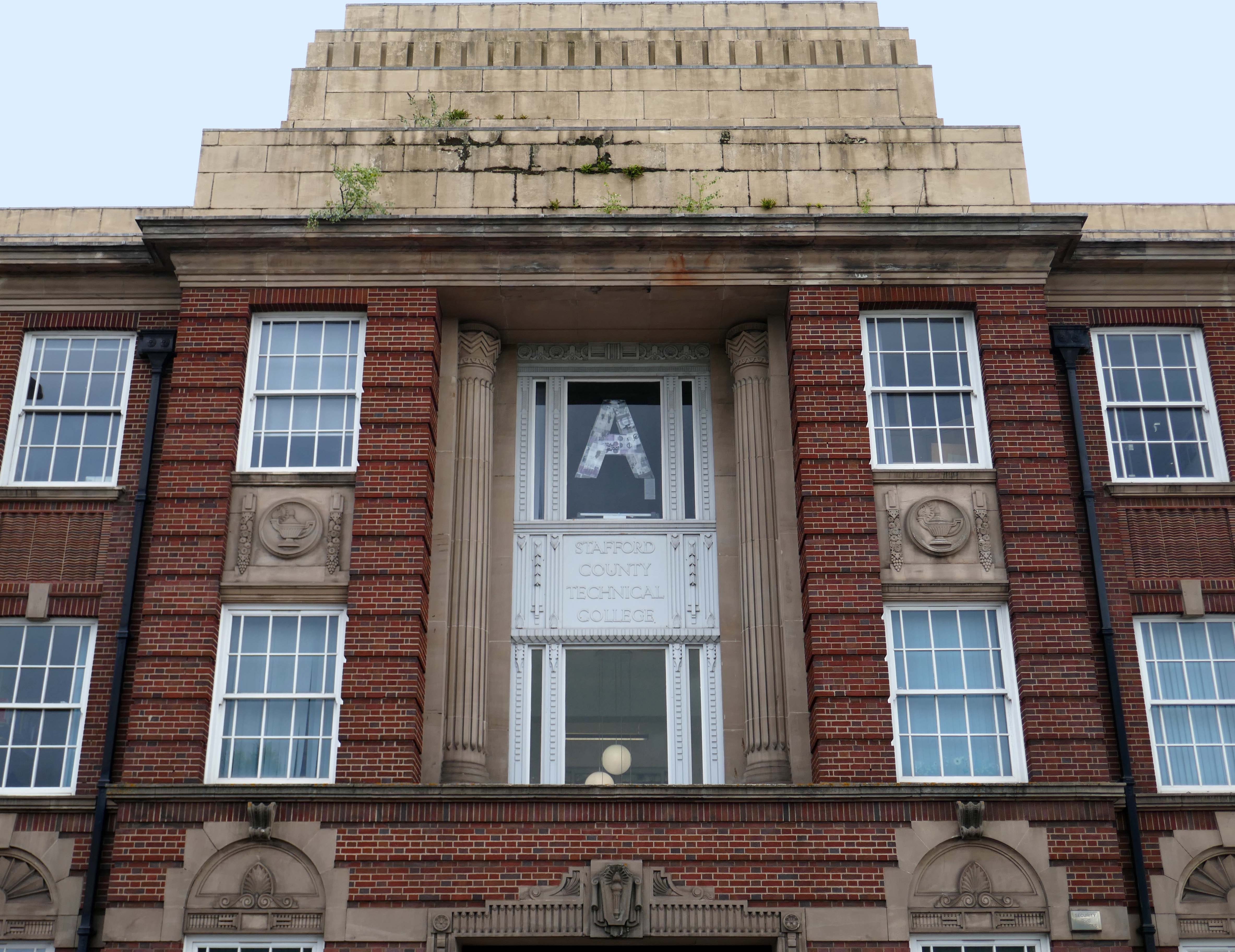
Onward to the County Technical College 1937 Grade II Listed – interior completed 1946.

The shell of the building was completed in 1937, after which it was used as an American army hospital during the war, then completed afterwards. 

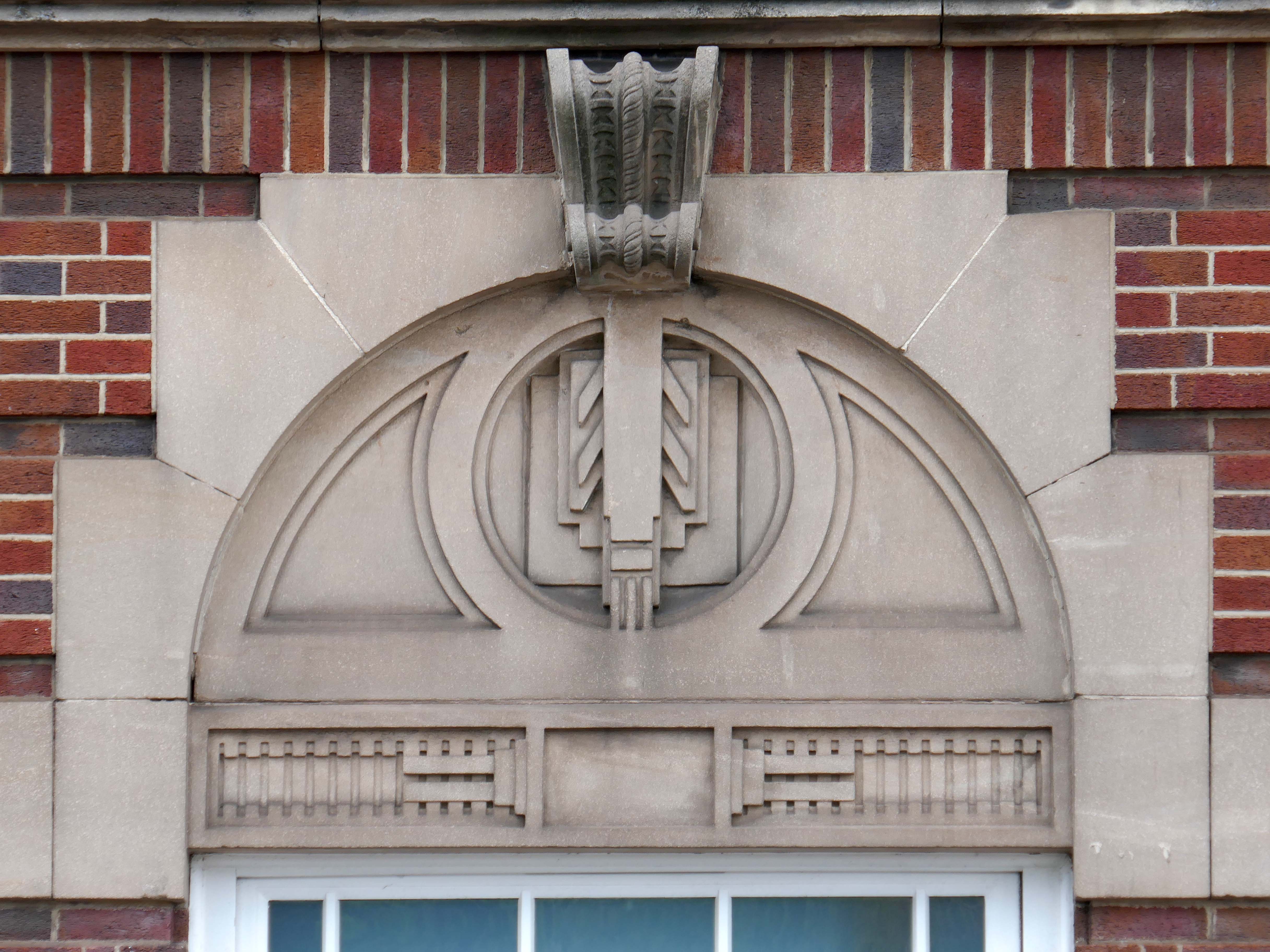
Heavily loaded with Art Deco details.

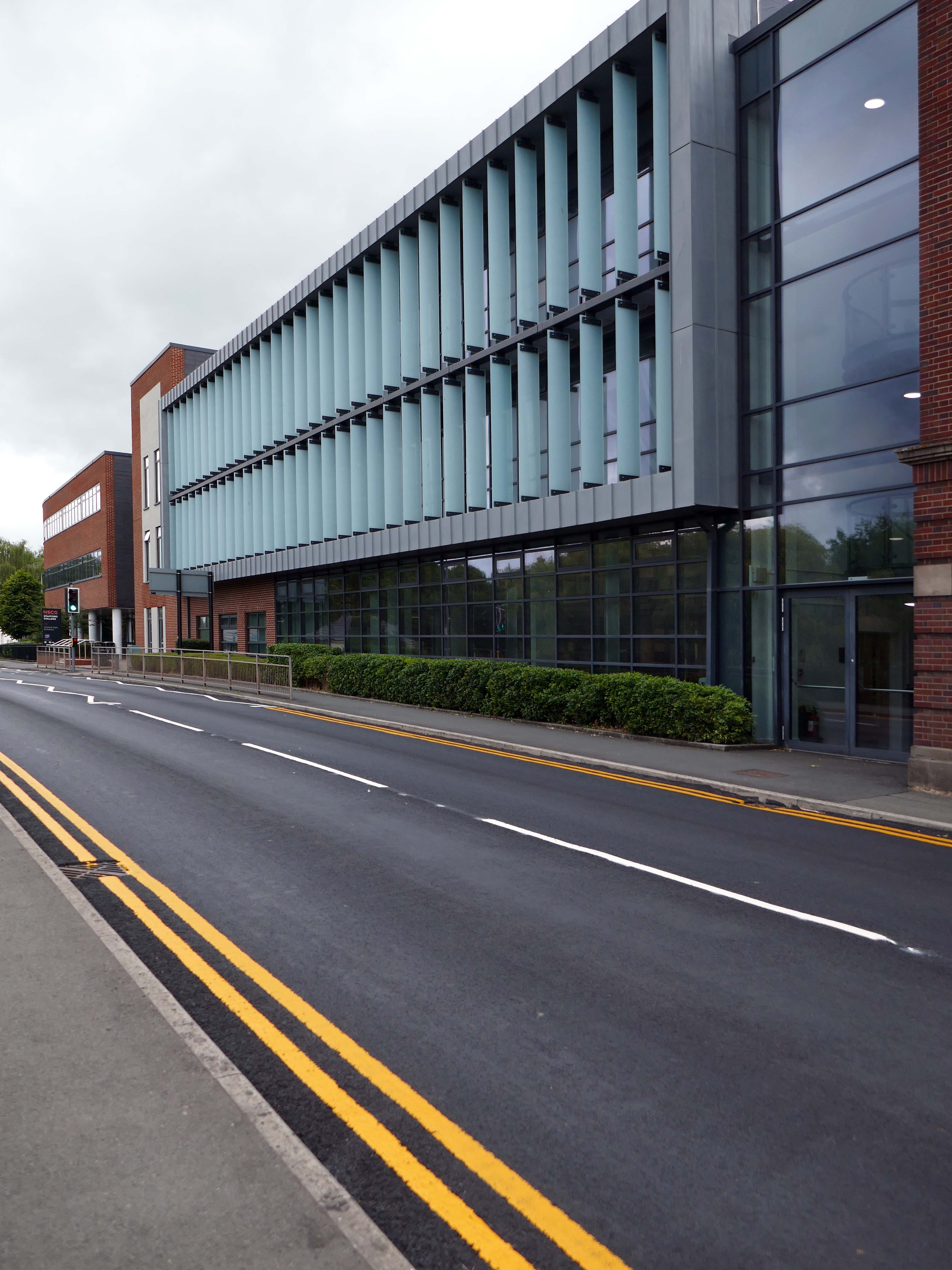
The new £28m three-storey Skills & Innovation Centre at Stafford College, completed in August 2023, was one of the first further education college schemes to be delivered under the DfE framework and a pathfinder scheme for delivery in accordance with the Further Education Output Specification. The new Centre is equipped with cutting-edge equipment and state-of-the-art facilities for construction, engineering and hybrid / electric vehicle maintenance facilities, as well as IT rich seminar suites and open learning break-out spaces along with a 4-court sports hall, a fully-equipped gym and a flexible 300-seat auditorium.

Ellis Williams

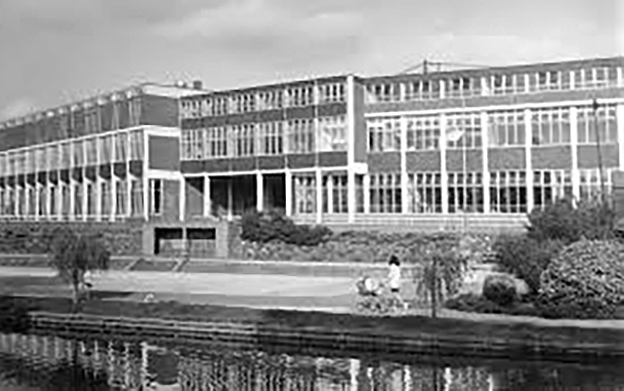
A 1970’s block was demolished to make way for the new development.

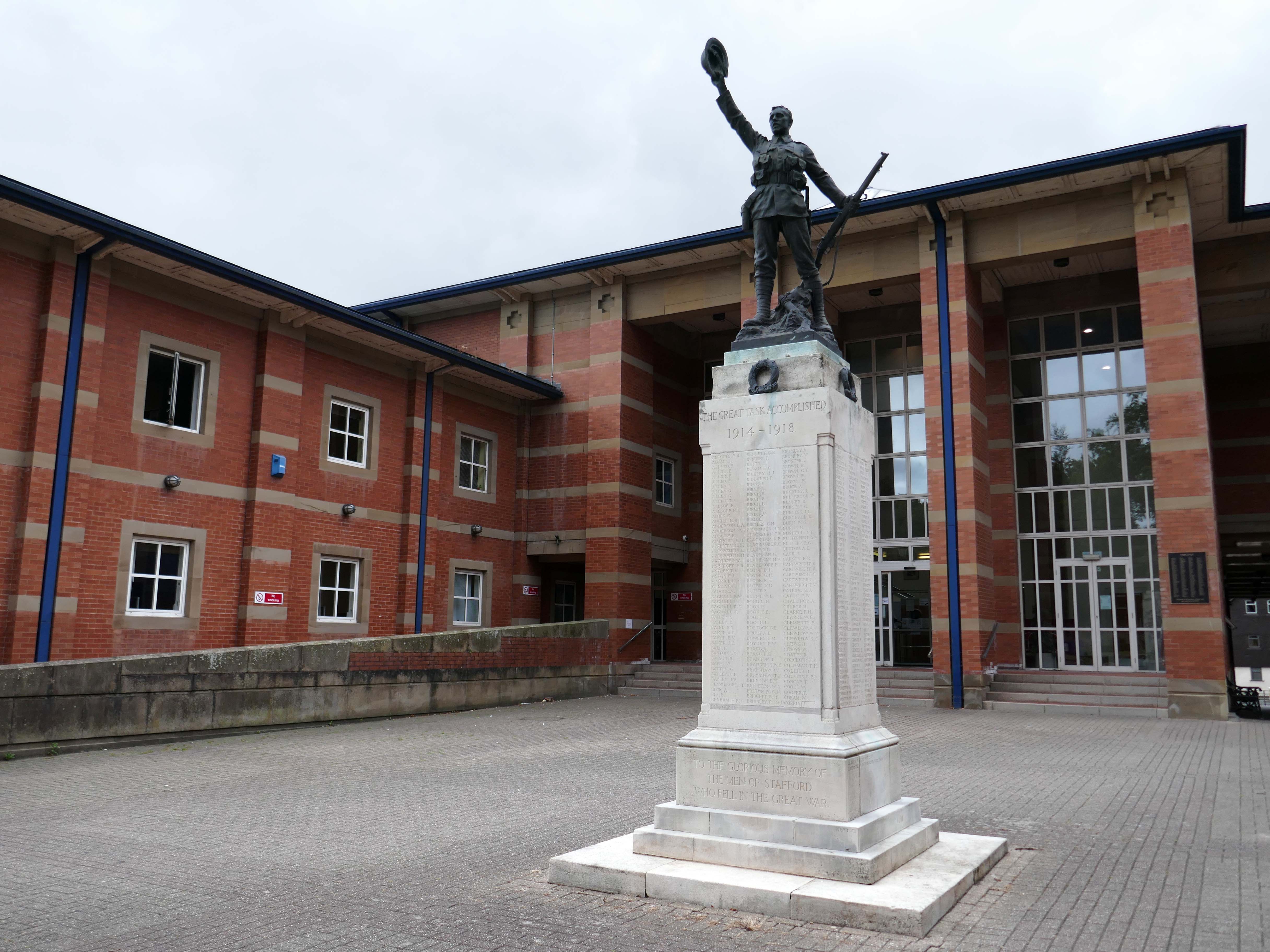
Almost everywhere we go we find a PoMo Crown Courts 1991 – architects: Associated Architects of Birmingham, cost of £10.4 million.

The war memorial of 1922 is by Joseph James Whitehead.

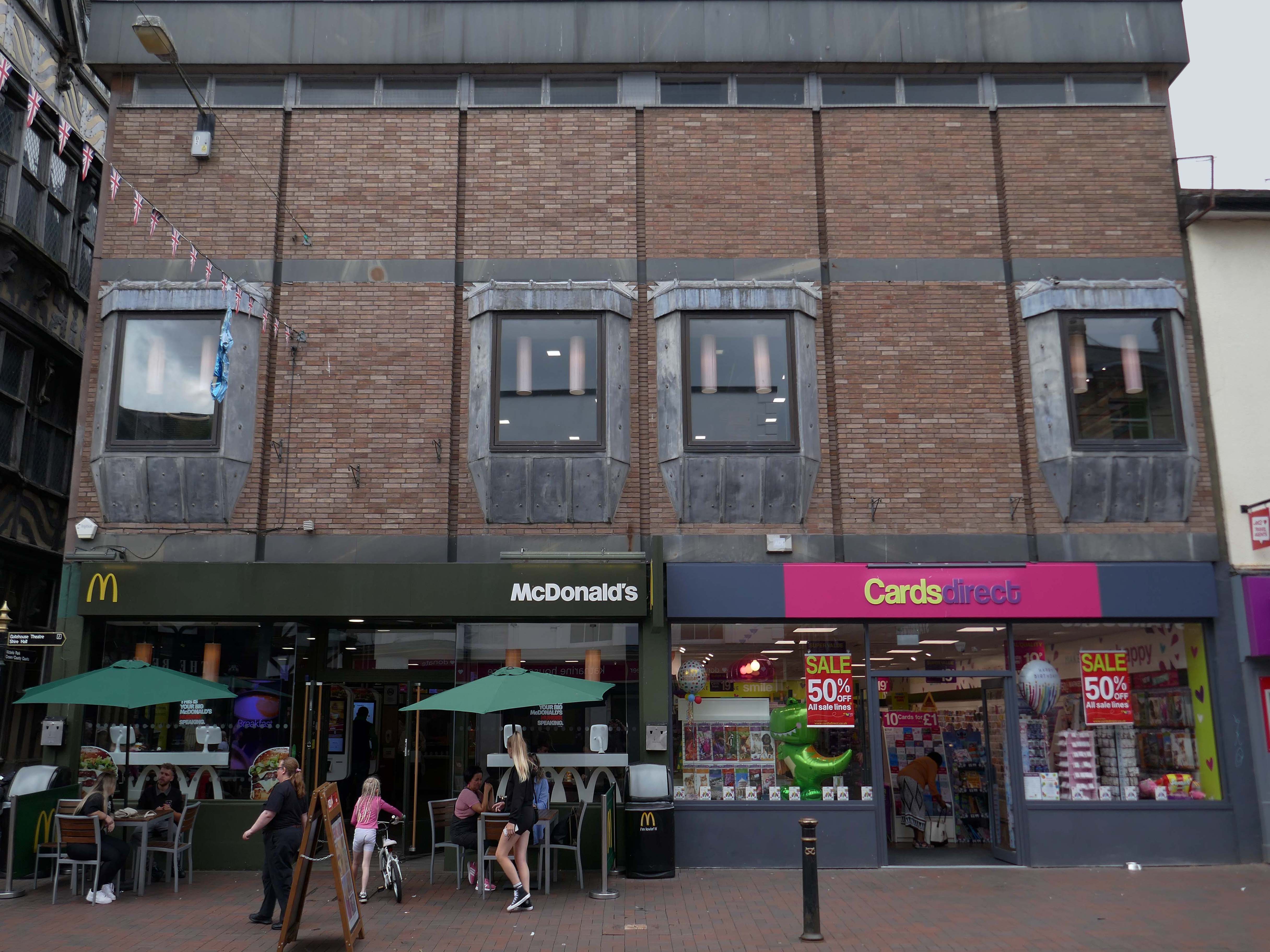
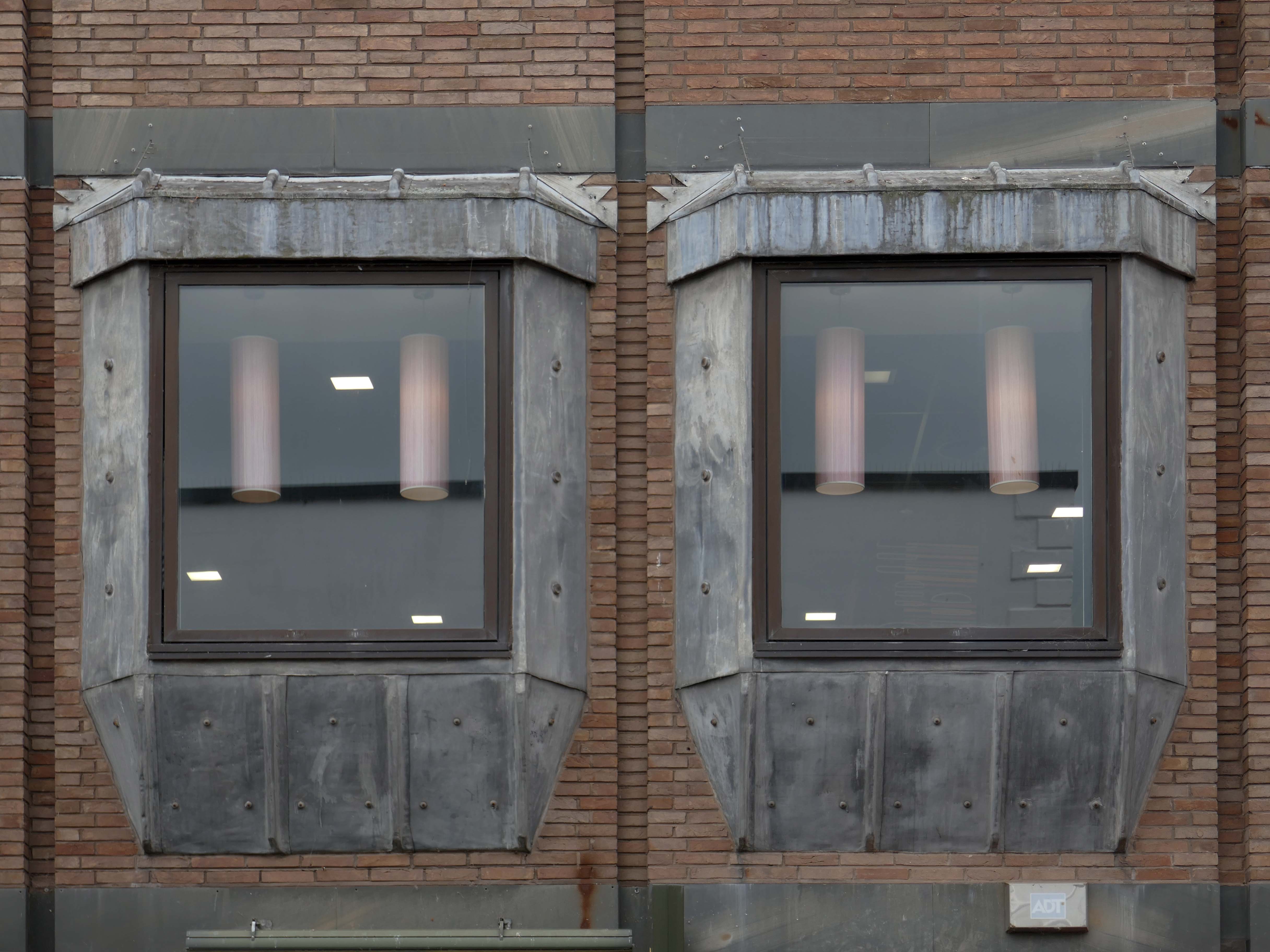
Sneaking through the alley to and before the McDonalds – one many more recent buildings with jetted lead clad bays.

Keeping the town Tudor one bay at a time..

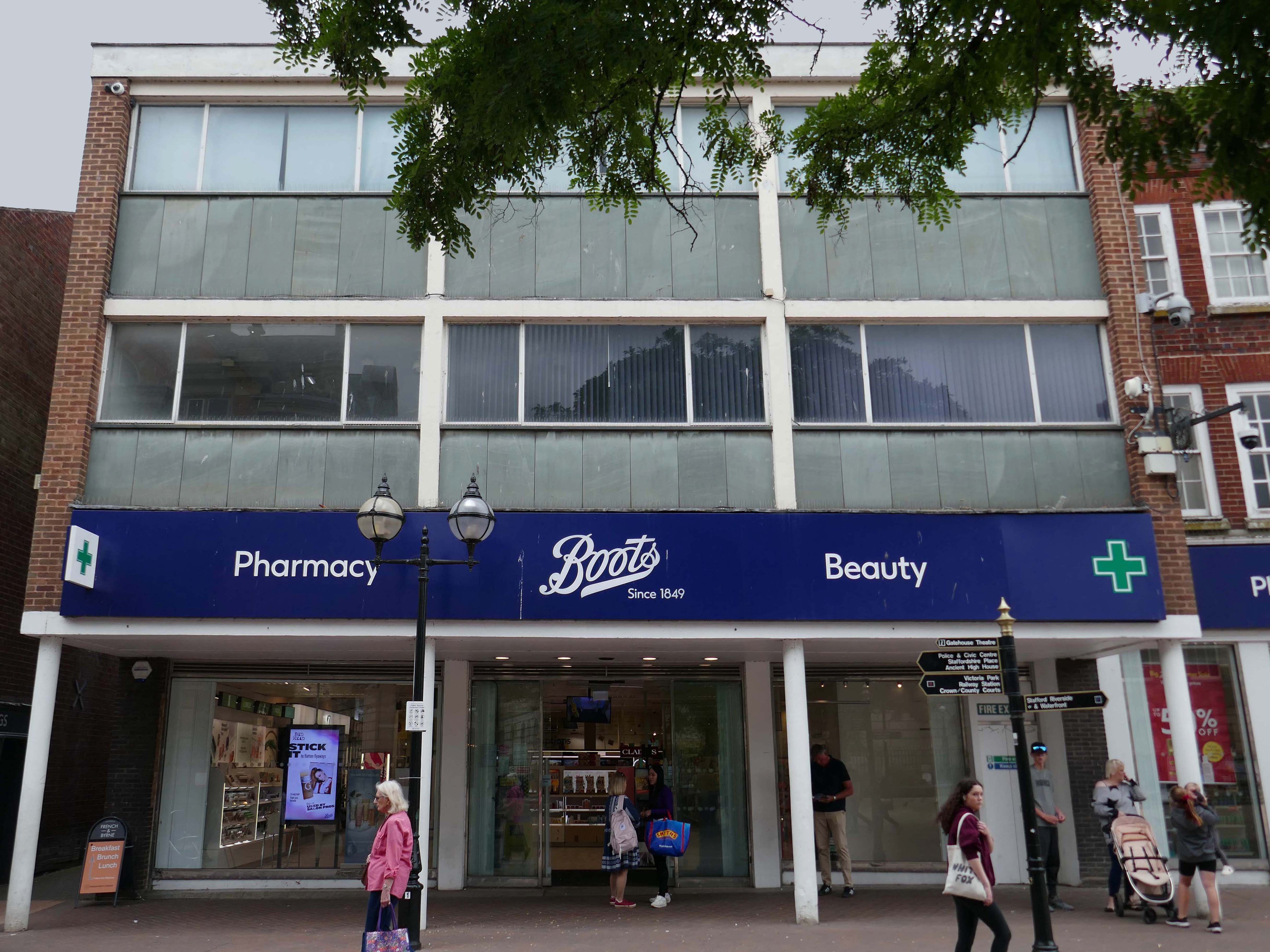
Further along a Sixties Boots.

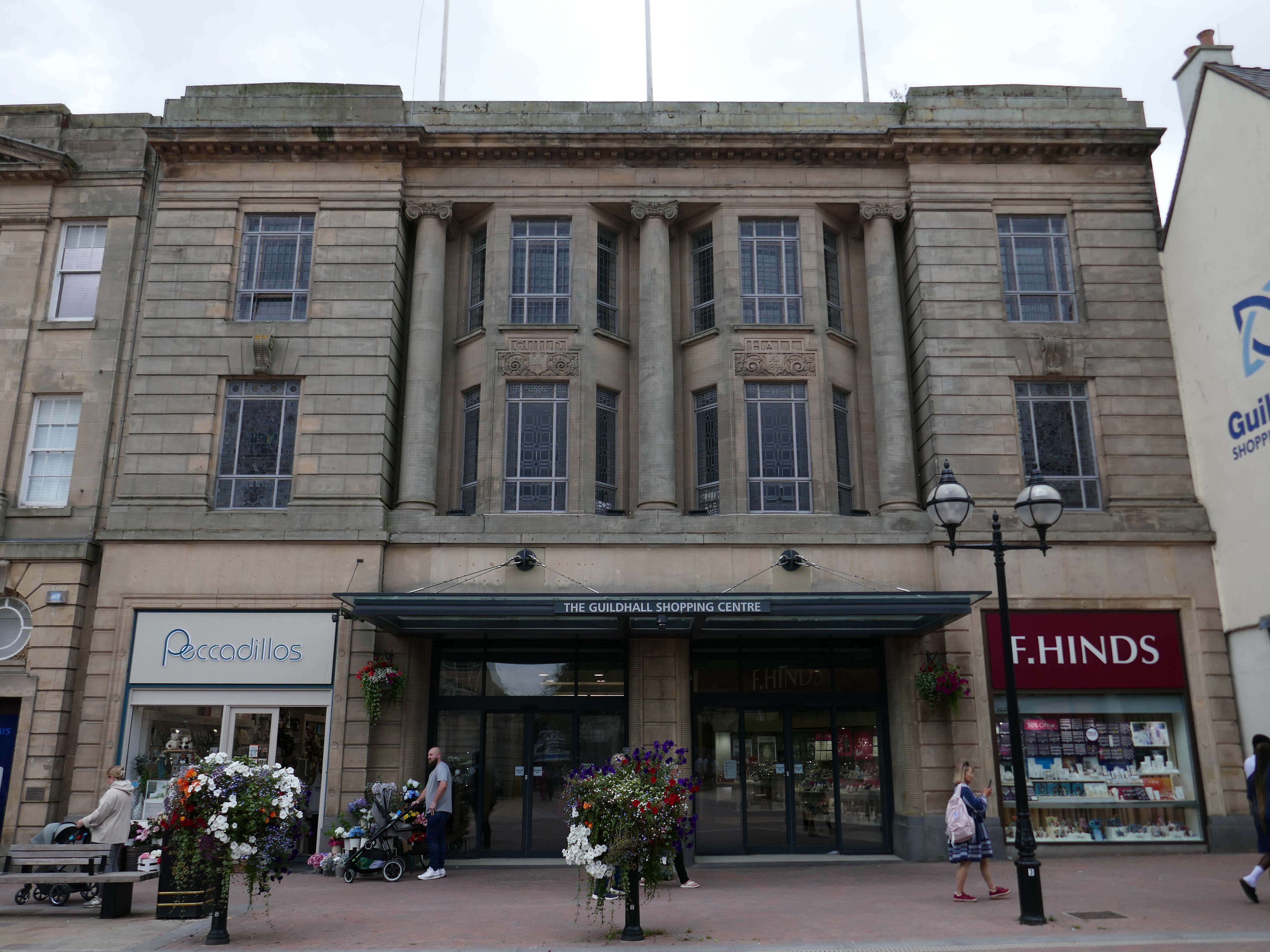
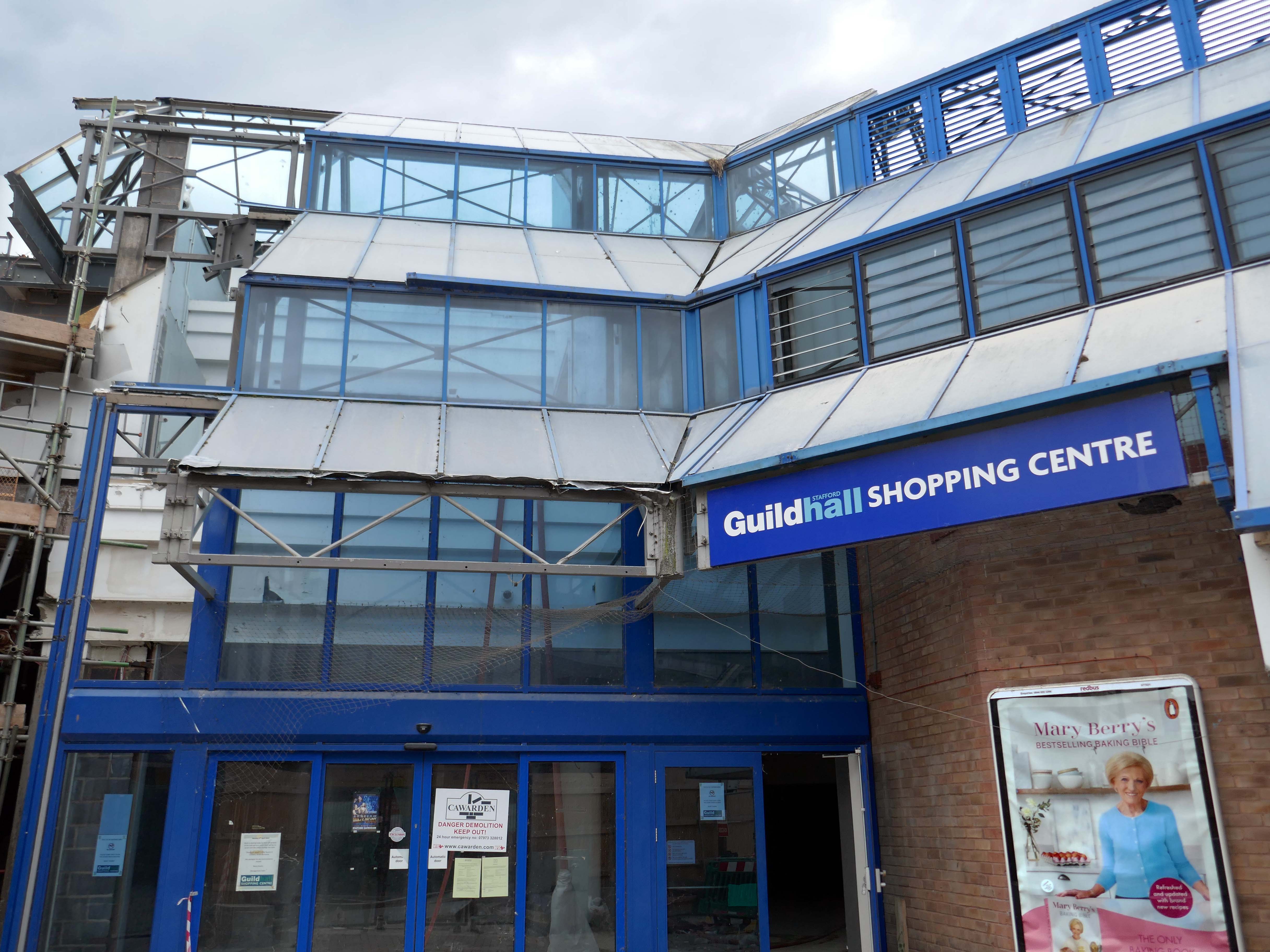
The Classical stone frontage of the Guildhall Shopping Centre.

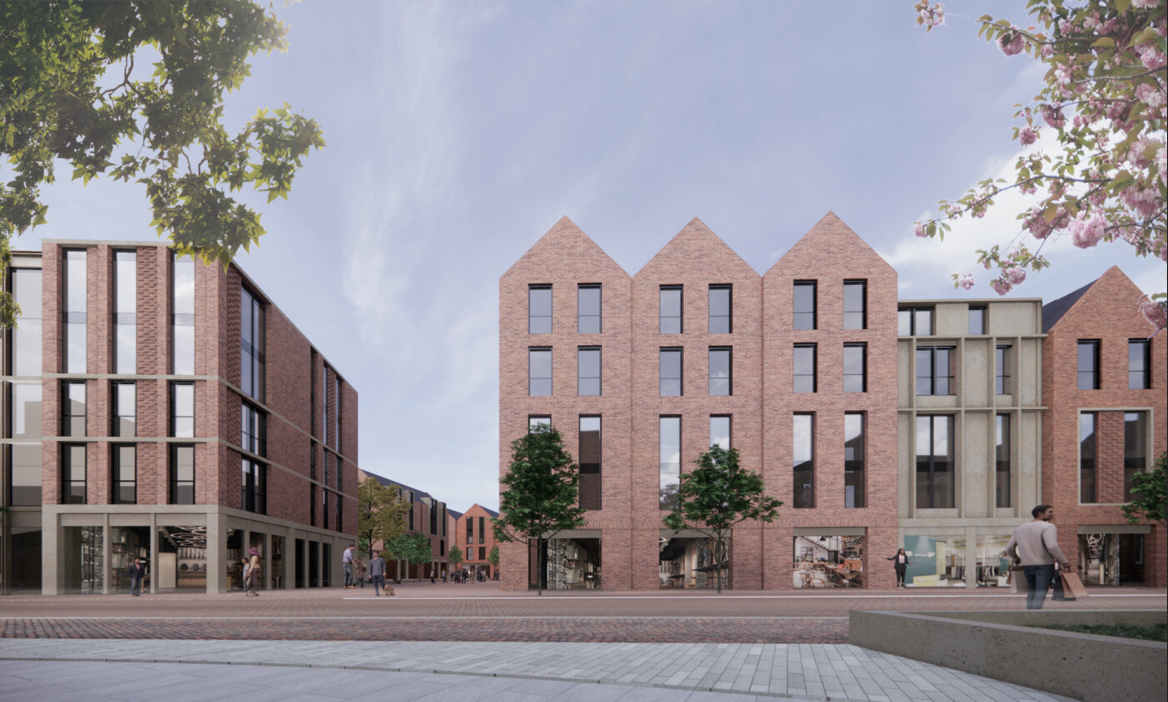
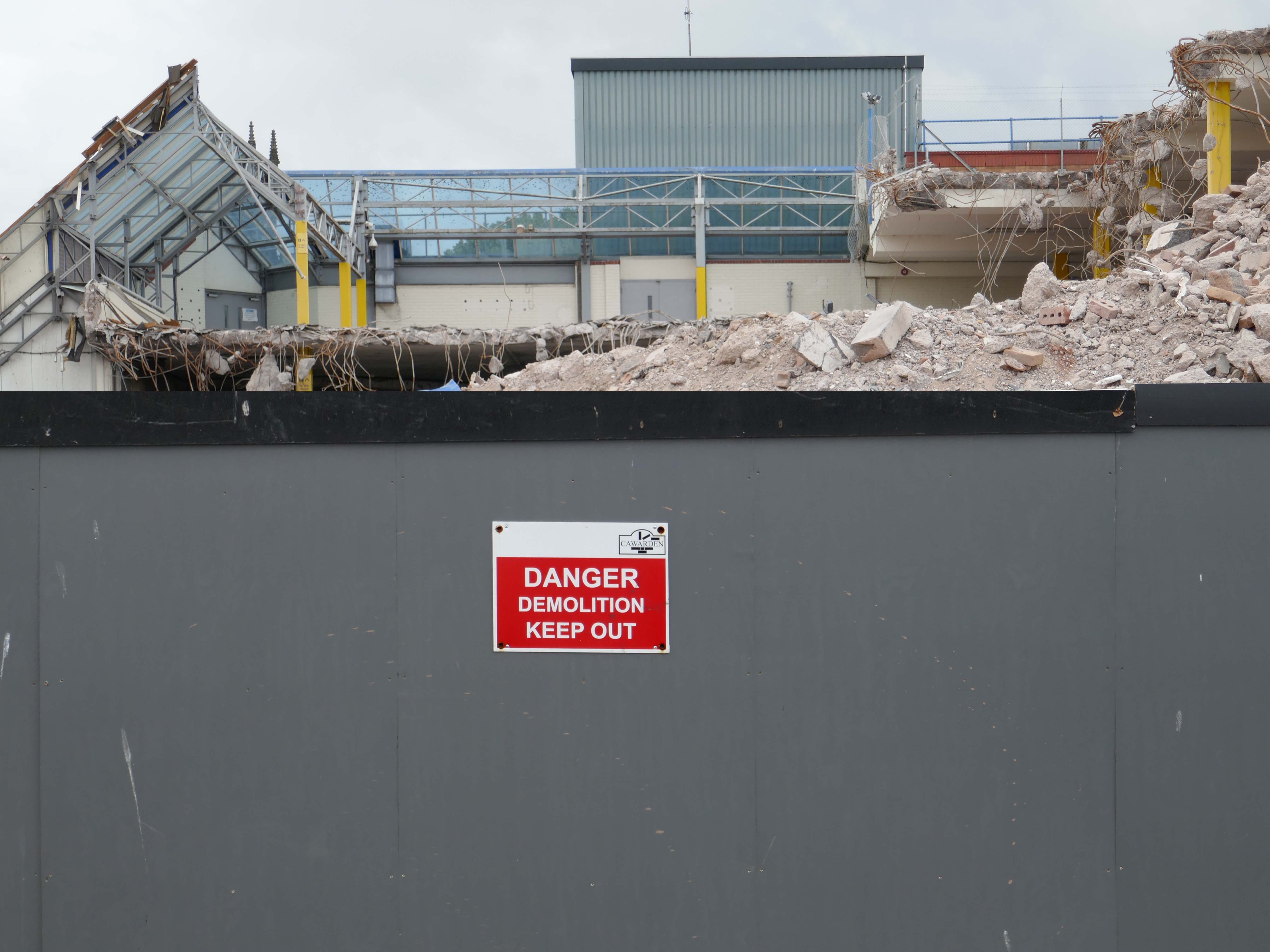
Working with Mercia Real Estate, Glancy Nicholls Architects have designed a contextual mixed-use scheme in the heart of Stafford Town Centre, within the footprint of a disused shopping centre. This includes the regeneration of the 1930’s Guildhall building that serves as the main entrance to the shopping centre and the listed Market Square building. 

Glancy Nicholls

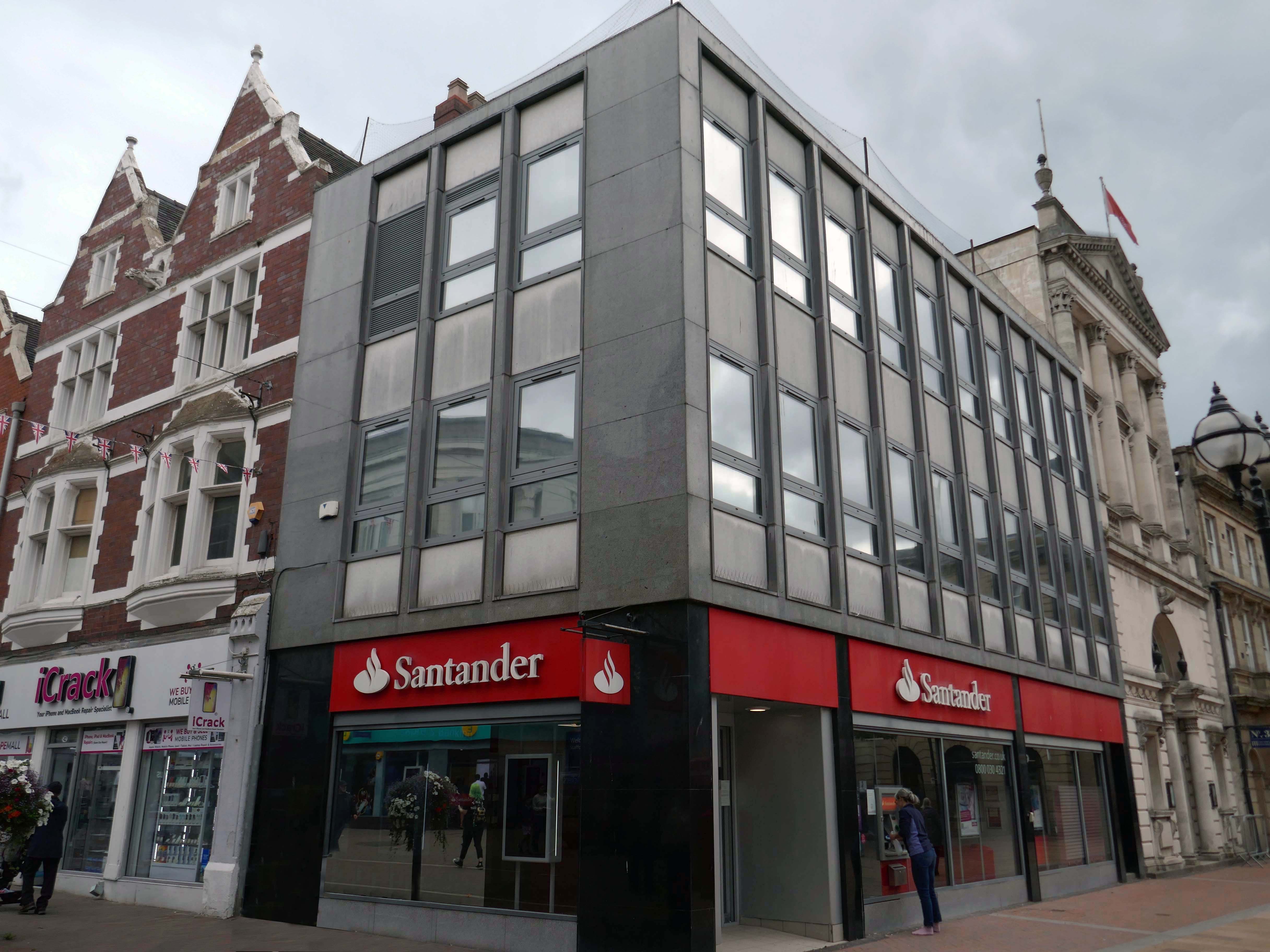
On the corner a Santander Bank

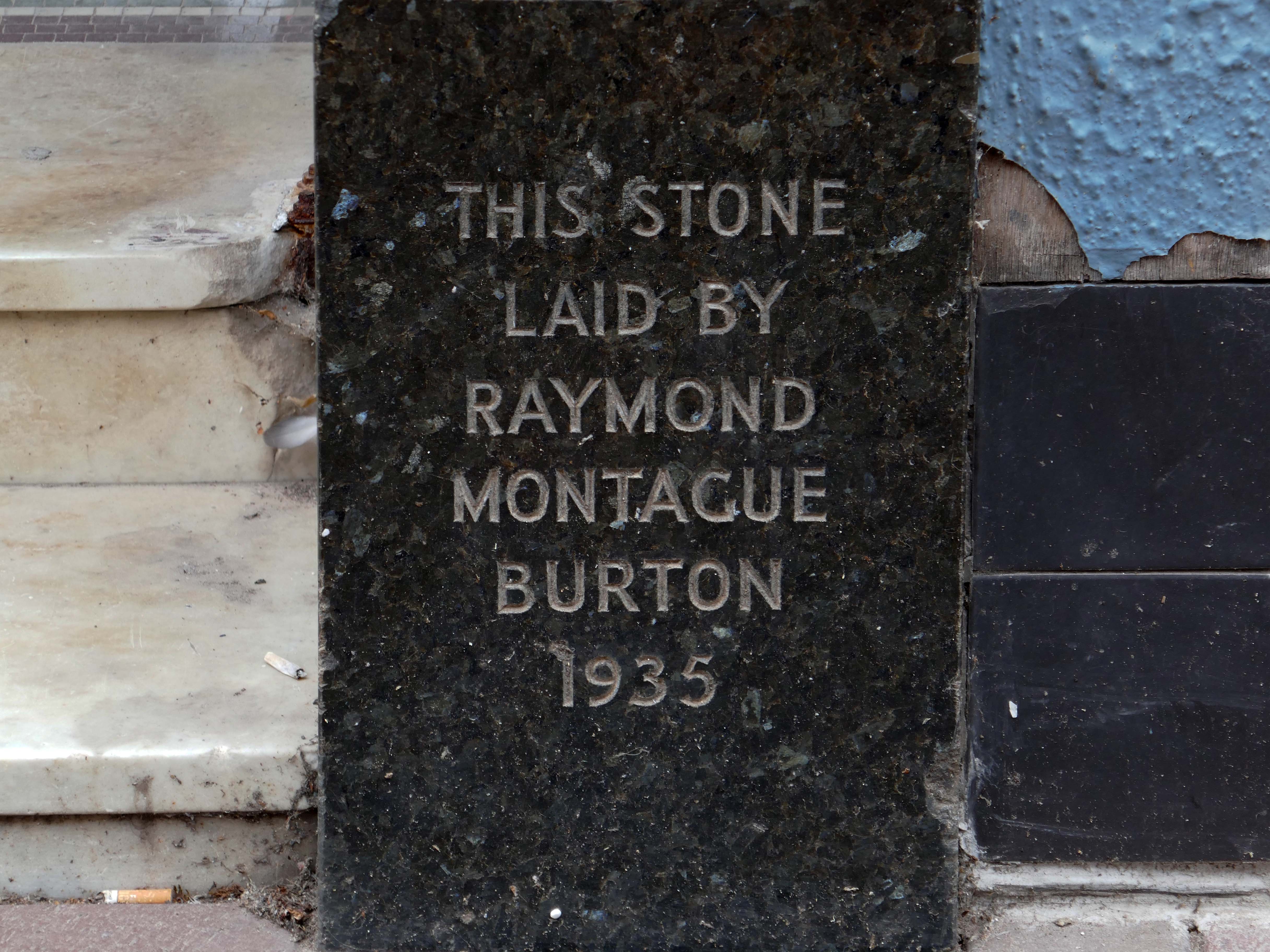
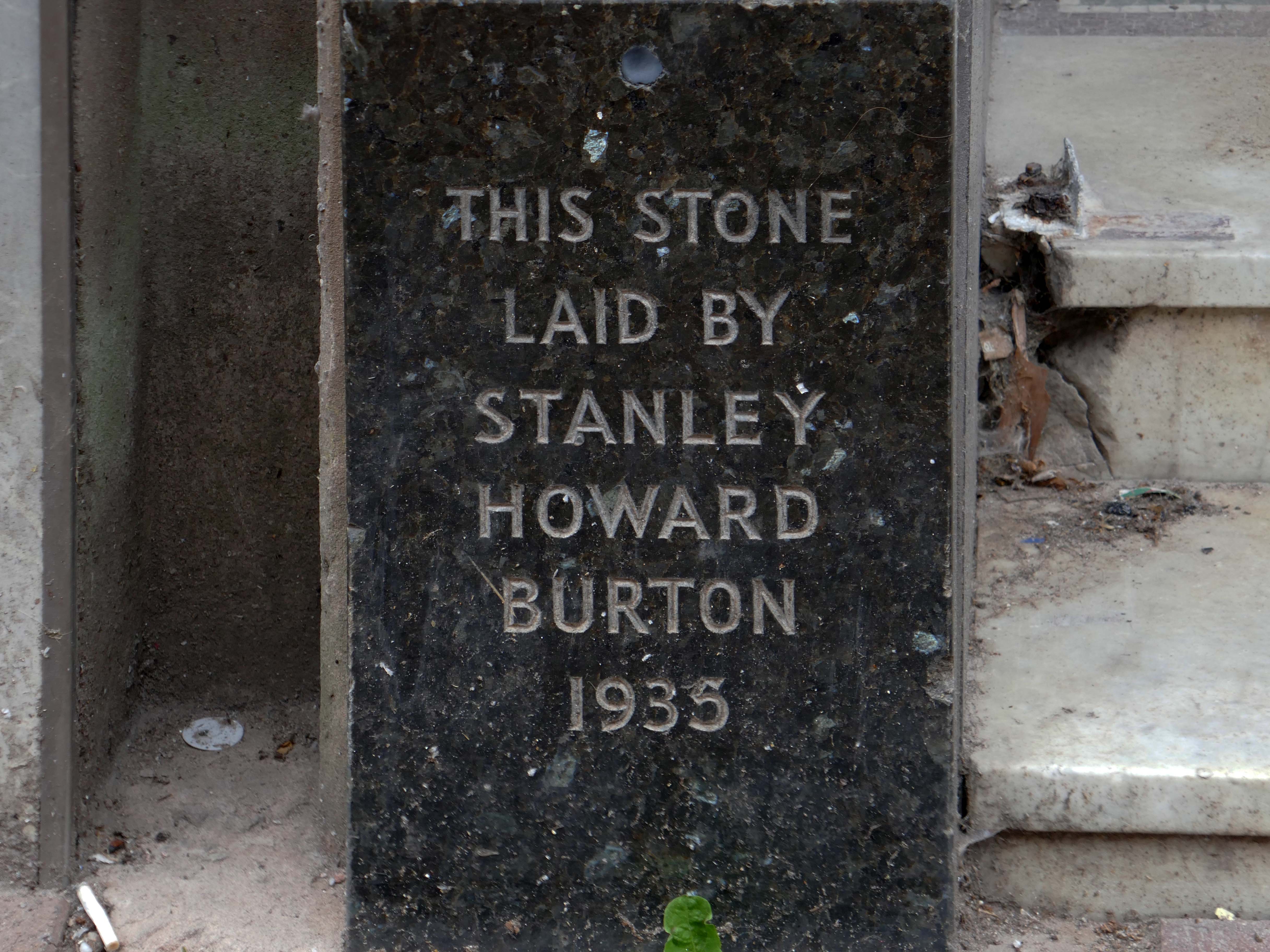
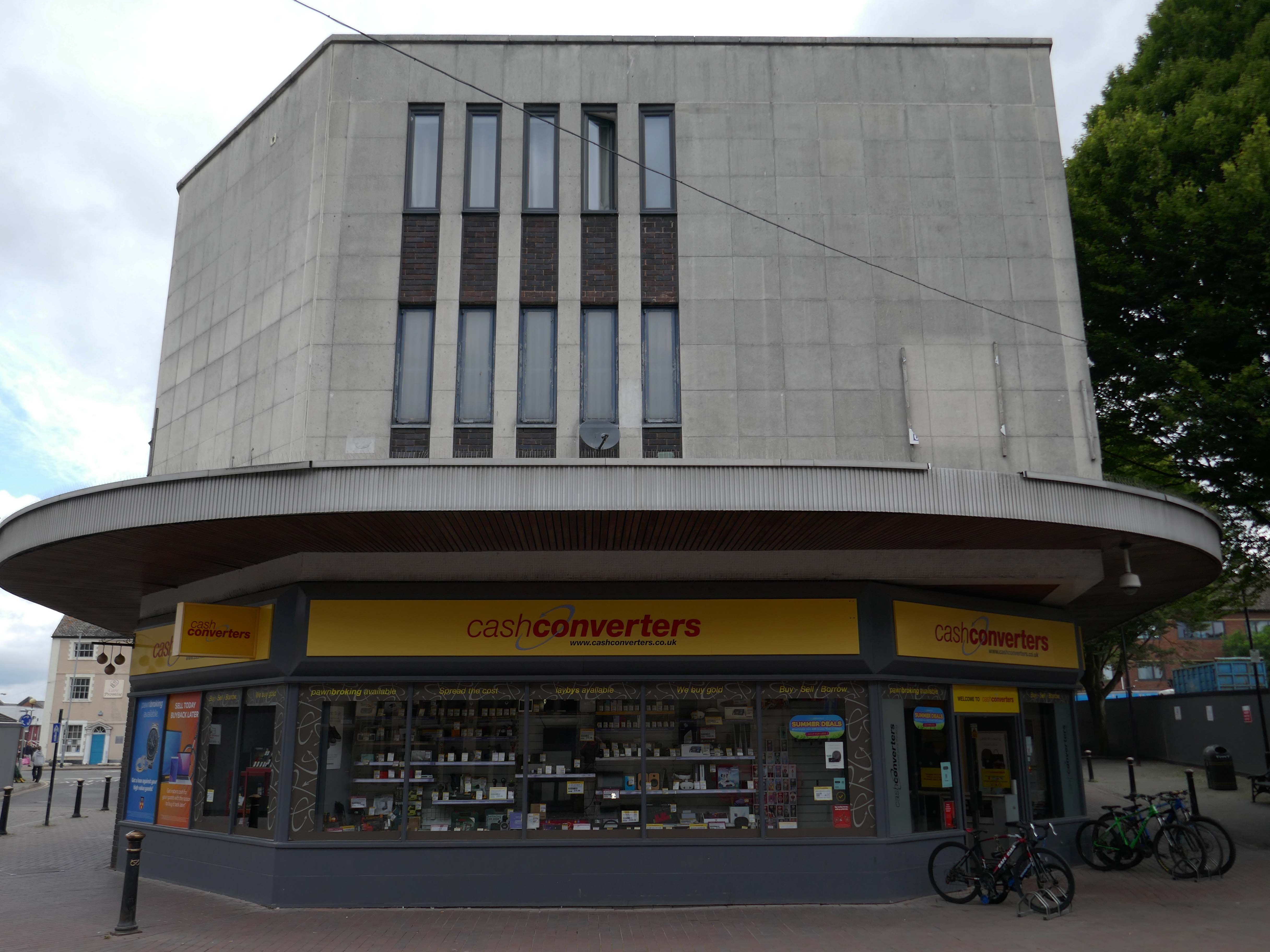
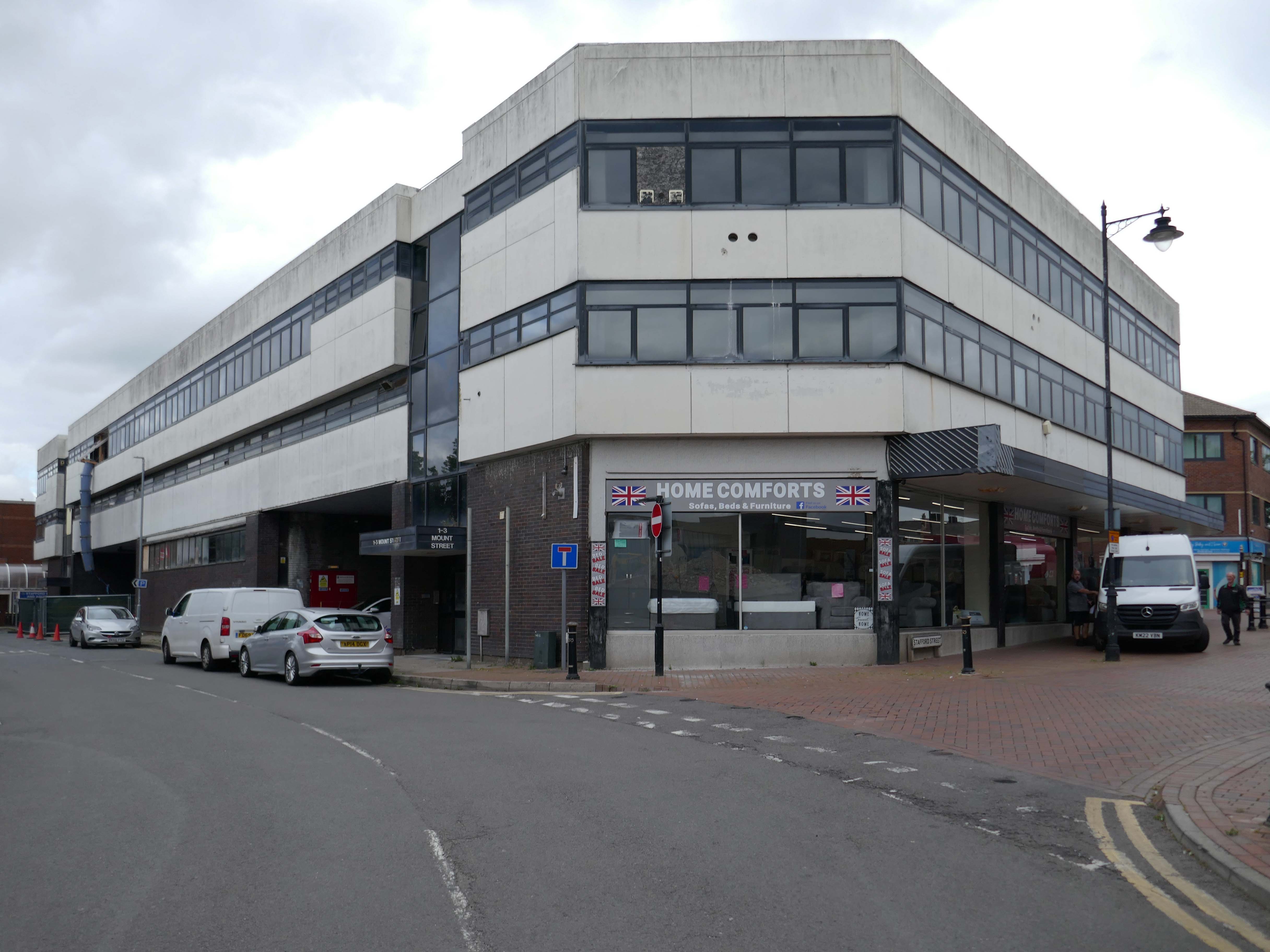
Across the way an understated Burton’s.

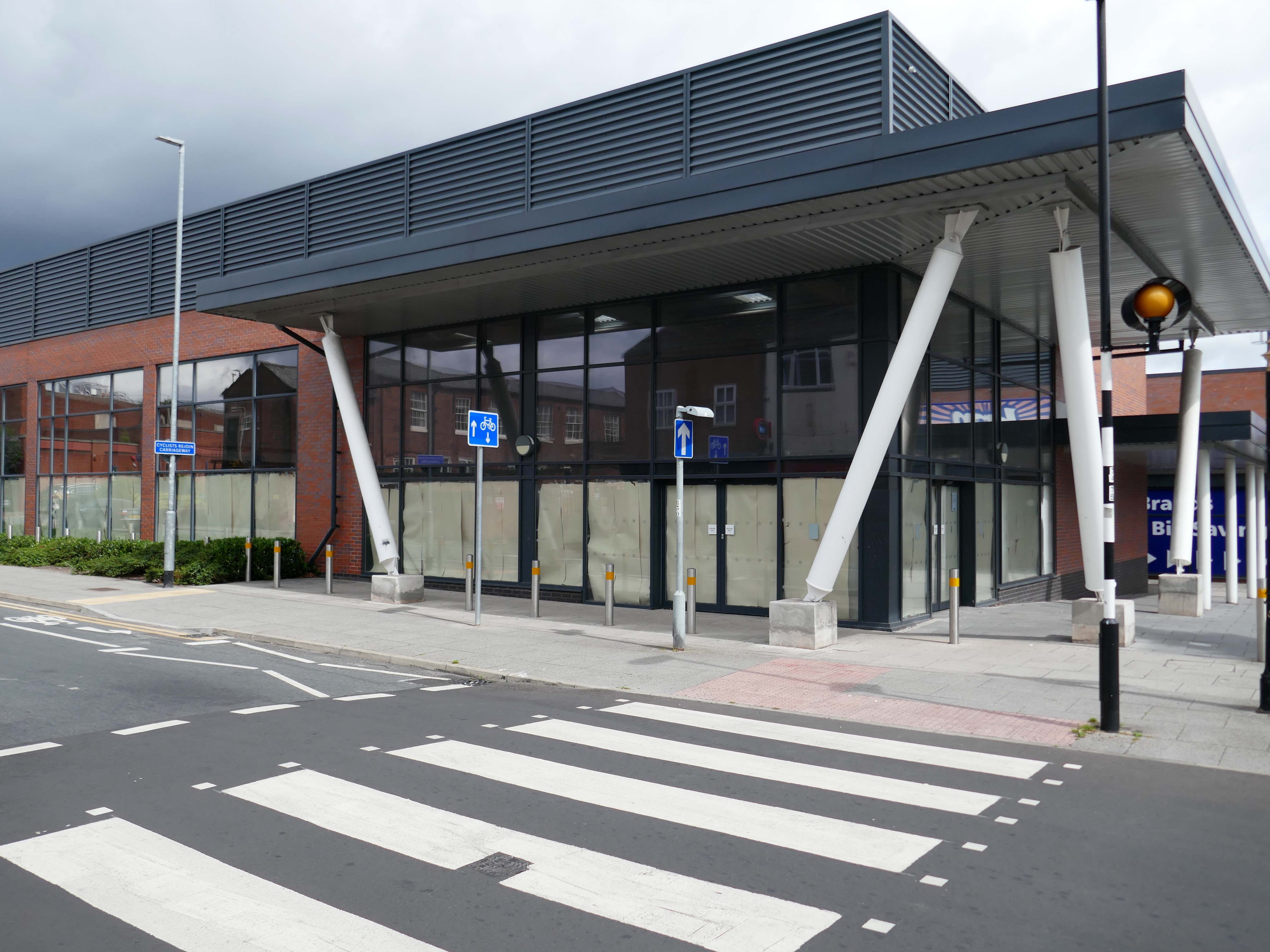
Around the corner a somewhat neglected retail development.

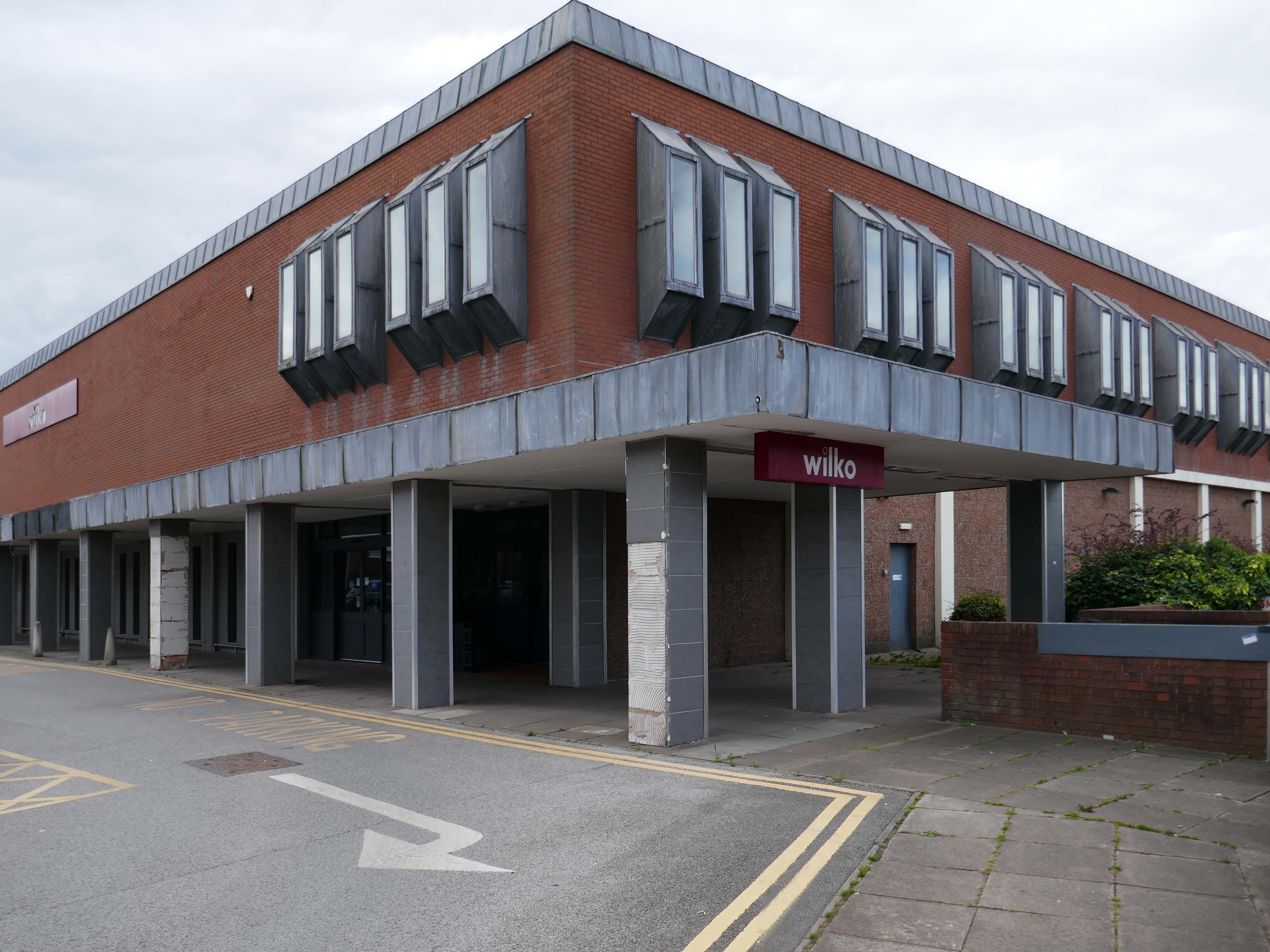
And a long lost Wilko.

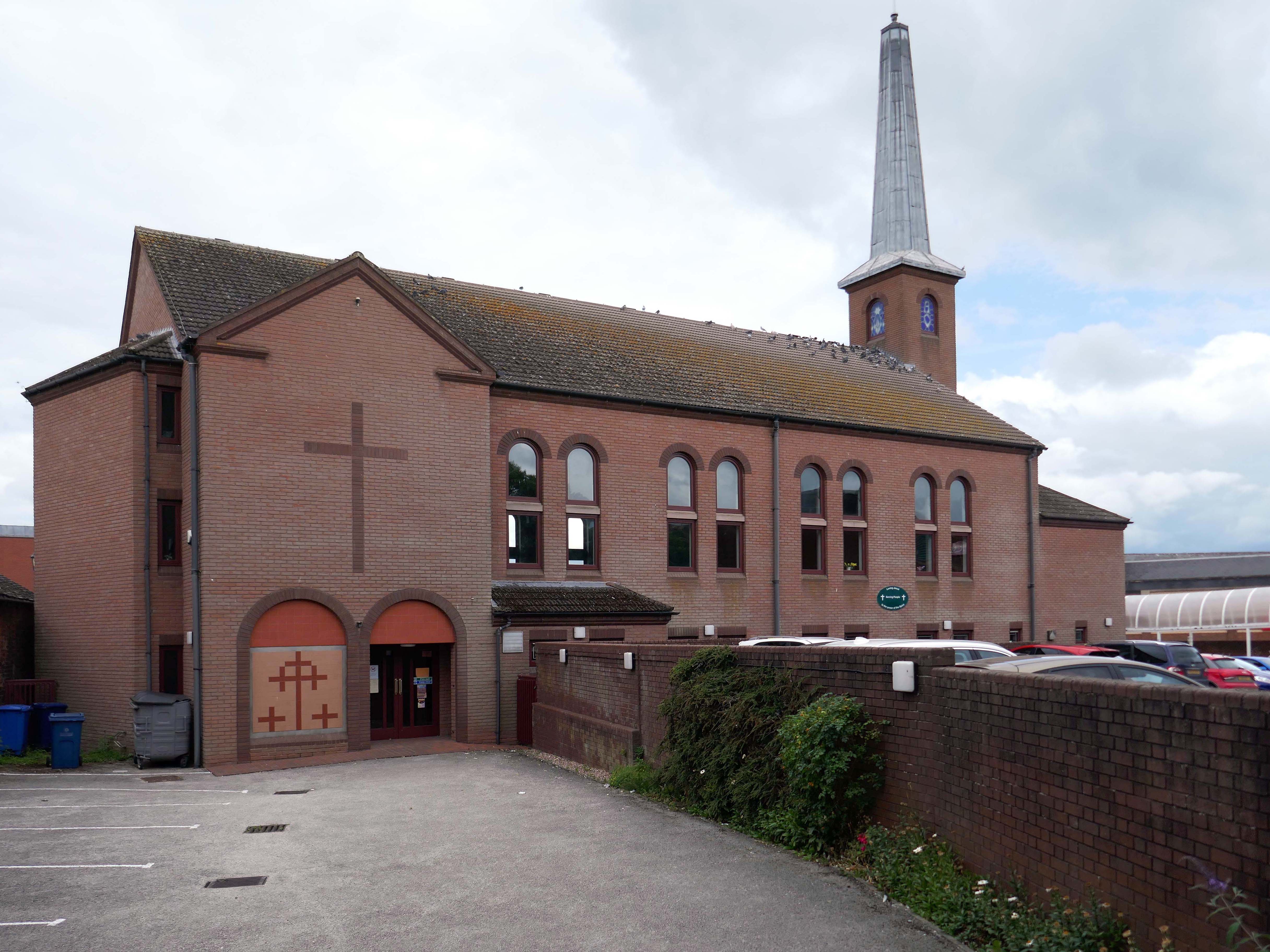
Amidst it all the curious time warp that is Trinity Church 1988.

It is used by Methodist and United Reformed Church congregations.

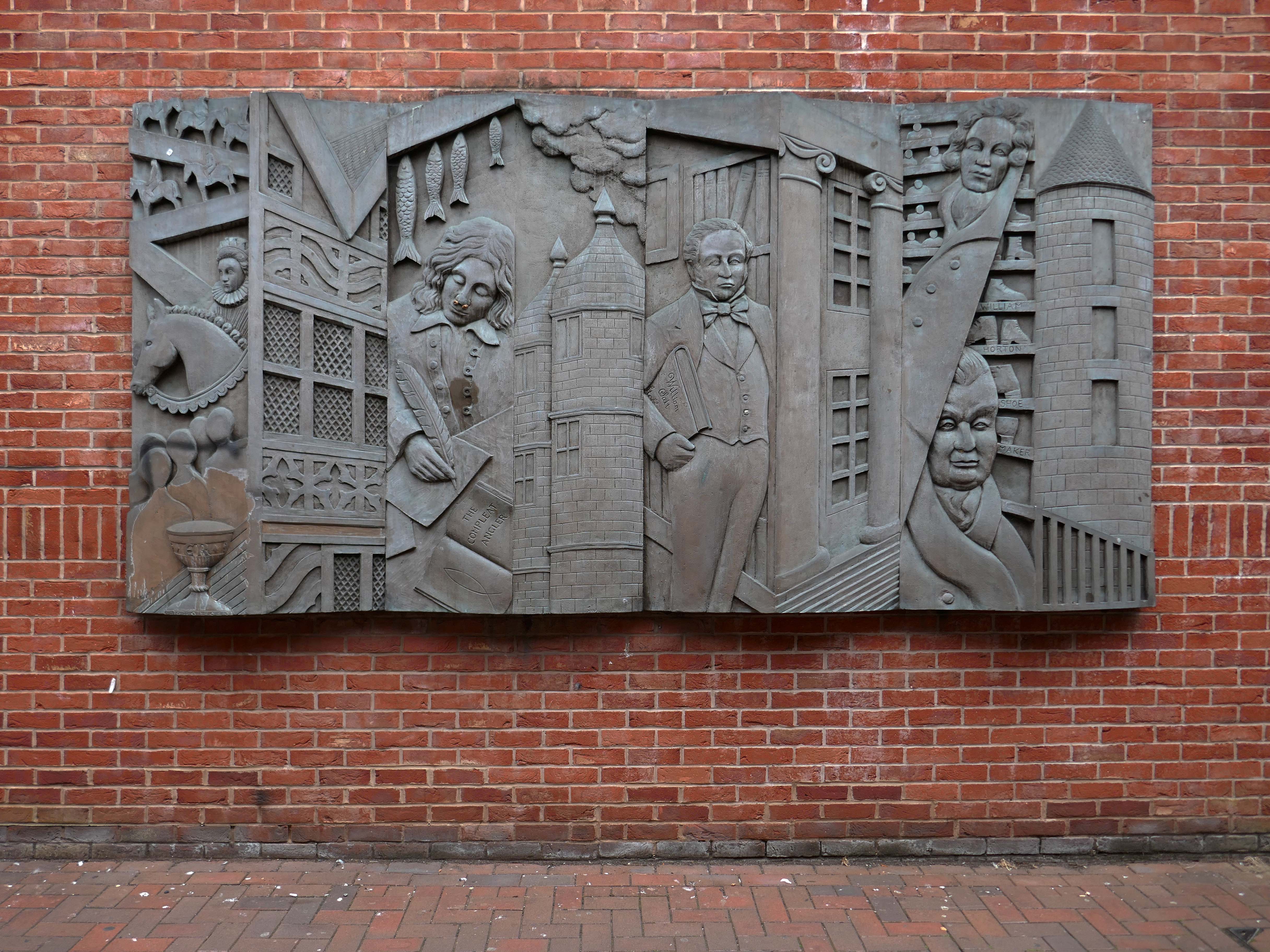
Tucked away in a minor maze of retail a piece of figurative commemorative public art by Glynis Owen Jones, entitled Stafford Faces.

Around the corner a big B&M.

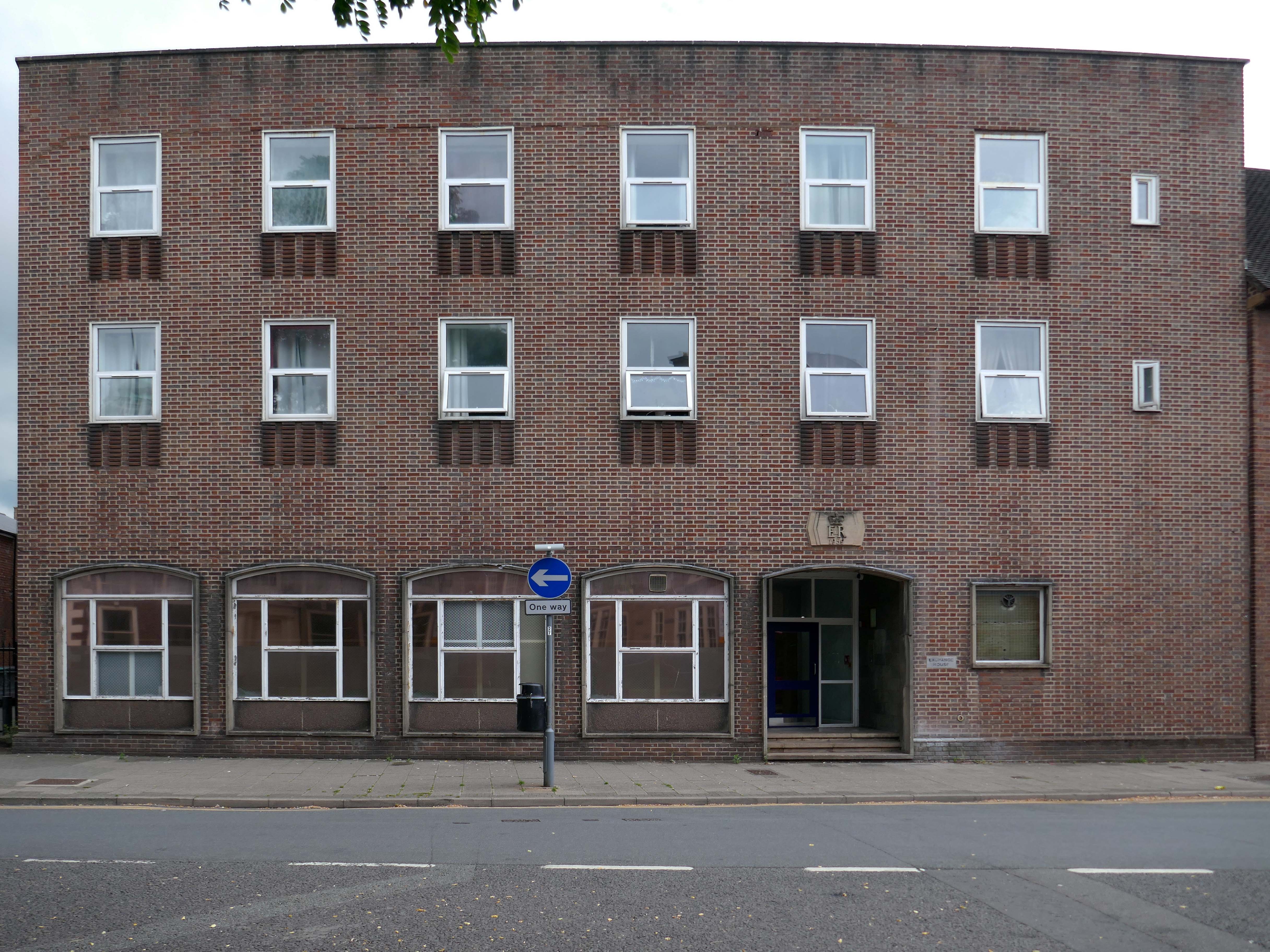
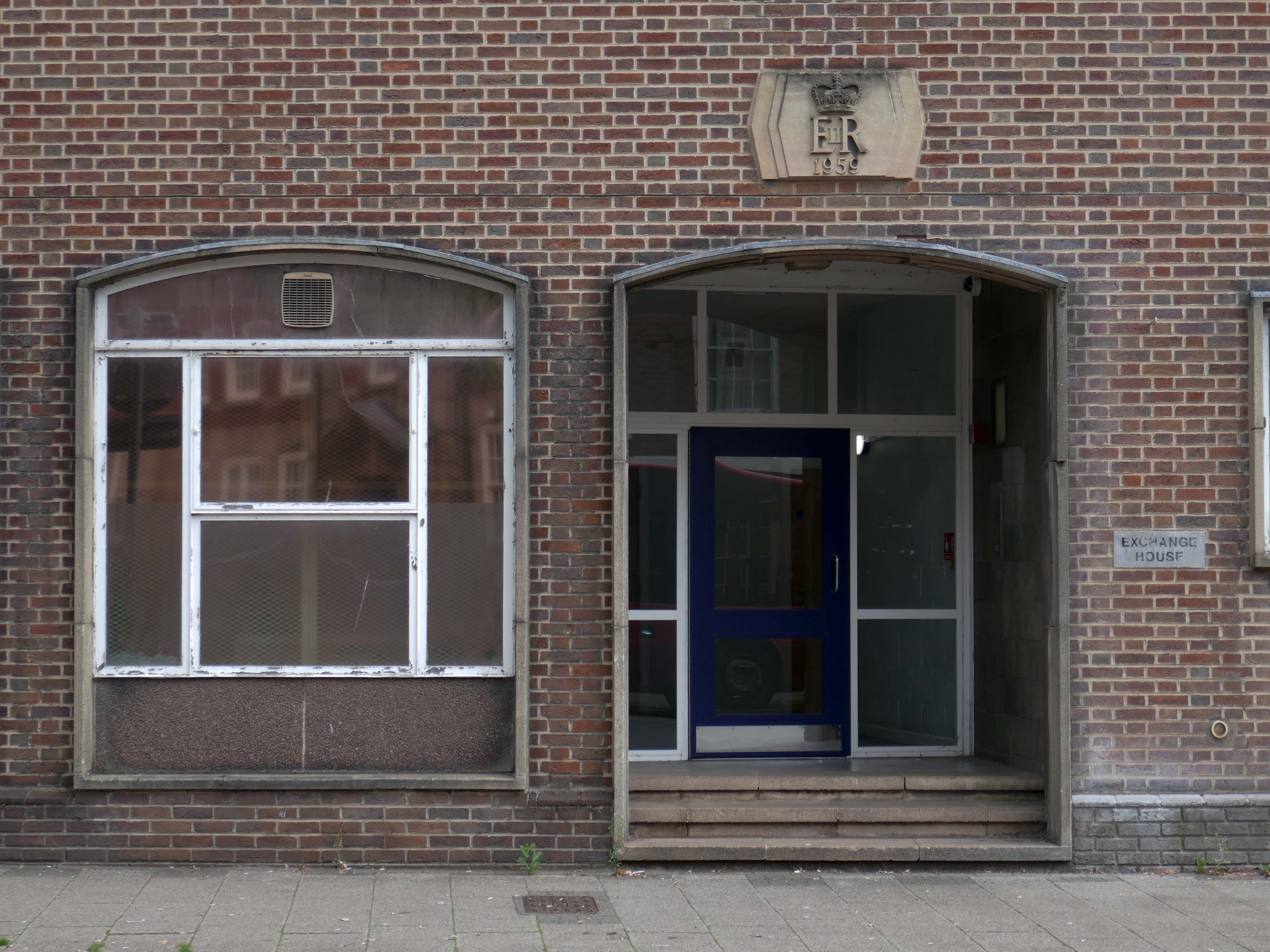
Further along a brick FoB Telephone Exchange of 1959.

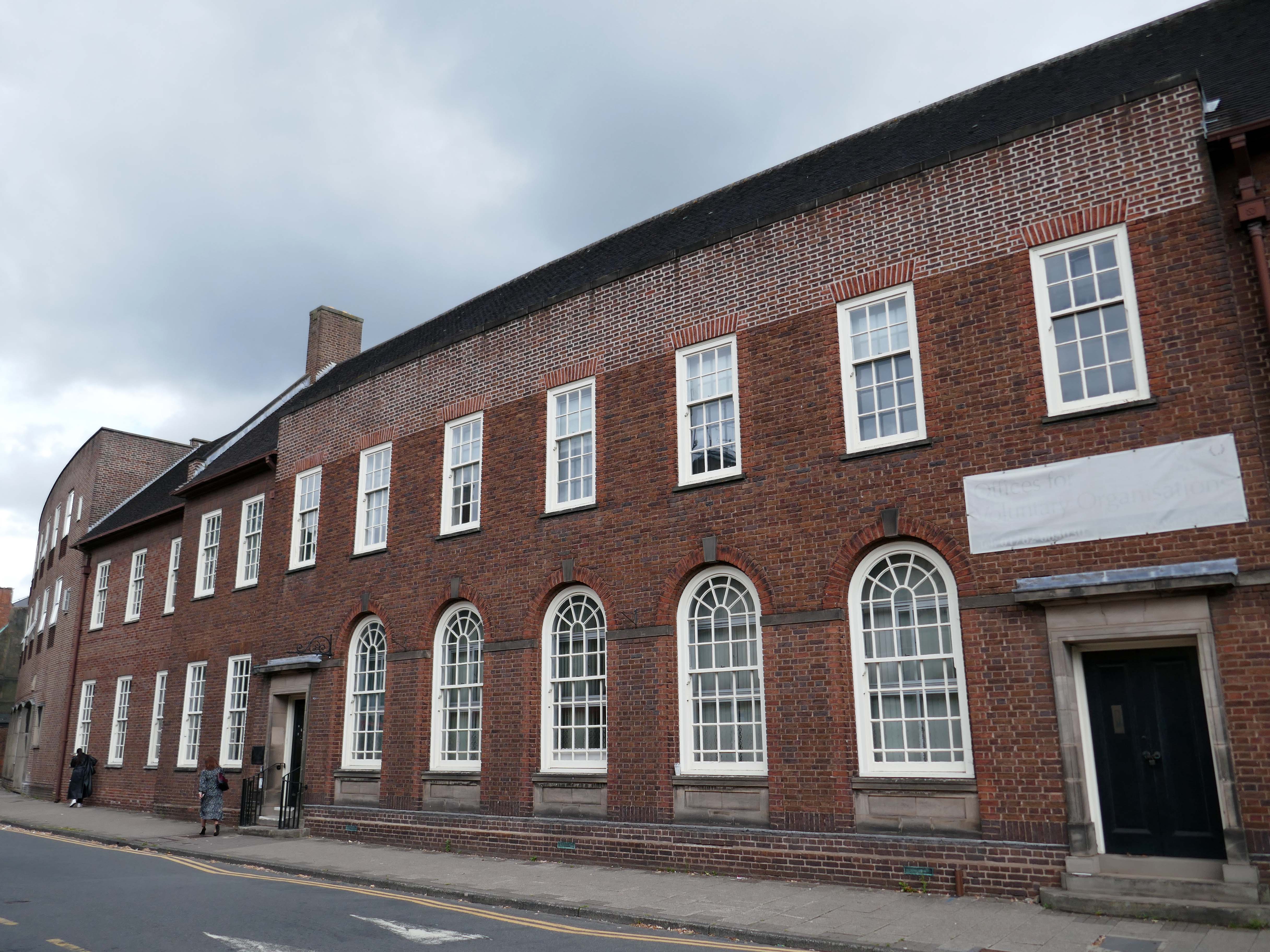
Adjoined by the County Records building.

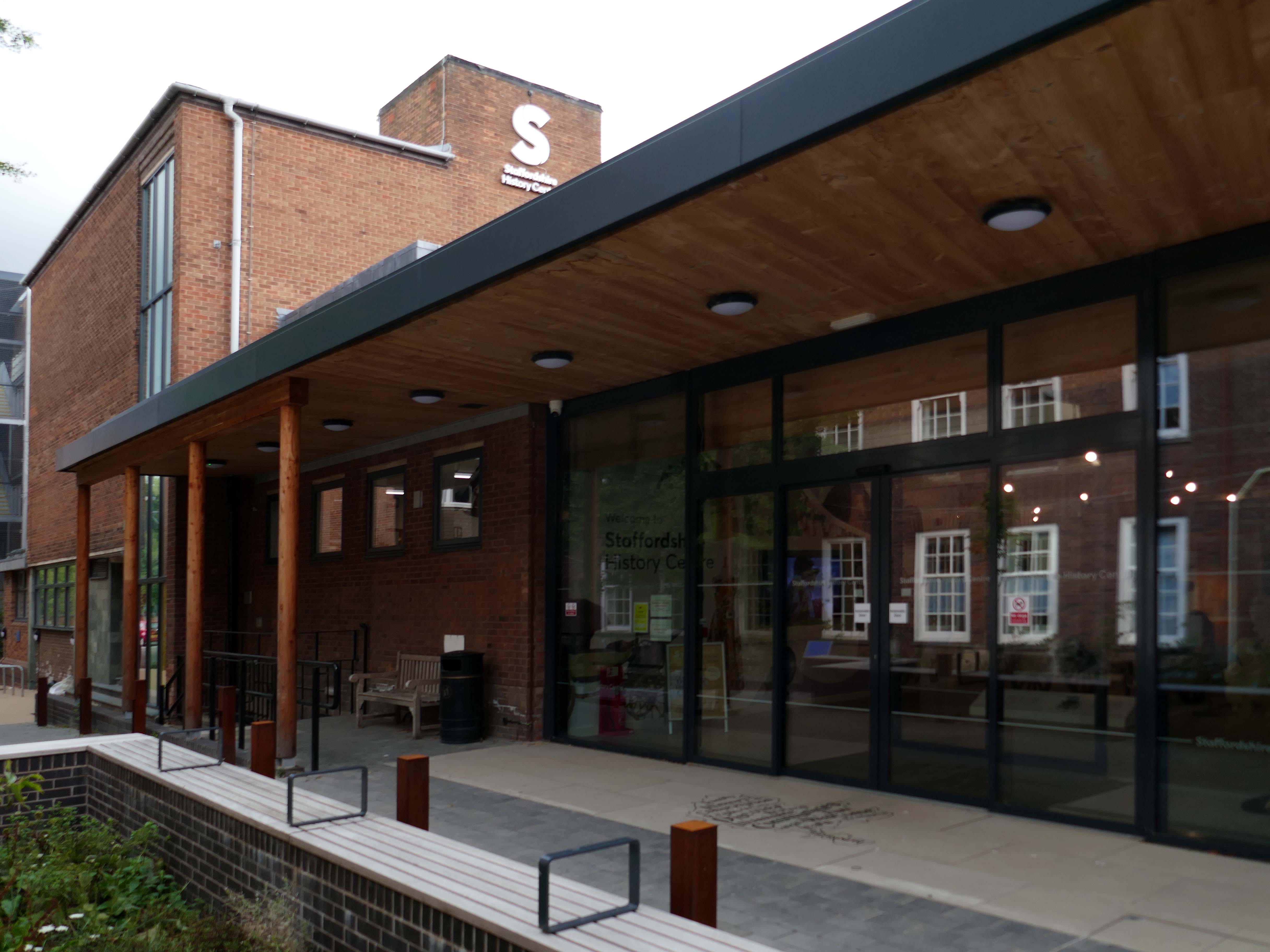
Pringle Richards Sharratt Architects have been appointed by Staffordshire County Council to create a new History Centre for Staffordshire and Stoke on Trent.

The new £4m centre will be located on Eastgate Street in Stafford and will hold historical records and collections up to 1,000 years old.

The scheme will help to provide a rejuvenated service combining the existing Records Office building and William Salt Library, in Stafford and provide a welcoming destination for all of those with an interest in local history. This will include bringing on to the Stafford site the Lichfield Records Office and aspects of the County museum.

Further FoB in the Civic Building.

Close by the Staffordshire Place a civic and retail mixed use development.

Our scheme delivers 135,000 ft2 of high quality contemporary office space across two buildings linked by a new town square. The ground floor incorporates a mix of retail and leisure uses around
a sequence of smaller public spaces to maximise the amount of visible active frontage and create a natural extension to the town centre.

Sustainability issues fundamentally informed the design approach, from mitigating energy consumption to ‘future proofing’ the finished building. The building achieves a BREEAM ‘Excellent’ rating and a European Energy Performance of Buildings Directive Rating ‘A’.

3D Reid

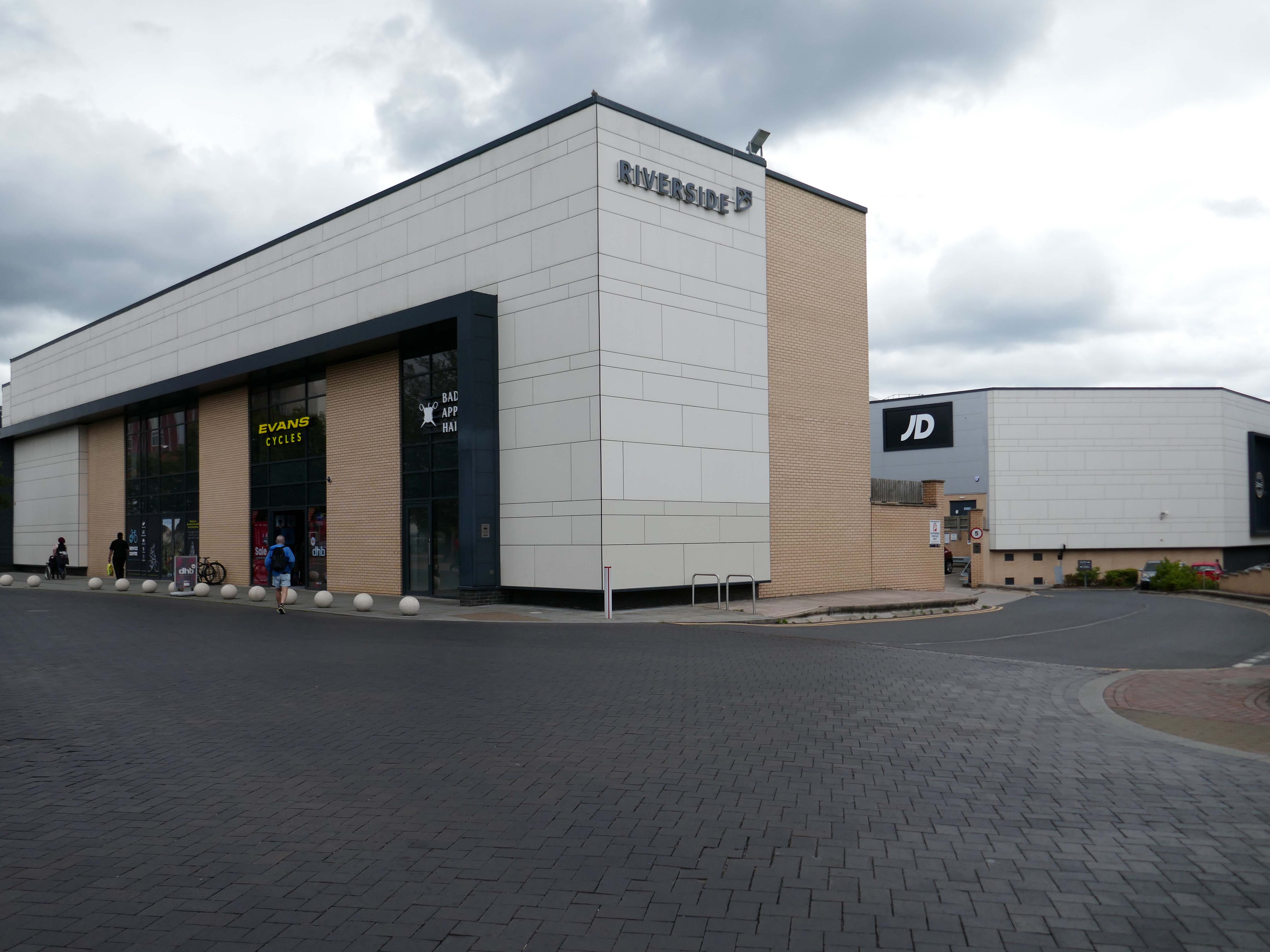
Surprise surprise another retail development Riverside.

£70m riverside town centre retail and leisure development in the heart of Stafford. The 230,000 sq. ft. scheme anchored by M&S will deliver 18 retail units arranged over ground and first floors, five leisure units and a six-screen cinema to complement and strengthen the town centre economy and create new businesses and jobs.

Harris Partnership

Stafford’s £100 million Riverside development was officially launching today with two high street chains open for business on August 4th 2016.

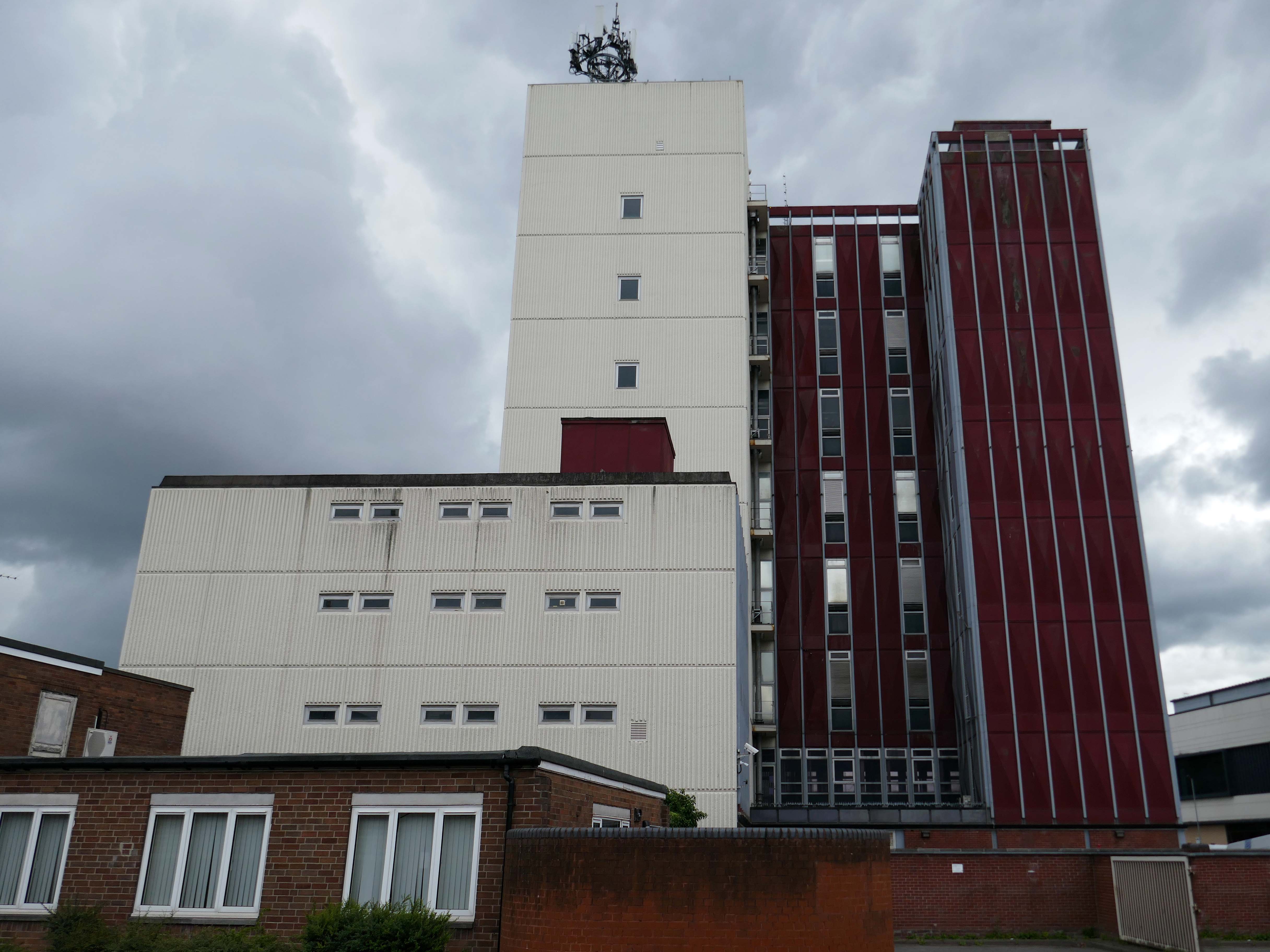
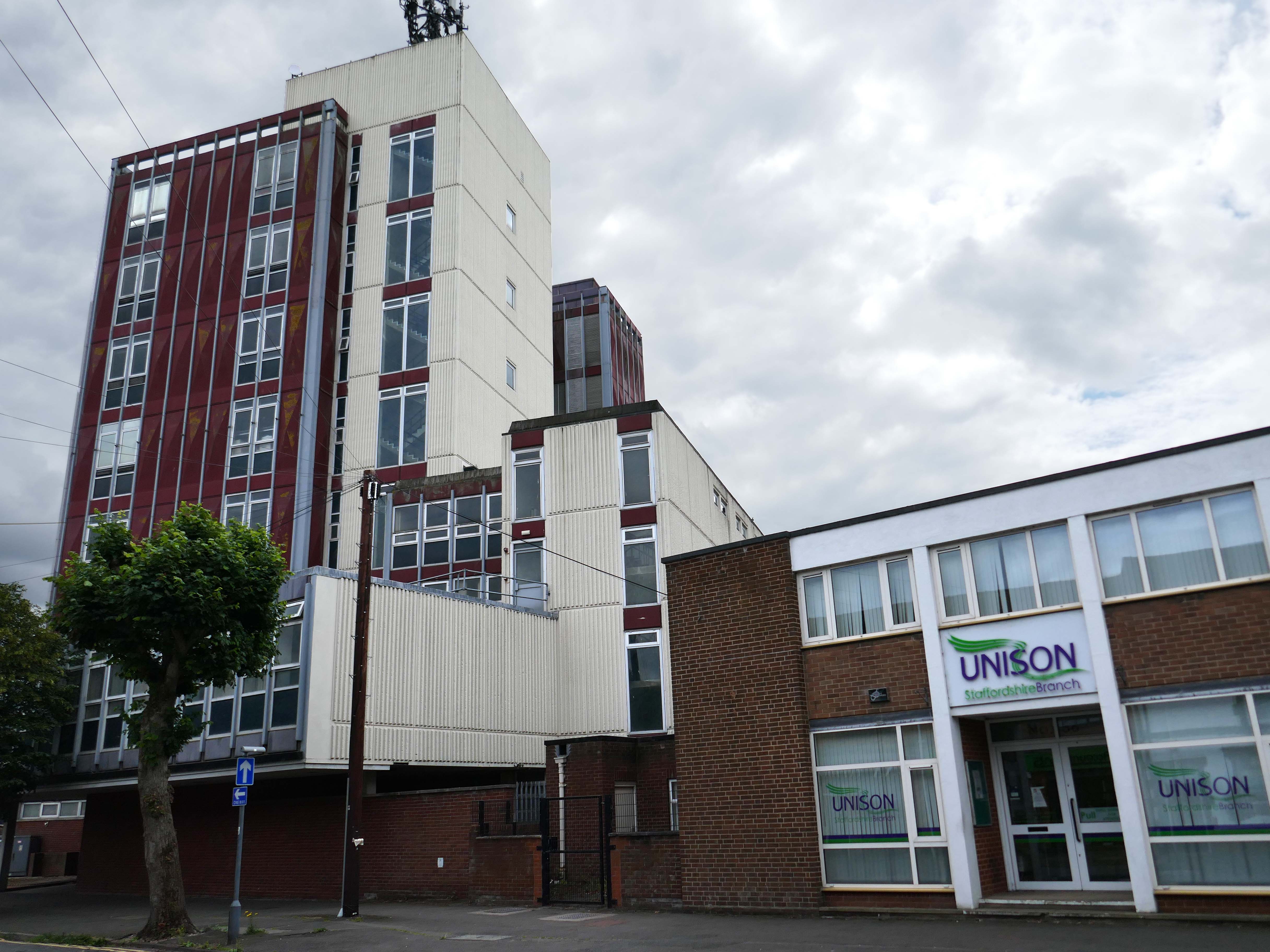
None of this can detract from the monolithic complex Telephone Exchange.

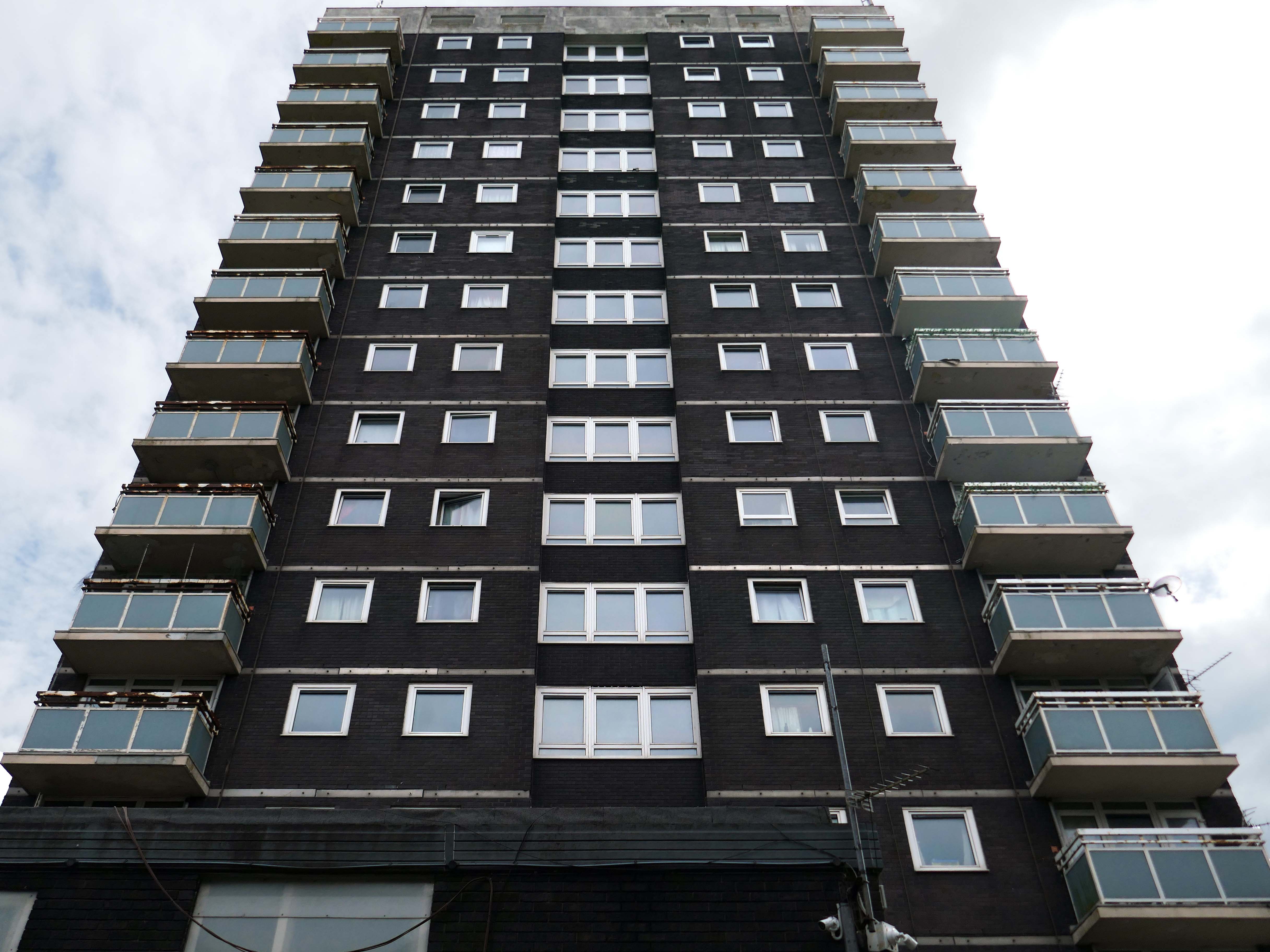
Onwards across the main road past the Asda and up the road to Pennycrofts Court.

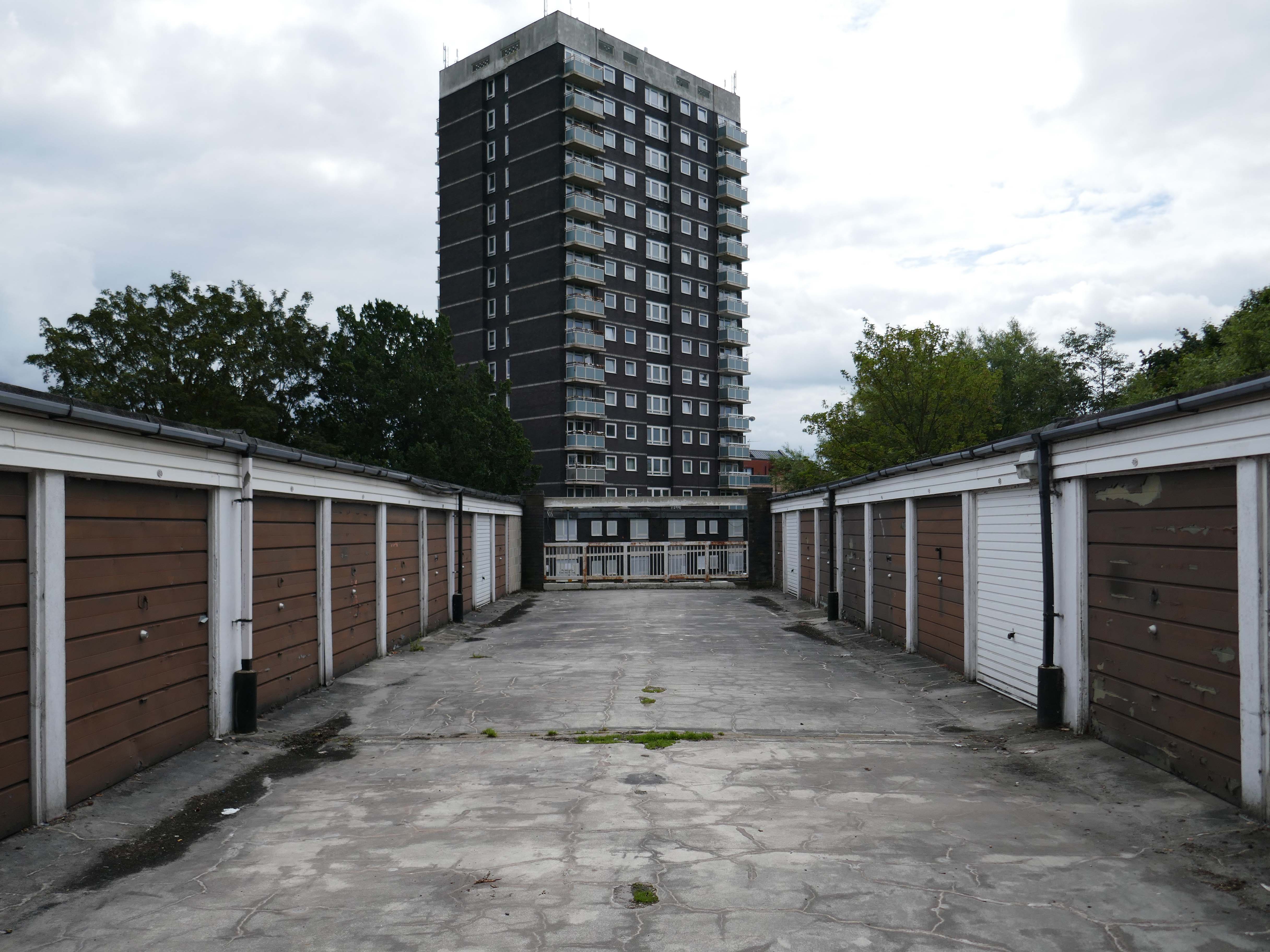
Featuring a split level garage facility.

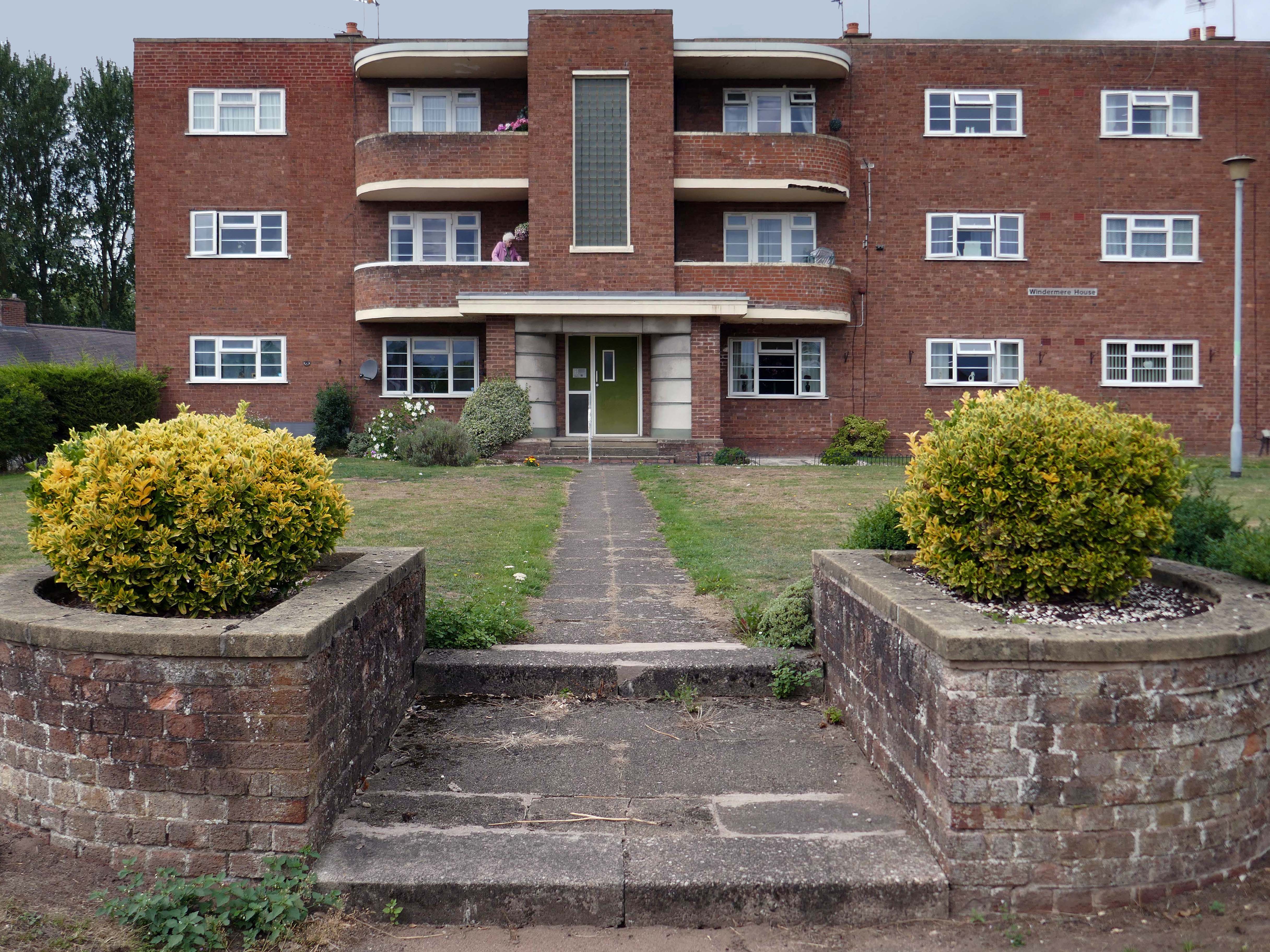
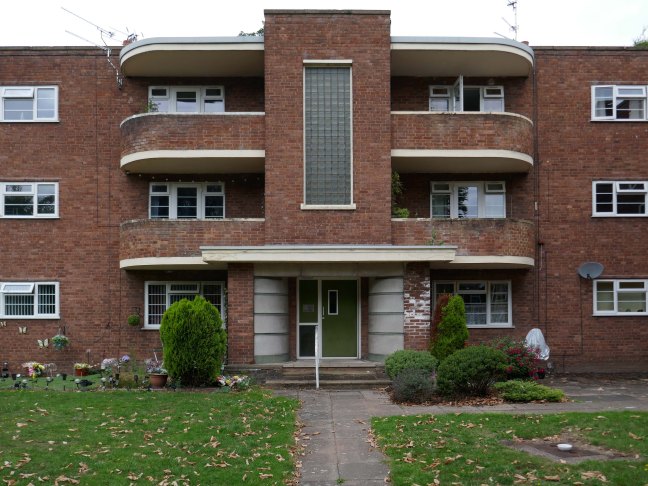
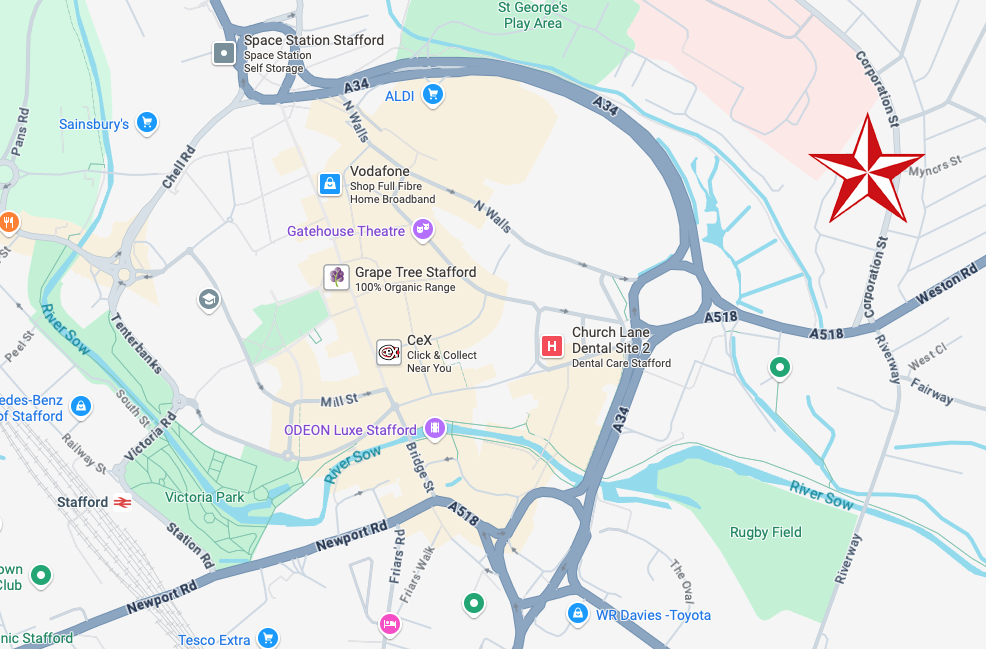
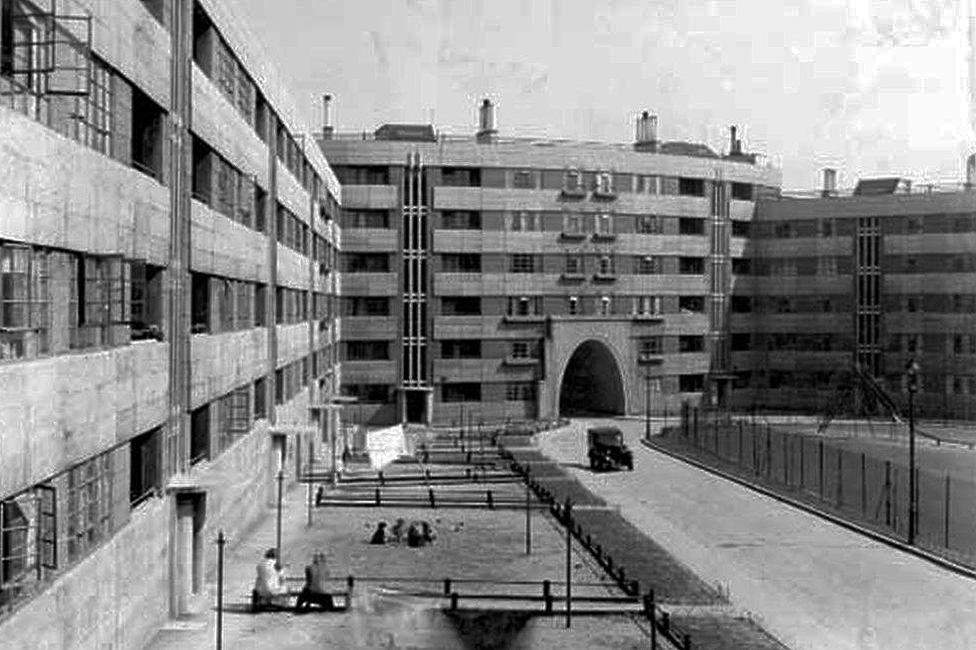
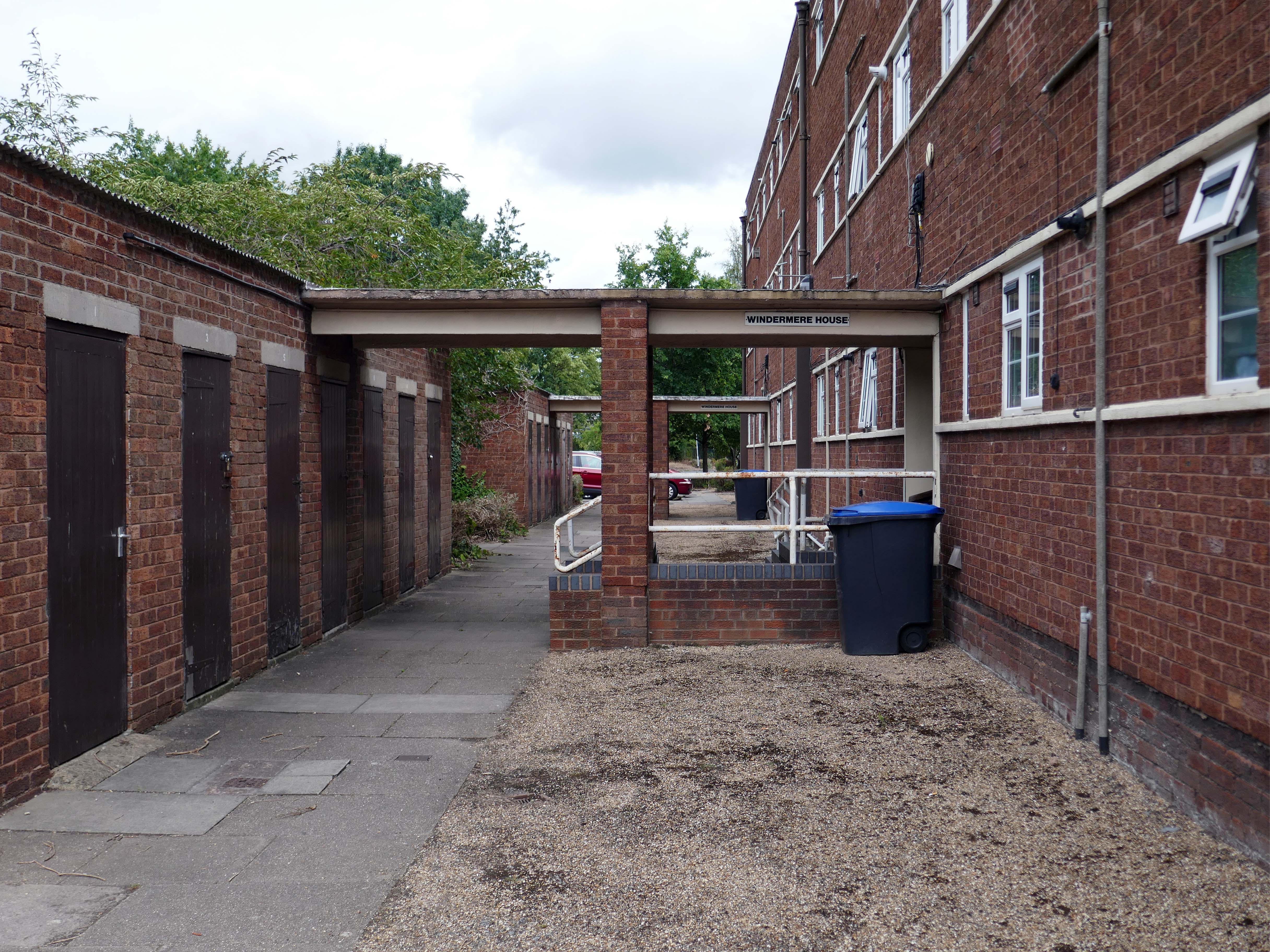
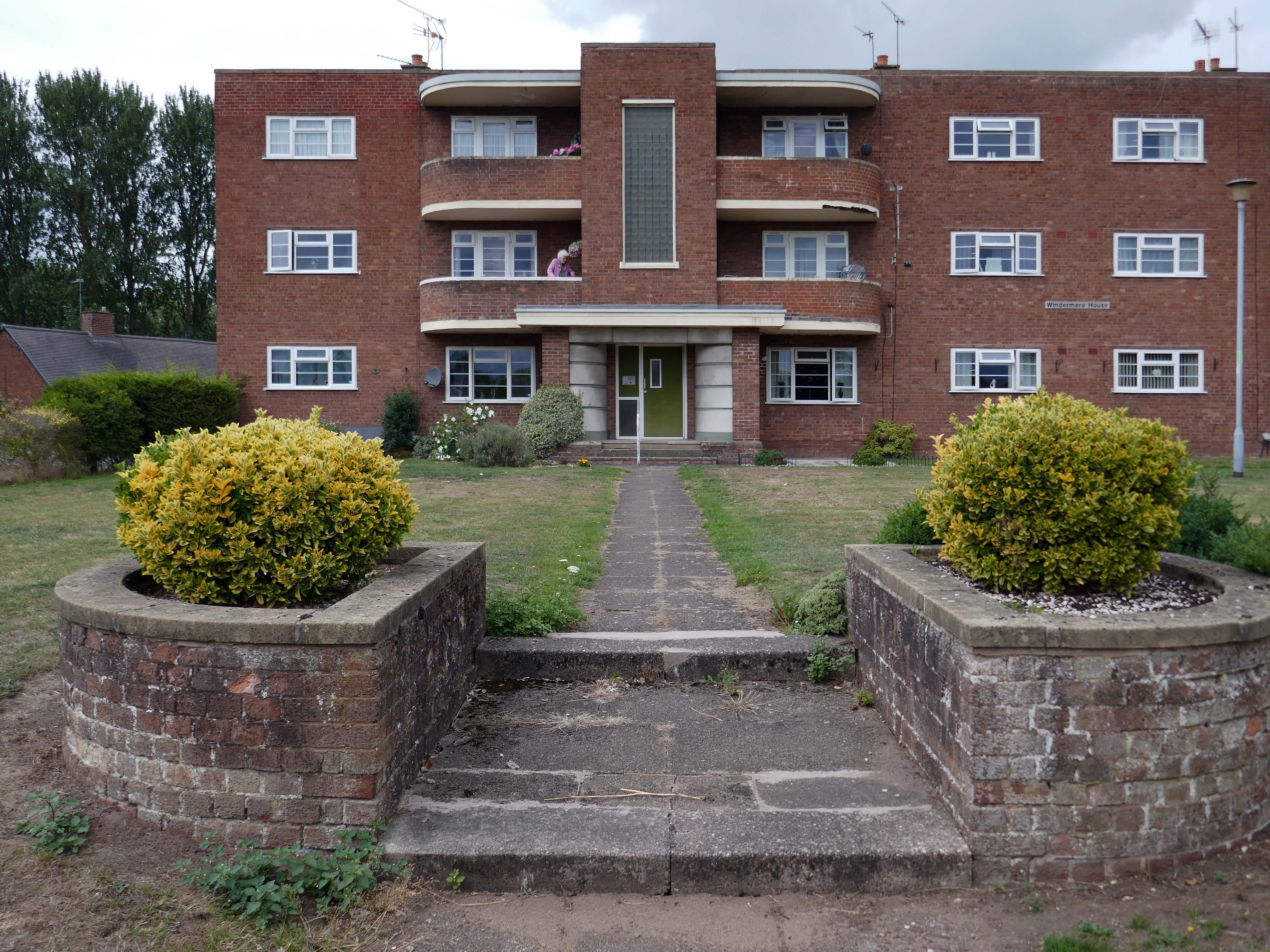
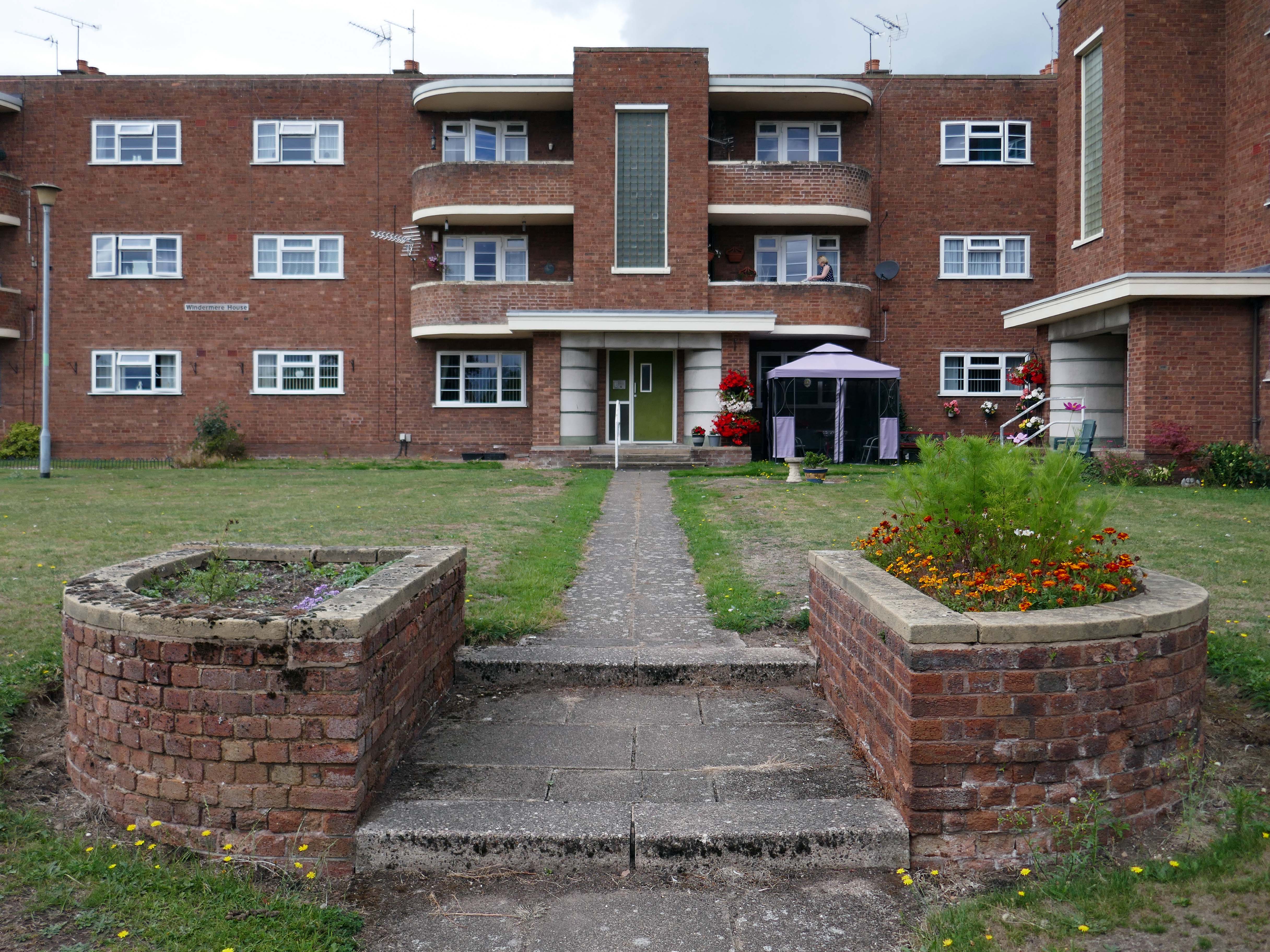
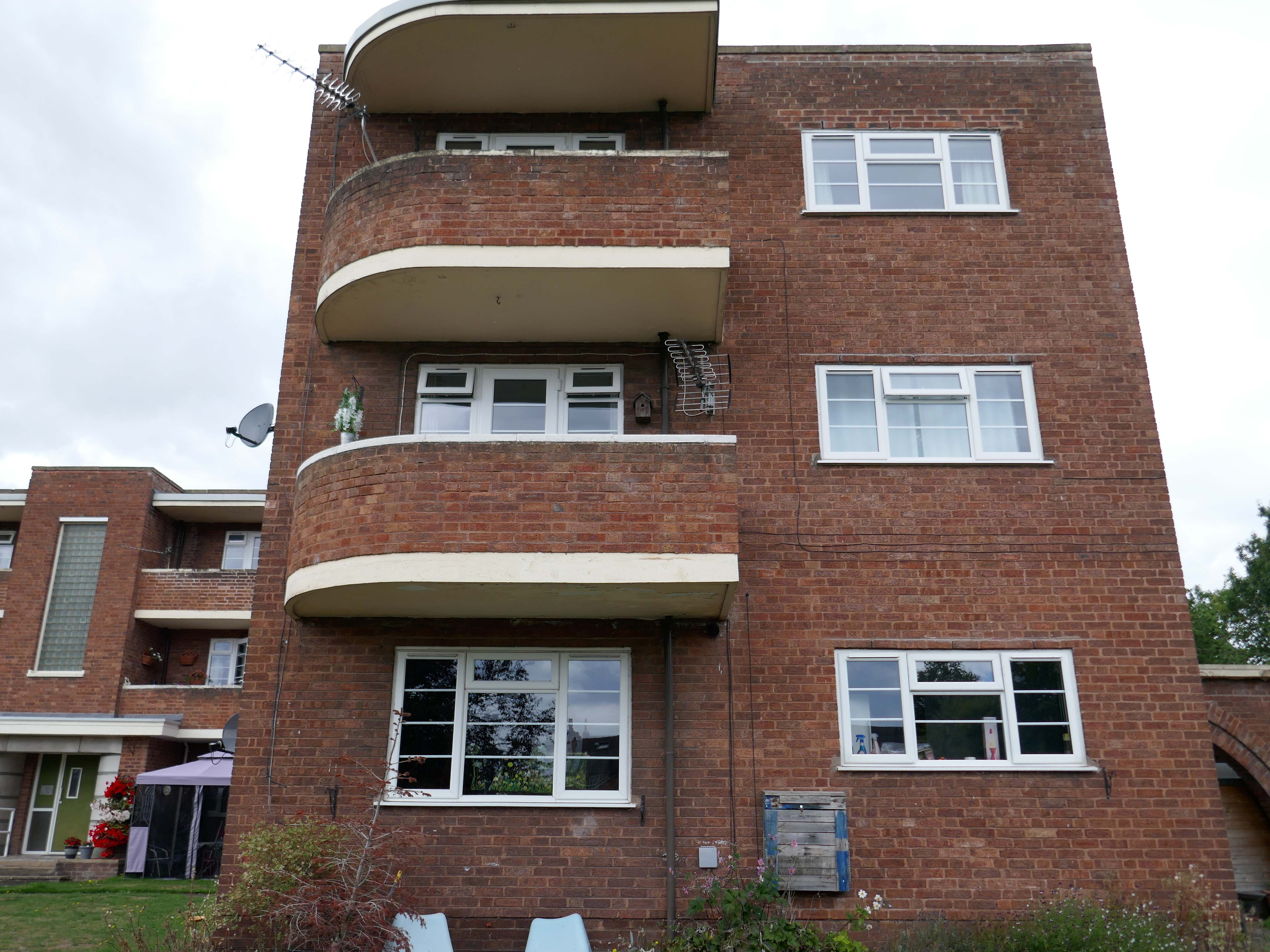
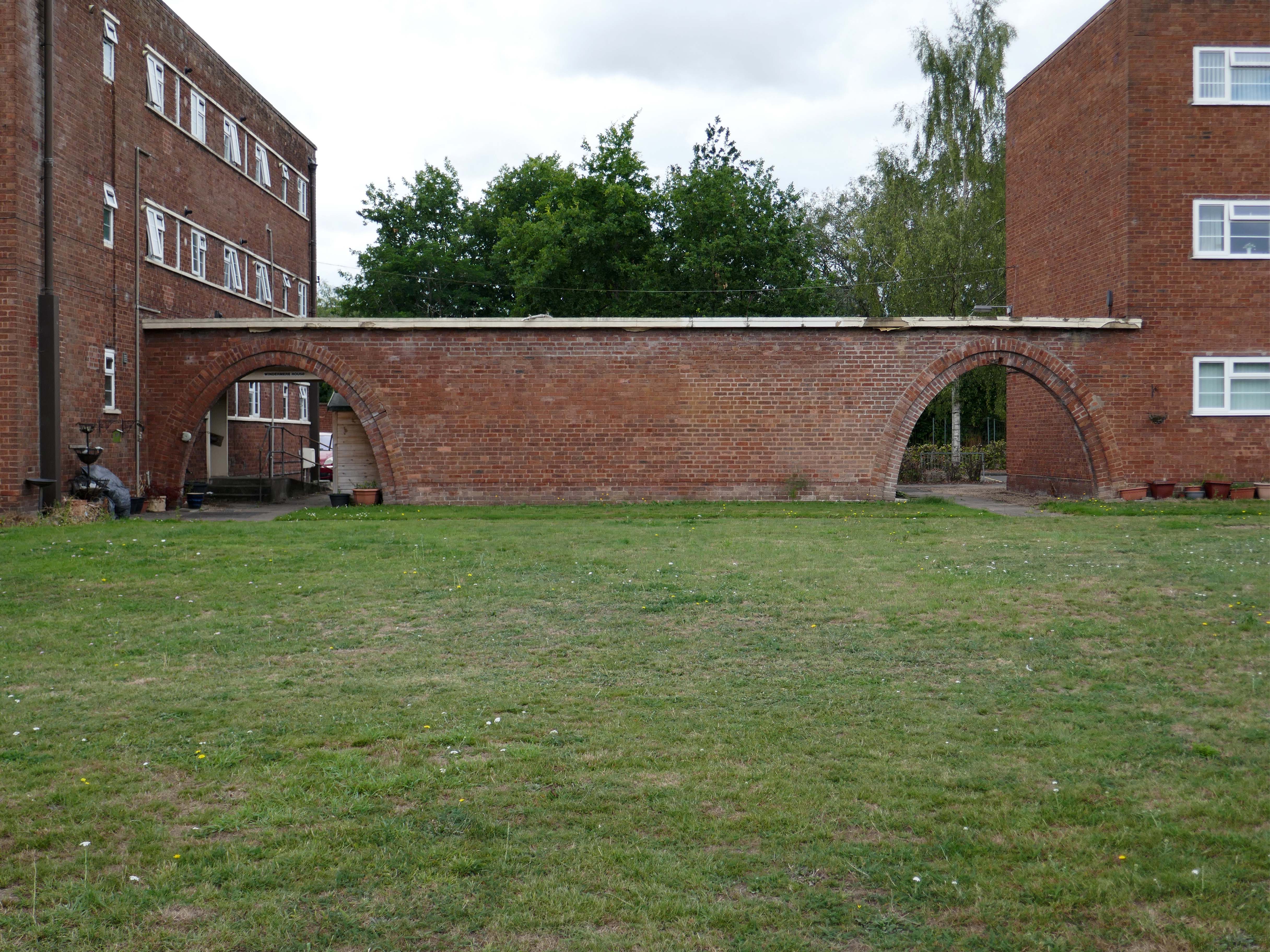
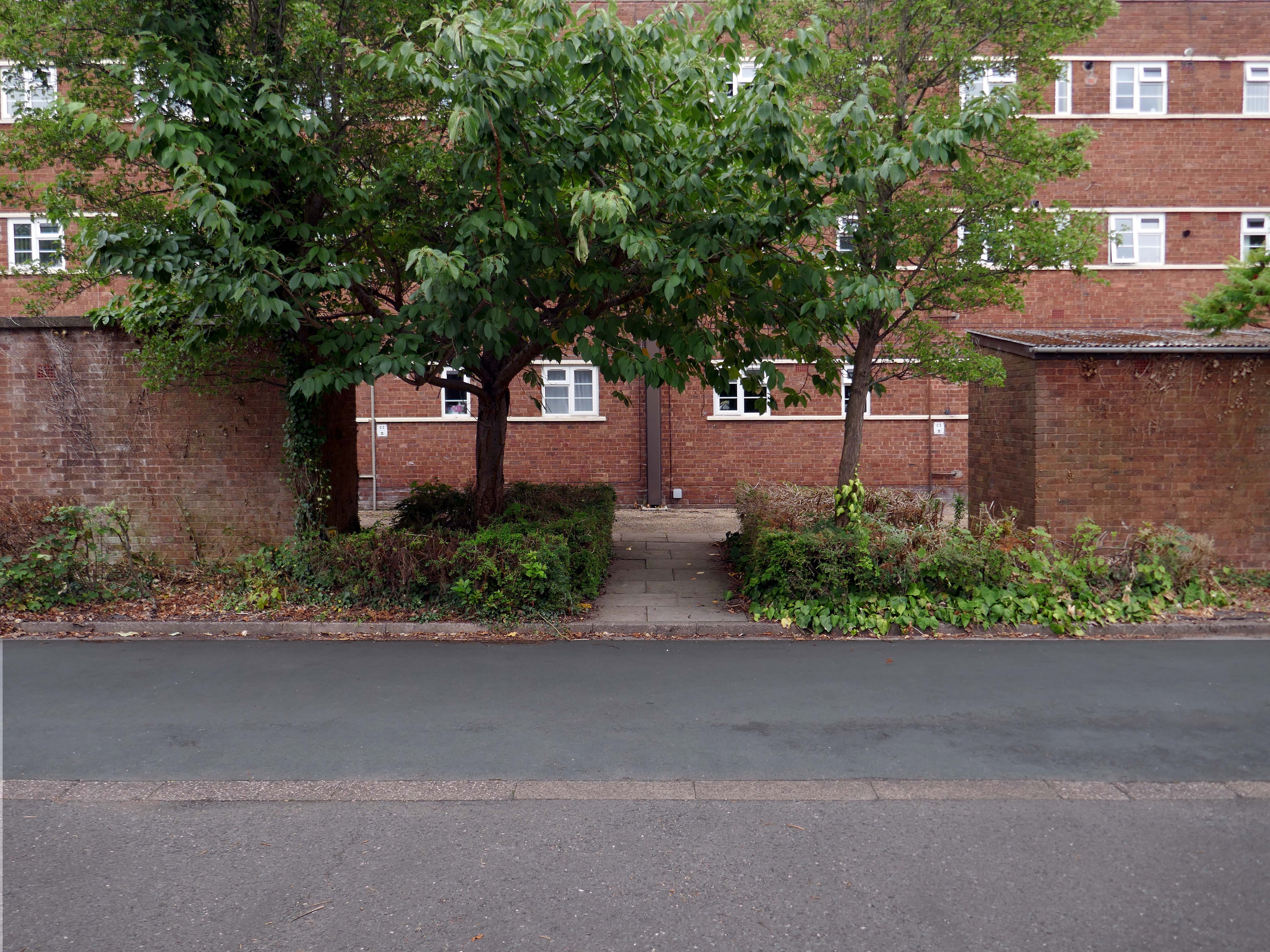
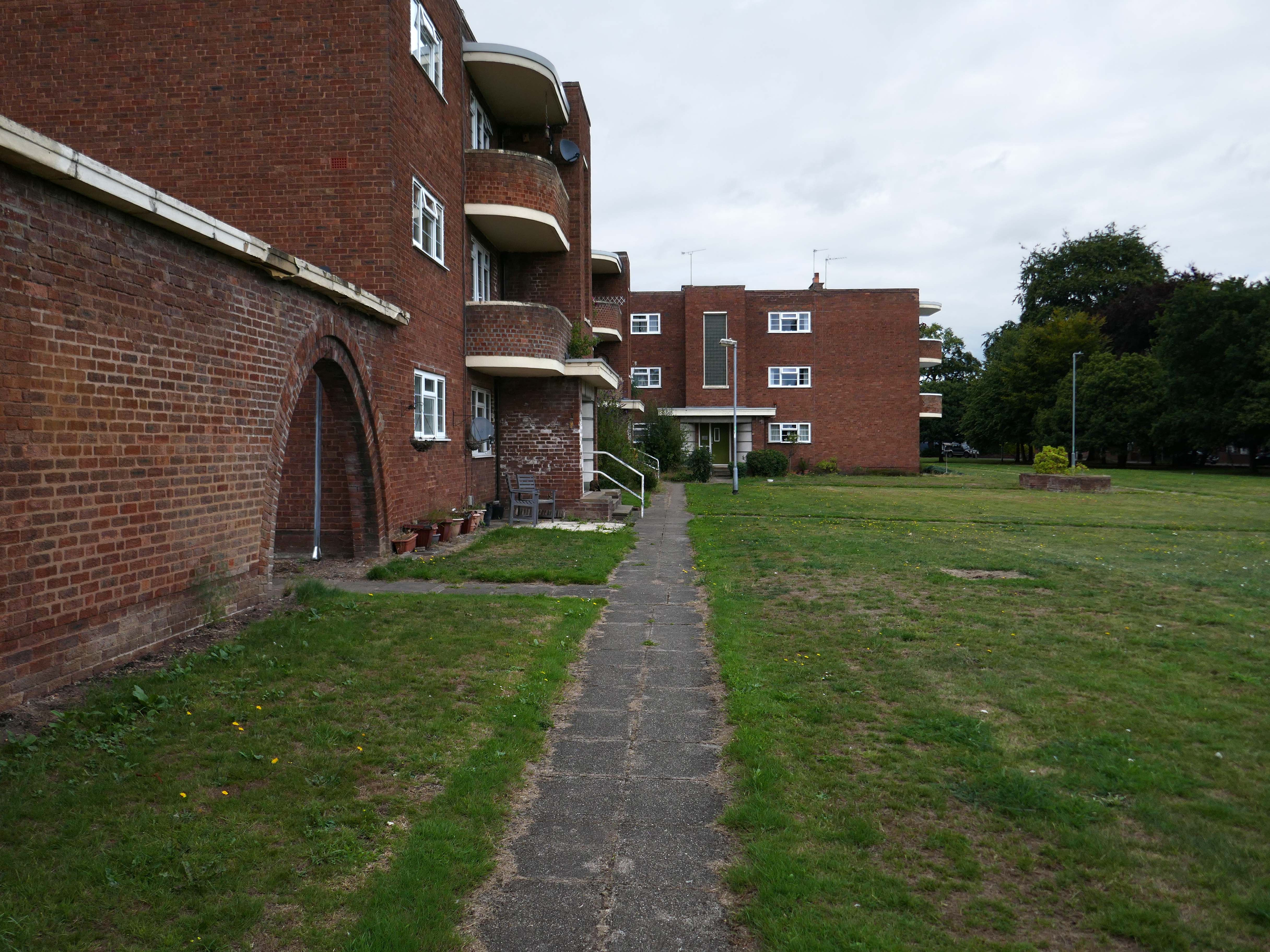
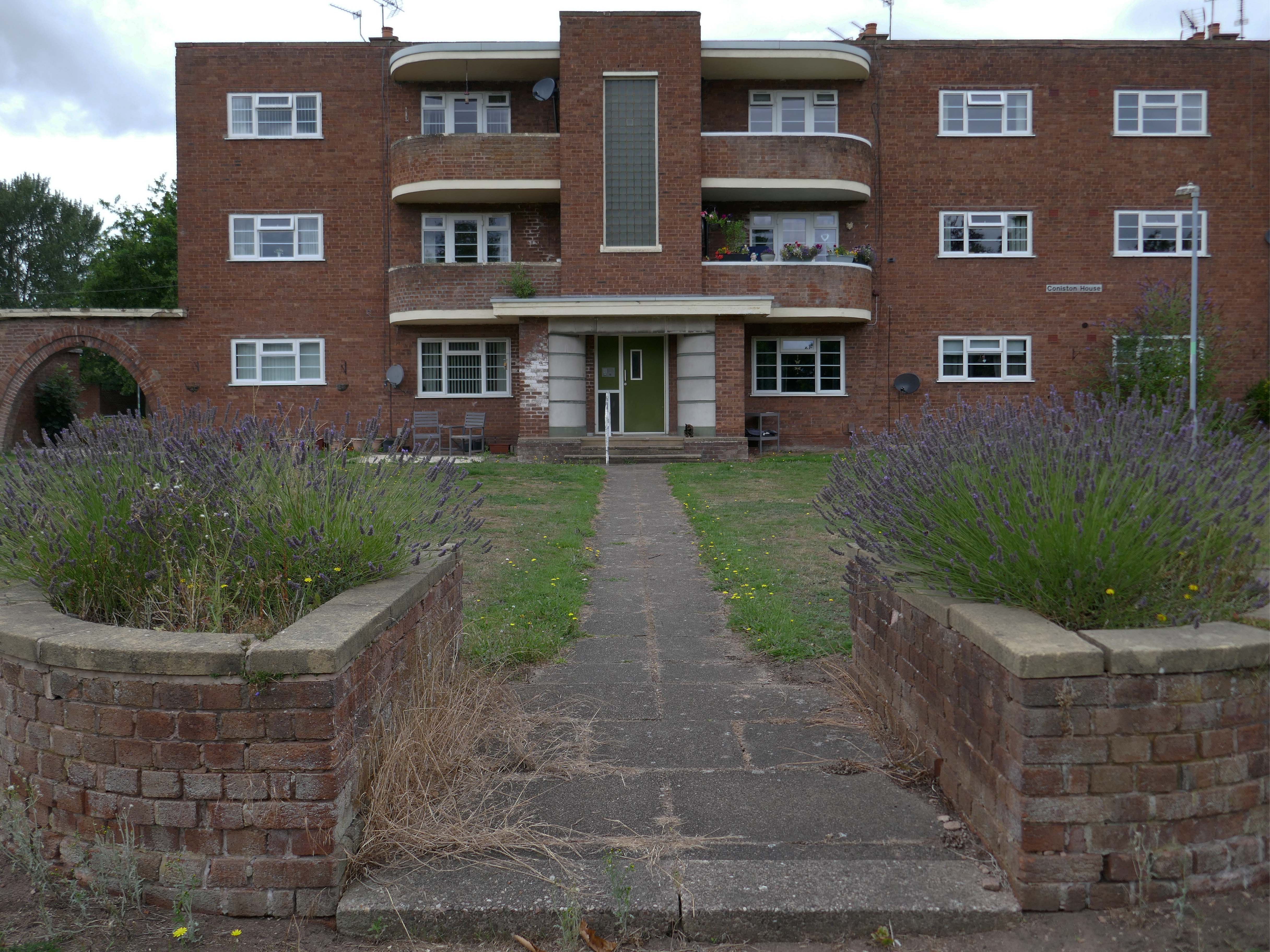
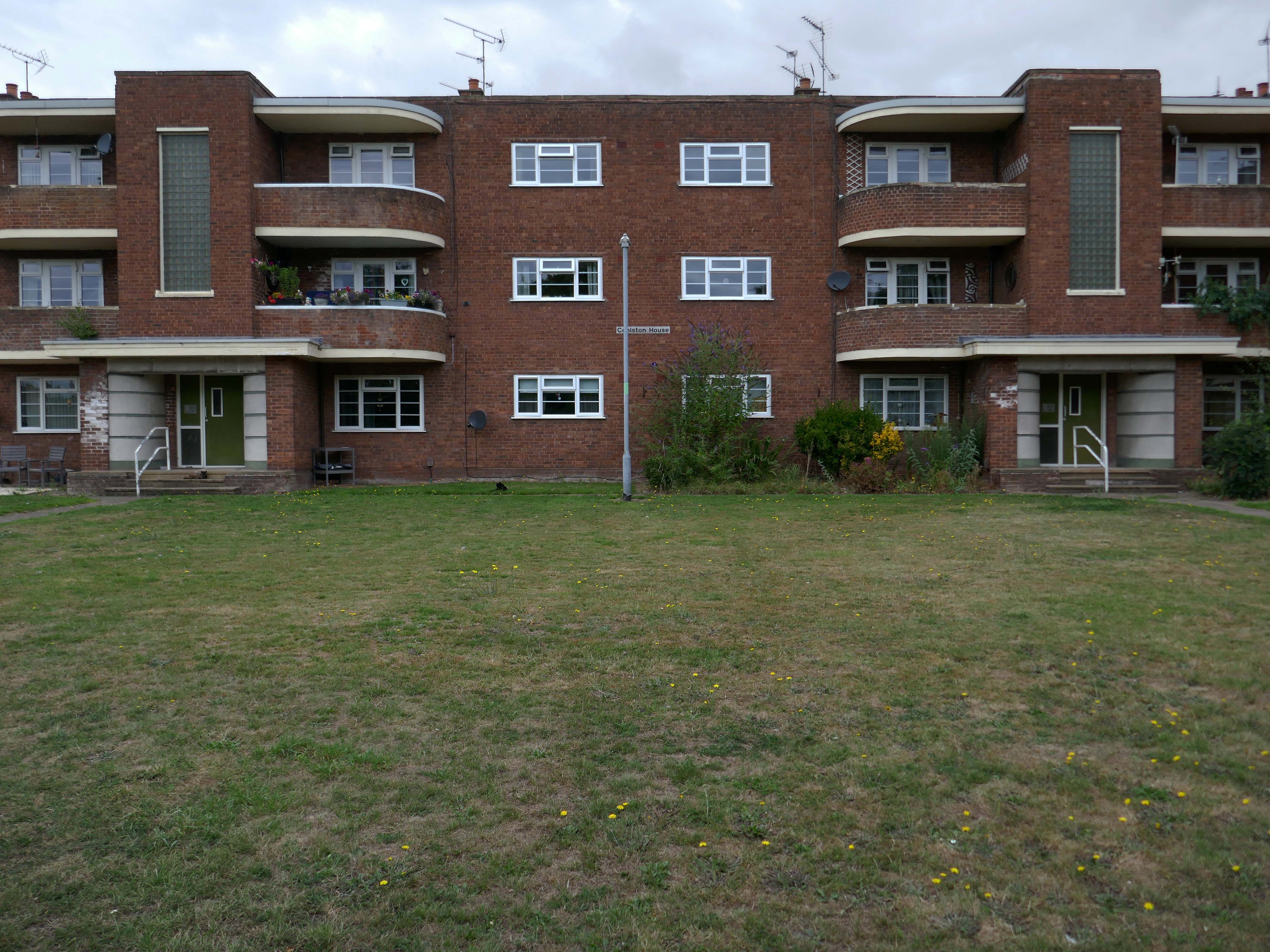
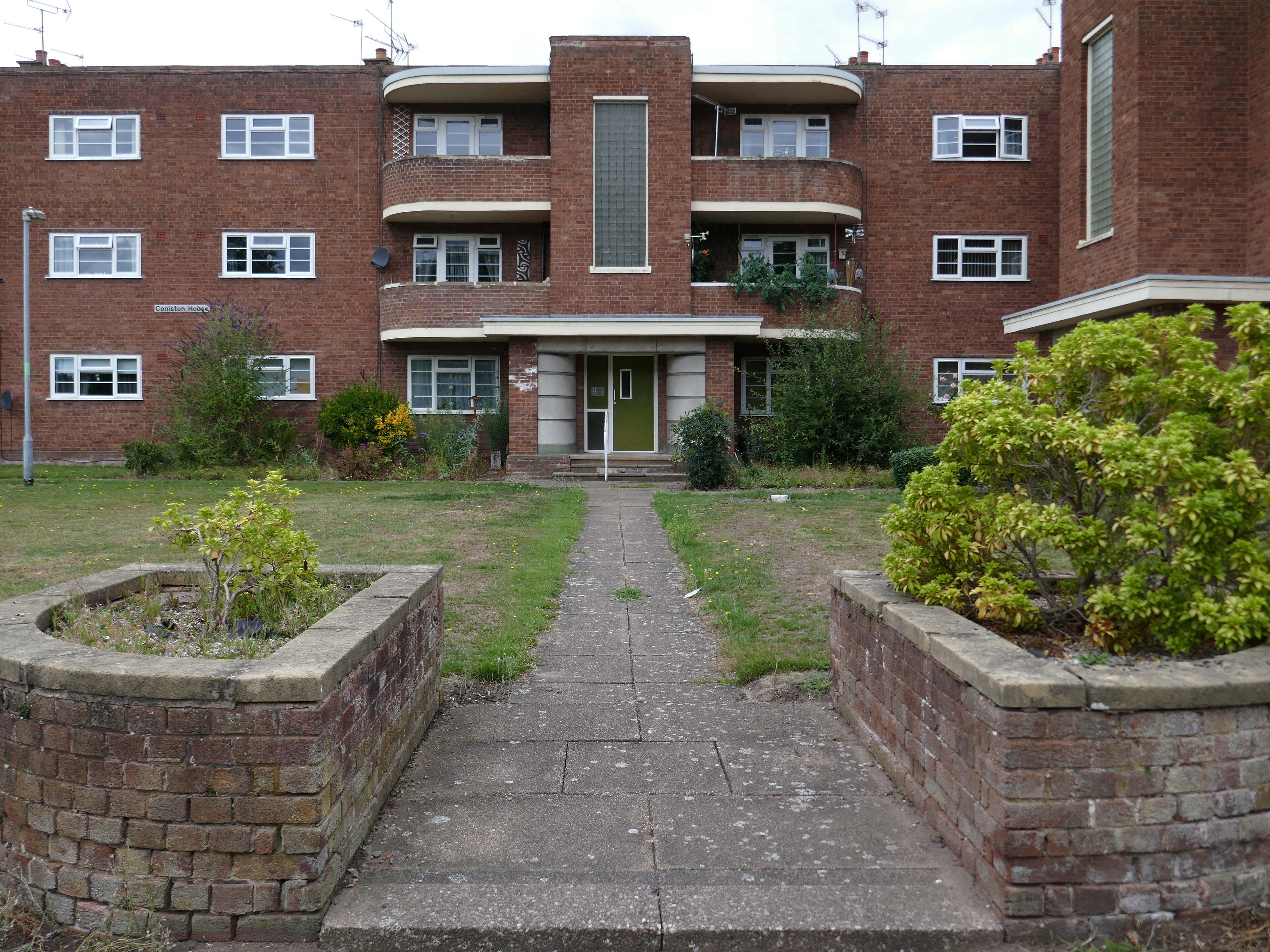
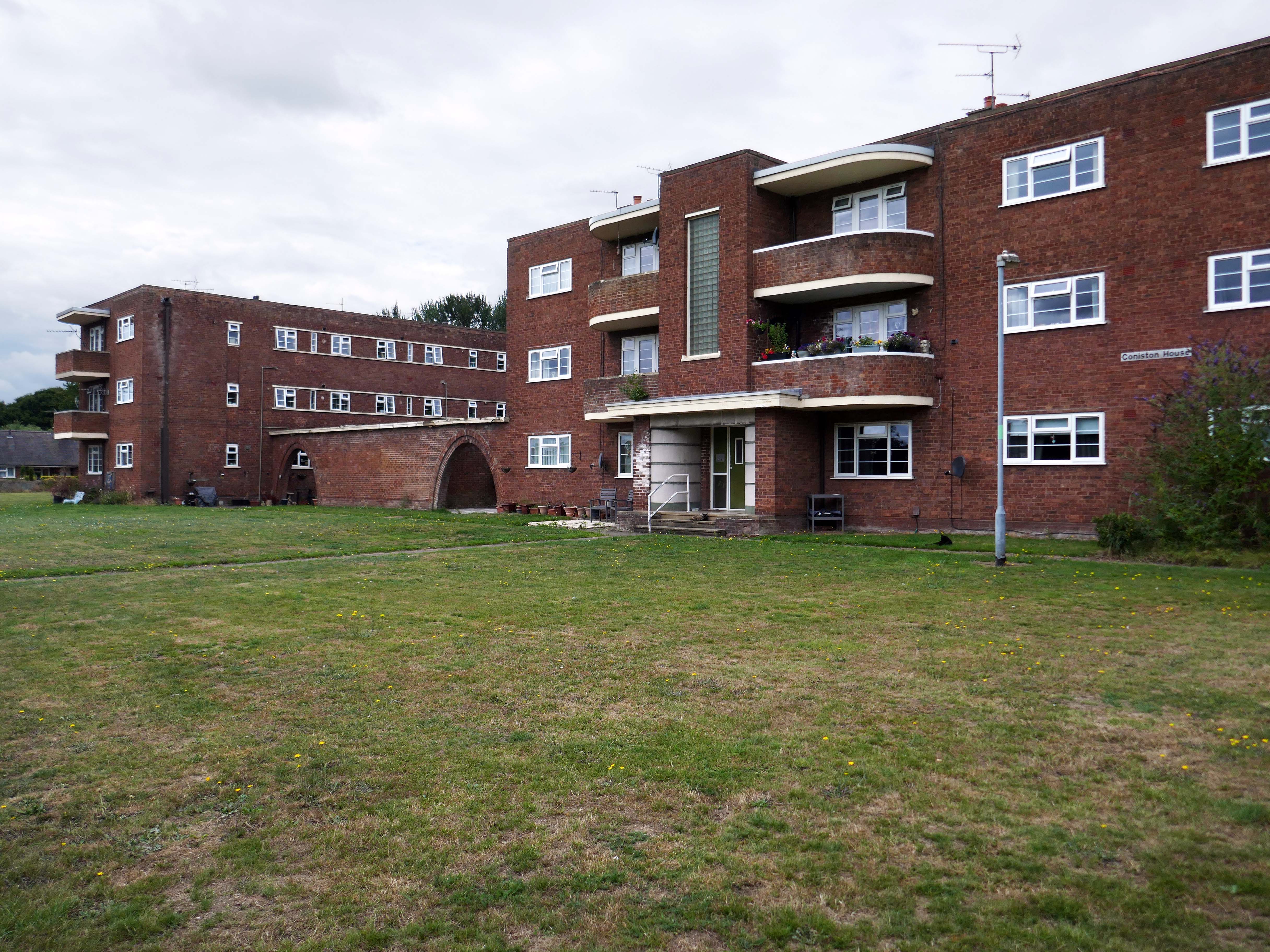
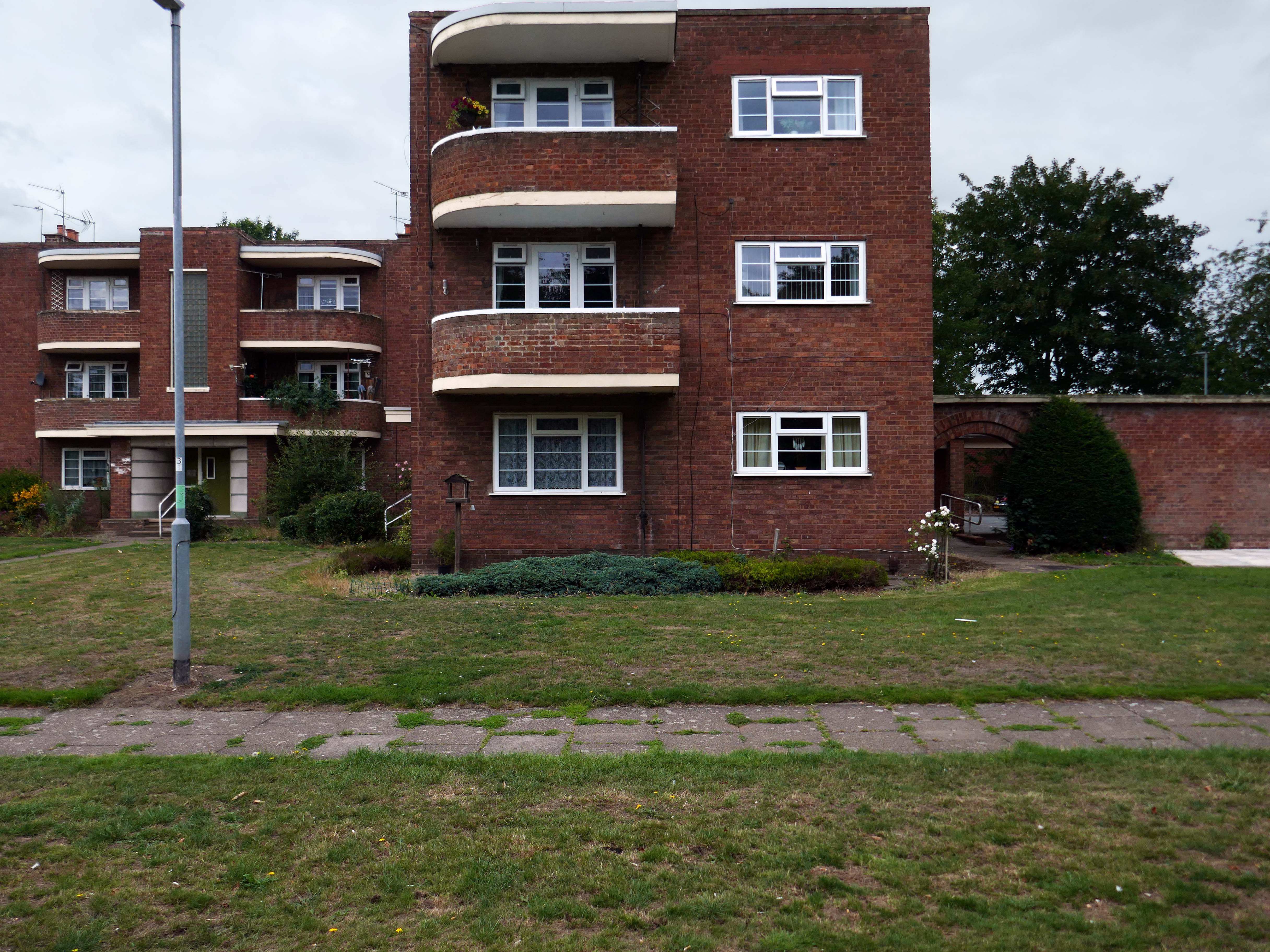
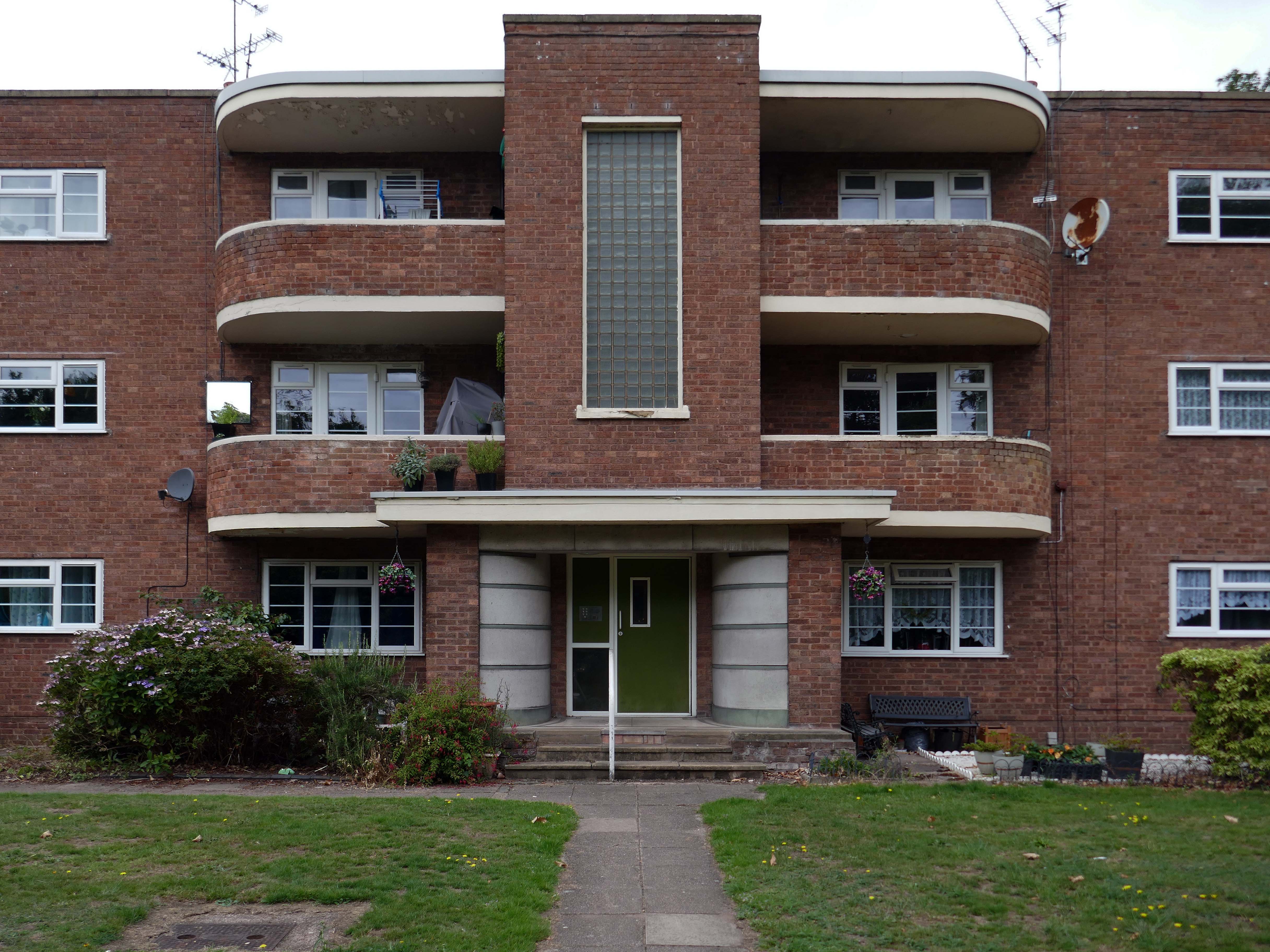
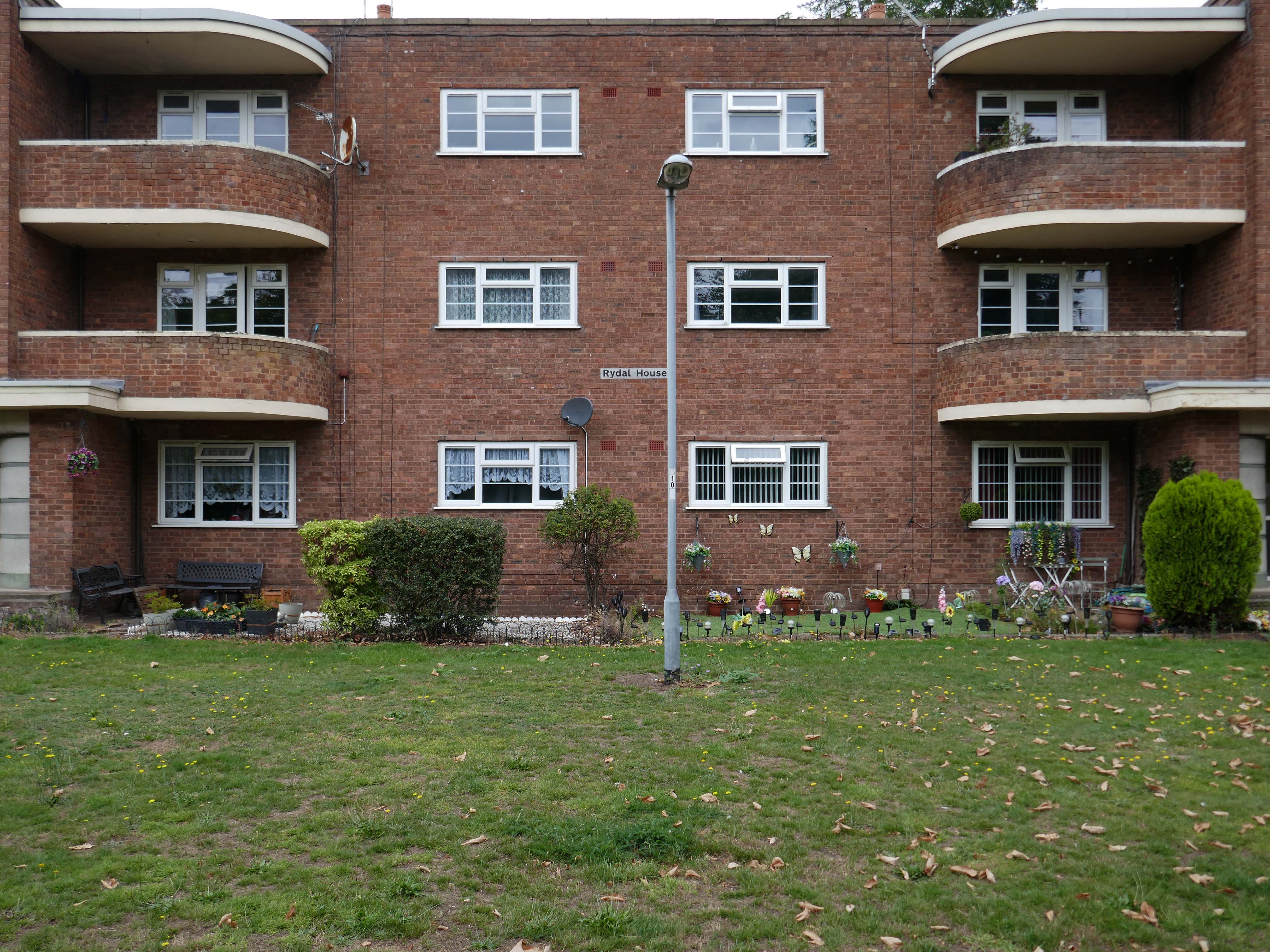
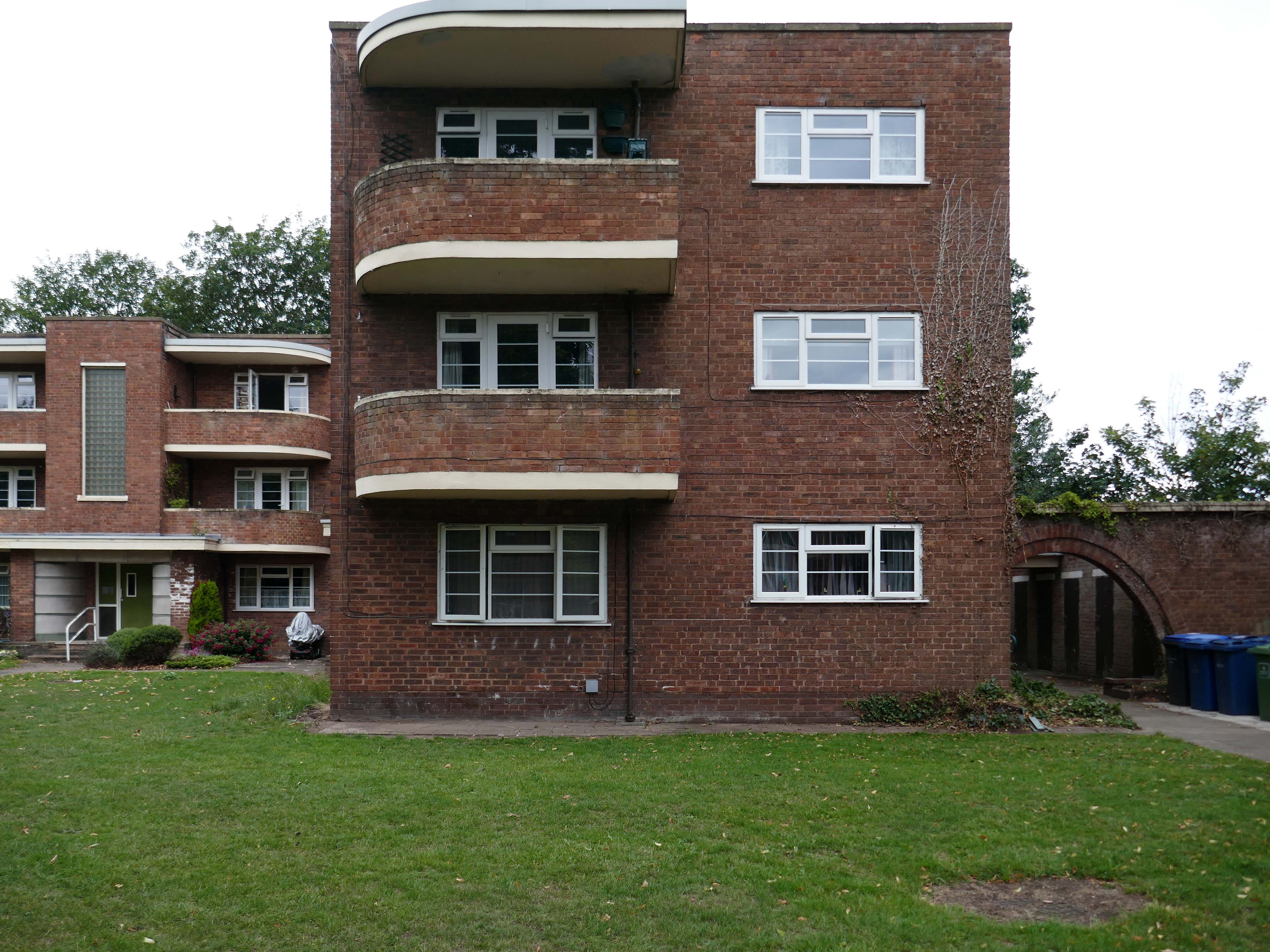
The just around the corner this little corner of Vienna in Stafford – Corporation Street Flats.

Coniston, Windemere and Rydal were among the first council homes to be built in Stafford, between 1951-52, under the direction of County Architect CM Coombes.

The flats were built as a result of The Housing – Financial and Miscellaneous Provisions Act 1946, which gave subsidies to local authorities to provide social housing. The expansion of the Borough Council’s civic duties included the employment of County Architects, in this case CM Coombes FRIBA, to whom these flats are attributed. 

54 flats were built in total, to a distinctly Modernist design, and their appearance and setting are very well preserved.

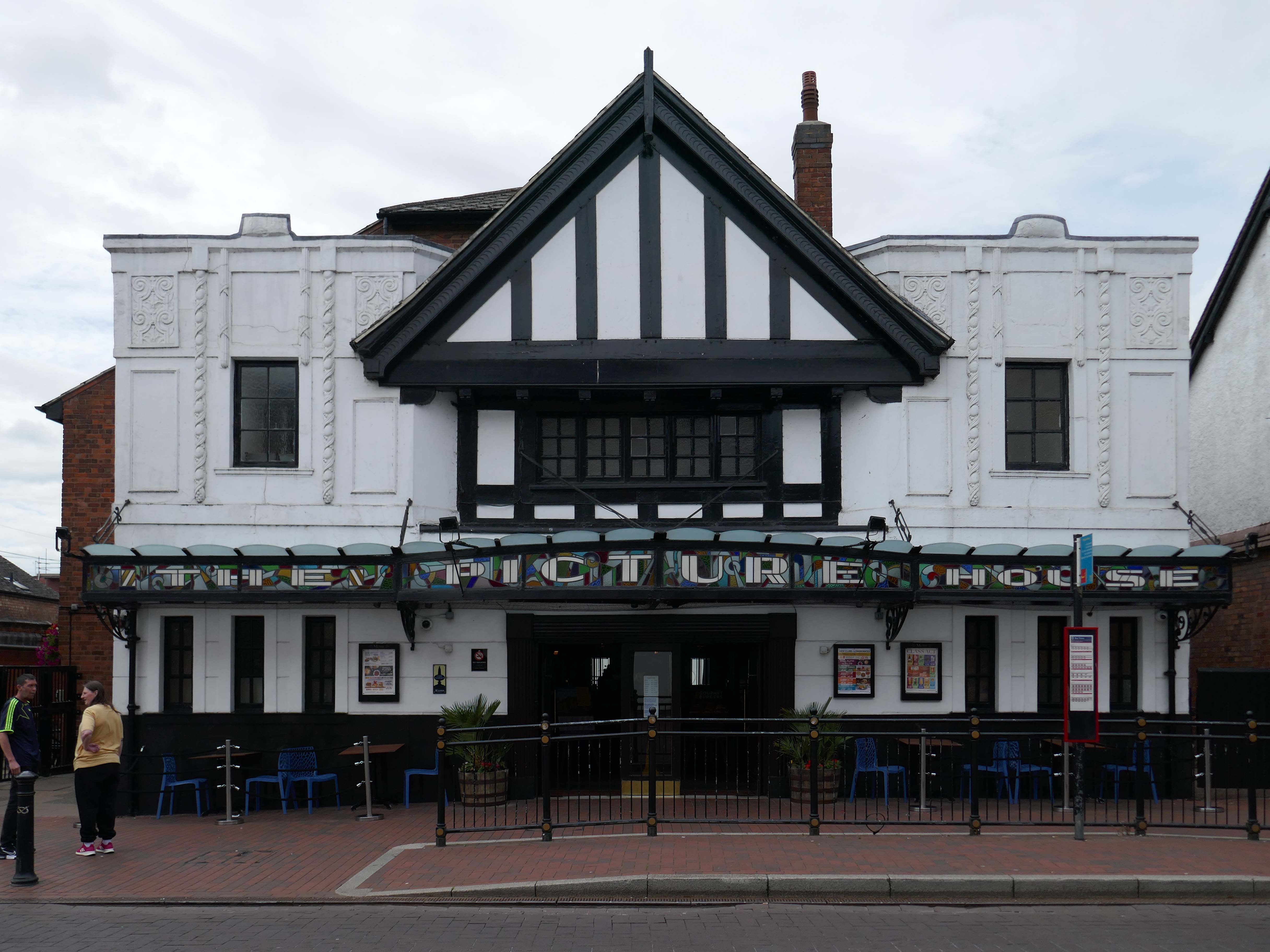
Let’s head back into the town centre – to the Grade II Listed Picture House 1914

Architectural alterations made by: Captain Fred Campbell in 1930.

The Picture House was closed on 30th March 1995 after a three week run of Disclosure starring Michael Douglas, there were seventy eight attending the final performance.

Cinema Treasures.

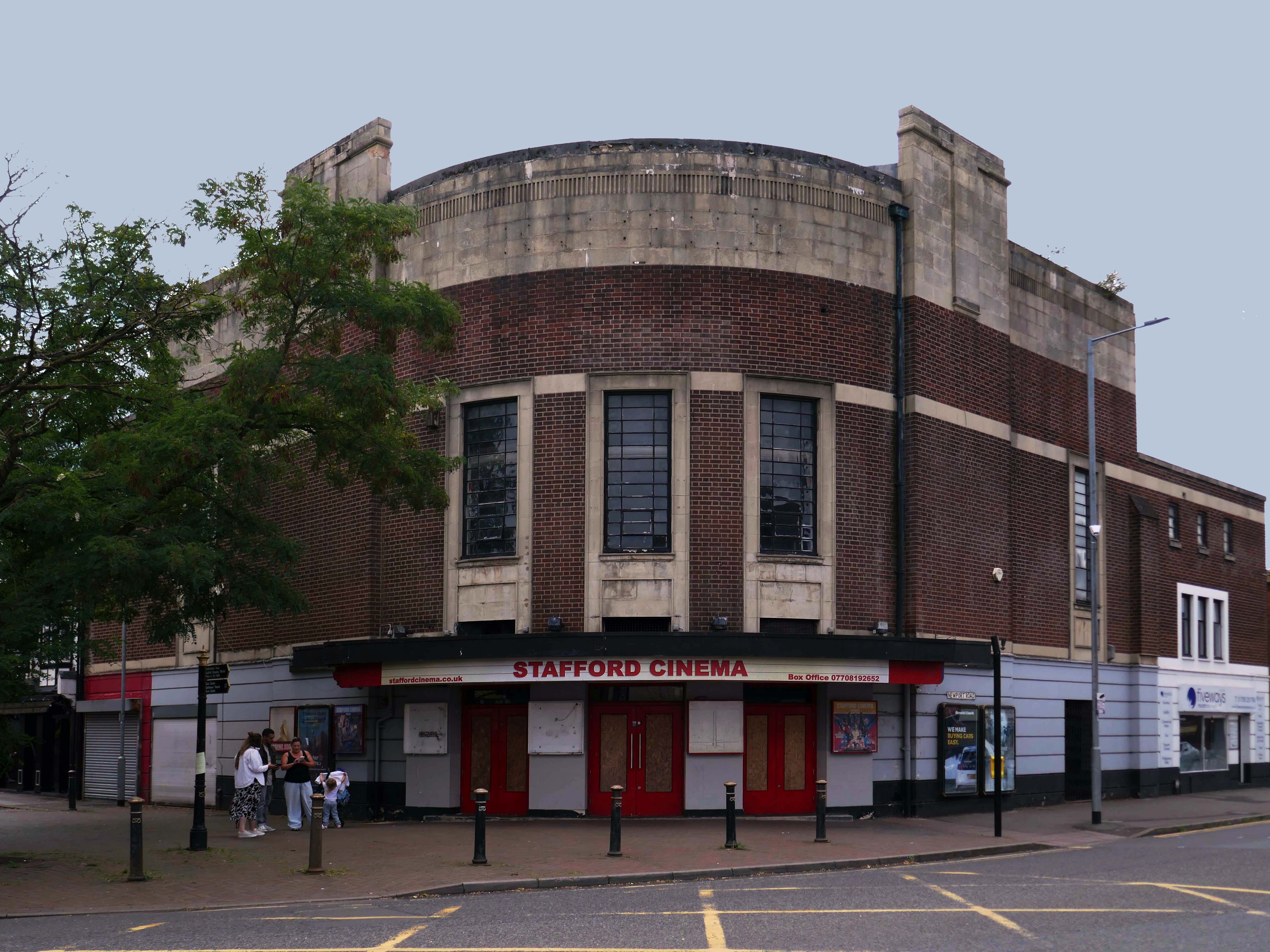
Close by the former Odeon

Architects: Roland Satchwell 1936

It was disposed of by the Rank Organisation in July 1981 and was taken over by the Hutchinson Leisure Group who re-named it Astra Cinema. In December 1981 it was tripled with 435 seats in the former stalls and two mini cinemas in the former circle seating 170 and 168.

In 1988 it was taken over by Apollo Cinemas and re-named Apollo Cinema. The downstairs cinema was closed and became a bingo club for a couple of years, during which time the two mini cinemas in the former circle remained open. The bingo operation gave way to films again in 1990 and all three screens were again open, with seating for 305, 170 and 164. In January 2014 it was taken over by the Curzon Cinemas chain and renamed Stafford Cinema.

It was closed on 18th December 2017 with Star Wars:The Last Jedi.

Cinema Treasures

Onwards but backwards to the Civic Centre.

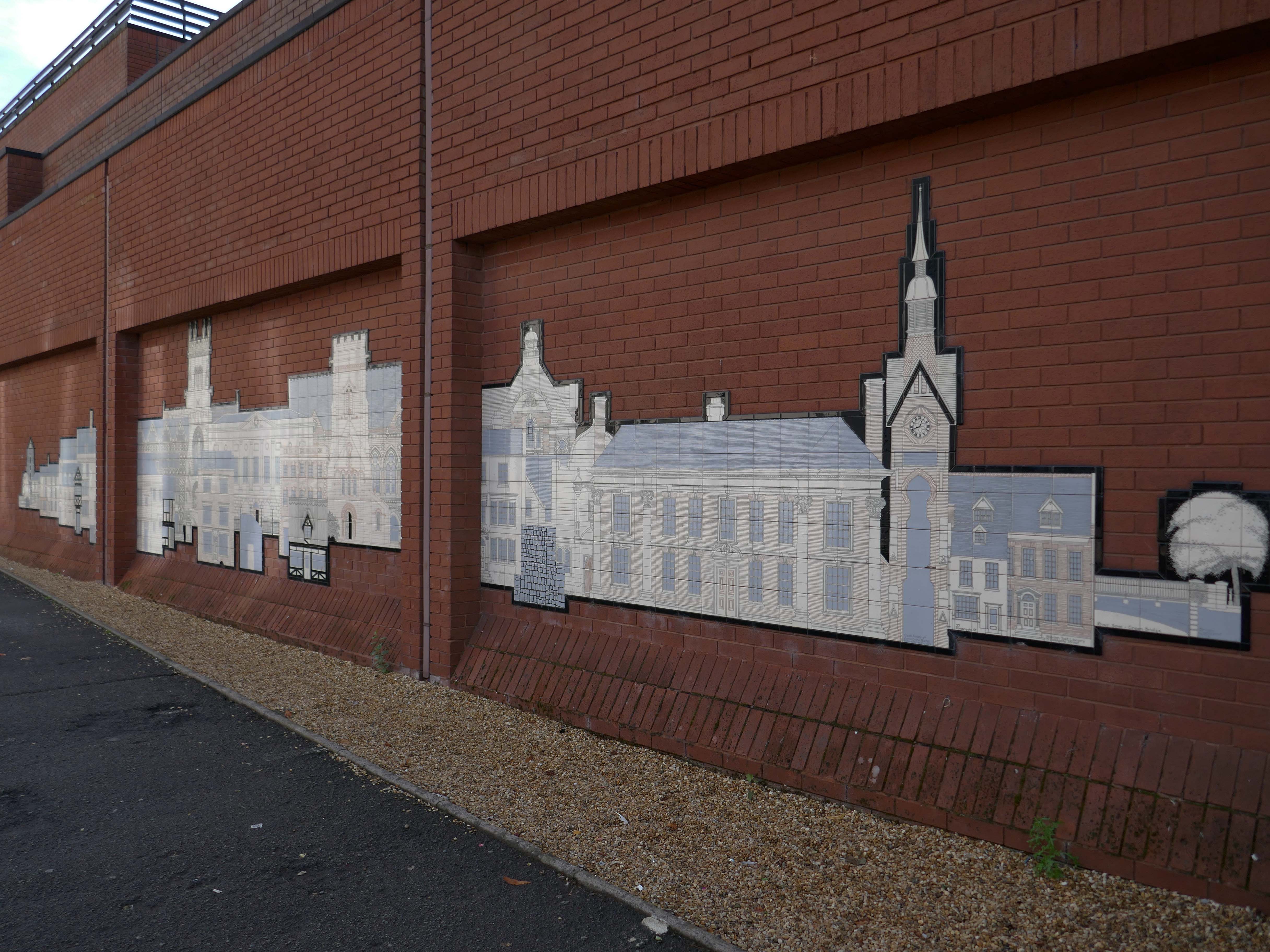
Tiled mural by Brian Lambert 1979

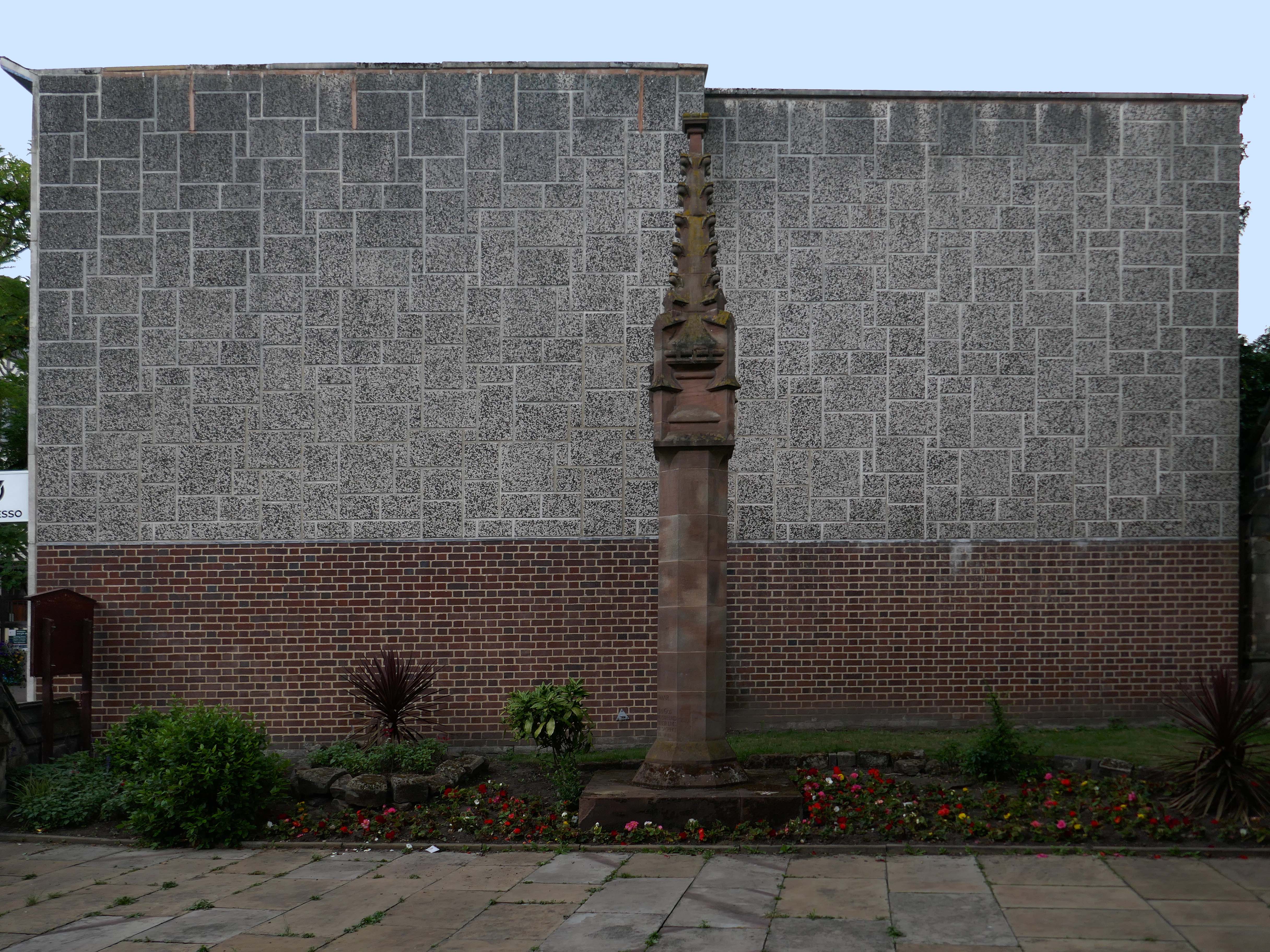
Finally arriving at this lively aggregate gable.

St Mary’s Church Interior

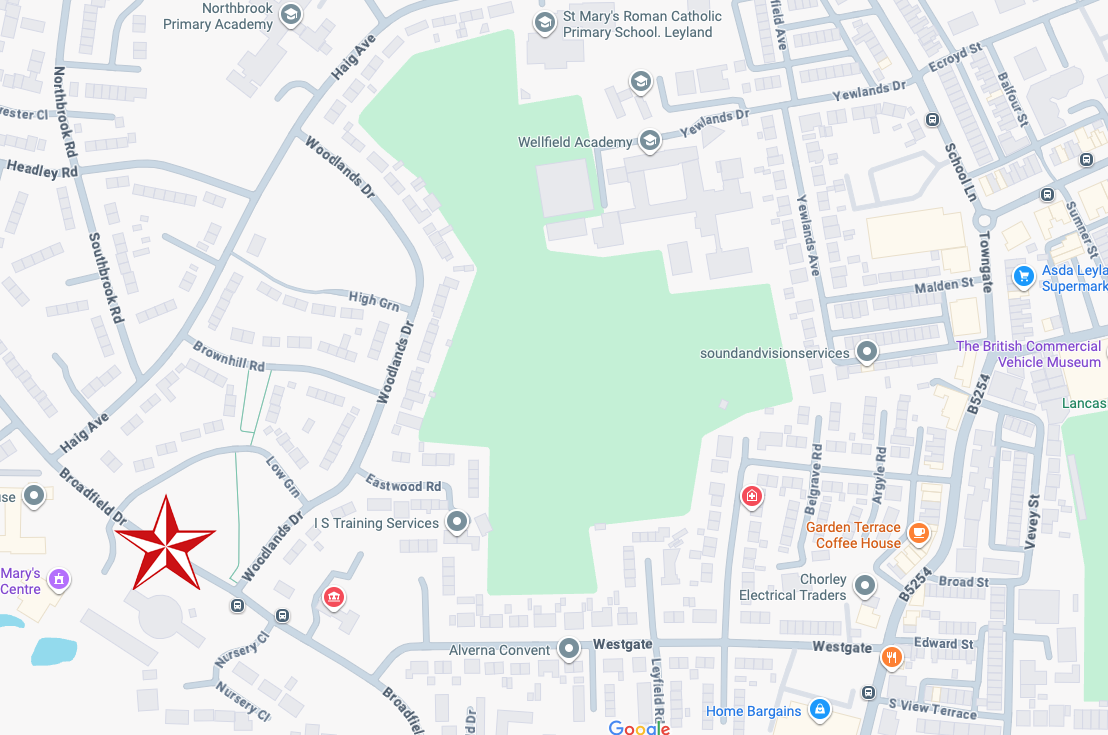
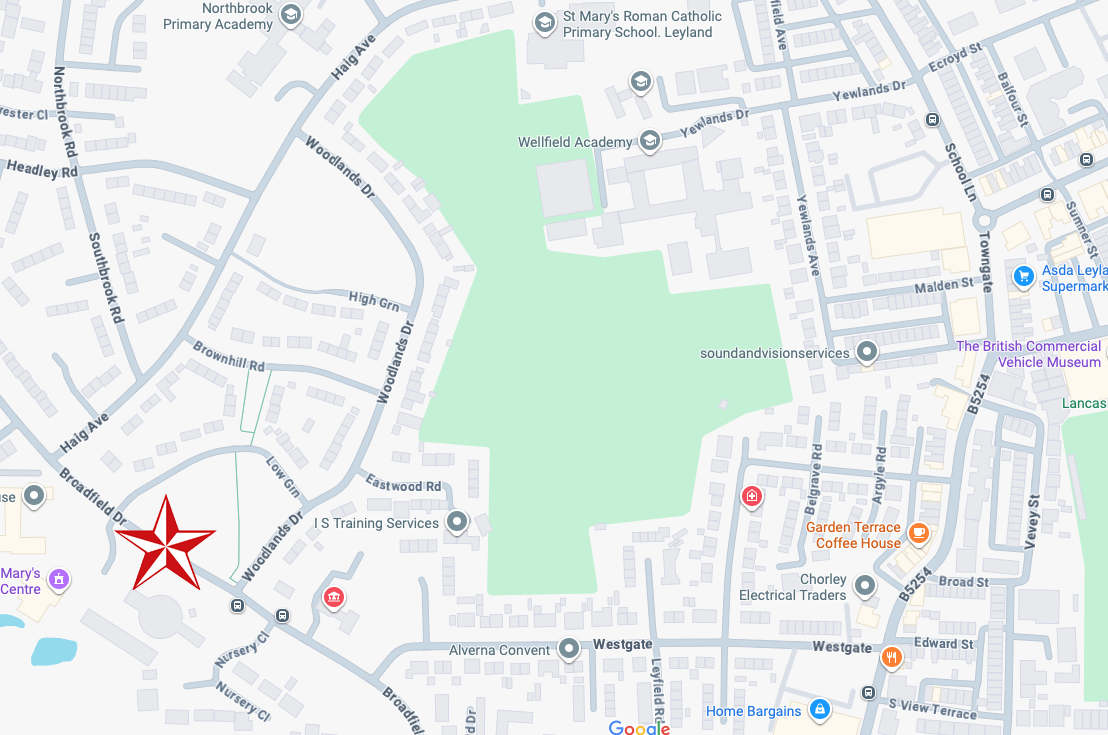
Broadfield Drive Leyland Lancashire PR25 1PD

May I first thanks Parish Administrator Catherine, for taking the time to open the church for our visiting group of Modernists this Saturday – and providing us with the warmest of welcomes, along with a brew and a biscuit or two.

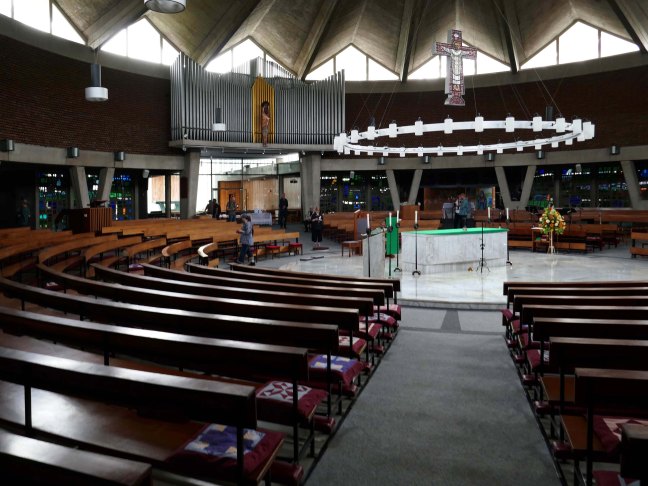
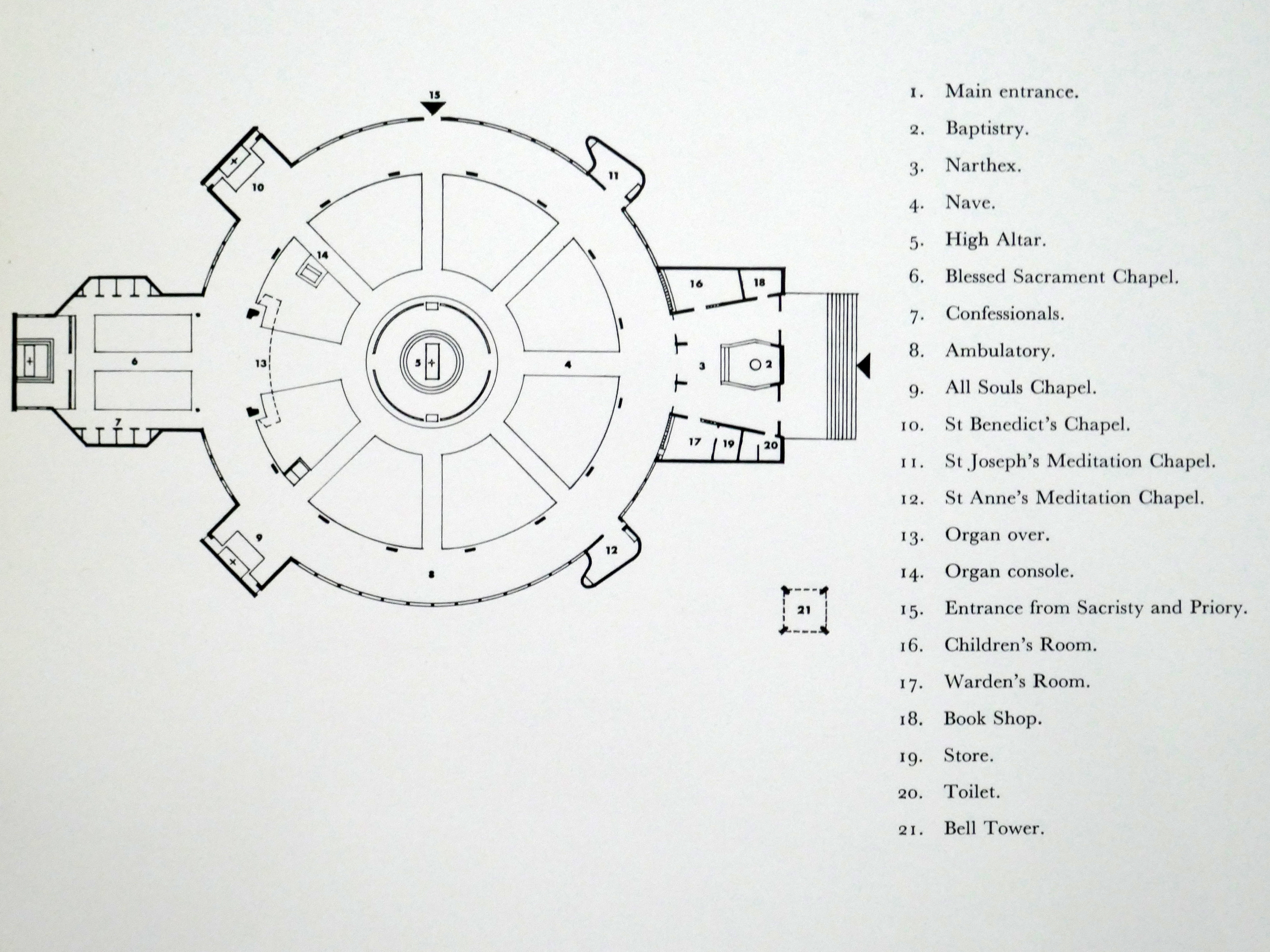
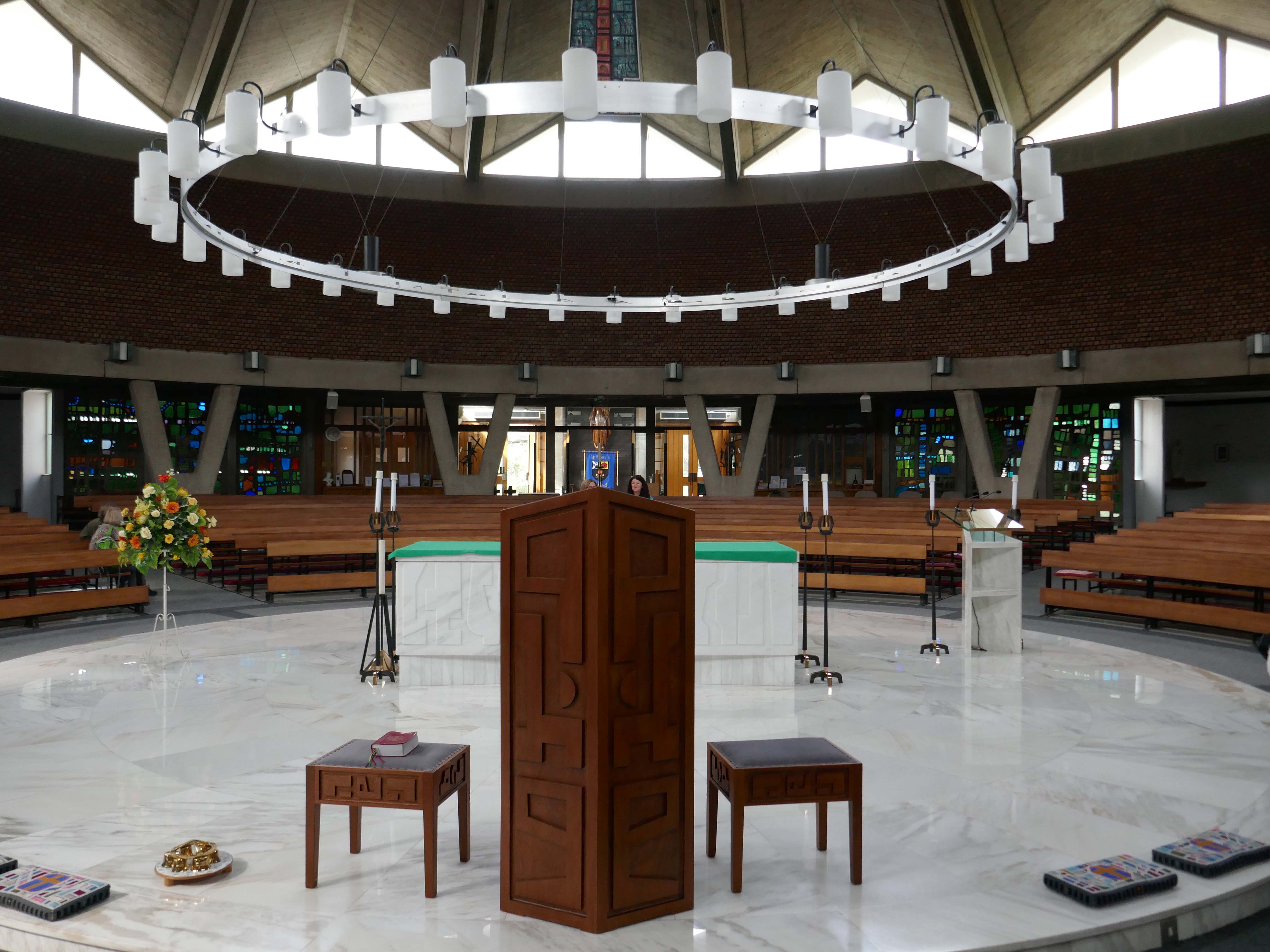
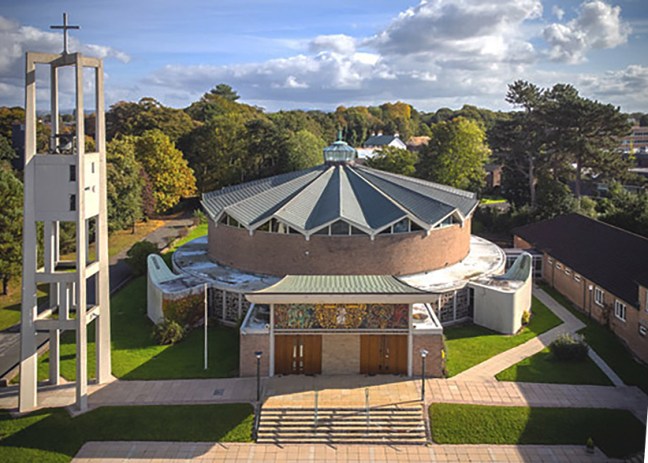
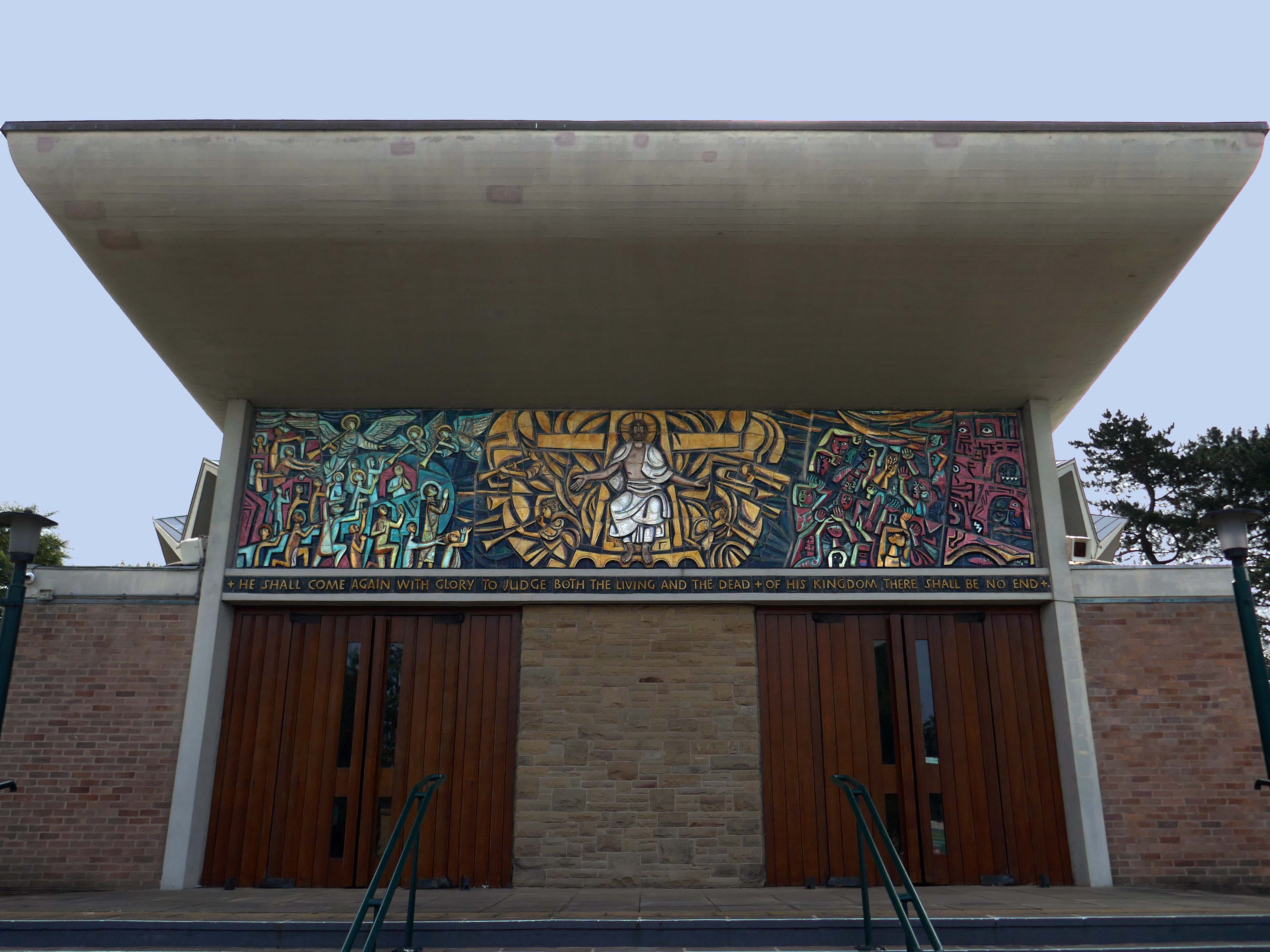
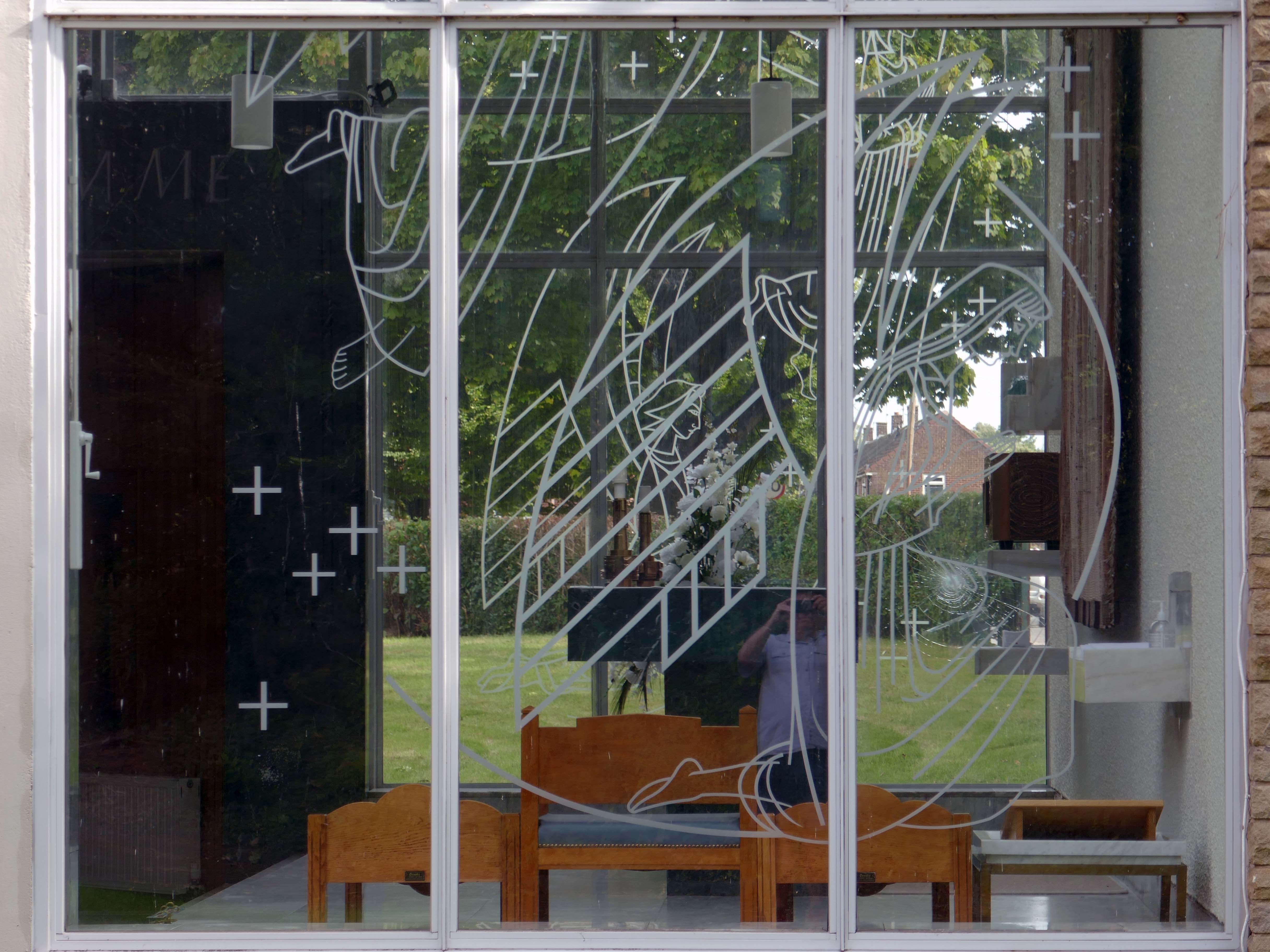
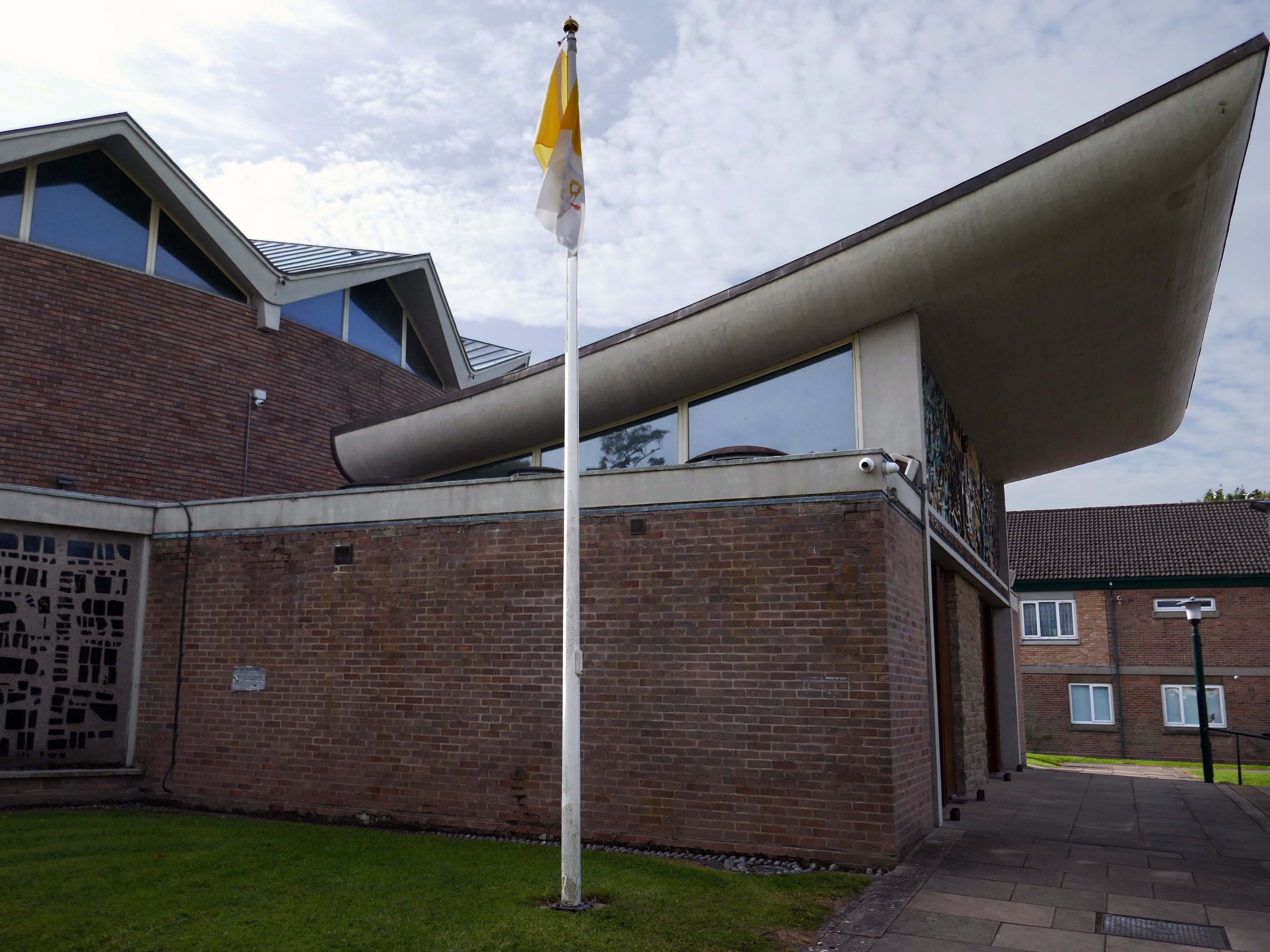
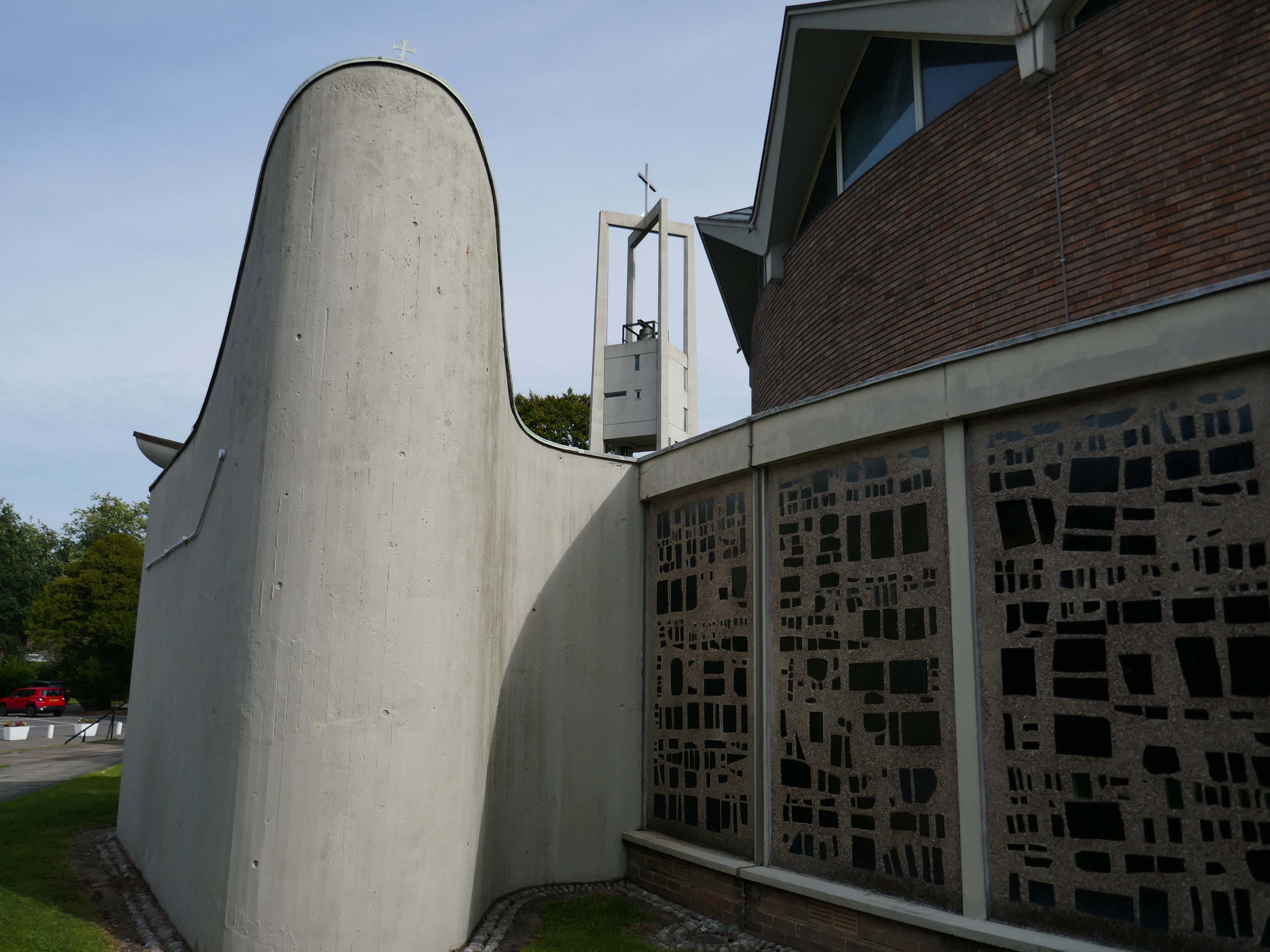
The church was designed by Jerzy Faczynski of Weightman and Bullen. Cardinal Heenan blessed the foundation stone in 1962  and the new church was completed ready for its consecration and dedication by Archbishop Beck in April 1964.

The church is a testament to the ambition, imagination and optimism of its age. Significantly, the building was the collaborative work of both immigrant and native architects, artists and designers.

This has been celebrated by Owen Hatherley’s recent book The Alienation Effect.

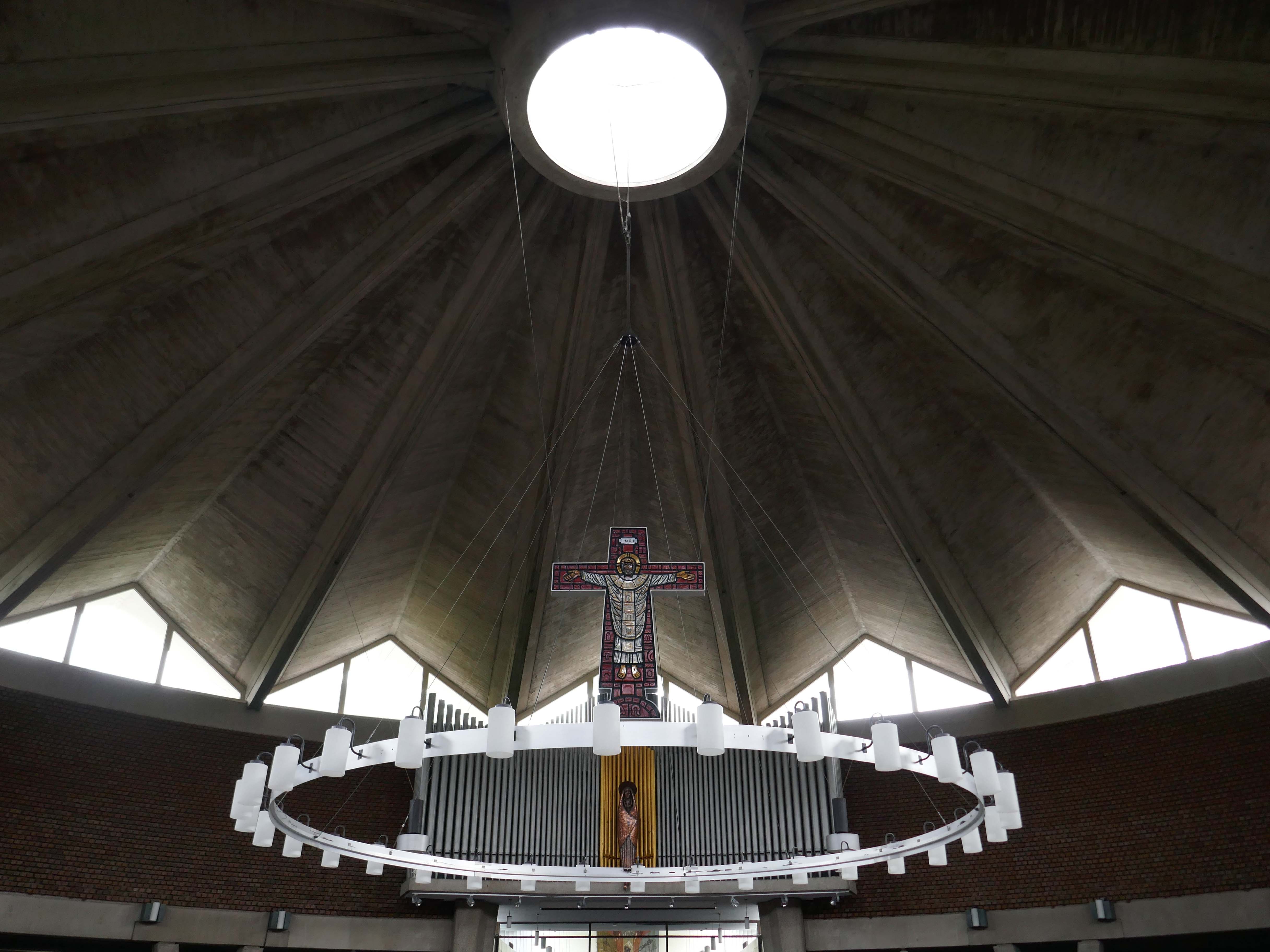
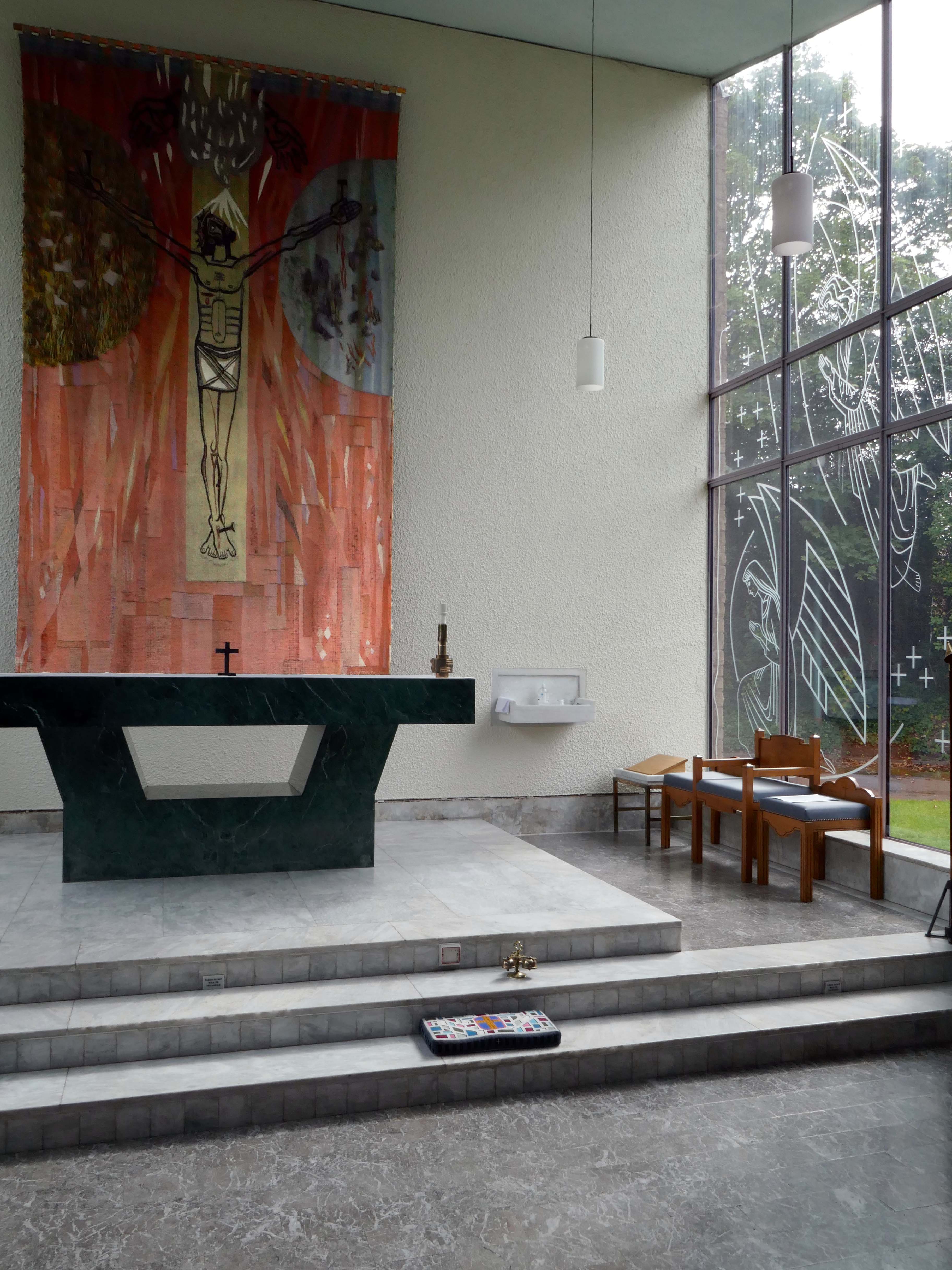
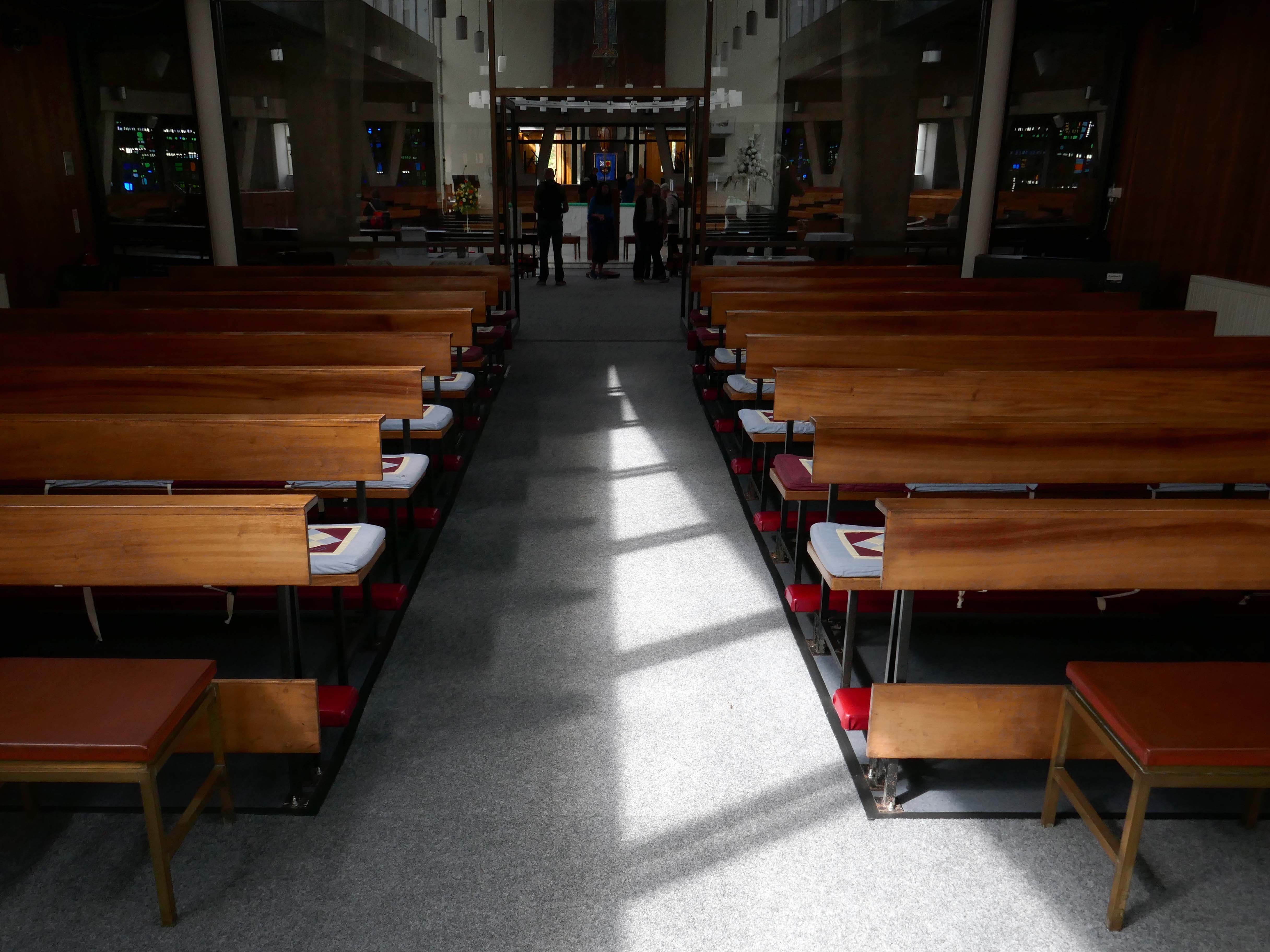
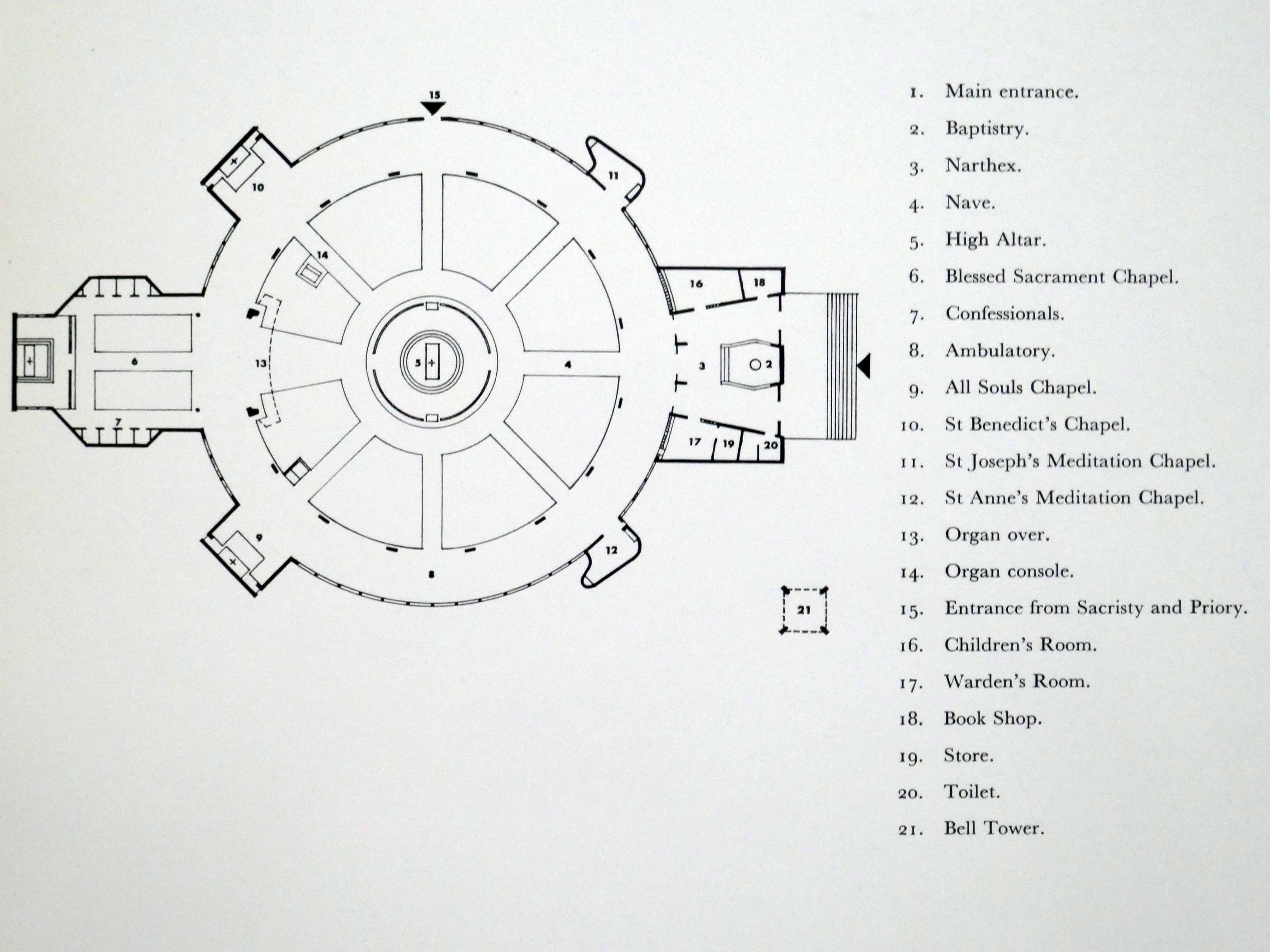
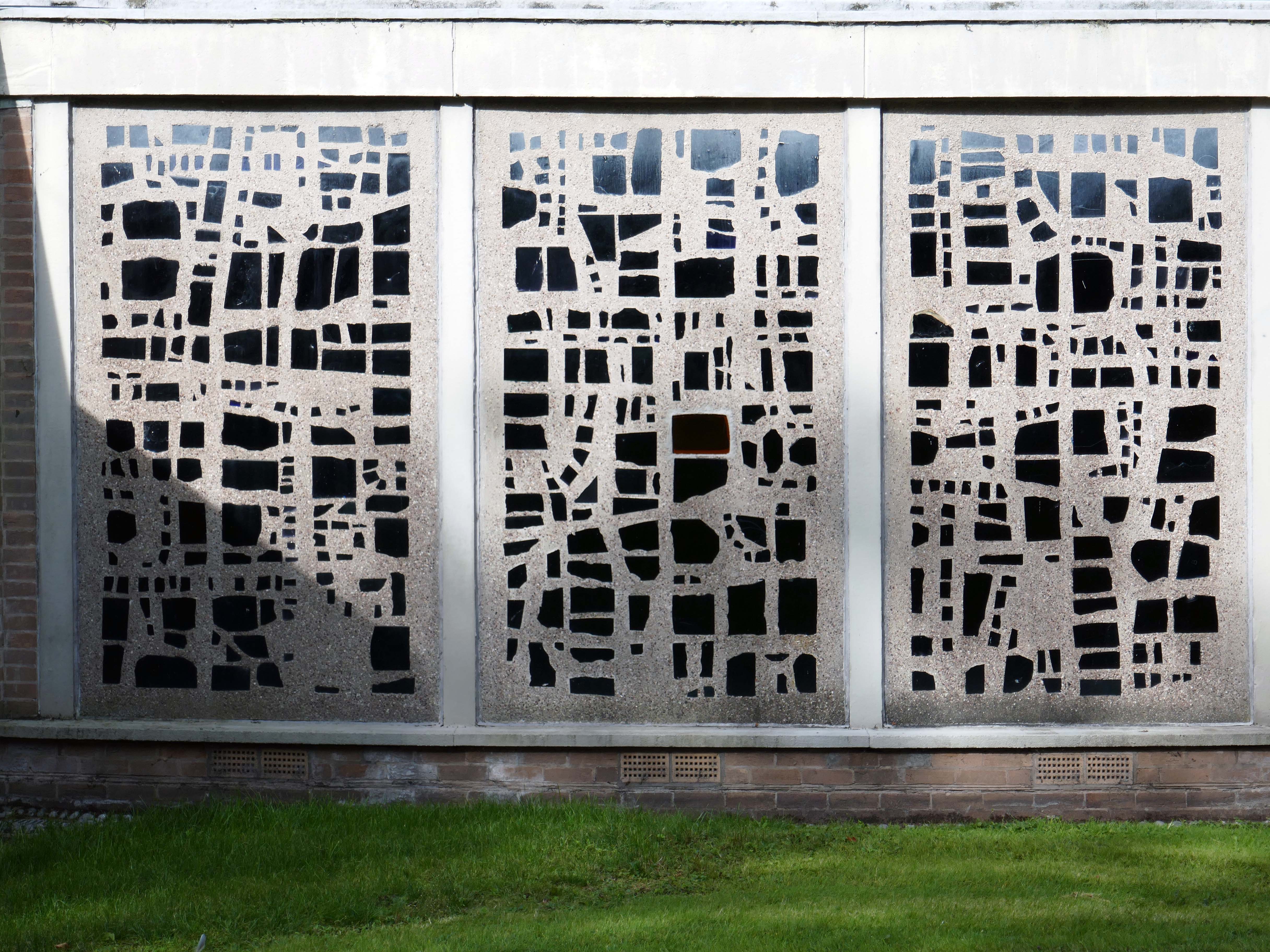
A folded slab roof of ninety five feet in diameter, its concrete cast on site, bearing the marks of the wooden shuttering, contrasting with the smooth surface of the pre-cast valley beams.

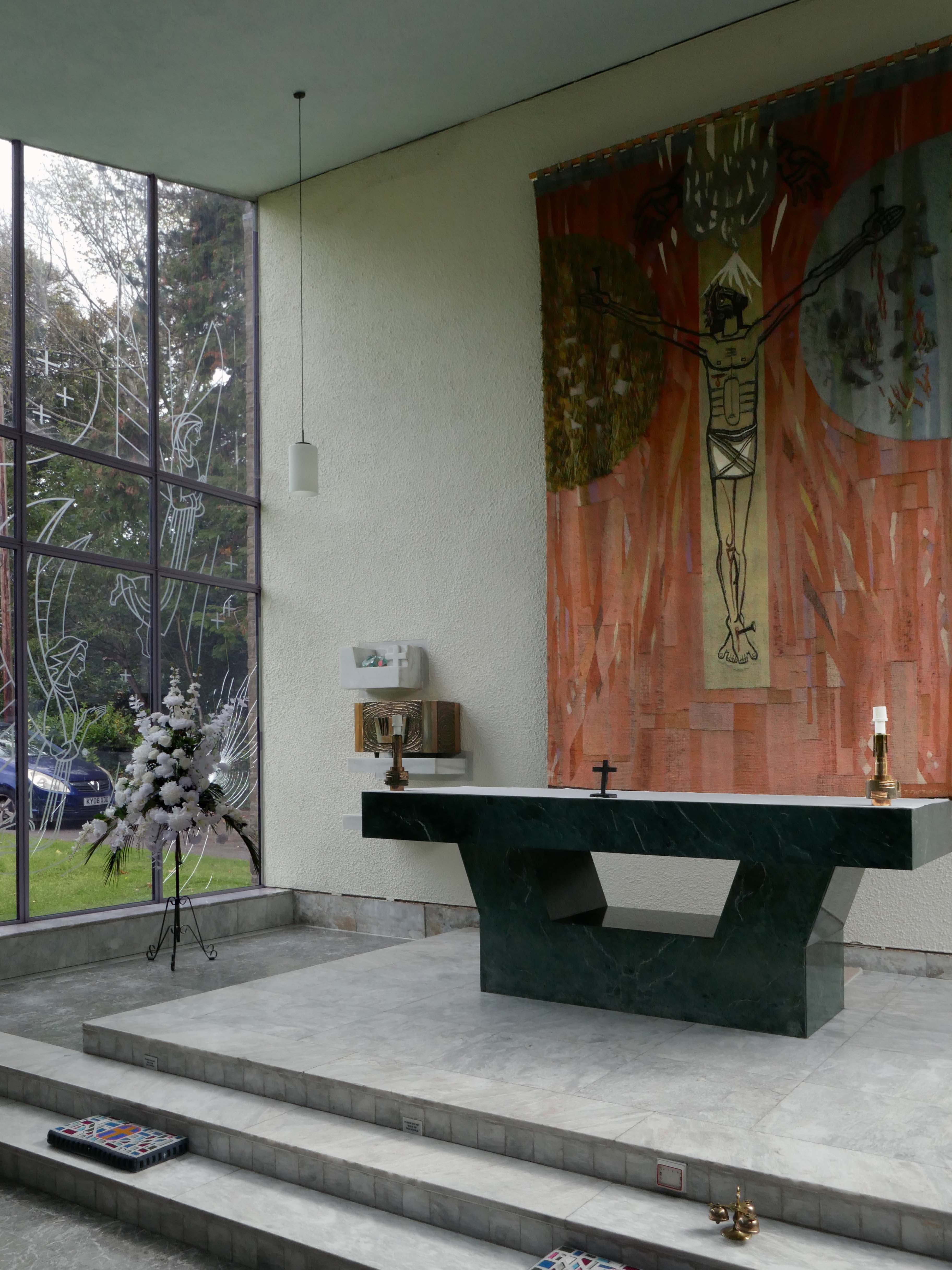
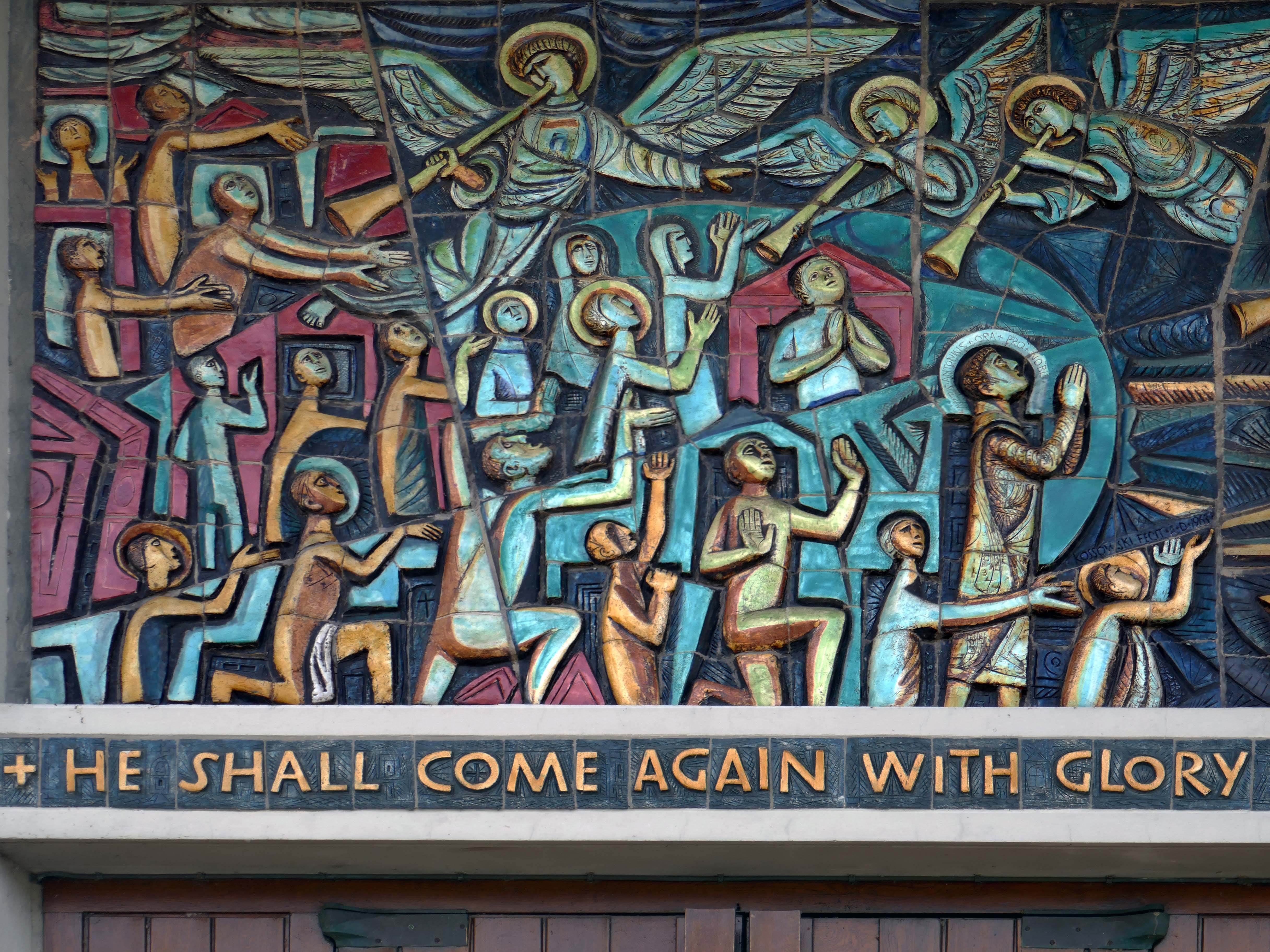
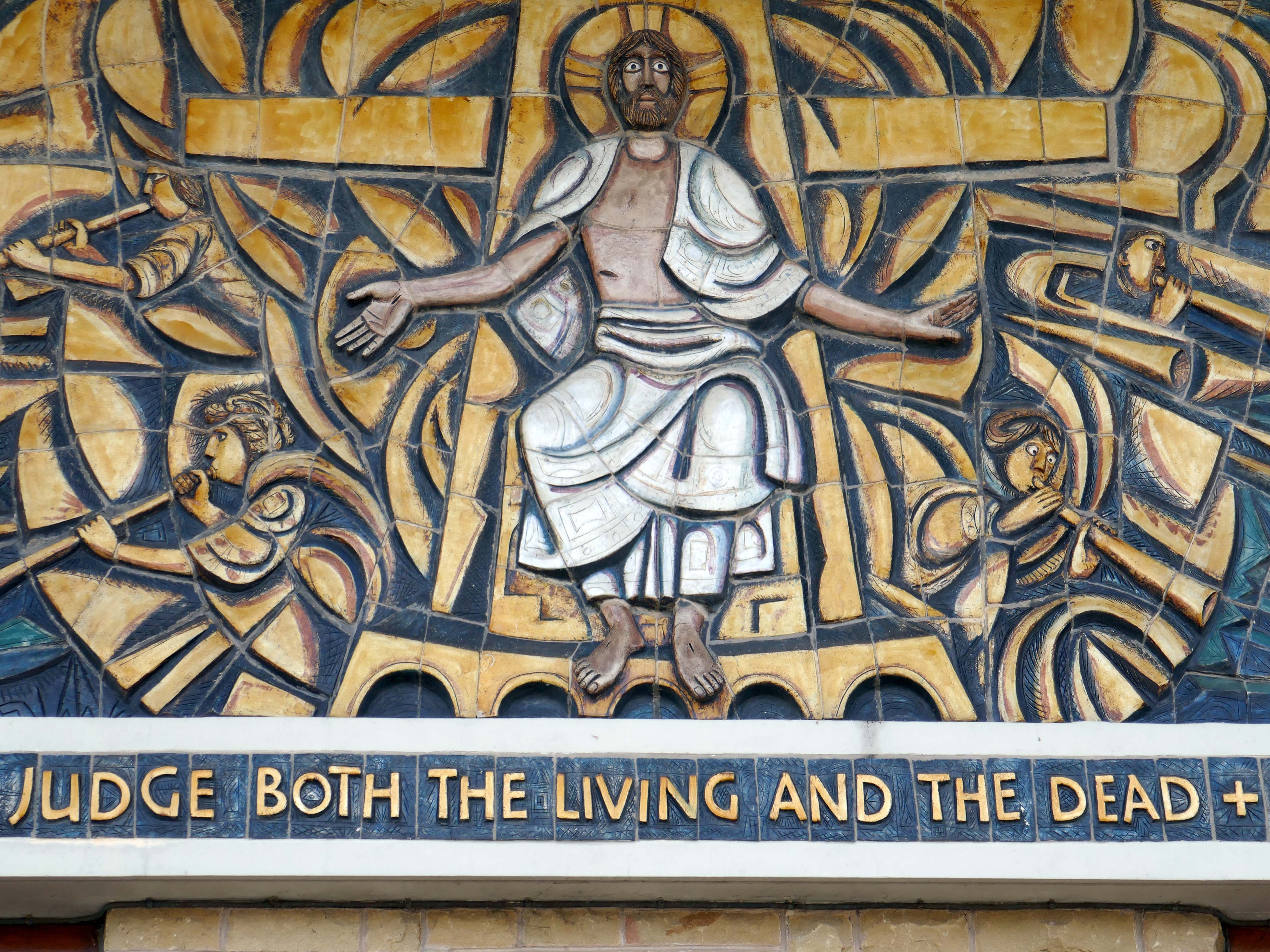
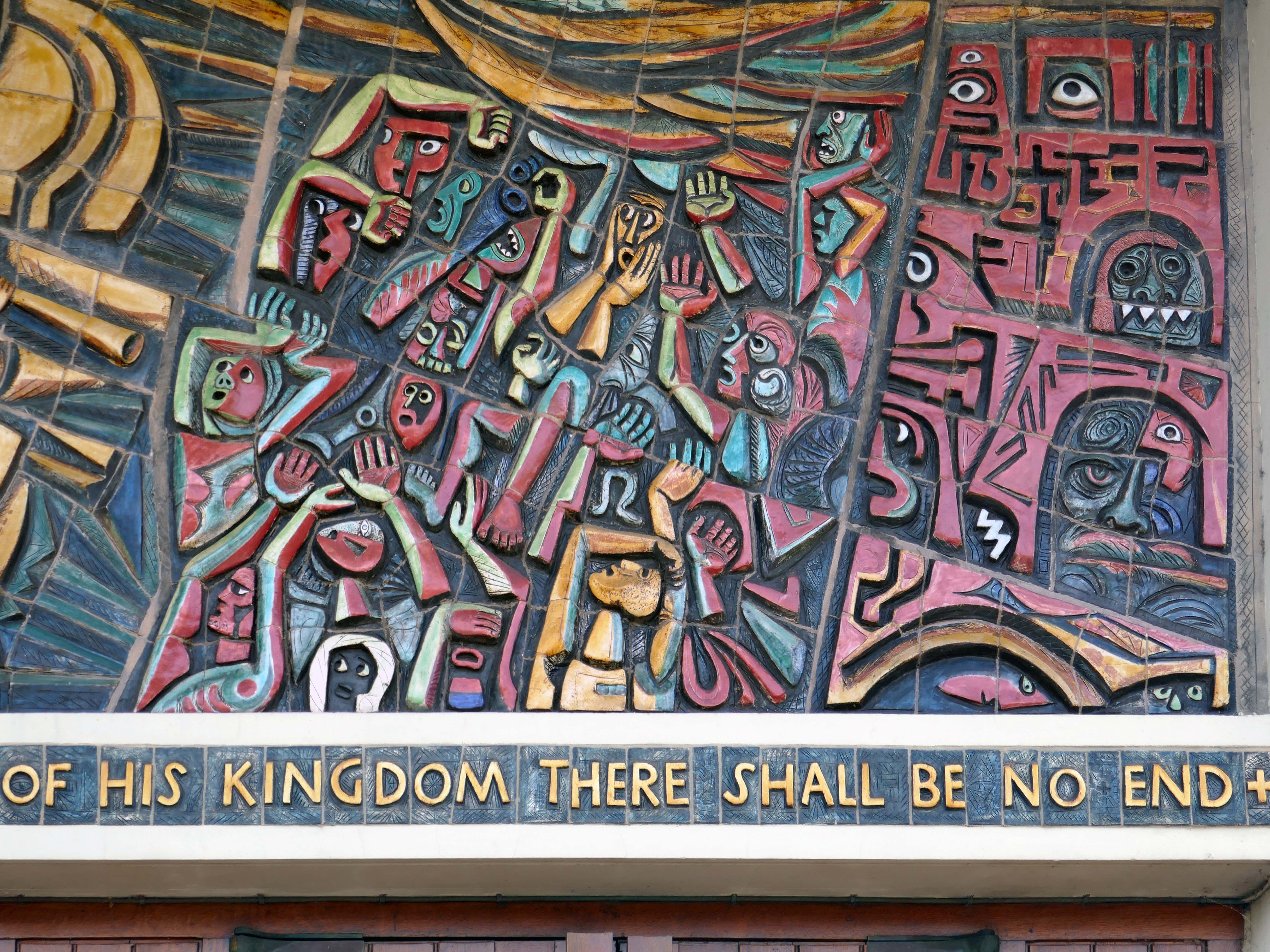
The Crucifix Rex frame is by Alan Roberts and the ceramic figure by Adam Kossowski.

The organ is designed by JW Walker & Son.

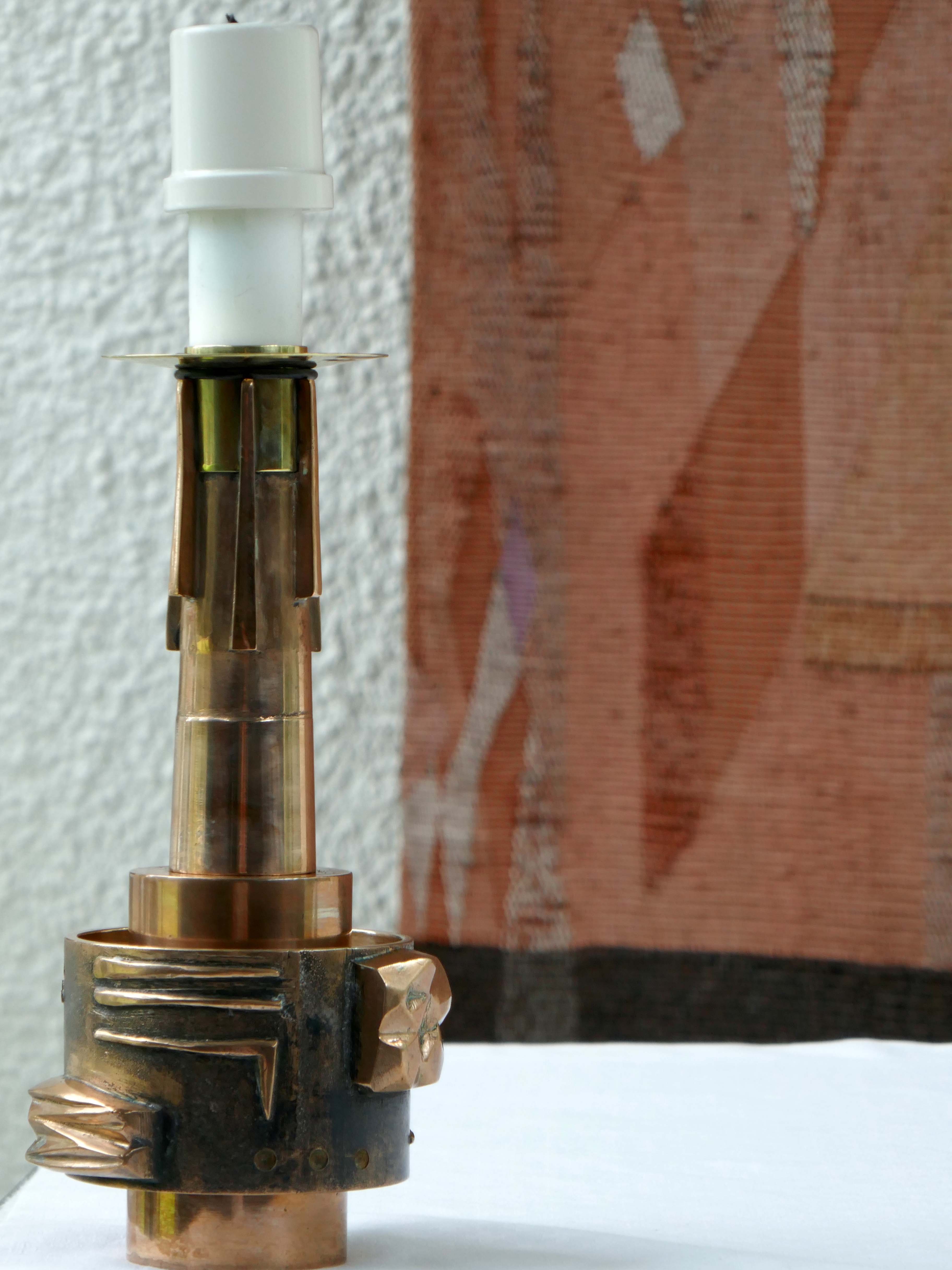
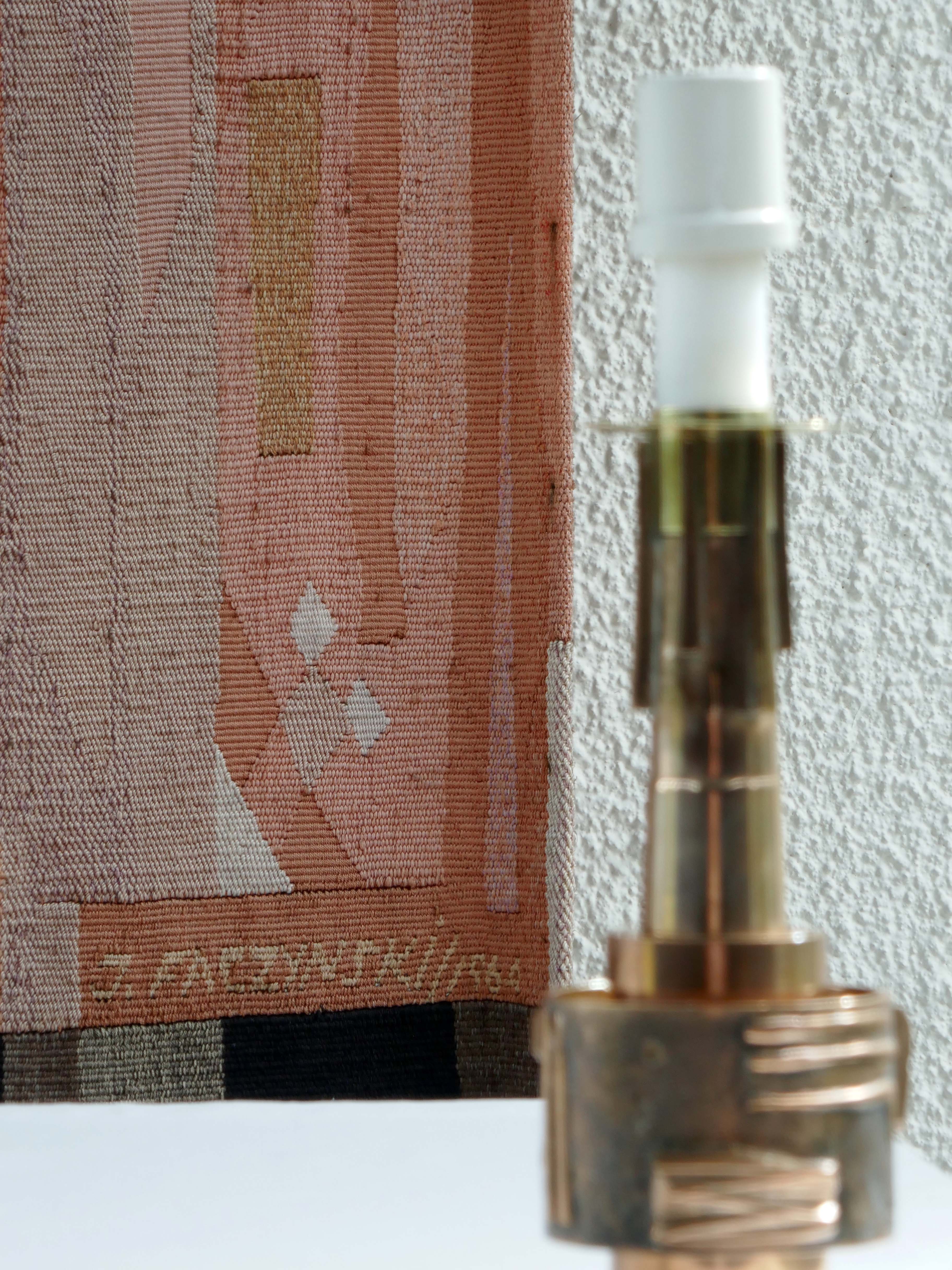
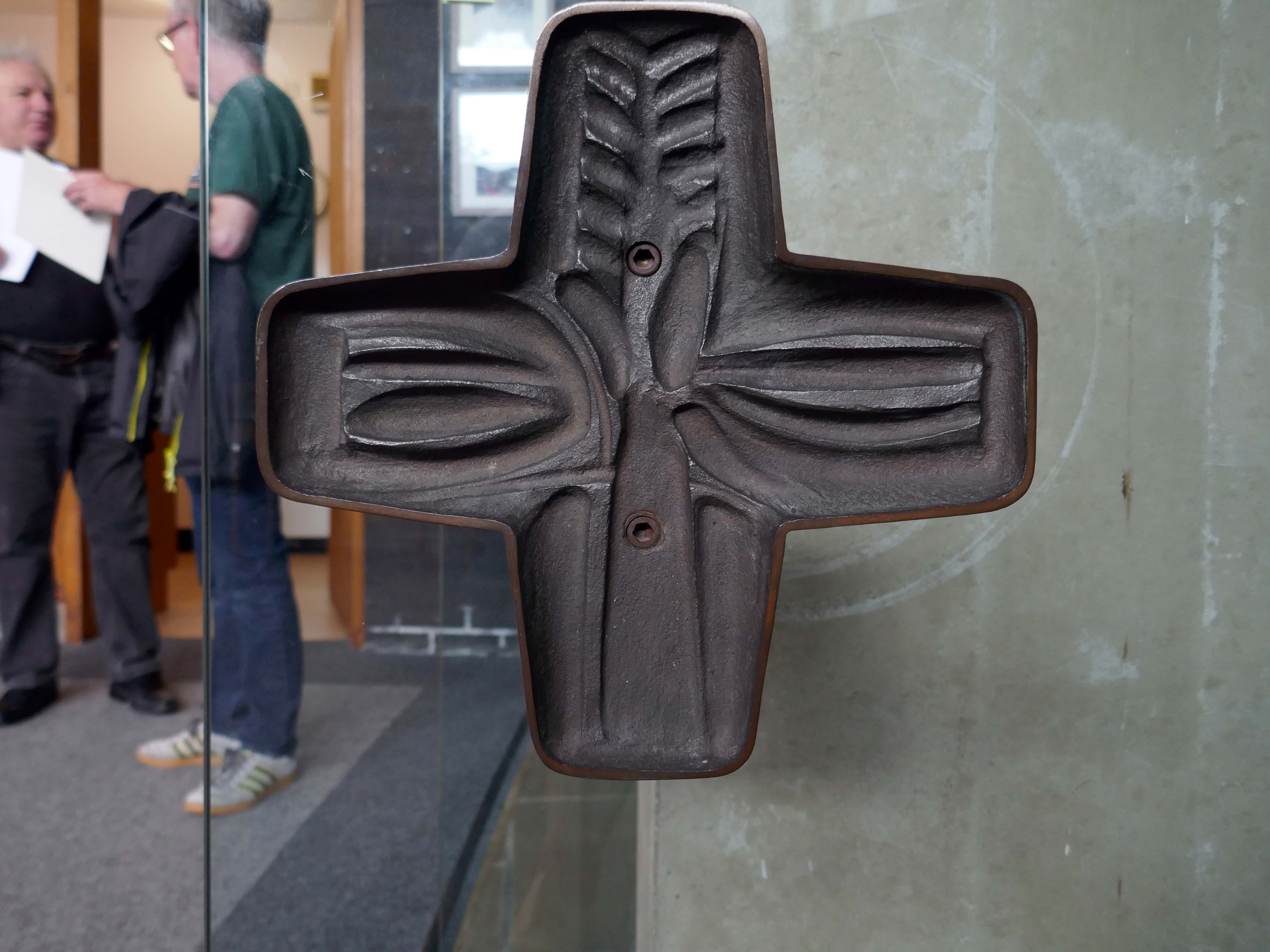
The candlesticks and metal furnishings in all the Chapels were fashioned in the foundry of Messrs Bagnall of Kirkby to the design of Robin McGhie.

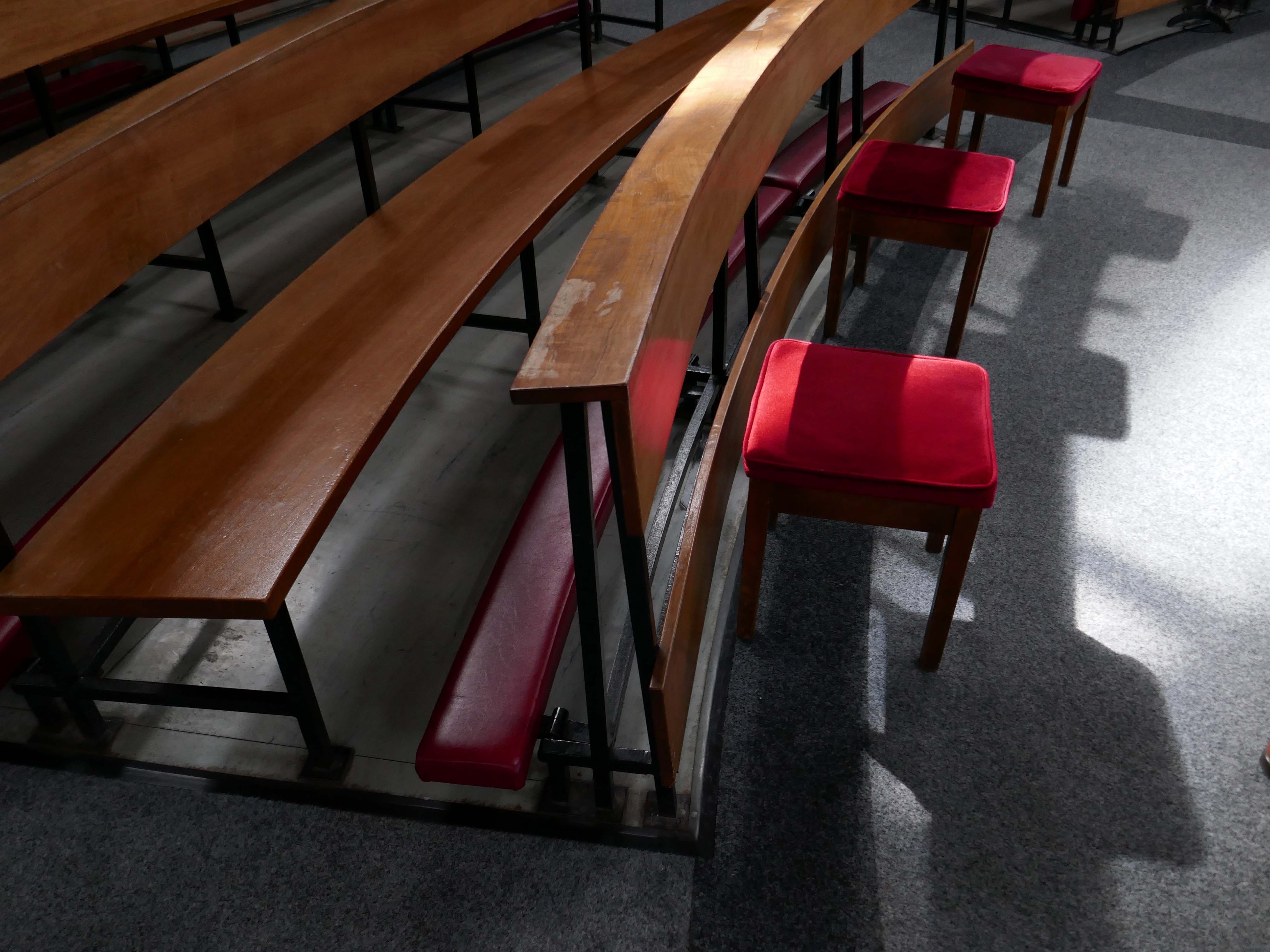
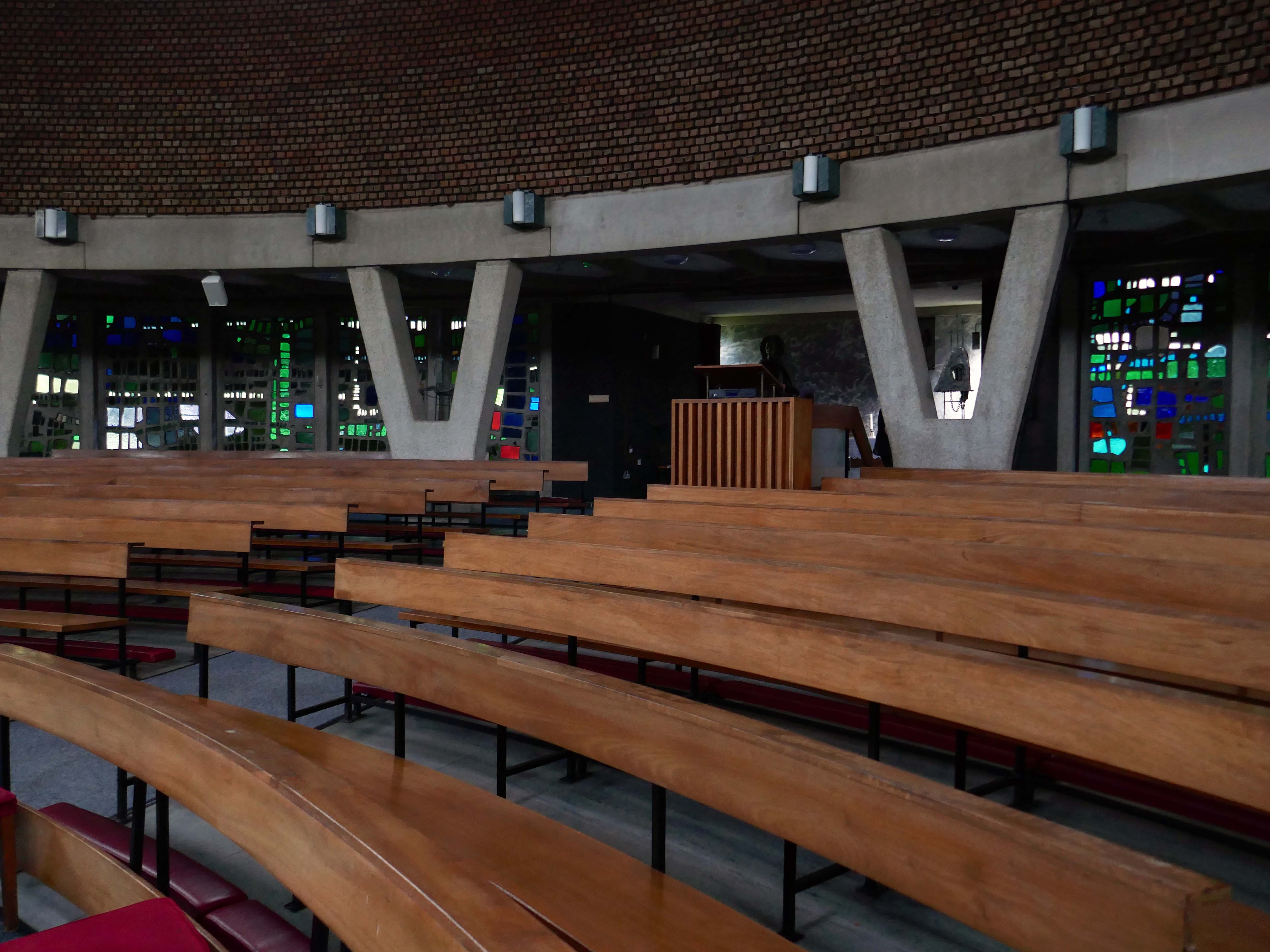
The curved benches are of Ghana mahogany and were made by the Robert Thompson Craftsmen of Kilburn, the steel work by GS Graham of Stokesley. The distinctive Mouseman mouse can be found on several of the bench ends.

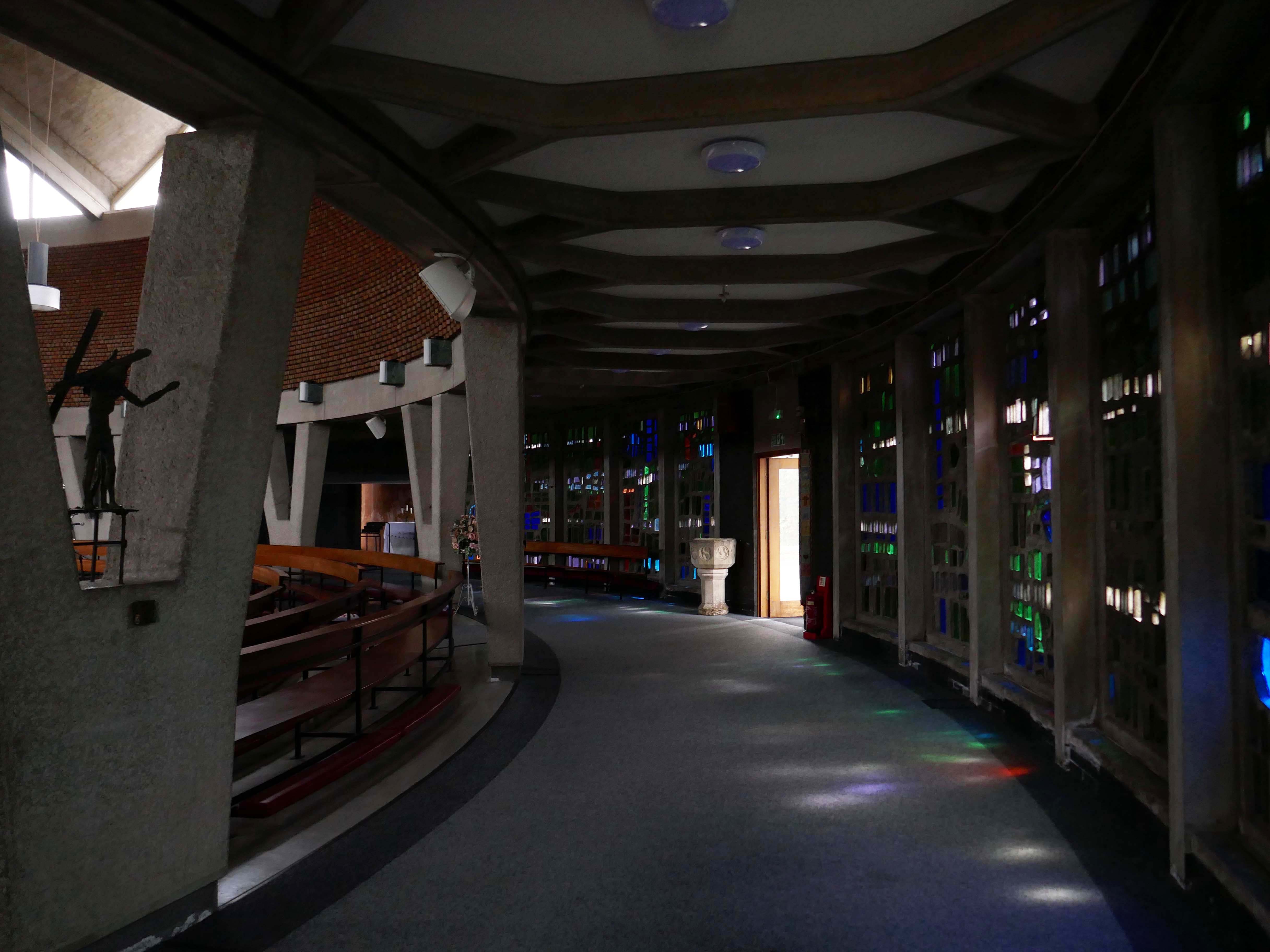
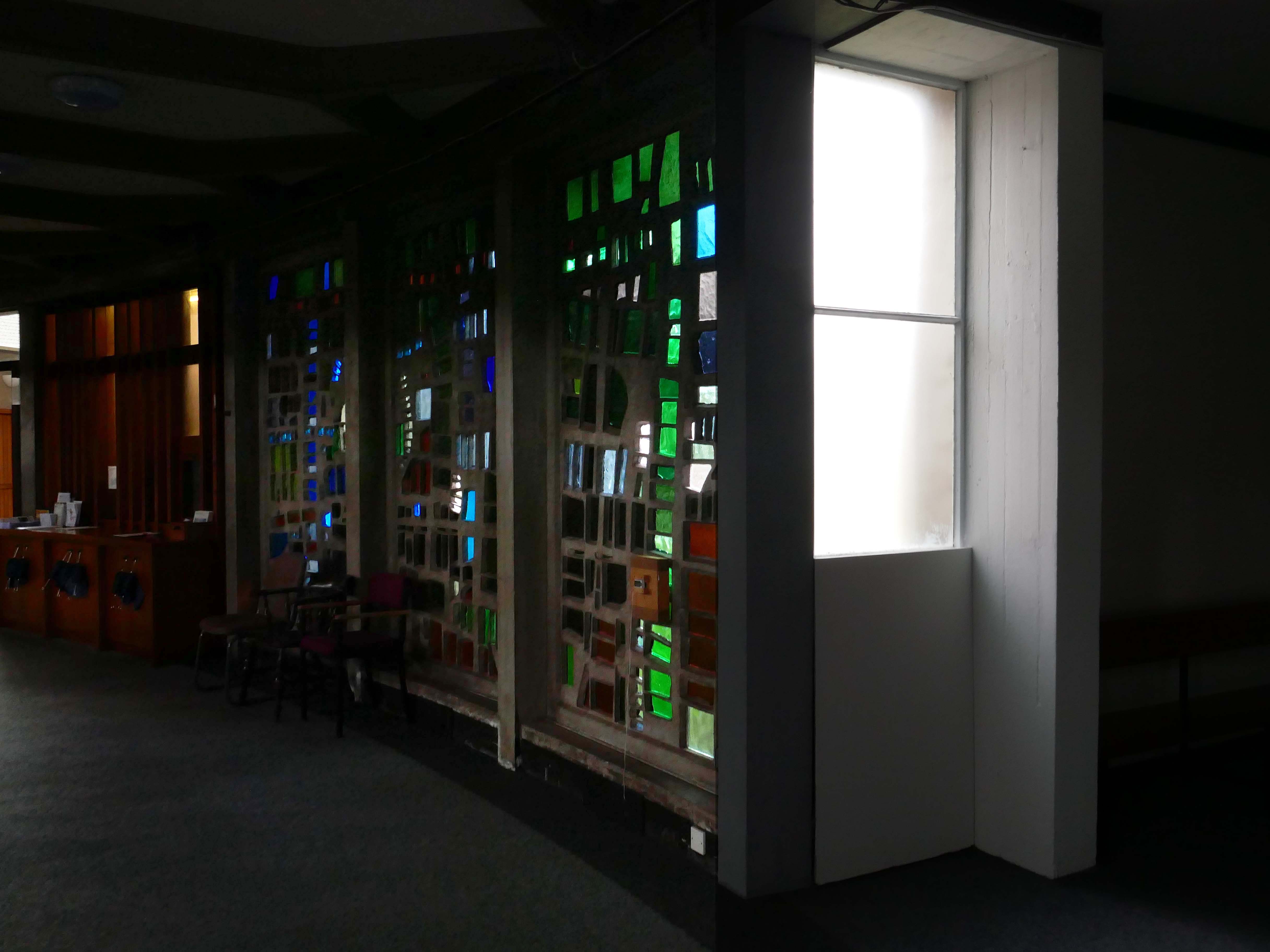
Dalle de Verre stained glass by Patrick Reyntiens, thirty-six panels abstract totalling two hundred and thirty three feet in length.

The theme for the windows is taken from the first nine verses of Genesis, and the passage of Proverbs c. vii. Amorphous undifferentiated matter with the beginnings of definition and pattern, with here and there the promise of order and system.

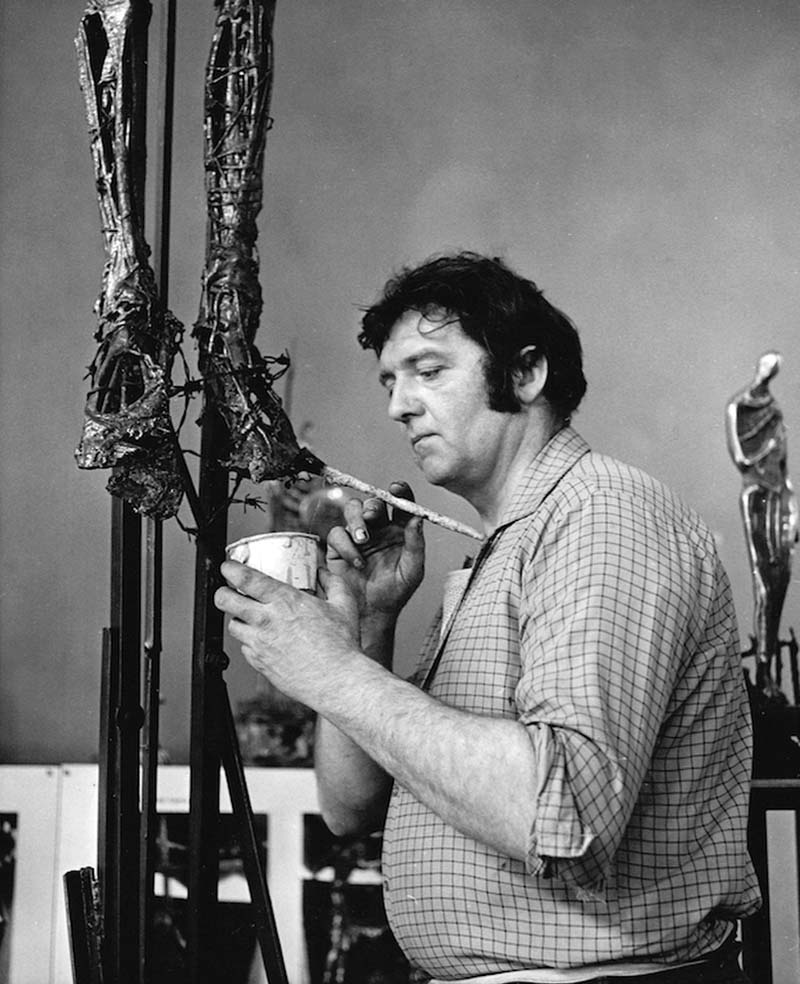
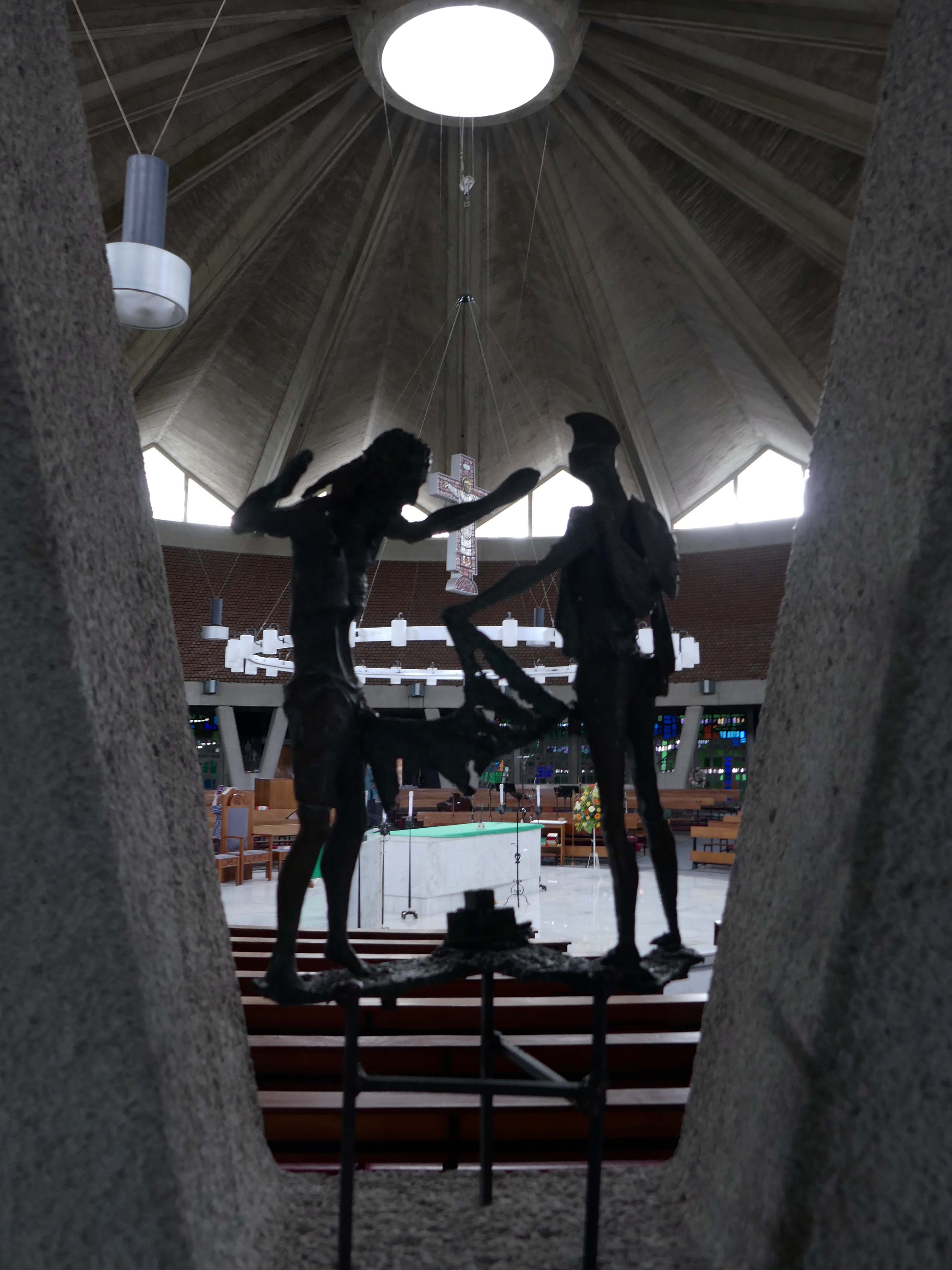
The Stations of the Cross are the work of Liverpool sculptor Arthur Dooley.

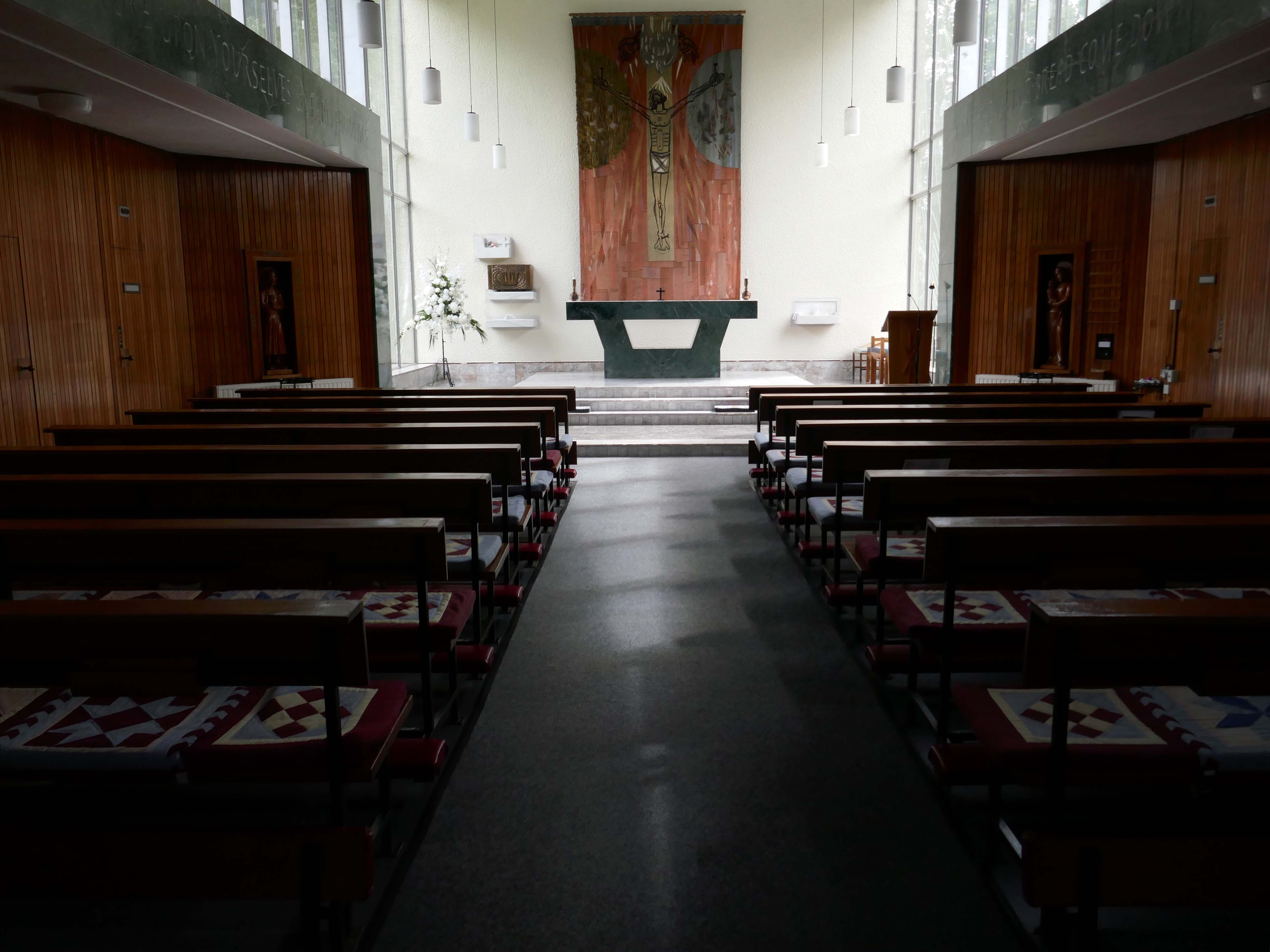
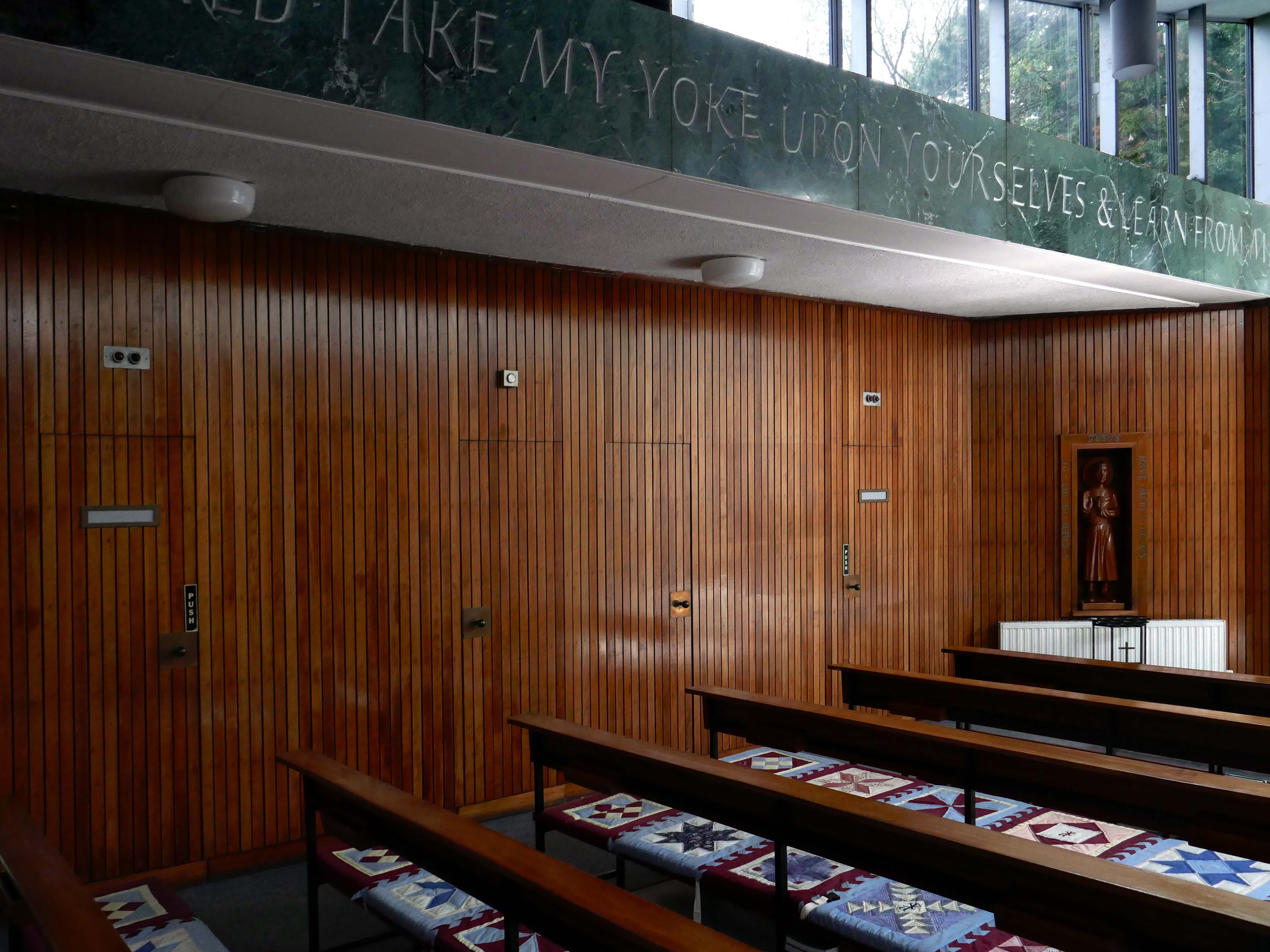
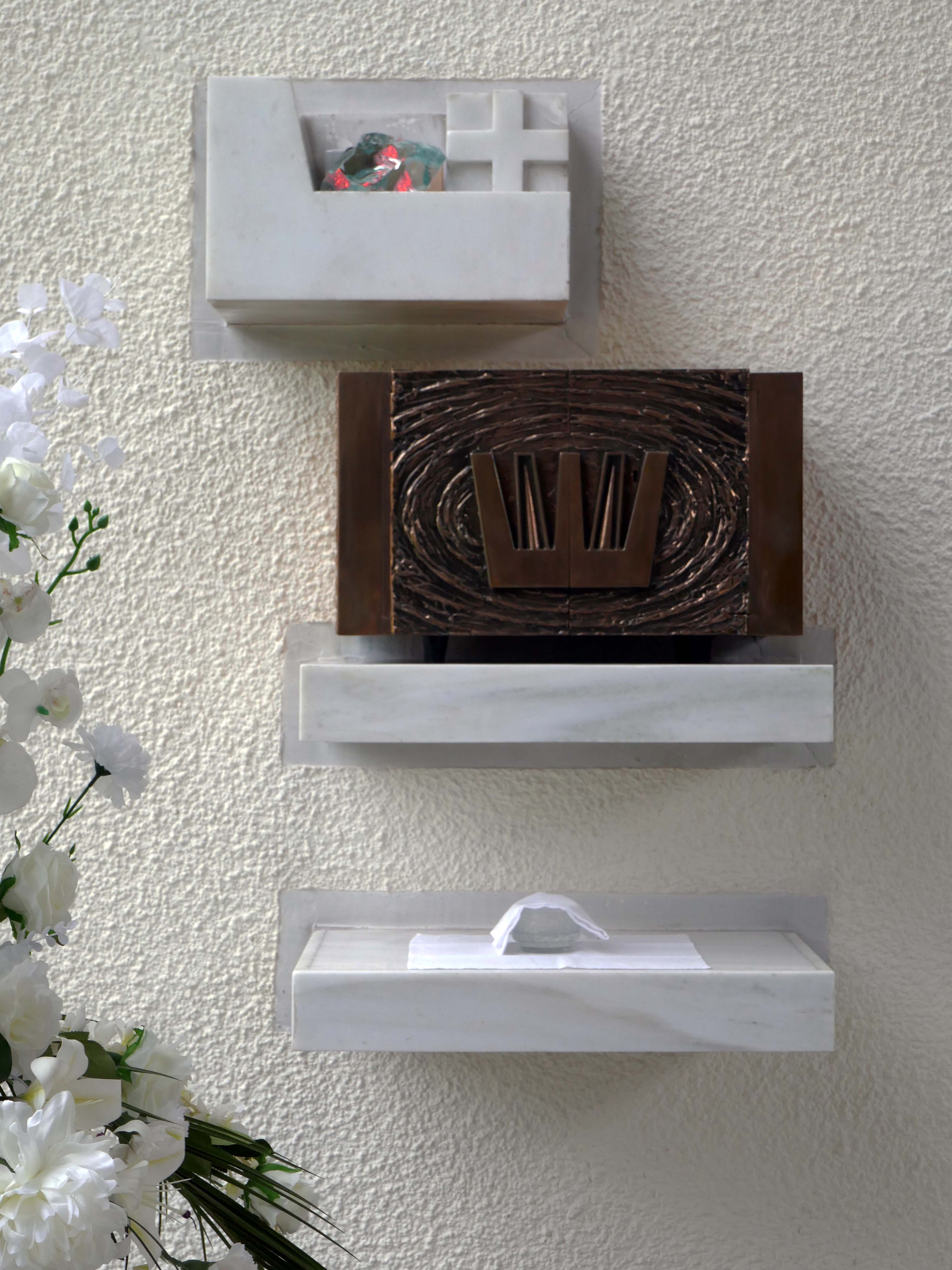
The Chapel of the Blessed Sacrament is designed to seat one hundred and twenty.

The lettering on the green marble frieze is by George Thomas.

The tabernacle, crystal lamp and altar furniture were designed by Robin McGhie.

The tapestry, designed by architect Jerzy Faczynski and woven by the Edinburgh Tapestry Company, under H Jefferson Barnes and Anthony Brennan.

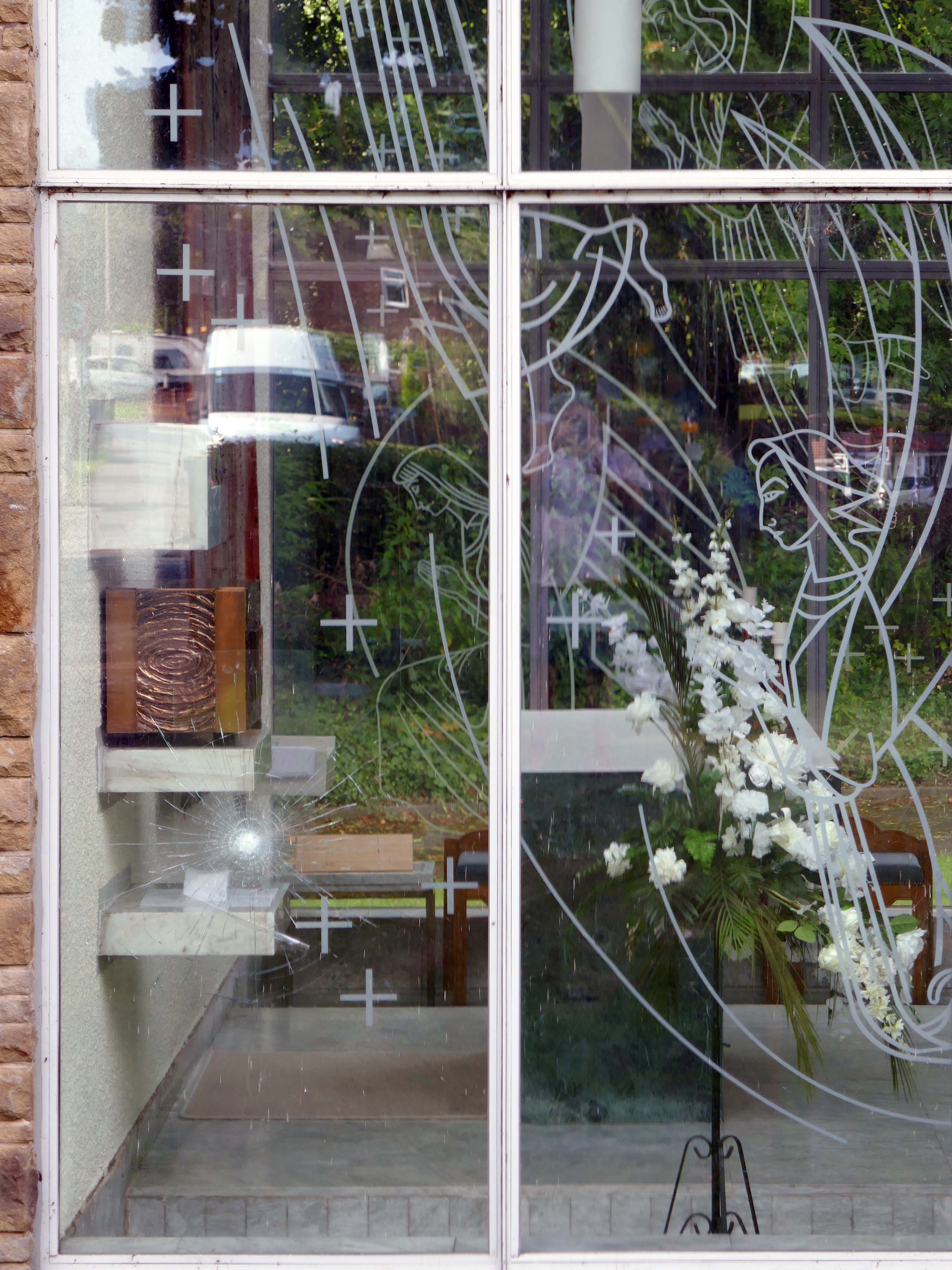
The etched glass panels are also by Jerzy Faczynski.

This is a church whose design and integral interior order and design, sits alongside both Coventry Cathedral and Liverpool Cathedral of Christ the King.

The finest materials and skills, working in harmony to produce a majestic whole.

Take a look outside too!

St Mary’s Church Exterior.

Broadfield Drive Leyland Lancashire PR25 1PD

I was first here in 2019 – it was raining, so snapping the exterior was a soggy task.

Returning in 2025 on a sunny day was a blessing.

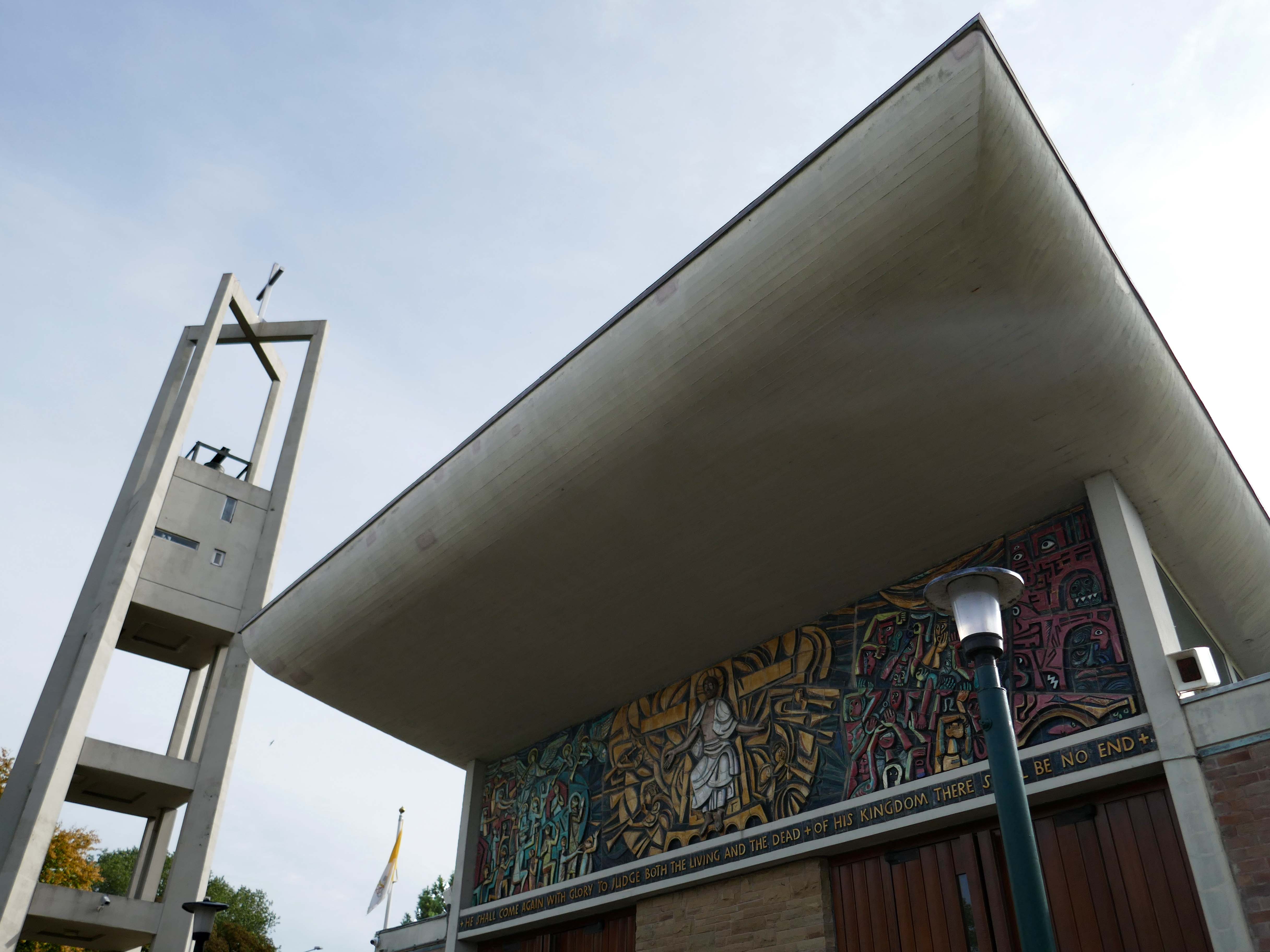
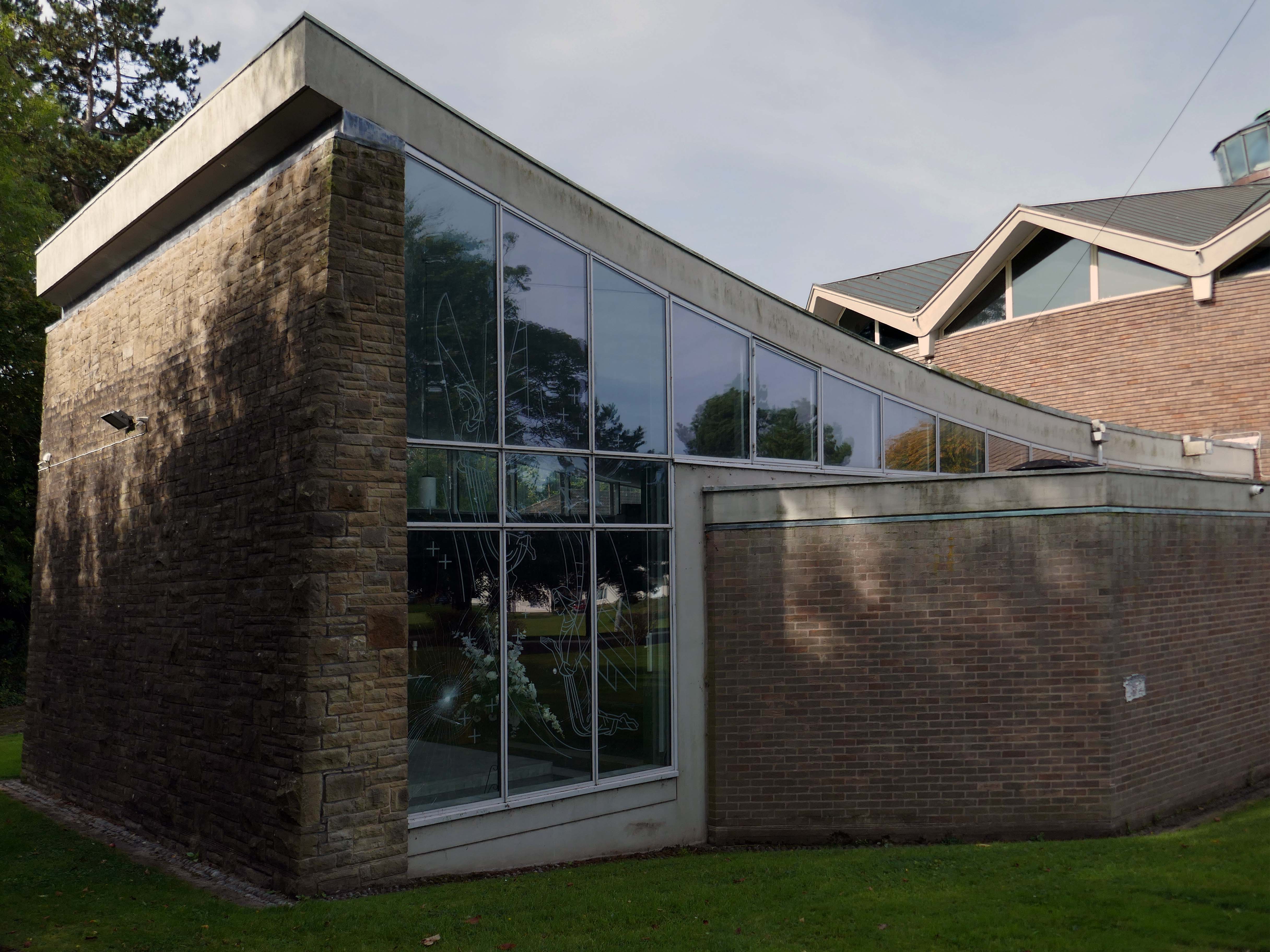
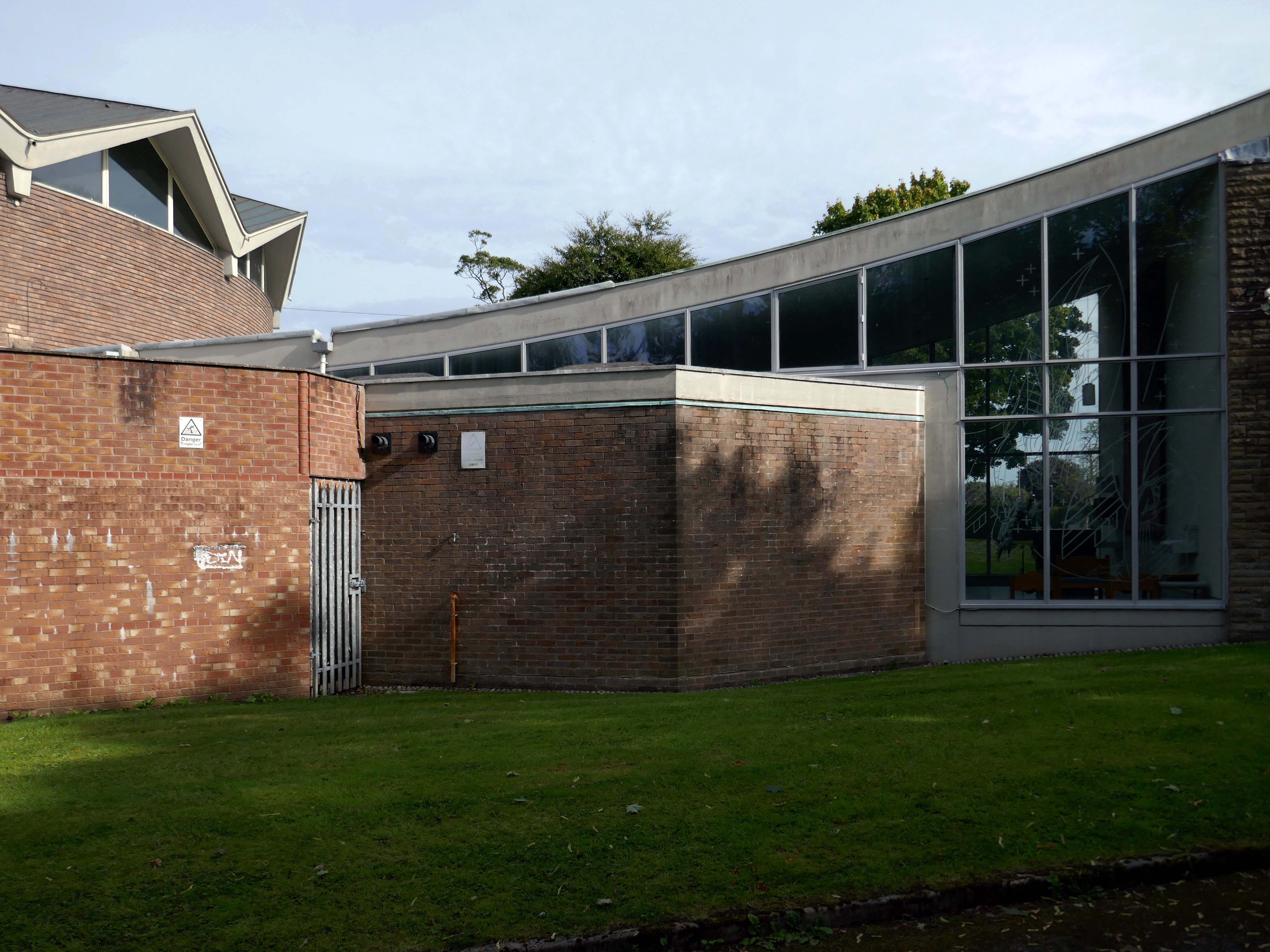
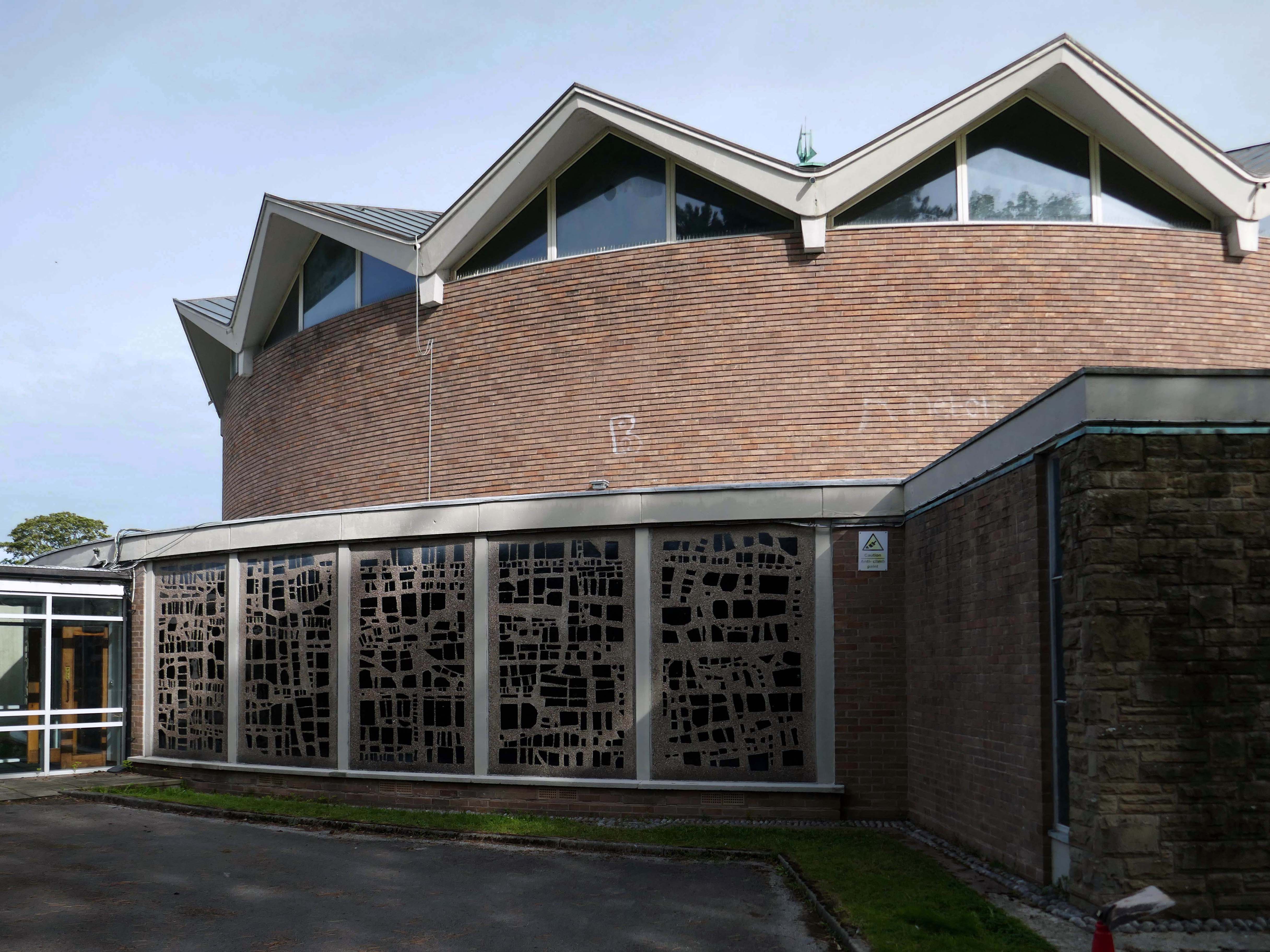
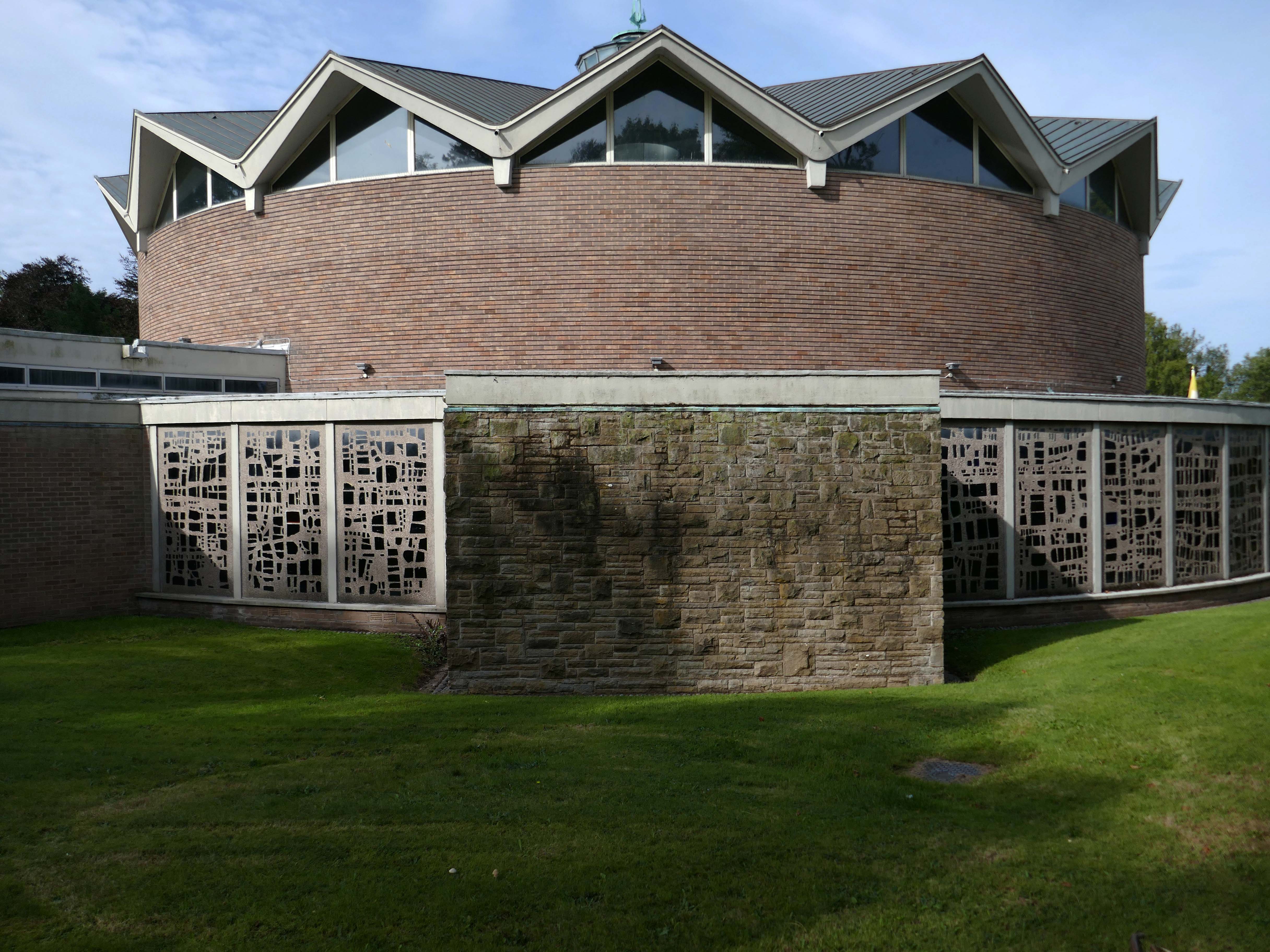
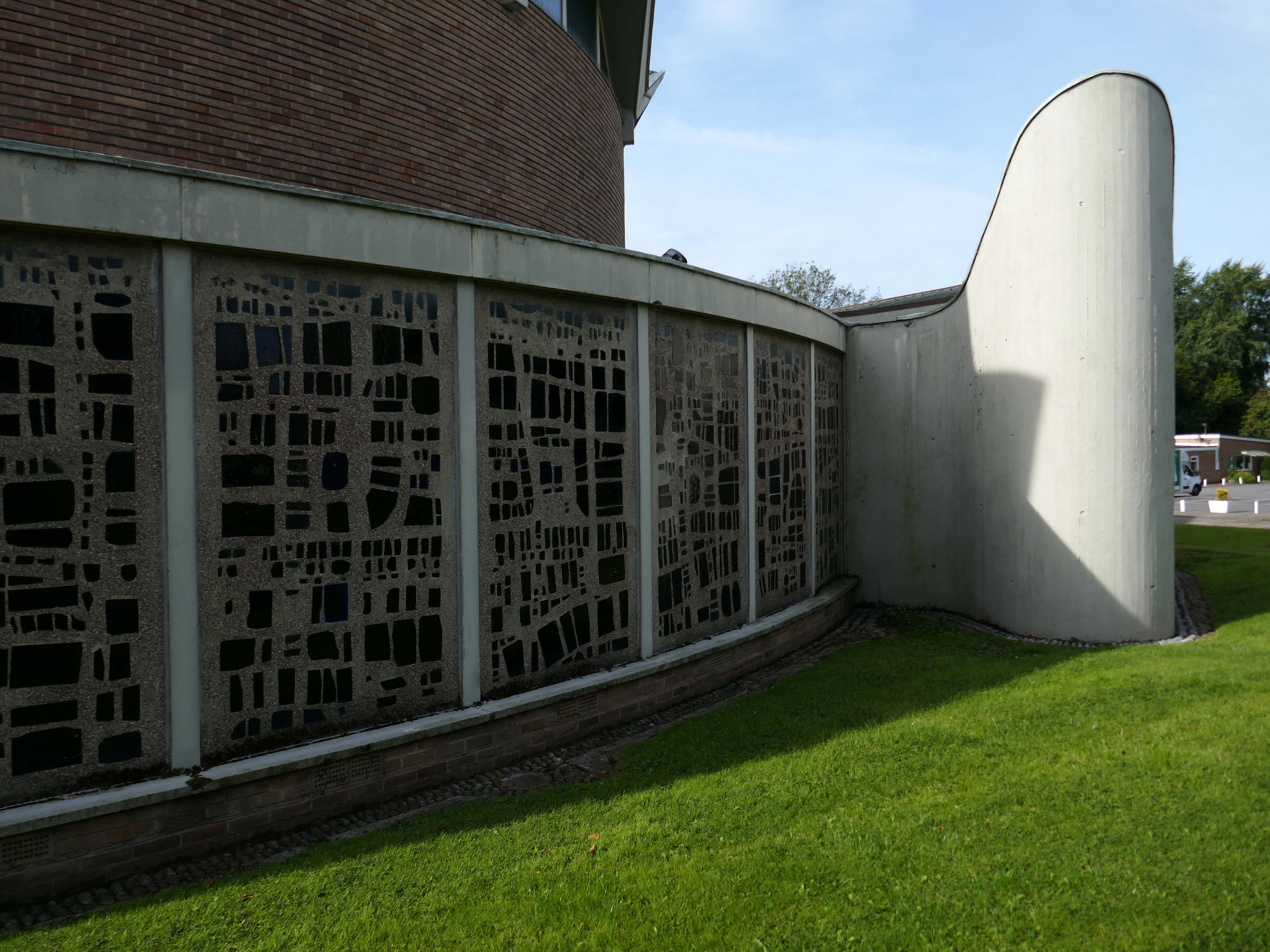
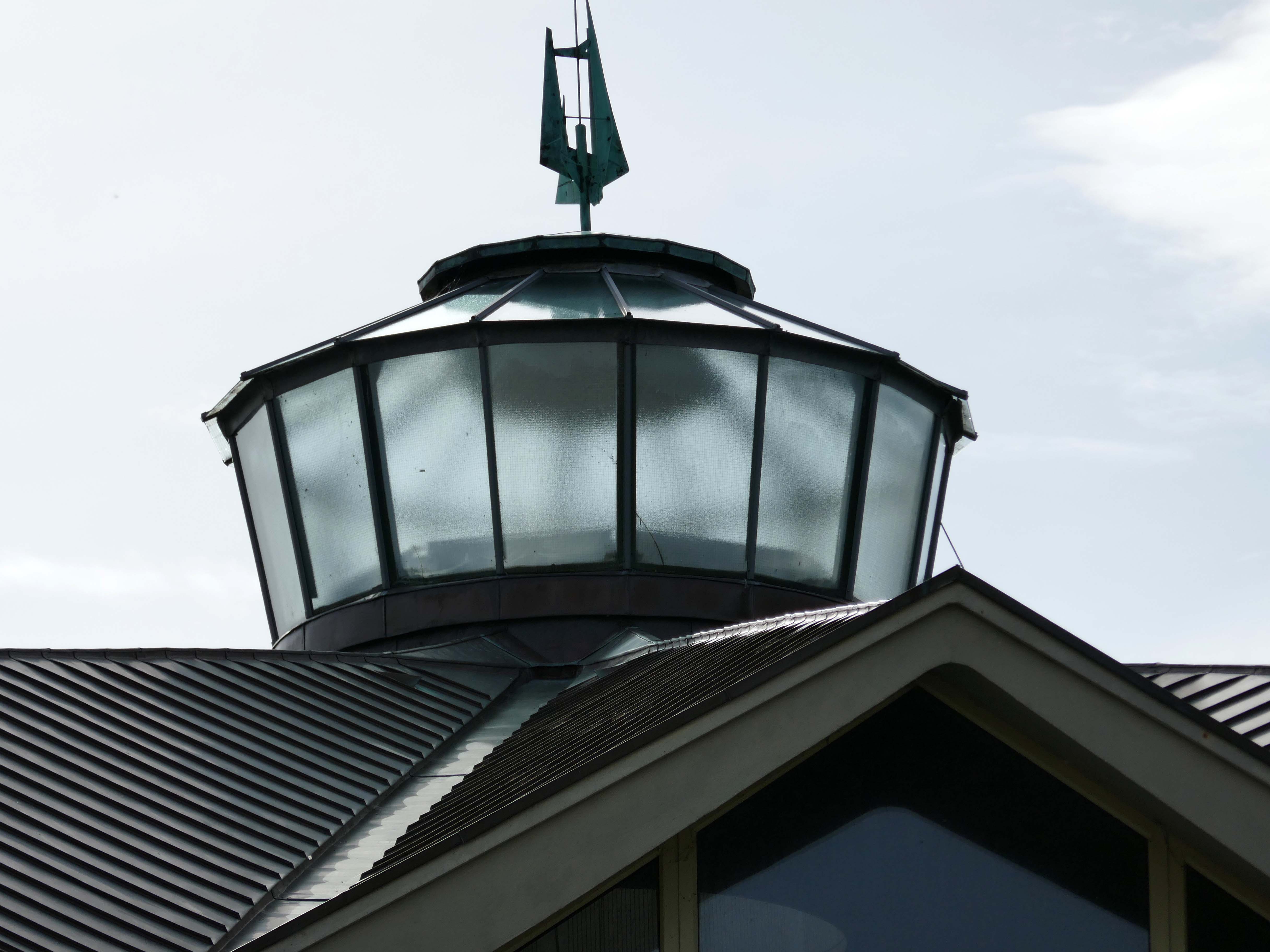
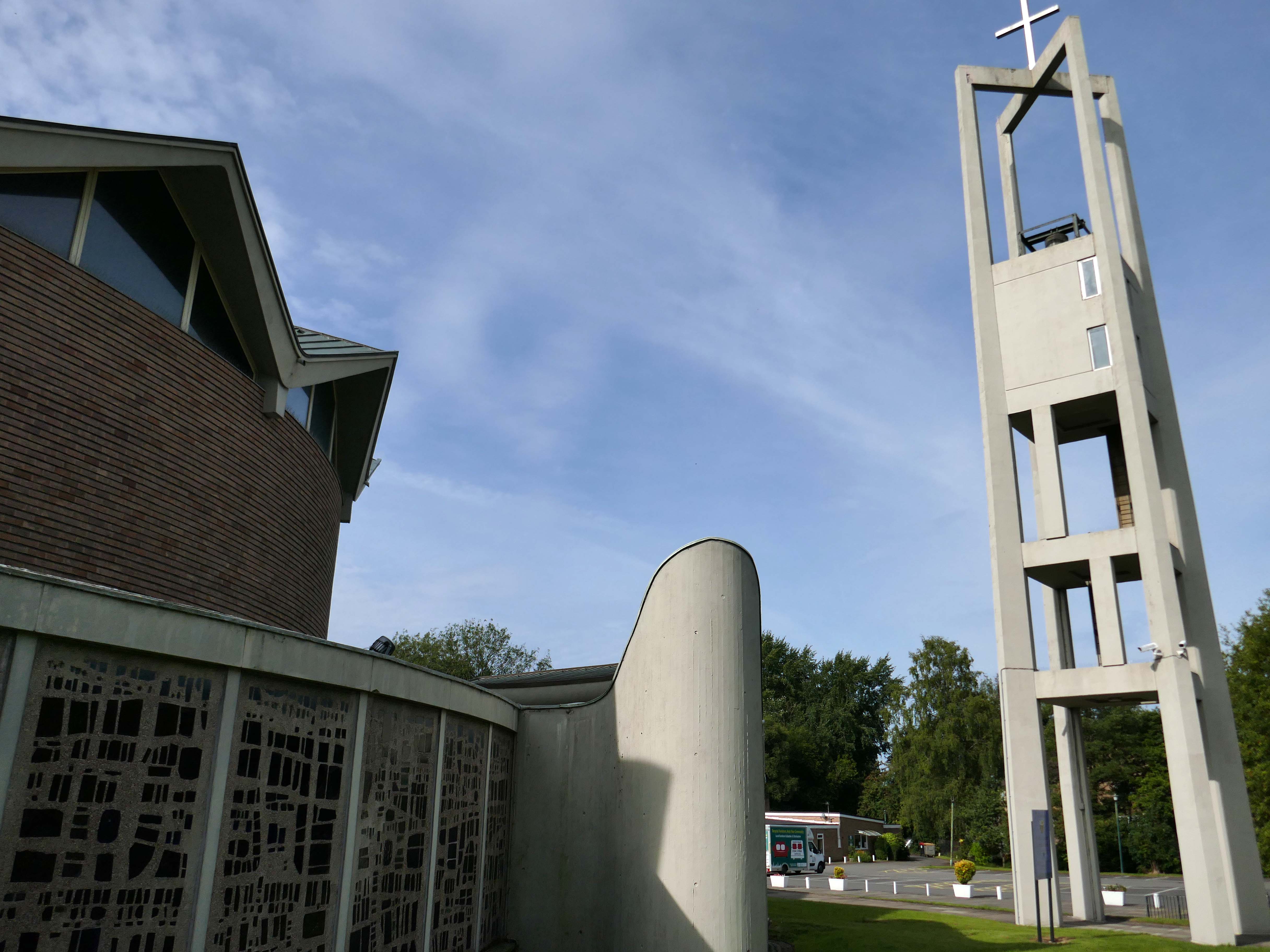
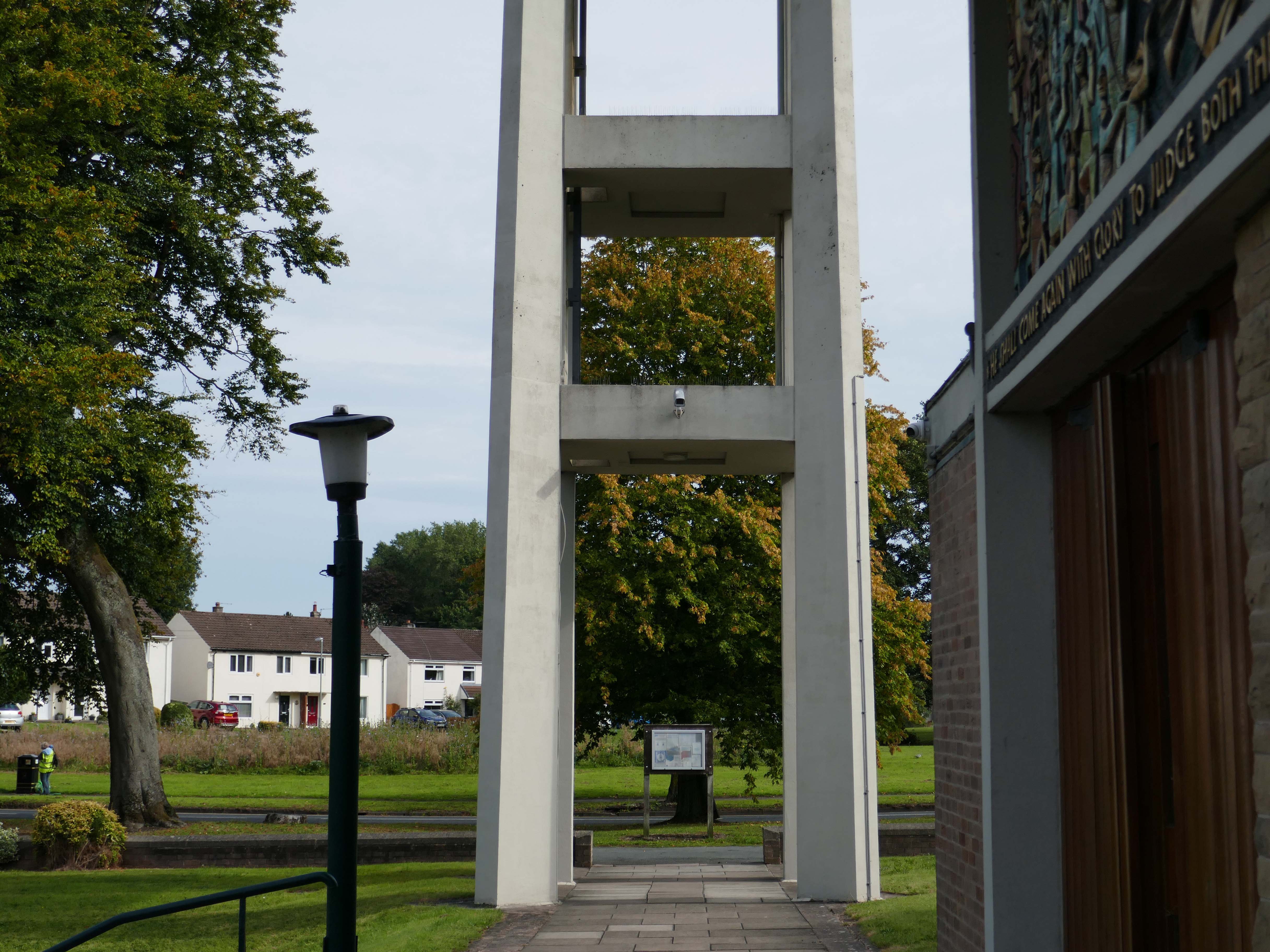
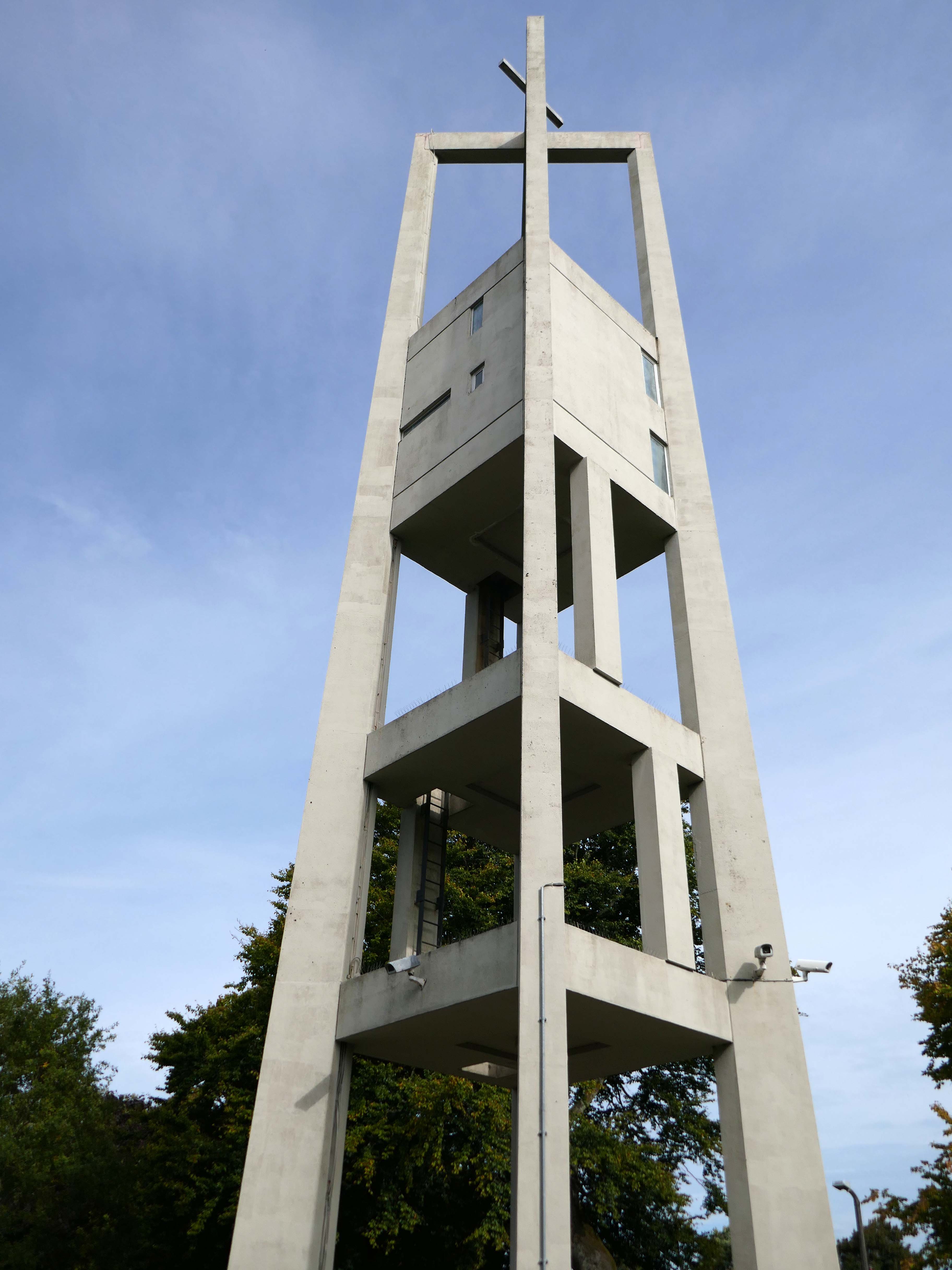
This is a suburban church with the ambition of a Modernist cathedral – a radical construction in concrete, brick, stone and glass.

It more than deserves its Grade II Listing.

The Benedictines came to Leyland in 1845 and the first Church of St. Mary’s was built on Worden Lane in 1854. The Catholic population was small at this time, but had grown to around 500 by 1900. Growth was assisted by the industrial development of Leyland and after the Second World War the town was earmarked as the centre of a new town planned in central Lancashire. By the early 1960’s, the Catholic population was 5,000. Fr Edmund Fitzsimmons, parish priest from 1952, was a guiding force in the decision to build a large new church of advanced liturgical design, inspired by progressive continental church architecture of the mid 20th century.  The church was designed by Jerzy Faczynski of Weightman and Bullen. Cardinal Heenan blessed the foundation  stone  in  1962  and  the  new  church  was  completed  ready  for  its consecration and dedication by Archbishop Beck in April 1964.

Dalle de Verre stained glass by Patrick Reyntiens.

Large polychrome ceramic mural representing the Last Judgment by Adam Kossowski occupies the width of the porch above the two double-doored entrances.

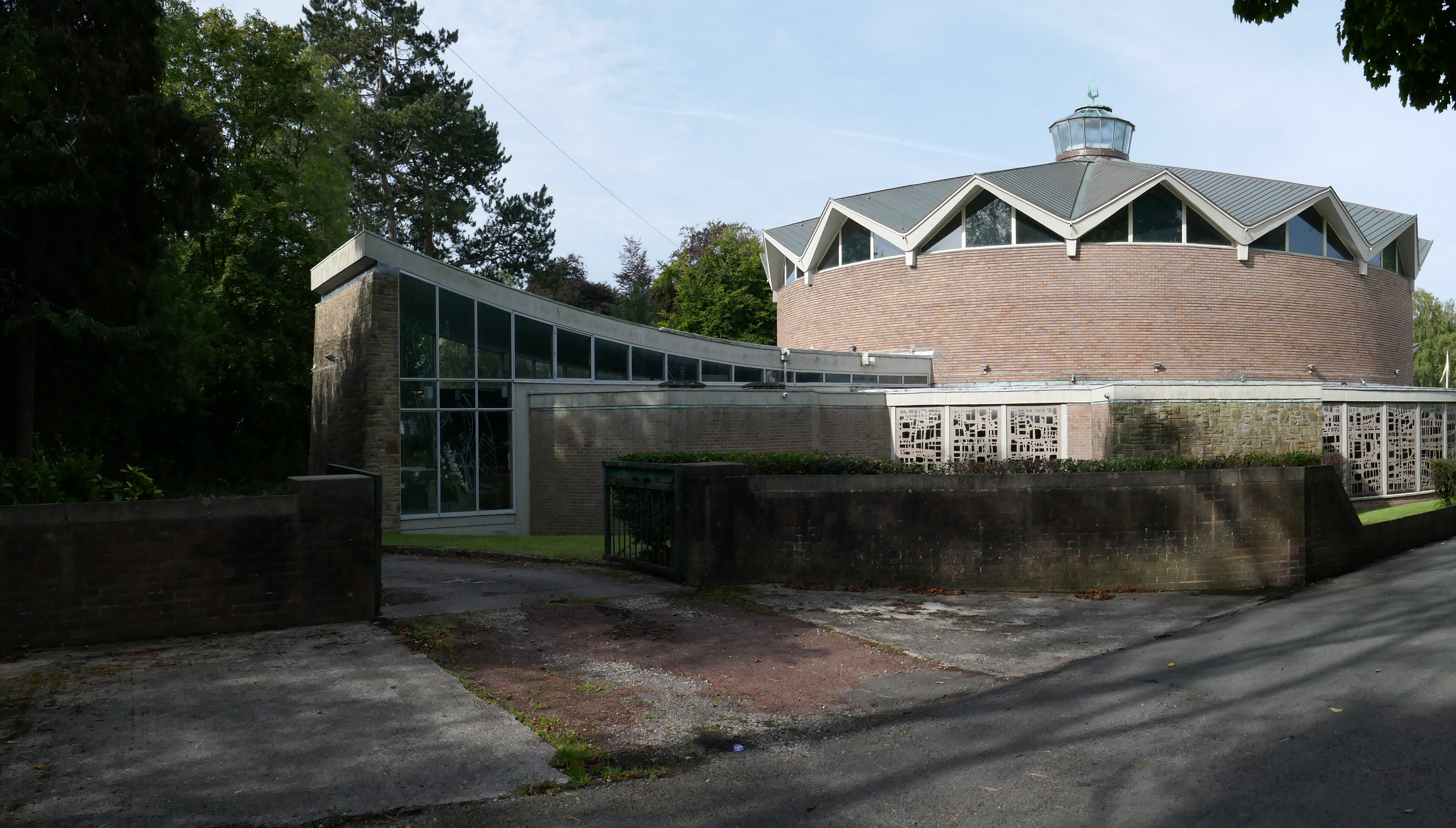
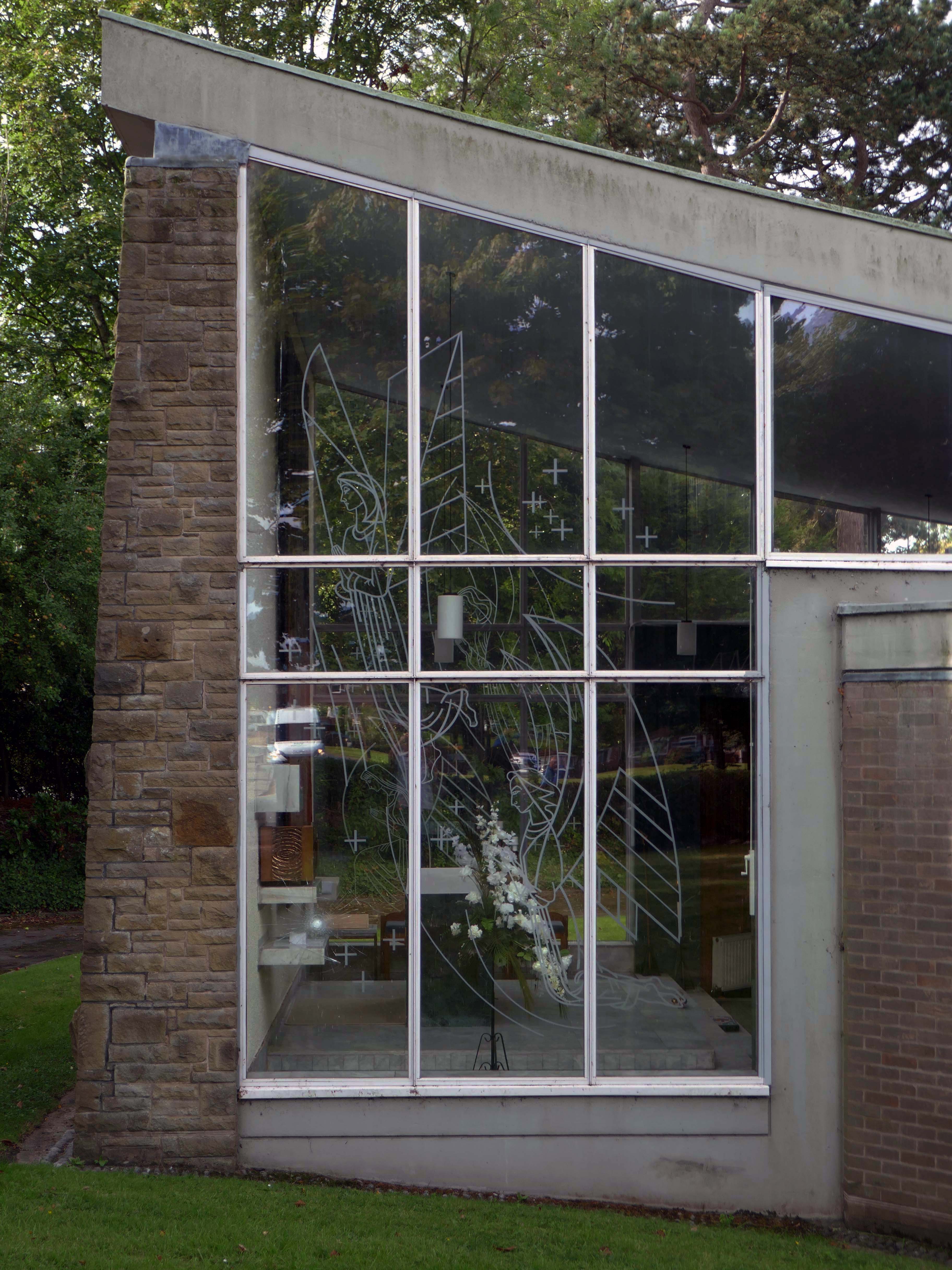
Let’s take a turn around this stunning building – the etched glass on the Chapel of the Blessed Sacrament is by Jerzy Faczynski.

Take a look inside too!

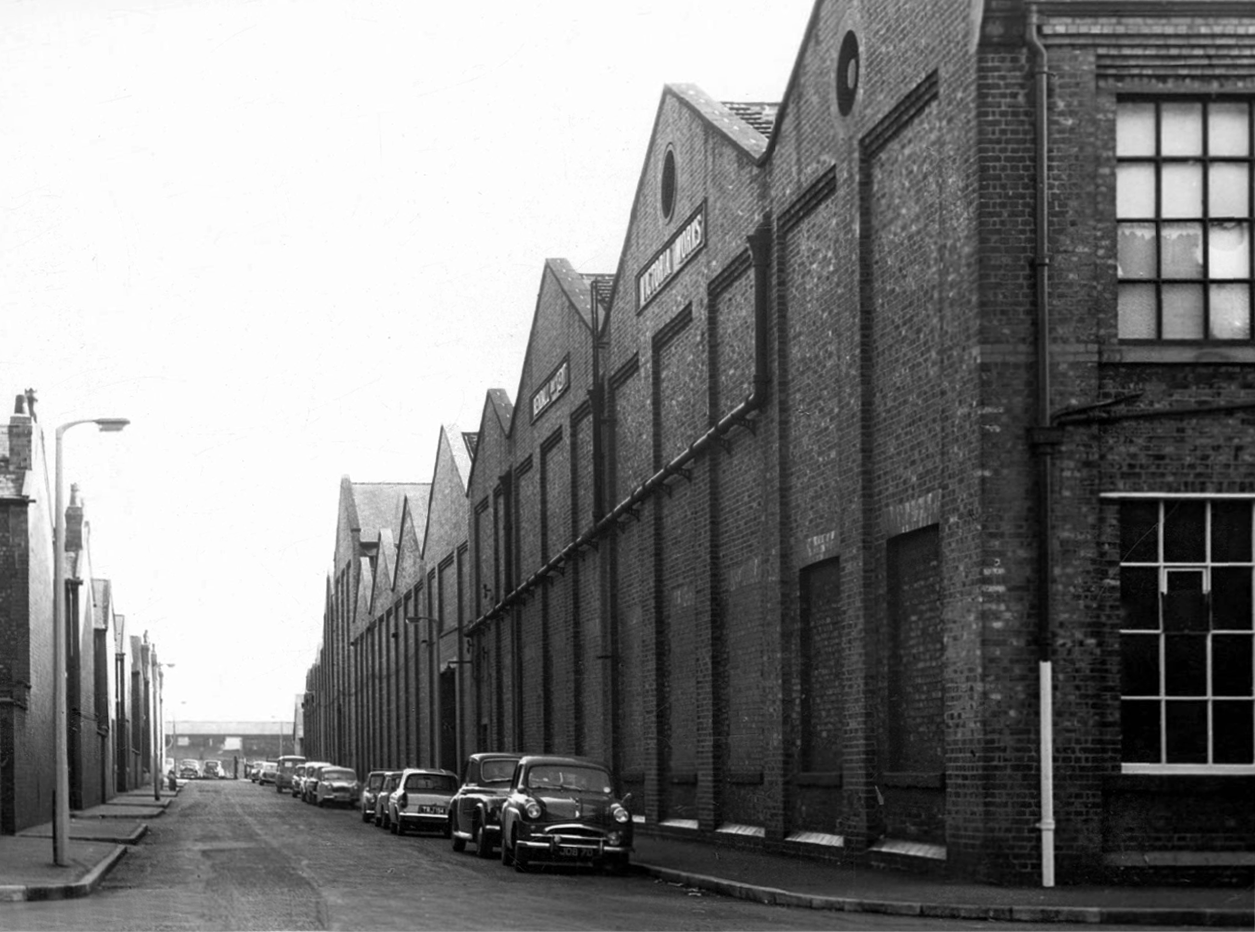
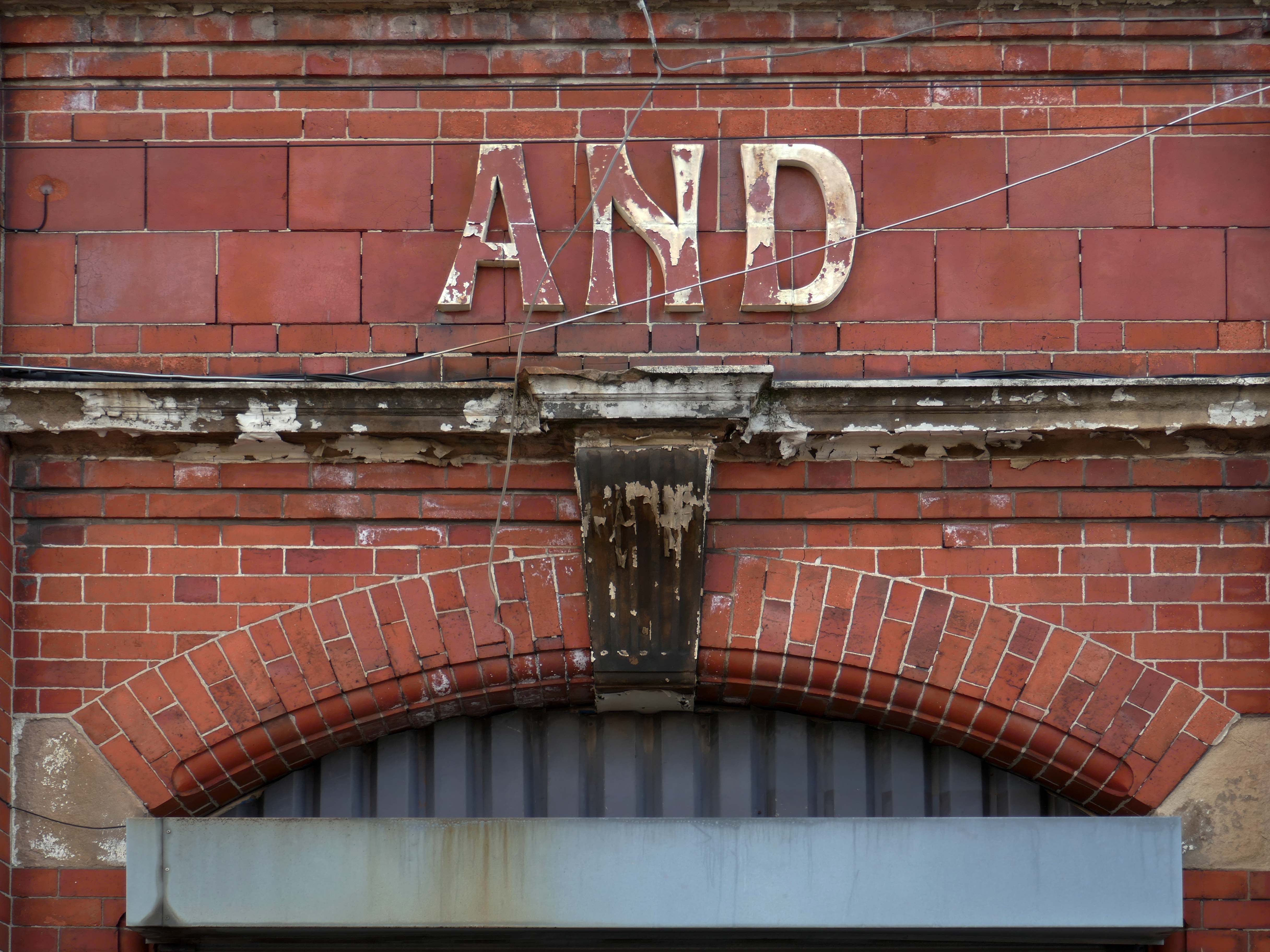
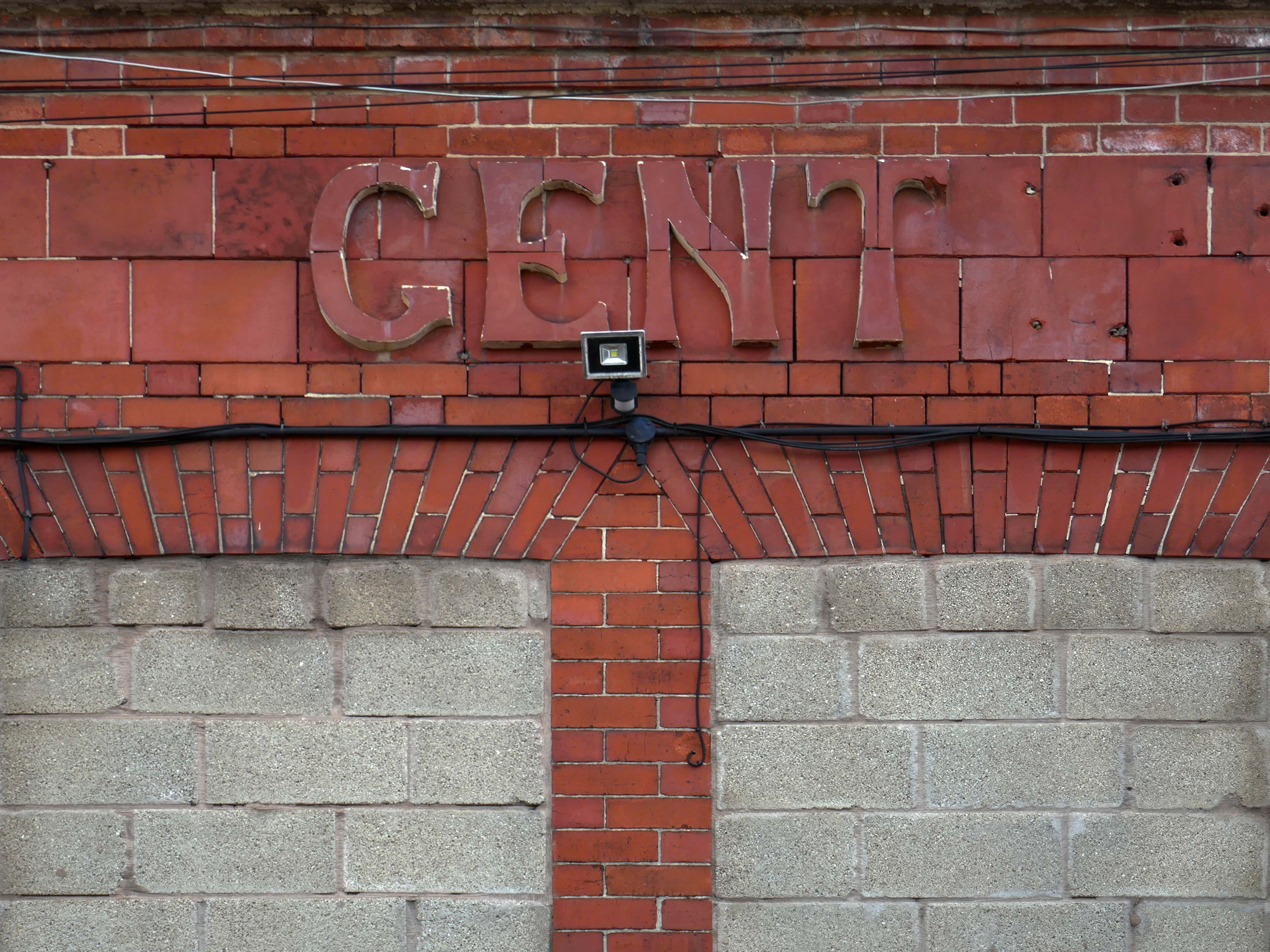
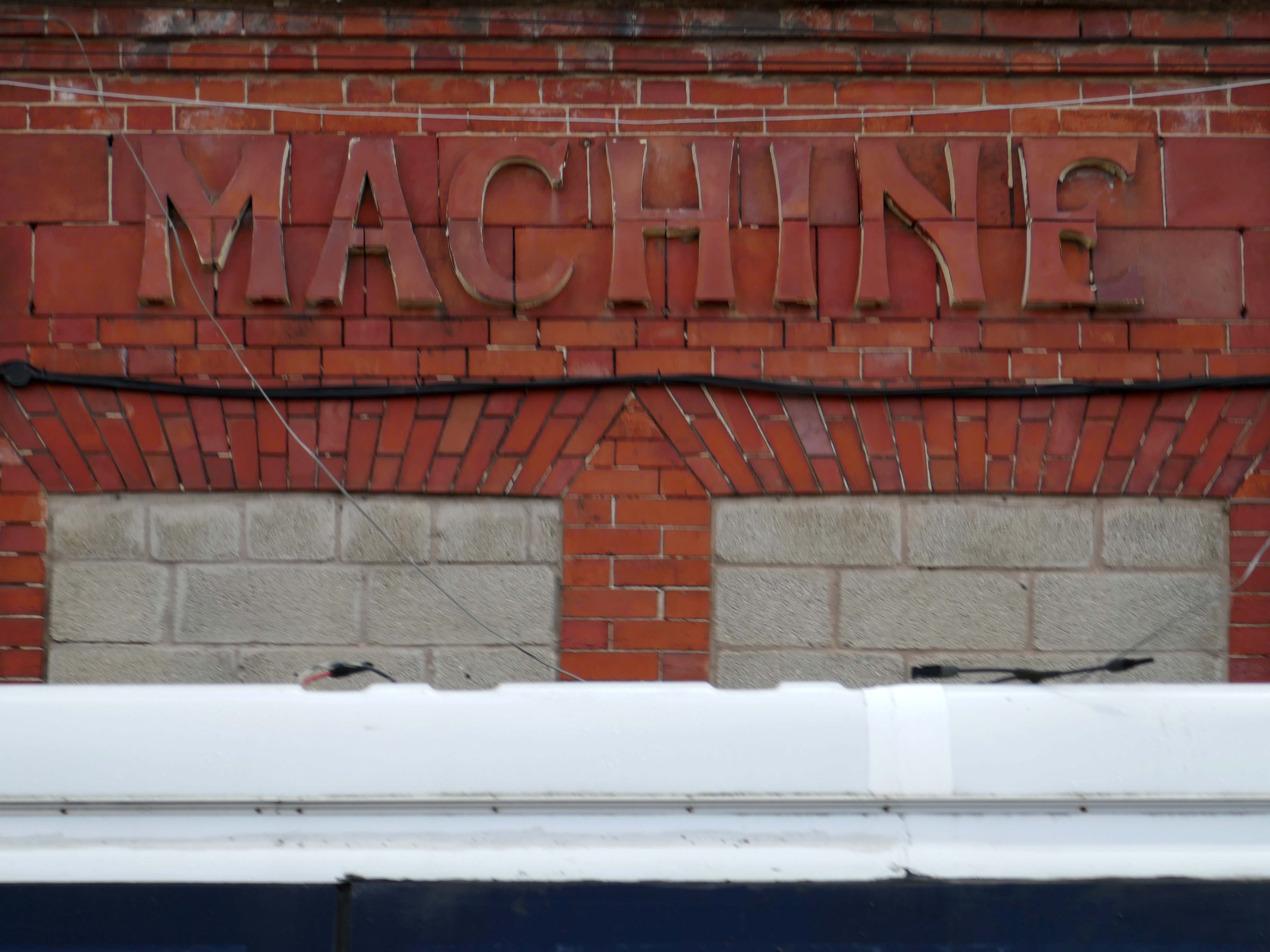
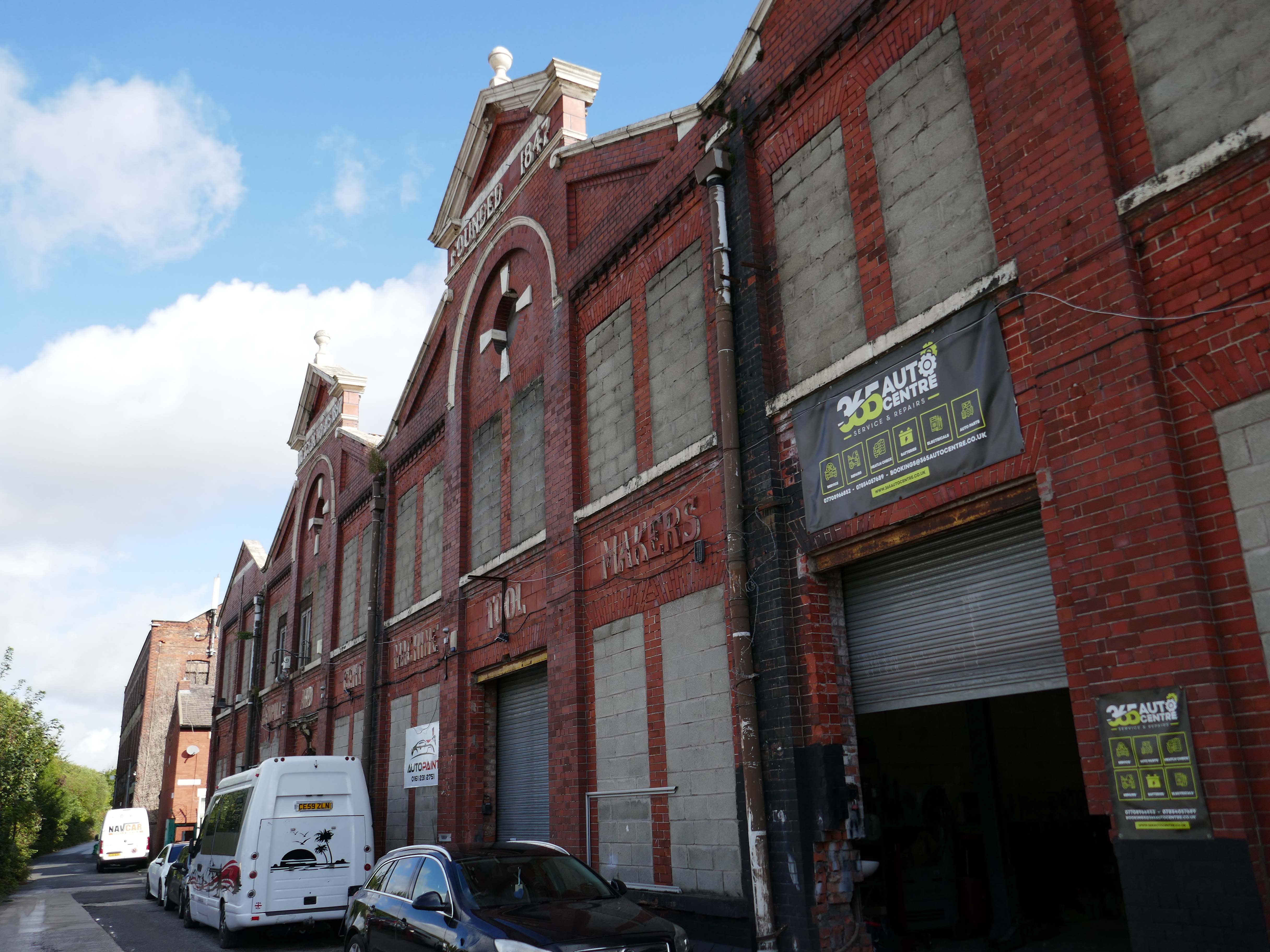
Kendall & Gent – Victoria Works

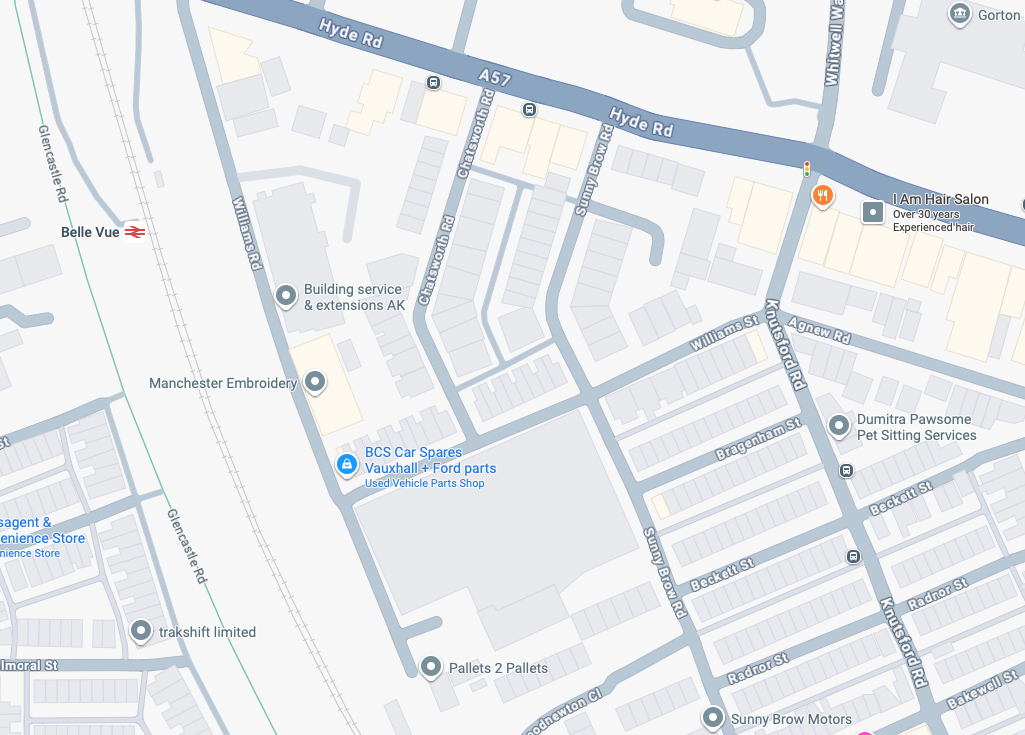
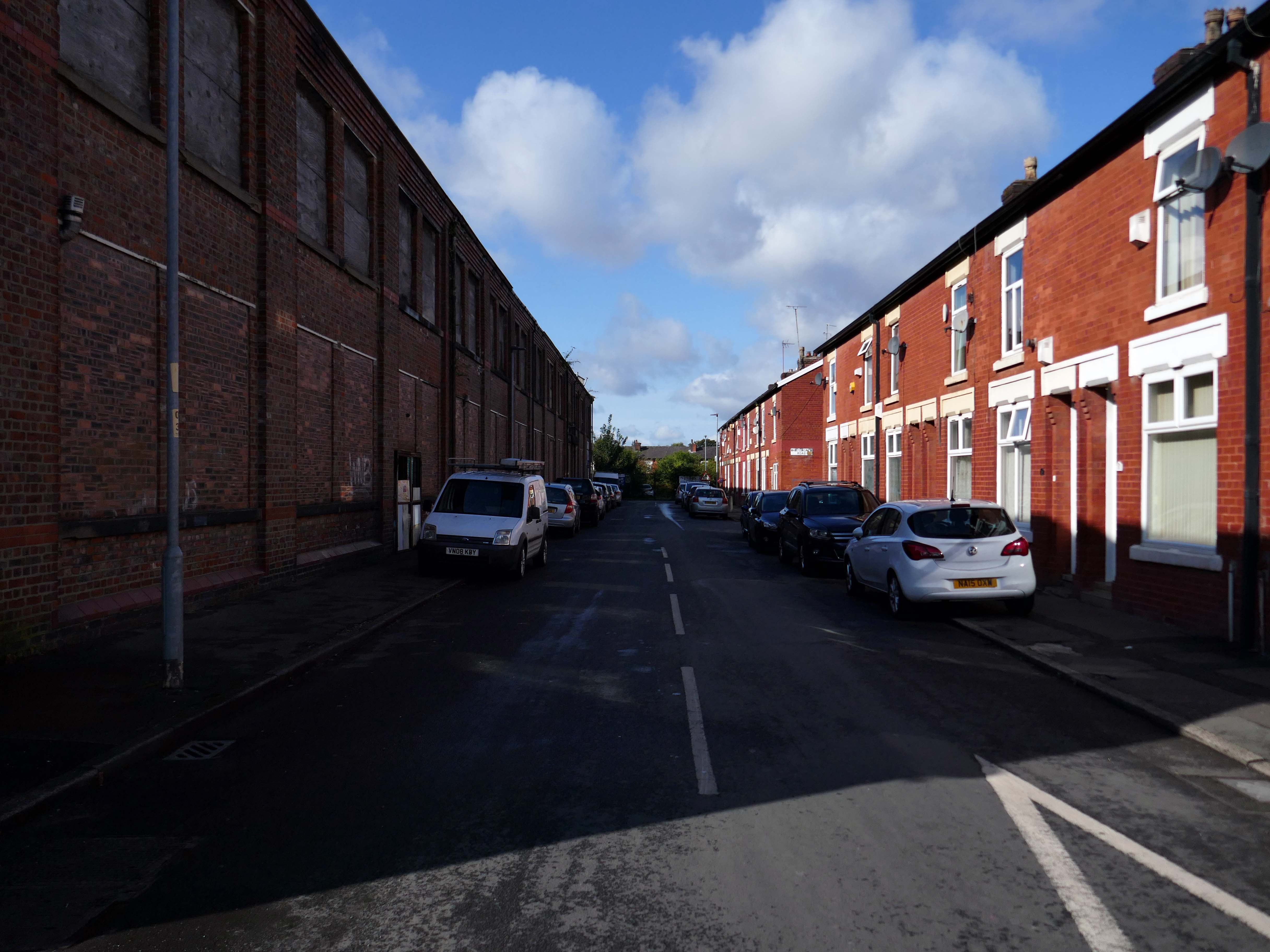
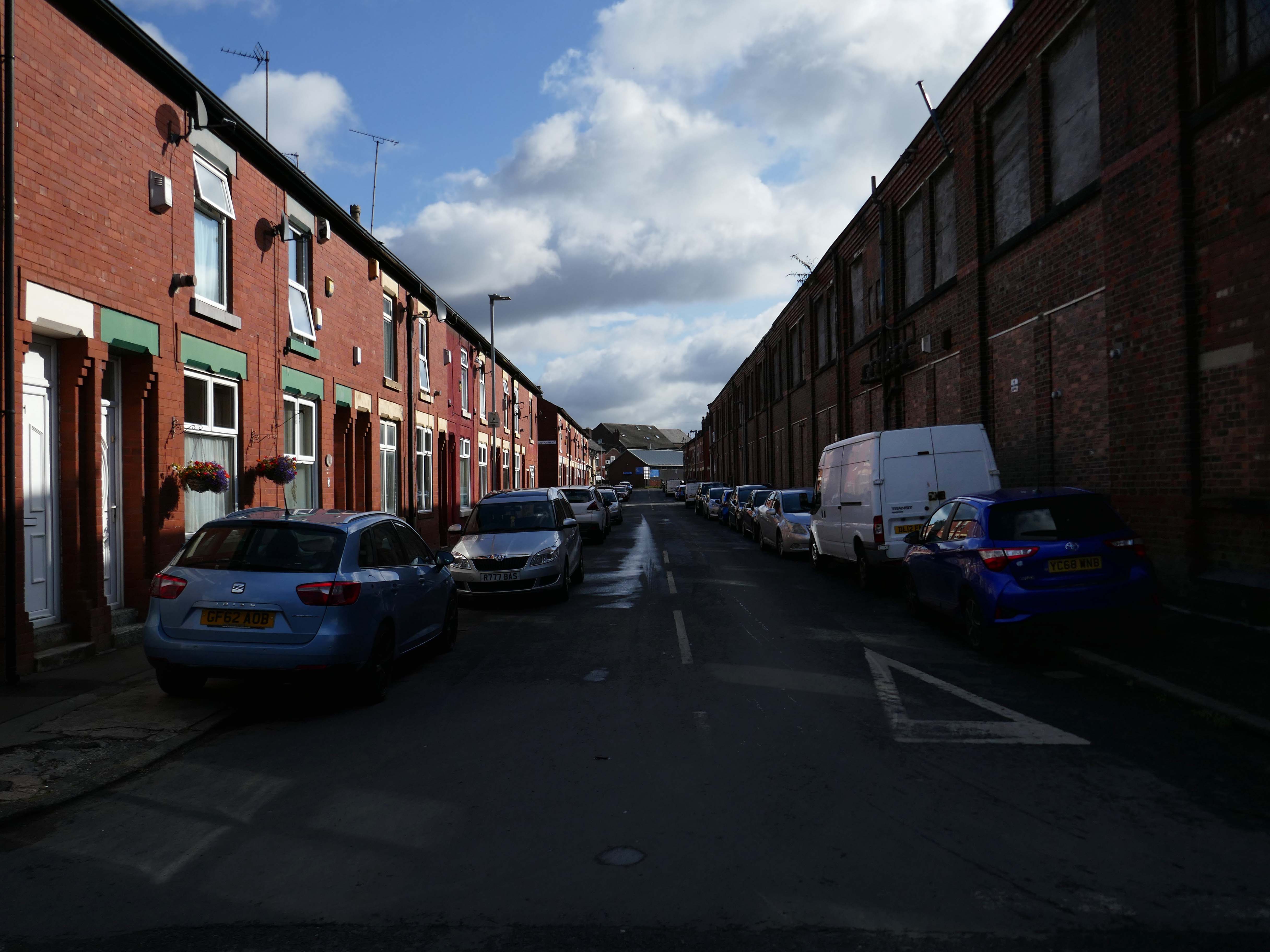
Bounded on three sides by Williams Road, Williams Street and Sunny Brow Lane.

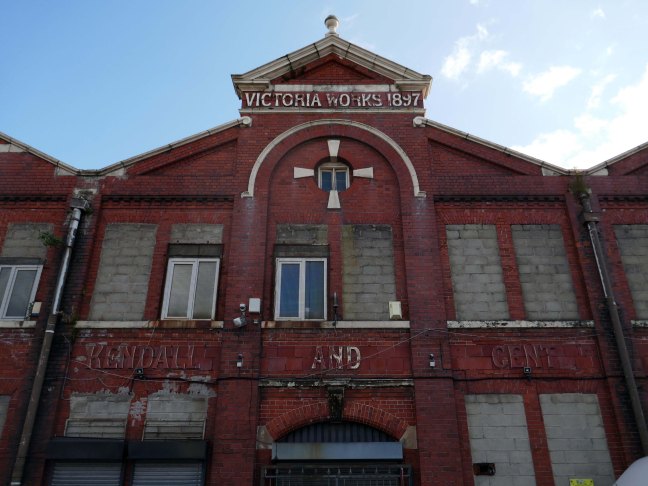
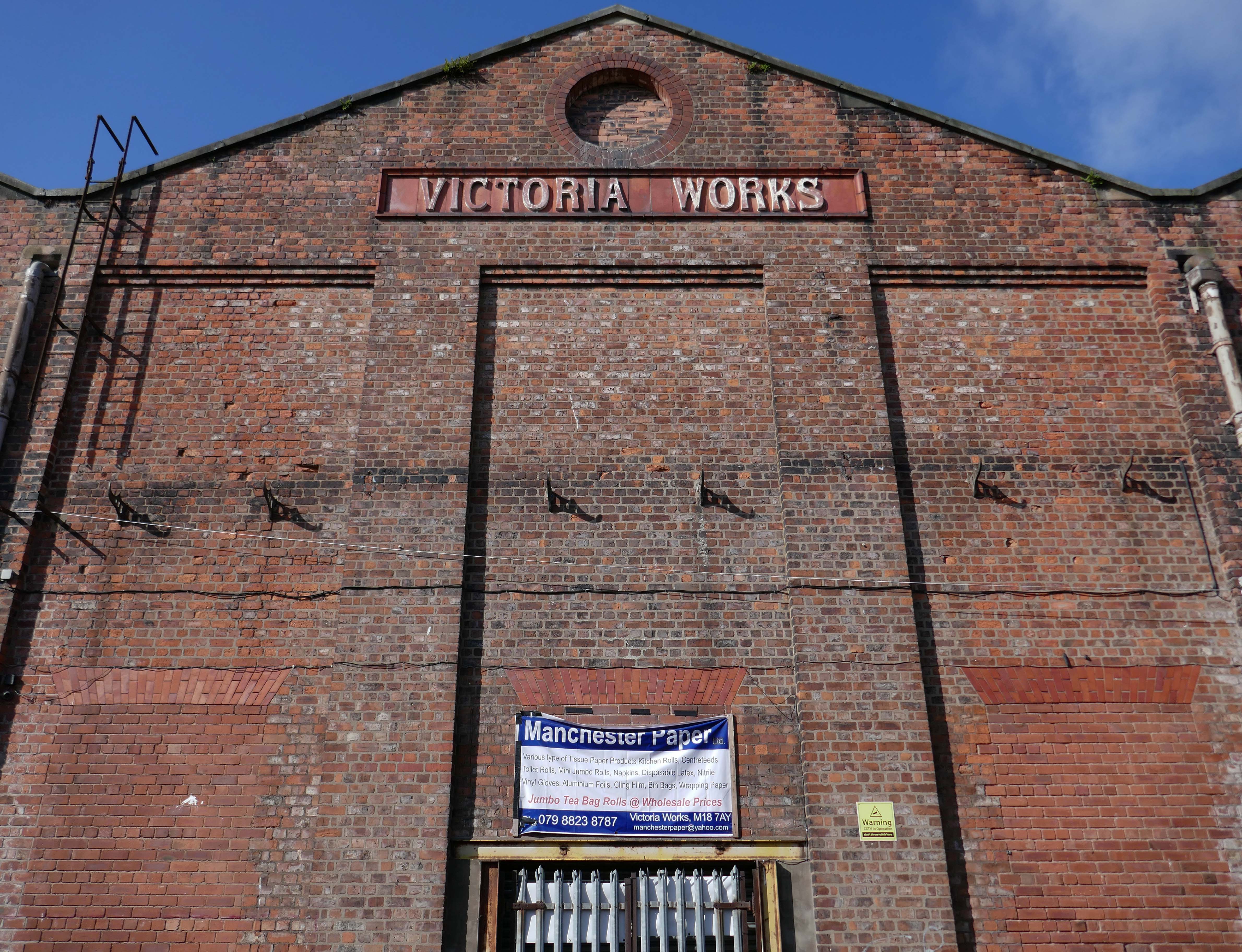
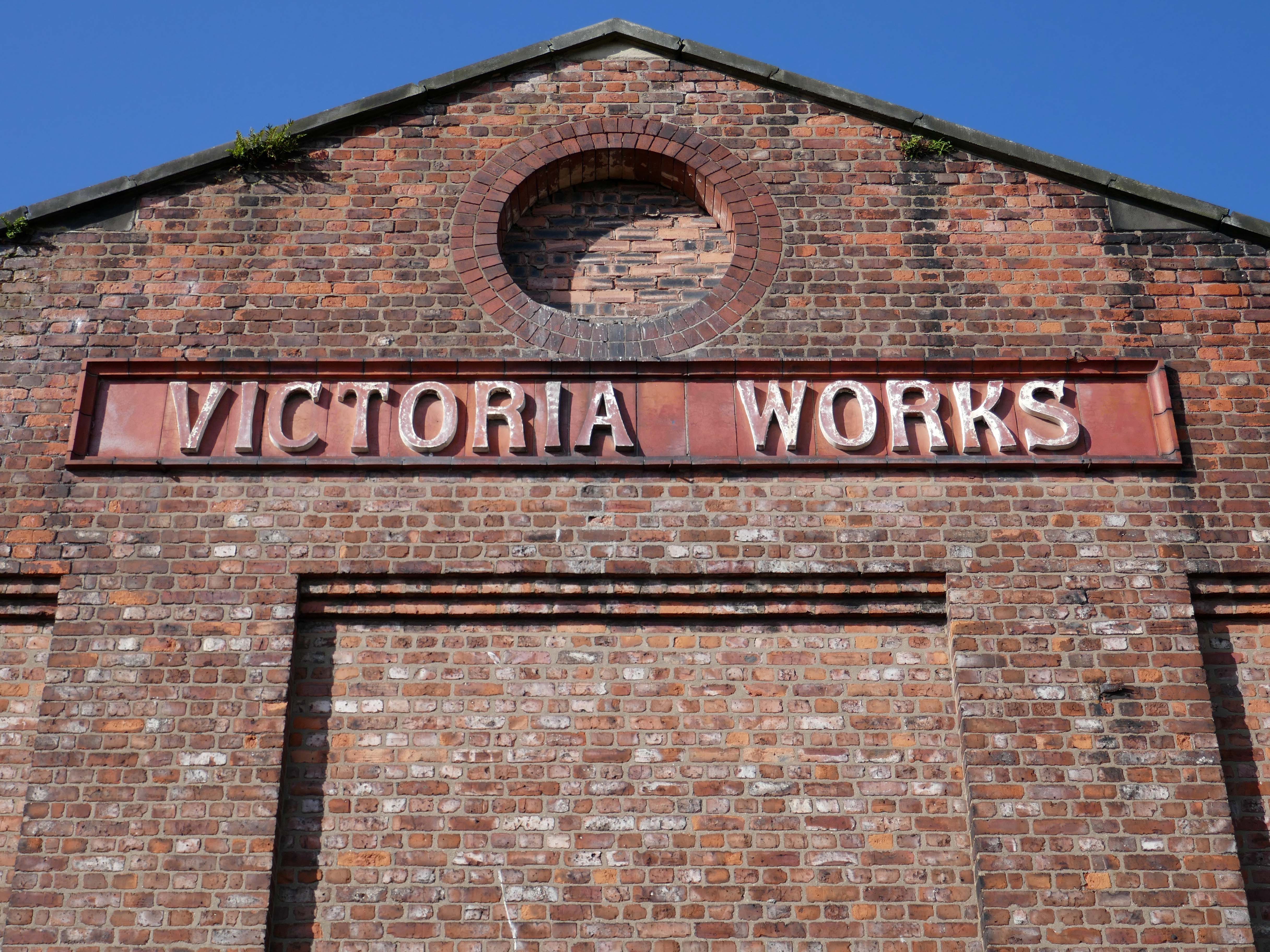
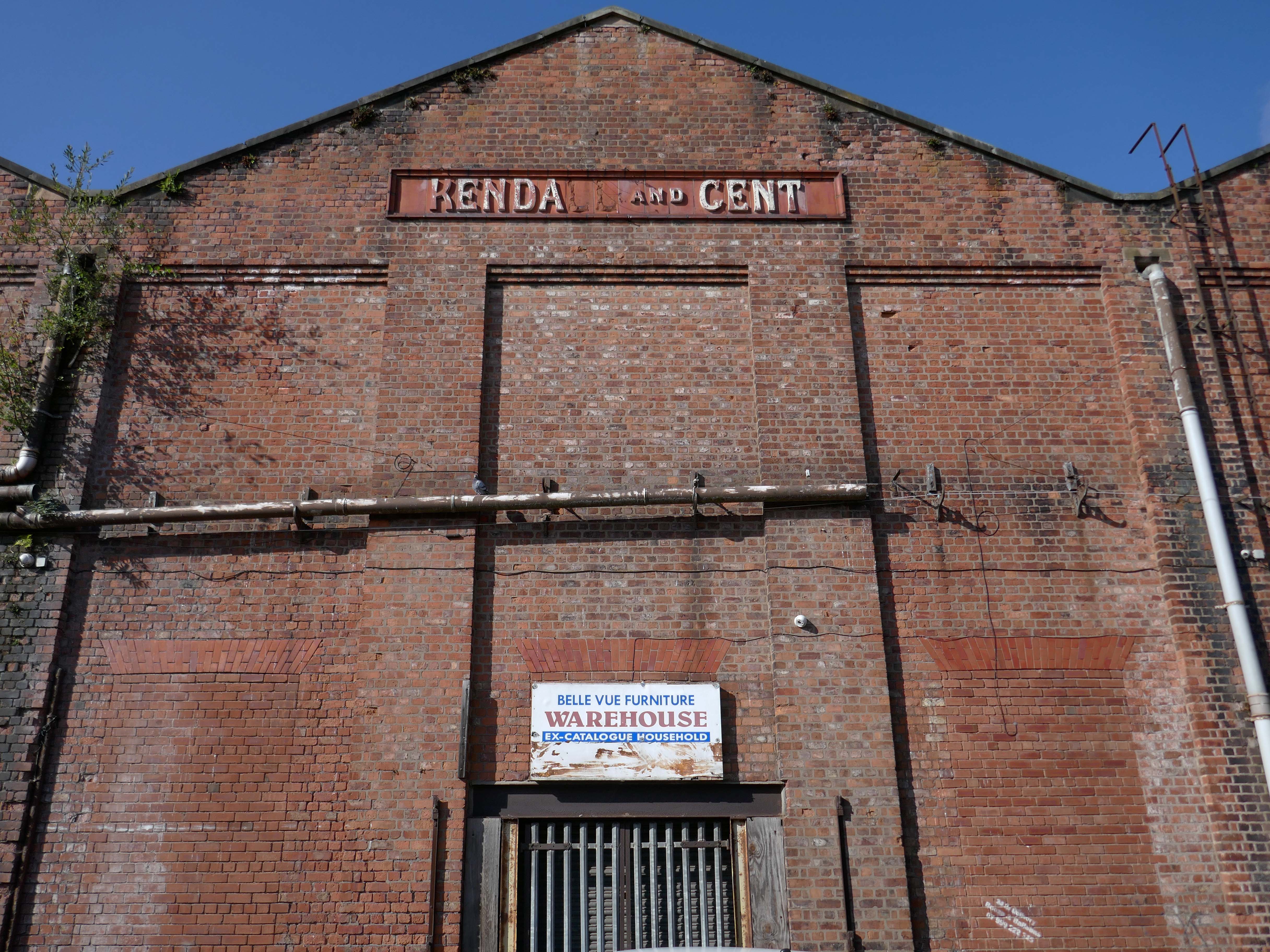
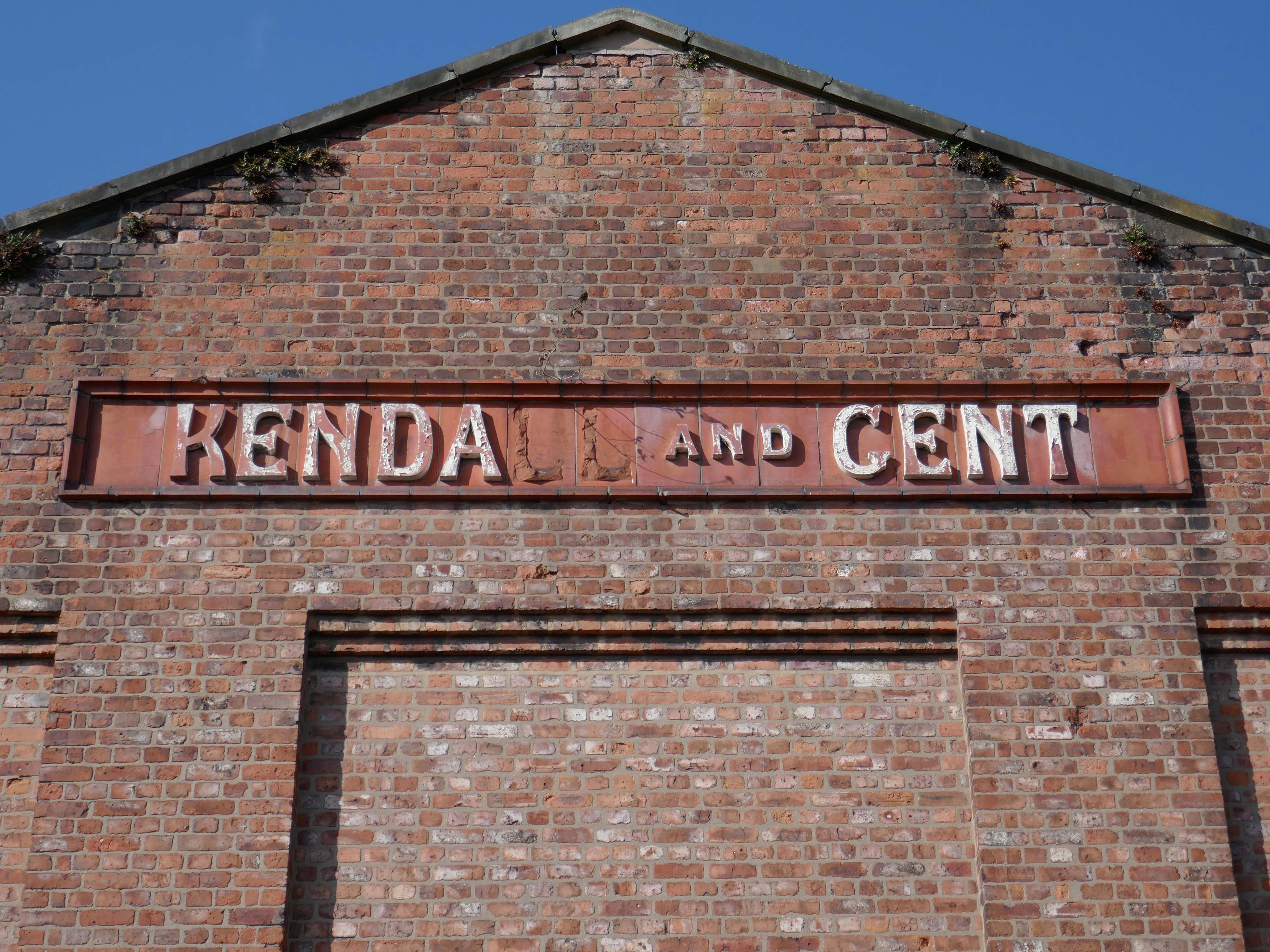
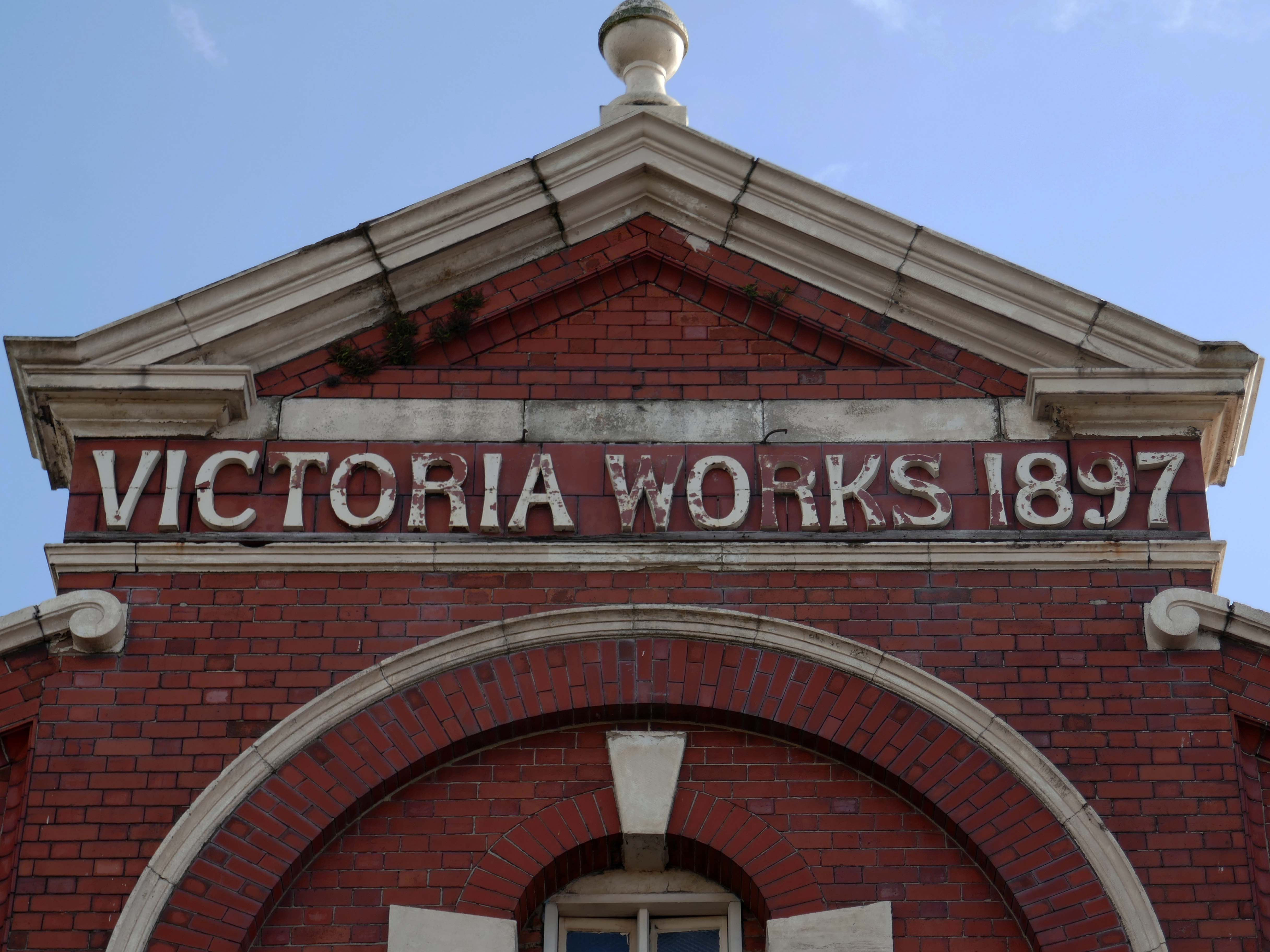
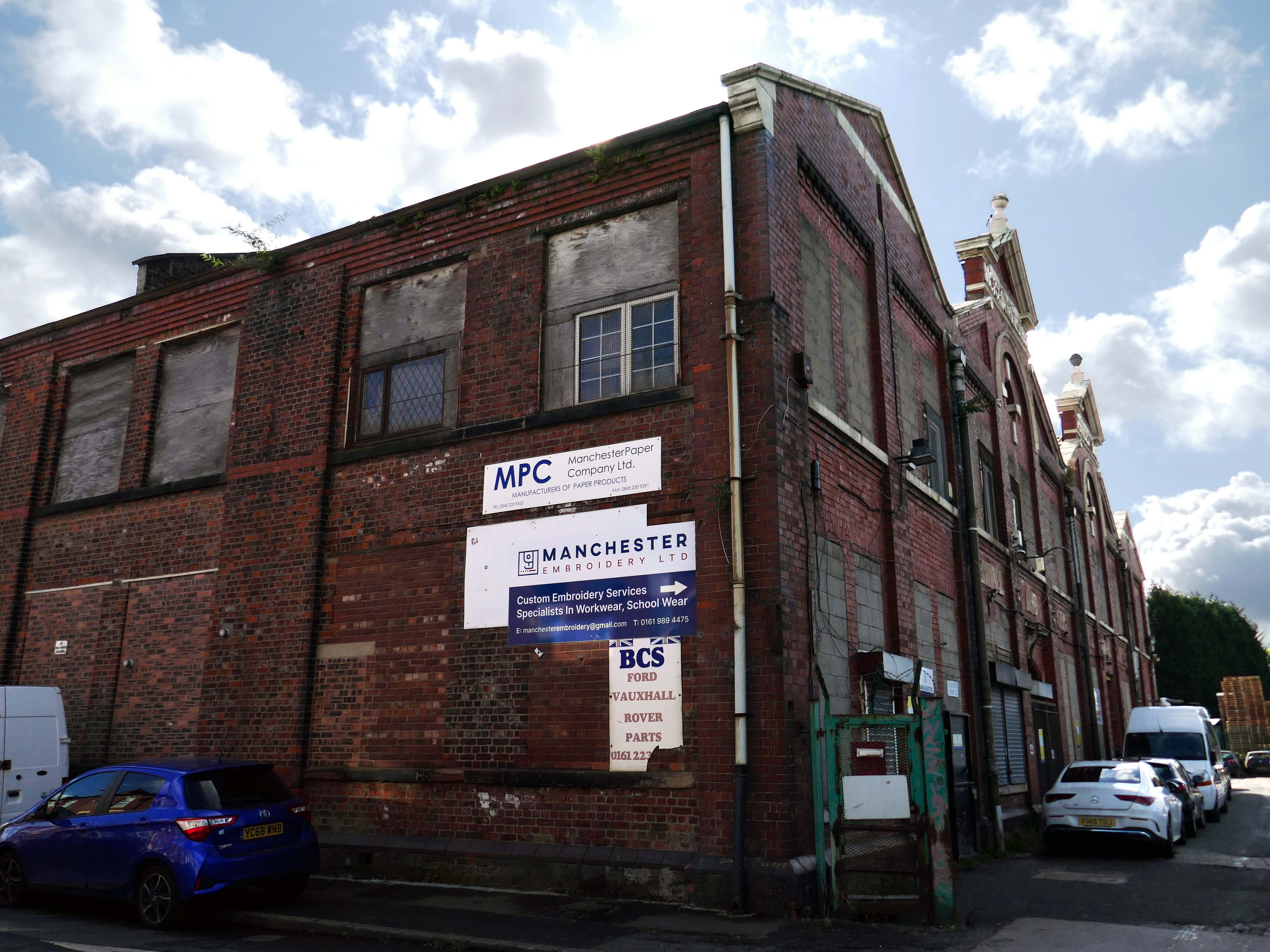
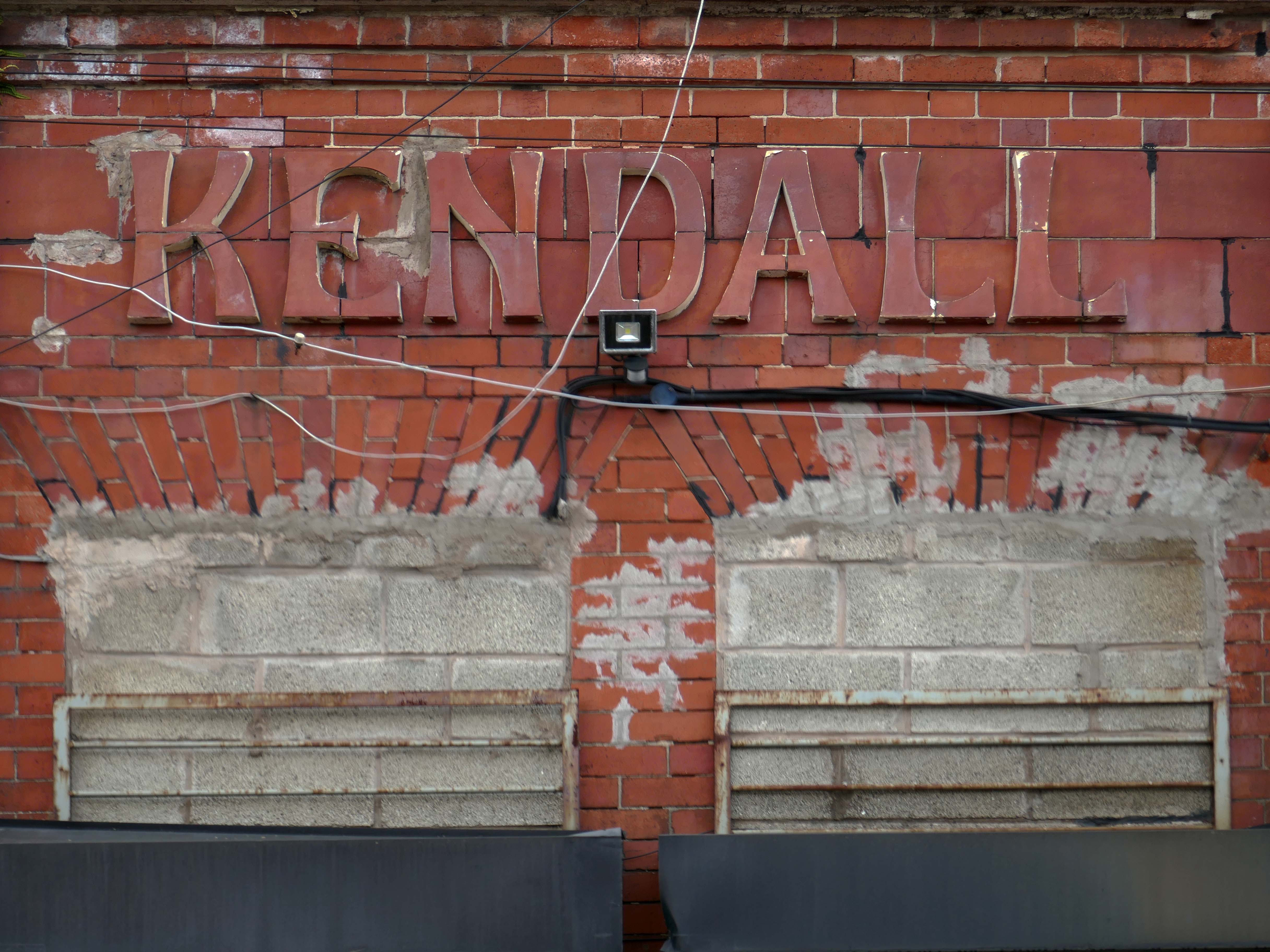
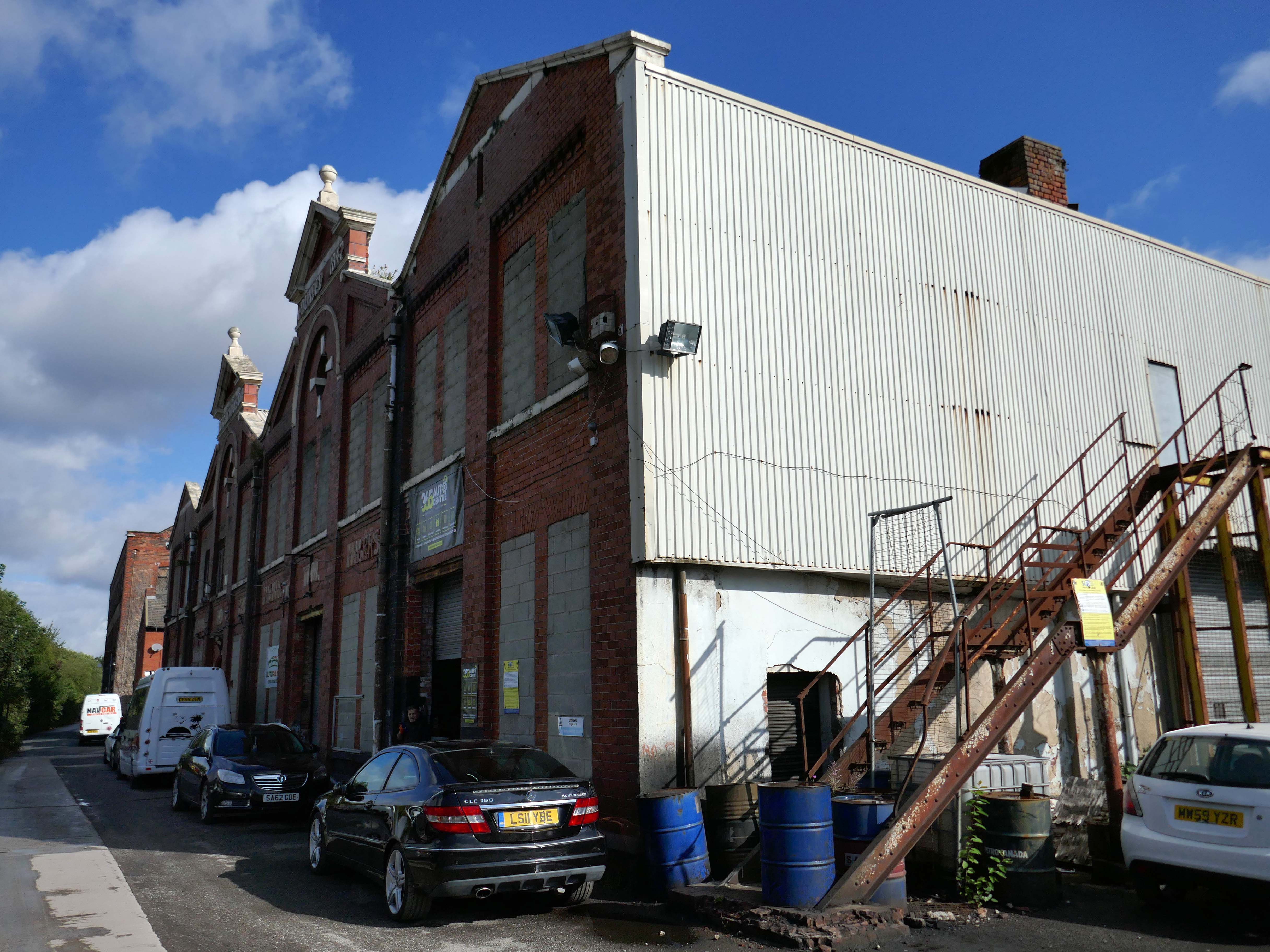
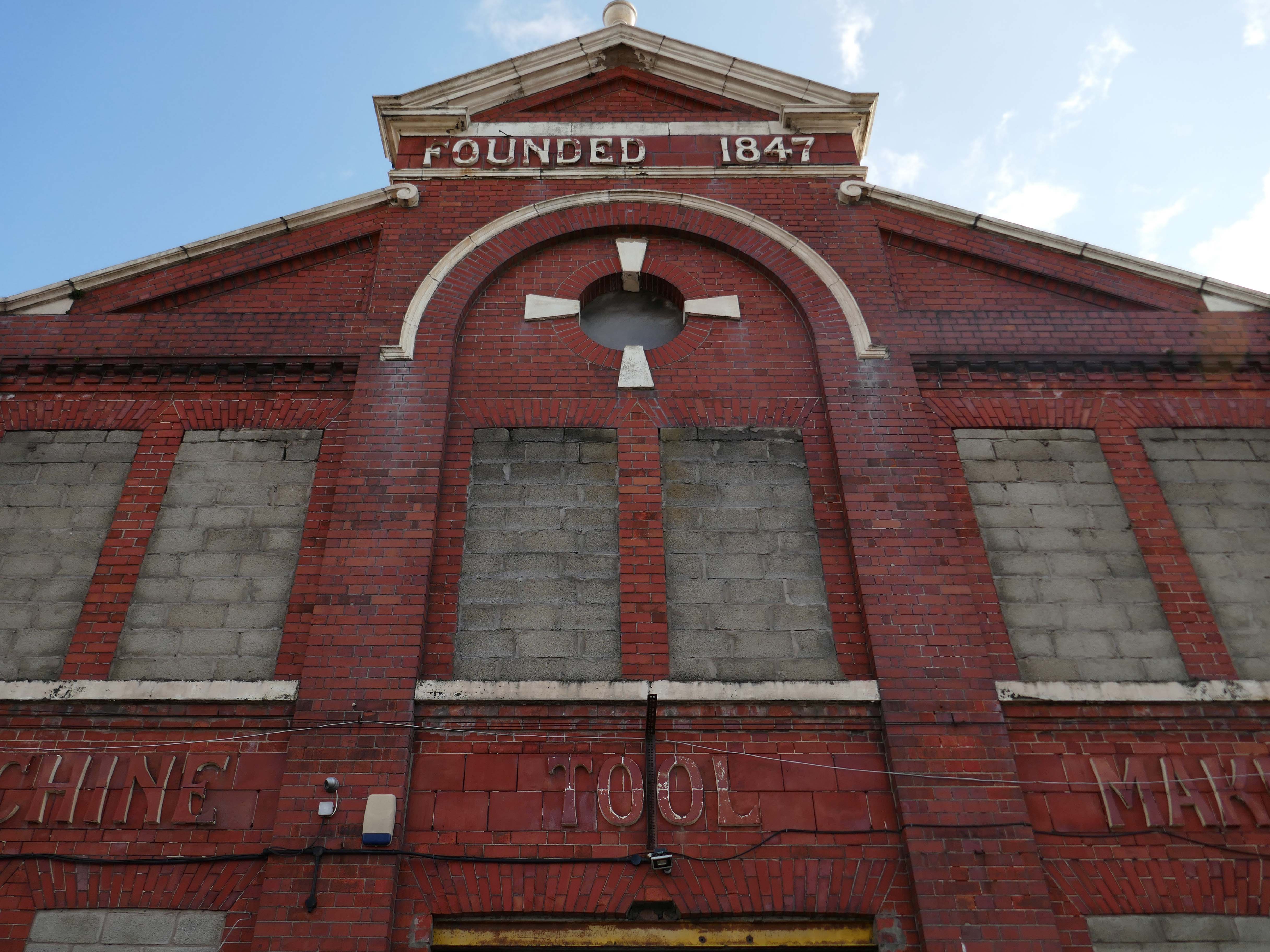
Here’s the Victoria Works, formerly home to machine tool makers Kendall & Gent of Gorton Manchester.

Kendall and Gent were machine tool makers, originally of Victoria Works, Springfield, Salford.

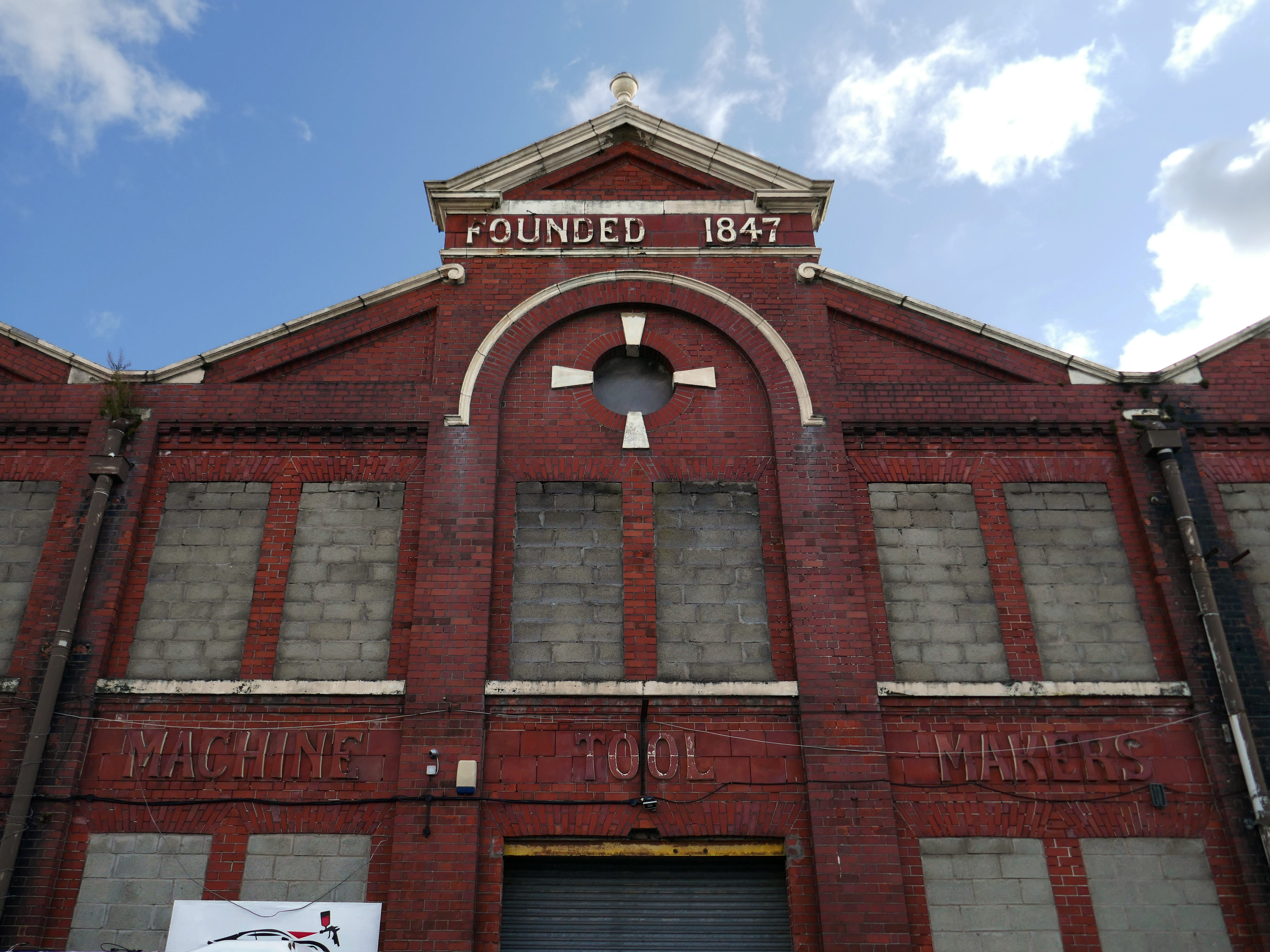
Founded by William Kendall and George Gent in 1847.

Latterly of Victoria Works, Belle Vue/Gorton from the 1890’s, acquired by Staveley Industries in 1966.

Graces Guide

This was a world of heavy and light engineering, which reached in a broad swathe across Greater Manchester, from Stockport to Cheetham Hill and beyond.

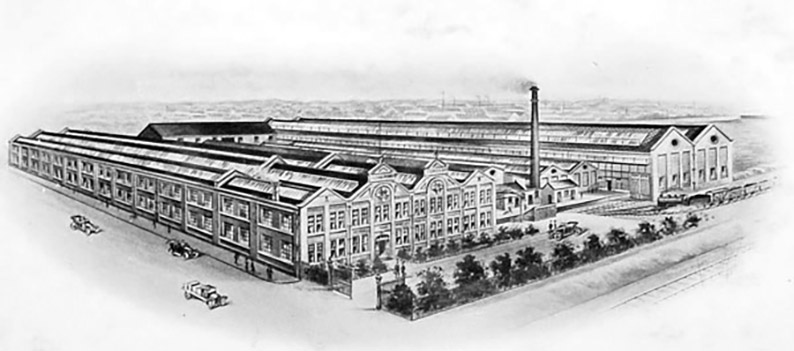
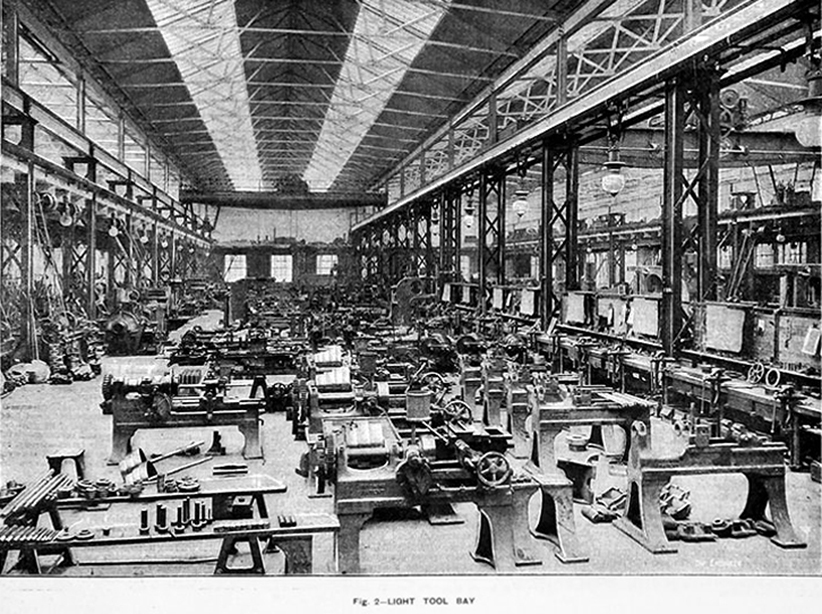
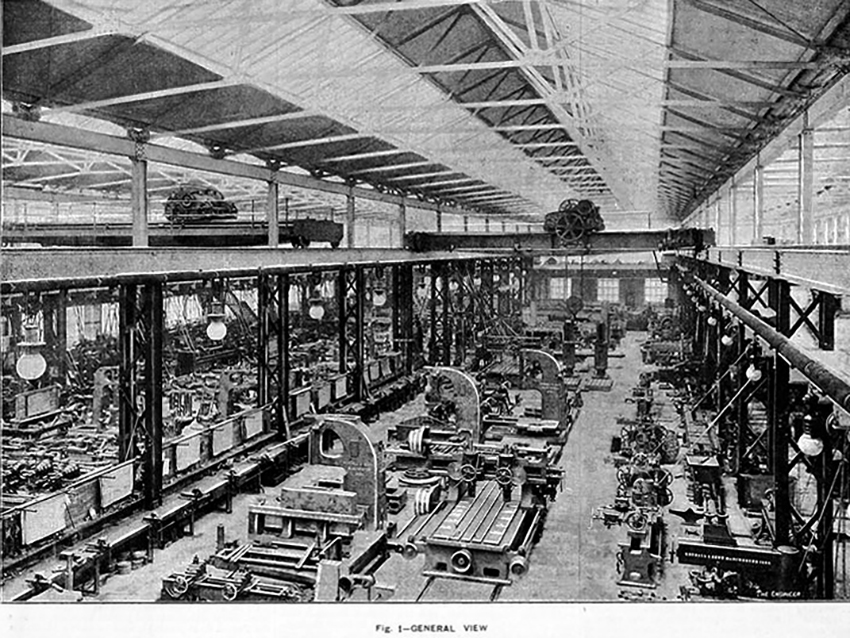
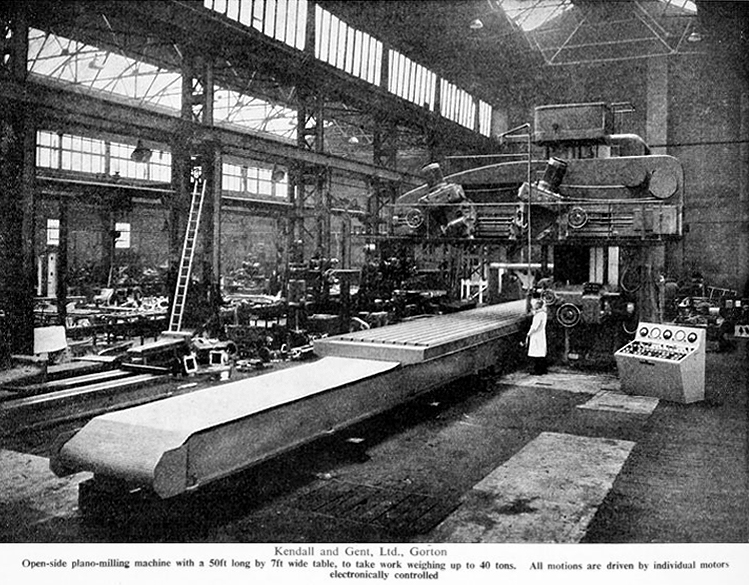
This is the Gorton Works – illustrations taken from Graces Guide.

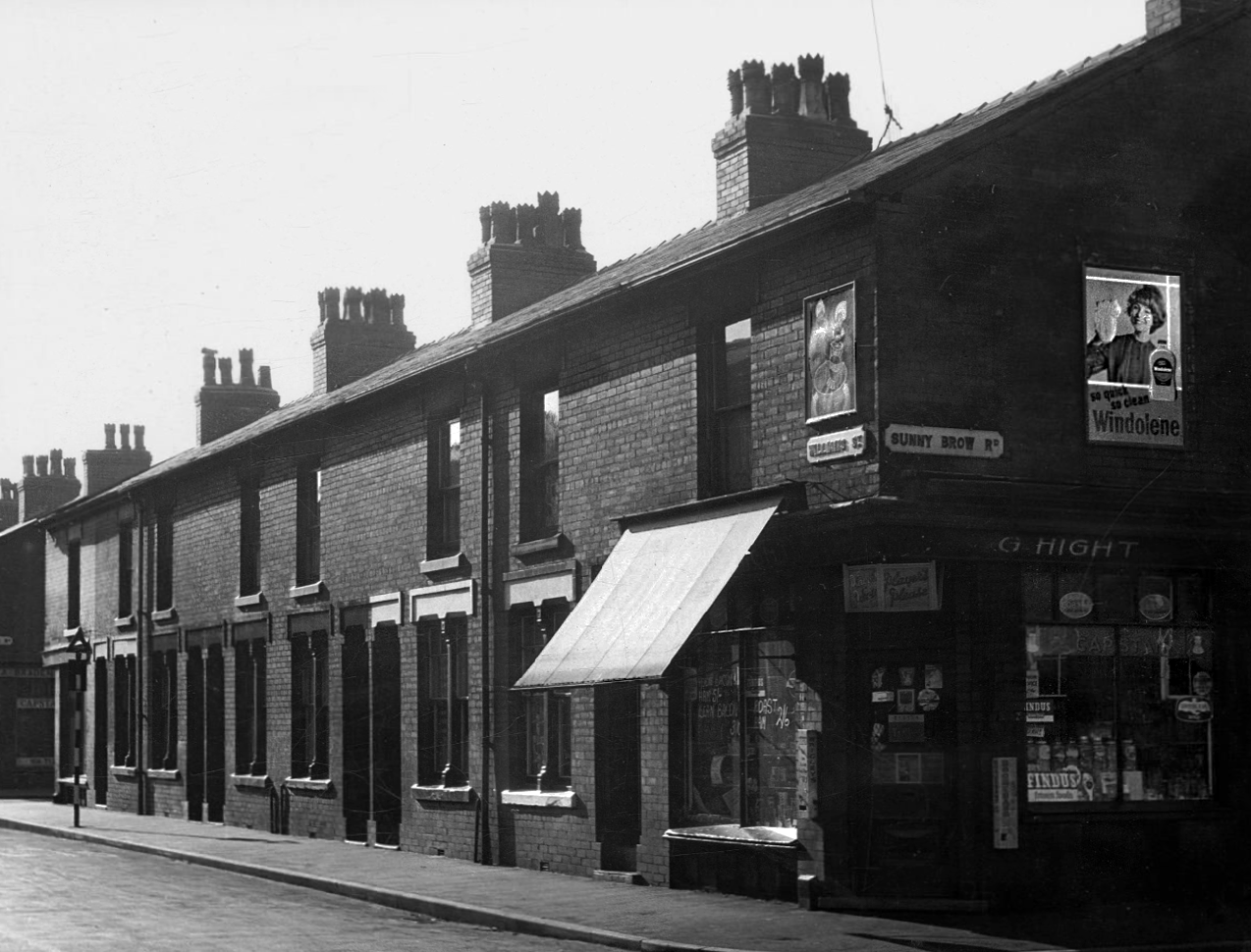
This was a world of terraced houses and corner shops, side by side with the local works.

Photographs: Tommy BrooksLocal Image Collection

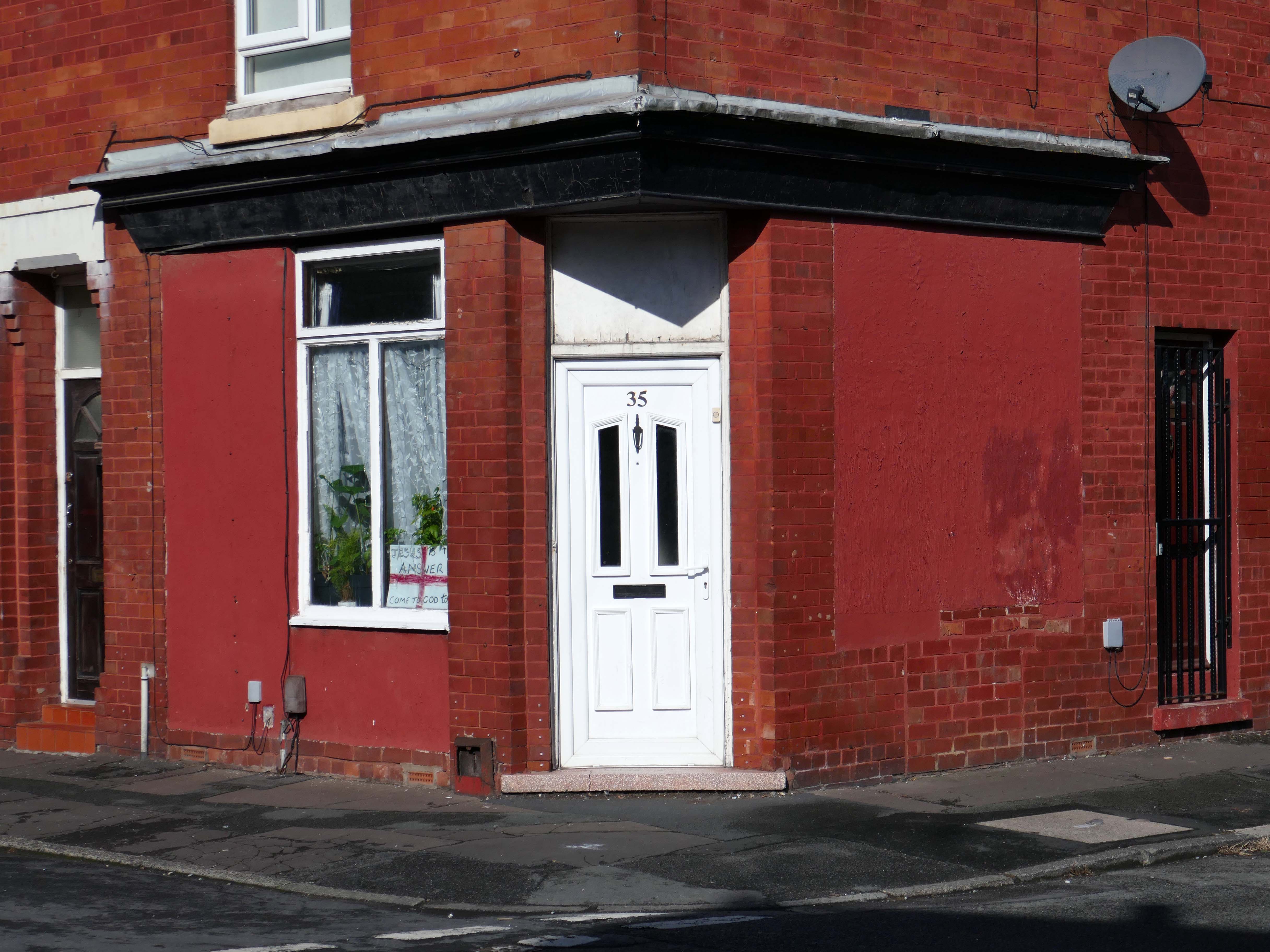
This is that corner of Williams Street and Sunny Brow Road today.

Victoria Works Sunny Brow Road.

Victoria Works Williams Street

Victoria Works Williams Road

Manchester’s engineering industry has subsequently been seriously diminished.

The building became a base for toilet paper manufacturing and distribution.

But the metal beat goes on in both Wolverhampton and Florida.

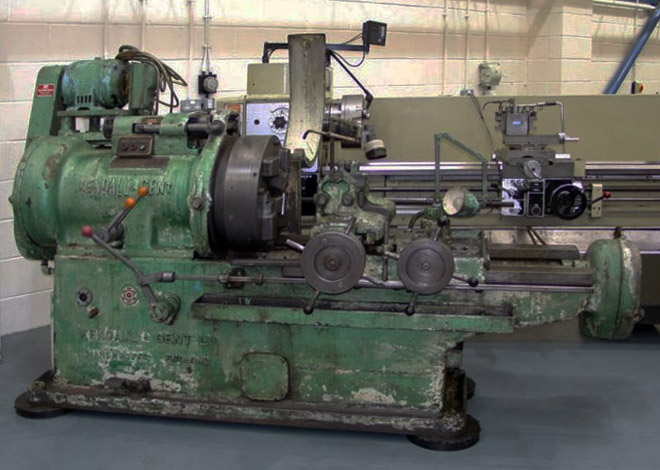
Originally formed in 1847, Kendall and Gent enjoyed many years as one of the biggest machine tool manufacturers in the UK, producing many large machines which are still in production today. Many of the tangential threading machines are still used in pipe, bolt and stud threading.

Kendall and Gent

Also of interest Richard Peacock Gorton industrialist .

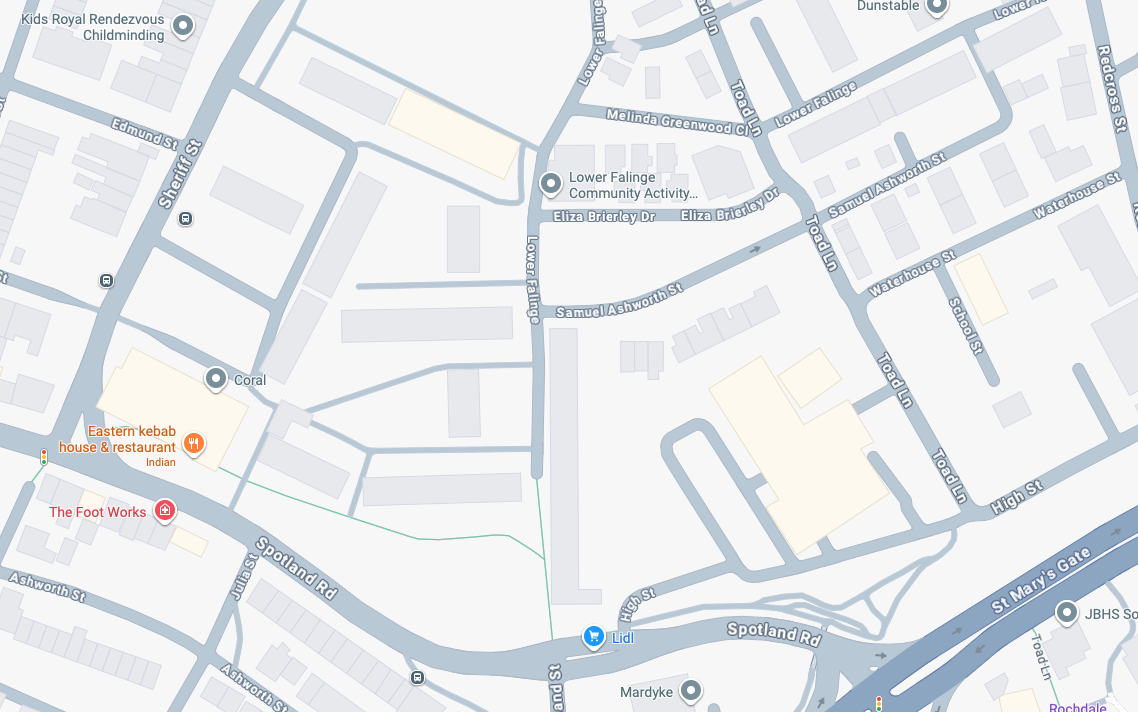
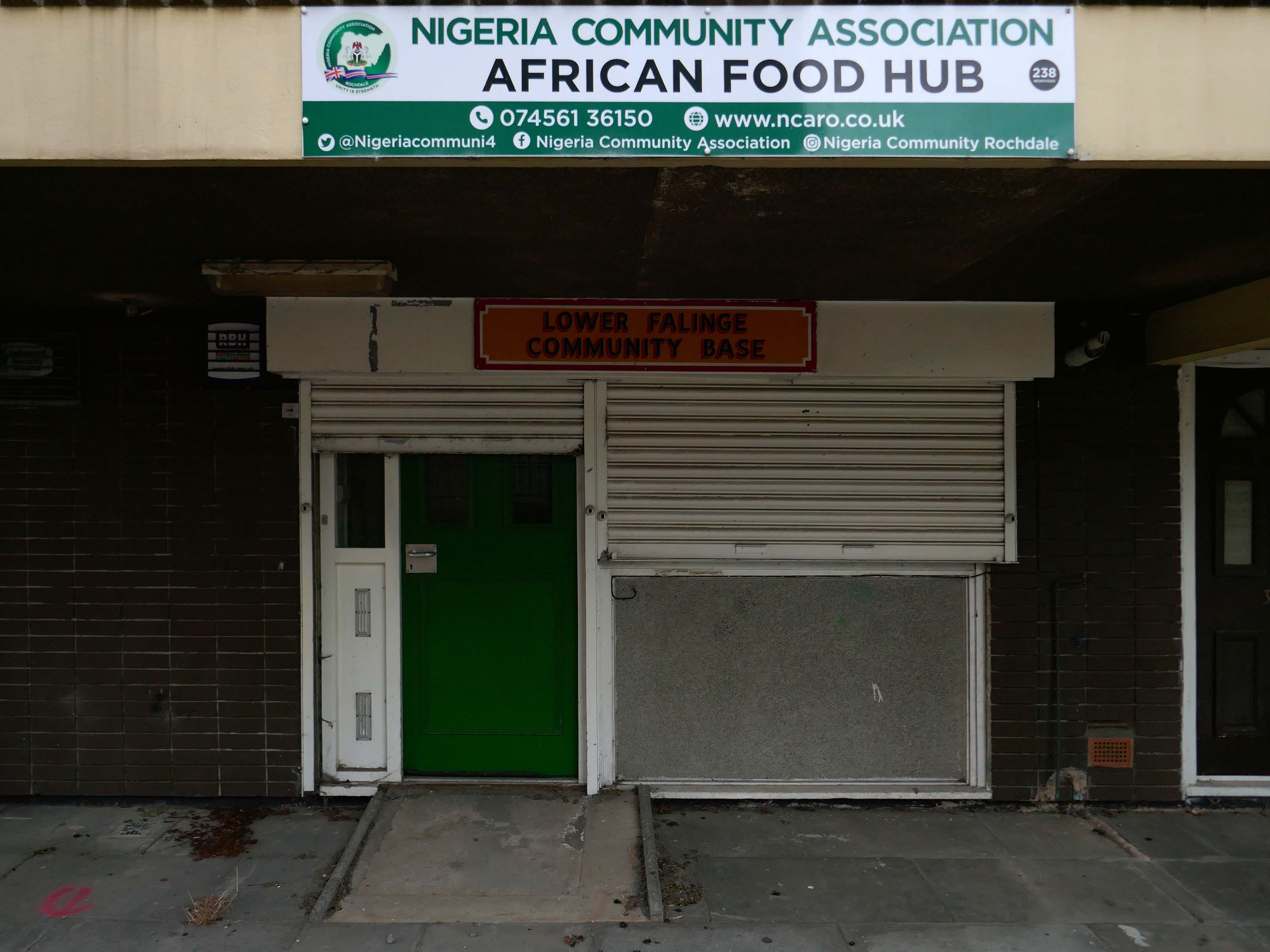
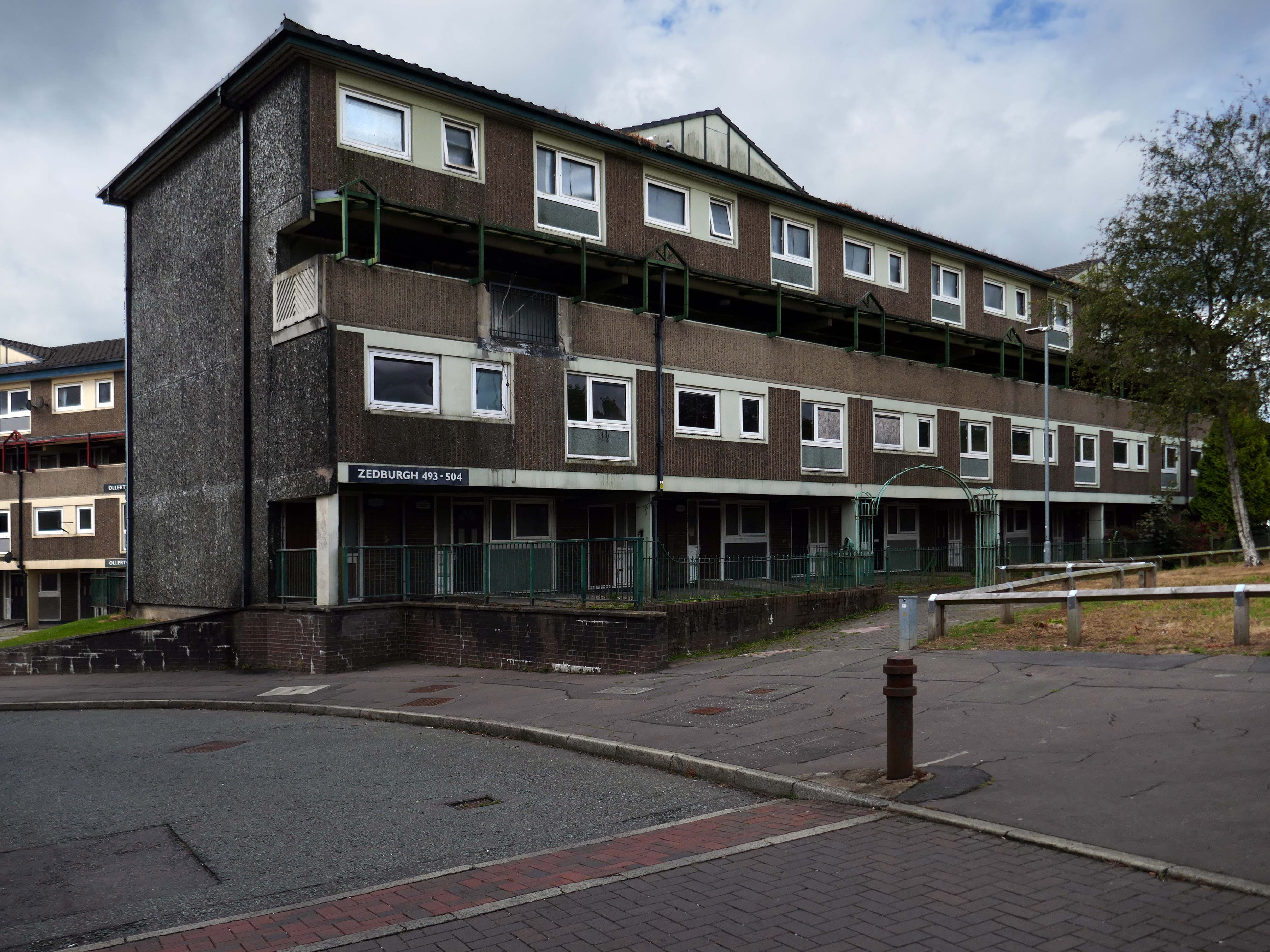
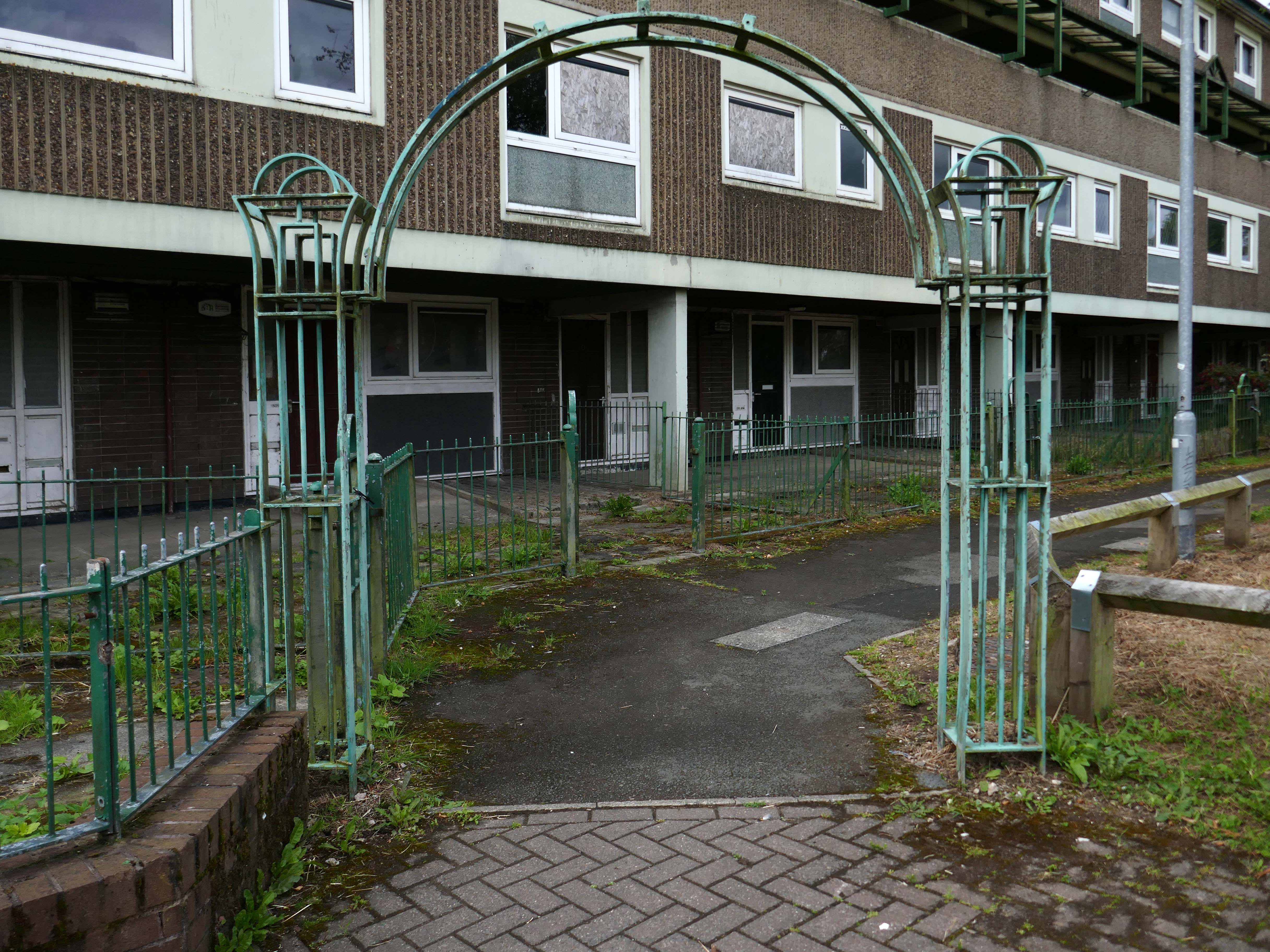
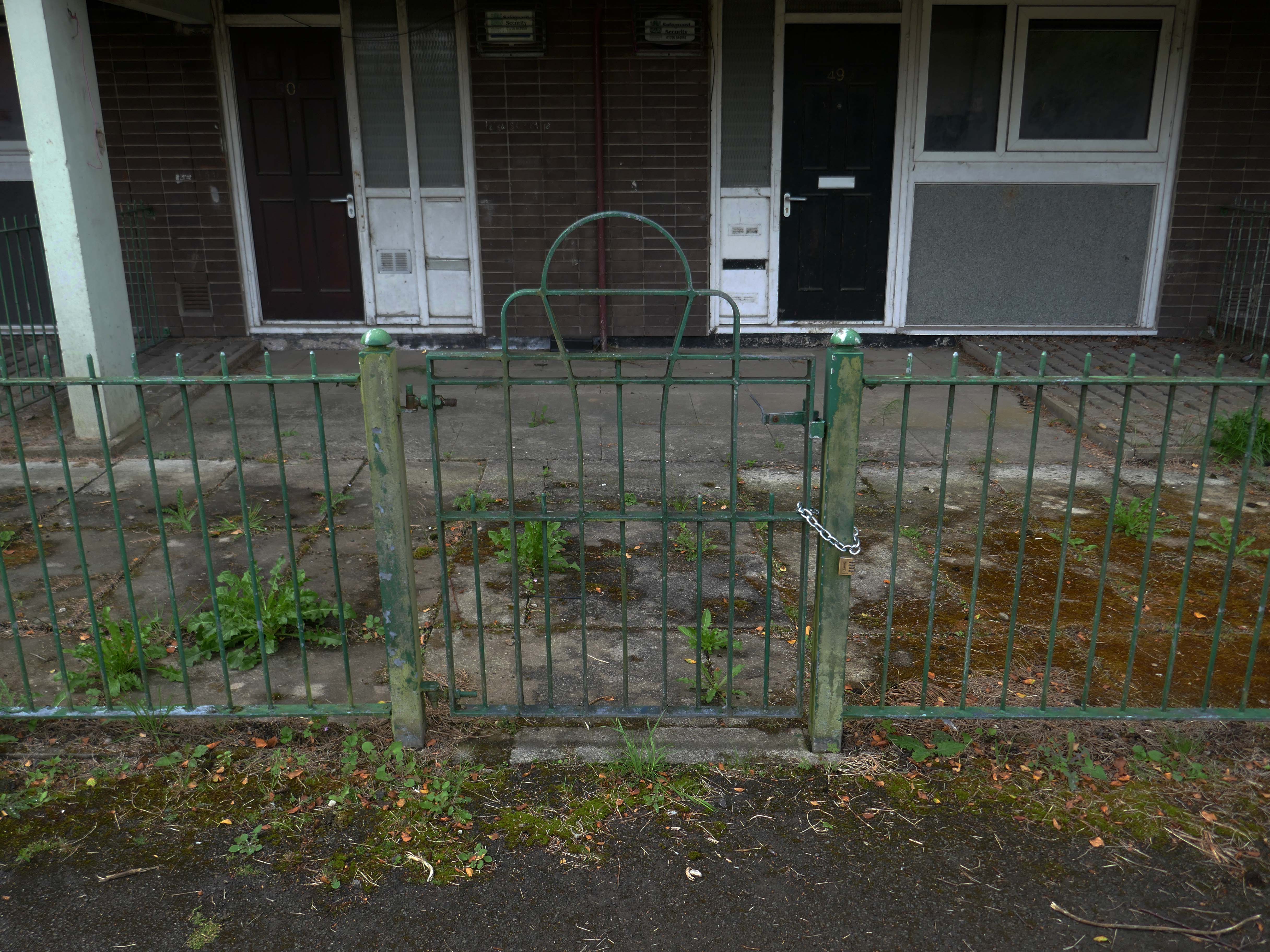
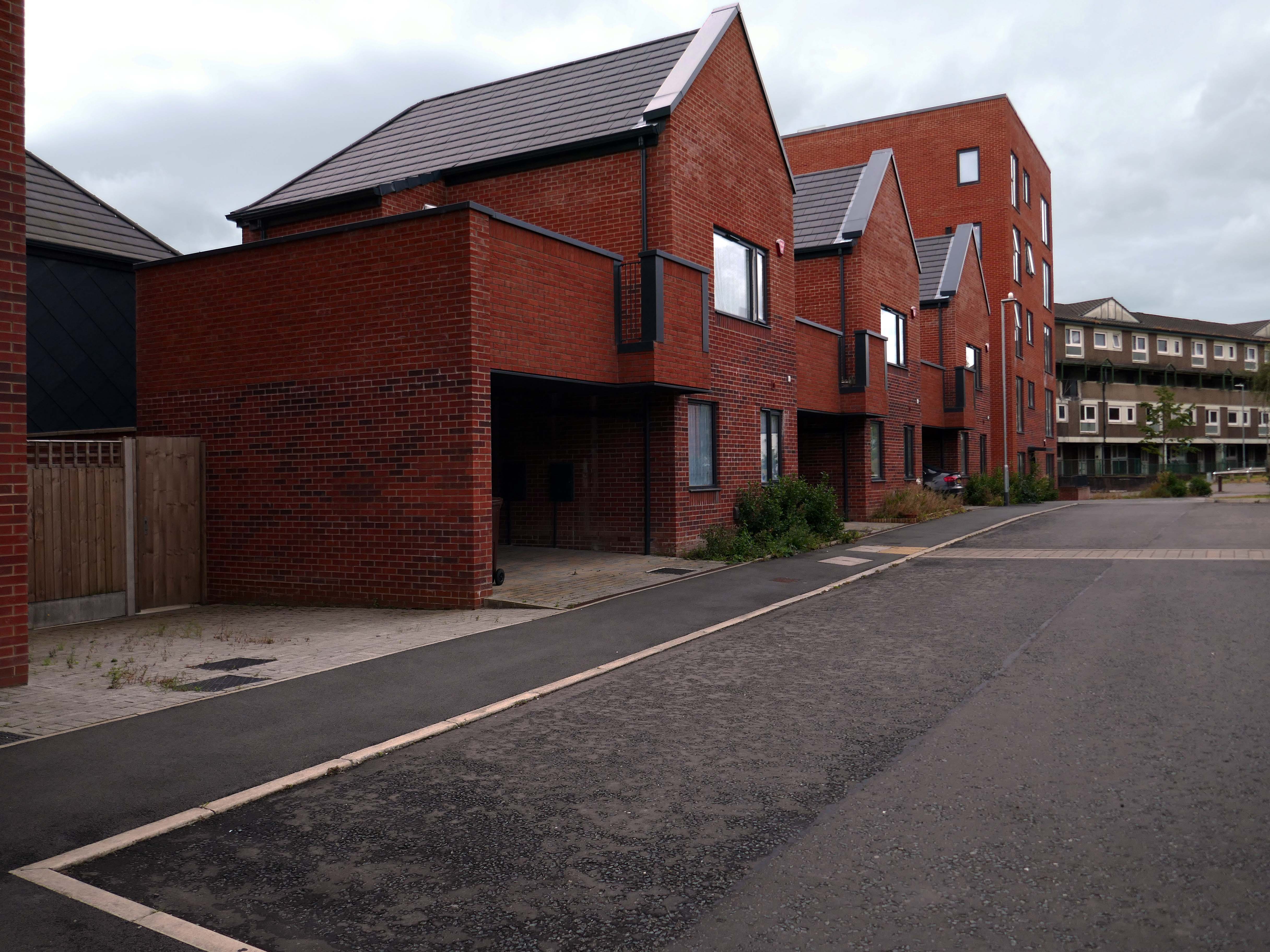
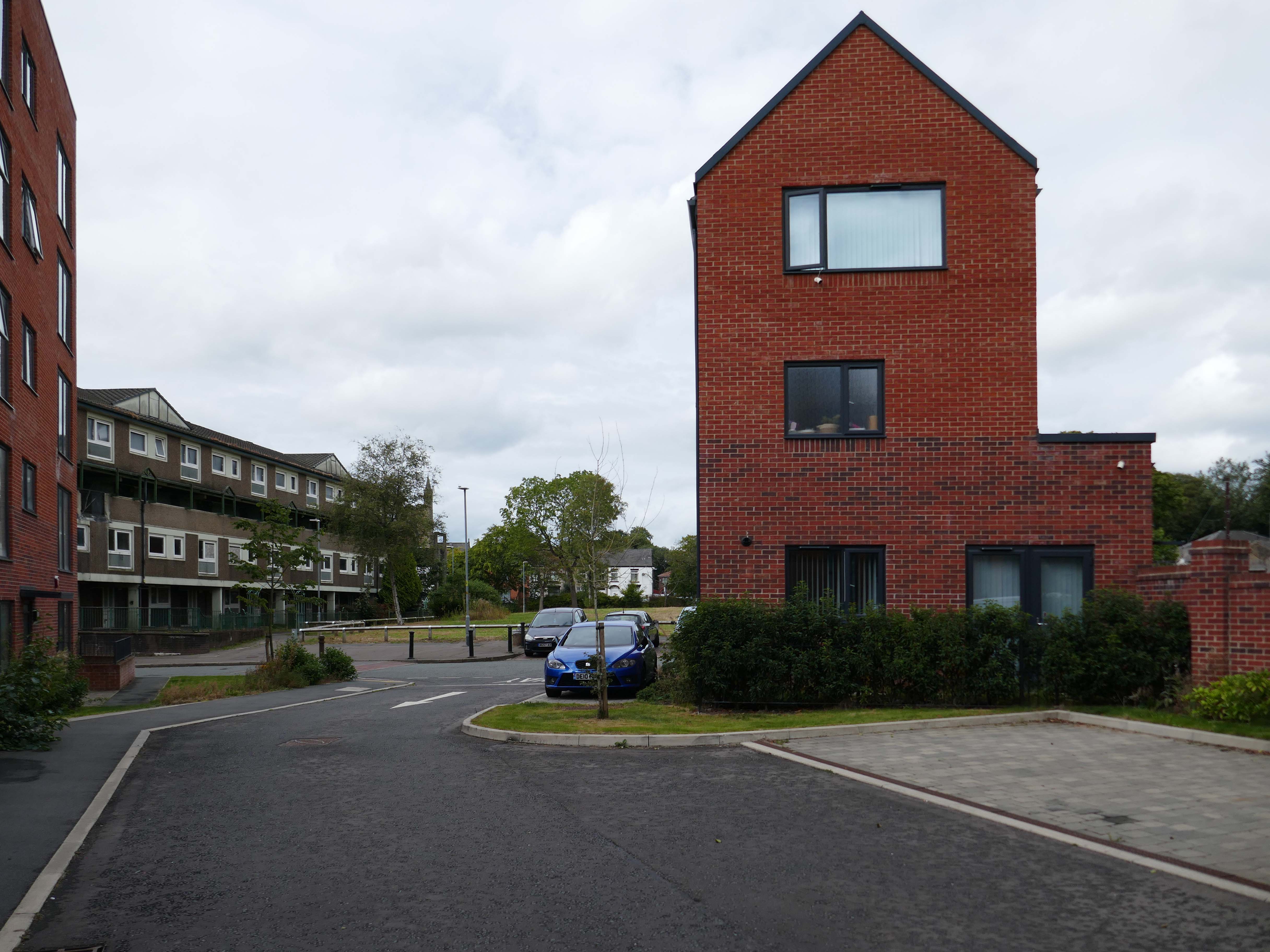
Lower Falinge – Rochdale 2025

I came along to take a look around in 2017 – at this point all of the homes are occupied.

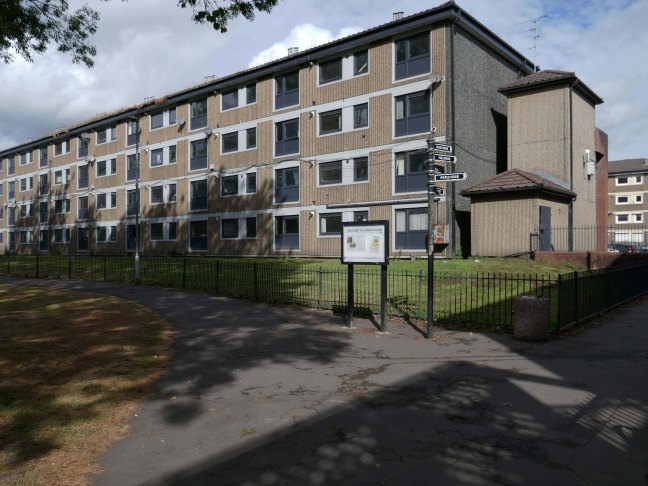
Fast forward to 2025 and the estate looks very different, a minority of the blocks have been refurbished.

The remainder have been, or are to be demolished.

Rochdale’s 2021 planning statement for Lower Falinge is beguiling in its talk of ‘a better quality and mix’ of housing, better public space and better links with surrounding areas. It goes on to say that the ‘the delivery of market housing within this area is required to deliver this diversification and to ensure the sustainability of retained affordable housing in the area’ – a sentence containing the claim that a tenure mix of public and owner-occupied housing is a good in itself, whilst also acknowledging contradictorily that affordable housing (how affordable?) is only possible by cross-subsidy from market sales’ 

Some 560 new homes were proposed in Lower Falinge. The plans as a whole proposed the loss of 720 primarily social rent homes and their replacement by 560 new homes of indeterminate tenure.

Municipal Dreams 

The tenants in the refurbished blocks with whom I chatted were convinced that demolition was not the answer, further renewal could take place, Rochdale Boroughwide Housing, despite a well prepared save our homes campaign thought not.

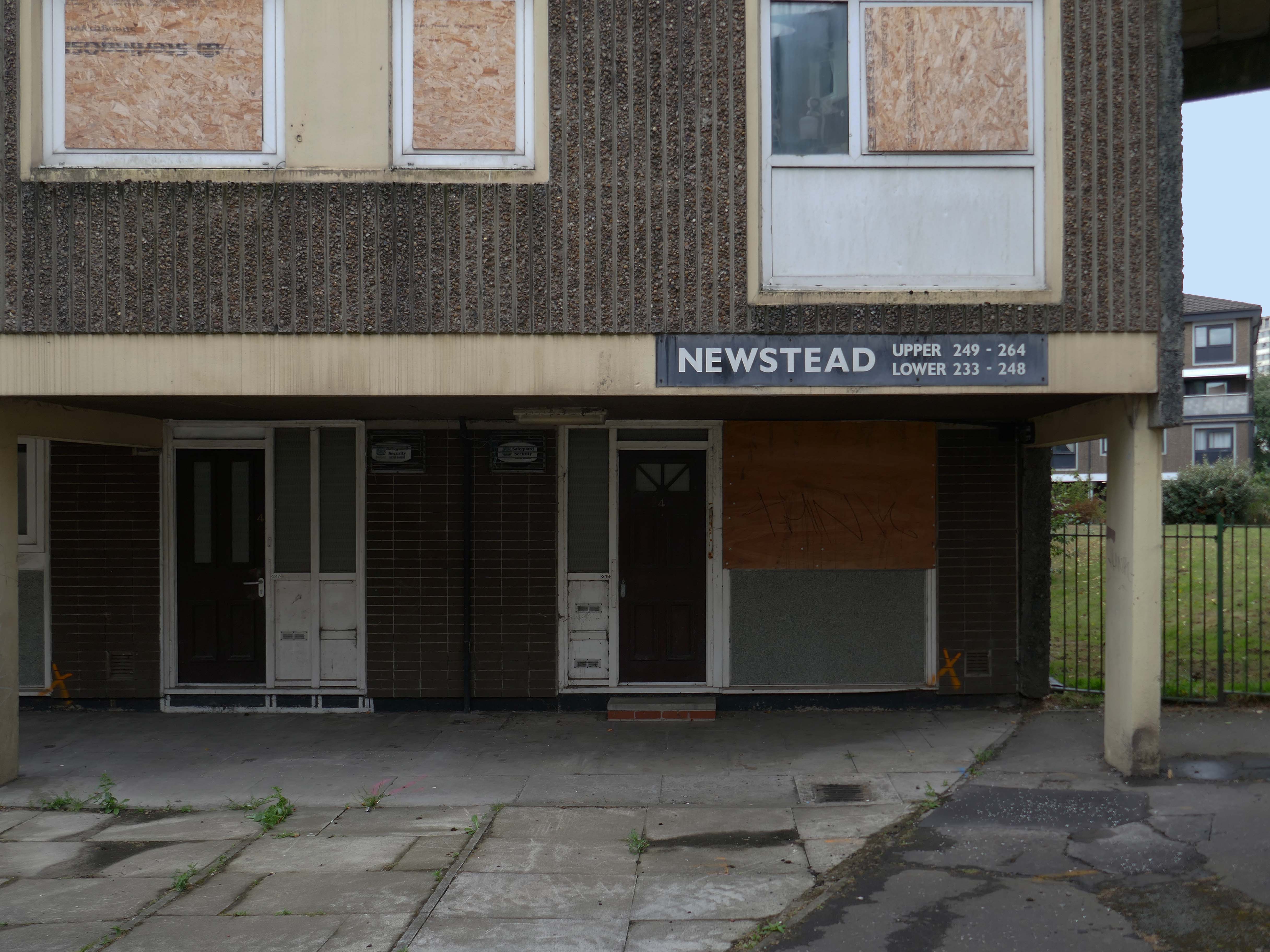
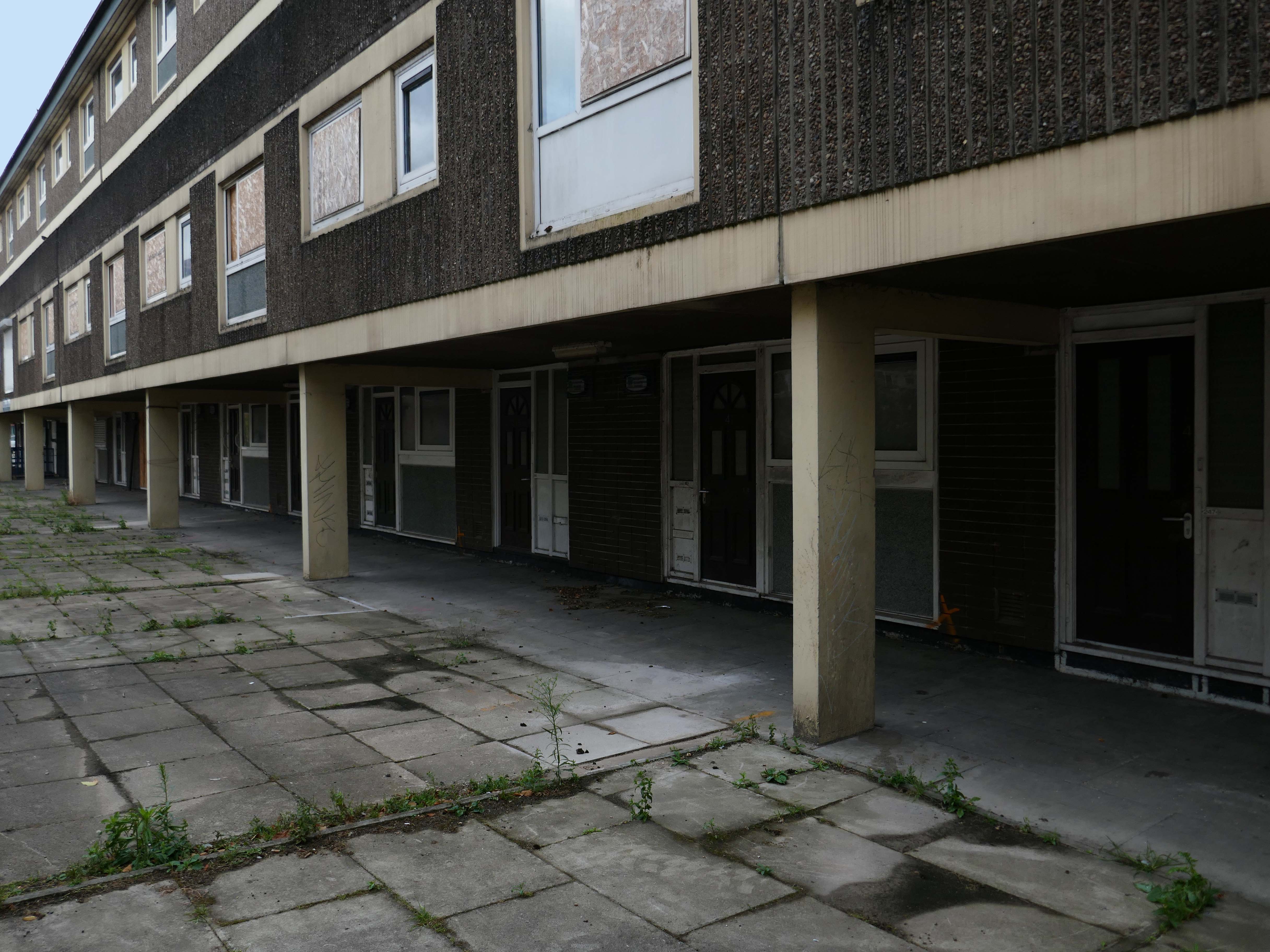
In March, we told you that we planned to demolish the six empty maisonette blocks – Ollerton, Newstead, Romsey, Quinton, Ullesthorpe, and Vaynor, in Lower Falinge, as well as the former RSPCA buildings and the former car wash on High Street, within the next 12 months. This will make way for the development of new family homes across a larger site that we will work with the community on designing.

Rochdale Boroughwide Housing July 2025

Our beautiful mature greenery here on Lower Falinge is showcased in this wonderful video. We are proud of living here surrounded by all this nature – it really is like living in a park.

Unfortunately our urban oasis of calm is at risk of being destroyed if RBH demolish 128 homes and eventually build on the land.

Facebook/Lower Falinge

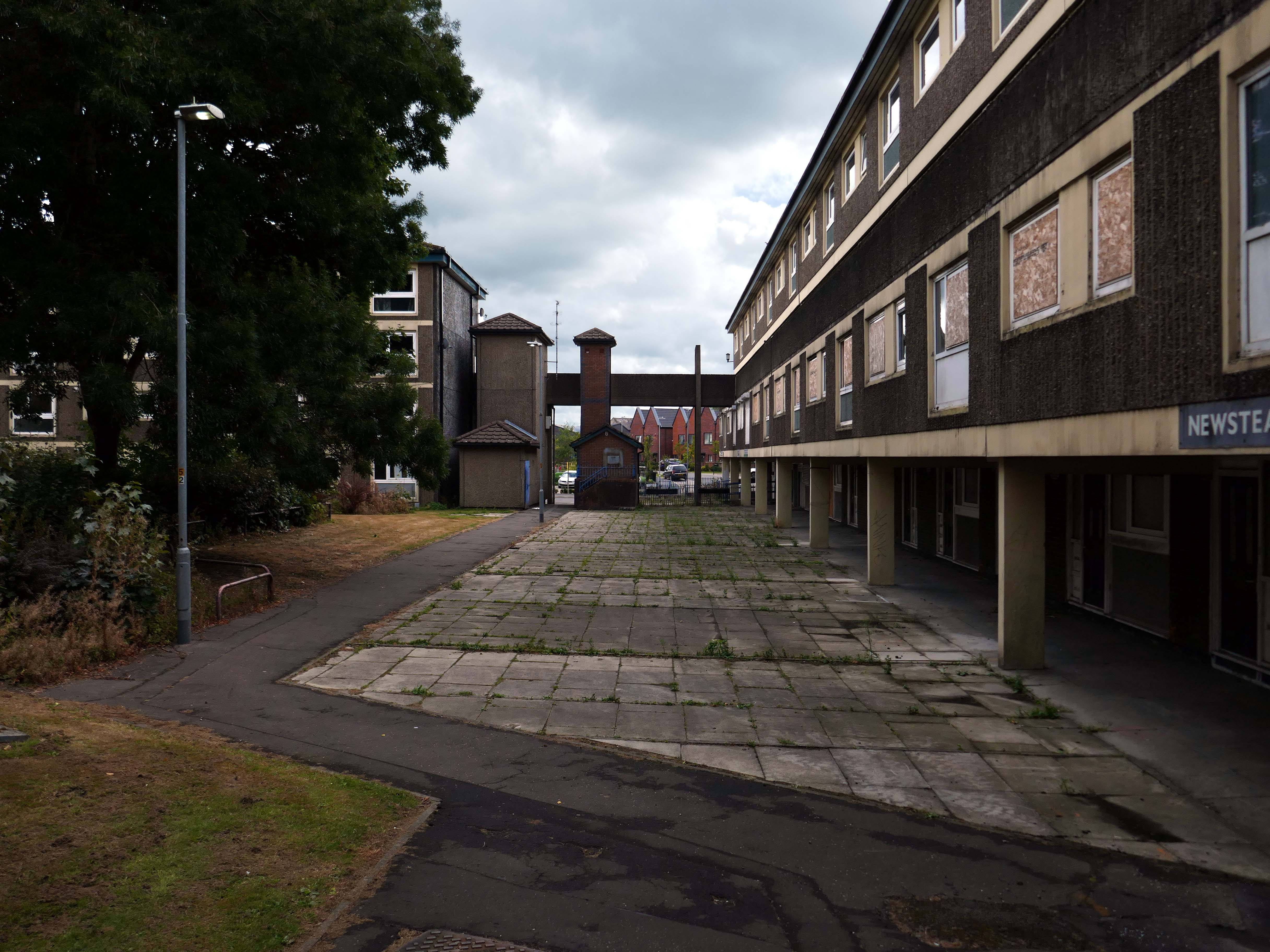
These homes are destined to be demolished.

Whilst this adjoining block has been refurbished.

Along with this block of shops.

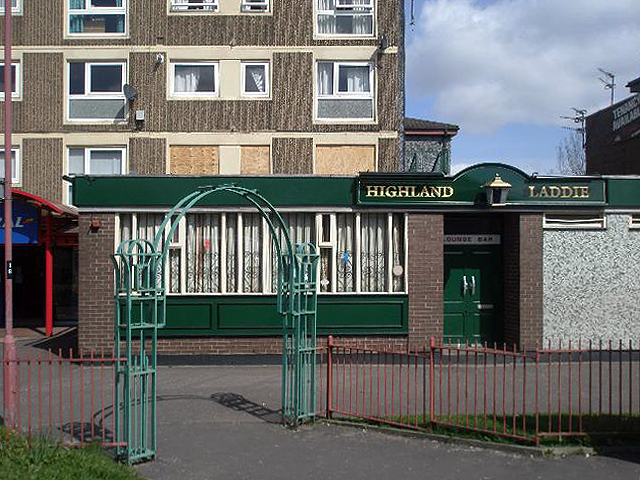
Once home to the Highland Laddie pub which closed in 2010.

The remainder of the estate remains in limbo.

Next door the new homes have been built.

A major housing regeneration scheme which includes the construction of 30 energy efficient, affordable homes is breathing new life into the Lower Falinge neighbourhood in Rochdale.

The project is being carried out for Rochdale Boroughwide Housing by Rochdale-based main contractor The Casey Group with OMI Architects. This is the largest of 3 schemes that Casey has carried out for RBH.

Construction News

Rochdale Homes

College Bank Flats – Rochdale 2025

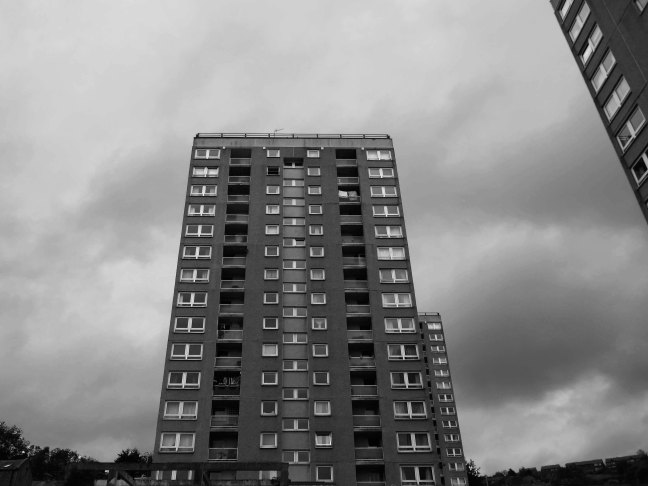
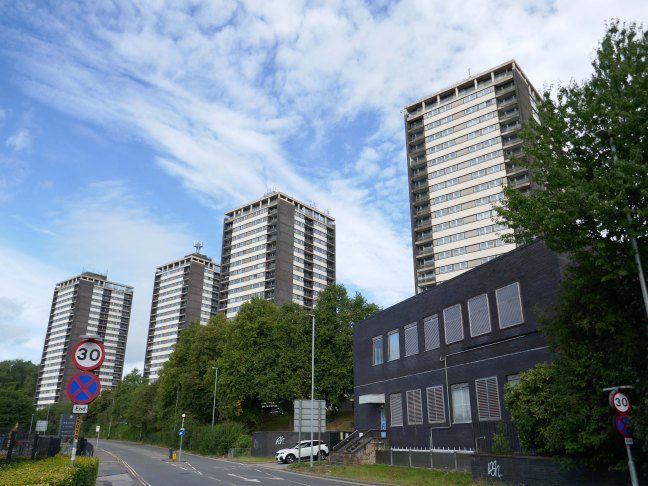
College Bank Flats aka The Seven Sisters, one sunny morning in late August.

Following visits in January 2017 and March 2017, I was in town to take a group of Modernists on a Rochdale Ramble.

In recent years these homes have been under threat of both demolition and refurbishment.

Rochdale Boroughwide Housing – RBH had sought help from a developer to pay for its £107m plans to refurbish the College Bank high-rise apartments, known in the town as the Seven Sisters. 

But the social housing landlord has been unable to reach a commercially viable agreement to help improve the blocks where 250 people live. 

Amanda Newton, RBH chief executive said the lack of a deal was disappointing but all options for the future of the site would still be explored.

Many of the apartments spread across the Seven Sisters remain unoccupied after a plan was announced to demolish four of the blocks in 2017, leading to an exodus of hundreds of tenants. RBH later reconsidered the plan, and instead signed a deal with developer Legal & General Affordable Housing last year, to find a viable way of refurbishing the apartments. 

All 700 flats in the 1960s blocks were set to be redeveloped under the plans, but the pair’s agreement has now come to an end without a solution emerging.

BBC – October 2024

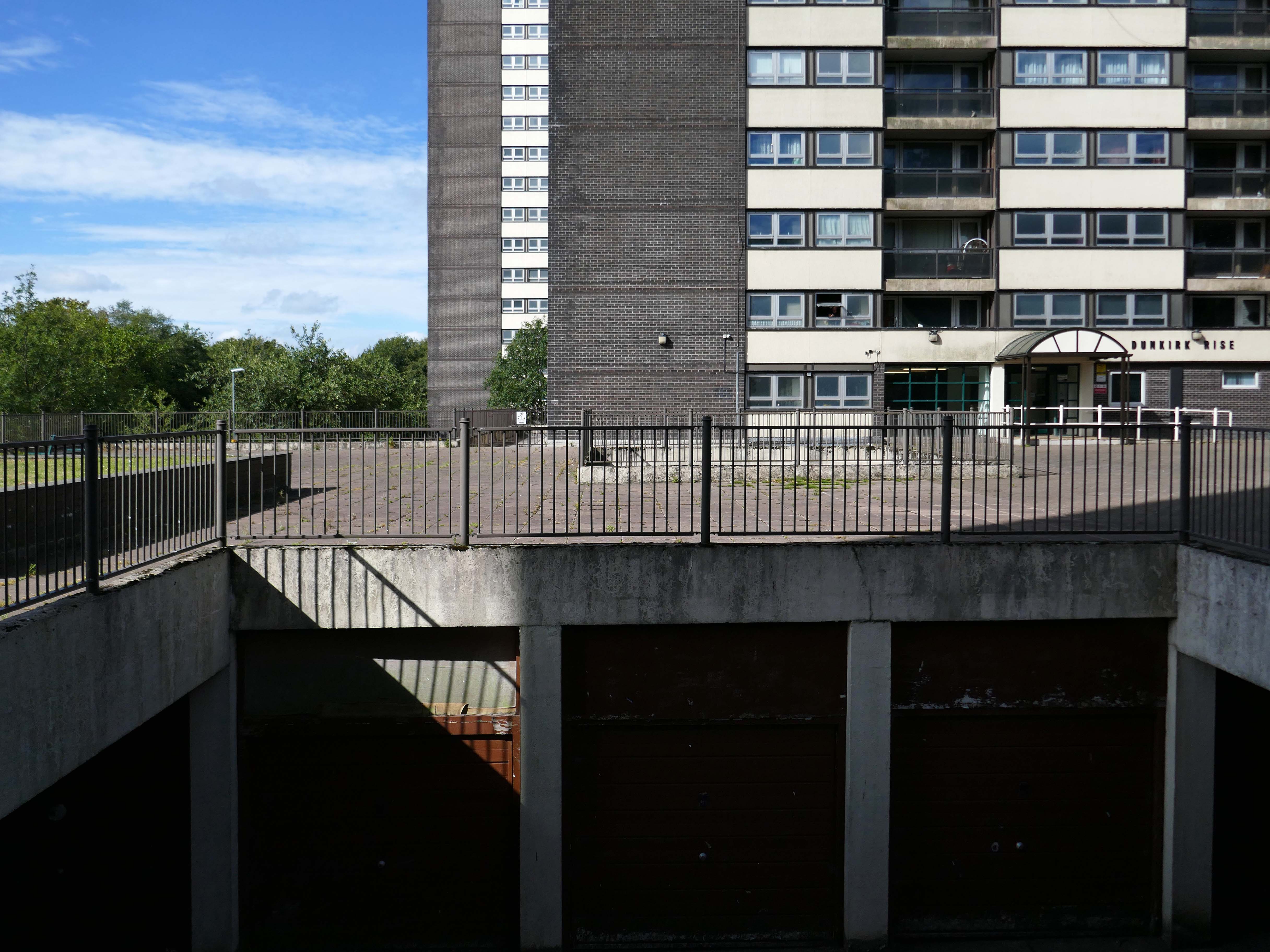
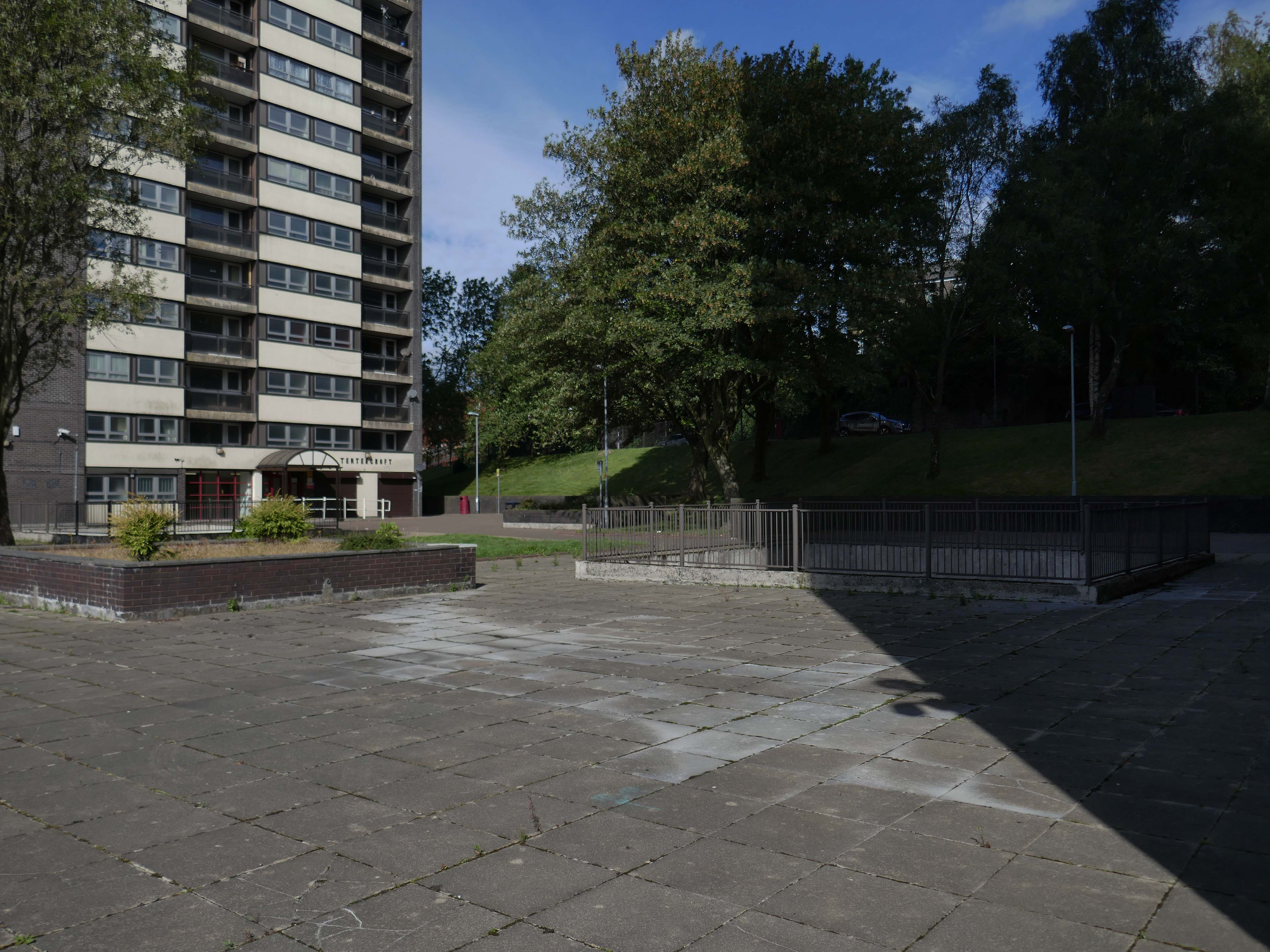
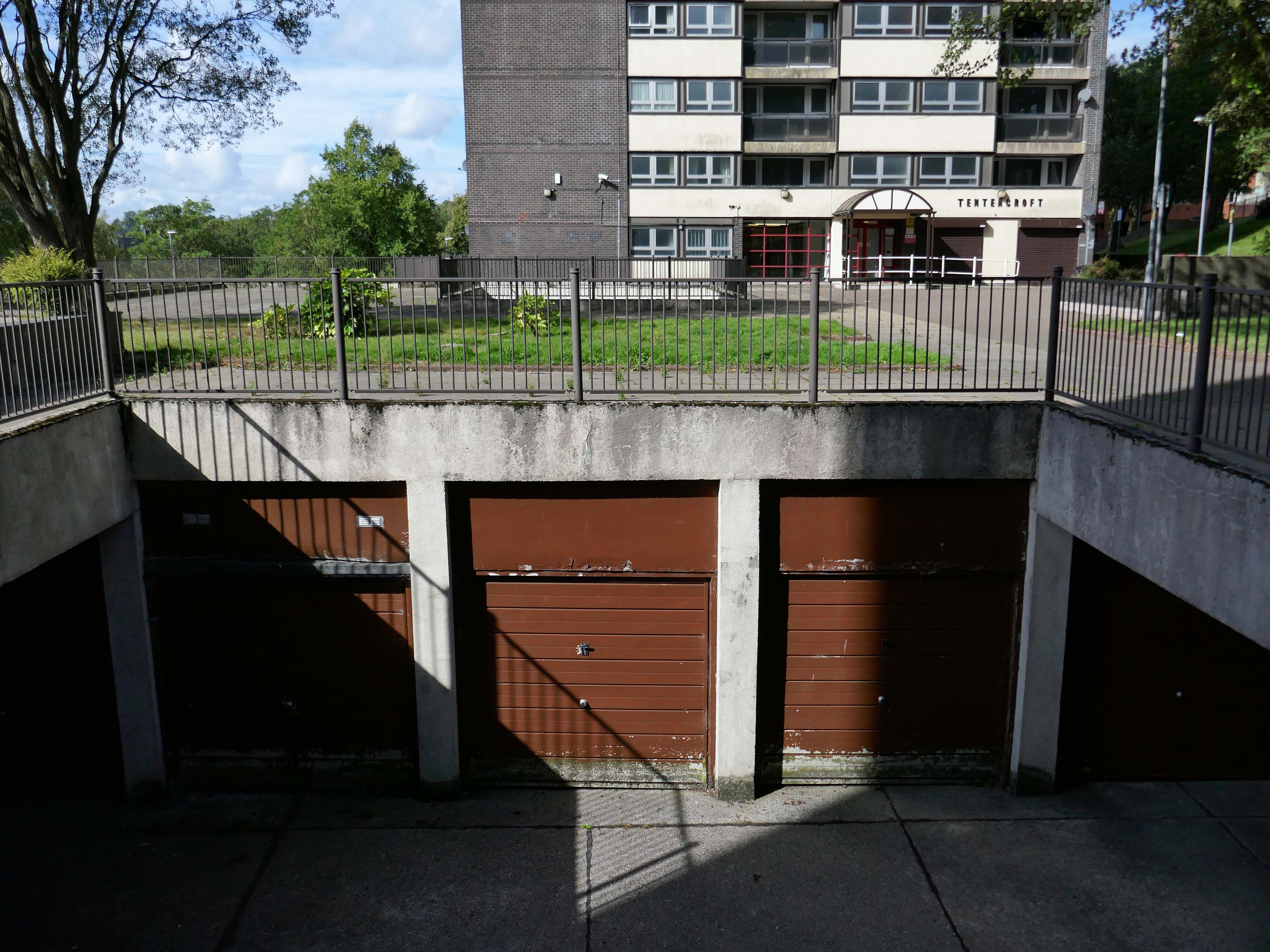
John Hurn, who has lived in the Tentercroft tower block with his wife Sharon, for 18 years, said:

Not knowing what’s happening, I get frustrated, this is home to me, Rochdale is home.

BBC – January 2025

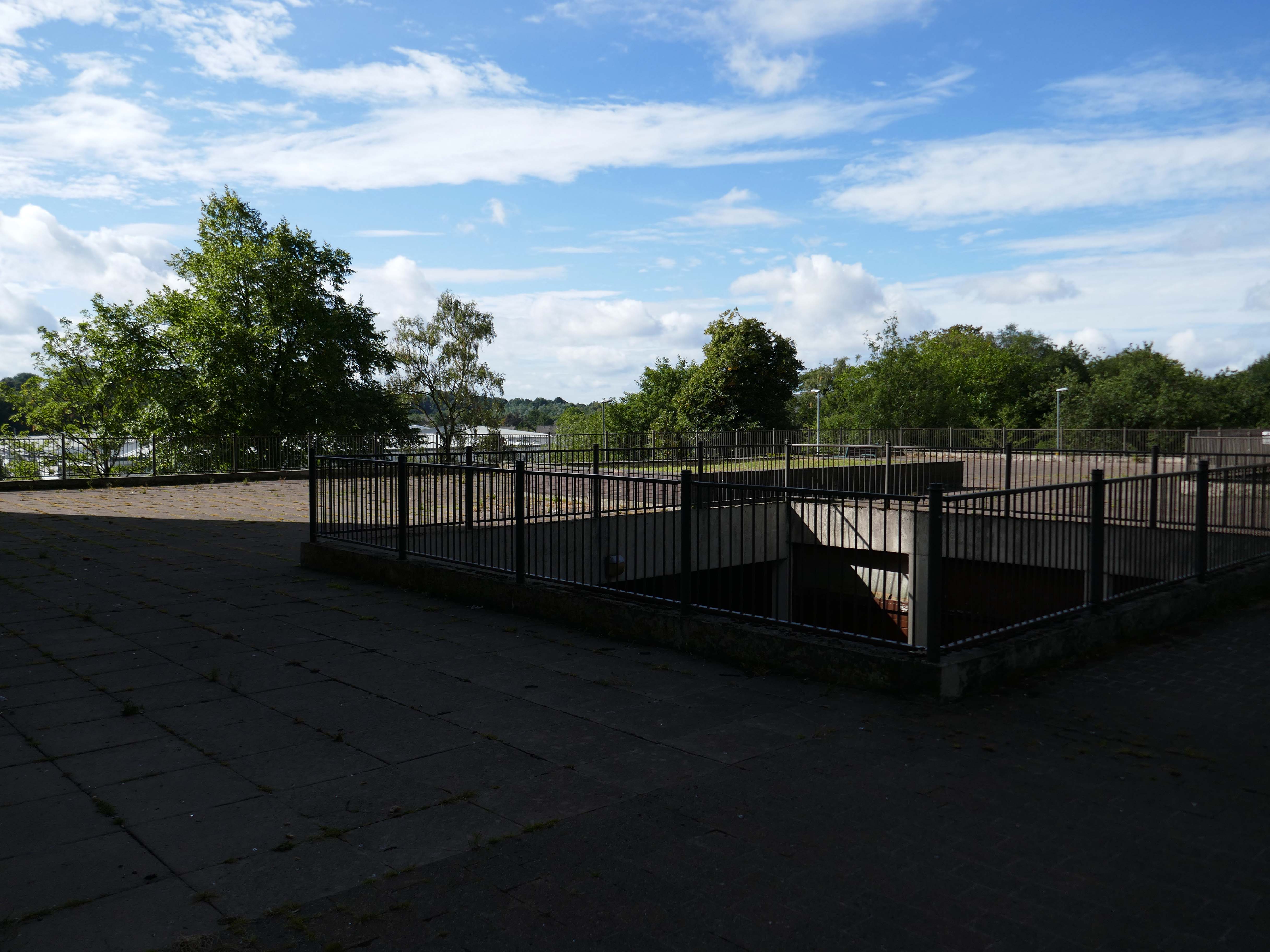
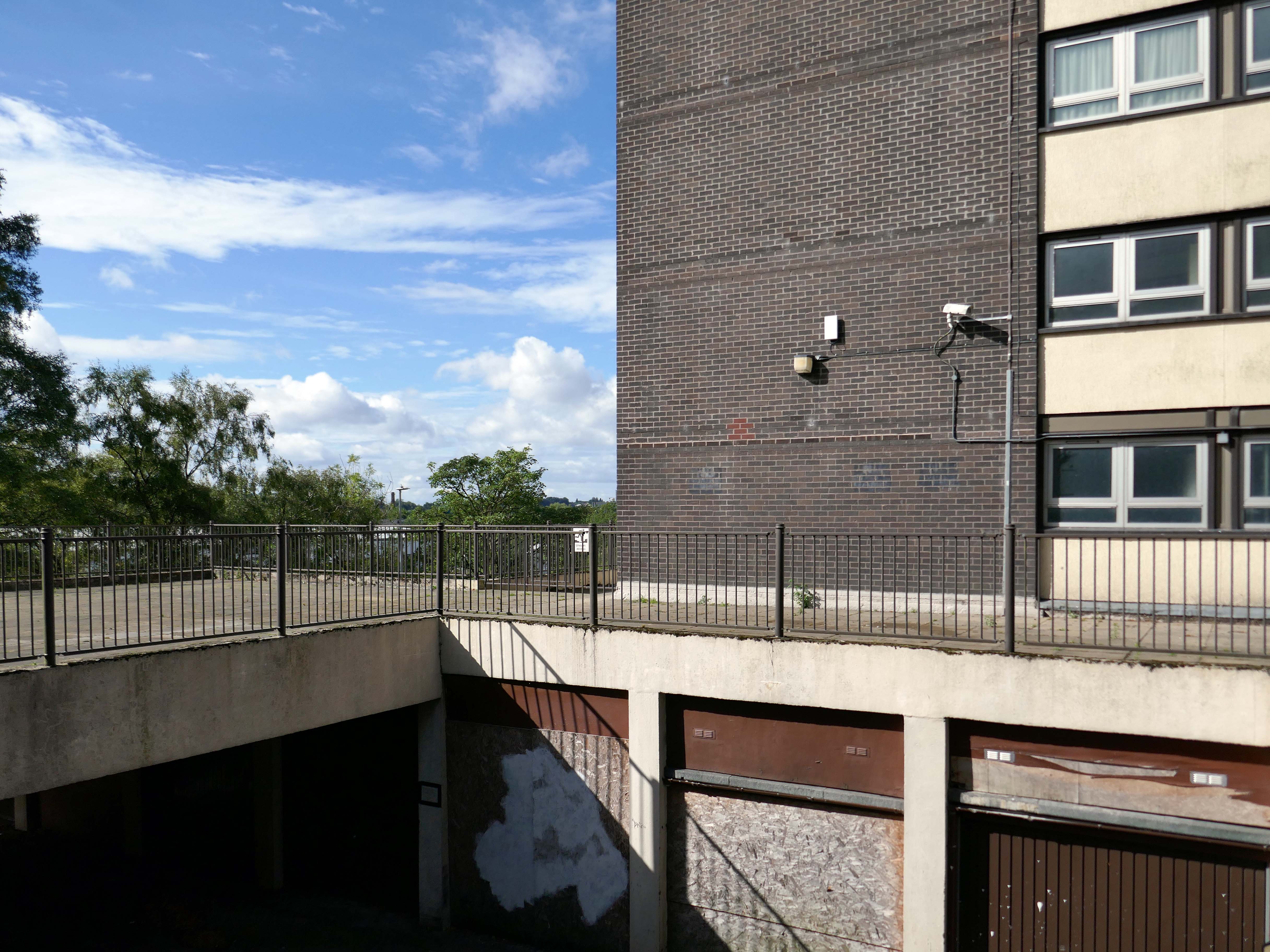
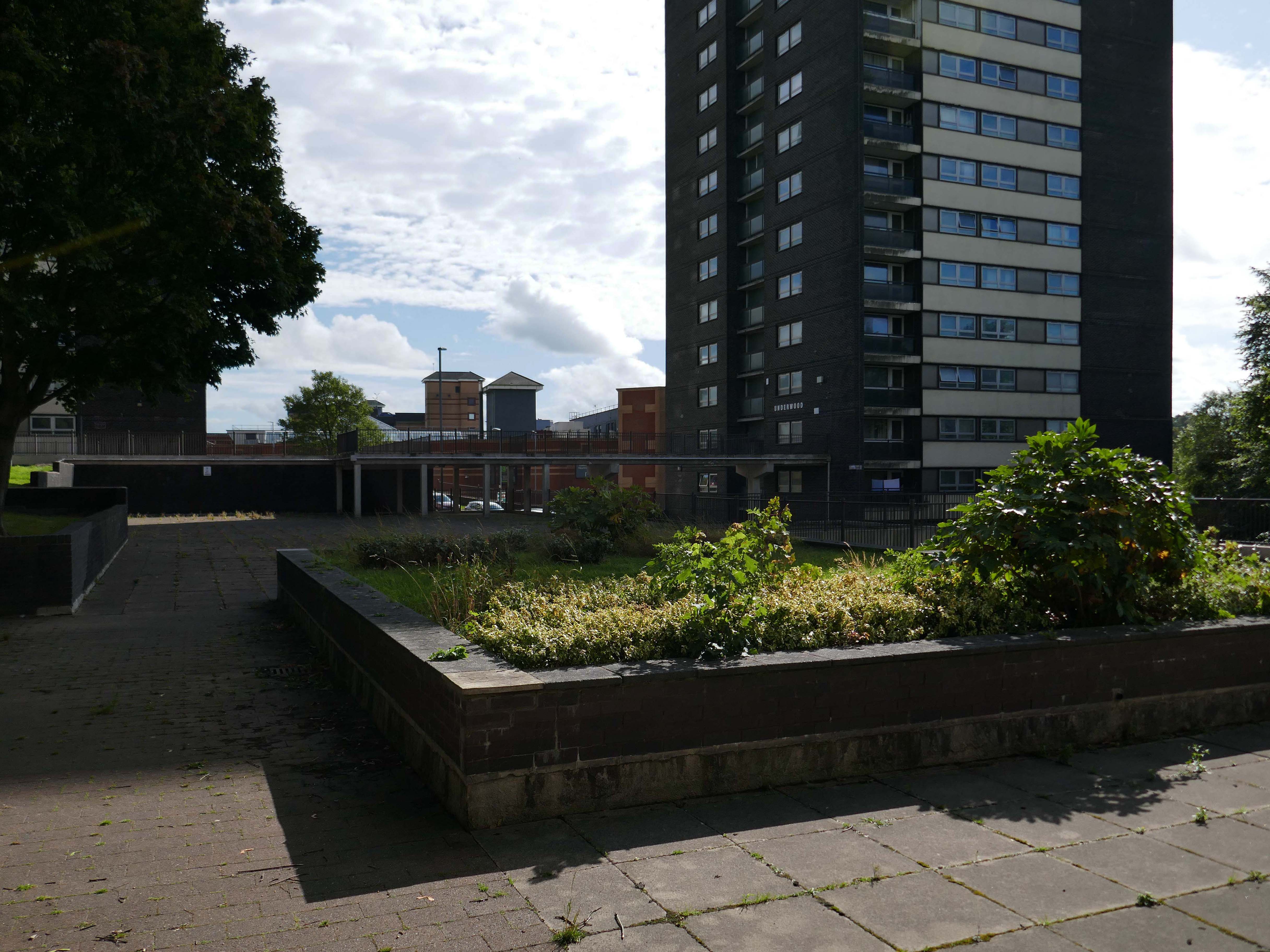
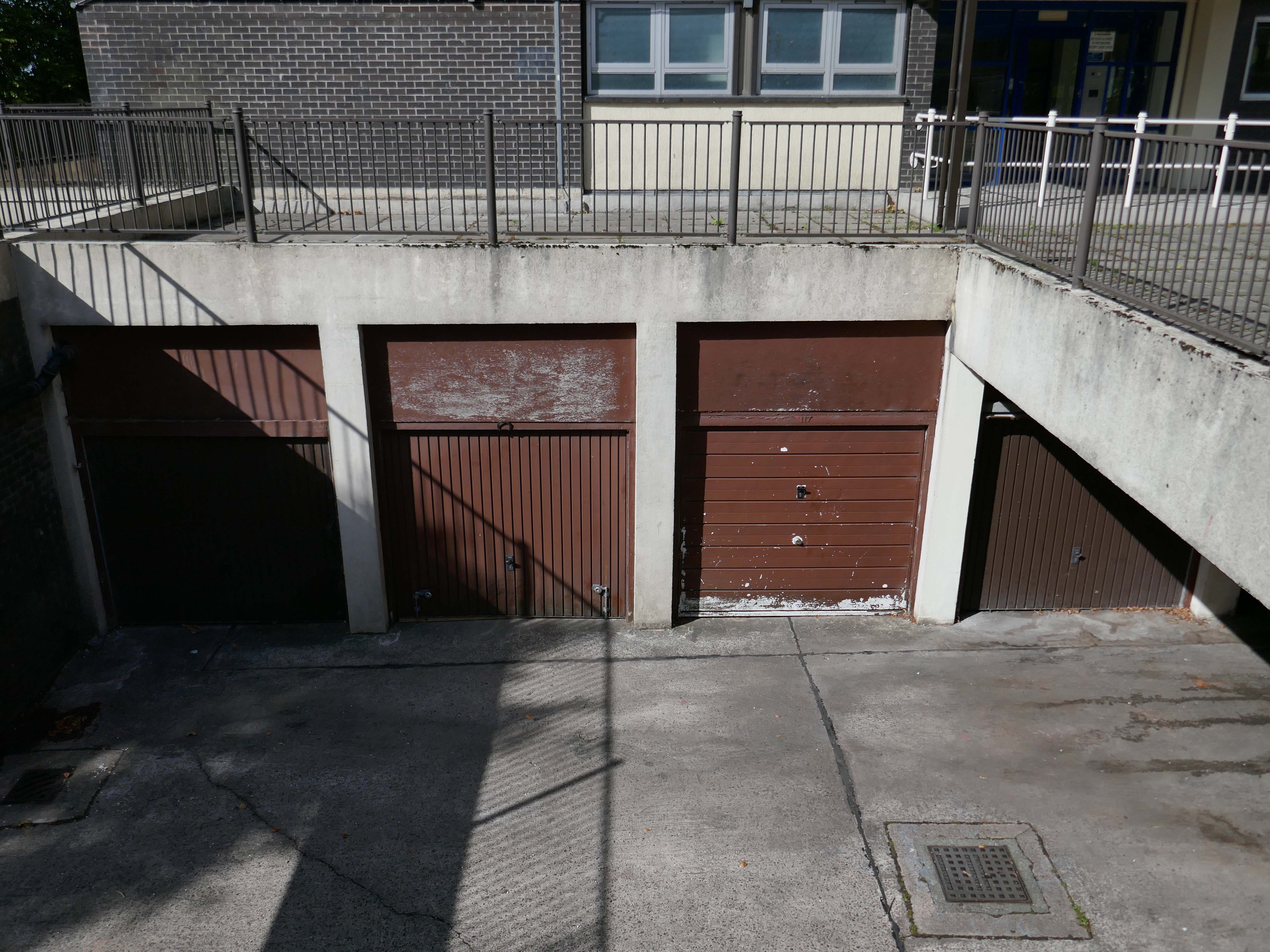
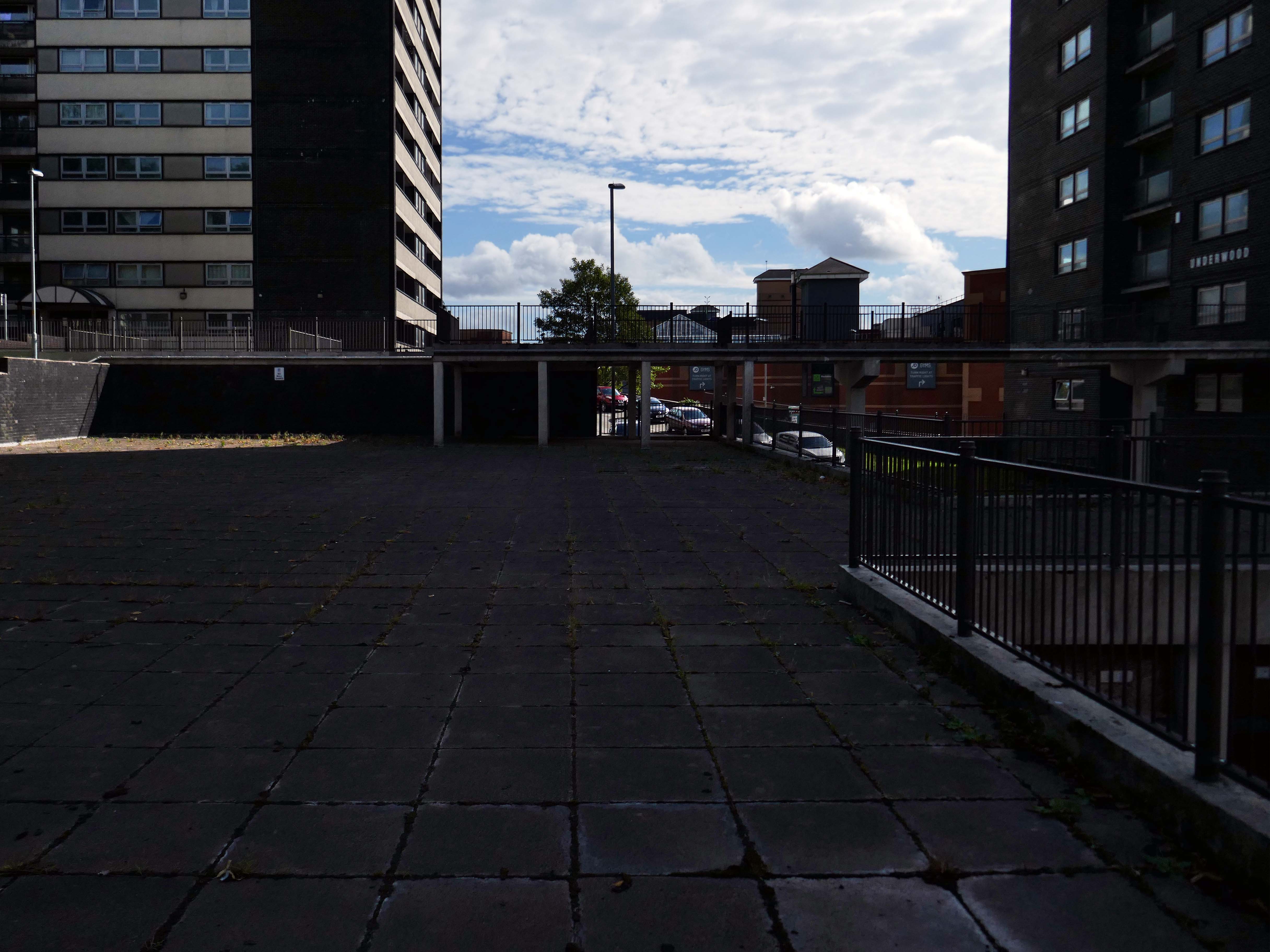
So an unsatisfactory stasis prevails across the windswept piazzas, podium garages and towering towers.

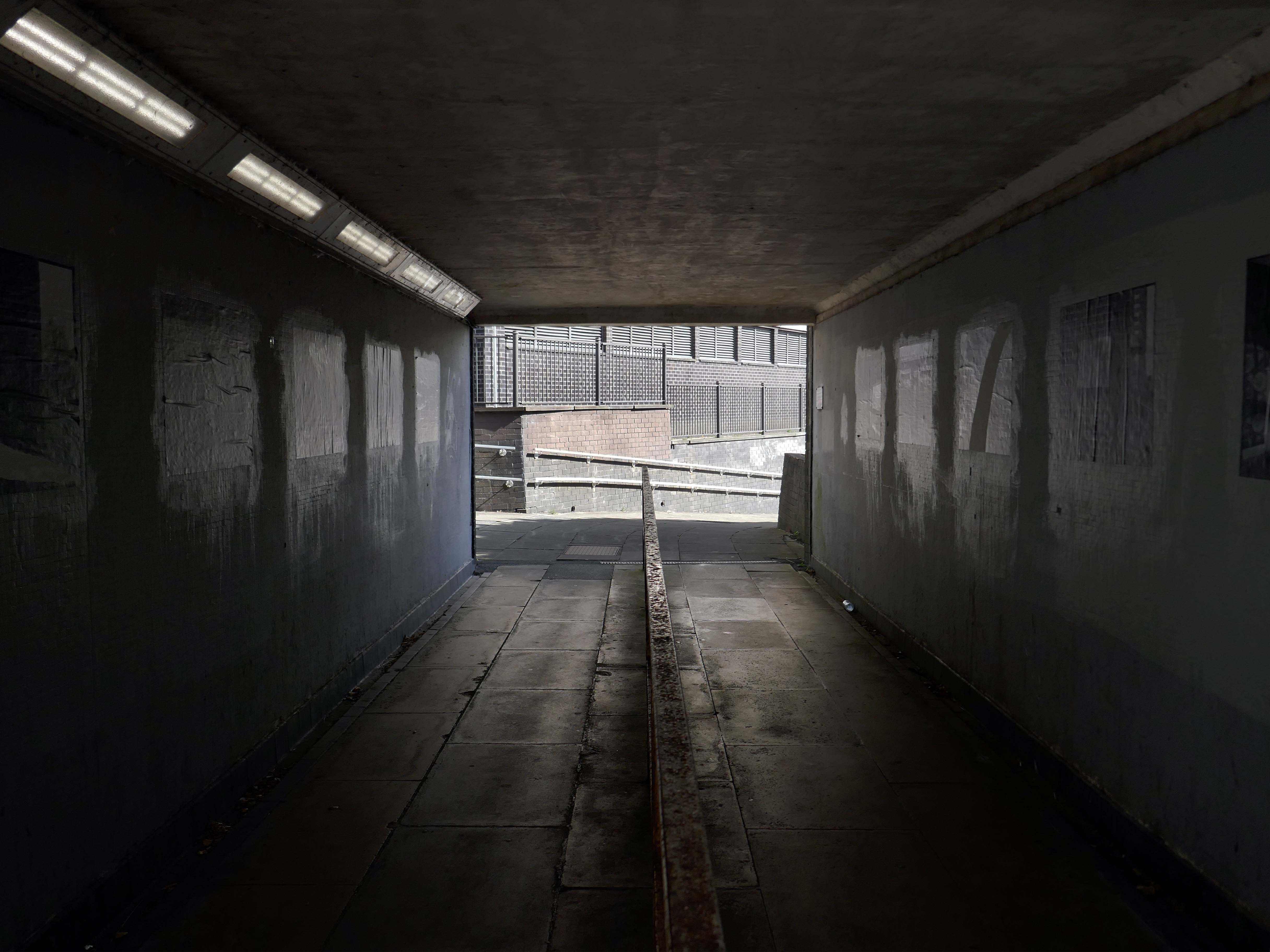
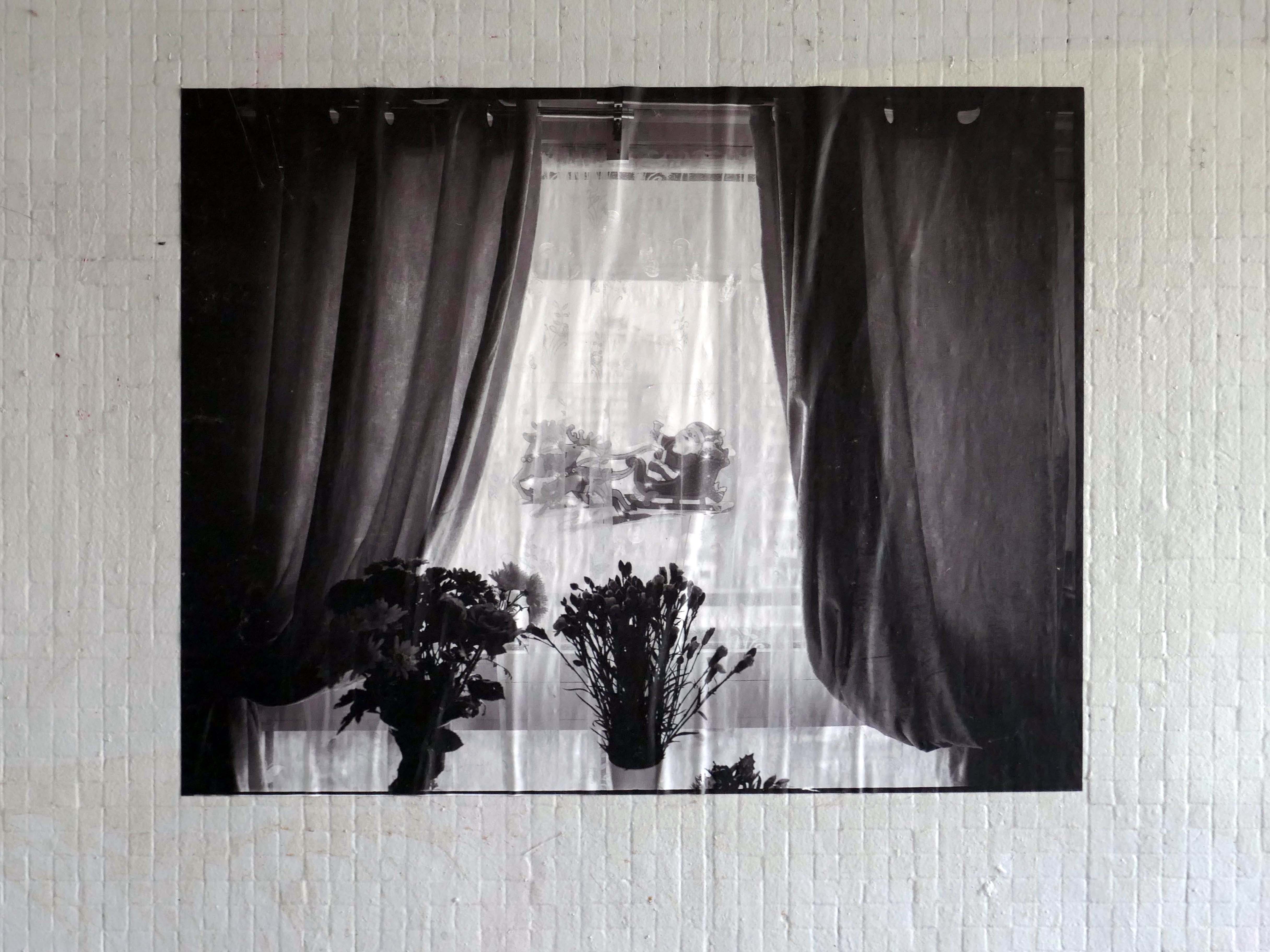
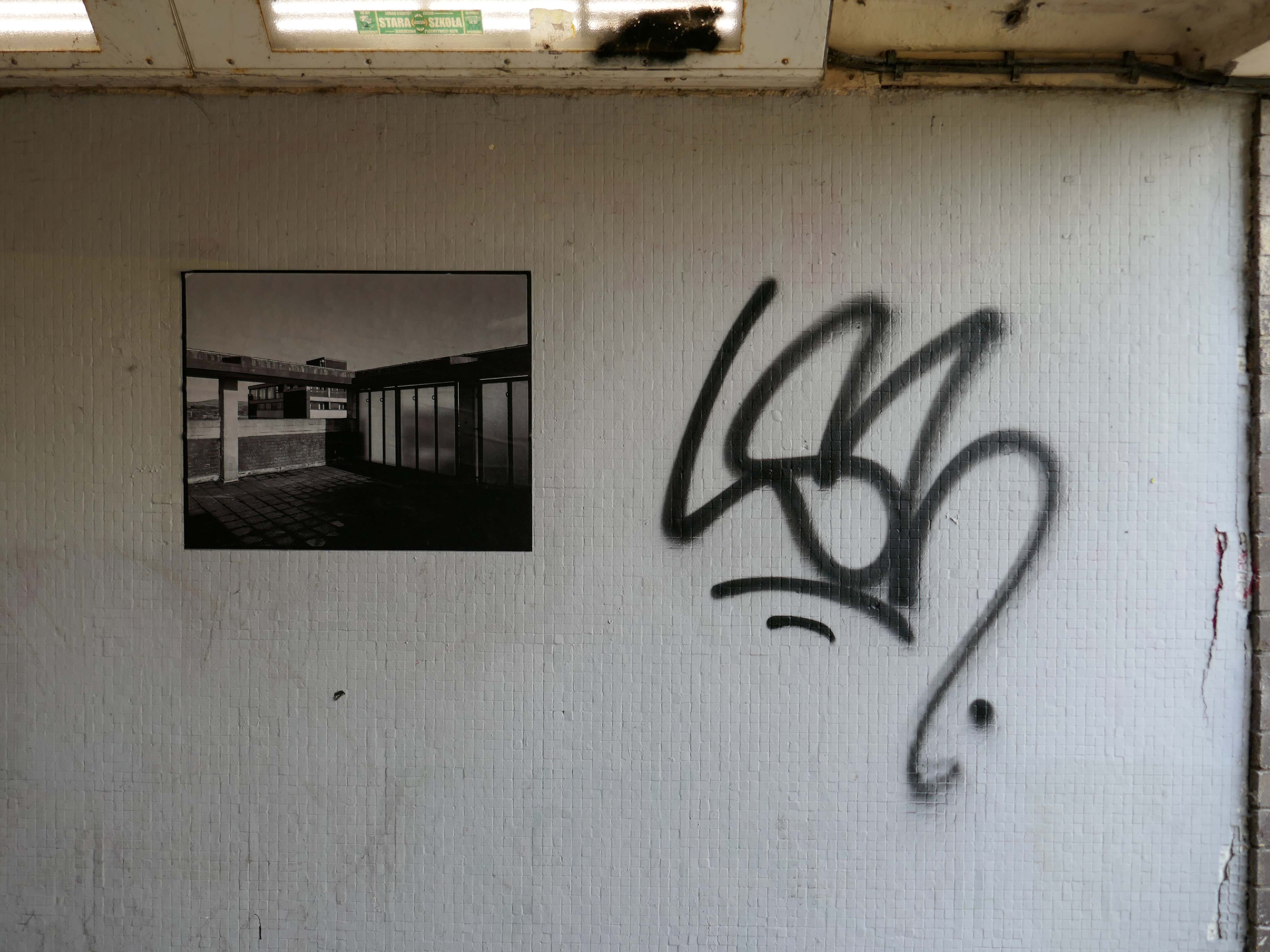
Local photographer Ellie Waters has her pictures of the flats displayed in the underpass.

Notes From College Bank is an ongoing project which documents the College Bank buildings in Rochdale, Greater Manchester. ​Known locally as ‘The Seven Sisters’, College Bank is formed of seven high-rise social housing blocks, four of which have come under recent threat of demolition. 

Drawing from found imagery and photographs taken by my late Grandfather – M J Burgess – who like me grew up in Rochdale, I’ve been working with past and present residents to create a collective record of life in and around College Bank.​

This project is ongoing, if you would like to share your stories of College Bank please get in touch via email – notesfromcollegebank@gmail.com

Here is a recent post from Municipal Dreams outlining the history state of play – Rochdale Housing Part II.

Fast forward to the present, the Seven Sisters still stand – an impressive architectural statement in the heart of Rochdale and, to my mind, as powerful a testament to municipal endeavour and aspiration as the town’s nearby town hall. But much has changed. In the slow evolution that affected council housing more broadly, the flats became less desirable, even, in some eyes, a ‘sink estate’. In Robin Parker’s view, the Council started re-housing people in the blocks ‘not suitable for high-rise living’ – a typical occurrence when the most vulnerable on the waiting list and those with least choice are allocated to so-called ‘hard to let’ estates.

Rochdale Homes

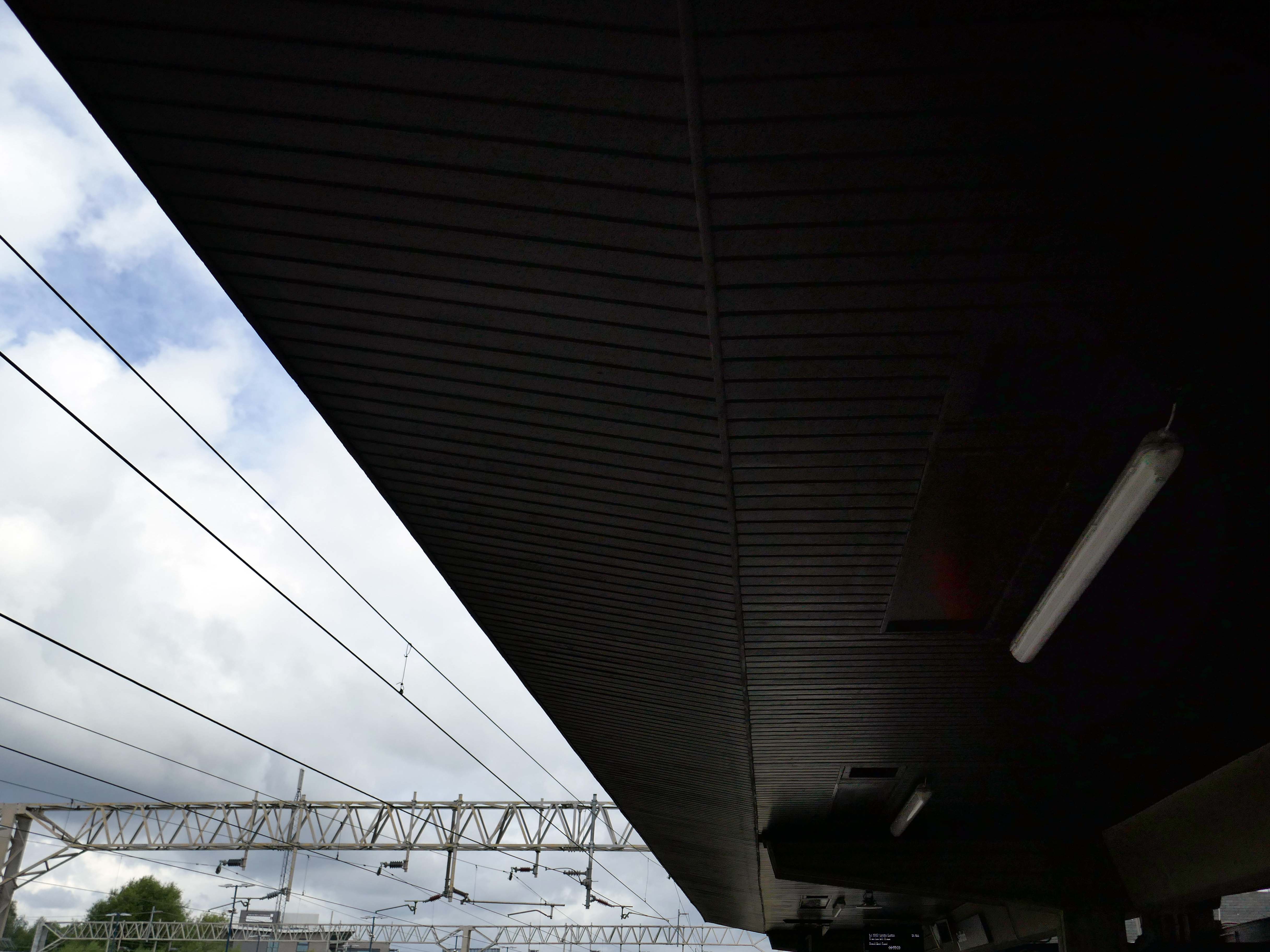
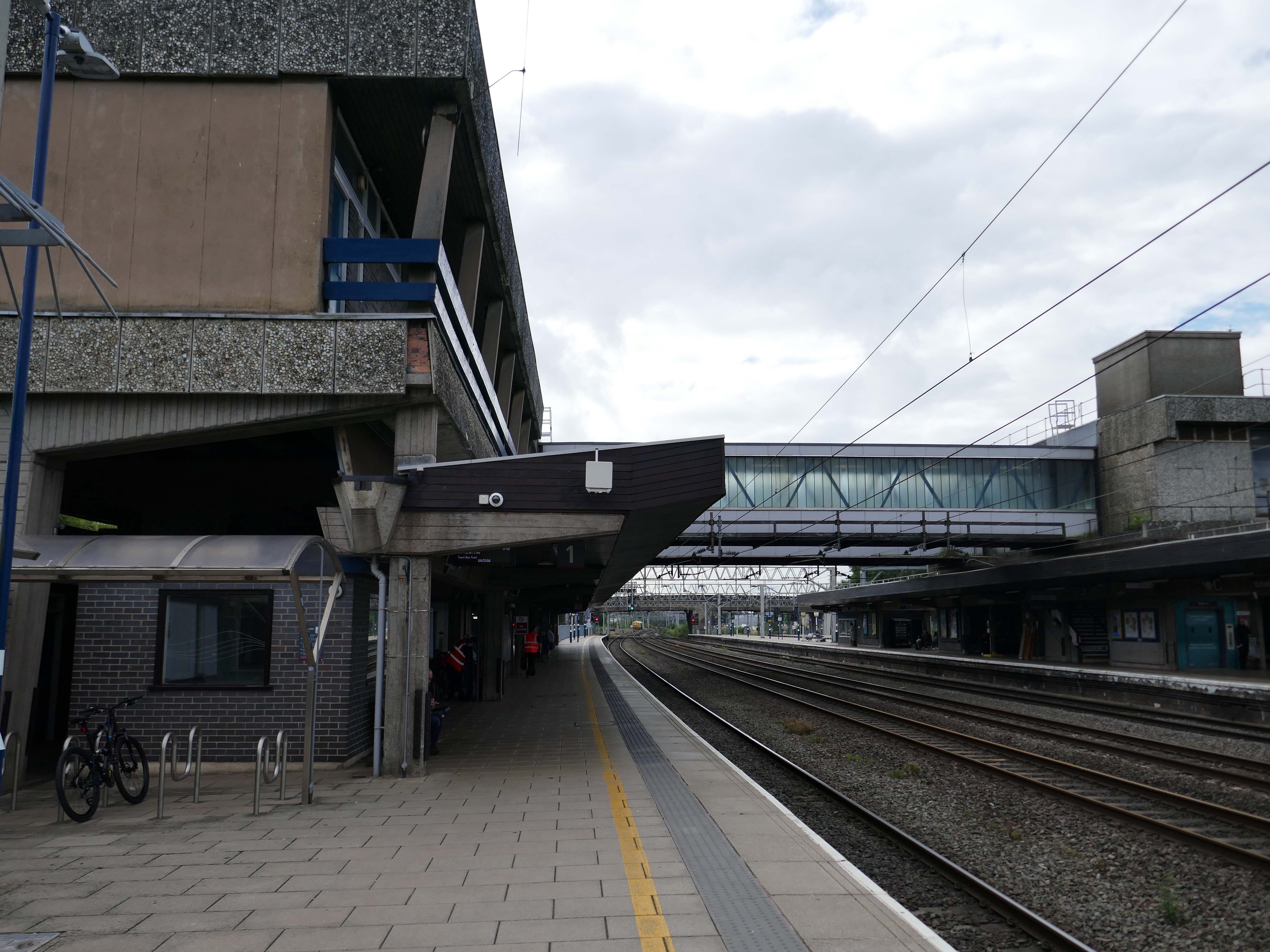
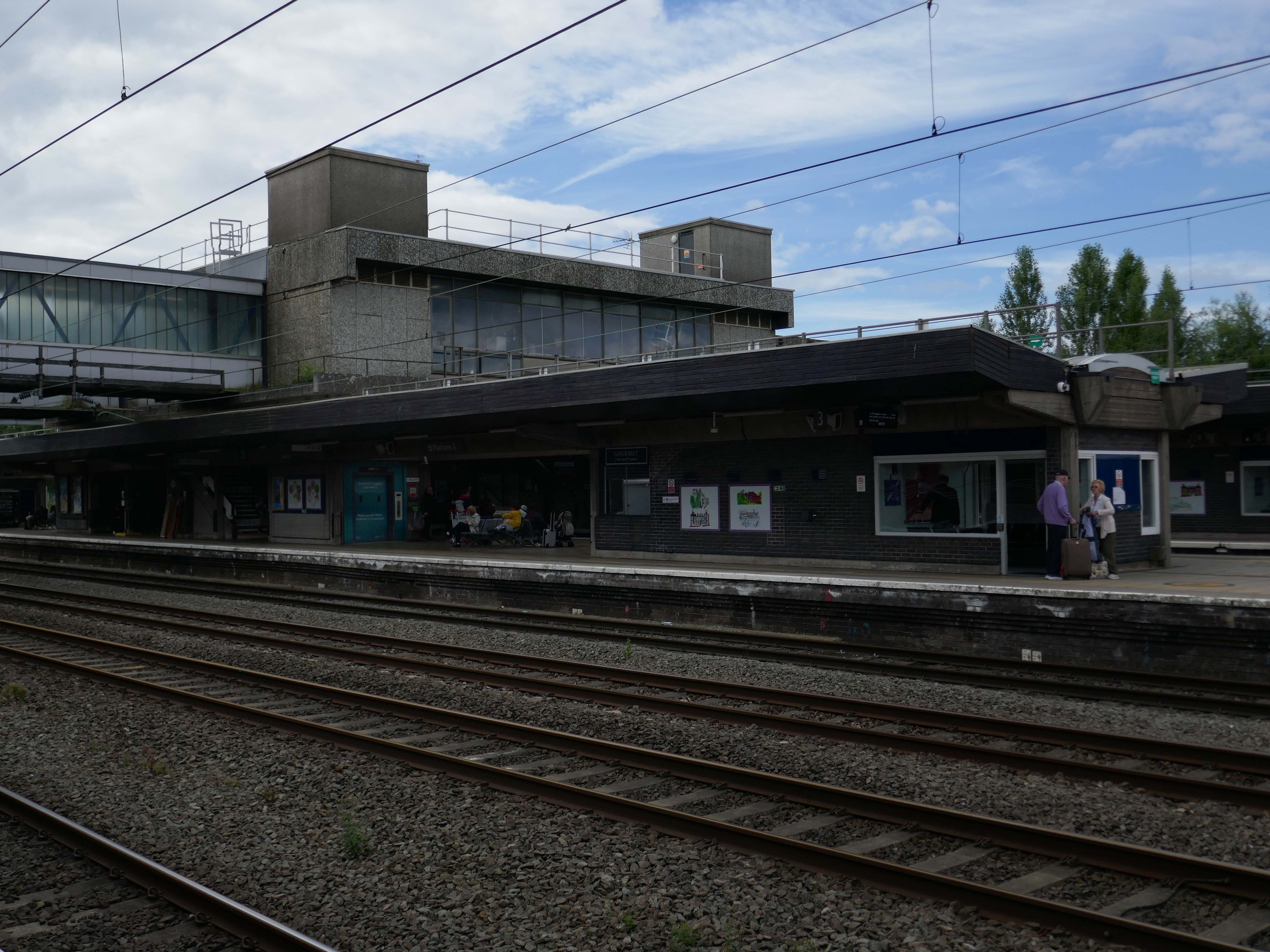
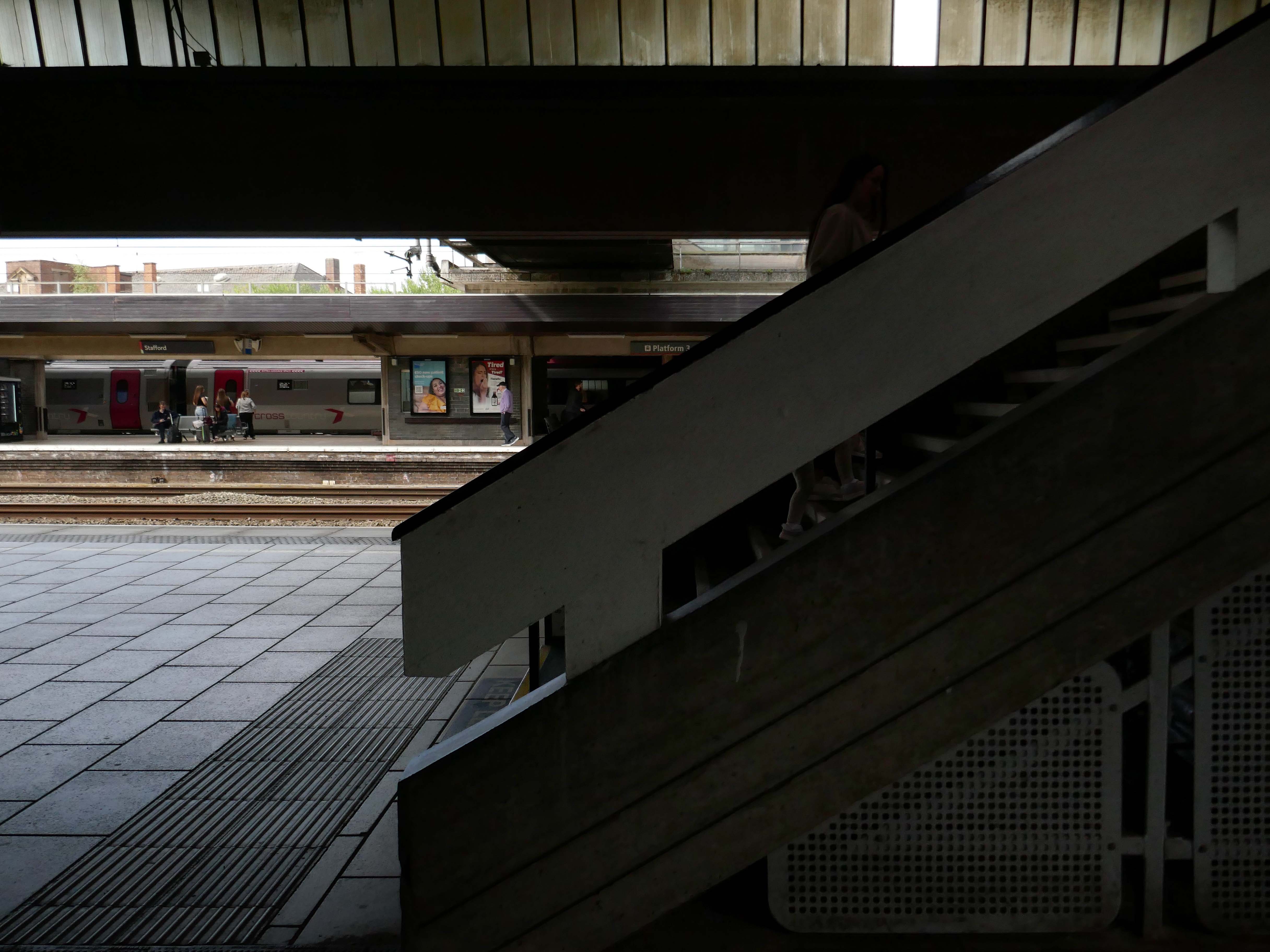
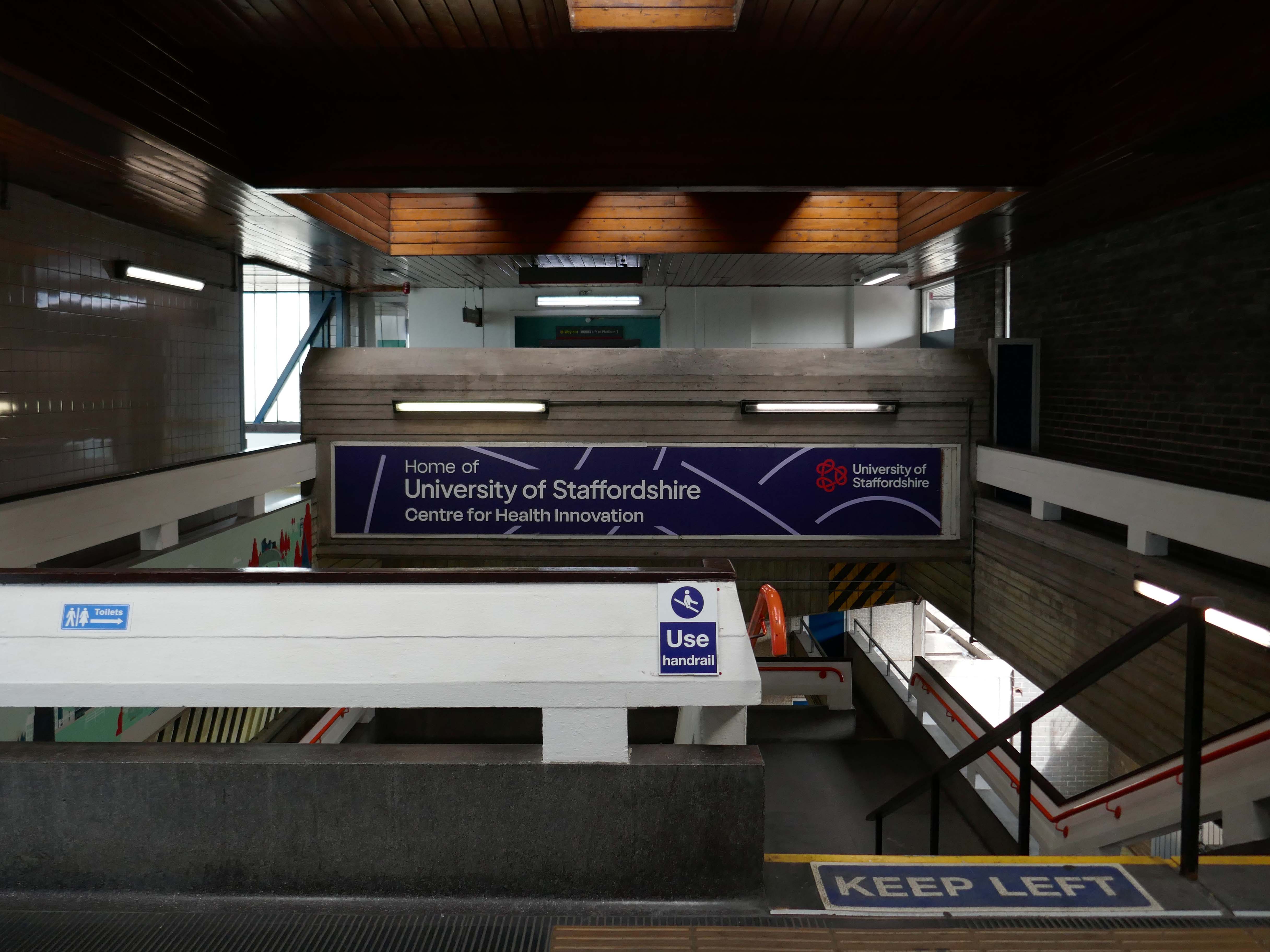
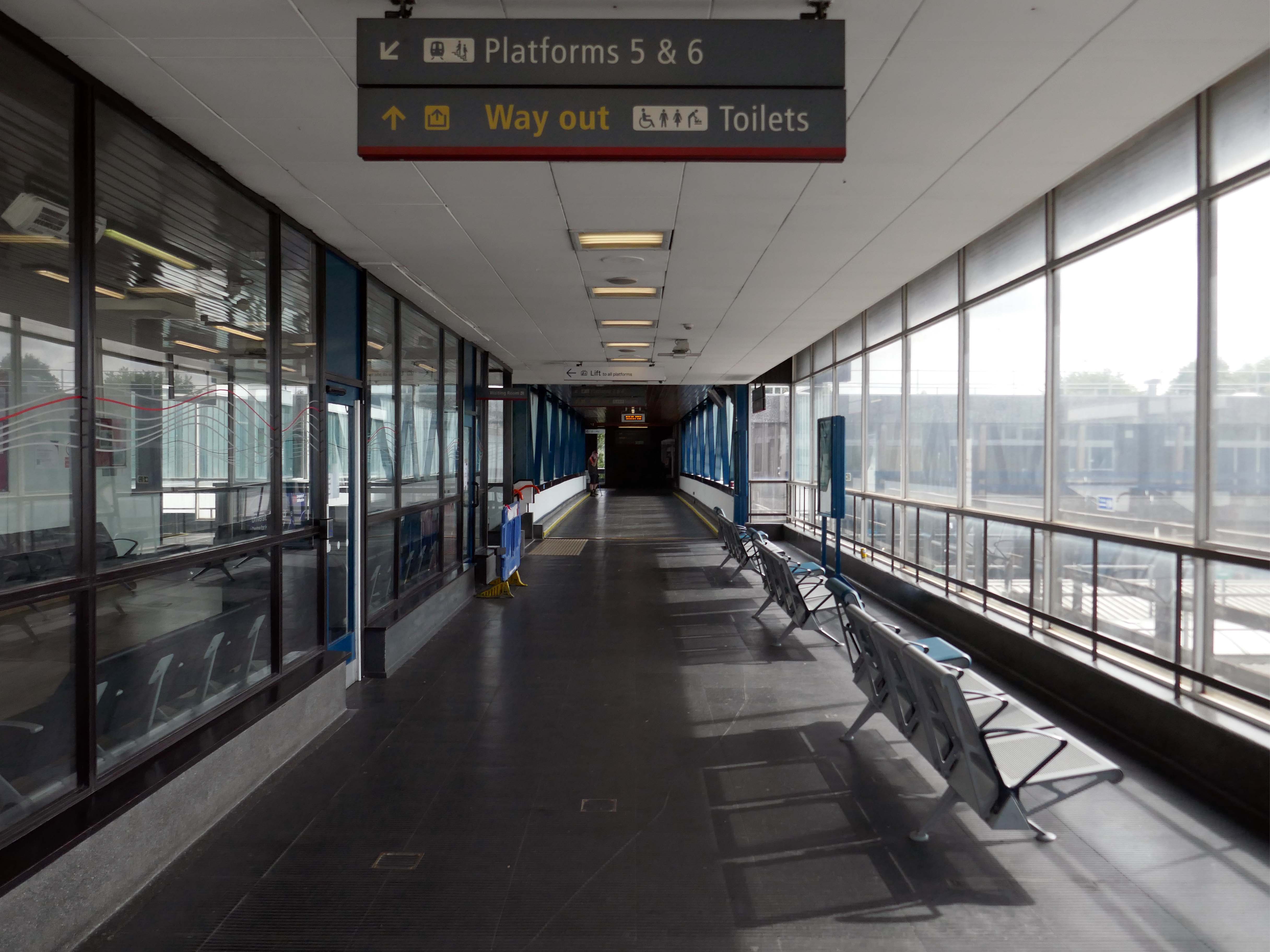
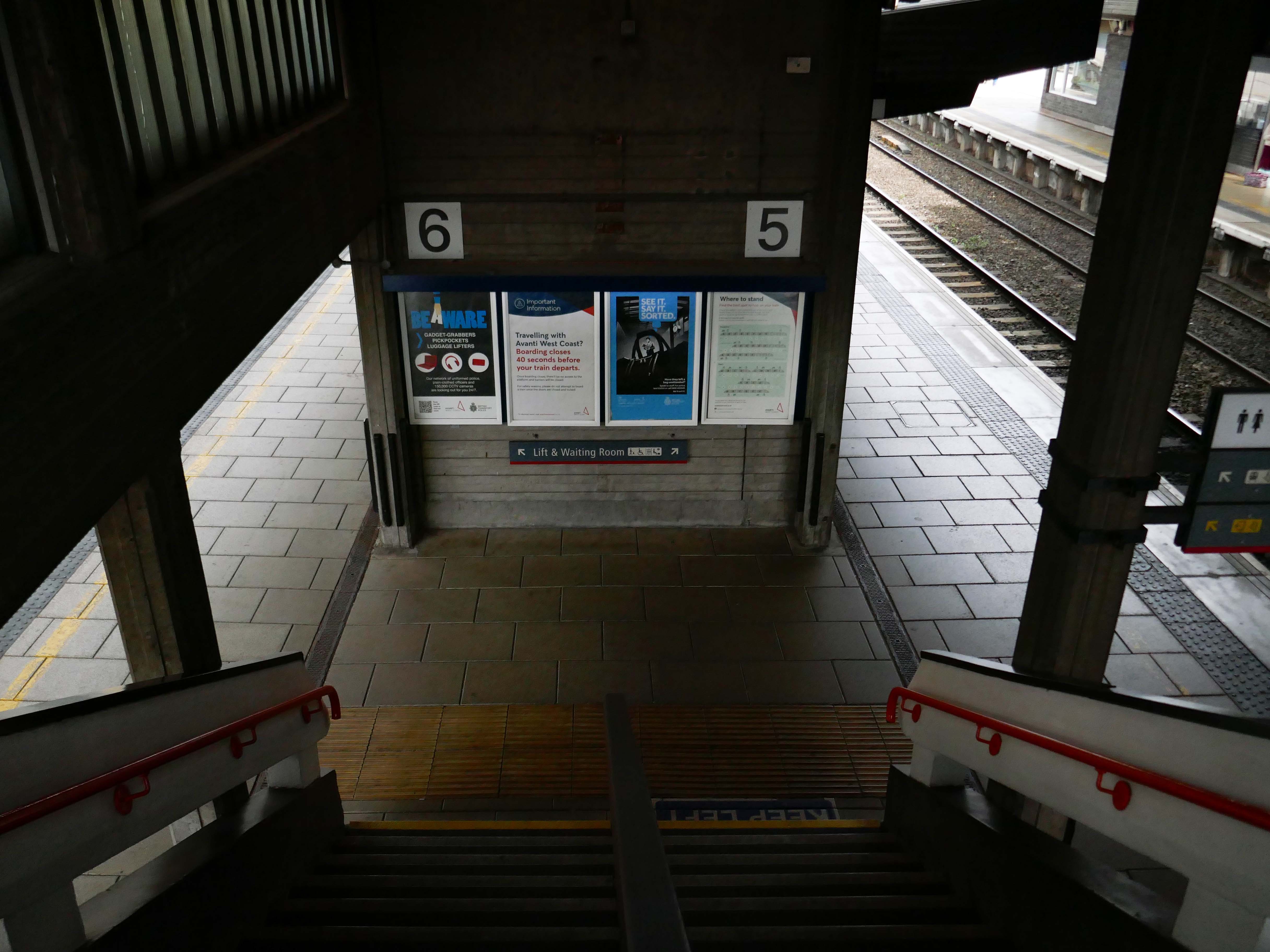
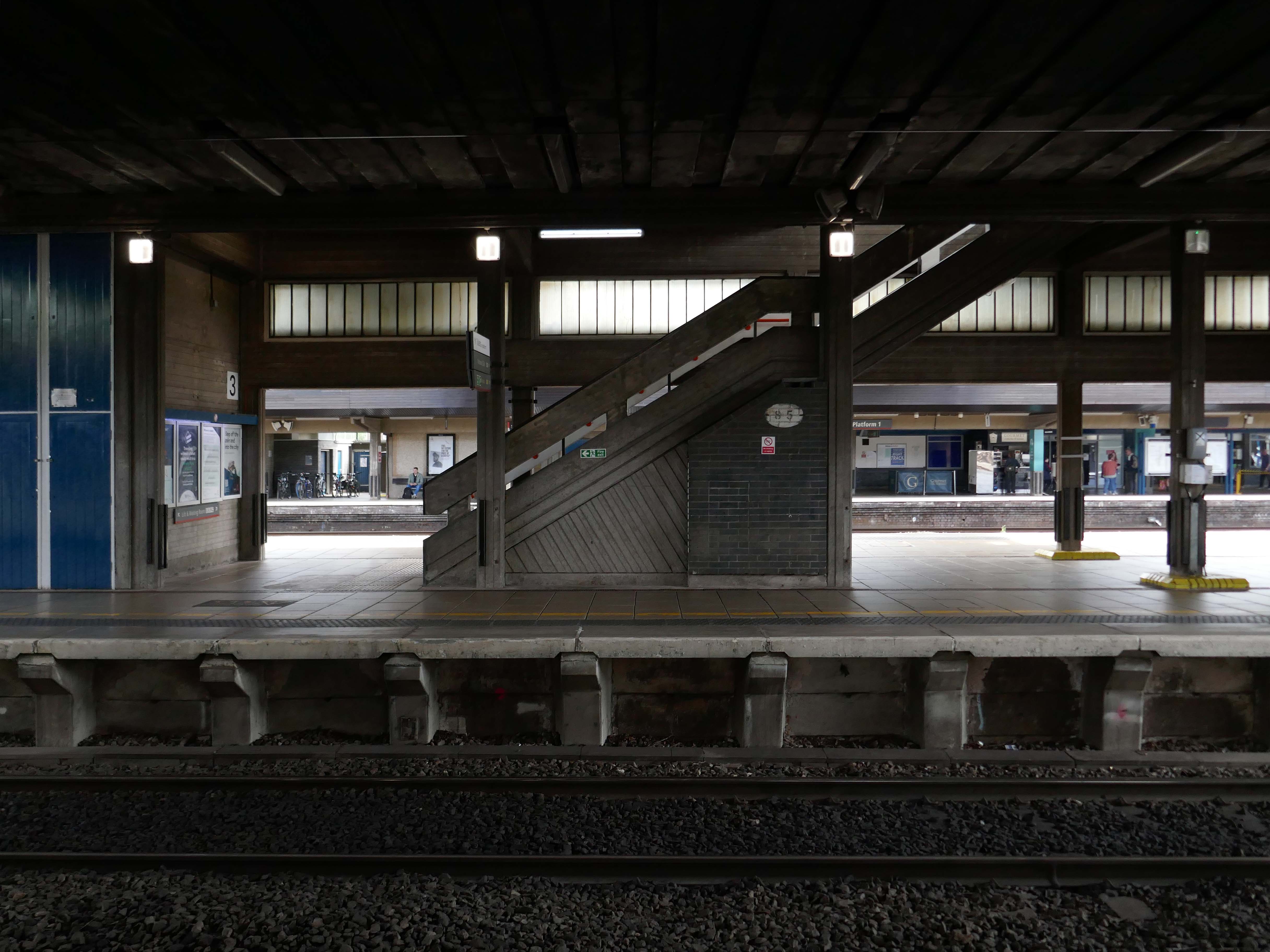
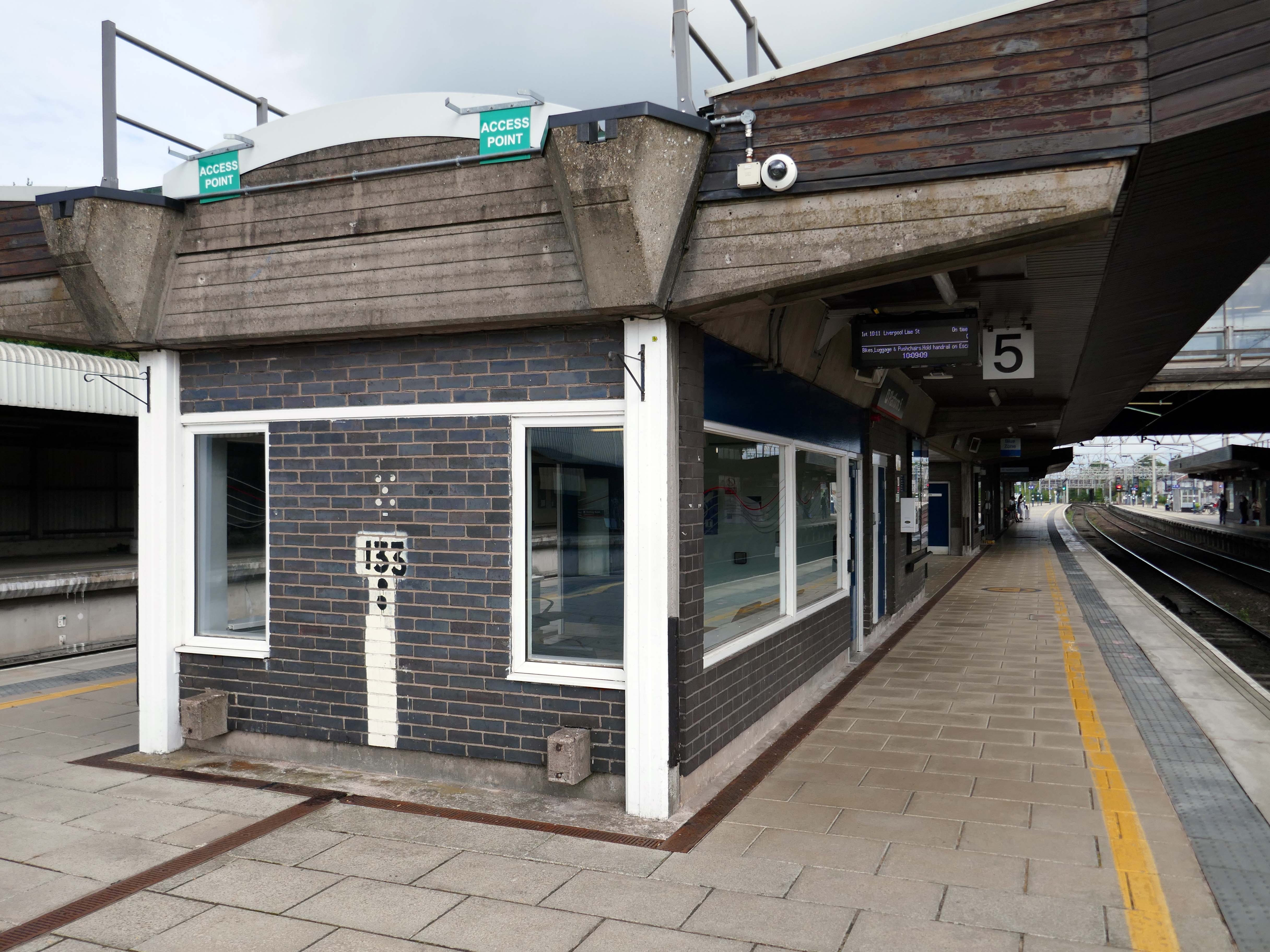
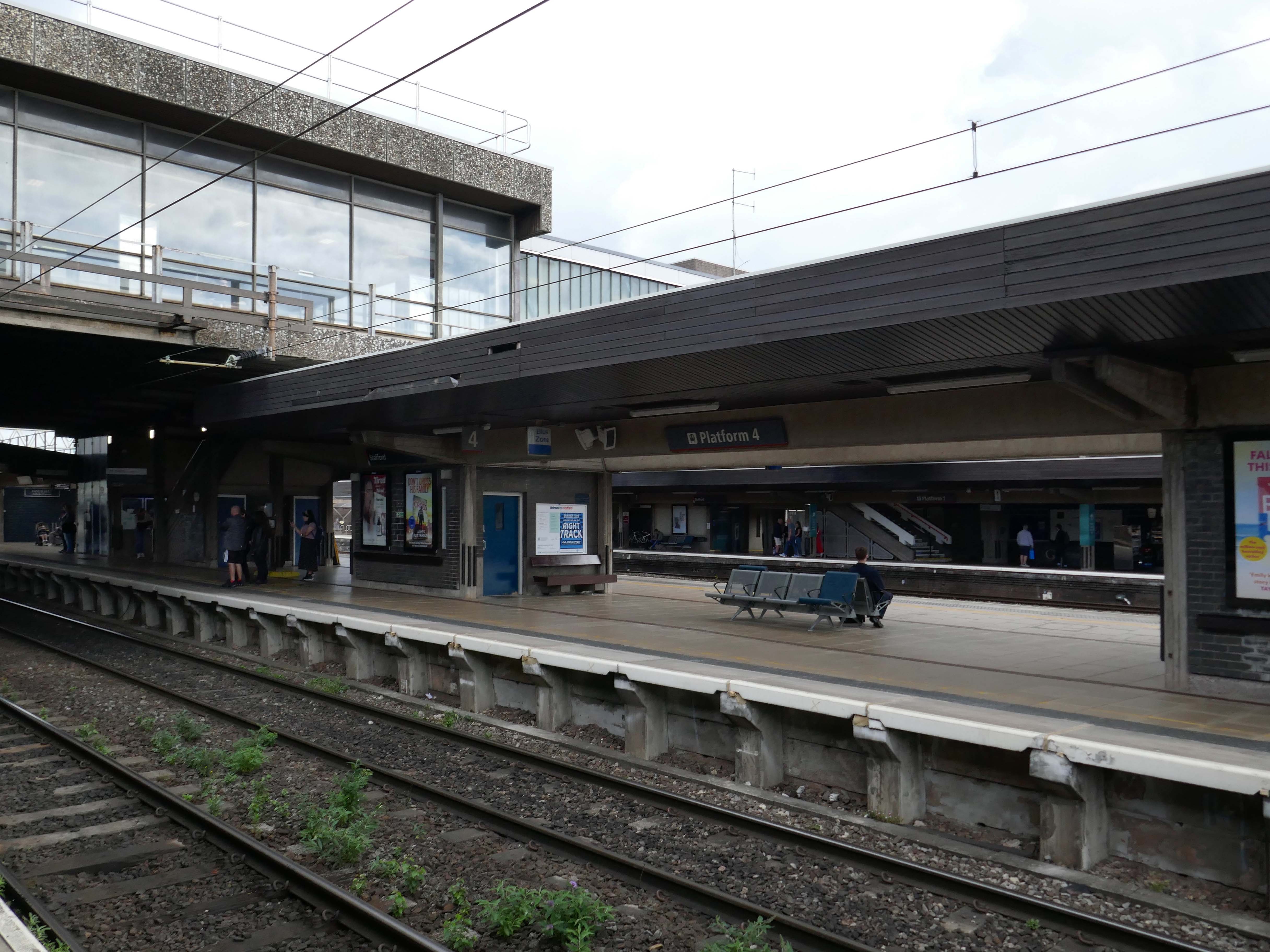
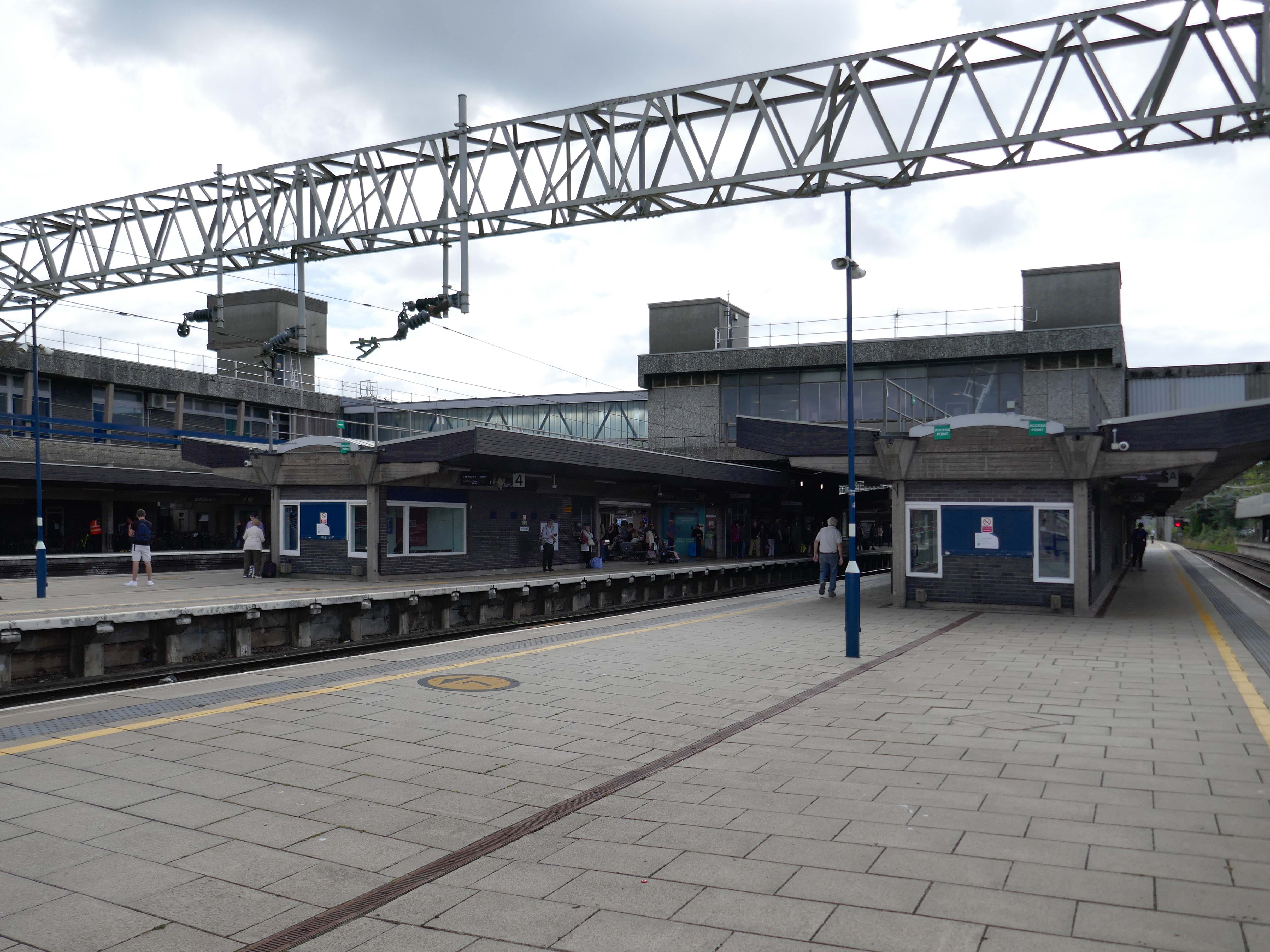
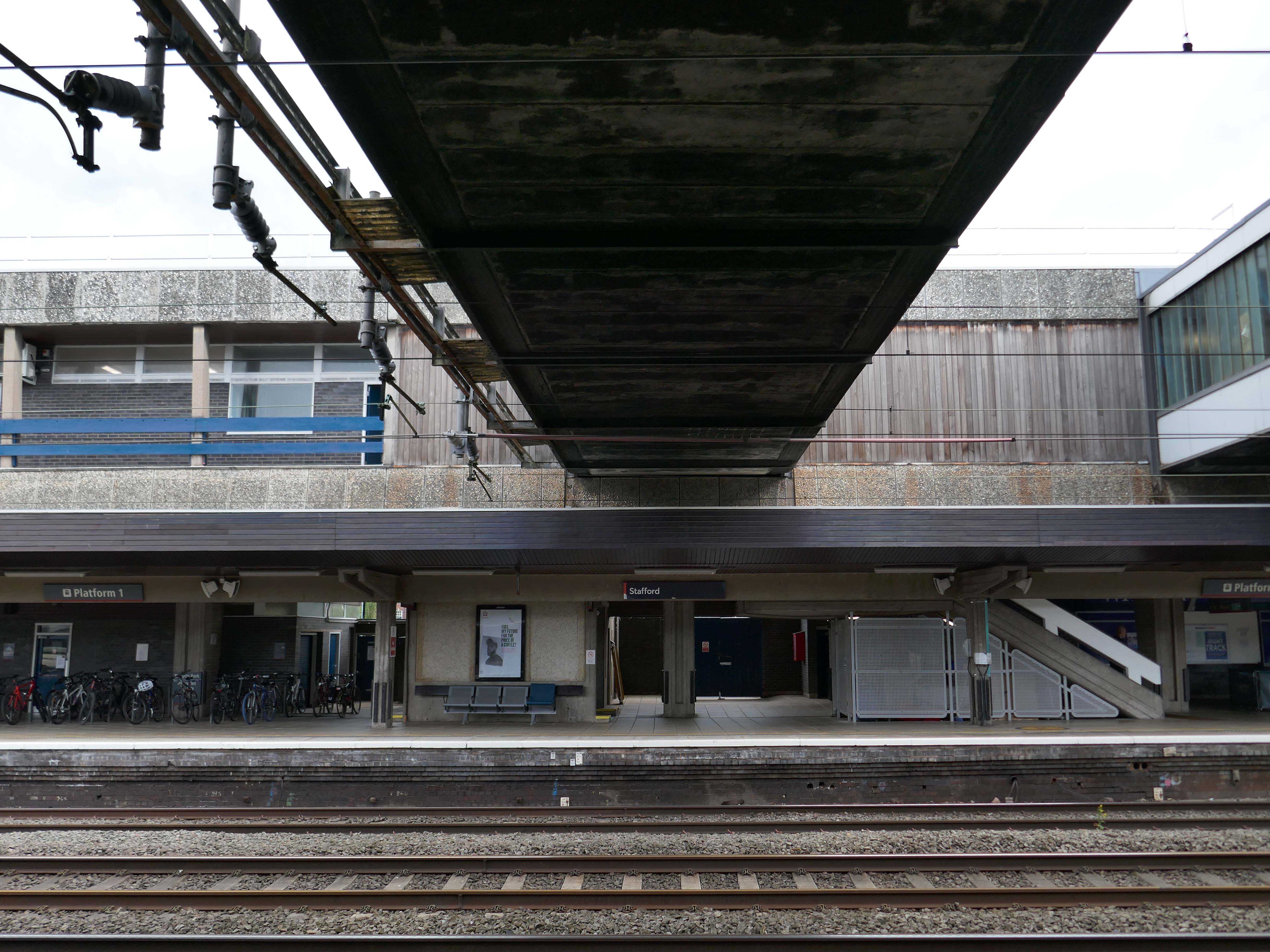
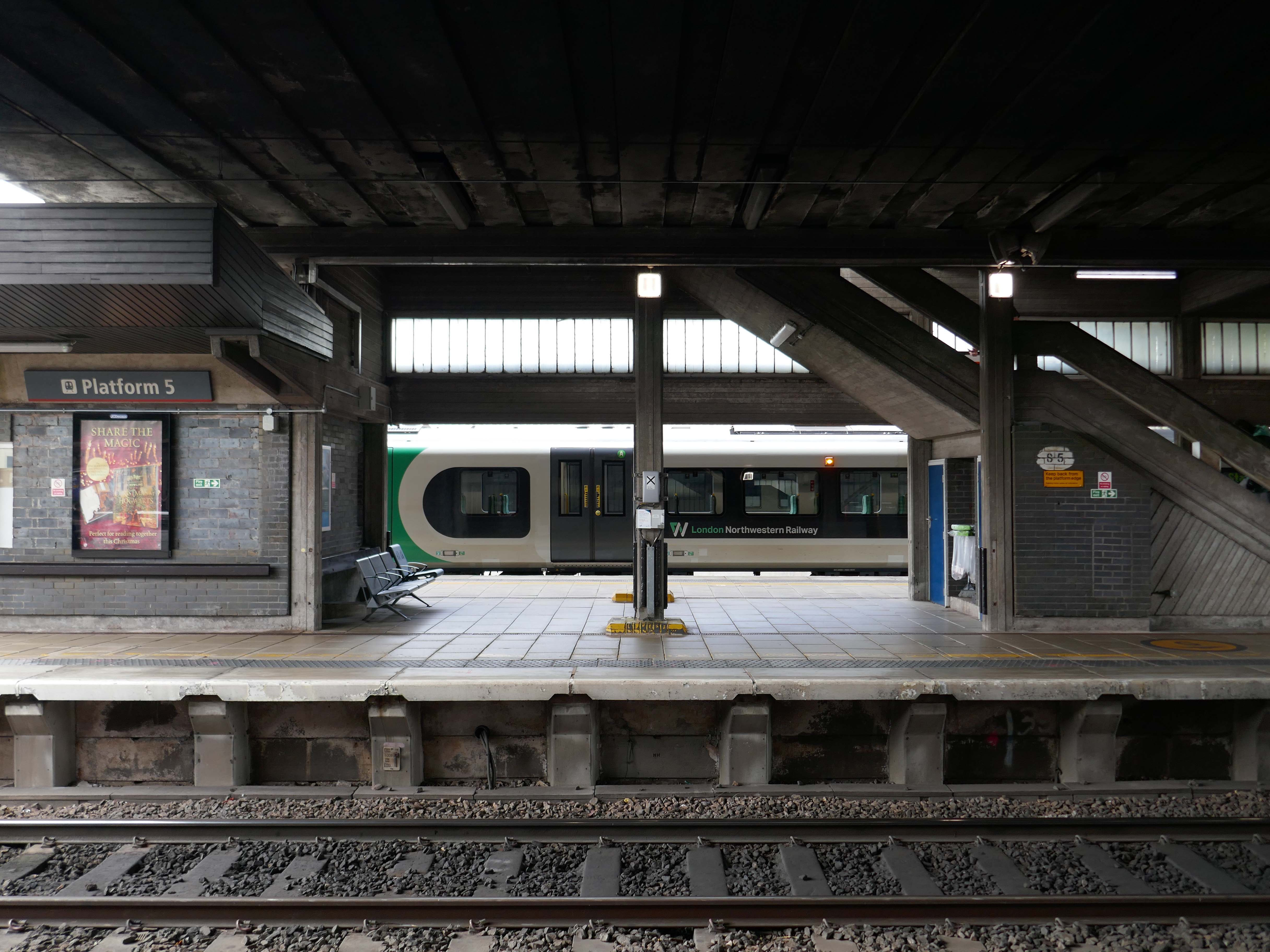
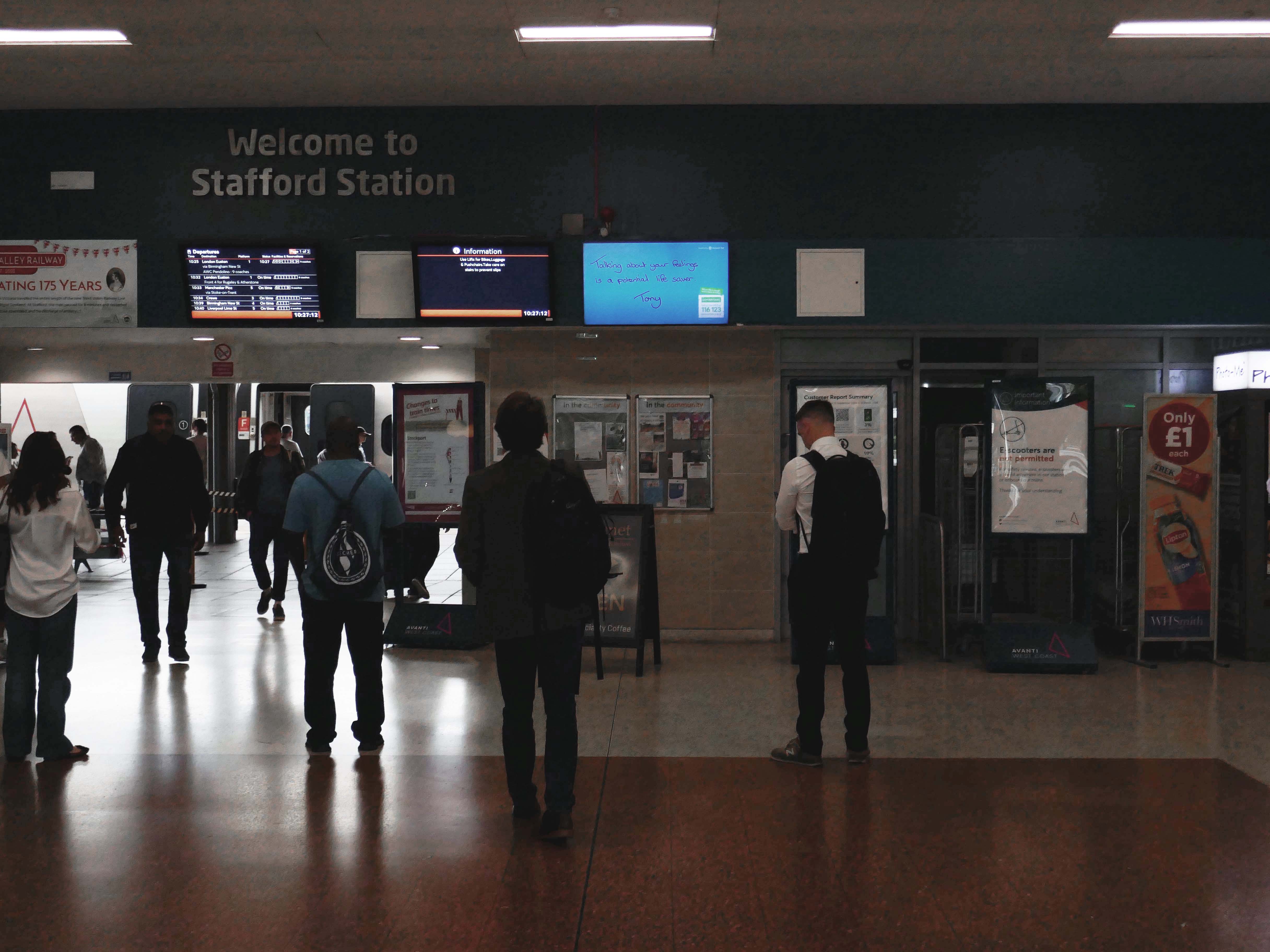
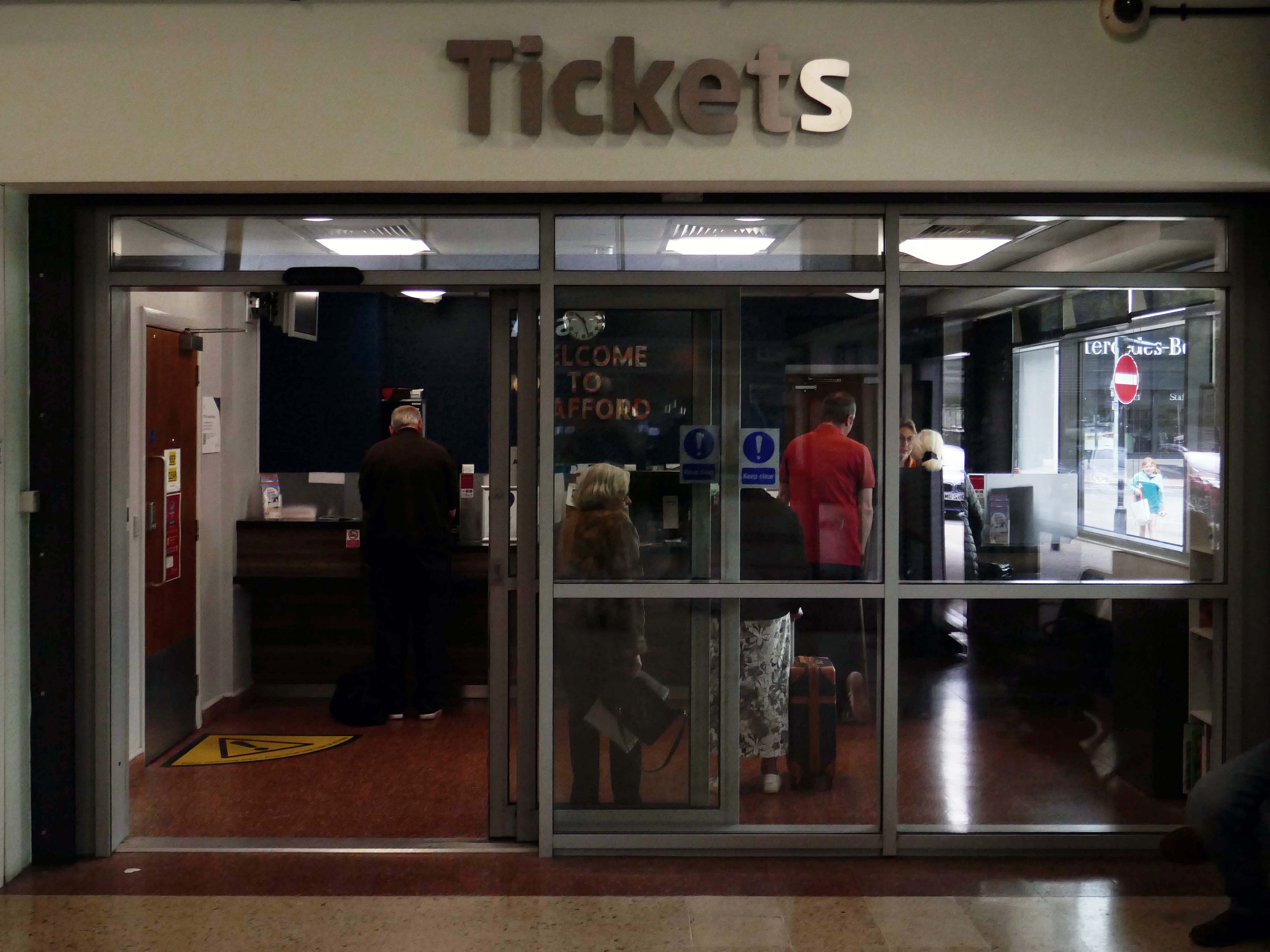
Stafford Railway Station

Having passed through here on more than one occasion, it only seemed polite to stop and take a look around.

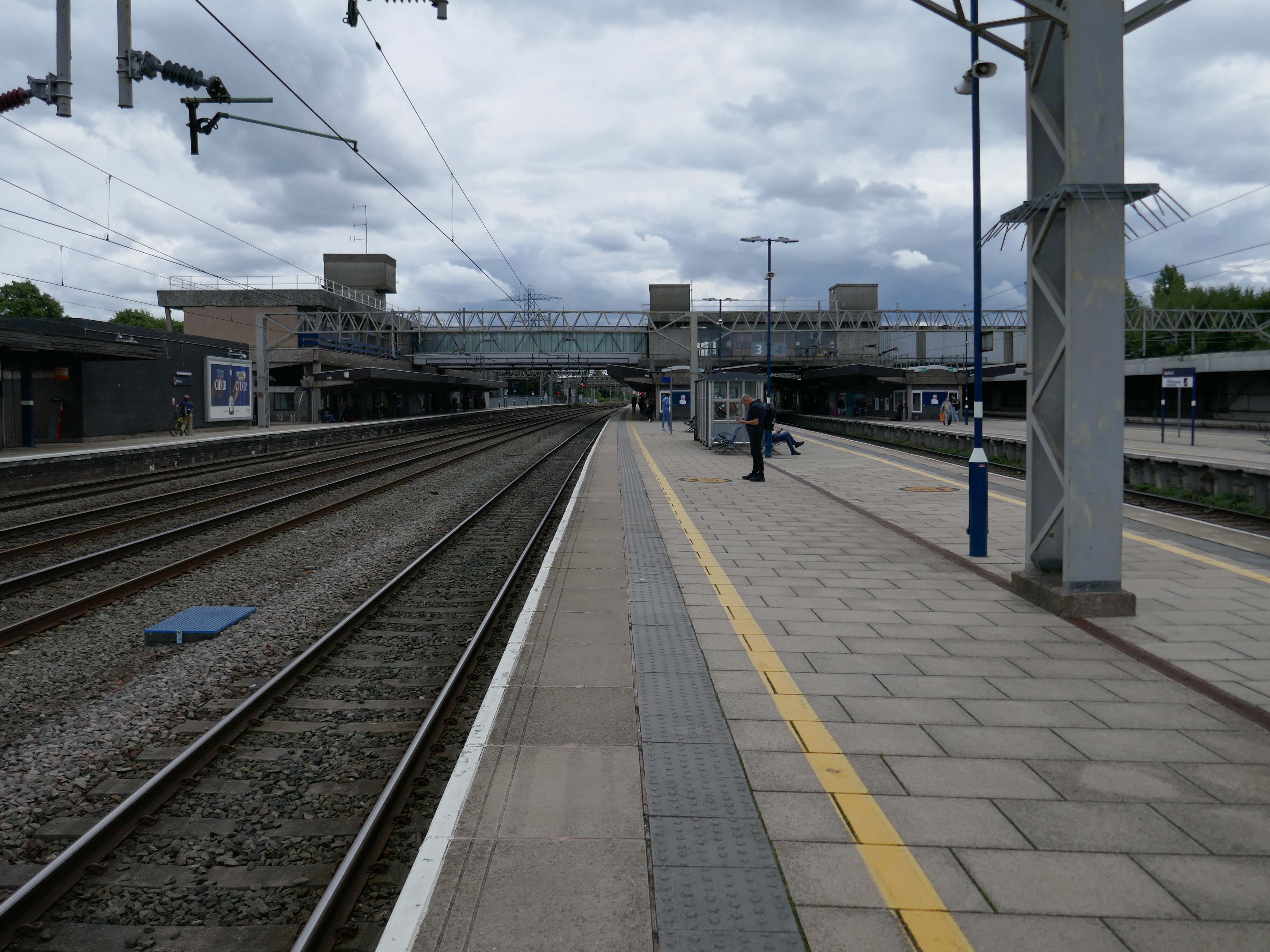
It is the second busiest interchange in the county, after Stoke-on-Trent. It serves the market and county town, as well as surrounding villages. The station lies on the junction of the Trent Valley line, the Rugby–Birmingham–Stafford line and the West Coast Main Line; it was also the terminus for the former Stafford–Uttoxeter and Stafford–Shrewsbury lines.

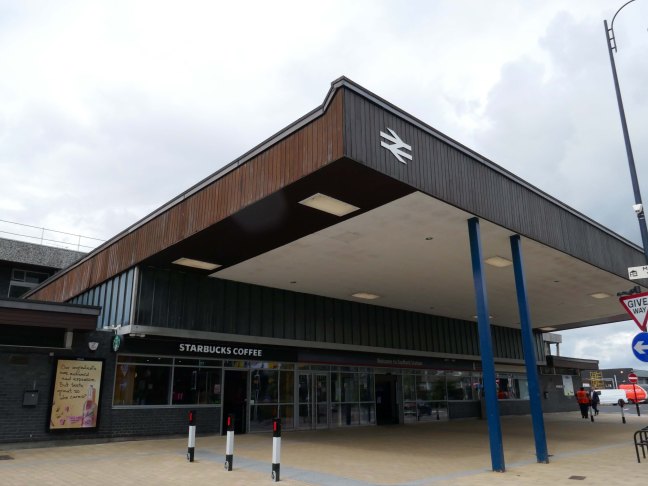
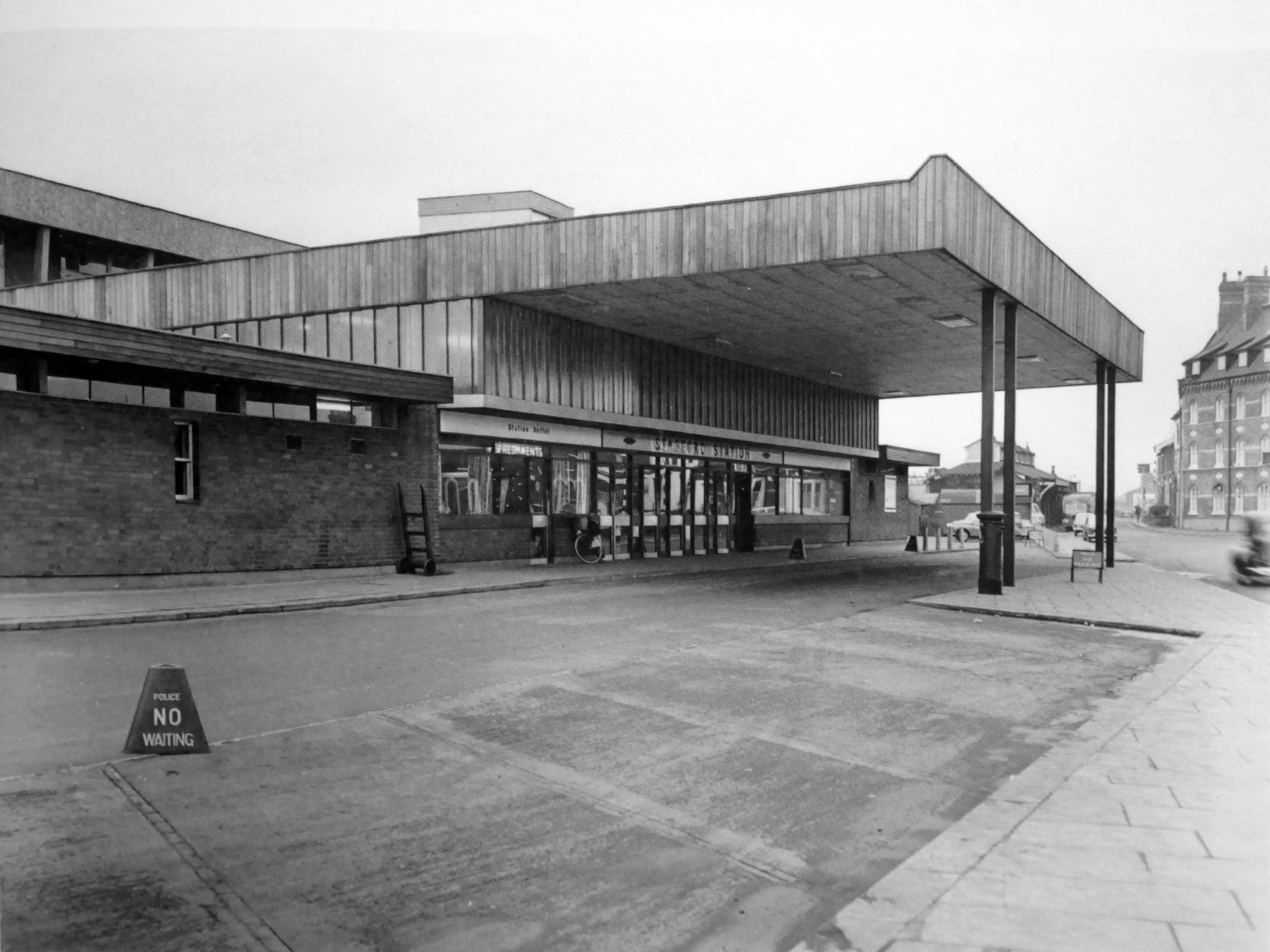
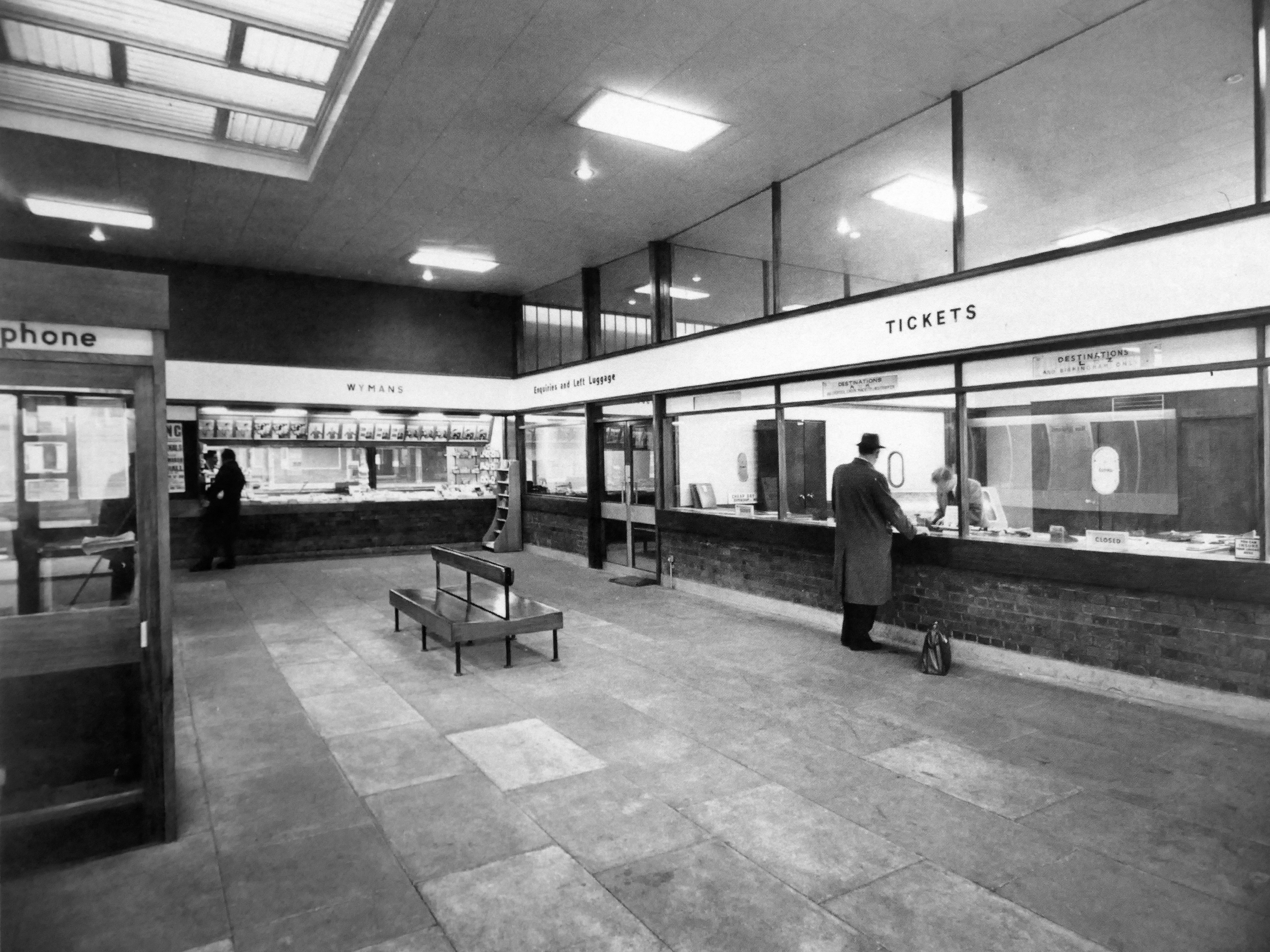
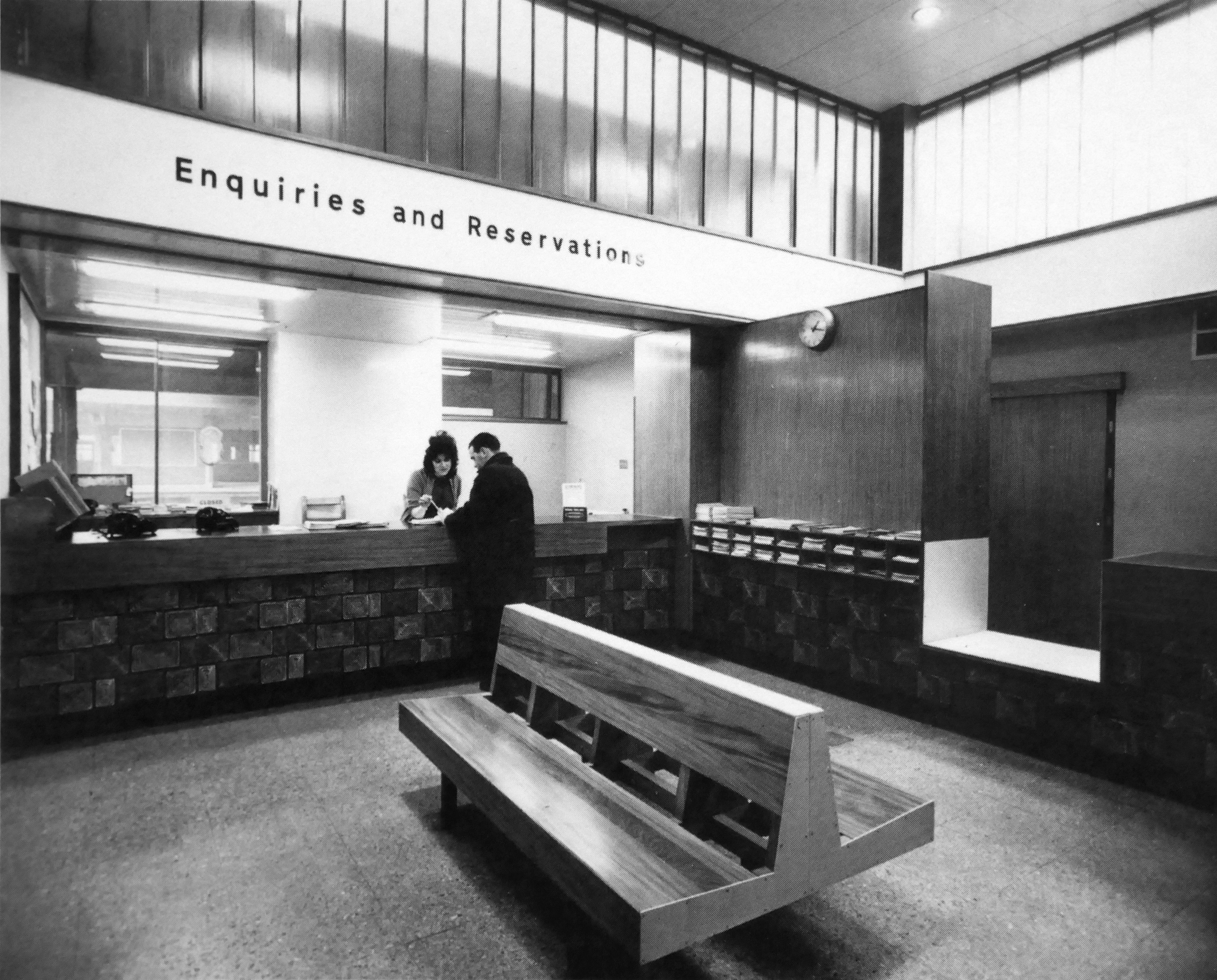
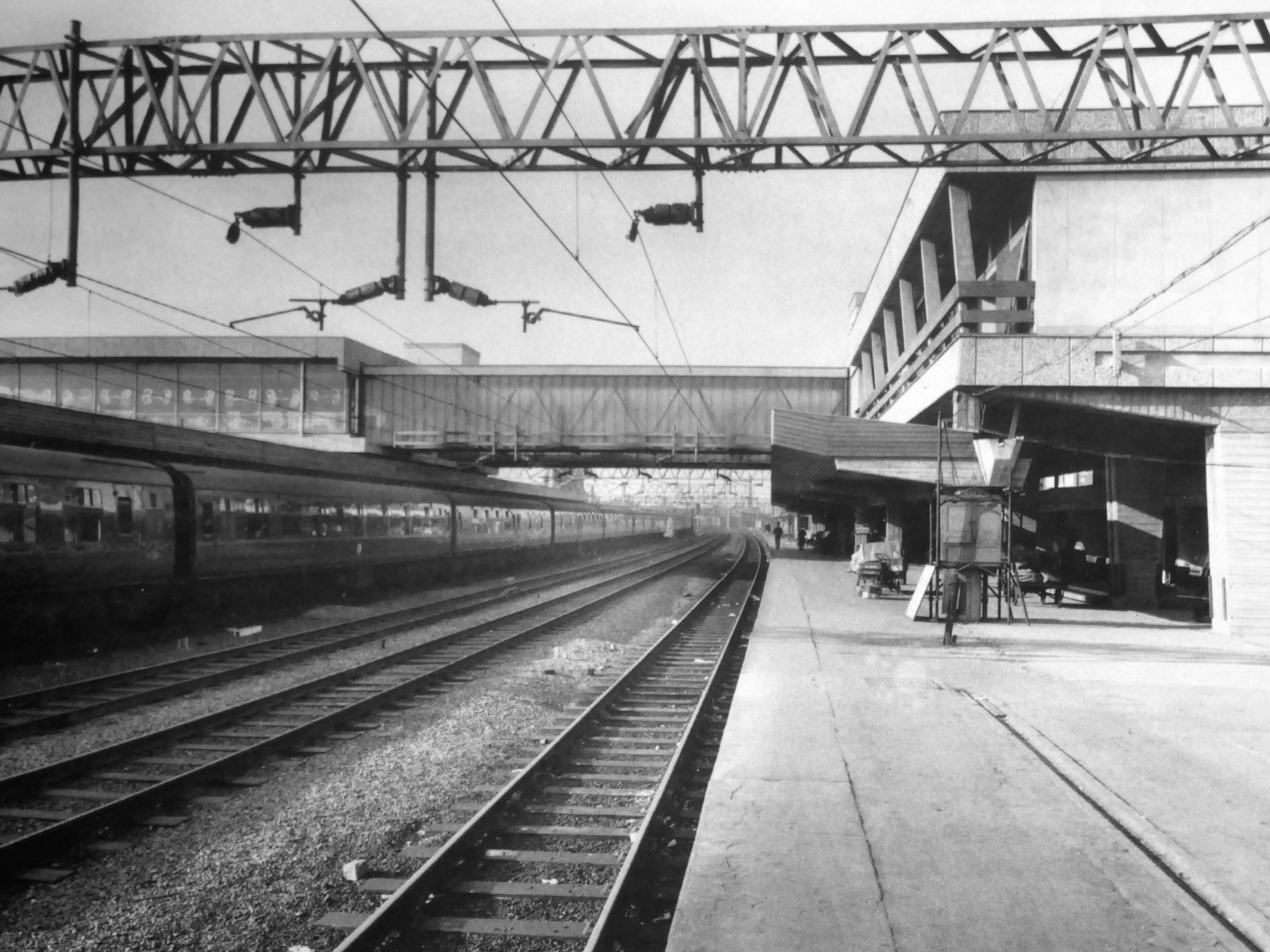
The current station was built in 1962, by the architect William Robert Headley, as part of the modernisation programme which saw the electrification of the West Coast Main Line.

Wikipedia

Headley was also responsible for the design of East Didsbury, Manchester Oxford Road and Coventry stations.

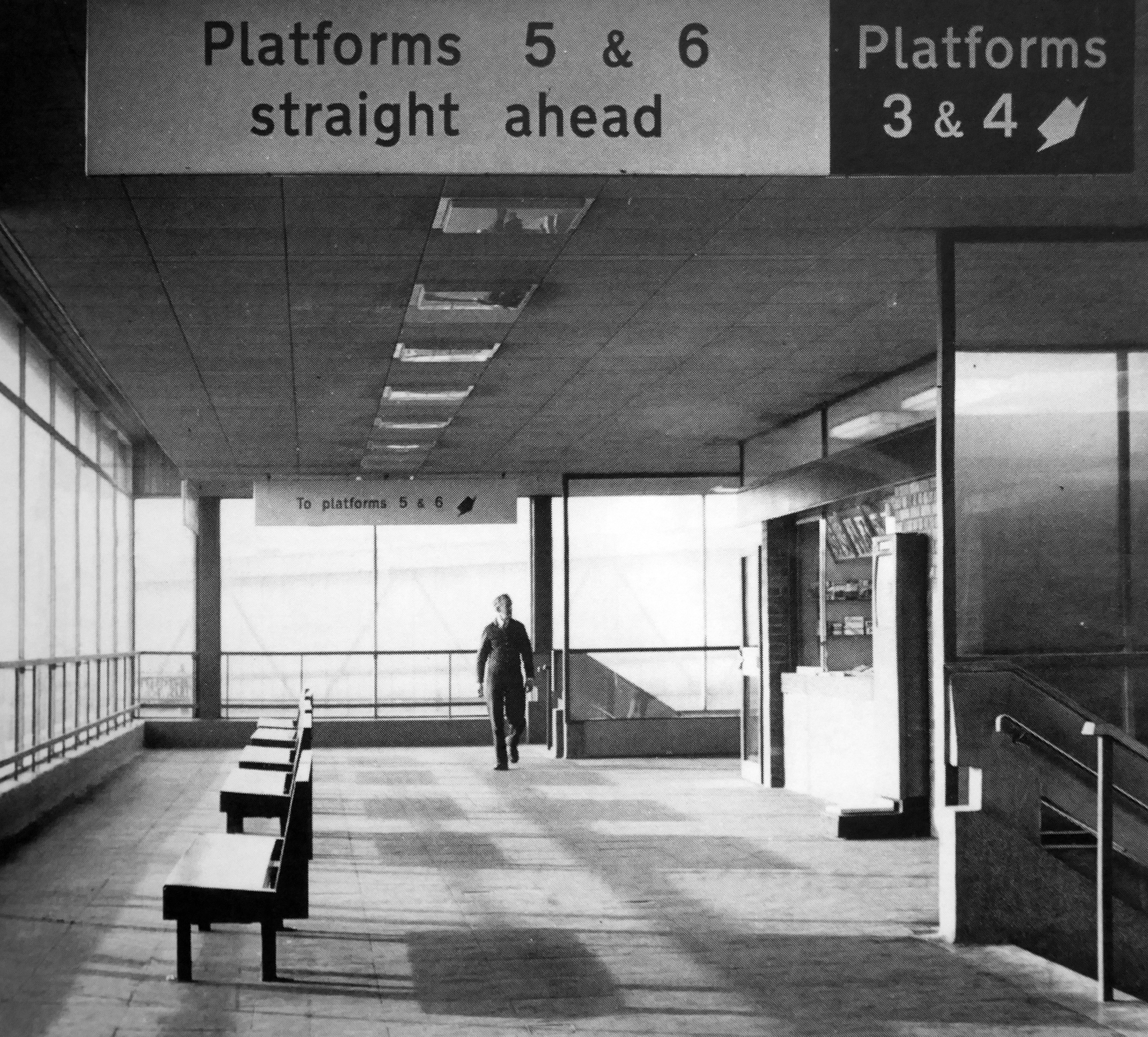
Archive photos: British Rail Architecture 1948-97

Illustration: John Greene

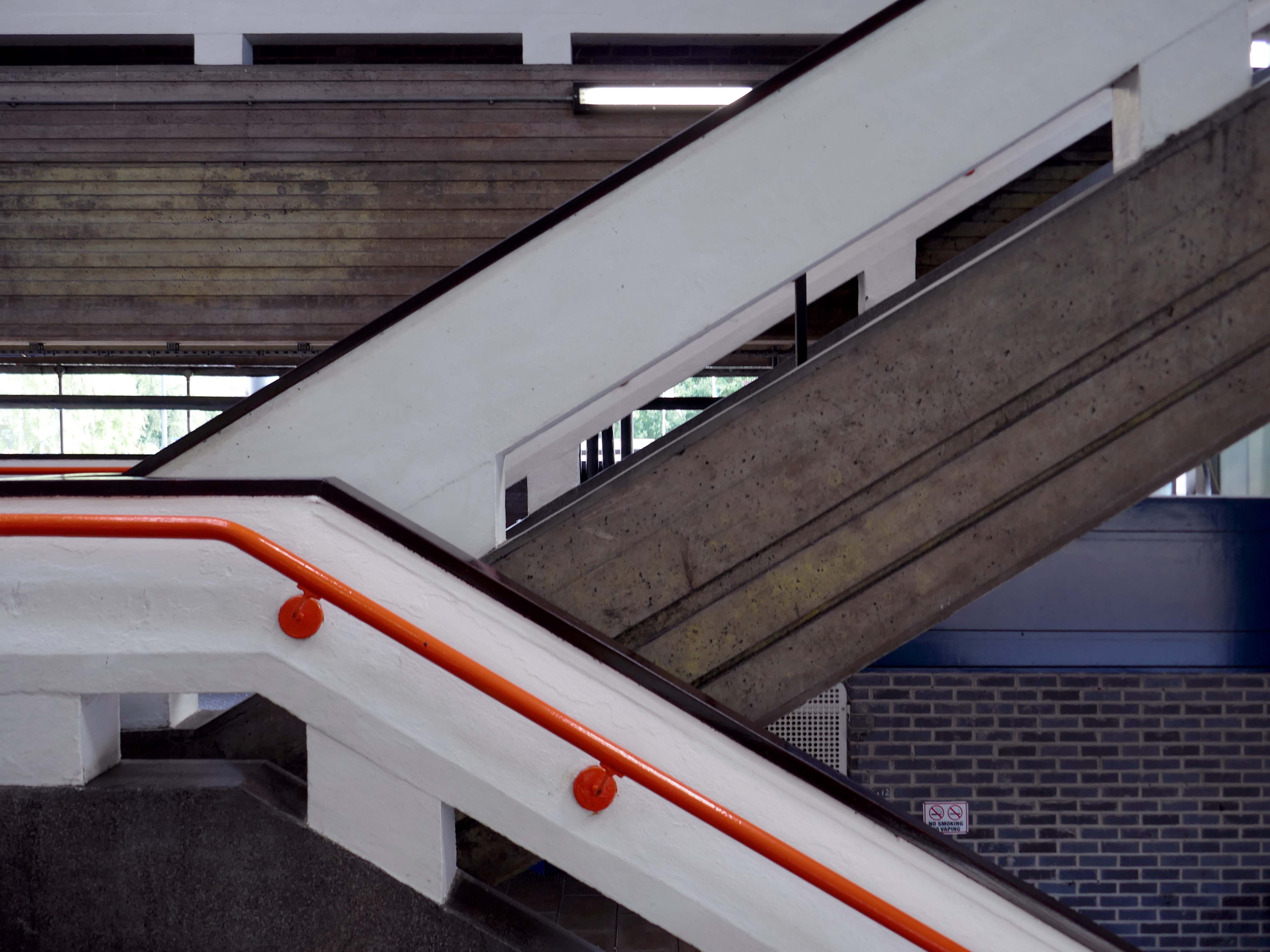
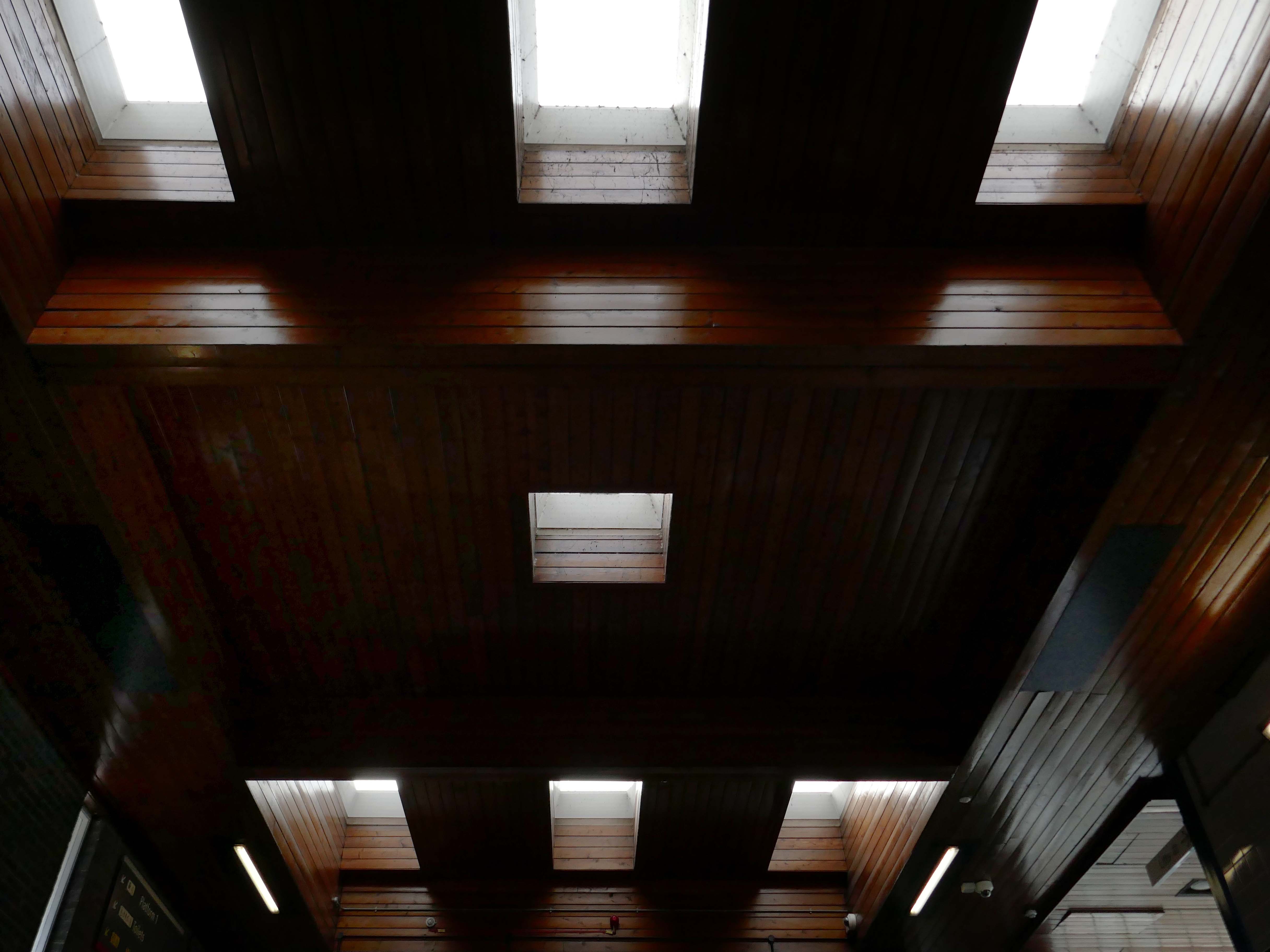
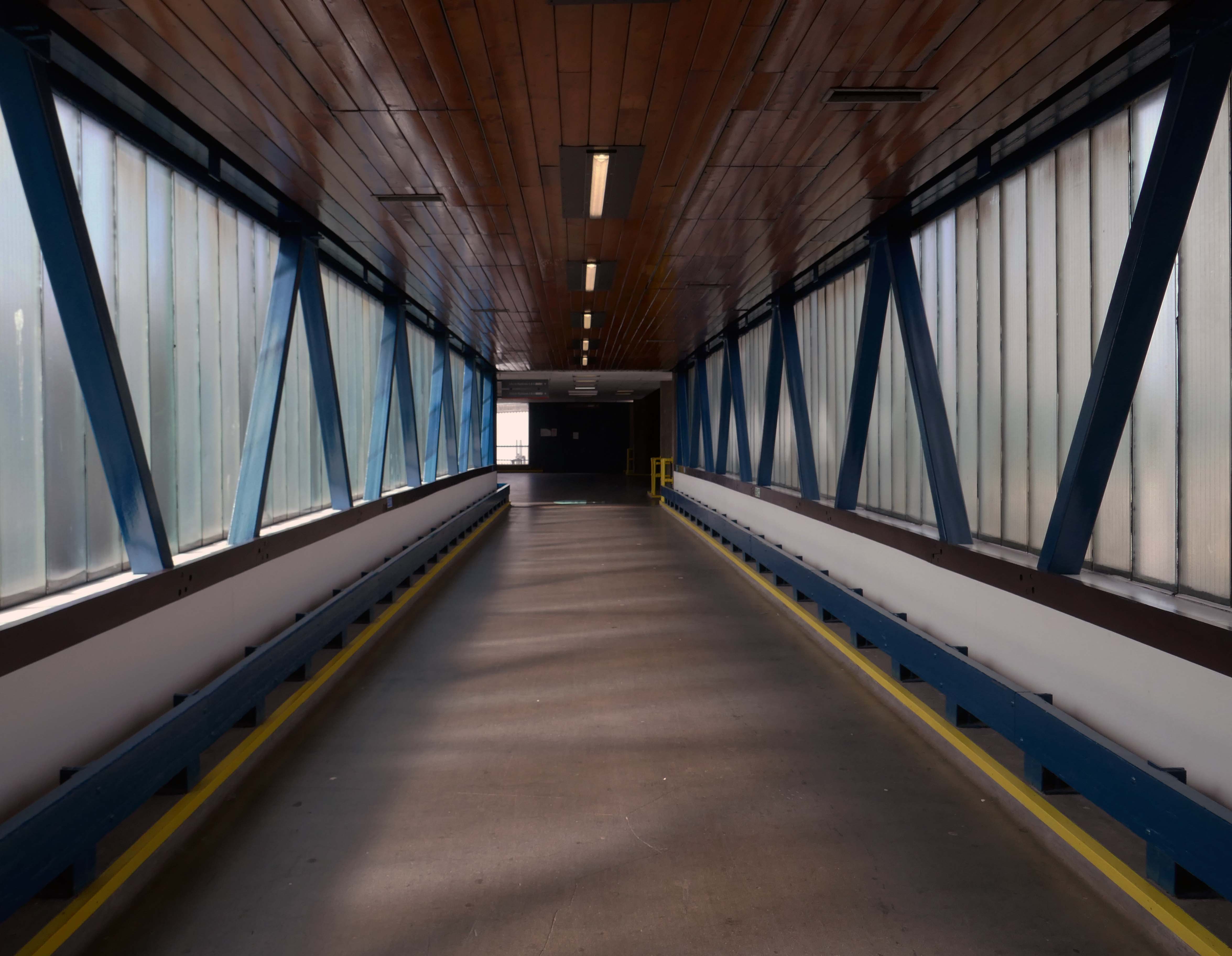
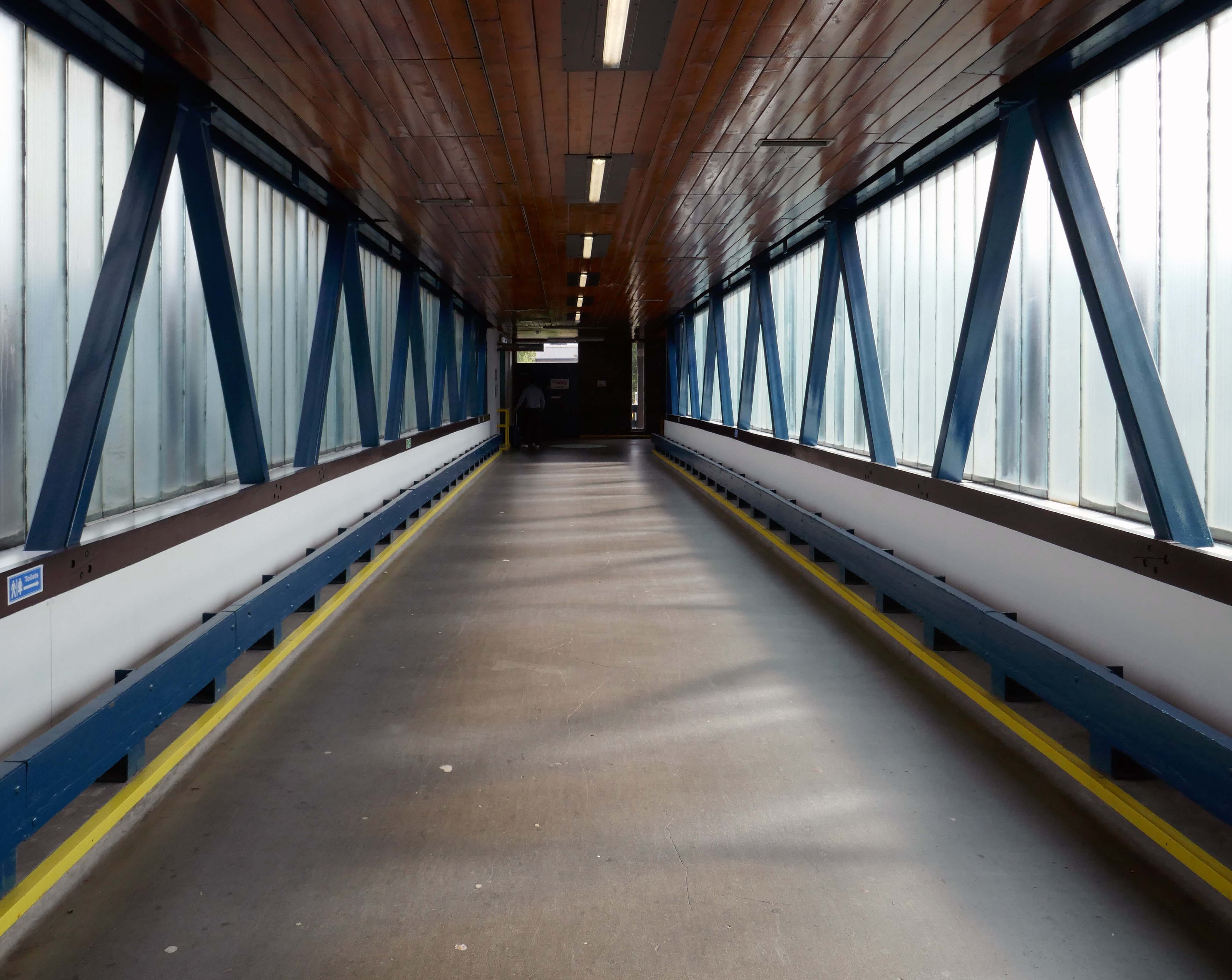
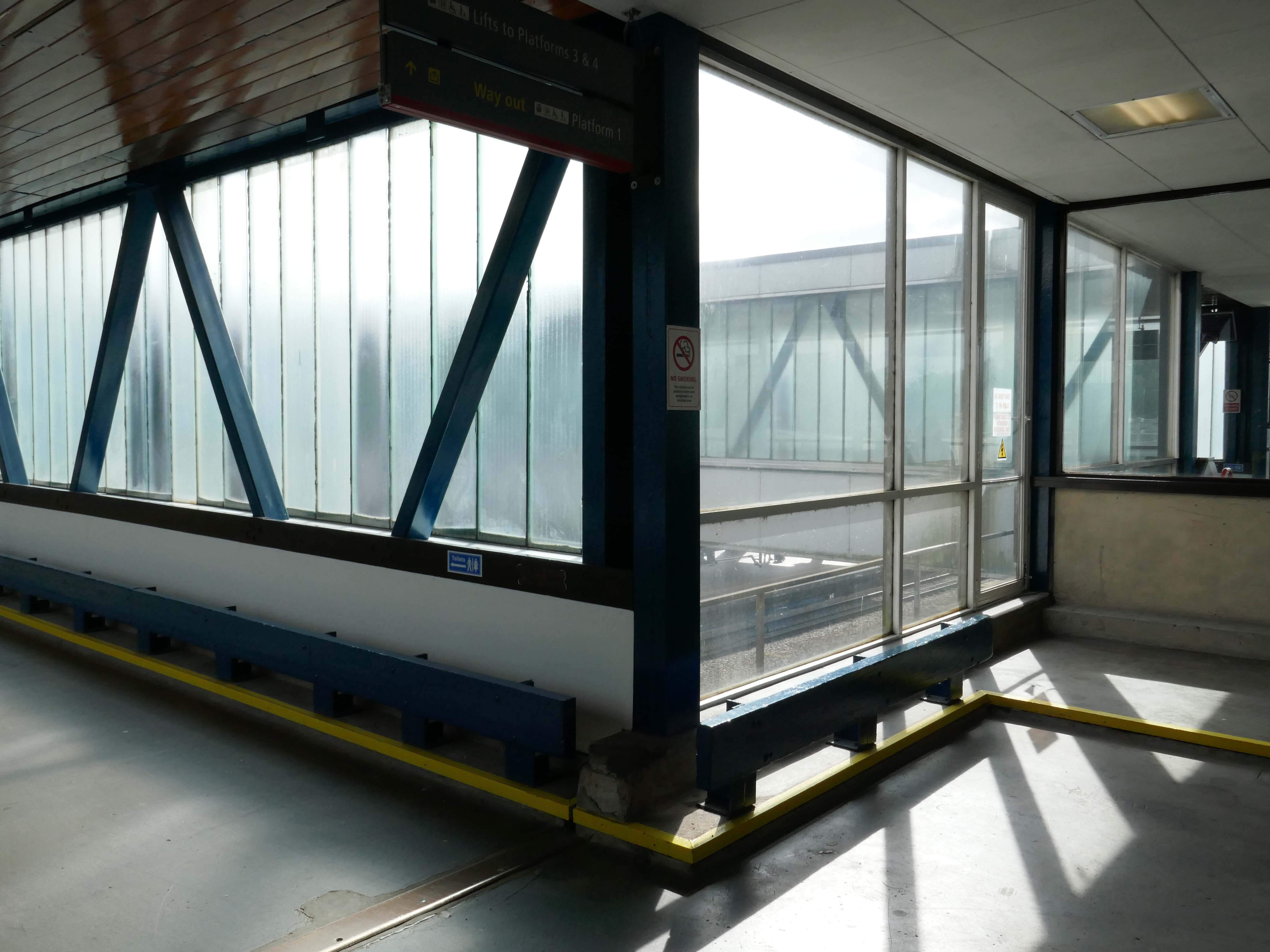
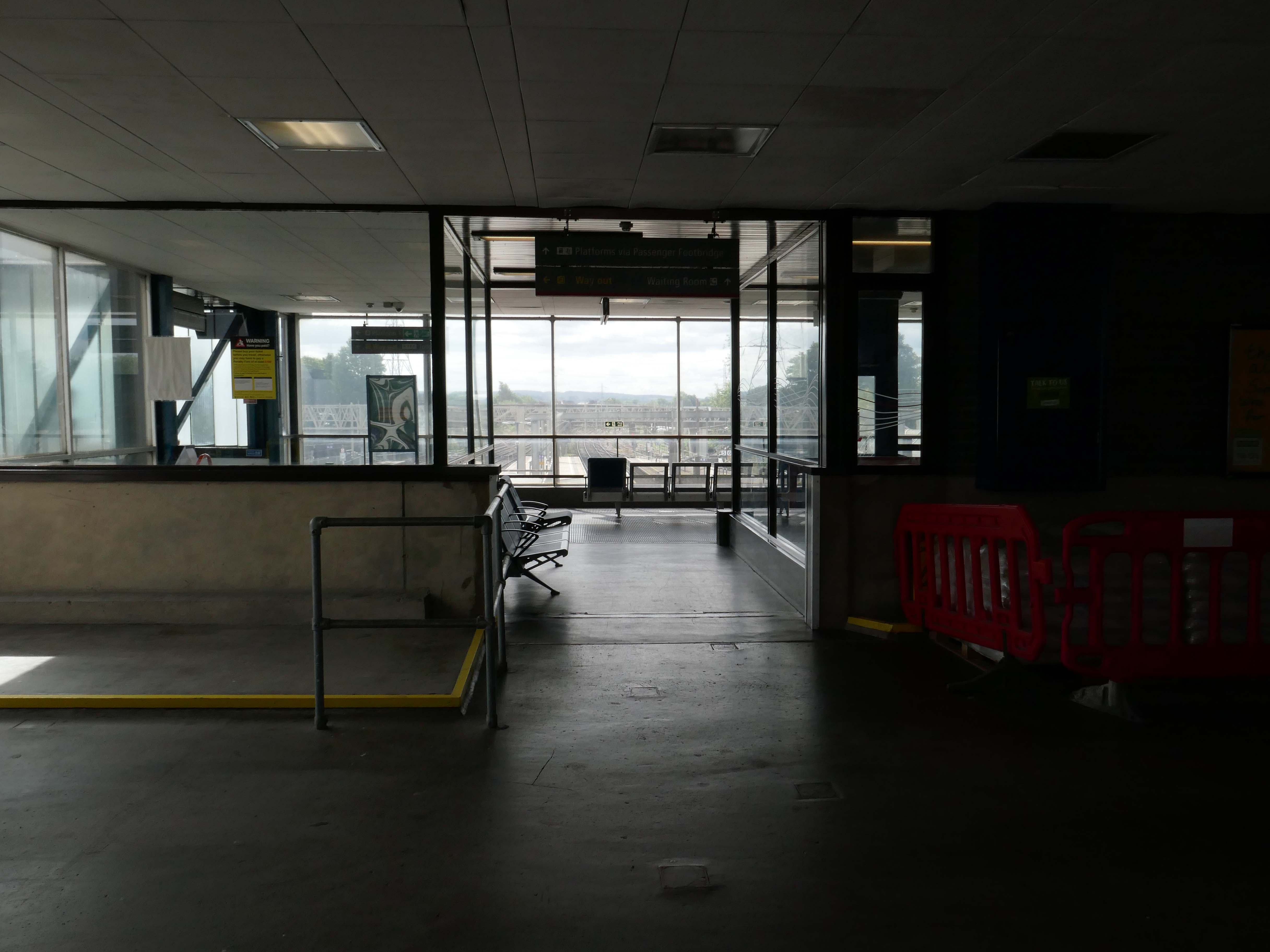
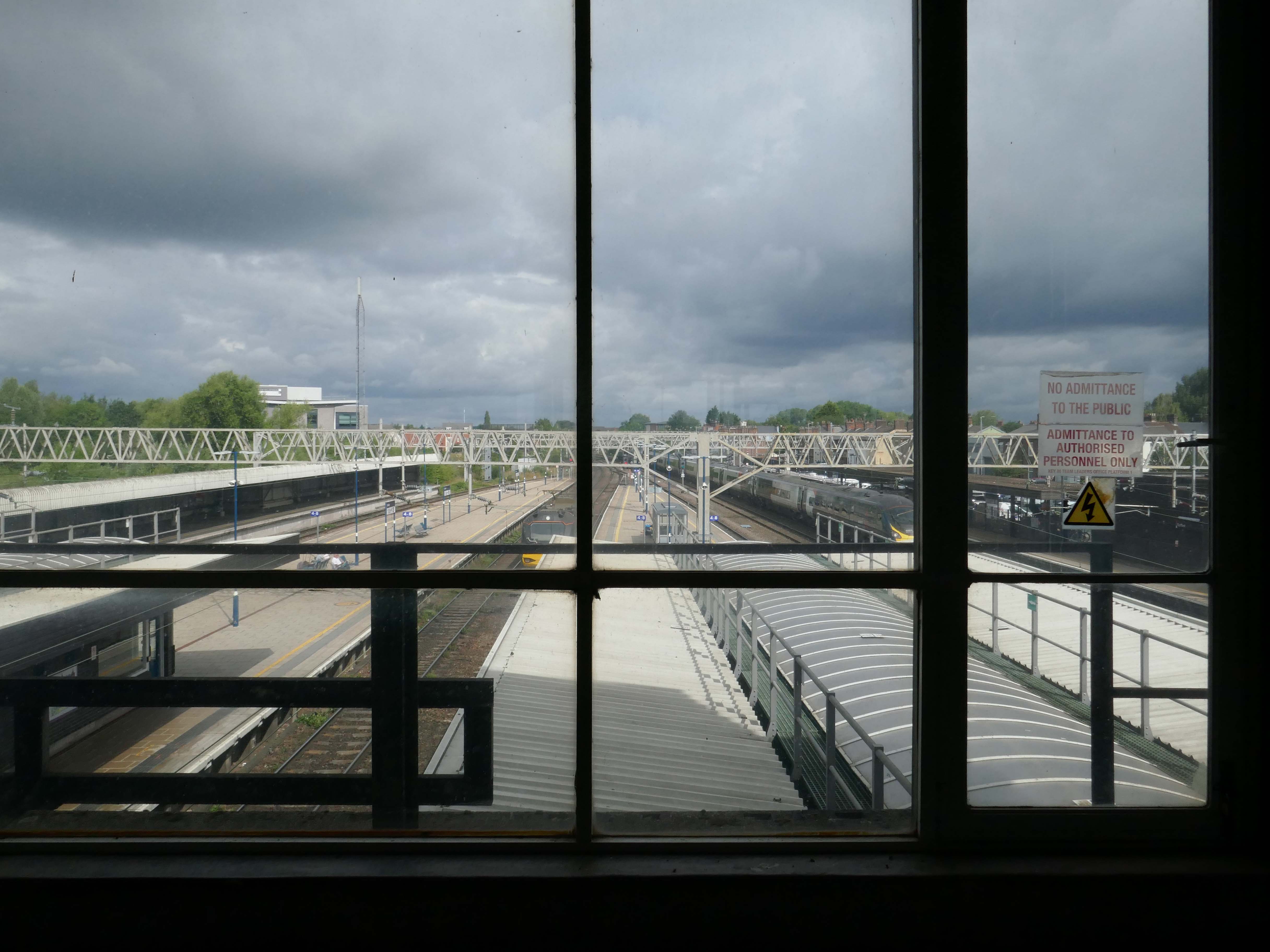
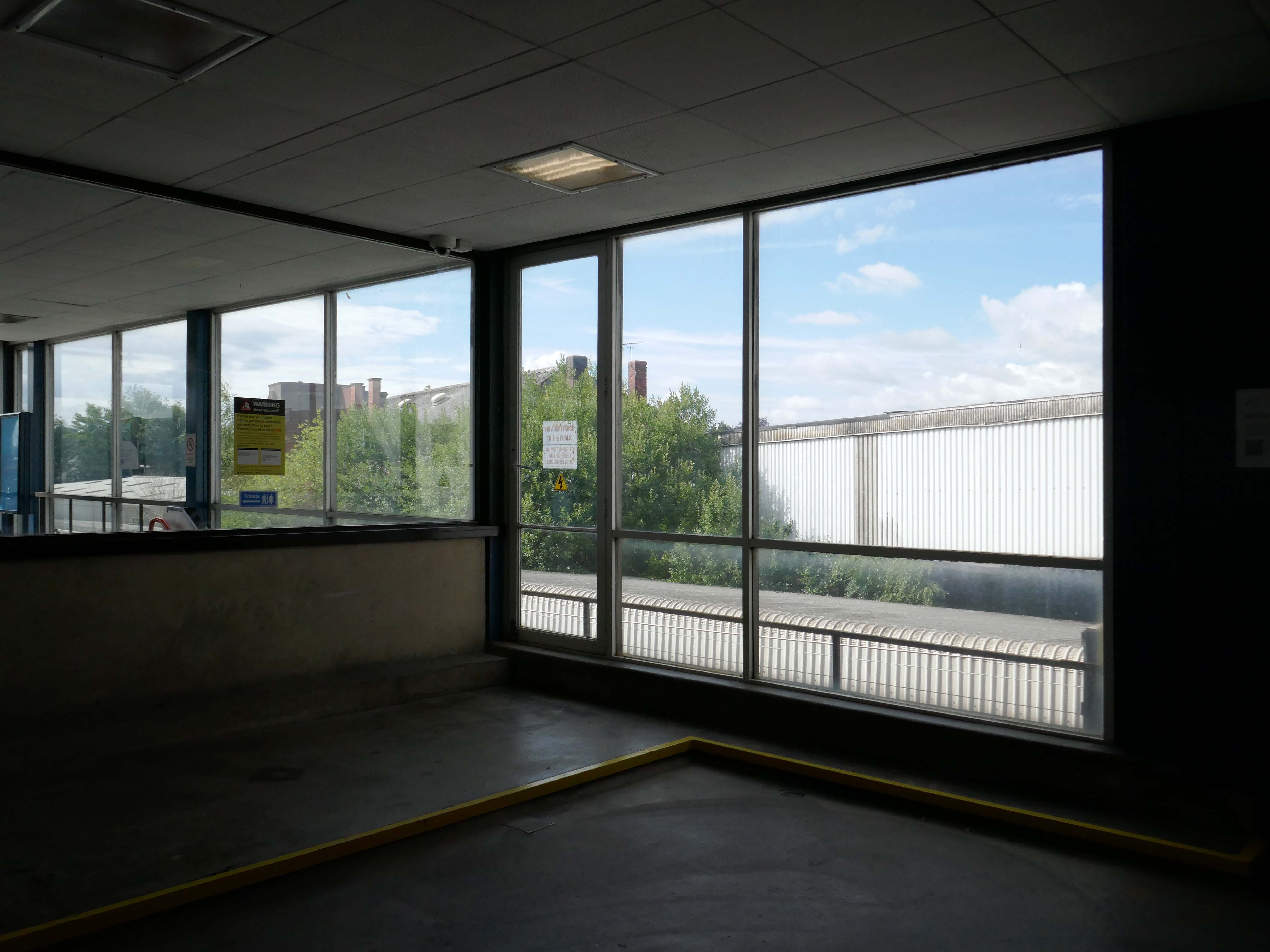
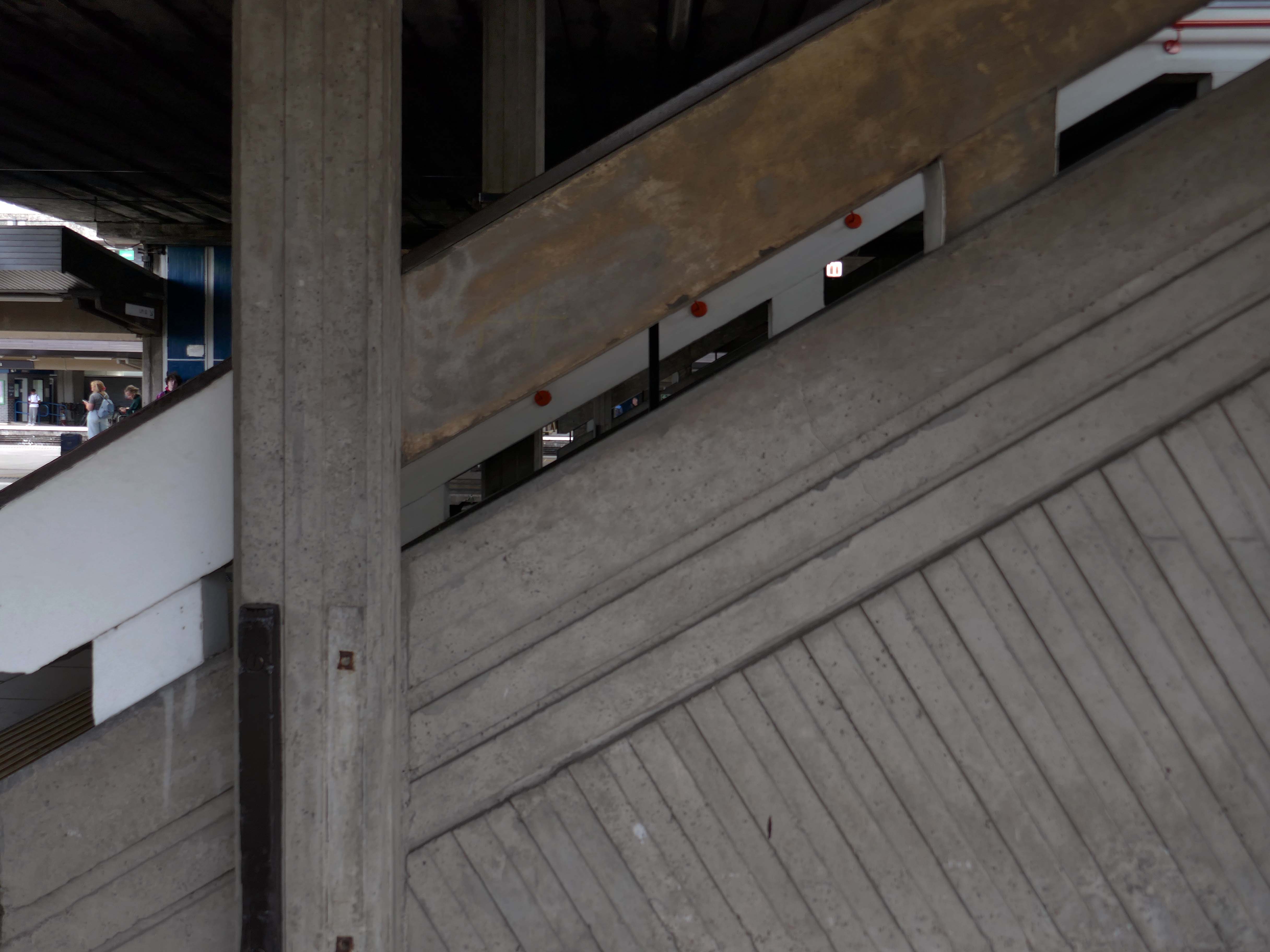
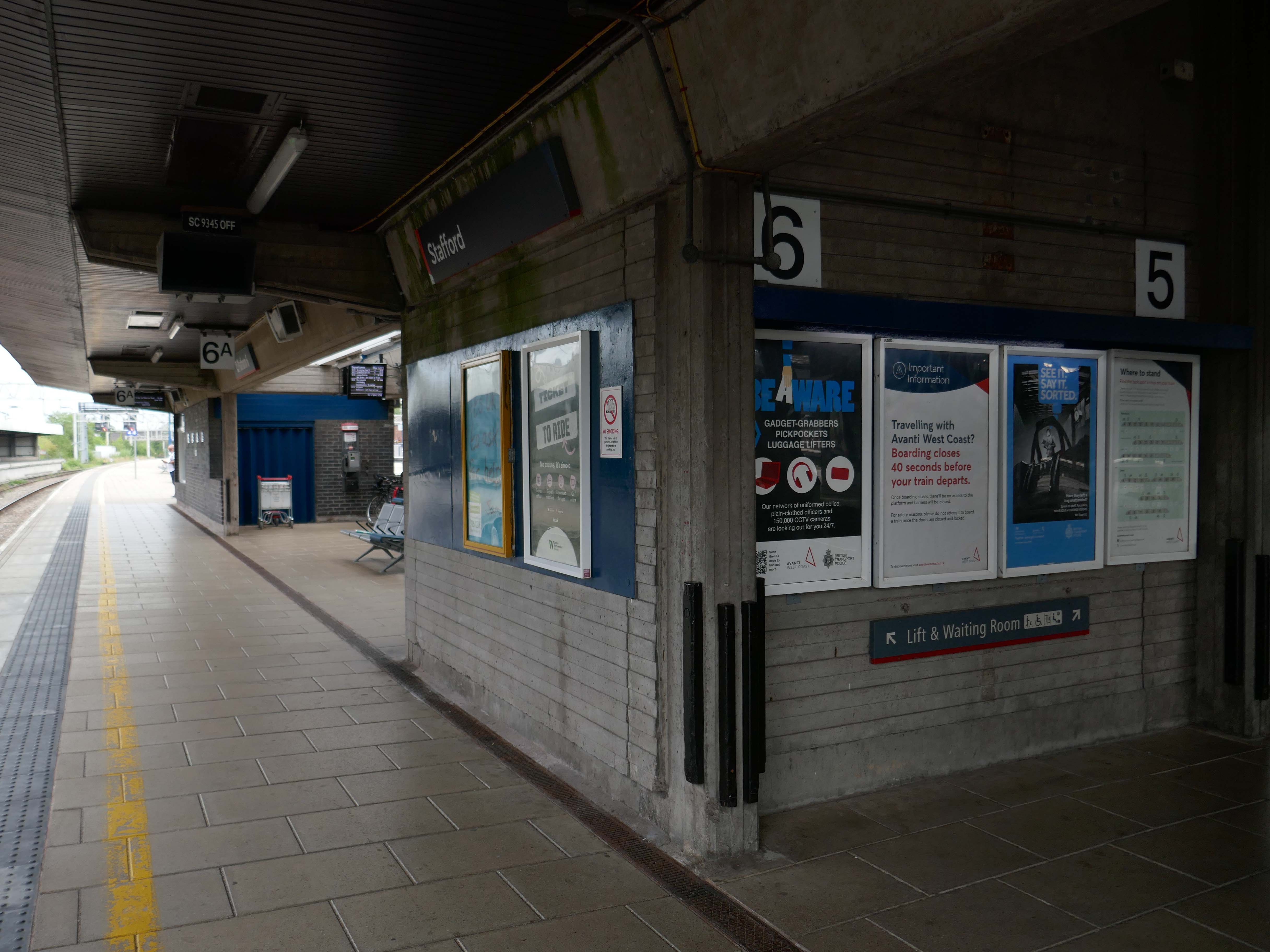
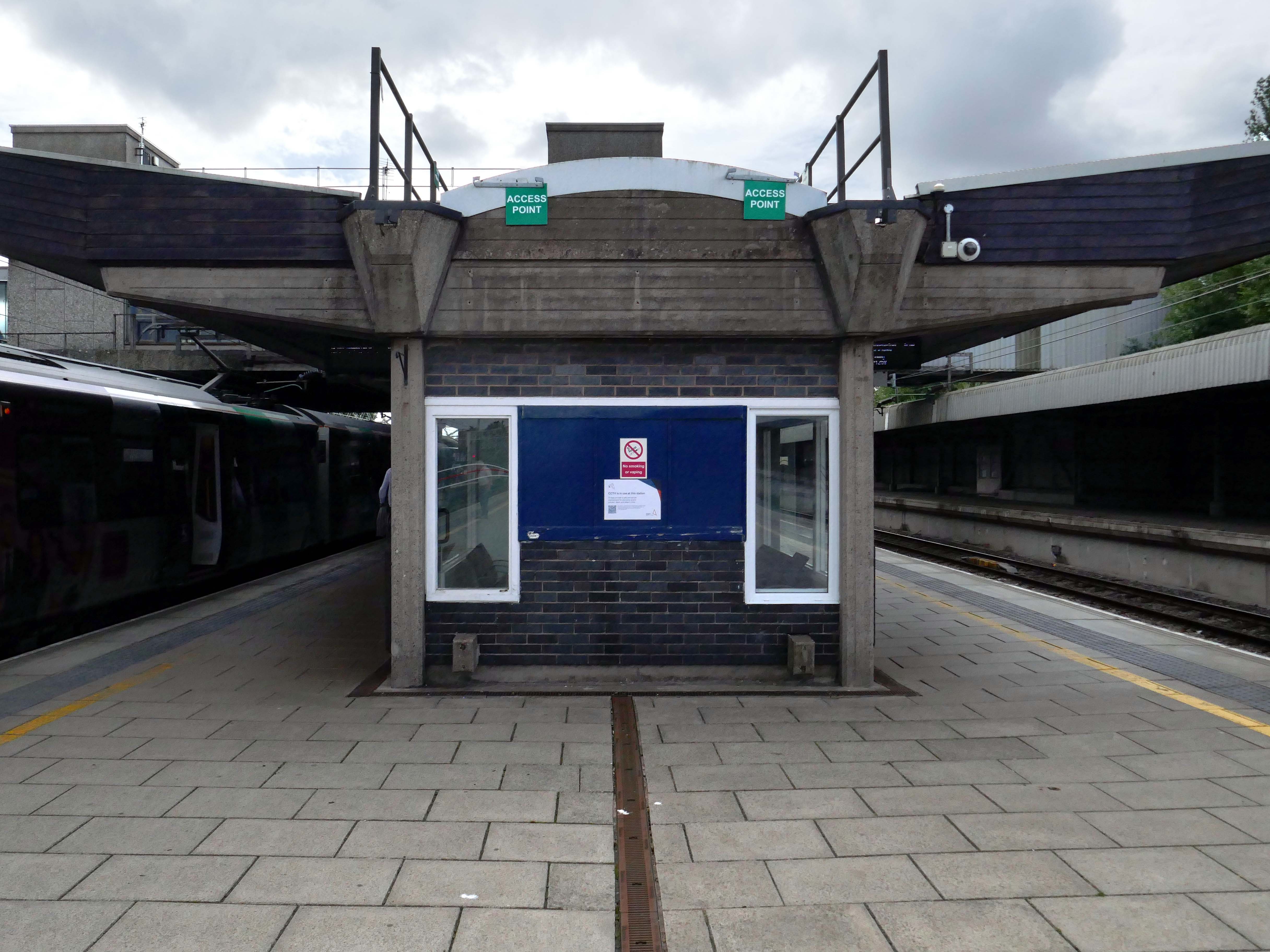
The station is light and airy, composed of a series of vertical and horizontal volumes.

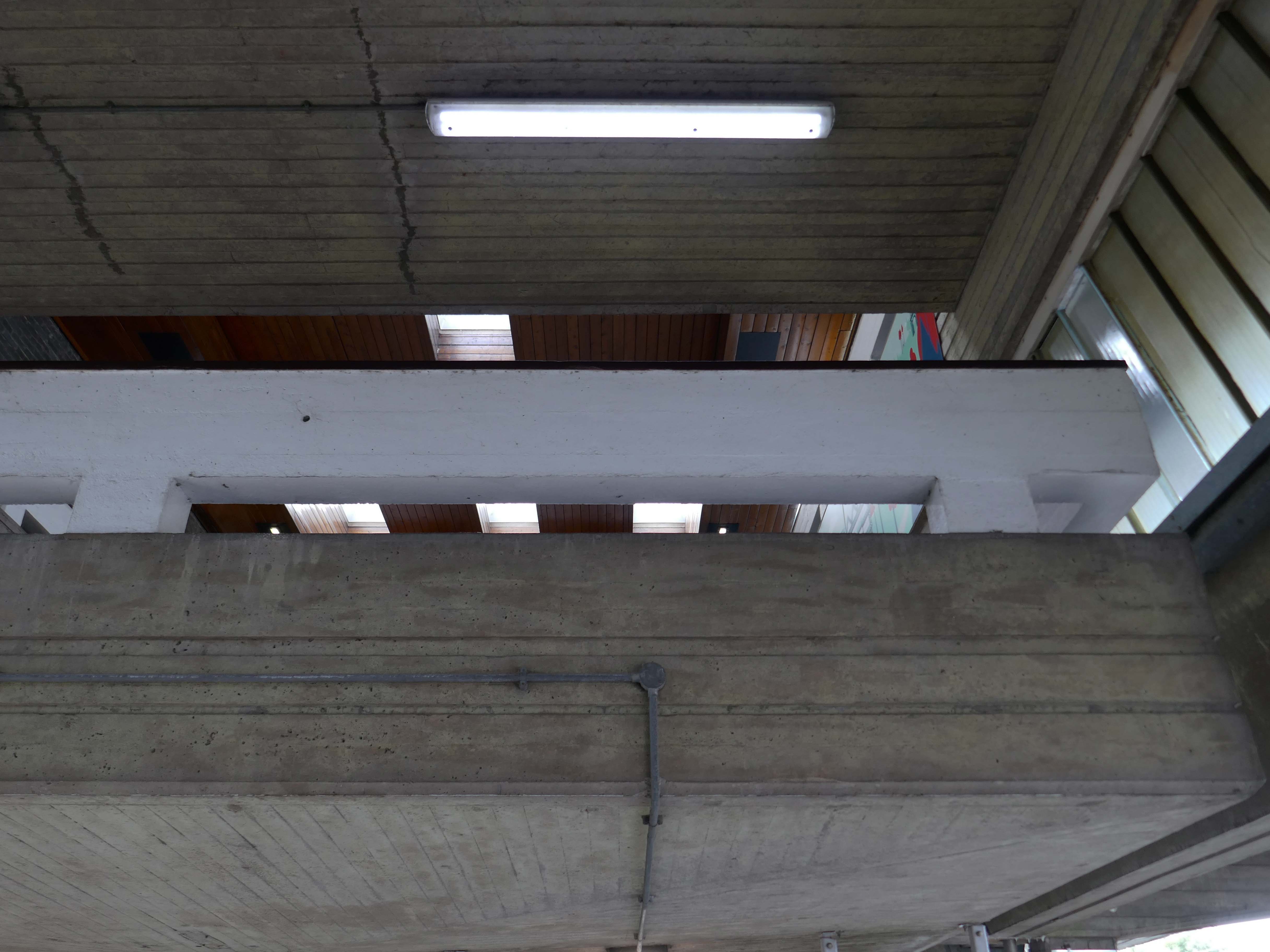
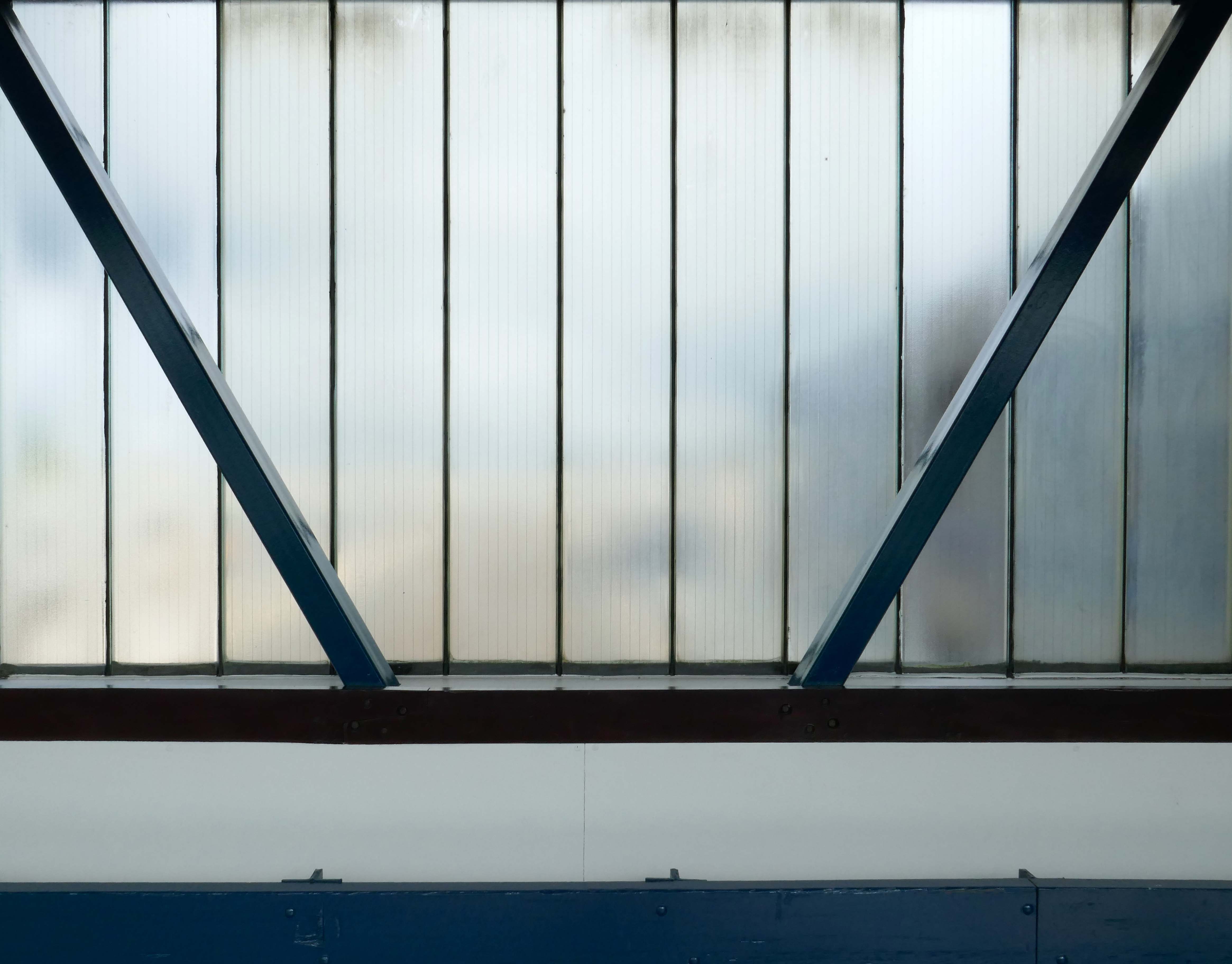
Glazed walkways and bridges, concrete and timber cladding.

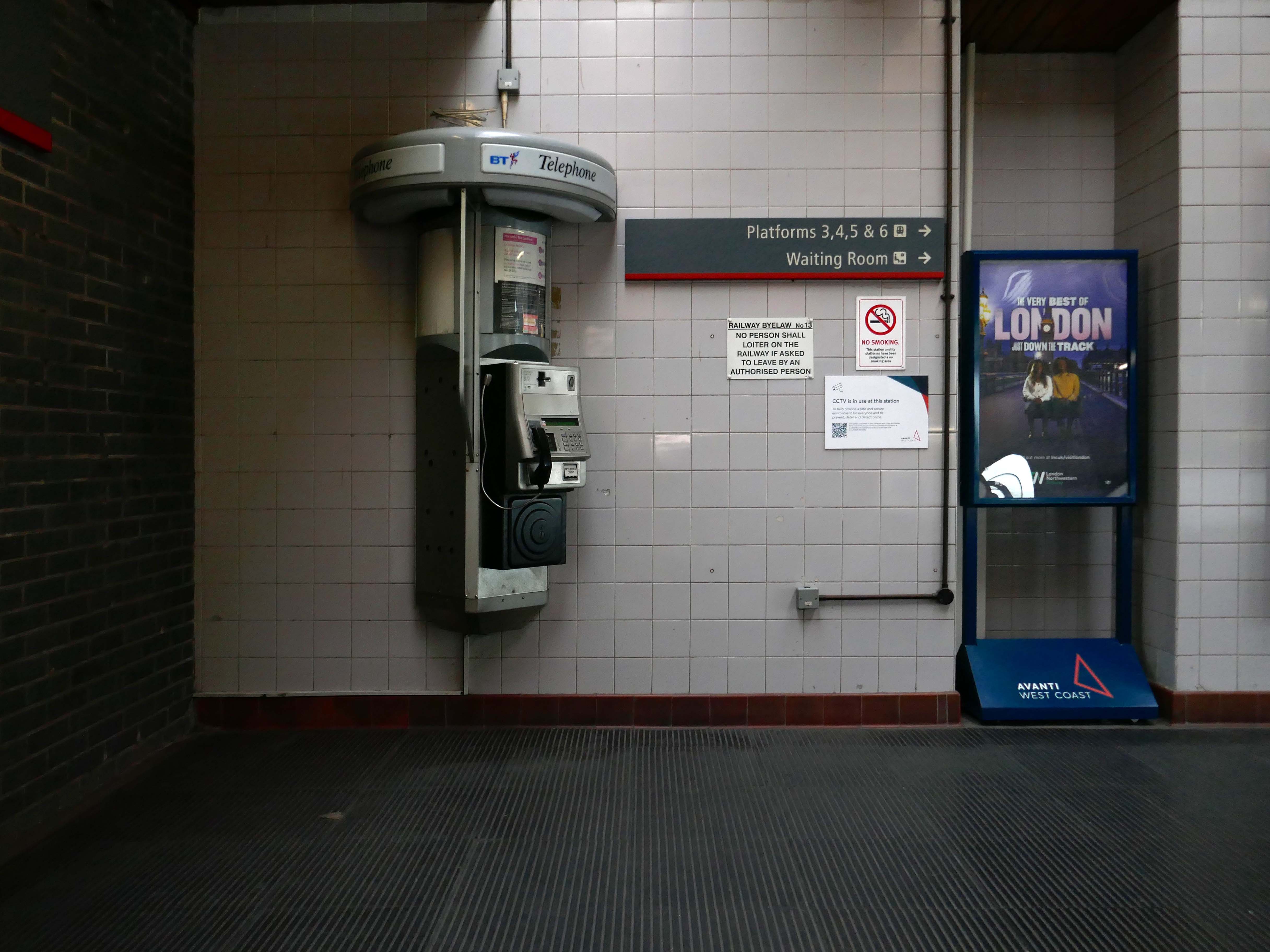
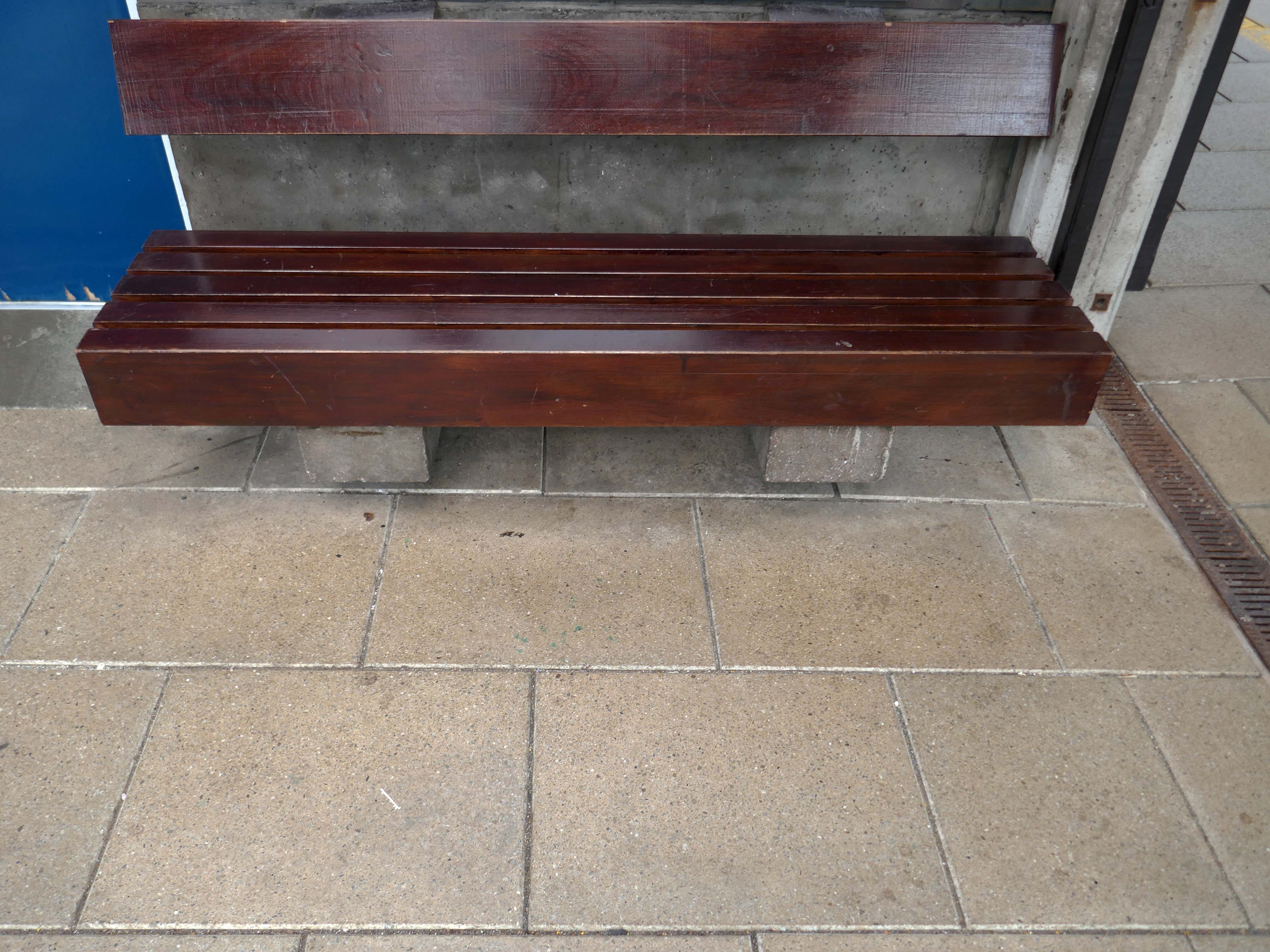
The station is not listed, and over time the signage, seating and entrance have all been compromised.

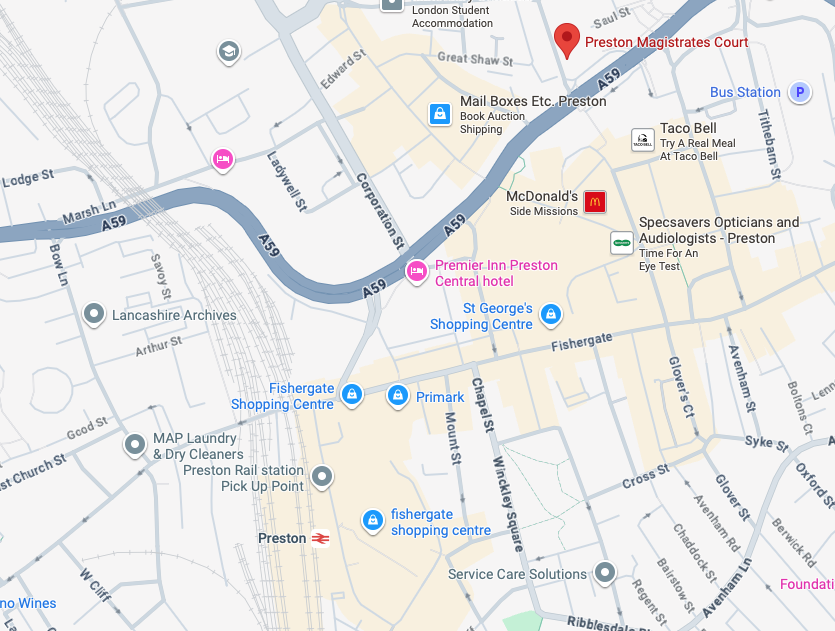
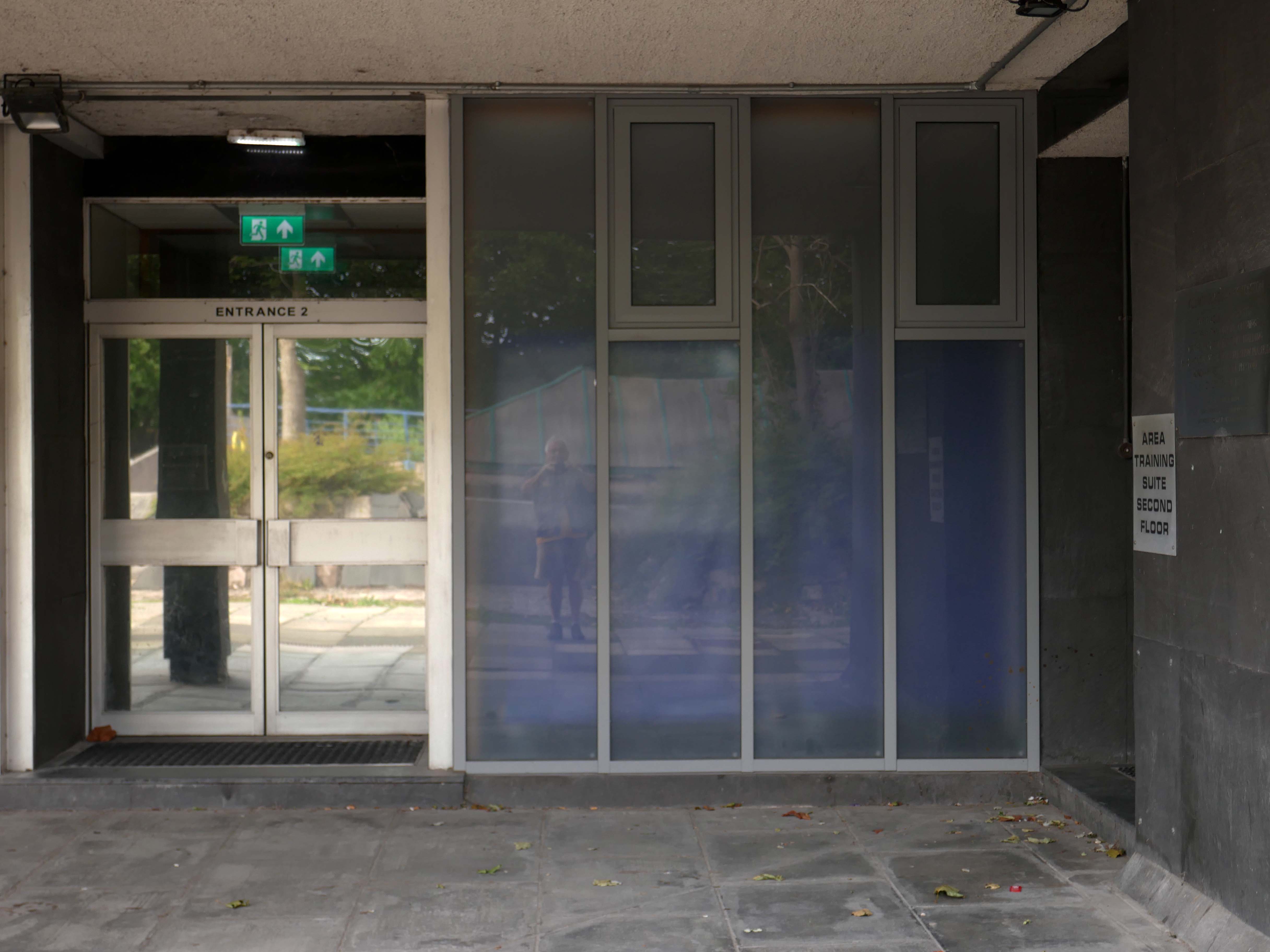
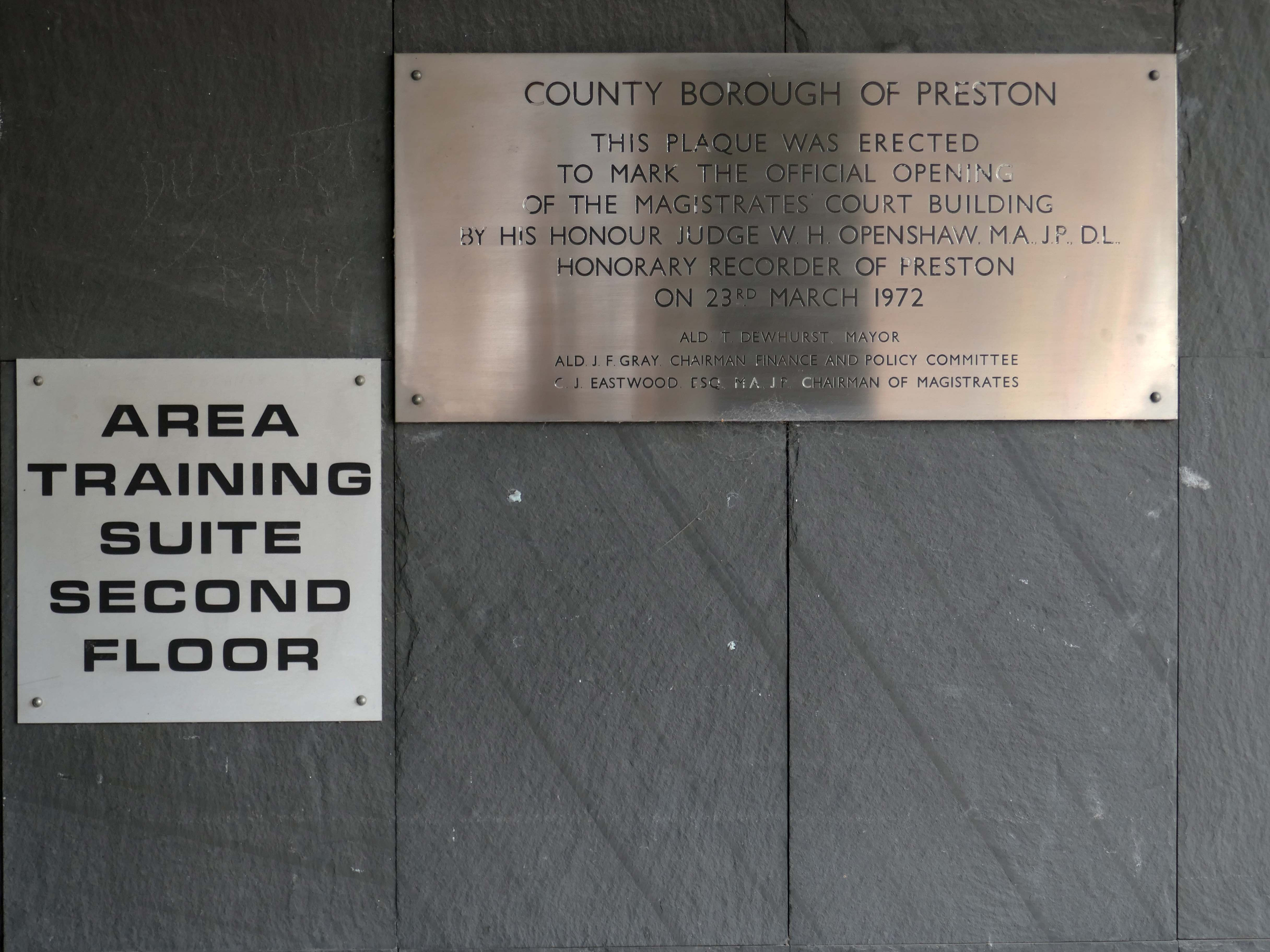
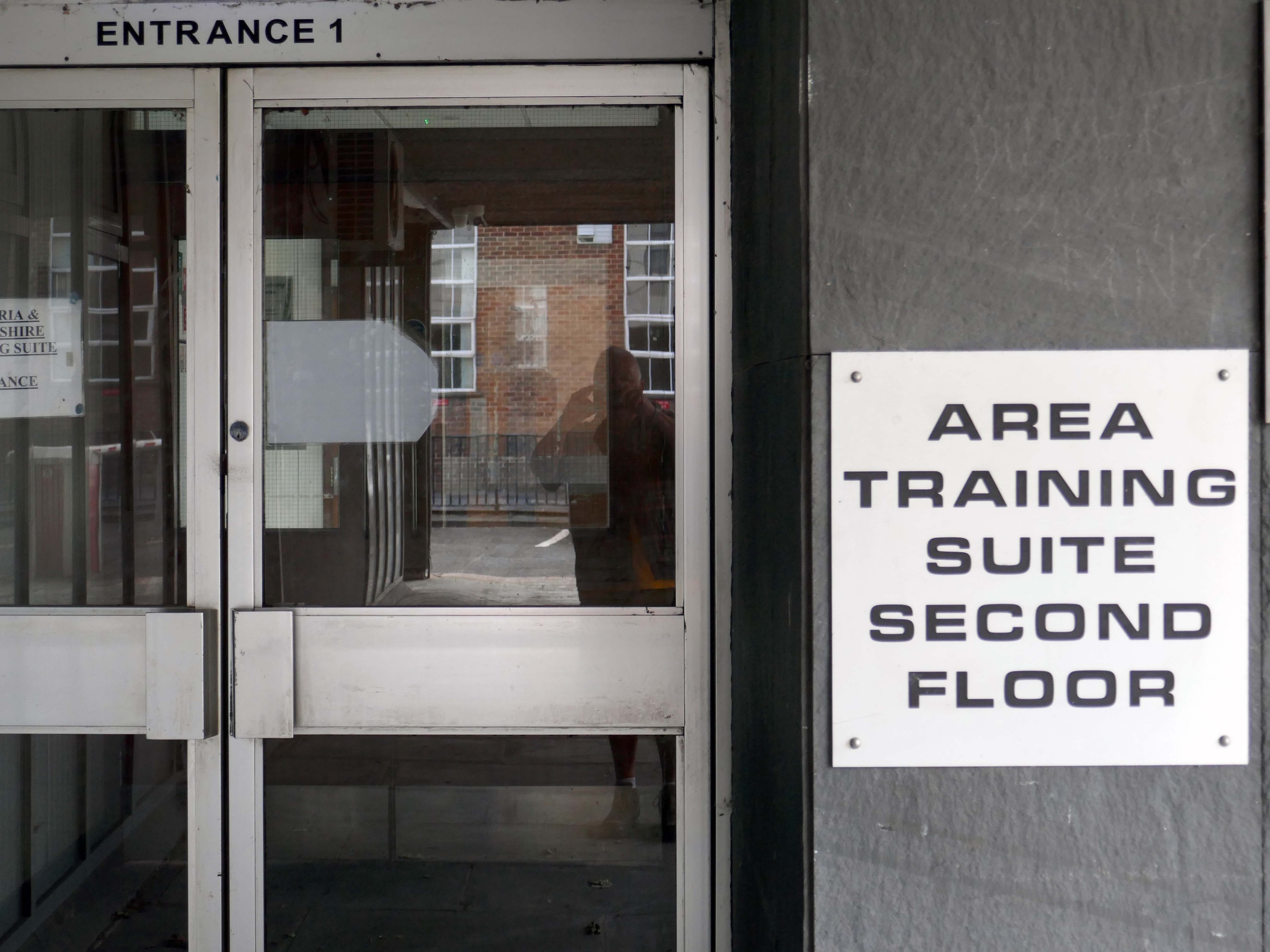
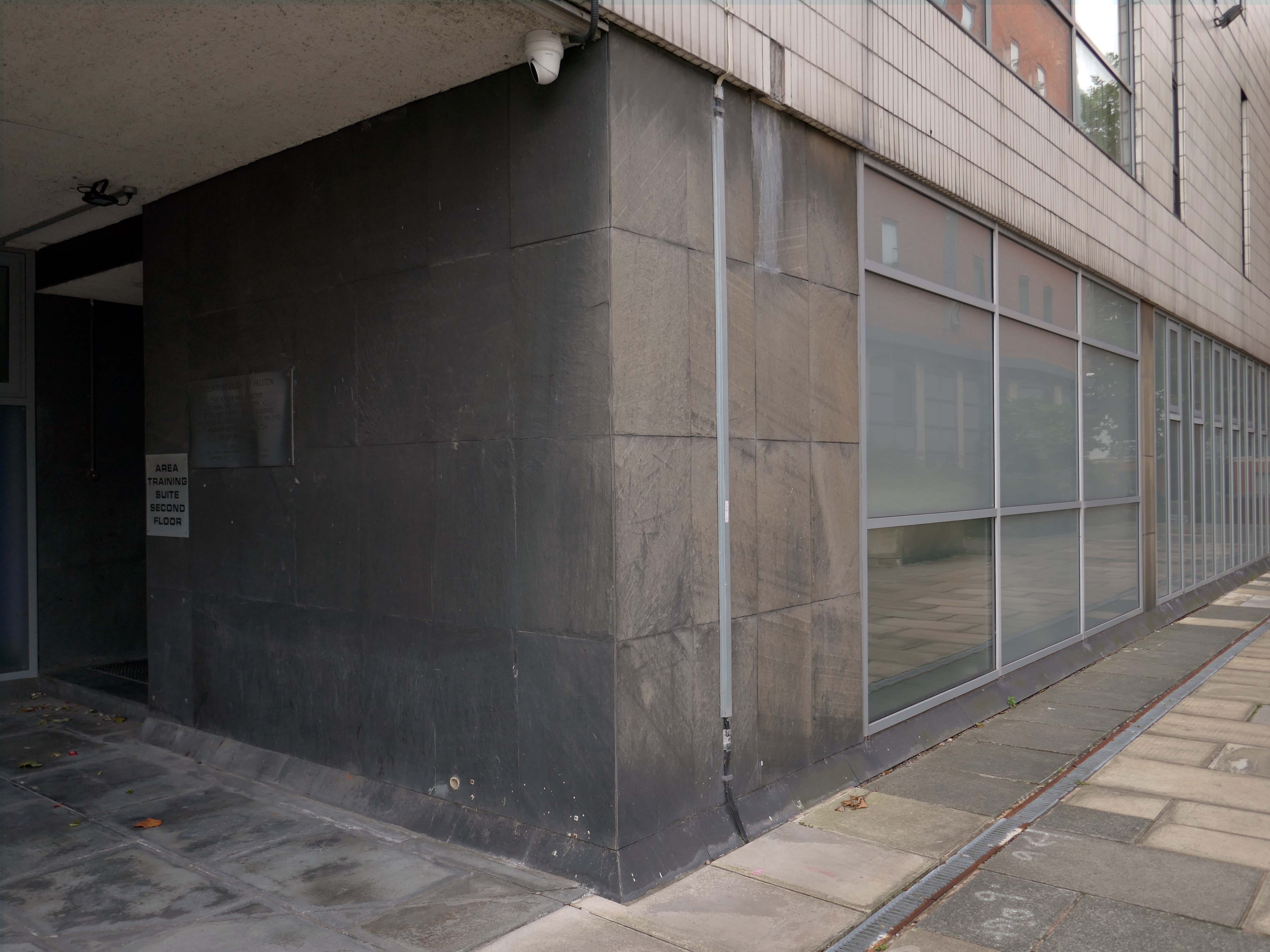
Magistrates’ Court – Preston

Lawson St Preston PR1 UK

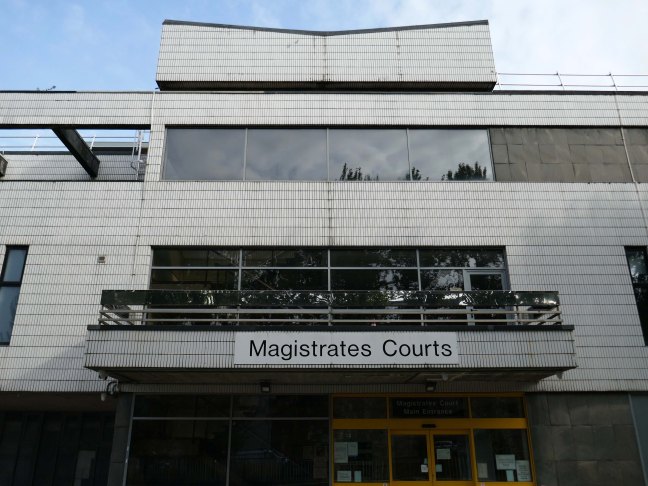
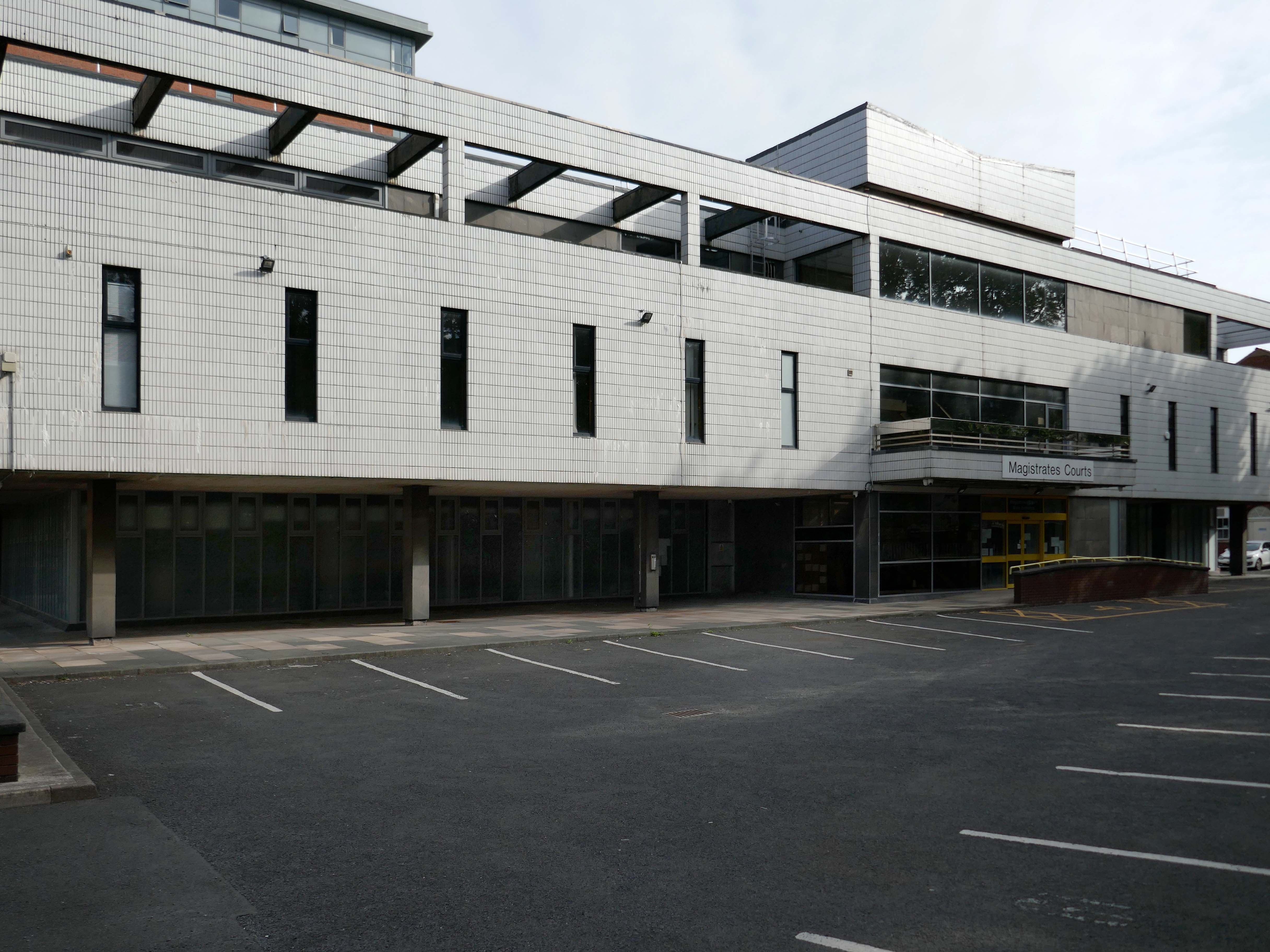
We have often walked by the Magistrates’ Courts on the Preston Walk.

So, it’s about time this low lying white tiled delight received some well deserved attention.

Though recently there have been structural problems:

The safety of everyone who uses our courts is paramount and the decision to temporarily close Blackpool and Preston Magistrates’ courts was made in line with professional advice following the detection of defective Reinforced Autoclaved Aerated Concrete. These court buildings will reopen once they are assessed as safe by professionals following the completion of required remedial works.

There have also been solutions:

Preston Magistrates’ Court is currently scheduled to reopen in January 2024.

They work for you

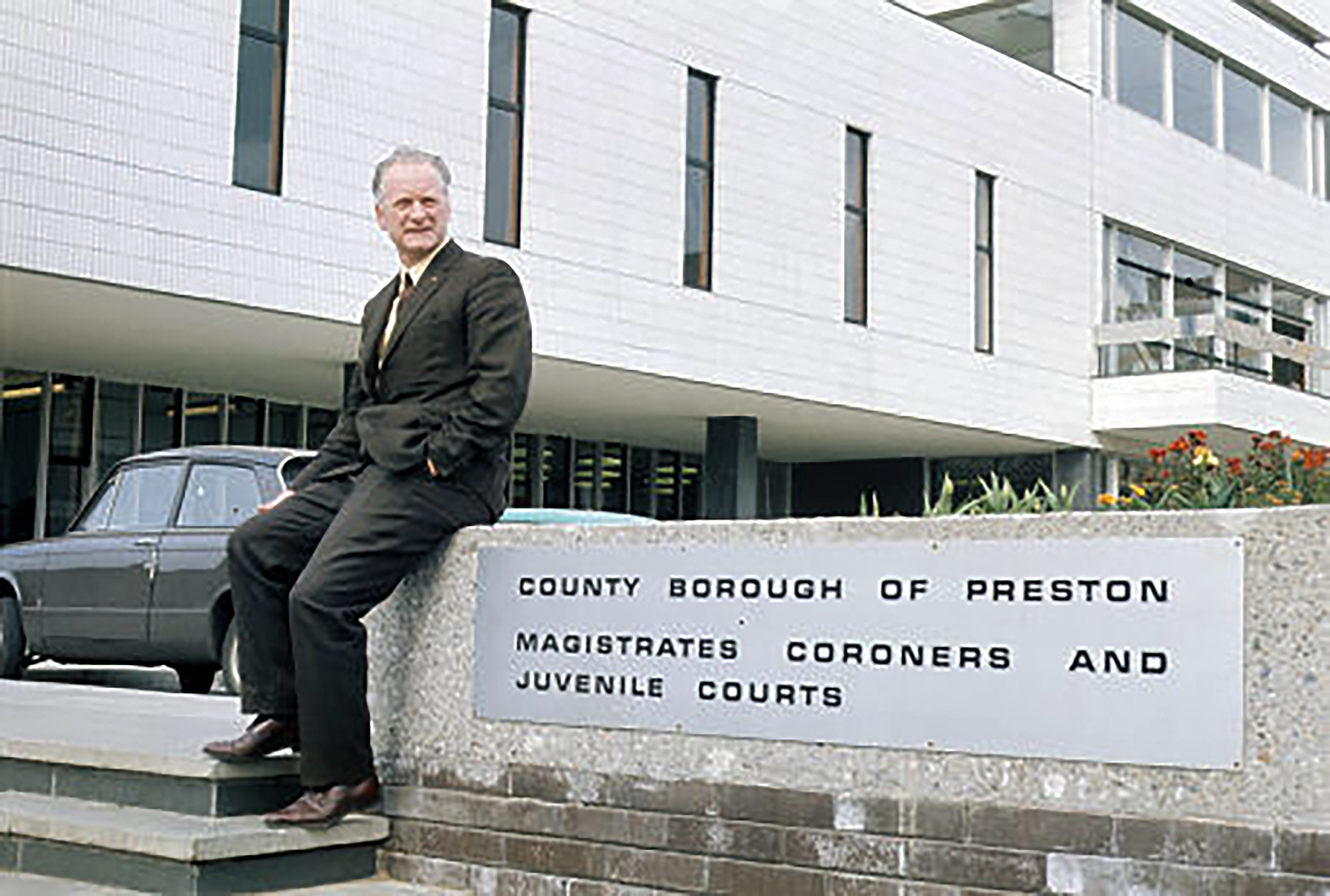
Local lad Tom Finney was unable for comment, though saddened to hear that the Microgramma sign was no longer in situ.


Copyright Rex Shutterstock

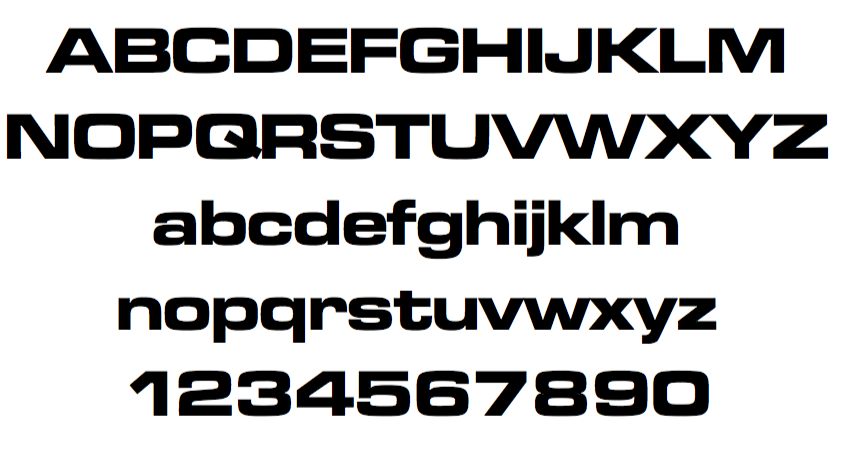
Microgramma is a sans-serif typeface designed by Aldo Novarese and Alessandro Butti for the Nebiolo Type Foundry in 1952. It became popular for use with technical illustrations in the 1960s, and was a favourite of graphic designers by the early 1970s.

The building is the work of the Borough Architects under John Hatton – though I am reliably informed that County Architect Roger Booth took an advisory role.

The Courts certainly echoes many of the stylistic and material characteristics of his work, particularly the County Archives, with similar piloti and glazing.

So let’s take a circuitous tour.

This is the seriously neglected seating area.

The Courts once had a Roger Booth Police Station as a neighbour.

Photographs – Richard Brook

Converted to apartments in 2013, with current plans for further developments.

More than 200 student flats are set to be built on part of Preston’s former divisional police headquarters. Preston City Council planning officers have recommended that councillors give the go-ahead to the scheme – at the junction of Walker Street and Lawson Street, to the rear of the magistrates’ and crown courts.

Blog Preston

The part of the plot where the new ‘studio apartments’ would be erected is currently occupied by a multi-level public car park, accessed from Saul Street, which has been operated as a pay and display facility by Chorley-based Parking Eye for the last nine years.

Other Roger Booth police stations have also been visited by the wrecking ball, Blackpool and Bury are now no longer extant.

Both Chorley and Morecambe are still standing.

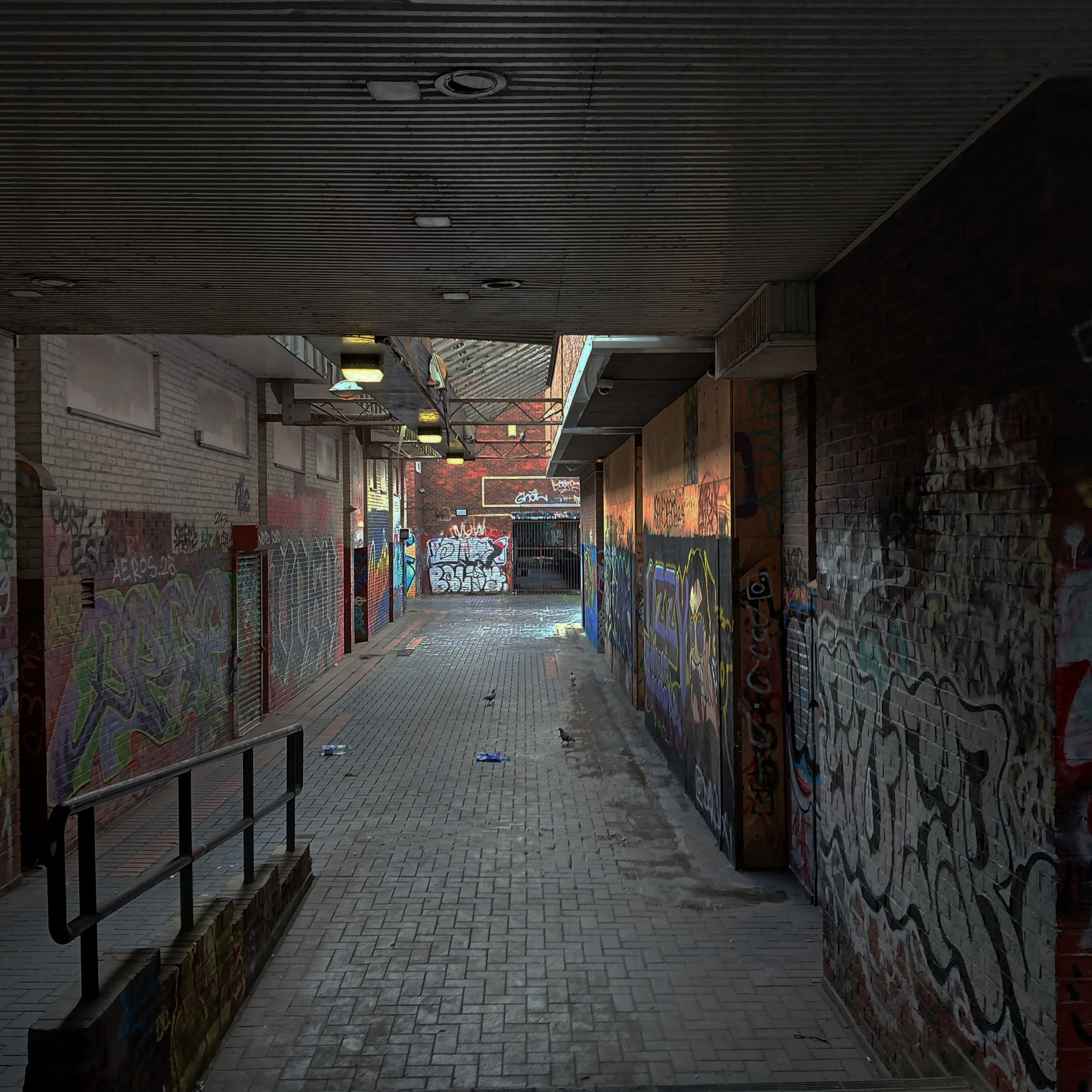
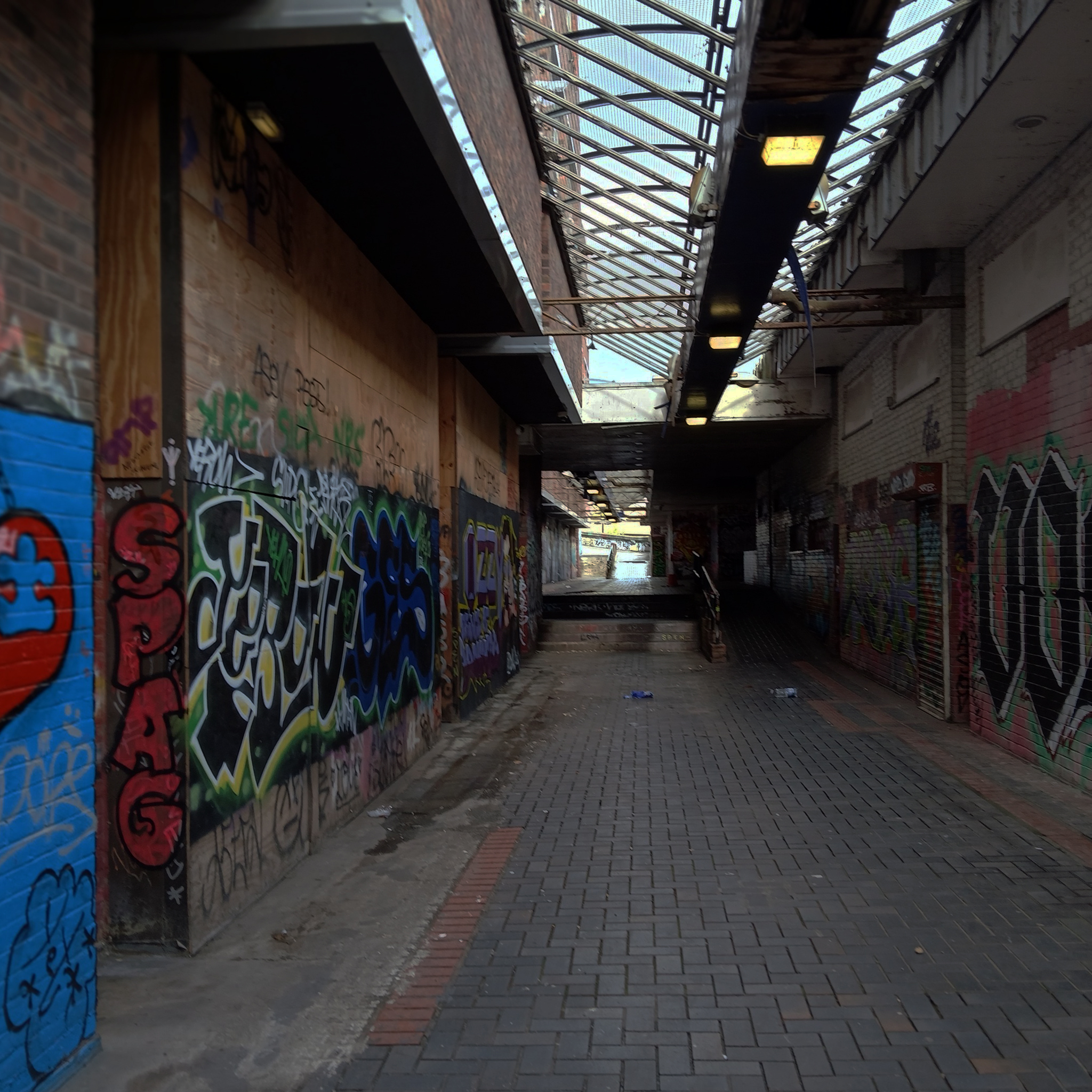
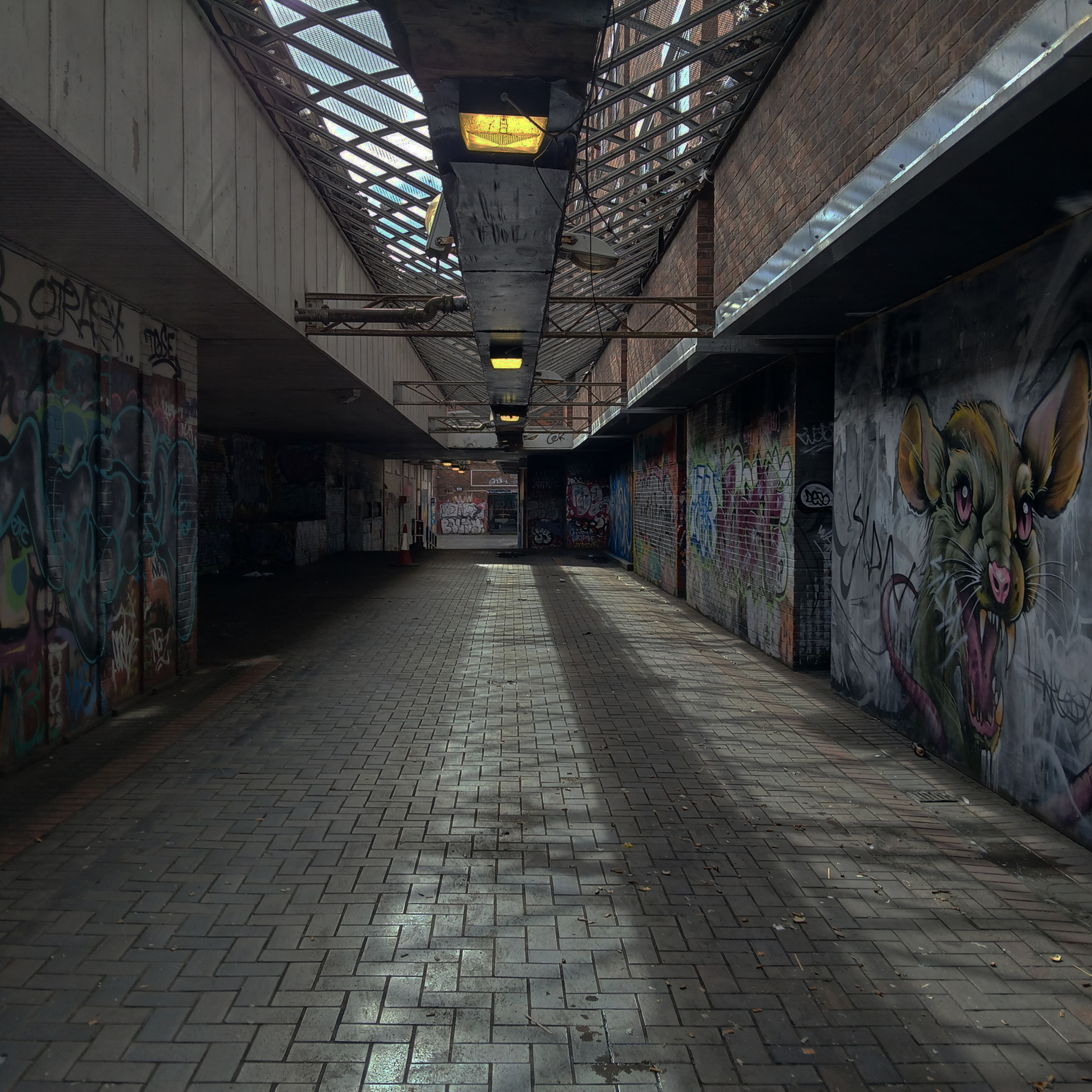
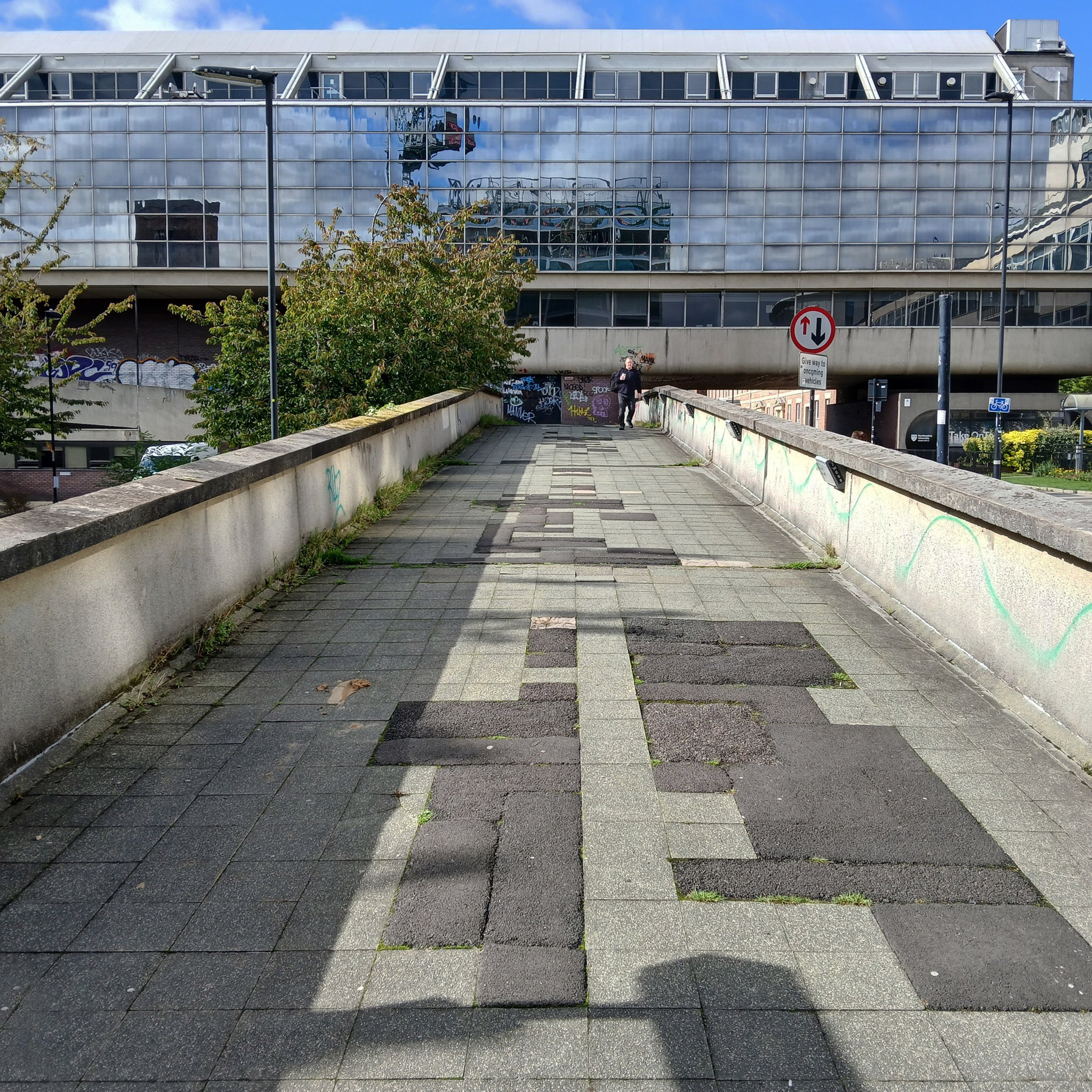
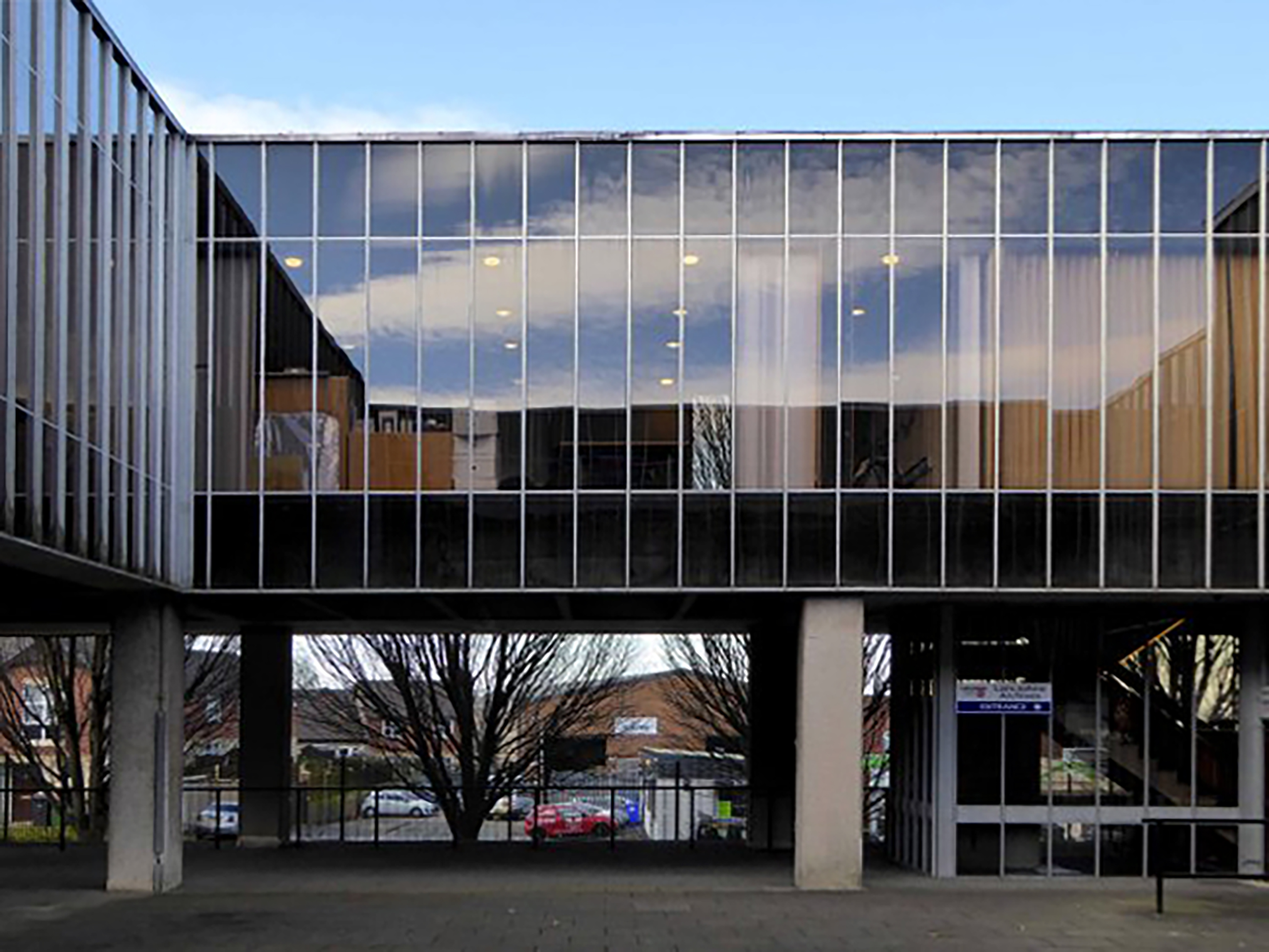
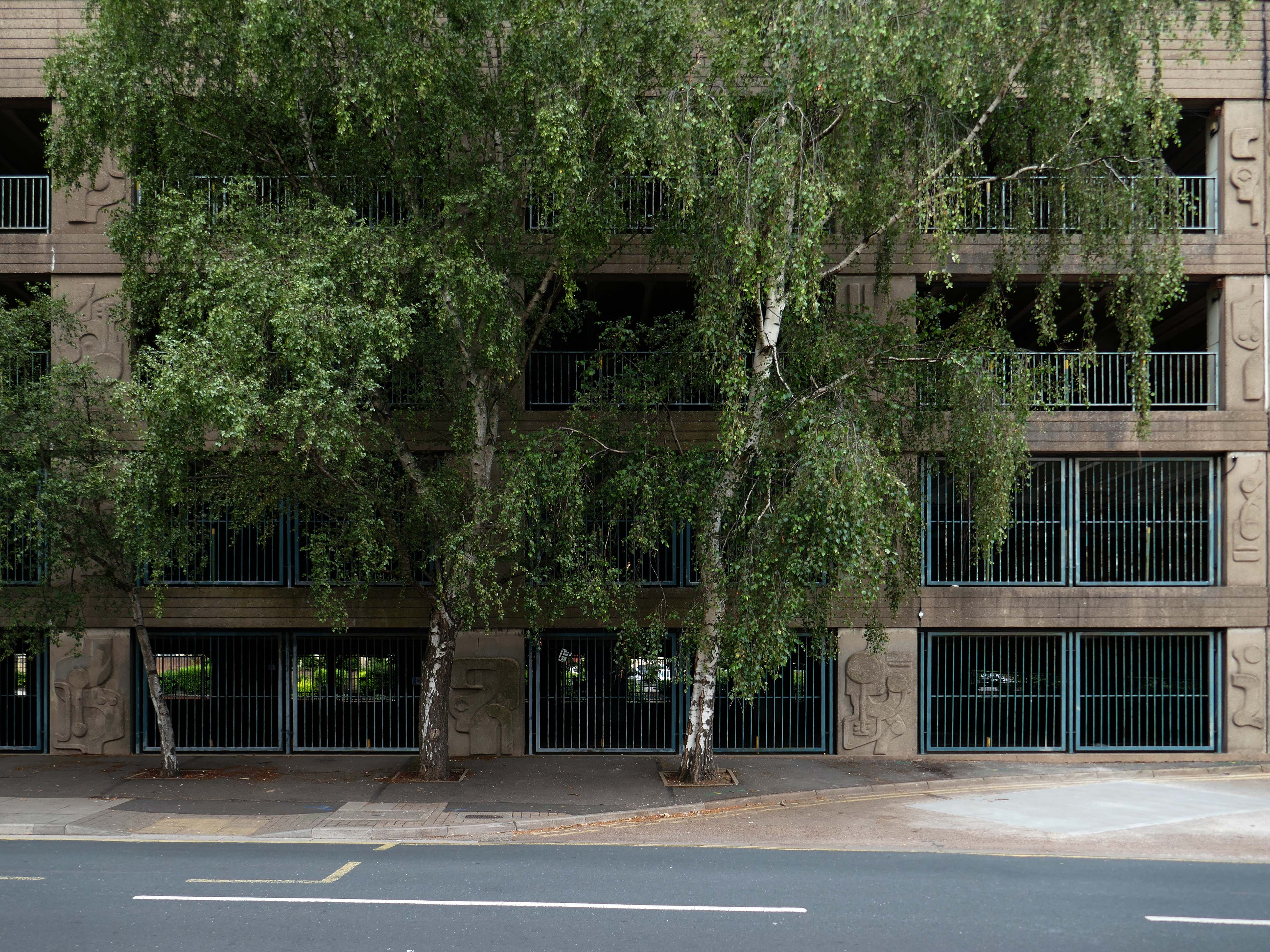
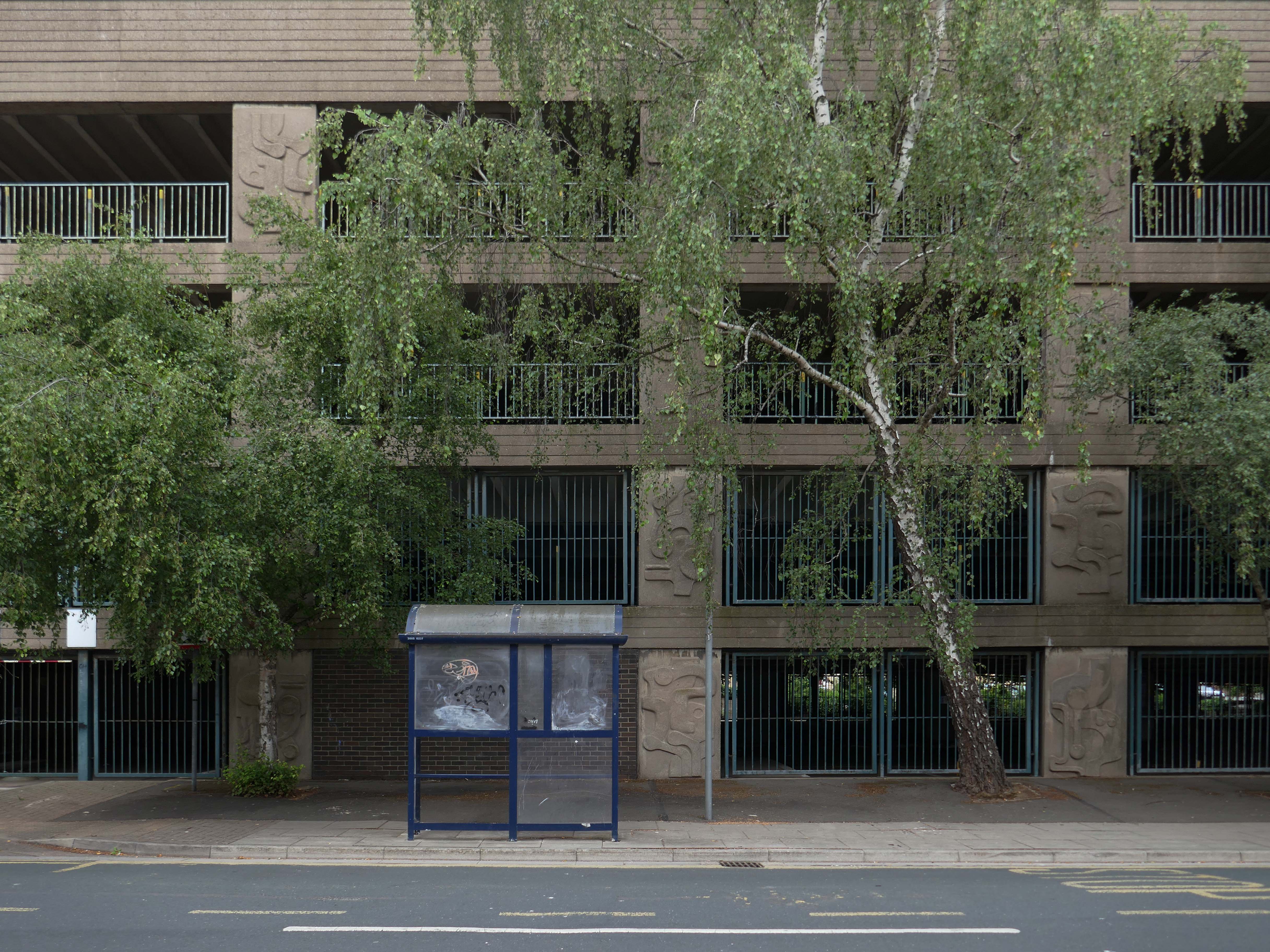
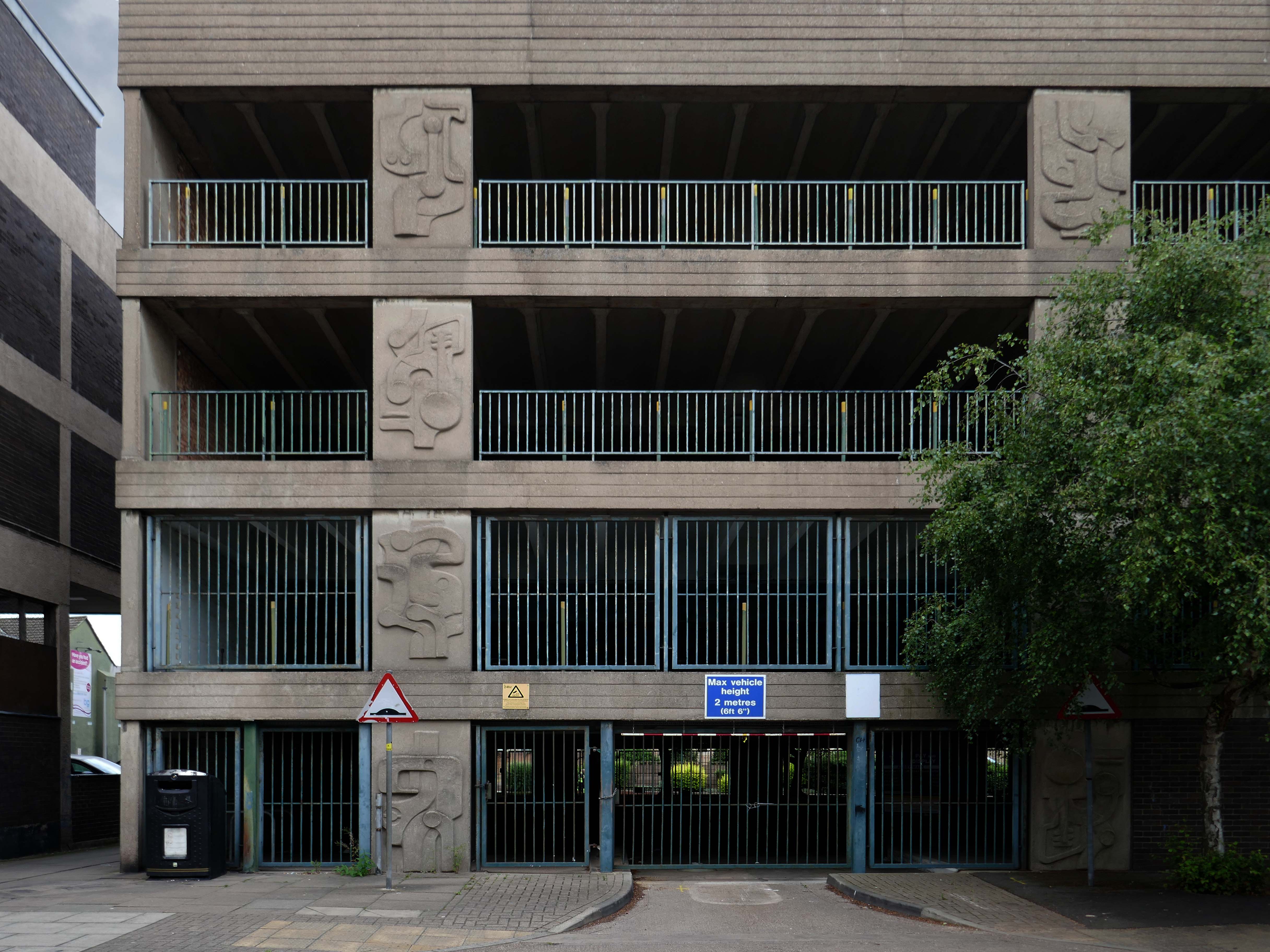
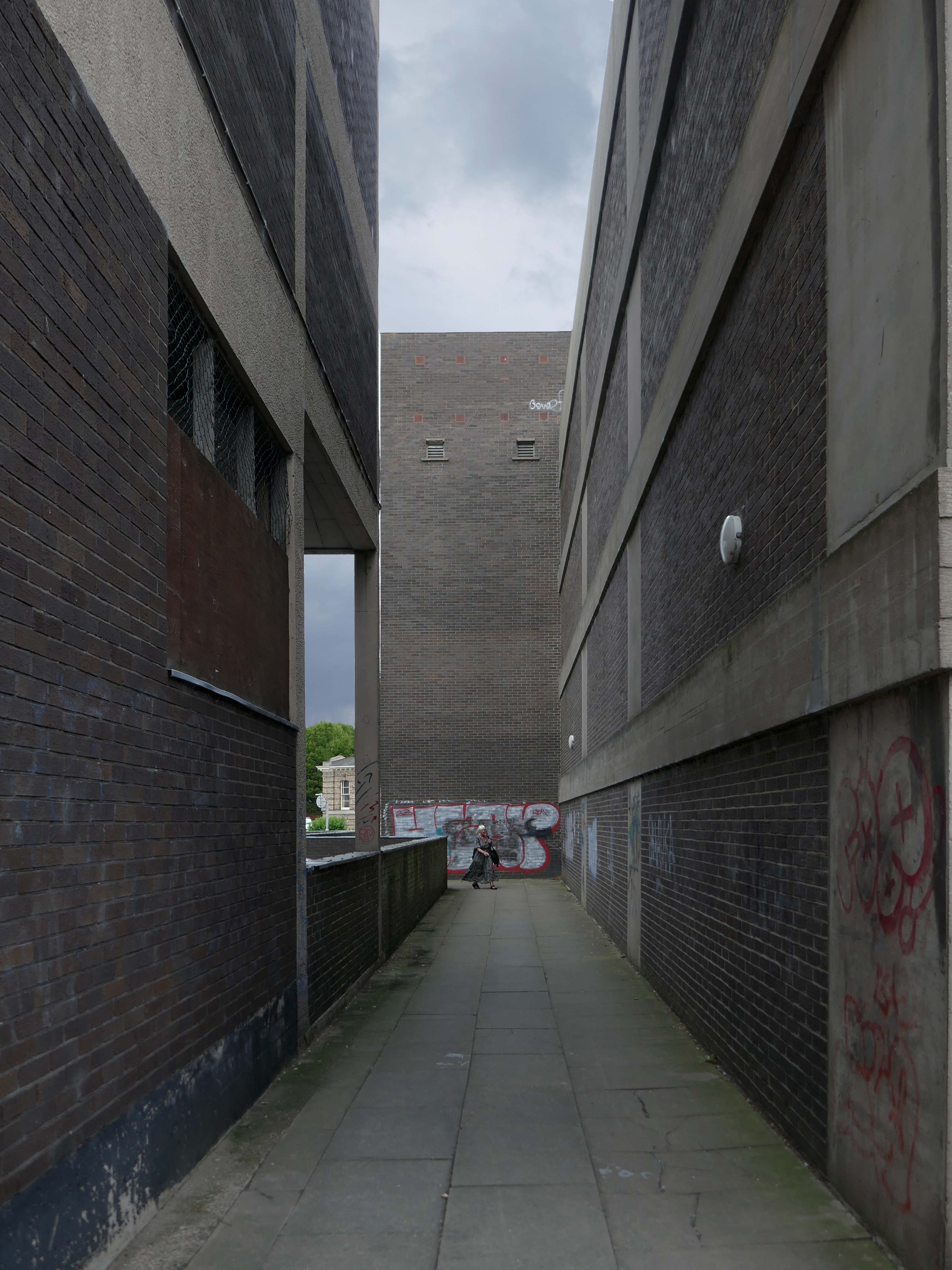
Abbey Walk Car Park – Grimsby 2025

Here we are again, six years after the first visit.

What’s been happening hereabouts in the interim?

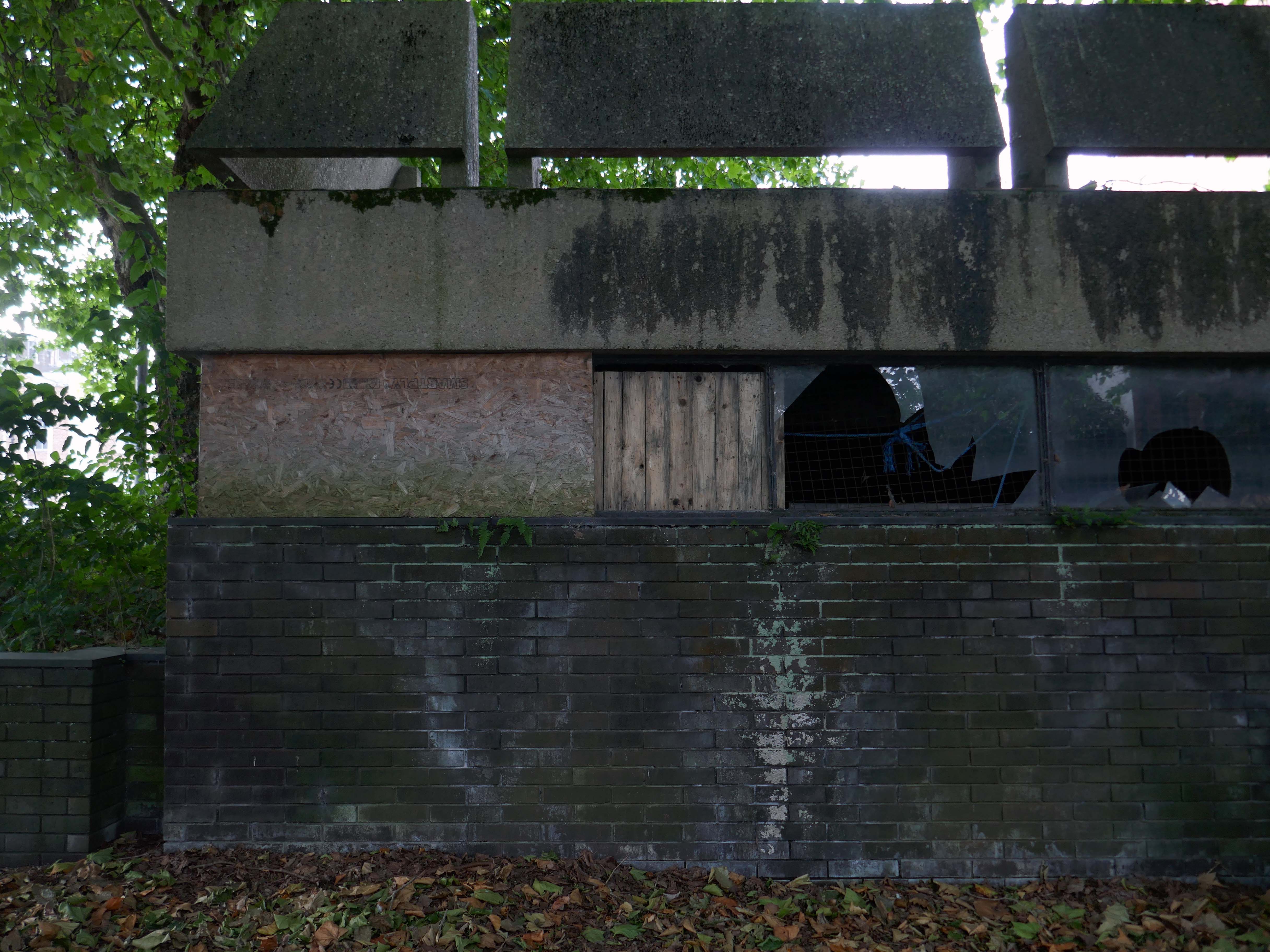
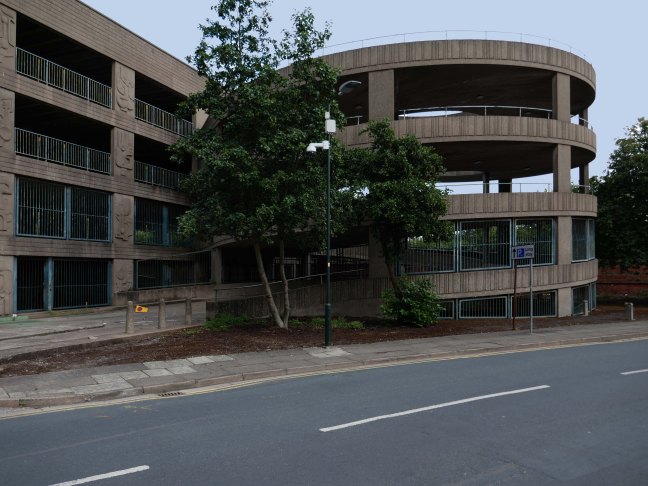
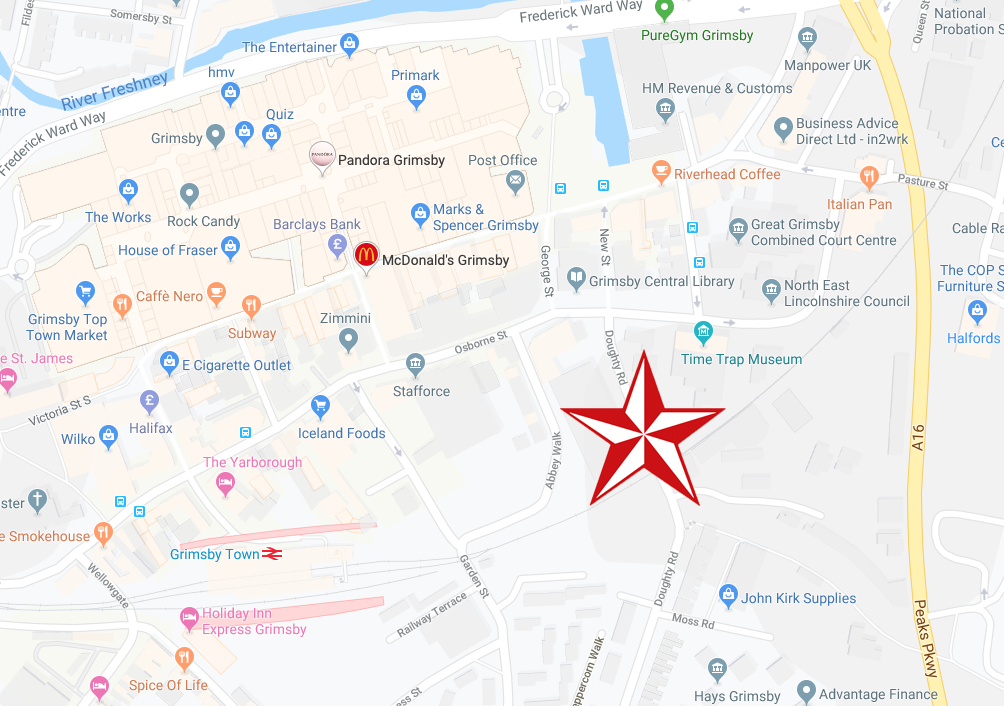
The Abbey Walk car park was built in 1969 by Holst & Company of Scunthorpe at a cost of approximately £200,000. Whilst a key asset for the town centre, the car park was closed in May 2024, after structural defects were found. This was water ingress into key structural supports, making the car park potentially unsafe to use.

It has now been approved to proceed with plans to demolish the car park, and replace it with a 120-space surface car park, but with the capability in the foundations of being built on in future years if needed.

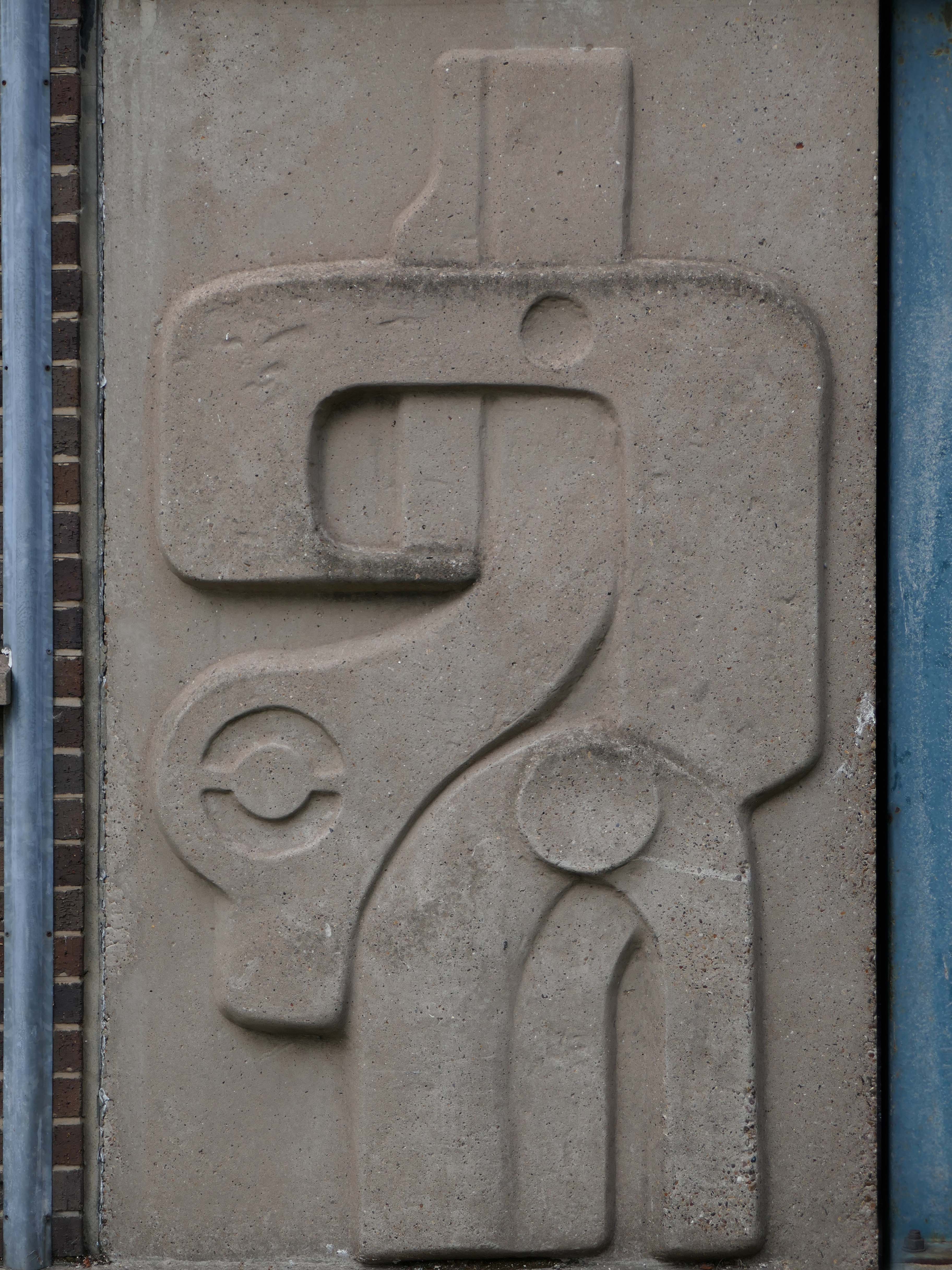
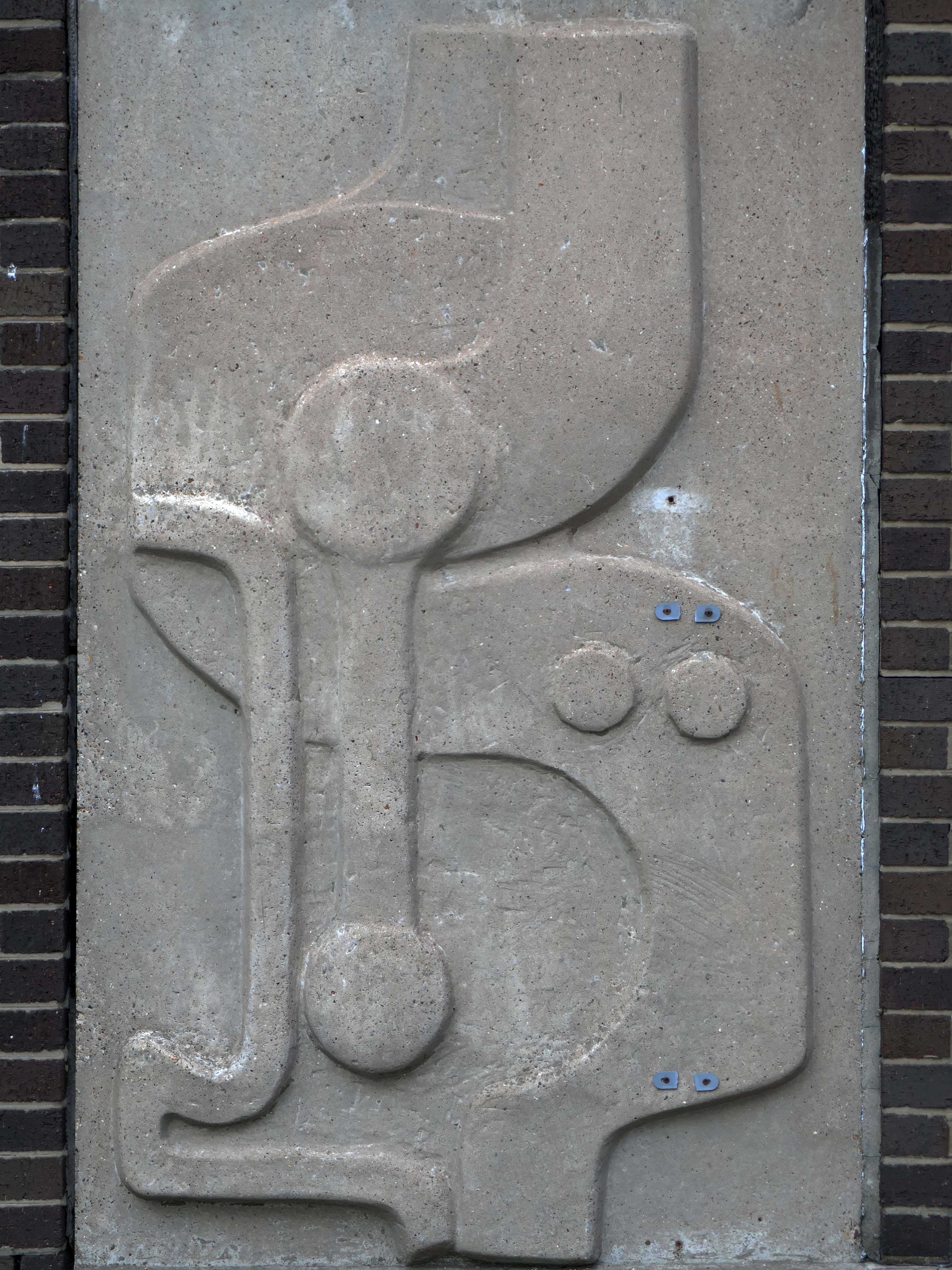
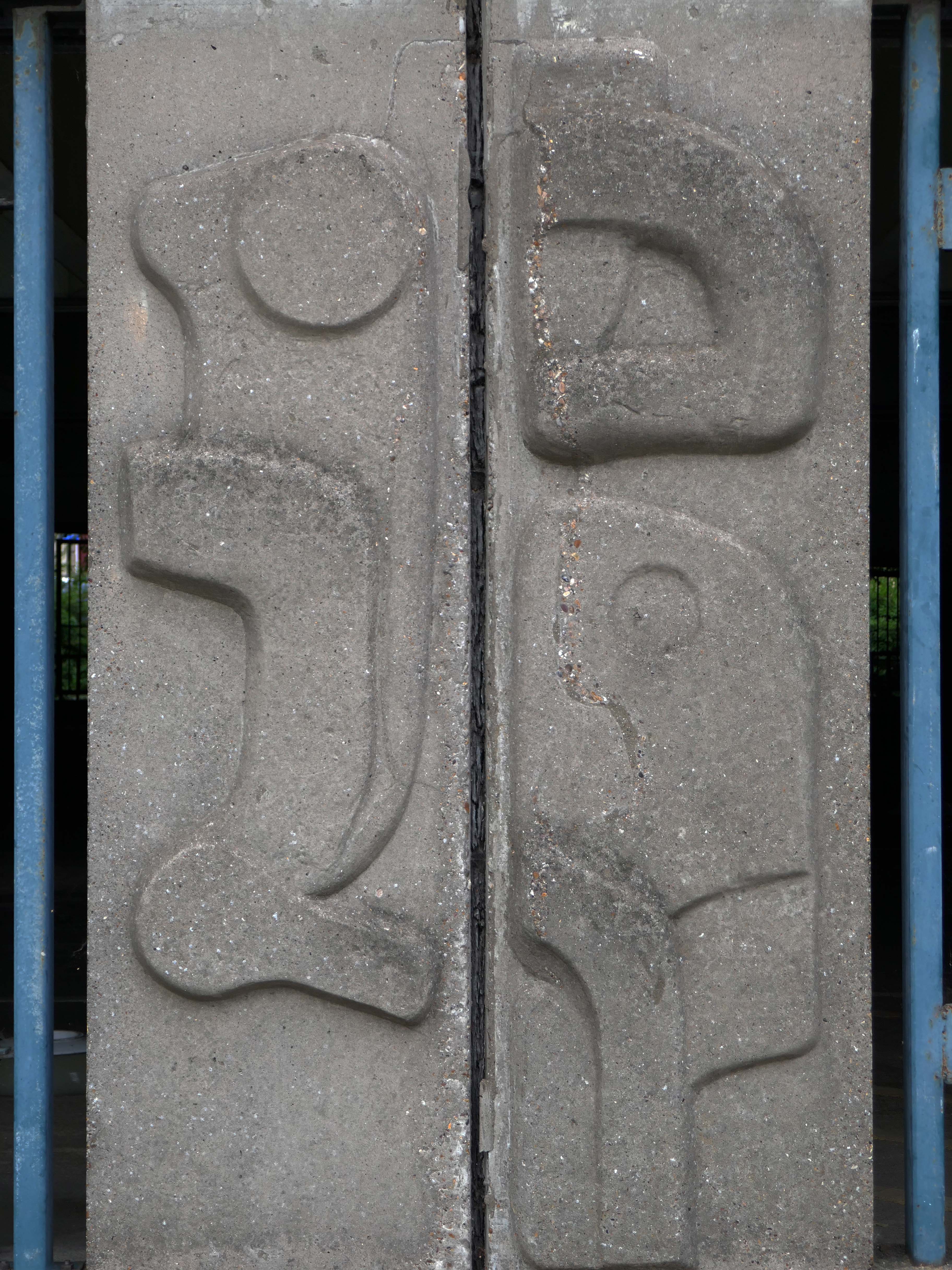
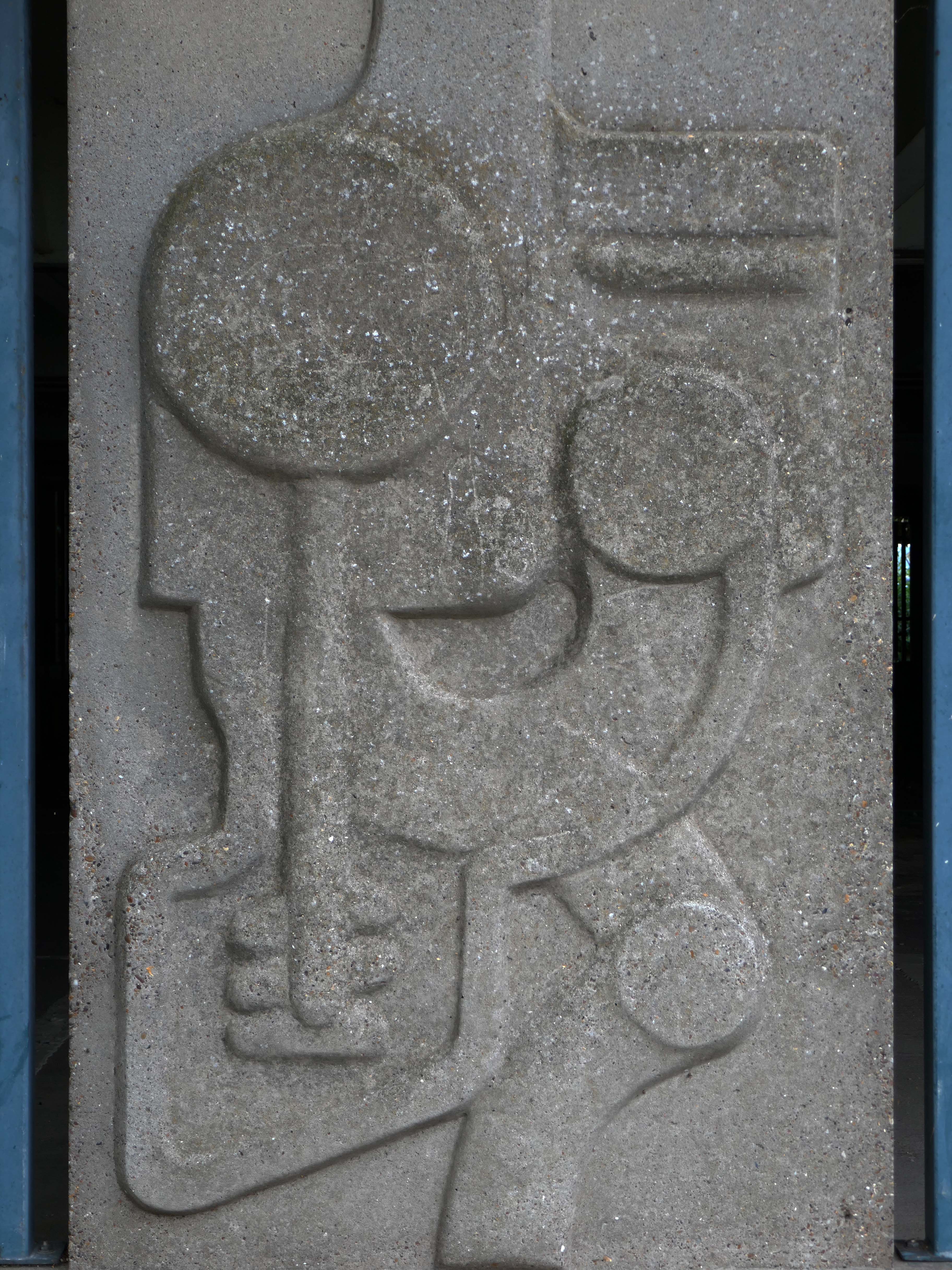
But what of the unique concrete relief panels, you may ask?

The four abstract concrete reliefs depict parts of a car, which were inspired by drawings in the handbook of the artist’s Austin Cambridge estate car, and were installed when the building was constructed.

Designed in the 1960s by artist and sculptor, Harold Gosney, having been asked to carry out the car park commission by the architects, Nicholson and Rushton.

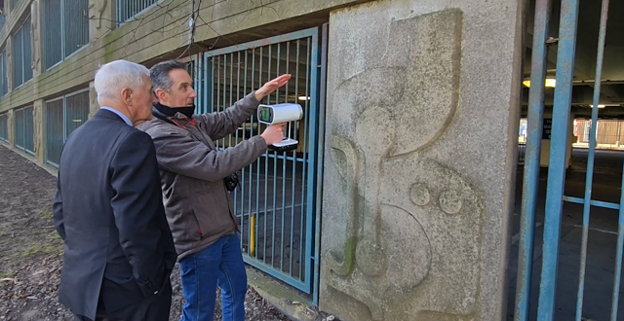
These panels were cast in situ, with metal bars running through them, which were integral to the car park structure, which is likely to make removal of the artwork incredibly difficult.

NE Lincs

Last month, it was confirmed conservationists from the University of Lincoln had 3D scanned the sculptures to create digital 3D models to preserve them.

Grimsby Telegraph 

Photo – BBC

Which is all well and good, but will they ever be really remade and reinstated anywhere?

Only time will tell.

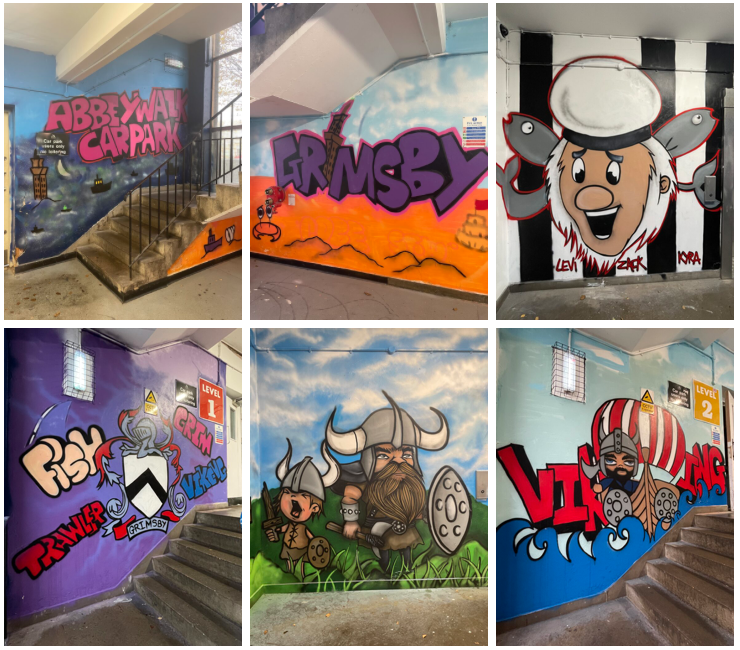
In 2023 the car park stairwell was transformed by young people from the local area, as part of a project by North East Lincolnshire Council and local artist Lynsey Powles, to try to tackle graffiti and anti-social behaviour.

Abbey Walk multistorey car park in Grimsby has been the site of a number of incidents of anti-social behaviour and graffiti in recent years.

NE Lincs

The demolition and subsequent construction will cost between £1.5m and £2.5m, according to the Local Democracy Reporting Service.

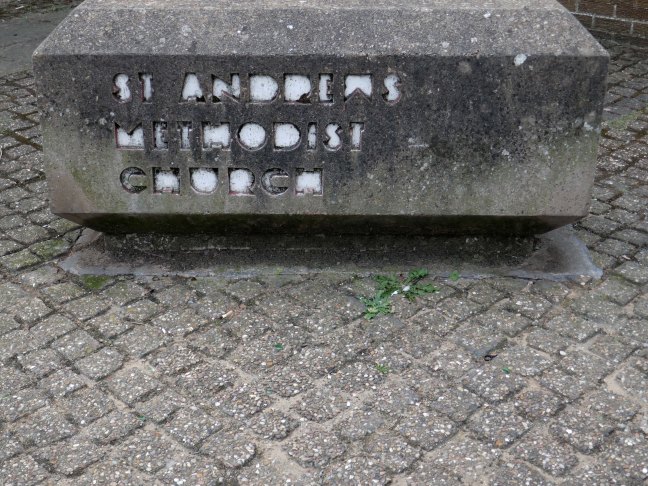
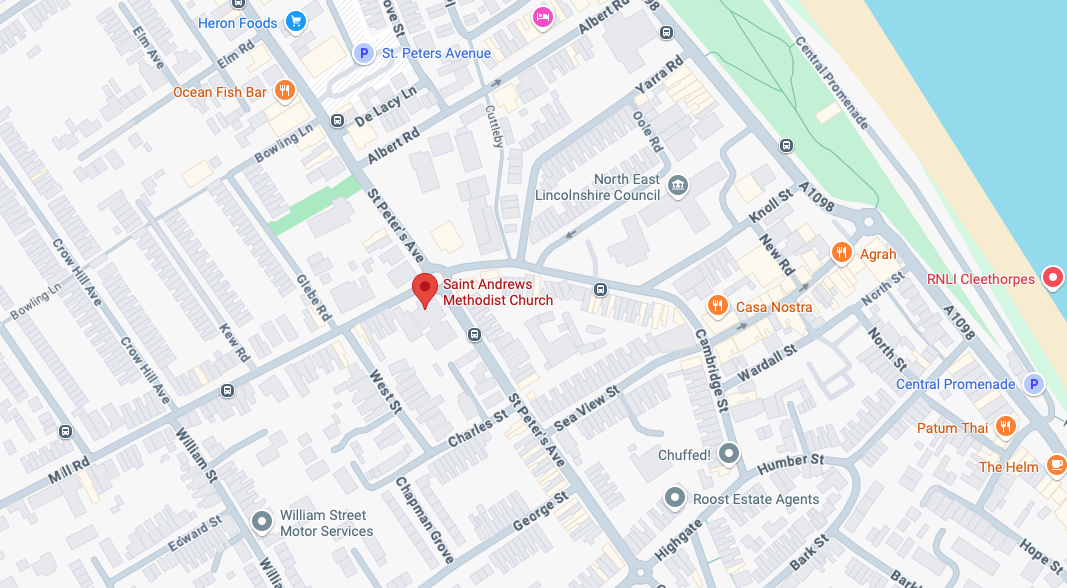
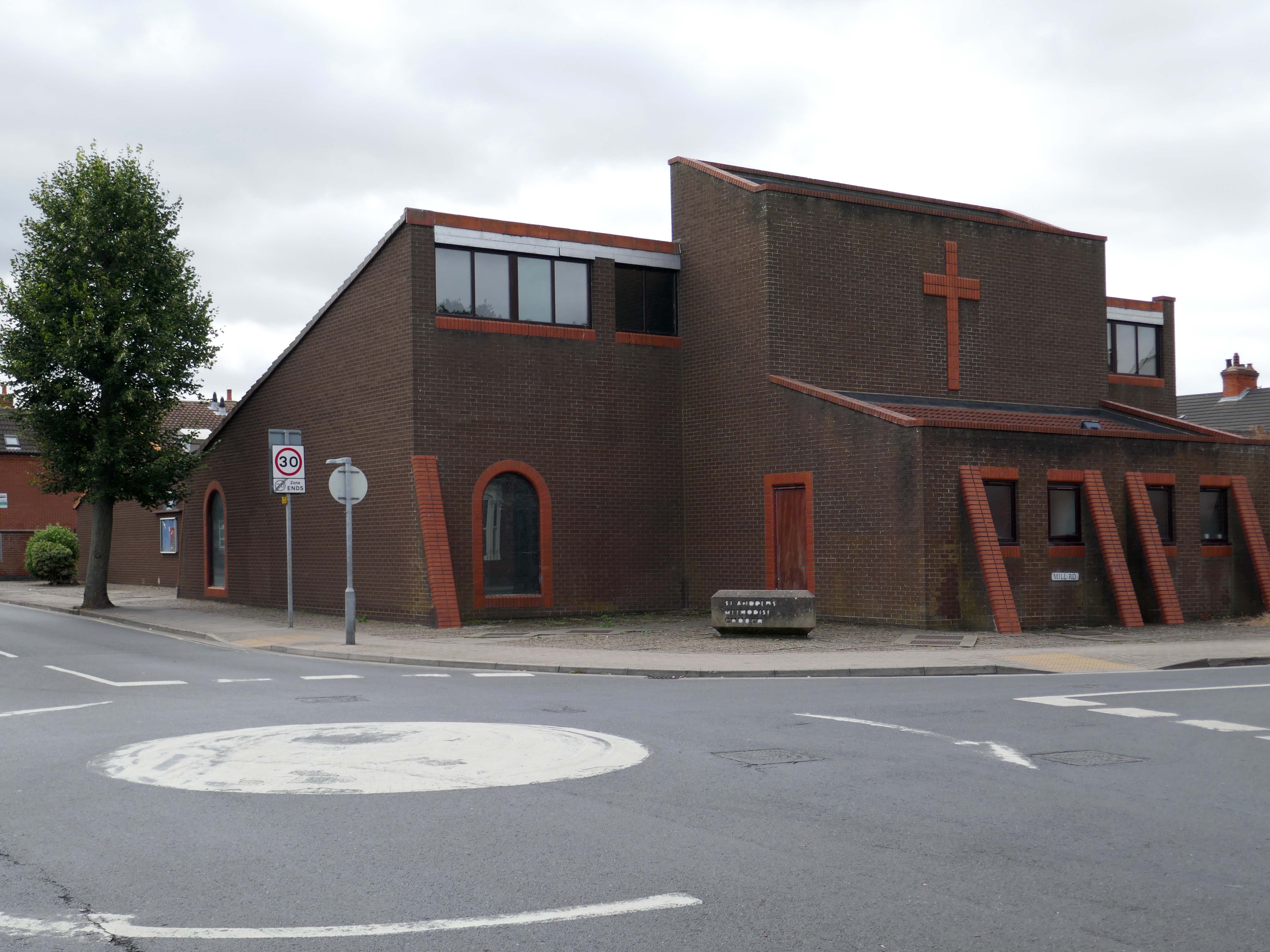
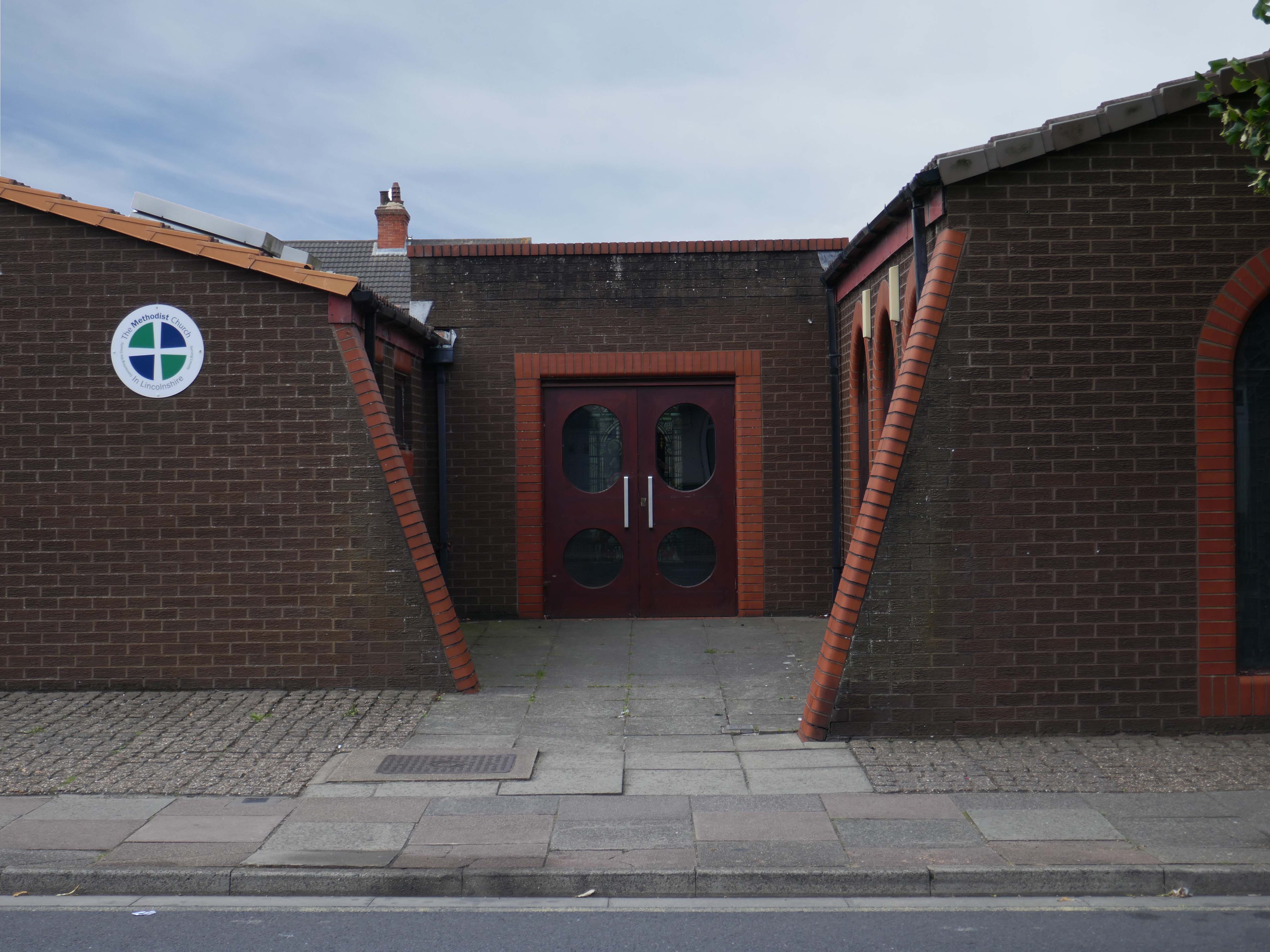
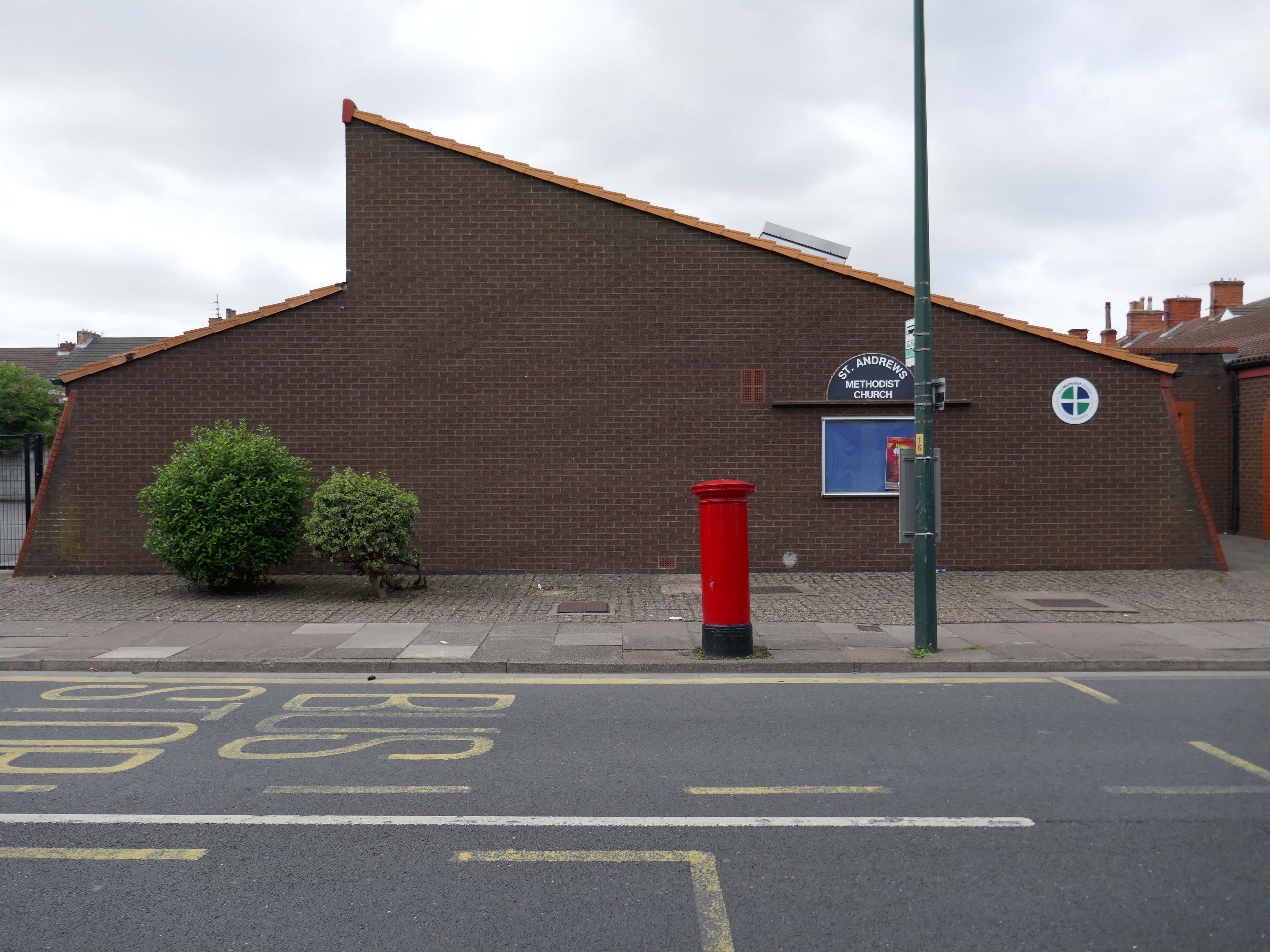
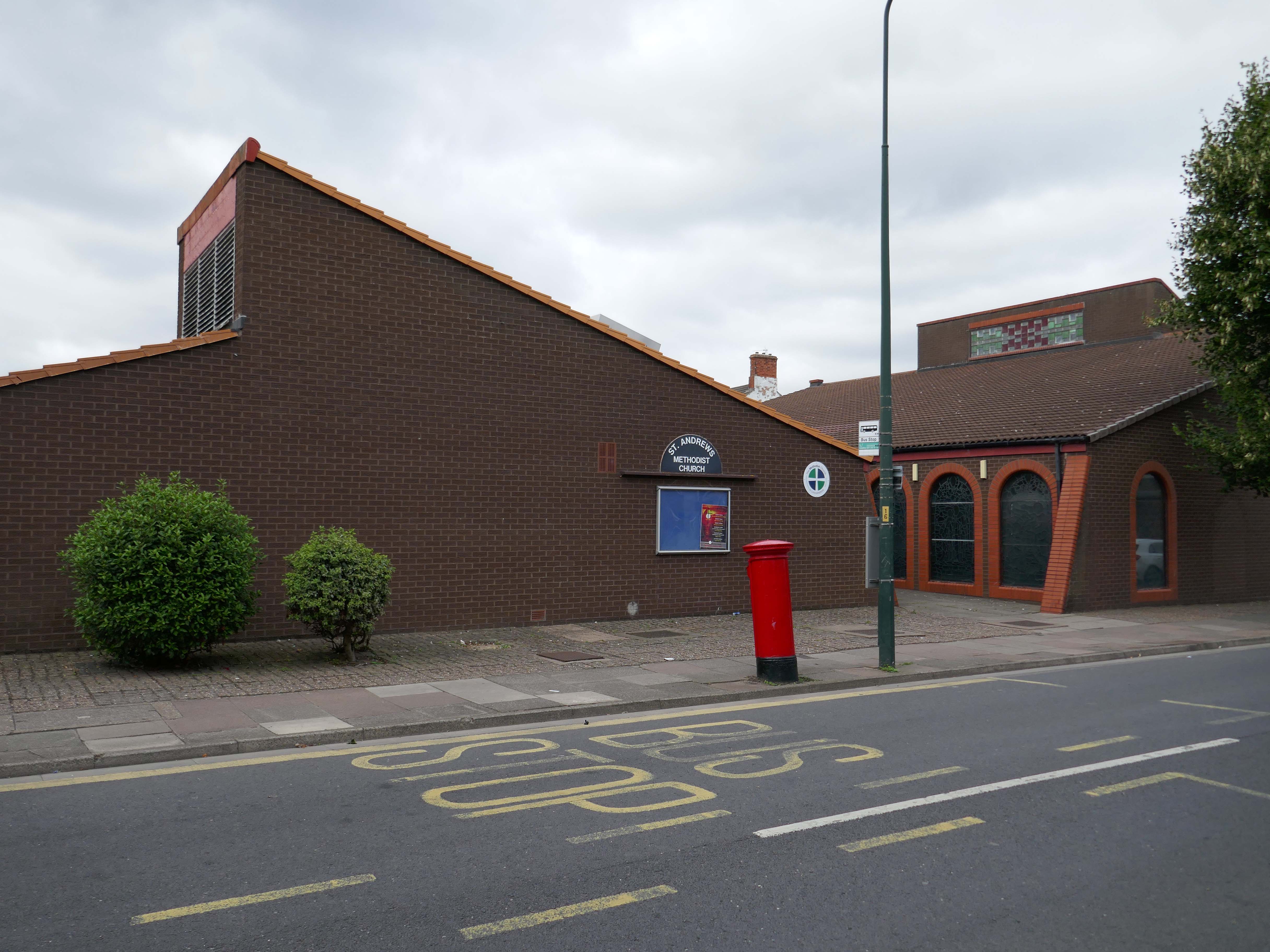
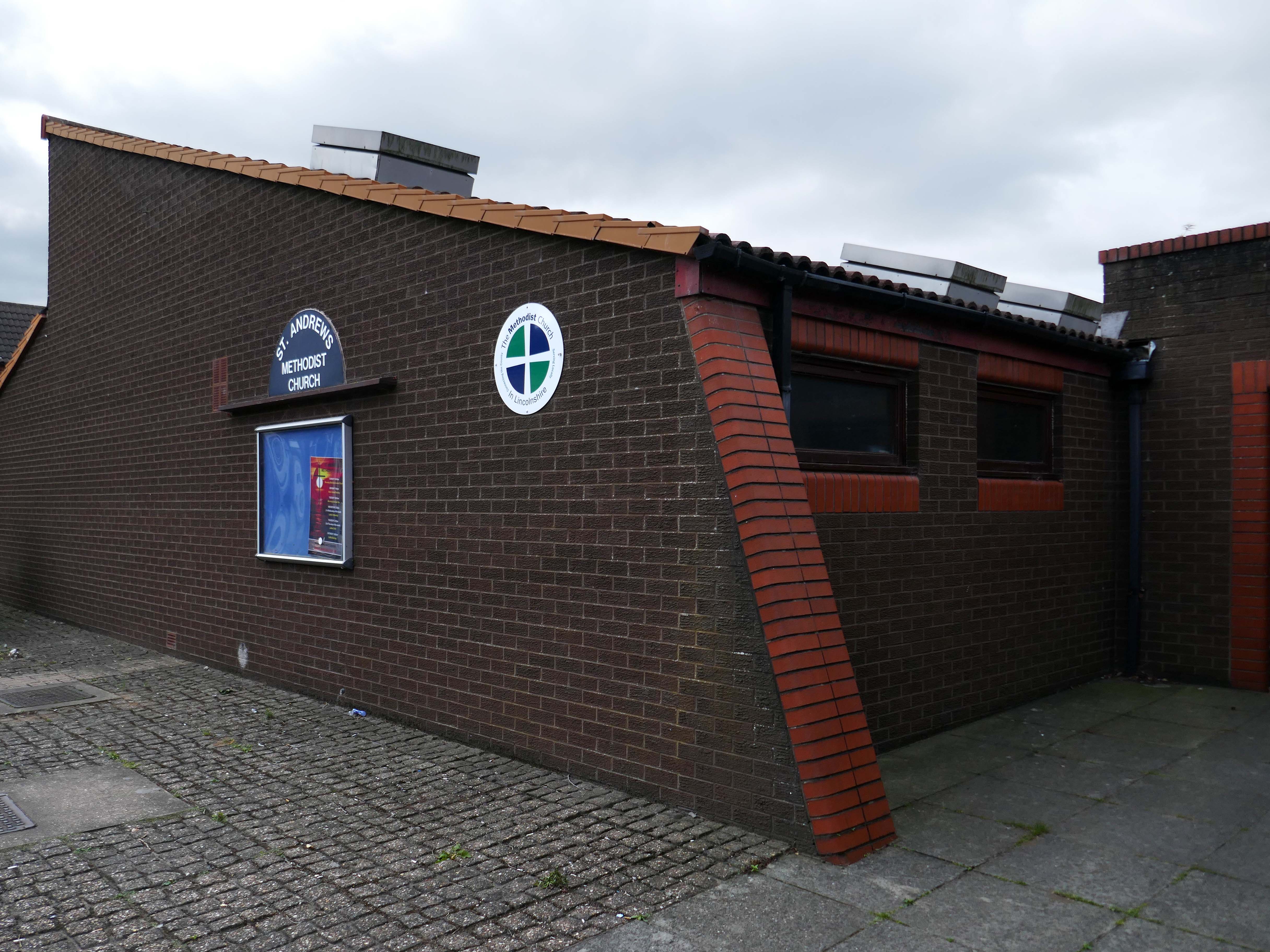
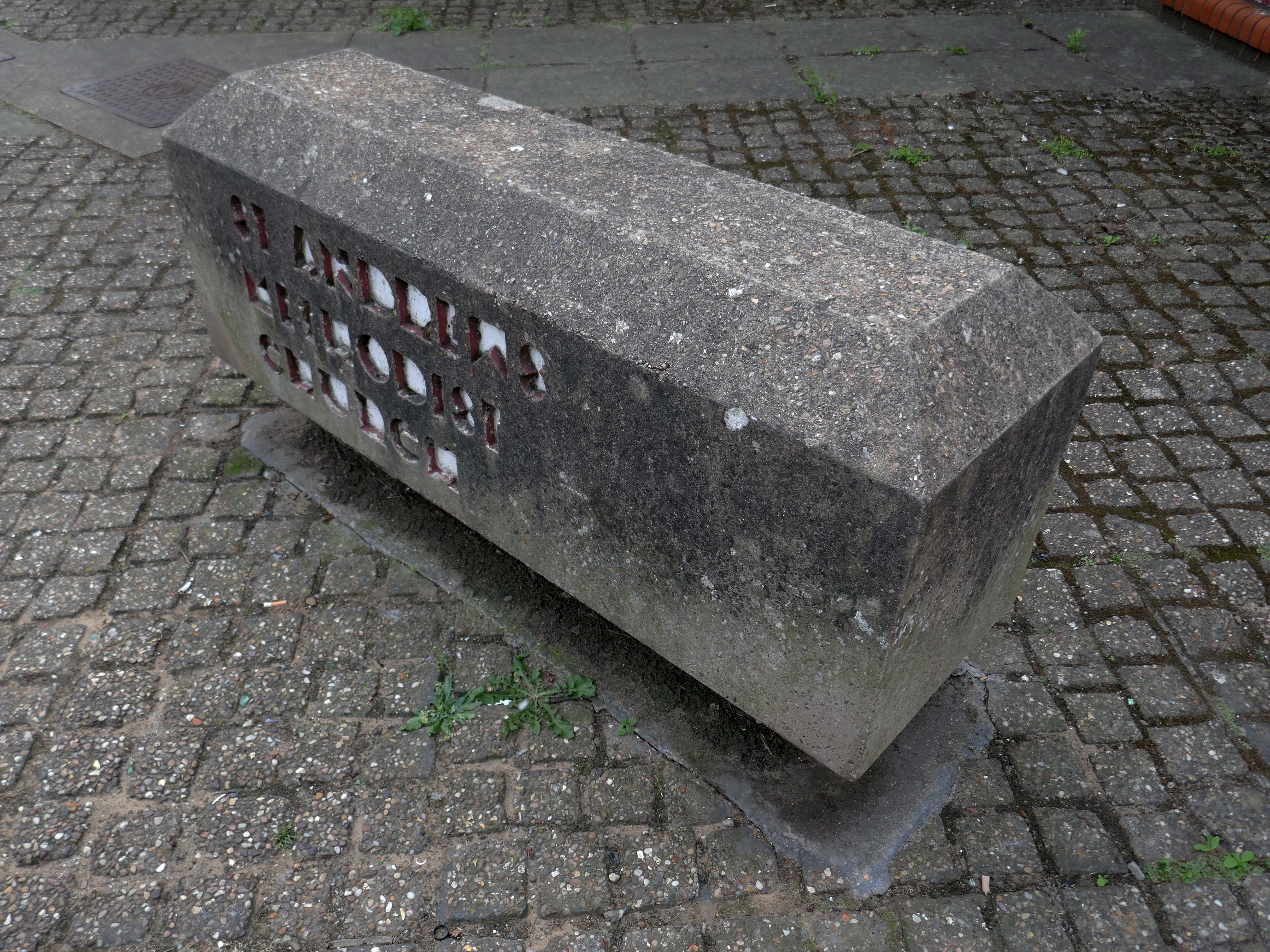
St Andrew’s Methodist Church – Cleethorpes

1 Mill Rd Cleethorpes DN35 8HT

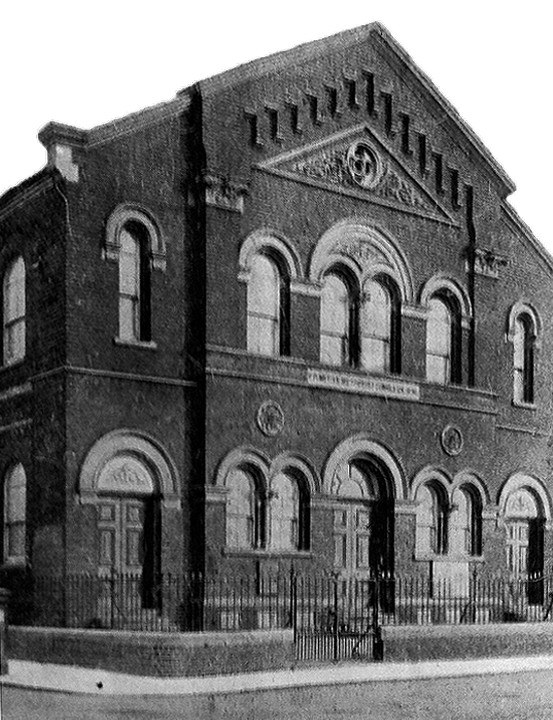
The current St Andrews Methodist church in Cleethorpes occupies the same site as the previous Primitive Methodist chapels.

The first chapel was built in 1857; it was replaced by a new chapel in 1877. This chapel was replaced by St Andrews in 1979.

My Primitive Methodist

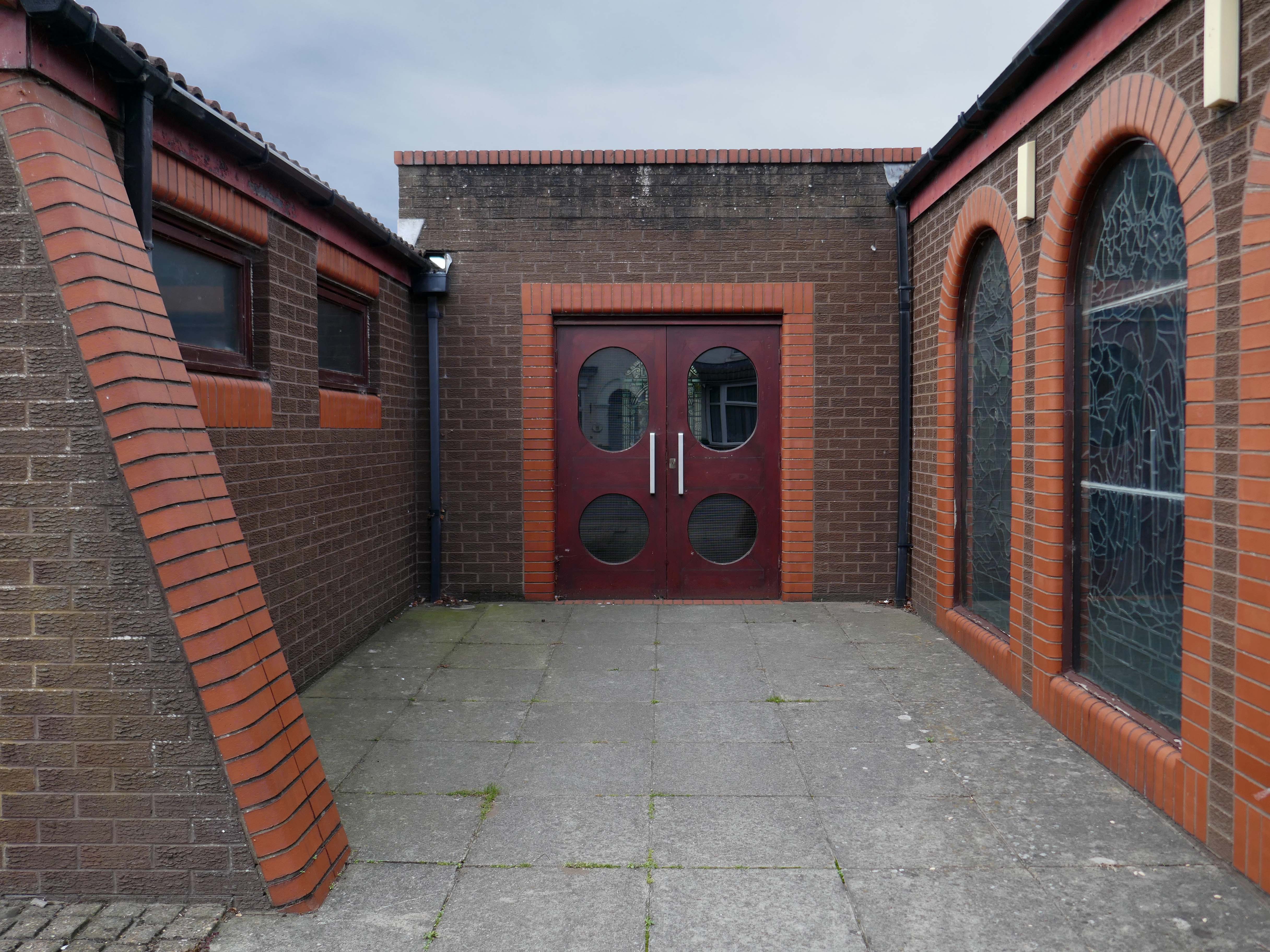
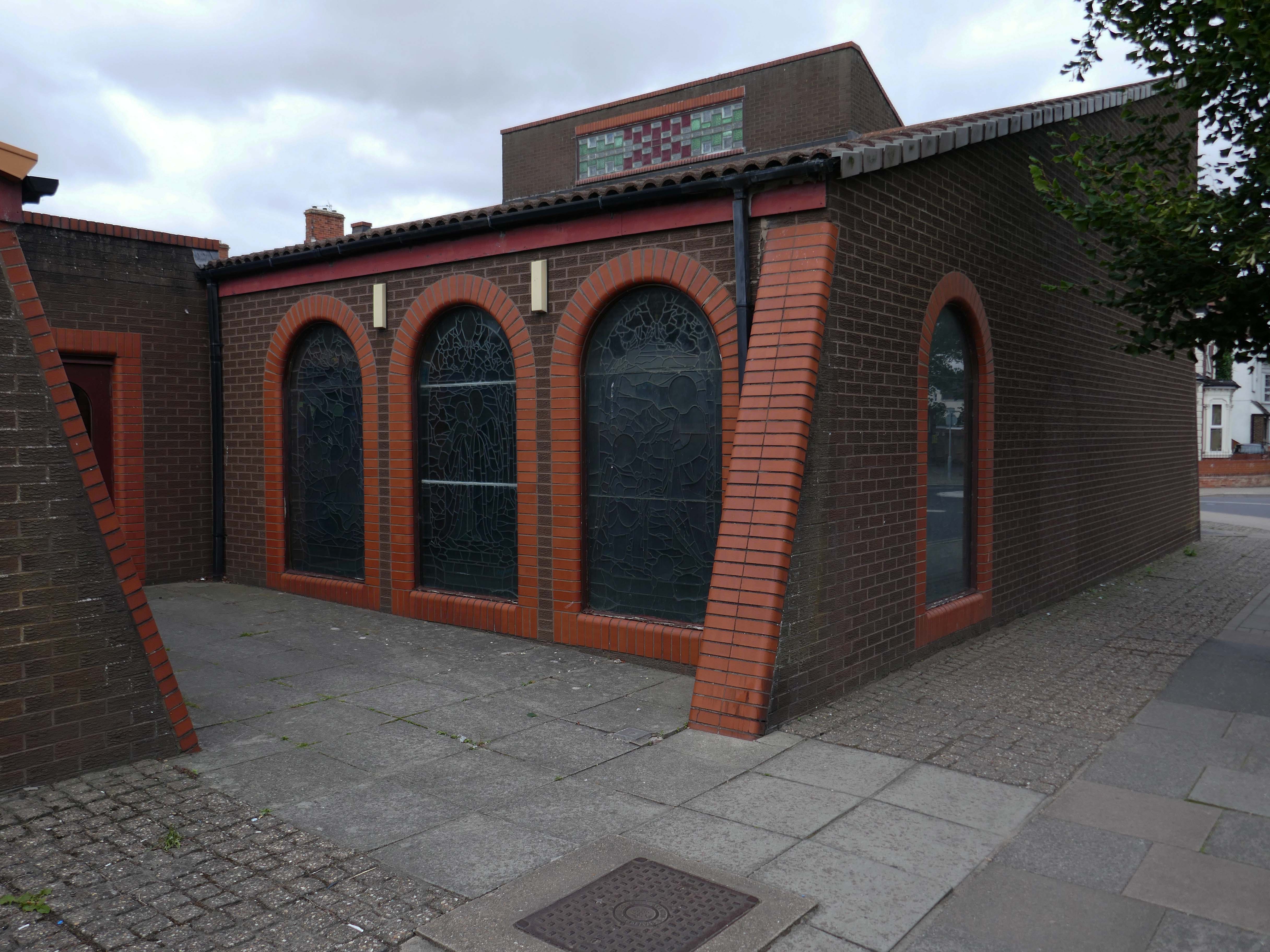
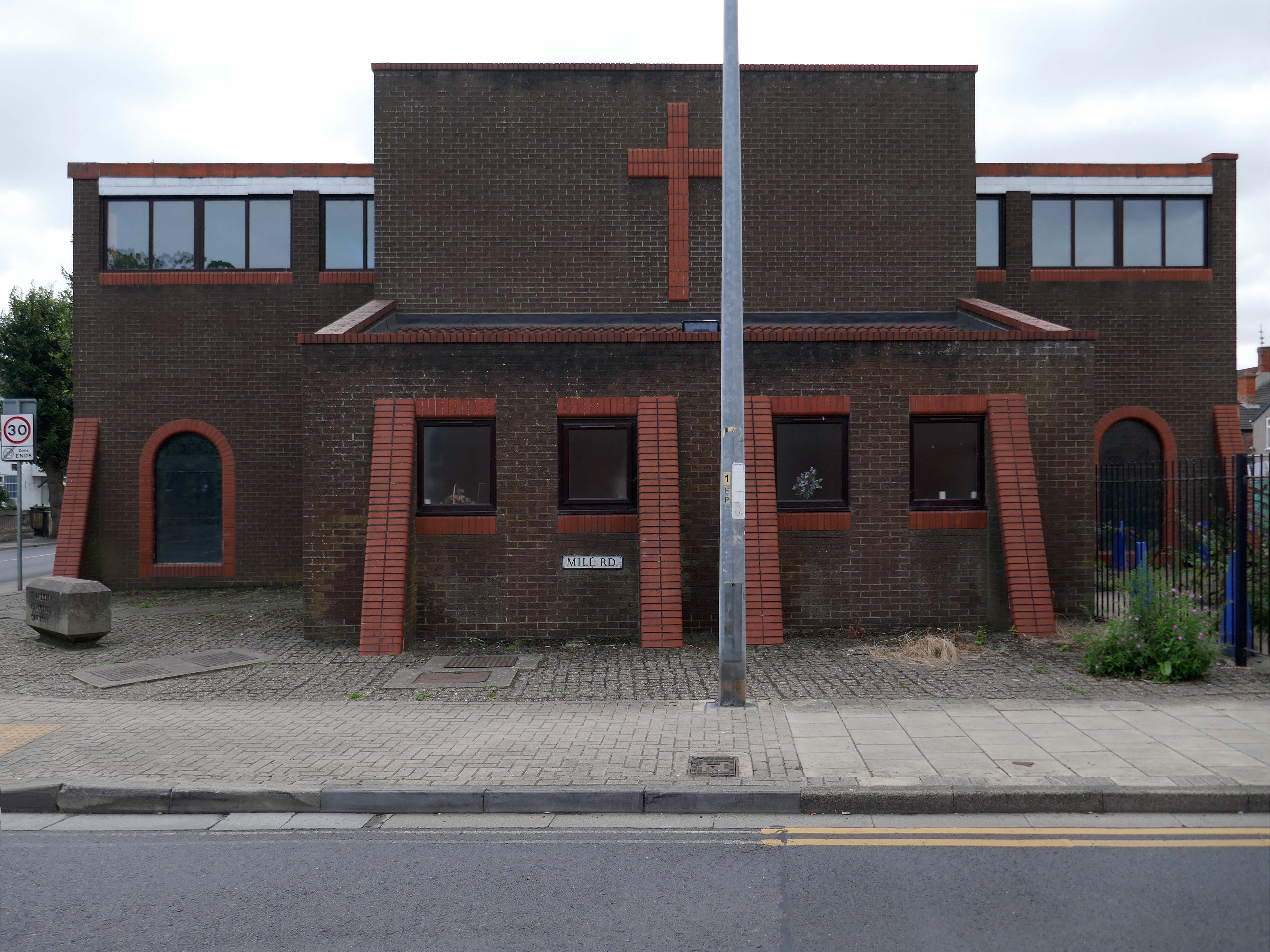
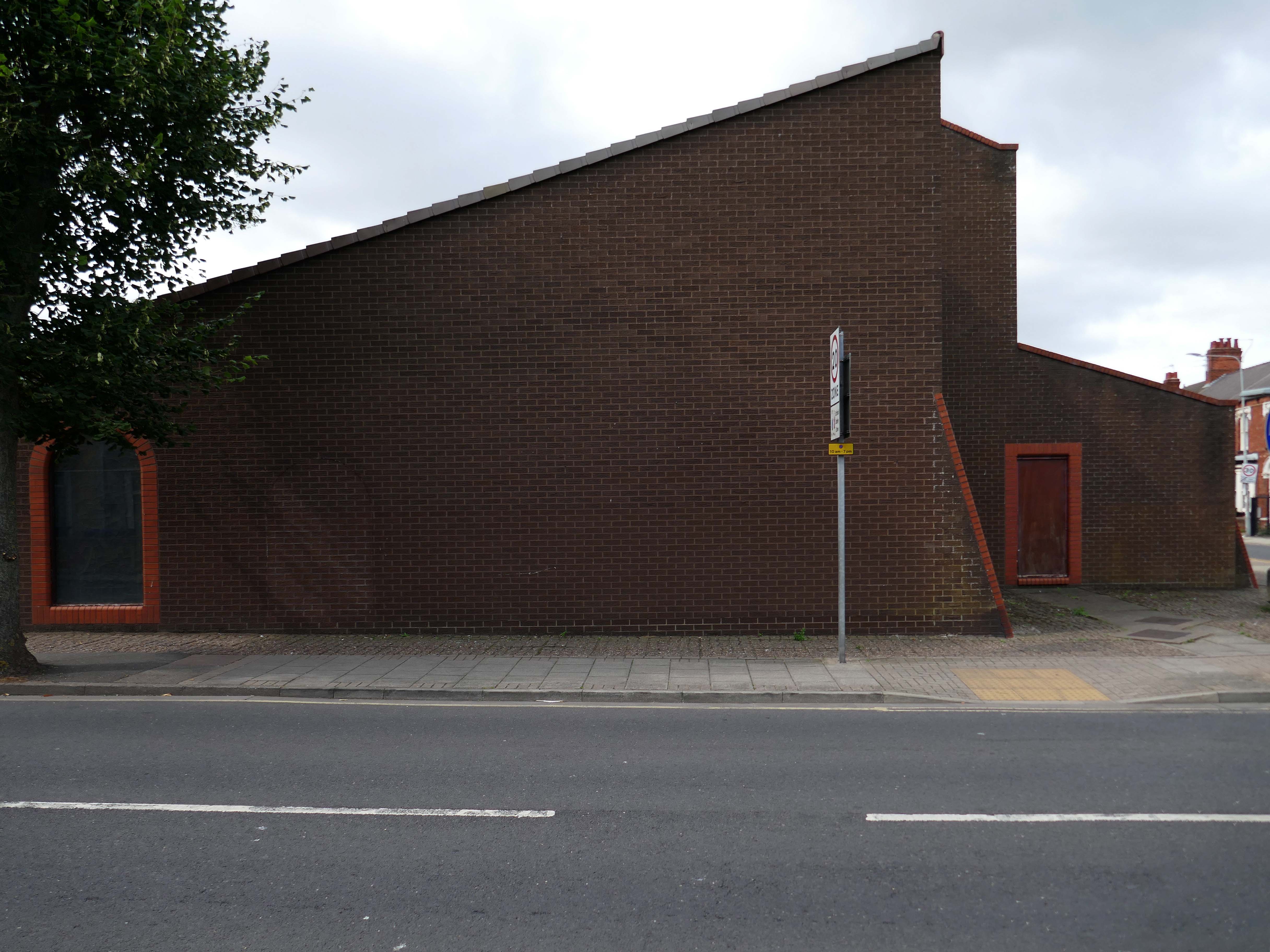
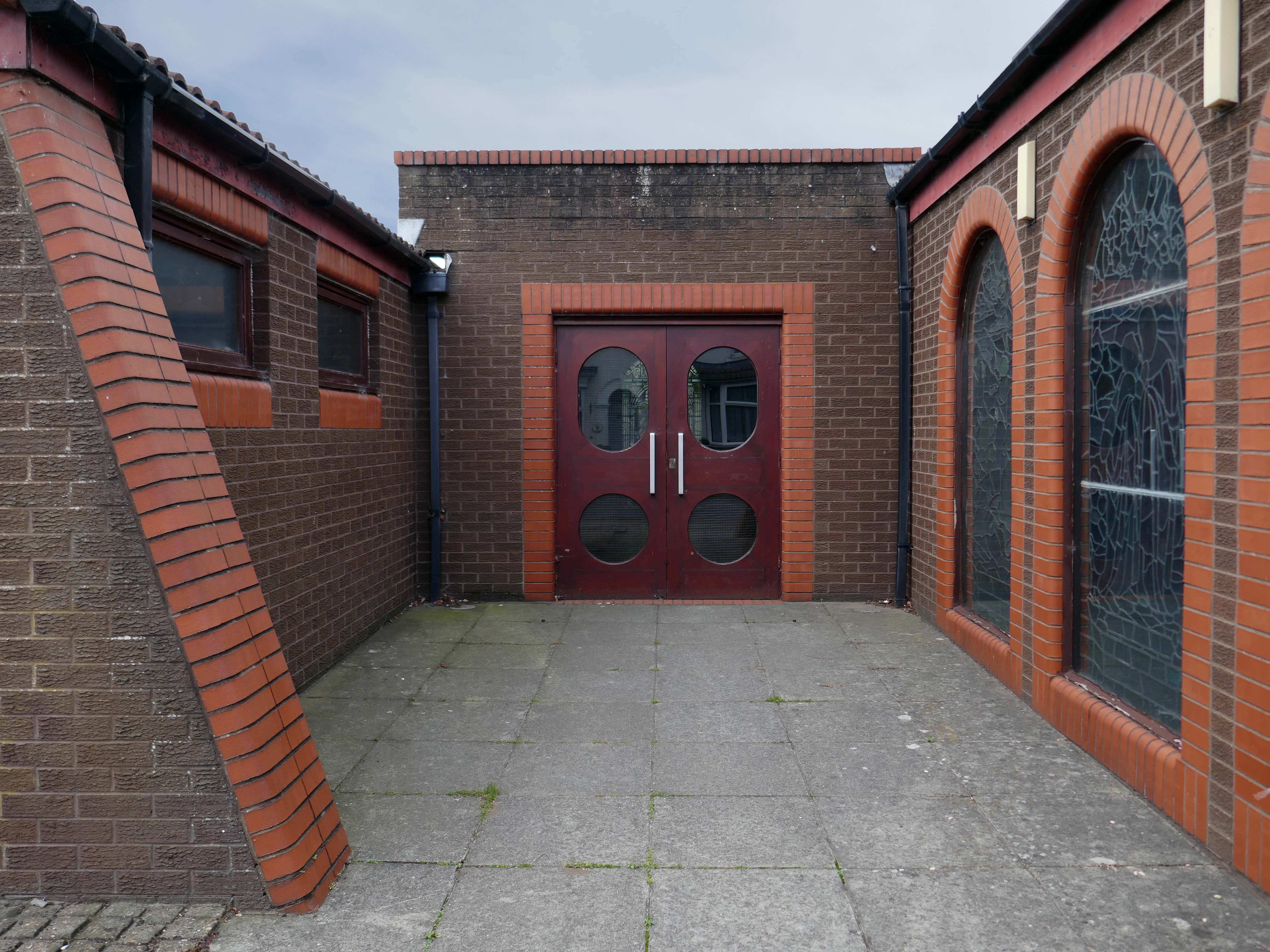
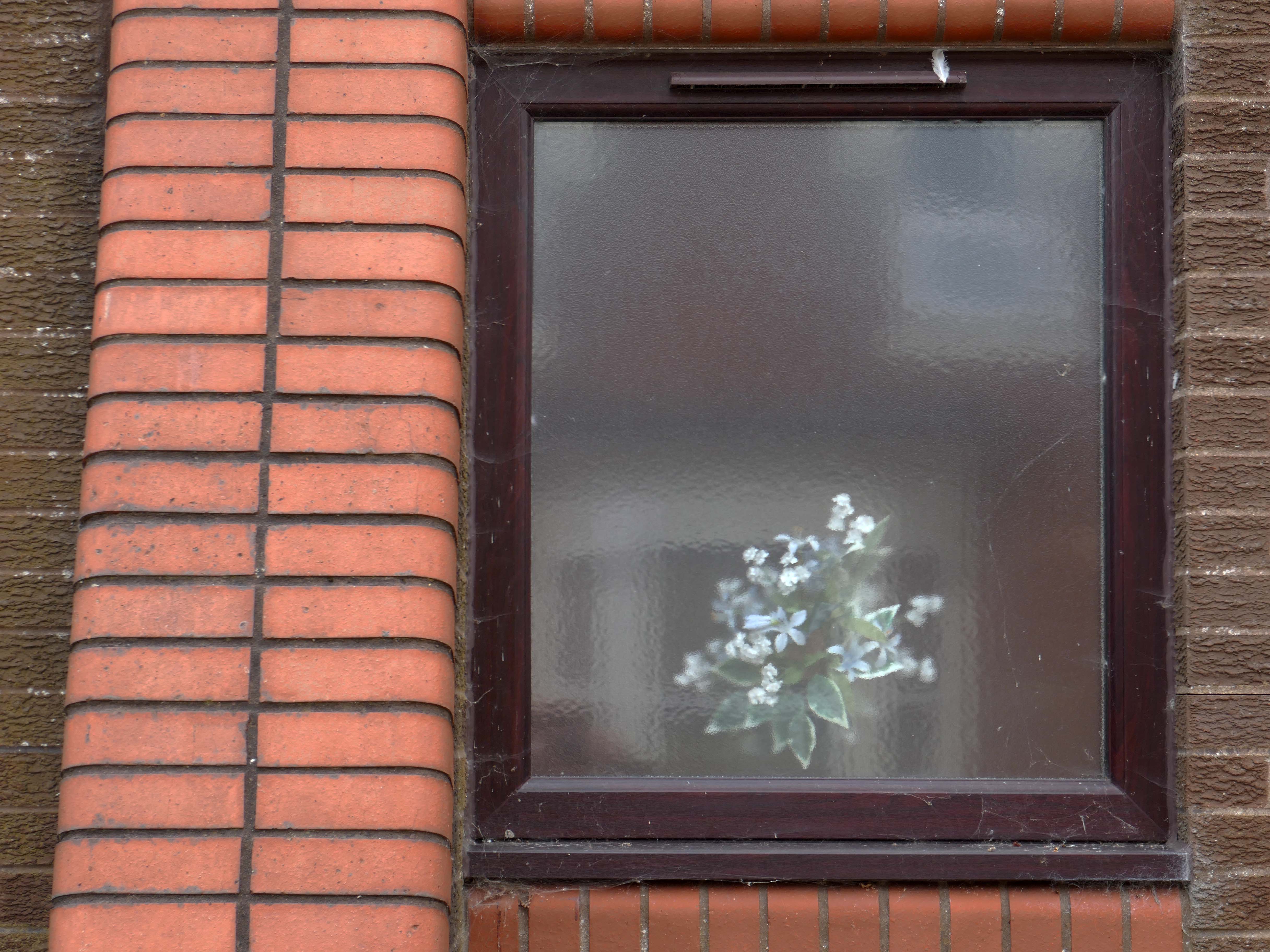
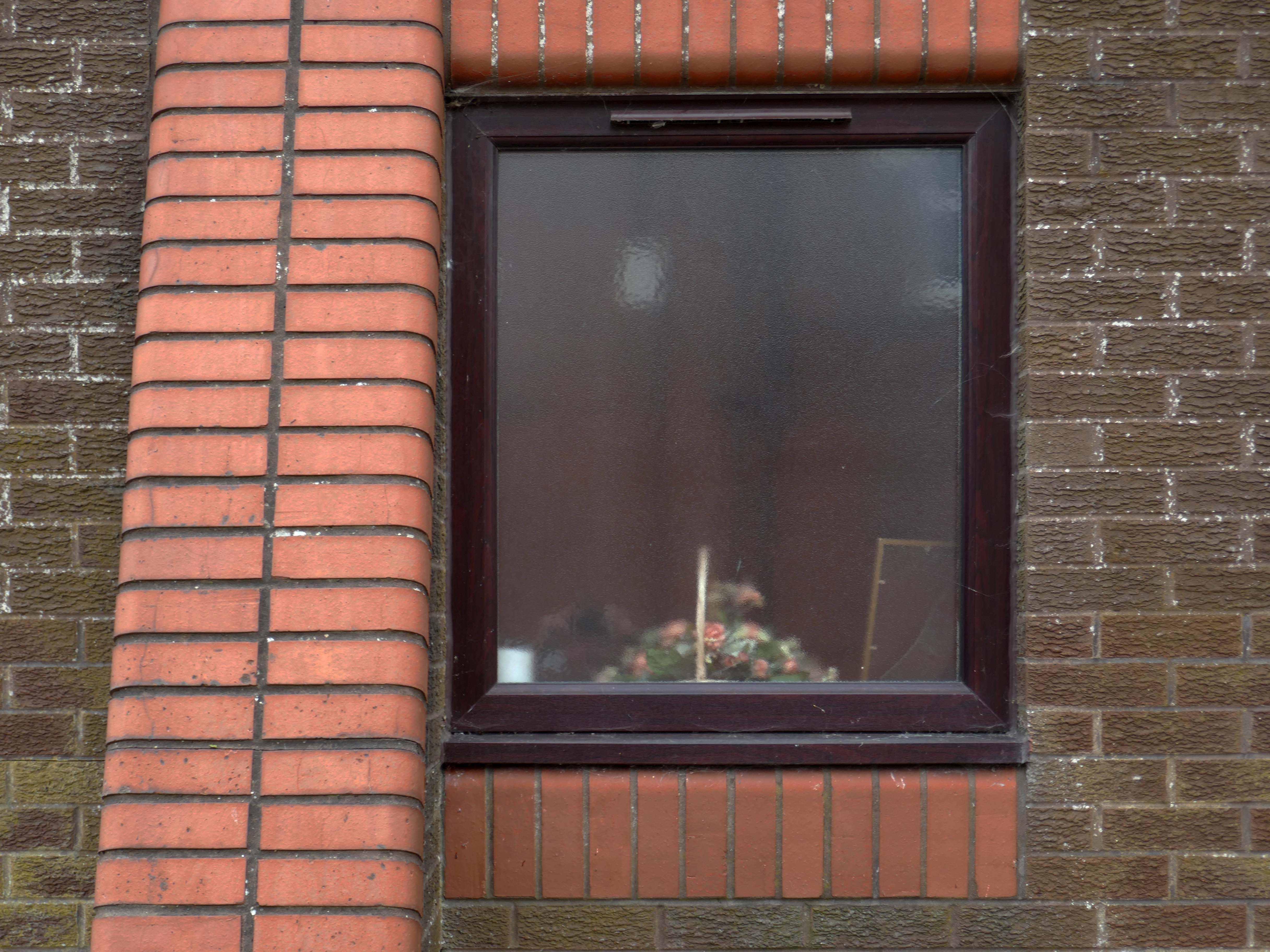
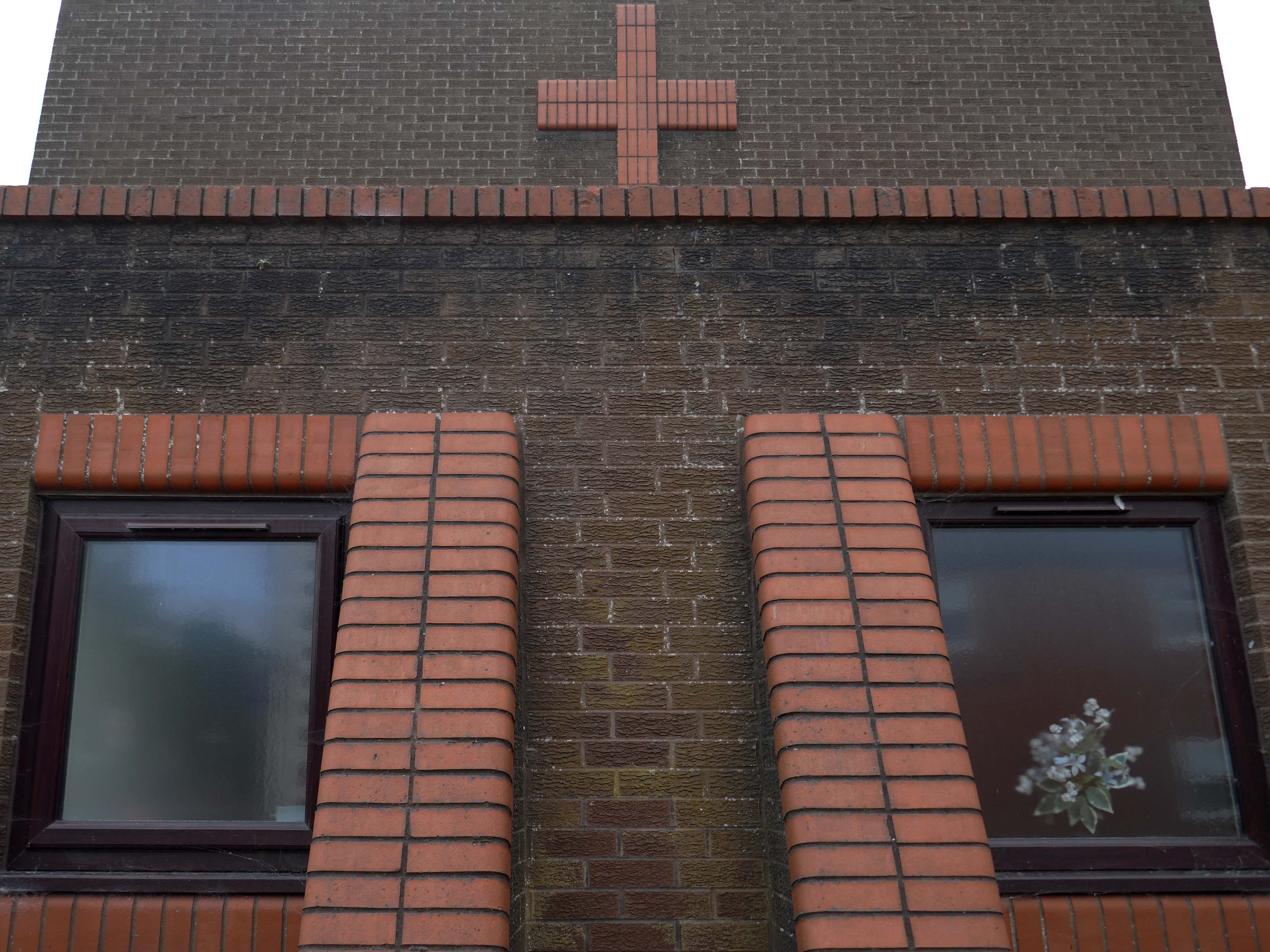
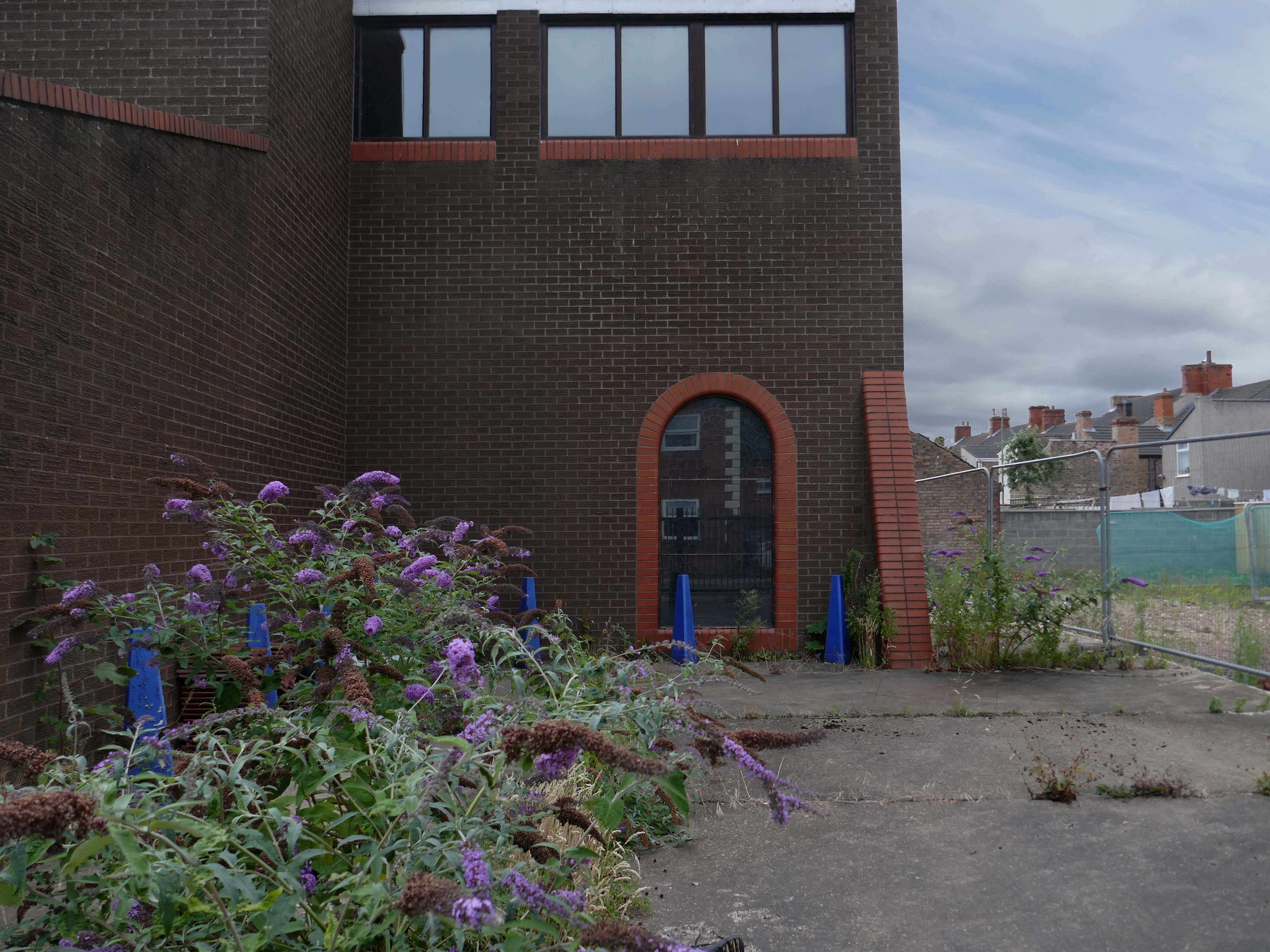
The current church occupies this corner site by the mini roundabout – a very particular architectural style, an angular brick low level ziggurat, with buttresses to the side elevation and entrance. There are glazed brick details around the buttresses, windows and doors.

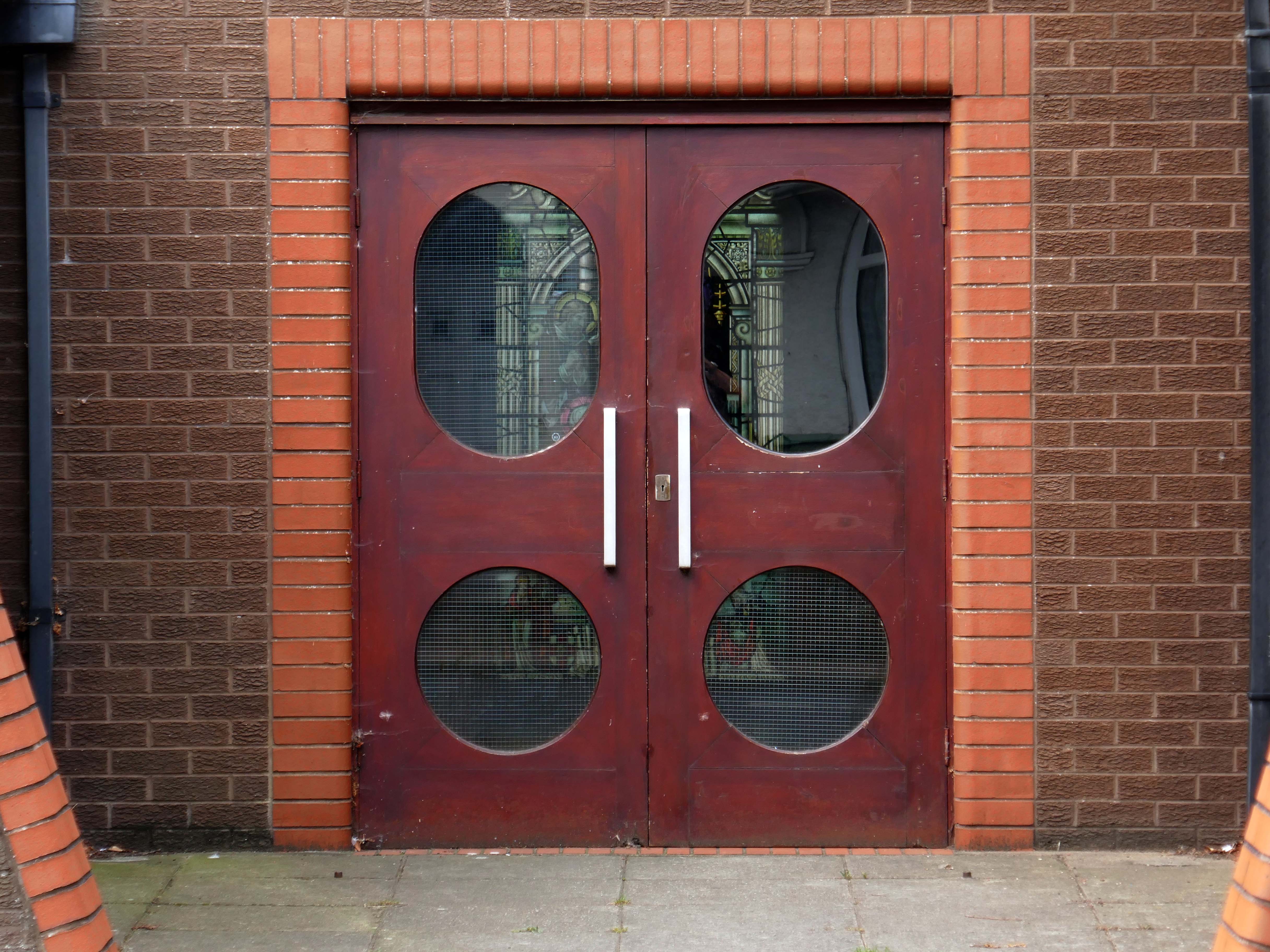
It has a central entrance which divides the main body of the chapel from the function room.

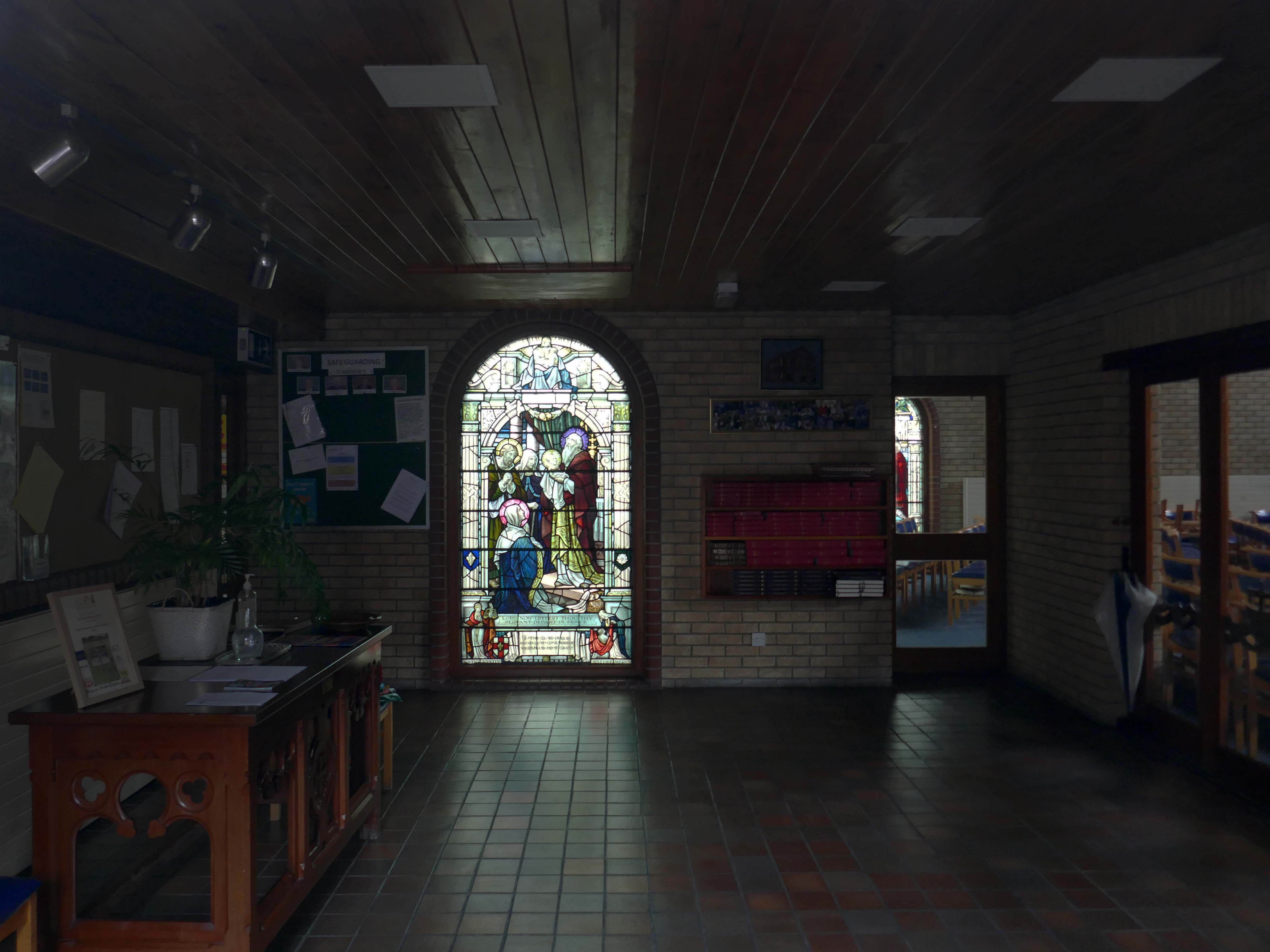
There are Victorian stained glass panels, which may be from the previous chapel.

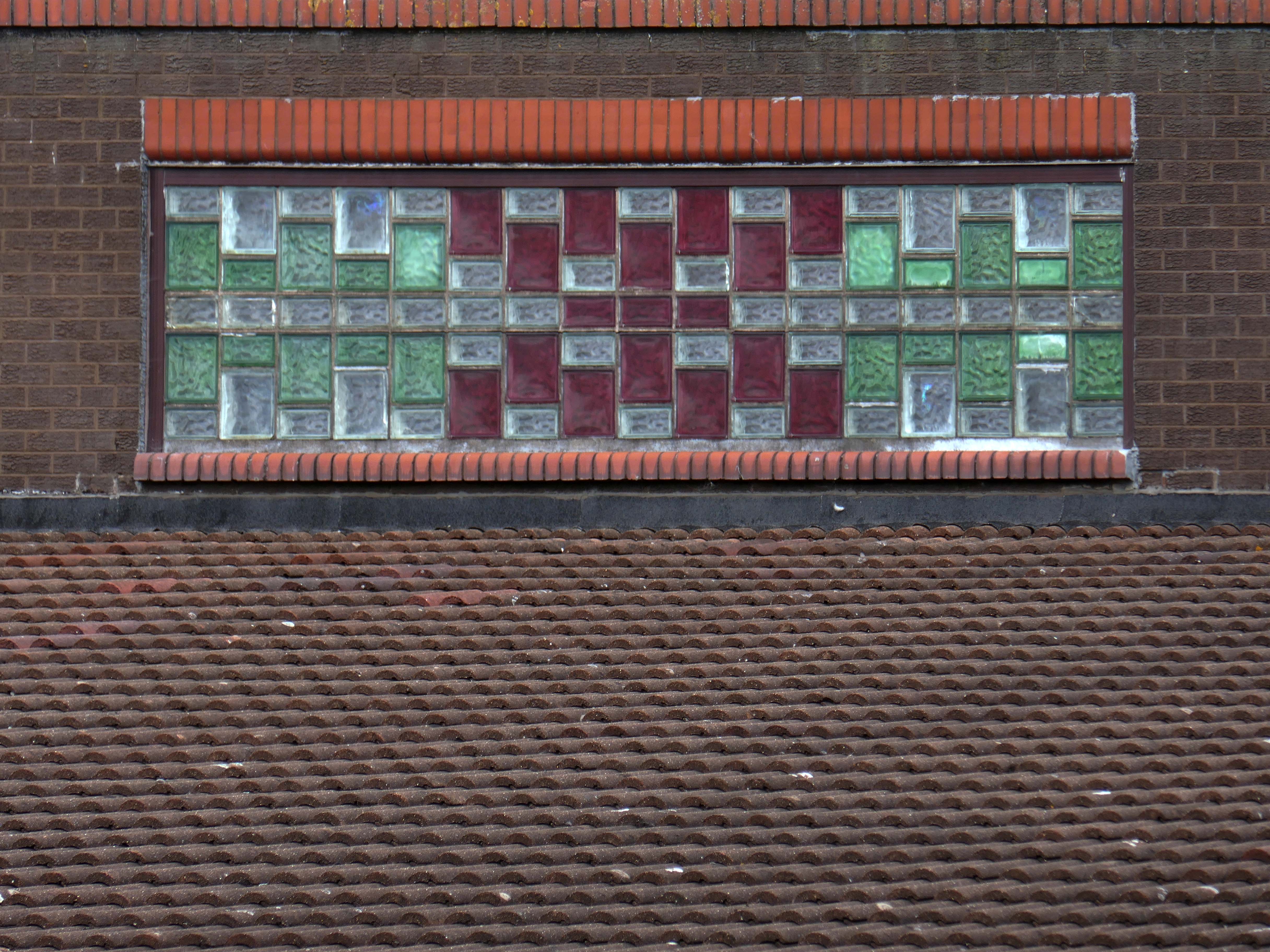
Below the pitched roof there is a modern inset decorative glass panel.

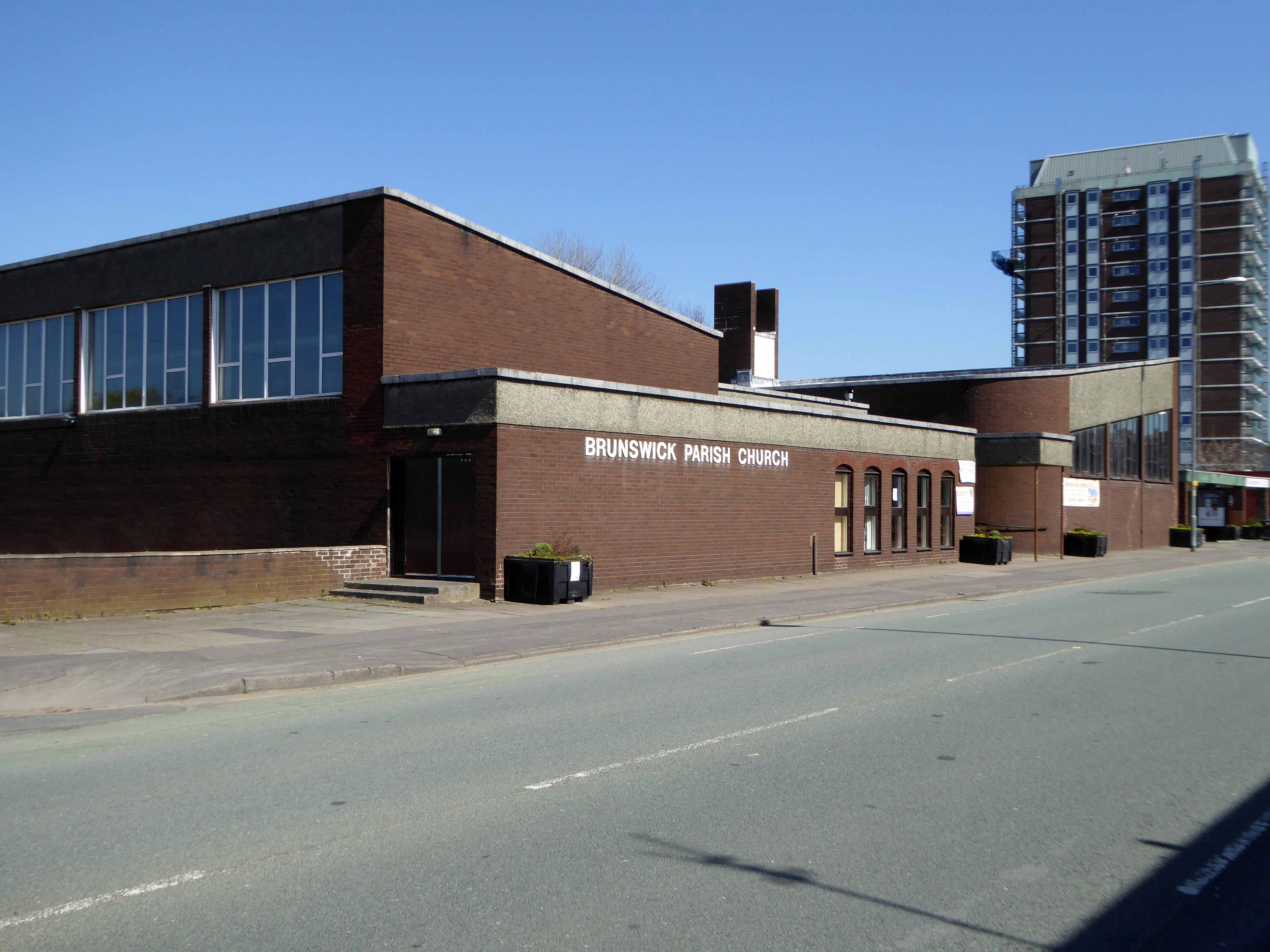
There is something in its robust brick volumes which recalls the Brunswick Parish Church.

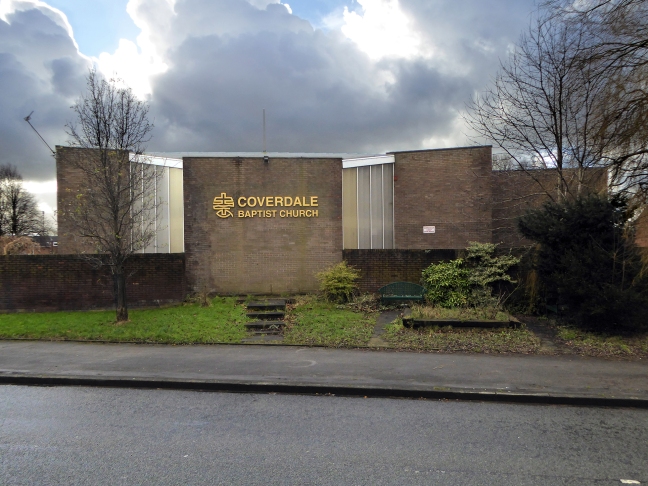
Also the Coverdale Baptist Church.

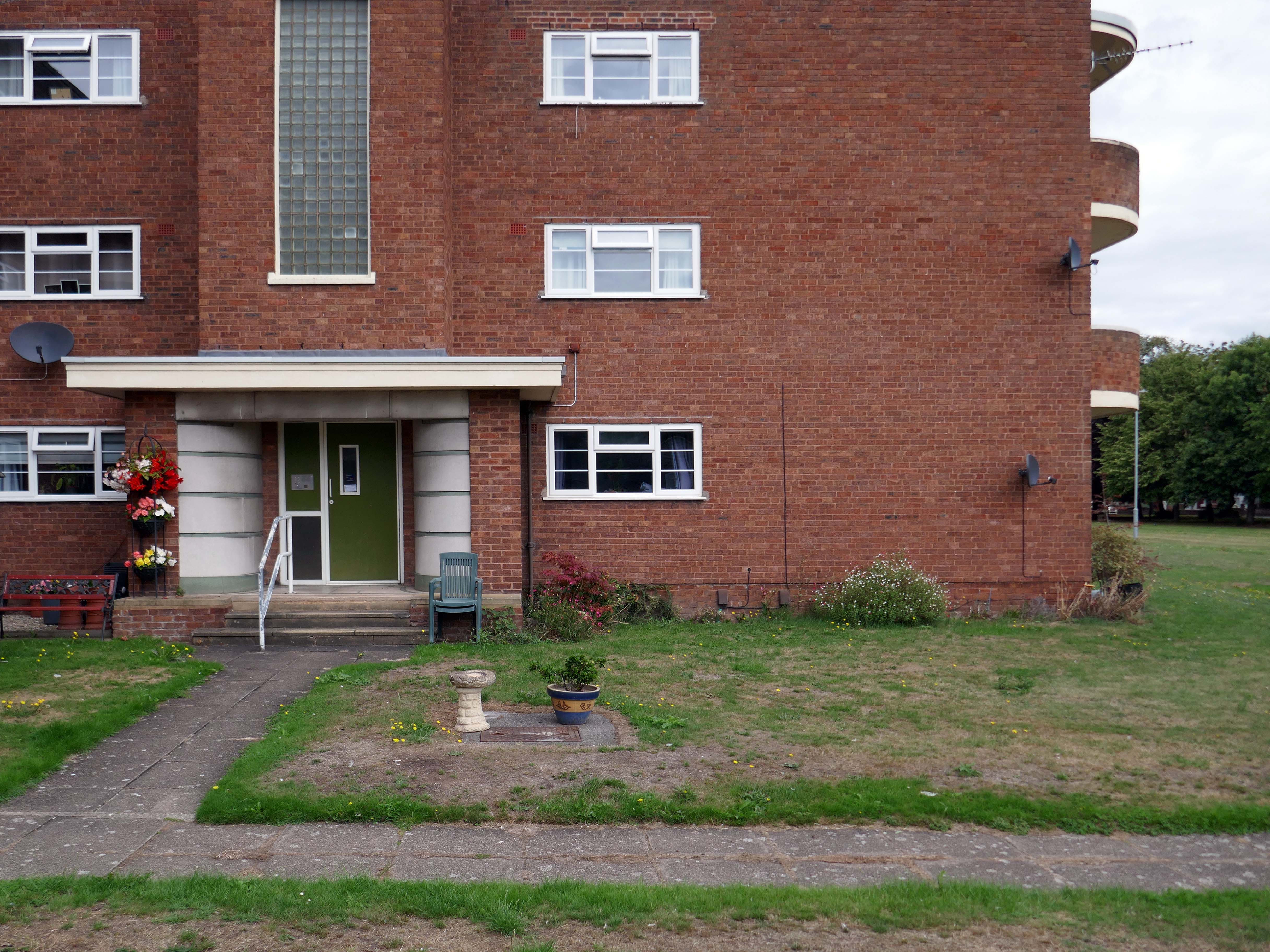
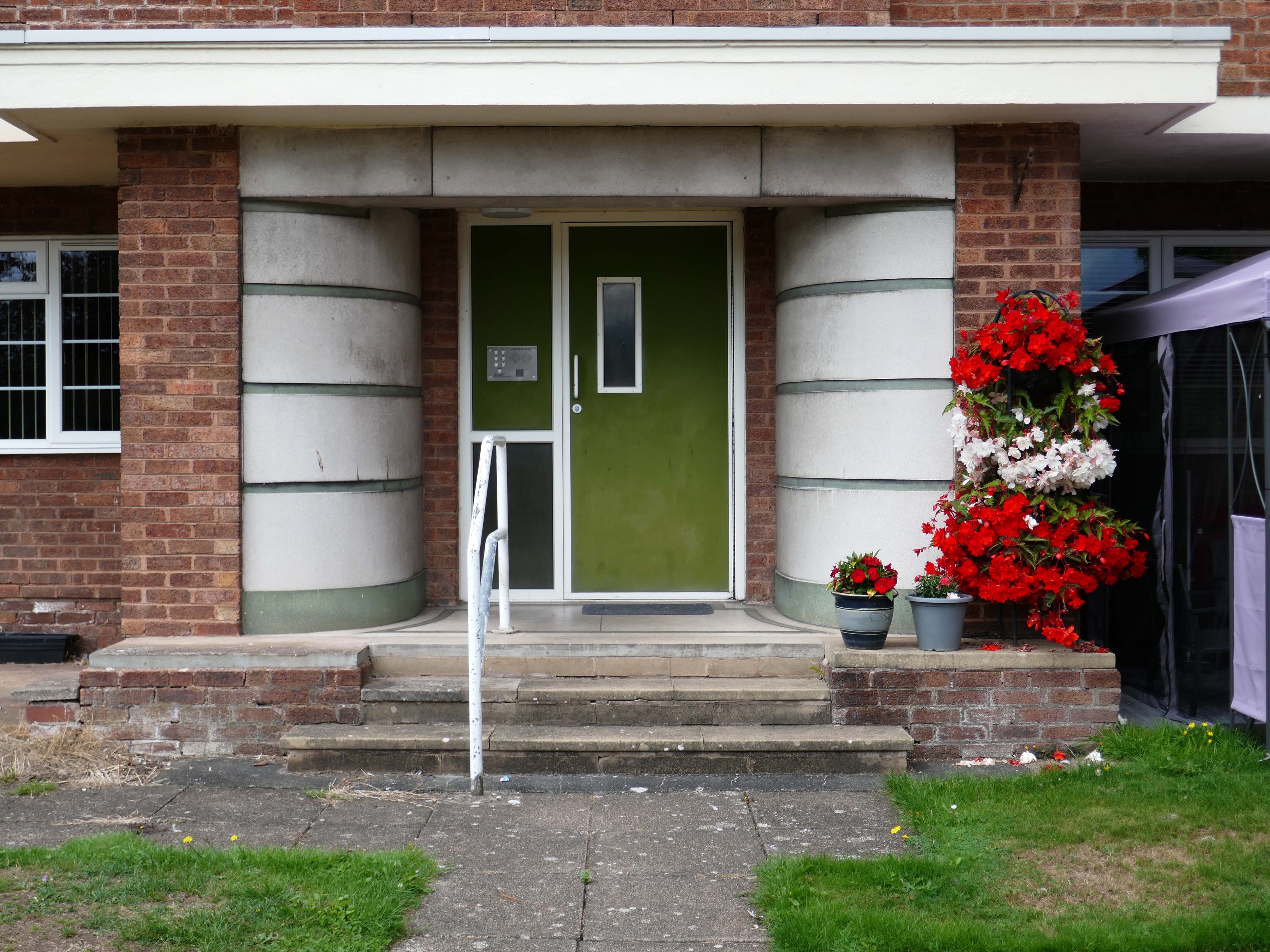
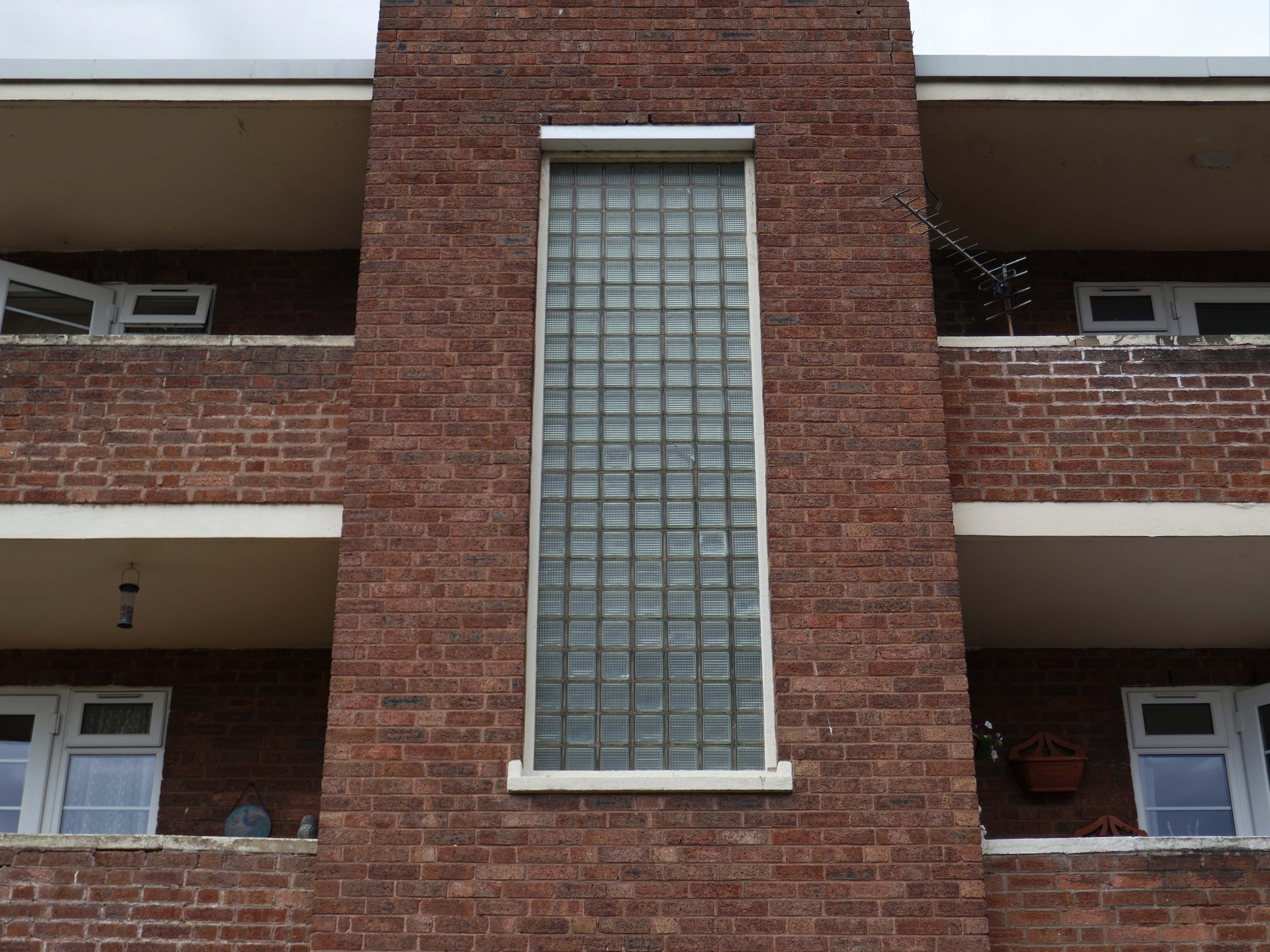
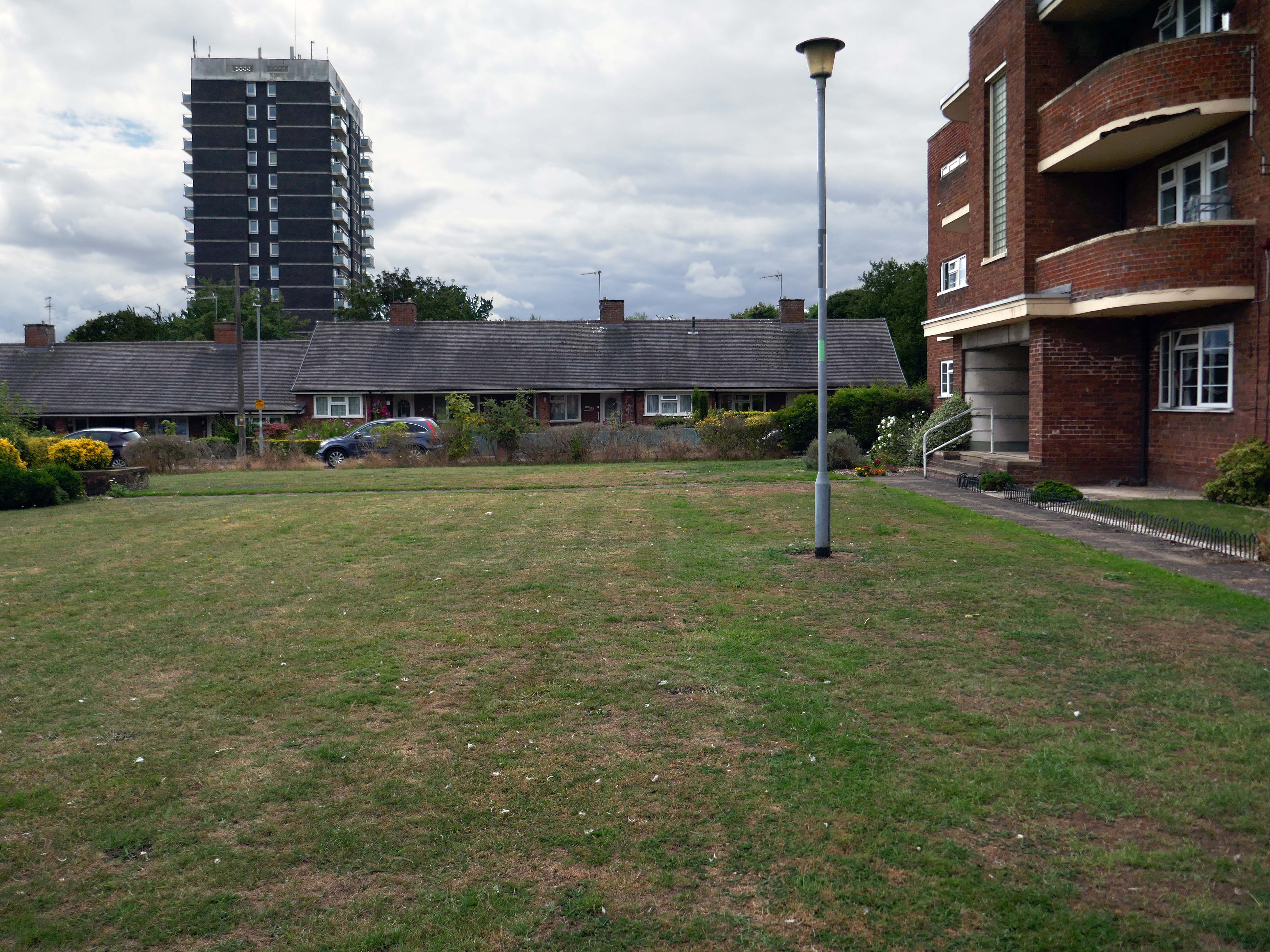
Corporation Street Flats – Stafford

Coniston, Windemere and Rydal were among the first council homes to be built in Stafford, between 1951-52, under the direction of County Architect CM Coombes.

The flats were built as a result of The Housing – Financial and Miscellaneous Provisions Act 1946, which gave subsidies to local authorities to provide social housing. The expansion of the Borough Council’s civic duties included the employment of County Architects, in this case CM Coombes FRIBA, to whom these flats are attributed.

54 flats were built in total, to a distinctly Modernist design, and their appearance and setting are very well preserved.

Conservation Area

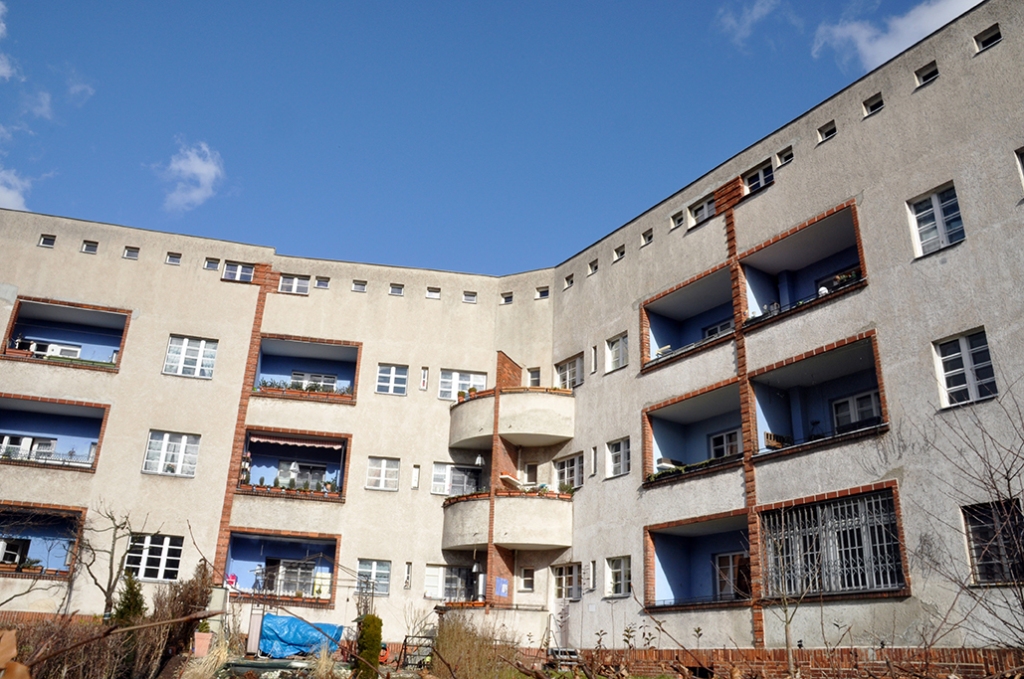
The conservation plan cites Bruno Taut’s Large Housing Estate Britz as an influence.

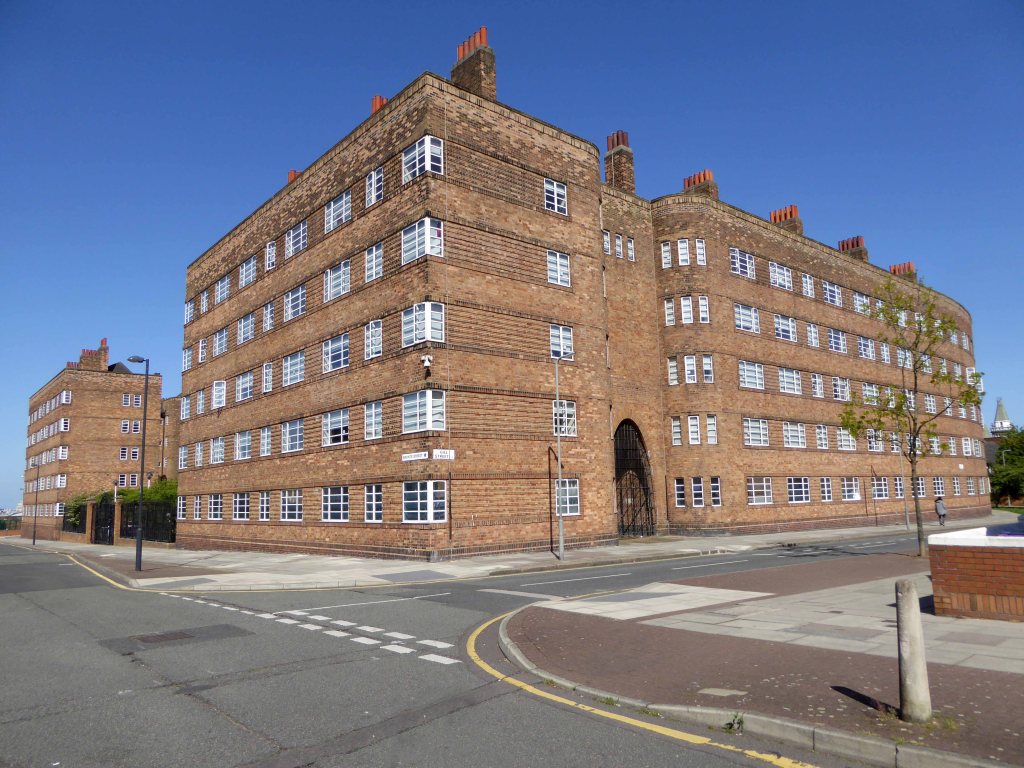
Along with St Andrew’s Gardens Liverpool, more commonly known as The Bullring.

Also the long gone Quarry Hill Flats in Leeds.

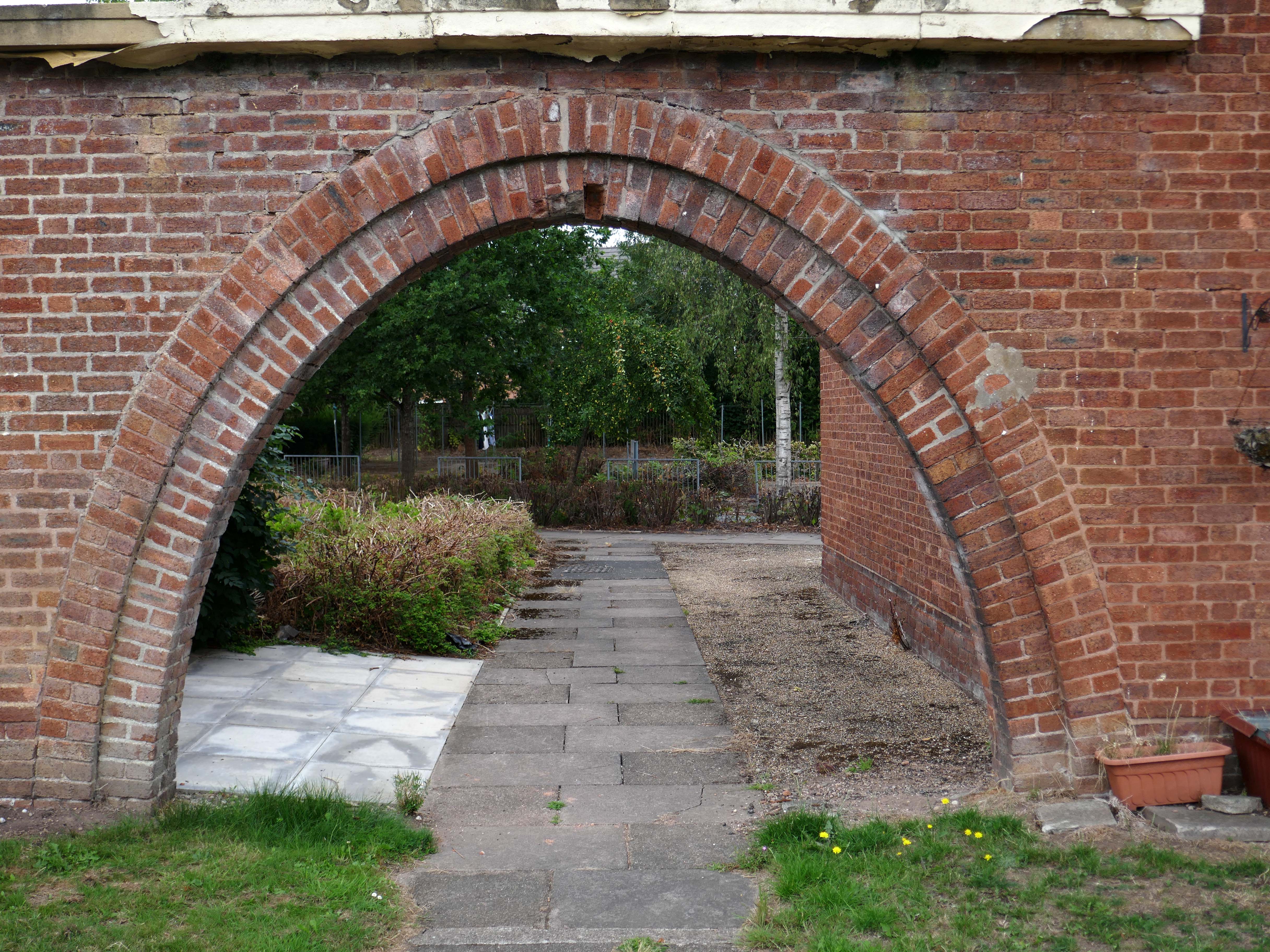
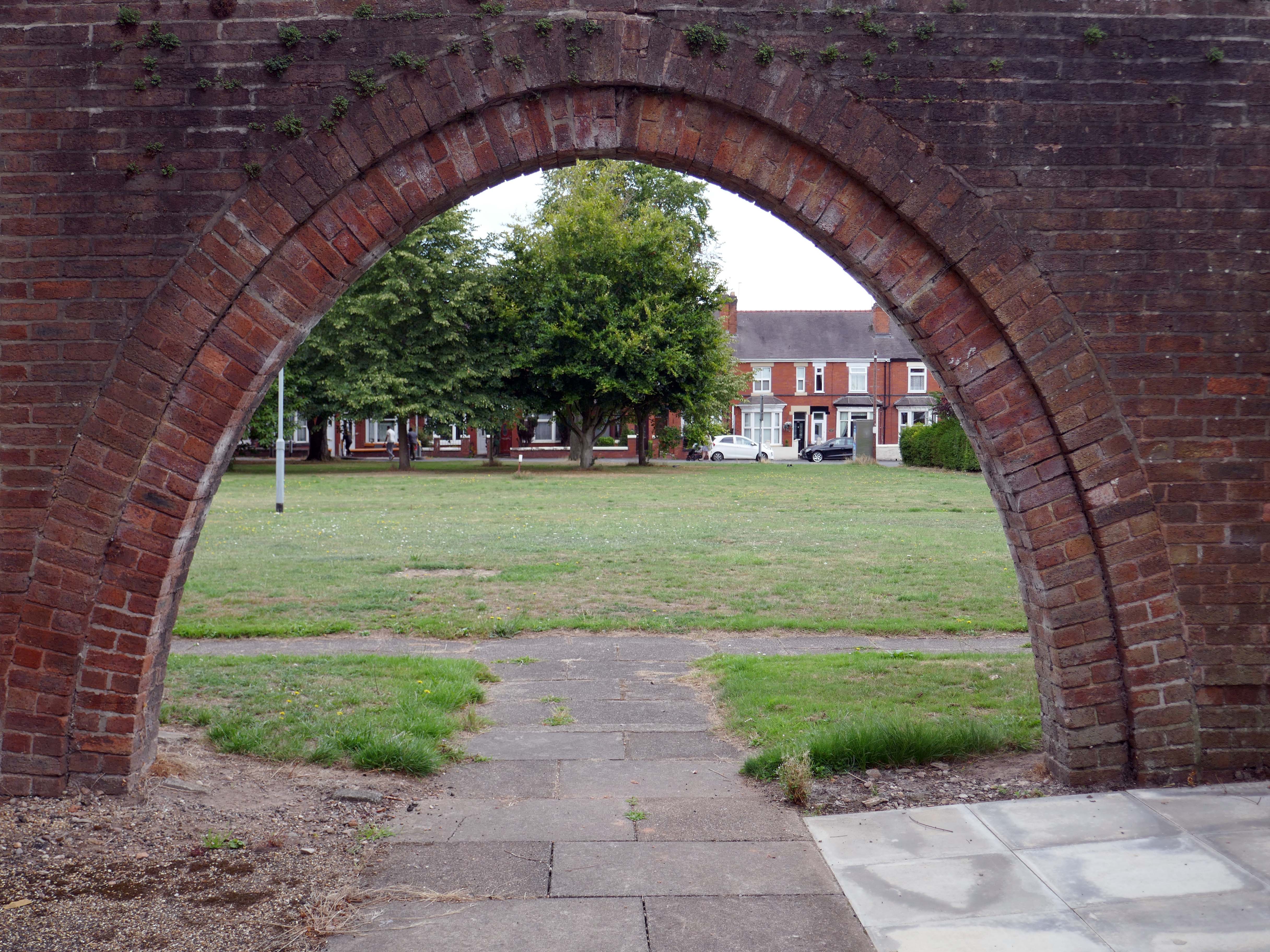
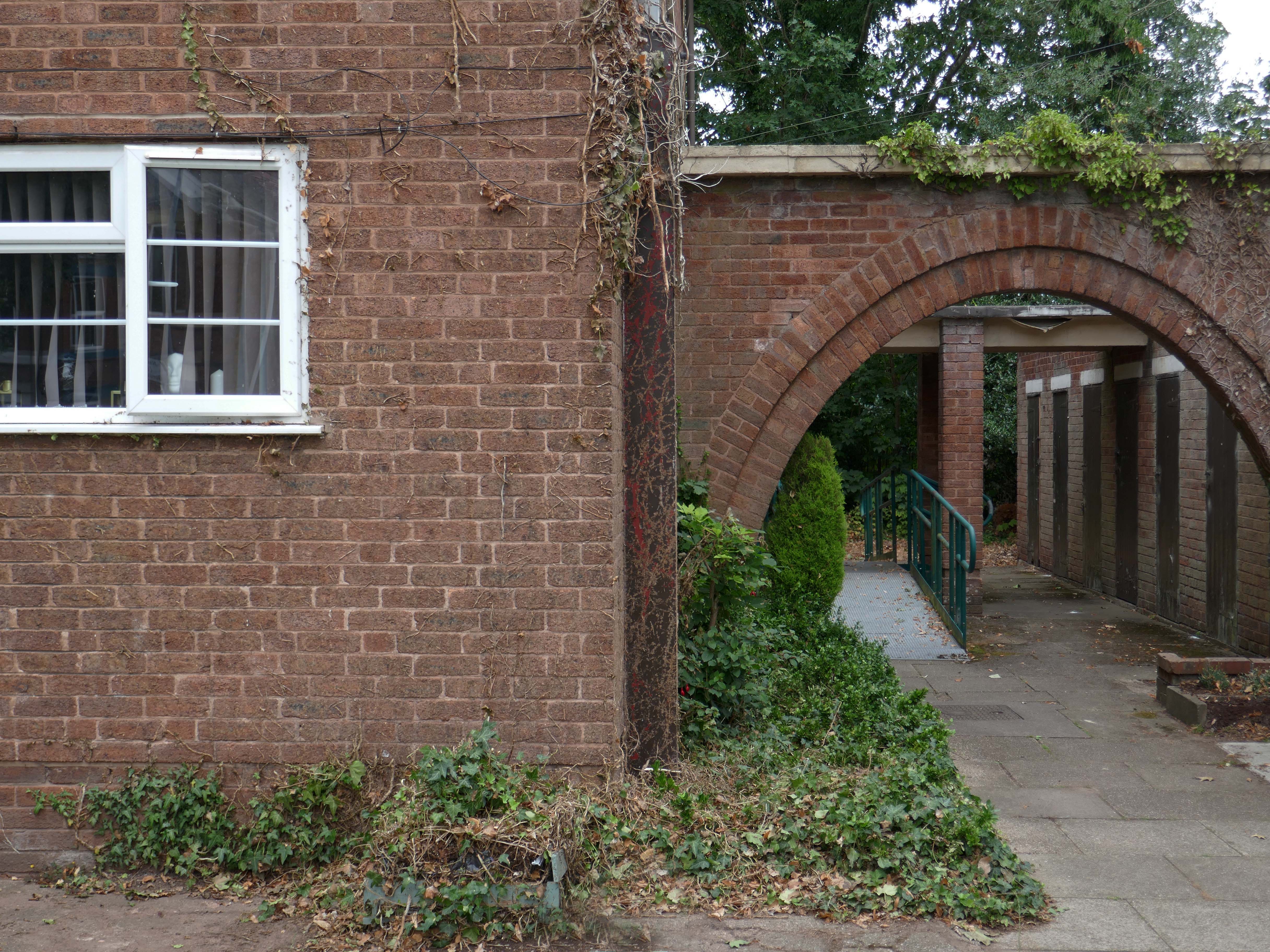
Whilst there are some common stylistic characteristics the Corporation Street Flats are of a more modest order. There are communal areas and a grassed apron, balconies and arched passages.

Over time the standard of maintenance seems to have declined, and the Crittall Windows have been replaced by white uPvc, where once there was a bowling green, this is now roughly mown and unused.

Take a look see for your self.

Industry Around Cornbrook

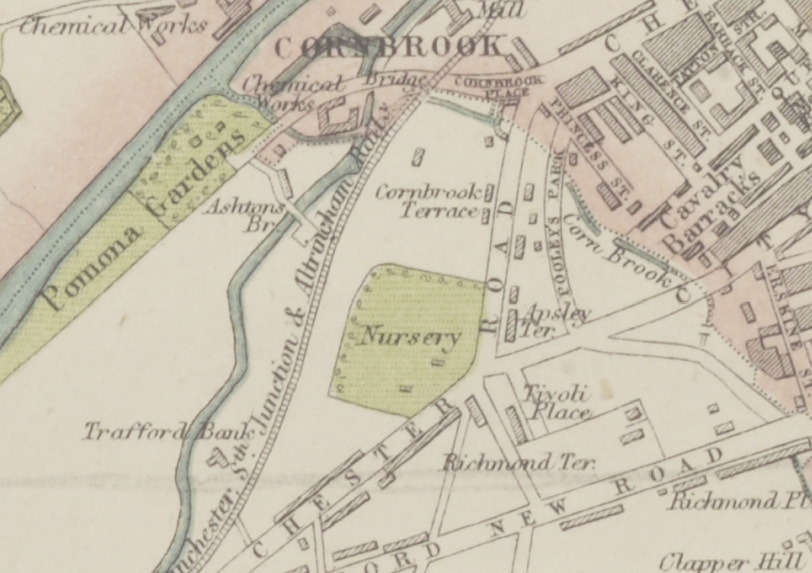
In 1870 the street pattern has yet to be established, between the South Junction railway and Chester Road. The area is occupied by a Nursery. Pomona Gardens sits beside the river, and the Corn Brook is clearly visible. To the right are the Hulme Barracks, closed and demolished in 1914.

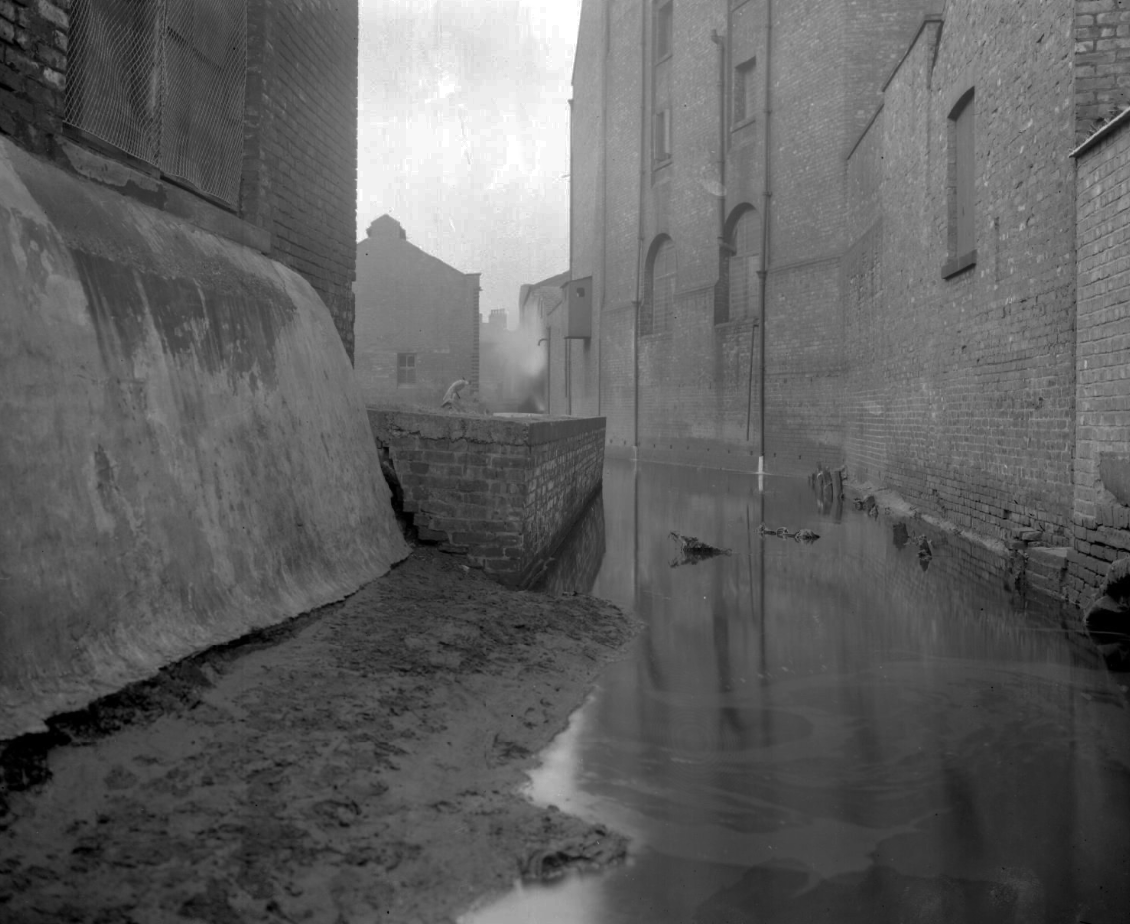
Corn Brook Textile Street 1947

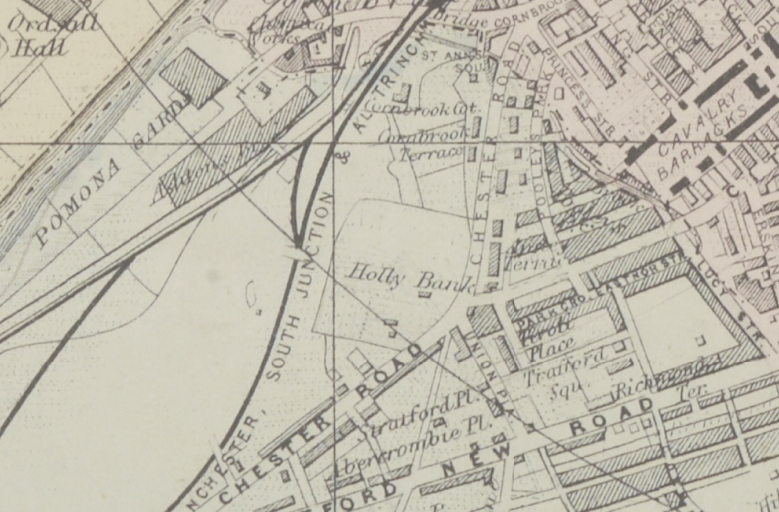
In 1884 there is new housing to the right of Chester Road.

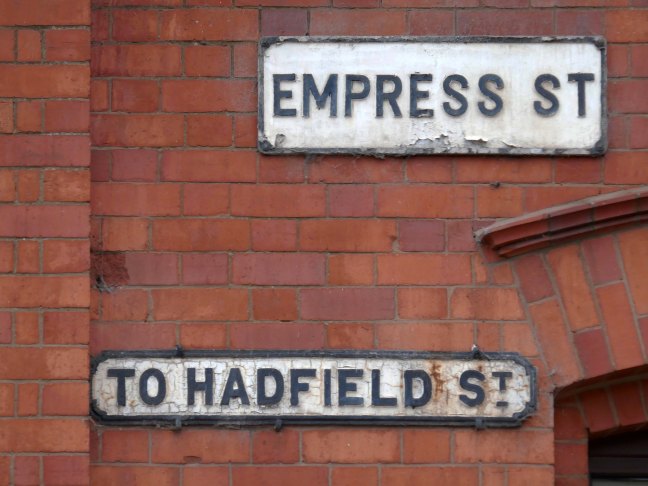
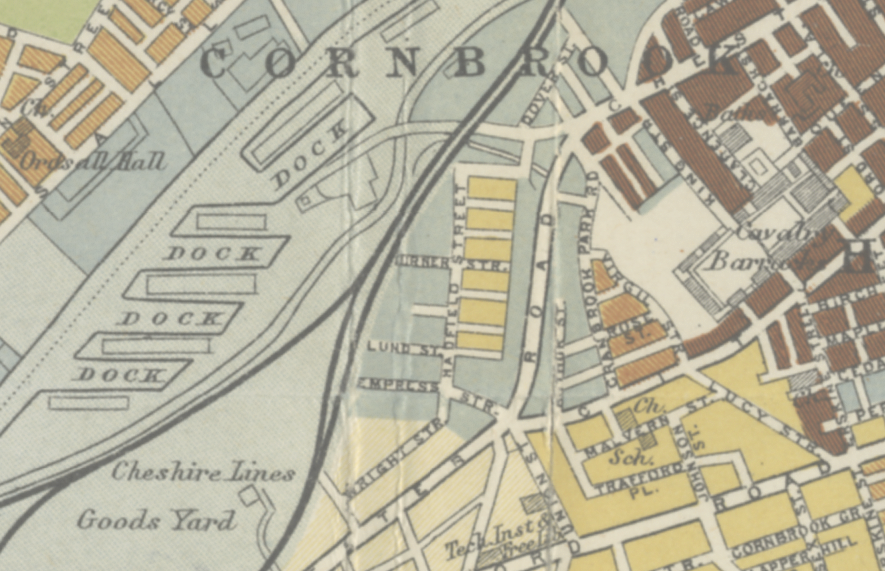
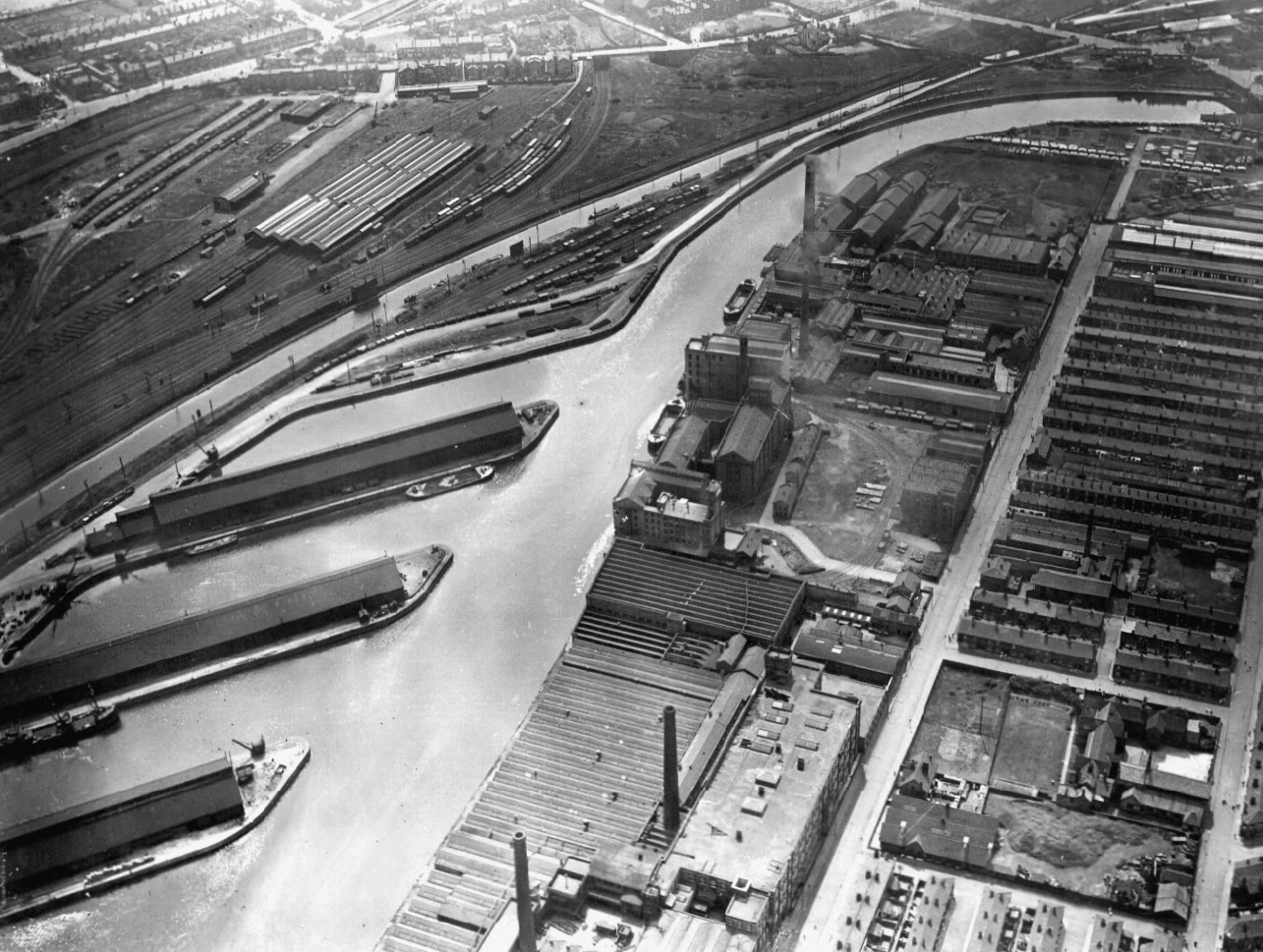
In 1904 the Pomona Docks have been established and the are around Hadfield Street fully developed.

Pomona Docks 1923

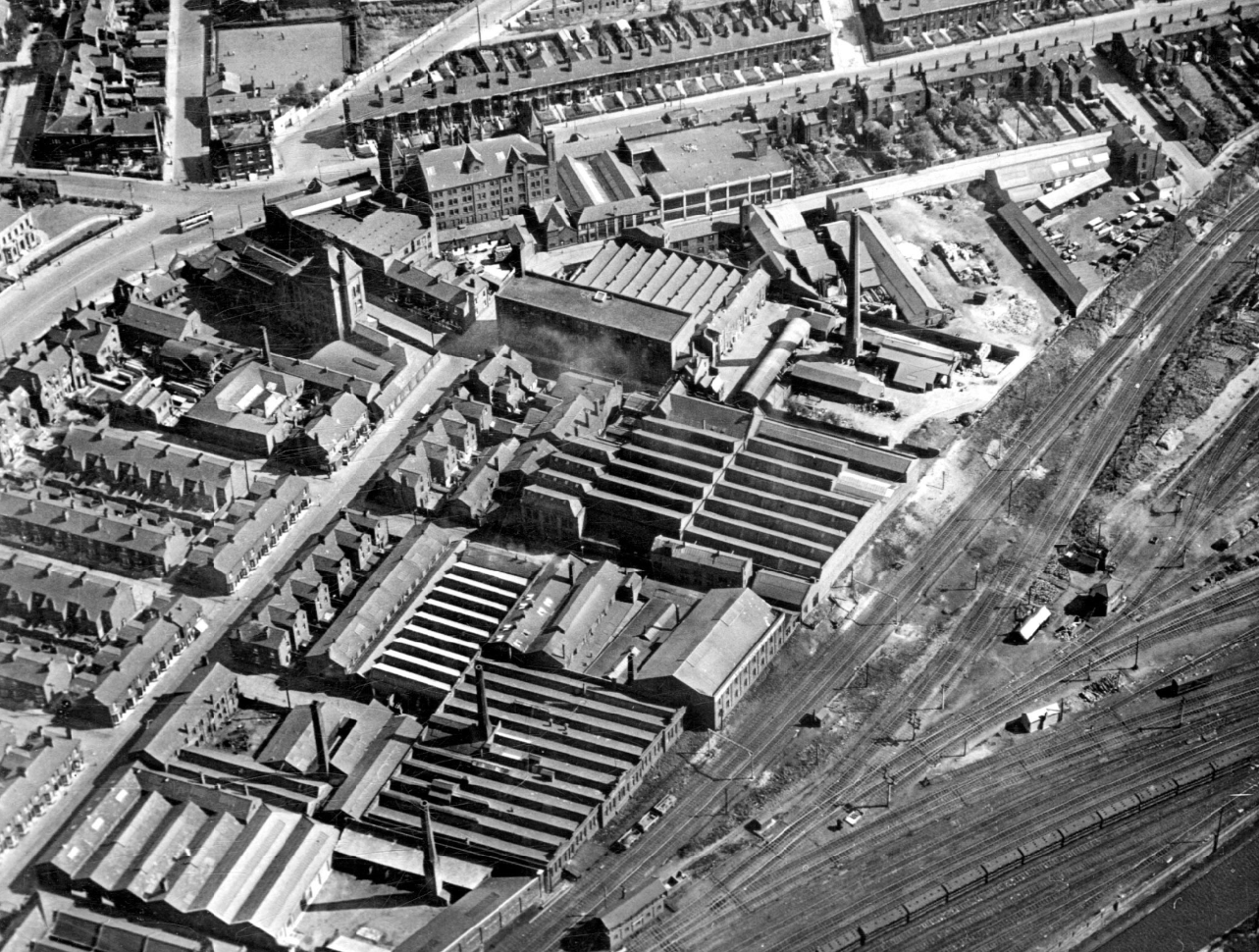
This is an aerial view from 1930, there area is now a dense network of streets to the north of Chester Road, transport infrastructure, housing and industry sit side by side.

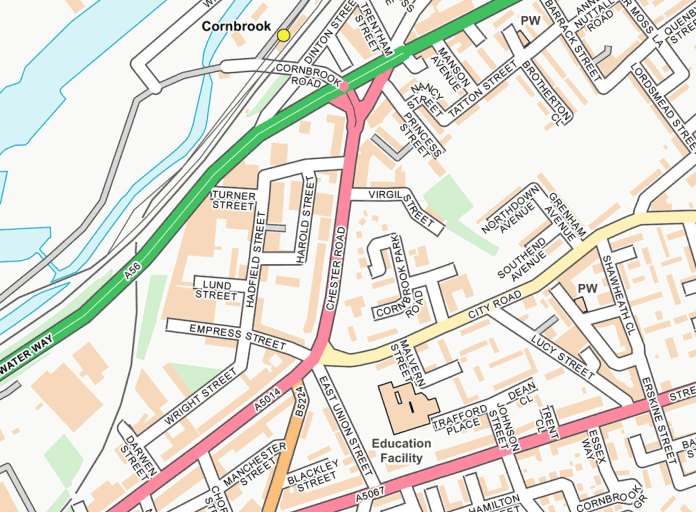
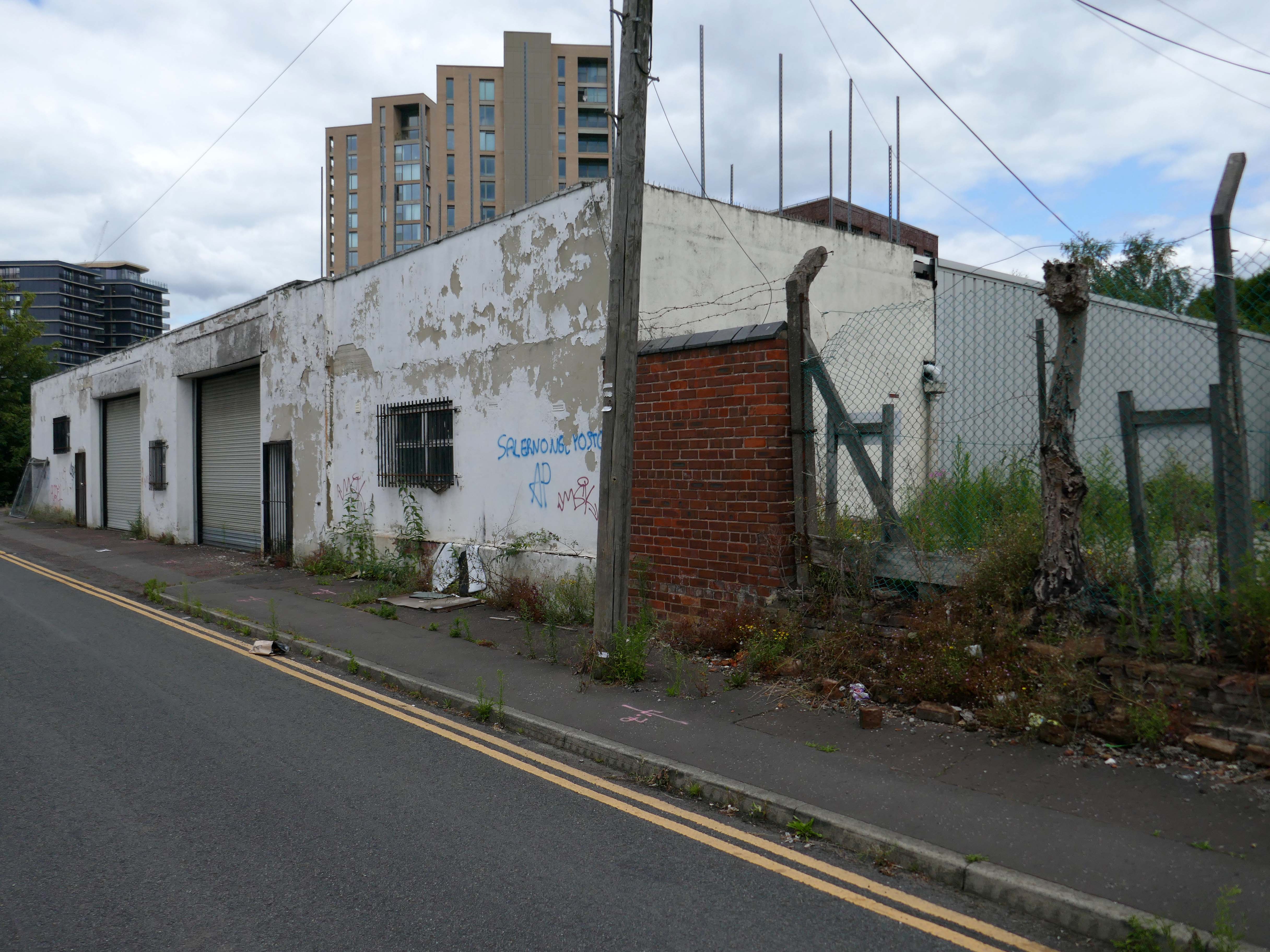
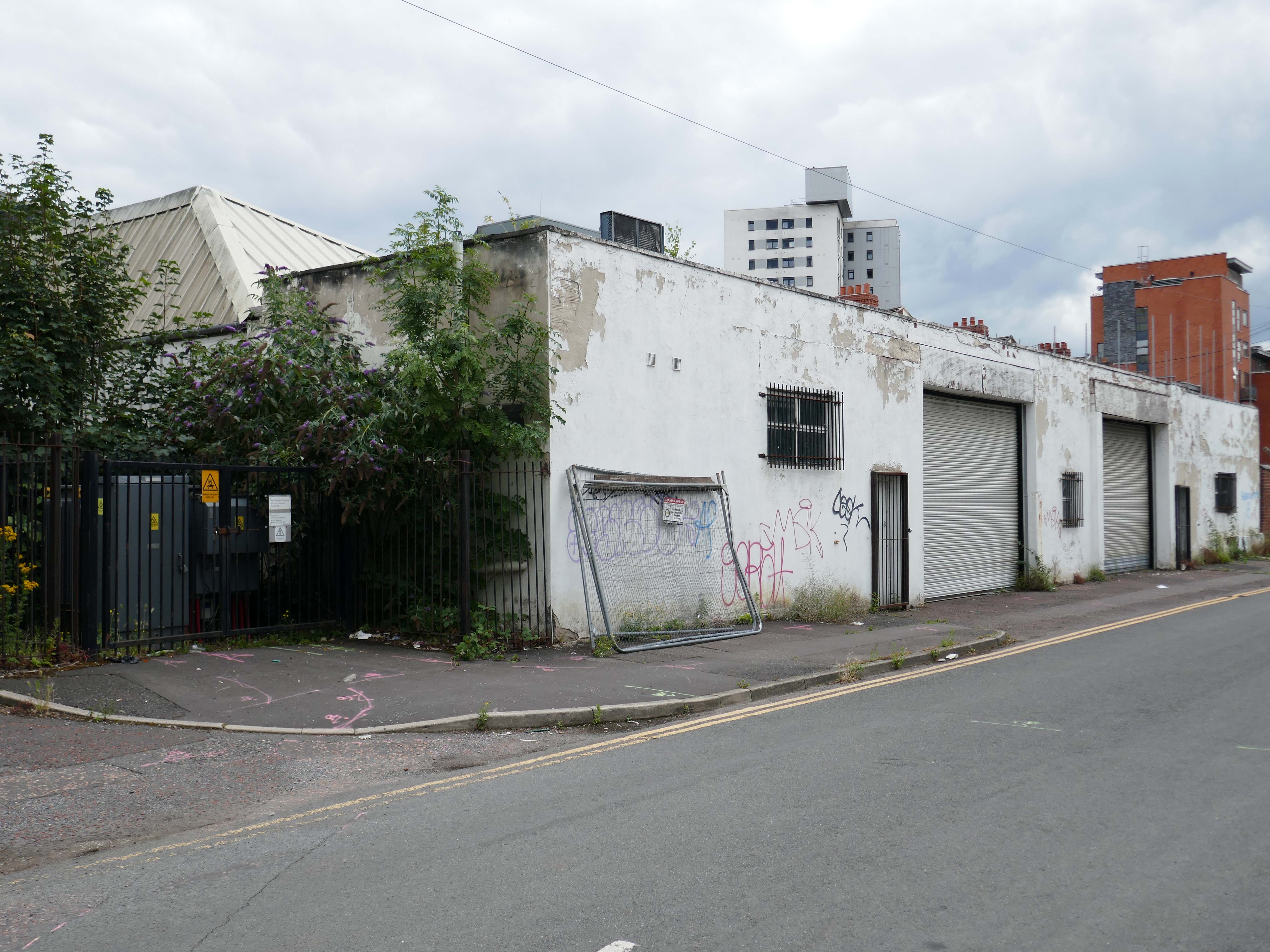
2025 the street pattern is still extant – but what has survived?

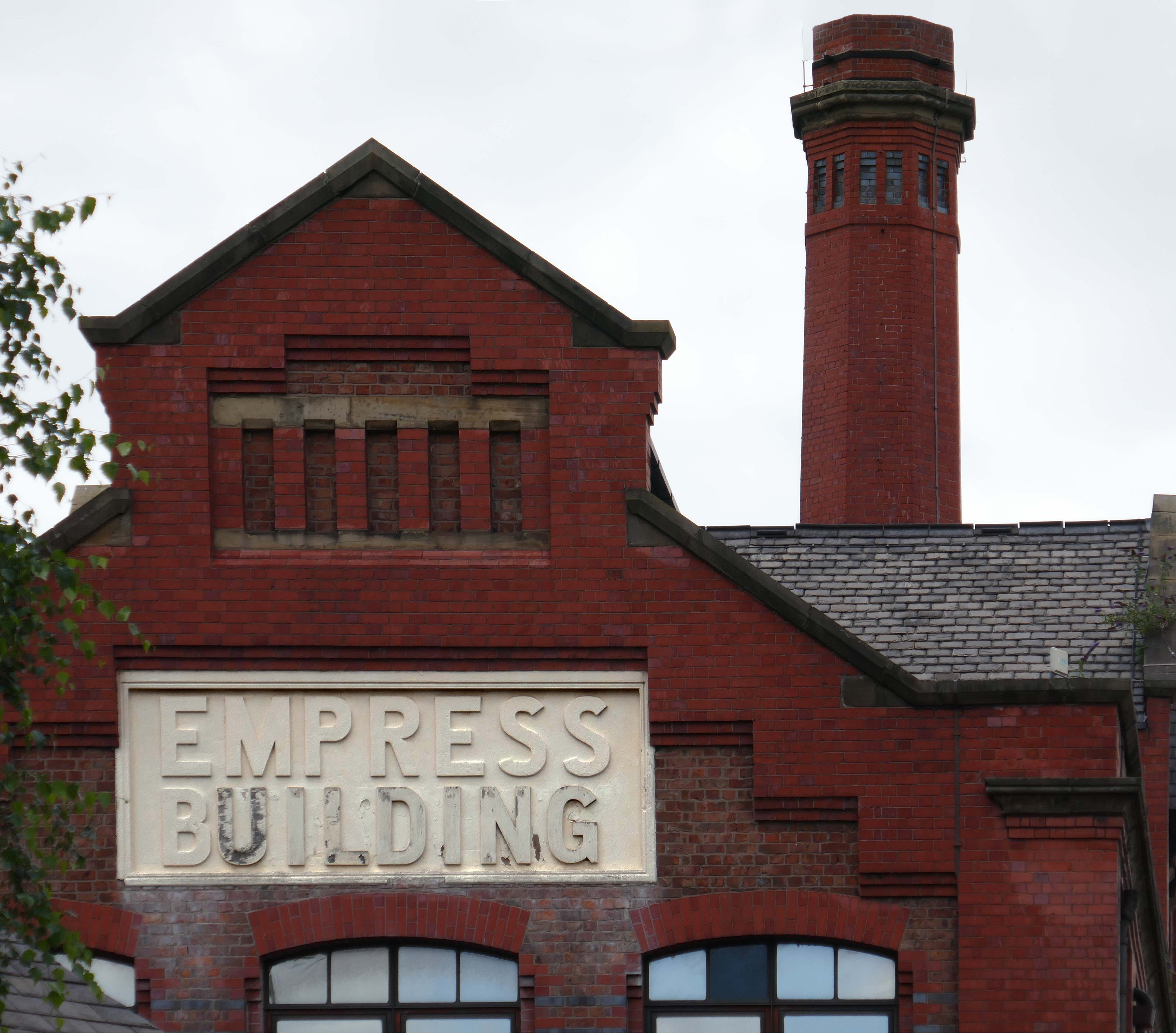
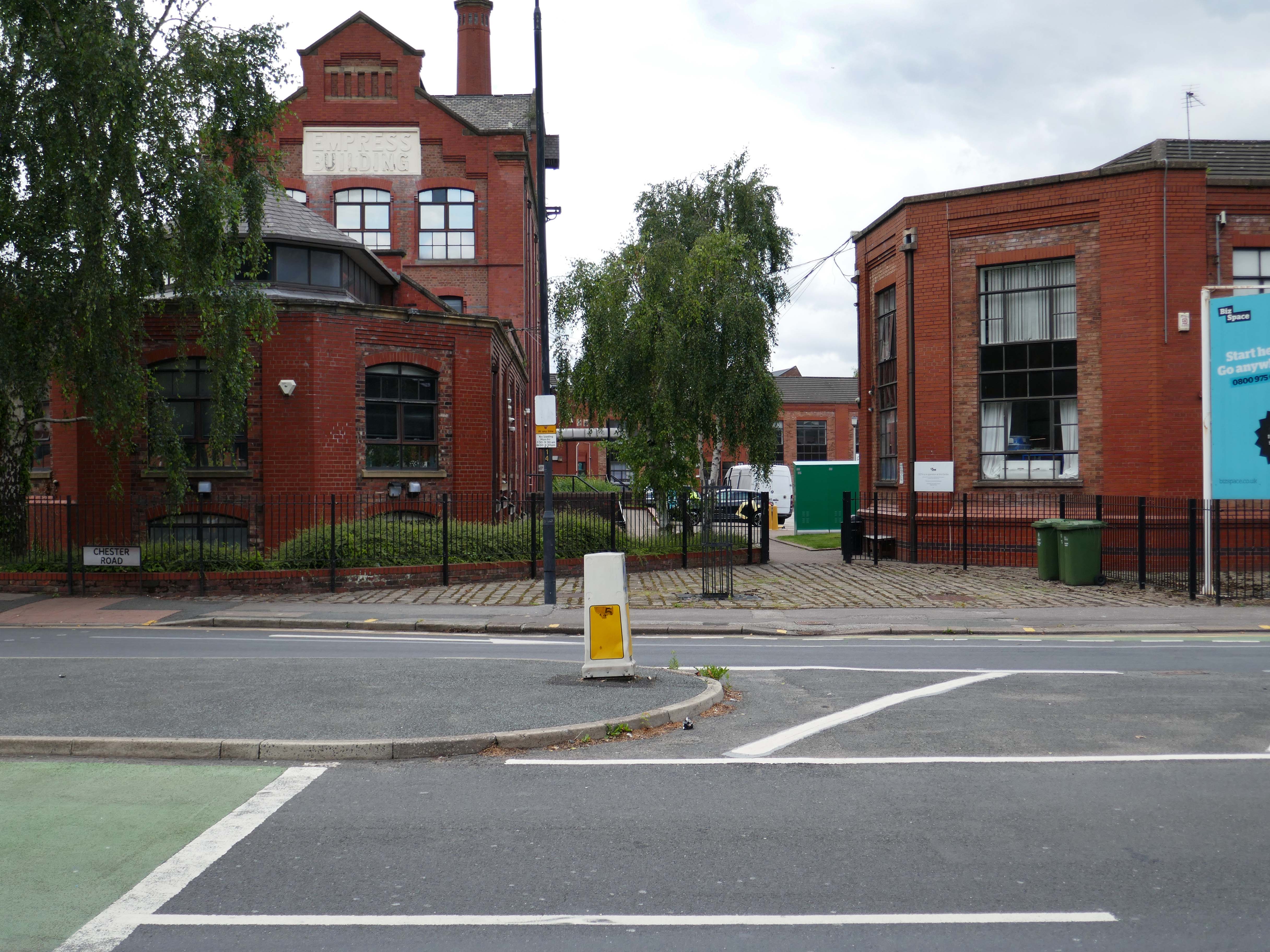
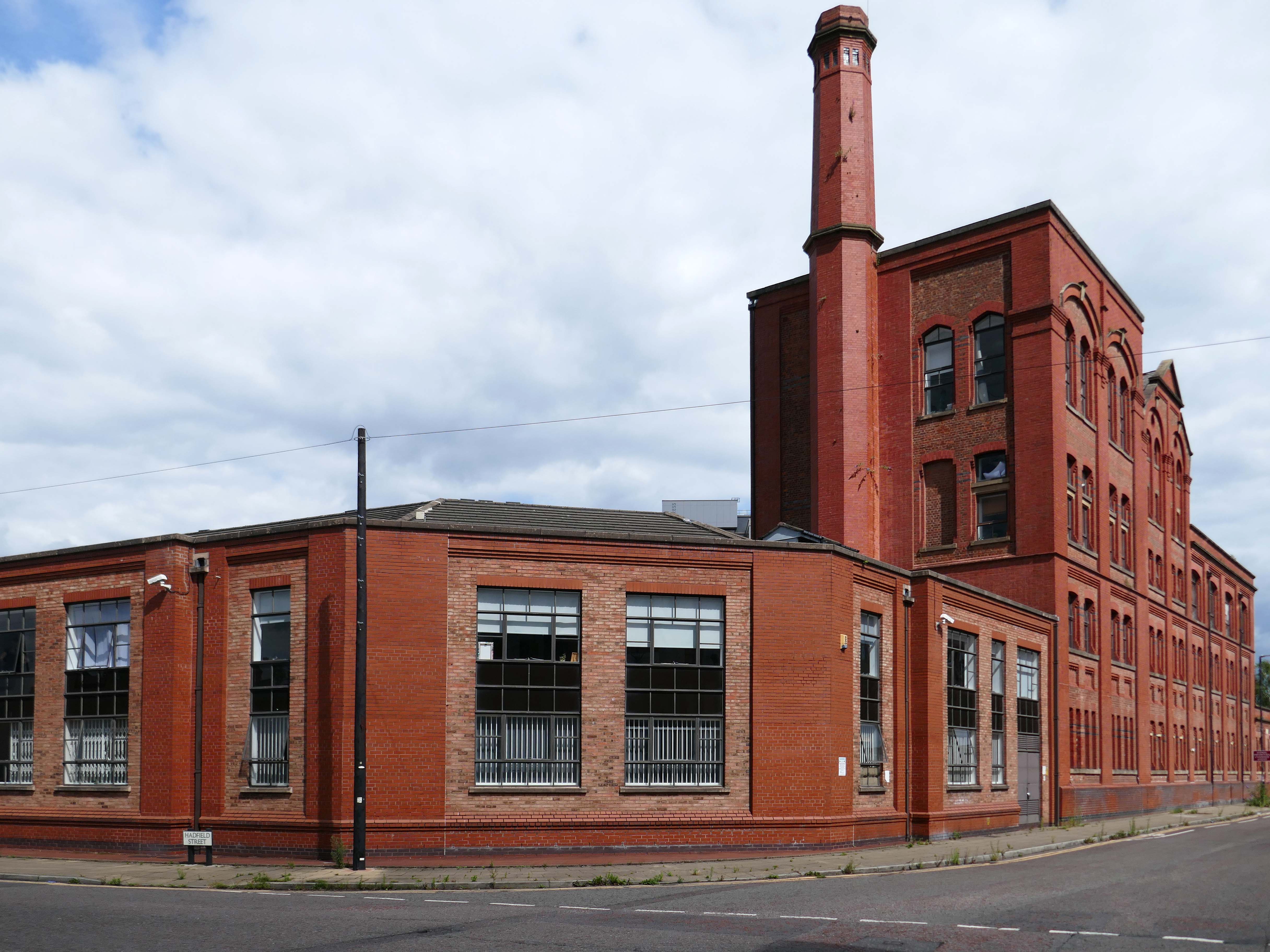
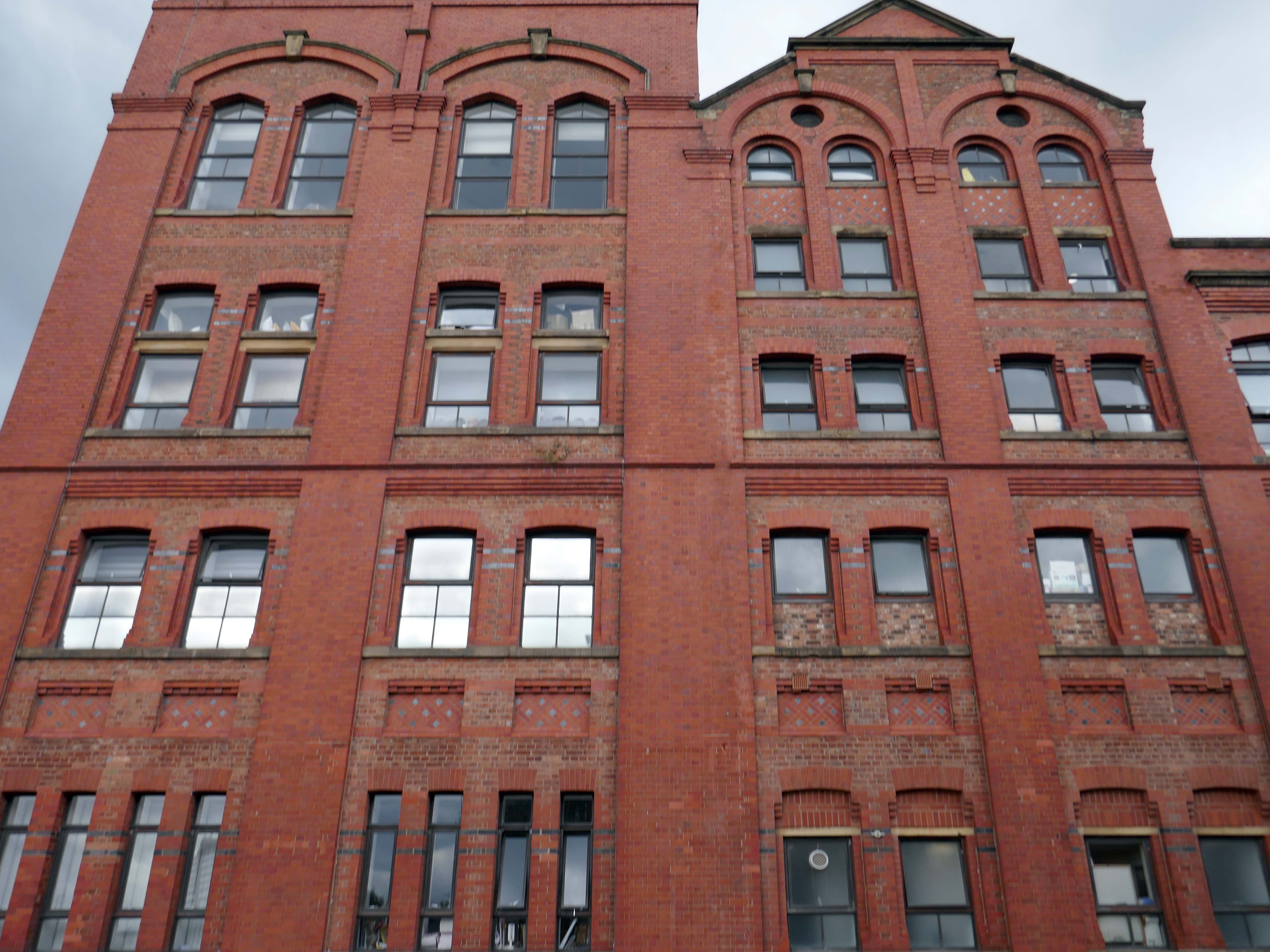
The Empress Brewery as seen on the previous Chester Road post.

The Empress Brewing Company was established by Charles Dawes in c. 1880, the brewery closed in 1955.

The building was converted into offices in 1992 as part of the development of the Empress Business Centre, which saw new office and business units built to form a courtyard.

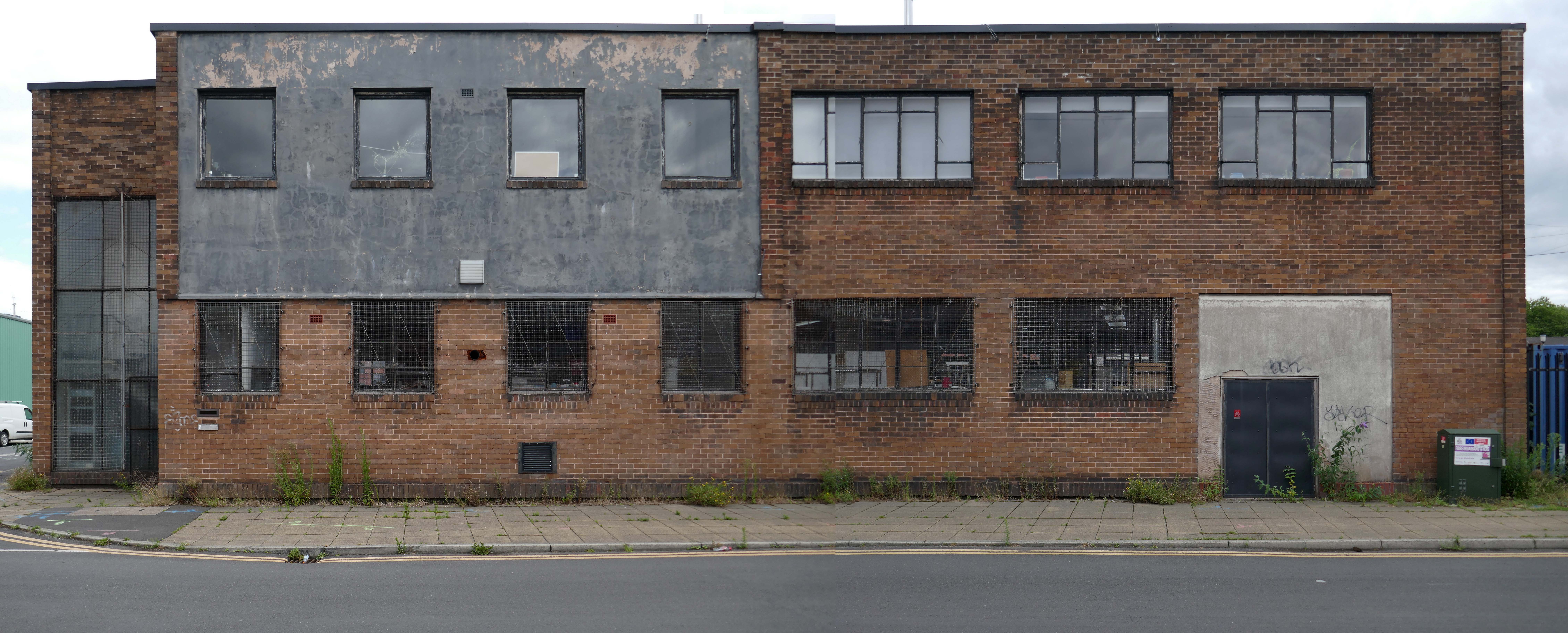
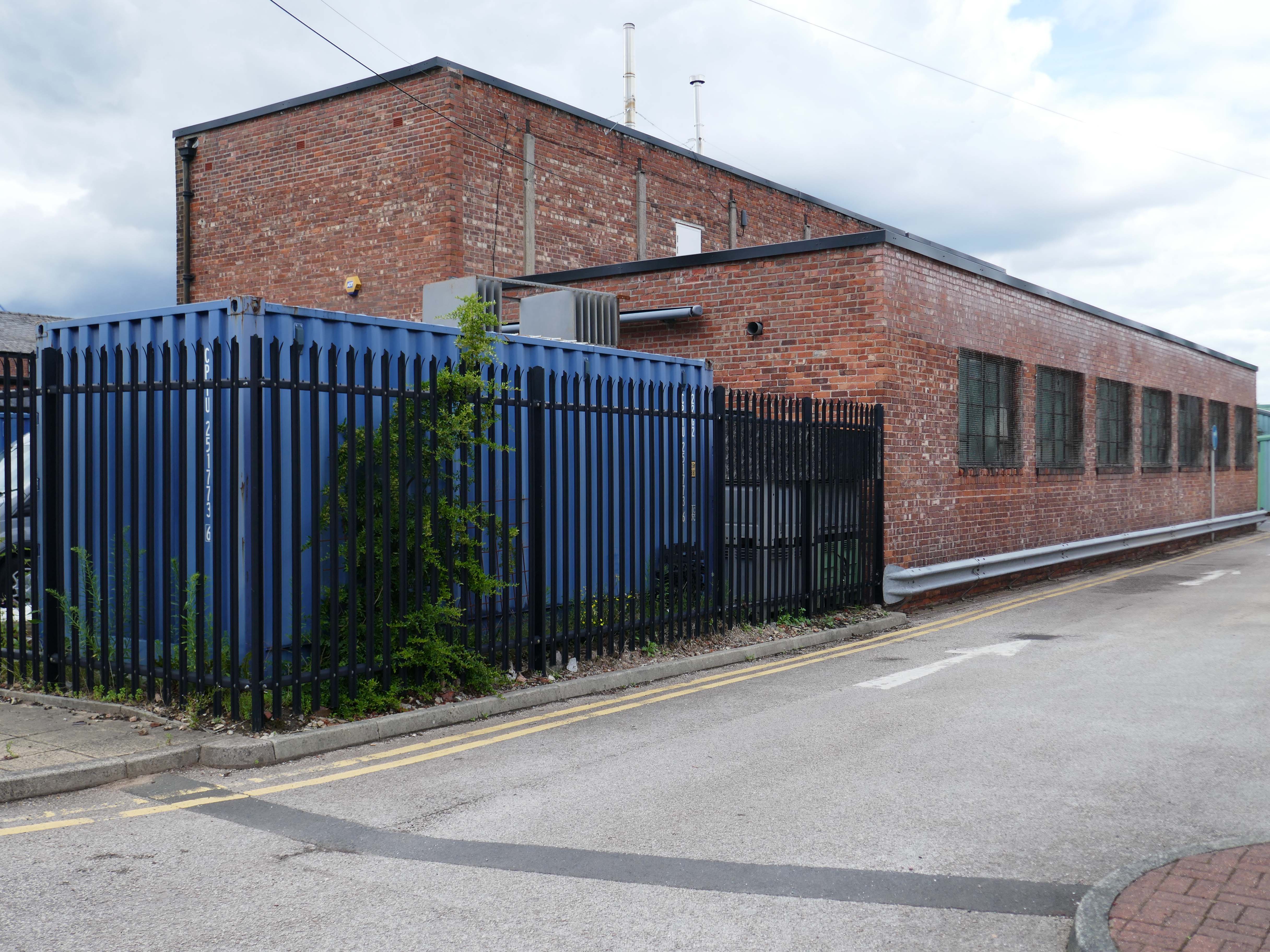
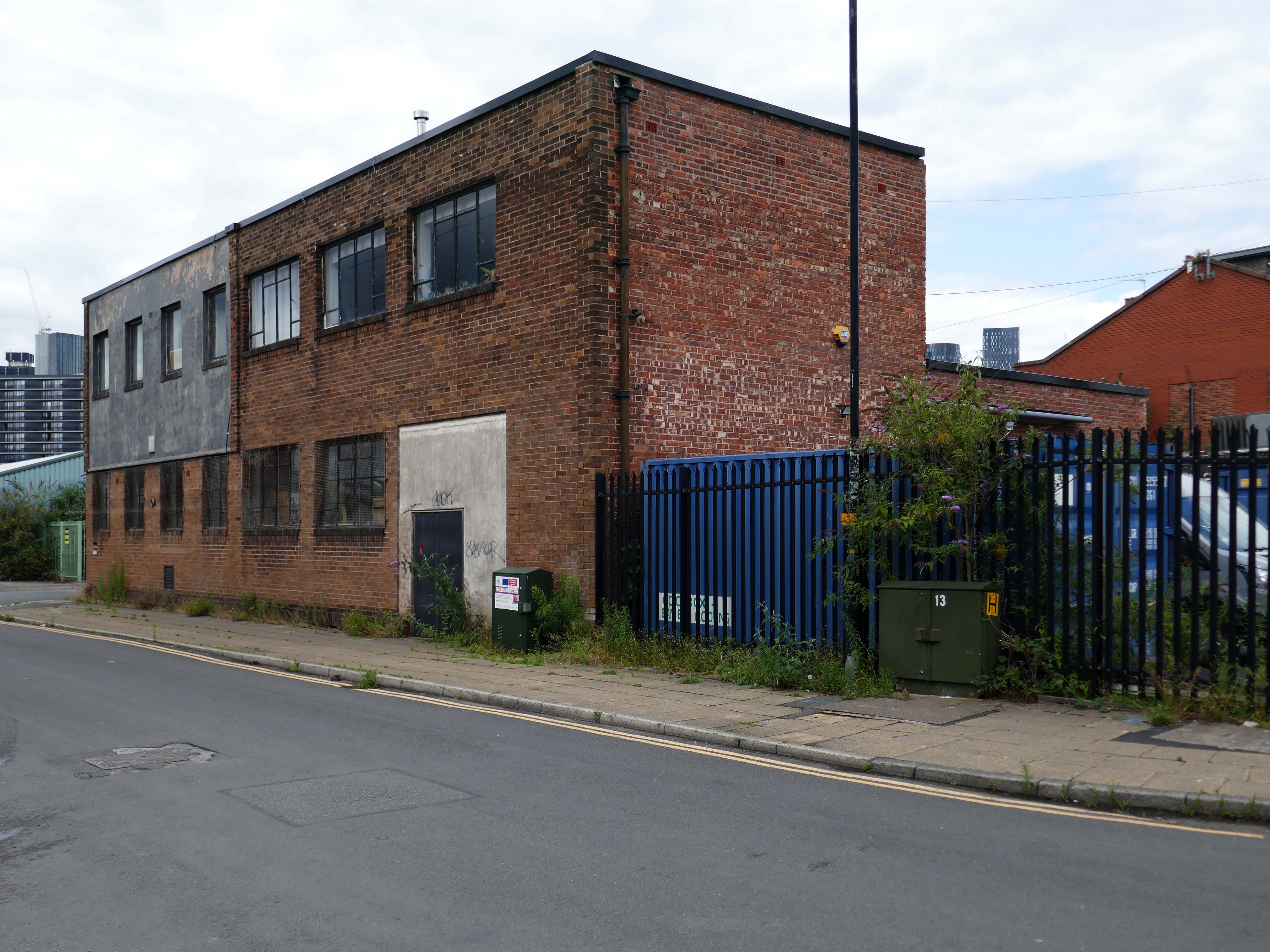
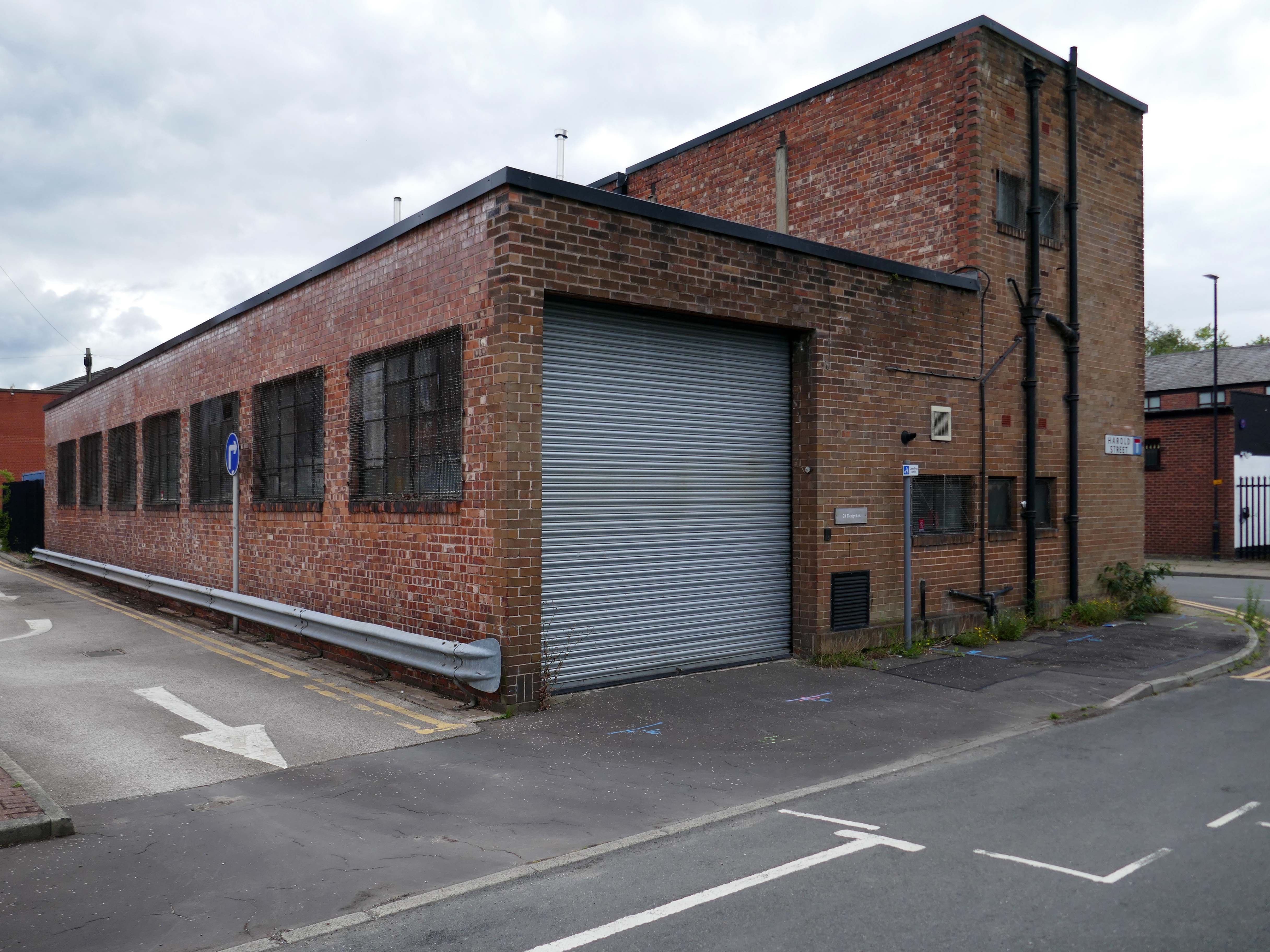
24 Design Ltd Hadfield Street – an exhibition design and build practice, working extensively within the museum and heritage sector.

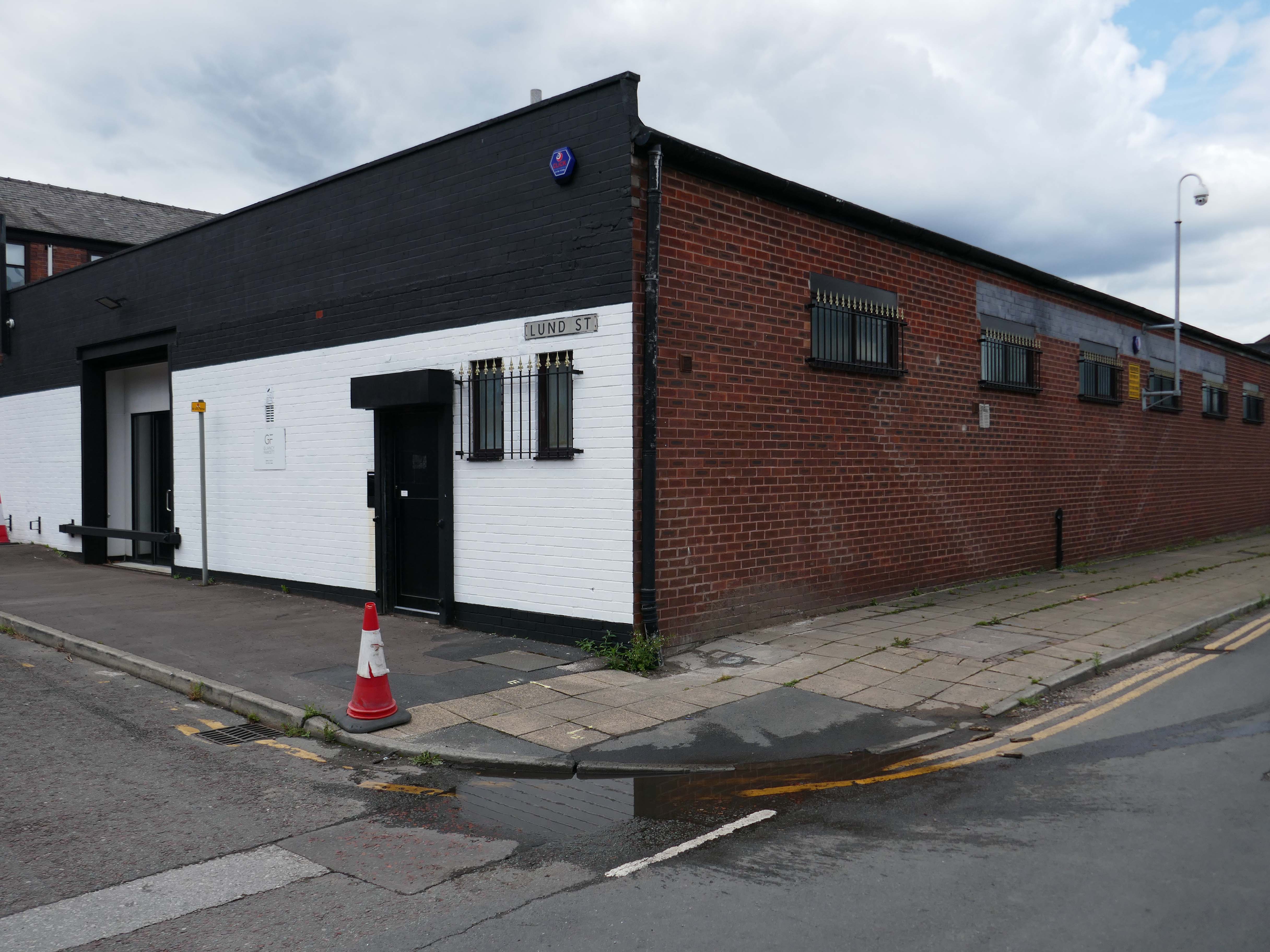
Glancy Fawcett Lund Street, A project-based, luxury lifestyle supplier delivering exquisite homeware for superyachts, residences and private jets.

Concept Life Sciences Hadfield Street, your trusted partner from concept to clinic. We are your integrated drug discovery and development partner for complex challenges, renowned scientific knowledge, and strategic execution across all modalities from small molecule and biologics to cell and gene therapies.

They seem to have left the building.

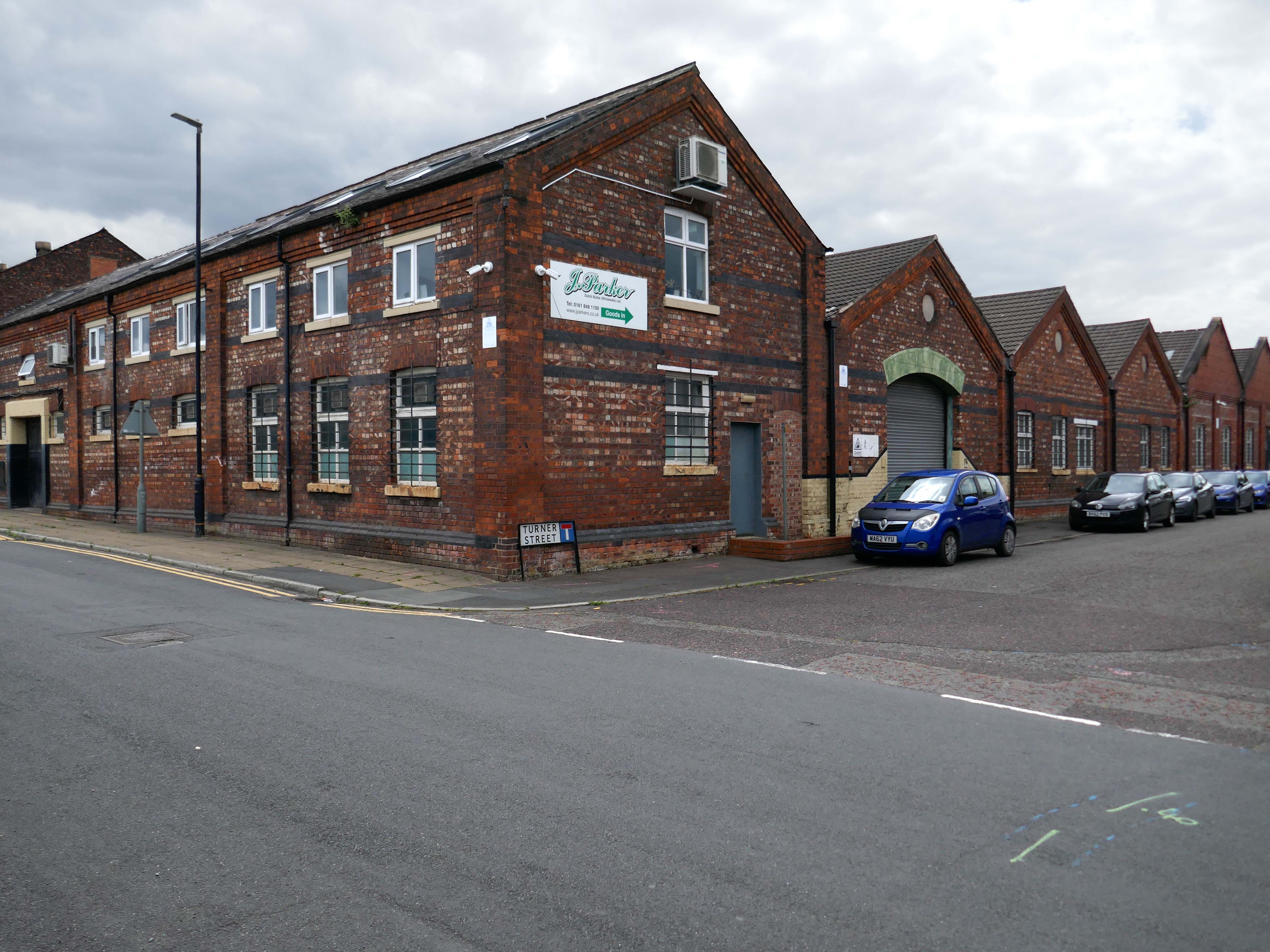
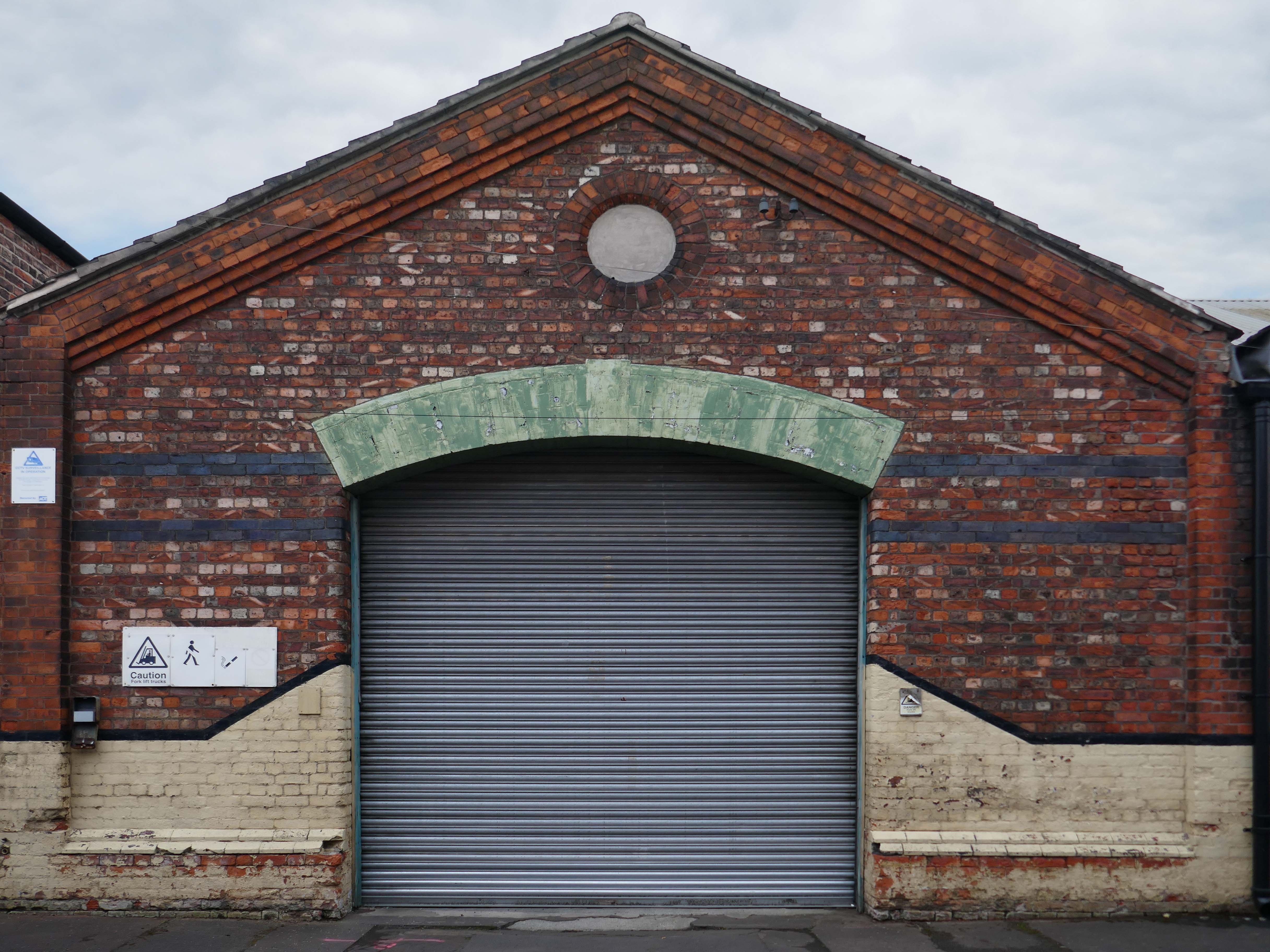
J Parker‘s Ltd Hadfield Street, Dutch bulb importers – competitive prices across all our garden plant and bulb ranges, huge range, unbeatable prices, established 1933.

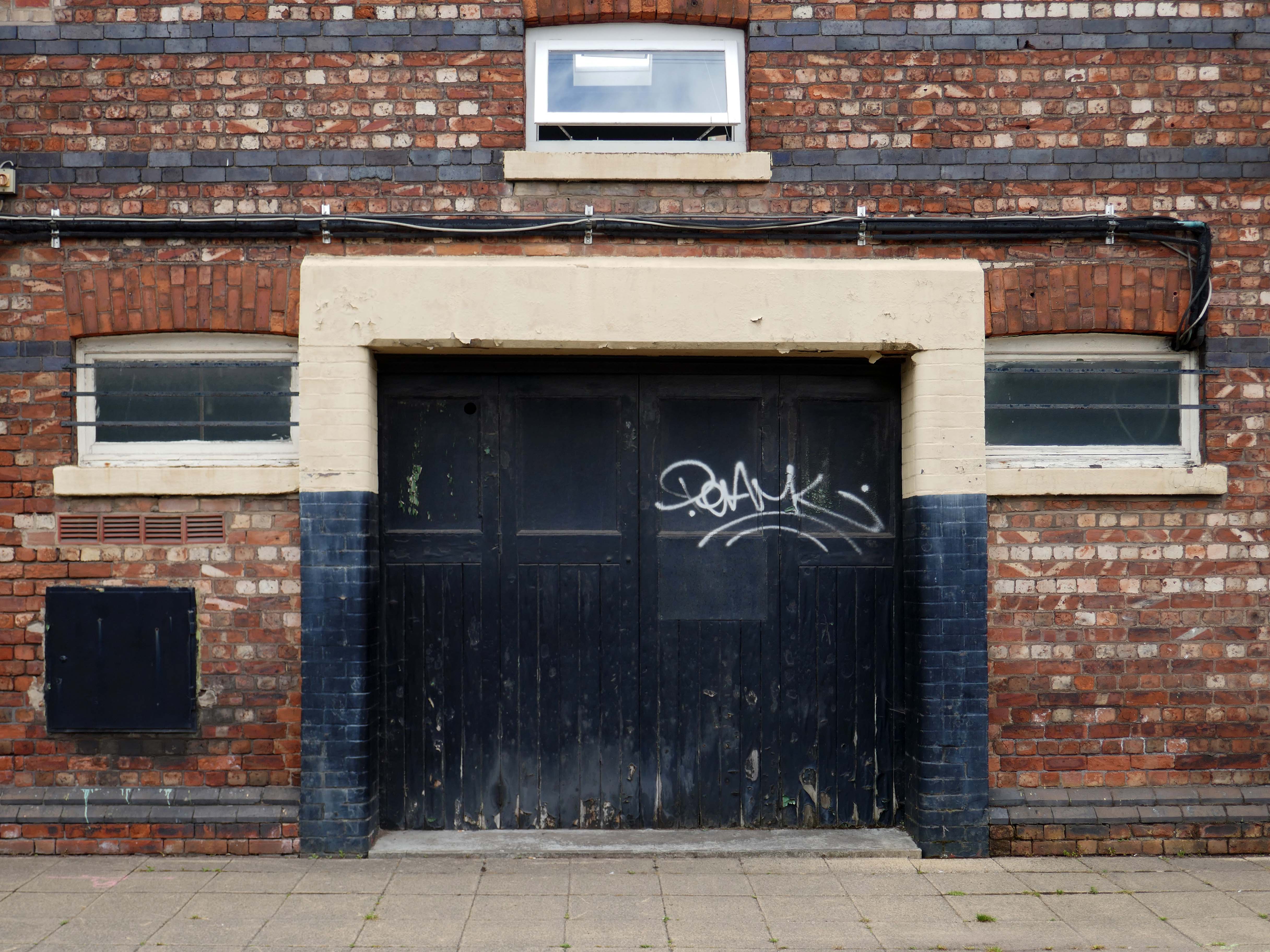
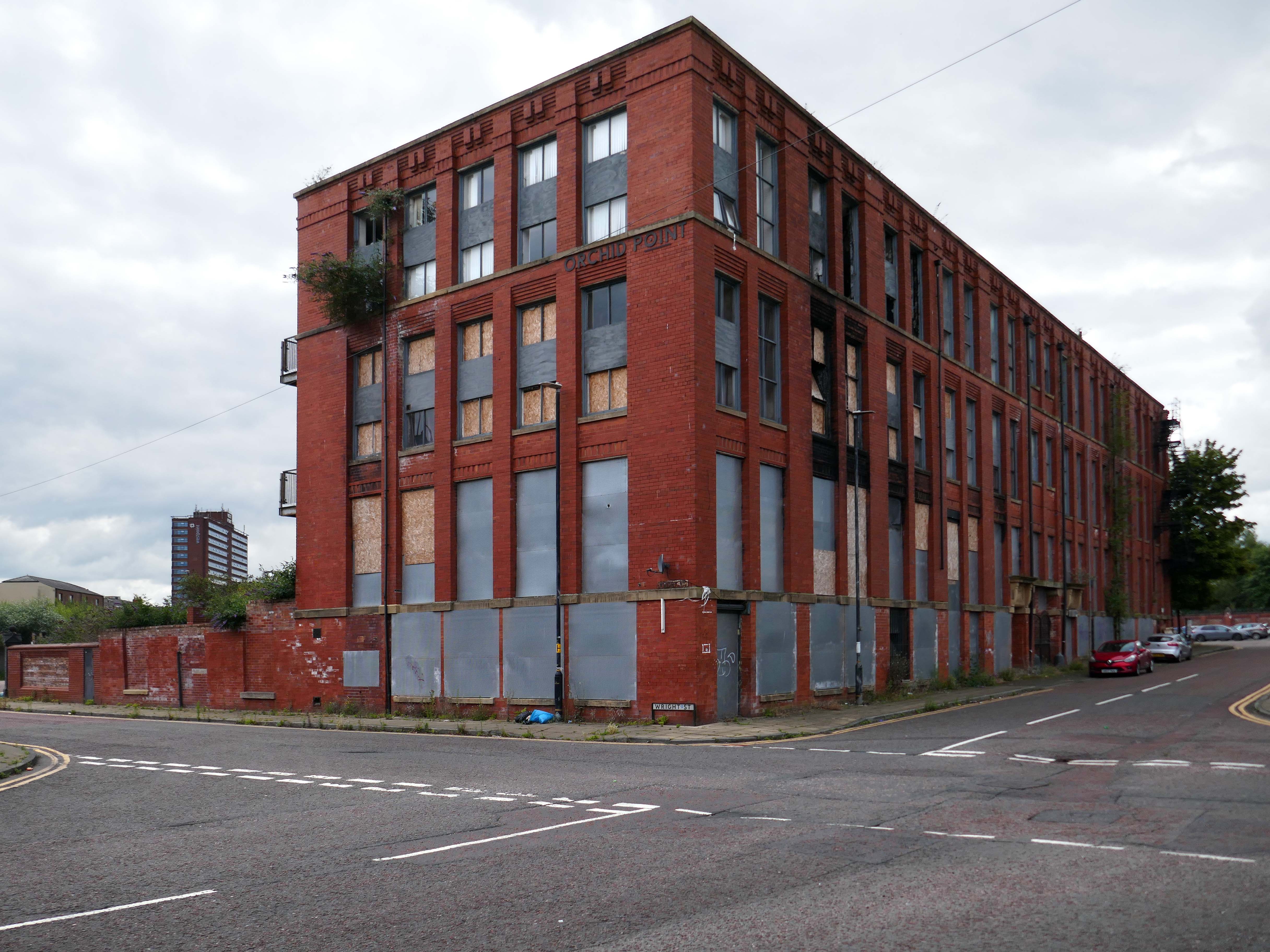
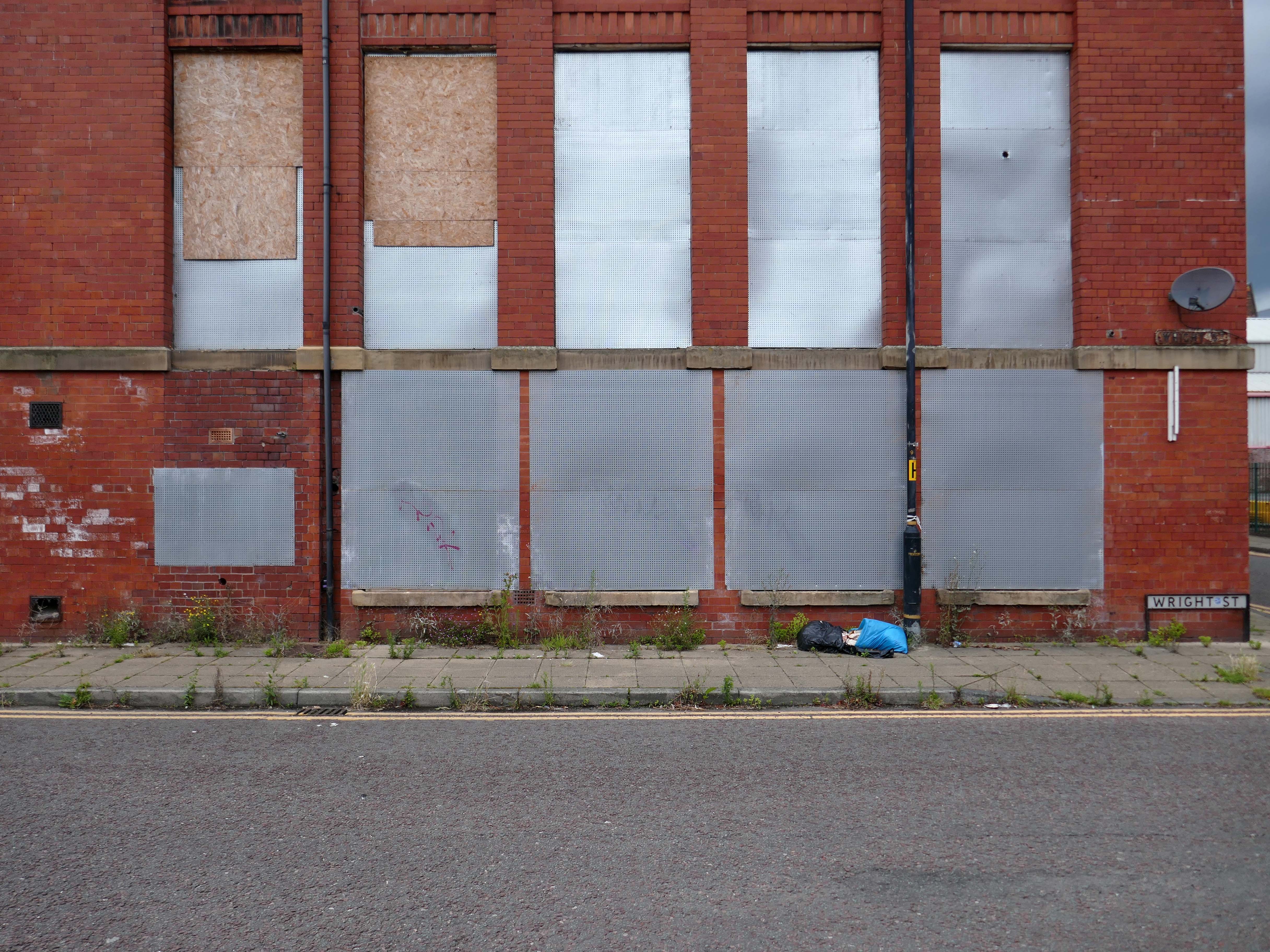
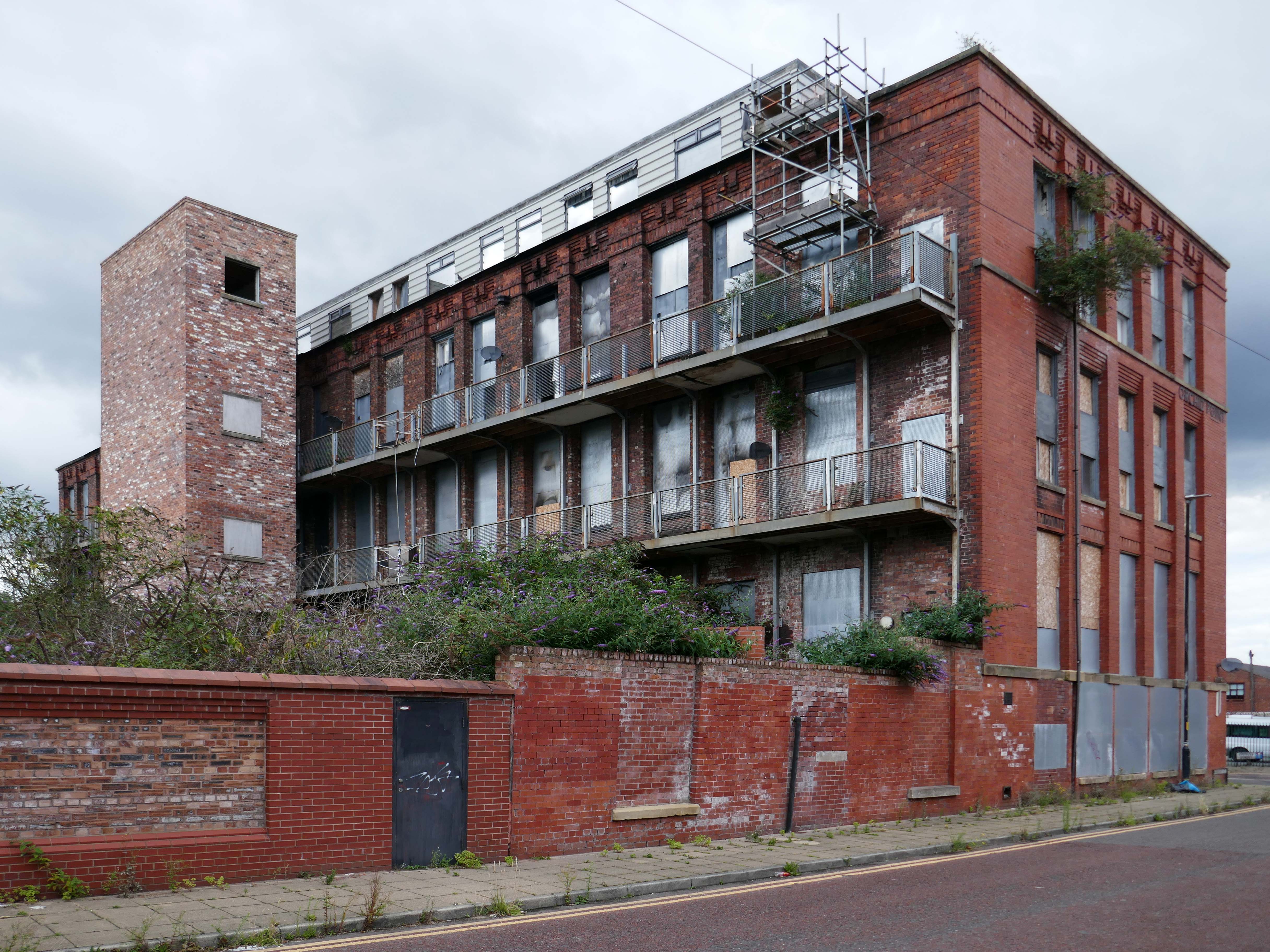
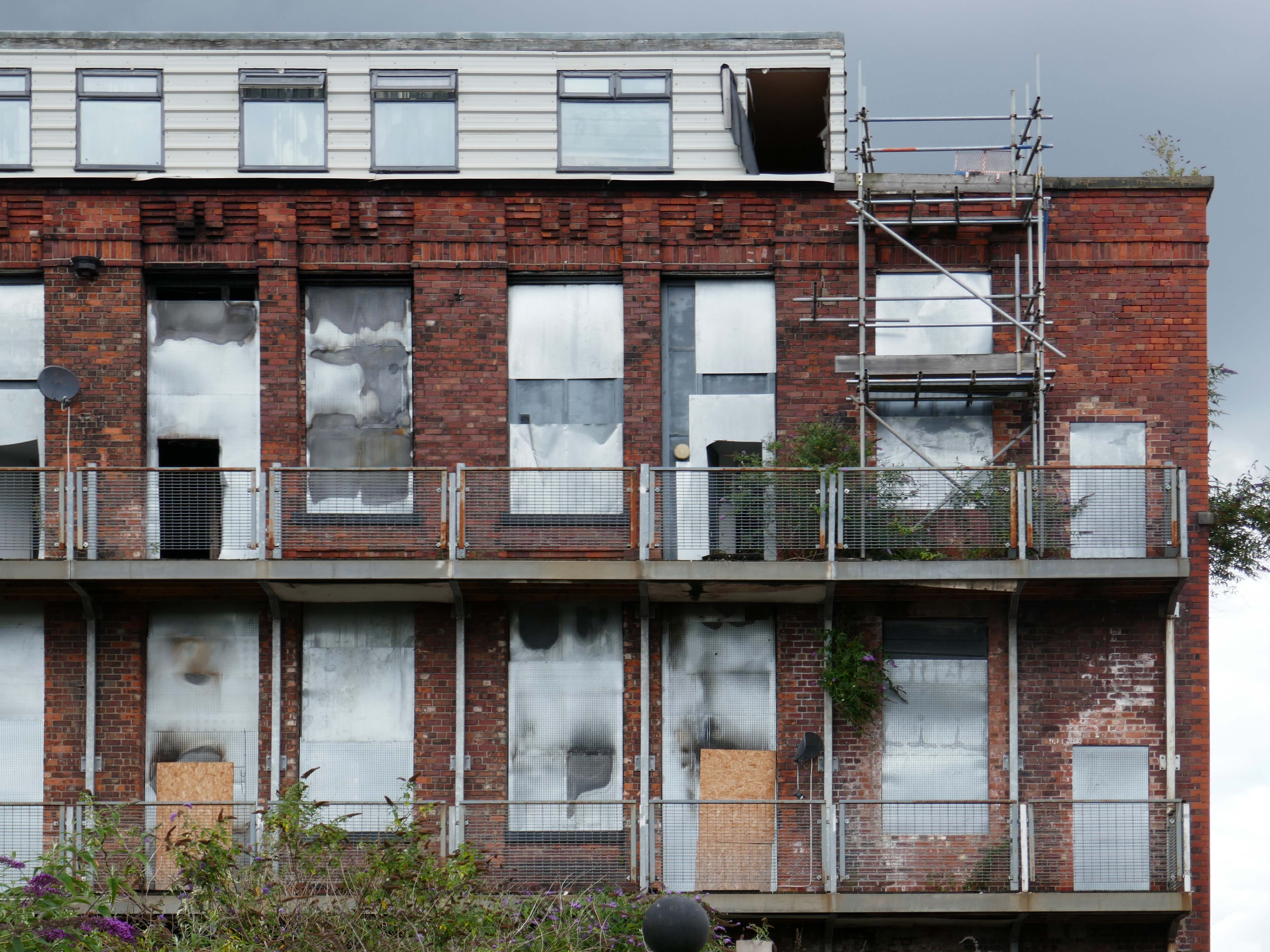
Empress Mill latterly Orchid Point Empress Street.

Built between 1903 and 1909, it echoes the industrial character of the larger industrial buildings on Chester Road and Empress Street. The property is listed as a smallware factory in the occupation of Woolf & Higham manufacturers of small wares, upholsterers’ trimmings, worsted bindings, woven venetian ladder tapes, cotton and linen venetian blind webs, spindle bandings, window blind cords, carpet bindings, bed laces. The works is shown on the Ordnance Survey of 1955 as an Engineering Works – Printing Machinery.

Local Heritage List

In 2011, FreshStart Living purchased the building, alongside others nearby, as part of a £9 million development ‘breathing new life’ into this corner of Old Trafford with 116 one and two-bedroom apartments. But, on the inside, leaking roofs, mould, exposed electrical wires and a dodgy gas connection paint a completely different picture.

Not long after purchasing it, we discovered the entire building was being powered by a generator.

MEN

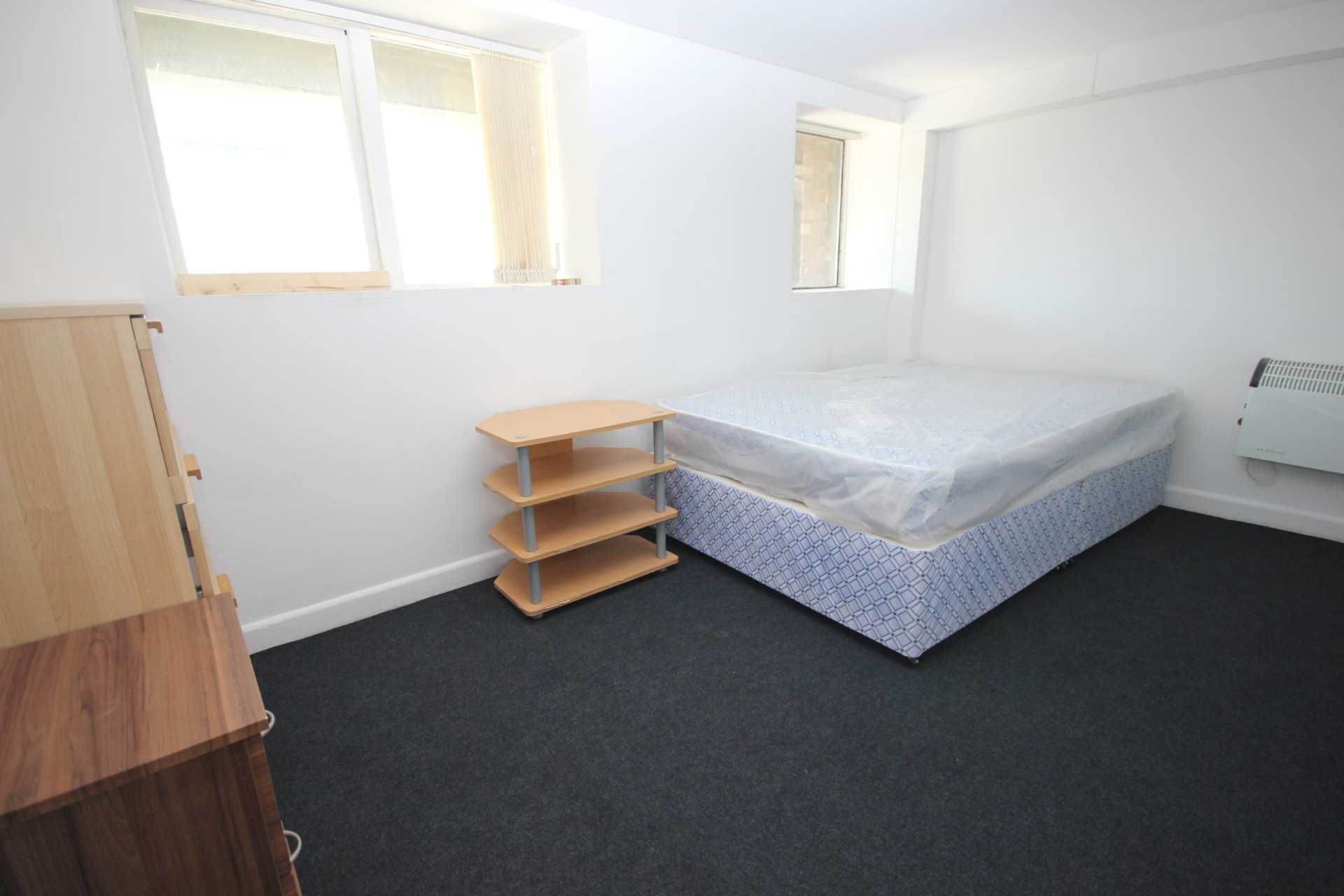
Three bedroom apartment to rent Orchid Point – when buy to let goes wrong.

Empress Mill was turned into an apartment block as part of a development called Orchid Point. It is understood some residents were allowed to move in twelve years ago, but these residents were asked to move out after a number of years due to safety issues.

On February 20th 2023, the Empress Mill was one of a number of buildings described as unsafe and unsecure by Trafford Council.

The emergency services were called to Empress Mill at 5.15am on Friday. Ten appliances from across the region, including specialist appliances called a stinger and a scorpion, attended the abandoned mill turned apartment block off Chester Road and firefighters battled the blaze into the afternoon.

Messenger Newspapers

Officers from Trafford Council have taken firm action to put a stop to anti-social behaviour at a vacant block of flats in the Old Trafford area.

Drug addicts and thieves have descended on Aura Court since much of it was closed in August 2020 by Greater Manchester Fire Service due to a decaying non-compliant fire escape.

About Manchester

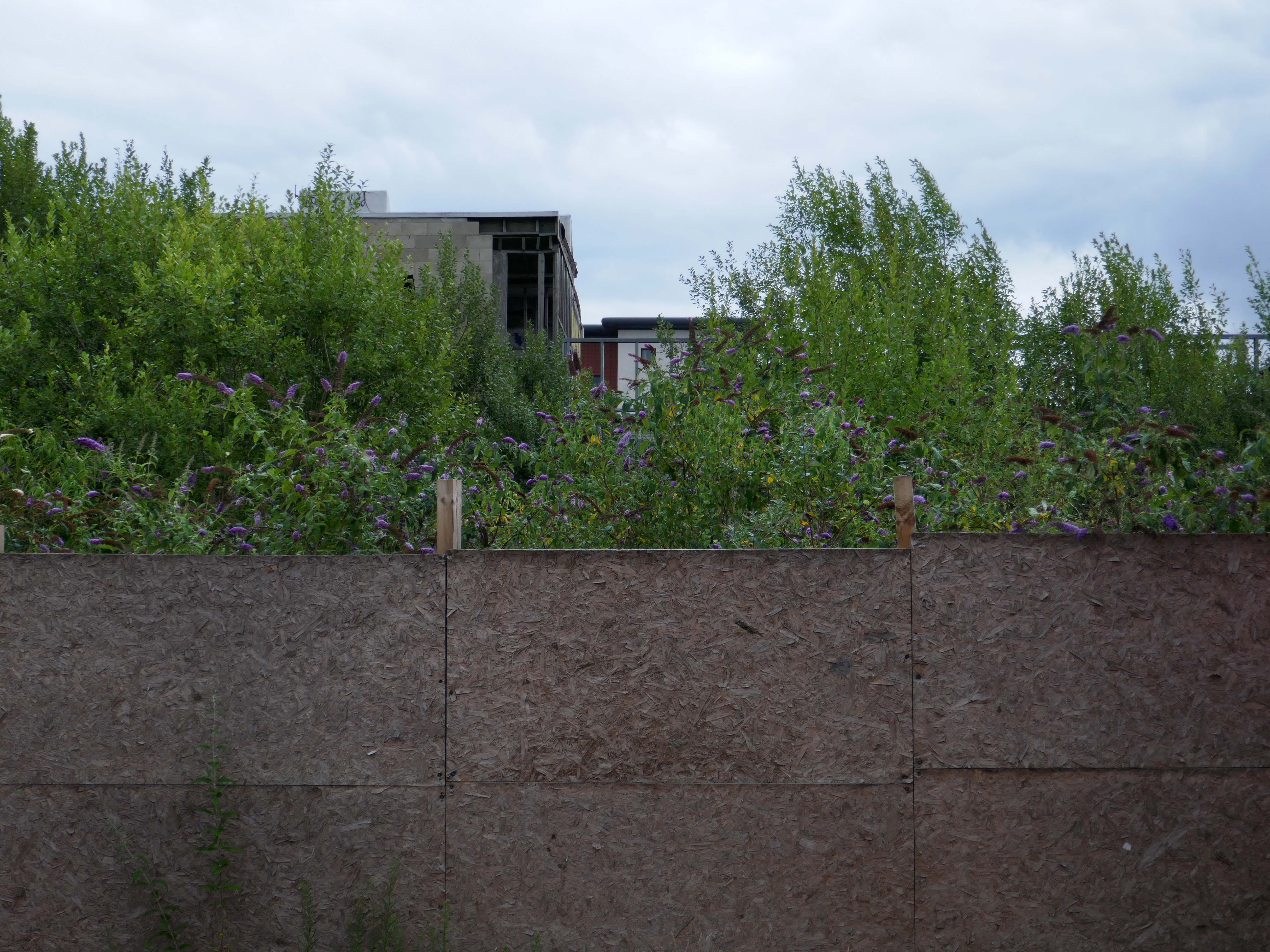
The site along with Venos and Progress House is up for sale.

A rare development opportunity in Central Manchester with excellent access to Manchester City Centre 
Close to Salford Quays, Old Trafford Football and Cricket Grounds along with White City Retail Park 
The total site covers an area of approximately 2.10 Acres, historic planning consents granted on the site for in excess of 200 flats plus additional commercial accommodation.

Rear of the Venos site.

Magenta Property has acquired Trafford Press and Empress Mill off Chester Road, the site of a 200 home residential scheme that stalled in 2016.

Headed up by Rohit and Parminder Lakhanpaul, Magenta bought the Old Trafford buildings for £1.5m, according to Land Registry. 

Place North West

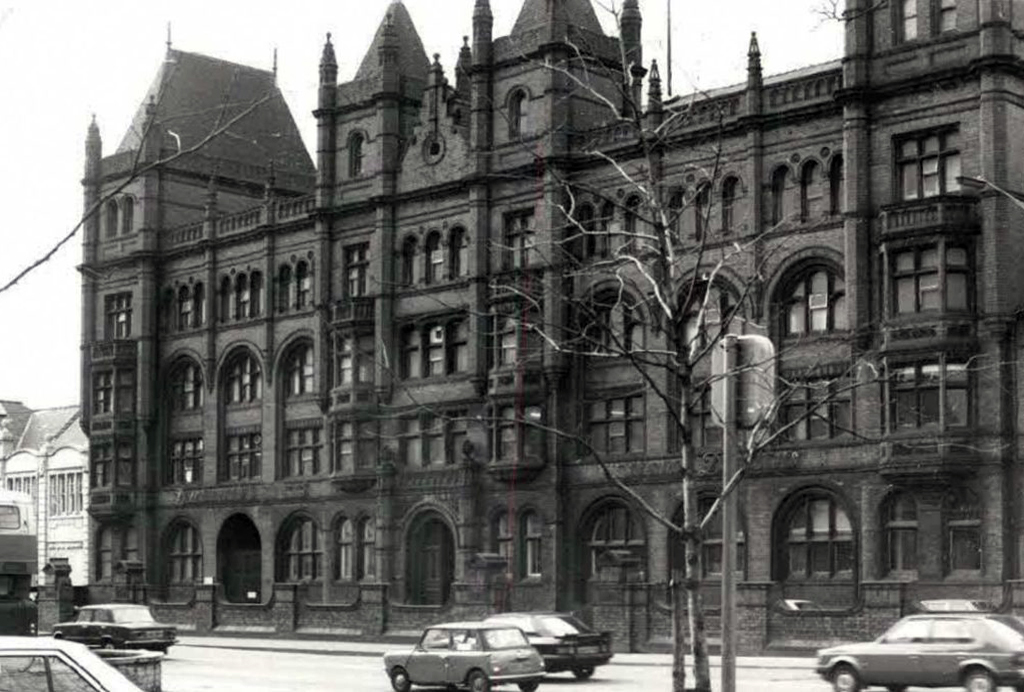
Duckworths Essence Distillery built in 1896 to a design by the architectural practice of Briggs and Wolstenholme, it is Grade II Listed in June 2018.

Duckworth’s specialised in the manufacture of concentrated soluble essences, essential oils and colours supplied to the aerated water trade – local ‘pop’ men. They were leaders in the field, supplying flavours and essences around the world and developing products tailored to specific markets. 

Duckworth & Co was acquired by Cargill Flavor Systems Ltd in 2003, the company vacated the Chester Road premises in 2006.

After buying the building in 2007 for a reported £3.6m, the Church of Scientology planned to re-open the building by either 2010 or 2011.

Leaders of the religious group have submitted a new application to carry out external and internal works. A design and access statement written on behalf of the church by NJSR Chartered Architects proposes a comprehensive revamp of the building.

The overall aim of the project is the refurbishment and conversion of the Duckworth Essences Building into a place of religious study and worship.

Messenger 2024

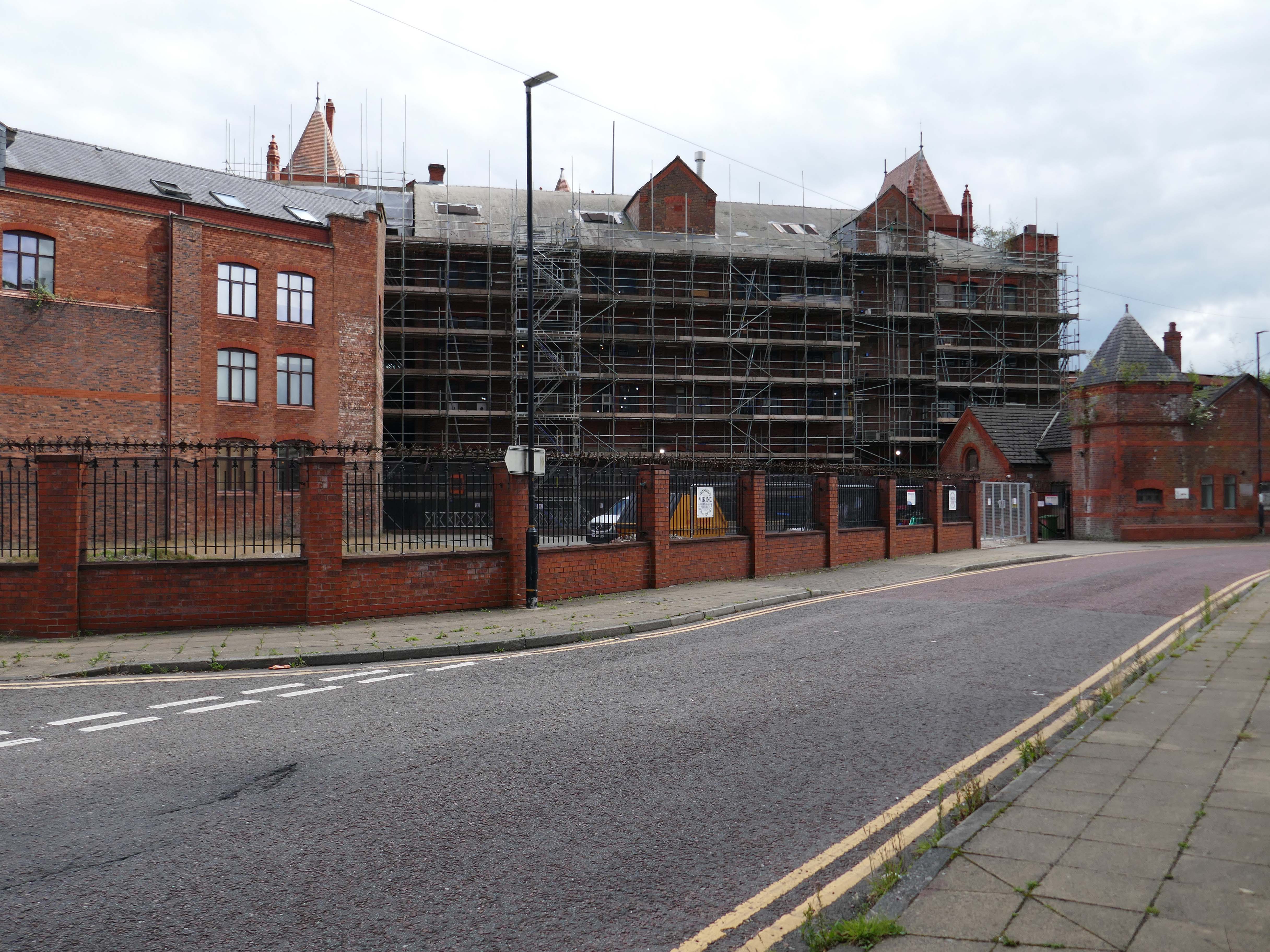
The building is currently enclosed in scaffolding.

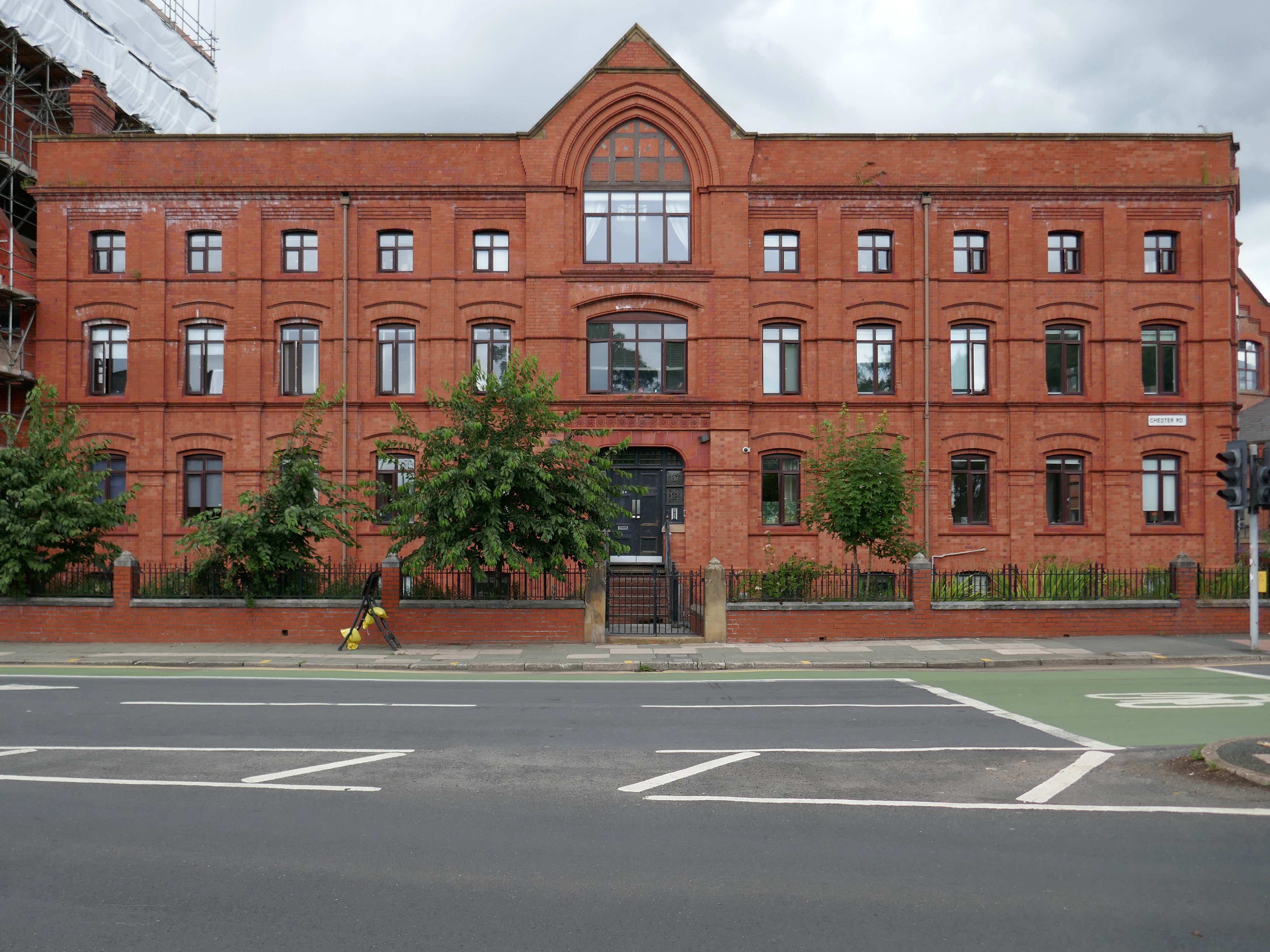
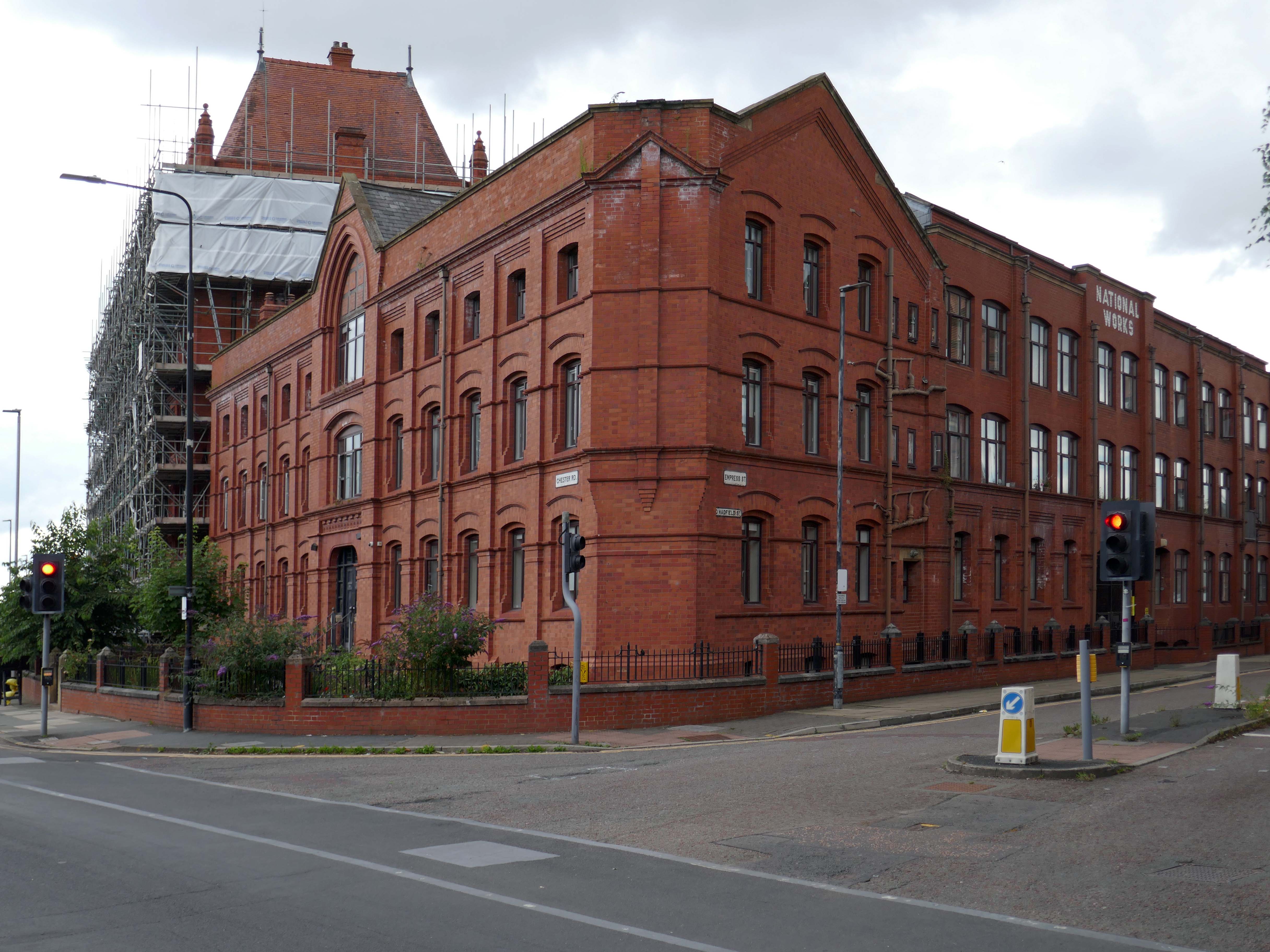
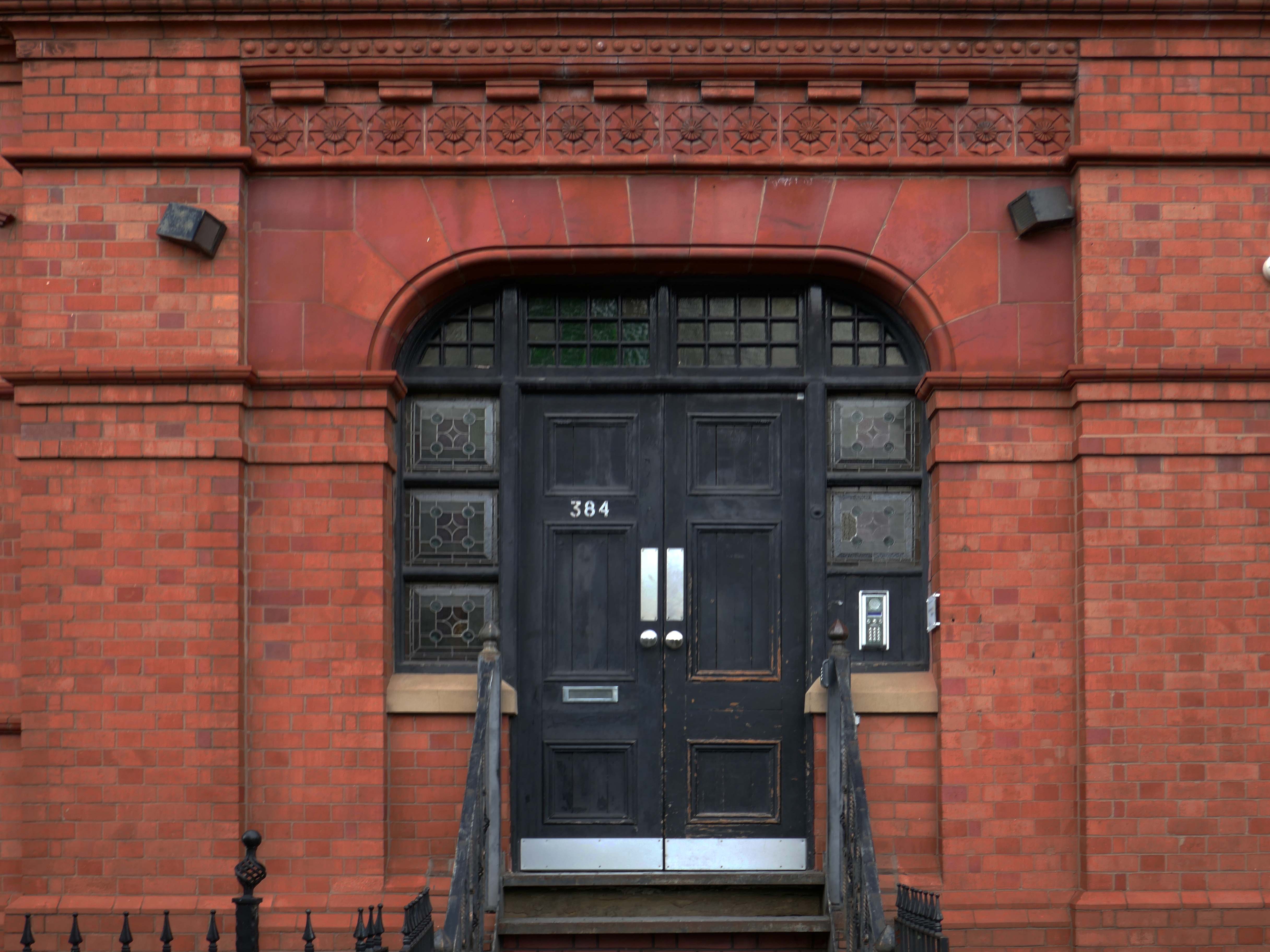
Next door is the National Works originally home to H, G & O Lewtas, lamp manufacturers, in Slater’s trade directory for 191 and later Crimpy Crisps.

Currently home to homes.

Ford more facts and snaps please see Chester Road and Tram Trip to Altrincham.

All archive photographs Local Image Collection.