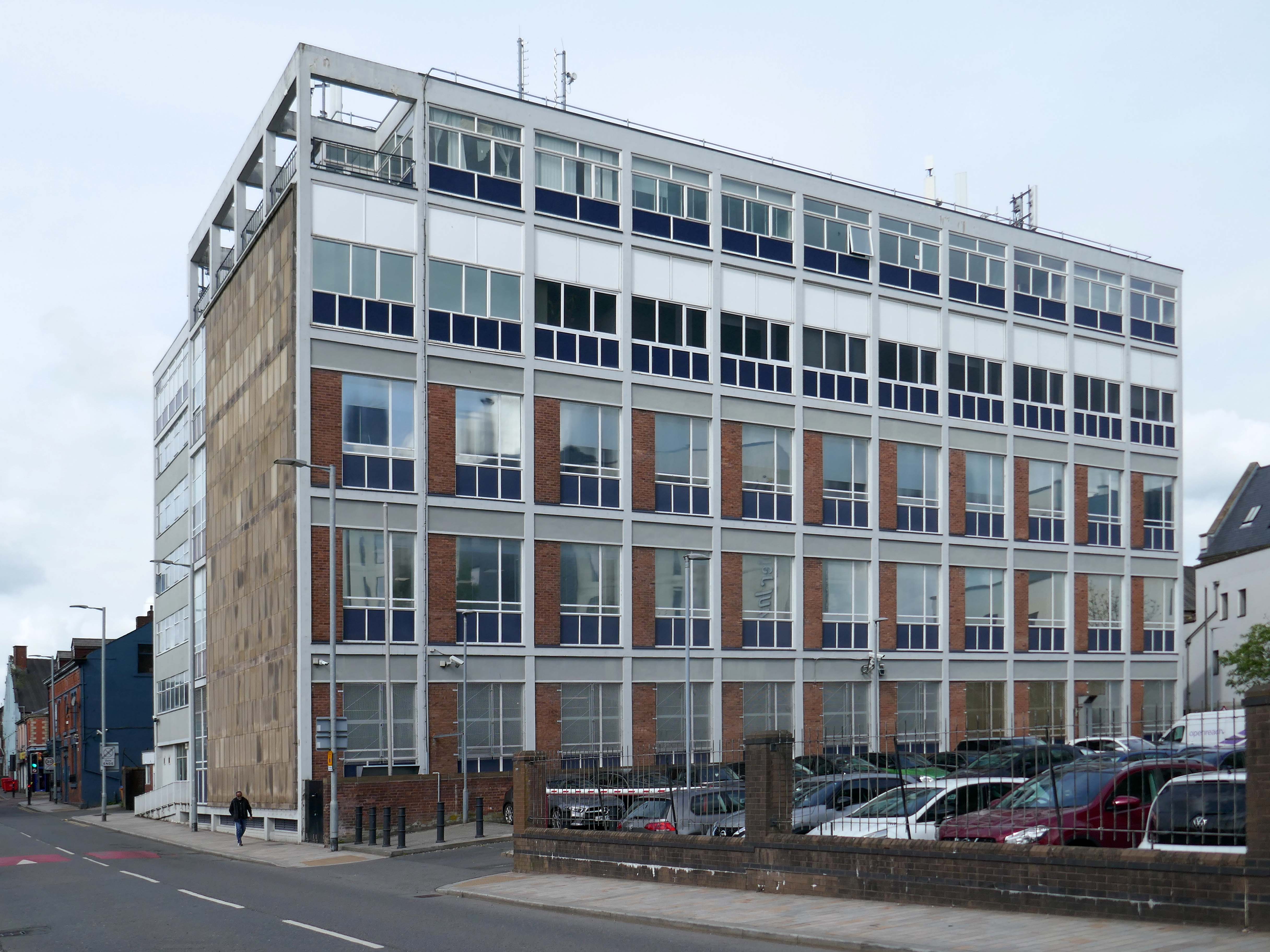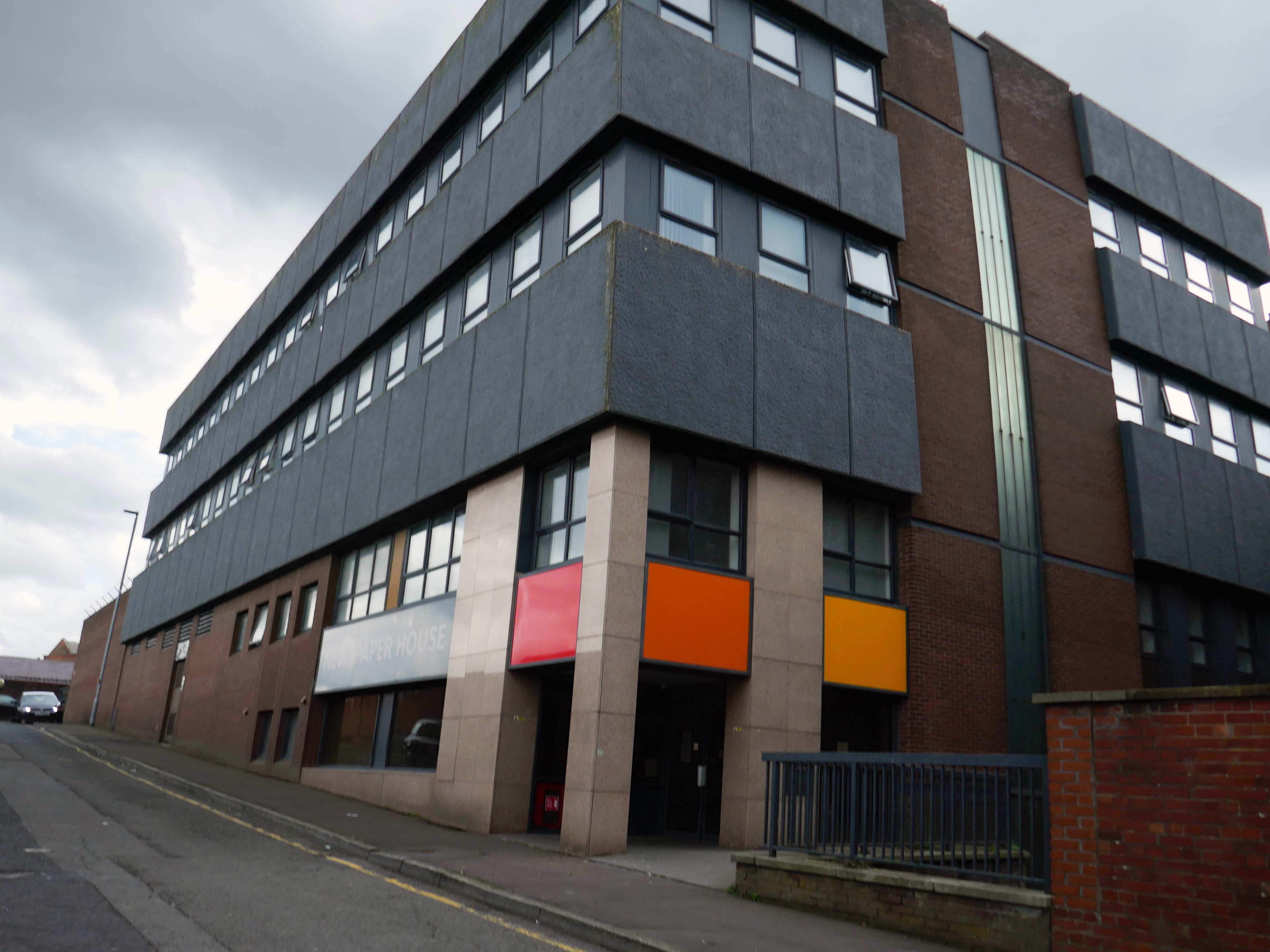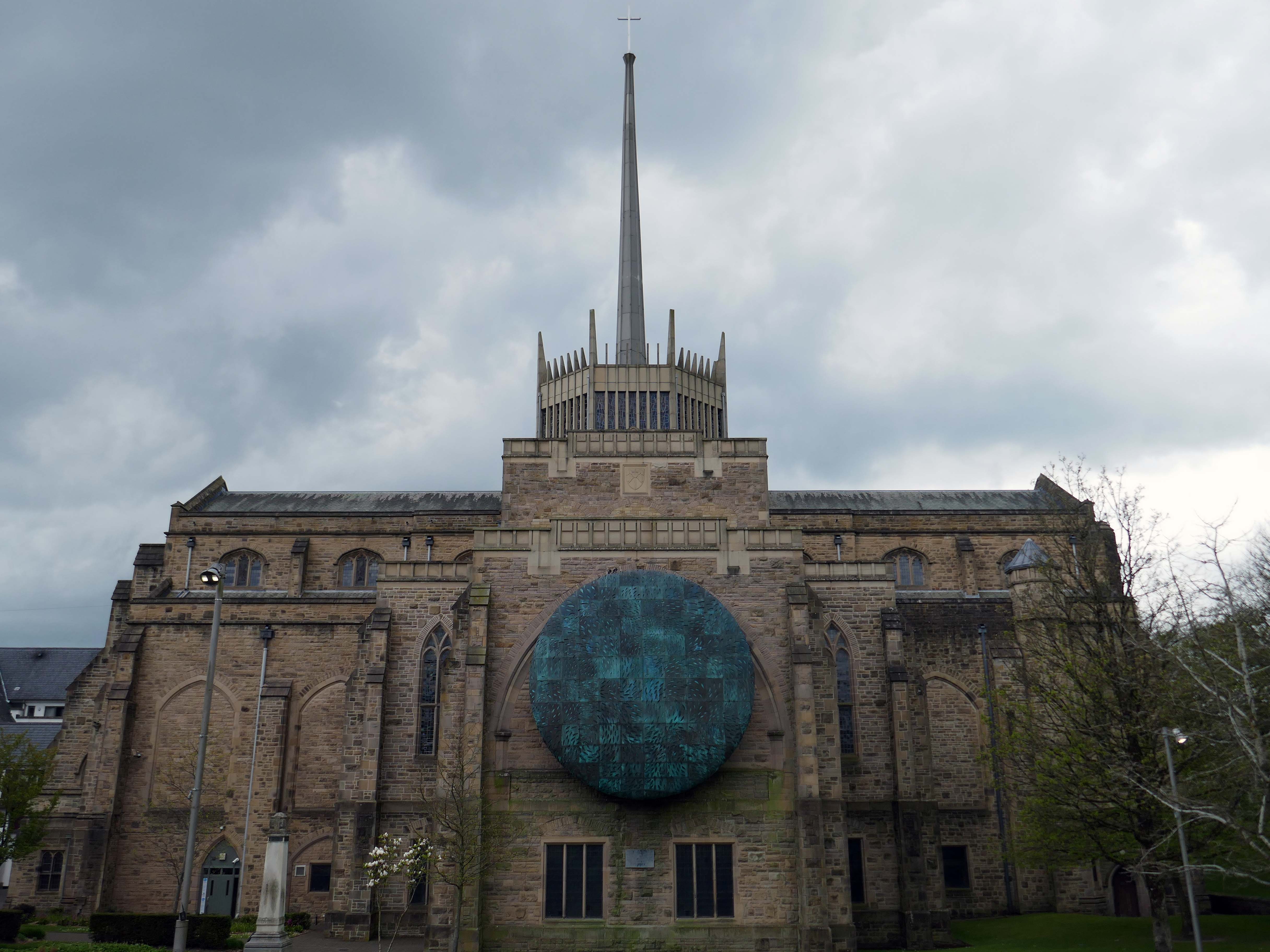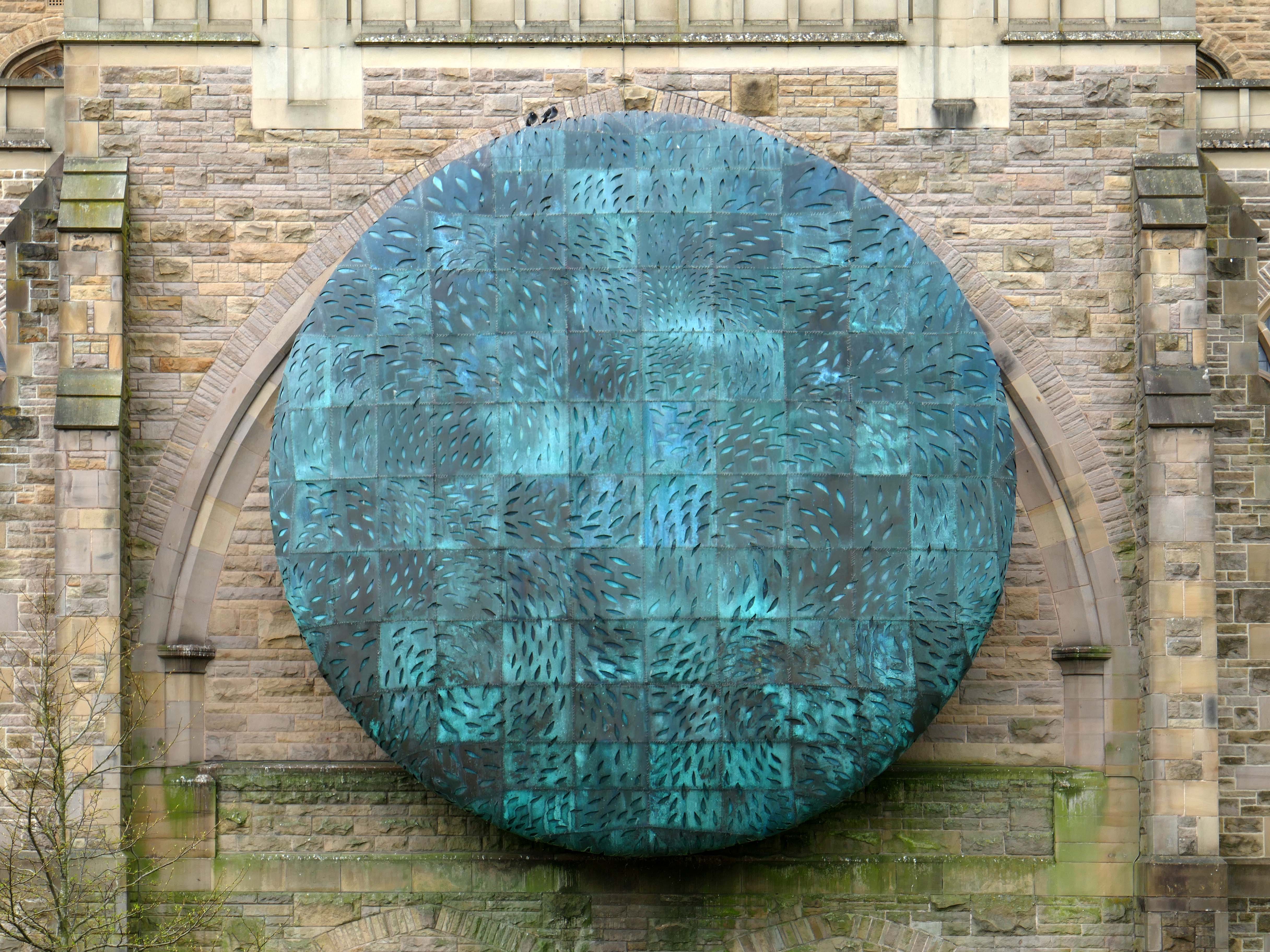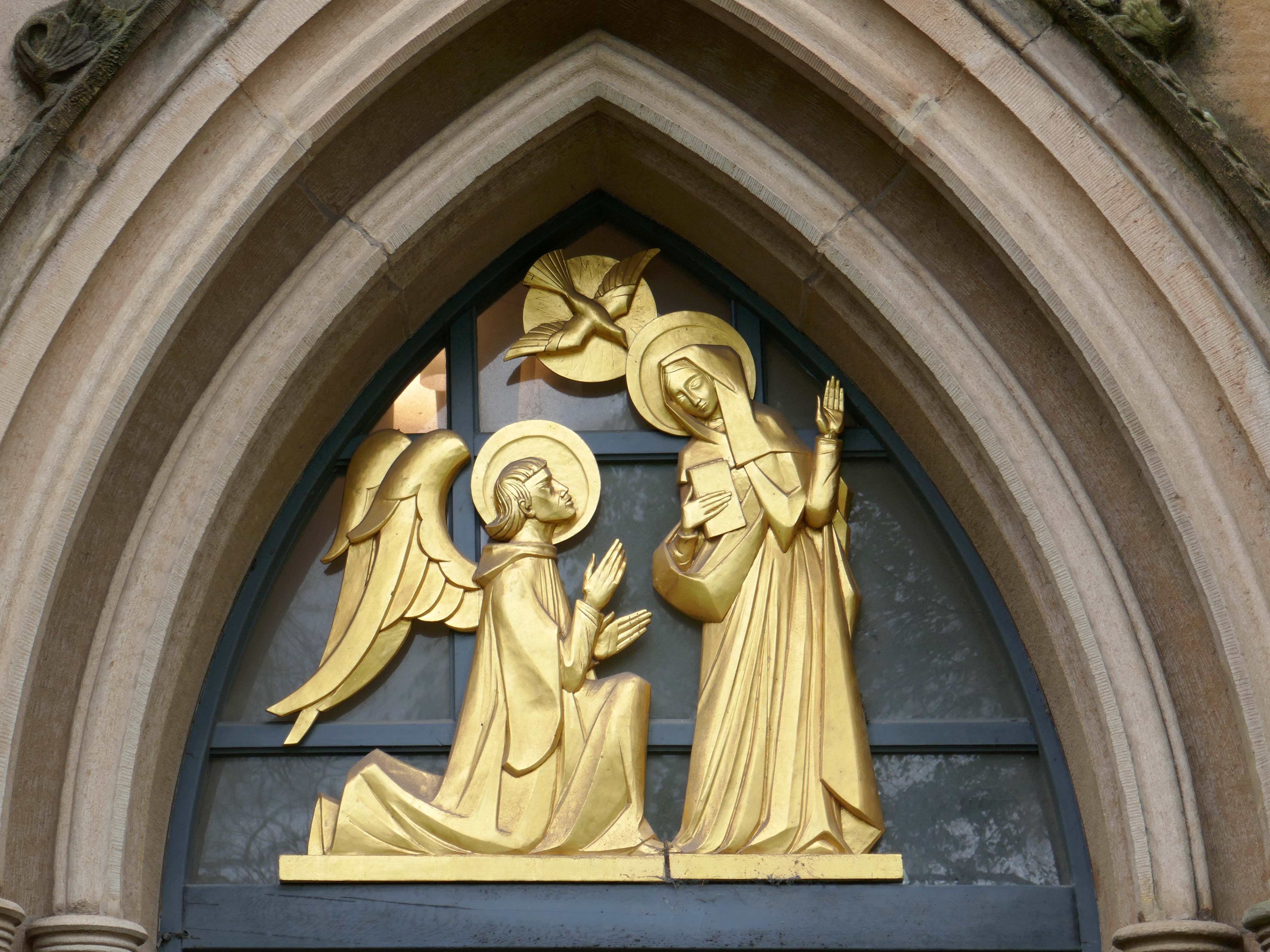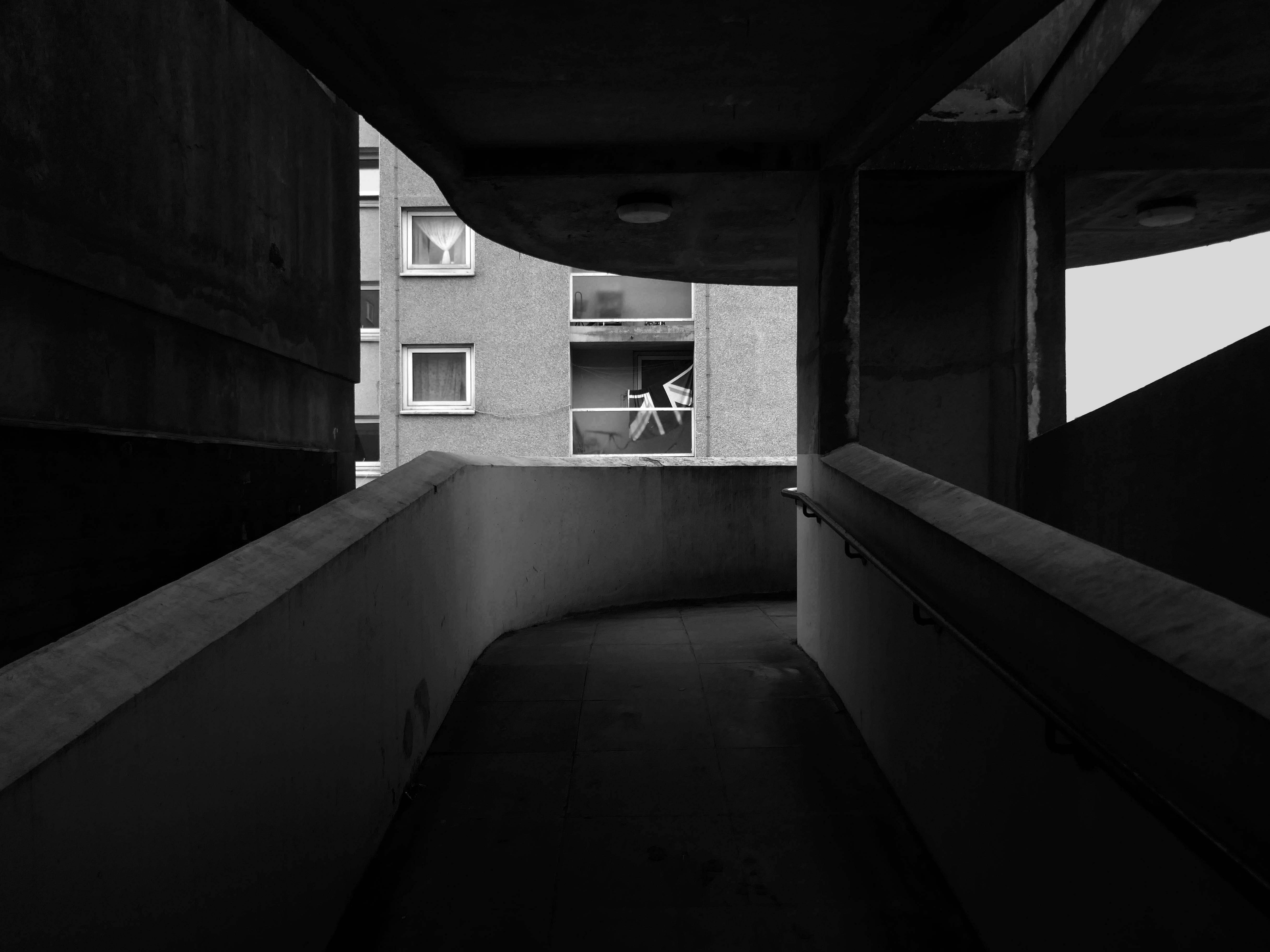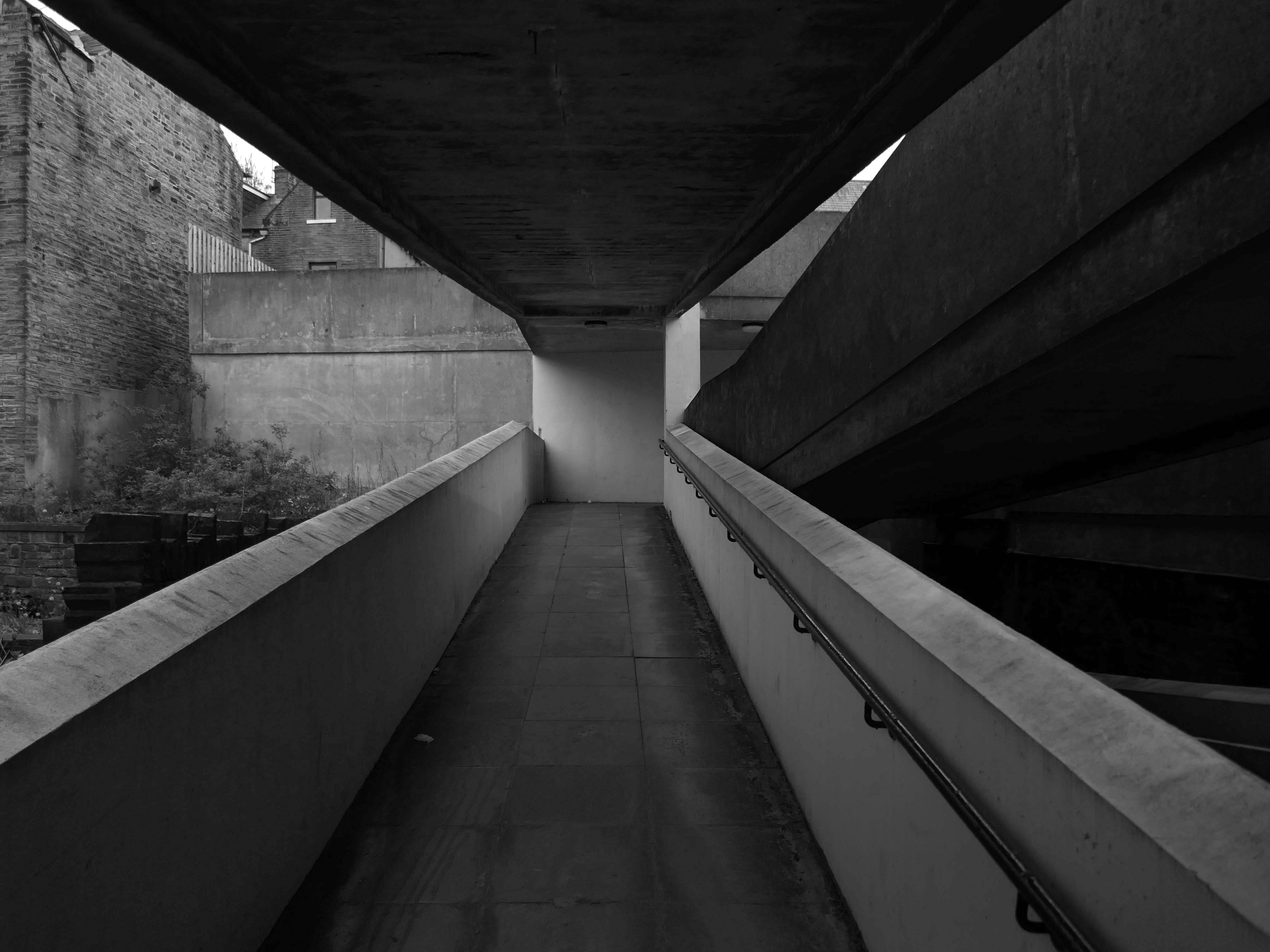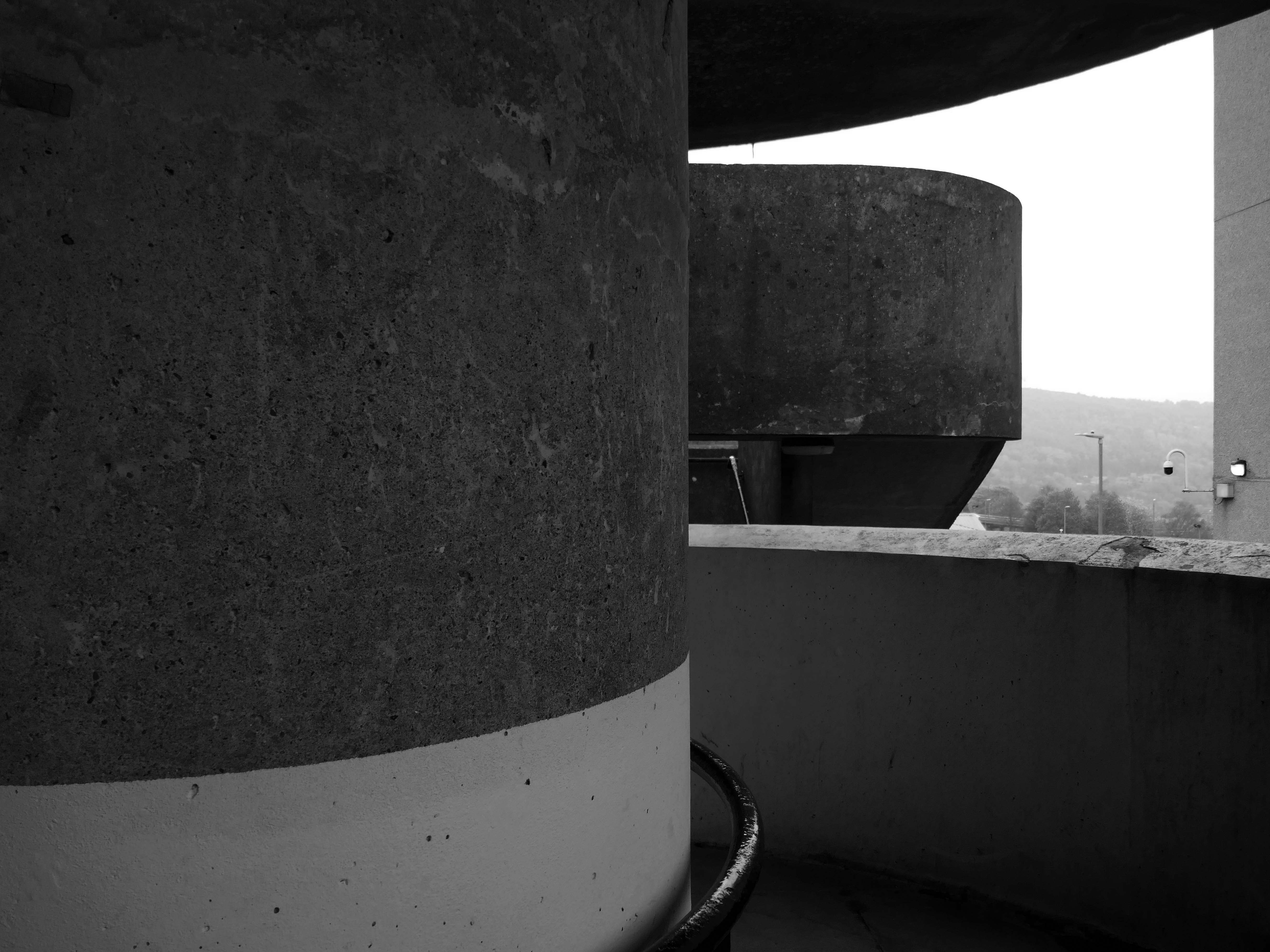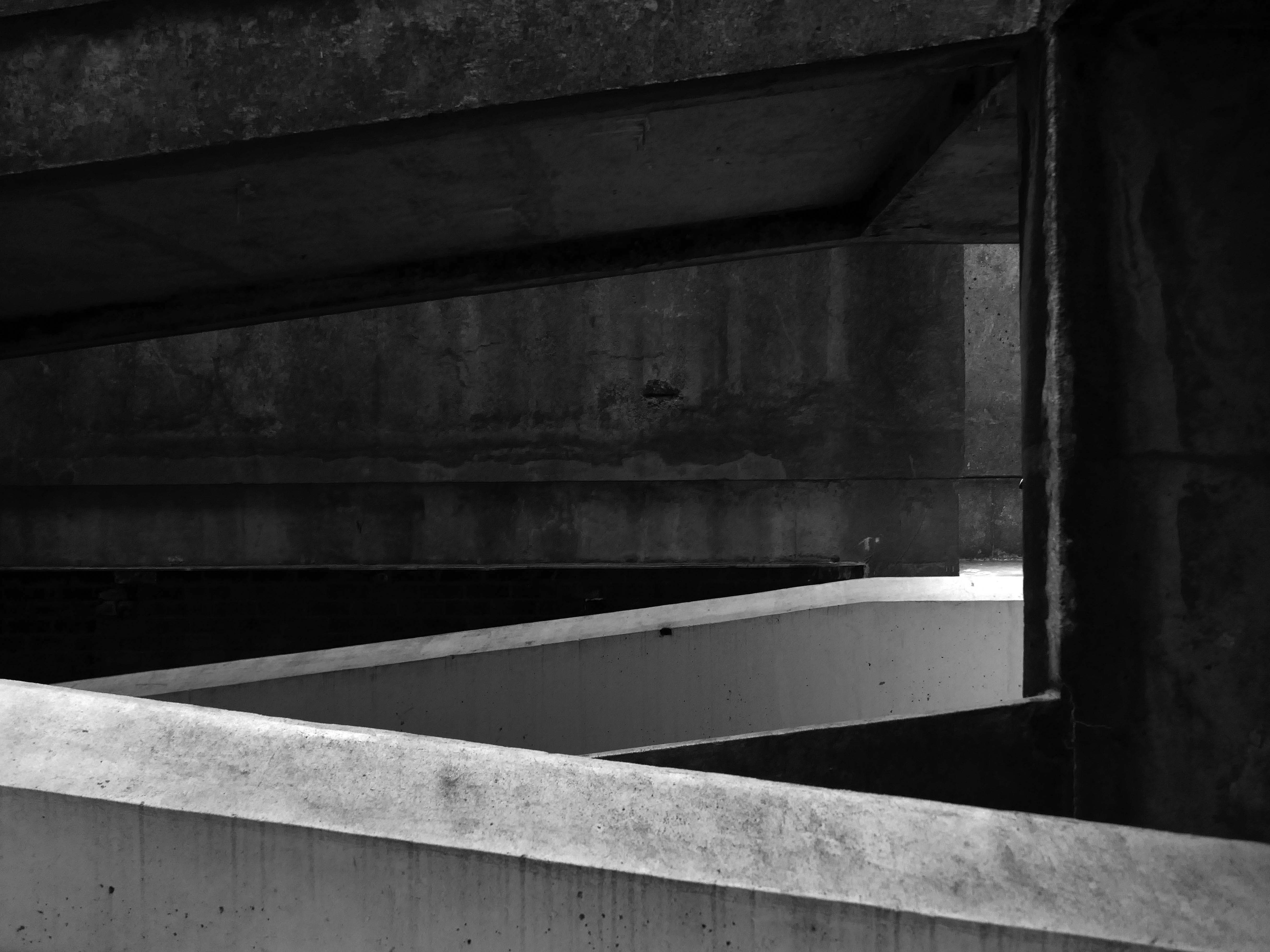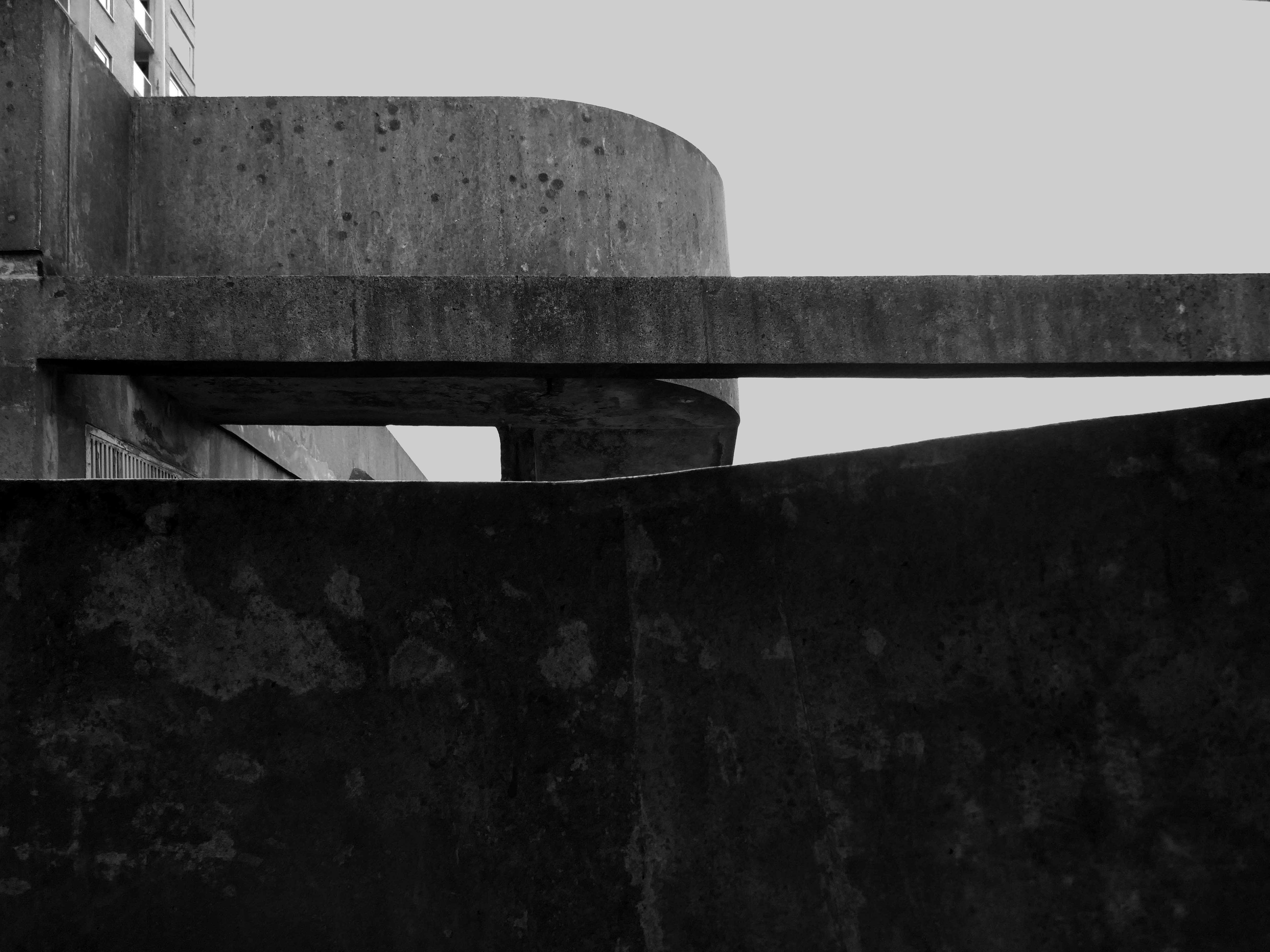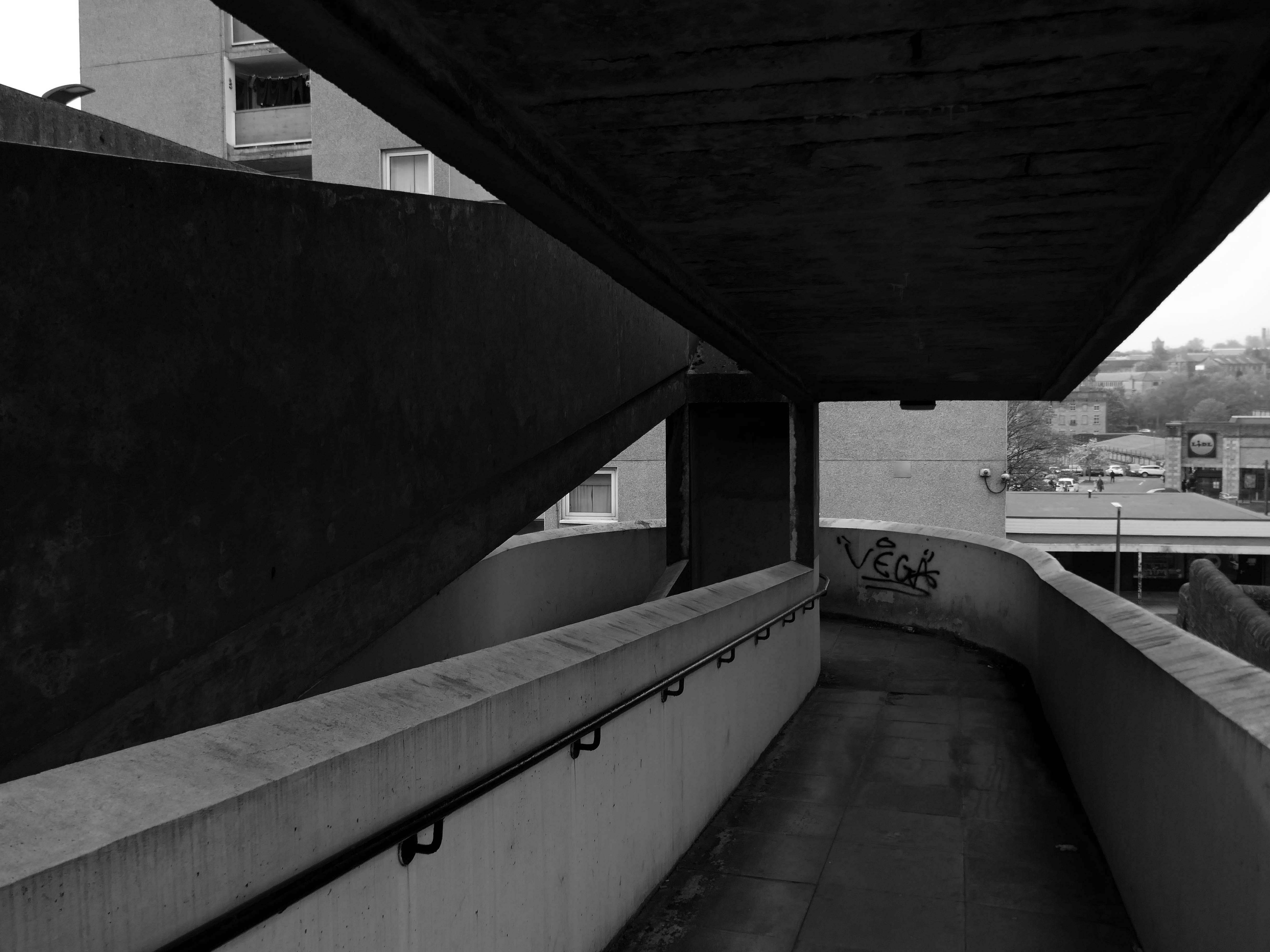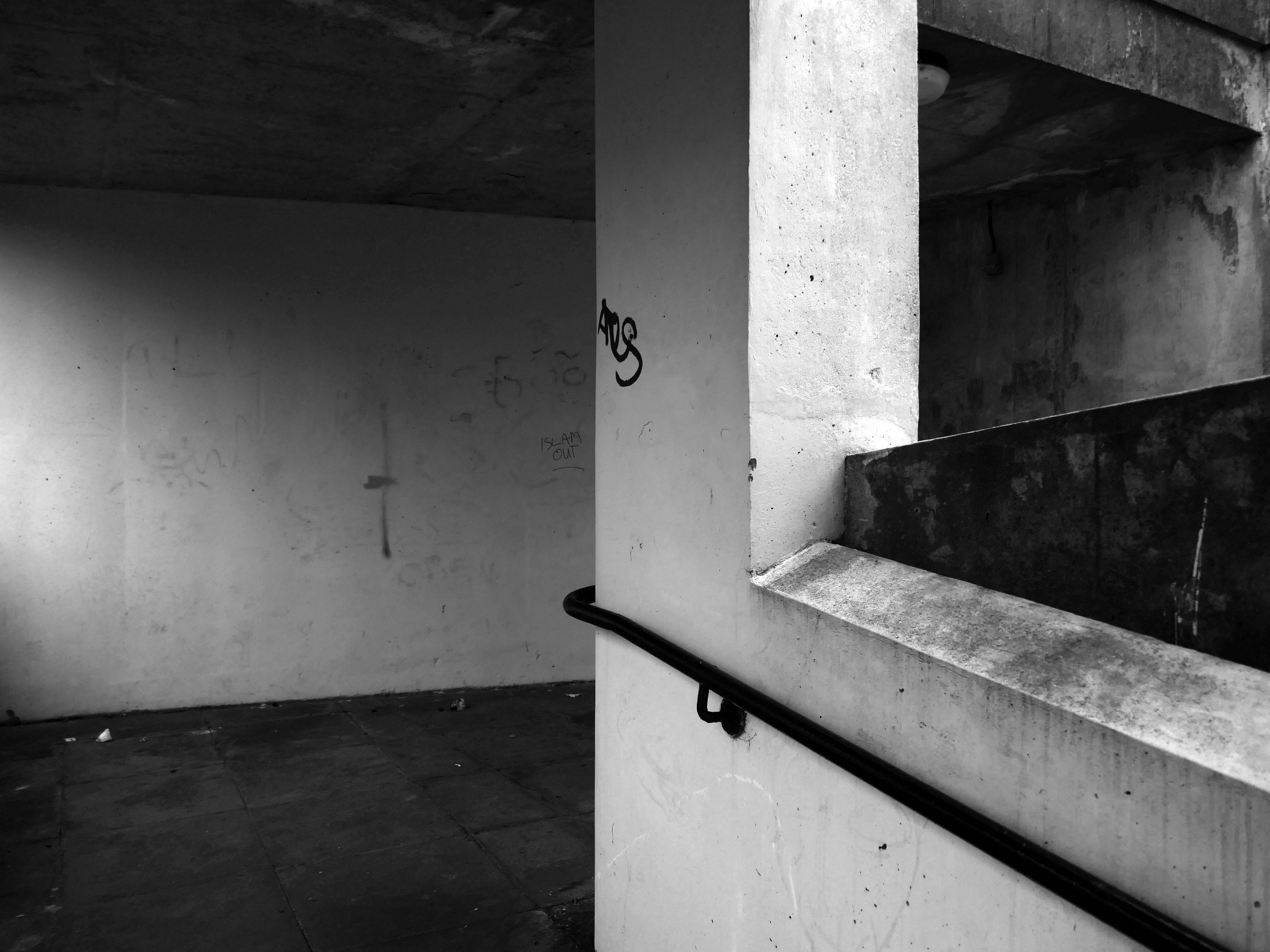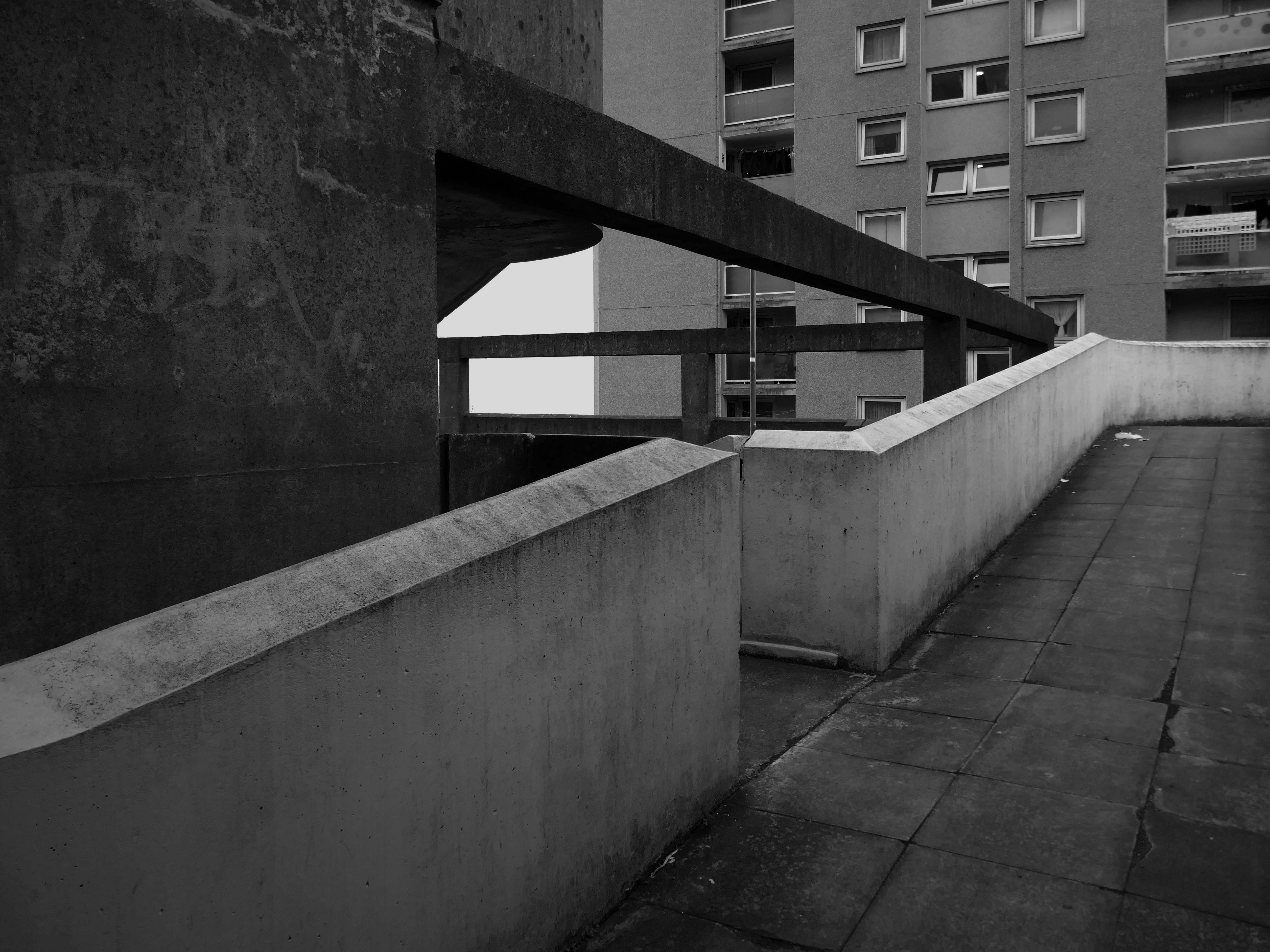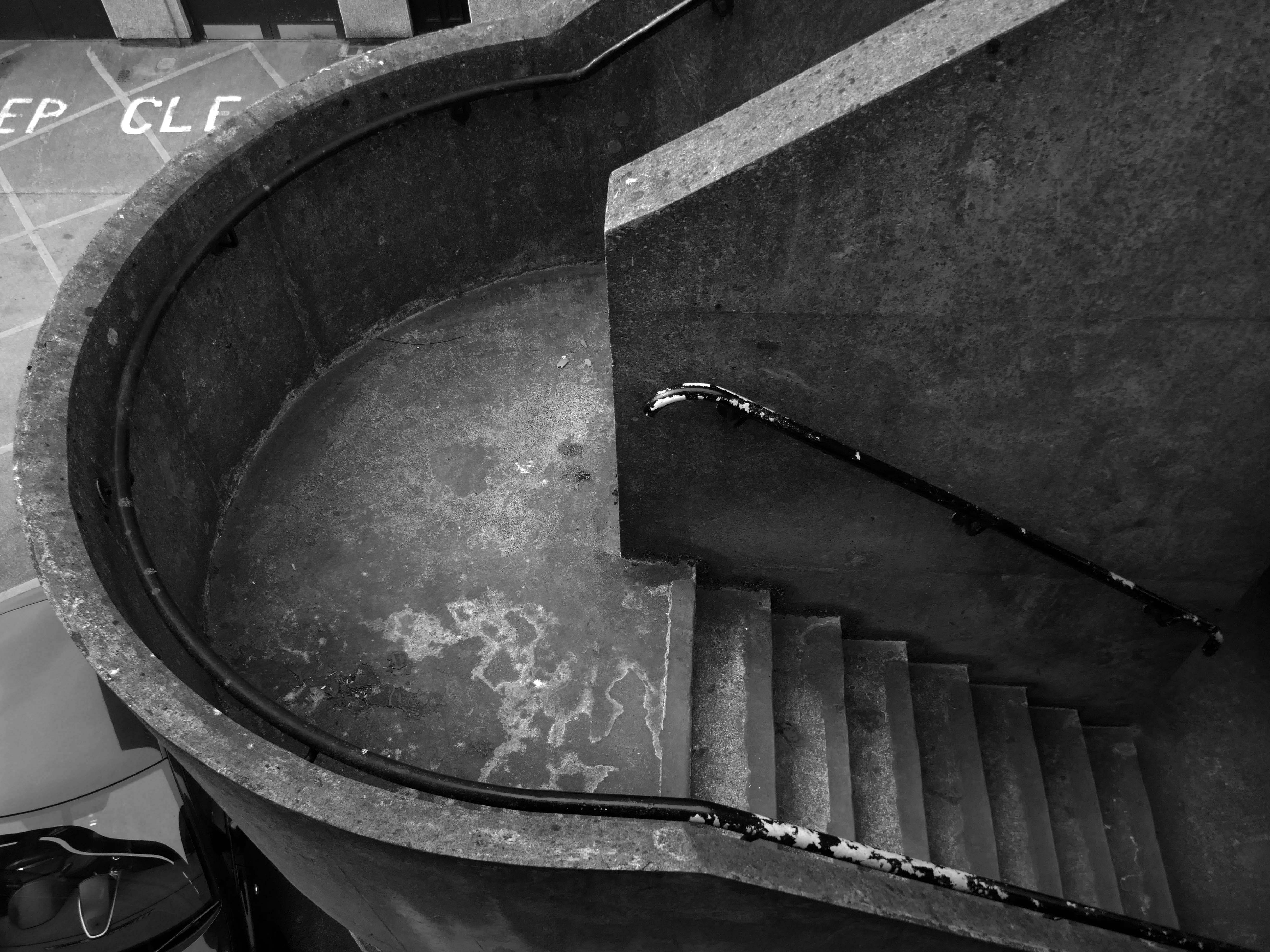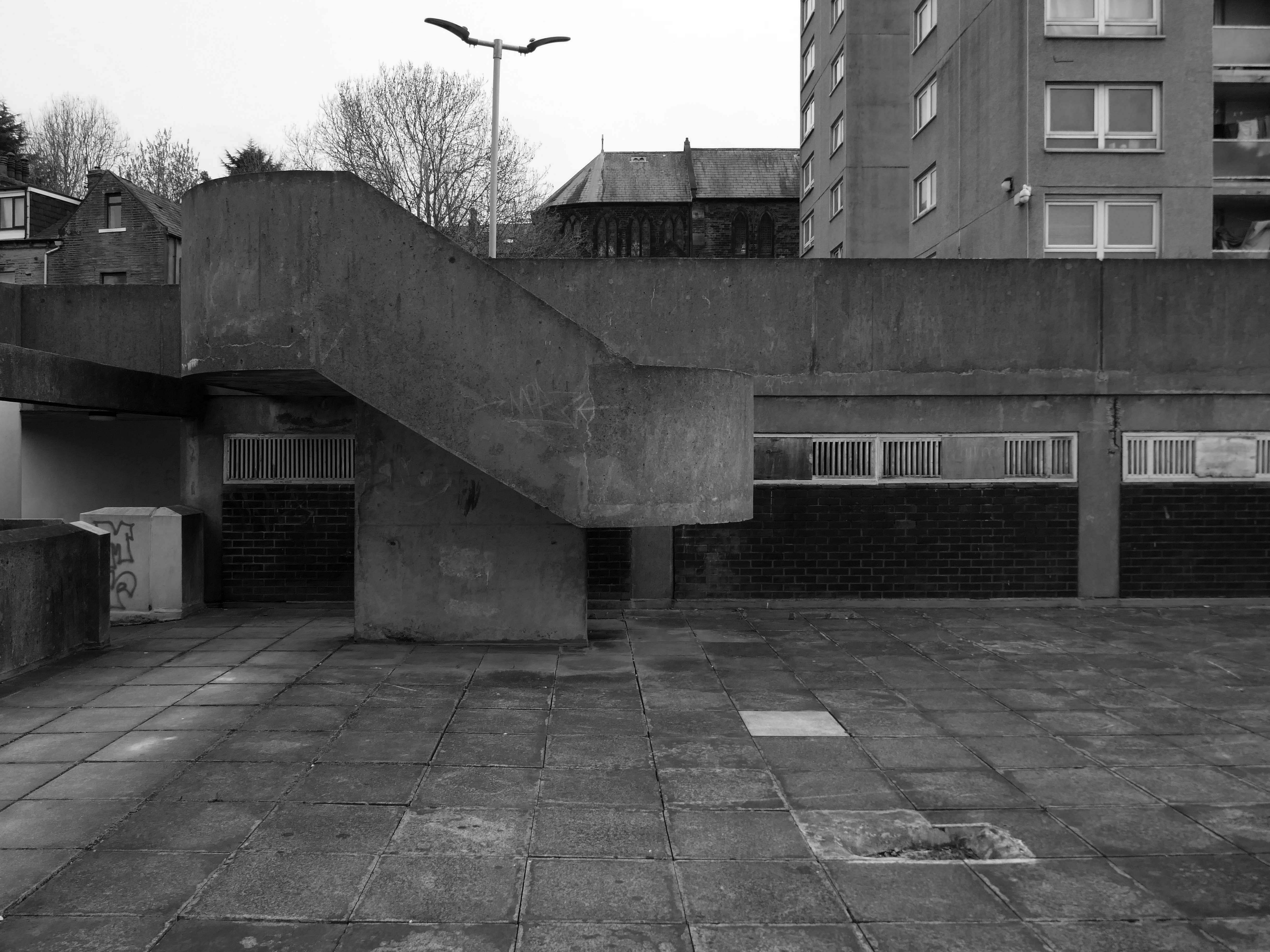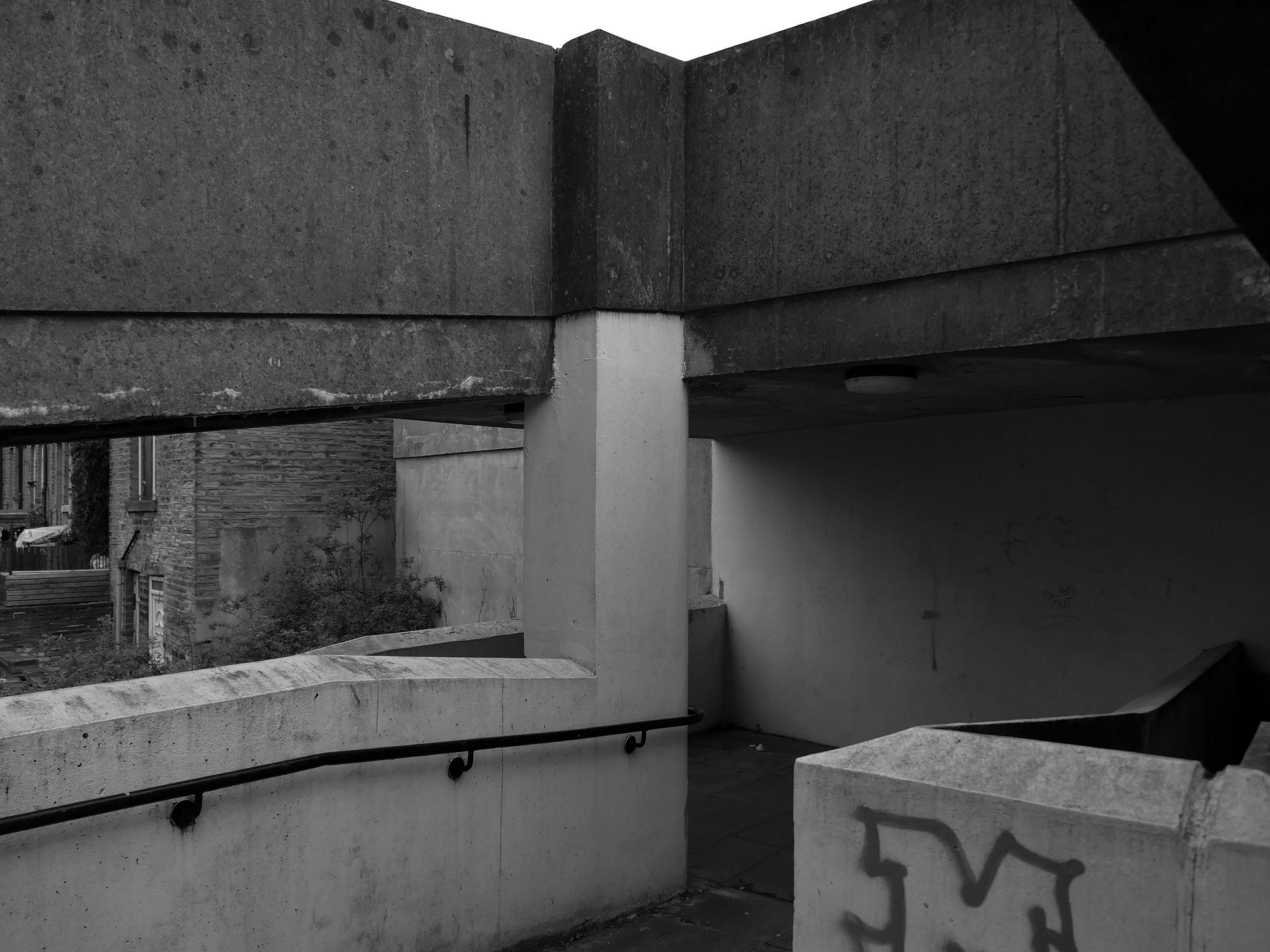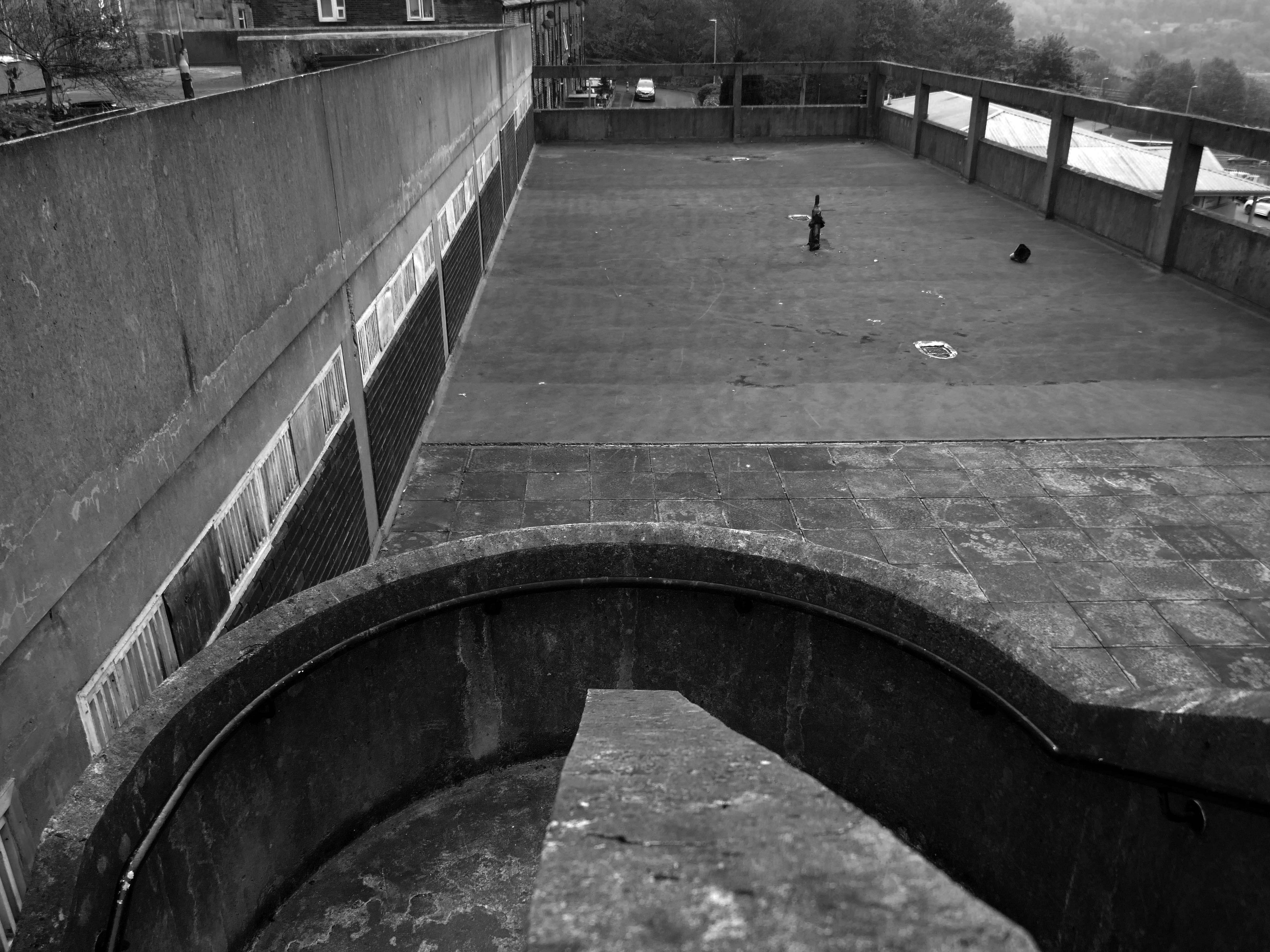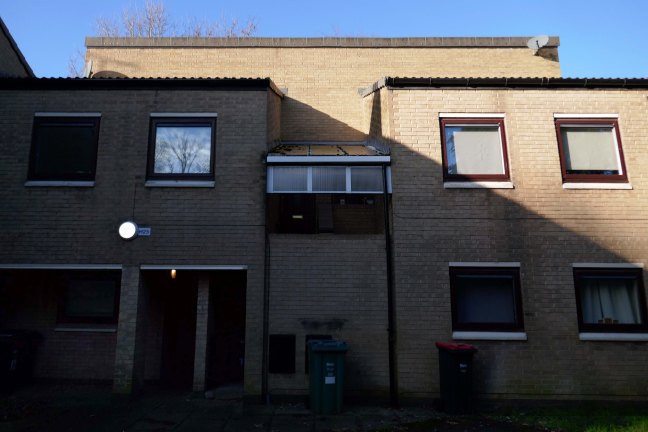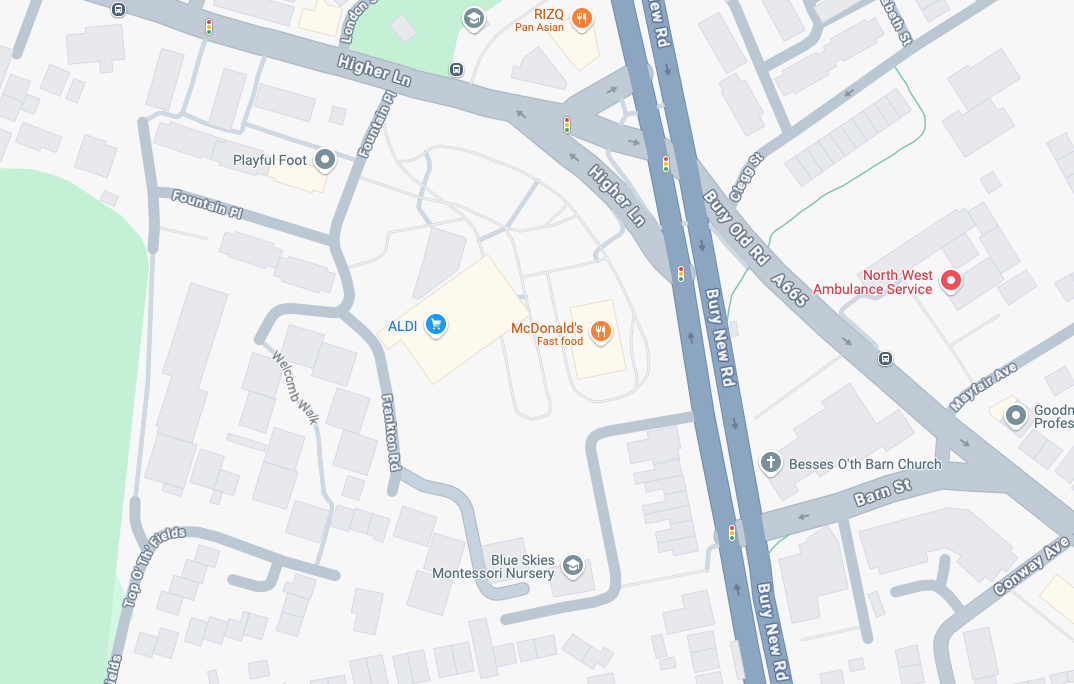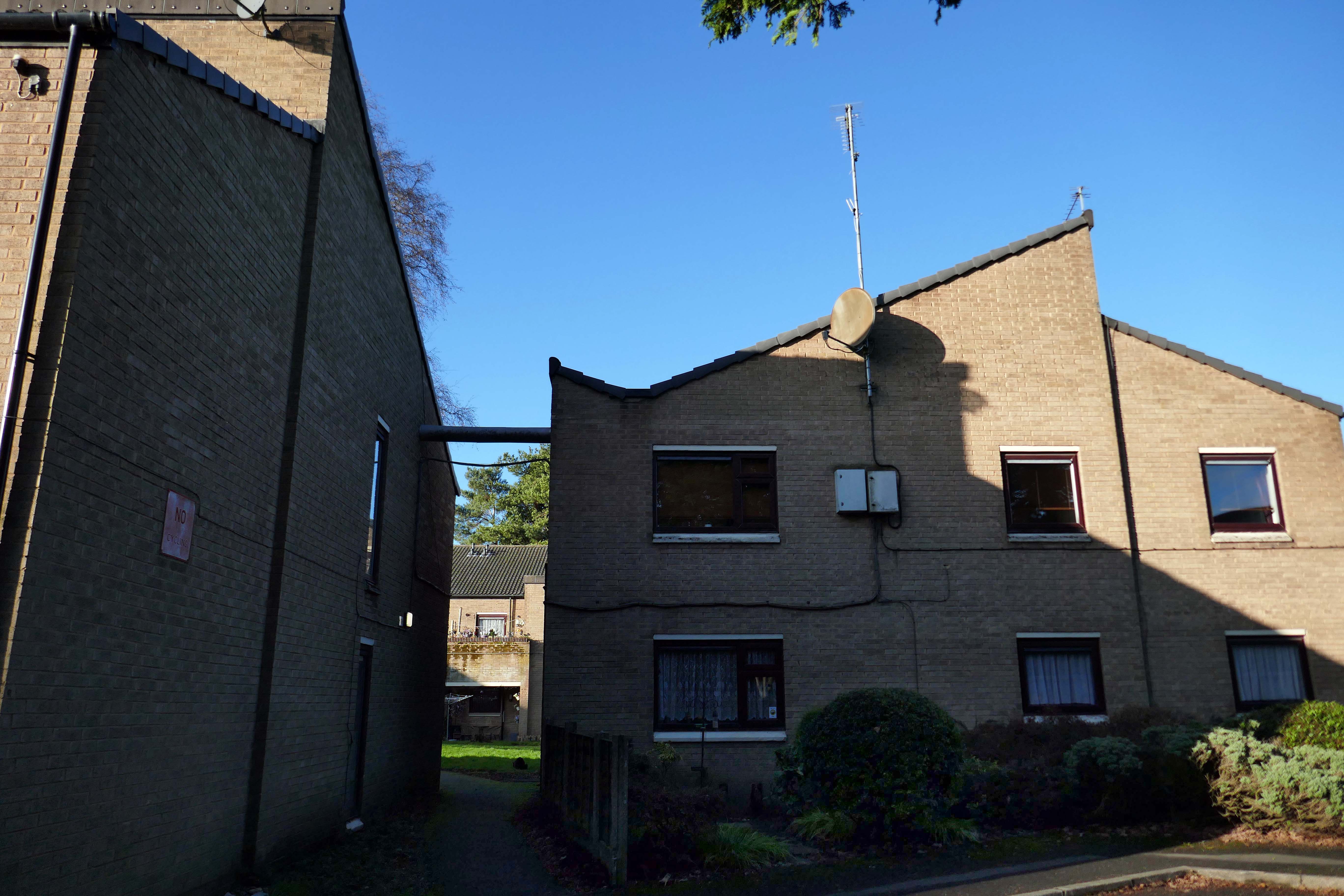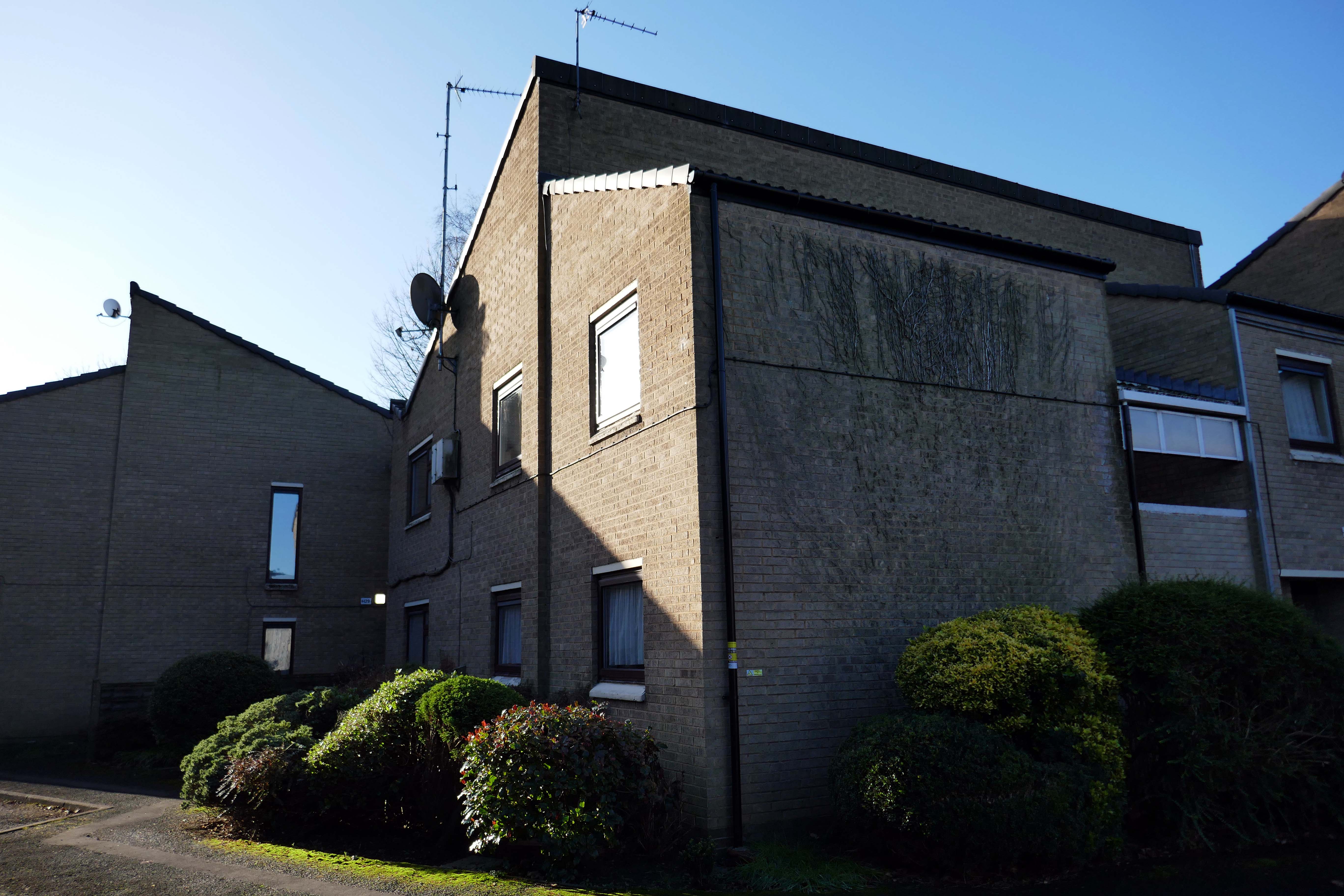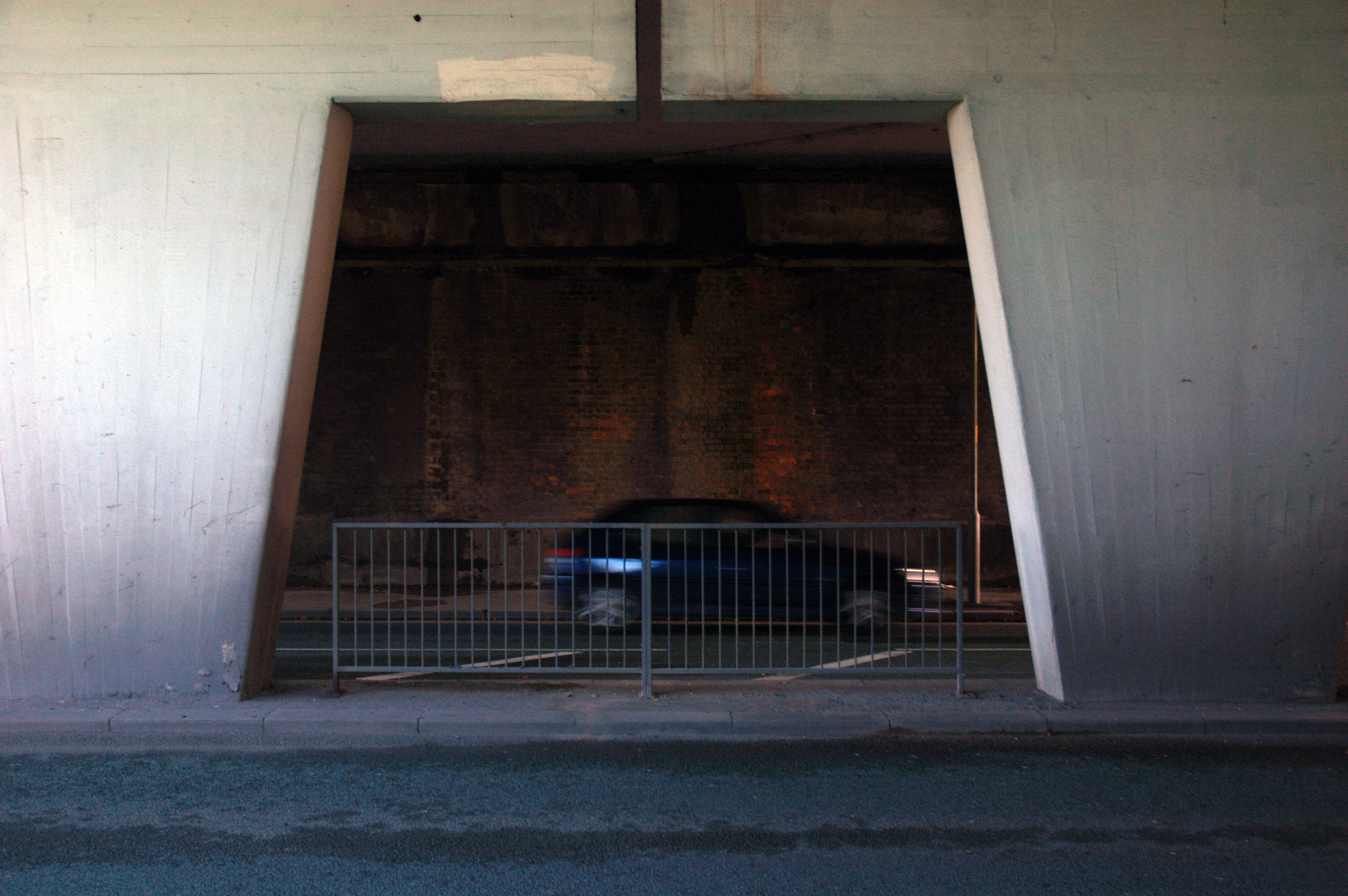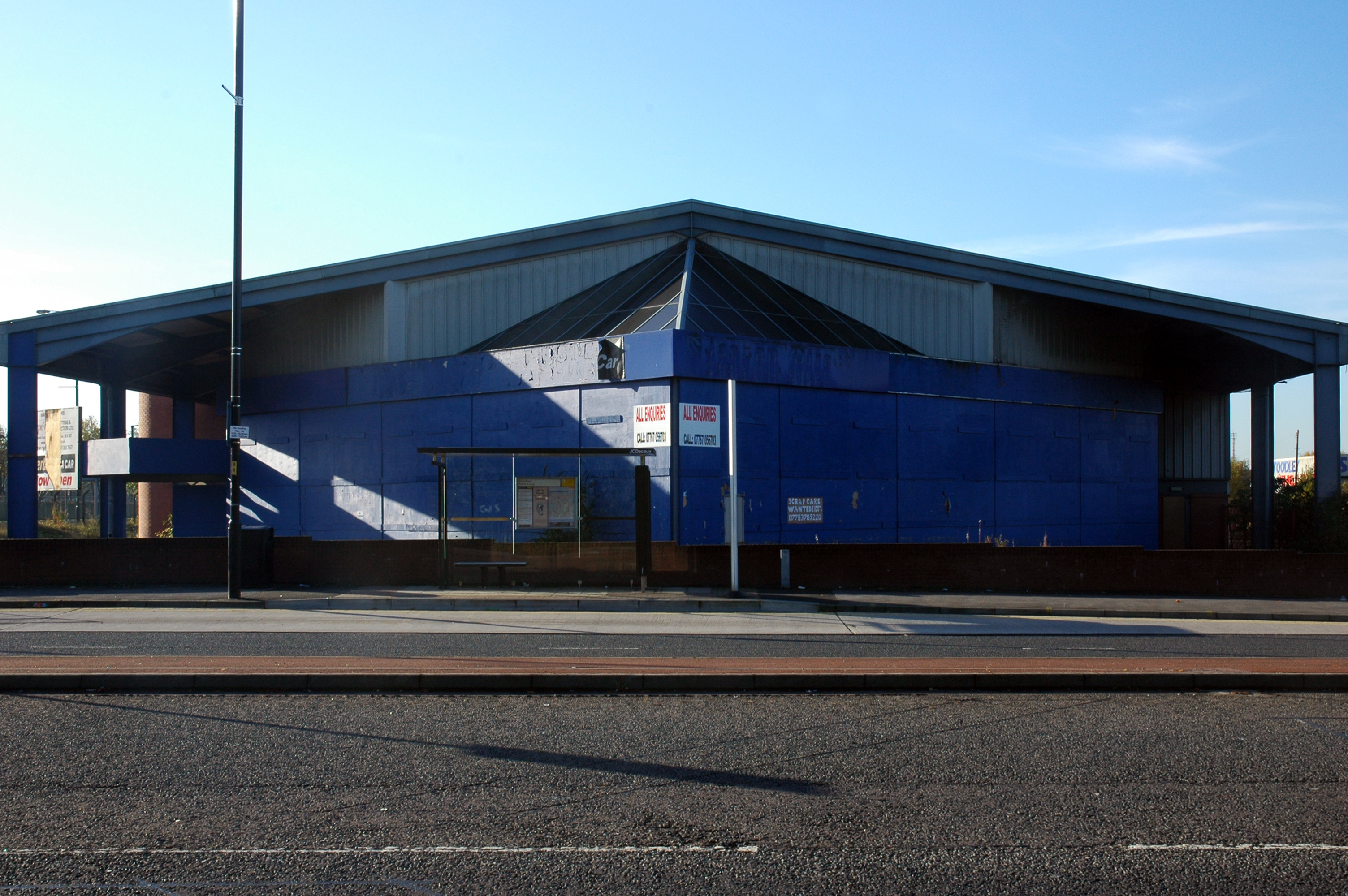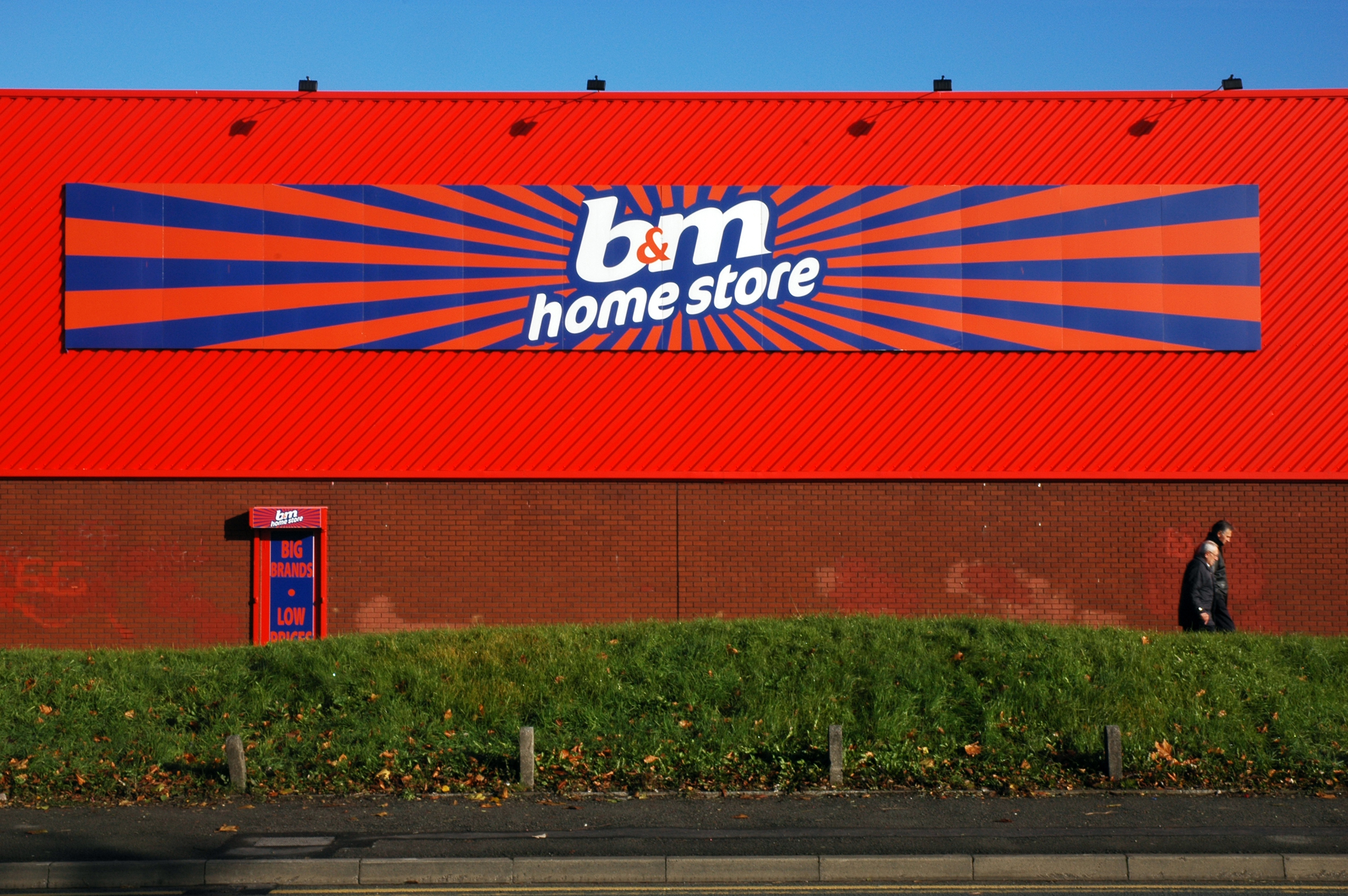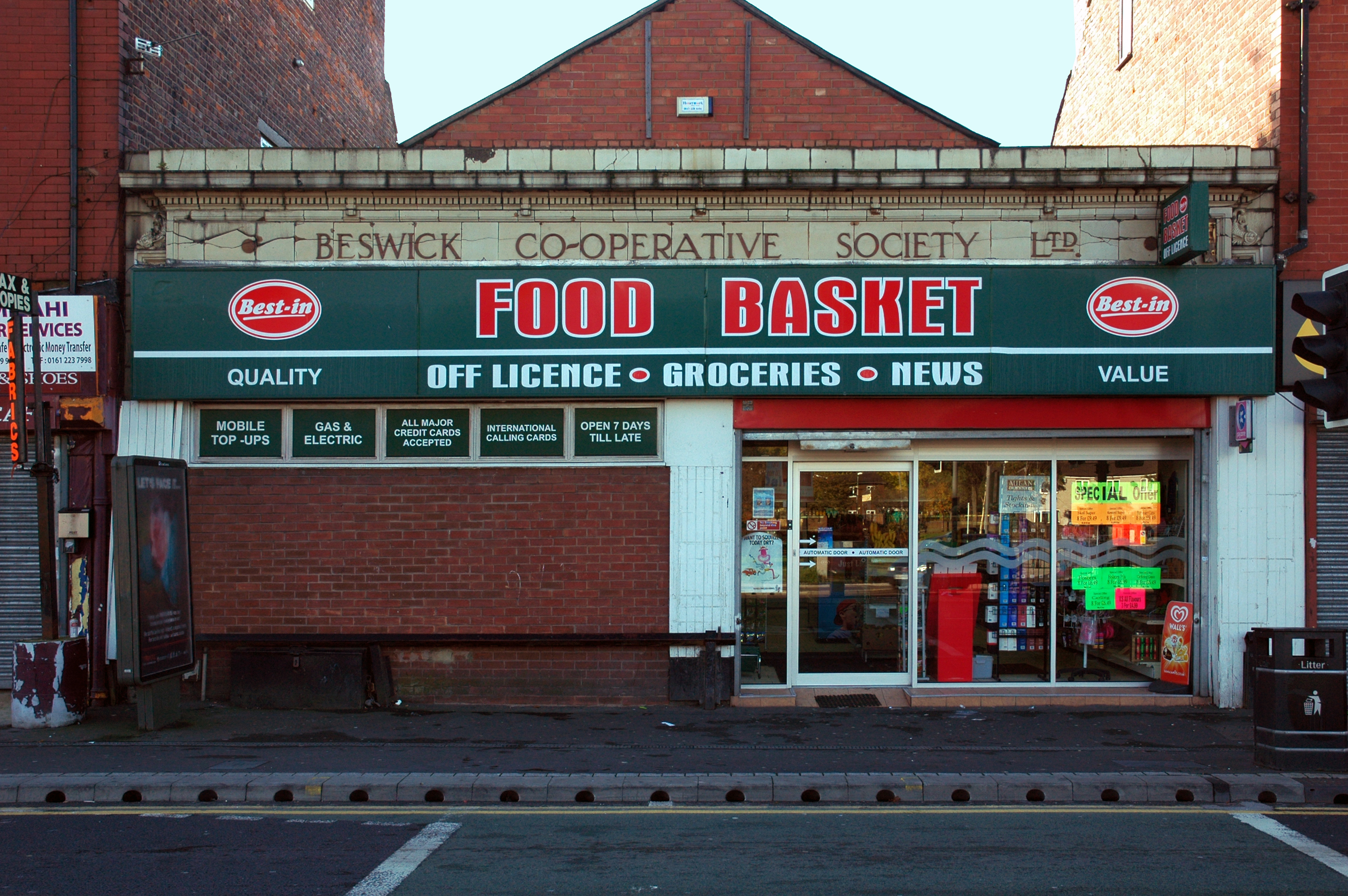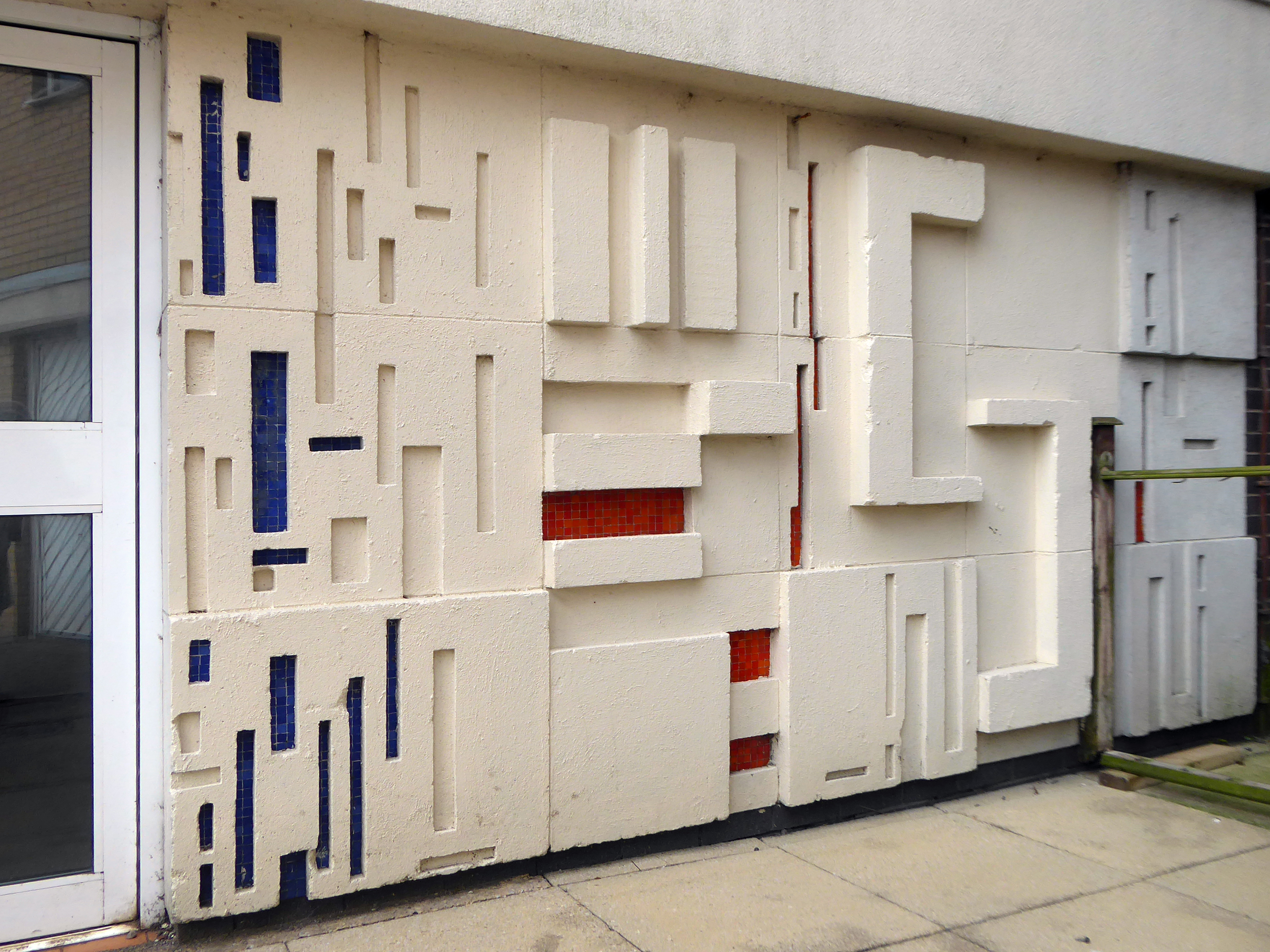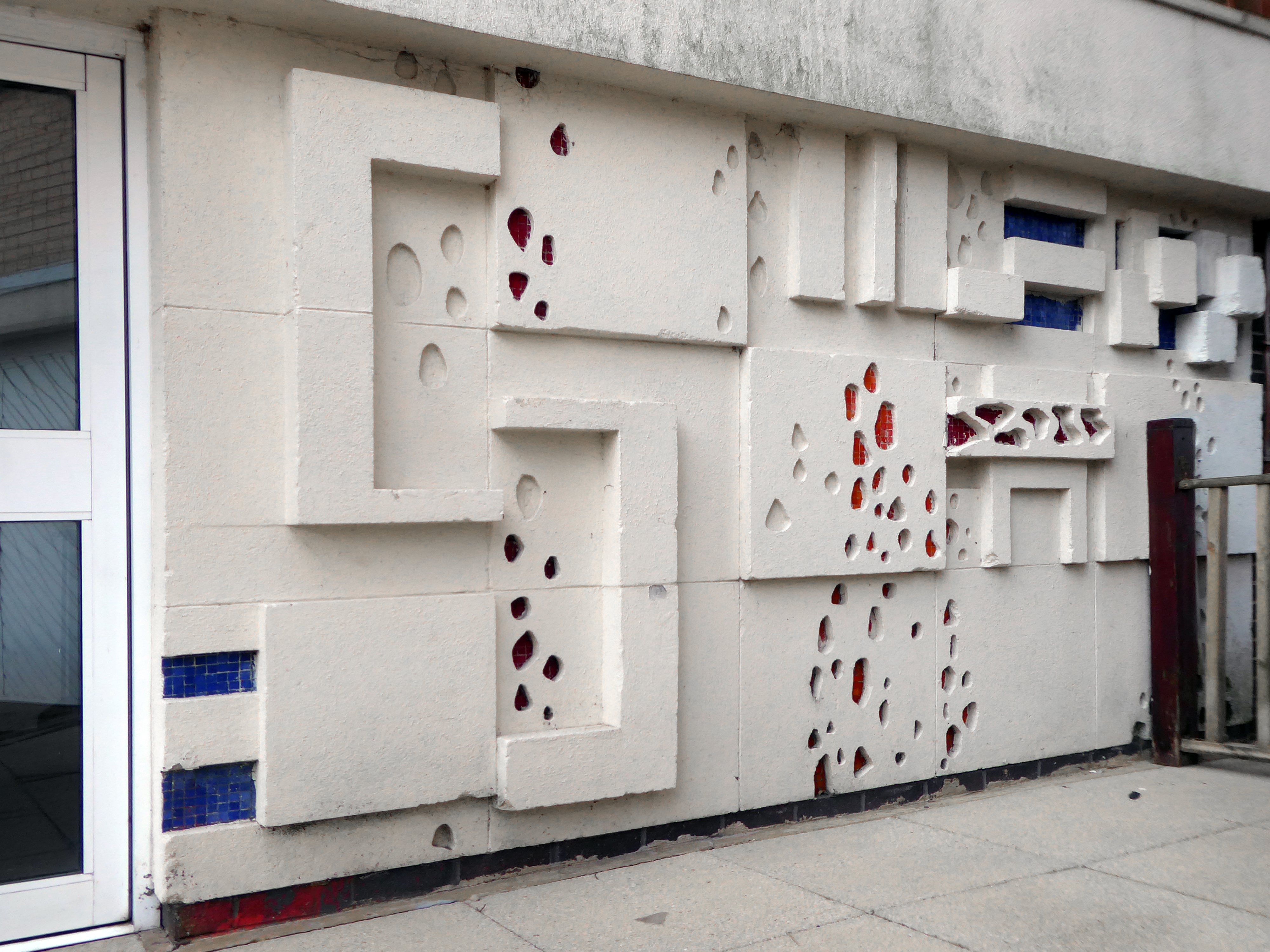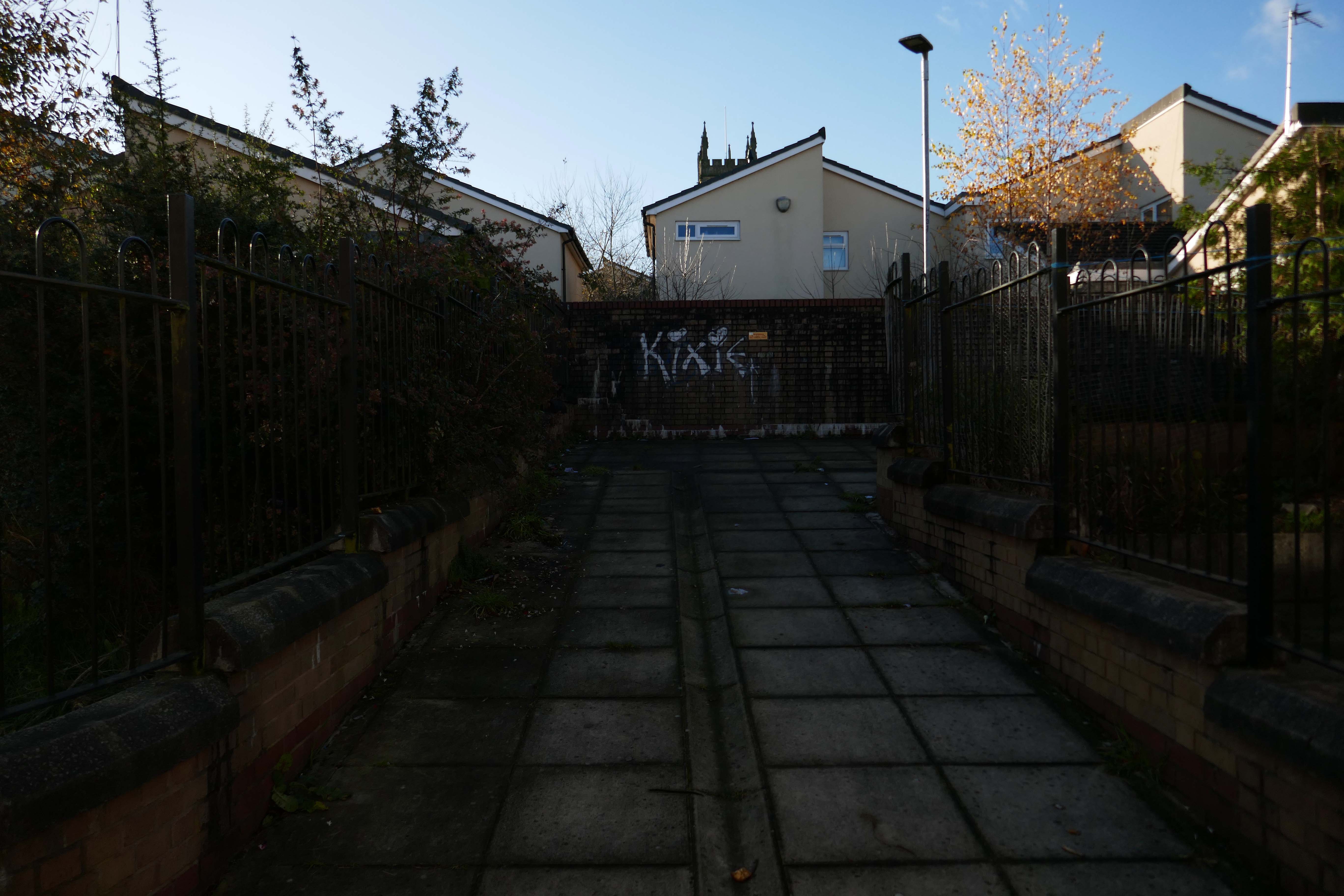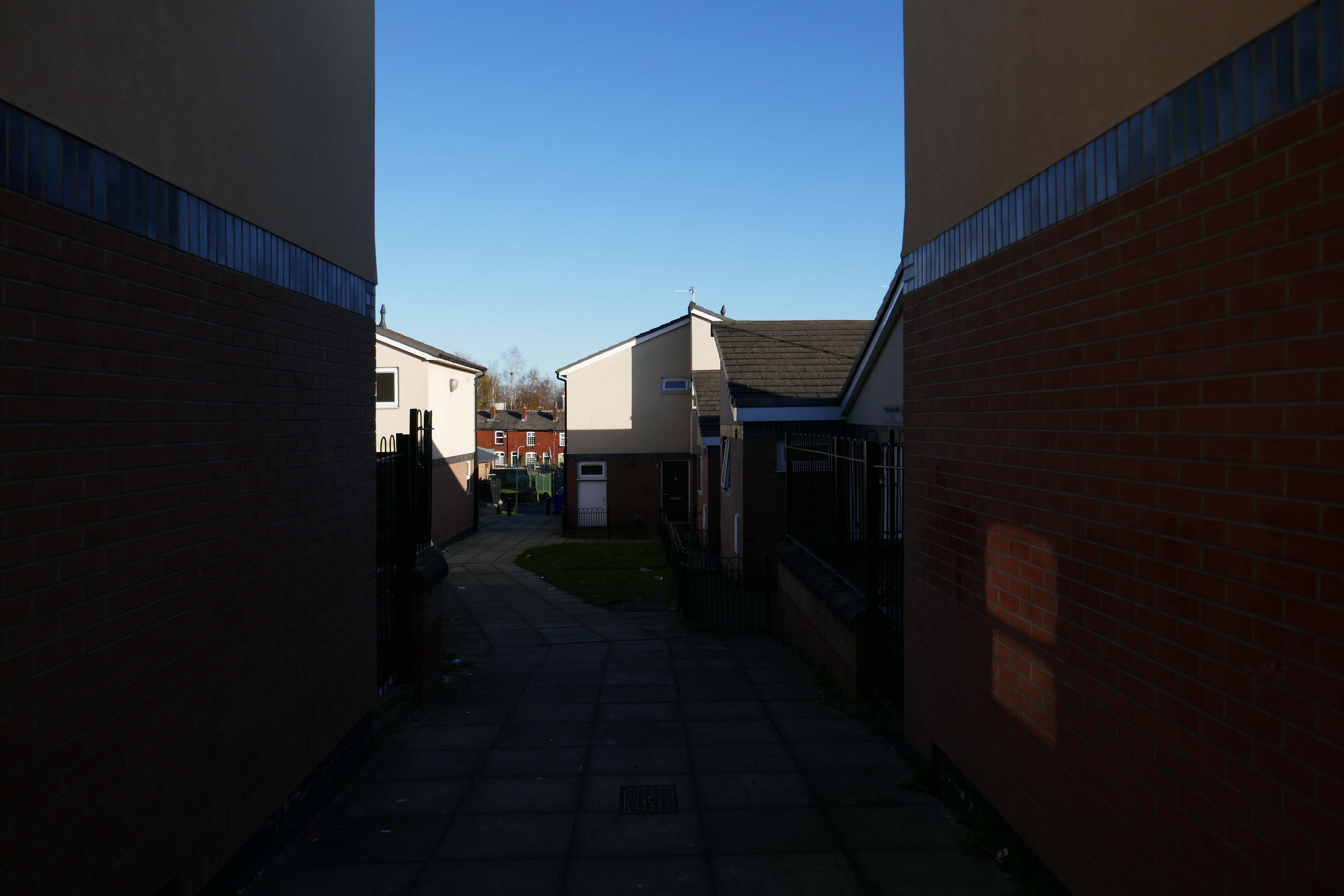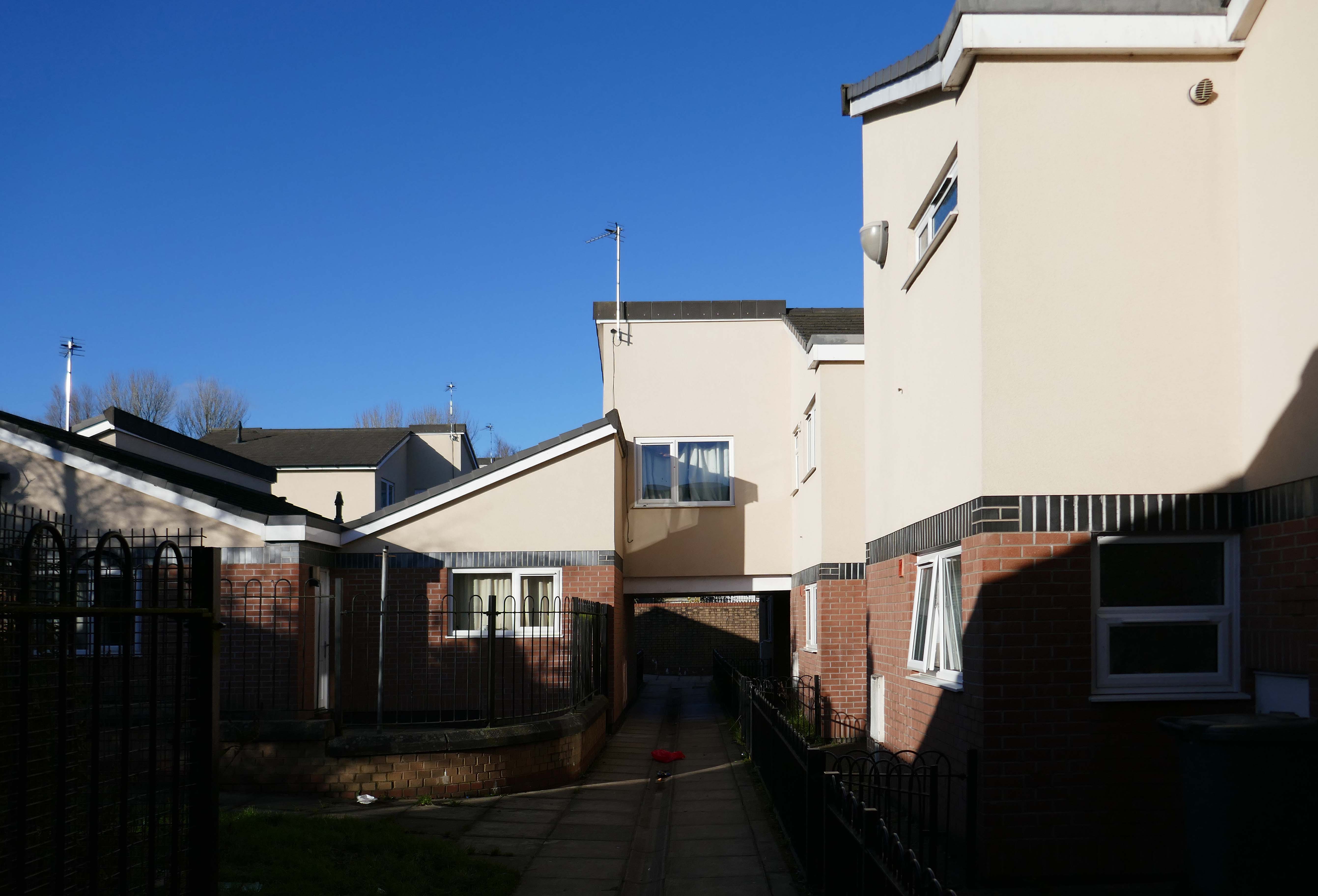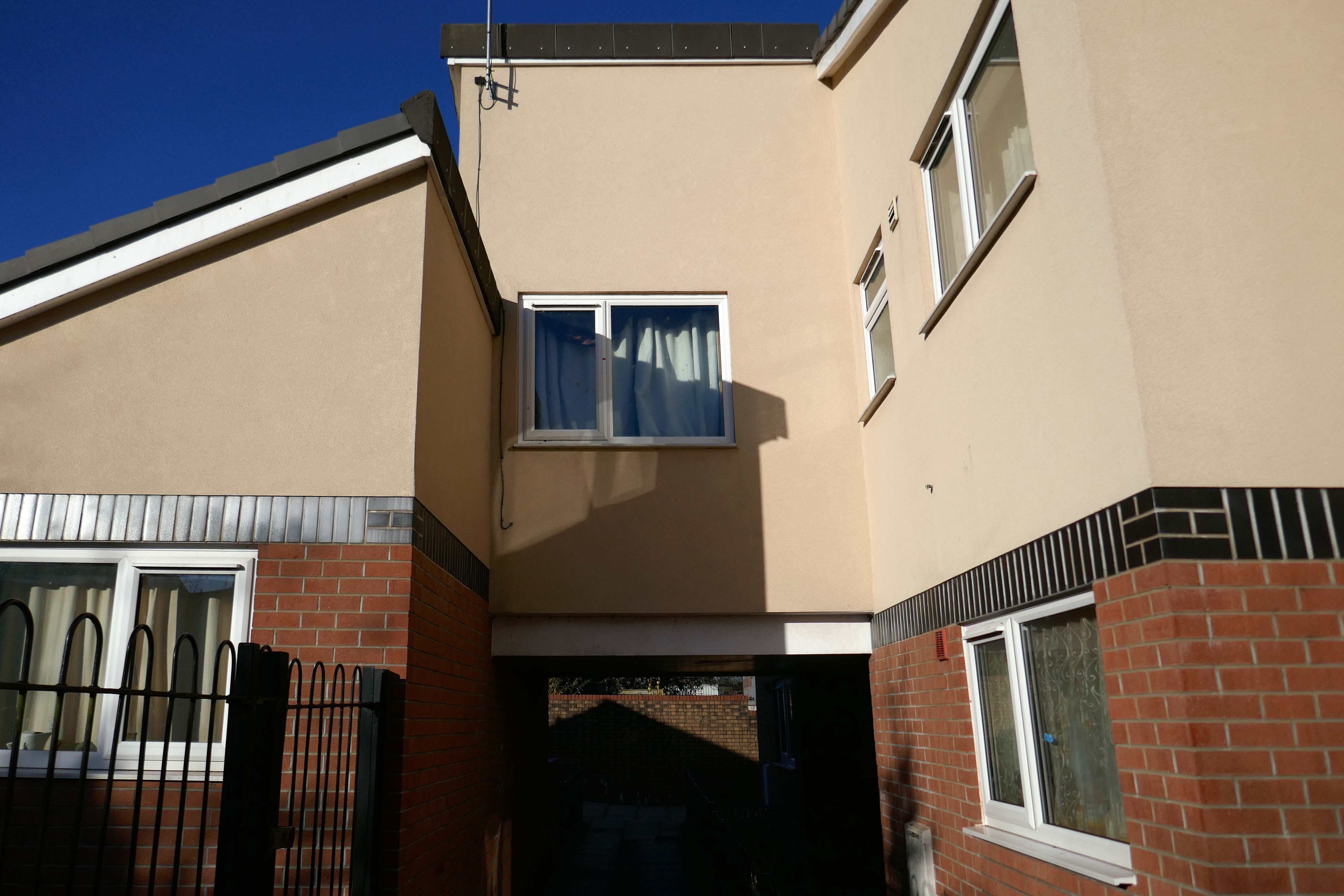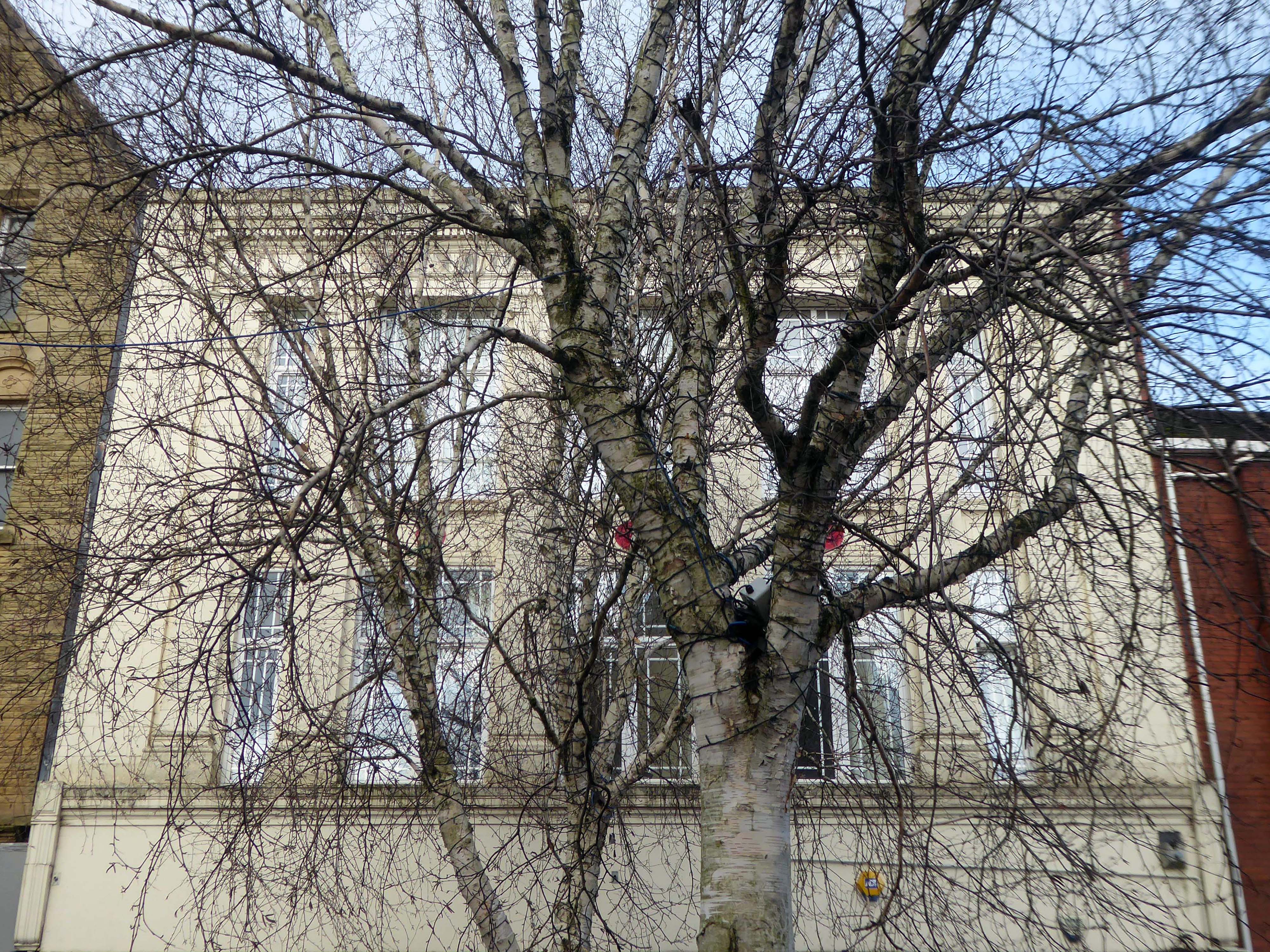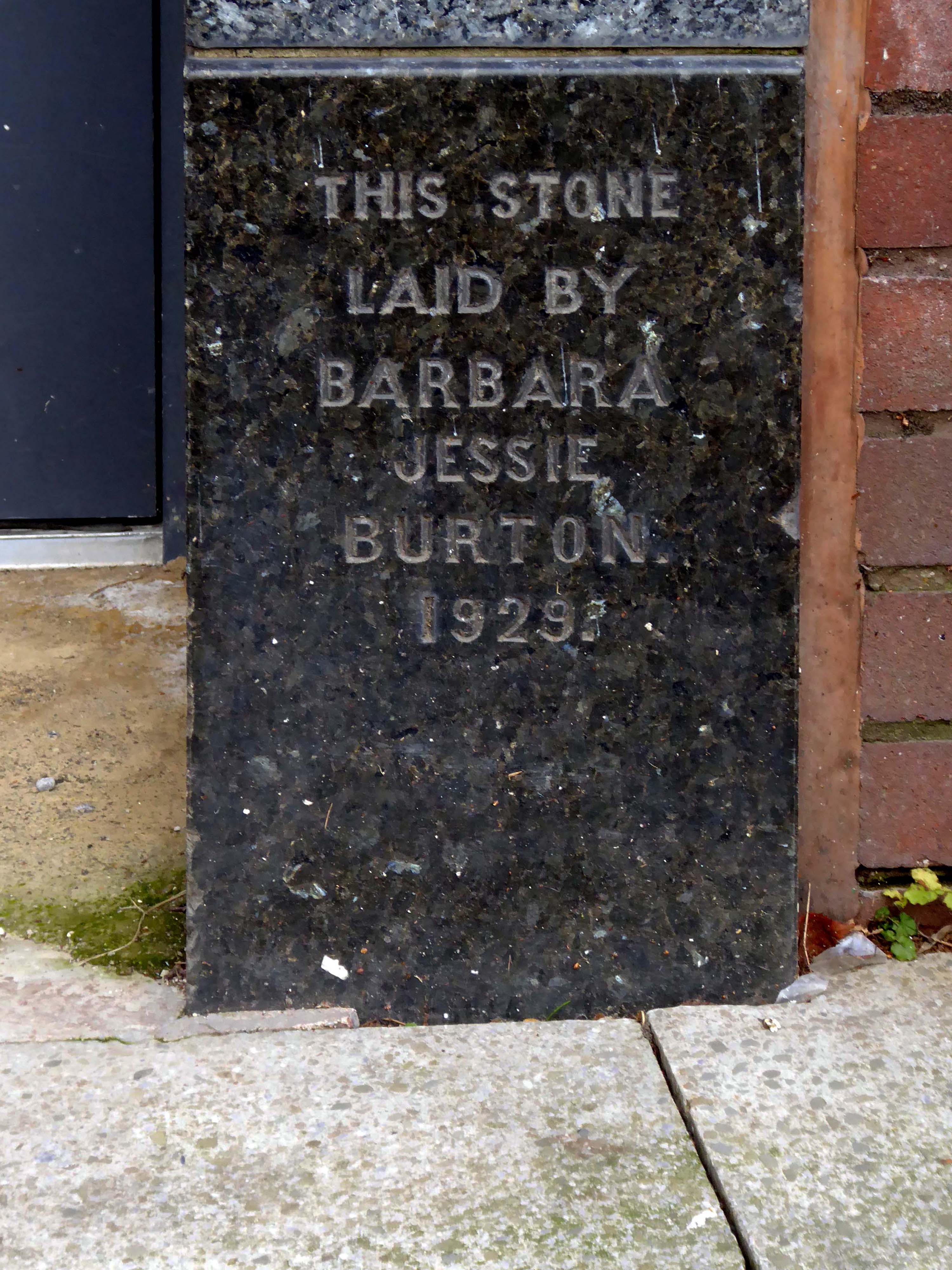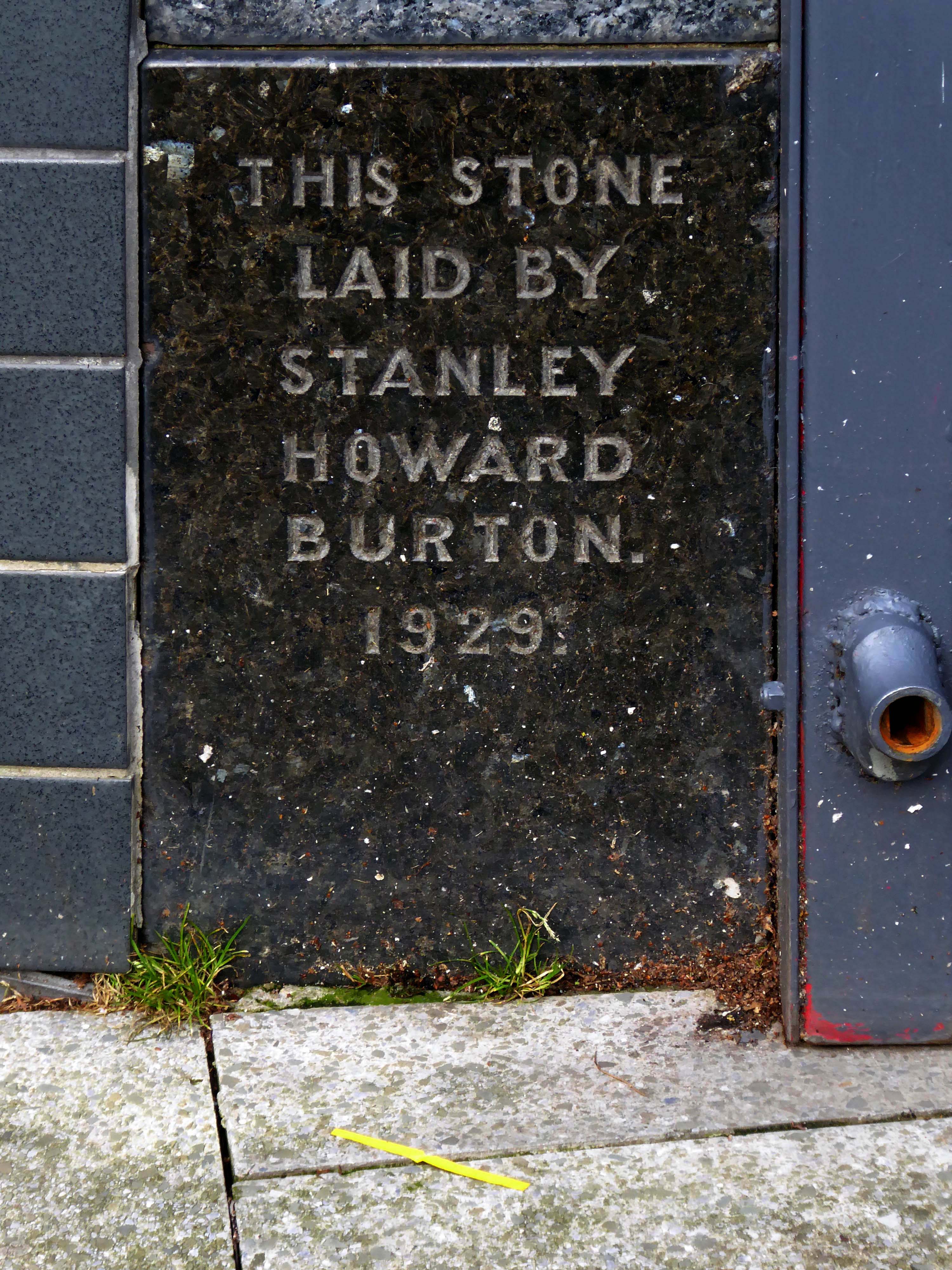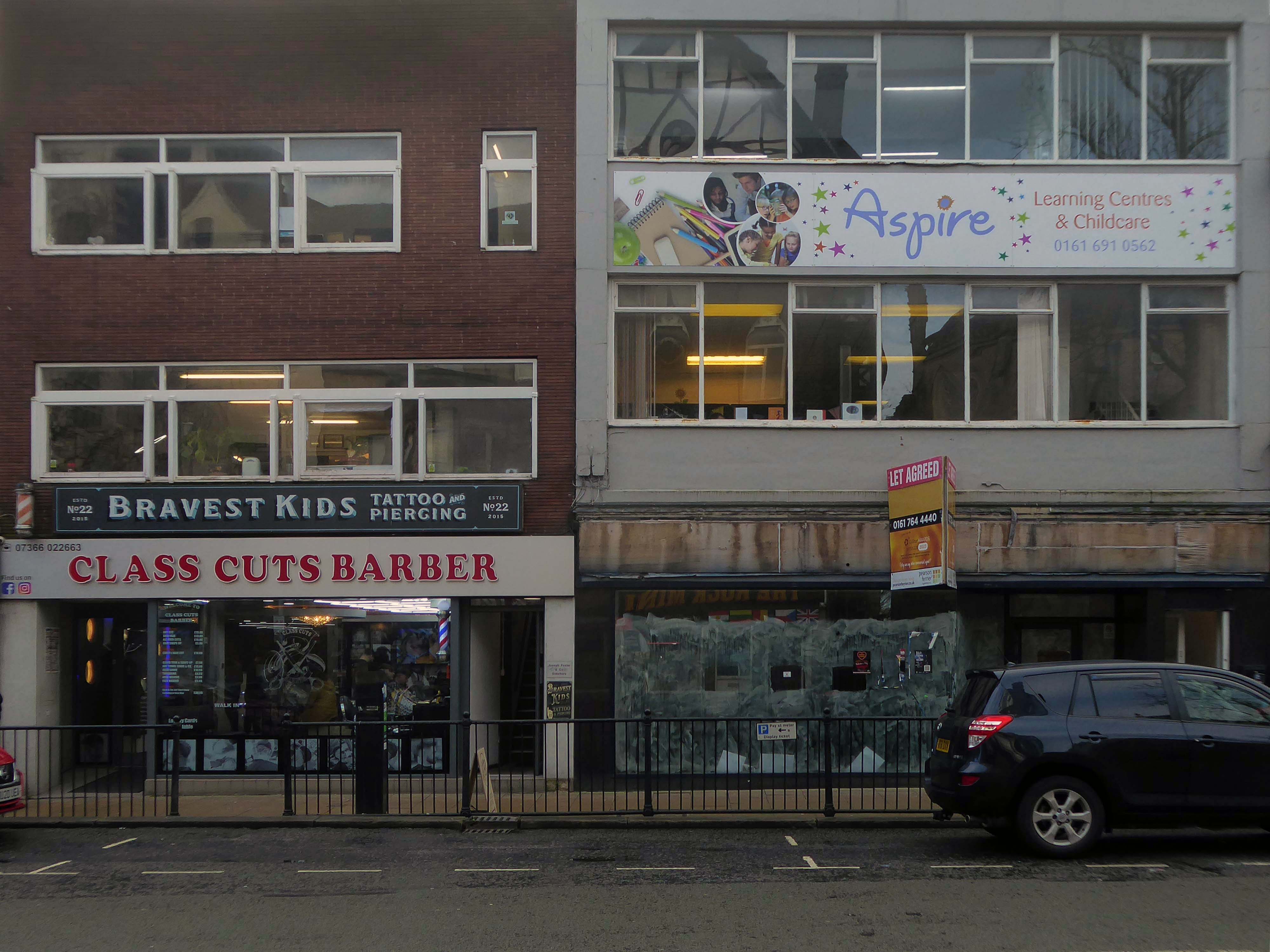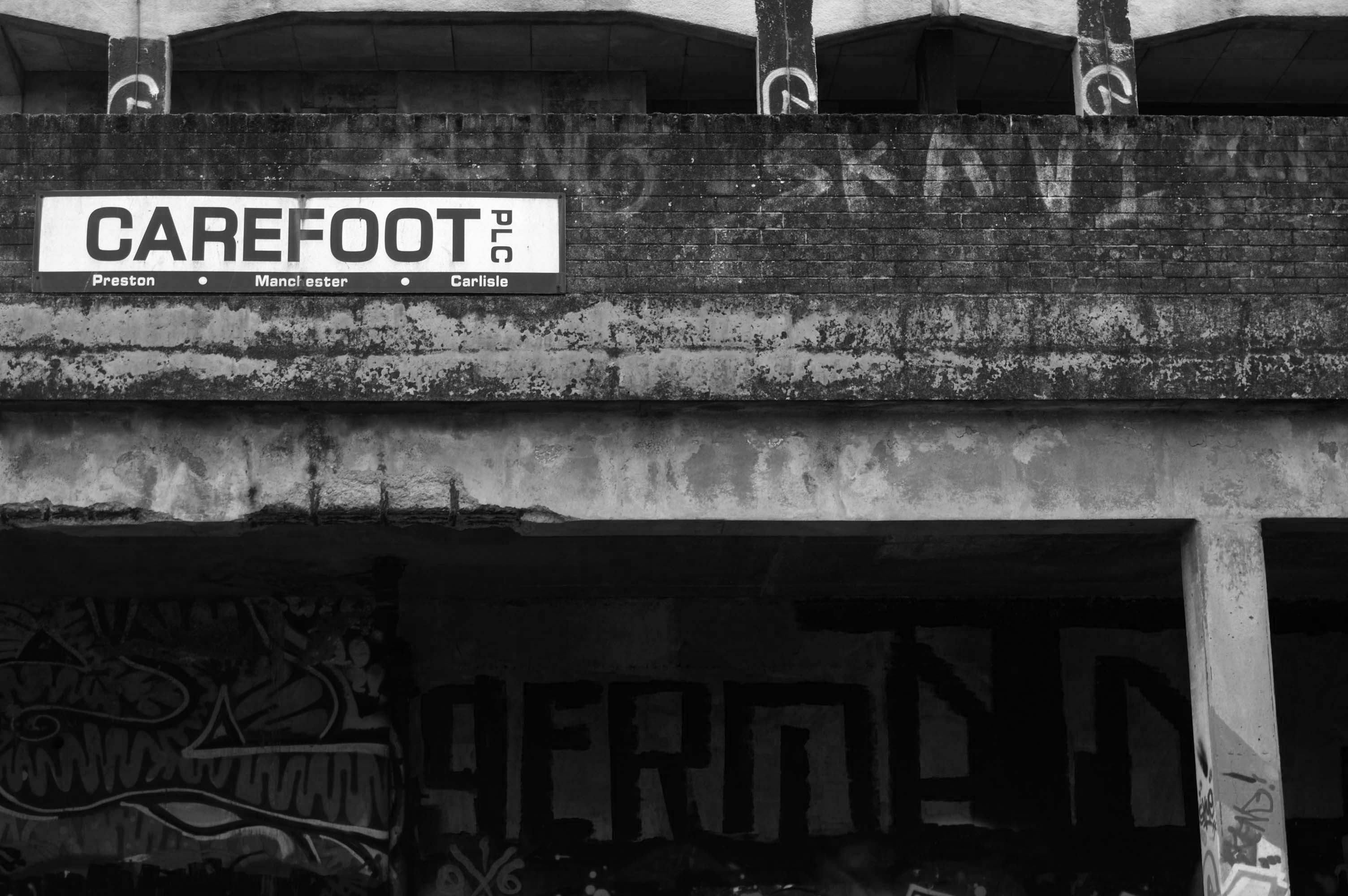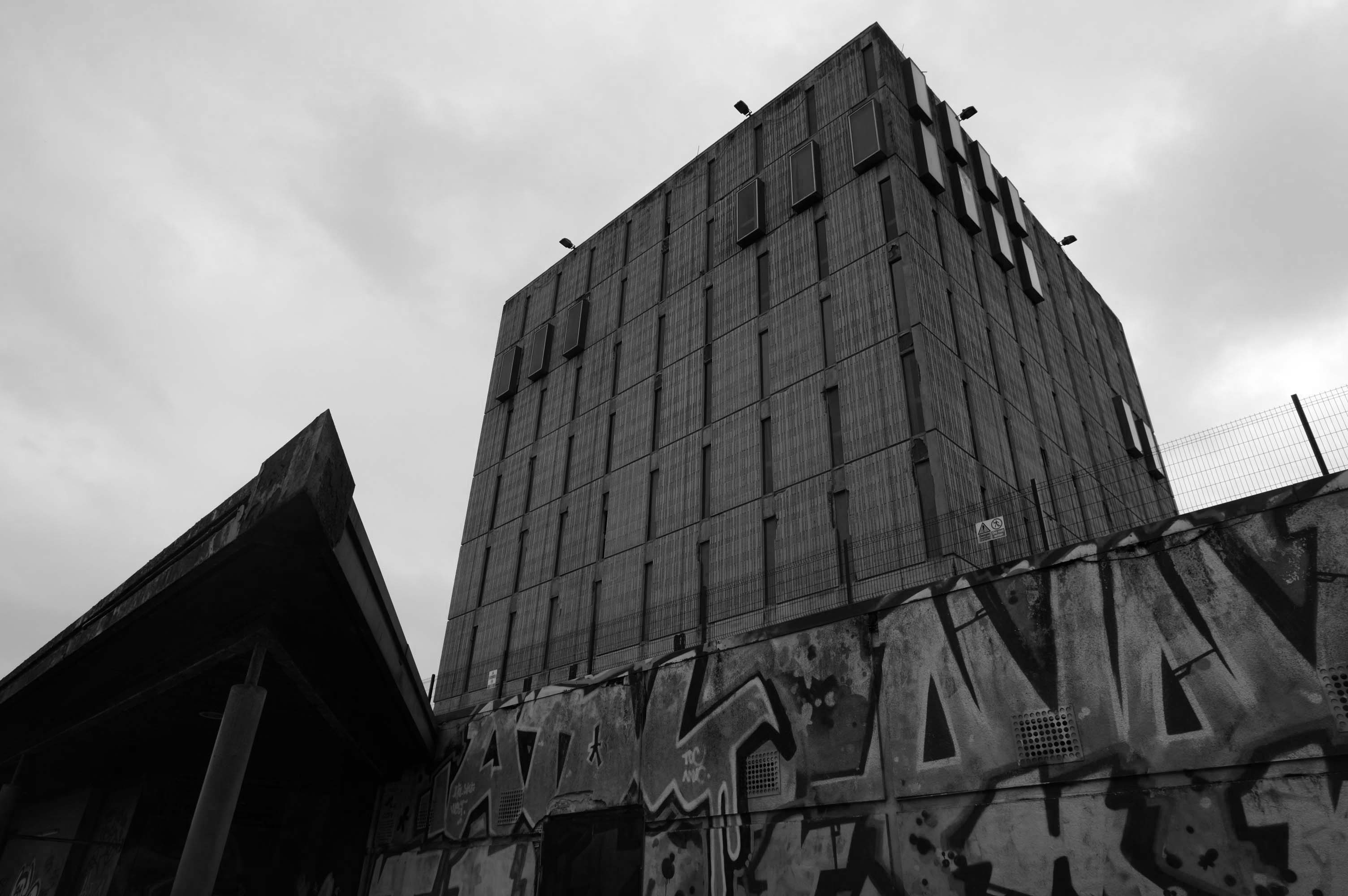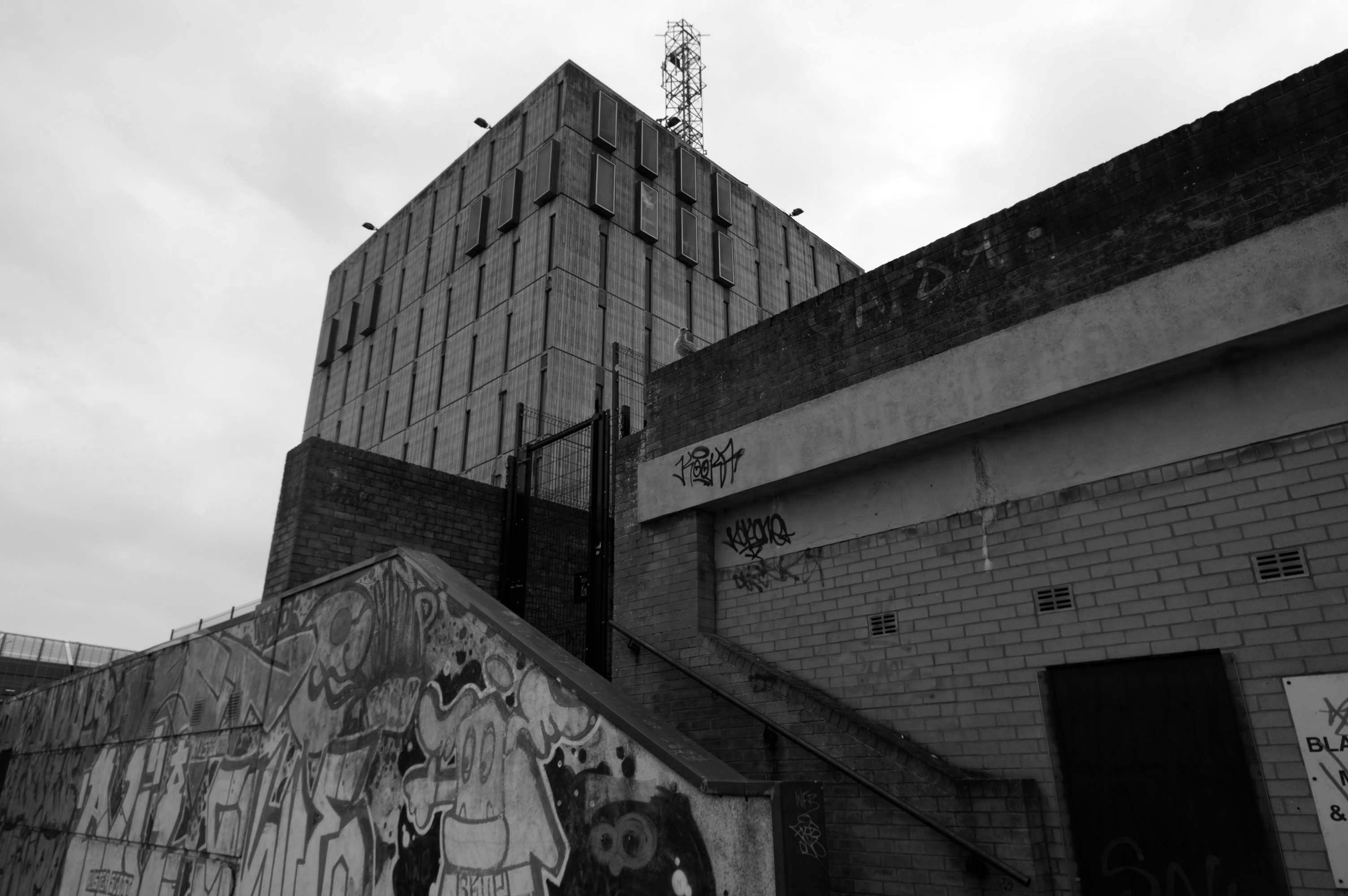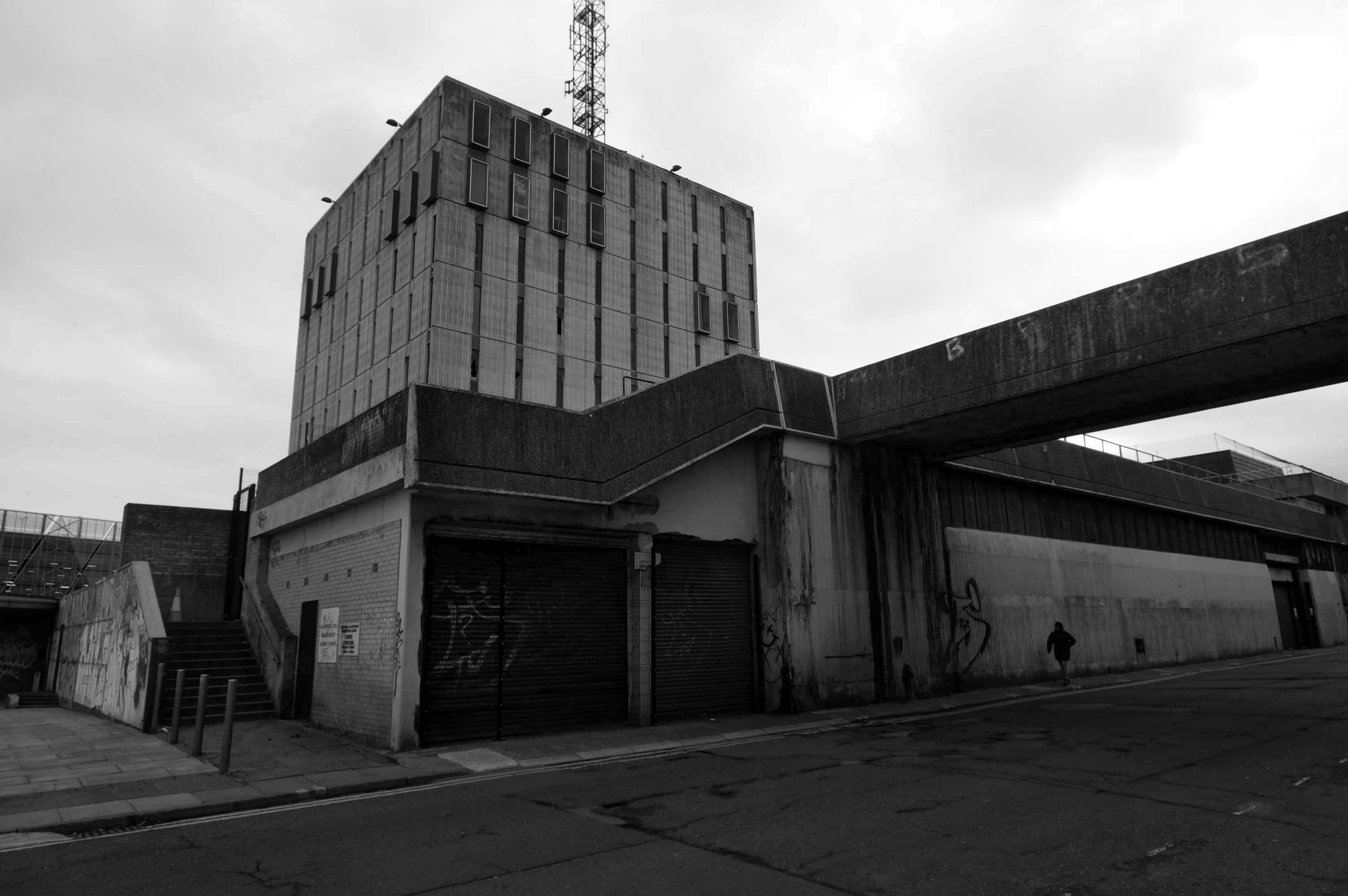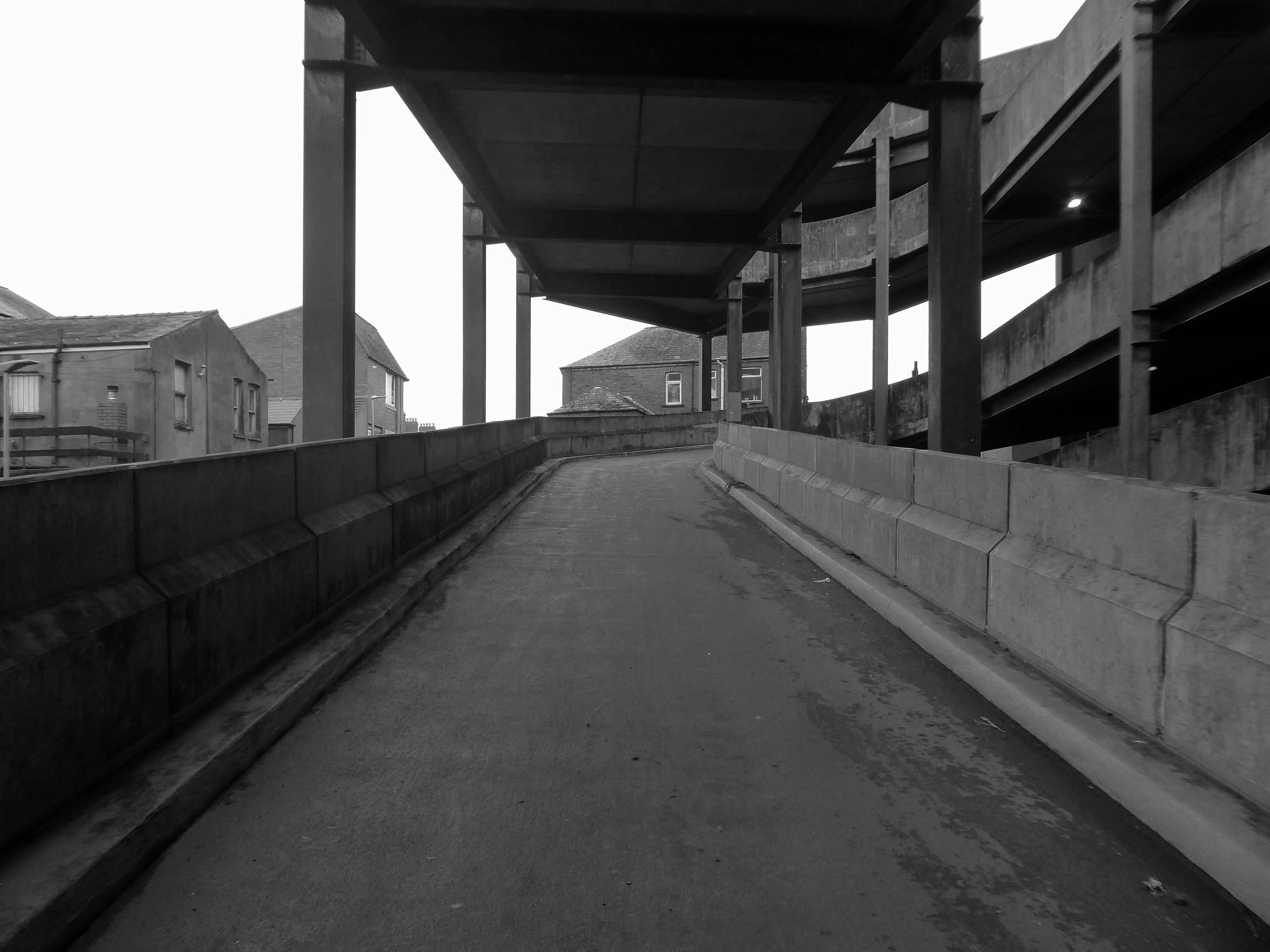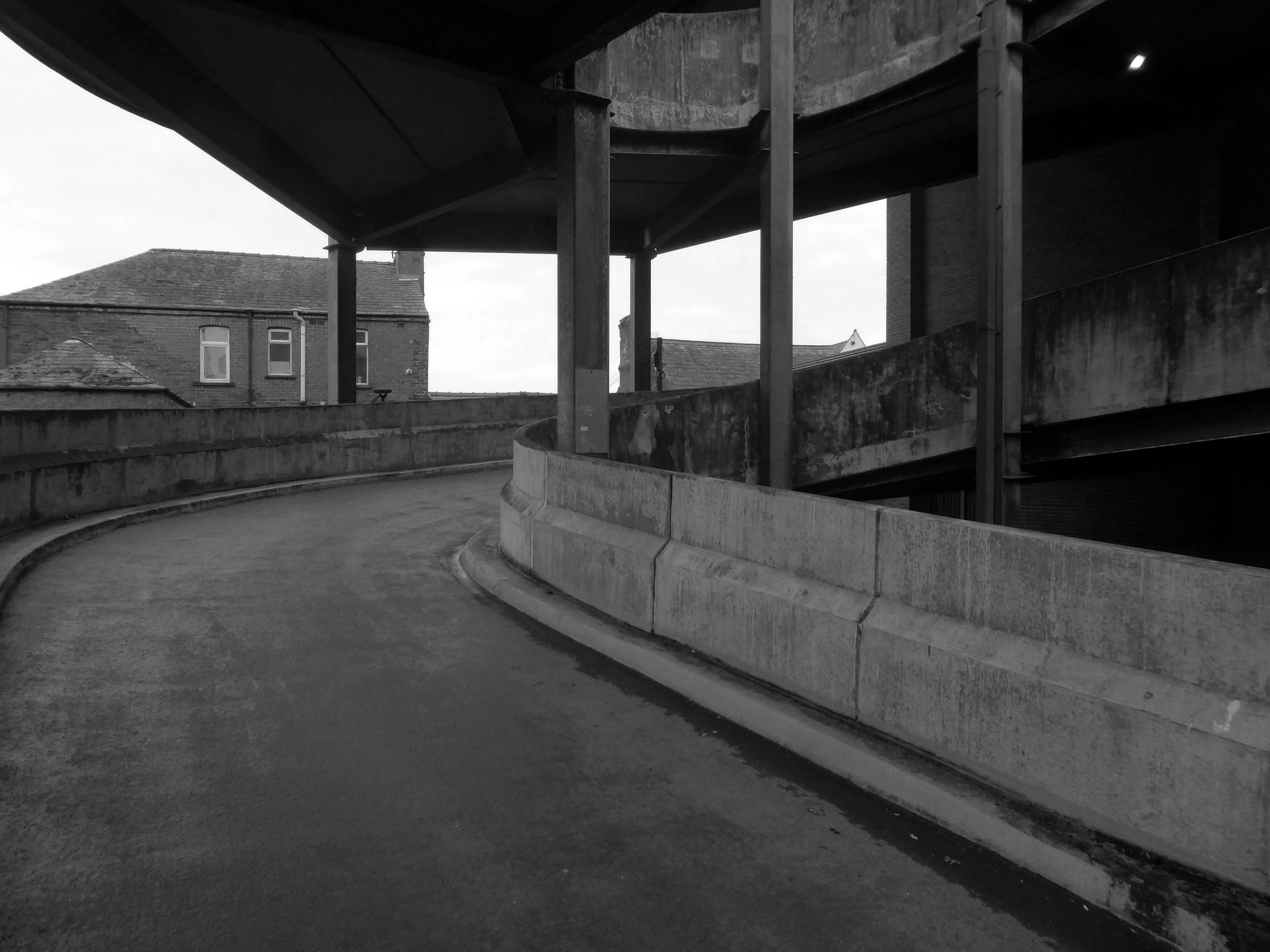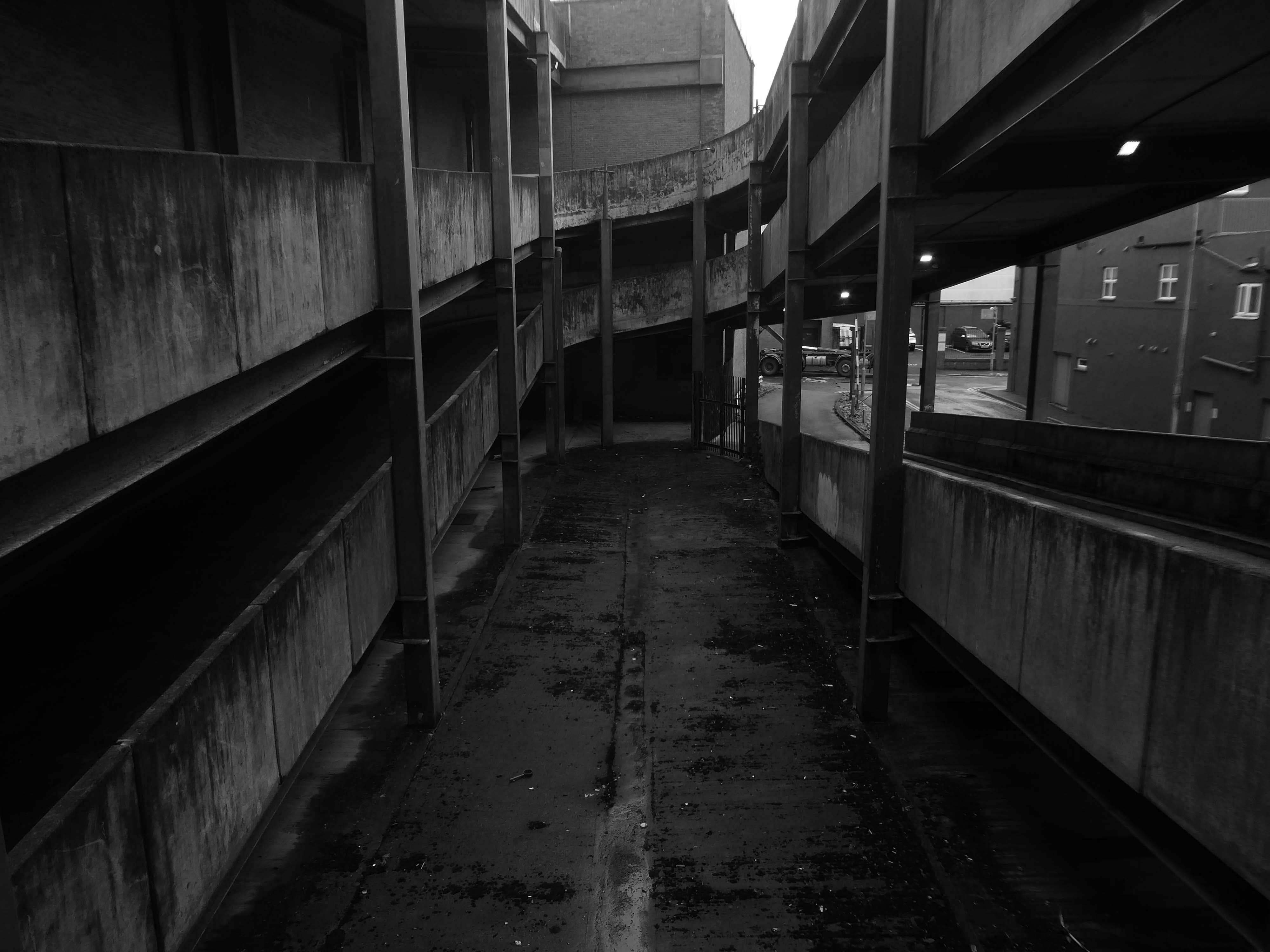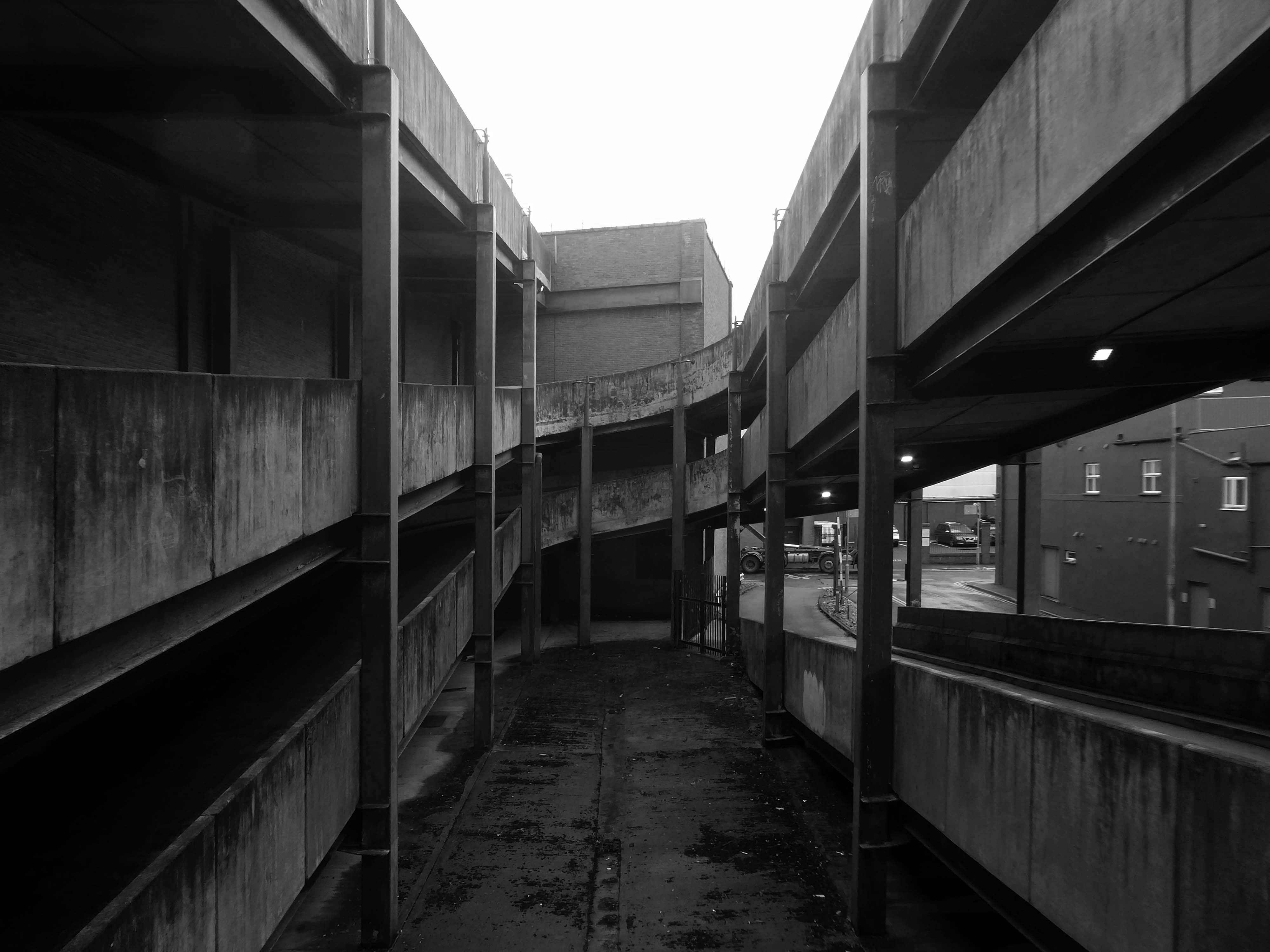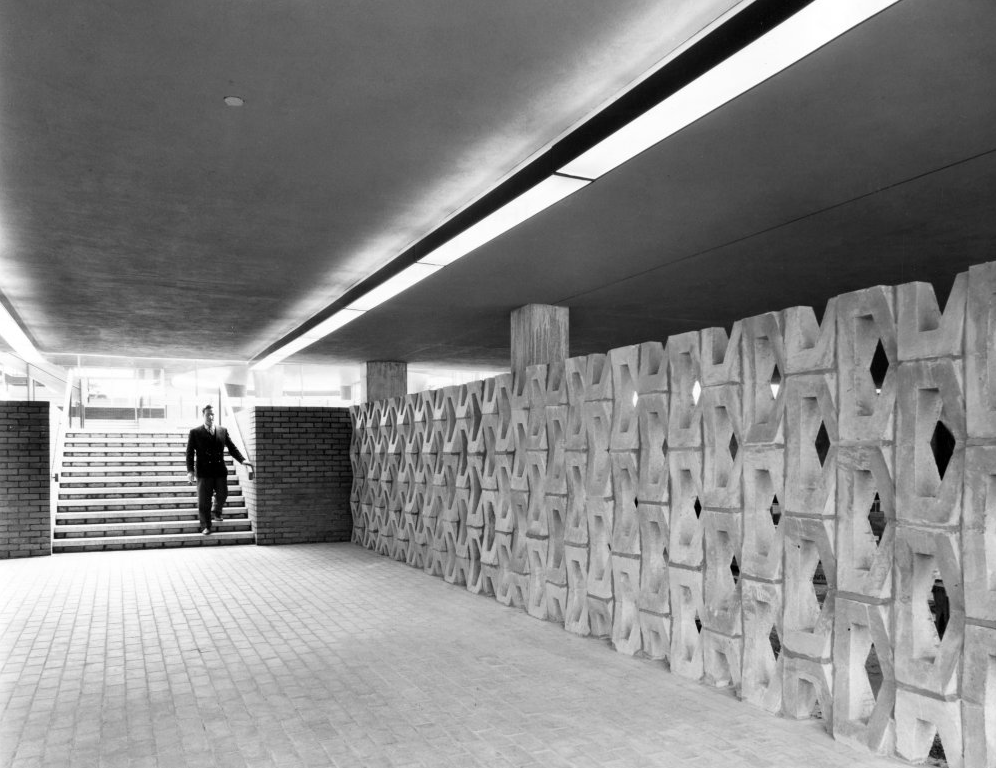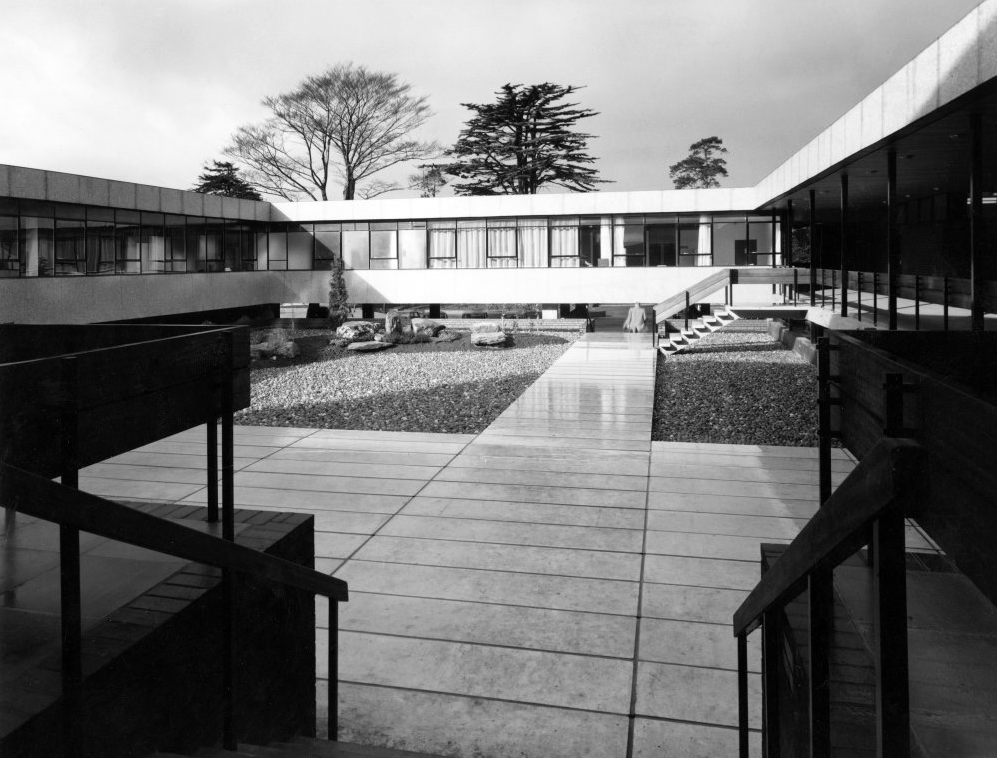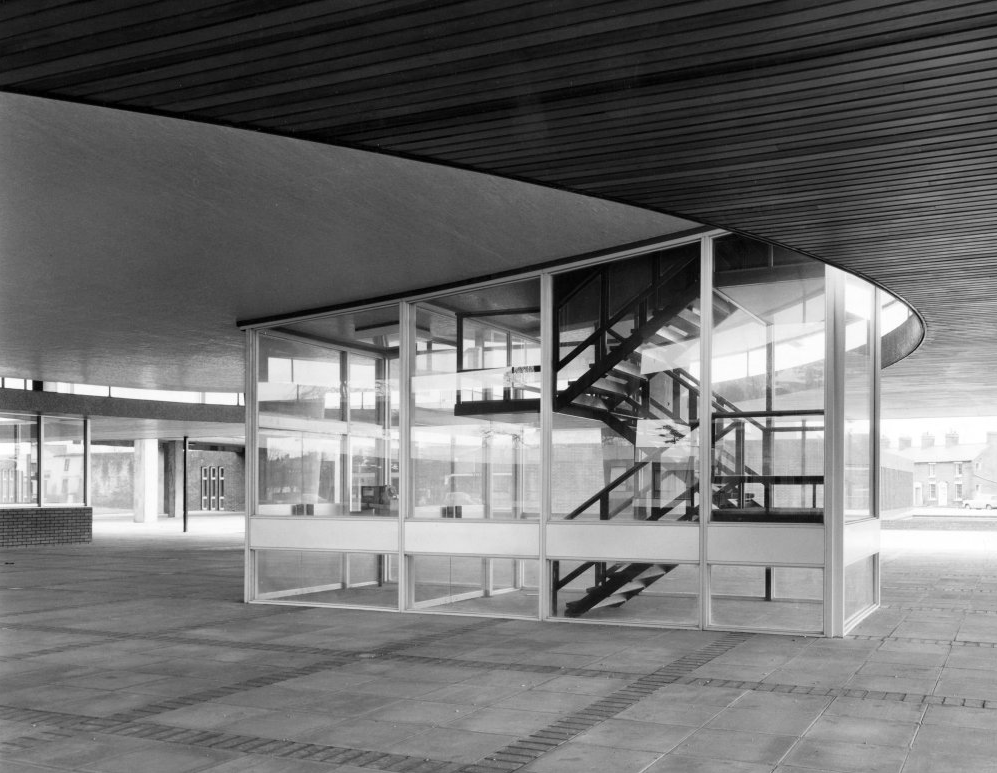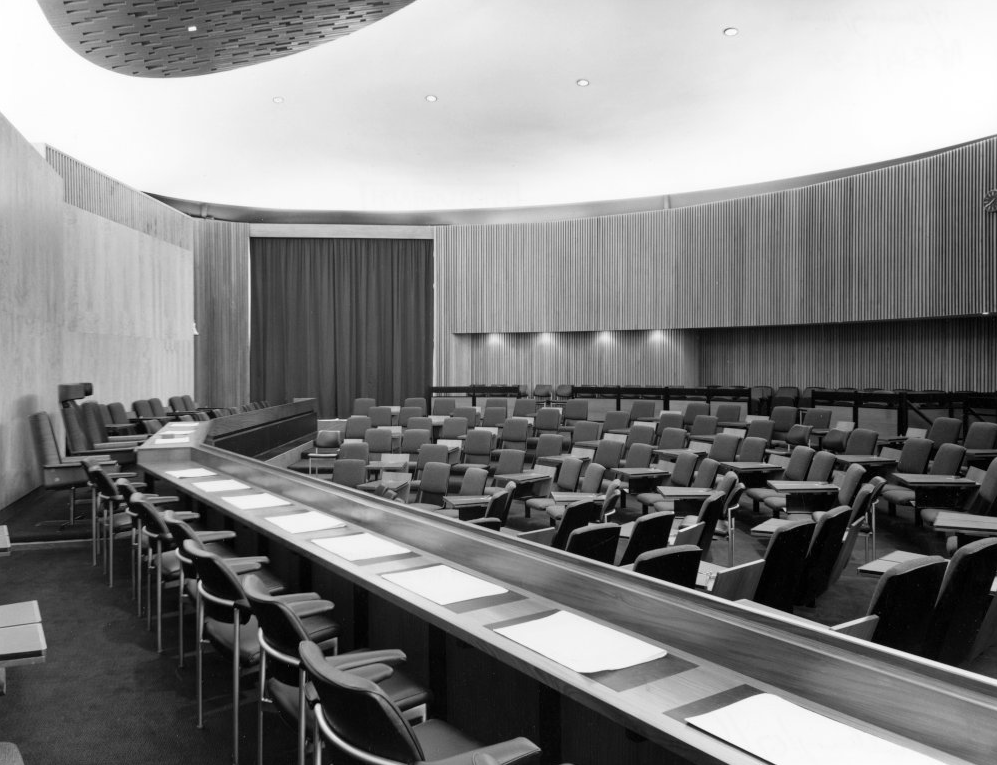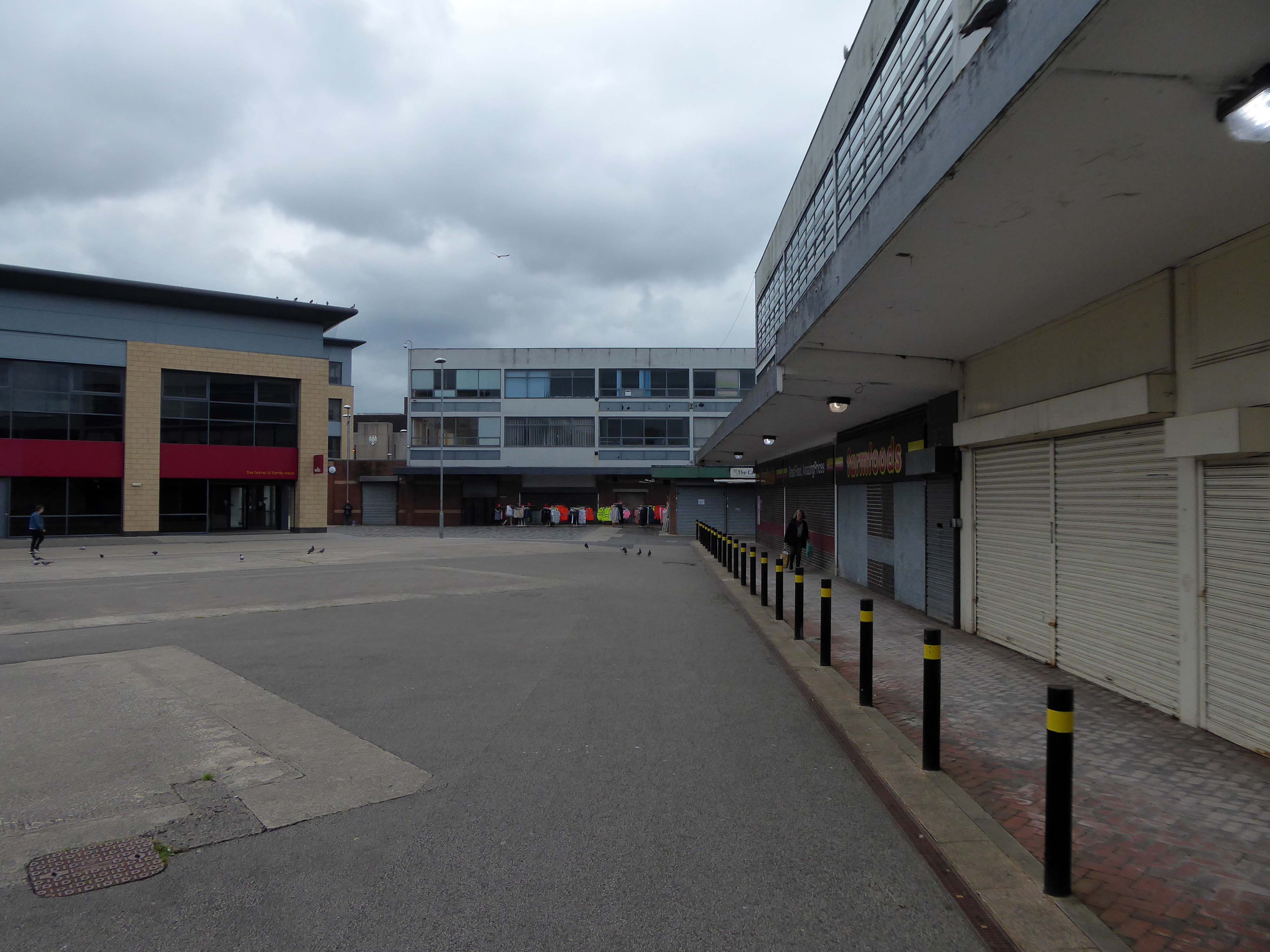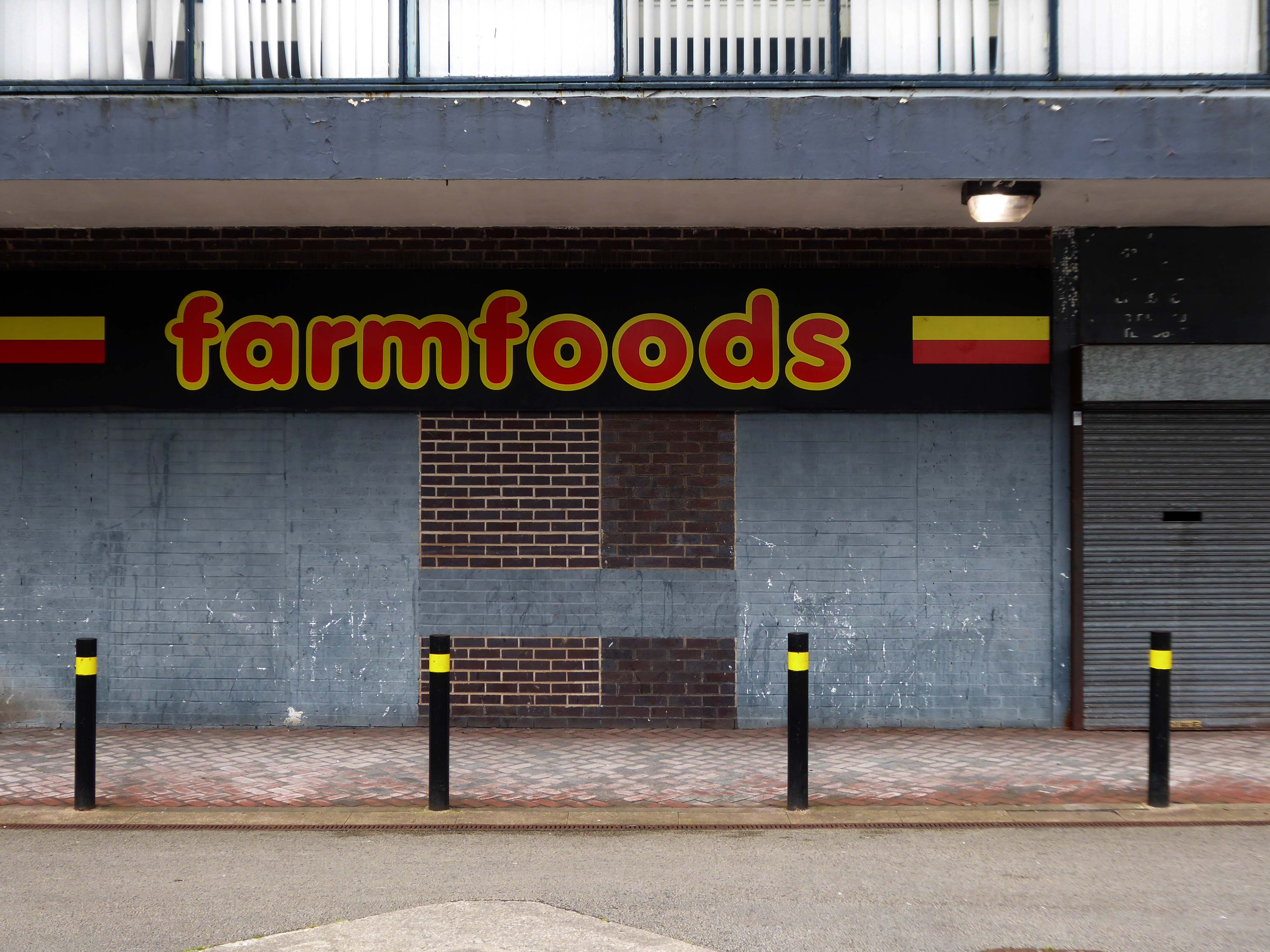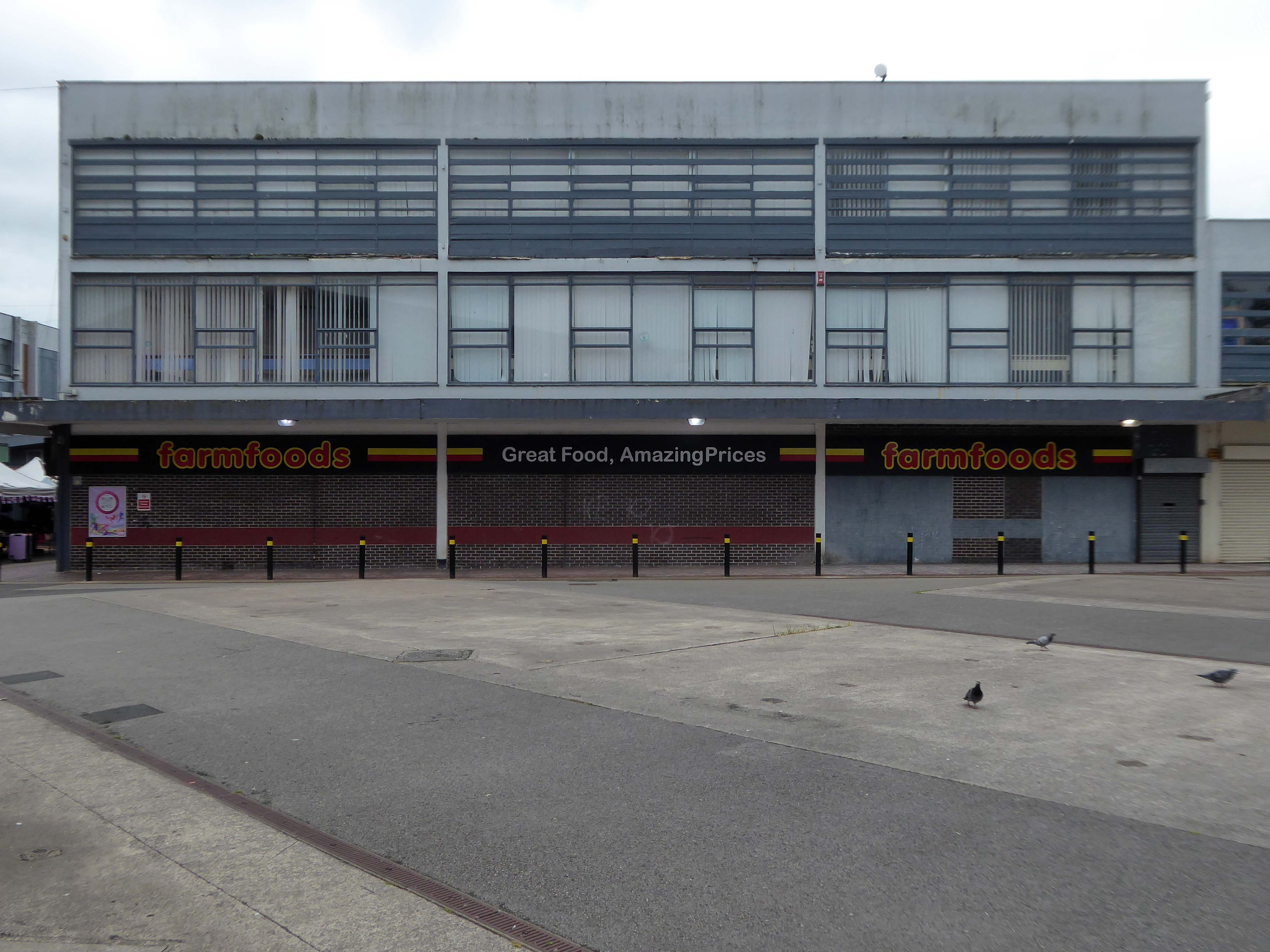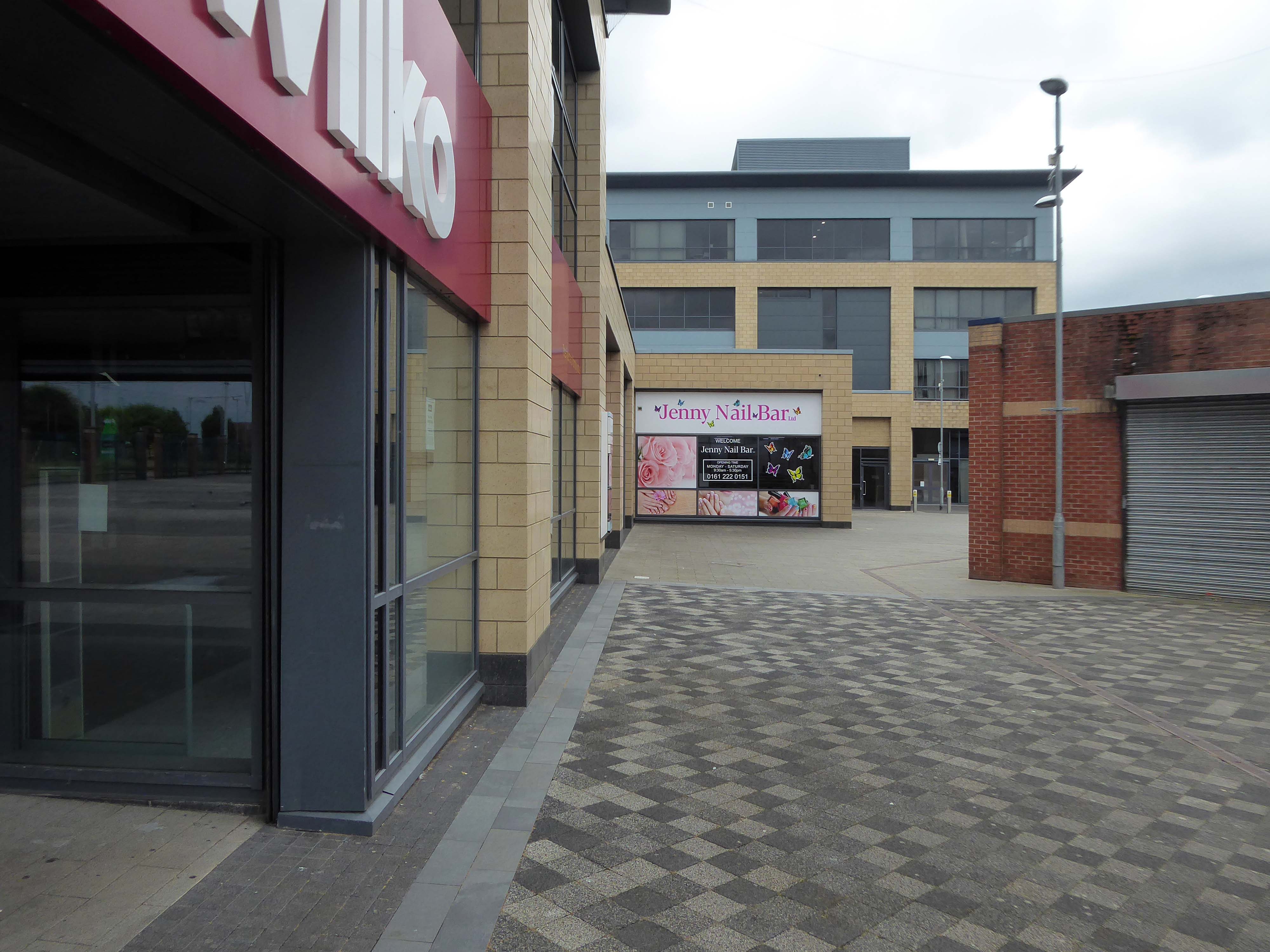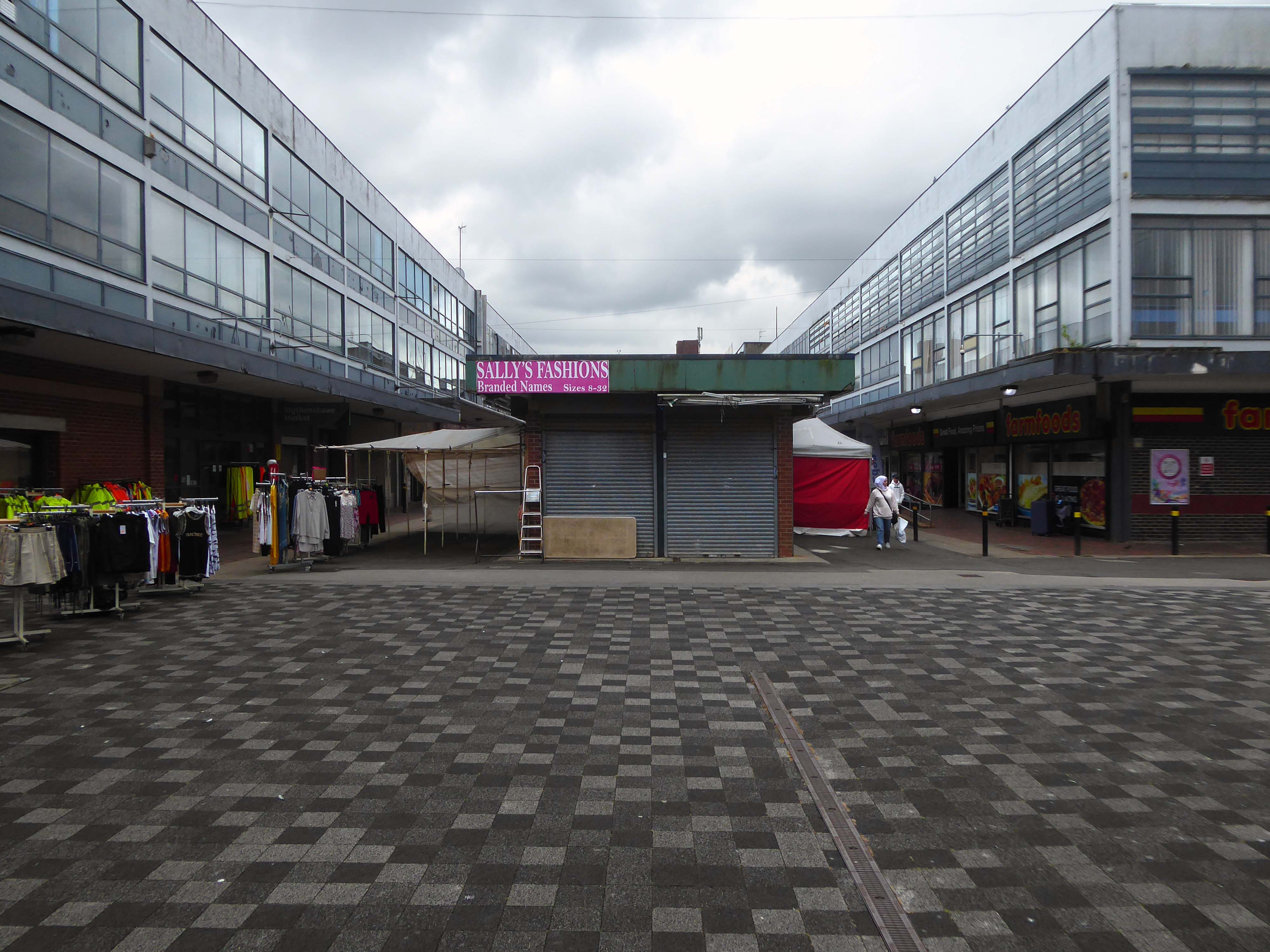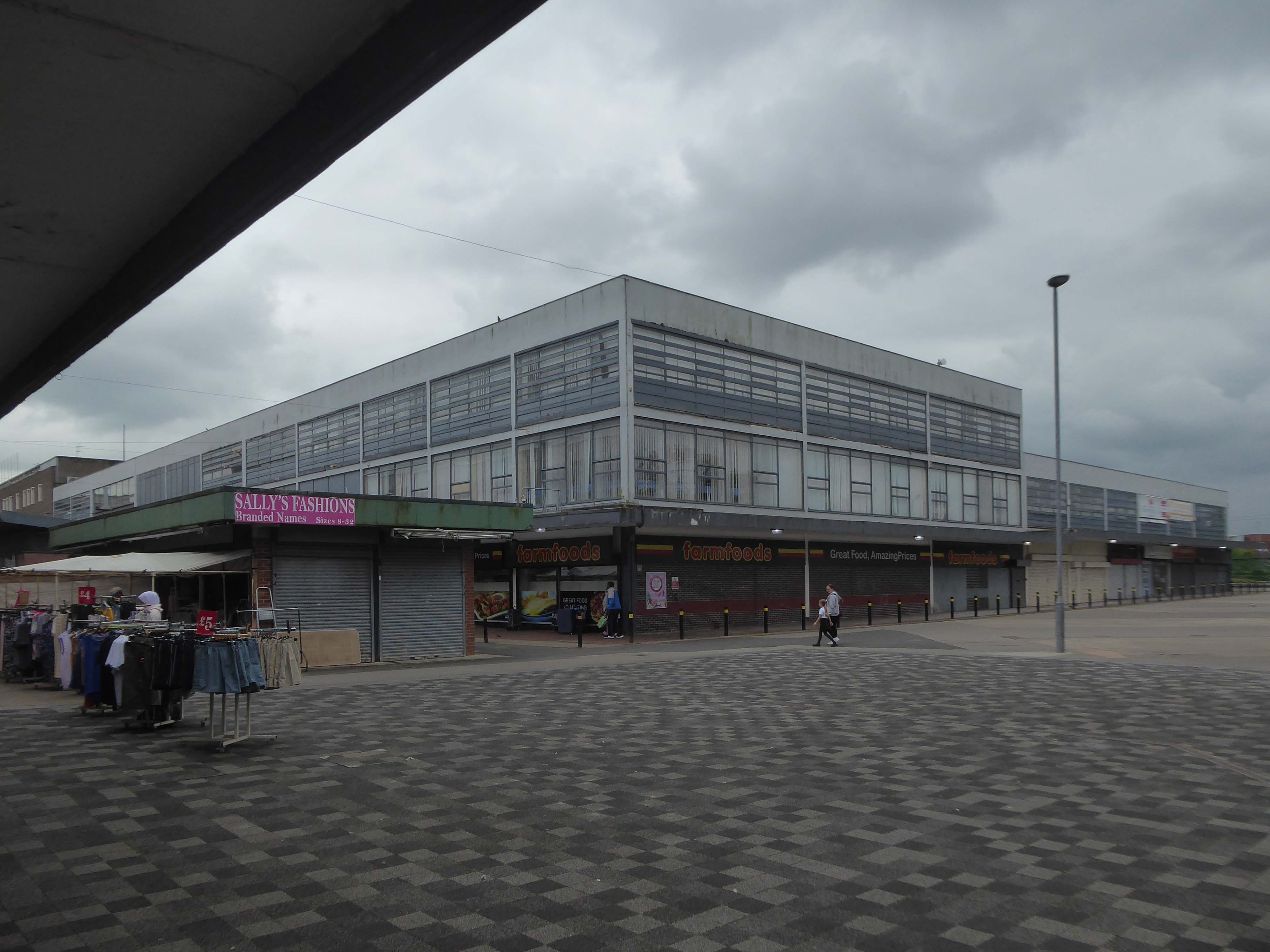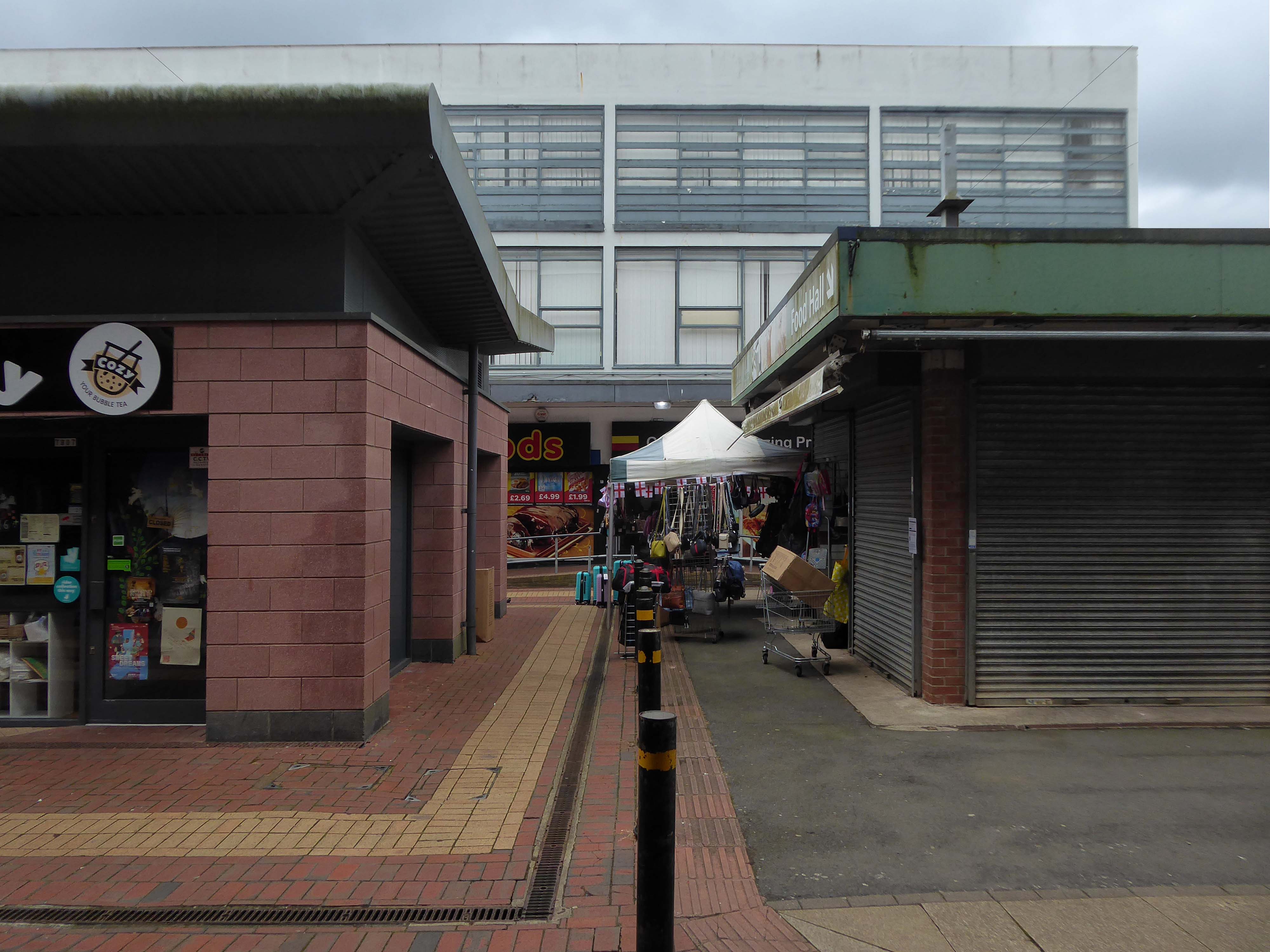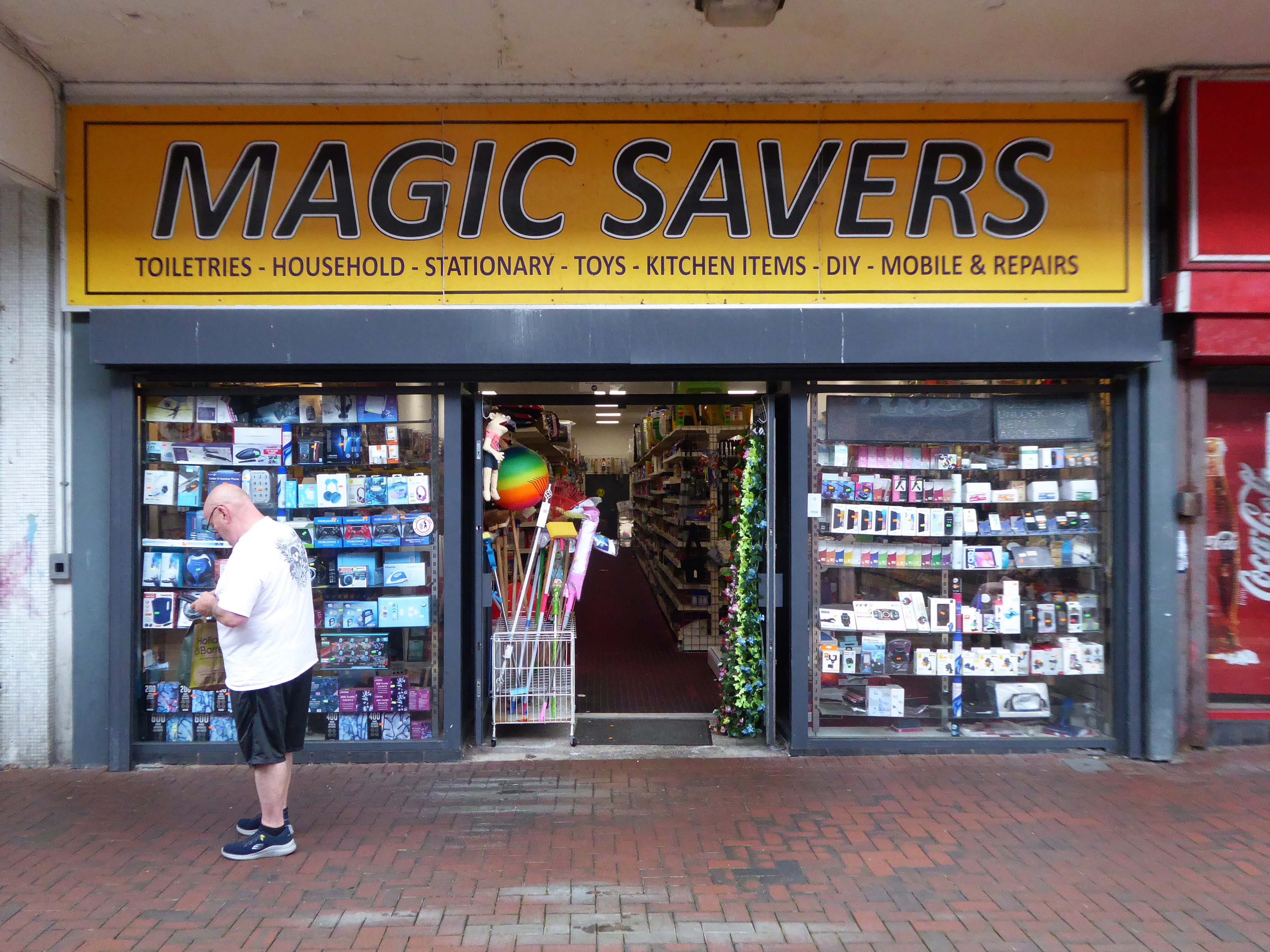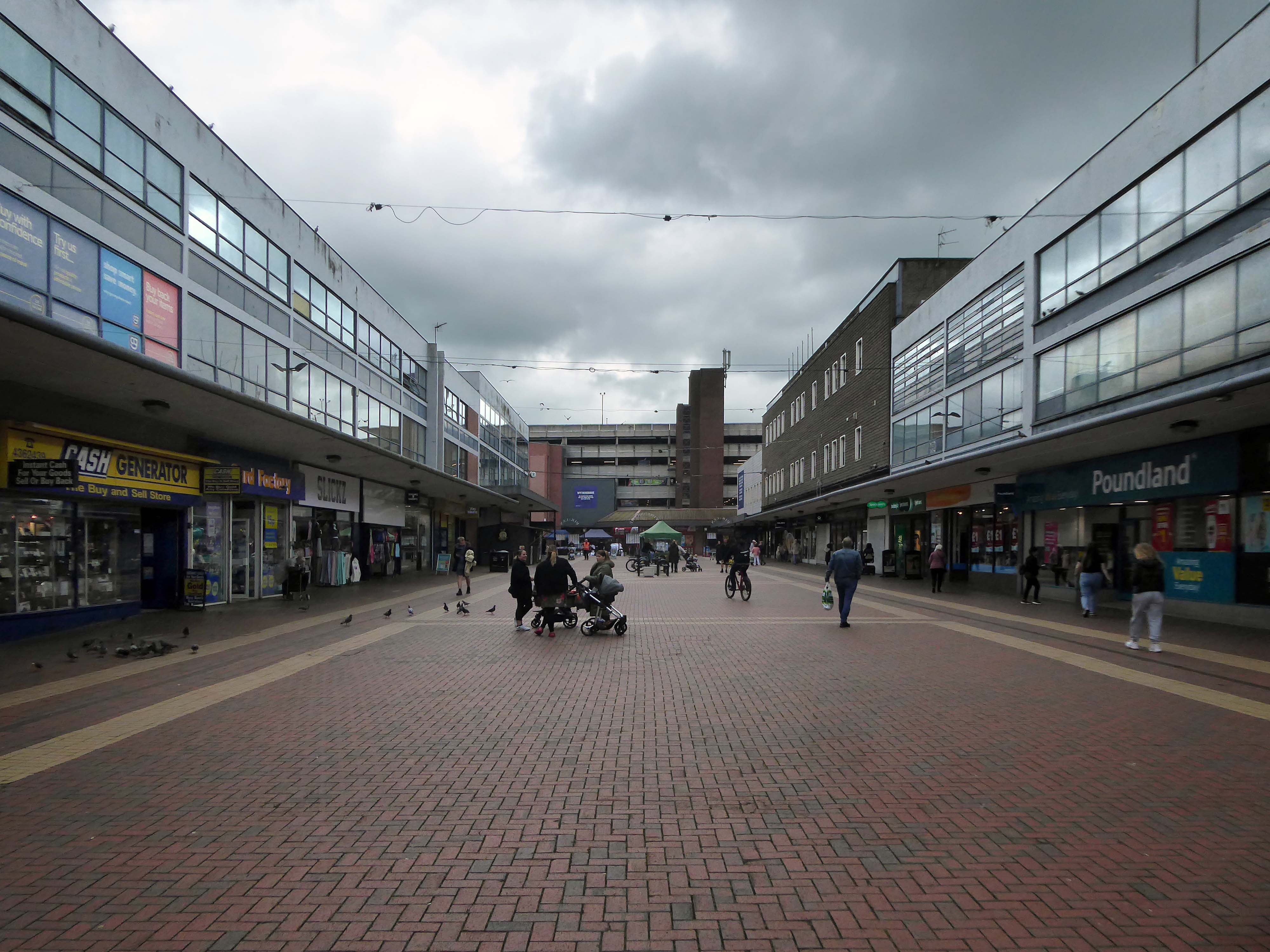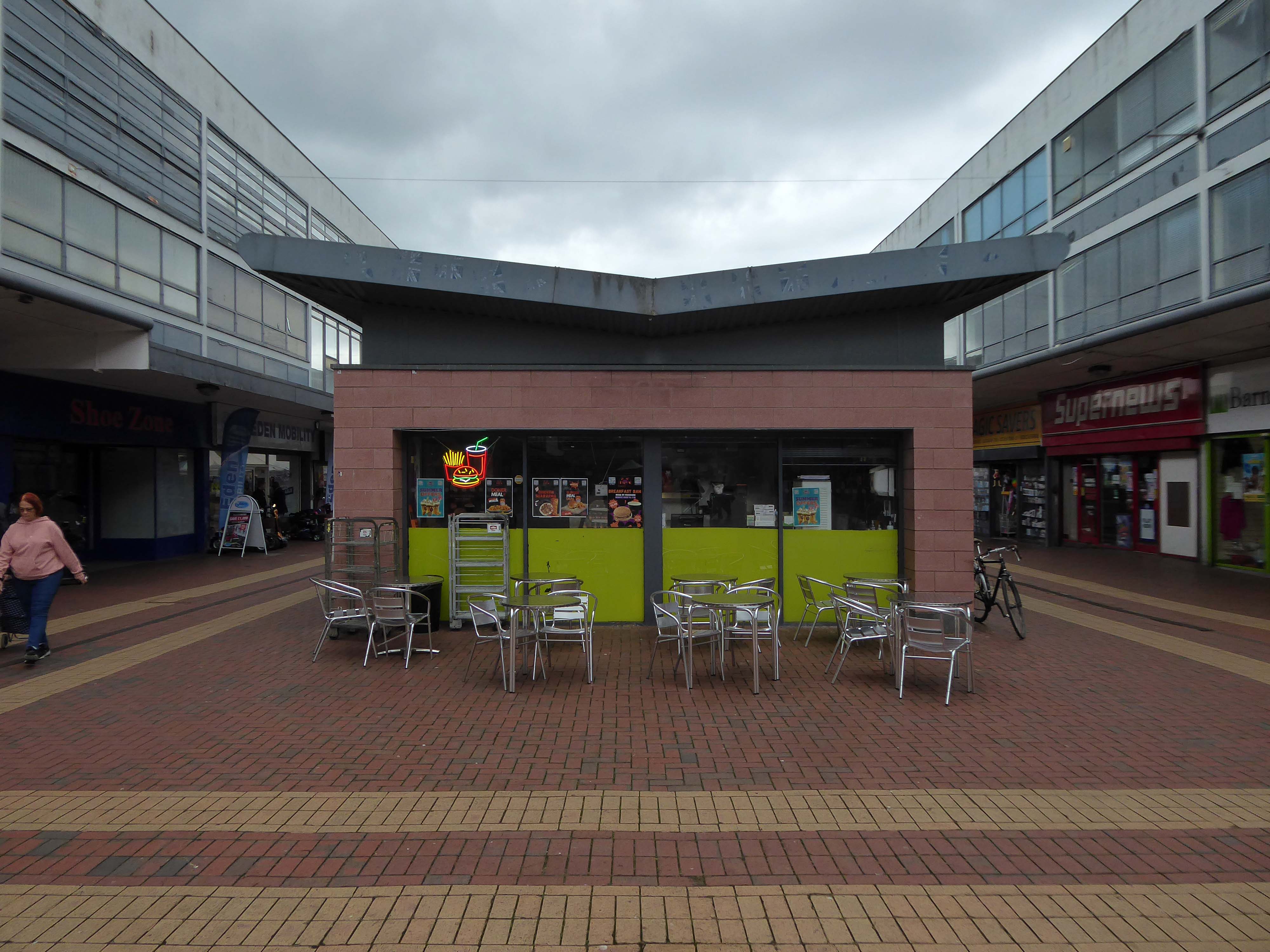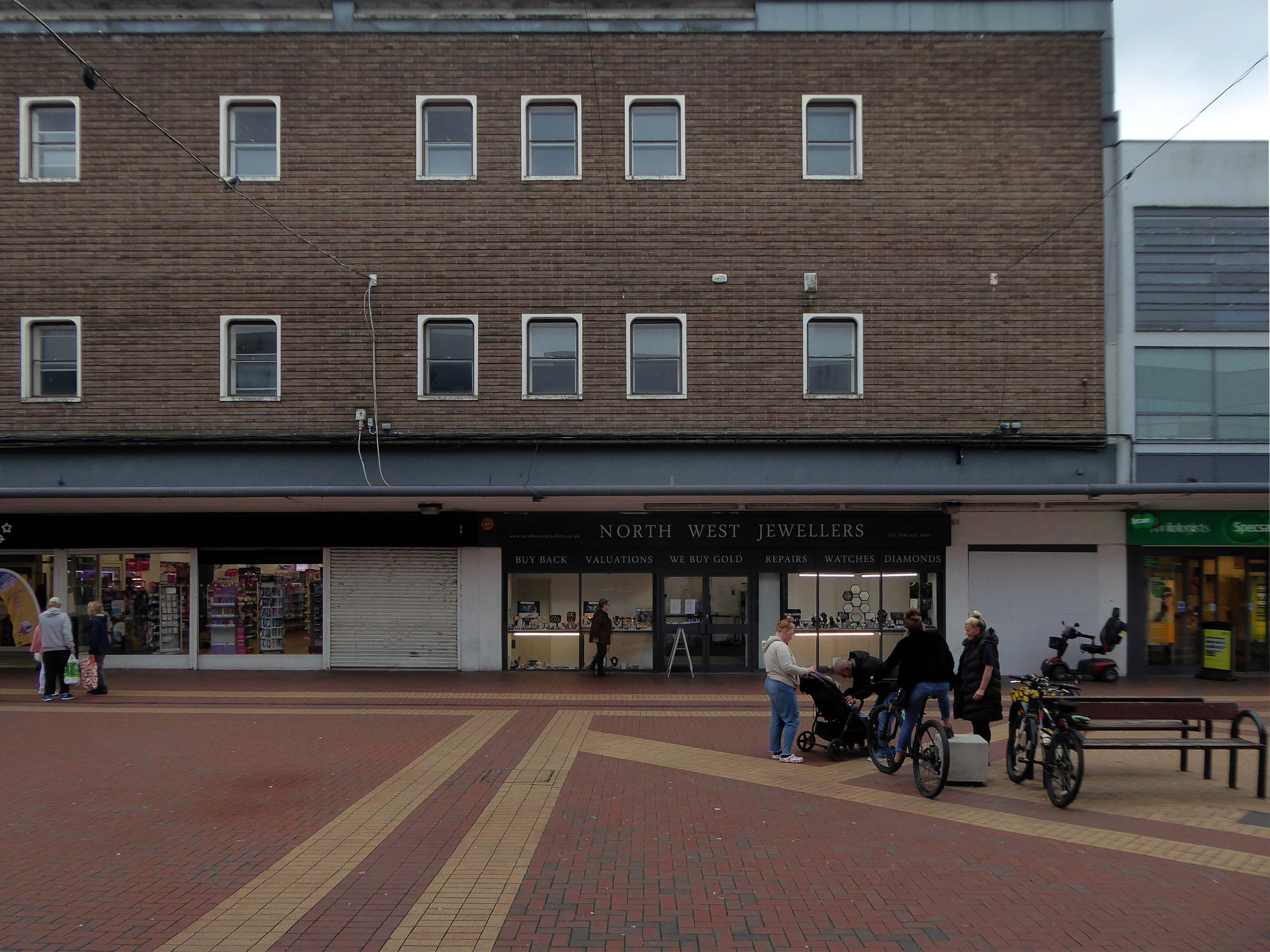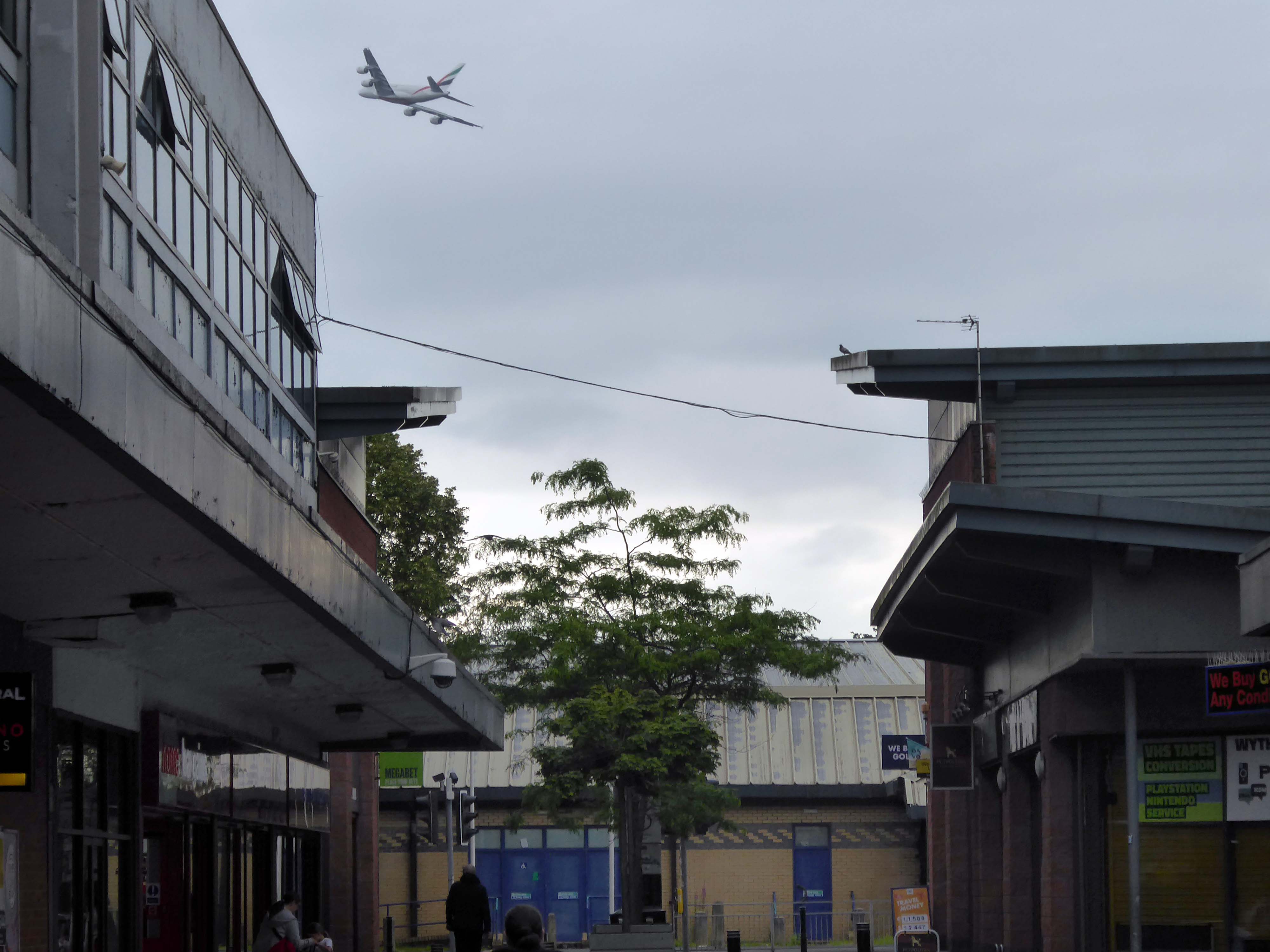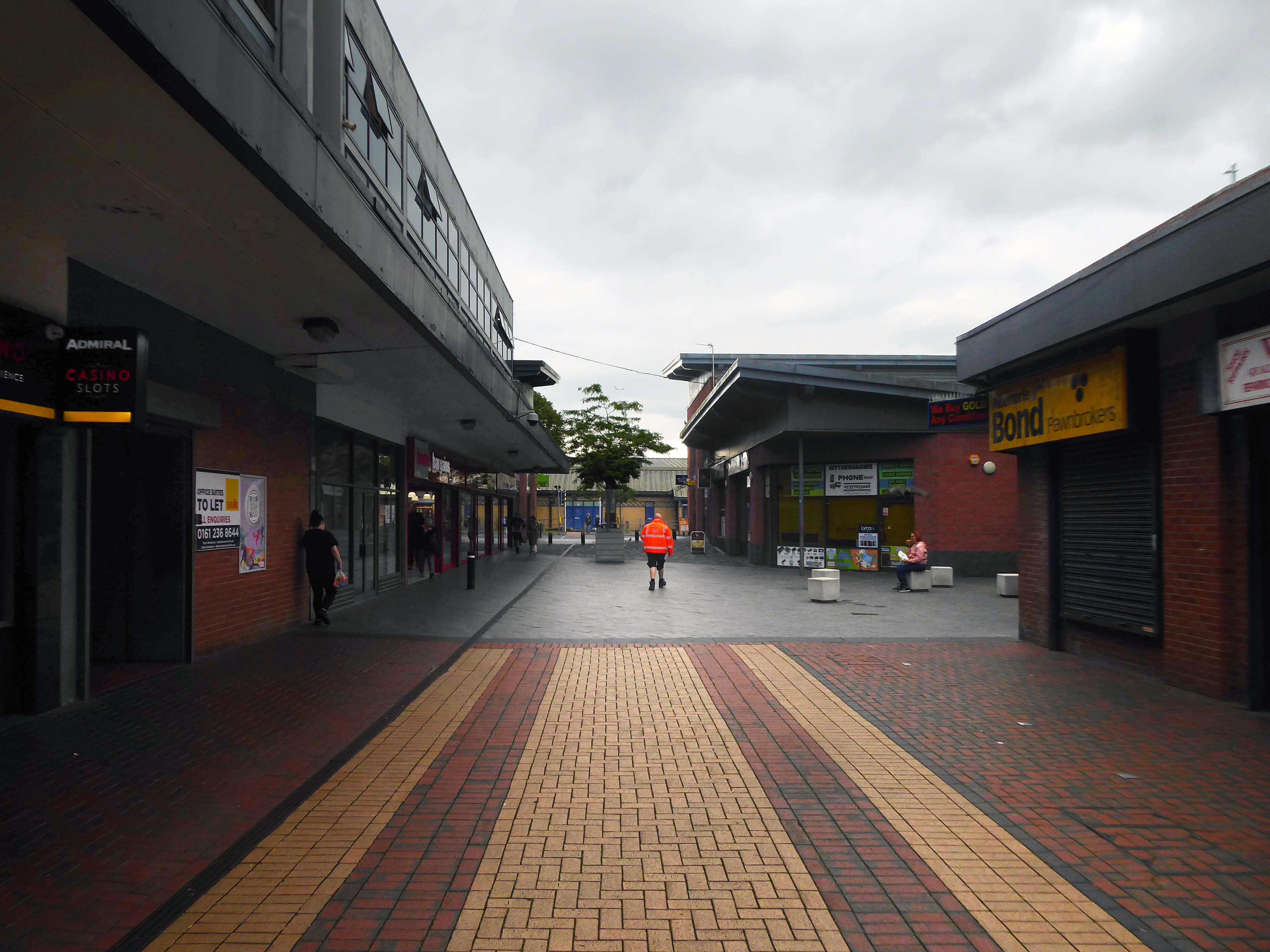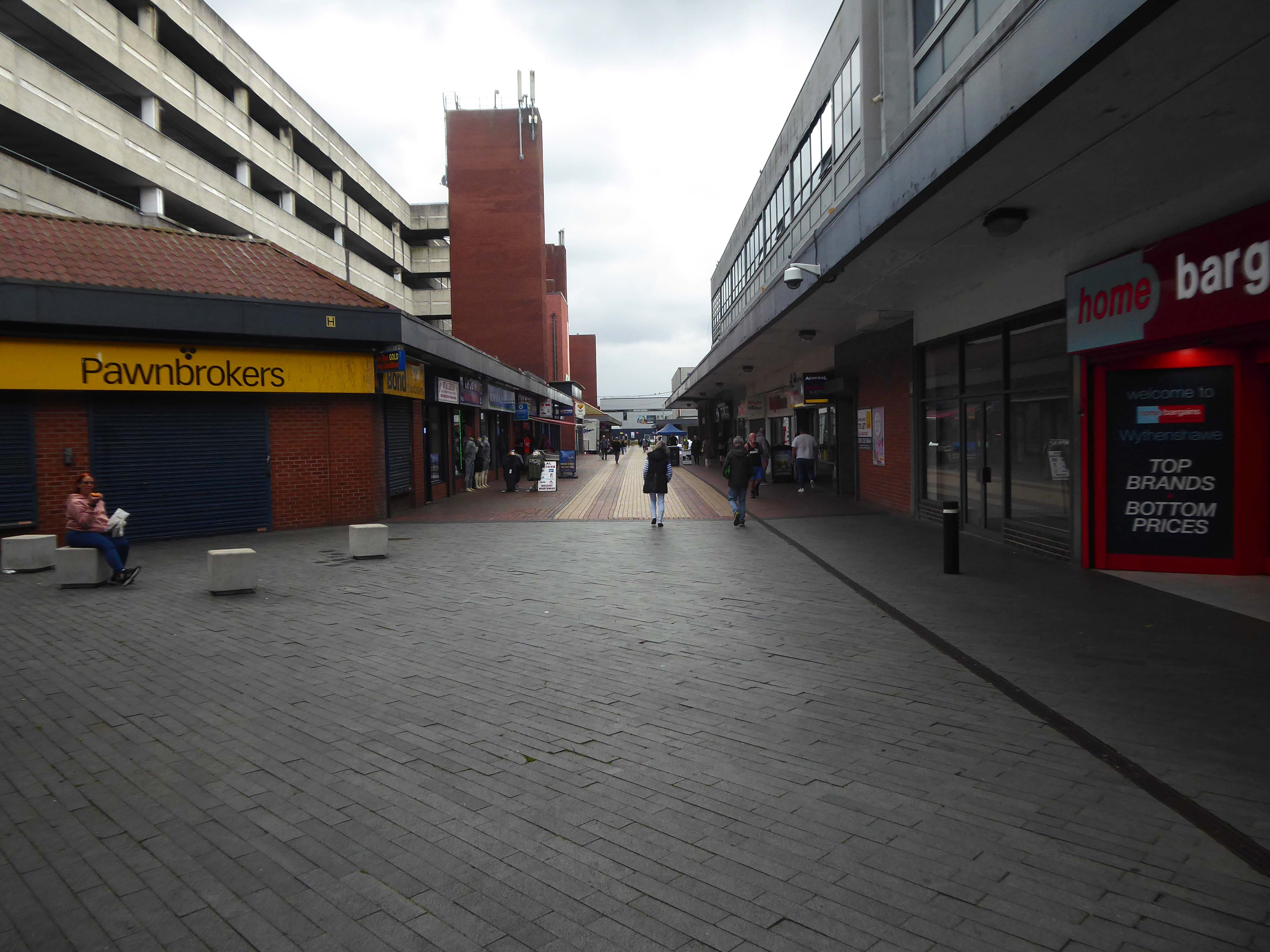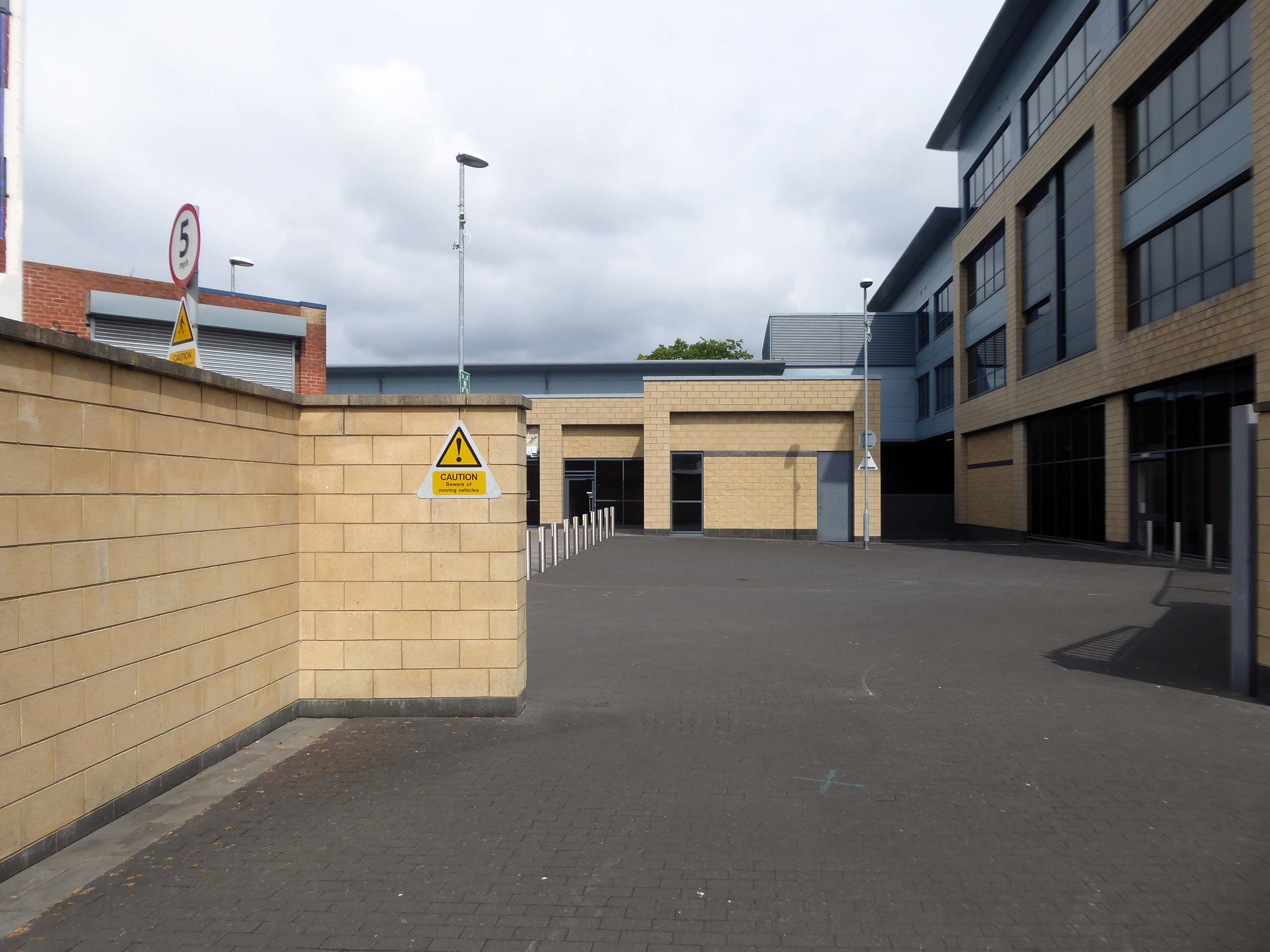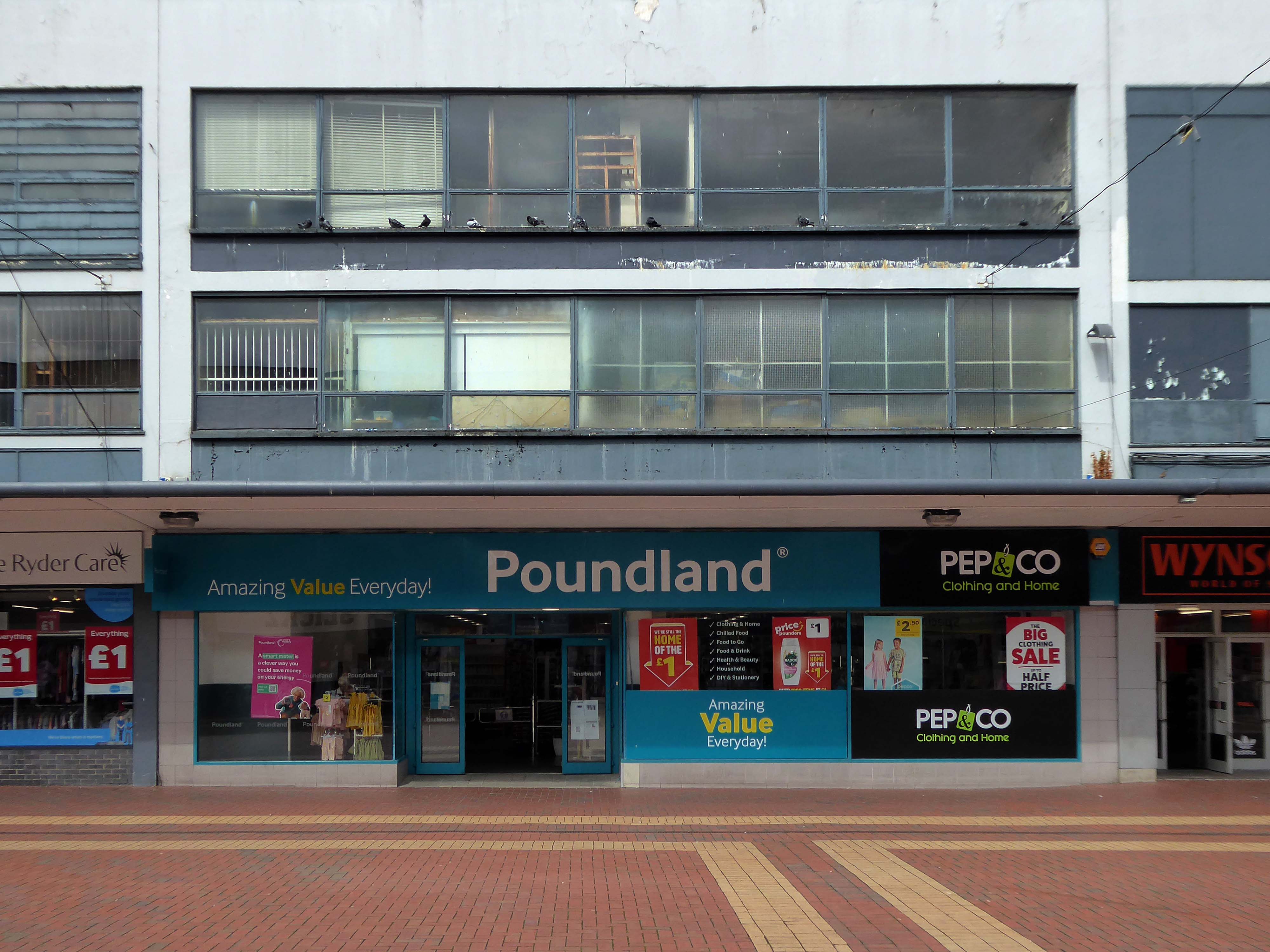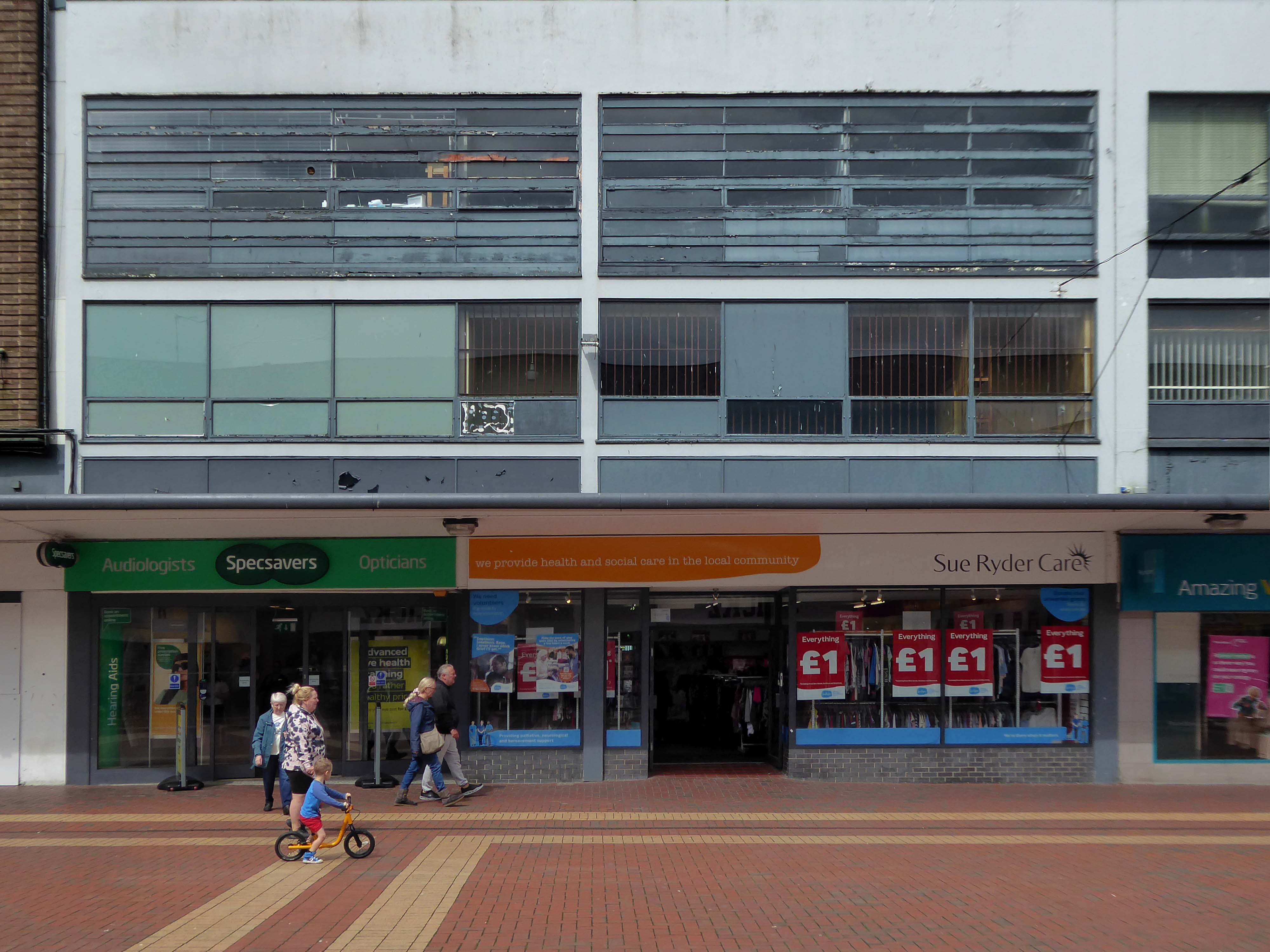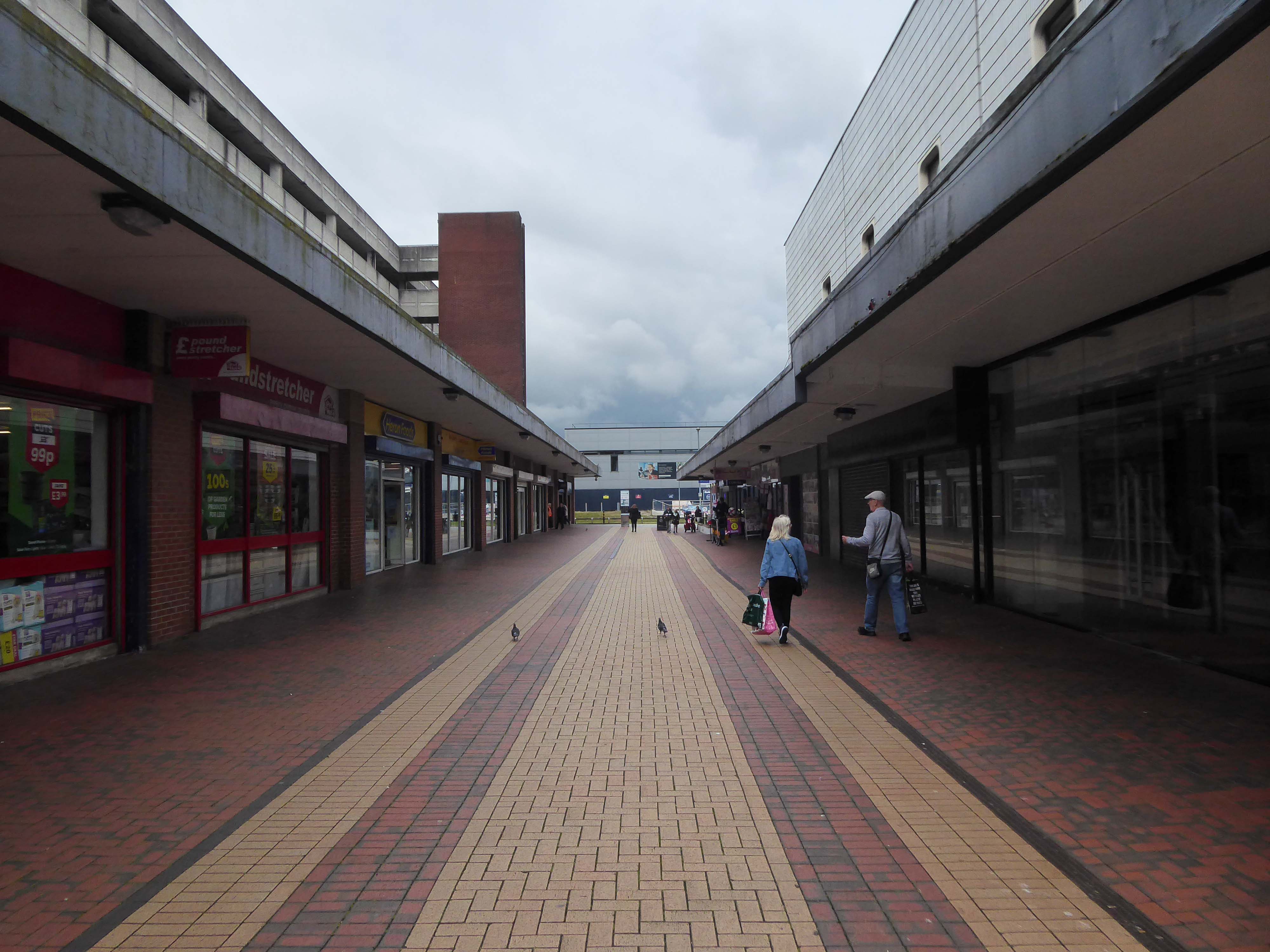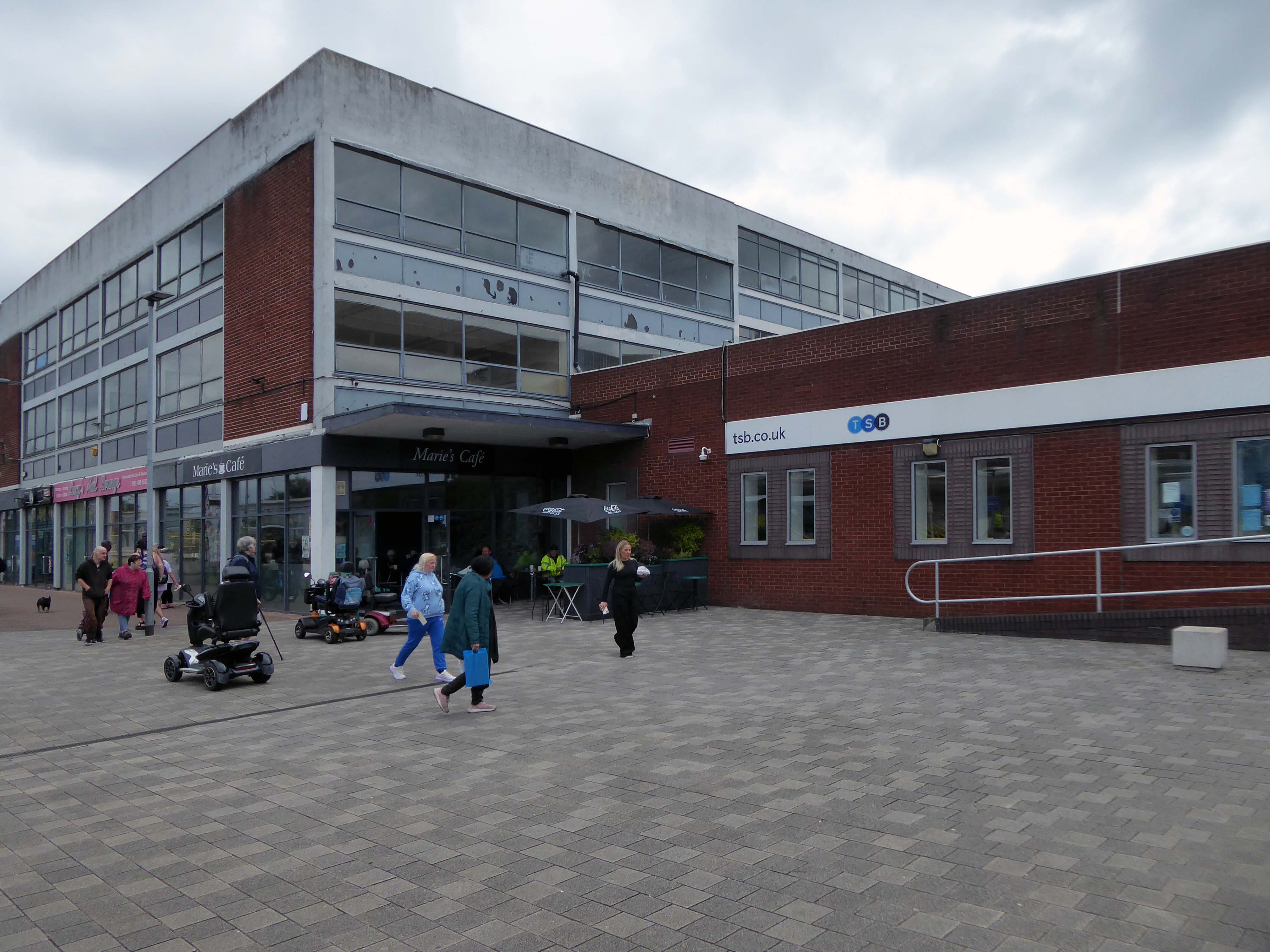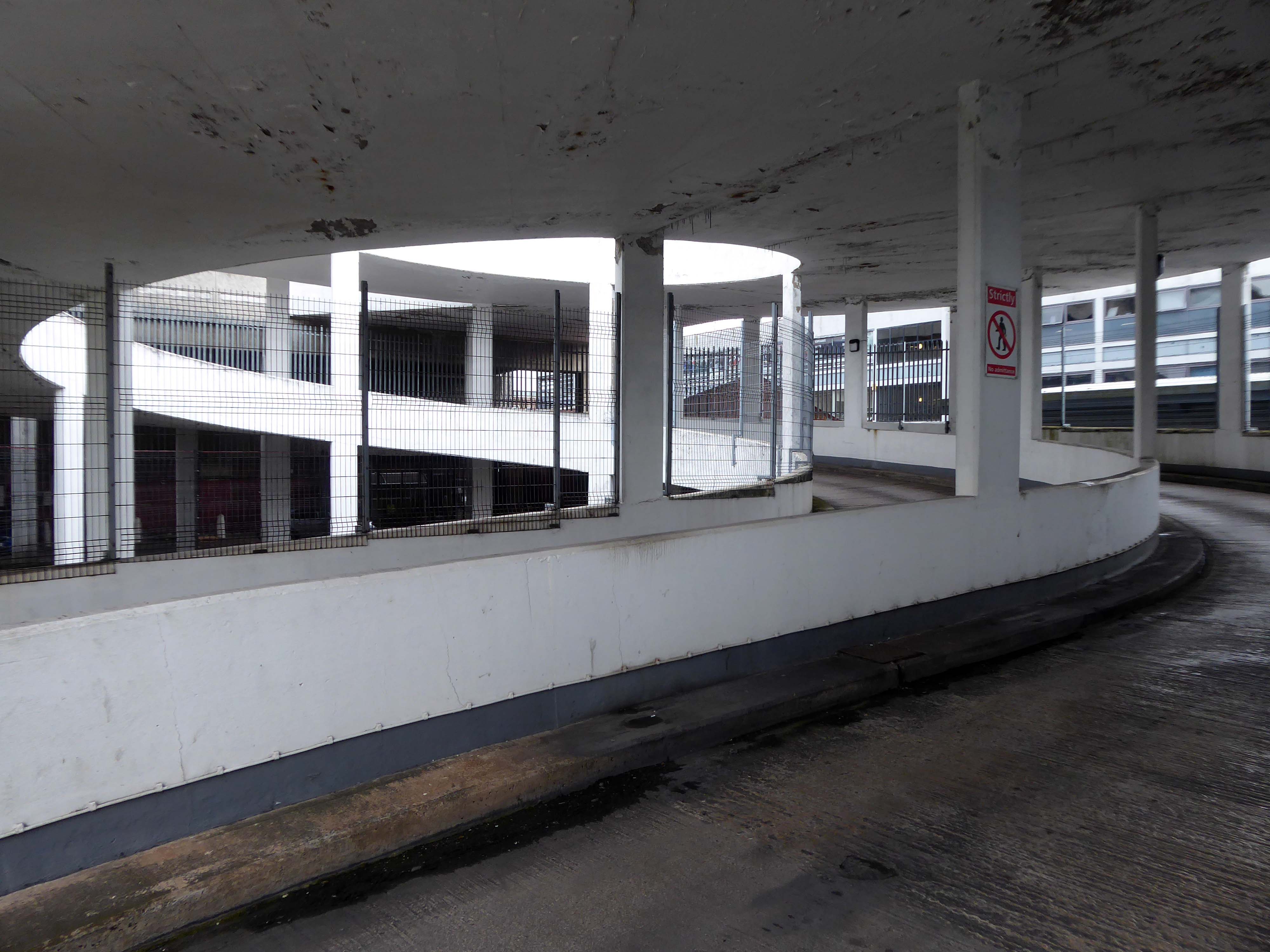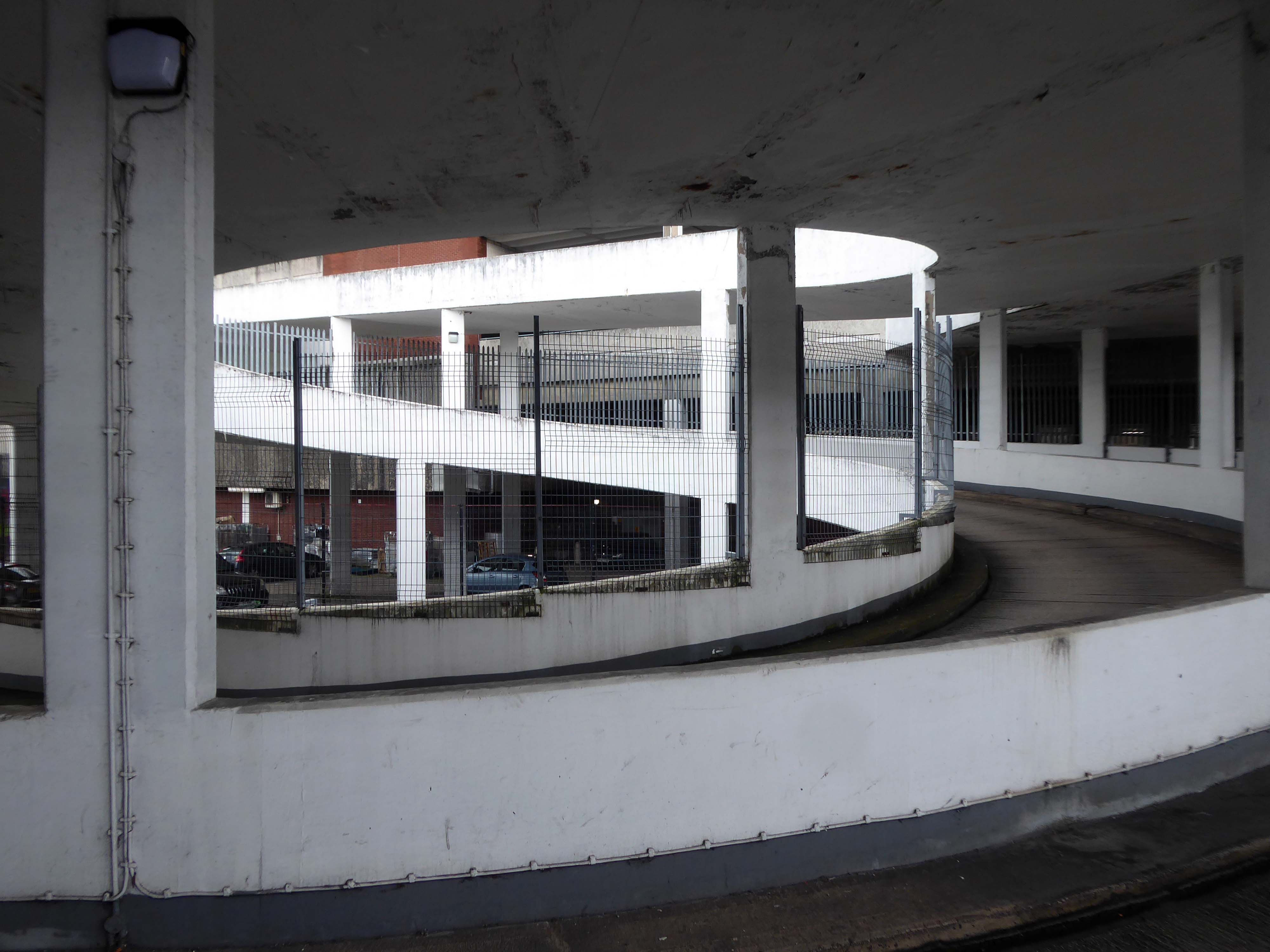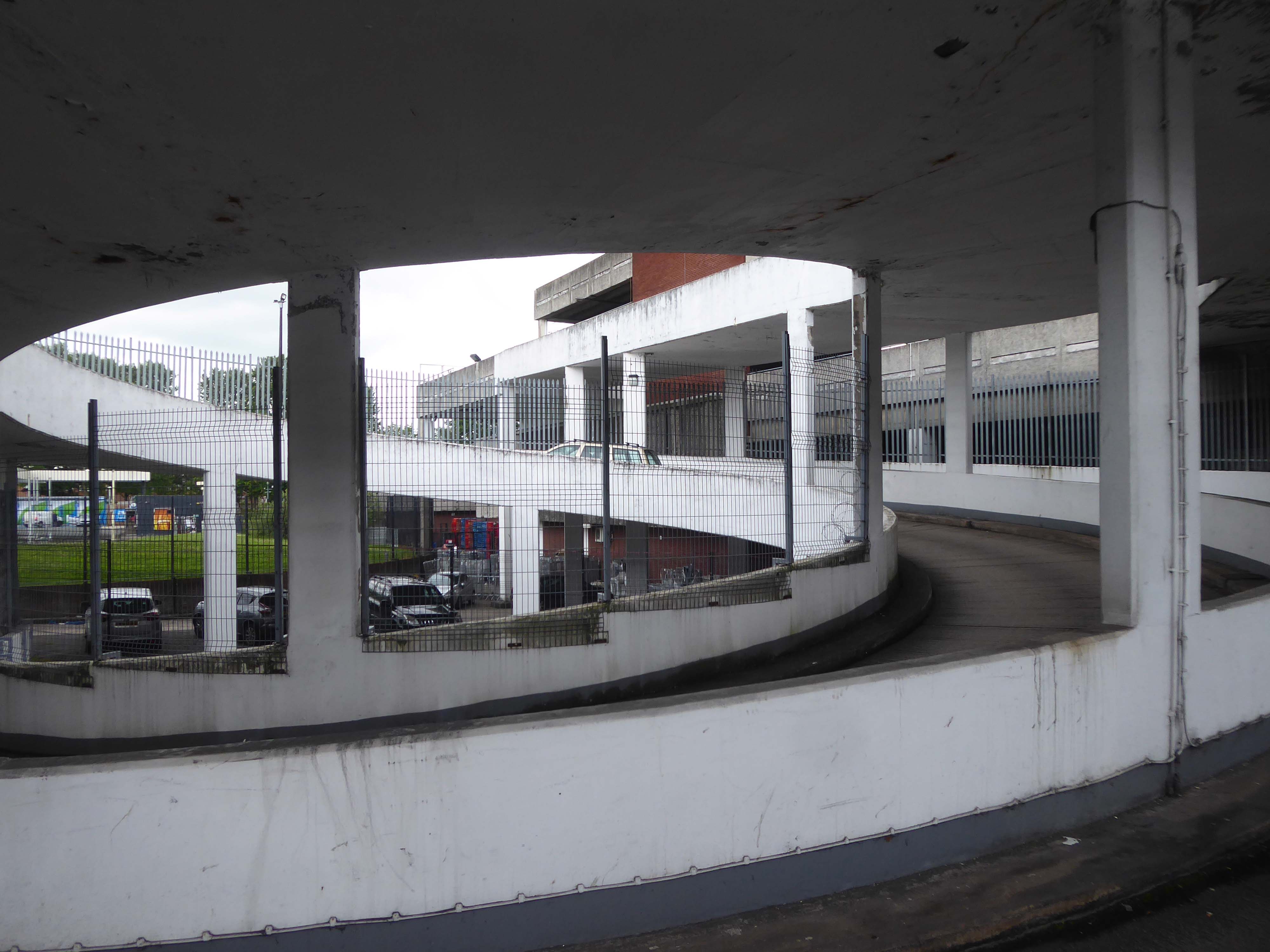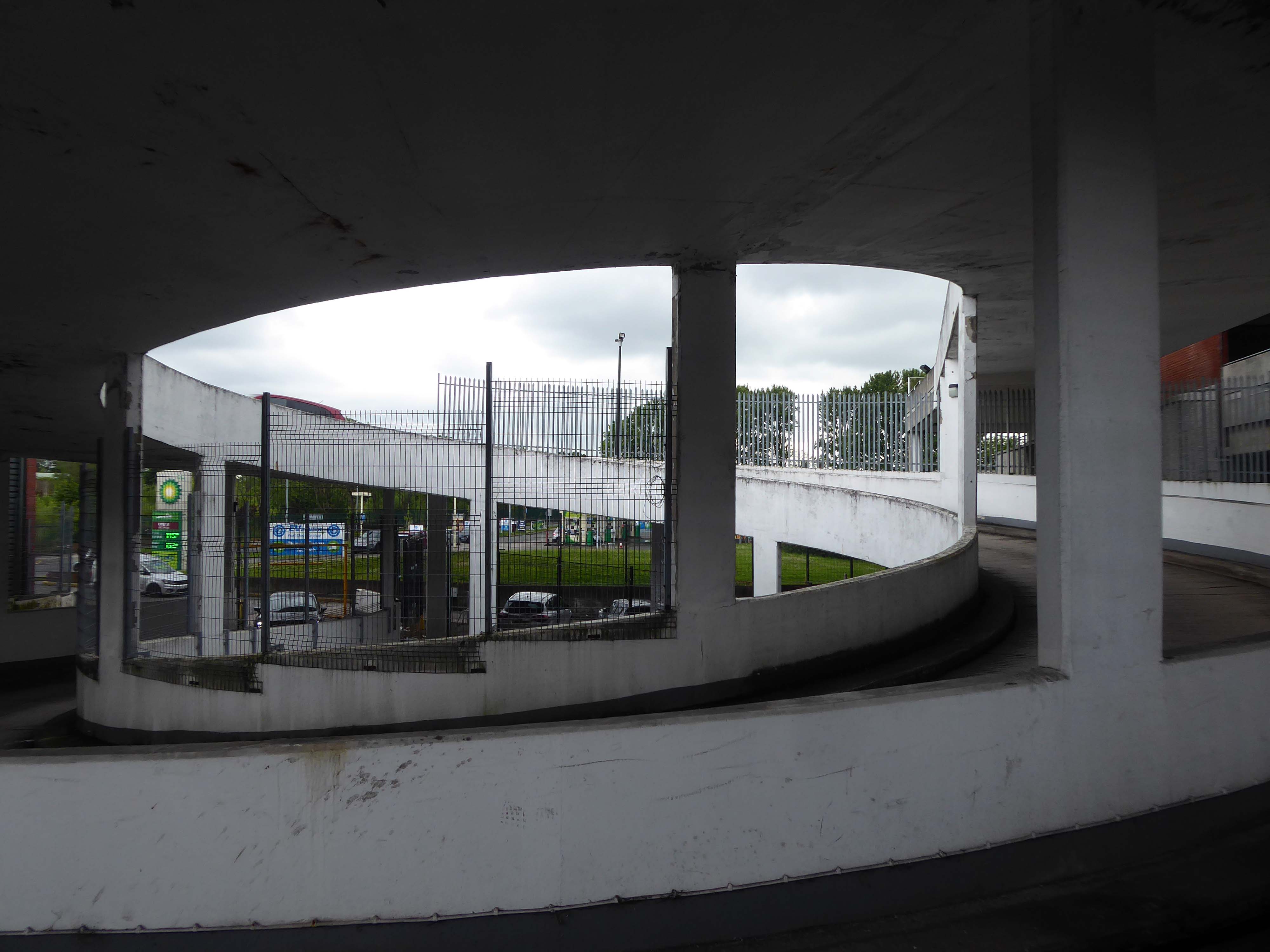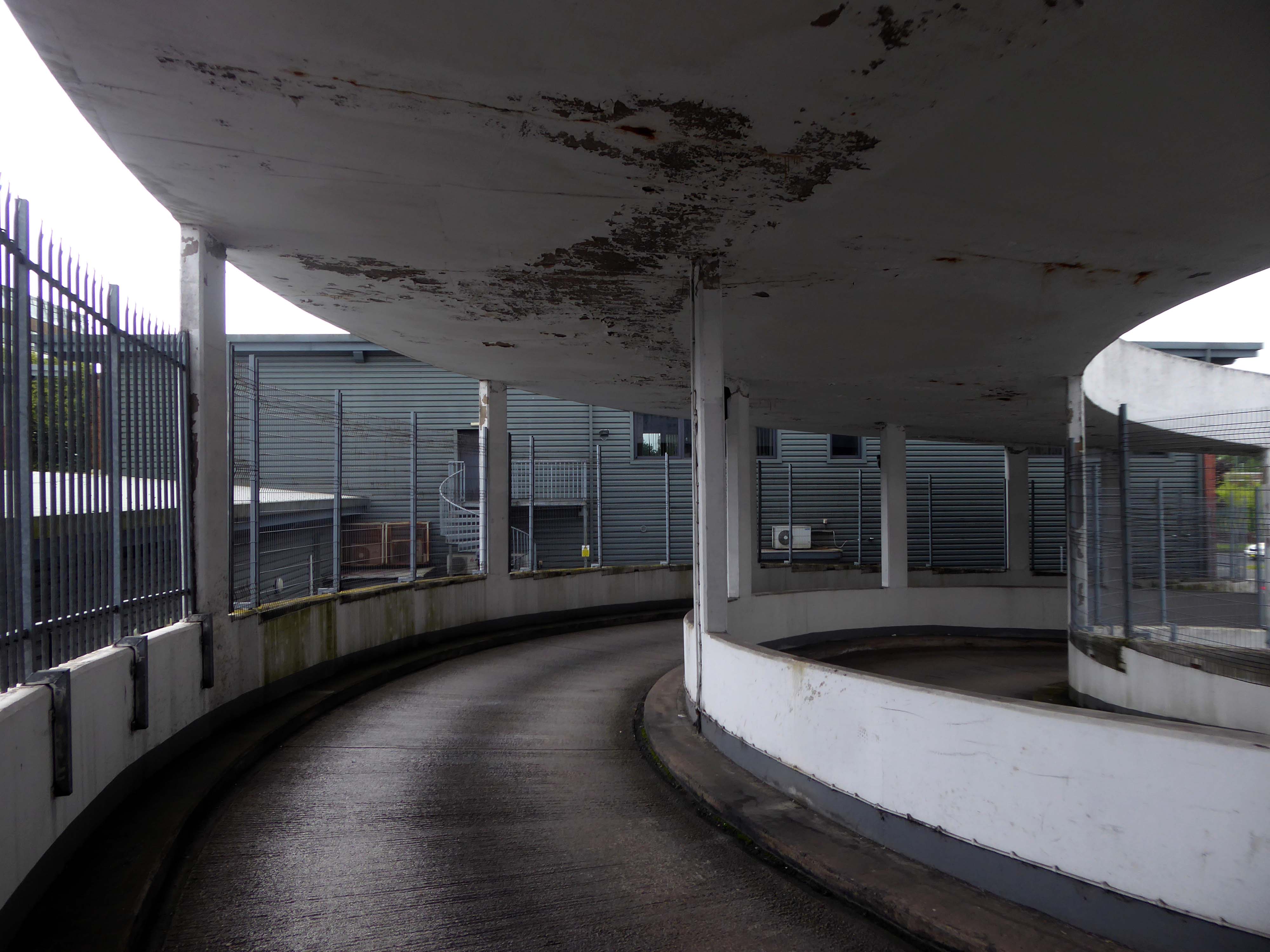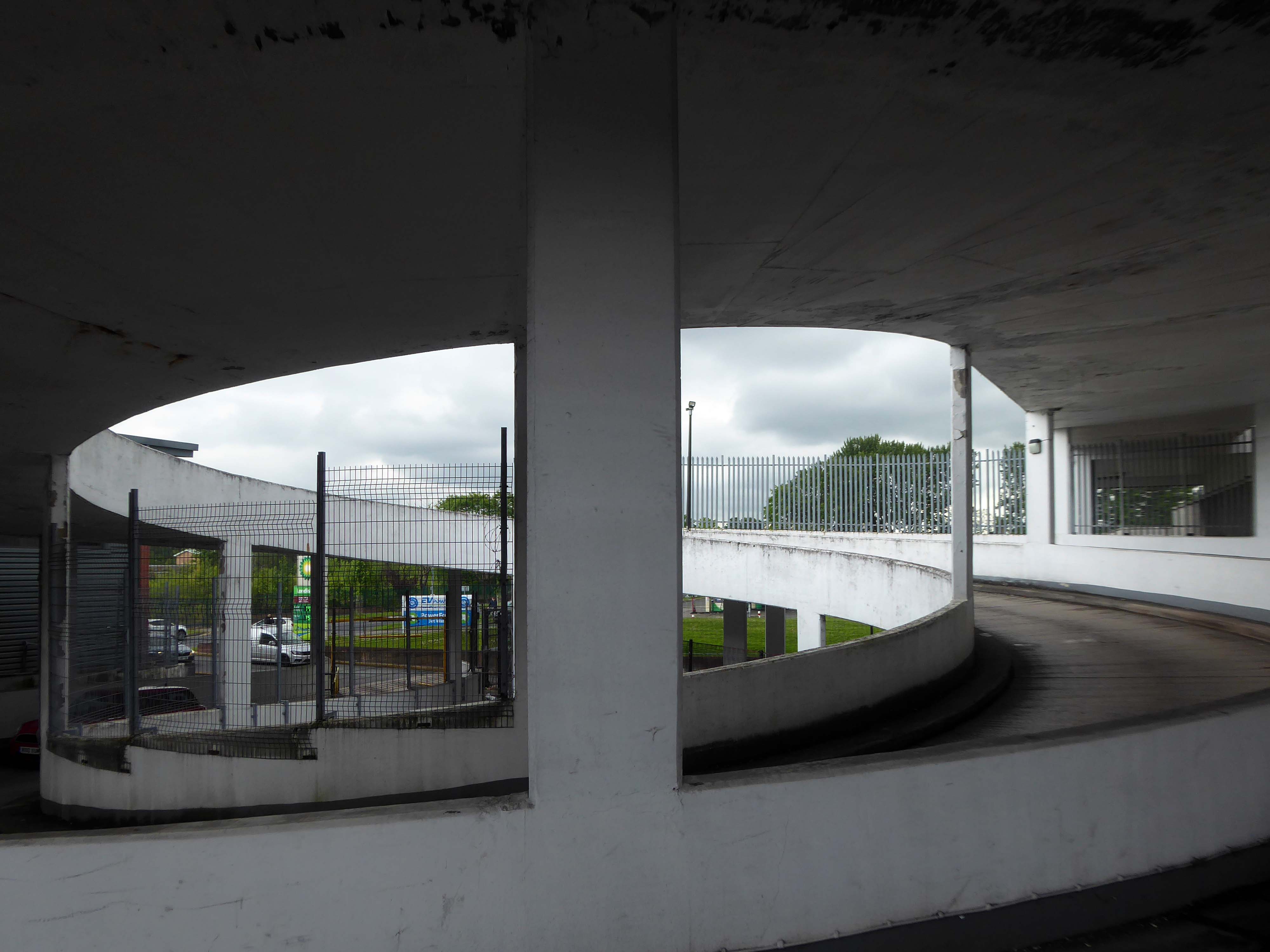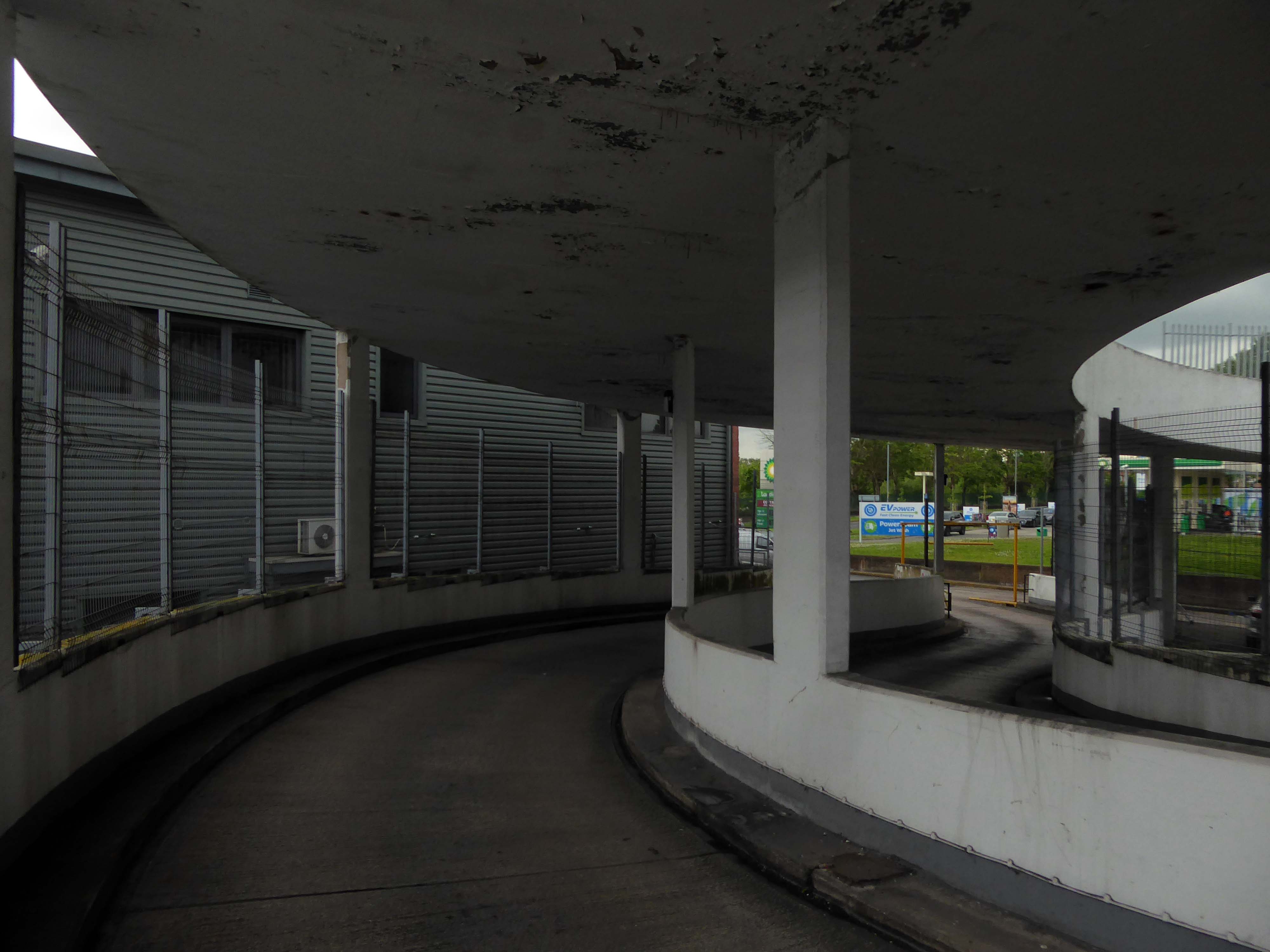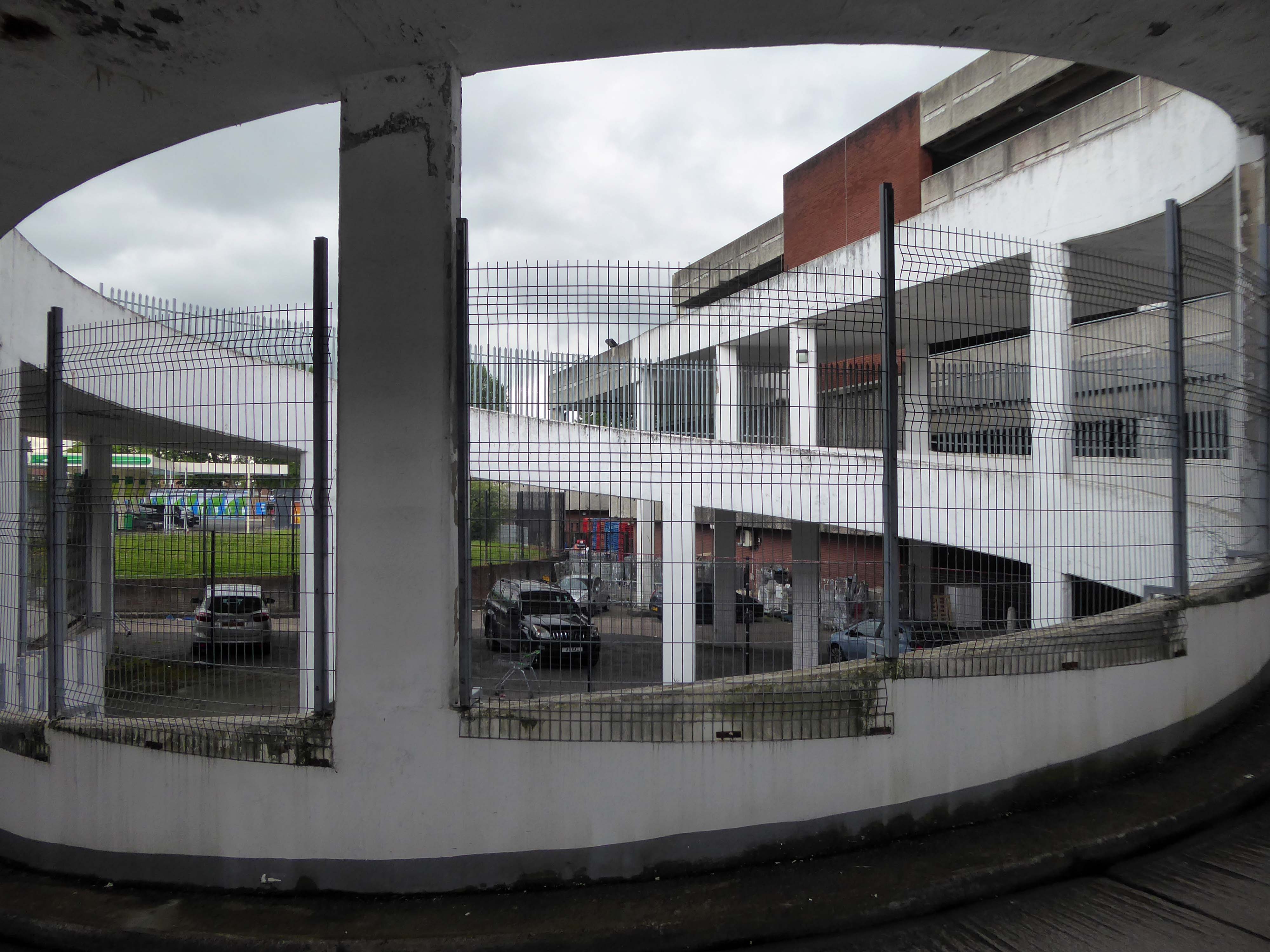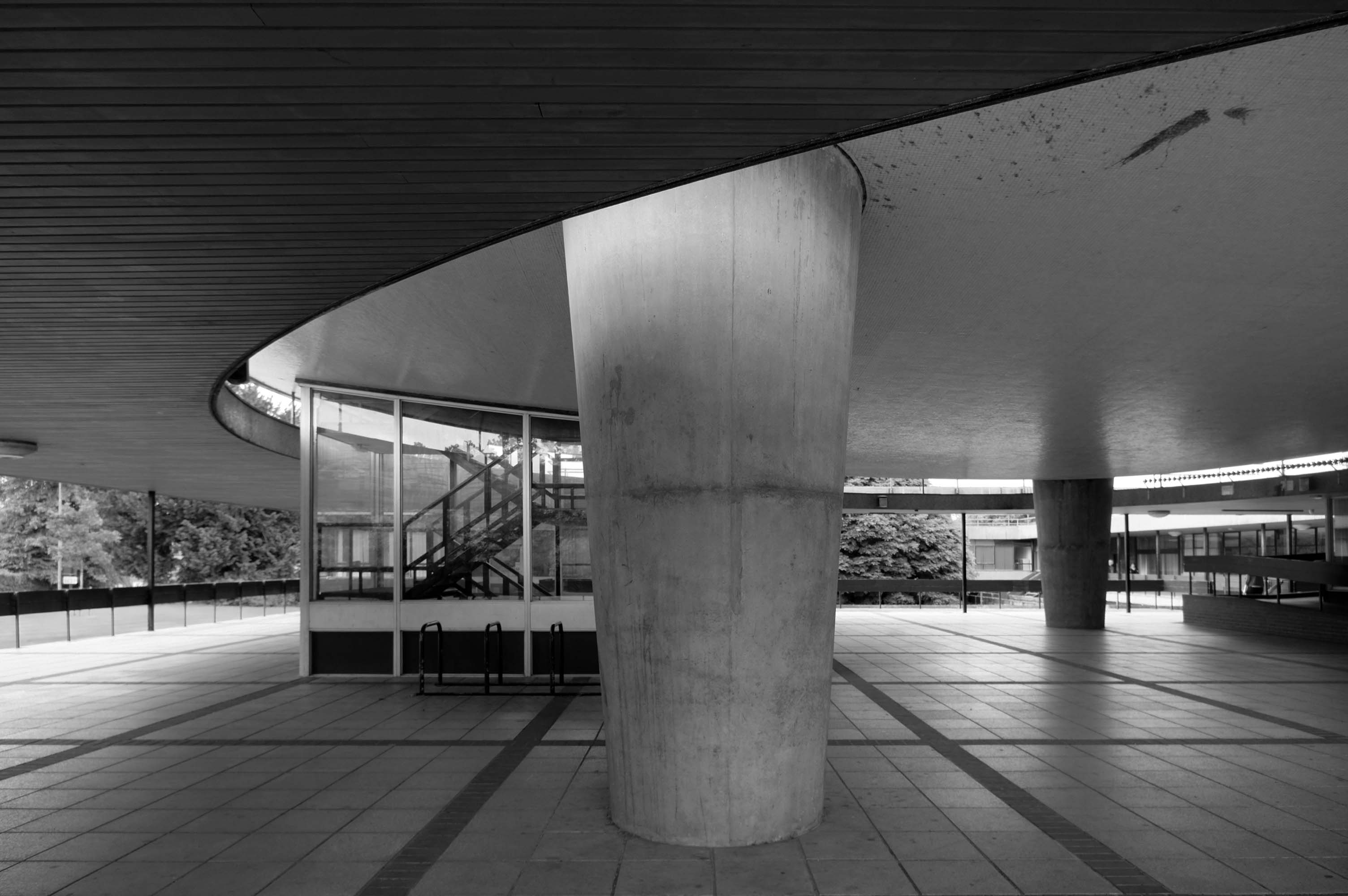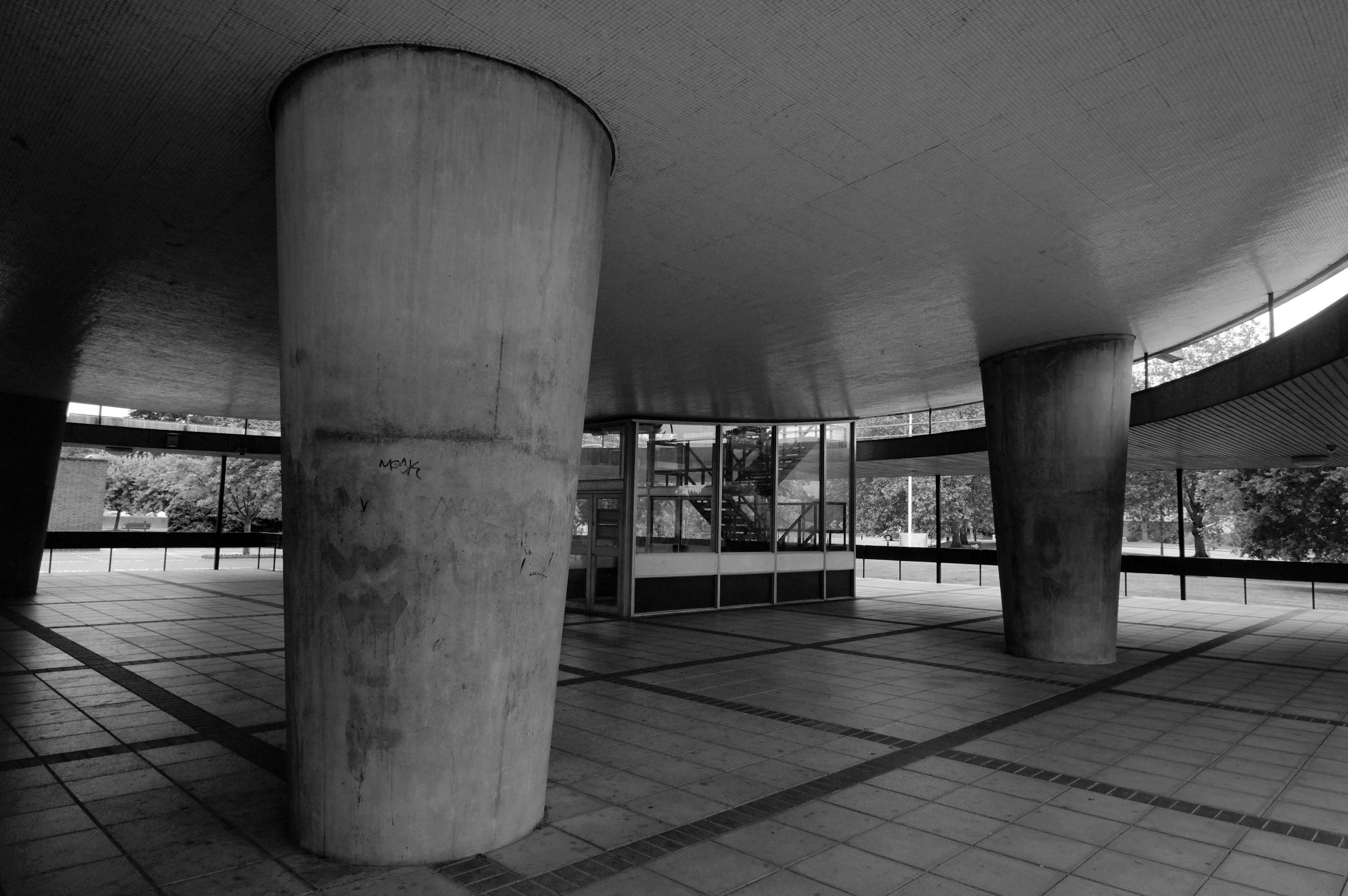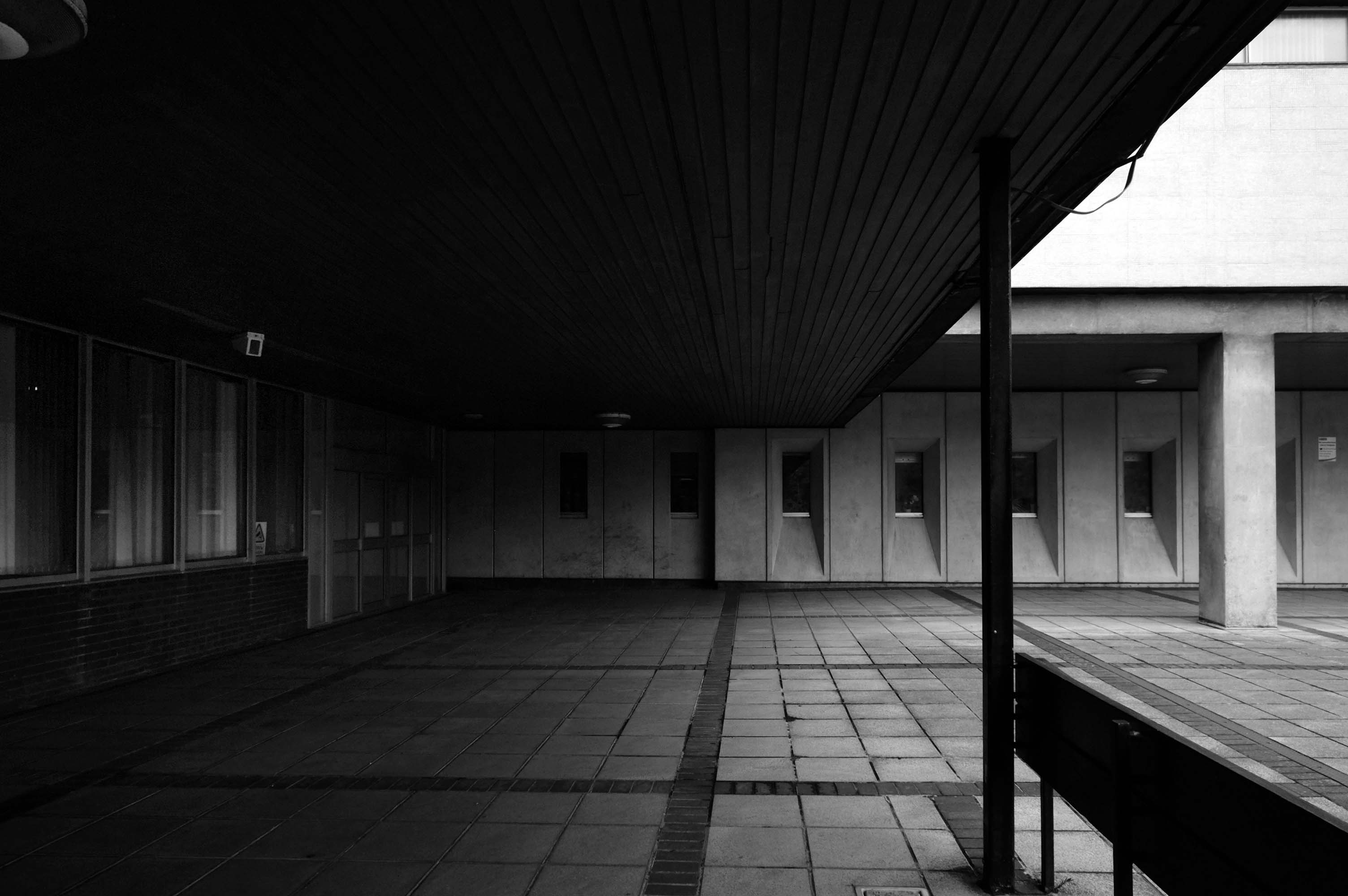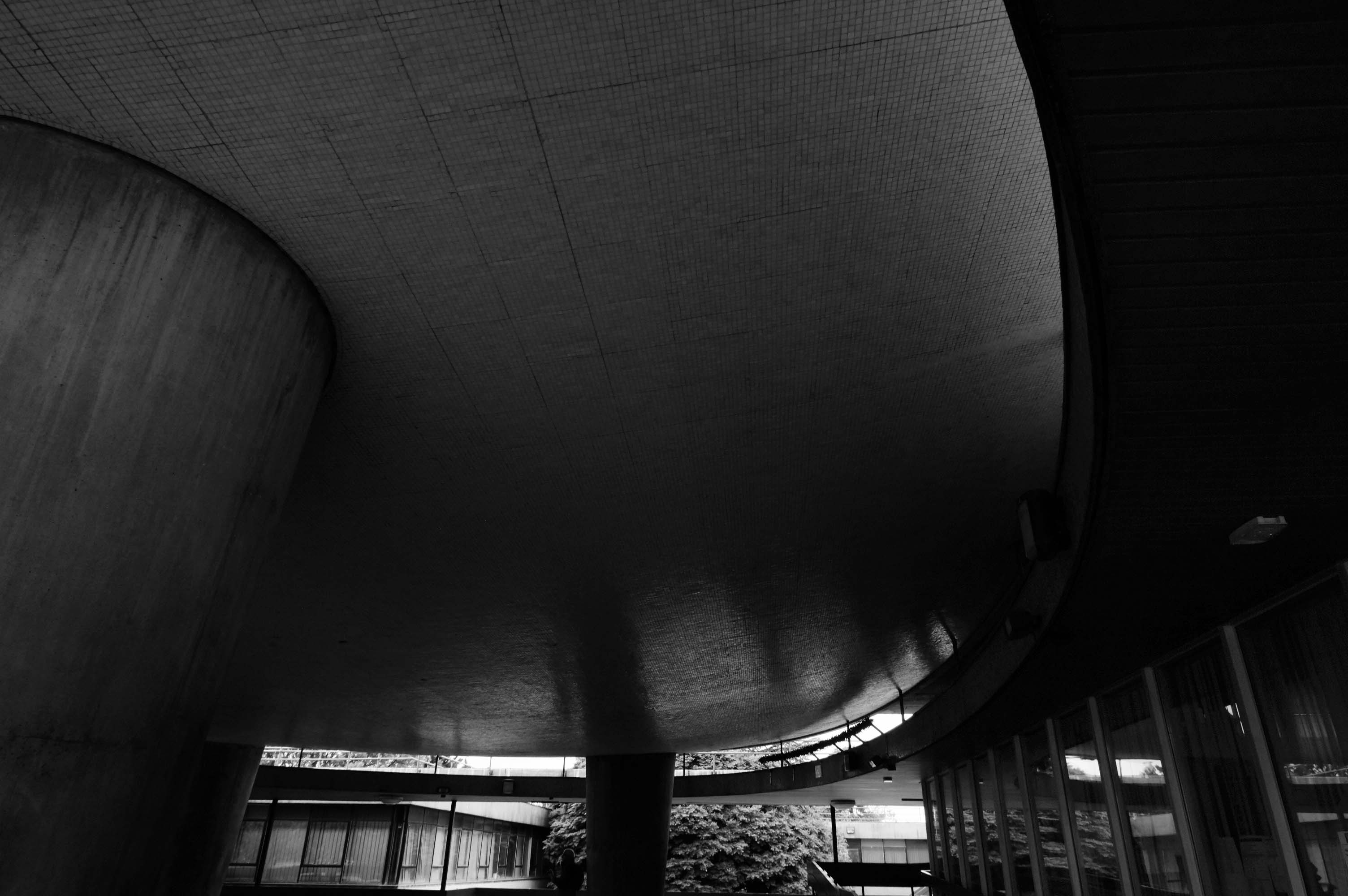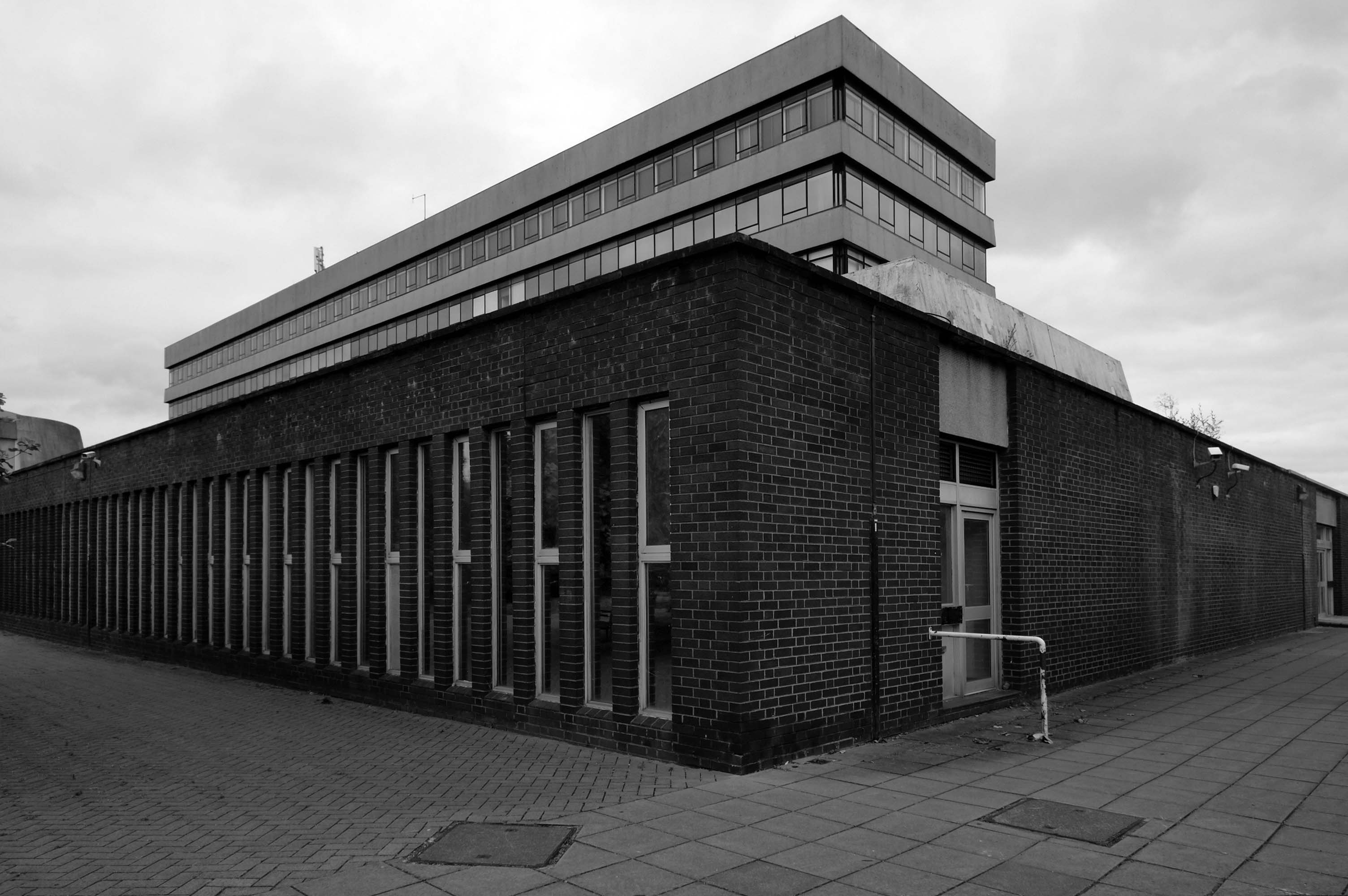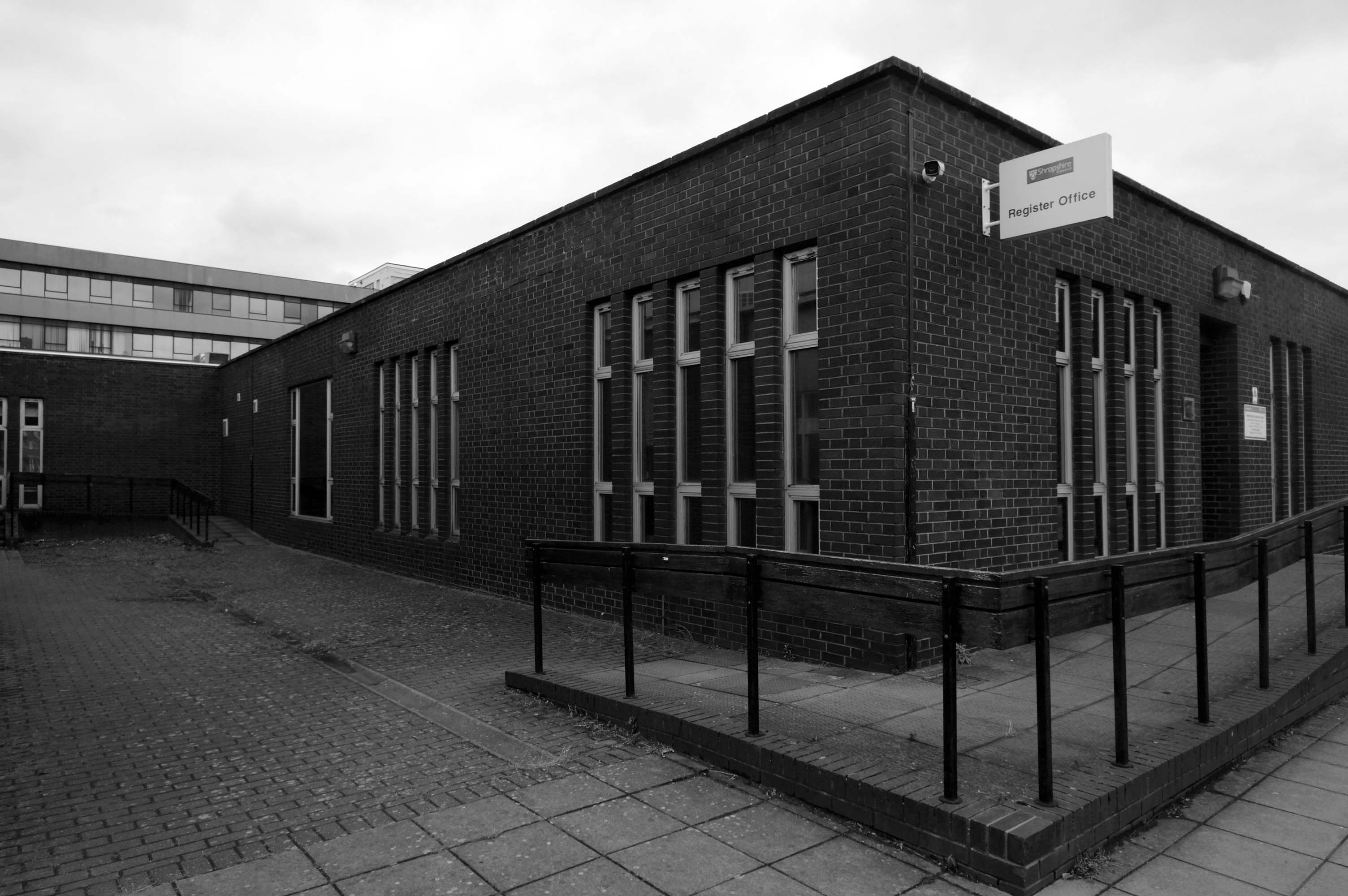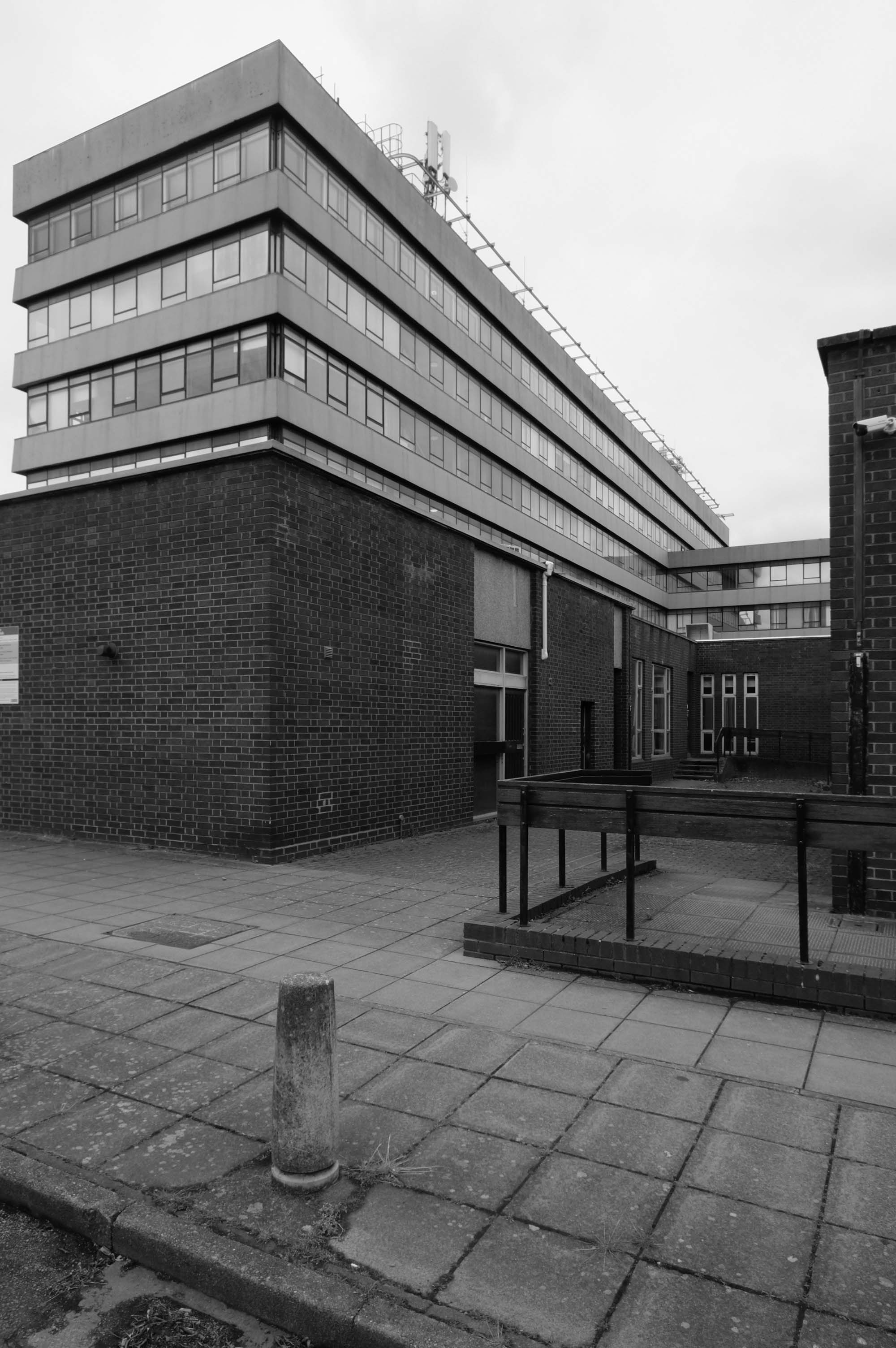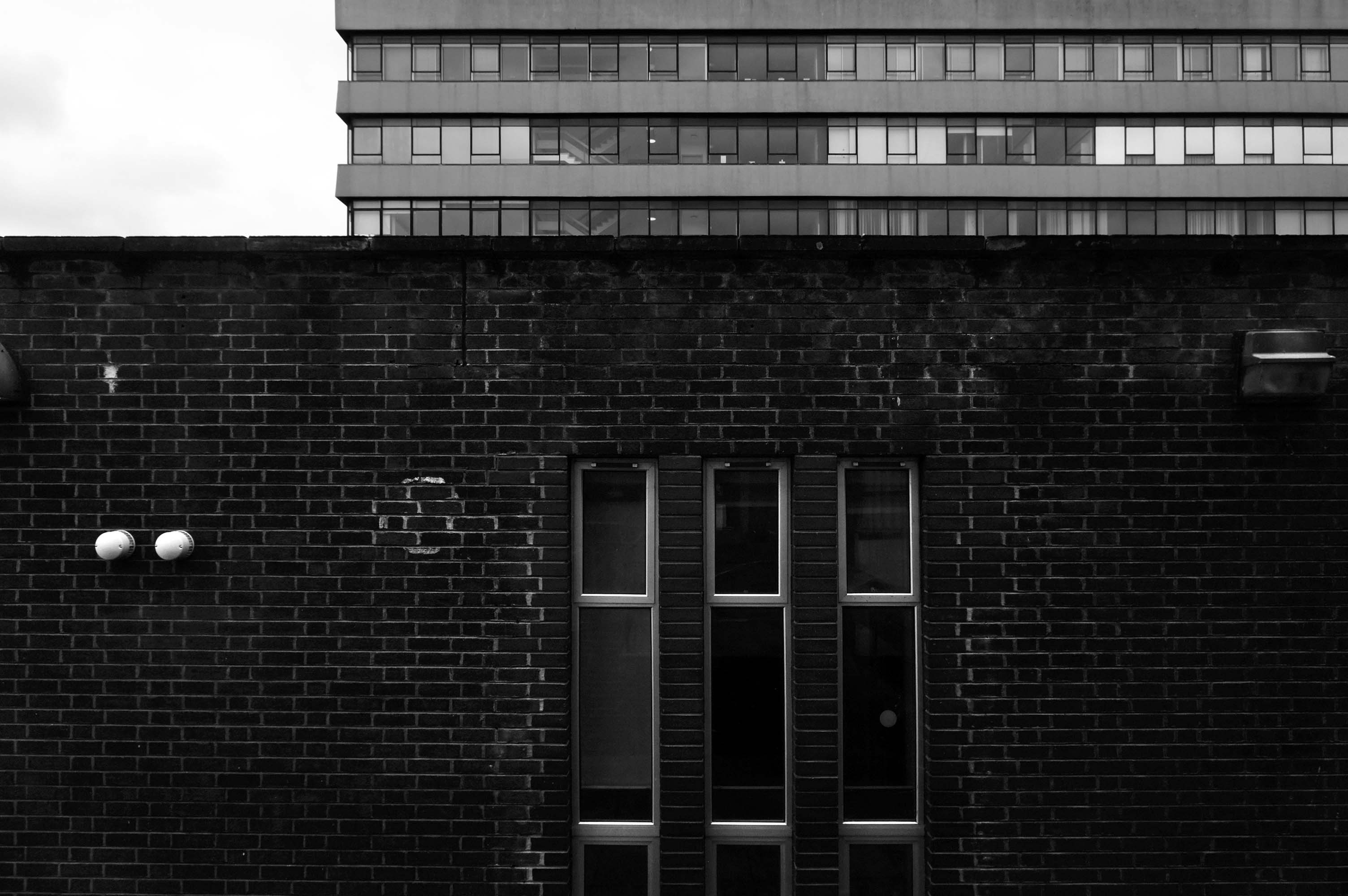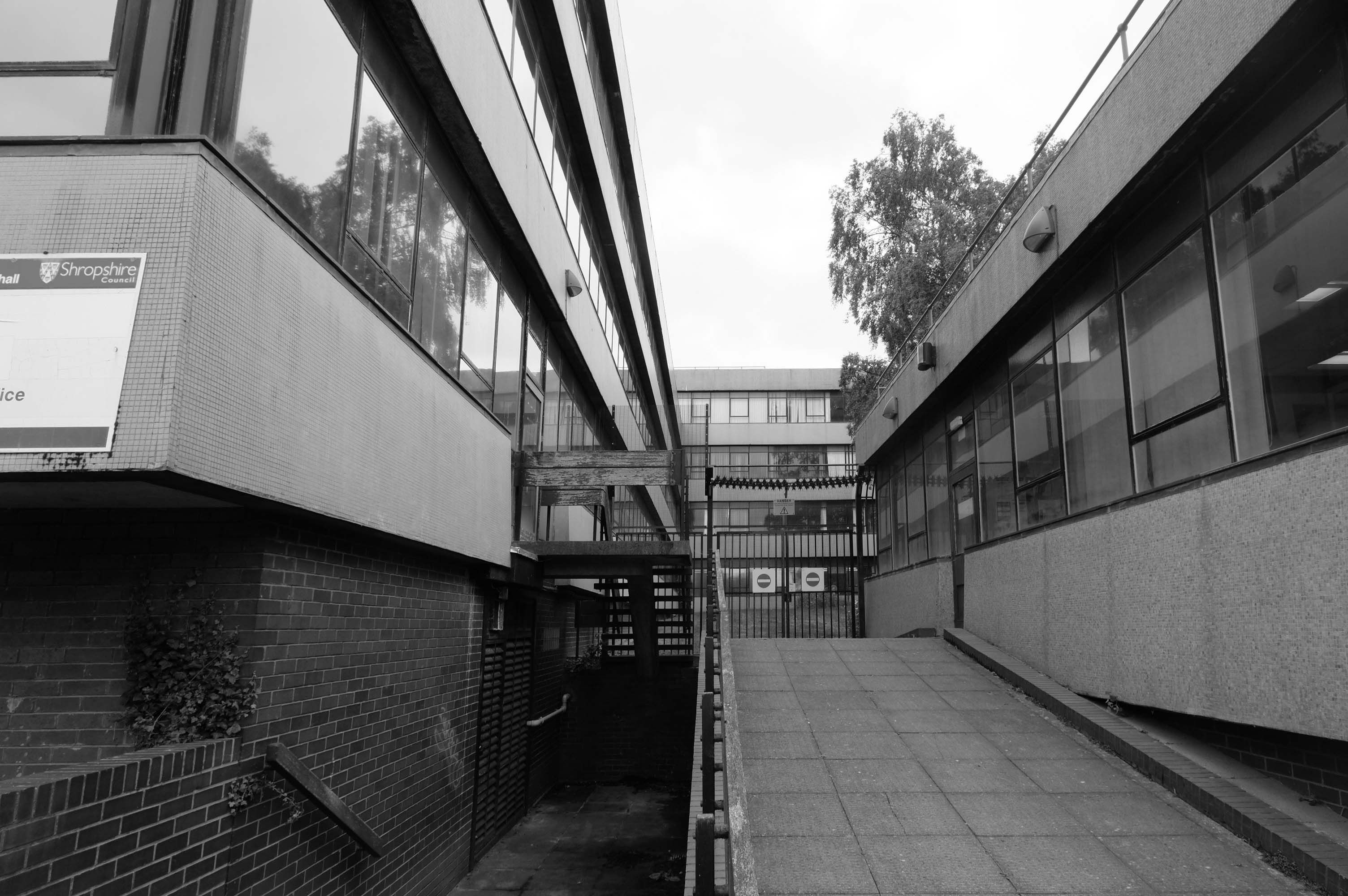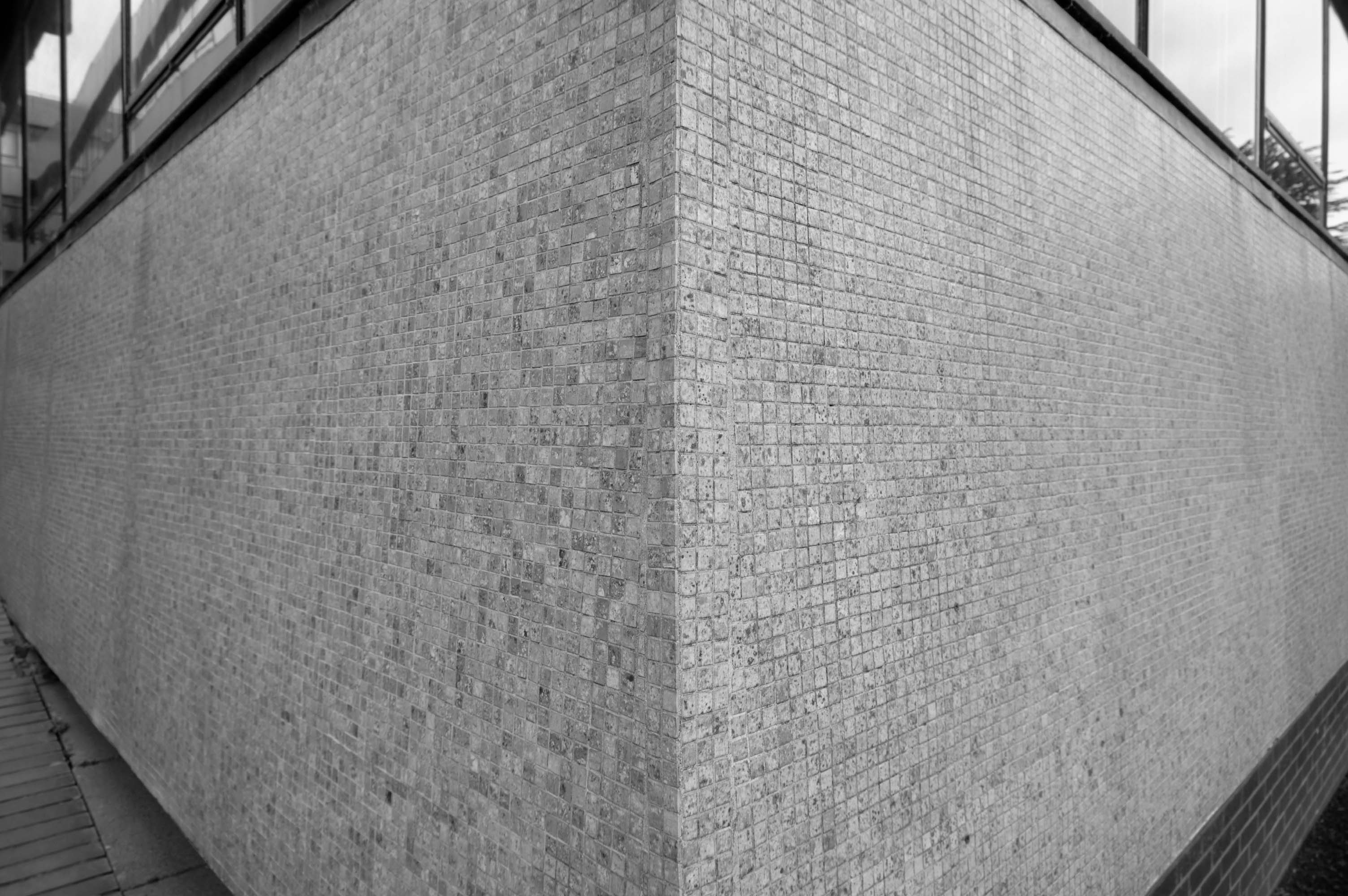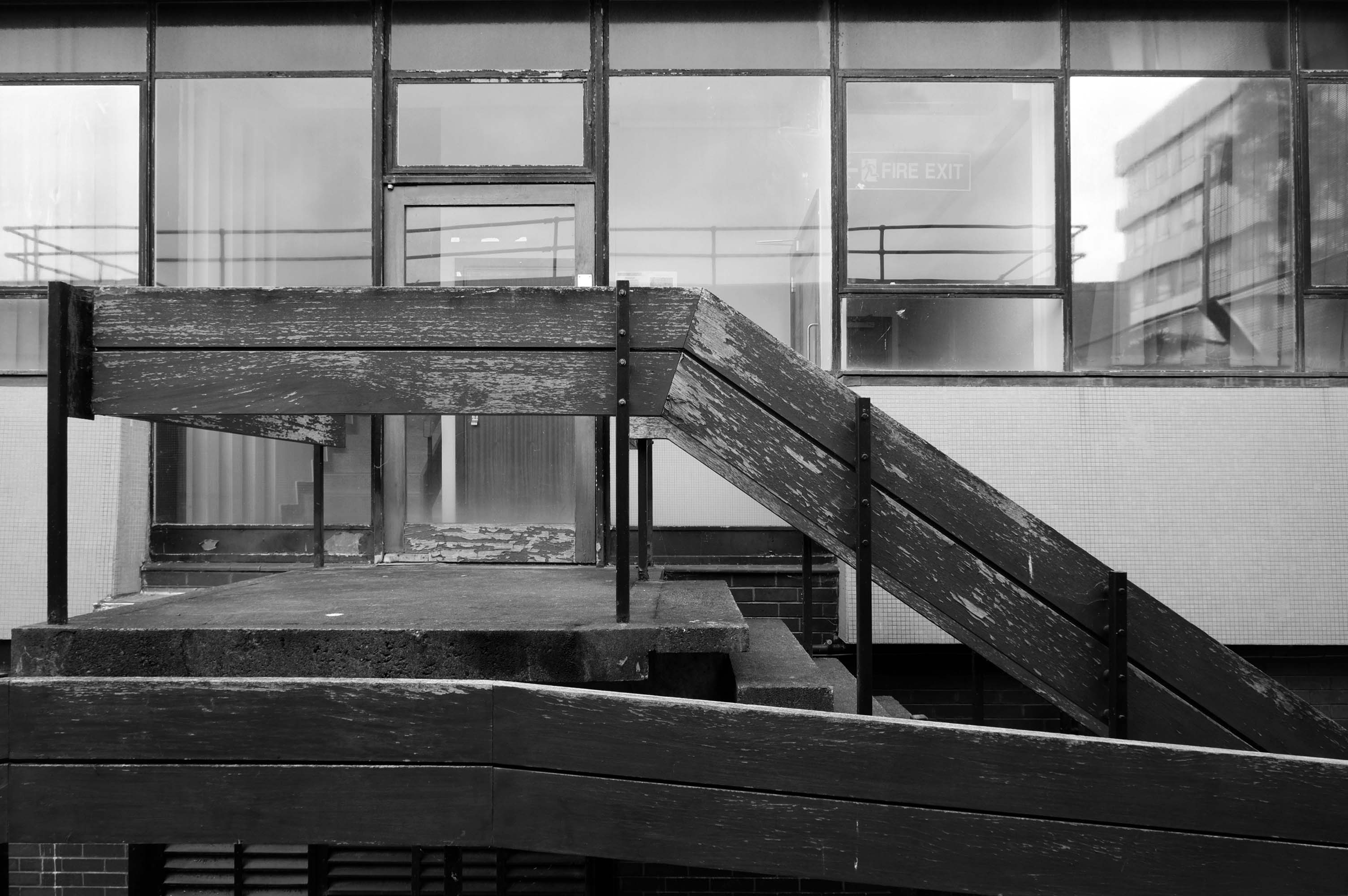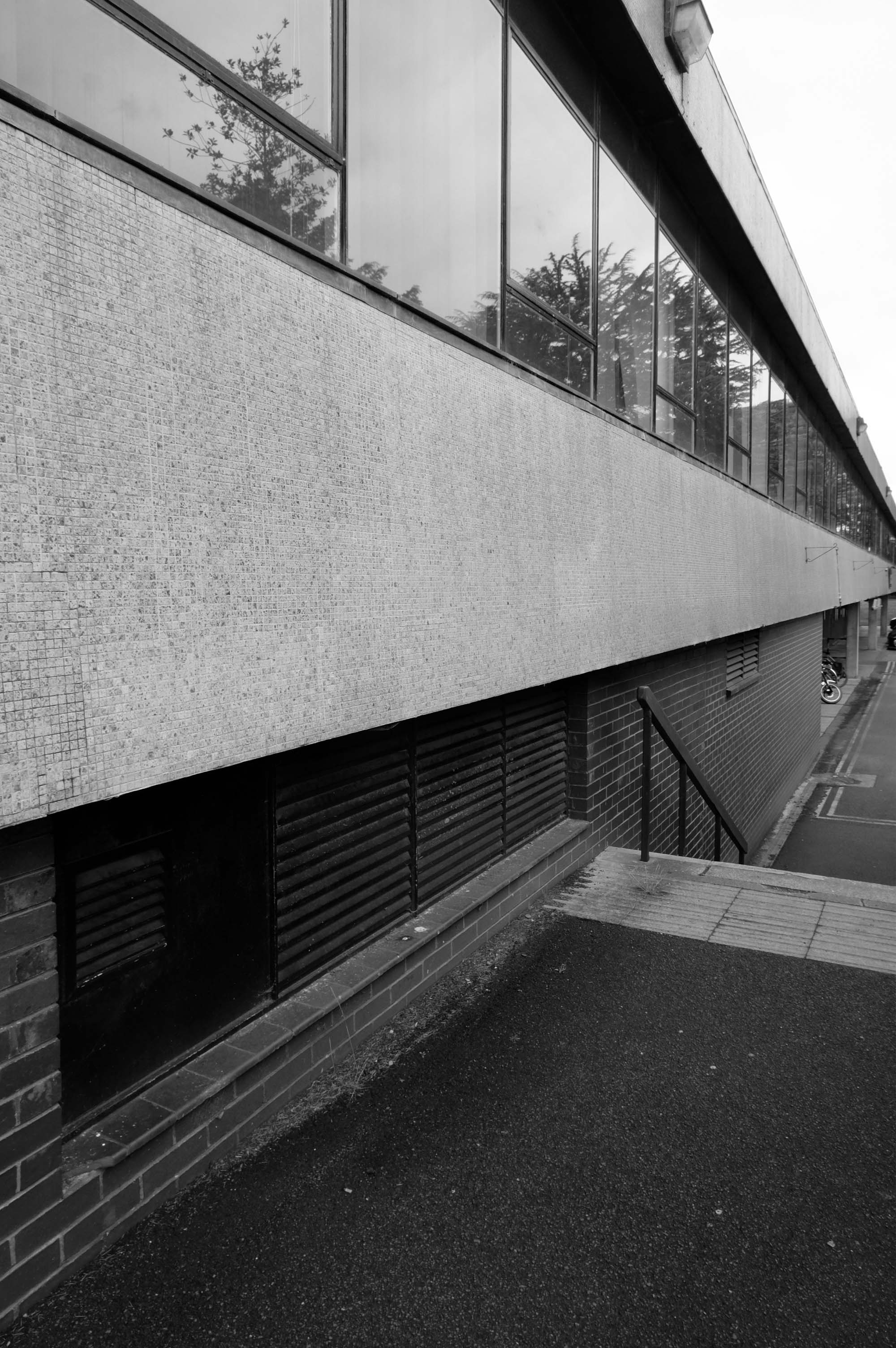
Welcombe Walk – Whitefield

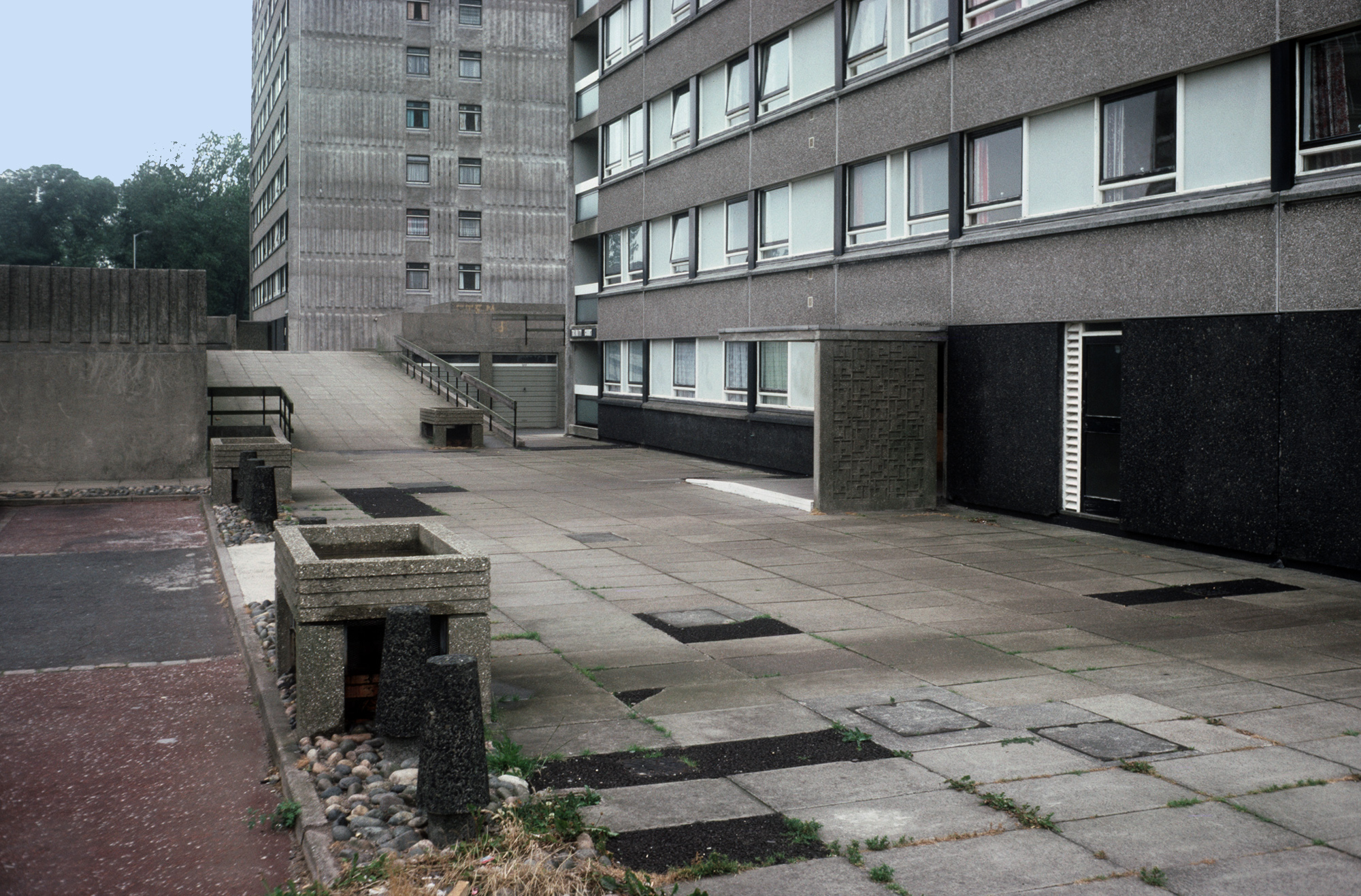
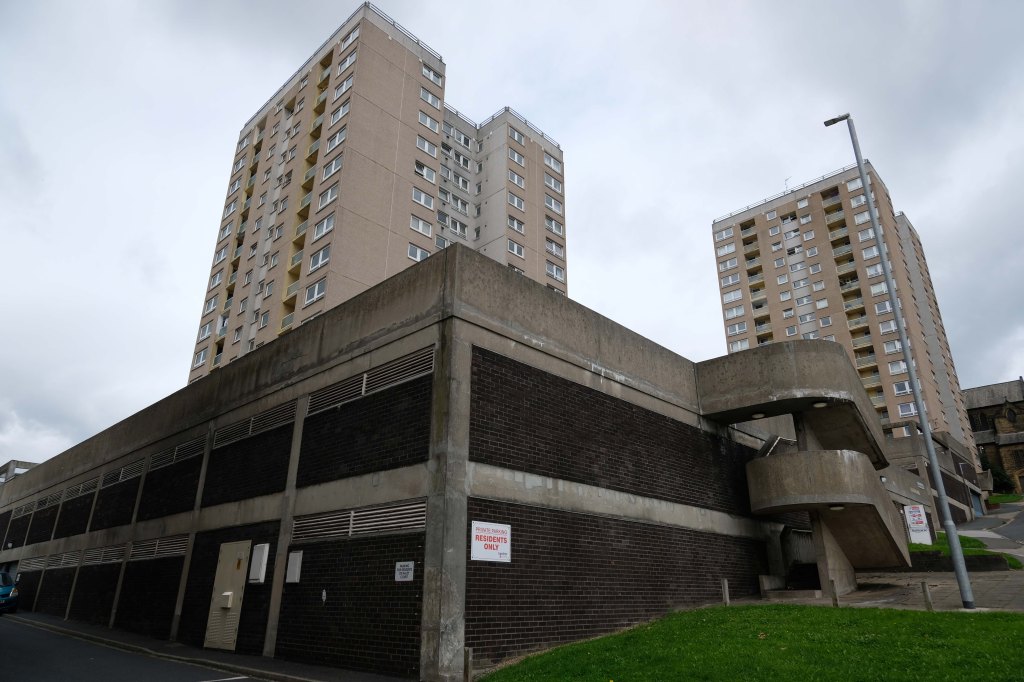
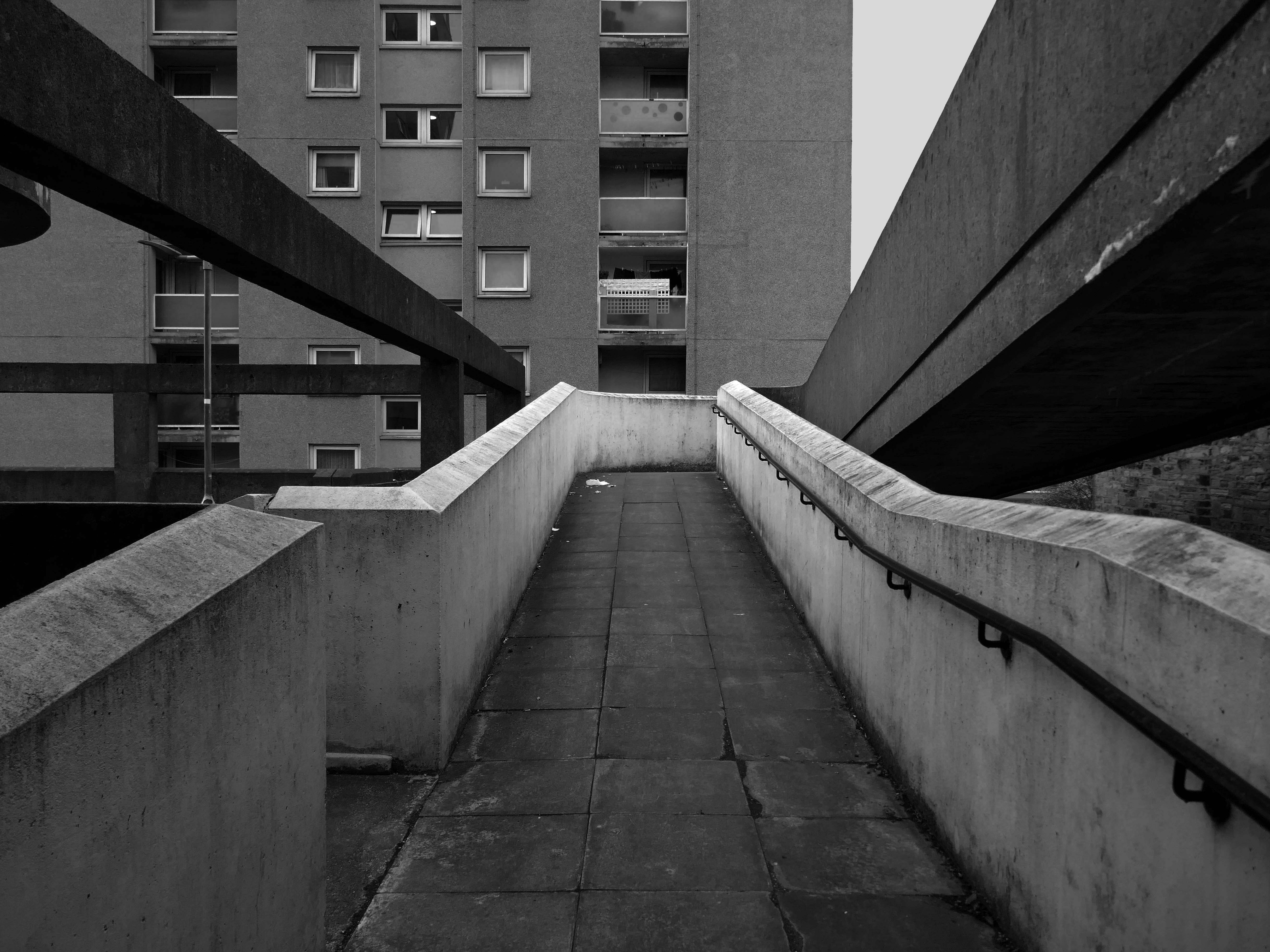
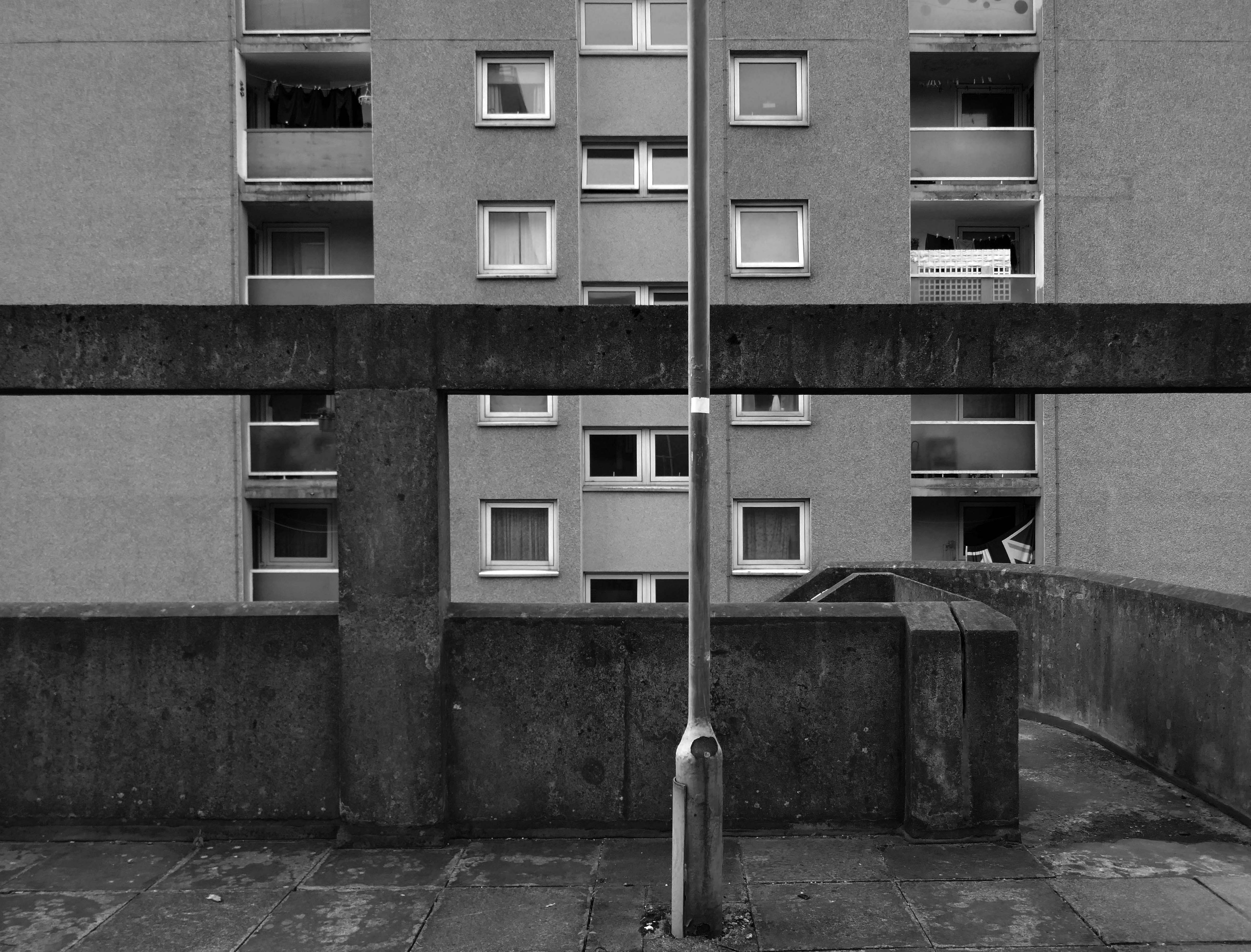
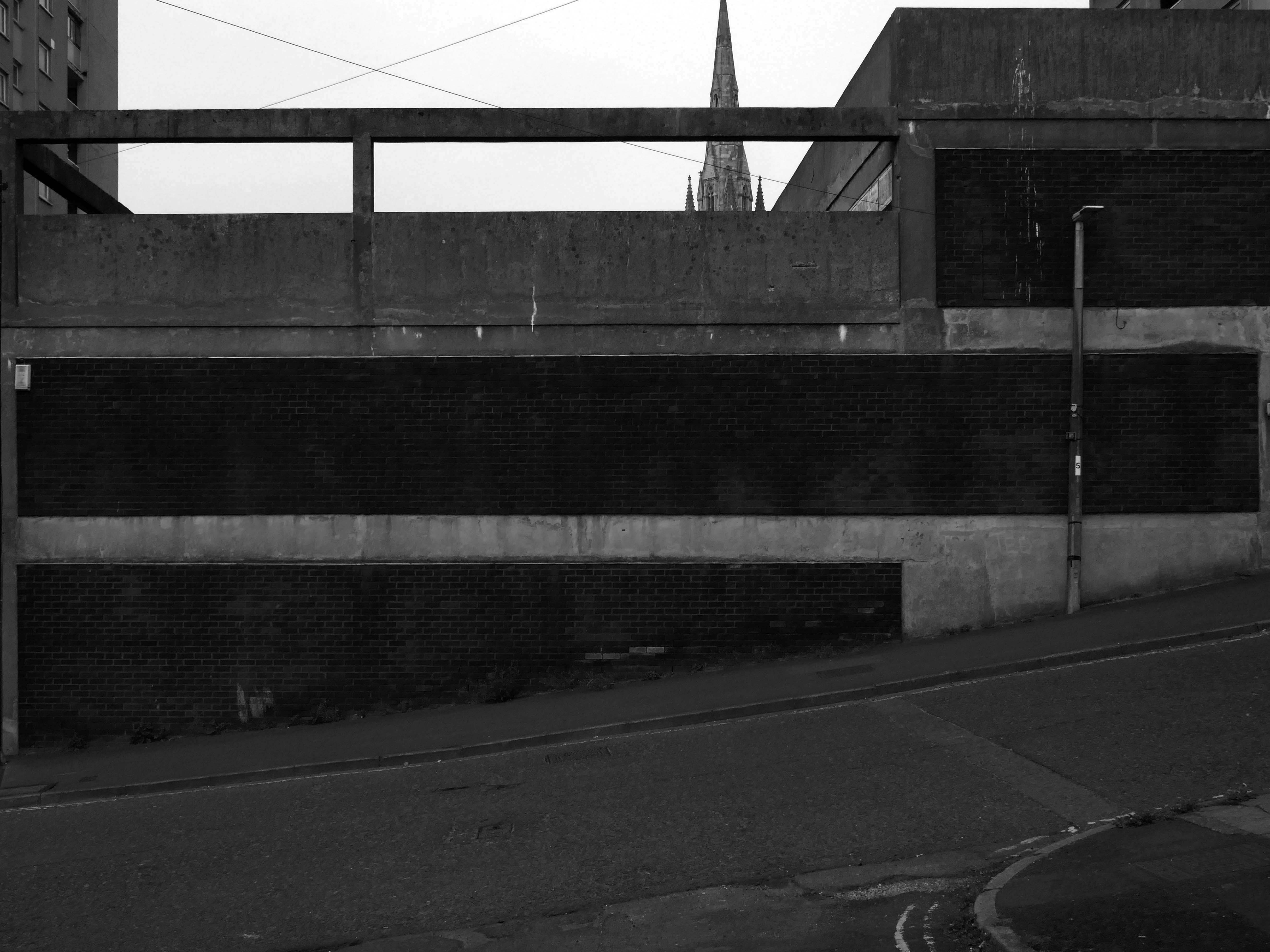
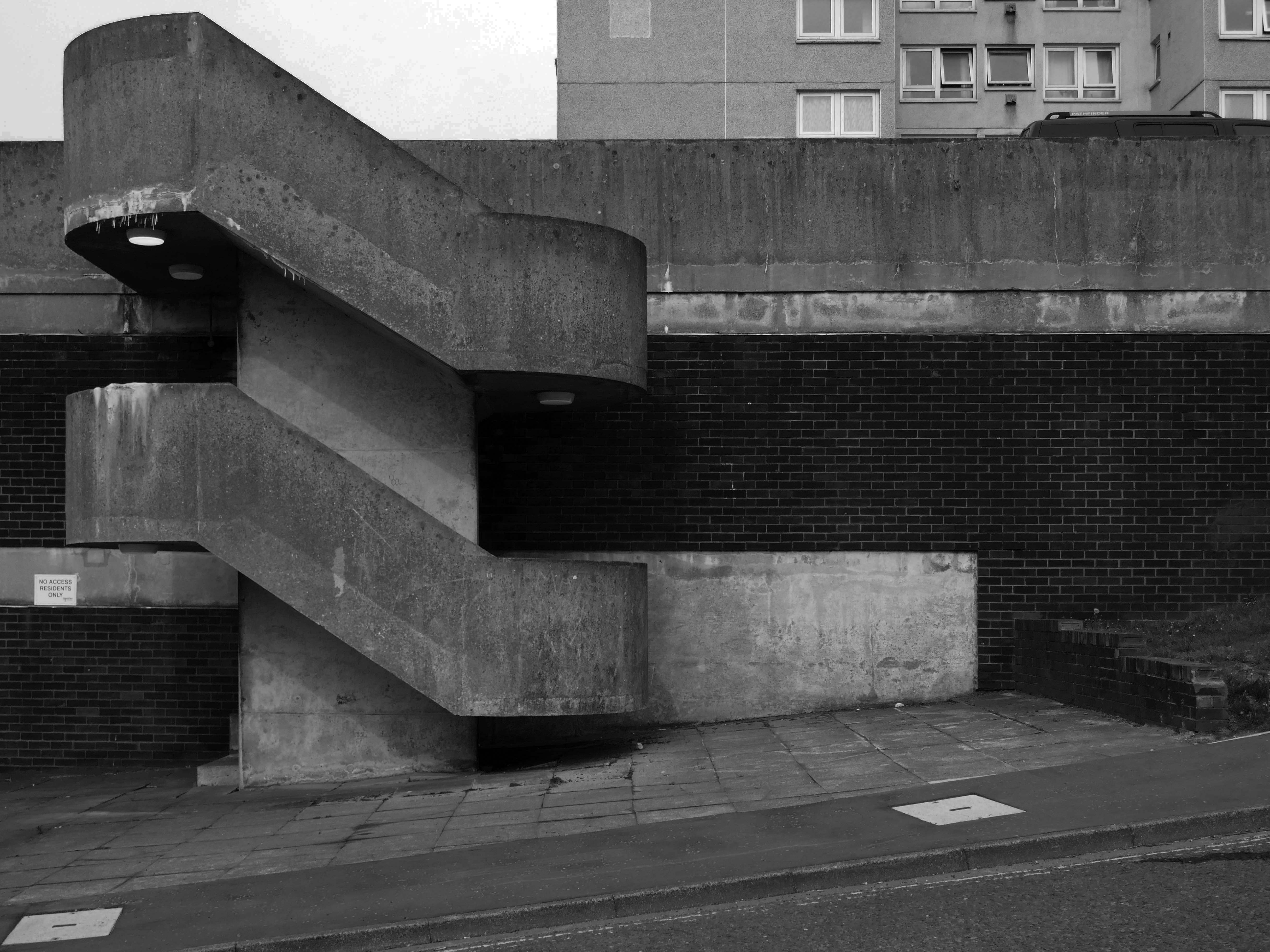
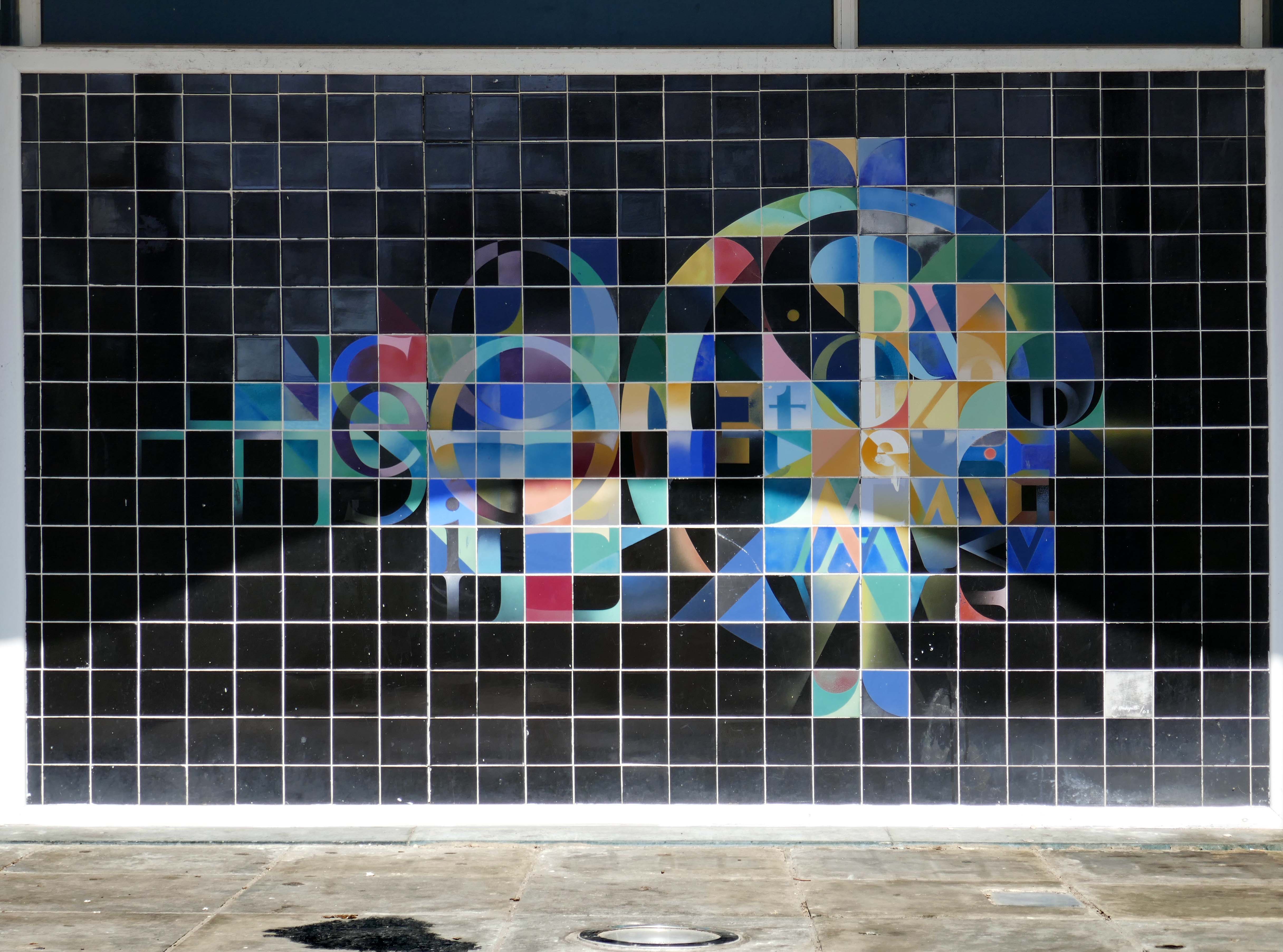
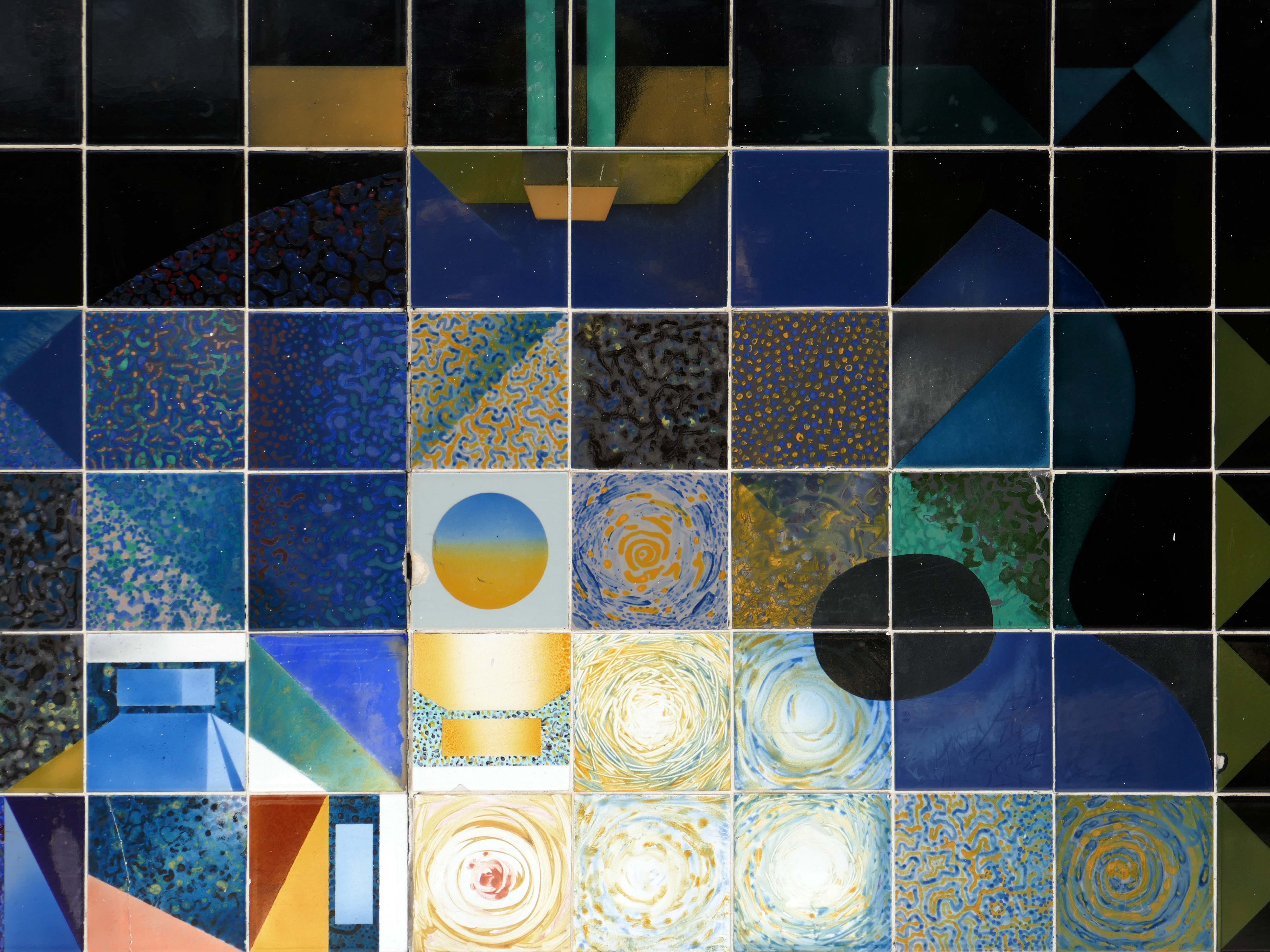
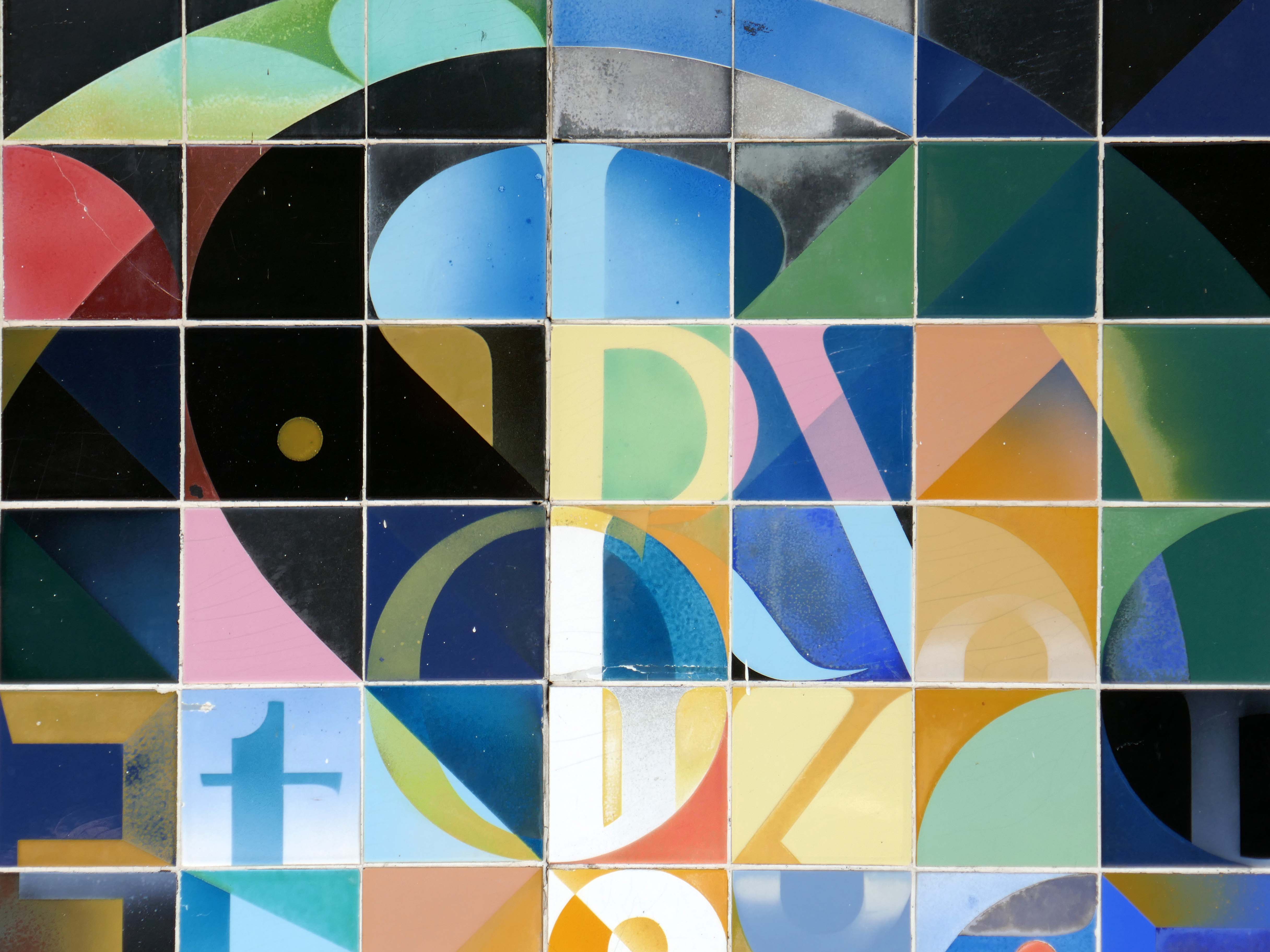
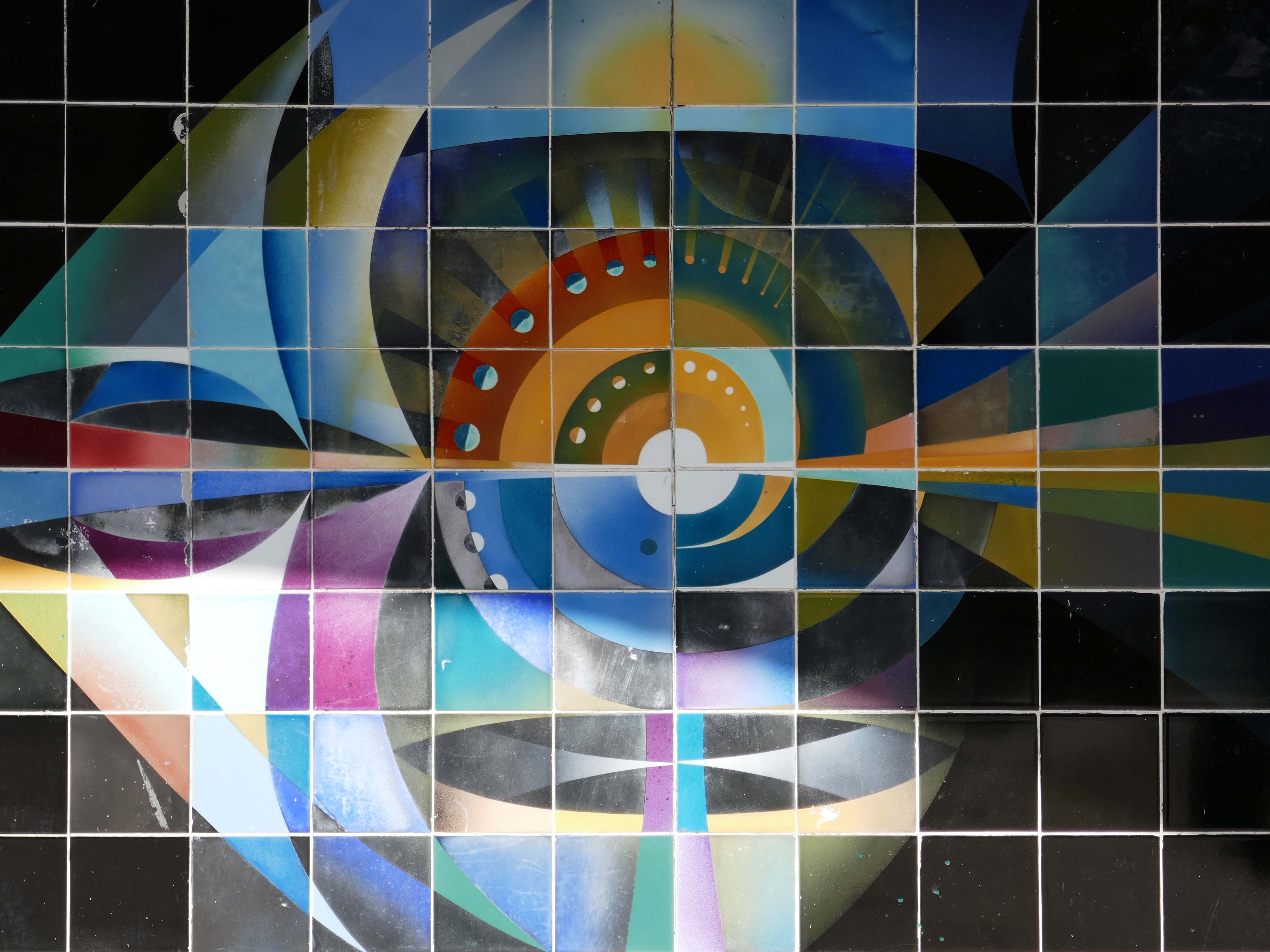
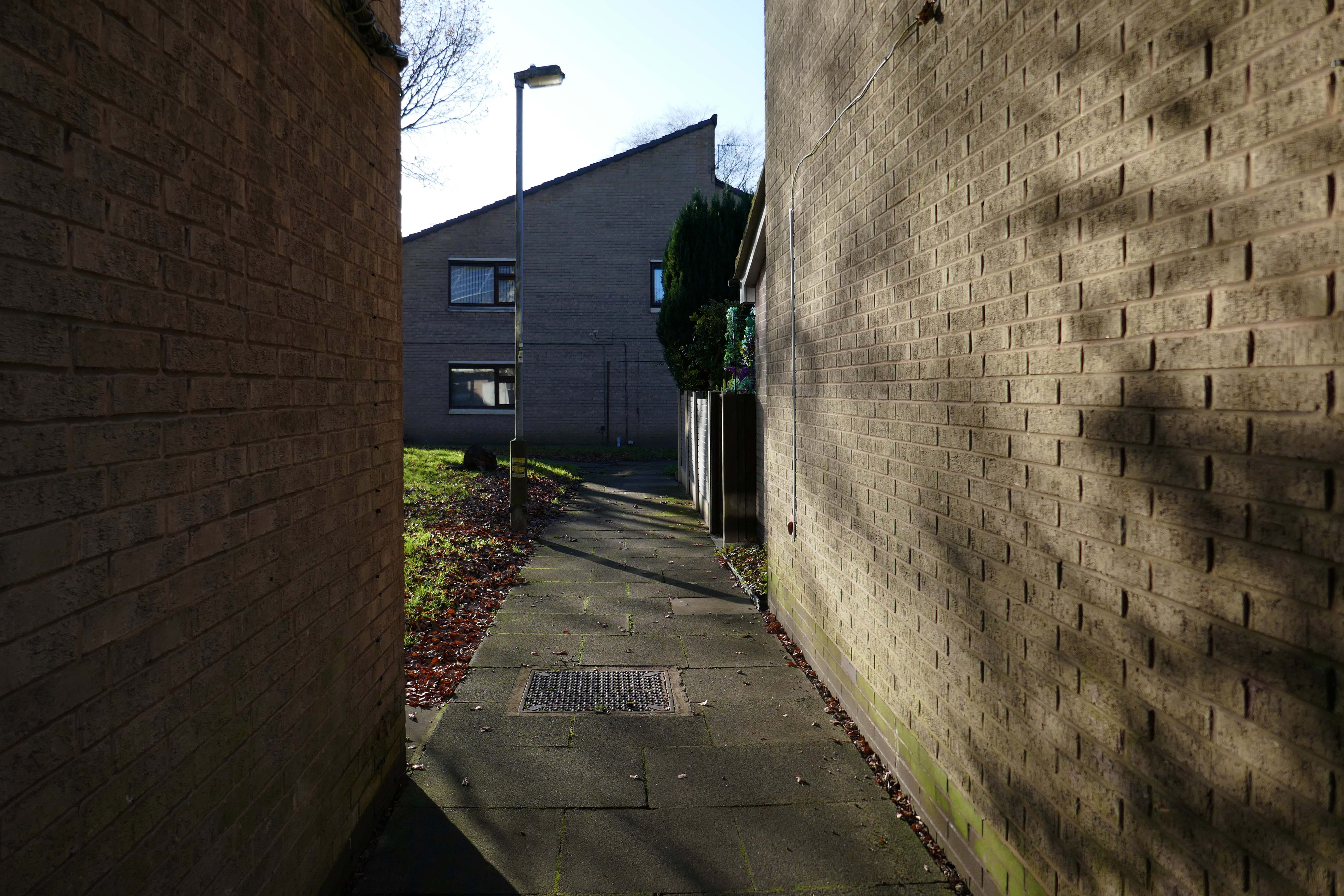
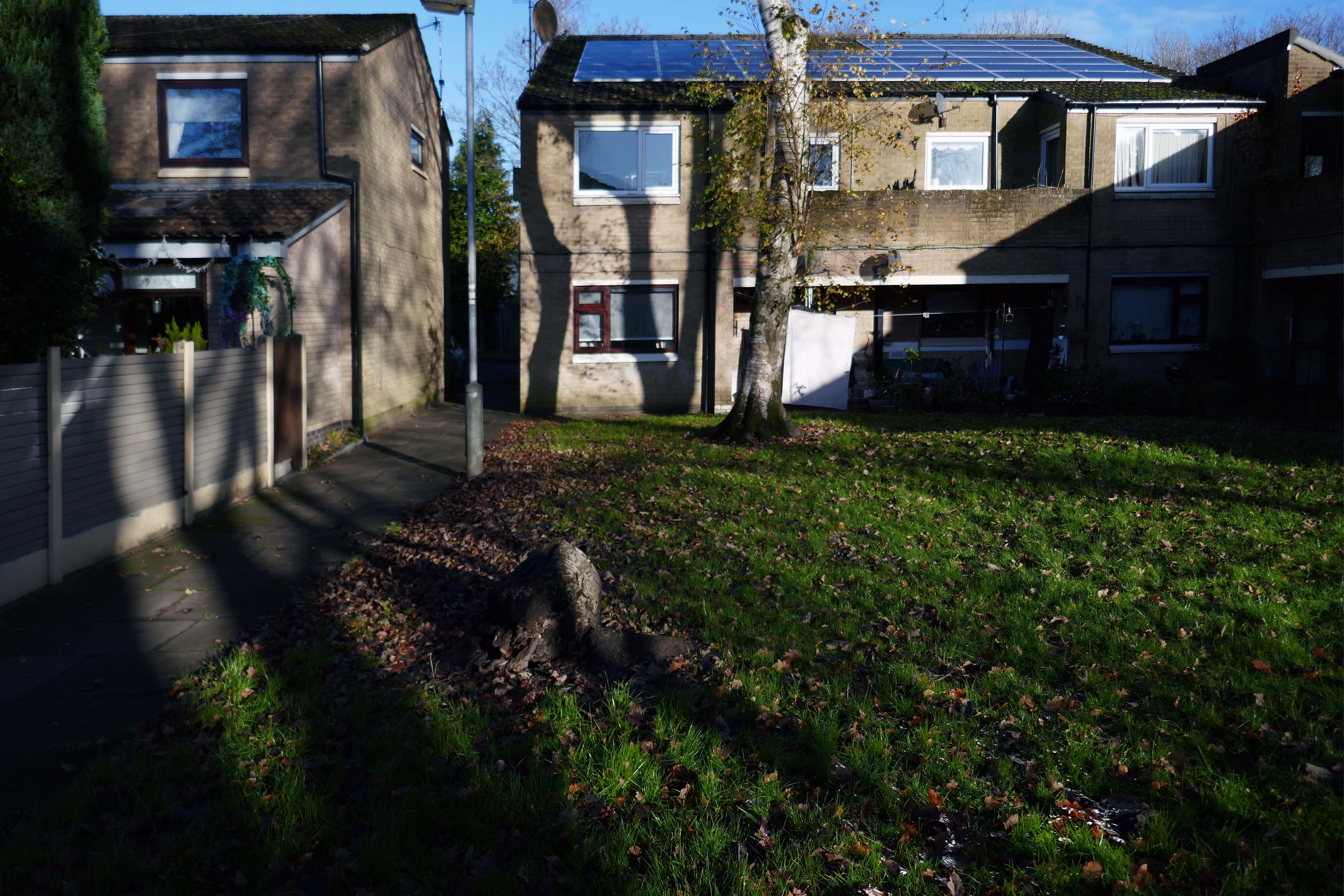
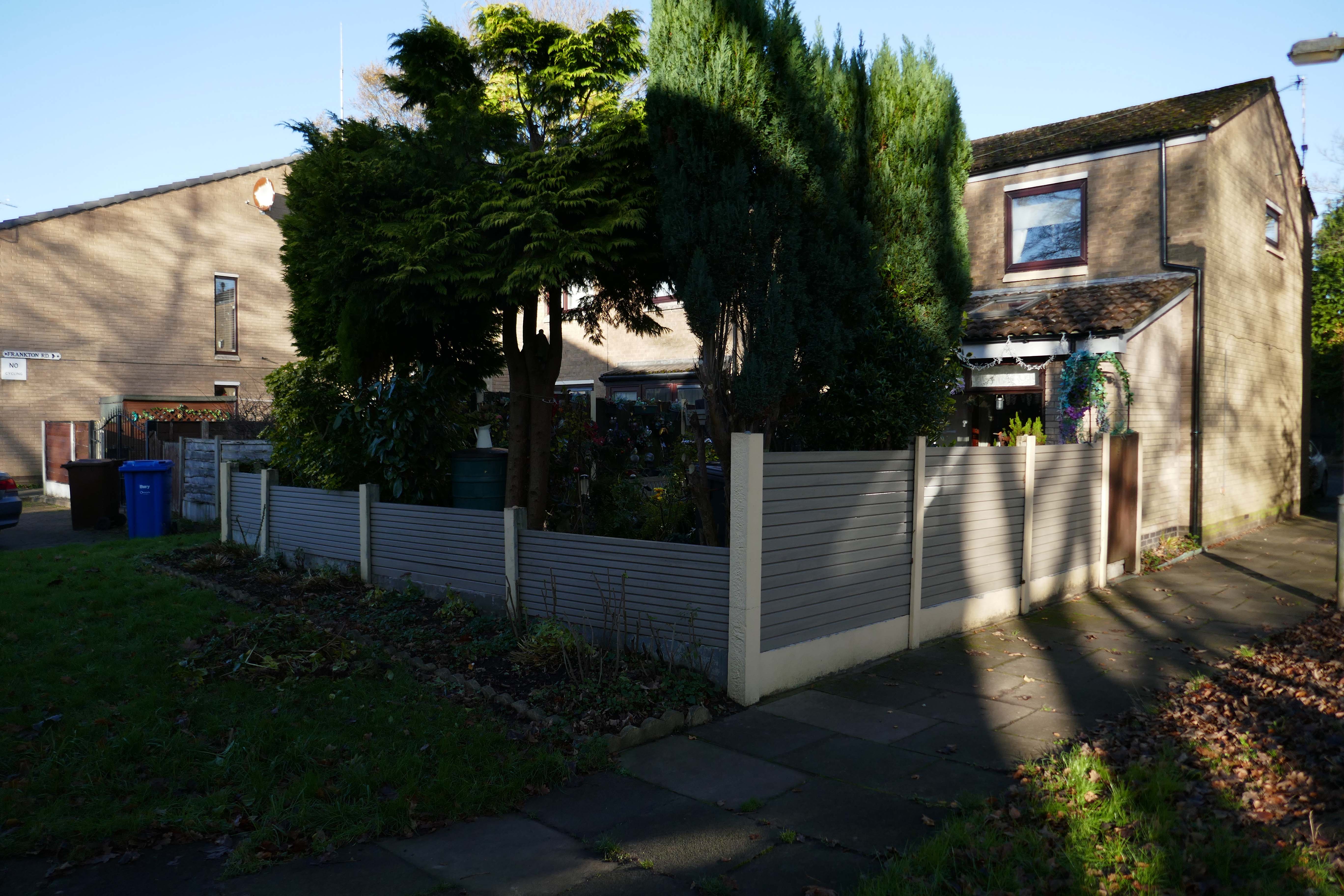
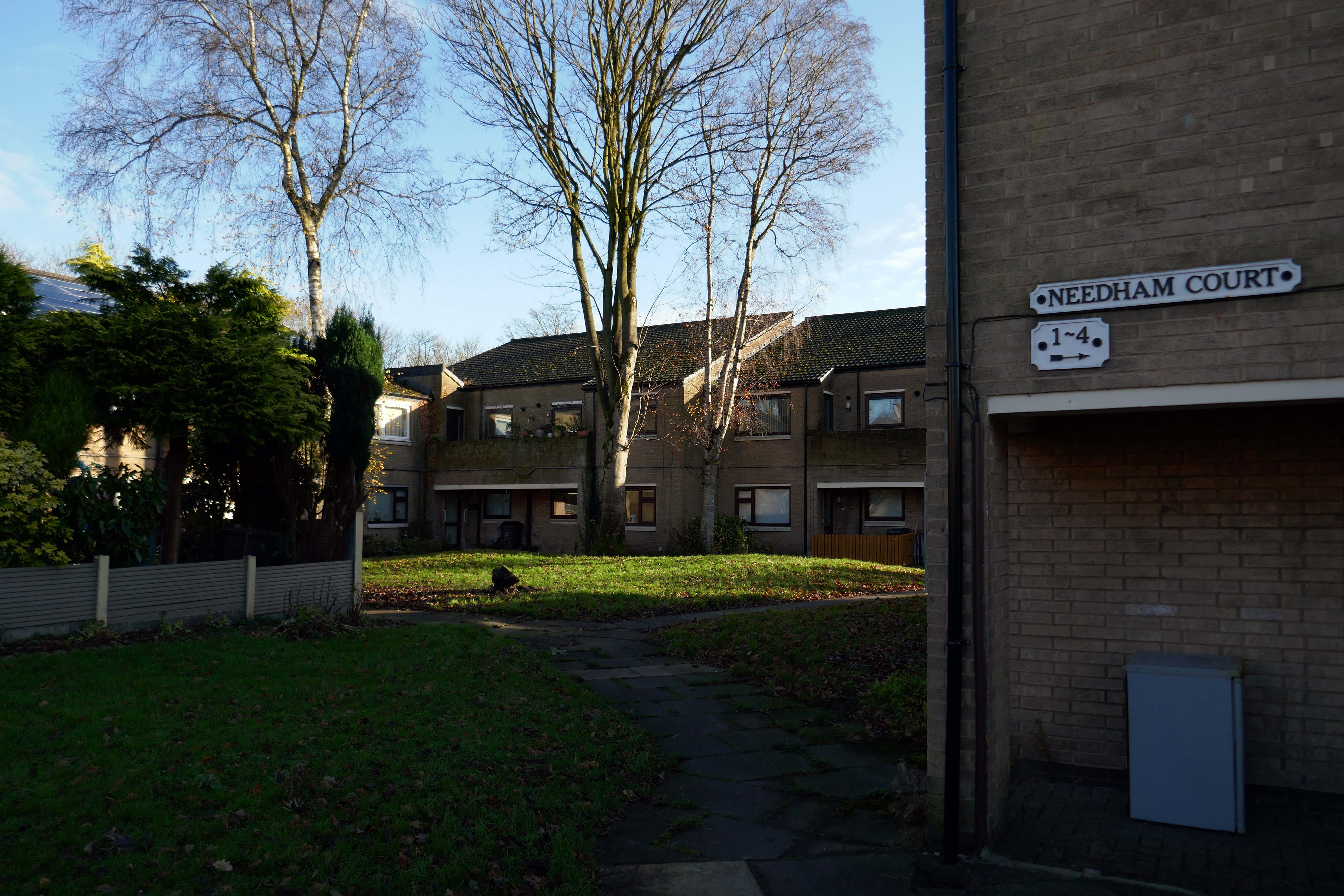
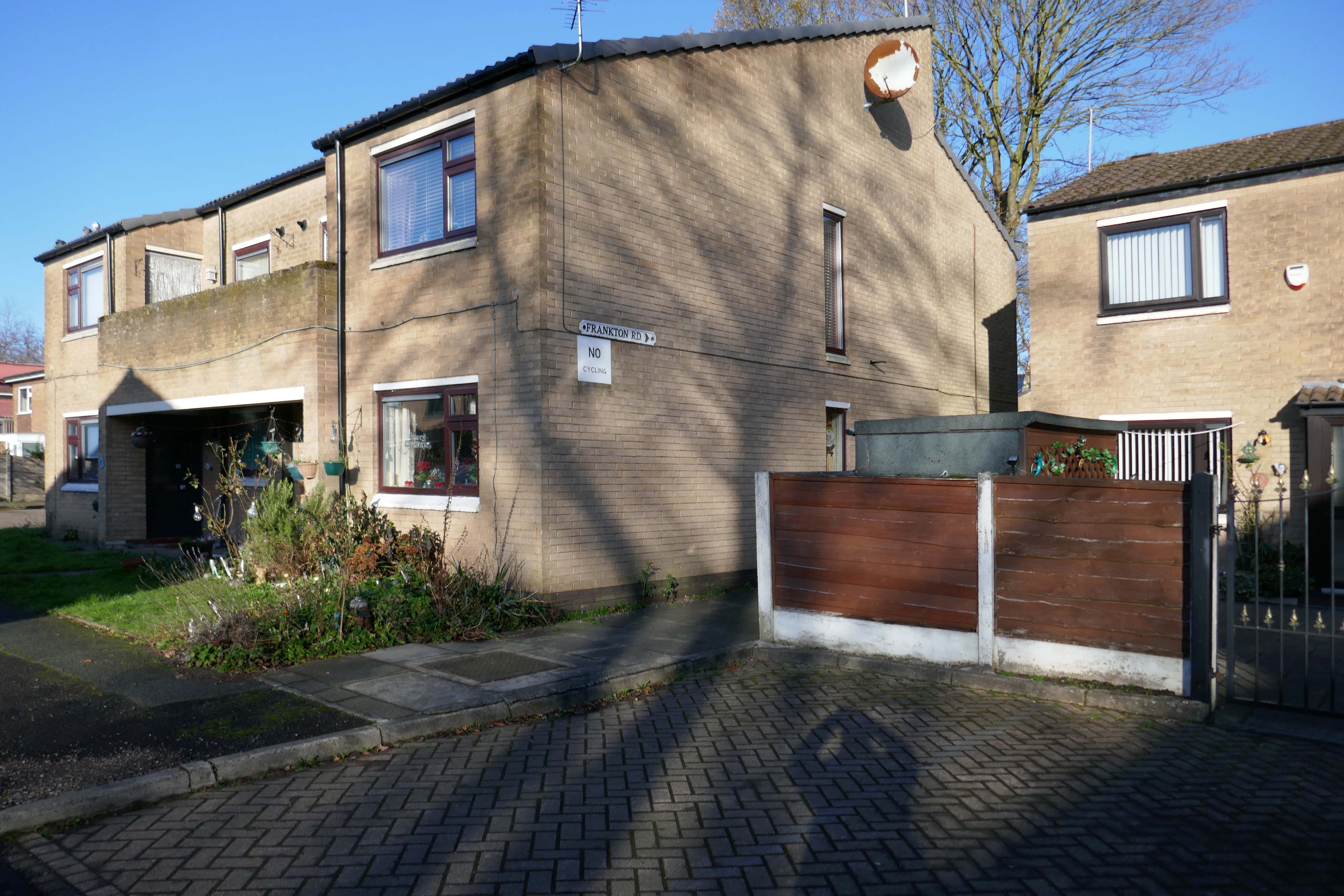
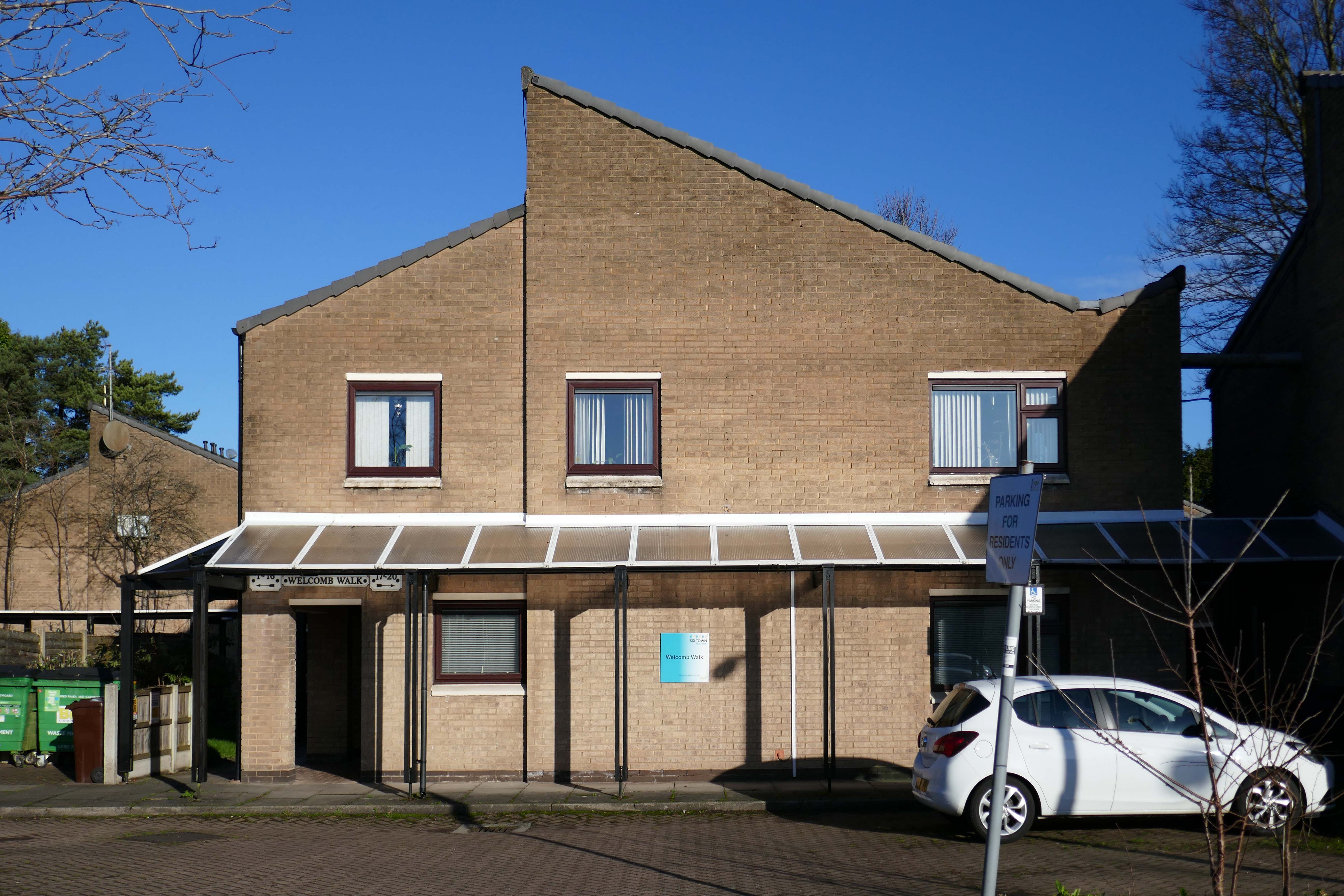
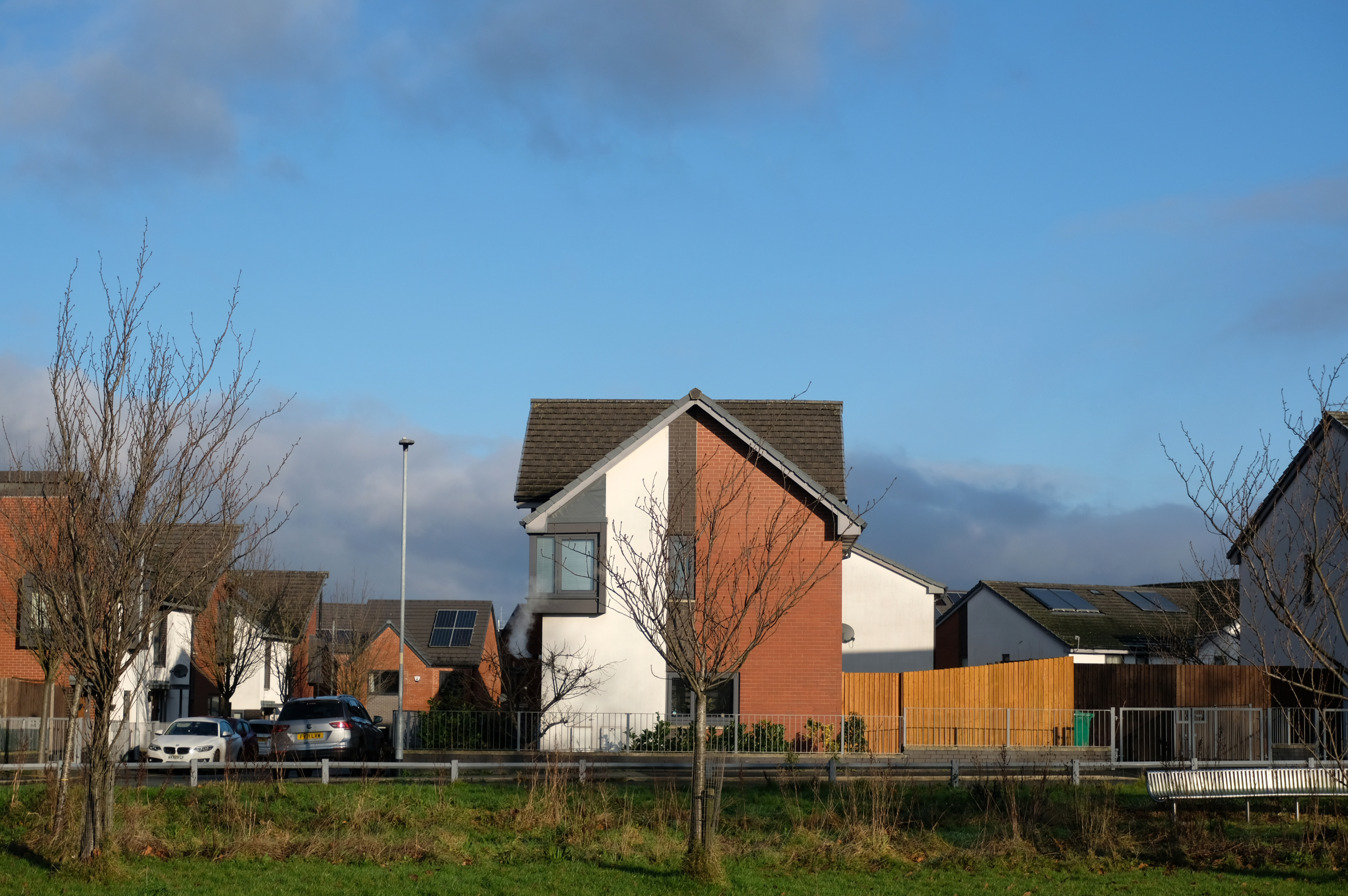
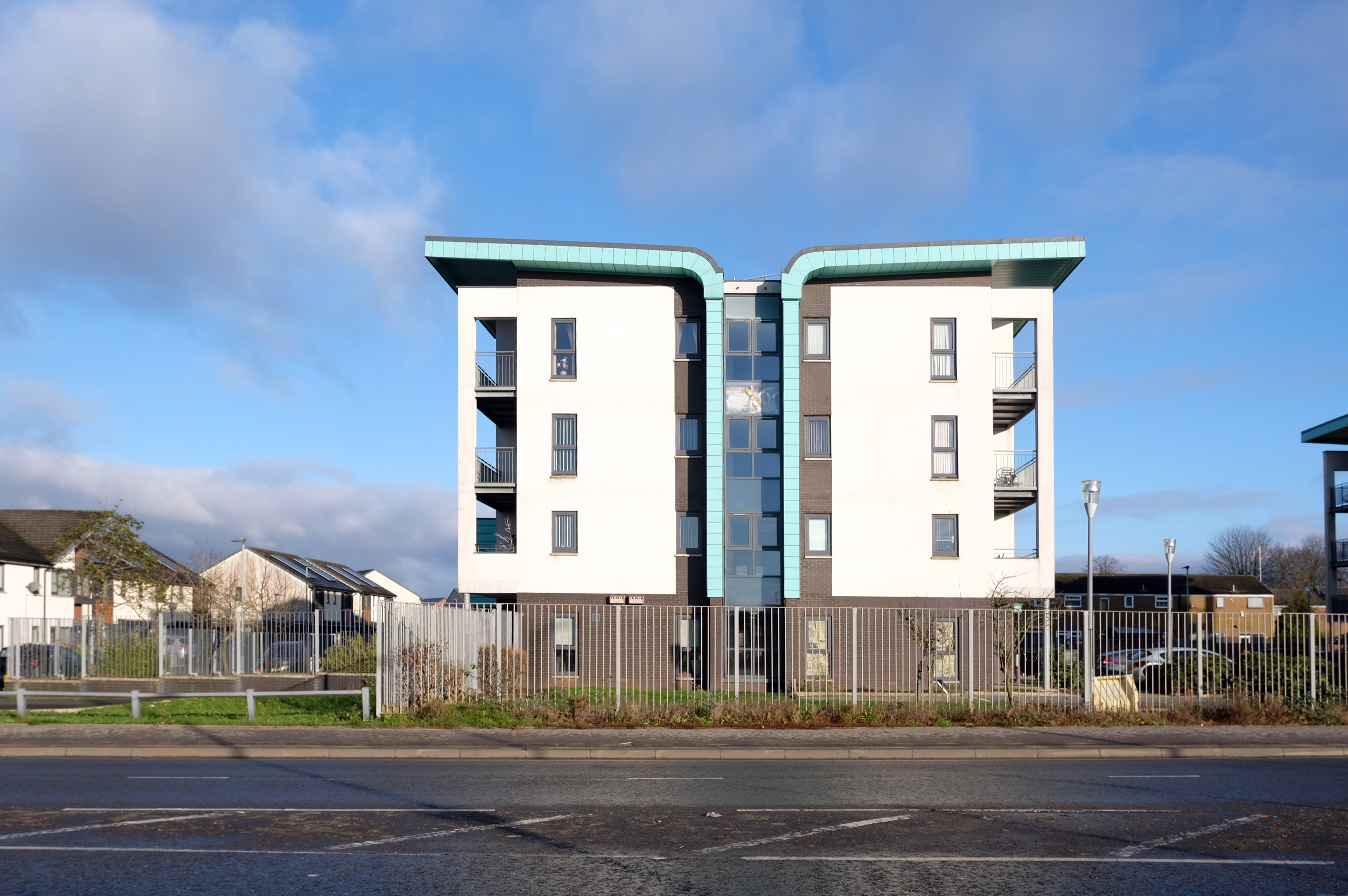
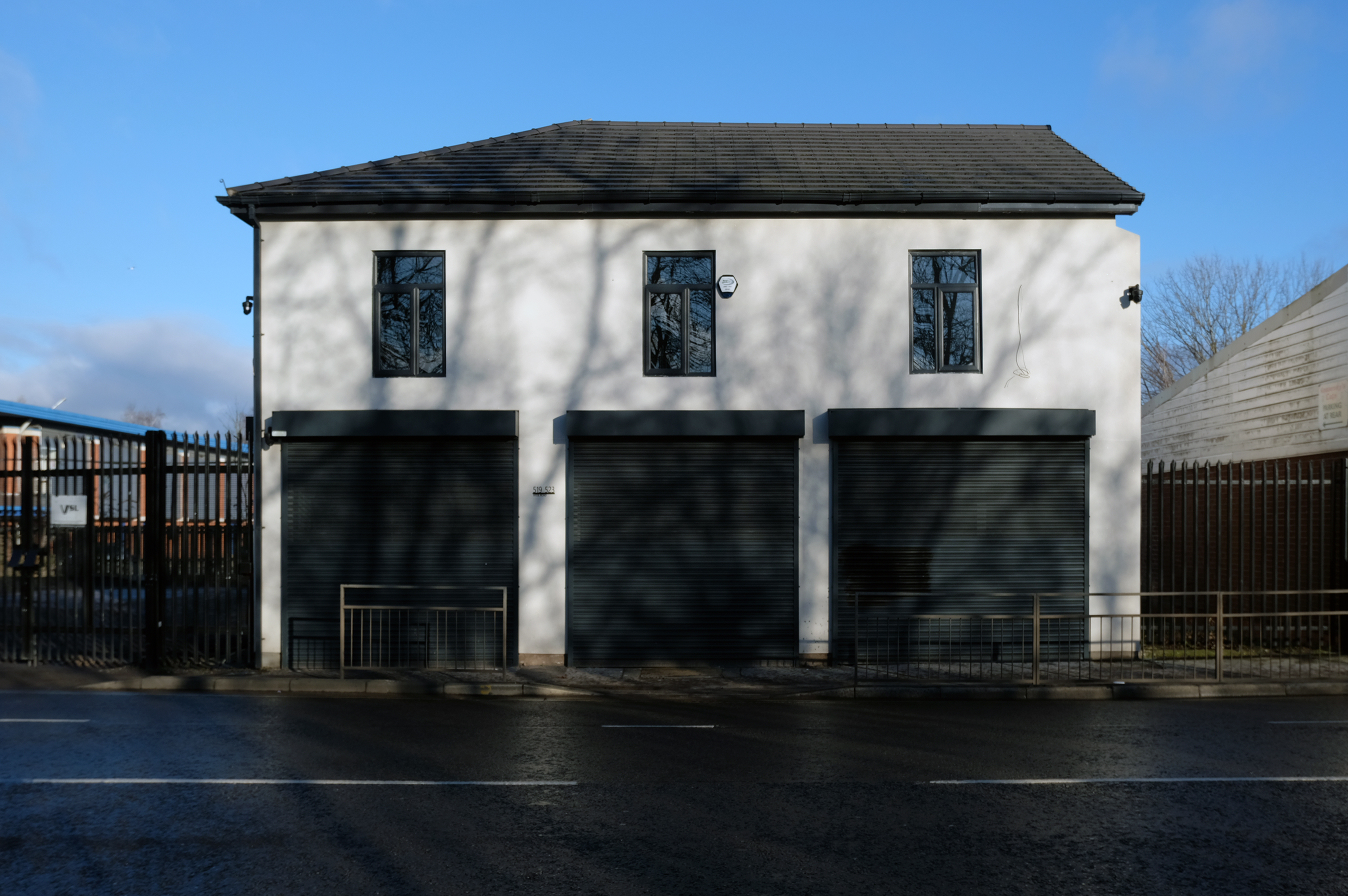
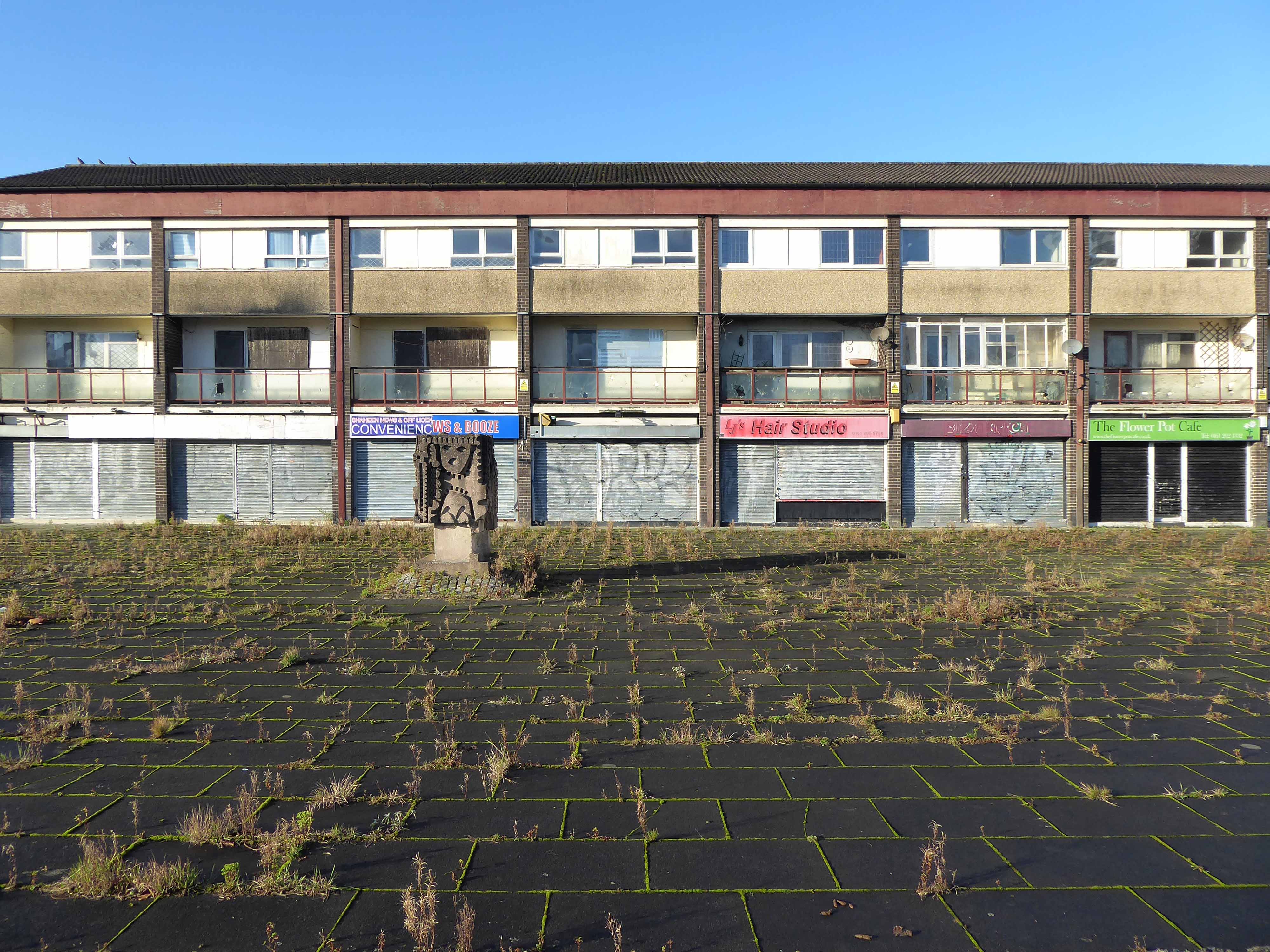
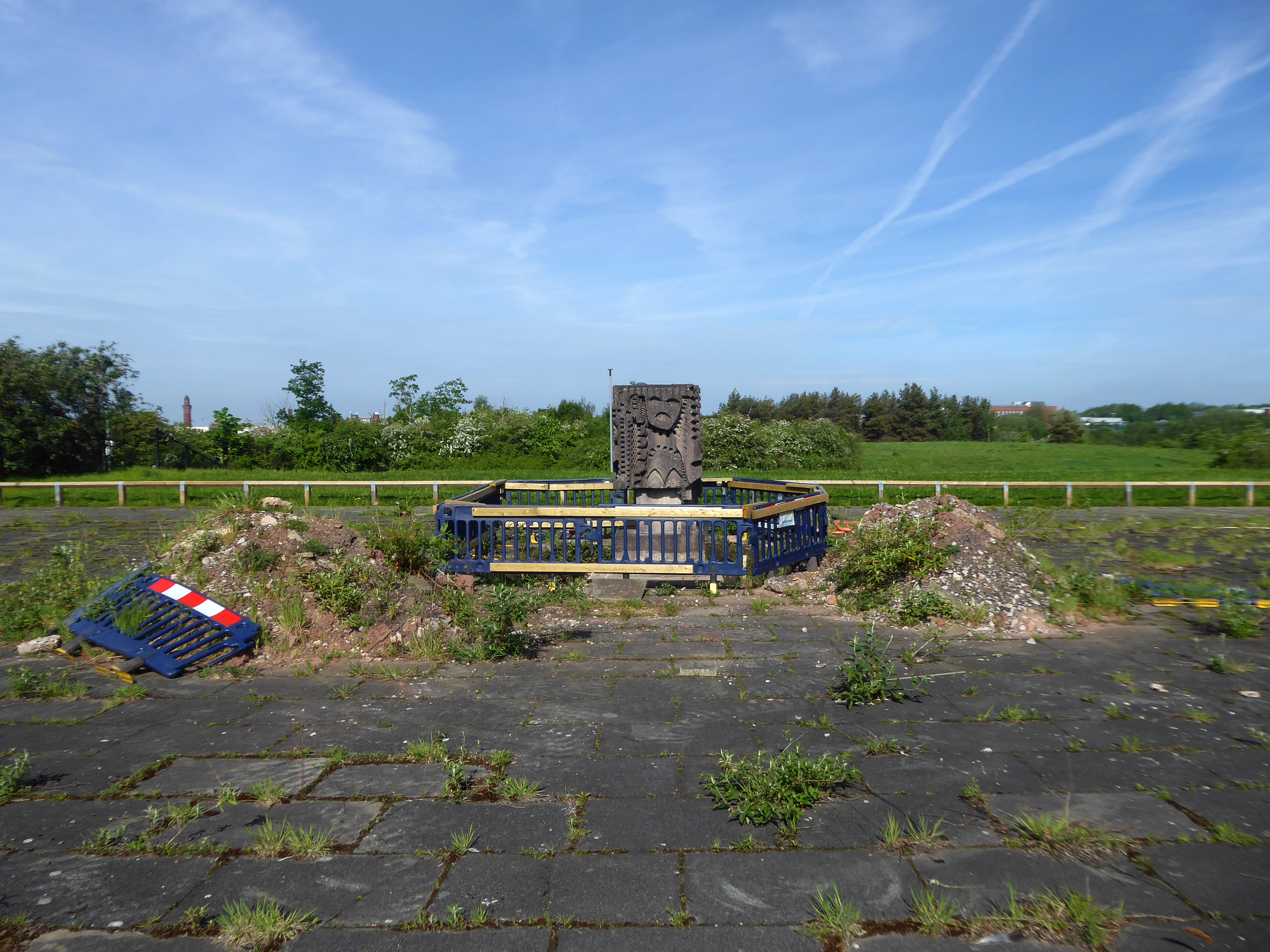
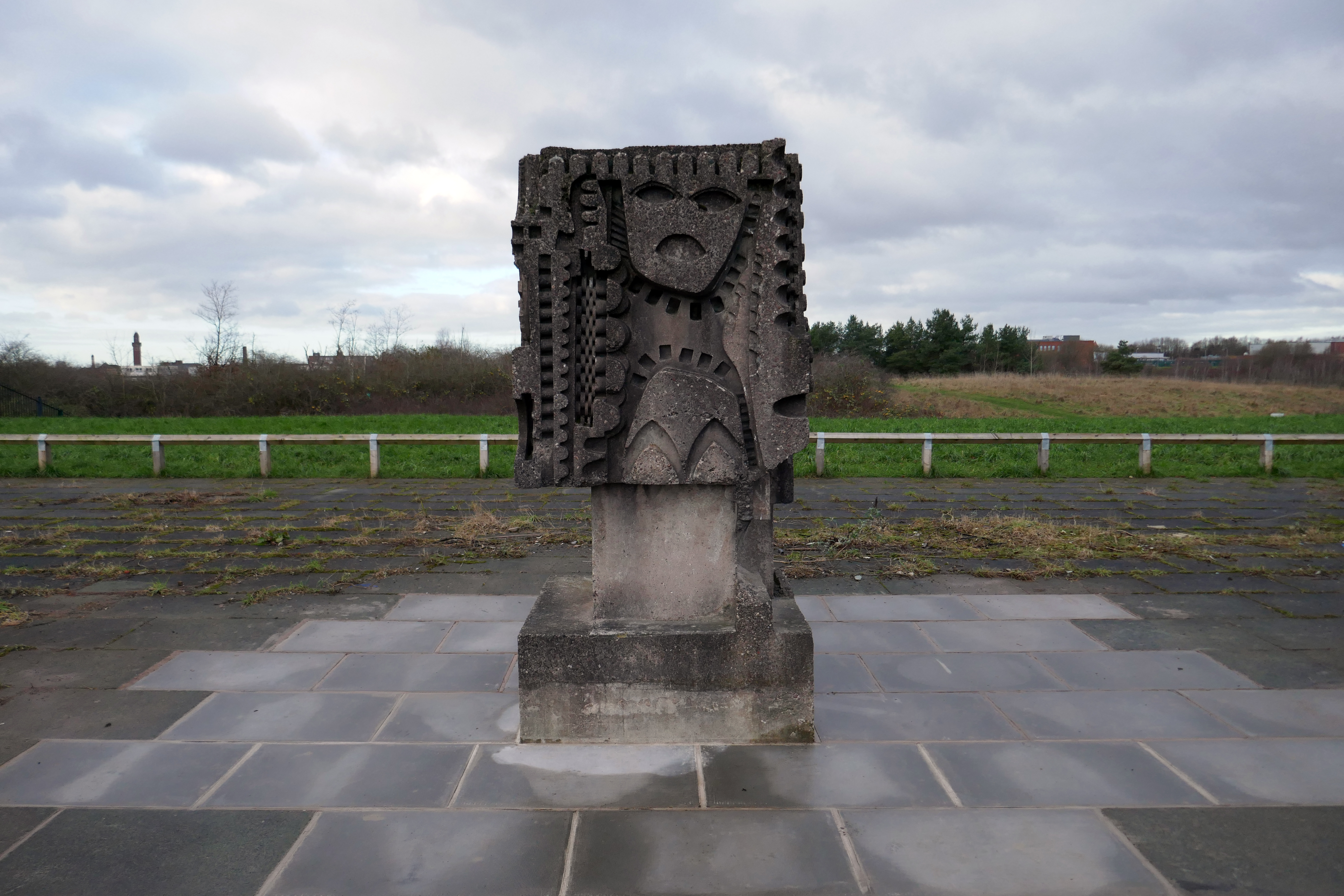
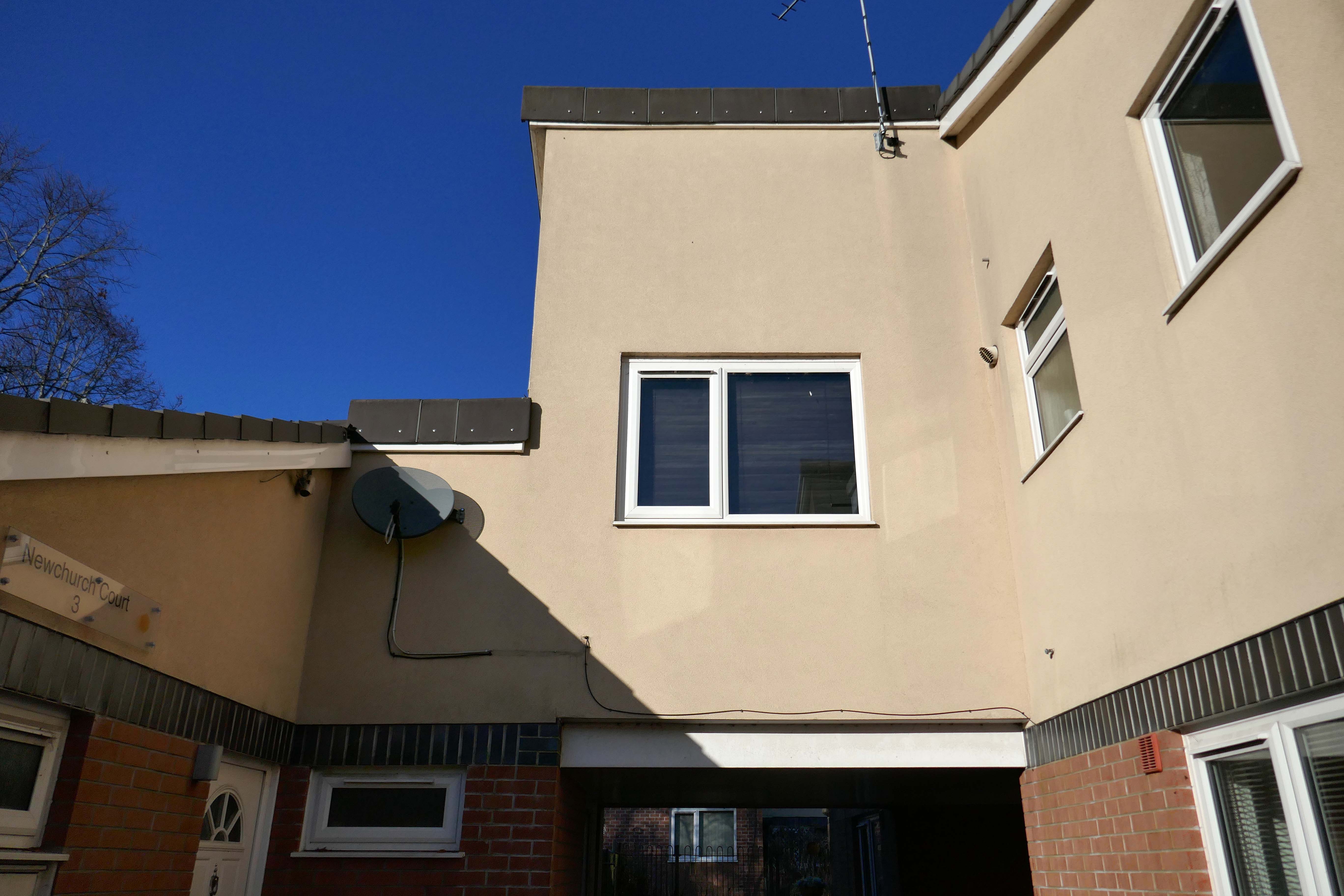
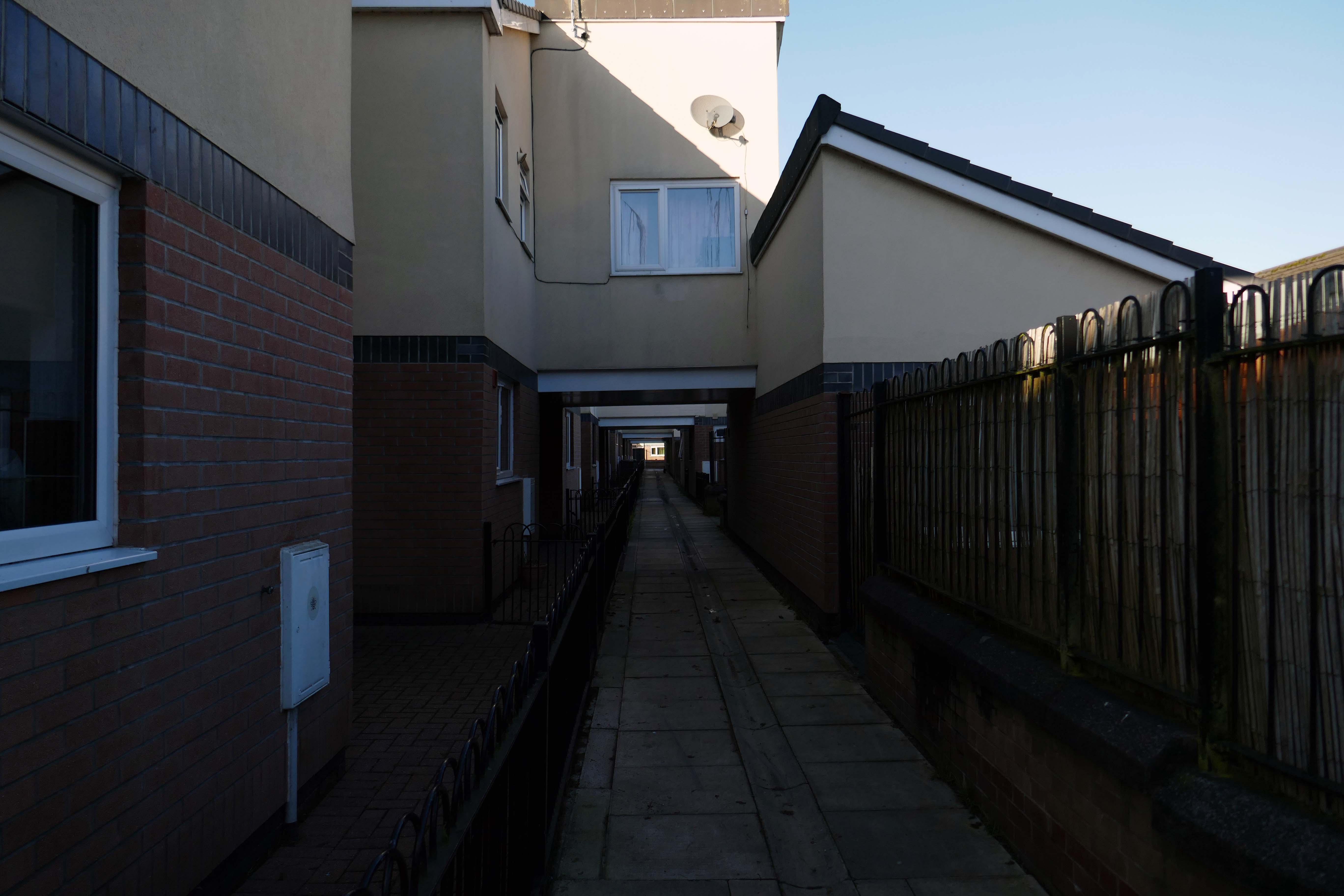
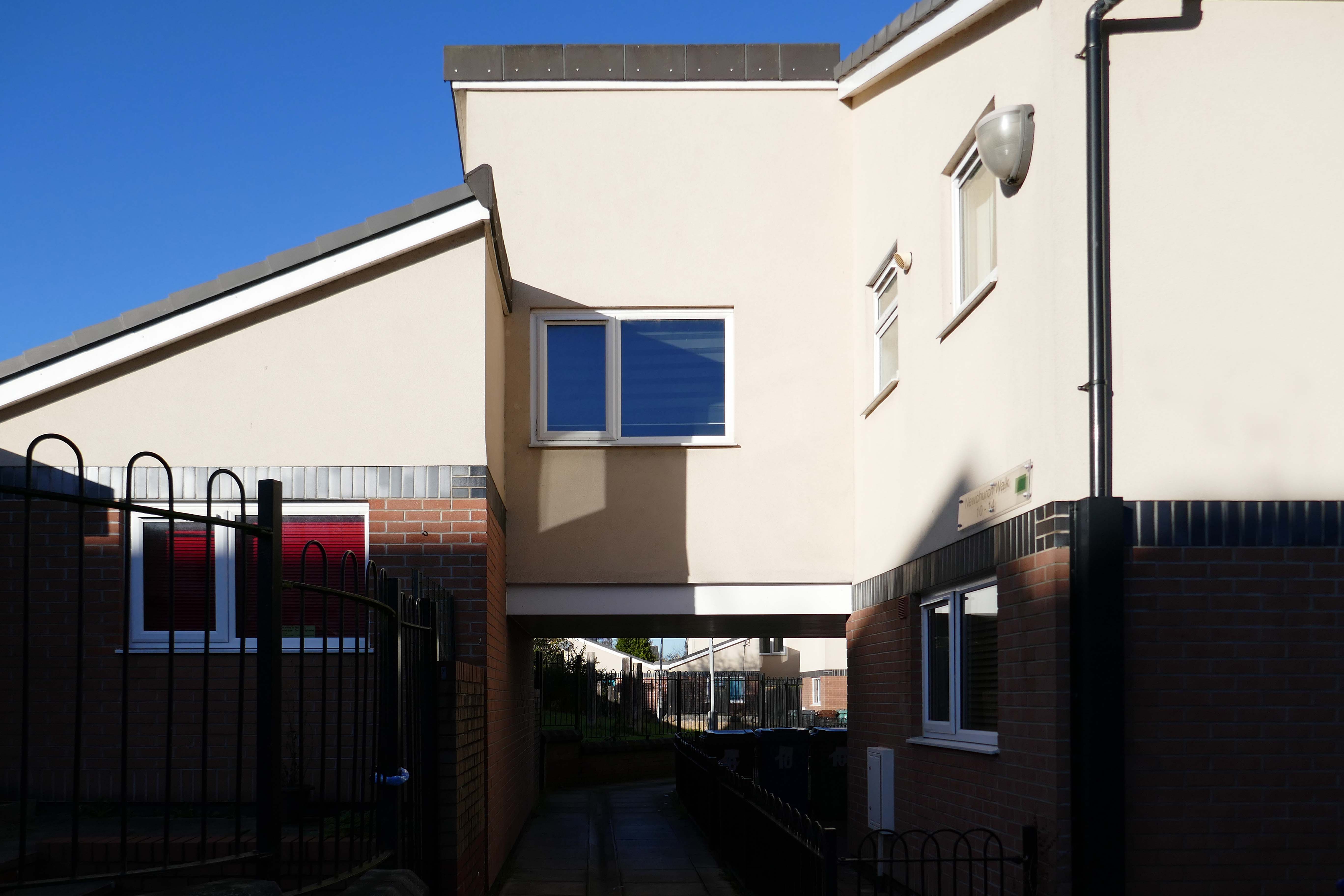
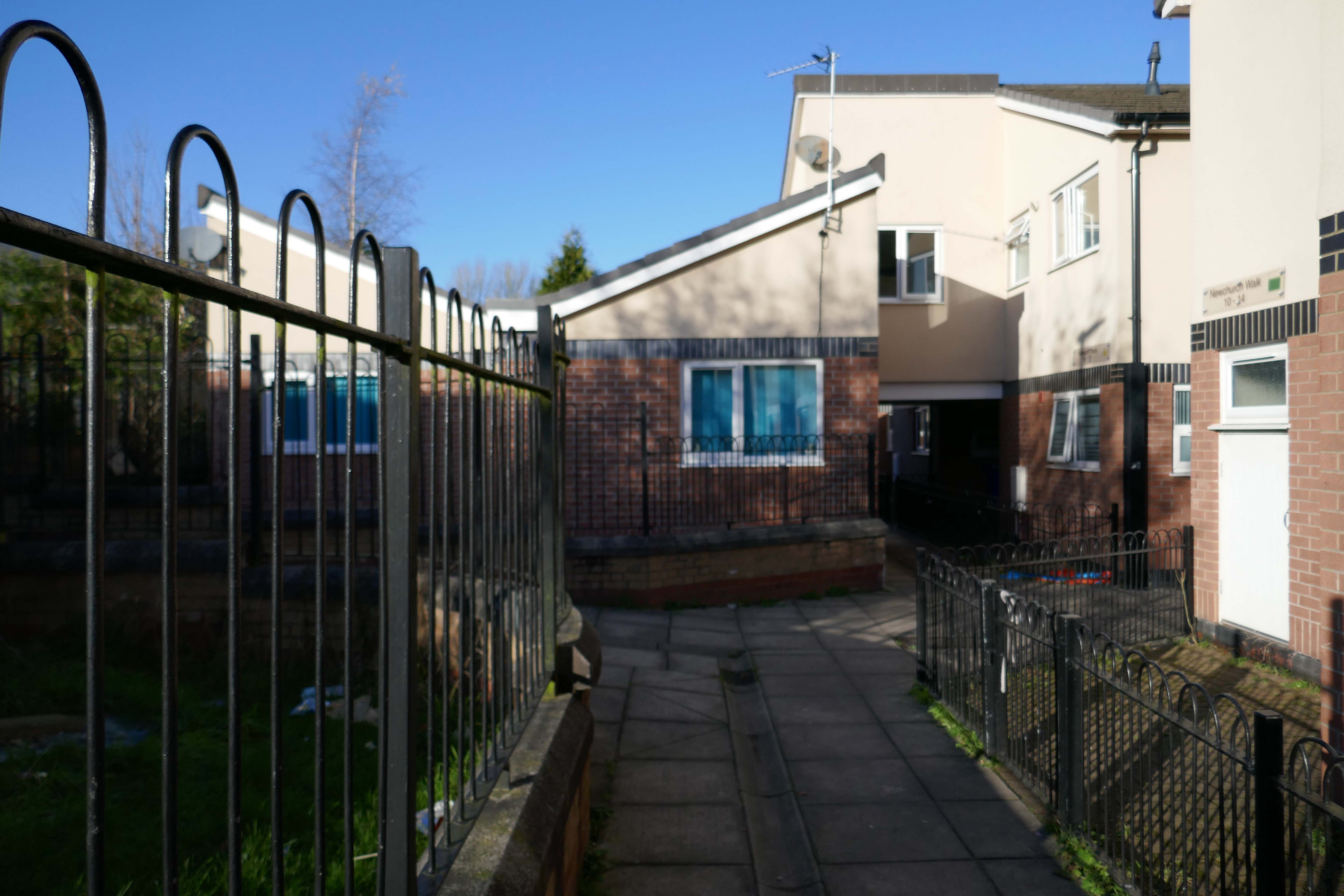
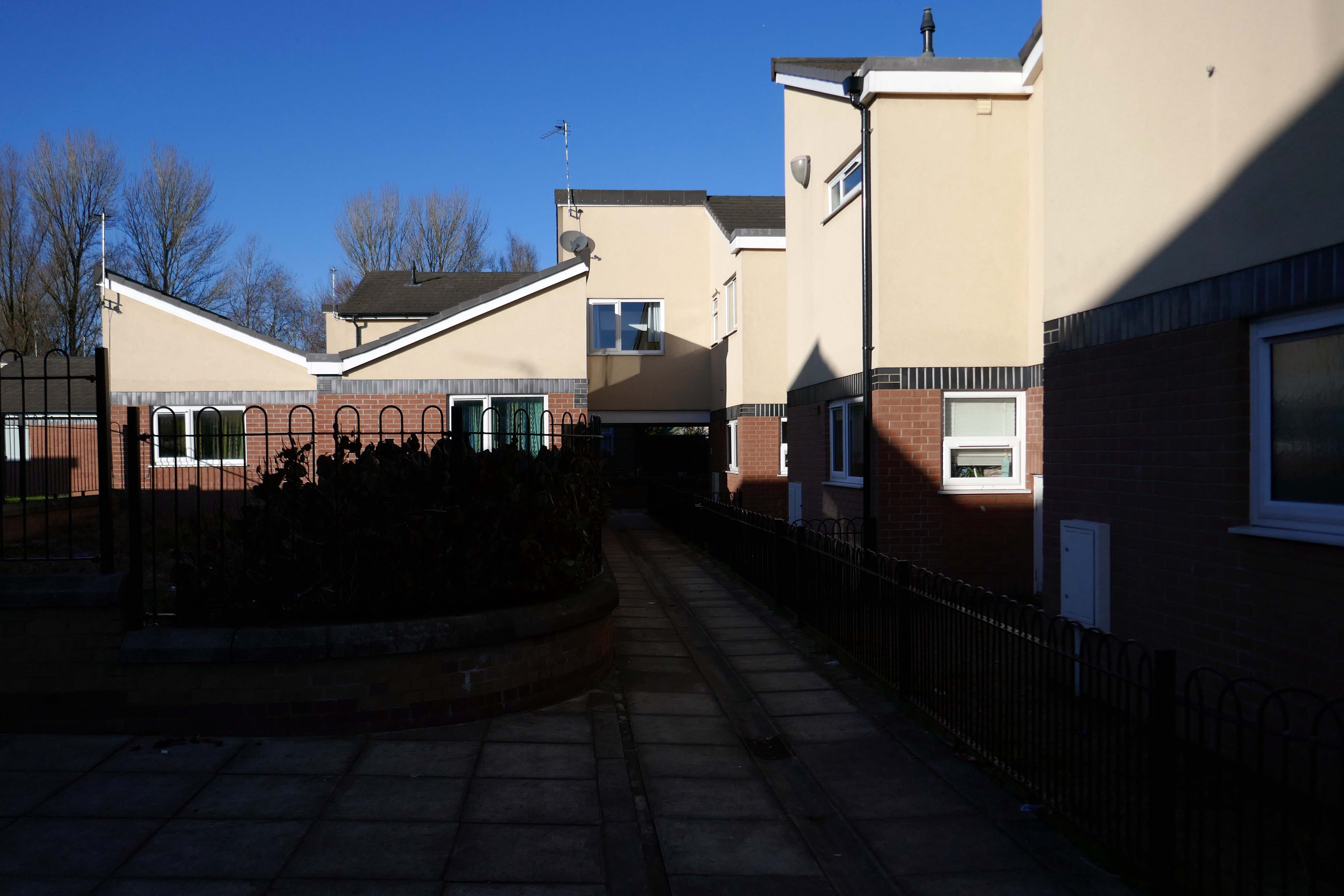
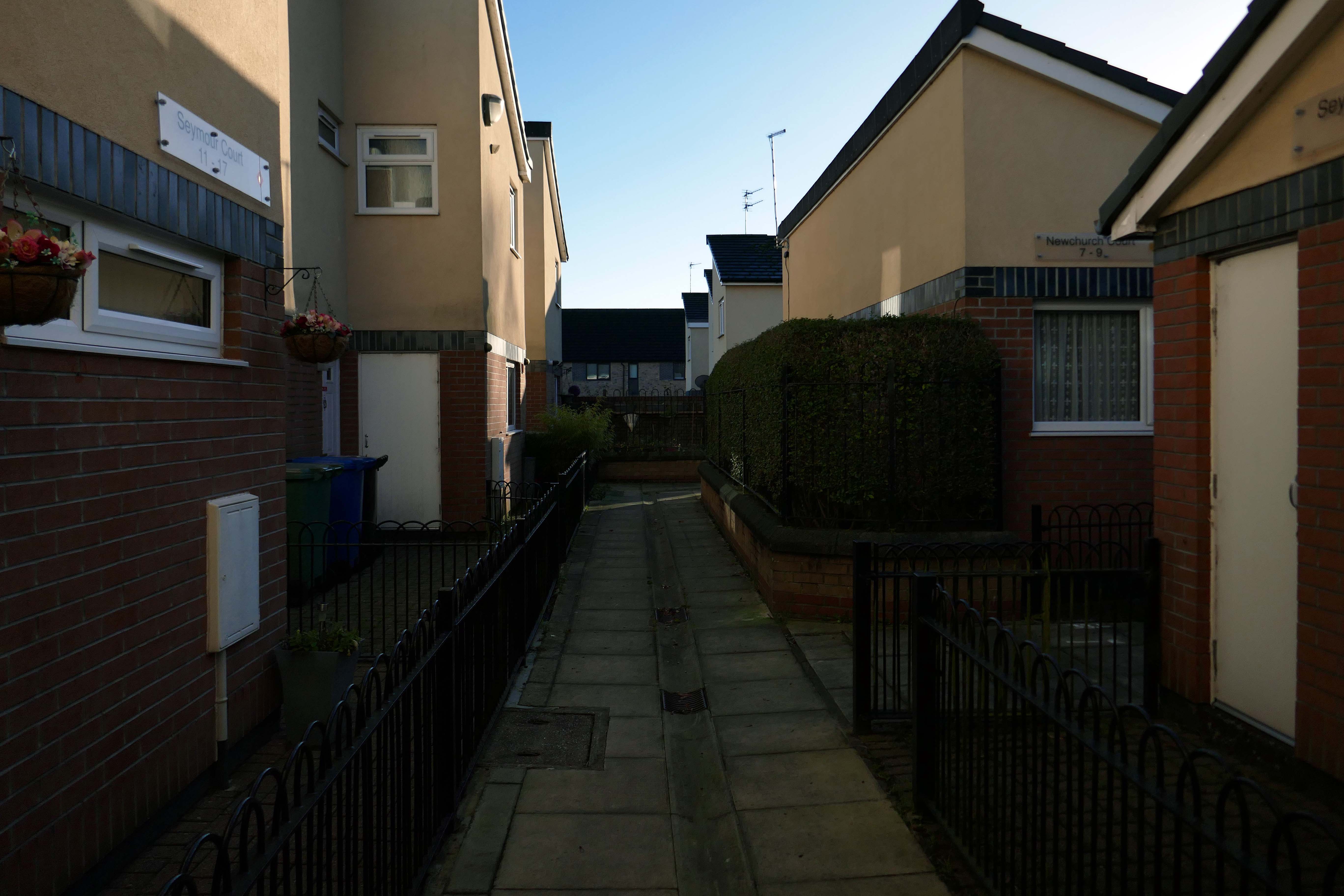
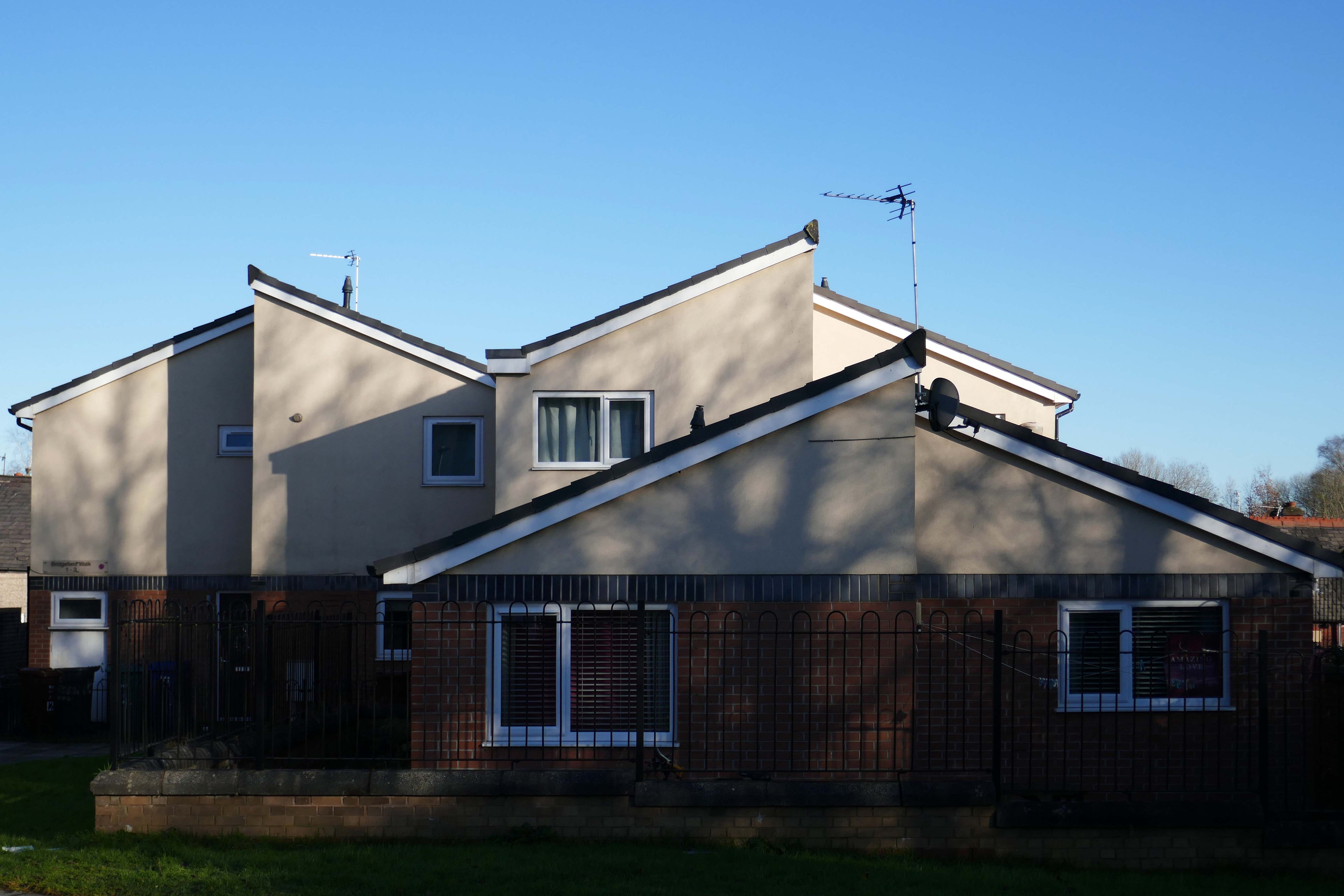
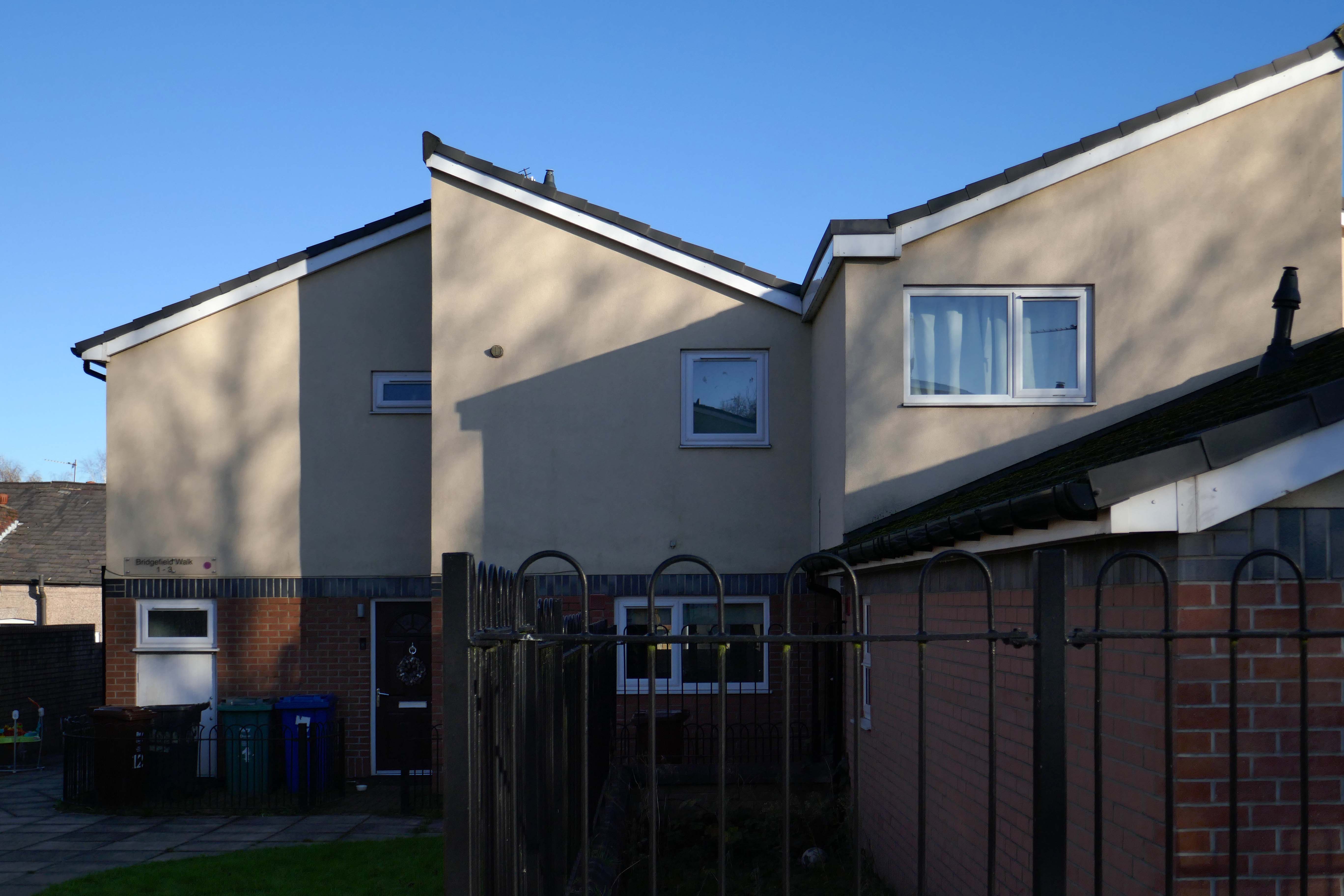
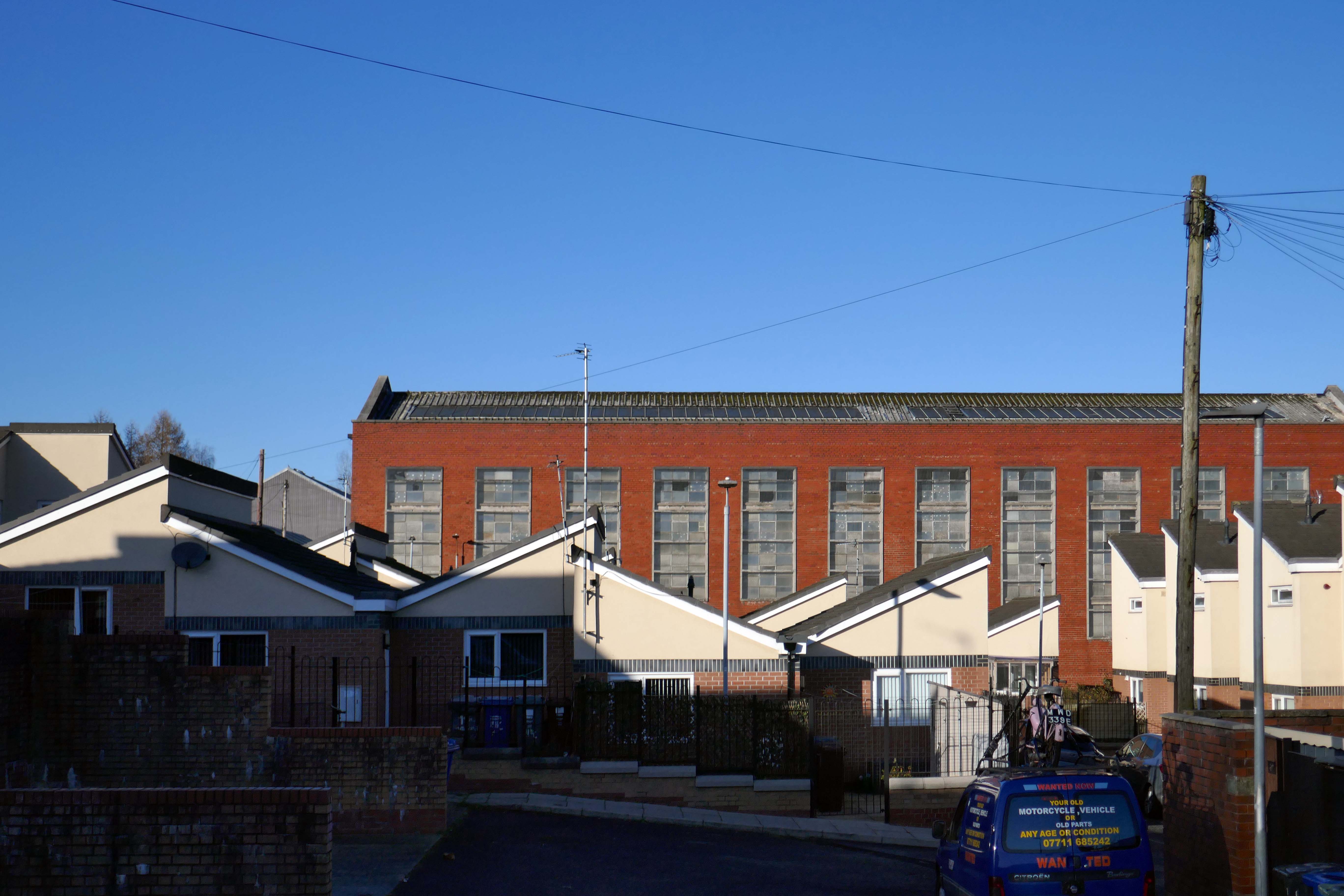
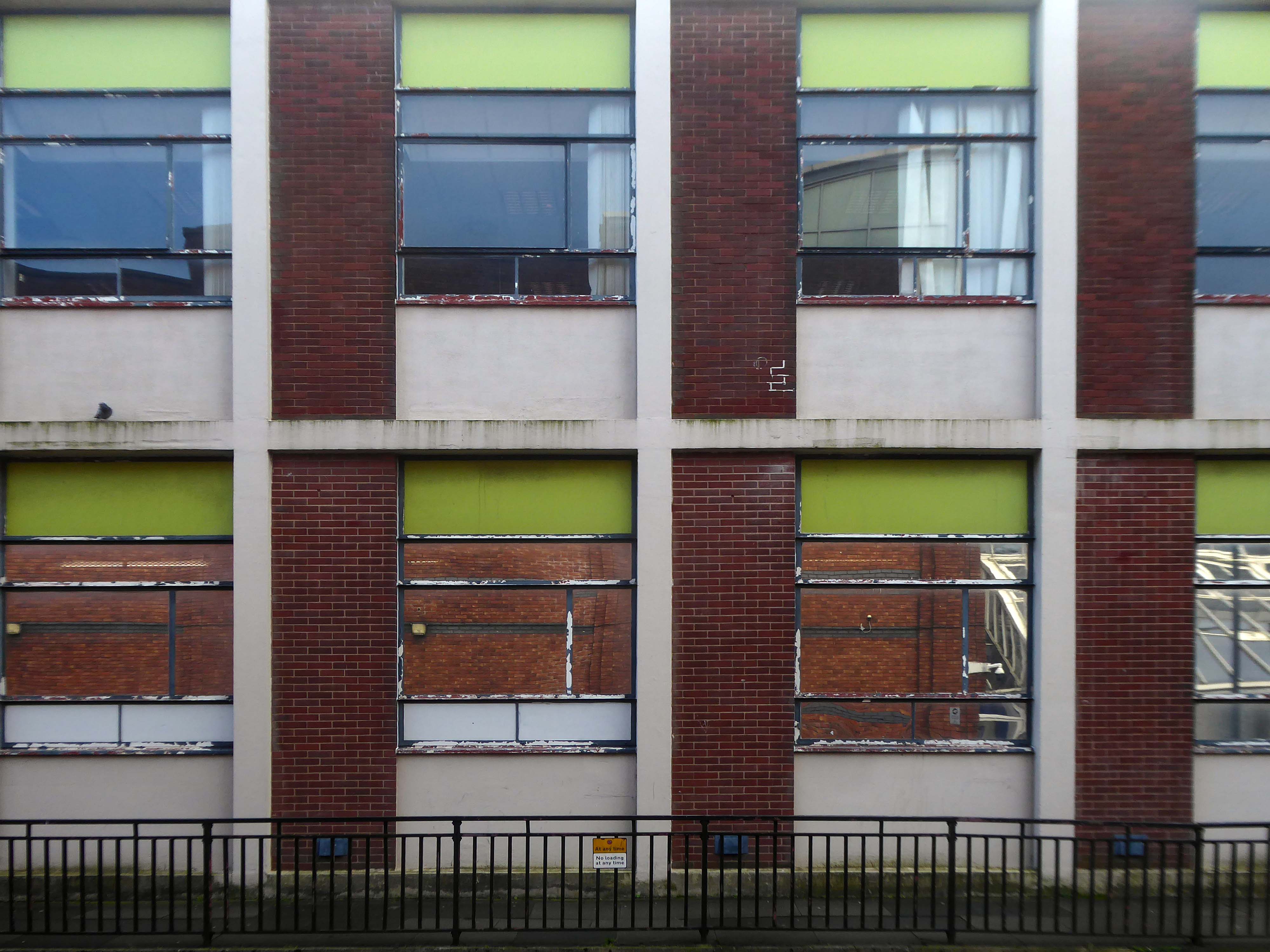
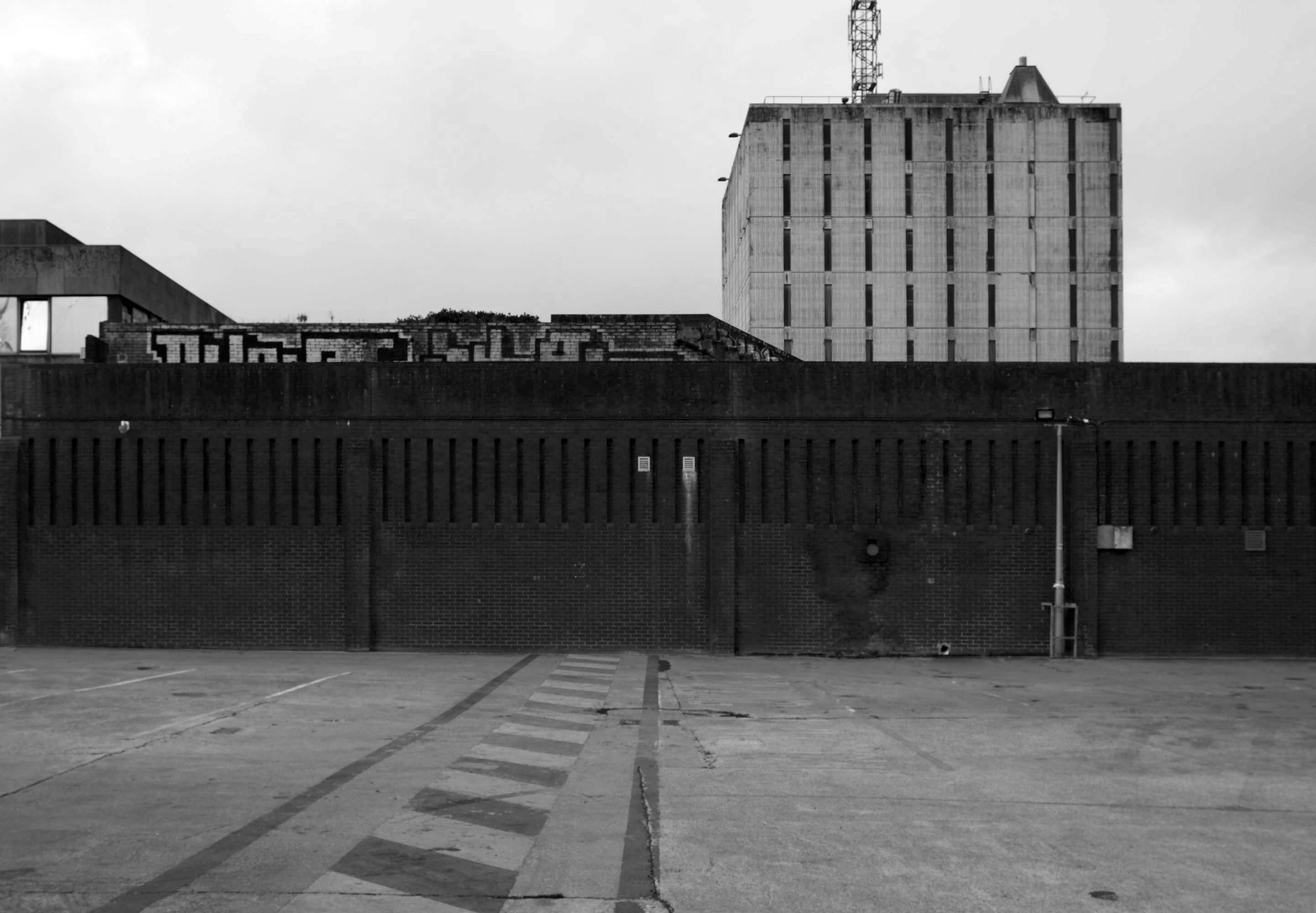
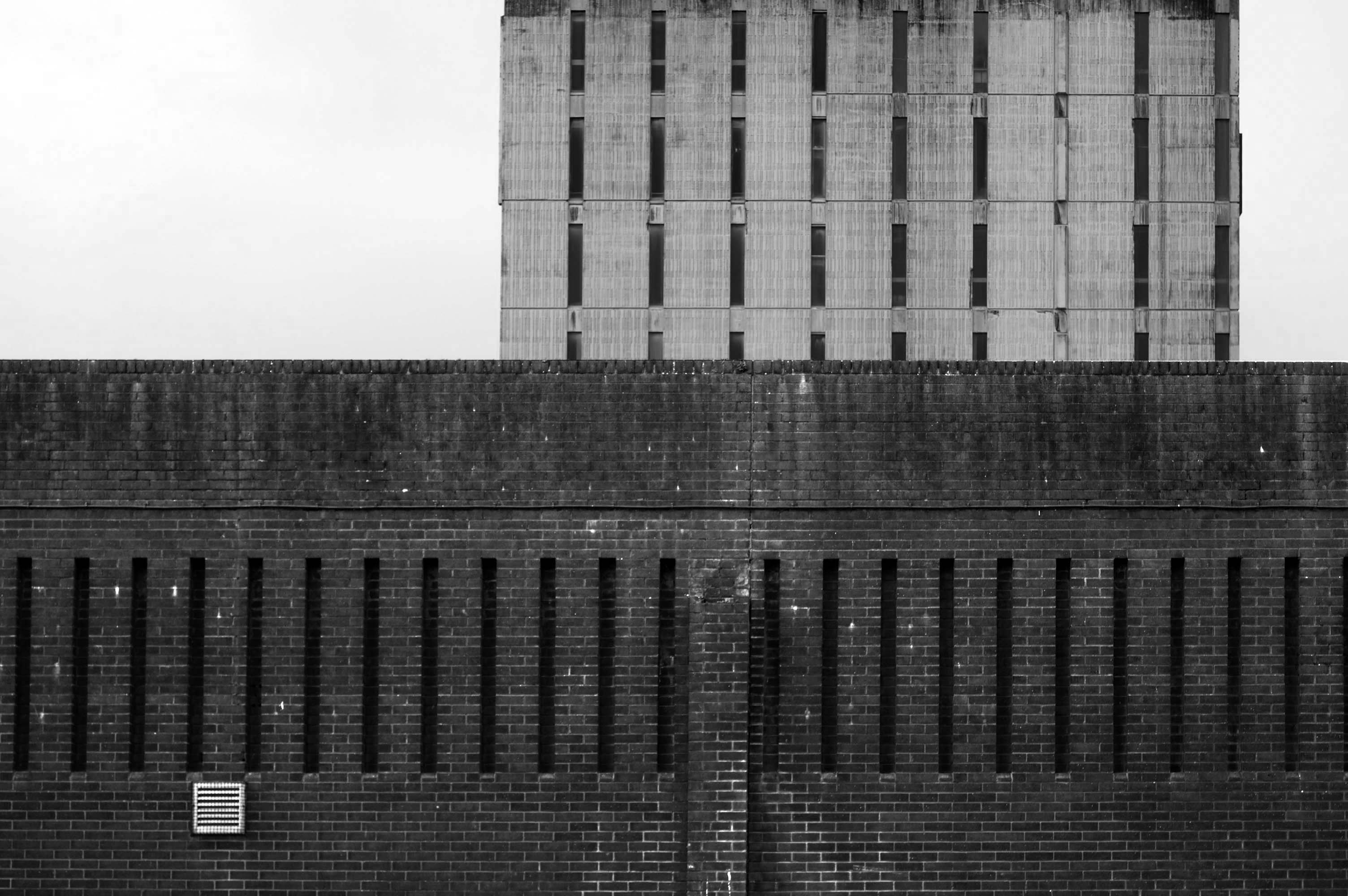
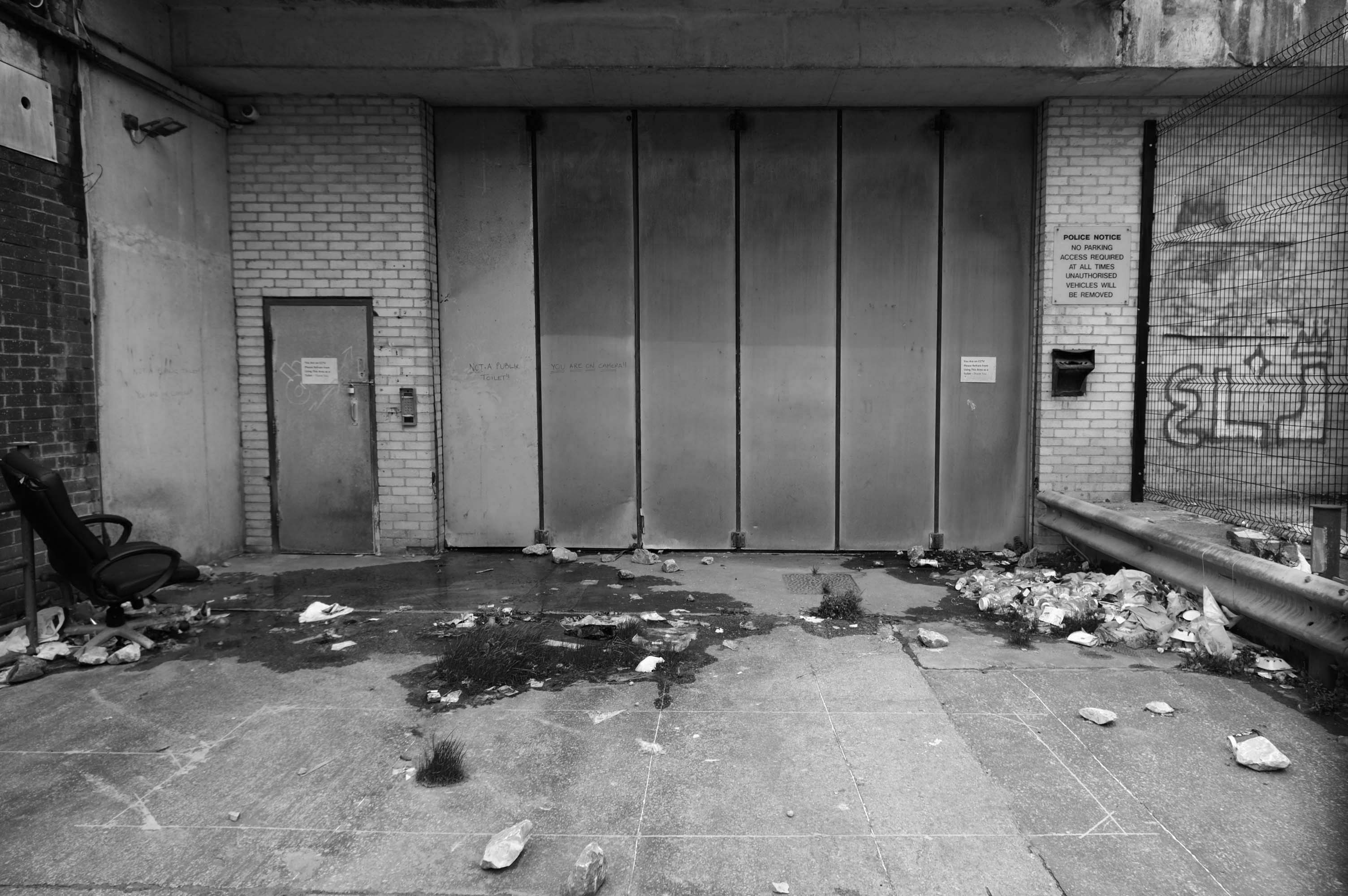
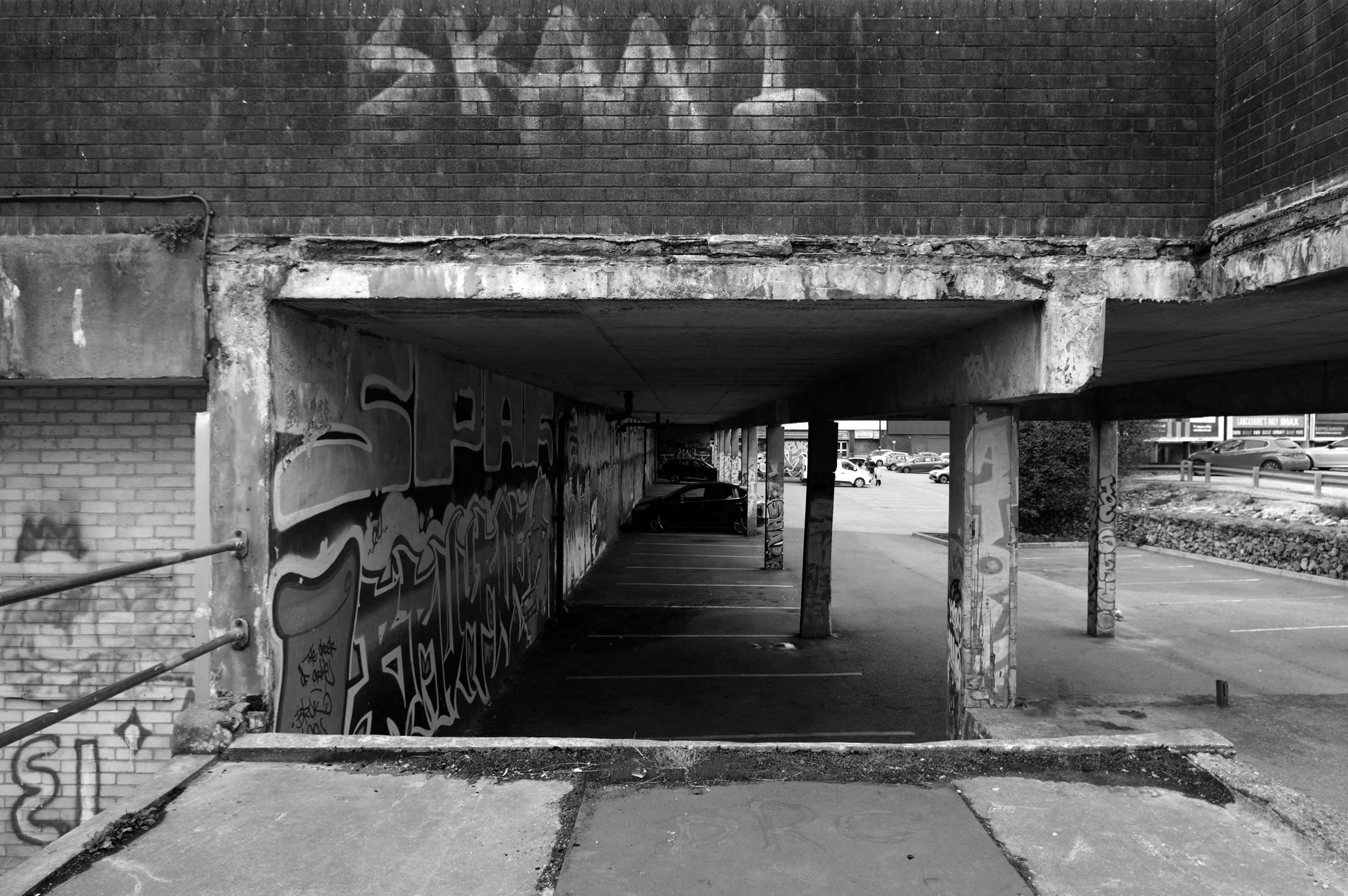
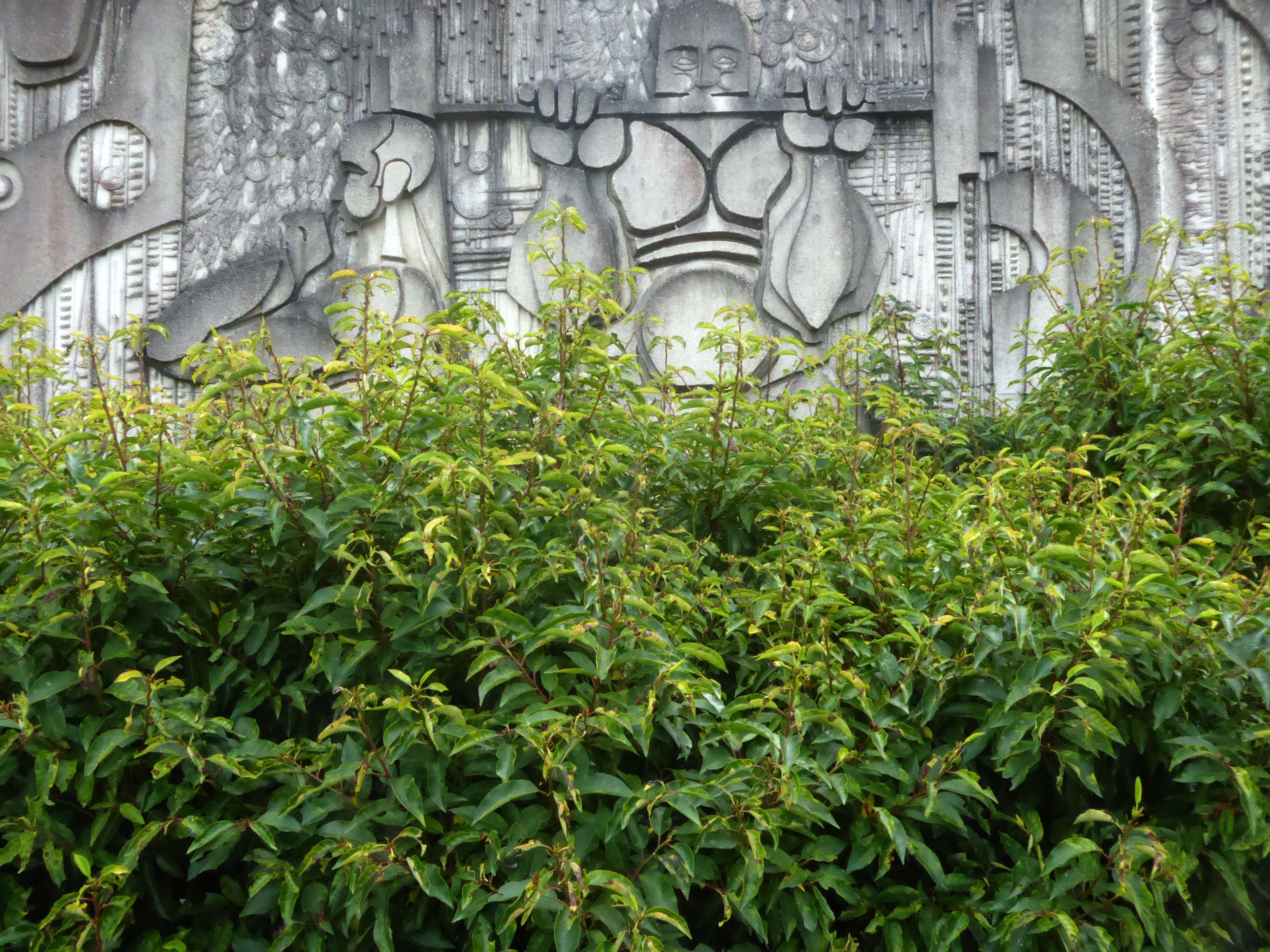
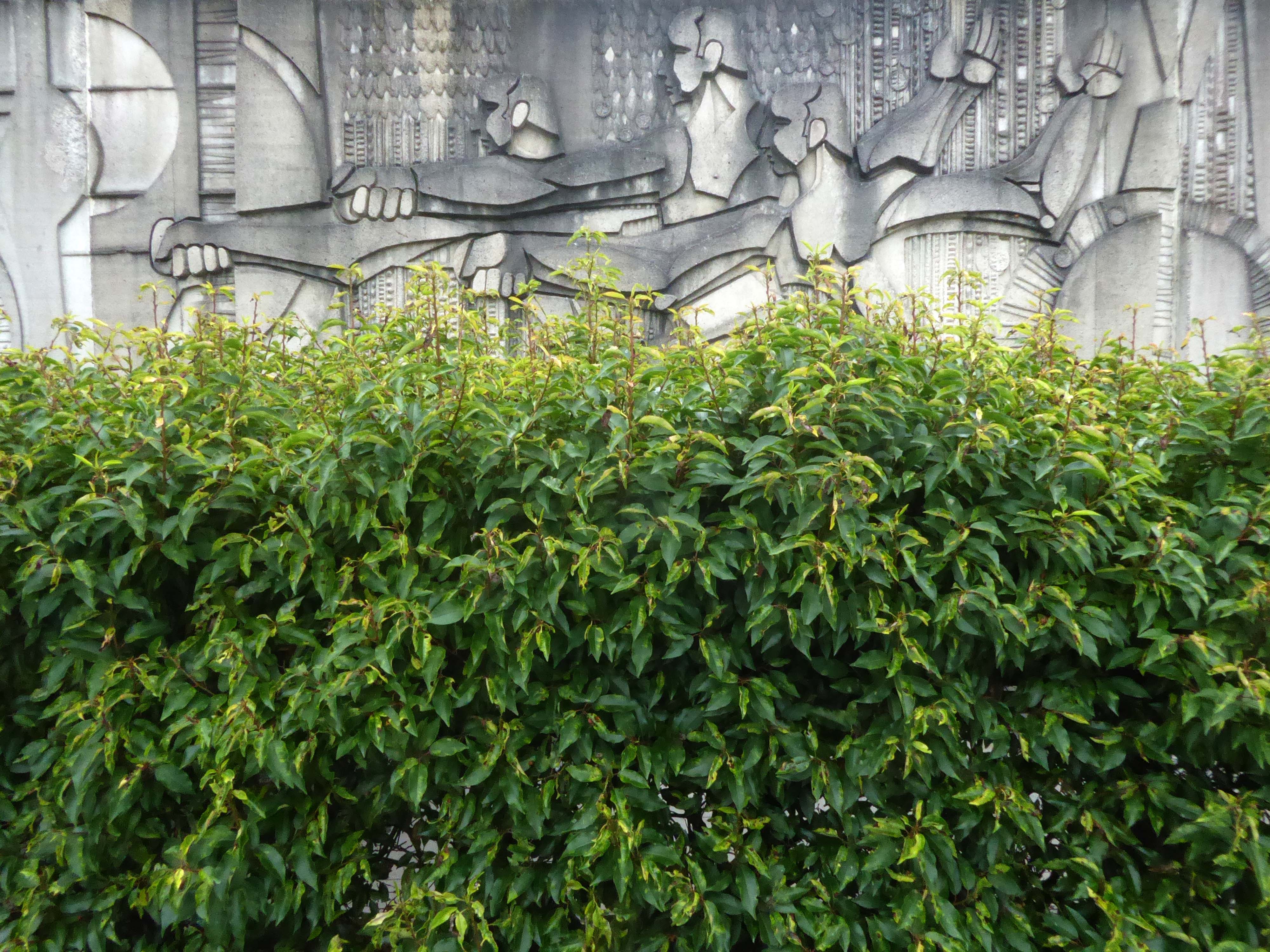
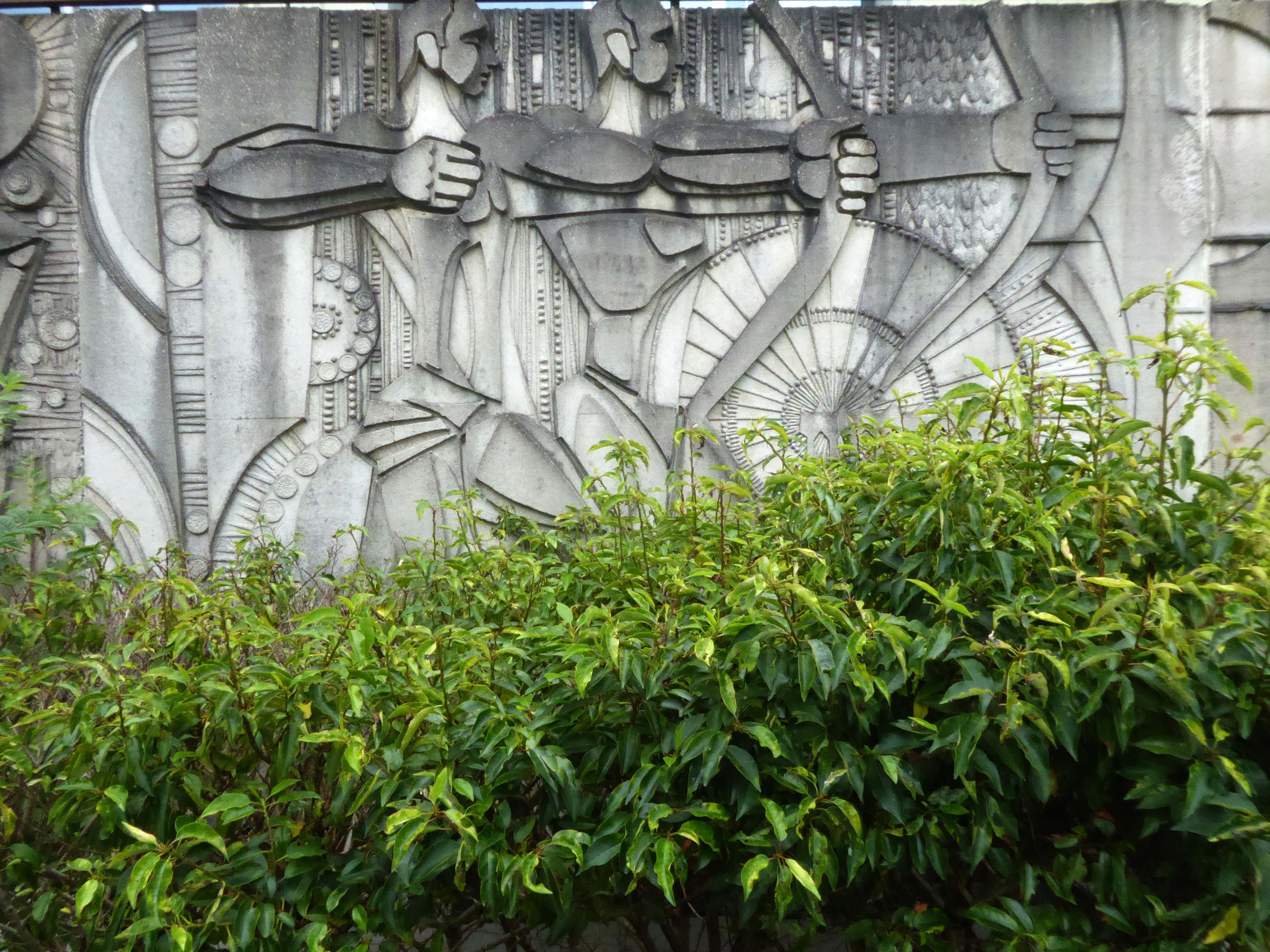
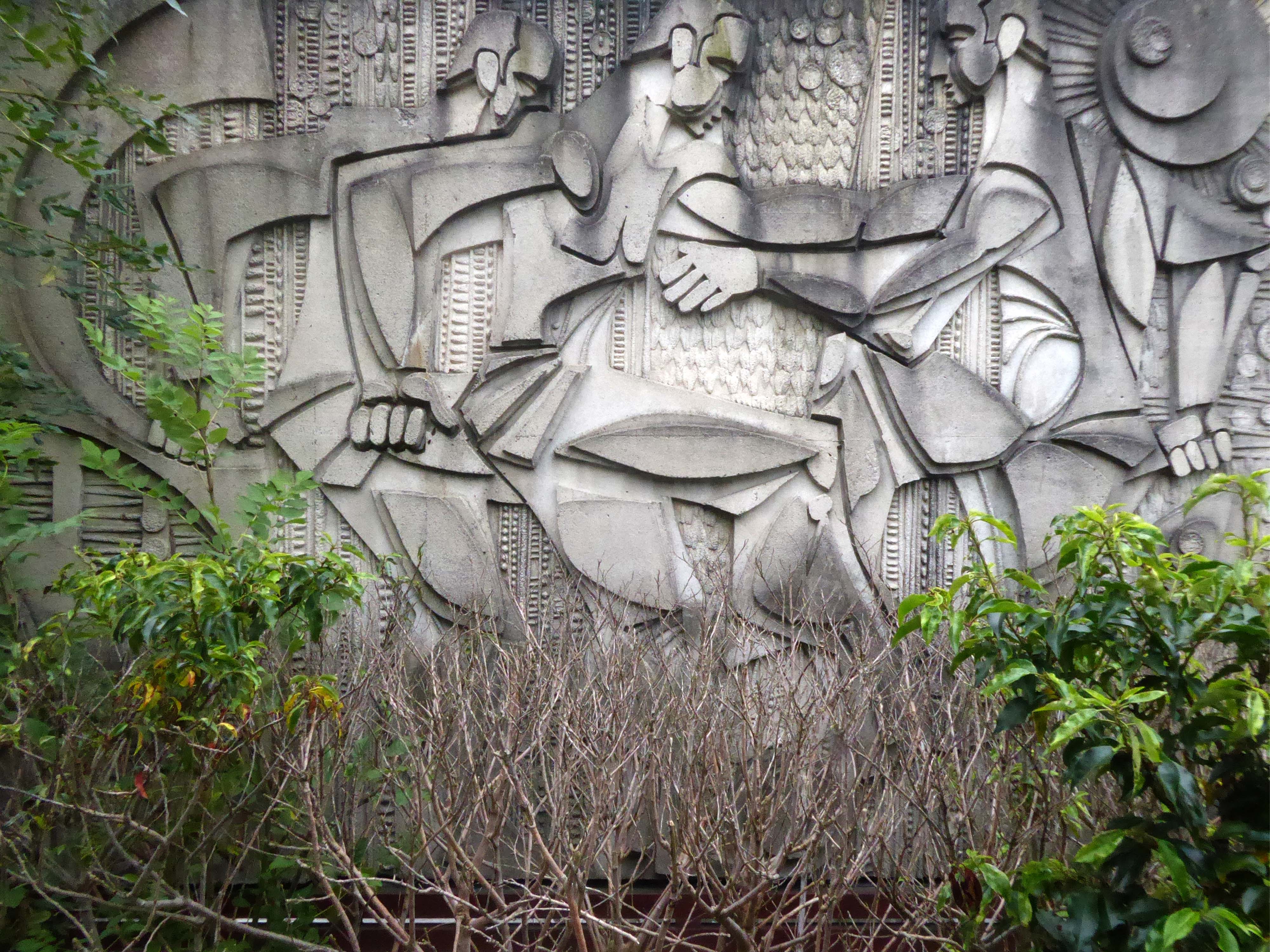
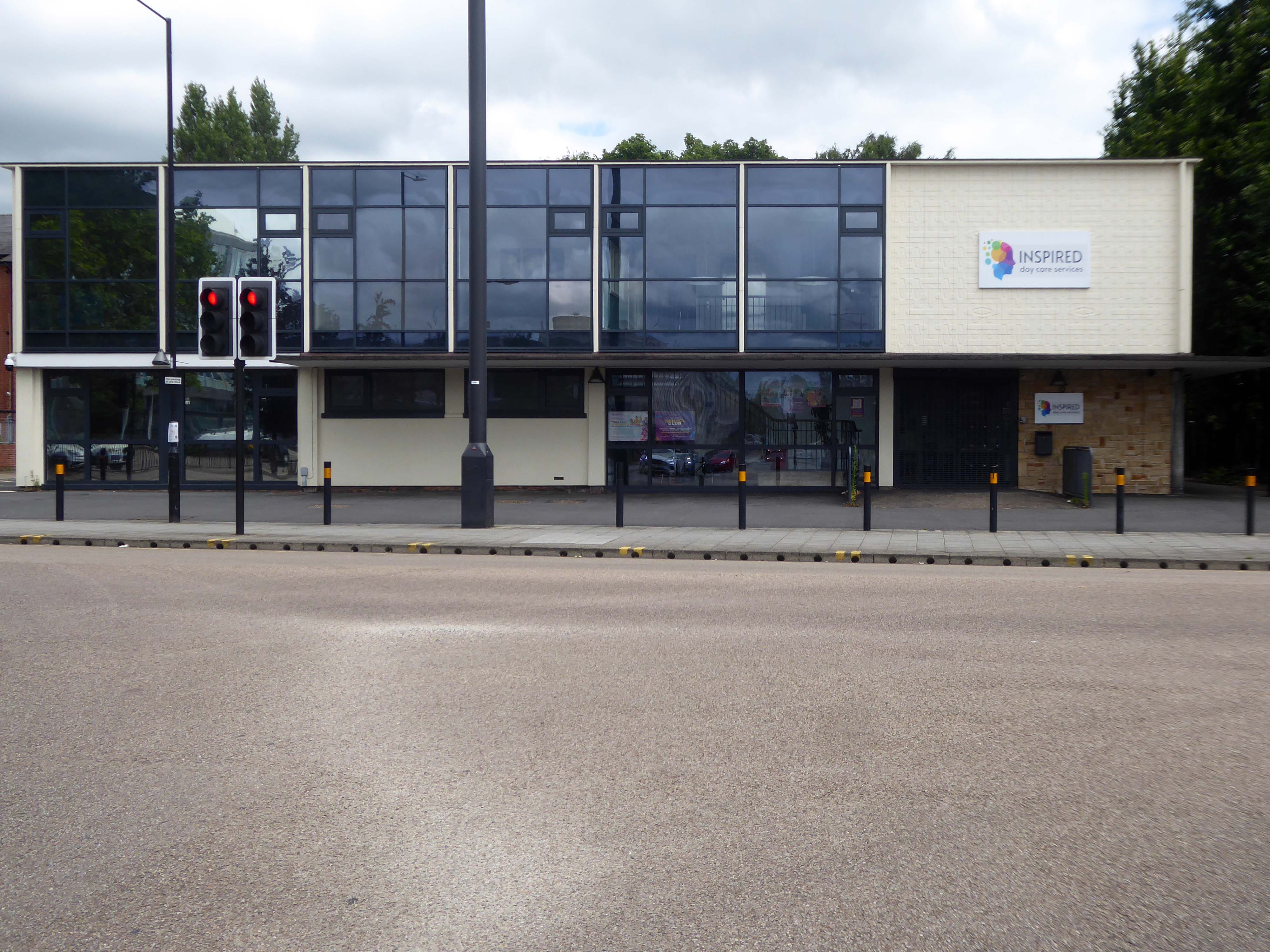
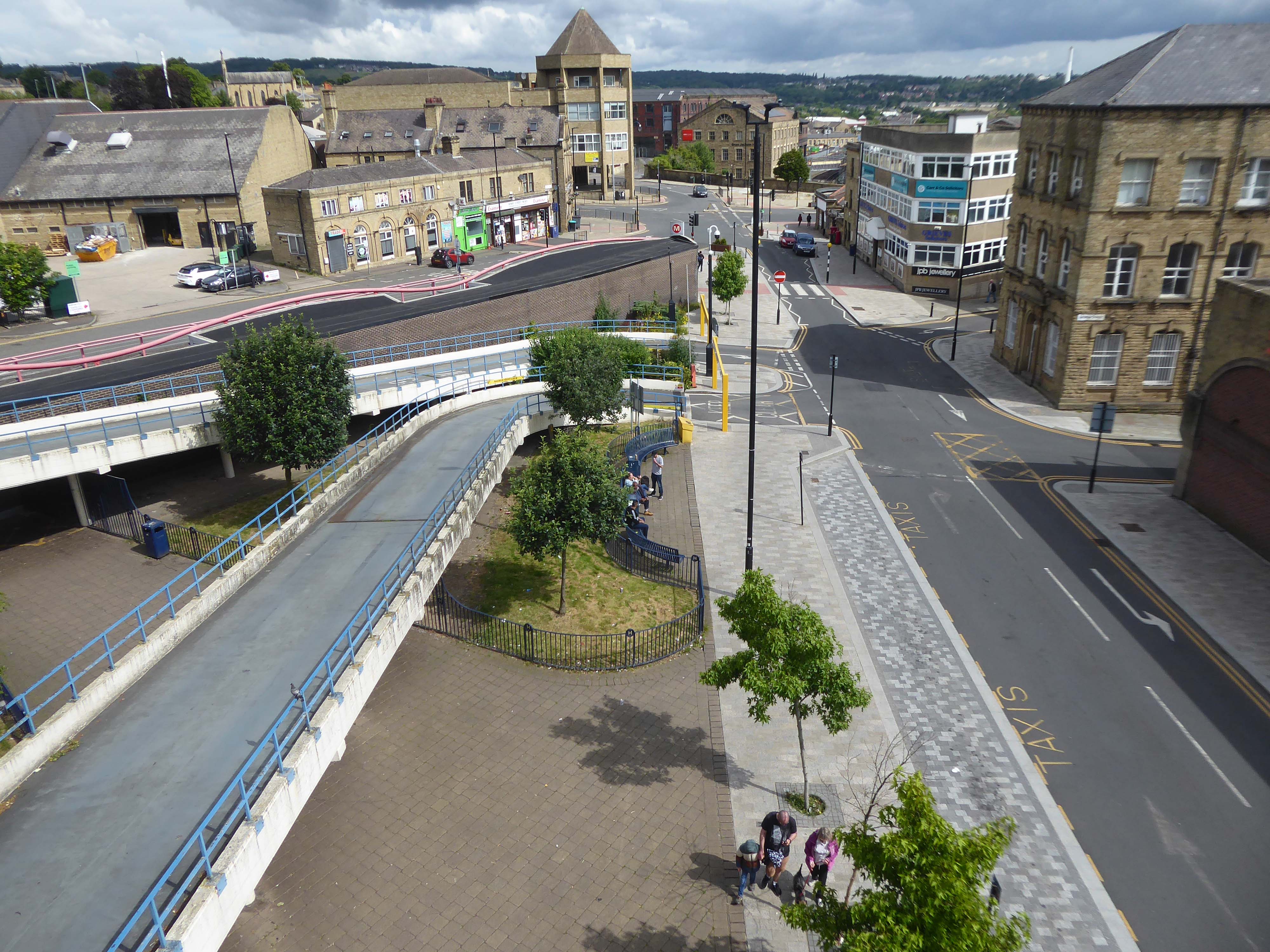
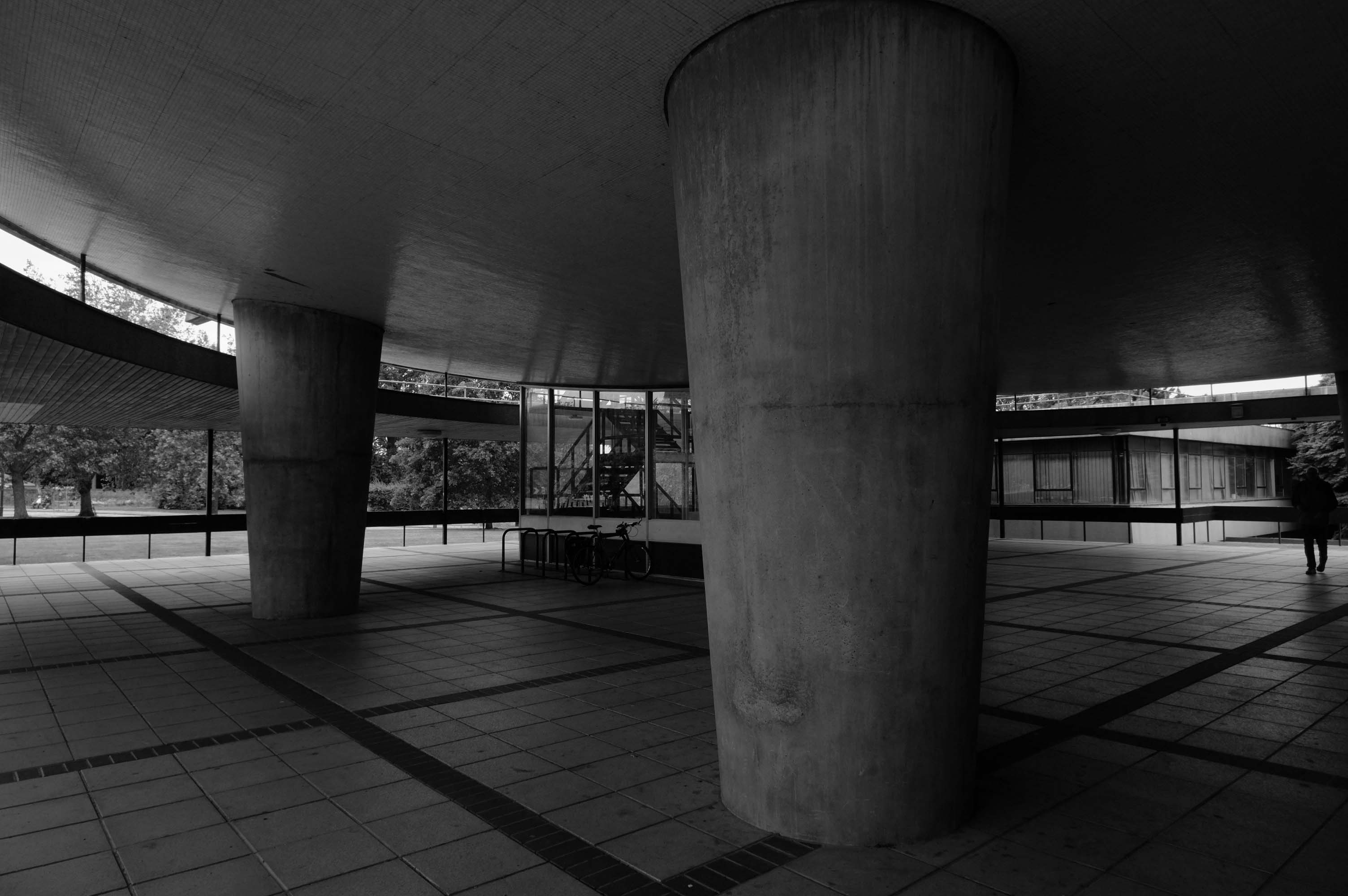
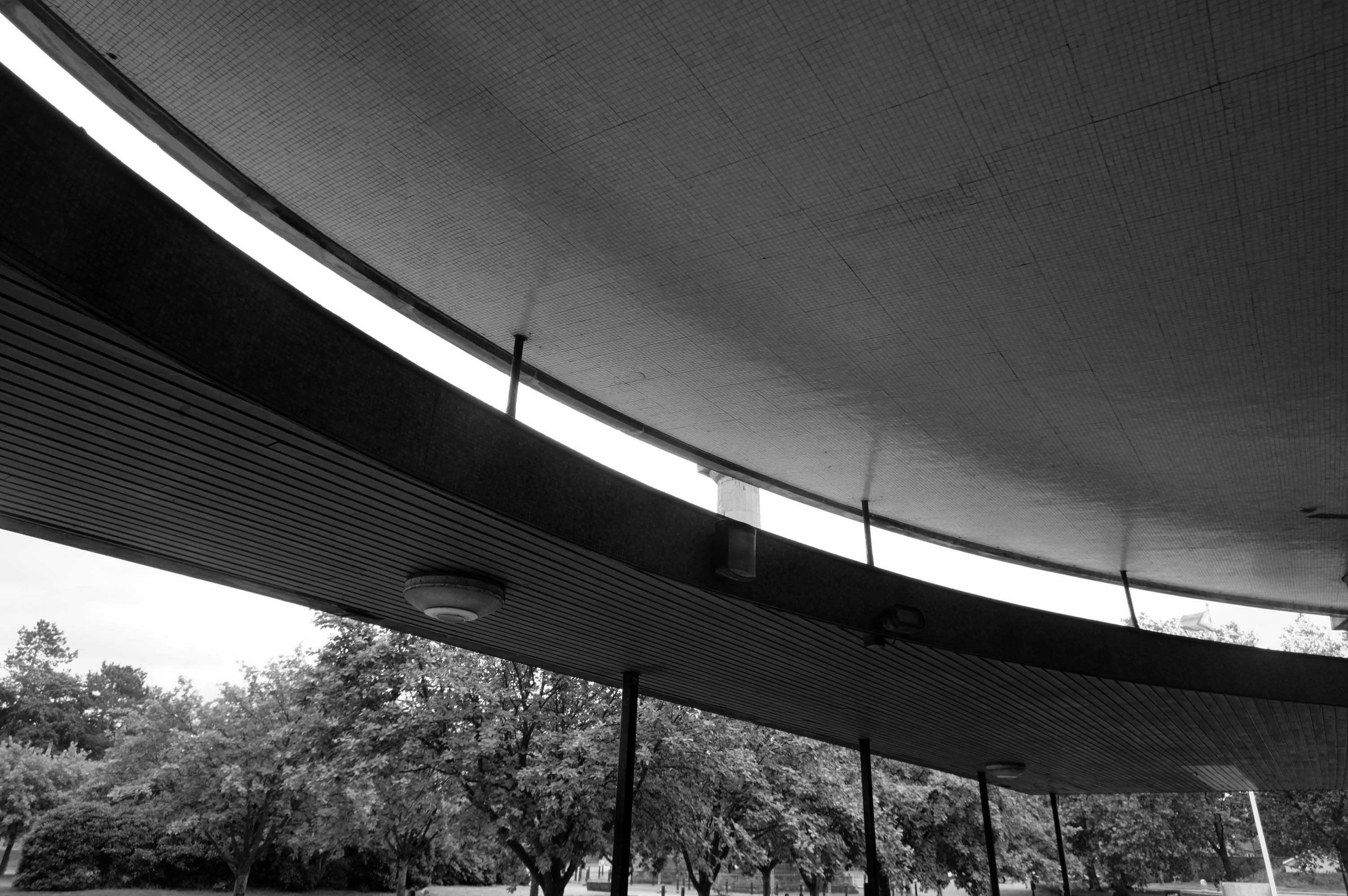
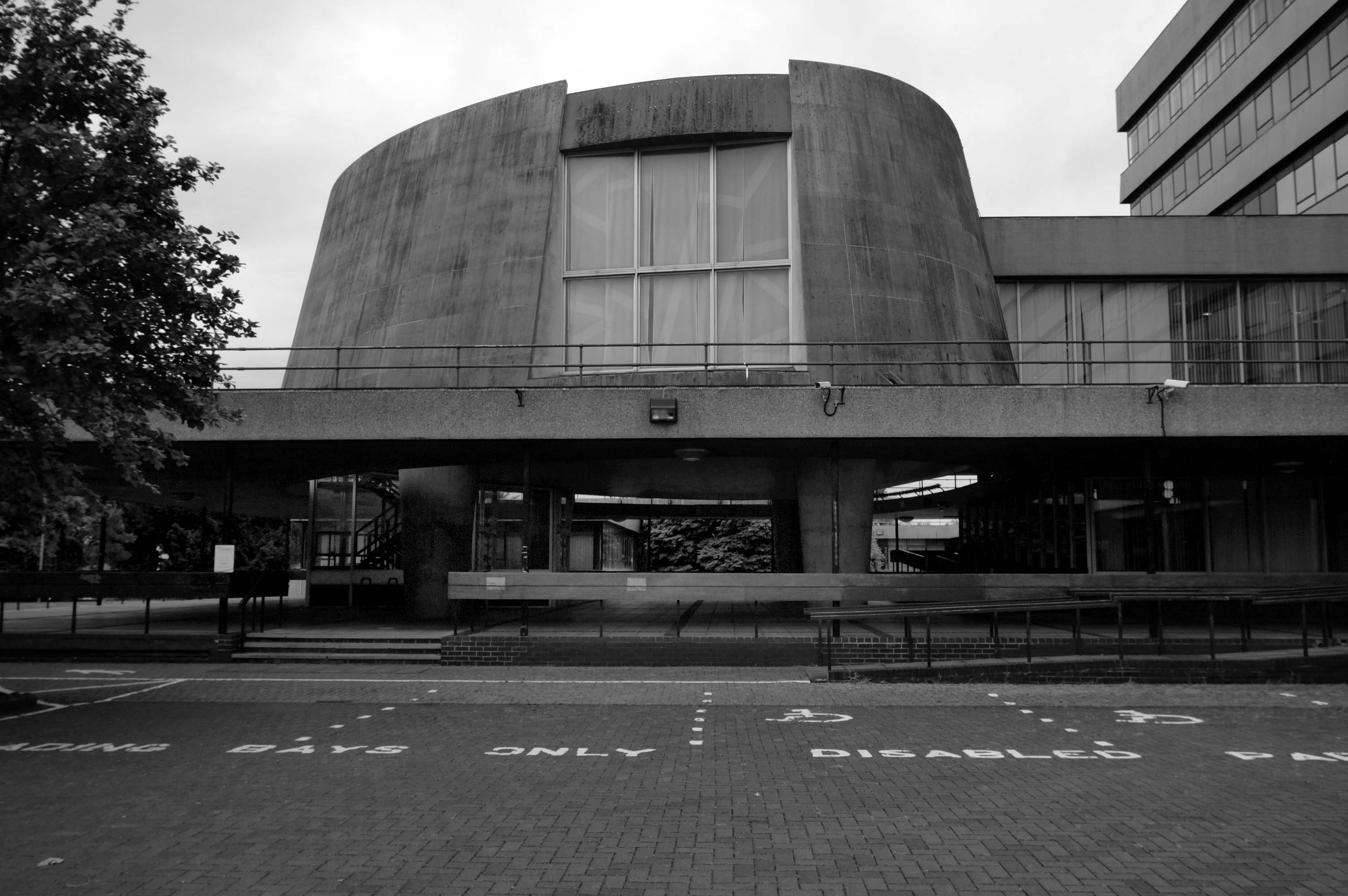
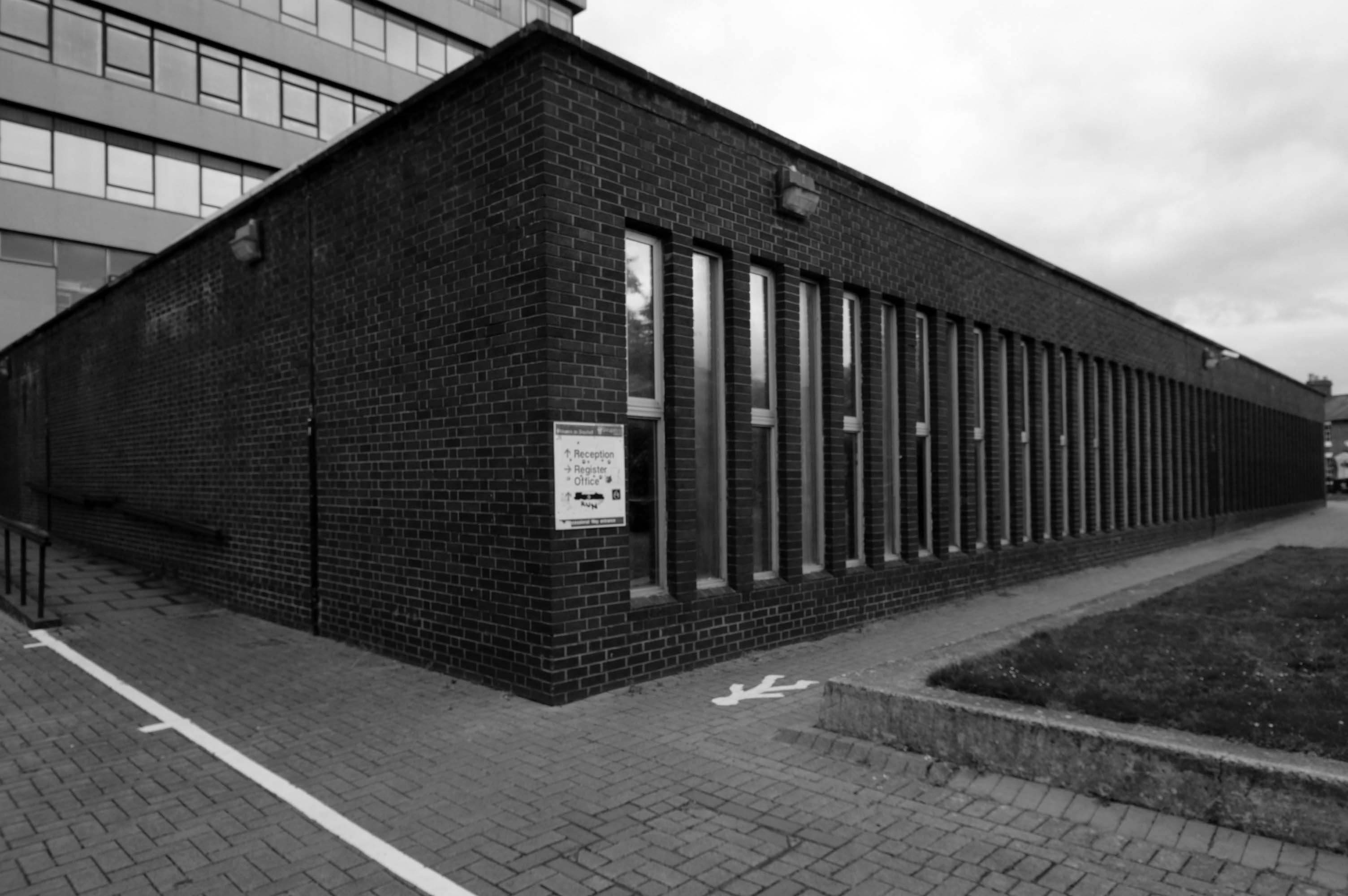
Welcombe Walk Whitefield Manchester M45 7FA

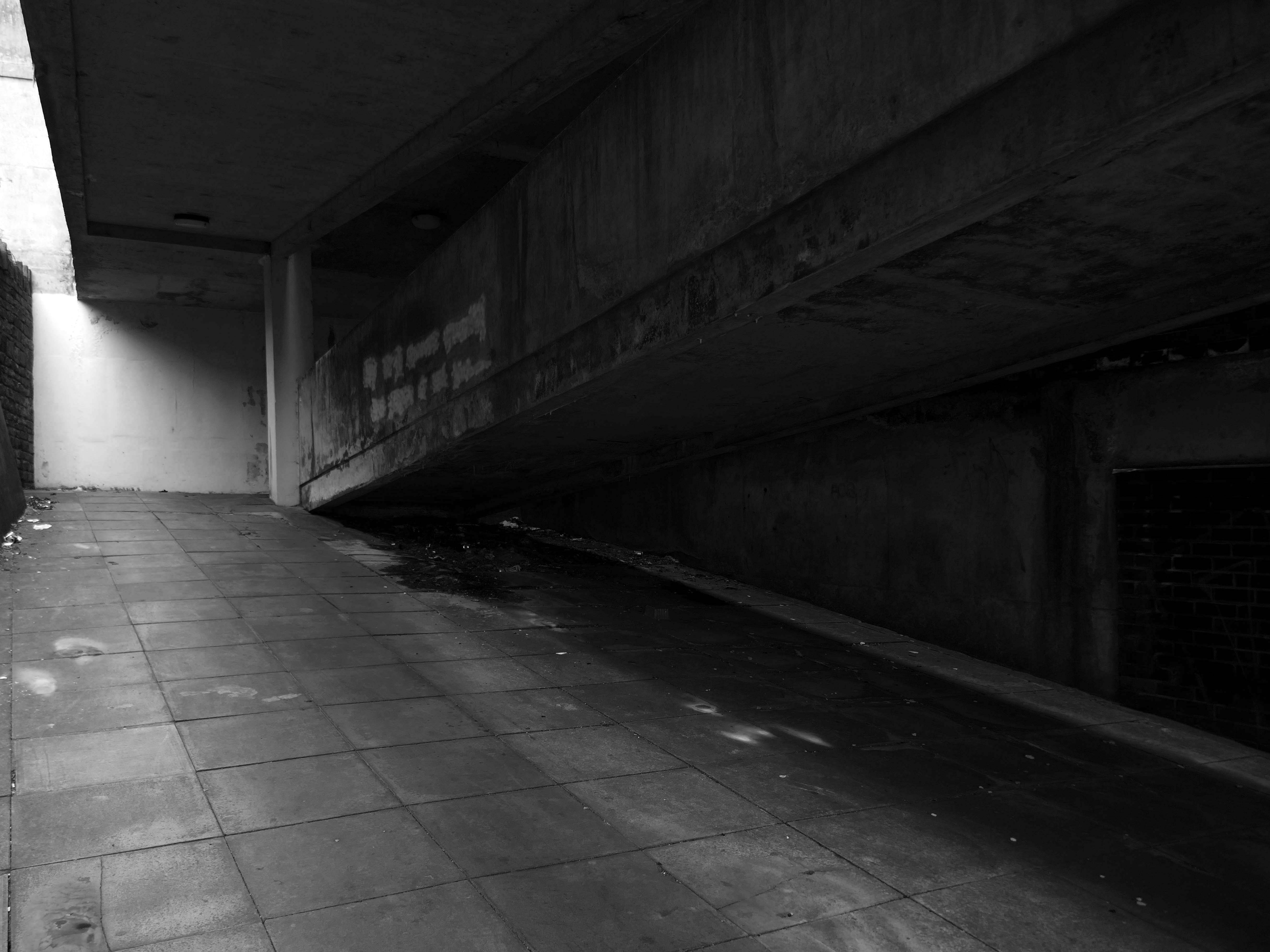
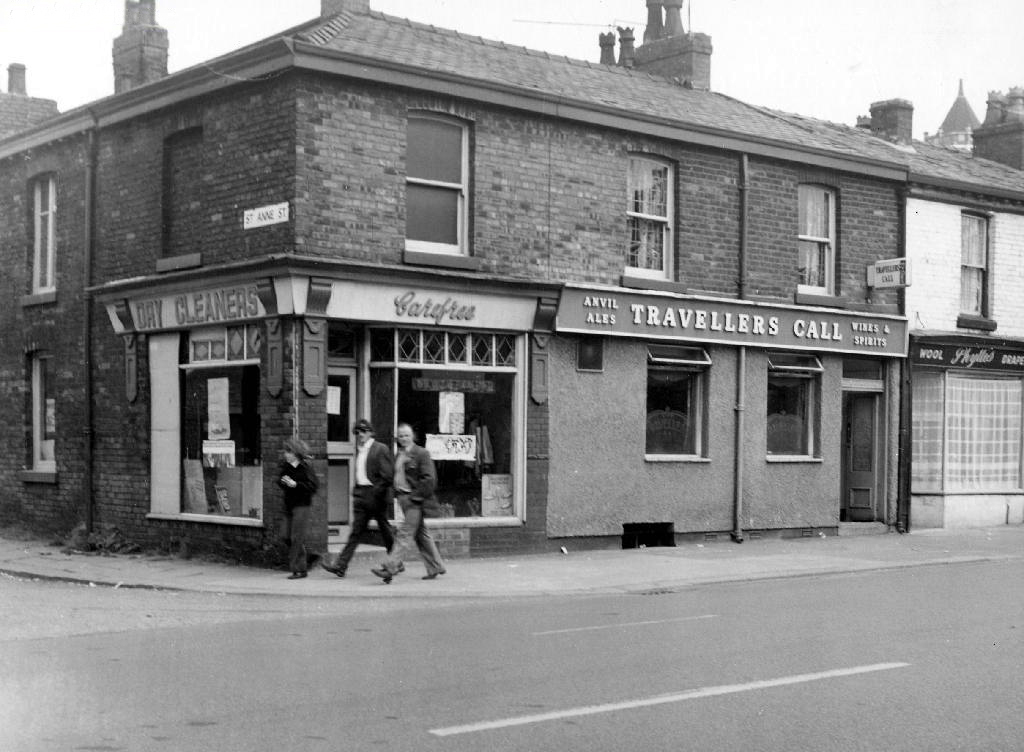
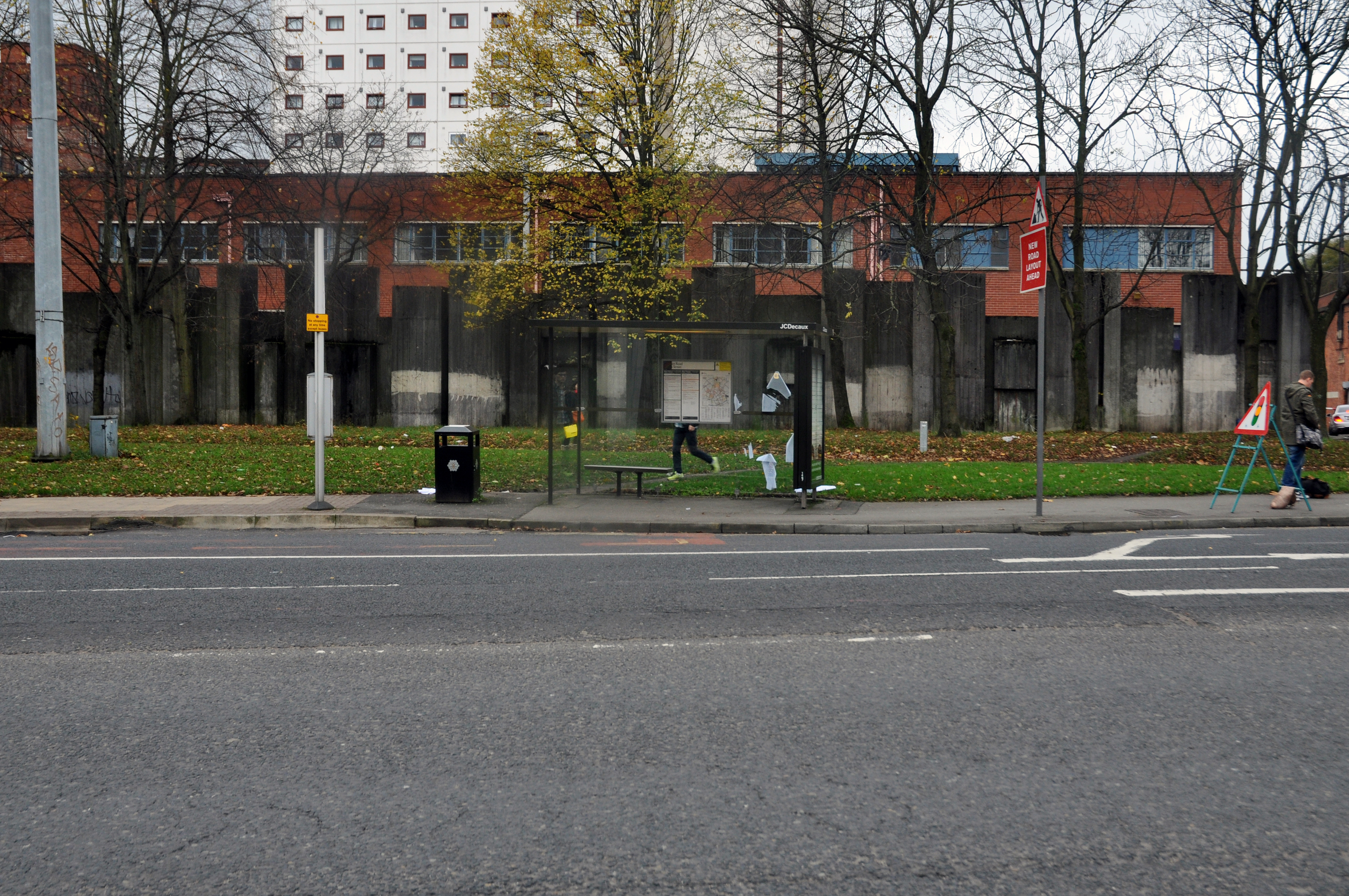
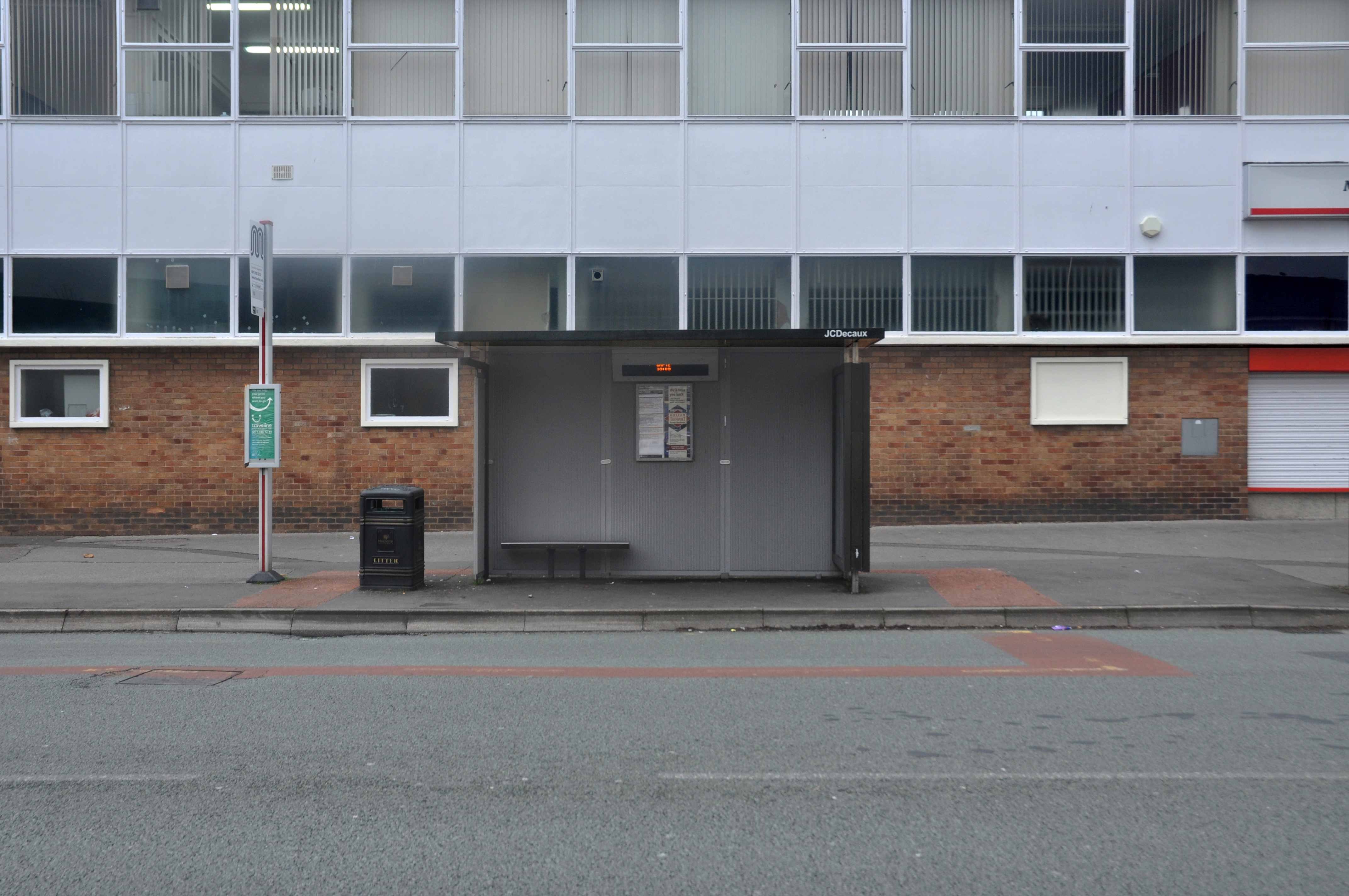
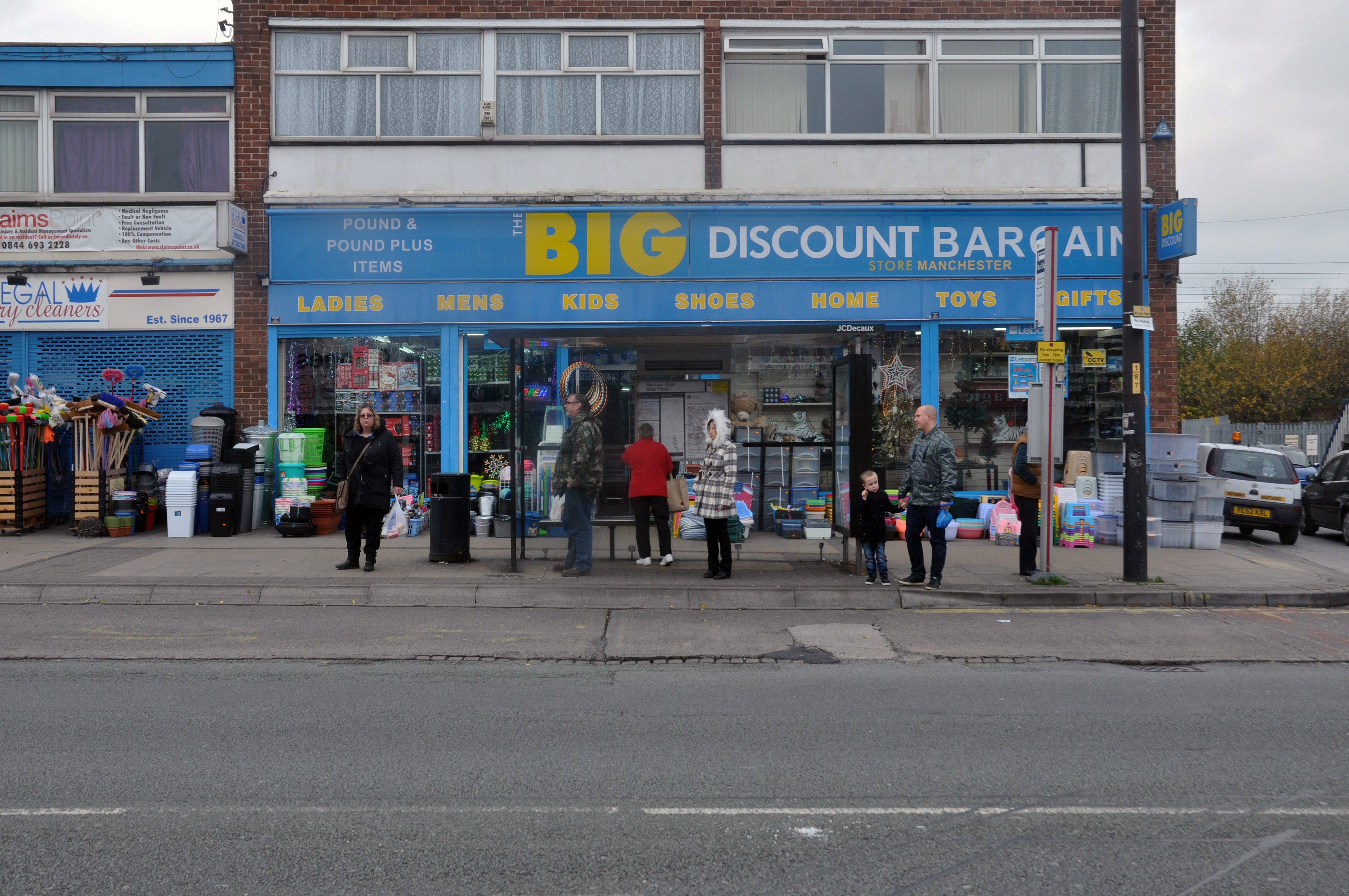
Not lost, just looking elsewhere, whilst walking between tram stops.

Charged with mapping the Modernism at each of the stops twixt Victoria and Bury.

I unavoidably took the wrong turn, it’s so easily done. Fortuitously I took a turn off Bury New Road and found myself on Welcombe Walk.

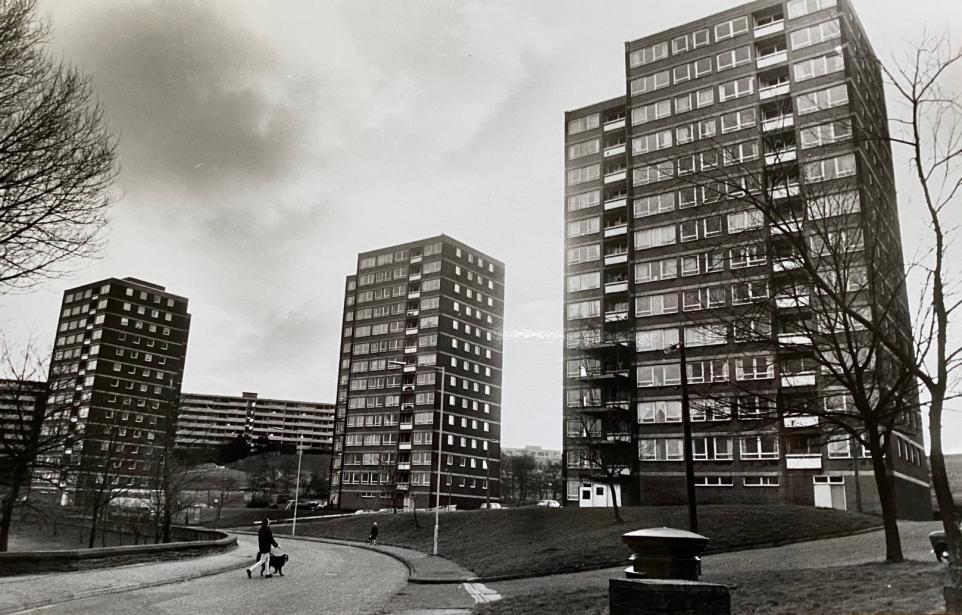
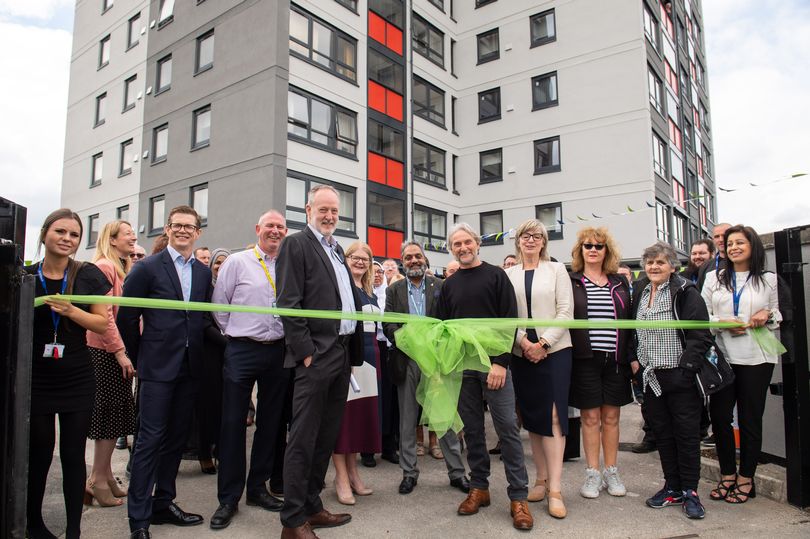
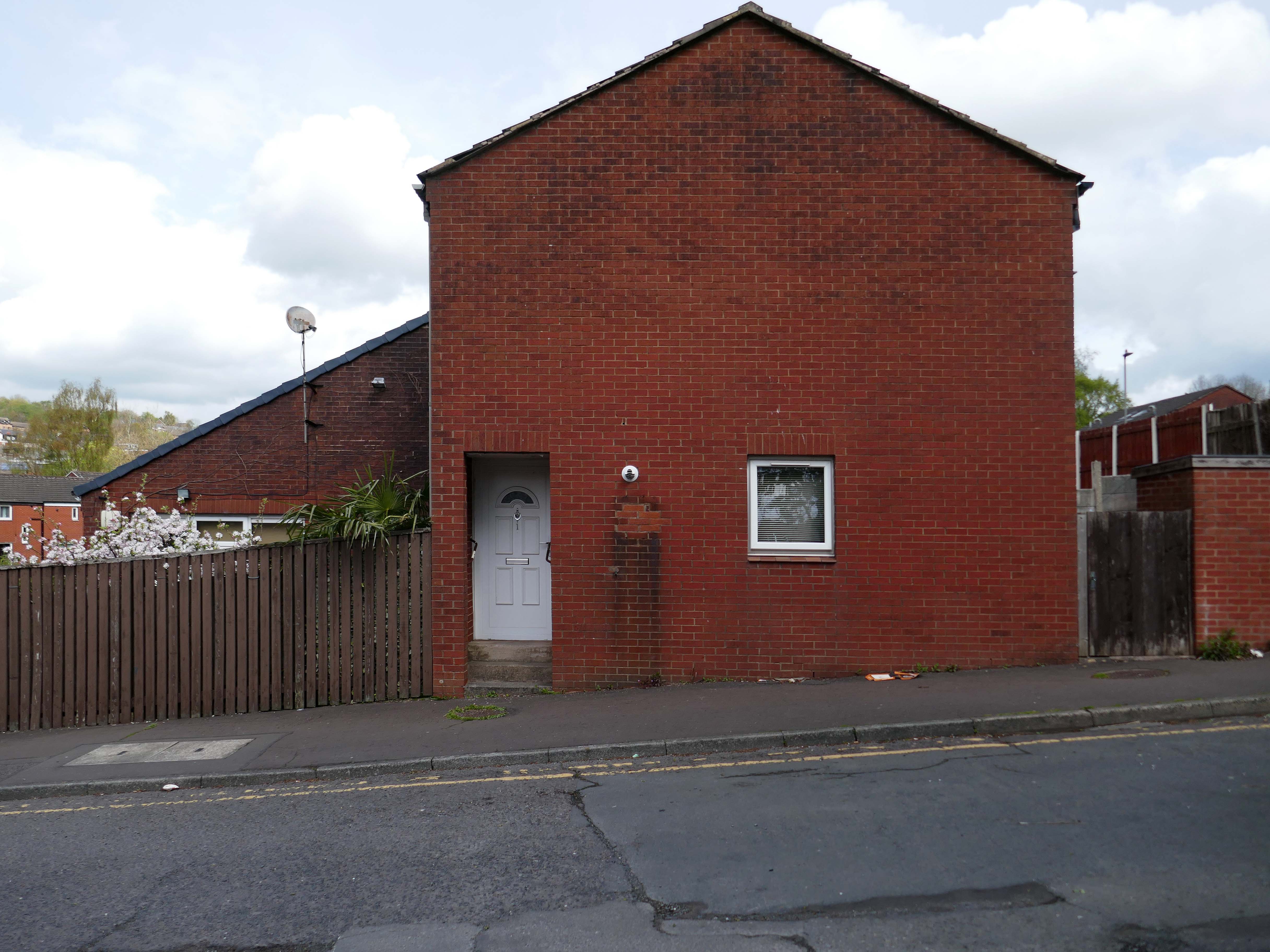
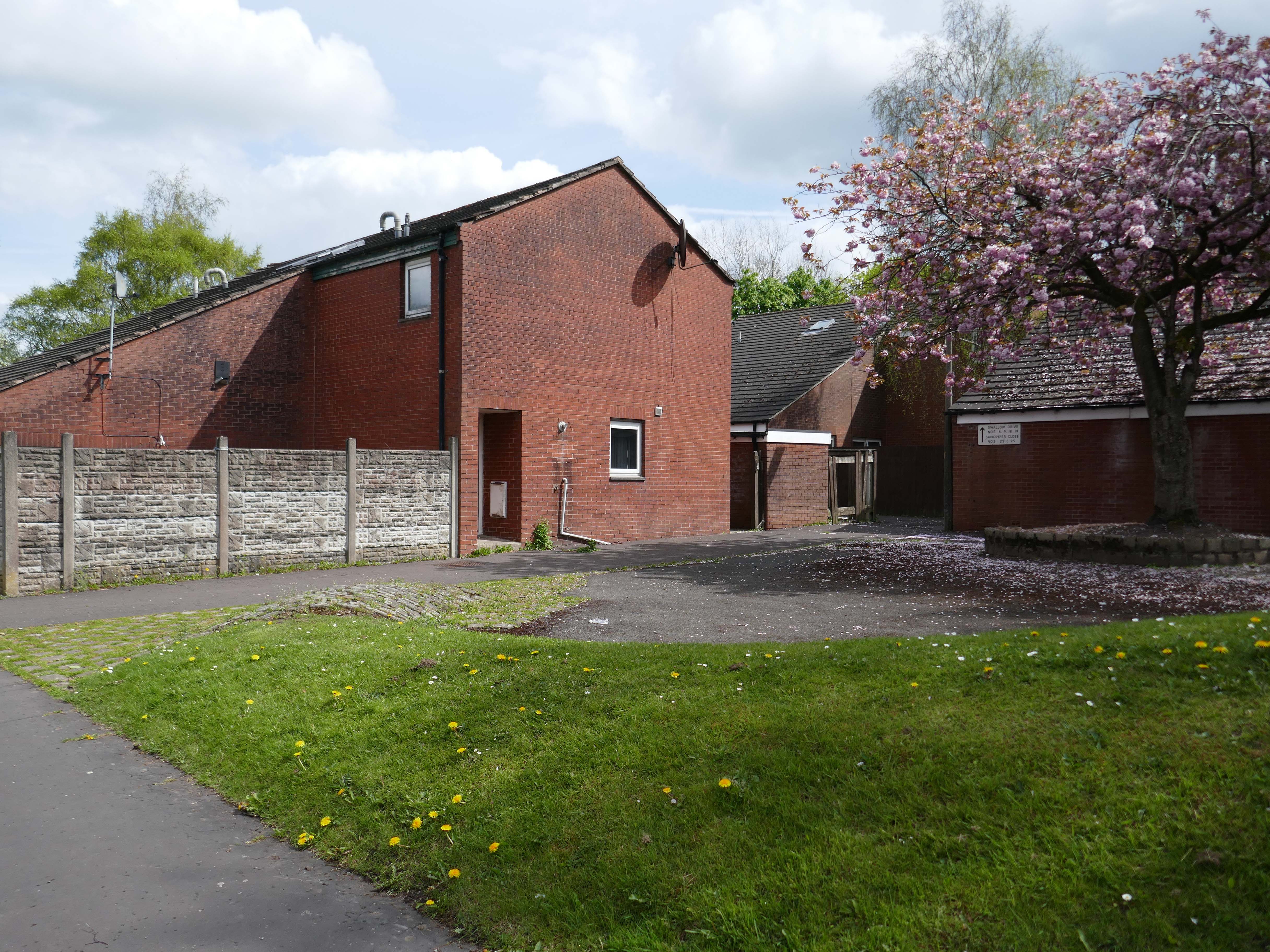
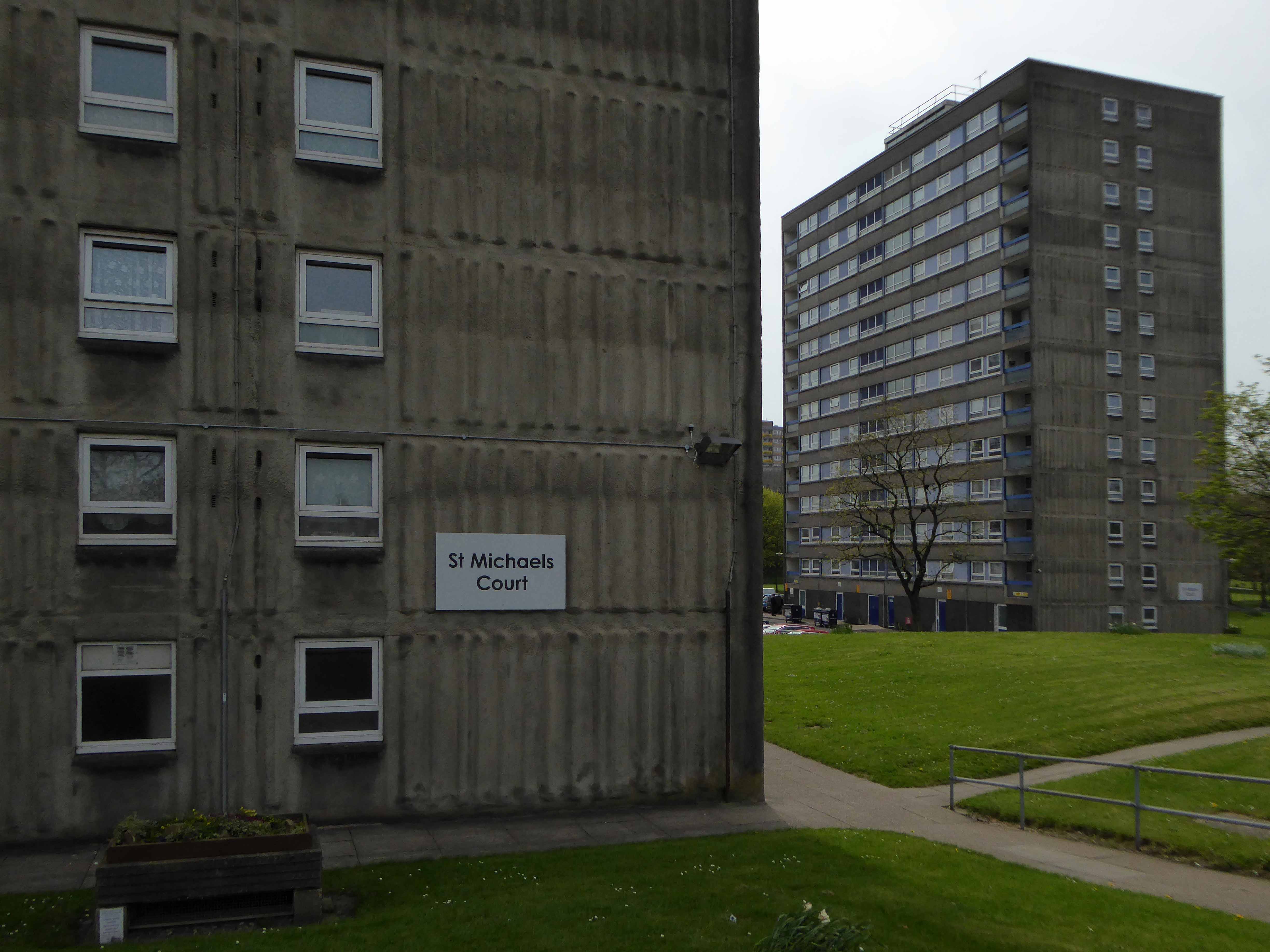
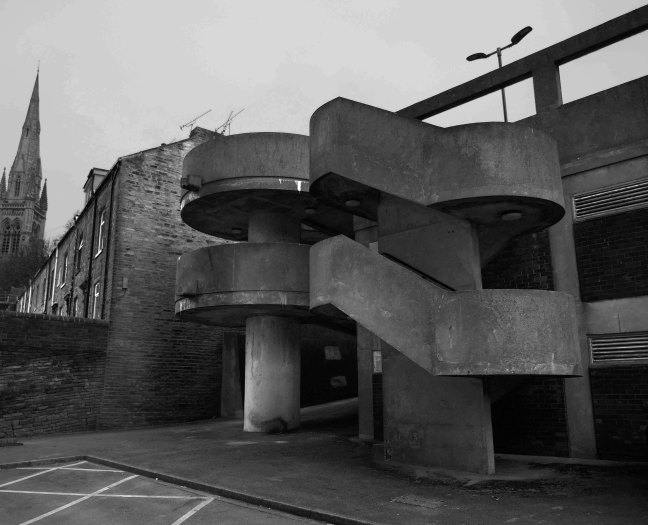
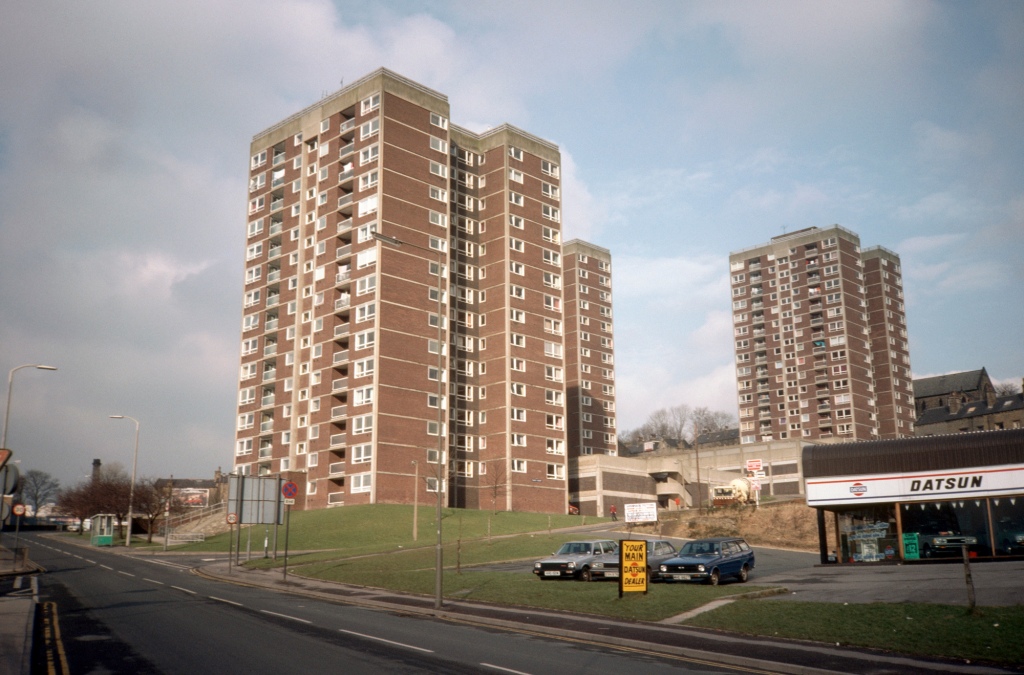
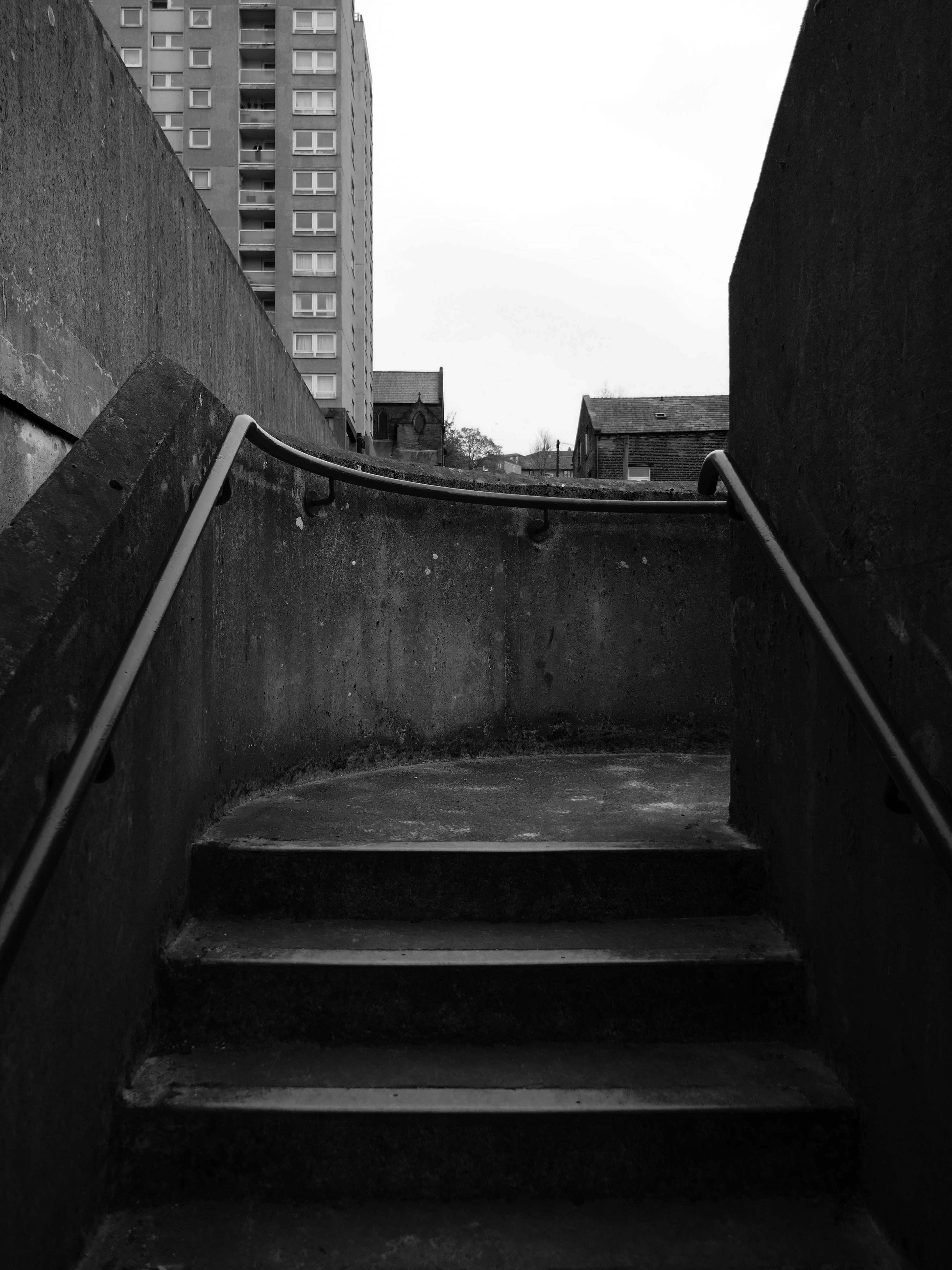
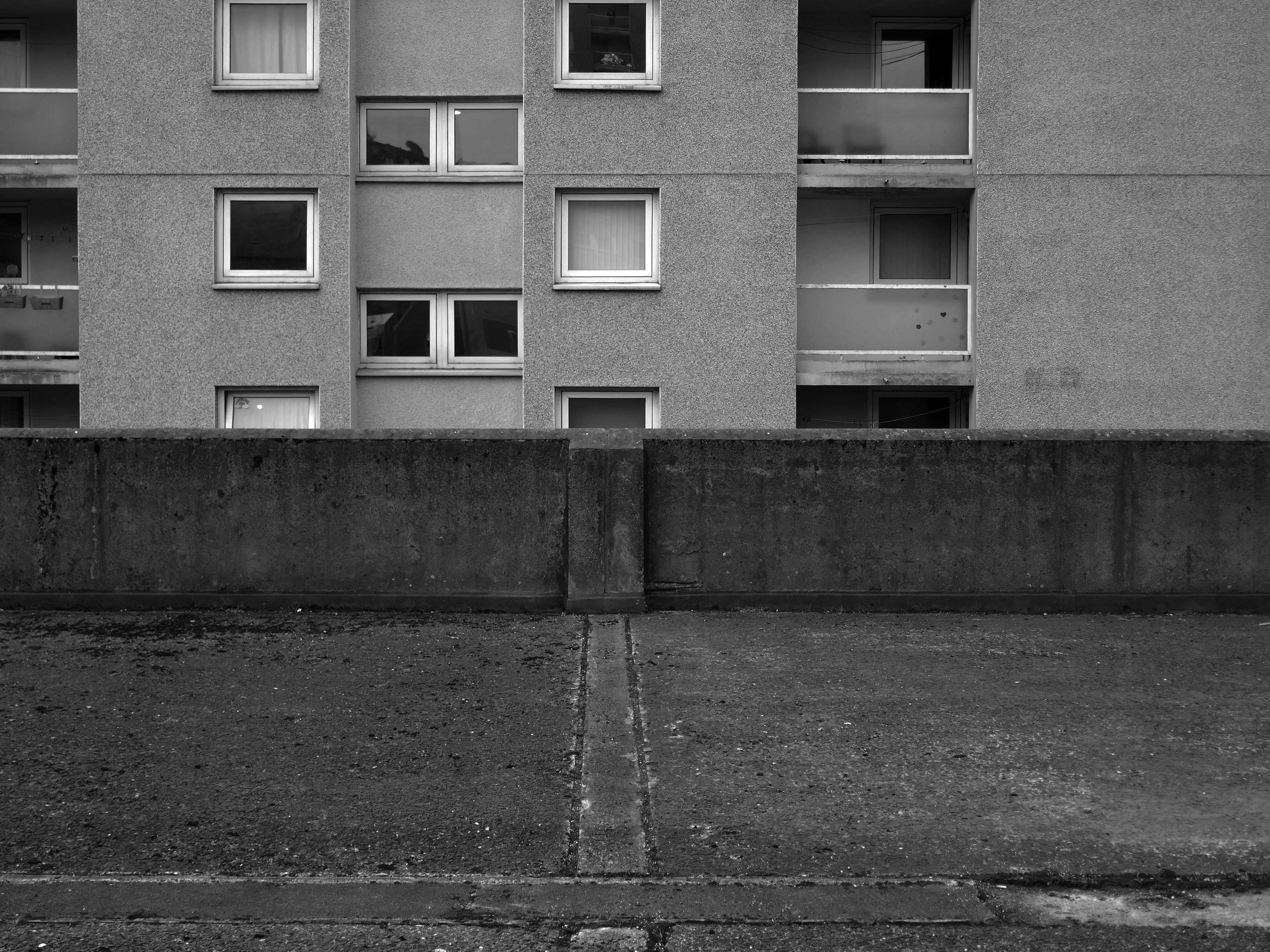
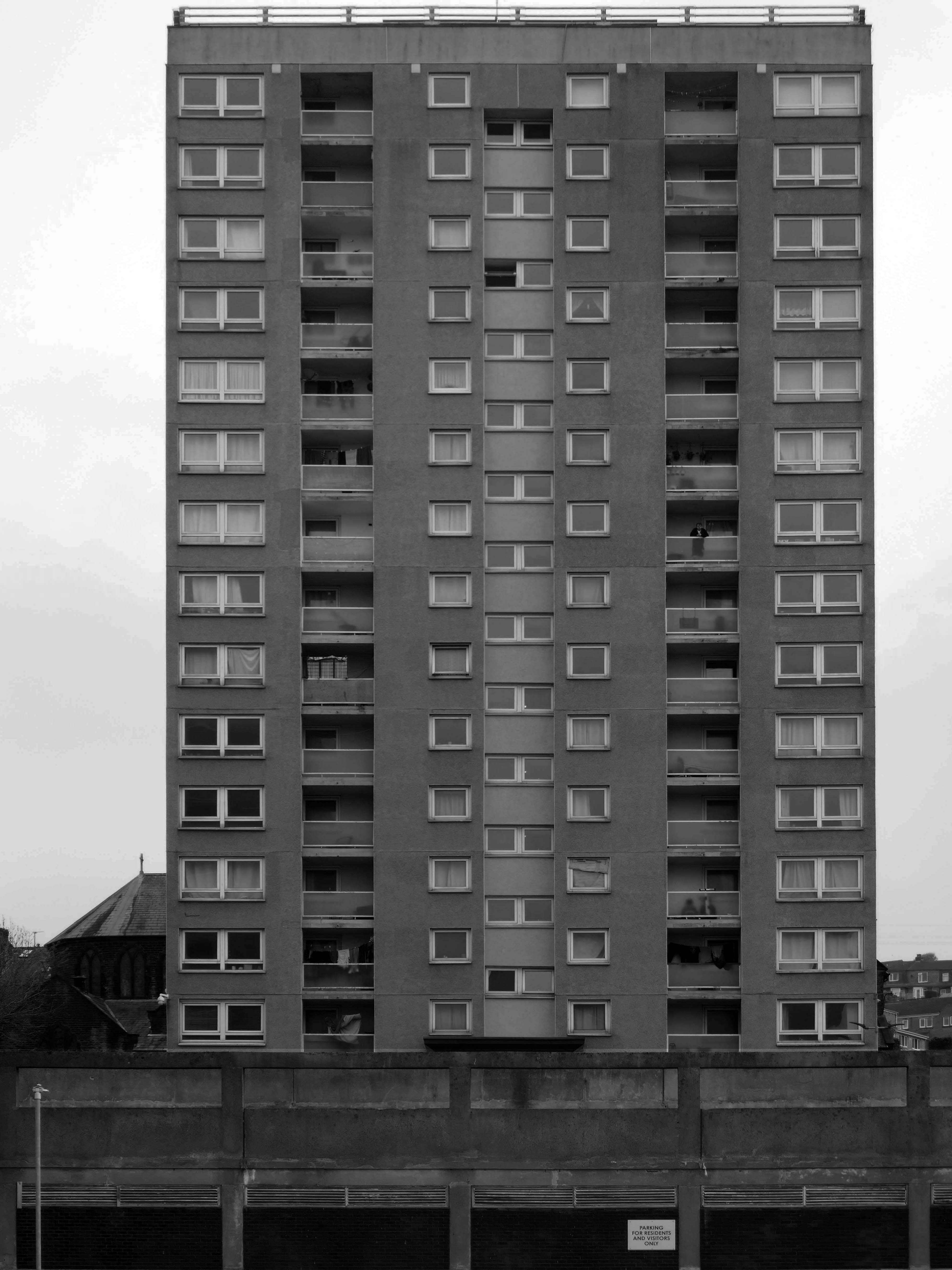
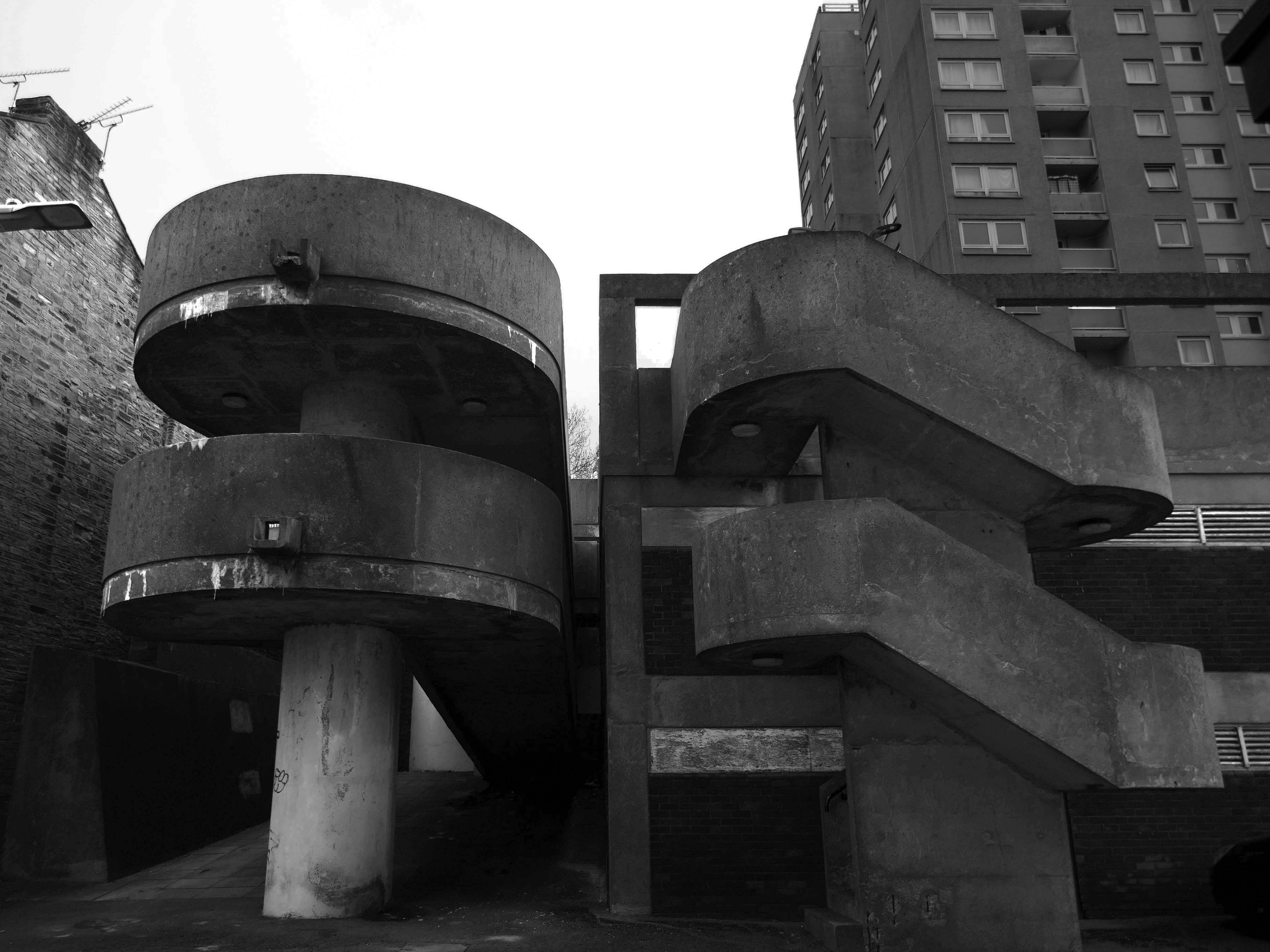
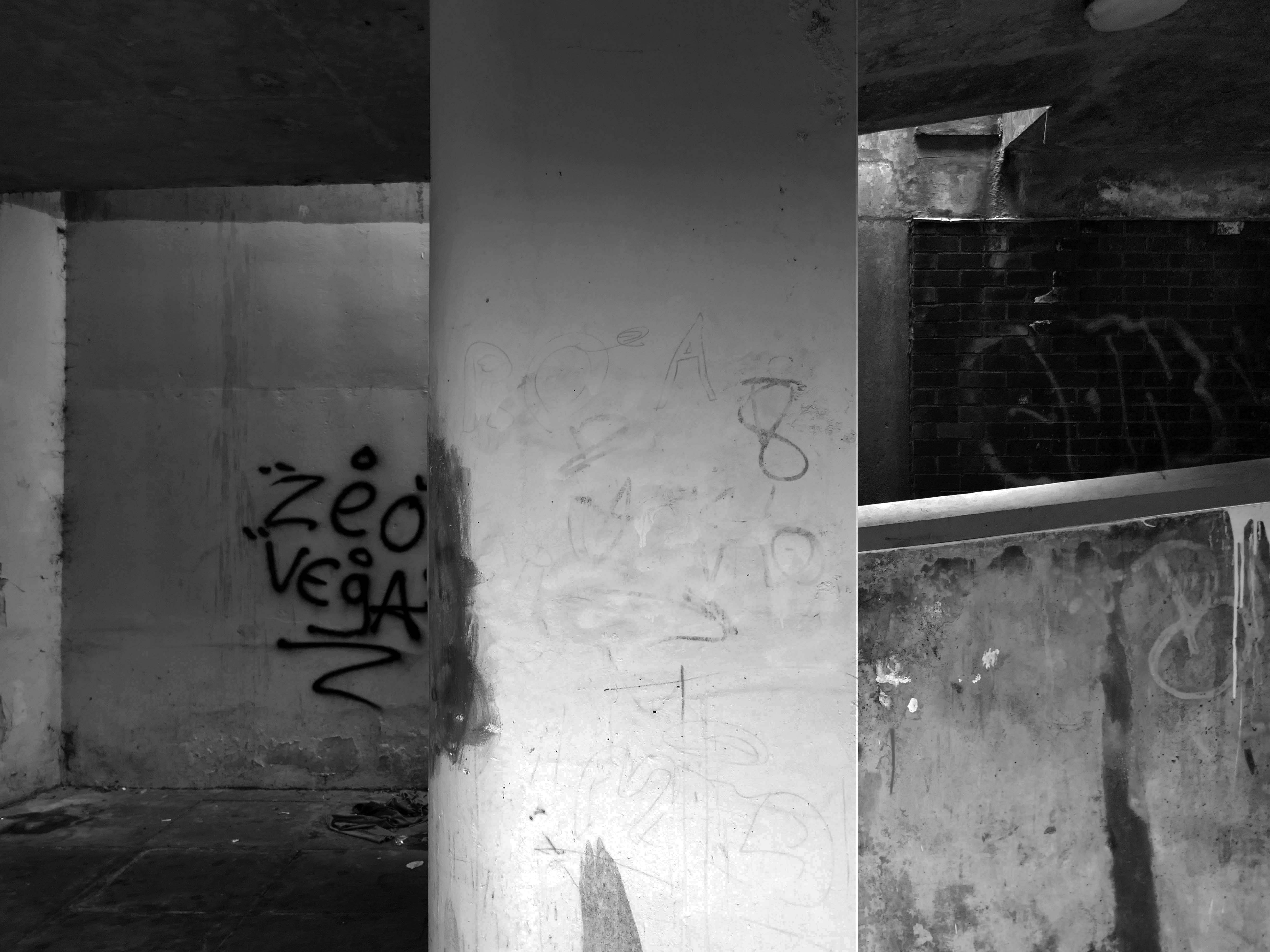
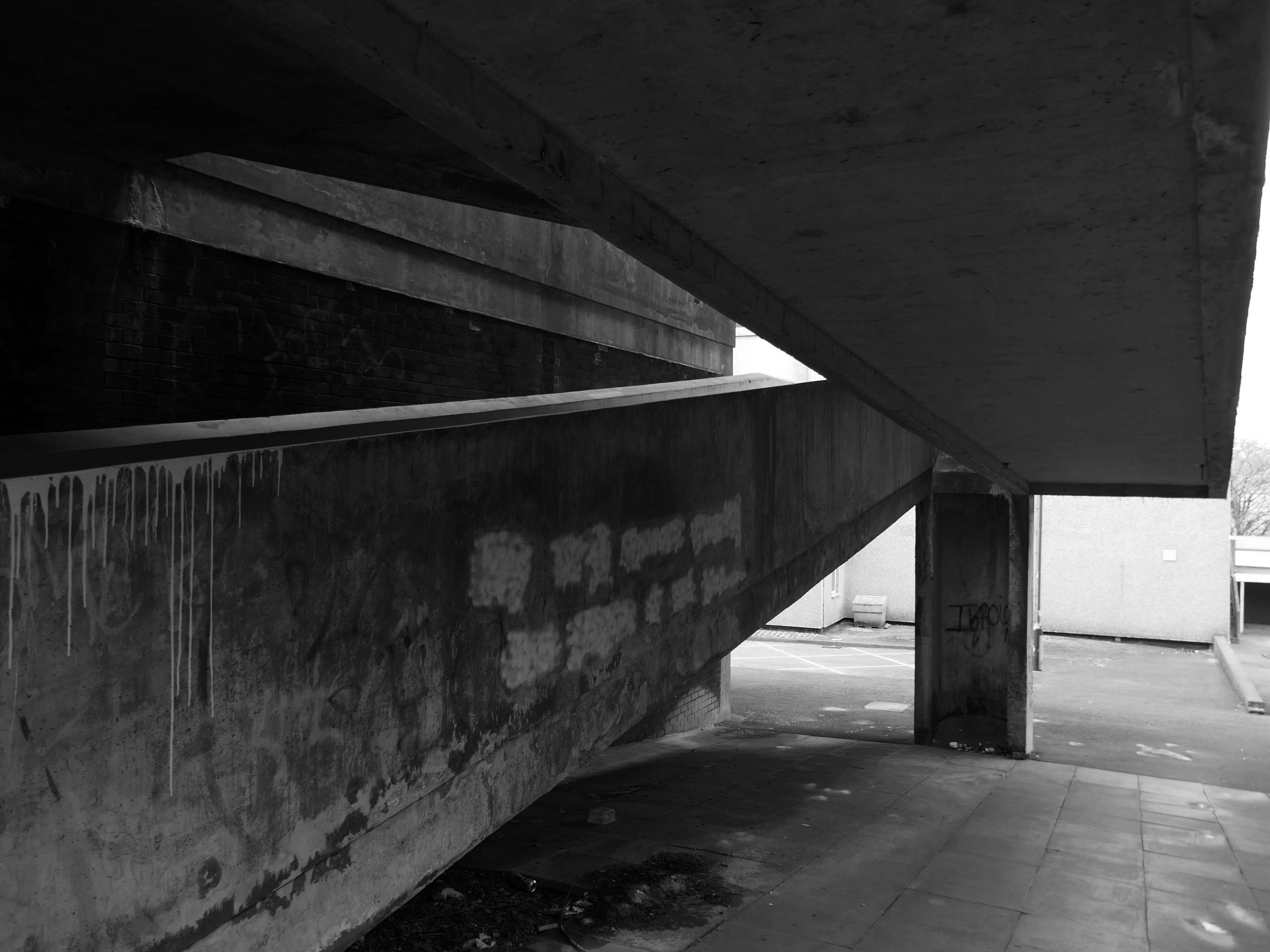
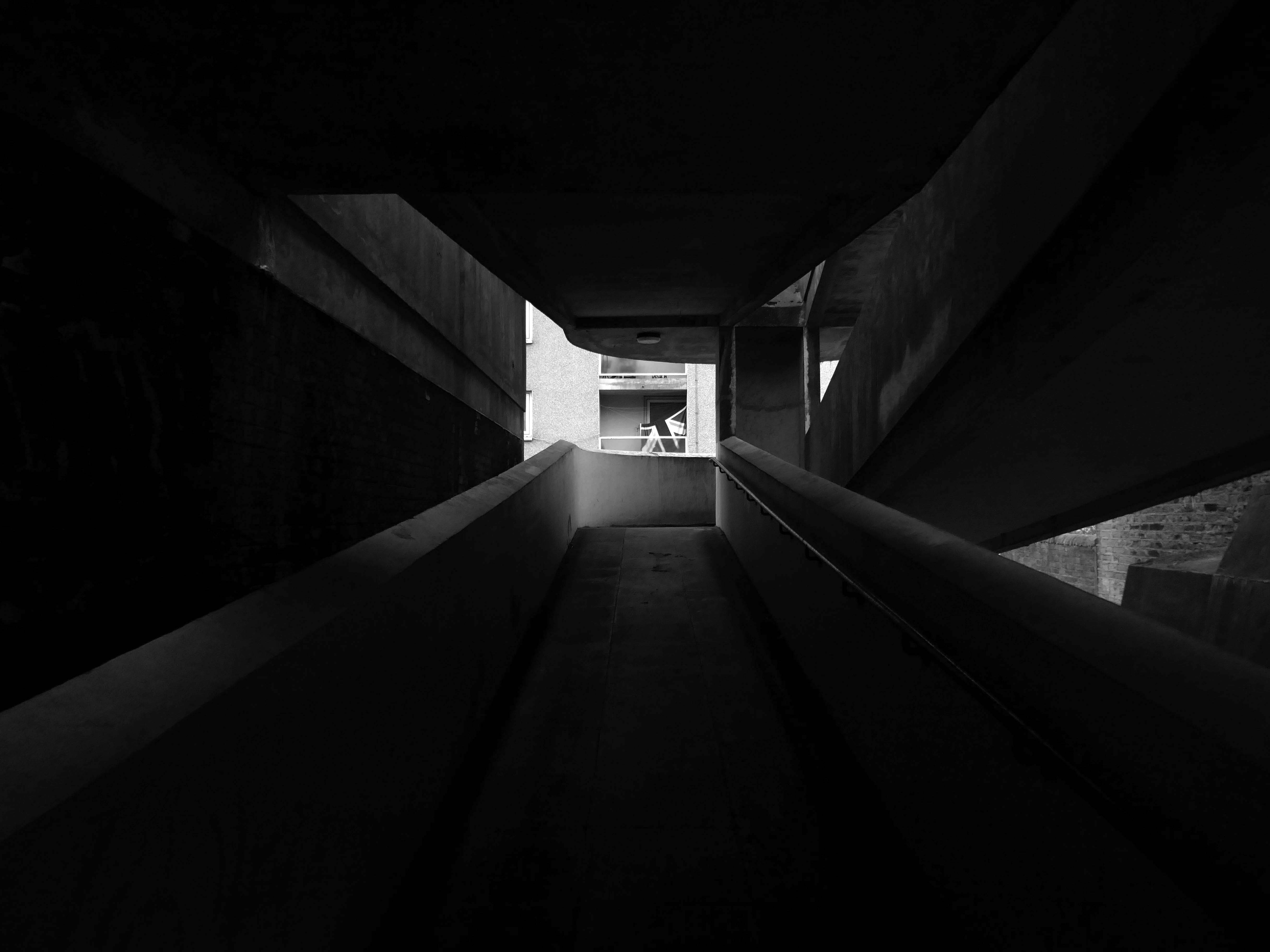
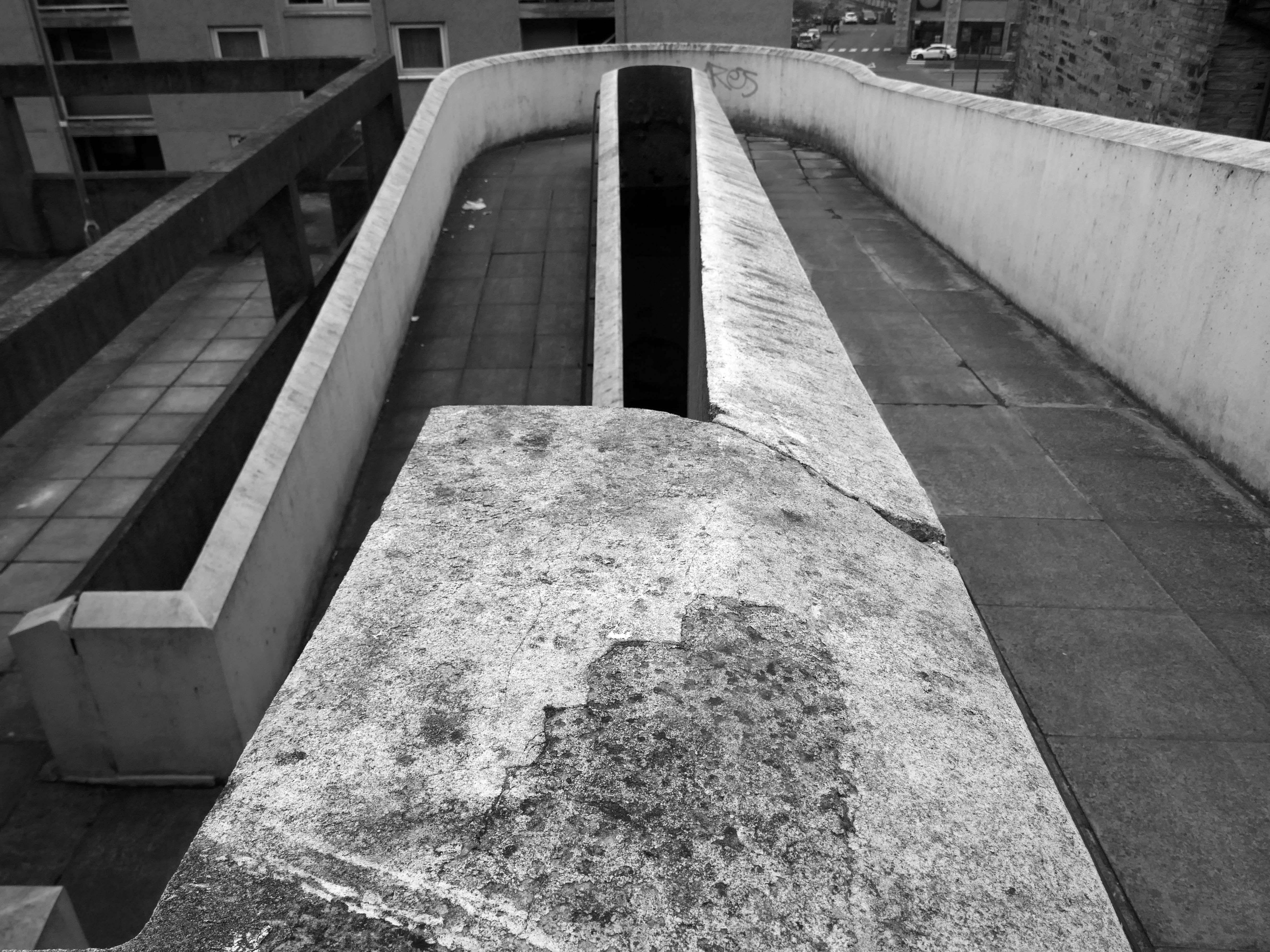
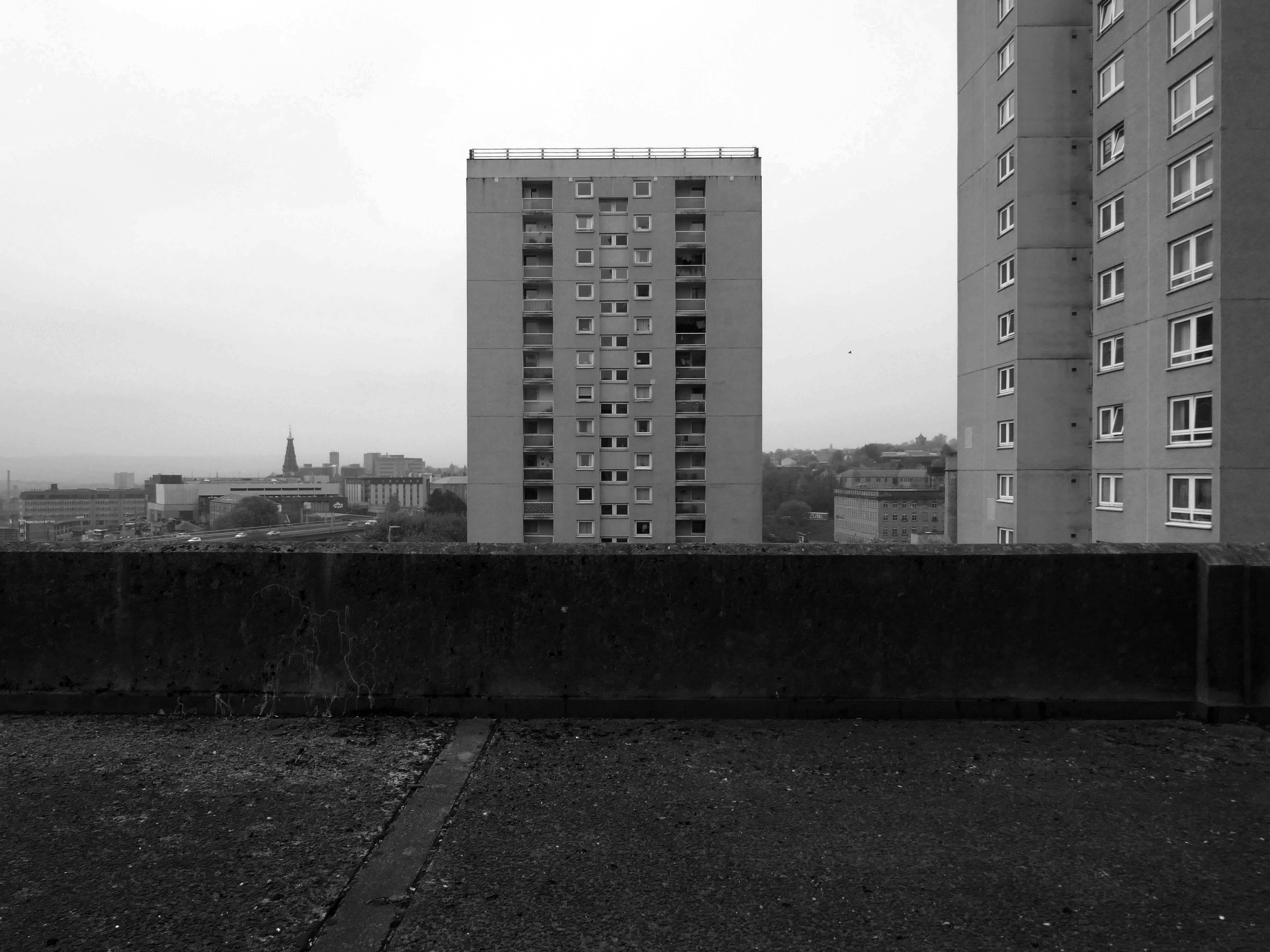
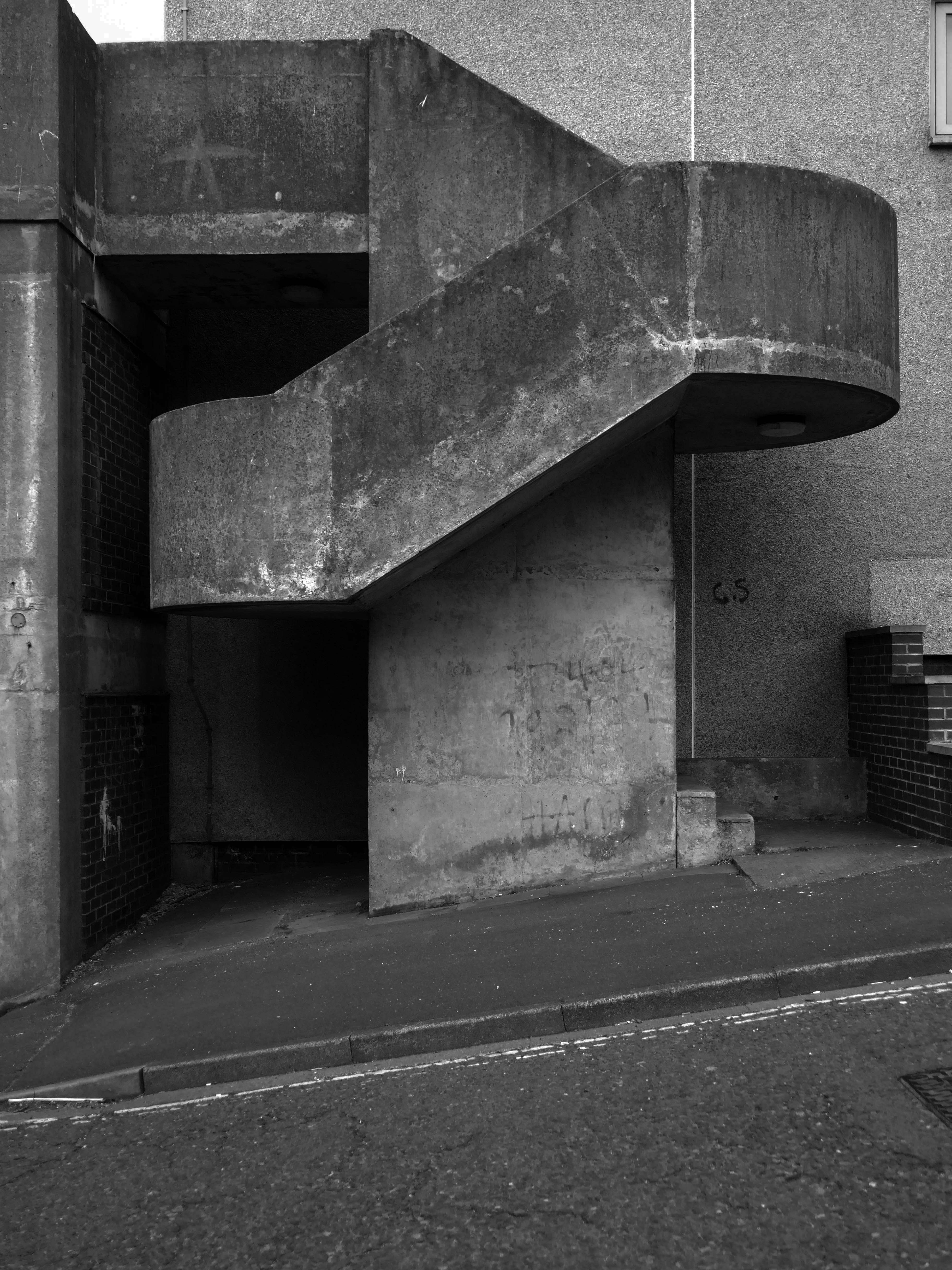
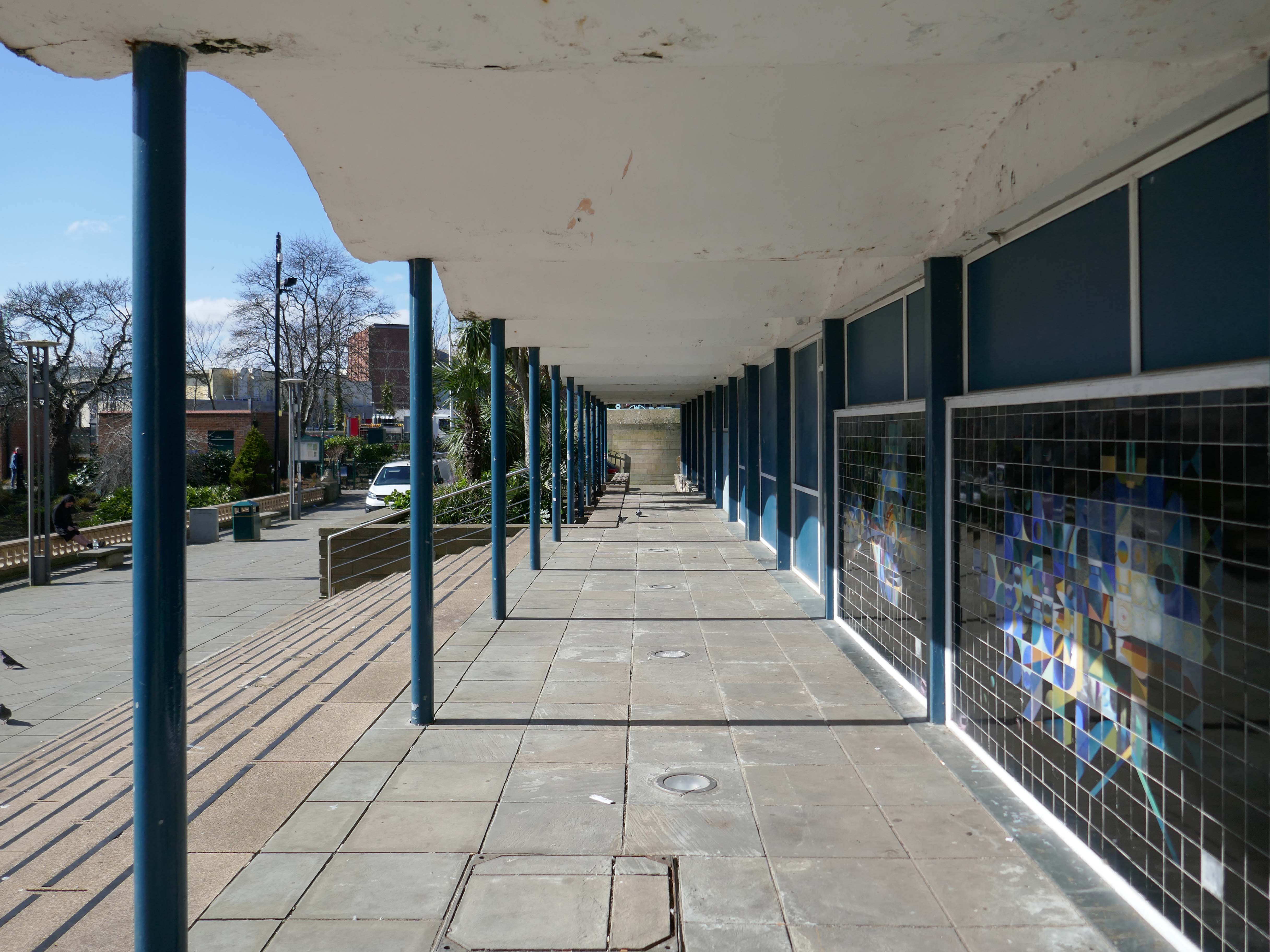
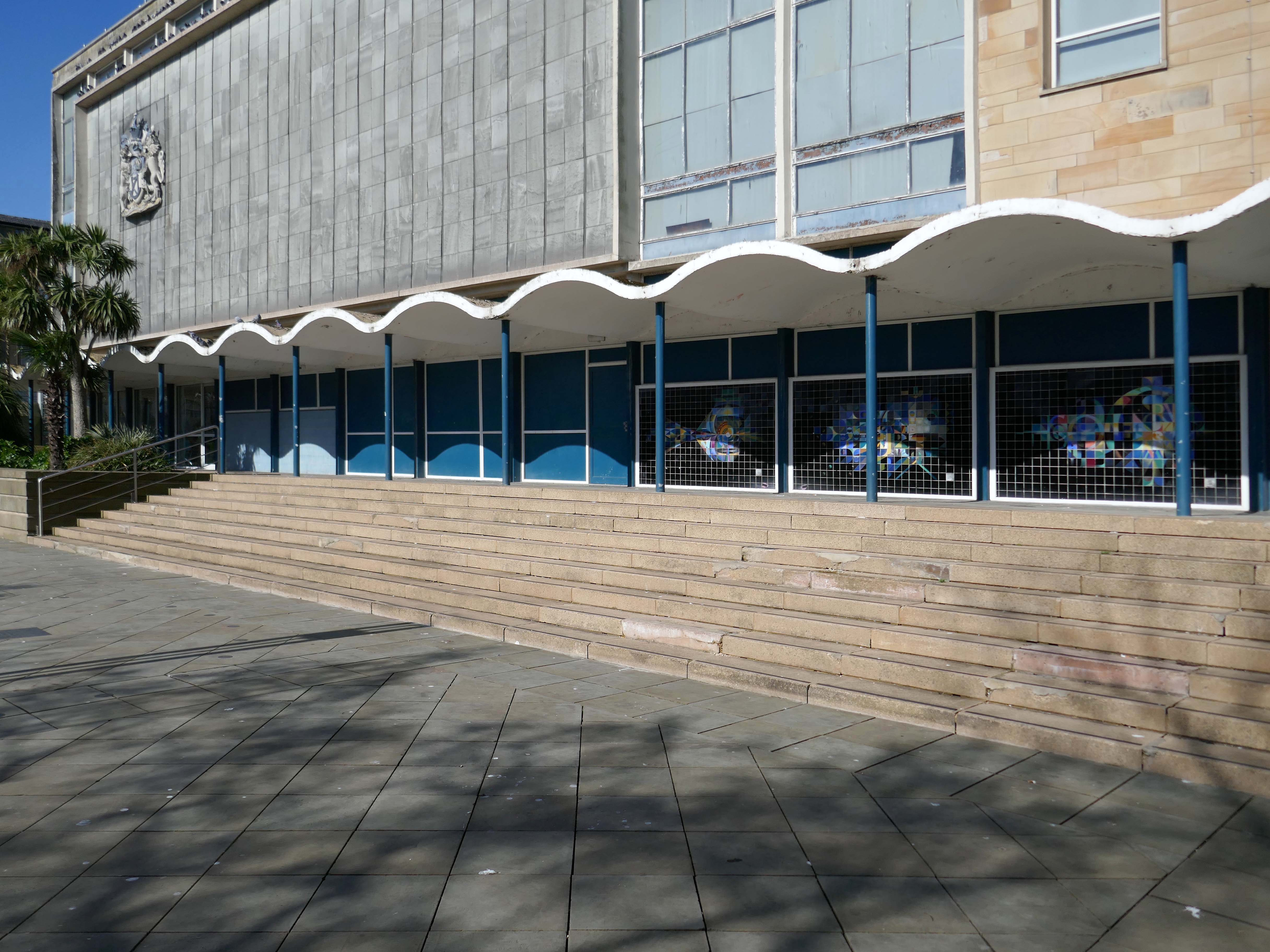
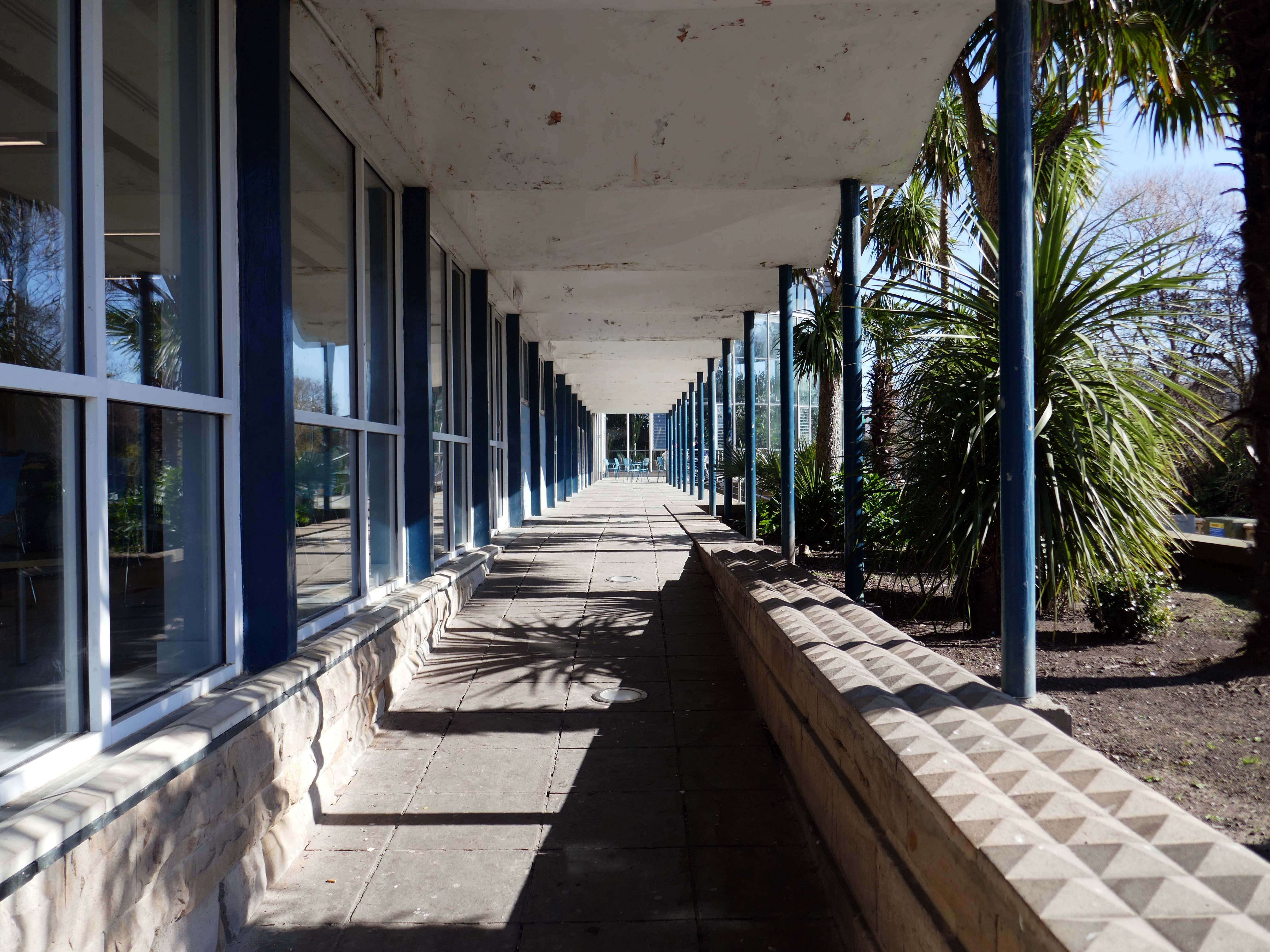
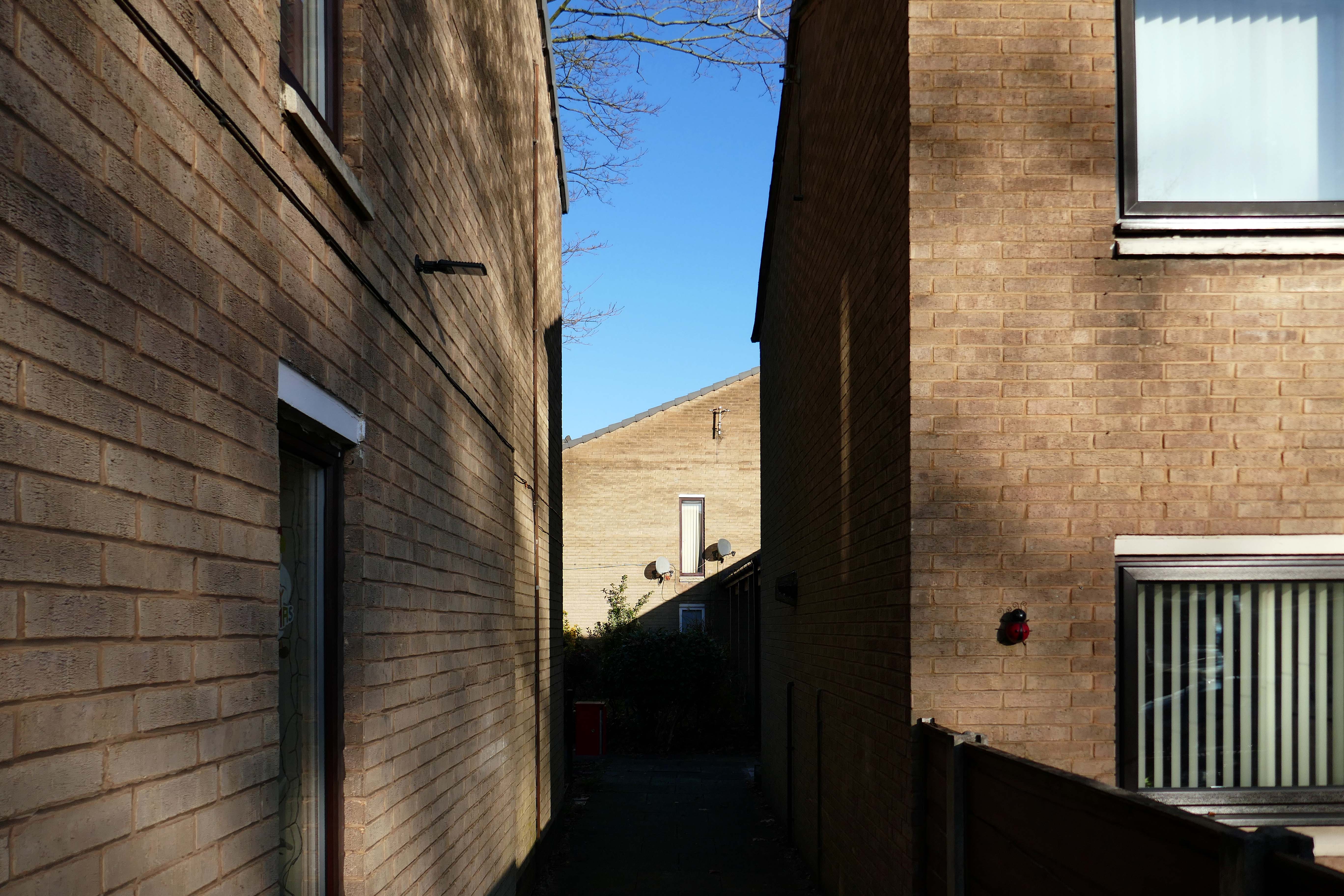
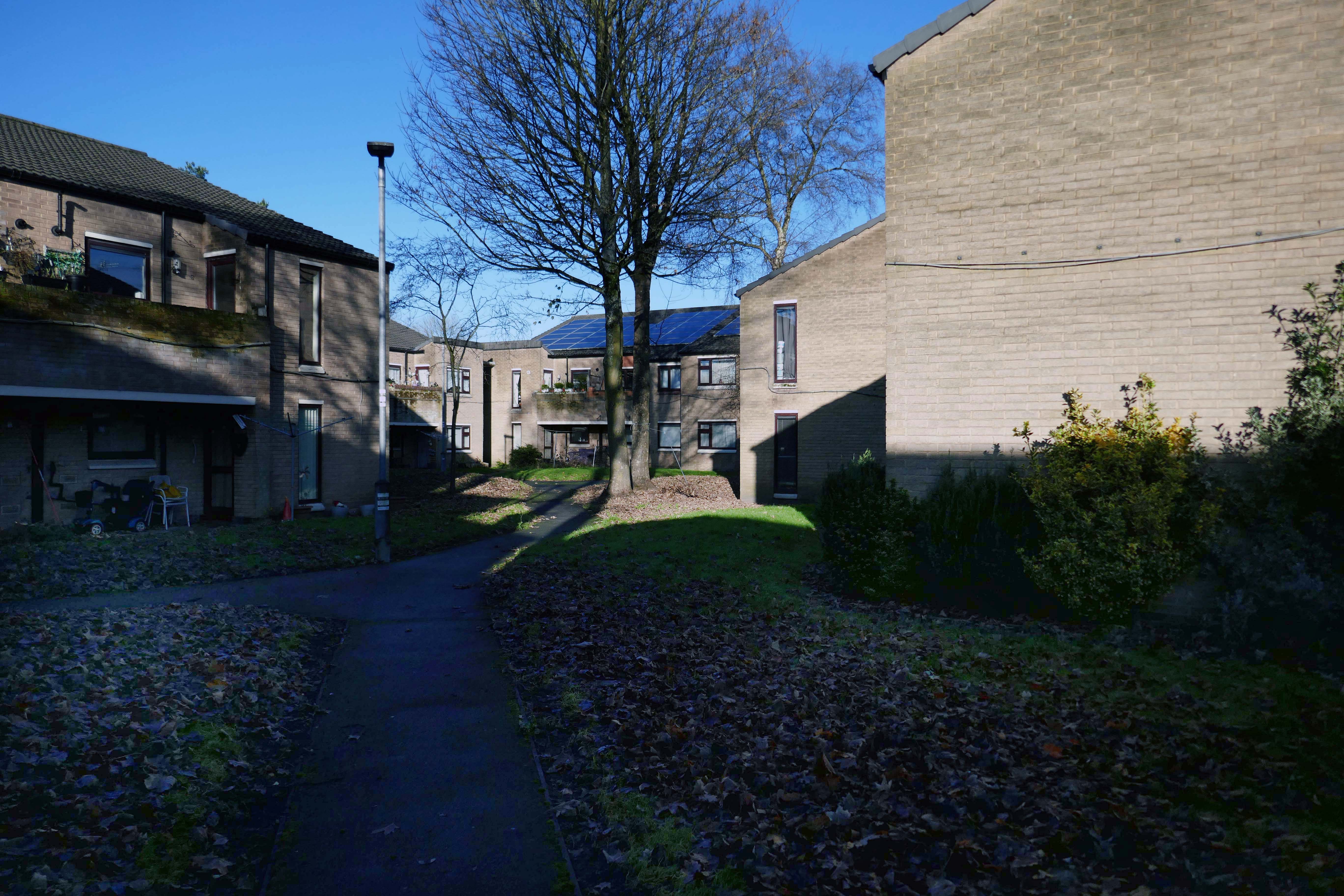
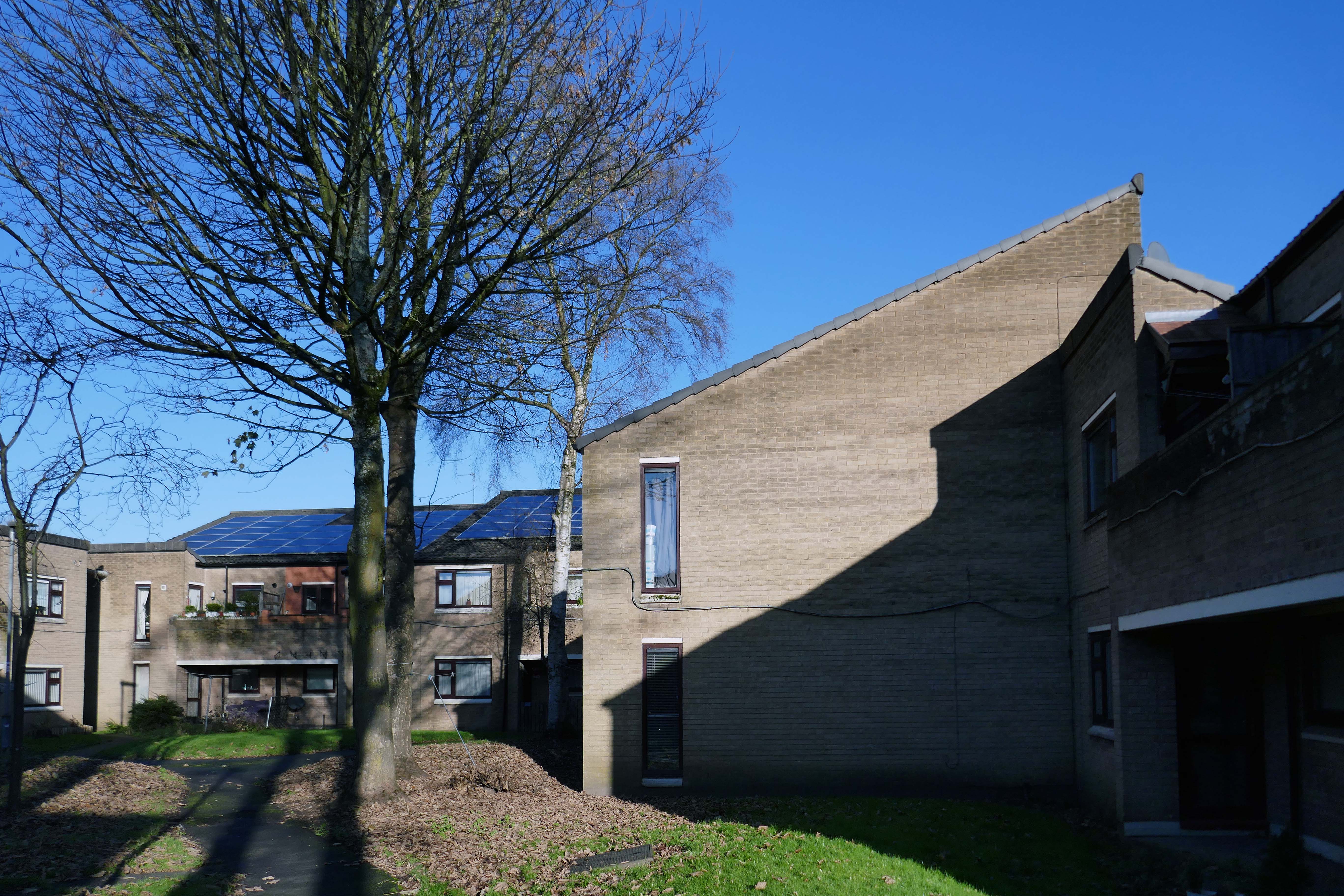
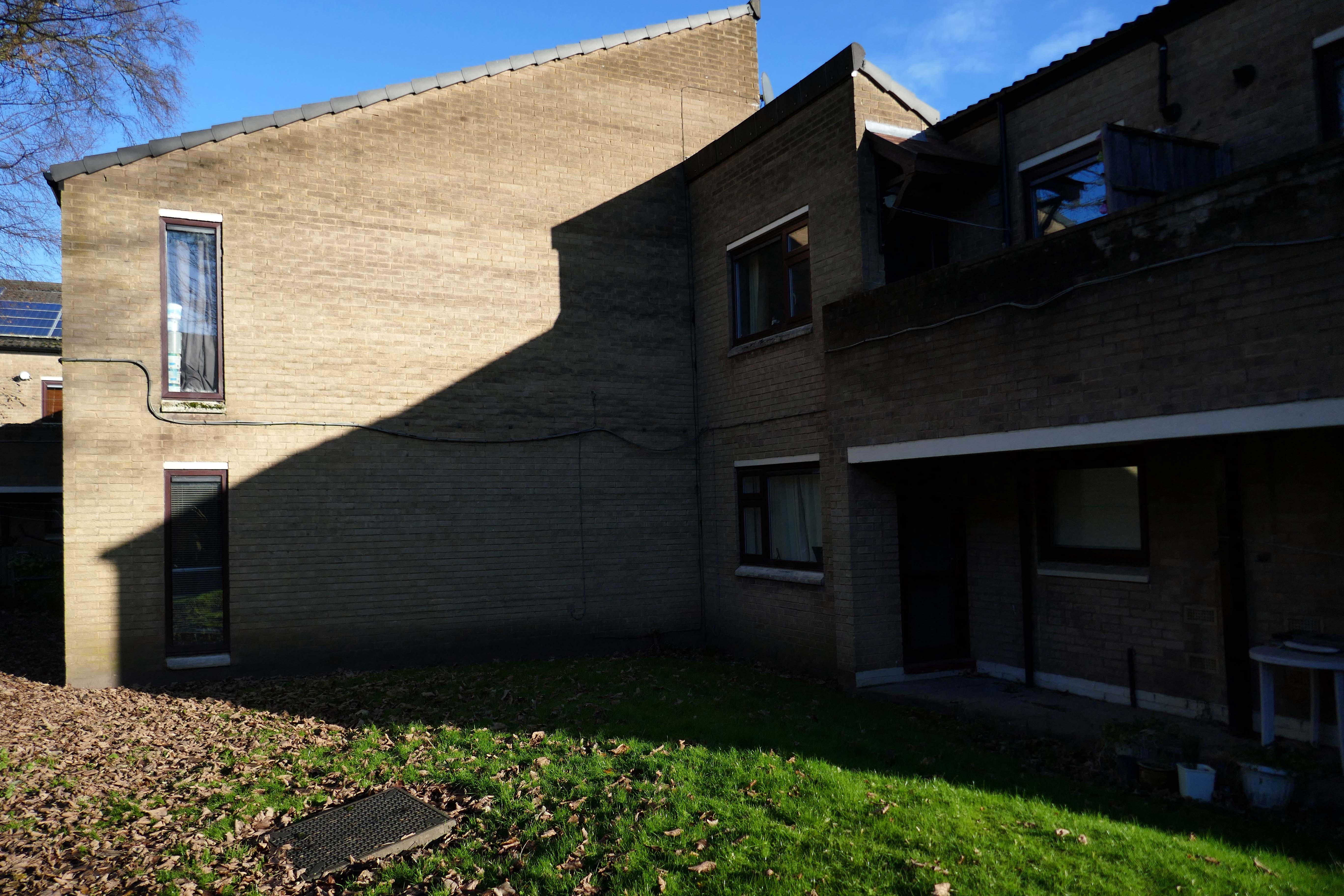
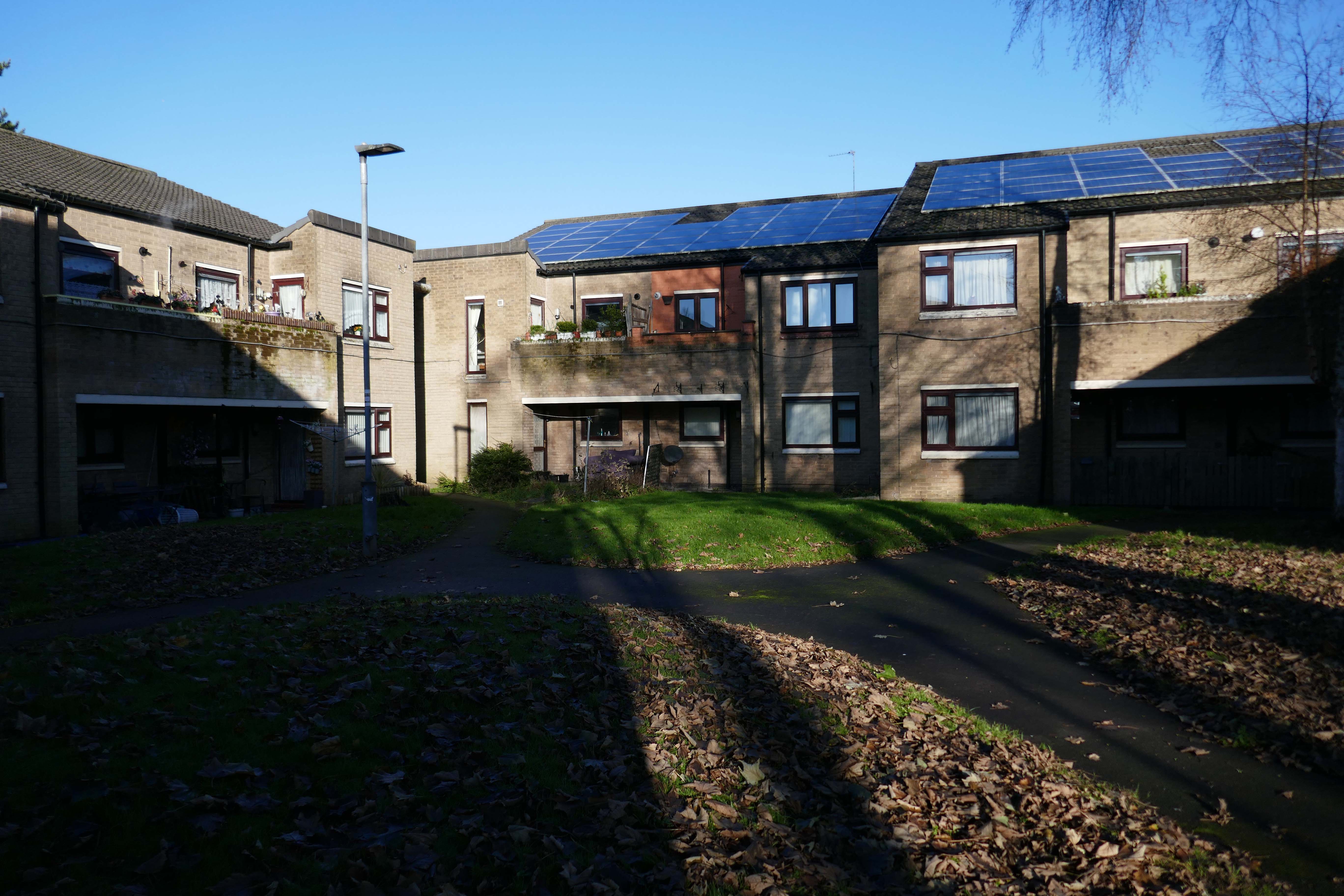
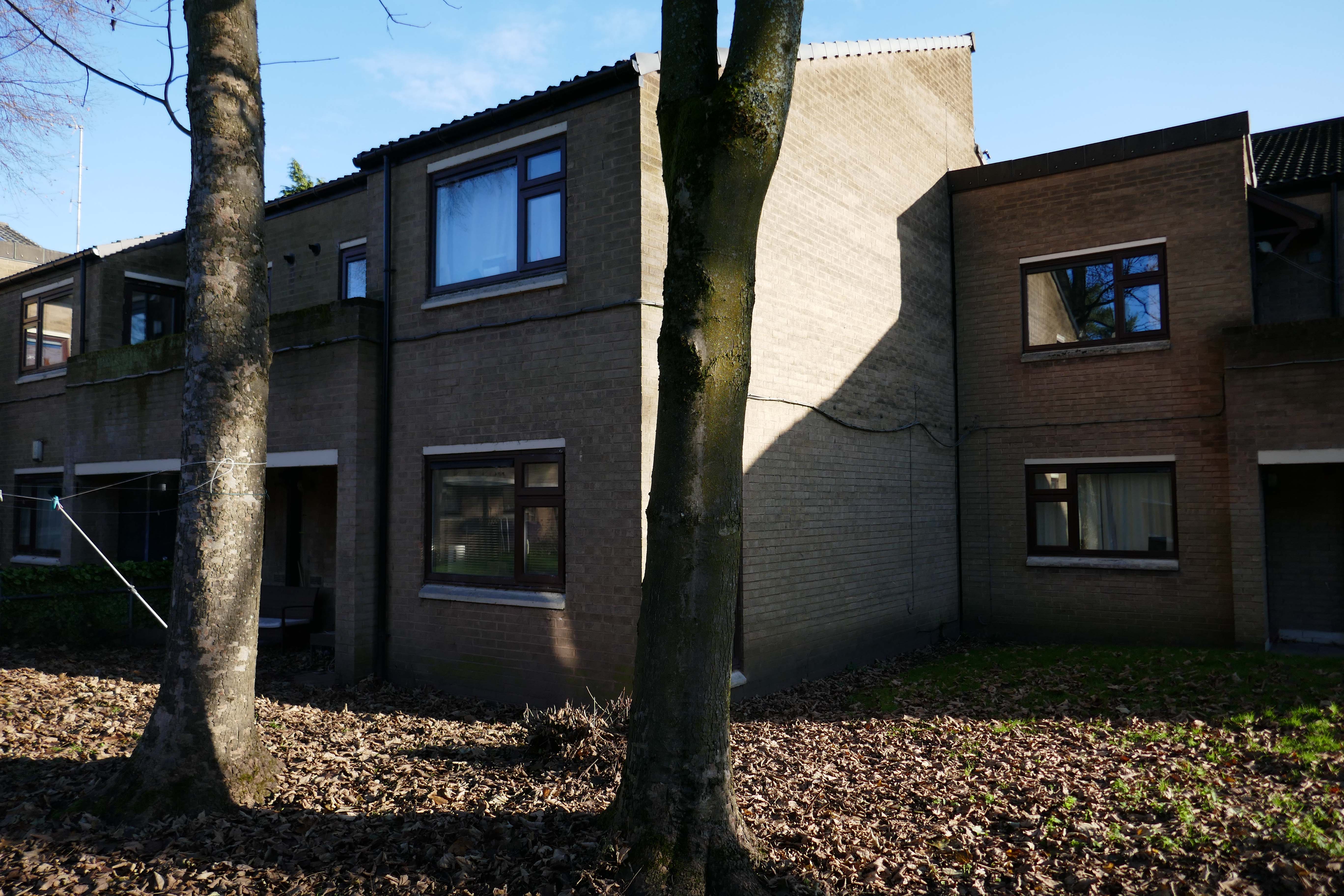
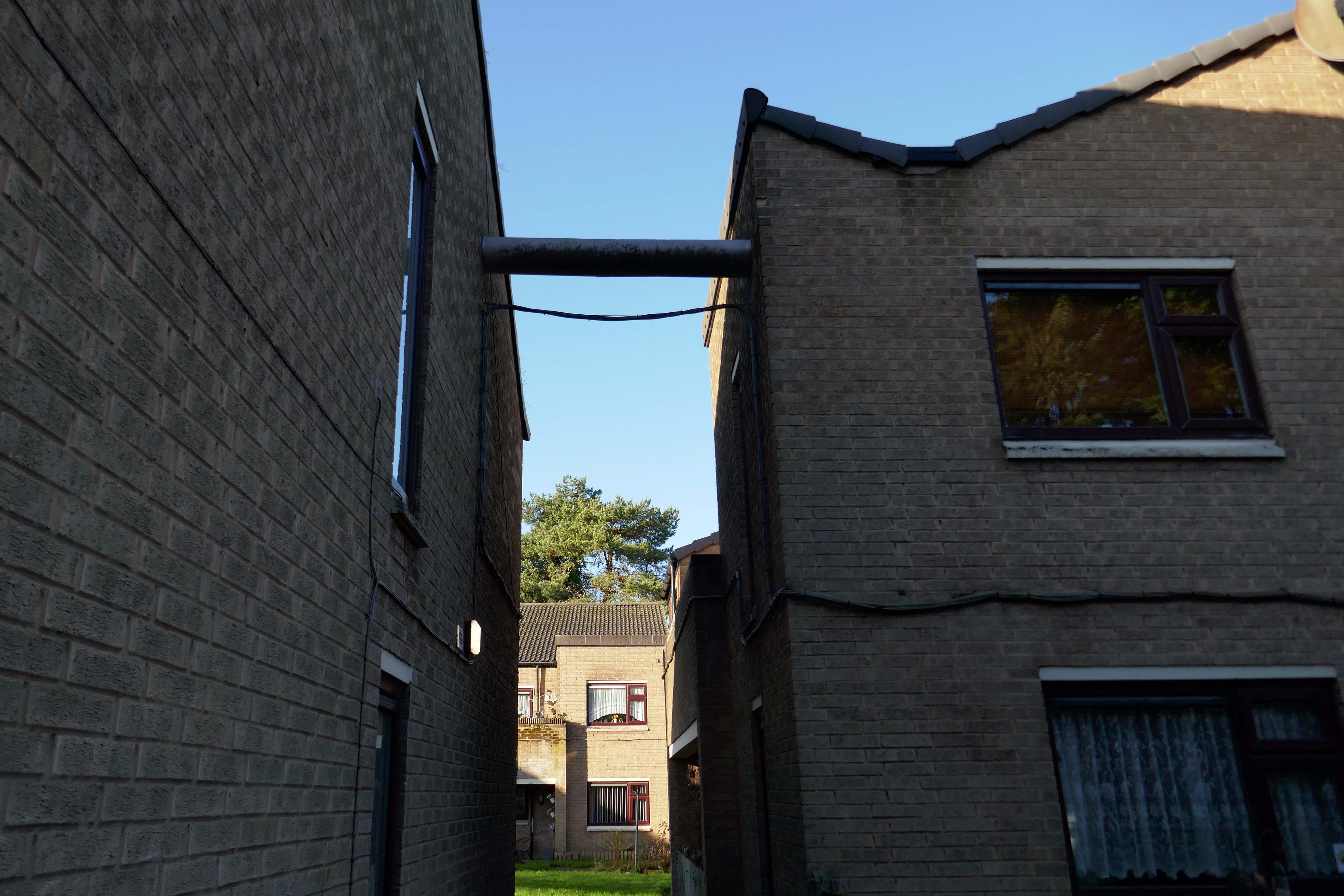
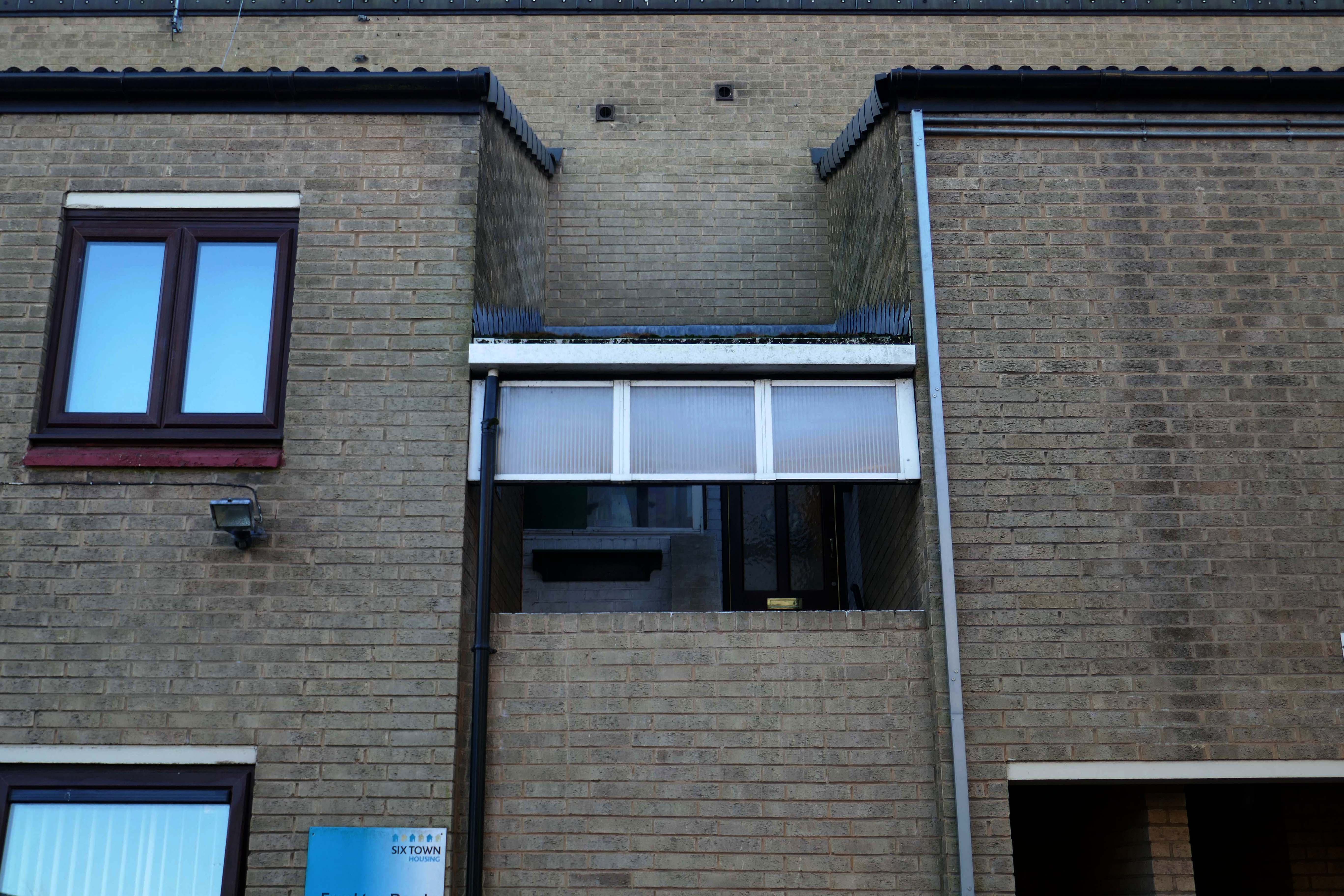
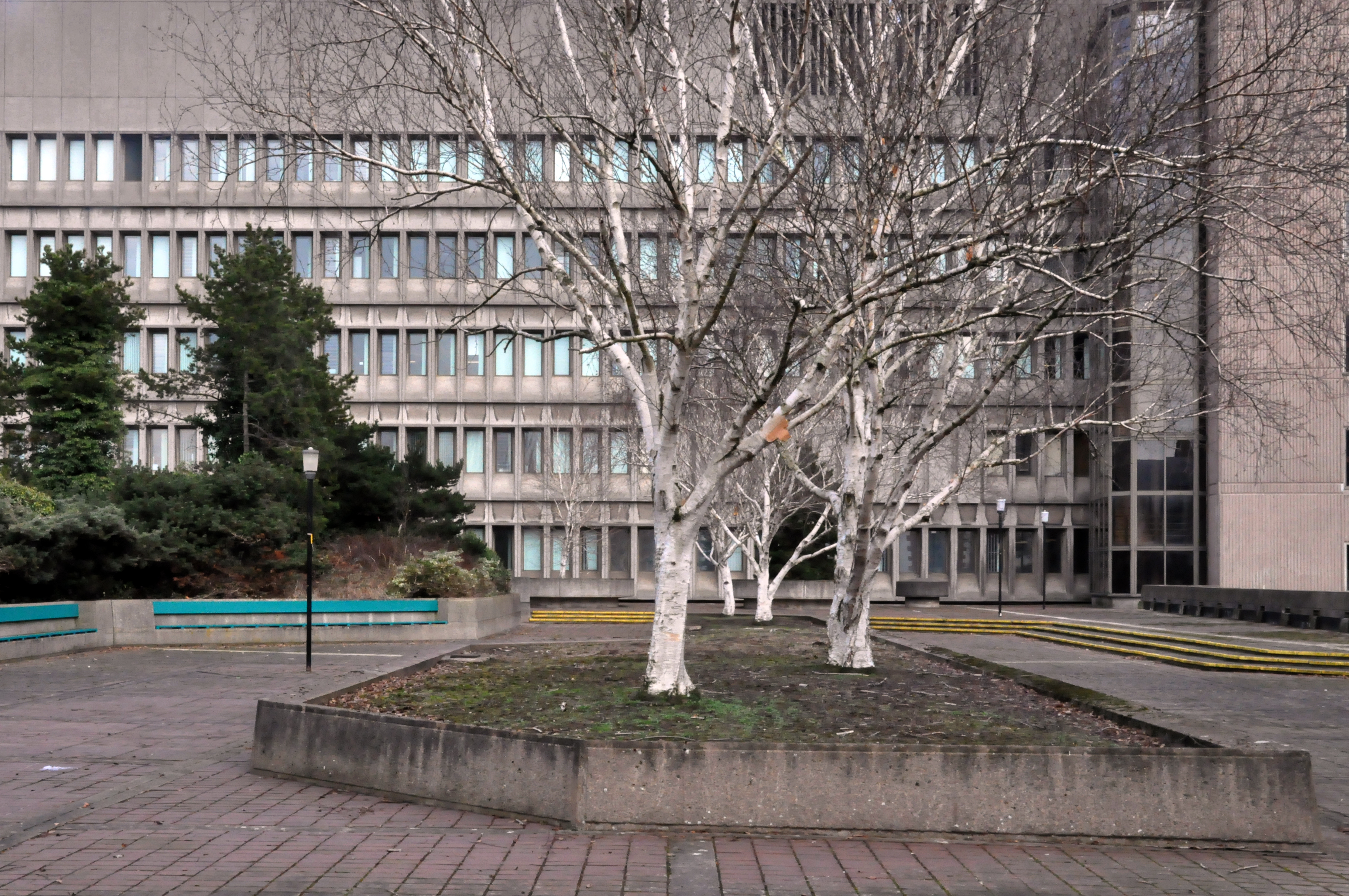
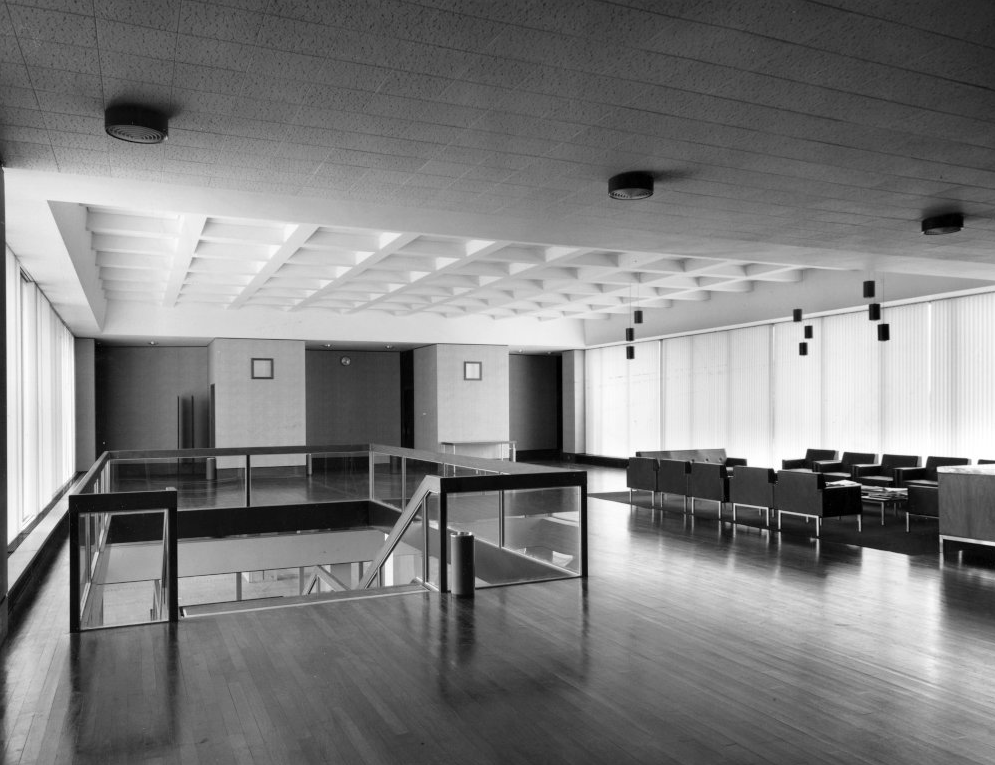
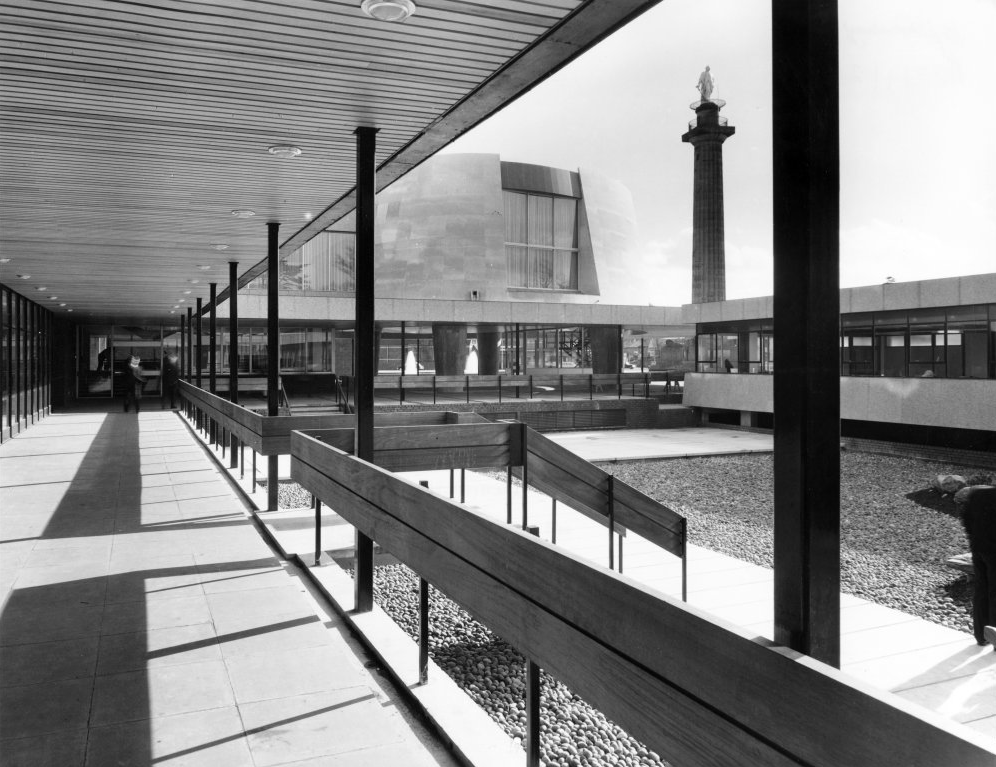
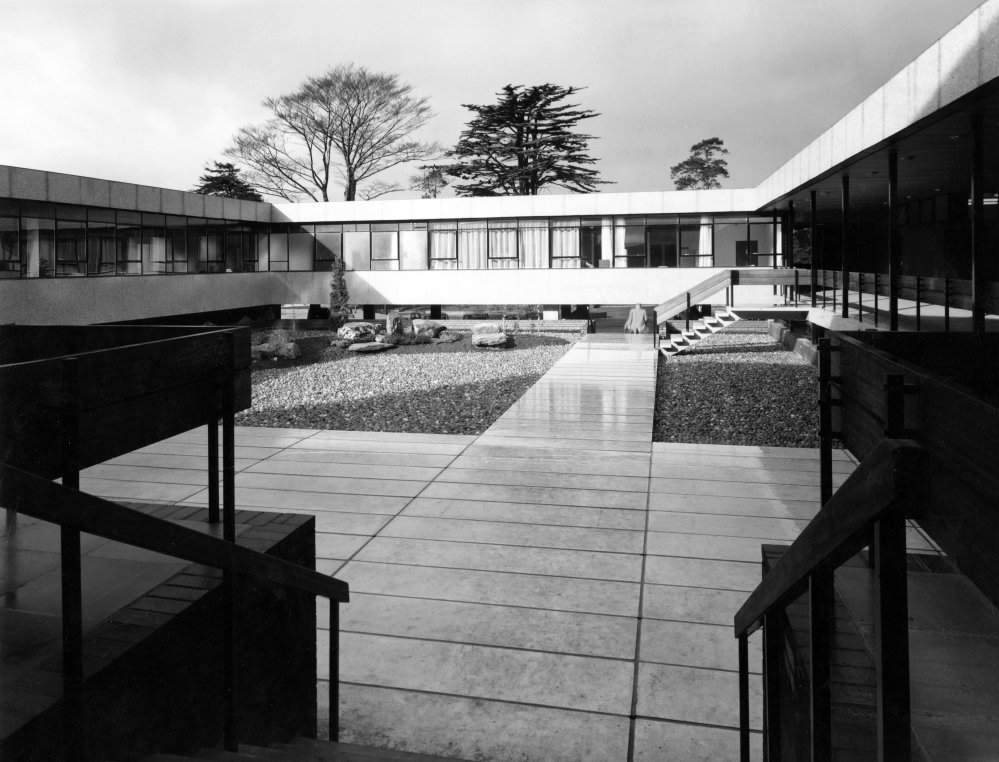
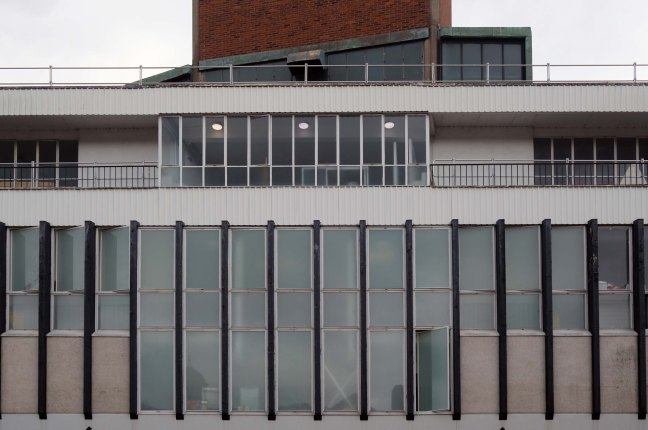
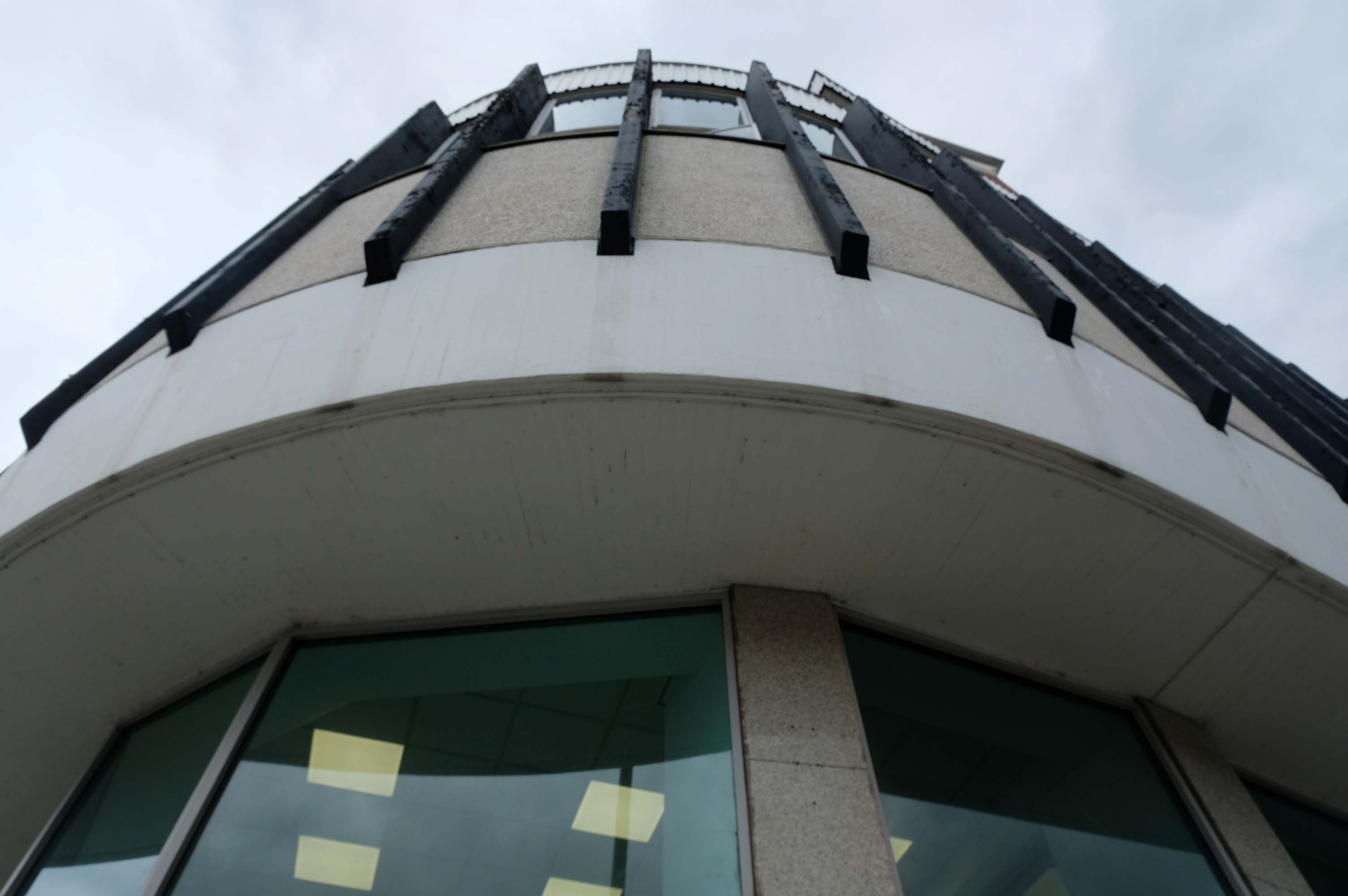
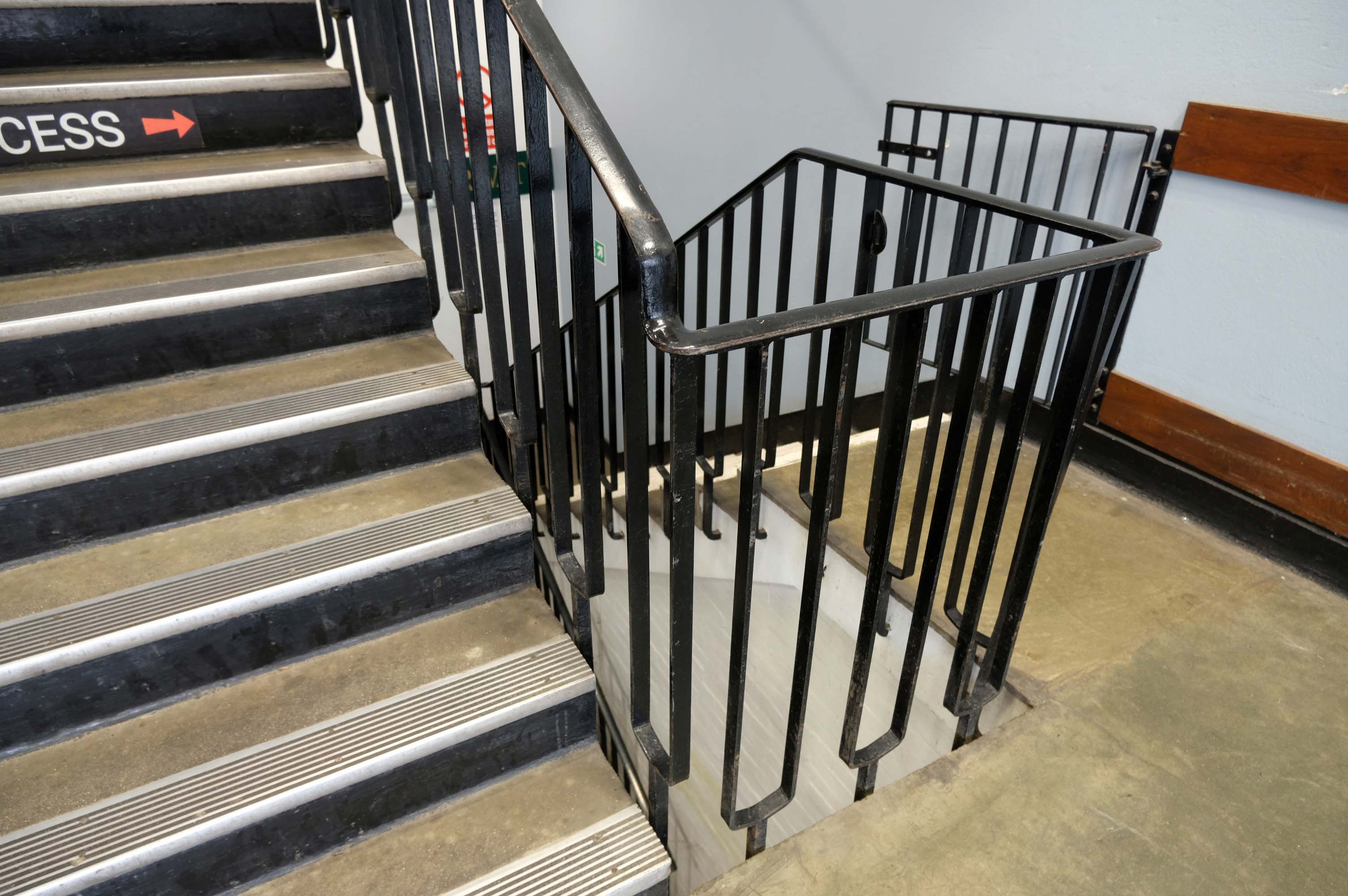
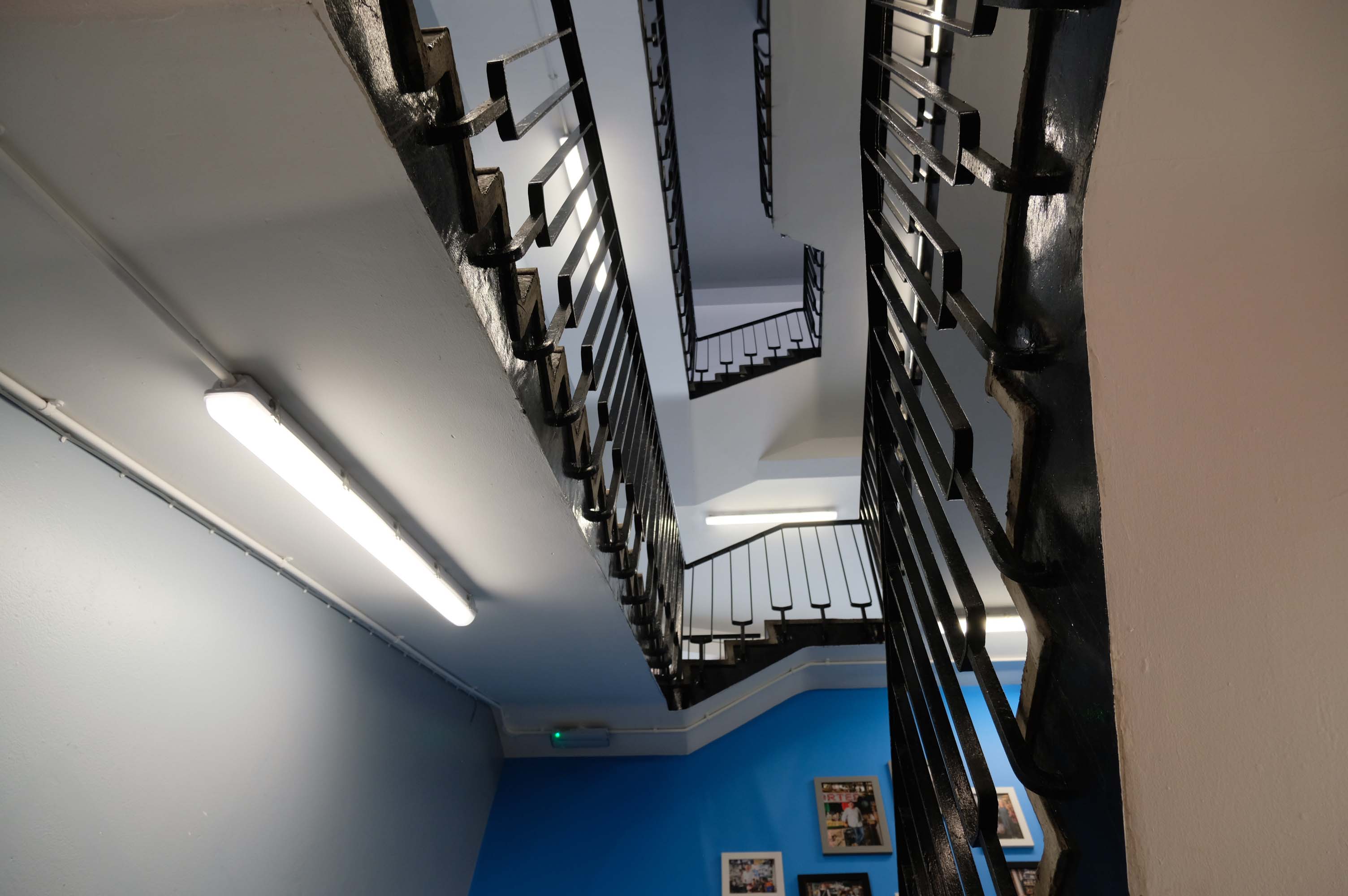
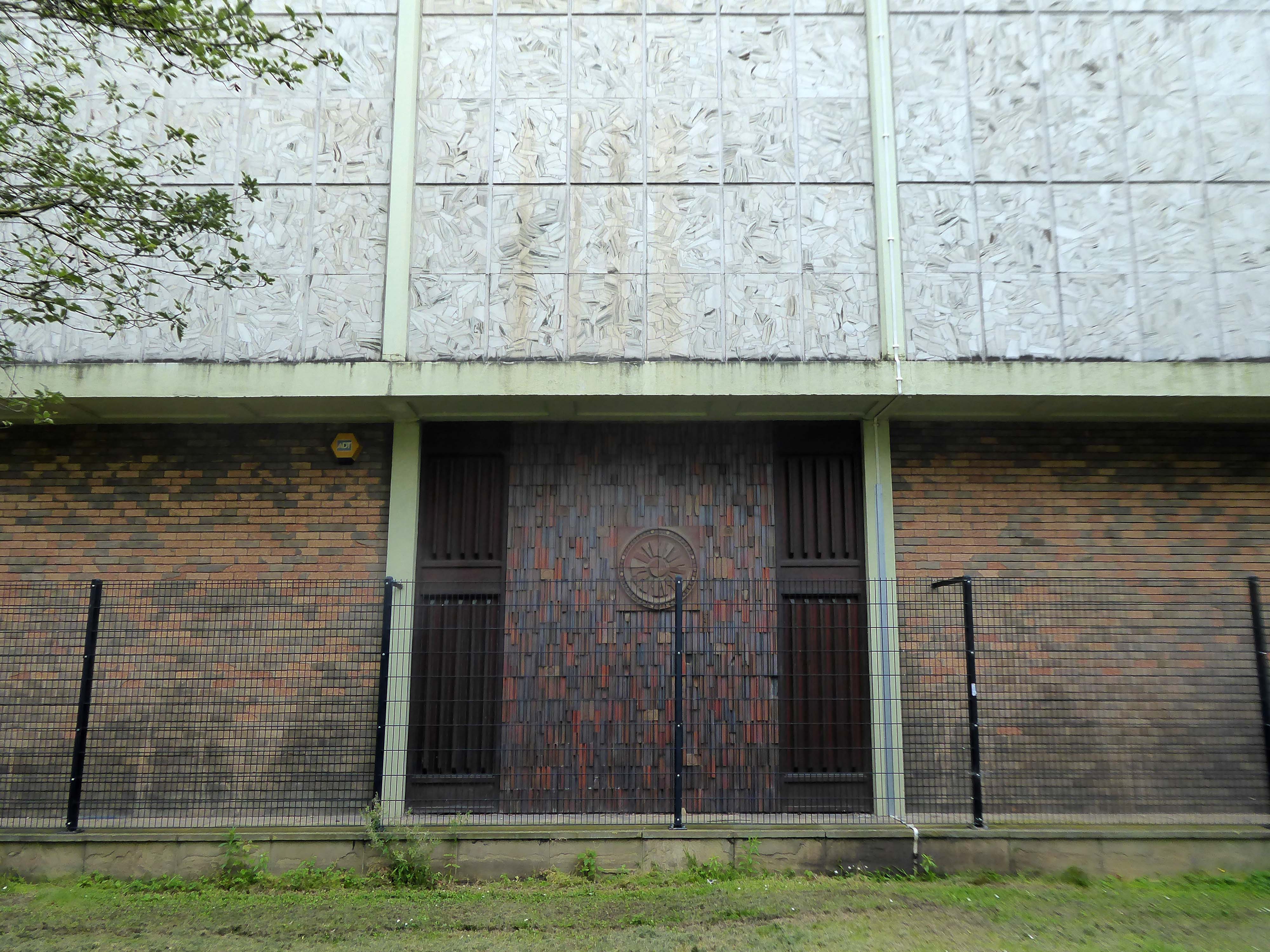
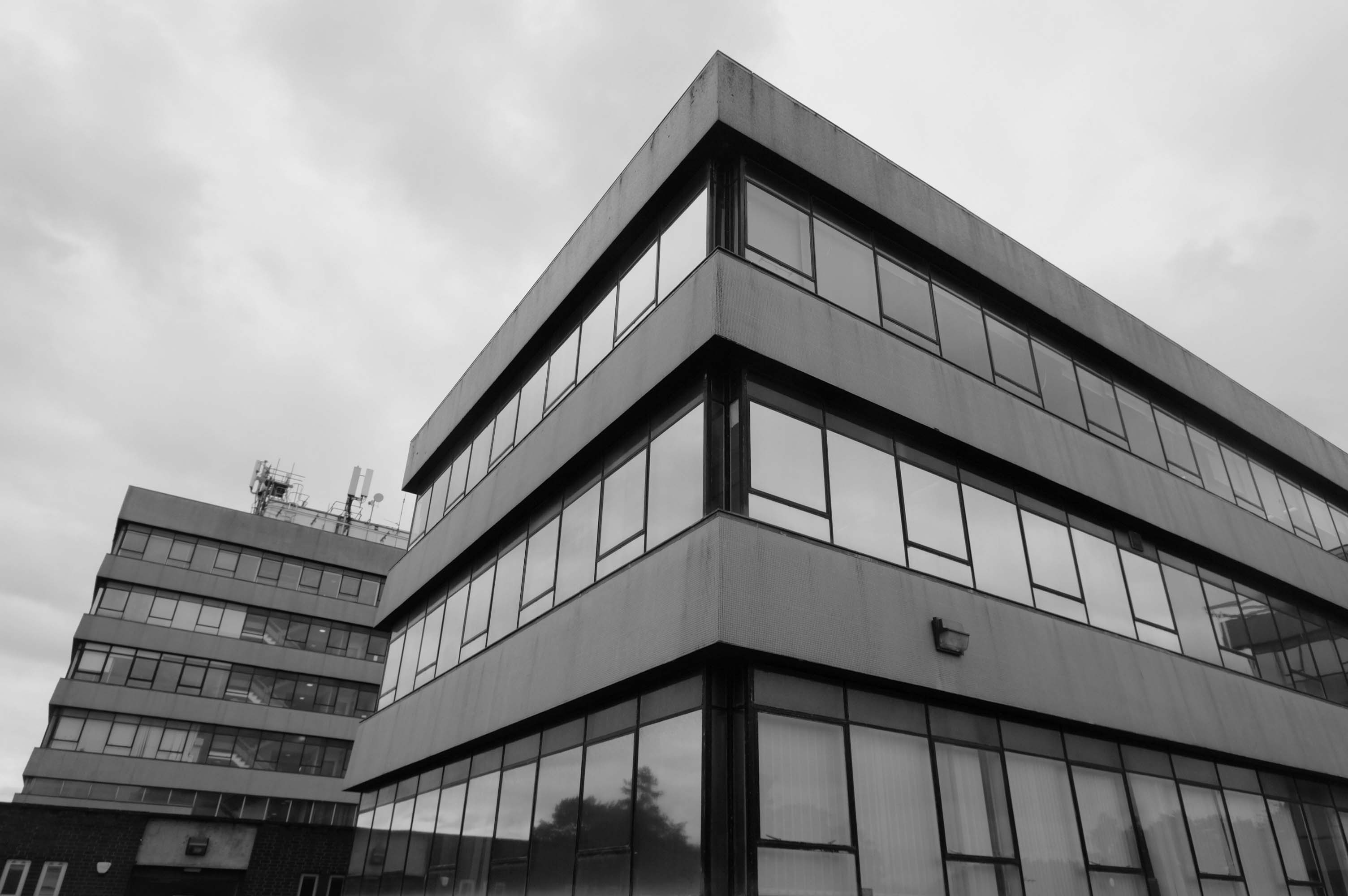
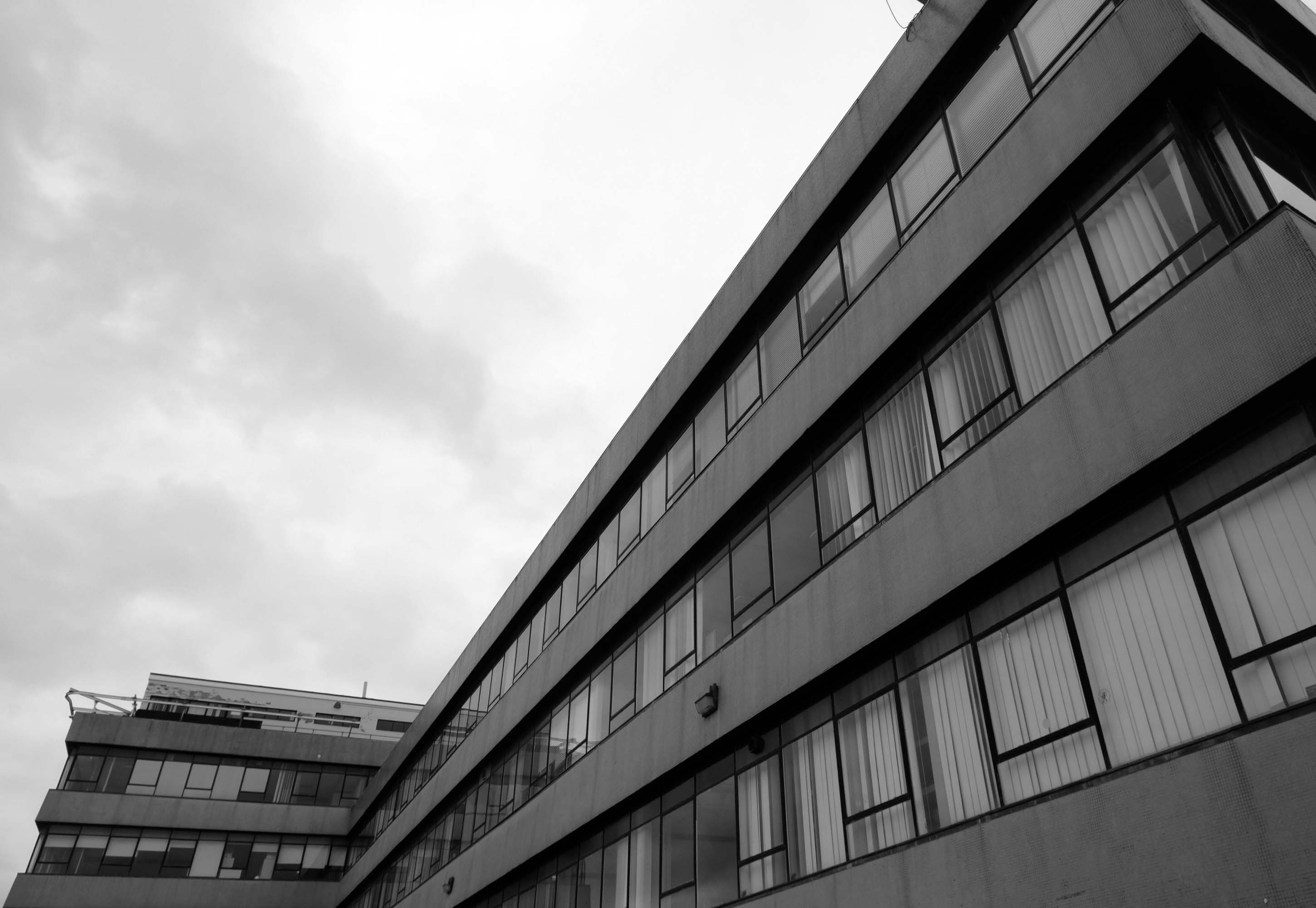
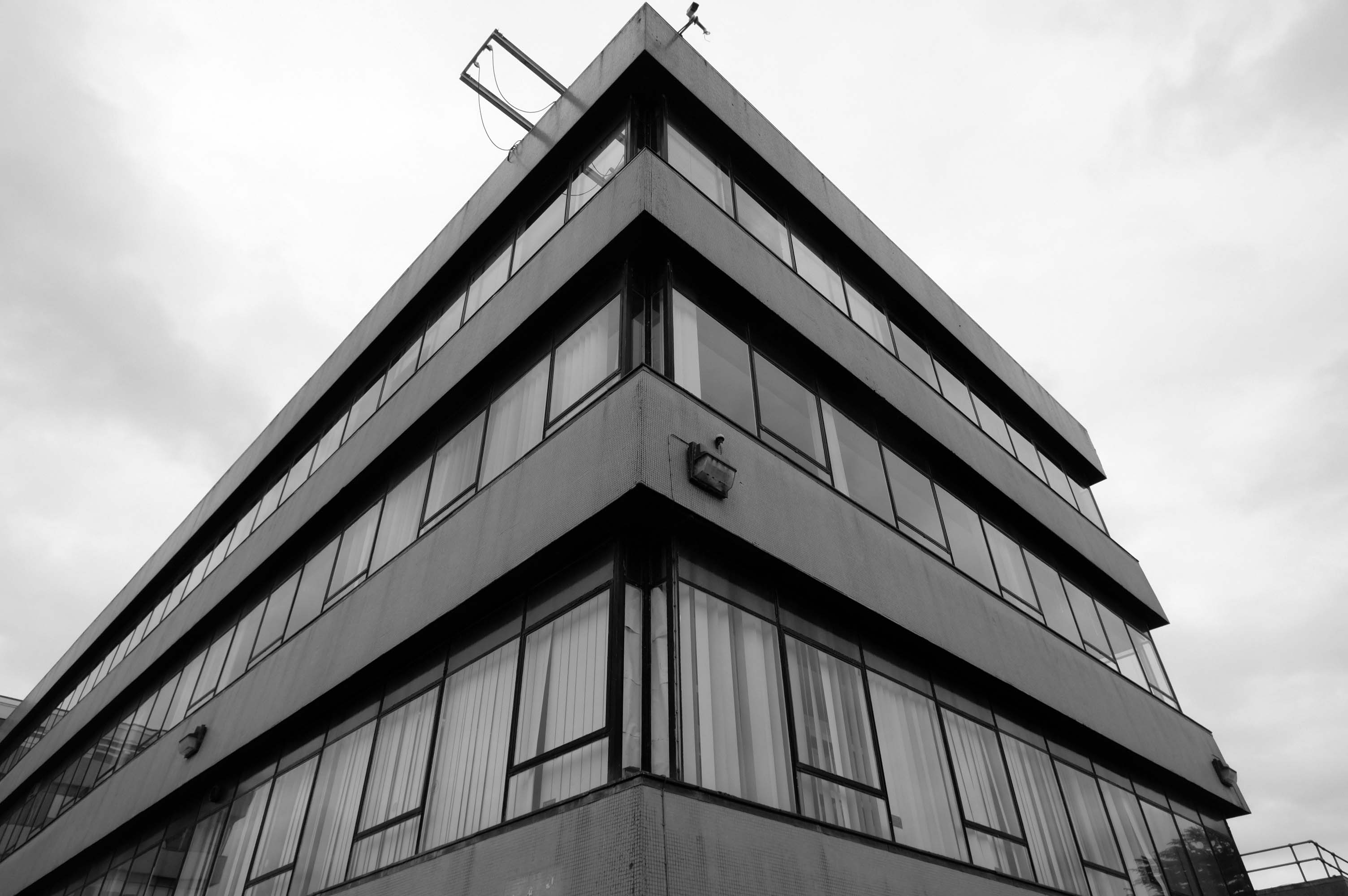
Welcombe Walk is made up of nineteen one/two-bedroom flats, built in 1978 and run by Six Town Housing.

Visit the Bury Council website for information on supported living:

https://www.bury.gov.uk/index.aspx?articleid=10717

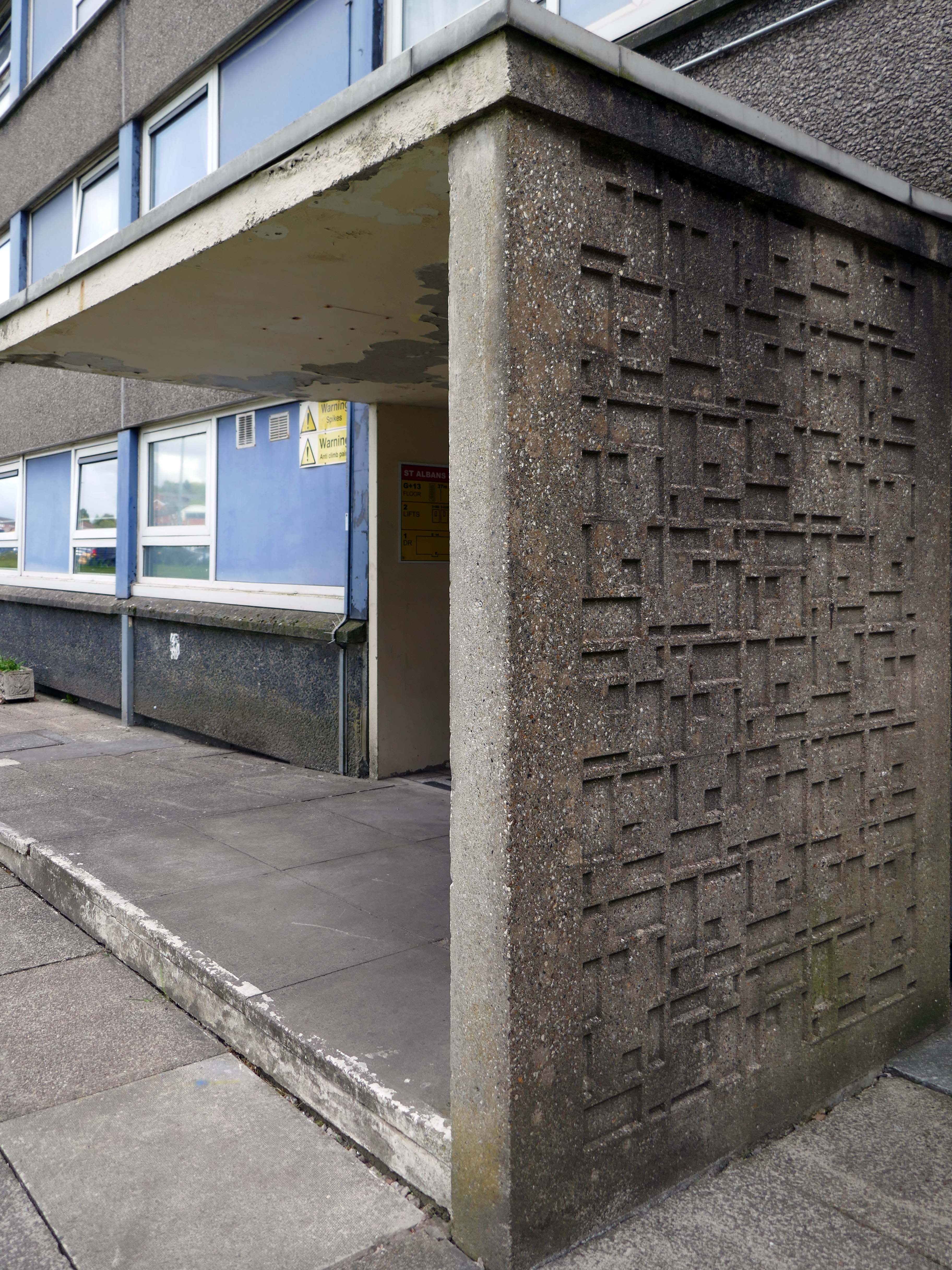
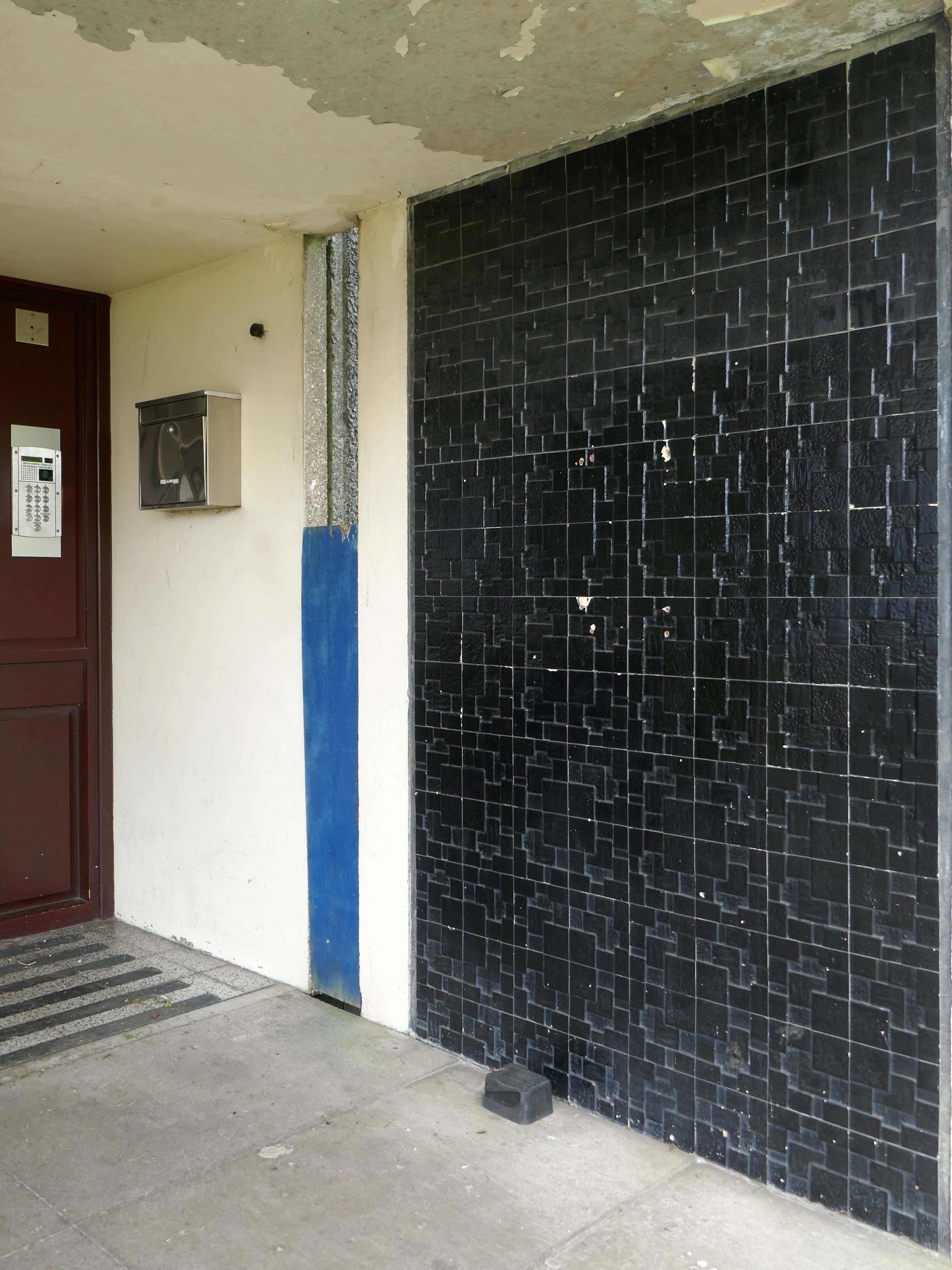
Whilst not seeking sheltered housing for my good self, I am always intrigued by small developments of interesting social housing, grouped around pedestrian walk ways and green space.

The residents with whom I chatted seems content with their homes and the management thereof.

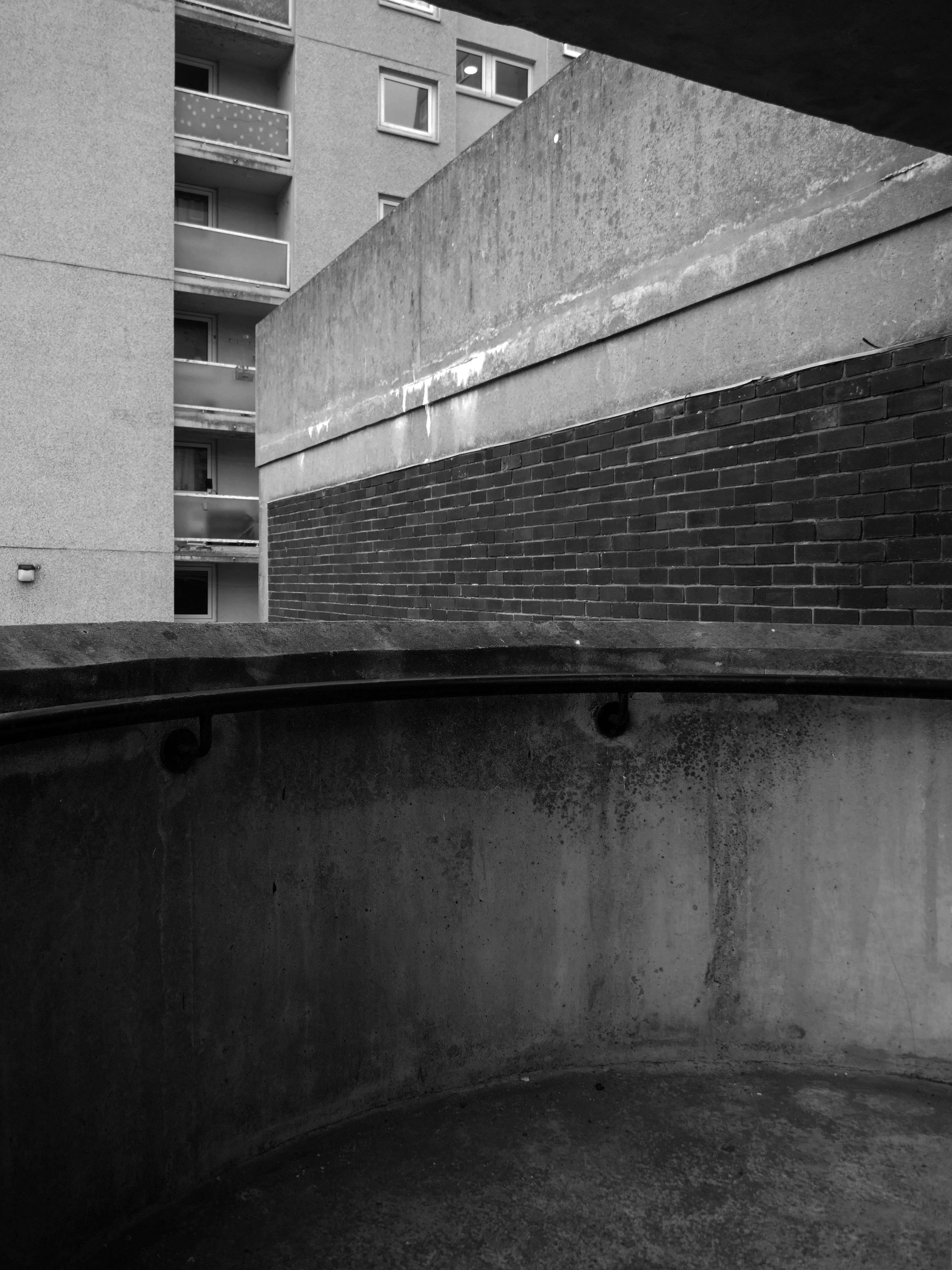
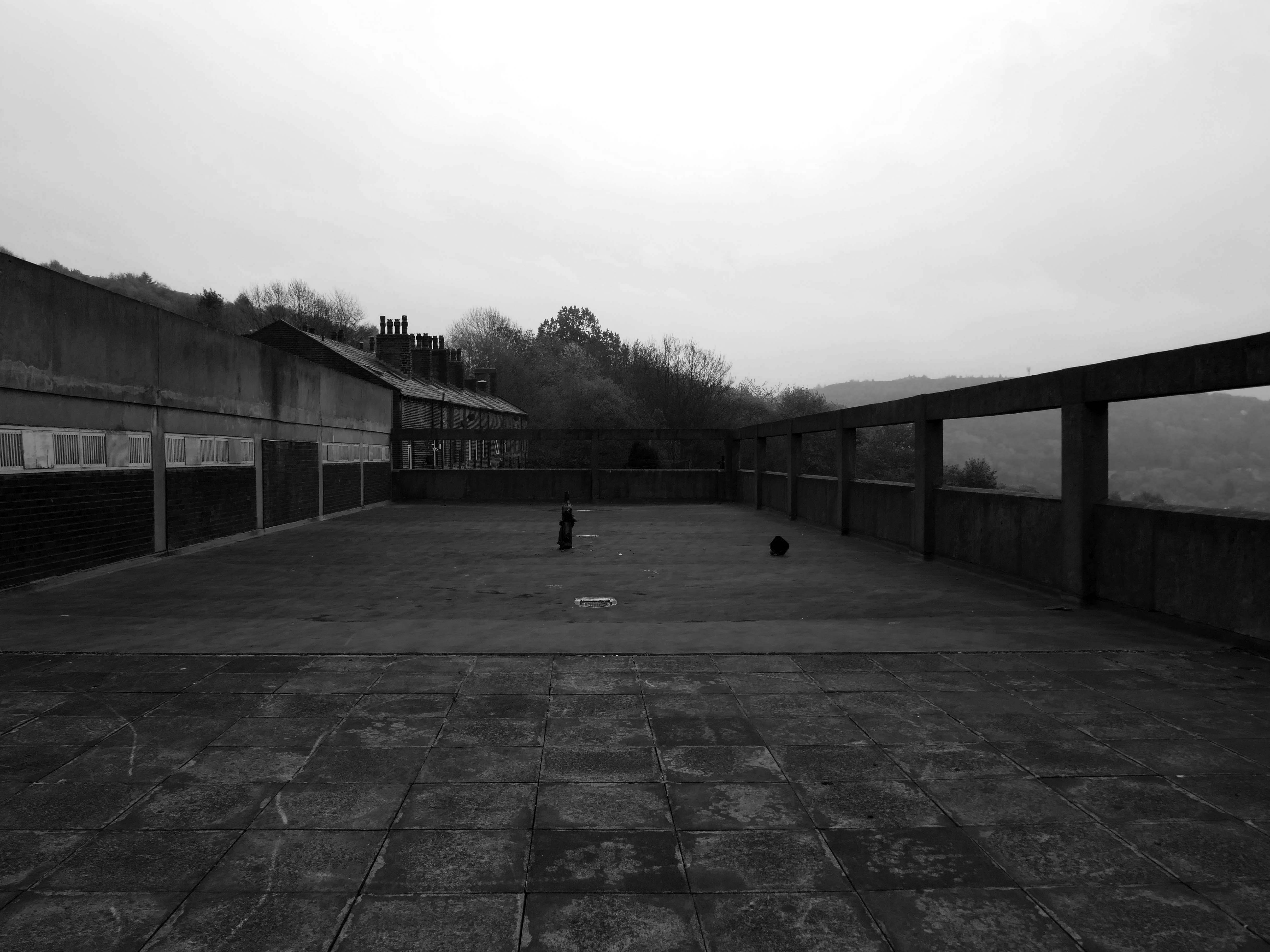
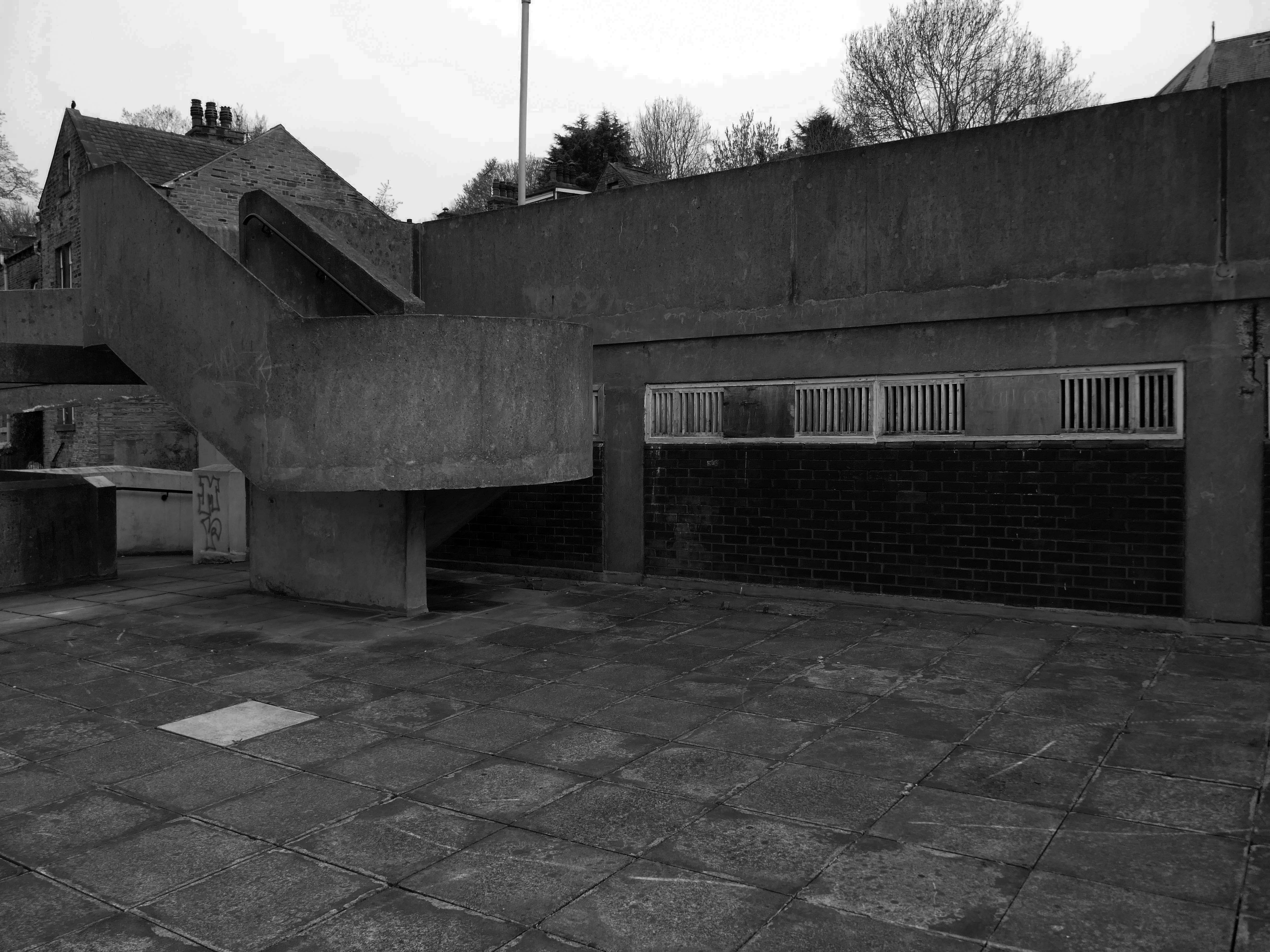
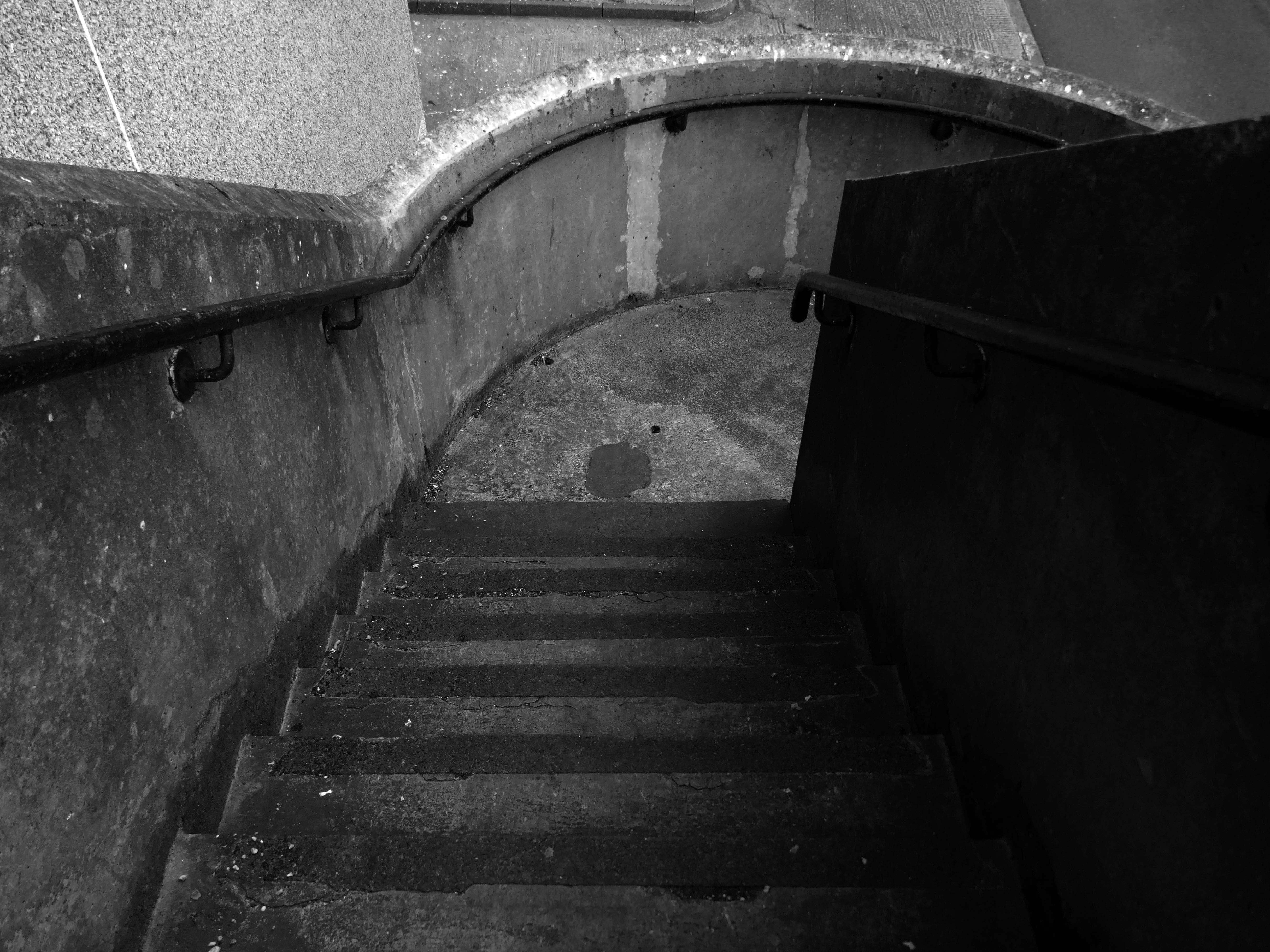
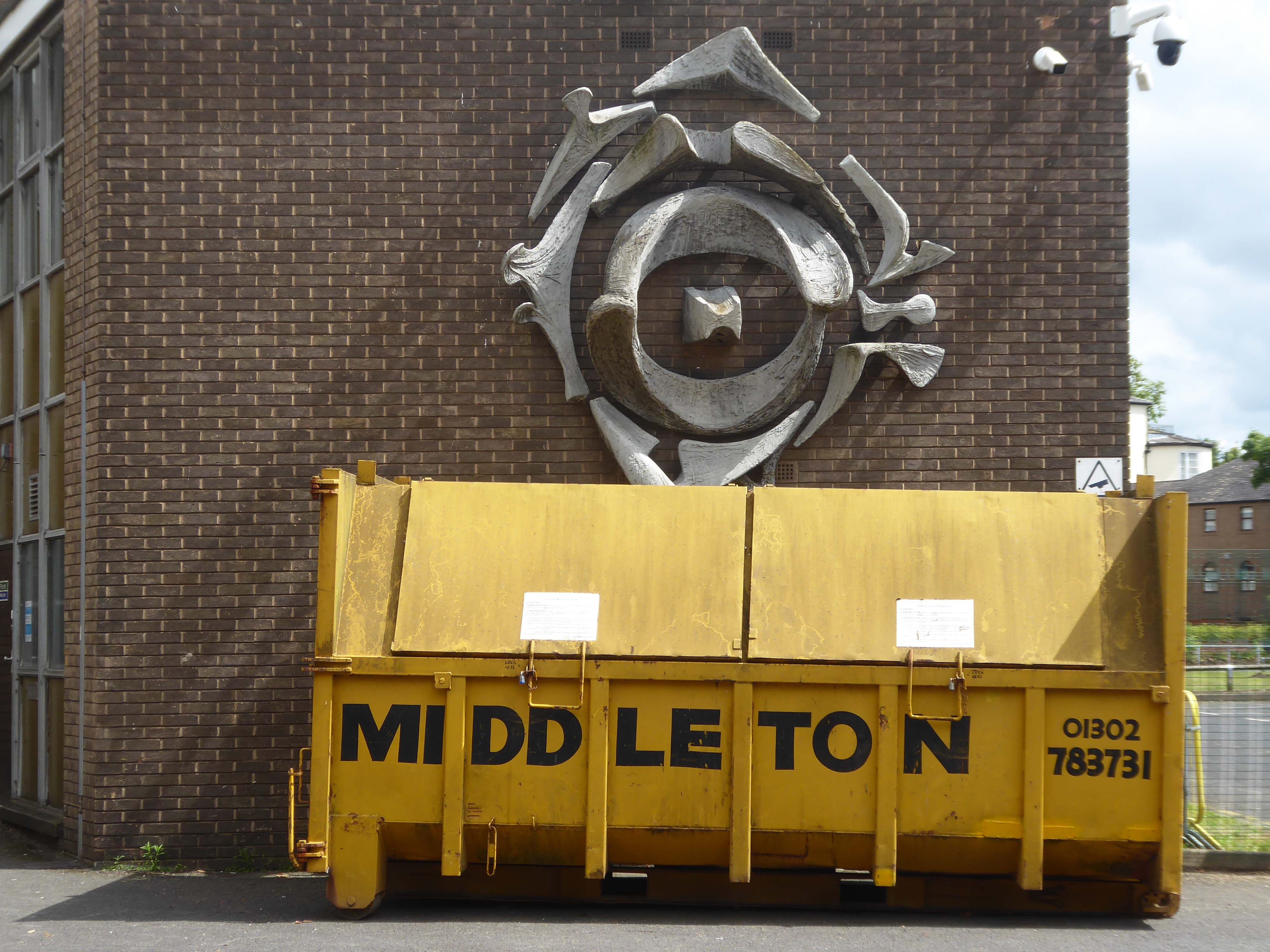
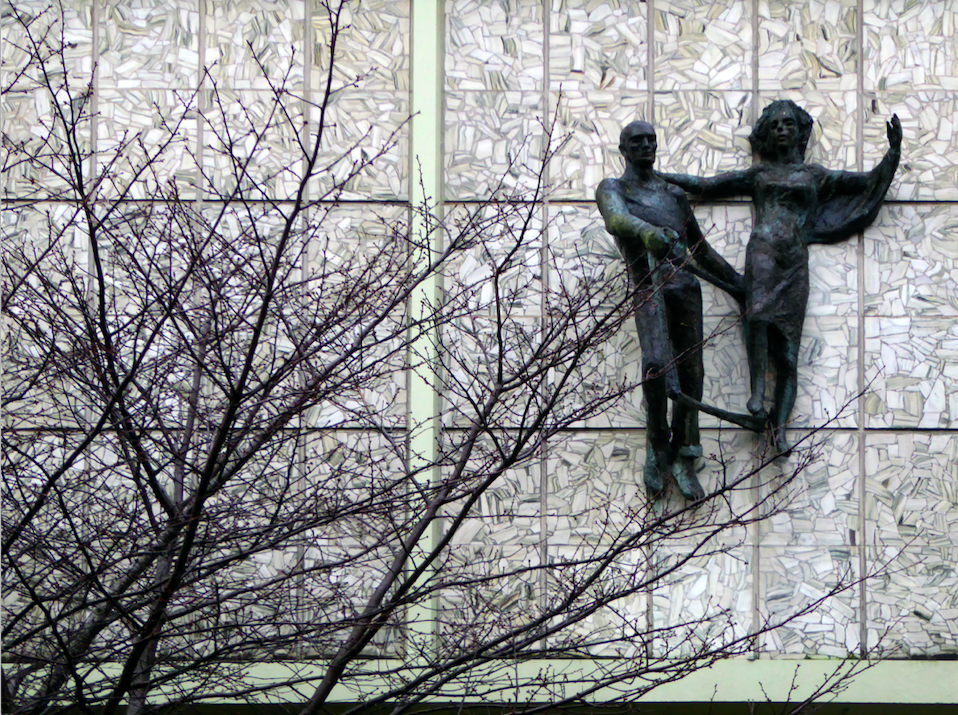
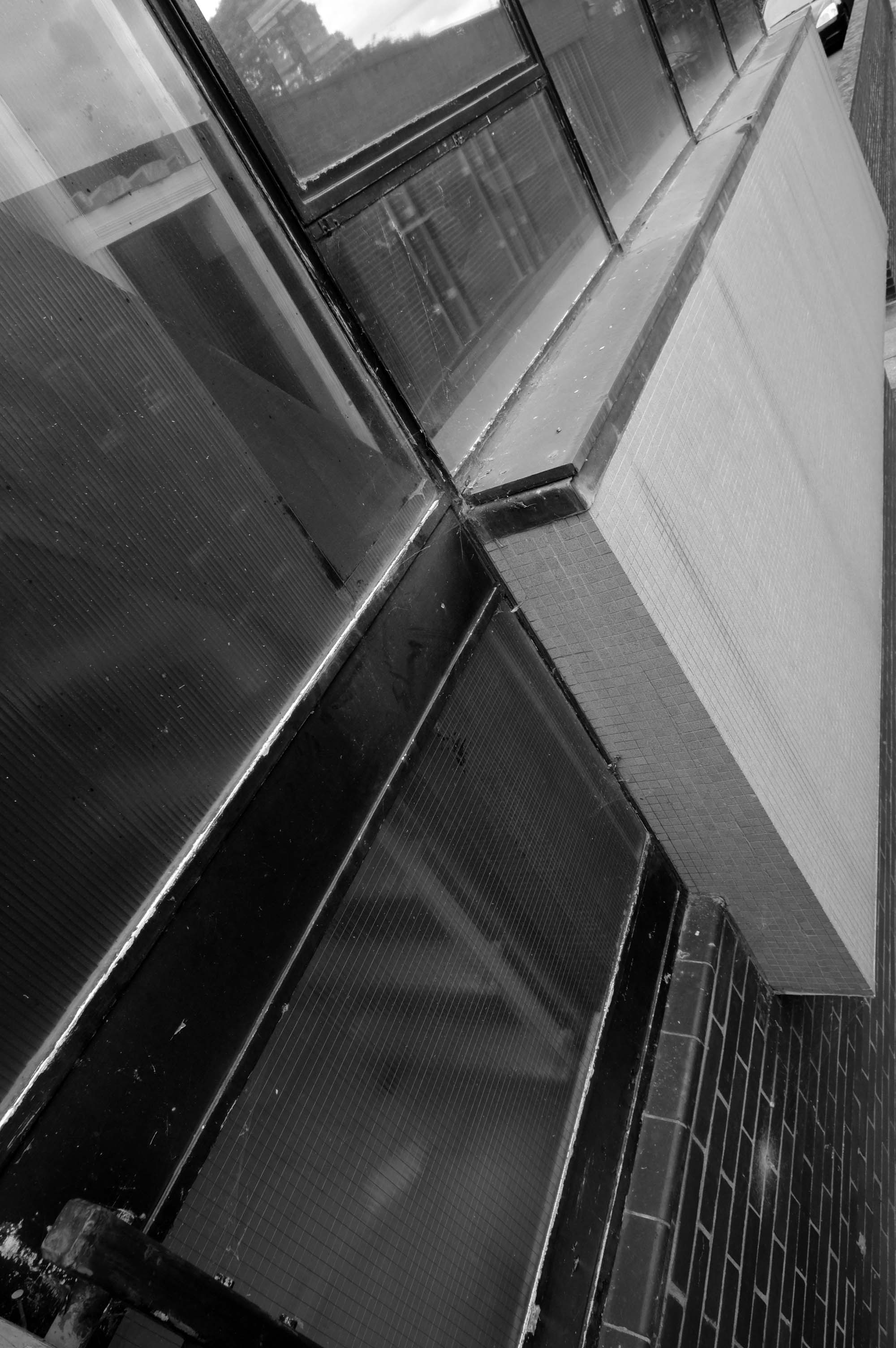
I bade them adieu and went about my way, taking these few snaps.


Walking – Talking

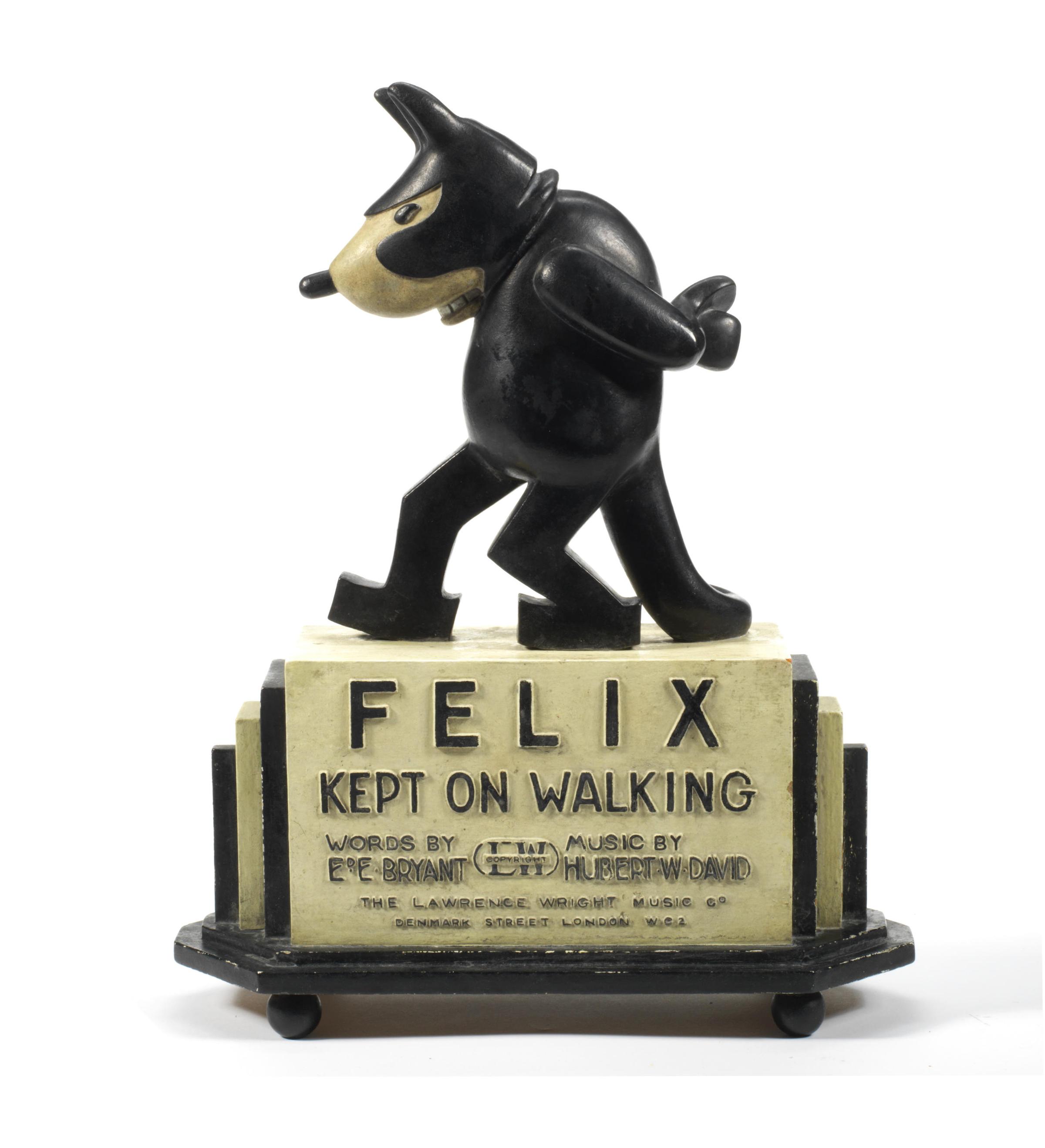
I began walking when quite young, then like Felix, I kept on walking, walking still.

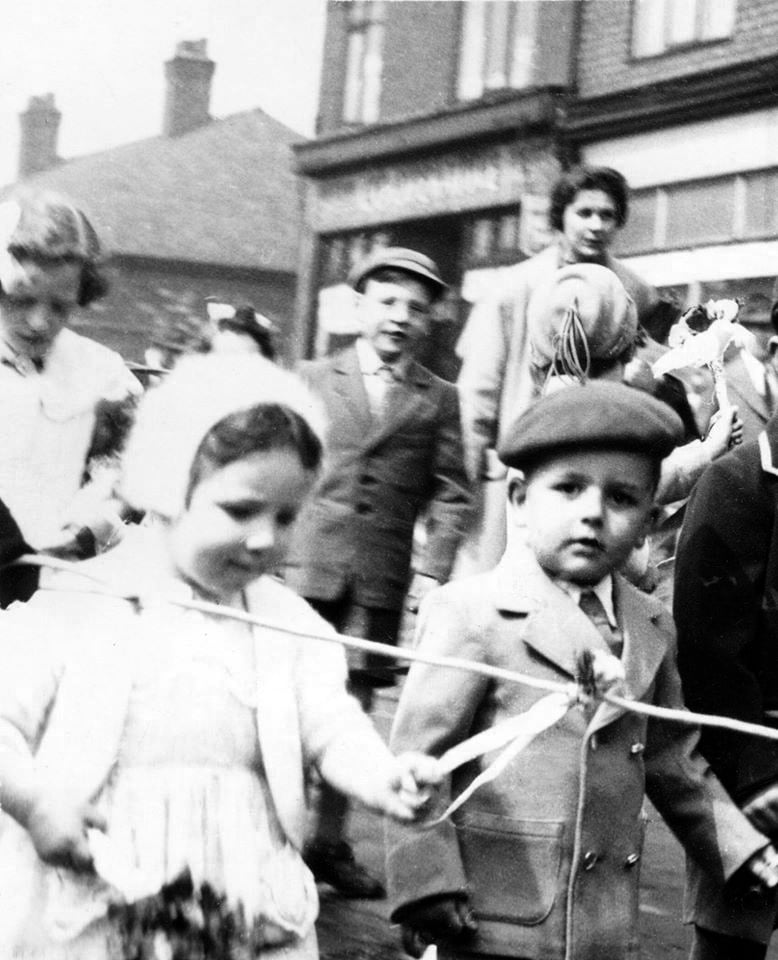
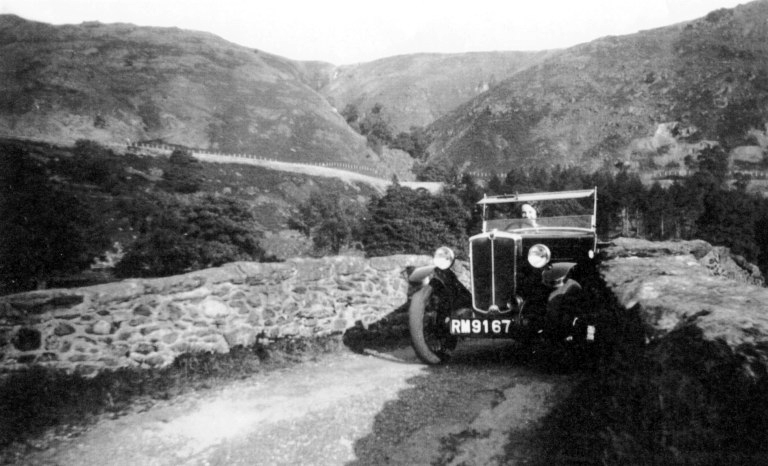
The photograph was taking during the Whit Walks in 1958 – aged three, I was engaged in religious pilgrimage, as we know there are many reasons for walking, this is but one.

I was fortunate to grow up at a time when youngsters were permitted to roam freely, less traffic, less anxiety, gave me access to a wider axis of exploration.

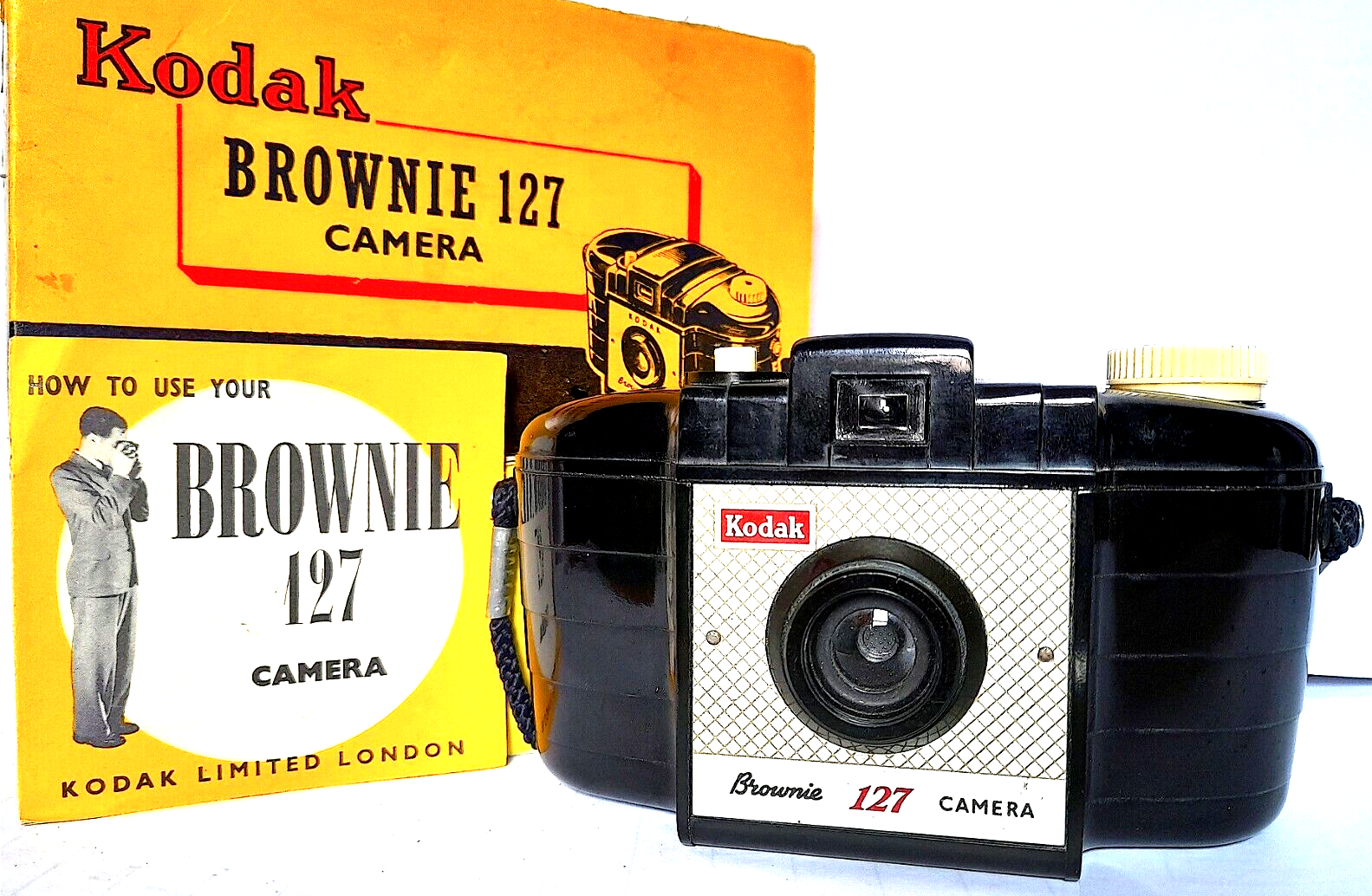
The photograph would have been taken I assume, by my mam, on the Brownie 127. When aged nine I wandered alone through the local woods and exposed twelve frames of 44mm 127 film, the prints are long gone, yet I remember each of the photographs and locations clearly.

I went to school, then I didn’t, then I went to Art School, eventually becoming a teenage Constructivist, tutored by Jeffrey Steele, a leading light in the British Systems movement.

The rigidity of the grid, symmetry and orthogonal framing have stayed with me.

Then I went to work for a very long time indeed, then all of a sudden I didn’t. Taking early retirement aged 59 some ten years ago, subsequently taking to the roads, streets and hills of Britain in search of nothing in particular.

In recent years there has been a rapid development in the culture of walking, theories, films, guides, songs and literature. I am fully cognisant of such, yet believe at heart that walking can be free of such baggage, we can stride unhindered, atavistic and carefree/less.

Walk tall, walk straight and look the world right in the eye.

Getting lost is about the unfamiliar appearing.

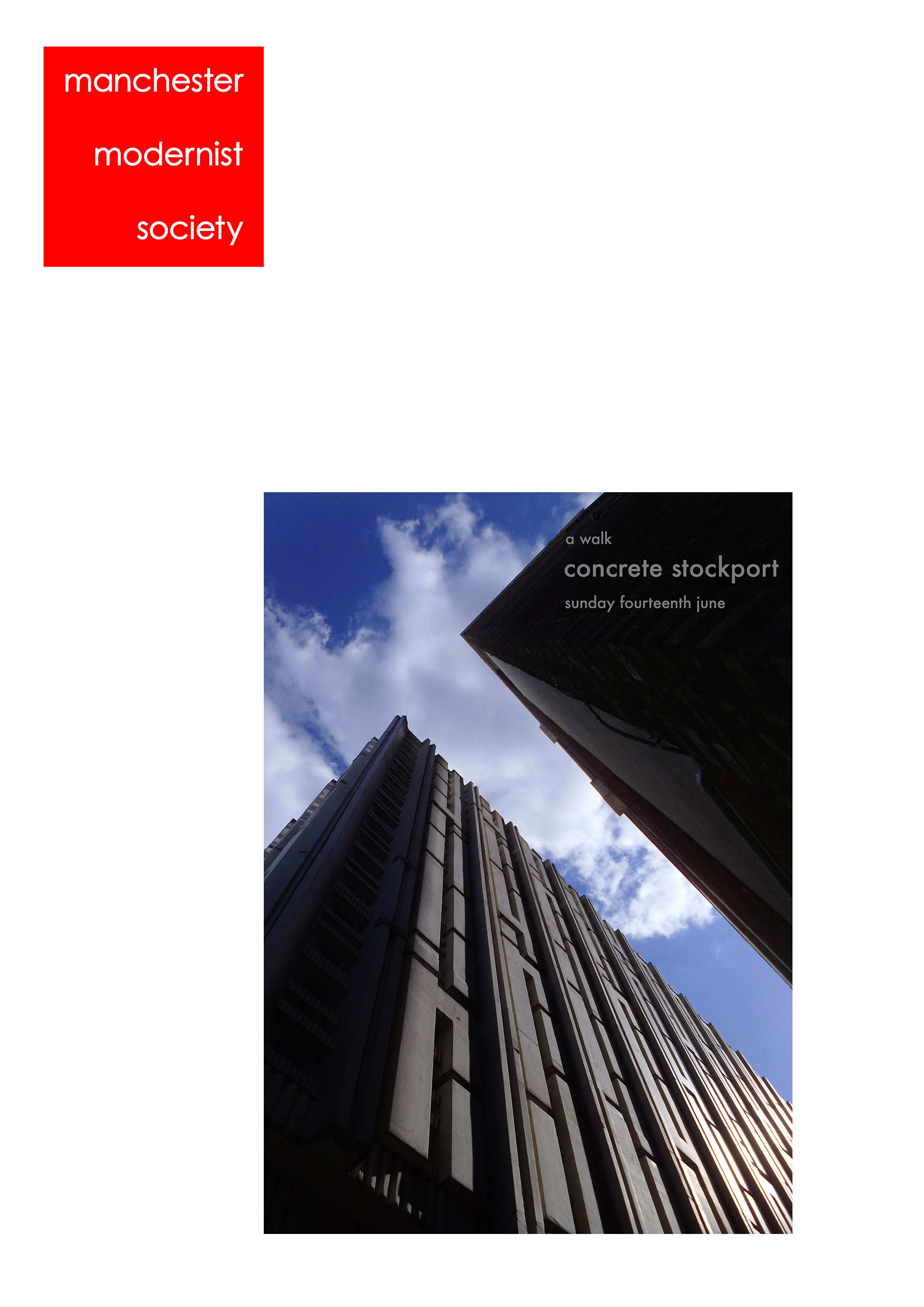
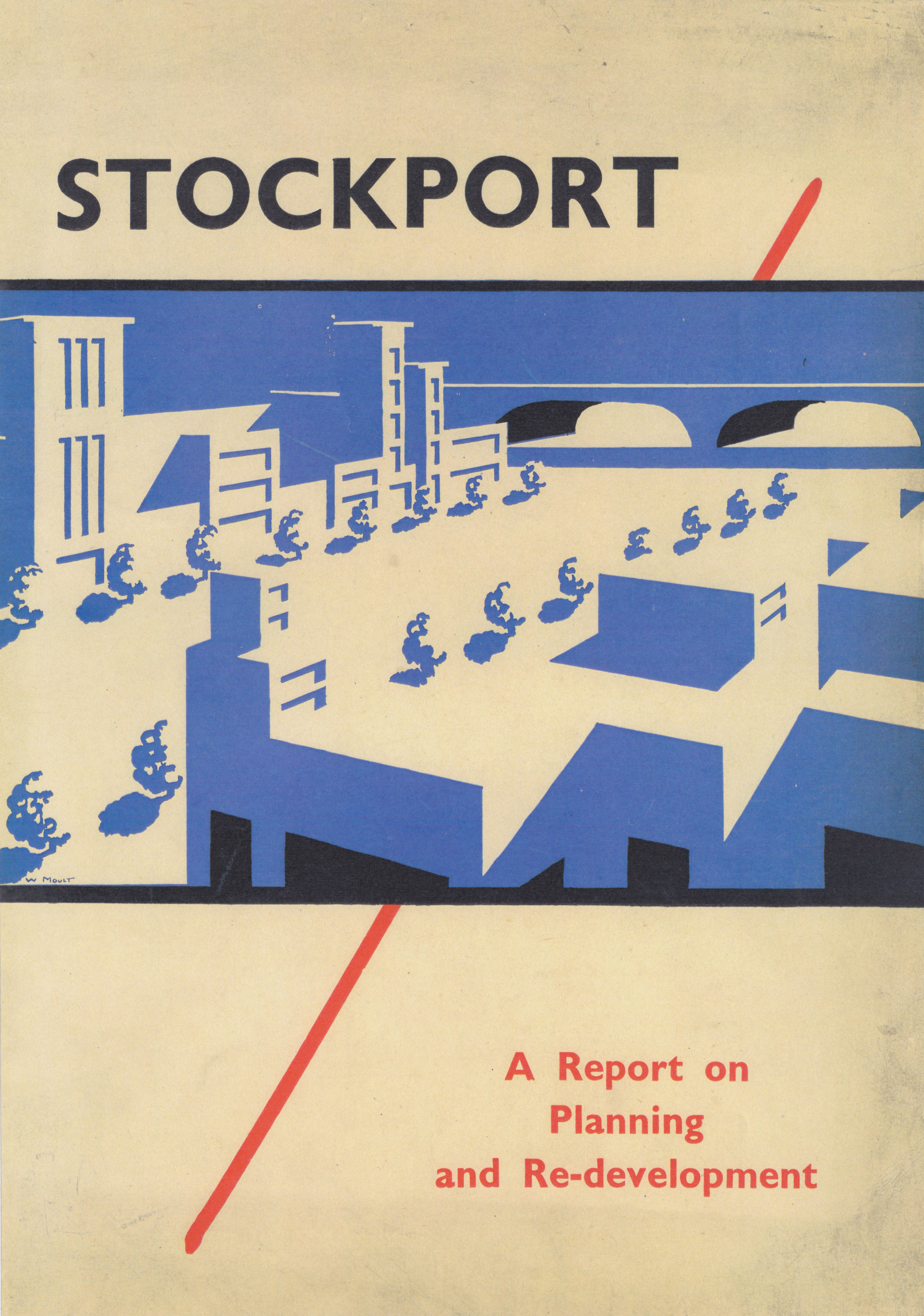
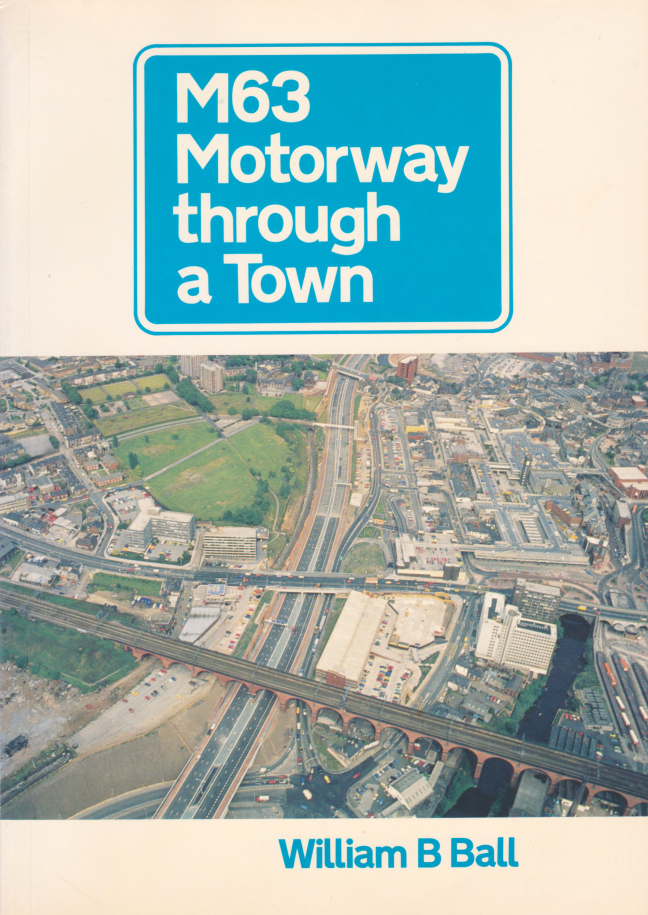
In my own small way, I have become part of that baggage, having been asked to lead a walk around Stockport by the the modernist neé Manchester Modernist Society.

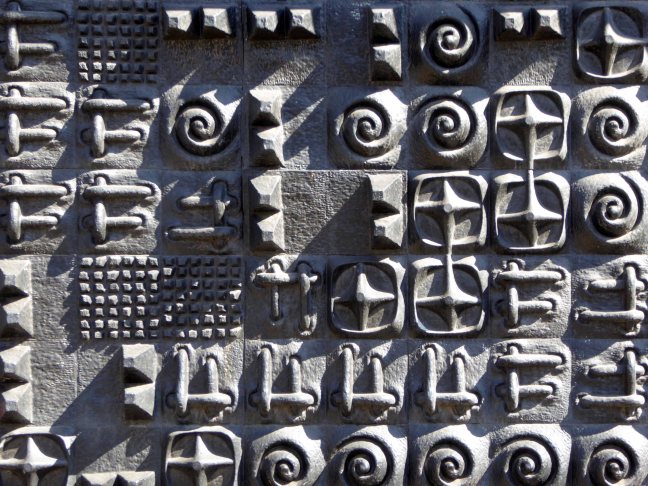
The photograph depicts Alan Boyson’s concrete screen wall, attached to the former Cooperative super store designed by Philip Andrew. The two worked to gather on the Hull Cooperative store, which is adorned by Alan’s huge Three Ships mosaic.

Philip was a childhood friend of Alan Boyson and it was Alan’s father, manager of the Marple Co-operative Society, that recommended Philip for an apprenticeship job in 1951 to the chief architect at the CWS in Manchester HQ.

Ships in the Sky

In preparation for the tour, I visited the town’s Local Heritage Library and read extensively from serendipitous charity shop finds.

The two hour route was designed around an economy of distance and elevation, allowing time for others to take in, what may be for them unfamiliar surroundings. A group of around twenty or so folk became sociable and engaged, with a suitably concise and apposite contribution from myself. There are those who busied themselves taking snaps along the way, chatting amiably or simply gazing in amazement.

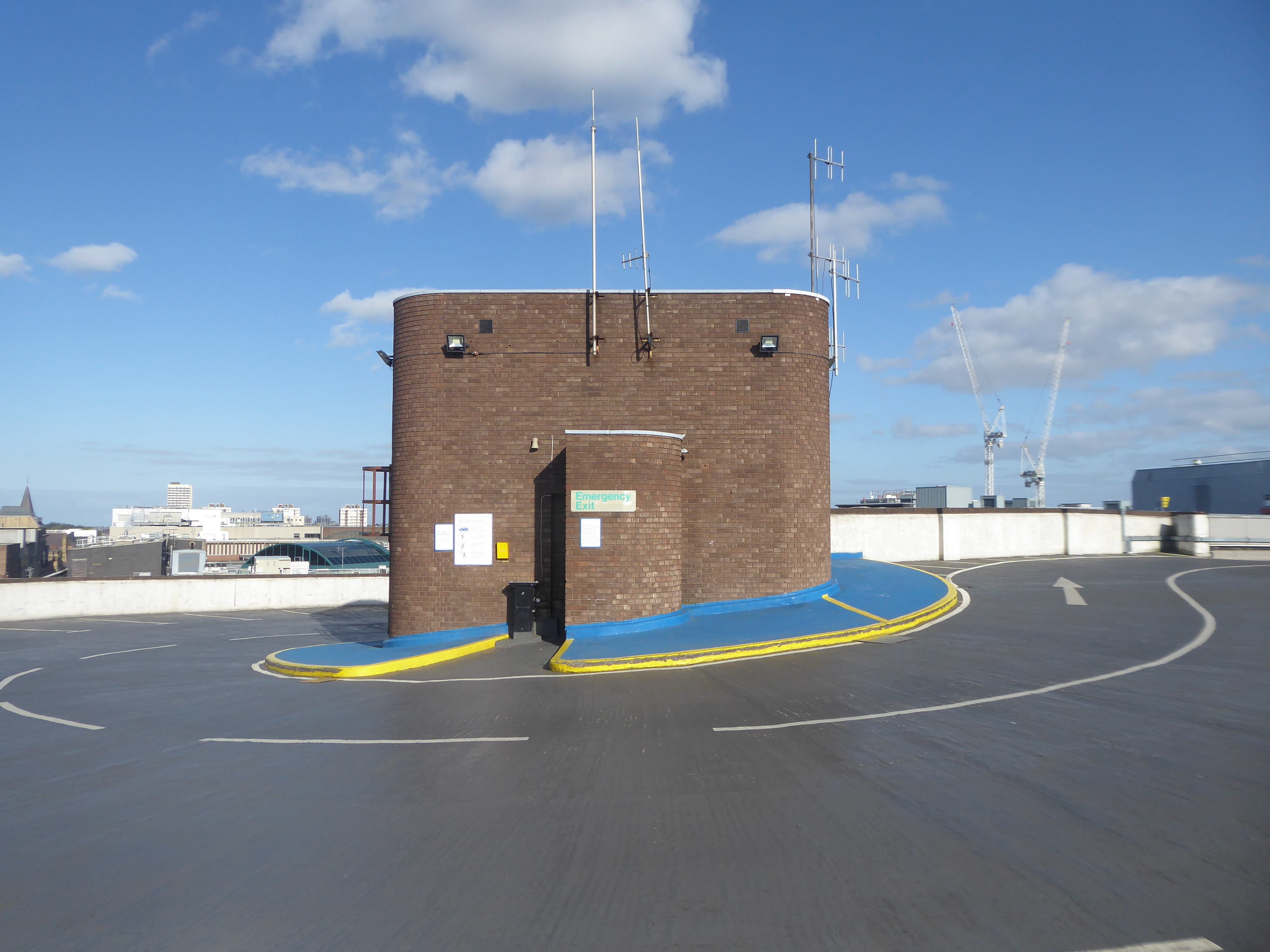
The service building above the former Debenham’s store.

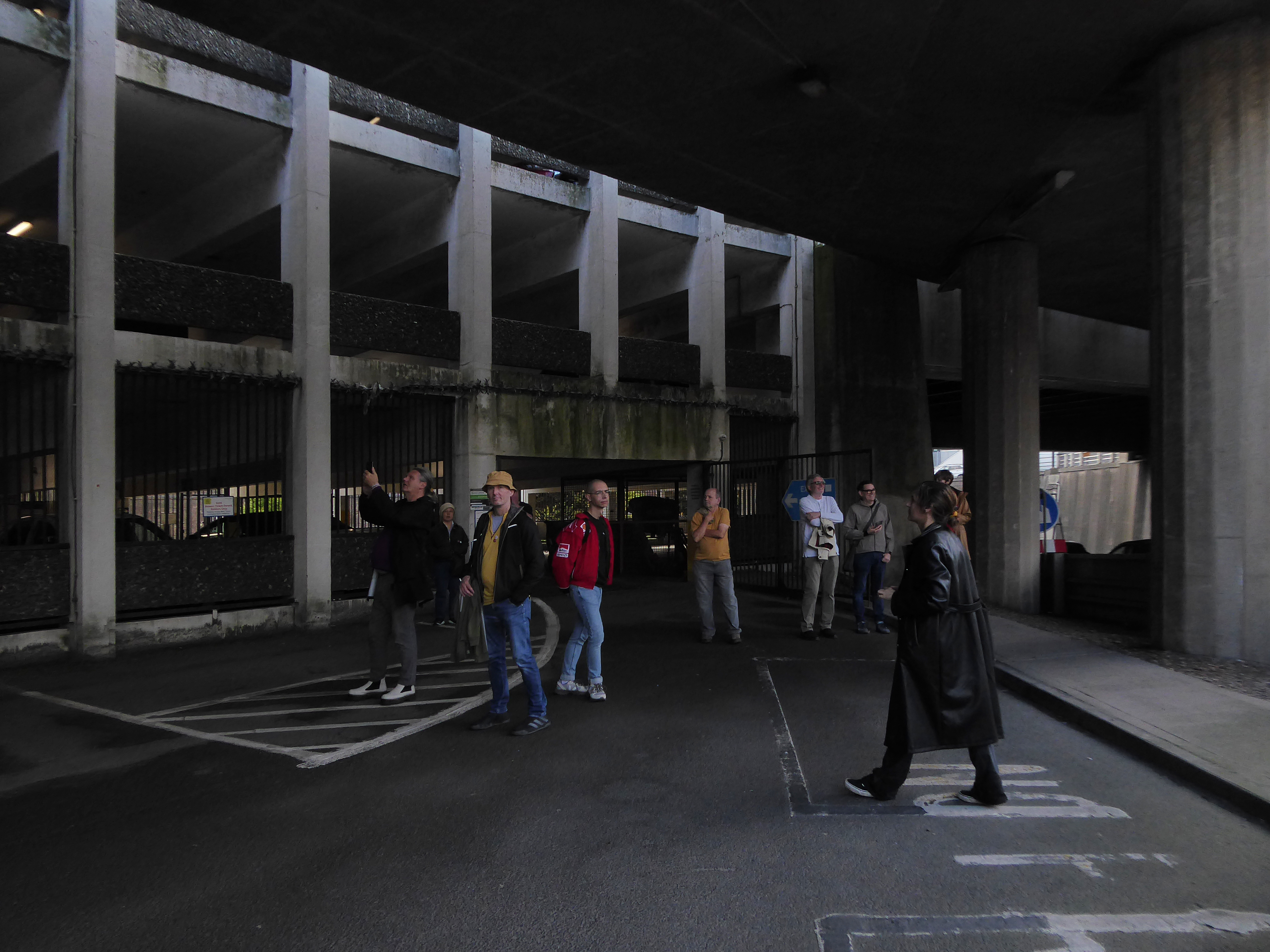
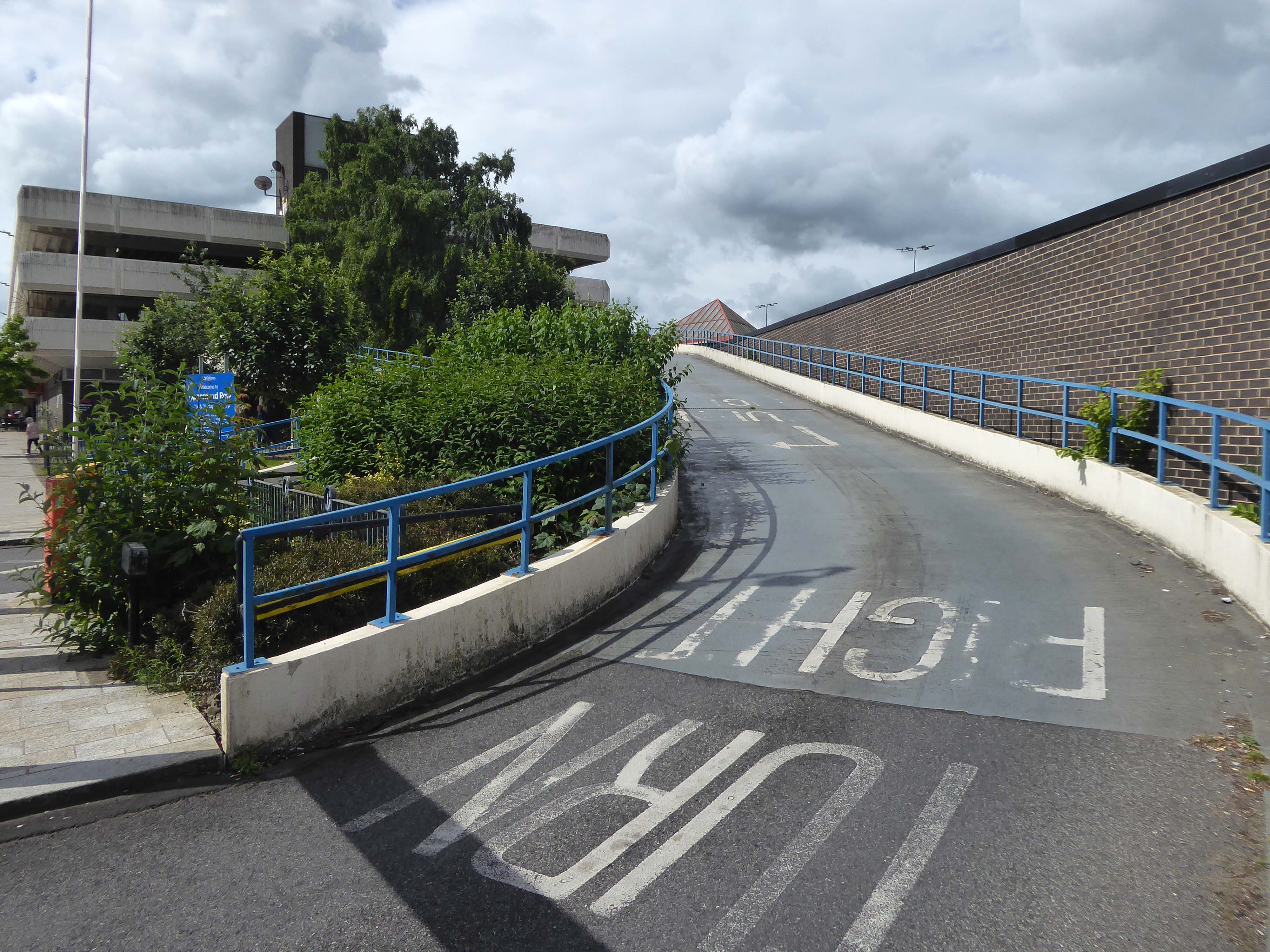
Beneath the spiral ramp which leads to the Red Rock car park.

The architects for the scheme were BDP – the building was not well received as it was awarded the Carbuncle of the Year 2018.

Stockport’s Town Hall extension Stopford House.

Famed as an imaginary TV police station, this civic building is a civic building I simply can’t resist. I return on a regular basis to wander and snap. This is an open public space that seems little loved and has few visitors.

From then onwards I have been taking folks on Modernist Mooches on a regular basis, two or so a month, during the less inclement times of year.

At about the same time I was asked to exhibit my photographs in Stockport, I chose to mooch about at night. Walking around an almost deserted town, avoiding the glare of streetlights, there is a mild frisson to be about when nobody else is about. The air feels different, exposures are longer, the almost waking world feels arrested, by the low available light.

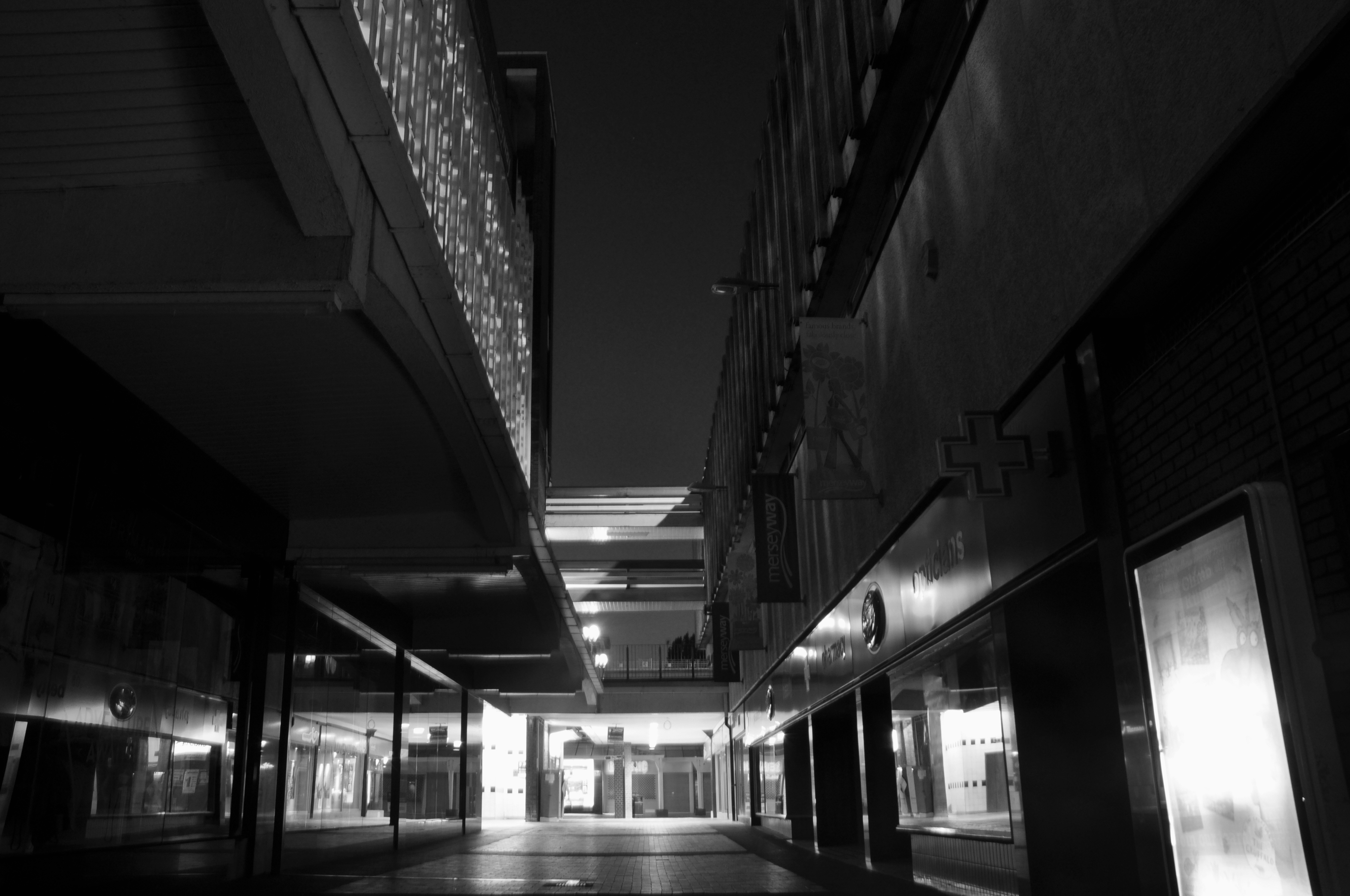
Merseyway Shopping Centre designed by Bernard Engle and Partners, opened in 1965.

My local shopping centre and as such part of my weekly walking and shopping life.

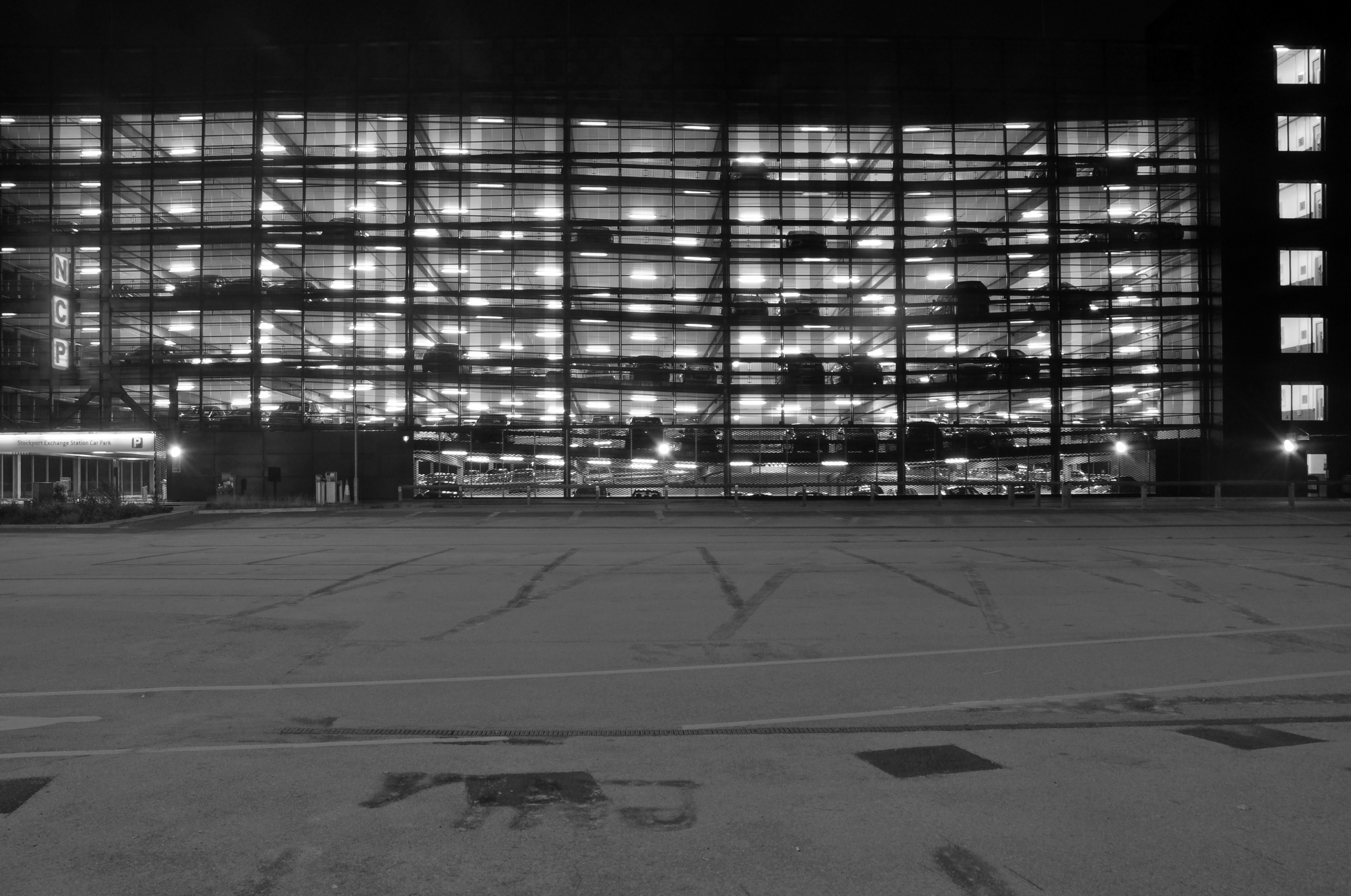
NCP Car Park located on Stockport Station approach.

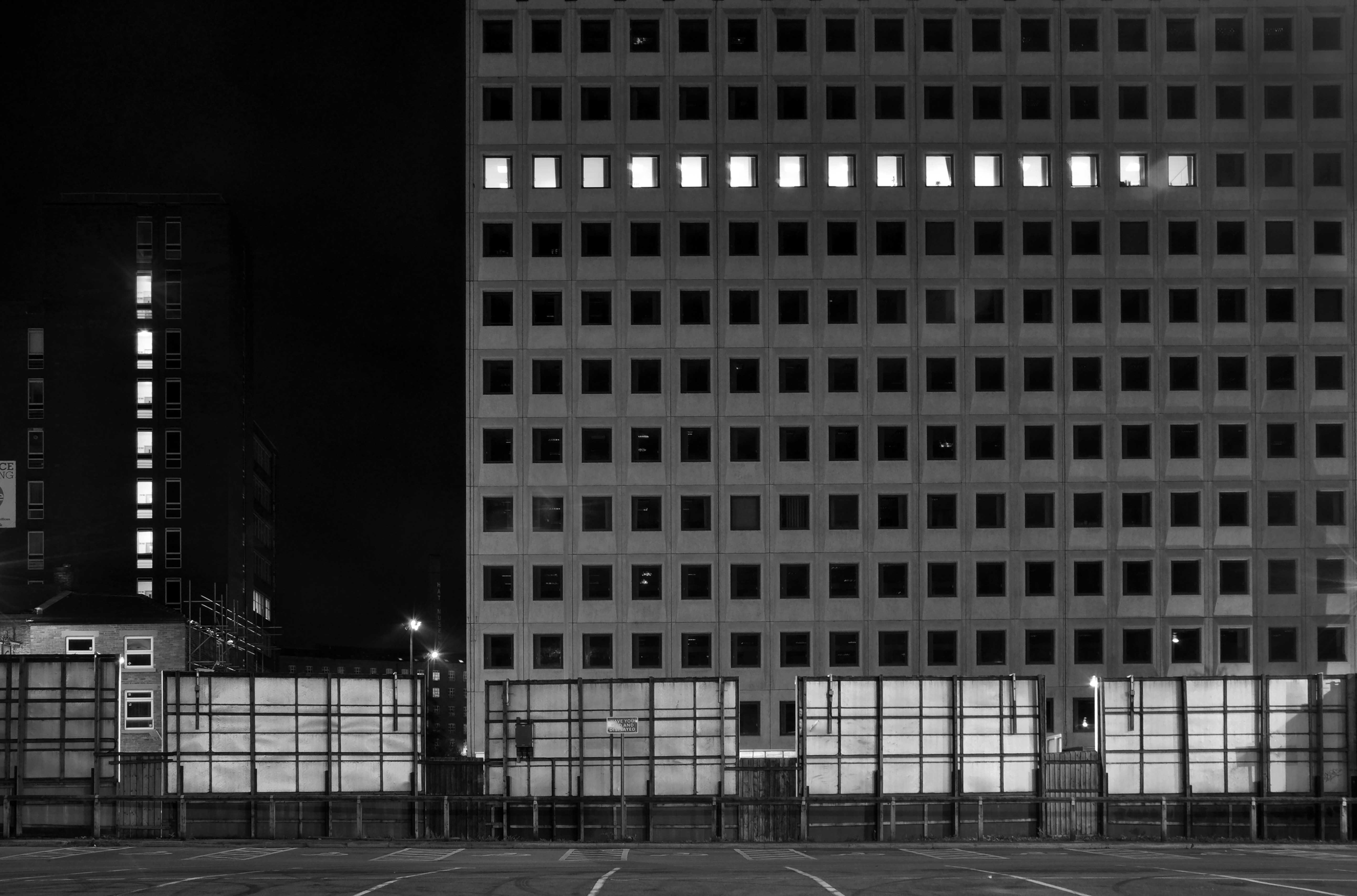
Regent House

Asda superstore

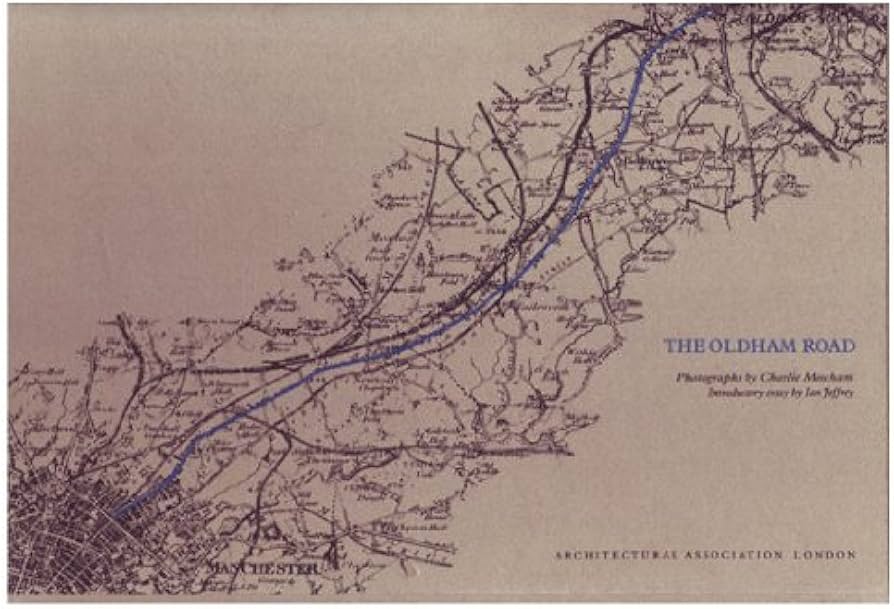
I found a copy of Charlie Meecham’s book Oldham Road in a charity shop.

Inspiring me in 2014, to walk in mostly straight lines, though often as not zig zagging along the main arterial roads of Manchester.

Taking pictures on Sunday mornings, in order to avoid traffic, mildly amused to be ignoring the primary function of the routes.

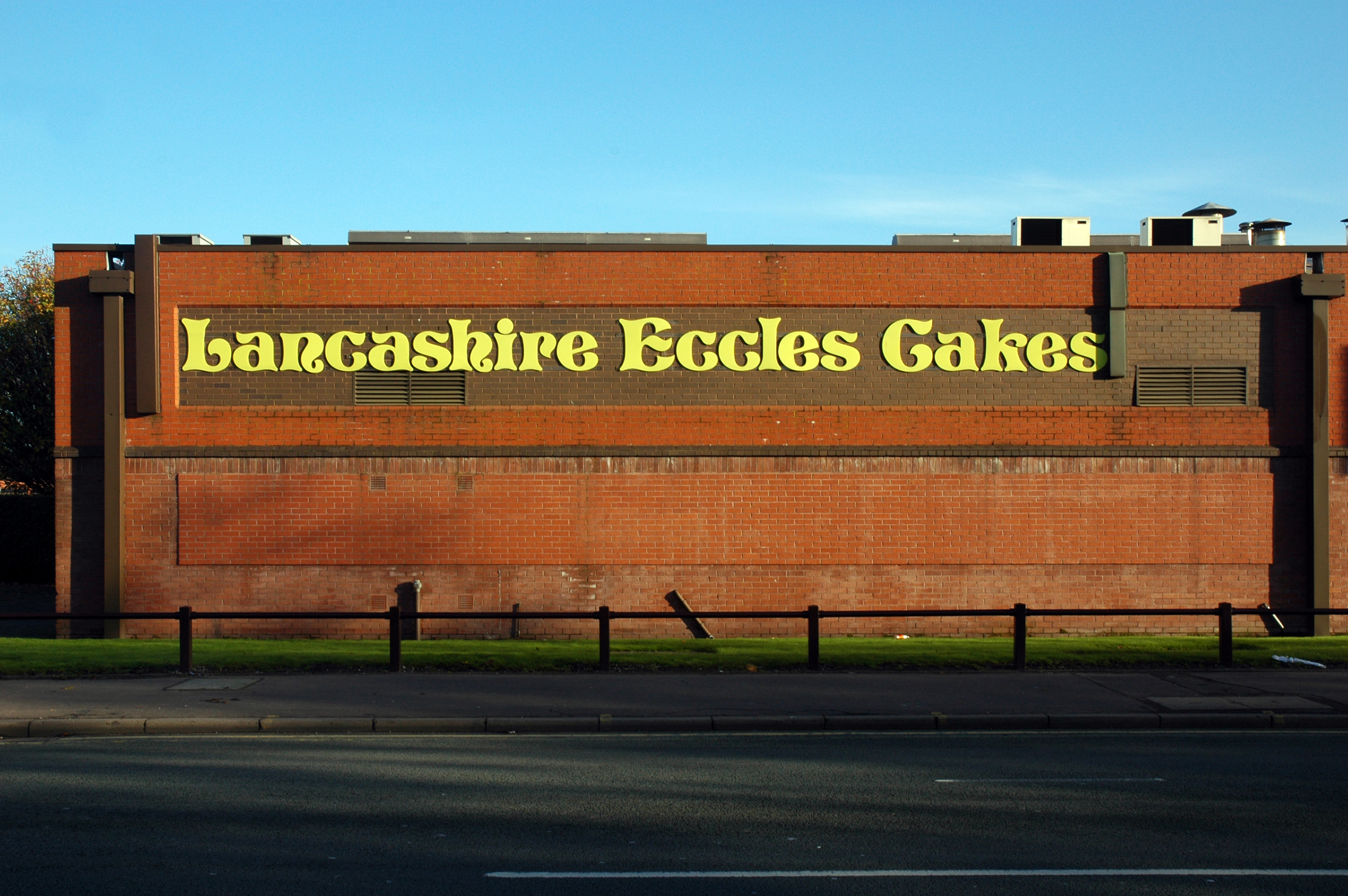
This is one of the more familiar roads, having walked up and down several times over several years. It was to have been an extension of the Mancunian Way, forming a trans-pennine motorway. Much of the property lining the route was cleared in preparation, it was never built, and for years a strange semi-deserted ambience hung over the A57.

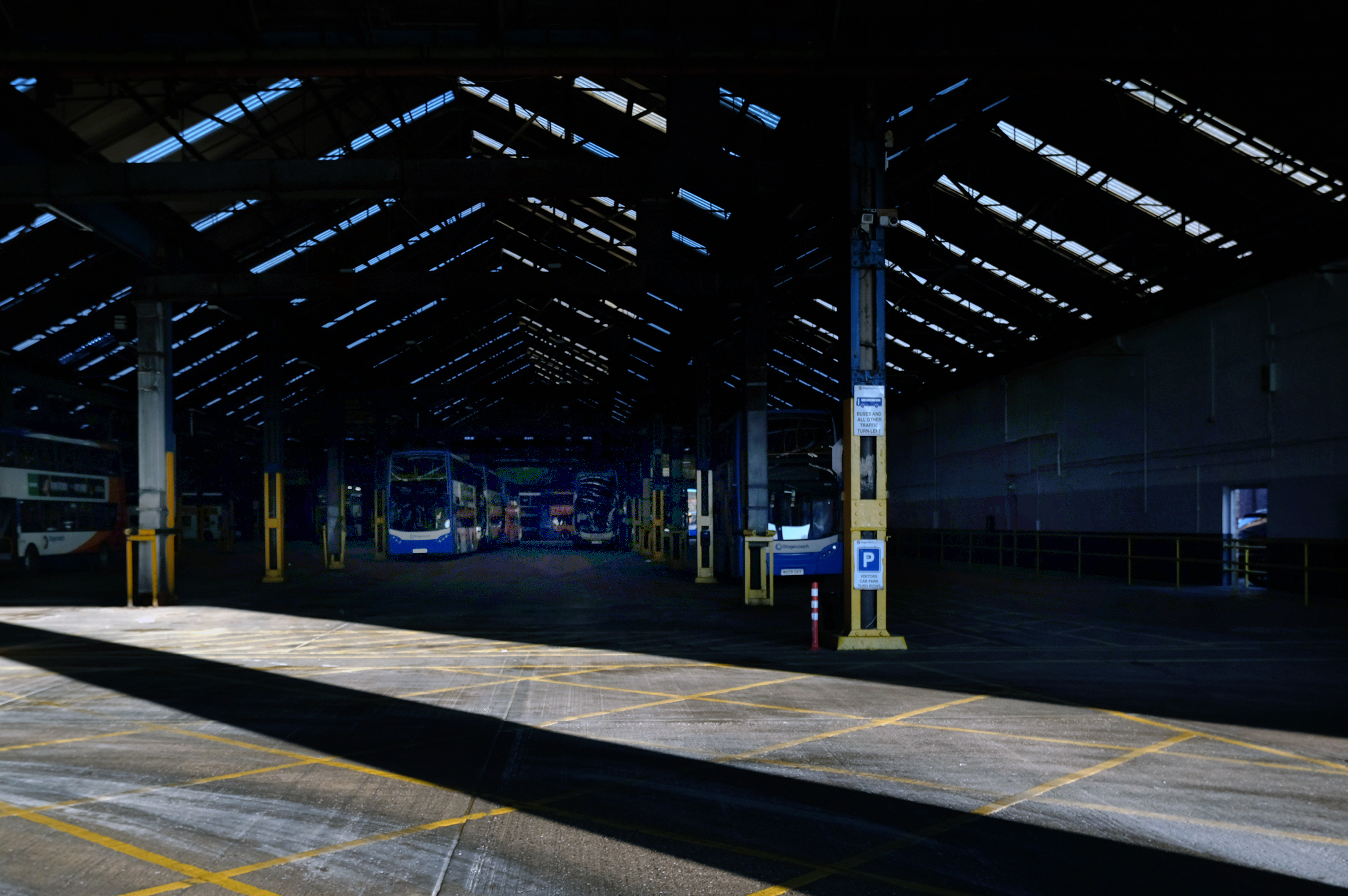
Bus Depot

Railway Bridge

The car showrooms which later became an African Evangalist church.

Having cleared away both Victorian and Sixties housing, new architectural forms arose in West Gorton.

Where there were once dozens of pubs, often there are now none.

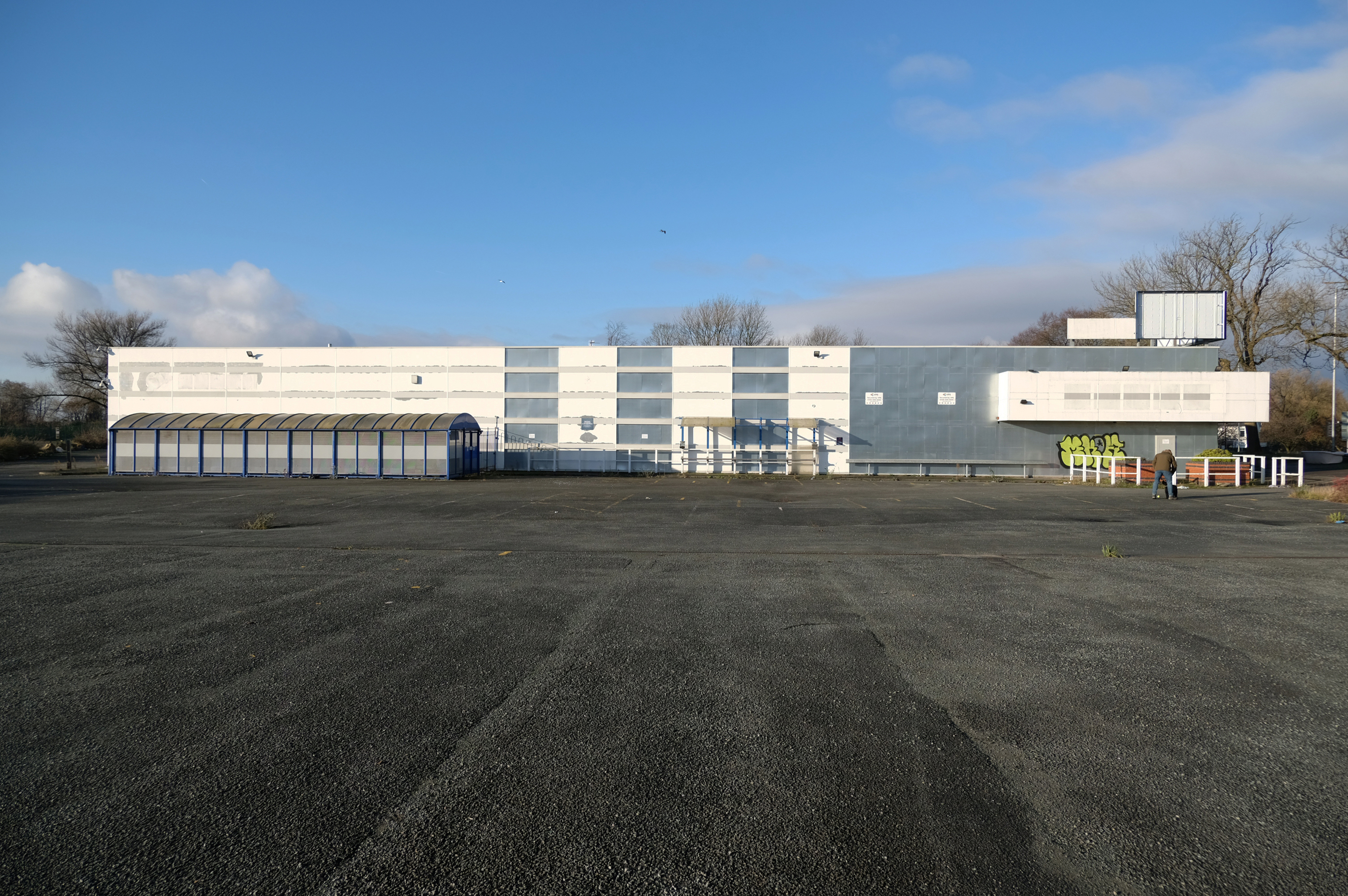
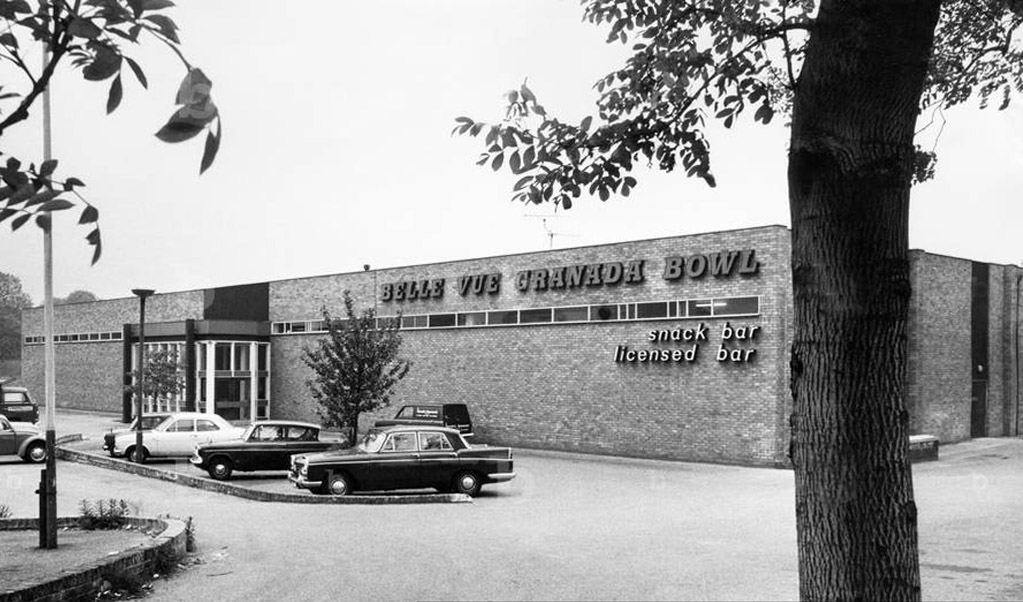
The Belle Vue Granada Bowl became a Bingo Hall then became nothing.


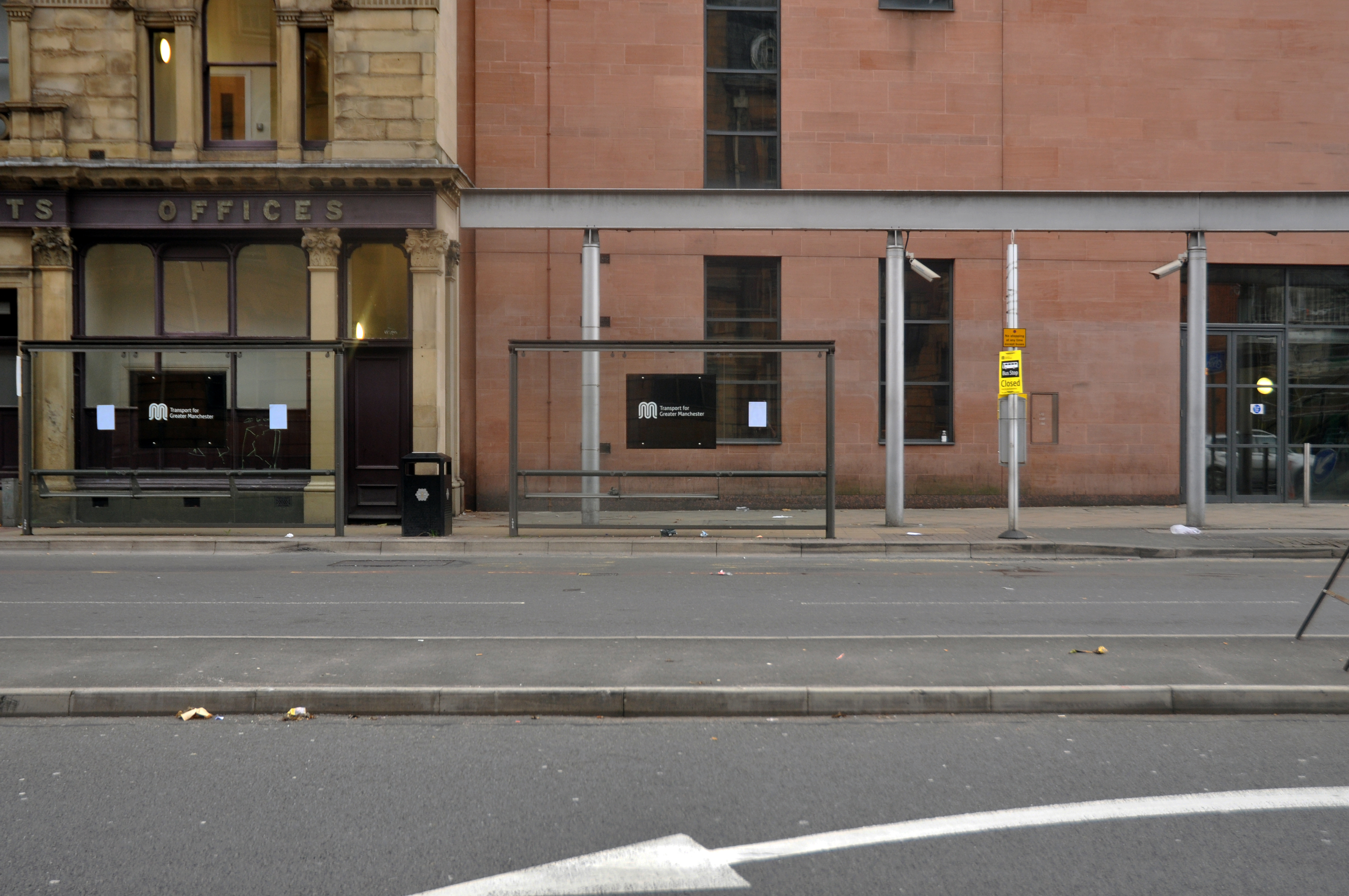
The 192 bus runs between Manchester Piccadilly and hazel Grove, I often ride between Stockport and town, and back.

I decided to walk the route, photographing each of the ninety eight bus stops along the way.

Piccadilly Station

UMIST Retaining Wall

Ardwick Post Office

Levenshulme

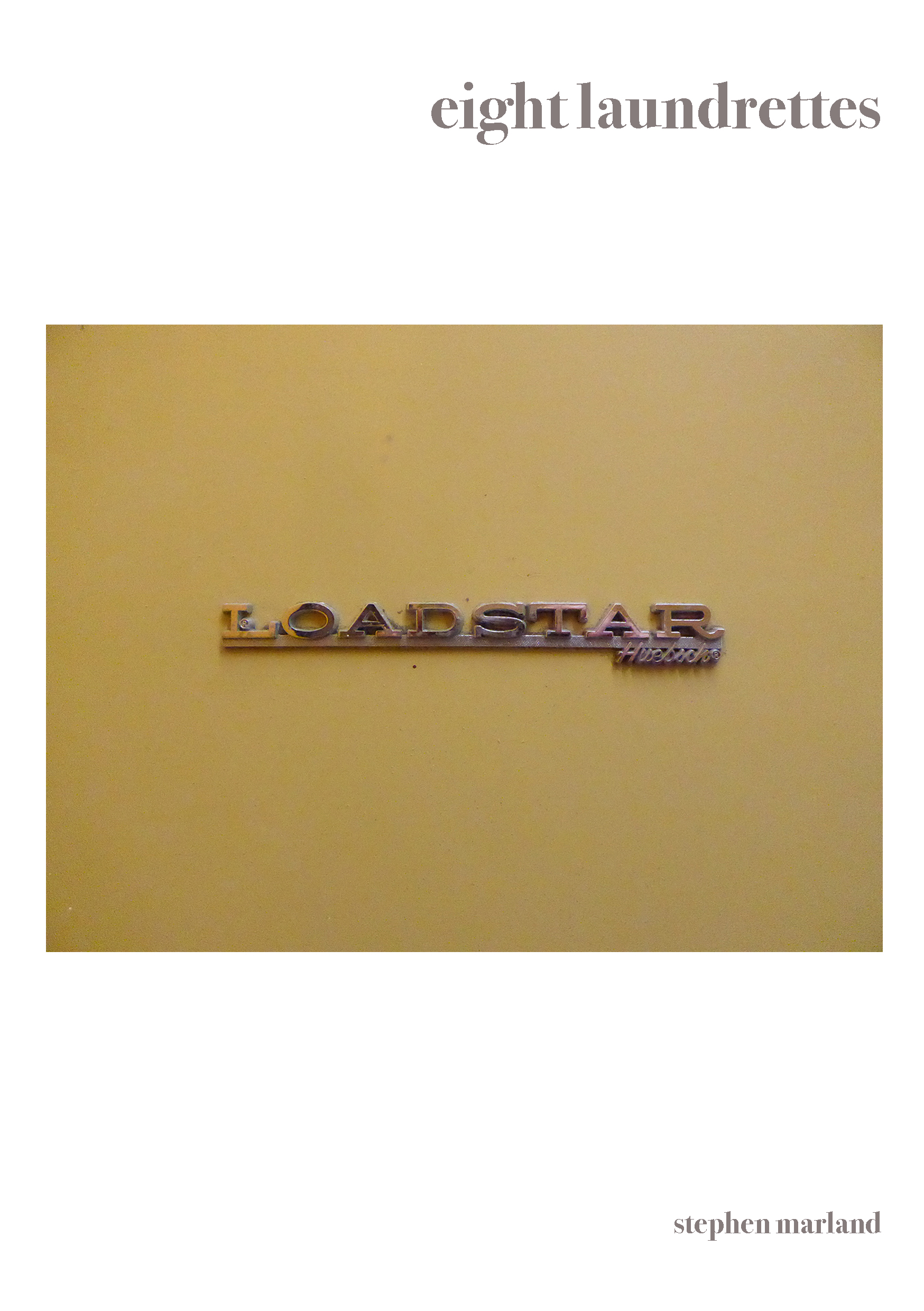
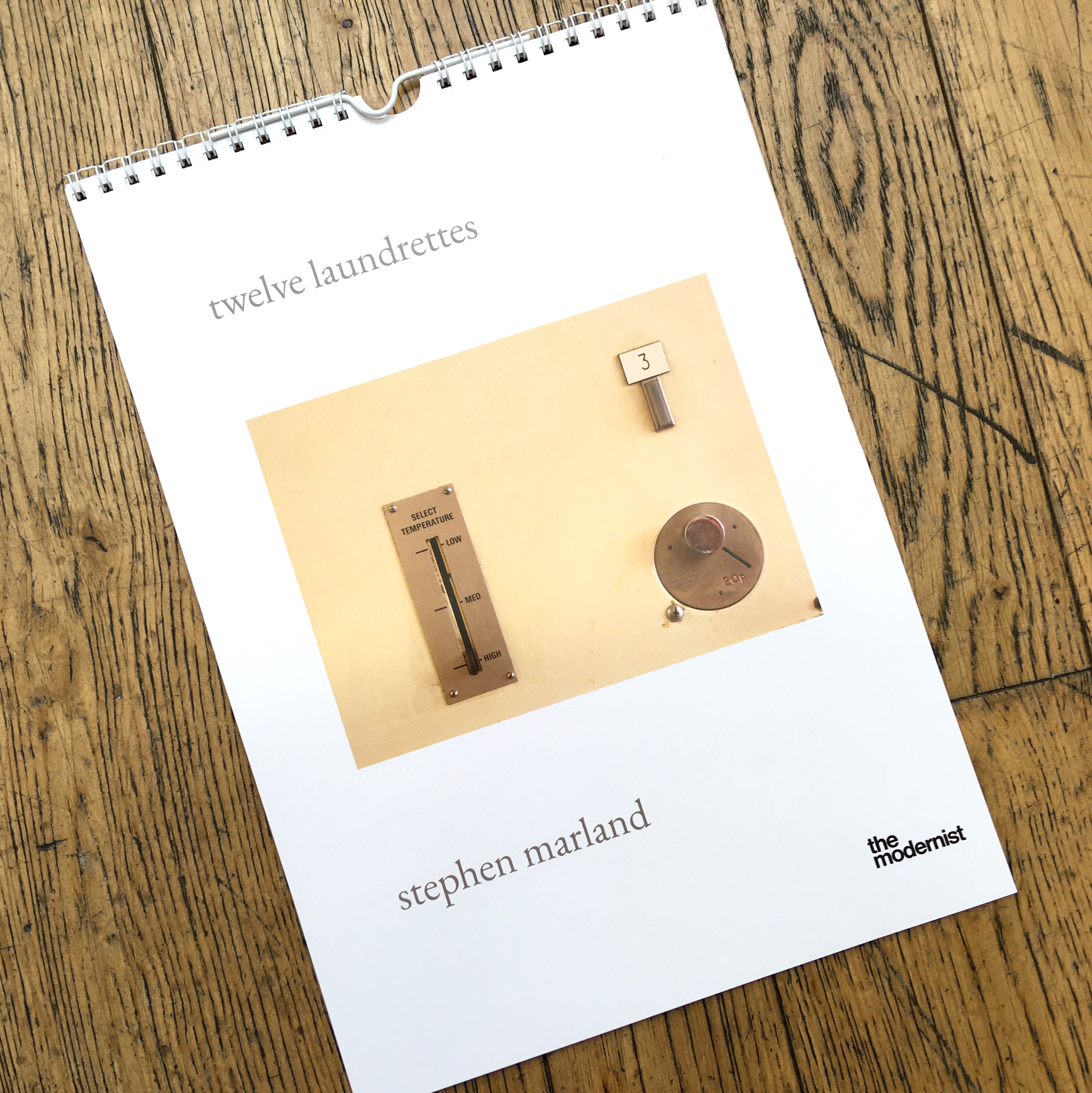
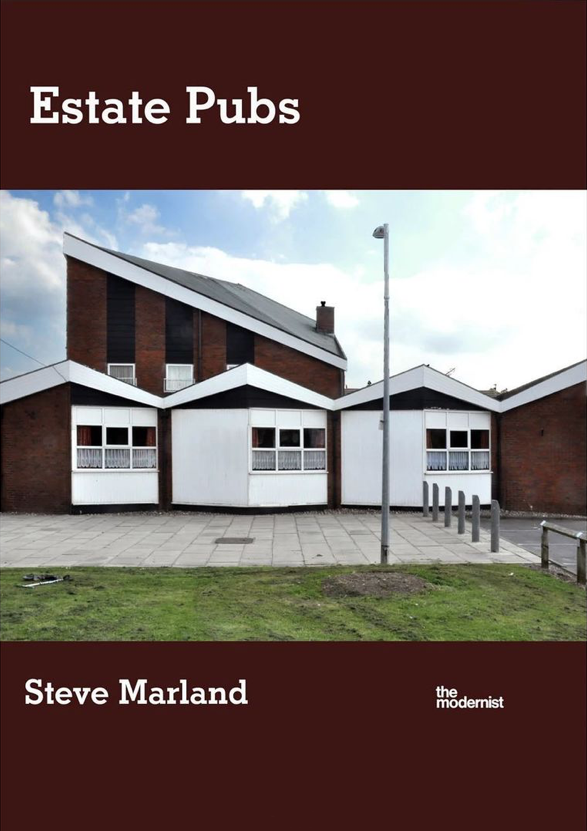
A book published by the modernist – literally eight launderettes.

Which became the first modernist calendar.

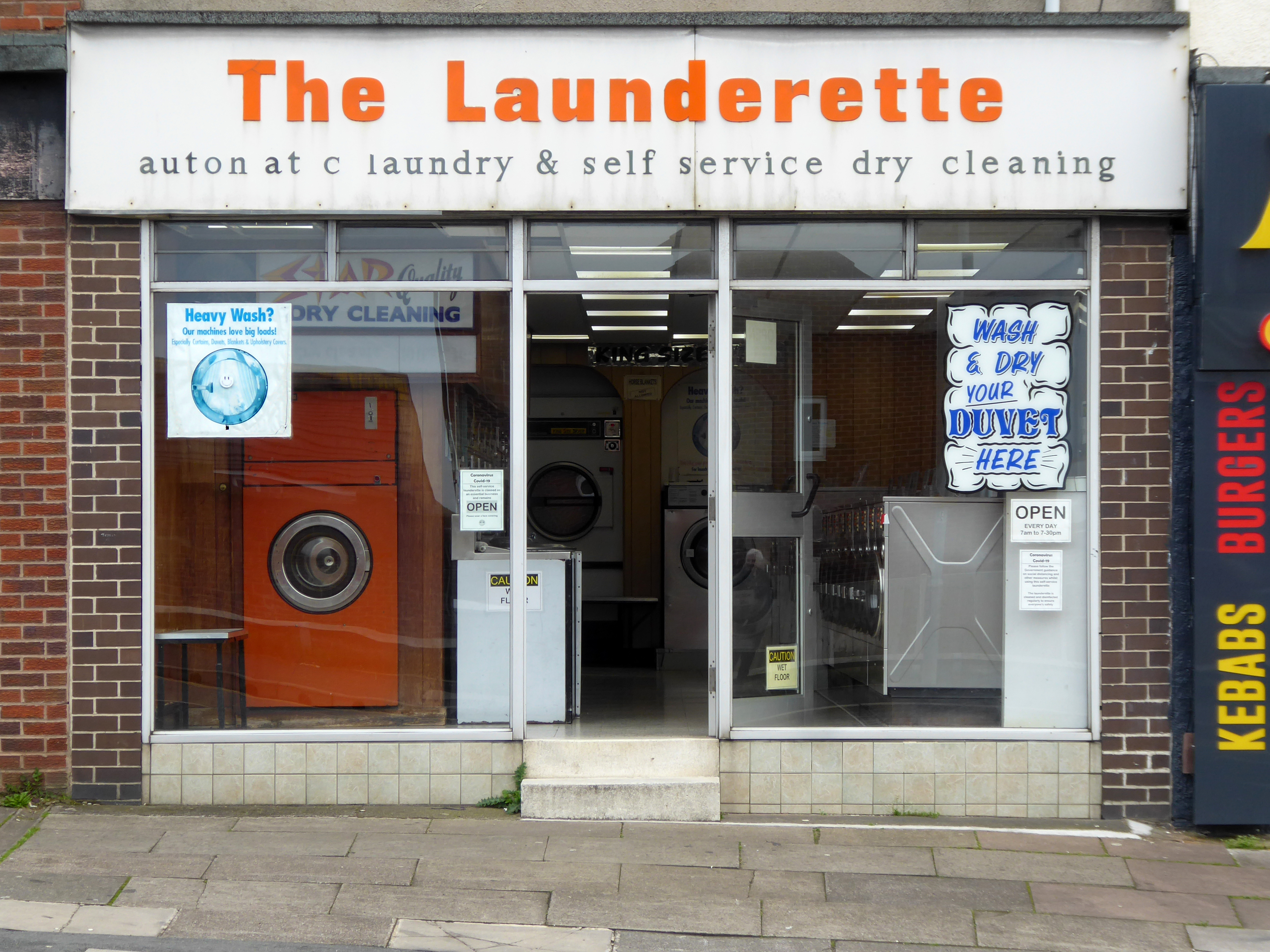
Now, everywhere I go, I see launderettes – so arriving in Hanley with time on my hands, wandering around I found this exemplary example.

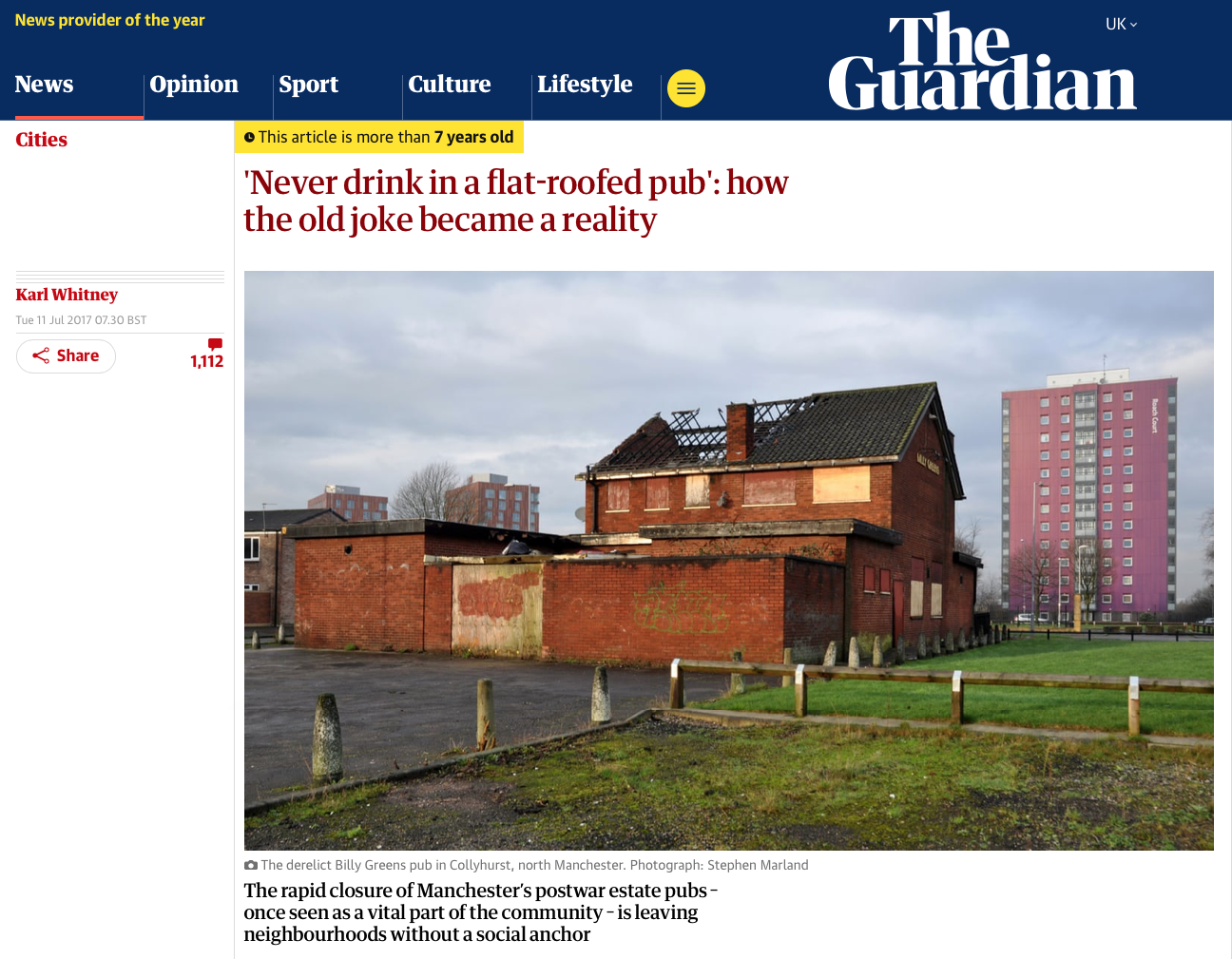
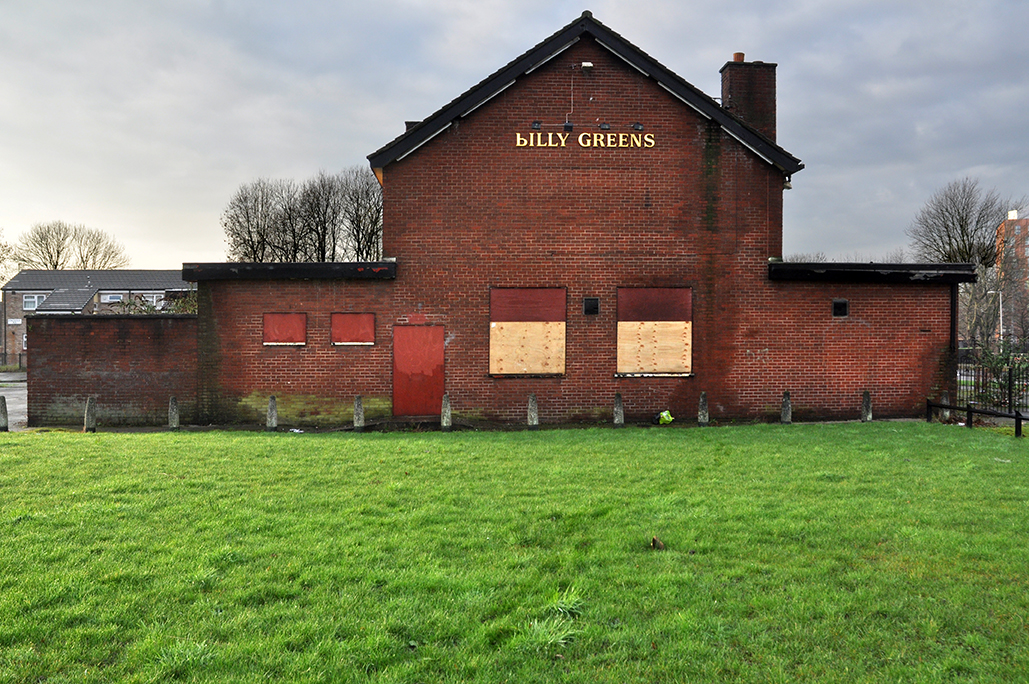
Having a blog entitled Manchester Estate Pubs, the national media became interested in my photographs. I had spent quite some time, wandering around in search of this endangered architectural typology.

This was Billy Greens in Collyhurst, named for a local boxer, now demolished.

Which in turn became the second modernist calendar.

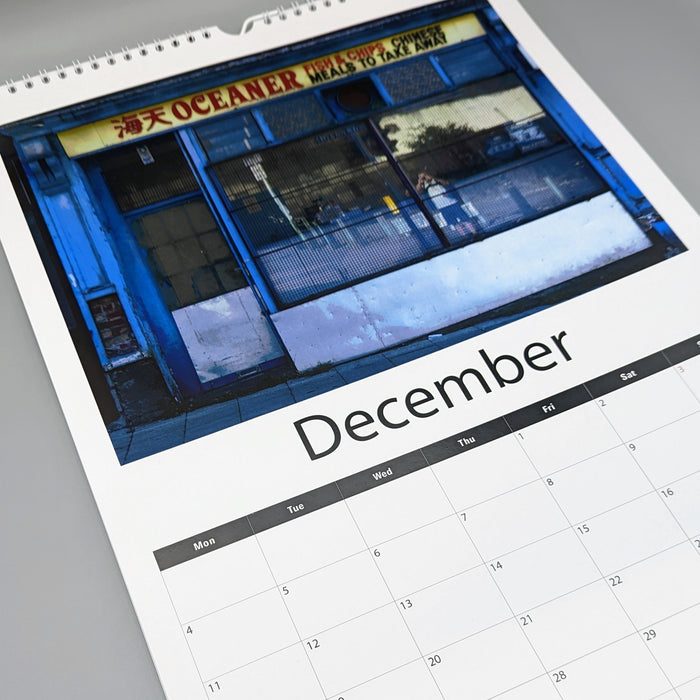
Followed the following year by fish and chip shops.

So building a vocabulary for my mooching, discovering yet another chippy, laundry, pub, Burton’s, telephone exchange, glazed stairway or underpass.

These things find you, yearning for some small amount of attention and affection.

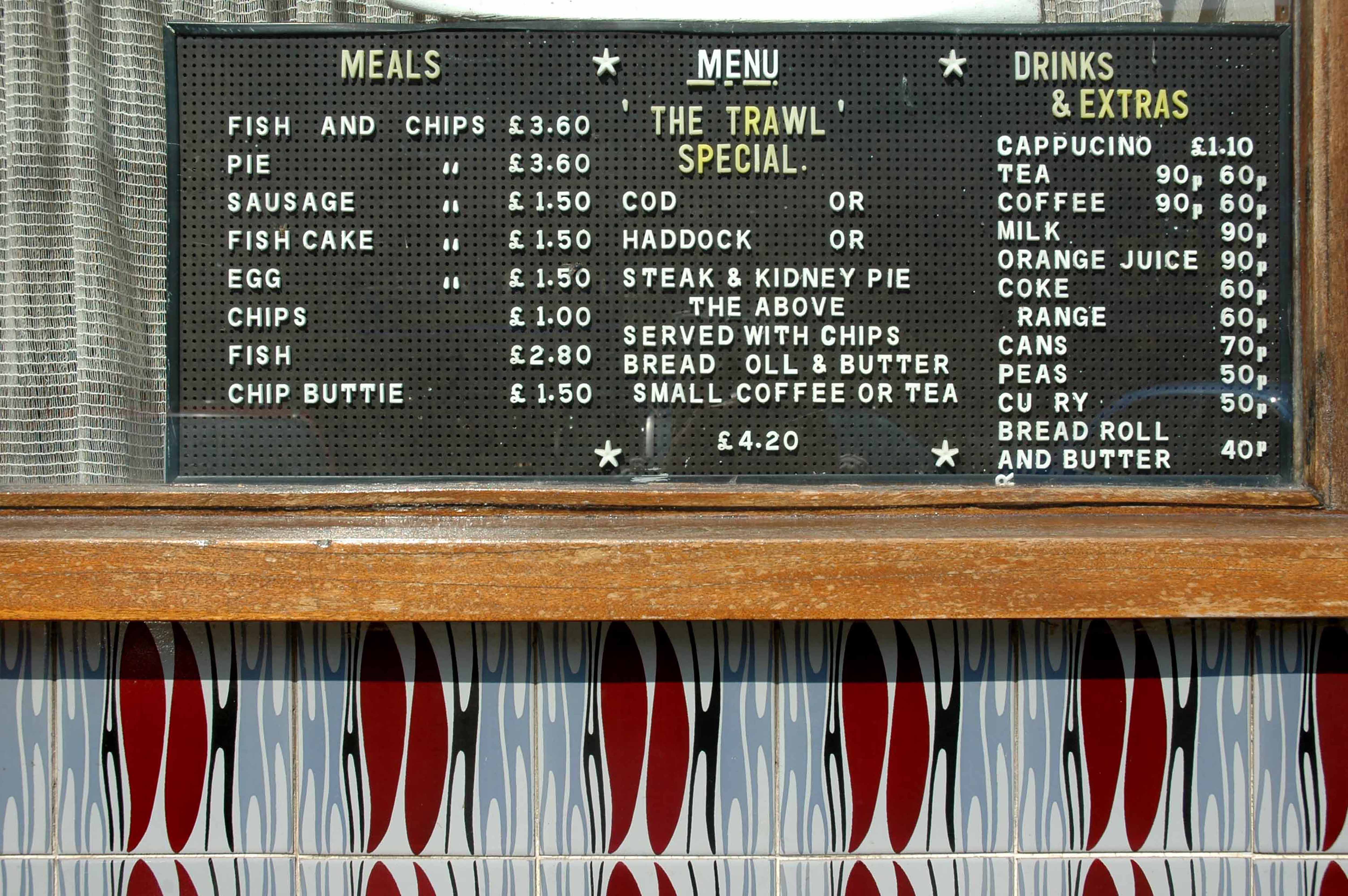
The Trawl – my favourite peg board menu, my favourite Bridlington chippy.

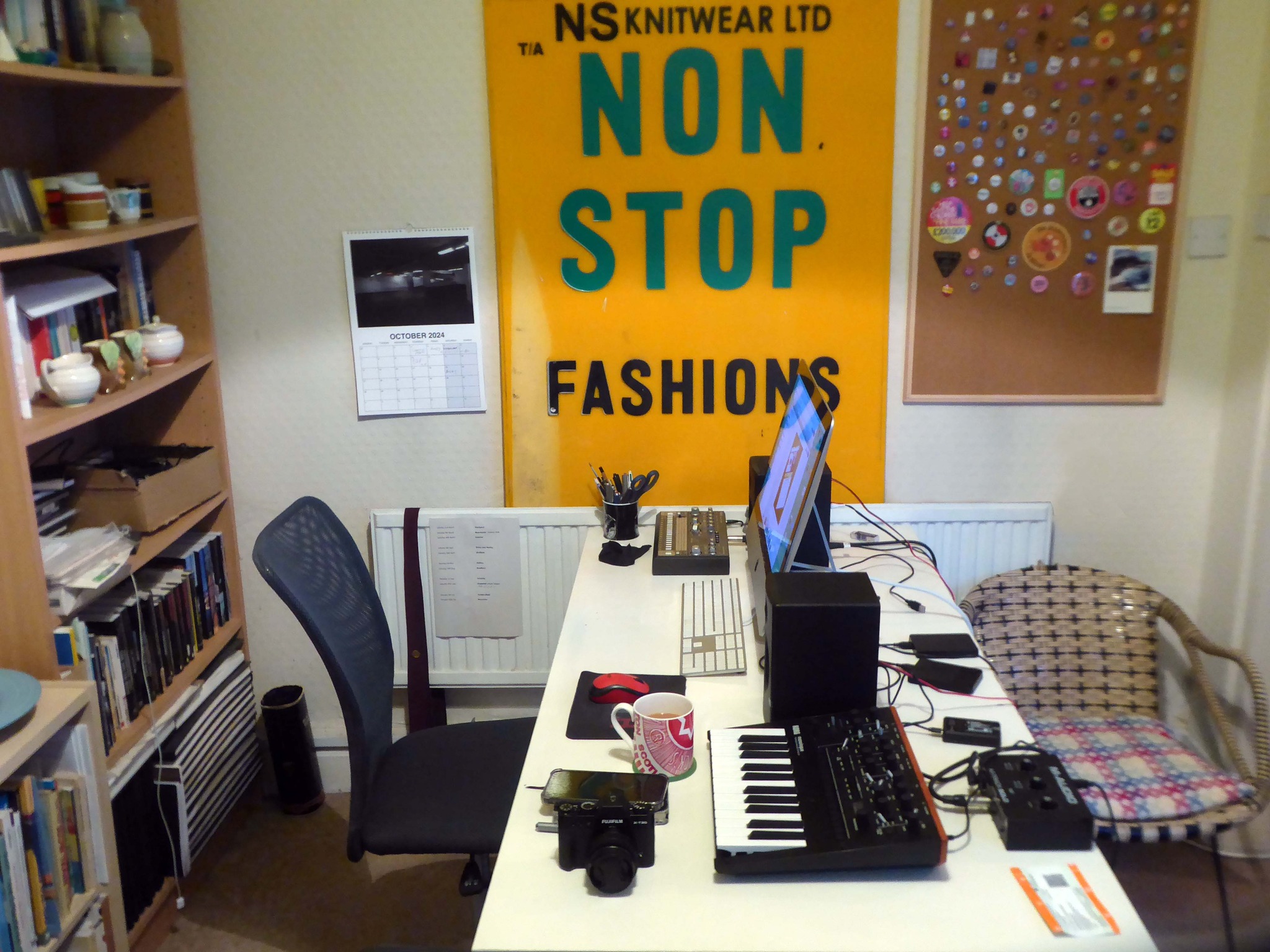
We are now coming to the end of the car park year – seen here on the wall of my command centre.

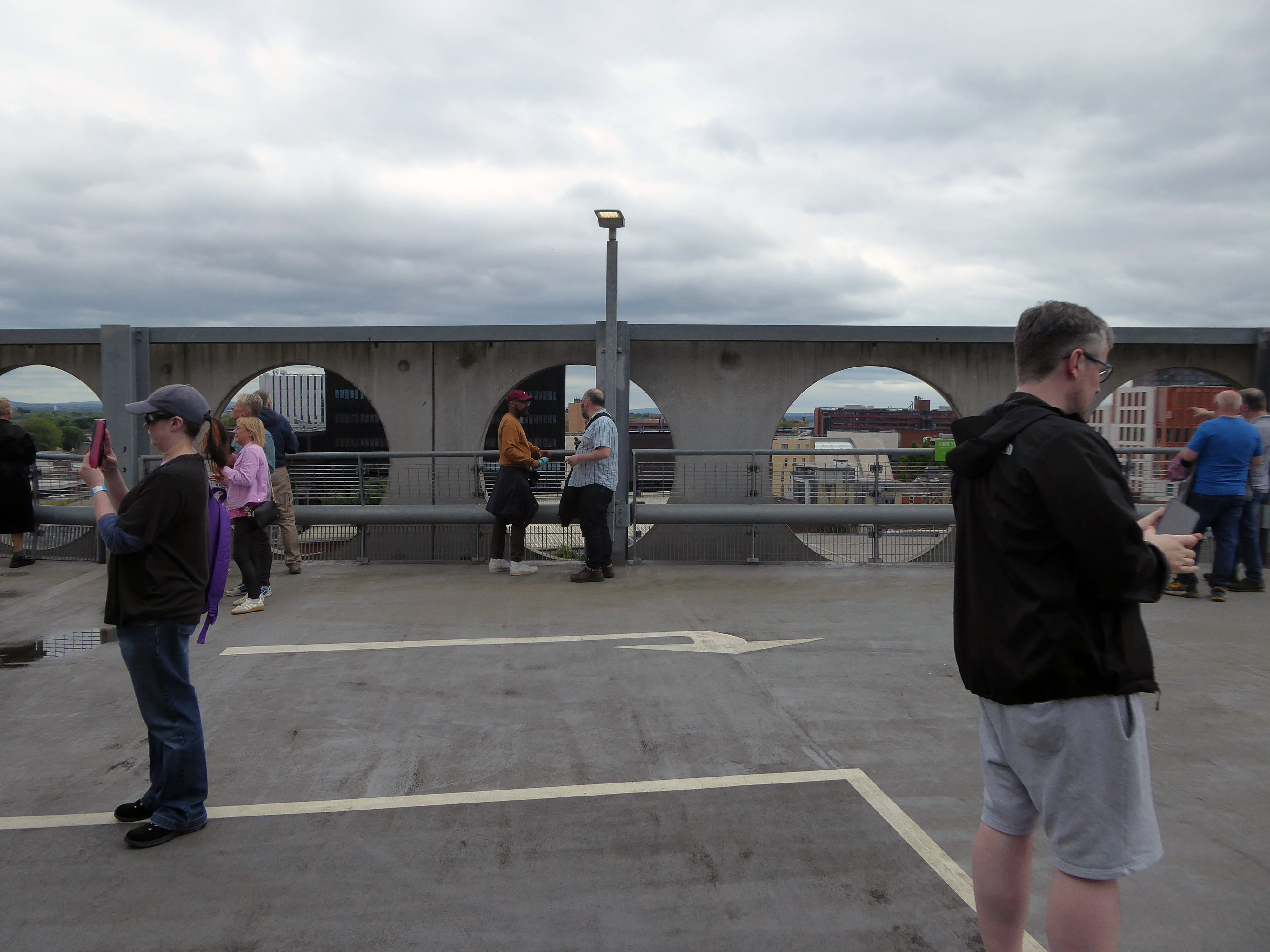
The calendar was an adjunct to a walk – Twelve Car Parks.

Here we all are at Circle SquareFielden Clegg Bradley were concept architects while Leach Rhodes Walker were delivery architects.

In September we walked around Newcastle for a weekend away – taking in Eldon Square, ably guided by local modernist Euan Lynn.

Ending our tour at Manors Car Park.

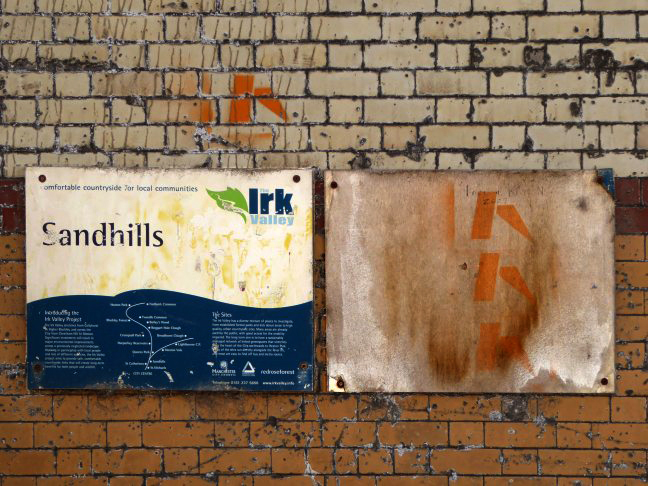
Following an urban river – the River Irk, an excellent way to devise a linear walk.

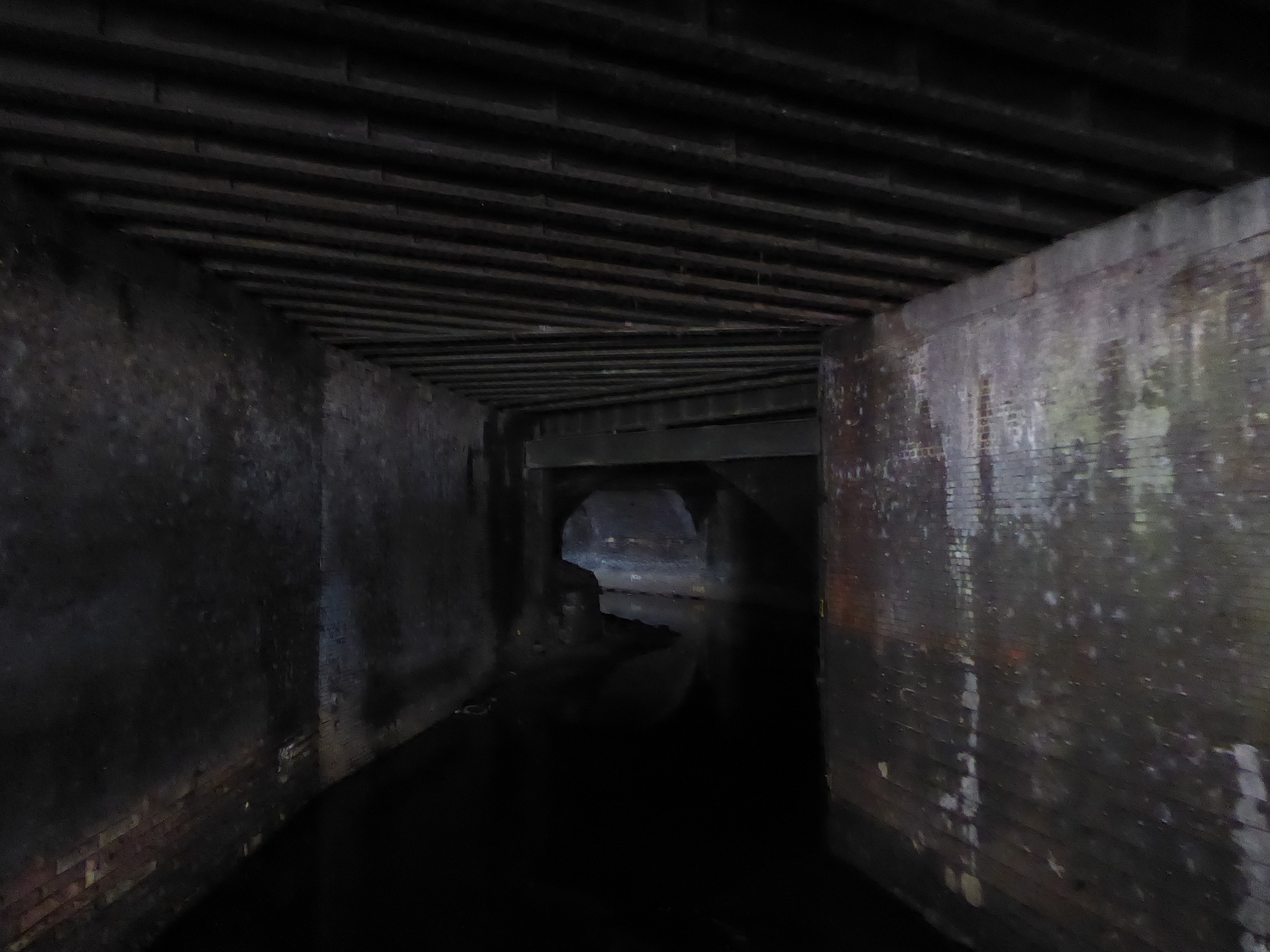
The river enclosed in blue engineers brick as it passes under the railway.

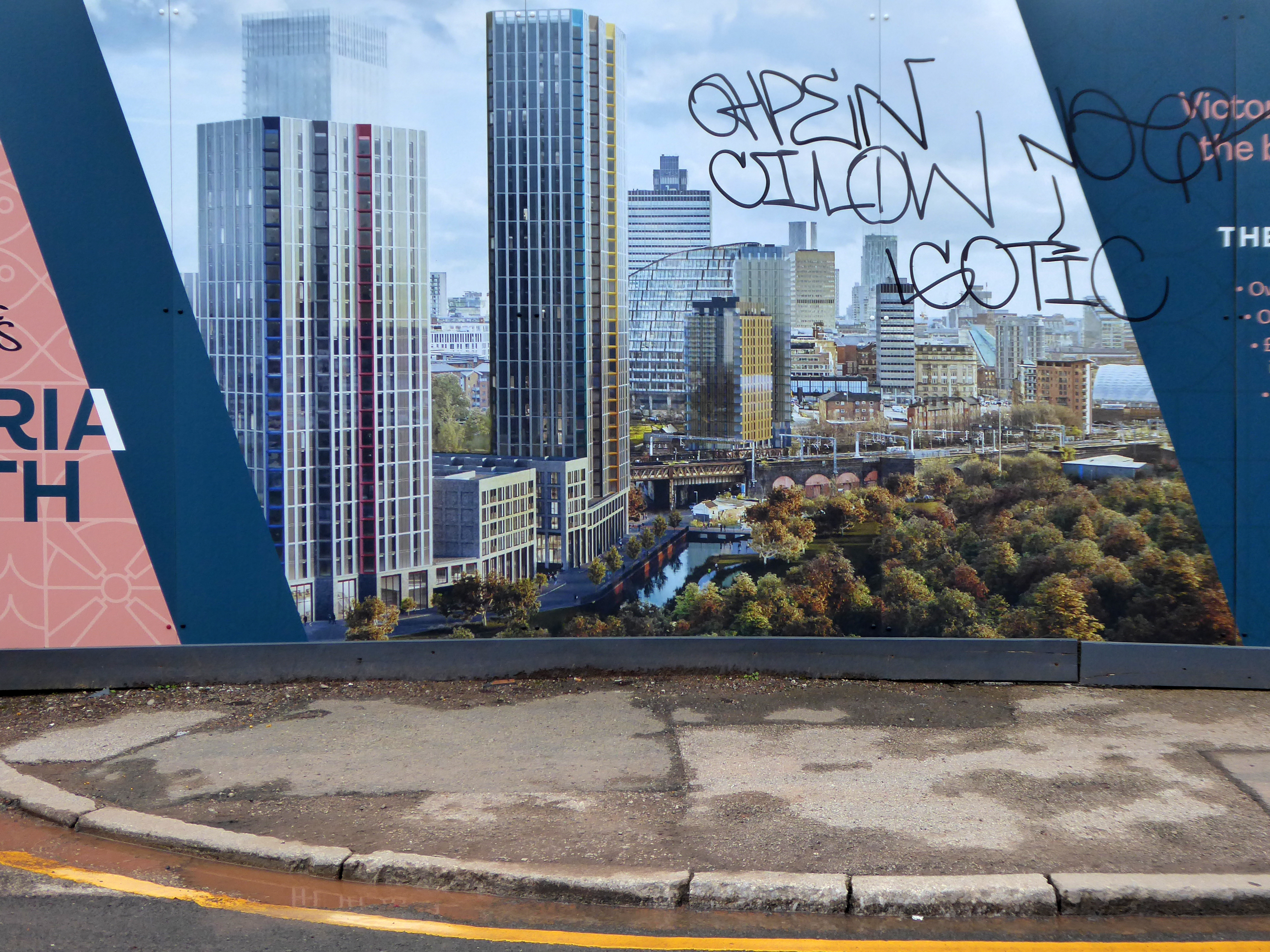
A long neglected are is now the scene of mass regeneration – rebranded Victoria North.

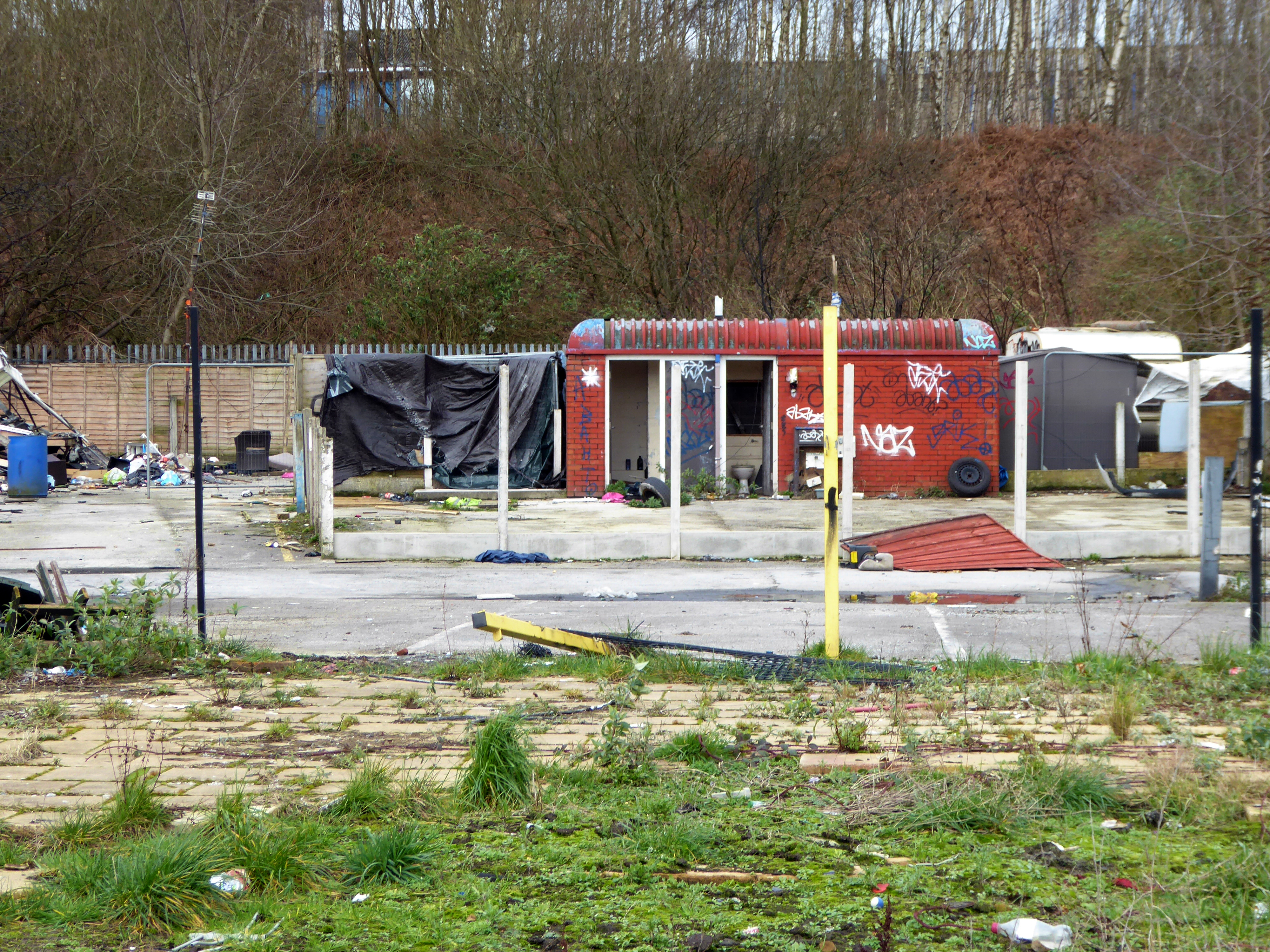
The former Traveller’s homes are now rubble.

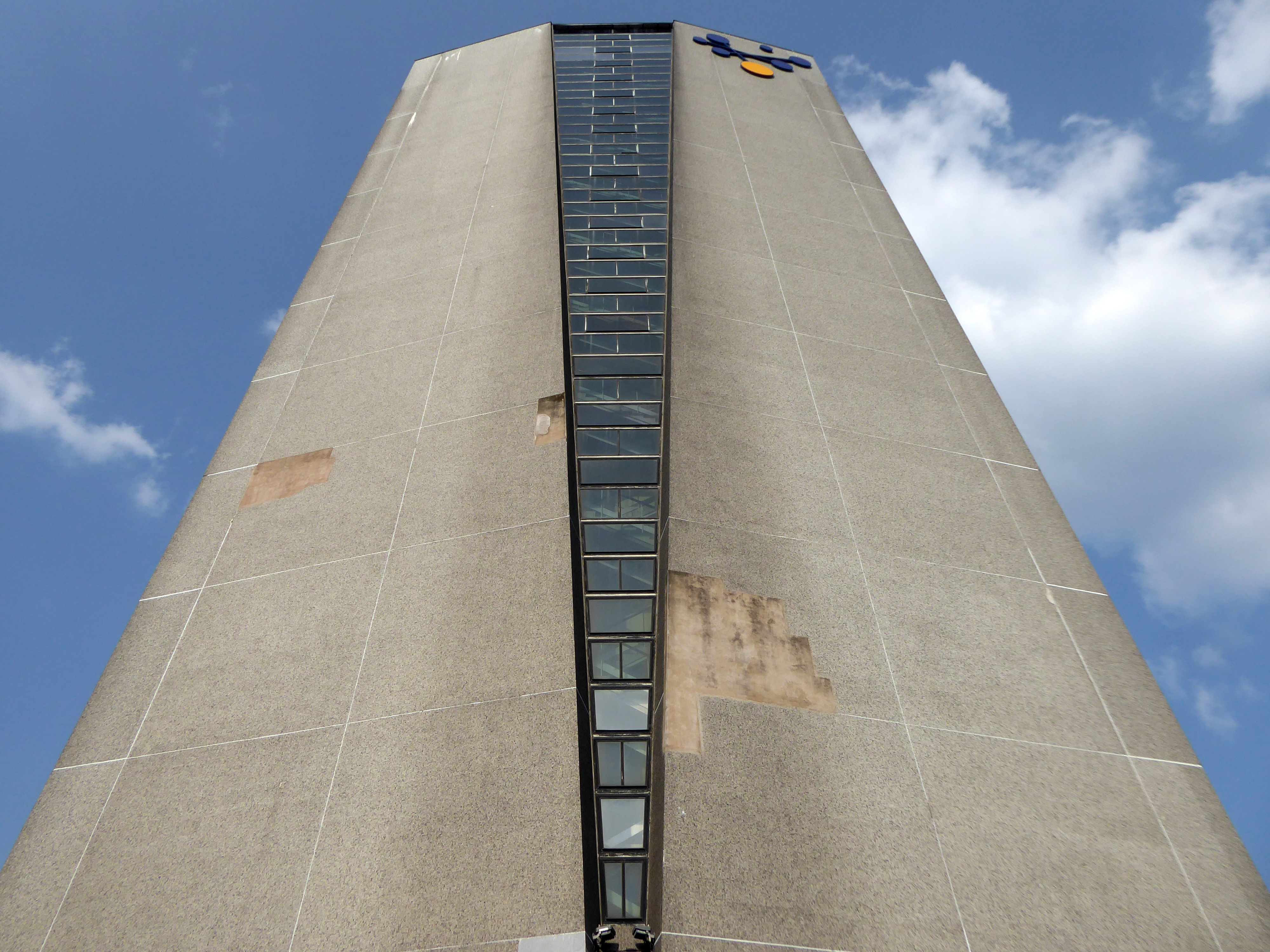
Rushing miles ahead to Blackley the home of Richard Siefert’s ICI Tower.

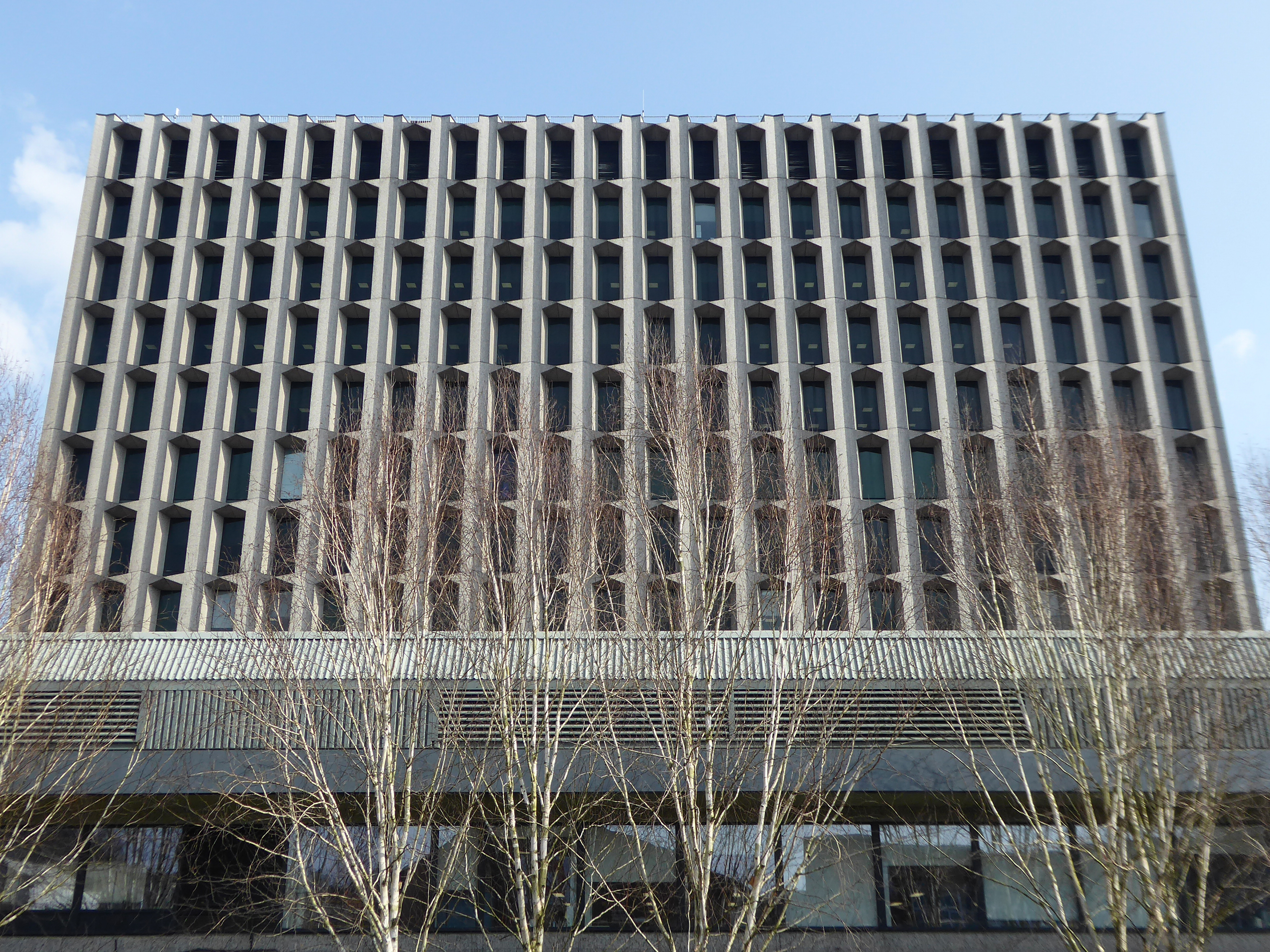
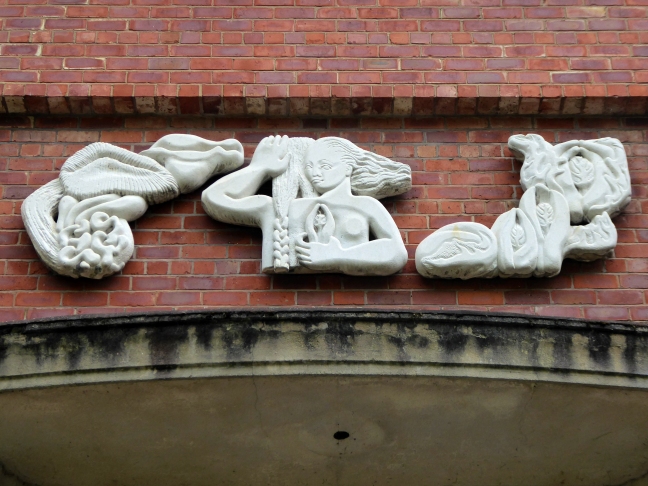
And around the corner, these delightful reliefs attached to the Tower Blocks.

I was asked to assist in putting together an exhibition for Collyhurst Voices – walking through the memories of a community under threat.

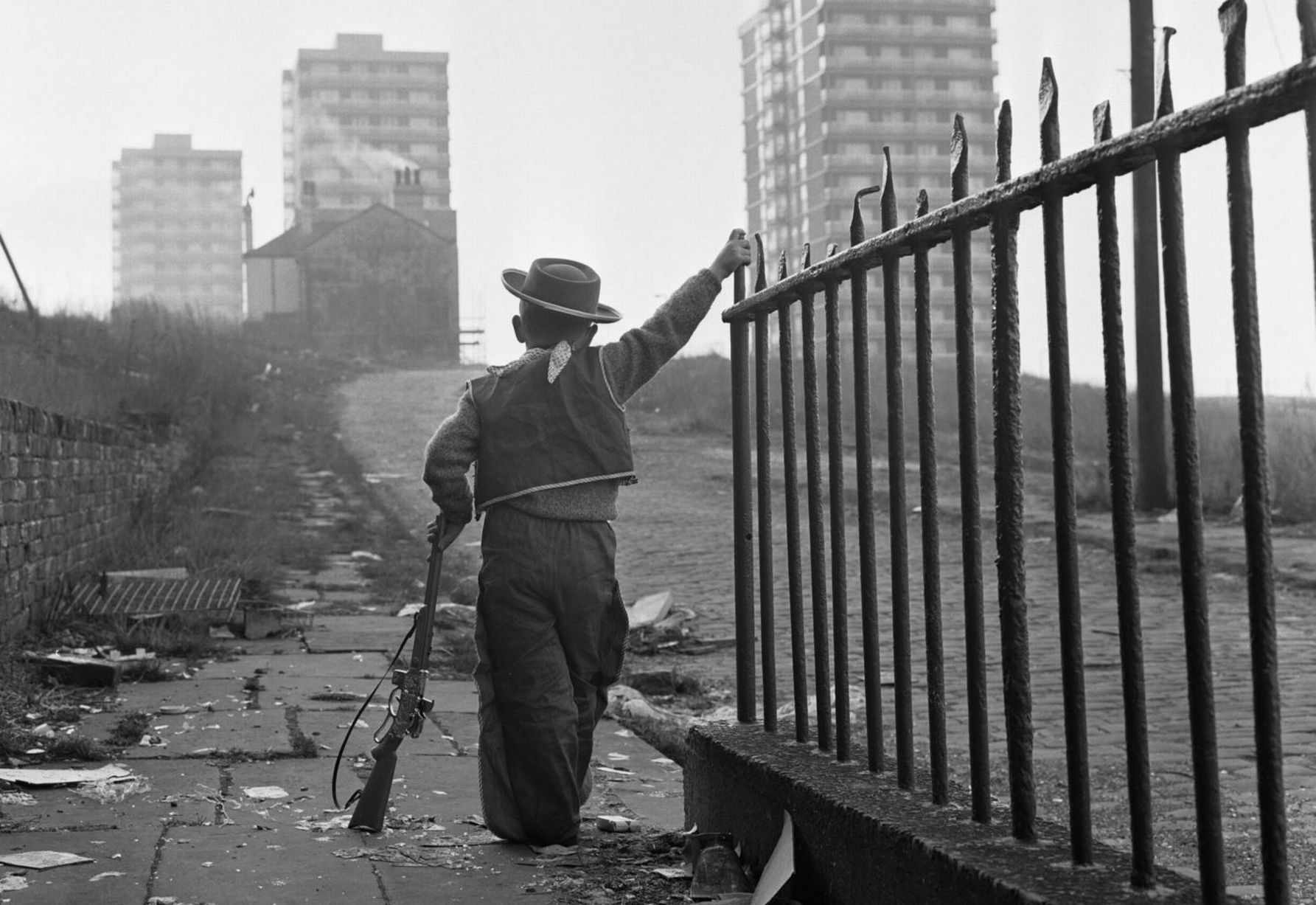
Walking in the footsteps of Dennis Hussey’s Collyhurst Cowboy – looking toward Dalton Street

Then uphill to Eastford Square and the long lost homes.

Home to William Mitchell’s Totem, the homes long gone and the Council pledged to move the totem too.

The state of play this week, the detritus removed and the base filled in, repaved and safe for a while.

Off now to the Weaver Valley another day another river, passing under Weaver Viaduct

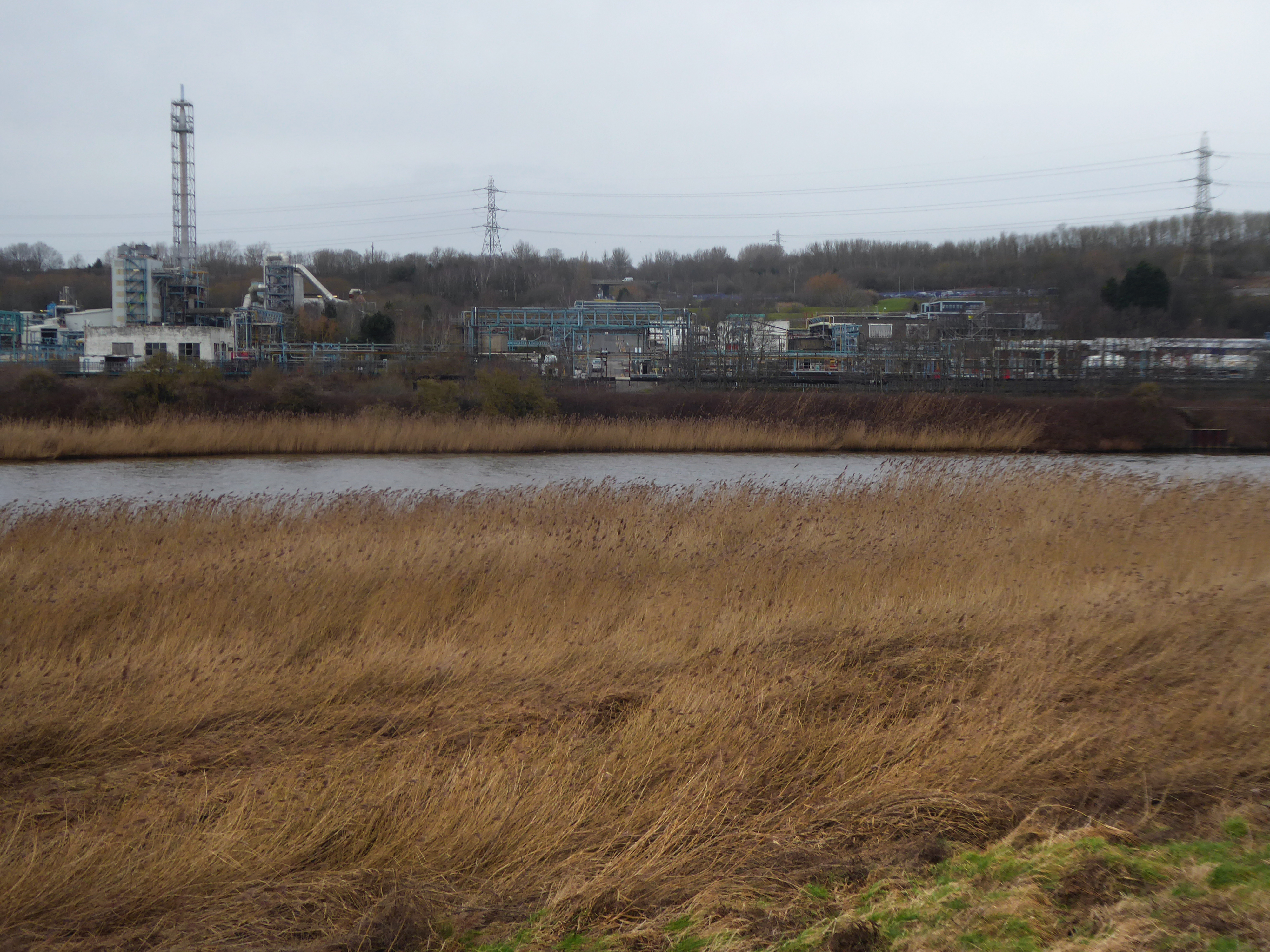
The looking toward Koura Global – leader in the development, manufacture, and supply of fluoro products and technologies, opened a new HFA 152a production facility at their Runcorn site in the UK.

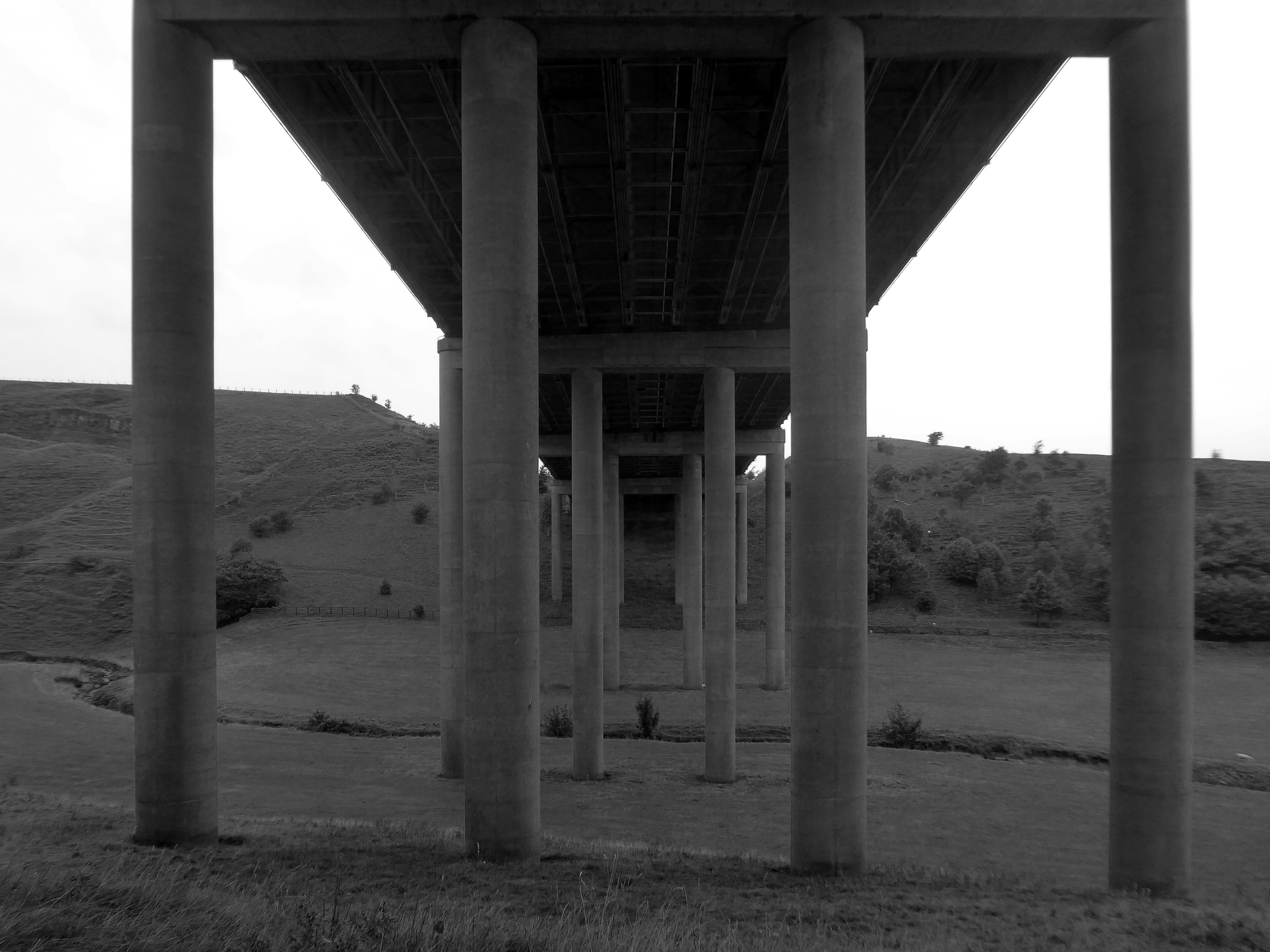
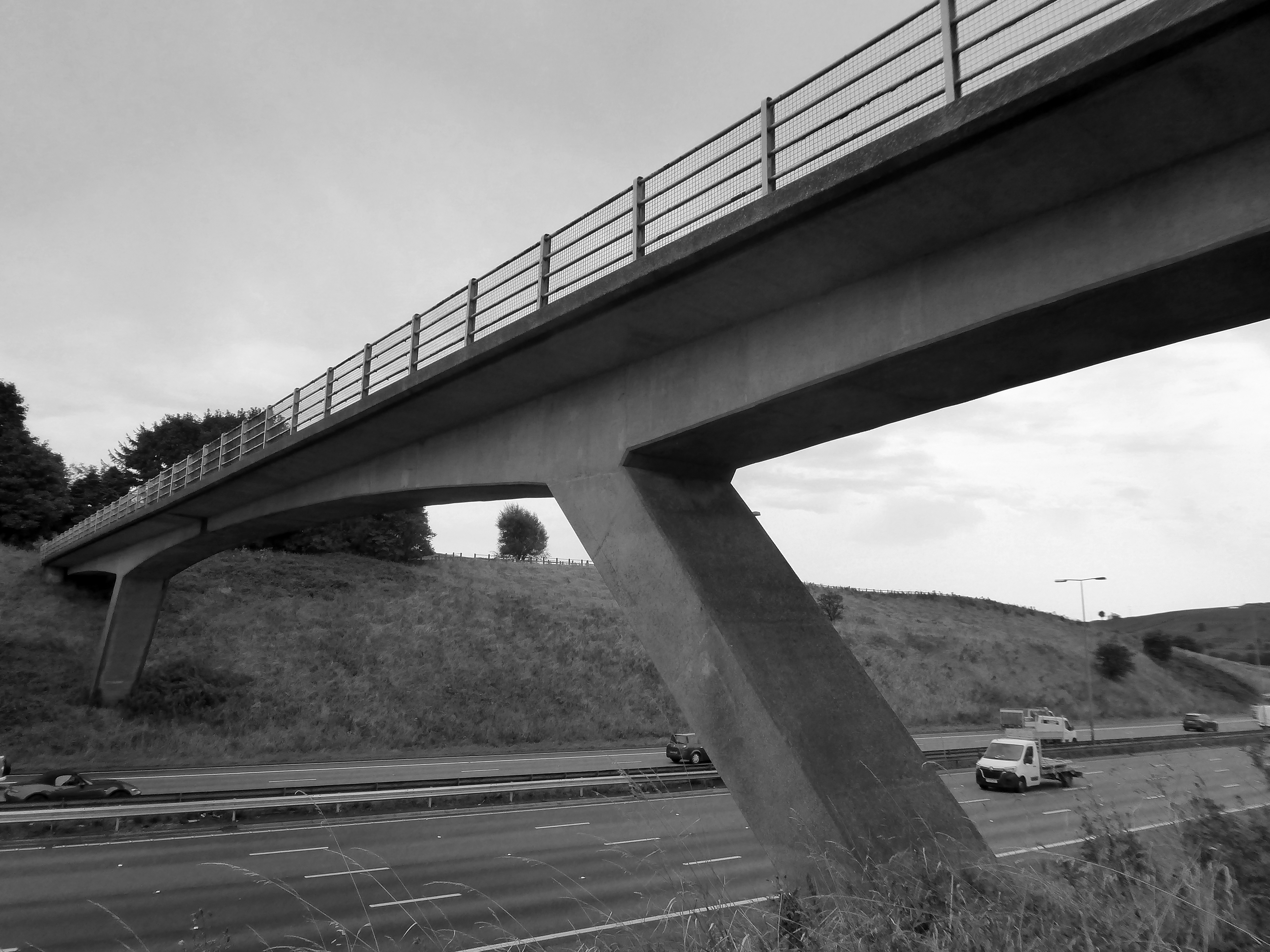
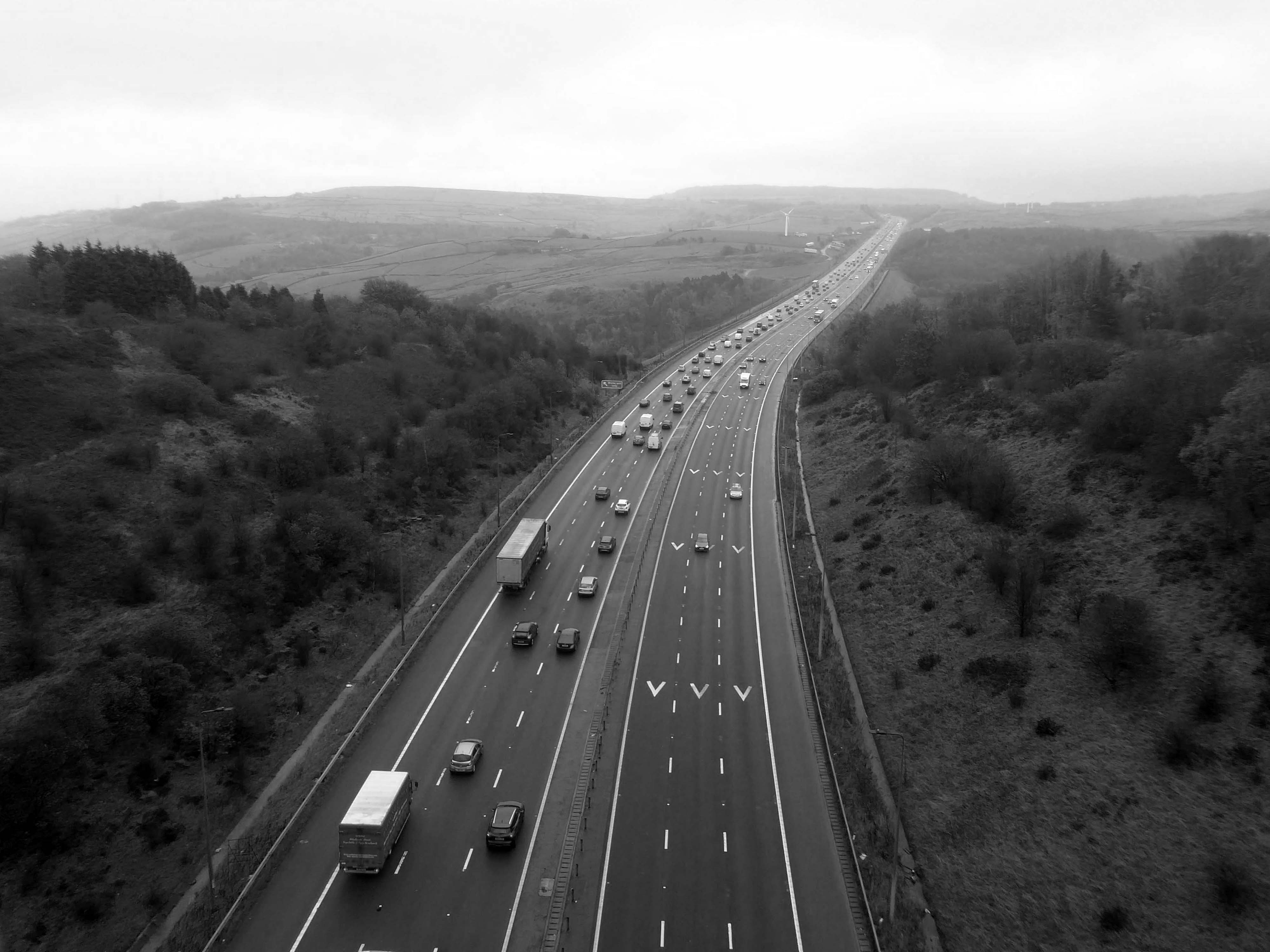
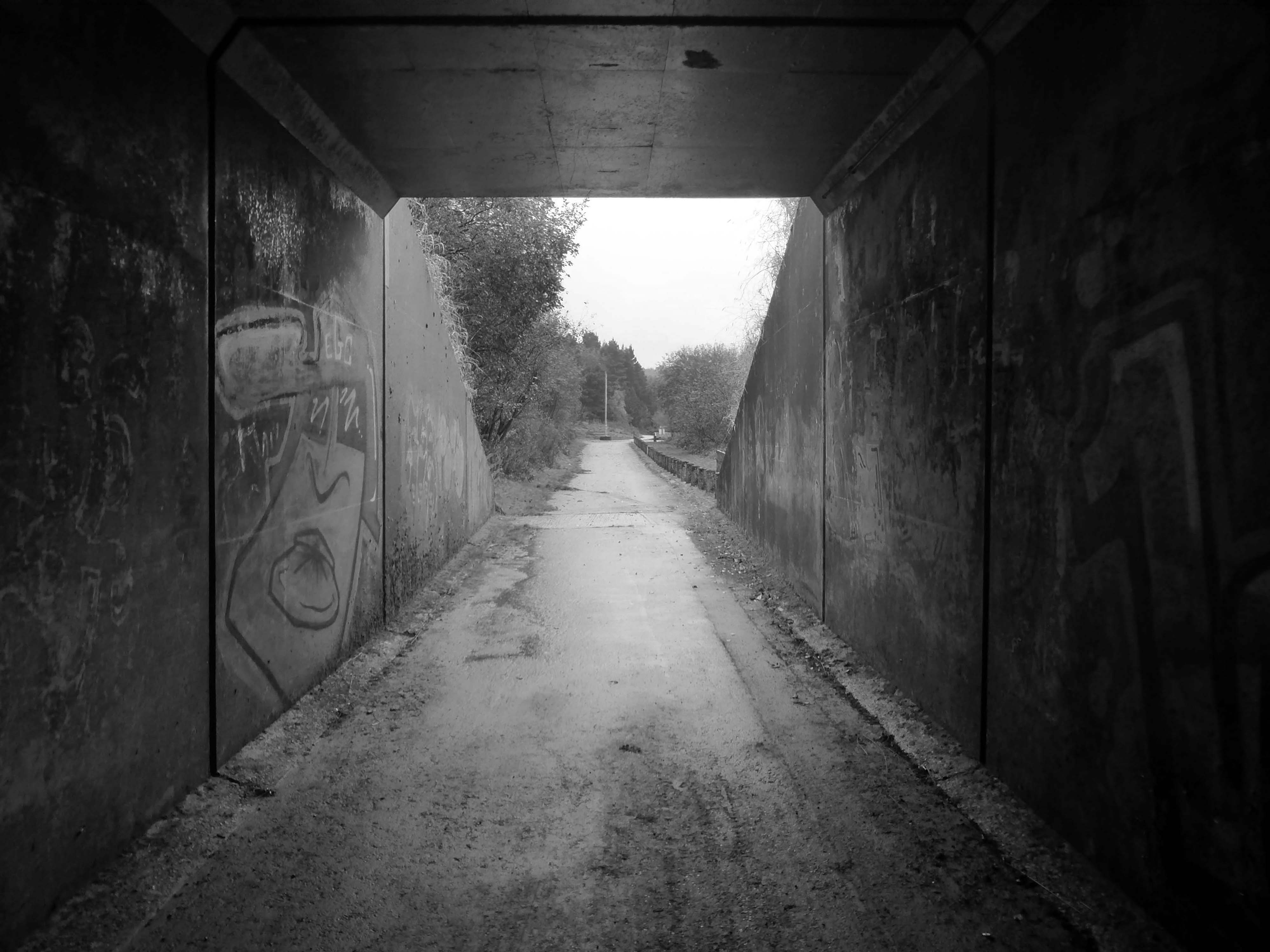
Further rural Modernism as we pass under and traverse the M62, whilst walking around the Piethorn Valley

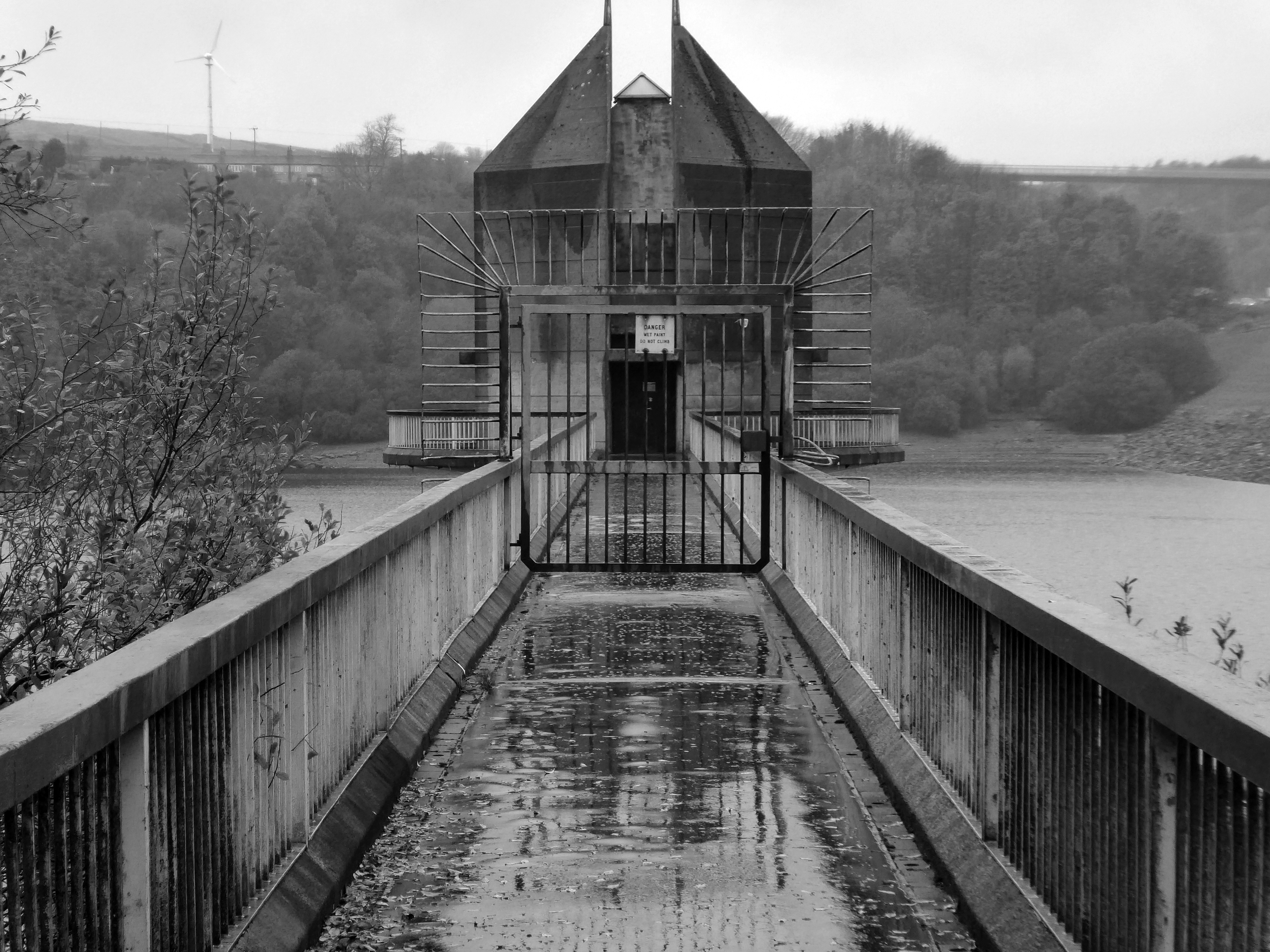
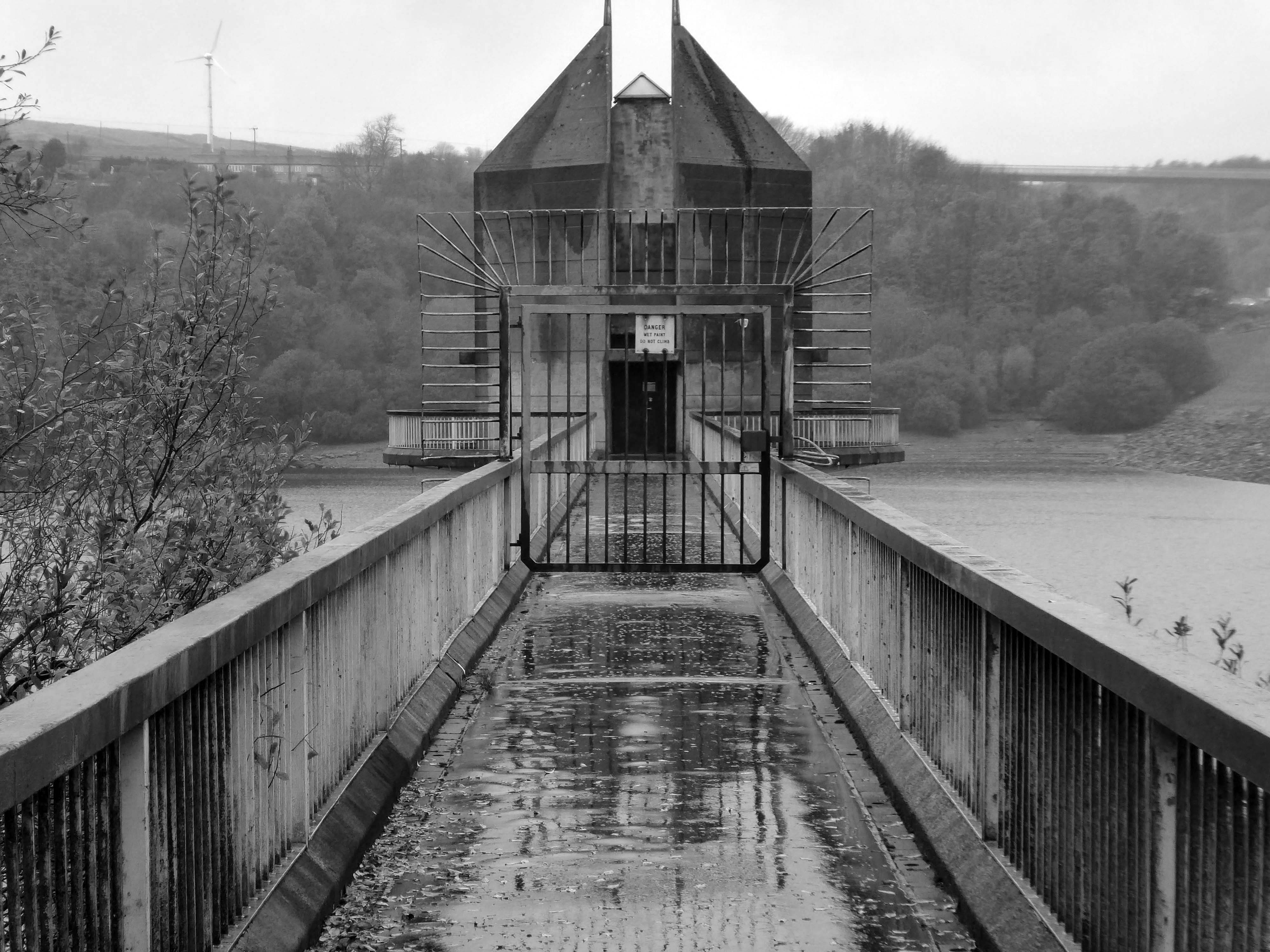
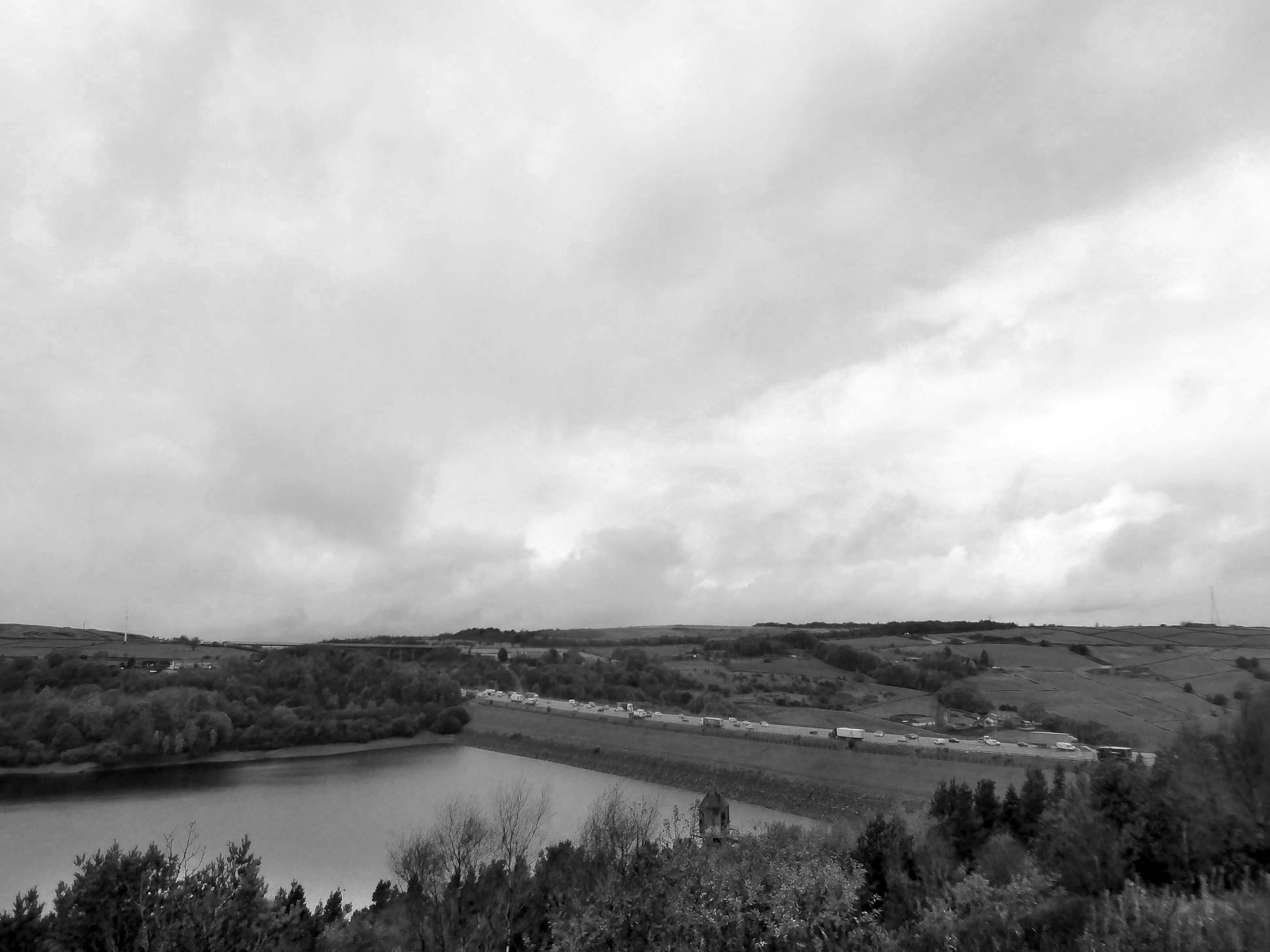
Then recently visiting several Yorkshire Reservoirs – here we are at Scammonden.

The newest of the Modernist Mooches was to Burnley where we visited the Keirby Hotel.

The former GUS Offices with a mural by Diane and William Morris.

Plus the Charles Anderson concrete relief at the Crow Wood Hotel.

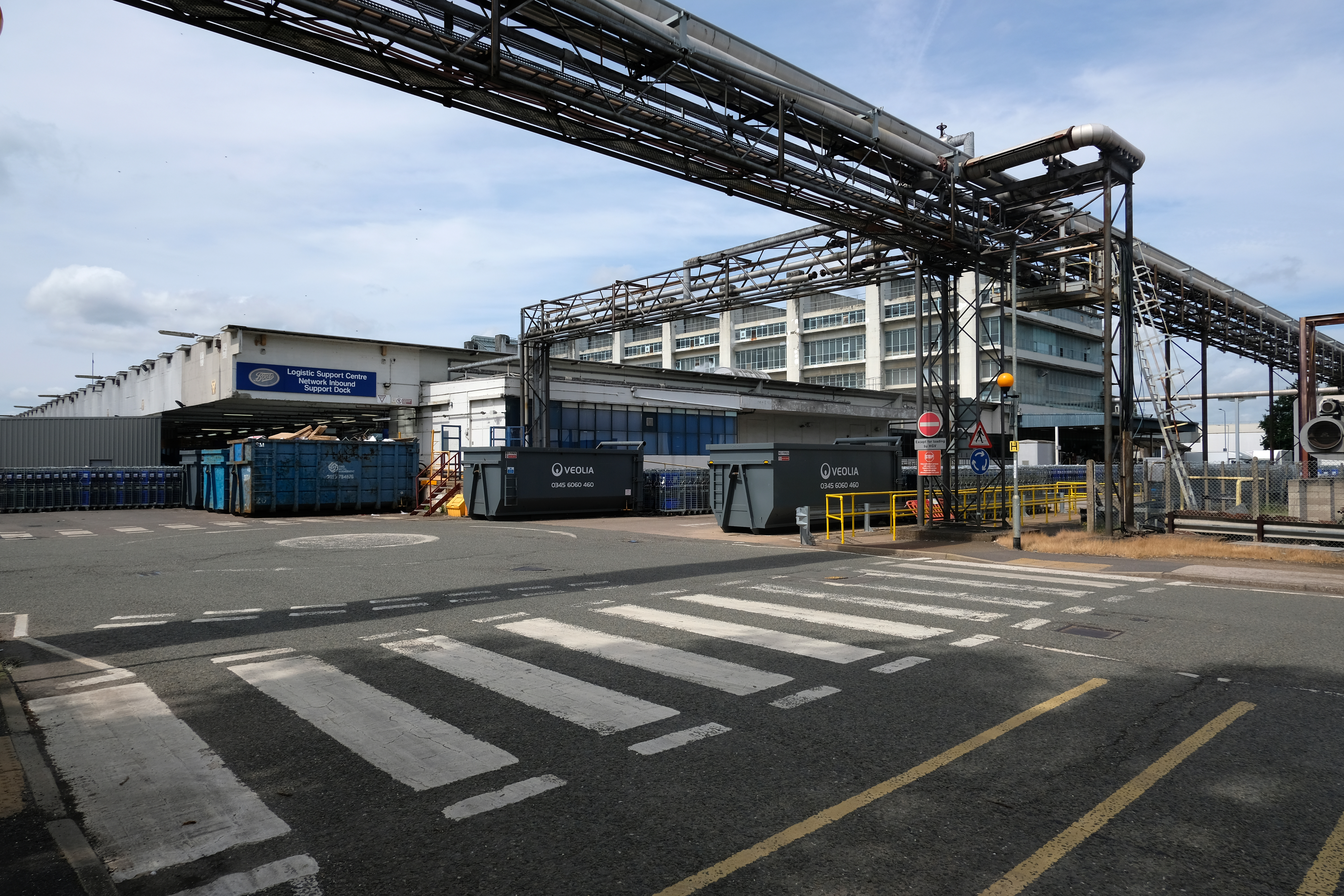
Finally a little light relief – a visit to the Boots factory in Nottingham.

Having innocently board a bus outside the station with a Boots head code , I alighted within the factory gates. Then innocently walking around taking snaps, unheeded until the men in the van stopped me in my tracks.

Who are you, what are you doing?

I am the Modern Moocher going about my business – well it turns out this was not permitted and I was red carded by the earnest security guards and asked to leave forthwith. Suitably rebuked, I politely bade them farewell and headed for the gates.

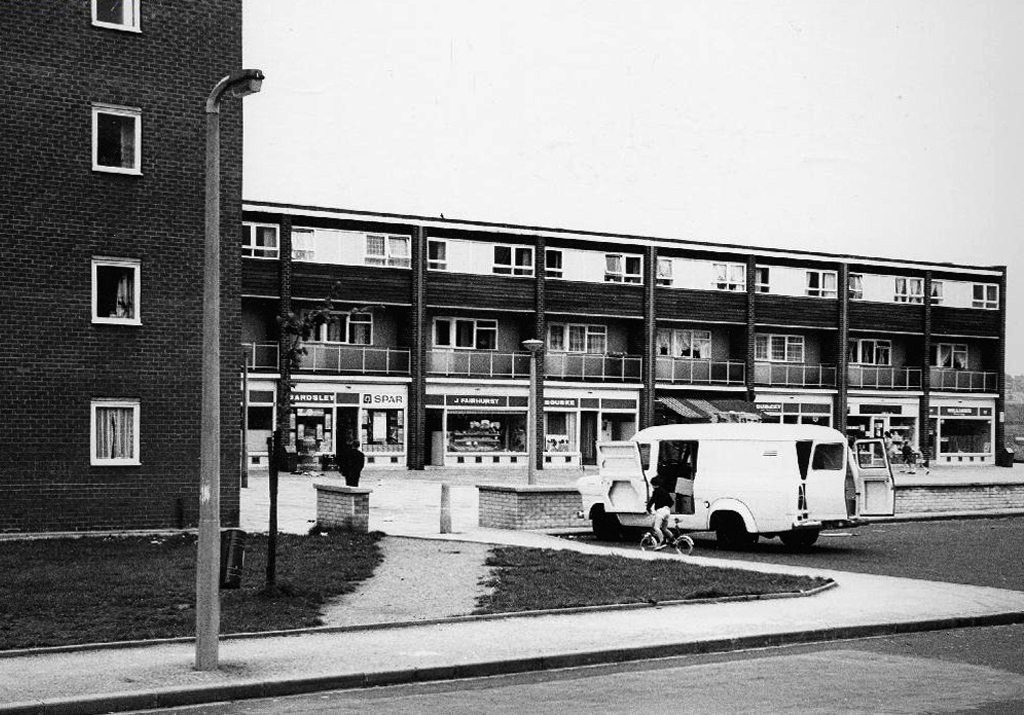
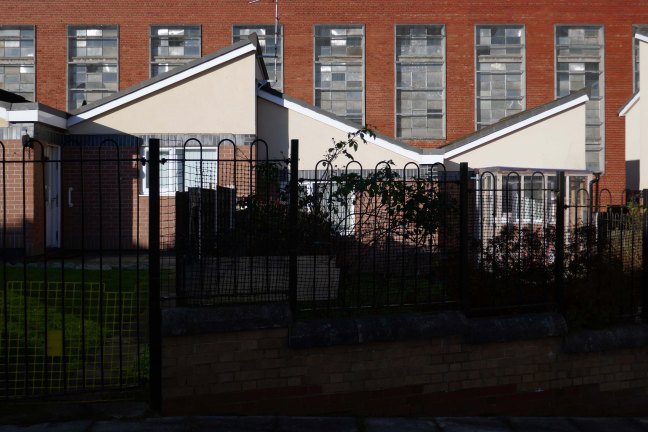
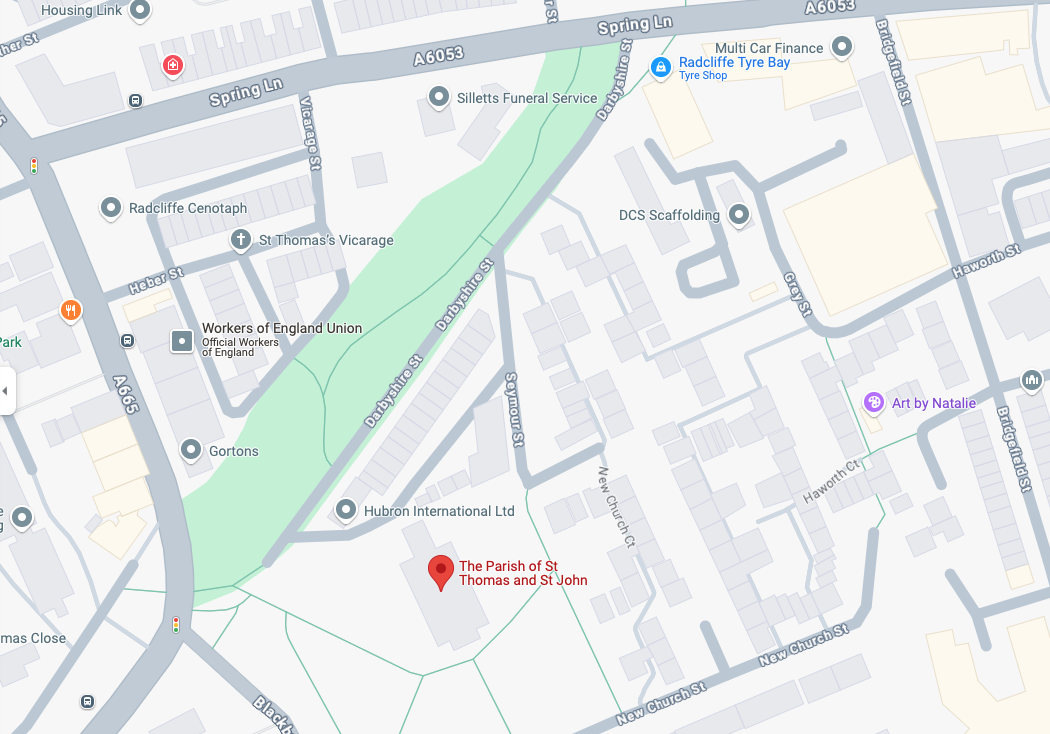
St Thomas Estate – Radcliffe

By Wilson and Womersley 1968, the project architect was John Sheard.
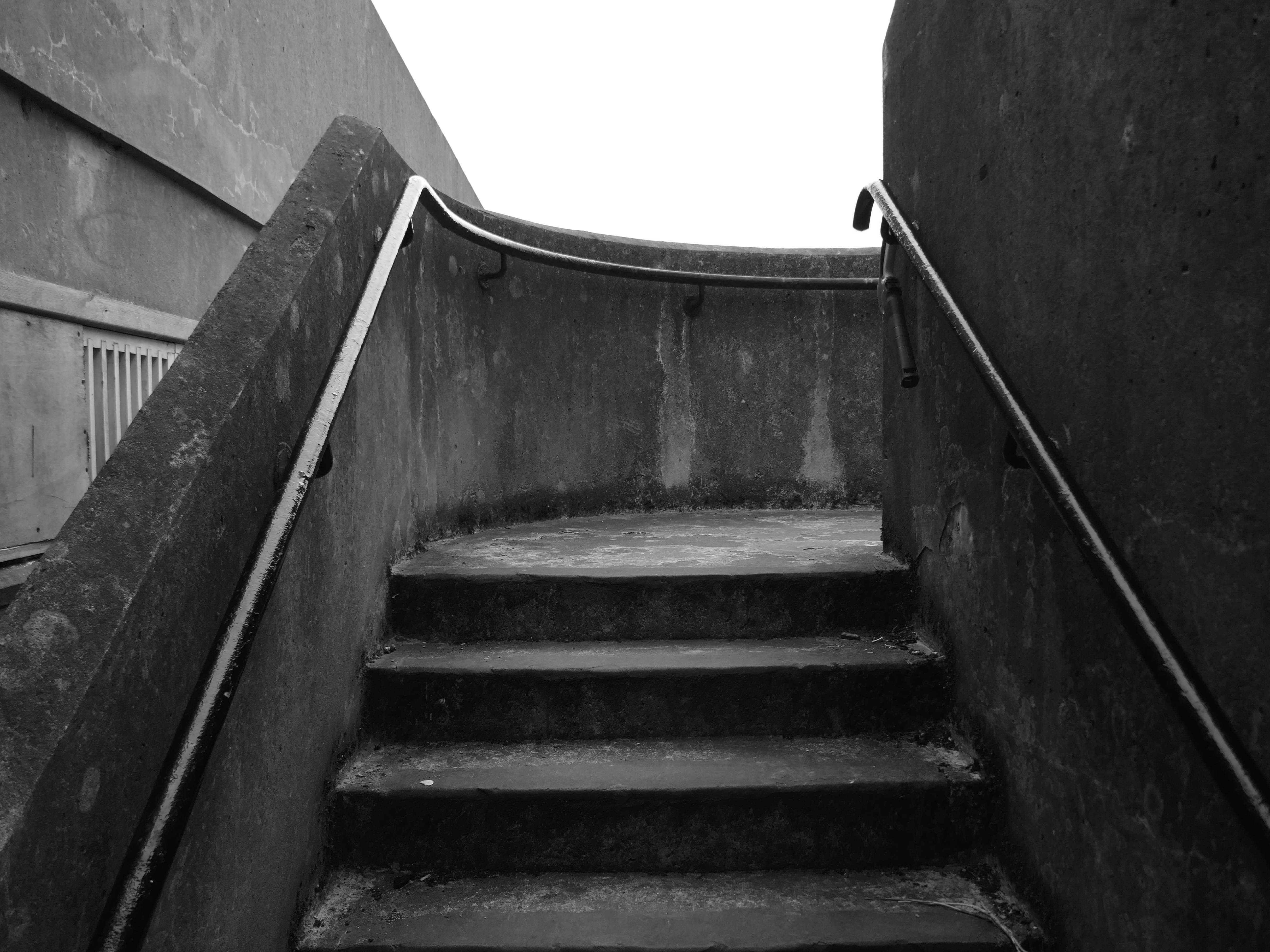
New-towny, dense low-rise housing irregularly grouped around and over pedestrian access paths.

Pevsner 1996/2004

The 2003 masterplan recommence its removal.

The masterplan states that Radcliffe has many unattractive buildings and few architectural assets. But this could work to its advantage as a lack of protected or noteworthy buildings makes it easier to replace them with contemporary structures.

This could include demolishing the “unwelcoming” St Thomas Estate and replacing it with a mix of private and social housing on the old street layout. Existing tenants would be rehoused in the new houses so that the community would not be broken up.

Lancashire Telegraph

JL Womersely famously Sheffield City Architect:

During his term, Sheffield’s housing grew upwards with multi-storey flats constructed at Low Edges, Park Hill, Hyde Park, Netherthorpe and Woodside. It was Womersley’s response to 13,000 families on the council’s waiting list and 10,000 condemned properties waiting to be demolished.

Sheffielder

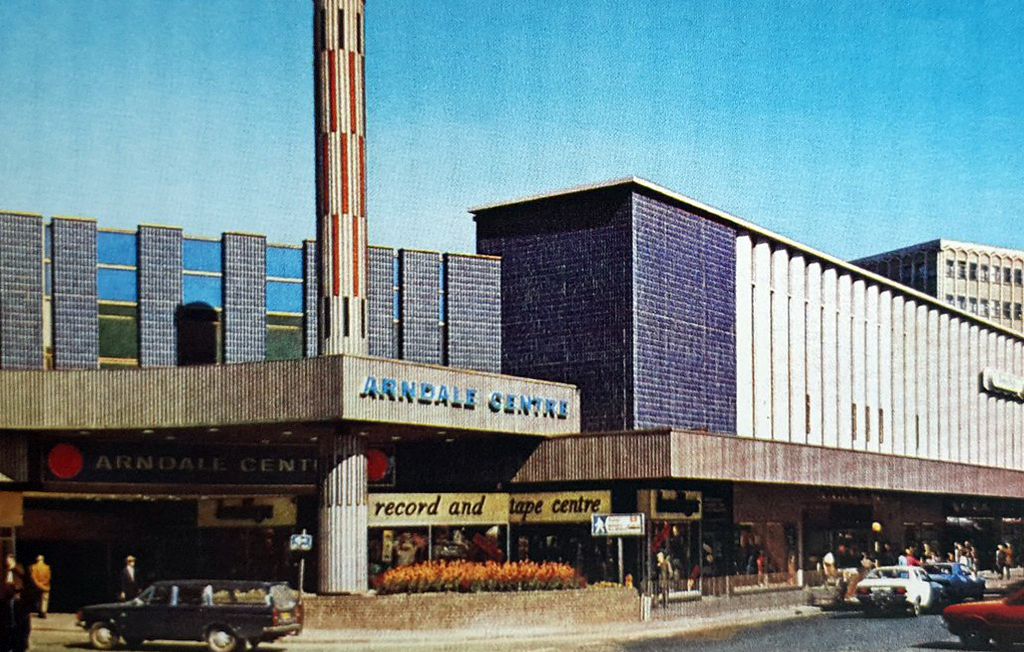
Wilson and Womersley were responsible for the Hulme Crescents and Manchester Arndale.

In the space of a decade they shaped Manchester’s urban fabric, leaving a questionable legacy. The technical quality of their buildings was undoubtedly poor, but their qualities – bold forms, monolithic materiality and streets-in-the-sky – were of the moment, and captured a particular brand of urban renewal, imported from North America and inflected through British post-war planning.

Richard Brook

Social housing has been, and continues to be, a contentious arena. This seemingly well-constructed estate was once deemed unfit for habitation by its residents.

Tenants of the St Thomas’ Estate in the town centre allege they have been forgotten by Six Town Housing, which manages the properties.

Magda Csatlos, former chairman of the now disbanded Tenants and Residents Association said rotten bricks with visible gaps between them, badly-designed leaking roofs and damp and mouldy conditions plague many of the 90 homes.

Bury Times 2014

Happily the Local Authority are able to remedy the problem.

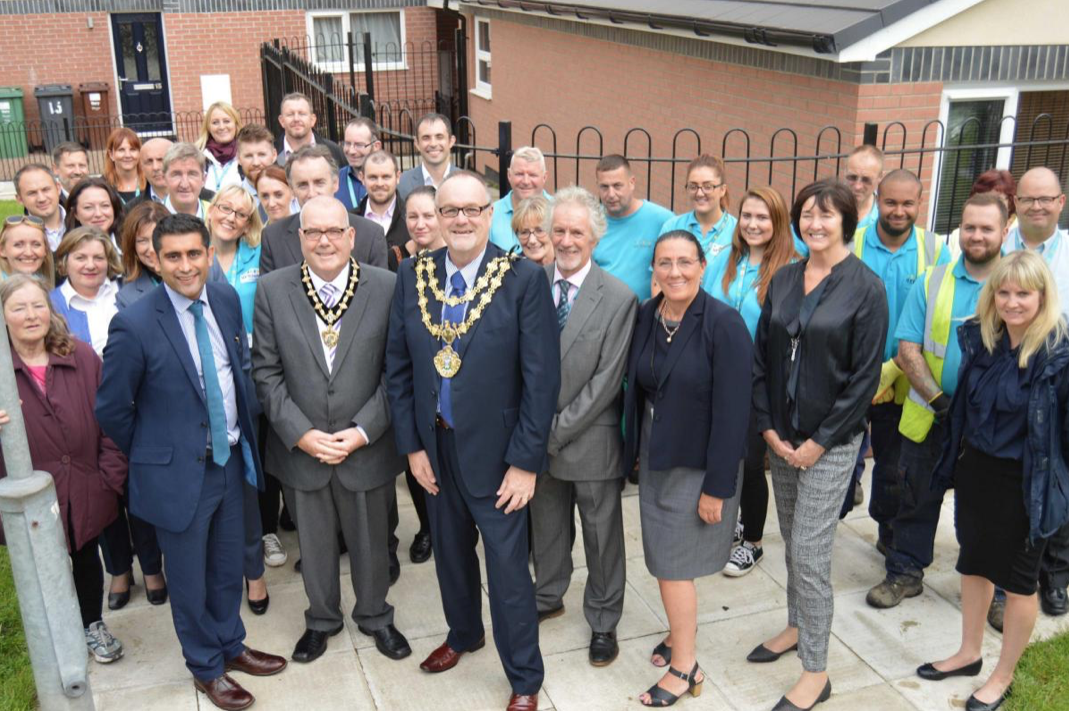
After some residents on the estate, who were visited by Bury South MP Ivan Lewis, called for the properties to be “condemned”, the Council agreed to invest £2 million to bring the homes up to standard.
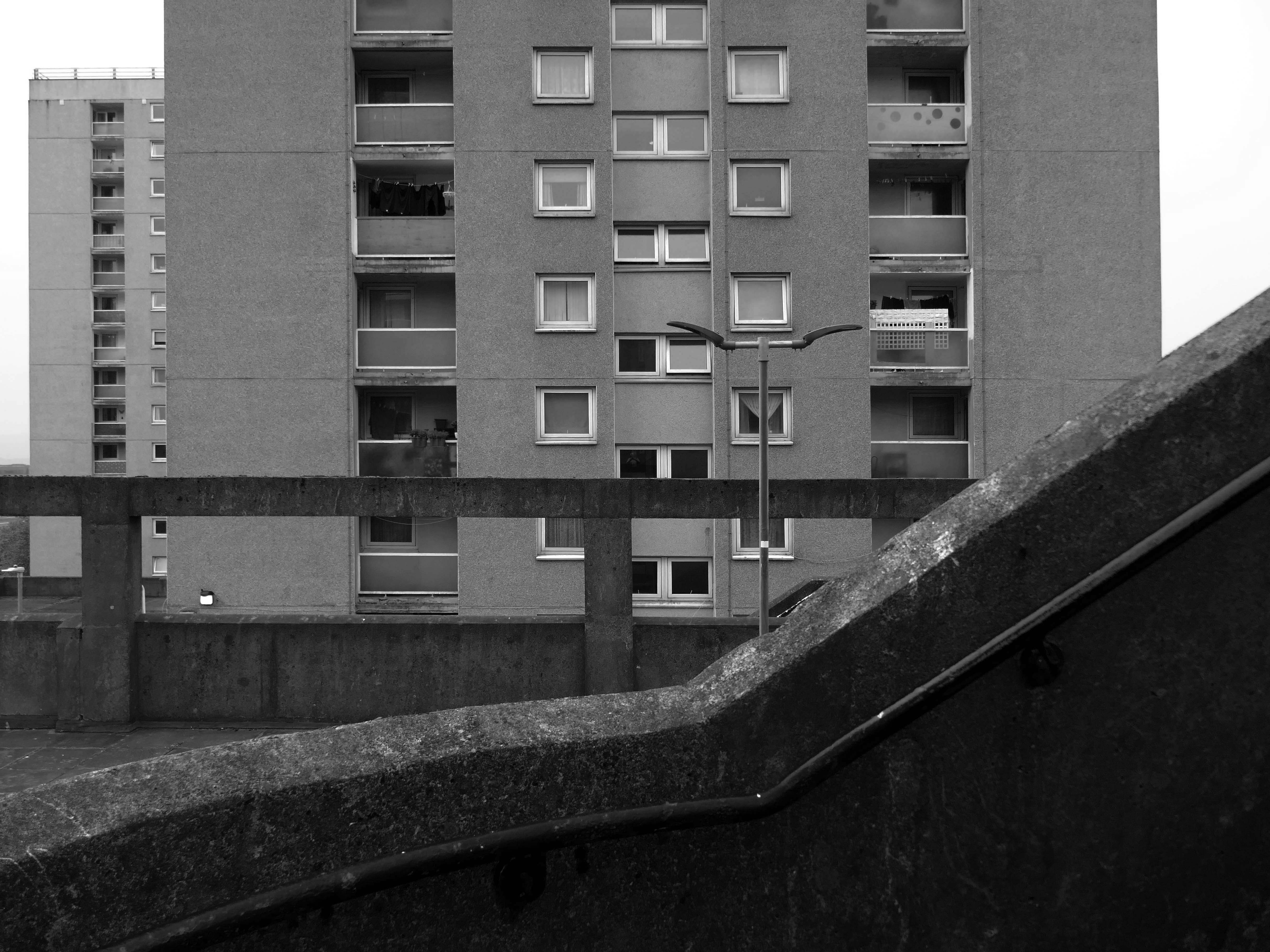
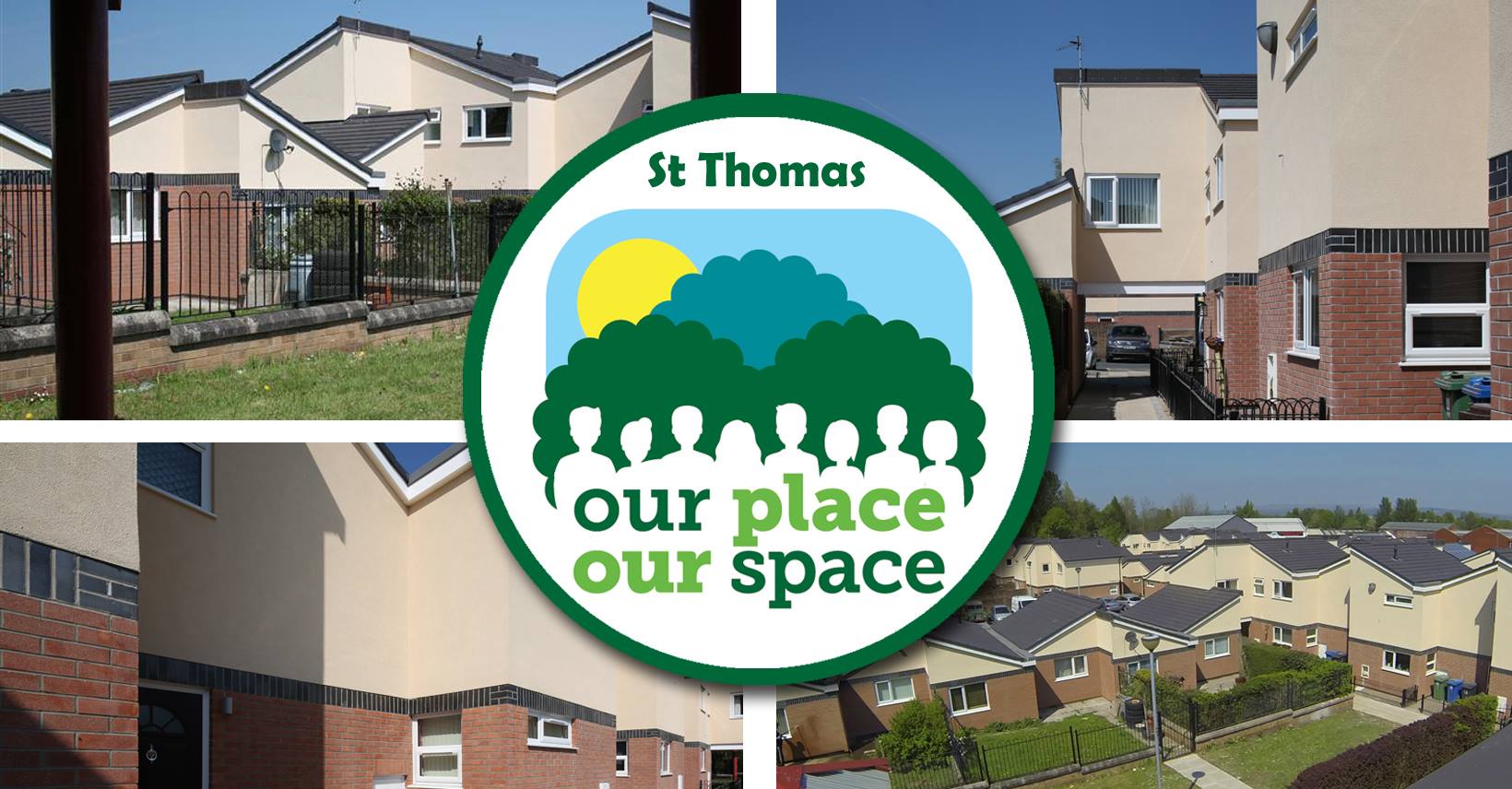
A total of 90 social housing properties on St Thomas Estate have been provided with new external rendering, roofing, windows, doors, insulation and brick cladding.

Bury Times 2016

On the day of my visit the long term tenants with whom I spoke were happily, happy with their homes.

Facebook

Here are some photographs, taken under the watchful golden eye of a low winter sun, hence the dramatic light and shade.

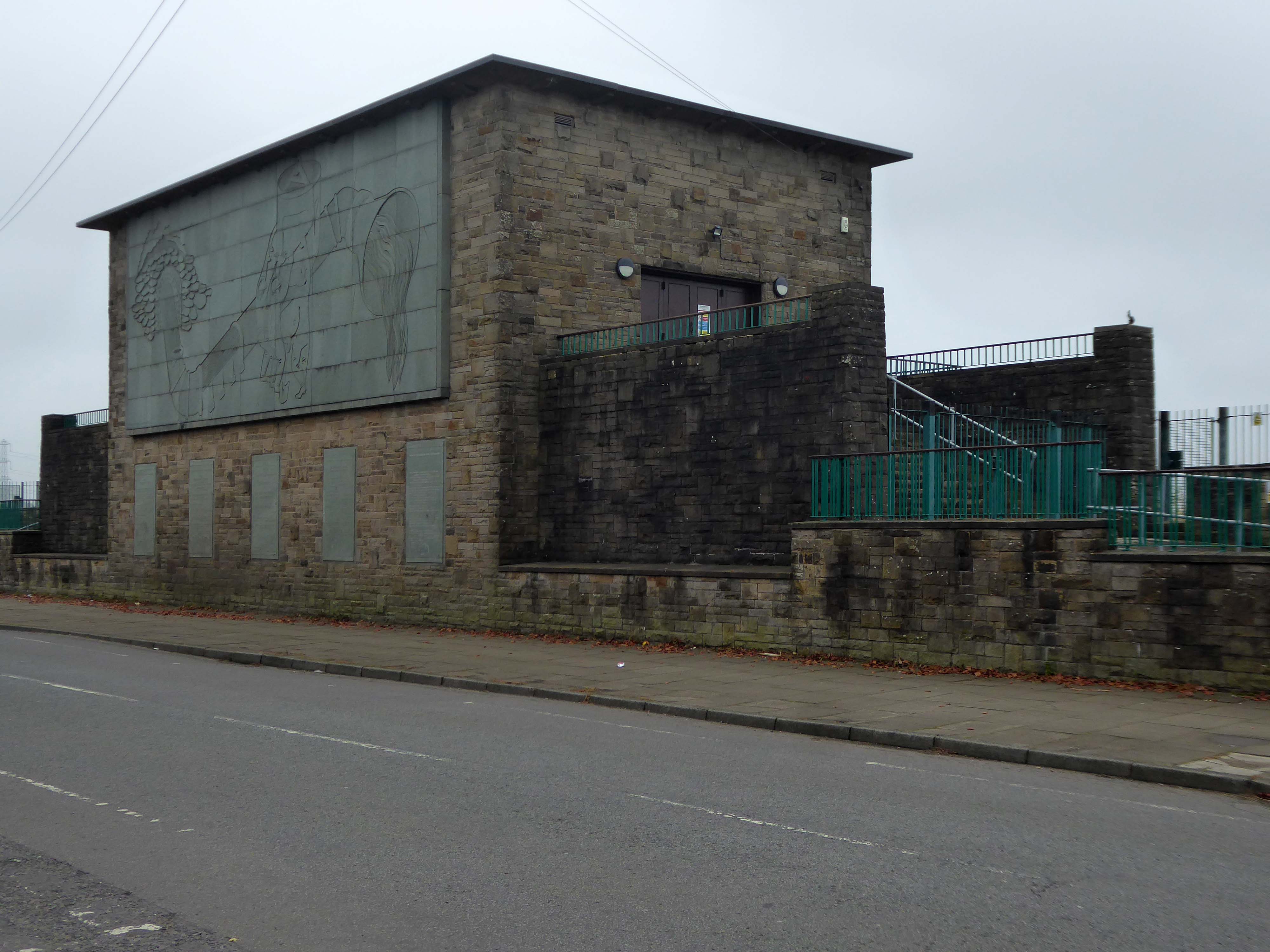
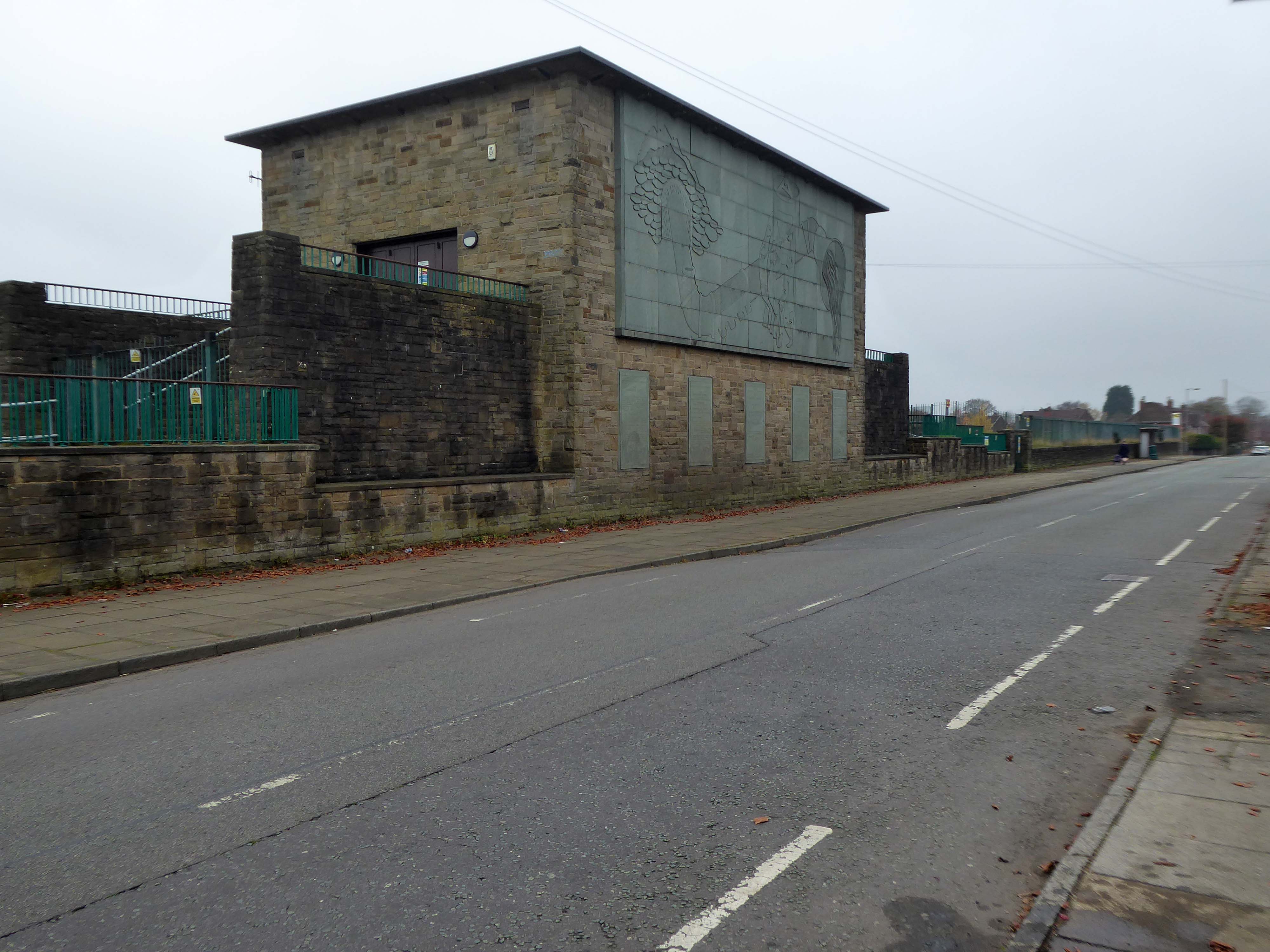
Heaton Park Reservoir Pumping Station

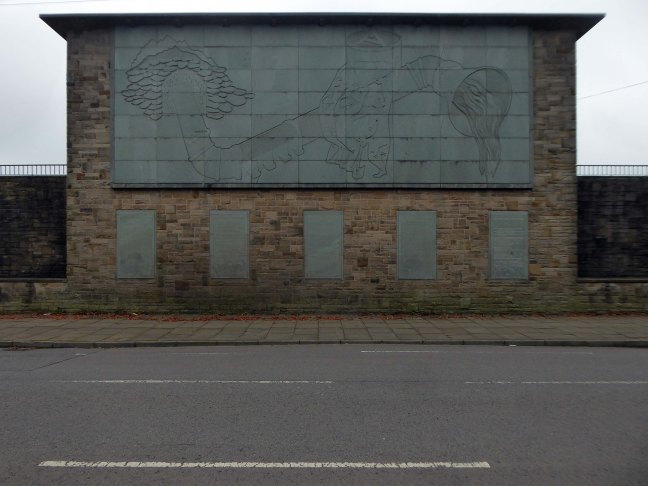
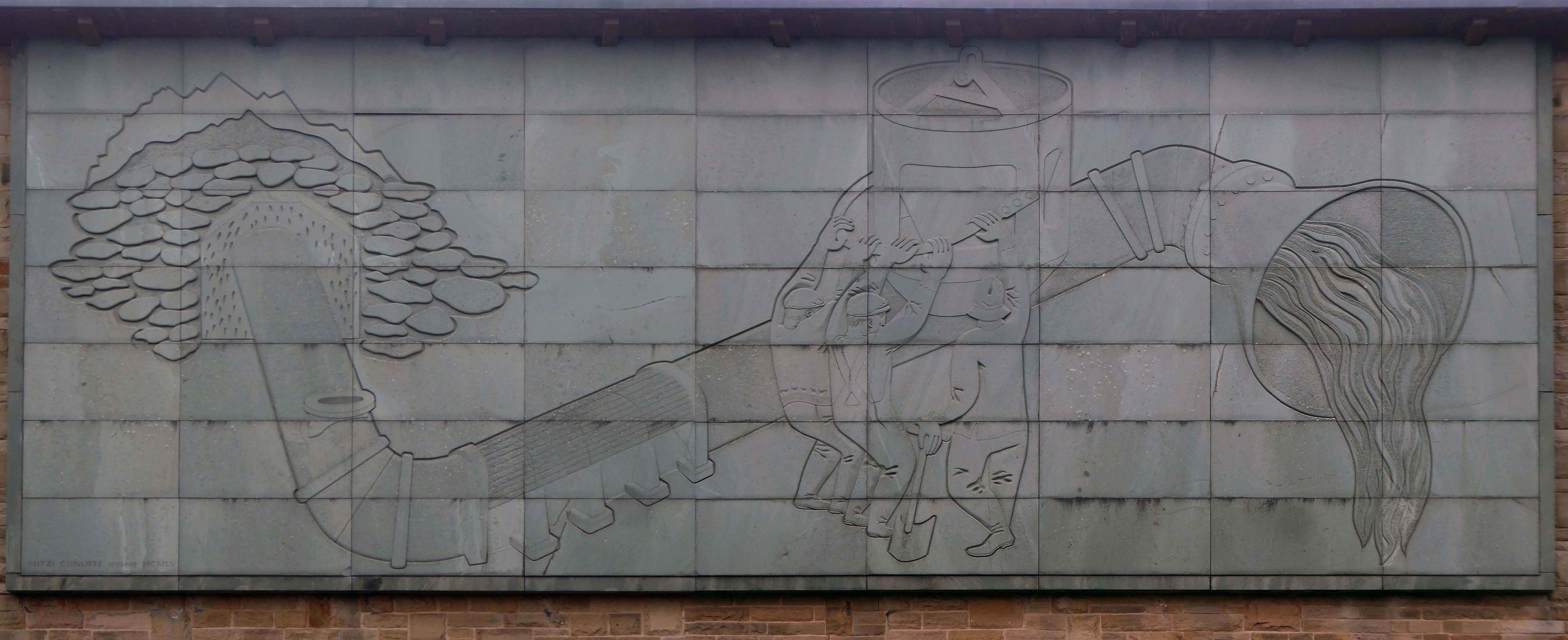
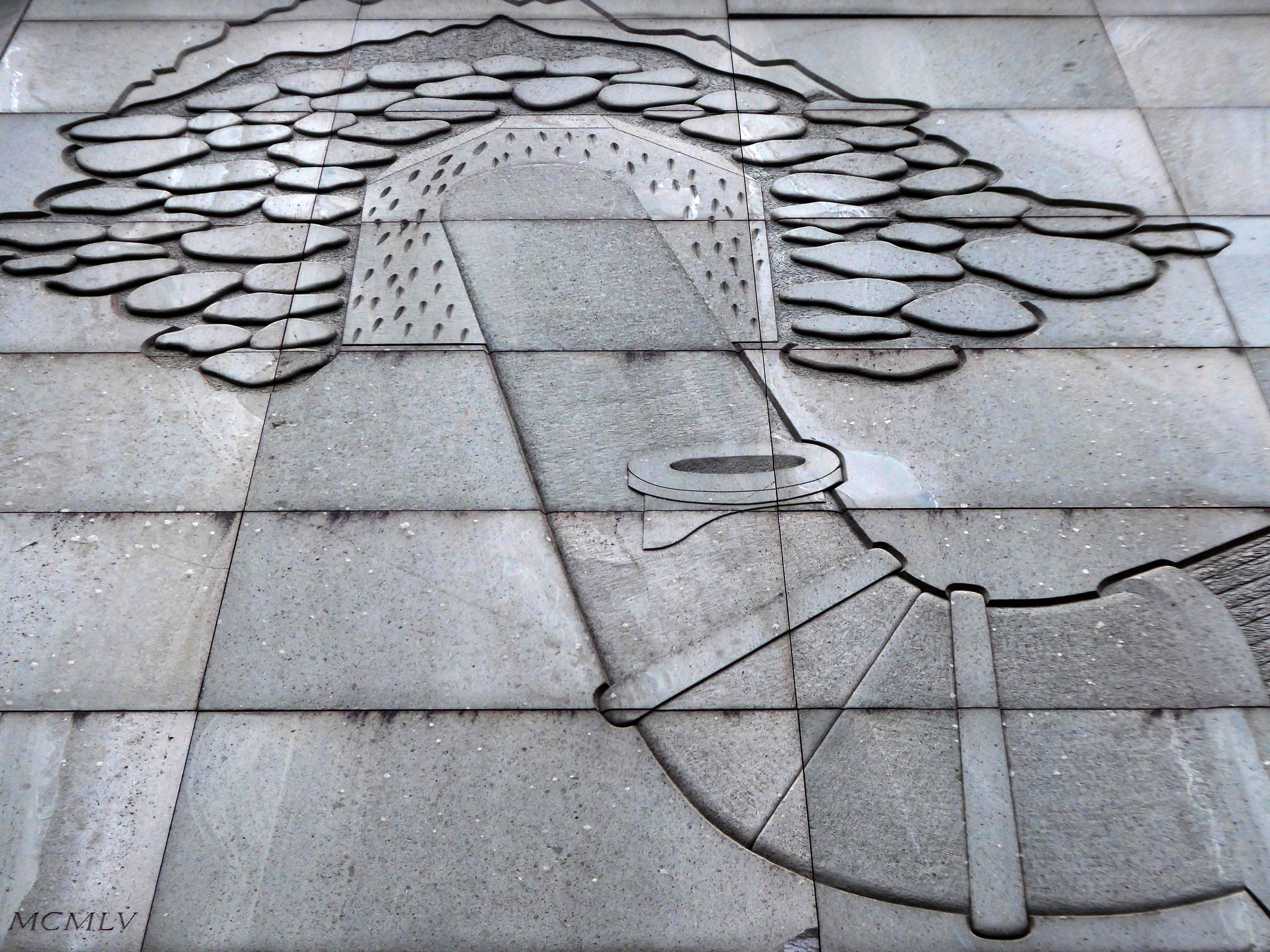
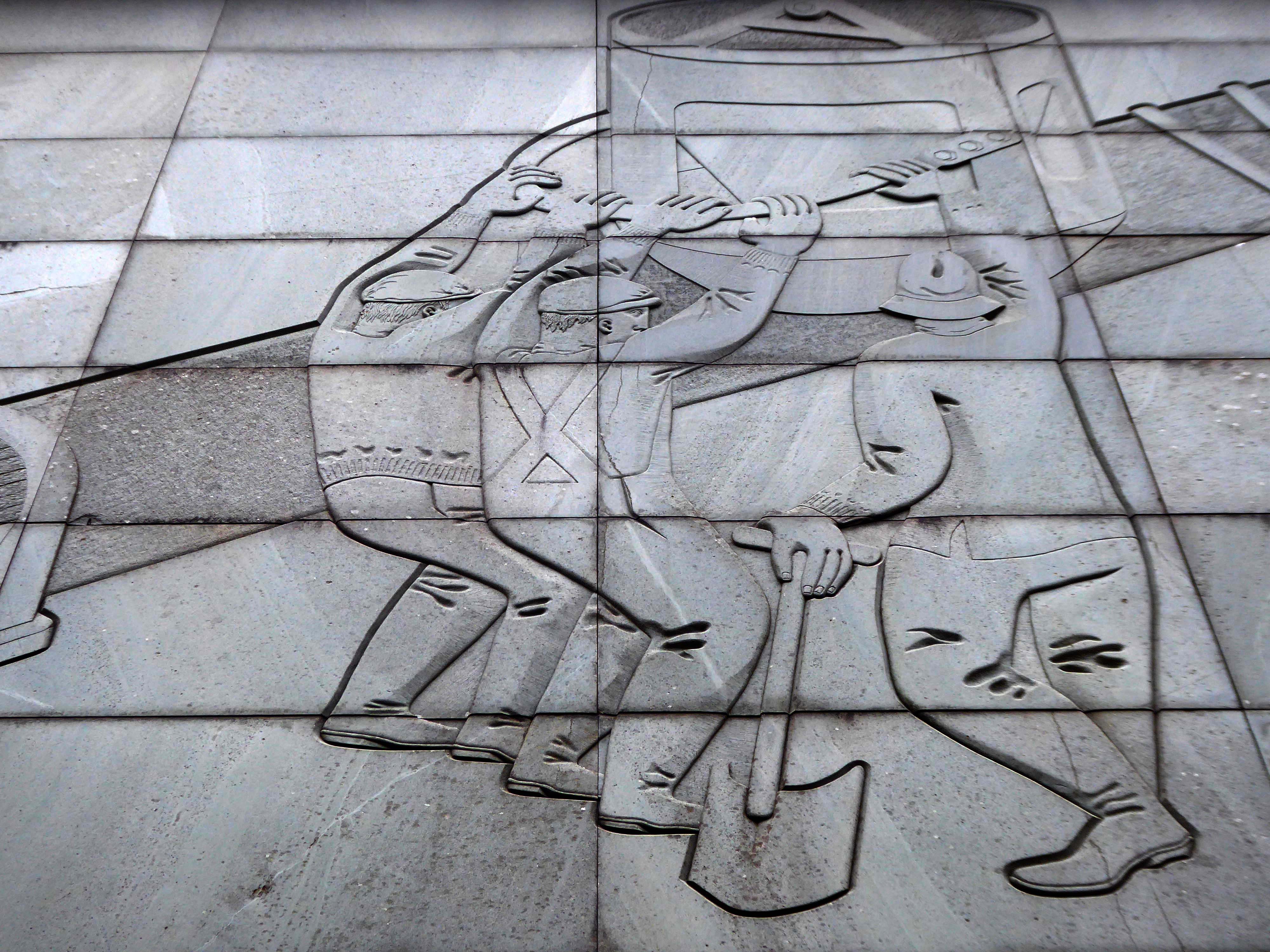
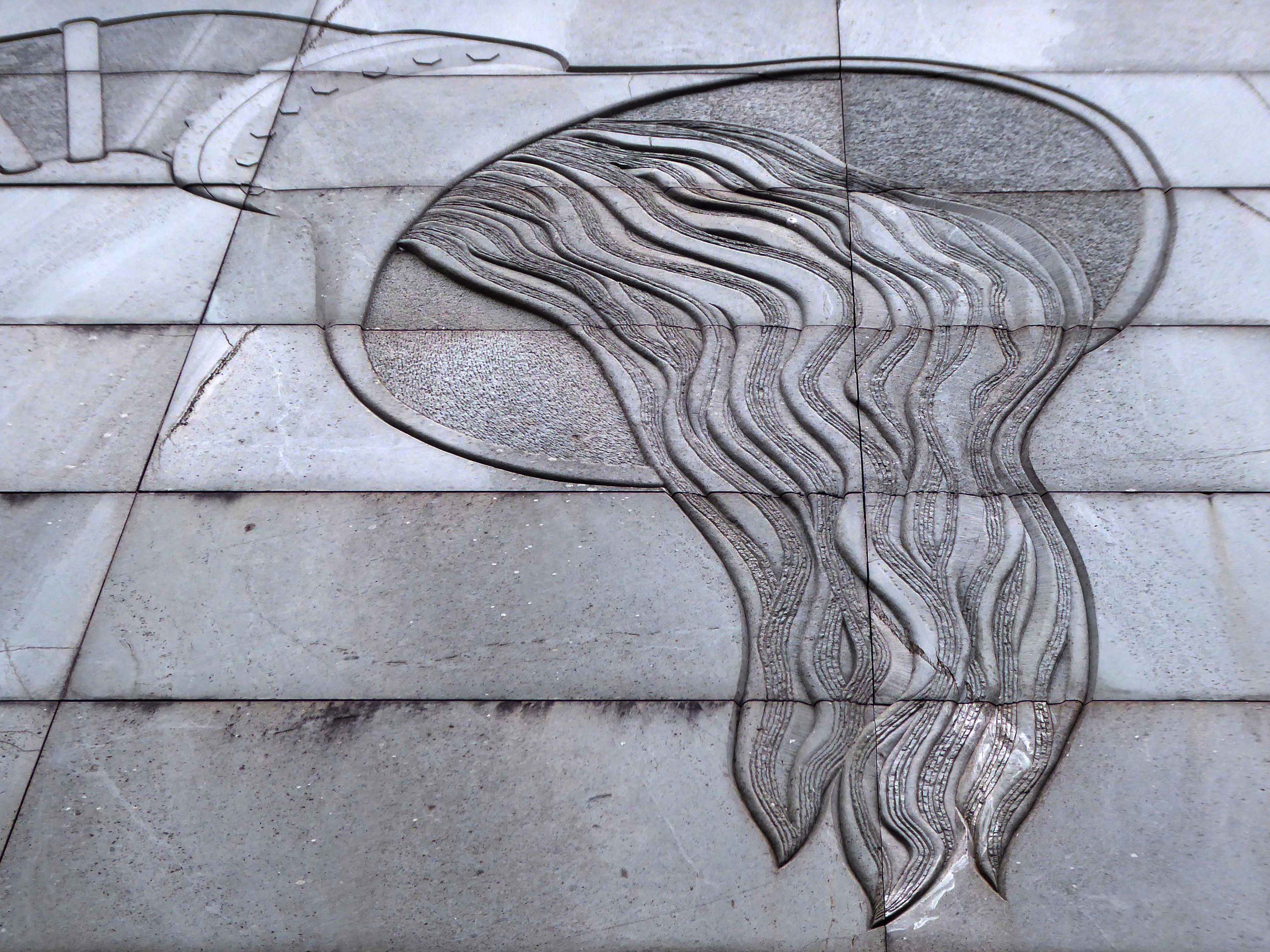
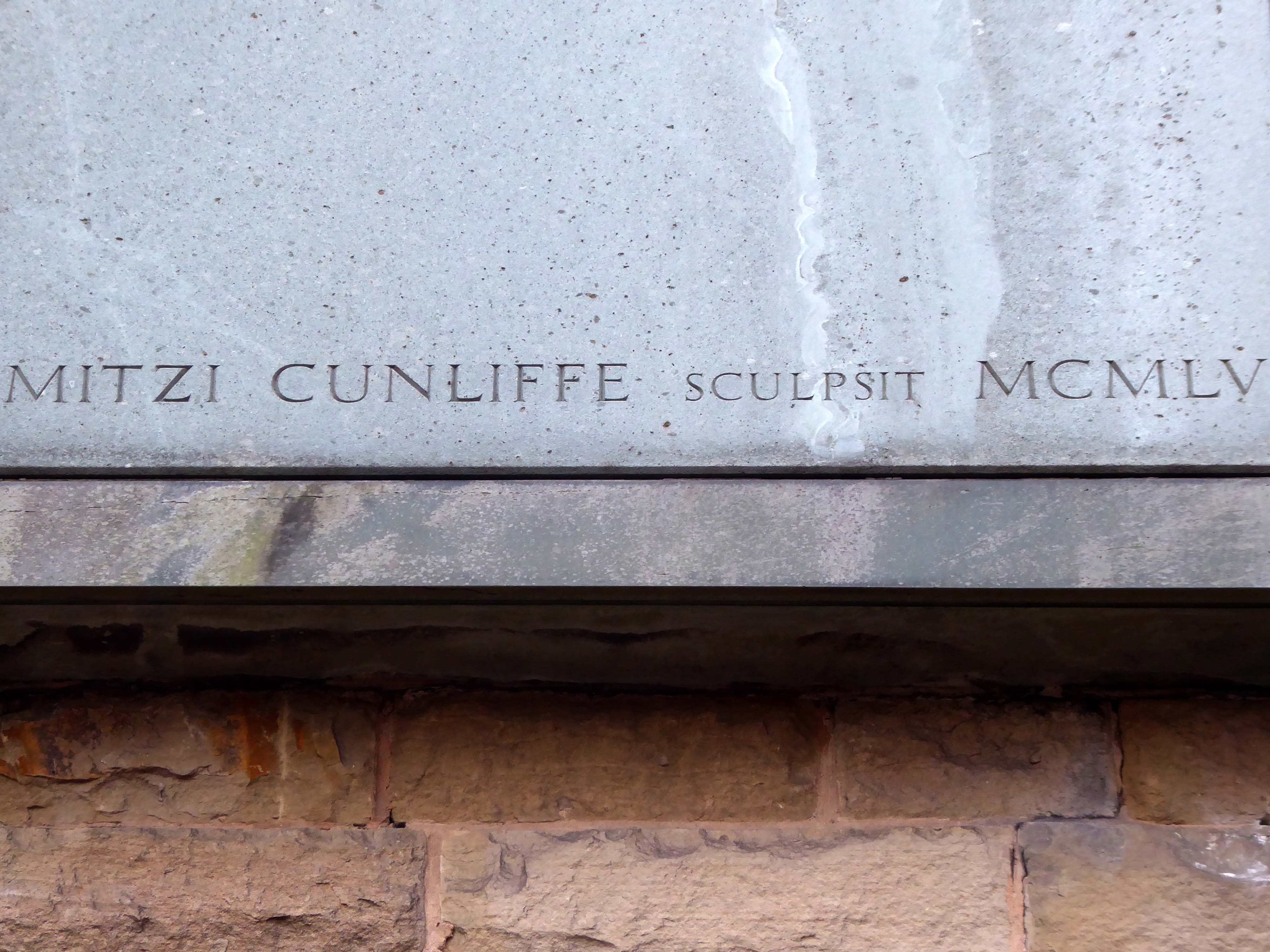
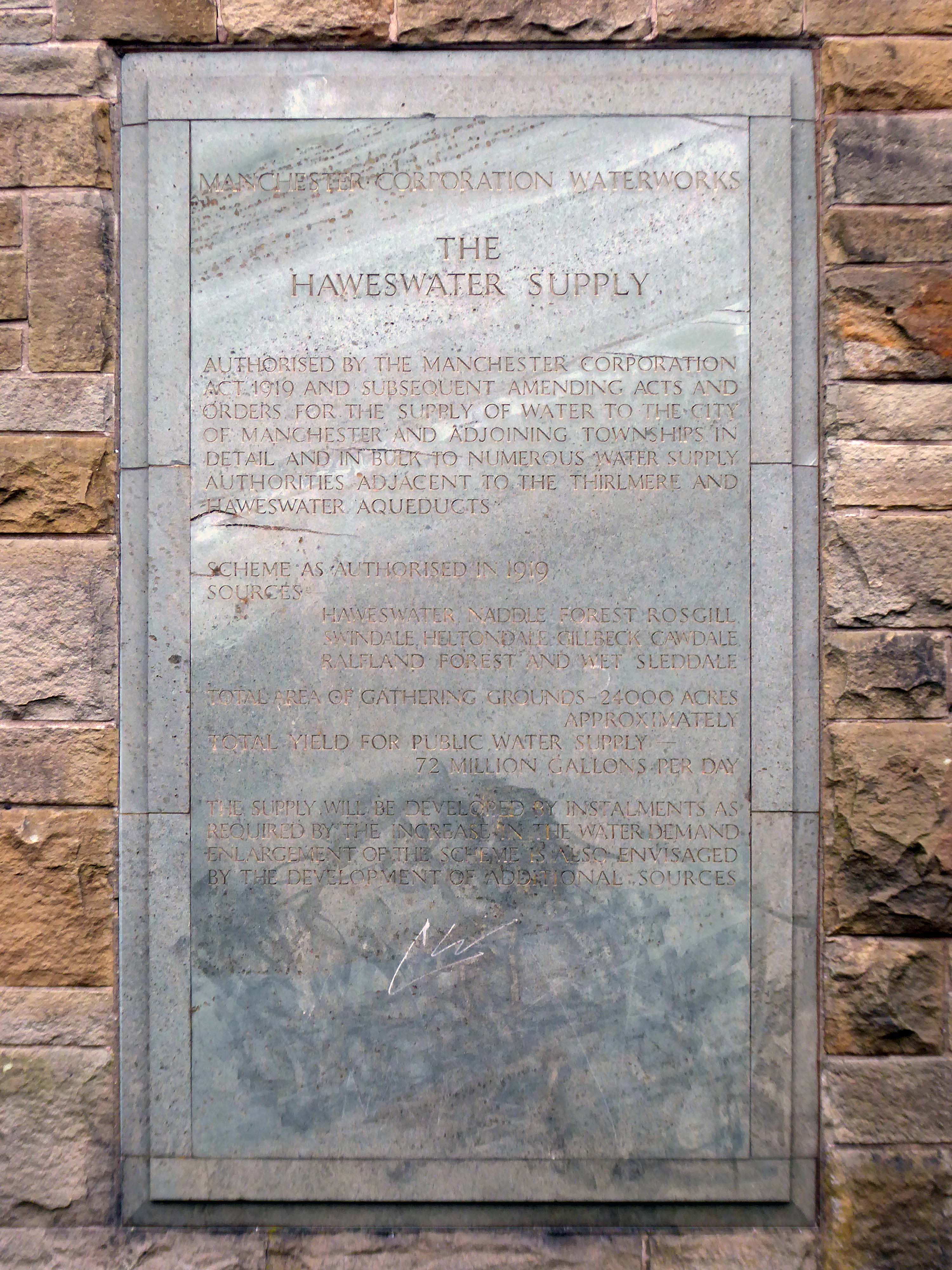
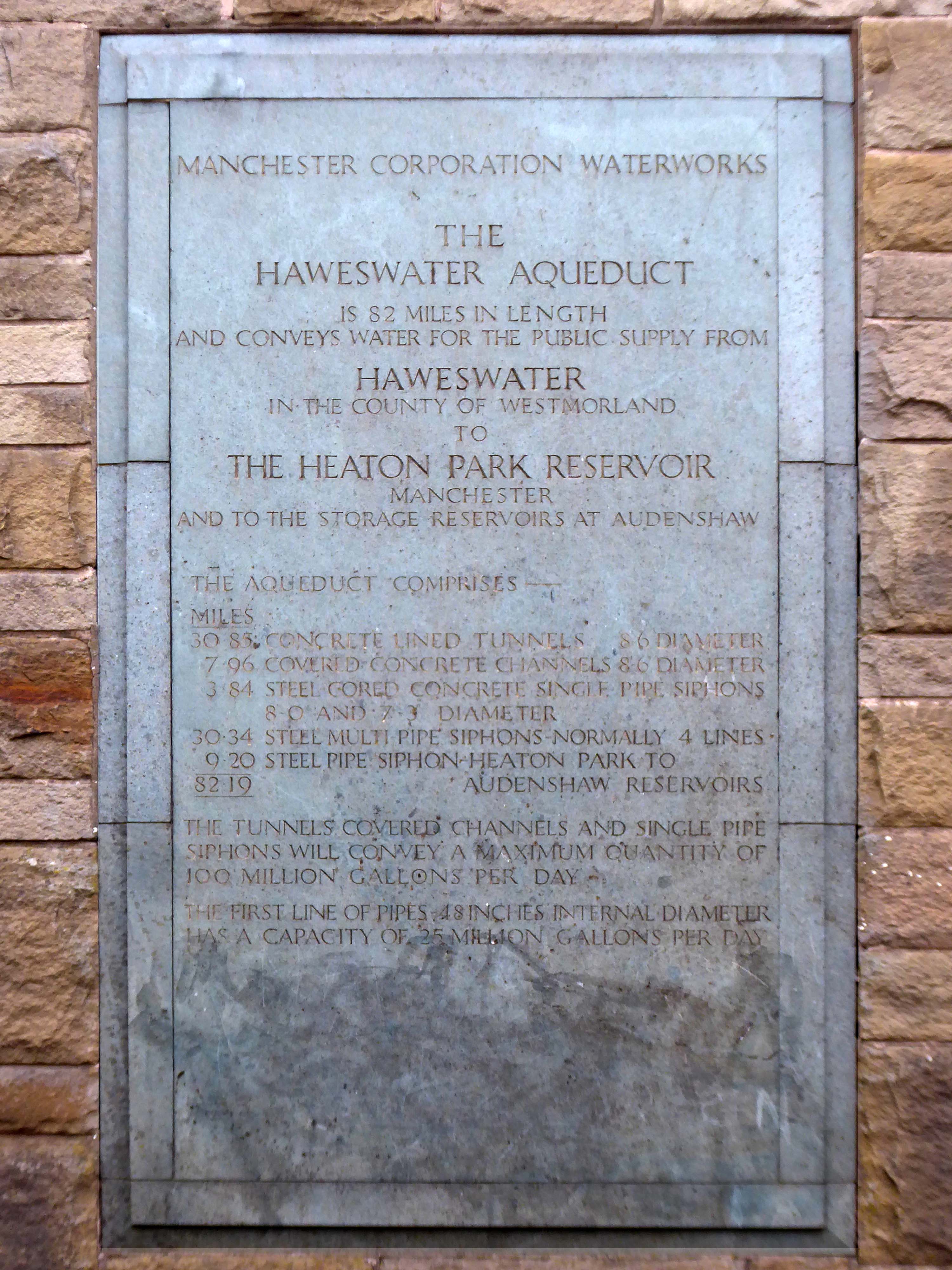
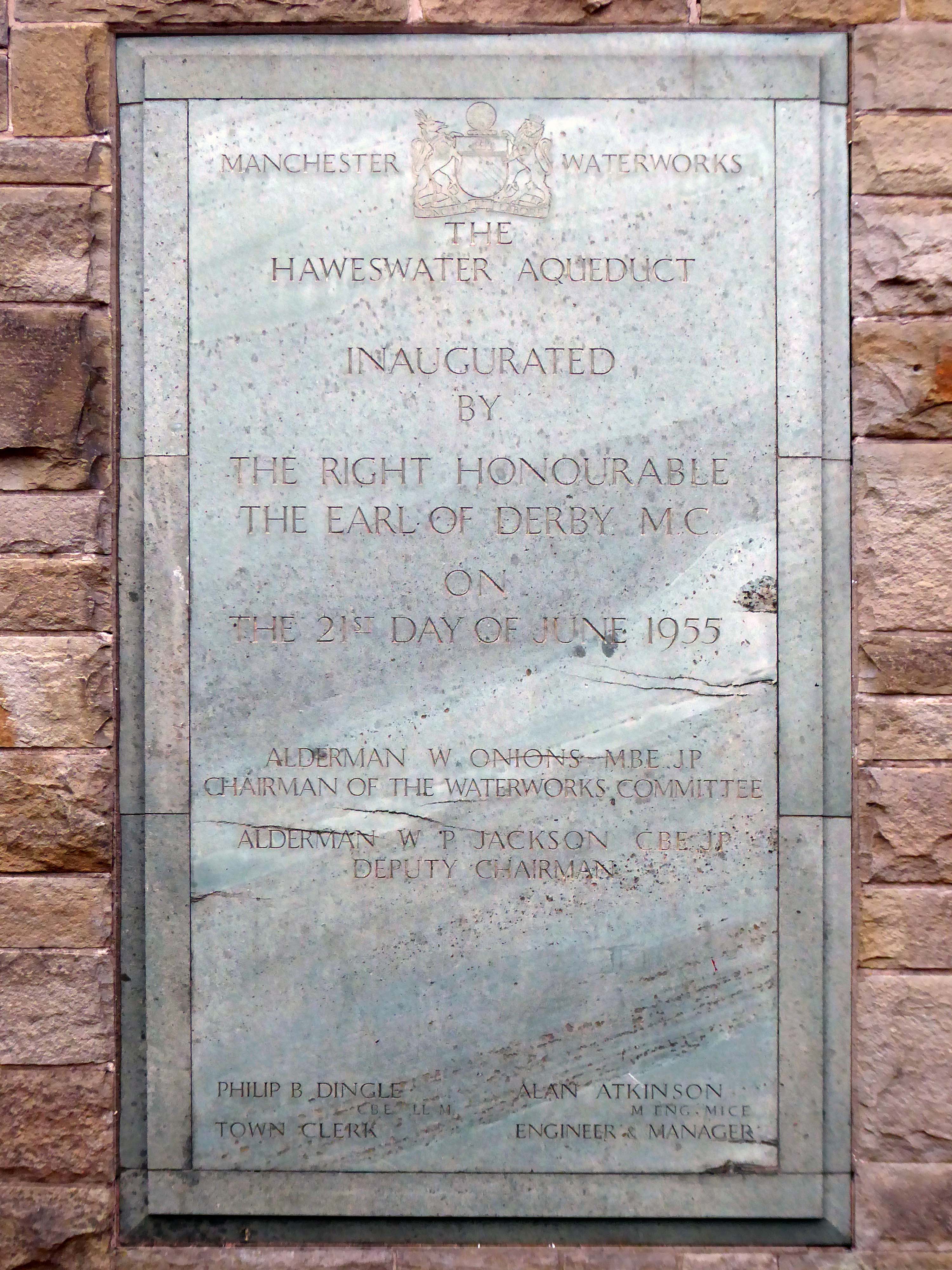
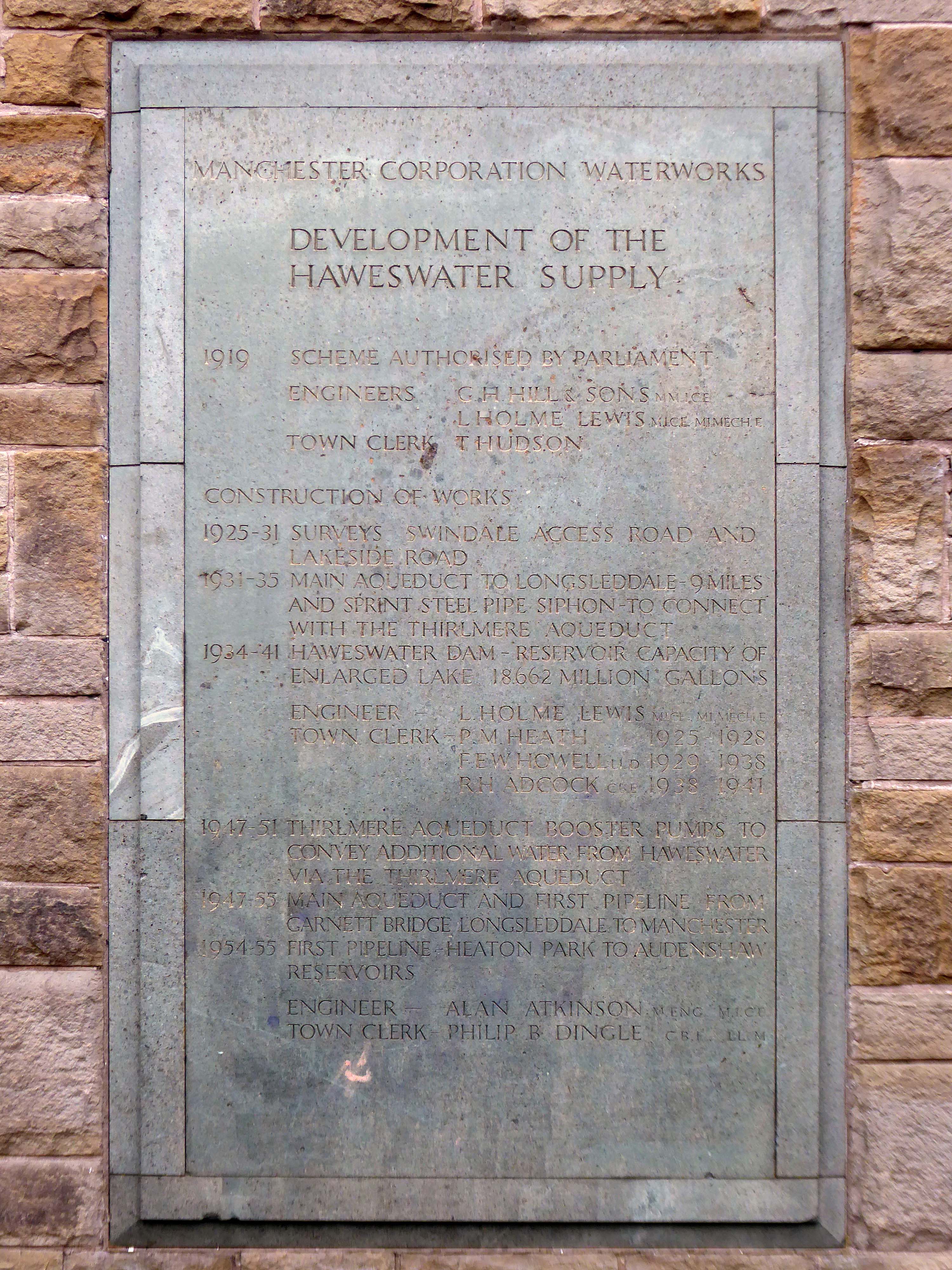
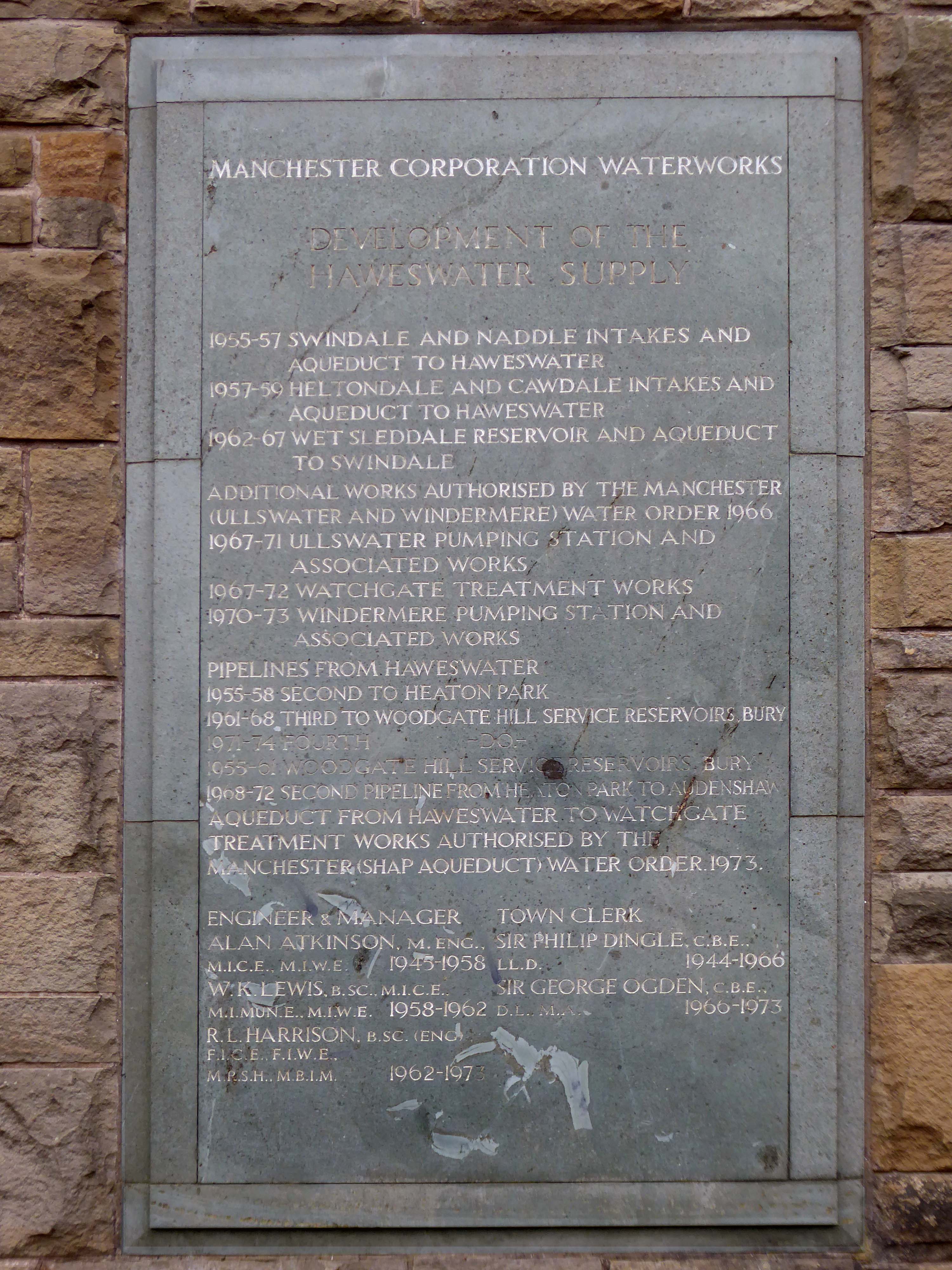
Built between 1954-5 by the Manchester City Architect’s Department, Chief Architect Leonard C Howitt, for the Manchester Corporation Waterworks. Alan Atkinson, engineer. Incorporates large relief by Mitzi Cunliffe, signed and dated 1955. Yorkshire sandstone, with Westmorland greenstone from Broughton Moor used as relief. Roof not seen above dentiled overhang.

Carved relief is a highly stylised depiction of the bringing of water from Haweswater to Manchester with contemporary figures supporting the pipeline and a curious flat relief designed to be seen from below. It was designed to commemorate those who constructed it as well as the origin and course of the aqueduct. Beneath it five plaques tell the history of the Haweswater supply.

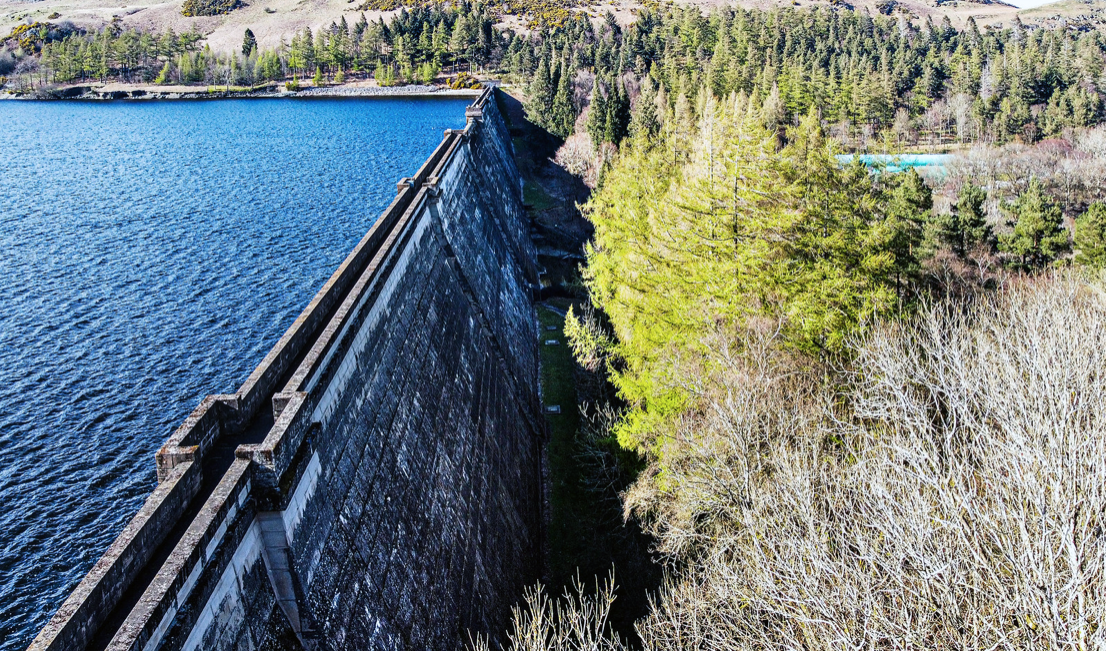
Haweswater Dam – Paul King

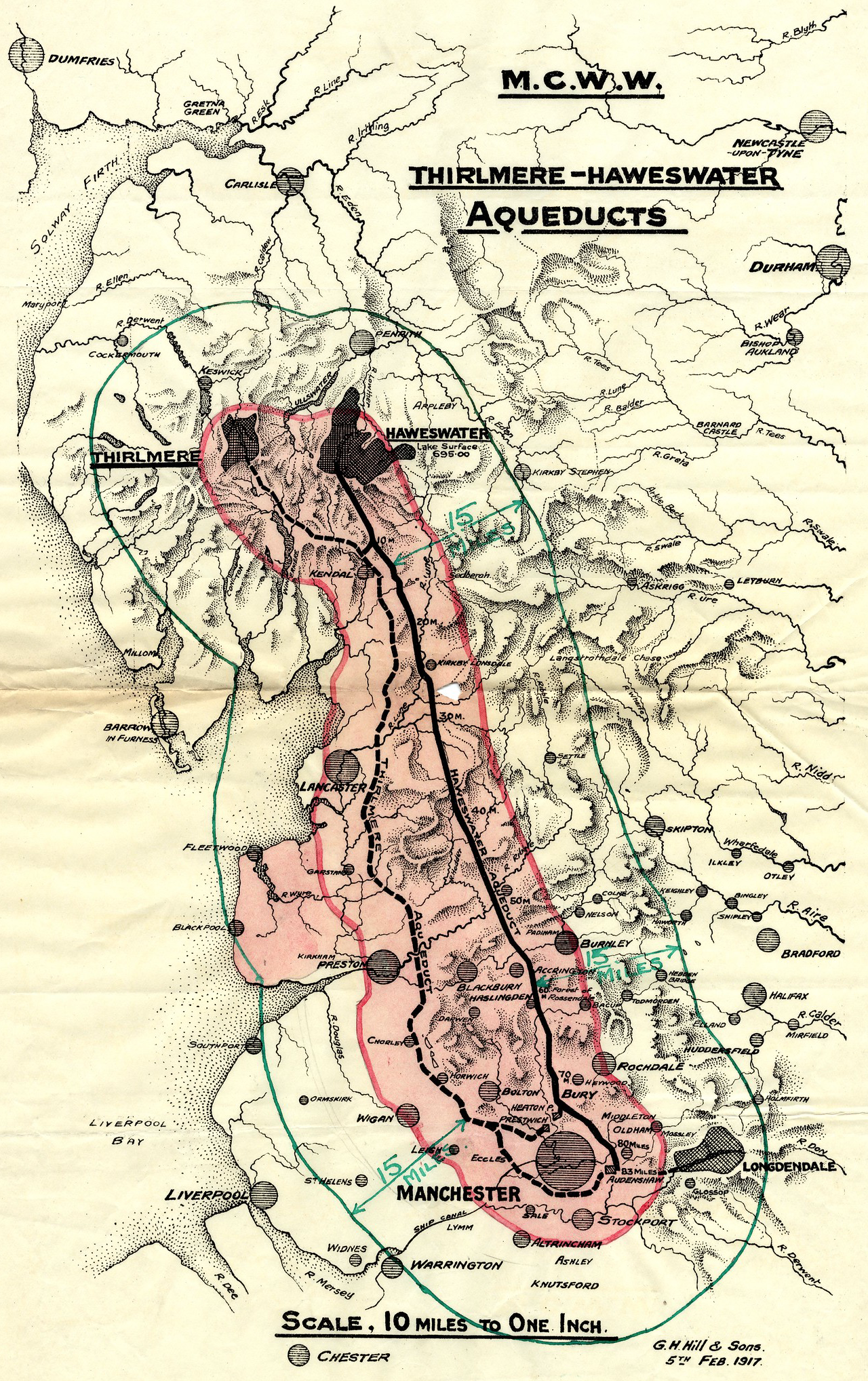
Completely preserved interior fully lined in beige marble, with contrasting green marble skirting continued as door surround. Behind the Cunliffe mural is a wood relief section in sycamore depicting the 82 mile route of the pipe.
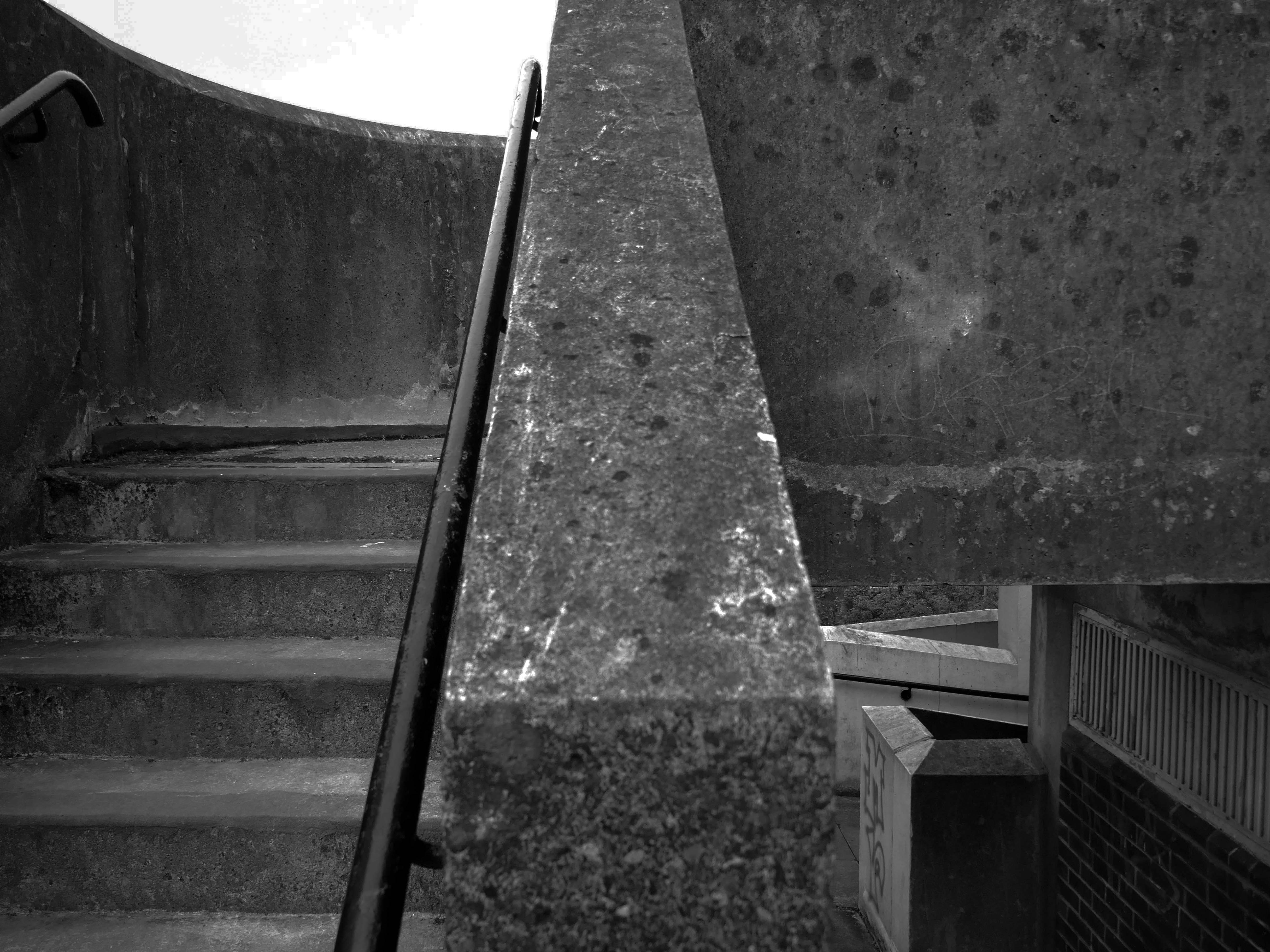
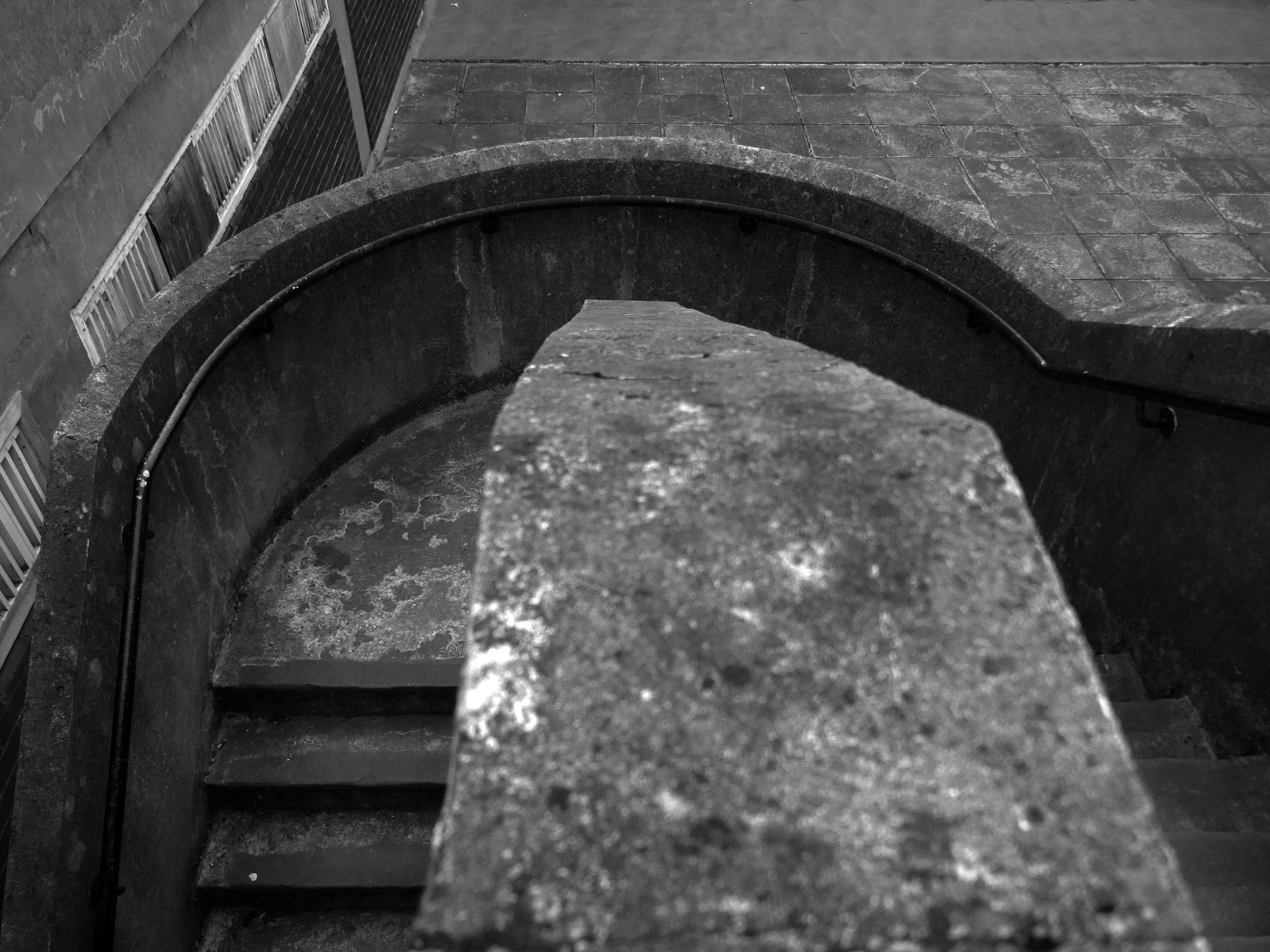
The bringing of water to Manchester from a new reservoir at Haweswater was a major undertaking which cost £14,000,000. The sectional relief plan and the mural were conceived as part of the original brief to give a ‘monumental’ character to the city’s remarkable achievement. Included as a remarkable synthesis of architectural design and fine sculpture, with the dominance of the latter in this tiny building. The building materials and the reliefs are all symbolic of the achievement in bringing of water from the Lake District to Manchester.

Historic England Grade II Listed

In 1929 work started to build the dam wall across the valley floor. At the time of construction, its design was considered to be at the forefront of civil engineering technology because it was the world’s first hollow buttress dam.

Chapel Bridge Mardale

Before the valley was flooded in 1935, all the farms and dwellings of the villages of Mardale Green and Measand were demolished, as well as the centuries-old Dun Bull Inn at Mardale Green. The village church was dismantled and the stone used in constructing the dam; all the bodies in the churchyard were exhumed and re-buried at Shap.

Wikipedia

I have previously led Mitzi Cunliffe walks in south Manchester – taking in her works at Owens Park and Manchester High School for Girls.

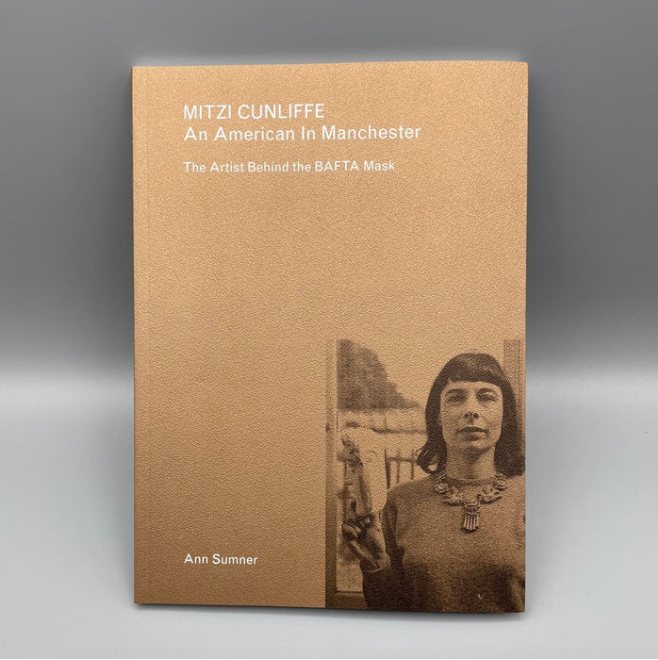
Mitzi Cunliffe is primarily known as the designer of the BAFTA Award, but her work encompasses both ceramics and textiles, in addition to her extensive public art works – as illustrated here.

Mitzi Cunliffe – An American in Manchester is available from the Modernist Shop.

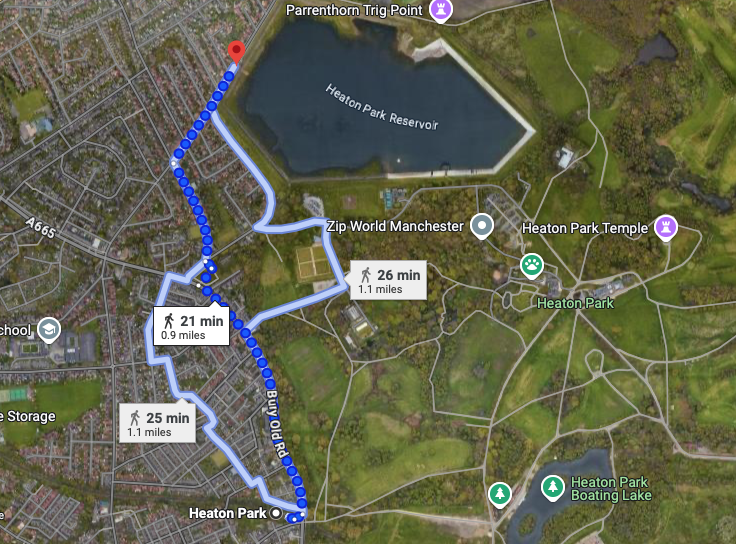
I took the tram to Heaton Park Station and walked the rest of the way.

The imposing structure, clad in the dramatic relief dominates this domesticated street of well behaved semis. As I stood admiring the work, a passerby joined me in a mutual appreciation of its beauty and significance.

Do yourself a favour – take a trip, take a look for yourself.

Several Yorkshire Reservoirs

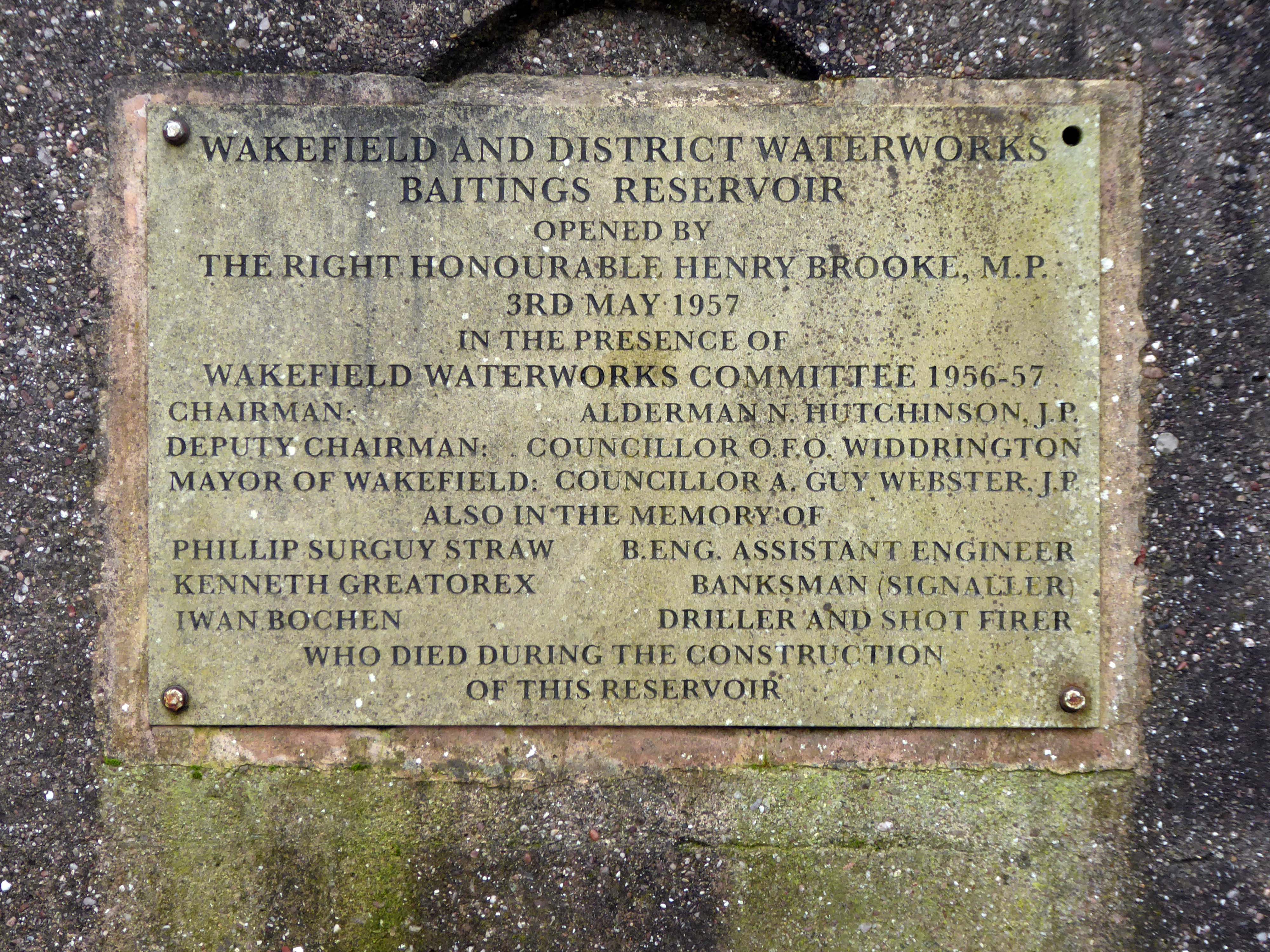
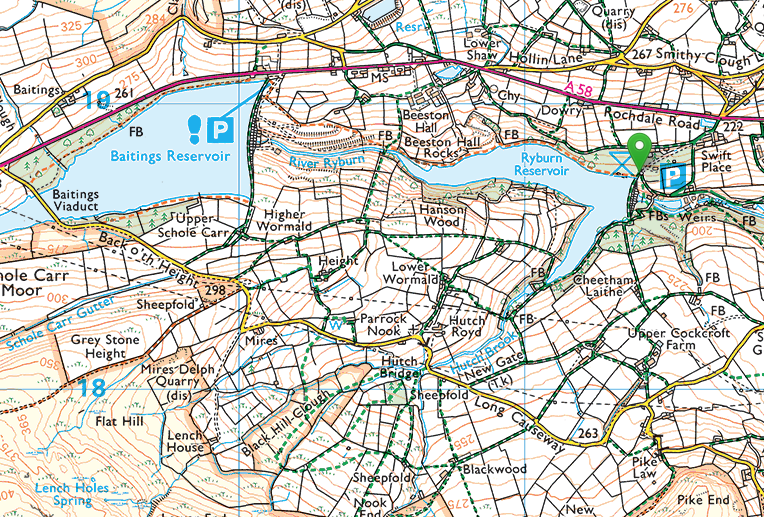
To begin at the beginning, to begin at Baitings Reservoir.

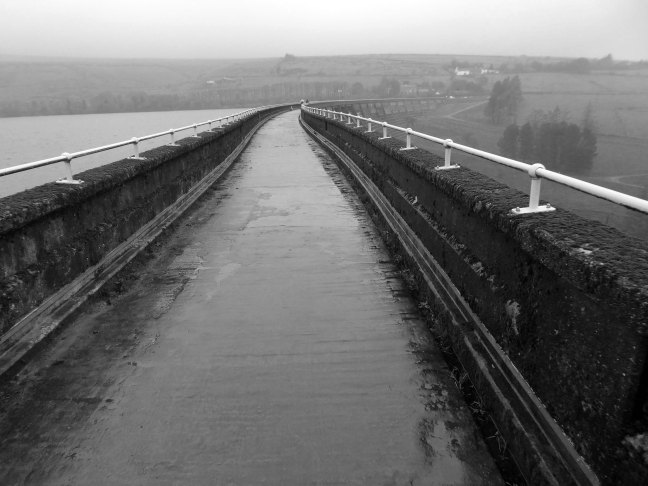
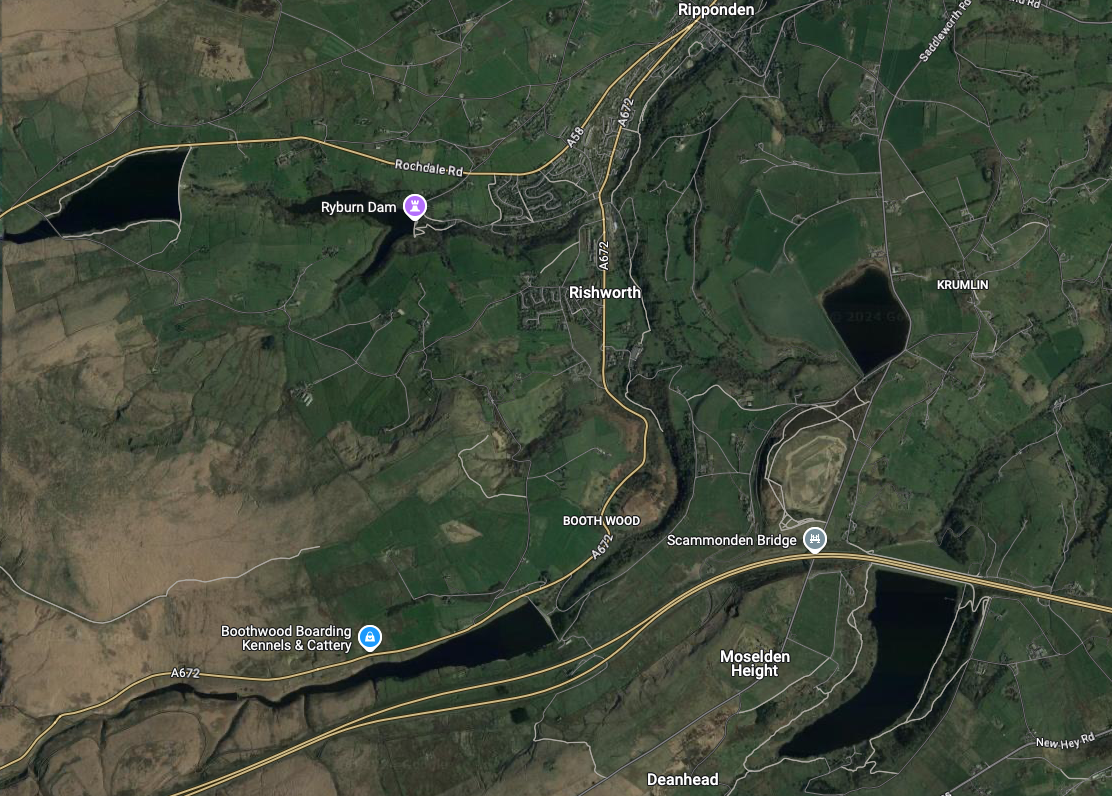
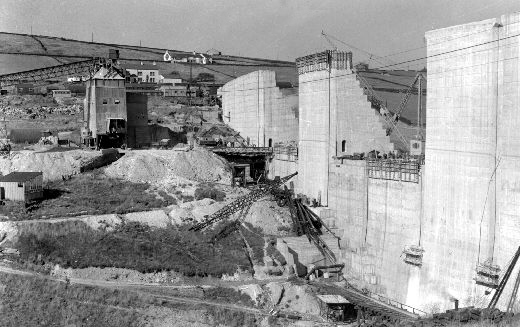
Wakefield Corporation Waterworks started impounding the valley of the River Ryburn in the 1930s, with Ryburn Reservoir being completed in 1933. Construction on Baitings took place 20 years later with completion in 1956.  Baitings Bridge, on an old road linking Yorkshire and Lancashire, was to be flooded under the reservoir so a concrete viaduct was built. During spells of very hot weather and drought conditions, the old packhorse bridge is revealed.
Wakefield Express: 31st August 1955

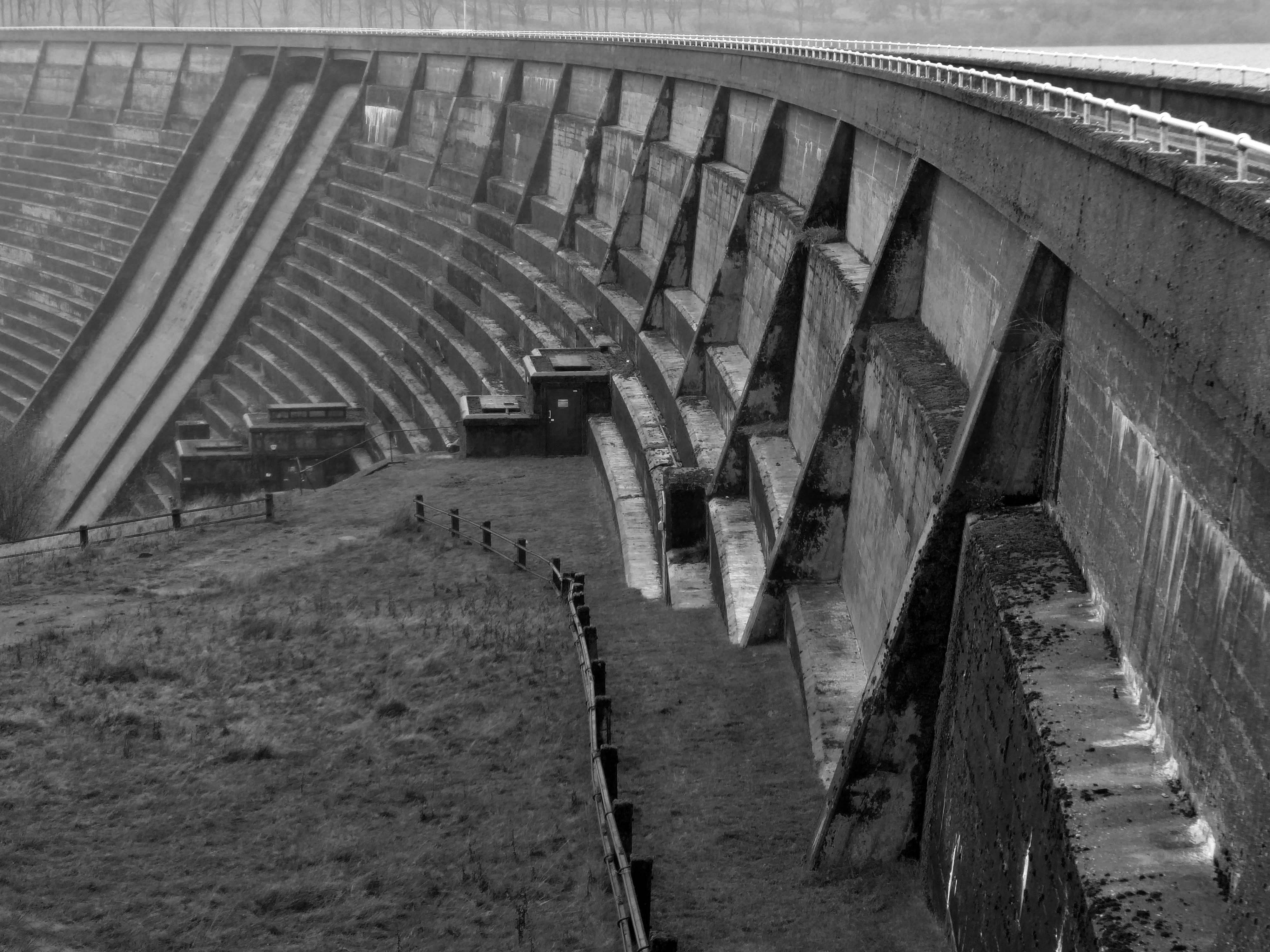
The dam head is a curved structure that is 1,540 feet long and over 160 feet high. The reservoir covers 59 acres and has a catchment of 1,830 acres , and when it is full, it holds over 113,000,000 cubic feet of water. The dam took eight years to complete at a cost of £1.4 million, and is located at 840 feet above sea level. A tunnel connects reservoirs in valleys to the north with Baitings to allow for the transfer of water. Manshead Tunnel is 8,000 feet long and was opened in 1962.
Wikipedia

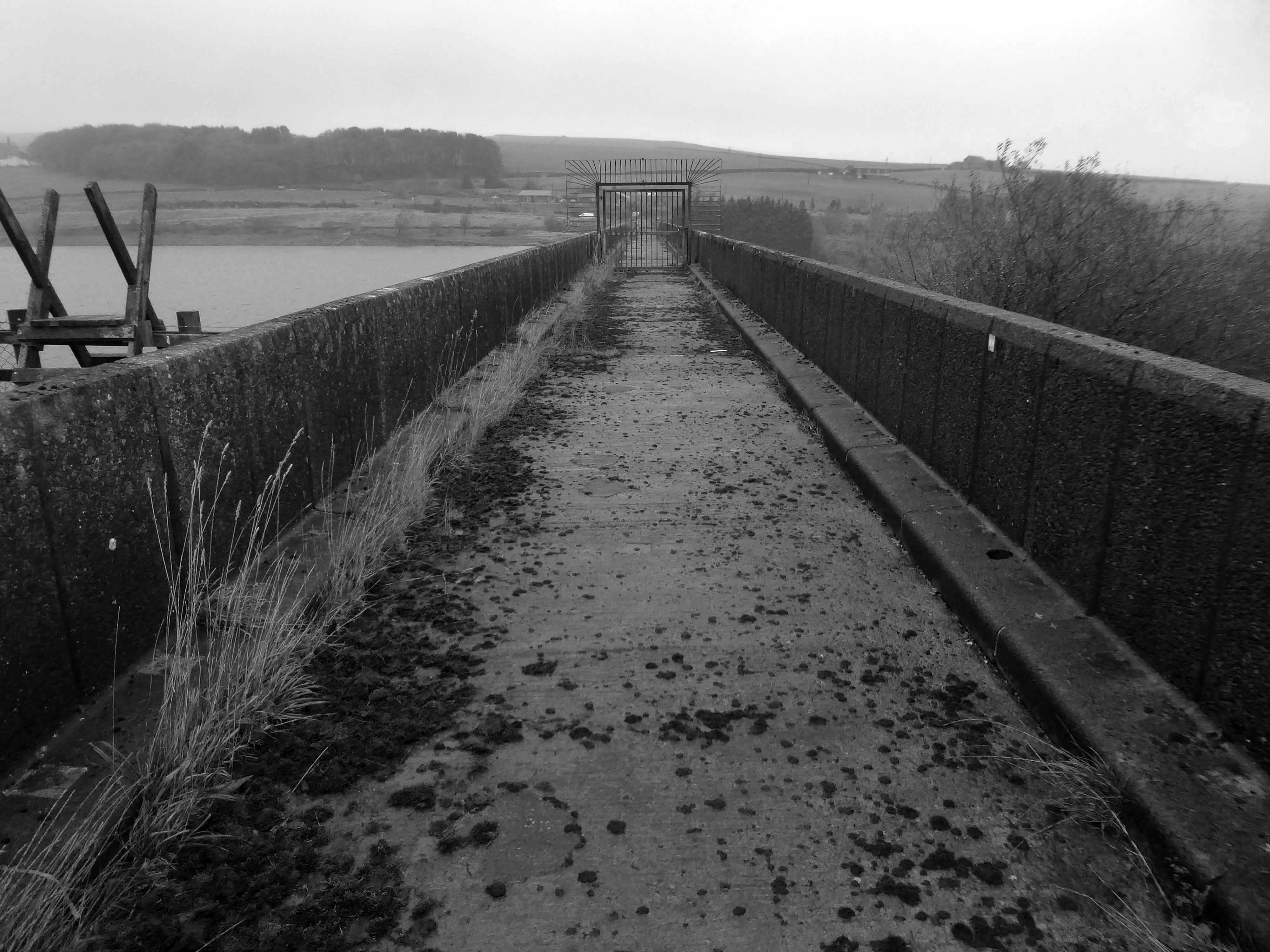
Inconveniently, the footpath to the lower Ryburn Reservoir was closed – we were diverted over the dam.

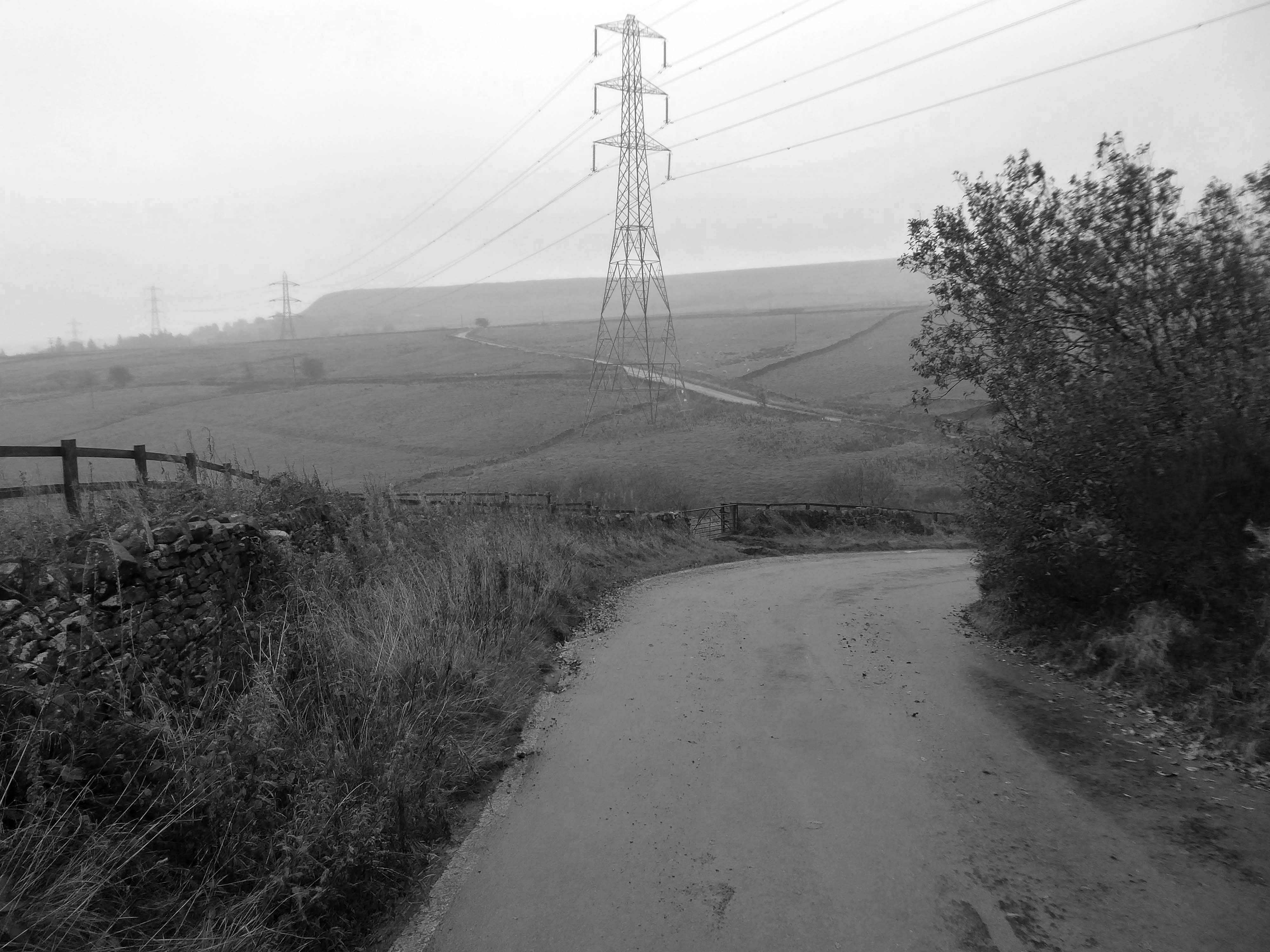
We took the pathway to Booth Wood Reservoir – over Pike End and beyond.

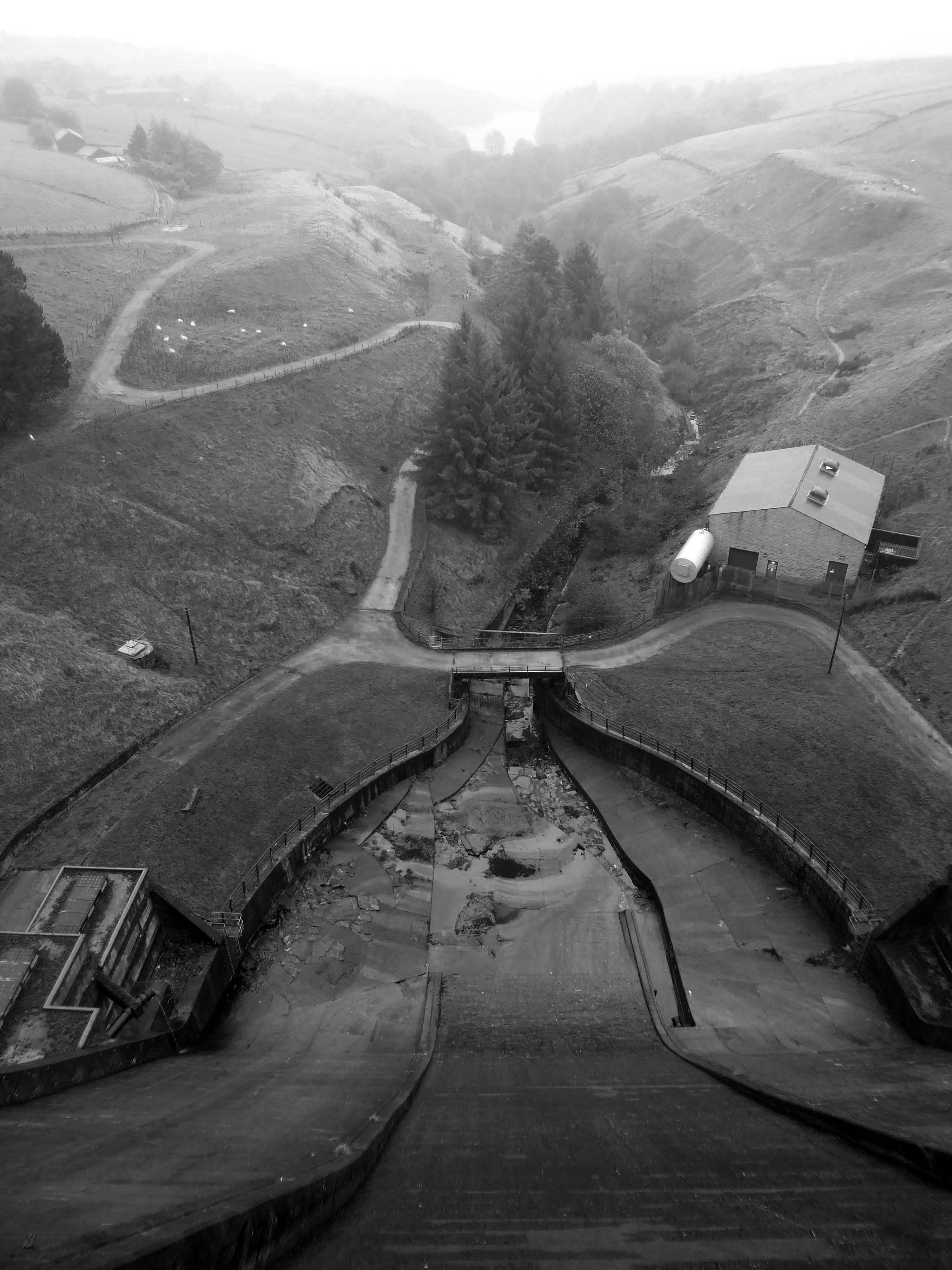
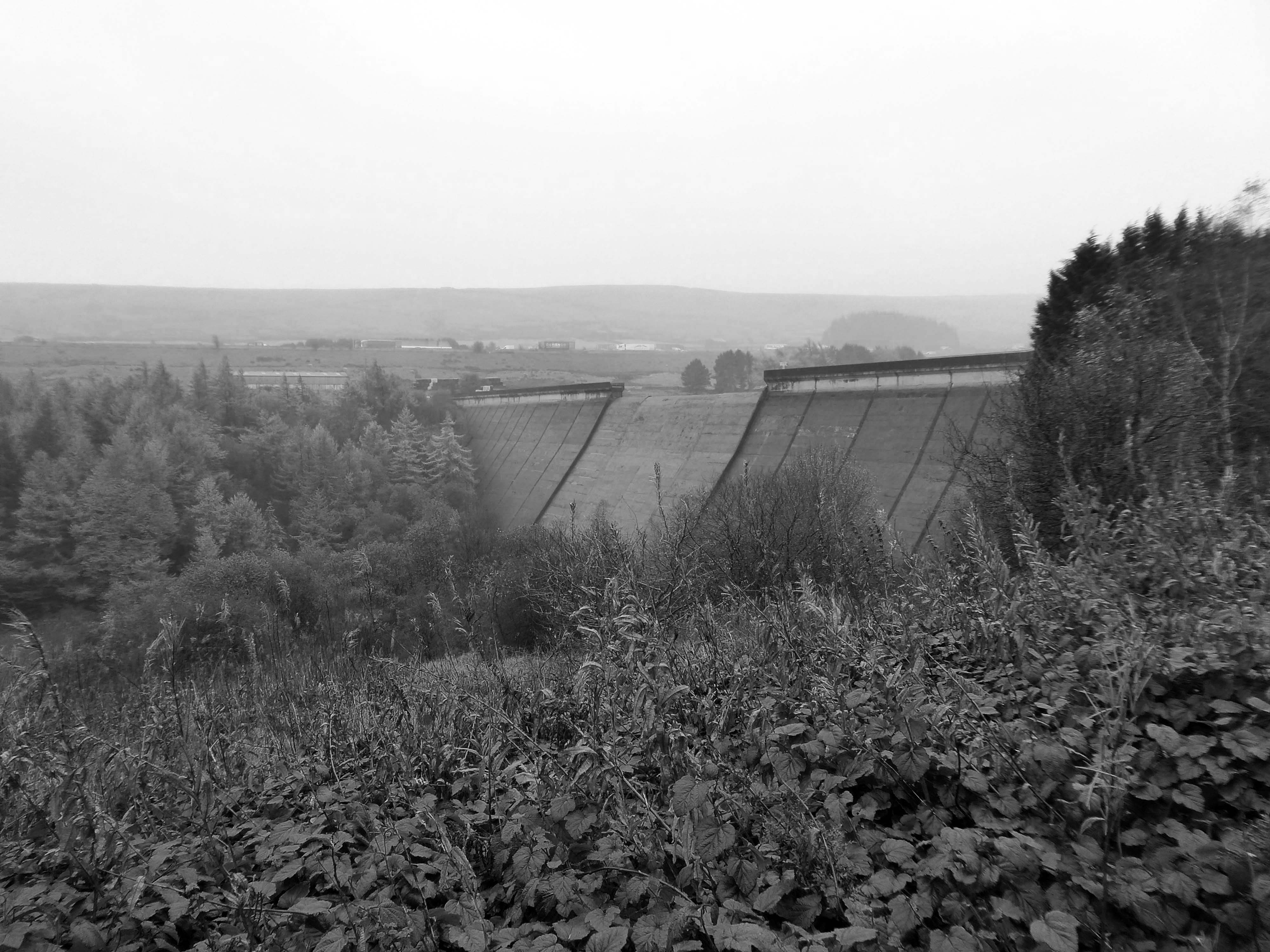
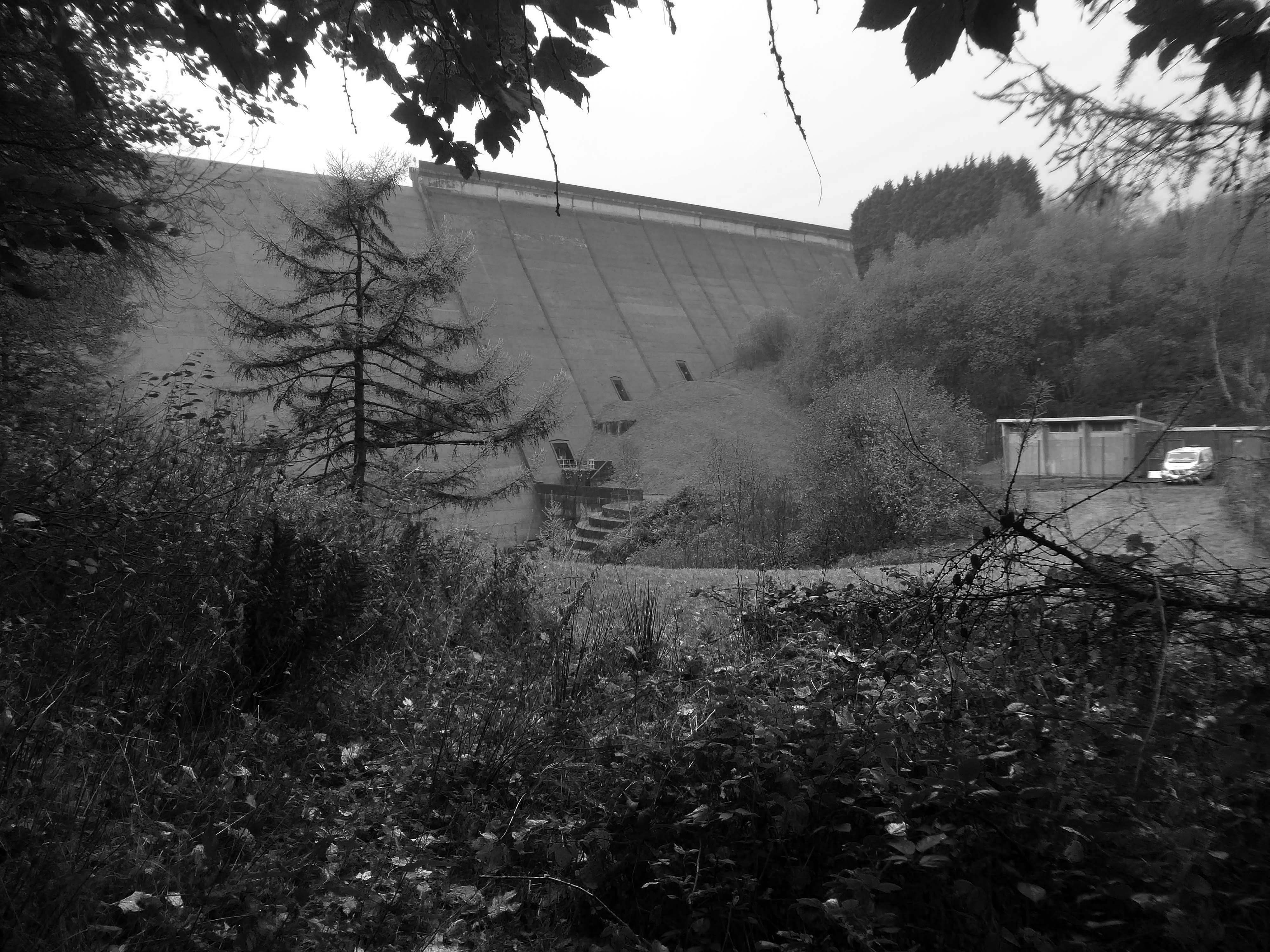
We dropped down beneath the Booth Wood Dam.

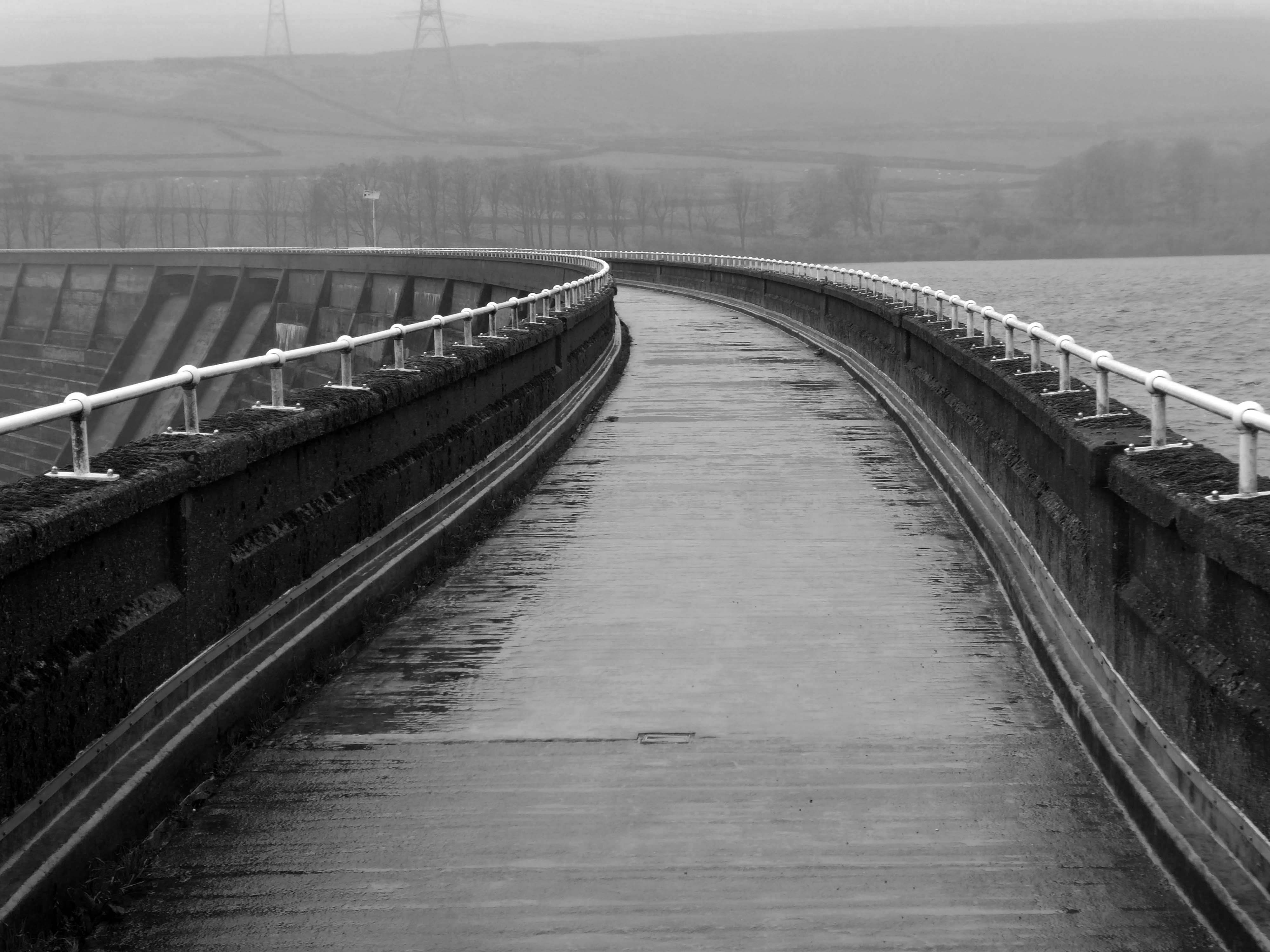
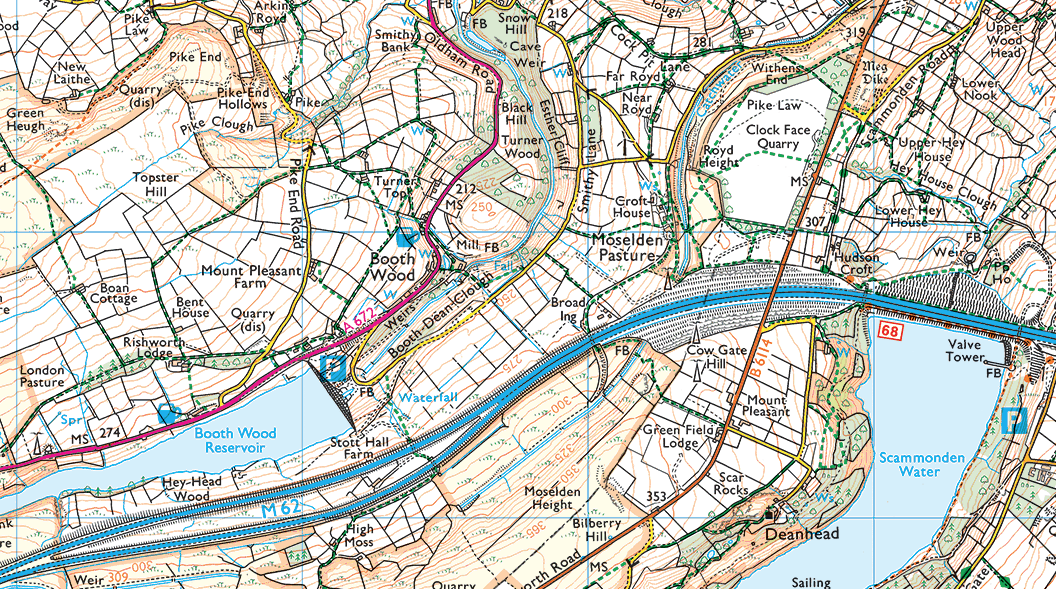
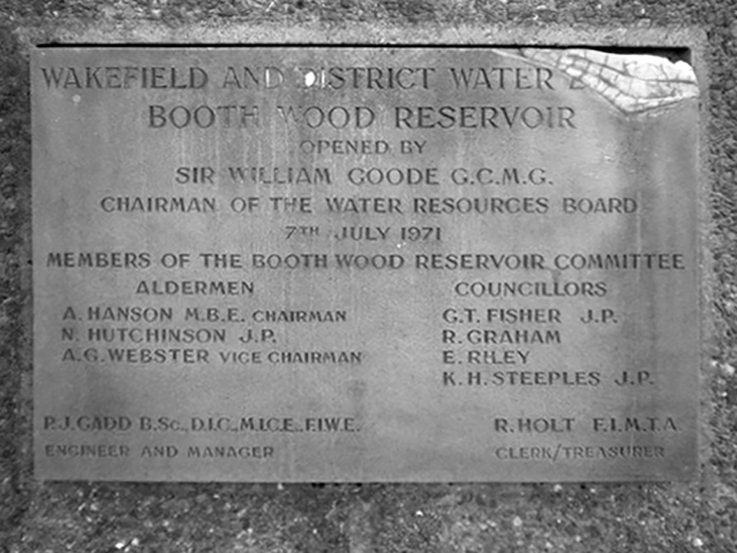
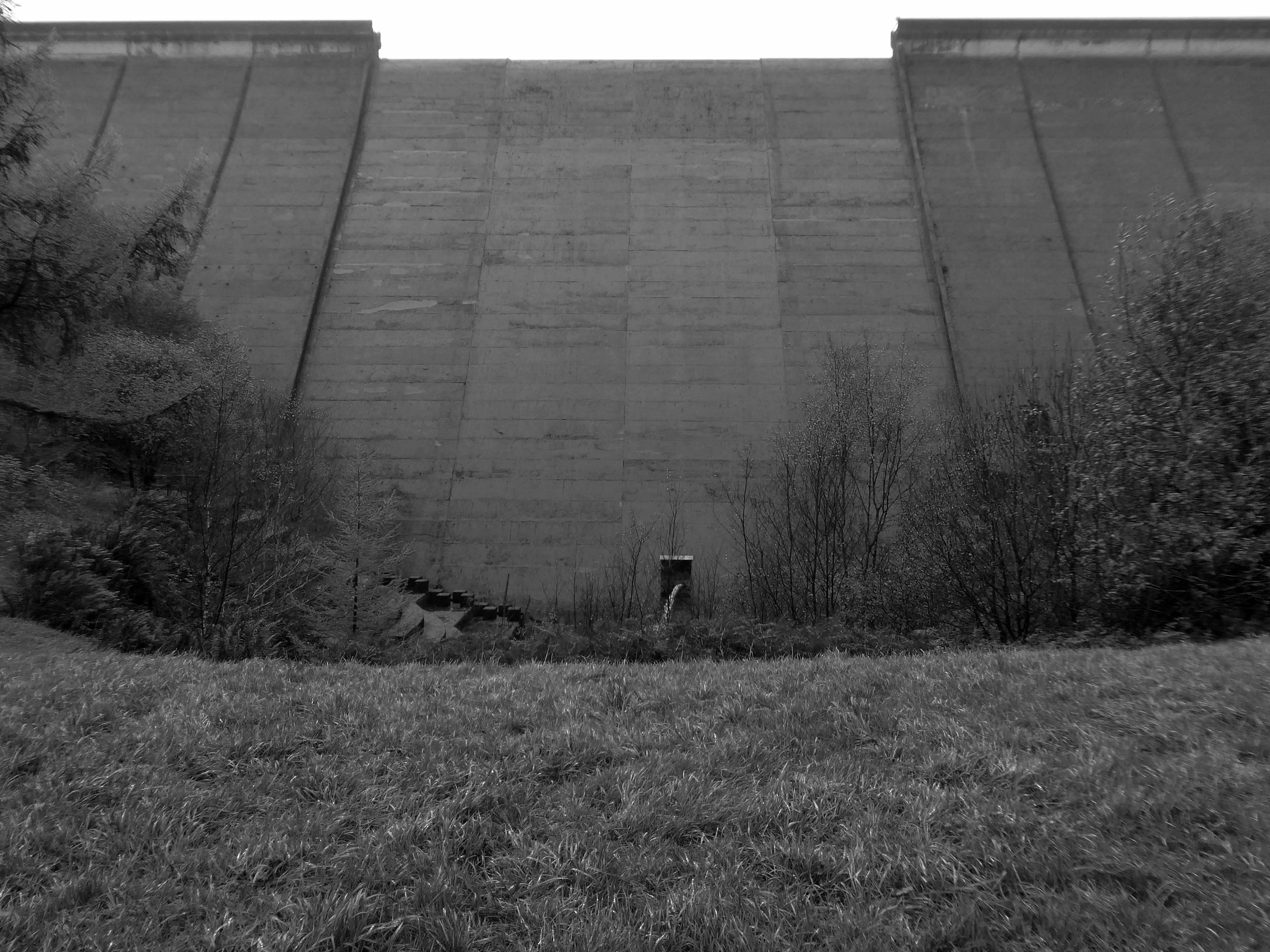
Booth Wood Reservoir is a man-made upland reservoir that lies north of the M62 motorway and south of the A672 road near to Rishworth and Ripponden in Calderdale, West Yorkshire. The reservoir was approved for construction in 1966 and completed in 1971.

It supplies water to Wakefield.

The reservoir dams the Booth Dean Clough watercourse and takes water directly from the surrounding moorland. It has a plain concrete crest on the dam head which is straight and extends to a length of 1,150 feet and a height of 157 feet.

Wikipedia

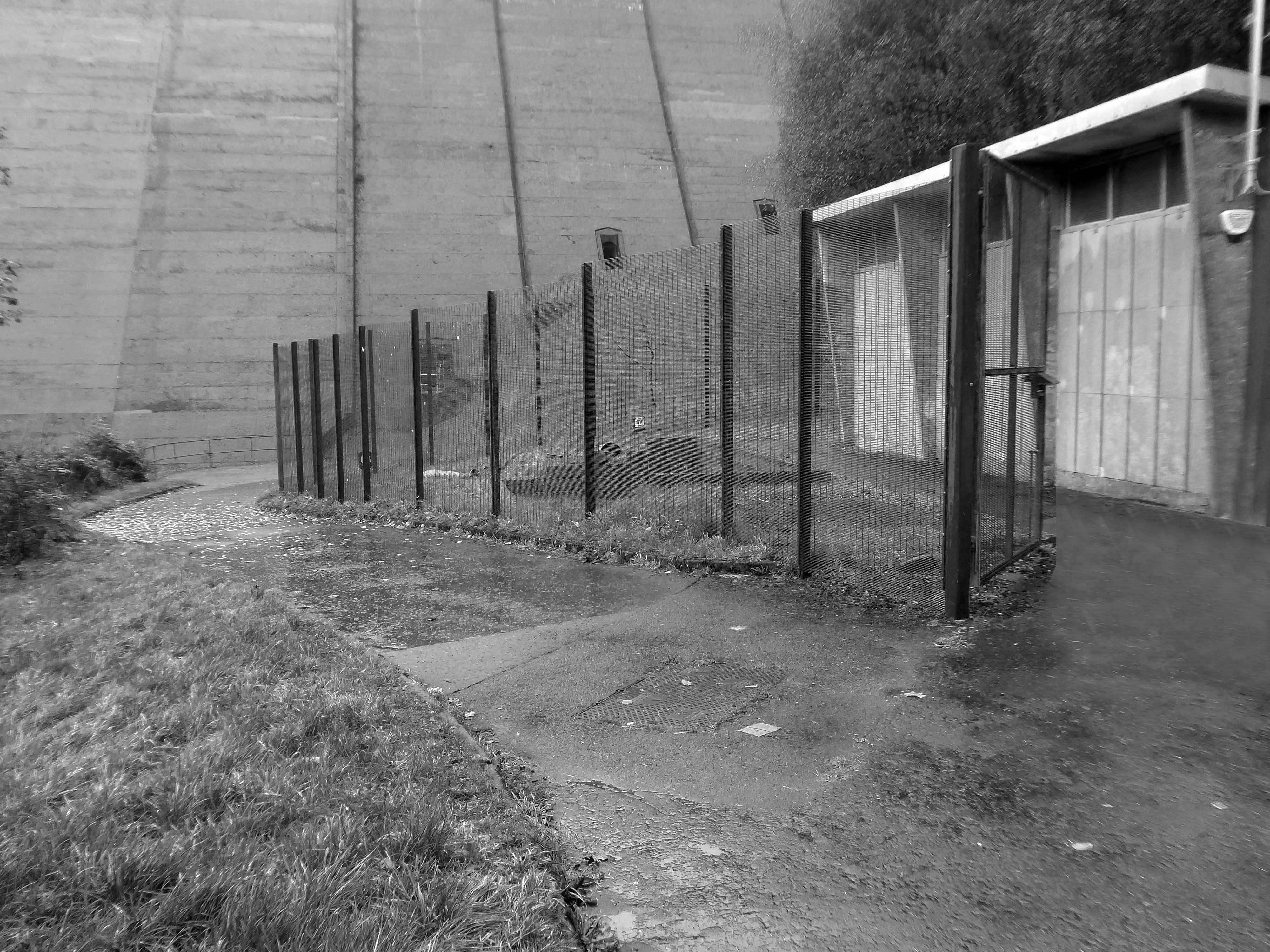
Below is a dinky pumping station, tucked beneath the dam.

We took a precipitous path through the wood – up to the level of the reservoir.

Under the the M62 and past the infamous Stott Hall Farm.

Stott Hall Farm is a farm located between the eastbound and westbound carriageways of the M62 motorway in Calderdale. It is the only farm in the UK situated in the middle of a motorway and was built in the 18th century on Moss Moor. It lies south of Booth Wood Reservoir where the carriageways are separated between junctions 22 and 23. The road divides for much of its length between the Windy Hill and Deanhead cuttings because of the surrounding geography; but a myth persists that it was split because Ken and Beth Wild refused to sell. However, the farm was actually owned by Yorkshire Water at the time the M62 was built.

Wikipedia

We walked over the upland moors to meet with the Catchwater, which formerly fed the Ringstone Edge Reservoir, prior to the construction of the motorway cutting.

Climbing again over Cow Gate Hill to meet the Saddleworth Road.

Crossing the motorway and dropping down to meet the Scammonden Dam.

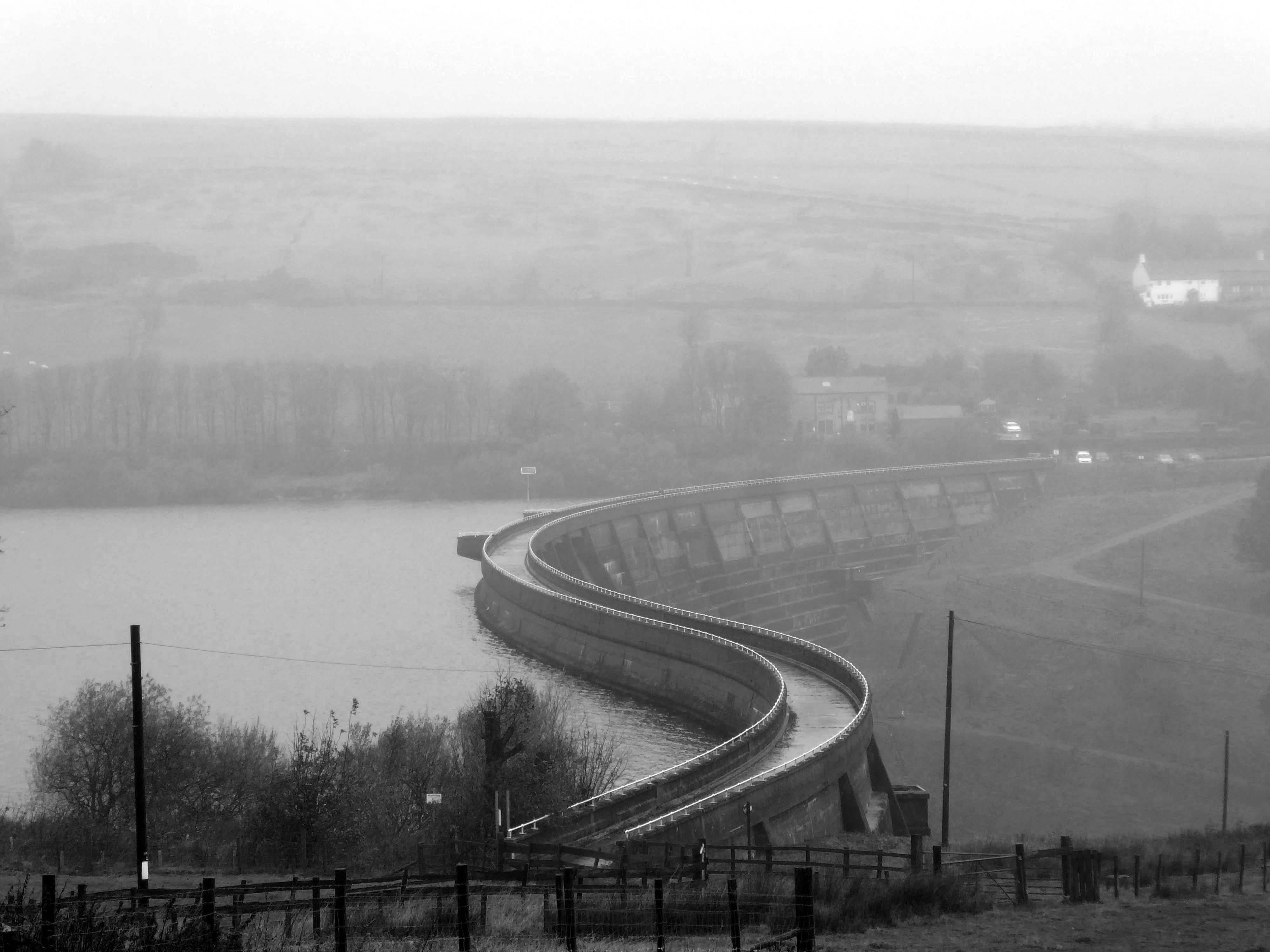
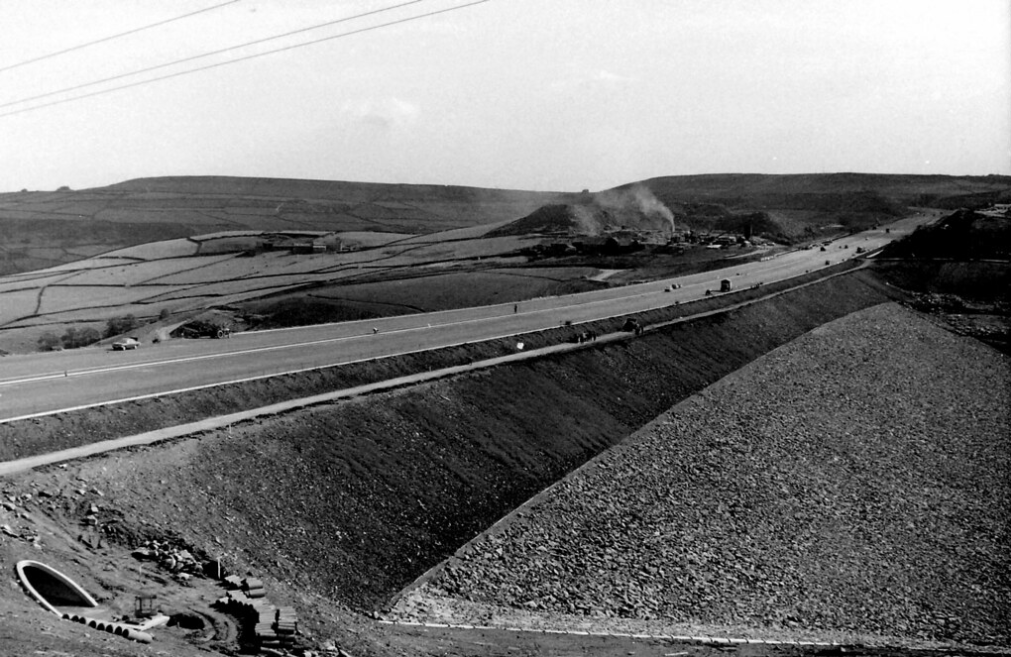
Scammonden Dam is part of the M62 motorway between junctions 22 and 23, the only such structure in Britain. Its construction by the Ministry of Transport and Huddersfield Corporation Waterworks required the passing of the Huddersfield Corporation Act 1965. The motorway dam spans the Deanhead Valley in the Pennines between Huddersfield and Rochdale and the main contractor for the project was  Sir Alfred McAlpine & Sons.

It was designed by Rofe, Kennard and Lapworth

Surveying began in November 1961 and the route of the carriageway was determined in mid 1963. Excavation in the Deanhead Valley commenced the following year and for the dam in 1966. This required the removal of 25,200,000 cu ft of peat bog to reach the solid rock base nearly 43 ft below ground level. Material excavated elsewhere on the line of the motorway, clay from cuttings between Lofthouse and Gildersome, and 3.4 million cubic metres from the Deanhead excavations was used to build the dam’s embankment which is 2,051 ft in length and 207 ft above the original valley floor. The embankment is 1,427 ft wide at its base and 180 ft at road level.

Wikipedia

Barry Skilbeck: Flickr

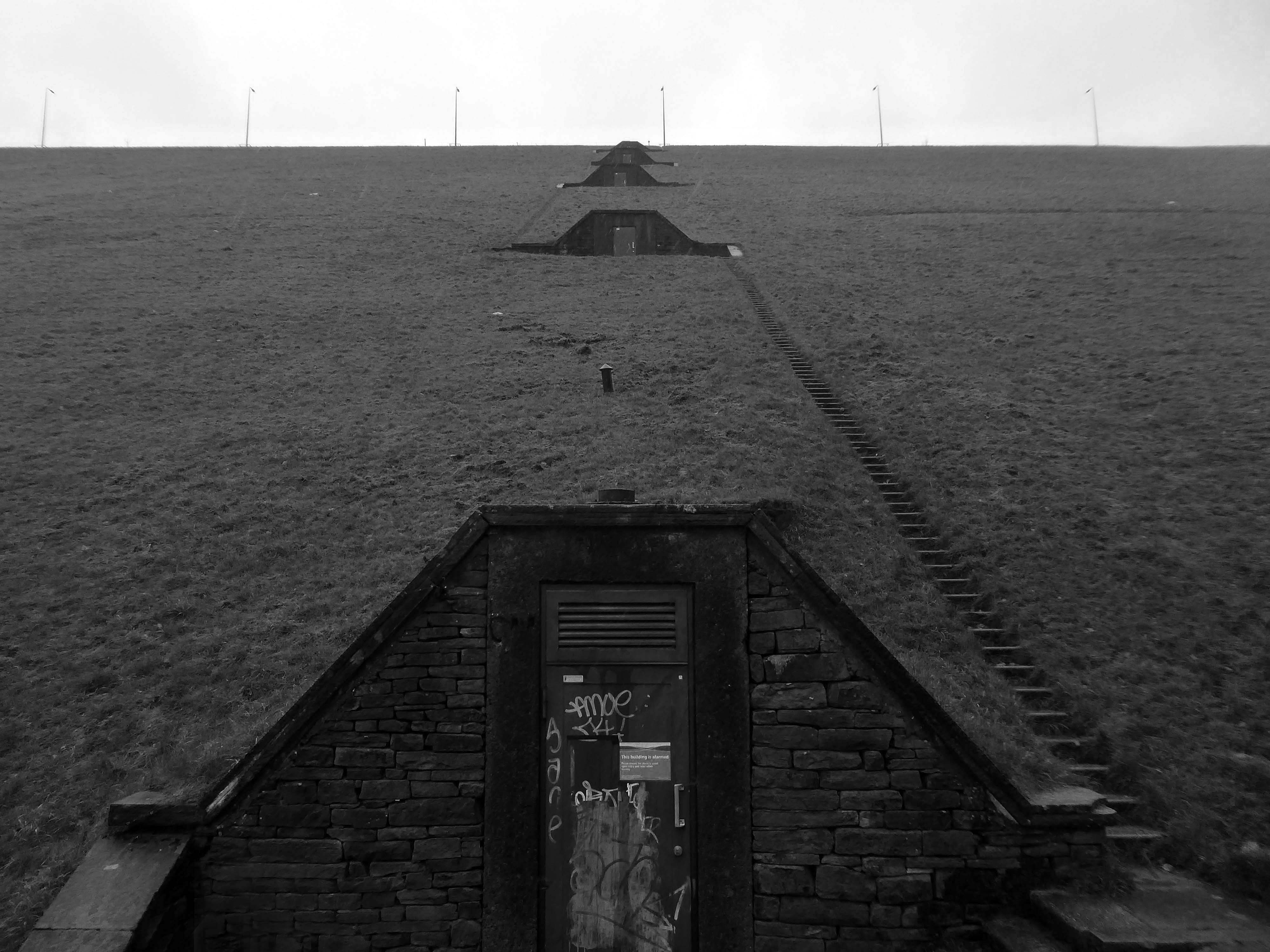
Scammonden steps comprises five flights of steps up the hillside from the valley below. Totaling 458 steps, the cumulative step count when ascending each of the five flights is 95, 200, 287, 363 then 458.

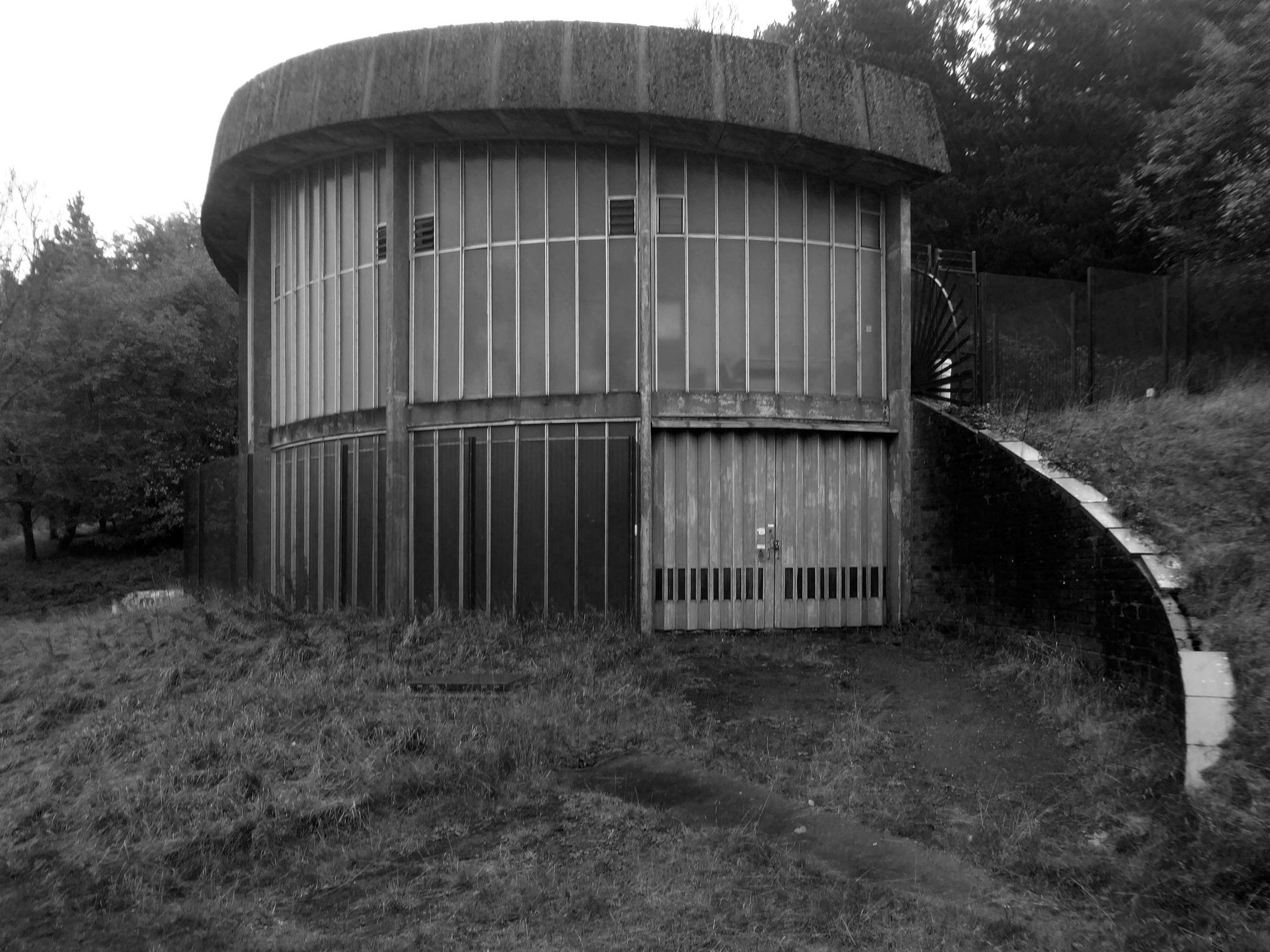
At the base of the dam is this delightful Pumping House.

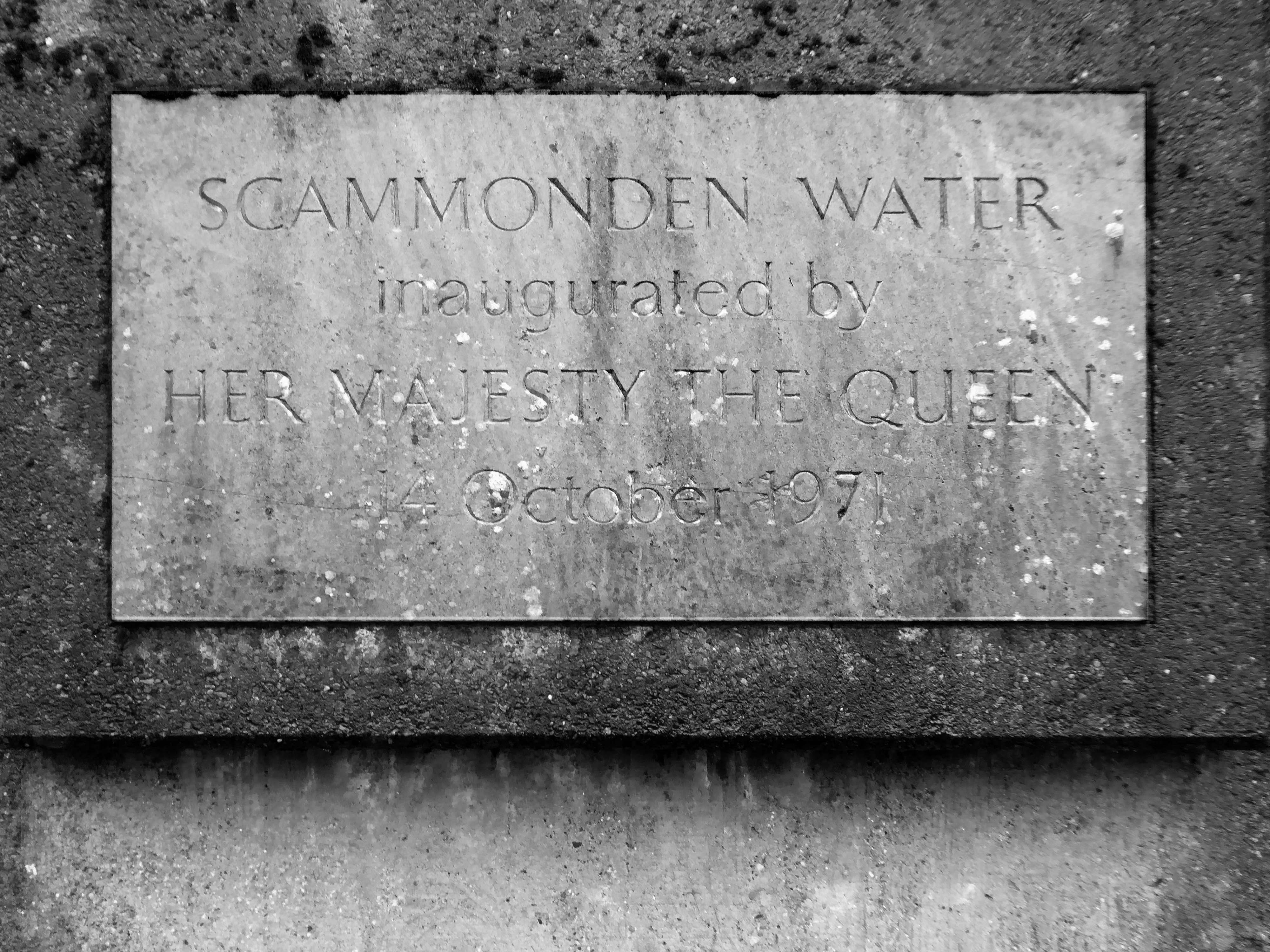
The motorway, which was dependent on the completion of the dam, was opened to traffic on 20th December 1970 and officially opened by Queen Elizabeth II who unveiled a plaque near the valve tower of Scammonden Water on 14 October 1971.

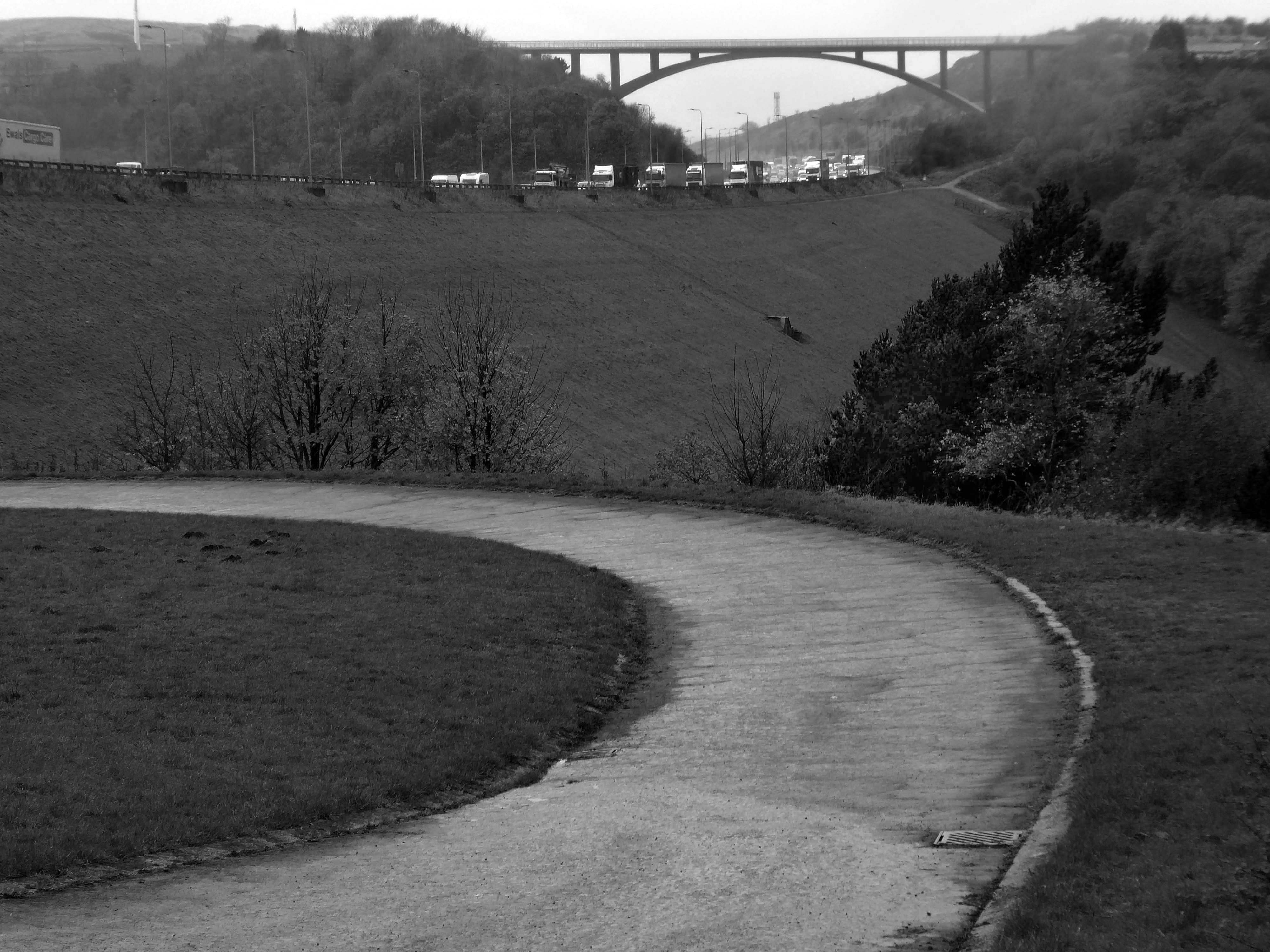
Ascending and looking back toward Scammonden Bridge also known locally as the Brown Cow Bridge – after the nearby Brown Cow Inn, now closed, spans the Deanhead cutting carrying the B6114.

The bridge was built for the West Riding County Council to the designs of the county surveyor, Colonel S Maynard Lovell.

It opened to traffic on Monday 18 May 1970 by Major Bruce Eccles – Huddersfield Transport ran buses to see the bridge.

Wikipedia

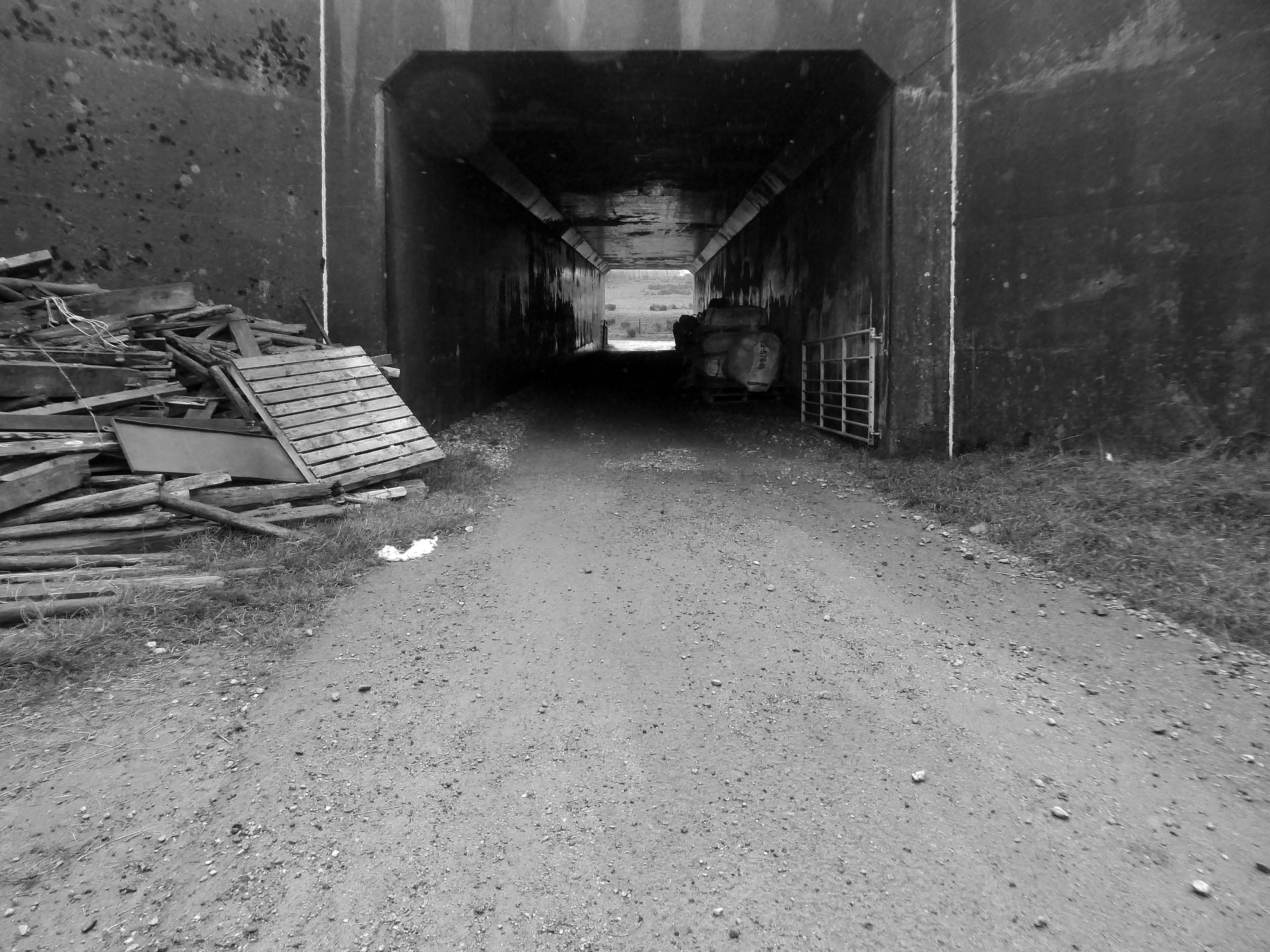
We took the tunnel through the dam.

We walked back through Spring Royd, to meet the Newhey Road and onward to Outland and the bus back to Huddersfield.

My sincere thanks to my erstwhile and educated guide Mr Phil Wood – so ably steering us along our watery way.

Bury Walk

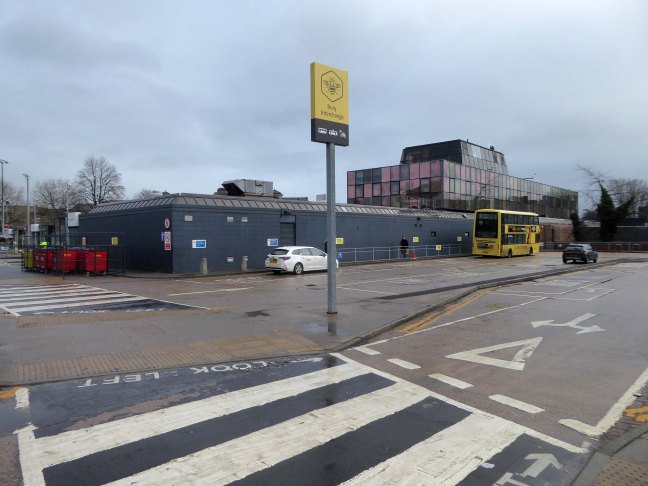
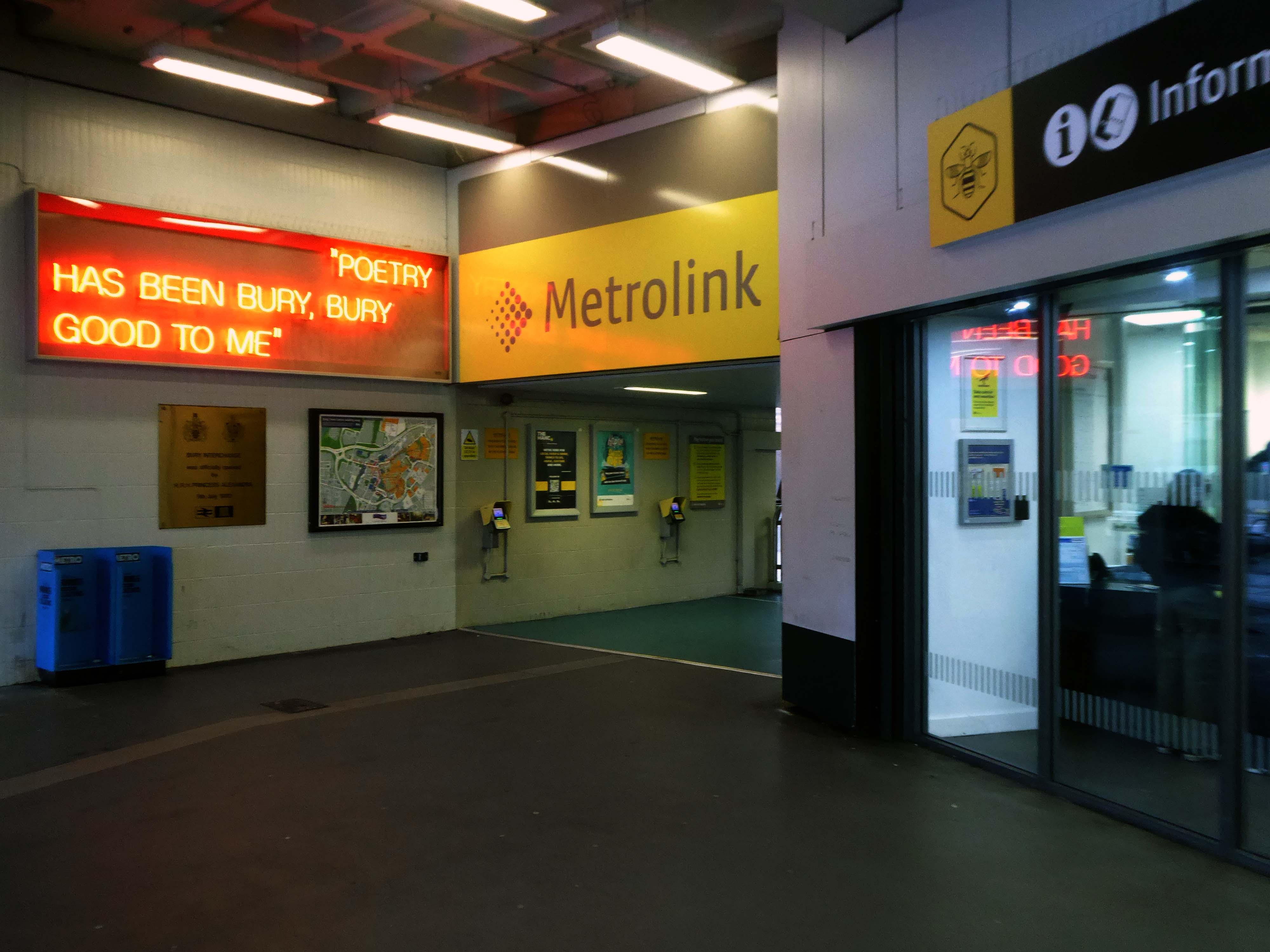
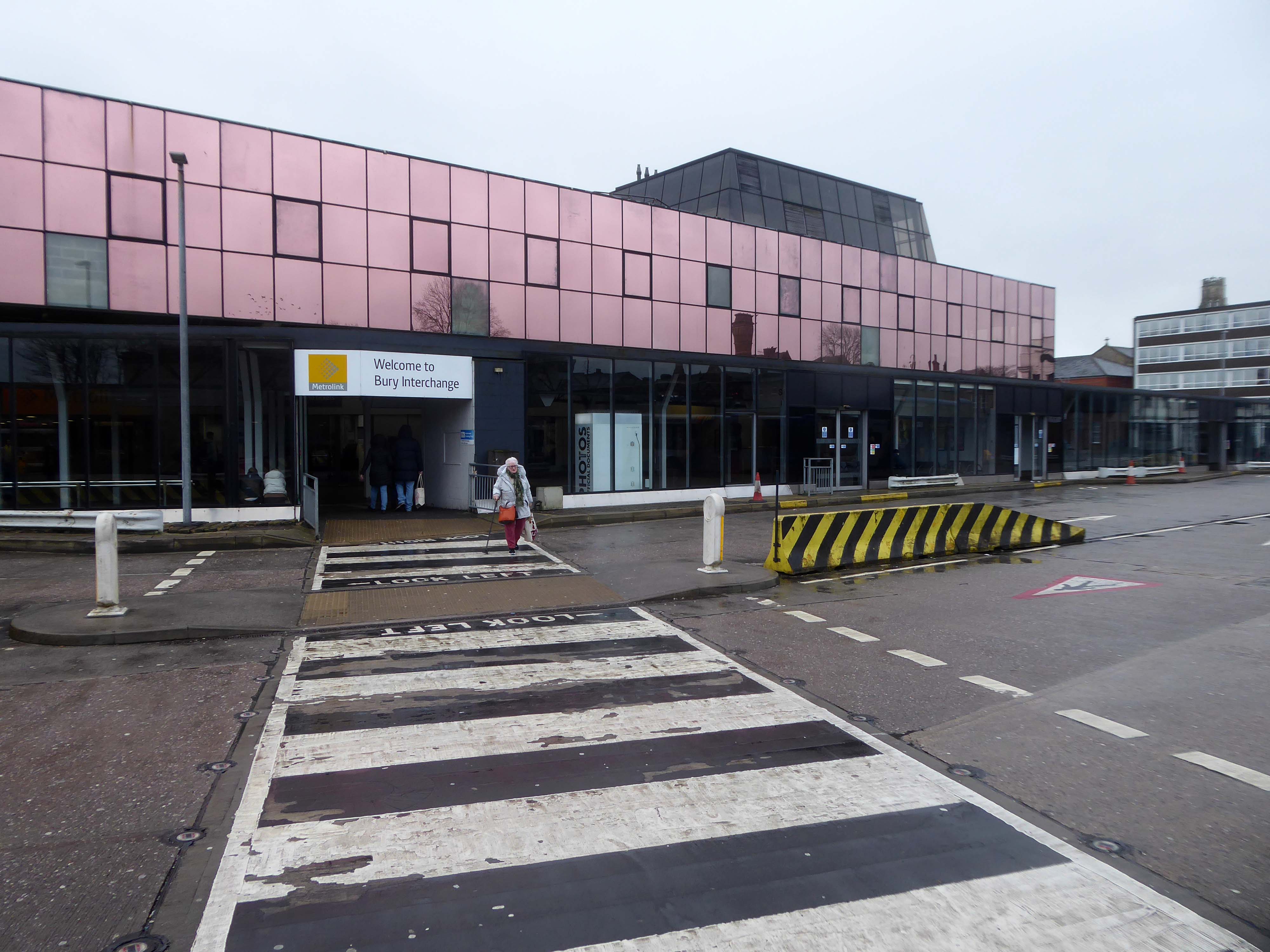
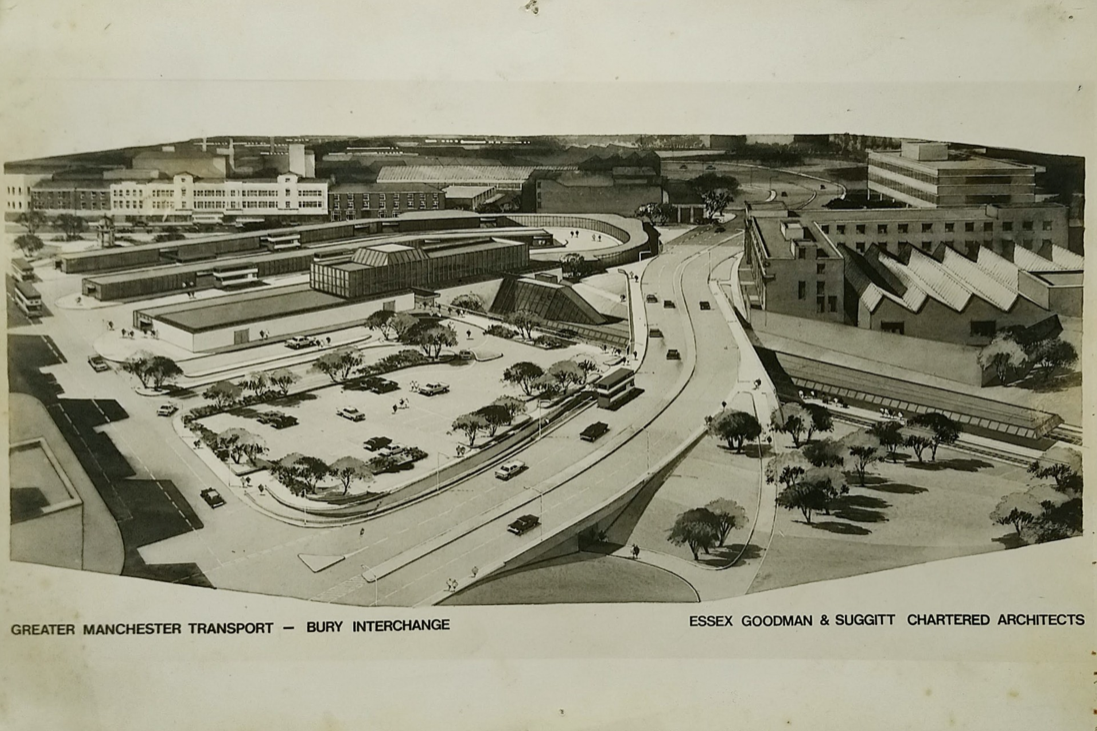
Arriving at and looking around the Interchange – 1980 architects: Essex Goodman & Suggitt

It is the northern terminus of the Manchester Metrolink’s Bury Line, which prior to 1992 was a heavy-rail line.

A new short spur line was constructed to connect the new station. The railway had originally run into Bury Bolton Street which was further away from the town centre, and was closed by British Rail on the same day that Bury Interchange opened.

It also incorporates a bus station.

Bury Interchange replaced the bus termini scattered around Bury town centre, notably around Kay Gardens.

Wikipedia

Image courtesy of Roy Banks

An £80m transformation is coming to the Bury Interchange, which will see step-free access at the Metrolink, a “vertical circulation core” to better connect the Metrolink with the bus facility, and an integrated travel hub with spaces for cycle storage.

The work is much-needed, explained Transport for Greater Manchester’s Alan Lowe, he said that the interchange was built in the 1980s and very much is of its time.

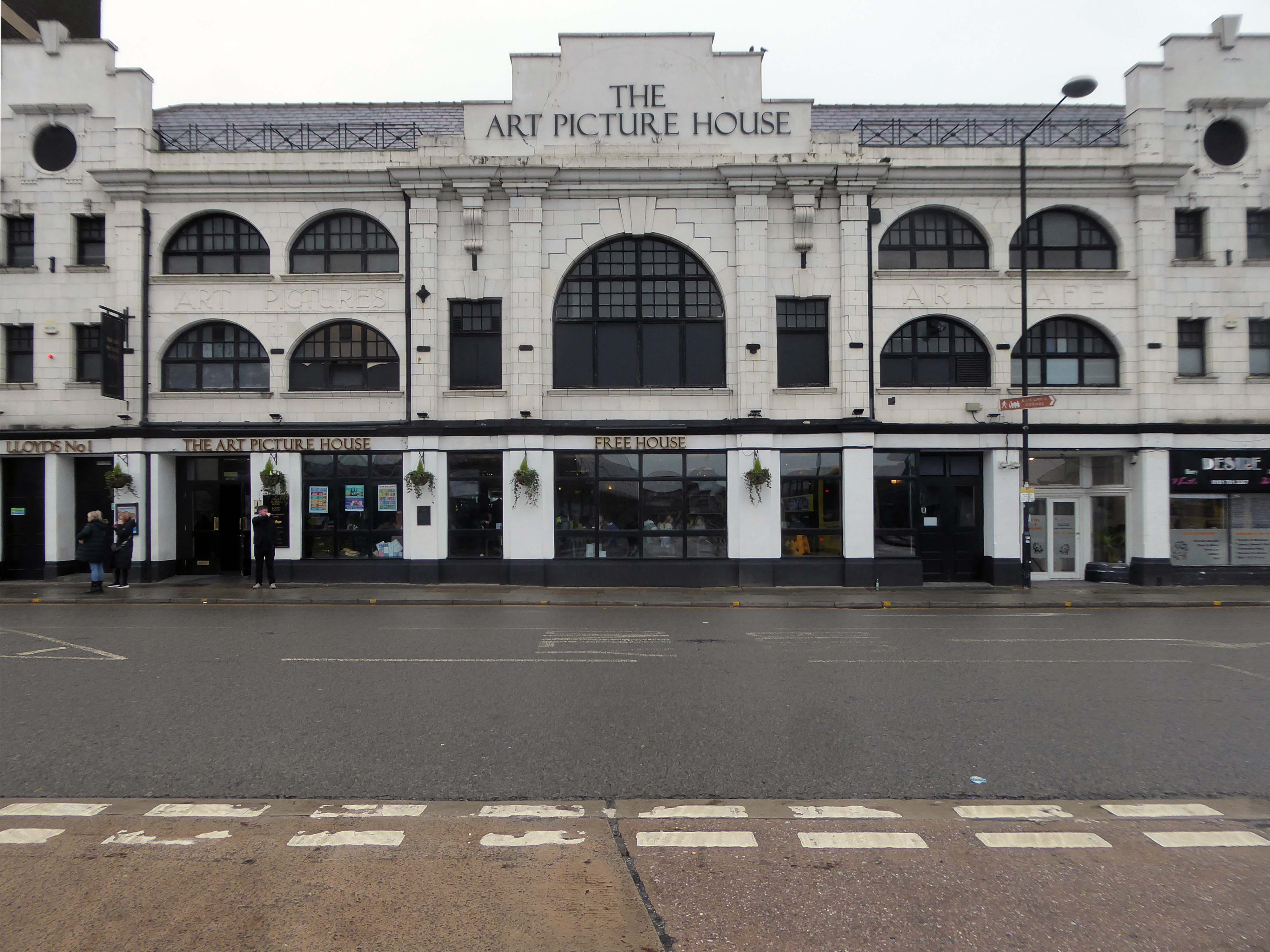
Onward to the Art Picture House which is Grade II Listed – currently operating as a Wetherspoons.

The Art Picture Palace was a 1923 rebuild of the earlier Art Picture Hall both designed by architect Albert Winstanley. The Art Picture Palace was opened on 26th January 1923. A remarkably complete survivor of a 1920’s cine-variety house executed in an elaborate style.

Films ceased in February 1965 and it became a bingo club. Later converted into a billiard hall until 19th May 1991 when it became a bingo club again, it later became a Chicago Rock Cafe.

Cinema Treasures

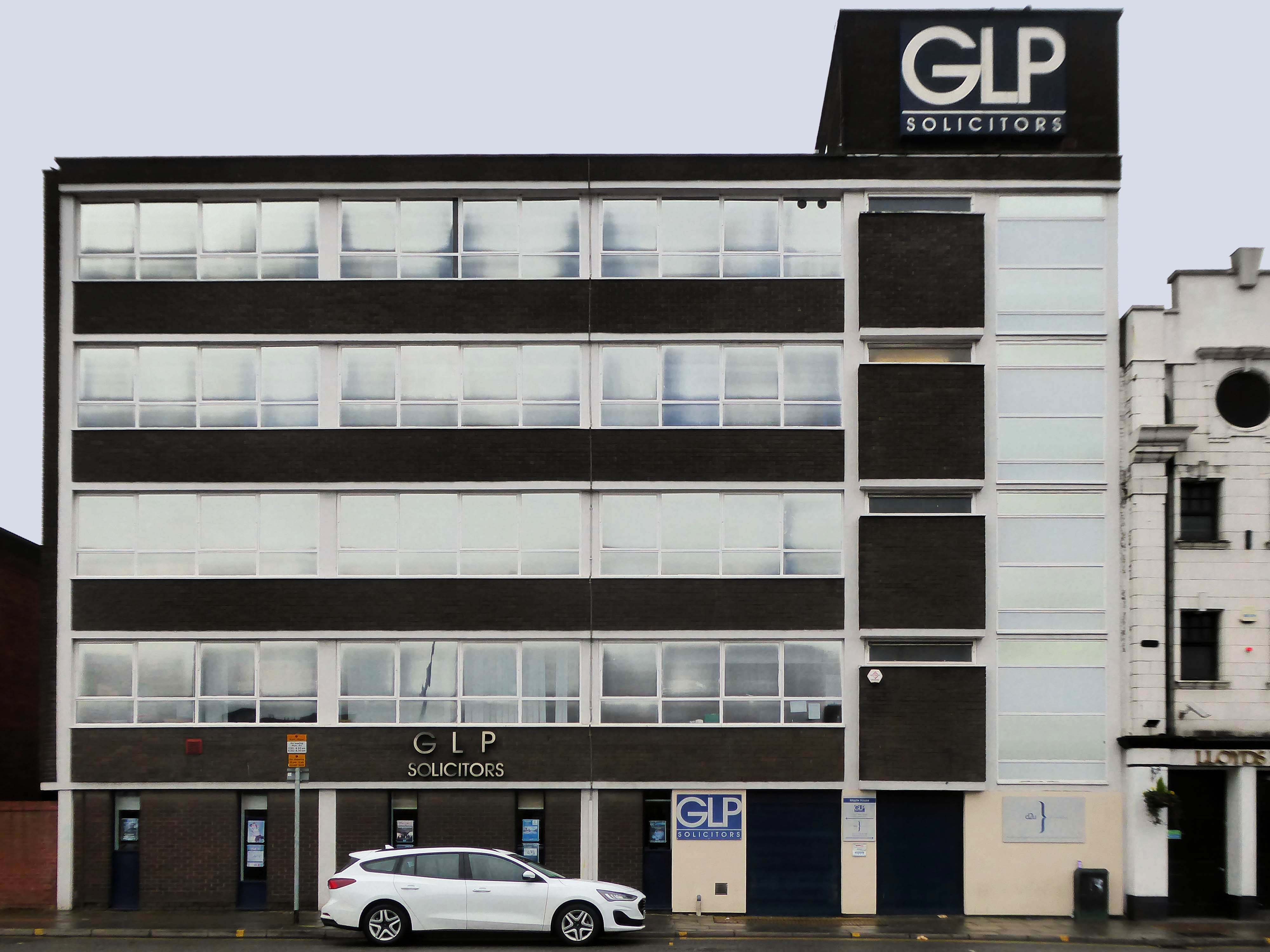
Next door a typical steel glass and brick banded office block Maple House.

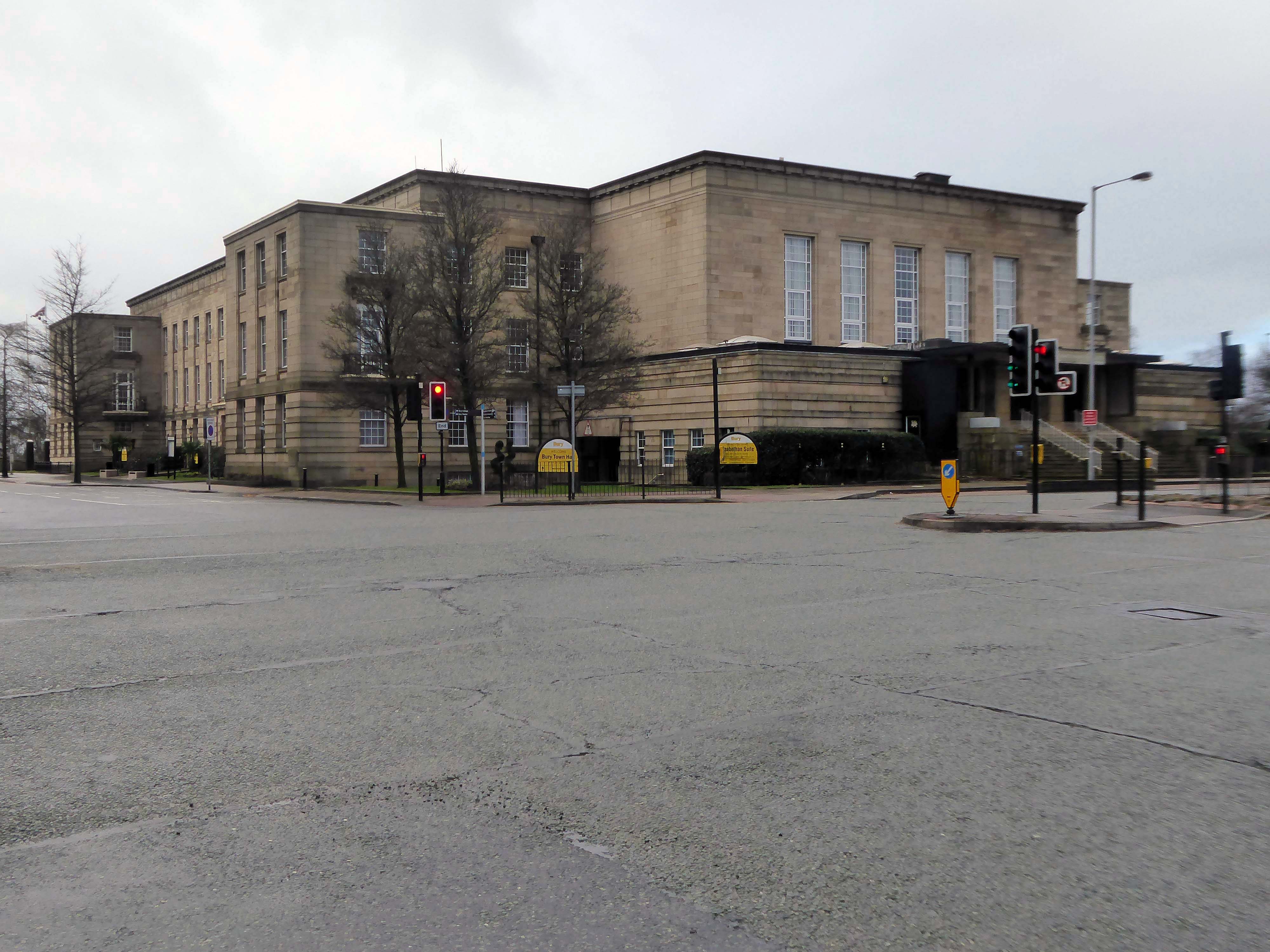
Around the corner and over the road to the Town Hall 1939-40 architects: Reginald Edmonds of Jackson & Edmonds then 1947-54.

Large and Dull – Niklaus Pevsner.

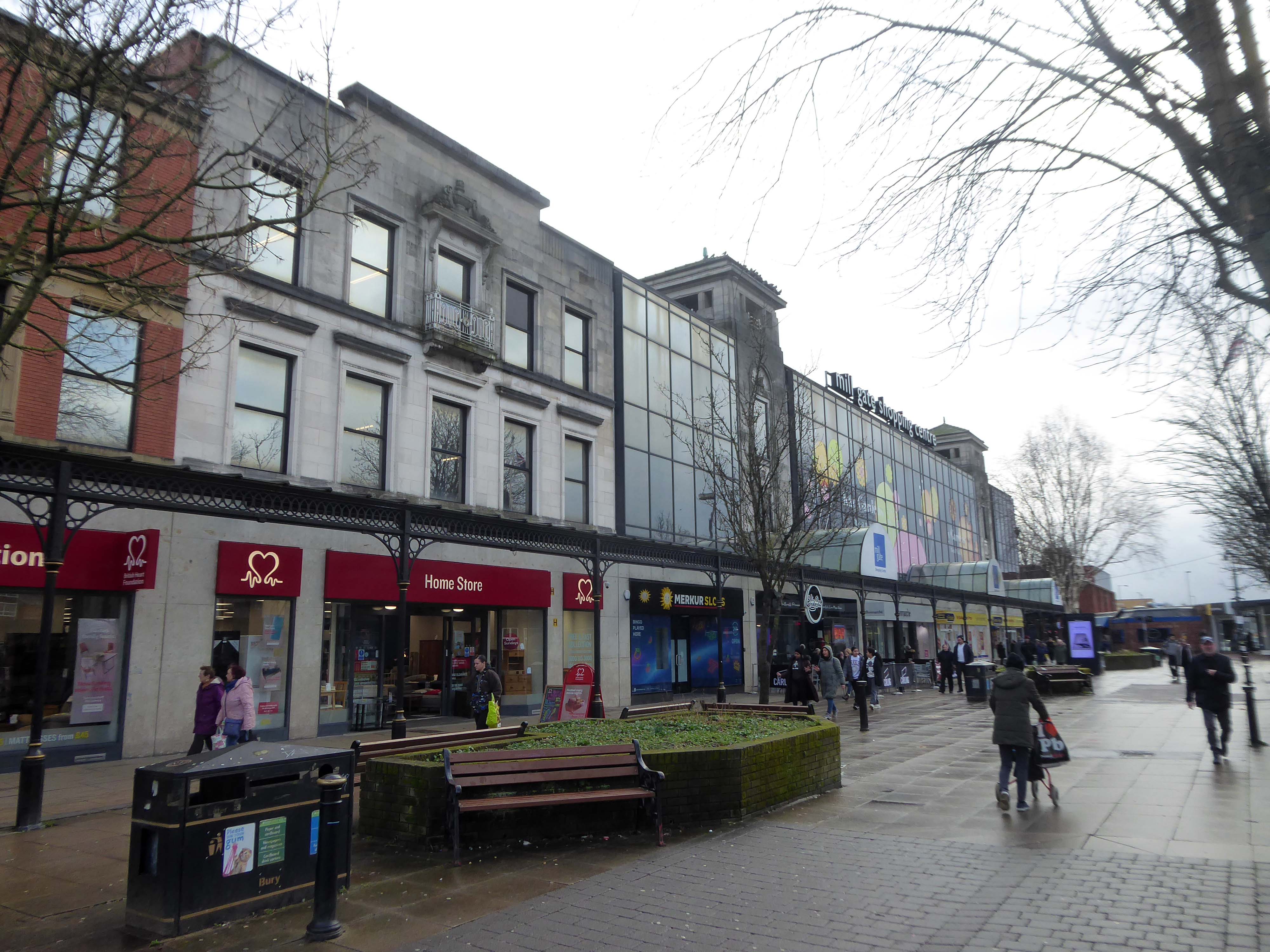
Back through the Interchange to the former Cooperative Store of the 1930’s.

The Portland Stone towers still visible – the elevation largely retro-clad in glass.

Passing through the Millgate Shopping Centre of the 1980’s.

Unambitious but successful, the floors cheerfully tiled – Niklaus Pevsner.

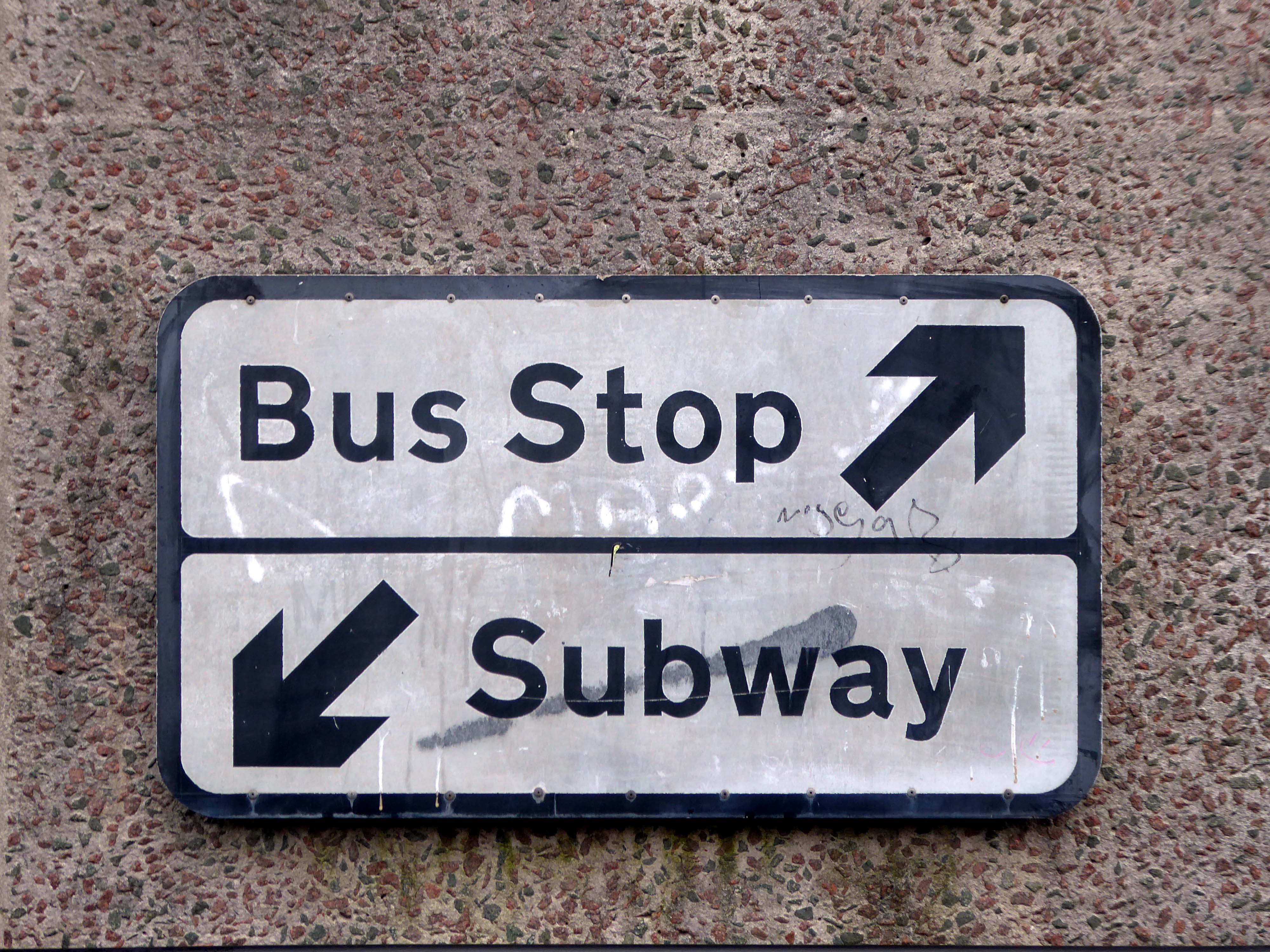
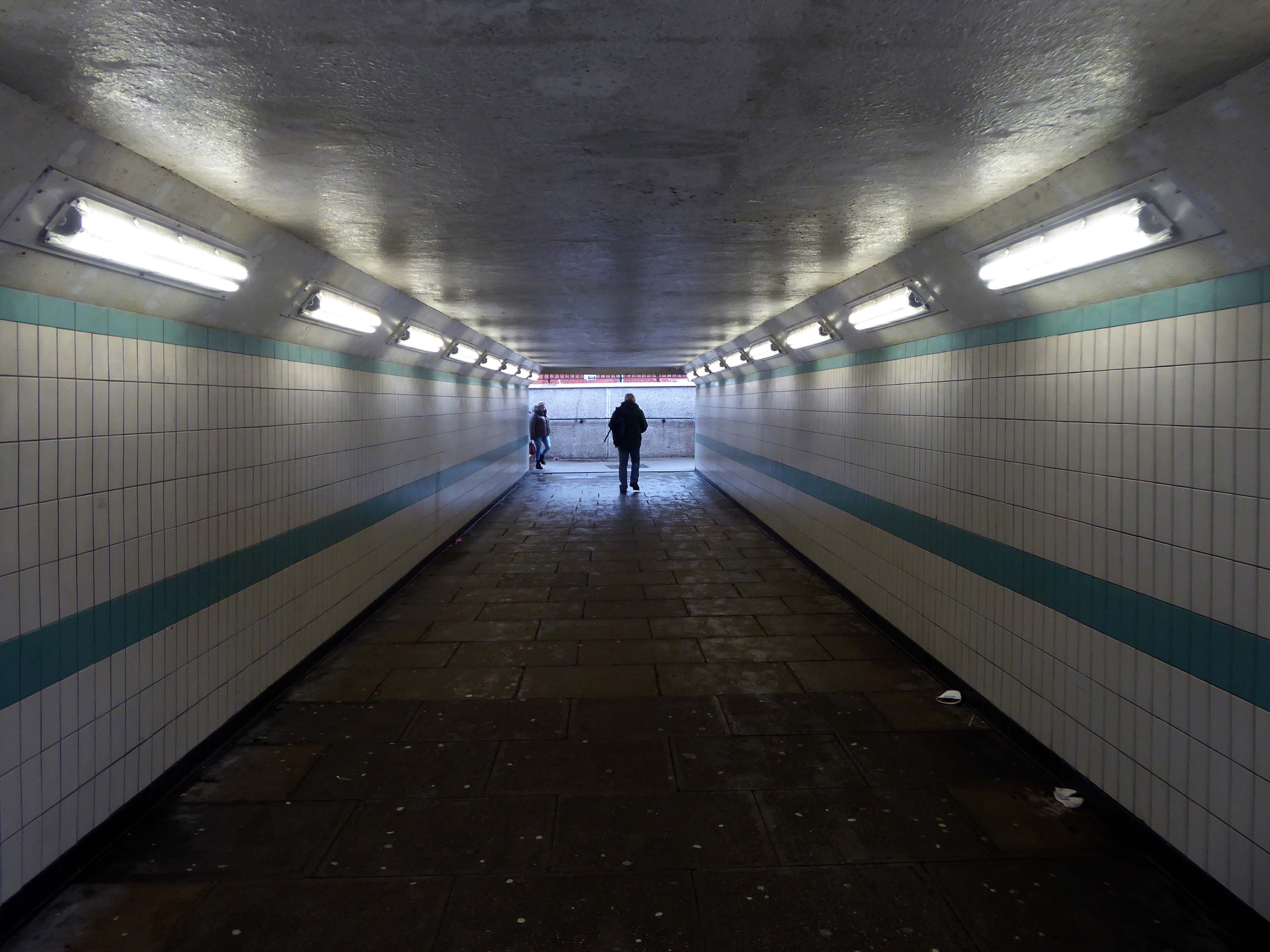
Down in the subway at midday.

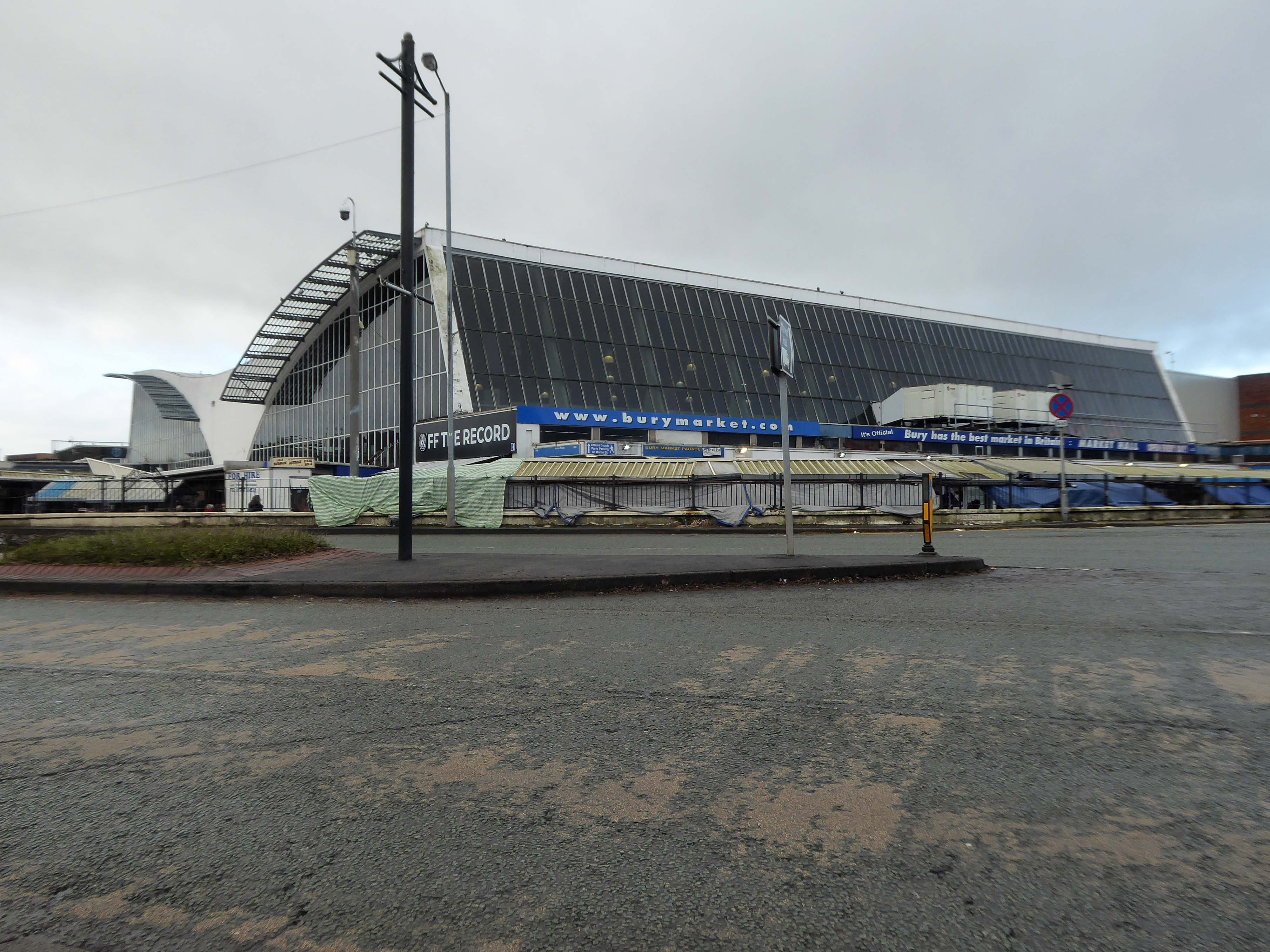
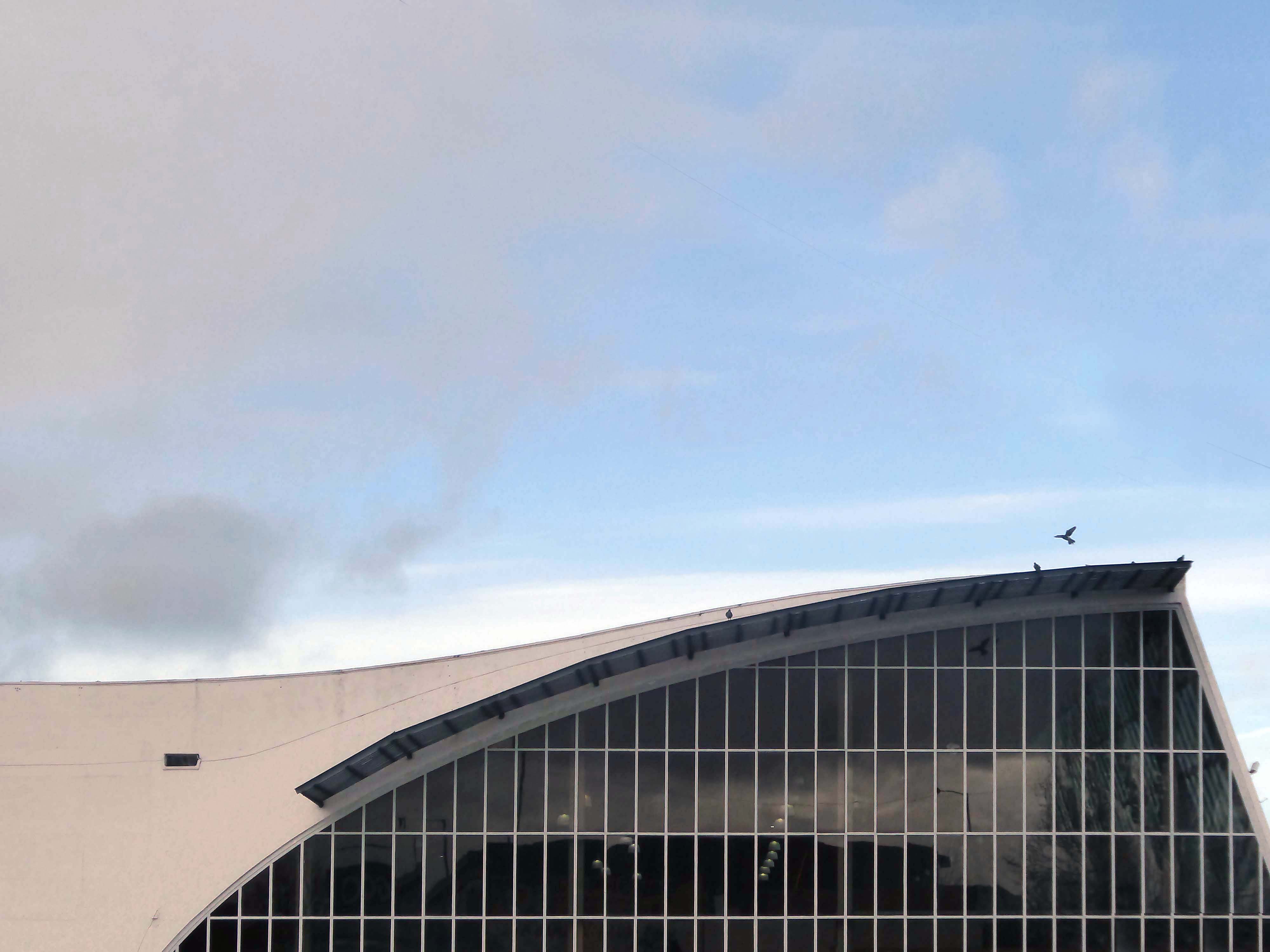
The better to get a view of the Market Hall 1971 – architects: Harry S Fairhurst.

The Indoor Market Hall is currently closed due to the discovery of Reinforced Autoclaved Aerated Concrete – within the building structure. RAAC is a lightweight type of building material that was used between the 1950s and 1990s.

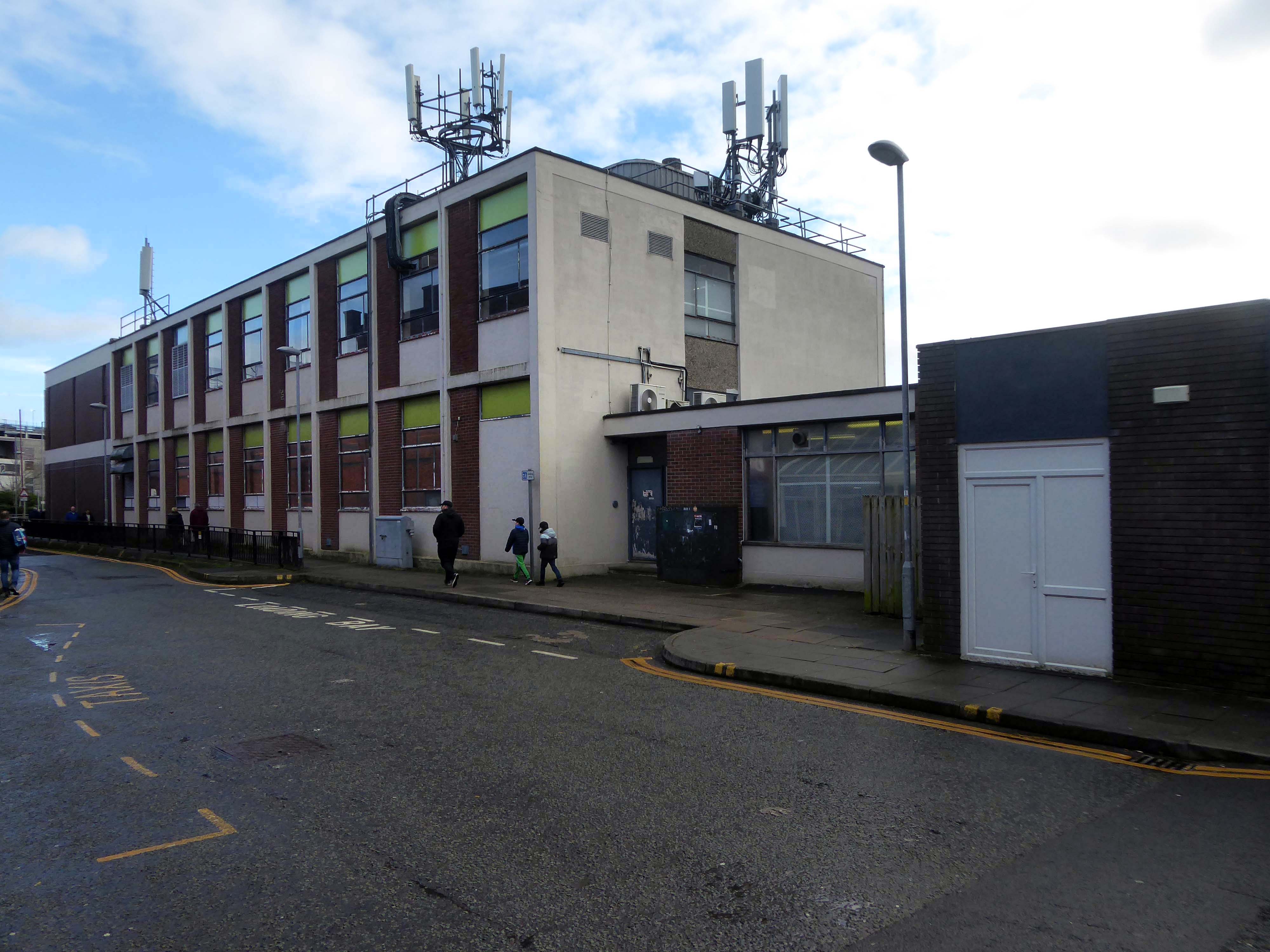
Back under the road – where we find a delightful Telephone Exchange.

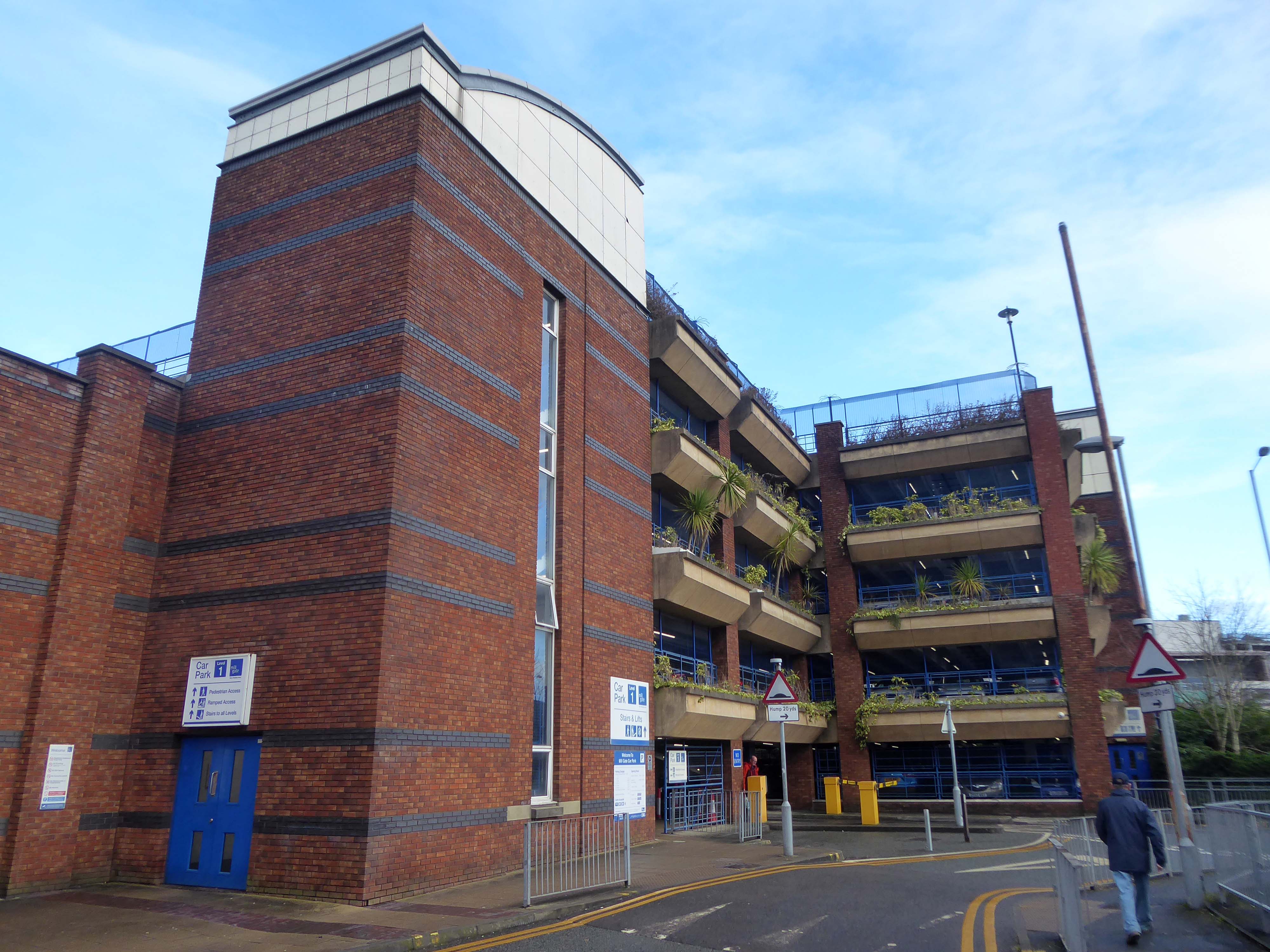
With an adjacent Multi Story Car Park.

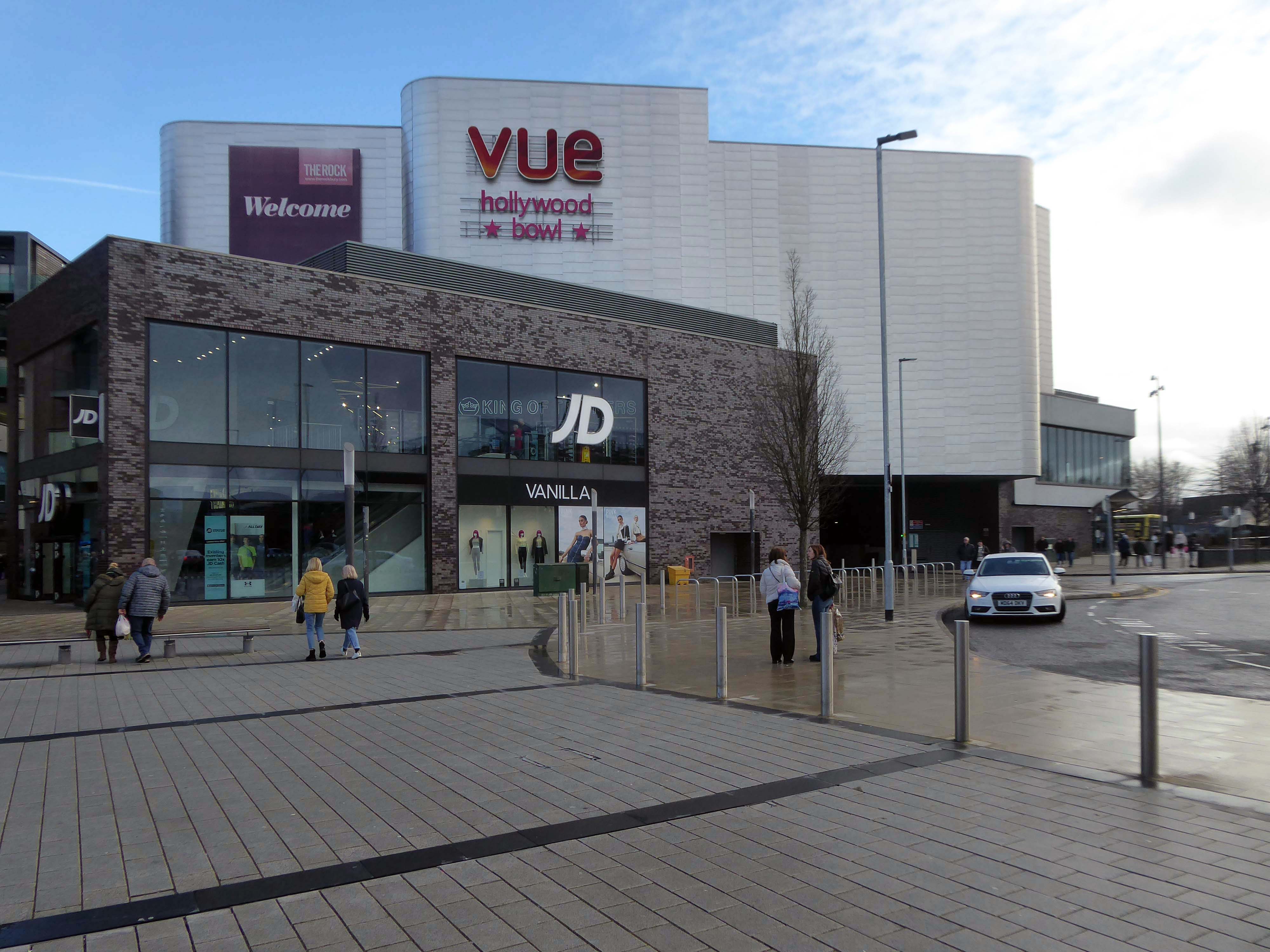
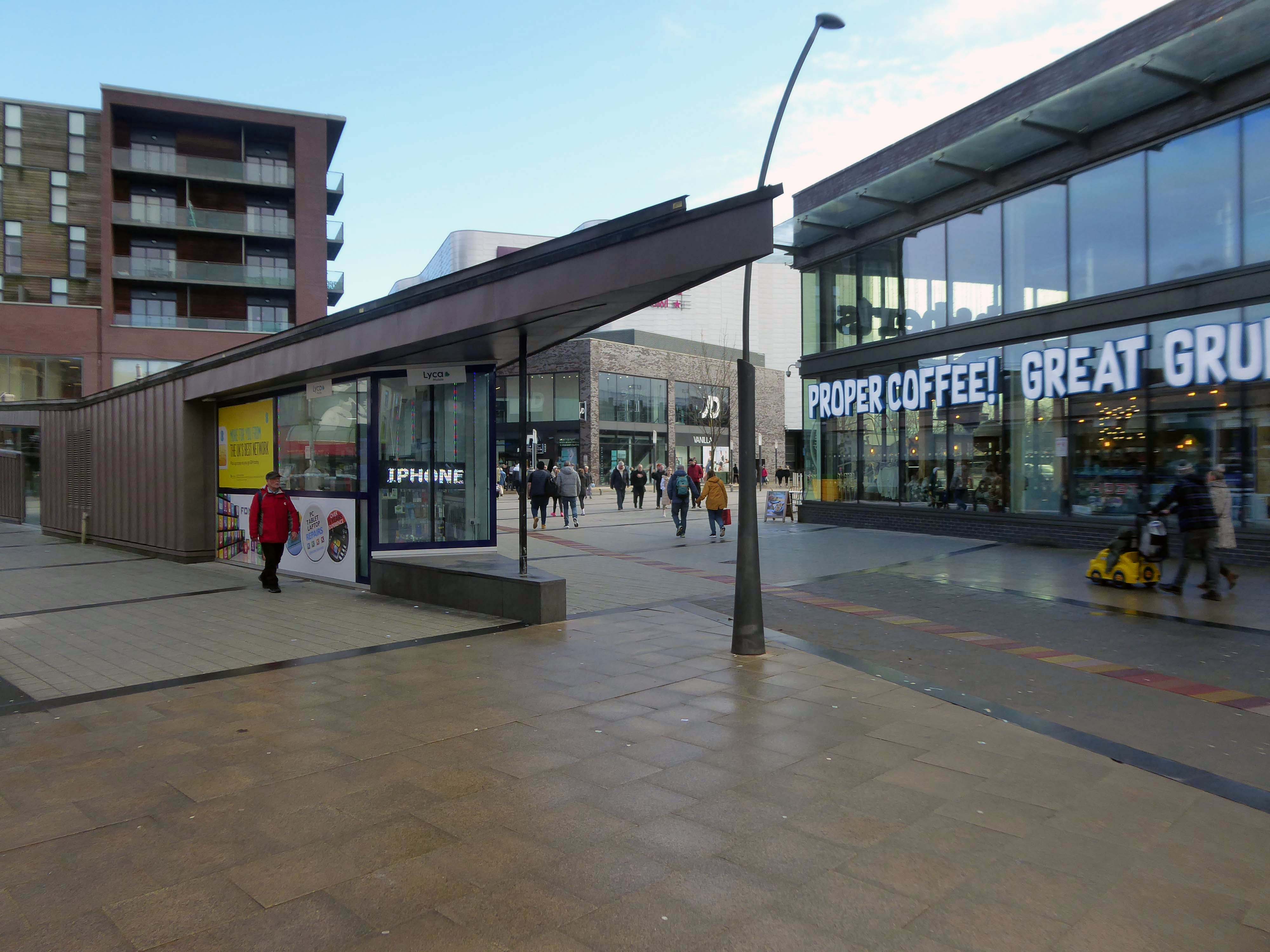
Around the bend to The Rock.

The Rock is a vibrant retail and leisure centre which is home to a range of high street fashion brands, independent retailers, tantalising eateries and fantastic entertainment – it’s the perfect place to visit any day of the week. 

It is the work of architects BDP – completed in 2010 at a cost of £350 million.

Our masterplan for The Rock took into account the historical street pattern and public realm context to give the scheme its own identity, and make visual connections to local landmarks.

The retail and leisure scheme brings many exciting brands to Bury for the first time.

New pedestrian streets rejuvenate and improve connections to adjacent areas stitching the town back together.

The development will also contain 408 one and two-bedroom apartments.

Back to basics at a former Burton’s hiding its faience facade.

Typical inter-war infill on our crazy mixed up mongrel high streets.

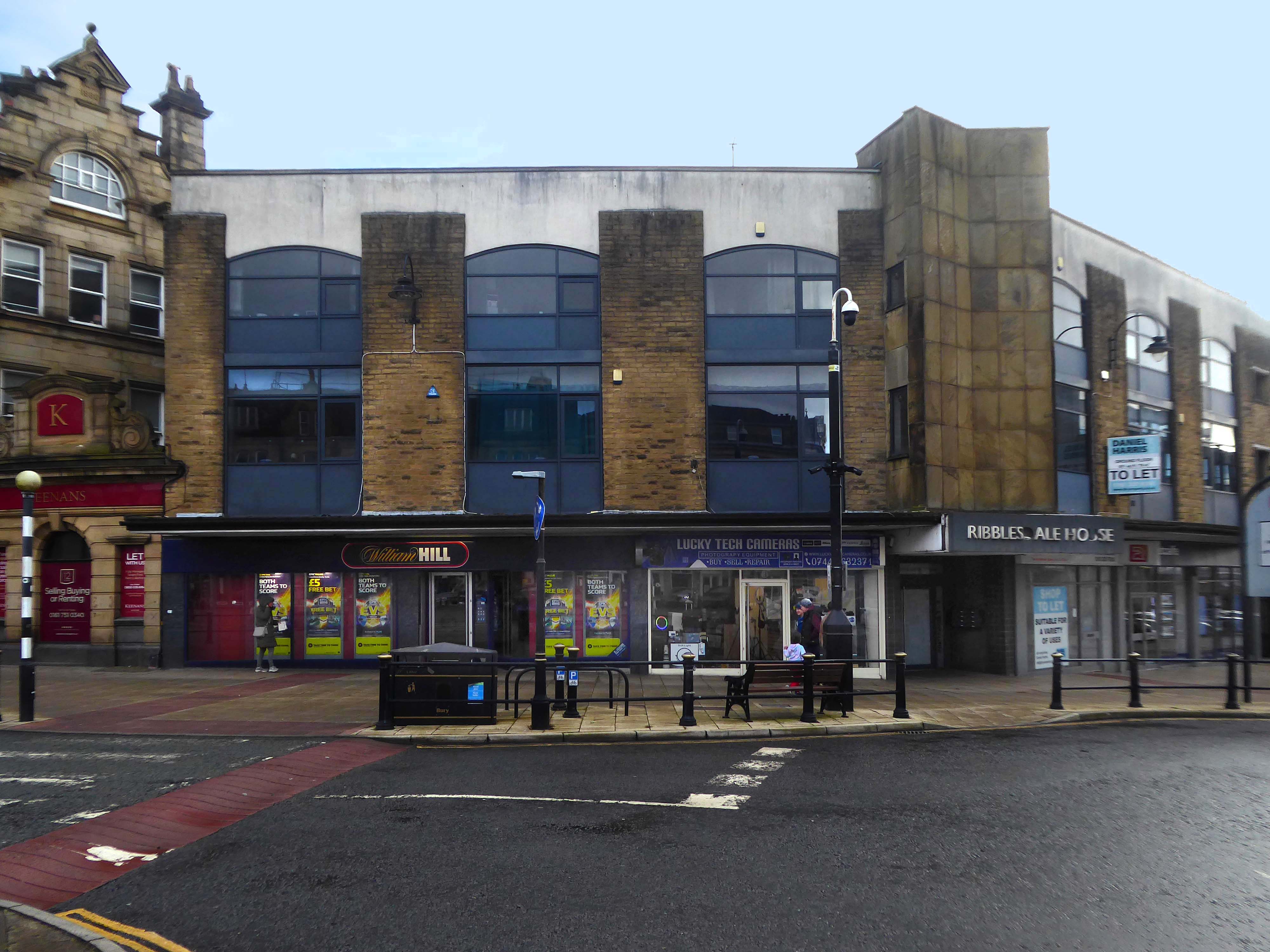
Ribblesdale House

Application by Shop and Store Developments Ltd submitted August 1965. Architect on application was Samuel Jackson and Son of Ocean Chambers in Bradford but during the application process this changed to John Brunton & Partners – Brunton was a partner in Jackson’s firm, at the same address. It had a restaurant and shops on the first floor.

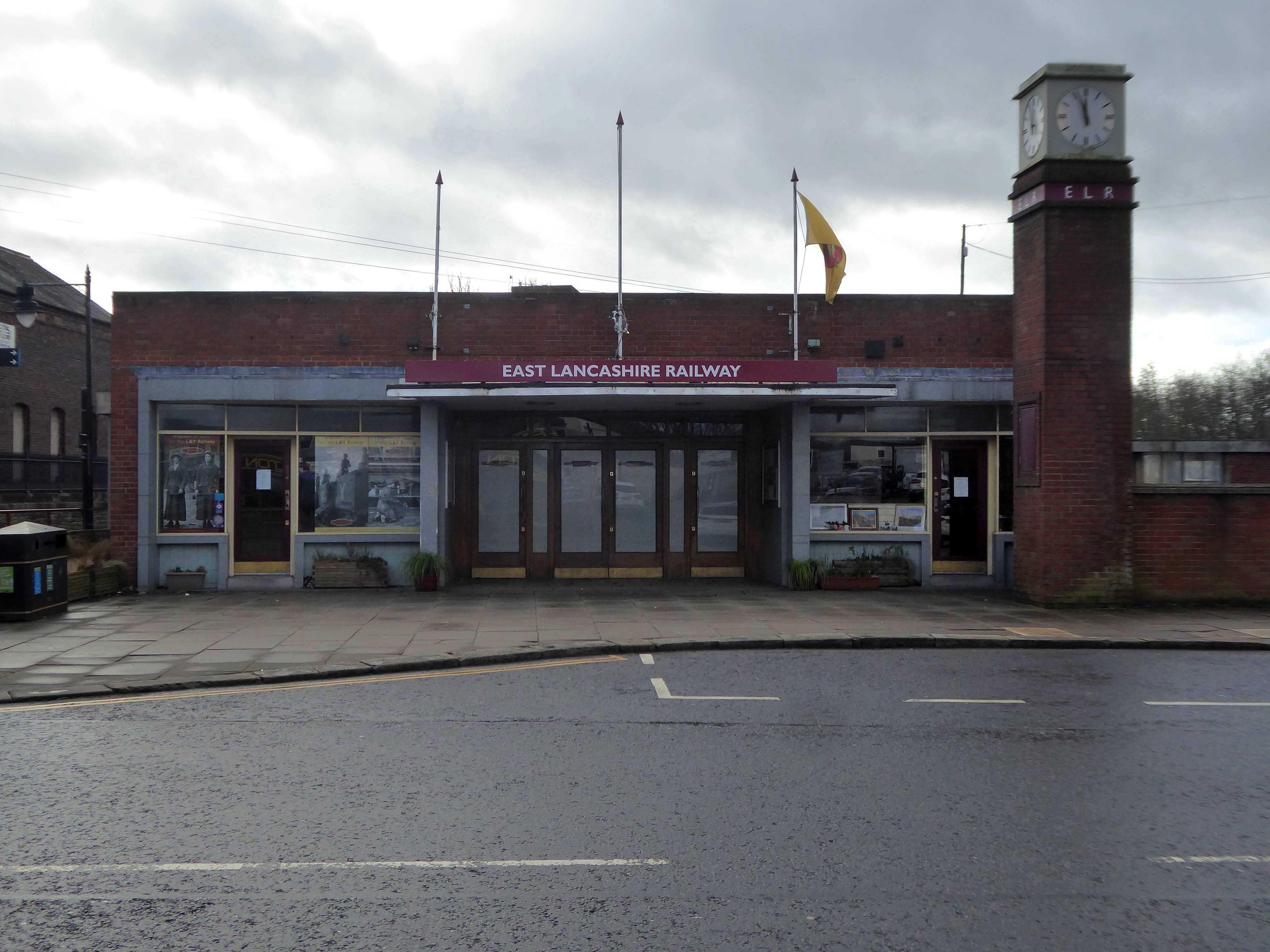
Off now to the Bury Bolton Street Station currently home to the East Lancashire Railway.

The street level buildings were destroyed by fire on 14 May 1947 and were replaced with a new brick and concrete entrance and footbridge in 1952. 

British Rail closed the station on 17 March 1980, when it was replaced by a new bus/rail interchange station further east into the town centre. Bury Interchange railway station served up until 1991 before the entire Bury Line was converted to light rail operation. It reopened in 1992 for Metrolink operation.

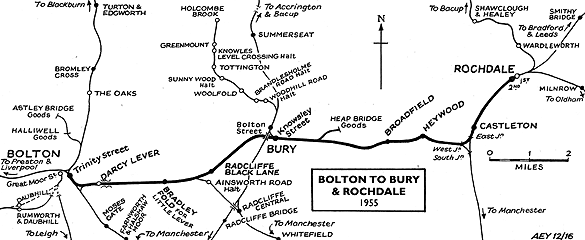
Bury was once the centre of multiple train links and the lost station of Knowsley Street.

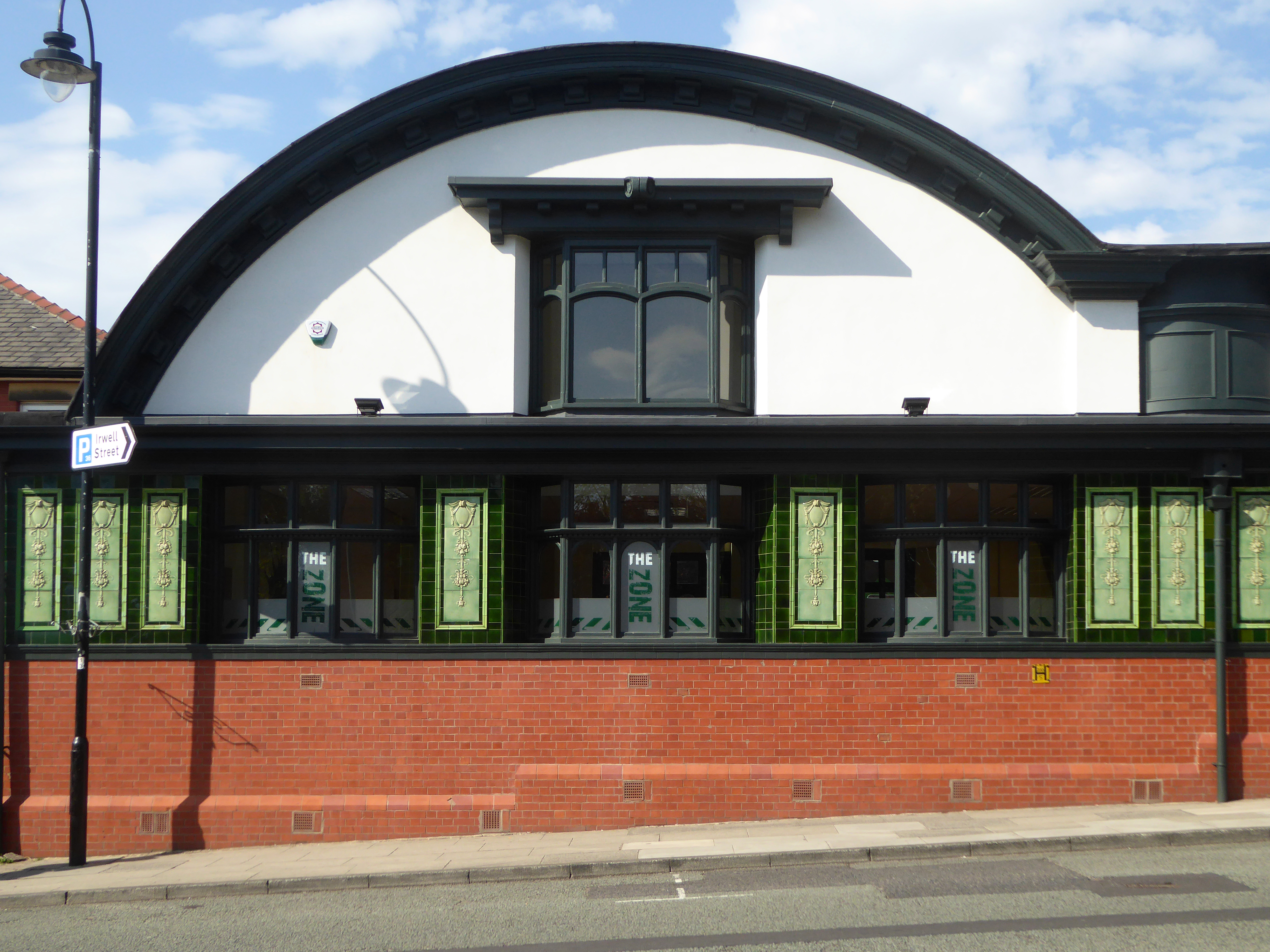
Over the road the former Temperance Billiard Hall 1910 architect Norman Evans.

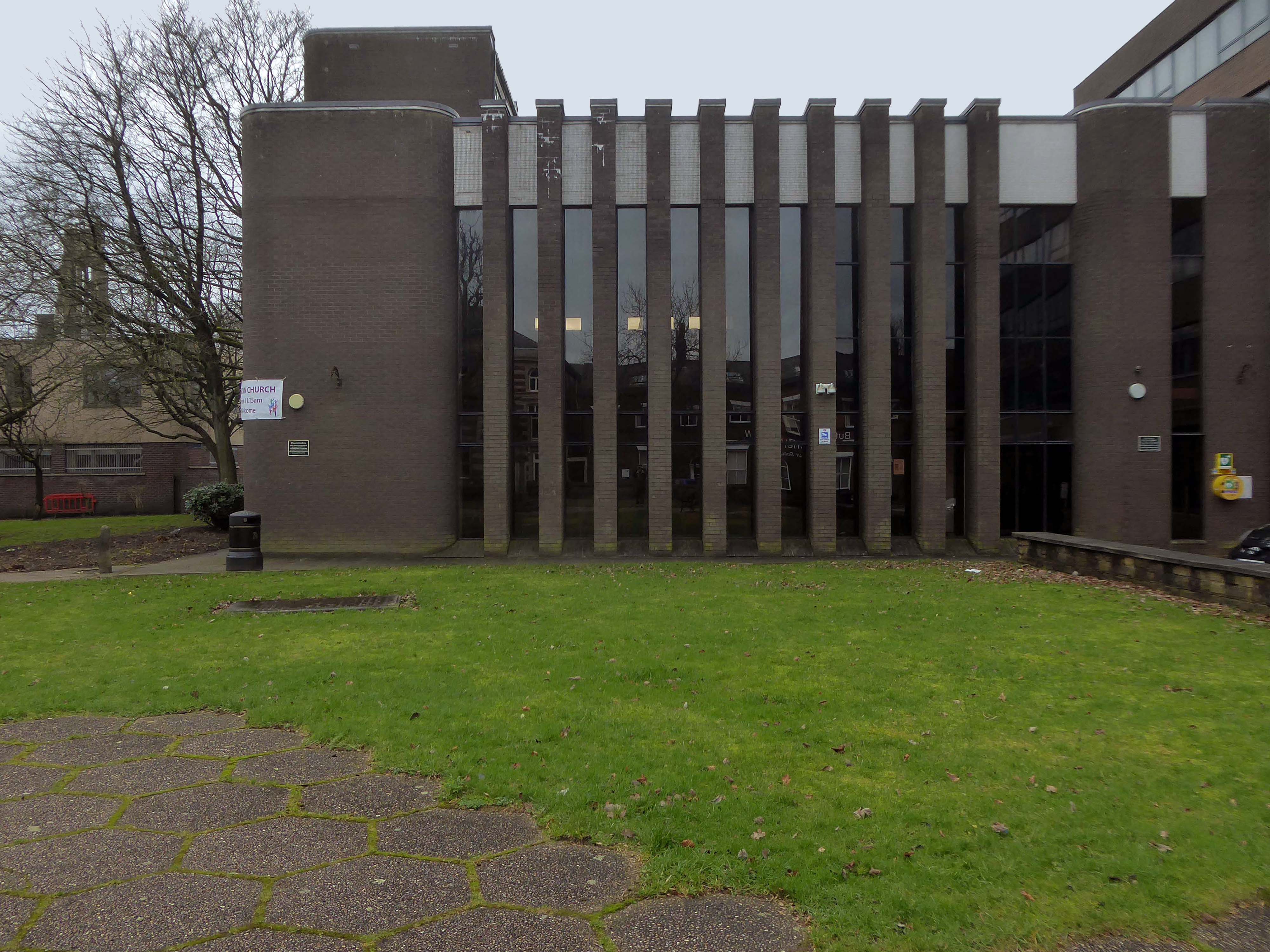
Down the side and up the steps to the Unitarian Church.

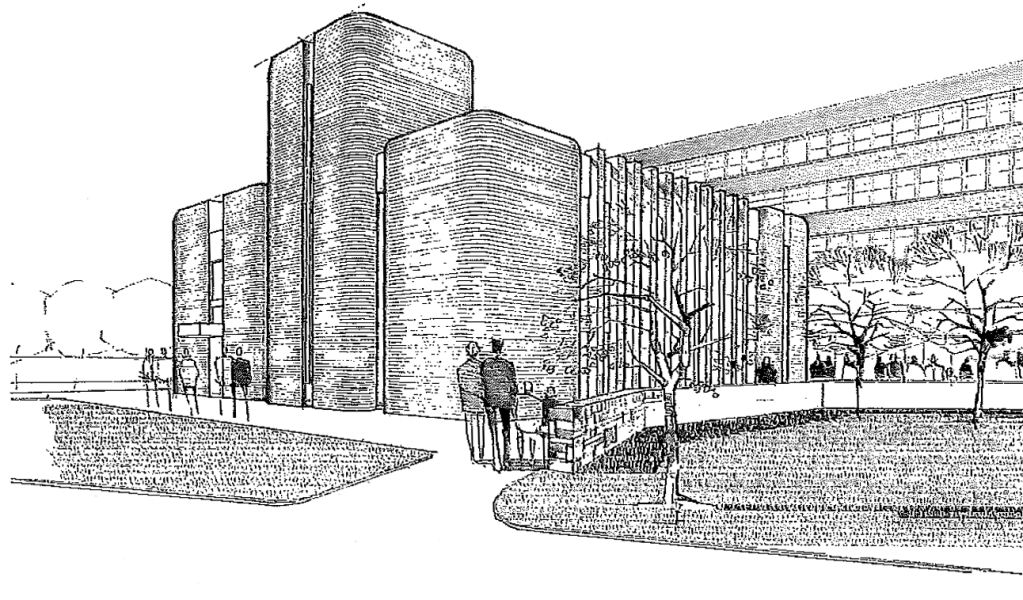
The new church was designed and constructed by local architects James T Ratcliffe.

The church was opened in 1974, with a service of dedication on Saturday, 9th March. The total cost, including furnishings, was £85,000.

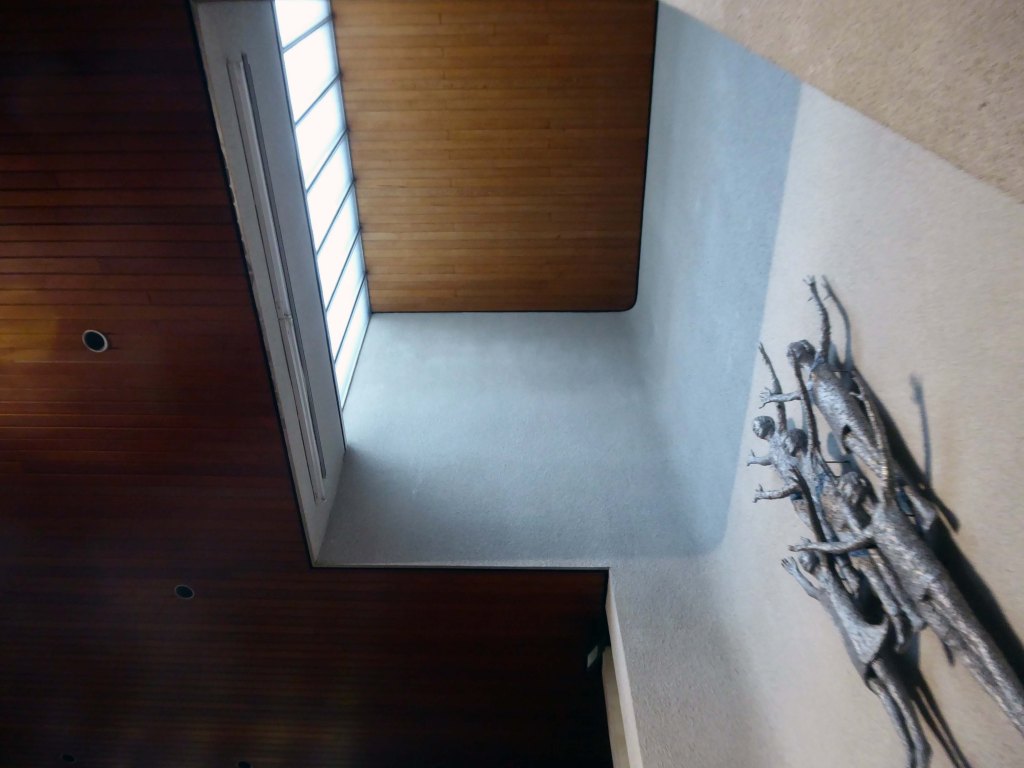
The People Praising by Elizabeth Mulchinock is a 12 foot high original sculpture at the front of the church which represents the family of the church.

Her work can also be seen at Sainsbury’s in West Ealing and Reading.

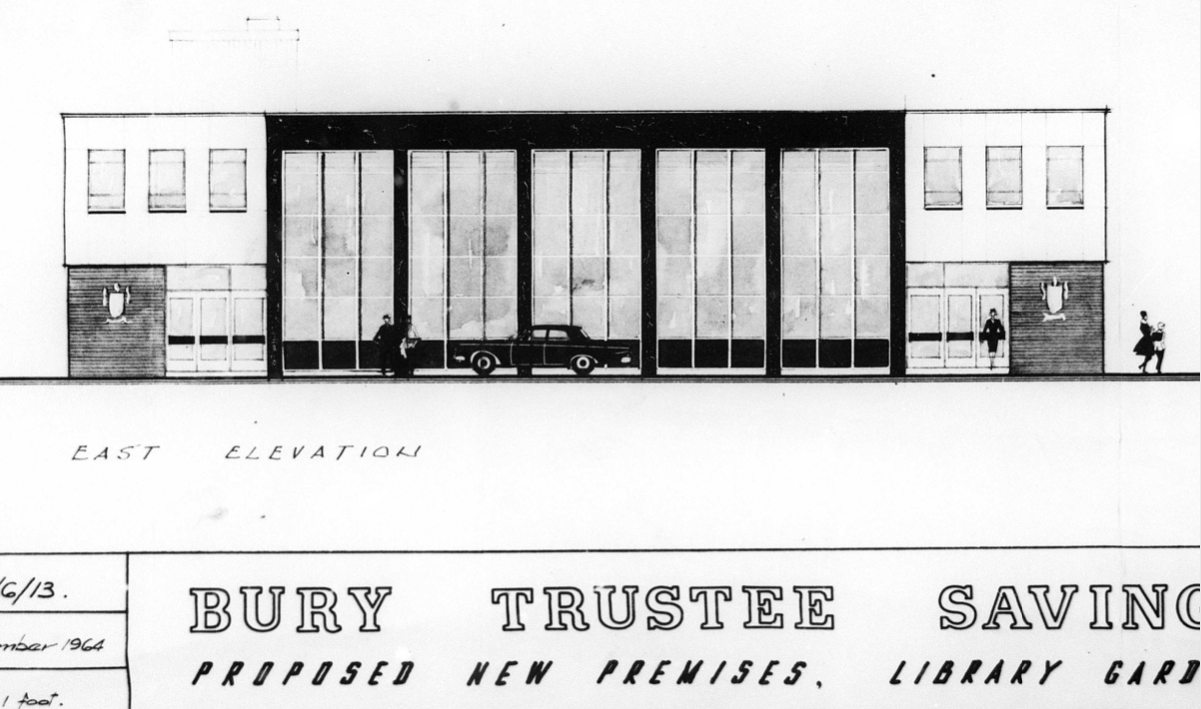
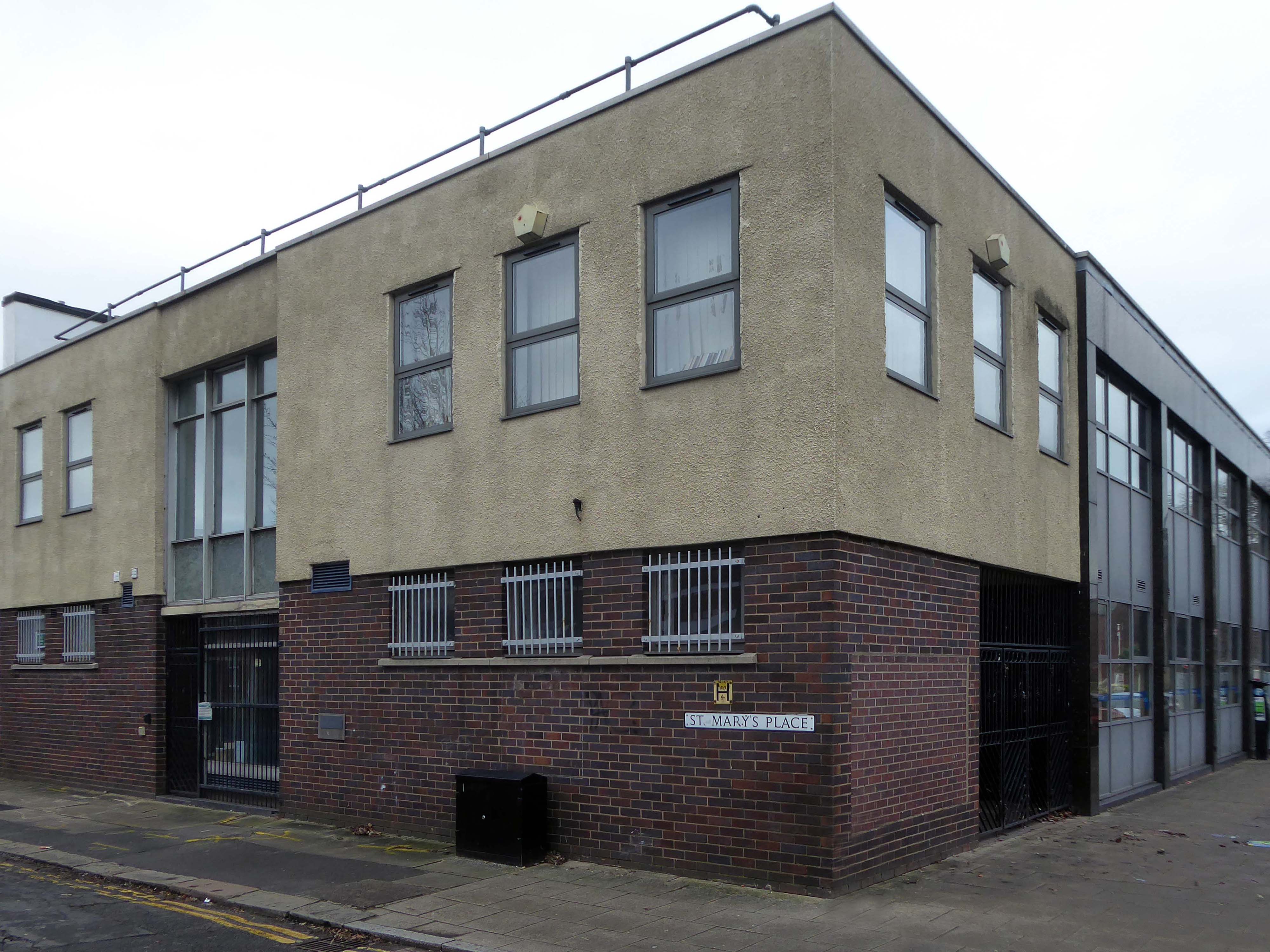
Next door is the former Trustee Saving Bank.

Planning application January 1965 – work started in June 1965. The architectural firm was Richard Byrom, Hill and partners. Richard Byrom was submitting building applications in the 1930s in Bury and locally.

The rendering on the building is original but the windows have been changed. The Job Centre took over the building in 1993. It is in a conservation area and the Civic Trust had some concerns!

Many thanks to David French for the above information.

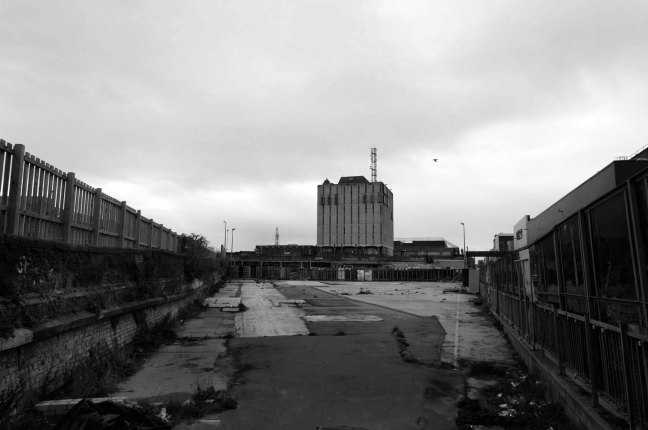
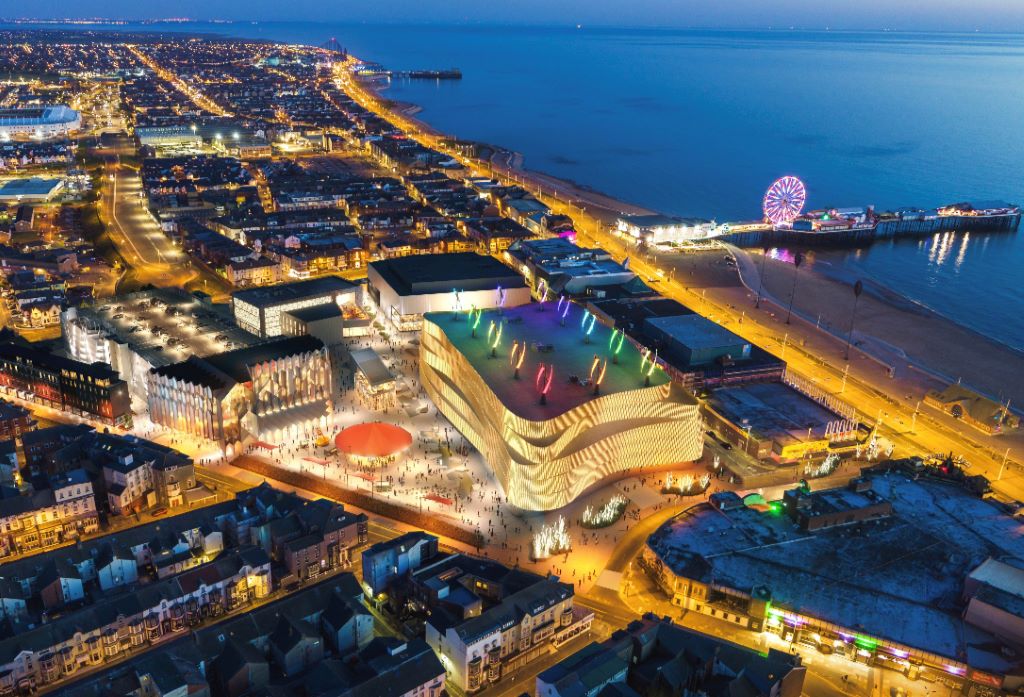
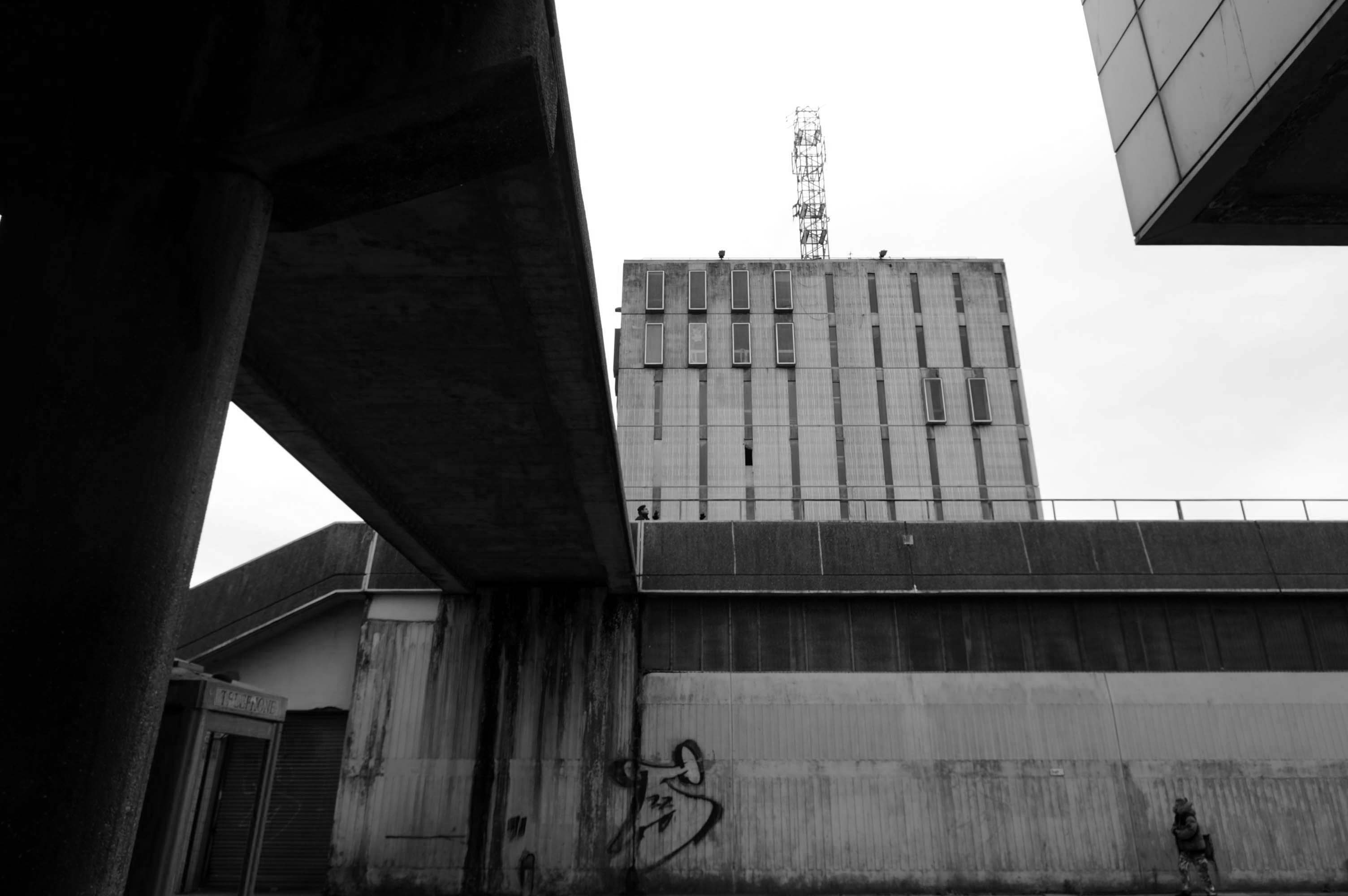
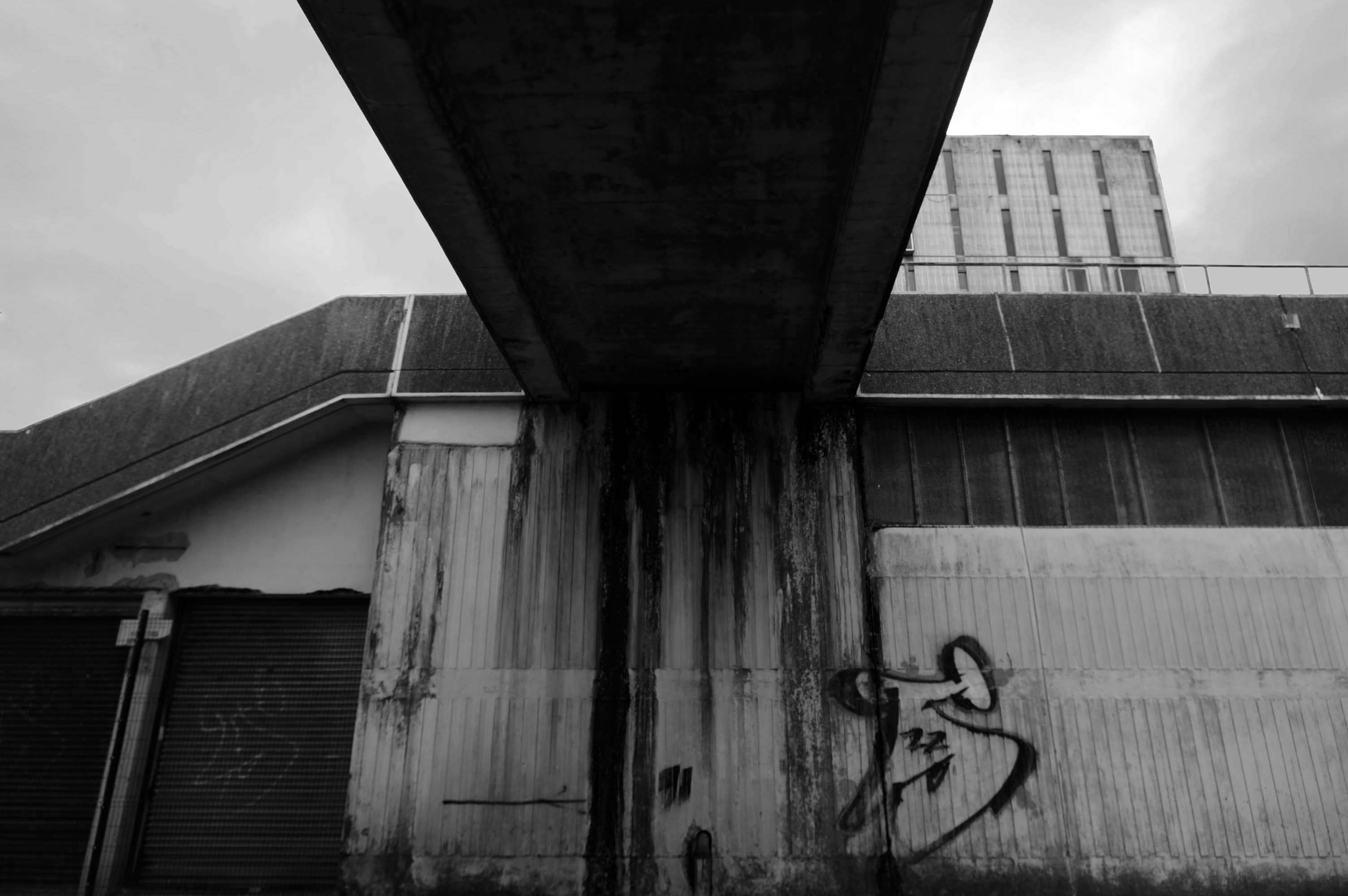
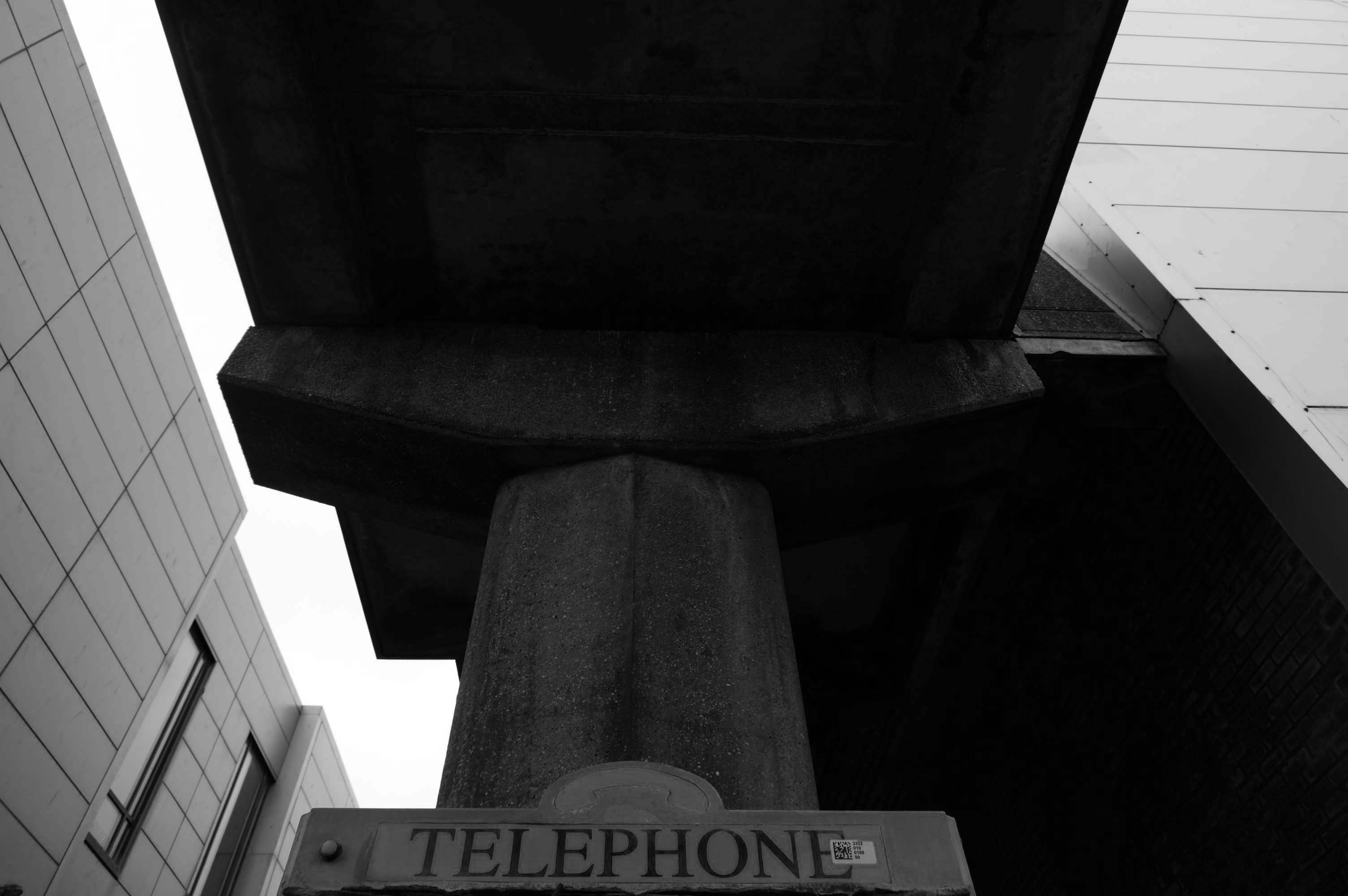
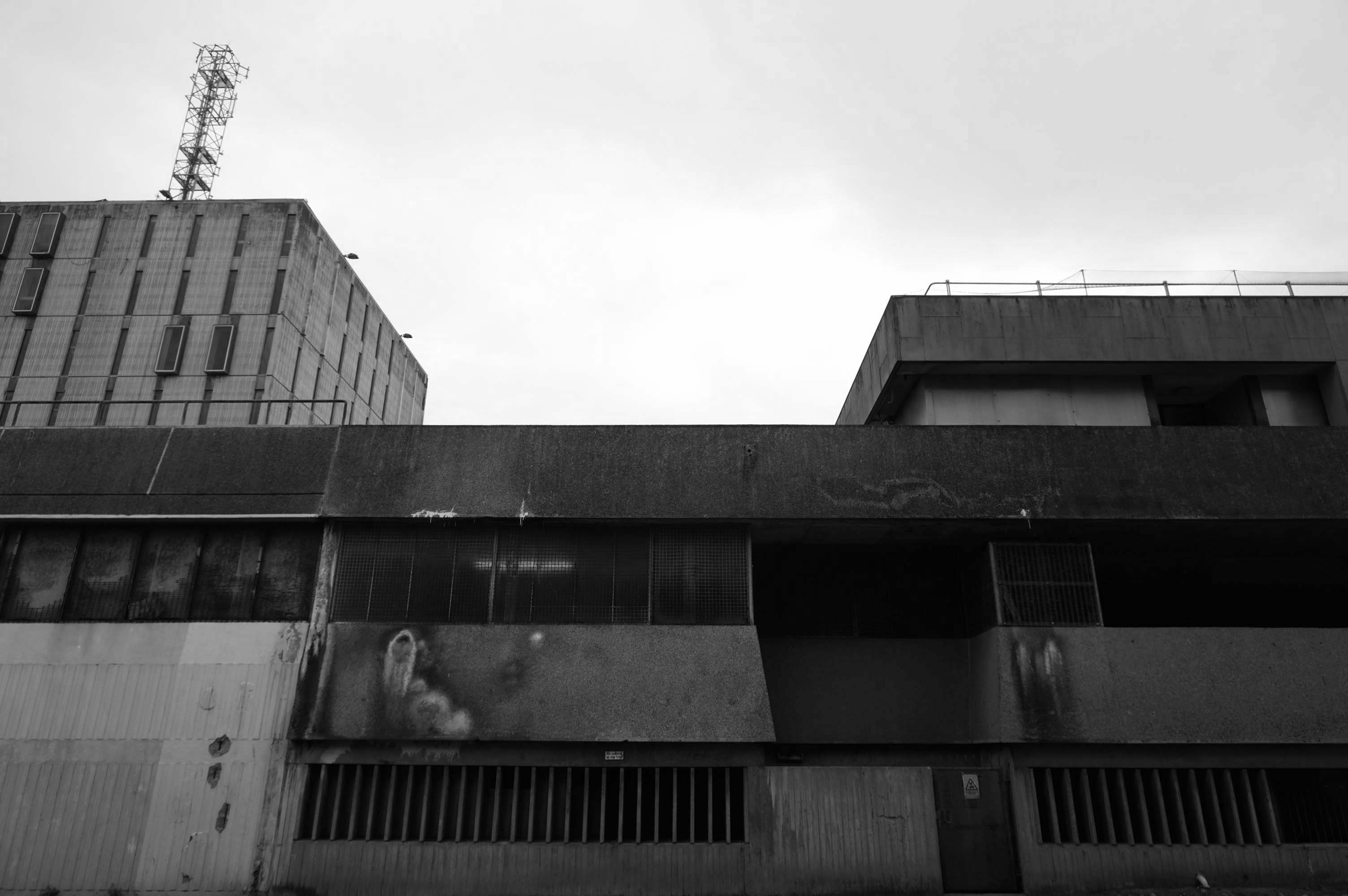
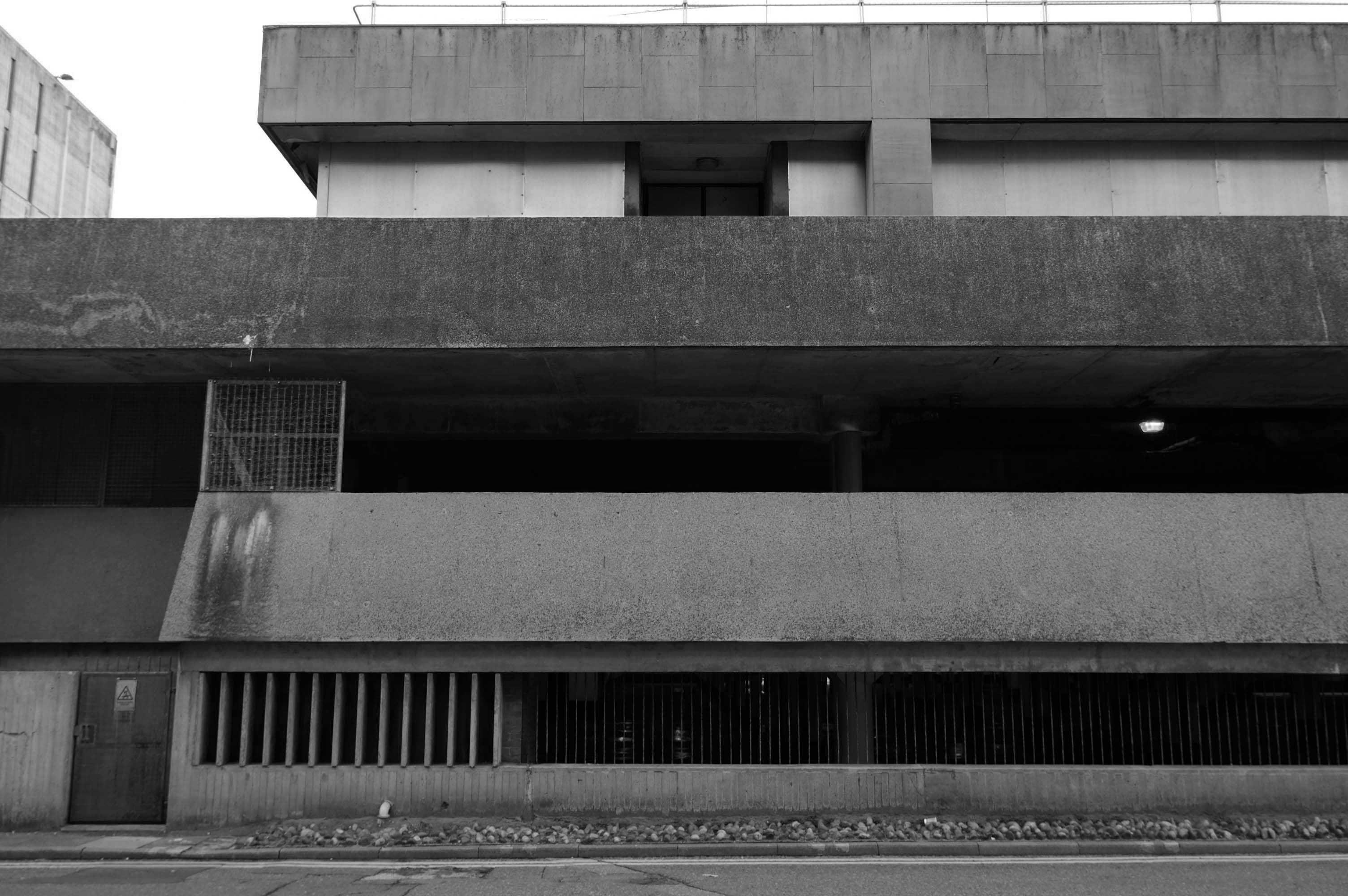
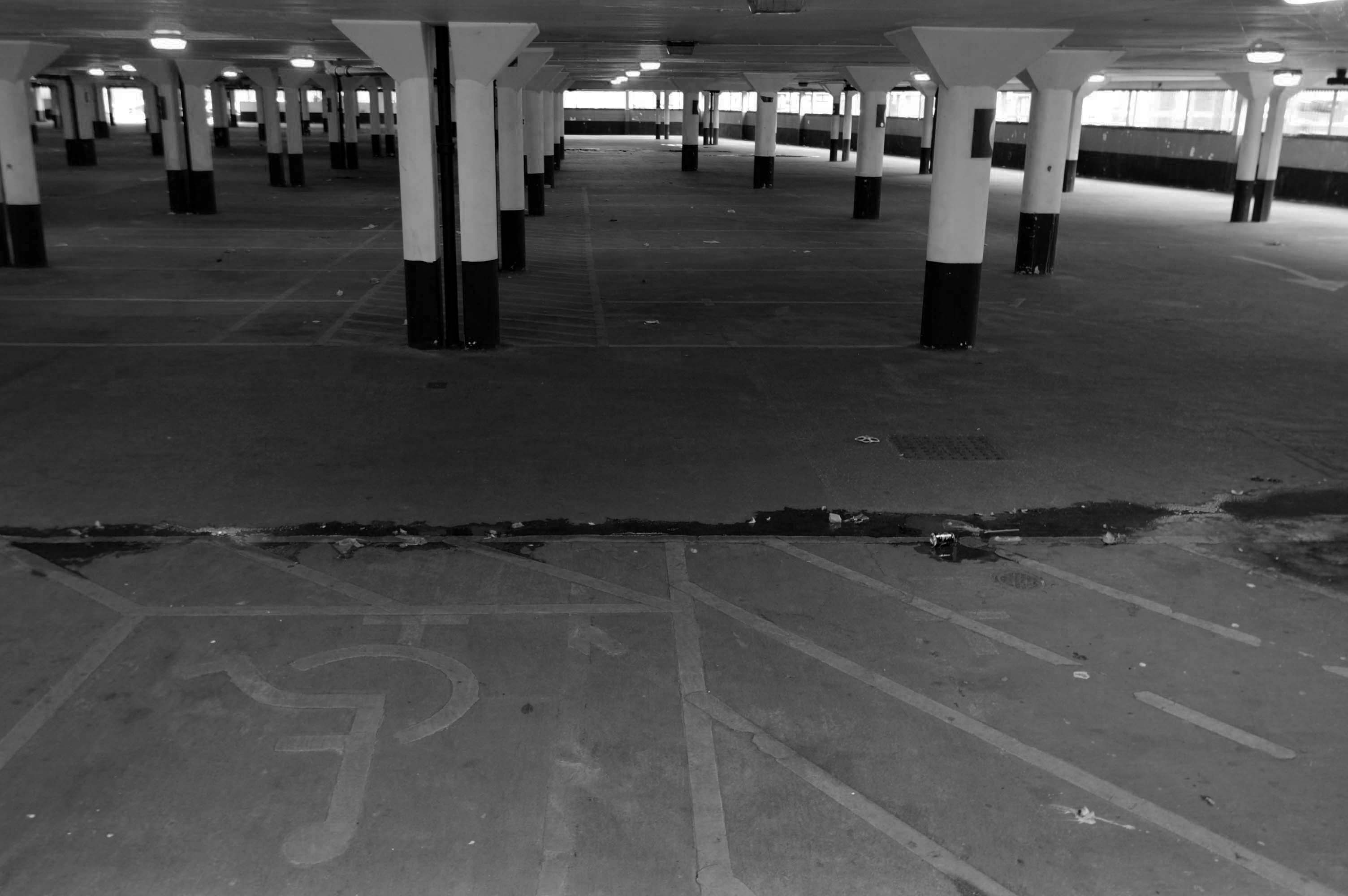
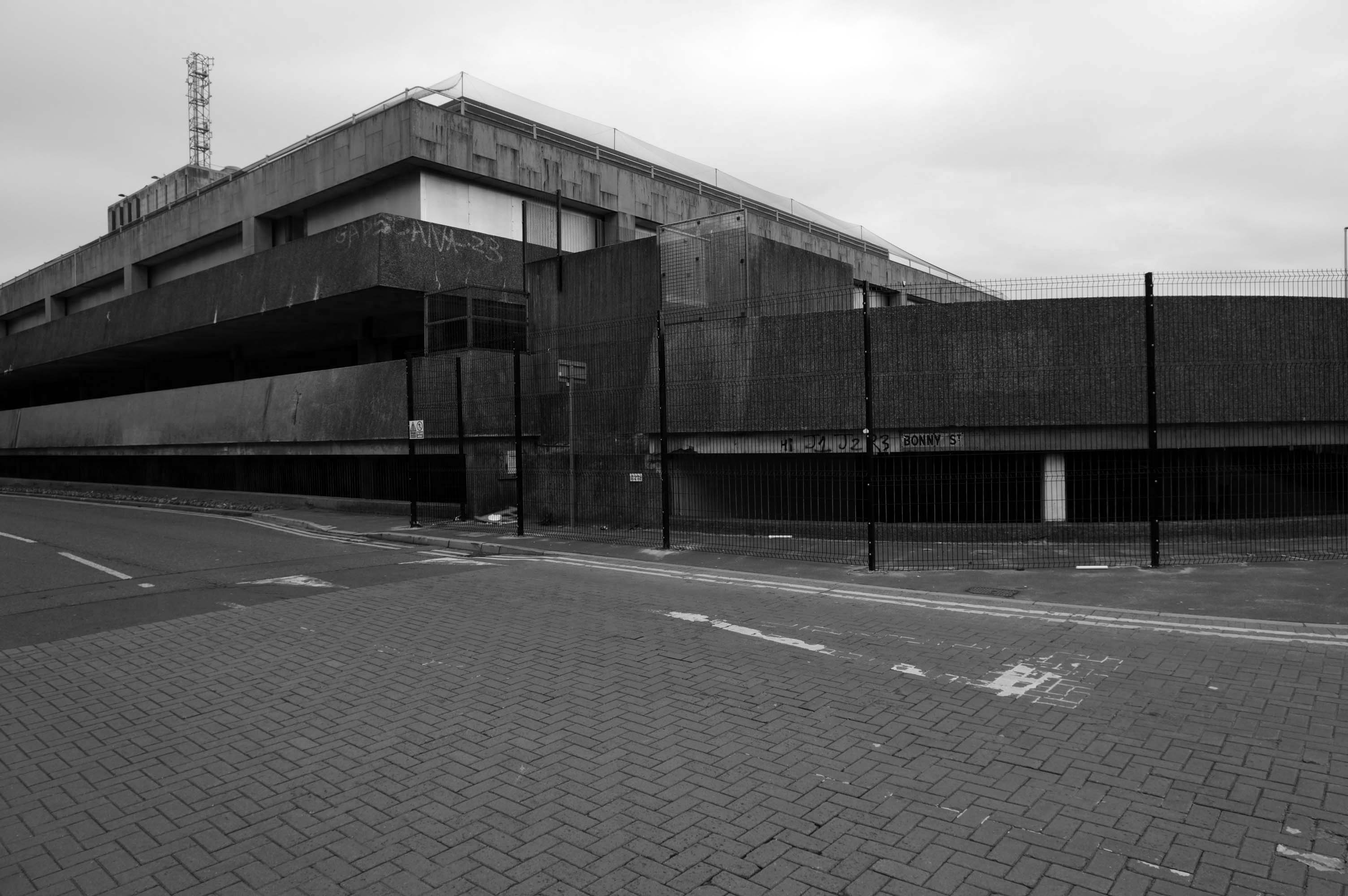
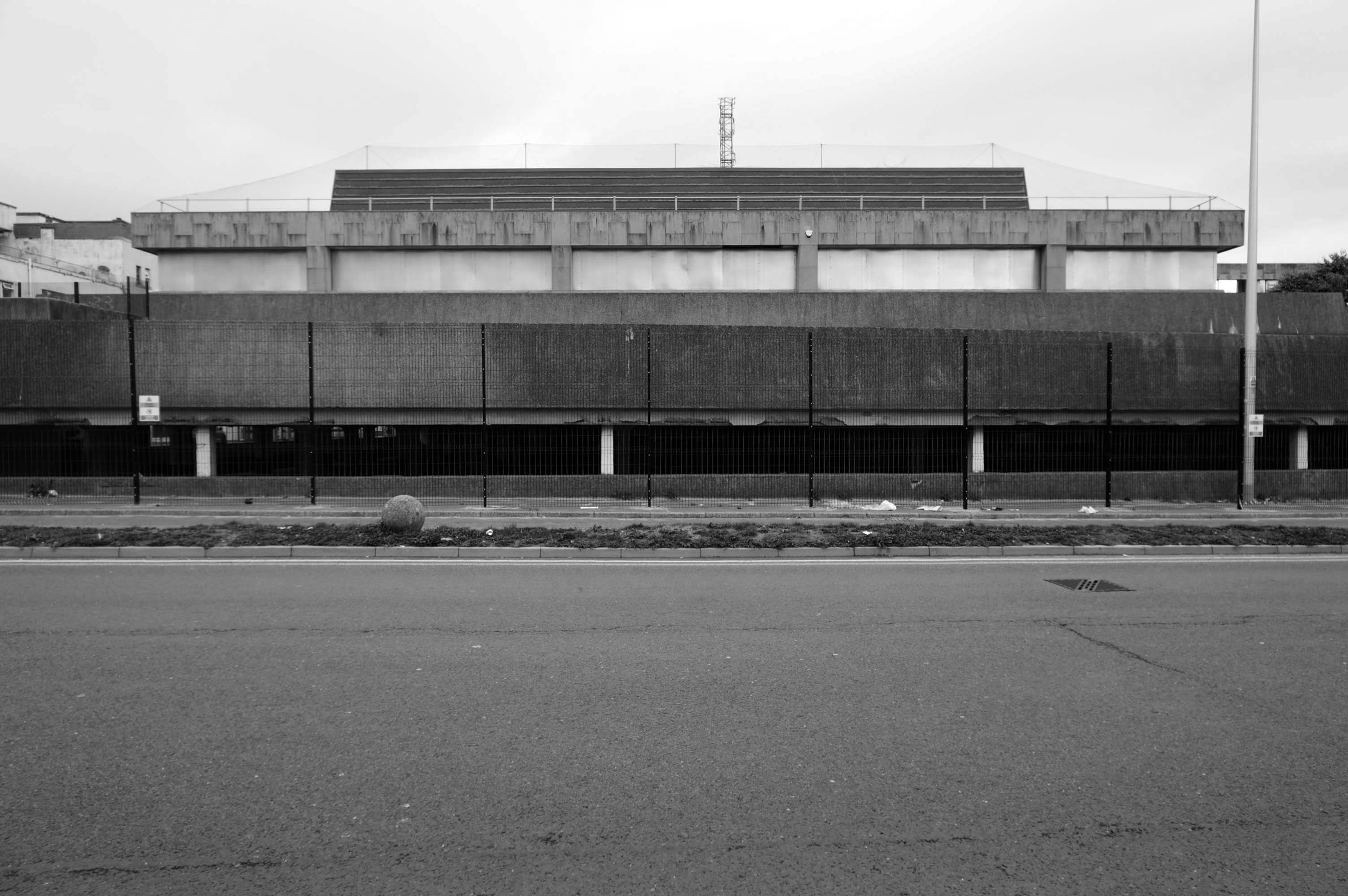
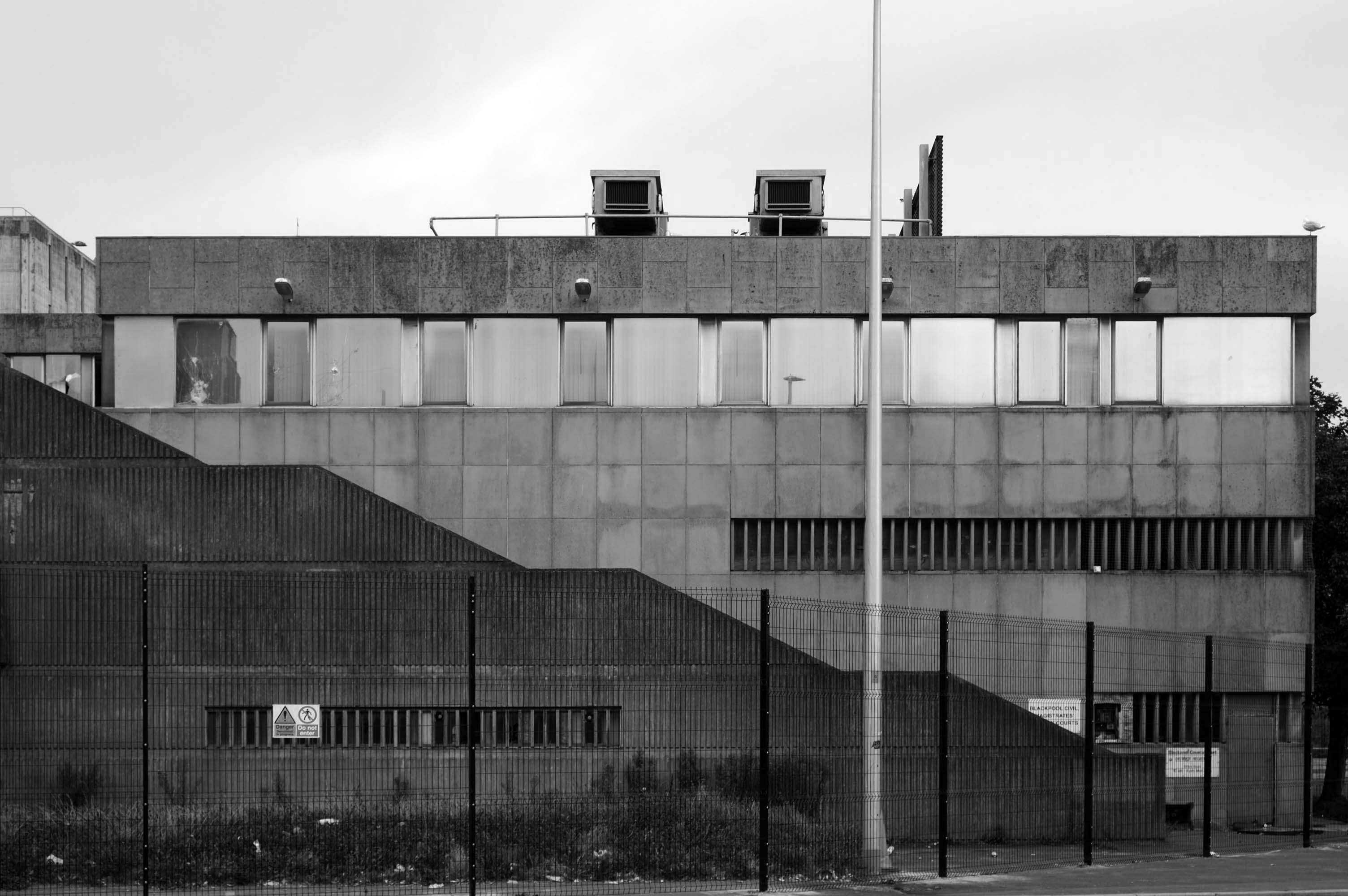
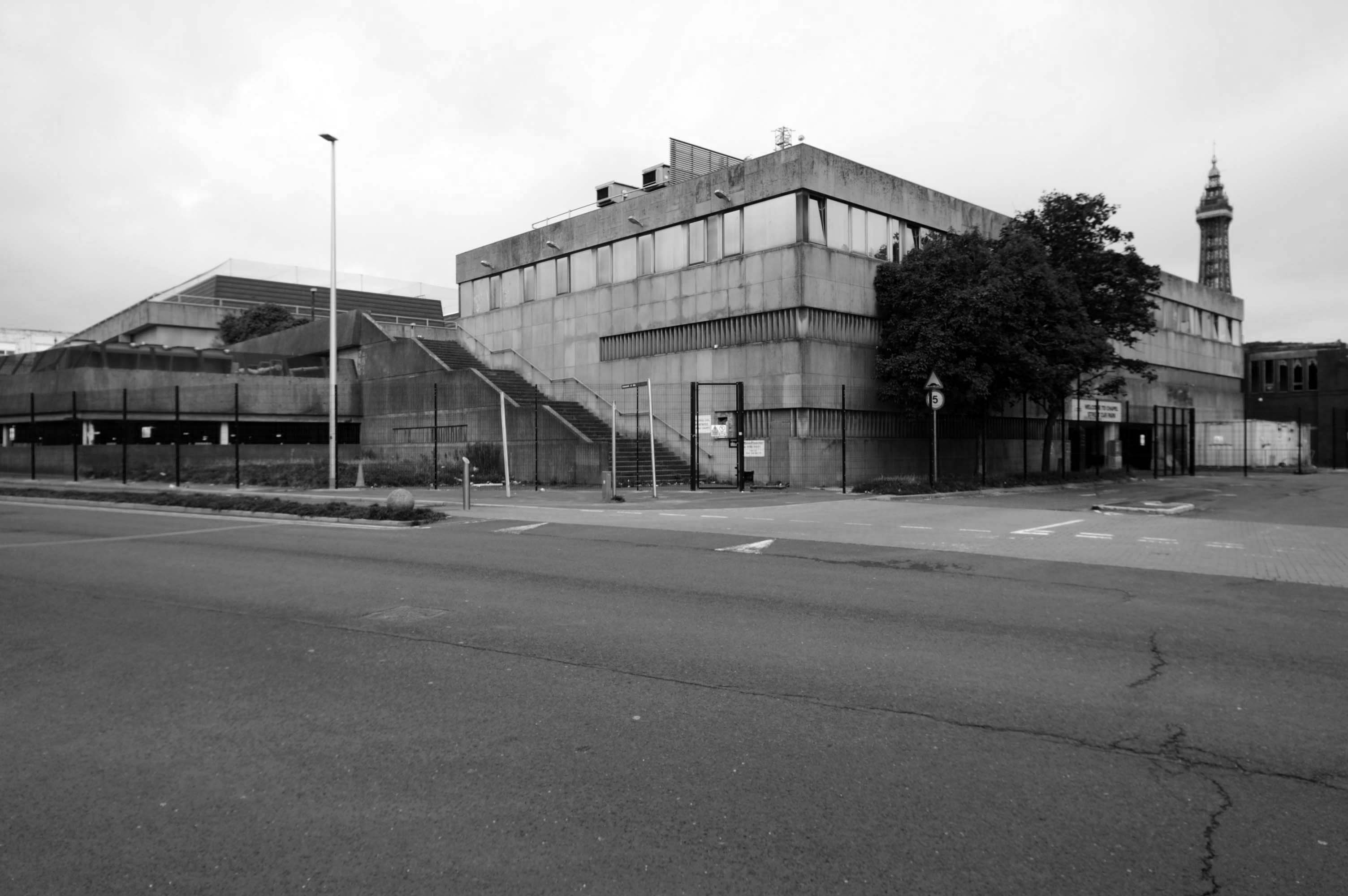
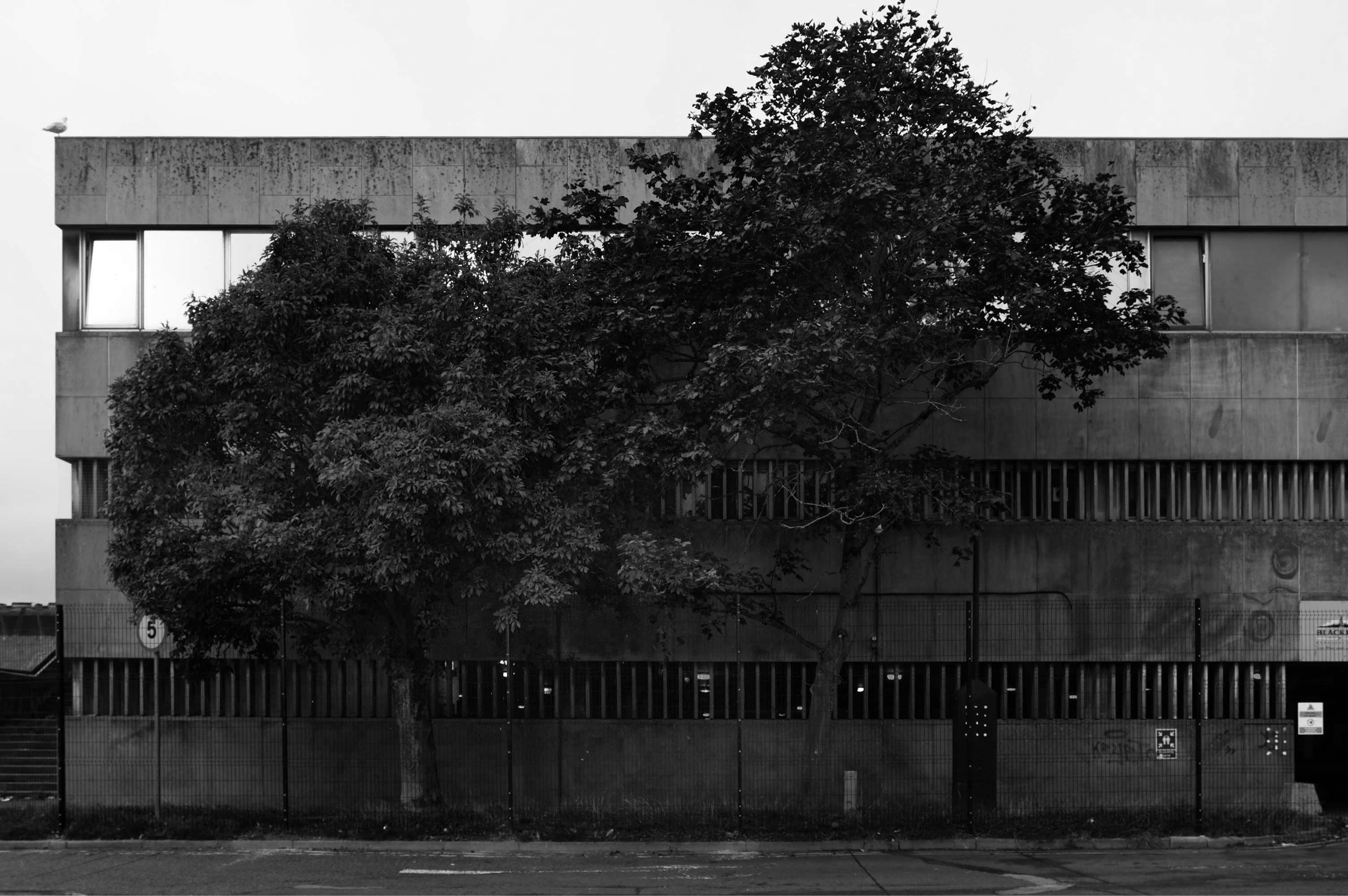
Bonny Street Police Station – Blackpool 2024

The concrete and the clay beneath my feet
Begins to crumble
But love will never die

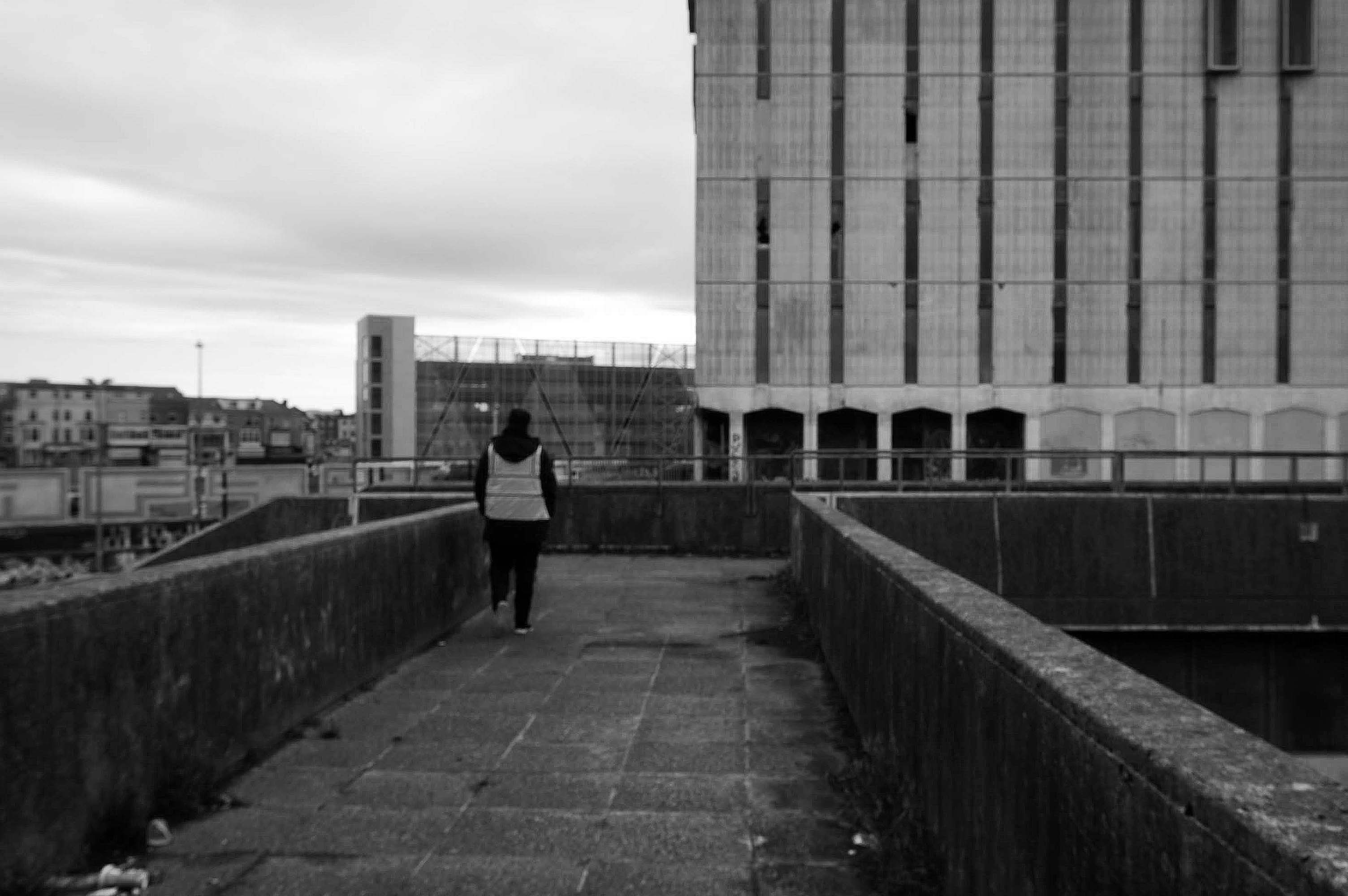
Doomed to face the demolition crew – the anti-social intrusions and falling masonry have enforced a fence, an impenetrable fence.

My requests for unforced entry were politely rebuffed by the hi-vis vest security guards.

A former police station could finally be demolished this autumn after closing six years ago when officers moved to new headquarters.

Blackpool Magistrates’ Court, which is part of the same complex, will also be bulldozed after crumbling concrete was discovered in the building in January. 

In recent months, the empty Bonny Street police station has become a target for anti-social behaviour.

Clearance of the site will pave the way for investment in leisure facilities including hotels and indoor theme parks by developer Nikal.

BBC

So this is the last time around the concrete block for me – memories are made of this, my previous visit in 2022.

Yet the future still seems slightly uncertain.

It is unclear at this stage how the vision for the development has changed in the three-plus years since the outline plans were approved.

Place North West

For those of you watching in colour – this is in black and white.

May be the last time, I don’t know
Lord, I don’t know

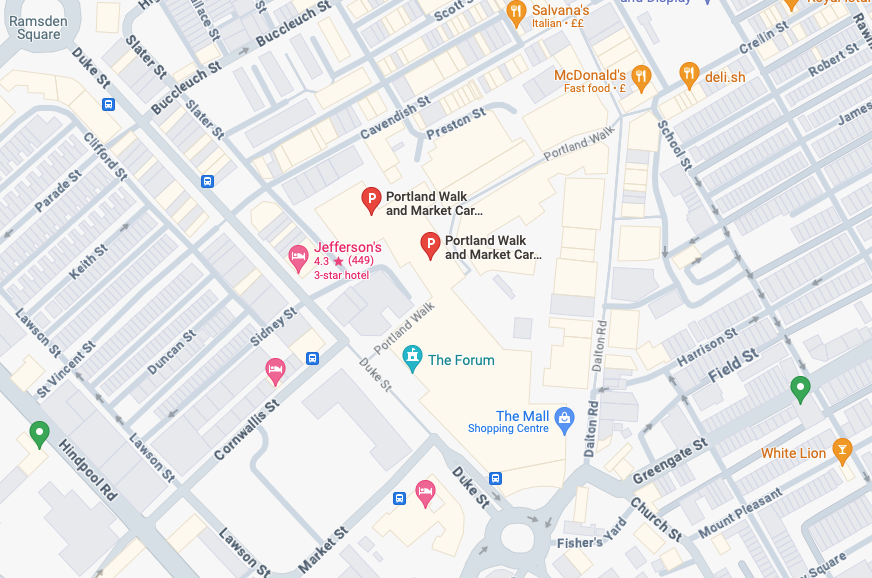
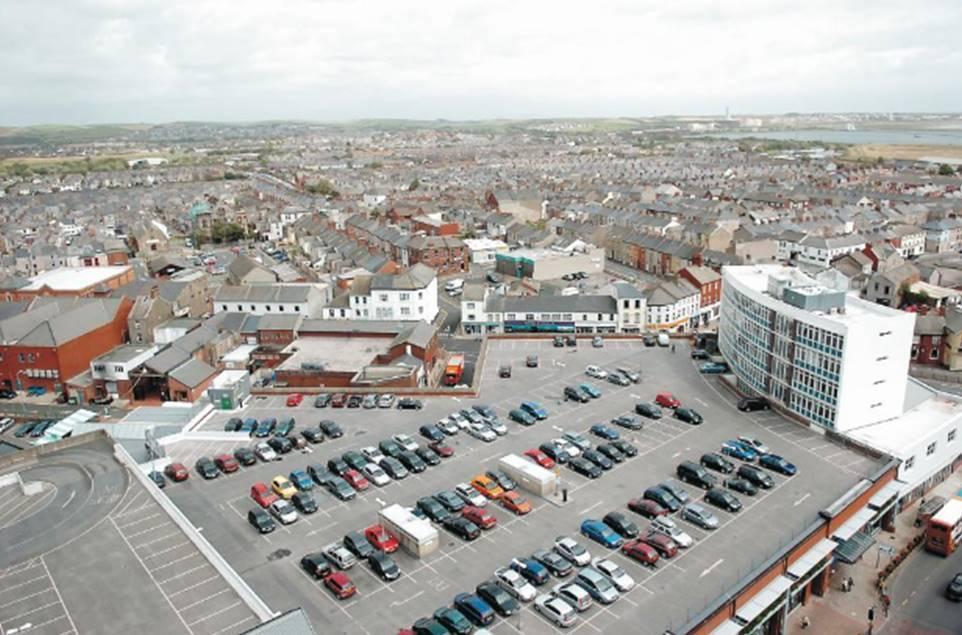
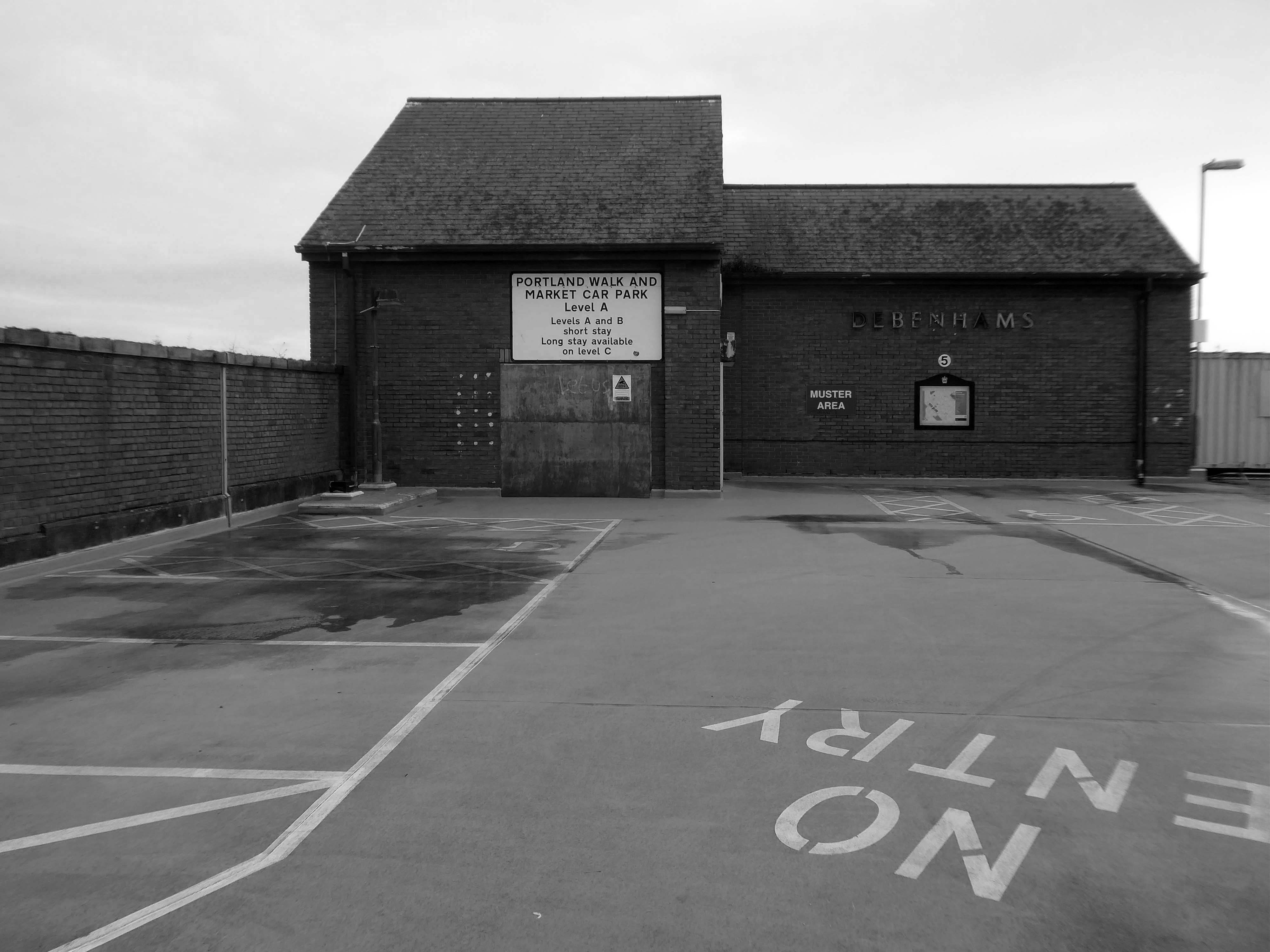
Portland Walk Car Park – Barrow in Furness

Slater St Barrow-in-Furness LA14 1RU

Westmorland and Furness Council said Portland Walk car park will close from the start of July.

In a statement the council revealed the rooftop car park will permanently close from July 1 following a review which found said it had ‘very low usage’.

The Mail

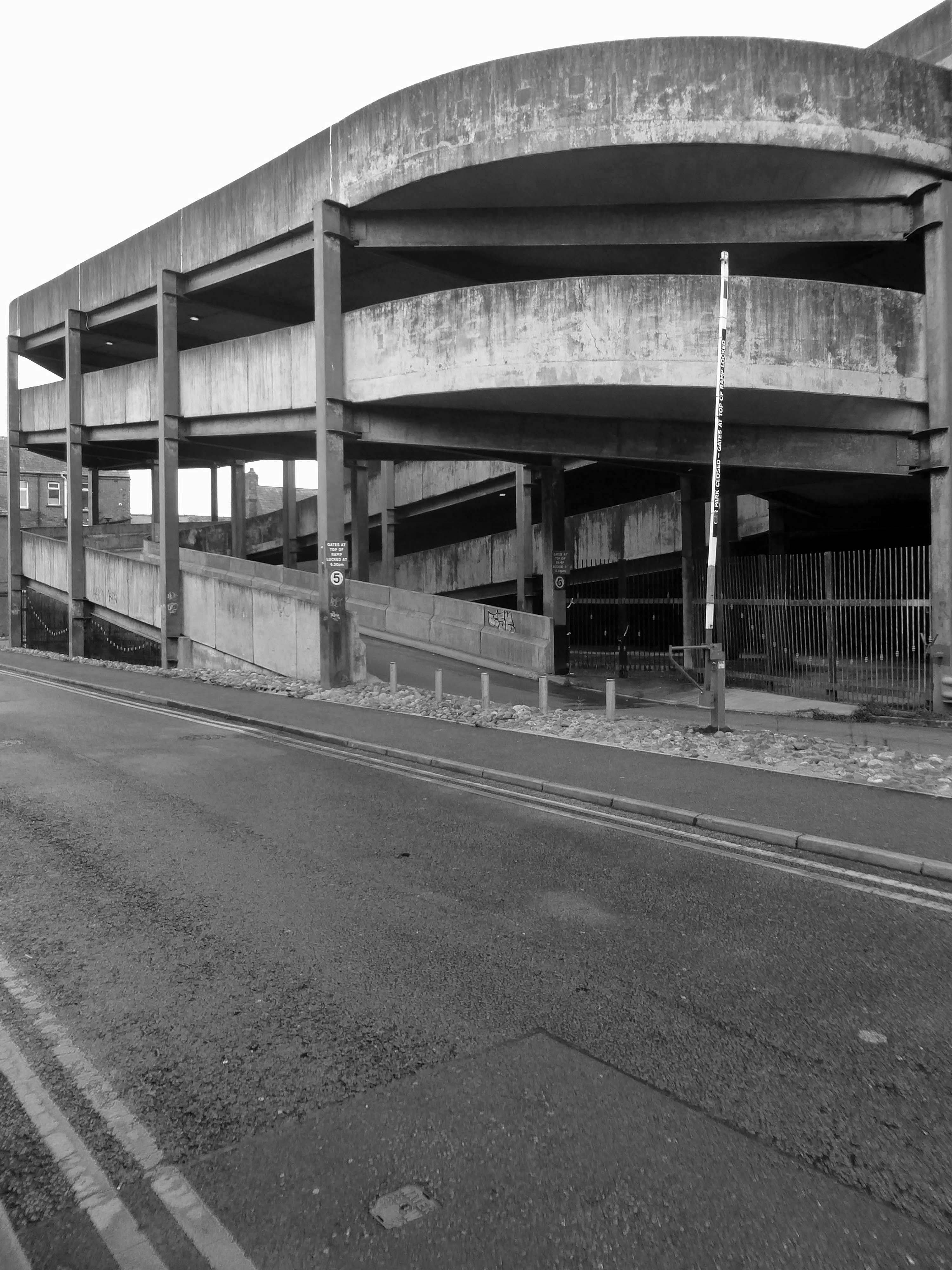
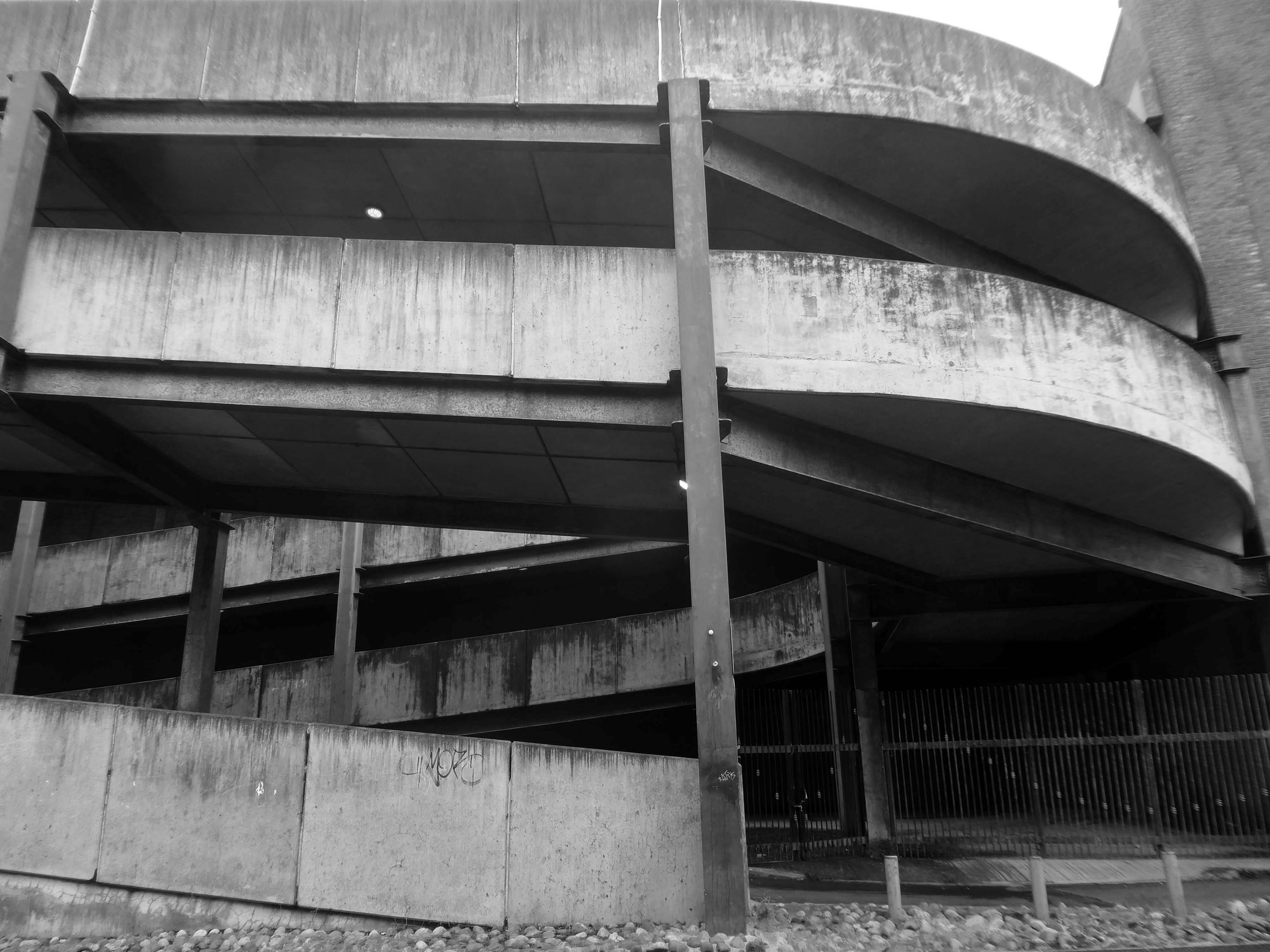
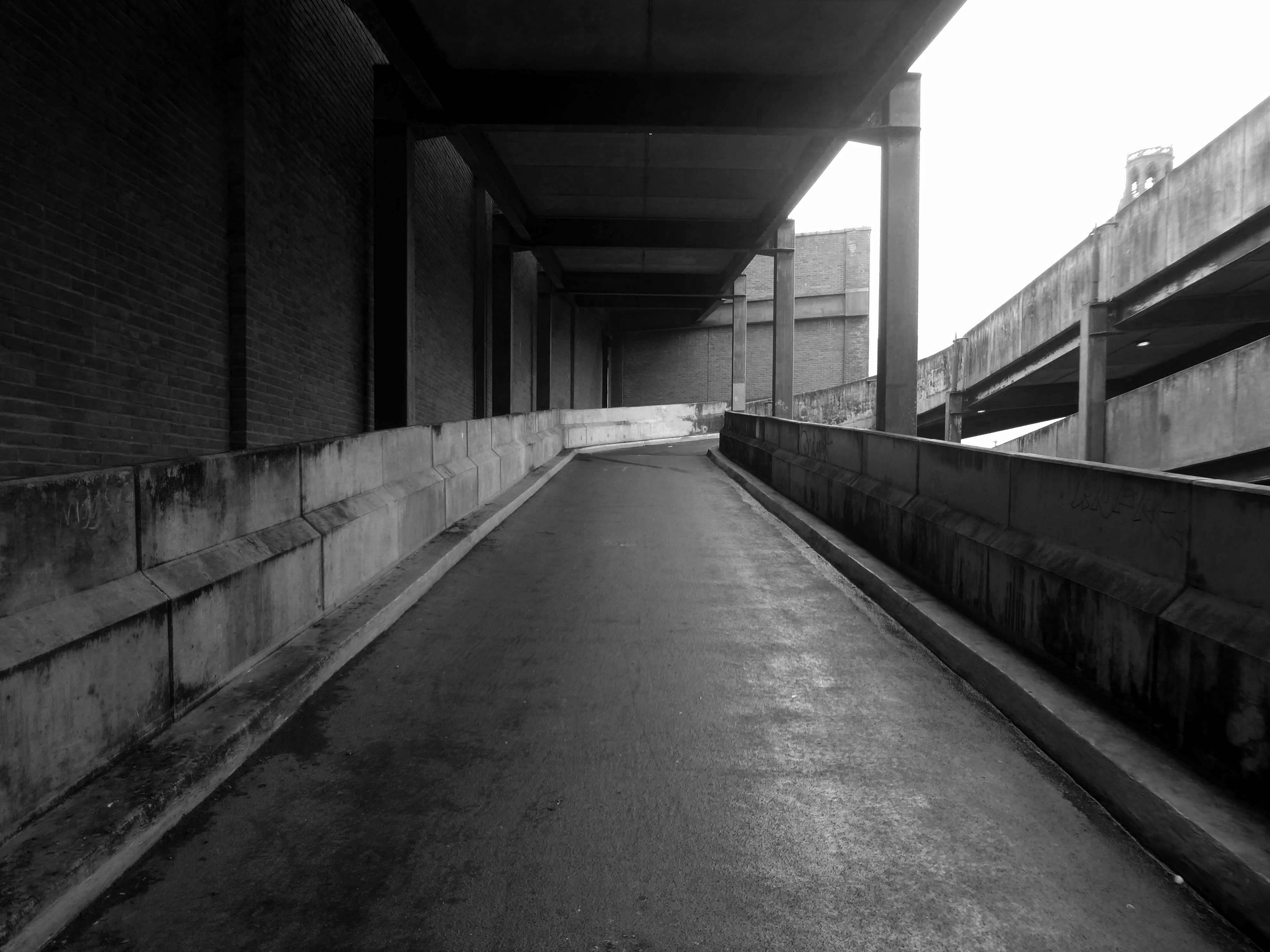
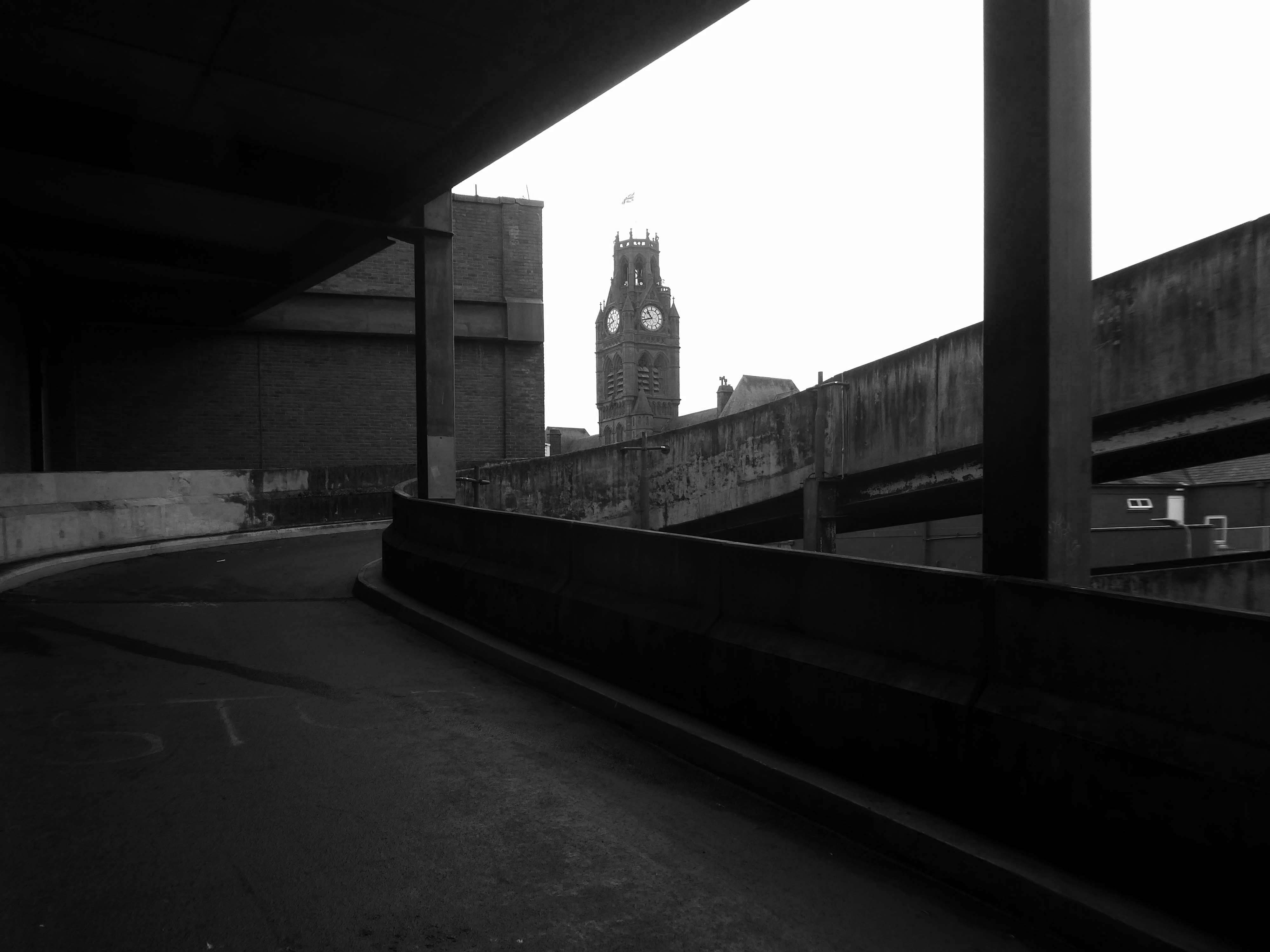
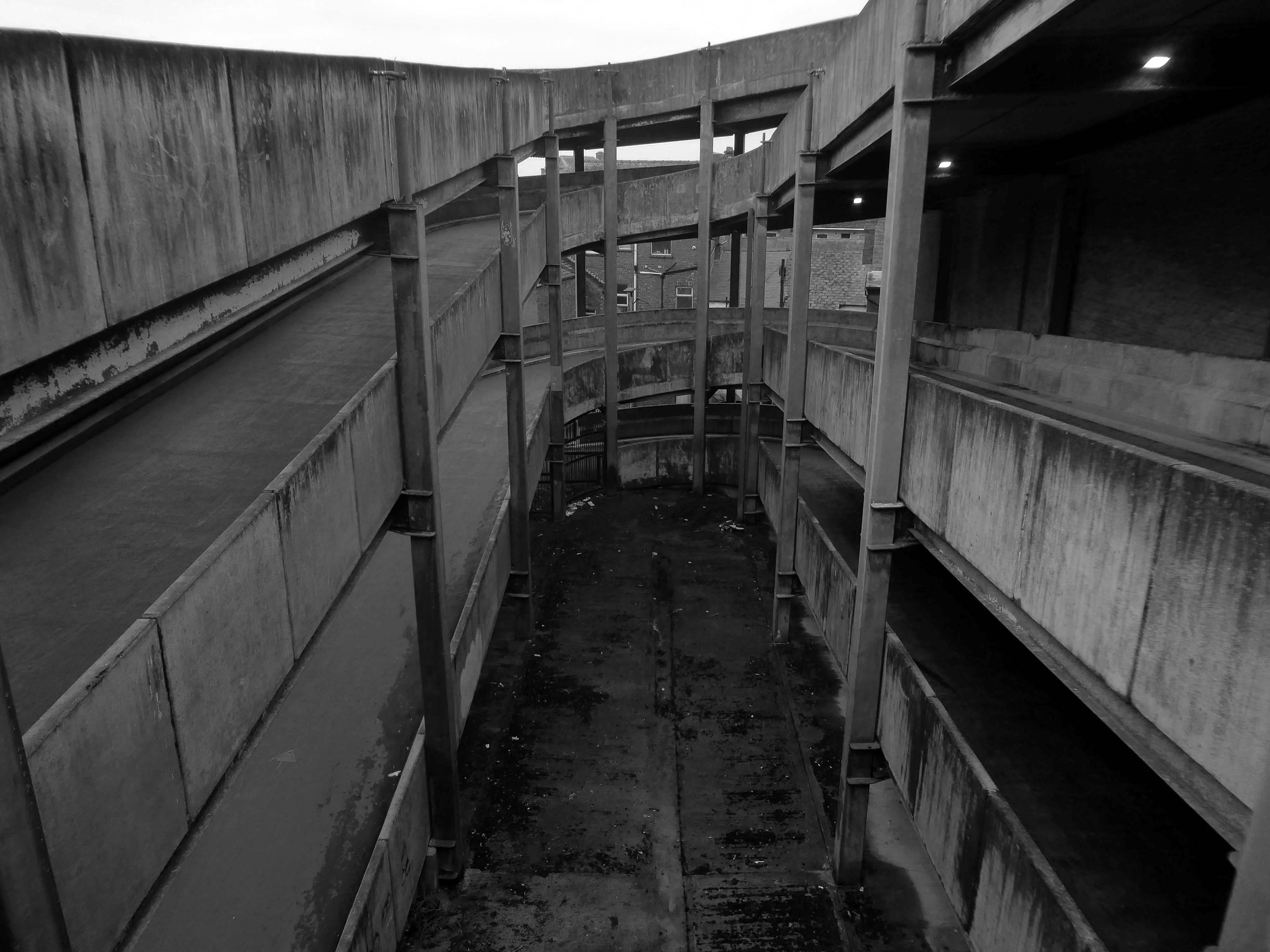
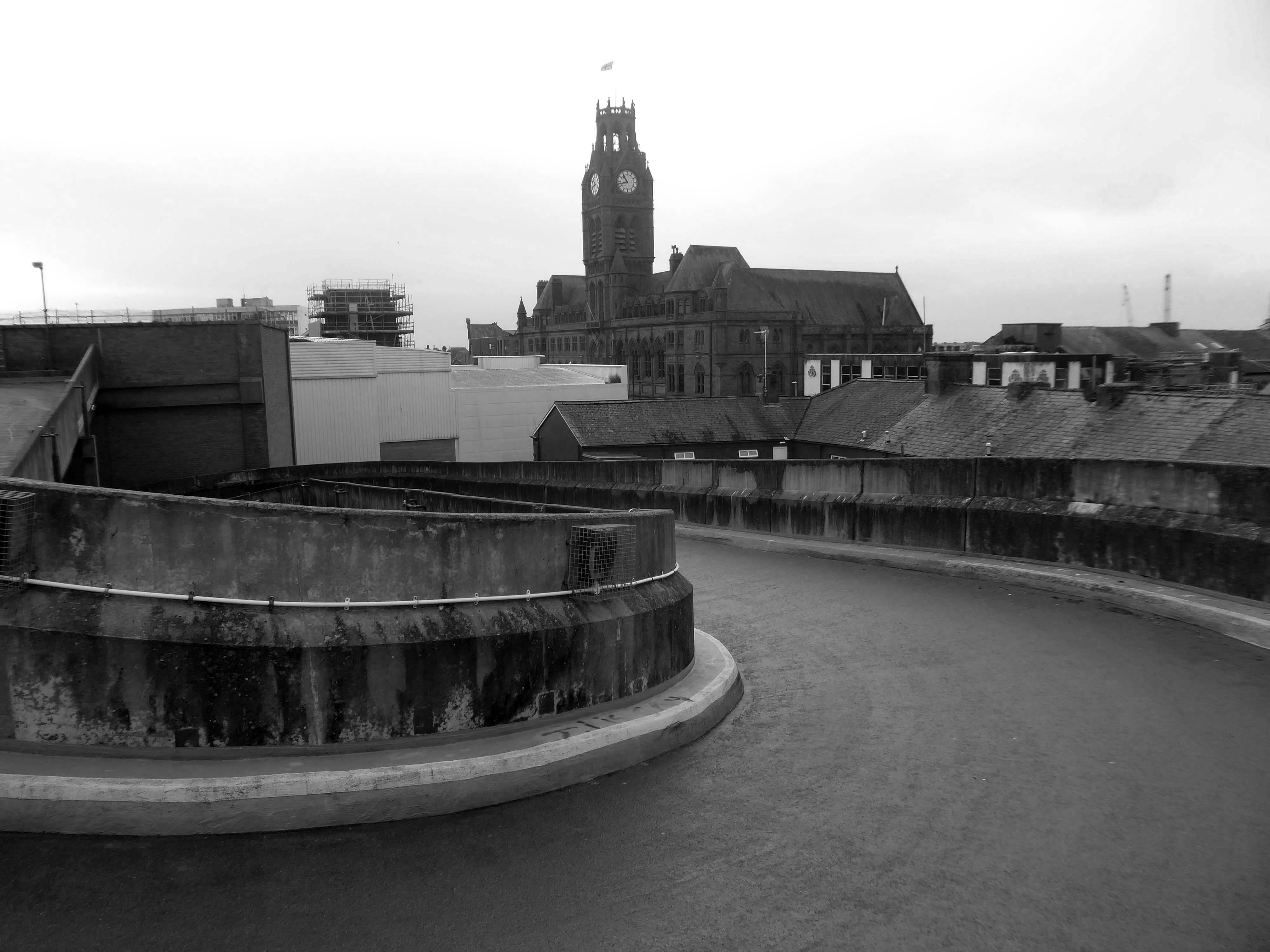
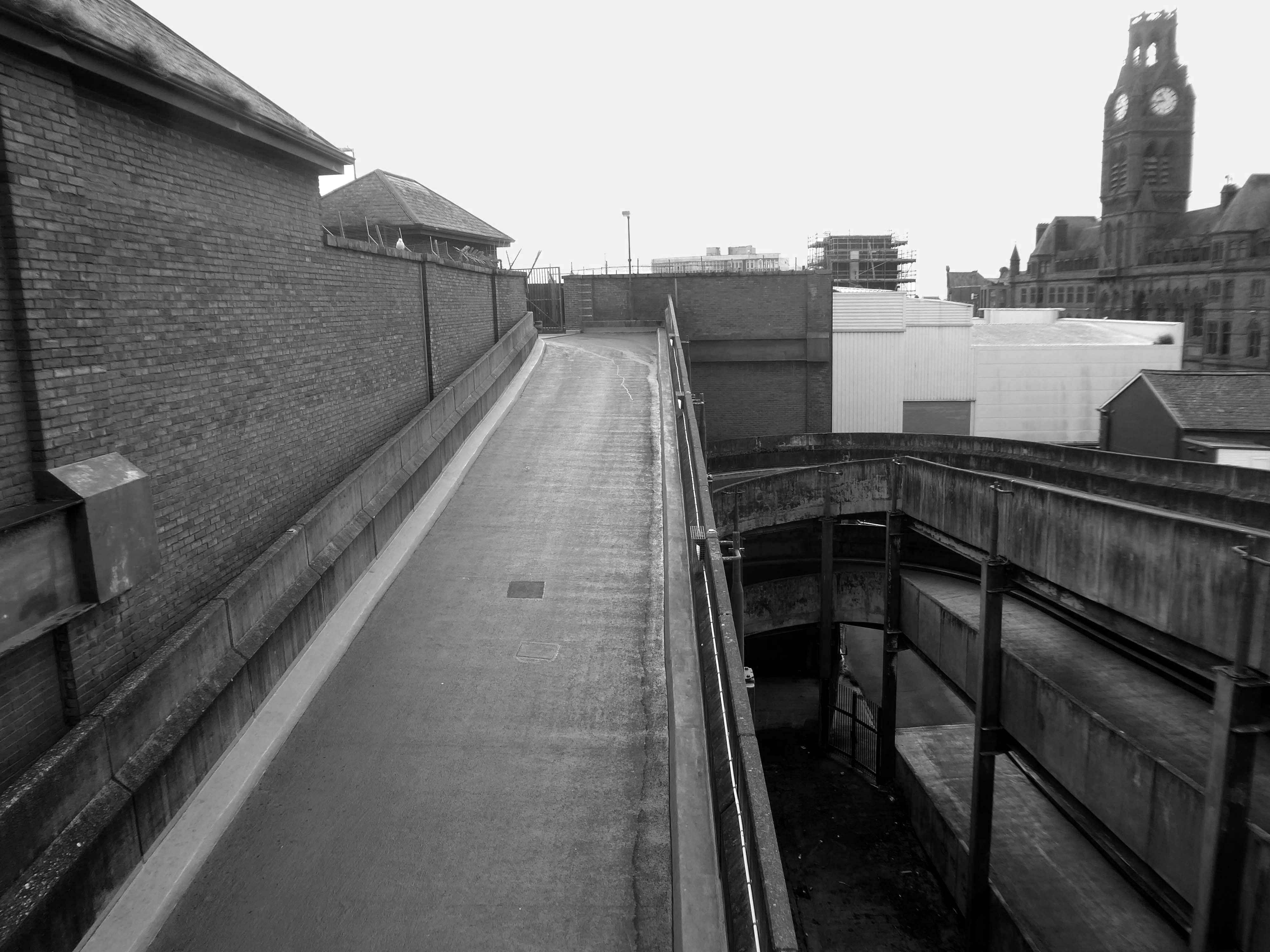
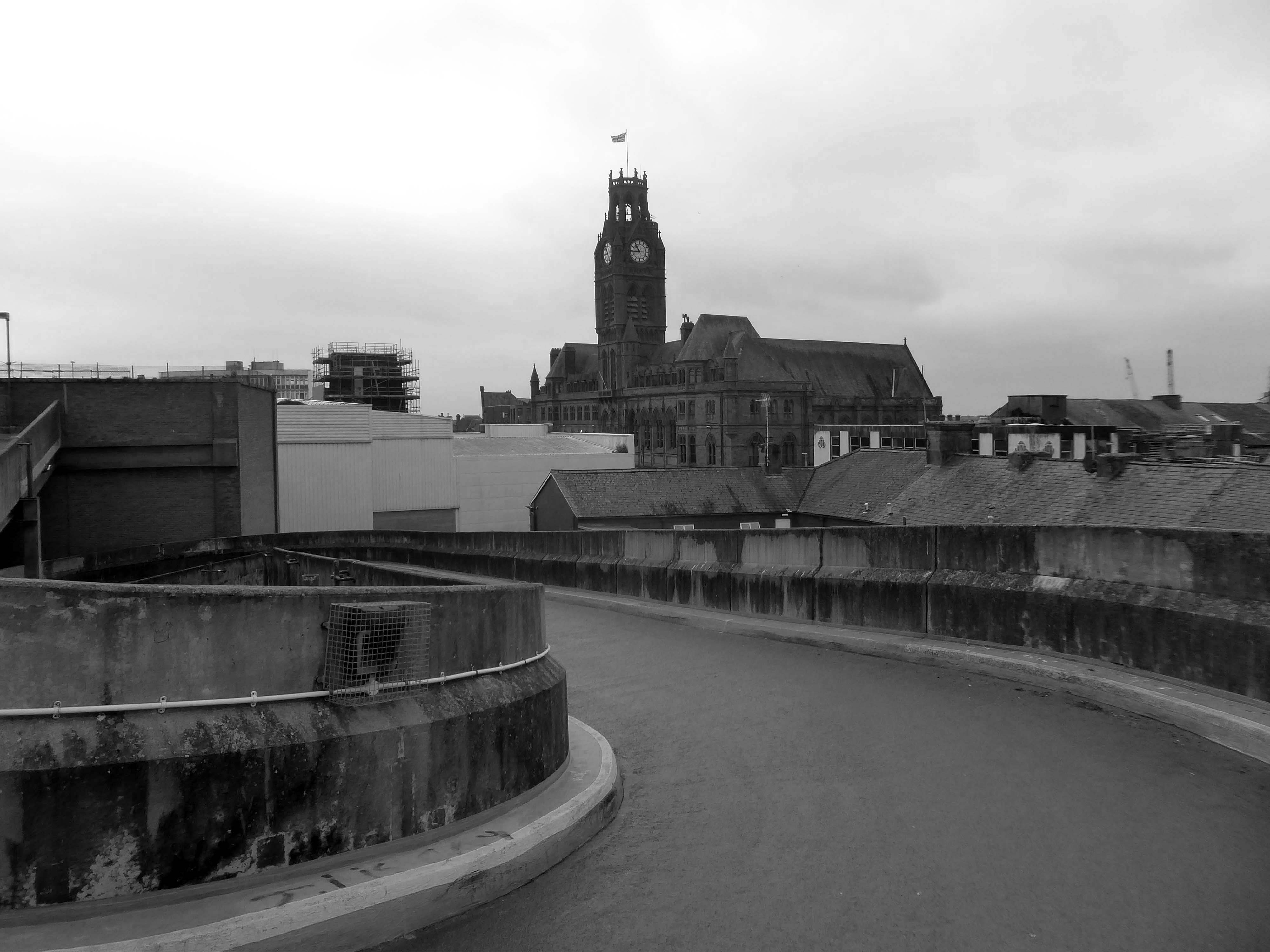
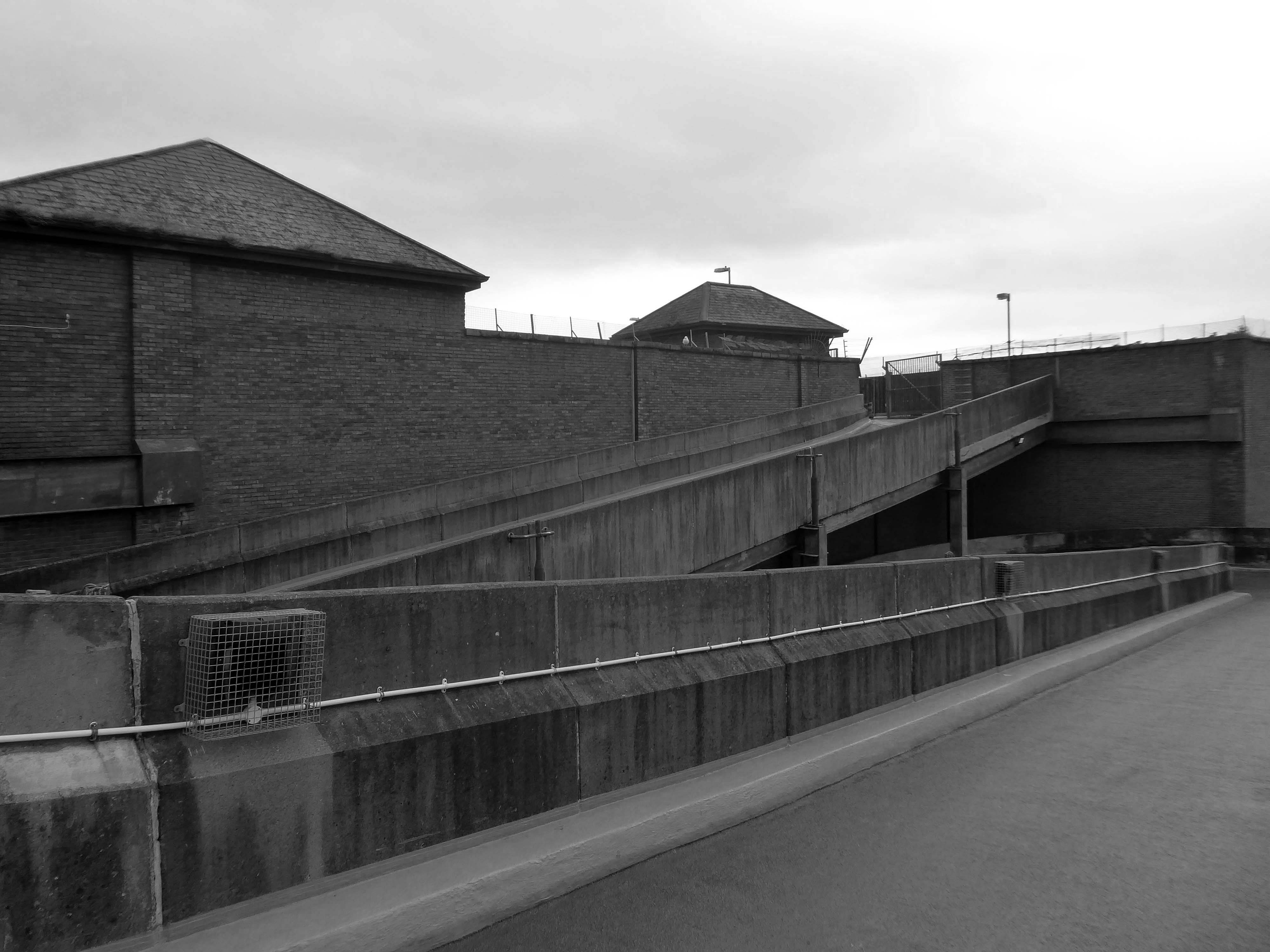
I turned a corner, then another corner and caught sight of a concrete car park ramp.

I thought, I think – therefore, I am going to walk up and down it.

Charles Anderson Frieze – Burnley

Holme Rd Burnley BB12 0RT

Photo – Robert Wade

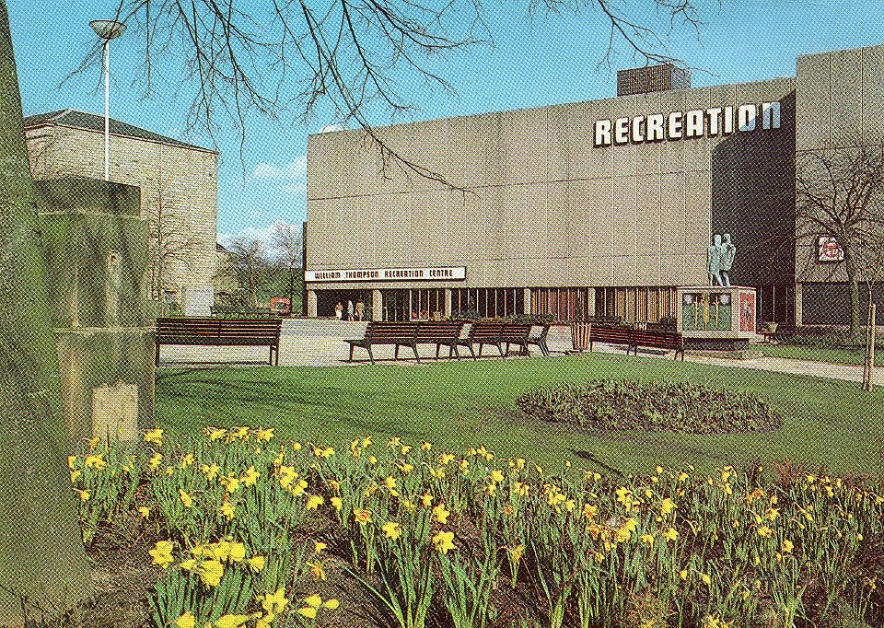
William Thompson was born at Richmond Yorkshire, the son of John and Catherine Thompson. William came to Burnley in 1908 and gained a place at Burnley Grammar school. Later he learned the trade of cotton weaving at his uncle’s shed. In time he was to become the managing director of this firm. William lived at Oak Bank Todmorden road, where in spite of his great wealth, he led a remarkably simple life. He had neither television nor radio, and his greatest pleasure appeared to be strolling in the nearby Towneley Park. About 1970, ill health forced William to move to his sister’s house at Ingleton Yorkshire. His illness became worse, and he was removed to a nursing home at Silverdale, near Lancaster, where after a prolonged infirmity he died on 18, August 1972. It was William and his sister, Sarah Witham who donated the £333,000 that was eventually used to build the Thompson Recreation Centre. William was never to see the gift he bestowed upon the town, for his death came just a few days before the official opening of the centre. It was his sister, Sarah who performed the opening, and she too was to die a short time afterwards on 8, December 1975. She was the last link in the Thompson family of Burnley.

Many thanks to local historian and author Jack Nadin

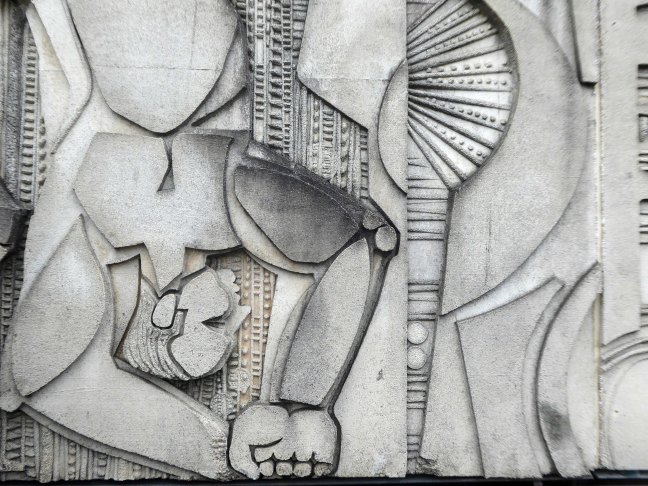
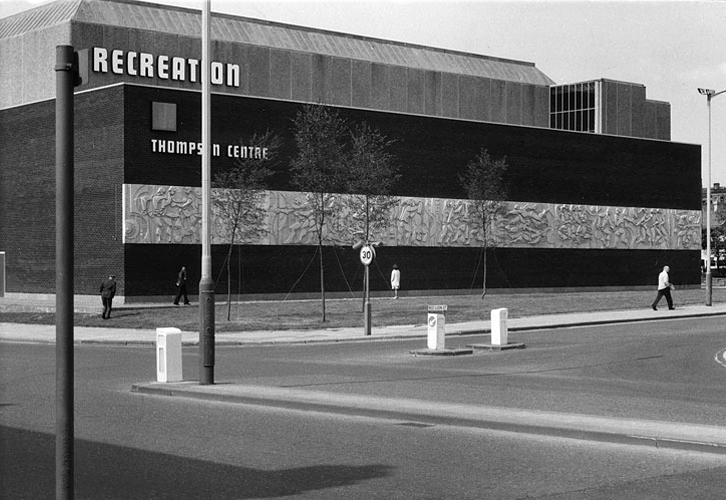
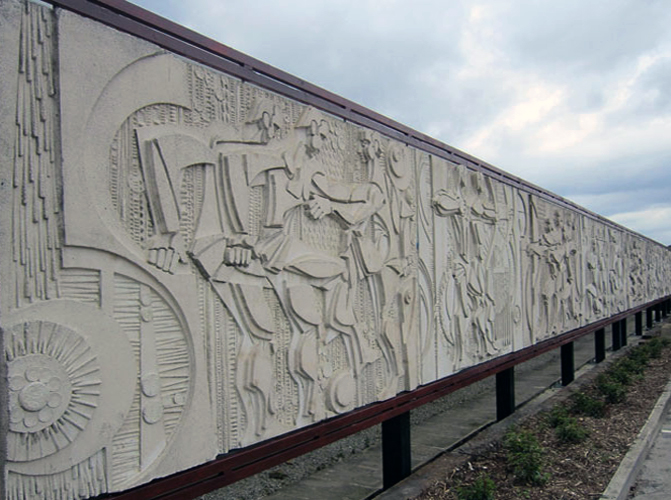
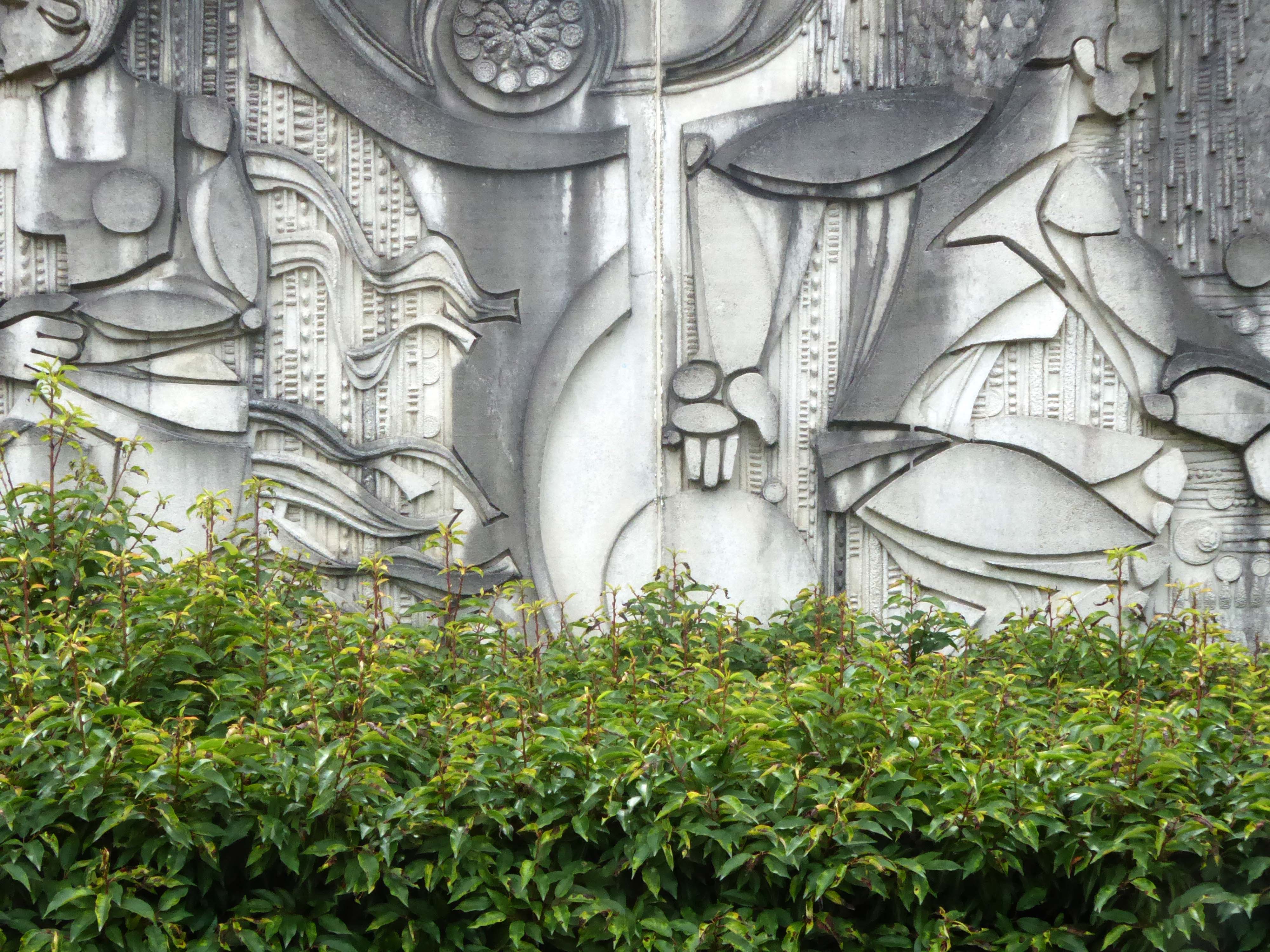
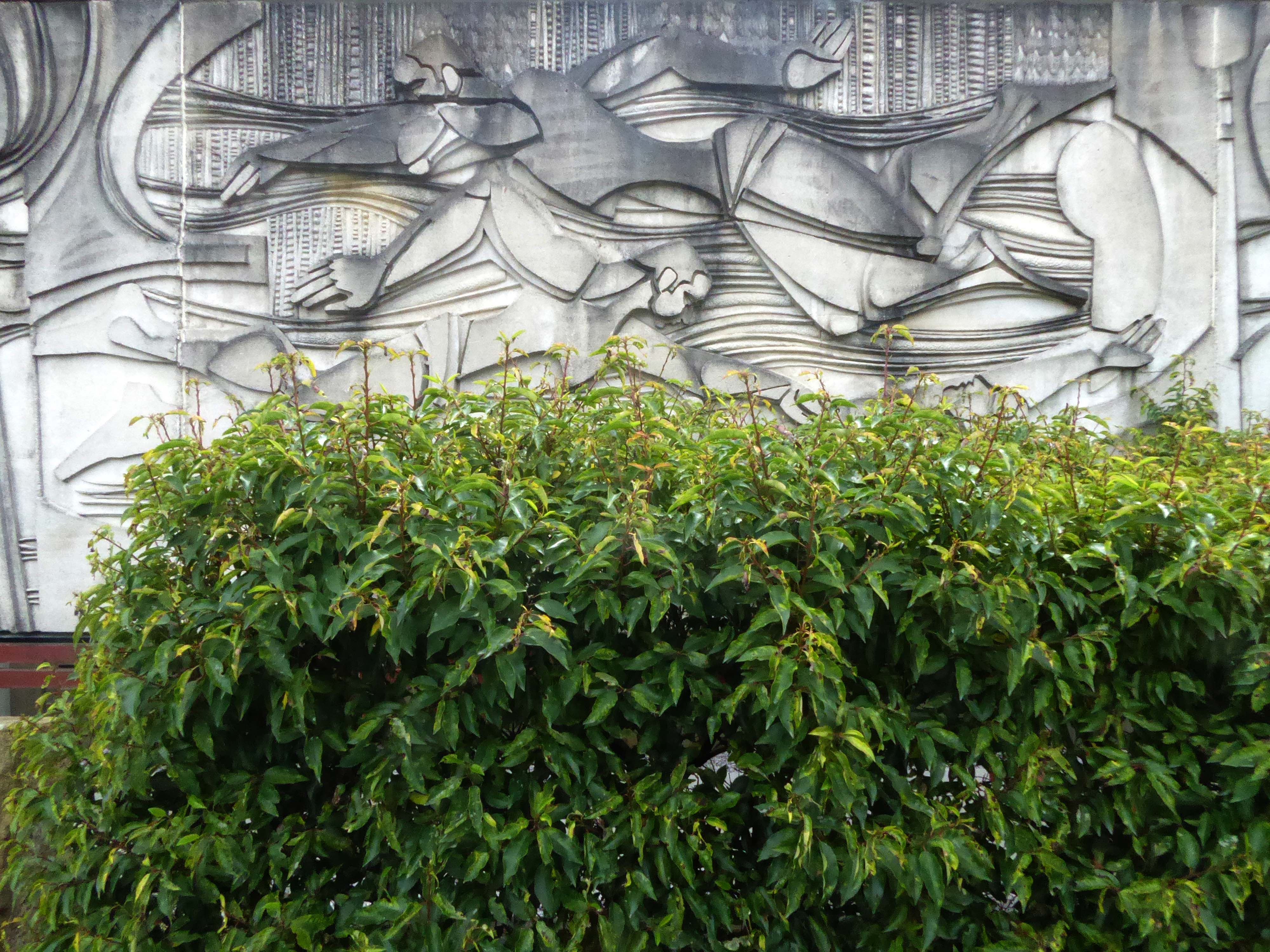
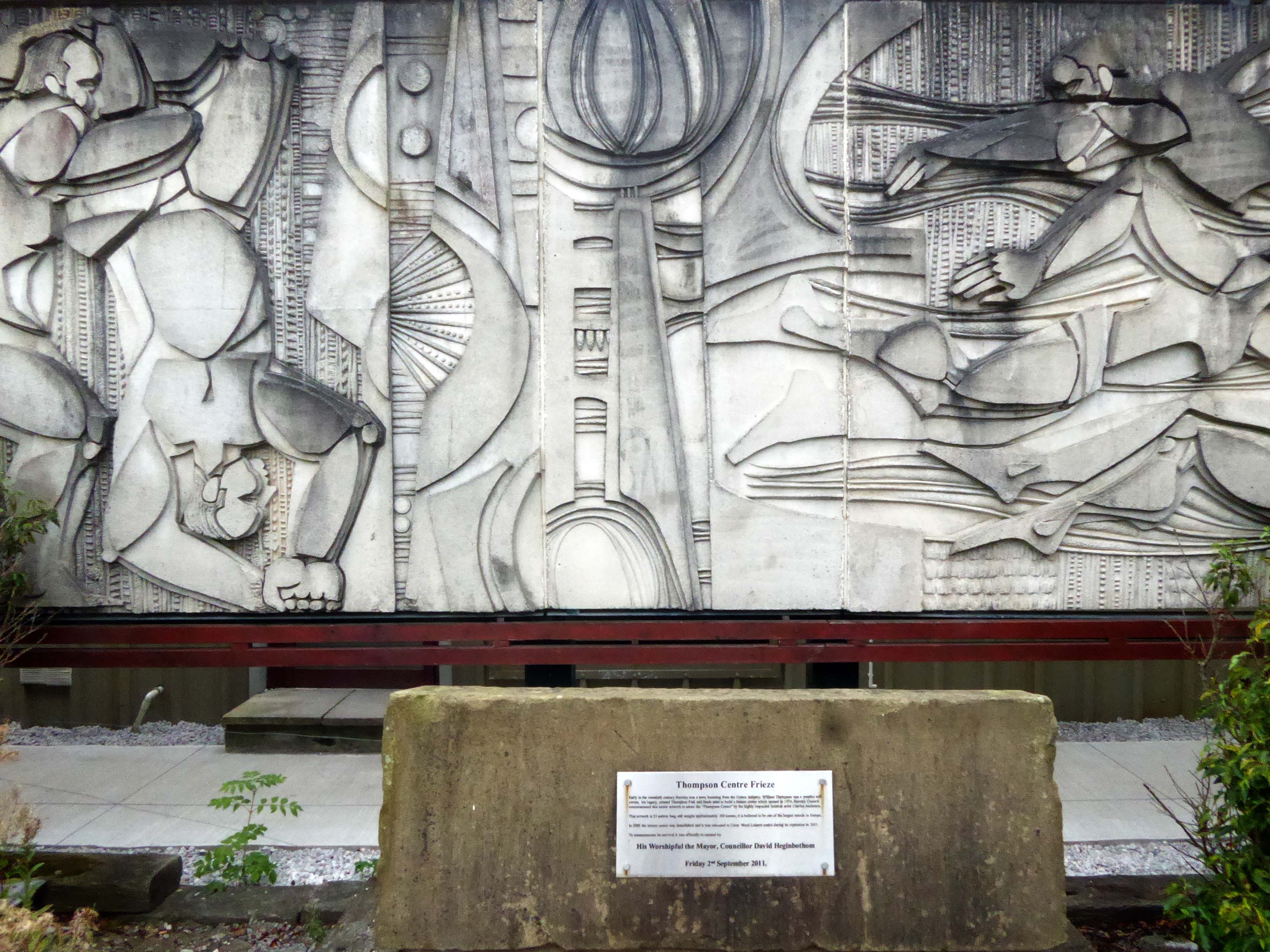
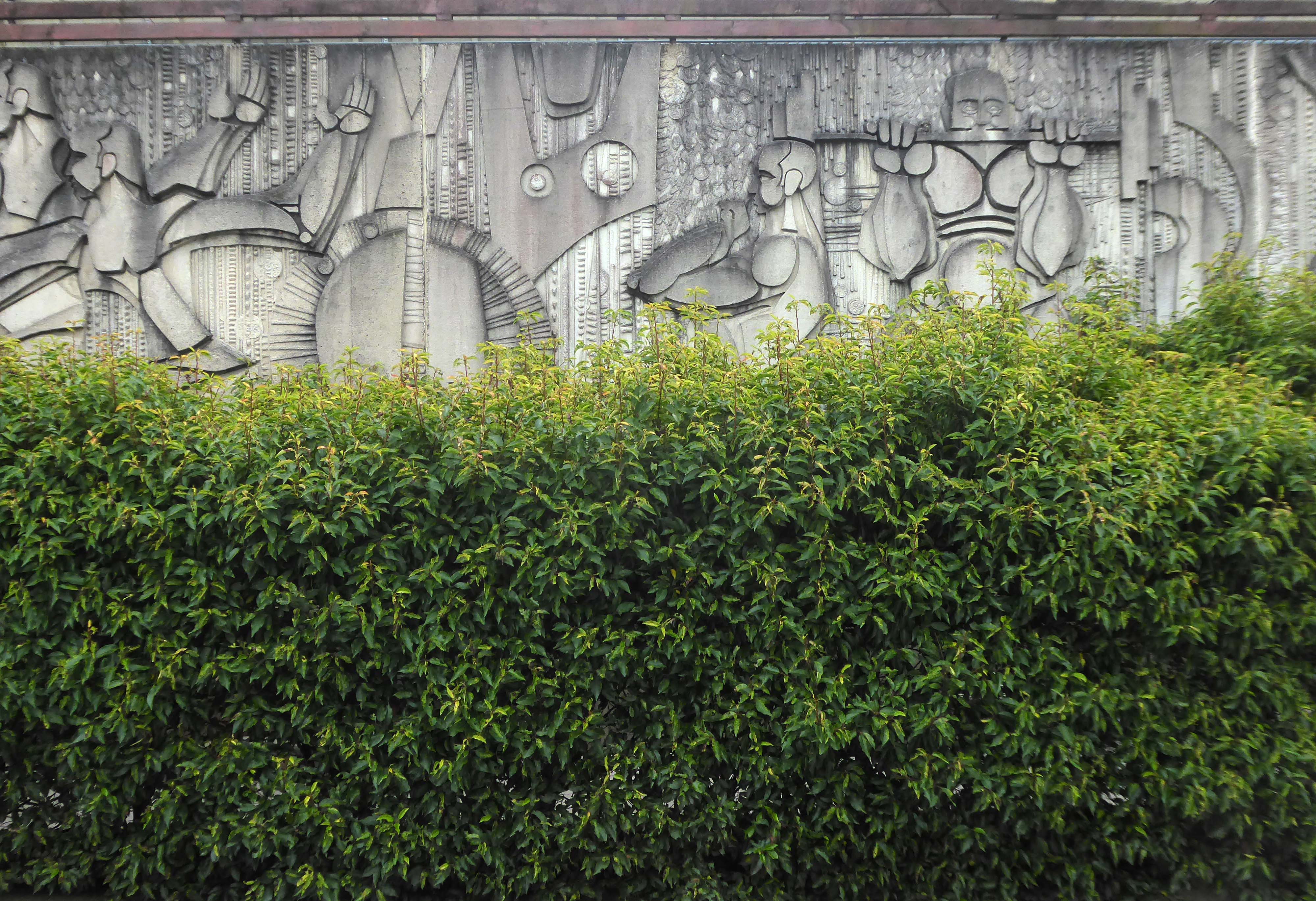
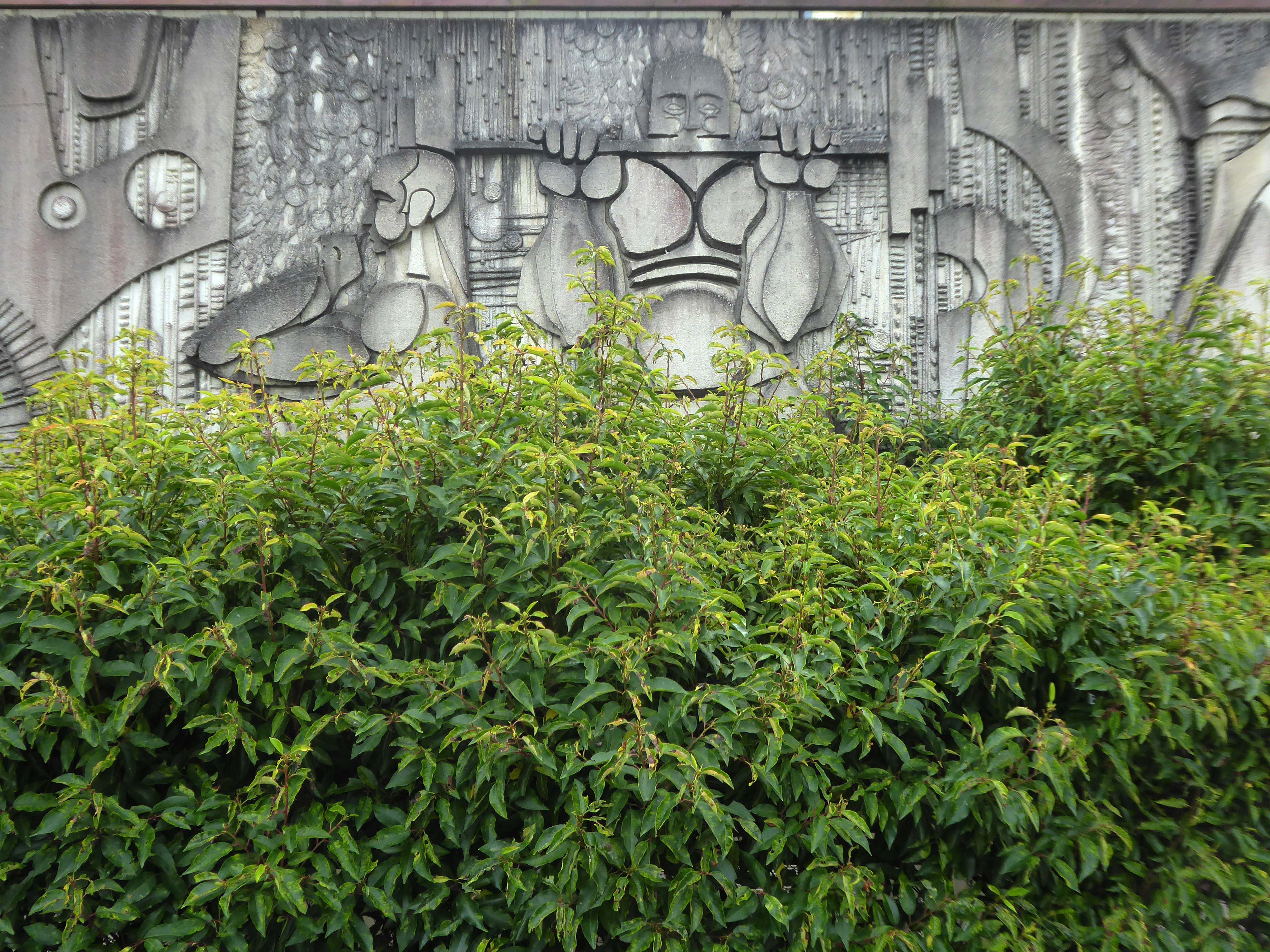
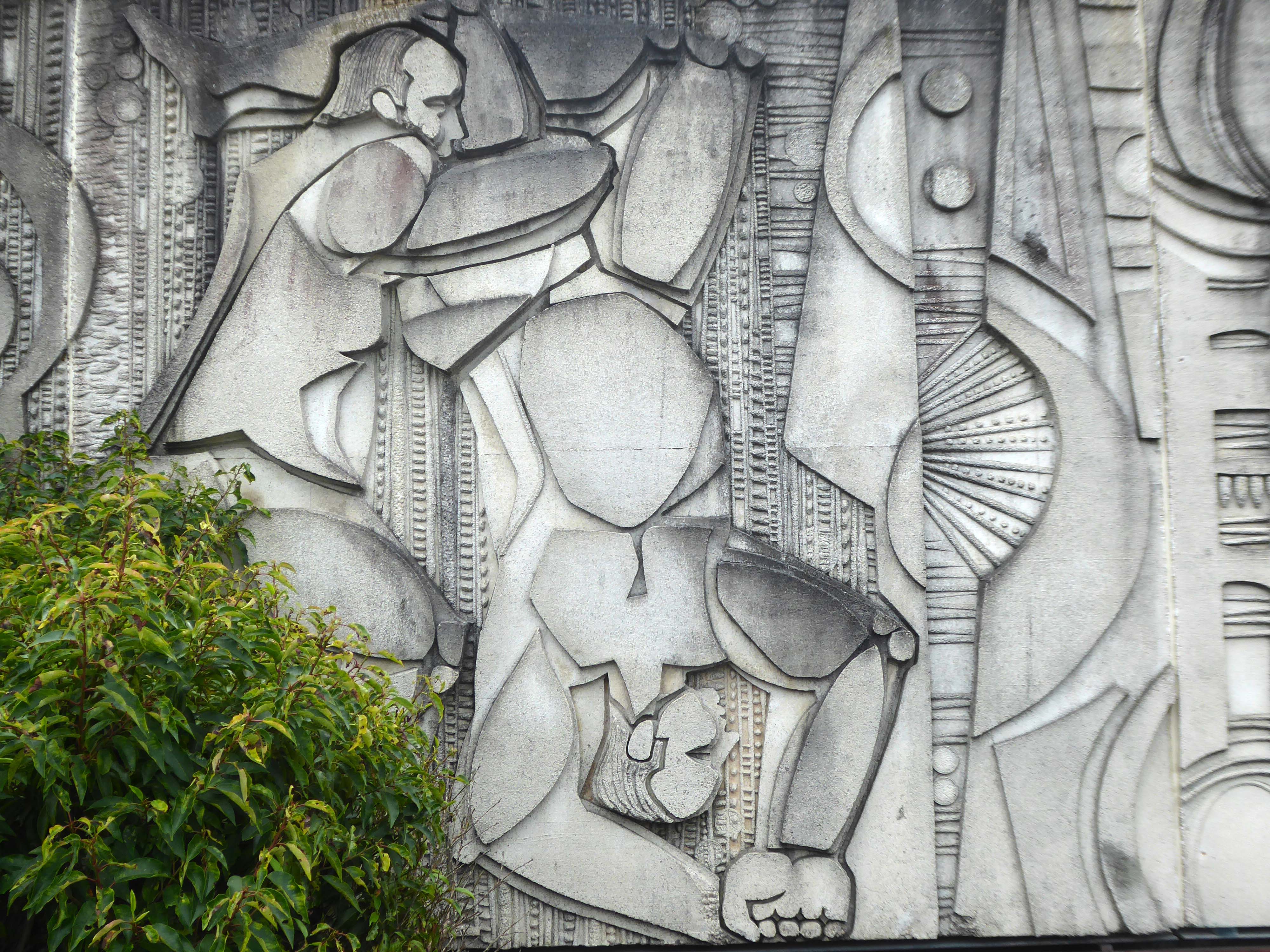
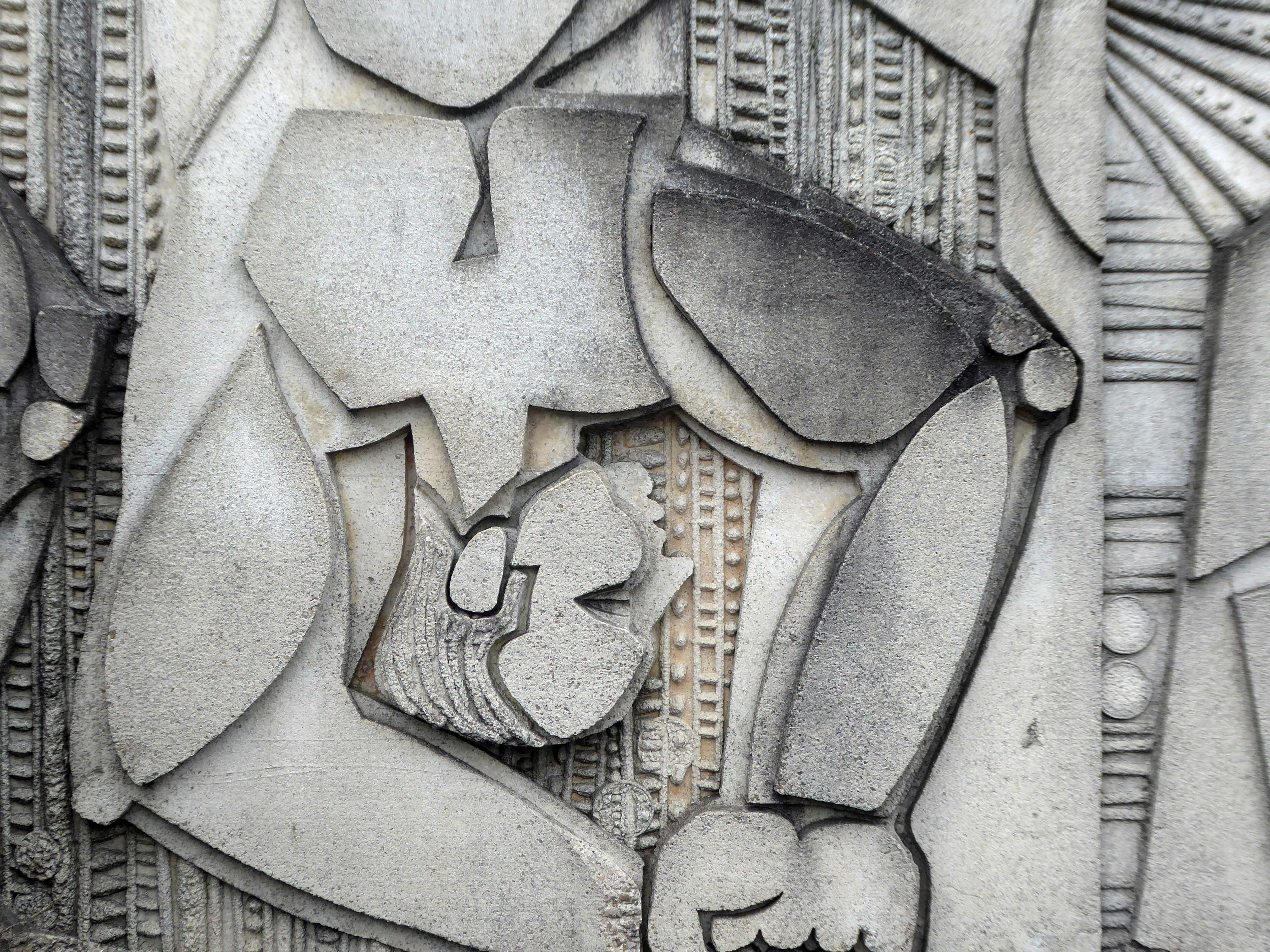
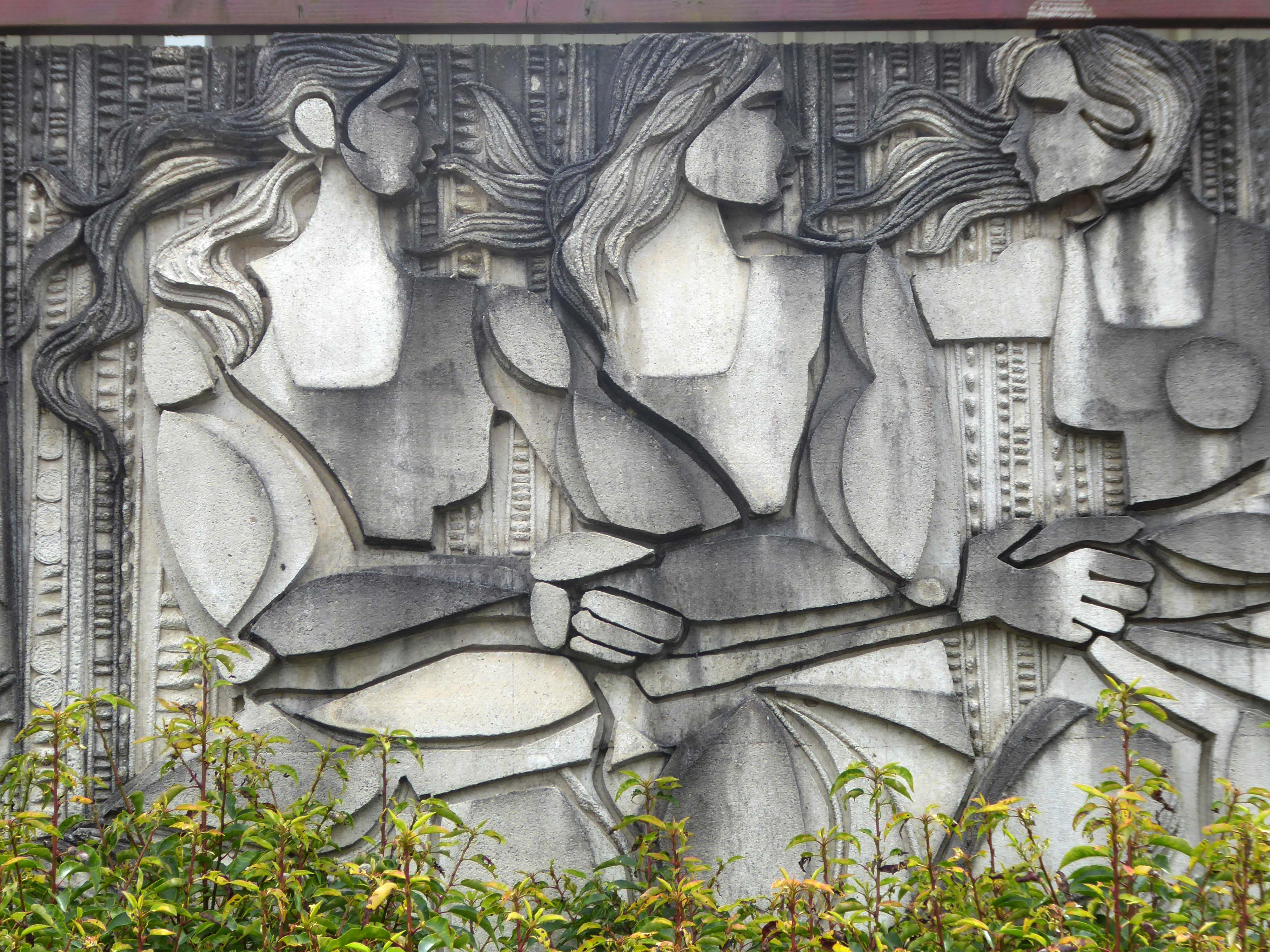
The Thompson Recreation Centre was decorated by a large concrete frieze by Scottish artist Charles Anderson.

Town Architects 1975

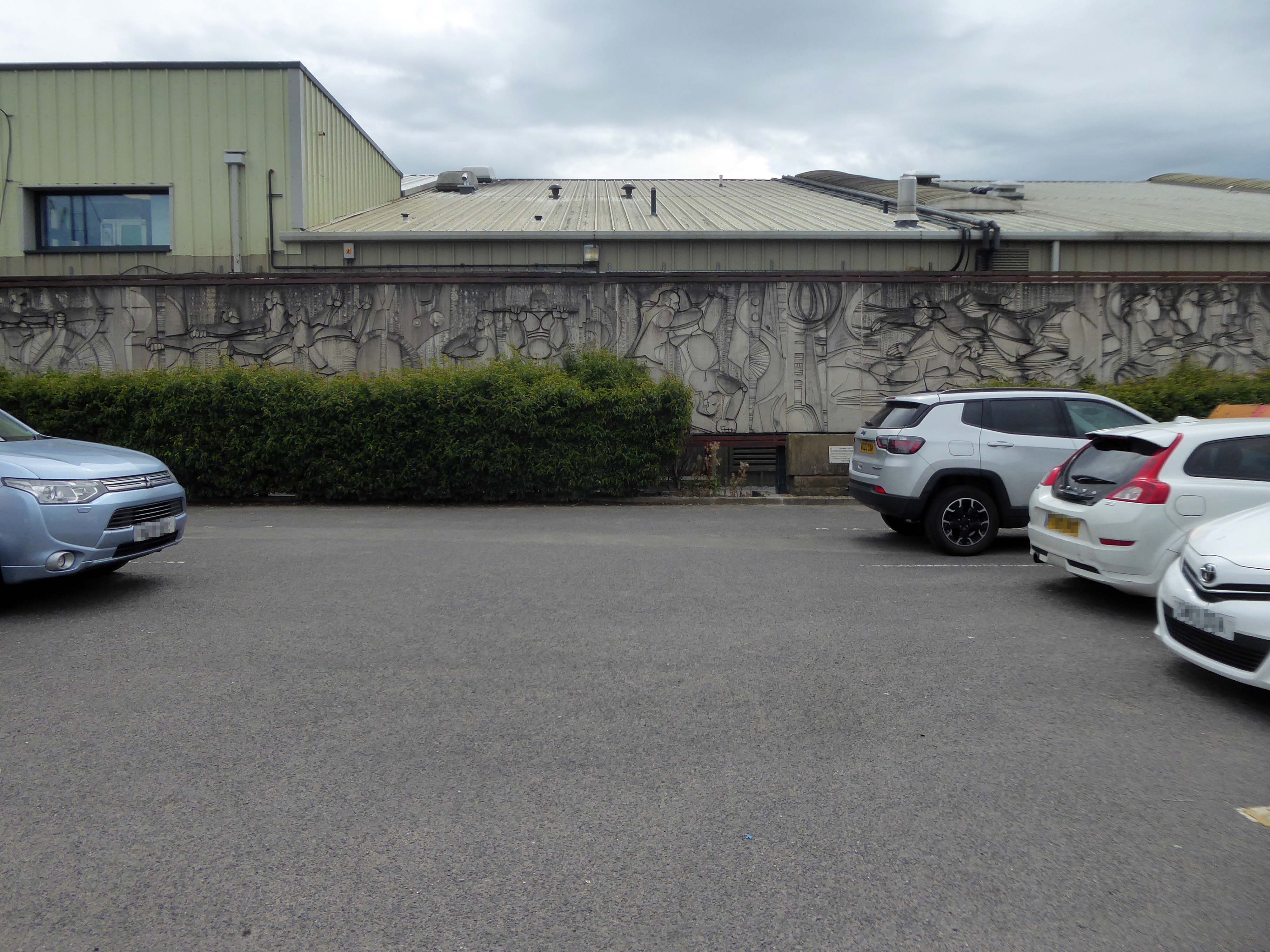
Formed from precast concrete panels against expanded polystyrene moulds – it stands 150ft long and 9ft high.

It was gifted from funds provided by the estate of local Cotton Manufacturer and major town benefactor, William Thompson. The building was a flagship symbol of progress for Burnley in 1973, it was demolished in 2006.

Fortunately, the frieze was carefully dismantled, stored and reinstated by Andrew Brown.

Mr Brown said:

This frieze has a massive place in our community. It gives me enormous pleasure to give this magnificent artwork a new home. It breathes new life into the legacy of William Thompson who did so much for Burnley.

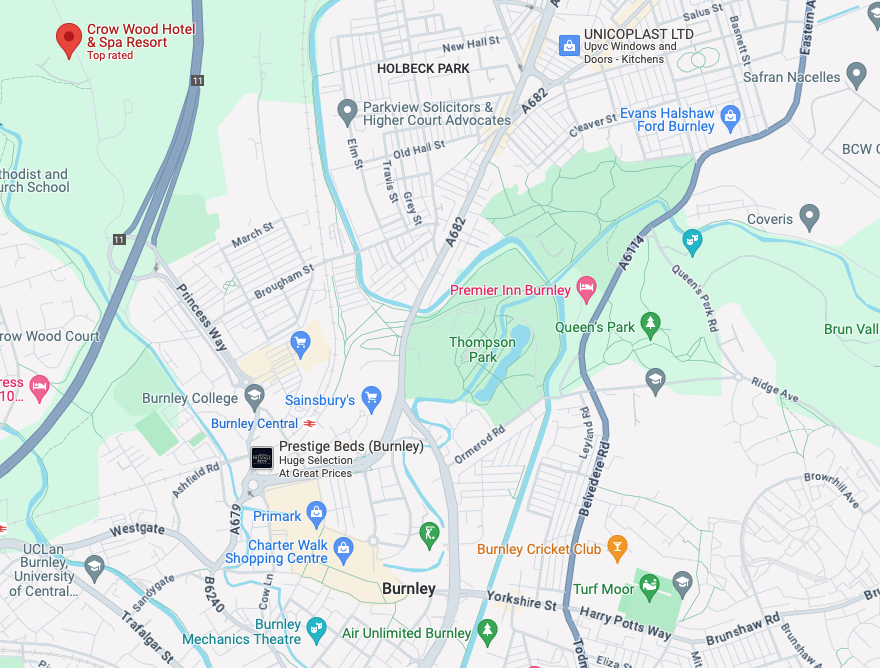
It is now located at the Crow Wood Hotel & Spa Resort. walked from the to

Charles Anderson designed the sculpture over months at his studio in Paisley said:

I was a young man of 34 when I was approached by Burnley Council to design a frieze for the centre.

It’s one of my proudest pieces of work and definitely one of the most challenging. I was inspired by the sculptures of the Parthenon so perhaps this is Burnley’s own Elgin Marbles. It features the Three Graces from Greek mythology as well as sporting scenes such as wrestling, weightlifting, fencing, archery, football, tennis and cricket.

I walked from the town centre along Princess way in search of the work – it’s at the rear of the site, just turn right before you reach the hotel.

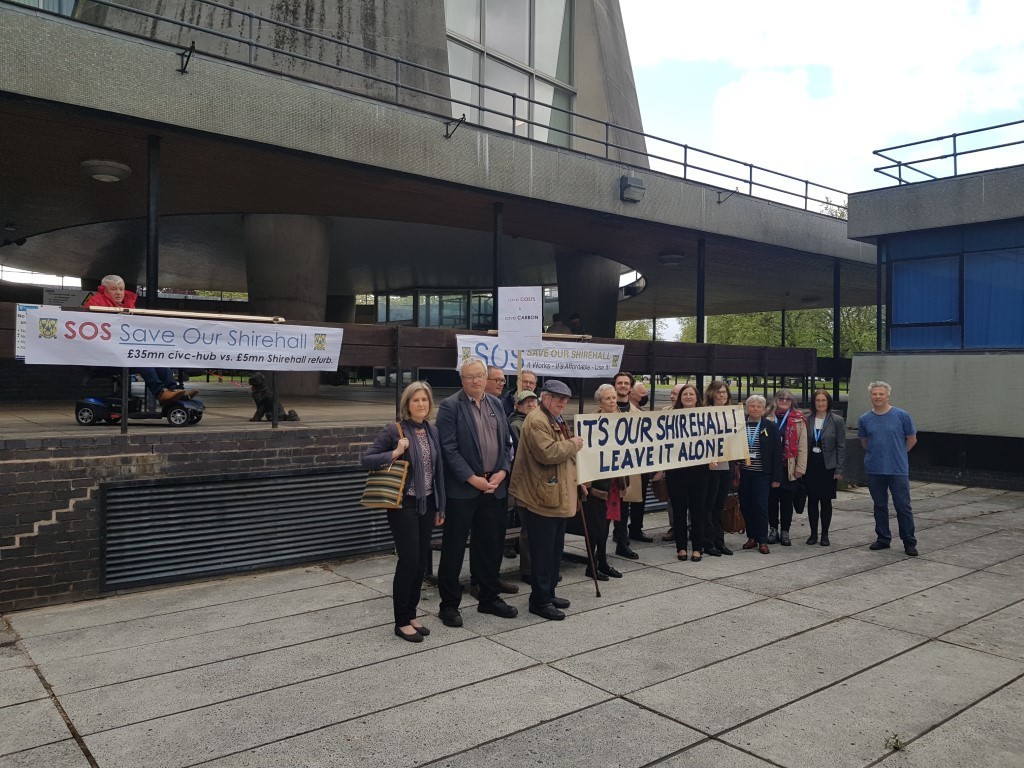
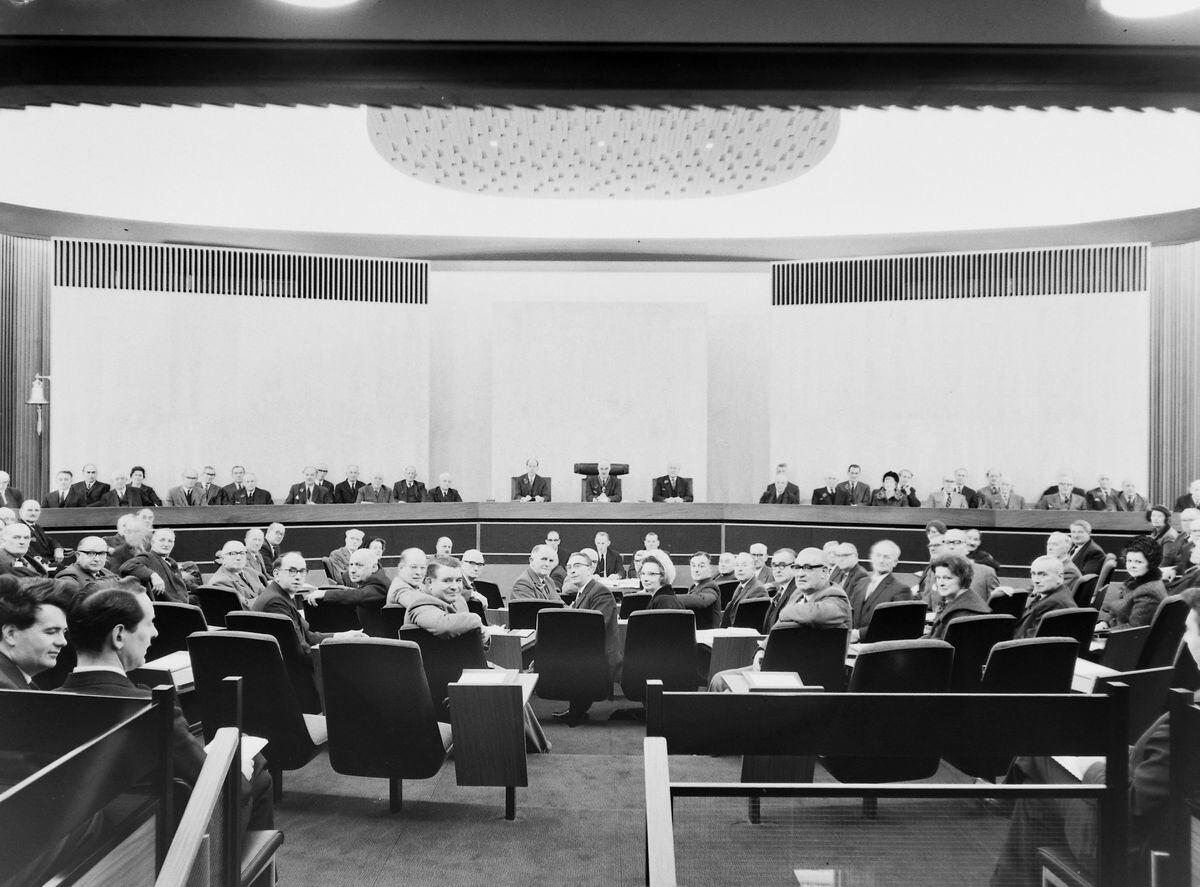
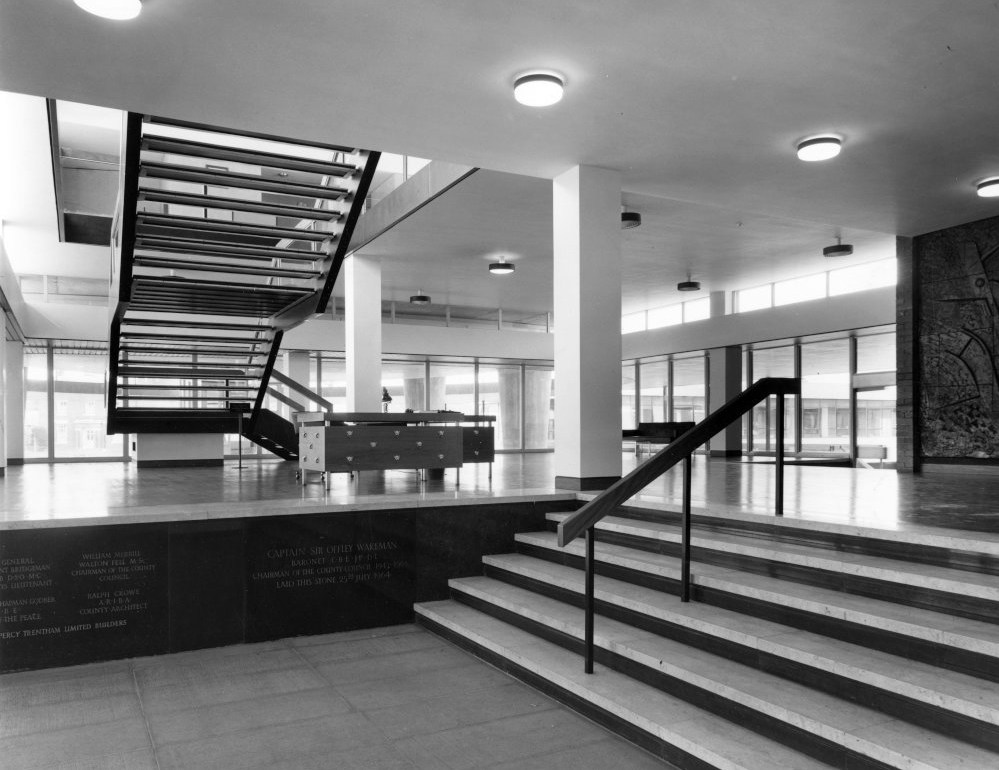
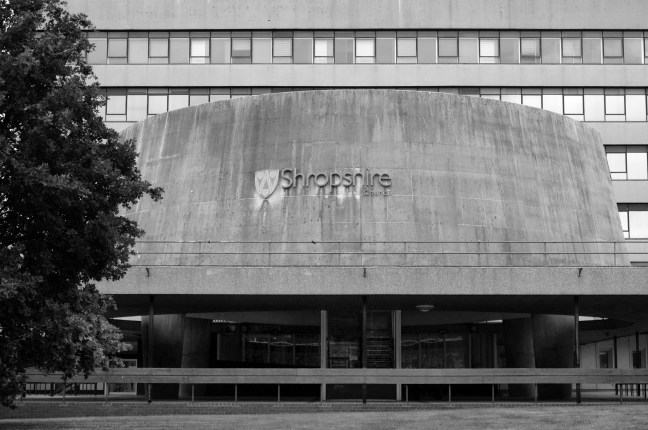
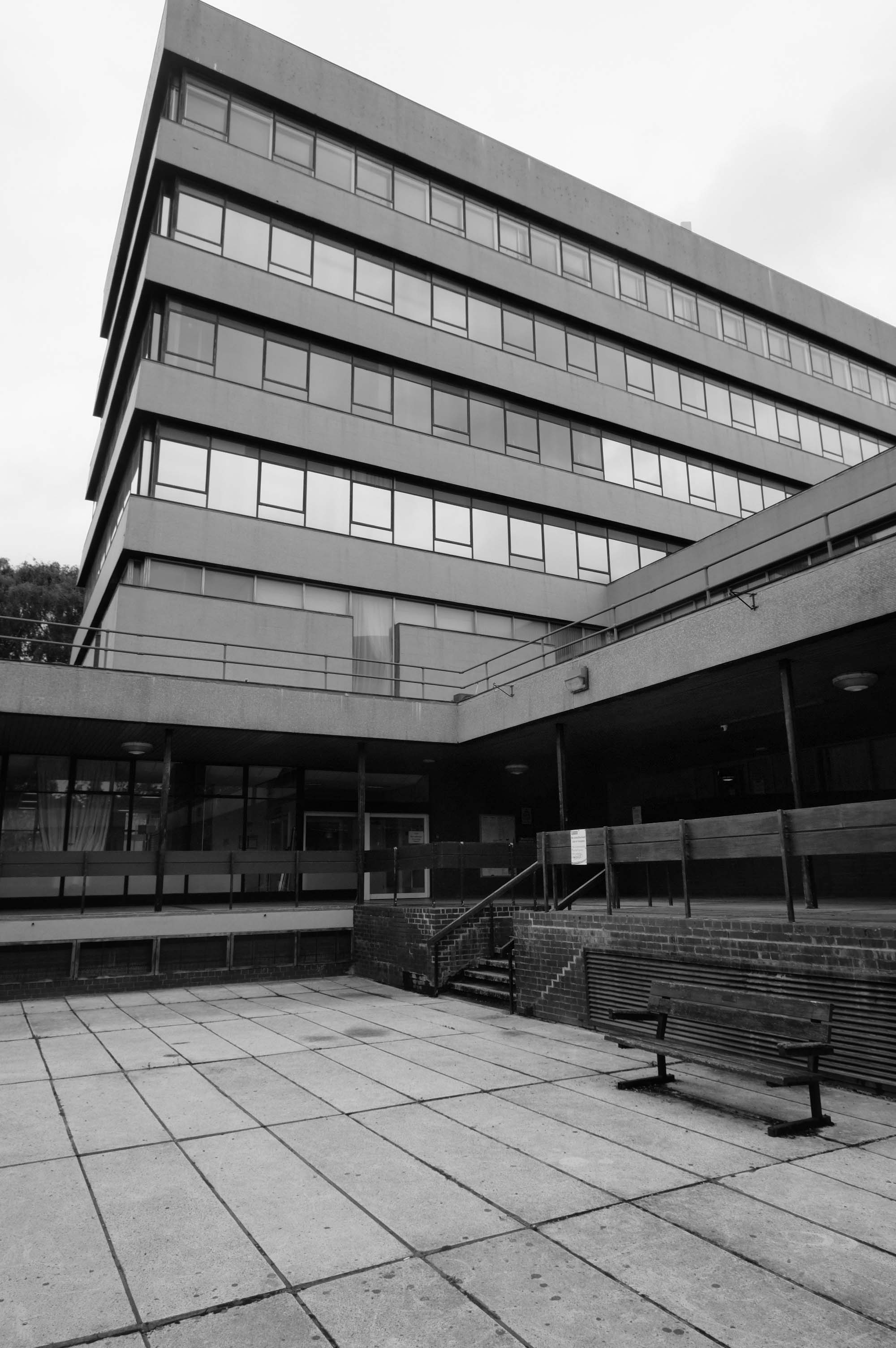
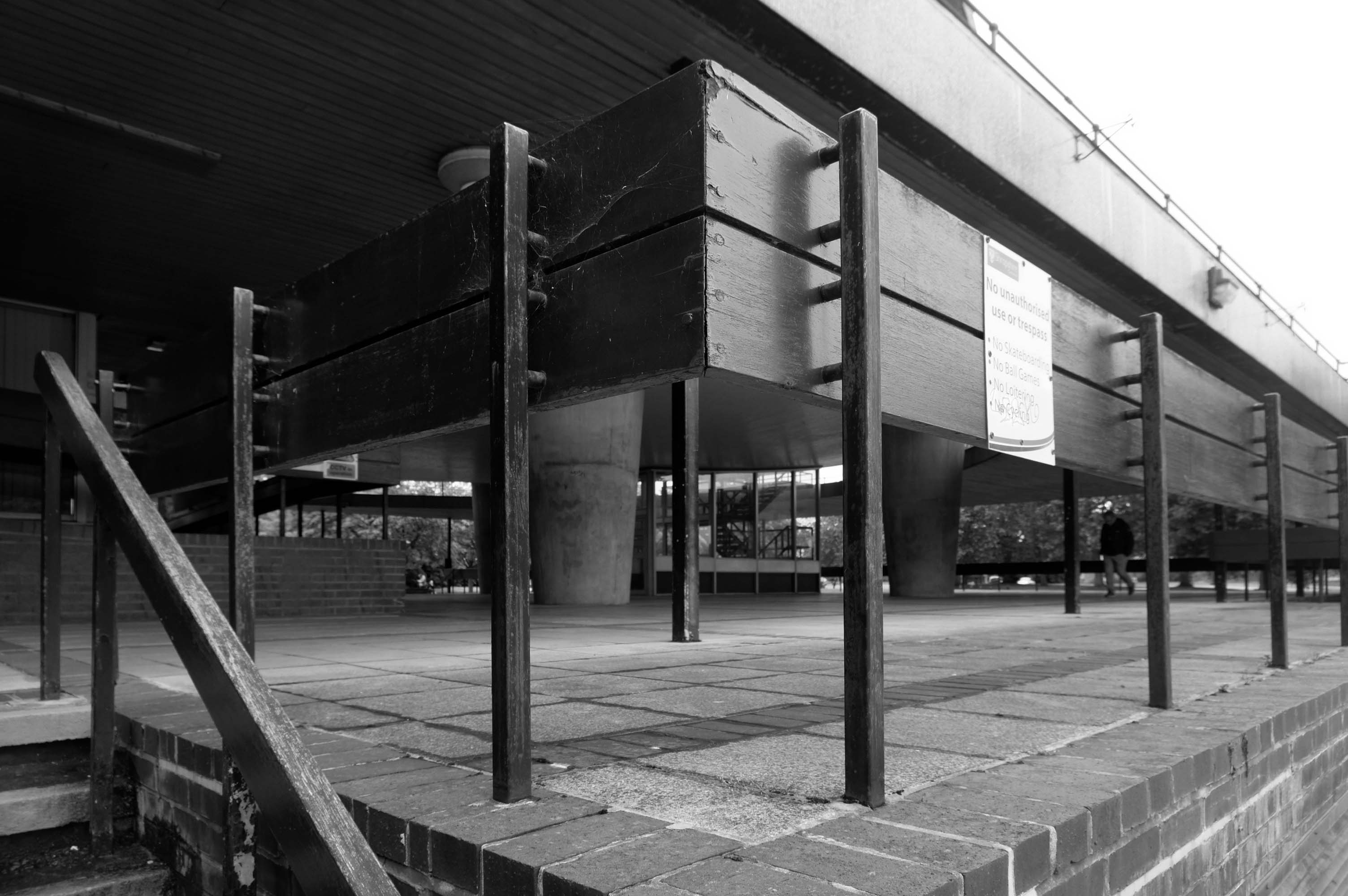
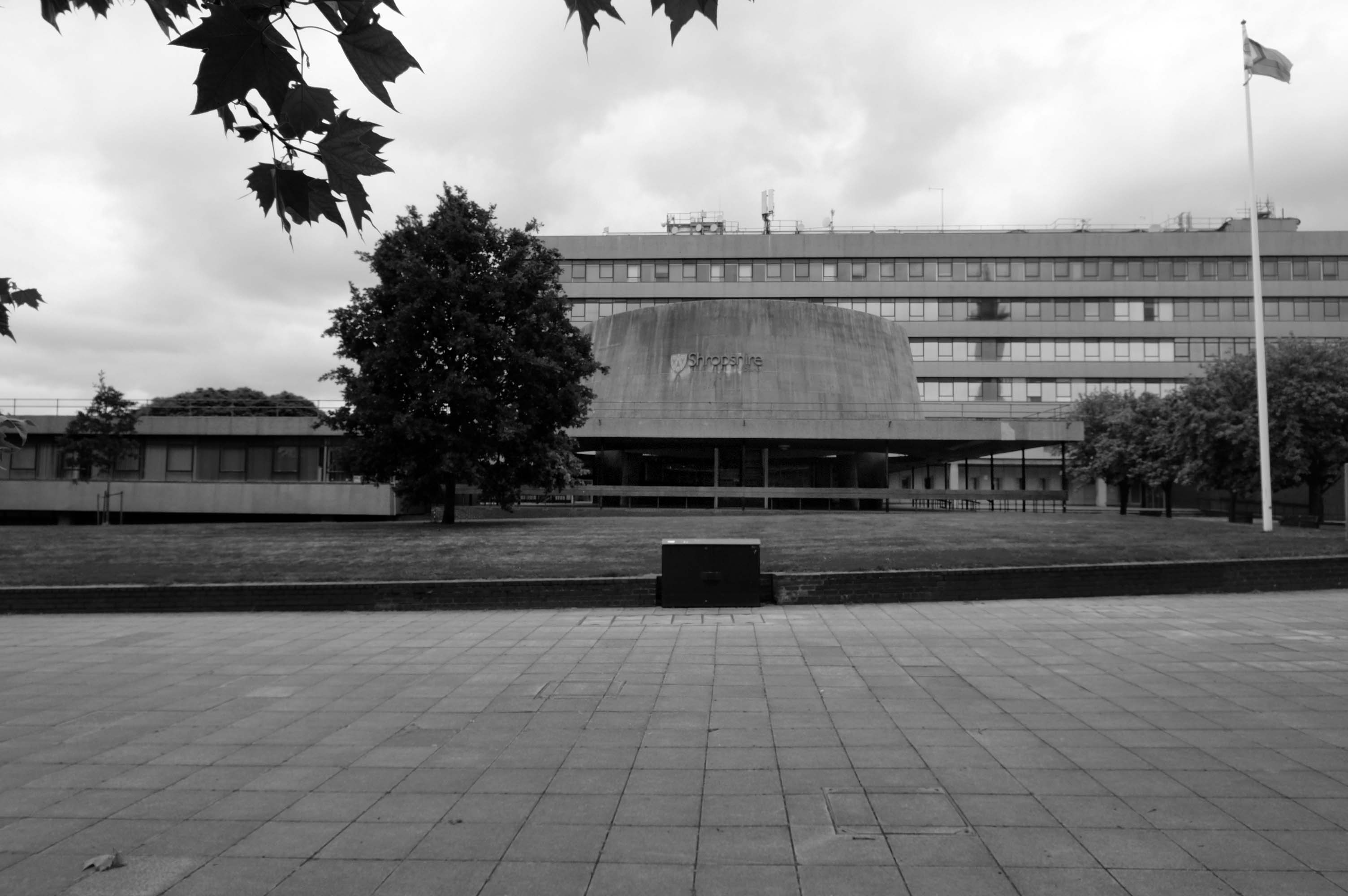
Shirehall Shrewsbury – Interiors

Abbey Foregate Shrewsbury SY2 6LY

Architect Ralph Vernon Crowe 1966

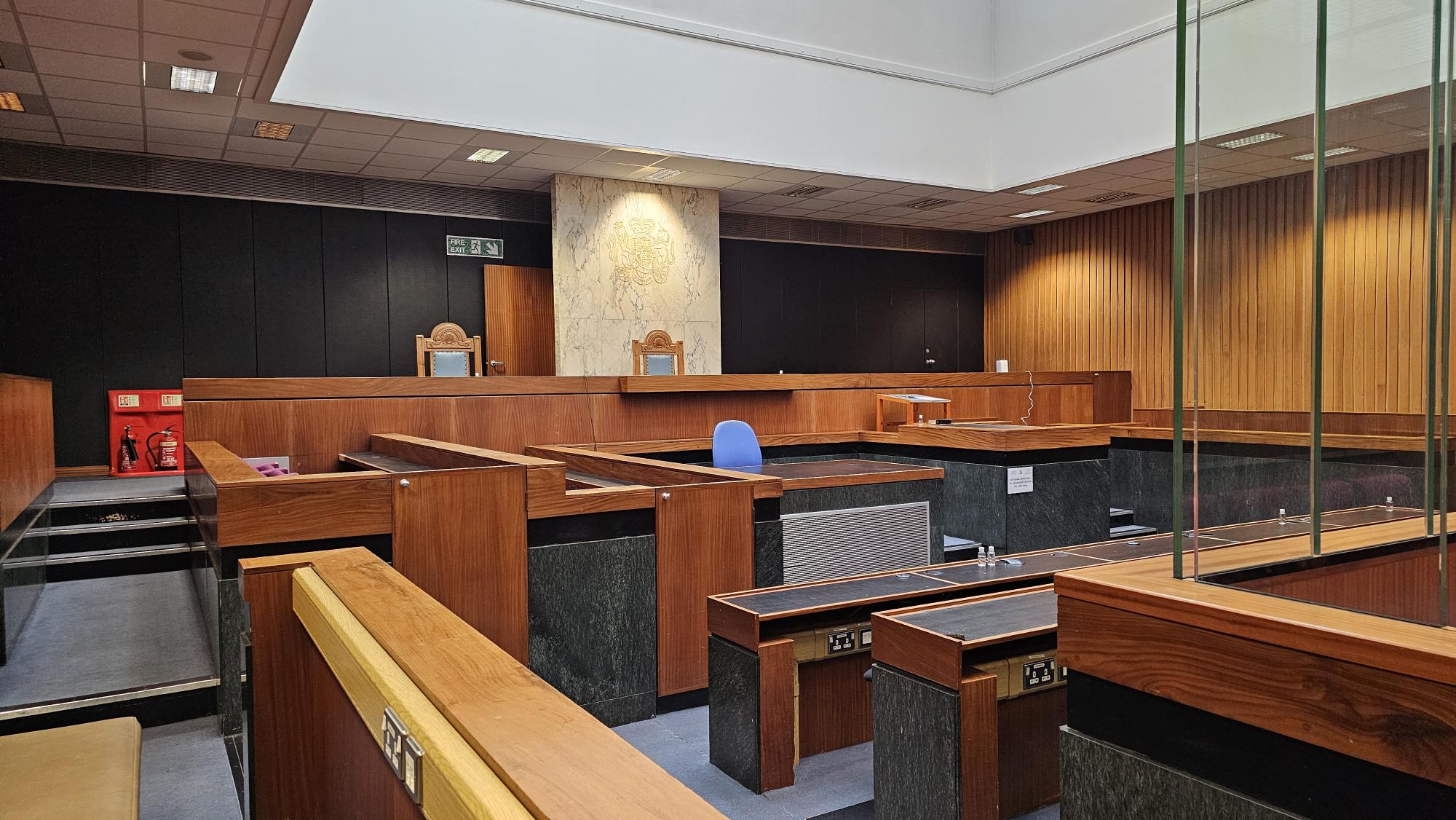
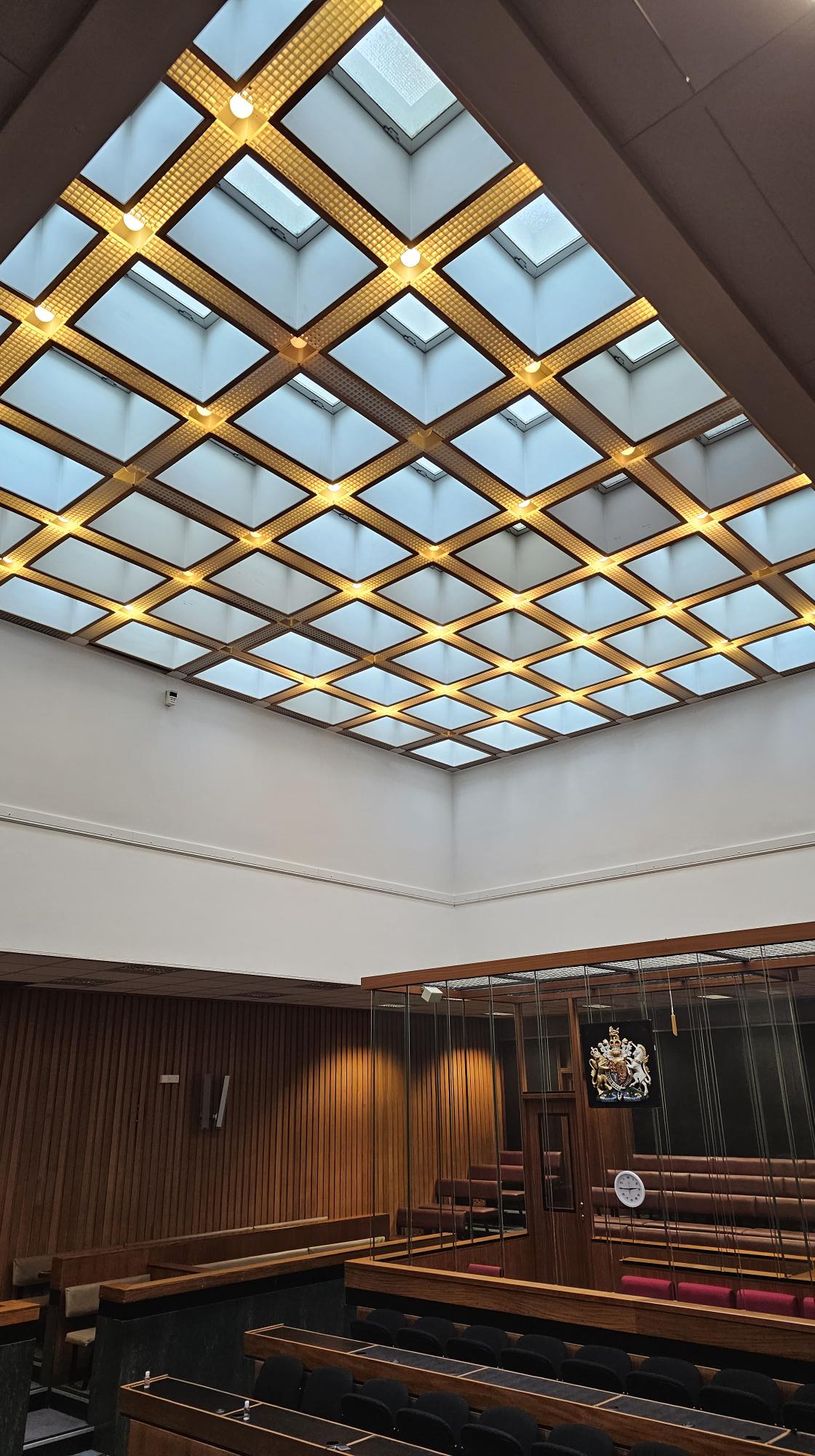
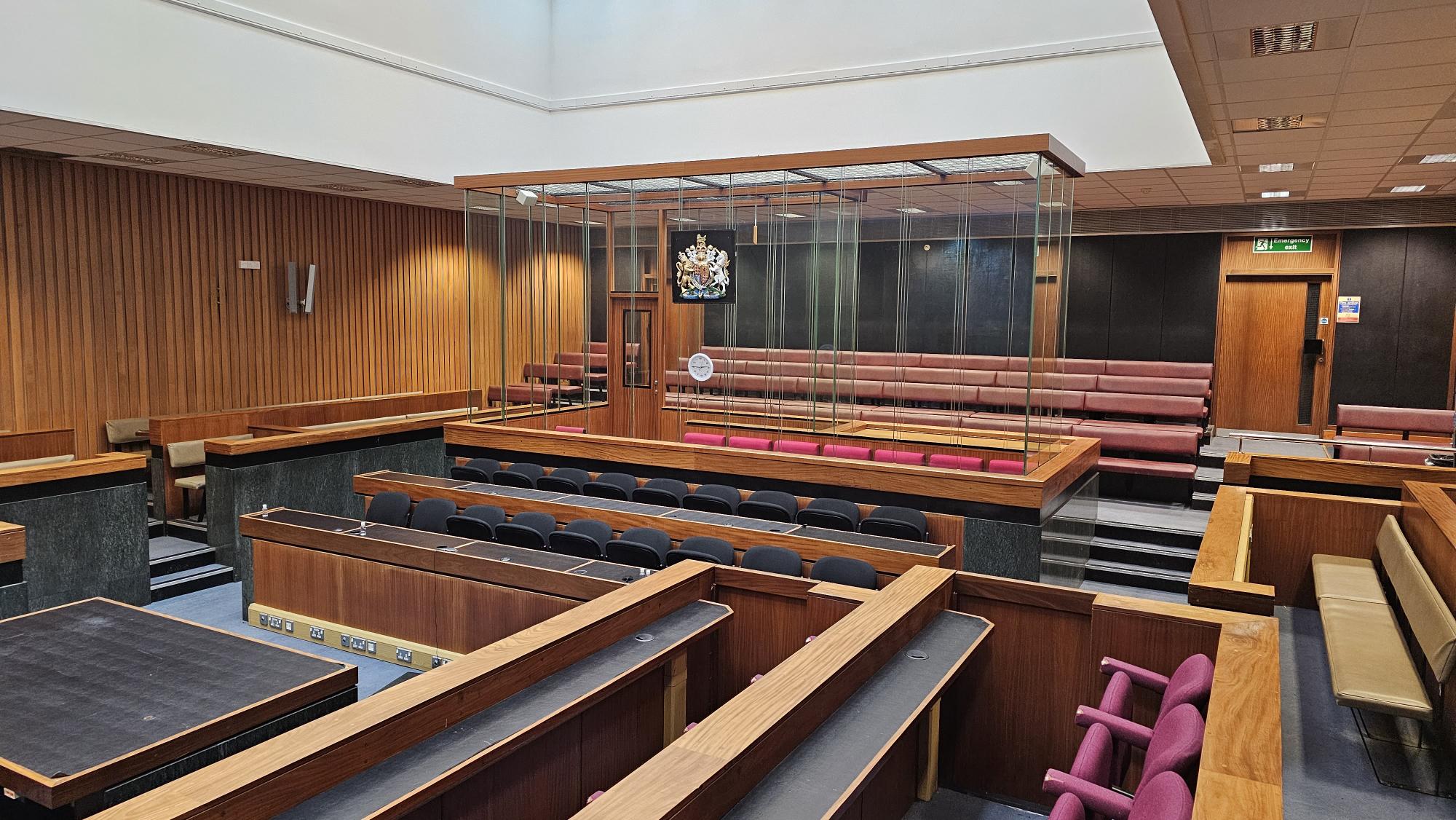
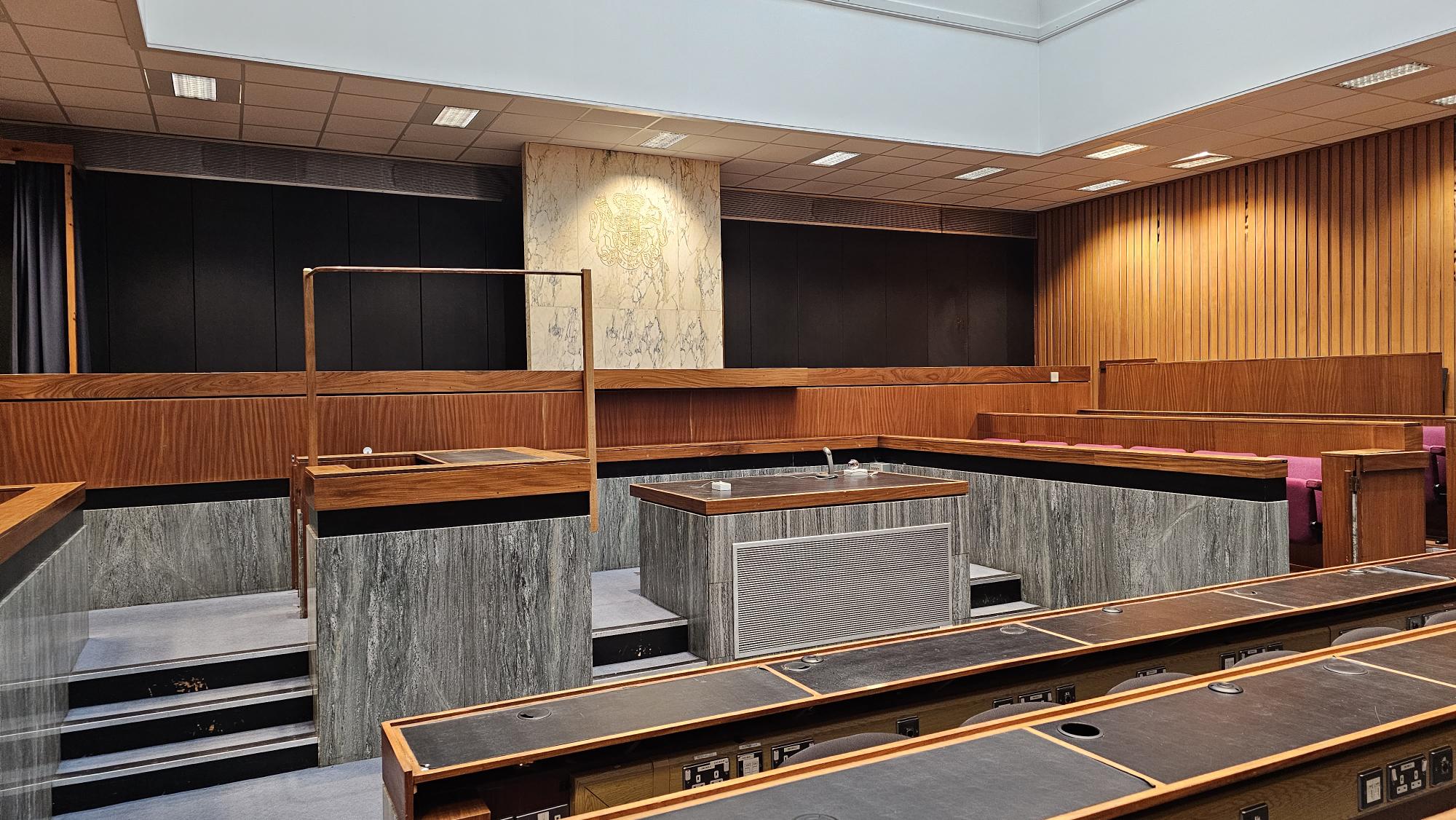
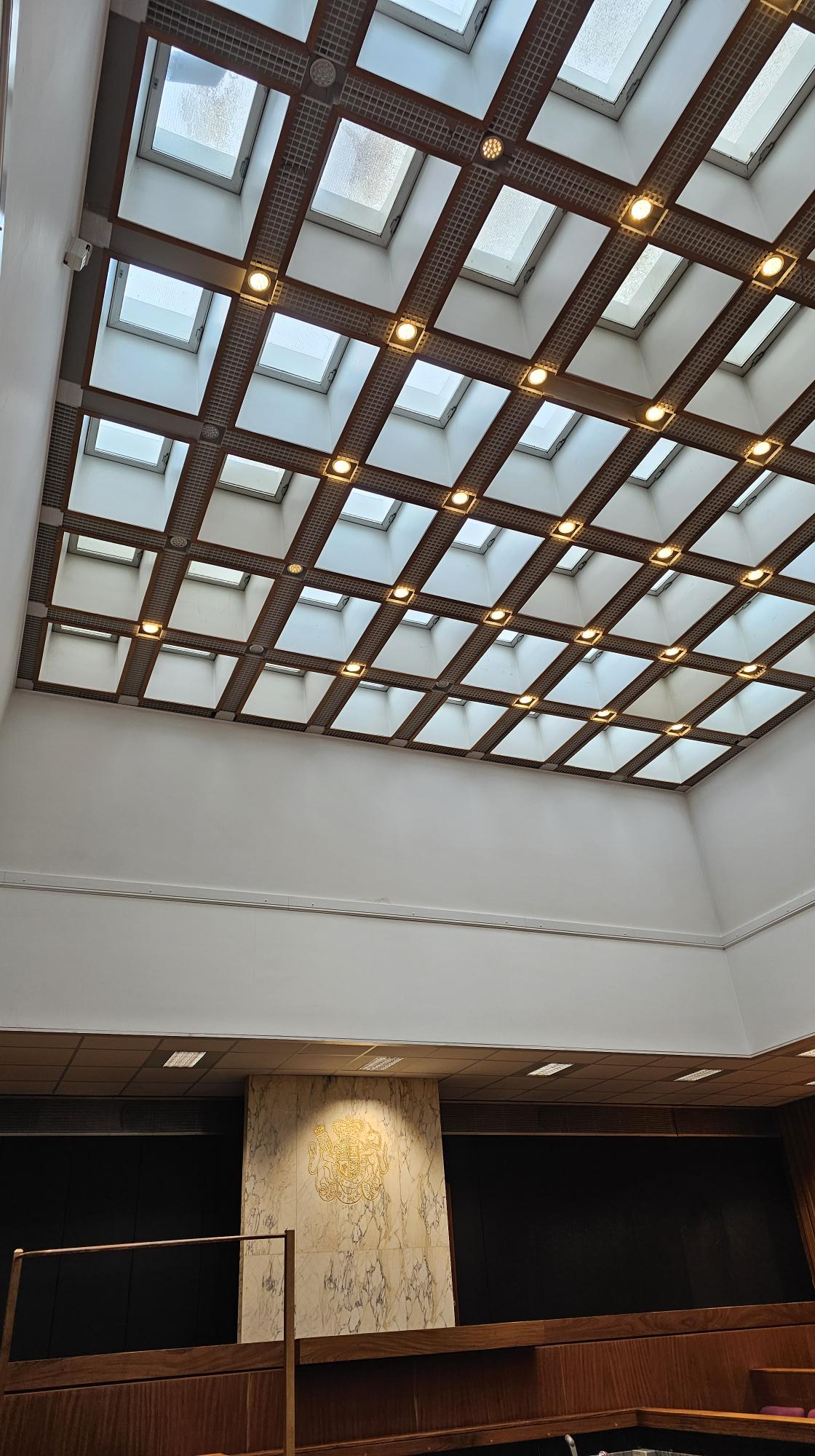
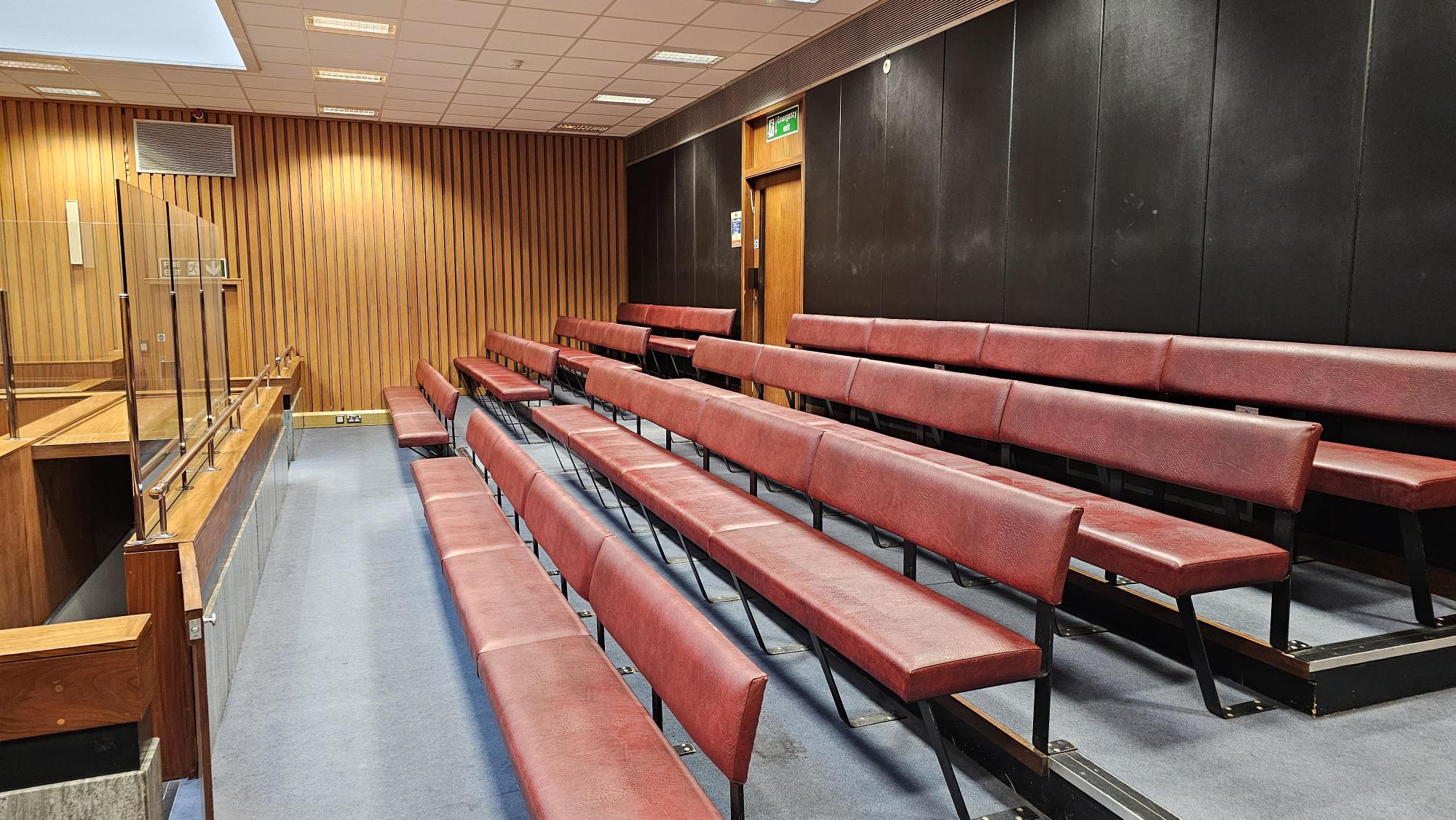
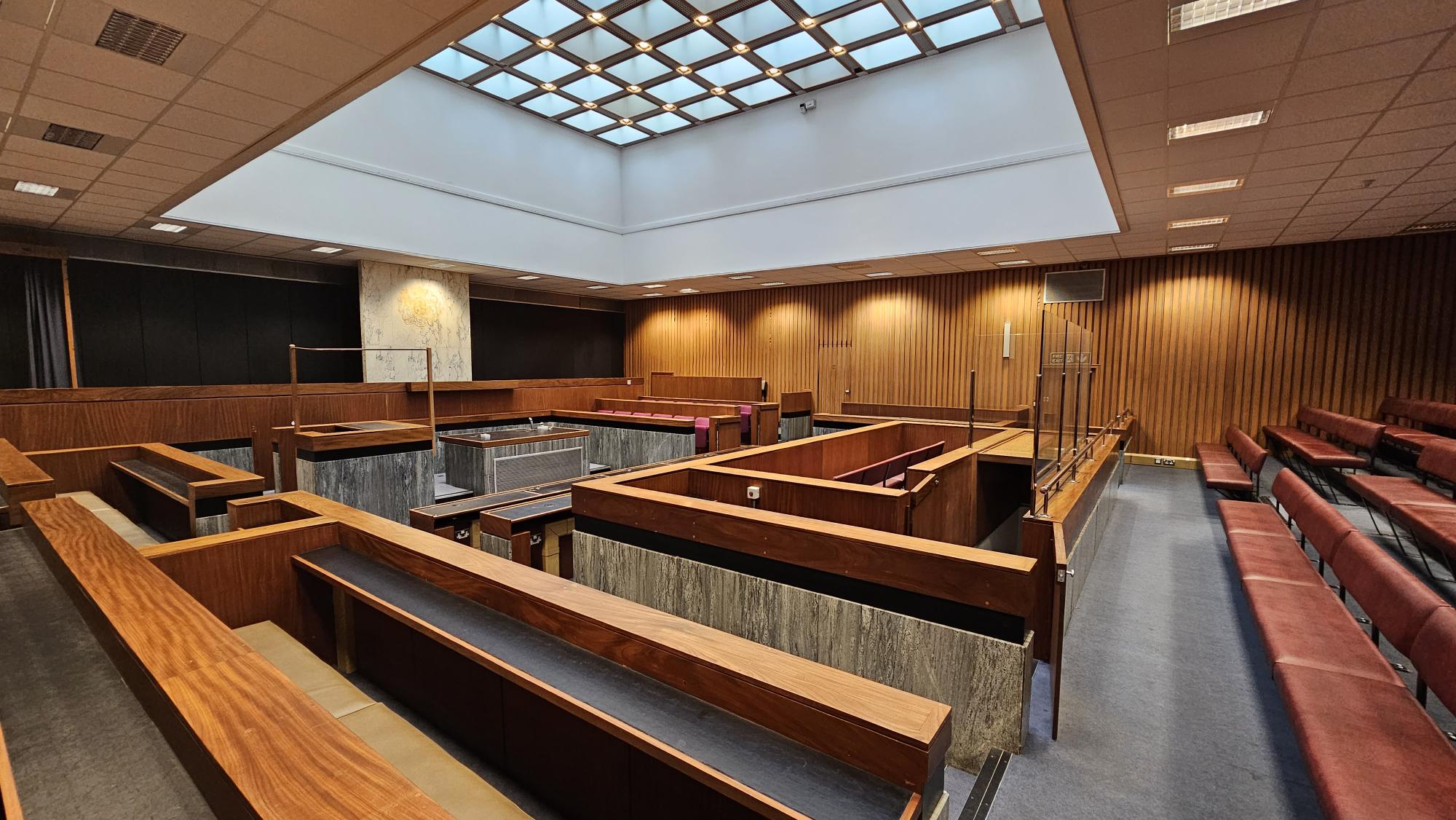
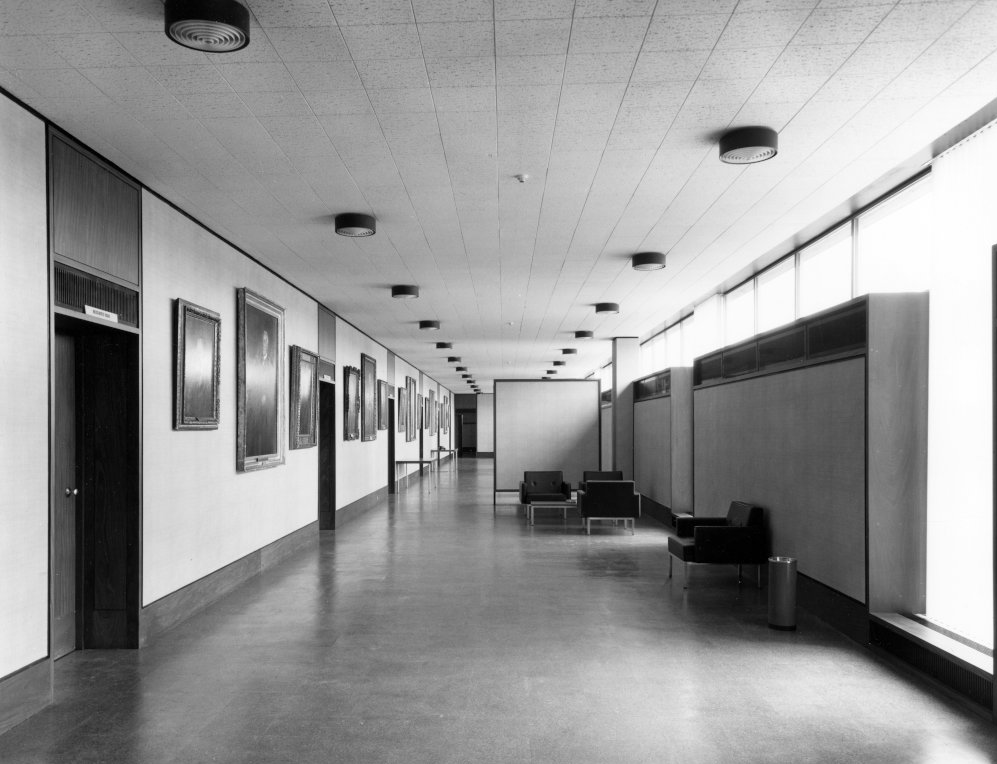
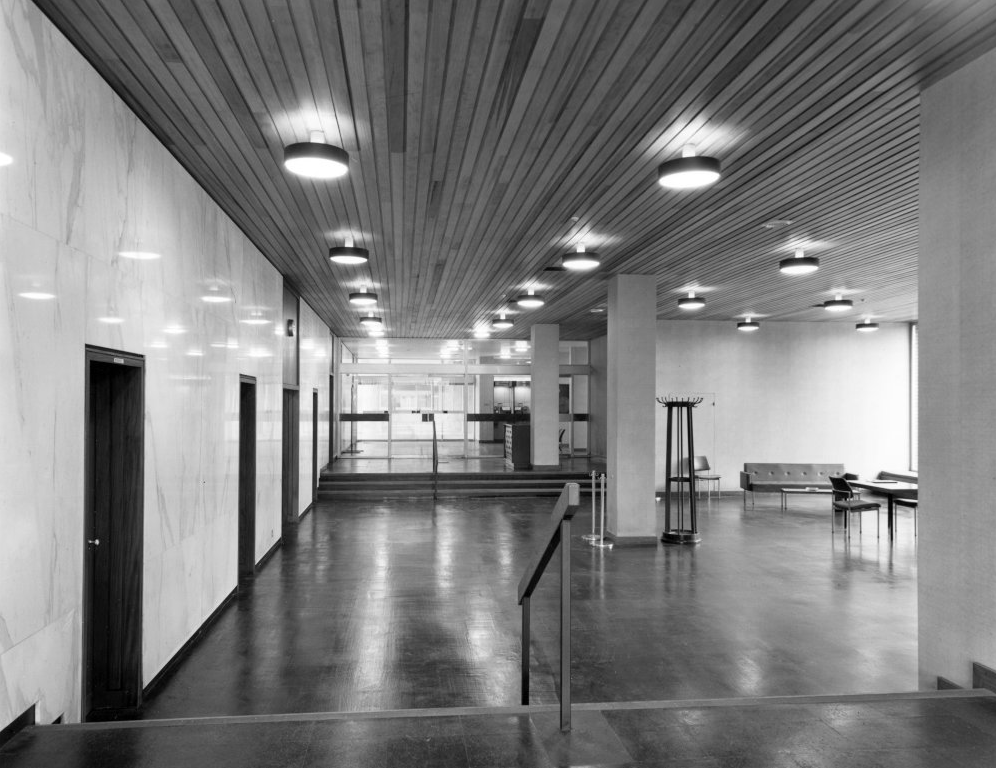
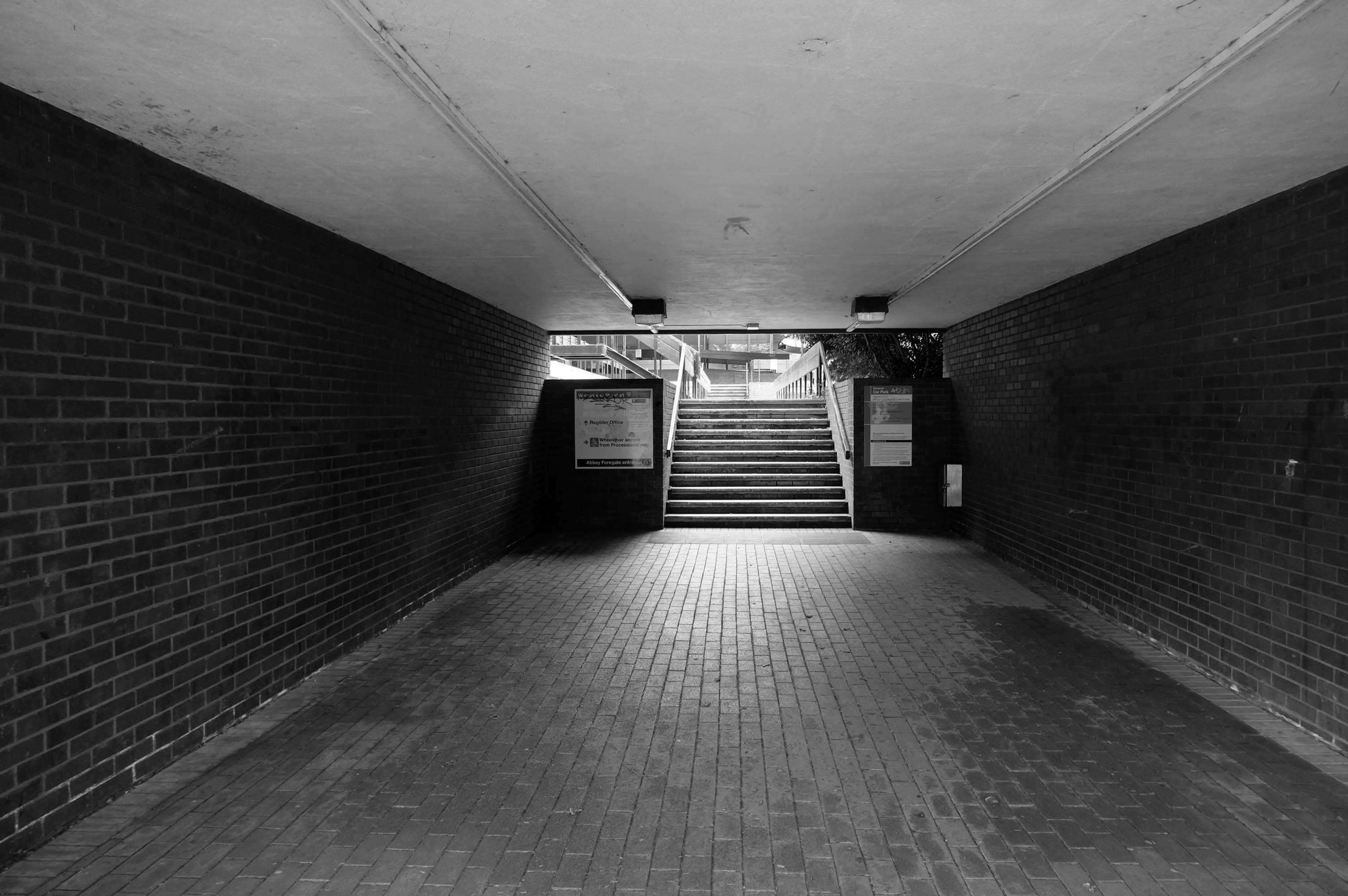
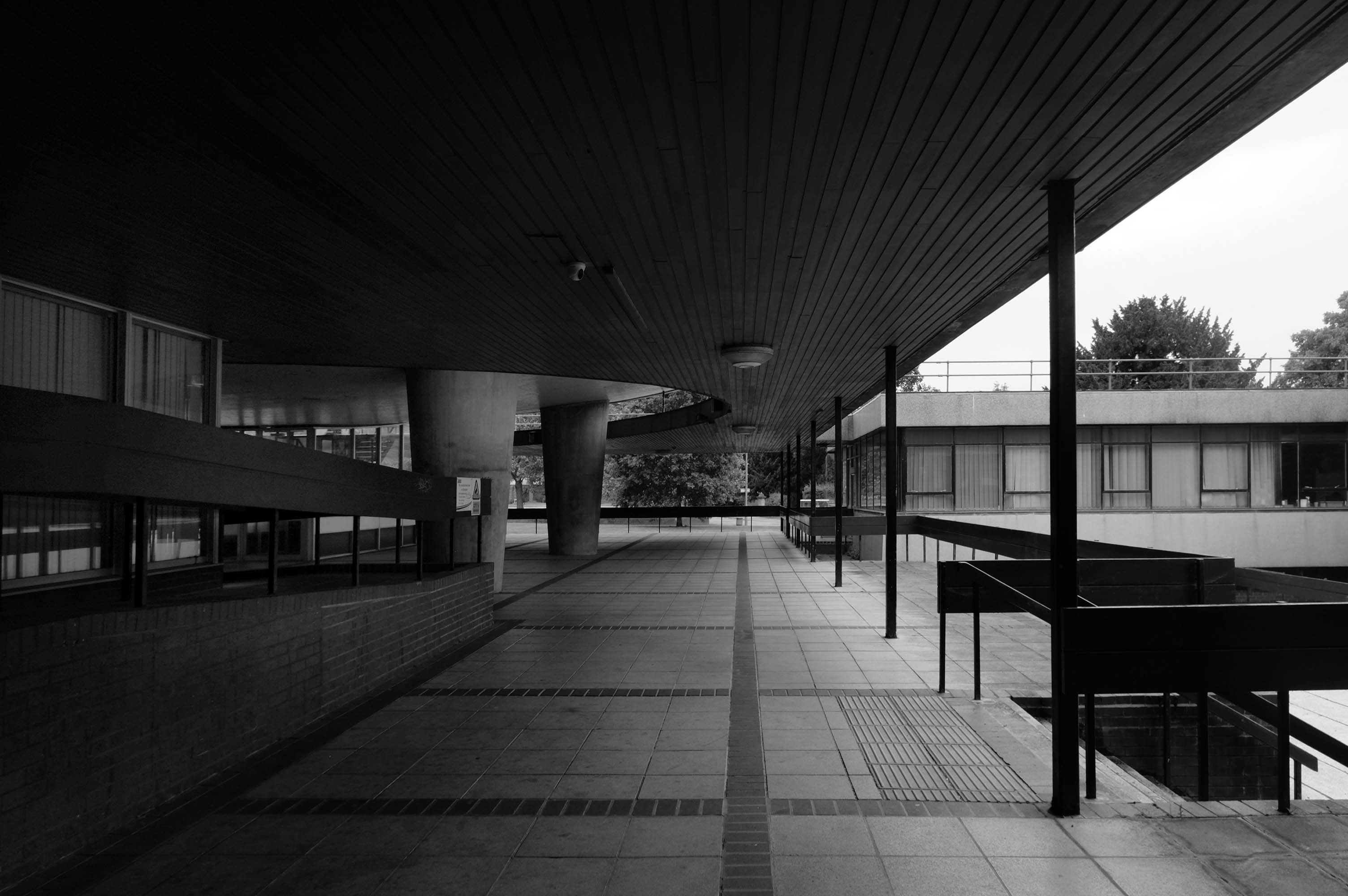
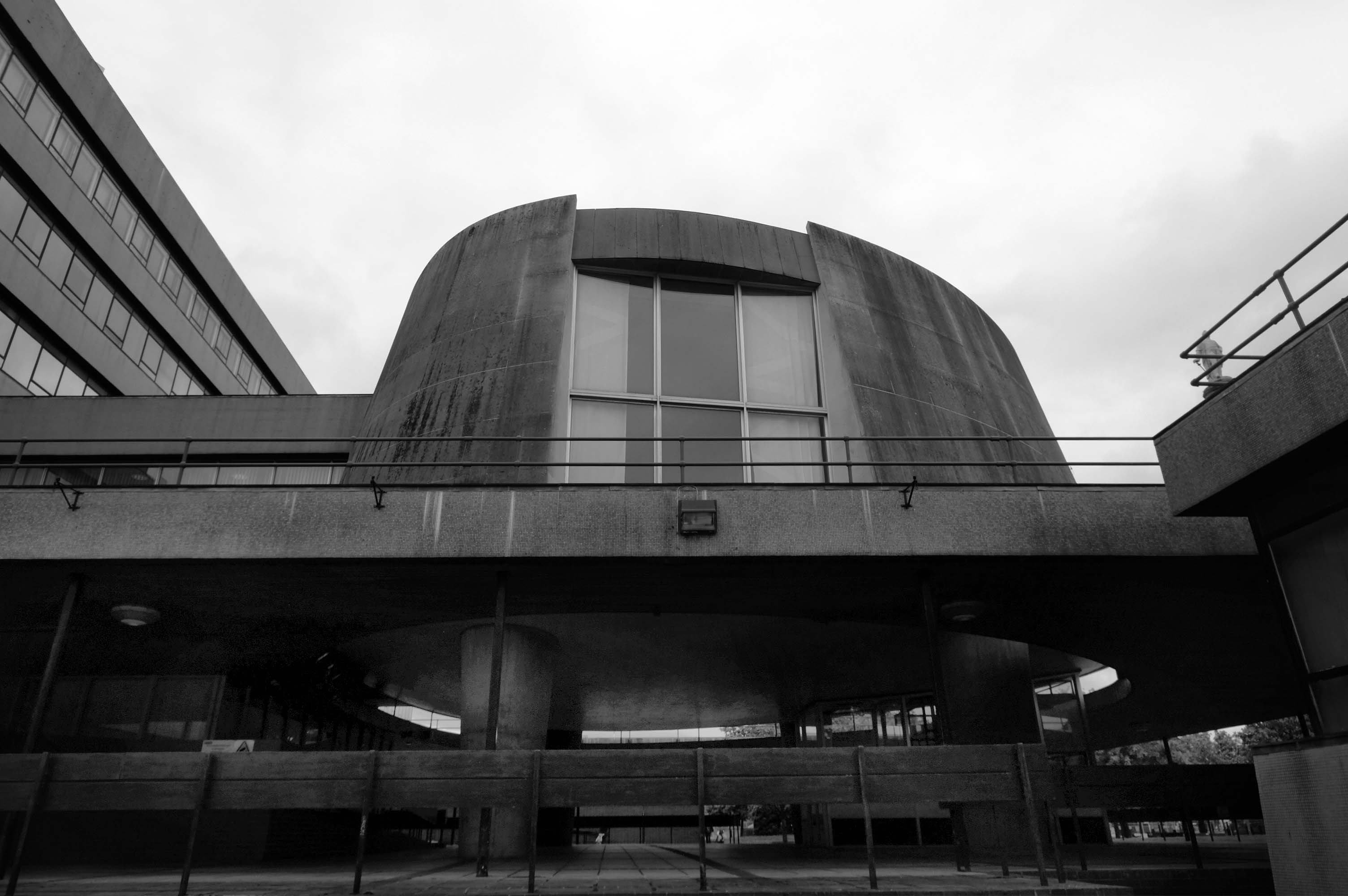
Having photographed the exterior of Shirehall – I am now sharing some images of the buildings remarkable interior.

These have images have been kindly provided by the Shrewsbury Civic Society – many thanks.

They have campaigned tirelessly to save the building which is under threat, the local authority wishing to demolish the site.

There has long been a split in Shropshire Council between councillors who want to keep Shirehall and this that want to demolish it and move to the town centre. Last December, the council agreed to dispose of the building in the next few years after work on Civic Hub in the town centre is completed. That Civic Hub is still in the ideas stage and there is no clear idea of where the money will come fund it. Unless the council sells the 3.5 hectare Shirehall site for housing boosting its capital reserves which were depleted by the £51m purchase of the shopping centres in Shrewsbury town centre.

The budget plans agreed two weeks ago days propose that Shirehall is sold before April 2025 to make a saving of £325,000 in 2024/25.

Andybodders

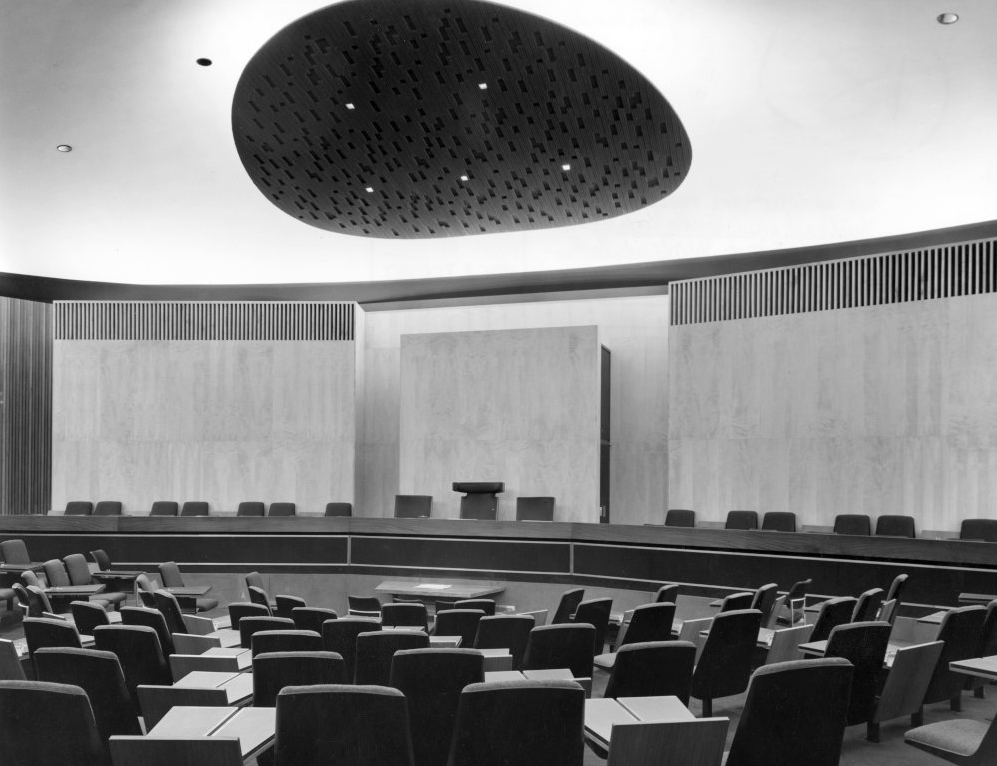
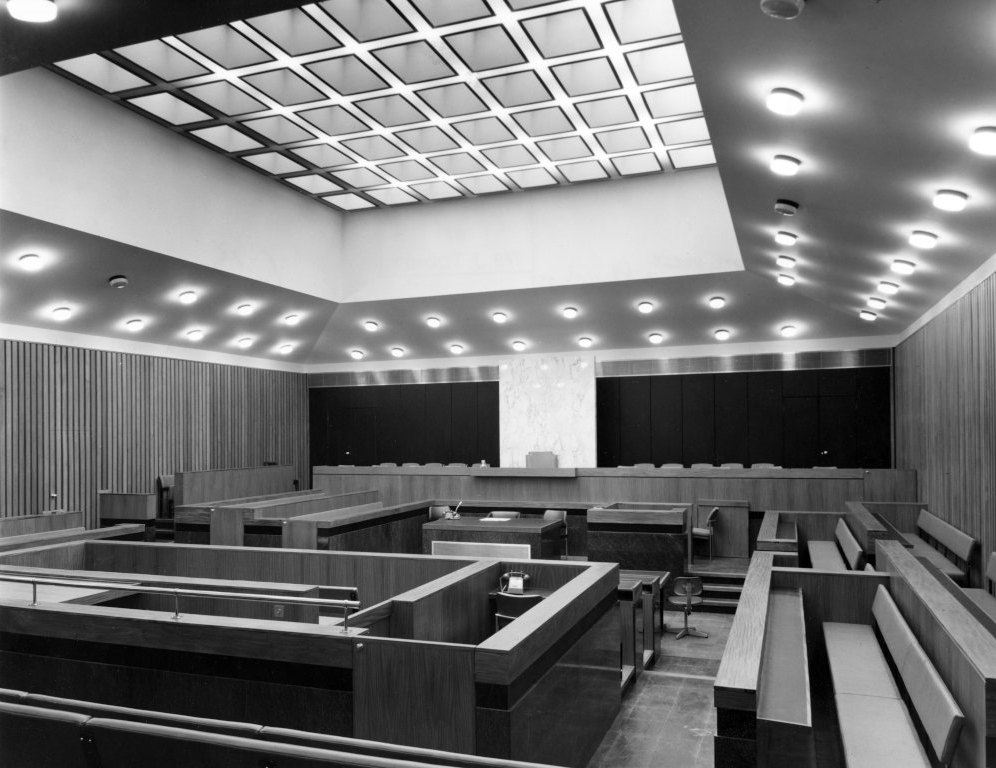
Here are the Civic Society photographs of the Courts, which are no longer in use.

These are archival images taken from RIBApix taken by Bill Toomey in 1967.

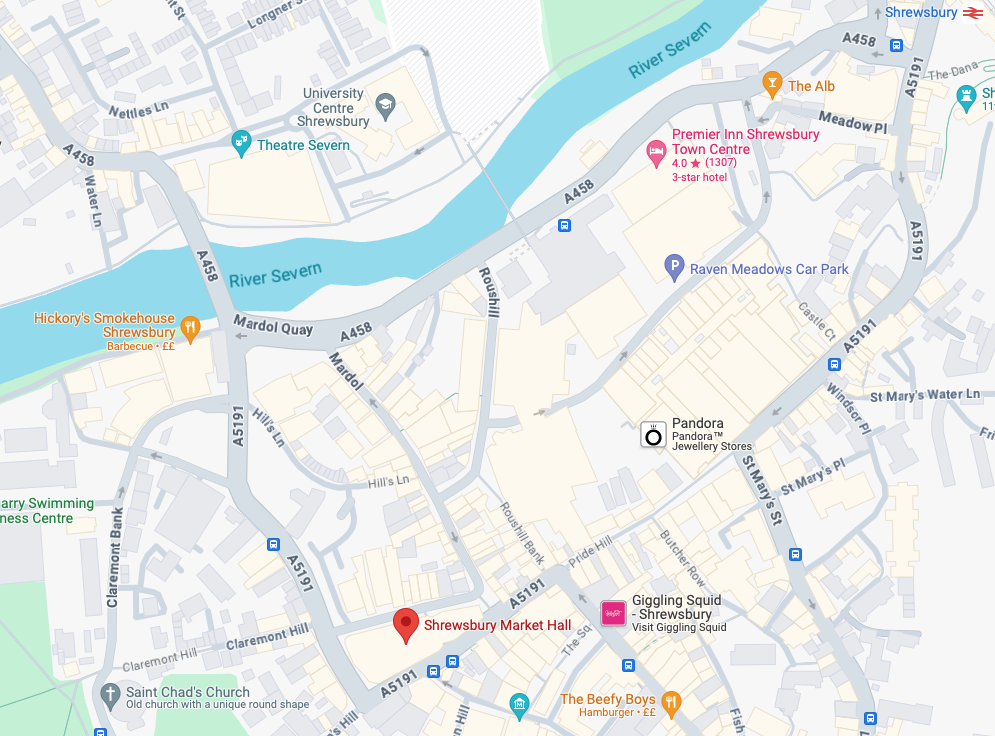
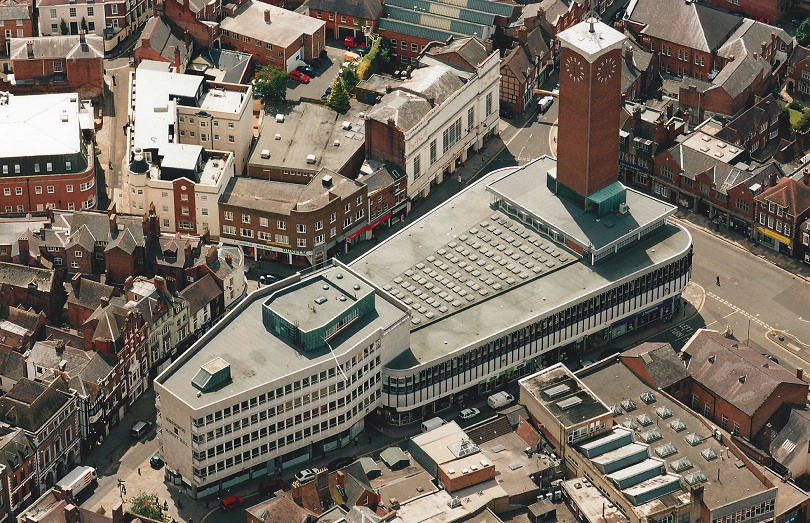
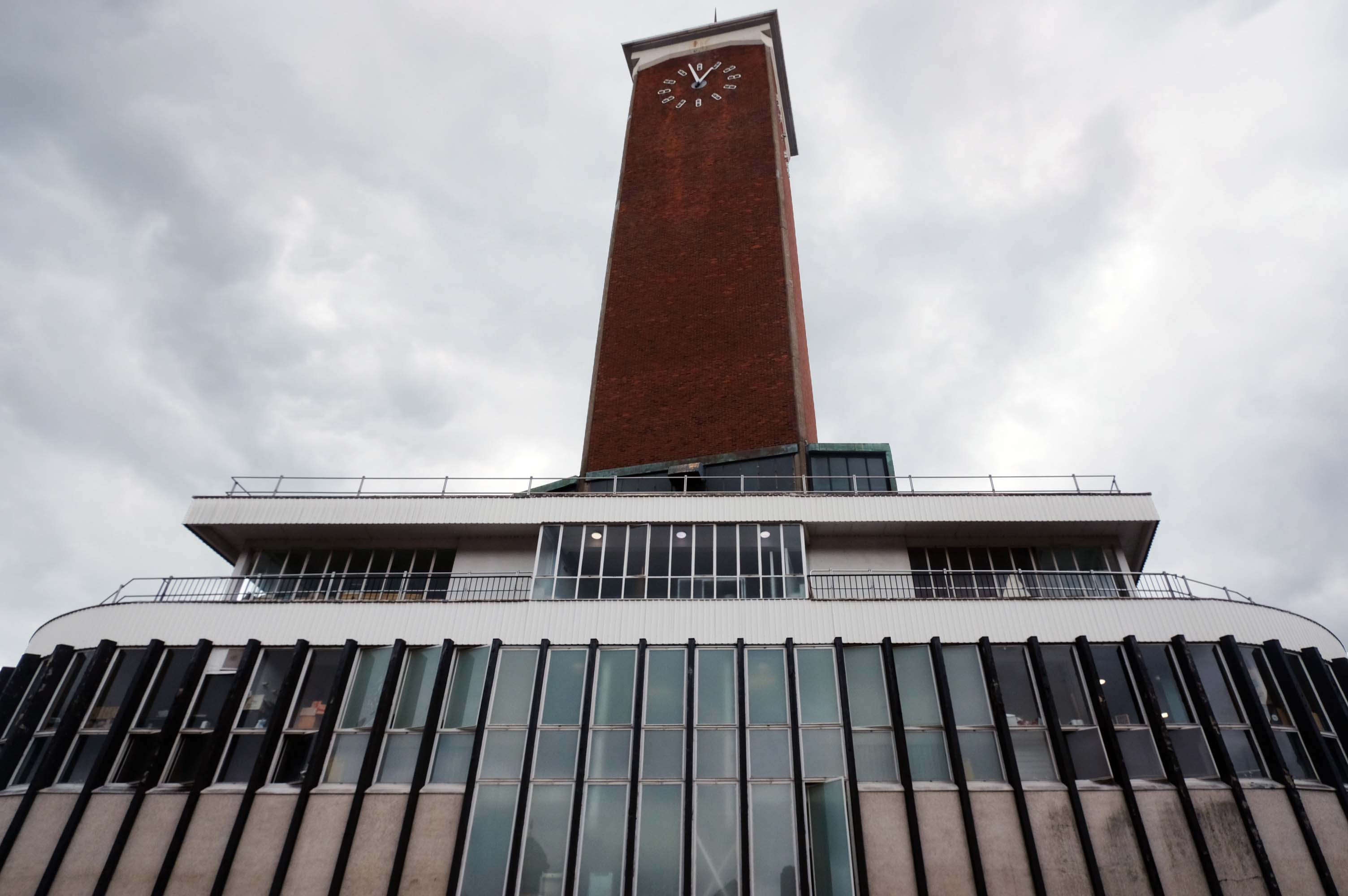
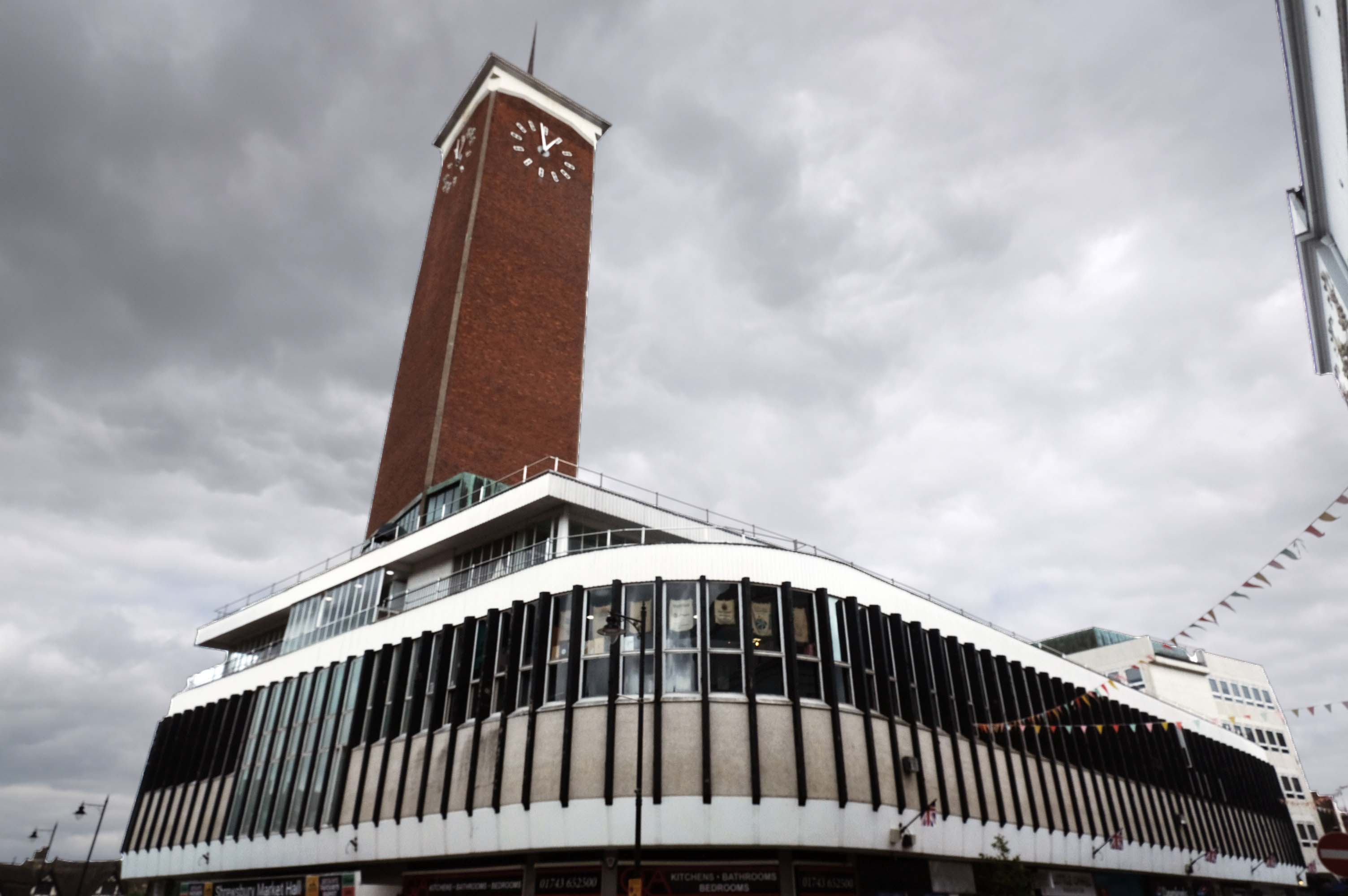
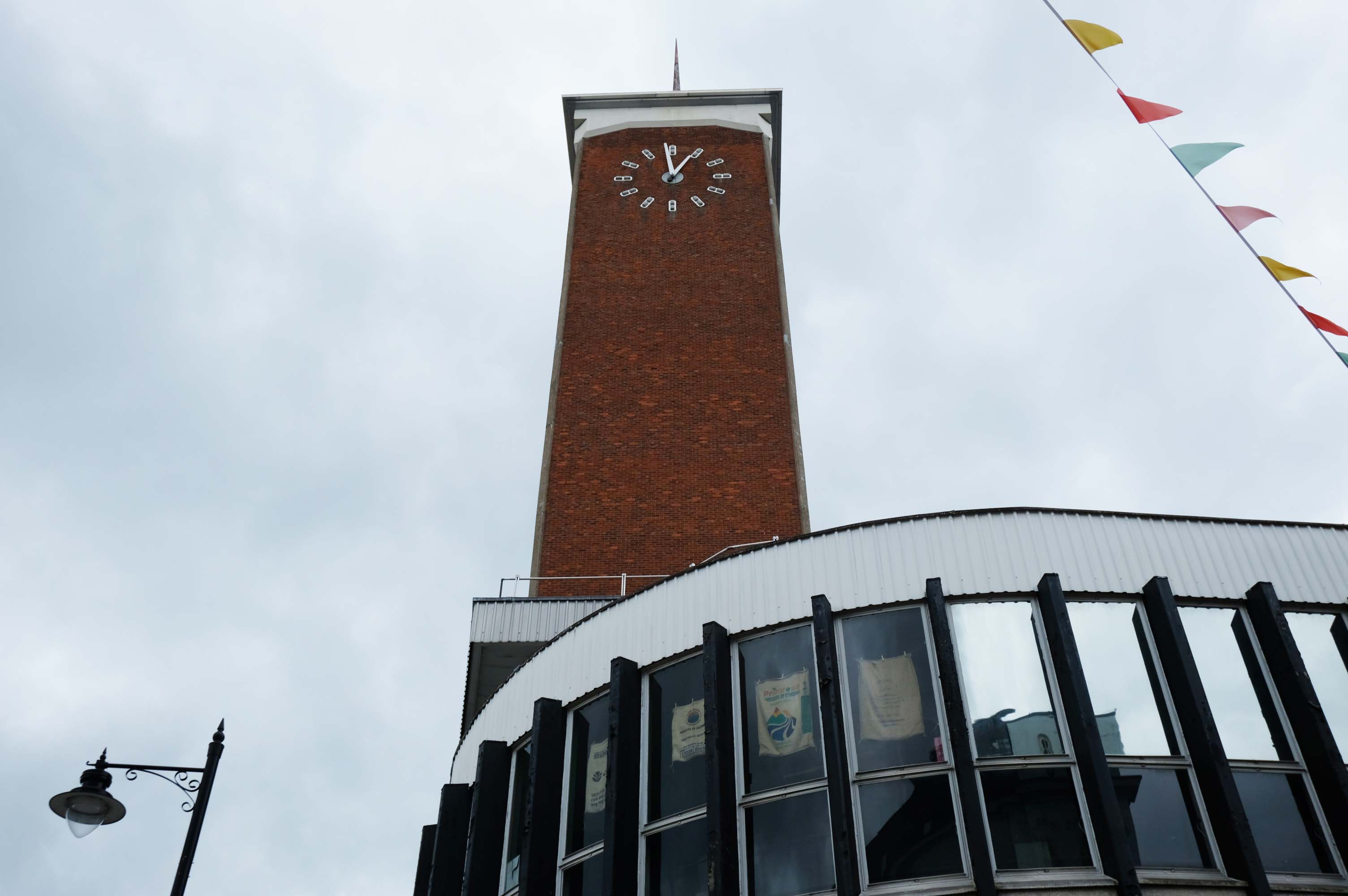
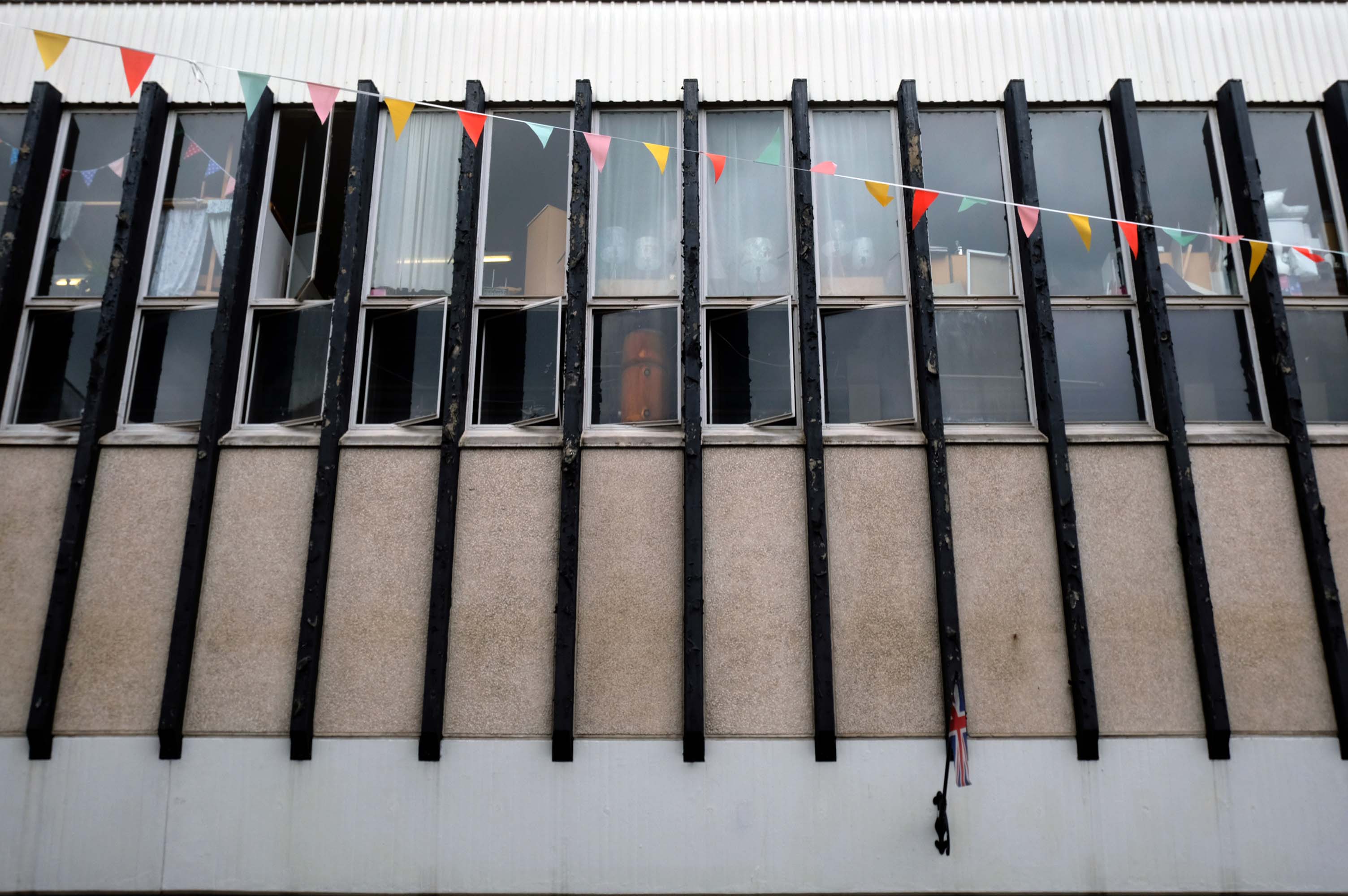
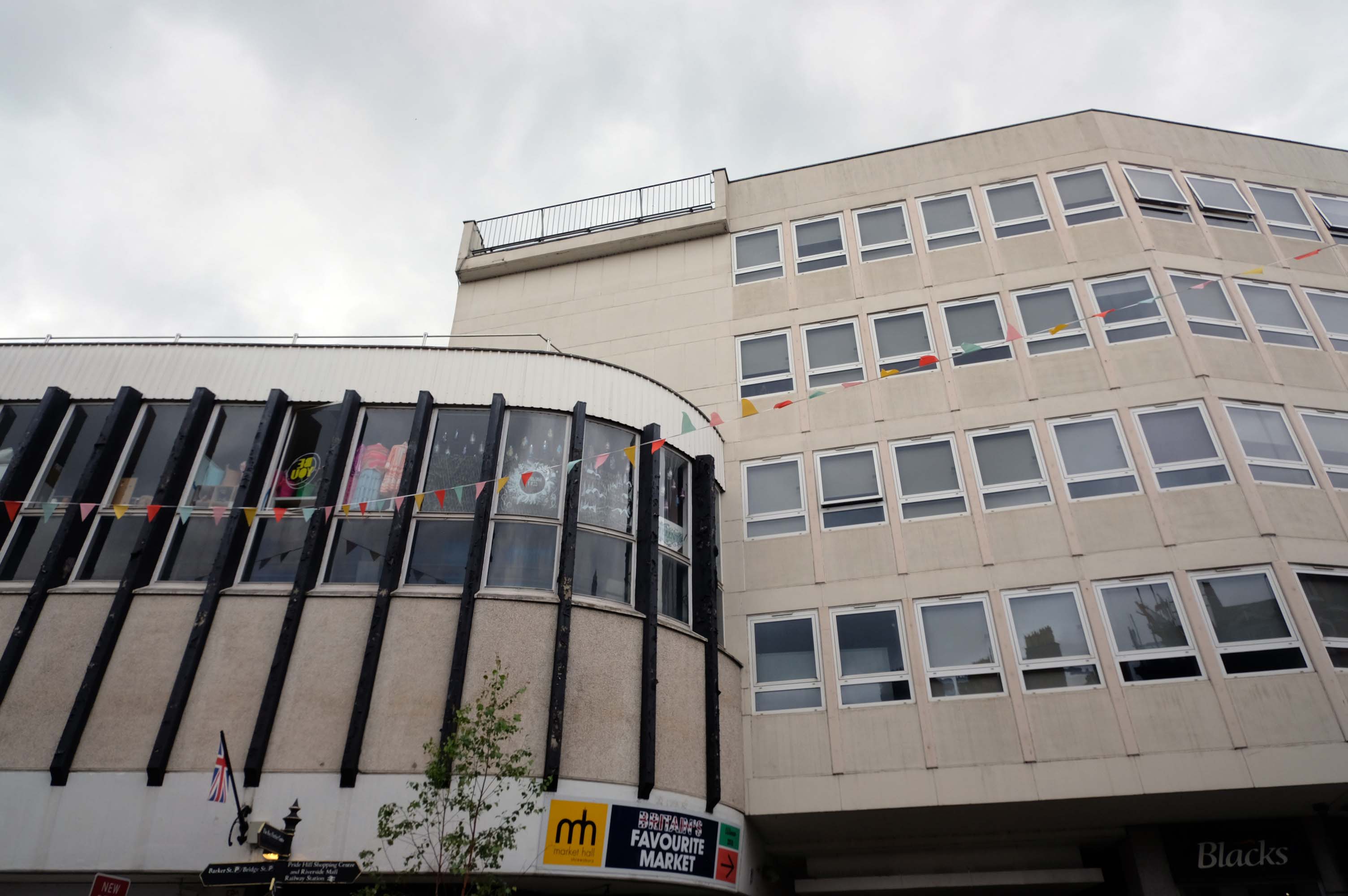
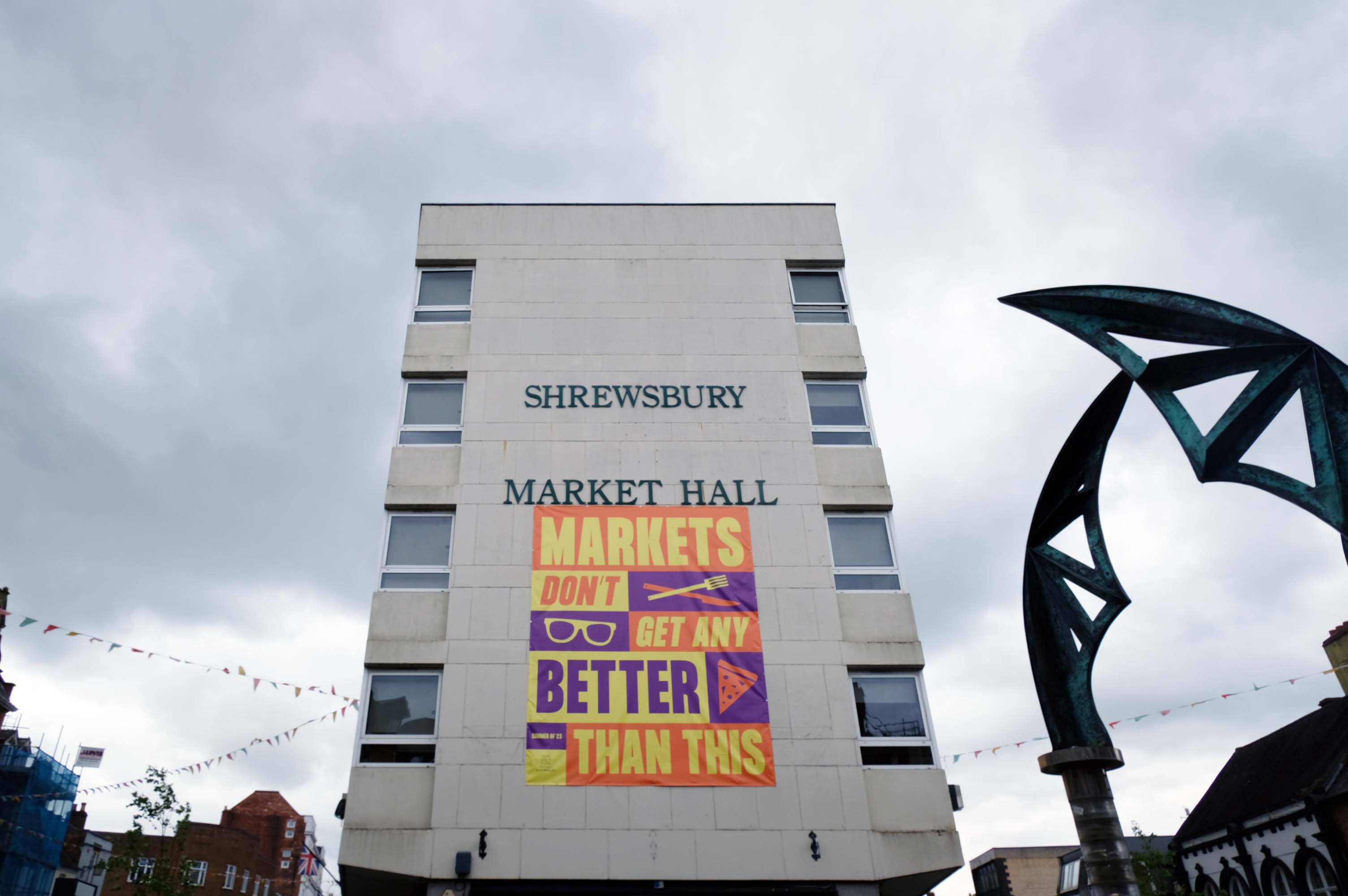
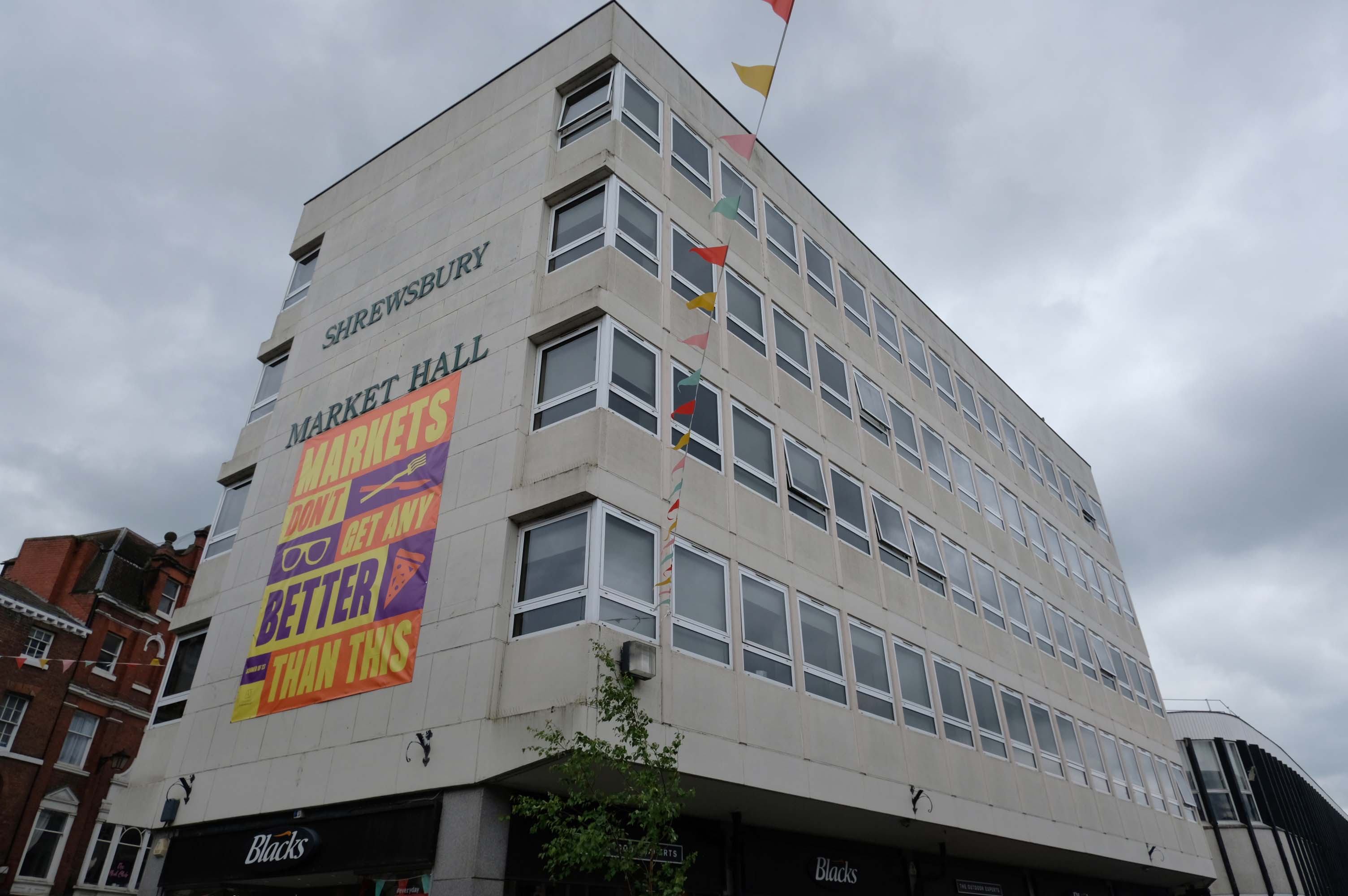
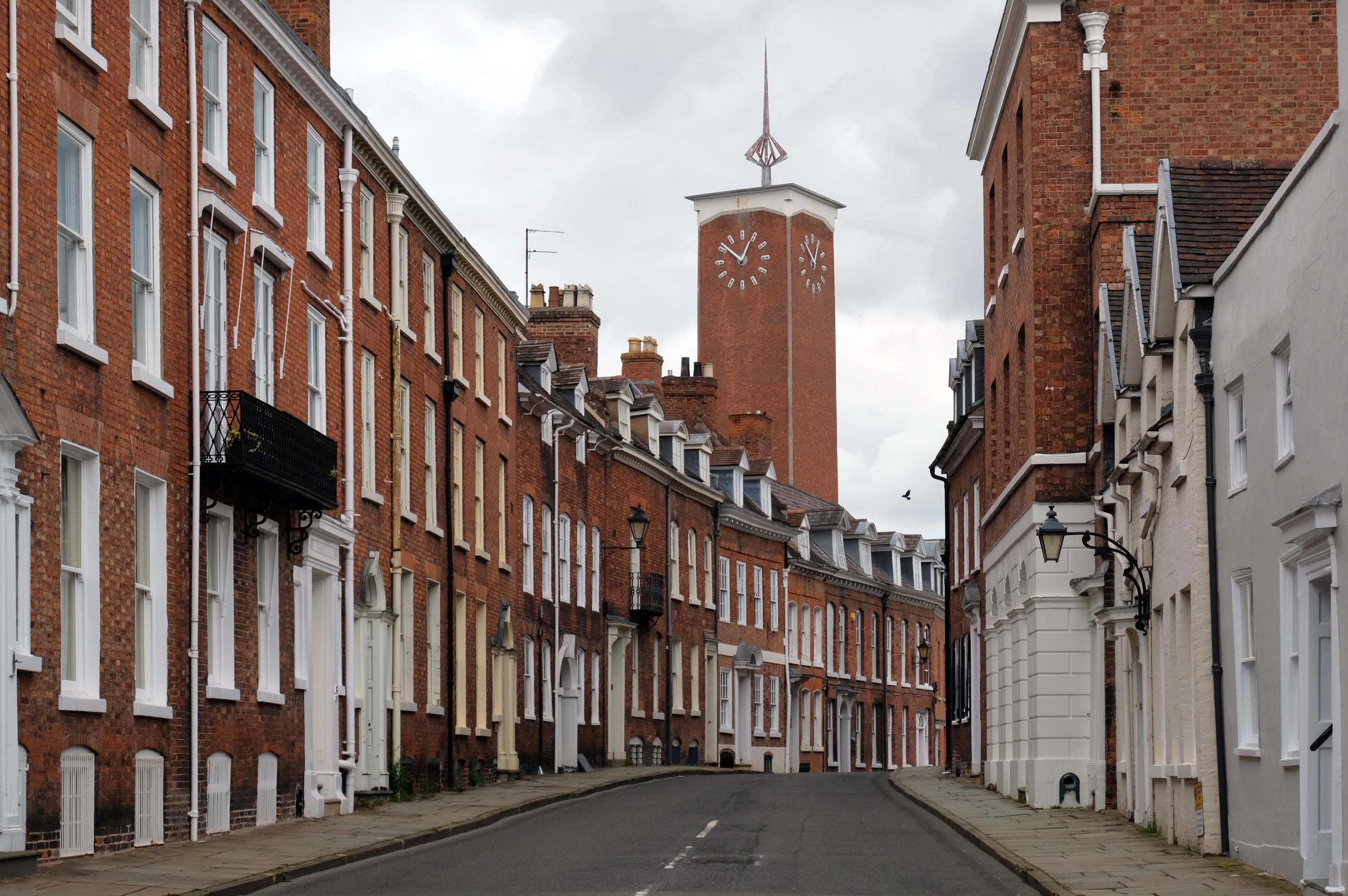
Shrewsbury Market Hall

Claremont St Shrewsbury SY1 1HQ

Courtesy: Mr Christopher Marsden

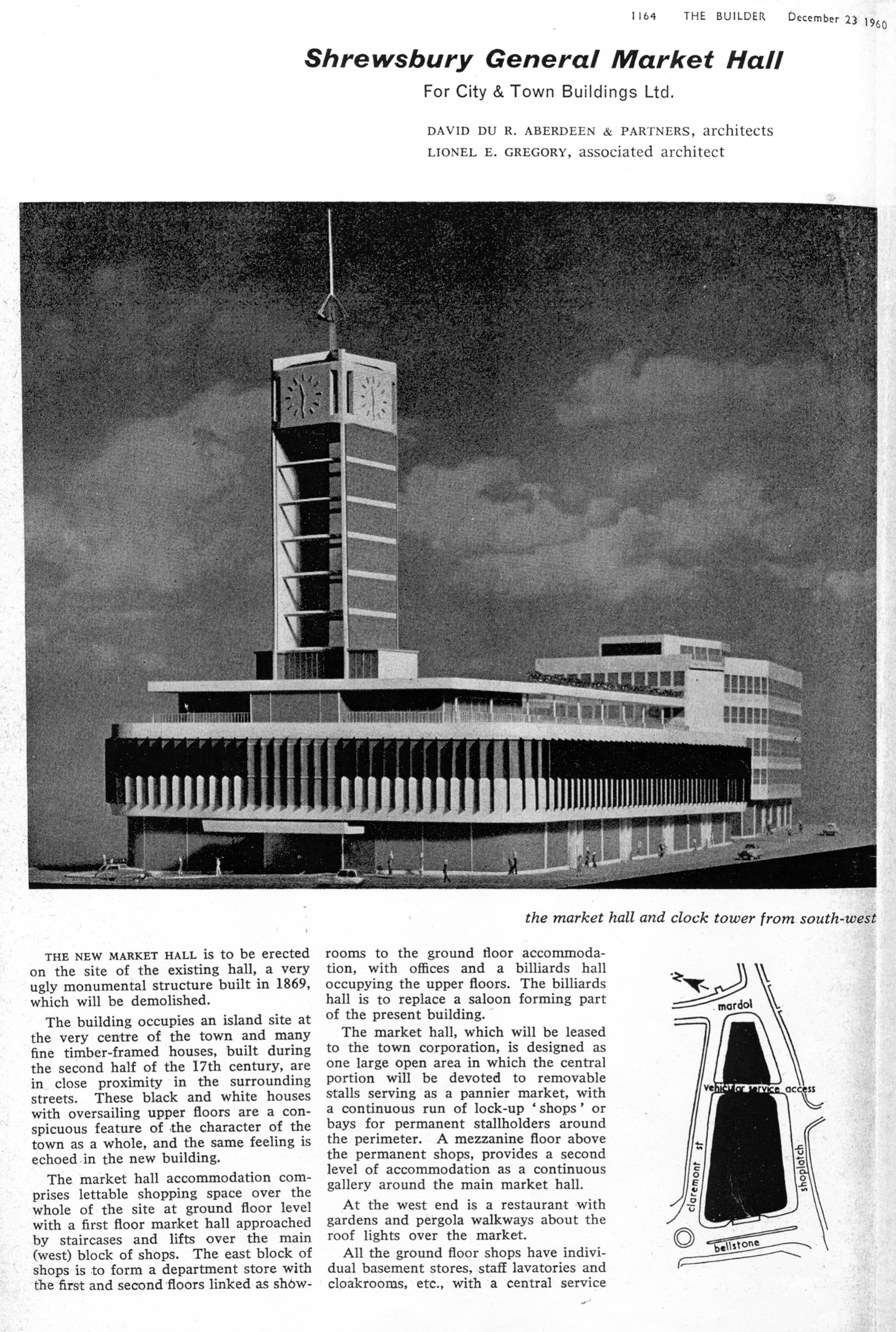
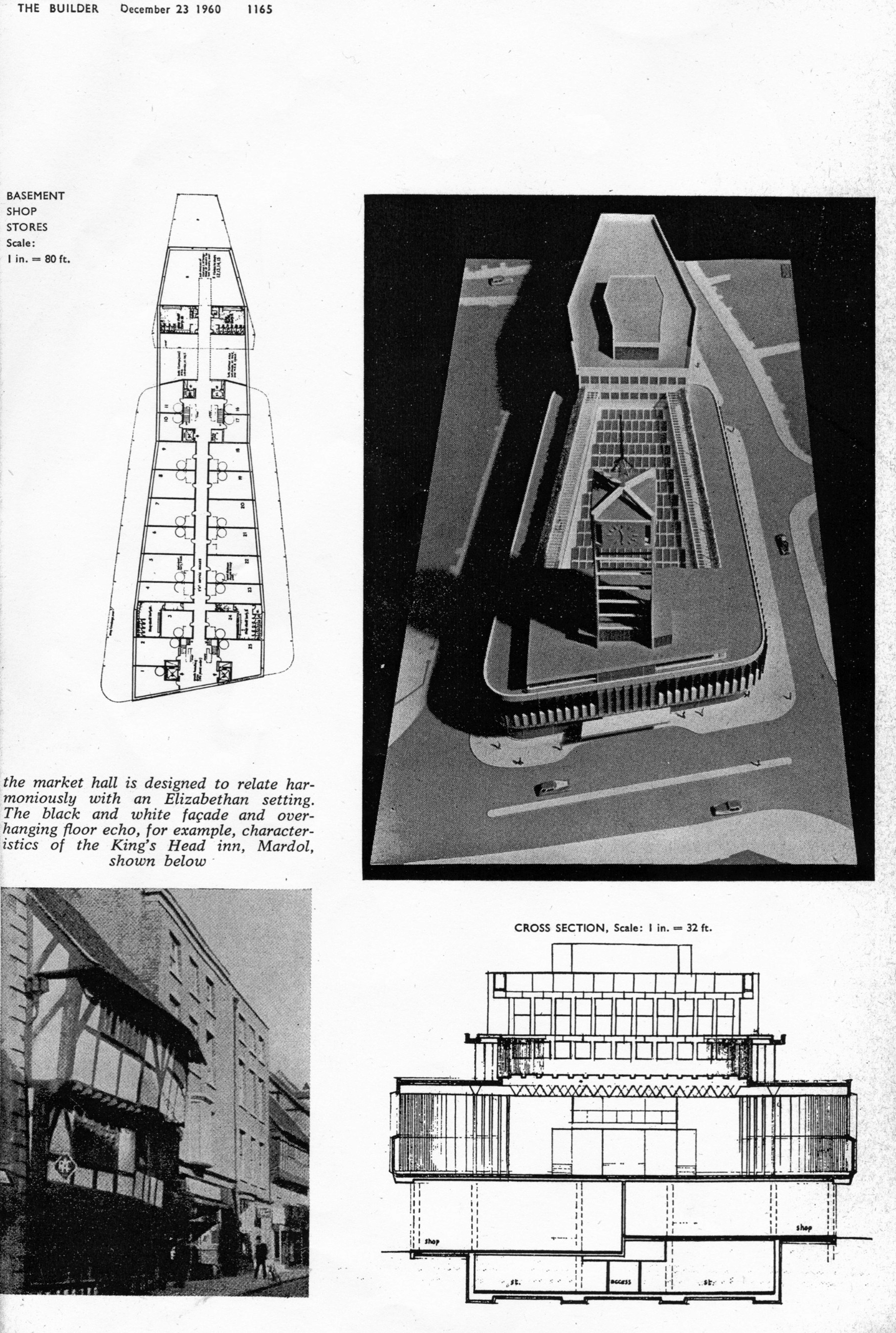
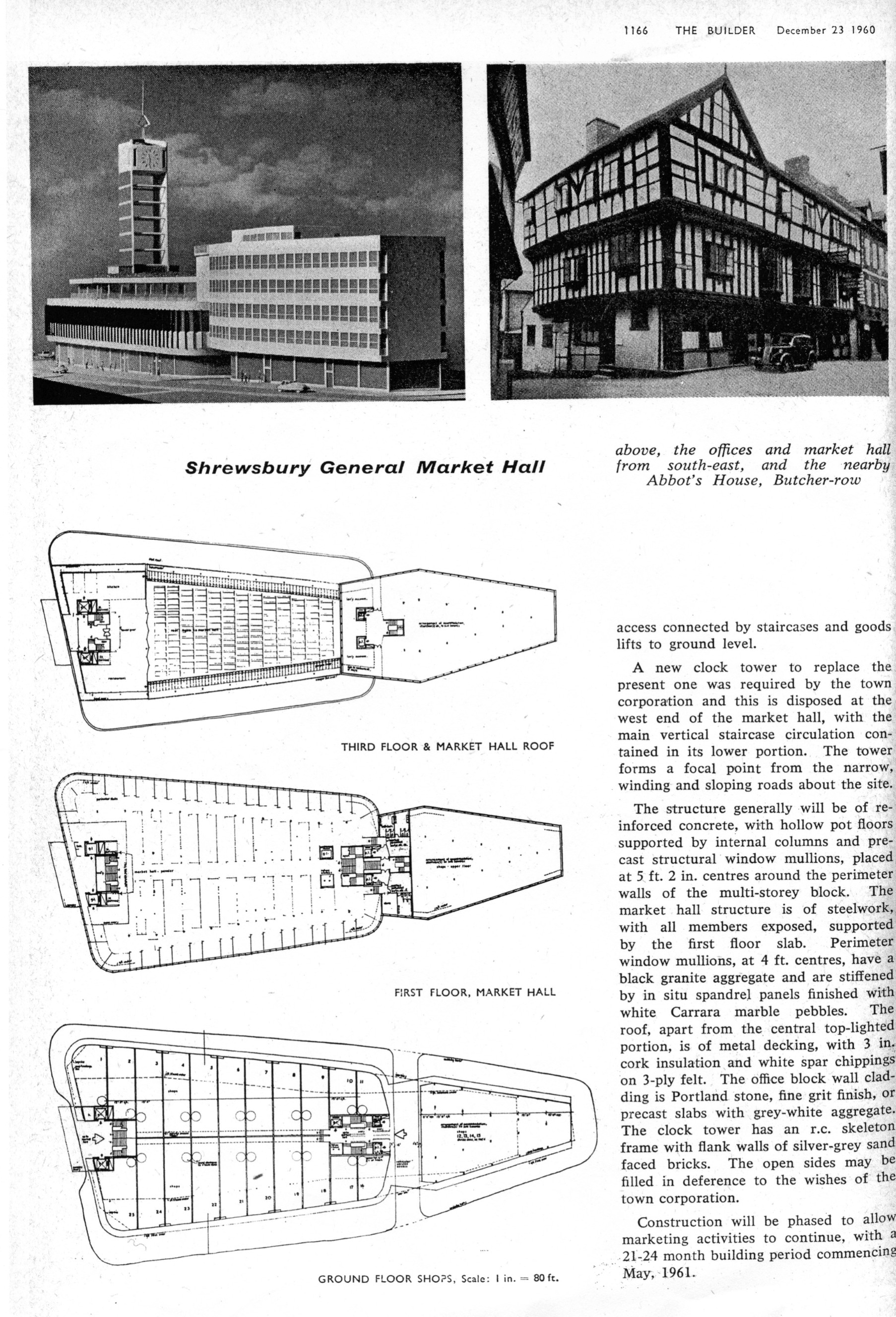
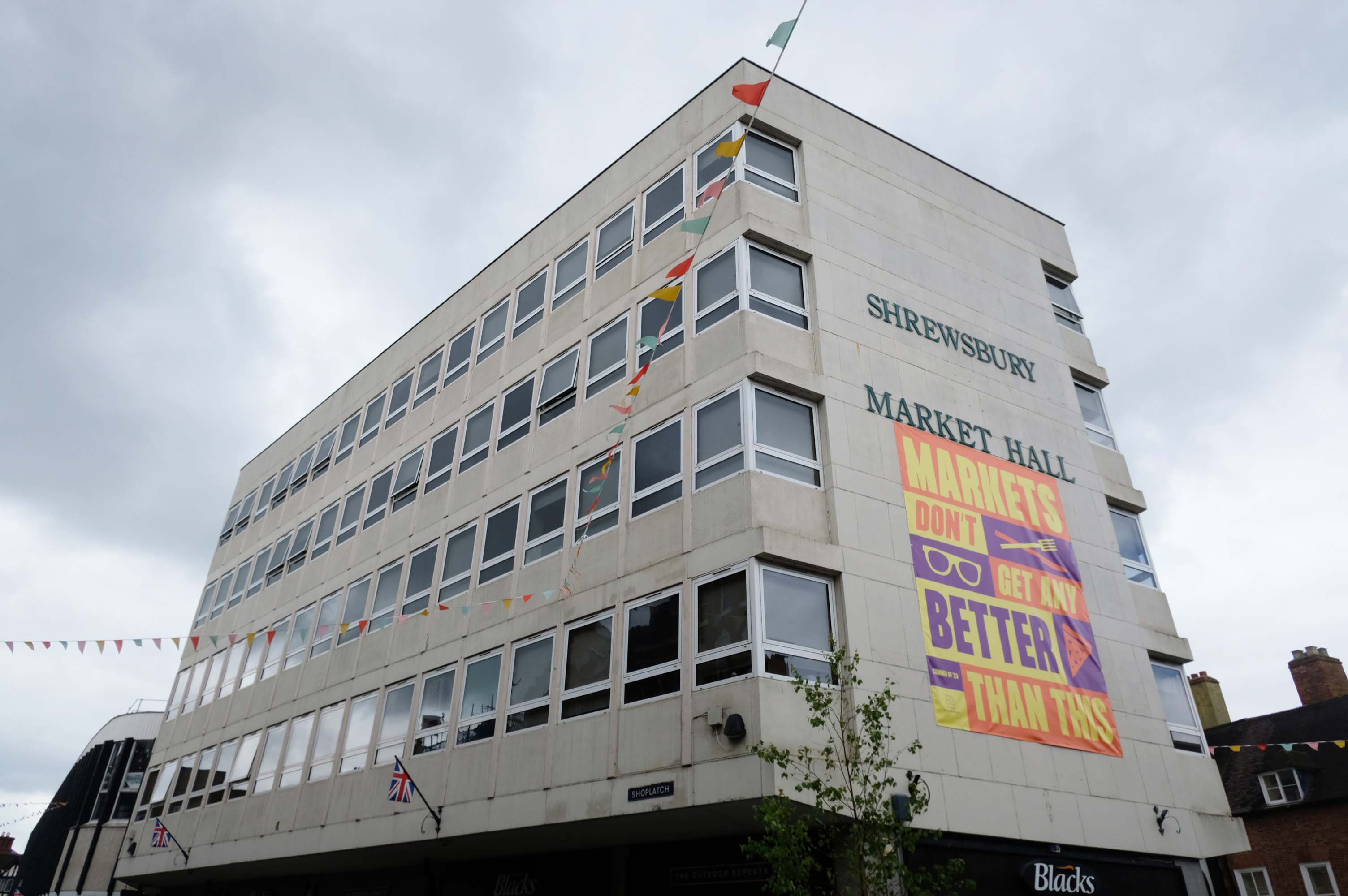
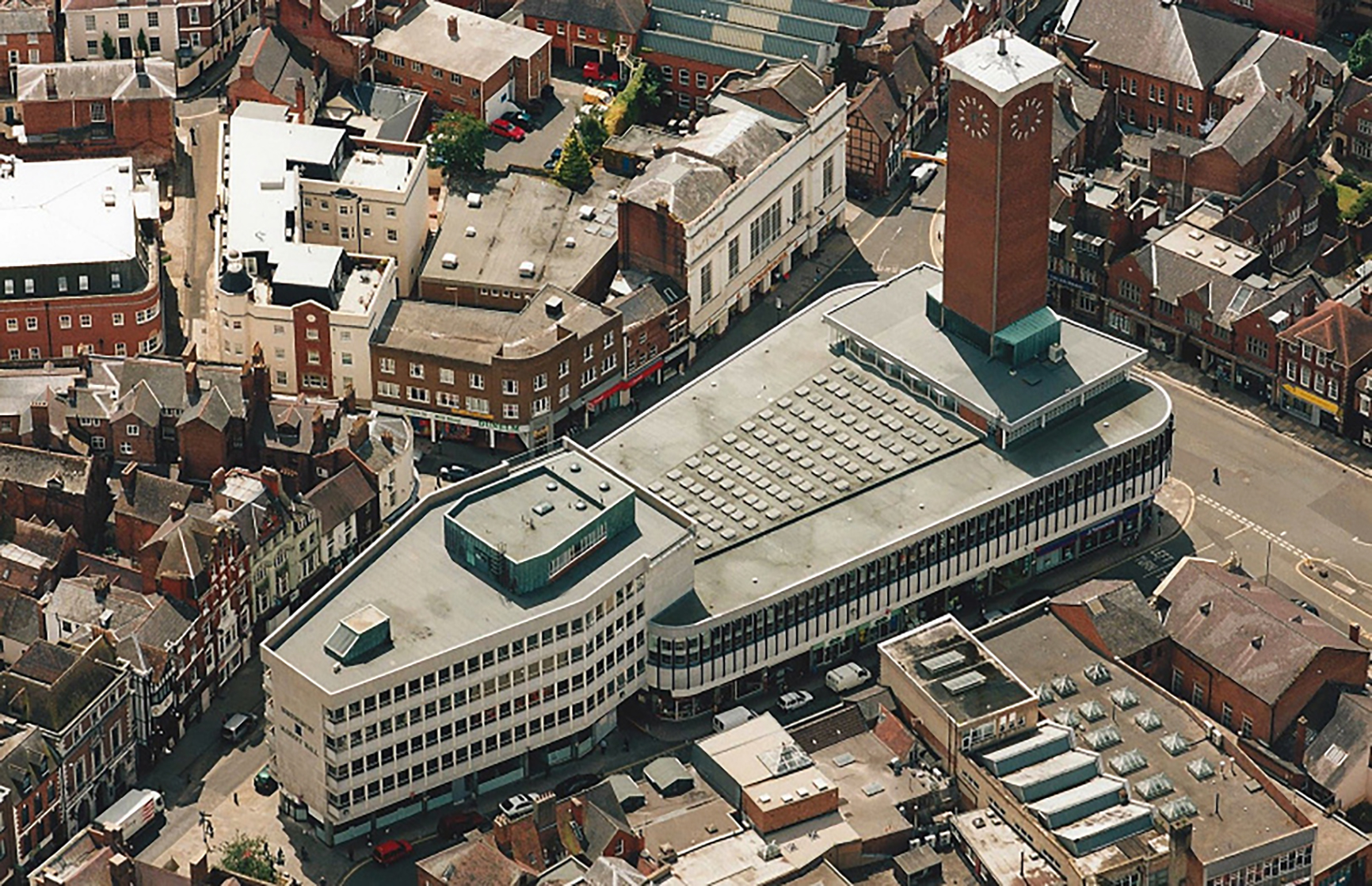
The Market Hall was considered to be a prime example of cutting edge modern architecture when it was officially opened amid a blaze of publicity and civic pageantry on September 16 1965.

It replaced a large Victorian market hall of similar proportions that was in a poor state of repair and was condemned as unhygienic, dingy and “no longer fit for purpose”.

Developed by the Second Covent Garden Property Company, the new Market Hall cost £1 million to build and was designed by a respected architect of his day, David du Rieu Aberdeen. Aberdeen designed major buildings in London and made his name when he won a national competition to design Congress House for the TUC in Bloomsbury. Today Congress House is described as a “modernist masterpiece”.

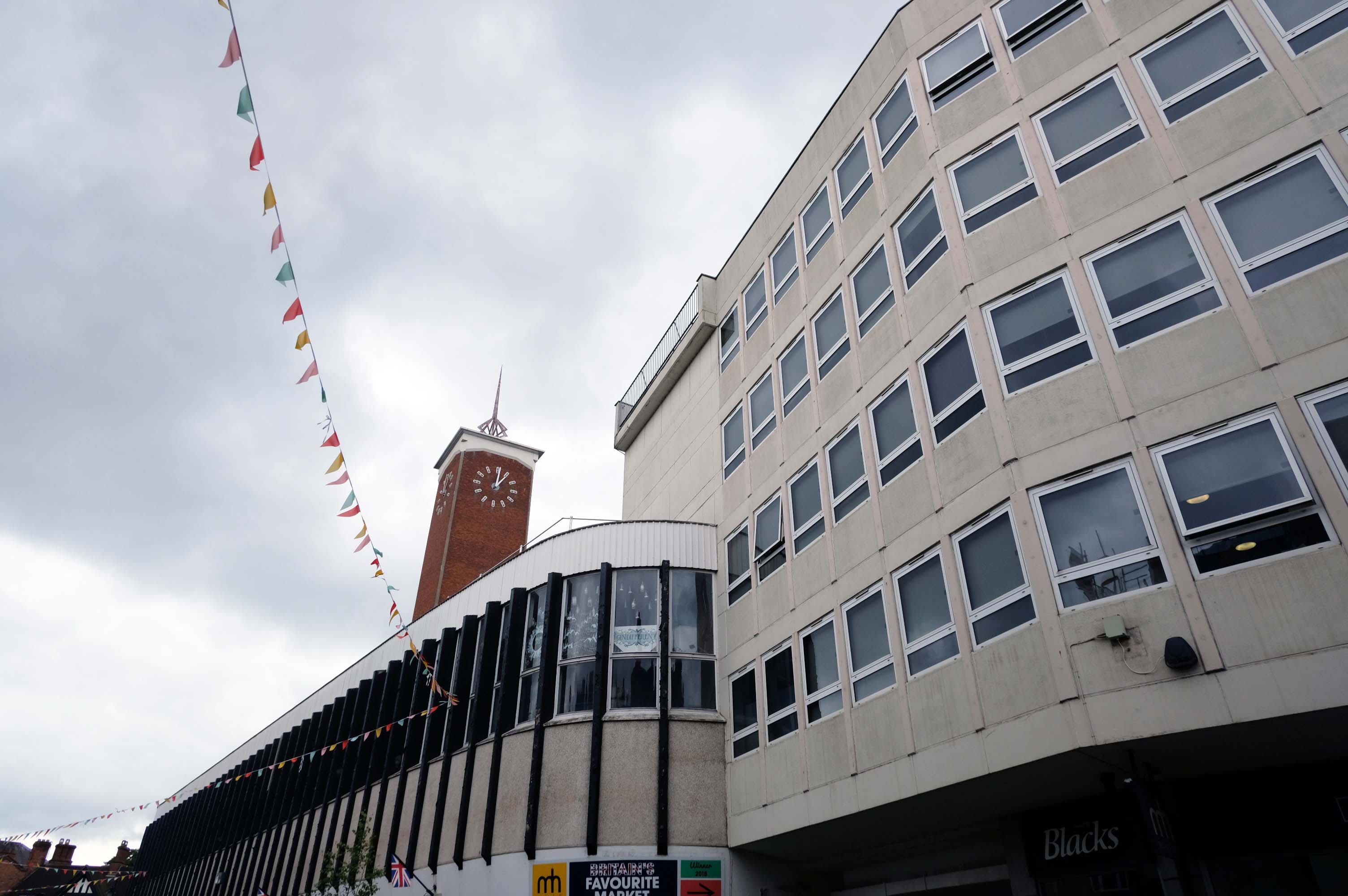
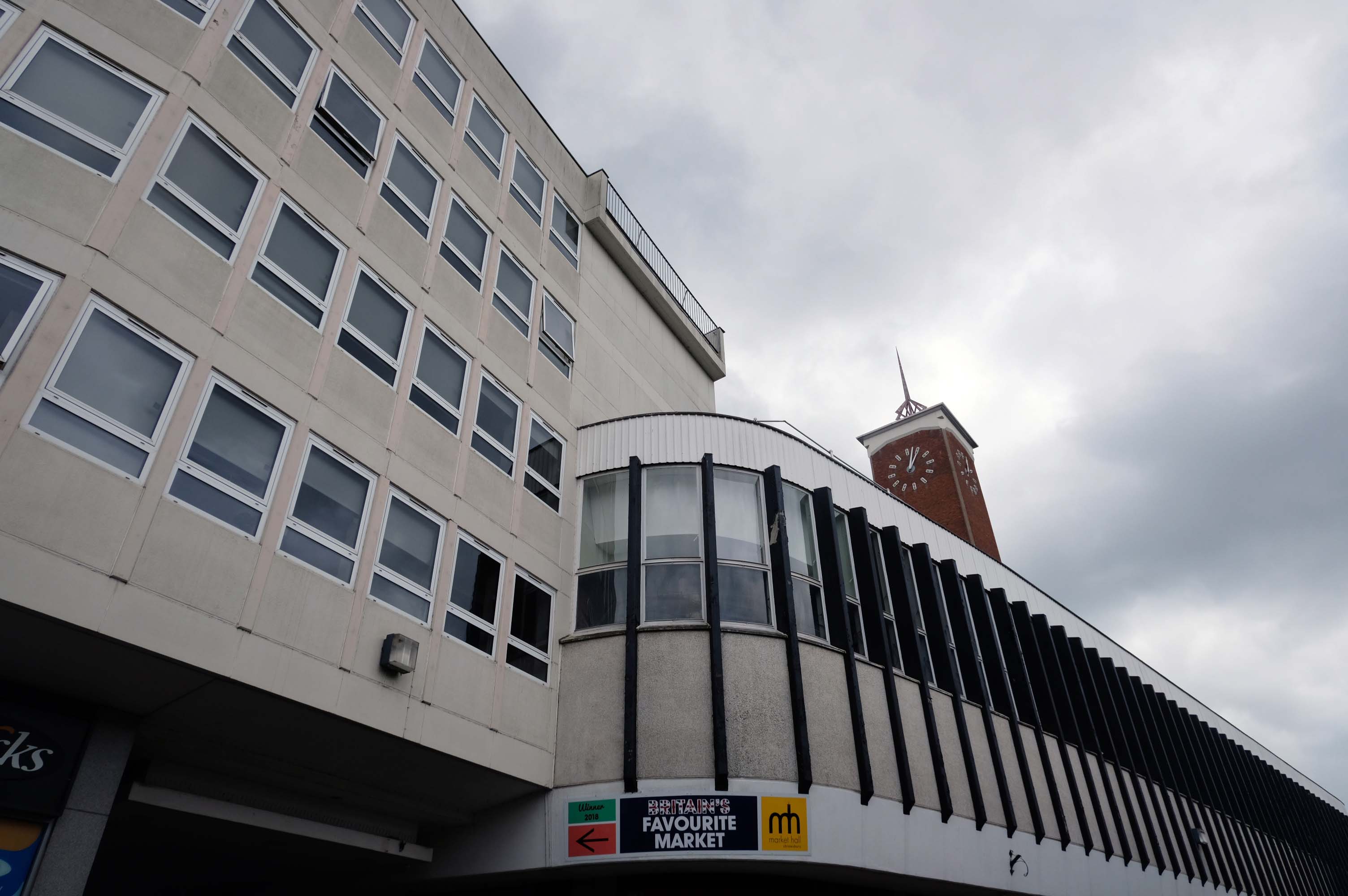
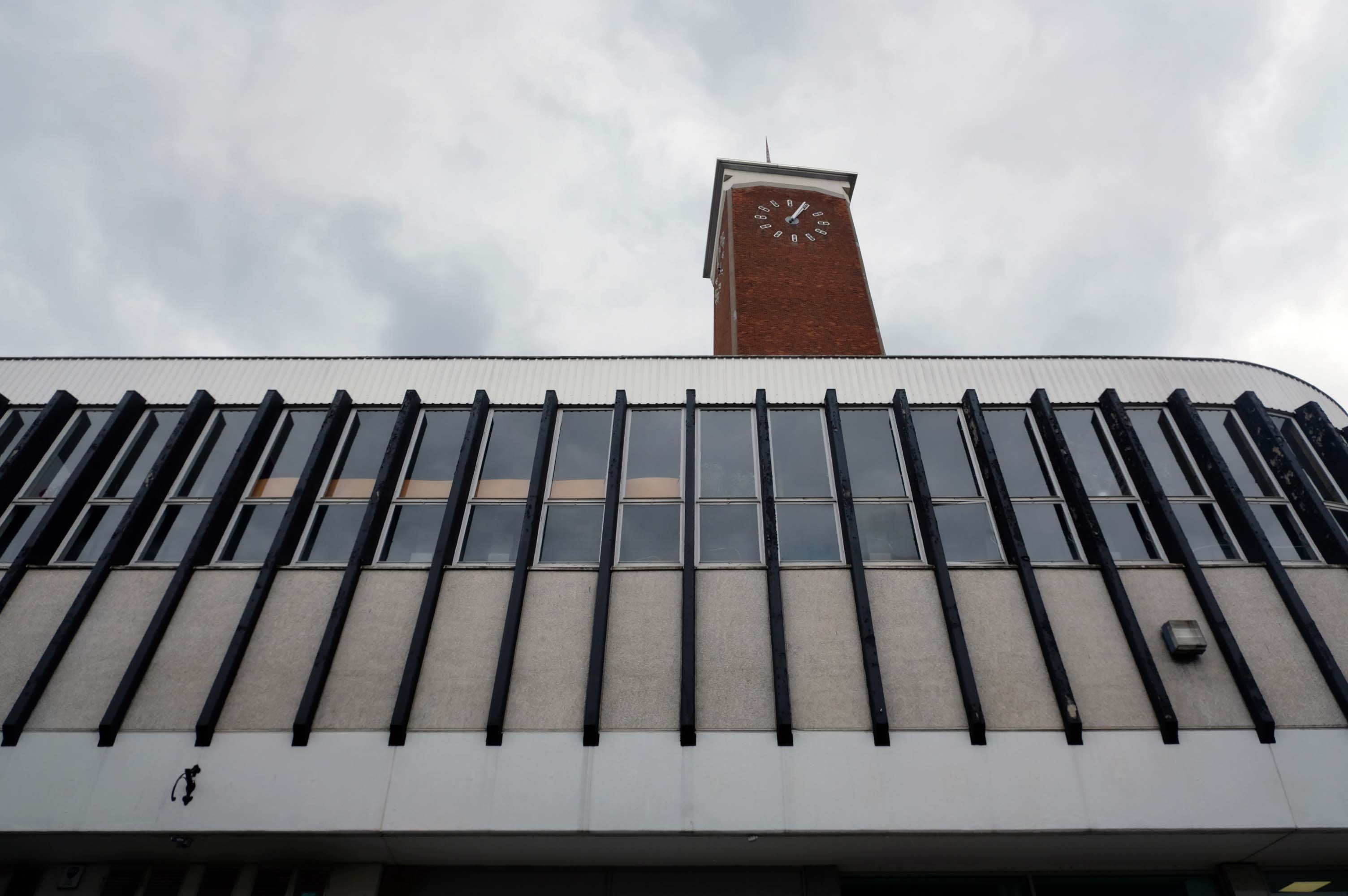
The Pevsner Architectural Guide pronounced the new Market Hall “a good example of modern architecture”, with “its clean lines and simple forms. But the town’s timber-framed tradition is also evoked. The upper storey is jettied out on a reinforced concrete structure and faced with vertical fins in an echo of close studding,” it stated. “The tall slender red brick clock tower mingles effectively in distant views with the town’s medieval steeples.”

Shrewsbury Market Hall

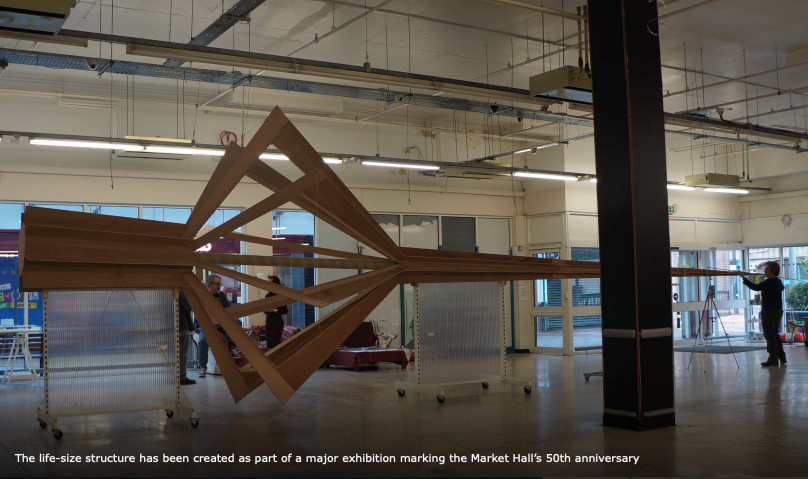
Two sculptors Keith Ashford and Liz Turner of Sculpture Logic, recreated the 37′ tower finial to mark the 50th anniversary of the market in 2015.

Shropshire Live

Shrewsbury Walk

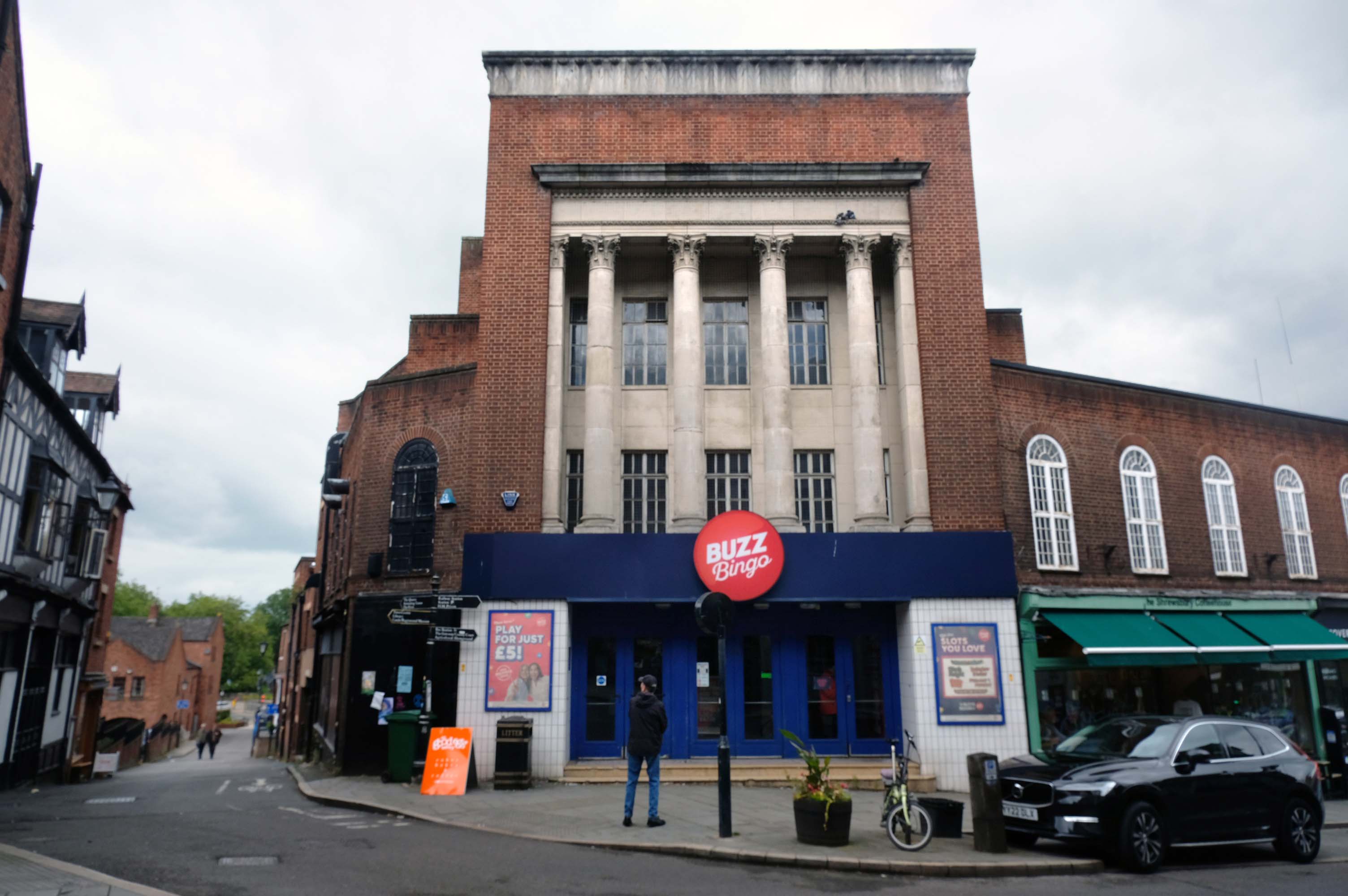
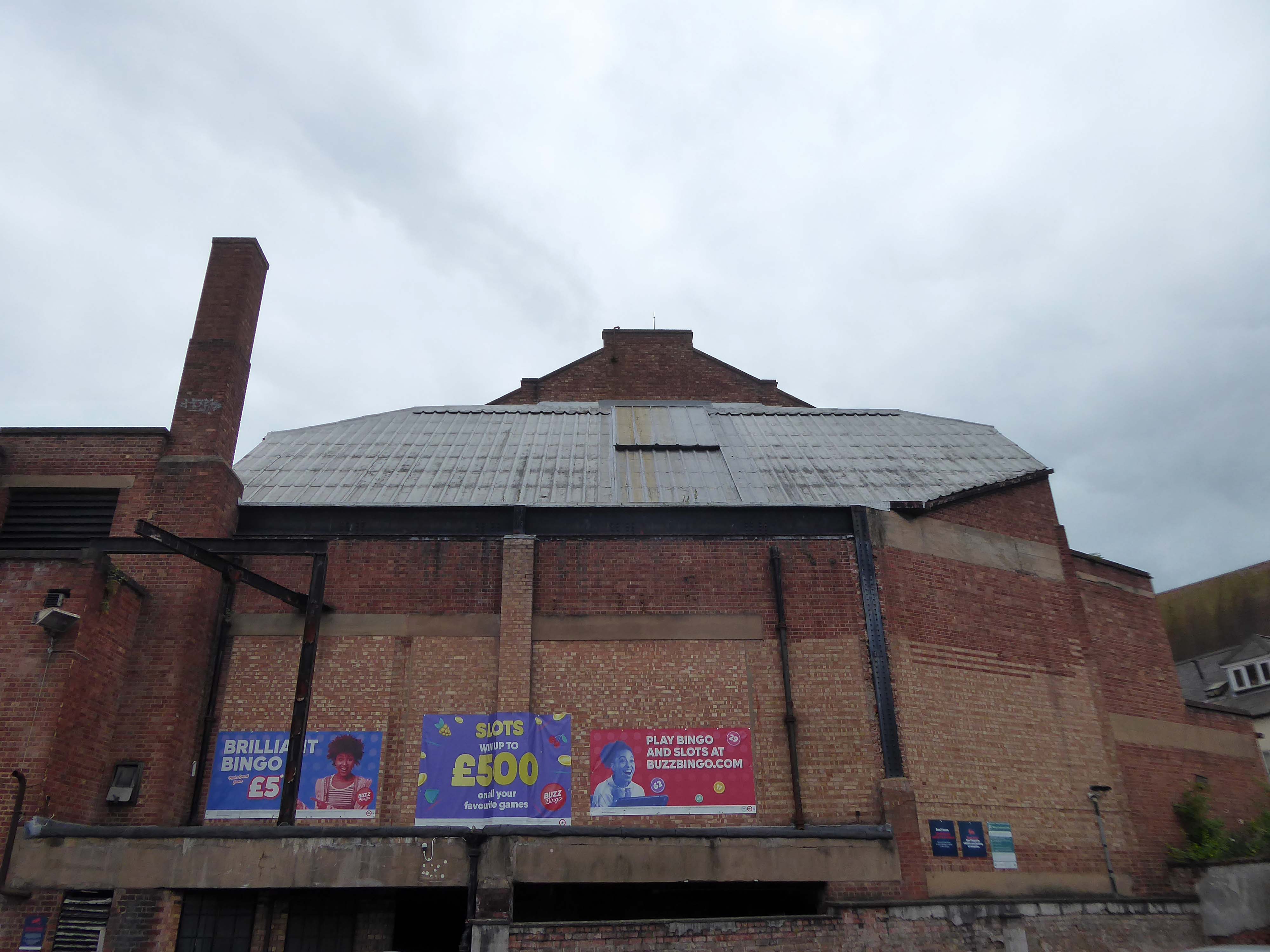
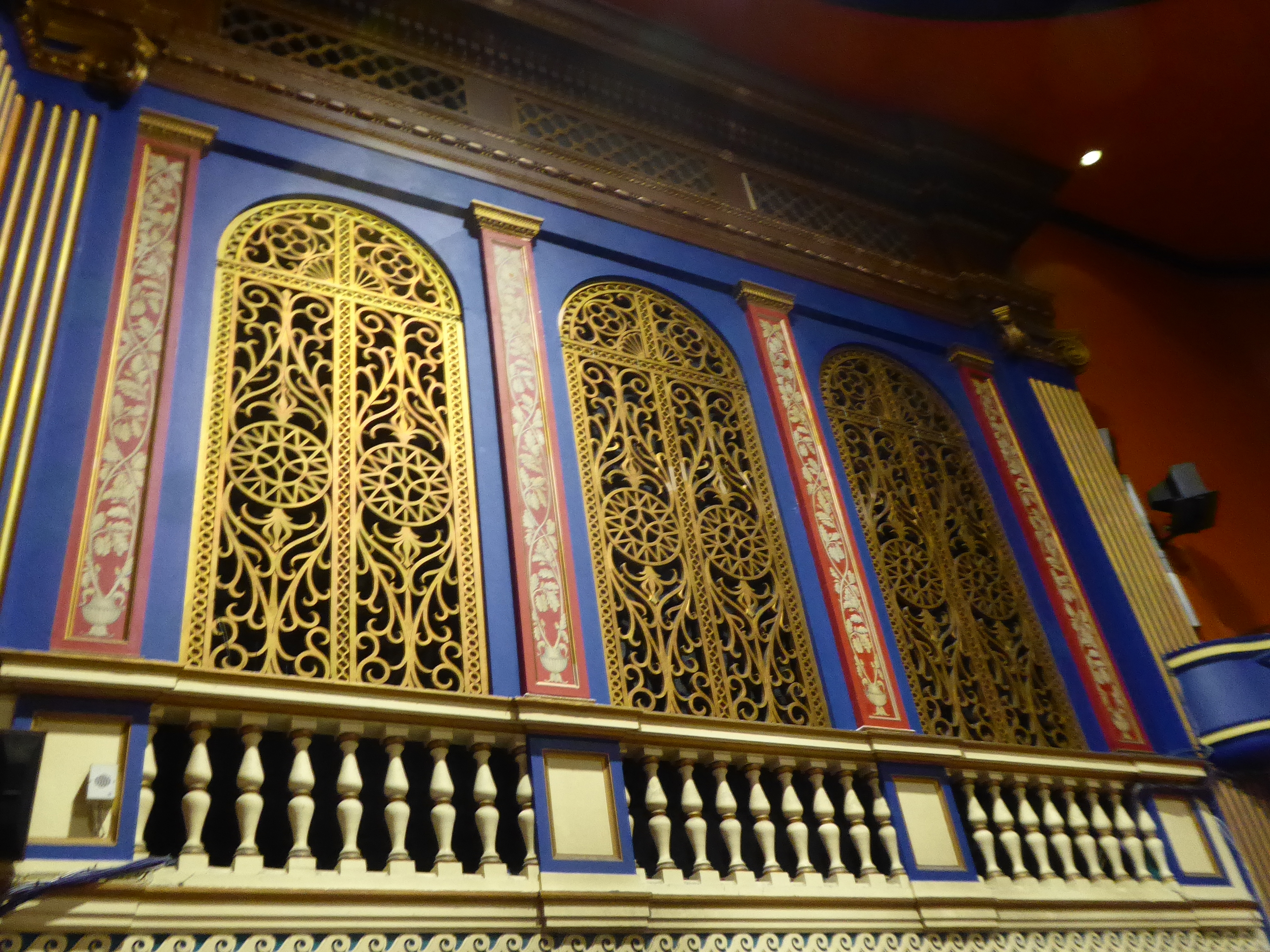
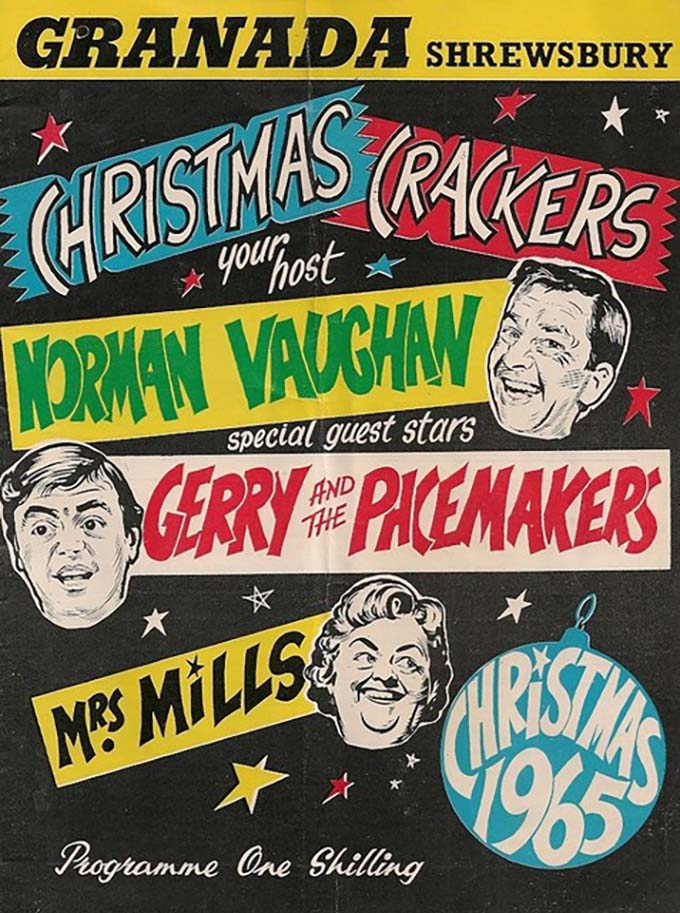
On leaving the front of the railway station – we see the former Granada Cinema.

Architects: Cecil Aubrey Masey

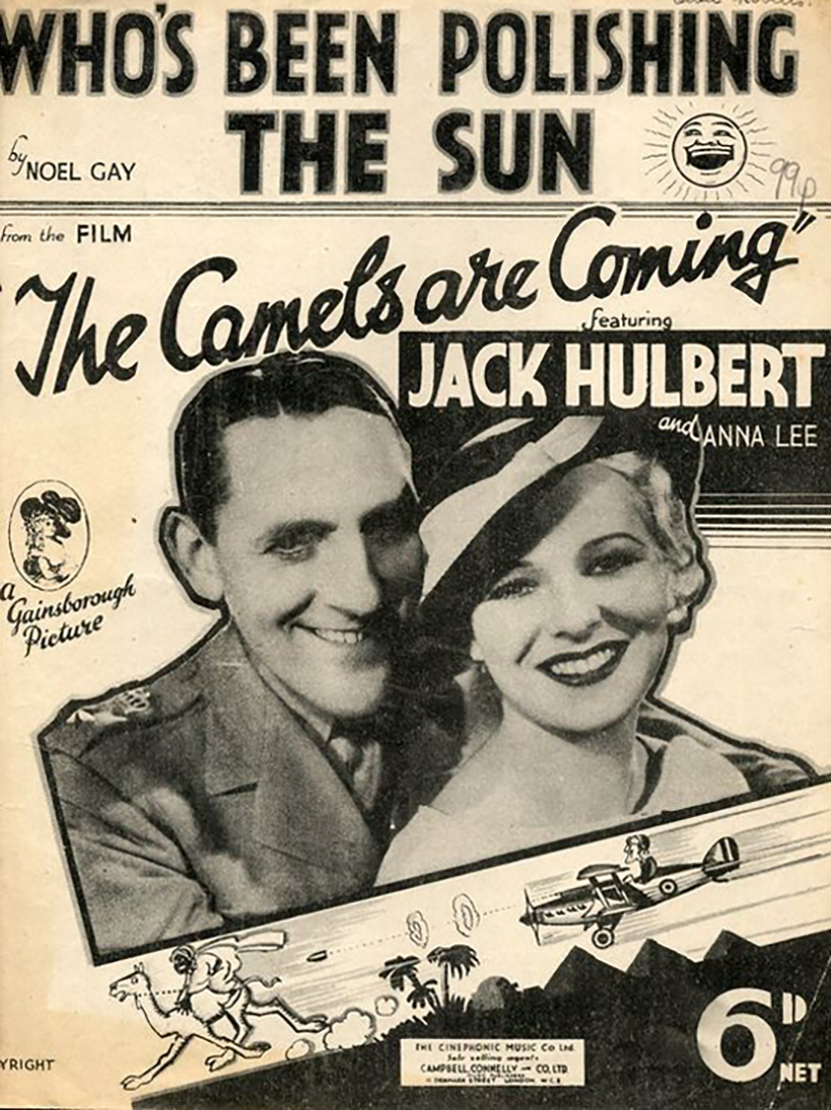
Built and operated by Shrewsbury Empires Ltd, the Granada Theatre opened on 14th November 1934 with Jack Hulbert in The Camels Are Coming.

It closed as a cinema on 31st March 1973 with Charles Bronson in The Valachi Papers and Anatomy of a Pin-Up.

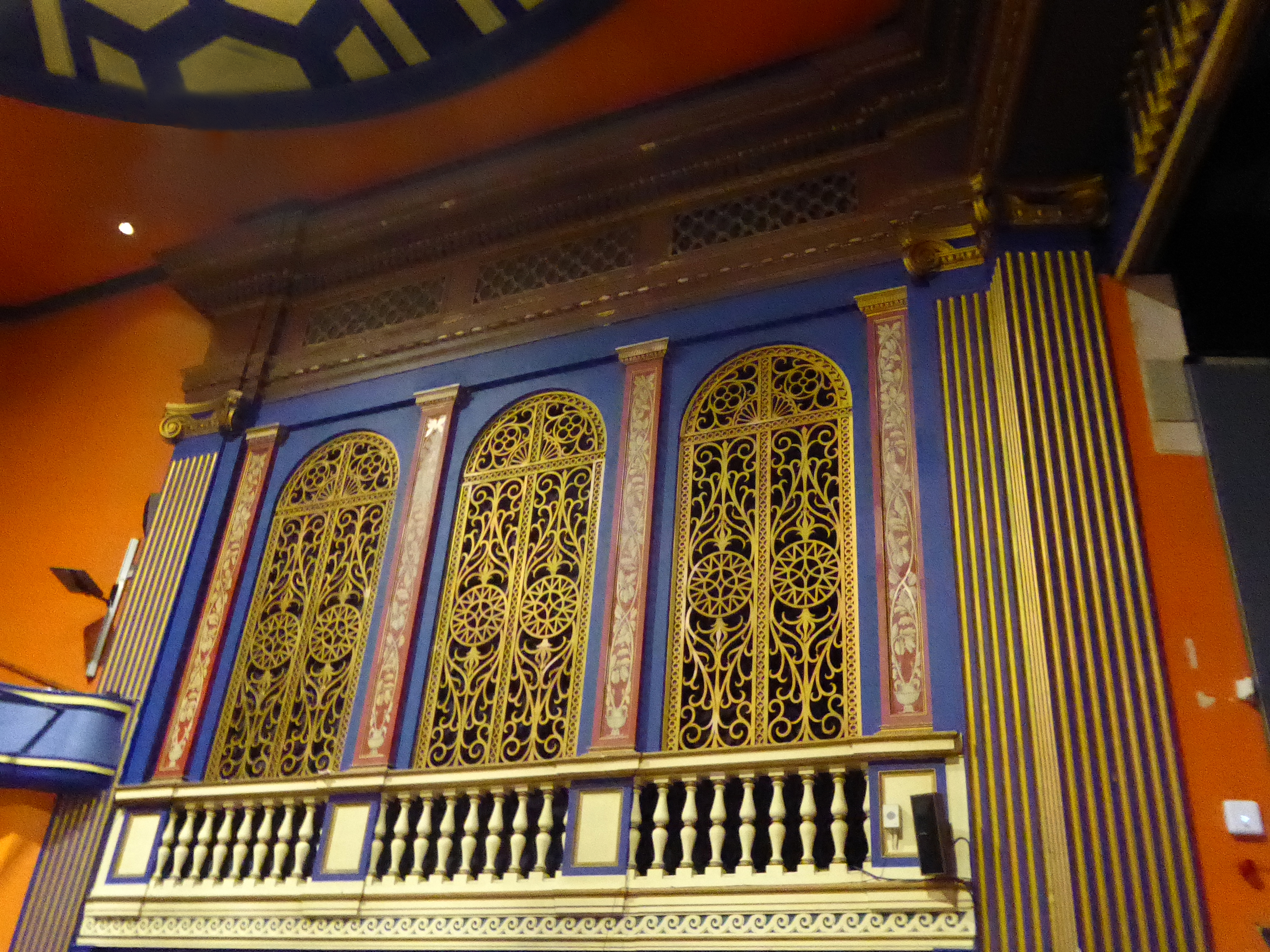
The Granada circuit was famous for its lavishly decorated interiors created by a Russian émigré called Theodore Komisarjevsky, the most famous examples of which are at Woolwich and Tooting – both now operate as bingo halls. The Shrewsbury Granada was by far the best cinema in the area, and in addition to Komisjarevsky, the scheme was designed by Cecil Massey, with some work being carried out by a local architect called Arthur Williams. The architecture of the Shrewsbury hall is often referred to as being a “standard” Granada, and the interior was very similar to the Granadas at Bedford now demolished and Maidstone which wasdestroyed by sub-division. There were less than 20 theatres built for the circuit, of which Shrewsbury was number five, although many existing cinemas were taken over and renamed, making the Granada Theatres an important group, although in numbers they were far behind Odeon and ABC.

Ian Grundy

On 17th November 1995, the Granada Theatre was designated a Grade II Listed building by English Heritage.

Many thanks to the staff of Buzz Bingo for allowing us access.

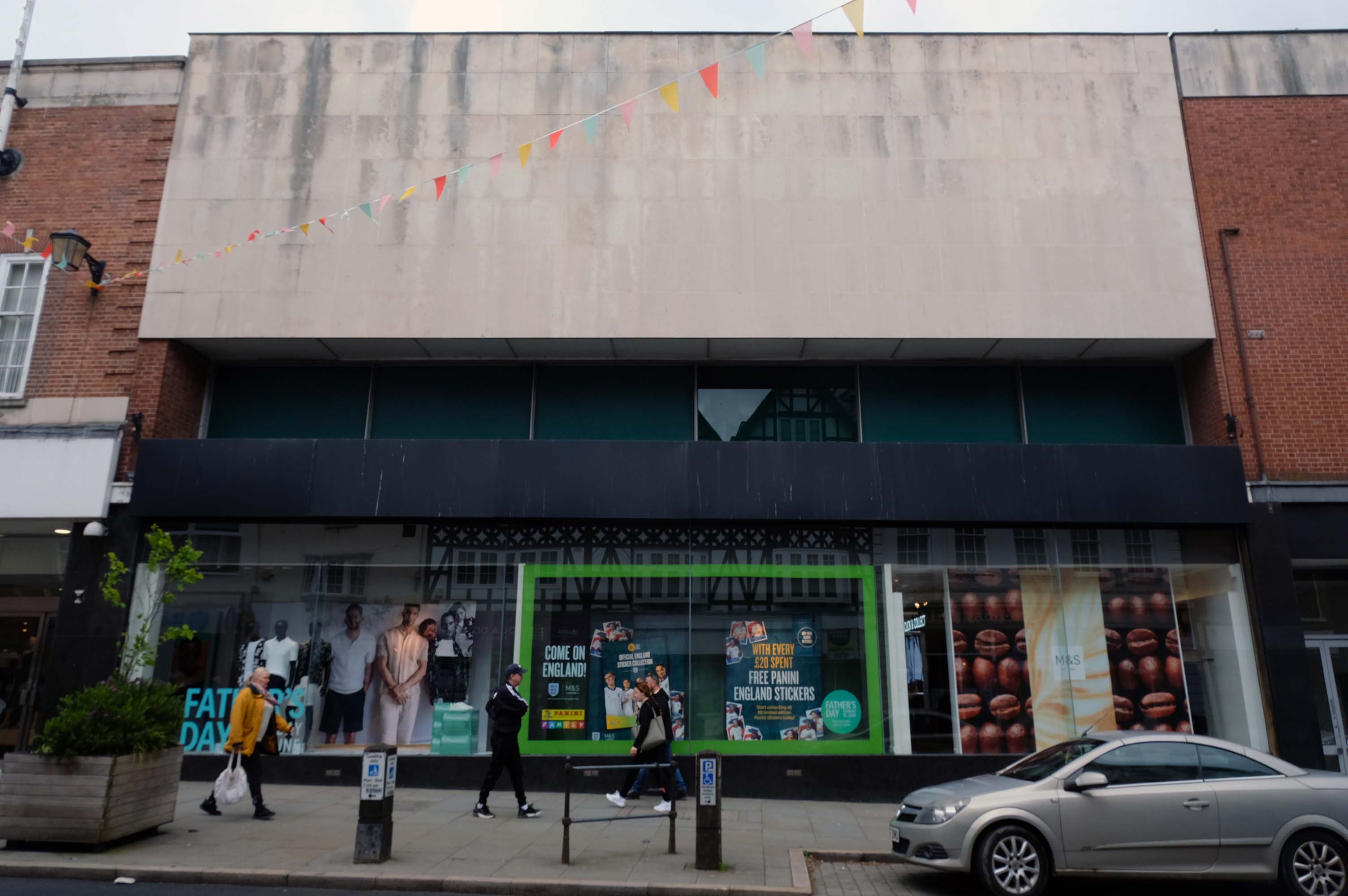
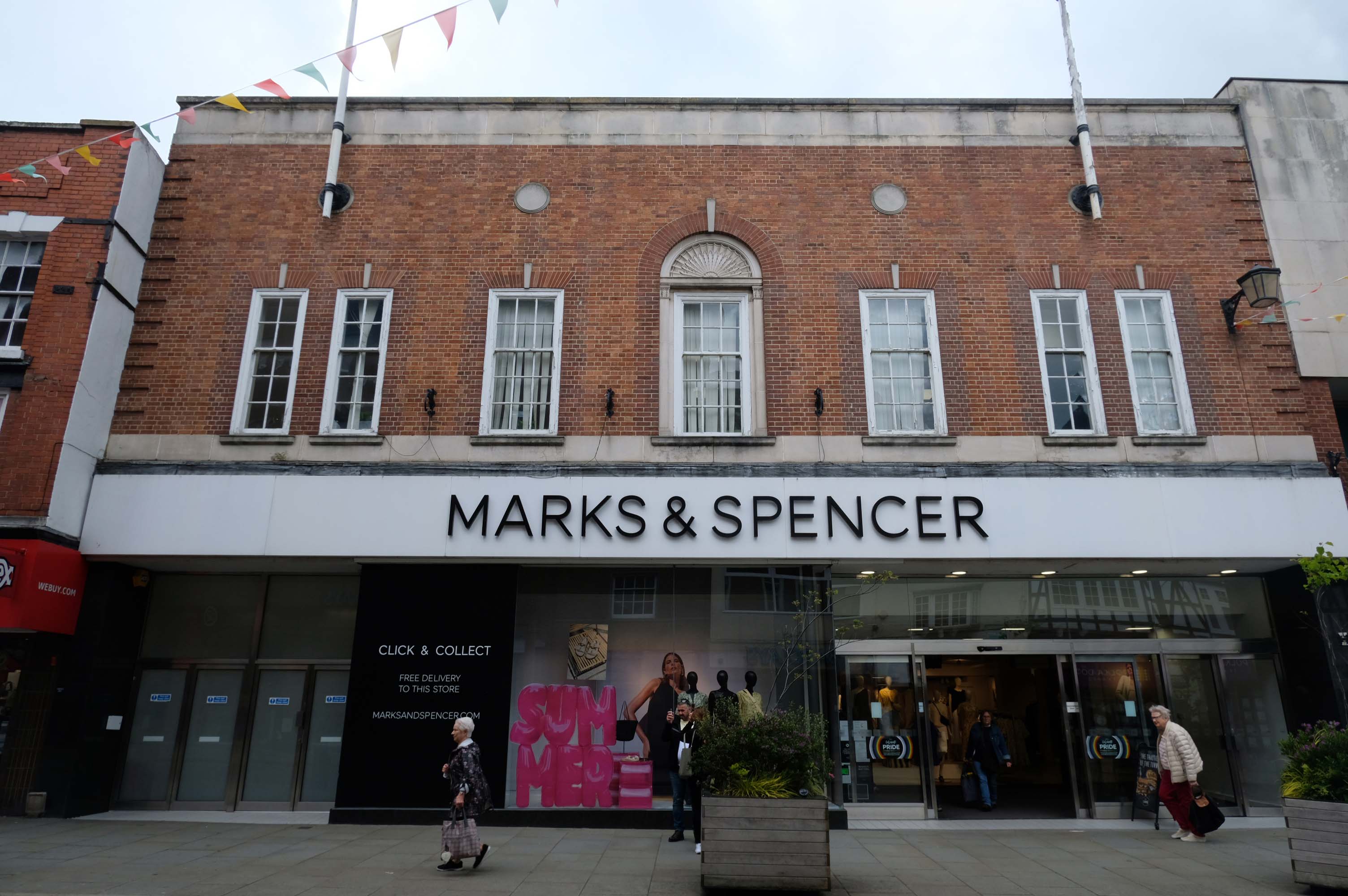
Next up is a Marks & Spencers store very much a shop of two halves – marrying post-war Brutalism with interwar Classicism, unified by a glazed ground floor.

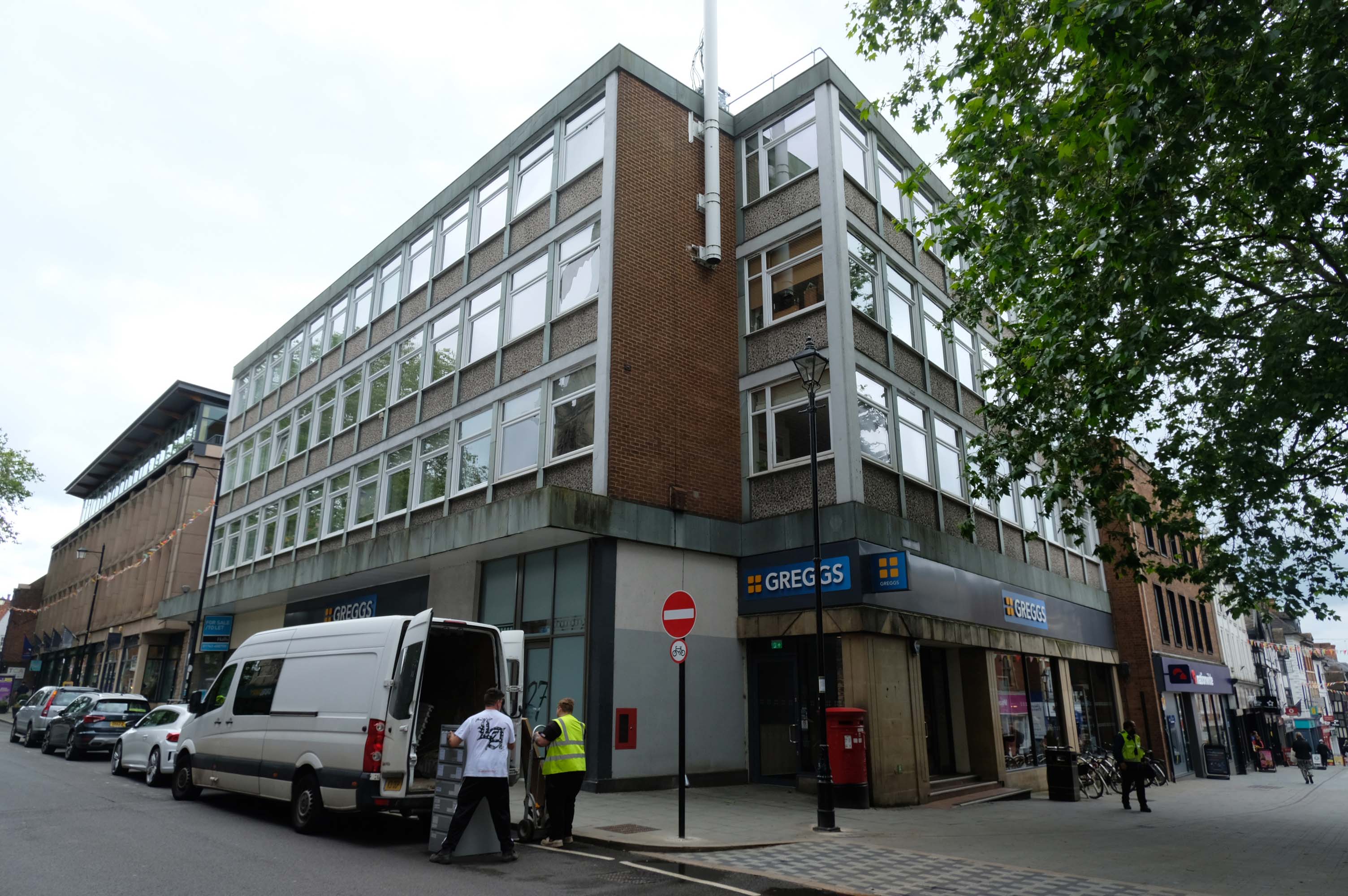
Across the way, a 60s corner site development, with a dual-entry Greggs.

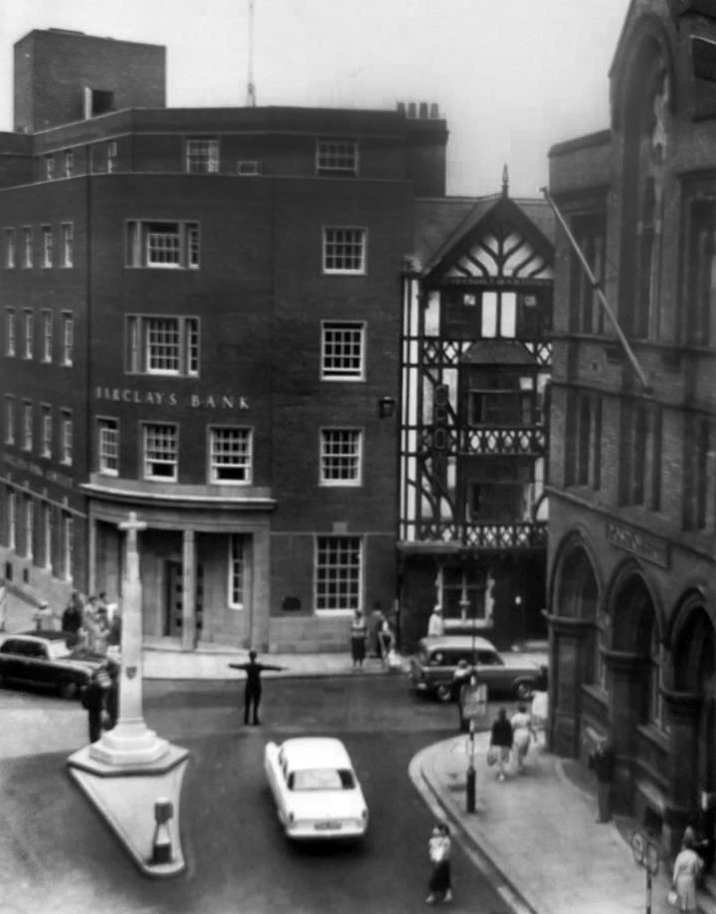
Formerly the site of the Post Office – demolished in 1959, and next to the Barclays bank the long gone Crown Hotel.

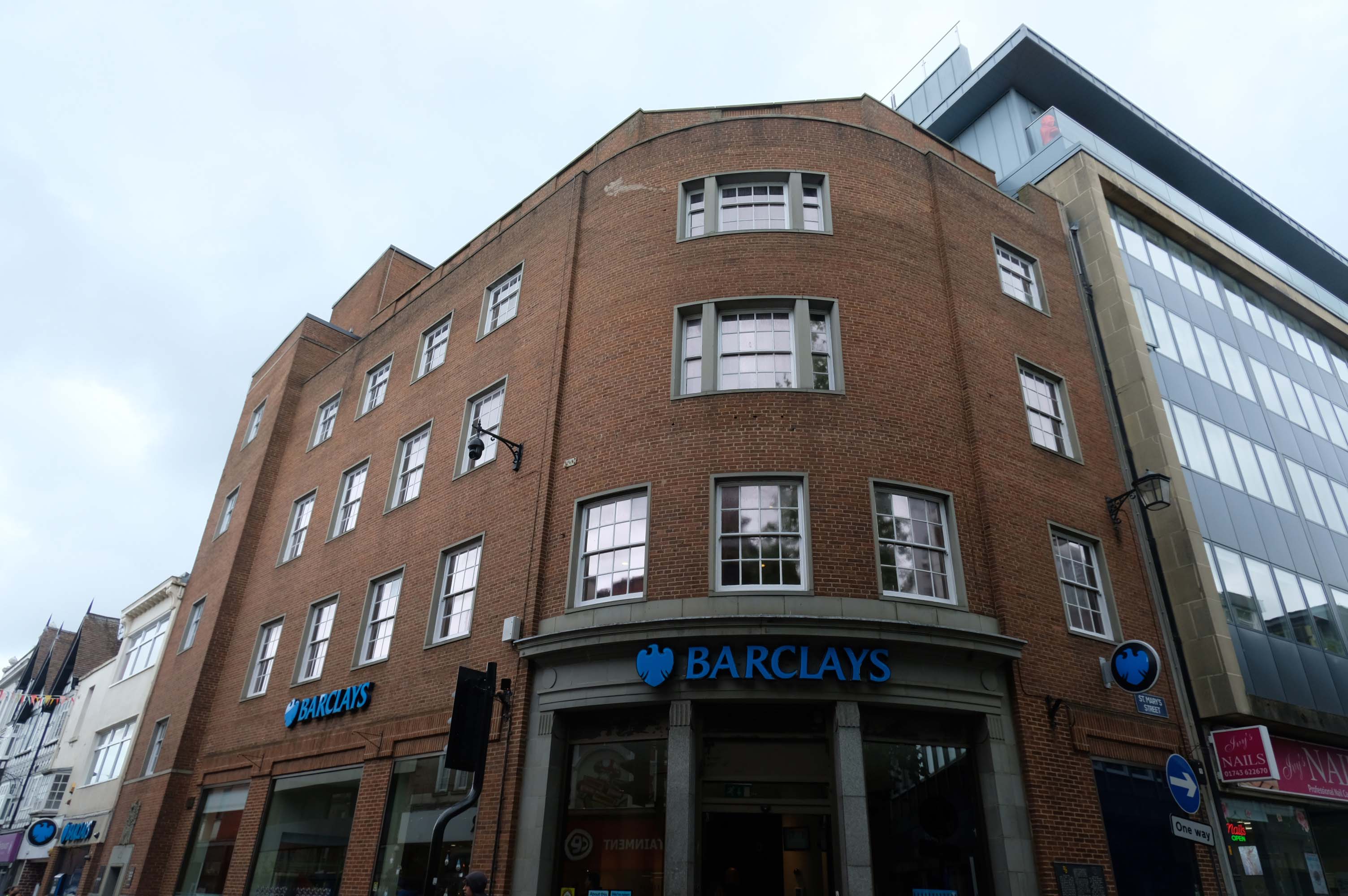
On the adjacent corner a curvaceous Barclays Bank, built in the post war Ministry of Works manner.

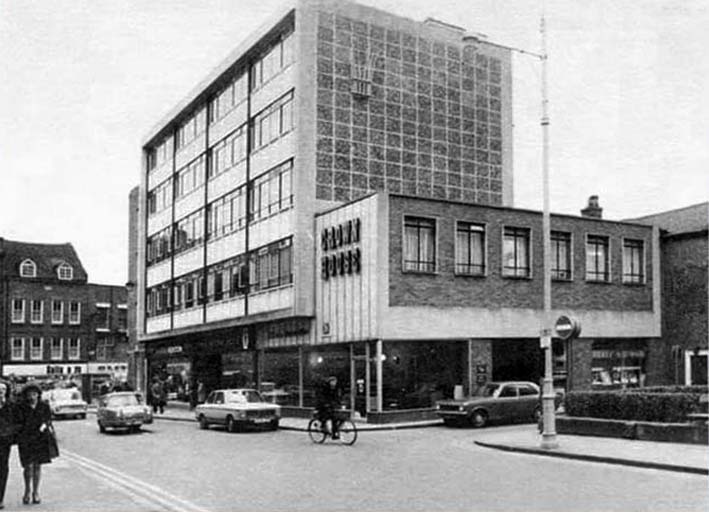
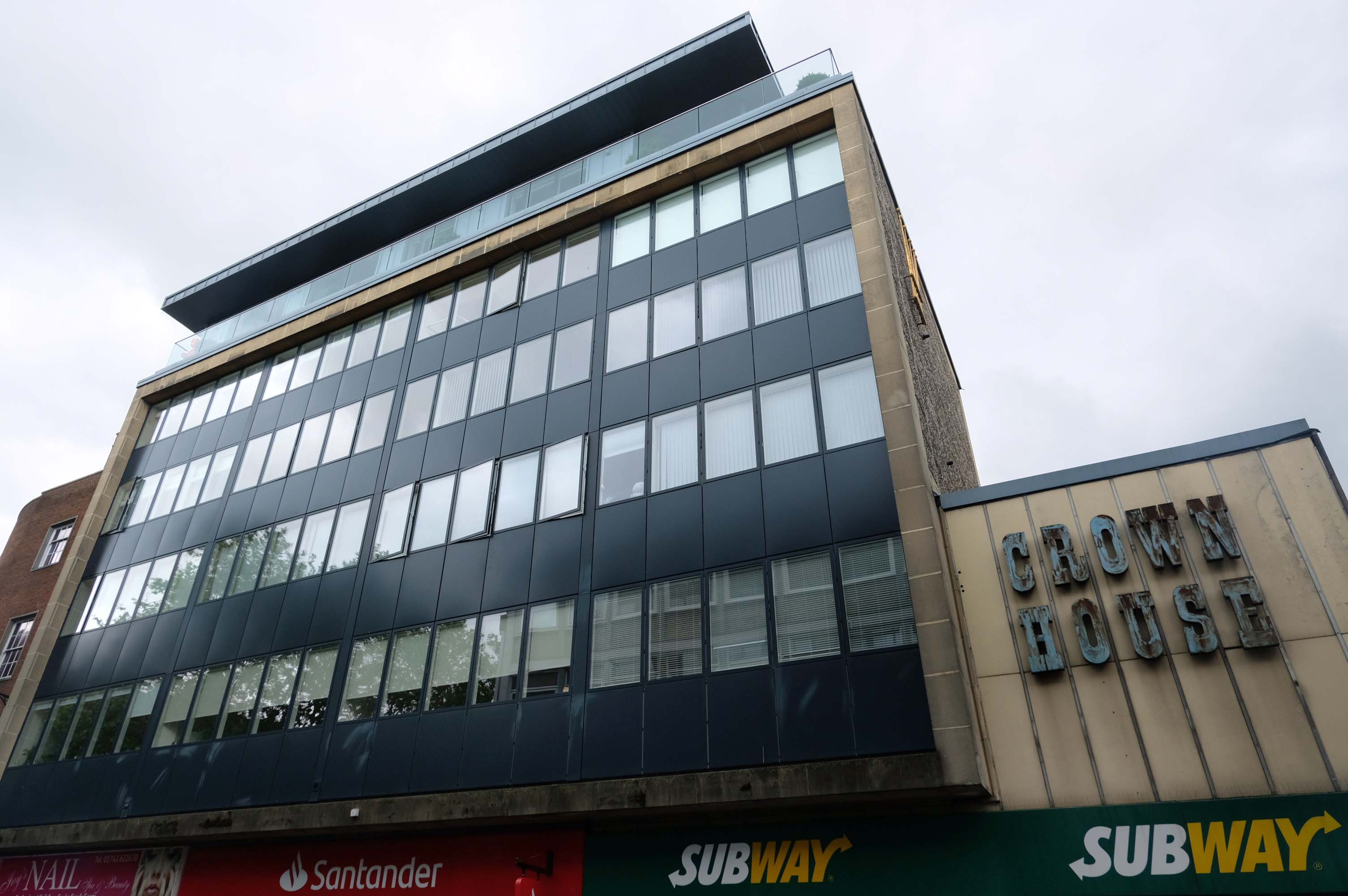
Next door is Crown House – refurbished but with it’s architectural type intact.

One of Marshall Structures’ biggest projects to date was the conversion of Crown House from a tired office block to a complex featuring 14 luxury apartments, providing a much-needed improvement to the site. The work involved in this project included large amounts of steel work and timber design.

The biggest challenge faced during the completion of this project was trying to fit an additional storey without loading quite an old existing structure. To do this, the new storey was designed out of a lightweight timber frame. By doing this, the client’s brief could be met while also ensuring that the existing 1950s building wasn’t overloaded in the process.

Marshall Structures

Directly across the road, this retail and office development.

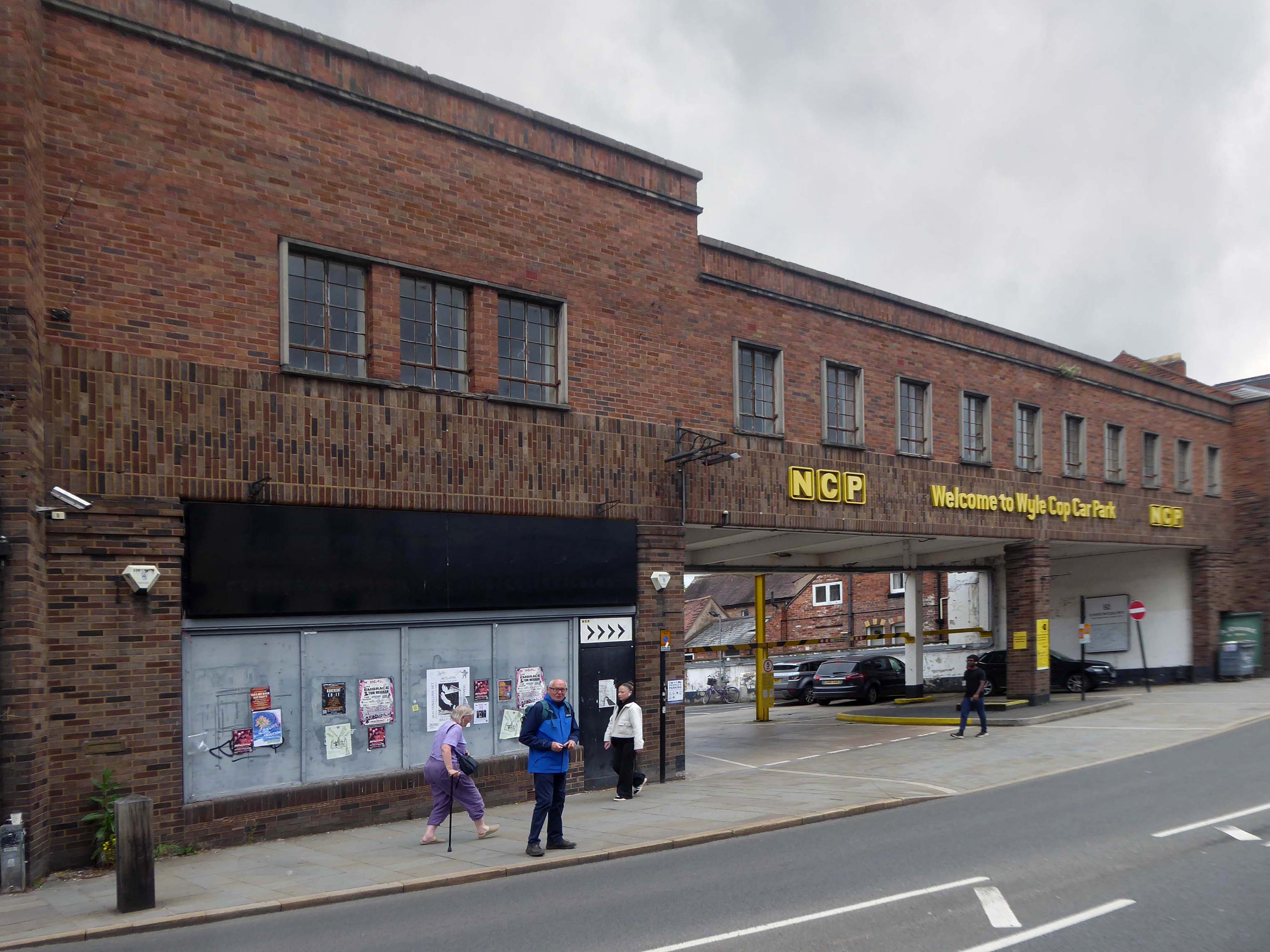
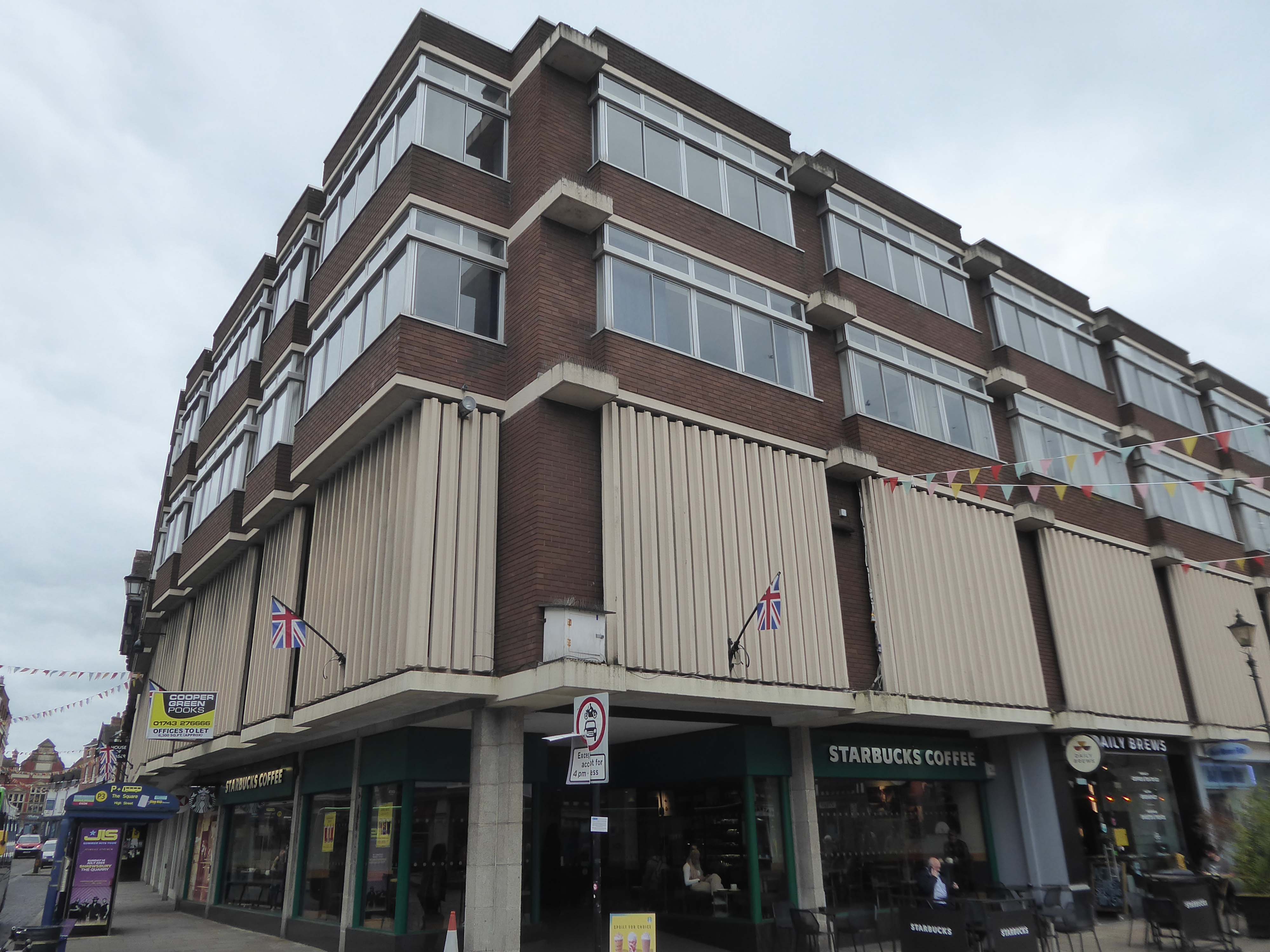
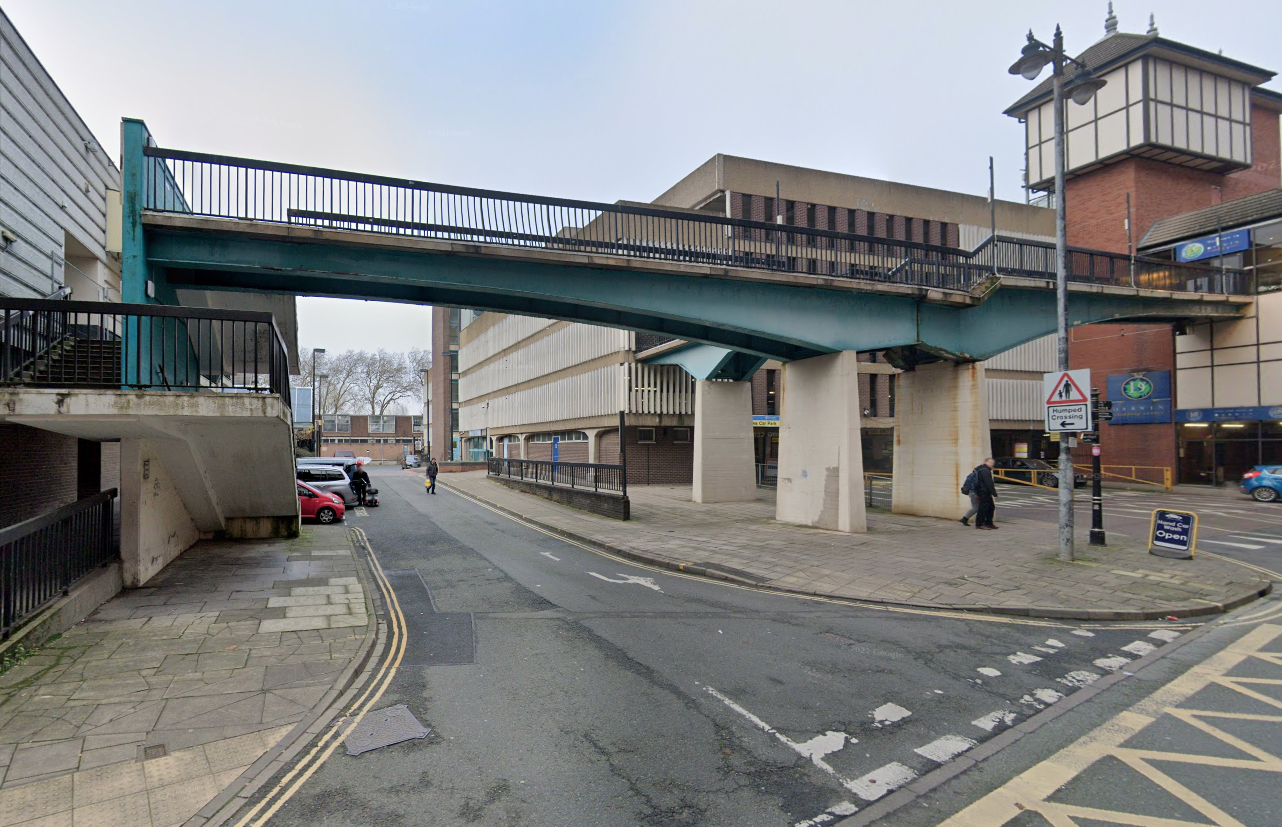
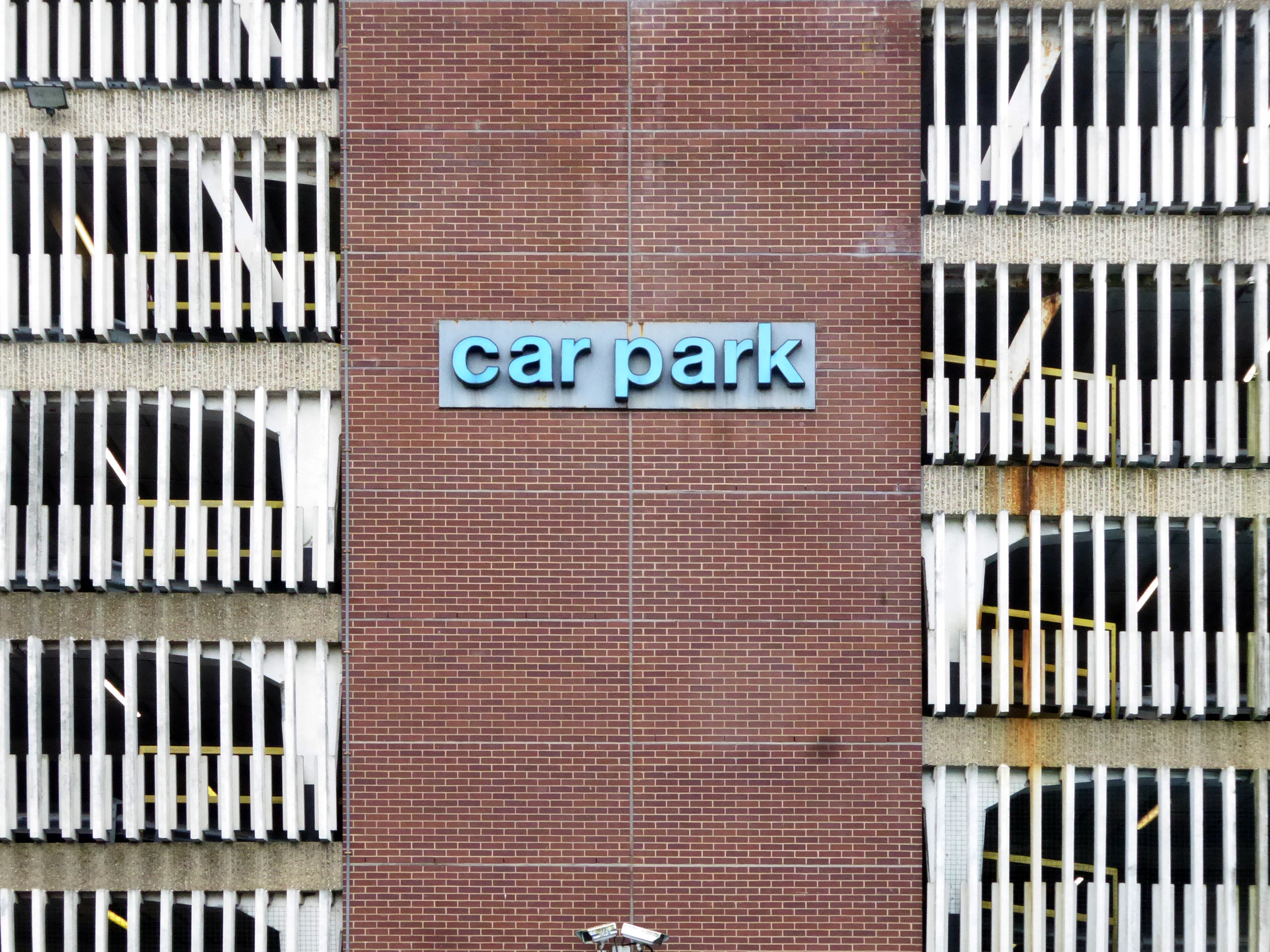
Next up some tricky brickwork on the Wyle Cop Car Park.

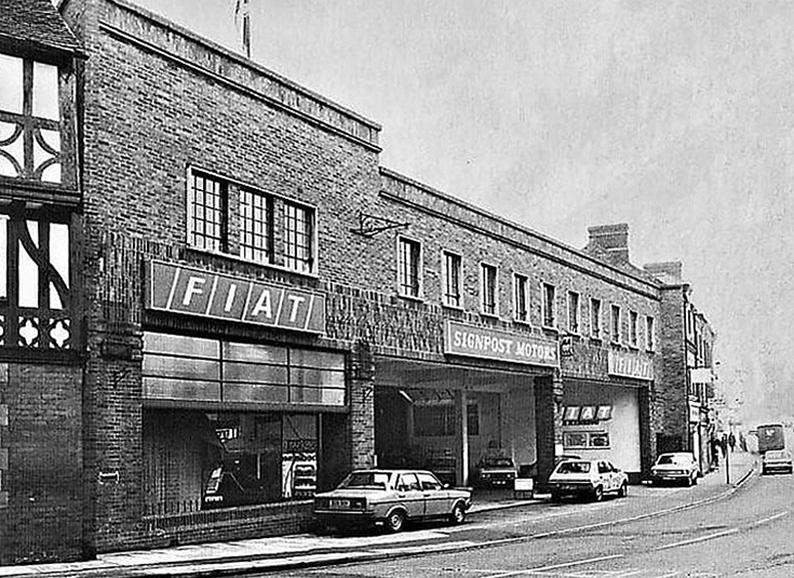
Formerly Kennings latterly Signpost Motors Fiat dealer.

Very badly run carpark, one machine broken, other not taking cards or cash.

Great place with a lot of parking space.

Onwards onwards across the river toward Shirehall.

Architect: Ralph Vernon Crowe – 1966

Ribapix 1967

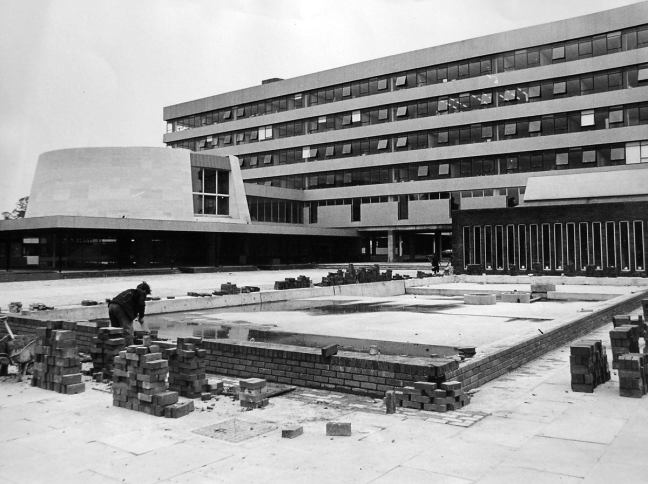
The foundation stone for the new building was laid by Sir Offley Wakeman, a former chairman of the county council, on 25 July 1964. It was designed by Ralph Crowe, the County Architect, in the Modernist style, built at a cost of £1.8 million and was completed in April 1966.

Pevsner described the building as – the major monument to post-war modernism in the county.

The Shrewsbury Civic Society is fighting hard to prevent the demolition.

There are archive photographs of the interior here.

Back into town to take a look at the Telephone Exchange.

Next to the Market Hall.

The Market Hall, which includes the town’s 240ft clock tower, an indoor market and a ground-floor shopping centre, was hailed the most modern building in Shropshire when it opened in September 1965.

Developed by the Second Covent Garden Property Company Ltd to replace an ailing Victorian market hall, it cost £1 million to build and was designed by award-winning architect David du Roi Aberdeen who also famously designed the Trade Union Congress headquarters, Congress House, in London, and the Swiss Centre in Leicester Square. 

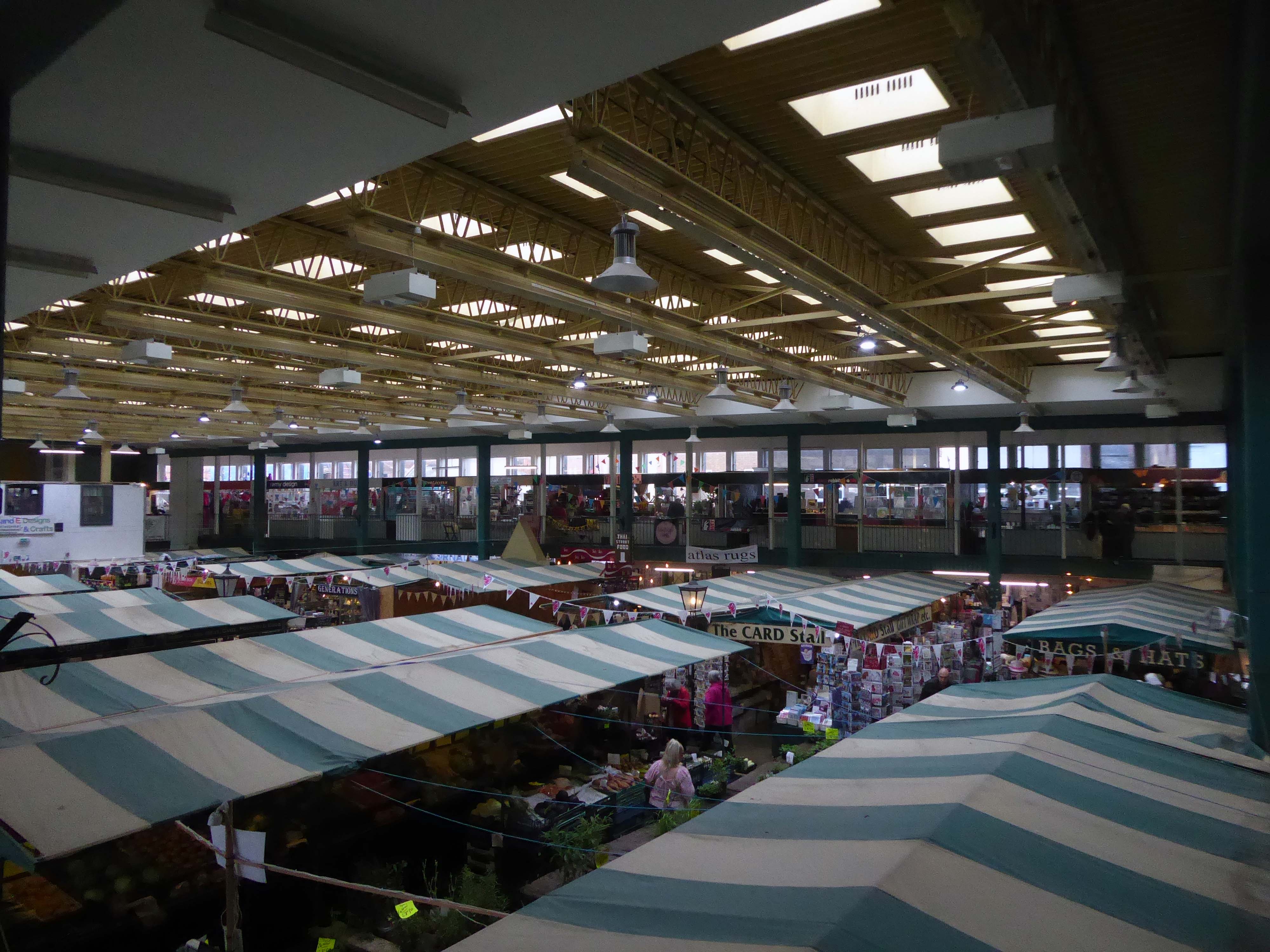
Today the Market Hall’s 1960’s architecture might not be to everyone’s taste, but its indoor market is thriving with over 70 small businesses ranging from popular contemporary cafes and gift retailers to artisan producers and traditional market stalls selling fresh produce.

Shropshire Live

More of the Market Hall here.

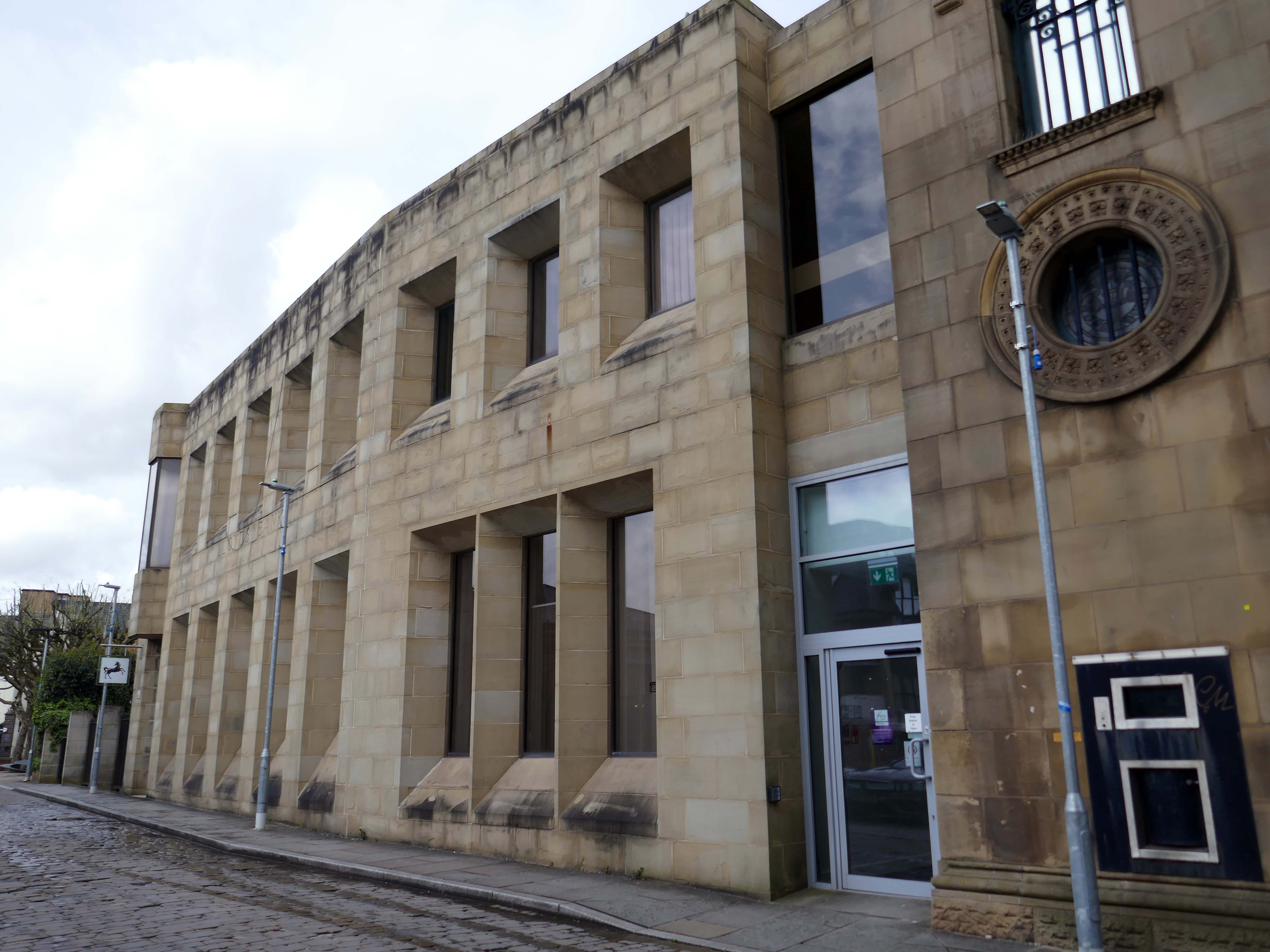
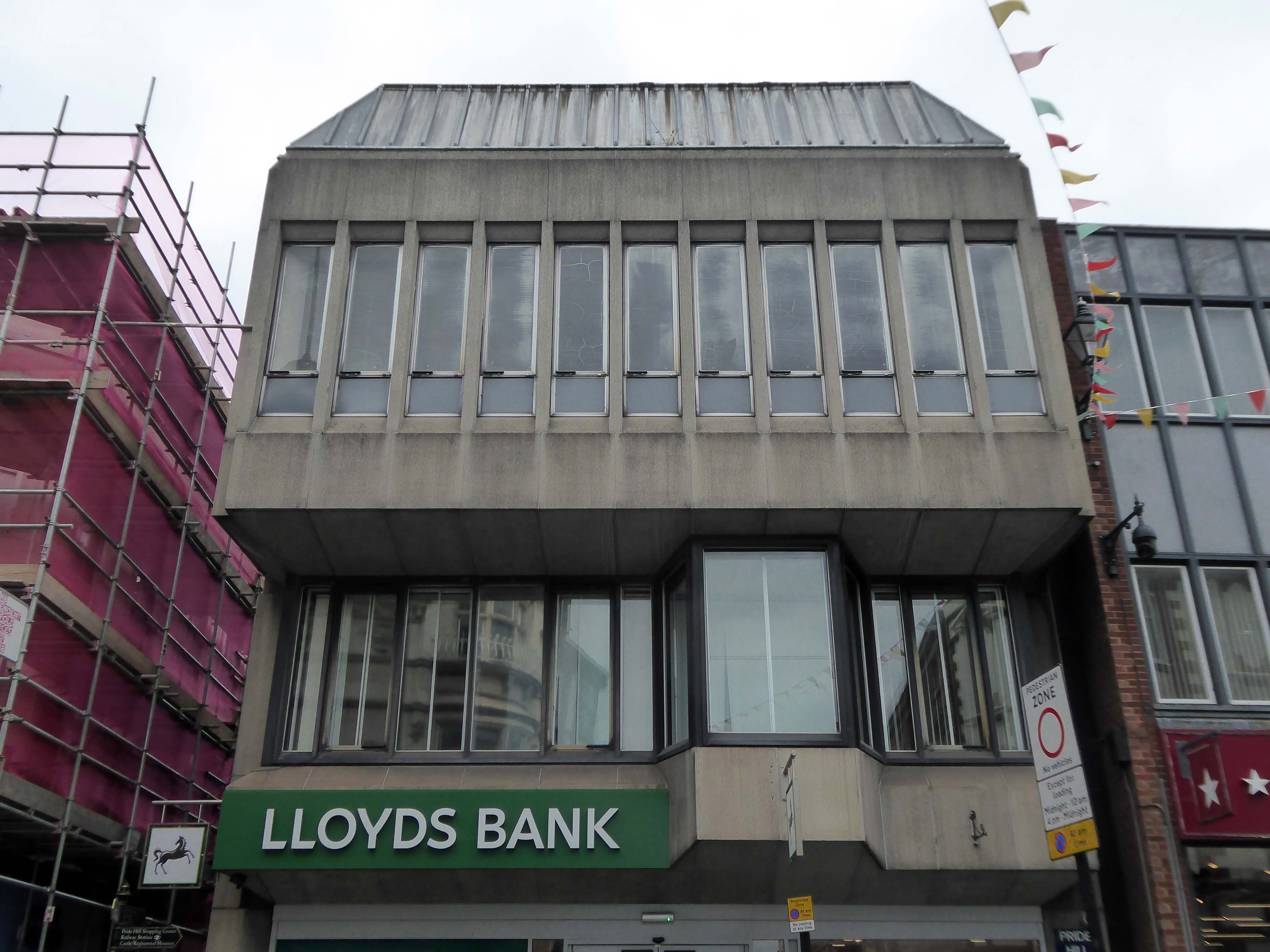
Bobbing toward the centre – a striking Lloyds Bank.

A conscious effort to reflect the nearby Tudor architecture of Ireland’s Mansion and Pride Hill. Lloyds Bank is considered a good example of Brutalist architecture, and proof that bold modern buildings can be successfully slotted into traditional historic streets.

Original Shrewsbury

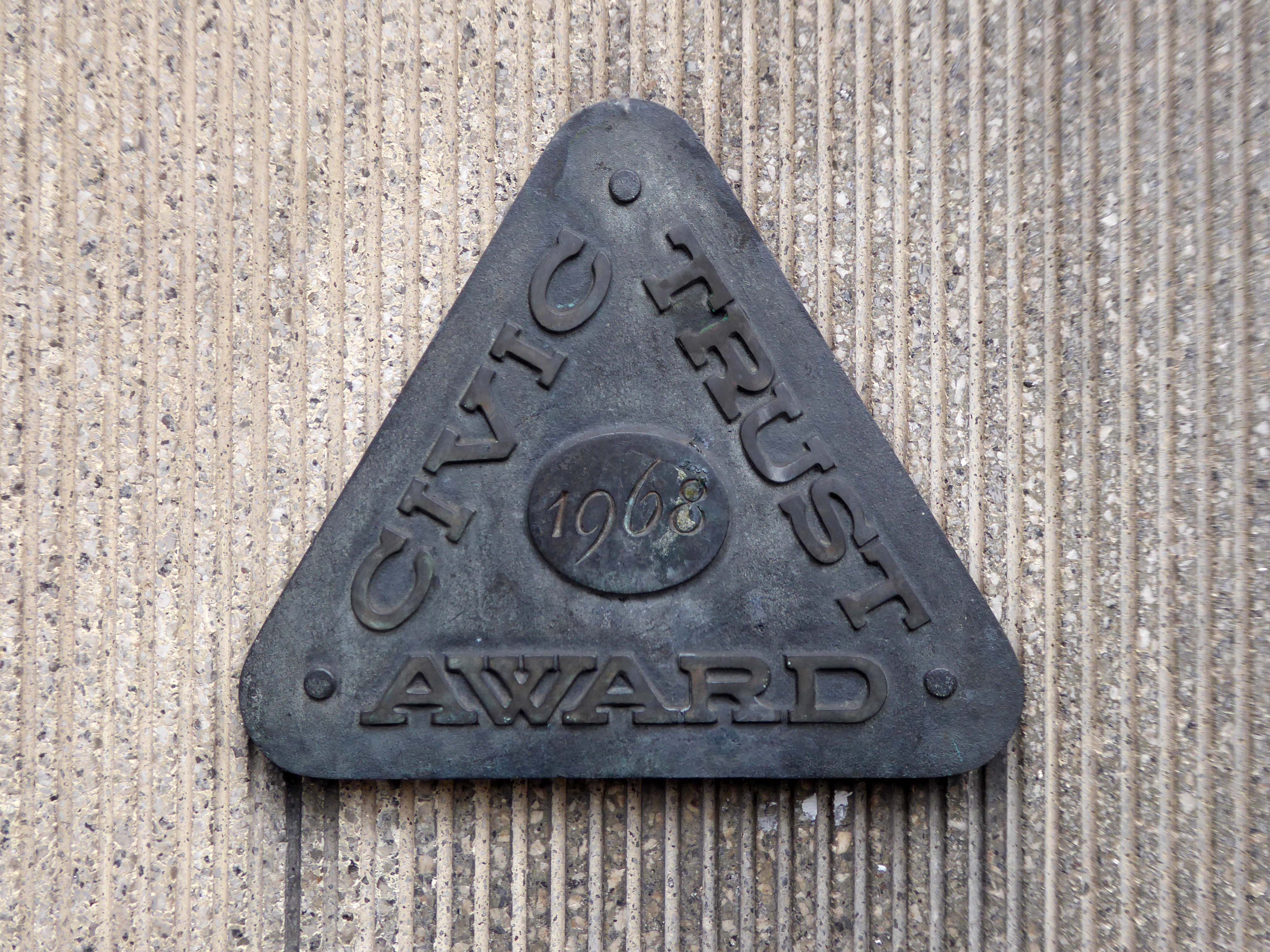
Possibly Shrewsbury’s finest post-war building, but of course it has its detractors. It was well received by critics of the period including the assessors for the Civic Trust who bestowed an award in 1968. They noted the quandary that the architects faced of building in such a historic setting and terminating the vista along one of the town centre’s main streets. In their opinion the architects ‘faced the problem squarely and their building, brave in its conception and immaculate in its detail’ and that it was ‘uncompromisingly of today but beautifully sympathetic to the great buildings it rests with’. Pevsner’s original assessment of it being the ‘boldest modern response to the town’s half-timbering’ was not shared by the authors who revised the Shropshire edition and viewed it as an ‘aggressive display of exposed and textured concrete’.

It was also shortlisted for the European Cement Association awards, one of only two British buildings to make the grade. Opting to draw on the Tudor traditions of the town, partner W Marsden, working with project architect W Allan Clark and assistants Malcolm Lovibond and Keith Maplestone, used cantilevered floors, vertical structural and sub-structural members, oriel windows and a black and white tonal palette deploying anodized aluminium window frames against finely ribbed concrete panels. The standing seam zinc roof adopted the town’s norm of pitched roofs without gables in order to blend with the street scene. Concrete Quarterly referred to it as ‘a skilful bridging of the centuries in a way that would not offend a purist’ . The main contractor was Henry Willcock and Company Limited.

Mainstream Modern

Nearby more modern infill sits alongside the historic half timbered heritage.

Next down Raven Meadows to the Raven Meadows Car Park, built by Truscon Ltd in 1969.

Which also houses the Bus Station.

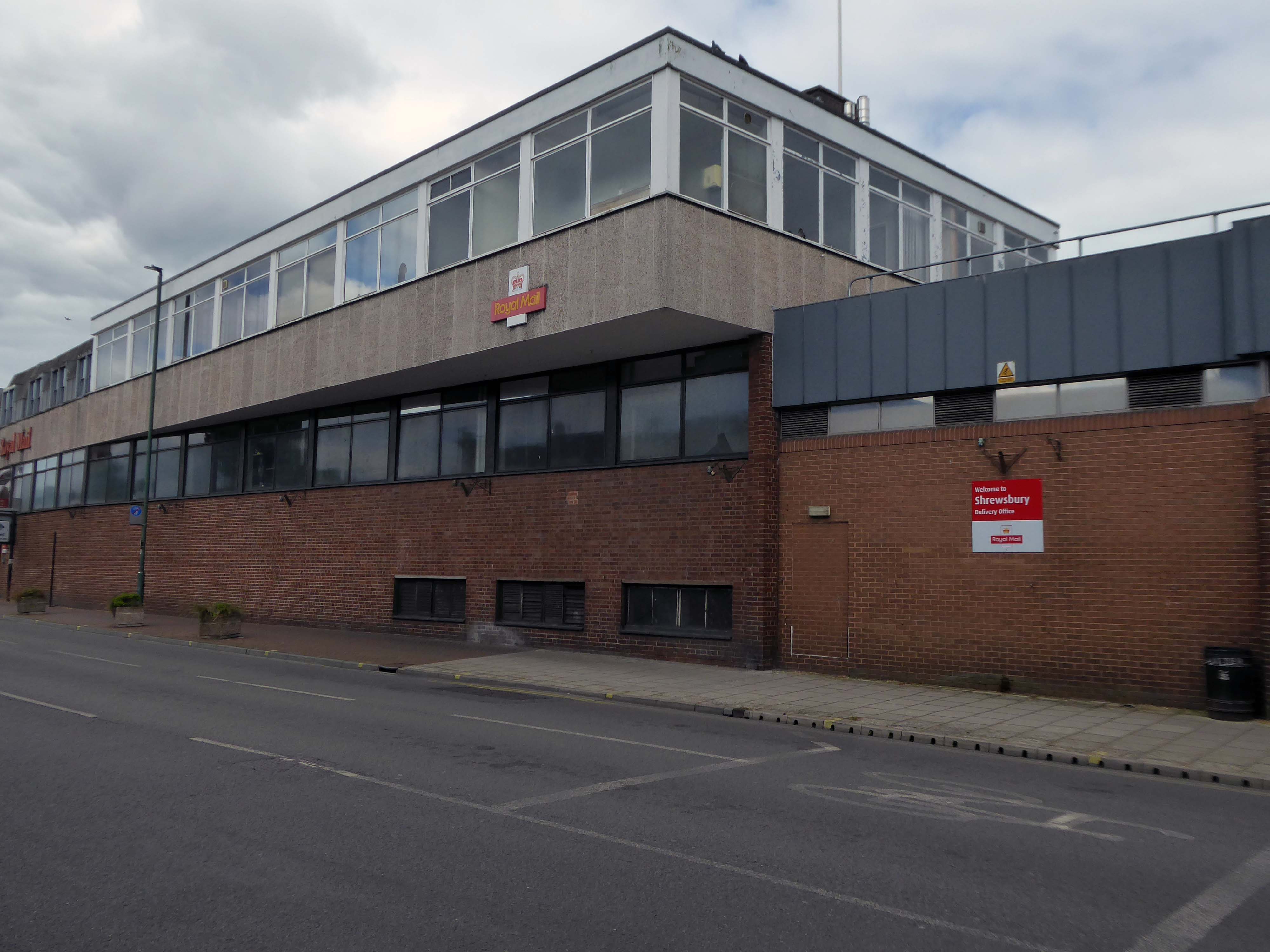
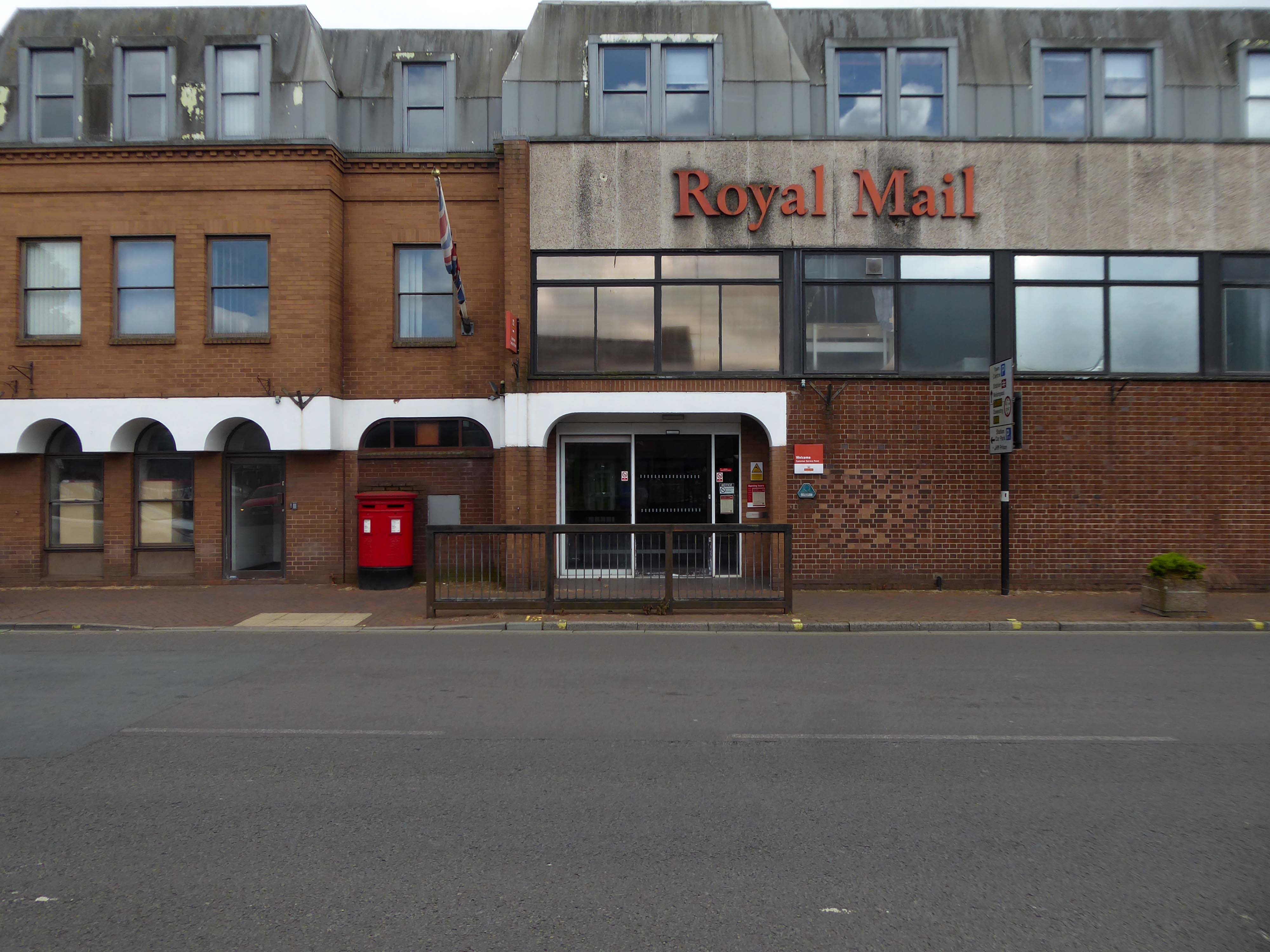
Back now toward the station under the railway to the Royal Mail.

Doncaster Modernism – Revisited Again.

The third time by the banks of the Don – first time around in May 2019, subsequently in October 2020.

So much can change in so short a time, post-pandemic and every town is doing its level best to build back better.

The vision includes:

  • Ensuring the centre is a focus for business and enterprise.
  • Building on the success of the current markets and raising the aspirations and functions of the markets.
  • Recognising the city core as the heart of the economy and the borough and the place where the image of Doncaster is most clearly reflected. 
  • Enhancing green spaces and waterways to create a better setting for visitors, investments and city heritage.
  • Developing the civic and cultural quarter and reinforcing the retail and leisure core through better links and public space improvements.
  • Developing city-scale functions and assets, to become a stronger draw for business, workers, visitors and inward investment.
  • Developing and bidding for new city-wide cultural venues, a University and Research and Development facilities.
  • Rebranding Doncaster as a location of choice for regional businesses.

Masterplan

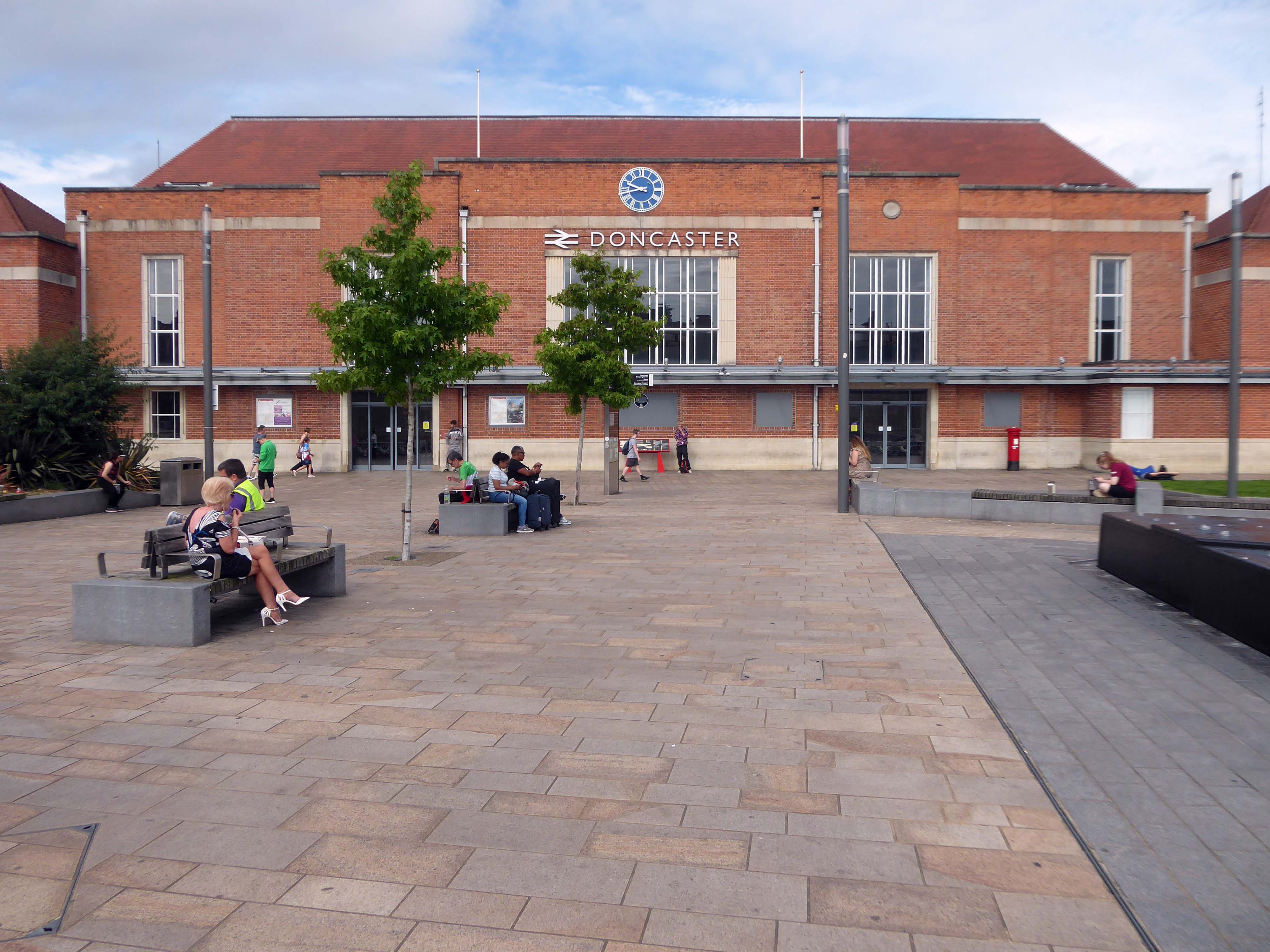
Arriving by train and ascending into the light – here’s the station lights.

The railway station has sharpened up its apron and facade.

We have transformed the station forecourt. It has become a quality gateway which delivers a great first impression for visitors arriving in Doncaster by train. This will help stimulate interest from investors and developers, helping to attract new investment and create jobs for the borough and wider region.

Doncaster.gov

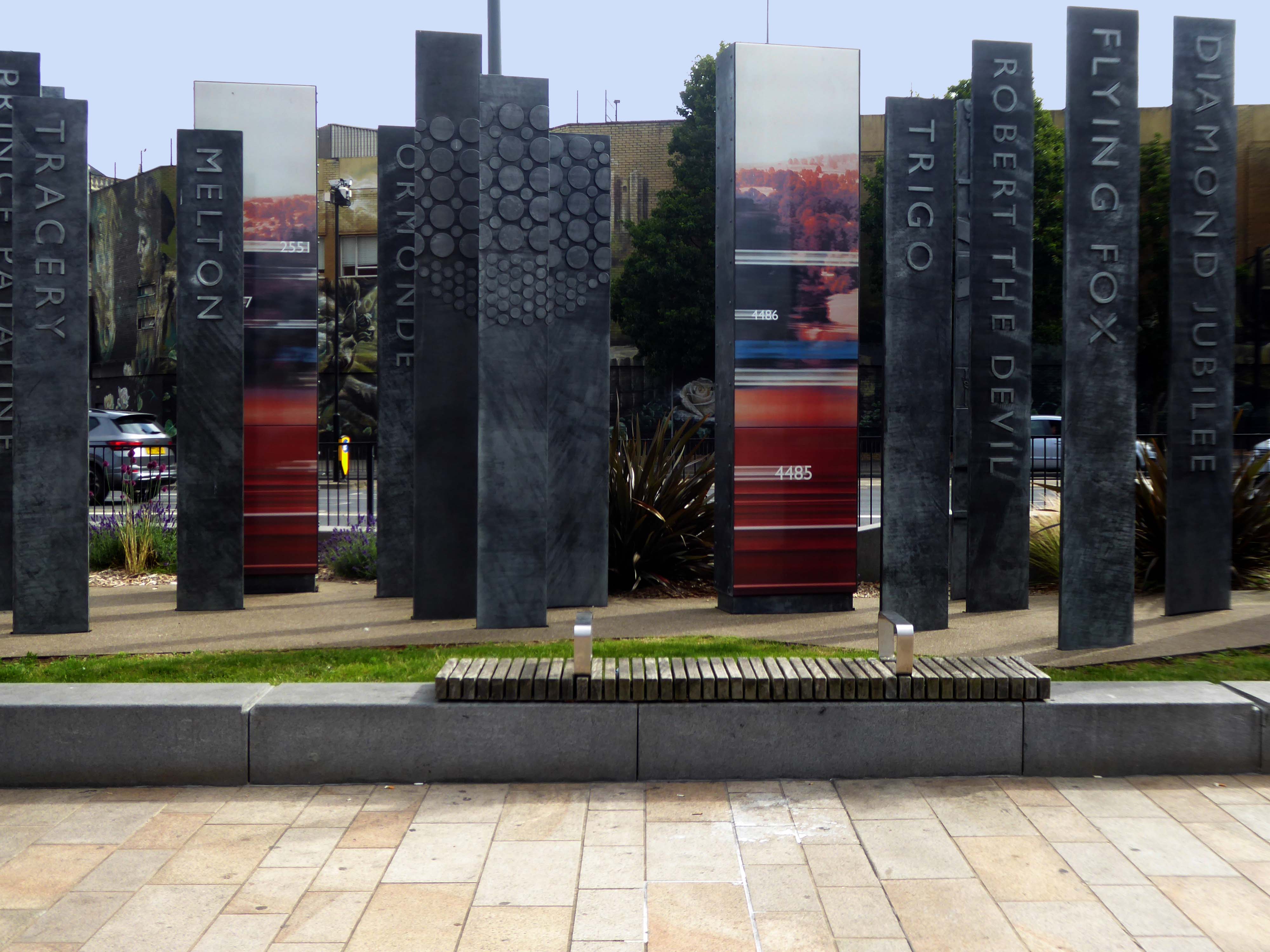
Celebrating engineering, speed and connectivity and stretching forty metres in length the public art at Doncaster Station consists of forty seven monoliths which are a nod to Doncaster’s past, present and future. With a fountain and three impressive water walls, the art takes centre stage in the new public space as you step out of the train station and head into the town centre.

The concept was devised by Doncaster Council and further developed by Chris Brammall.

CB Arts manufactured and installed the piece

Typically the high and low streets of Britain’s industrial towns and cities, are an amalgam of architectural style and fashion, spanning at least two or three centuries.

Faience fronted interwar developments abound.

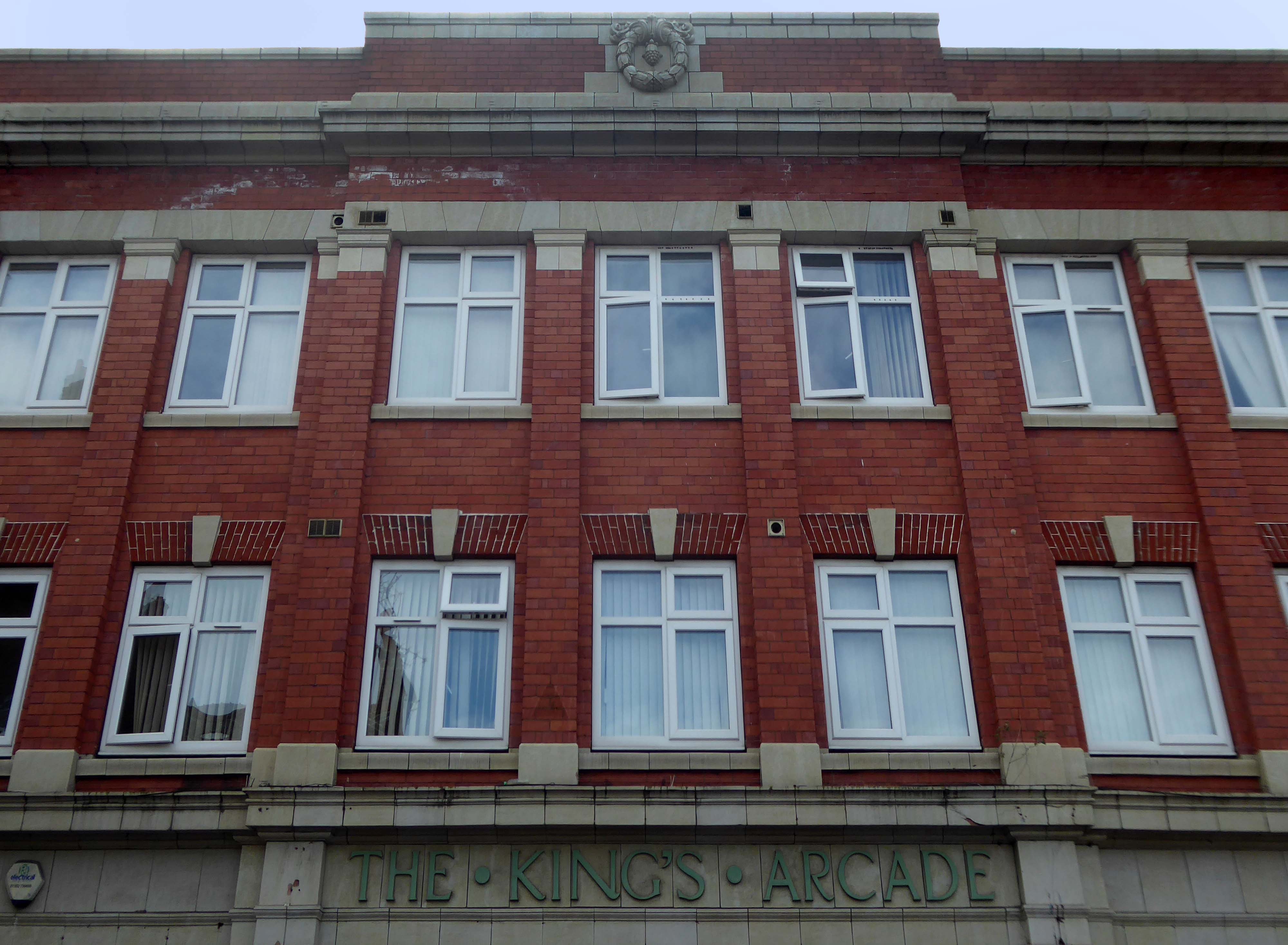
Neo-classical speculative shopping arcades.

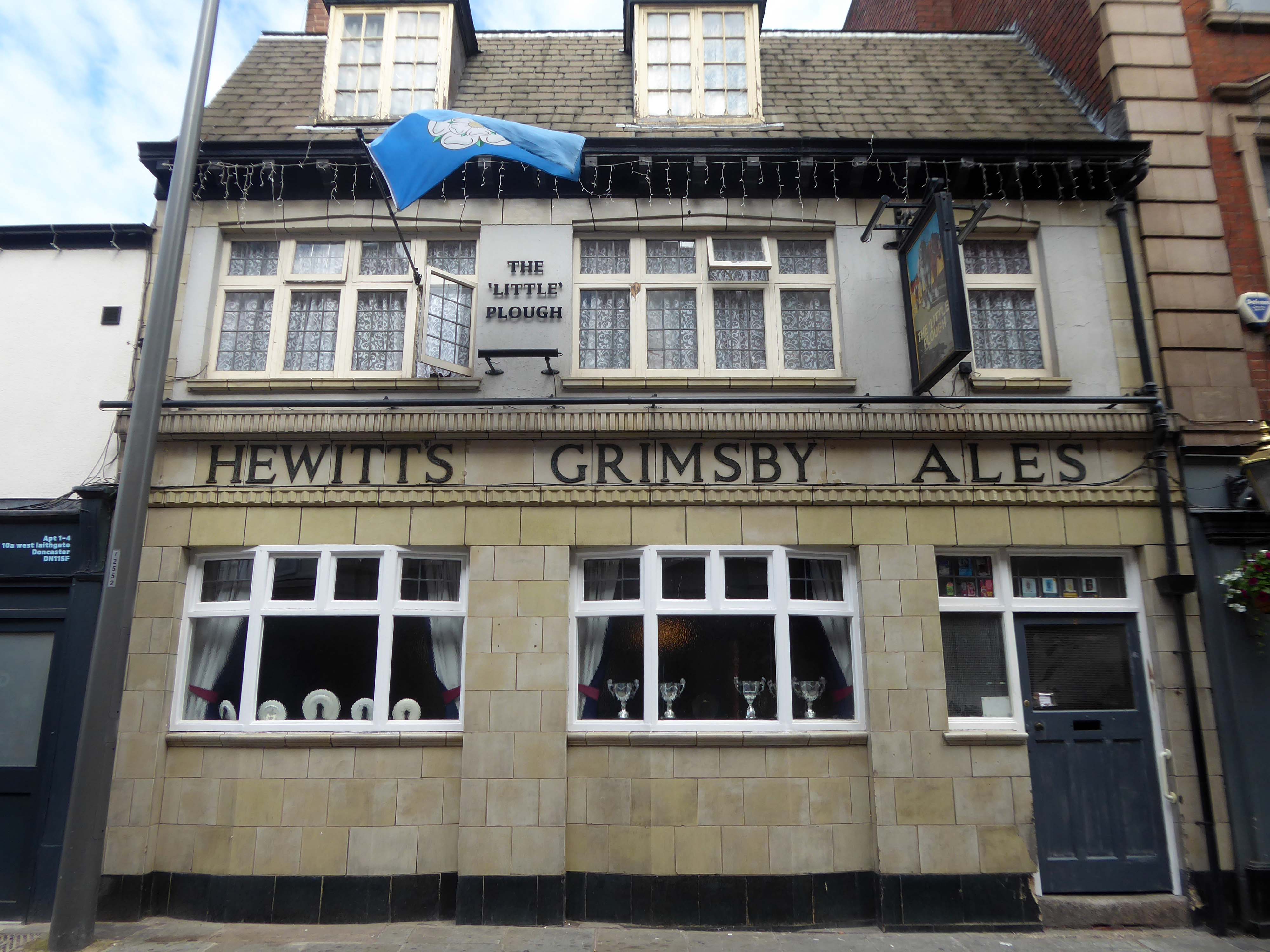
Revamped Victorian pub facades.

Behind the buff faience frontage is a lovely, small two-room pub with a well preserved interior created under plans of 1934. It was remodelled by the Grimsby brewers Hewitt Brothers Ltd who were Doncaster’s biggest pub owners for many years.

Pub Heritage

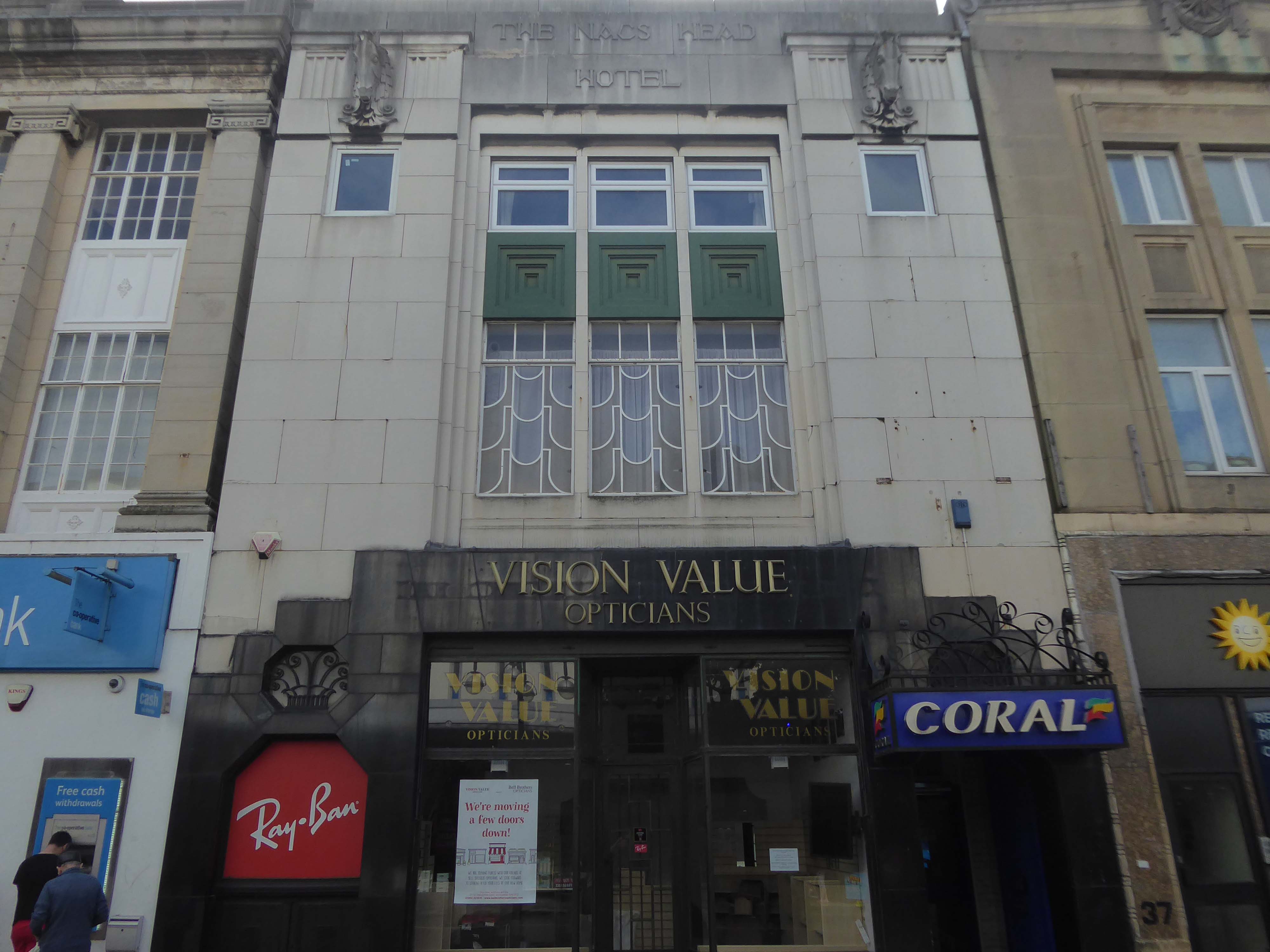
Originally a Gent’s Outfitters, this deco-gem was topped off with the Nags Head Hotel.

This grade II listed pub is now in retail use, though Vision Value, are it seems, on the move.

Lost pubs project.

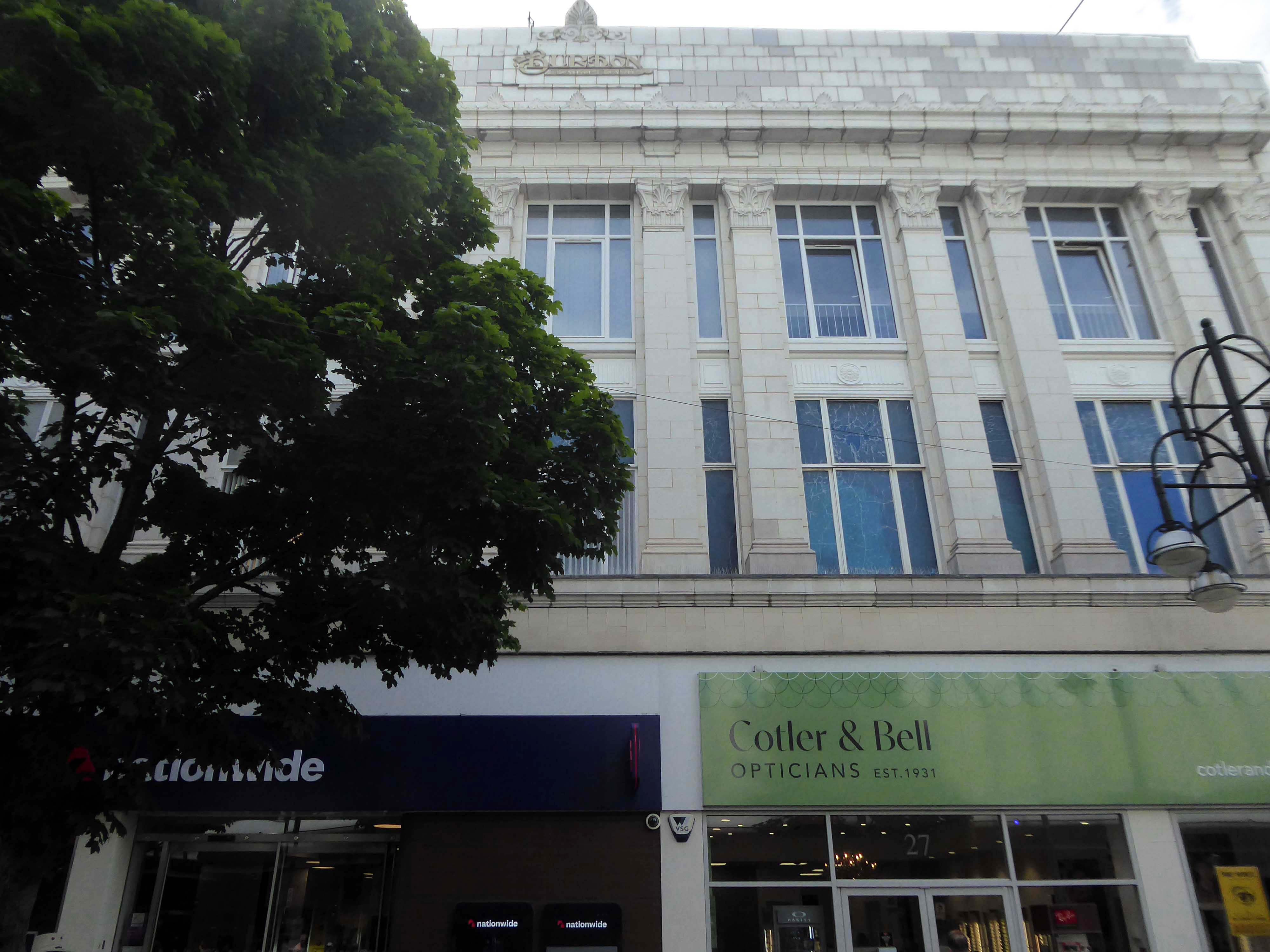
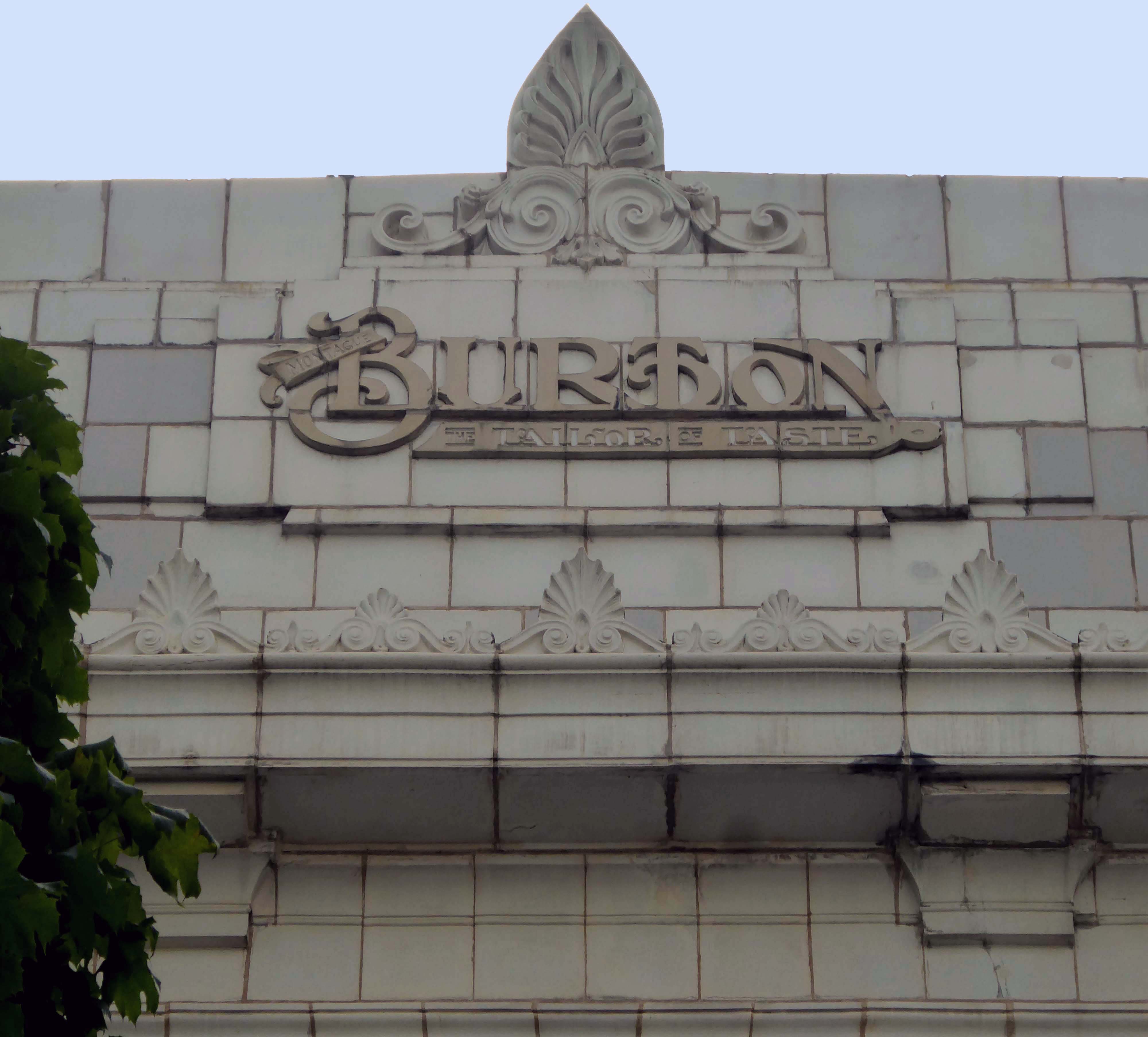
Of course, every town had a Burton’s – the tailor of taste.

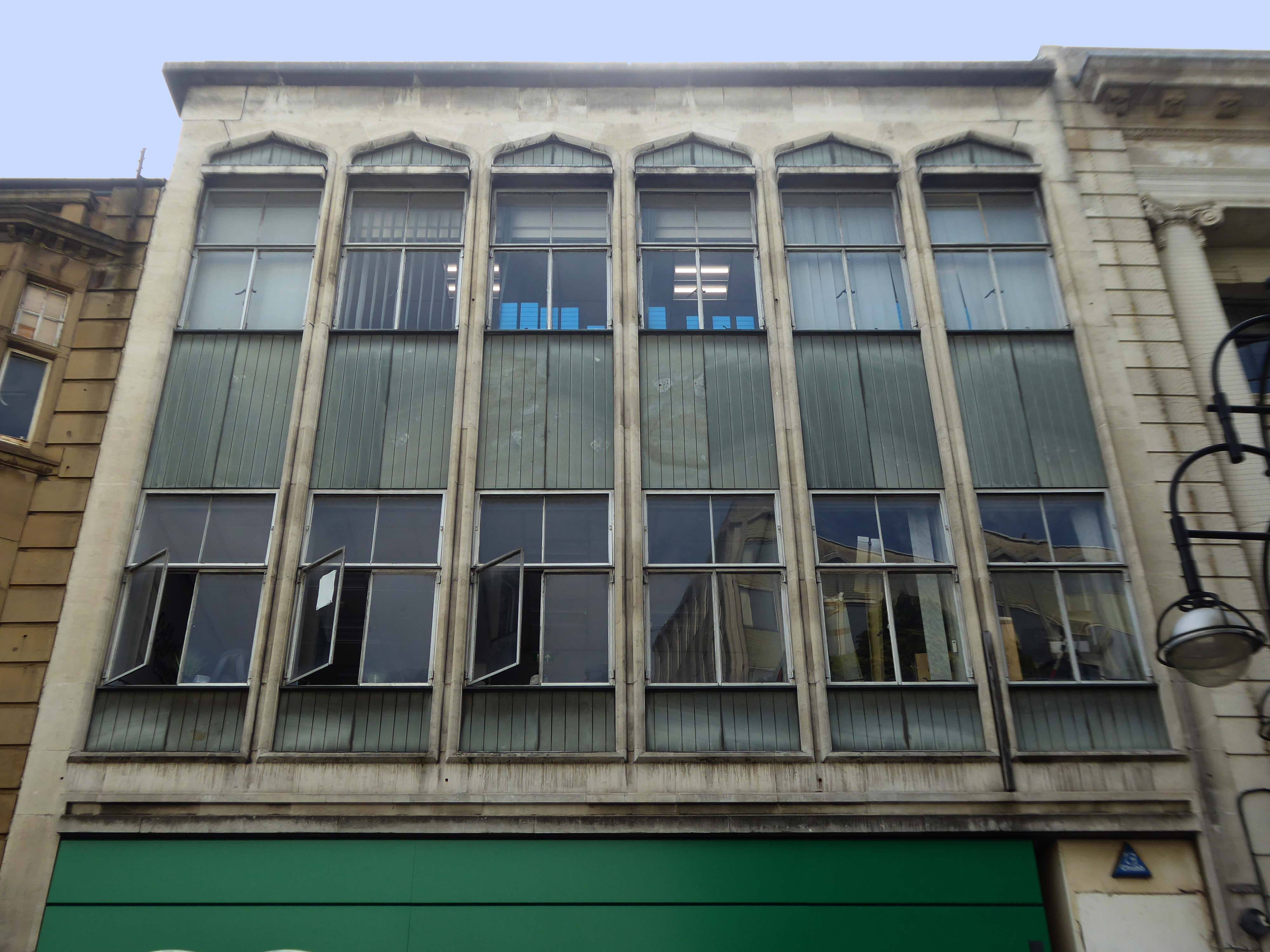
This post war infill has that distinctive Festival of Britain feel, original metal window frames, Portland stone and blueish slate like panels.

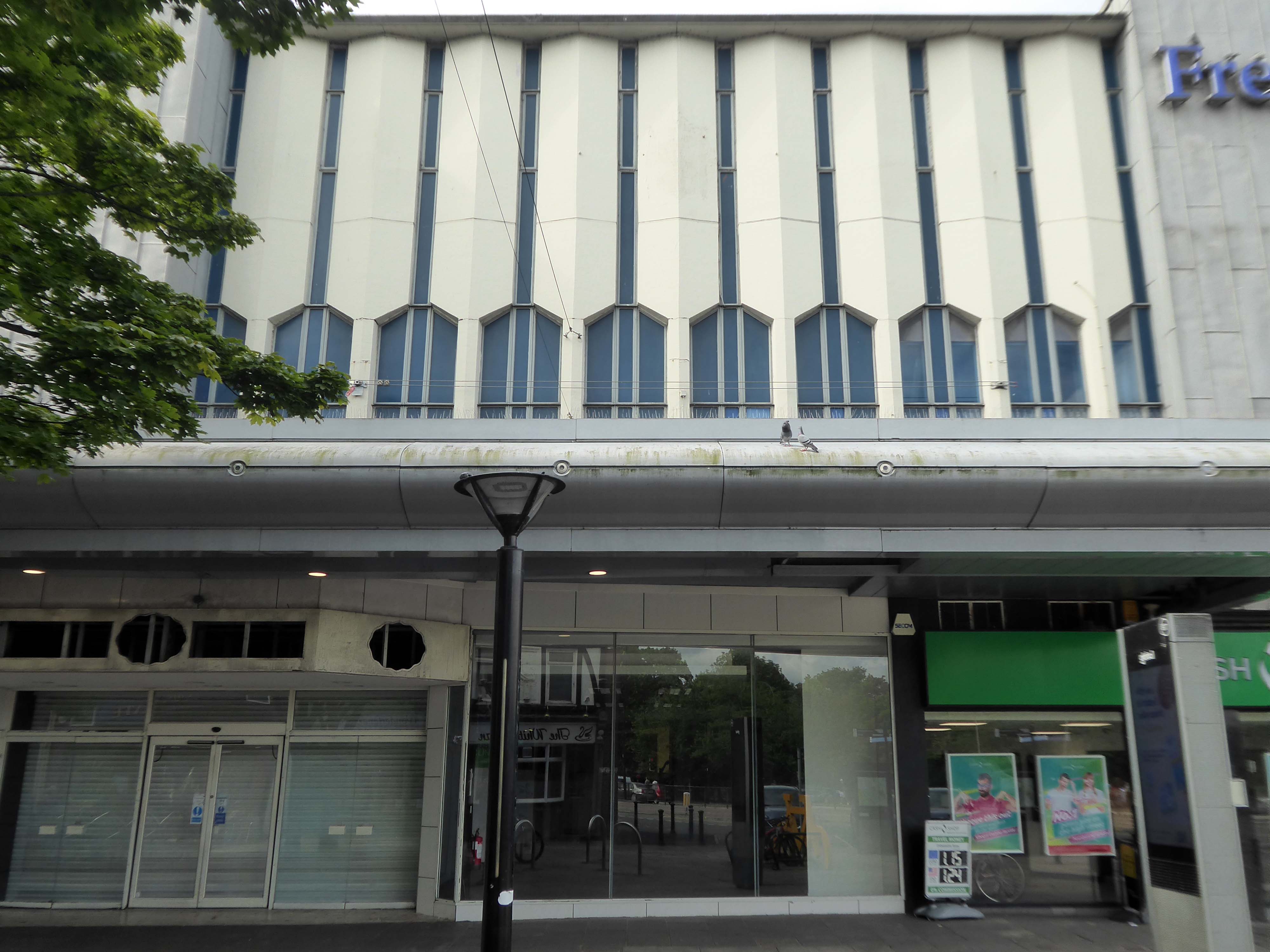
The revamped Frenchgate Shopping Centre, officially opened on October 4th 1968, has in places an upper tier, resistant to zinc over cladding.

The centre has been the heart of the city for over 40 years and was originally called the Arndale Centre because it was built, owned and managed by the Arndale Group. It was renamed in 1988 after a change of ownership, with the new name reflecting the name of the street which passes to the east of the centre and which is one of Doncaster’s main shopping streets.

The sale of the centre came just a year after Frenchgate had undergone a £200 million facelift to transform it into the country’s first shopping centre with integrated public transport and retail interchange.

Wikipedia

There are plans to rework the shopping centre.

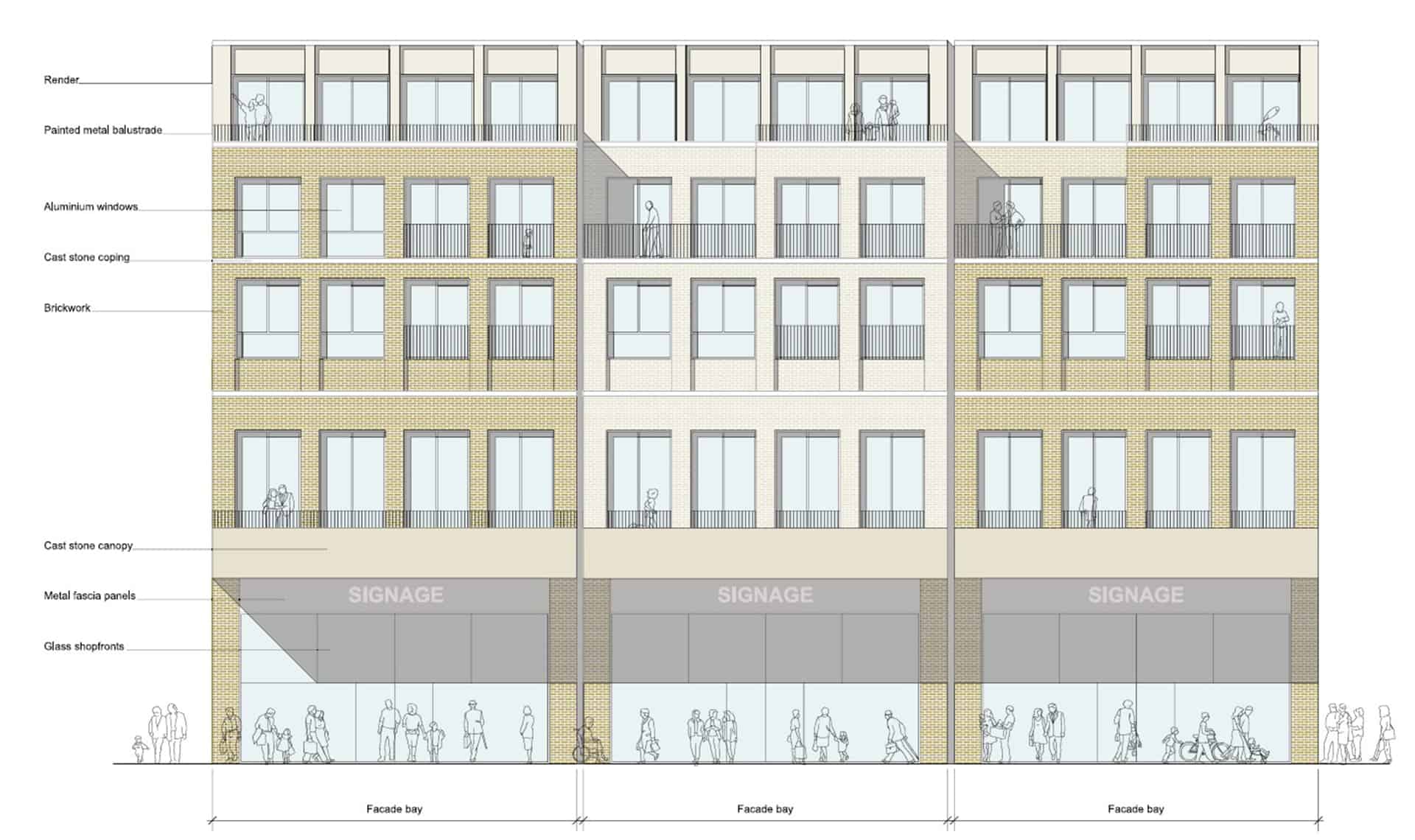
We propose this is fundamentally transformed though the addition of apartments that wrap along the back of the first-floor retail with a further 2.5 new storeys placed on top. We also feel additional height -up to seven or eight storeys, is justifiable to the corner of Frenchgate and Trafford Way.

TODD Architects

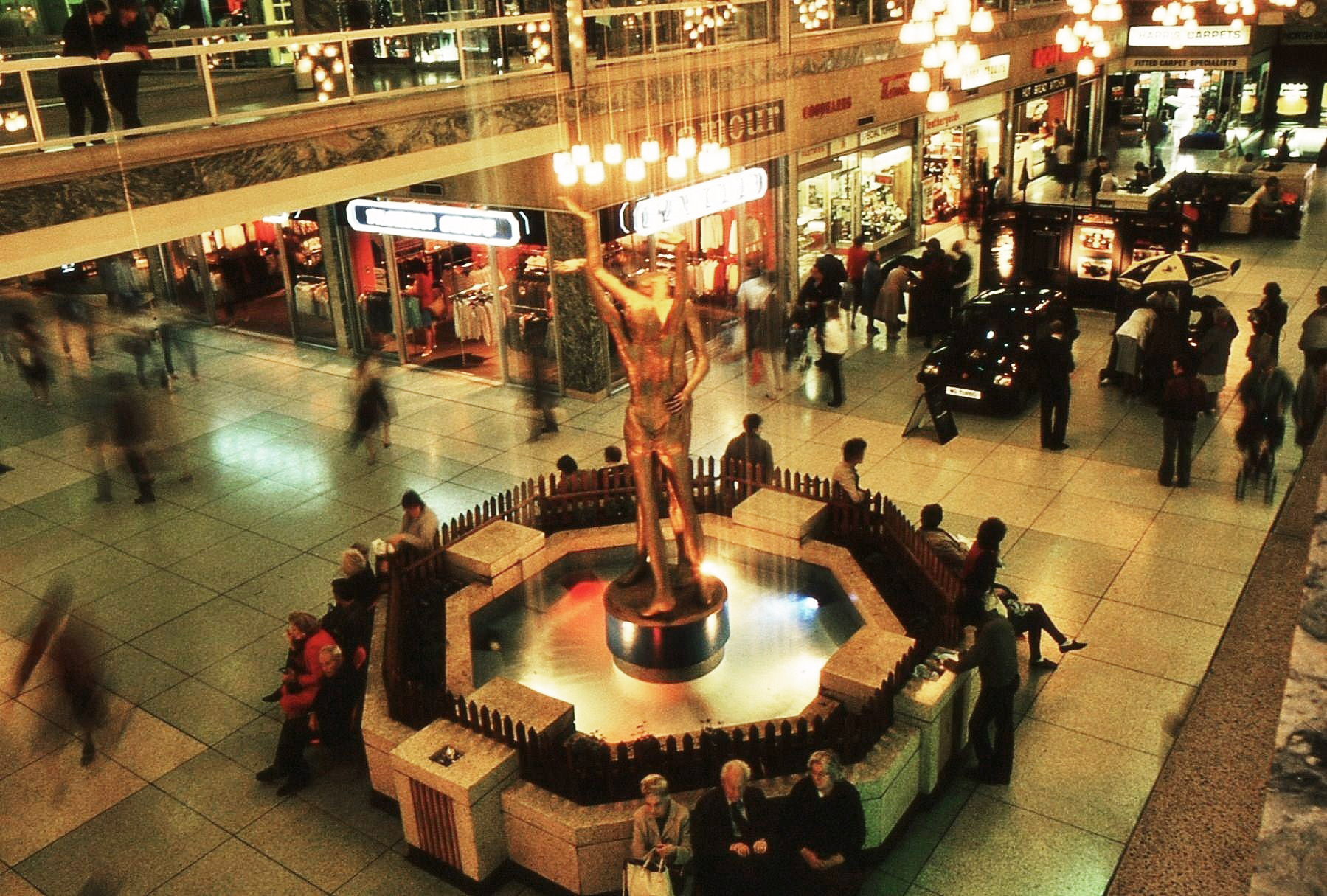
The Lovers were once located in the Arndale, removed to a local garden, unloved – then later reinstated in the Waterdale Centre, where we will embrace them a little later.

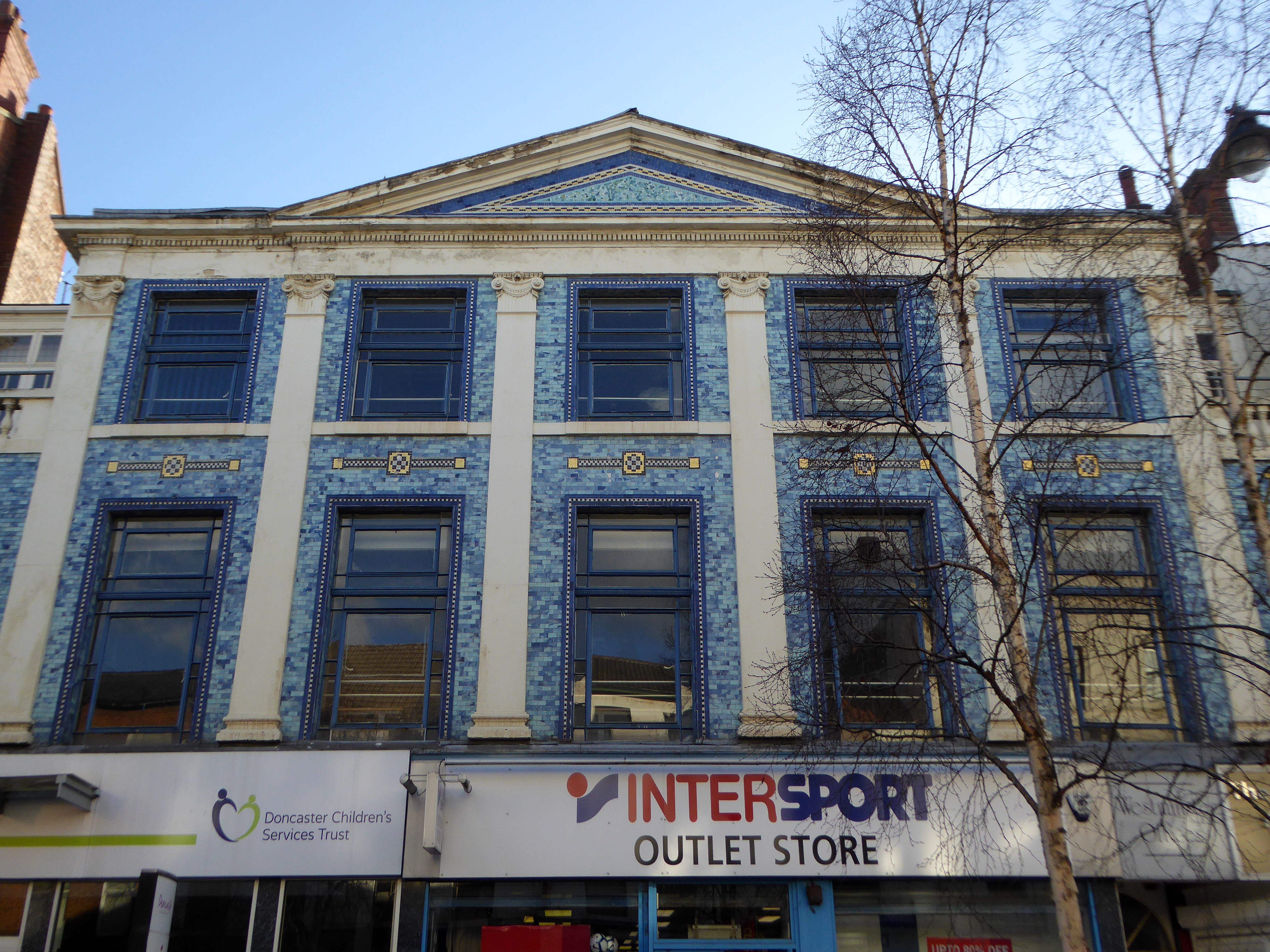
Turn right to take in the 1920s mosaic remake remodel of the Grade II listed Blue Building.

The Blue Building which used to be the Doncaster Design Centre and Tourist Information Centre was originally the home of John Whitaker, a wine merchant, and son of James Whitaker who was Mayor of Doncaster in 1758.

In 1925 the complete building was demolished apart from the facade which was retained and given a facing of decorative blue tiles. The intention was to build a shopping arcade from High Street to Printing Office Street. Only part of the arcade, known as the  Westminster Arcade was built. It had a number of shops, the largest being that of Woodhouse & Co Furnishers.

Doncaster Heritage Trail

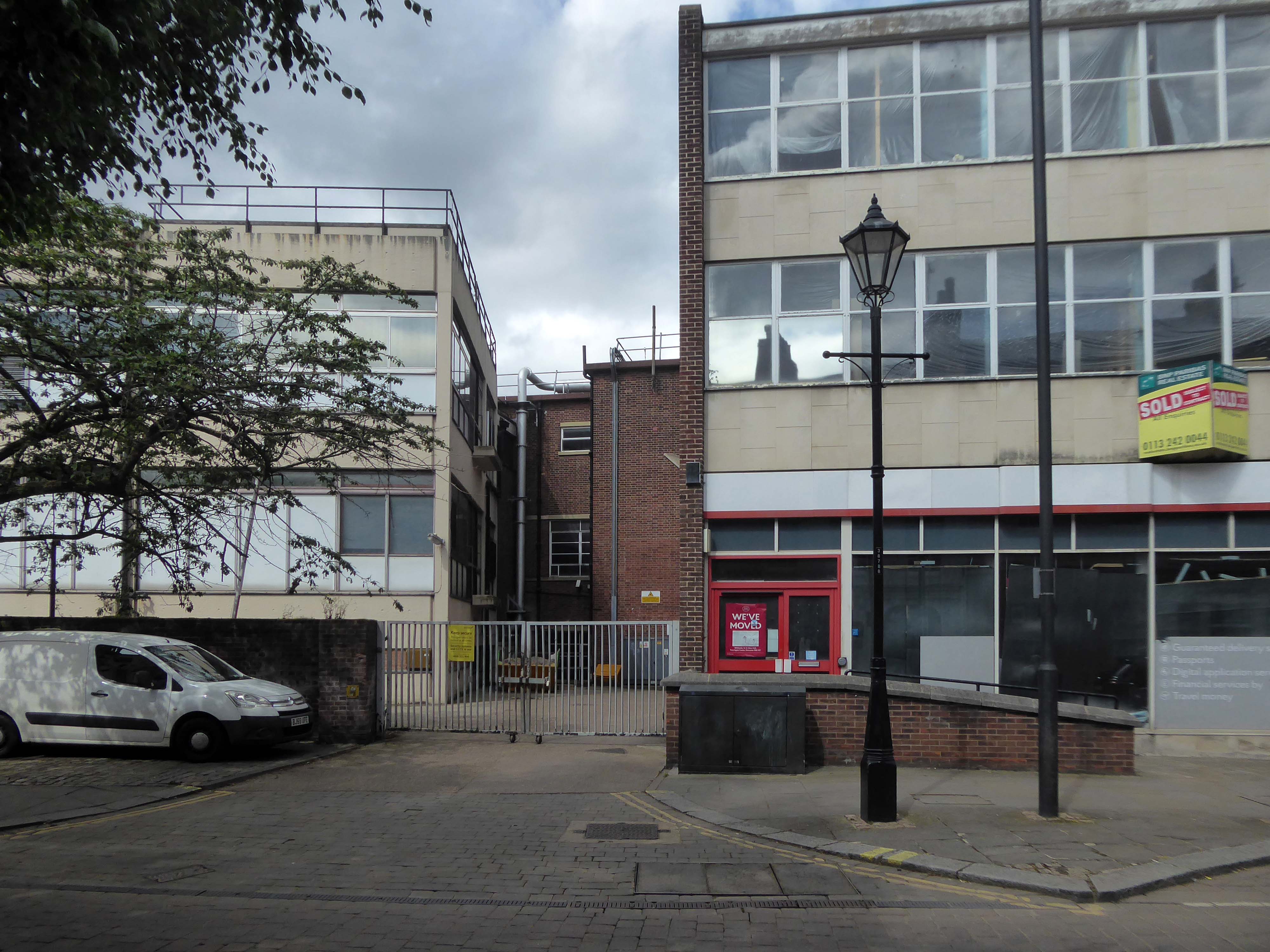
Two adjacent 60s extensions – to the right a redundant post office to the left an almost redundant telephone exchange, with the earlier brick built exchange in smack dab the middle.

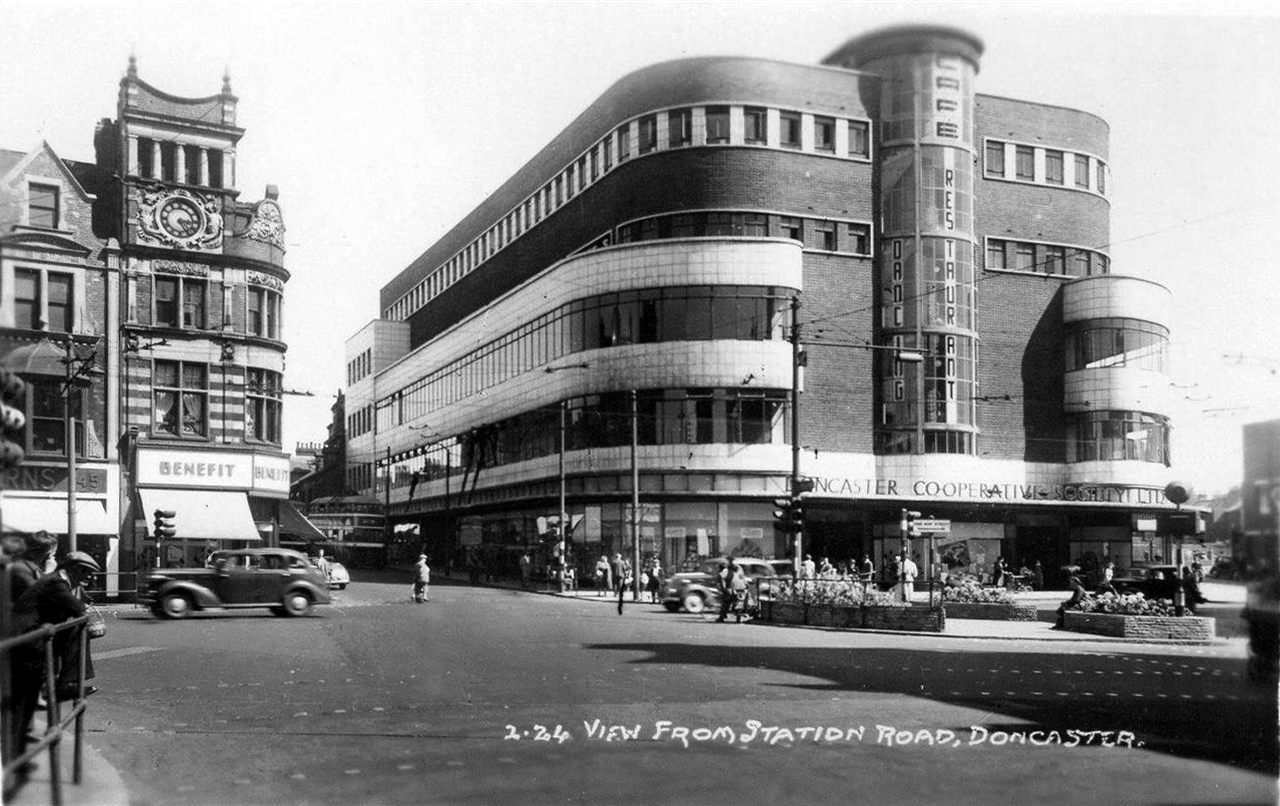
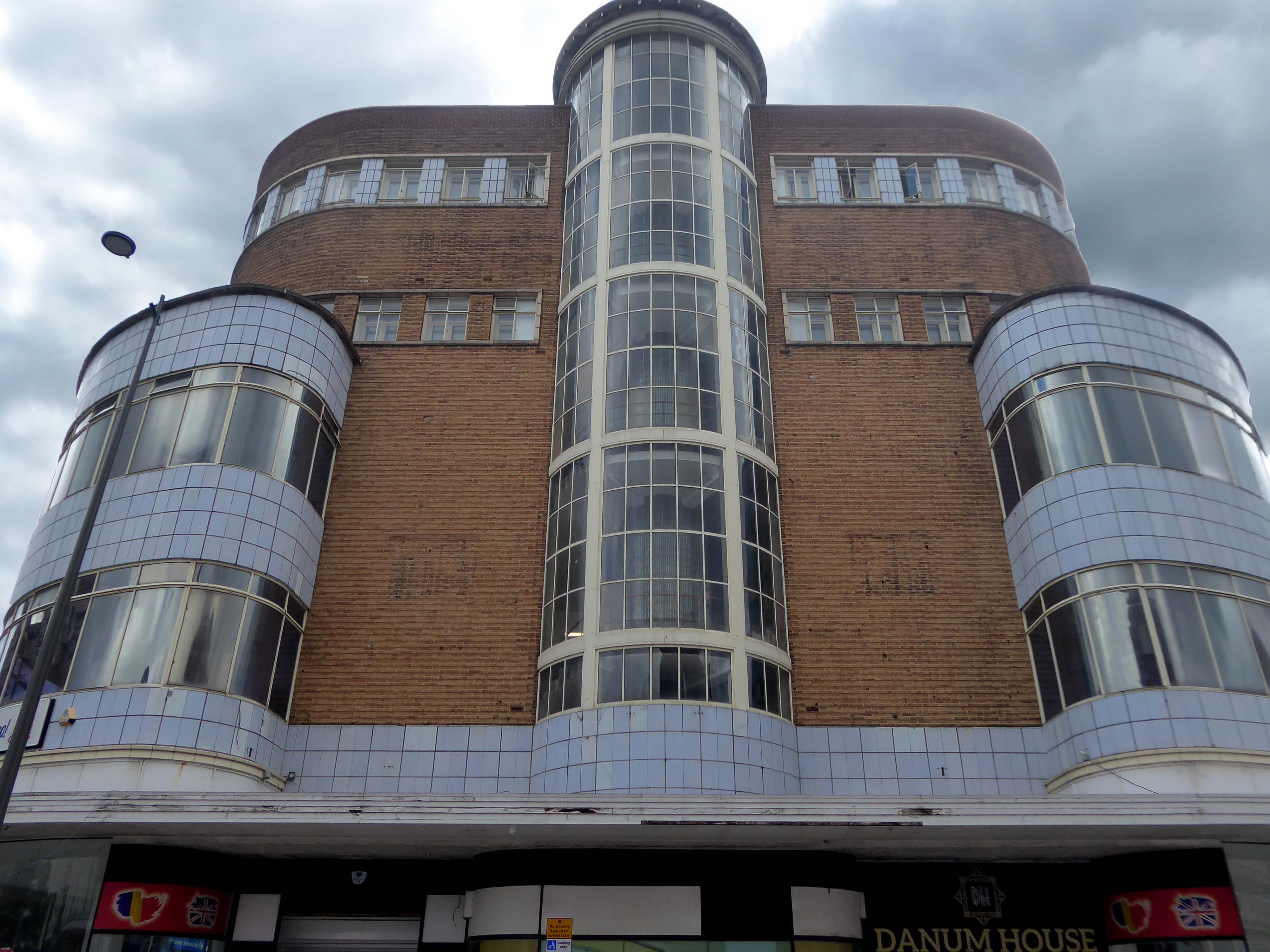
Turn another corner and it’s all at the Co-op now – the Grade II listed Danum Co-operativeBuilding, department store and offices: 1938-40 designed by T H Johnson & Son for the Doncaster Co-operative Society Ltd. 

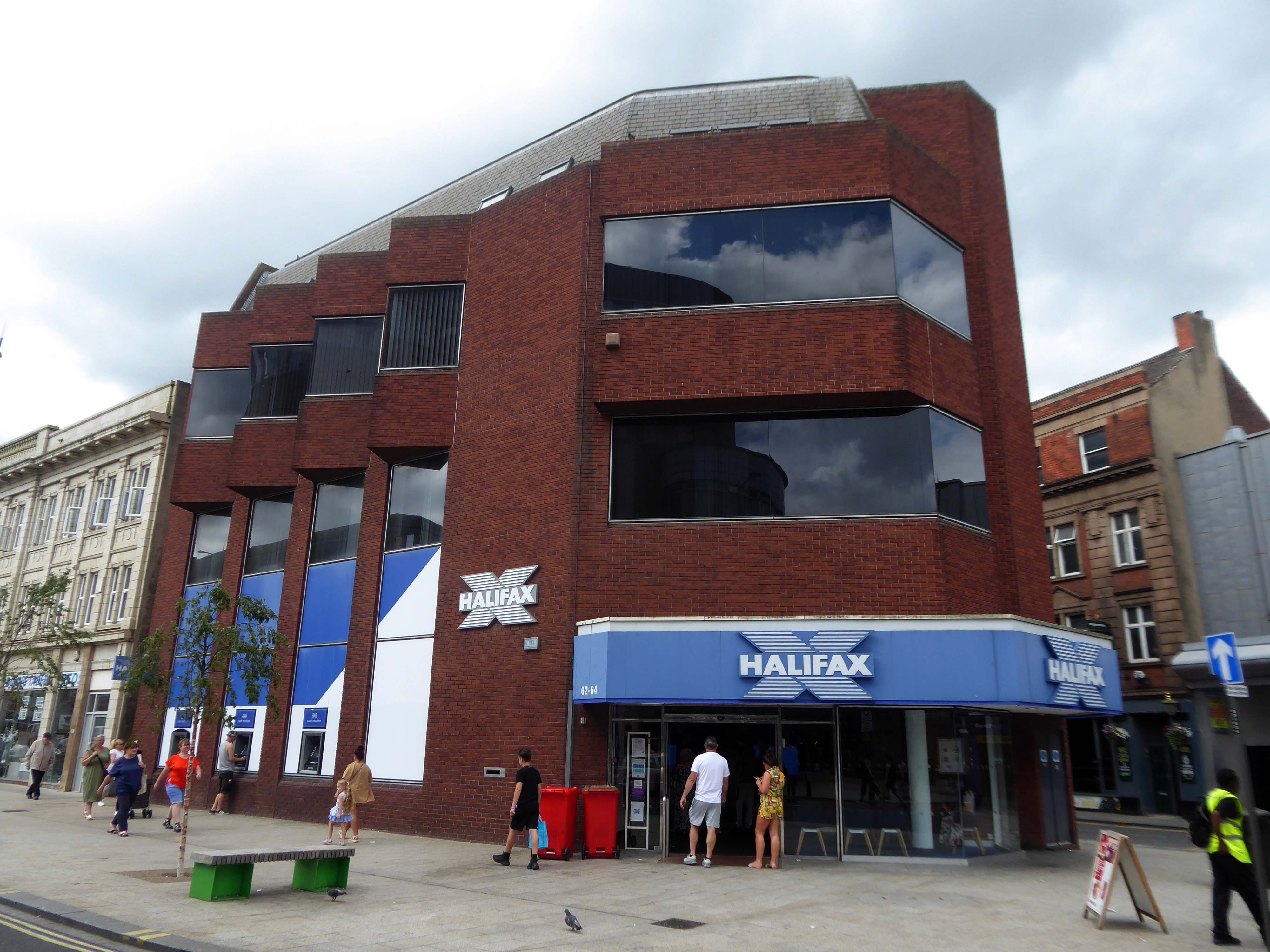
Over the road a zig-zag Halifax Building Society branch, tightly contorted by its corner footprint.

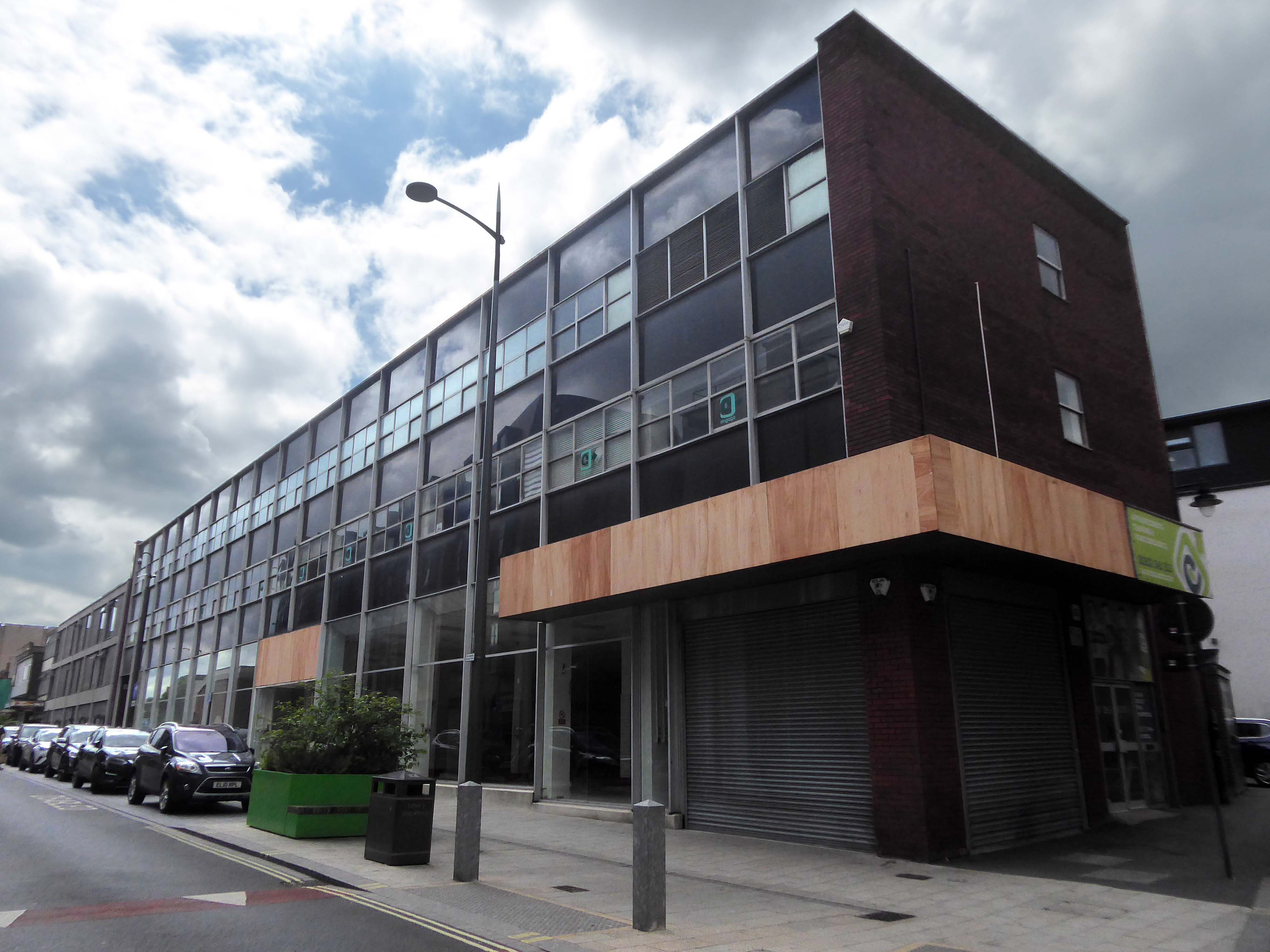
To the right of the Danum, this former Boyes store, having relocated to the Wilko site, the building is ripe for residential conversion.

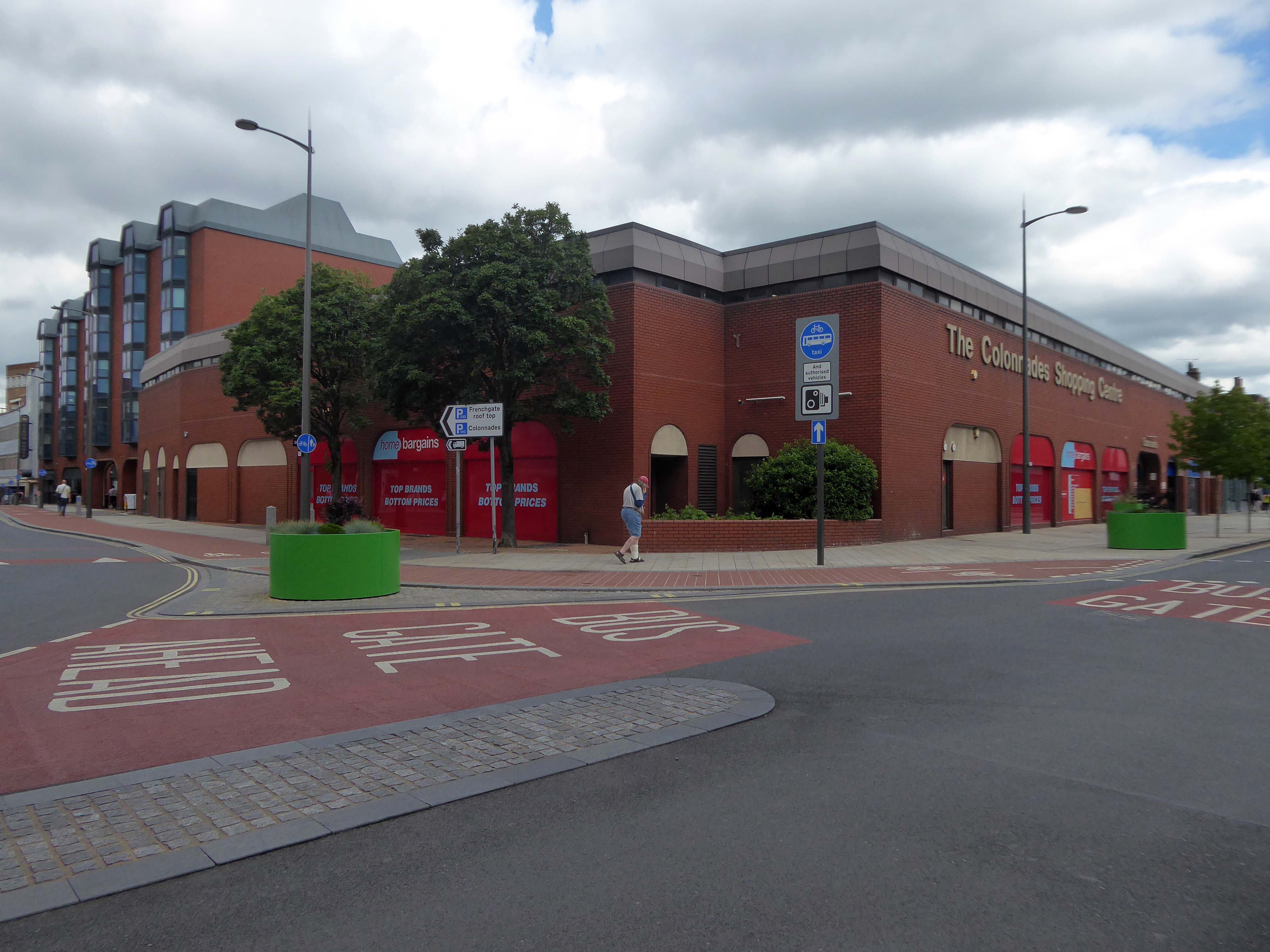
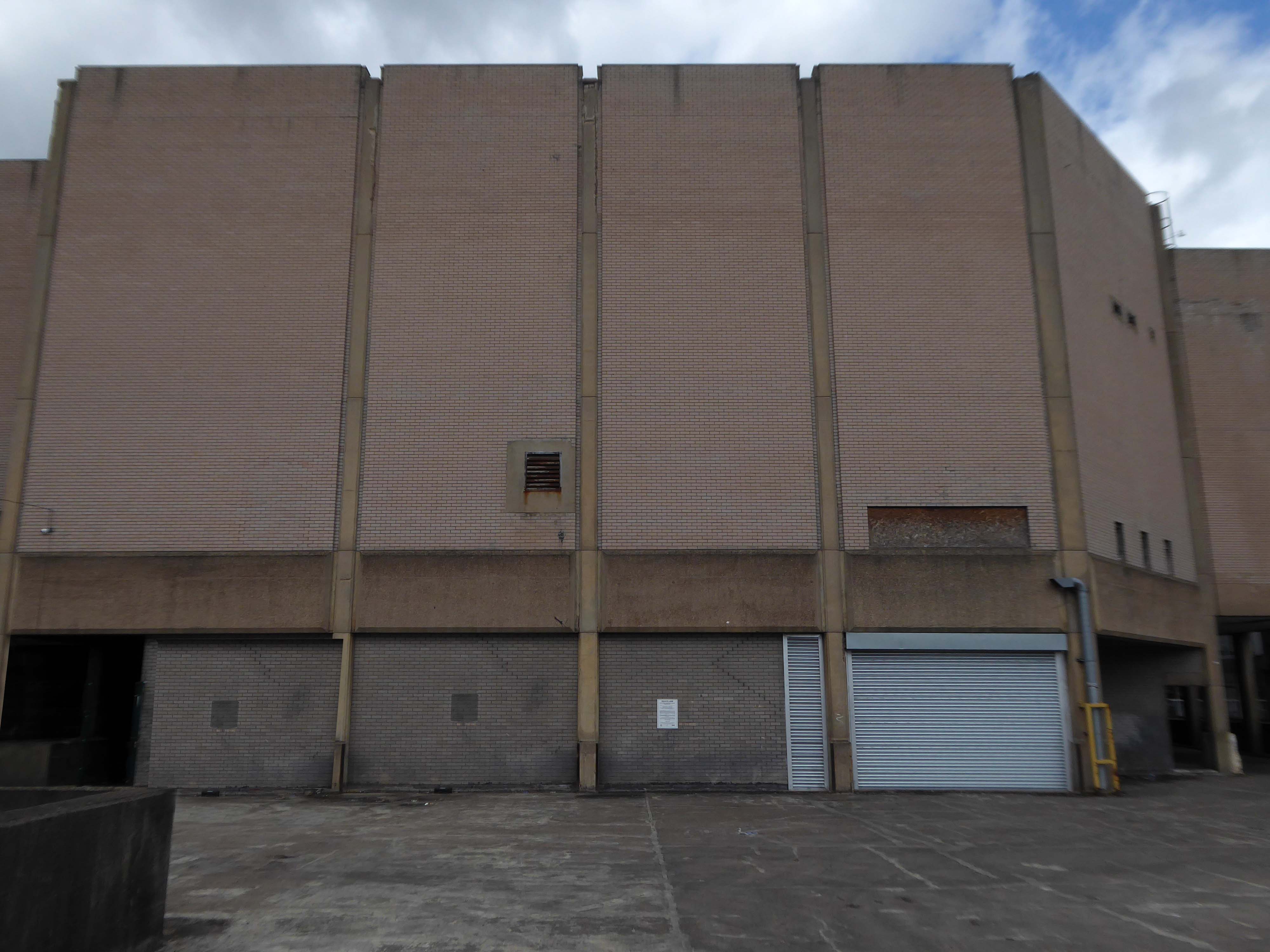
To the left the Colonnades Shopping Centre a fierce angular glass and brick bunker of mixed office and retail space – the sole occupant seeming to be Home Bargains.

A £3.3m makeover of the Colonnades shopping mall in Doncaster town centre was completed in 2019.

The scheme of works was co-ordinated by Doncaster Council and funded by the Sheffield City Region Local Growth Fund.

Built in the 1980s, the brick built building received a major overhaul. The investment saw the visual appearance enhanced inside and out. The five floors were transformed into the prime office space needed in the town centre and the enhancements to the retail area were also finished.

The shift in the town’s axis to the Frenchgate and Market areas, seems to have taken the wind out of its sails.

The former flicks now a redundant pale brick behemoth – no more and ABC.

Architects: C Jack Foster and Alan Morgan

Doncaster’s new £250,000 ABC cinema, part of the Golden Acres development near the town centre, was opened on May 18th 1967.

Closed in January 1981 for conversion into a triple screen it re-opened on 9th April 1981 with seating in the three screens for 477, 201 and 135.

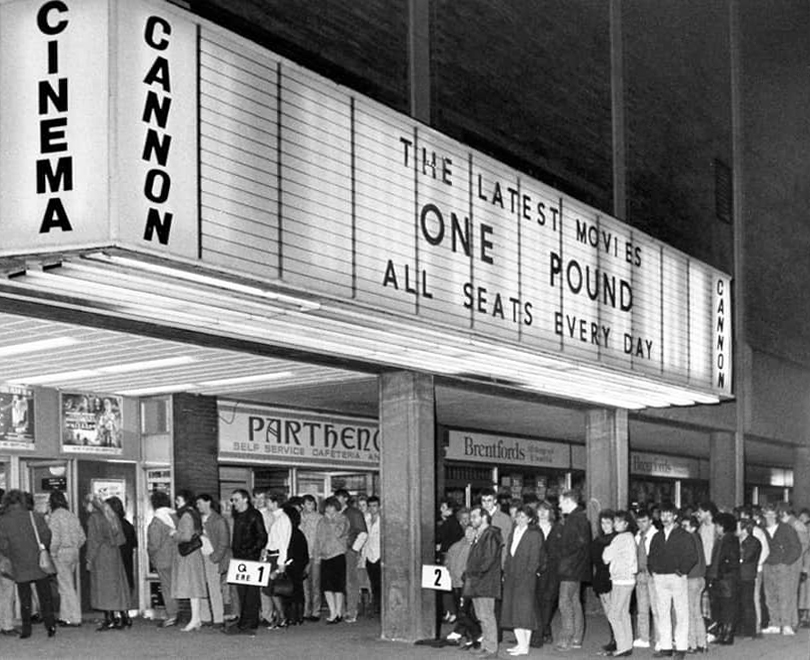
The Cannon Group took control in the mid-1980’s and it was re-named Cannon and it closed on 18th June 1992, screening its opening film Doctor Zhivago.

Cinema Treasures

The Golden Acres development seemed to have morphed into the Waterdale Centre.

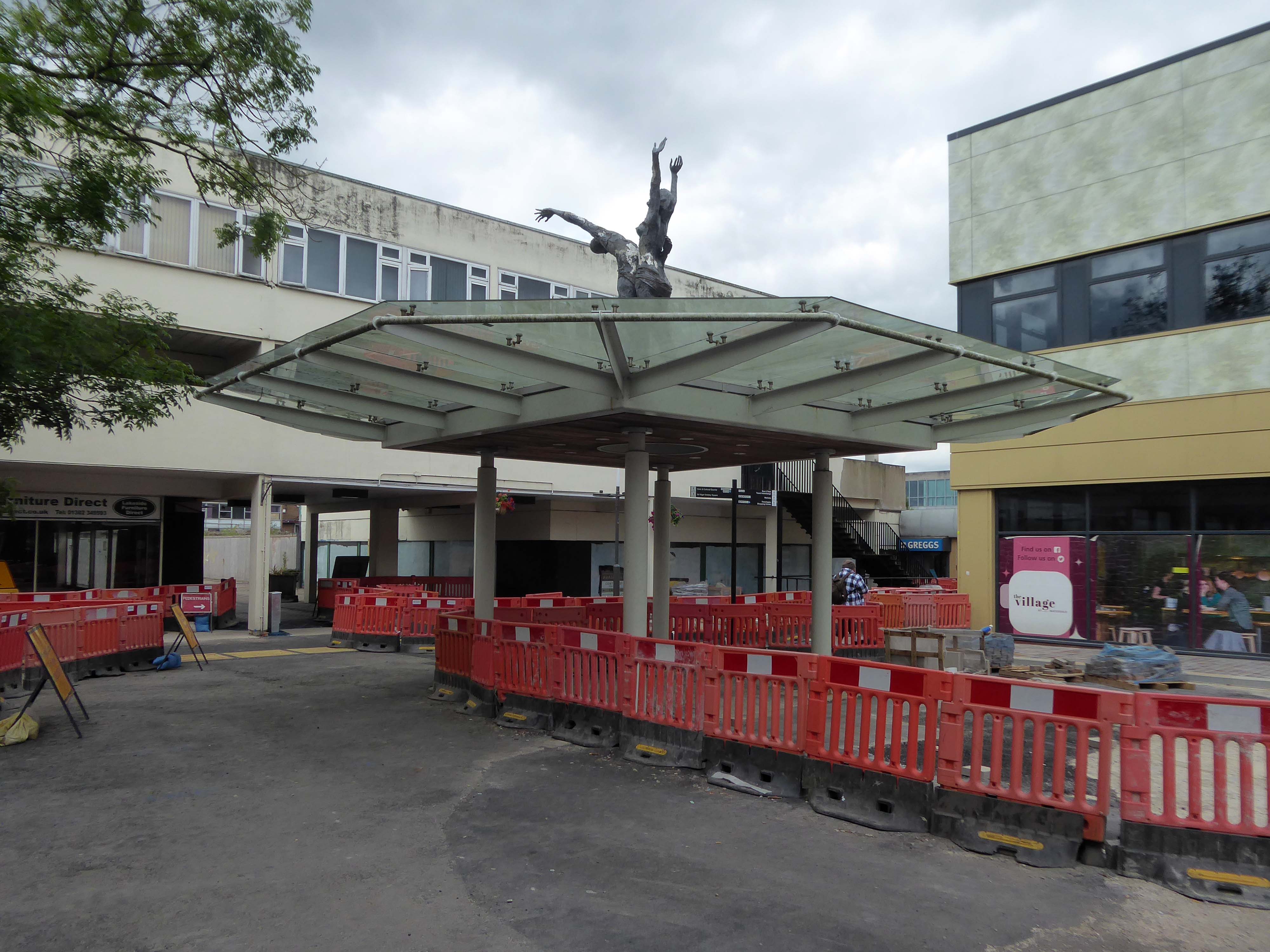
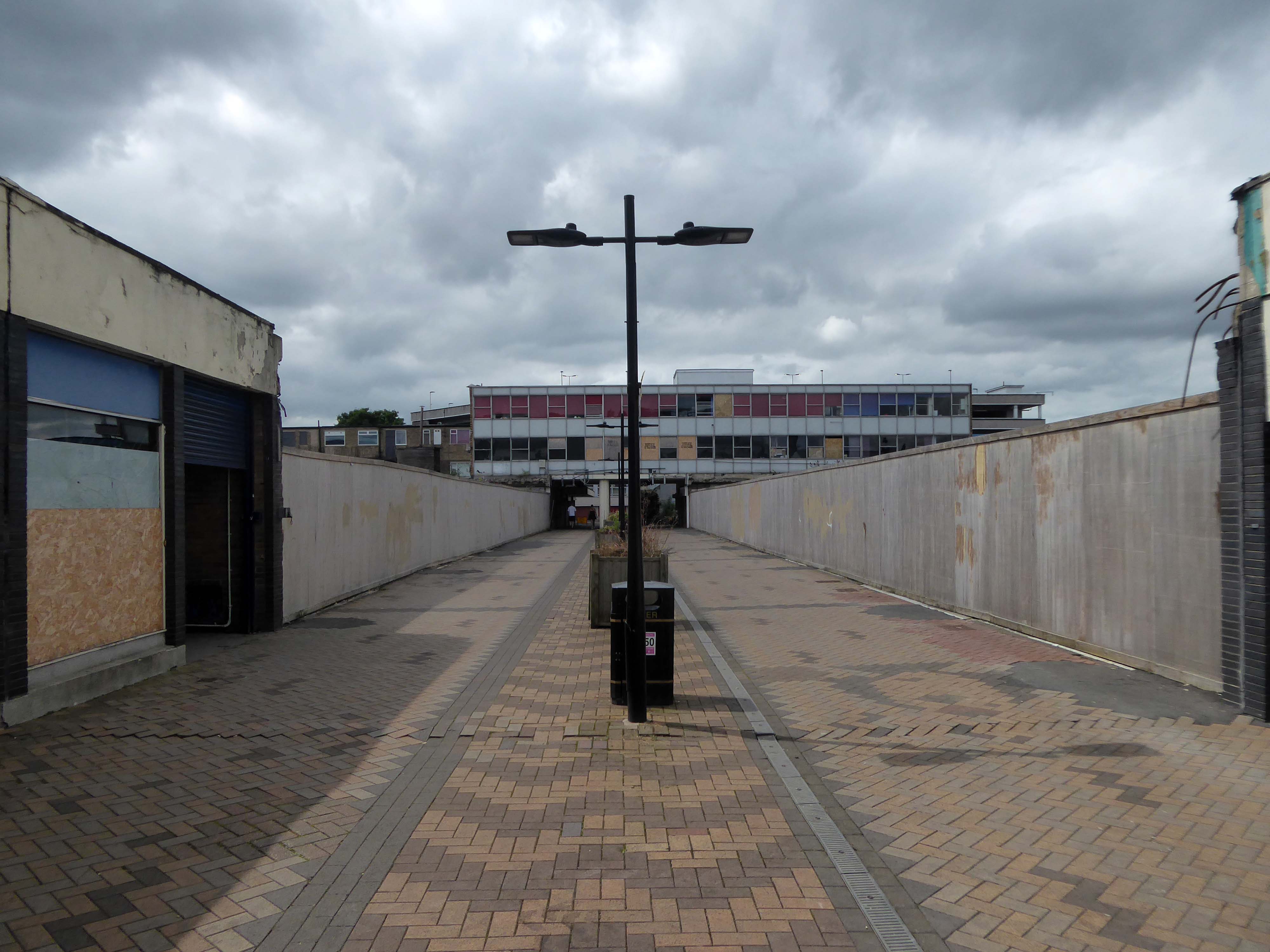
It is currently being reshaped to provide a line of desire twixt the Civic and Cultural areas, from the town centre. There are still the remnants of homes, shops and a pub amongst the demolition – almost inevitably there is new paving.

Waterdale is a well-known part of Doncaster’s town centre. During its heyday it was a bustling area with people flocking to shops and the like – it was a place you had to visit while you were in town. However, it had suffered a steady decline which continued when the southern bus station closed – Frenchgate Interchange opening, and Doncaster College moved to the Hub at the Waterfront. With limited public transport entering the area and no student population on its doorstep, less people had reason to pass through.

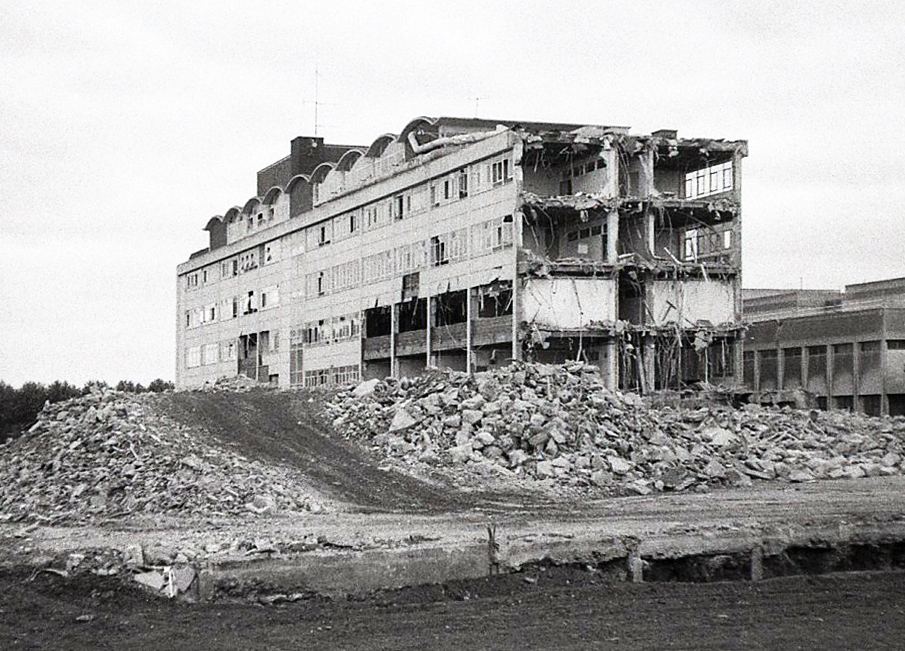
Demolition of the College.

The Civic and Cultural Quarter is transforming Waterdale reconnecting it to the town centre. The quality and content of the plans is raising the profile of this part of town to new levels. The carefully thought out layout and consistent building design is giving the area a clear identity. It is already becoming a big attraction that draws people in and encourages redevelopment in the neighbouring areas.

Doncaster Gov

The relocated Lovers are still in love.

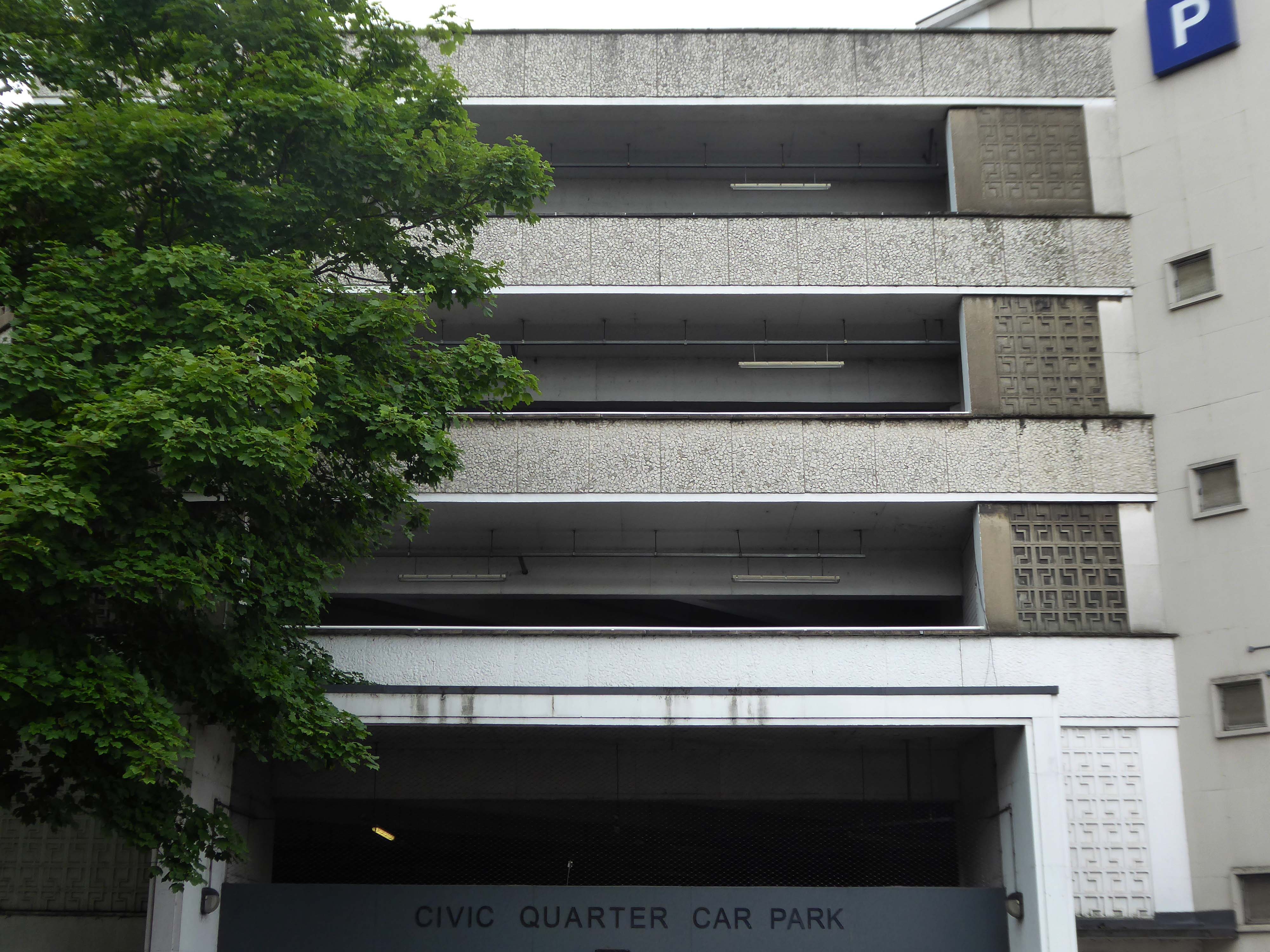
The weary walker is diverted toward the Civic Quarter Car Park.

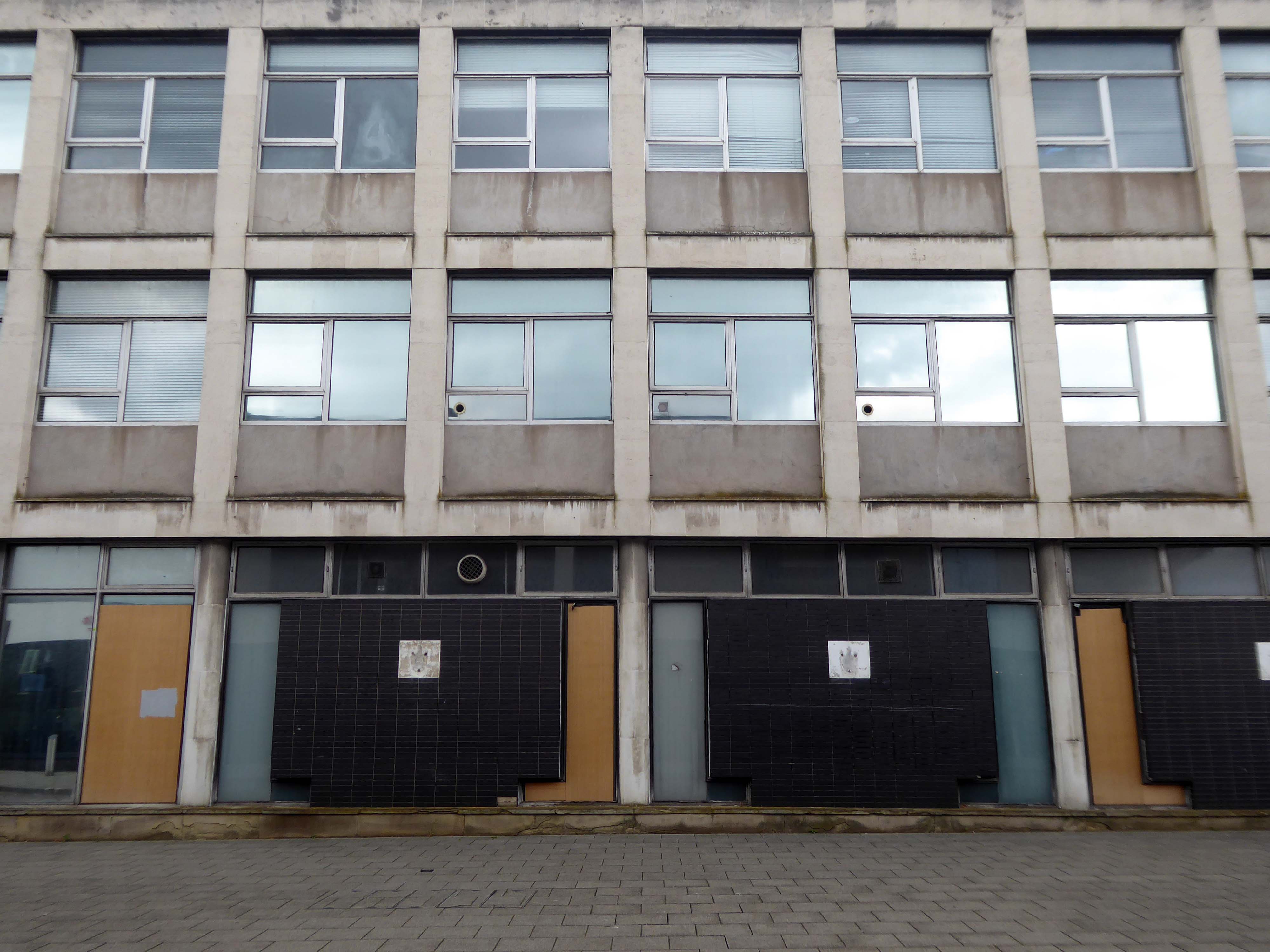
The former Civic Offices are to be demolished.

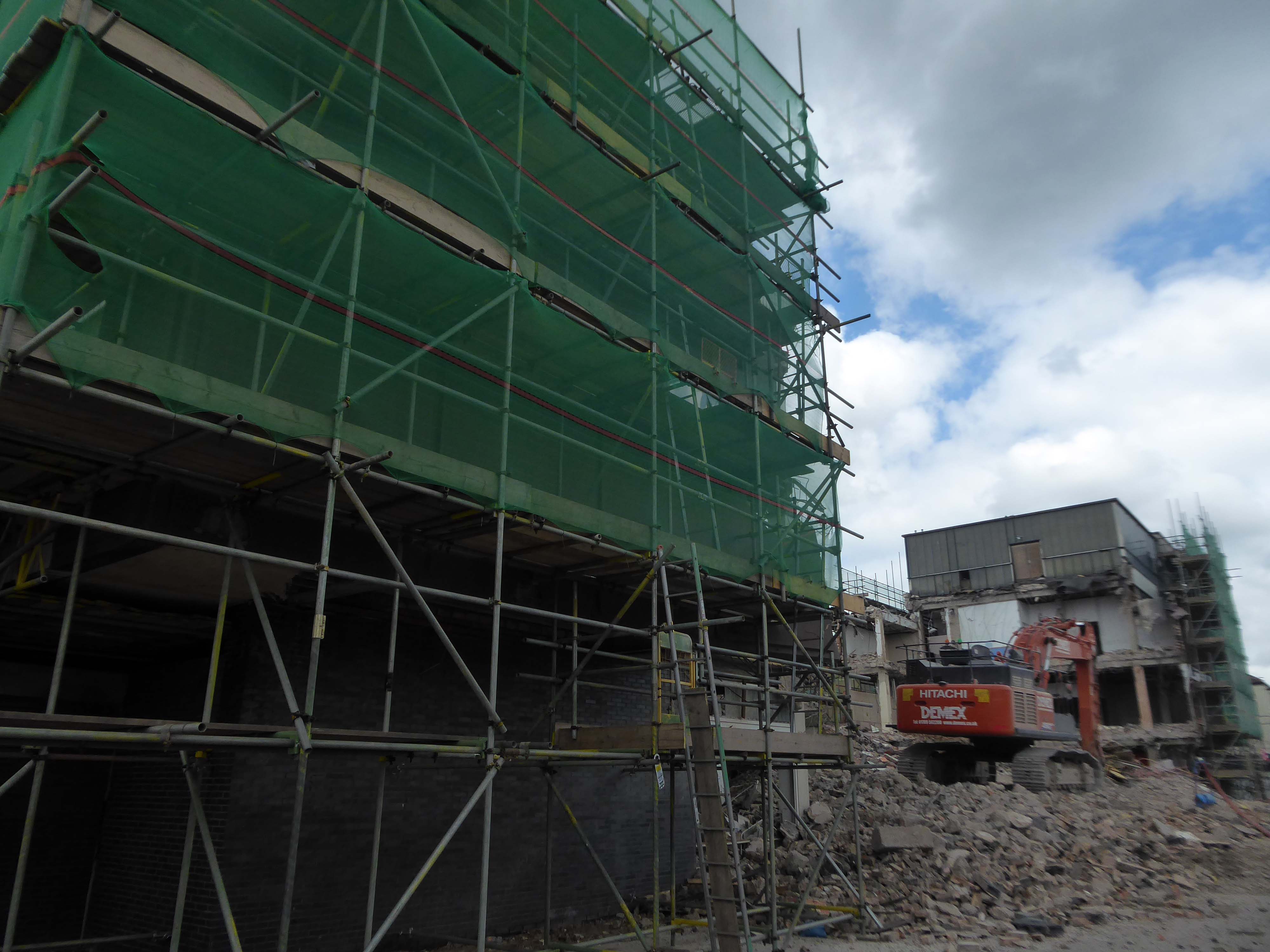
Demolition of the Central Library is well under way.

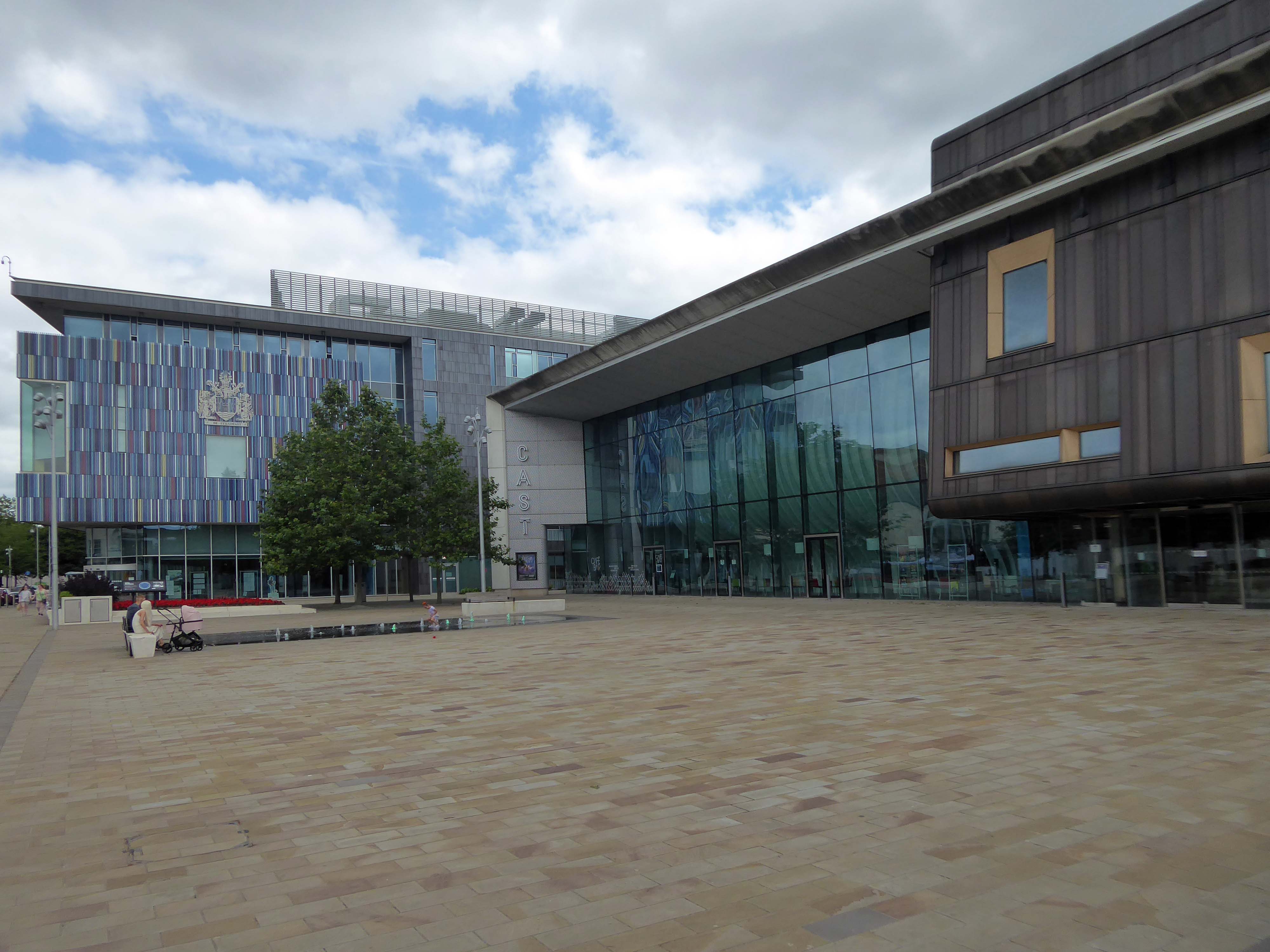
Facing the former library we find the CAST Theatre, Civic Buildings and Savoy Cinema, grouped around Sir Nigel Gresley Square.

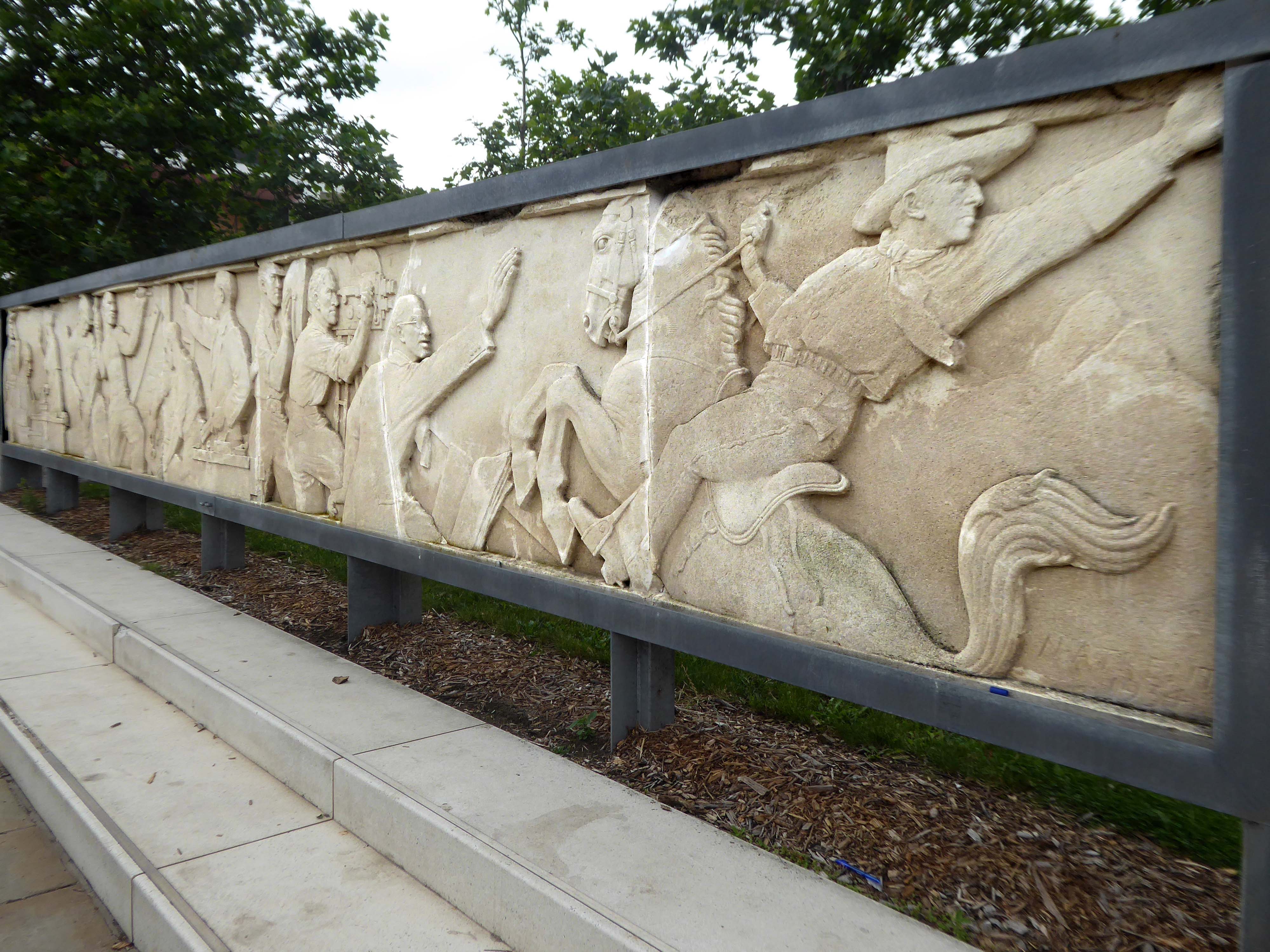
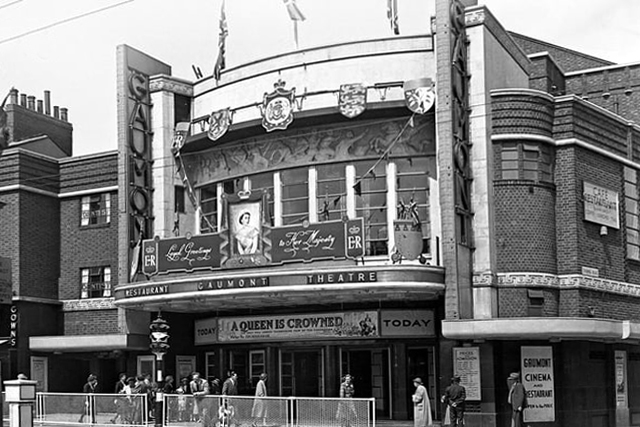
Within the square is a frieze, salvaged from the former Gaumont Cinema, the work of sculptor Newbury Abbot Trent.

The Gaumont Palace Theatre in Hall Gate at the corner of Thorne Road, Doncaster opened on 3rd September 1934 with Jesse Matthews in Evergreen.

It was designed by architects WE Trent and W Sydney Trent.

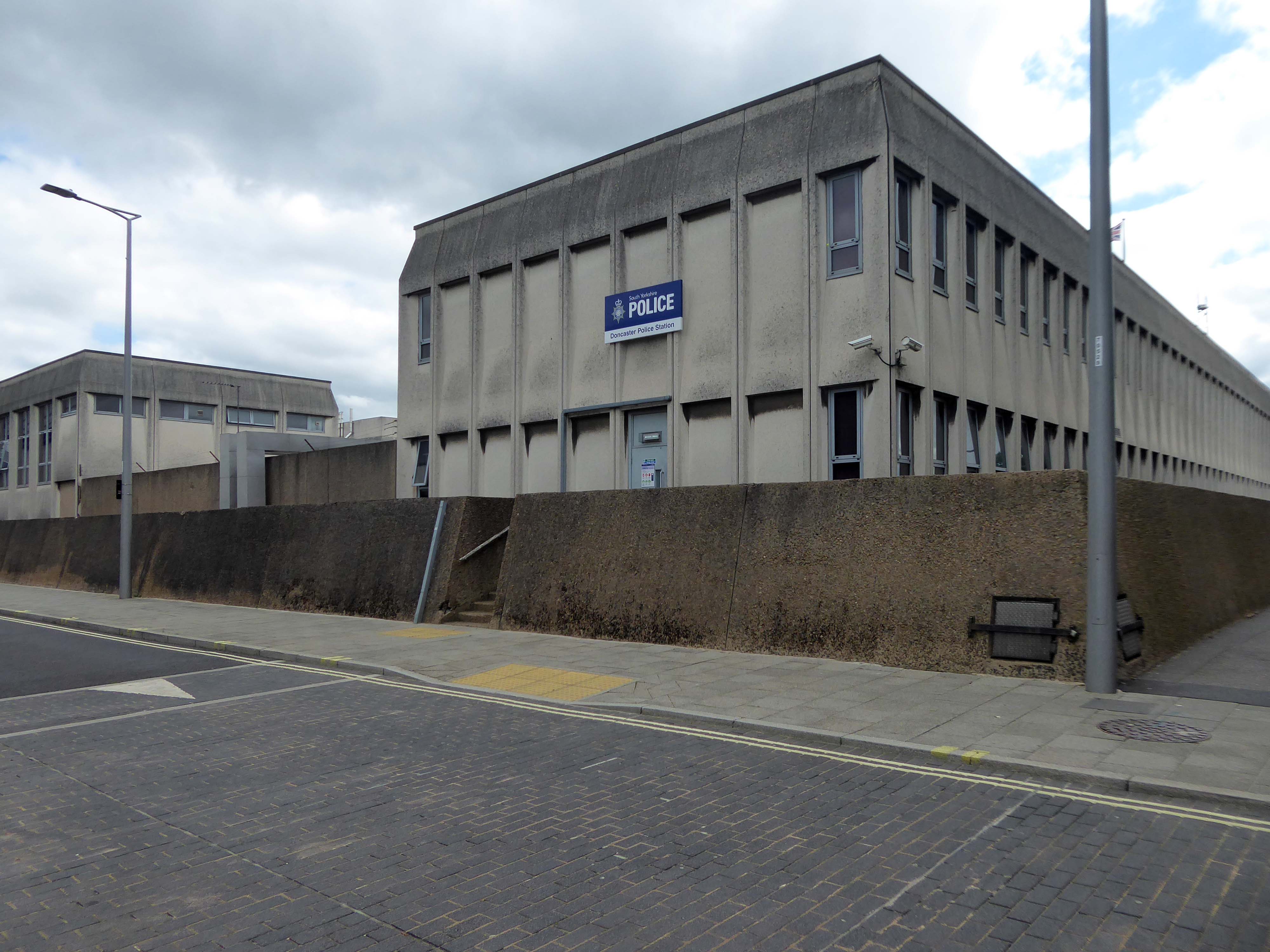
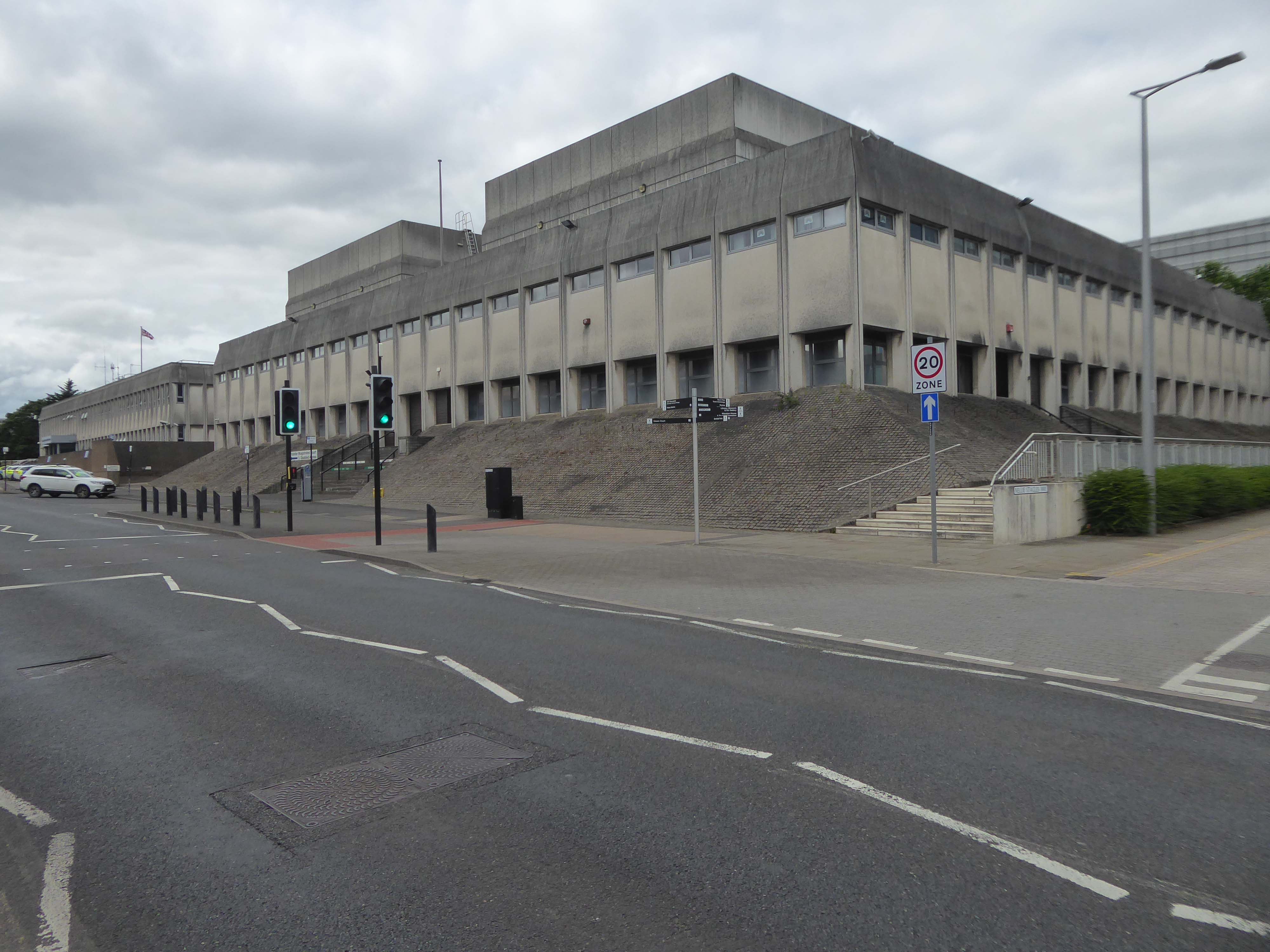
In 1949 WH Price the Borough Surveyor produced an outline plan for the area, with a green space at its heart, it was never realised. In 1955 Frederick Gibberd produced his plan to include a ten storey Town Hall, Art School, Technical College and Civic Theatre, revised and reduced in 1963 – eventually his Police Station and Law Courts were completed in 1969.

The former NHS Clinic at the ‘T Junction’ is transformed into a day care service.

The former Museum and Art Gallery now an archive and local studies centre.

The building was designed in the office of the Doncaster Borough Architect’s Department in a team led by borough architect Mr LJ Tucker. 

The ceramic designs were a later addition when it was discovered that the large open areas of glass overheated almost everything inside, the work was undertaken by LJ Tucker and family.

The sculptural work by Franta Belsky, now has a skip for company.

As a footnote the work by Fabio Barraclough reveals a murky past.

Barraclough was born in Madrid in 1923, to a Spanish mother and Yorkshire father who founded Madrid’s Chamber of Commerce. He moved to London with his family in the 1930s as a refugee from Francoist Spain. He taught fine art and sculpture at Rugby School, where colleagues considered him “highly entertaining, a most unorthodox and highly gifted” teacher. He established himself during the 1960s and early 1970s as an authority on sculpture, publishing in academic journals and becoming a member of the Royal British Society of Sculptors.

In 2000, it was revealed that Barraclough, while outwardly living the life of anti-apartheid activist since the 1970s, had been a paid informant of the South African state security police. The media was used to promote his image as a “brilliant, liberal artist with apparently impeccable credentials” in order to gain public trust, while he was funnelling money from anti-apartheid groups to the police. He died on 6th January 2019.

Wikipedia

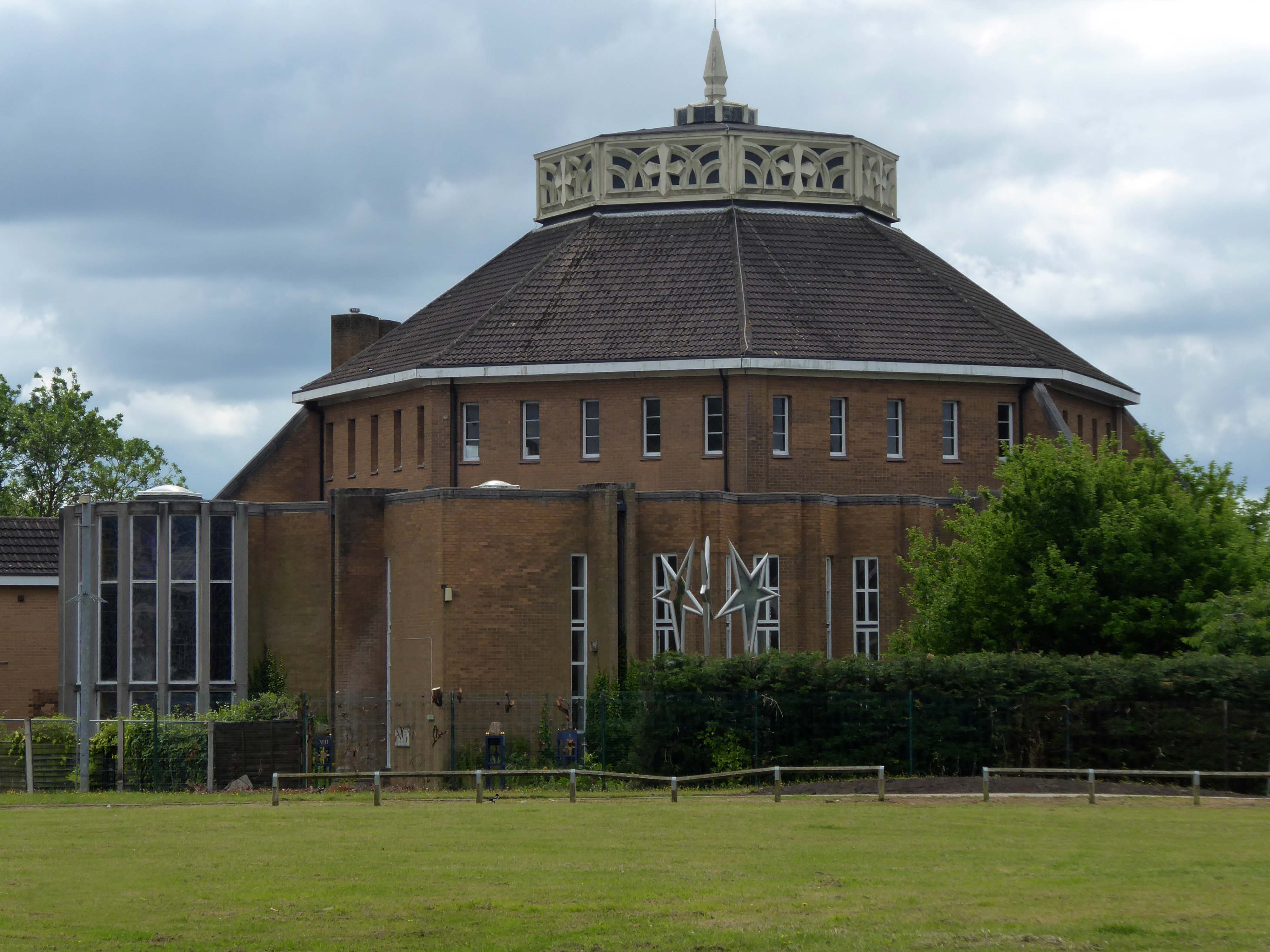
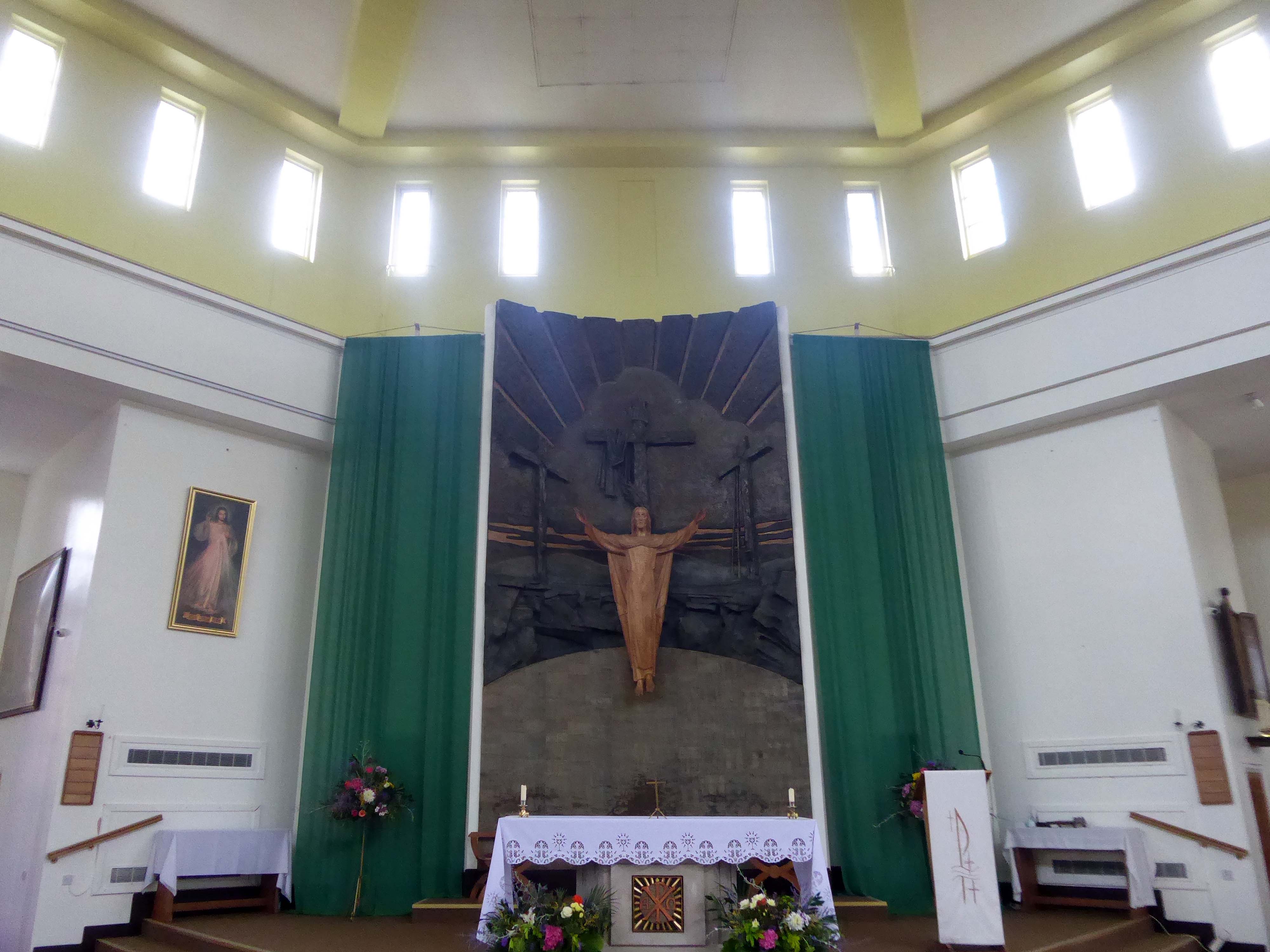
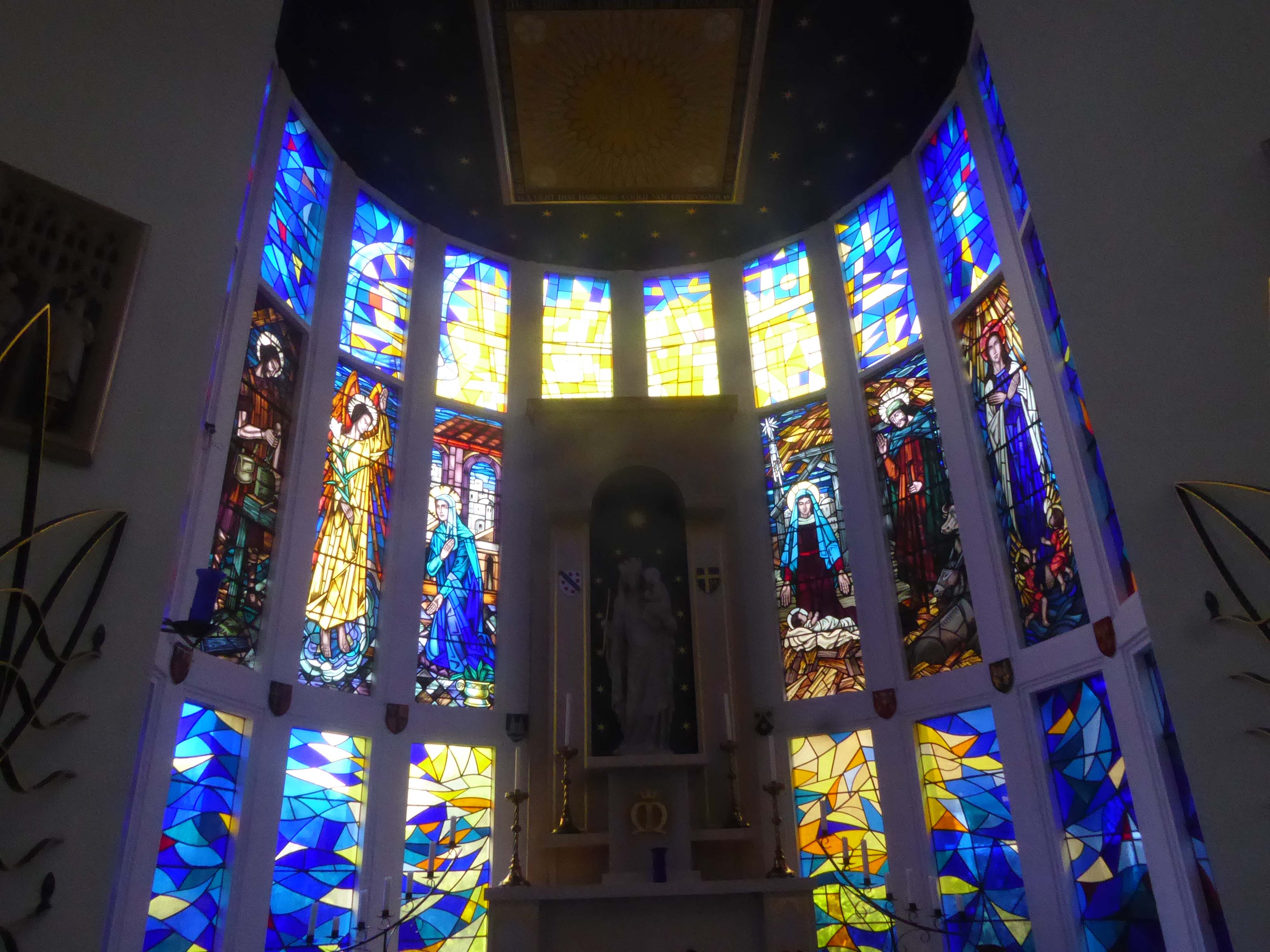
Over the way faros the green sward is St Peter in Chains RC – A large and striking design by JH Langtry-Langton, incorporating important furnishings by J F Bentley from the predecessor church, along with good furnishings of the 1970s. The churches houses the modern successor to the medieval shrine of Our Lady of Doncaster.

Figurative stained glass by Patrick Feeny for Hardman in 1973 and abstract glass fitted in 2000 as part of reordering and revival of the shrine.

Further information on Taking Stock.

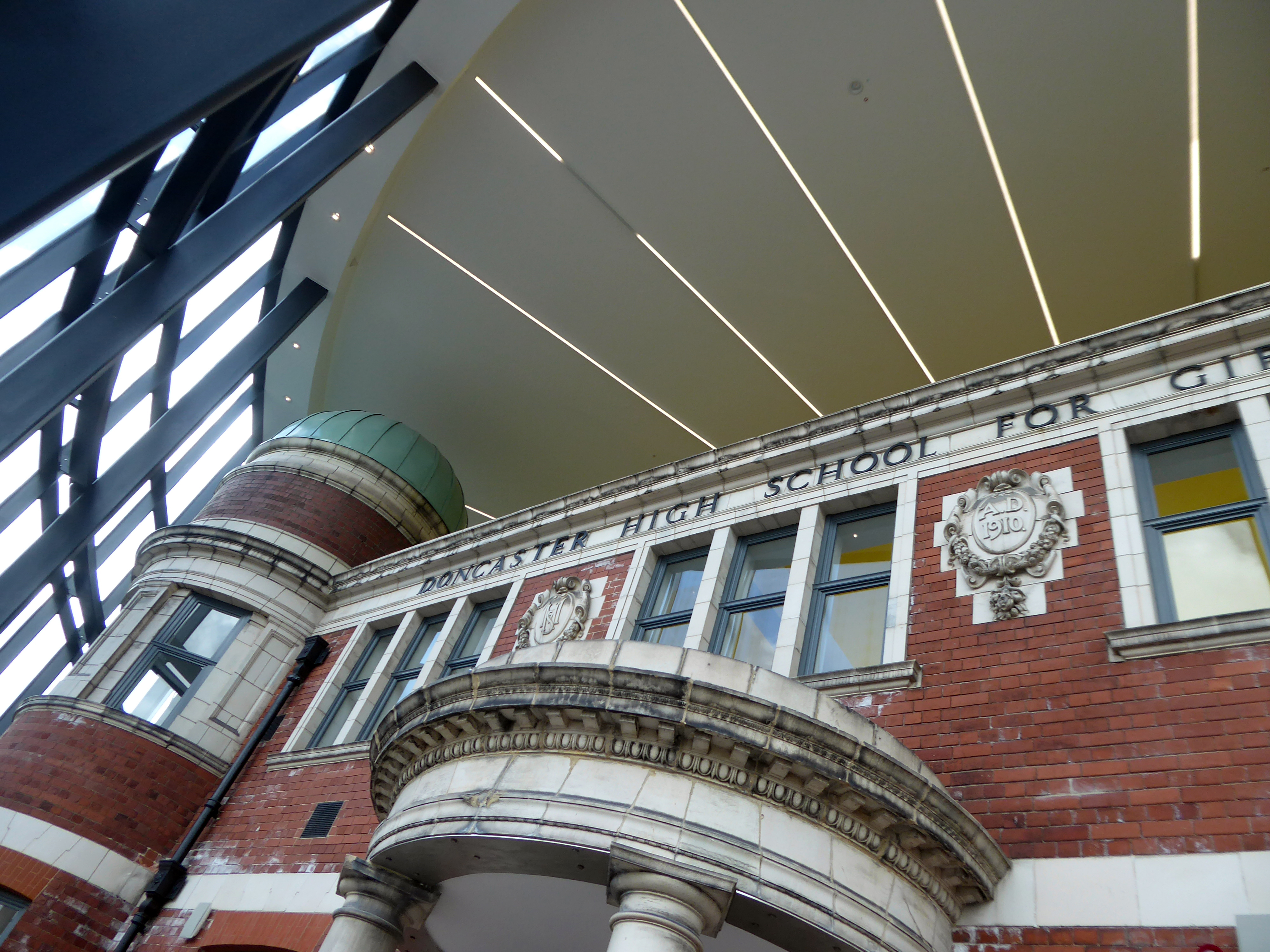
A special mention for the Danum Cultural Hub

Designed by architects Bond Bryan and built by main contractor Willmott Dixon, the new cultural and learning hub has been created following the restoration of four existing buildings. 

A key focal point of the scheme is the restored frontage of the Edwardian former Doncaster High School for Girls, which has been framed by Senior’s slimline SF52 aluminium curtain wall and showcased within a new steel-frame building. The glazed facade, which was fabricated and installed by Senior’s supply chain partner Chemplas, also features Senior’s aluminium commercial doors.

RIBA Journal

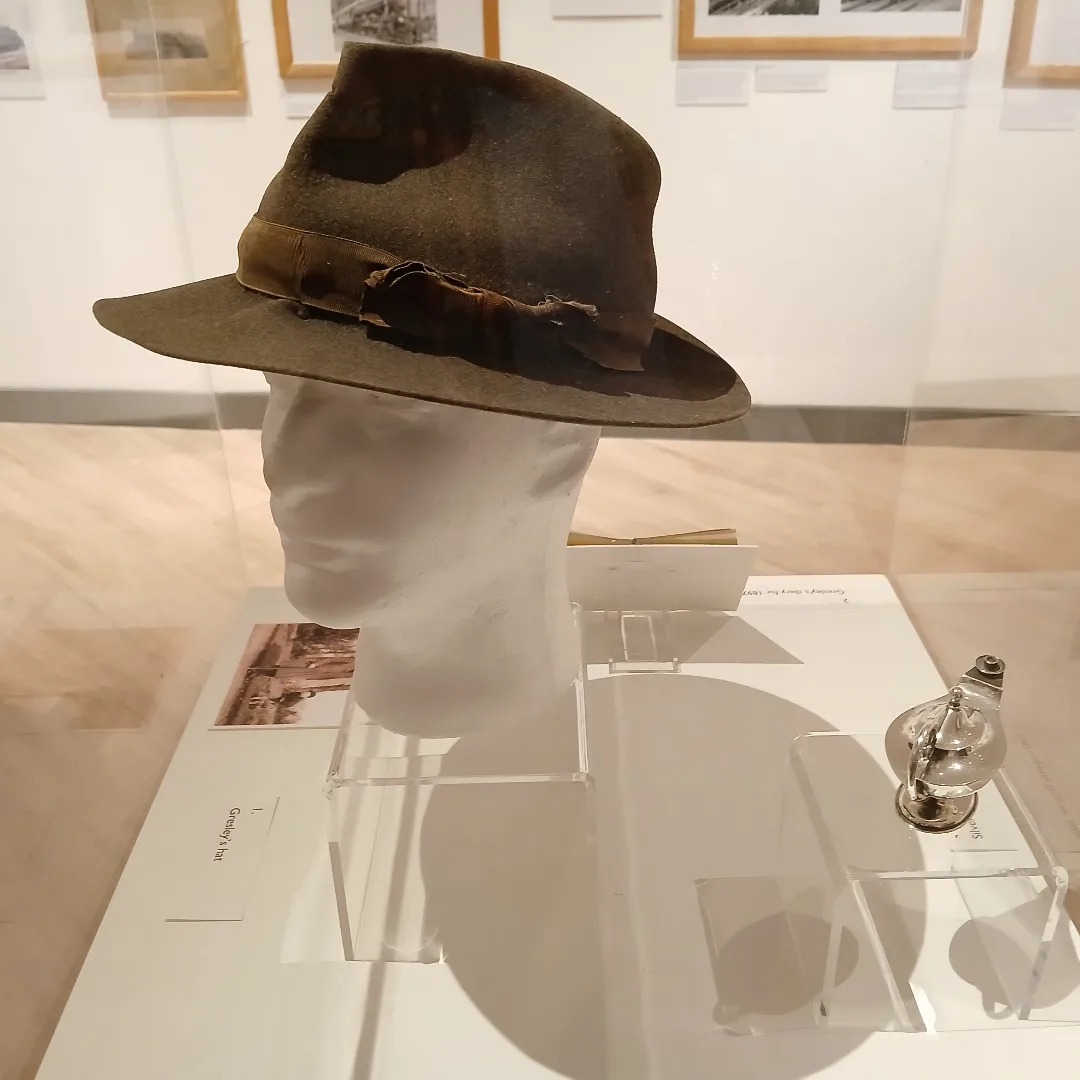
Where I was delighted to see Sir Nigel Gresley’s hat.

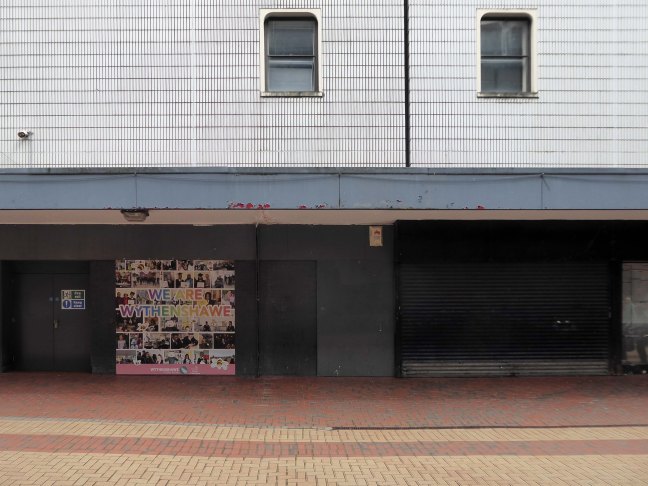
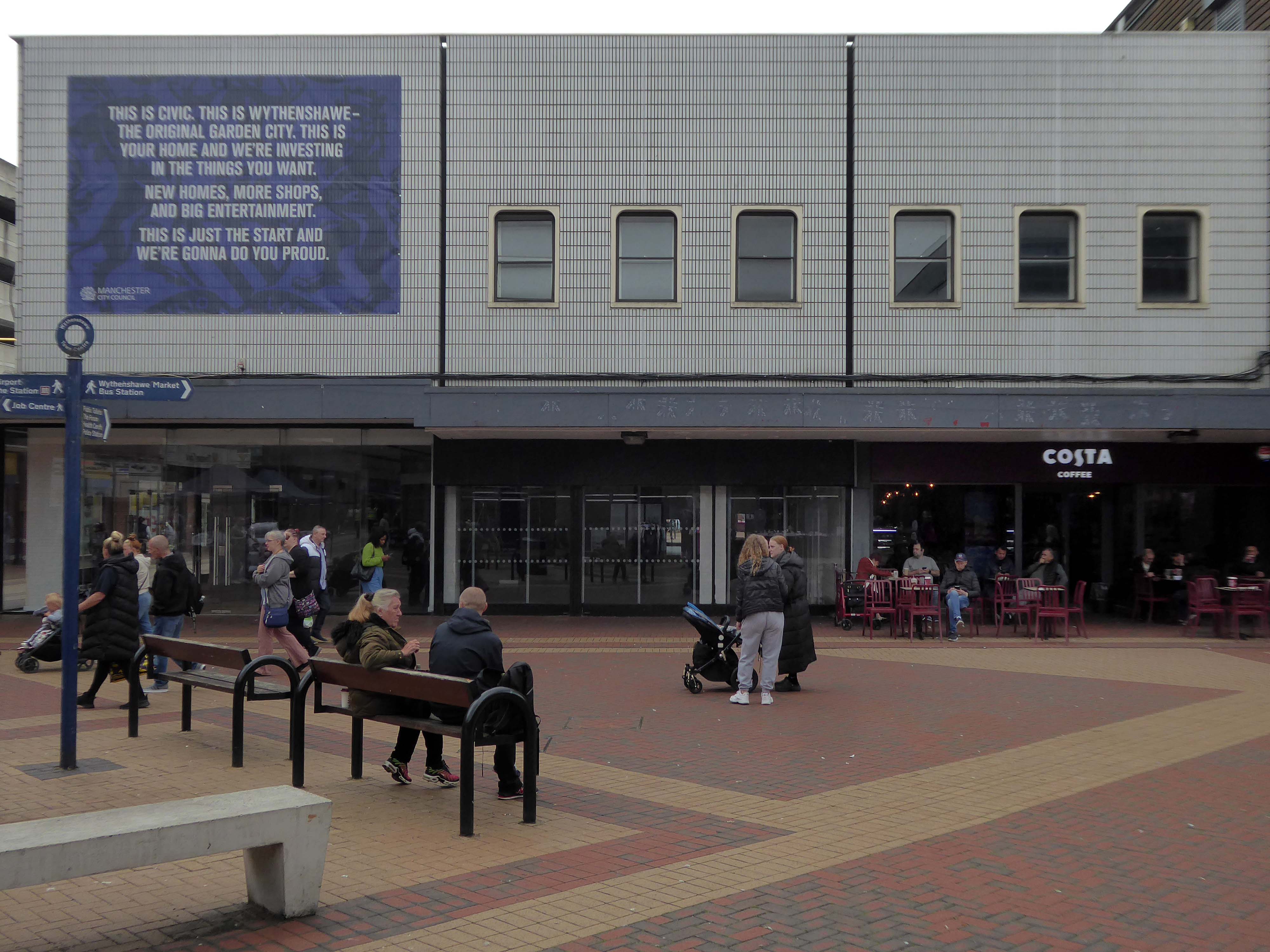
Civic Wythenshawe 2024

I wrote about the history of Civic in 2020.

Also visiting the multi-storey car park yesterday.

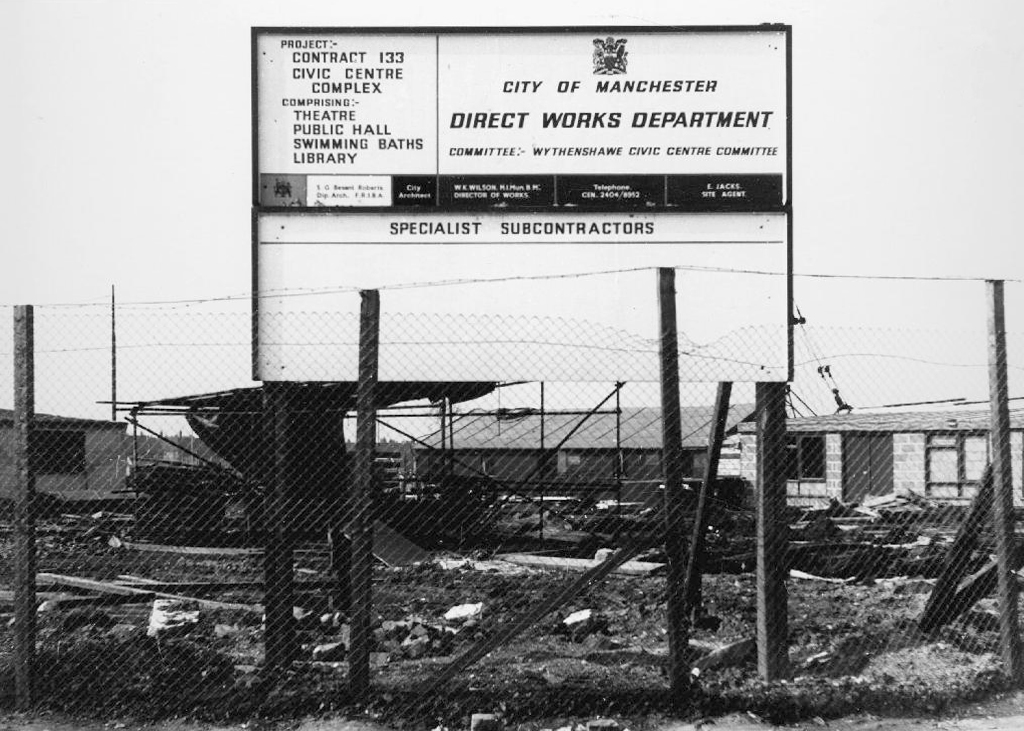
The work of Manchester City Architect Sydney George Besant-Roberts and his team.

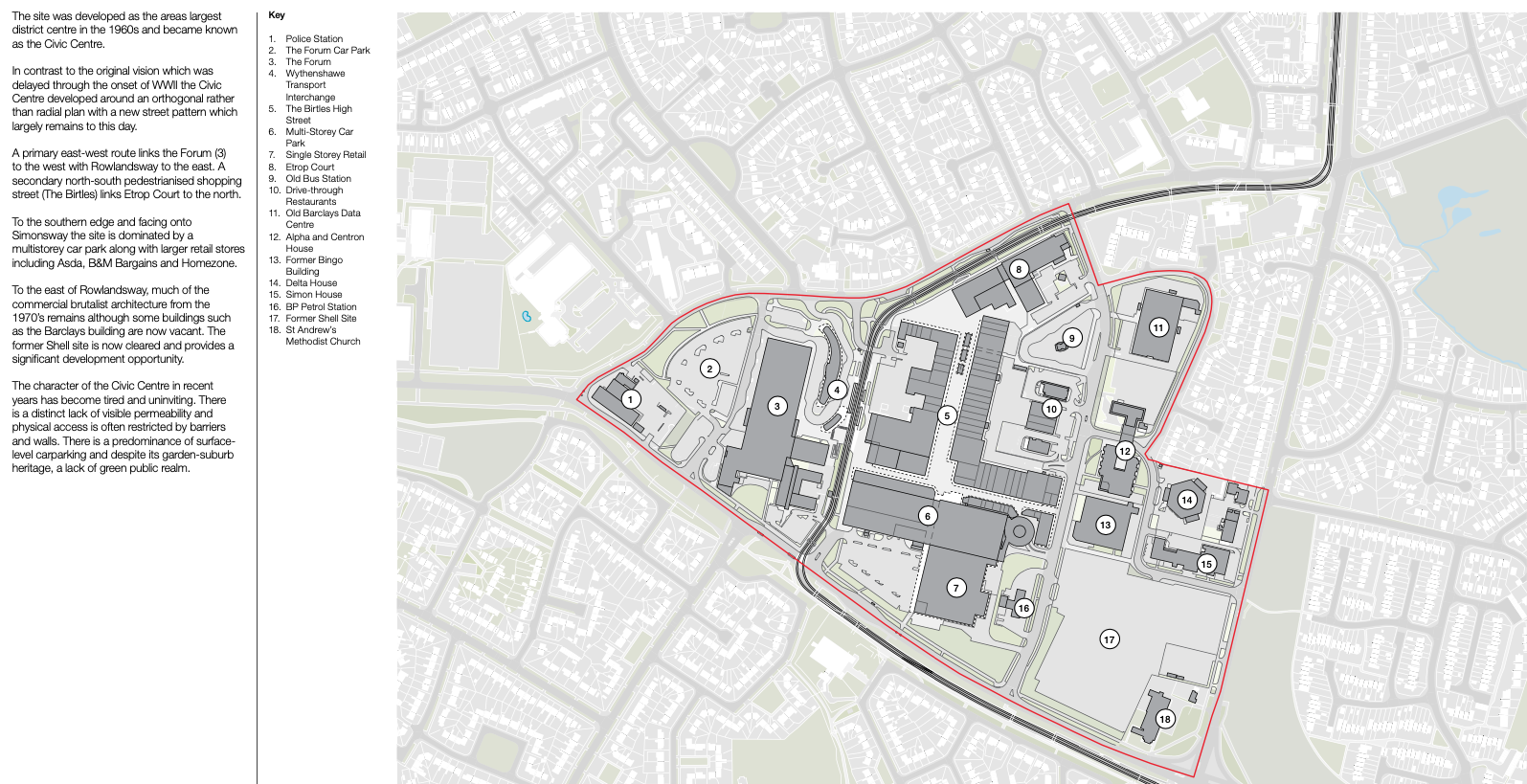
Work began in the interwar years, and continued following the hiatus of 1939-45. The shopping centre named the Civic Centre was open in 1963, the actual Civic Centre containing a swimming pool, theatre, public hall and library in 1971.

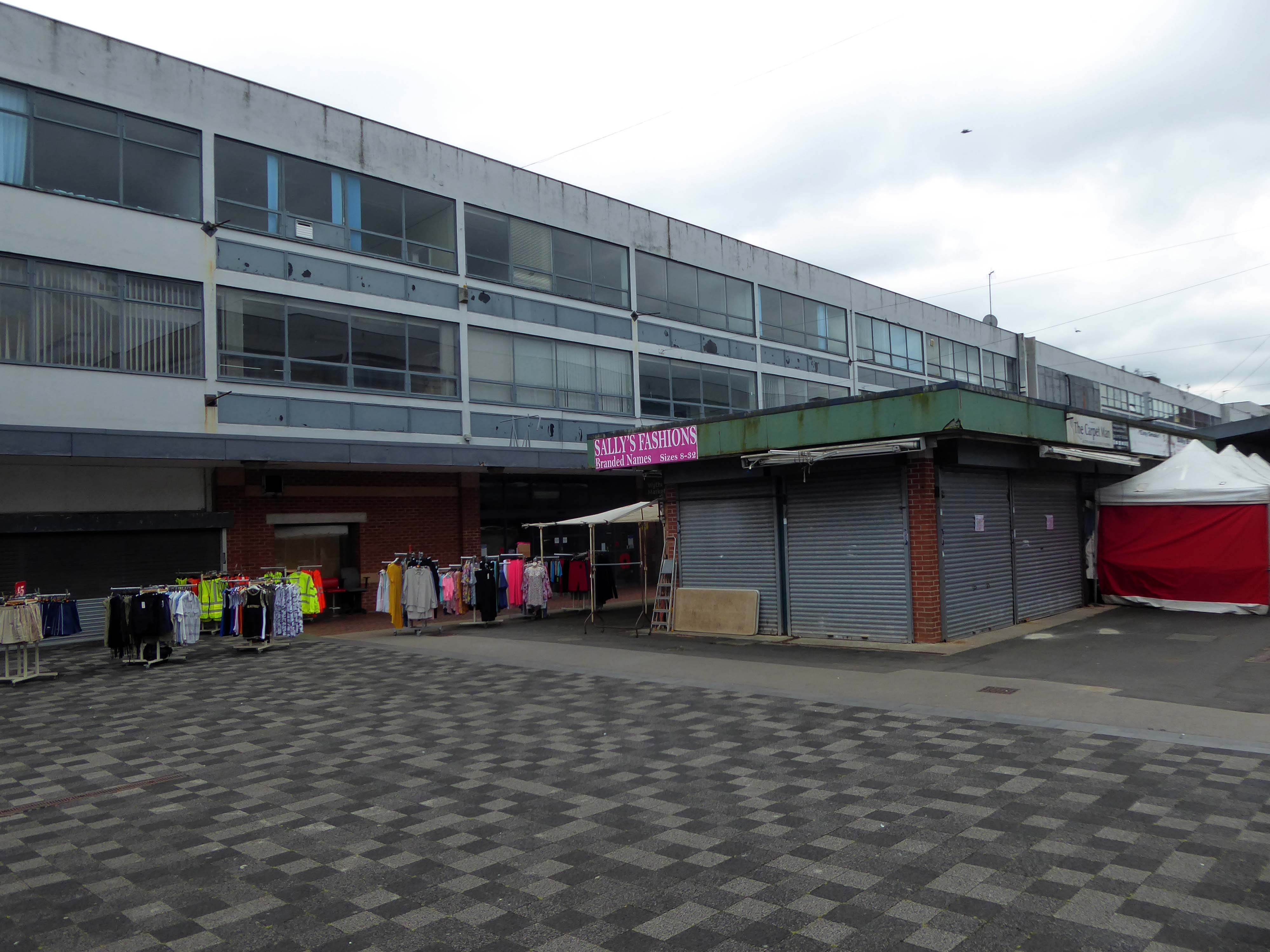
Here I am again four years later, taking a look at how it looks today.

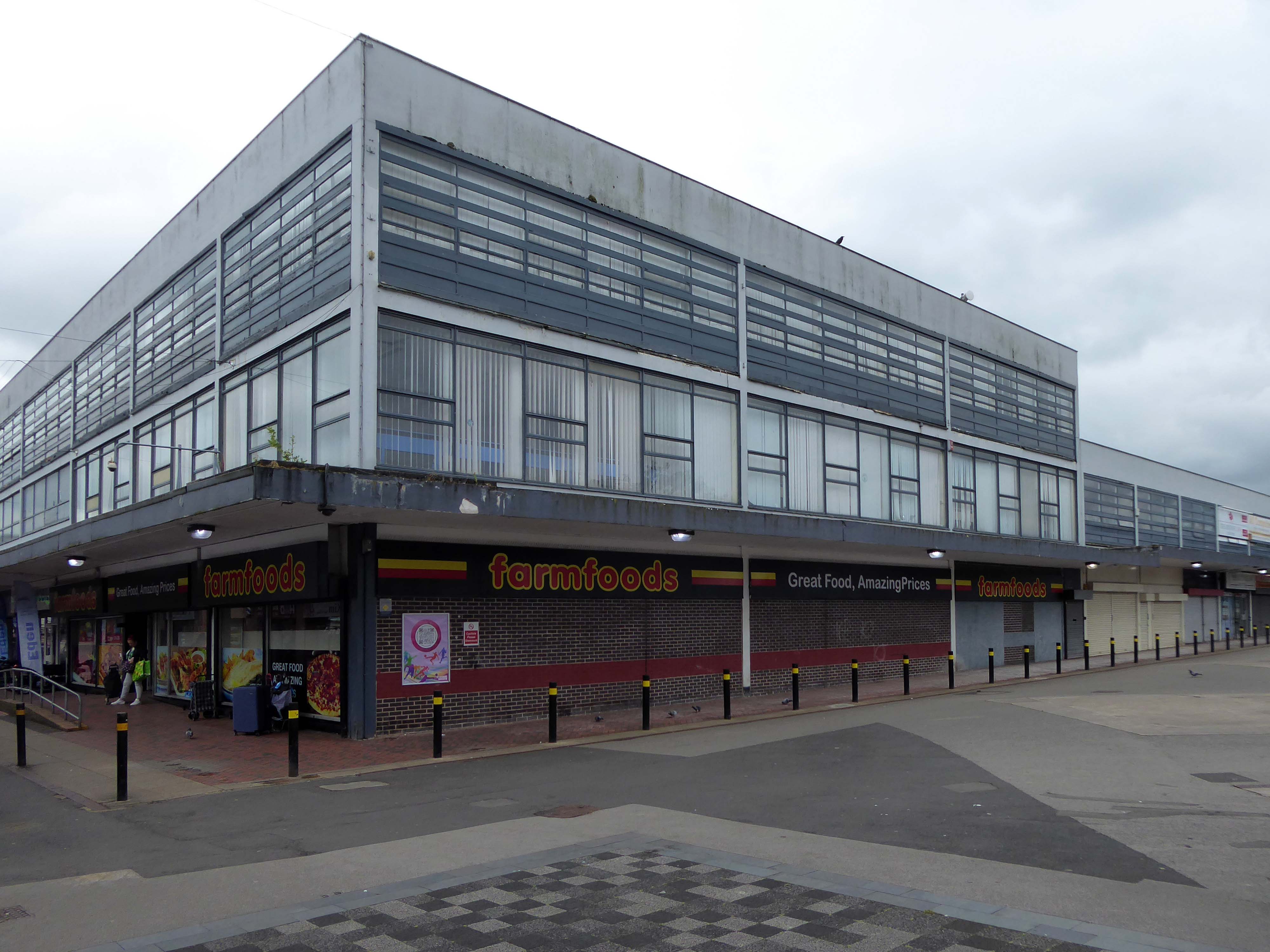
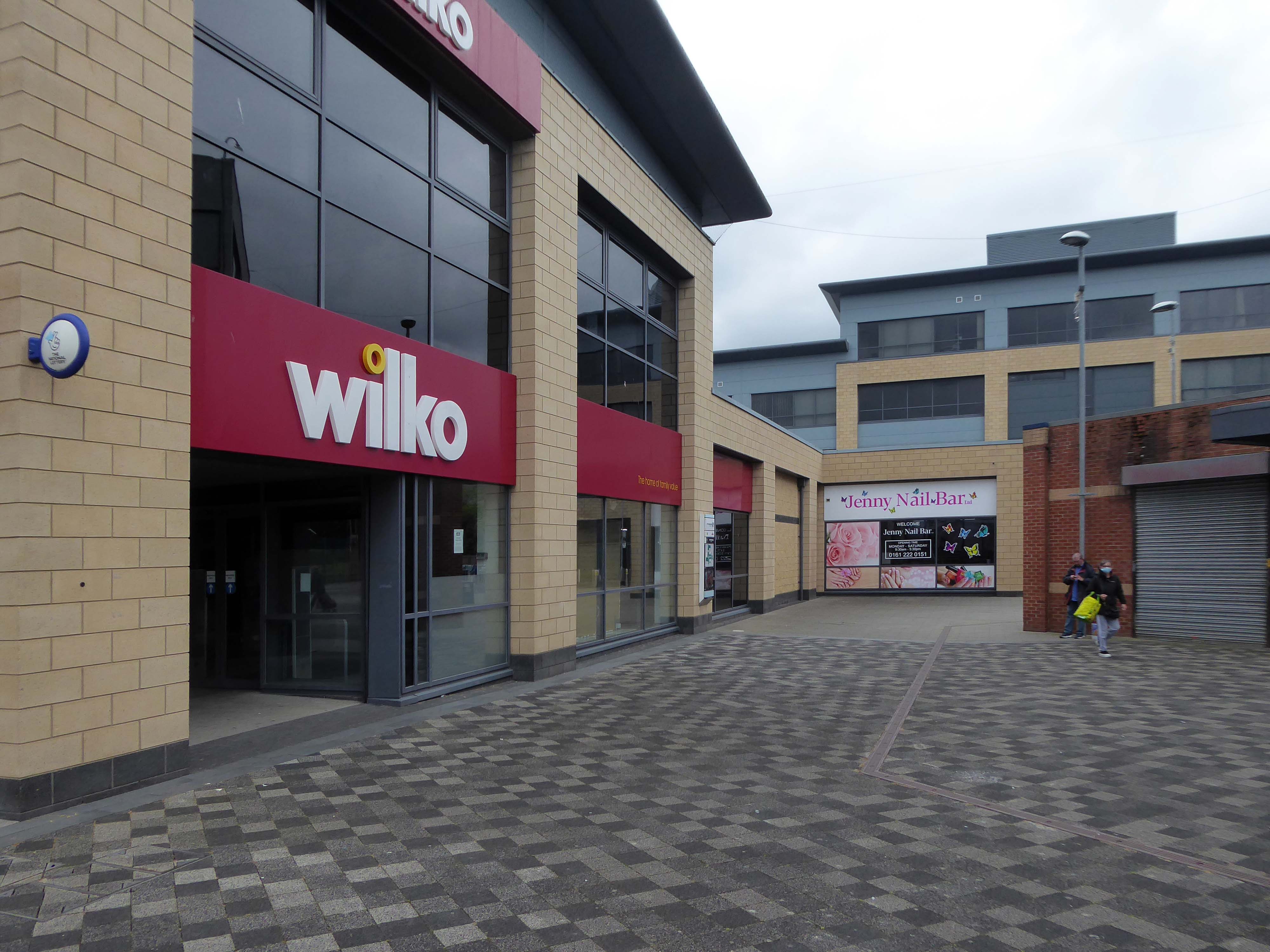
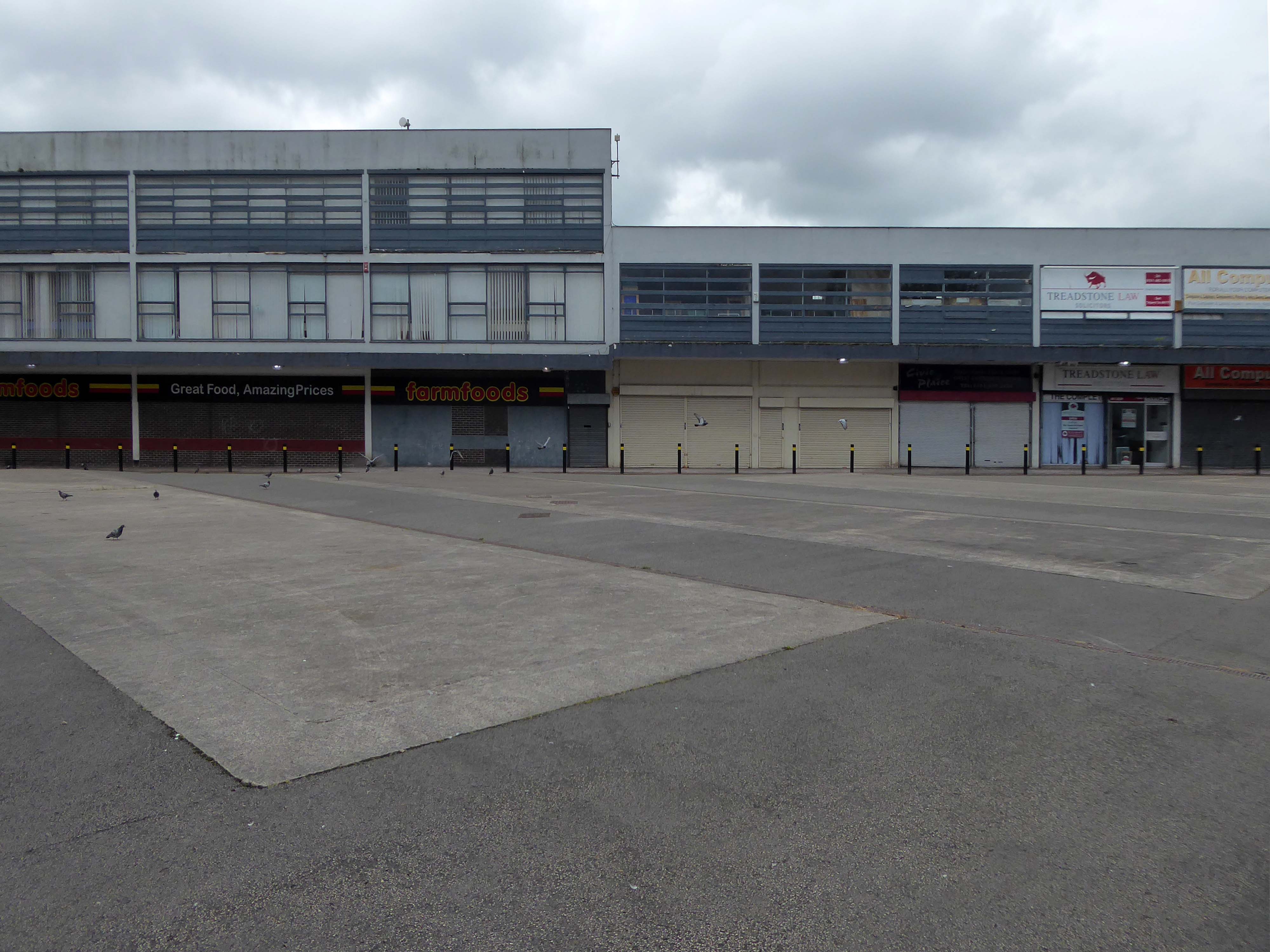
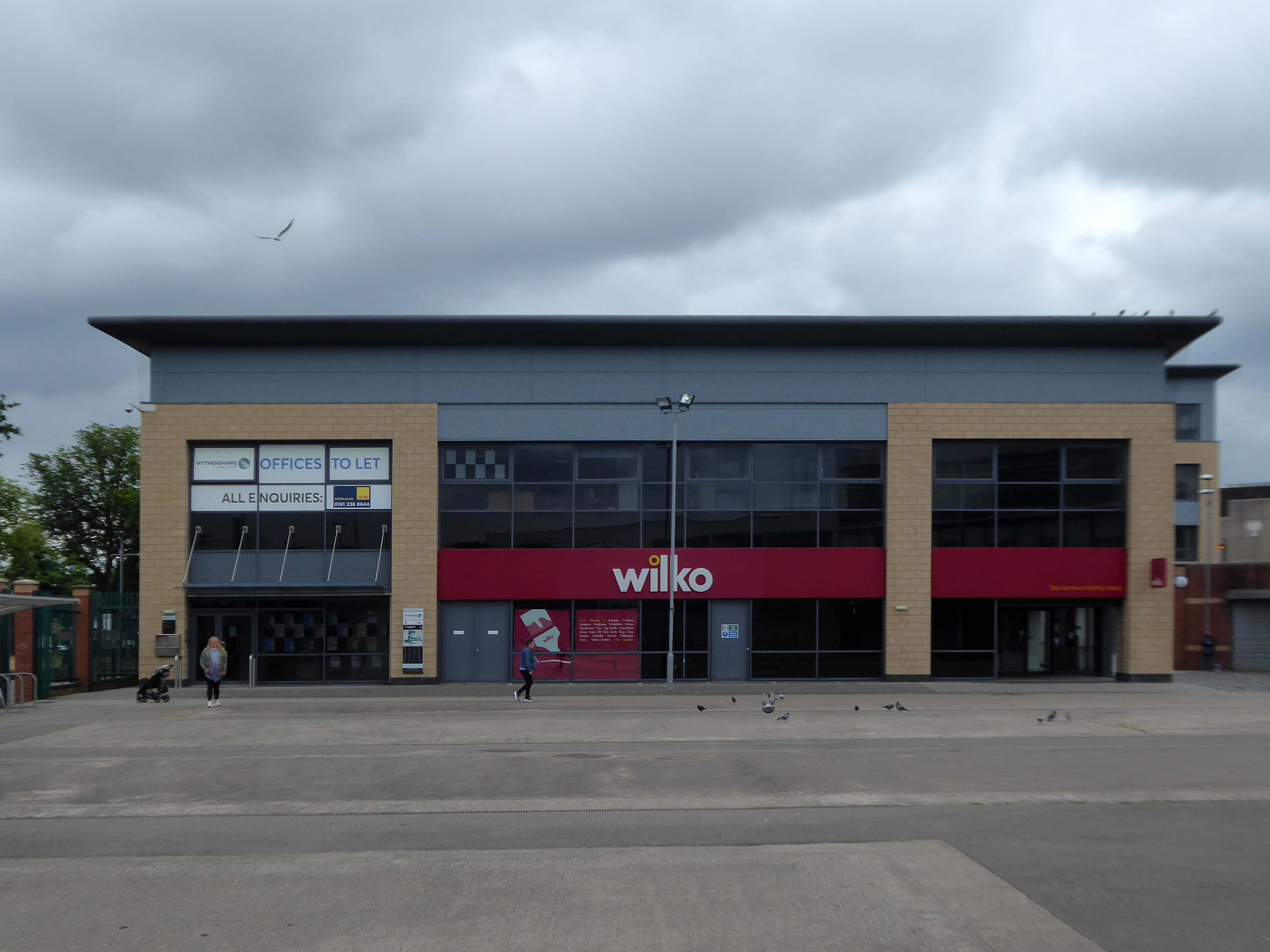
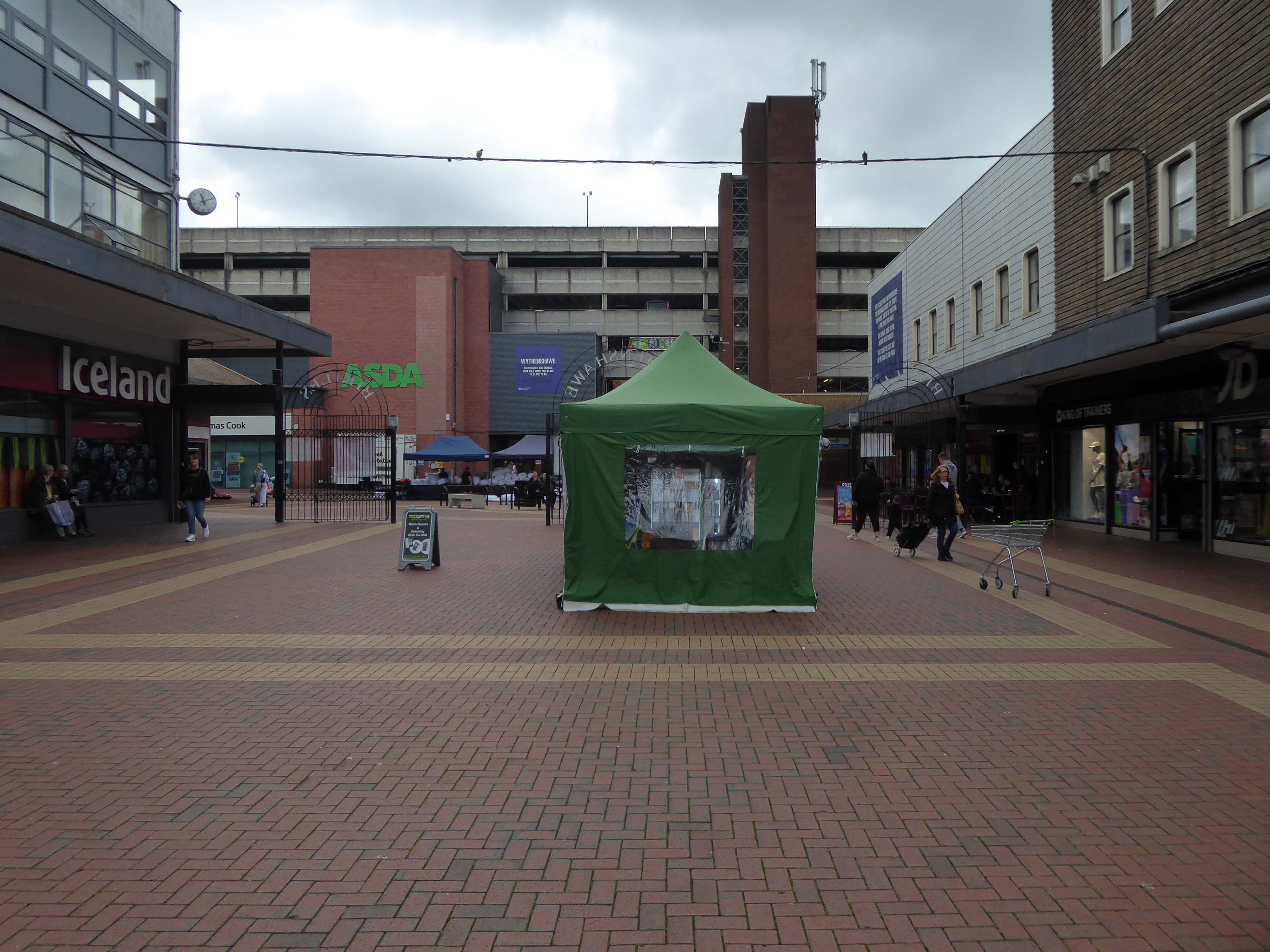
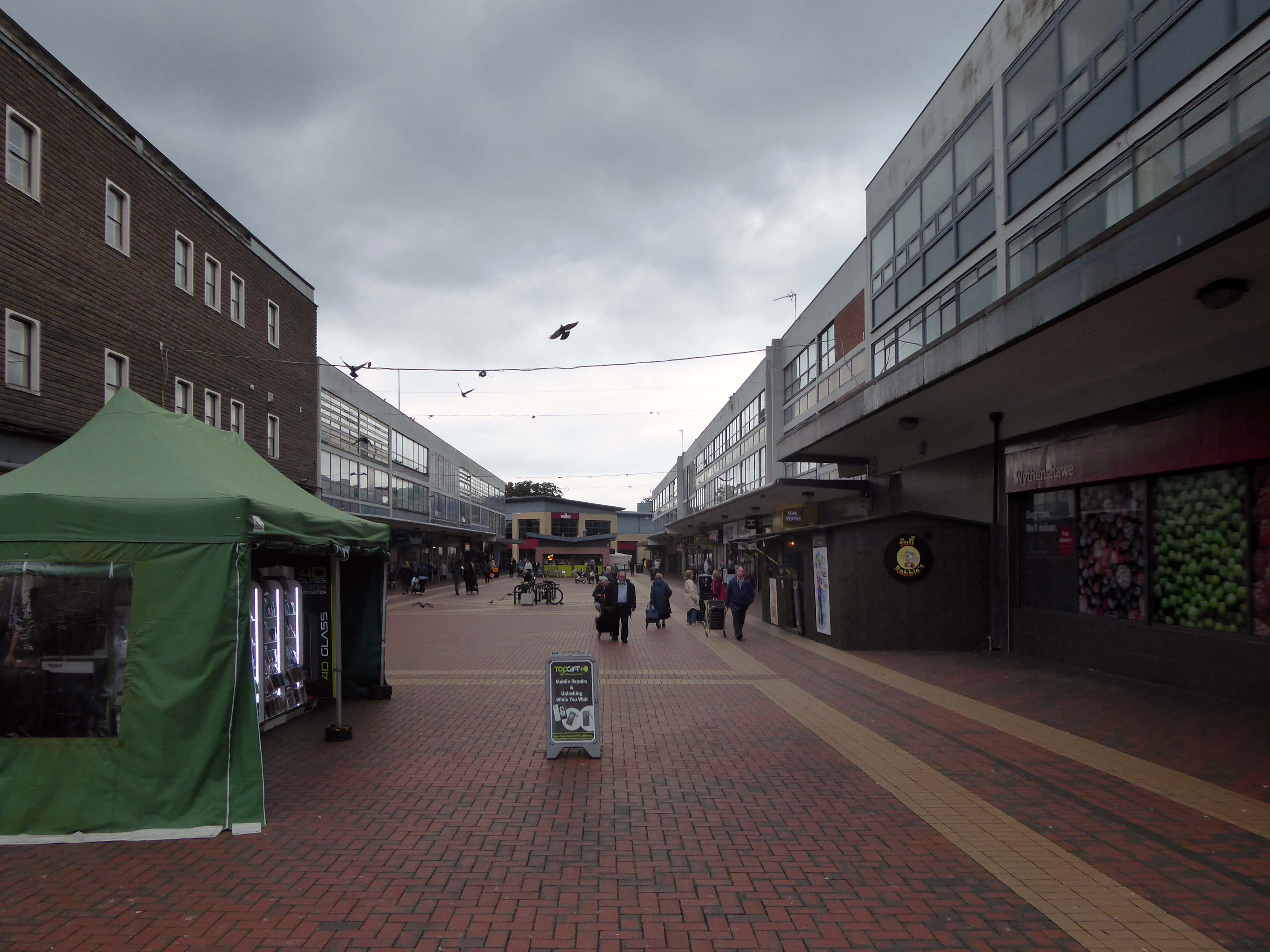
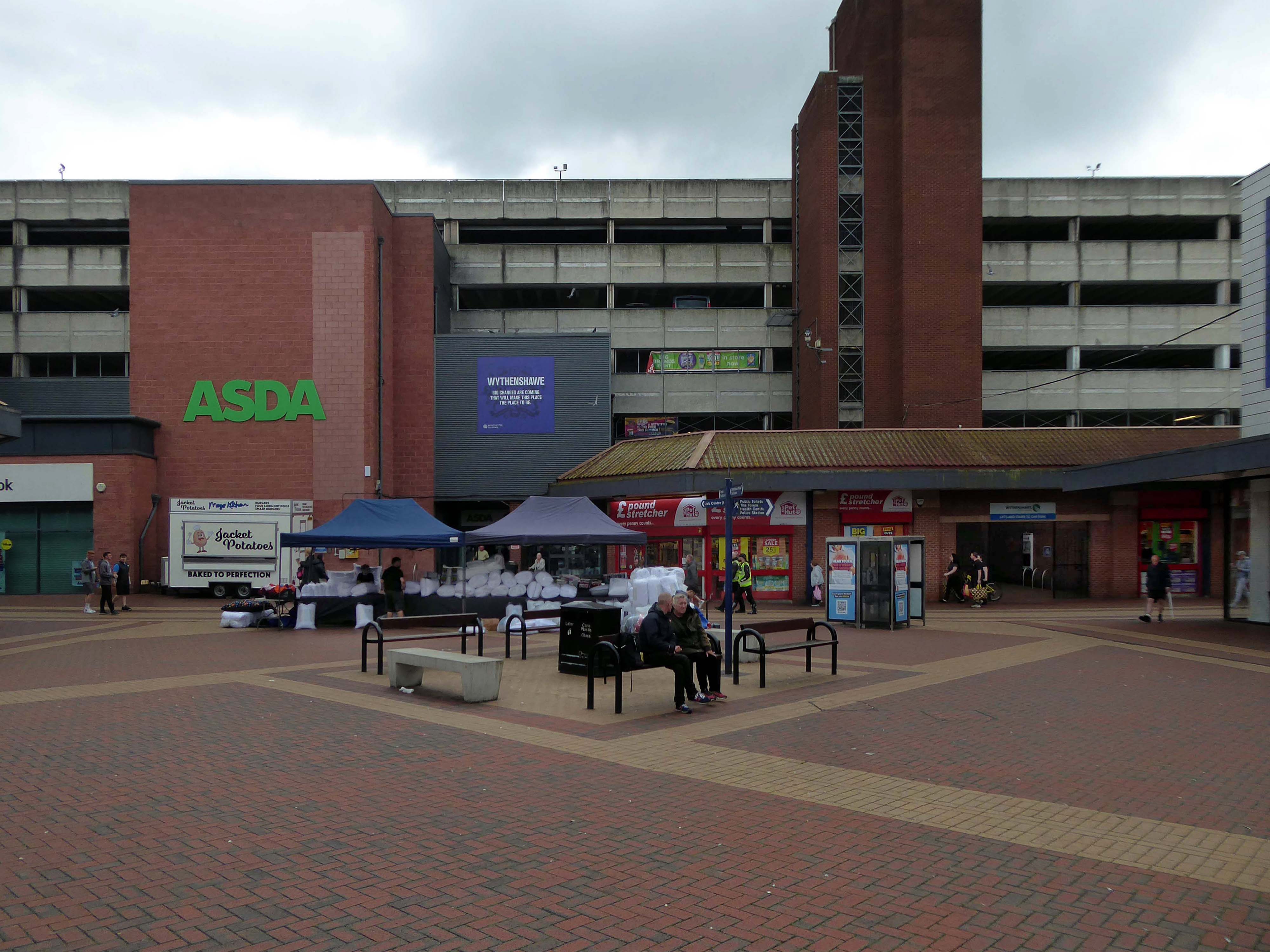
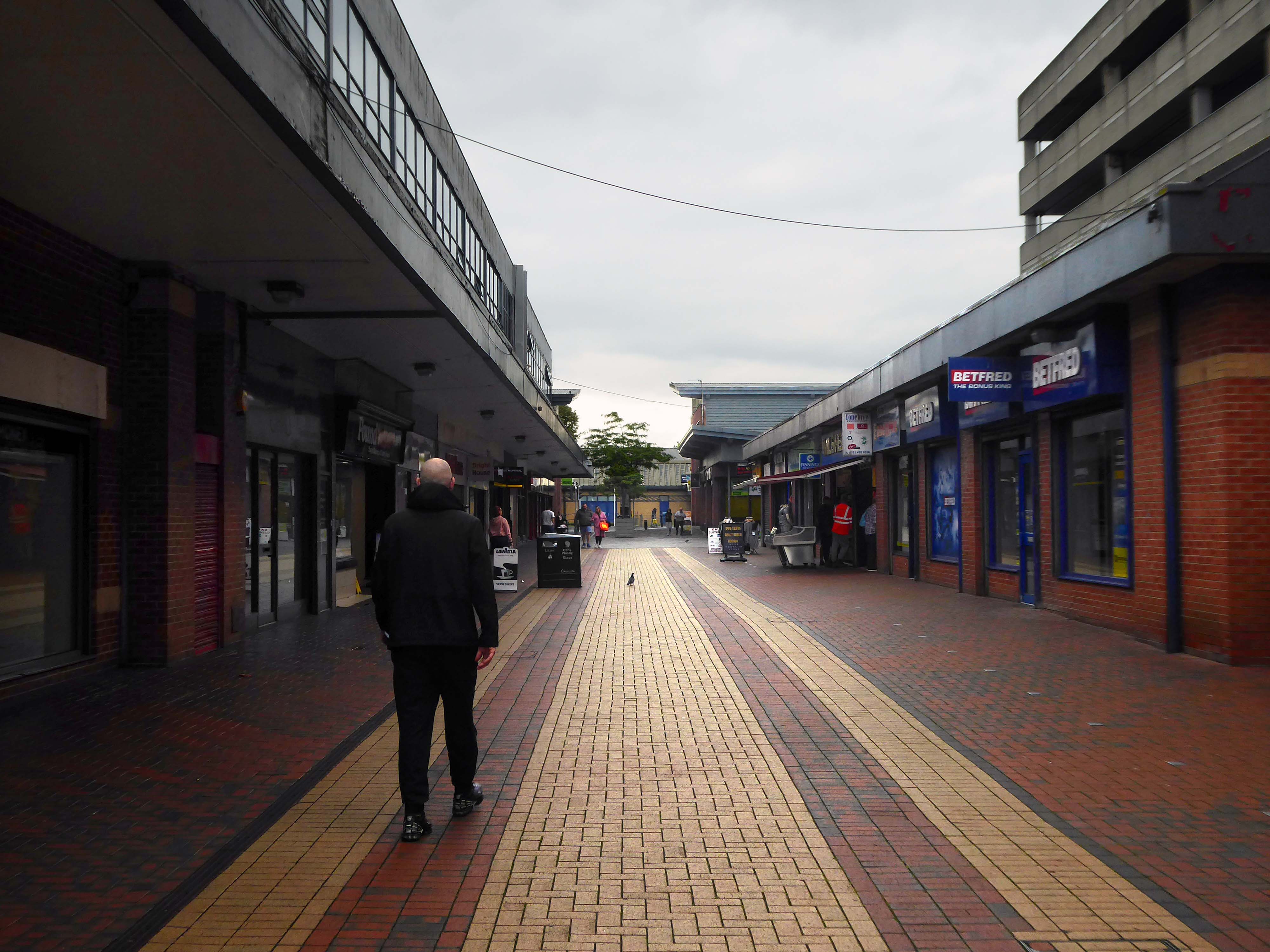
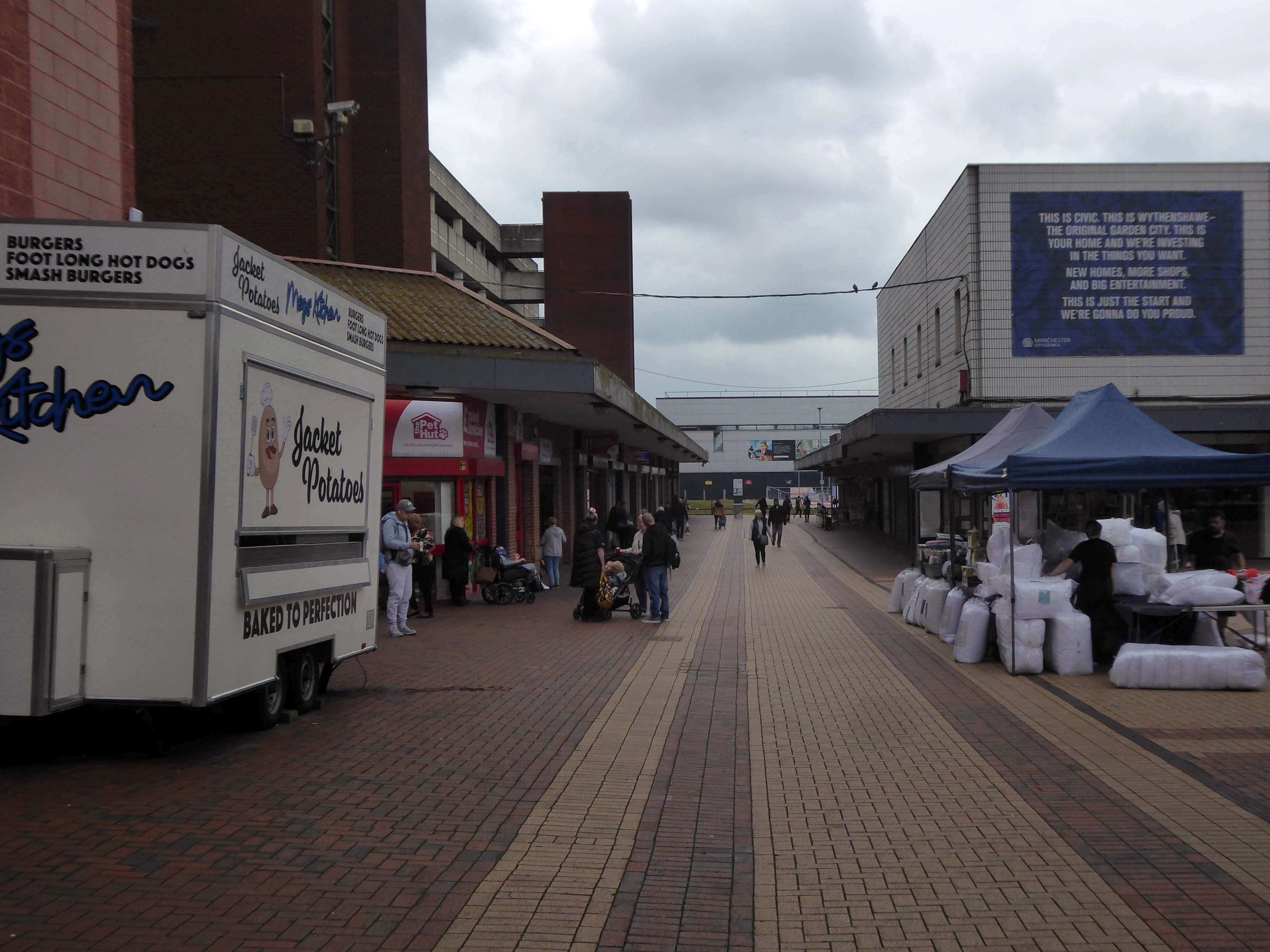
ASDA remains the anchor store, Wilko having left a Wilko sized hole in the precinct. On an overcast Friday morning there was sufficient footfall to sustain the wide variety of smaller shops and larger retail chains. As with many other towns within the central Manchester orbit, the easy proximity fills those busy trams and buses, which are leaving the area.

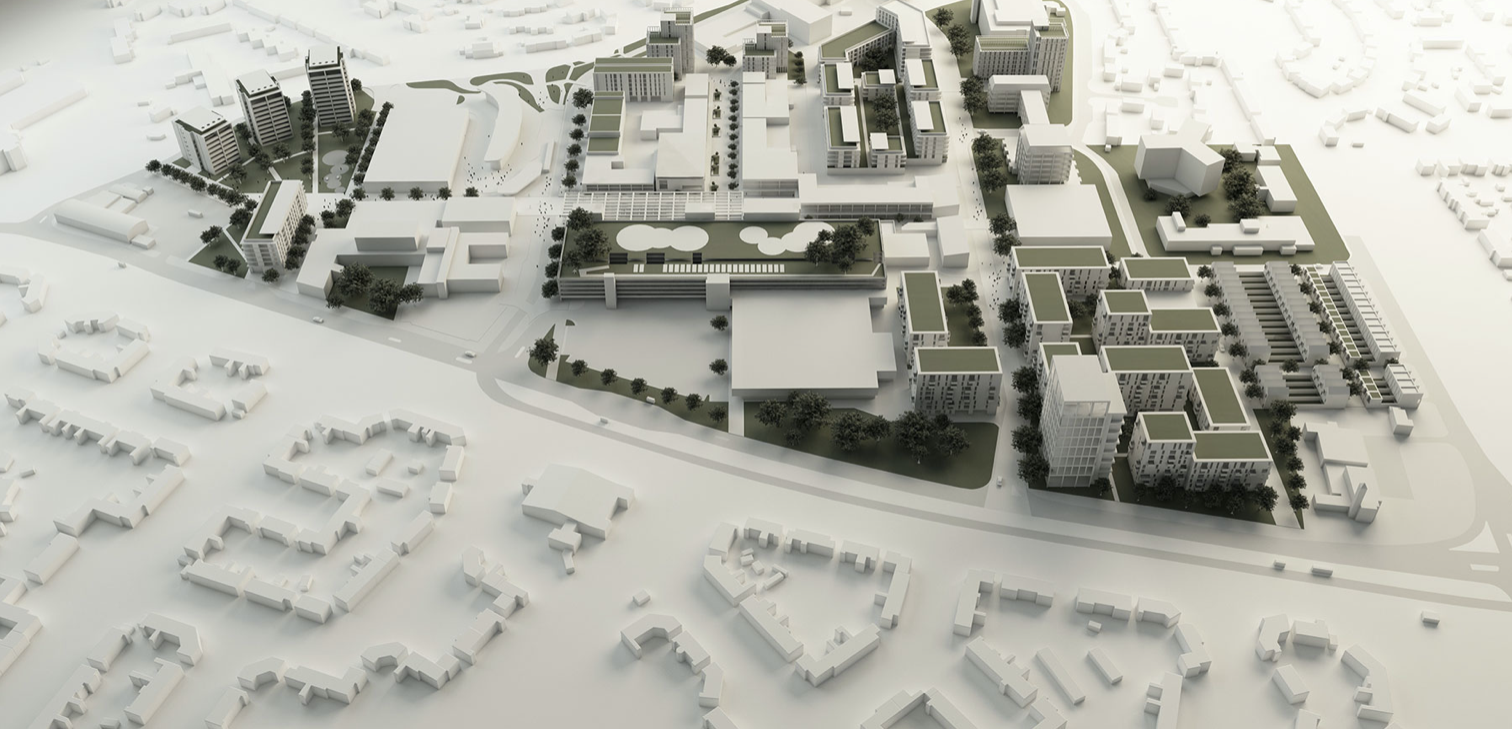
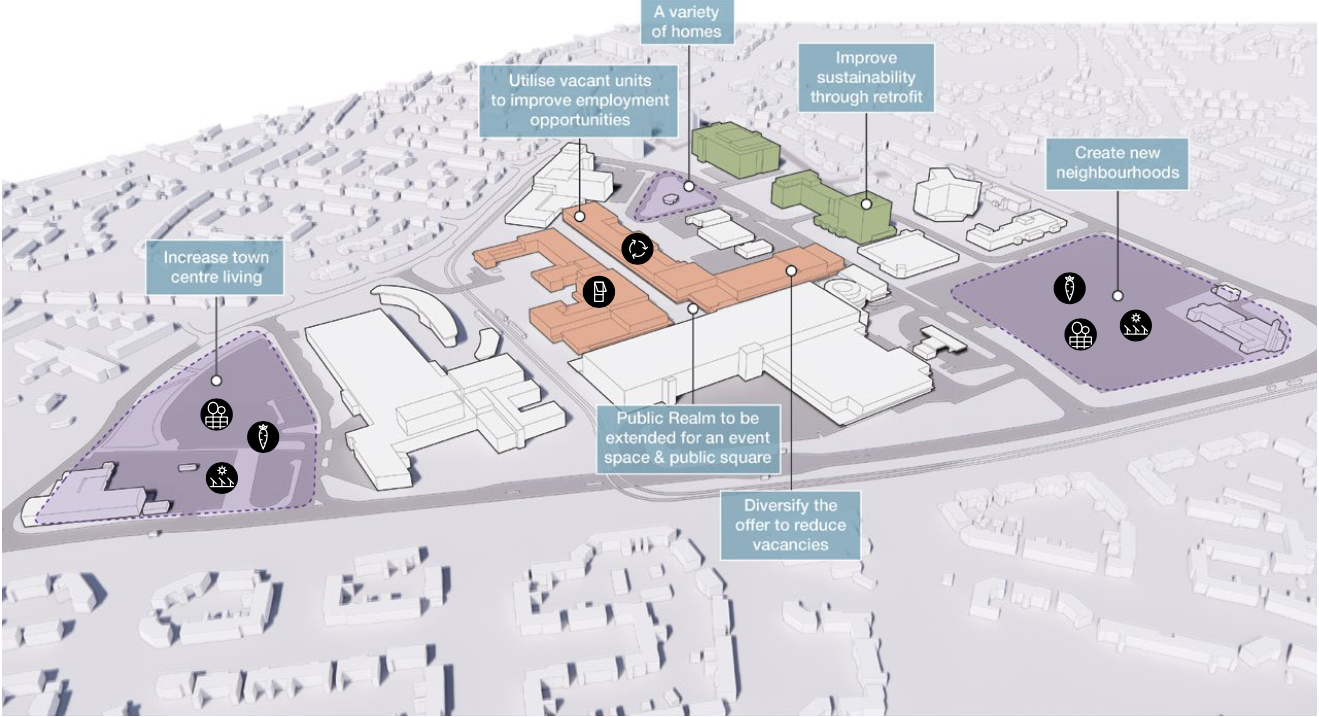
There are plans in place to regenerate the area, in the form of a Masterplan – which can be downloaded here.

Between 1991-2002 there have been some architectural changes, including new stores and office developments. Some of the interventions included significant adaptions which further increased retail into the existing buildings high street.

The interventions included significant adjustments to the multi-storey car park with the aim of reducing parking numbers whilst providing additional lettable space. Further Transport Hub Arrival commercial development was created to the north of the site with the construction of Etrop Court, despite there being significant commercial vacancy across other parts of the estate.

Whilst there has been significant incremental intervention, the character of the area has
not fundamentally changed from its founding concept. However the cumulative impact of the various changes have had a negative impact on the functionality and suitability of place, so much so that the centre is in many ways no longer fit- for purpose.

The site today is surrounded by surface car parks, with a total of around 2,500 car parking spaces, 1,700 of which are contained within the multi-storey car park. Many of the retail units, the upper floor office spaces along the Birtles and Hale Top, and buildings to the east are vacant.

Typically, the levels of vacancy are consistent with the changing demands of the high street, where typically modern and successful retail centres are now more diversified and focussed on creating a visitor or destination-based experience. In this sense, we anticipate a need to diversify the high street and to promote a smaller more concentrated retail core, whilst supplementing the offer with more meanwhile and permanent uses and activities based on culture, food and creative workplace.

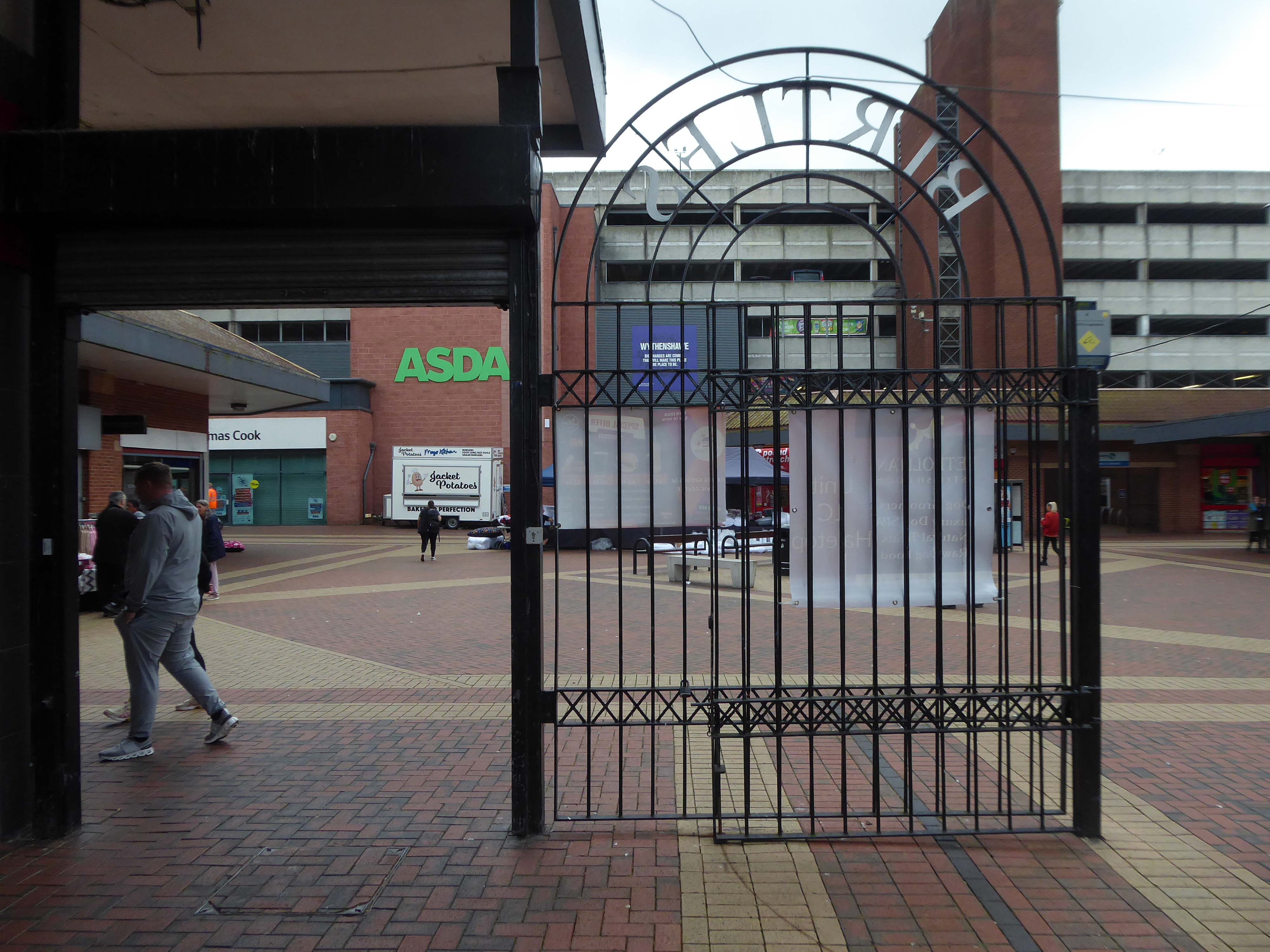
The gateway to the Civic Centre on arrival from the Transport Interchange is very poor. Access to the high street isn’t obvious and the route through to the high street isn’t clear. Much of the site is surrounded by fencing, barrier and gates and whilst they are open during the day, they are locked at night to prevent vandalism. This barricaded aesthetic does nothing to promote an easily accessible and family friendly environment as well as preventing any opportunity to promote a much needed night- time economy.

Currently, the Civic Centre appears to only cater for those with a need to visit for a particular purpose, rather than capitalising on an opportunity to create a place to visit and dwell.

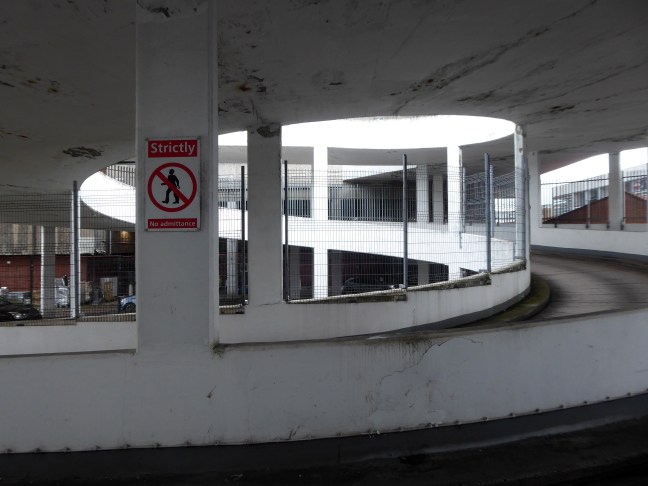
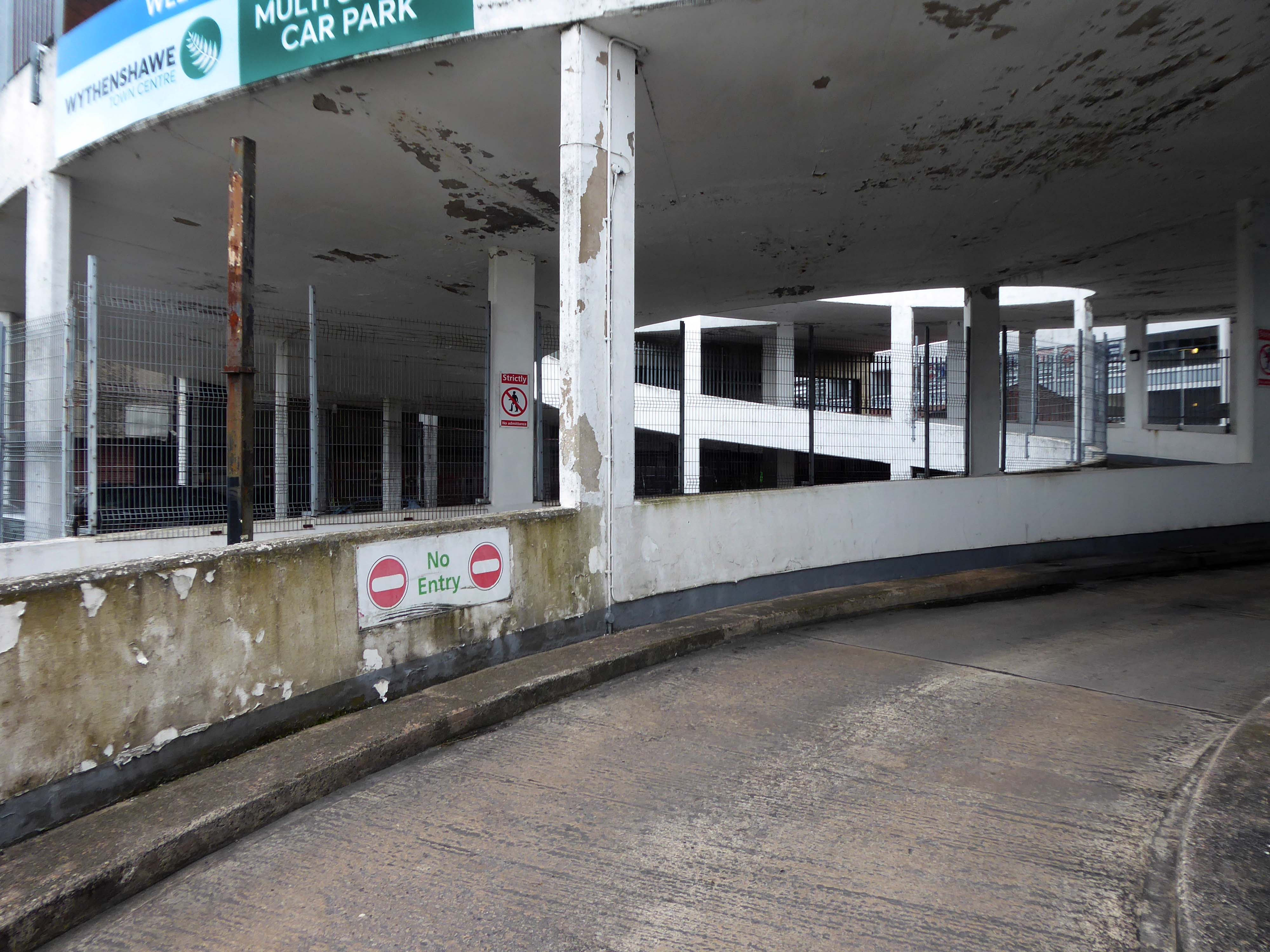
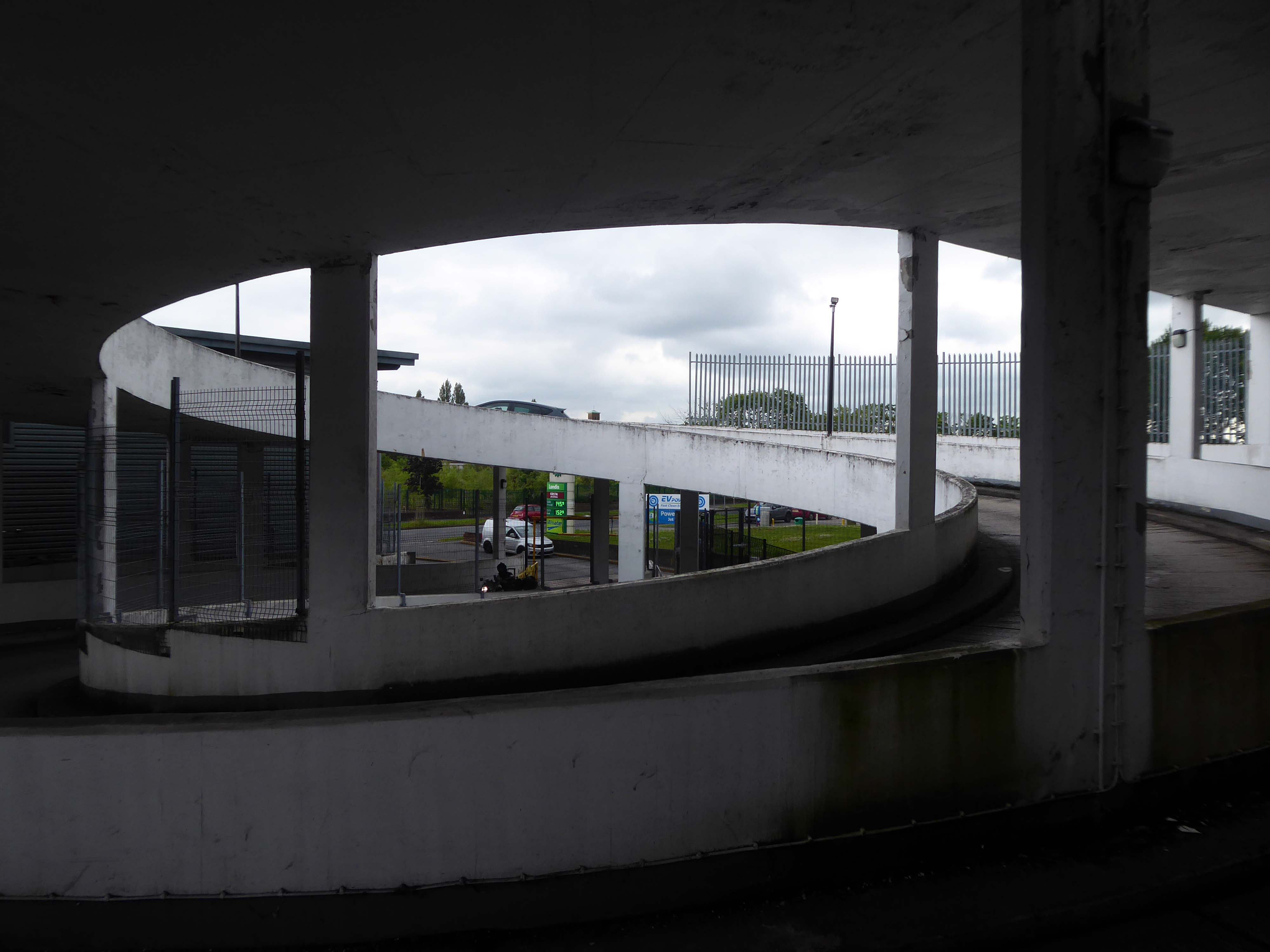
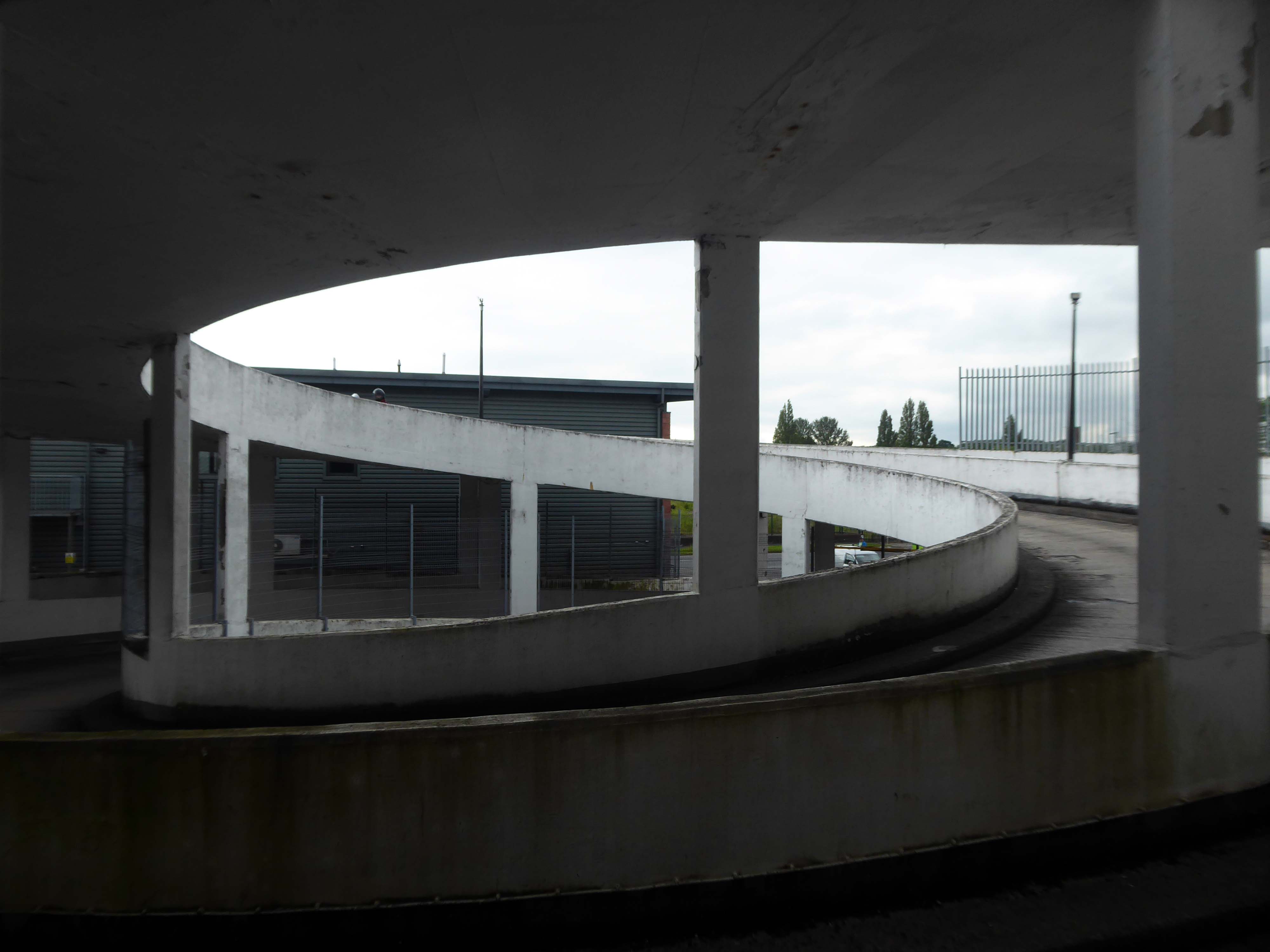
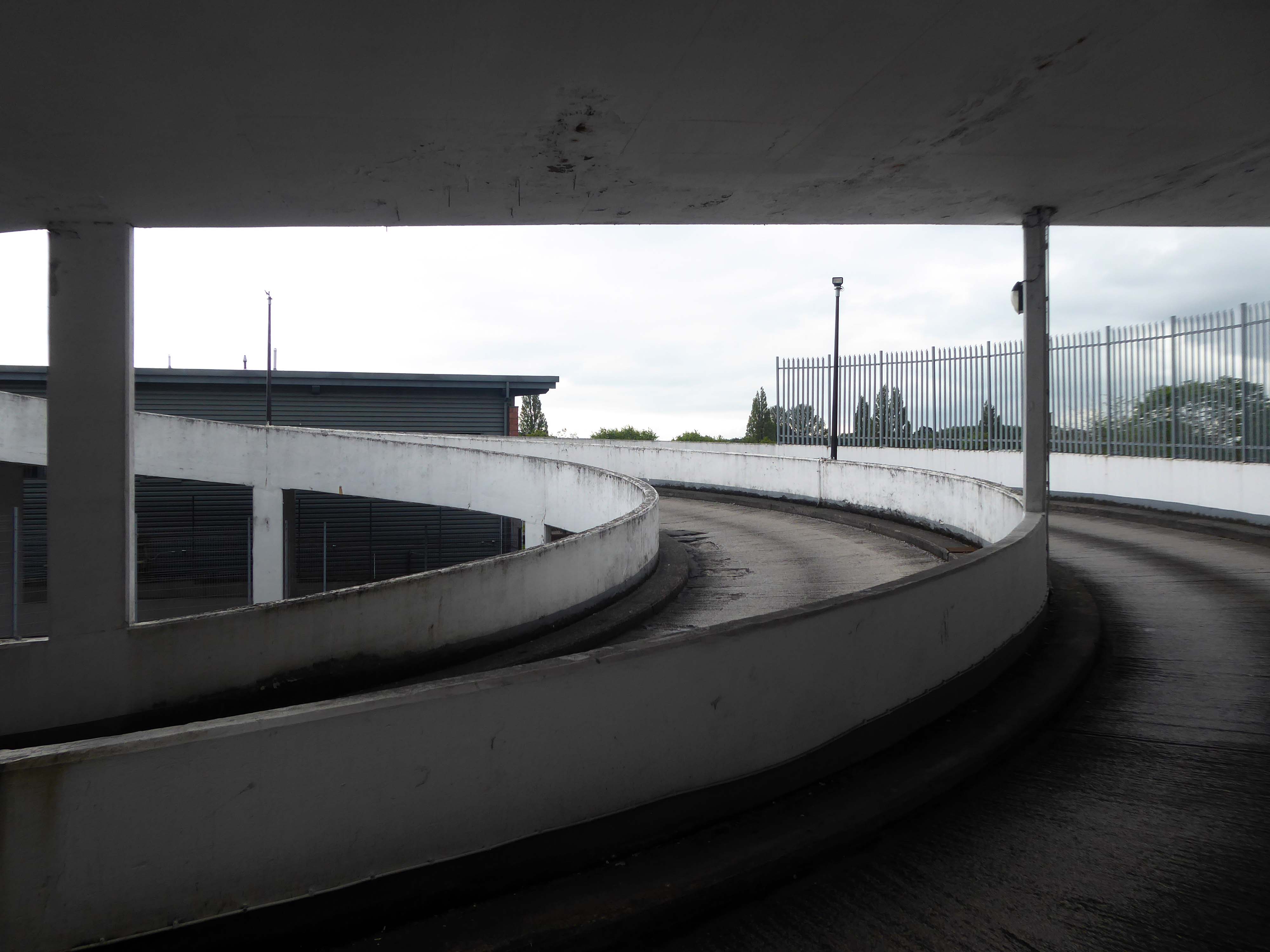
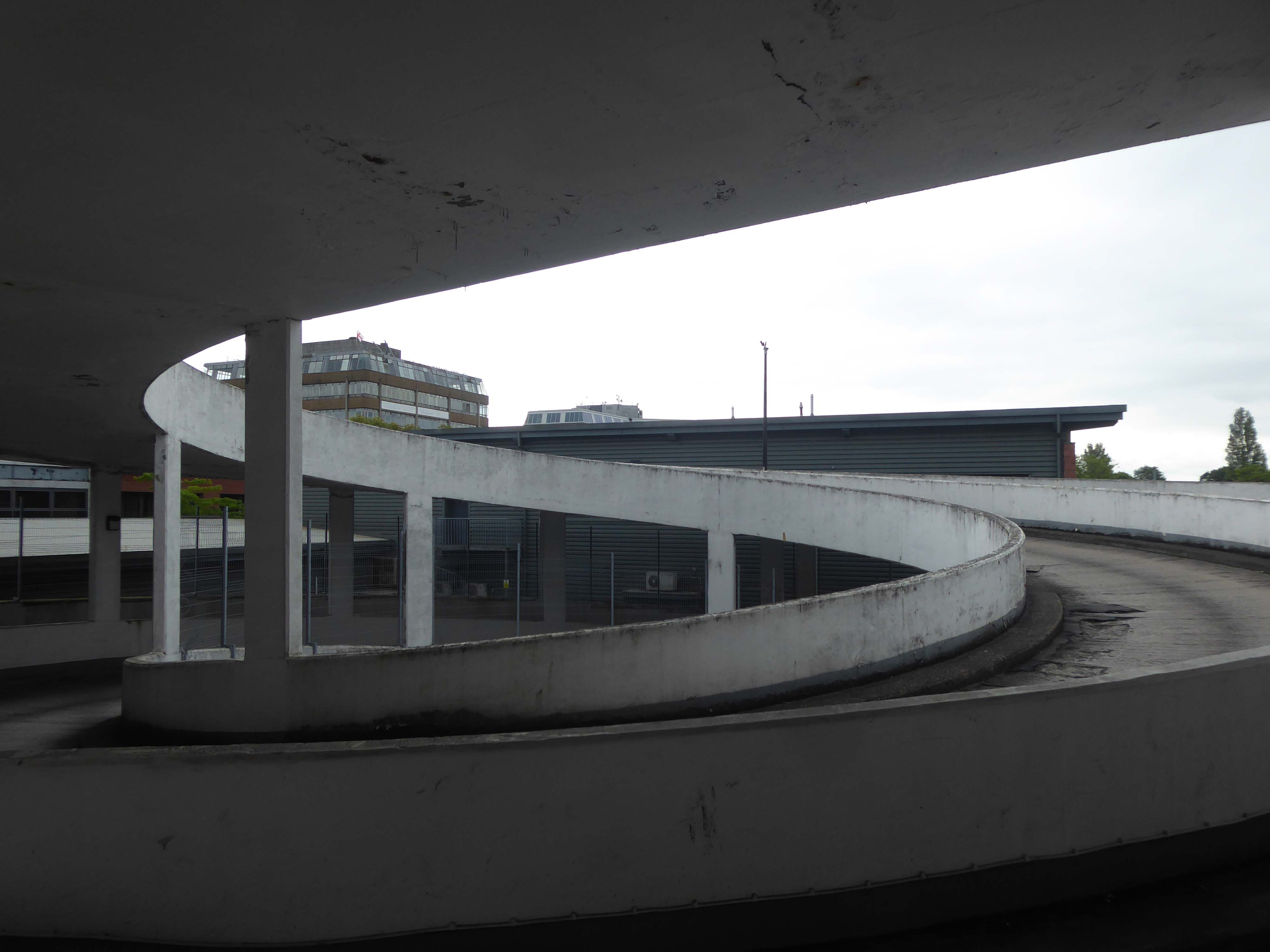
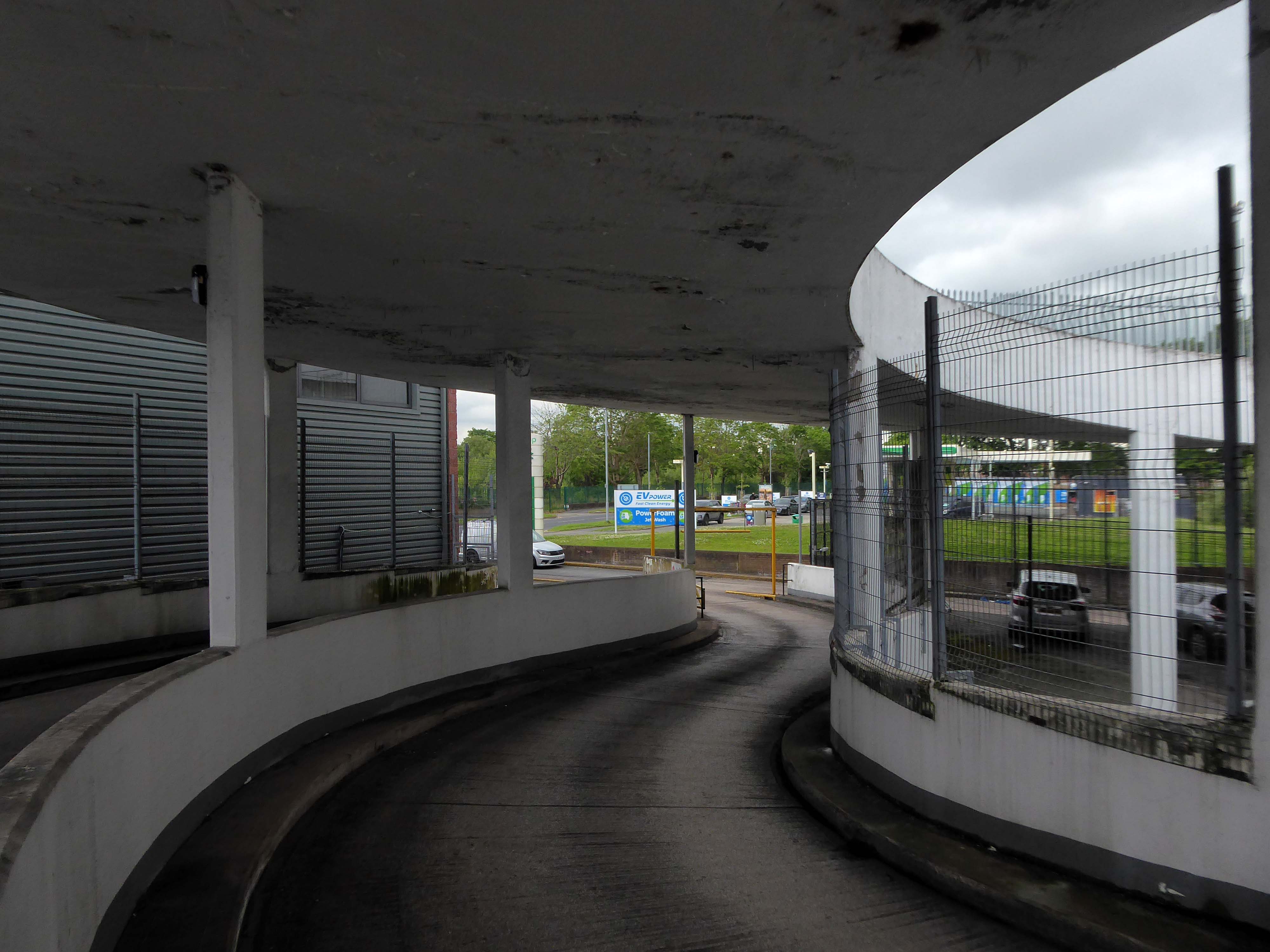
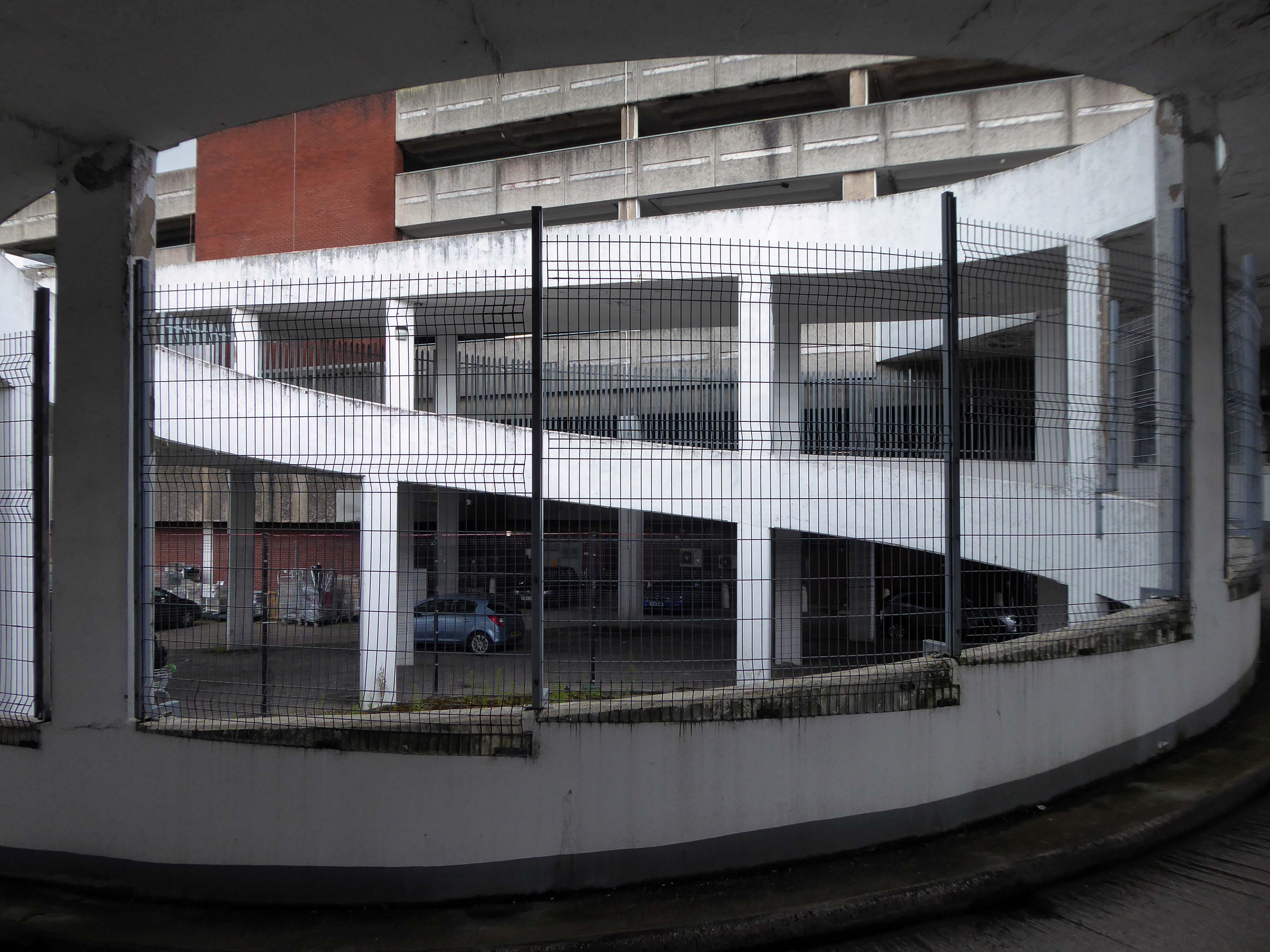
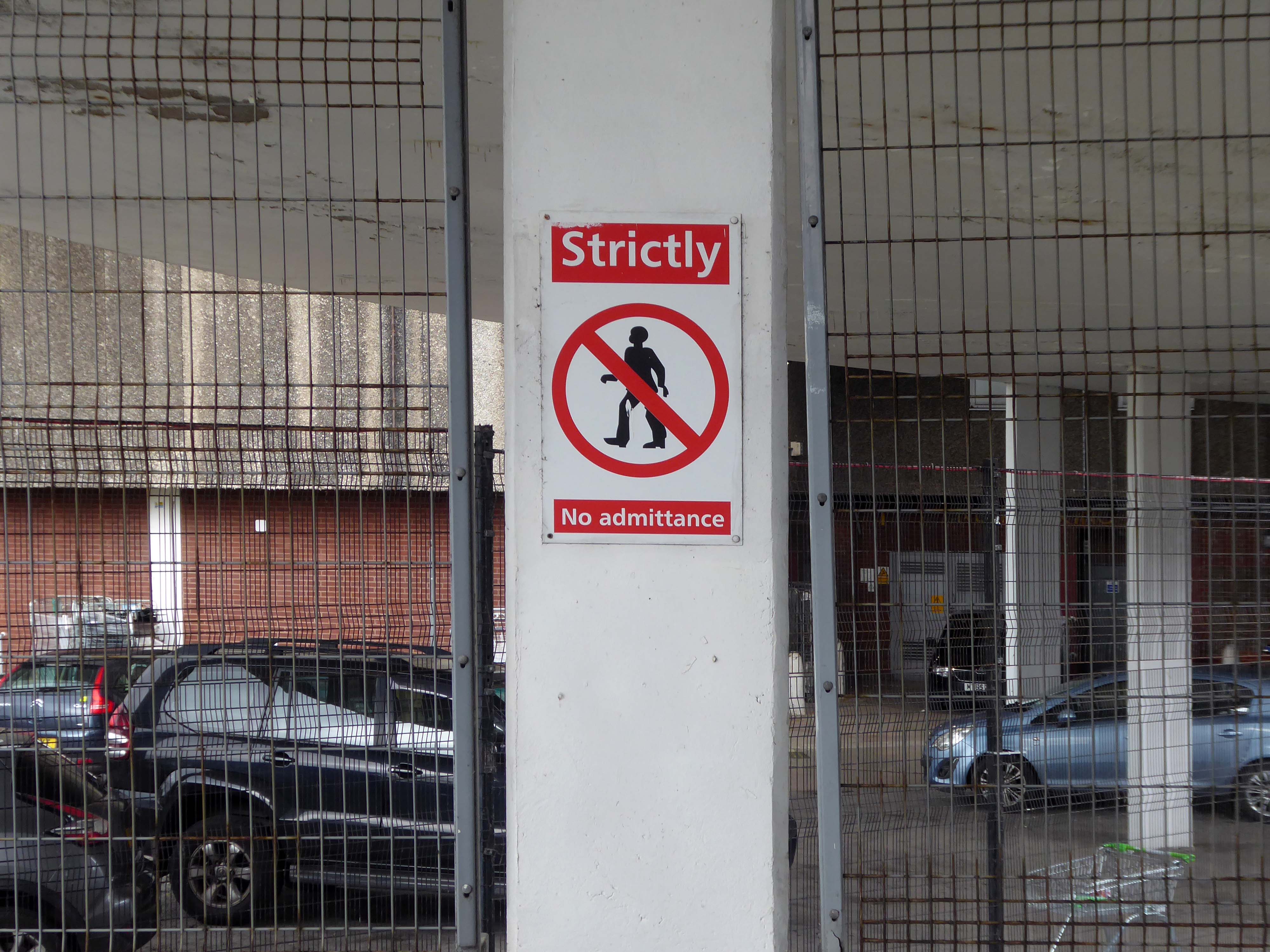
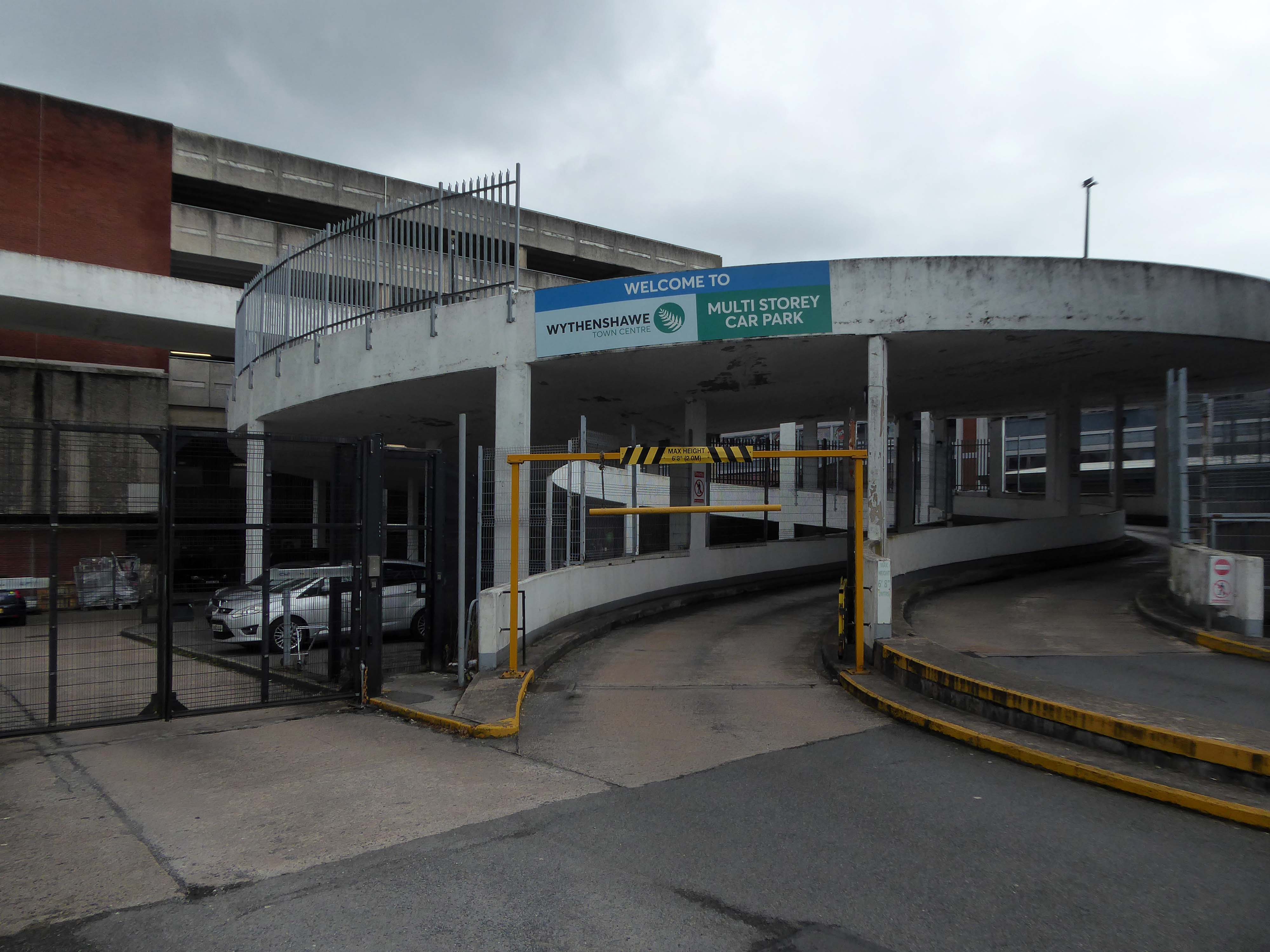
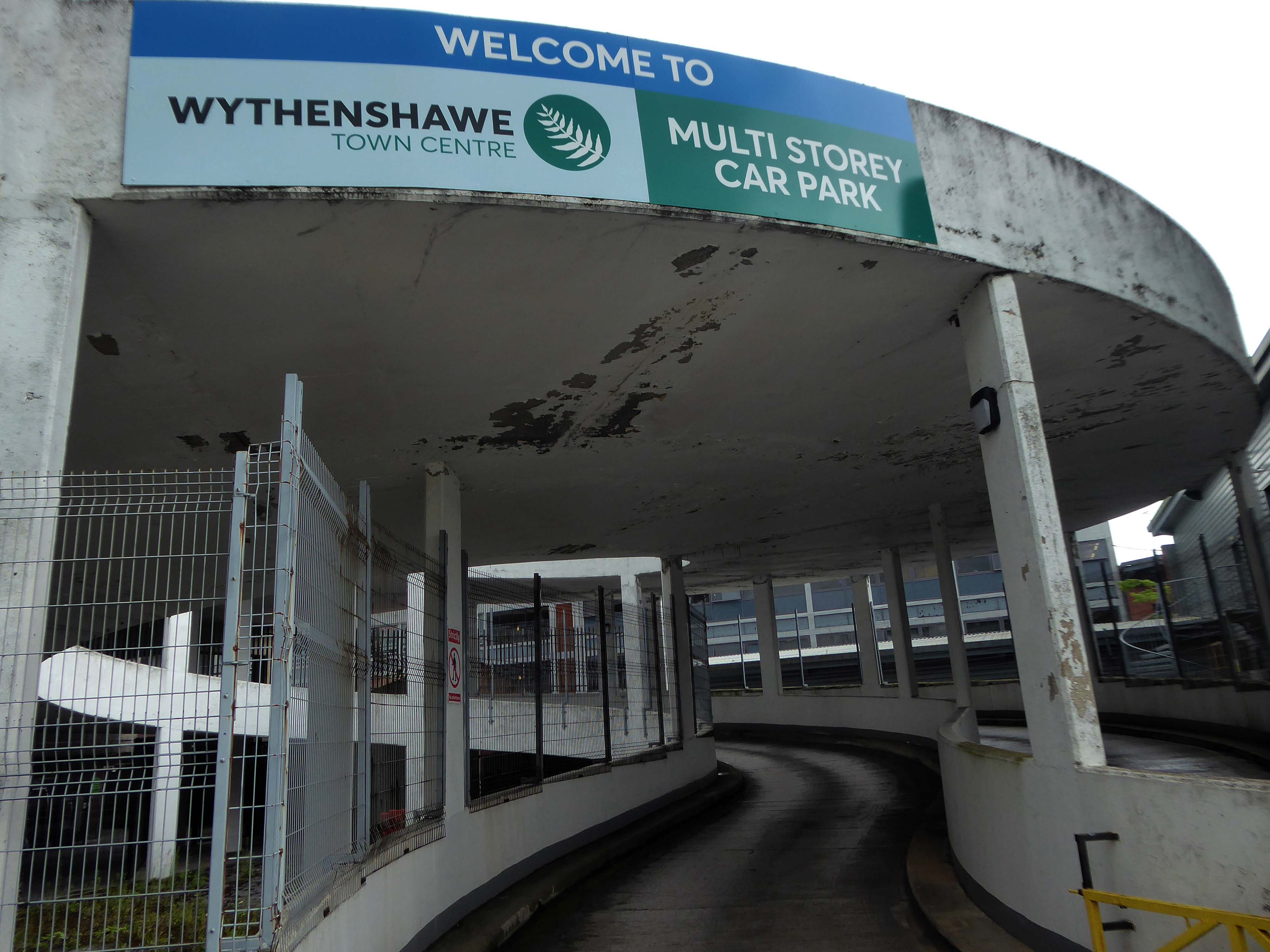
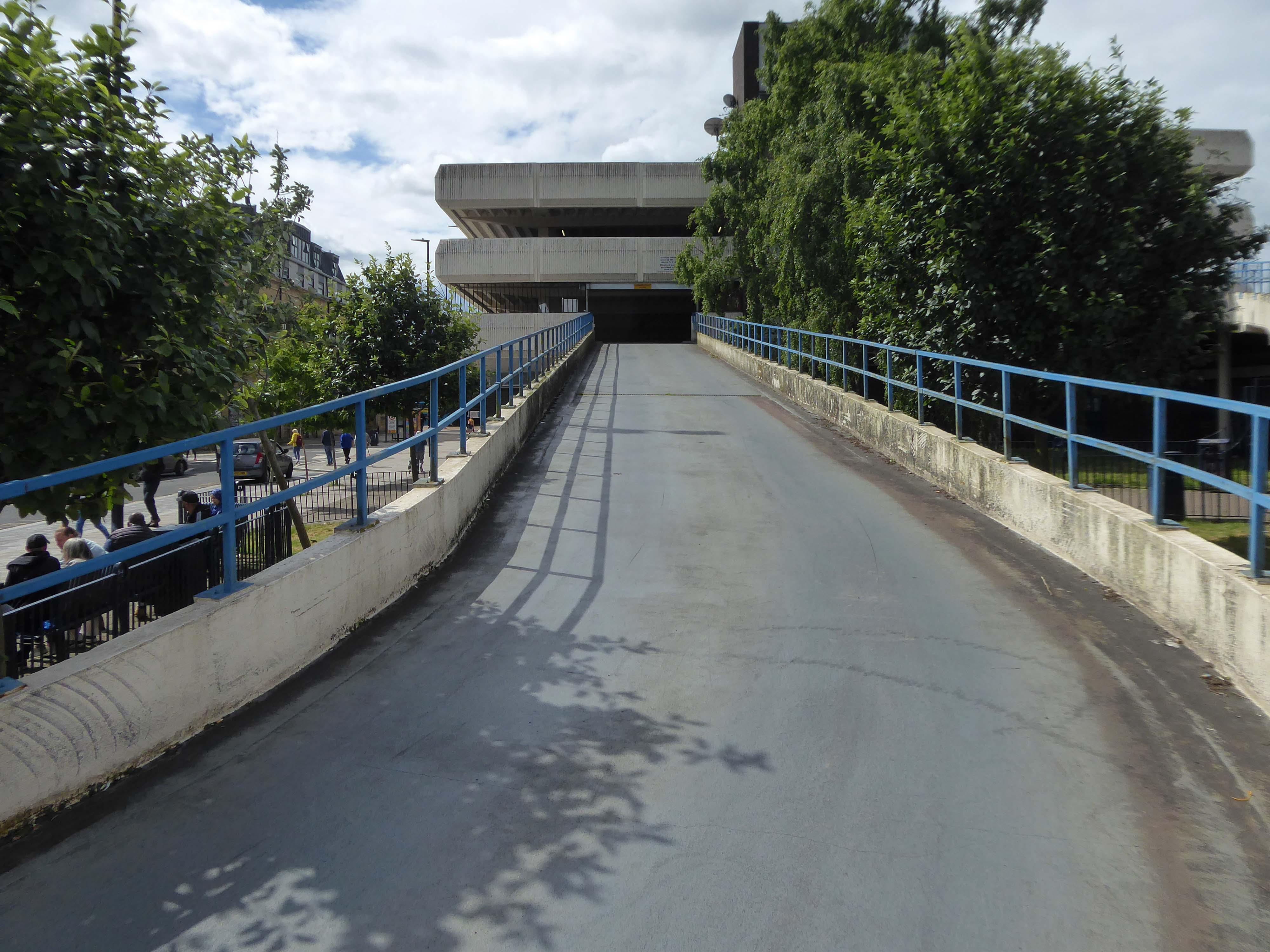
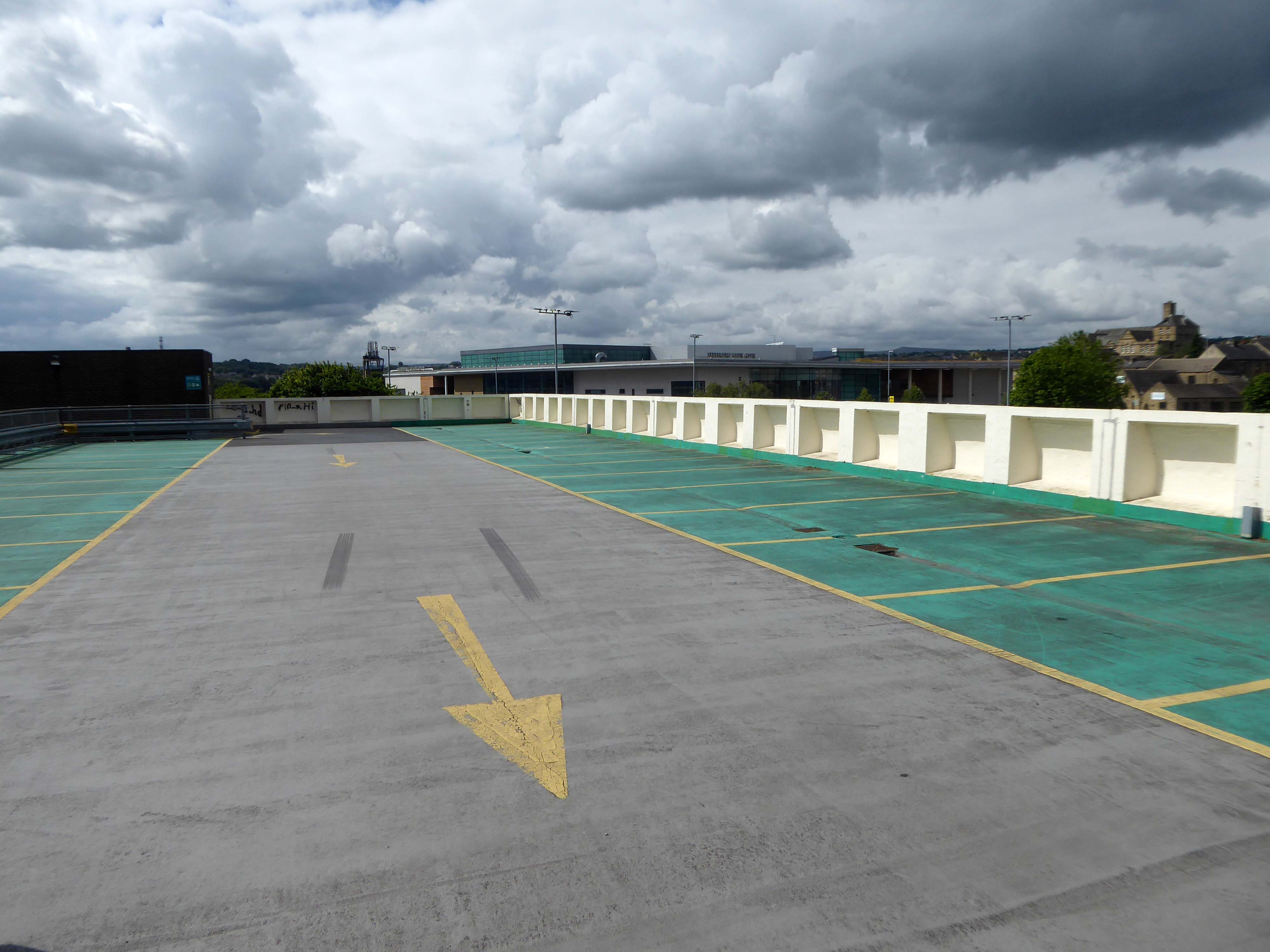
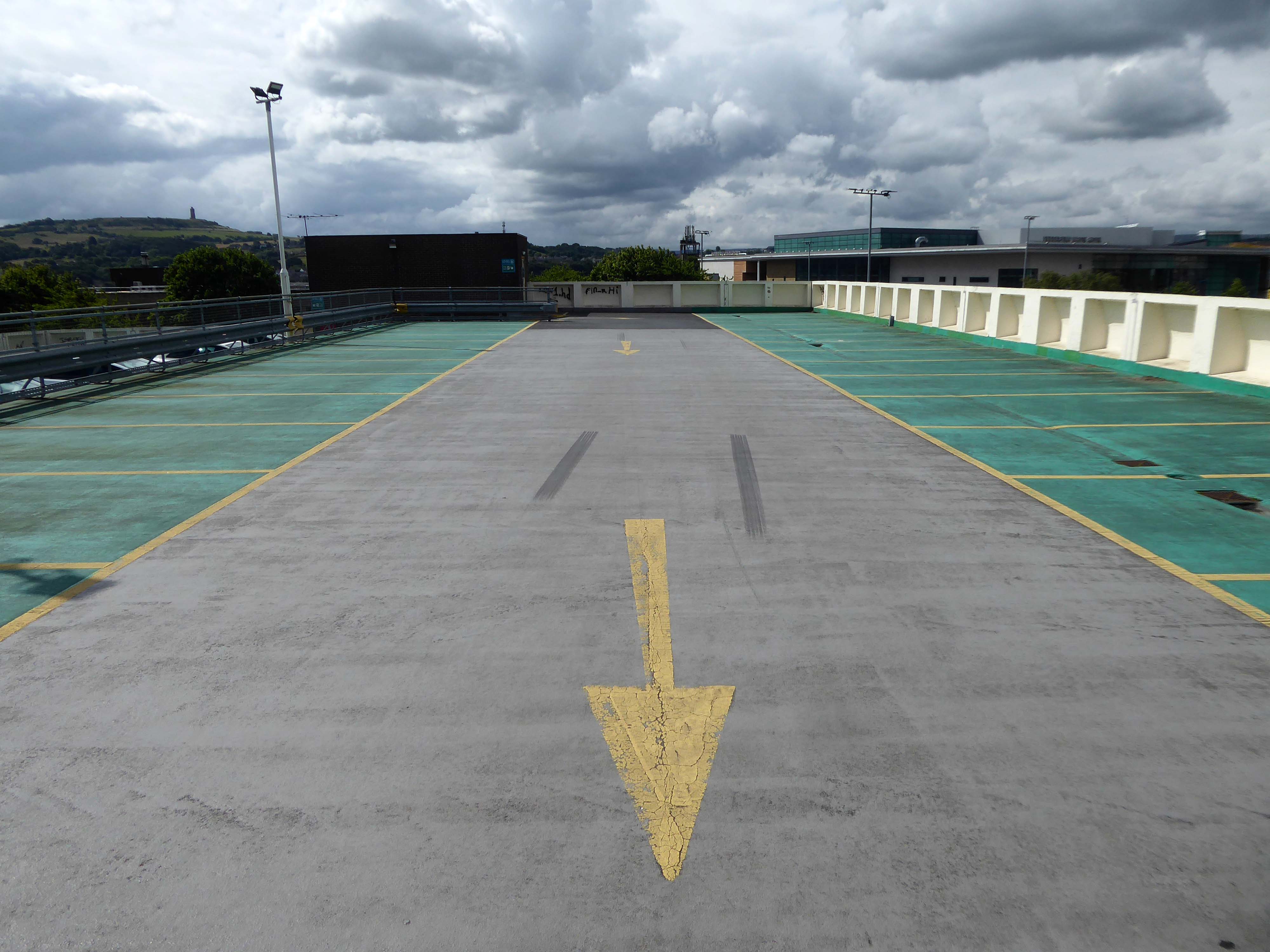
Wythenshawe Town Centre Car Park

Multi Storey Car Park Rowlandsway Manchester M22 5RG

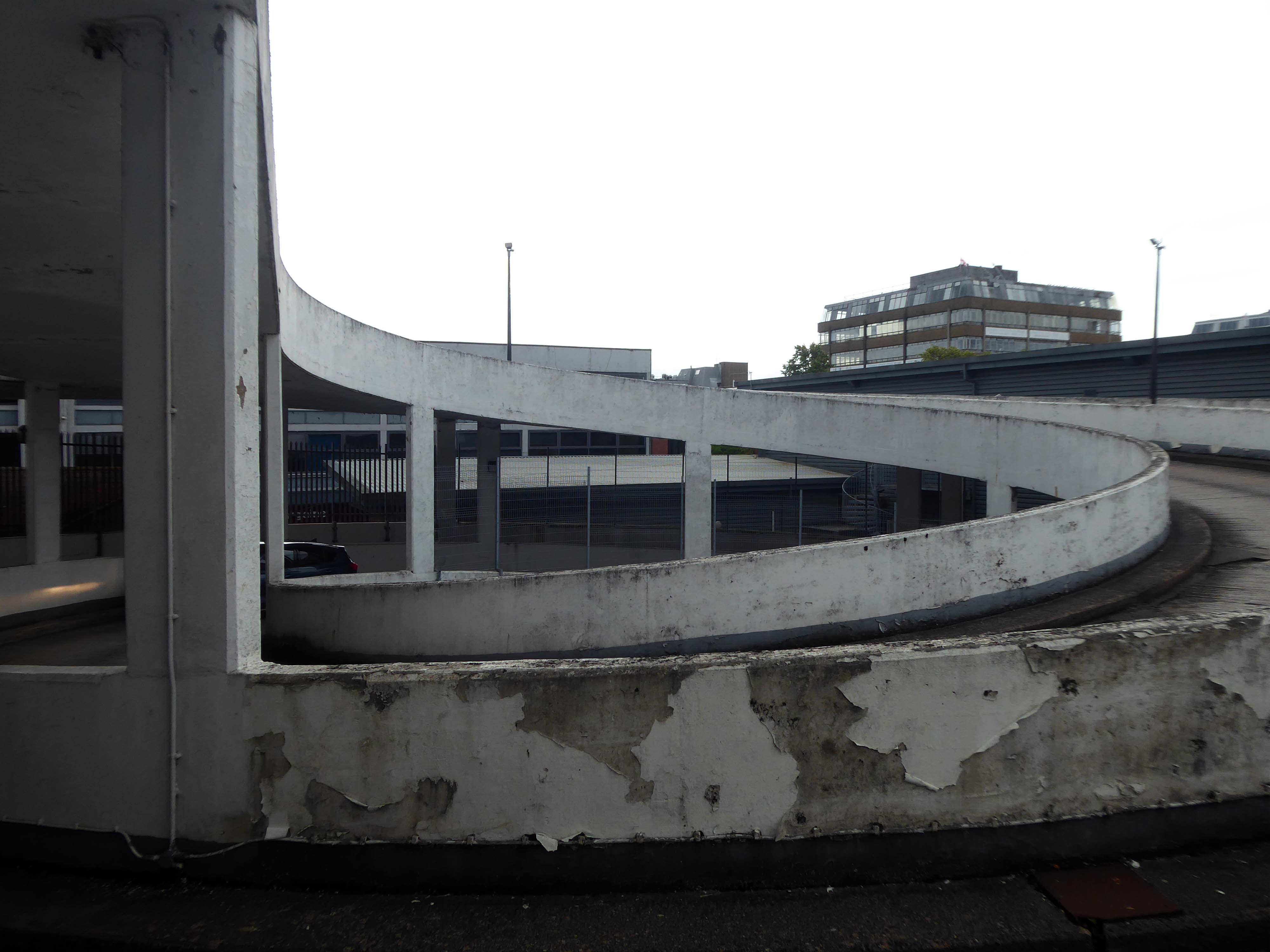
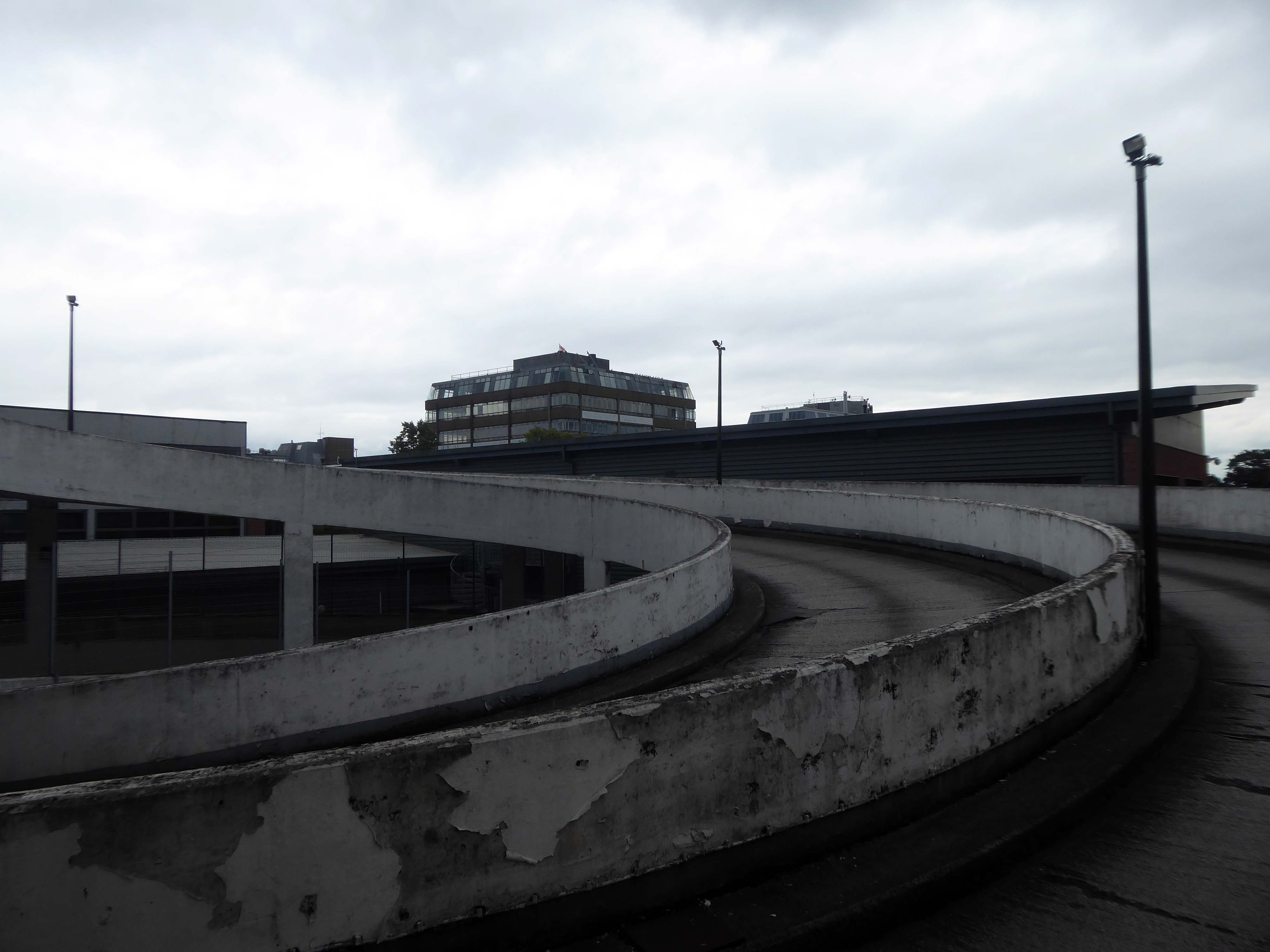
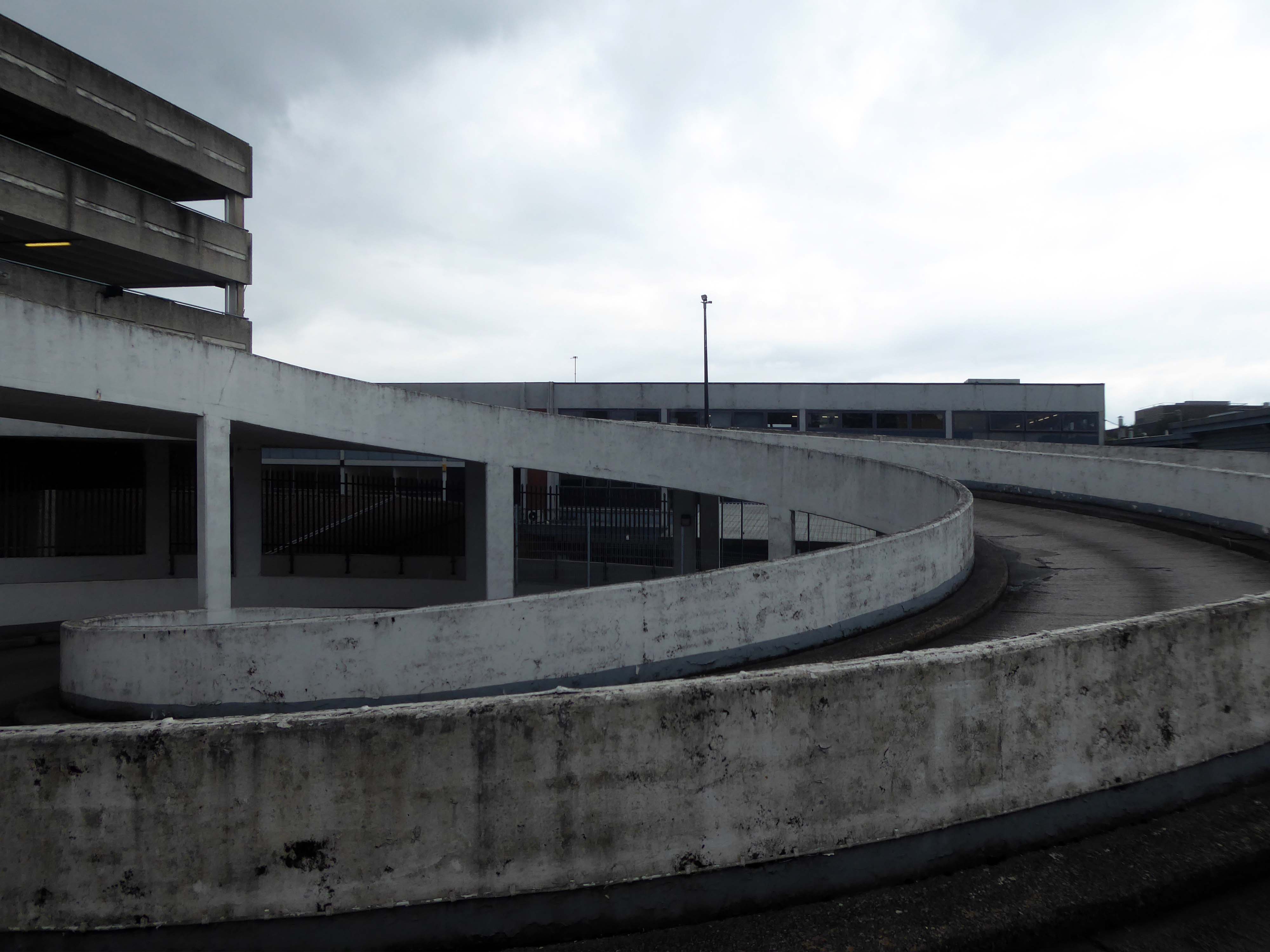
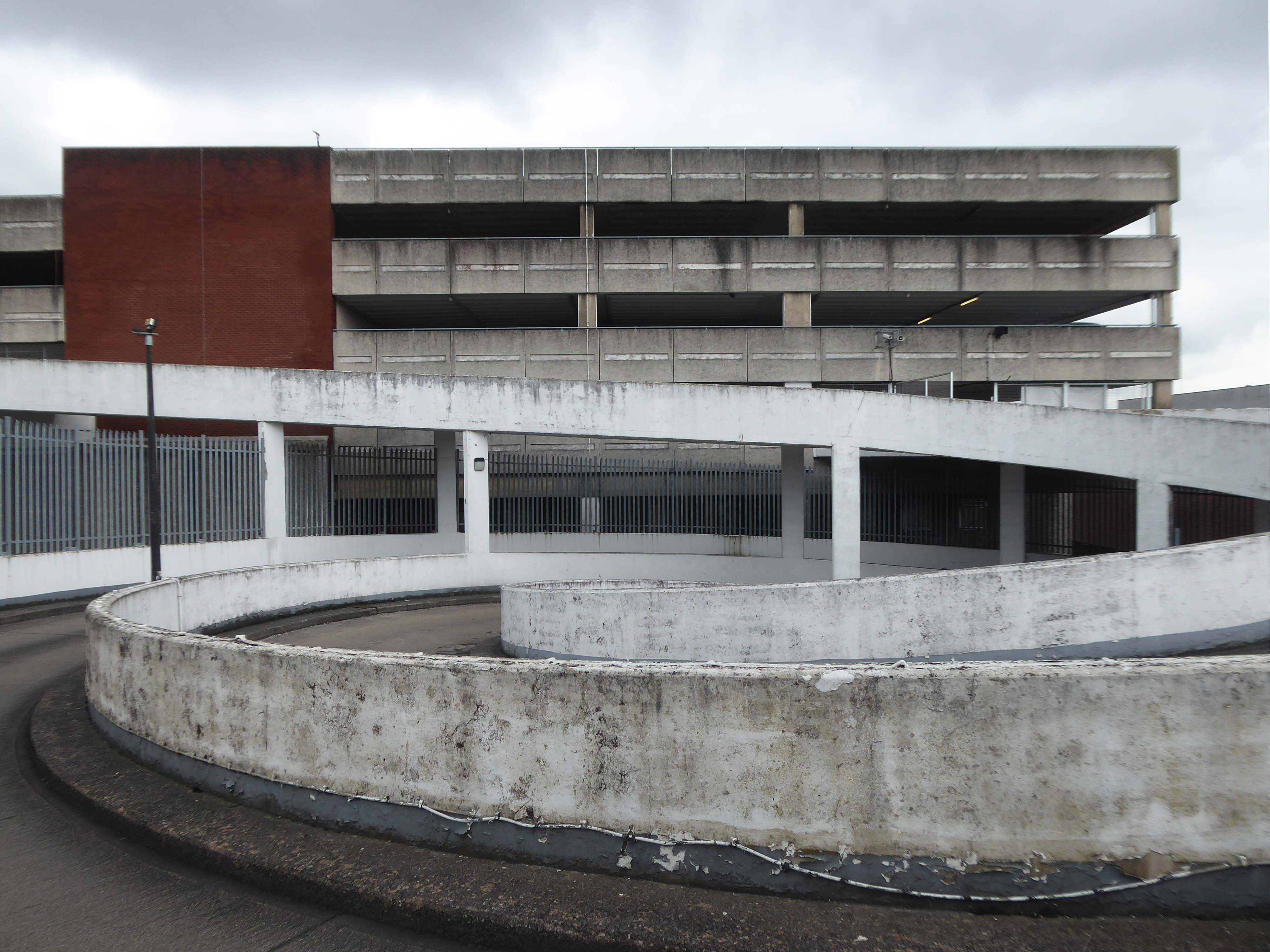
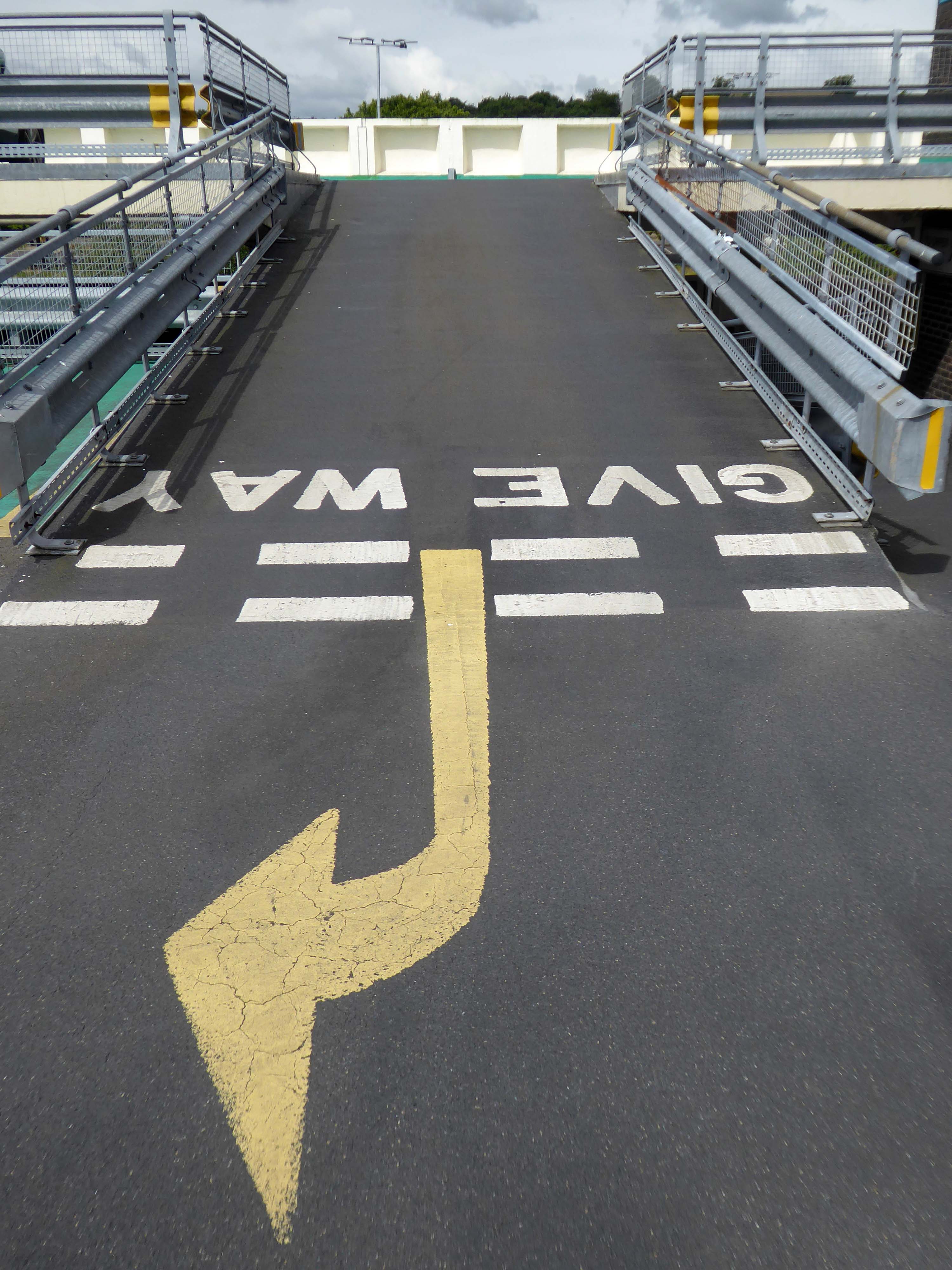
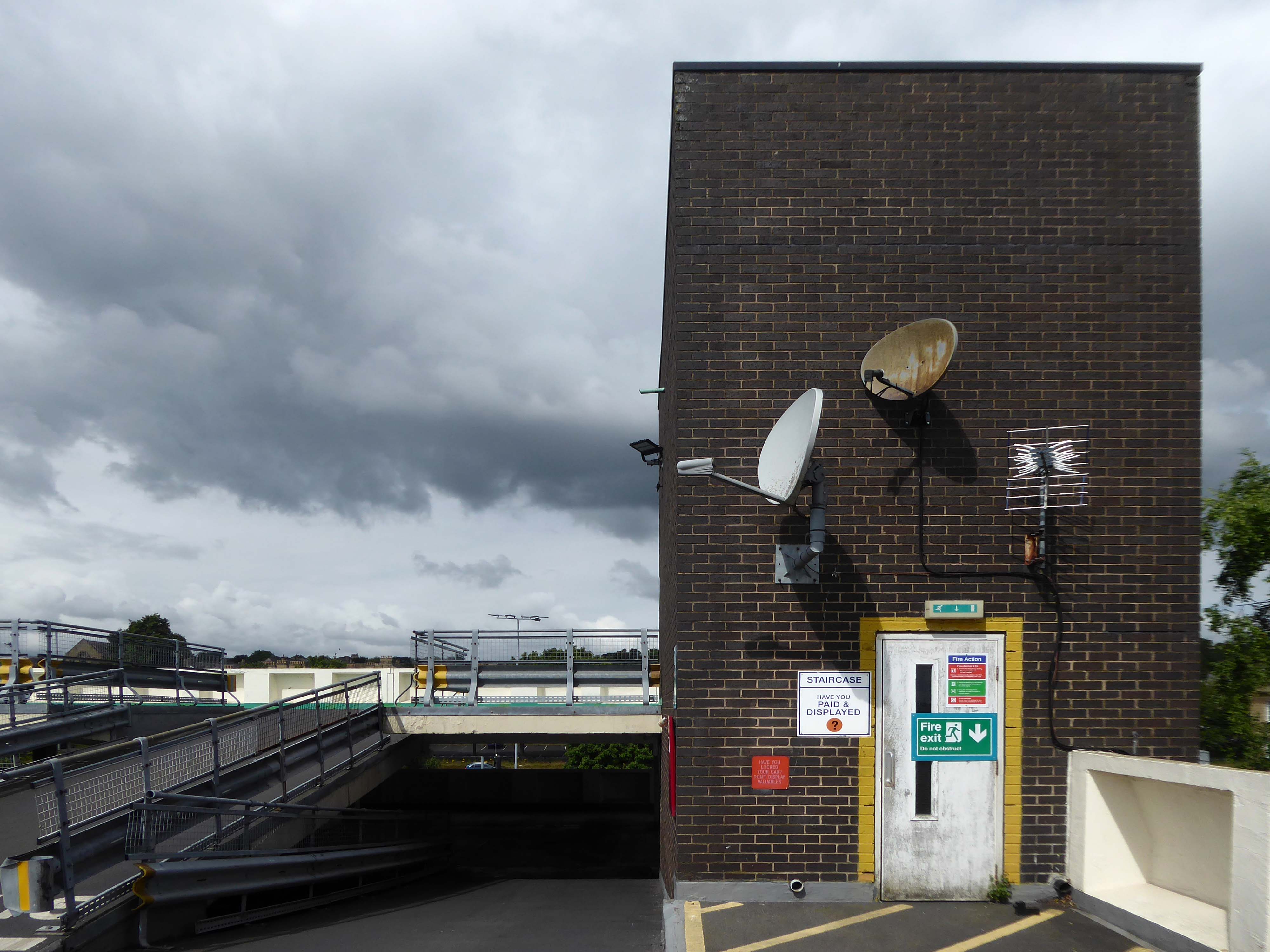
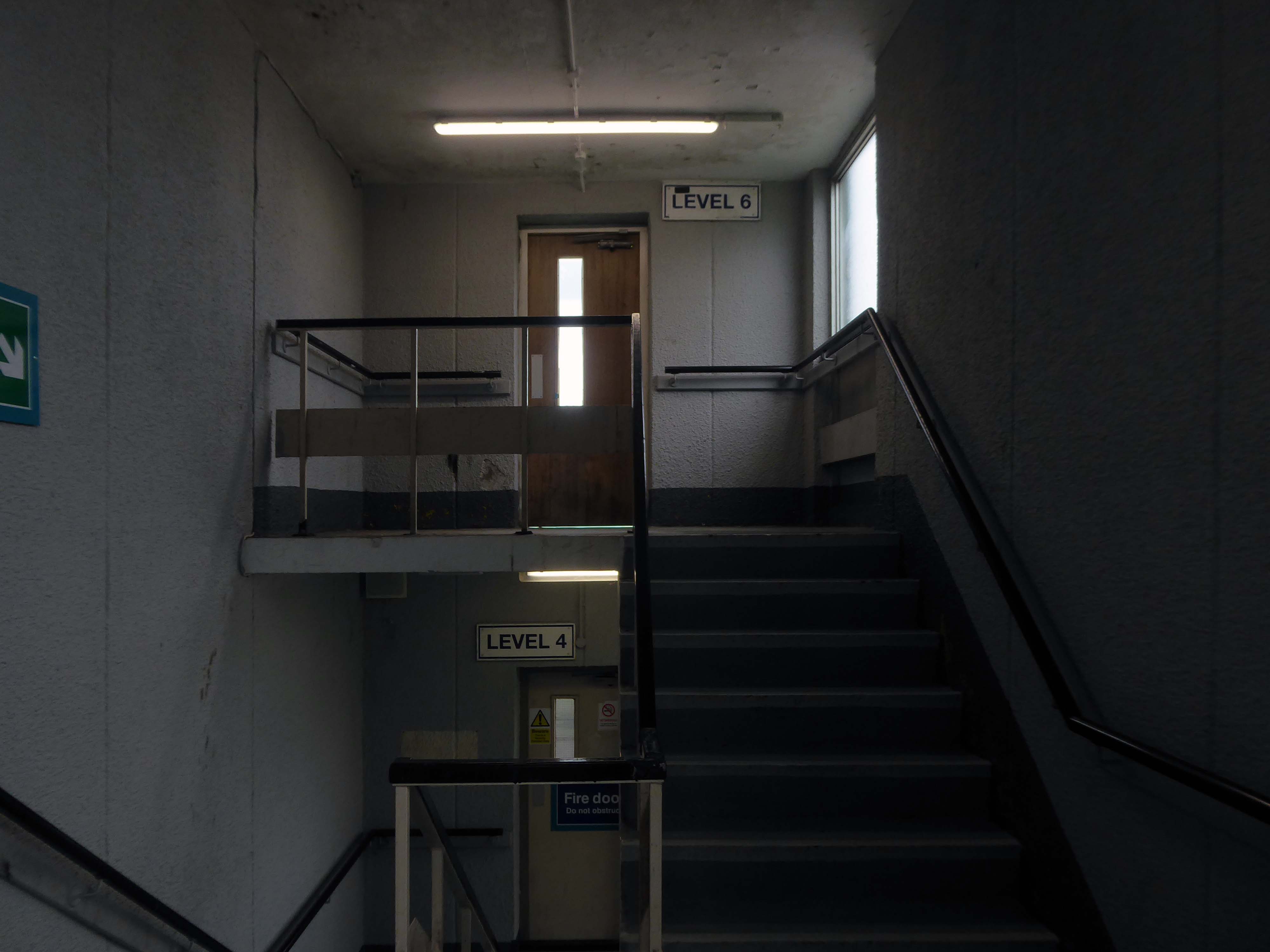
I’ve lost count of the countless times I have visited countless car parks.

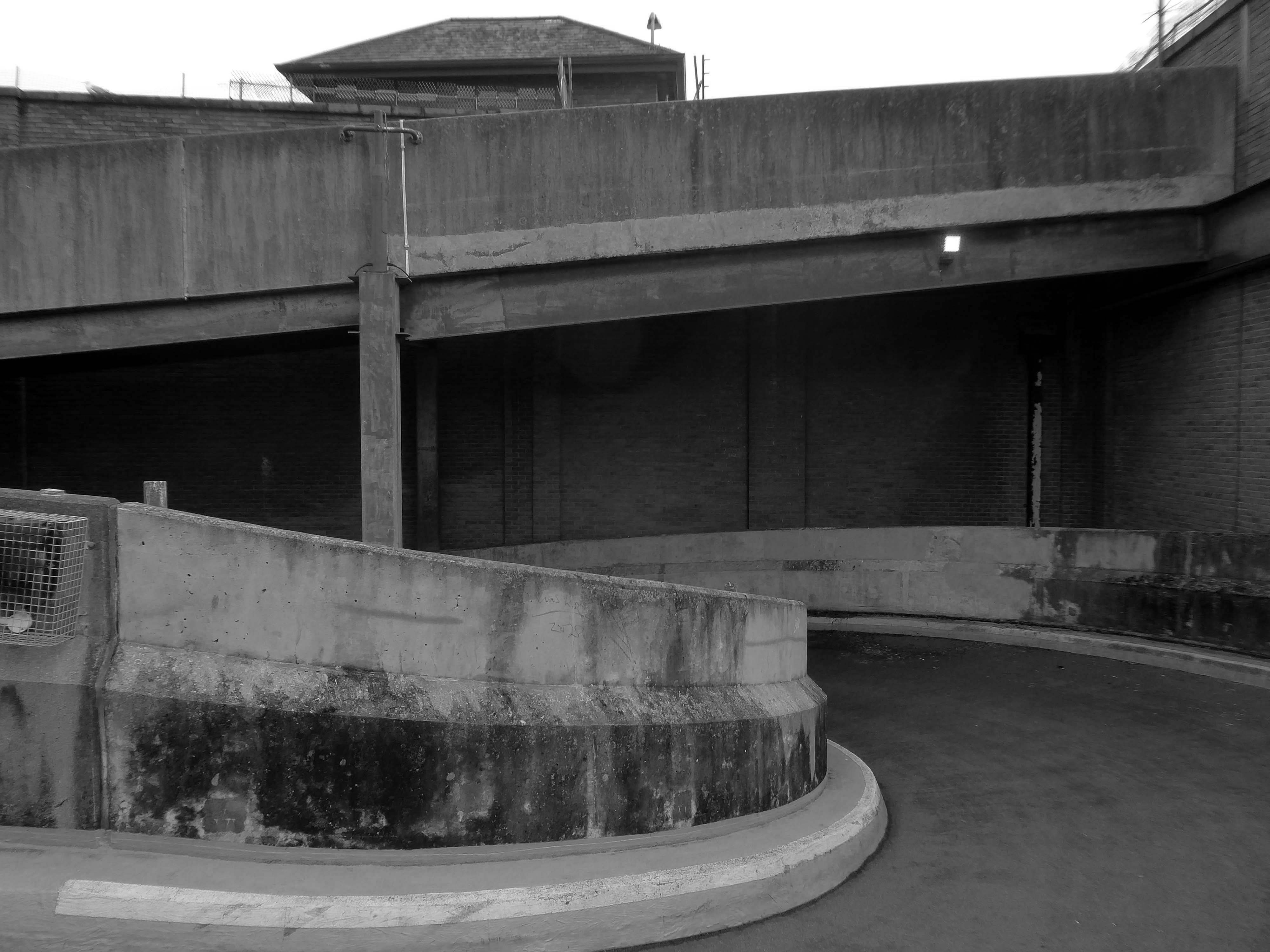
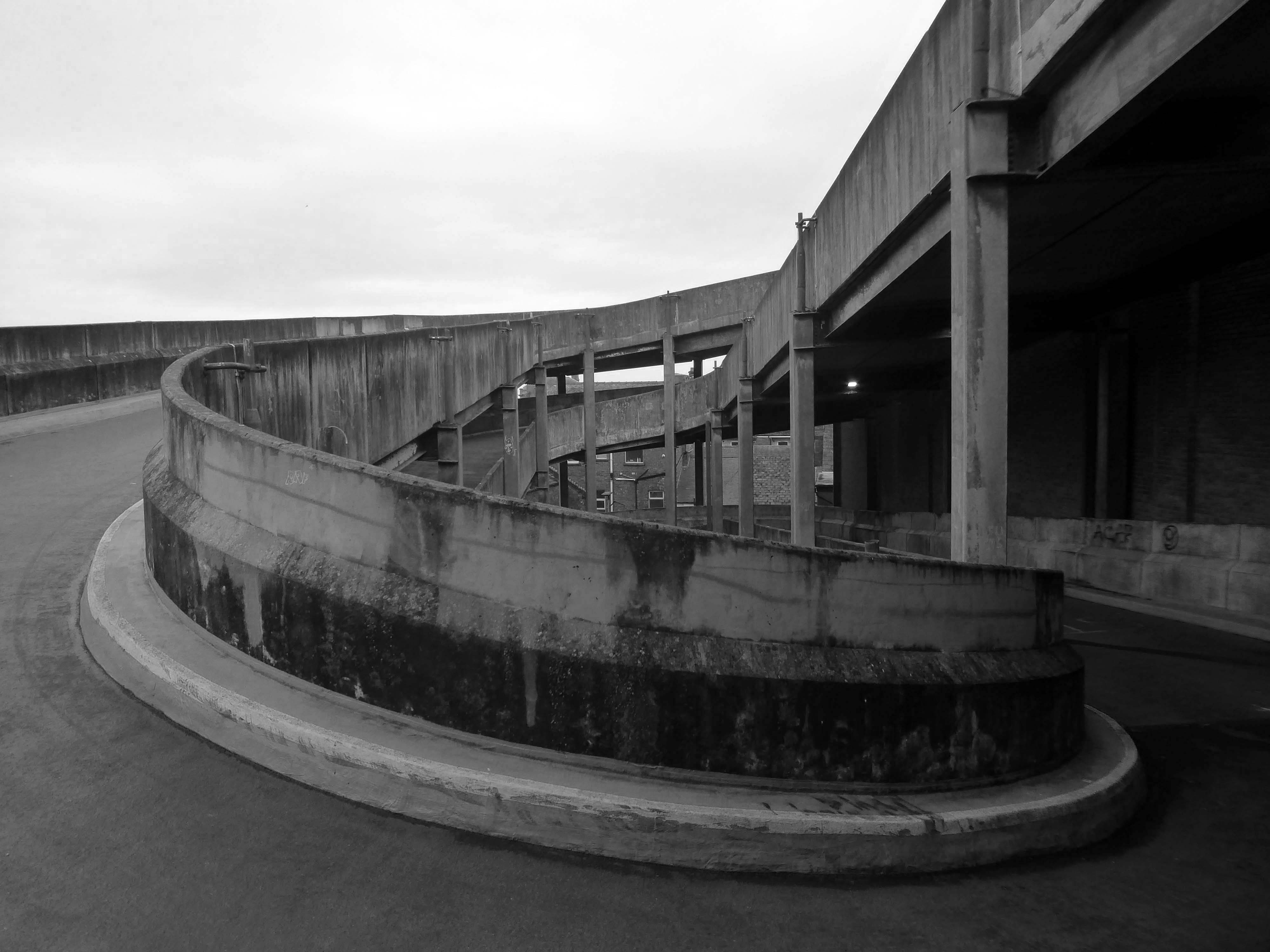
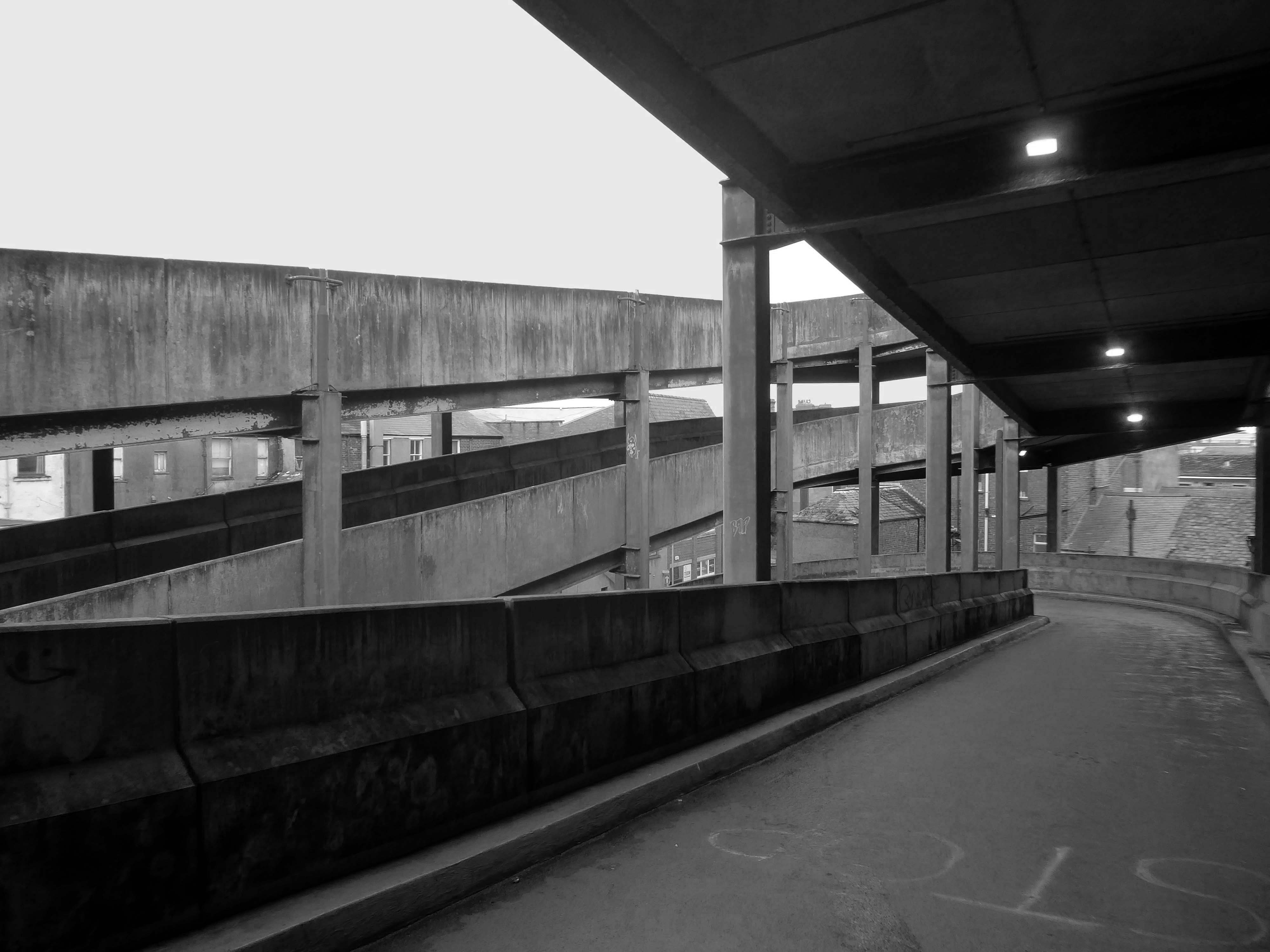
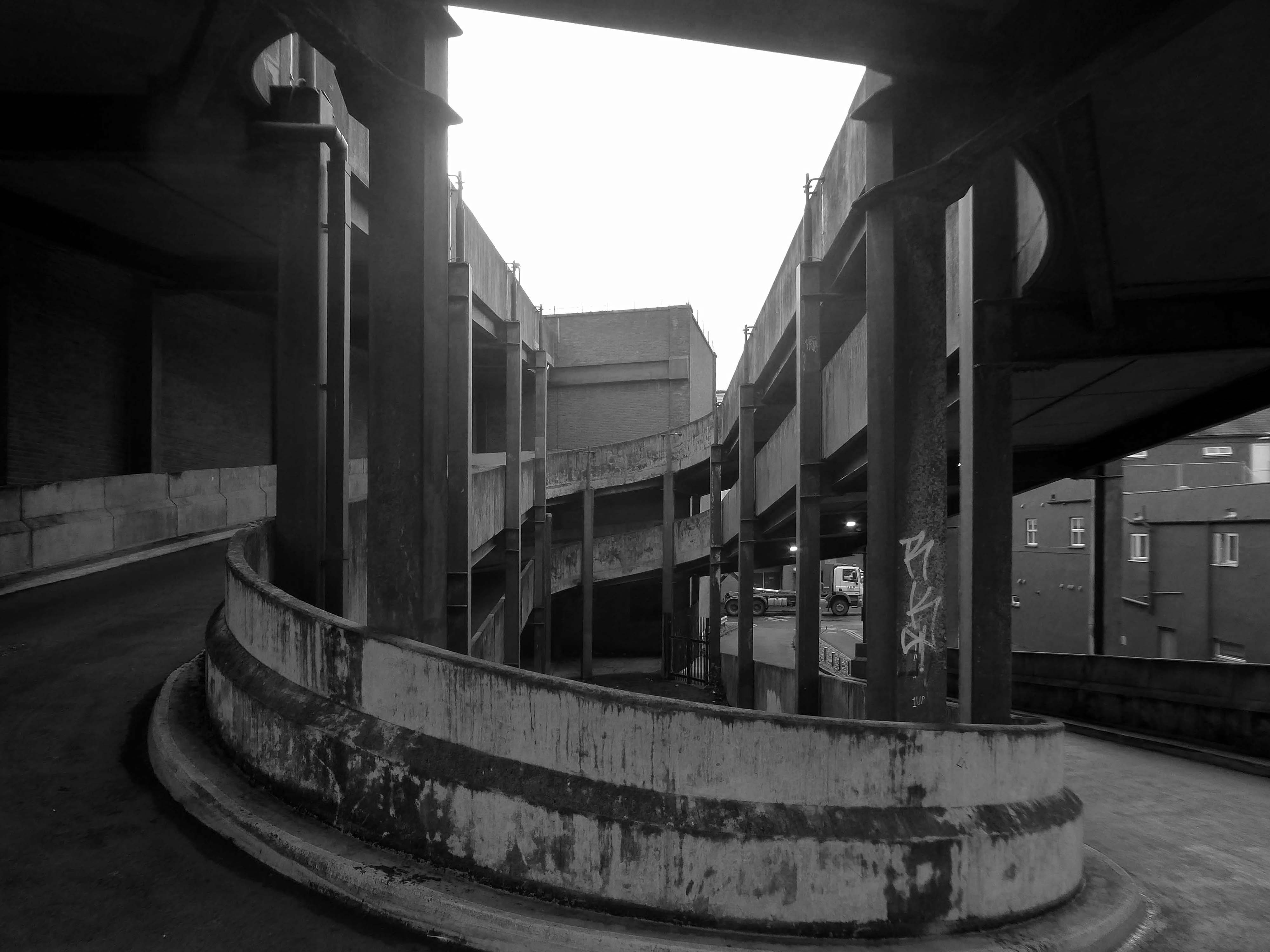
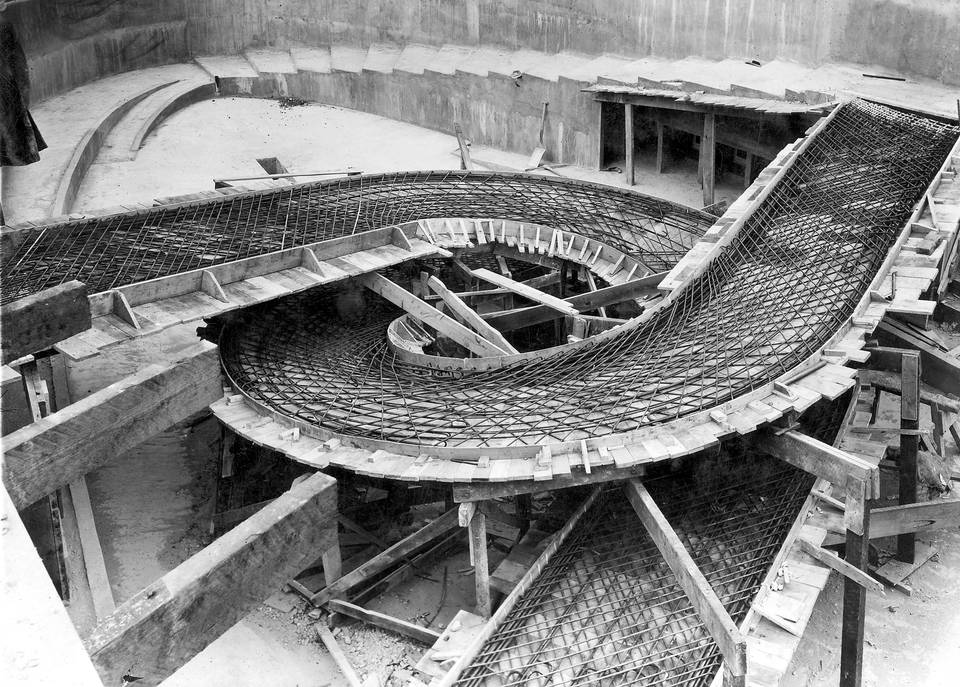
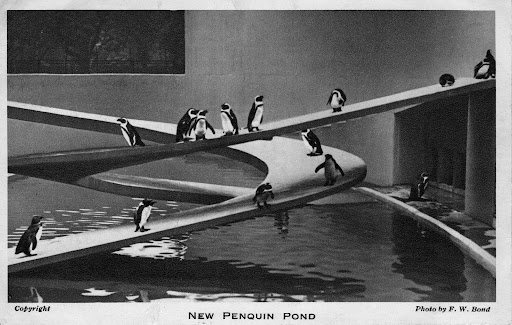
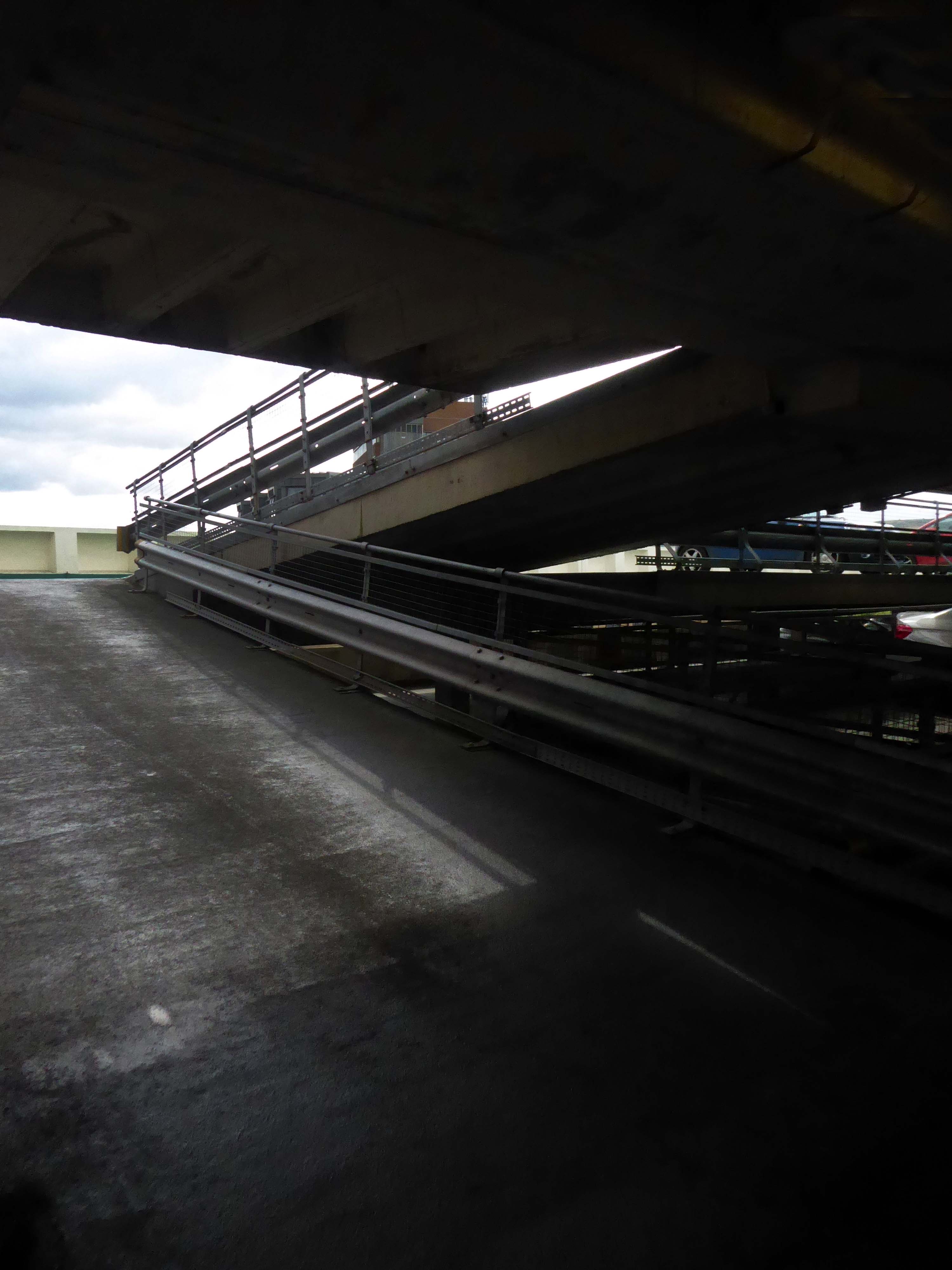
I do have a fondness for ramps – particularly helical ramps, one of my most memorable early modernist encounters, was with Lubetkin’s penguin pool.

The cast concrete taking on a truly sculptural dimension.

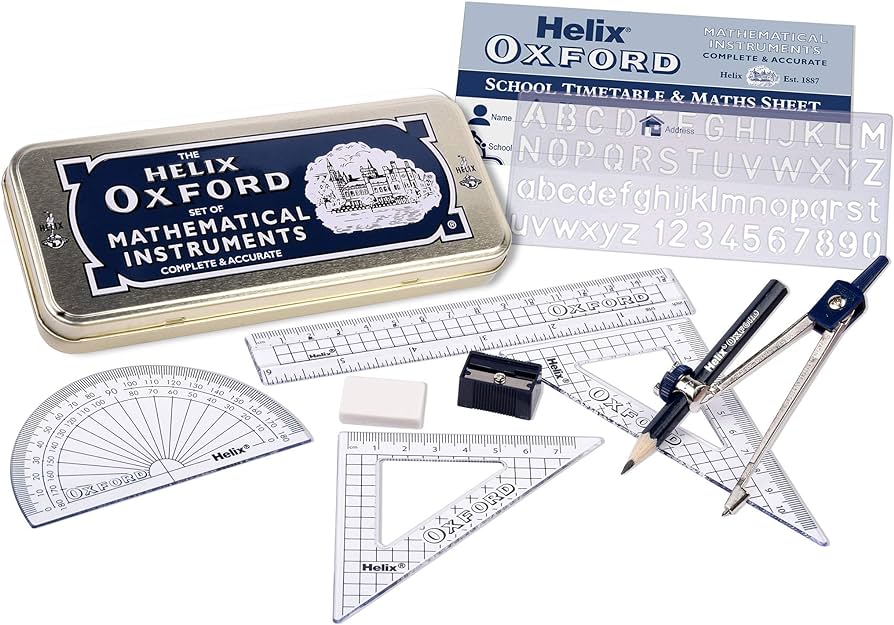
There is also the Proustian recollection of a collection of geometry lessons and Helix instruments.

It has all left a lasting impression and I have subsequently taken every opportunity to waddle penguin like up and down several concrete car park ramps.

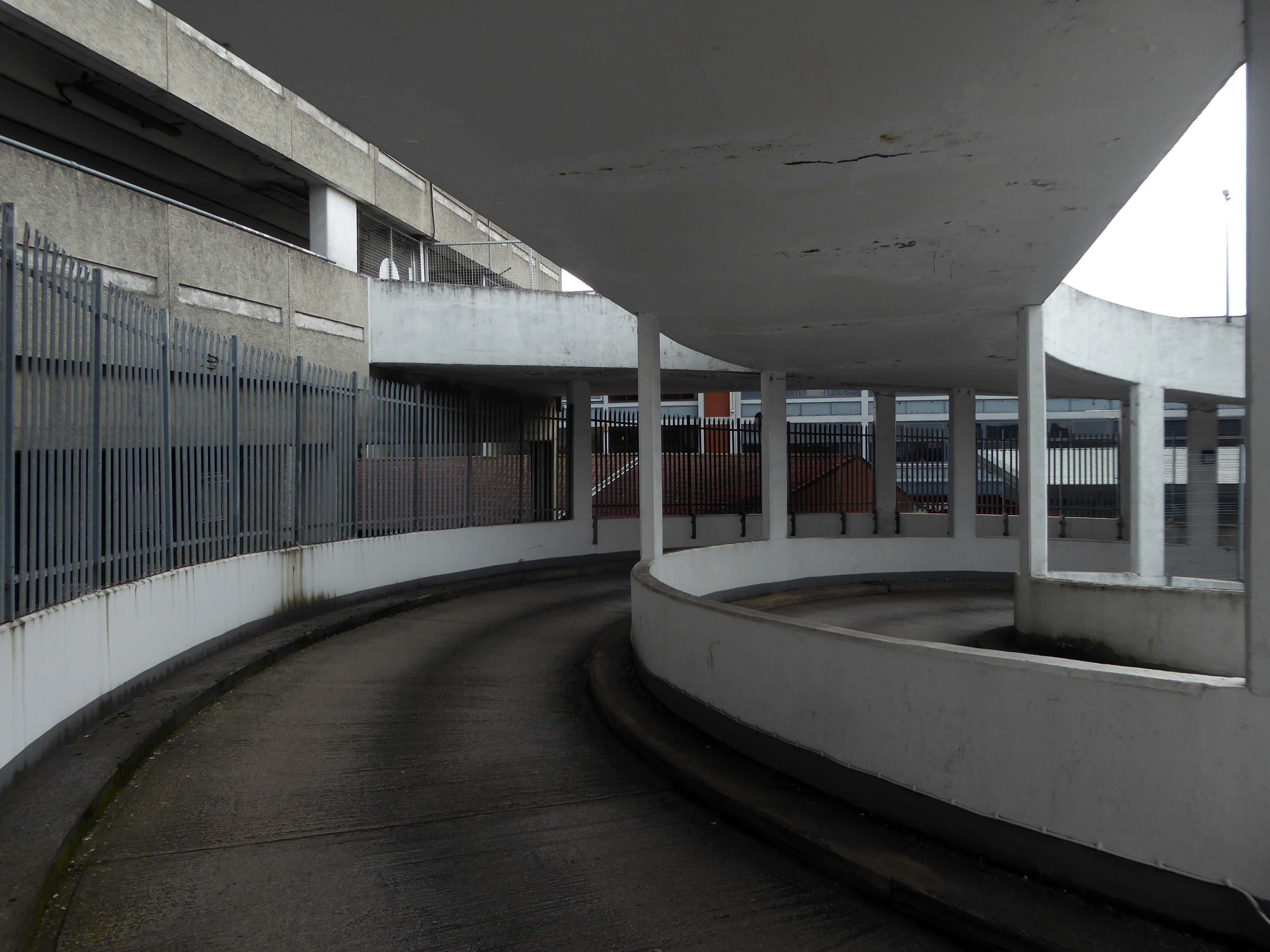
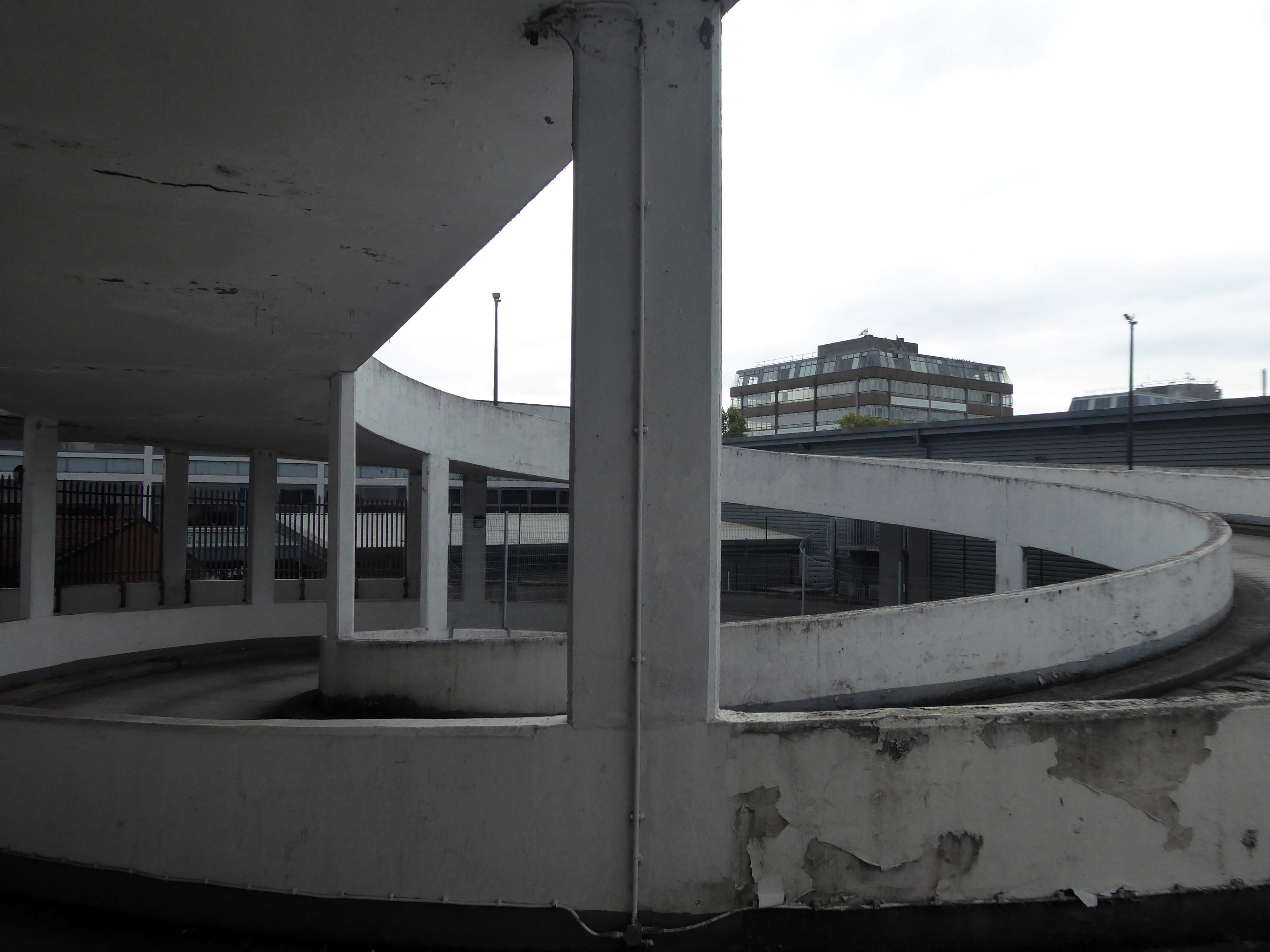
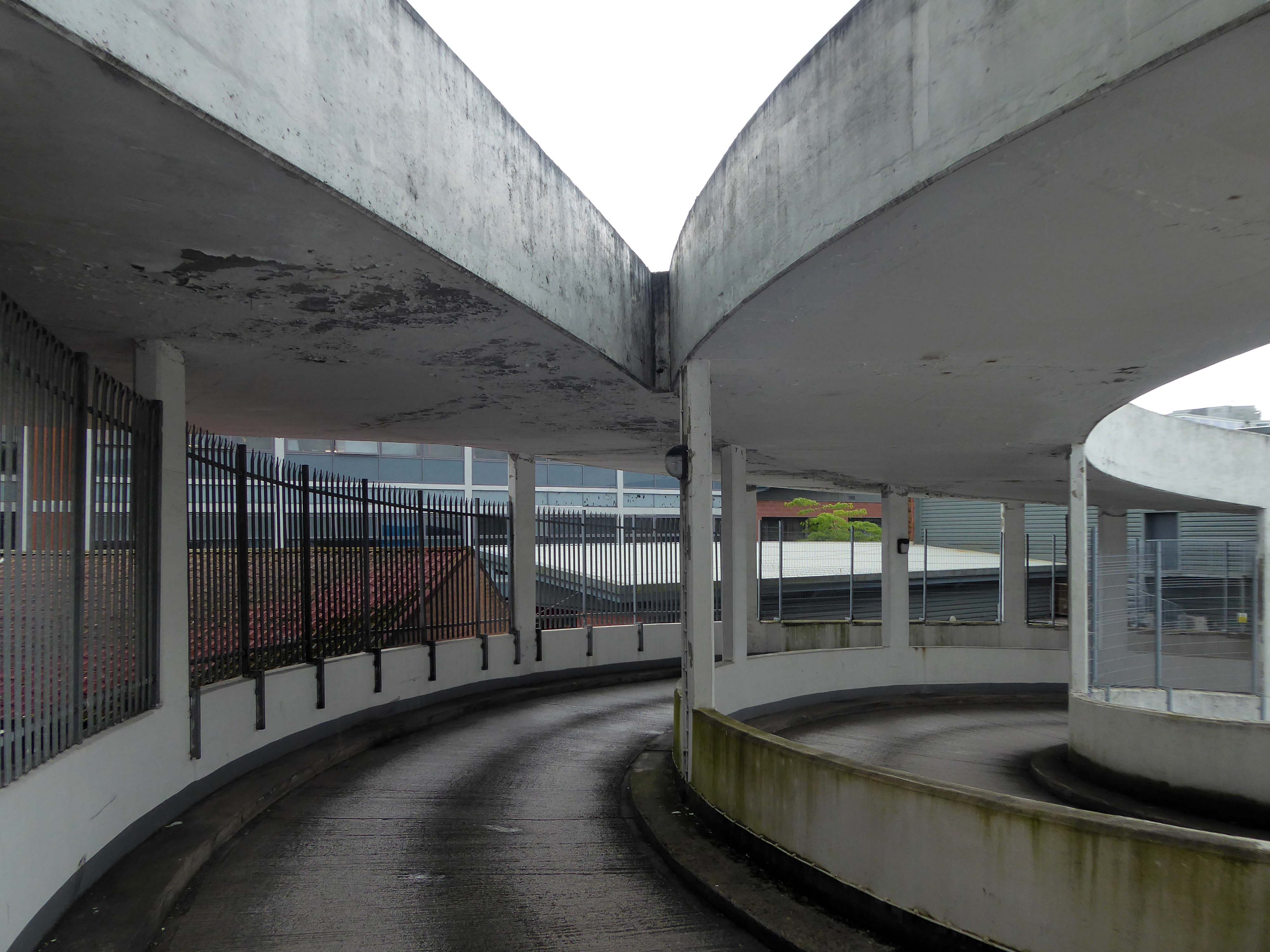
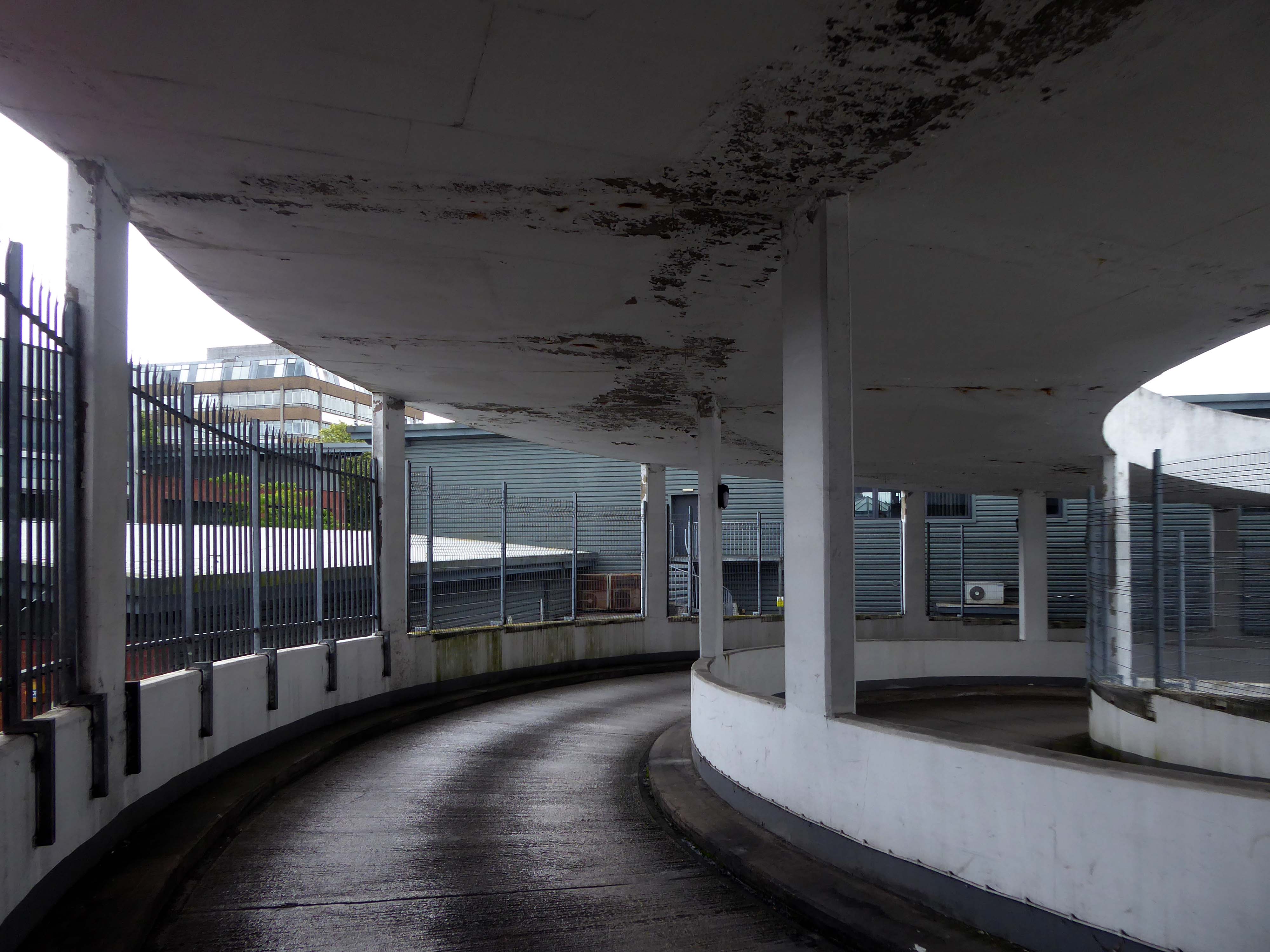
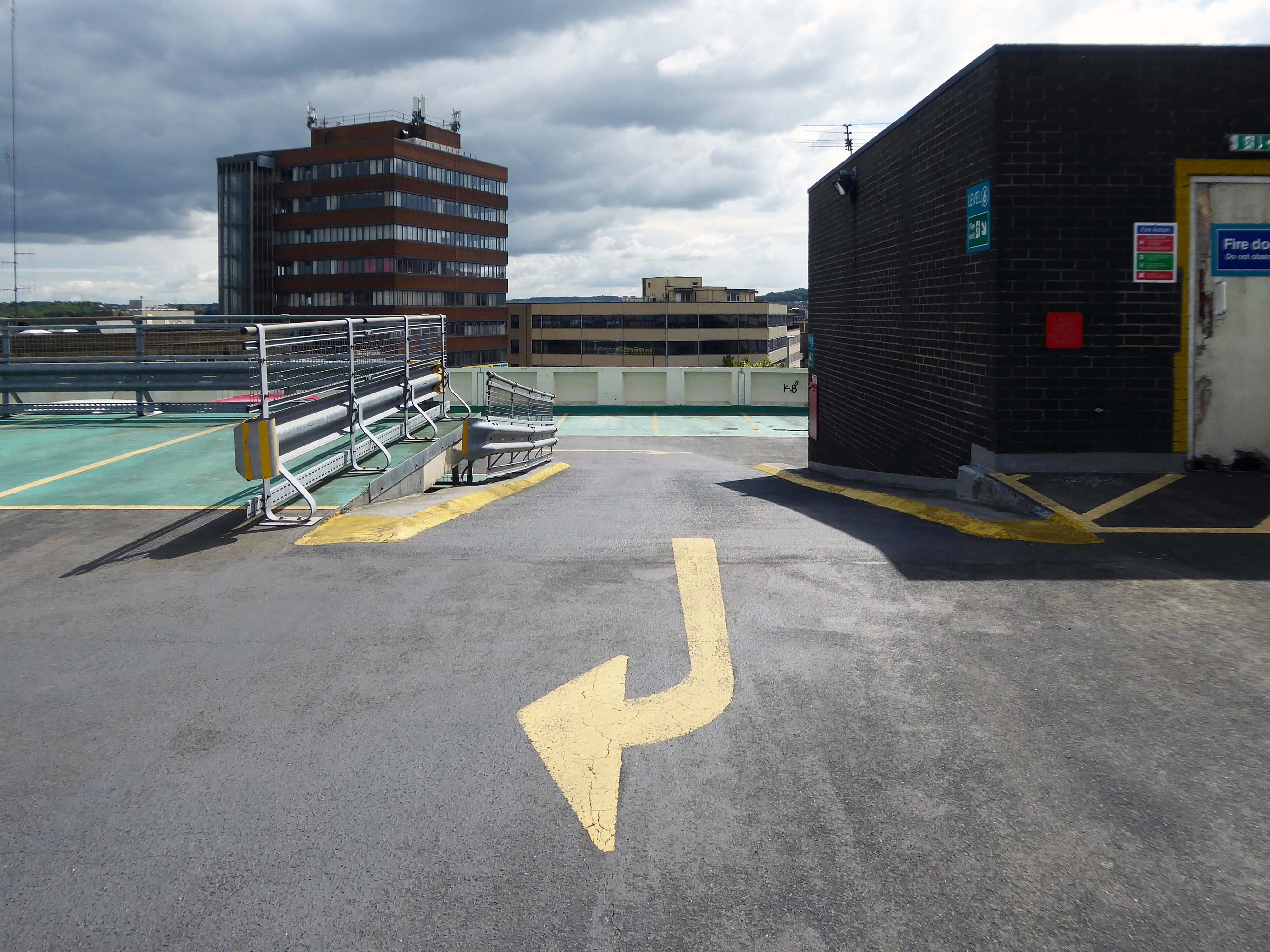
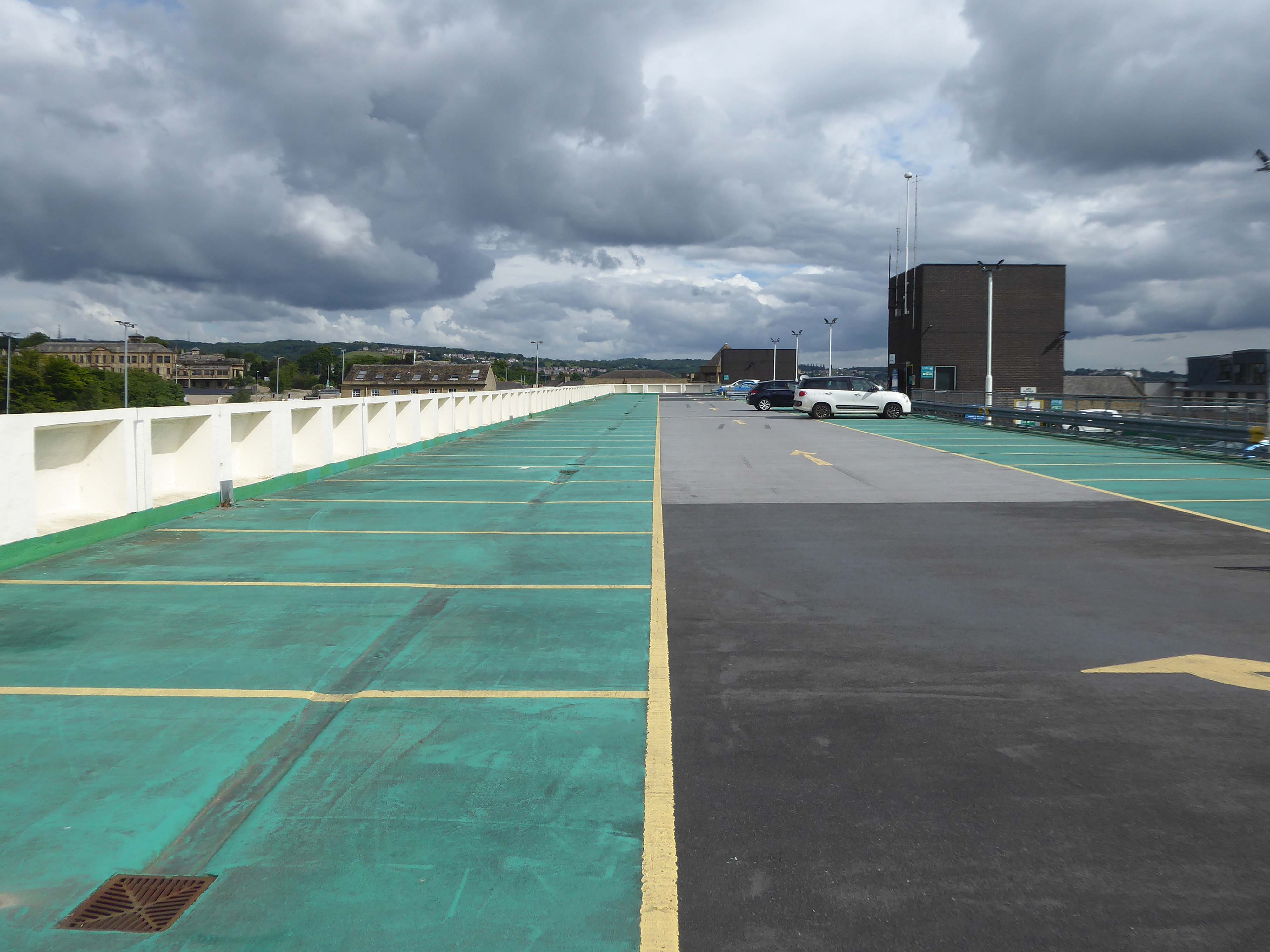
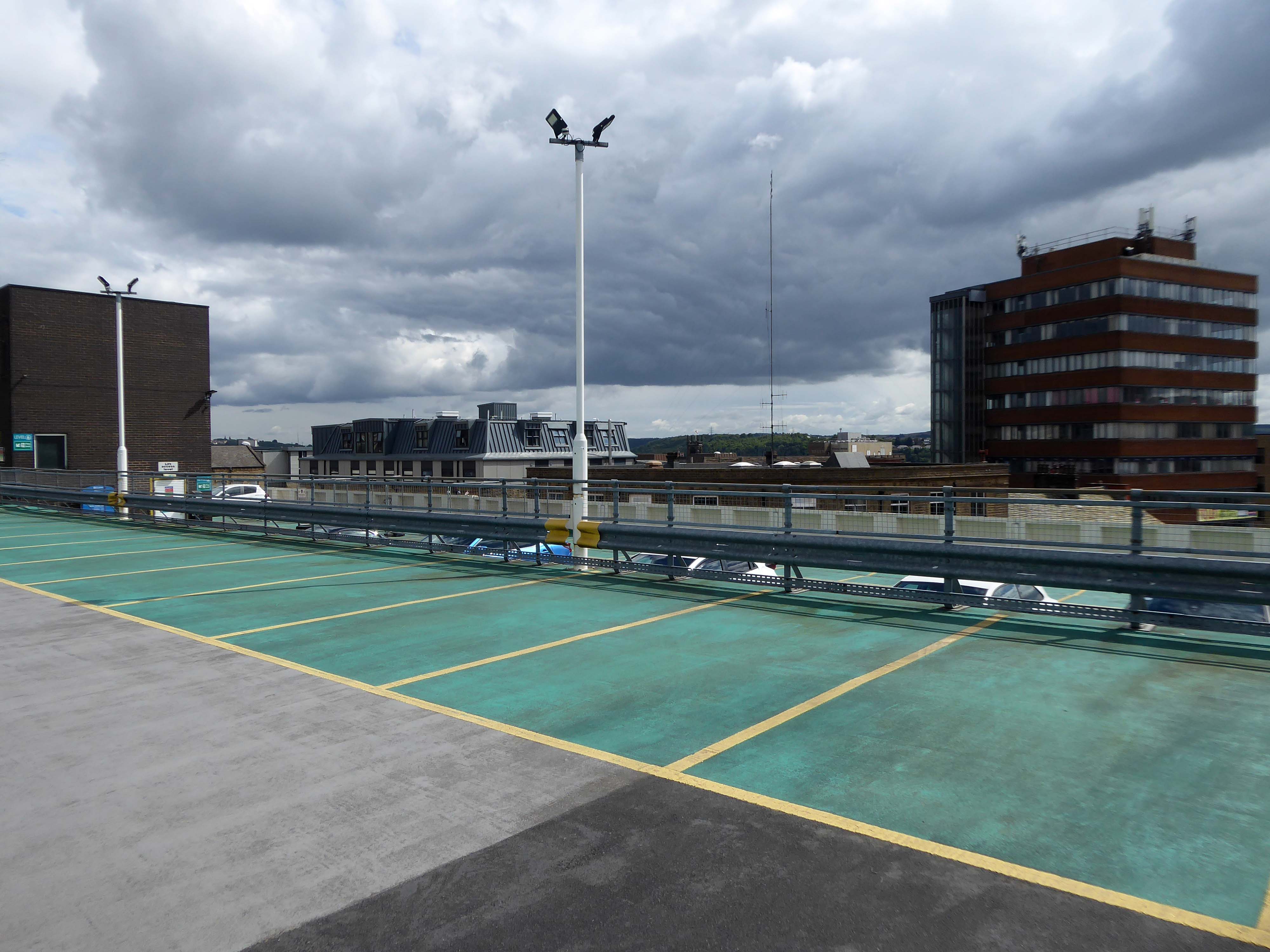
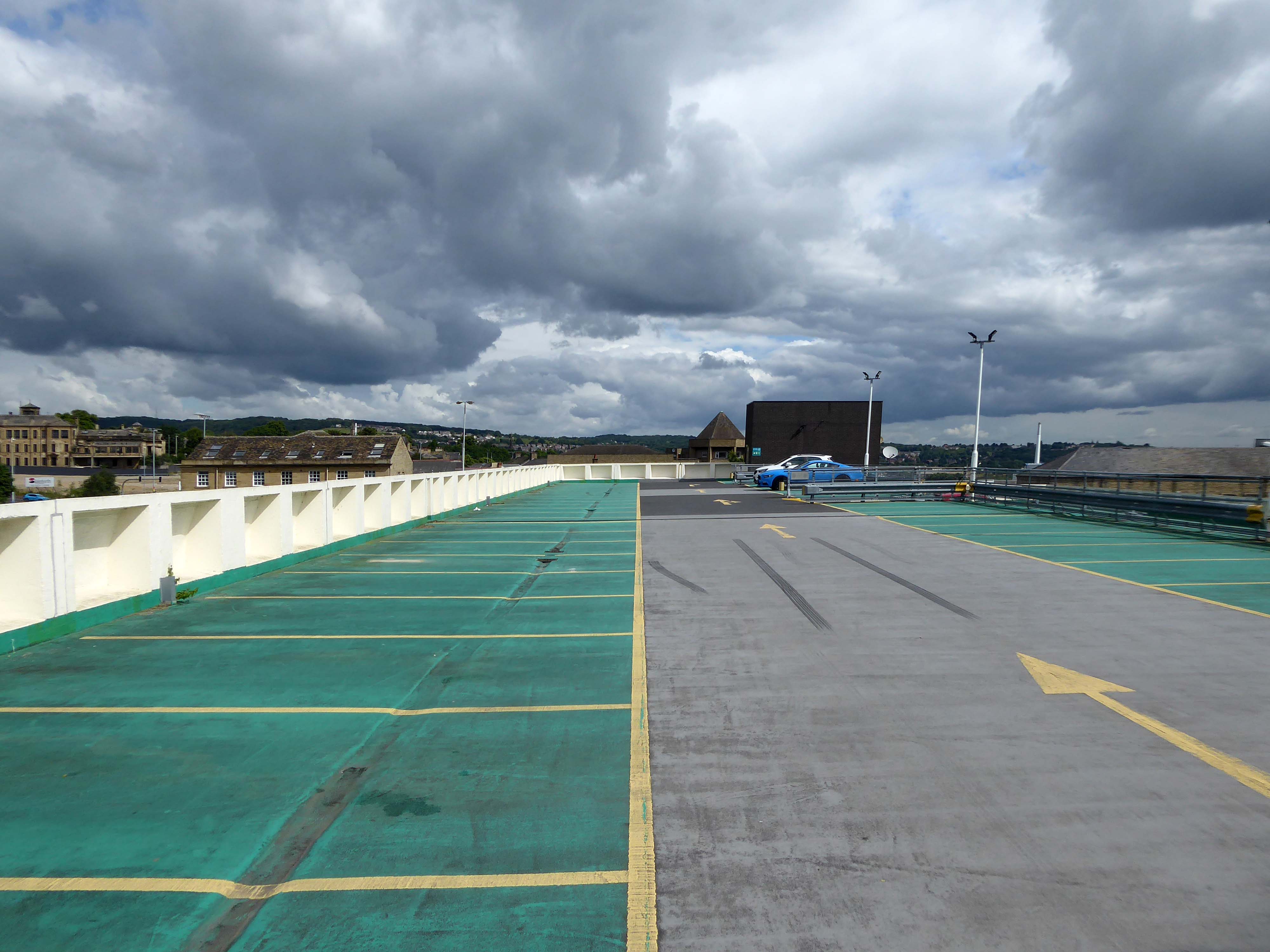
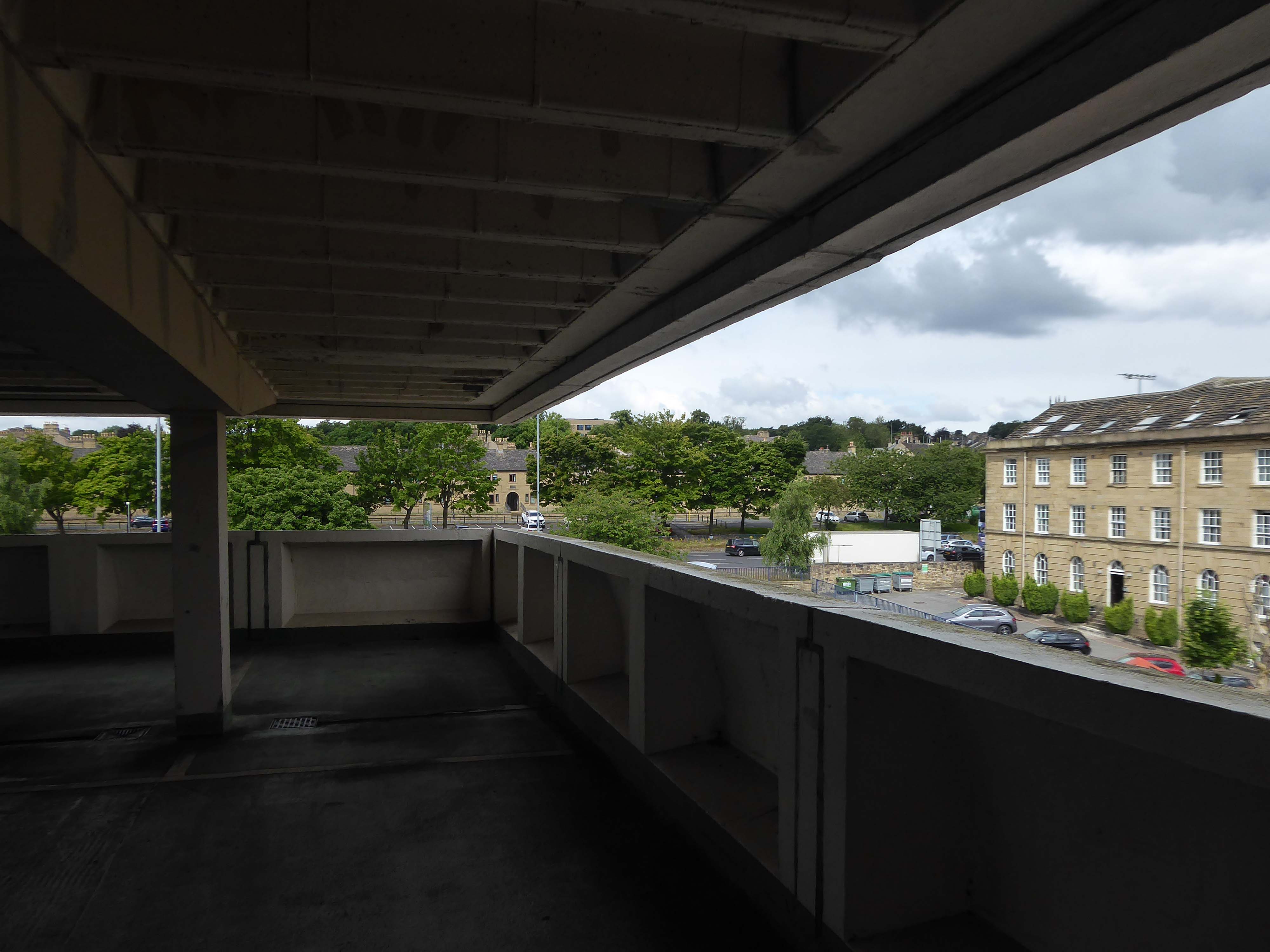
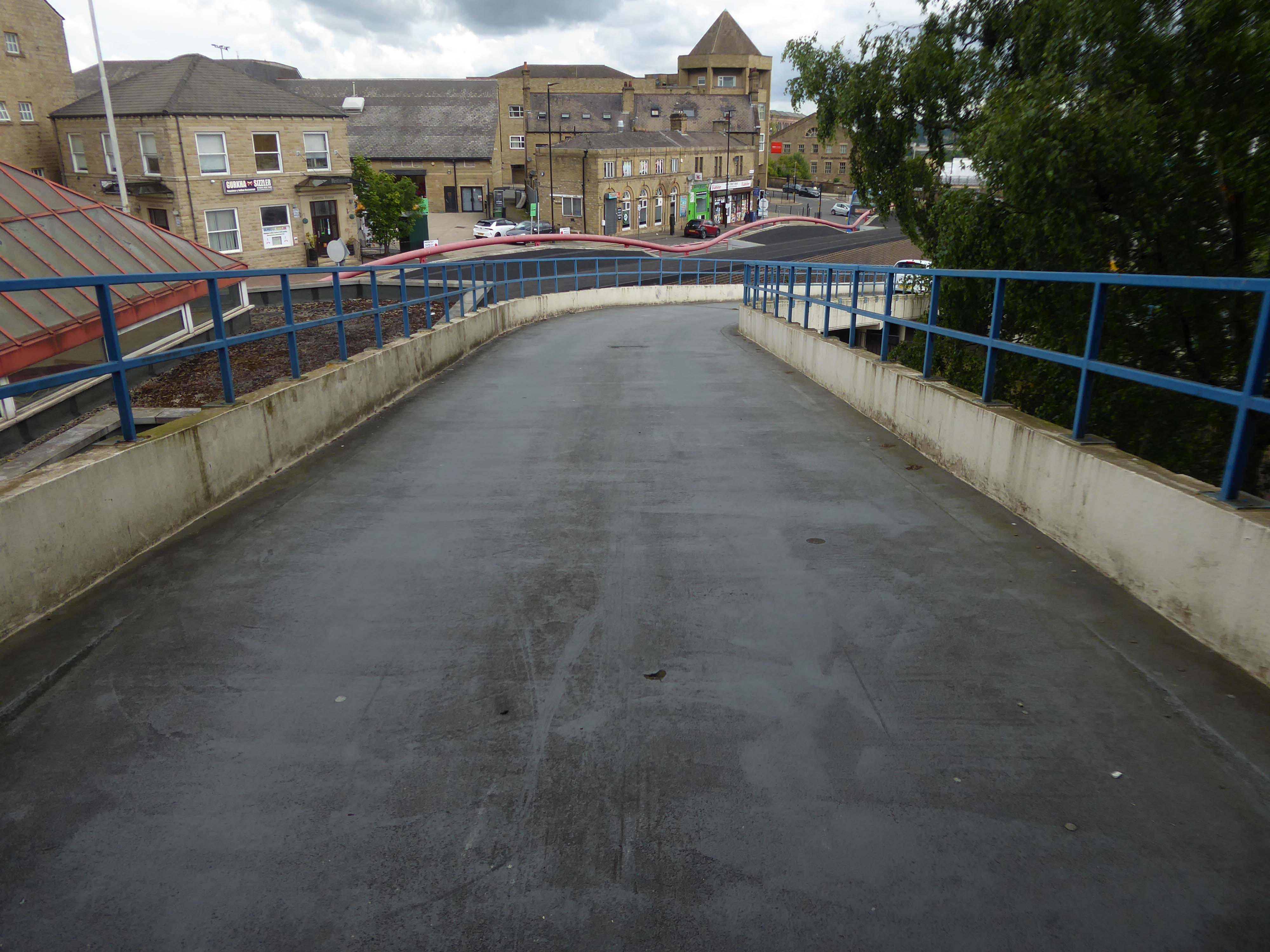
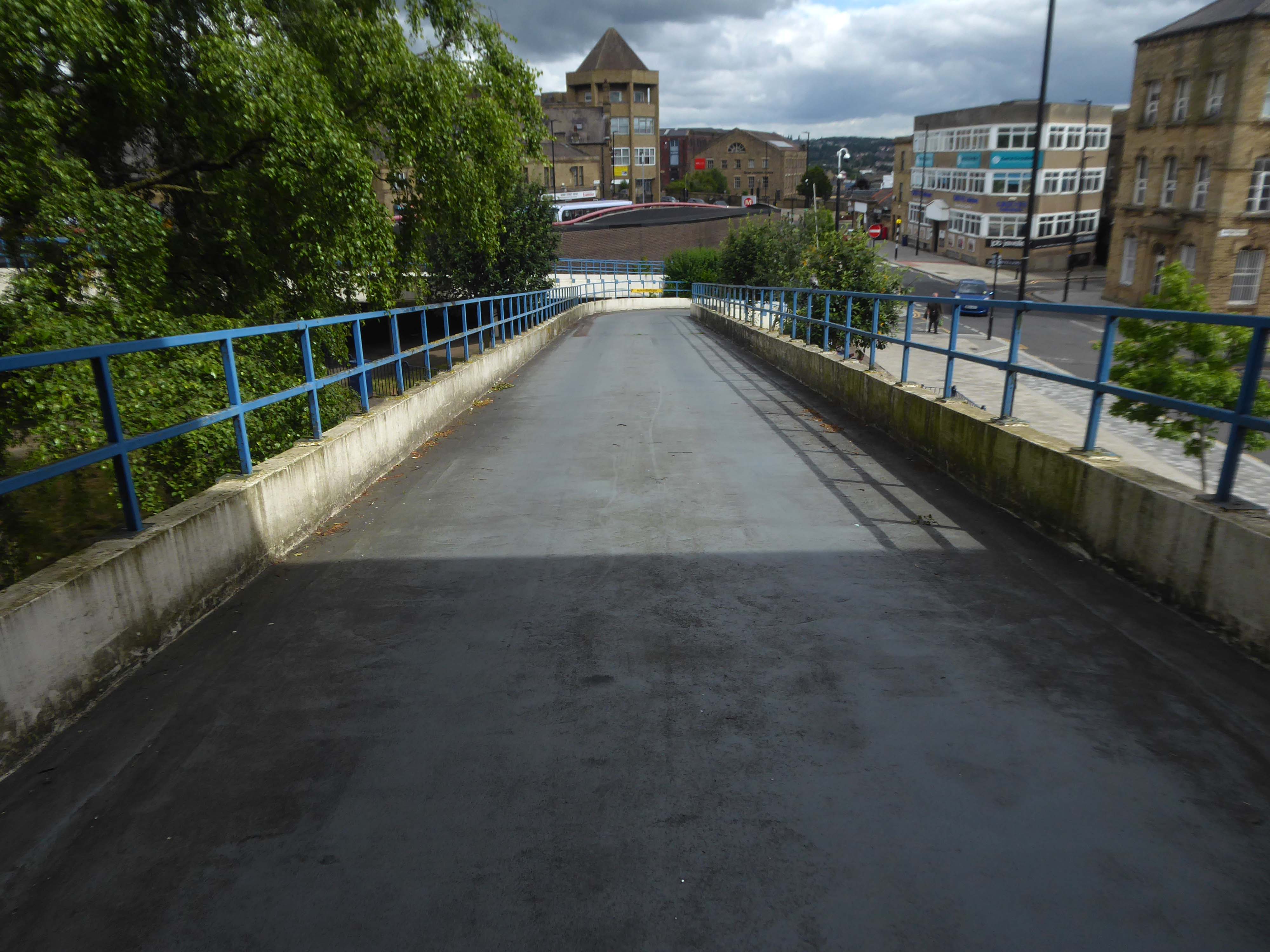
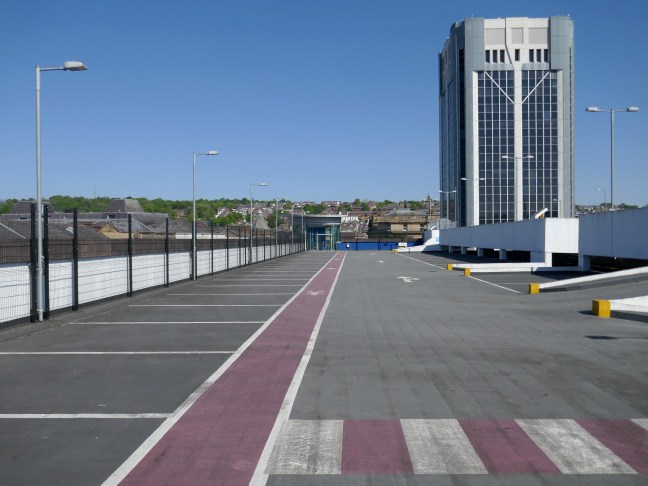
Here’s the most recent.

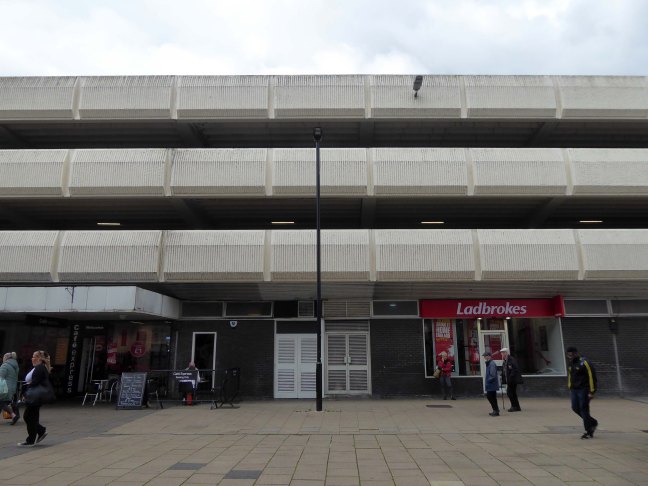
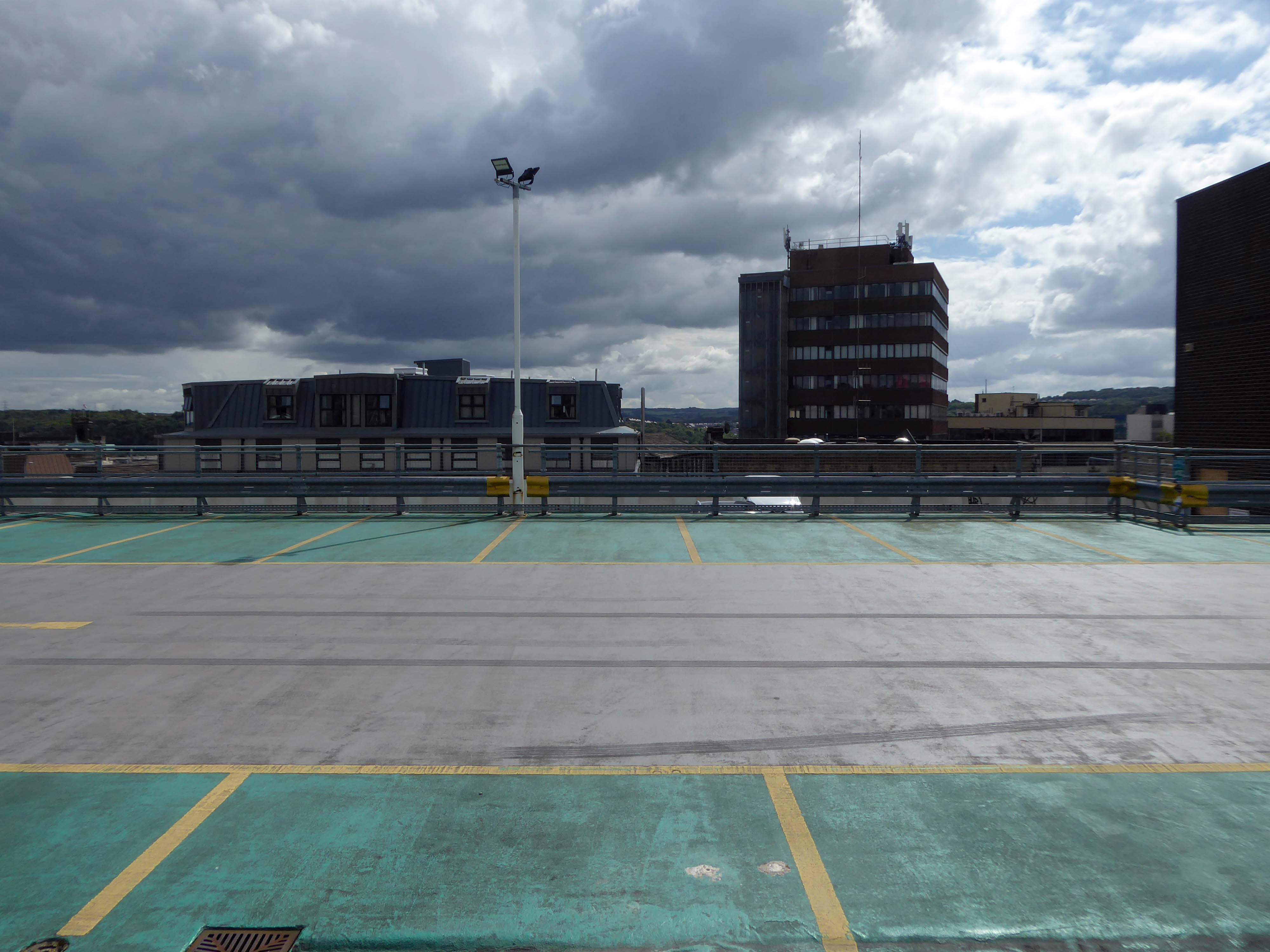
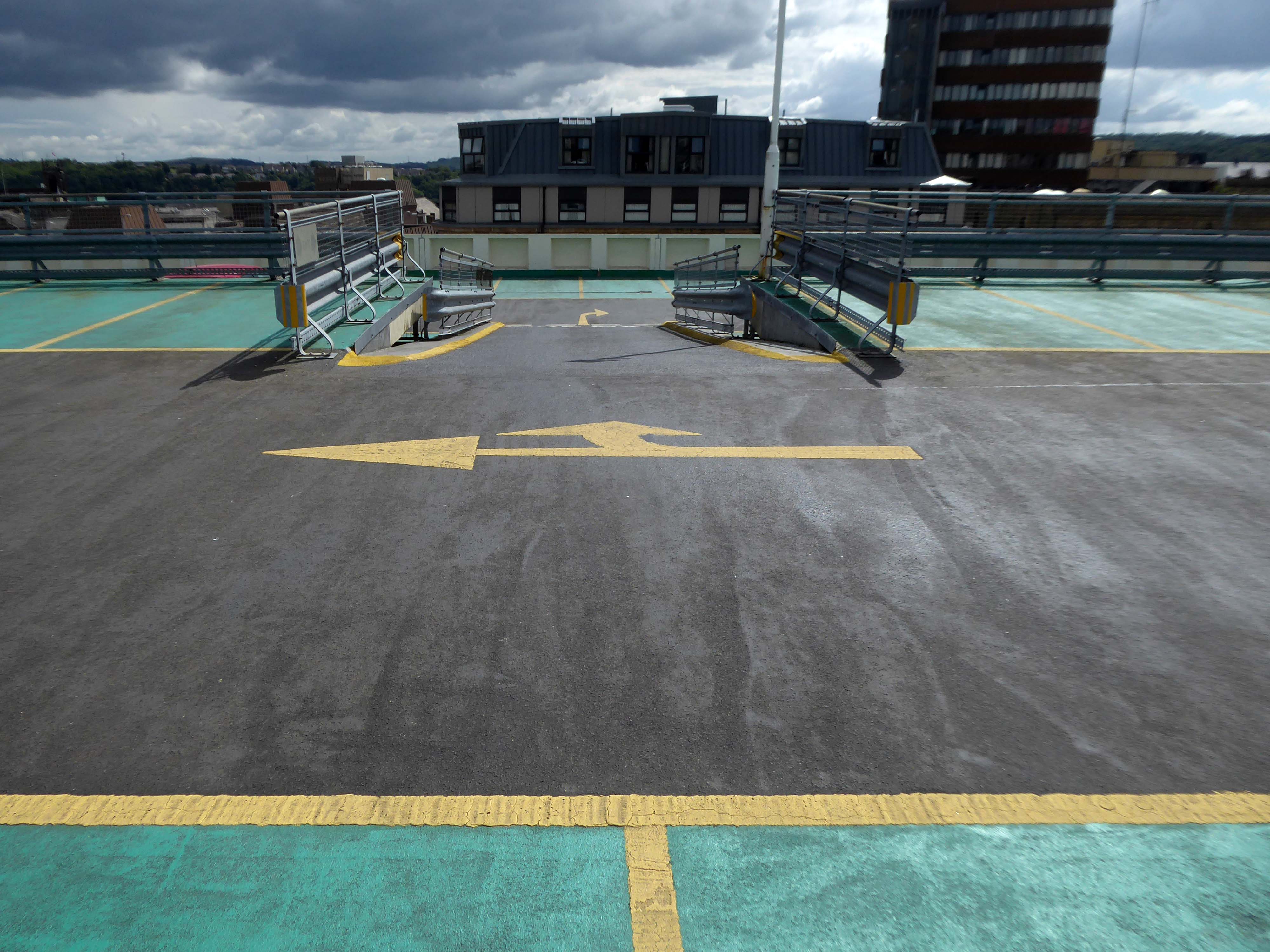
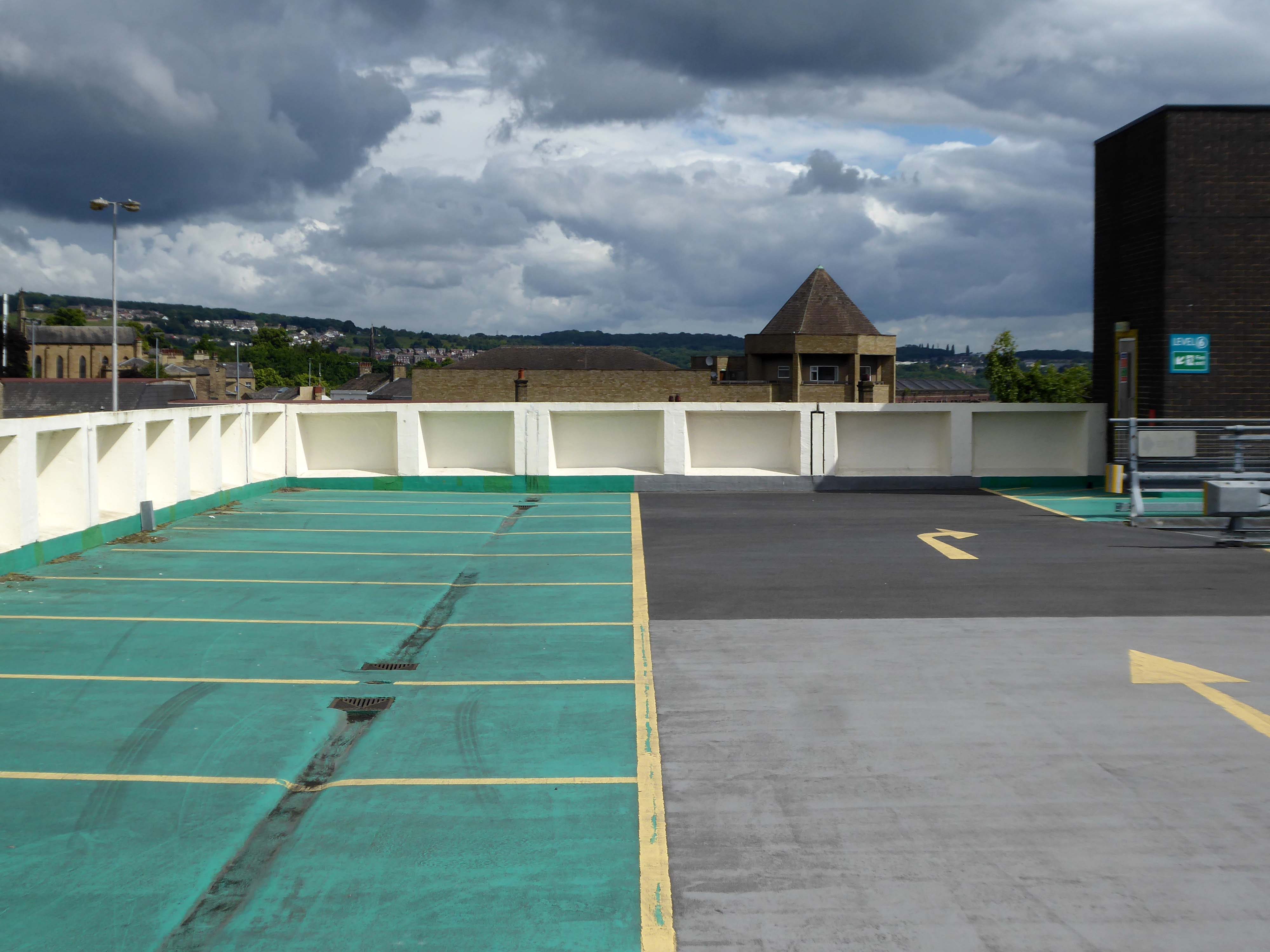
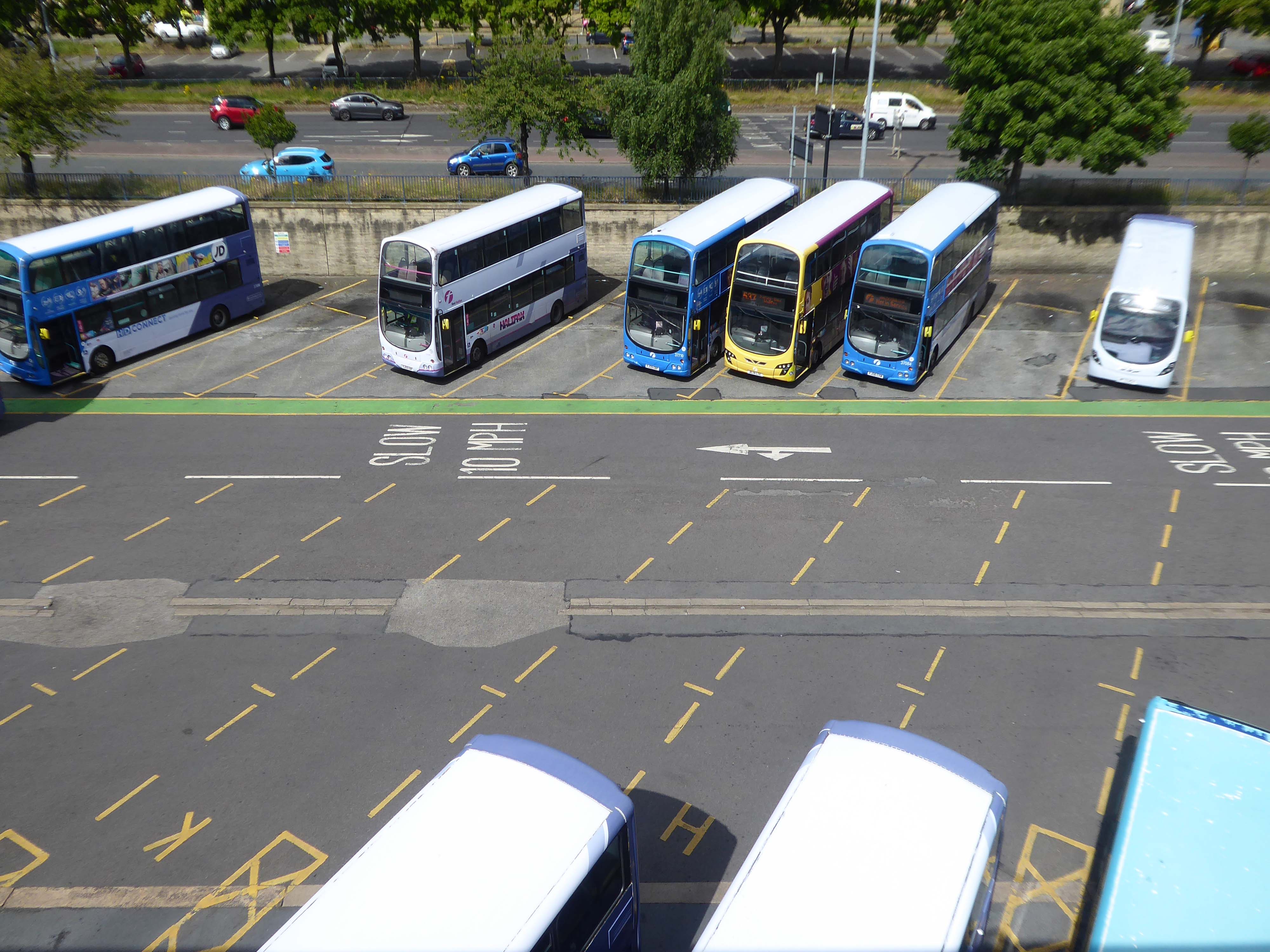
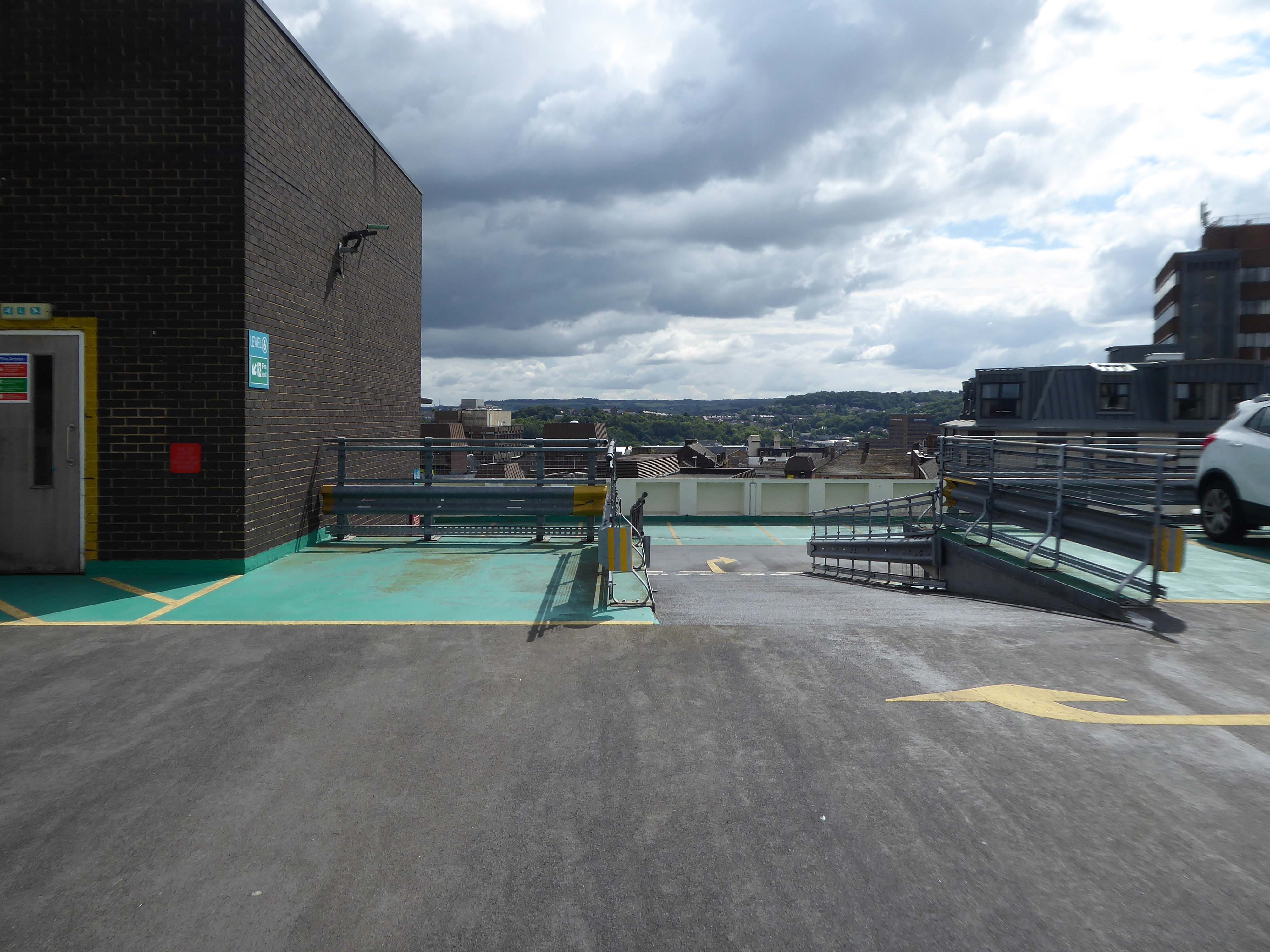
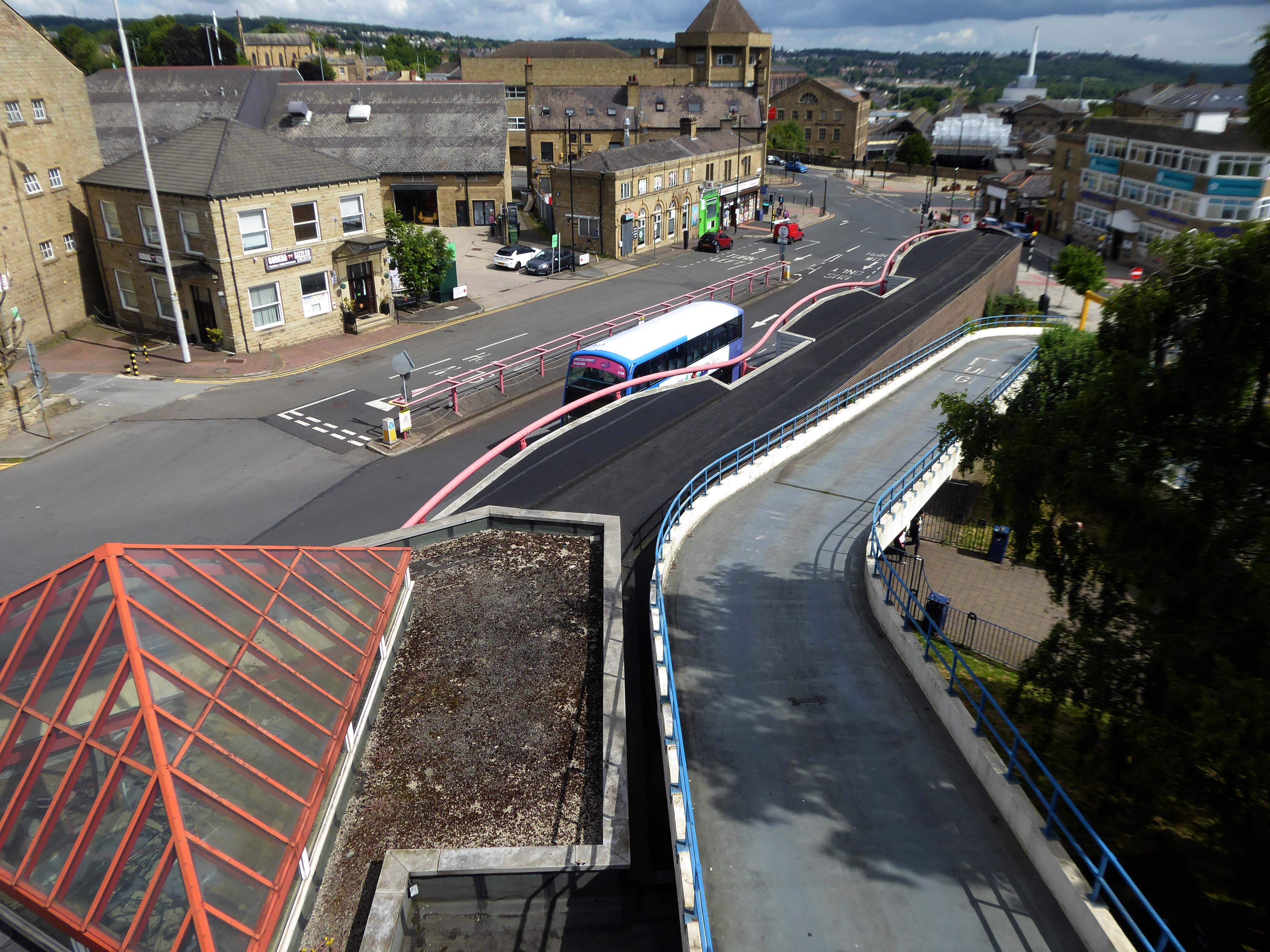
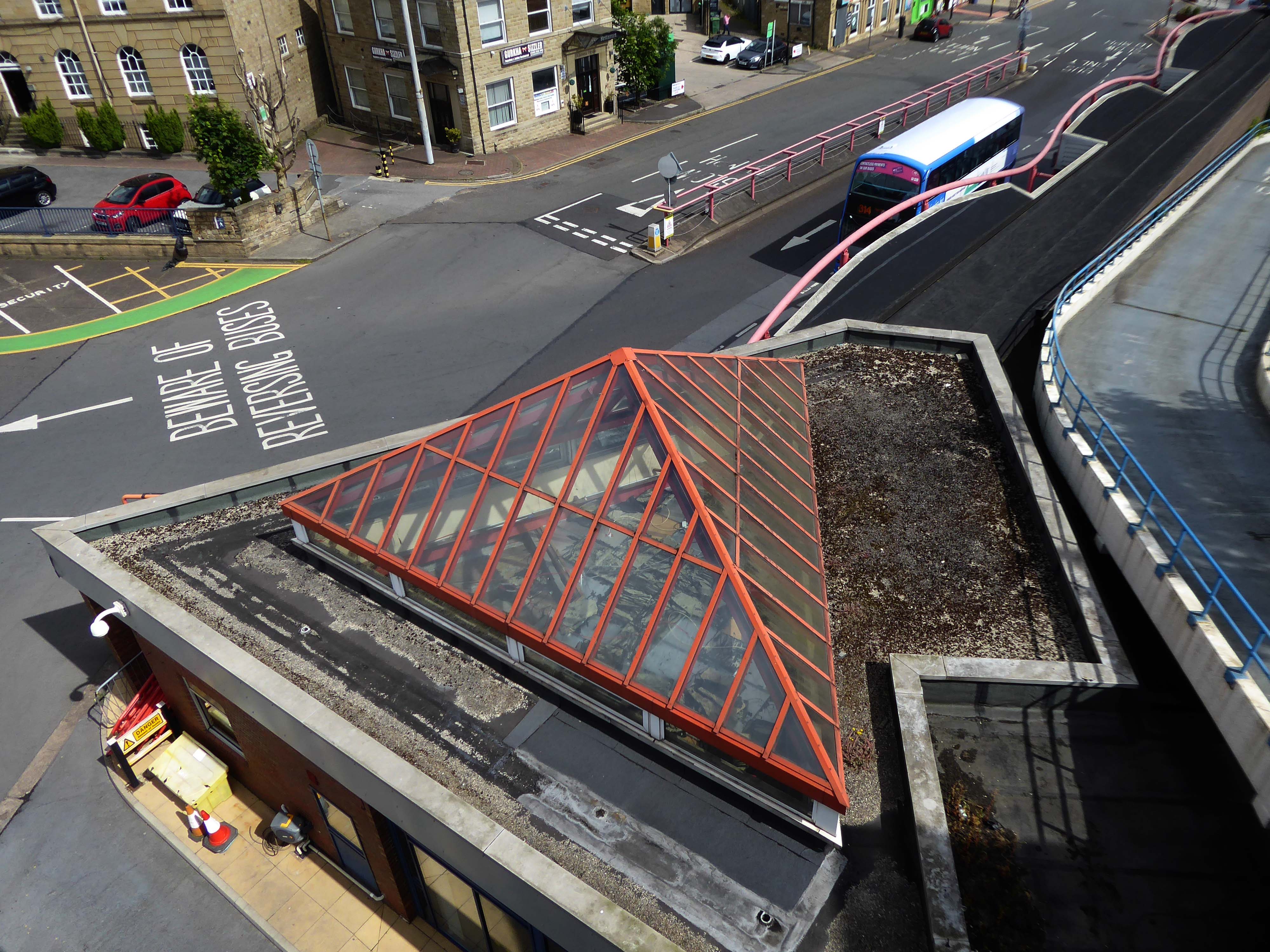
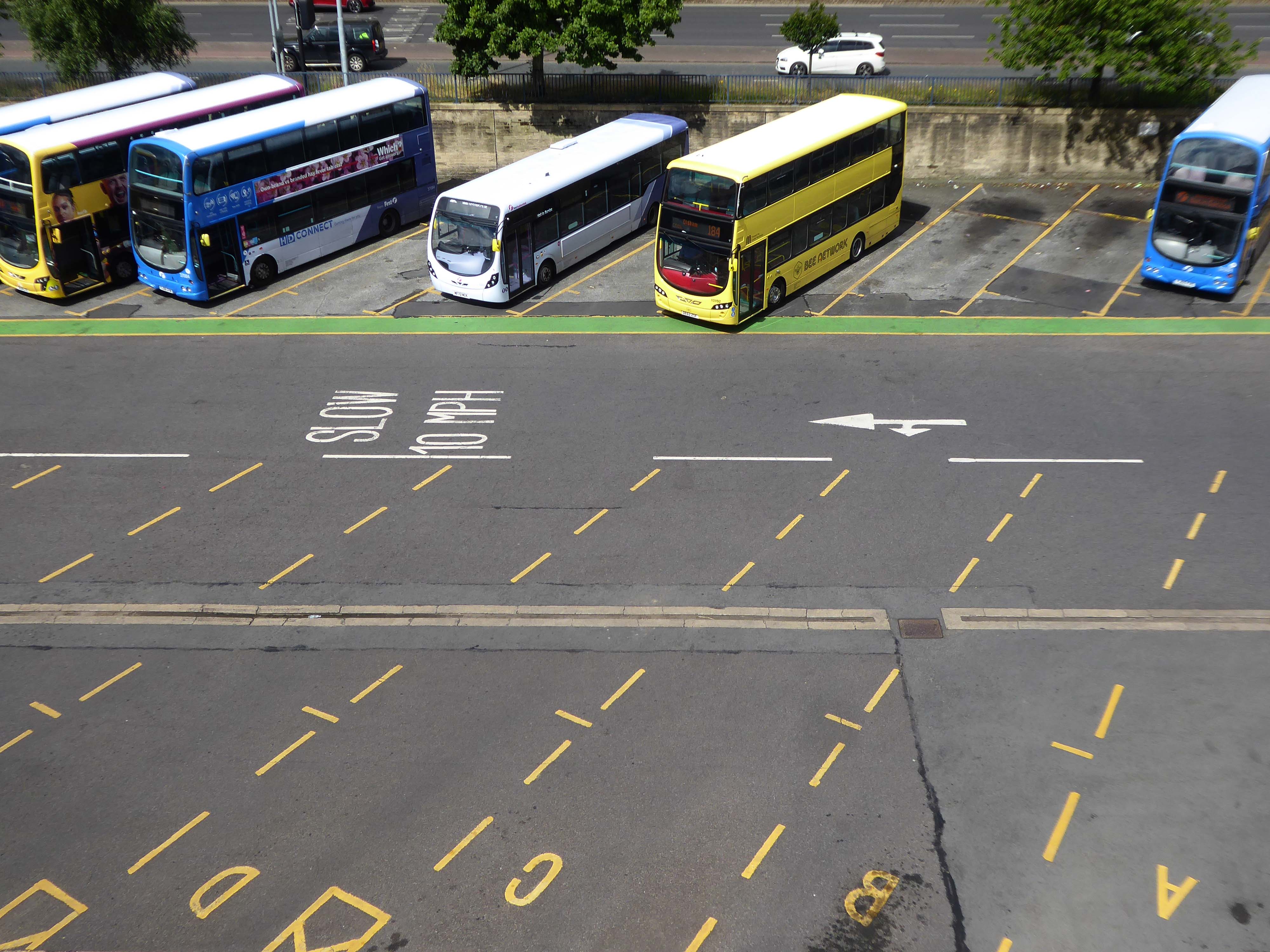
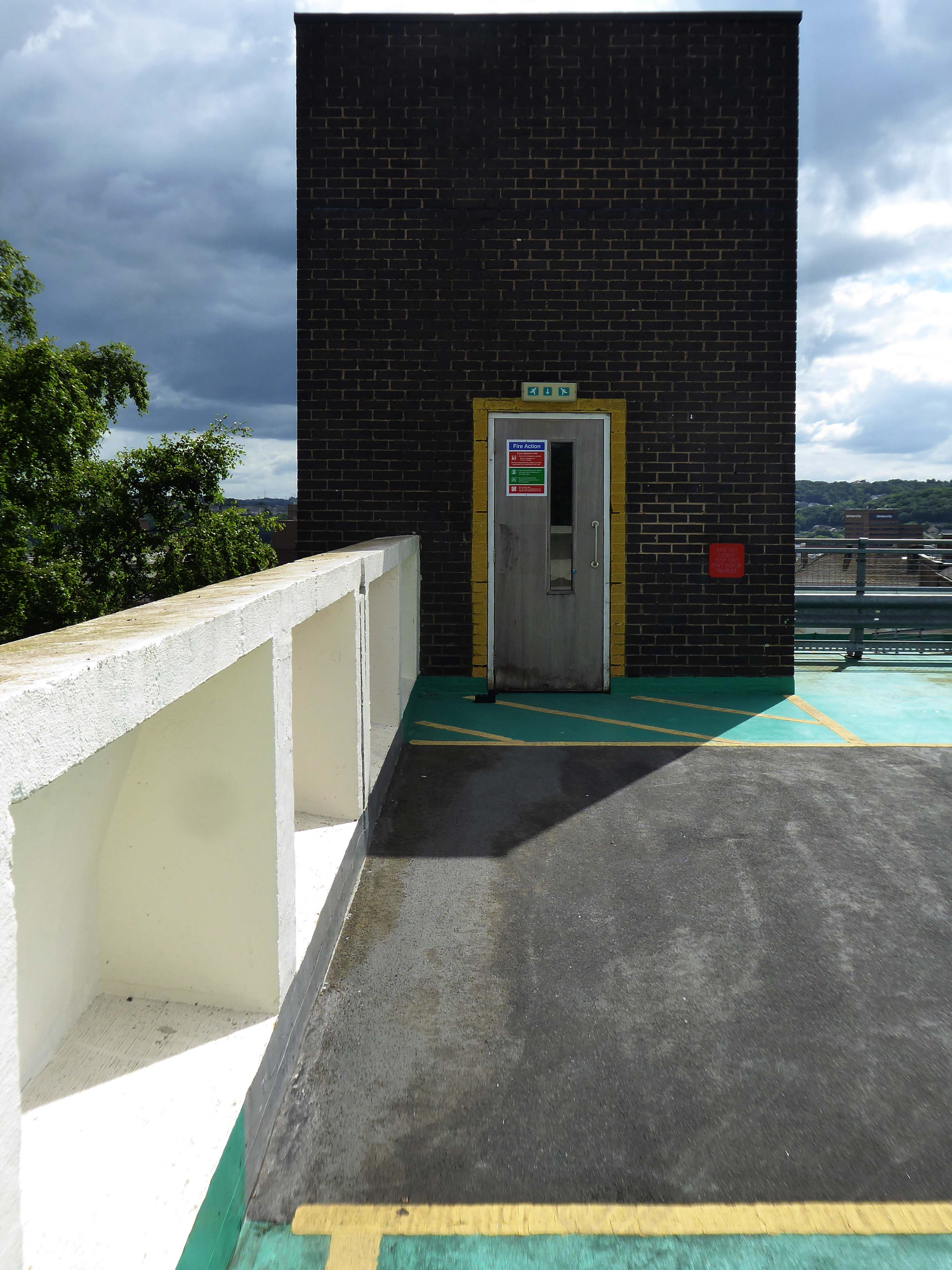
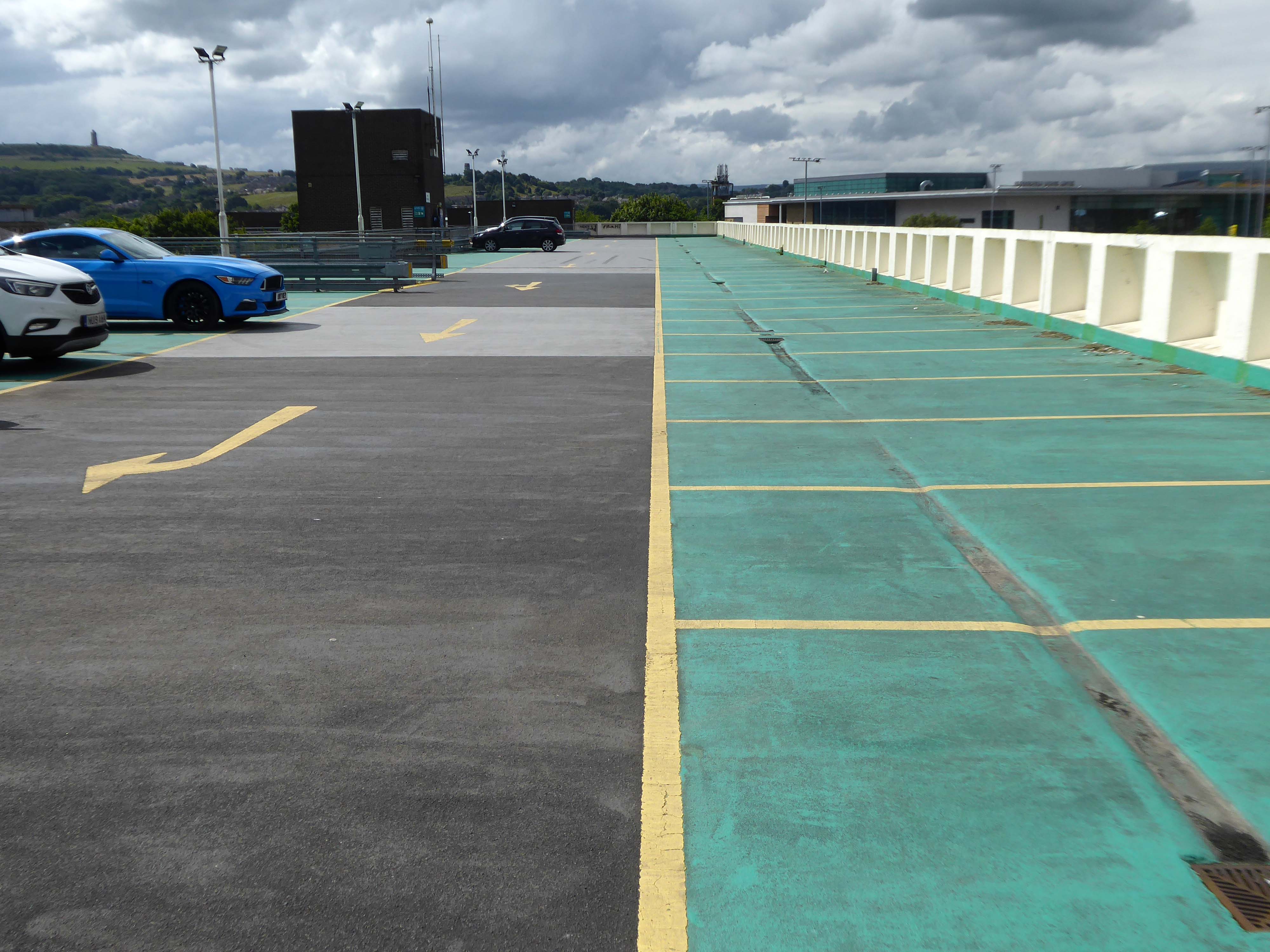
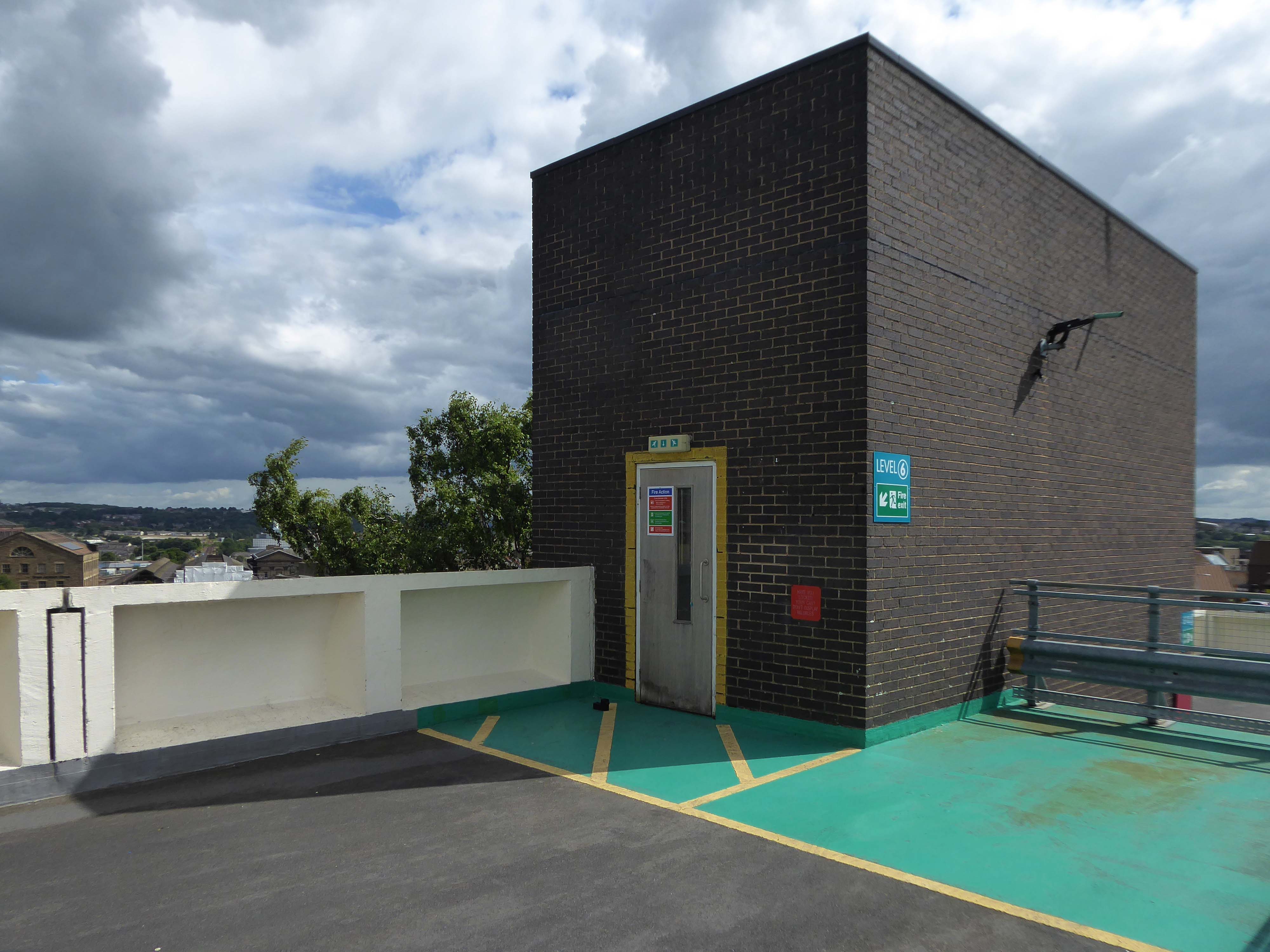
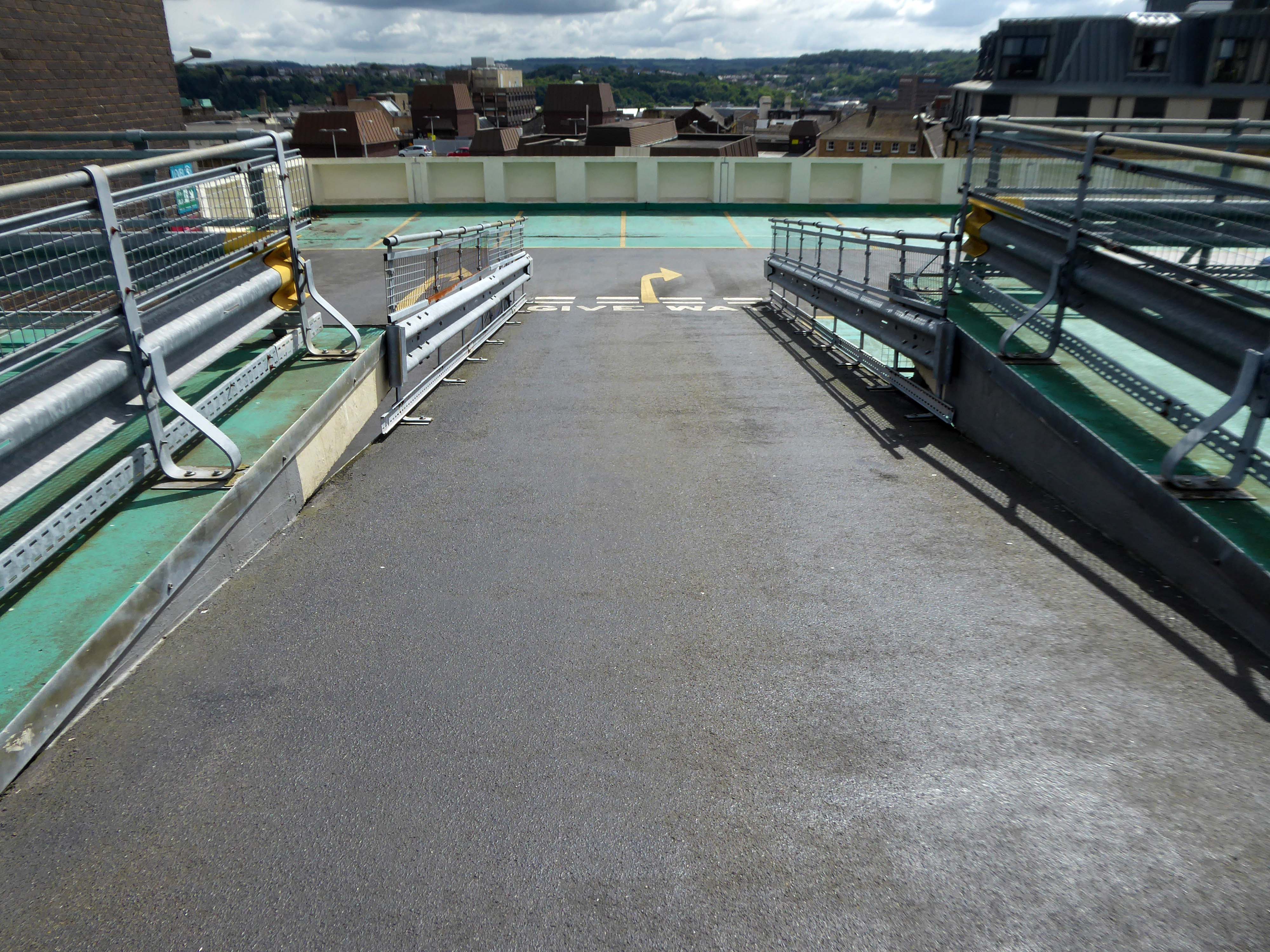
Car Park – Huddersfield Bus Station

Upperhead Row Huddersfield HD1 2JN

I was informed by the seriously erudite Christopher Marsden that the bus station and car park were the work of Derek C W Vane: Borough Architect 1972-1974.

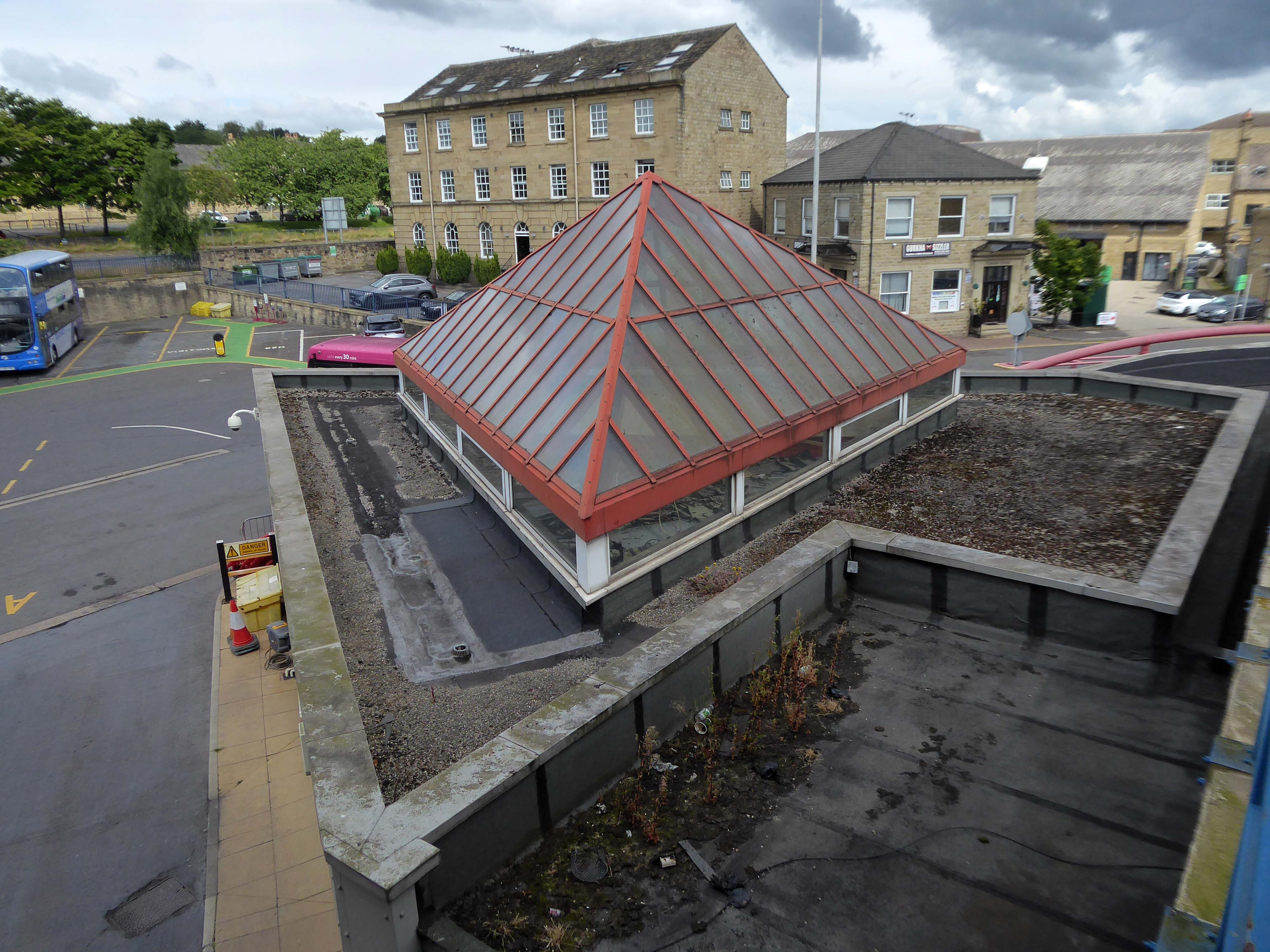
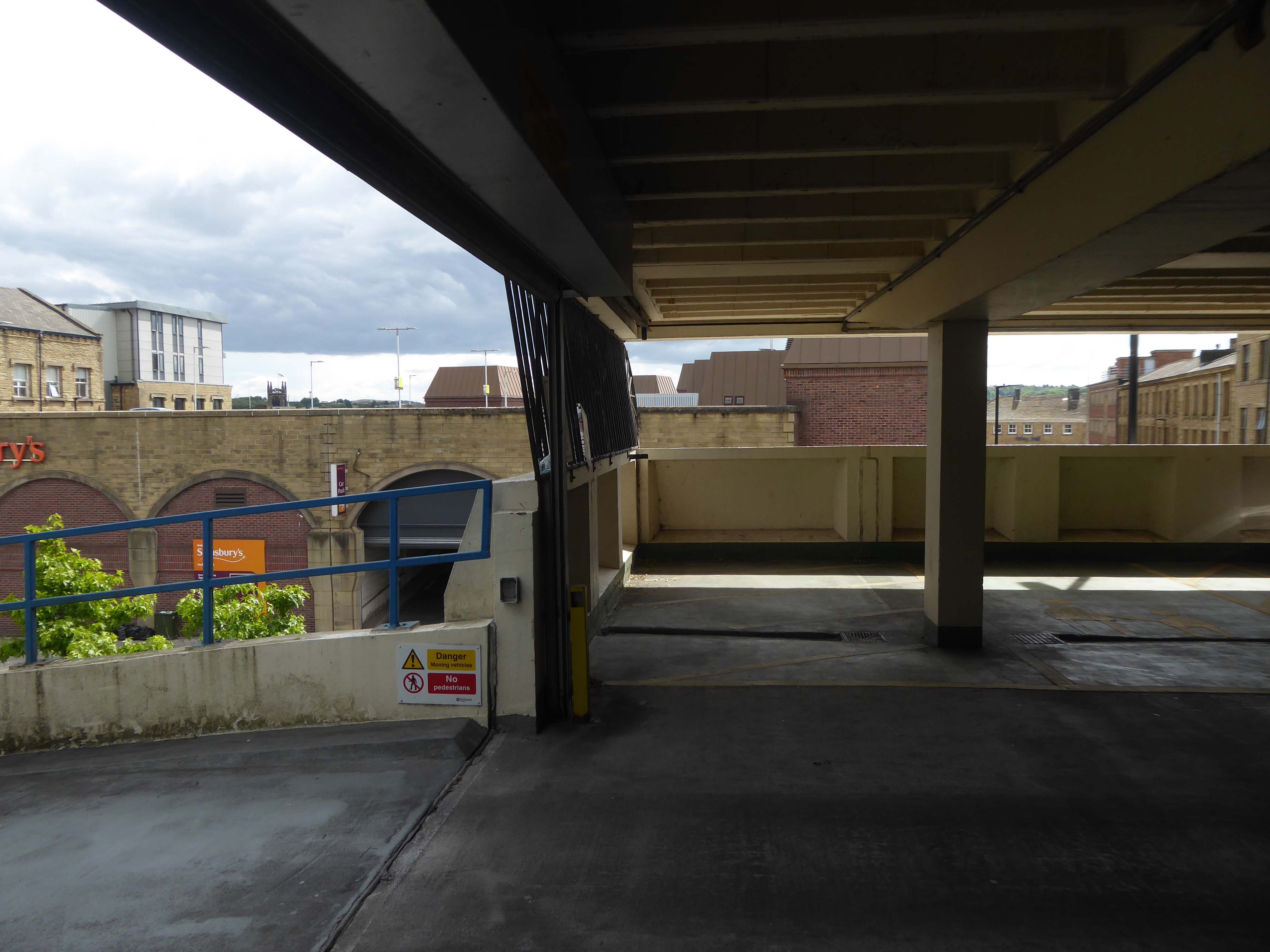
Having visited and photographed the bus station in 2016 I thought that it was about time I went up in the world, to the top level of the car park.

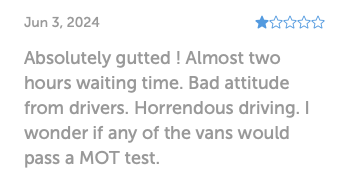
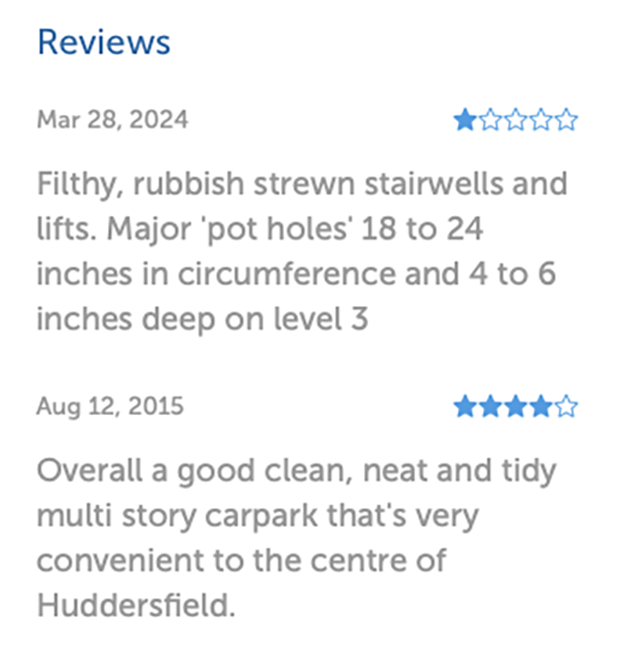
Mixed opinions from Parkopedia reviewers – let’s take a look around.

There are plans for refurbishment outlined in 2022 in the Huddersfield Hub.

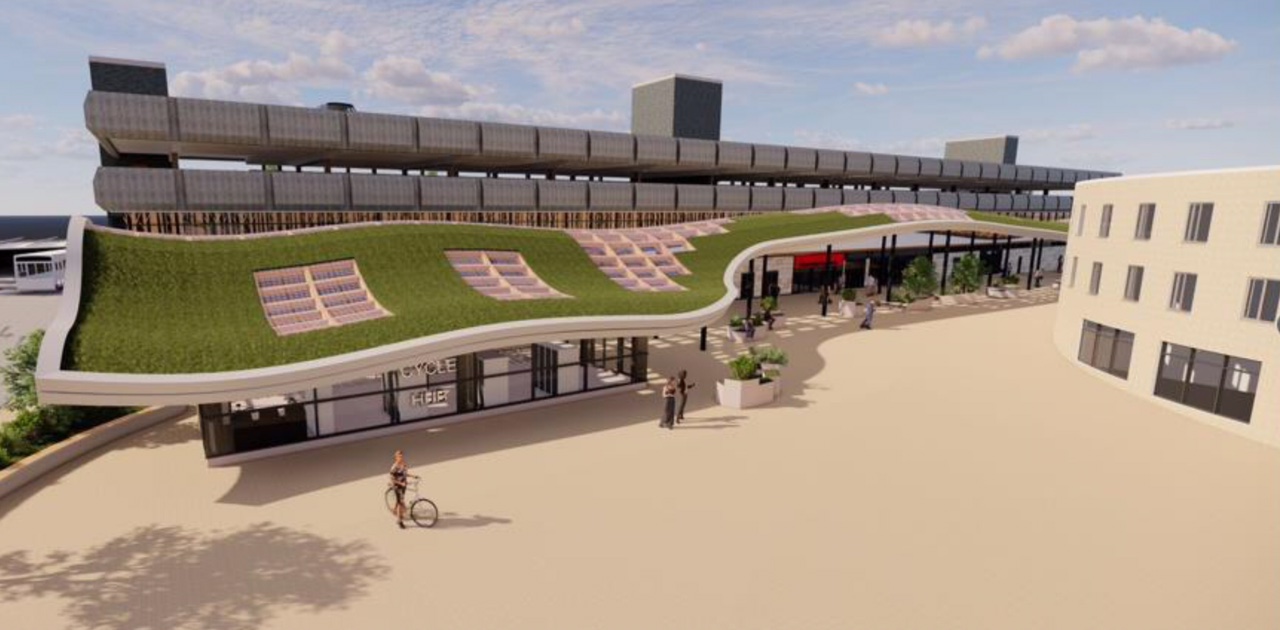
The bus station will undergo a major revamp both inside and out and the most striking feature will be a sweeping canopy with a living grass roof which will run right across the main frontage from Macaulay Square to Upperhead Row.

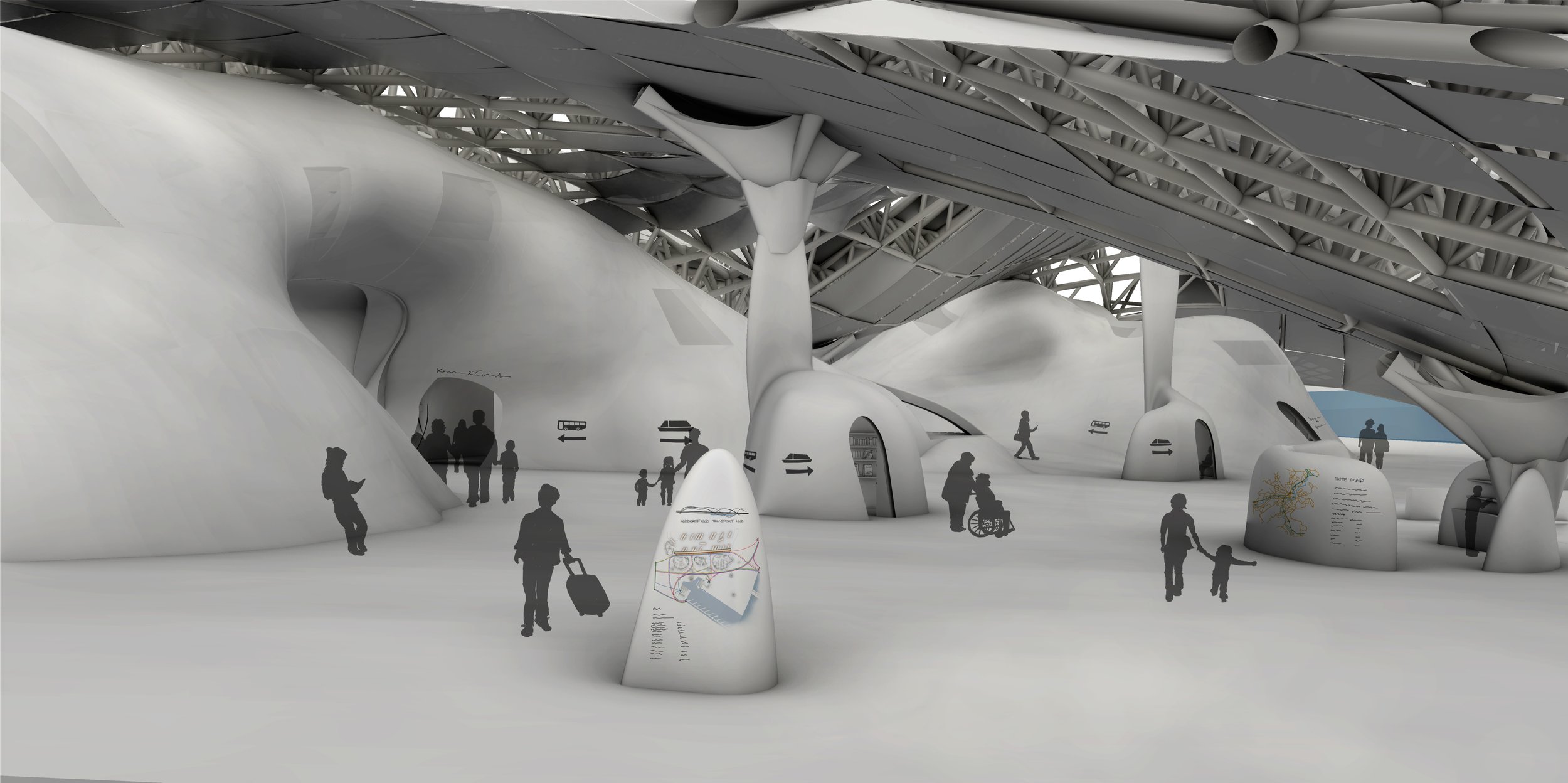
Also of note a project by Kate Matthews to seriously rethink the role and design of the space.

The starting point for this project was the Welcoming Water group scenario, involving the controlled flooding of areas of the town.

The new interchange includes facilities for cycling, walking, and public transit. The basin and marina on the new lake allow for an increased focus on water-based transport, including a new bus-boat. The main Transport Hub sits below an undulating roof and contains not only the bus bays and ticketing facilities, but also co-working and relaxation spaces. The curves of the roof, trying to confuse the binary of floor and ceiling, are just one example of the ambiguity throughout the scheme.

This project was nominated for the Architects for Health Student Design Award in 2021.

And finally:

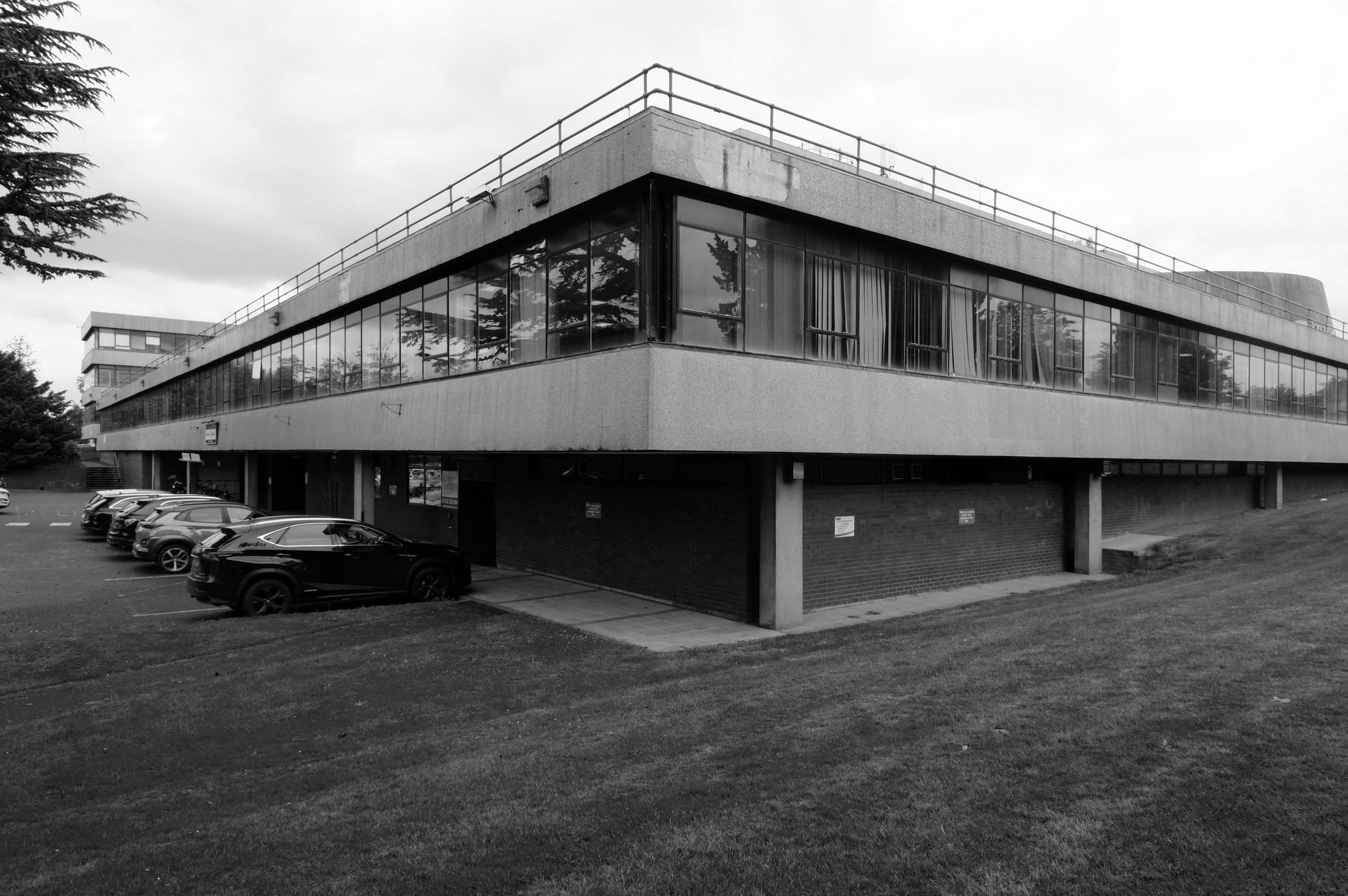
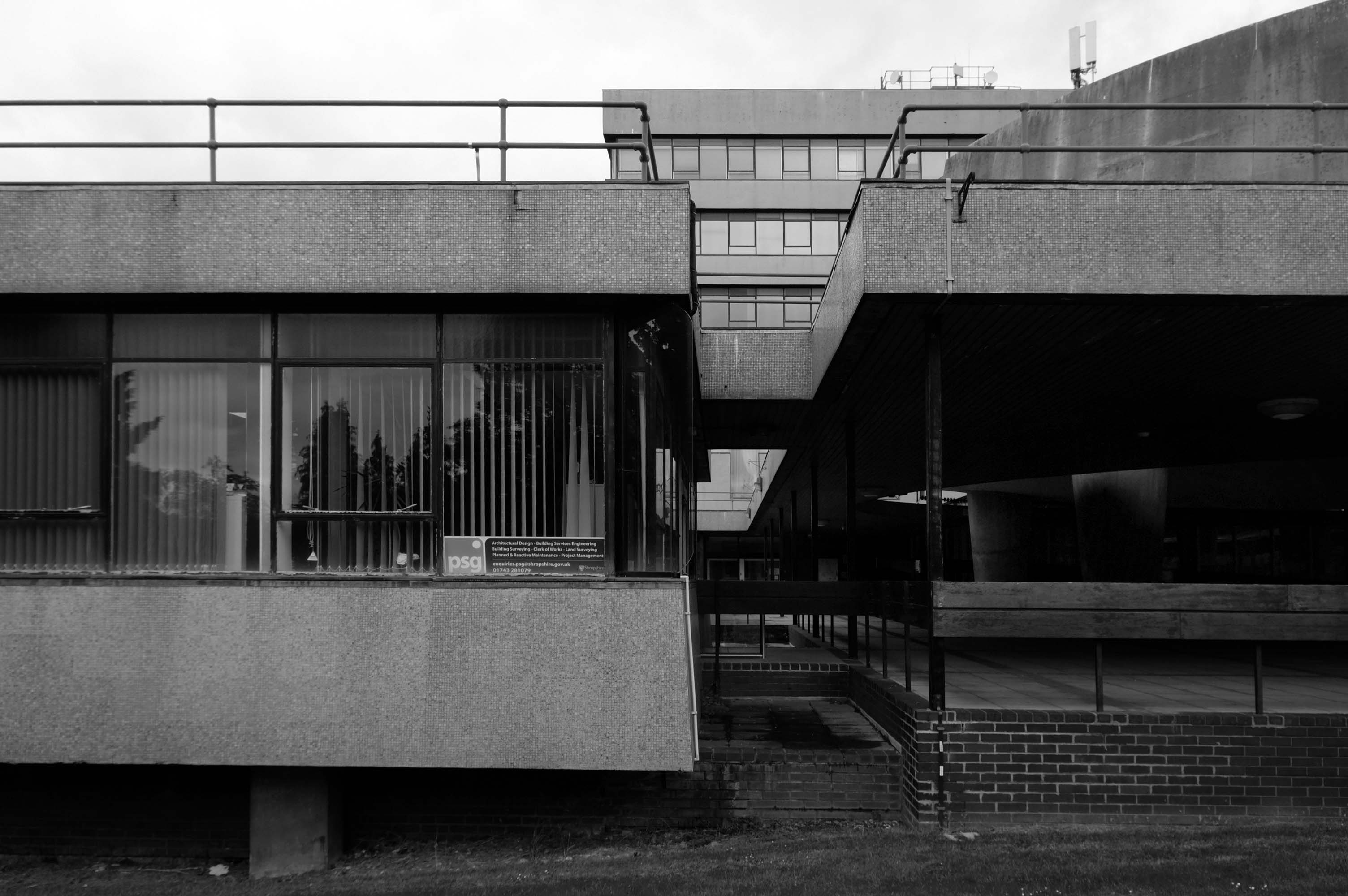
Shirehall – Shrewsbury

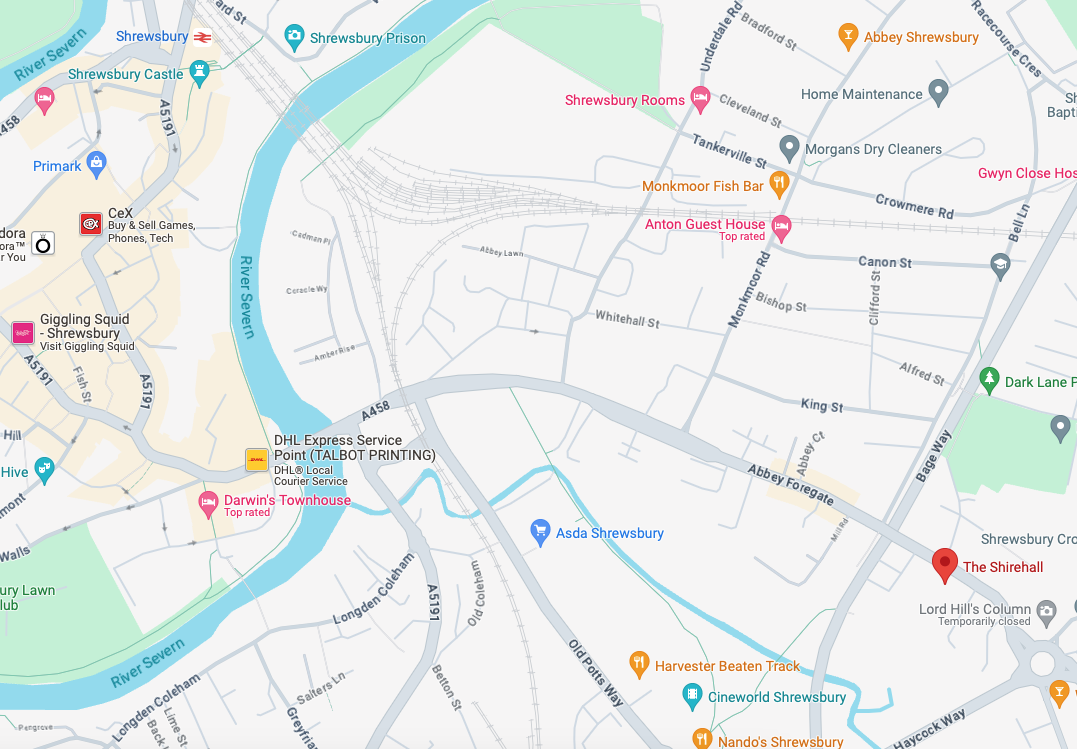
Abbey Foregate Shrewsbury SY2 6LY

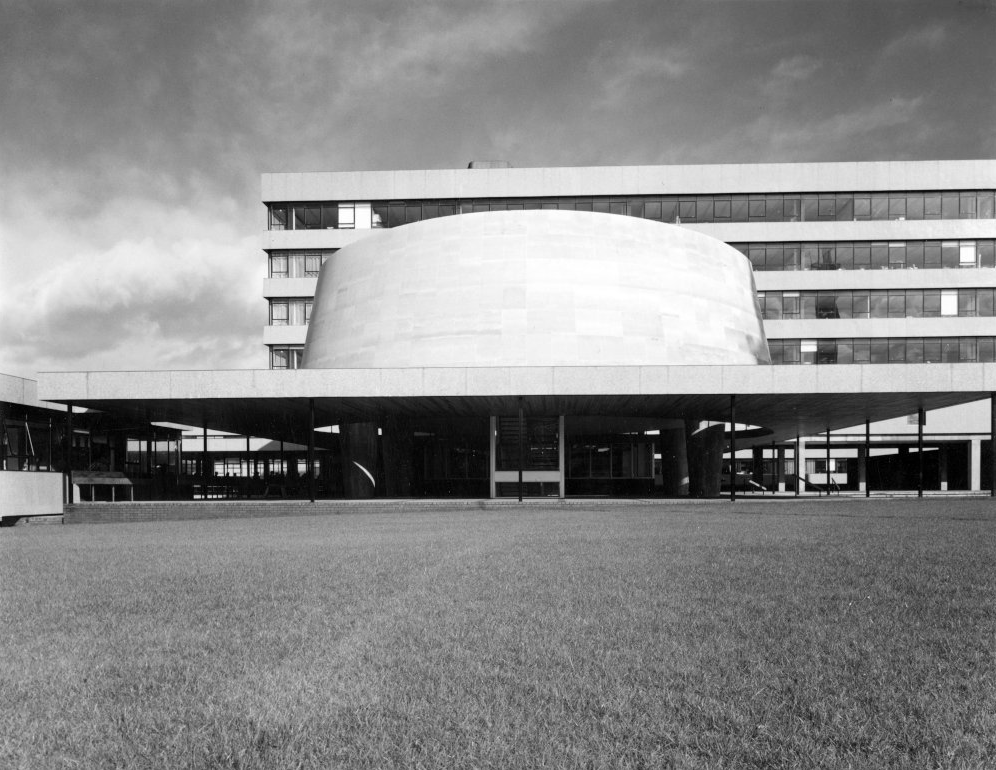
The foundation stone for the new building was laid by Sir Offley Wakeman, a former chairman of the county council, on 25 July 1964. It was designed by Ralph Crowe, the County Architect, in the Modernist style, built at a cost of £1.8 million and was completed in April 1966.

It was officially opened by Queen Elizabeth II, accompanied by the Duke of Edinburgh, on 17 March 1967.

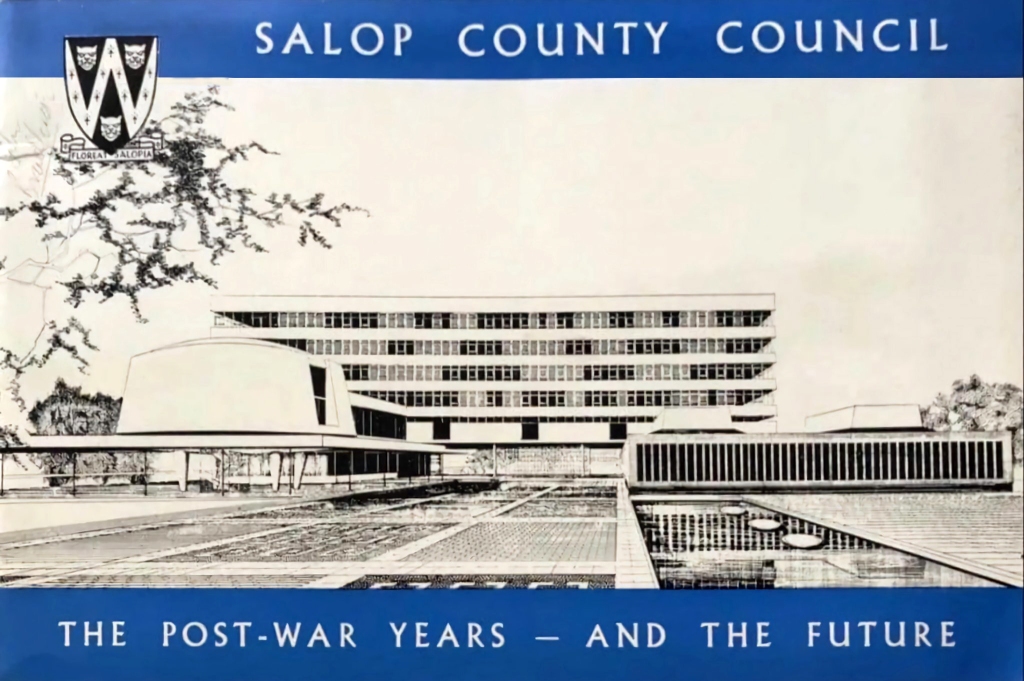
The design for the six-storey building facing Abbey Foregate involved continuous bands of glazing with concrete panels above and below: it also included an unusual ovoid-shaped council chamber which jutted out to the south-west of the main building.

Pevsner described the building as – the major monument to post-war modernism in the county.

Wikipedia

Shropshire Council initially backed a scheme drawn up by HLM Architects in 2017 to revamp Shirehall to provide modern working facilities as well as commercial opportunities. However this plan has not progressed and the local authority has said that making the building fit for purpose would require ‘a multi-million pound investment’.

Architects Journal

in September 2020, the council indicated that it would rather sell the building and move to the town centre. Then in October 2020, following an application for a certificate of immunity from listing requested by the county council, English Heritage decided not to list County Hall as the building did not meet the criteria for listing post-1945 buildings. 

In May 2021 the Twentieth Century Society placed the site on its Top 10 Buildings at Risk List.

The Shrewsbury Civic Society is fighting hard to prevent the demolition.

There is nothing else quite like it in the county, this is an excellent civic building, well-made and individual.

Owen Hatherley: Modern Buildings in Britain: A Gazetteer

I have previously visited Durham where the County Hall is also under threat, and Newcastle, where the Civic Centre seems to have a real future.

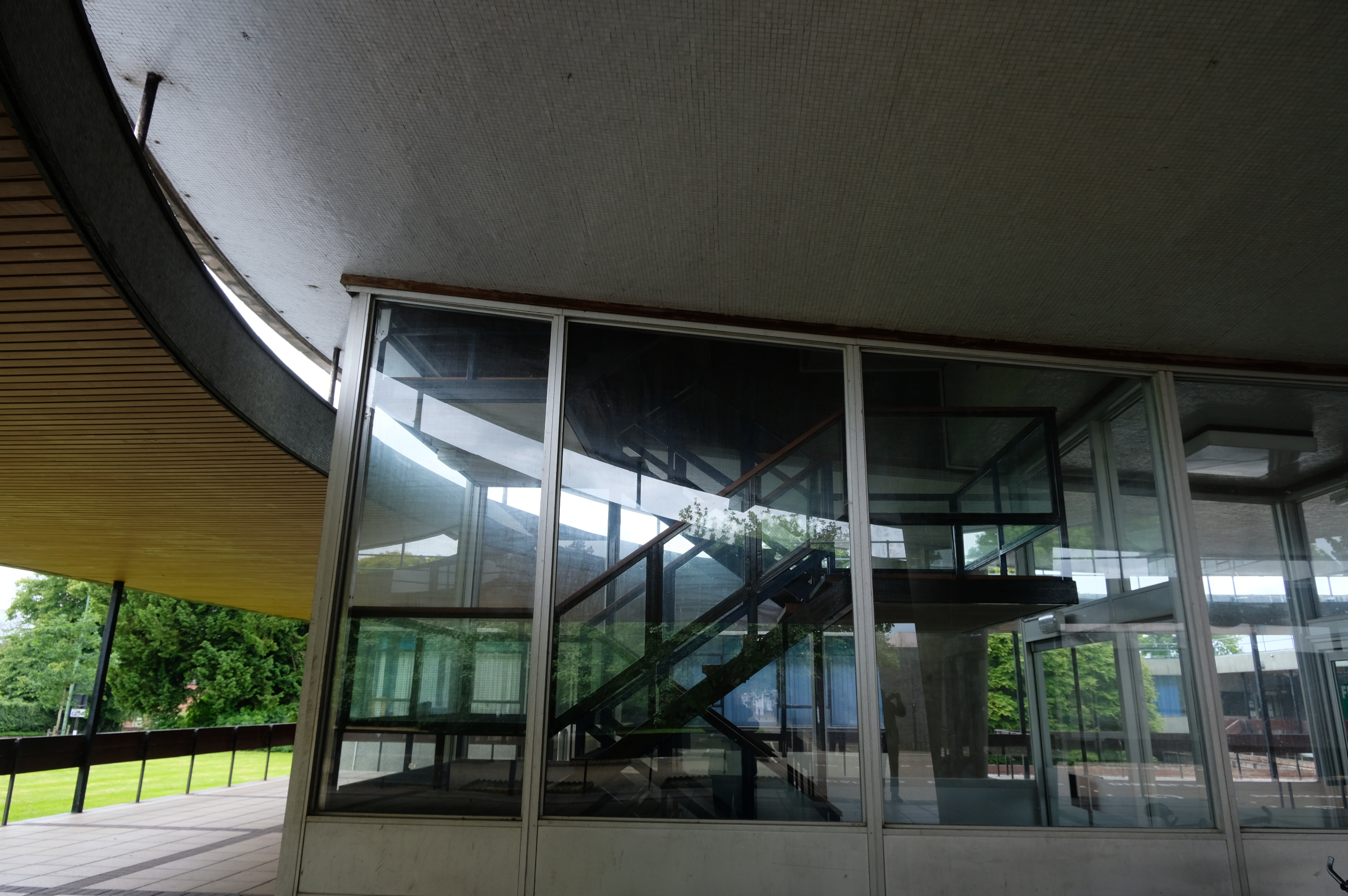
This what I saw on my recent visit to the site.

Raven Meadows Car Park – Shrewsbury

Shropshire Council Raven Meadows Shrewsbury SY1 1PL

Built by Truscon Ltd. – 1969

I am a disabled driver and found a lot of the direction signs worn away. When I came to leave I wanted to use the machine on the ground floor. This was out of order, as a lot of other people found. The office was empty as the staff were outside smoking. I then had to negotiate stars back to the 7th floor where the next machine was located. There was no sign on the ground floor machine telling it was out of use and where the next machine was located.

If staff want to have a smoke they should at least leave someone in the office.

Most of the parking spaces are very tight and I would not recommend the use of this car park unless you have a small car and a crystal ball to find the disabled parking and the payment meters.

Parkopedia

The rudest man at the kiosk, that I have ever had an encounter with, over a ticket that was blurred. He had a go at me for not going to him straight away – I went when I went to leave and it wouldn’t work. He also had a go at me because I pressed the buzzer on the intercom. Very strange unhelpful man. Made an issue for no reason! Awful to deal with I never write reviews, but I hope this gets back to him and with hope he will gain some manners.

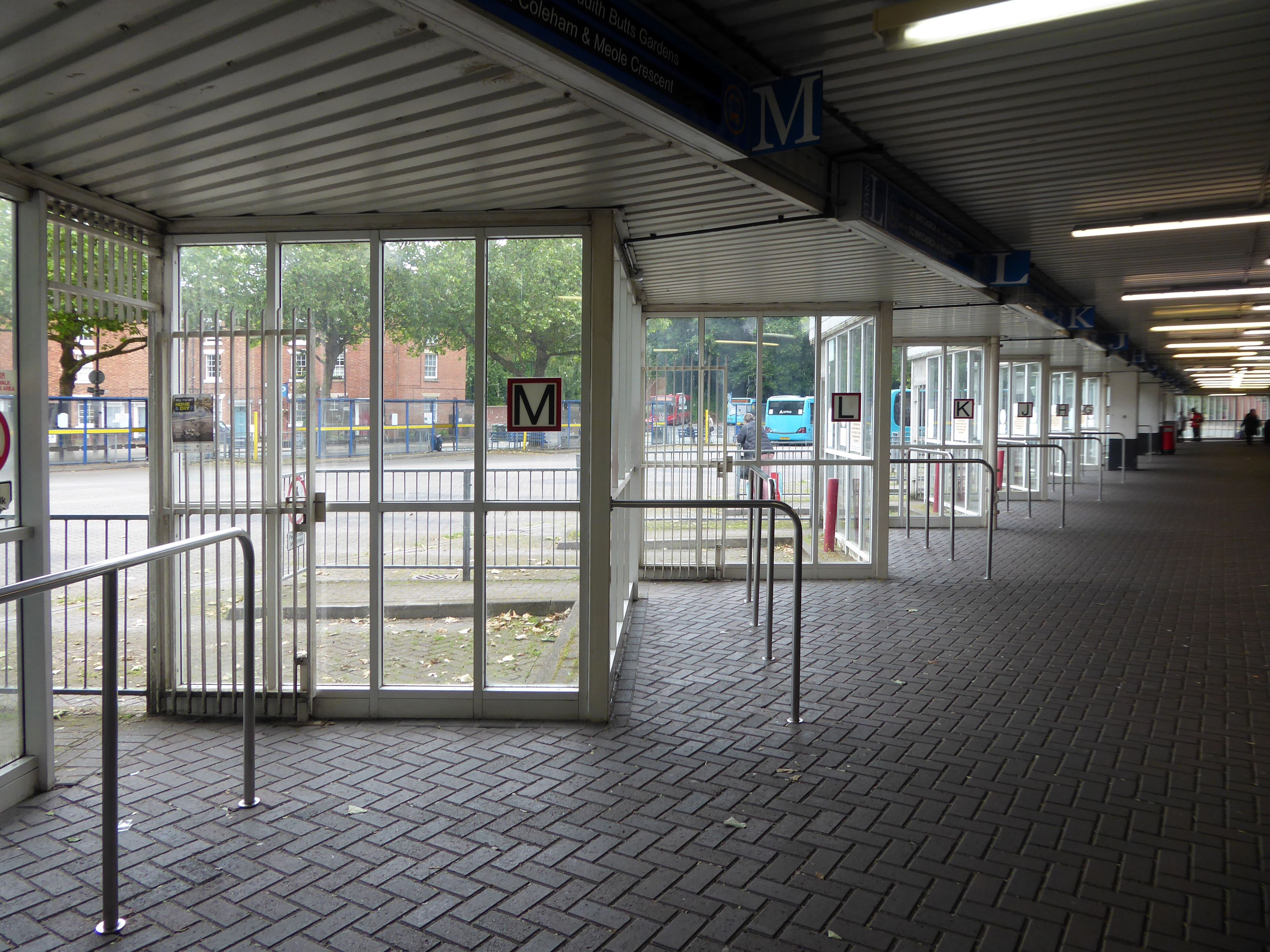
Being a pedestrian, I entered through the bus station on foot.

The station is considered to be dated due to its 1980s architecture partially under a 1960s multi-storey car park. There have been plans for the station to be modernised and rebuilt, or even demolished completely, as part of the town’s Big Town Plan. The demolition of the station would mean the town would not have a central bus terminus and would instead use smaller sites on the town’s Park and Ride routes.

Wikipedia

Shrewsbury Bus Station is a disgrace. I am embarrassed to use it. I don’t feel comfortable with using it. Yet, it is the bus hub for our county. It is one of the main gateways into Shrewsbury and Shropshire for those travelling by public transport.

New bus hubs and interchanges have been developed around the country. Shropshire Council meanwhile ignores Shrewsbury Bus Station. It promises a new bus interchange, but that is in Phase 4 of its plans to redevelop Shrewsbury town centre between Pride Hill and the riverfront. In the current financial climate and with the council stretched to the limit on existing funding, Phase 4 is probably more than a decade away.

Maybe now in fantasy land.

Andybodders

Then took the lift to the seventh level – the ninth and eleventh being closed to motor cars.

But not the intrepid pedestrian.

This is an informative video tour of the area.

Shopping Precincts – Once More

It all began way back when I was a raw youth living in Ashton under Lyne – the precinct was our playground, cycling and running, often against the grain, up and down the travelator.

Some sixty years later I am still enthralled by the nation’s shopping precincts – including the very local Merseyway.

There have been two previous postcard posts – Shopping Precincts – UK and Shopping Precincts – UK Again.

Plus visits to various locations Hanley, Preston, Salford, Coventry, Billingham and Swinton.

So on a wet day in May, why not trawl the internet in search of old pastures new – when the shopping world really was new.

Come with me now on an alphabetical tour of the country’s finest precinct postcards.

Sadly many of these sites may well have been subsequently remade and remodelled, or even demolished.

Andover

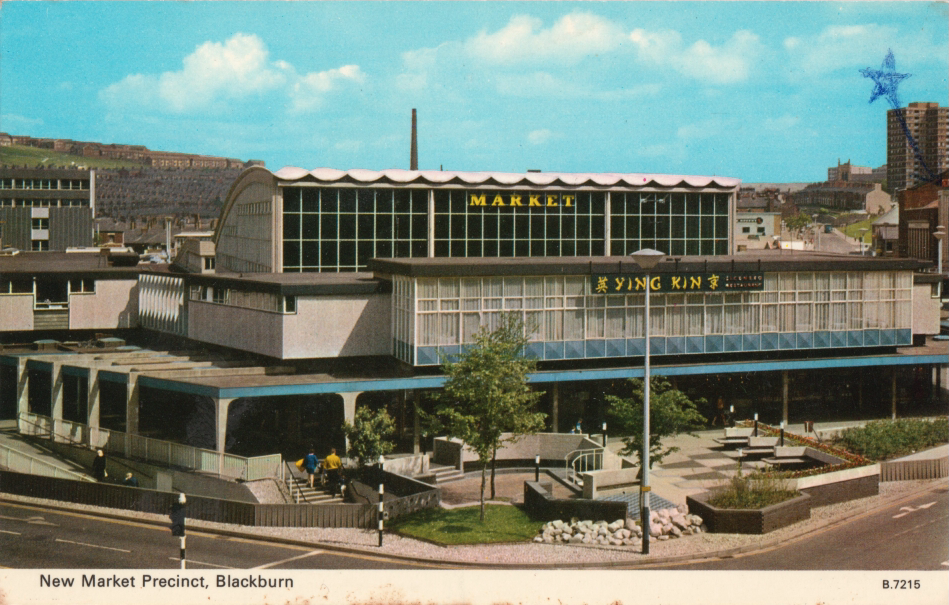
Blackburn

Burton on Trent

Chandlers Ford

Chester

Coventry

Cowplain

Dartford

Dunstable

Exeter

Glenrothes

Gloucester

Hanley

Jaywick

Kingwinsford

Leyland

Poole

Portishead

Solihull

Southampton

Stenhousemuir

Stevenage

Swanley

New Washington

Bradford Revisited

We arrive at and begin our journey at the Interchange – the bus station is closed, along with the station entrance.

Bradford accepts that it is a part of the Northern Supercity stretching from Coast to Coast – Liverpool to Hull. Every existing town and new settlement must be unique. People belong to their own hotspot as well as Coast to Coast. Bradford as a dispersed centre will give it individuality as well as becoming synonymous with the whole new city. Bradford is a mini version of the whole. It is composed of a series of mini hotspots which will each act as a focus for each square kilometre.

Bradford has the topography to allow every citizen to wake up to a view – both physical and mental. Their collective ambition can create a place of extraordinary difference.

Will Alsop

We have of course been here before.

Bradford Interchange will get a new entrance and other improvements to bring it up to standard, the city council said. 

The NCP car park on Hall Ings would be demolished to create a new pedestrianised entrance.

BBC

The Interchange opened in 1971 was the first of its kind in the country, designed by the BR regional team headed by RL Moorcroft and the City Architect.

Onward to the Magistrates’ Courts designed by City Architect Clifford Brown in 1972.

Bradford is in the process of paving and puzzling pedestrians, as it becomes City of Culture in 2025.

So we wind our way over the inner ring road, advisedly avoiding the filled in underpasses.

The former Central Library awaits us, designed in 1965 by Clifford Brown – a striking podium and tower, currently home to council offices.

Next door the Sir Henry Mitchell House home to the Children’s Services.

Sir Henry Mitchell 1824 1898 was a mill owner and Mayor.

Moving further along the Telephone Exchange of 1936, design by architect FA Key.

Partner to the Telephone Exchange of 1976 by architect Trevor H Hanson for PSA

The gates were open and we were afforded a view of these delightful vents.

Next to the Ice Arena topped off with Wardley House – Sanctuary accommodation for key workers and students.

Wardley House is equipped with all the modern amenities you need for a comfortable and connected life as a key worker. The rent includes high-speed broadband and building-wide Wi-Fi, utility bills, and contents insurance. Our top-notch facilities comprise a large common room with a pool table, flat-screen TV, and live BT Sport – the perfect social space.

Up the hill and around the bend to the University of Bradford – the main Richmond Building fronted by Joe Mayo’s tiles.

At the University of Bradford our focus is on creating the conditions for social, cultural and economic impact. We will achieve this by using our proud heritage as a springboard and remaining steadfast in our commitment to equality, diversity and inclusion. We will harness our strengths in research, innovation, teaching and partnerships to extend our reputation, influence and impact. All of this will create a values-led culture that is inclusive and effective in enriching lives and benefitting society.

The undercroft has undergone a major refurb rethink – transformed into a Goth Disco.

We emerge unscathed into the clear light of day and the BDP designed Chesham and Horton blocks.

The mosaic covered columns remain unclad.

Let’s hop to the Grade II-listed Co-op designed by CWS in house architect WA Johnson and JW Cropper in 1935.

Architect W A Johnson worked for the Cooperative Wholesale Society from 1899 until 1950. He was heavily influenced by the German architect Erich Mendelsohn after 1930, evident in his embrace of the International Modernist style. Johnson travelled widely in Germany and Holland, and Mendelsohn’s Schocken store in Stuttgart 1928 is quoted as being a particular inspiration for the Bradford Co-op.

Demolished despite protests in 1960.

In 2019 the Architectural Heritage Fund announced a £5,000 Project Viability Grant to Freedom Studios Ltd.

The money funded a viability study to investigate the potential of building becoming a multi-use cultural hub.

As of May 2024, sadly there is no cultural hub.

Next we hot foot it to the Kirkgate Centre and Market – John Brunton and Partners 1975.

In 1979, the building won a European award from the International Council of Shopping Centres.

But the Historic England report described its design as mundane and repetitive.

Janice Ivory and Lisa Donison didn’t hold back in their criticism of the centre in its current state.

Thank God for that, was Janice’s reaction to the news the building was set to be bulldozed, although an exact date for its closure remains unknown.

It’s just a concrete monstrosity, she said of its design, which Historic England said was lacking architectural flair.

It’s just an ugly building, added Lisa.

Once dubbed Bradford’s space age retail destination, Kirkgate Shopping Centre will soon be no more. 

The city centre landmark, which opened for business as an Arndale in 1976, has been denied listed status by Historic England – paving the way for its demolition.

BBC

Geoffrey Cowley from Wibsey, who was in town for an eye appointment, said demolishing it:

Might be the right thing to do.

There are plans to remove and display the William Mitchell panels along with these other examples of his work.

In-situ at Highpoint.

In storage – removed from the Bradford And Bingley Building Society.

Artist Bernd Trasberger plans an artistic project, which involves repurposing Fritz Steller’s tile works.

As Ken Kesey so rightly said – Further!

Up to Highpoint designed by John Brunton and Partners 1973.

The derelict former headquarters of Yorkshire Building Society, on one of the highest parts of the city centre, looms over the city centre, and to many people is the city’s ugliest building.

High Point is the perfect site for the first Radii development. Now perceived as an exemplar of the Brutalist style, this eight-storey titan, has languished derelict and in disrepair for many years in the heart of Bradford City Centre.

Our regeneration of High Point into an innovative residential apartment complex with a community at its heart, embraces ideas of sustainability, preservation, and rejuvenation that will bring a new lease of life to this abandoned landmark.

Sharp, chic and spacious apartments available. Furnished to the highest standards throughout and with the flex to provide you with office space if required – this is modern city living that’s easy on your eye and your pocket.

Radiiliving

And finally the cafe that is not a cafe – Fountains, where the griddle no longer grills, the lights are always out and the shutters tightly shut, ain’t nobody home.

Wishing nothing but well for this West Riding gem – Bradford City of Culture and cultures and culture.