Leaving the compact anonymity of my B&B for the open road!
Having been unable to sample the joys of the Quality Hotel.
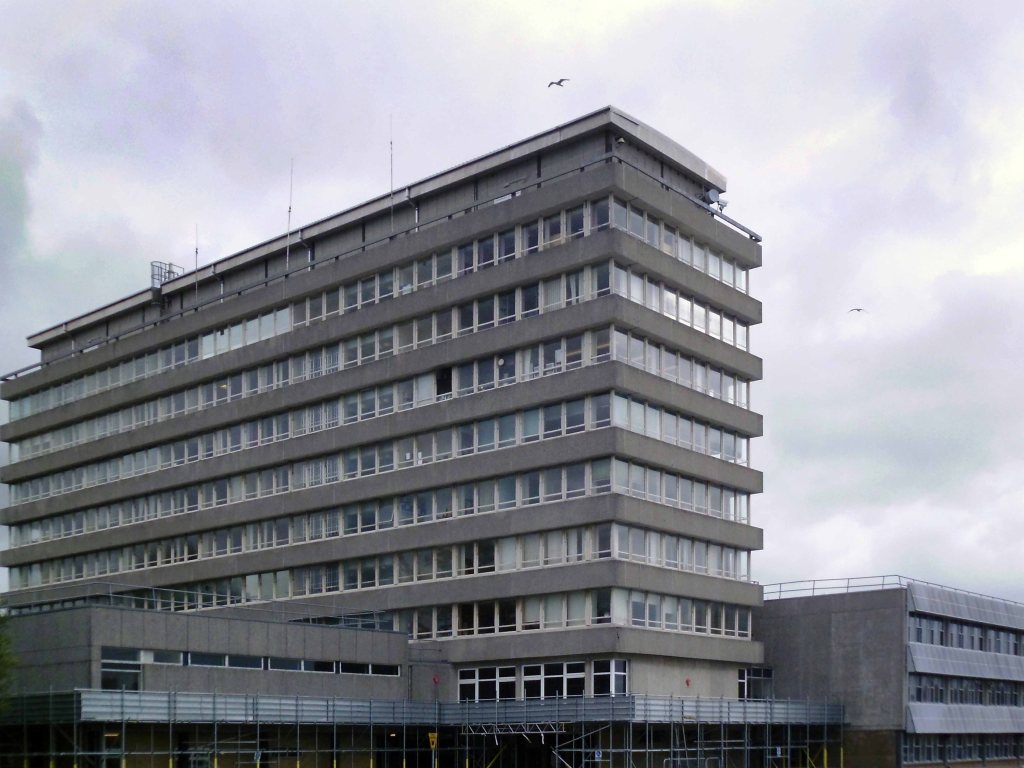
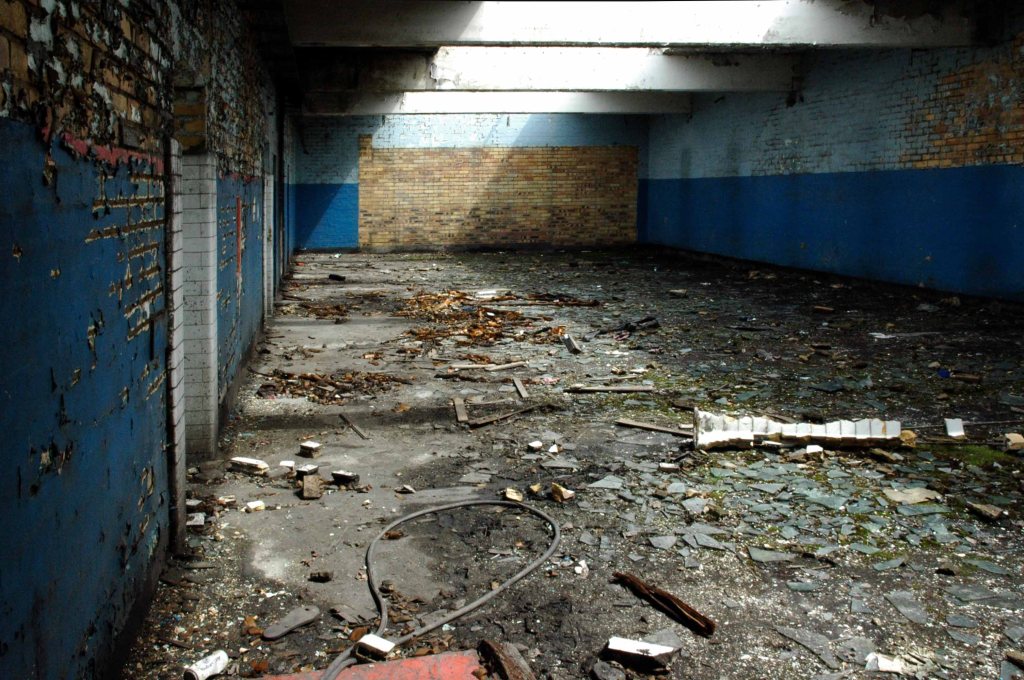
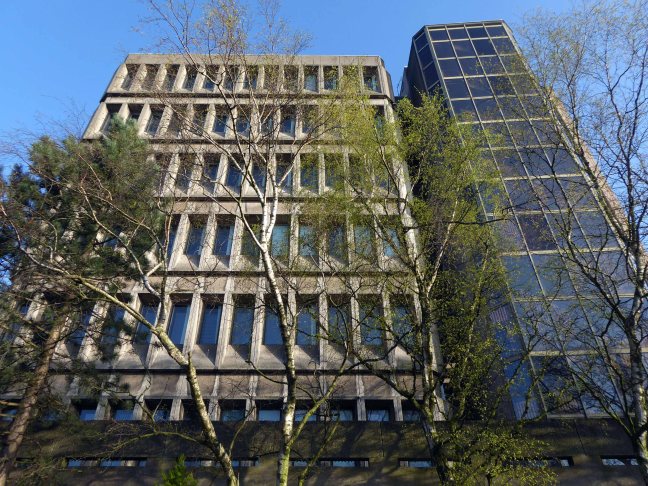
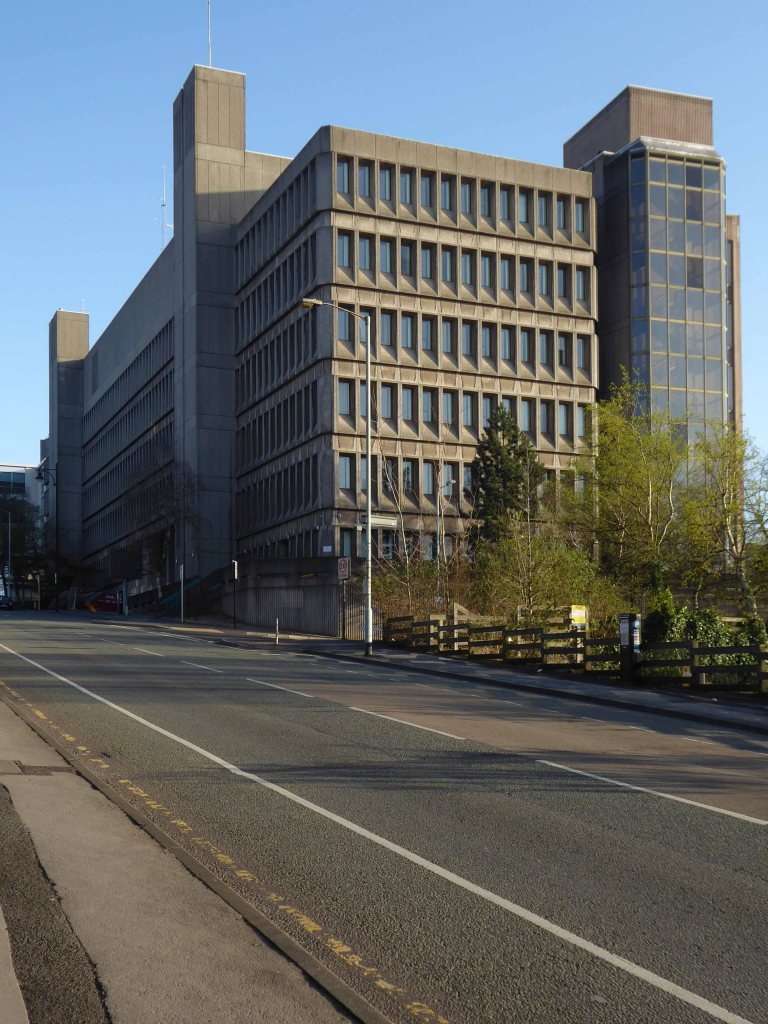
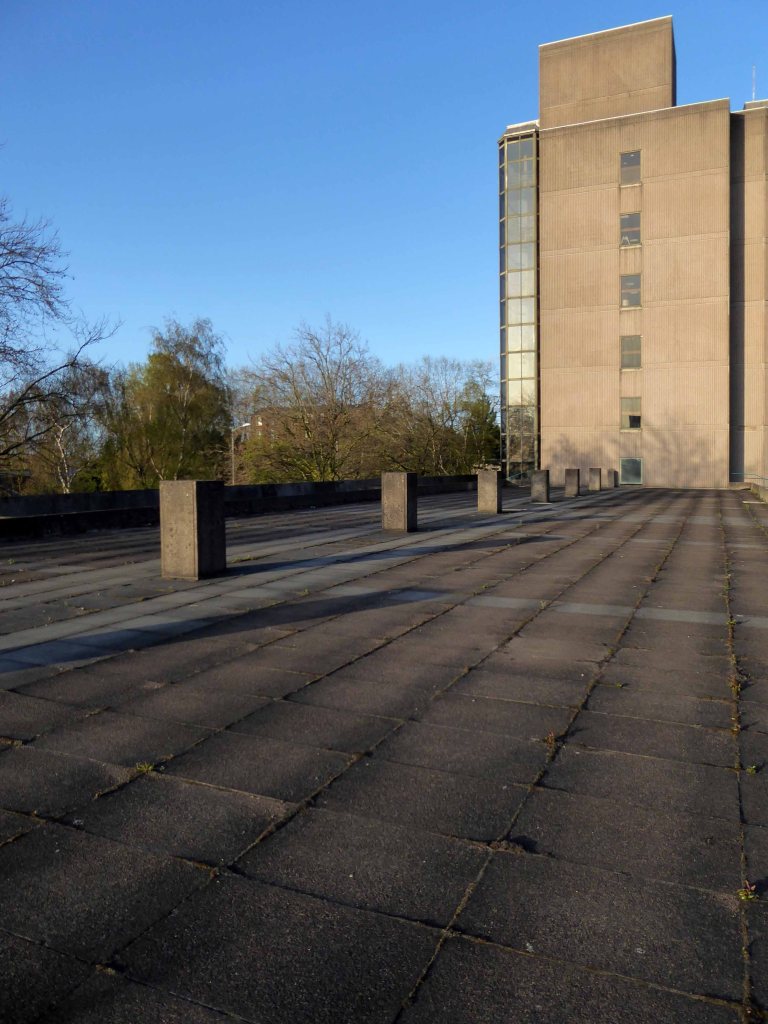
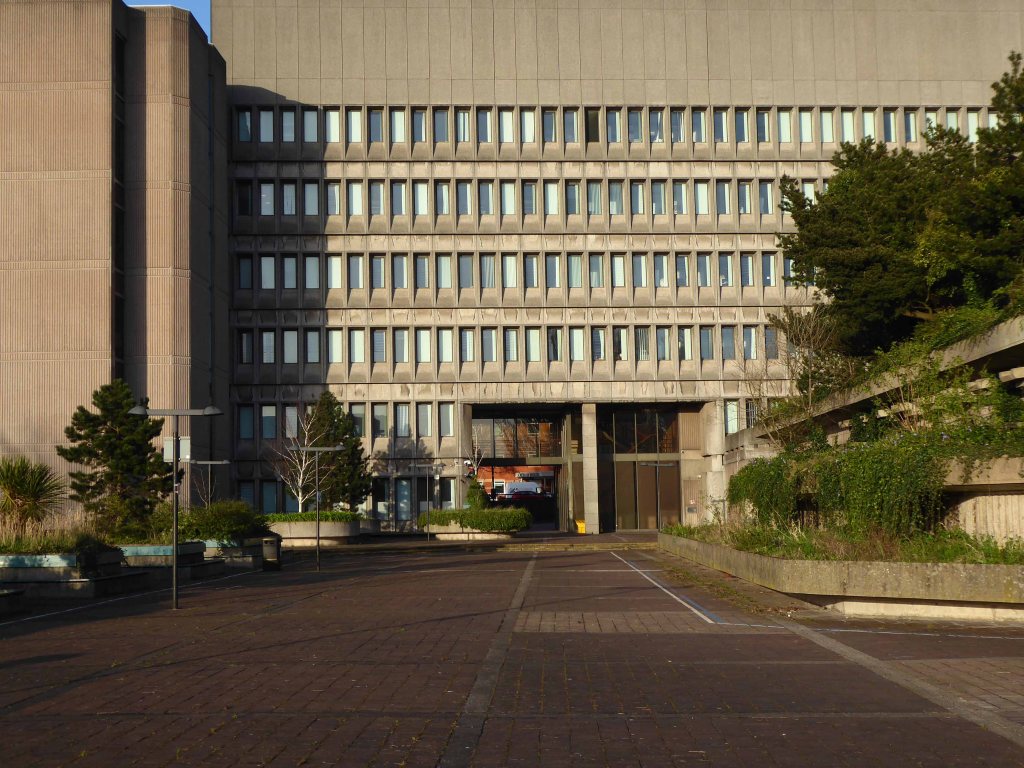
The Quality Hotel closed in 2014 and was demolished two years later after the site was bought by the city council following vandalism and fires.
The ten-storey concrete block was built in 1970 in the 350th anniversary year of The Mayflower ship setting sail from Plymouth for North America.
Gilpin Demolition
Plymouth Hoe’s fifty million pound hotel and apartments project appears to have ground to a halt with no building work happening more than a year after developers vowed it would start in 2018.
Henley Real Estate, the firm behind the plans for an 11-story hotel and a 15-floor block of flats on the demolished former Quality Hotel site, has gone silent on plans and not responded to emails and phone calls from Plymouth Live.
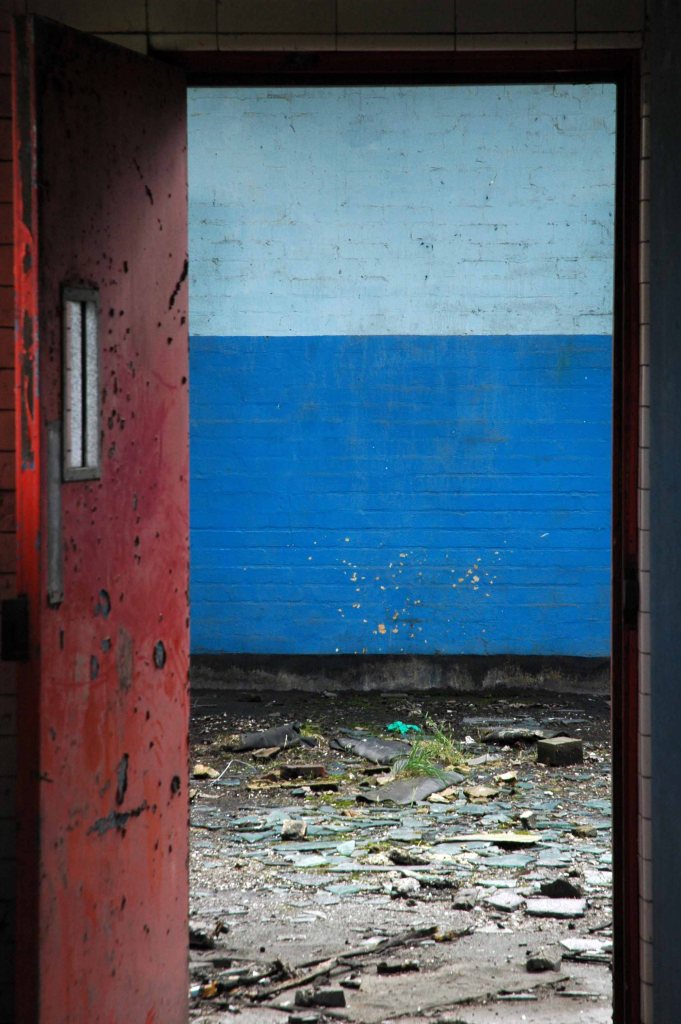
When we visited the site the only sign of life was some weeds growing out of the ground.
I’ll leave them to it, I’m off in search of the South West Passage
The South West Coast Path itself is 630 miles long and is the longest established National Trail in the country. Starting at Minehead in Somerset it runs along the coastline of Exmoor, continuing along the coast of North Devon into Cornwall. It follows the entire coastline of Cornwall, goes across the mouth of the River Tamar and continues into Devon. After running along the south coast of Devon it then follows the Dorset coastline before finally ending at Poole Harbour.
However if you follow the Coastal Path you’ll miss this delightful concrete fire station training tower in Plympton.
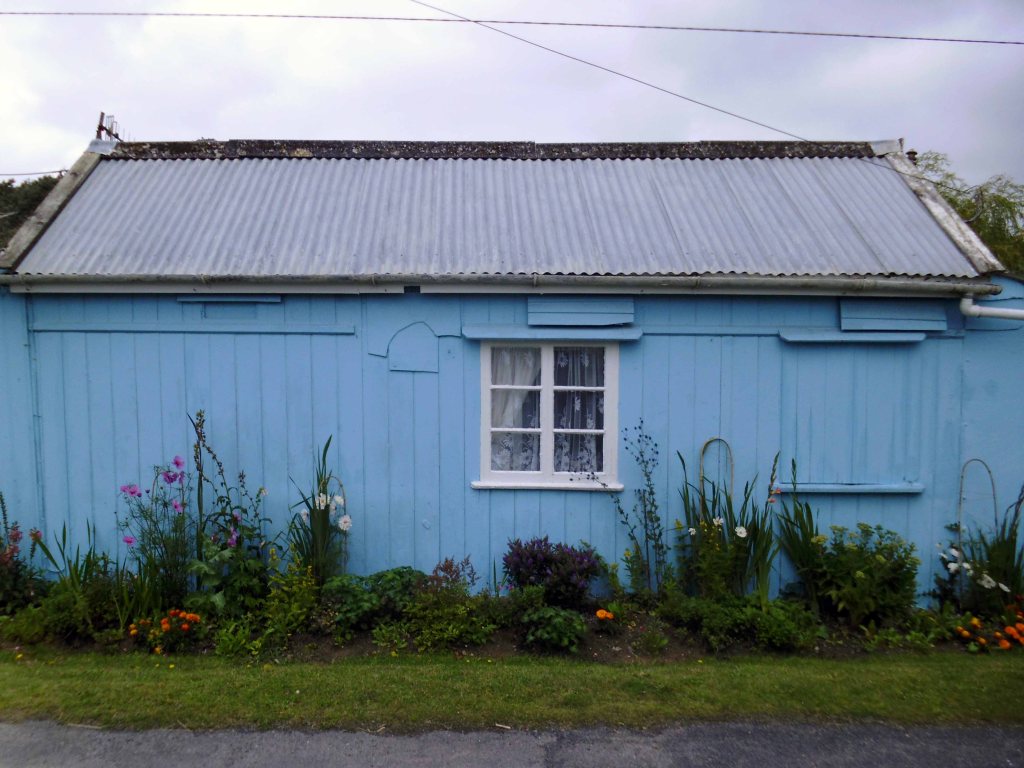
Along with the longest corrugated iron structure in the West Country.
You’ll miss getting slightly lost and a cup of tea at the Dream Bites roadside café in Modbury.
Dream Bites café, we’re all is welcome, from cars to Biker’s to Ride outs to Puplic and to work companies even you the cyclists!
GREAT FOOD GREAT PRICE.
You’ll miss the deep hedged lanes of Devon.
Where the four x fours force you into the roadside brambles with consummate ease and regularity – even on a designated cycle route.
Respite from such trials and tribulations can be found upon siting a water tower or a deserted butchers – down at Slapton Ley.
Slapton Ley is the largest natural lake in south-west England. Although it is only separated from the sea by a narrow shingle bar, it is entirely freshwater.
Much beloved of my old pal Harry H Potts and family.
Then it’s up a hill down a hill to Dartmouth.
I made enquiries at several sea front hotels – who upon assessing my mode of dress and transport, despatched me to a back street pub B&B, suit y’self suits me, and my pocket.
The Seale Arms was just the job.
Quick change for the artist – let’s have a look around.
It’s full of historical architectural detail.
And slightly more hysterical architectural detail.
Time for a pint – chatting in the pub to yachting types, for it is here that the sense of tradition, the sea, power and wealth traditionally resides.
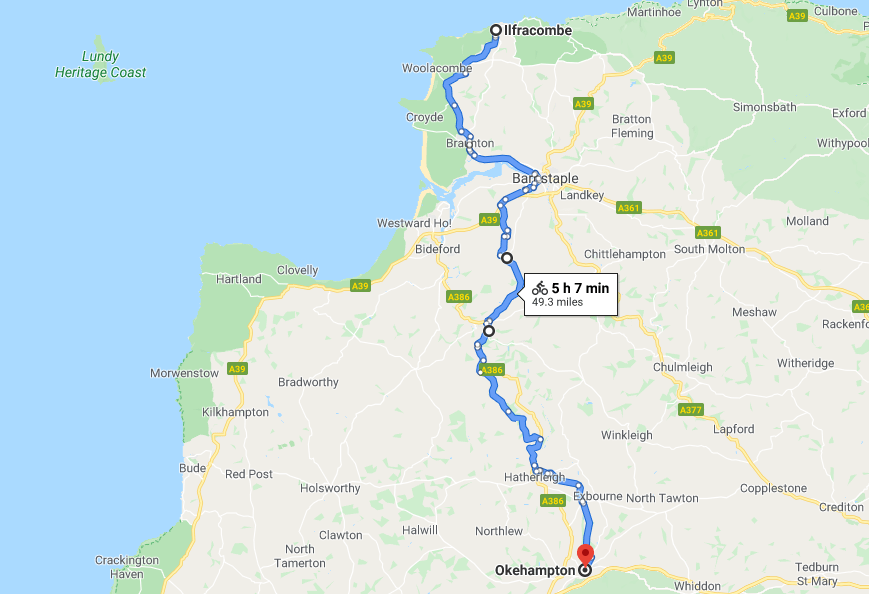
Today Monday 27th July 2015 – leaving Ilfracombe the royal we head south along the Tarka Trail, giving Cornwall a swerve.
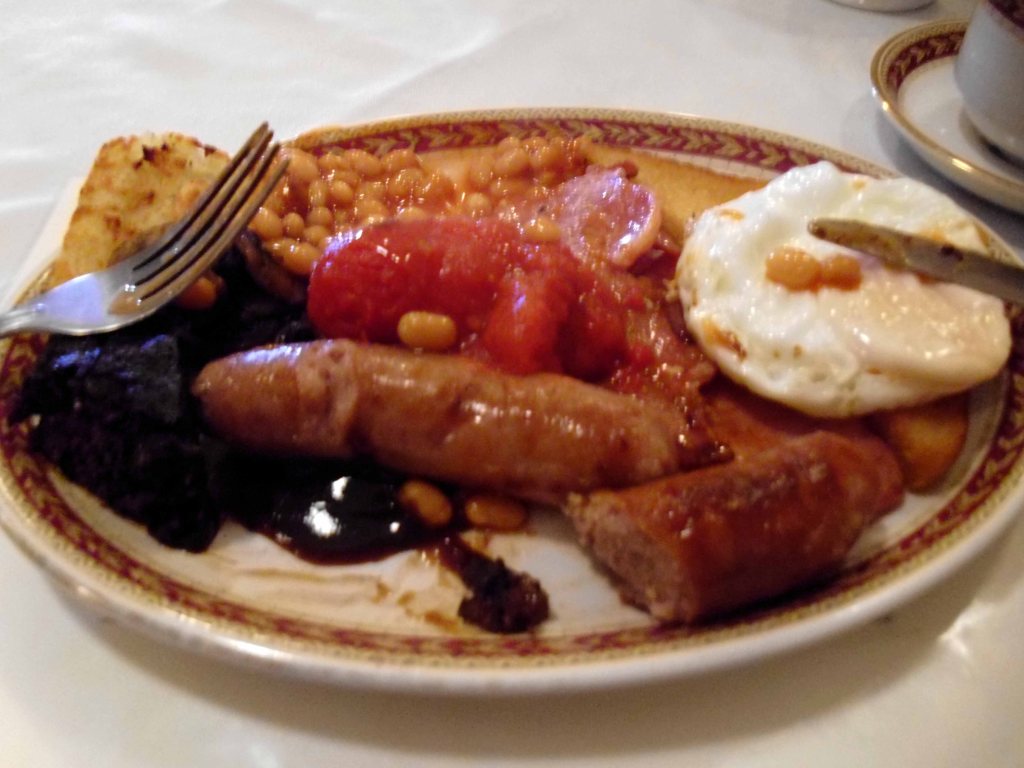
Though first we feast on a slightly out of focus fry up at the digs.
Inspired by the route travelled by Tarka the Otter, this 180 mile, figure eight route traverses unspoiled countryside, dramatic sea cliffs and beautiful beaches. The southern loop incorporates the longest, continuous off-road cycle path in the UK. Walking or cycling, you can experience the best this beautiful area has to offer.
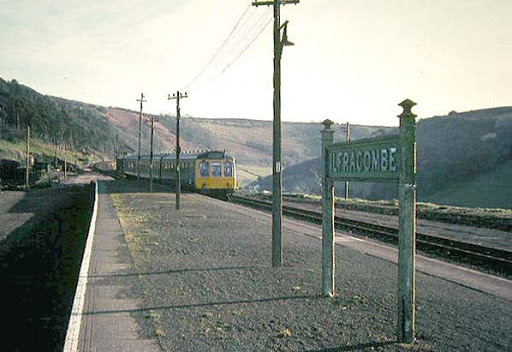
Then away we go following the former train line out of town.
The Ilfracombe Branch of the London & South Western Railway, ran between Barnstaple and Ilfracombe. The branch opened as a single-track line in 1874, but was sufficiently popular that it needed to be upgraded to double-track in 1889.
The 1:36 gradient between Ilfracombe and Mortehoe stations was one of the steepest sections of double track railway line in the country.In the days of steam traction, it was often necessary to double-head departing passenger trains.
Named trains such as the Atlantic Coast Express and the Devon Belle both started and terminated at Ilfracombe.
Despite nearly a century of bringing much-needed revenue into this remote corner of the county, passenger numbers dropped dramatically in the years following the Second World War, due to a massive increase in the number of cars on Britain’s roads, and the line finally closed in 1970.
Much of the course of the line is still visible today, and sections of it have been converted into public cycleways.
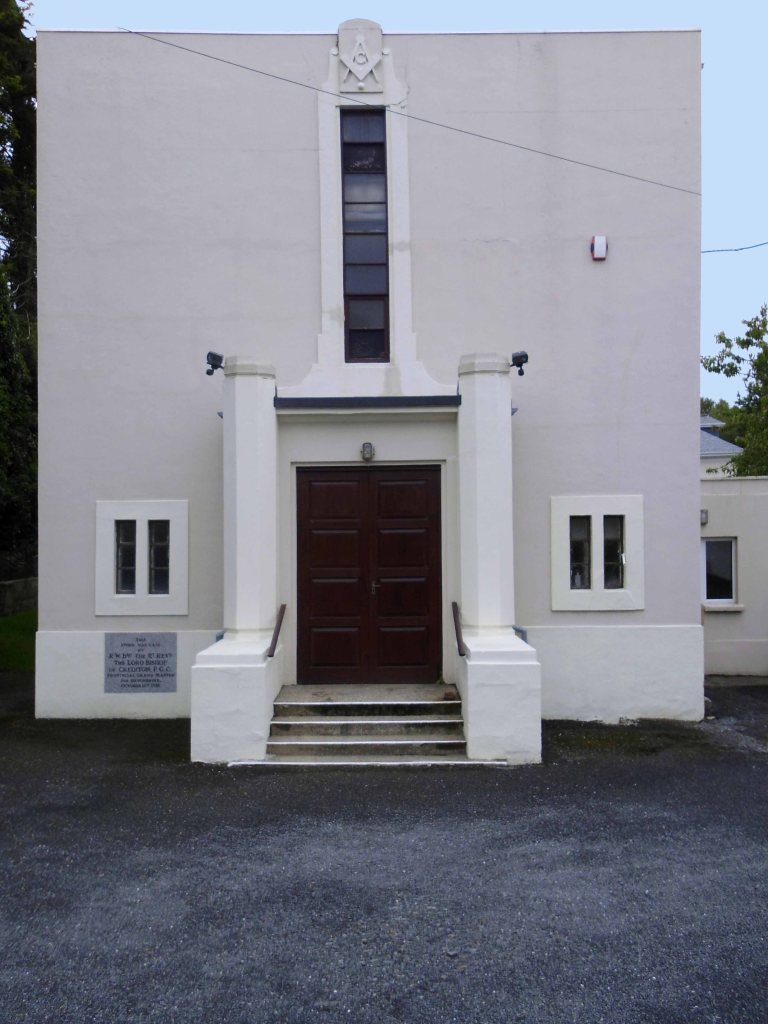
We leave behind – theshadowy world of secret handshakes, favours for friends and strange initiation ceremonies.
For the equally shadowy world of military installations.
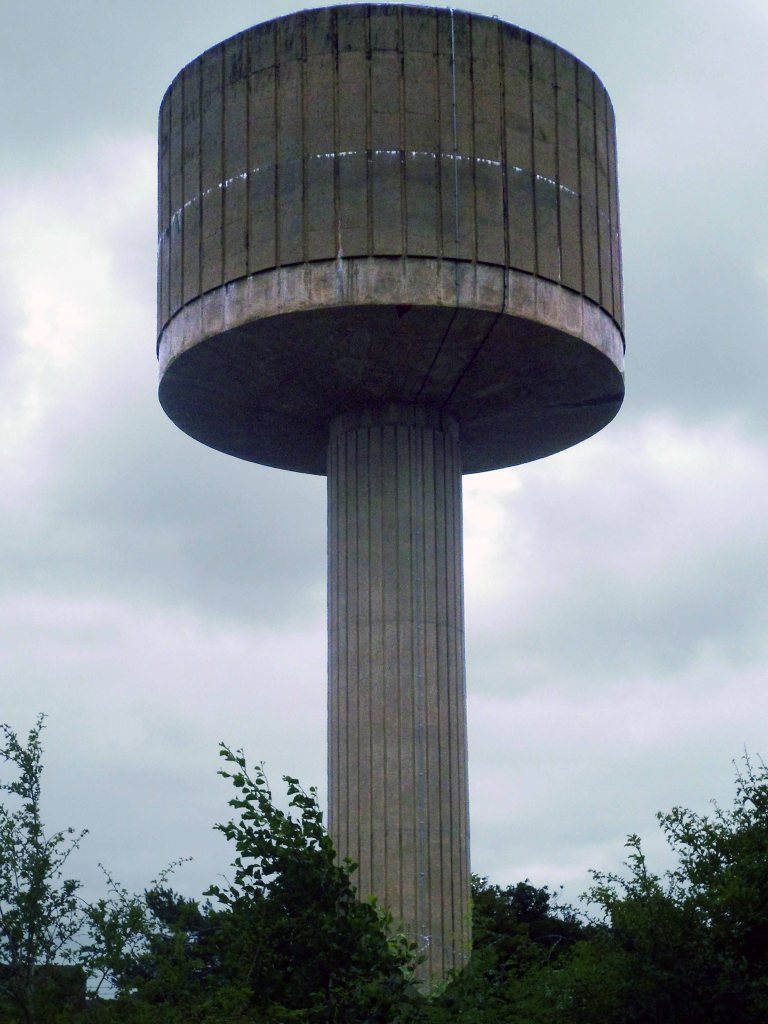
The water tower at RAF Chivenor.
Originally a civil airfield opened in the 1930s, the site was taken over by the Royal Air Force in May 1940 for use as a Coastal Command Station. After World War II, the station was largely used for training, particularly weapons training.
In 1974 the station was left on care and maintenance, in 1994 7 FTS left Chivenor, merging with No. 4 Flying Training School RAF at RAF Valley, and the airfield was handed over to the Royal Marines.
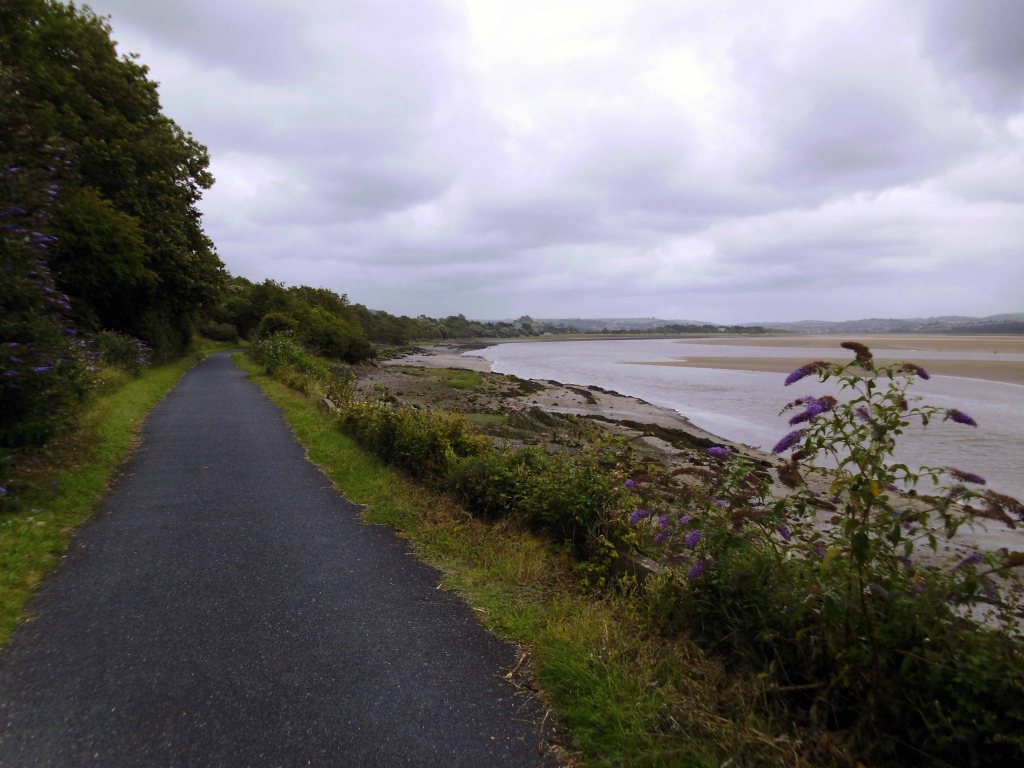
A most delightful cycle path alongside the estuary of the River Taw.
The River Taw rises high on the slopes of Dartmoor and together with its tributaries, the River Mole, Yeo and little Dart, runs north through beautiful rolling countryside down to Barnstaple and into the Bristol Channel.
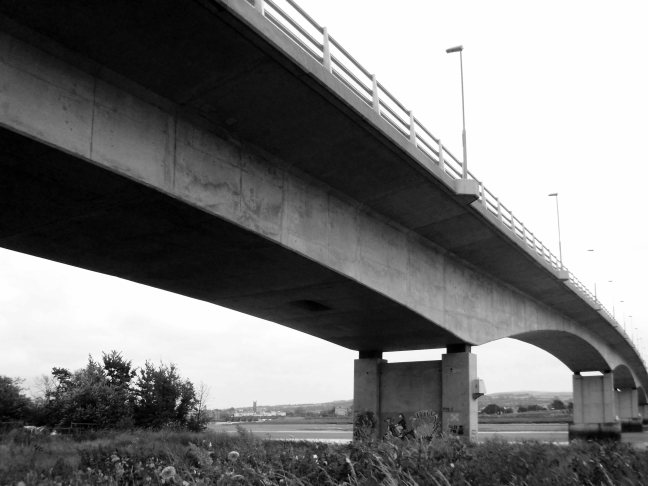
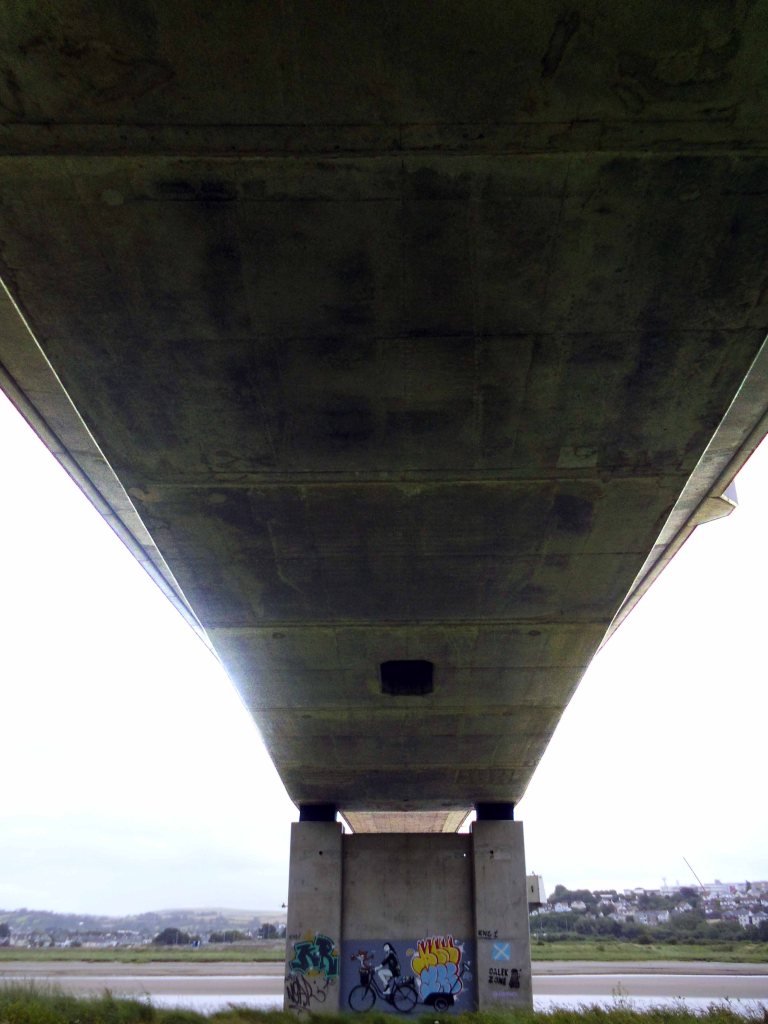
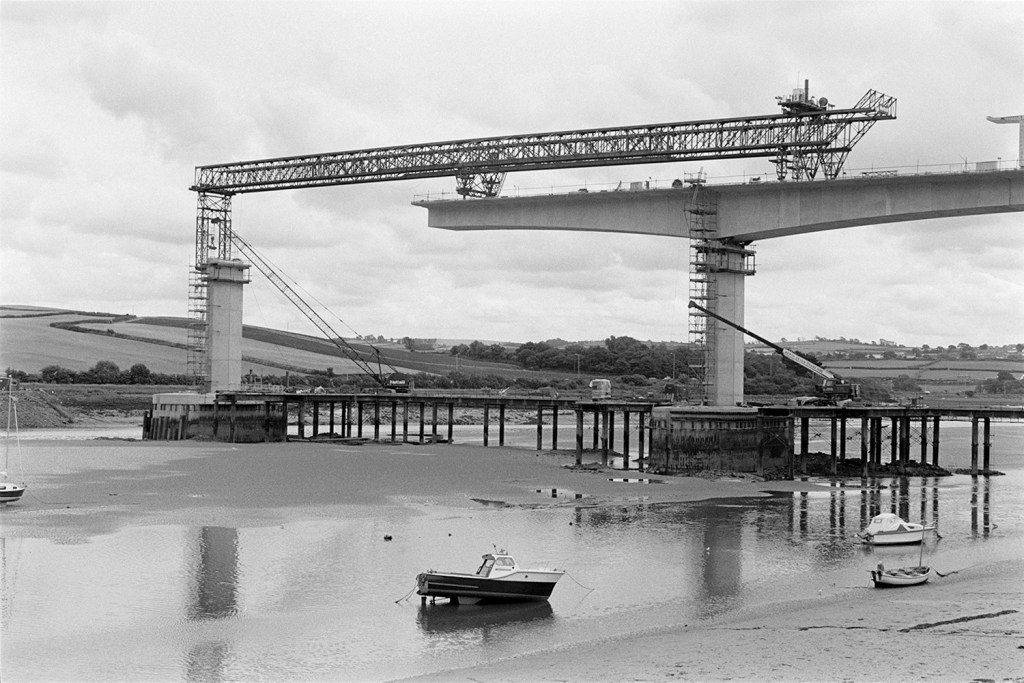
Passing under the Torridge Bridge at Bideford – a 650 metre long concrete structure built in 1987.
Three piers are in the river. Each of the piers in the water is protected by concrete fenders twenty four metres long by eight metres wide by eight metres high. The concrete piers of the bridge are around twenty four metres high.
It was designed by MRM Partnership.
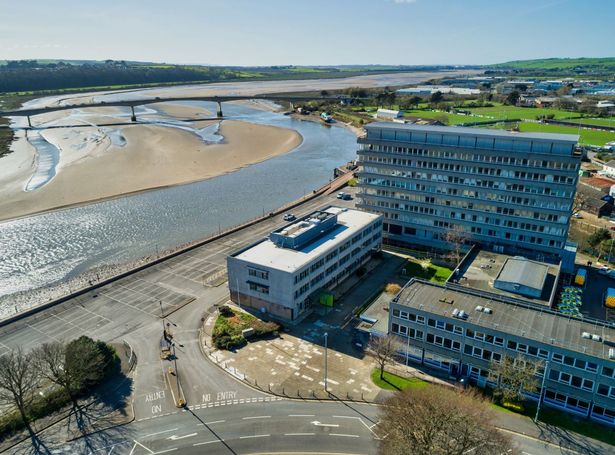
Here we are in Barnstaple by the Civic Centre.
It’s described as an ‘iconic’ building, but not many locals would agree, this huge building widely considered to be one of the ugliest in Devon could soon be under new ownership.The council has confirmed that following a tender exercise, it is working with a preferred bidder to finalise the details of the sale.
Devon Live
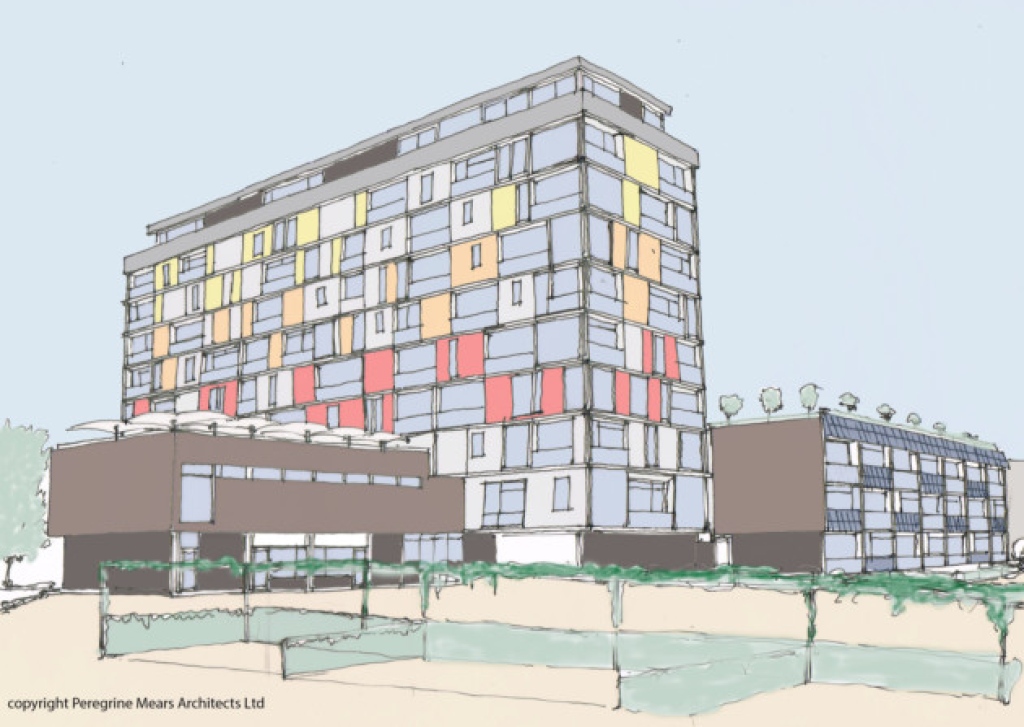
In 2014Barnstaple based Peregrine Mears Architects believed the civic centre could provide up to 84 modern apartments.
Artist’s impression by Peregrine Mears Architects – looks a little too wobbly to me, Peregrine Mears Architects should get right back to the drawing board, where they started from.
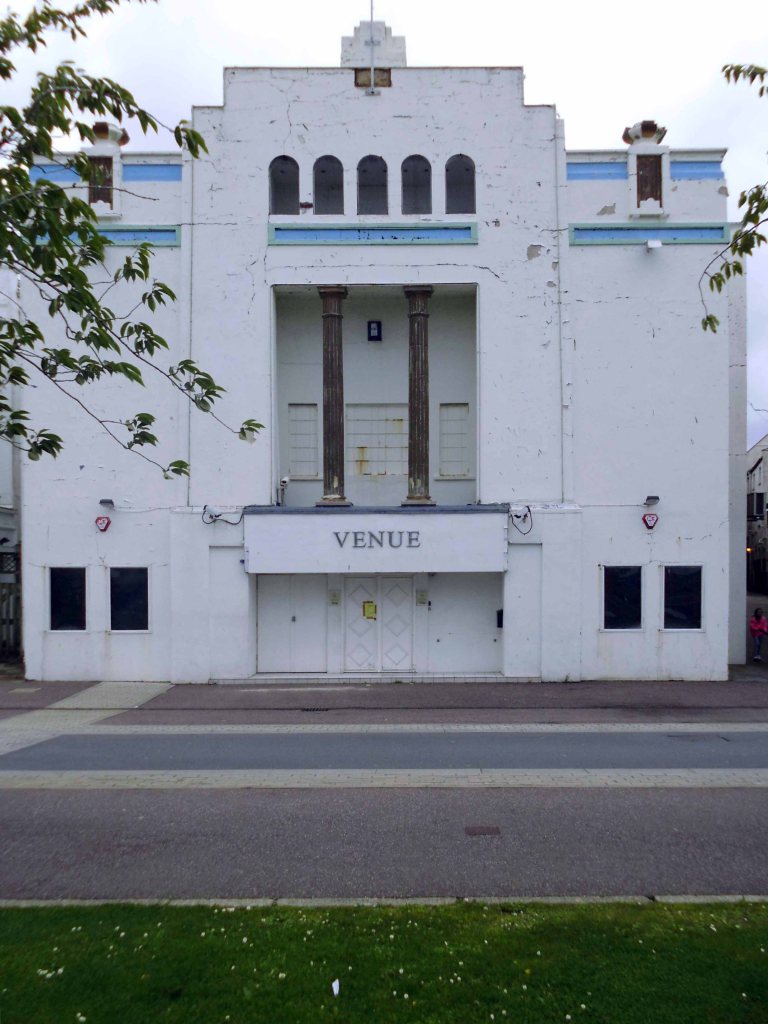
The Neo-Classical facade restrained Deco of The Venue.
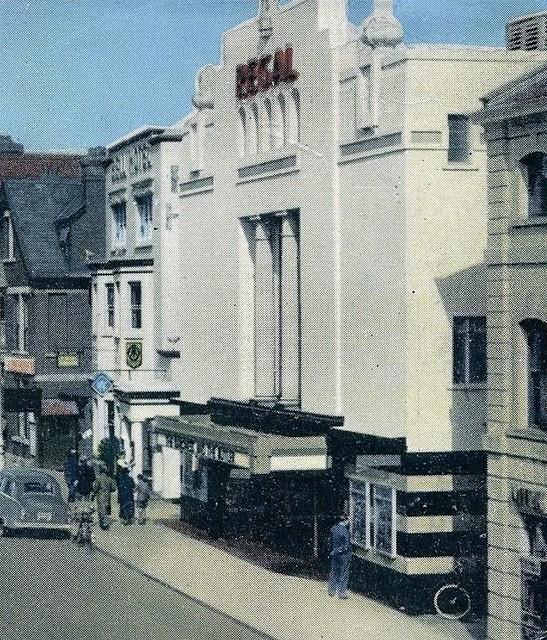
Formerly The Regal Cinema – opened on 30th August 1937
Architects – BM Orphoot
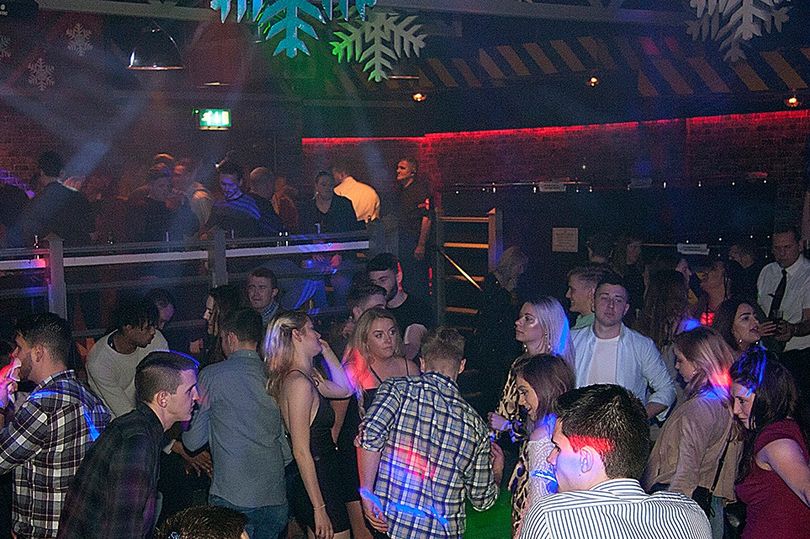
Revellers dancing at The Worx nightclub– as The Venue was to become.
The building in Barnstaple is for sale with Webbers estate agents for just £225,000. The striking building in a prime position on the town’s Strand was originally opened in 1937 as the Regal Cinema.
The building will probably be best known under the guise of Kaos, the name it was given during the 1990’s and at the height of its popularity.
Other nightclub incarnations at the premises included Babylon, Rockabillies, Coco, Club Tropicana and of course The Venue.
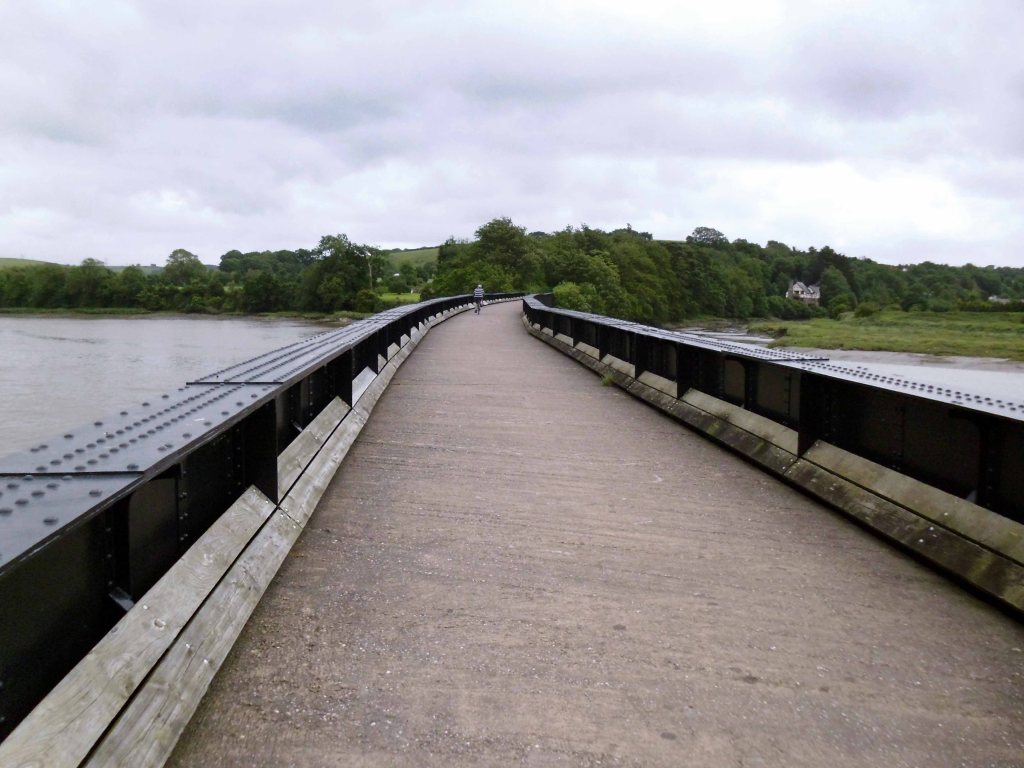
The Tarka Trail crossing the River Torridge, just south of Bideford, utilising the former railway bridge.
The old home town looks the same as I step down from the bike, and there to meet me is – well nobody.
And I realise, yes, I was only dreaming.
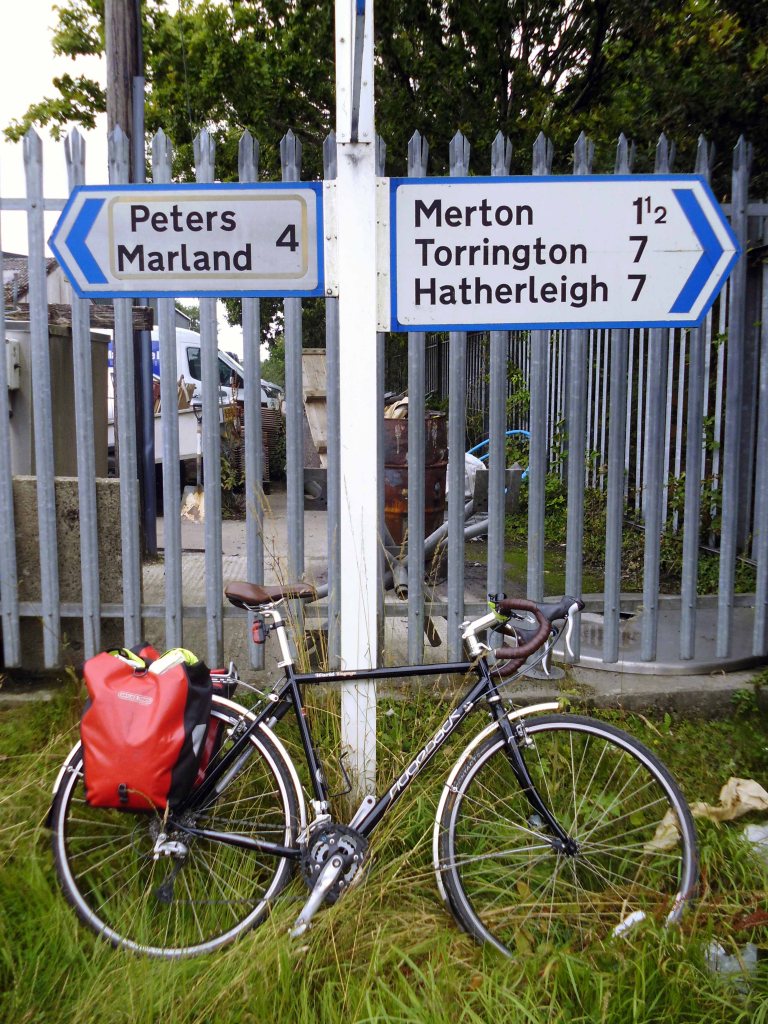
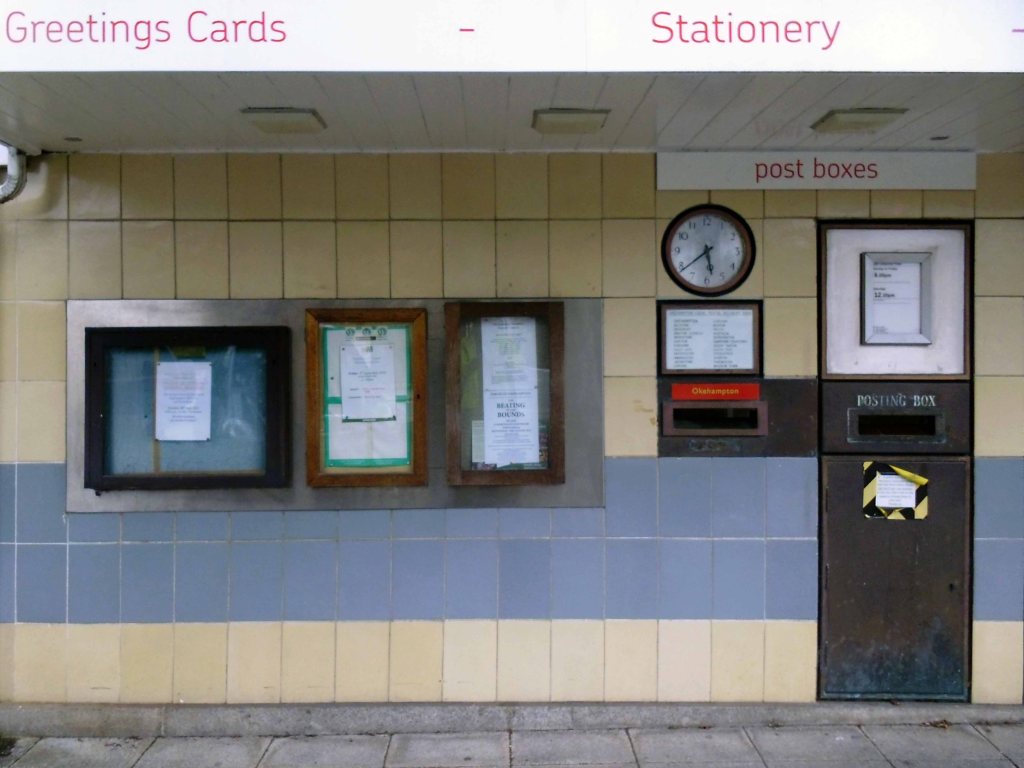
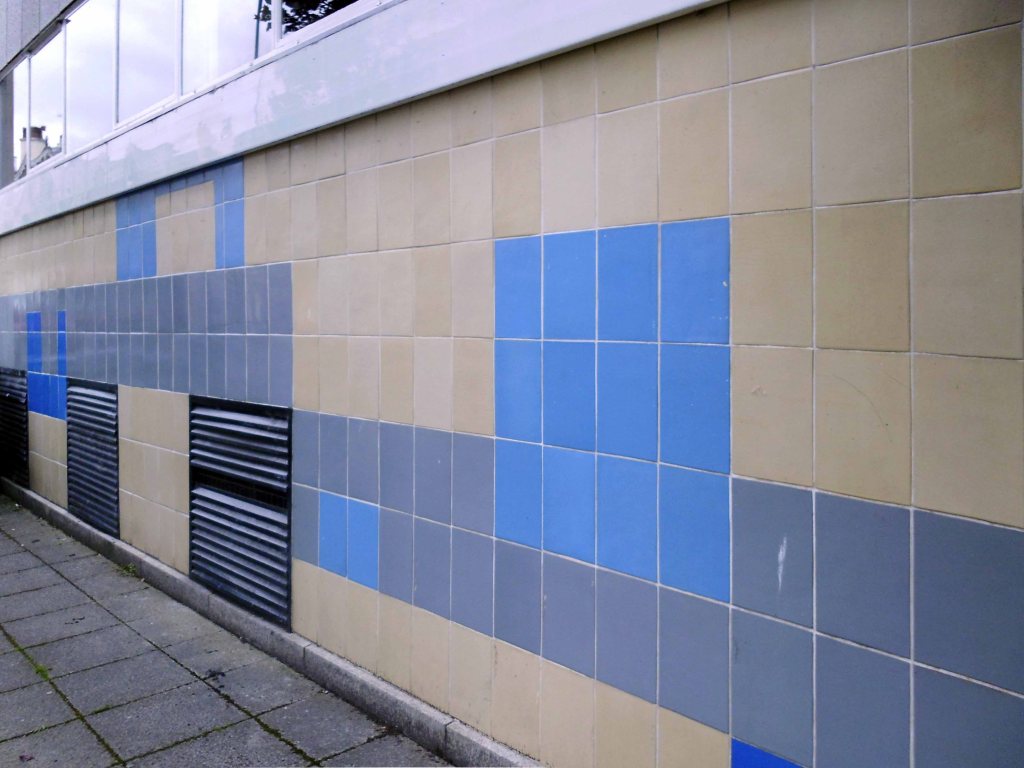
I’ll go to Okehampon then – take a look at the lovely tiled Post Office, whilst completely ignoring one of the oldest Norman castles in the country.
Walking around town in search of a B&B proved fruitless, though I was directed to an out of town Roadhouse aways away.
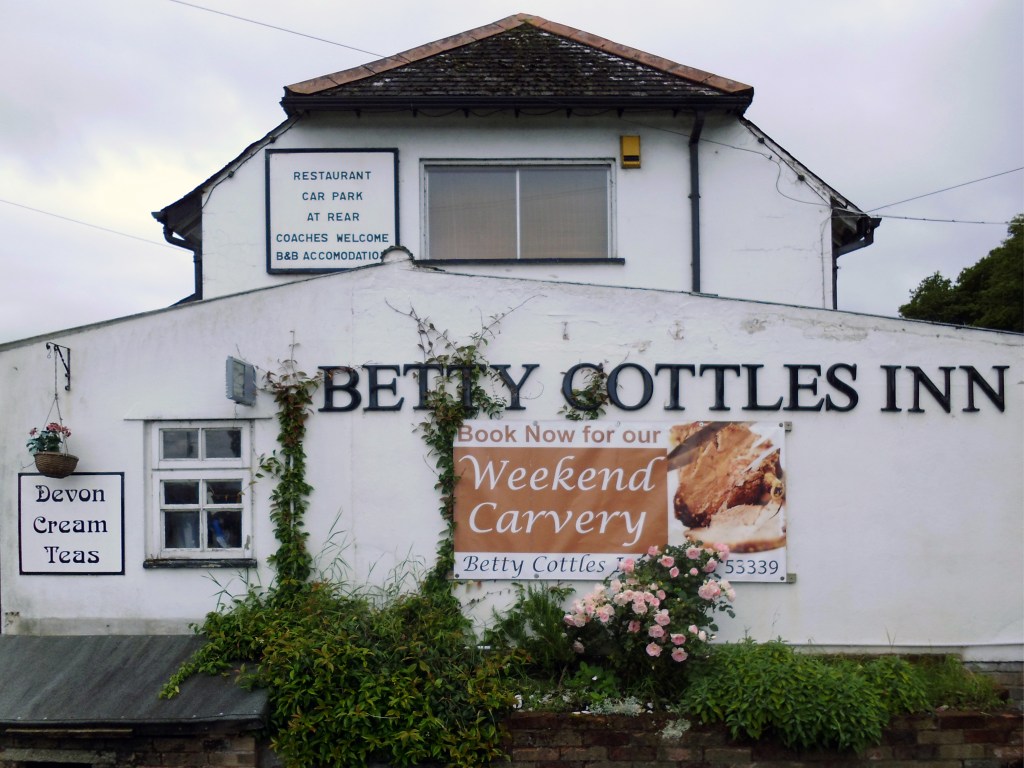
Welcome to Betty Cottles Inn – land of the lost apostrophe.
Rooms are not as photos/described on hotel booking sites, wi-fi hardly ever works. I prepaid/booked for nine nights, I checked out after two days. Needless to say I didnt receive a seven day refund. Owner with attitude problem, he had my money, and was not keen on helping with my concerns about the property. Musky smell to carpet in bar and restaurant areas. Not been cleaned for a long time. Rooms unsafe and not private, with curtains not long enough, lock on room doors inadequate.
Neil H – July 2109
You sneaked in a female into your single room without paying for her and got caught so obviously you have retaliated by way of a negative review. You were probably the most rude and hostile guest we have ever had and have had to report you to booking.com for guest misconduct and also banned you from being able to book here again.
Matthew owner at Betty Cottles Inn
I ate a reasonable meal in the Carvery and chatted amiably with a representative salesman on the move, whilst seeing off a few pints of Guinness – any port in a storm.
Although there is evidence in the local area of occupation since the Iron Age, it was still a small village until the 19th century when it became a seaside resort, and was connected with local towns and cities by a railway, and two piers were built. The growth continued until the second half of the 20th century, when tourism declined and some local industries closed. A regeneration programme is being undertaken with attractions including the Helicopter Museum, Weston Museum, and the Grand Pier. The Paddle Steamer Waverley and MV Balmoral offer day sea trips from Knightstone Island to various destinations along the Bristol Channel and Severn Estuary. Cultural venues include The Playhouse, the Winter Gardens and the Blakehay Theatre.
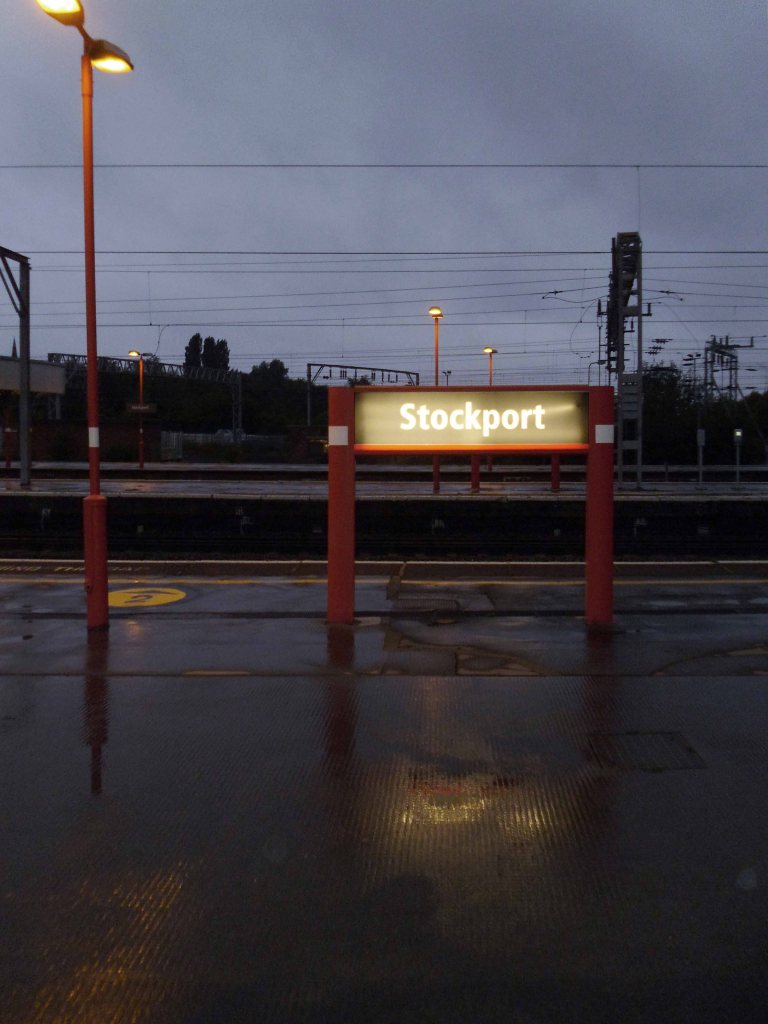
I arrived mid-morning on Saturday 25th July 2015 – having travelled some two hundred miles or so from Stockport by train.
The Iron Age seemed to be over and regeneration slowly but surely under way.
This marked the start of another coastal tour, following last year’s epic which began in Hastings.
This time I was heading for Hastings – but that can wait until tomorrow, let’s have a look around town.
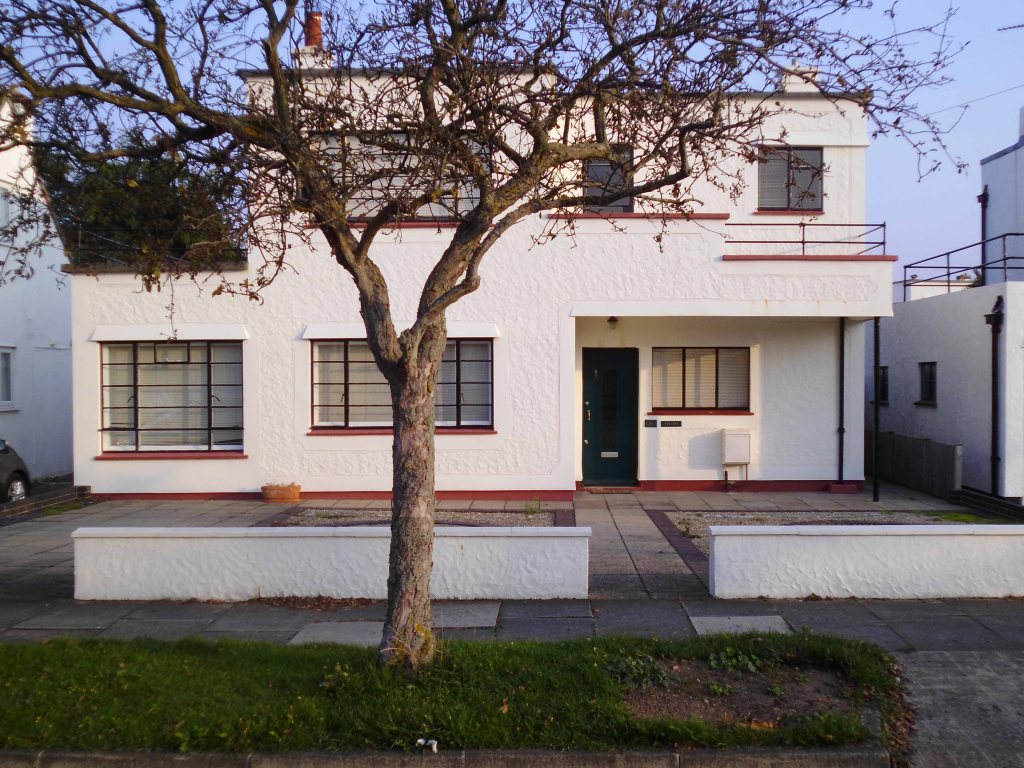
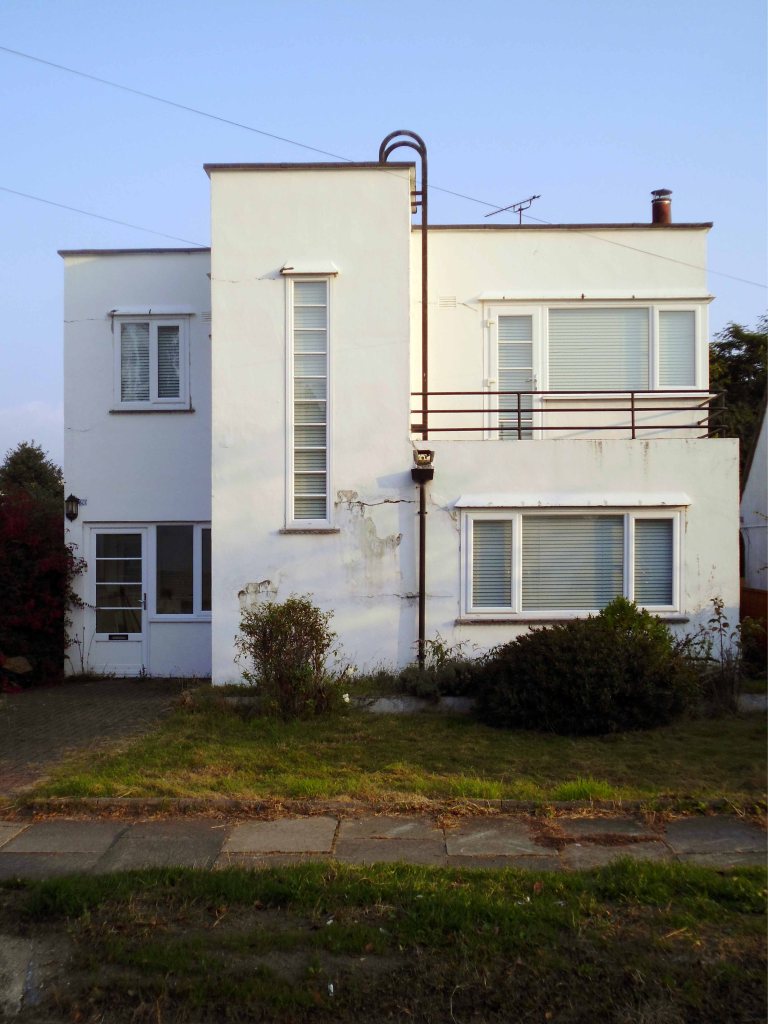
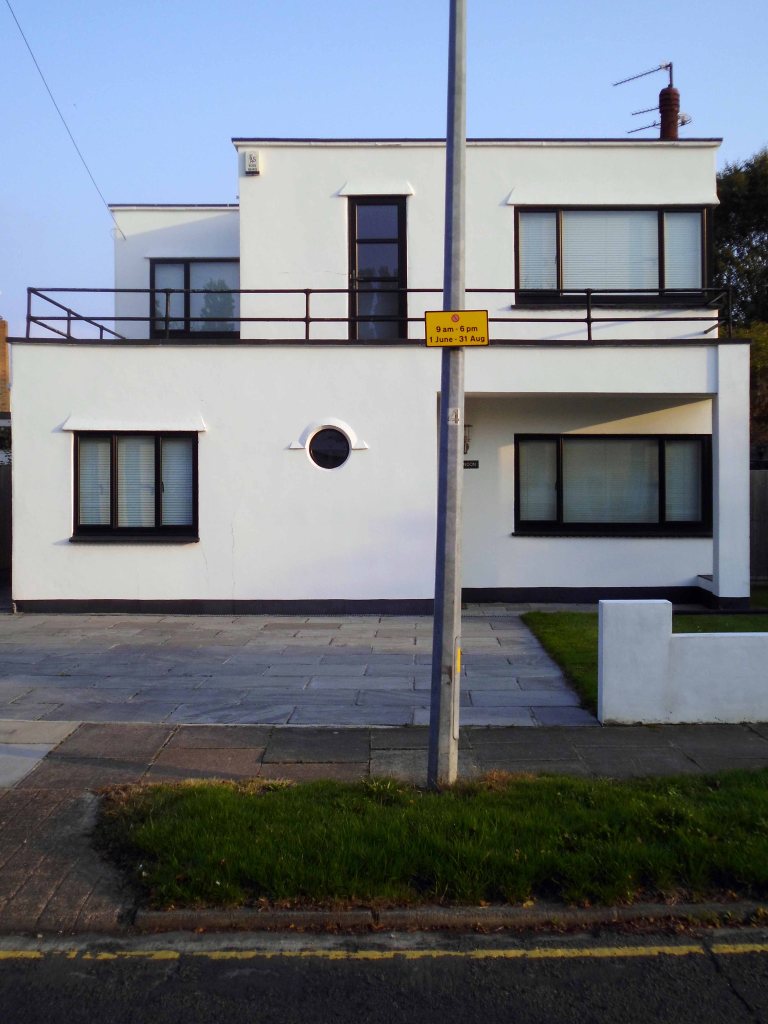
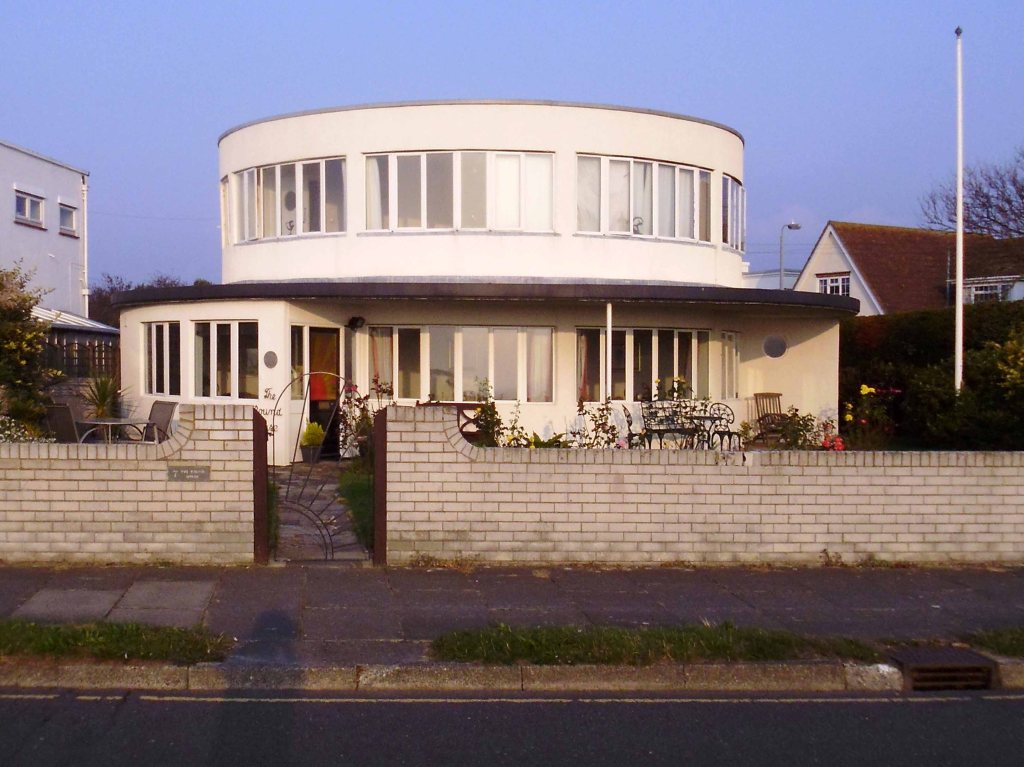
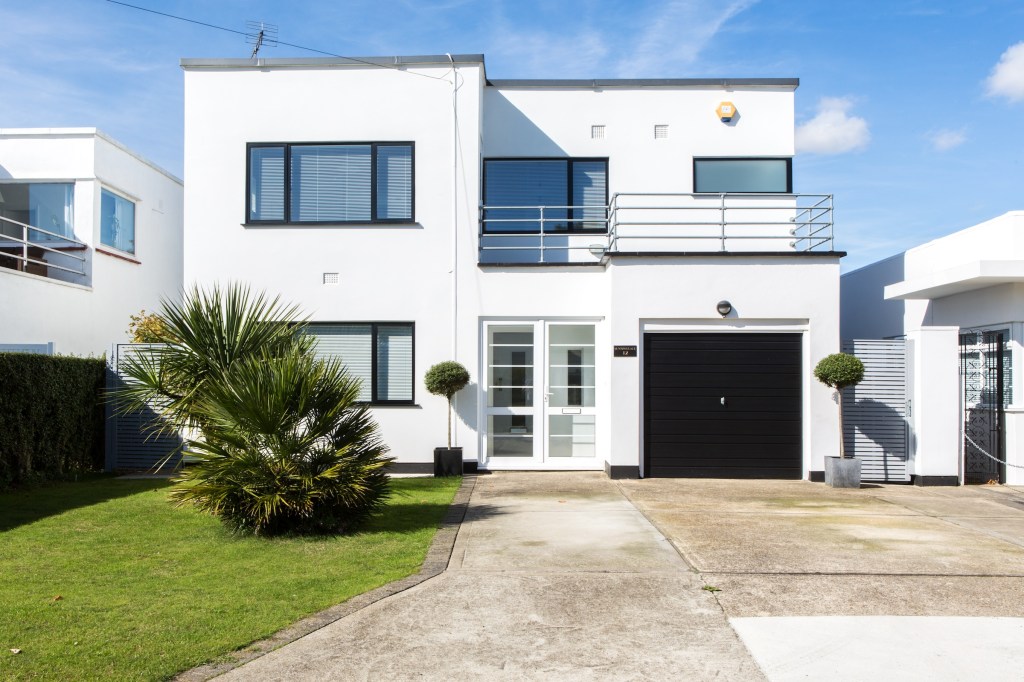
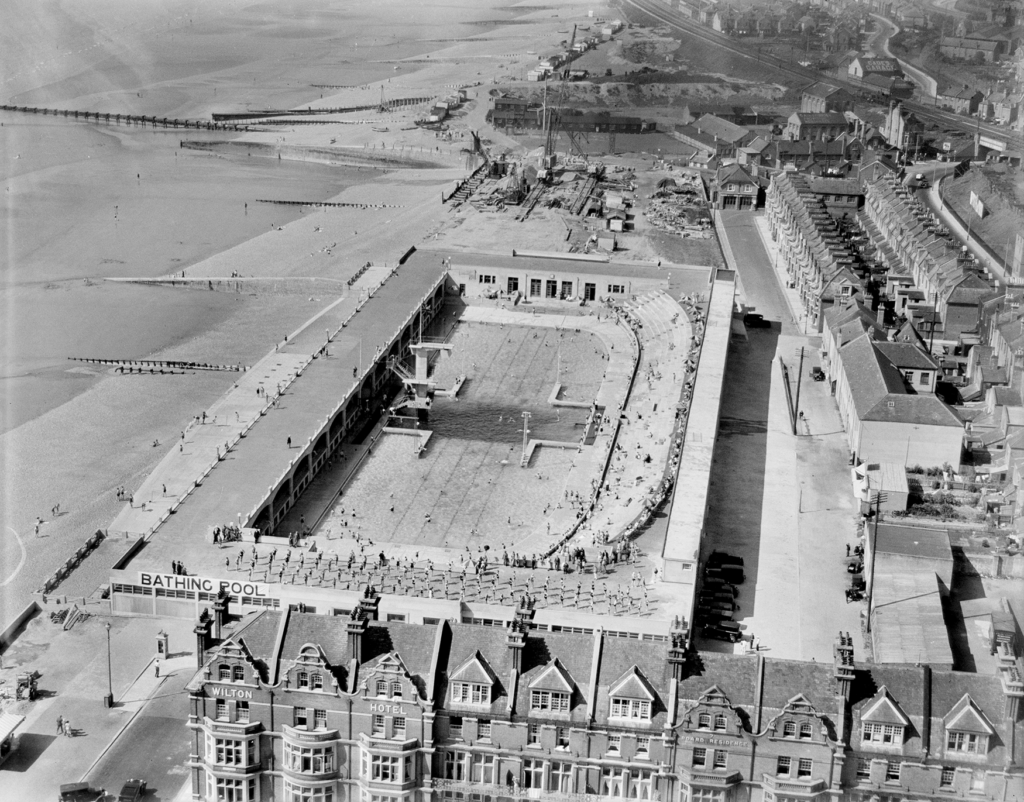
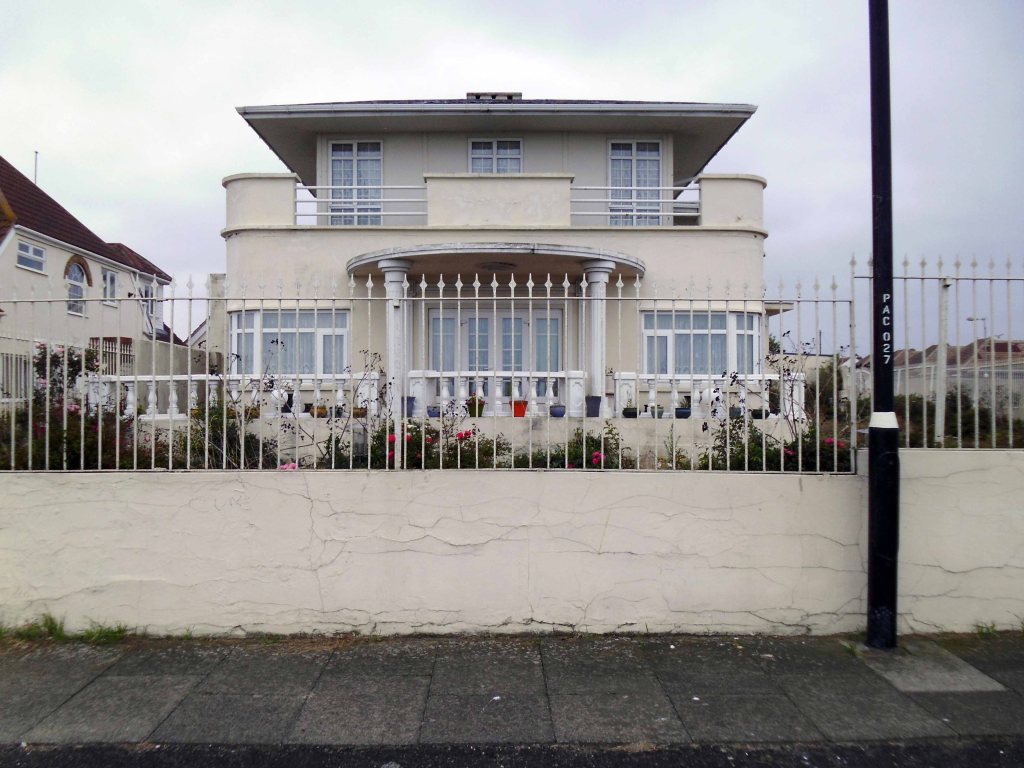
Directly opposite the station is a group of Seaside Moderne homes in various states of whiteness – standing in line along Neva Road.
Reasonably priced, cheaper than Frinton – check it out
I pushed my bike along the prom heading for my pre-booked digs in a stylish seafront hotel.
Past the Marine Causeway linking the shore to some kind of modern day Post Modern Shangri-La.
A mystical, harmonious valley, gently guided from a lamasery, enclosed in the western end of the Kunlun Mountains, possibly not.
You can stroll onto Knightstone Island, where you will find some cafes serving light snacks and refreshments, or to the other side which takes you along the causeway, accessible to walk across according to the tides. At the other side of the Causeway you will find a small rocky beach with tidal rockpools ideal for exploring.
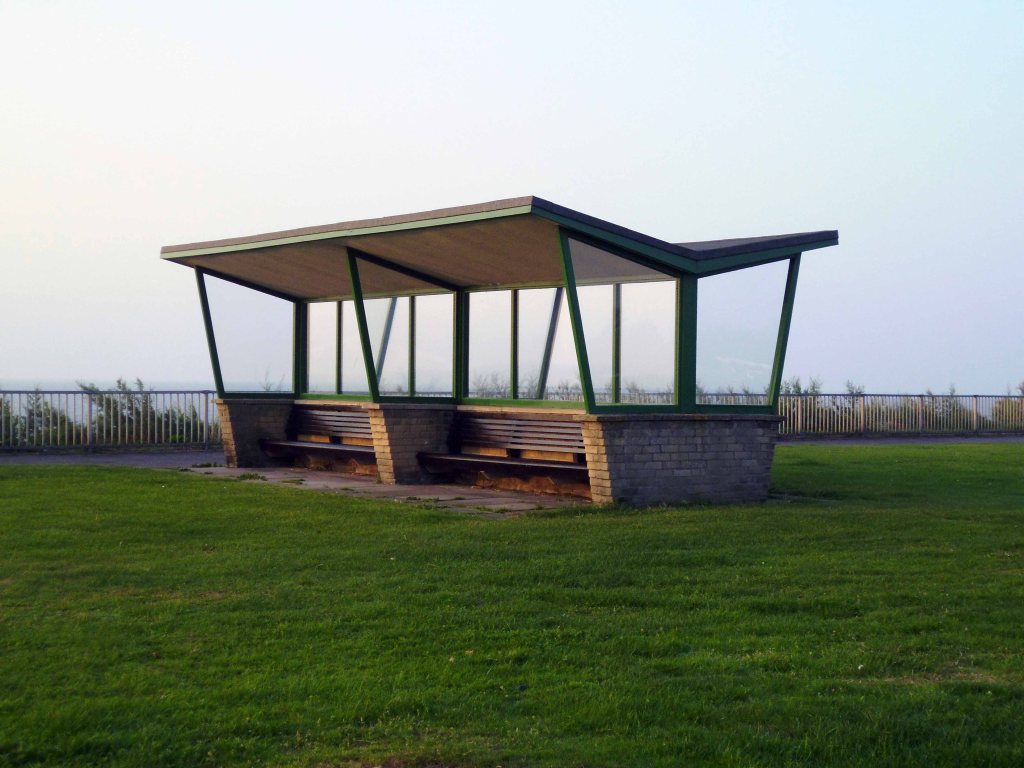
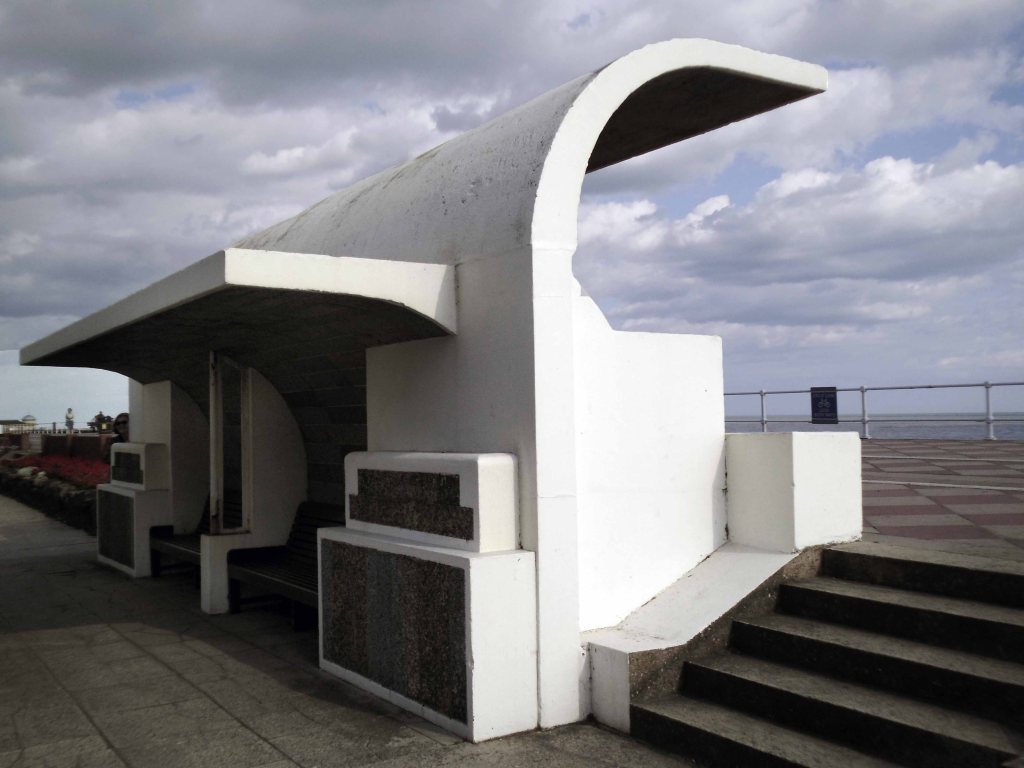
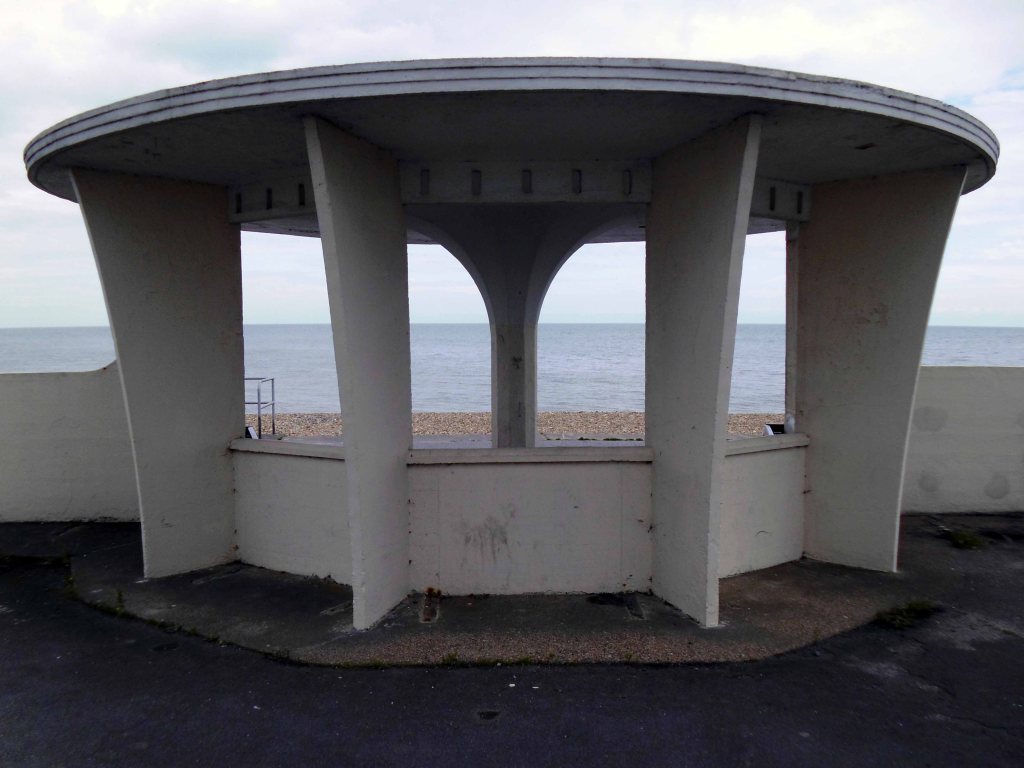
Just along the prom stands one of my all time favourite seaside shelters.
Even further along – what’s all this here then?
The foundation stone of the Birch-designed Birnbeck Pier was laid in 1864. It opened on 5th June 1867 and consisted of a 1040 foot cantilever construction to Birnbeck Island and a short jetty extending westwards from the island.
It seems to have changed hands several times in its relatively short life, including the stewardship of the infamous Urban Splash and the mysterious mystery owners, the current custodians it seems, have done little to secure a secure future.
It remains alone and untended, stretching aimlessly out to sea.
In April 2015, Friends Of The Old Pier Society created a novel fund raising scheme in which 1p and 2p coins would be lined up to stretch from the Grand Pier to Birnbeck Pier.
September 2019 Councillor Mr Crockford-Hawley said:
It’s this end of Weston which is the sore, it’s the carbuncle, it’s clearly well past its prime and it needs some serious attention. I mean it would be wonderful if somebody came along with an open ended bank account and said ‘yup, I’d love to restore it for the sake of restoring it’, but quite clearly there’s got to bean economic future for the pier, there’s got to be a purpose for the pier.
Possibly a wealthy Beatle could bail the ailing pier out of deep water?
Having made a bob or two since they appeared here in 1963.
Next thing I know I’m outside the imposing and impressive sounding Ocean Hotel. Sad to say on the day/night of my visit it wasn’t just this weary traveller that appeared to be over tired, happy to report the the New Ocean Hotel has been revamped and in tip-top condition by all accounts.
Any road up, let’s get out, take a walk up the road – have look at some local type.
Watney’s mythical Red Barrel.
Watney’s was the Evil Corporation which sought to crush plucky small brewers and impose its own terrible beer on the drinking public. It acquired and closed beloved local breweries, and it closed pubs, or ruined them with clumsy makeovers.
Its Red Barrel was particularly vile – a symbol of all that was wrong with industrial brewing and national brands pushed through cynical marketing campaigns.
Keeler Productions has taken over Locking Road Car Park, opposite Tesco, and The Regent Restaurant, in Regent Street, to film a BBC period series The Trial of Christine Keeler, based on the Profumo Affair in the 1960s.
Enough of all that period drama, let’s have a look at some period architecture.
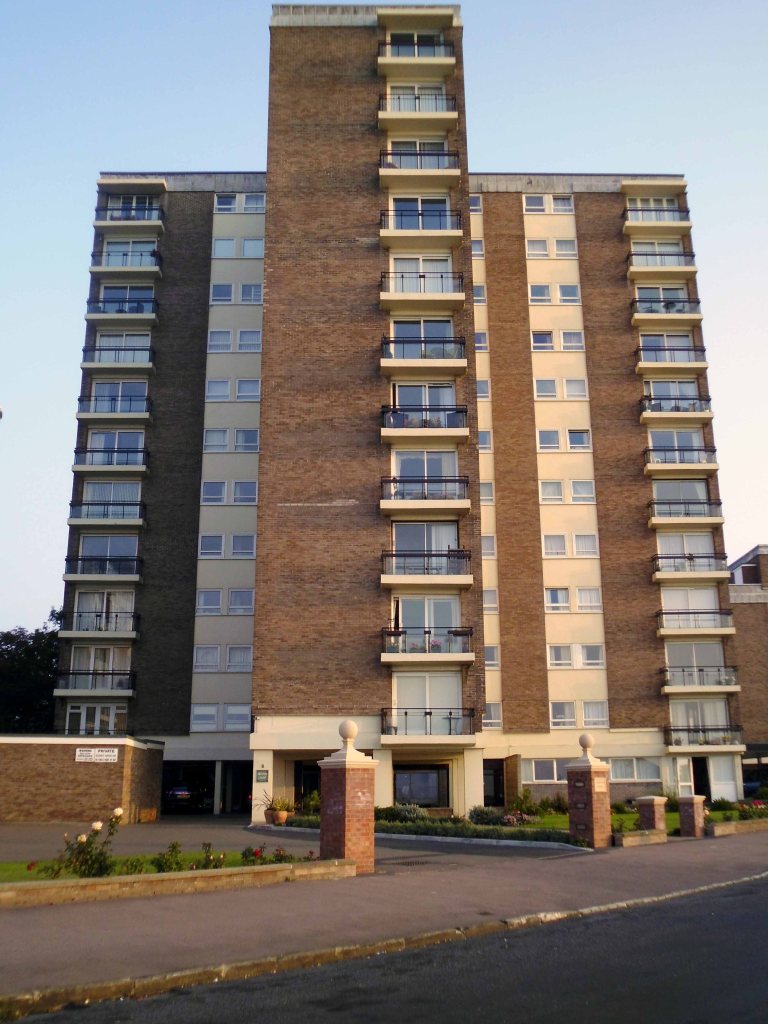
Madeira Court – 67 flats built in 1988.
Weekly Social Activities include – coffee mornings, card evenings and occasional days out, organised by social club. New residents accepted from sixty years of age, both cats and dogs generally accepted.
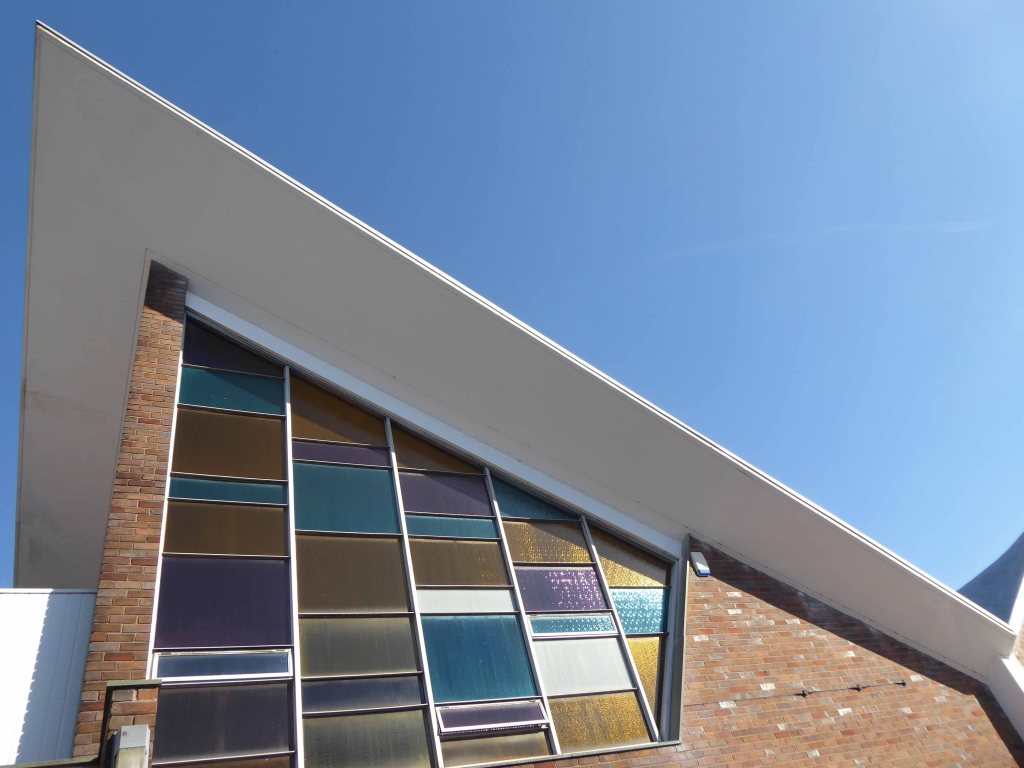
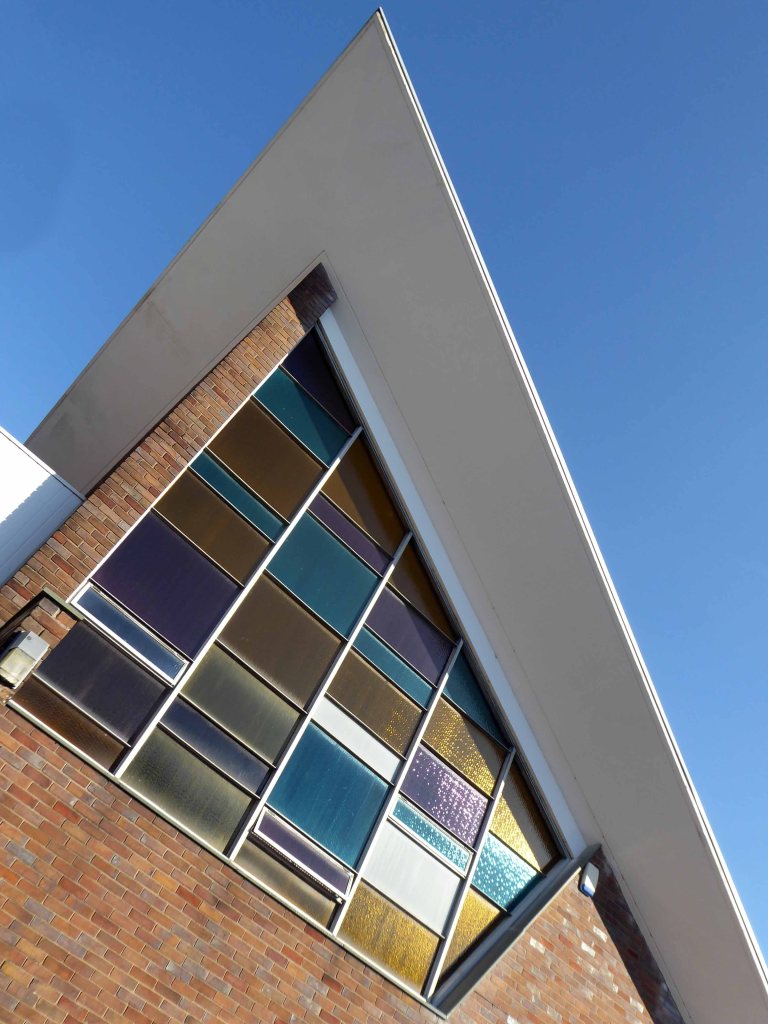
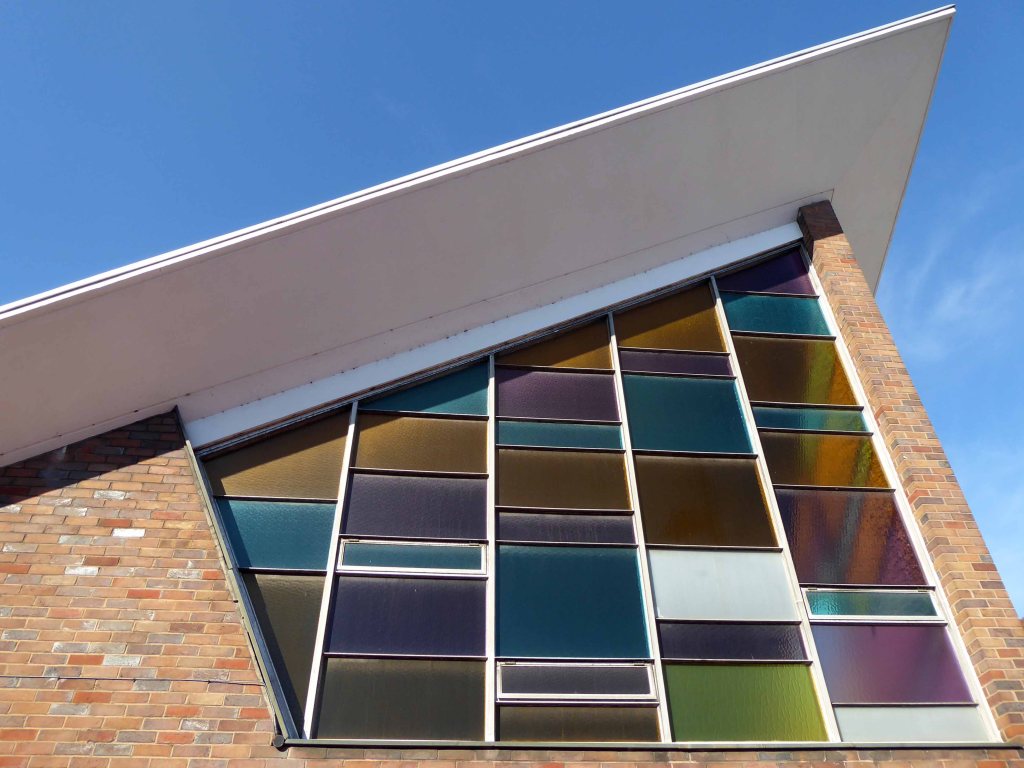
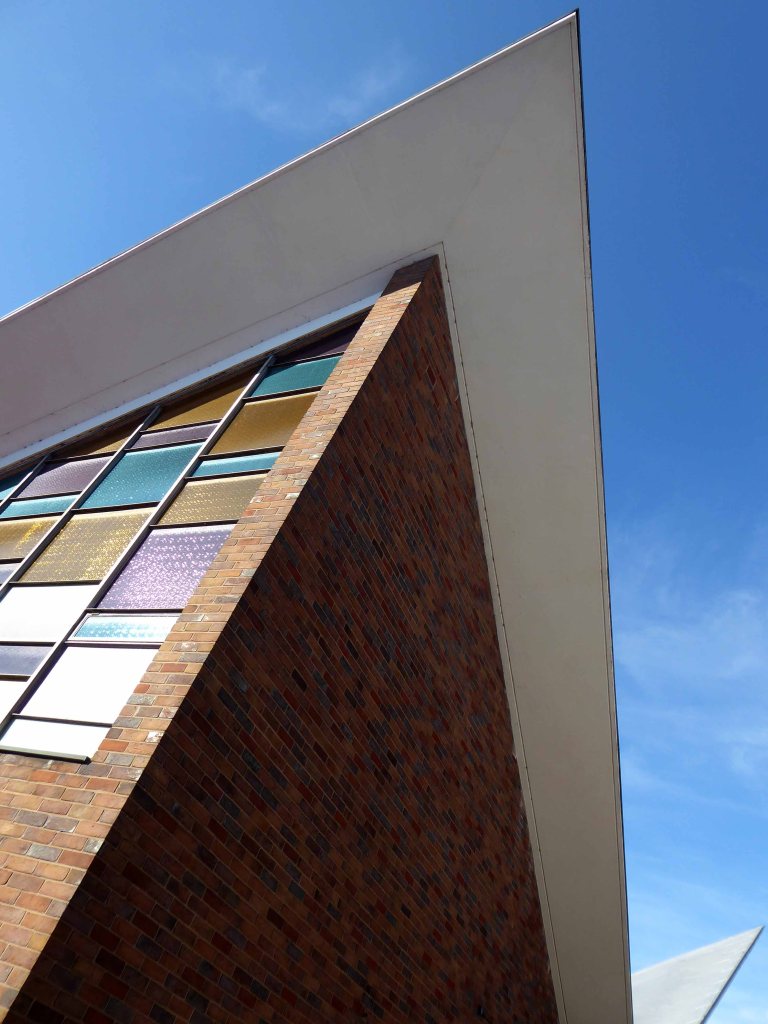
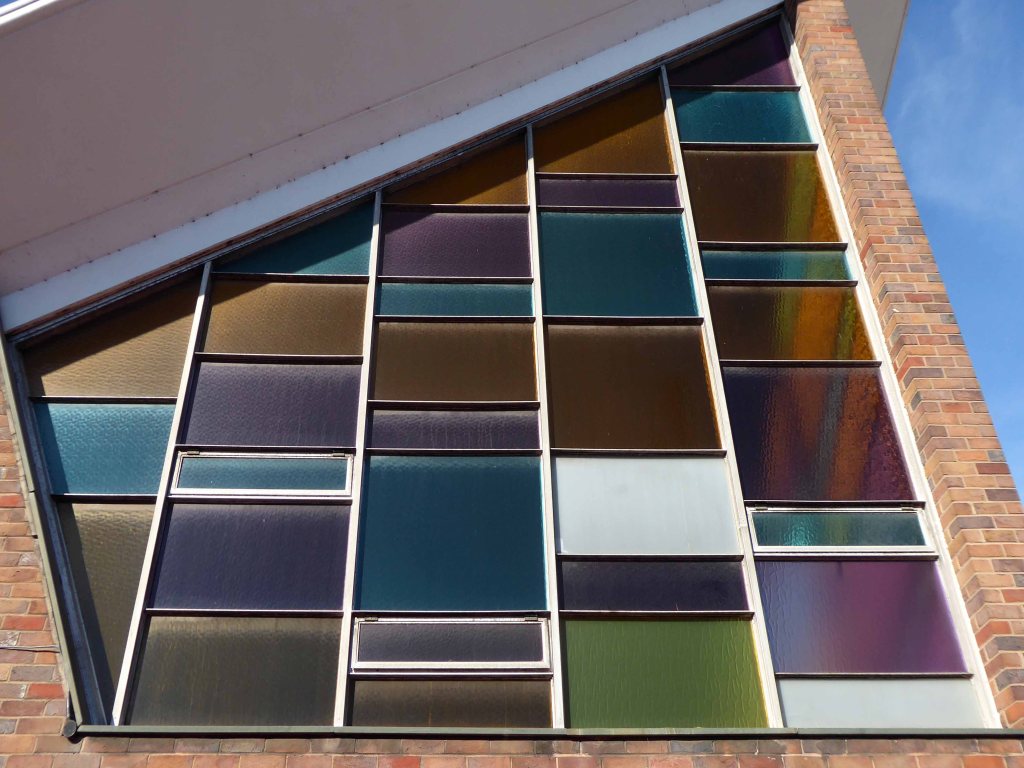
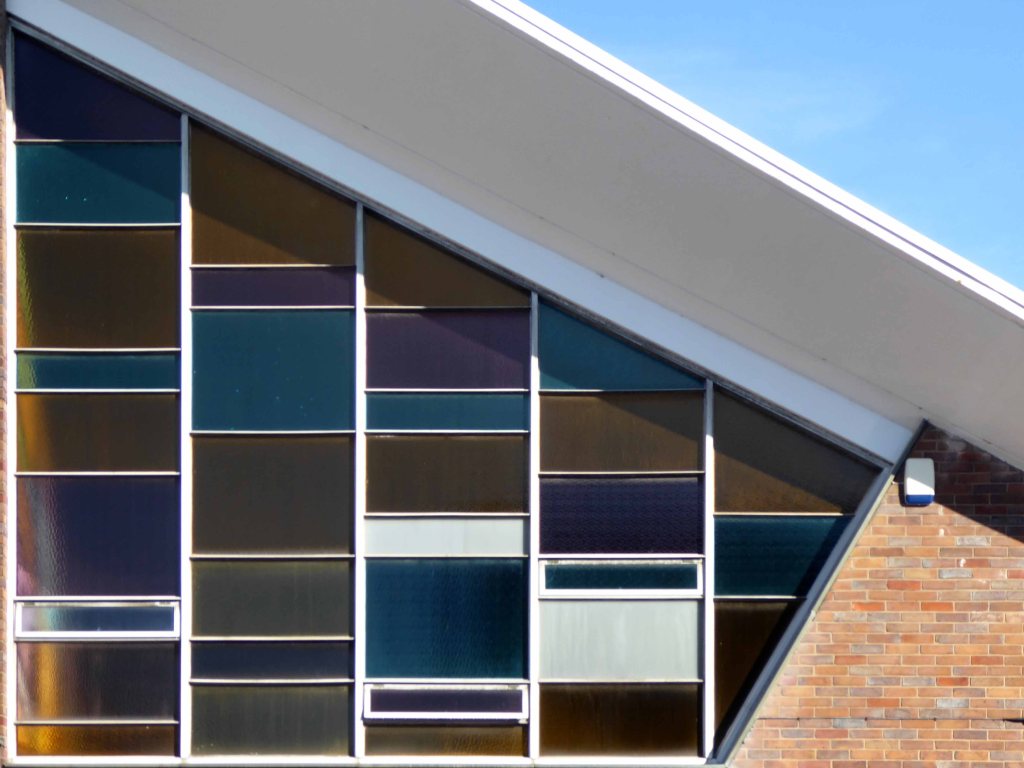
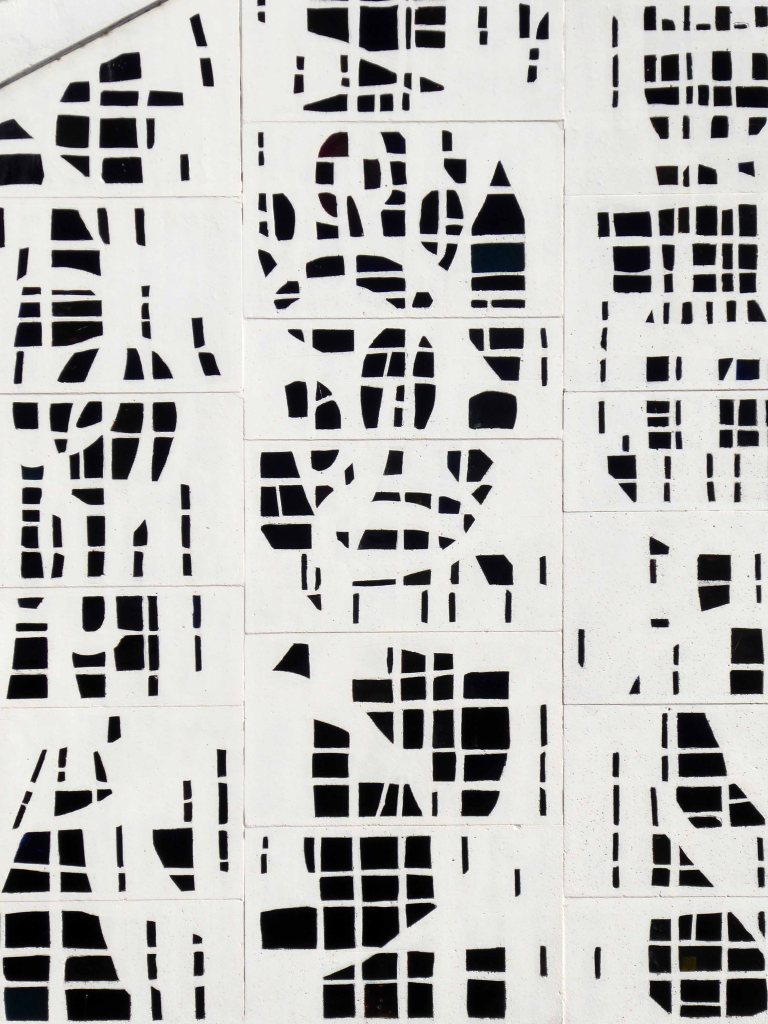
I can find no reference for this dalle de verre stained glass window.
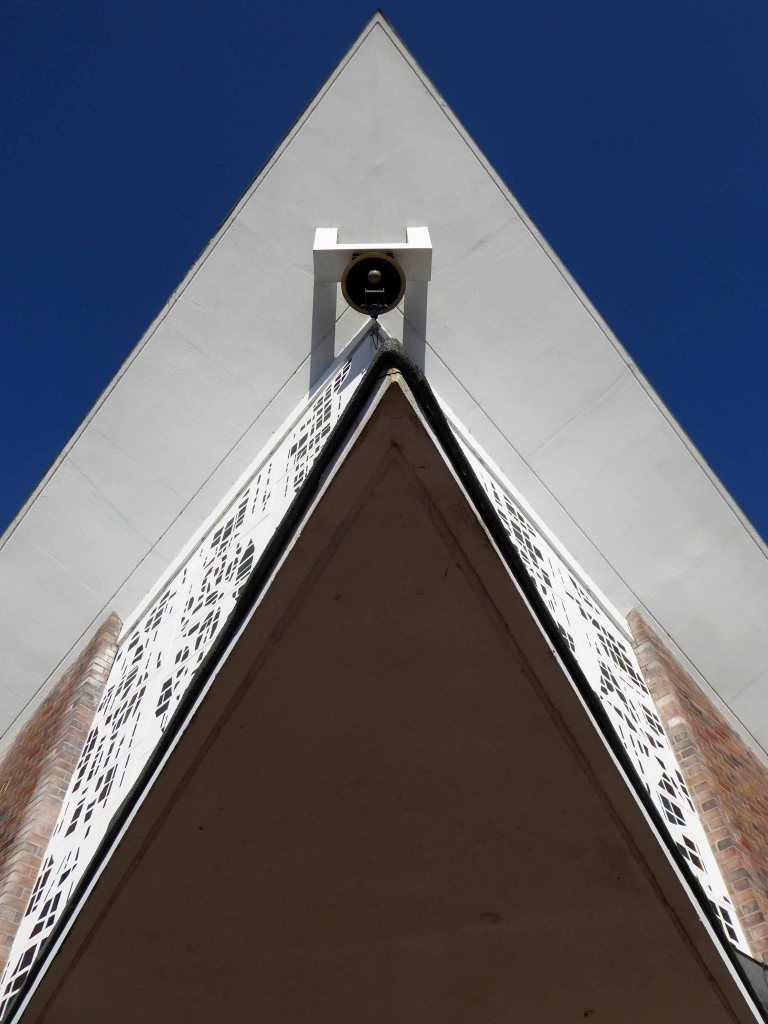
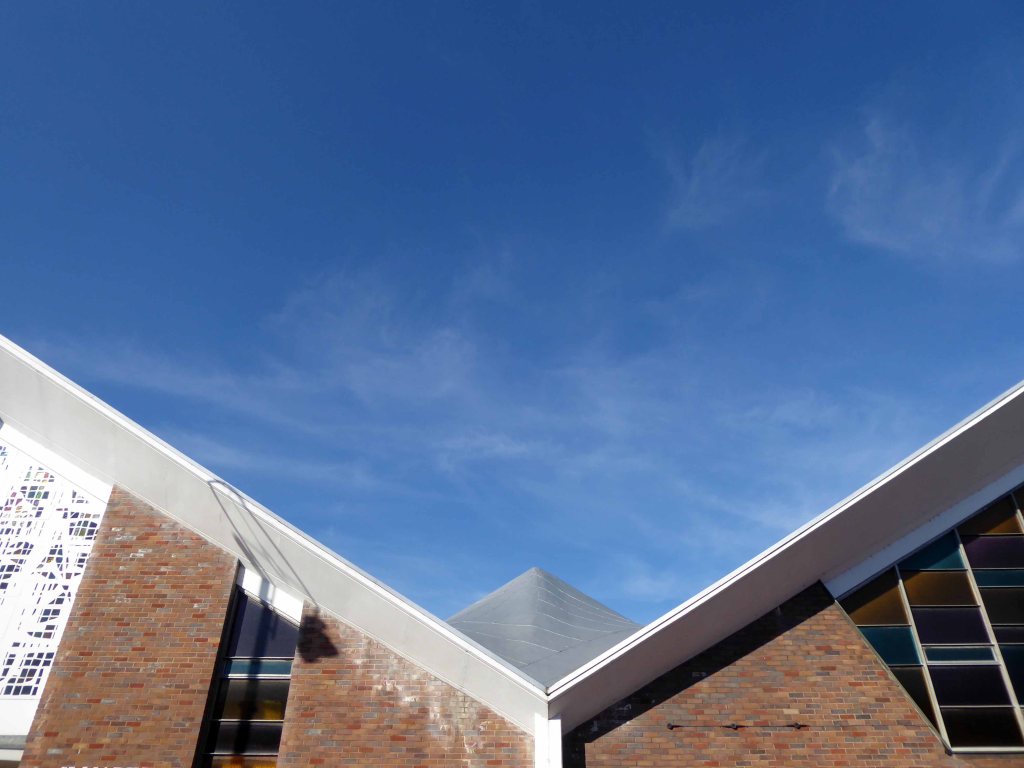
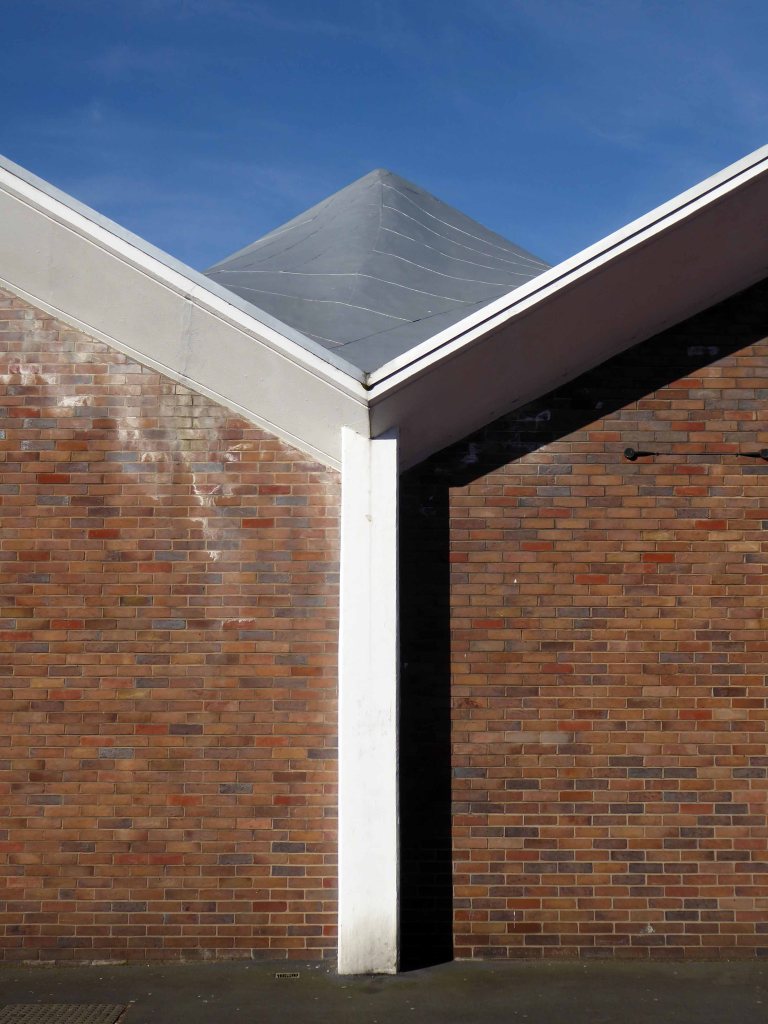
Boulevard United Reformed Church – Waterloo Street
Architects Gordon W. Jackson and Partners 1959
Constructed on part of the site of the former Electric Premier Cinema, the Odeon Theatre was opened on 25th May 1935 with Jack Buchanan in Brewster’s Millions. Built as one of the original Odeon Theatres in the then emerging Oscar Deutsch Odeon Theatres circuit, it was built on a prime corner street position in this sea-side town and was the first of several Odeon Theatre’s to be designed by architect Cecil T Howitt.
The Weston-super-Mare Odeon was built by C Bryant & Son Ltd of Birmingham on the site of the former Electric Premier Cinema. It opened on 25 May 1935, at which time it was described in the souvenir programme as ‘modernity at its best’, with seating accommodation that was ‘luxurious and spaced to give ample room for true comfort’.
A short walk along the prom snapping shelters and the sheltered – no two the same.
I then chanced to fall into a Beer Festival and bad company – the rest is a blur, see you all tomorrow there’s some cycling to be done.
Day four Thursday 4th September 2014 – leaving Clacton on Sea for Frinton on Sea is the equivalent of crossing continents, time zones, aesthetic and social sensibilities.
Leaving the razzle-dazzle, frantic fish and chip frazzle, for the sedate repose of germ free Frinton.
Green sward and restrained modernist shelters adorn the foreshore.
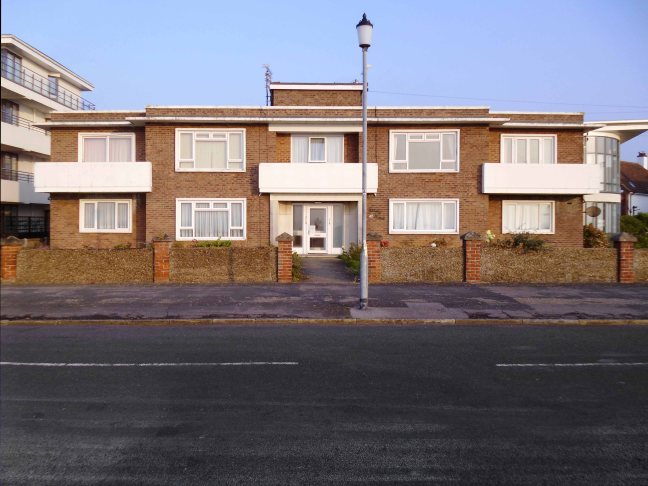
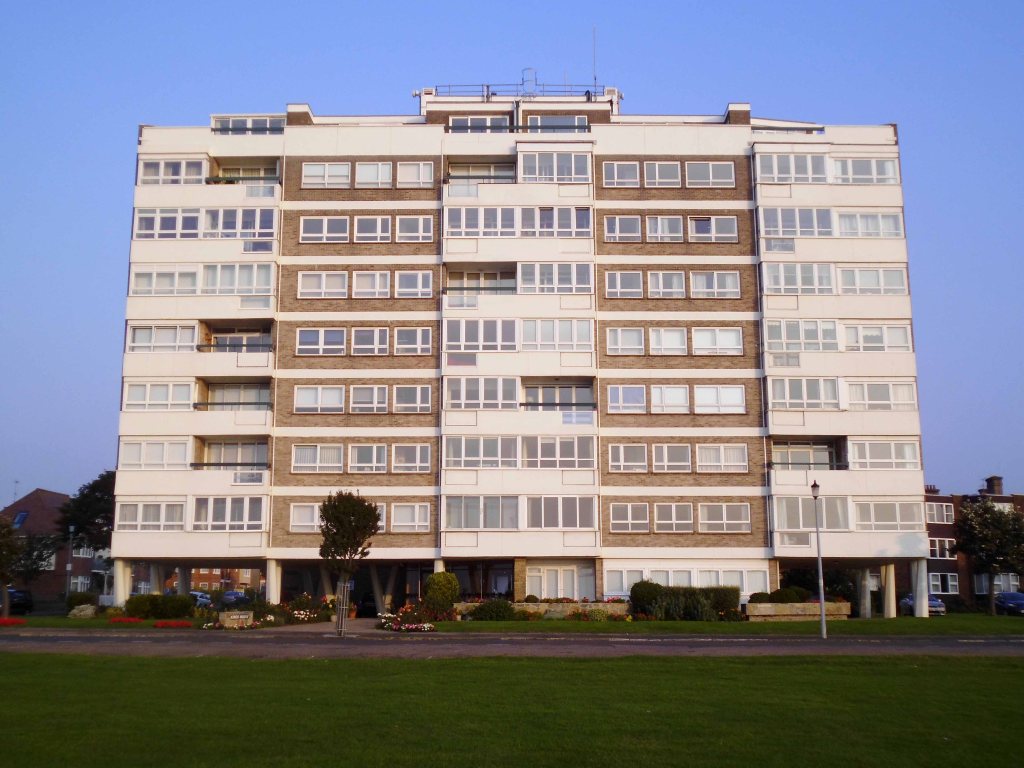
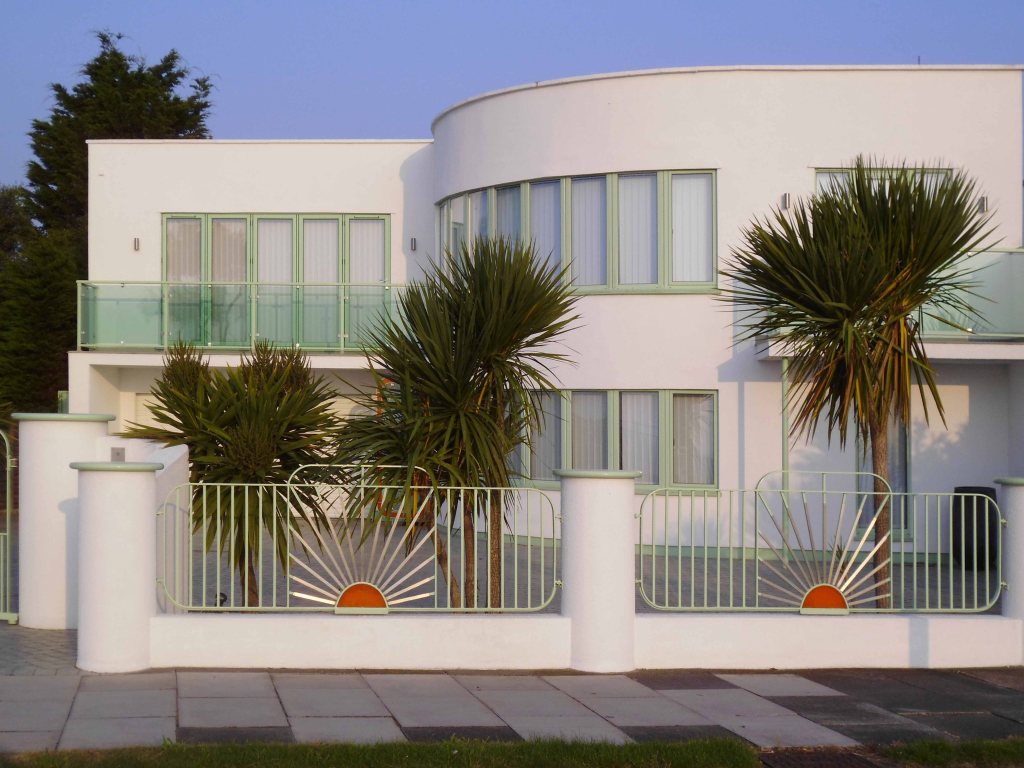
I love the bold optimism of Maritime Moderne – the bright eyed, forward looking window grid of these fine flats.
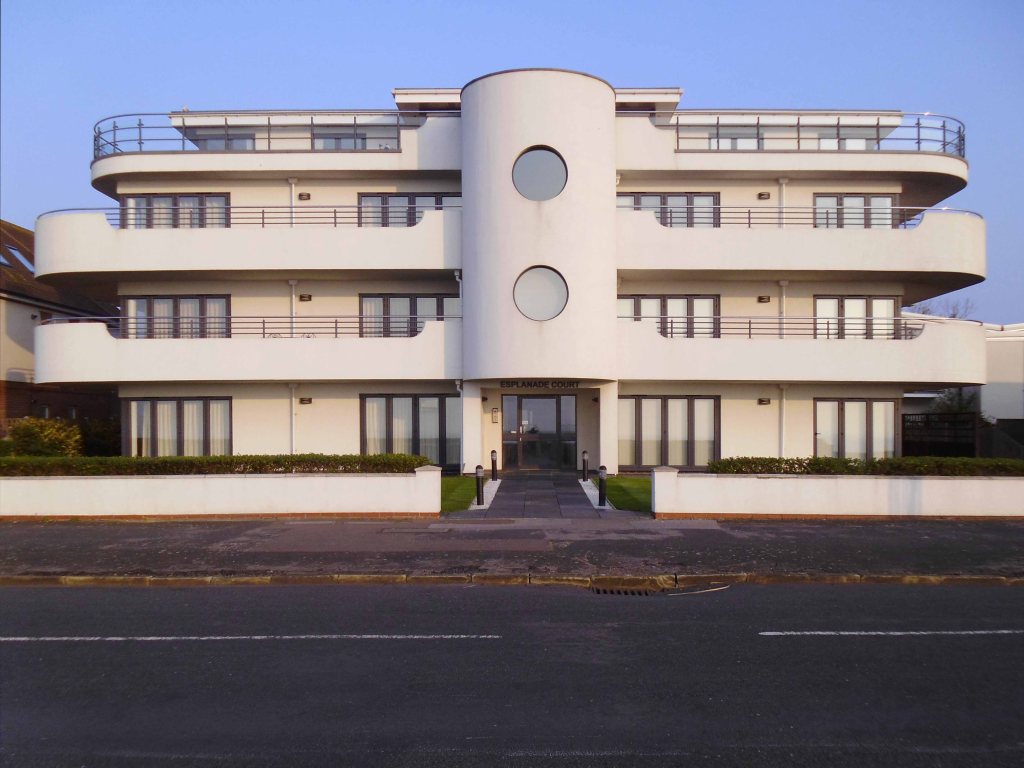
I have a cautious admiration for the faux Deco newcomers.
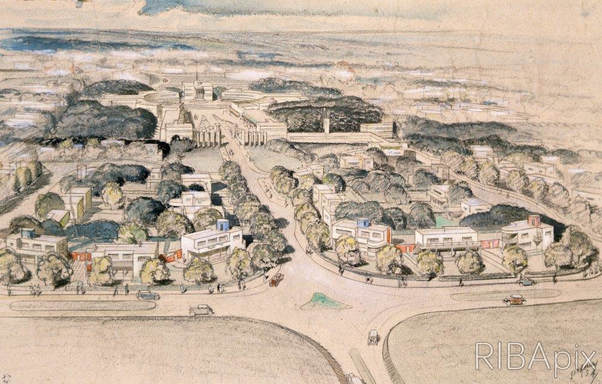
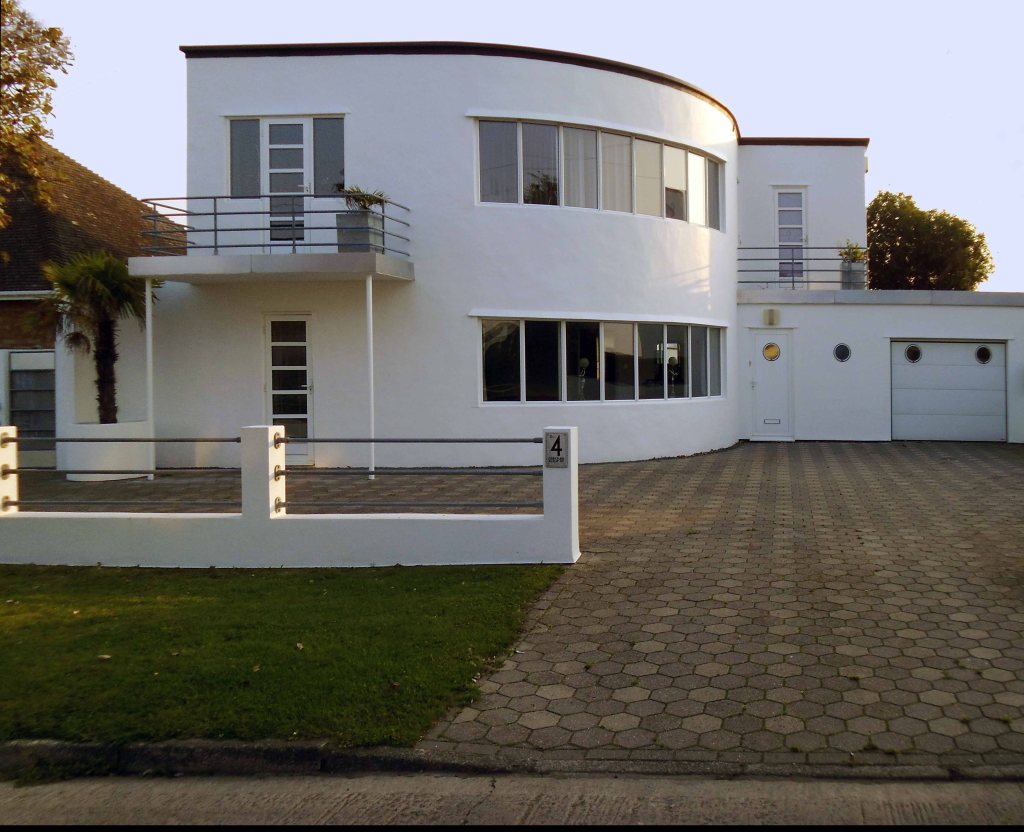
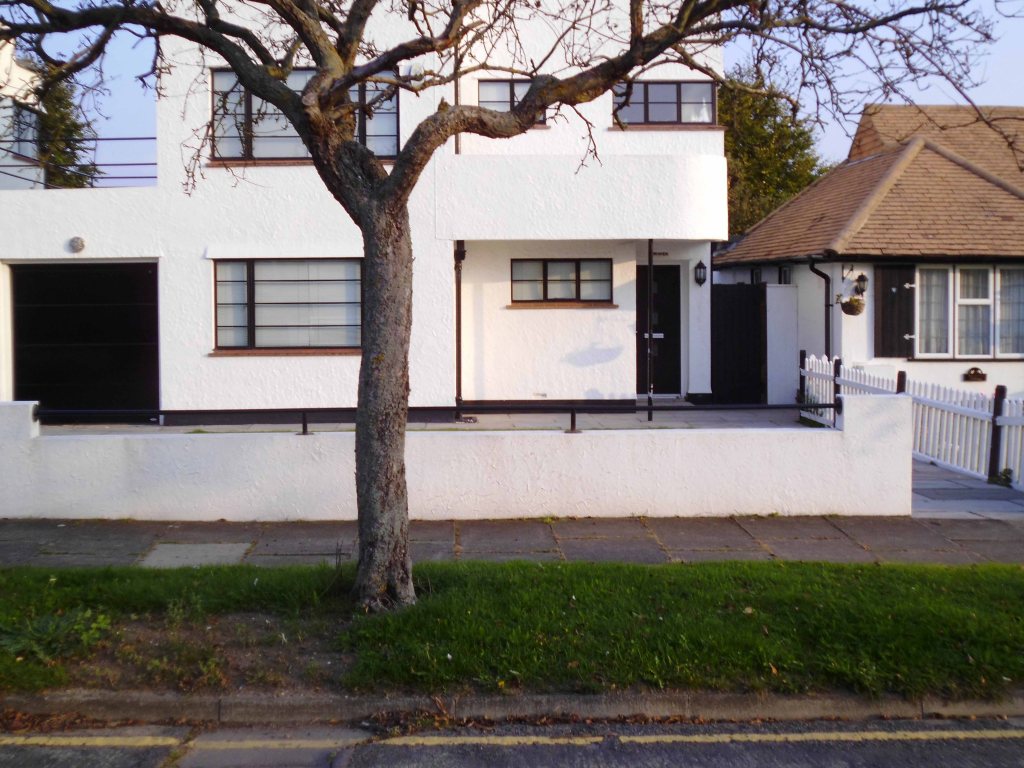
The modernist estate was attempted many times in the interwar years; visions of rows of fashionable white walled, flat roofed houses filled developers eyes. In practice the idea was less popular with potential house buyers. In the Metro-Land suburbs of London, estates were attempted in Ruislip and Stanmore, with a dozen houses at most being built. One estate that produced more modernist houses than most, albeit less than planned, was the Frinton Park estate at Frinton-on-Sea on the Essex coast.
Oliver Hill was known for his house designs, which spanned styles from Arts and Crafts to Modernist. Hill was to draw up a plan for 1100 homes, as well as a shopping centre, luxury hotel and offices. The plan was for prospective buyers to buy a plot and then engage architects to design their new house from a list of designers drawn up by Hill. The list featured some of the best modernist architects working in Britain at the time; Maxwell Fry, Wells Coates, F.R.S. Yorke and Connell, Ward & Lucas.
As wonderful as this sounds today, the buying public of 1935 did not quite agree. The majority of potential buyers were apparently put off by the Estates insistence on flat roofs and modernist designs. Plan B was to build a number of show homes to seduce the public into buying the modernist dream. Of 50 planned show homes, around 25 were built, with about 15 more houses built to order. The majority of these were designed by J.T. Shelton, the estates resident architect, with a number designed by other architects like Hill, Frederick Etchells, RA Duncan and Marshall Sisson.
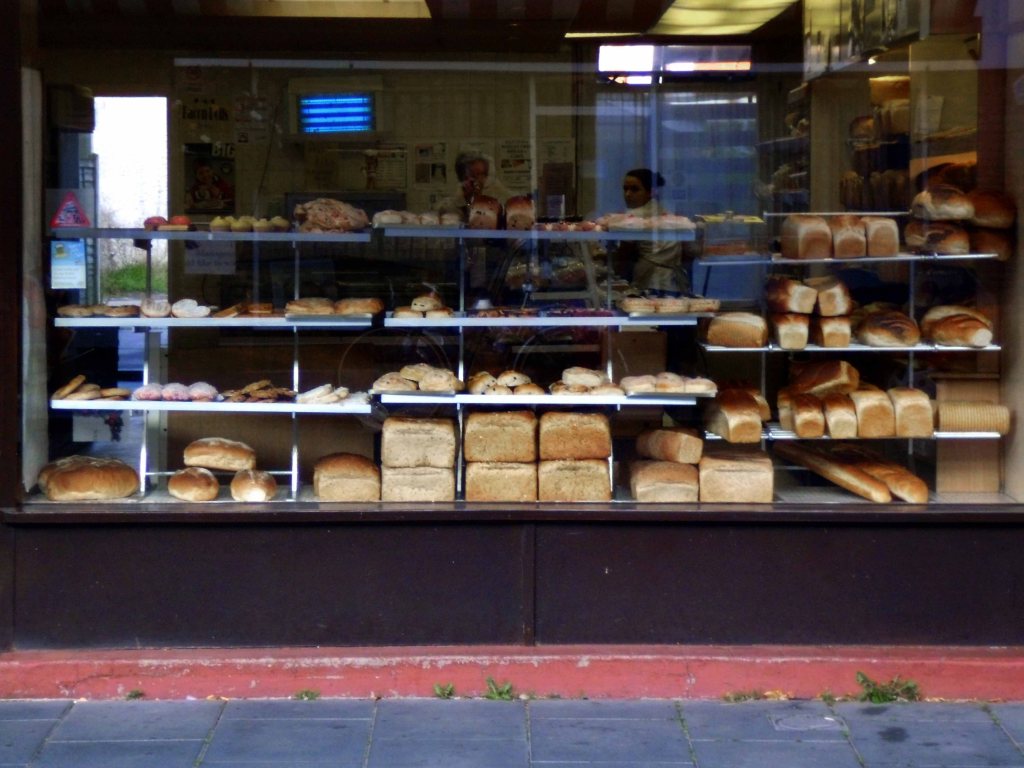
The town is also home to this traditional confectioners – Lilley’s Bakery.
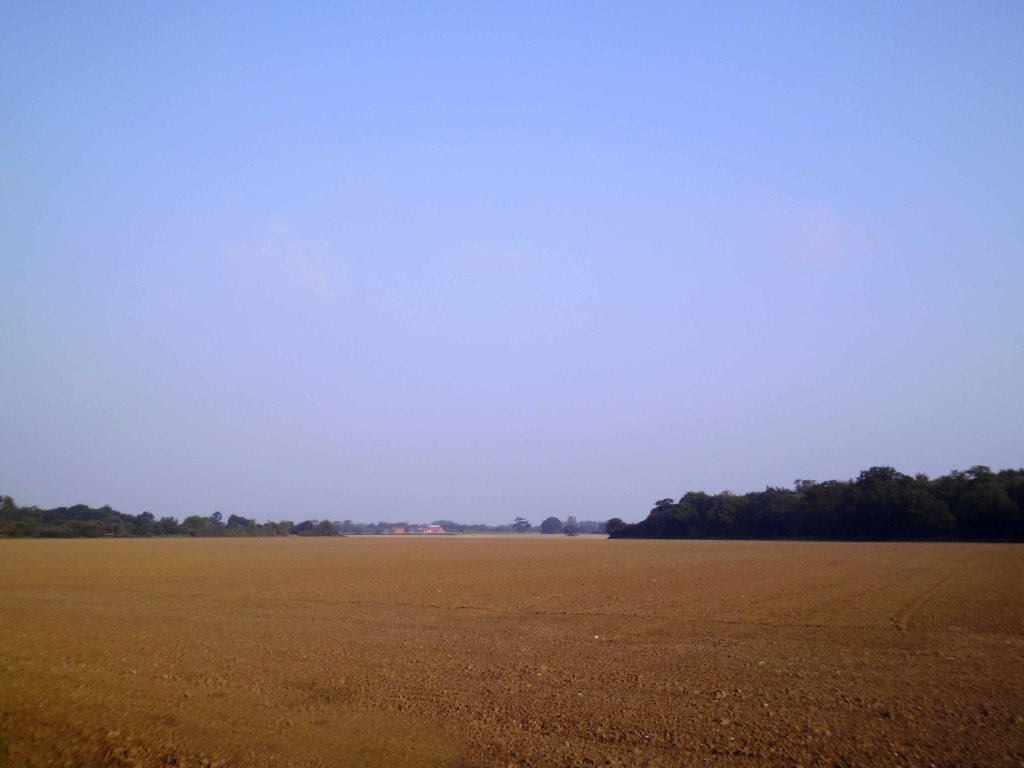
Leaving the coast for pastures new – well, a ploughed field actually.
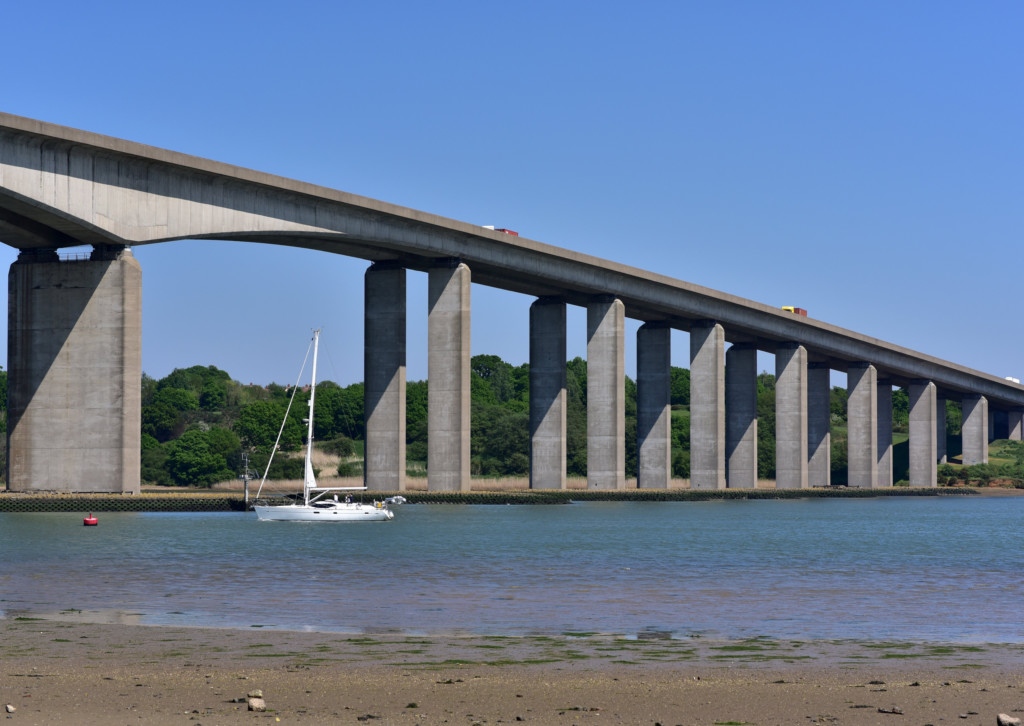
Crossing the River Orwell over the Orwell Bridge on my way to Ipswich.
The main span is 190 metres which, at the time of its construction, was the longest pre-stressed concrete span in use in the UK. The two spans adjacent to the main span are 106m, known as anchor spans. Most of the other spans are 59m. The total length is 1,287 metres from Wherstead to the site of the former Ipswich Airport. The width is 24 metres with an air draft of 43 metres; the bridge had to be at least 41 metres high. The approach roads were designed by CH Dobbie & Partners of Cardiff.
The bridge is constructed of a pair of continuous concrete box girders with expansion joints that allow for expansion and contraction. The girders are hollow, allowing for easier inspection, as well as providing access for services, including telecom, power, and a 711mm water main from the nearby Alton Water reservoir.
The bridge appears in the 1987 Cold War drama The Fourth Protocol, in which two RAF helicopters are shown flying under it, and at the end of the 2013 film The Numbers Station.
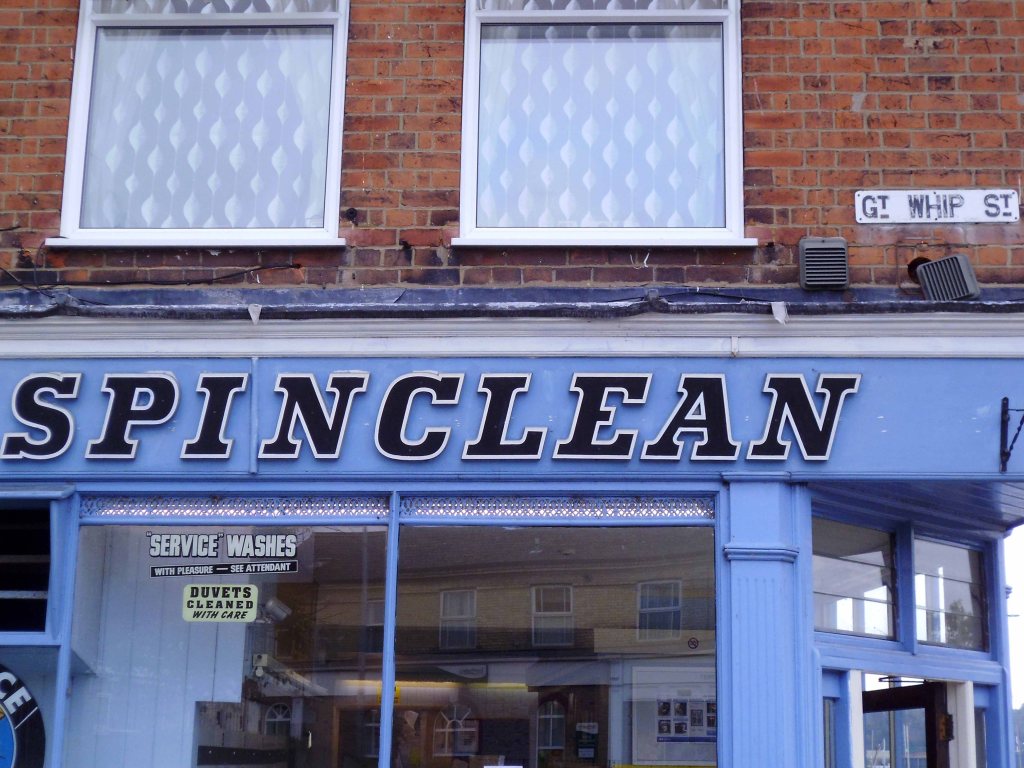
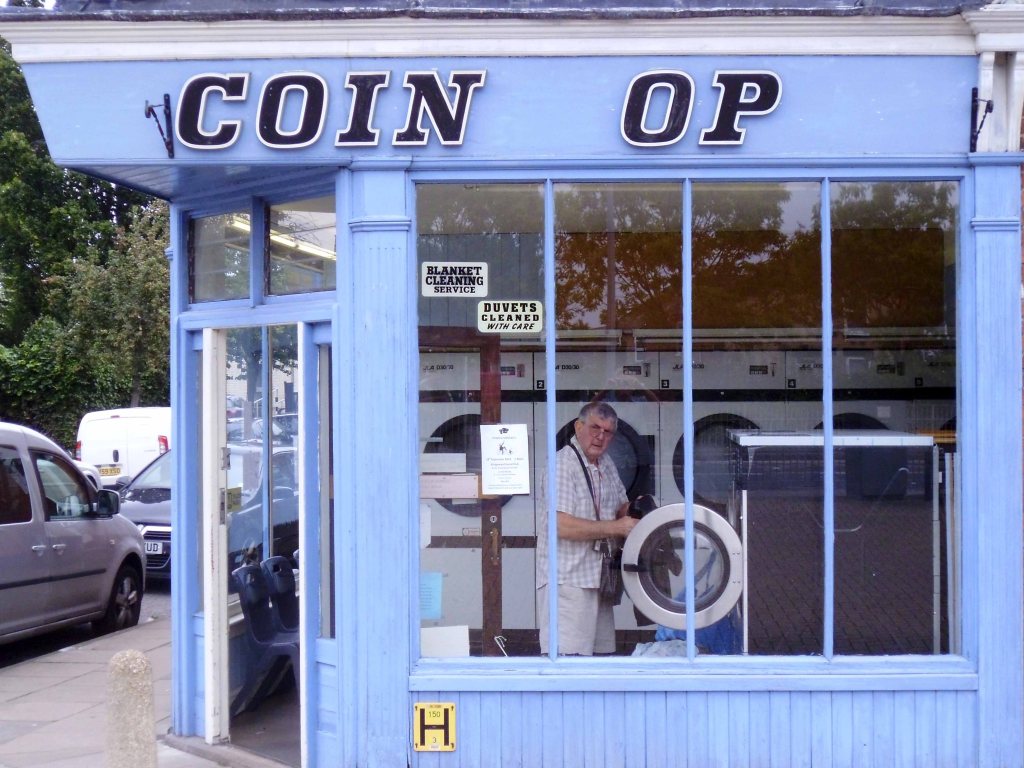
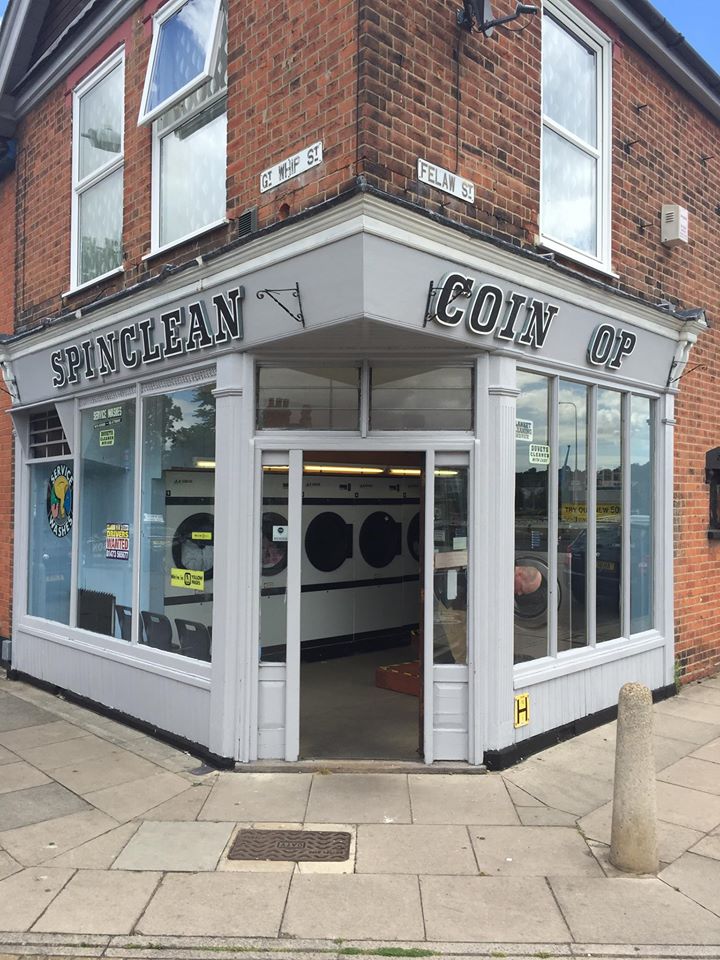
Time for a Stymie Bold Italic stop – much to the obvious consternation of an over cautious customer.
It seems to still be extant – but with a tasteful coat of subdued grey paint according to its Facebook page.
Having completed this journey in 2016, then reacquainting myself in 2020, I have little recollection of visiting Ipswich, but I did, yet there are no snaps.
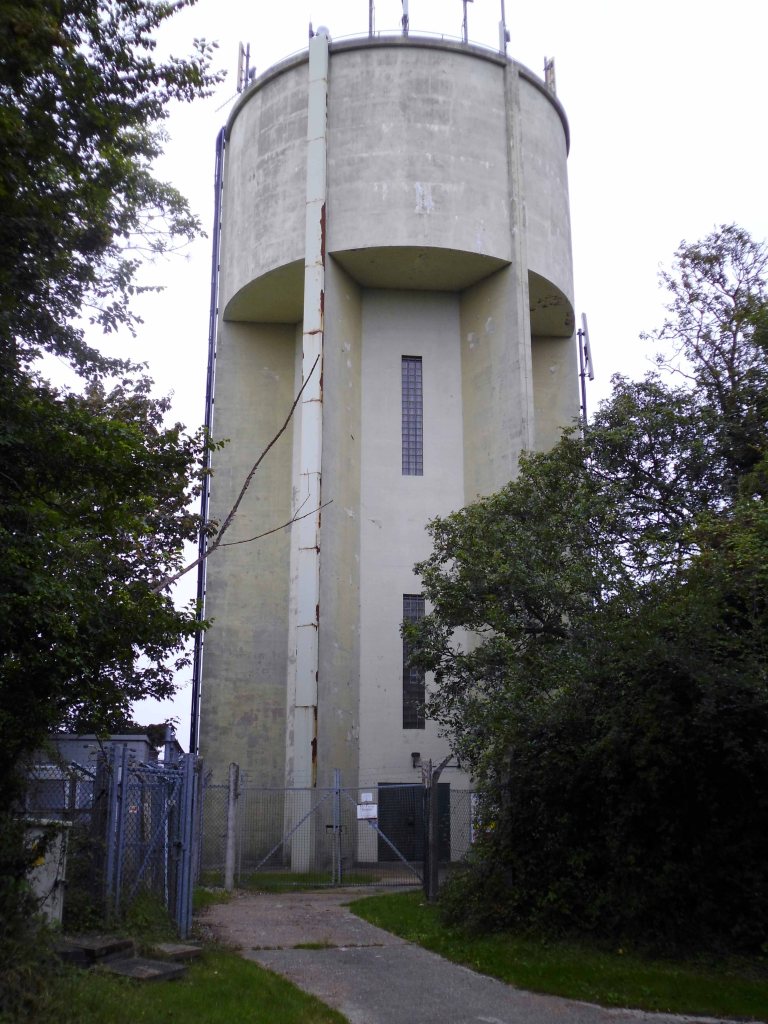
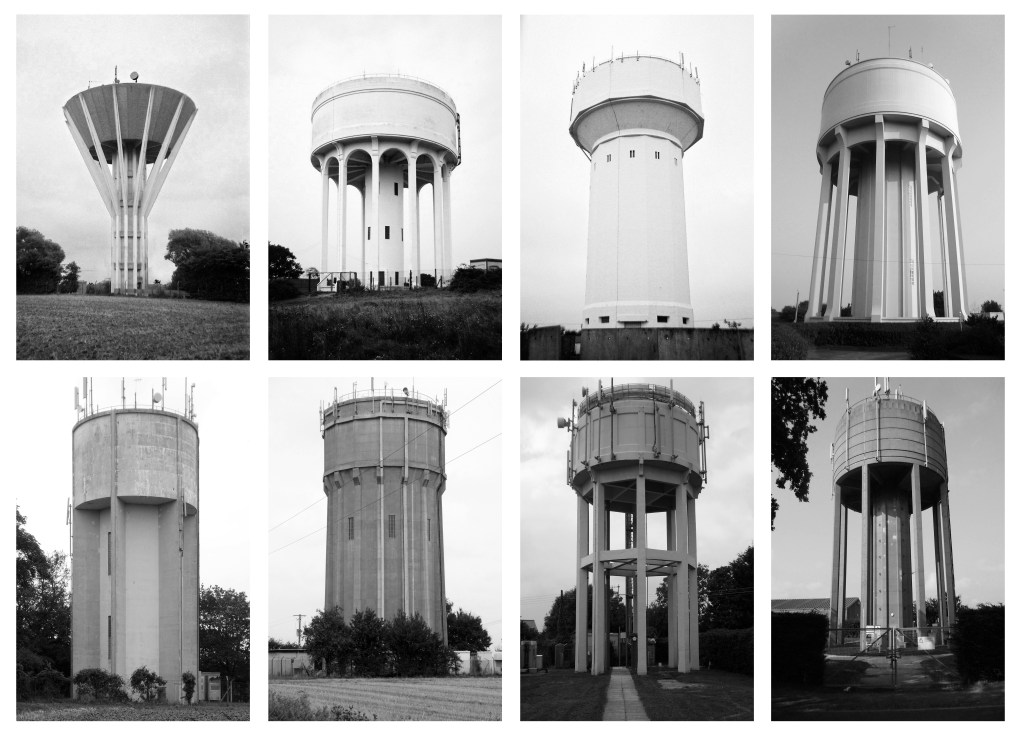
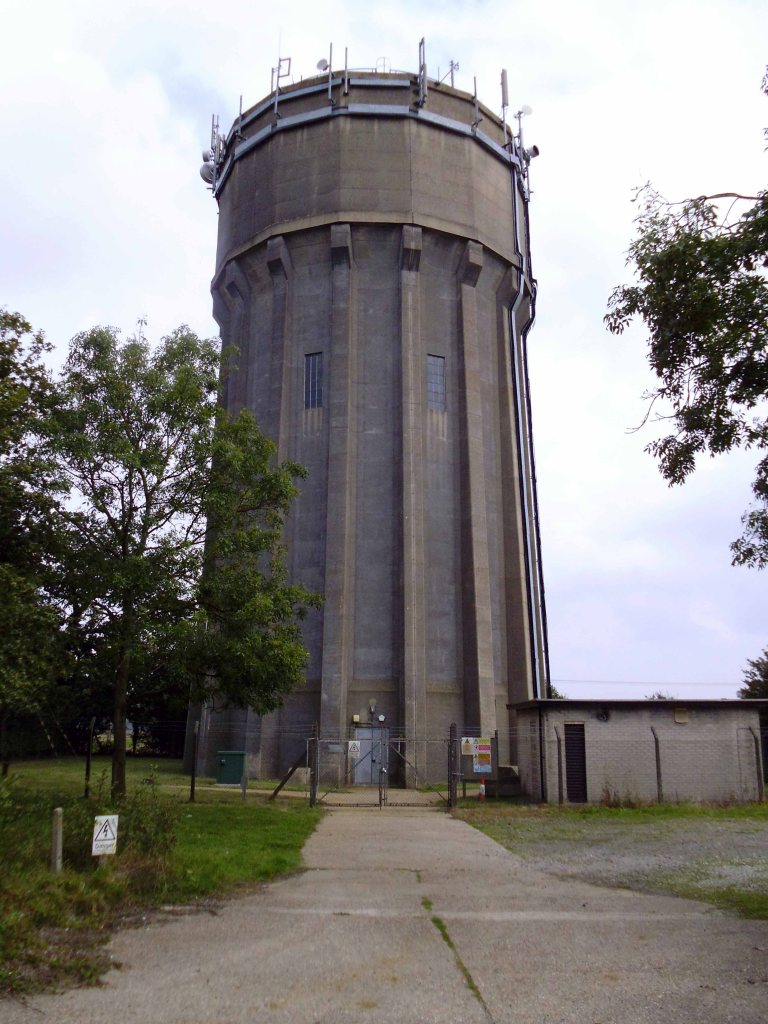
I photographed this and several other water towers, precisely where, I could not honestly say.
Suffice to say that it is somewhere – as is everything else.
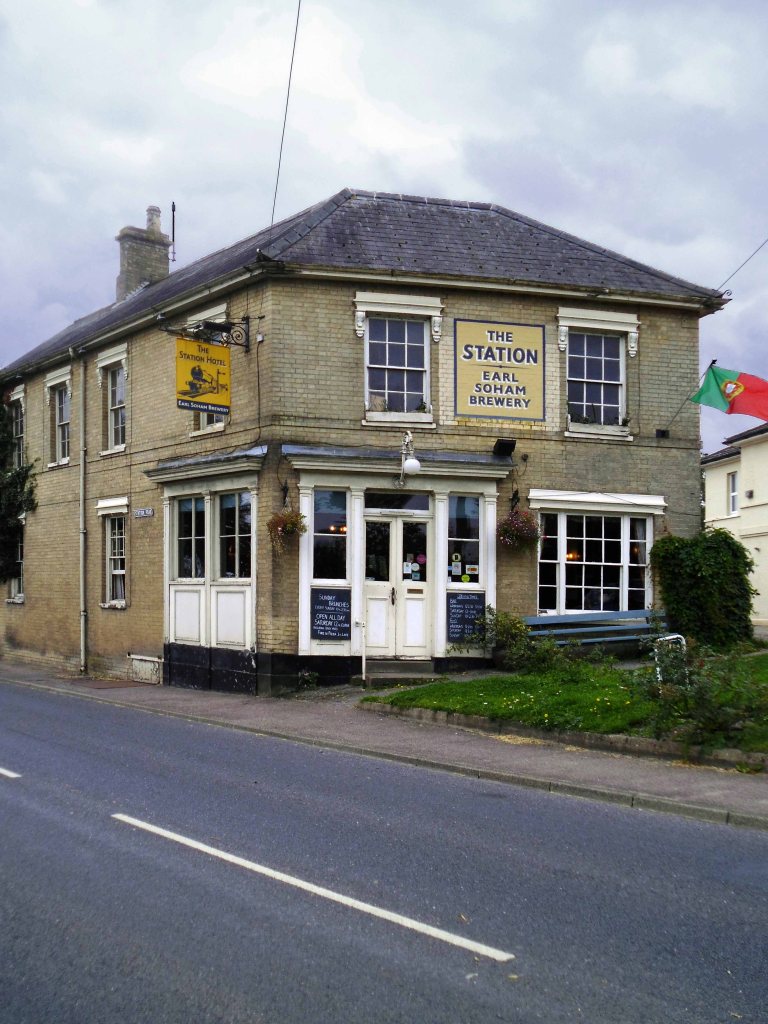
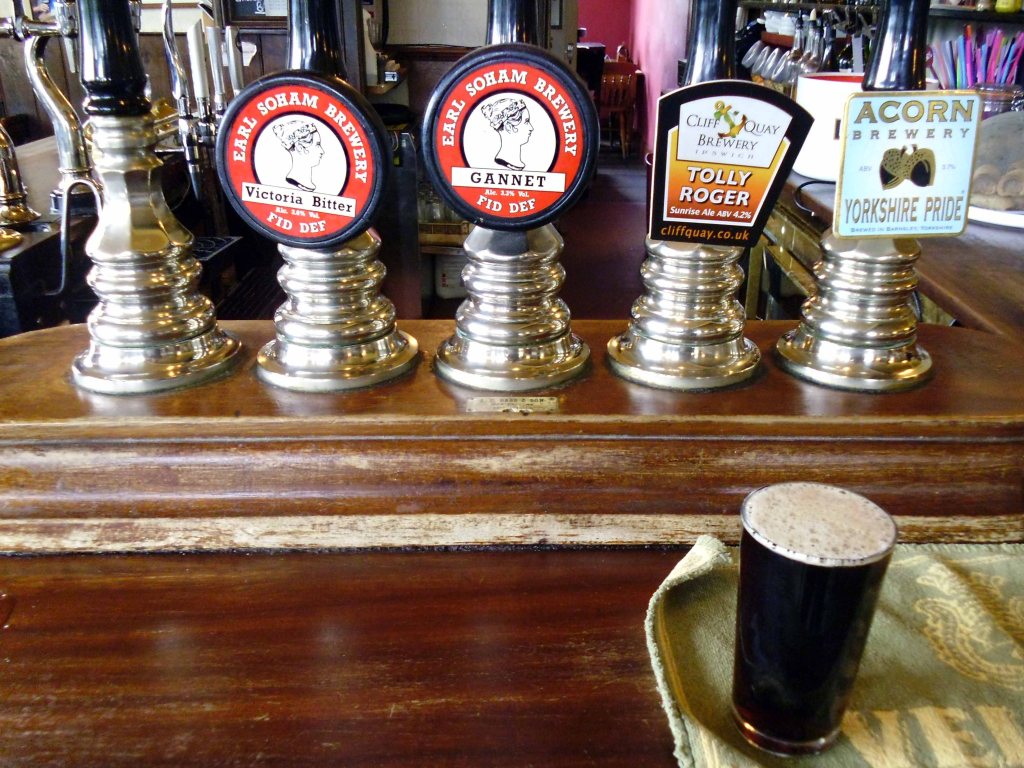
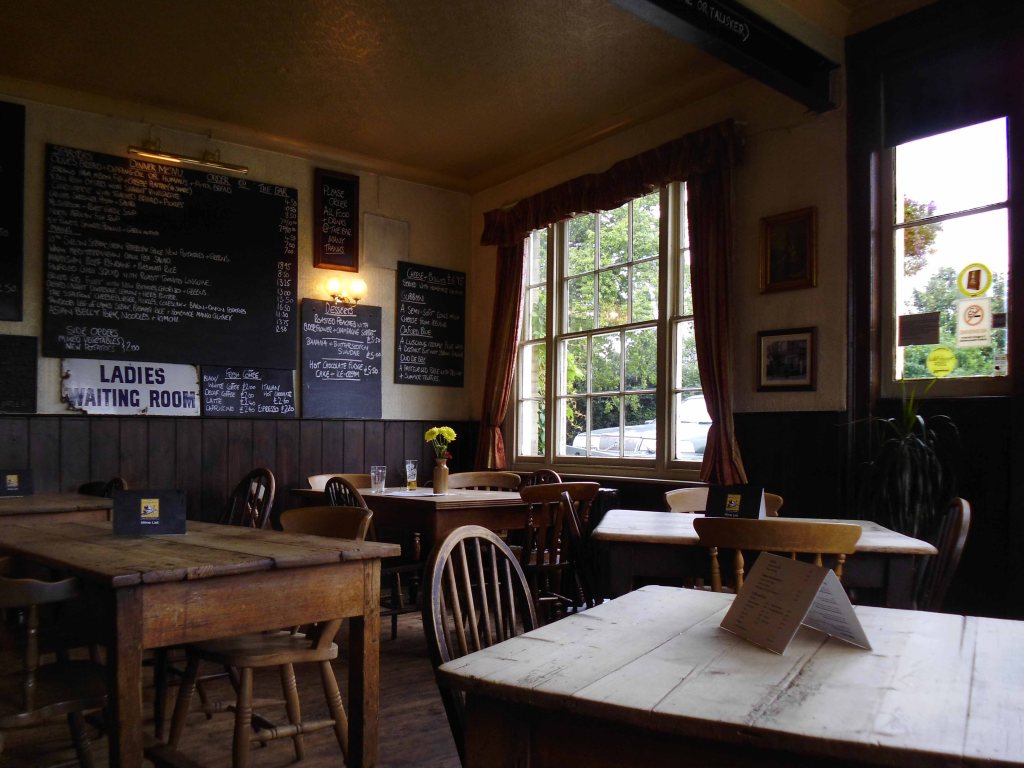
This the only time that I chose to have a glass of beer whilst awheel, normally waiting until the evening – I couldn’t resist this charming looking brew pub in Framlingham.
Earl Soham is a village close by, on the A1120. The Earl Soham Brewery beers started out in life being brewed in local man Maurice’s old chicken shed. You may be pleased to hear they have a slightly more sophisticated set-up now, without forgetting their humble roots.
If you haven’t tasted them before, we think you’ll be as delighted with them as our regulars, and you can be guaranteed of a warm welcome if you come to try them out.
The sort of wayside boozer where I could have easily idled away an hour or two – hopefully I’ll pass by again some time and linger longer.
Another water tower – somewhere.
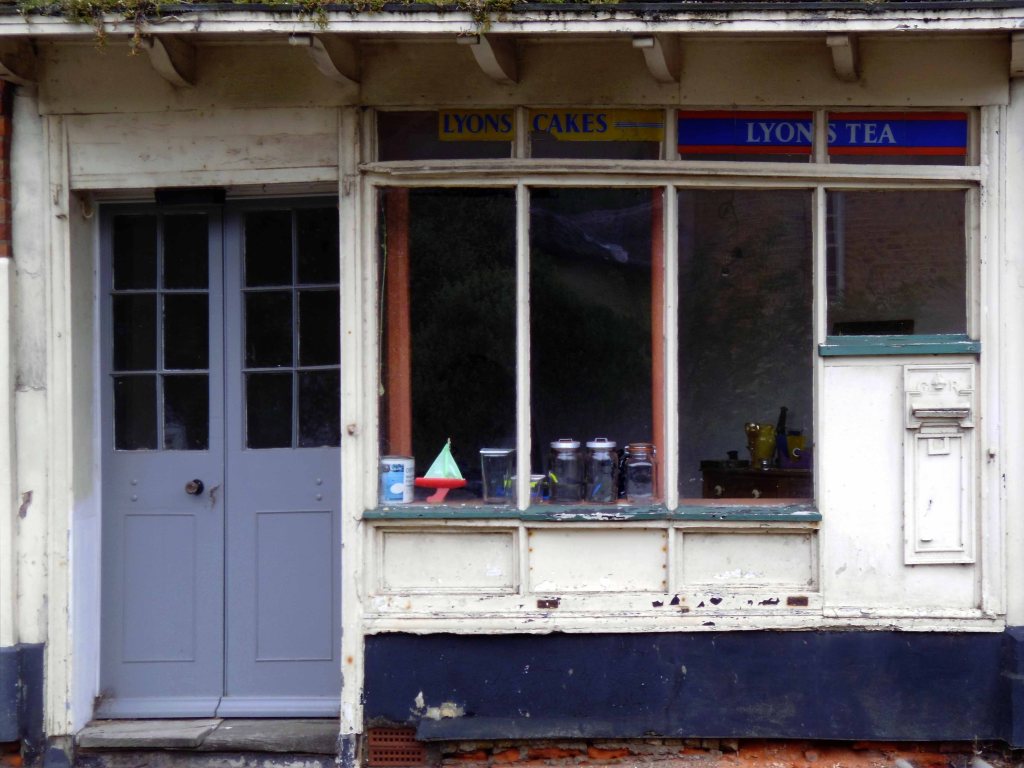
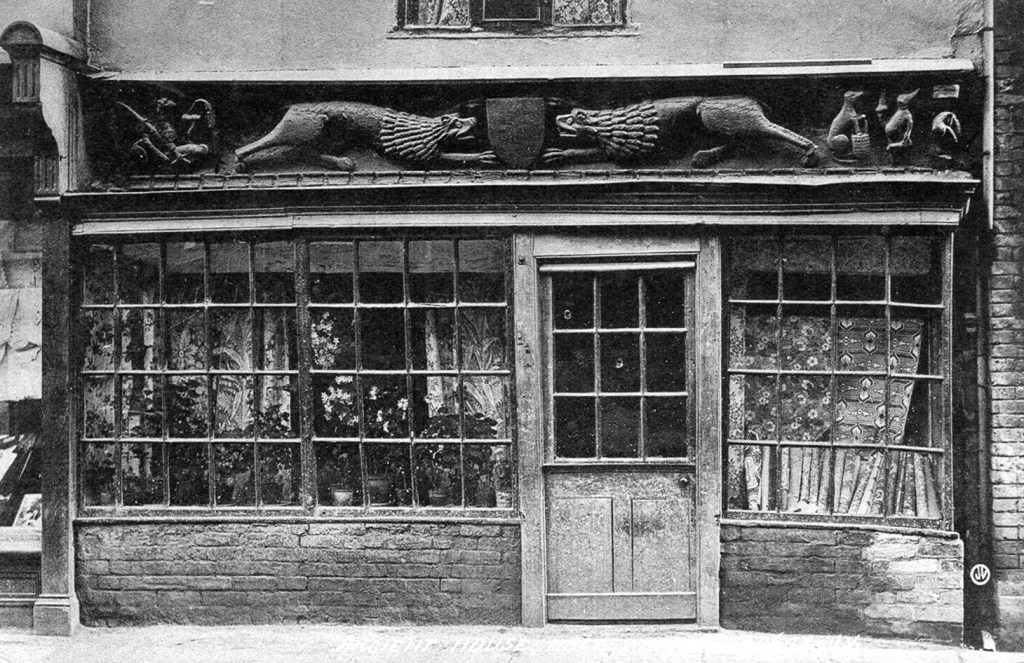
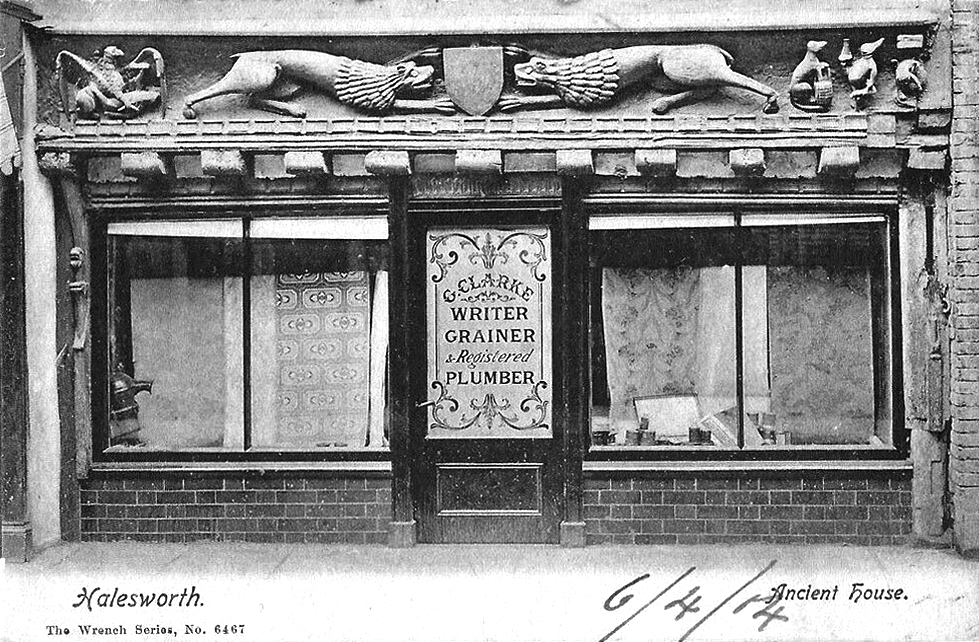
The most enchanting of shop fascias.
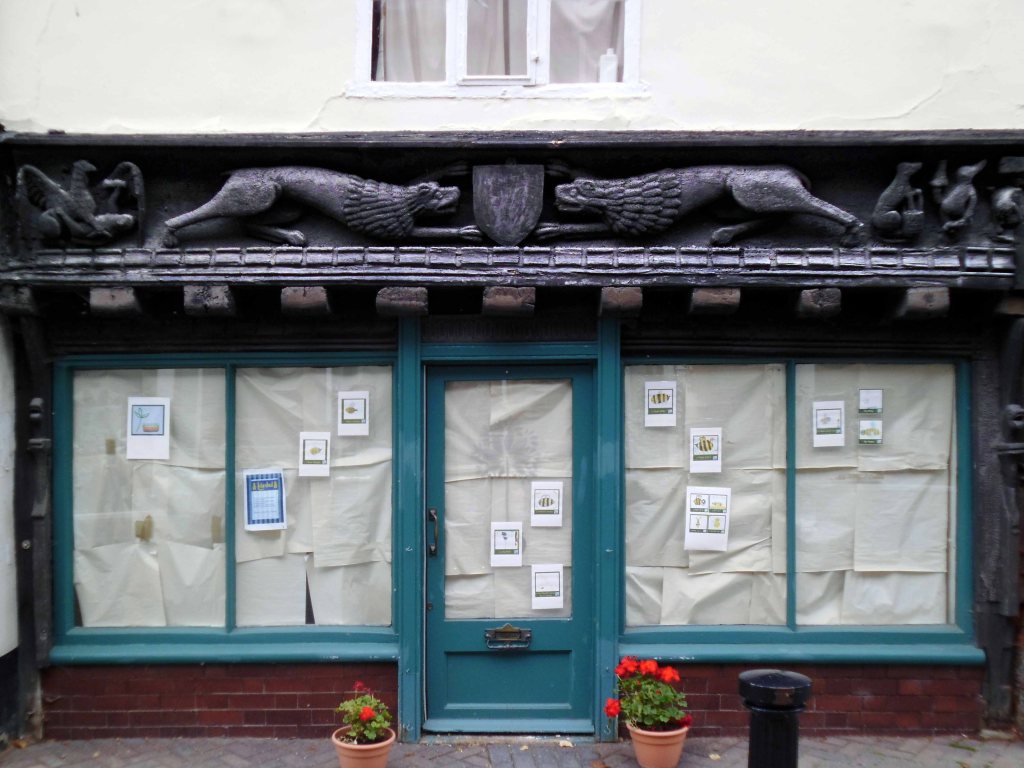
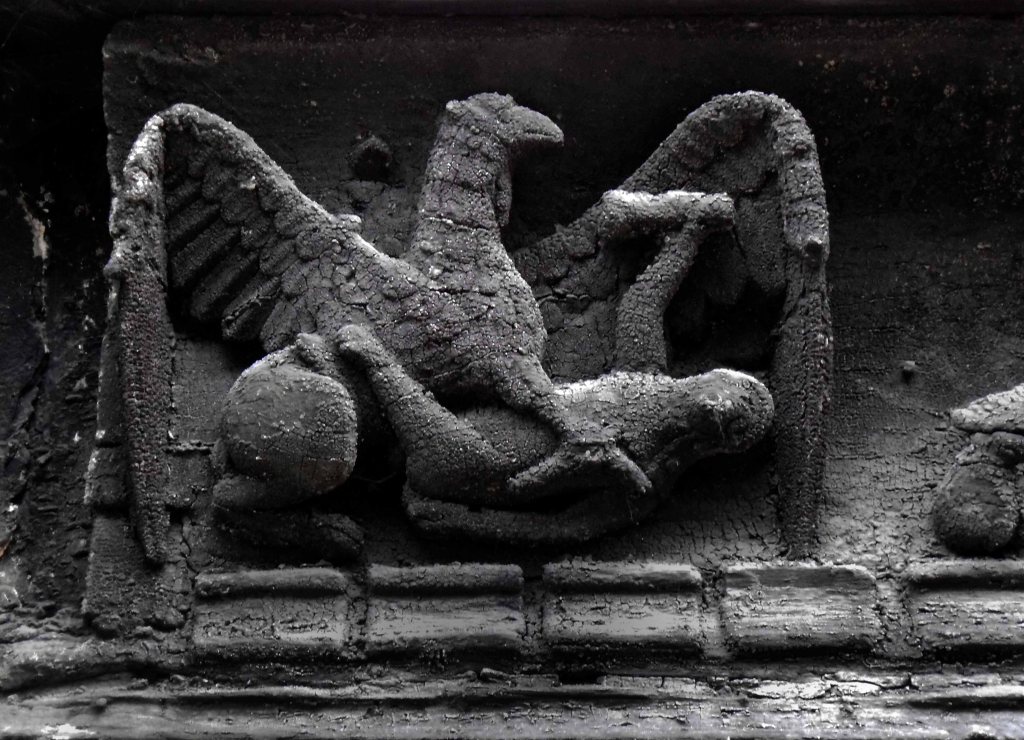
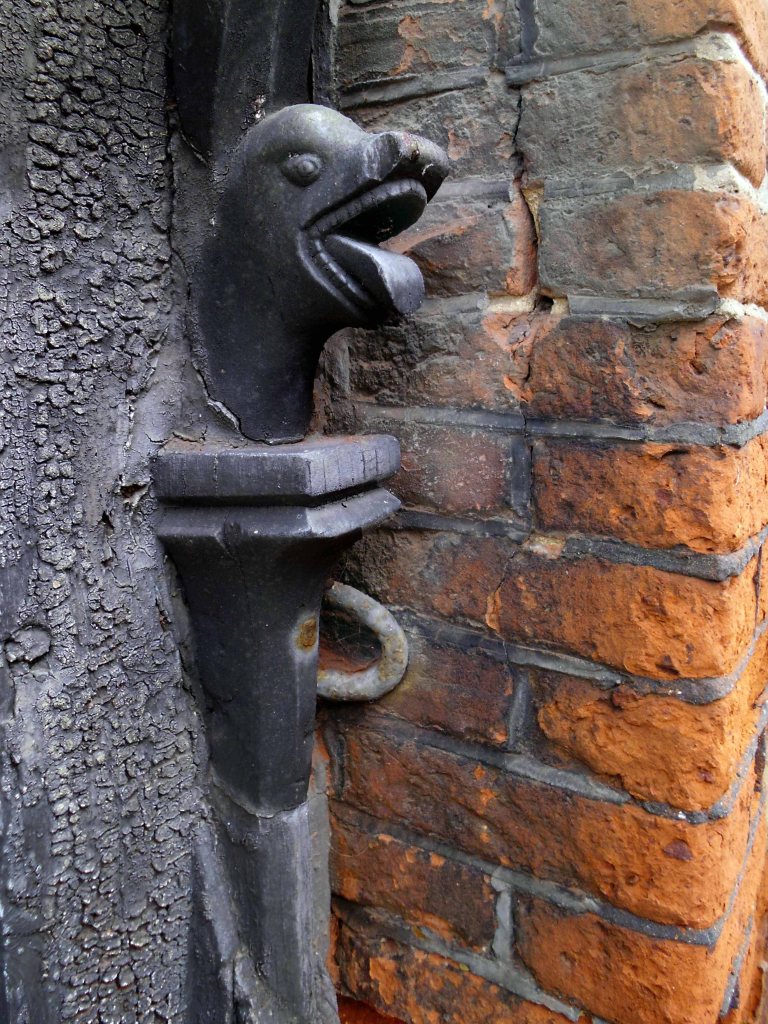
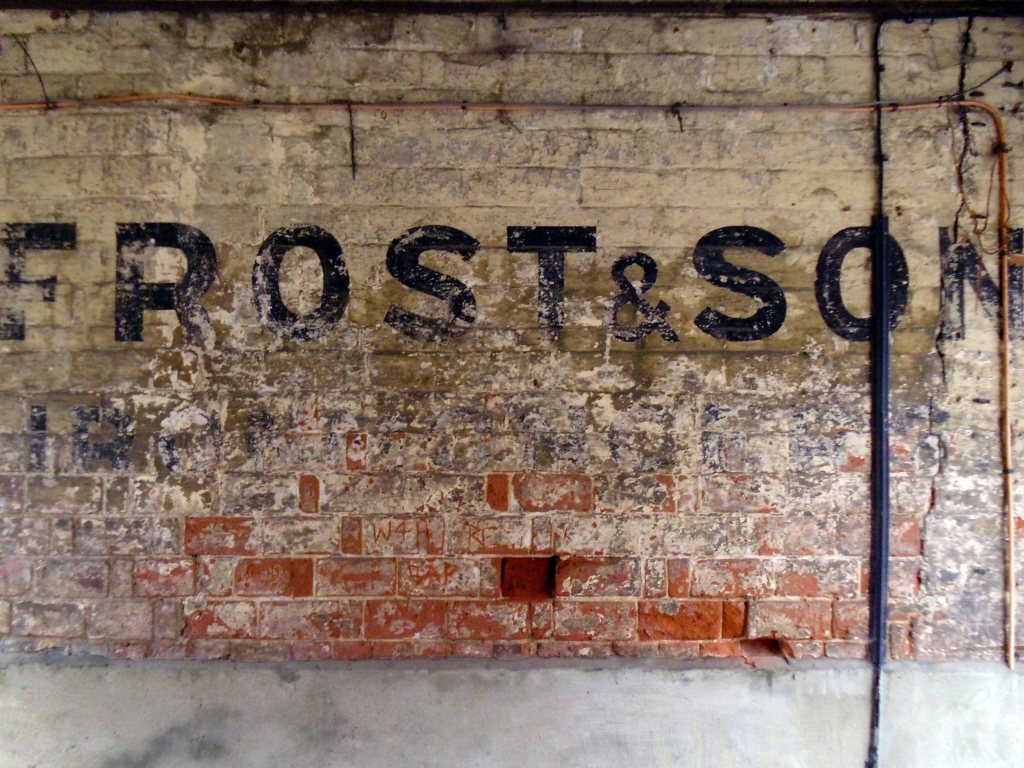
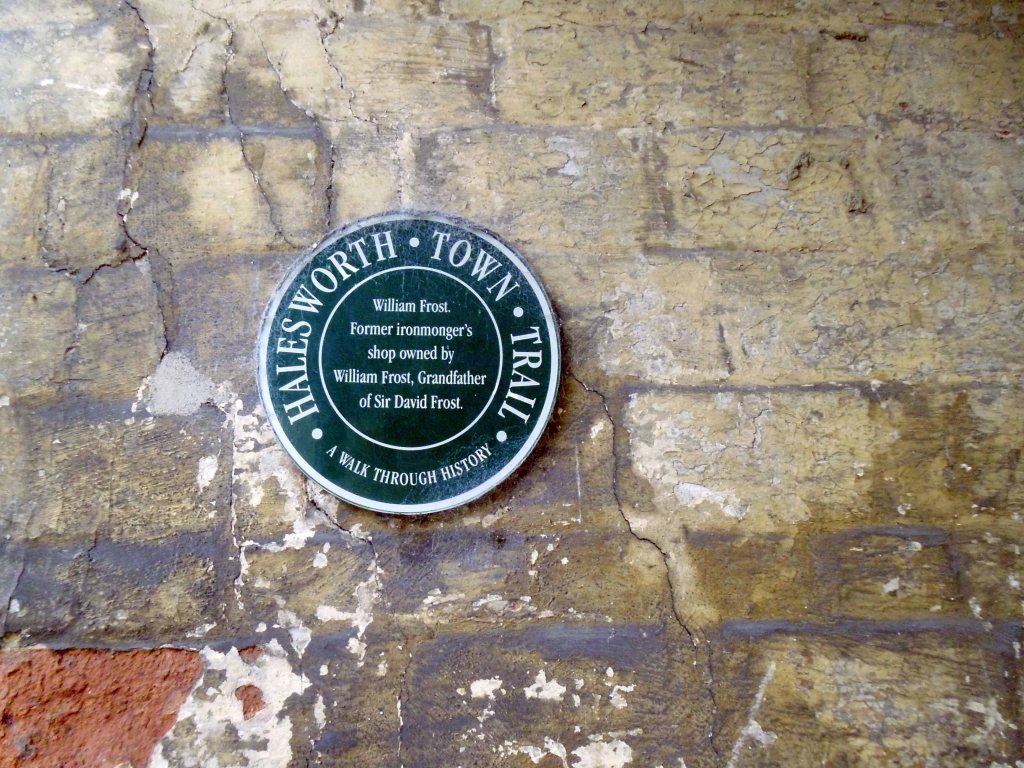
Something of a curiosity – David Frost’s father’s ironmongers in Halesworth – and the Ancient House with its ancient carving.
The bressumer beam at the front of the is linked with Margaret de Argentein in the late 14th and 15th century, it is believed t it could have been a manor or toll house.
Currently trading as a Bistro with paranormal problems;
Things in the window were swaying the other day and when we went to stop them they almost fought back.
I’ve seen two ghosts in the kitchen. One was clearly a man, the other was when I thought my daughter was over my shoulder but when I looked around she wasn’t there, and we were the only two in the building.
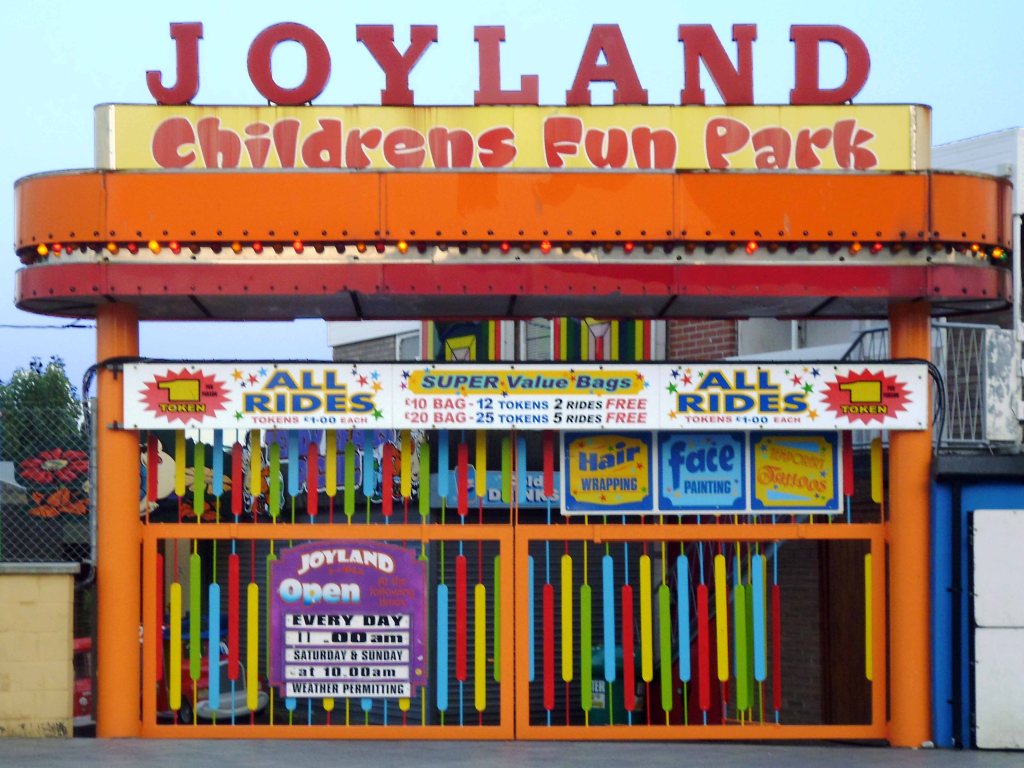
Rides include the world famous Snails and Tyrolean Tub Twist.
A huge toy town mountain incorporates the Spook Express kiddie coaster, Jet Cars and Neptune’s Kingdom undersea fantasy ride, Pirate Ship, Major Orbit, Balloon Wheel and Skydiver complete the rest of the rides.
Hungry – why not grab a bite at the American Diner.
I actually went to the Wetherspoons.
Though the town is full of tiny pubs.
And a chippy.
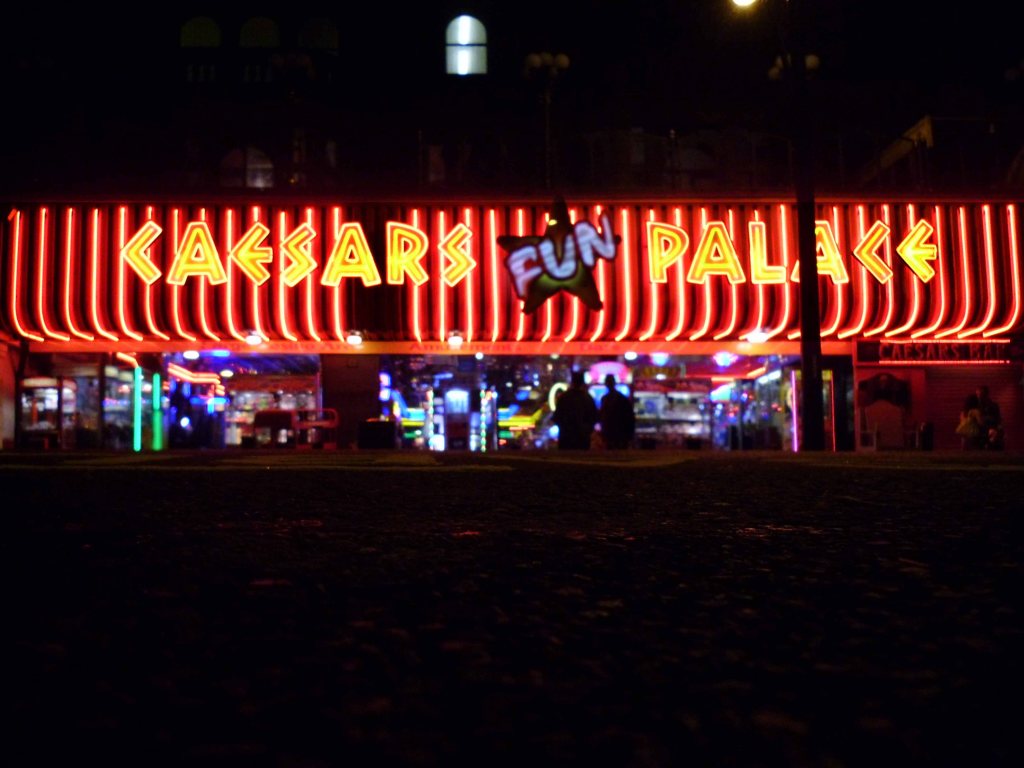
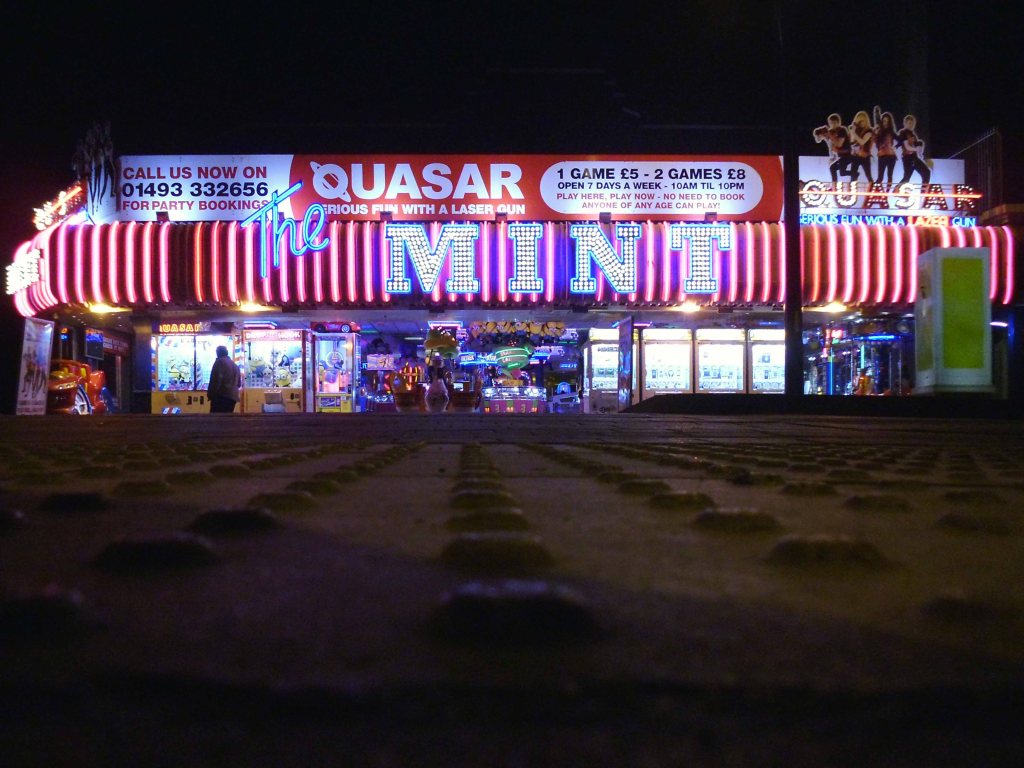
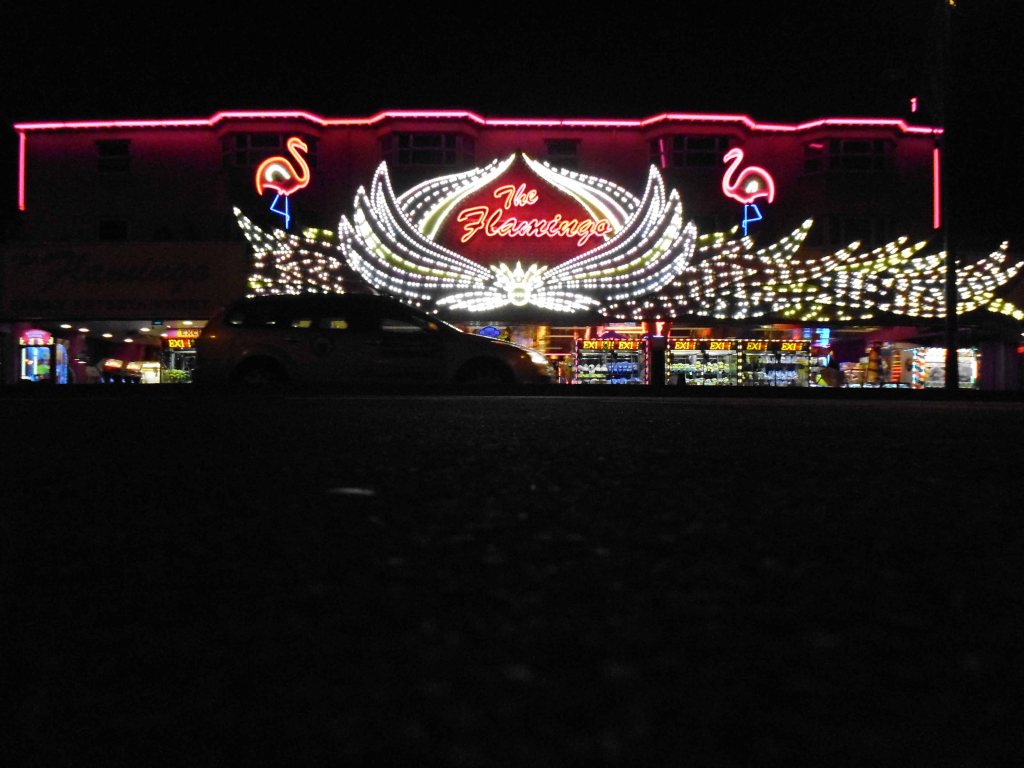
I wandered the highway byways and promenade of Great Yarmouth, all alone in a neon nightmare!
Day three Wednesday 3rd September – leaving Southend under a cloud.
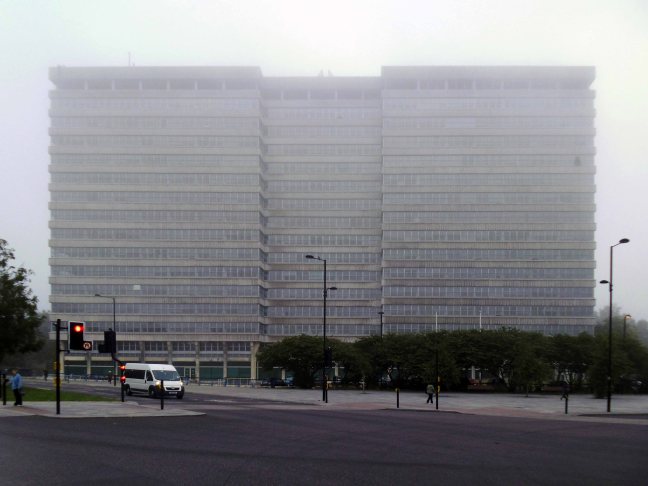
The huge slab of the Civic Centre shrouded in sea mist
Oops actually Alexander House – built around 1970 to house the then new V.A.T. HQ.
Designed by borough architect – PF Burridge.
Queen Mum Opens Civic Centre – It took a while to get there, since 1958 when the council agreed to embark on a quest to build a new home for itself; but on 31st October 1967 HRH the Queen Mother did the honours and formally opened the spanking new Civic Centre. During its build Southend was classed as being in the top ten in the country for full employment, due to this workers were hard to come by and bus loads of workers were brought in to complete this and the many other projects shooting up along Victoria Avenue at the same time.
Cllr Beryl Scholfield commented later on the day – The Queen Mother opened the Civic Centre in 1967, when my husband was chairman of the town hall committee, and we had lunch with her at Porters. We were presented to her when she came in. There were no more than about 30 of us there. It was a most exciting day.
She was as natural as you see her on the television.
Postscript 2002
A Union Jack lowered to half-mast in tribute to the Queen Mum has been stolen from Southend’s Civic Centre. A council spokeswoman today denounced the theft as – a despicable act at a time of great sadness and national mourning.
The outrage has caused extra sadness for royalist residents in the town because of the Queen Mother’s special place in the history of the Civic Centre.
The Leda and the Swan statue by Lucette Cartwright, which used to be in the Civic Centre atrium, gets a polish in May 1987.
A bronze statue depicting a mythological rape has finally found a new home at the mayor of Southend’s official residence. The controversial statue of Leda and the Swan was specially commissioned by Southend Council in the Sixties and first stood outside the courthouse in Victoria Avenue.
Later it was moved to the Civic Square and then to the courtyard of the Palace Theatre, in Westcliff. Later, it was moved to the Civic Centre when it caused outrage among staff. Workers claimed the statue, representing the rape of Leda by the Greek god Zeus disguised as a swan, glorified rape as an art form.
Last week, the statue was removed from the Civic Centre and is now at the mayor’s residence, Porters, in Southend.
Rob Tinlin, Southend Council’s chief executive and town clerk said – The statue of Leda and the Swan was located at the Civic Centre until a suitable location was found. The statue is permanently on display in the garden of the mayor’s residence, Porters in Southchurch Road.
It is in an appropriately landscaped area next to the pond.
Photo Phil Parsons
Misty eyed I missed the sculptural fountain – William Mitchell I presume?
Said farewell to Neptunes unilluminating assorted fish.
Heading out of town past noisy scenes of quiet despair, no more fancy goods, no more confectionary – shake that.
Heading inland, away from the wibbly wobbly estuarine coast of higgledy piggledy Essex, through freshly mown pasture and solitary haywains.
This is Constable country:
Like many artists practising at the time, Constable used sketches as source material for fully worked-up compositions. He did not find the production of finished paintings easy, which probably contributed to his late recognition by the art establishment.
Passing by solitary bus shelters, patiently awaiting passengers.
Waterworks works in the palatial neo-classical manner, with a restrained nod to incipient Art Deco.
Encountering the occasional leafy lane.
I eventually found myself on the outskirts of Colchester, outside St Theresa Of Lisieux .
A striking pre-cast concrete frame design of 1971, with a dramatic and well-lit interior, lively modulation of wall surfaces and some furnishings and artworks of note.
Architect – JH Dabrowski
The entrance façade has a large gable and projecting entrance canopy, above which is a bronze statue of the Risen Christ, by local artist Tita Madden – 1977
This is a large modern church, built with a pre-cast concrete frame with a crossover roof beam system, allowing for dramatic internal effects. Within the bays created by the frame, the walling is mostly brick, with some pre-cast concrete panels, and large areas of glazing. Concrete is also used for the window mullions and surrounds. Each bay has the brickwork slightly angled or faceted, giving the design a great sense of movement and liveliness, both inside and out.
£240,000 will get you an Art Deco maisonette in Vint Crescent from Wowhaus:
This one is a ground floor apartment, which has undergone a complete refurbishment, but with one on keeping those period features to the fore – period features such as original radiators and those distinctive windows and doors are intact, rubbing shoulders with some new, high-end finishes like oak floors and updated kitchen and bathroom.
Foolishly I became more than somewhat lost and on making enquiries concerning my whereabouts and destination, I was met with gently derisive laughter. Therefore, I bypassed Colchester, took the wrong route along a mainly main road and ended up much too quickly in Clacton.
Home to several shops to let, as we shall subsequently see.
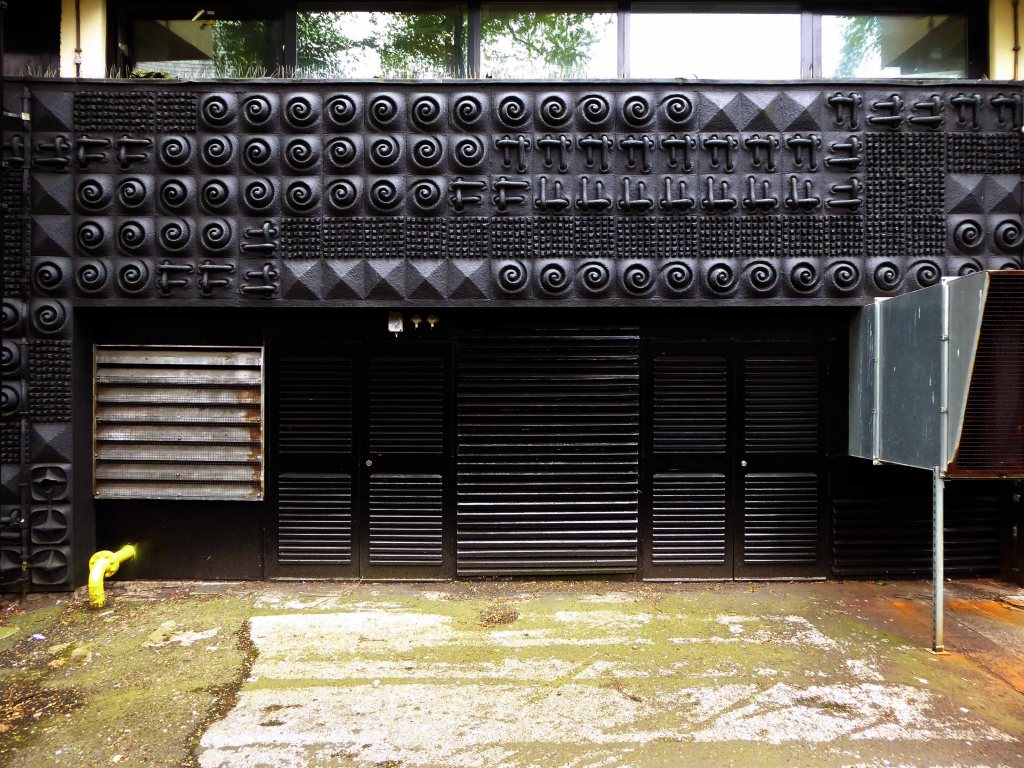
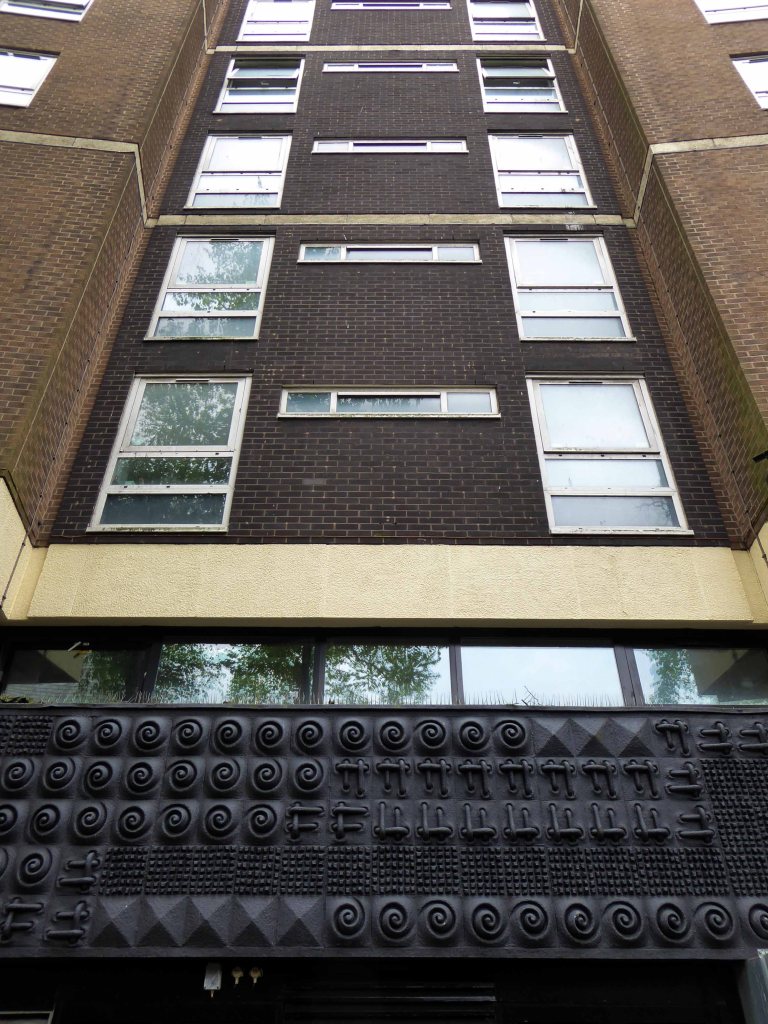
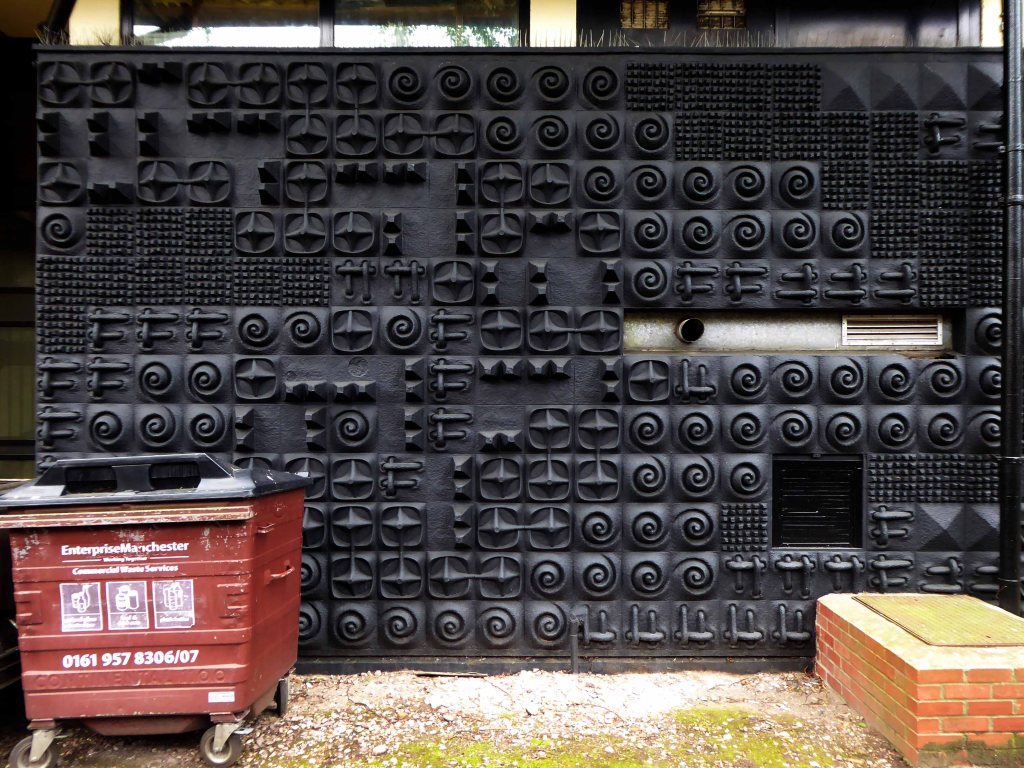
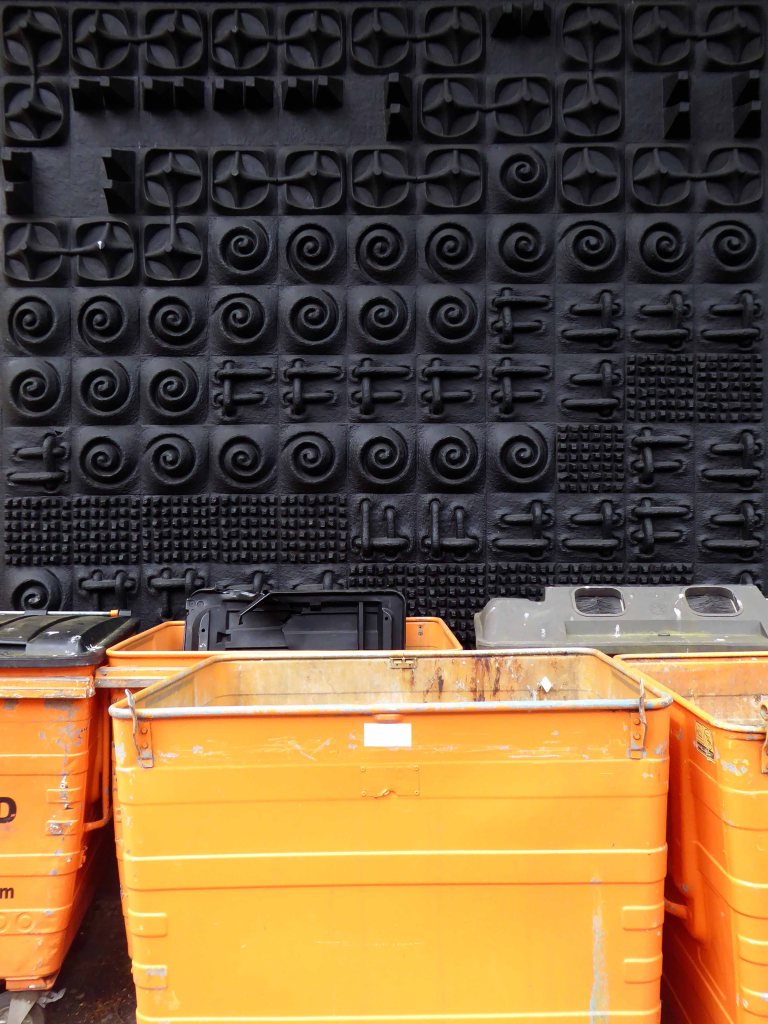
Also home to a fabulous concrete frieze on the exterior wall of the library.
Quickly ensconced in my bijou digs – I hit the town to take a look around.
I was staying right opposite this here boozer – a little too early for a pint, I’ll pop back in a bit.
Seaside shelter in a faux vernacular manner, calm seas ‘neath an azure sky – perfect.
Artifice and authenticity the sunbathing citizens sit beside an inflatable pool – perched above the sea on the pier.
Clacton Pier, which opened on 27 July 1871 was officially the first building erected in the then-new resort of Clacton-on-Sea. A wooden structure 160 yards in length and 4 yards wide, the pier served as a landing point for goods and passengers, a docking point for steamships operated by the Woolwich Steam Packet Company, and a popular spot for promenading.By 1893, Clacton had become such a popular destination for day trippers that the pier was lengthened to 1180 ft (360m) and entertainment facilities, including a pavilion and a waiting room, were added to accommodate them.
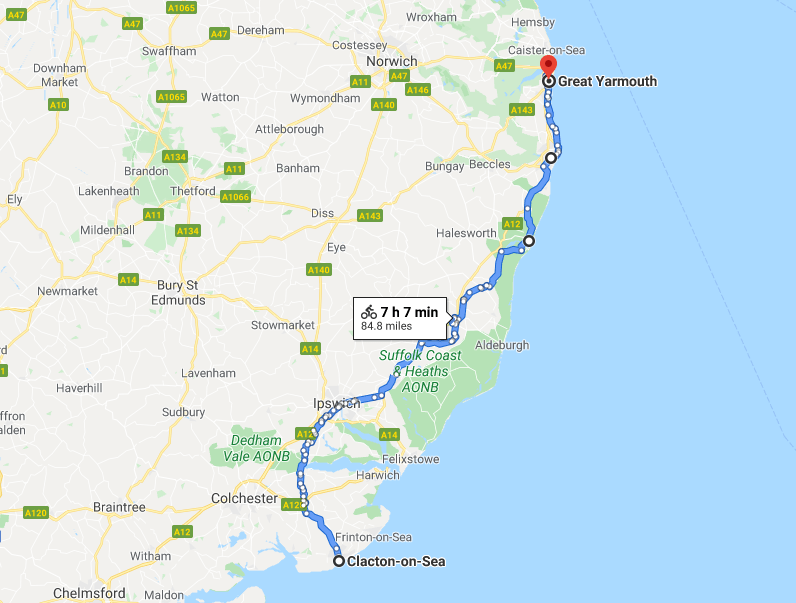
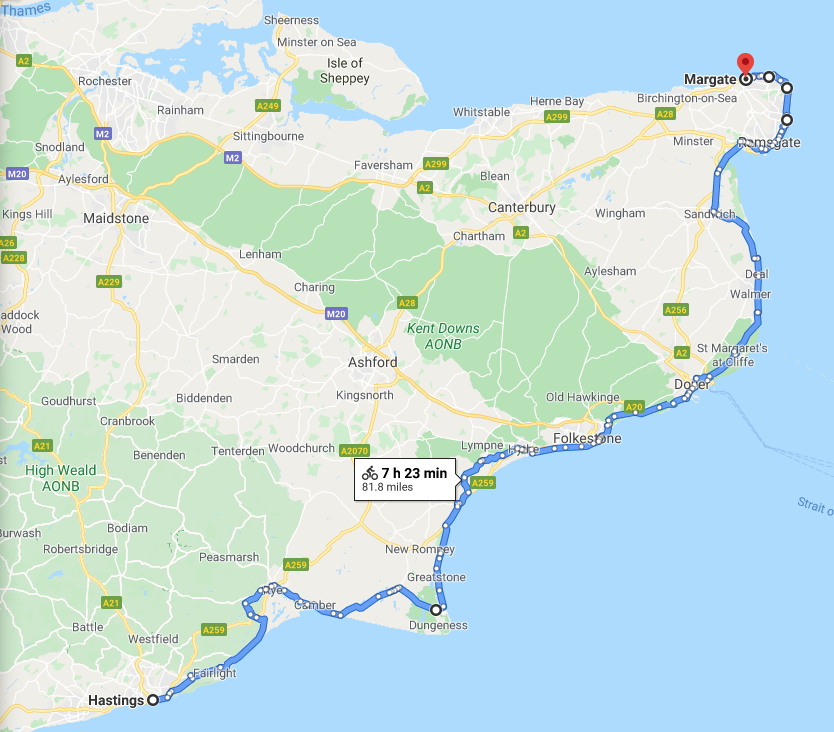
Early one morning, six o’clock on Saturday 30th August 2014 to be precise – I set out on my bike from my humble Stockport home, Pendolino’d to Euston, London Bridged to Hastings.
It was my intention to follow the coast to Cleethorpes, so I did.
Five hundred miles or so in seven highly pleasurable days awheel, largely in bright late summer sun. Into each life however, some rain must fall, so it did.
Kent, Essex, Suffolk, Norfolk and Lincolnshire flashed by slowly in lazy succession, to the right the sea – you can’t get lost, though I did. Following Sustrans signs is relatively easy, as long as they actually exist, when I reached Kings Lynn I decided to buy a map.
I set out at eight o’clock on Monday 1st September – I had taken early retirement in March. I would have normally been enrolling new students and teaching photography in a Manchester Further Education College, as I had done for the previous thirty years.
Not today thanks.
With the wind and my former career behind me, I cycled on with an unsurpassable sense of lightness and elation.
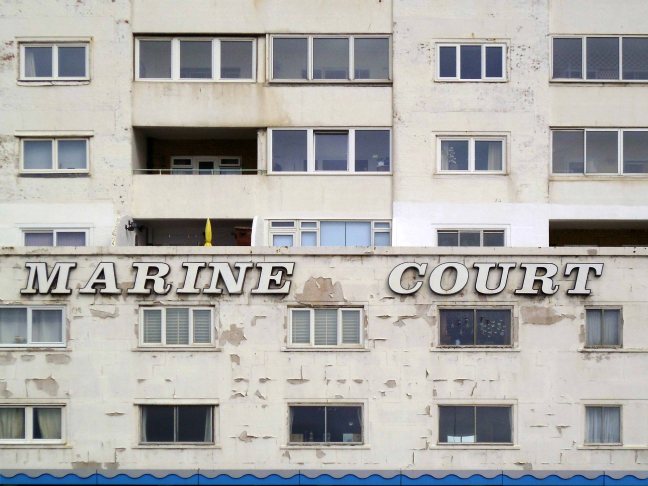
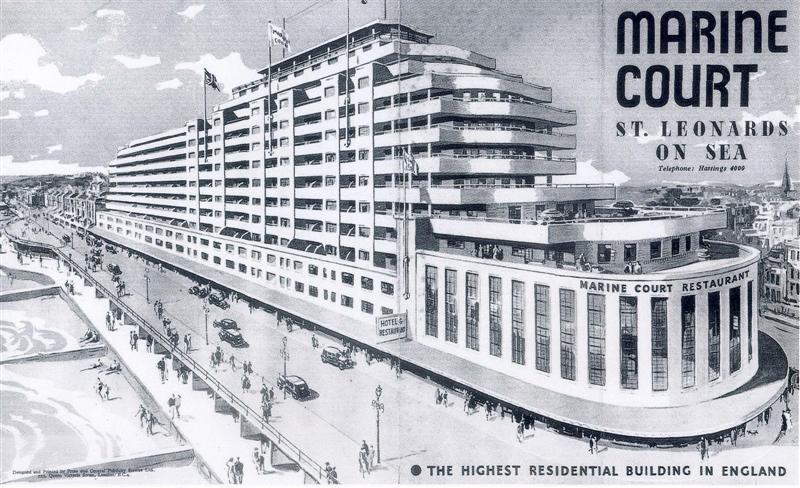
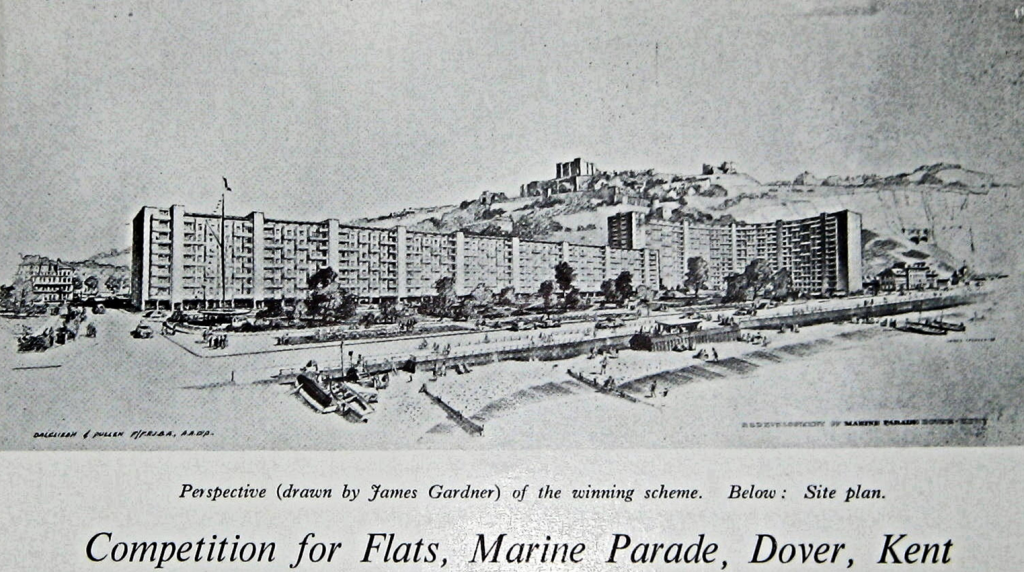
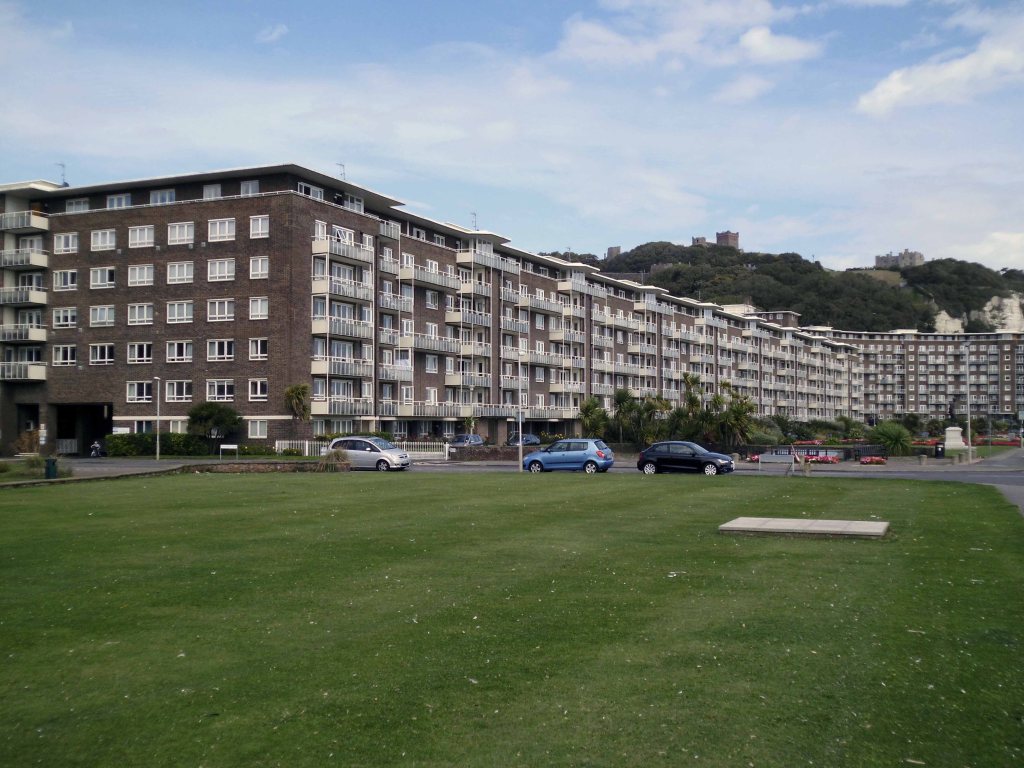
The building was designed by architects Kenneth Dalgleish and Roger K Pullen, with overt references to the Cunard White-Star Line Queen Mary, which had entered commercial transatlantic service in 1936. The east end of Marine Court is shaped to imitate the curved, stacked bridge front of the Queen Mary; the eastern restaurant served to imitate the fo’c’sle deck of the ship.
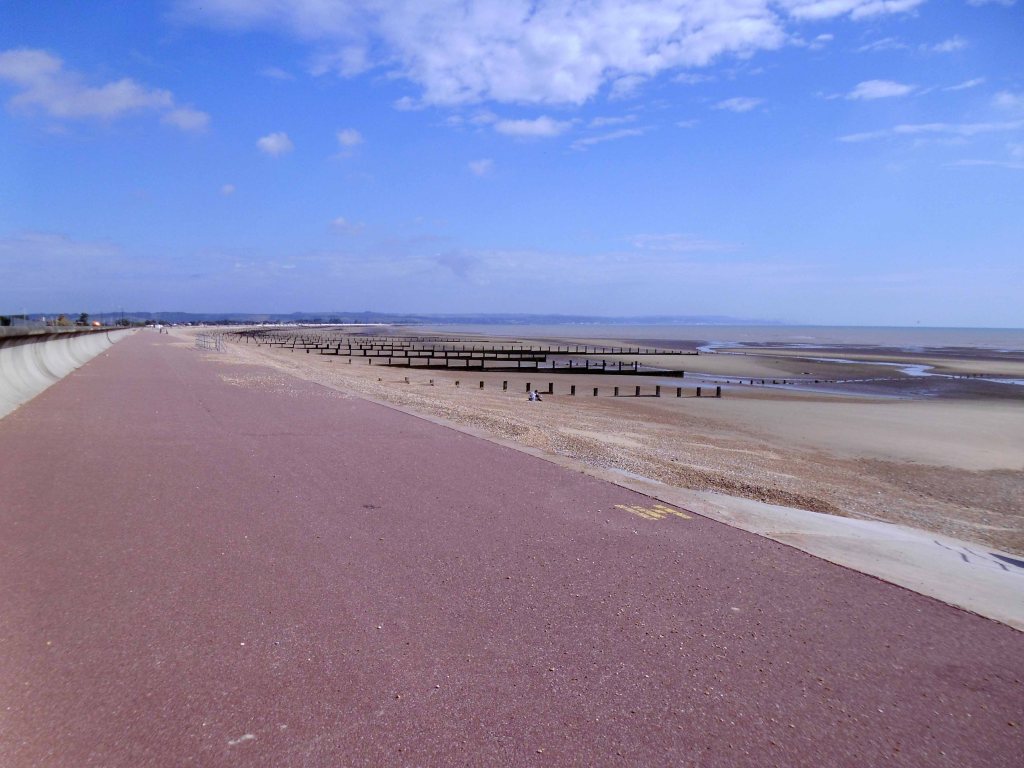
Heading towards Hythe on the coastal defence path.
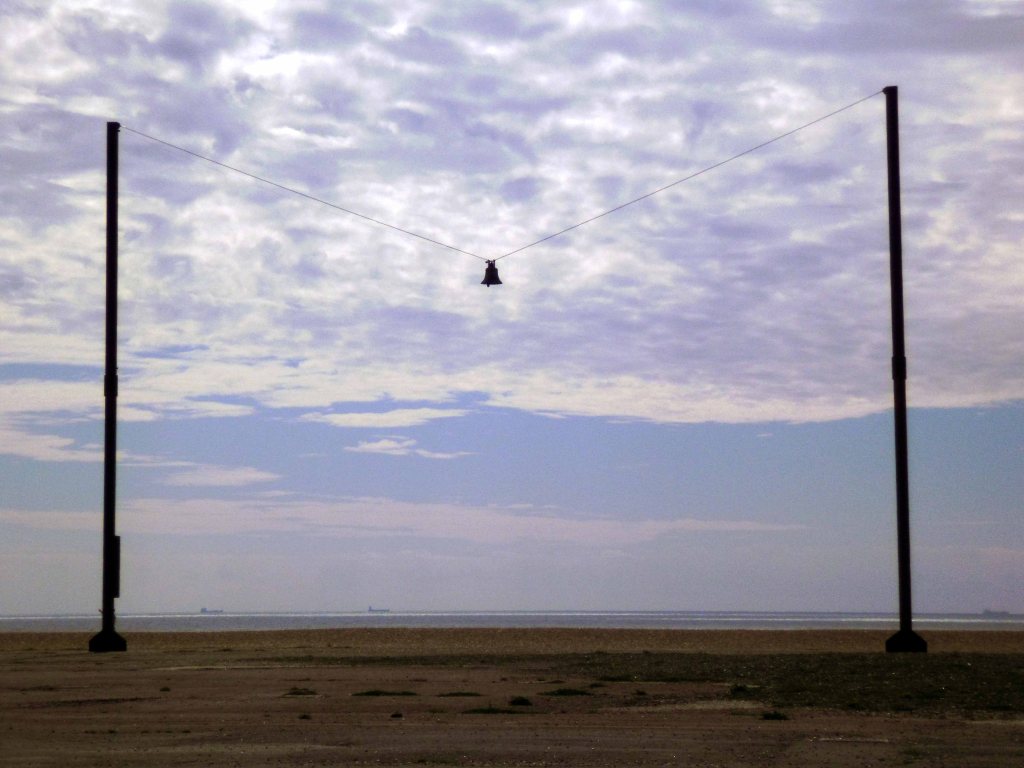
Out of Tune Folkestone Seafront, opposite The Leas Lift – is home to AK Dolven’s installation. It features a 16th-century tenor bell from Scraptoft Church in Leicestershire, which had been removed for not being in tune with the others. It is suspended from a steel cable strung between two 20m high steel beams, placed 30m apart.
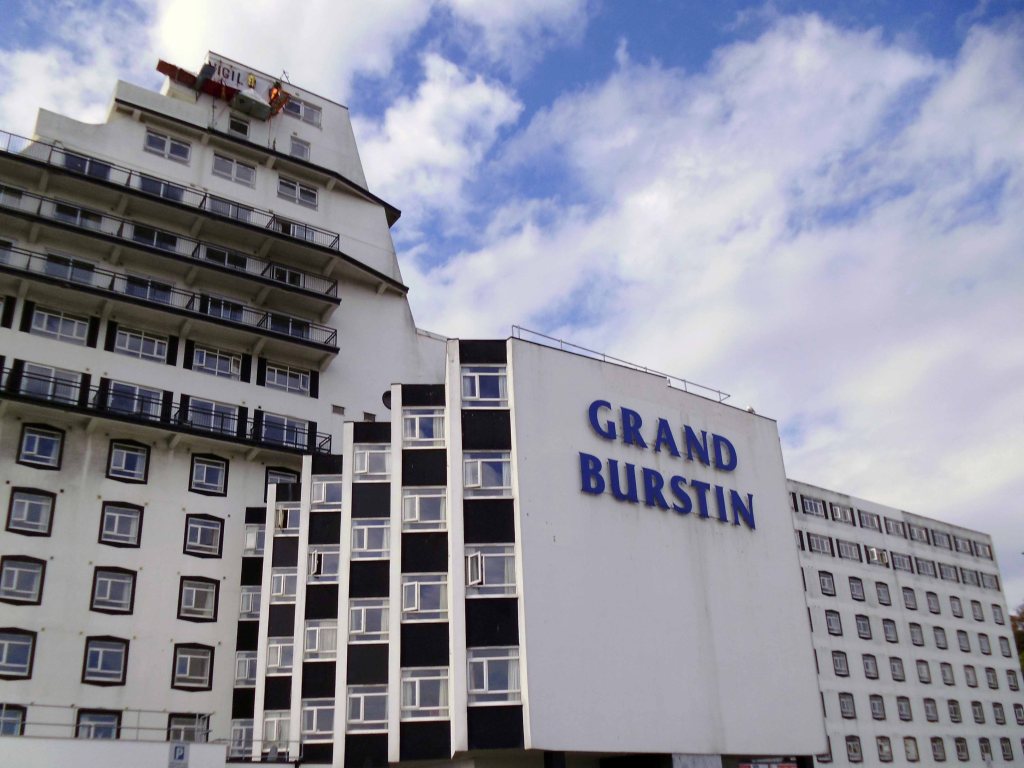
For Folkestone Triennial 2014, Alex Hartley’s response to the title Lookout is inspired by the imposing architecture of the Grand Burstin Hotel, which overlooks the Harbour. For his project Vigil, Hartley will use state of the art climbing technology to make a lookout point suspended from the highest point of the hotel. This climber’s camp will be inhabited for the duration of the Triennial, by the artist and by volunteers, all of whom will keep a log of what they observe.
The current hotel was built in 1984 from the foundations of the Royal Pavilion Hotel, originally built in 1843. Out of the 4,094 reviews currently on TripAdvisor 974 are of the terrible rating which doesn’t inspire much hope.
The most recent review is titled – Dirty Dated Hotel With Clueless Staff.
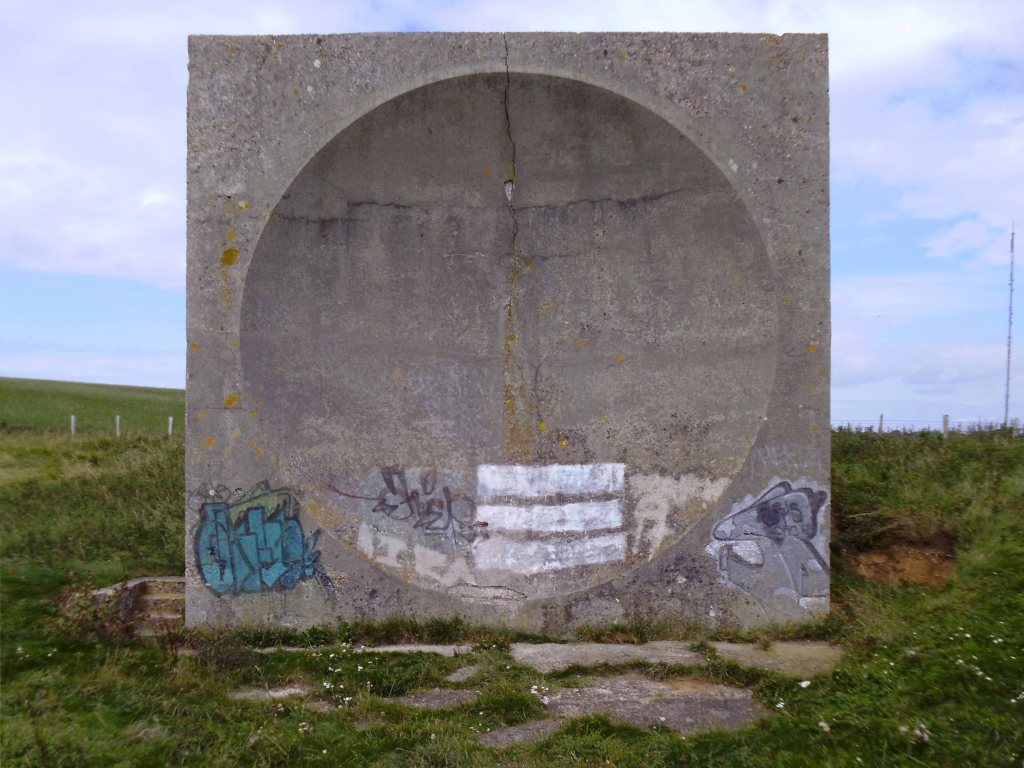
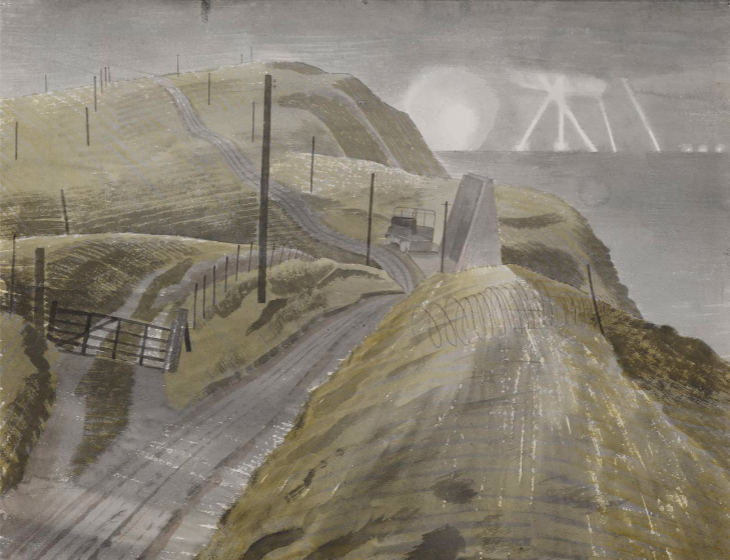
Before the advent of radar, there was an experimental programme during the 1920s and 30s in which a number of concrete sound reflectors, in a variety of shapes, were built at coastal locations in order to provide early warning of approaching enemy aircraft. A microphone, placed at a focal point, was used to detect the sound waves arriving at and concentrated by the acoustic mirror. These concrete structures were in fixed positions and were spherical, rather than paraboloidal, reflectors. This meant that direction finding could be achieved by altering the position of the microphone rather than moving the mirror.
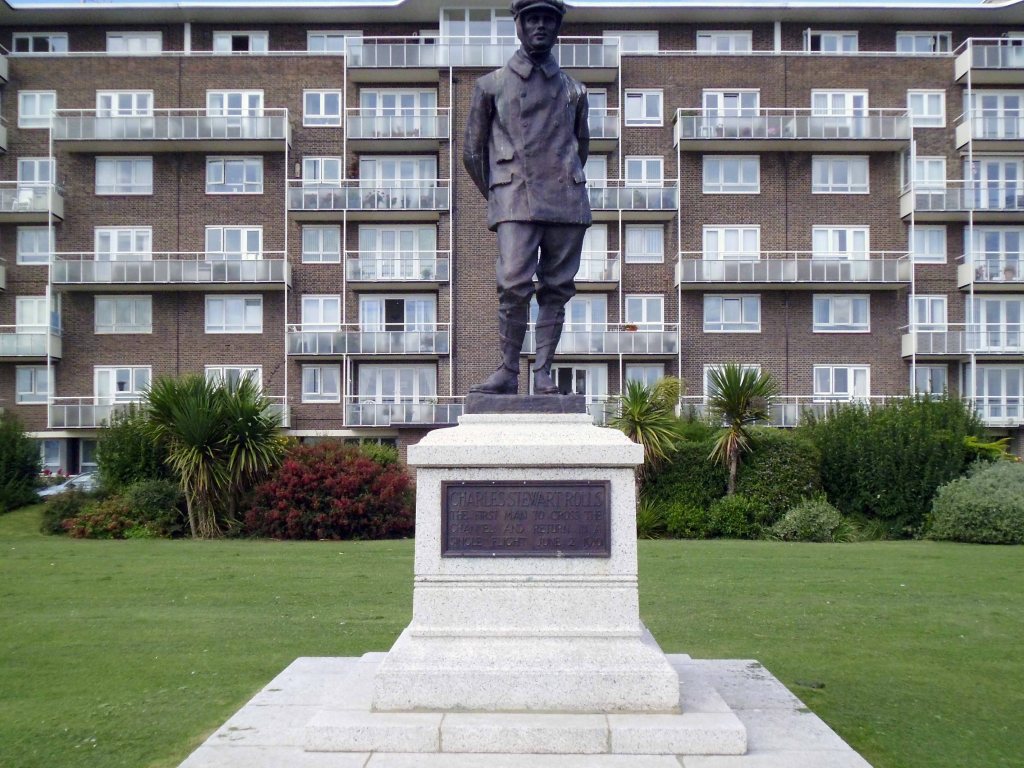
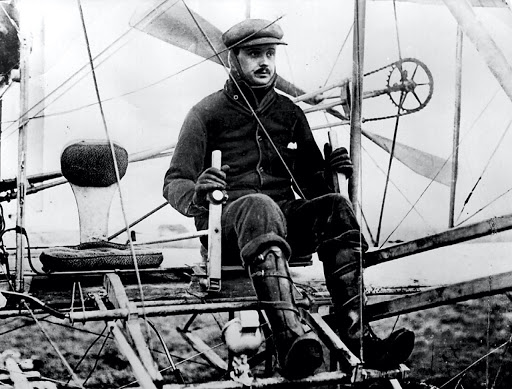
Charles Stewart Rolls was a Welsh motoring and aviation pioneer. With Henry Royce, he co-founded the Rolls-Royce car manufacturing firm. He was the first Briton to be killed in an aeronautical accident with a powered aircraft, when the tail of his Wright Flyer broke off during a flying display in Bournemouth.
In September 1953 it was announced that Roger K Pullen and Kenneth Dalglish had won and were to receive 100 guineas, for a design for the Gateway Flats.
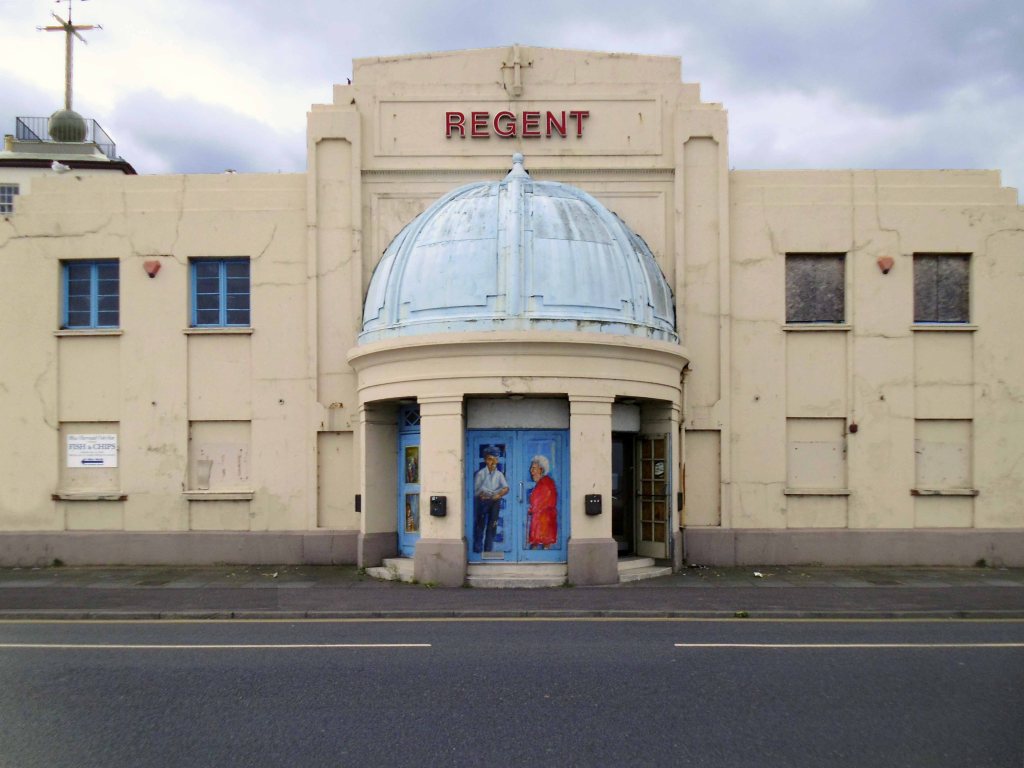
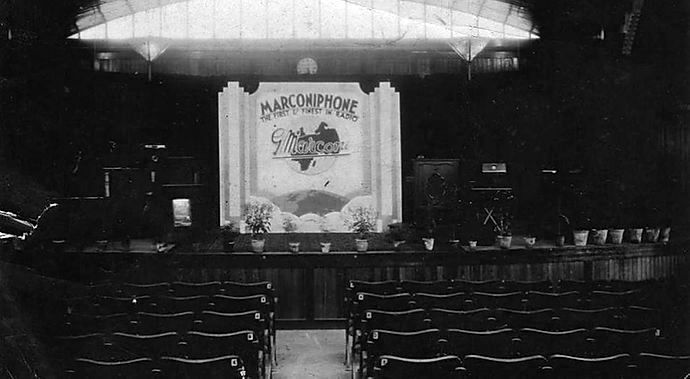
Behind the Art Deco facade of the Regent was once a grand ironwork and glass Pavilion, built to house regular performances by military bands, which the Edwardian holidaymakers loved. The Lord Warden of the Cinque ports, Lord Beauchamp, officially opened the Pavilion Theatre on Deal’s seafront in 1928.
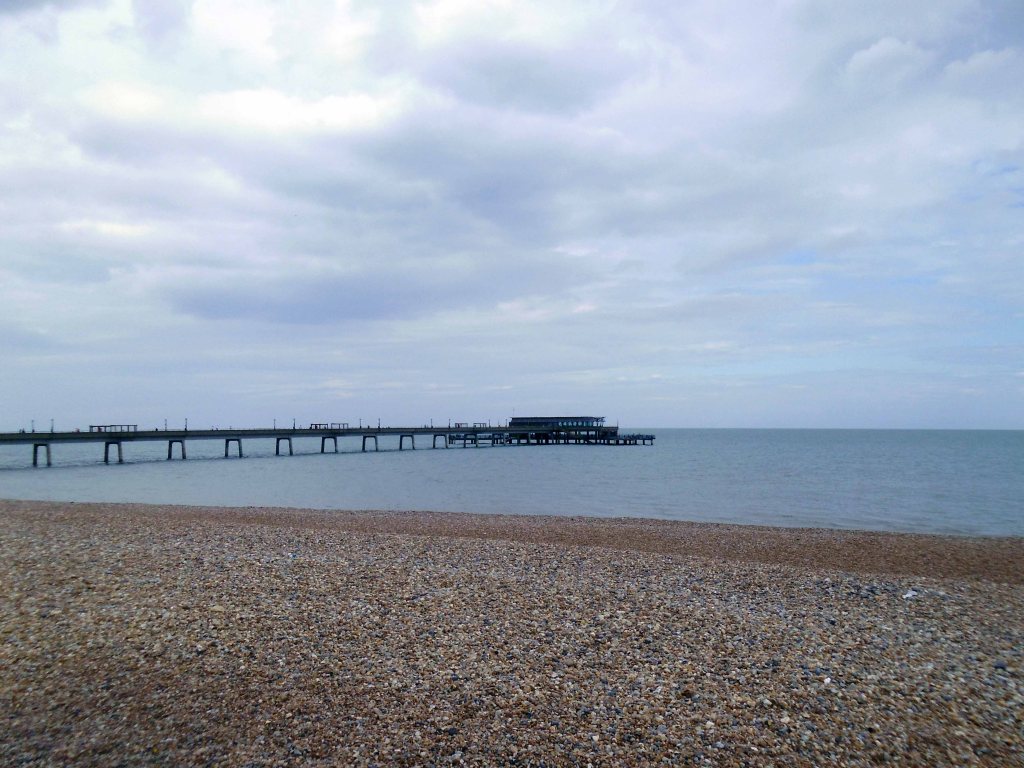
Deal Pier was designed by Eugenius Birch and opened on 8th November 1864, in 1954 work started on Deal’s third and present-day pier. The new pier took three years to build and was formally opened by the Duke of Edinburgh on 19 November 1957. It was the first seaside pleasure pier of any size to be built since 1910. Designed by Sir W Halcrow and Partners, the 1026ft-long structure comprises steel piles surrounded by concrete casings for the main supports. The pier head originally had three levels but, these days, the lower deck normally remains submerged.
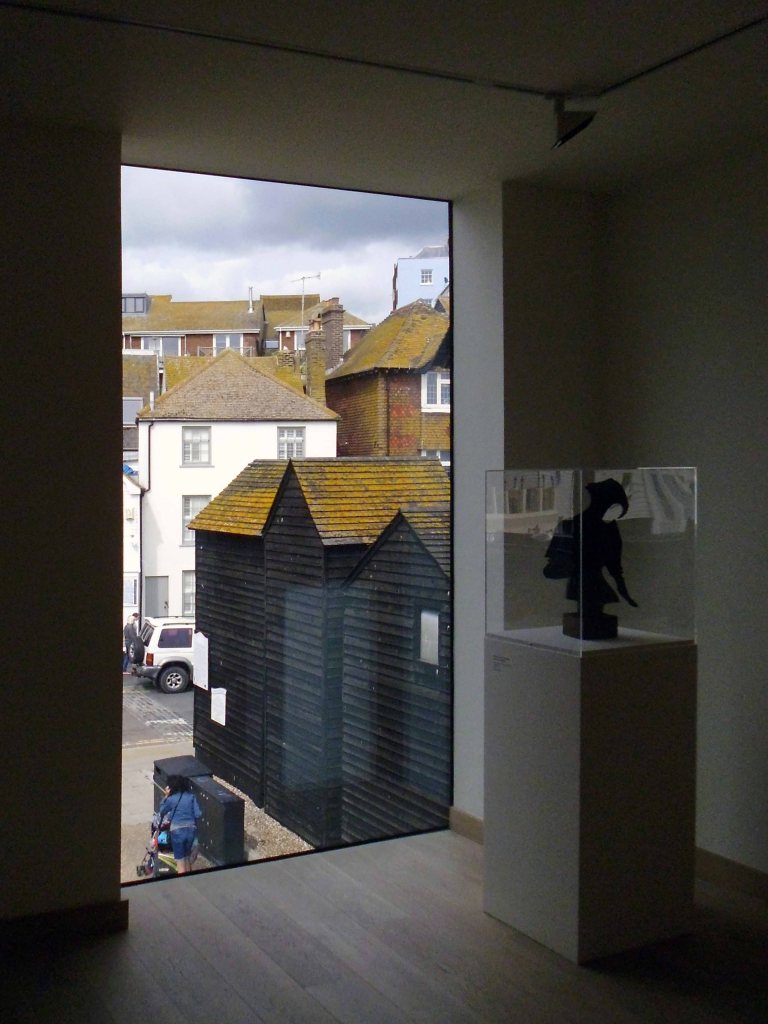
The building was designed by David Chipperfield – It was built on the raised promenade following a flood risk analysis. Construction started in 2008, and was completed for opening in April 2011, at a cost of £17.5 million. The gallery opened on 16 April 2011.
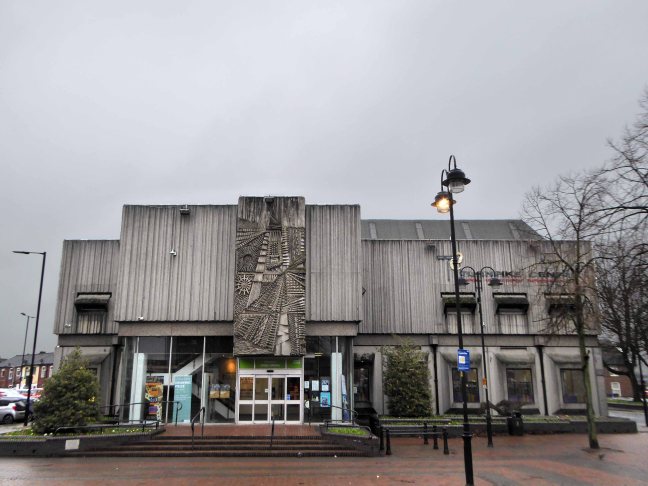
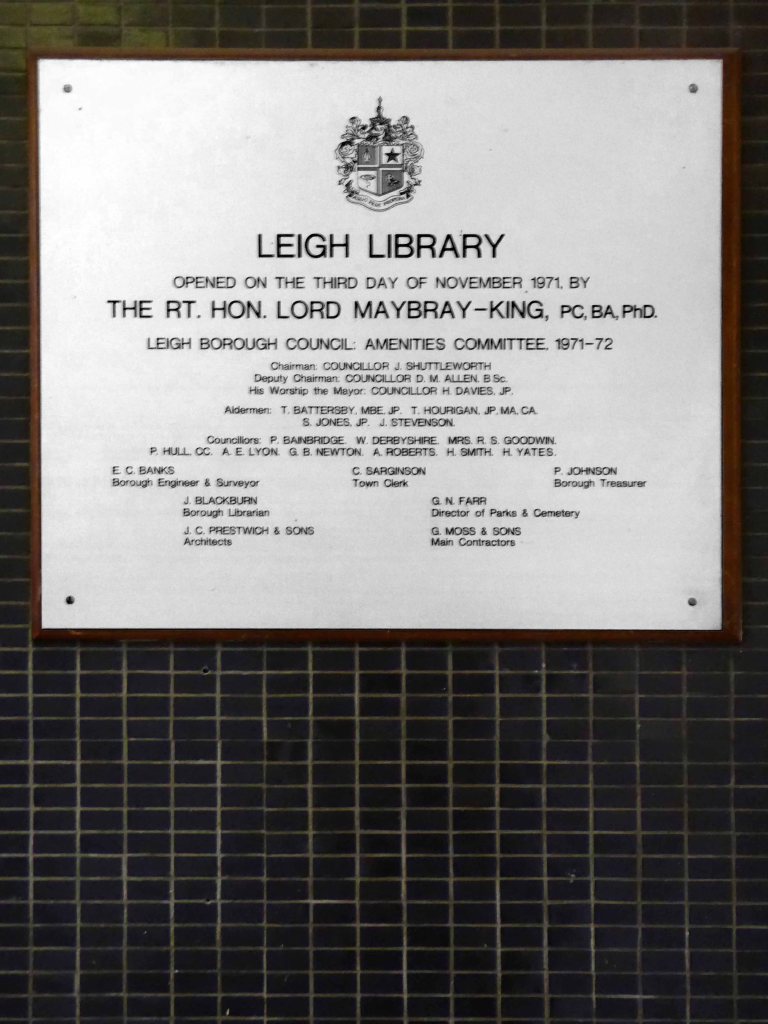
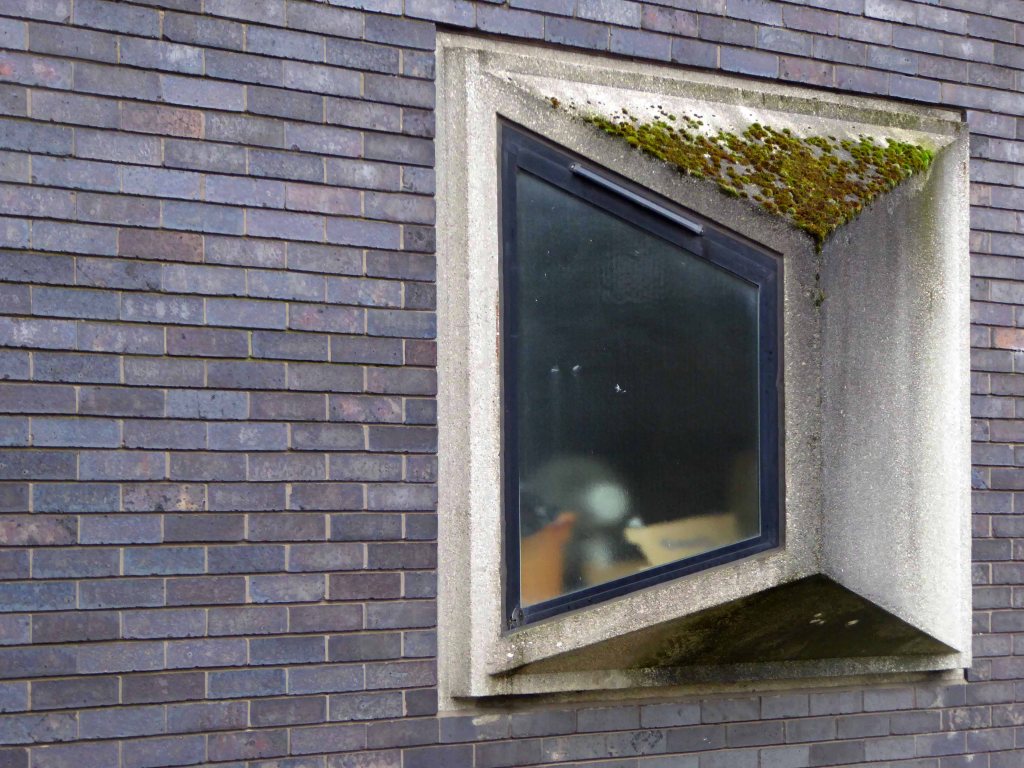
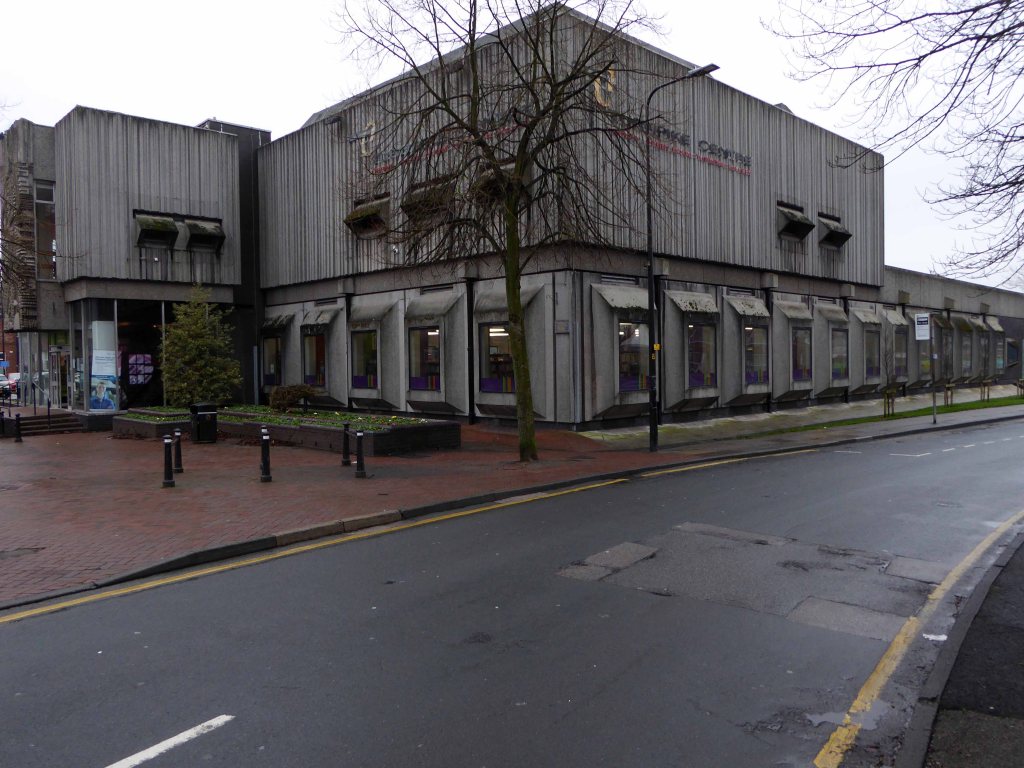
The Turnpike Centre was designed by J C Prestwich and Sons architects, who, incidentally, also designed Leigh Town Hall nearly 70 years earlier.
Since its opening in 1971, the bustling library, thriving art gallery and popular meeting rooms have seen a phenomenal 12 million people walk through the doors, while staff have answered almost 400 thousand questions and issued more than 17 million books, cassettes and CDs.
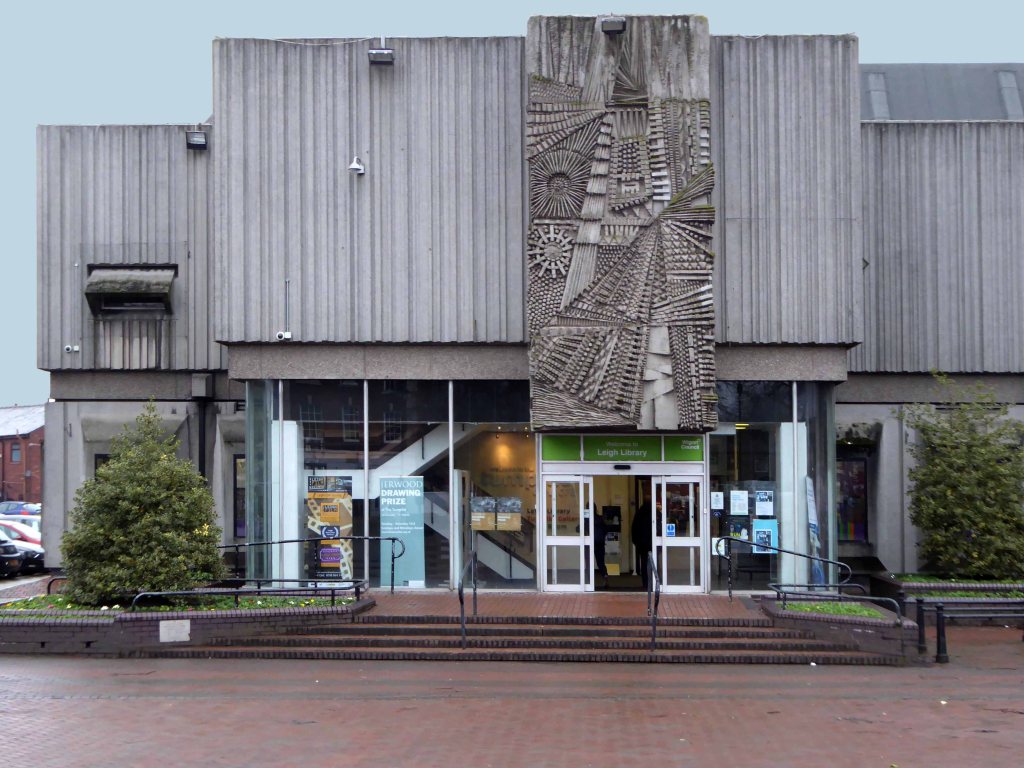
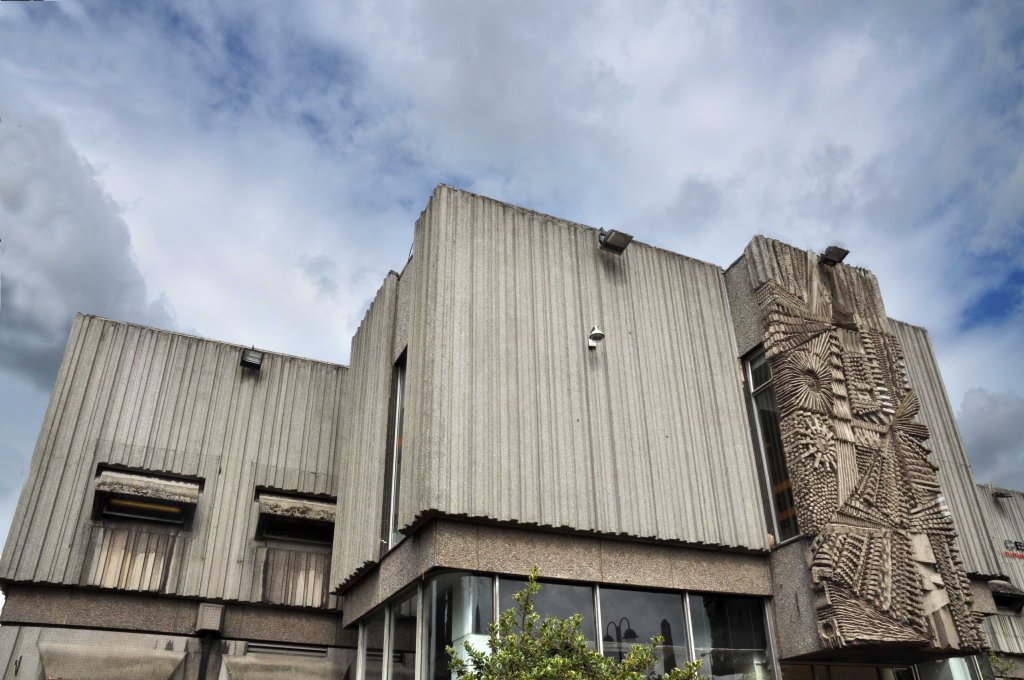
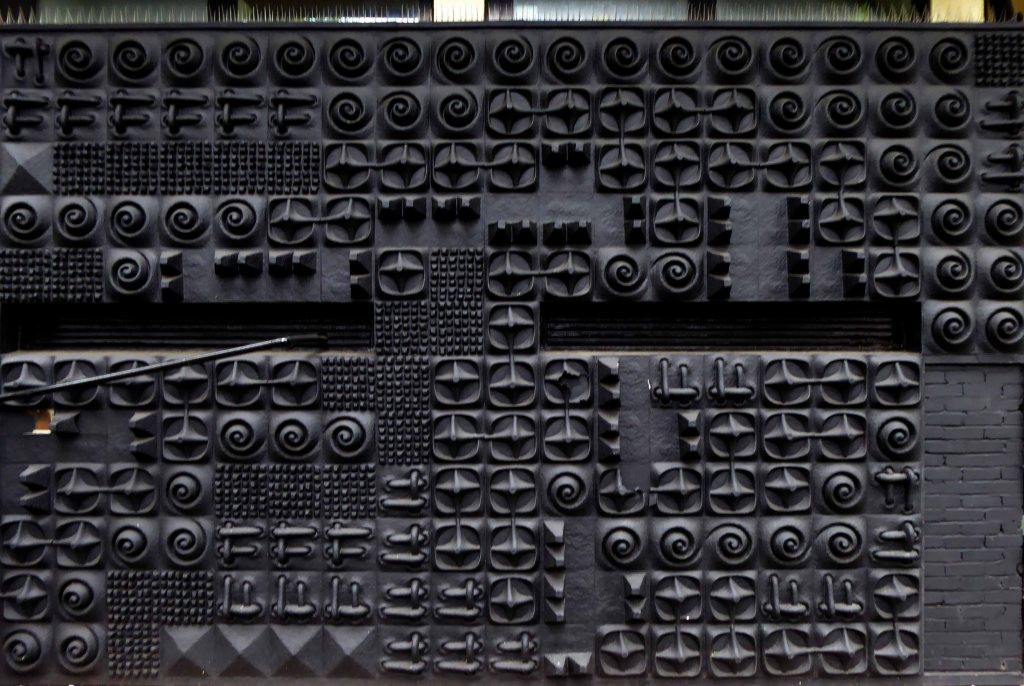
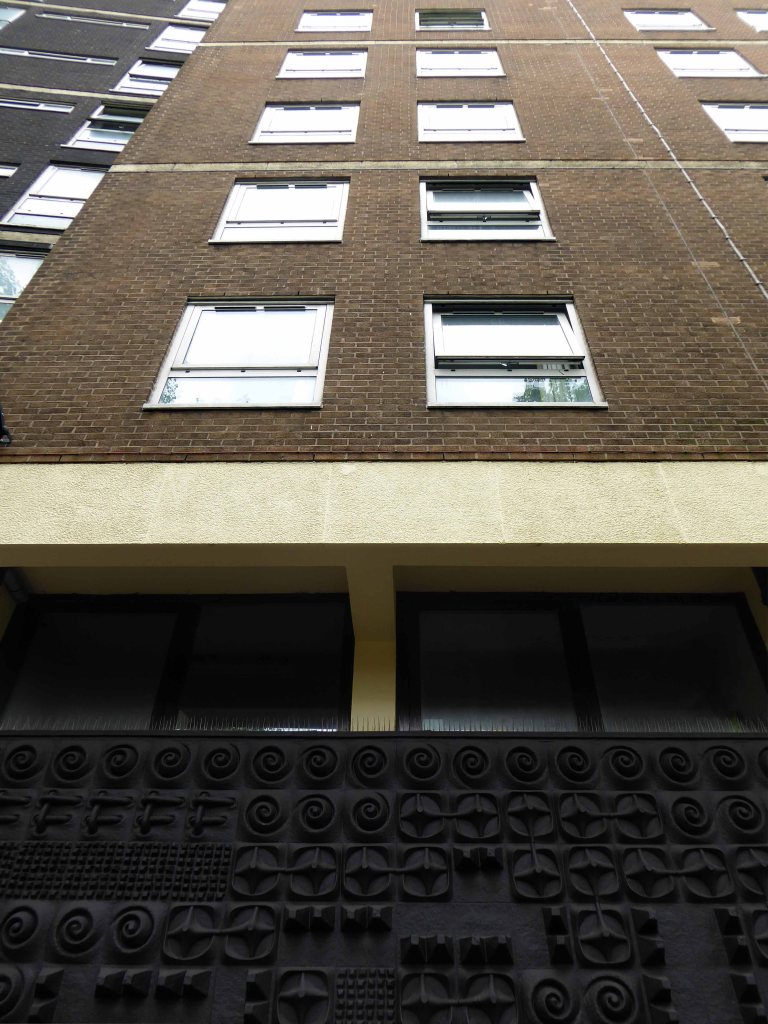
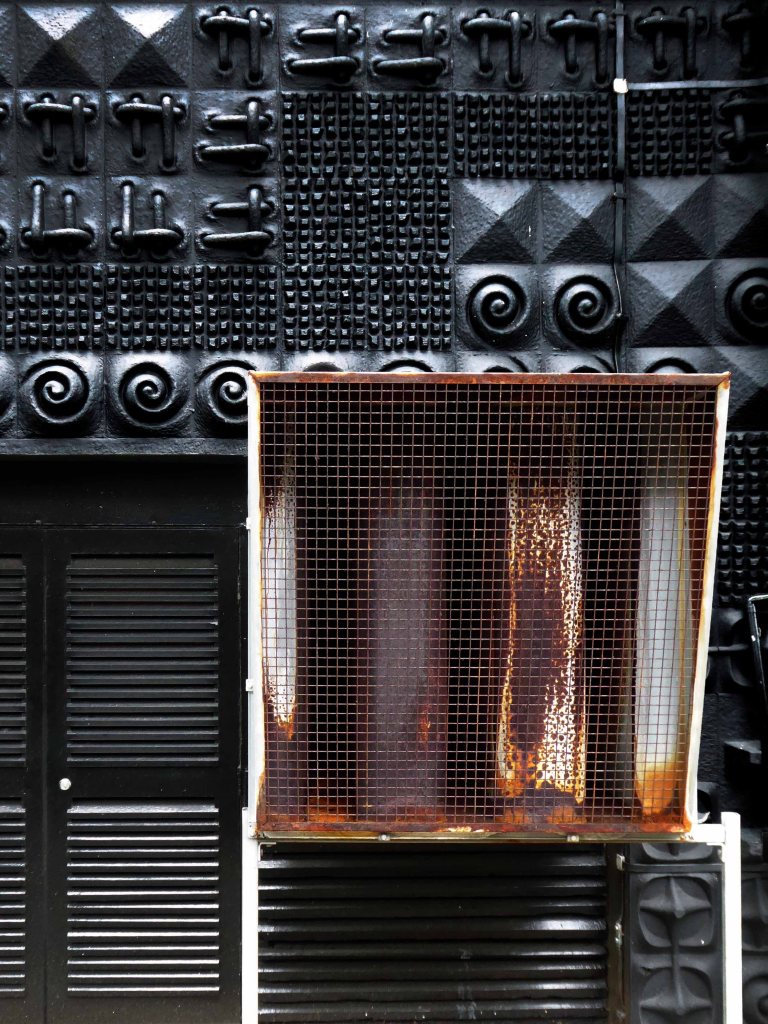
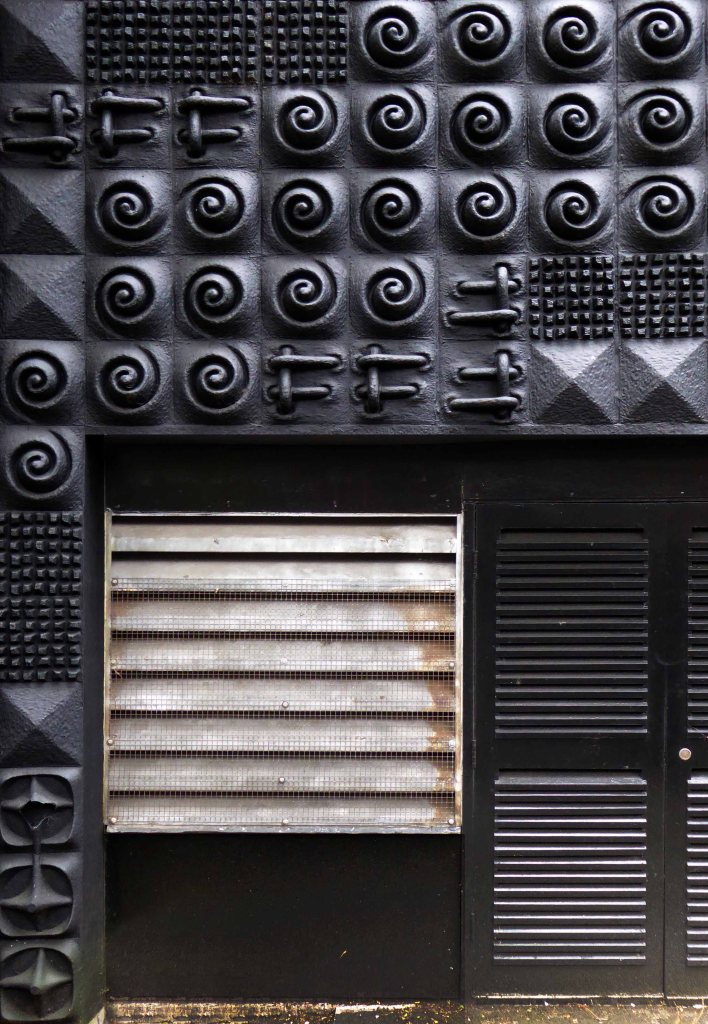
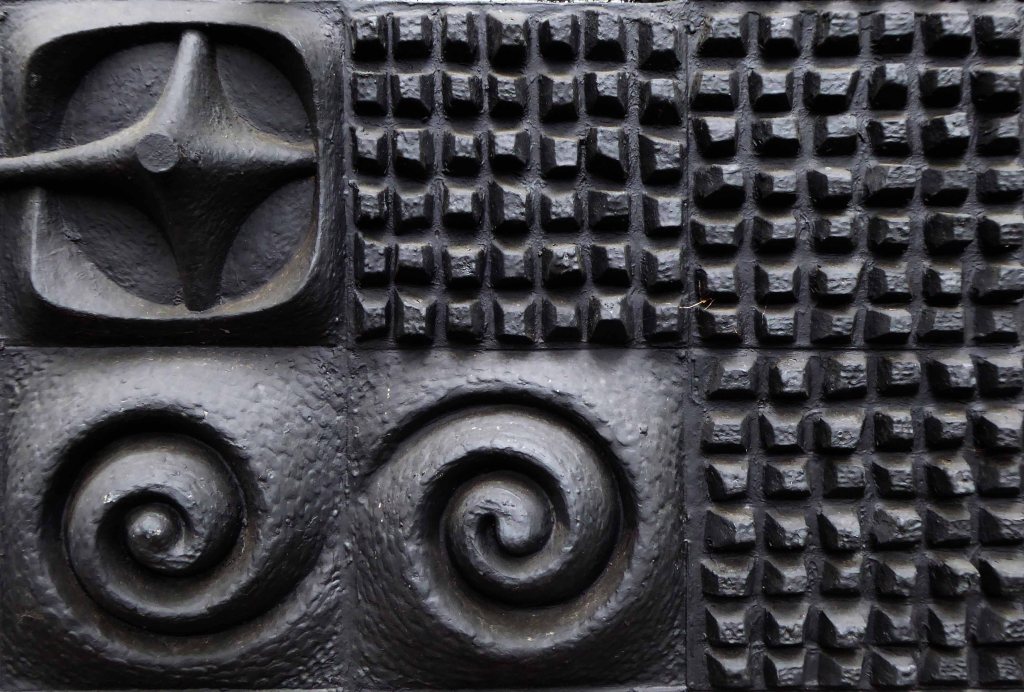
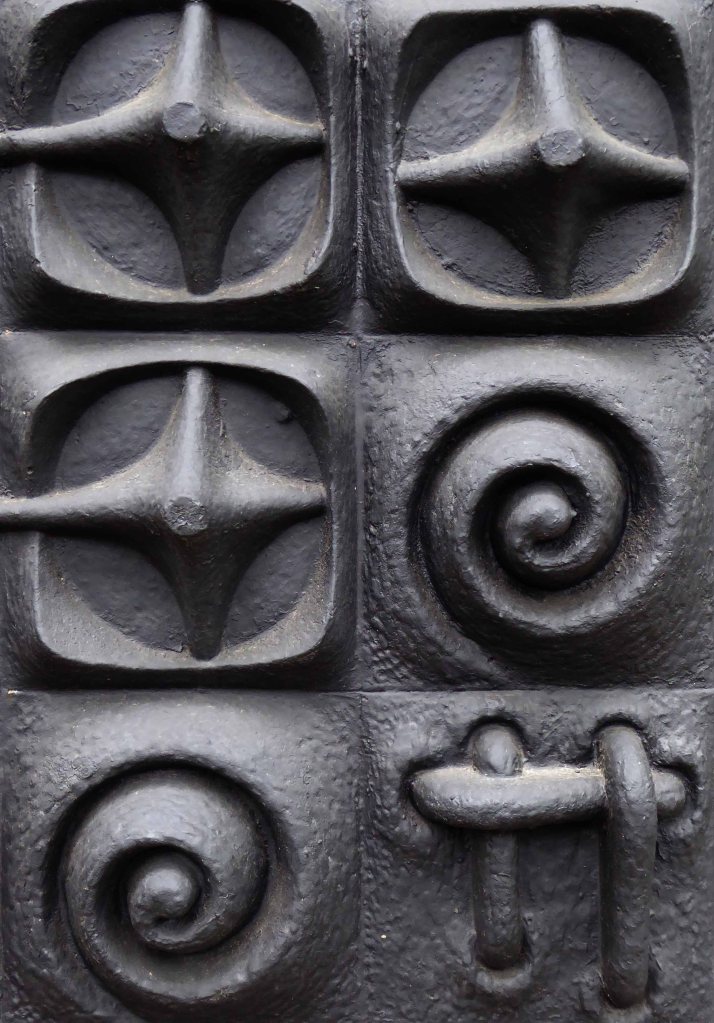
The fascia is graced by a grand cast concrete relief the work of William Mitchell.
All but abandoned by the cash-strapped local council in 2013, Turnpike Gallery in the former mining town of Leigh near Wigan, is entering a new stage in its history with the creation of a community interest company to run its programme.
We recently took a look around Redrock, today we visit the next door neighbour – the car park ramp.
Replacing the old Debenham’s ramp.
Linking the old world of Merseyway with the shiny new NCP.
I don’t drive no car so I have to make do with the ecologically sound and ever so affordable means of pedestrian trespass, proceeding incautiously I recorded my journey into the unknown.
Returning safely to Basecamp I investigated further, circumnavigating the drainage area.
I have to admit that I am over fond of this small sacred space, a modern impenetrable temple of Brutalism. My ambition is to stage an art/music event within, just wait and see/hear if I don’t!
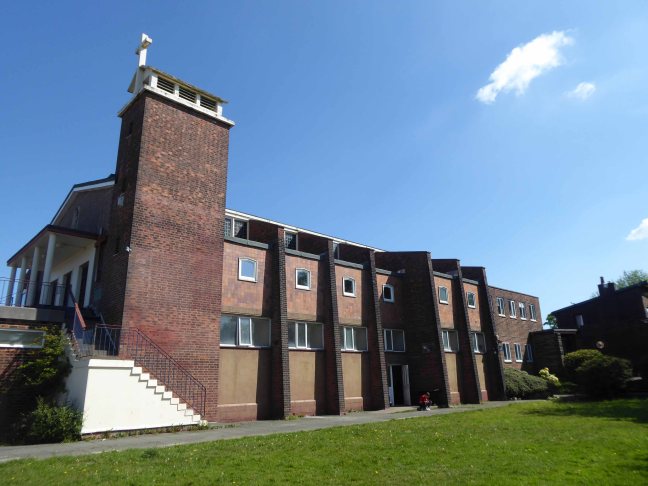
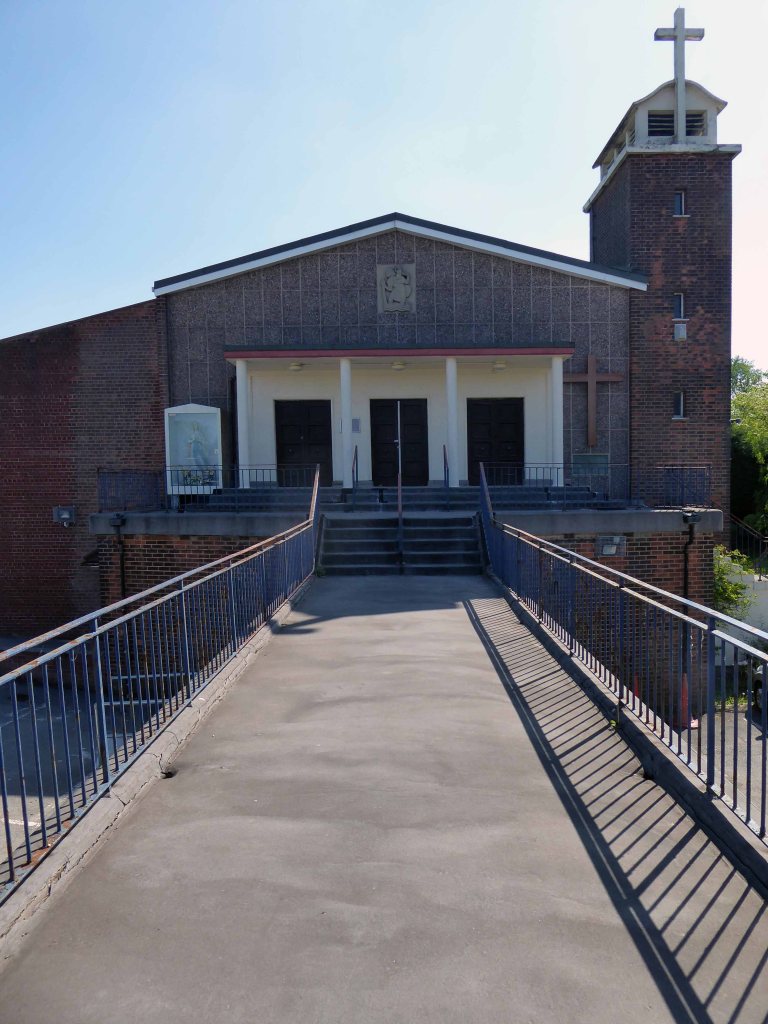
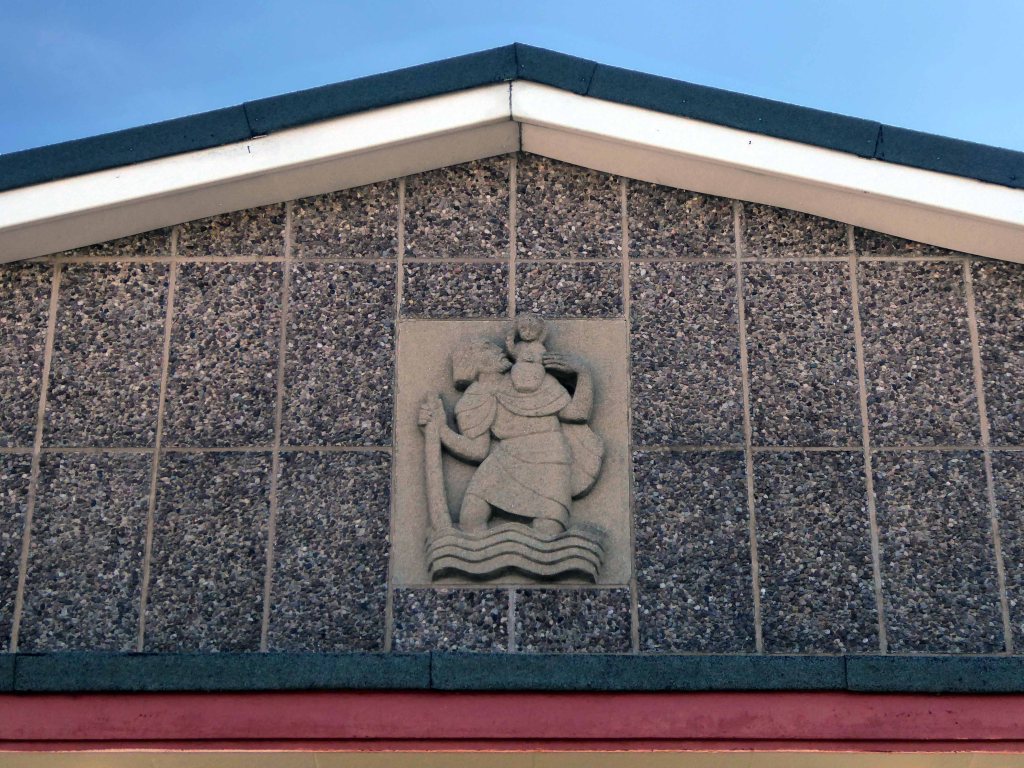
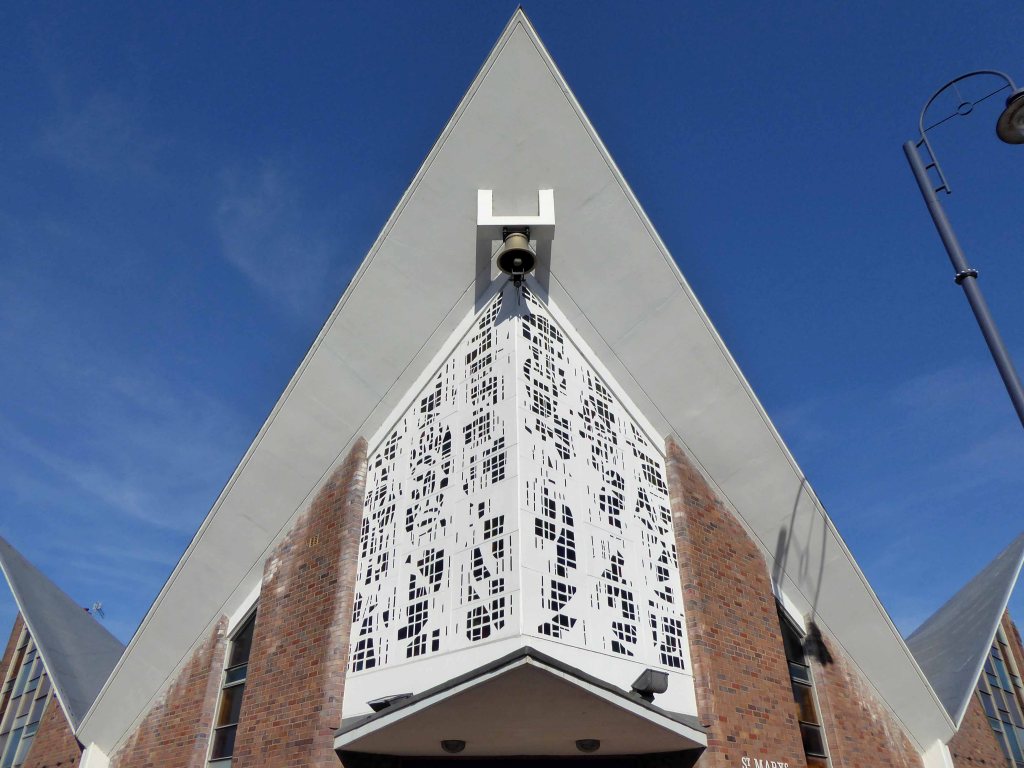
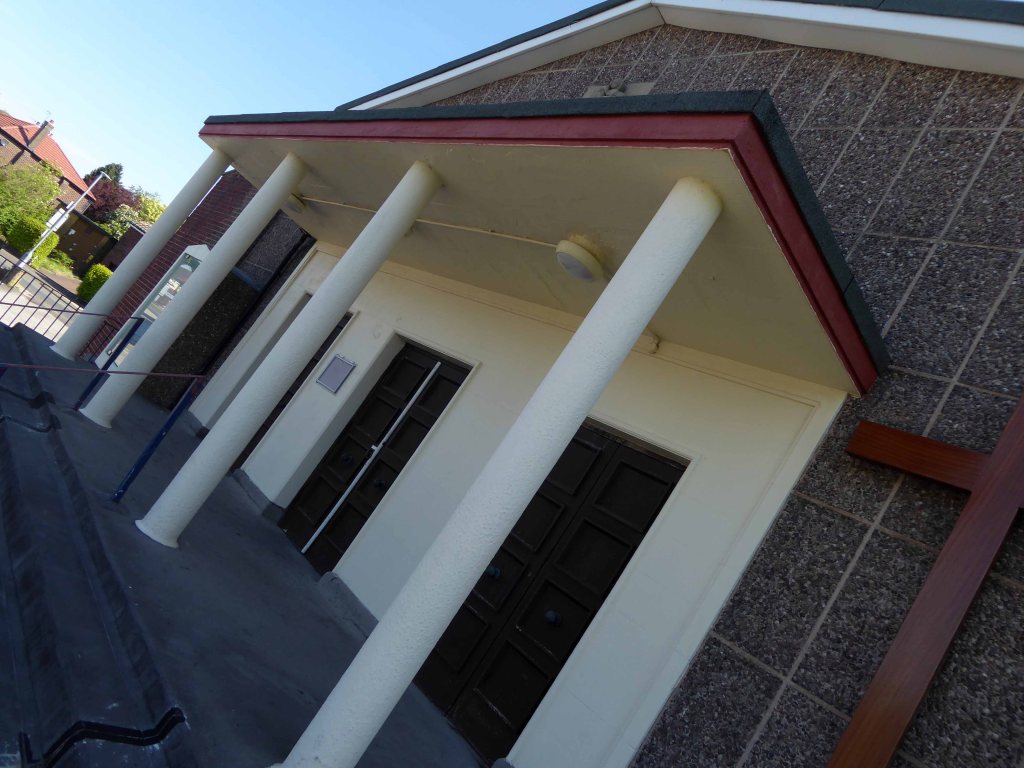
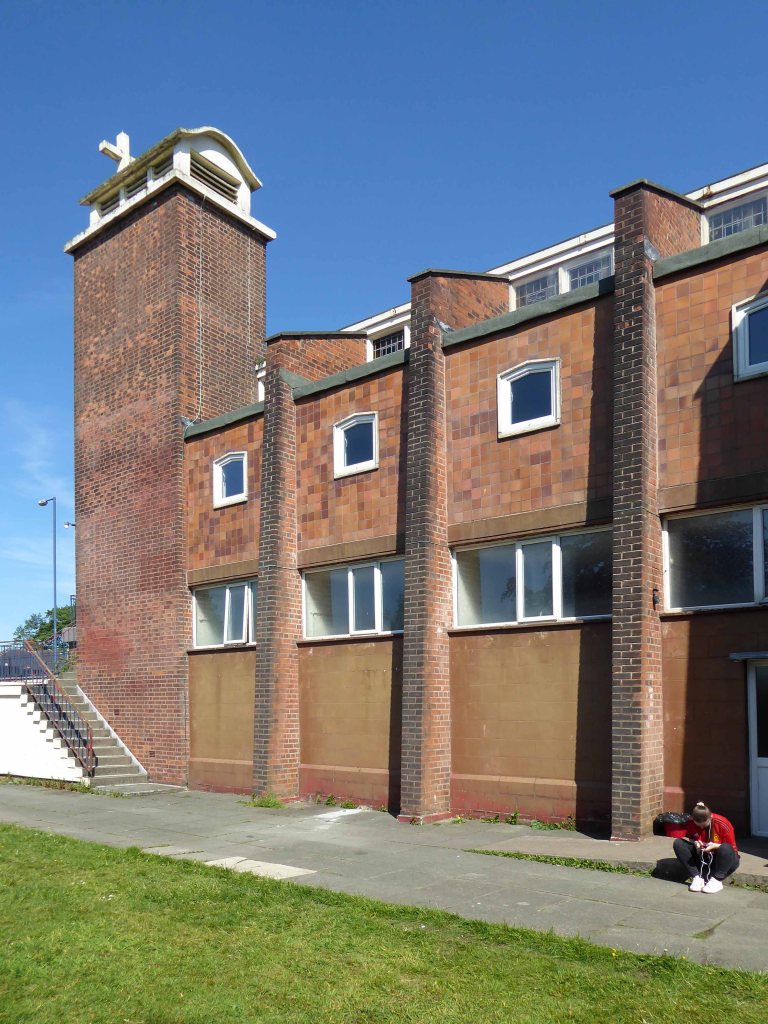
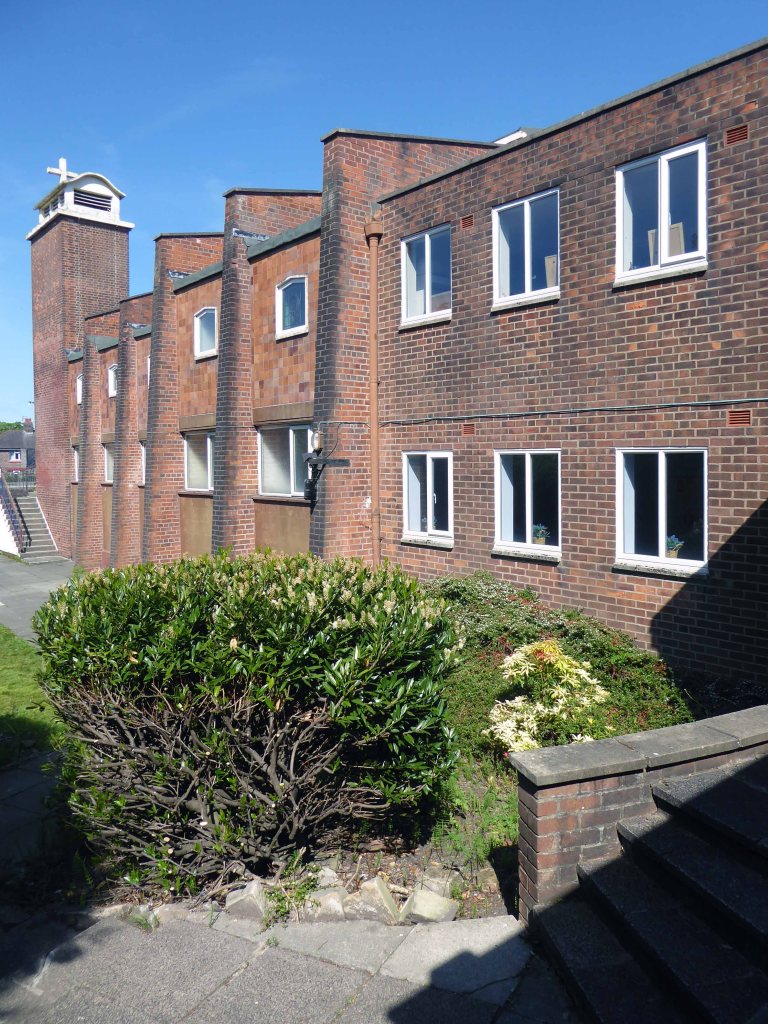
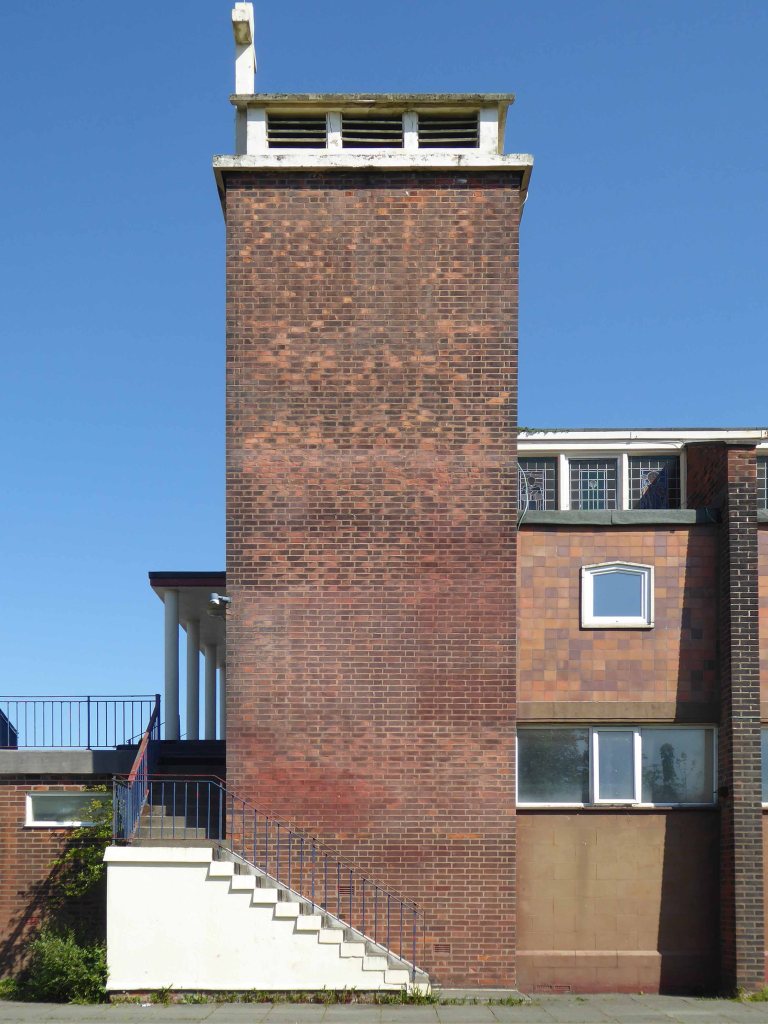
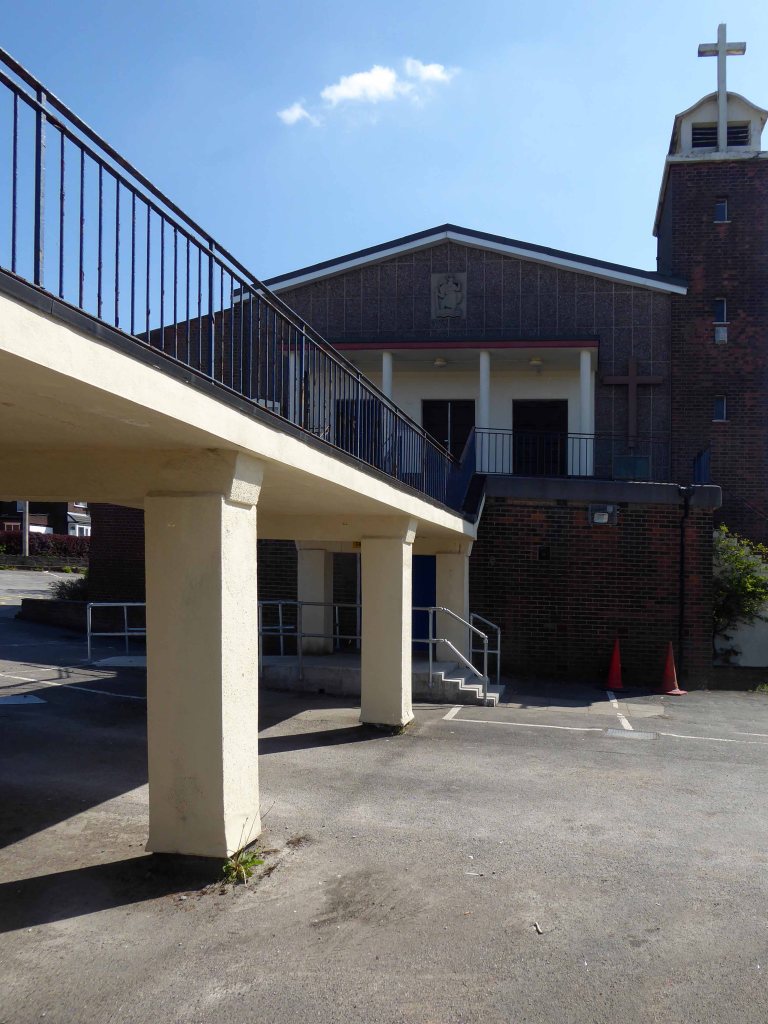
A post-war design consisting of an upper church over a lower hall, the prominent campanile making it something of a local landmark. The portal frame construction, materials and design are standard for the time. The interior has been reordered but retains some original furnishings.
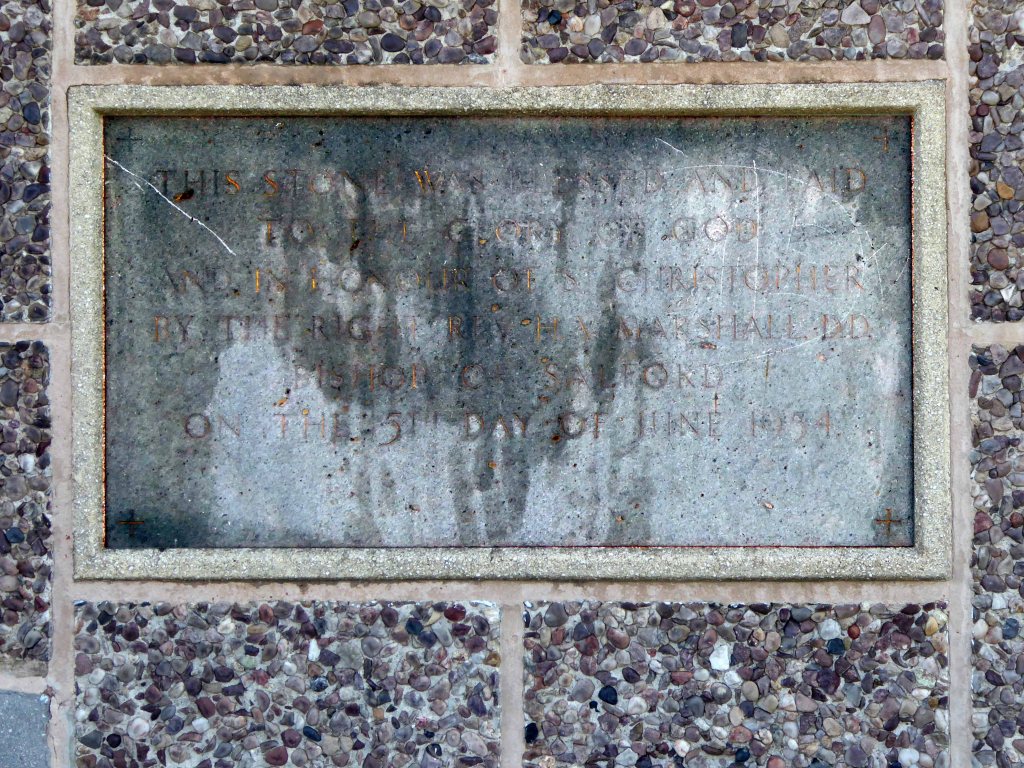
A new post-war parish was created to serve the growing residential area in Hurst Cross, previously served from St Anne’s, Ashton. Fr Kelly built the new church, whose foundation stone was blessed by Bishop Marshall on 5 June 1954. The first Mass was held on Easter Monday, 1955.
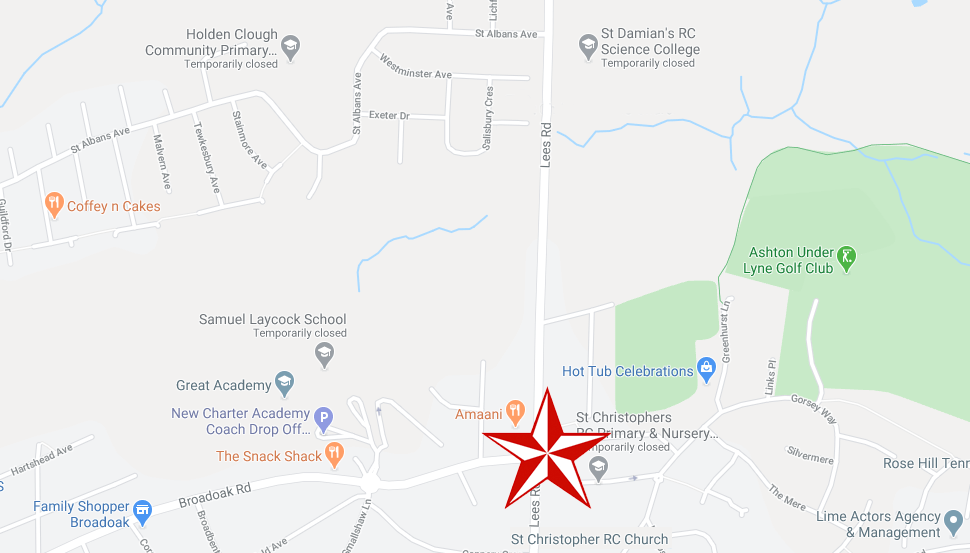
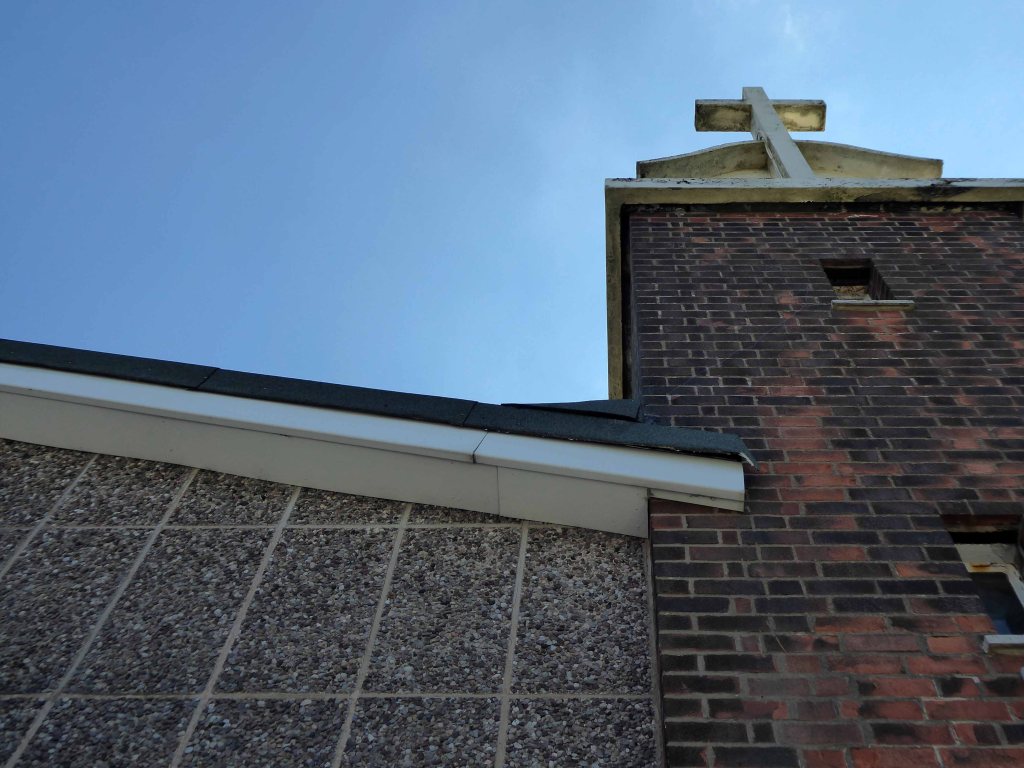
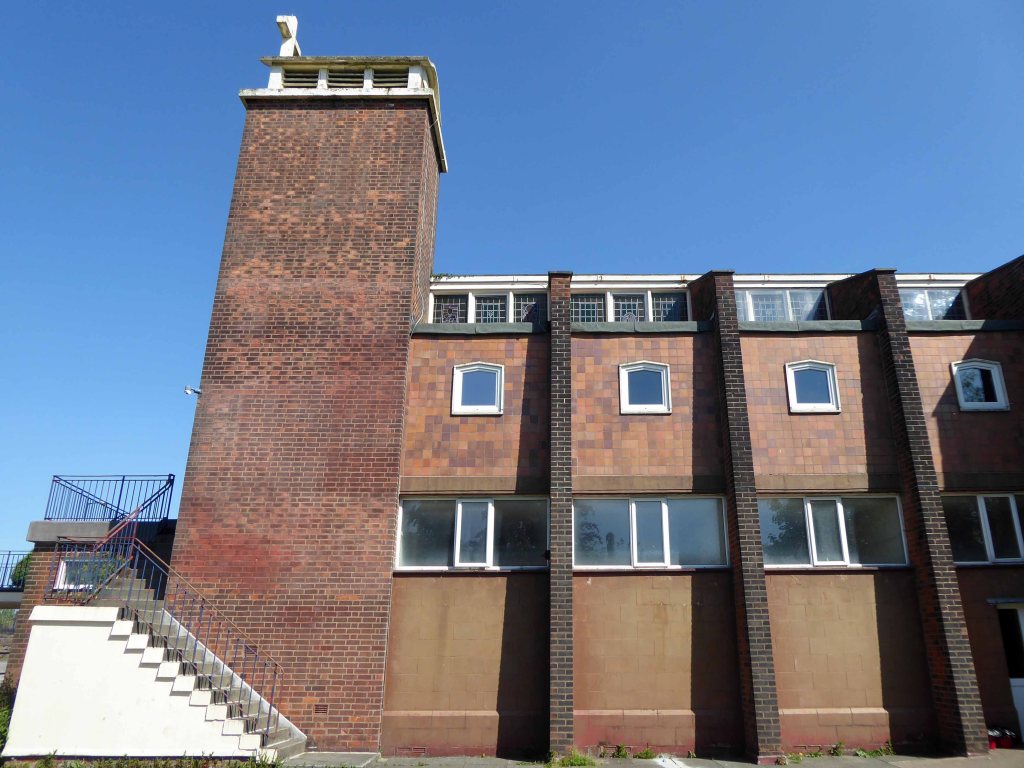
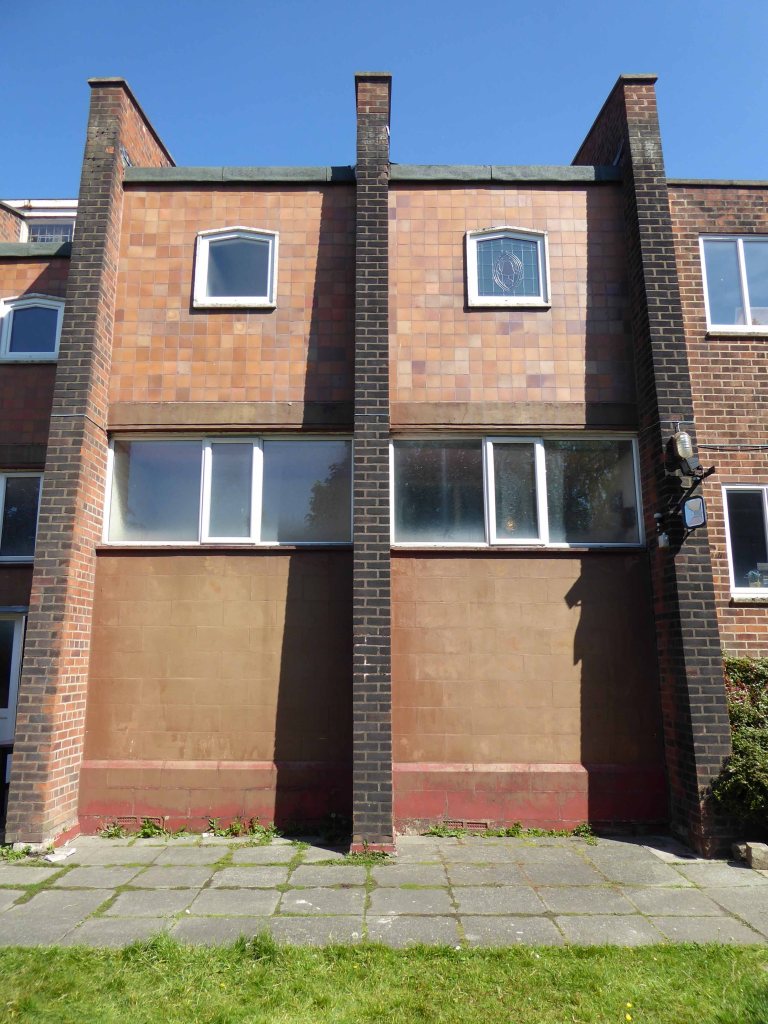
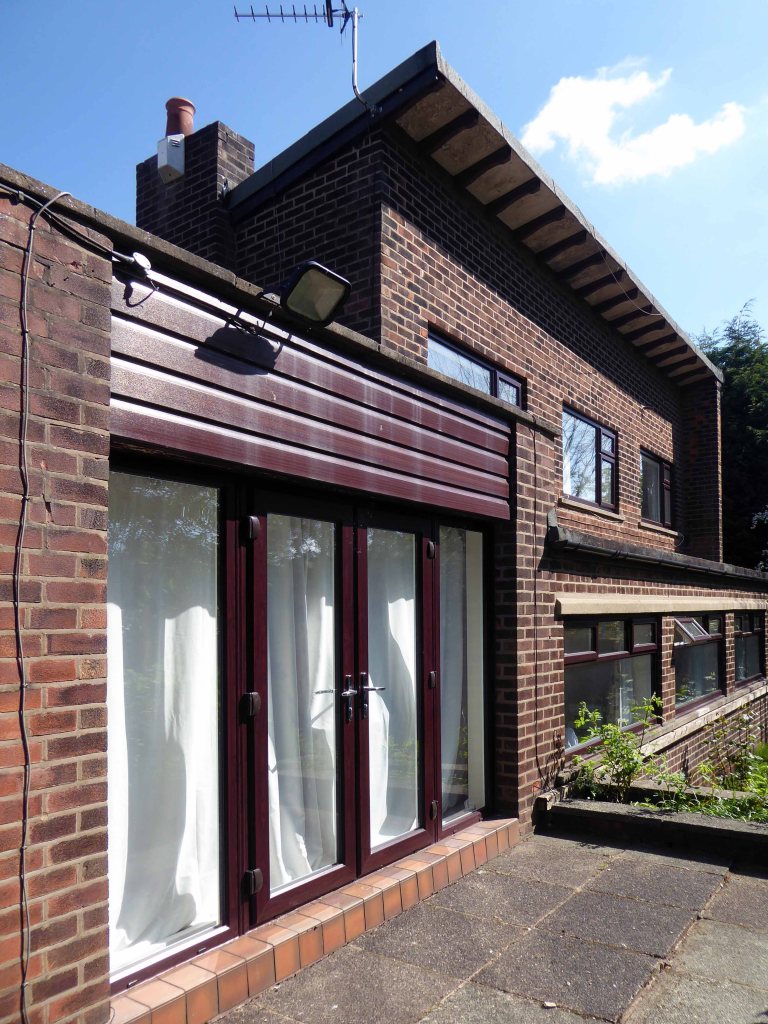
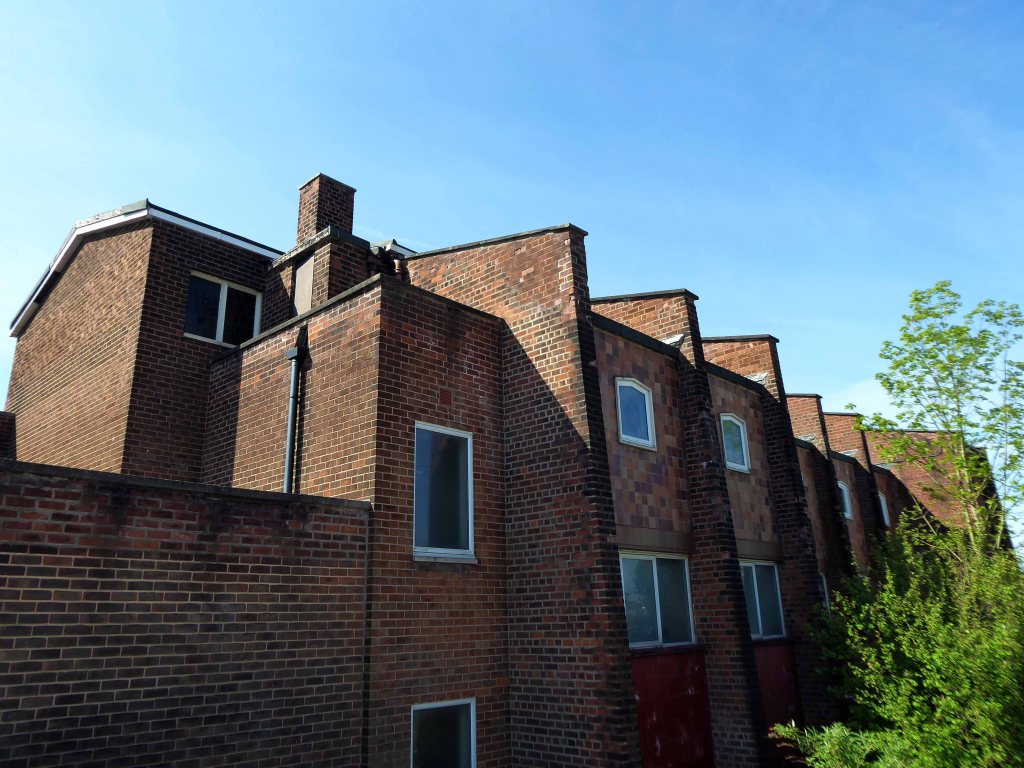
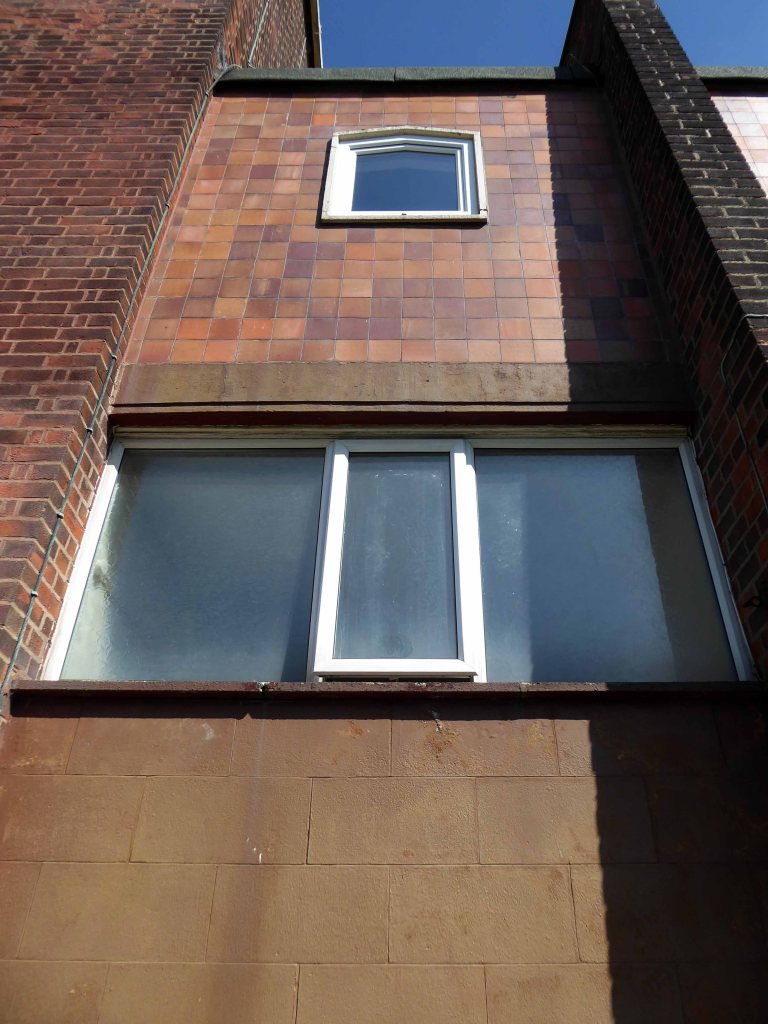
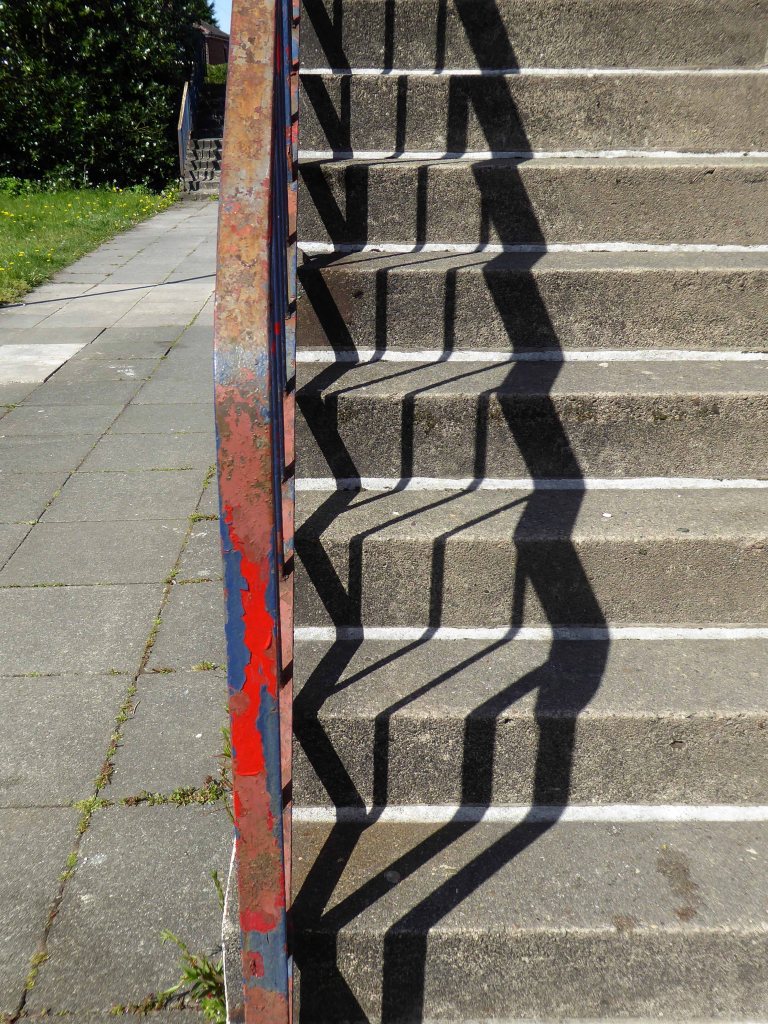
The church is conventionally orientated with the sanctuary to the east. Less conventionally, it is a two-storey building, with a ground floor parish hall and a first floor church. The church is reached from Lees Road by a reinforced concrete bridge and steps. A brick campanile marks the southwest corner. The structure of the portal-framed building is expressed externally by raking brick buttresses to side elevations. The west gable end is faced in aggregate panels with a concrete relief depicting St Christopher over a plain three-bay flat-roofed portico. The aisles are faced in ceramic tiled panels to the upper level with render to the parish hall level. The nave is lit by three-light clerestory windows with smaller windows to the aisles. The shallow-pitched roof is laid with mineral felt. A two-storey blockcontaining a large sacristy connects to the contemporary presbytery.
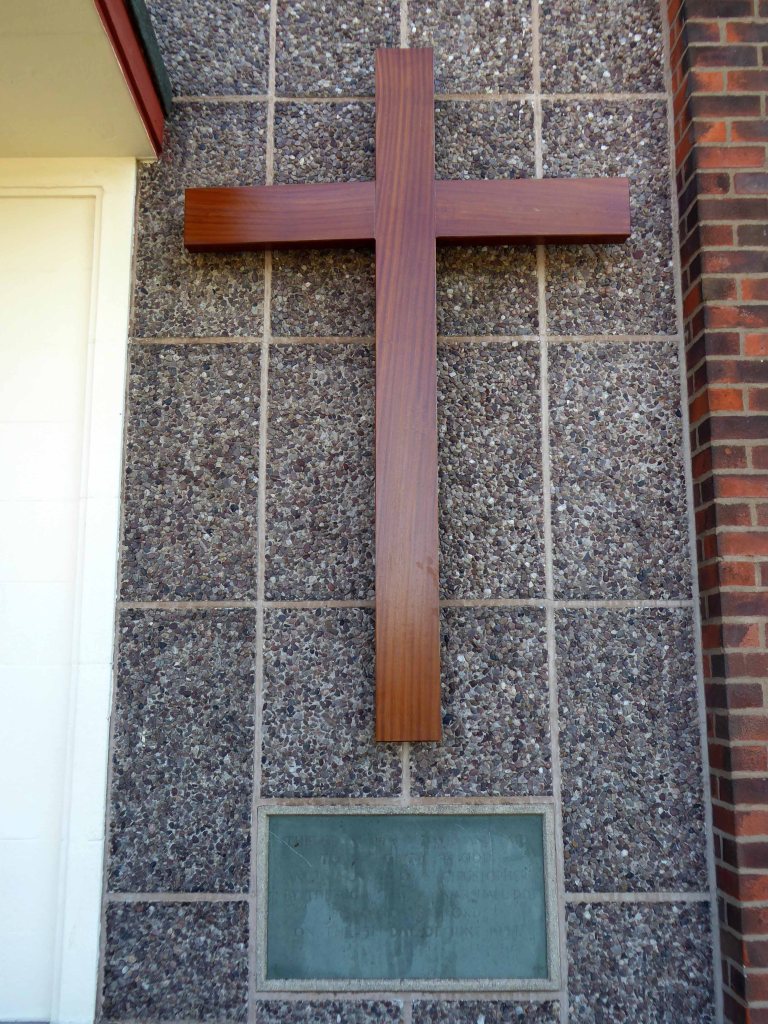
Inside, the six-bay upper church has a plain west gallery above a narthex with glazed screen. The aisles have arcades of square brick piers and plain plastered walls. The clerestory windows are leaded with coloured glass margins. The ceiling is lined with acoustic panels and the concrete floor is laid with carpet or linoleum tiles. The reordered sanctuary retains the original polished concrete altar in a forward position; the 1950s altar rails and pulpit have been removed. The east wall is now hung with wallpaper, but was originally fair-faced brick; the Crucifix and painted timber high altar canopy are part of the original arrangement. The side chapels also retain original 1950s polished concrete altars. The octagonal font with oak cover dates from the late nineteenth or early twentieth century, of unknown provenance. The hardwood pews were designed for the church.
I have known this church for some fifty years – living just up the road.
It was probably along with St Mary’s Denton my first experiences of Modern Architecture.
I went to the youth club in the social area beneath the church.
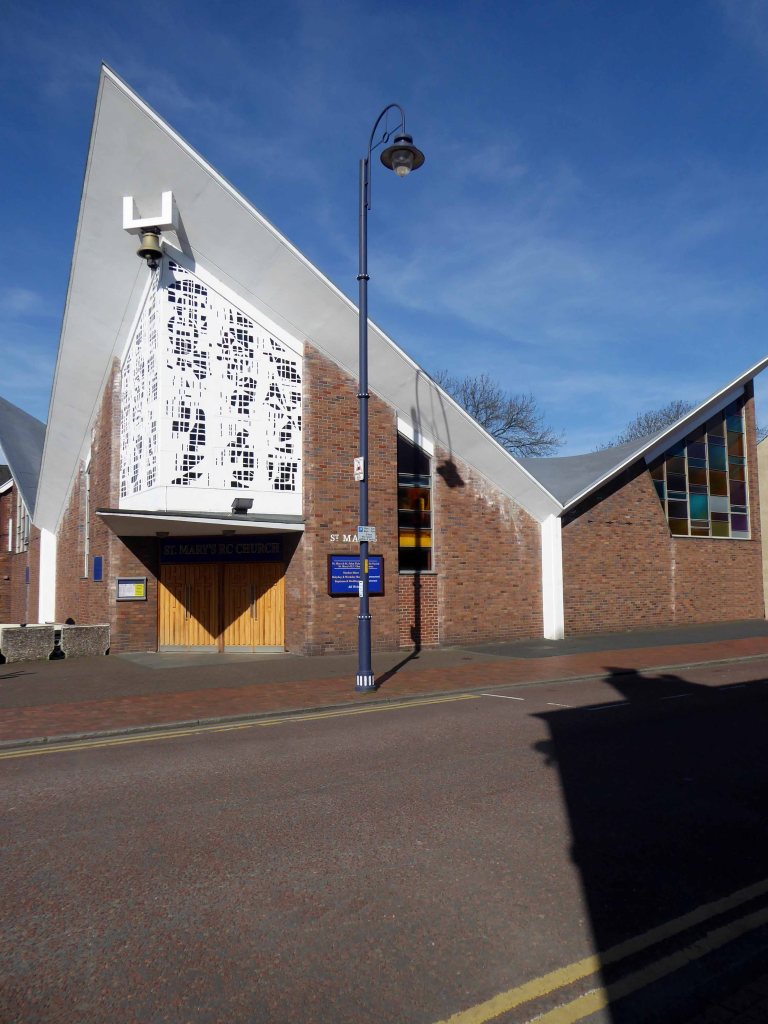
St Mary
It is typical of the Italianate styling of the time, a functional mix of glass brick and concrete, far from ostentatious – and sitting comfortably in its setting.
On the day of my visit the country is in lockdown, Mass suspended and the body of the church used as a homeless shelter, prior to rehousing – signs of the times.
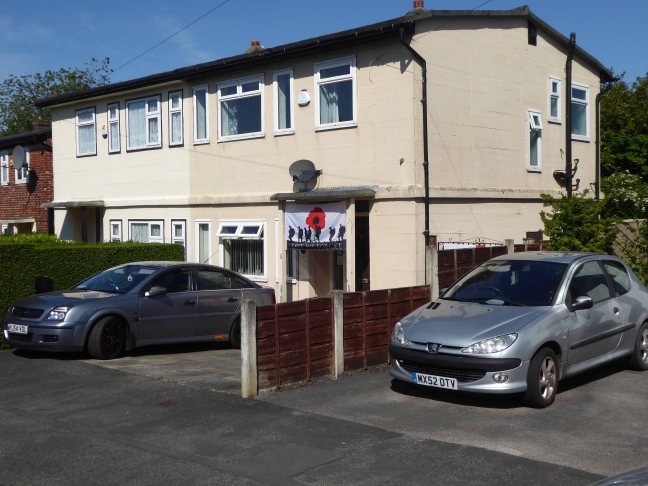
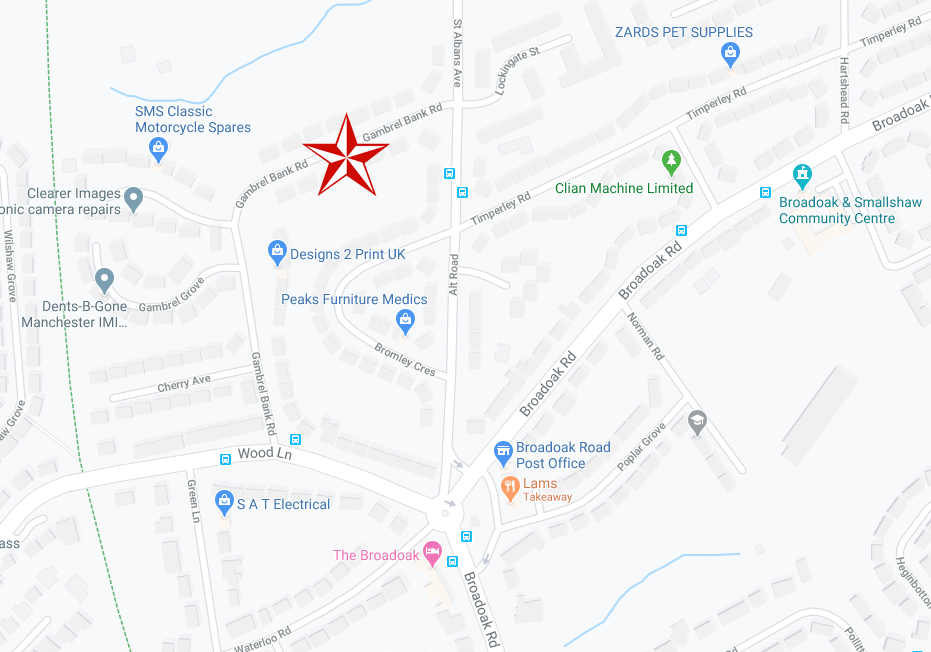
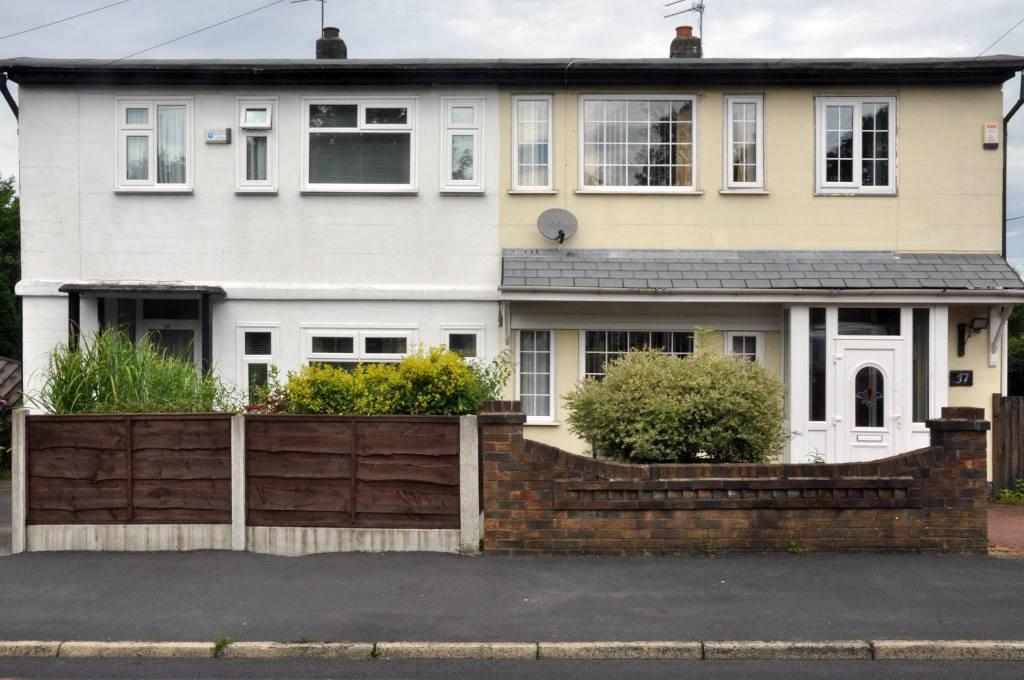
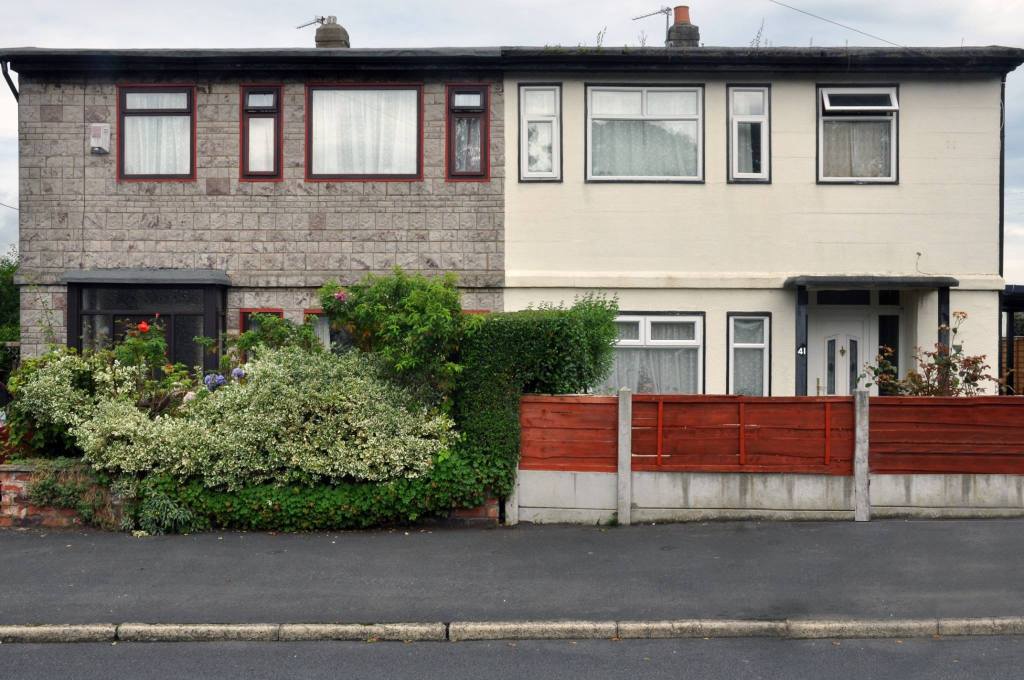
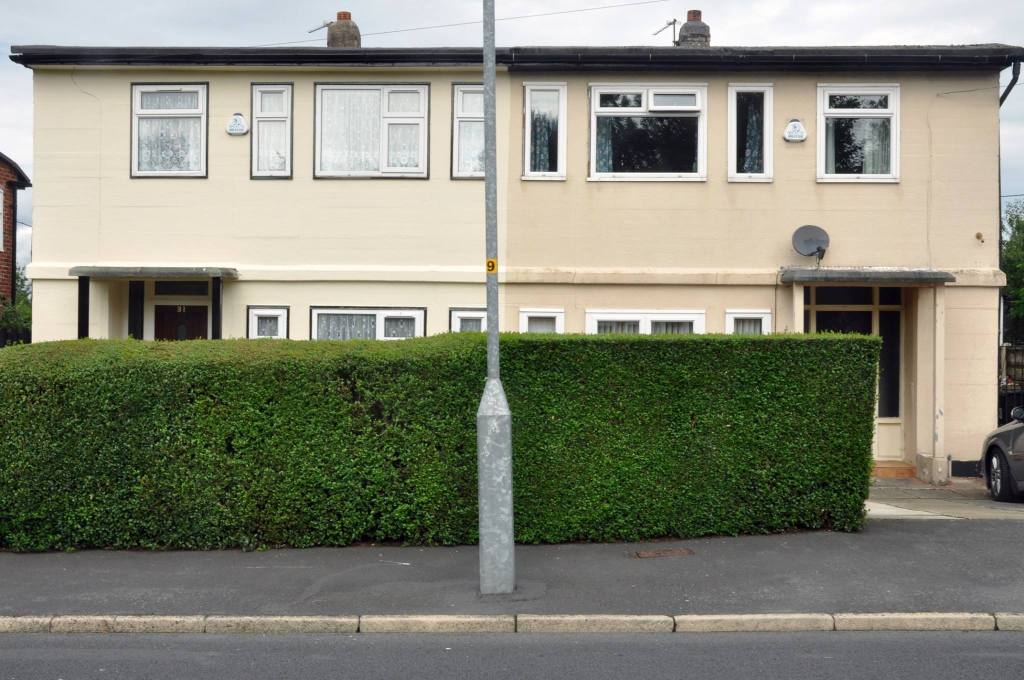
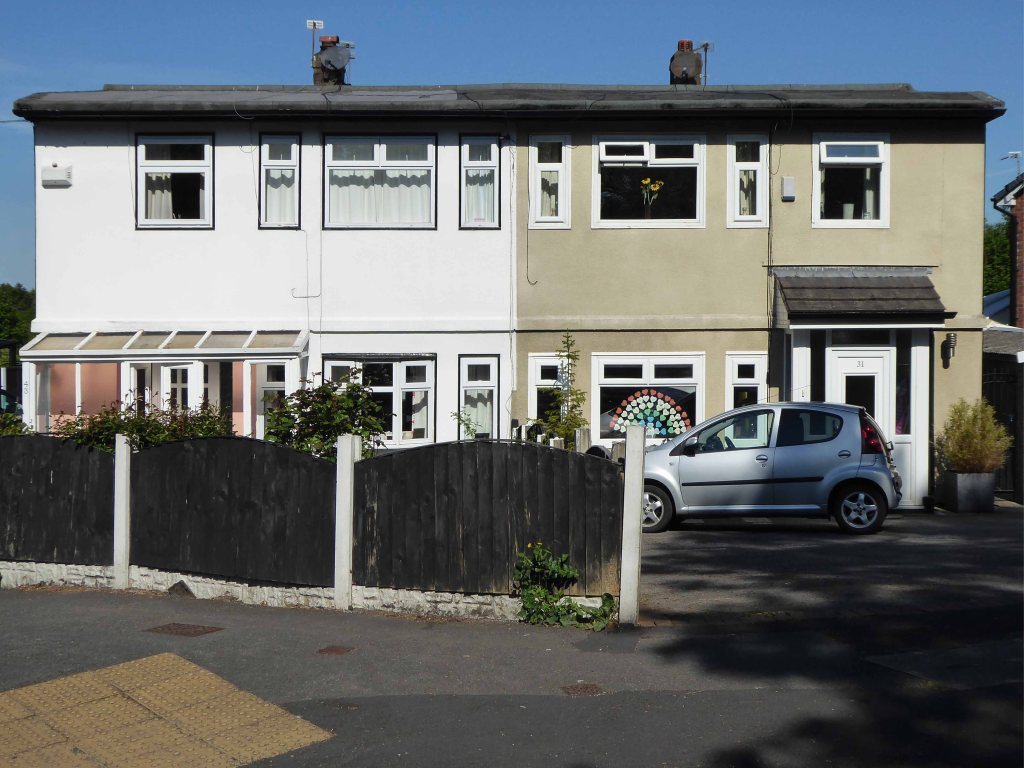
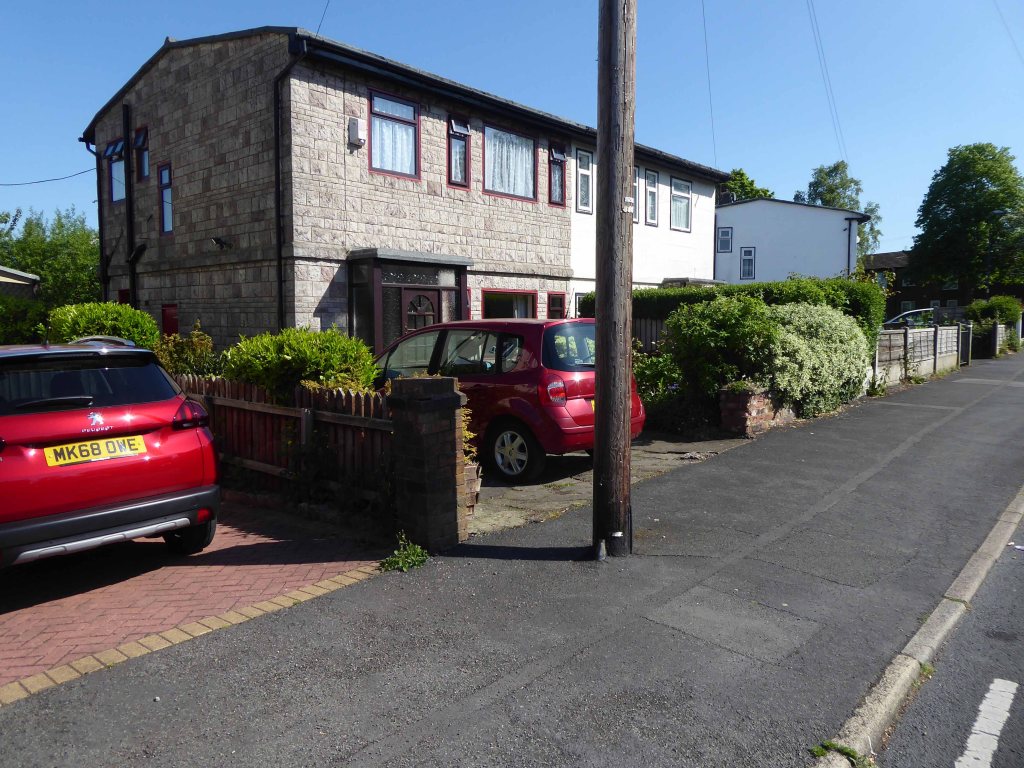
I have been here before in 2015 en passant, snapped the homes chatted to a resident and off, she had informed me that they had been post-war experimental concrete homes.
I thought no more about it – but subsequently I did, returning to the road to take another look.
Here’s one I didn’t make earlier.
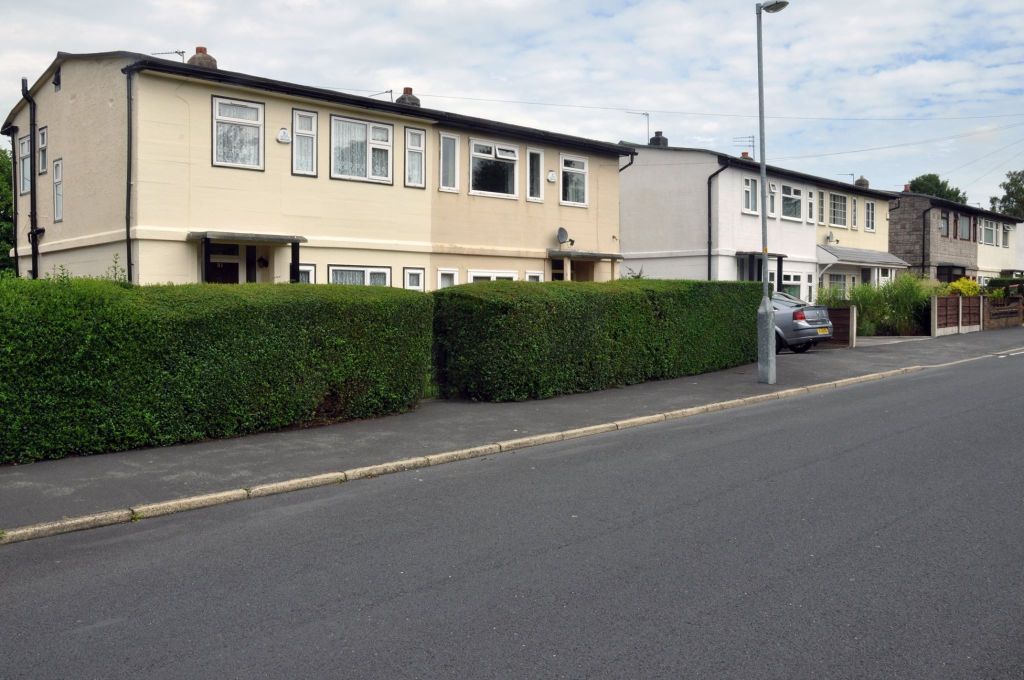
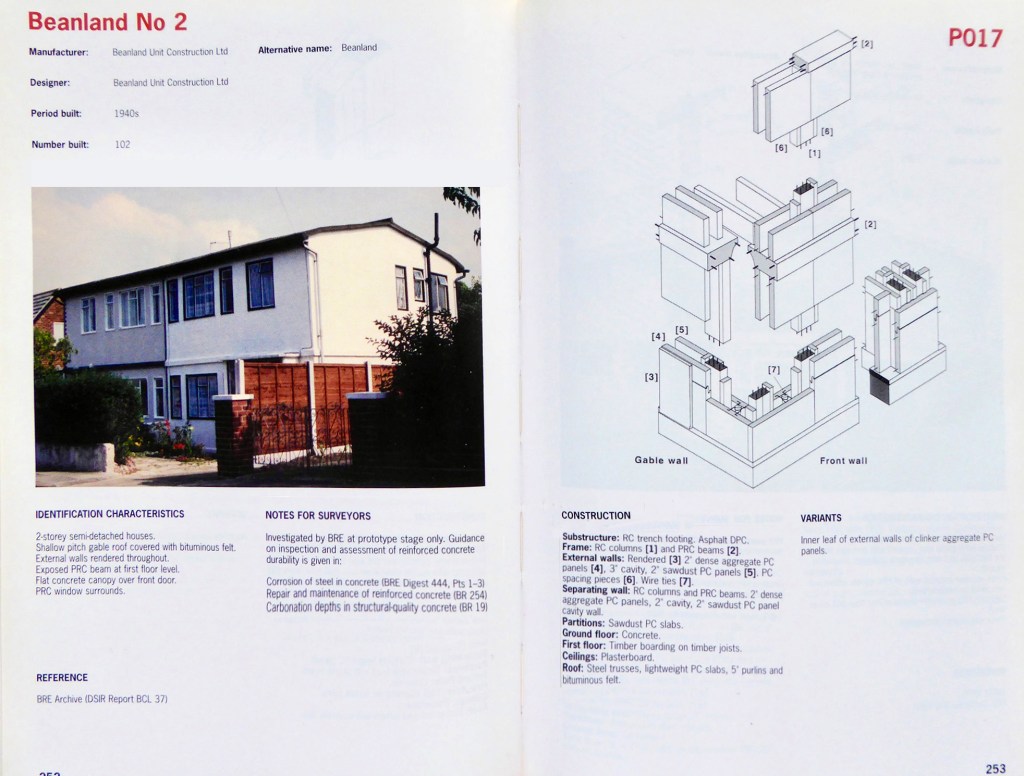
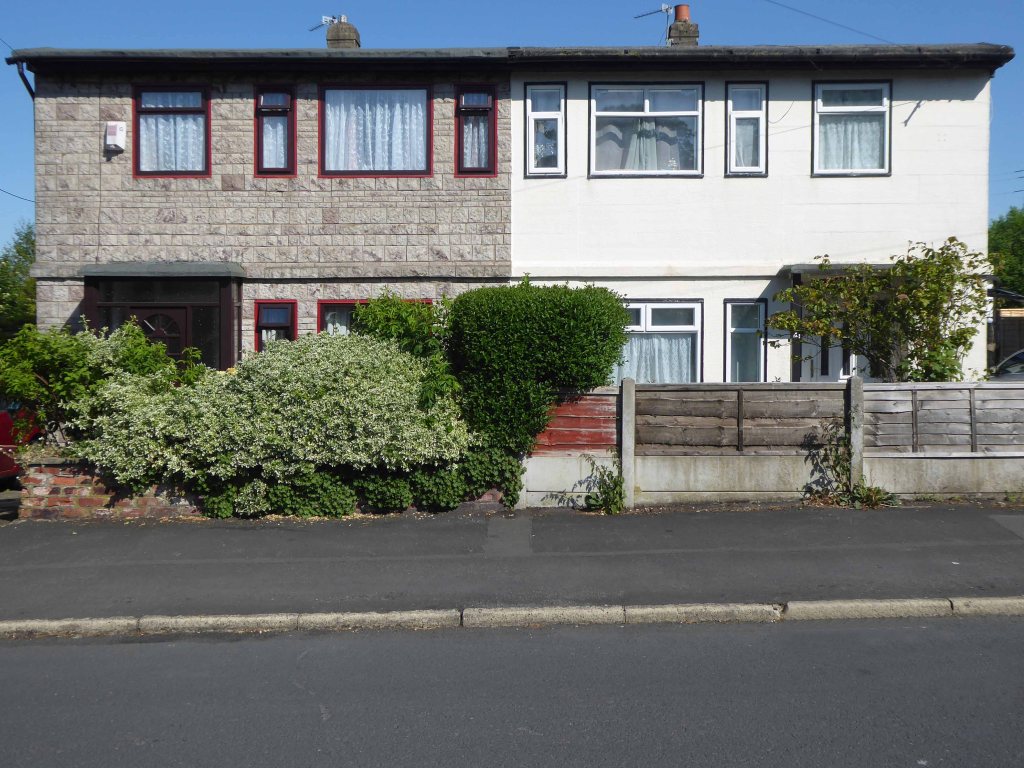
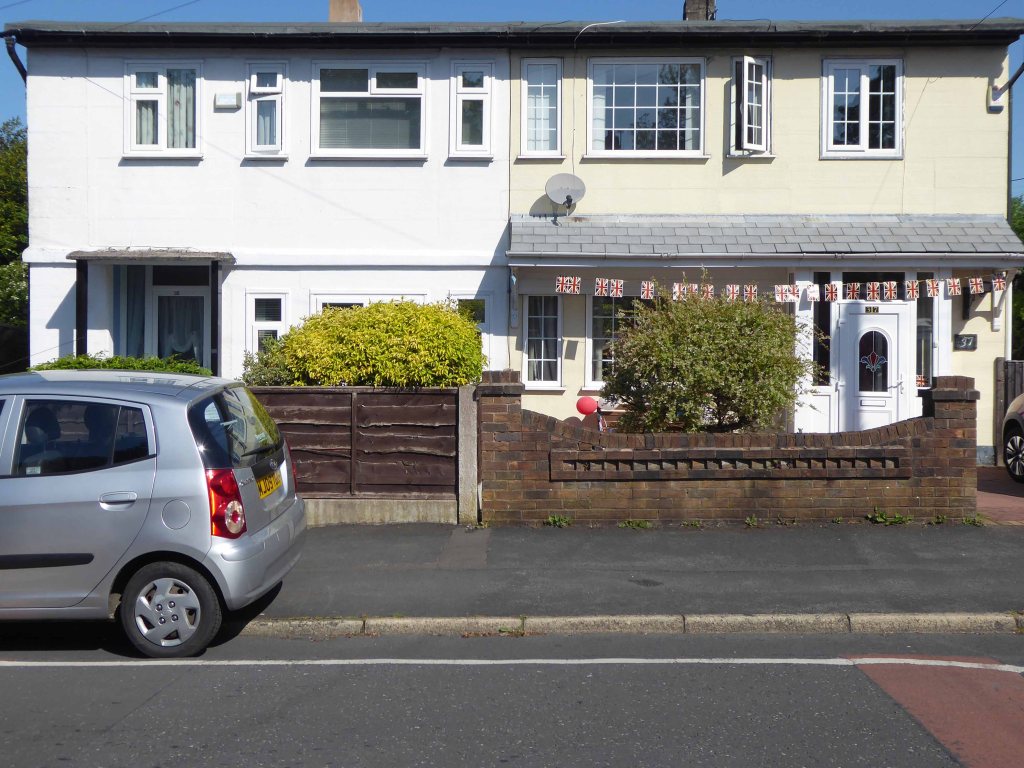
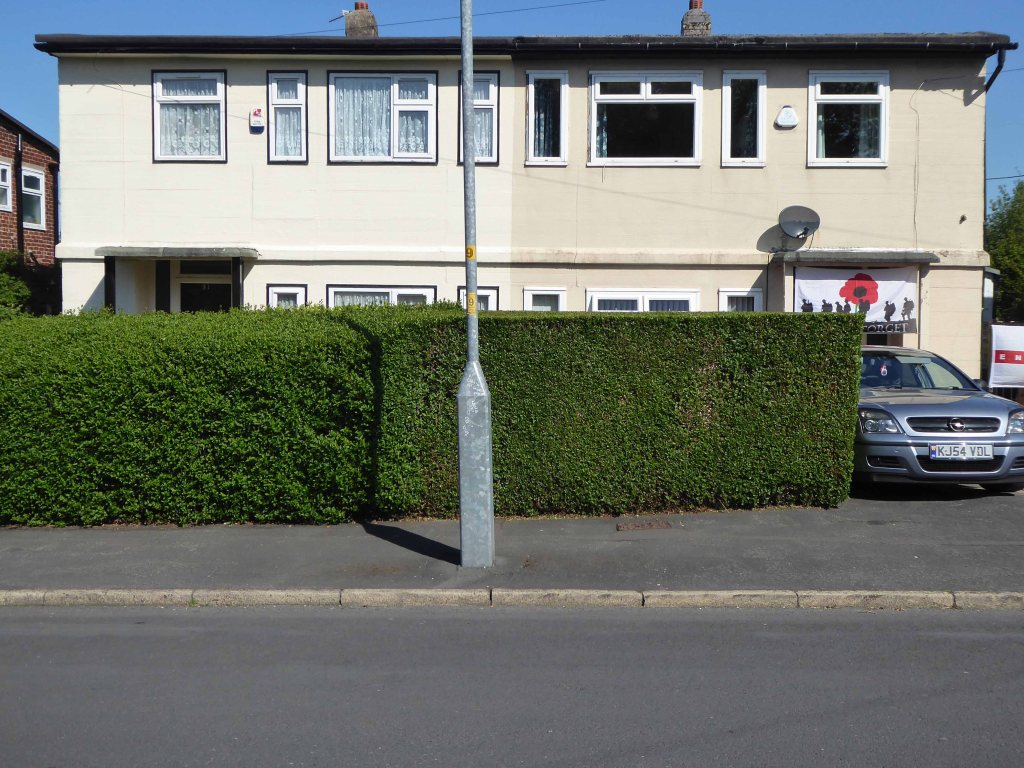
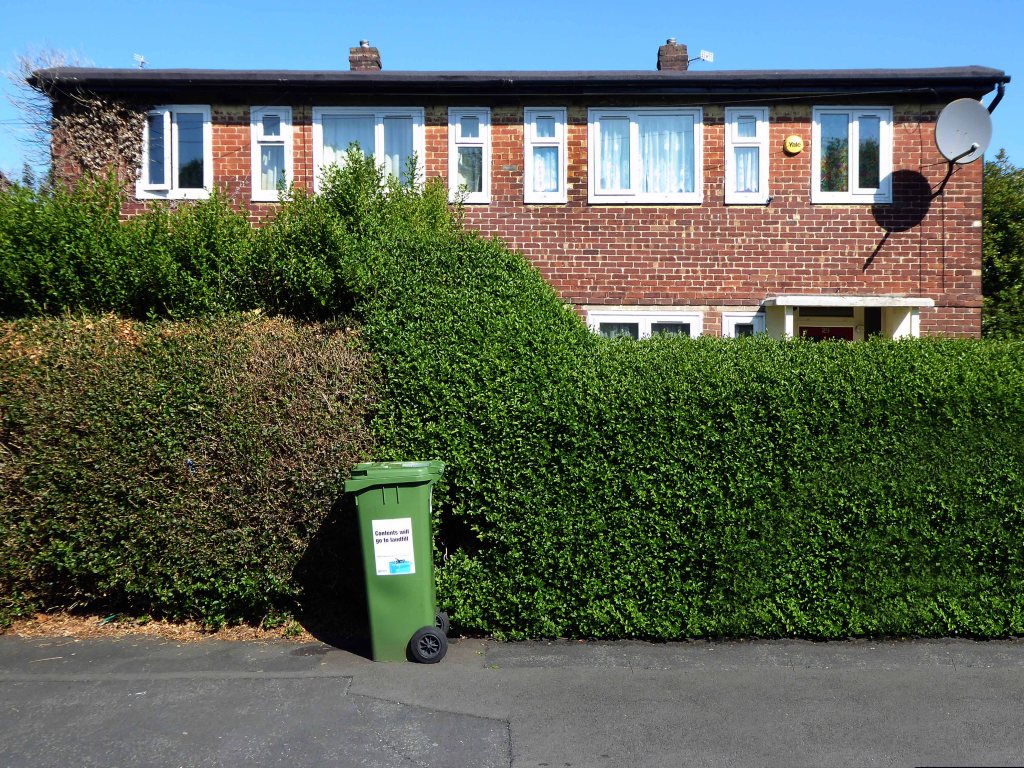
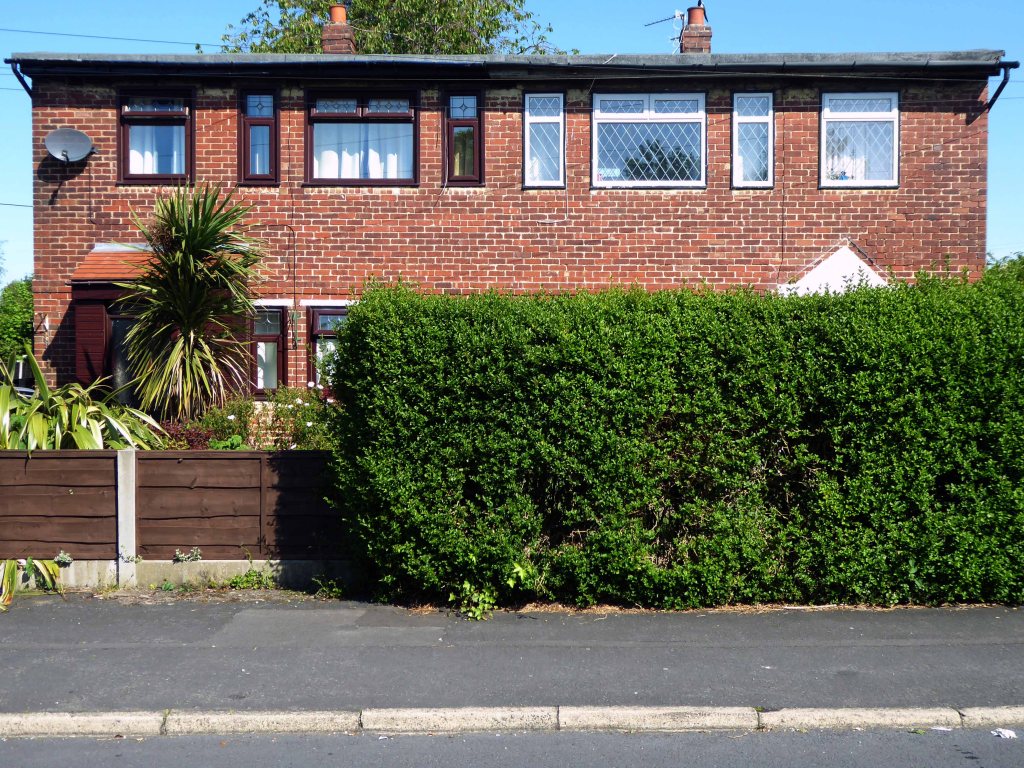
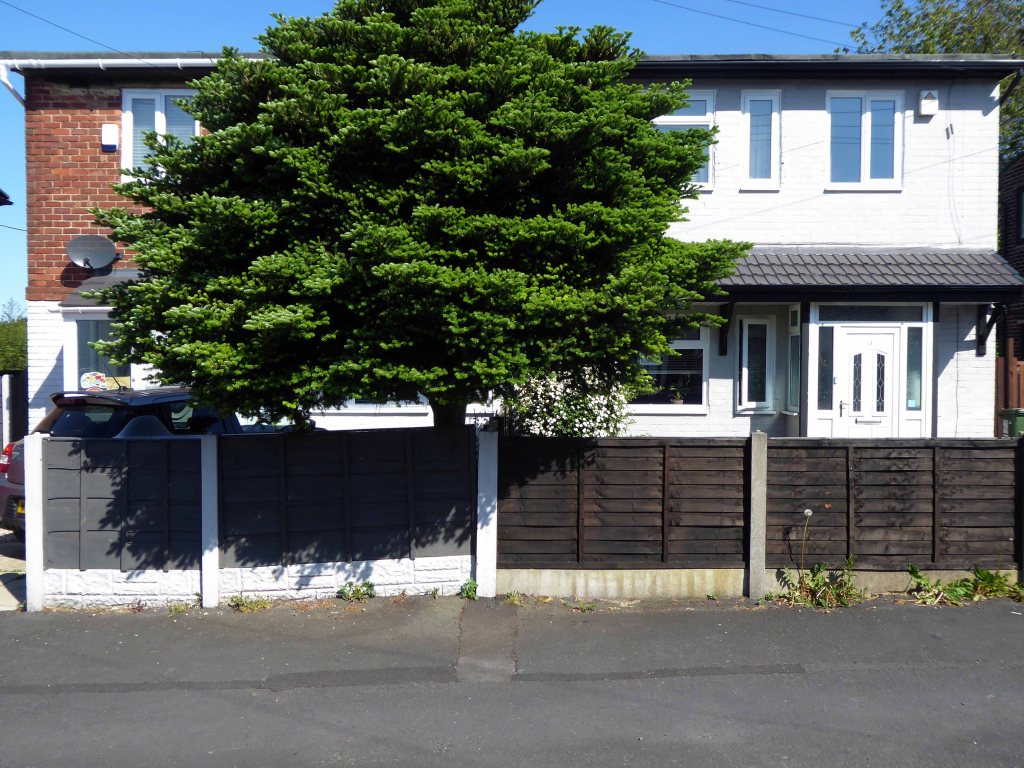
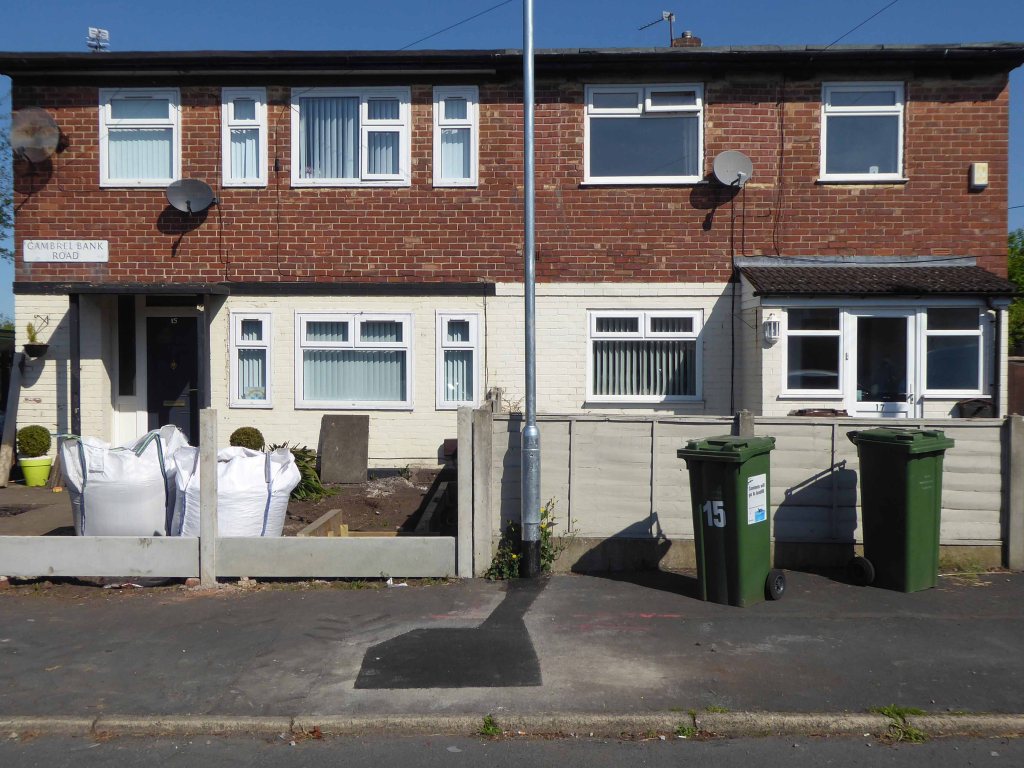
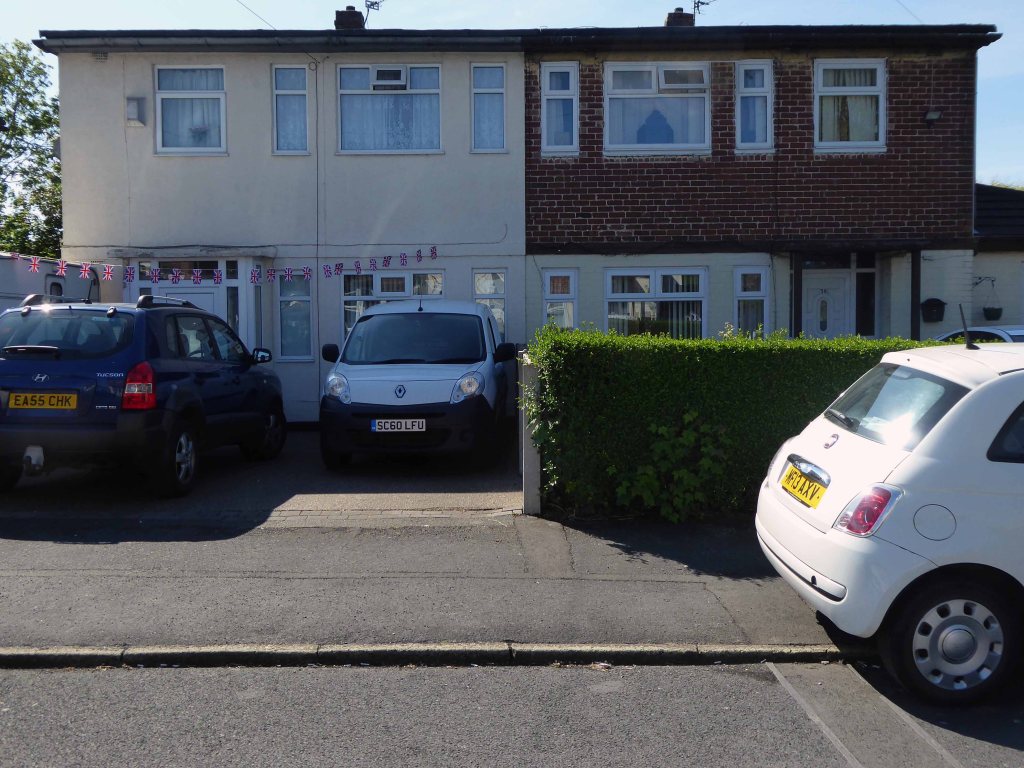
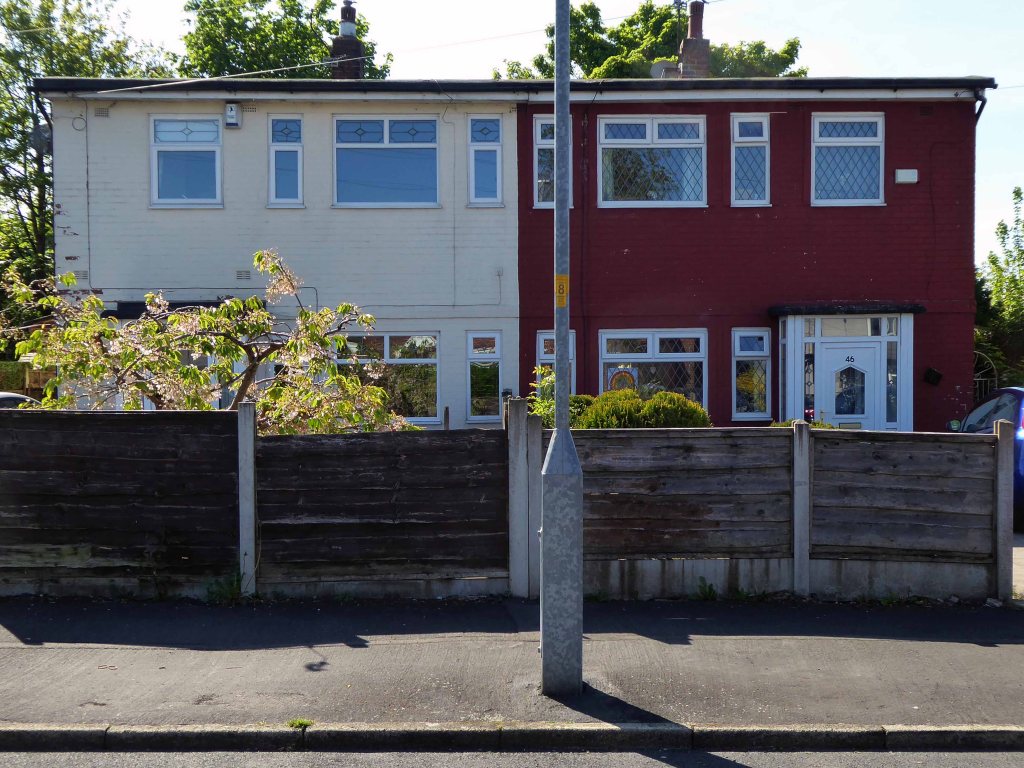
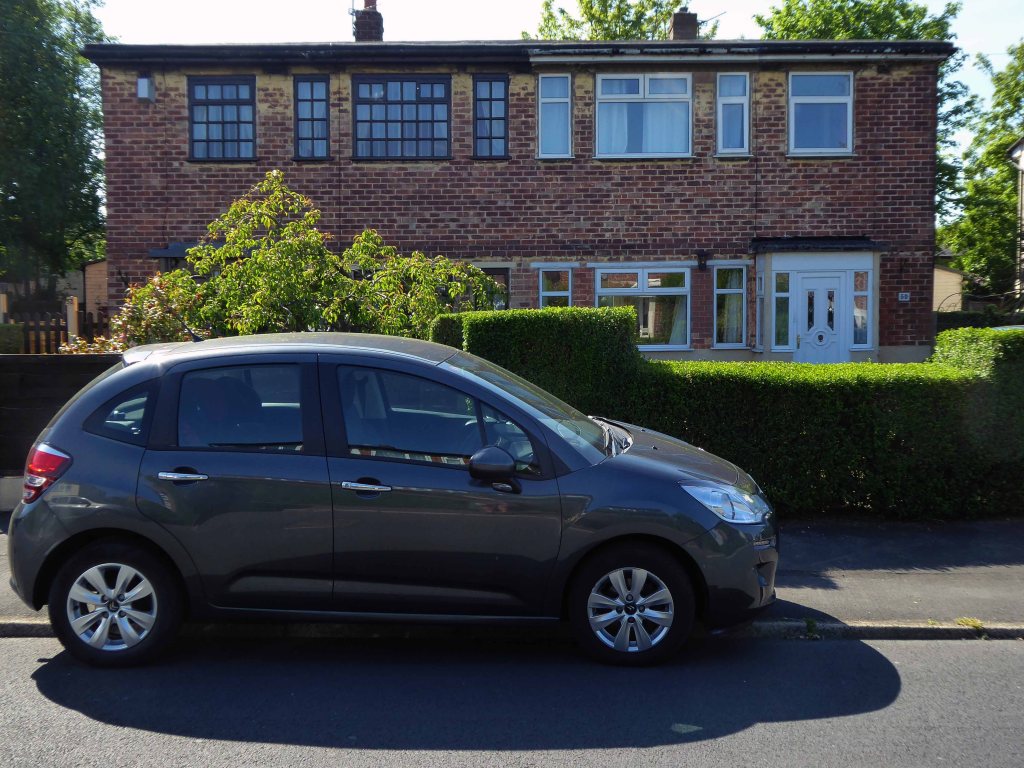
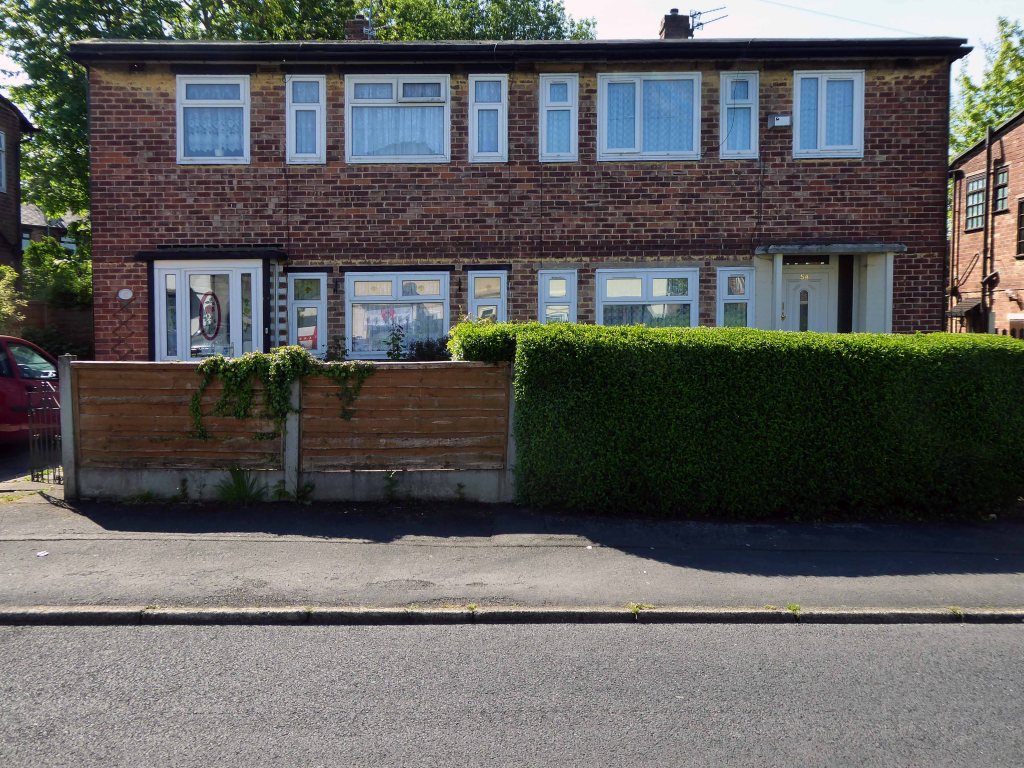
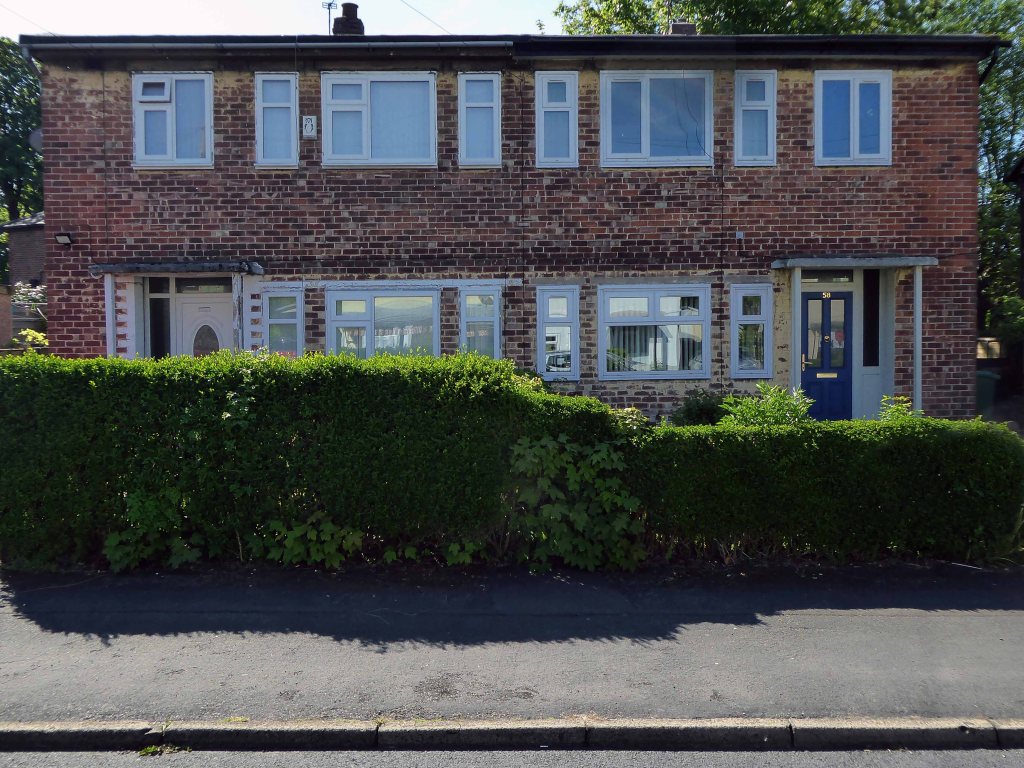
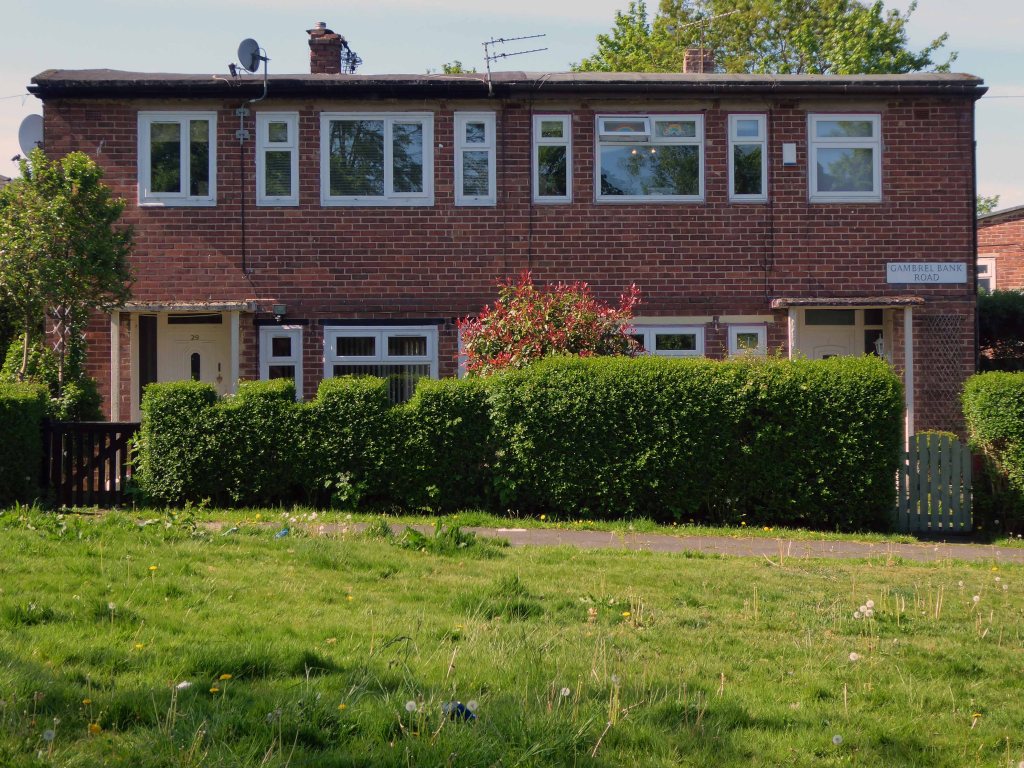
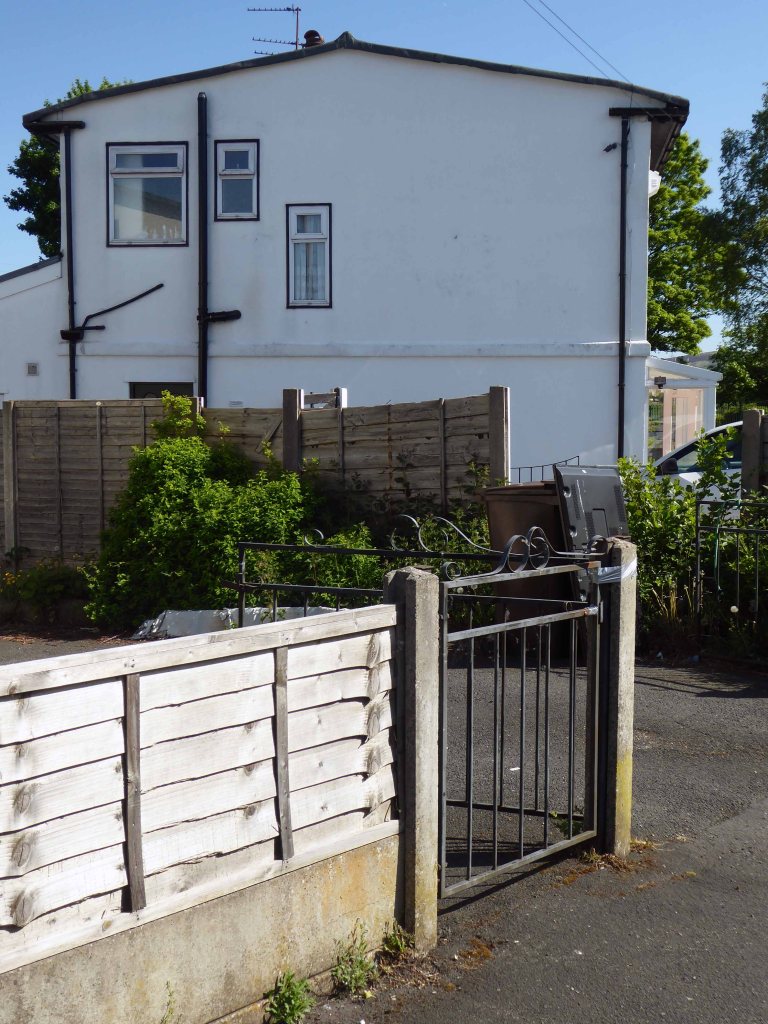
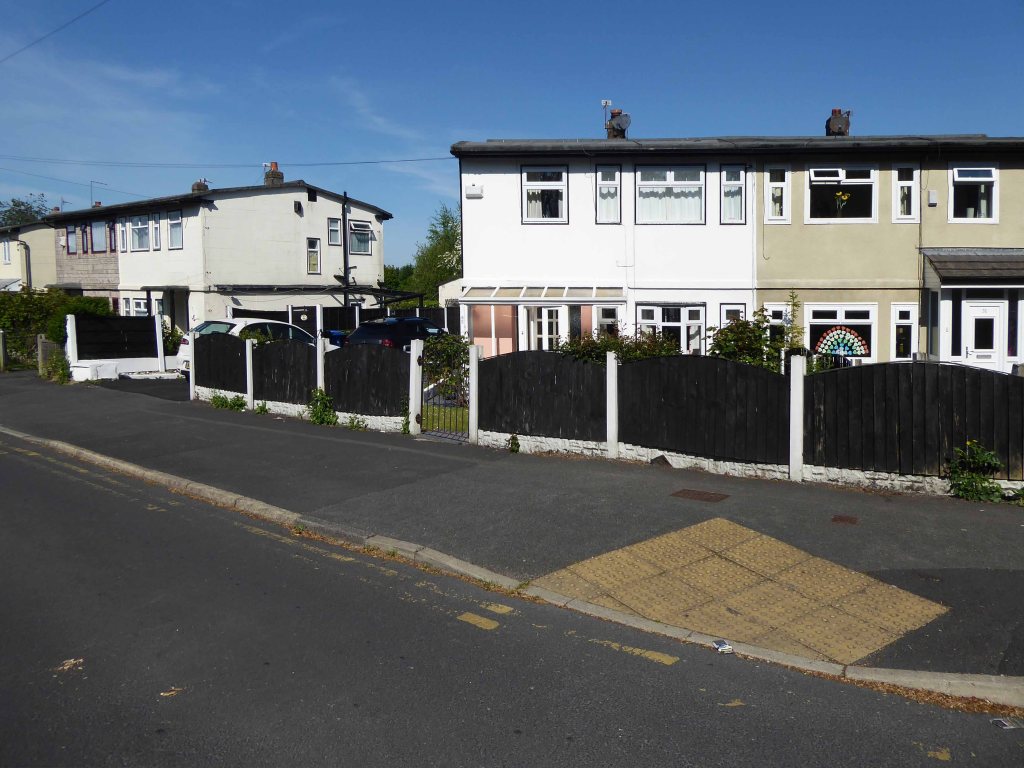
There are four semi detached homes constructed from concrete, rendered painted and clad over the years, windows replaced, additions and amendments made.
Though the basic design characteristics have been retained.
There are no local archival images or histories, I assume that they were post-war, an addition to the inter-war Smallshaw council estate.
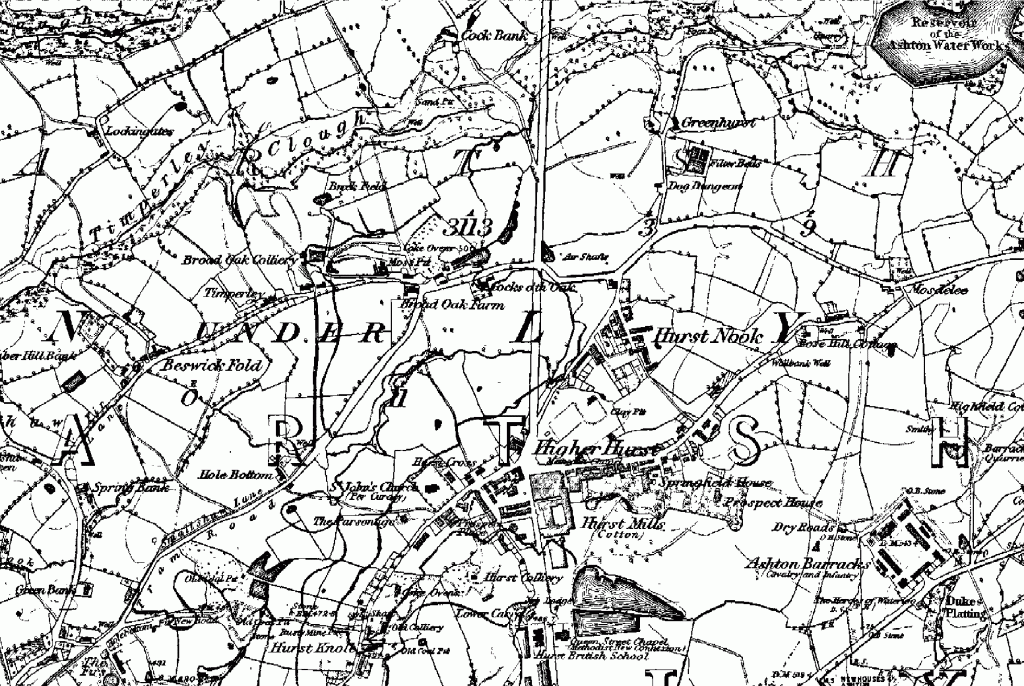
In an area which in 1848 was given over to mining and agriculture.
I have subsequently learnt from an online contact Mr Sid Cat, that the homes are Beanland No 2.
They are listed on the BISF site – 102 were built.
More than this I cannot say – further searches for Beanland proving largely fruitless.
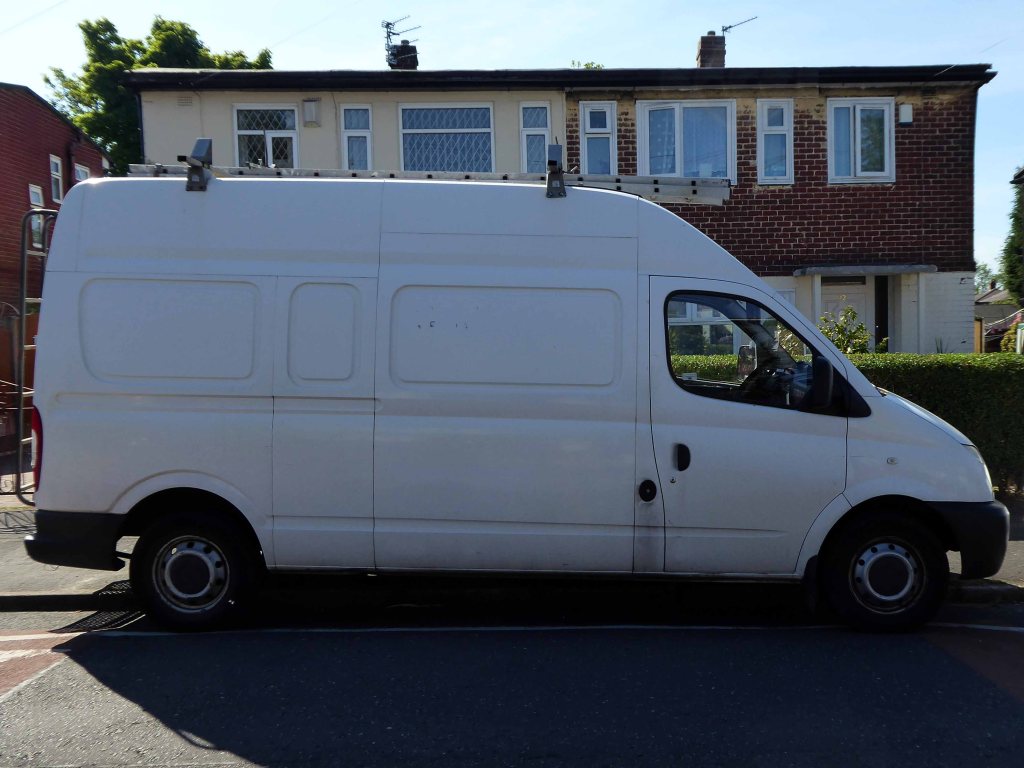
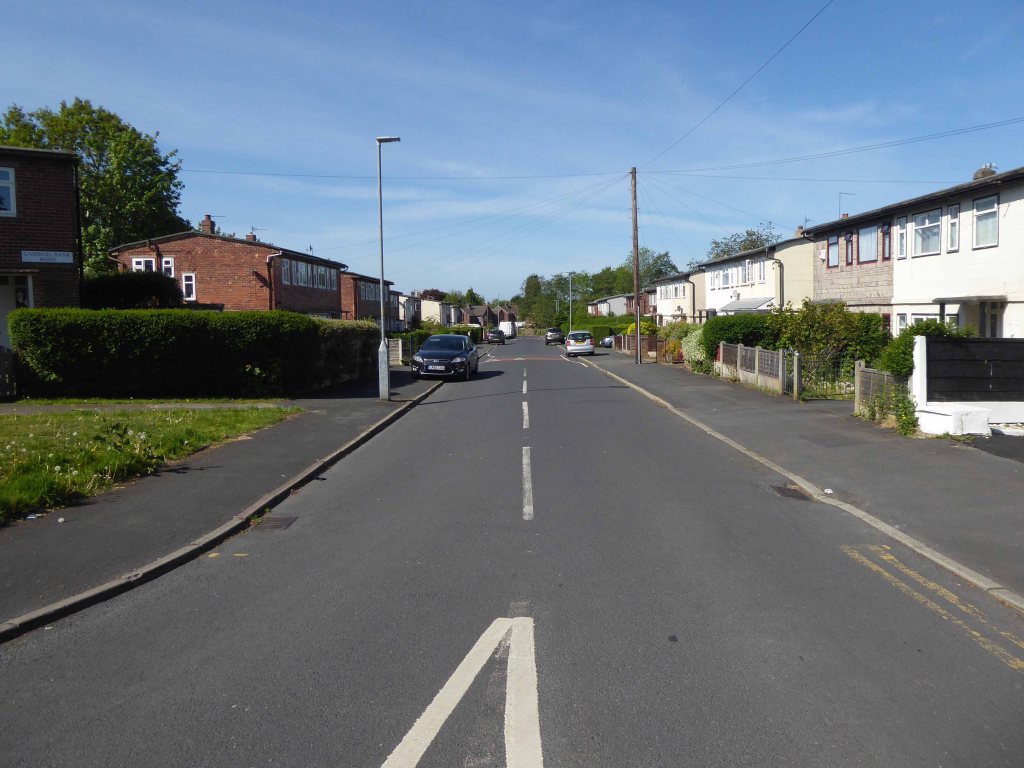
In addition there are also several semi detached houses of identical shape and proportion faced in brick – why?
Suffice to say here we are now and here they all are.
Charles Dreyfus was a French emigrant chemist and entrepreneur, who founded the Clayton Aniline Company on 29 May 1876. The company obtained a lease on a parcel of land in Clayton, Manchester, sandwiched between the Manchester and Ashton Canal and Chatham Street – later known as Clipstone Street.
1904
At its peak in the 1970s, the site occupied over 57 acres and employed over 2,000 people. However, due to the gradual demise of the British textile industry, most textile production shifted to countries such as China and India with the textile dye industry following.
1960
In 2002, the company made 70 members of staff redundant and in 2004 the announcement was made that the site would be closing with the loss of over 300 jobs. A small number of staff were retained to assist in the decommissioning of the plant. The last workers left the site in 2007 and the remainder of the buildings were demolished shortly afterwards.
Like much of the industry of east Manchester its tenure was relatively short – money was made and the owners departed, without wiping their dirty feet.
The site remained derelict until demolition, followed by extensive site cleansing – to remove the dangerous detritus of 200 years of hazardous chemical production.
Vincent Kompany had just completed his £6million move from Hamburg when he realised that Mark Hughes’ sales pitch about the direction the club was going was not entirely accurate.
They took me for a look around the training ground at Carrington – it wasn’t fit for purpose, it was a dump.
I remember there was a punch bag in the gym – and only one boxing glove. And even that had a big split in it!
Then in 2008 the corrupt boss Thai PM Thaksin Shinawatra is bought out by Sheik Mansour – the rest is history/mystery.
Mr Peter Swales makes no comment.
My interest lies in the company’s Ashton New Road offices – seen here in 1960.
Demolished and replaced by a distinctly Modernist block by 1964.
A flank was added on Bank Street along with a bank.
The office complex is still standing, now home to Manchester Police, I risked arrest and incarceration, in order to record the distinctive tile work, rectilinear grid and concrete facades.
Attracting several suspicious stares from the open glazed stairwells.
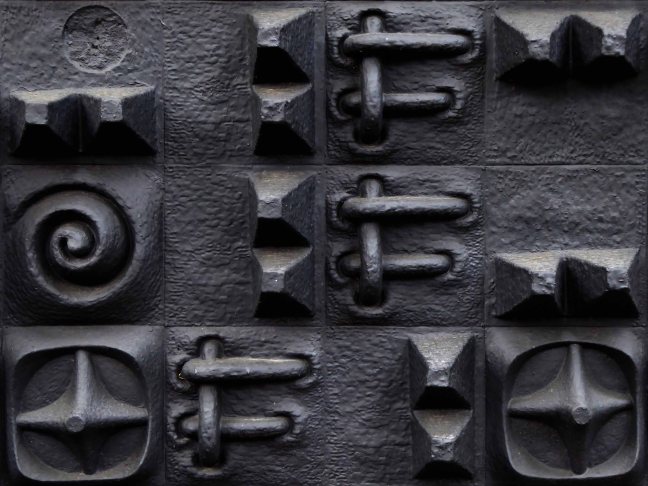
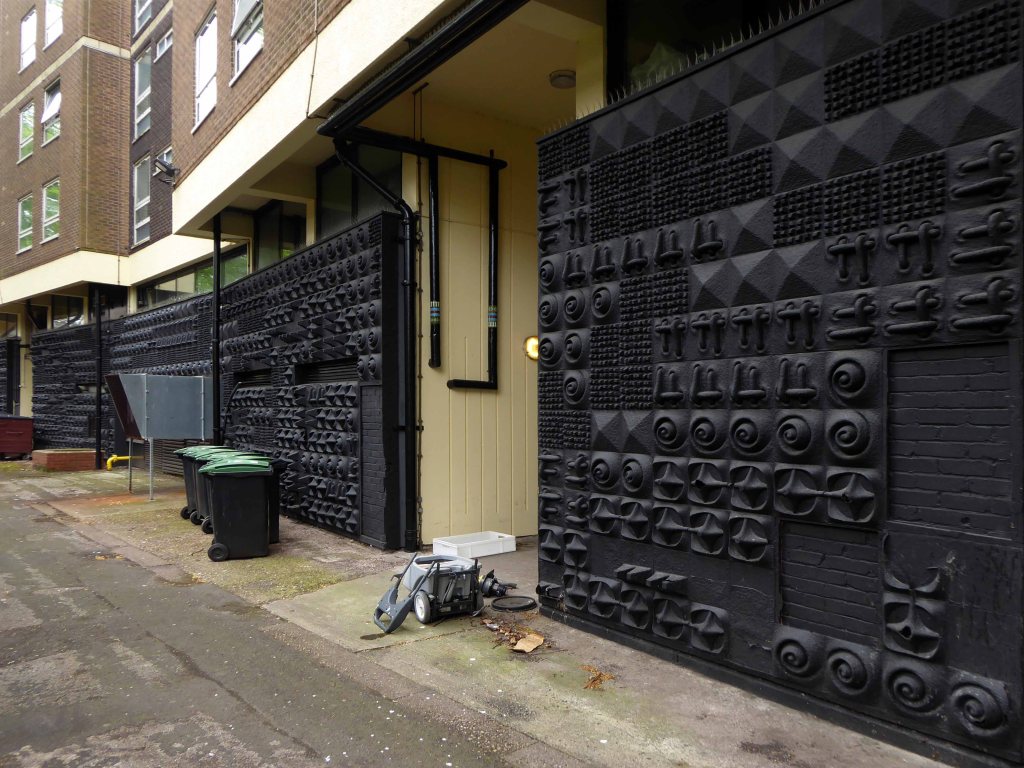
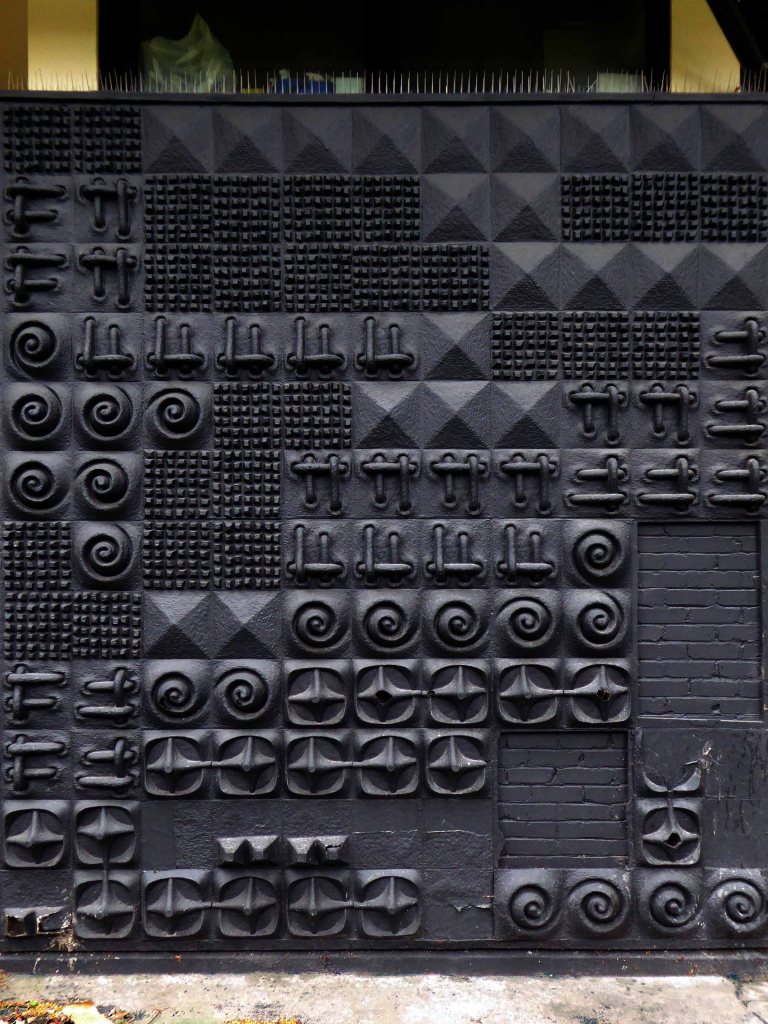
We have of course been here before visiting Mitzi Cunliffe and her work – Cosmos
Mitzi Solomon Cunliffe January 1st 1918 December 30th 2006
This time we are taking a peek around the back.
Having passed by on the top deck deck of the 42 on my way home to Stockport, I espied an extension of the sculpture to the rear of the tower.
I vowed to return!
Fighting through extraction units, wheelie bins, hoppers, plus a disused and disabused vacuum cleaner, I found myself in the narrow service area, where I did my best to get back from the wall, hard against the chain link fence.
The things you do.
For some much needed light relief, air and open space I revisited the front face of the tower.
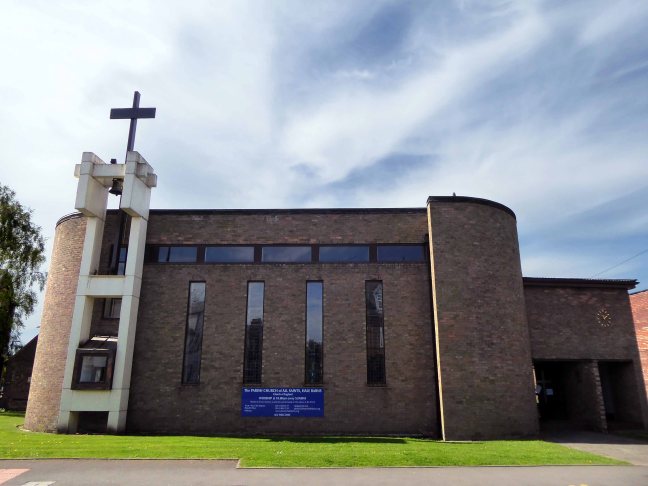
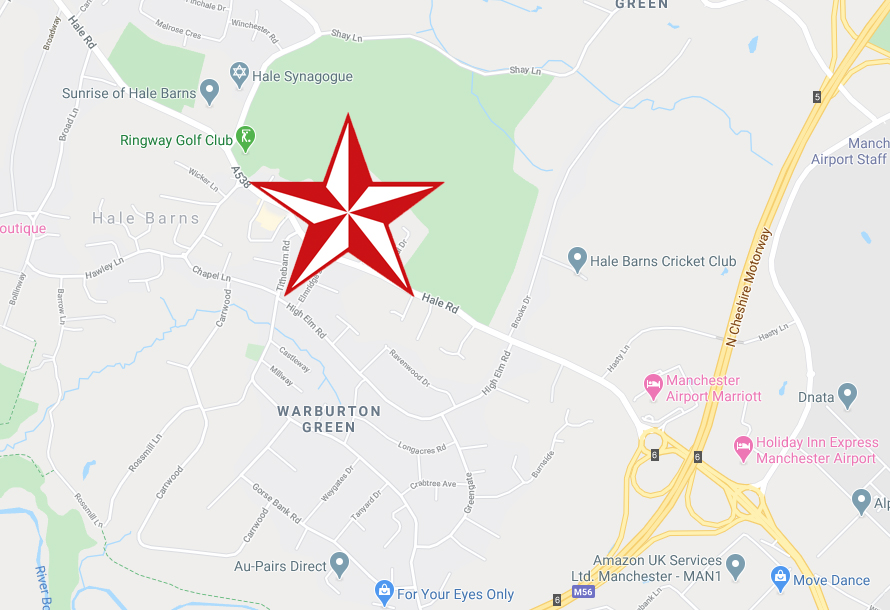
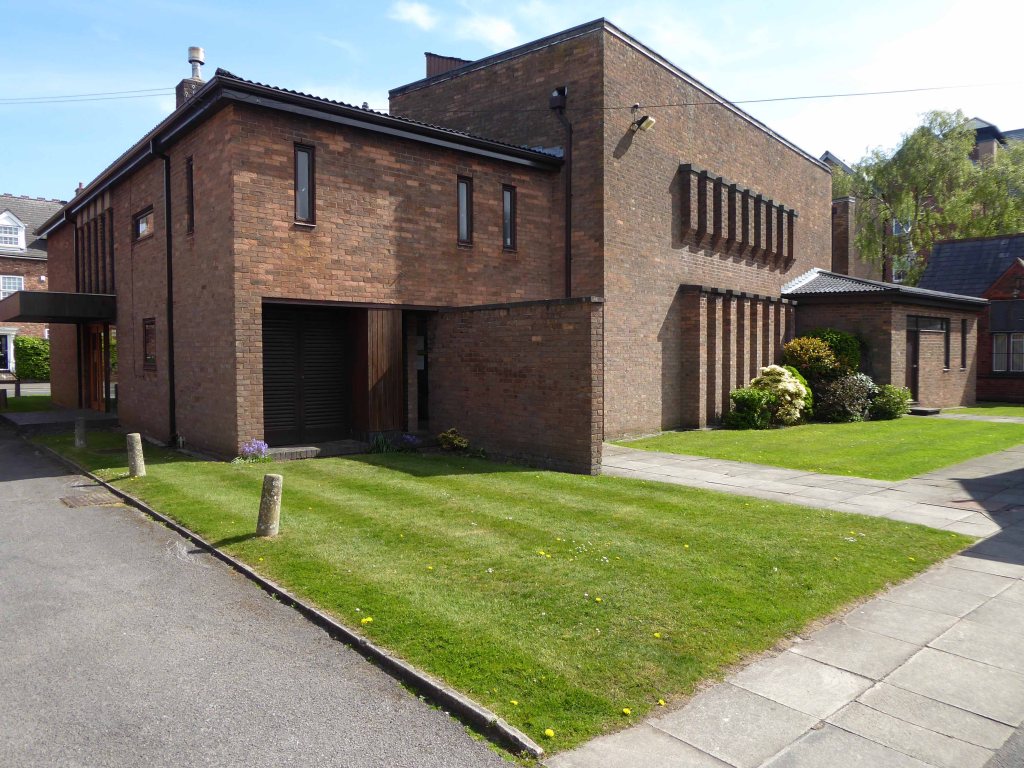
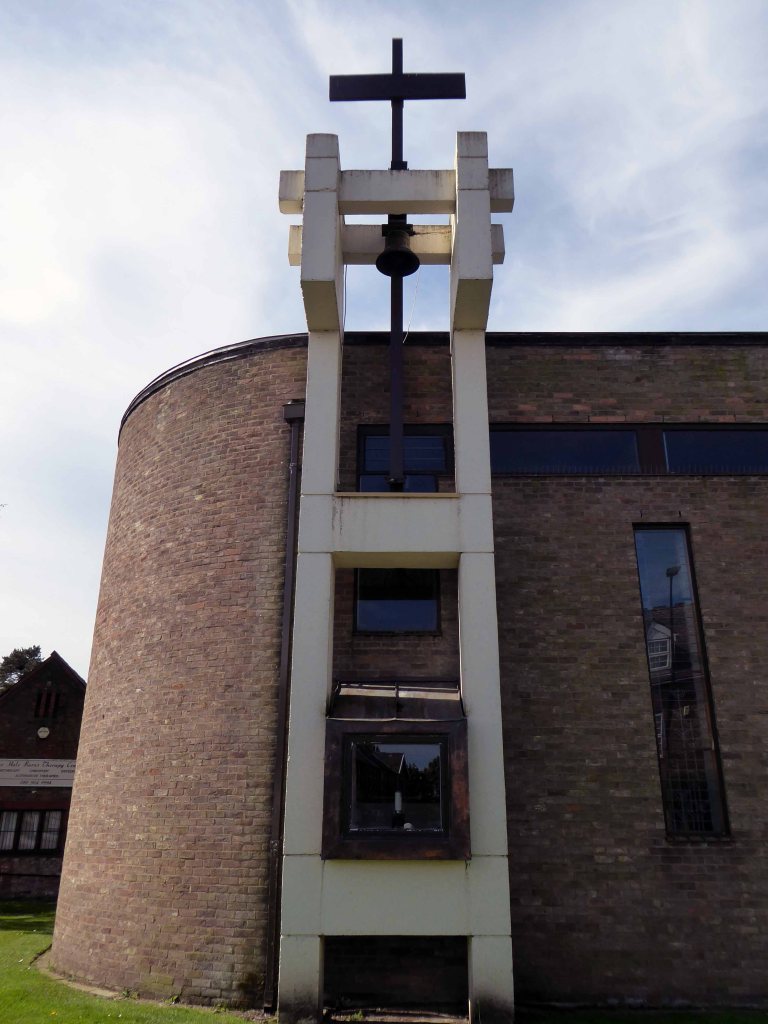
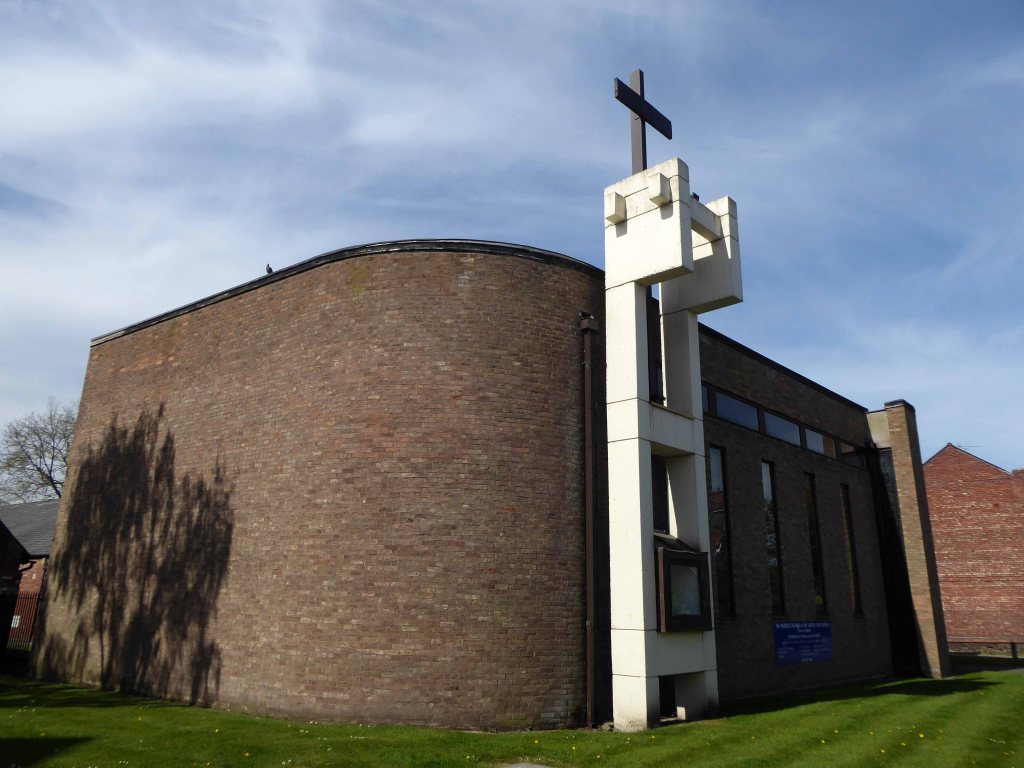
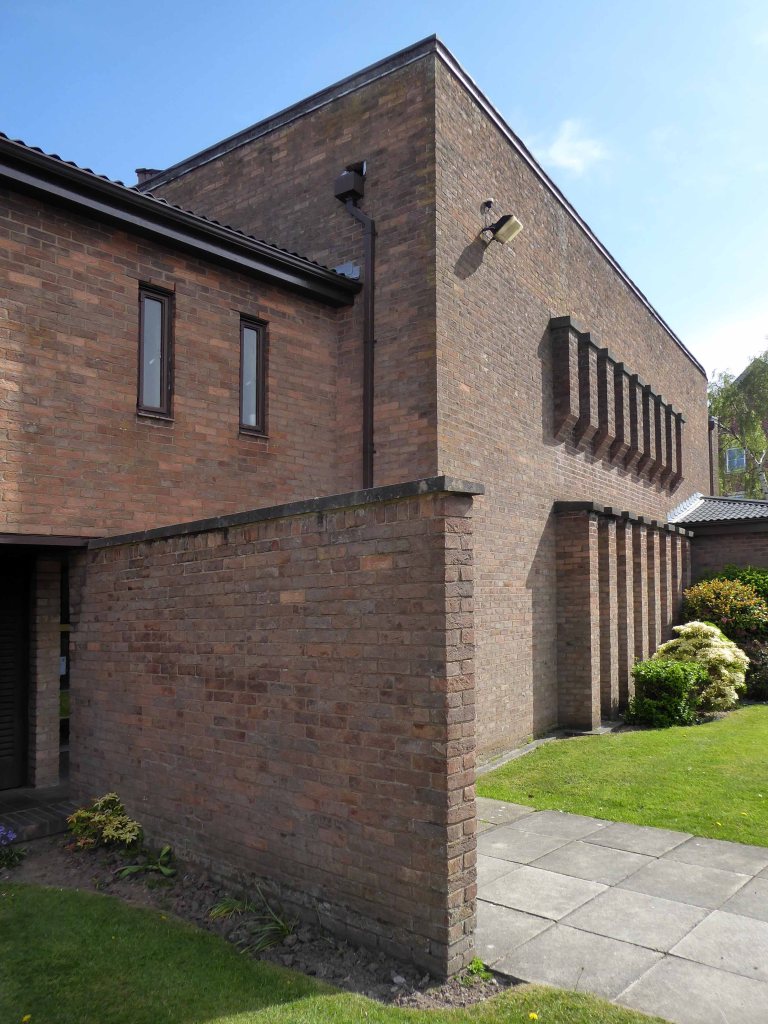
As Hale Barns grew in the 1950s and 1960s it was clear that the small daughter church was less than adequate in terms of size and facilities, and under the leadership of the Rev Fred Cox, the then Vicar, a new church was planned for the site. Designed by Brian Brunskill, All Saints Church was consecrated in 1967.
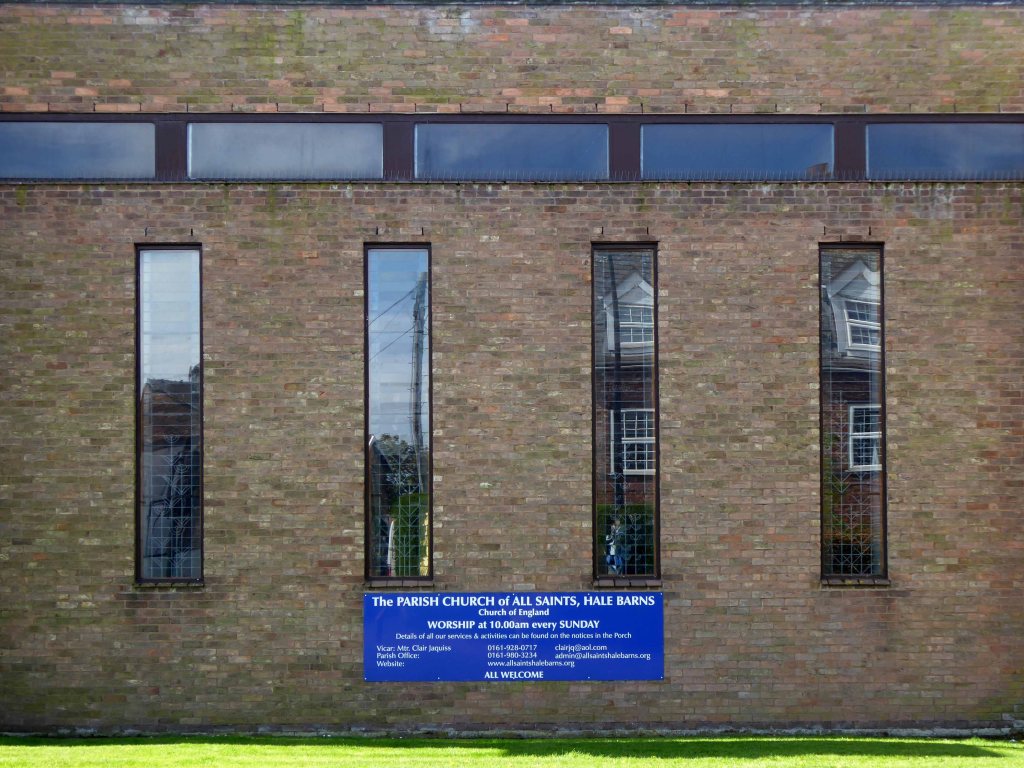
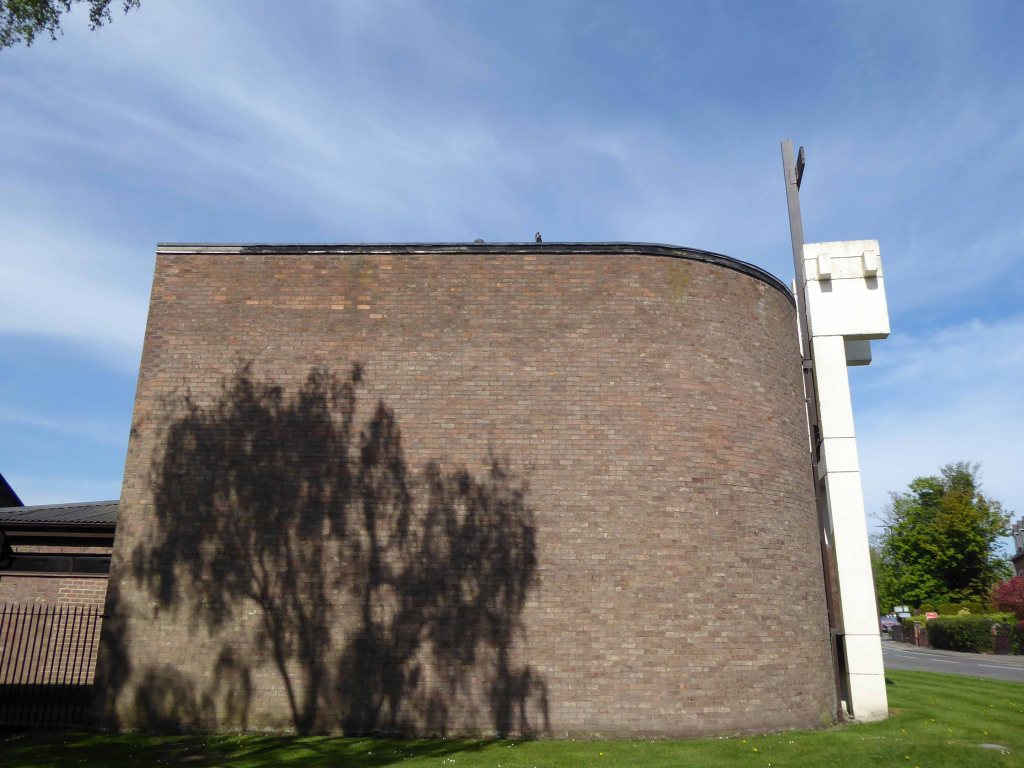
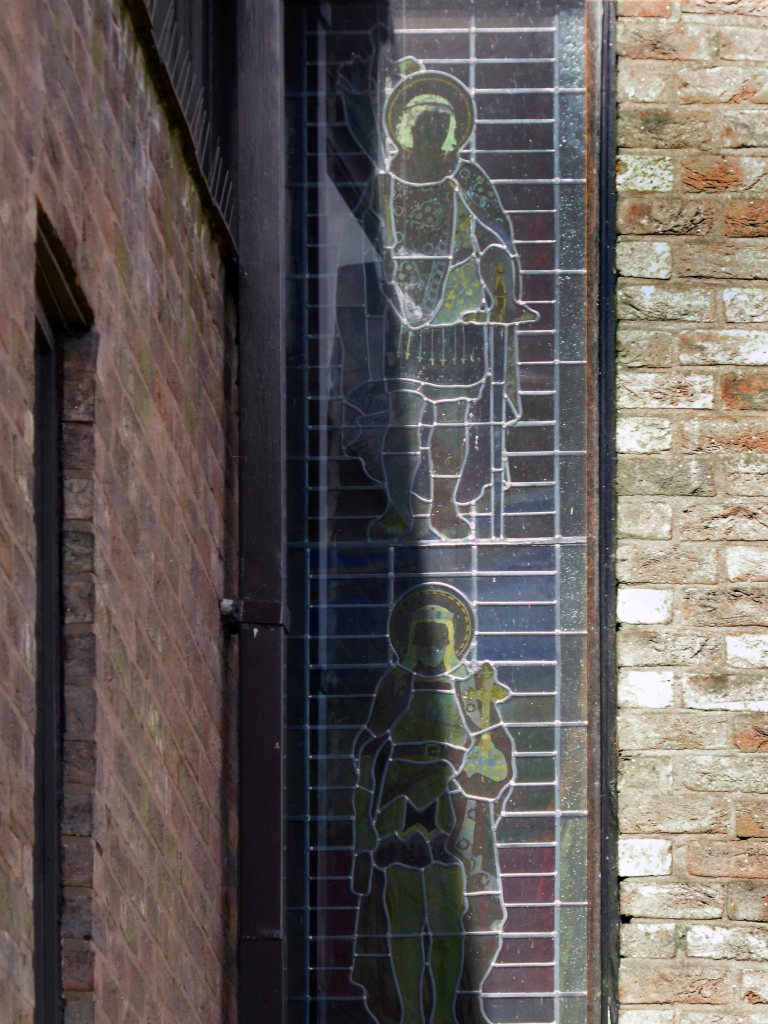
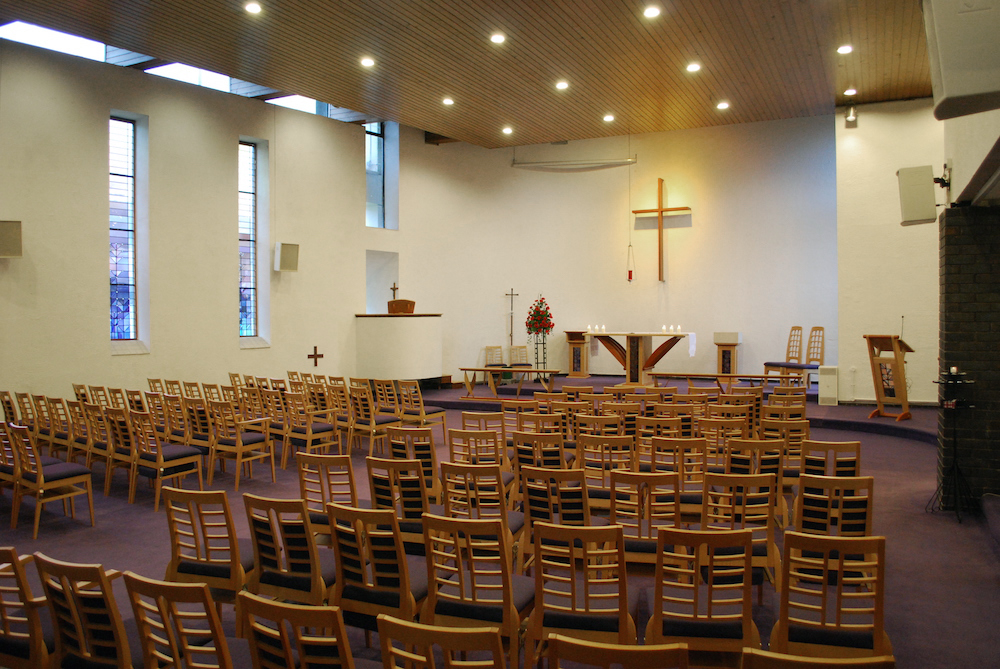
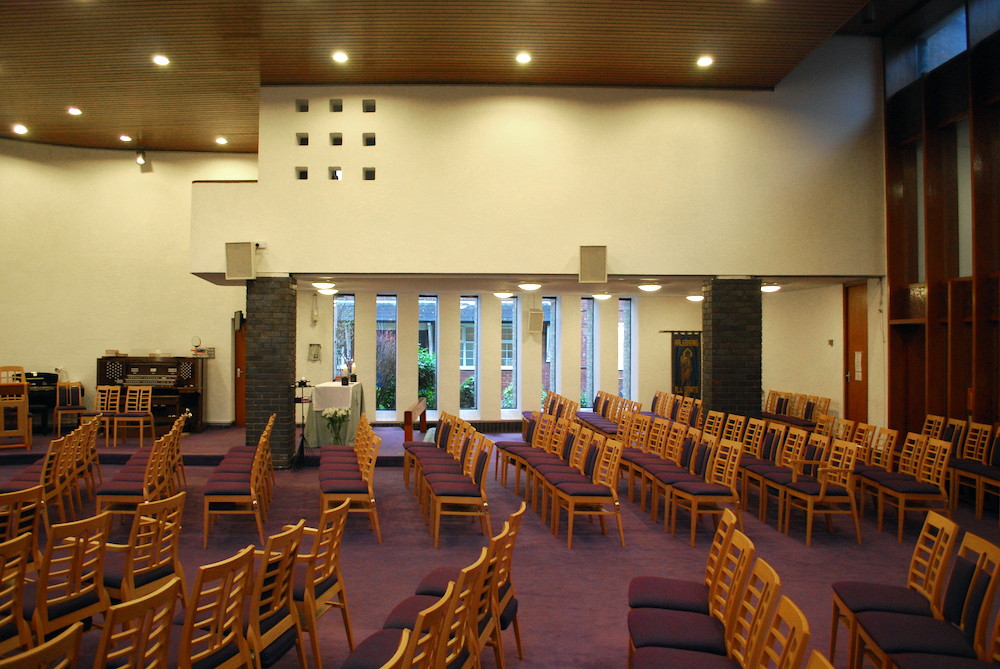
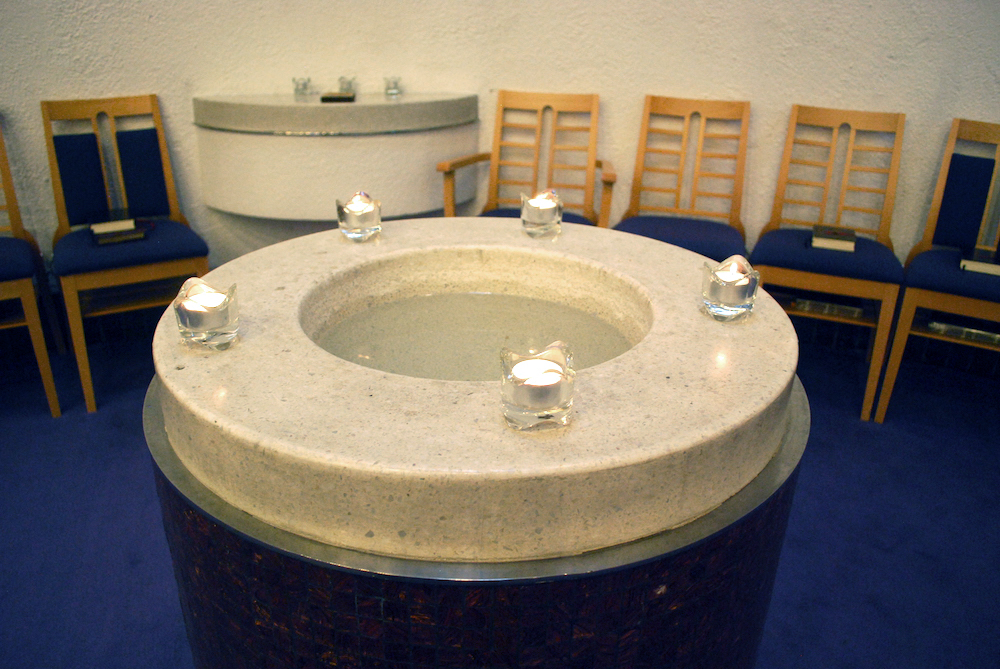
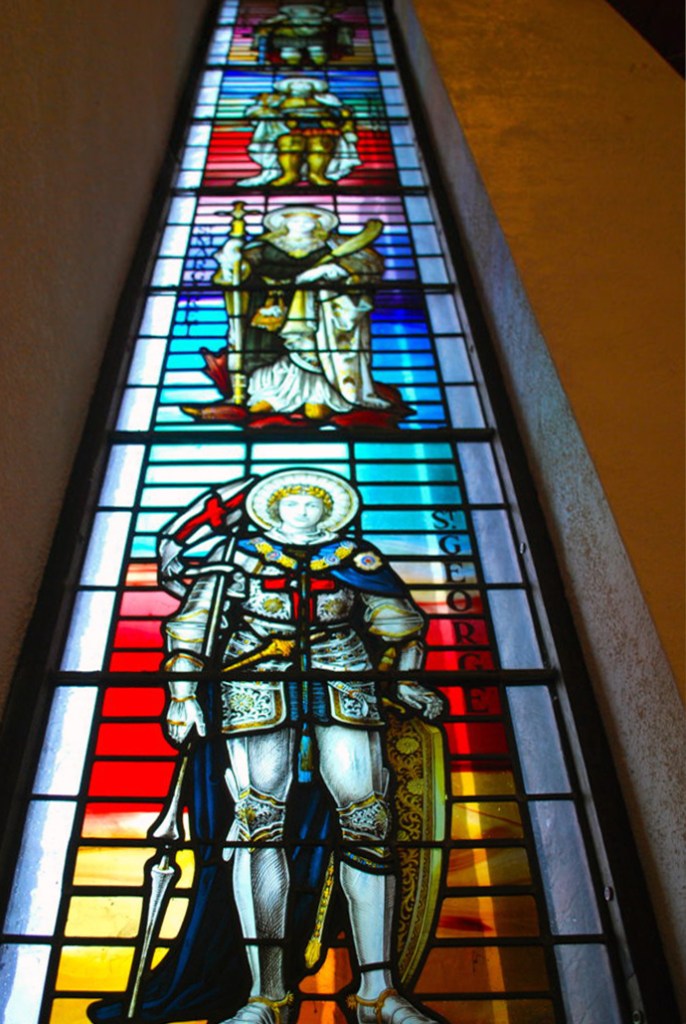
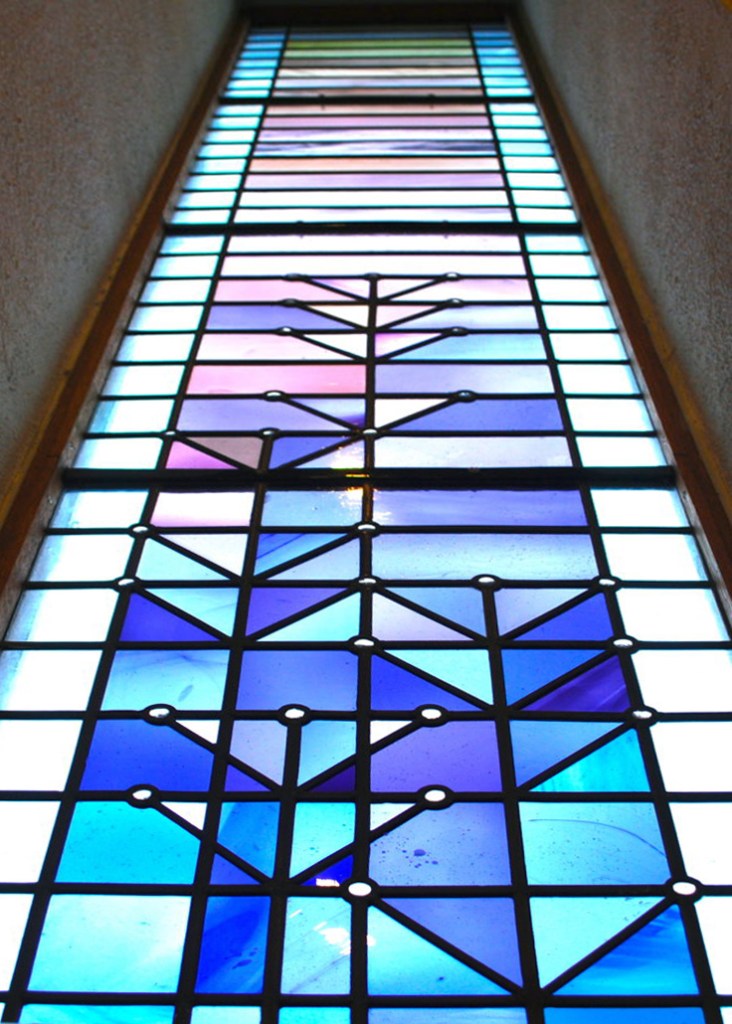
Outside it can seem a rather stark building, of brown brick, set back from the busy Hale Road but inside it is full of light and space. The influence has clearly been that of the French architect Le Corbusier, and there is a wonderful interplay of curved and straight walling. At first there was no stained glass, but in the early 1980s glass by the Japanese artist Sumiko was installed in the north windows. This includes a stylised tree-of-life design. In the baptistry there is some Victorian glass brought from St Mary’s Church.
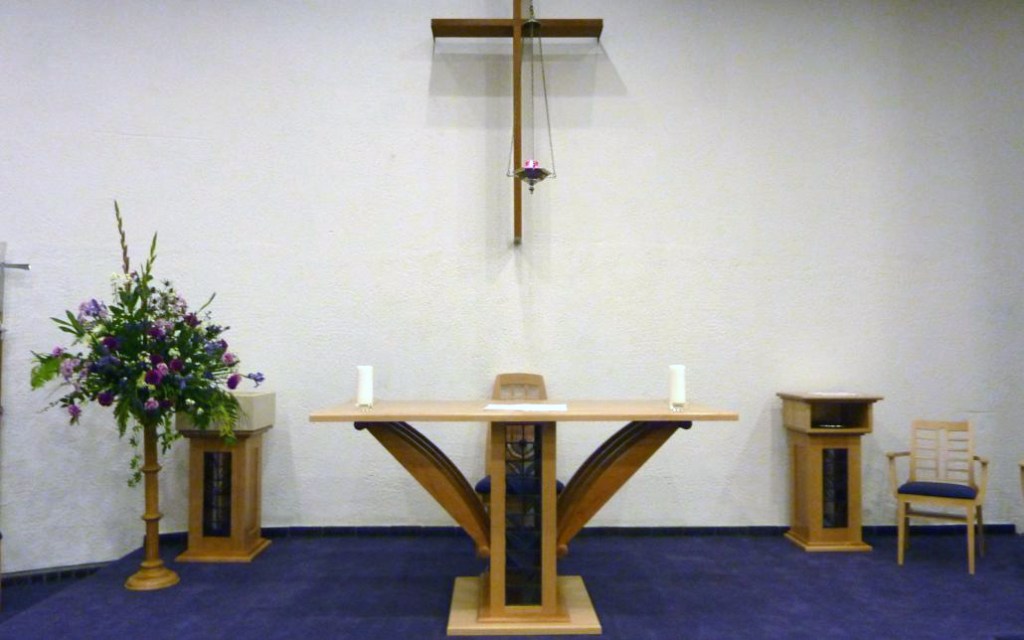
In 2009 a radical and daring re-ordering of the building was completed. The church was carpeted and new furniture of high quality, designed and made by Treske, woodcarvers of Thirsk, North Yorkshire, was installed. The tree-of-life design in the 1980s glass has been echoed in the glass inserts to the Lectern and High Altar and also in the metal uprights of the Altar Rail. All the fittings are moveable, giving a flexible space. This flexibility give opportunities to explore how the building itself can enrich worship at different seasons of the Church’s year.
My first time in Hale Barns – hence my first visit to All Saints.
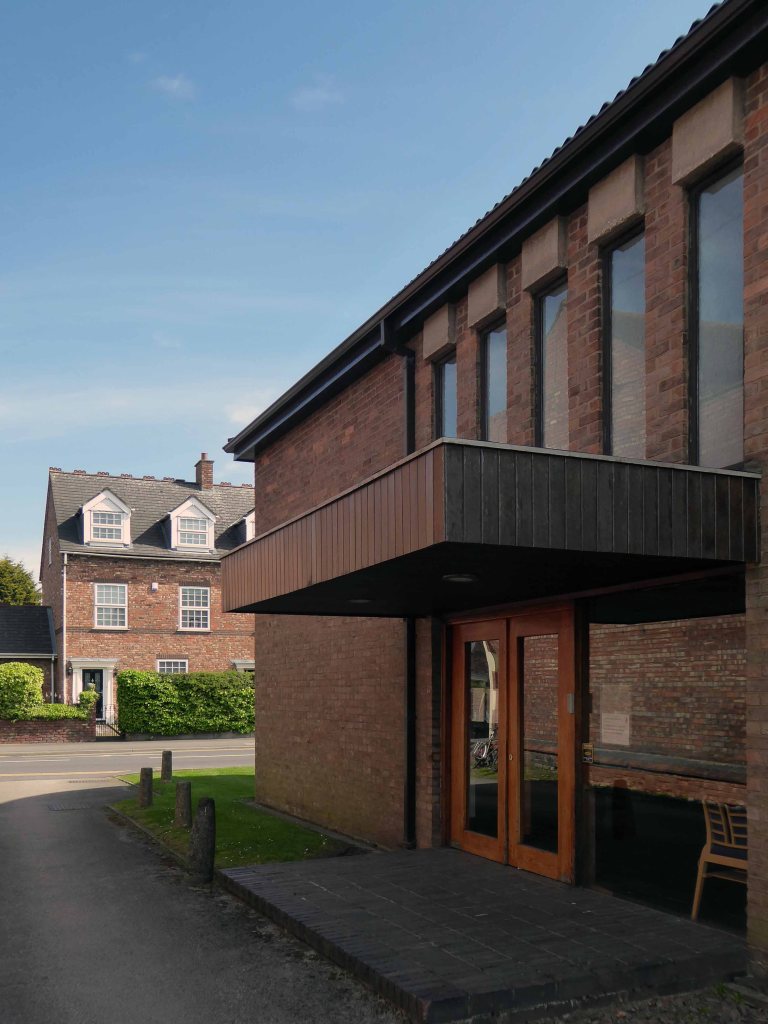
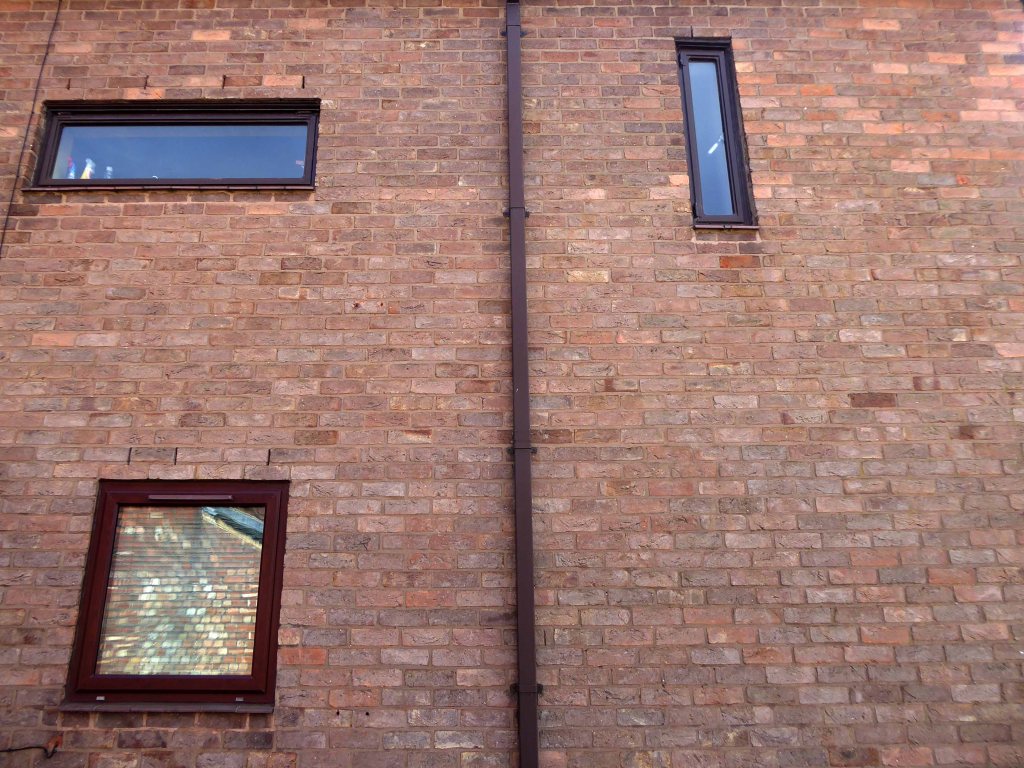
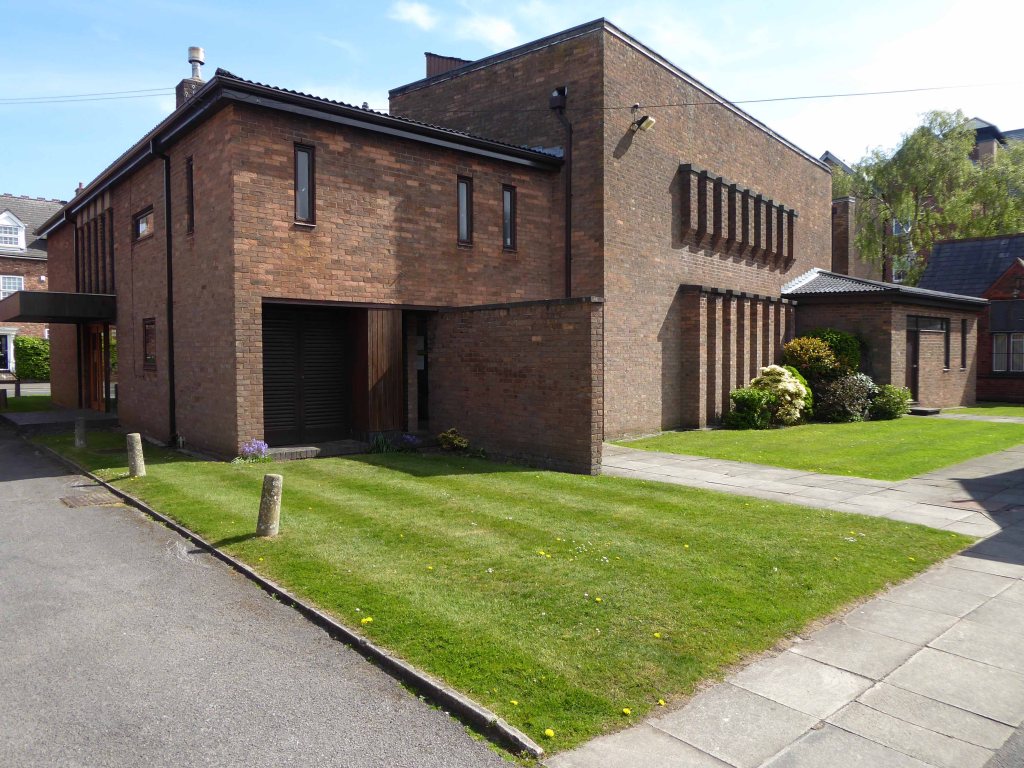
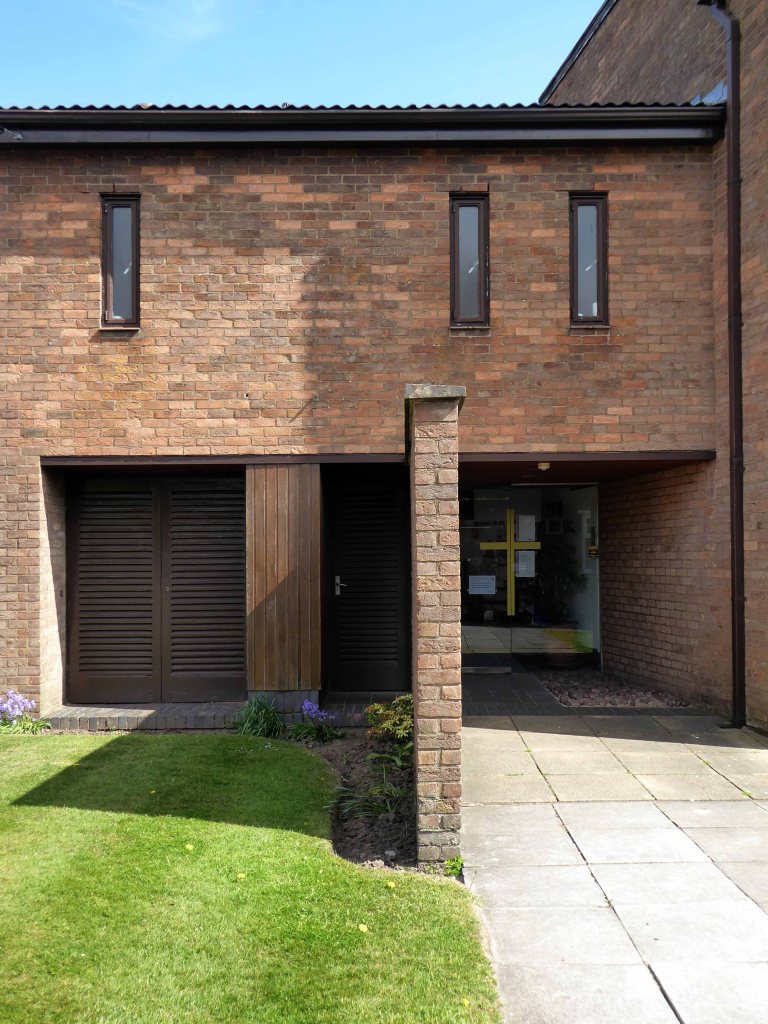
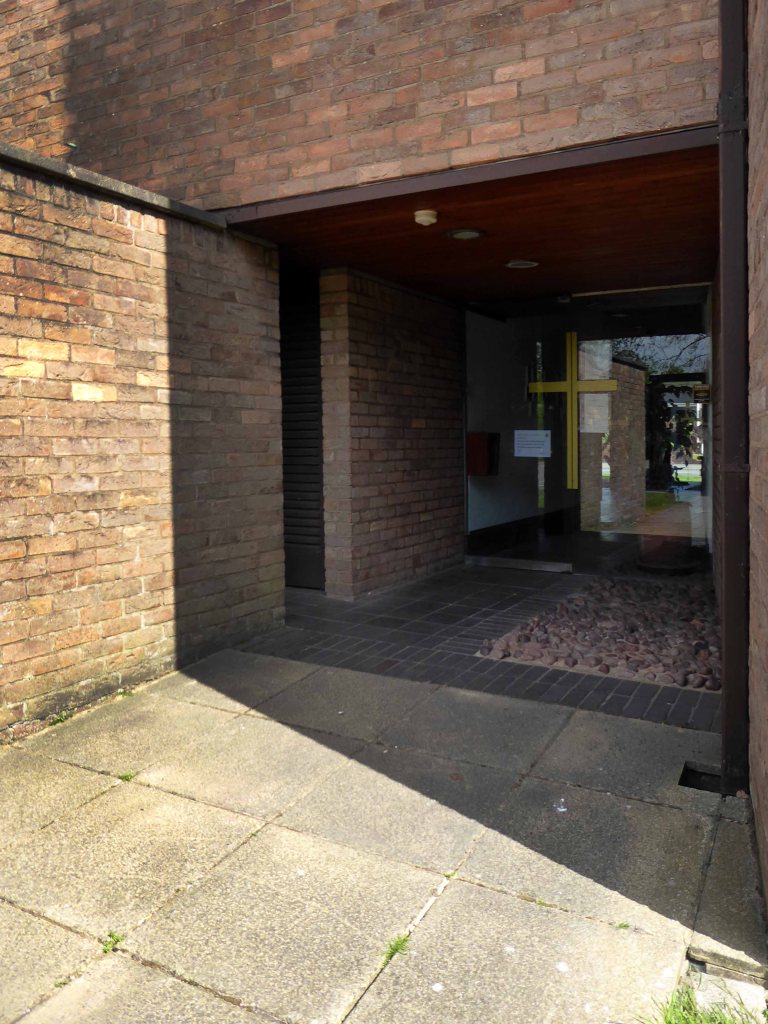
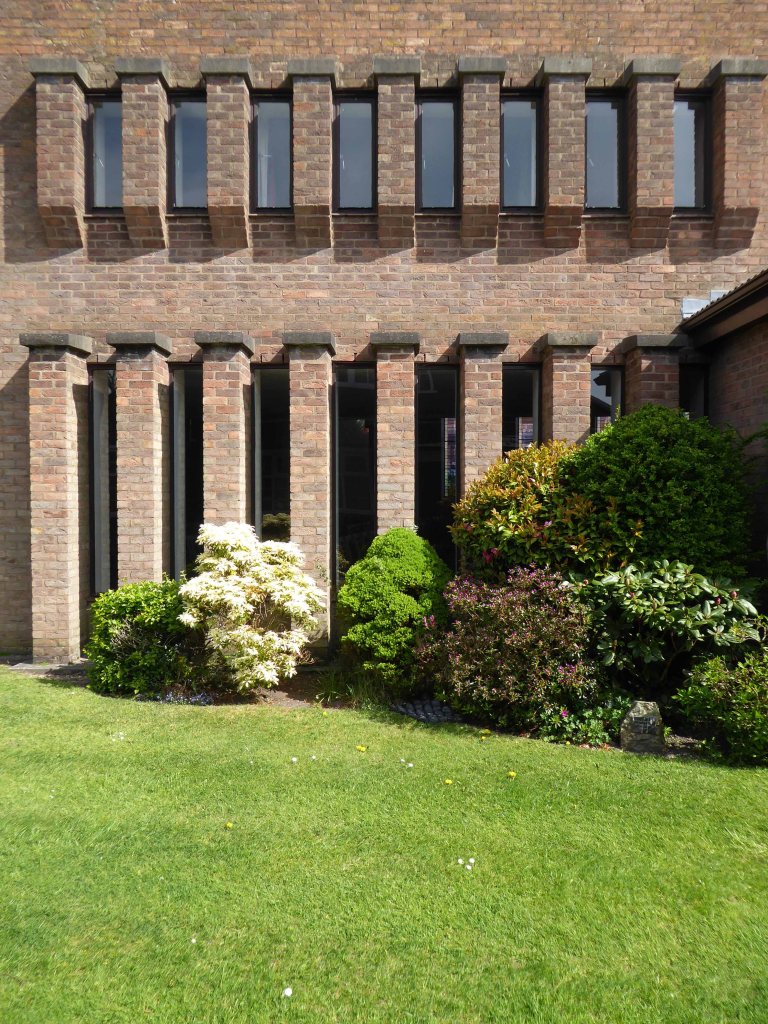
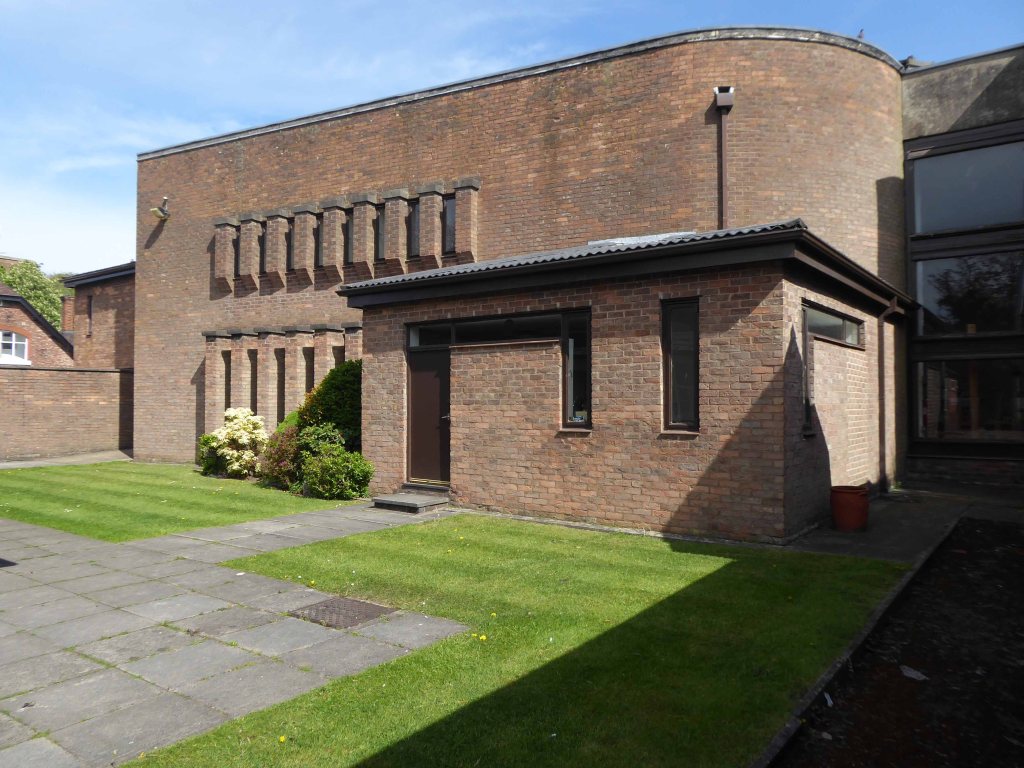
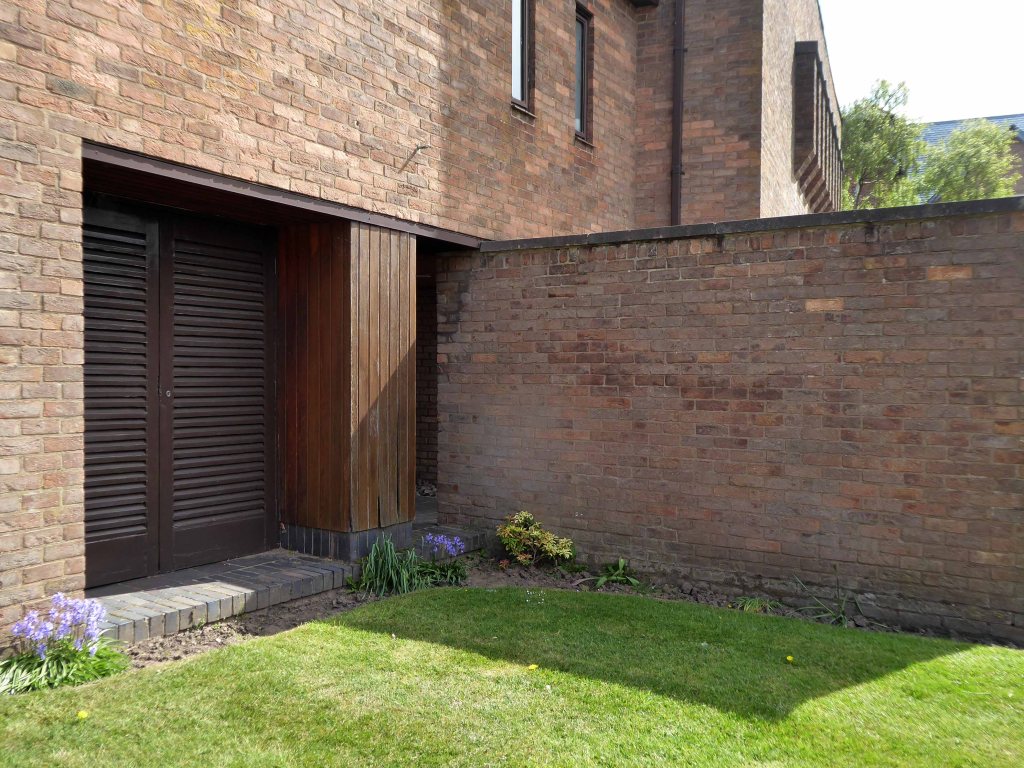
Small in scale, but large in ambition – a wonderful exercise in the calm controlled use of brick, rich in small details, along with an expressive mix of warm curves within a rigid grid.
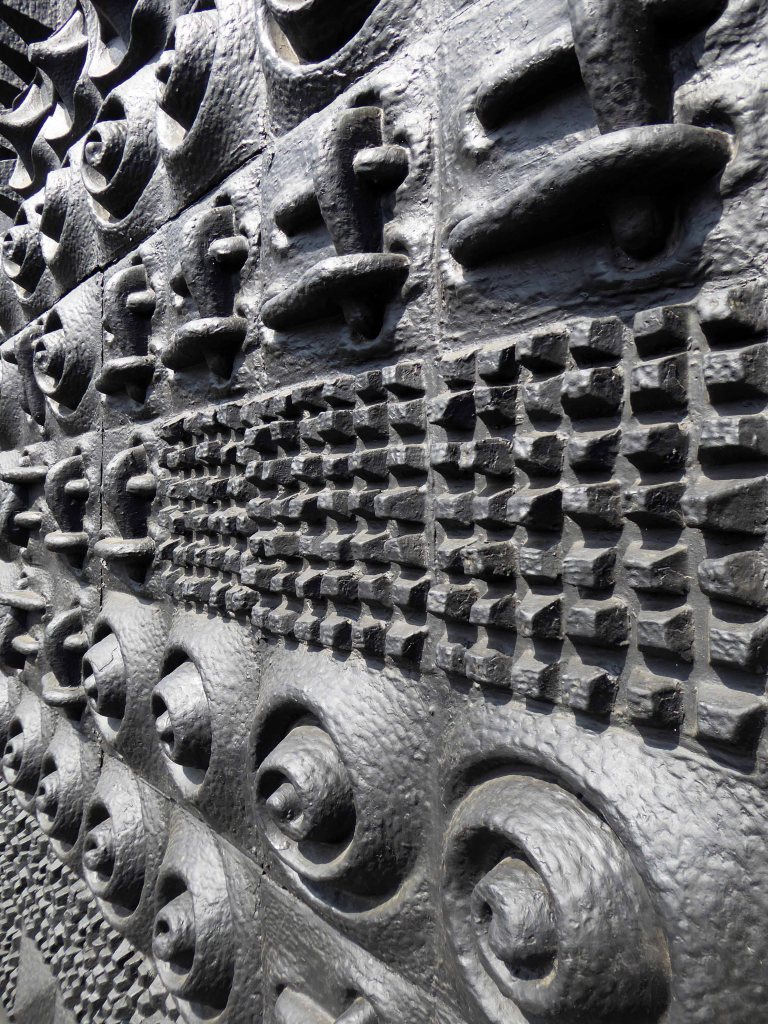
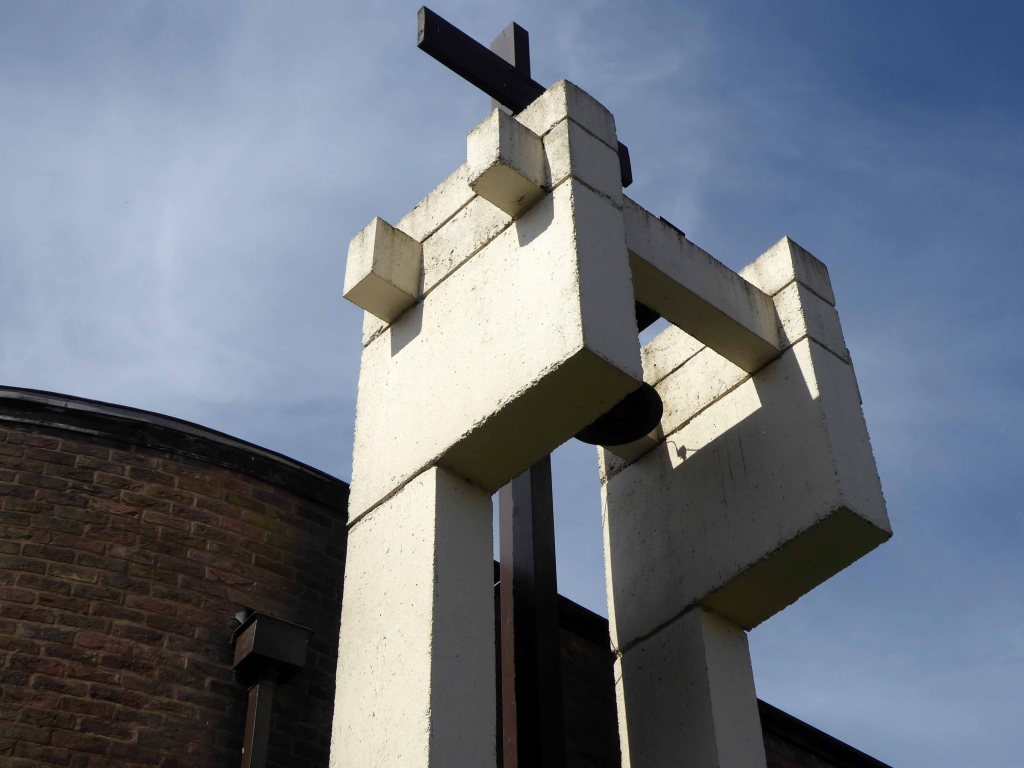
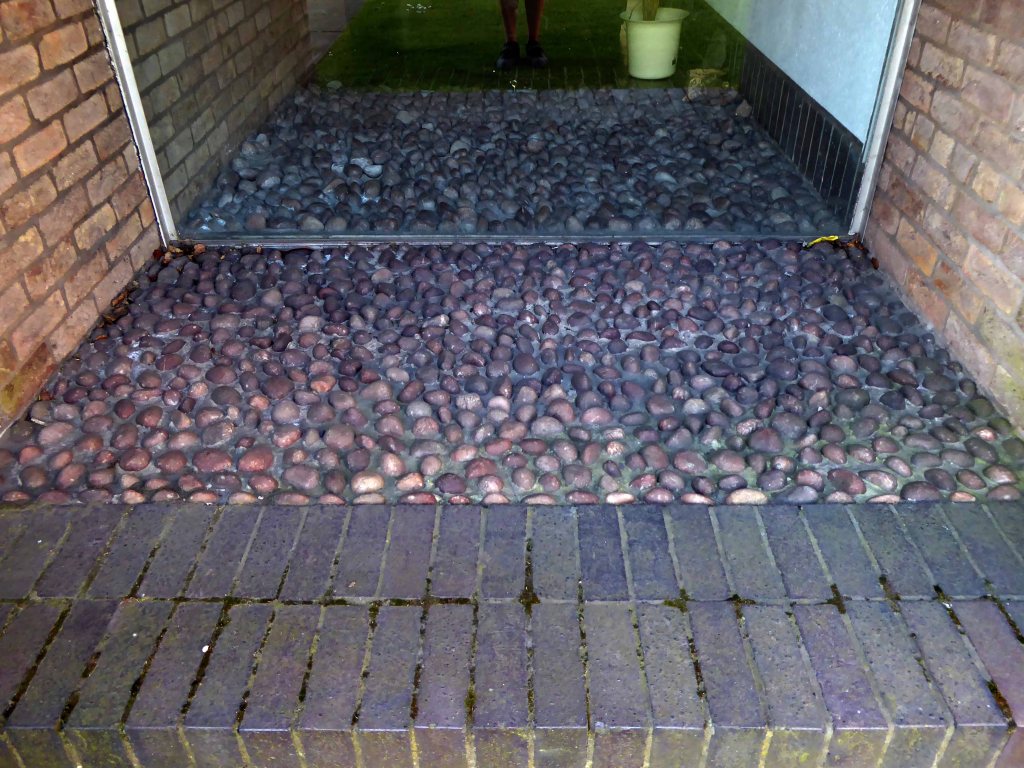
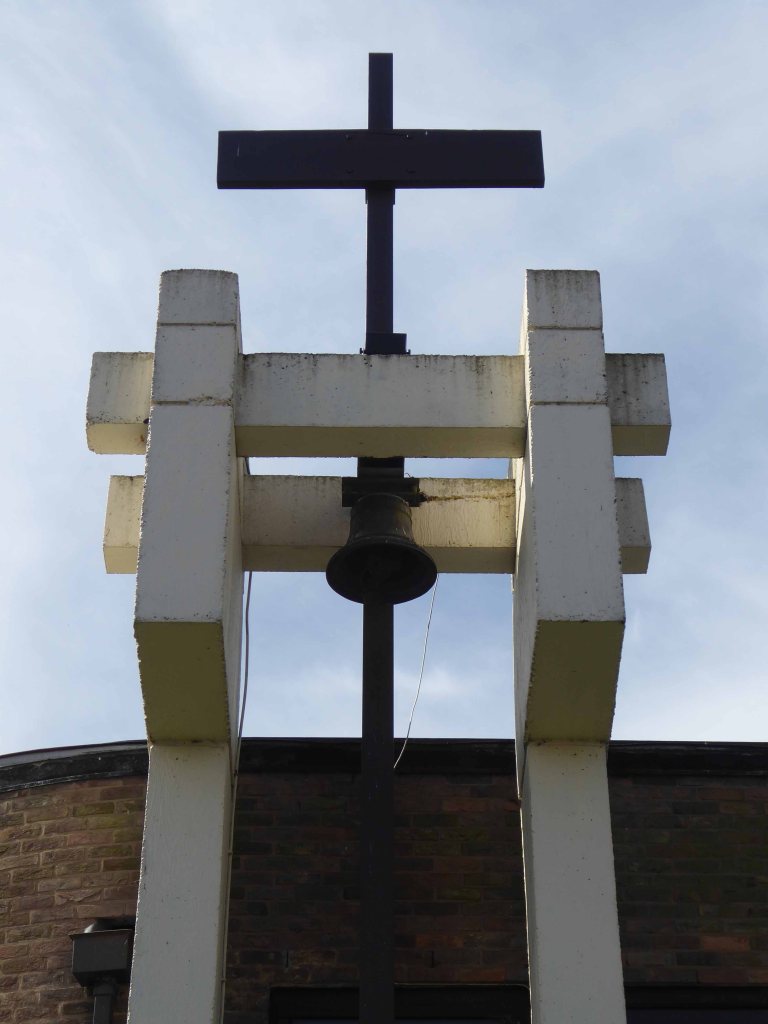
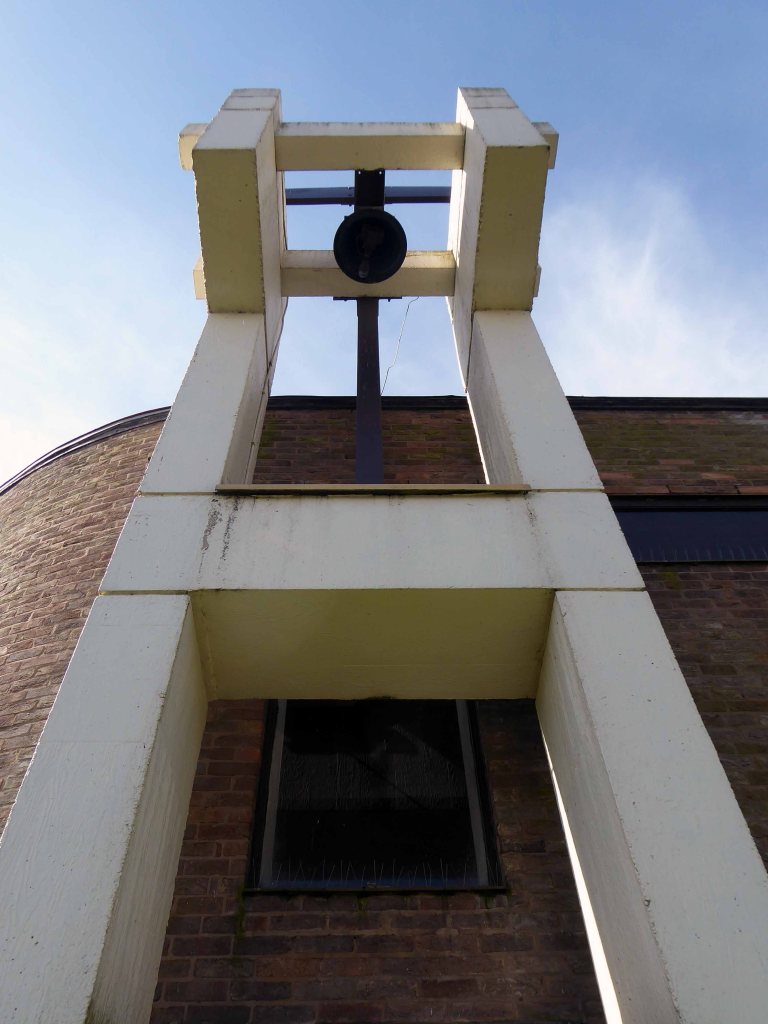
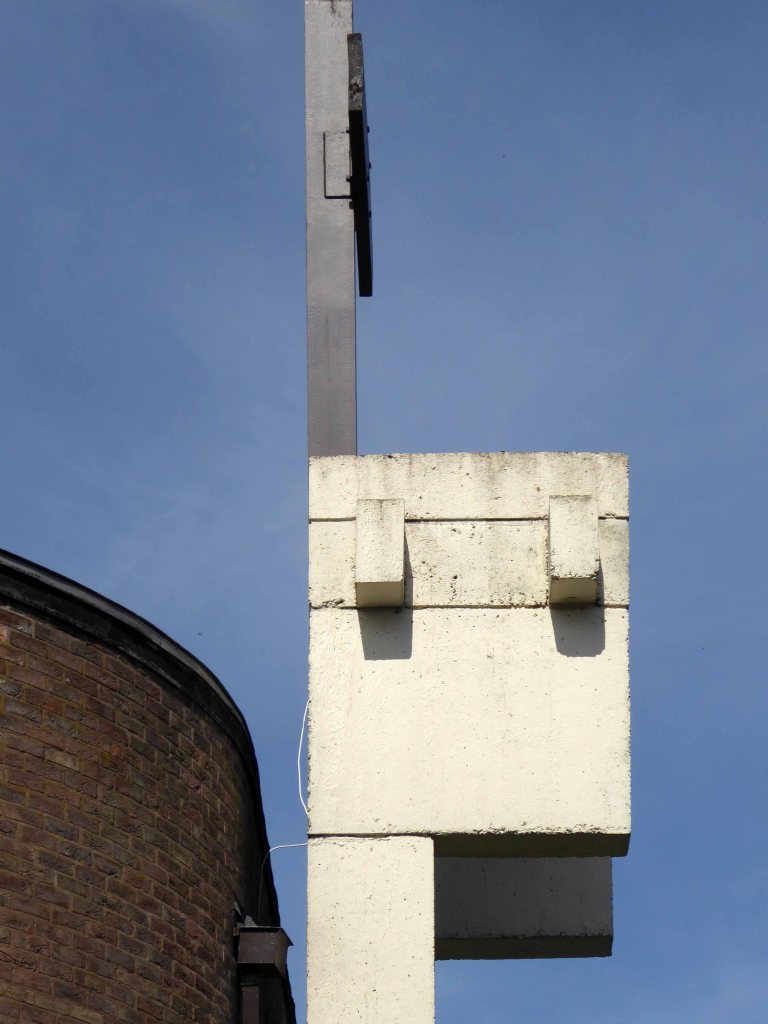
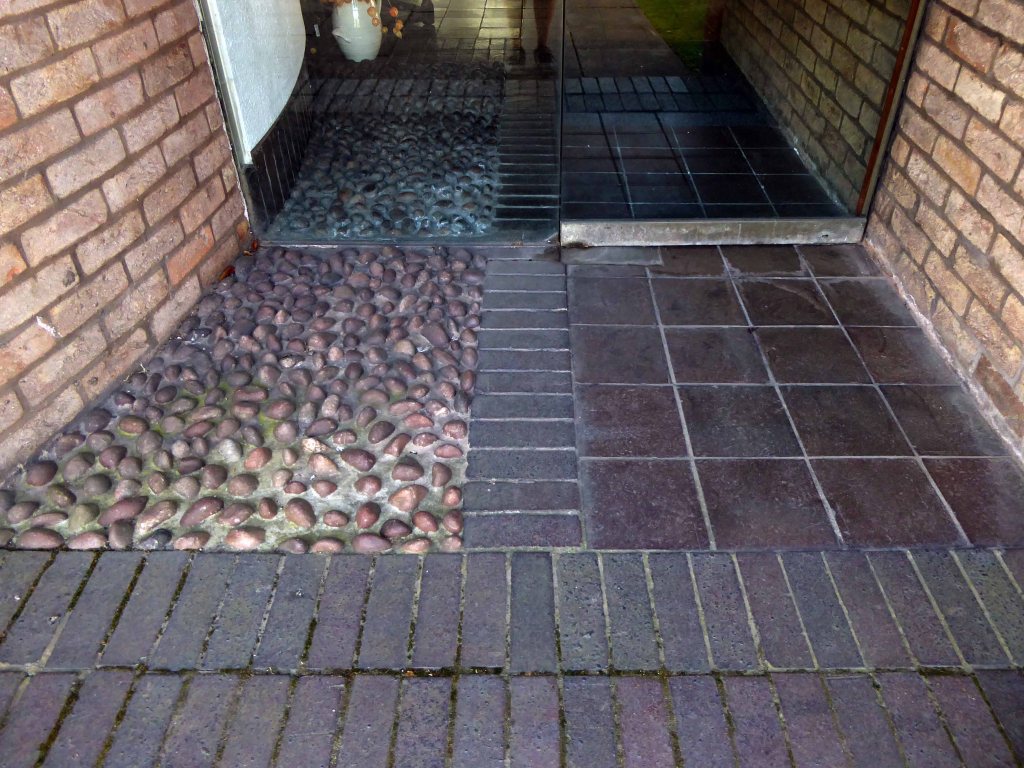
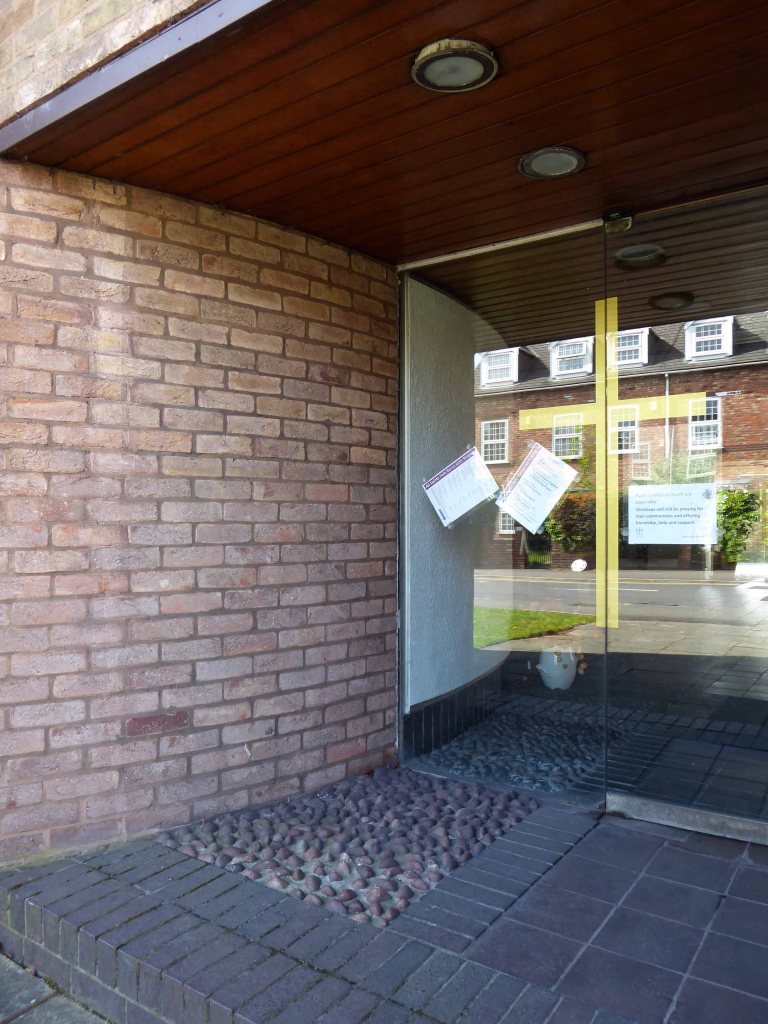
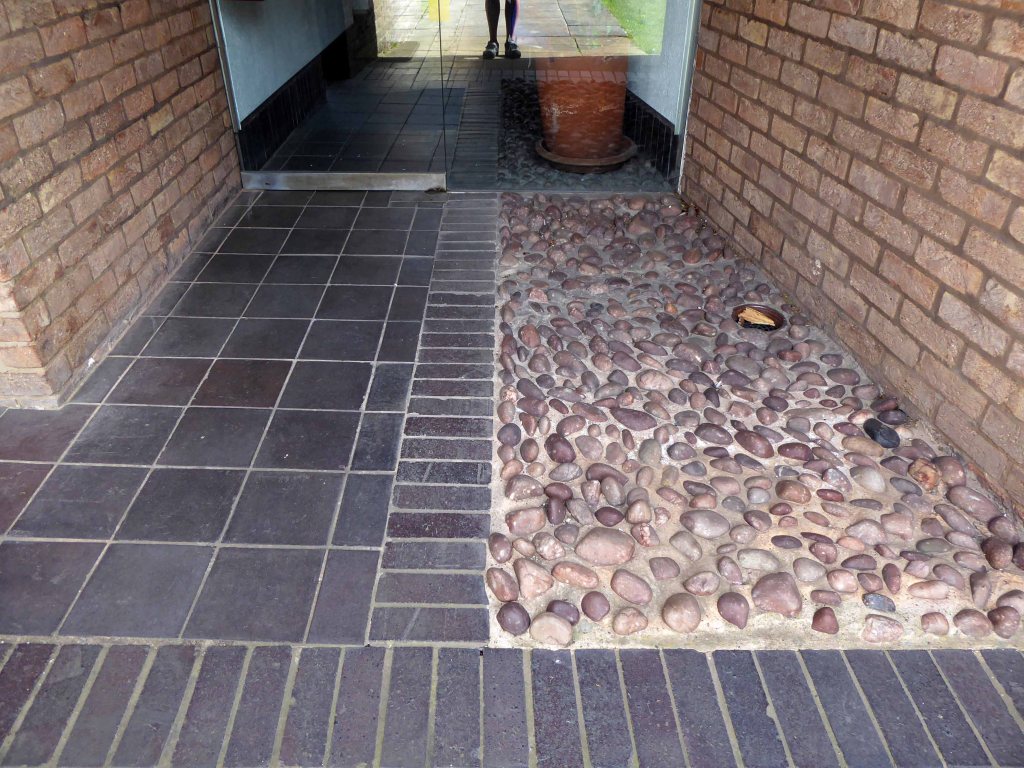
Of particular note is the sculptural concrete bell tower, the exterior use of pebbles in the porch which flow into the interior space, along with a discrete palette of grey tiling.
It demands to be circumnavigated – fresh surprises await around each turn, simple hard landscaping of flags, softer restrained planting and open areas of lawn, so very well tended.
Let’s take a look around.
Here are some images of the reworked interior taken from the All Saints gallery.
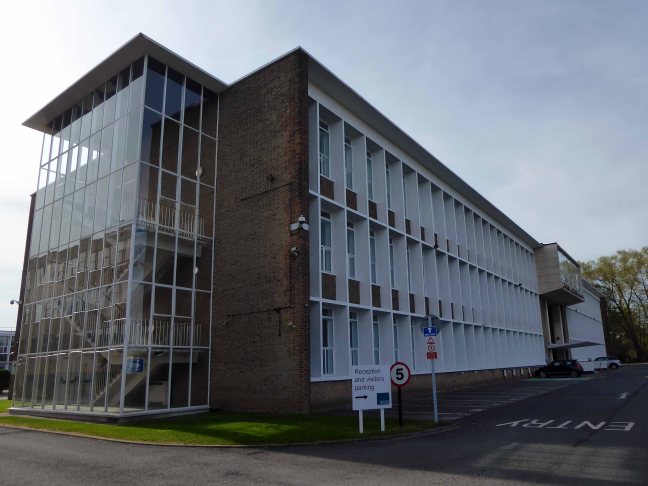
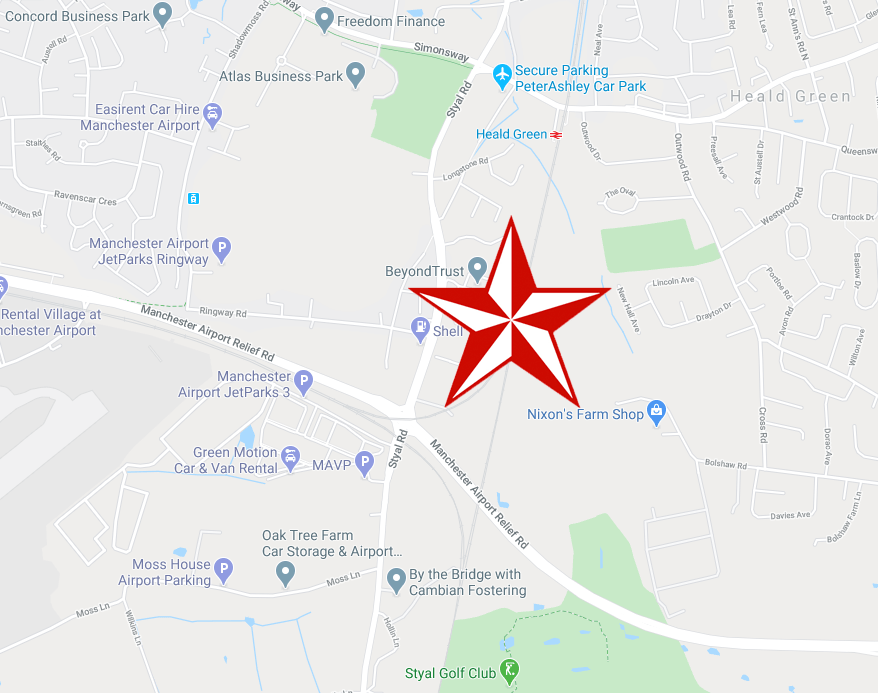
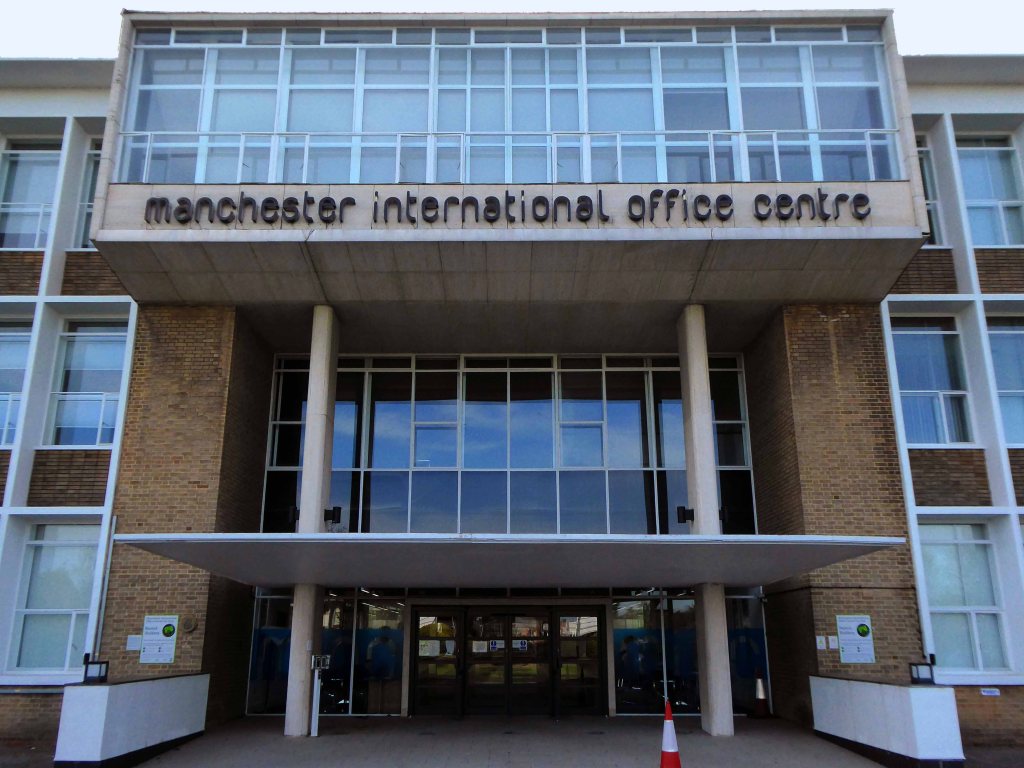
Manchester International Office Centre 11 Styal Rd Wythenshawe Manchester M22 5WB
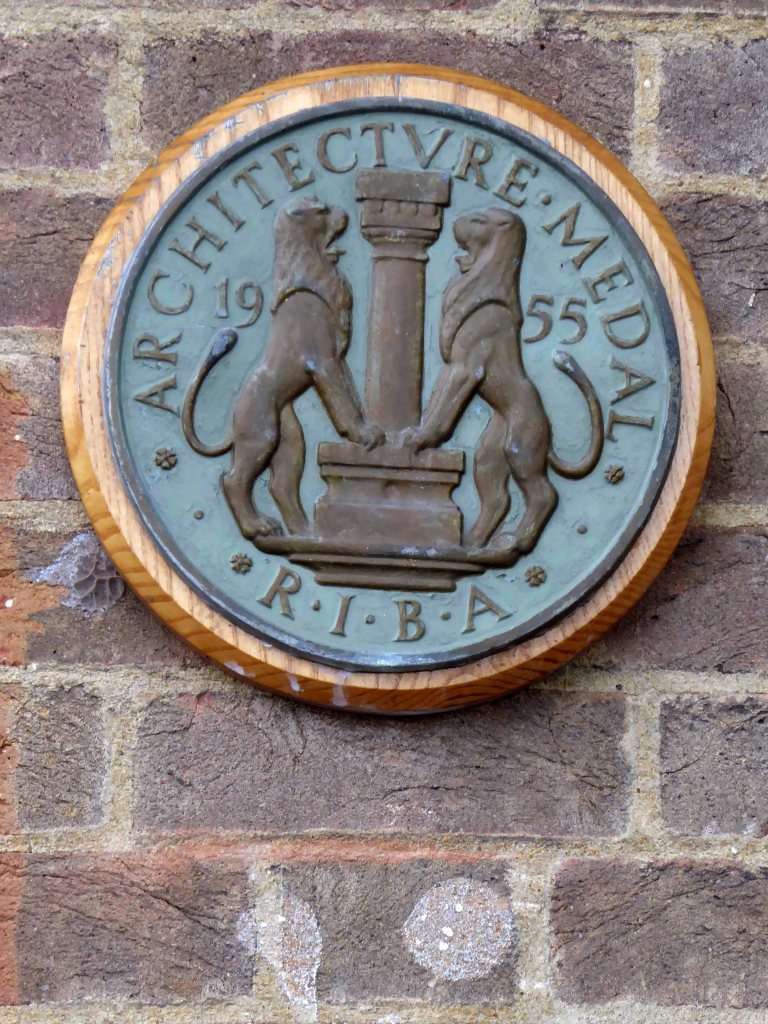
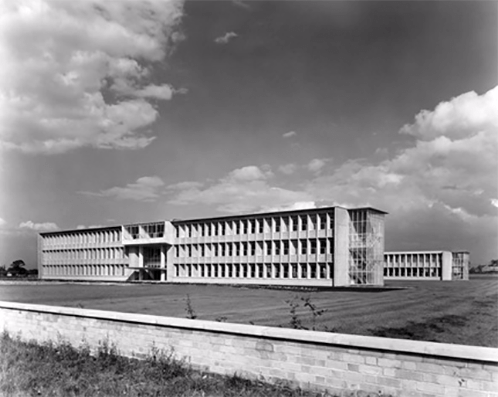
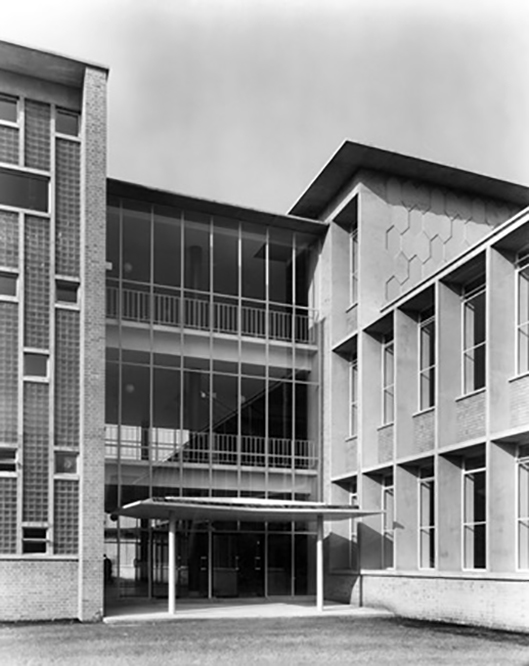
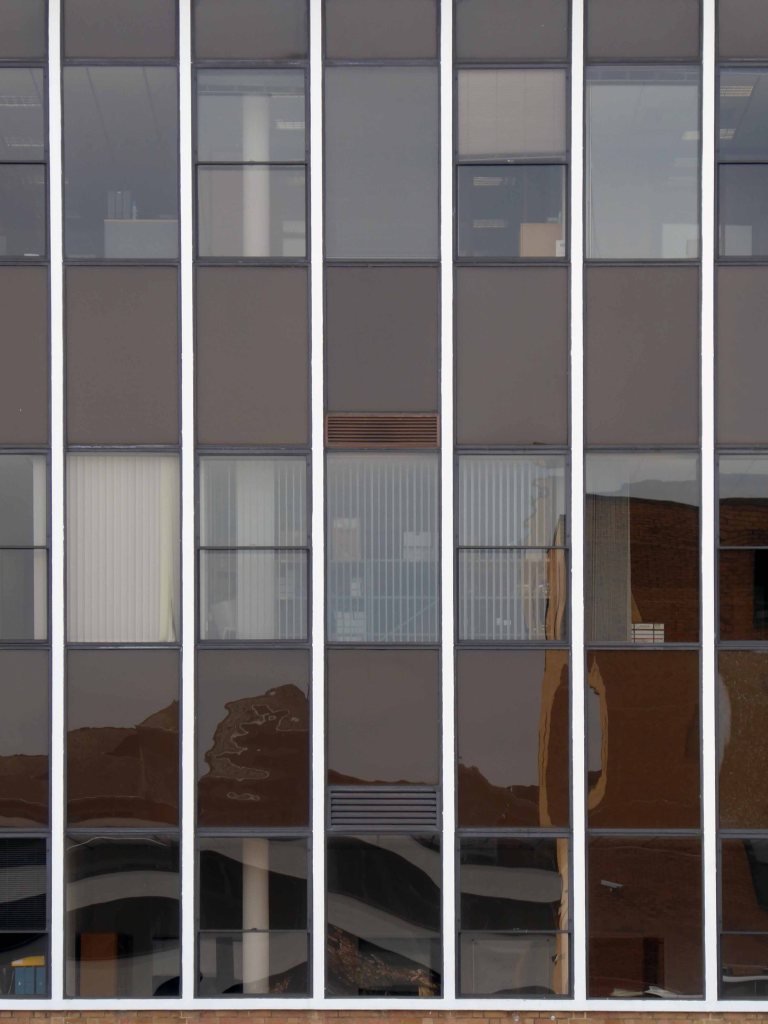
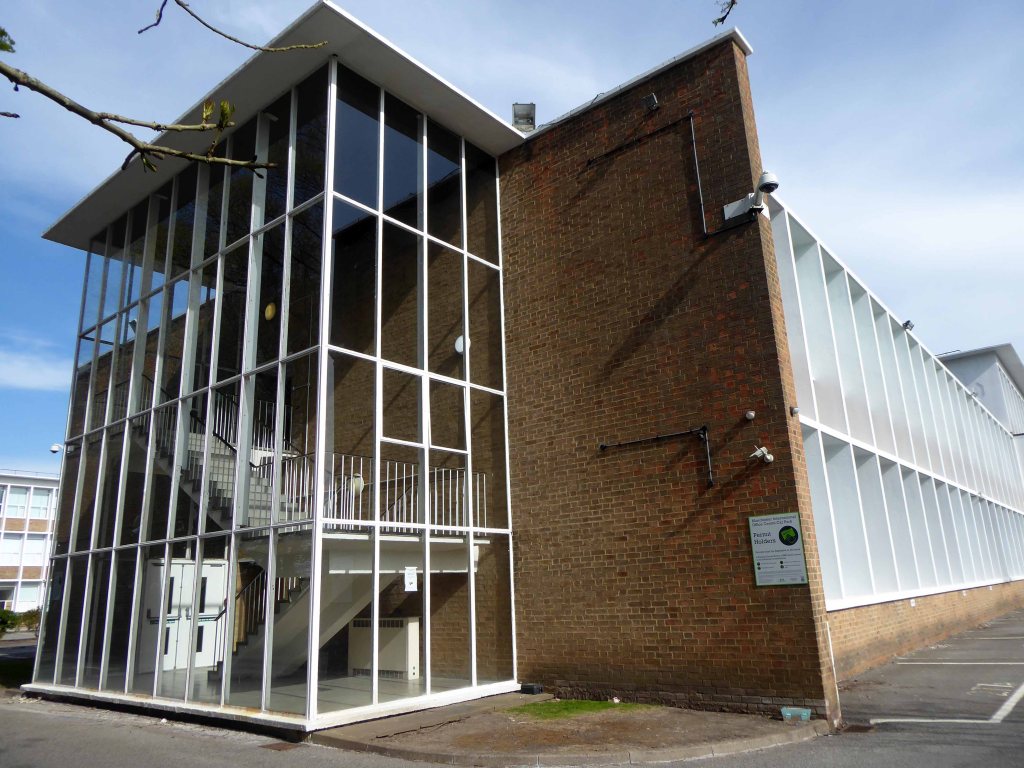
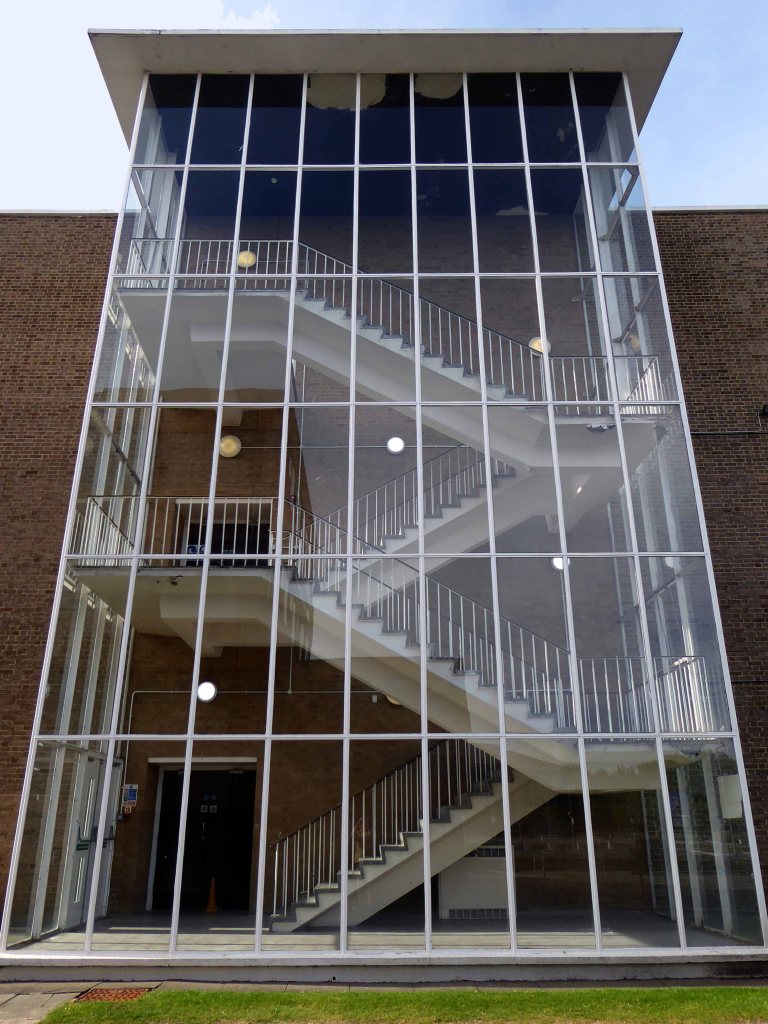
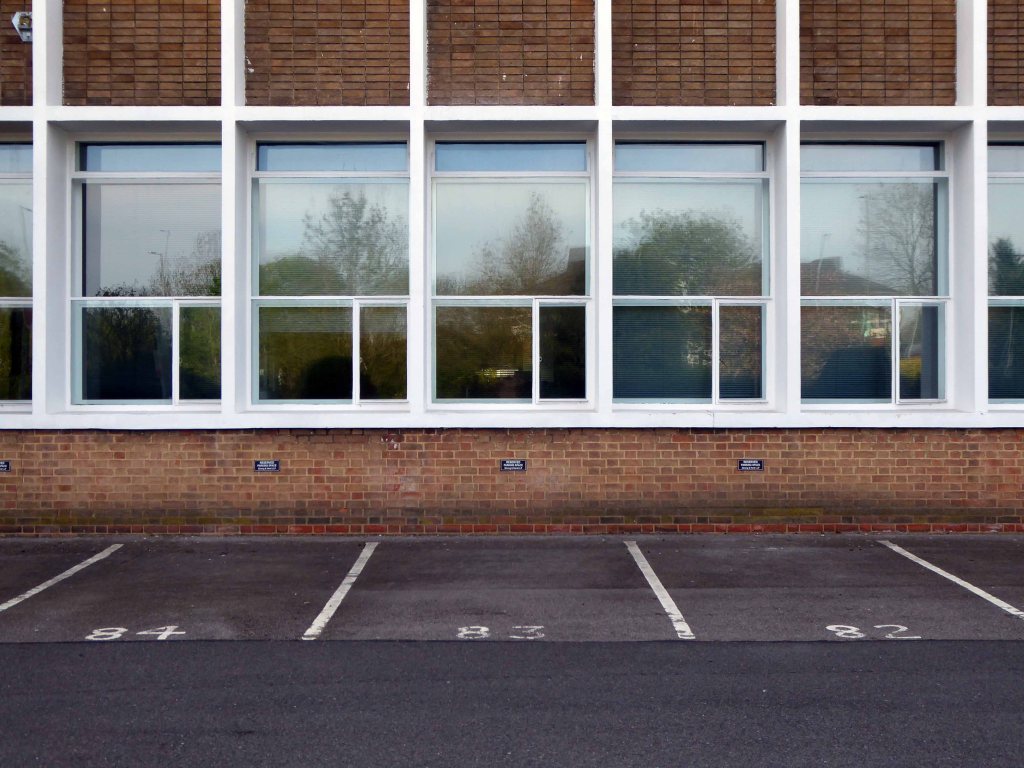
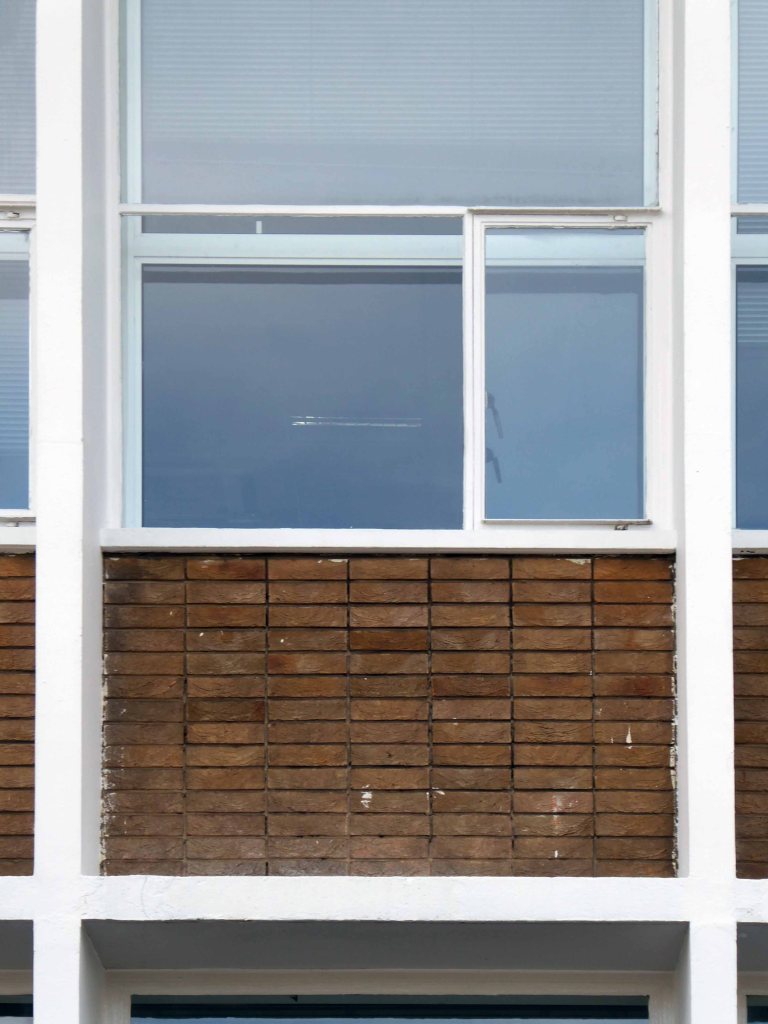
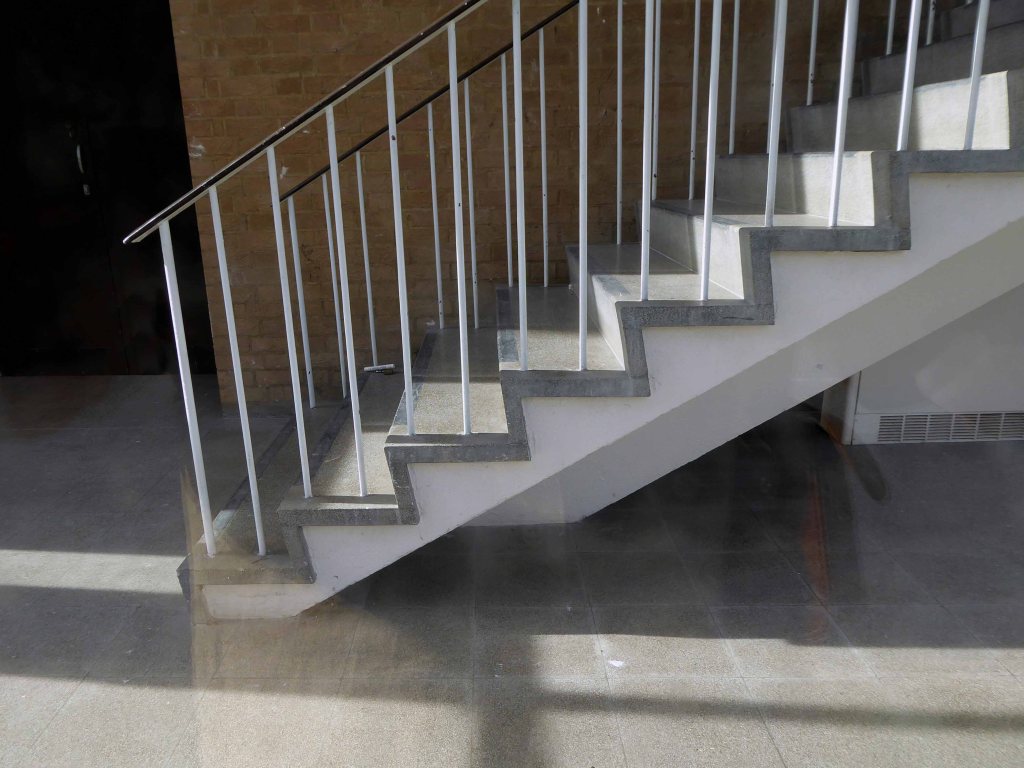
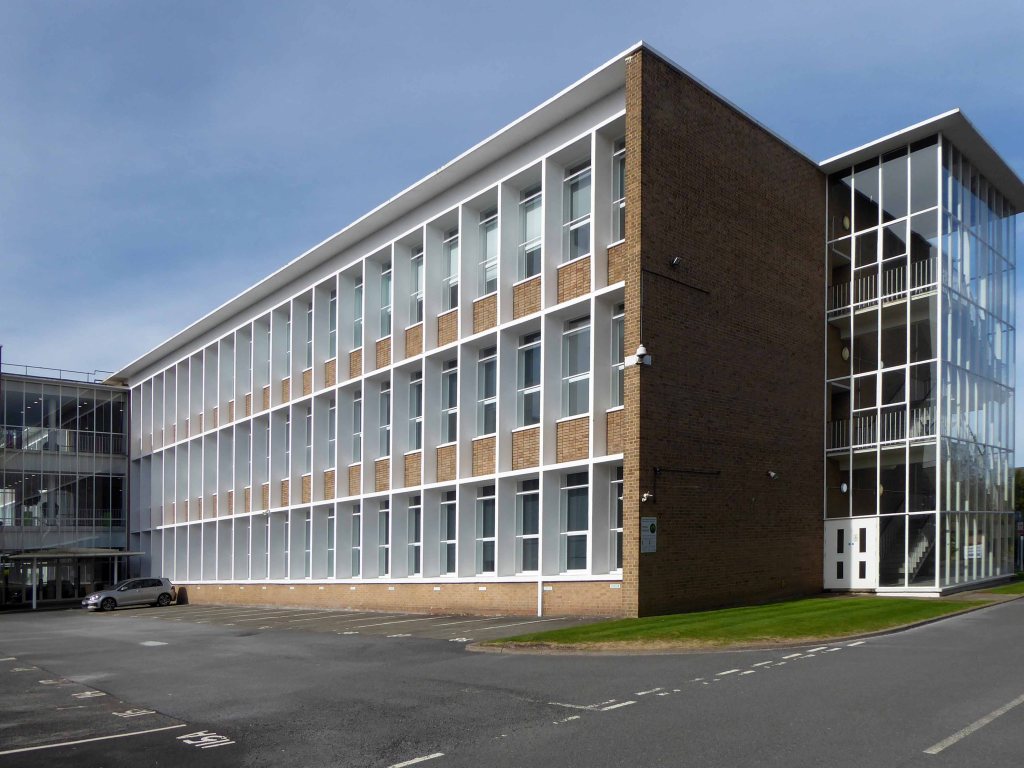
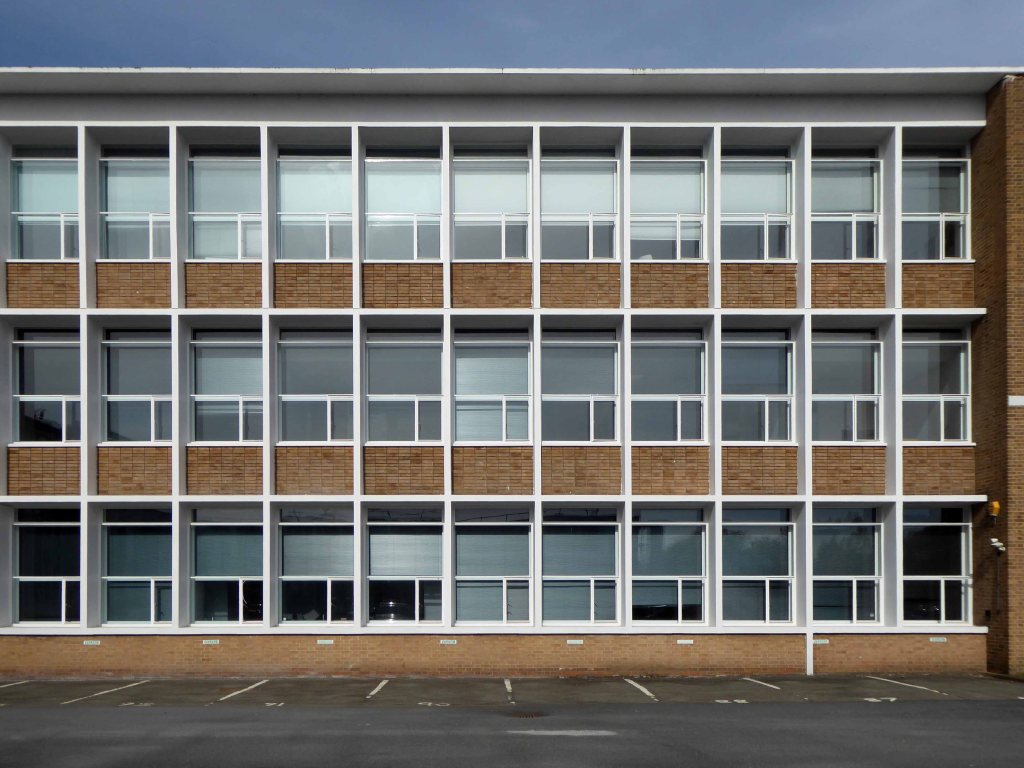
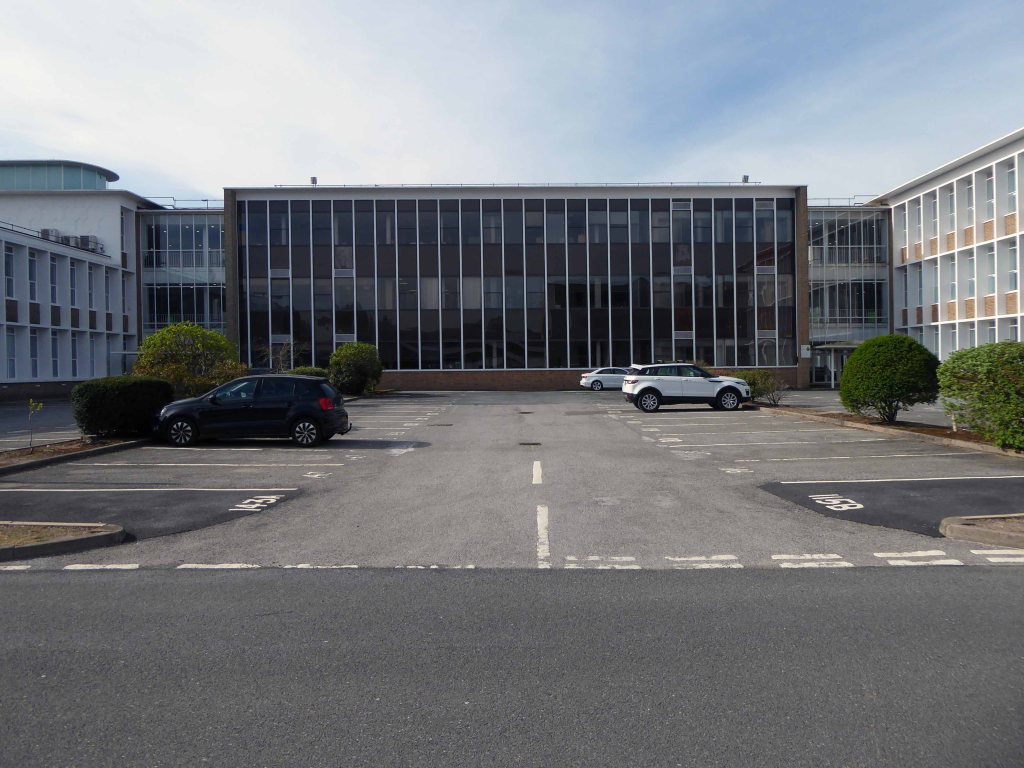
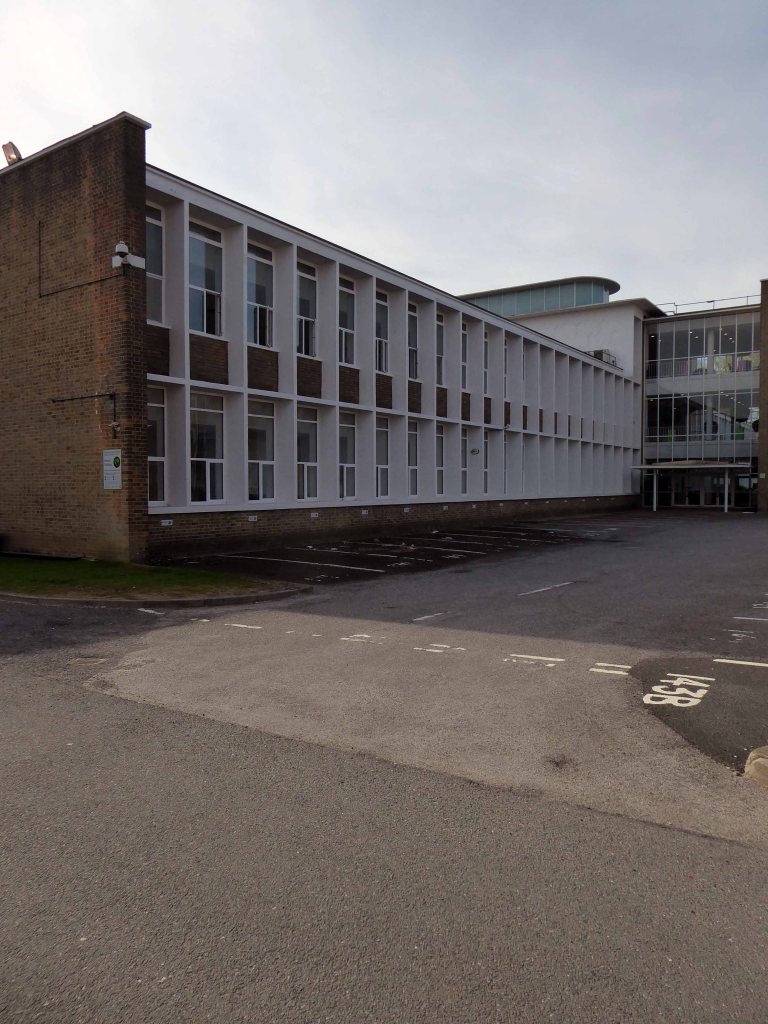
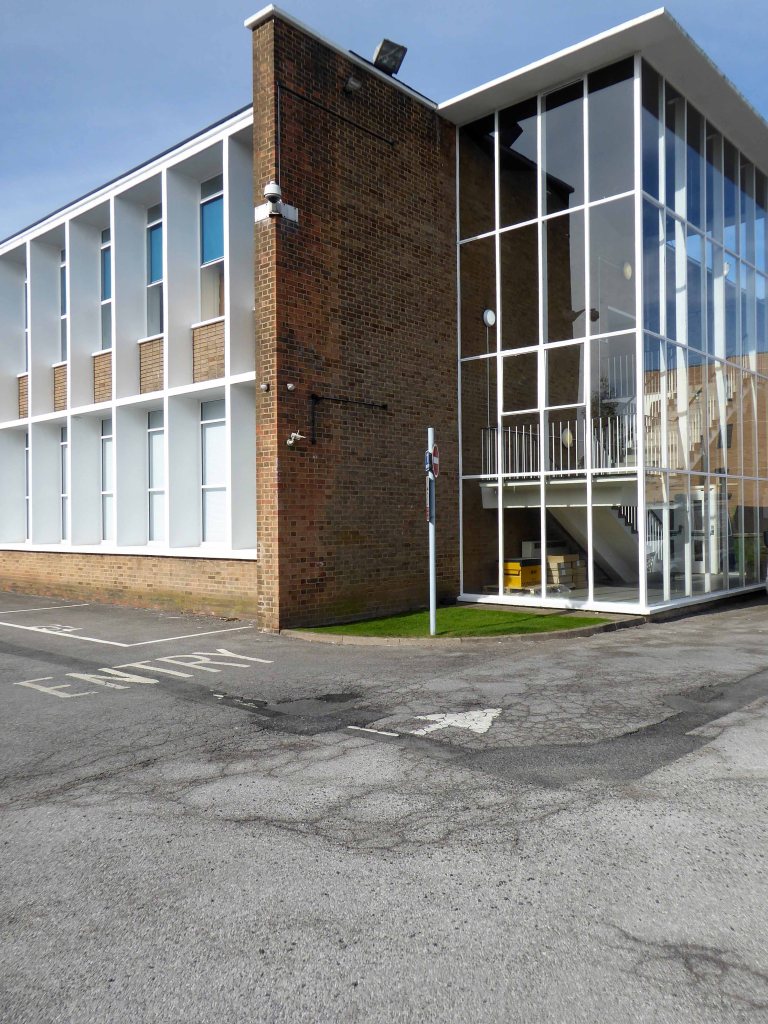
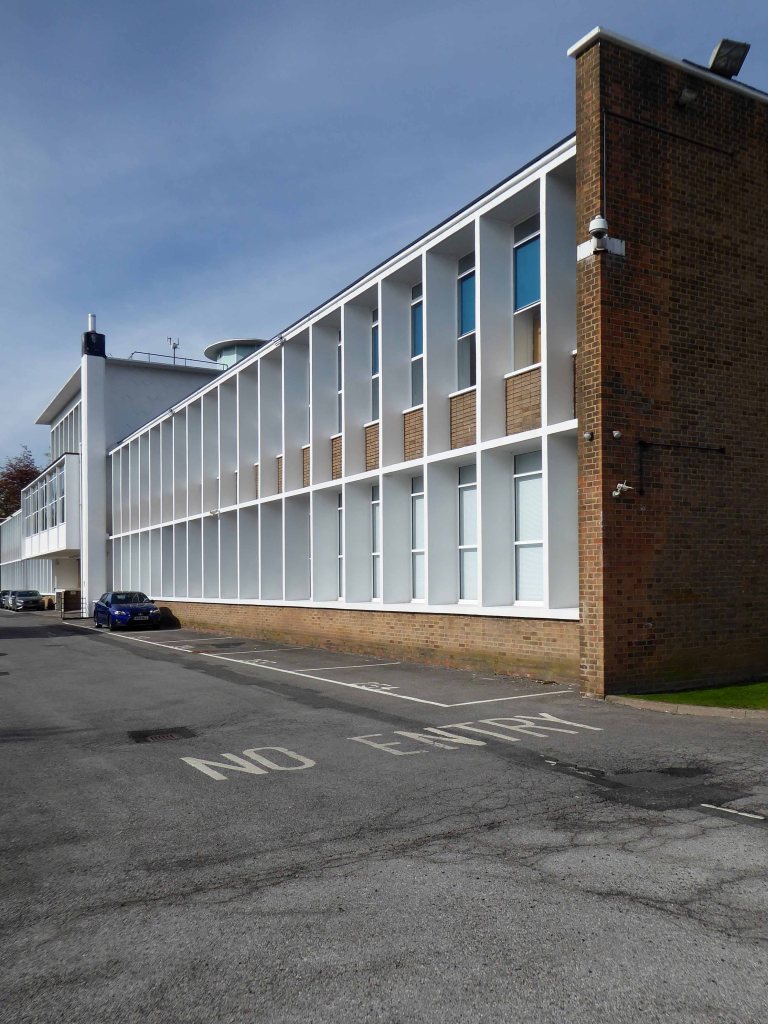
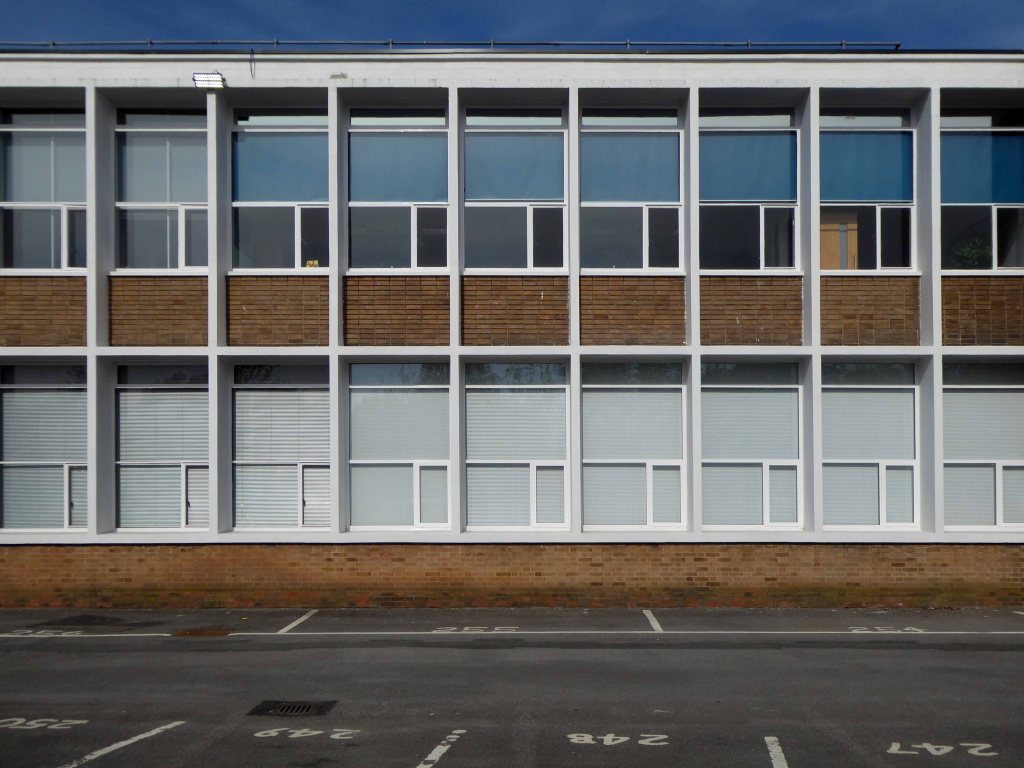
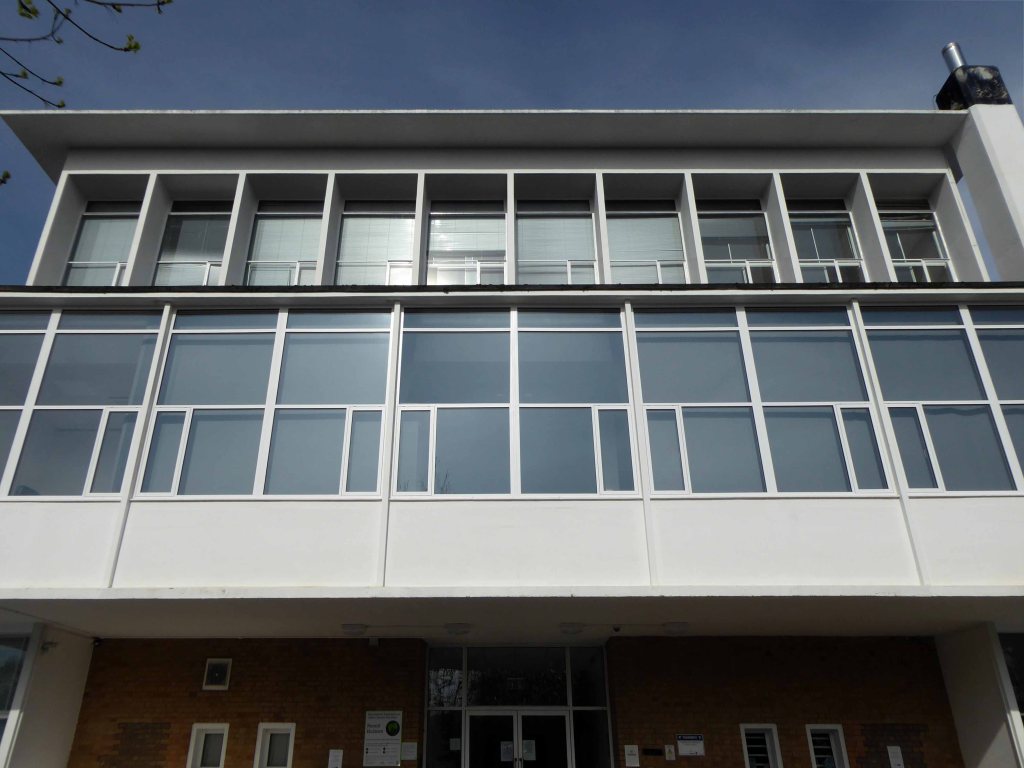
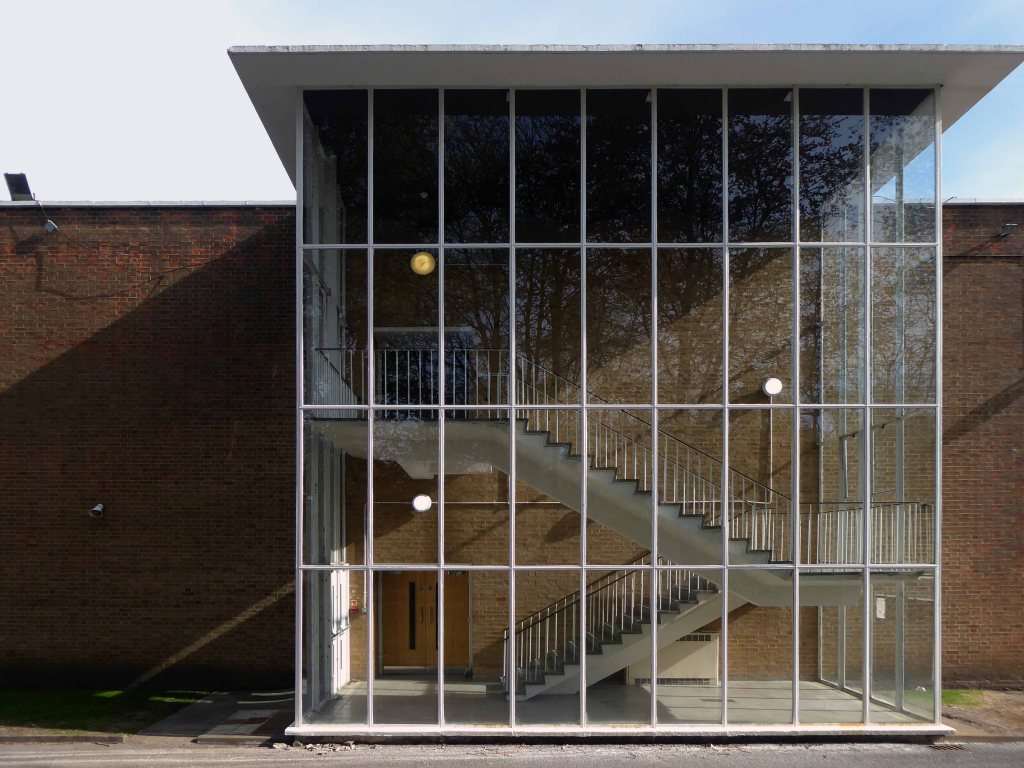
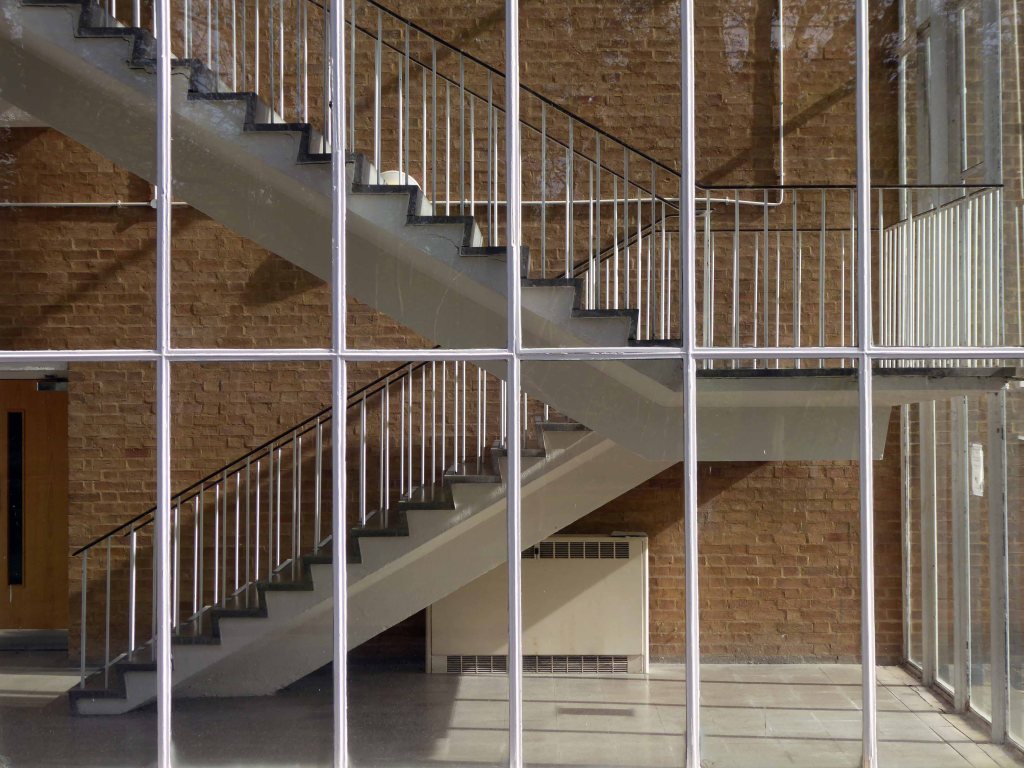
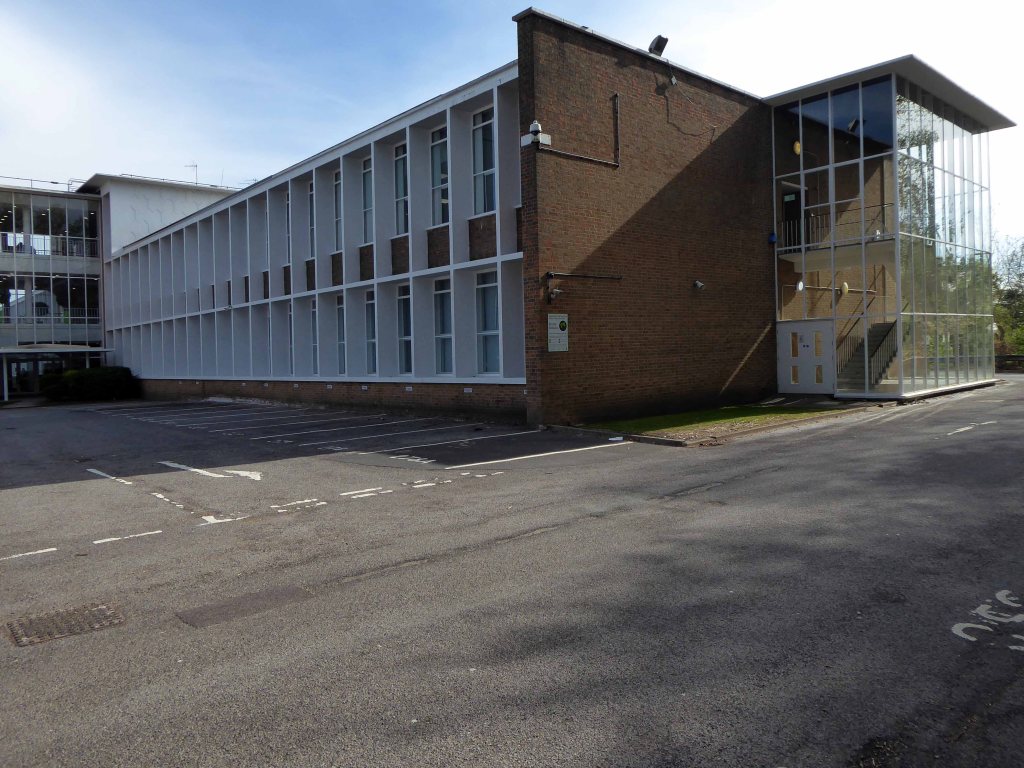
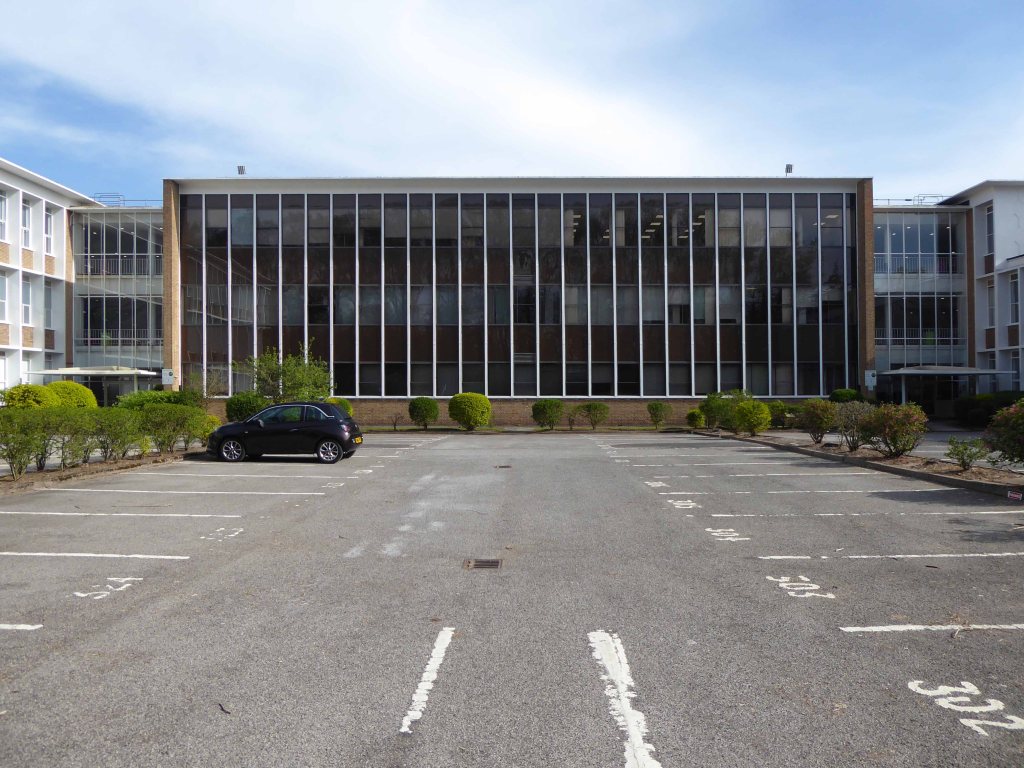
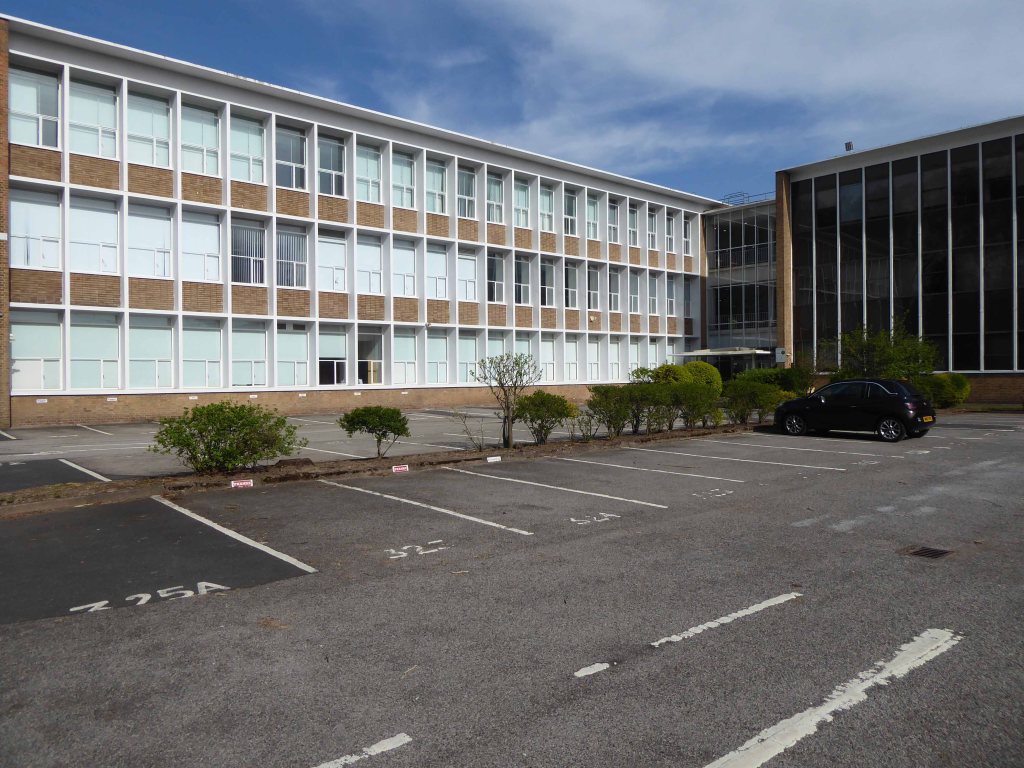
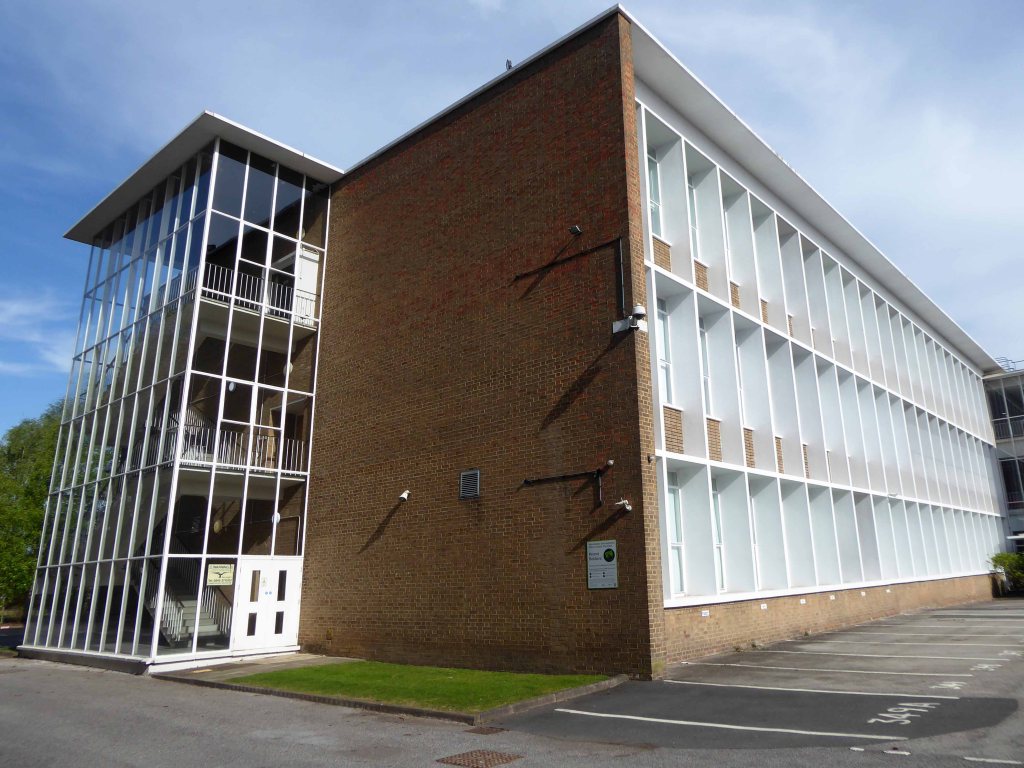
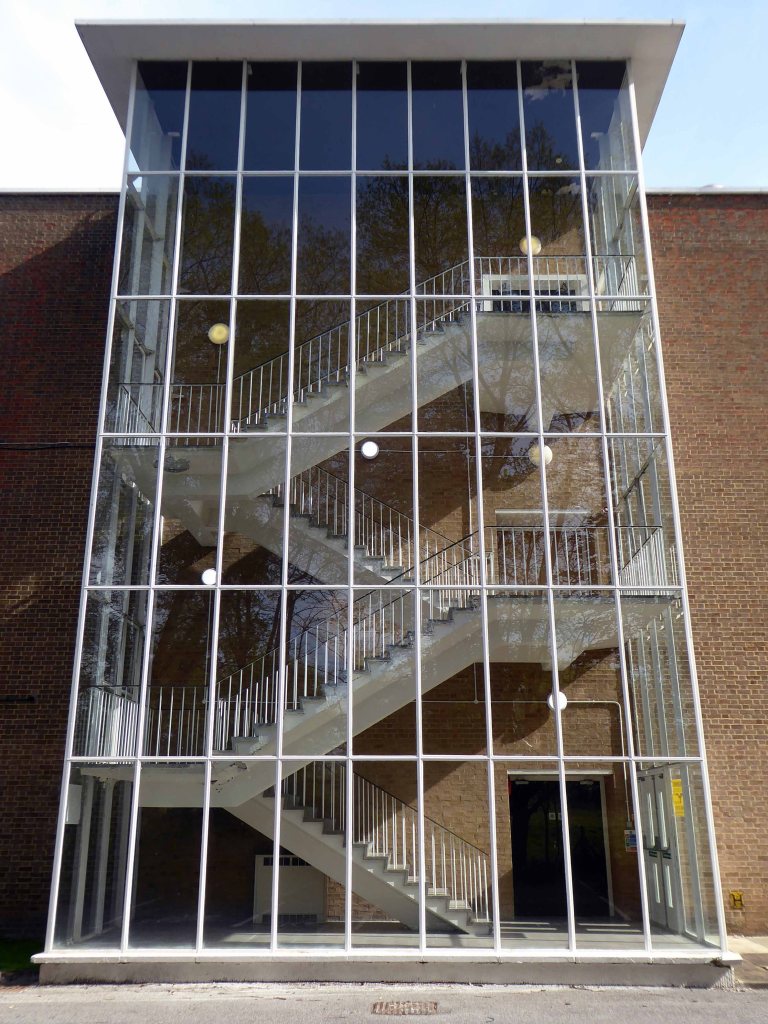
Renold Chains were once a huge firm employing thousands in south Manchester, their main factory at Burnage, now demolished to make way for a supermarket. This grouping was designed as the administrative headquarters for the company and was in receipt of an RIBA Architecture Bronze Medal in 1955. The scheme, of two parallel wings connected by a central hub running perpendicular, now seems fairly pedestrian, though still exudes some presence by virtue of the evident control in the design and construction of relief within the main façade. This building, though, actually points toward the moment where Cruickshank & Seward were turning, with the rest of the profession, toward new engineered, curtain walling solutions. The three storey glazed stair towers are made of a relatively fine steel section glazing bar and are clearly expressed at the ends of the blocks; these perhaps pre-empt the altogether more refined towers at the Renold Building and Roscoe Building of the Universities. The third floor boardroom was also positively expressed as a curved solid, cantilevered above the entrance canopy. That the building was developed in such close proximity to the airport has ensured its continued viability as office and conferencing space. The firm also delivered the adjacent building for the same client in the 1970s.
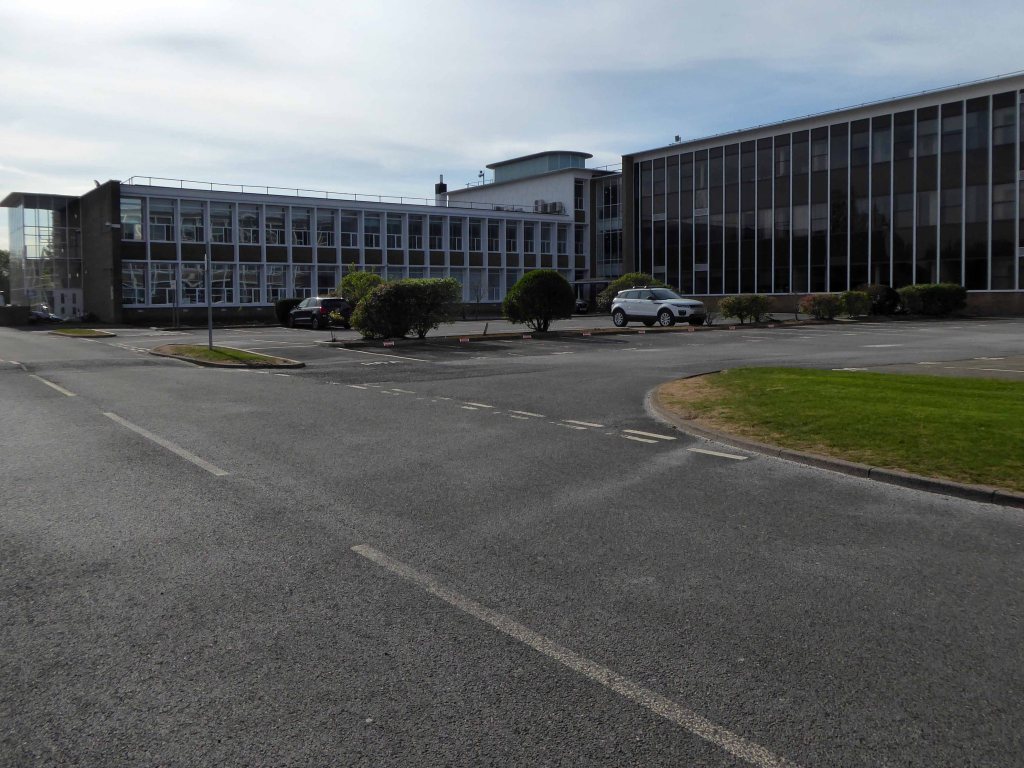
Four weeks into a pandemic – cycling somewhere else. I turned off and into the grounds of the former Renold House, currently trading as Manchester International Office Ccentre.
Manchester International Office Centre (MIOC) is a prominent landmark office building extending to some 100,000 sq ft which provides occupiers with high quality space ranging from suites of 450 to 8,000 sq ft.
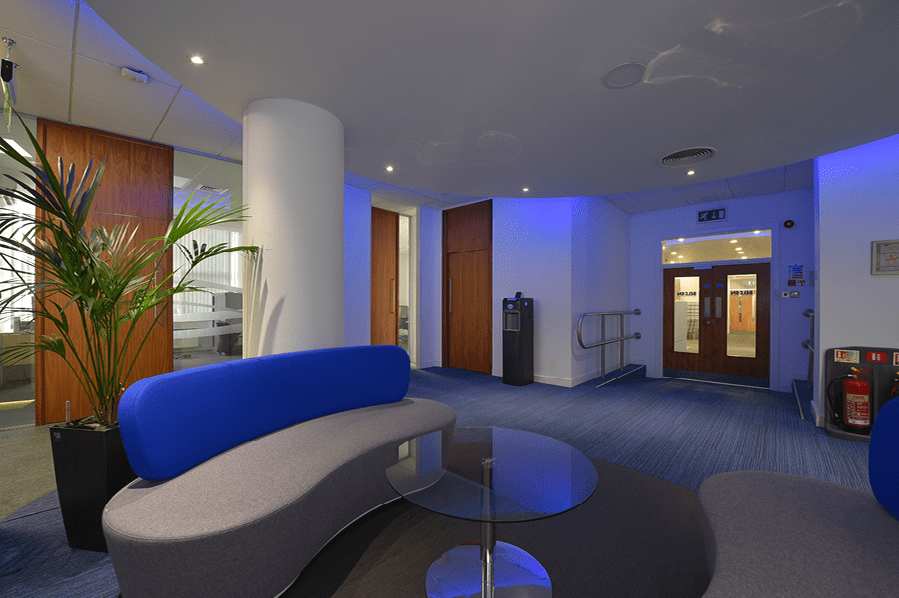
The building has undergone a complete internal transformation with a total refurbishment of the reception and common areas. The office suites provide a superb working environment in line with the demands of todays occupier.
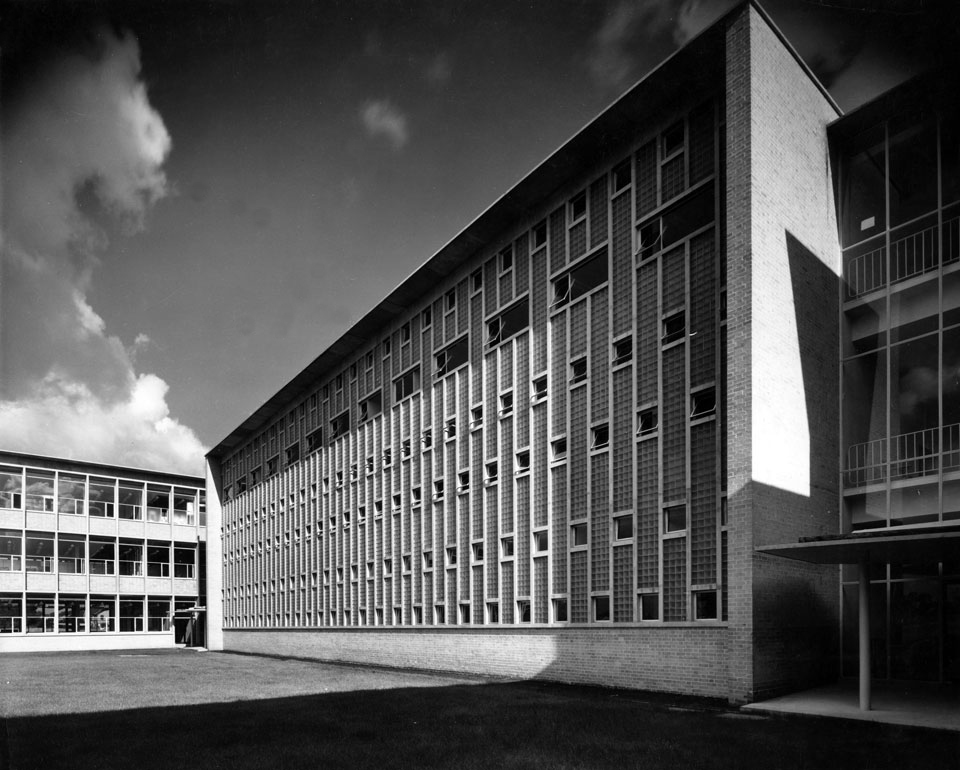
On arriving home I hungrily rustled up a few RIBA Archive images from 1954.
Much remains intact – though gone is the concrete grid and glass brick insertions of the 1954 central section – replaced with a slick glass and steel skin.
And there are unpleasant intrusions made by the fitting of contemporary security and lighting – using intrusive exterior conduit.
It’s a sunny day with a southwest light – there’s nobody about, let’s take a look around.
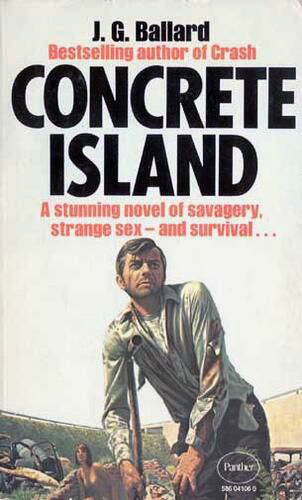
He reached the foot of the embankment, and waved with one arm, shouting at the few cars moving along the westbound carriageway. None of the drivers could see him, let alone hear his dry-throated croak, and Maitland stopped, conserving his strength. He tried to climb the embankment, but within a few steps collapsed in a heap on the muddy slope.
Deliberately, he turned his back to the motorway and for the first time began to inspect the island.
Maitland, poor man, you’re marooned here like Crusoe – If you don’t look out you’ll be beached here for ever. He had spoken no more than the truth. This patch of abandoned ground left over at the junction of three motorway routes was literally a deserted island.
JG Ballard Concrete Island
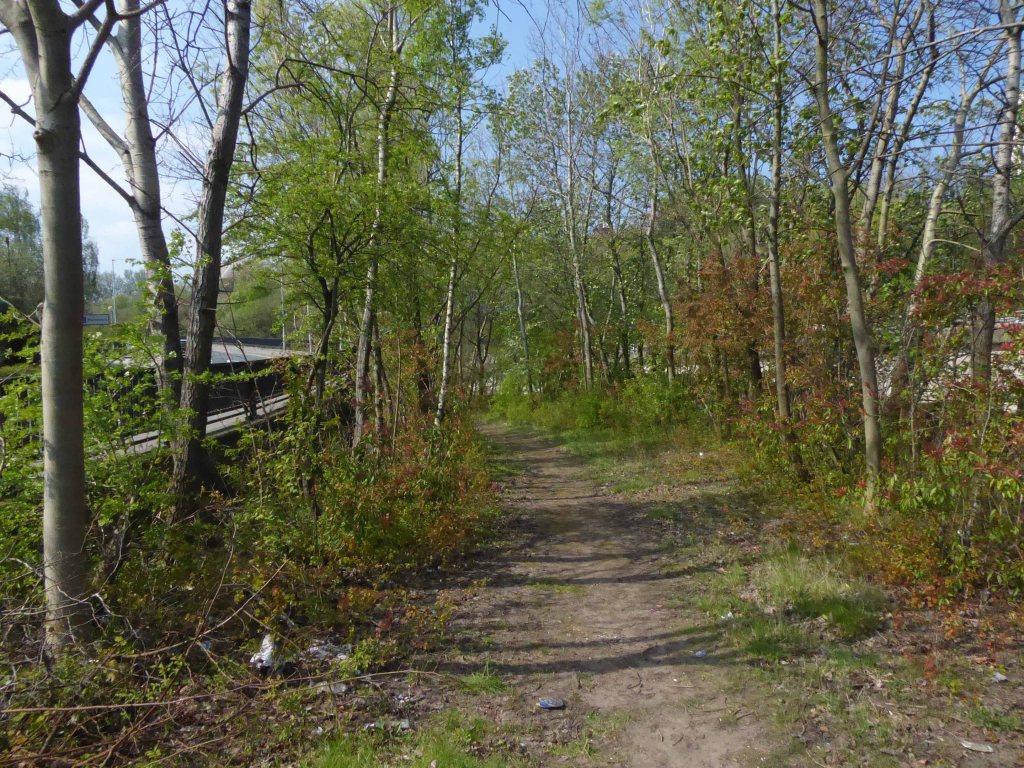
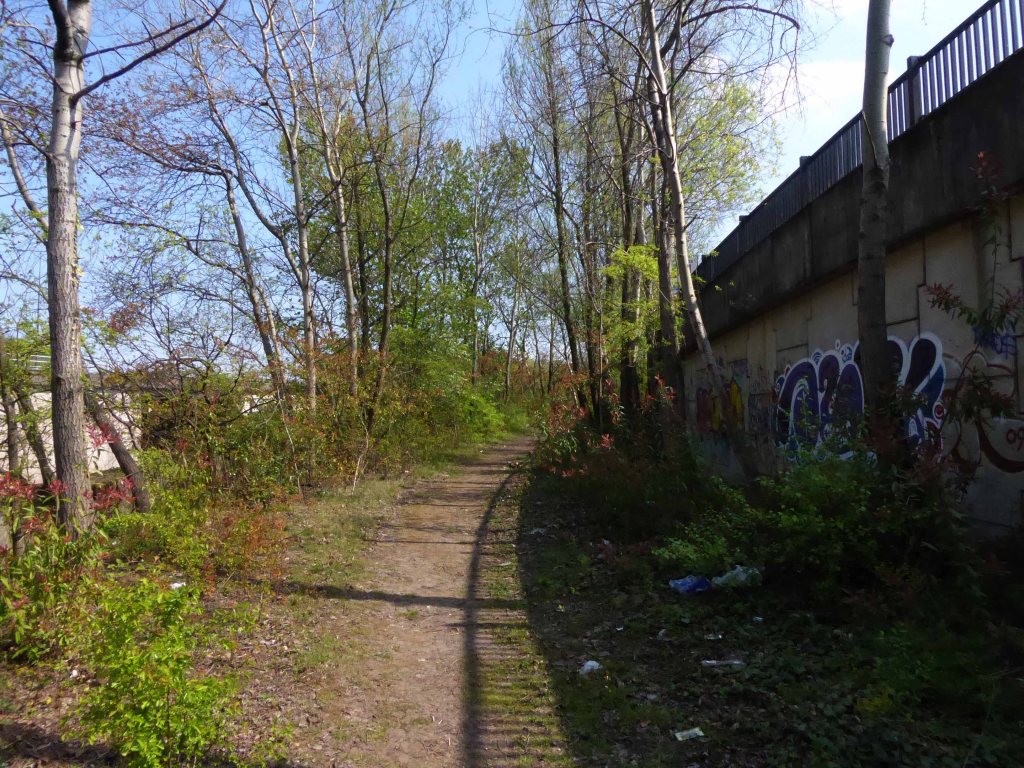
I’m in a different place – the same but different, whilst out walking I went through an open gate, following a well worn path, for the very first time.
Leading who knows where.
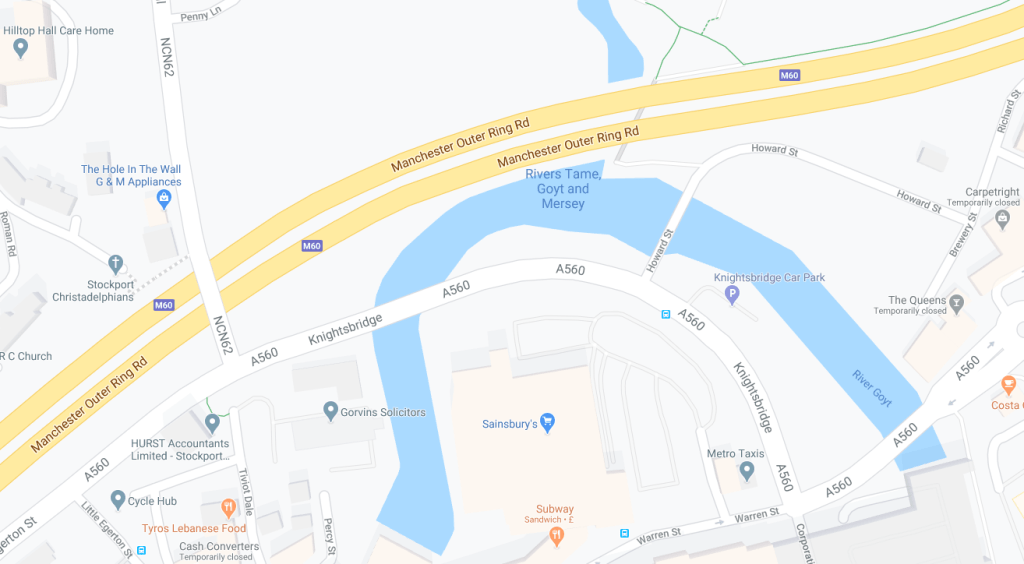
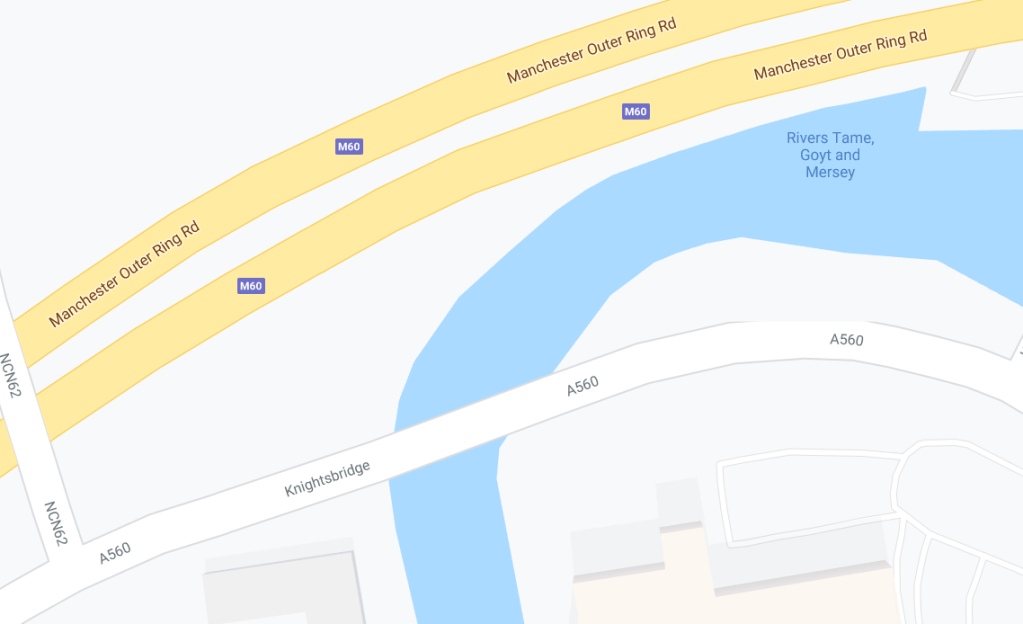
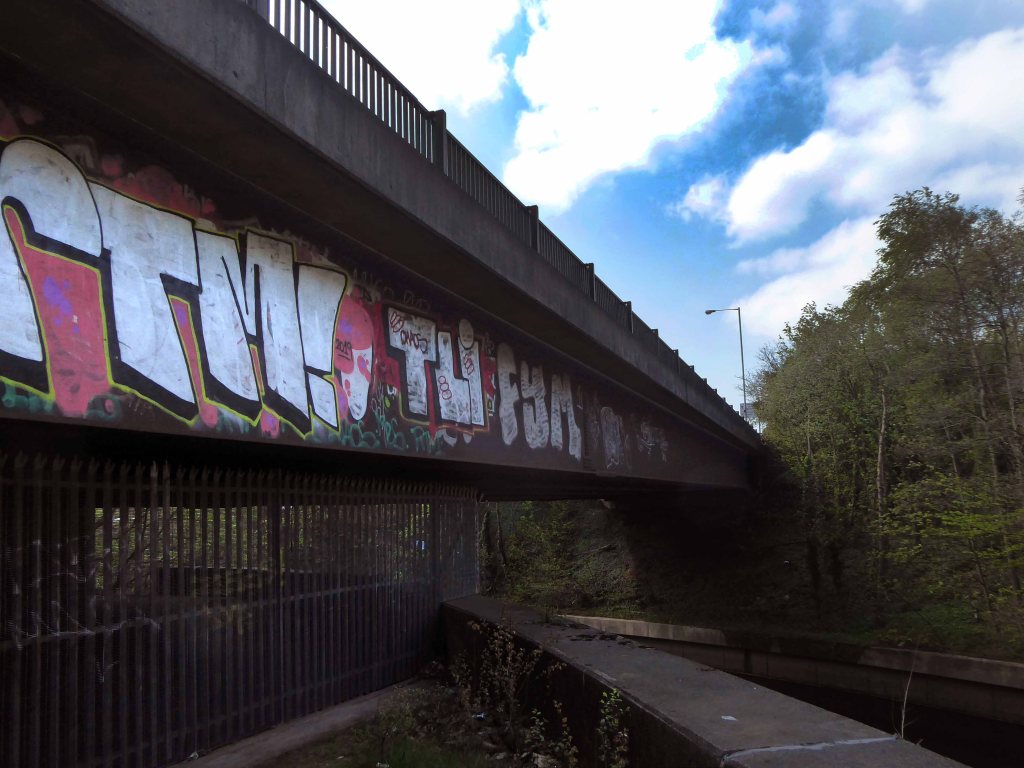
The confluence of three rivers, the meeting of motorway and main road.
I ventured further – where if anywhere are we going?
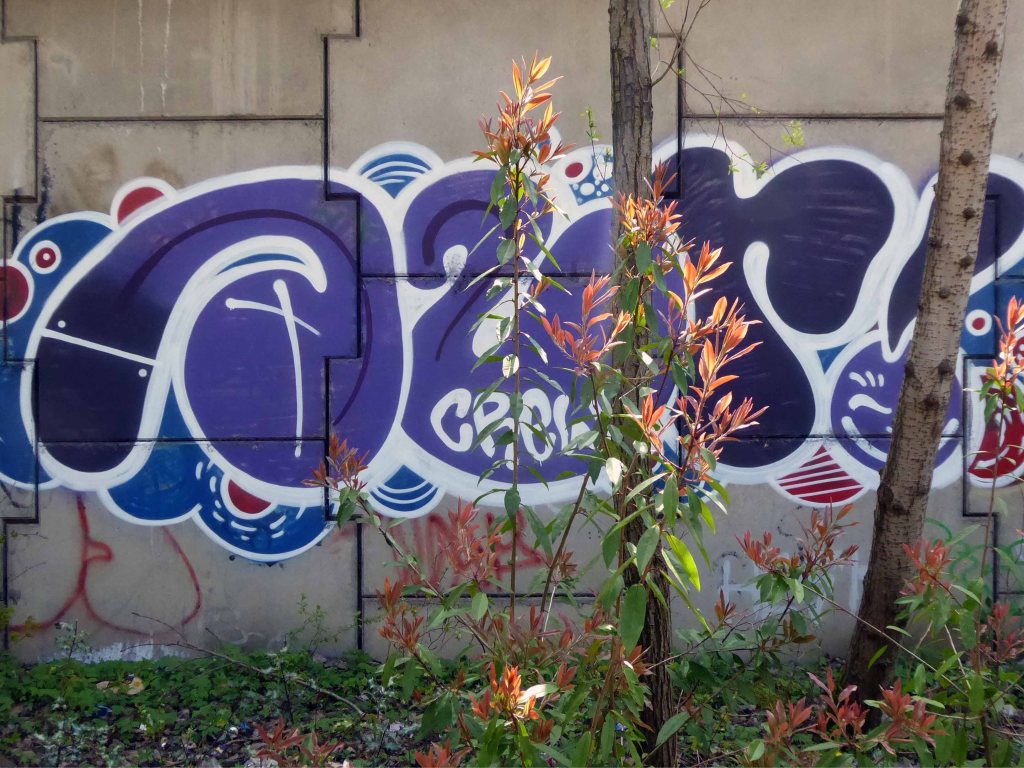
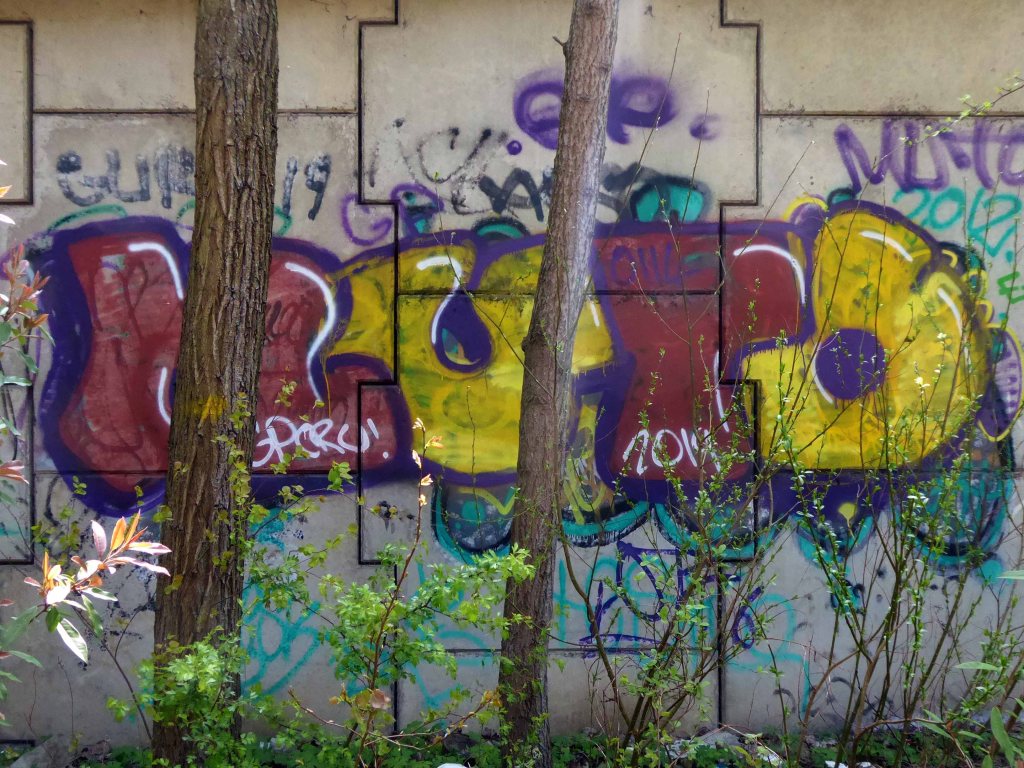
This tight tree lined and paint daubed triangle offers no answers.
Tamed thirty years or so ago, with concrete and steel.
Further and further.
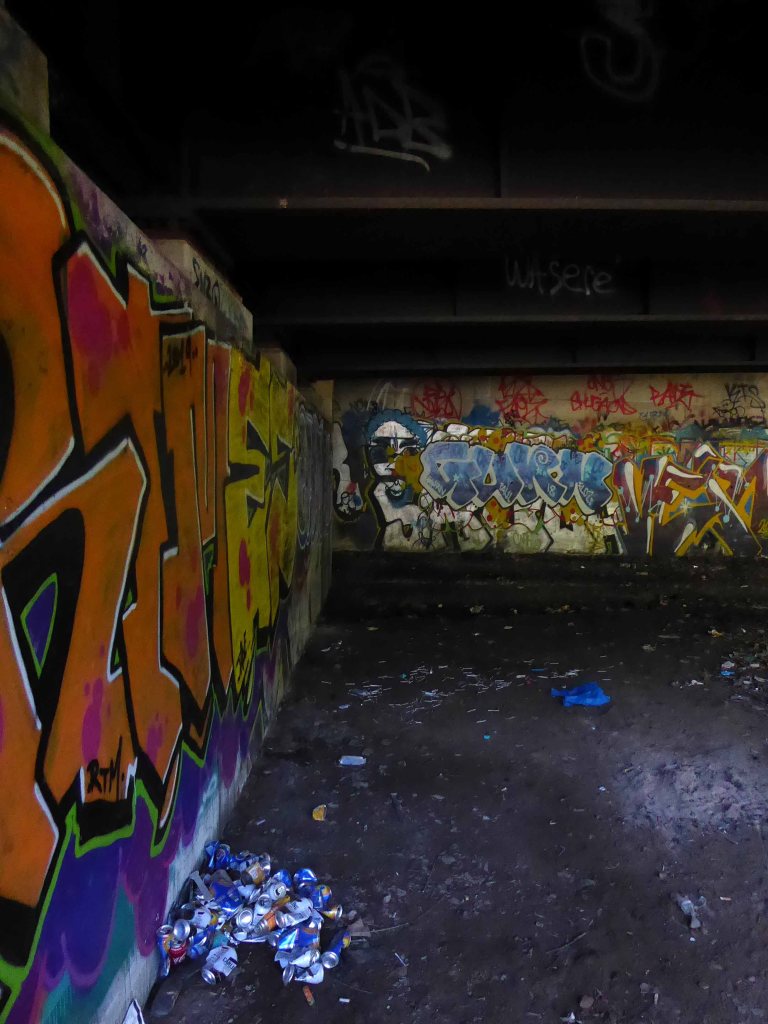
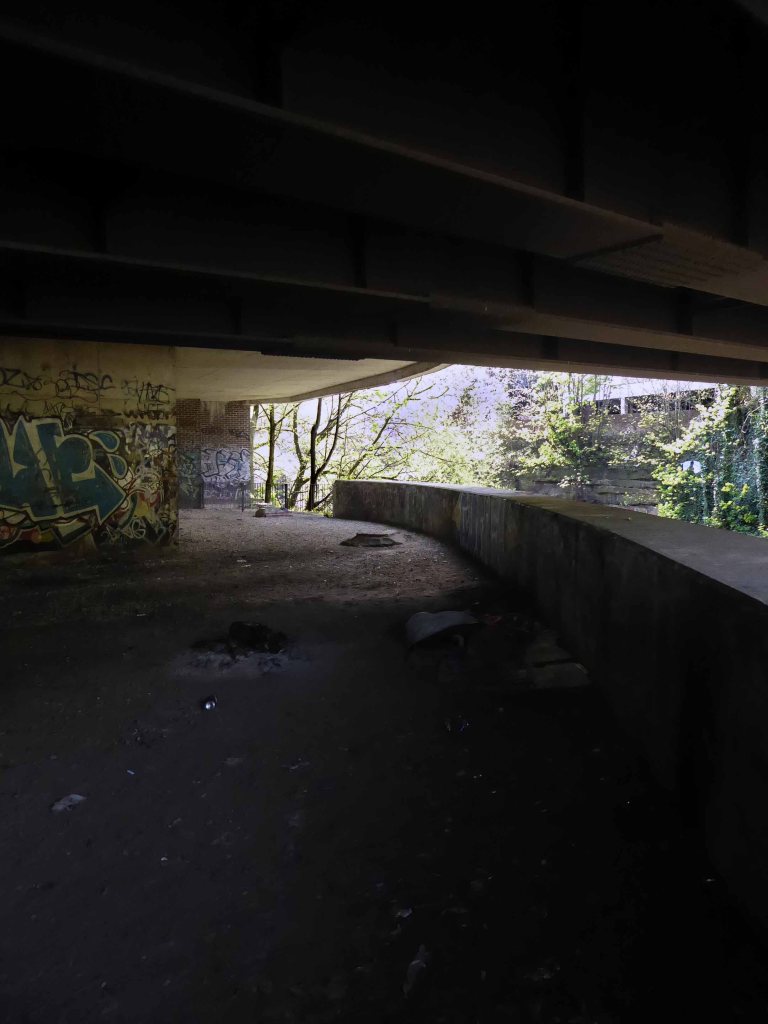
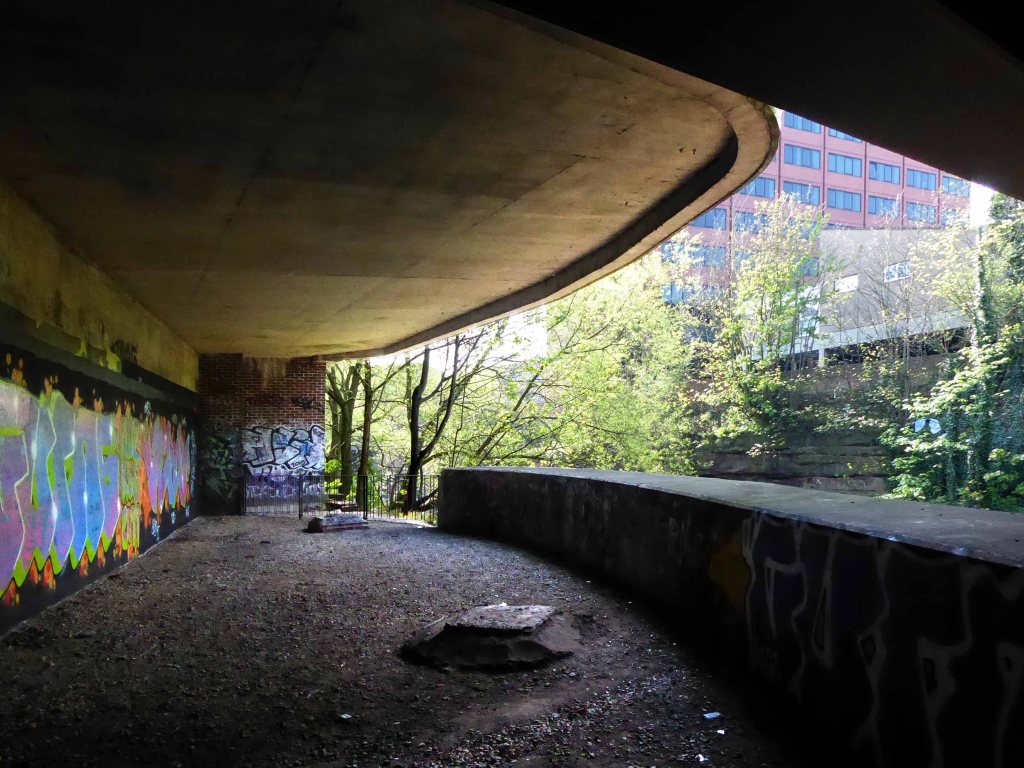
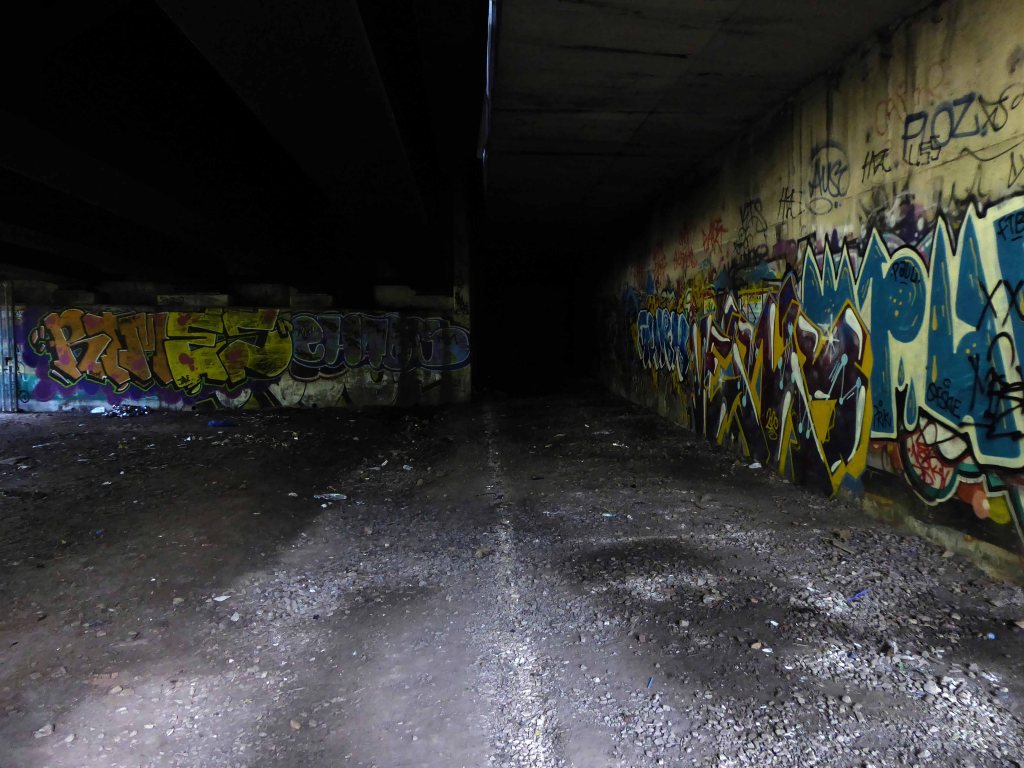
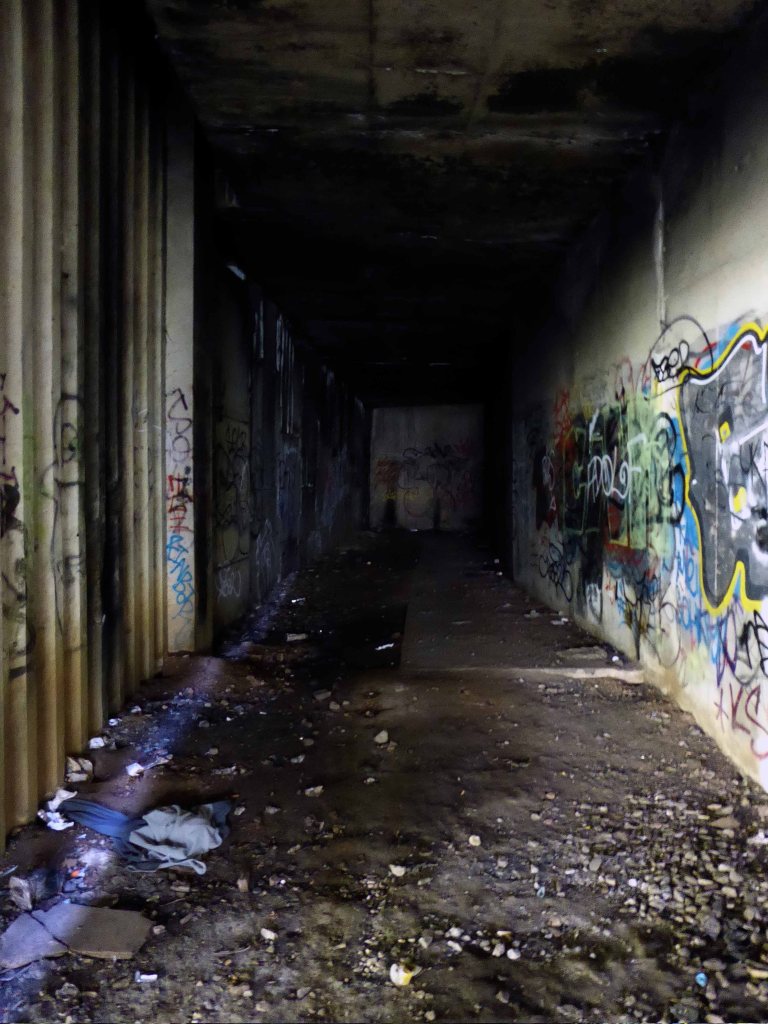
Into an underground world.
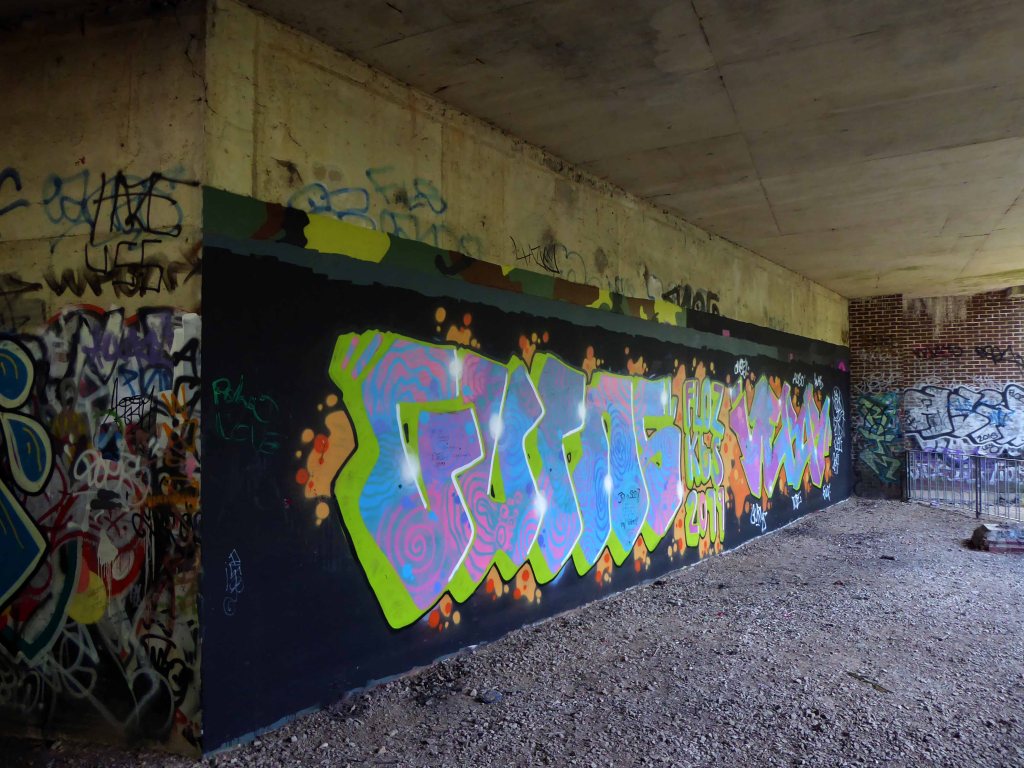
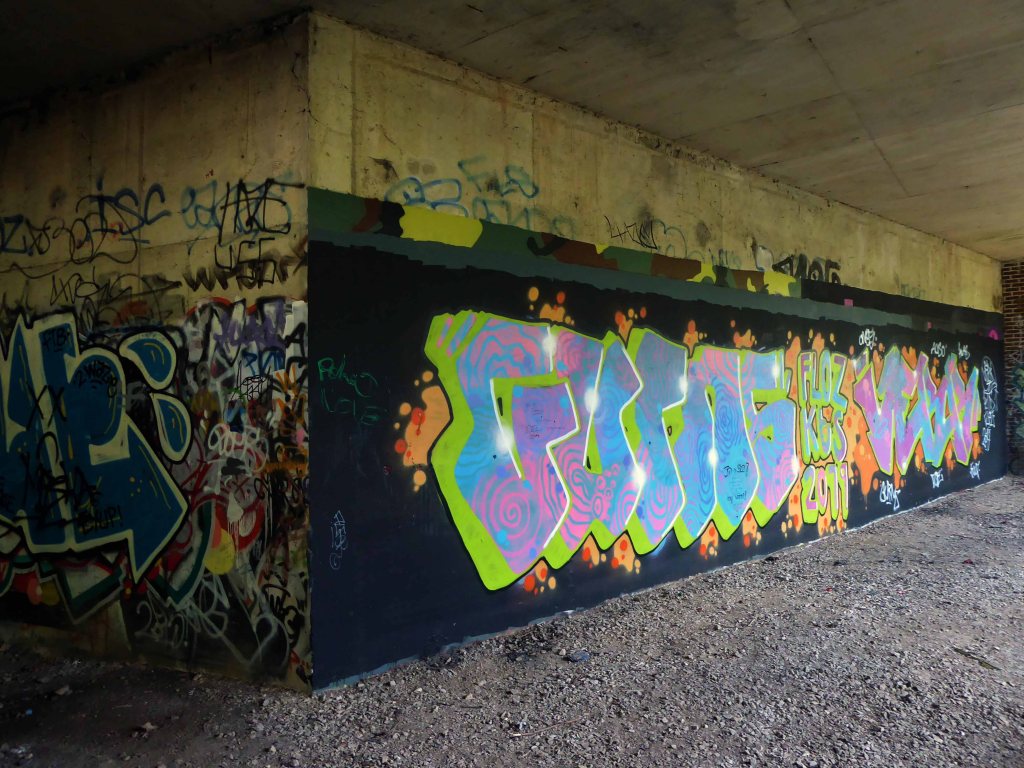
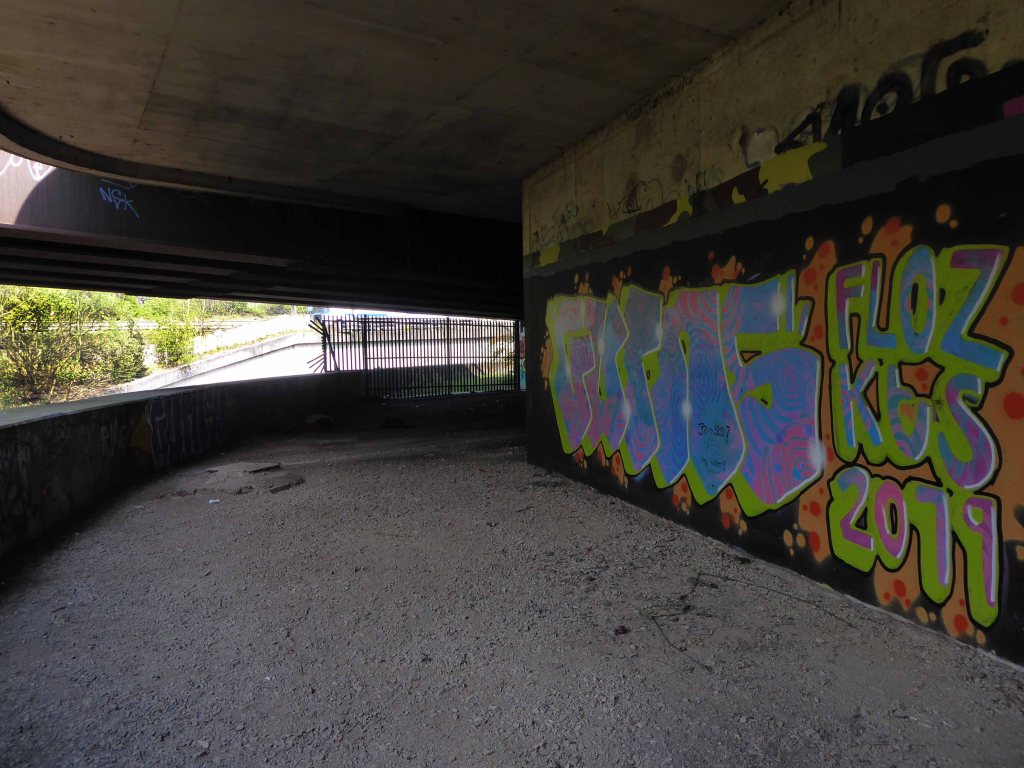
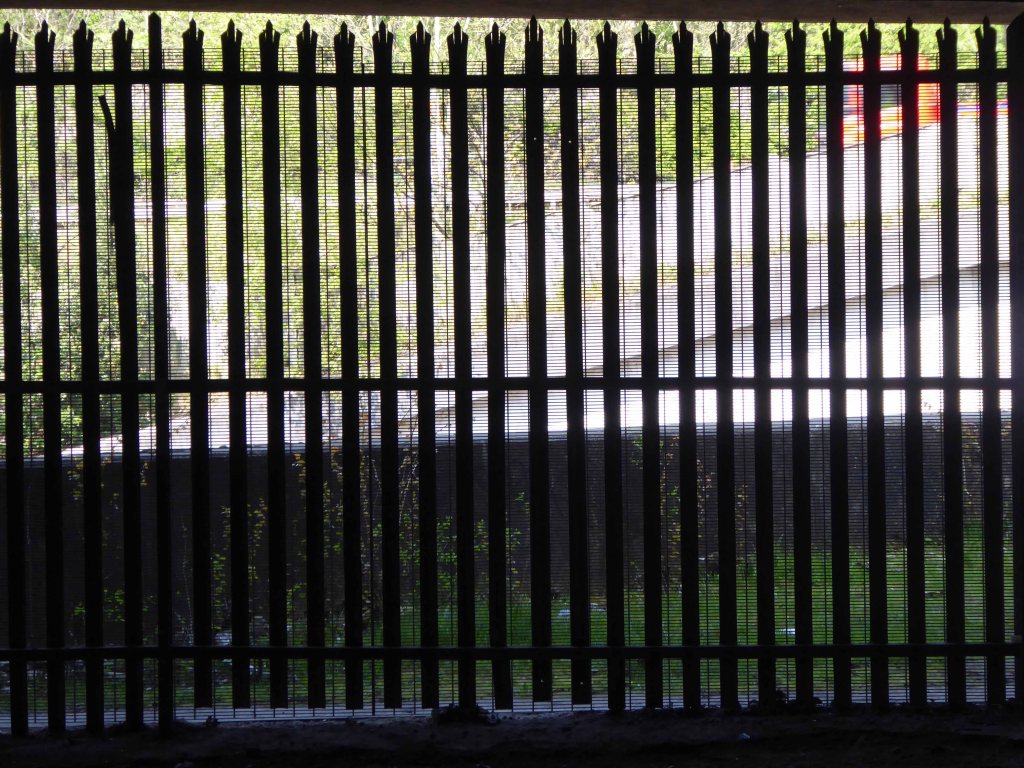
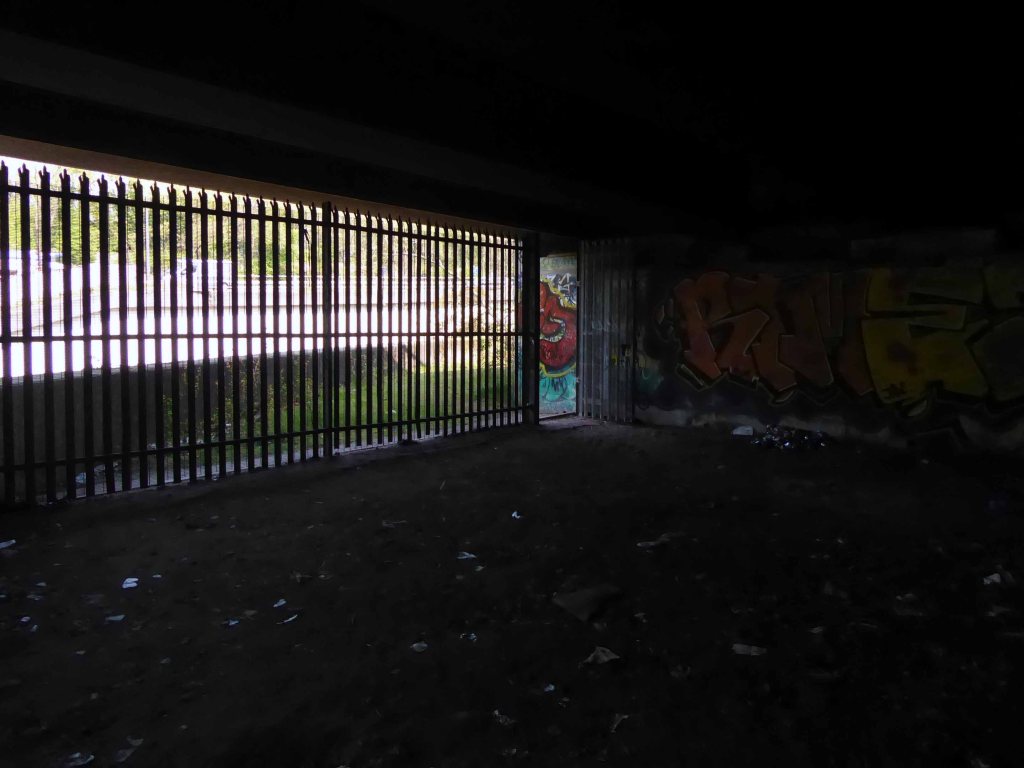
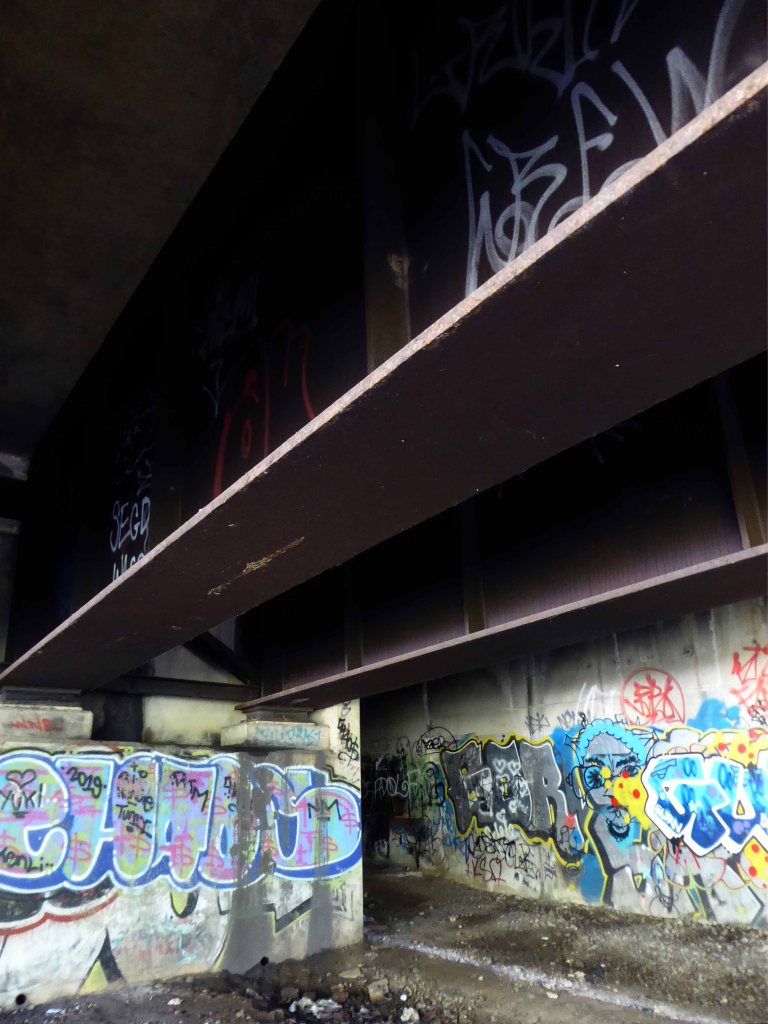
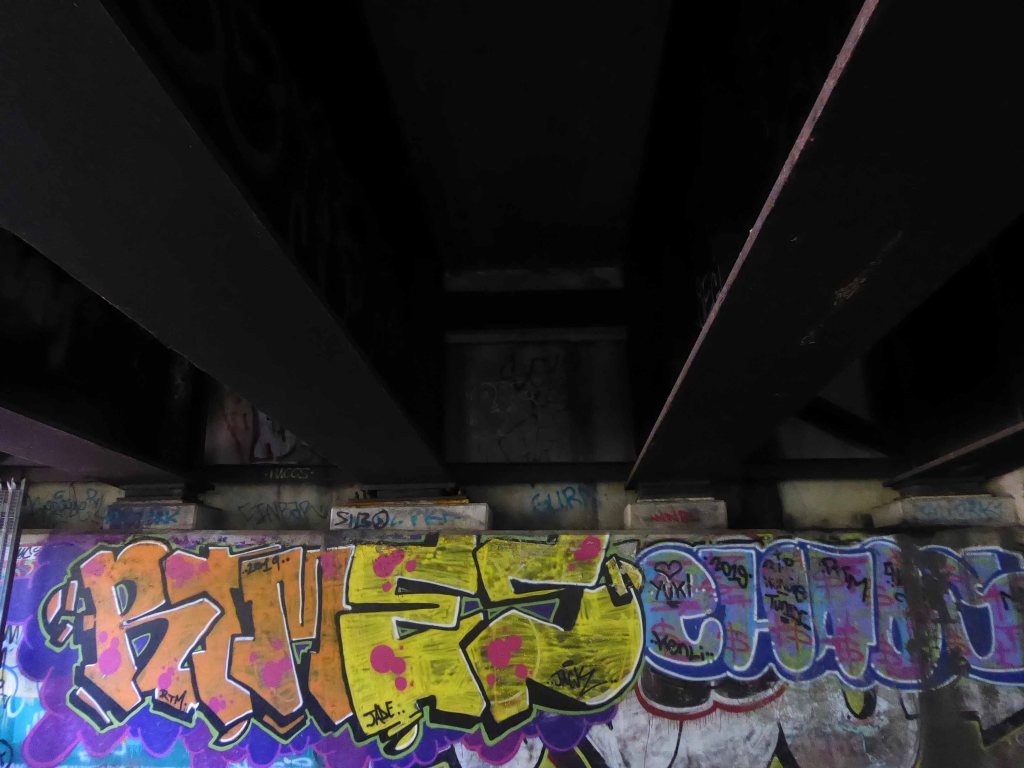
Through the railings and into a void – a void that had become home to the otherwise engaged, seeking solace somewhere, finding shelter from the storm. A storm of Twenty First Century austerity, man made – moving money around until those without are out, out in the open, nowhere else to go but here.
How often have I lain beneath rain on a strange roof, thinking of home.
It’s lockdown so we can’t go far, so from home in Stockport to Collyhurst is within my daily exercise allowance.
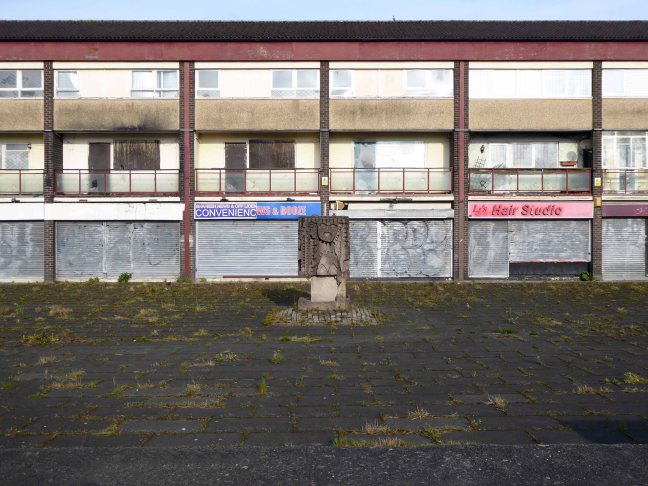
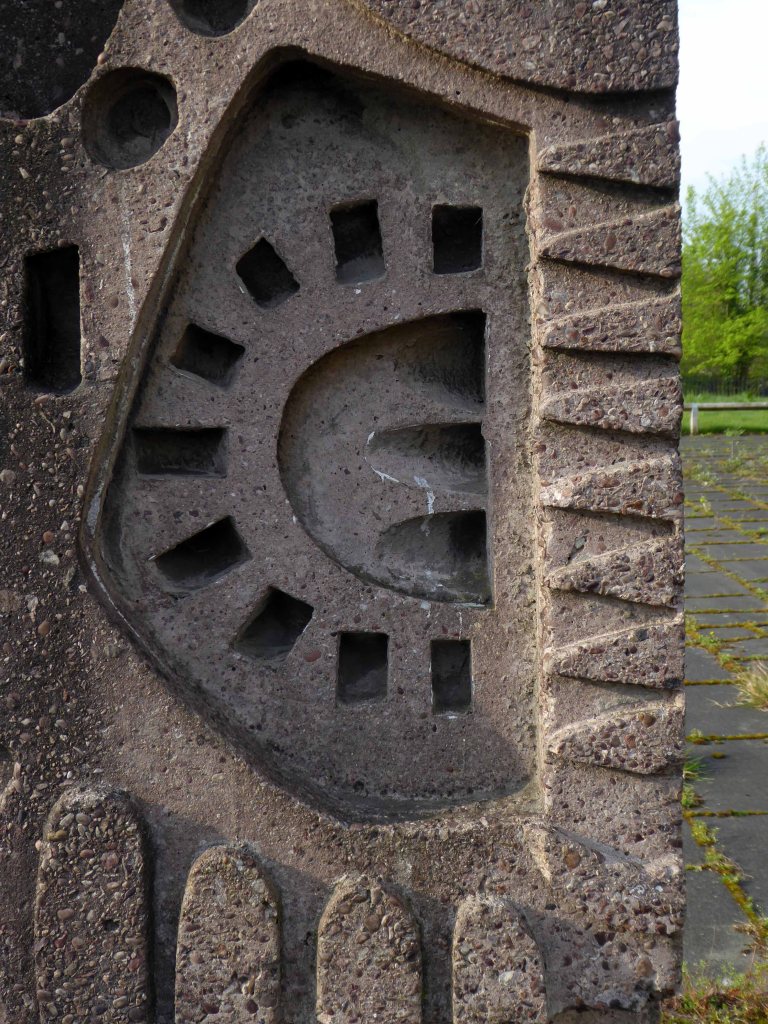
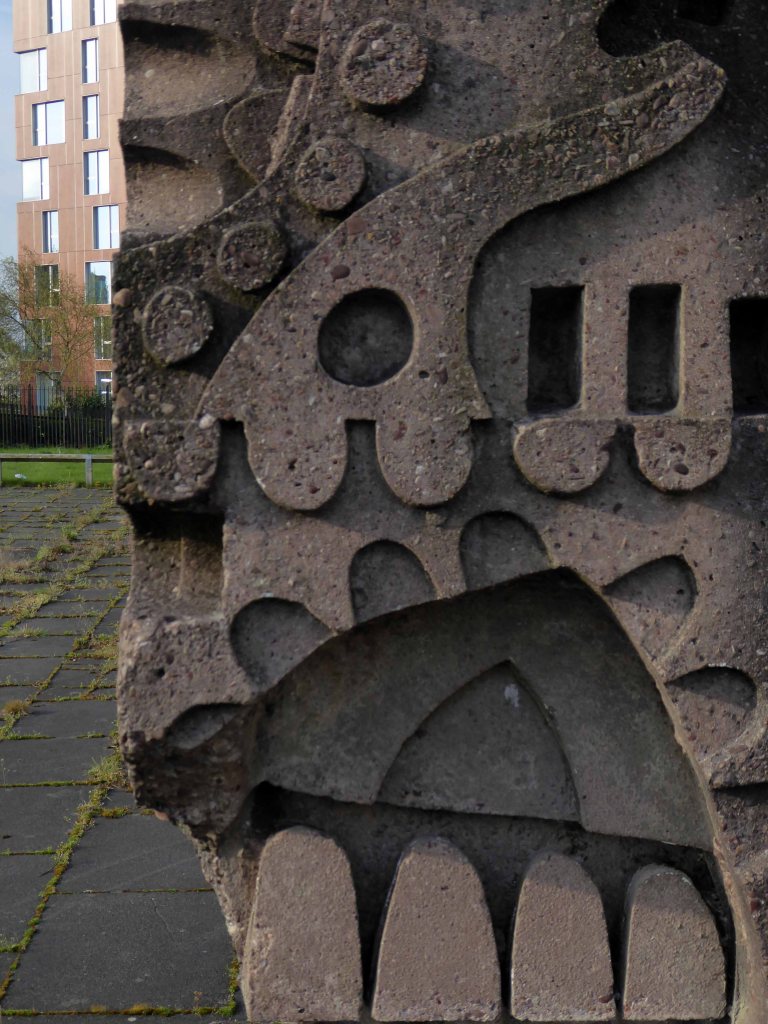
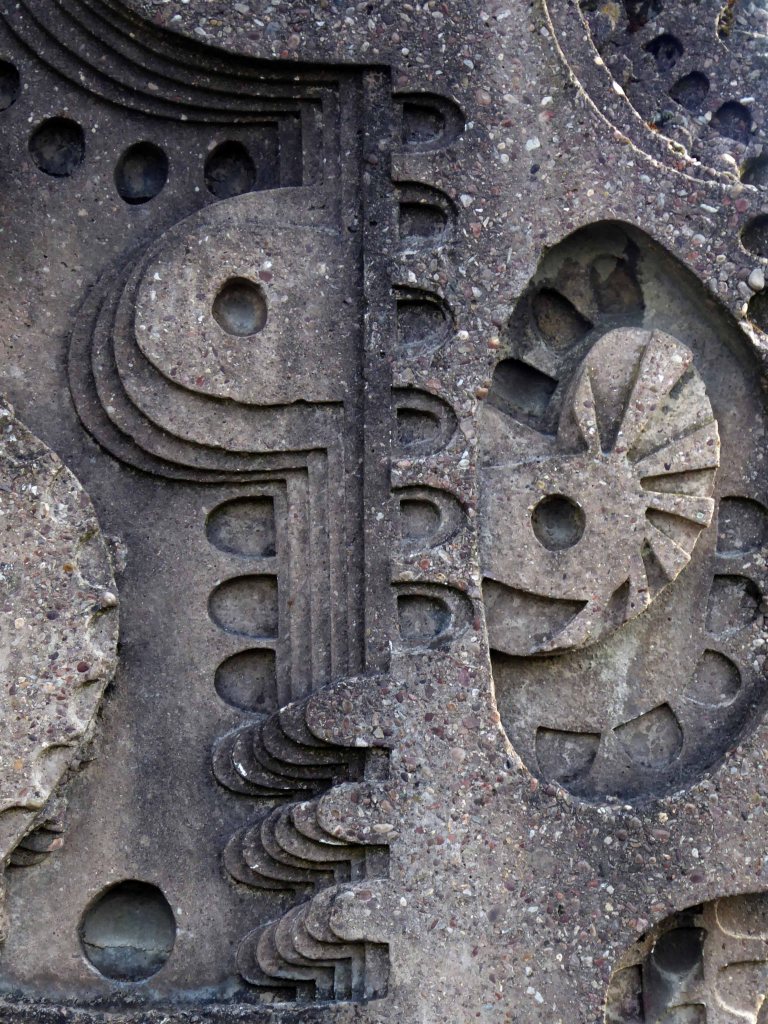
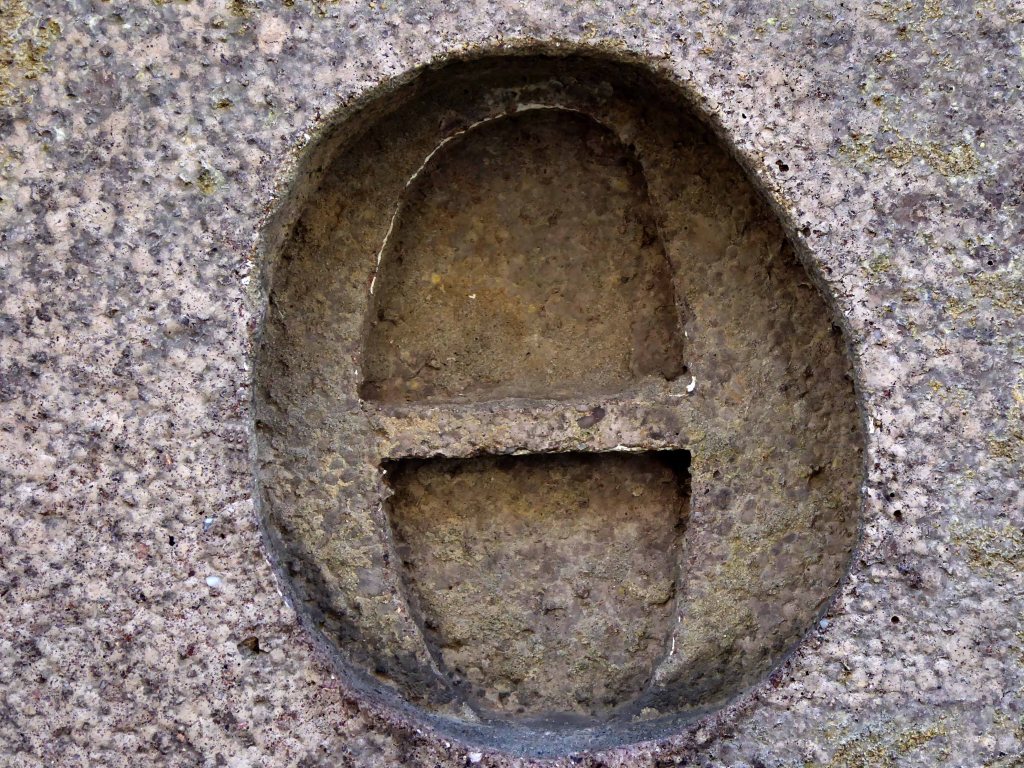
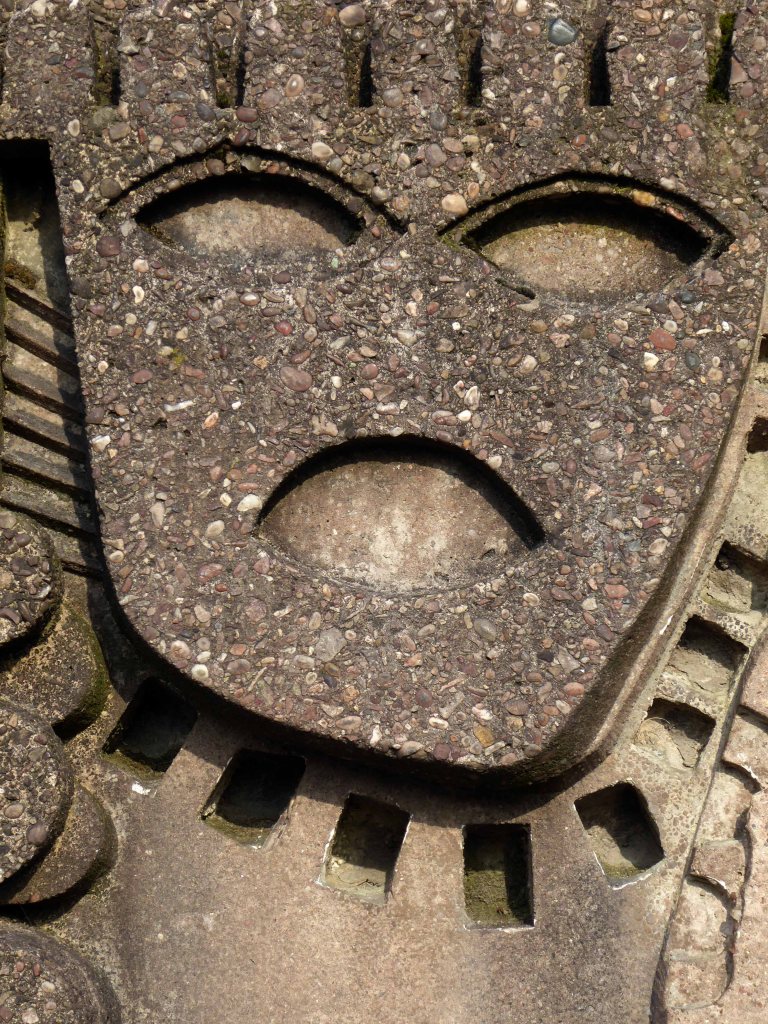
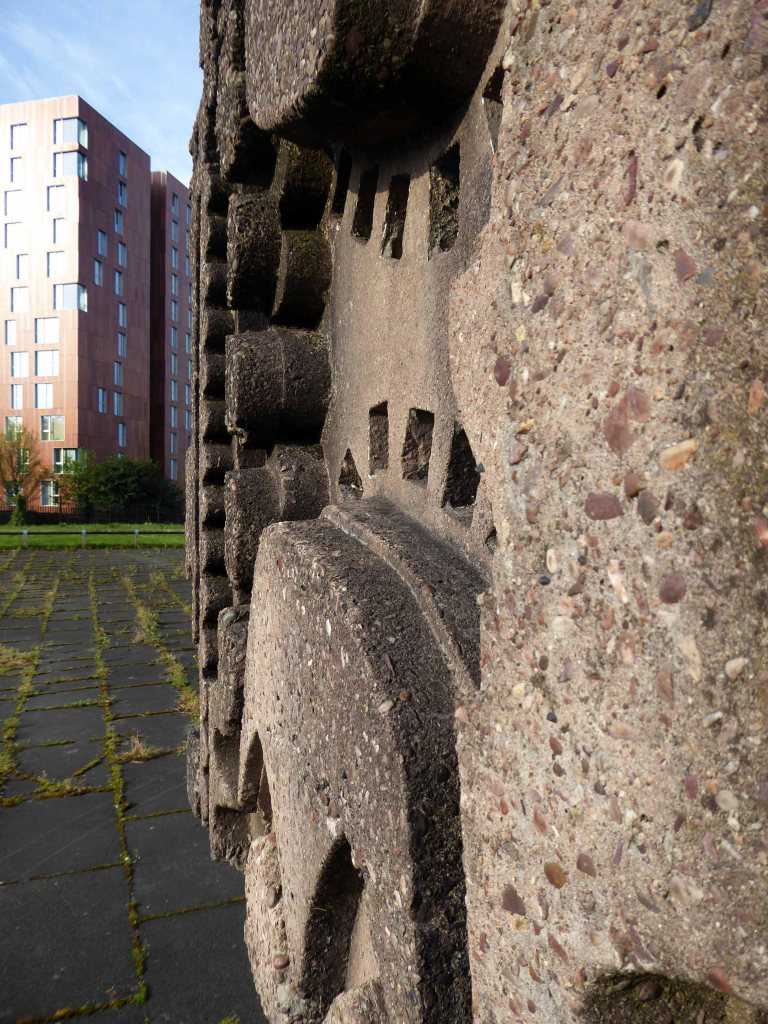
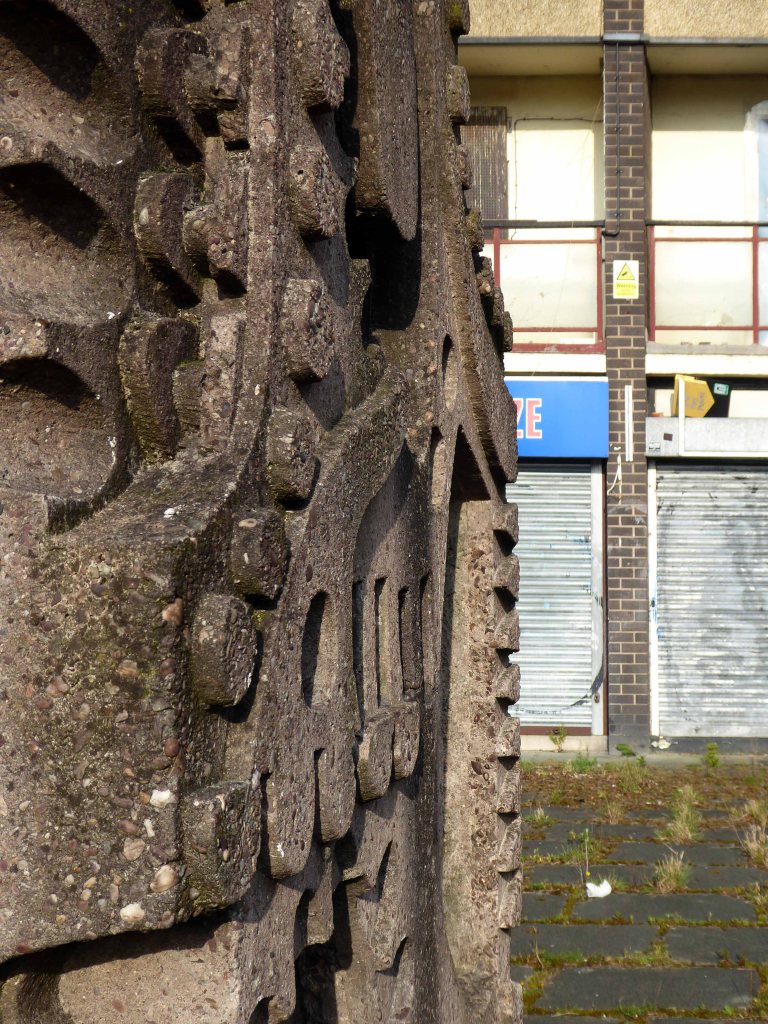
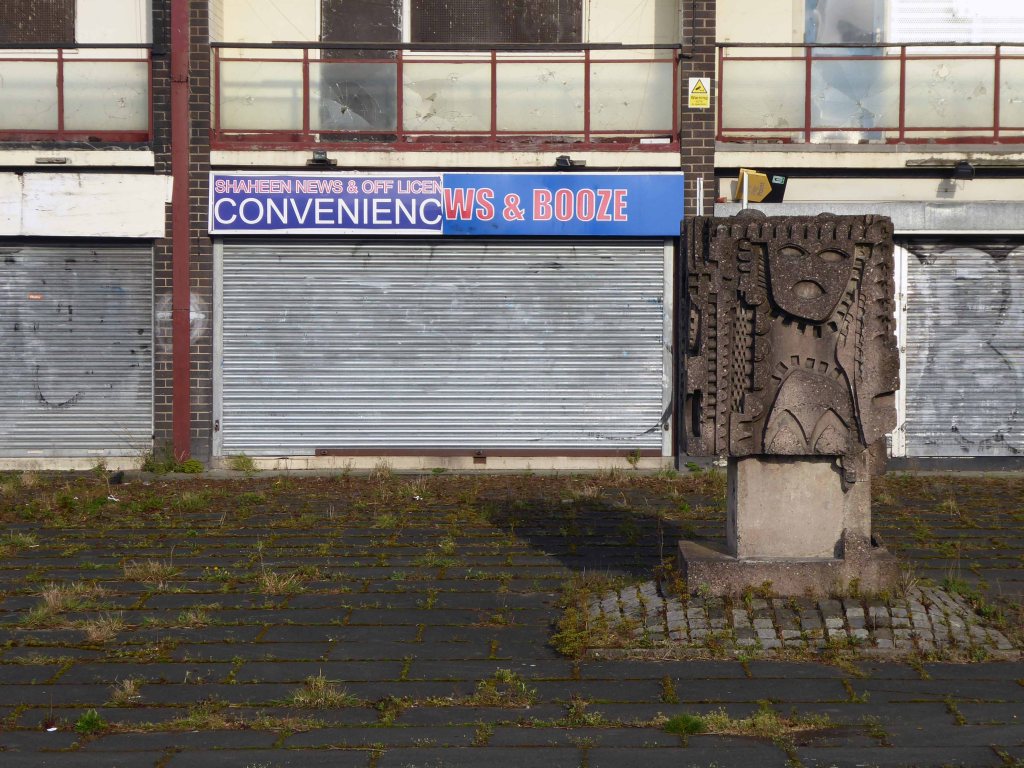
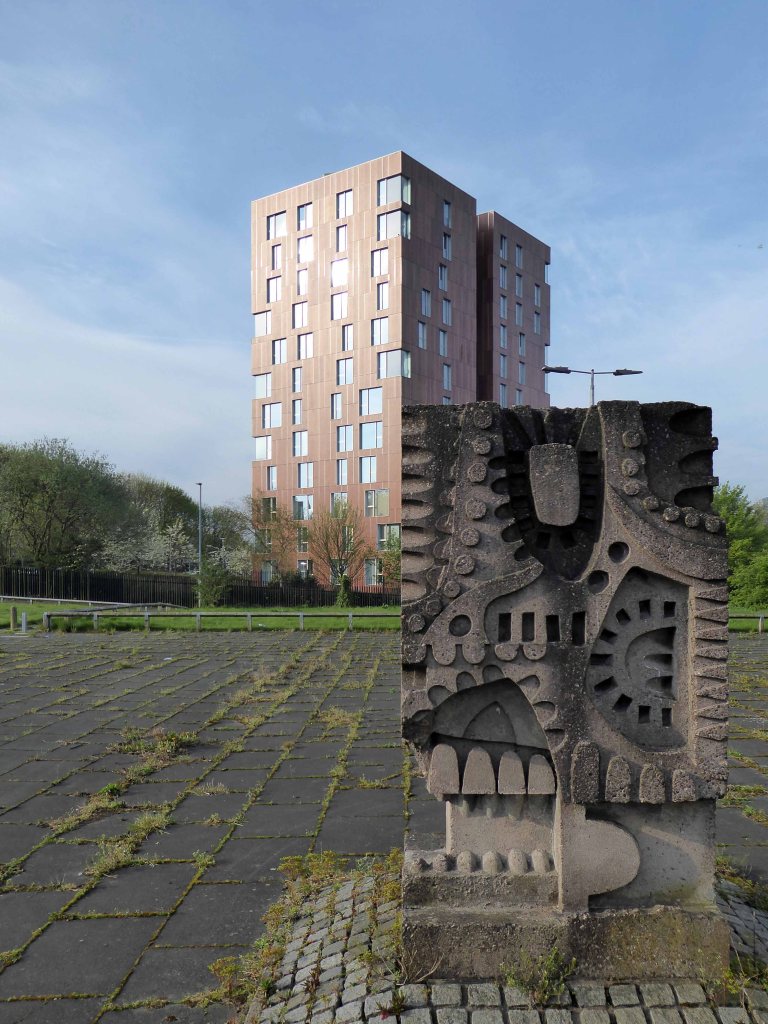
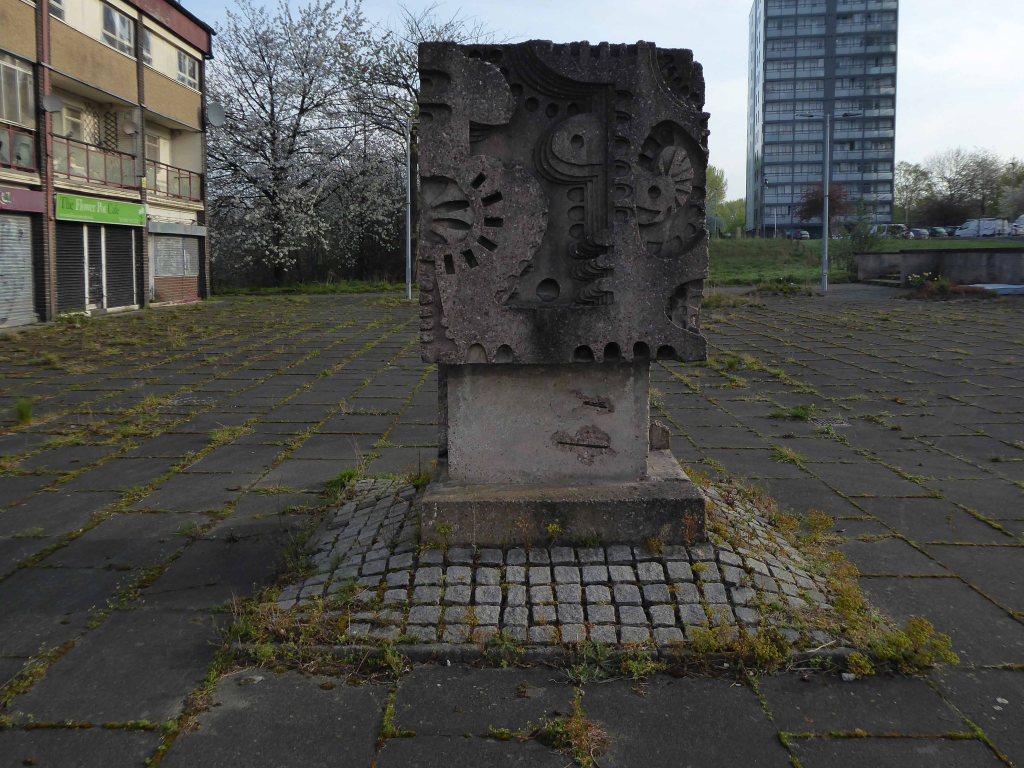
There is talk of relocation for the diminutive Mitchell totem, but as of today no sign of any action – all is in abeyance.
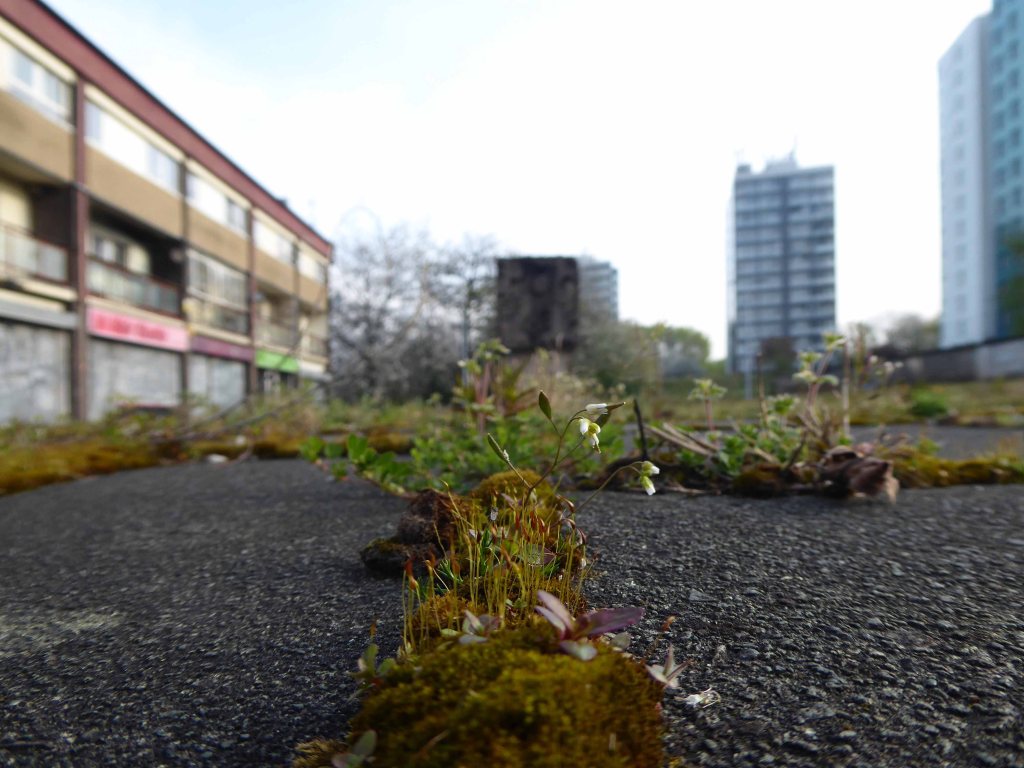
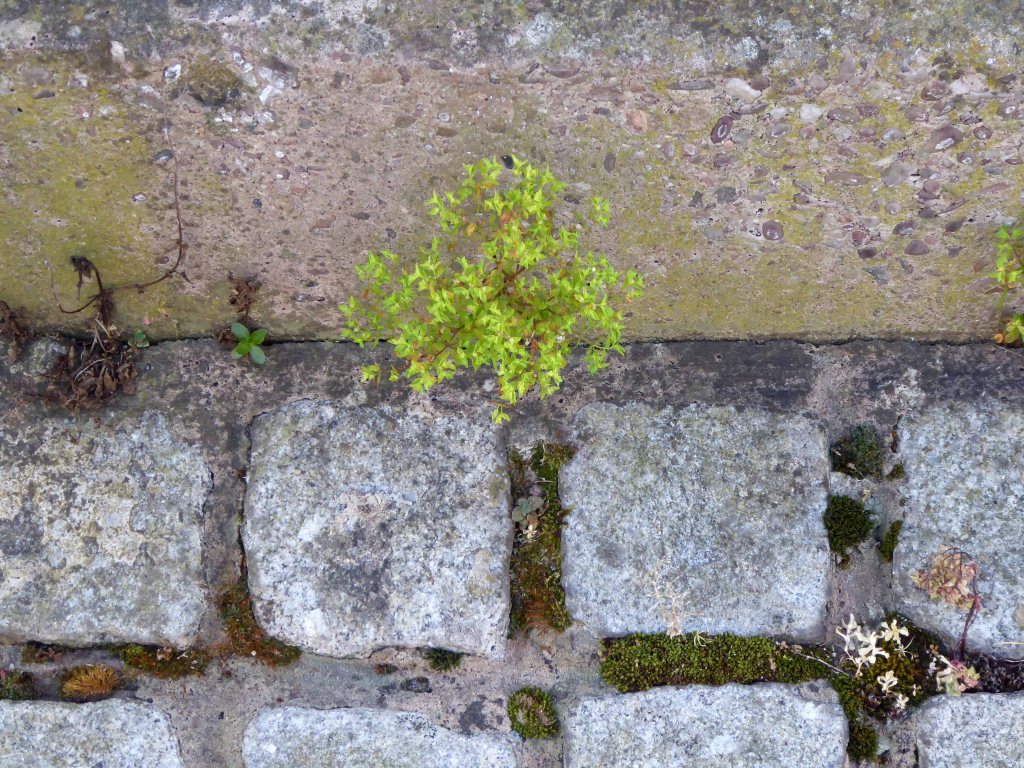
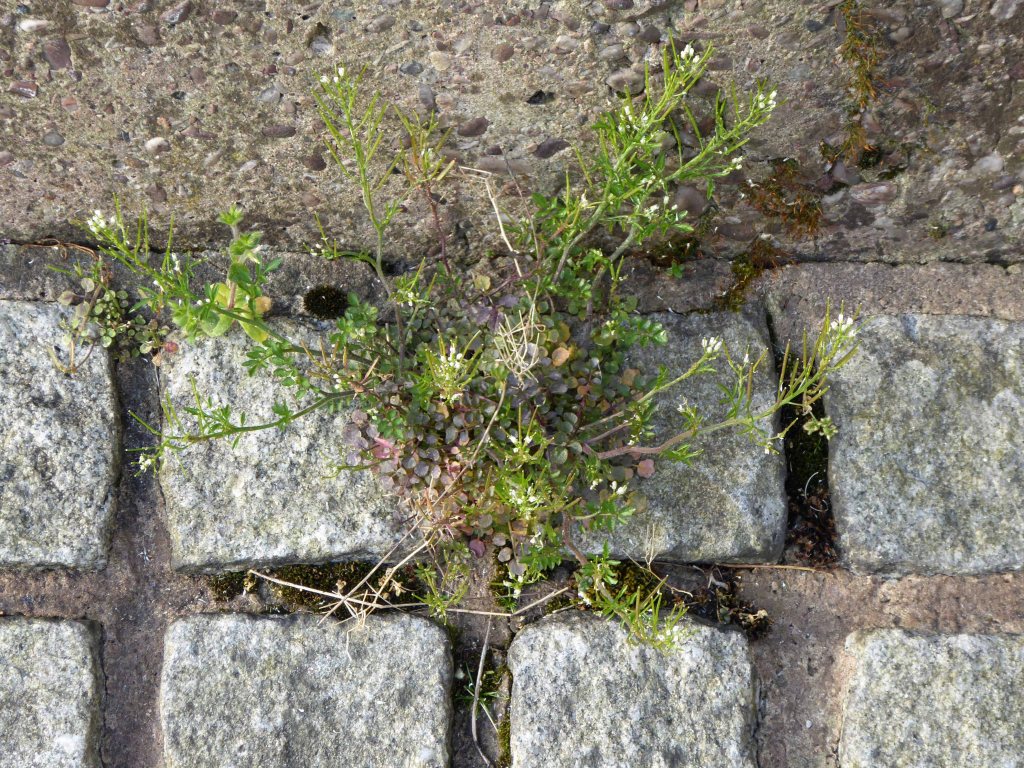
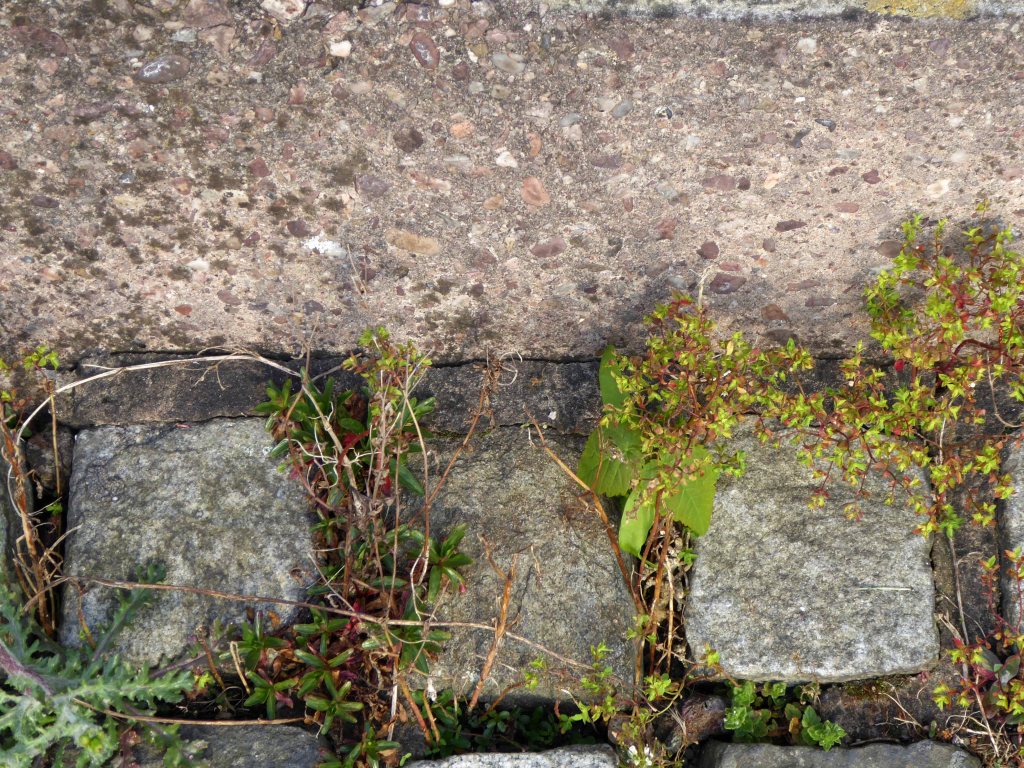
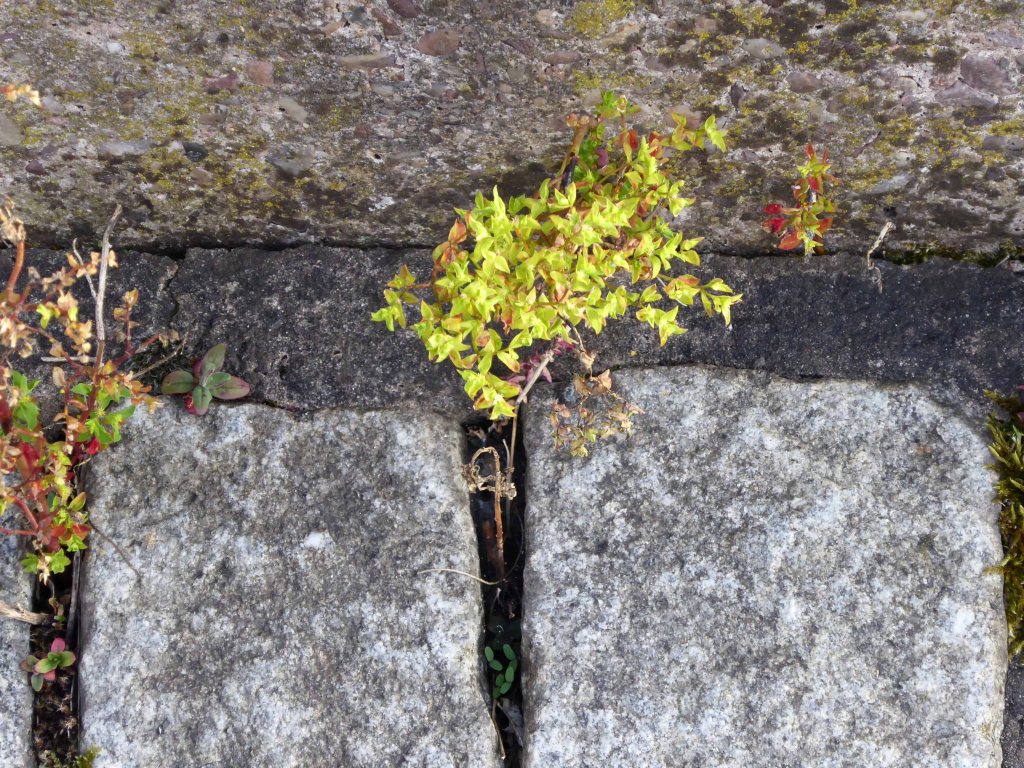
What we do see is the encroachment of flora, cleaner air, low or no level human activity encourages growth between the cracks.
And at the base of the plinth
I took the opportunity to get in close.
Move around in a merry dance.
Quite something to spend time in an ever changing urban space – devoid of company, save for the calming sound of birdsong and the distant rumble of a distant train.
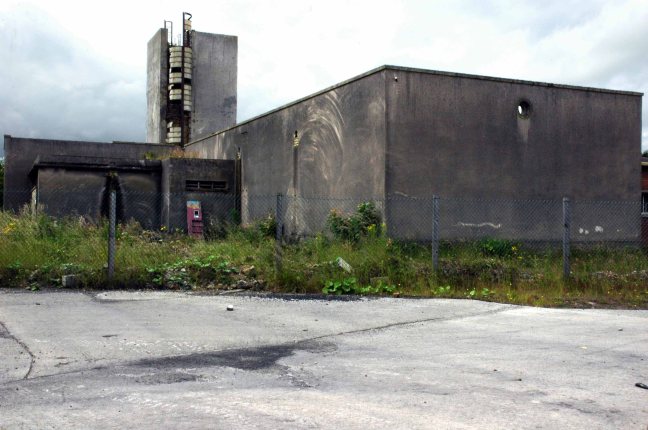
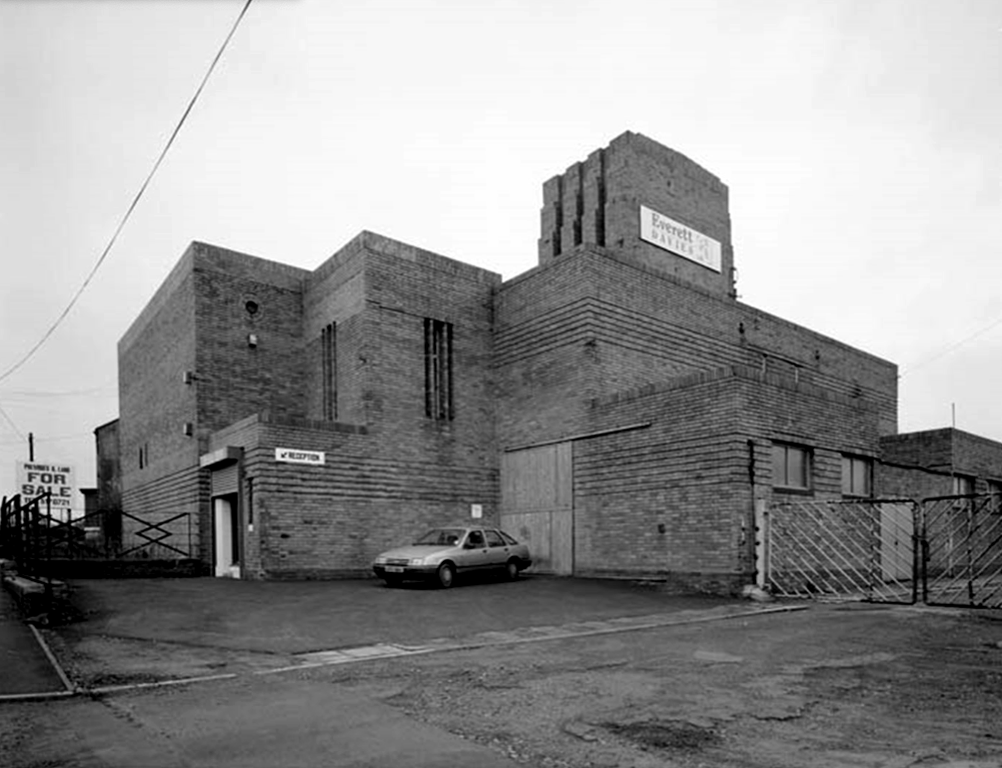
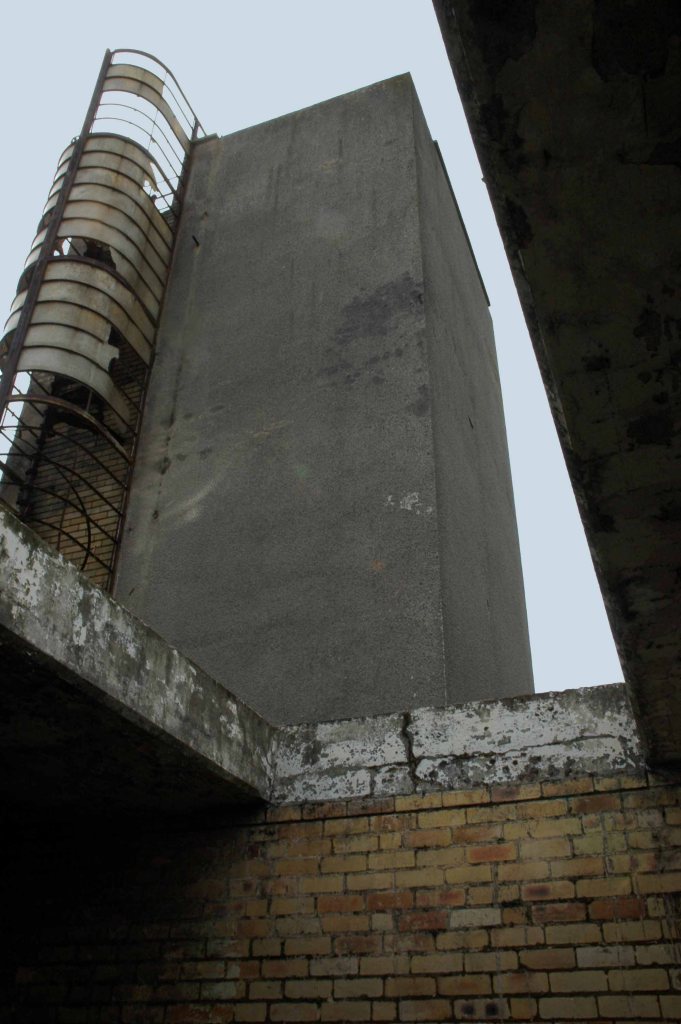
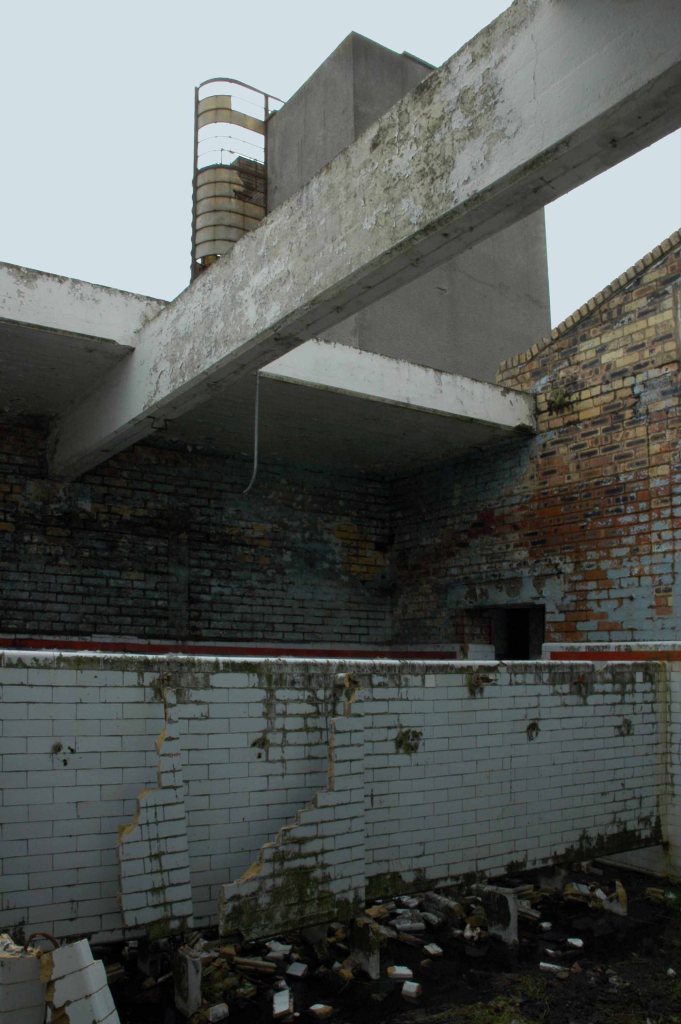
Pebbledashed over white brick. Roofs part concrete slab, part glazed behind parapet. Irregular plan, Modern Movement style. Group of blocks of varying height round tall central tower with rounded, glazed stair turret. Walls mainly sheer, with plinth and slight roof projection.
Long block on east of tower has central south projection with glazed, banded steel double door under high strip of windows beneath eaves overhang. Taller storeroom to west has similar doors in 2 recessed banded glazed bays; and abuts on south-east corner of tower. Similar double doors in base of tower. Large lower south-western canteen wing abuts on west side of tower and has banded glazing around two sides above a projecting sill. Slightly-projecting 3-bay office section to north has steel cross casements; on its return another casement and a door with hollow-chamfered jambs and flat hood. Taller bath block behind. Wave pattern on rainwater heads.
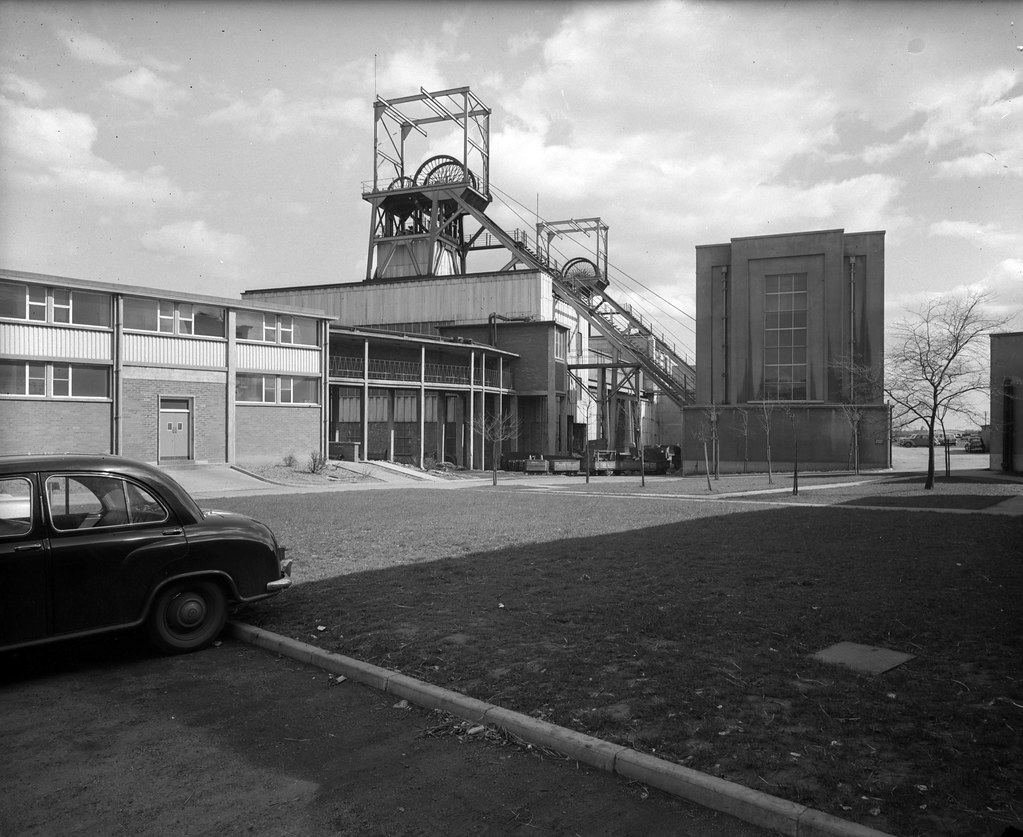
This is the youngest colliery in the neighbourhood, having commenced operations for the Ashington Coal Co Lt. in 1934. The shafts, which are situated comparatively near to the coast, are two in number, and both were sunk to the High Main seam level, which is 486 ft from the surface. The downcast No. 1 is 18 ft in diameter and is used for coal-raising on two shifts per day, and the upcast, which has a diameter of 15 ft, is used for ventilation and emergency man riding only.
The seams being worked are the High Main, the Diamond, the Main, and the Yard. Each of these seams shows practically the same nature of roof and floor as throughout the two neighbouring collieries and the distance between the seams is also comparable. They are, of course, found at slightly greater depths at Lynemouth, the Yard seam, for example, being 660 ft. below the surface near to the shafts, as compared with some 300 ft. at Ellington.
It was one of Britain’s largest collieries until it was closed in 1994.
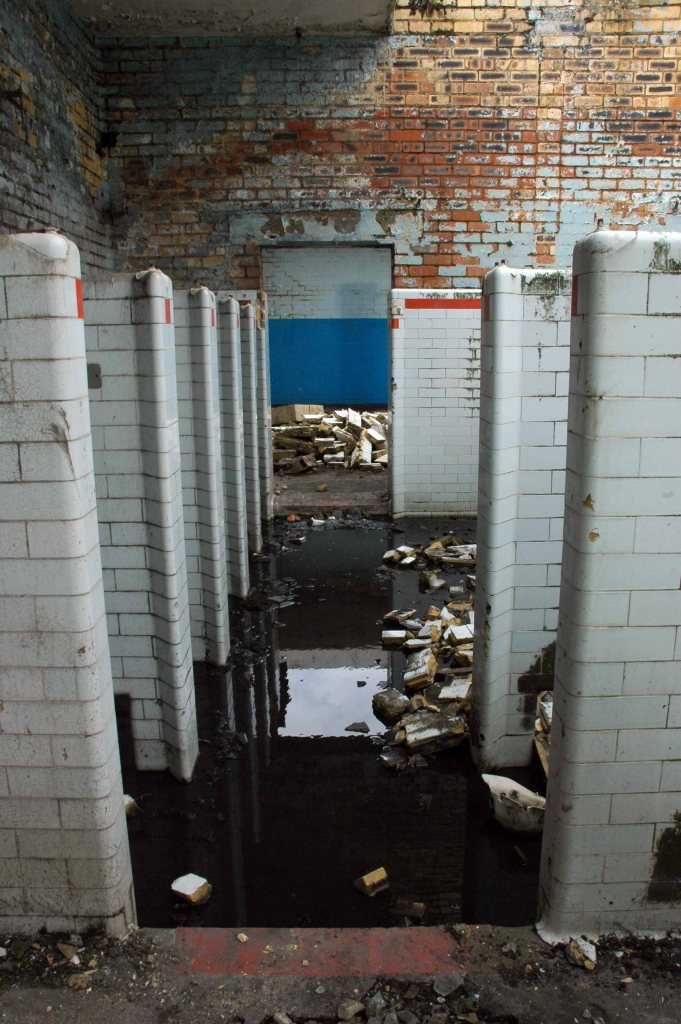
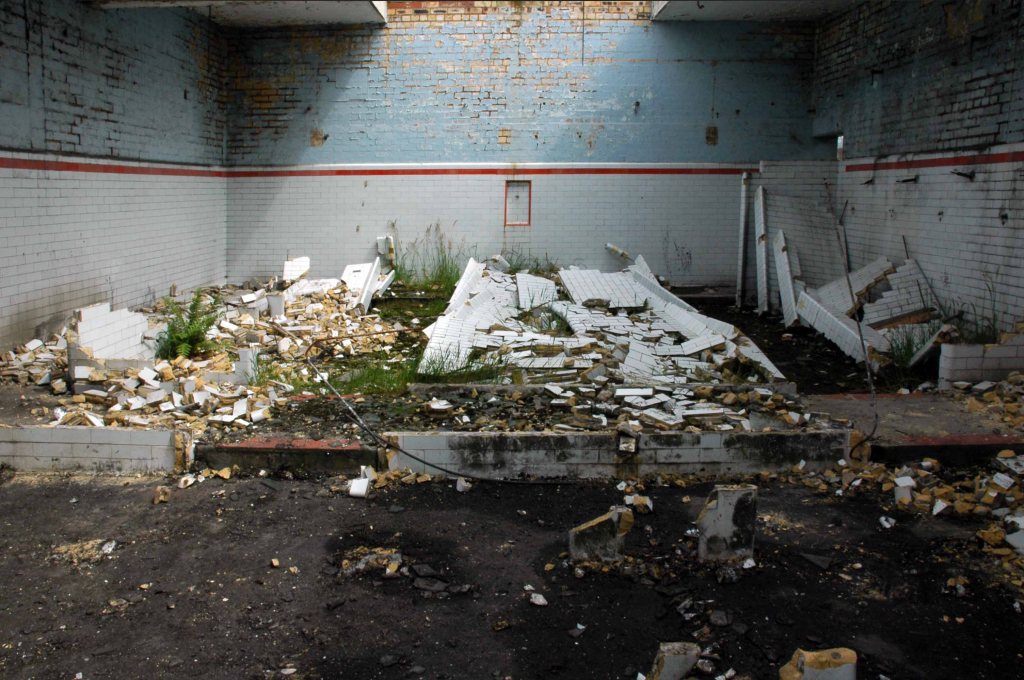
I was cycling the coast in July 2012 and happened by, seeing the tower of the baths from an adjacent path, passing by the faded signage.
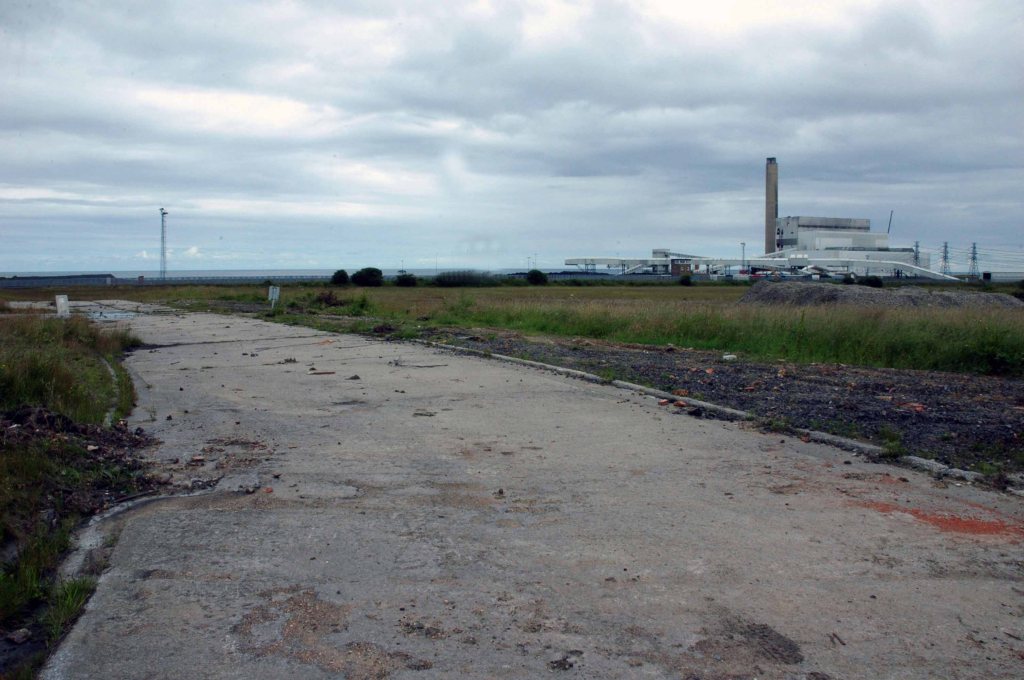
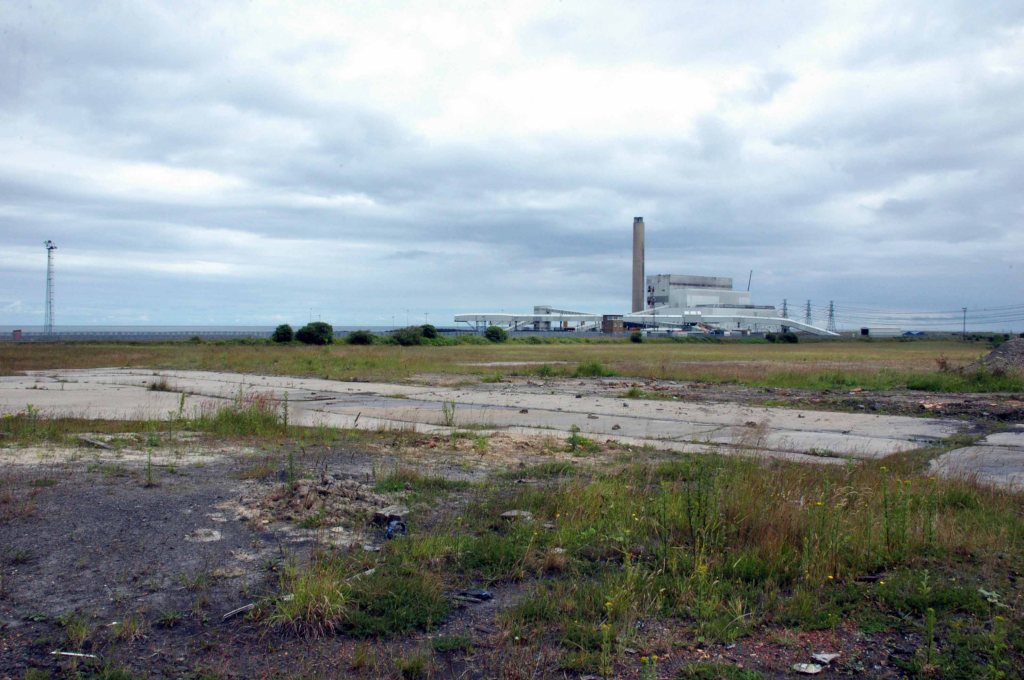
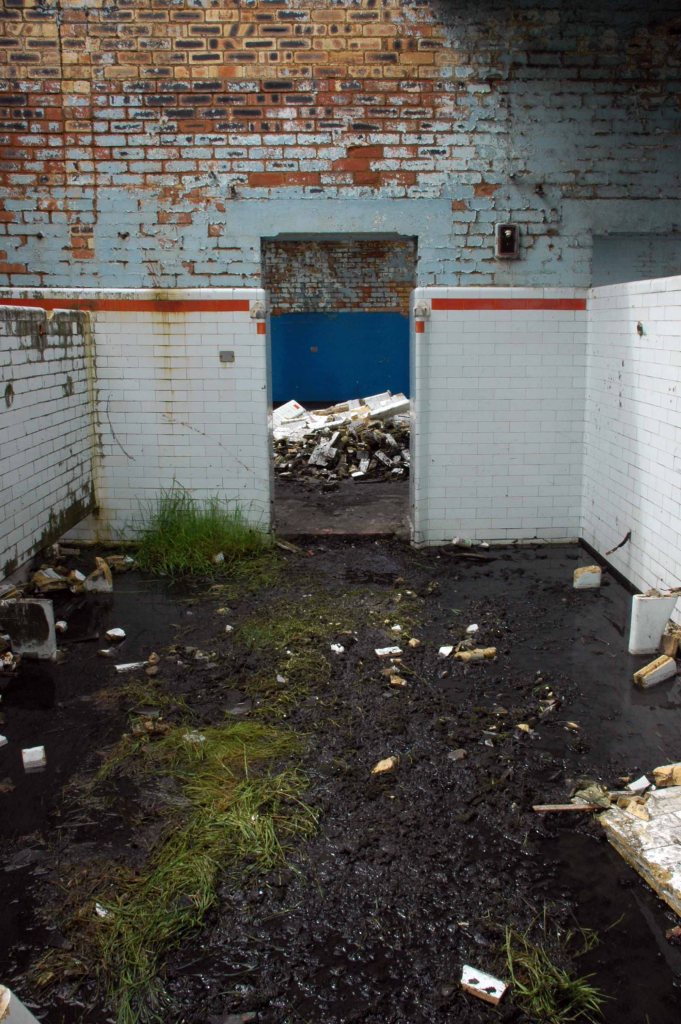
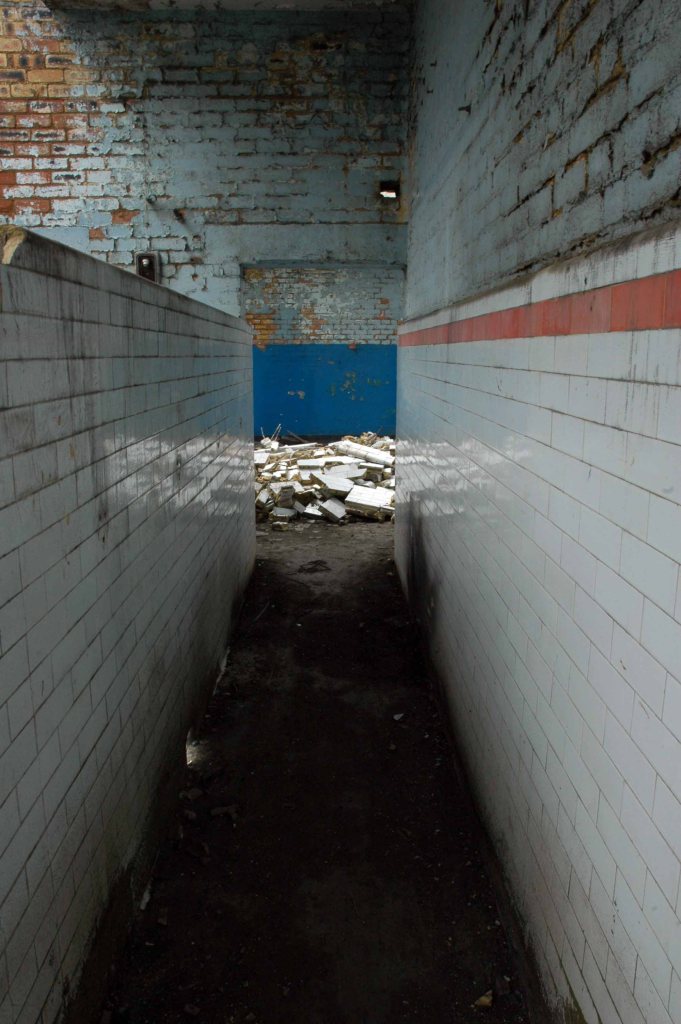
Into the raw expanse of a now empty post-industrial landscape.
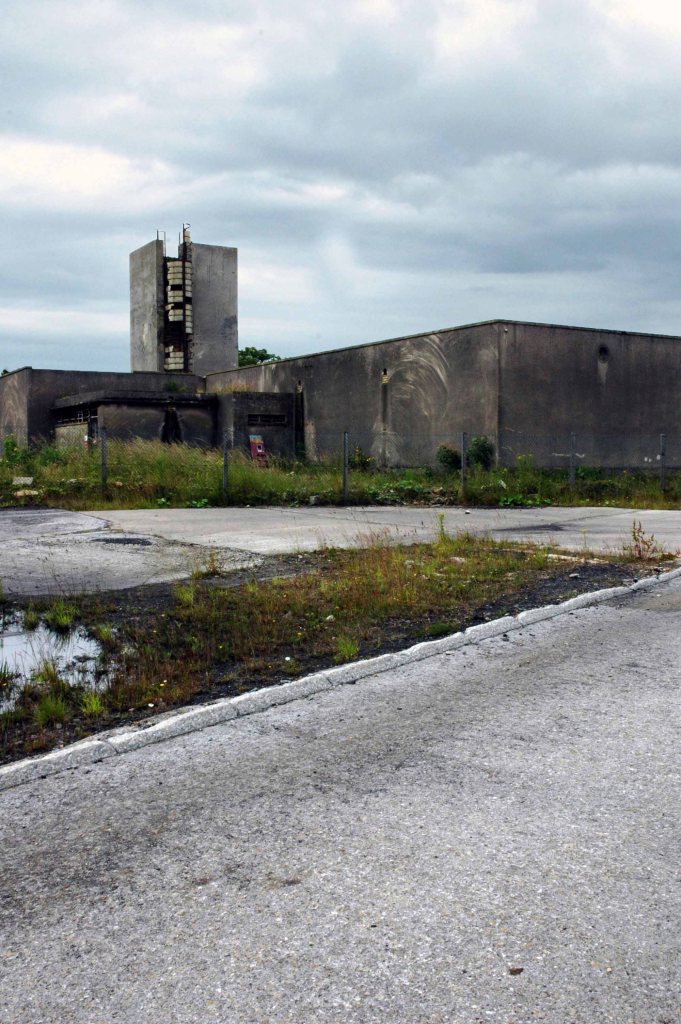
And on towards the bath house.
I am not by nature an urbex urban explorer, simply an explorer.
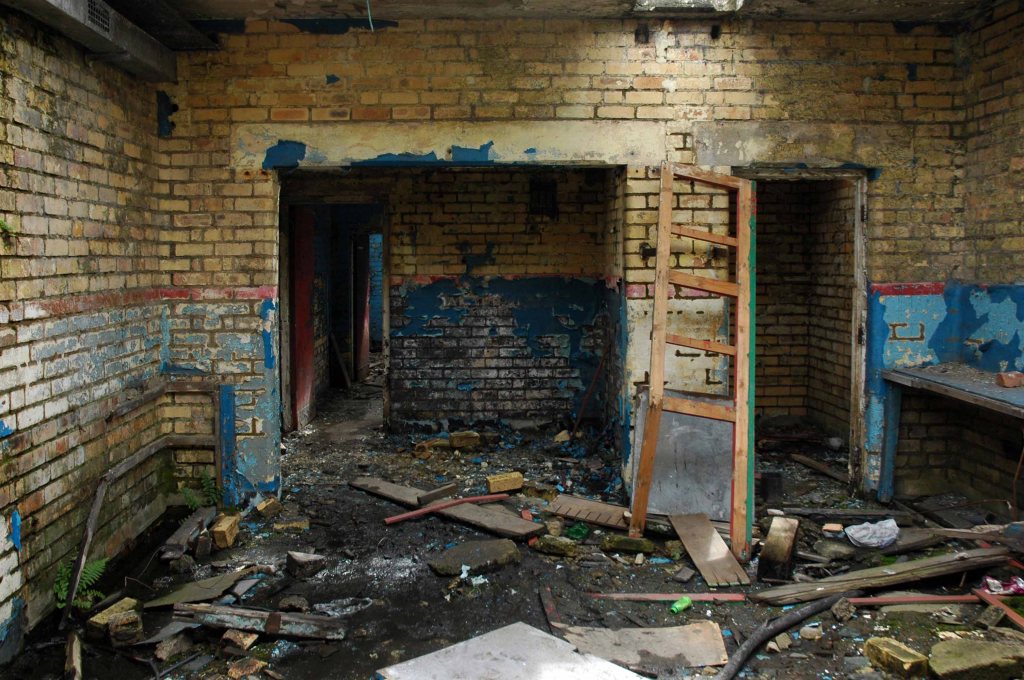
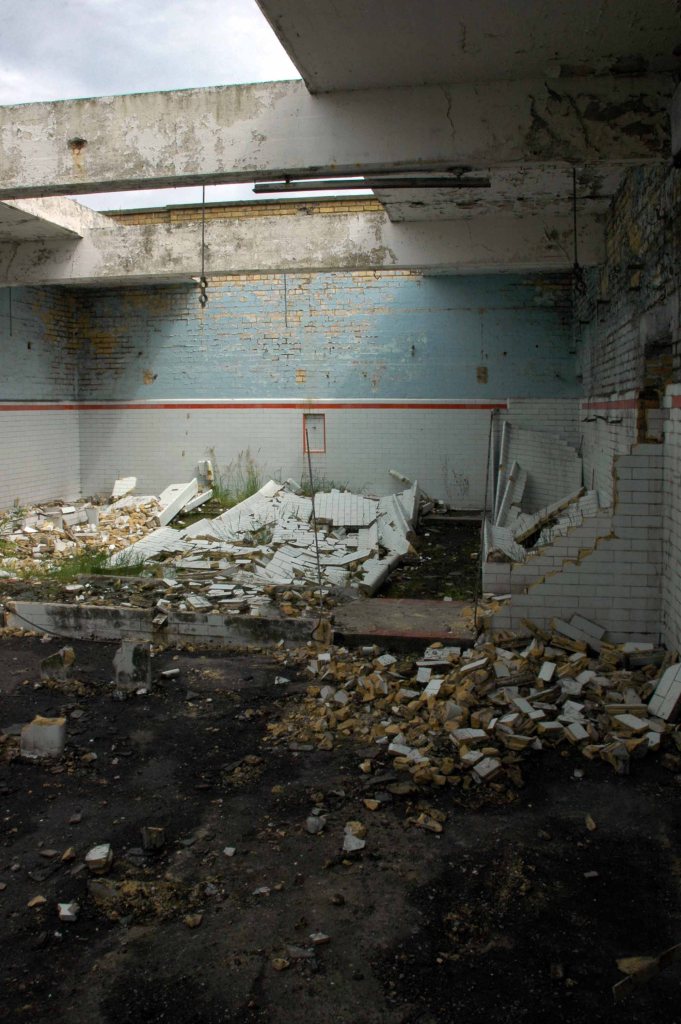
Entering the open site, I was well aware of the significance of the building and its history – working lives that had constructed the baths, entered and left through those very same doors.
Third time around – on a late lockdown April evening.
I’ve been here before and before, yet I come back again and again.
It’s different every time, deserted at the best of times, during the worst of times it seems even more so – not a soul in sight. The low warm sun affords the bare concrete a pale pink and orange glow.
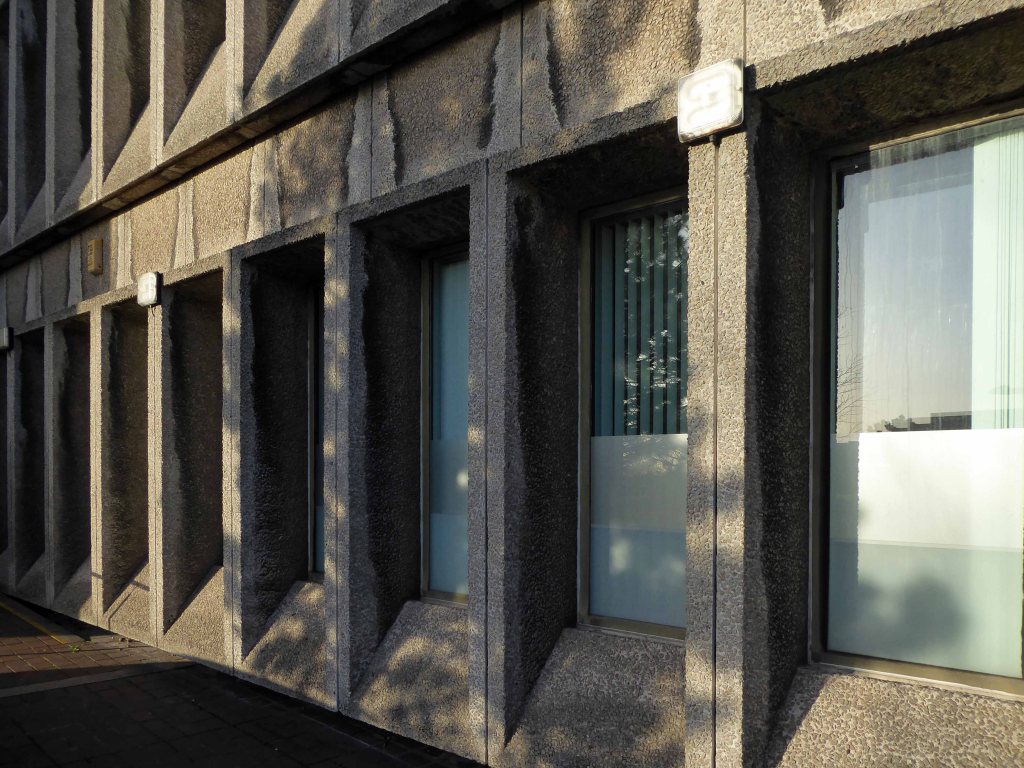
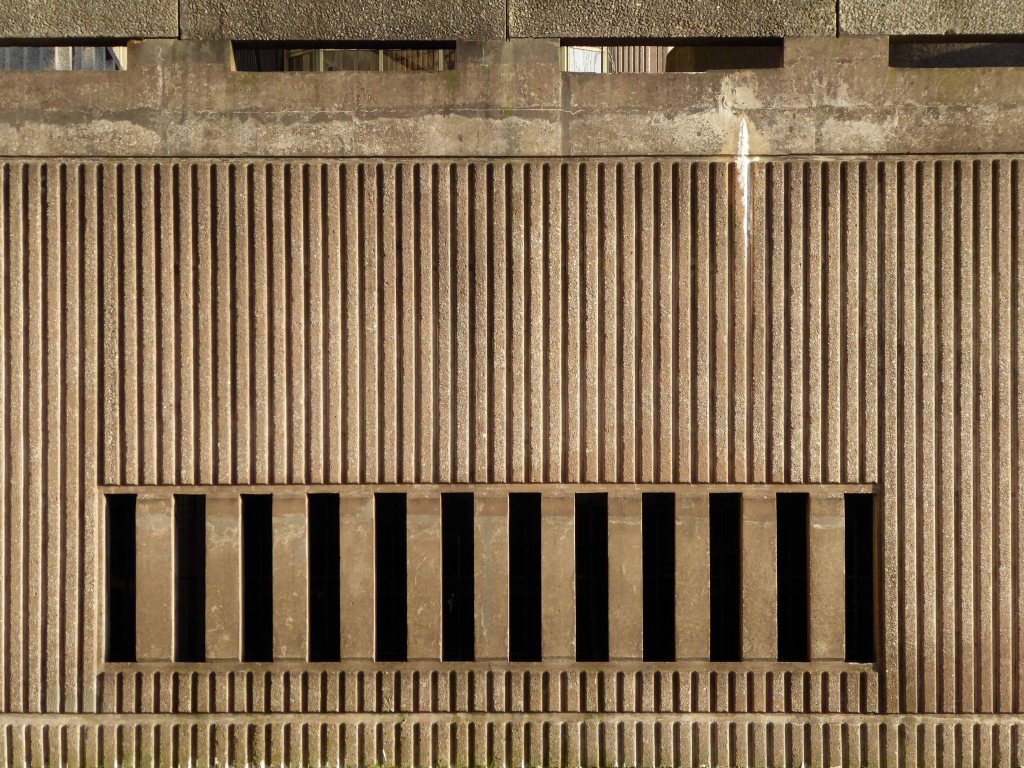
The mix contained coarse aggregate from the Scottish Granite Company of Creetown, a fine Leemoor sand from the Fordamin Company, together with white cement.
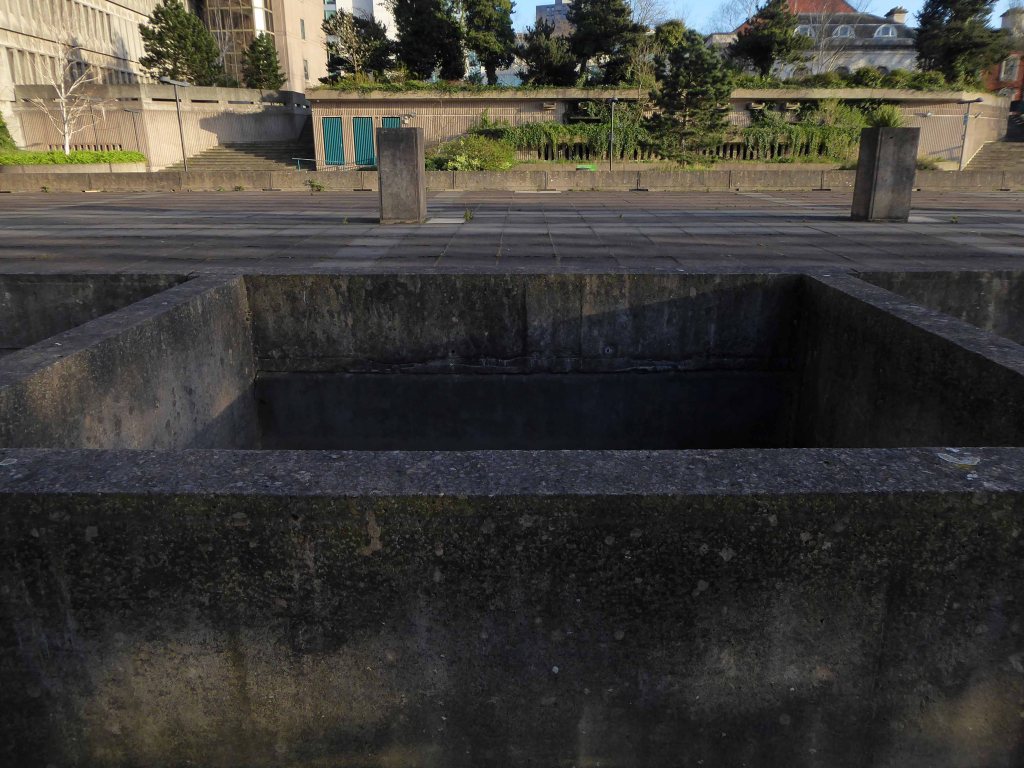
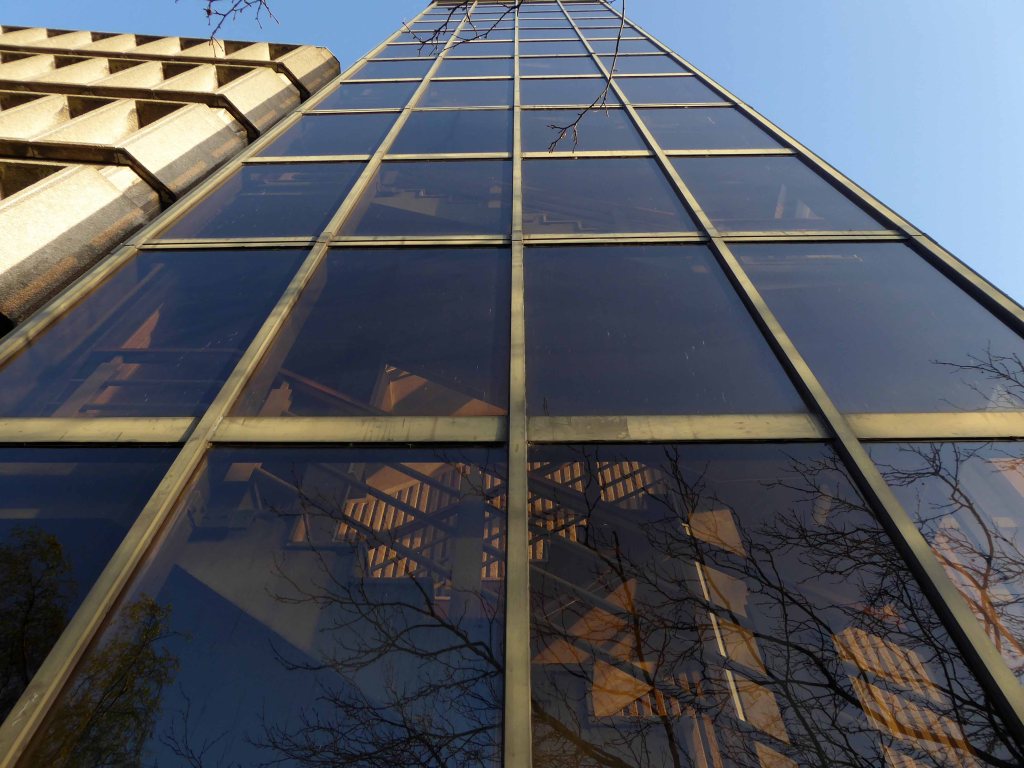
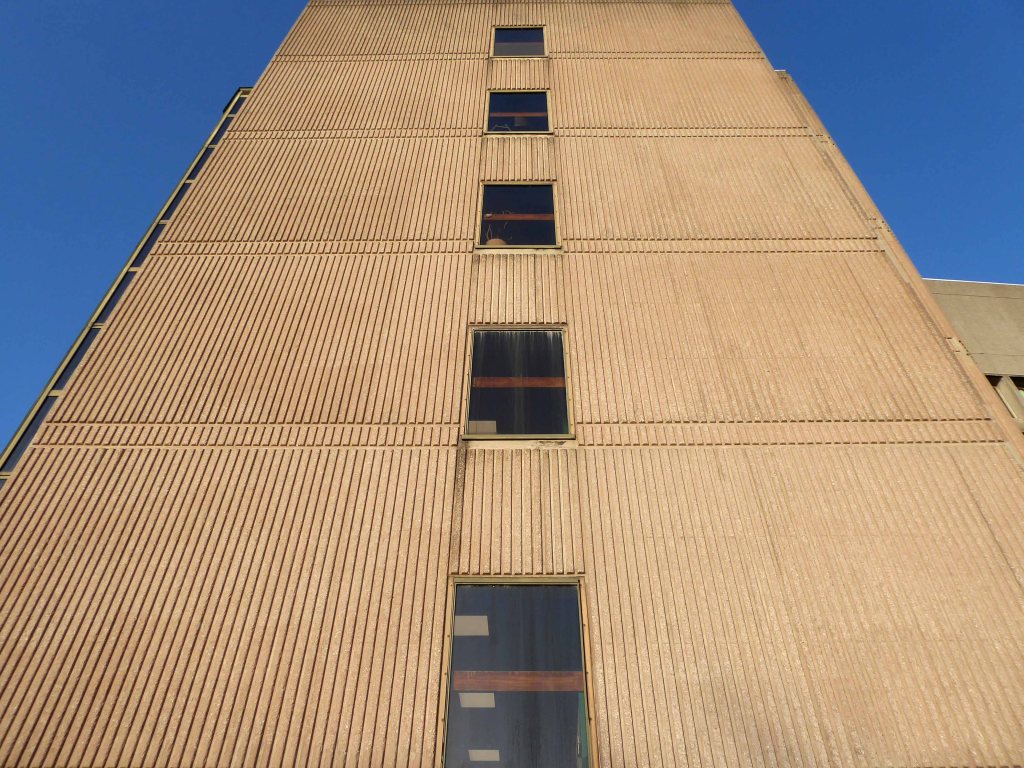
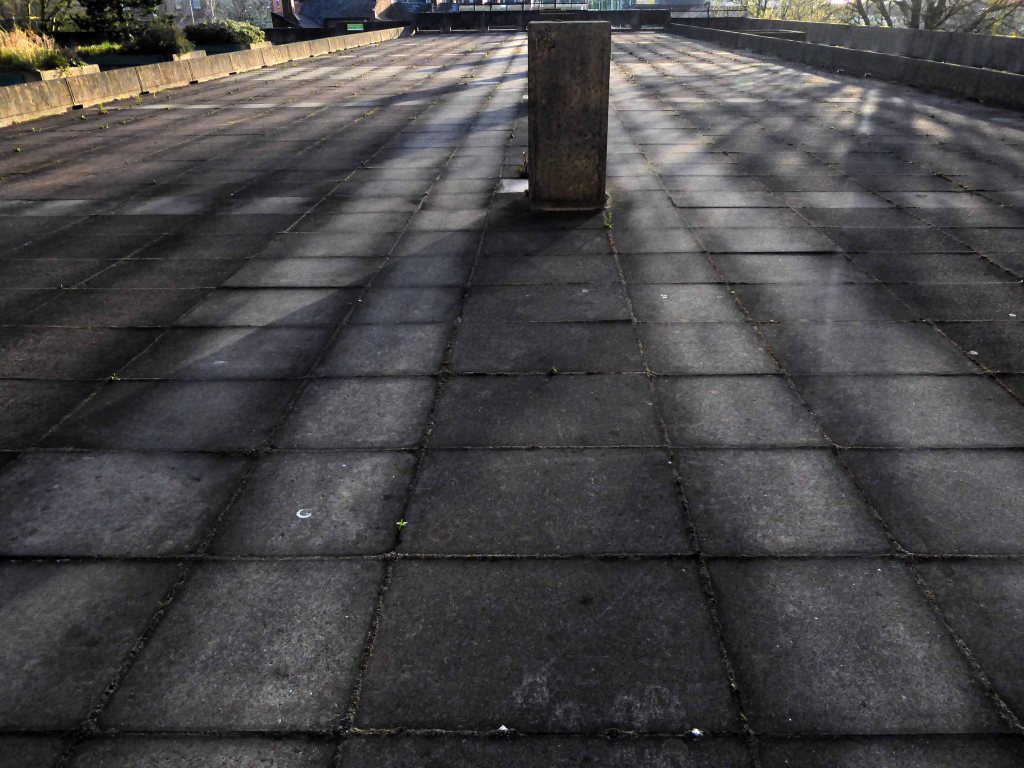
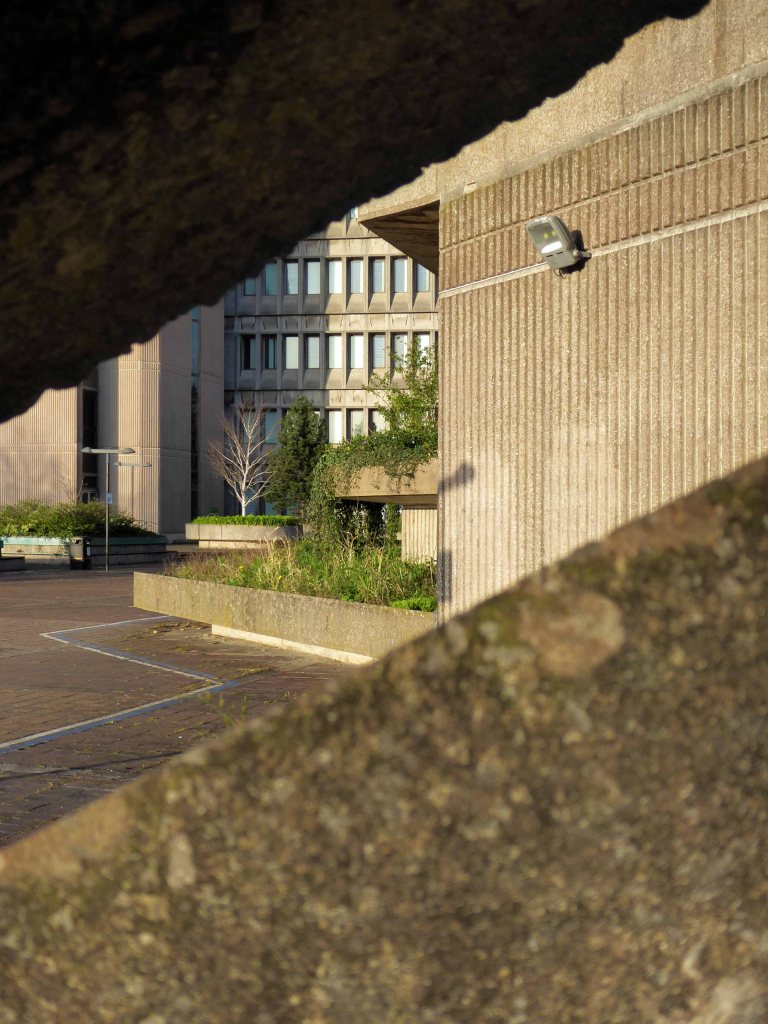
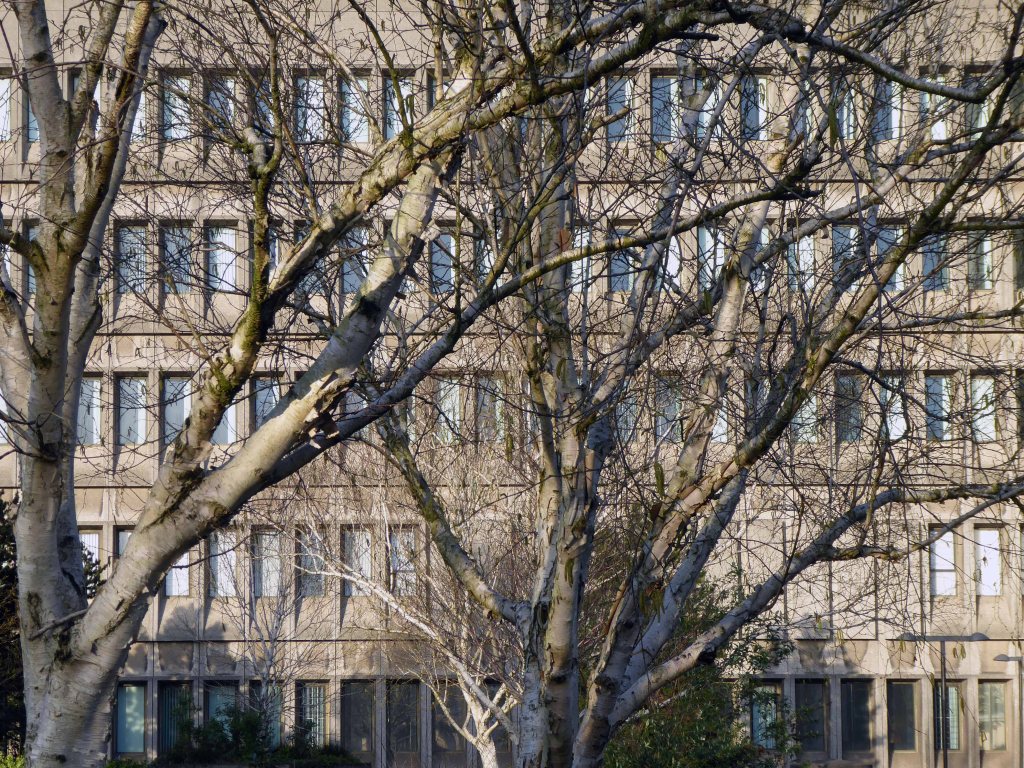
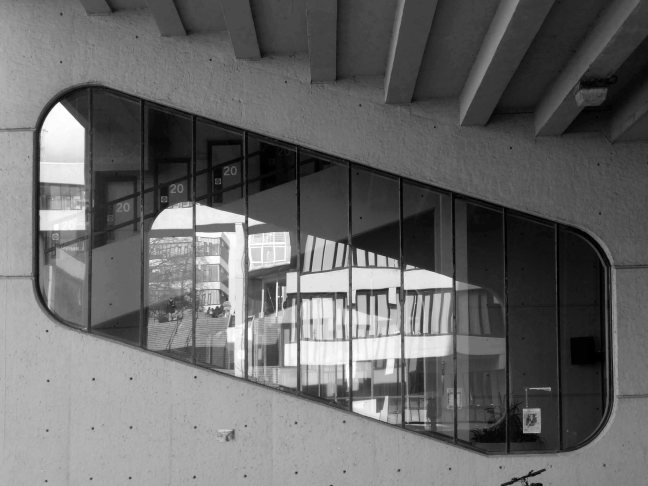
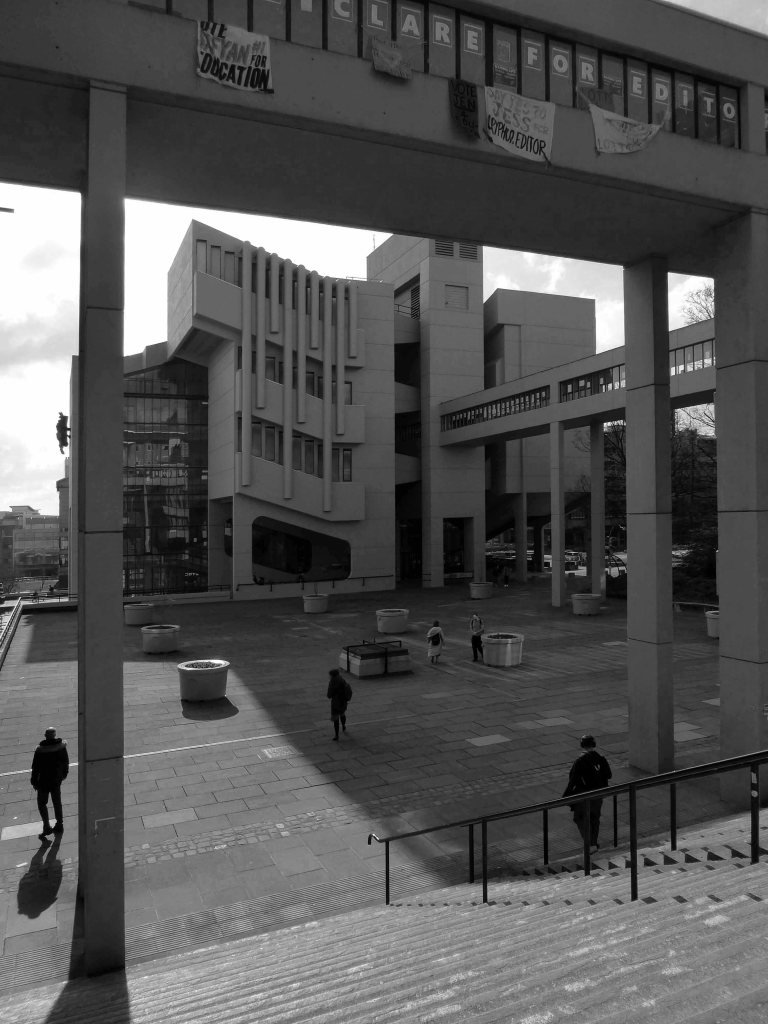
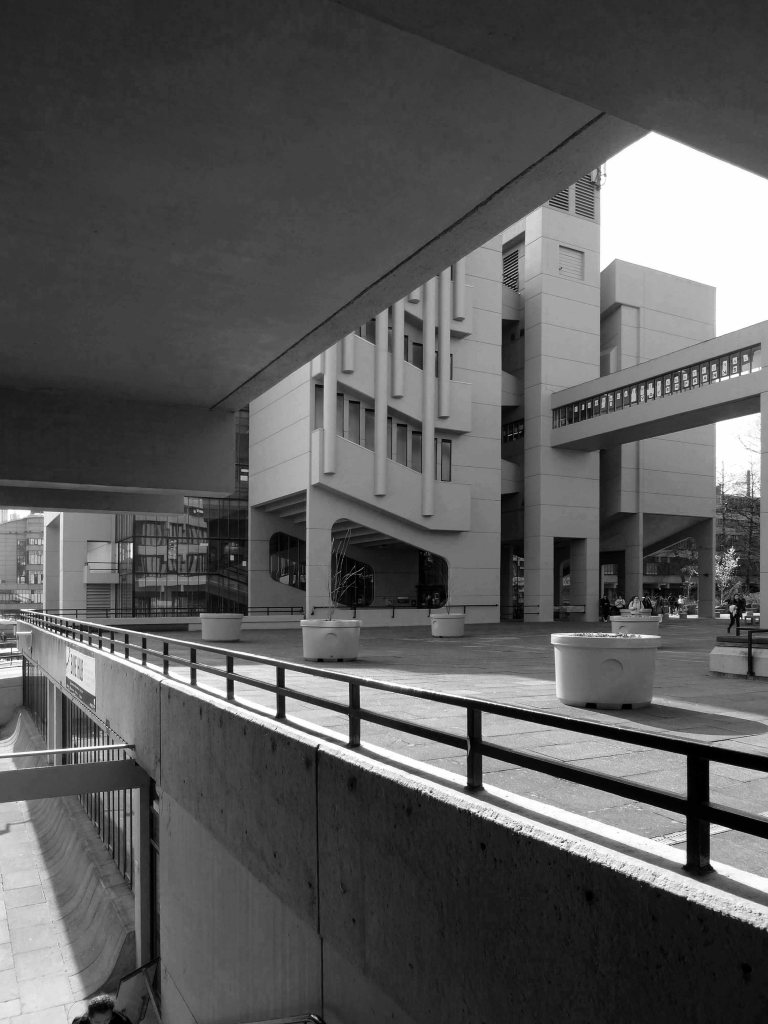
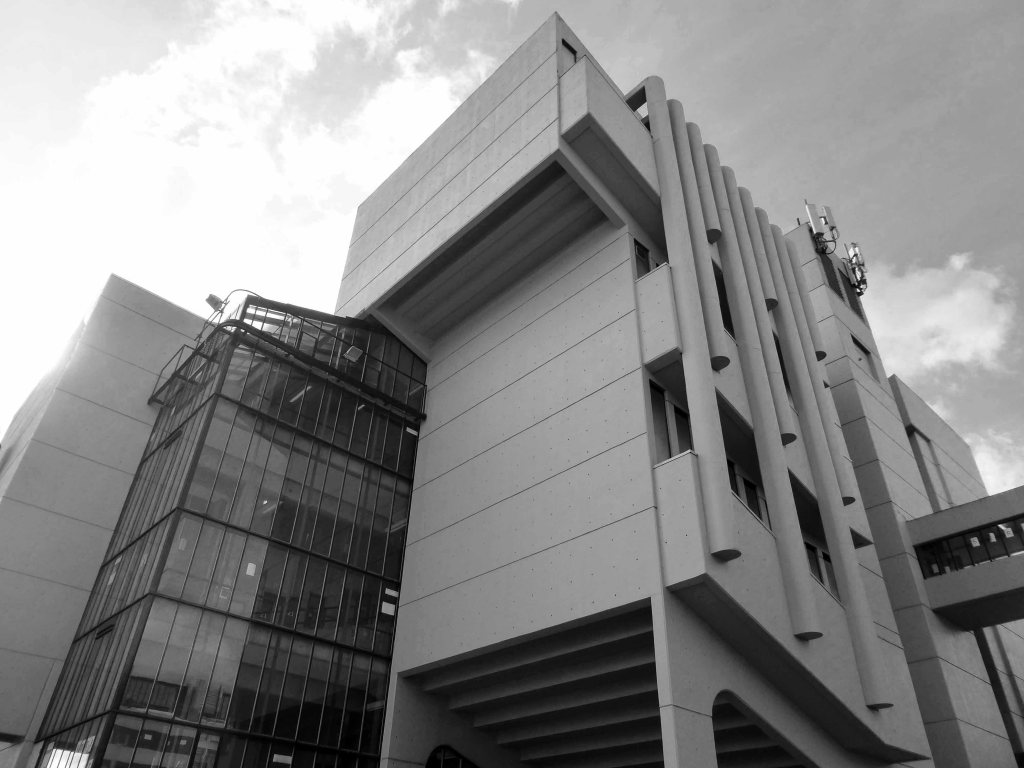
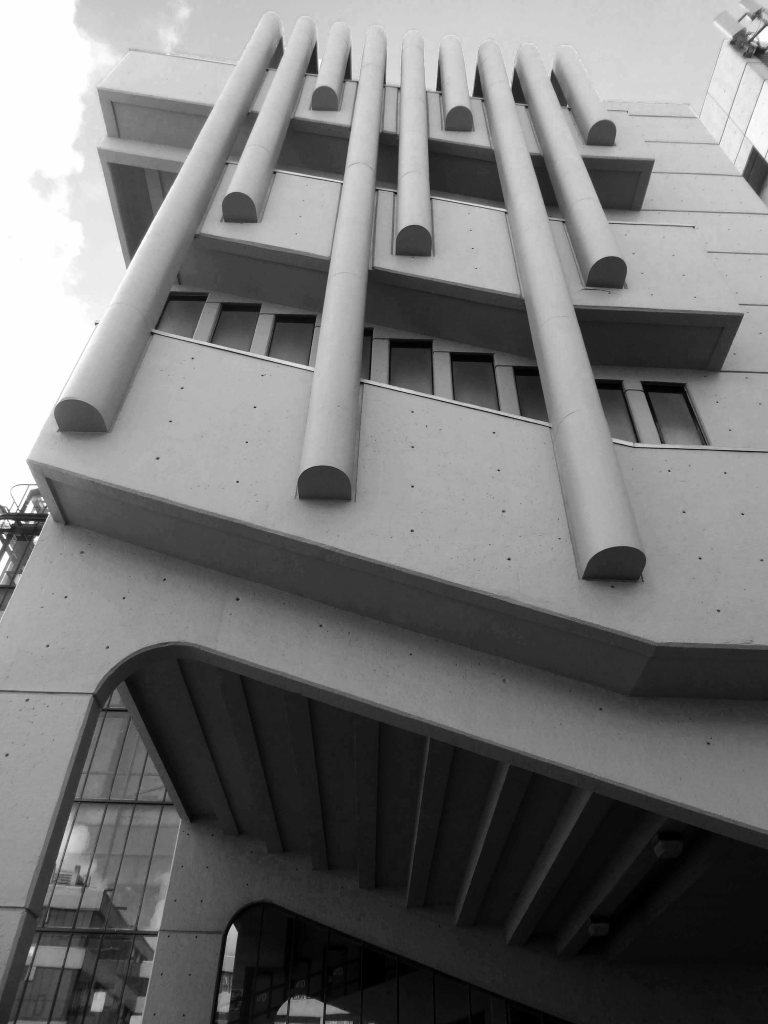
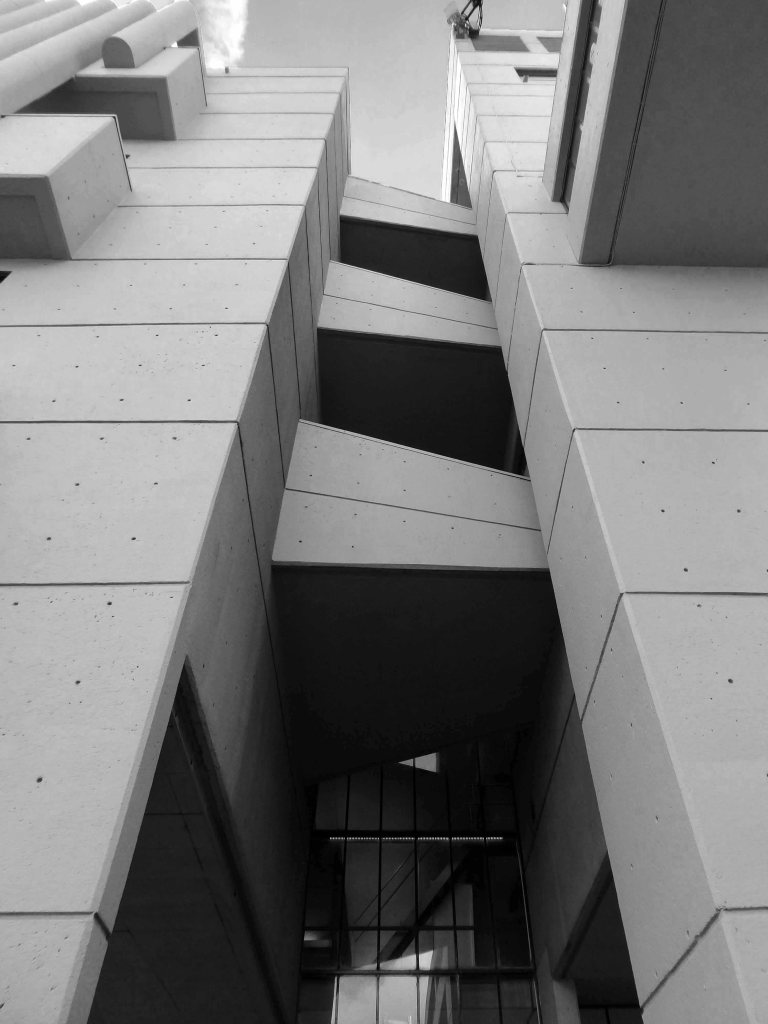
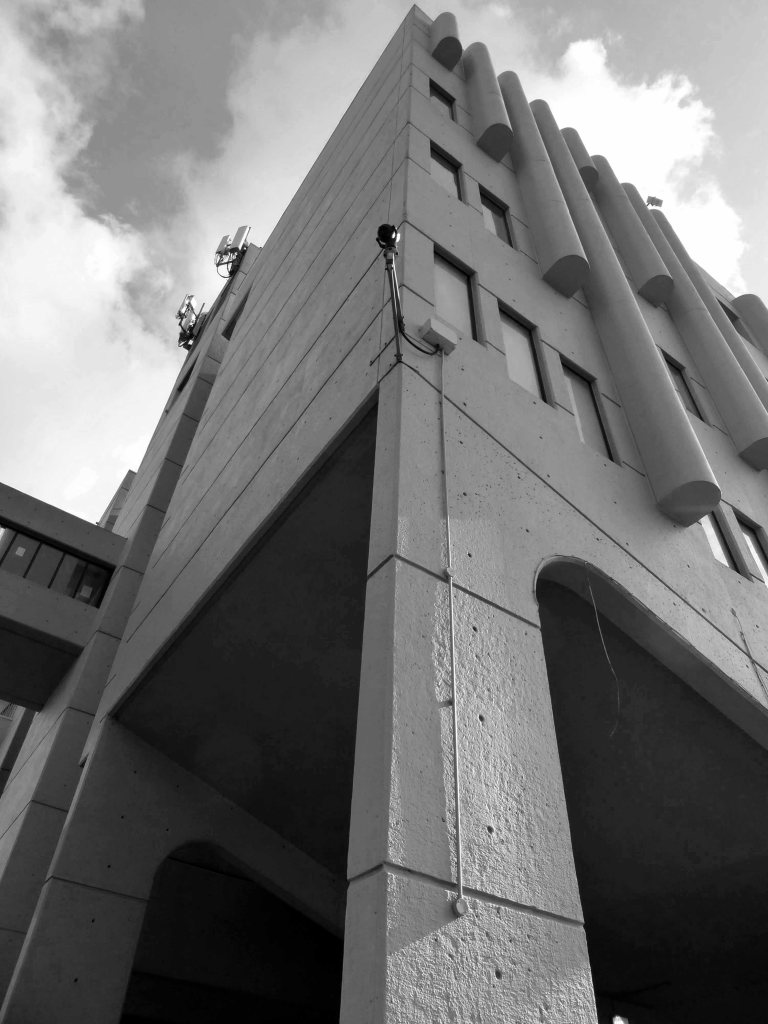
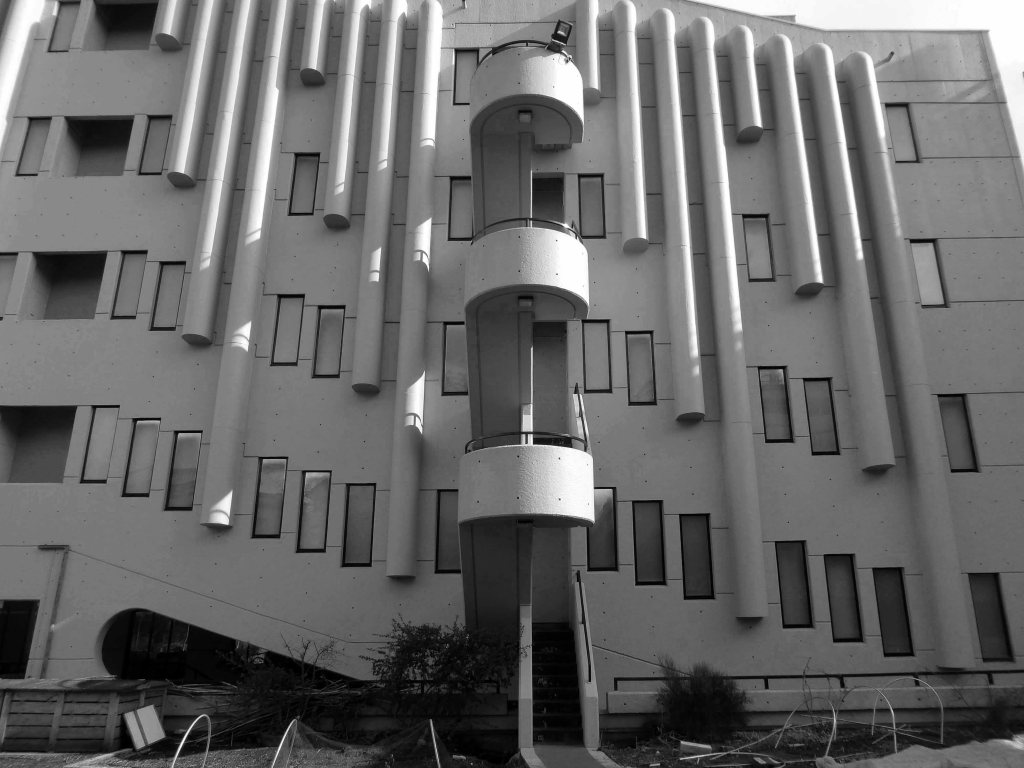
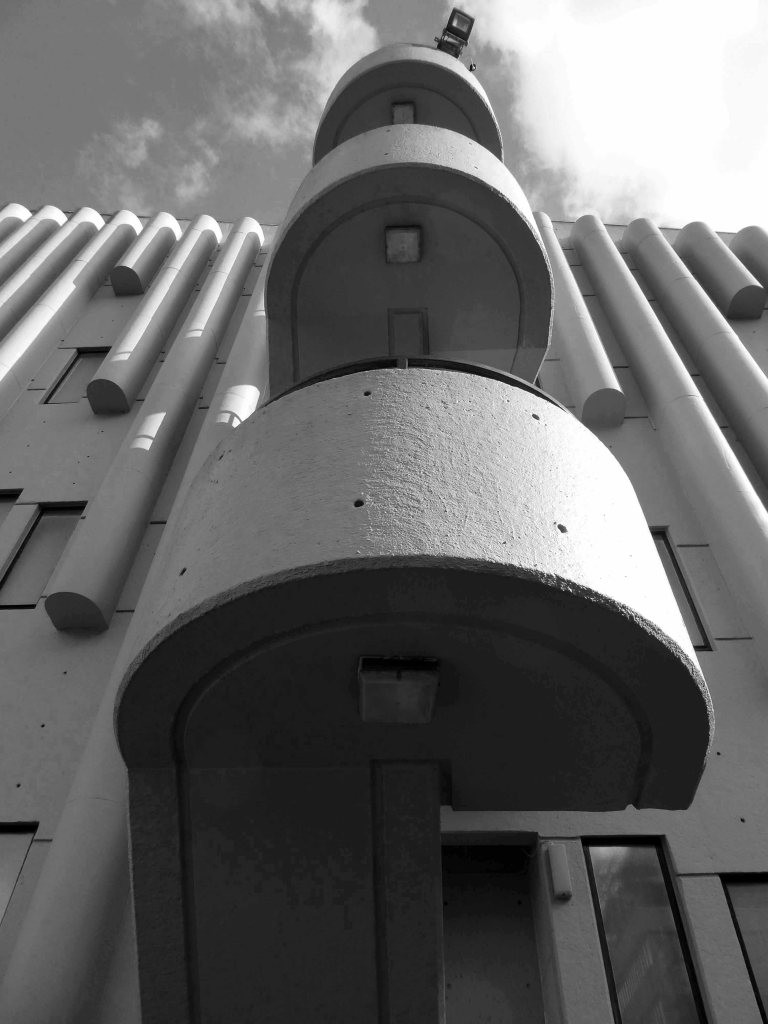
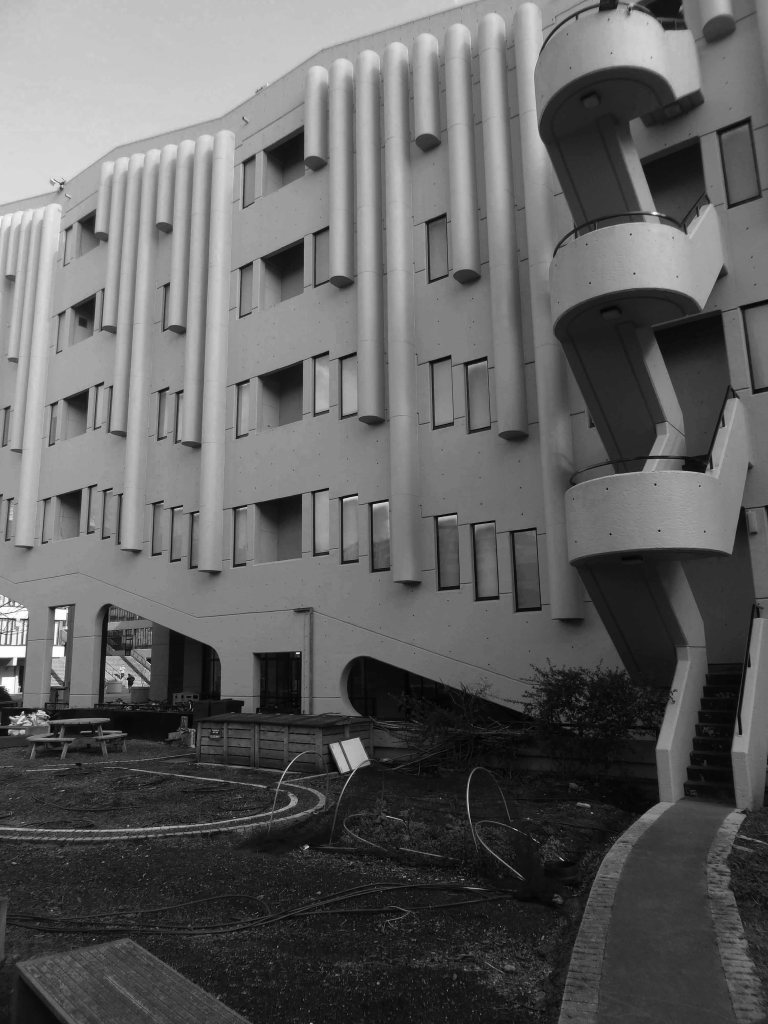
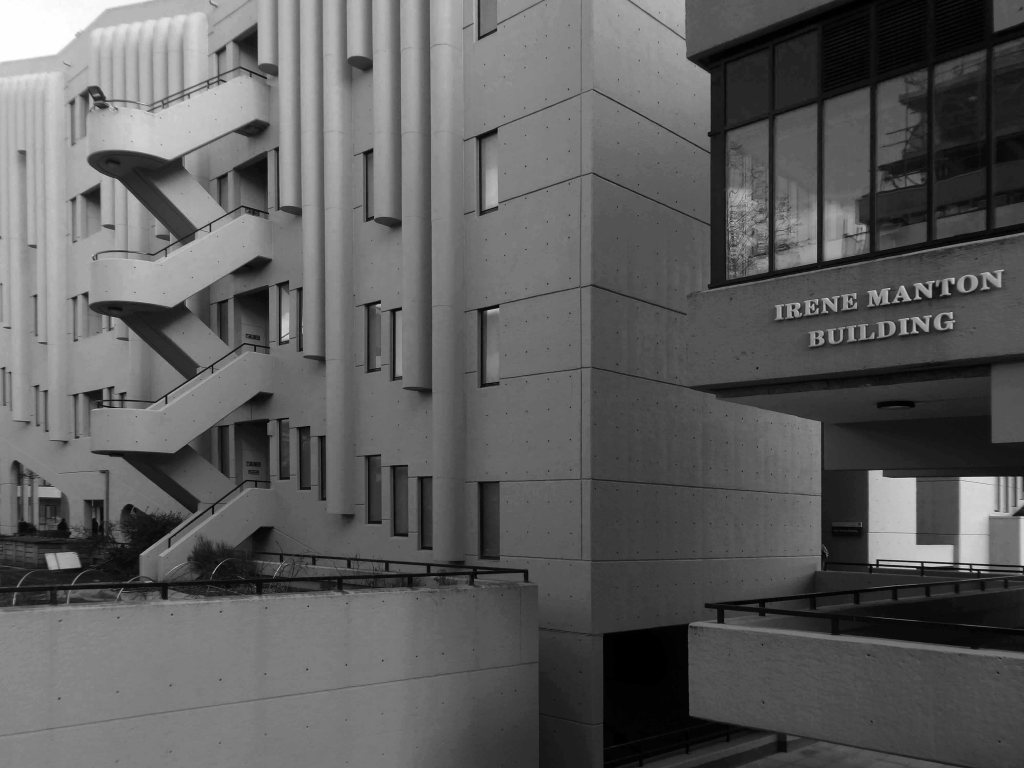
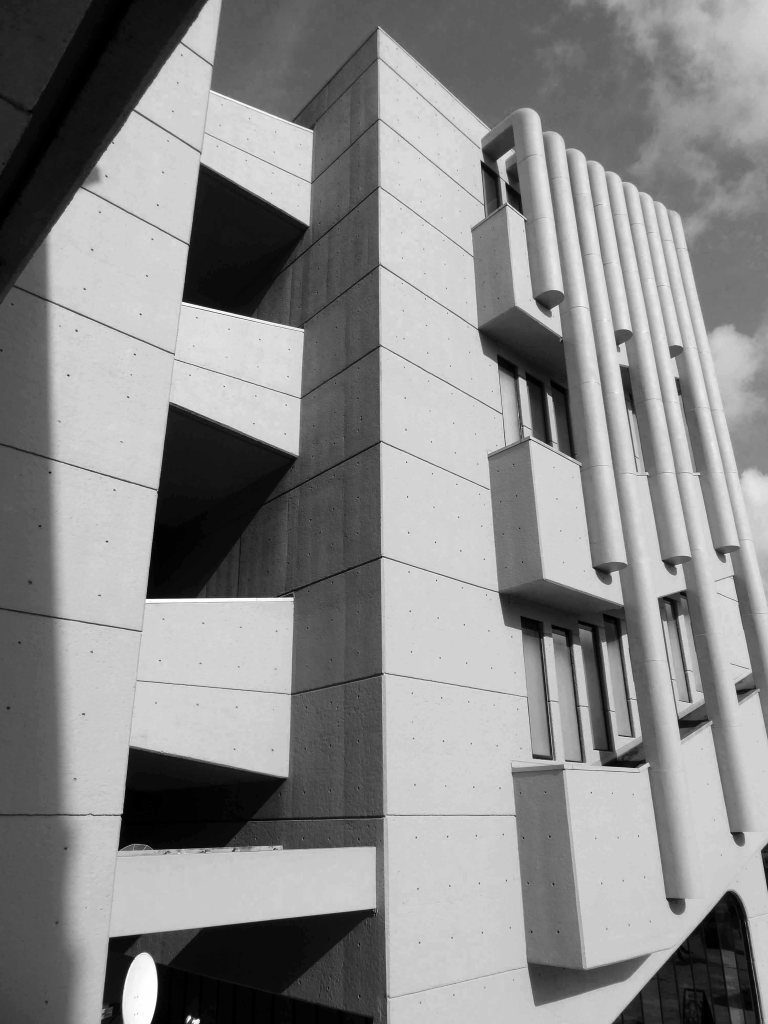
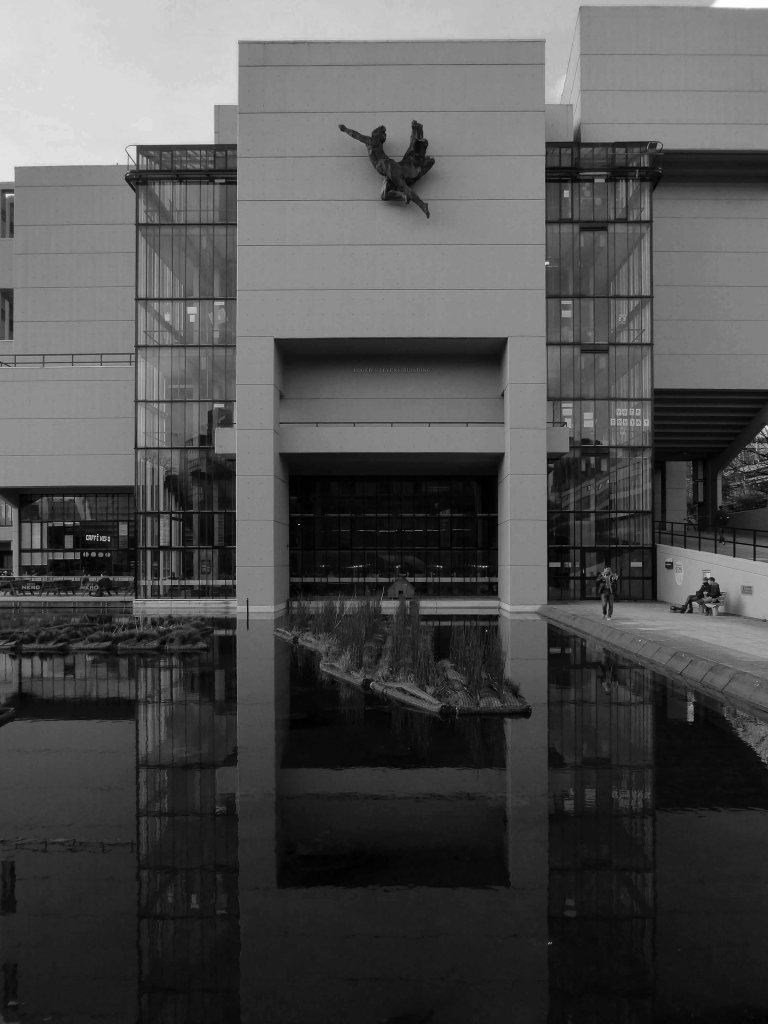
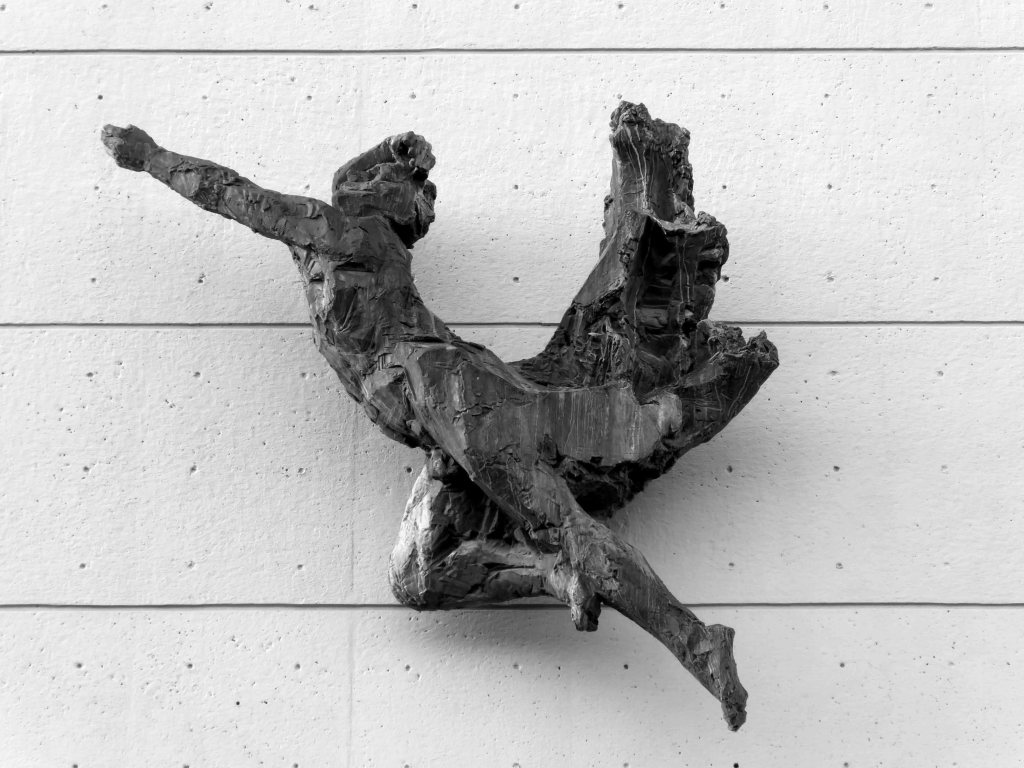
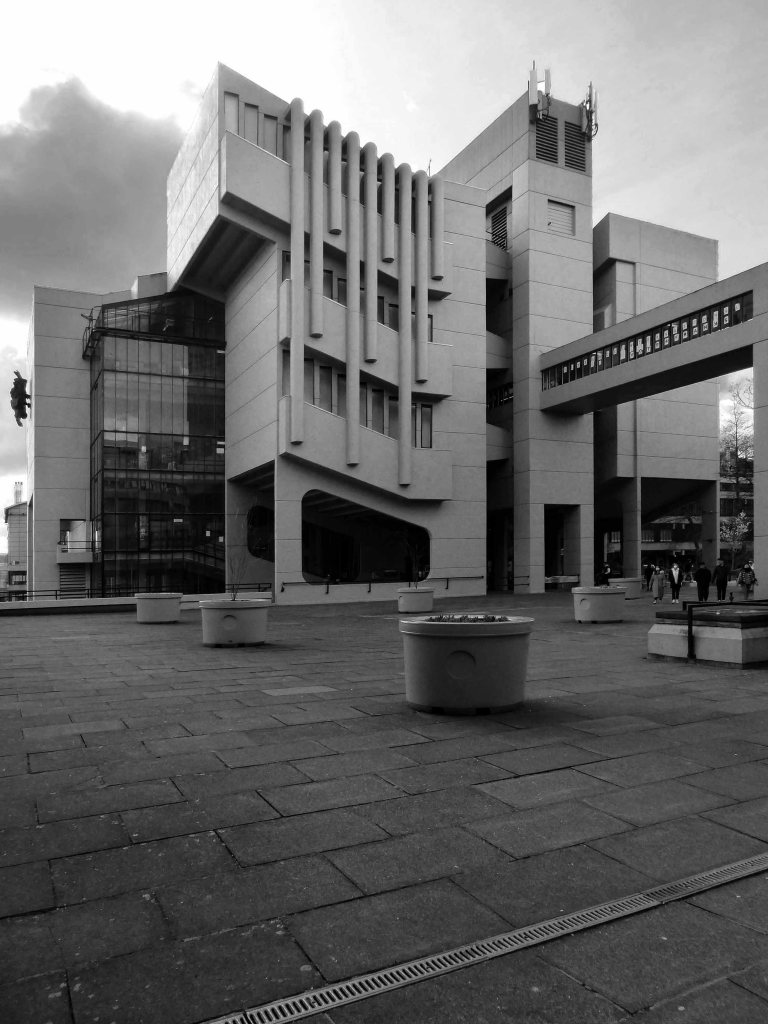
The Roger Stevens Building 1970 – by Chamberlin, Powell and Bon for Leeds University South Campus is designated at Grade II
The building represents the high point of their Leeds University work.
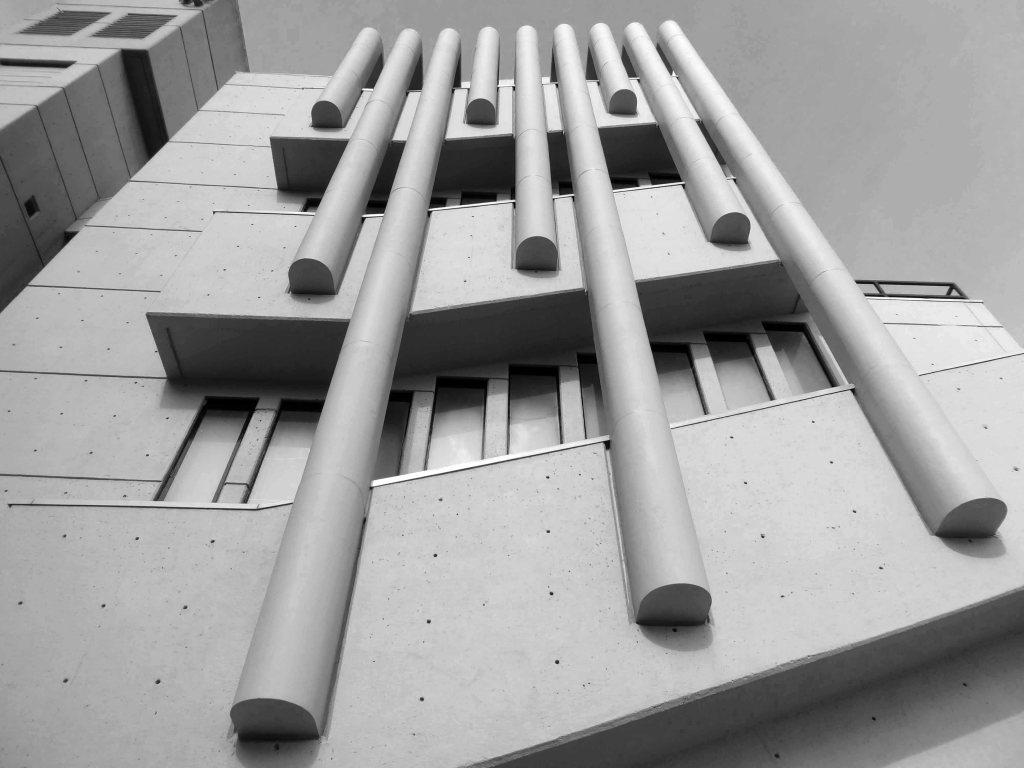
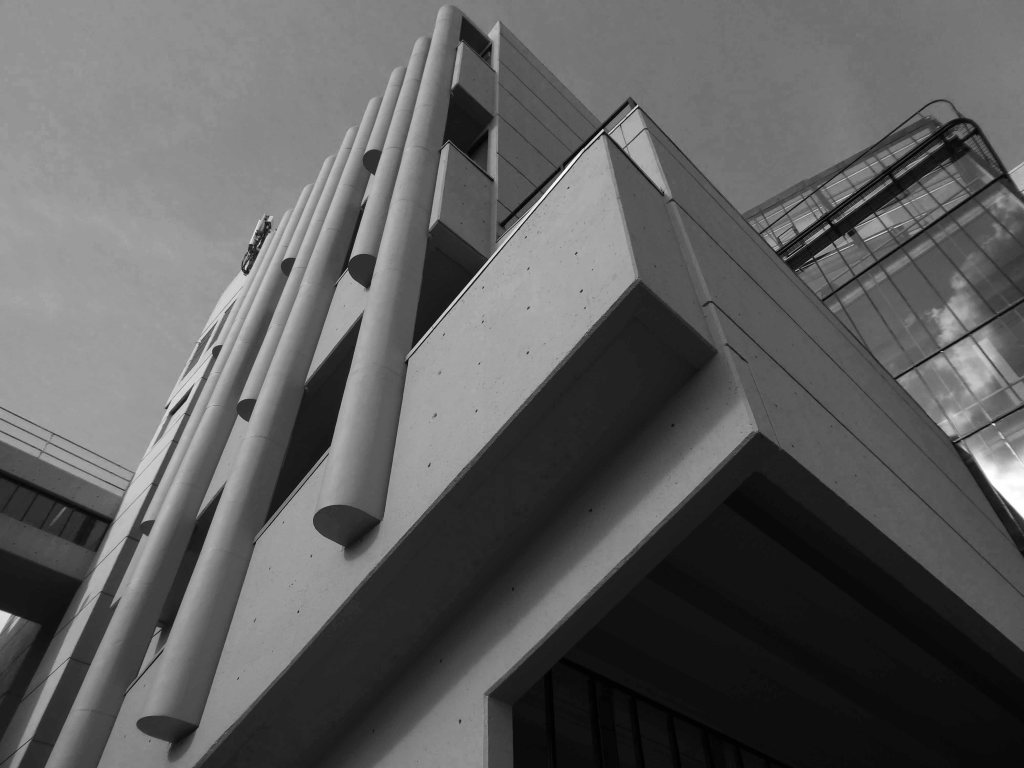
Architecture: the building is an outstanding and individual design with bold external shapes and carefully designed interiors
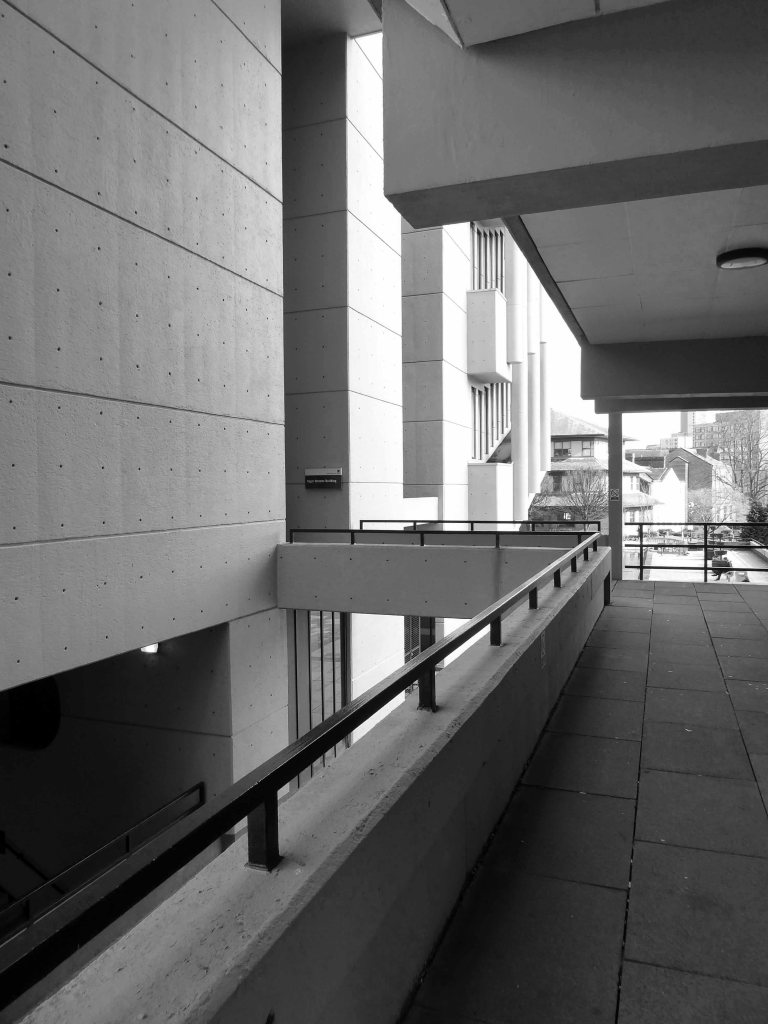
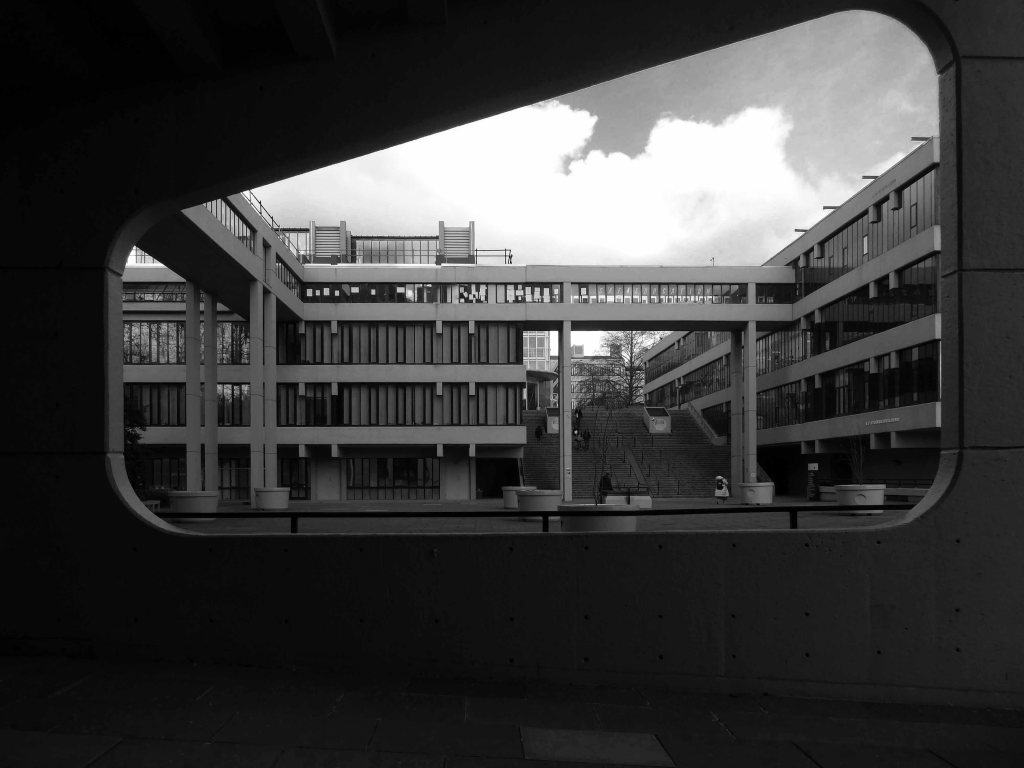
Planning: the internal spaces are the result of extensive research on the requirements of the university and introduce innovative and influential features such as individual doors into the lecture theatres, and external links intimately with other buildings on the campus by means of multi-level walkways
Intactness: despite the changing requirements of universities, the building has remained largely unchanged, proving the success of its design
Group Value: the building provides a fitting centrepiece to the group of university buildings on the South Campus at Leeds, also recommended for designation.







































 Modern Mooch