Wolverhampton Walk

Architects: Austin Smith Lord

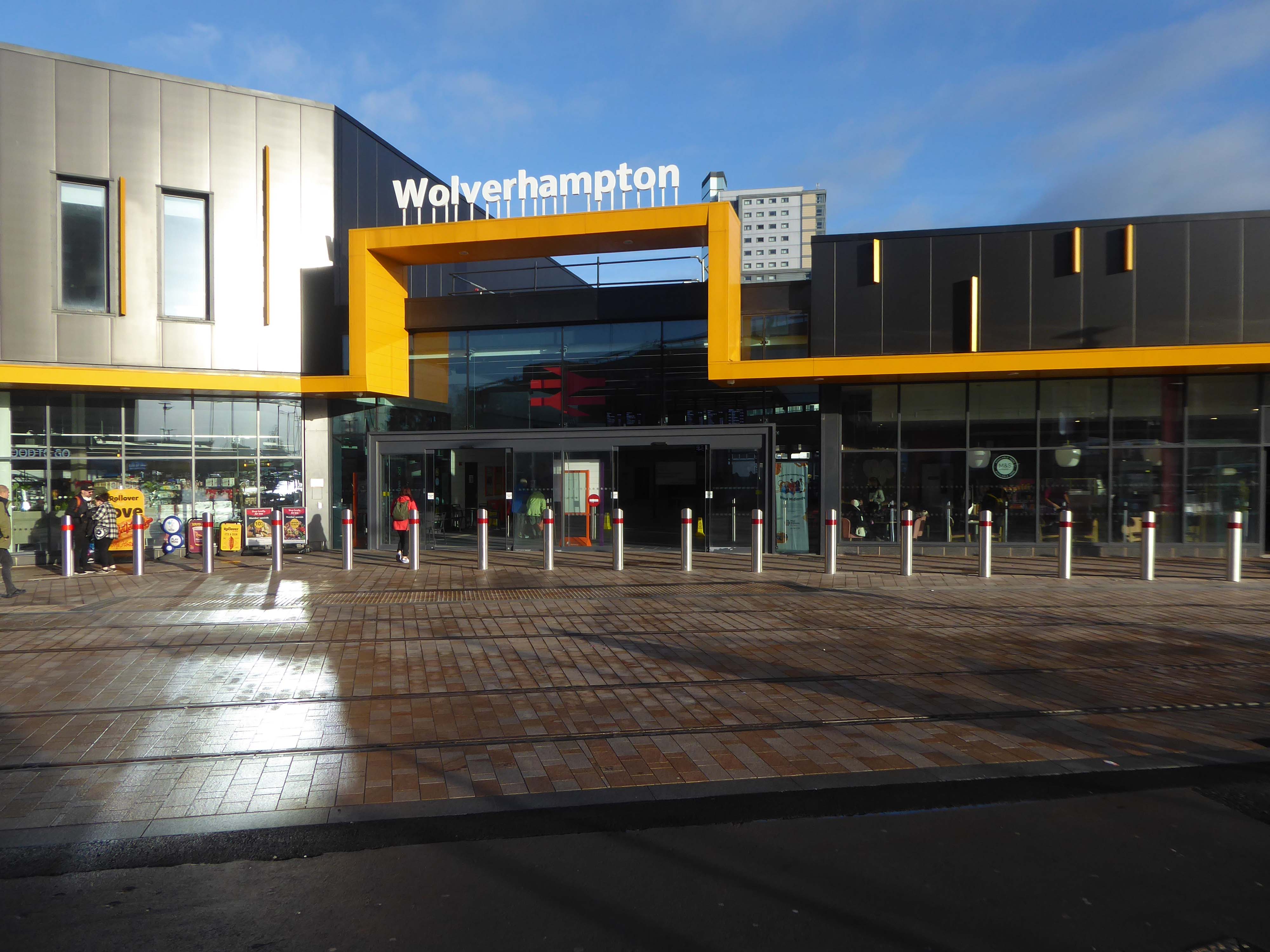
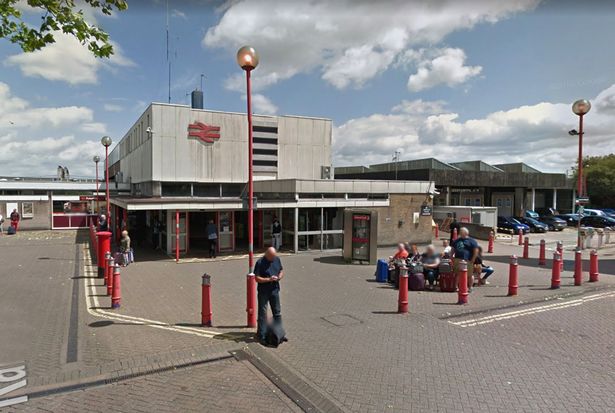
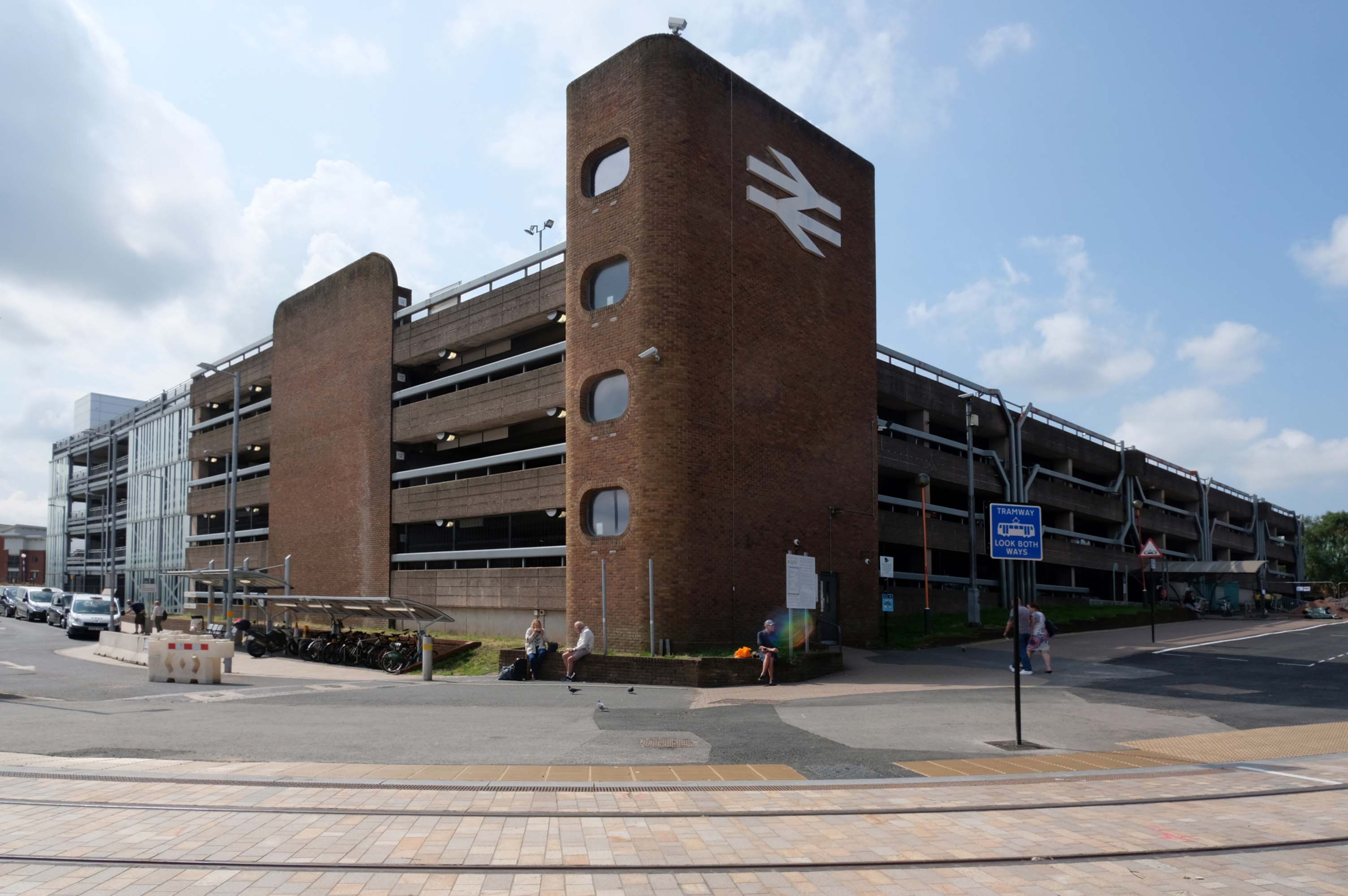
We begin at the Railway Station – recently refurbished, overwriting its 60s iteration – completely rebuilt by the architect Ray Moorcroft as part of the modernisation programme which saw the West Coast Main Line electrified.

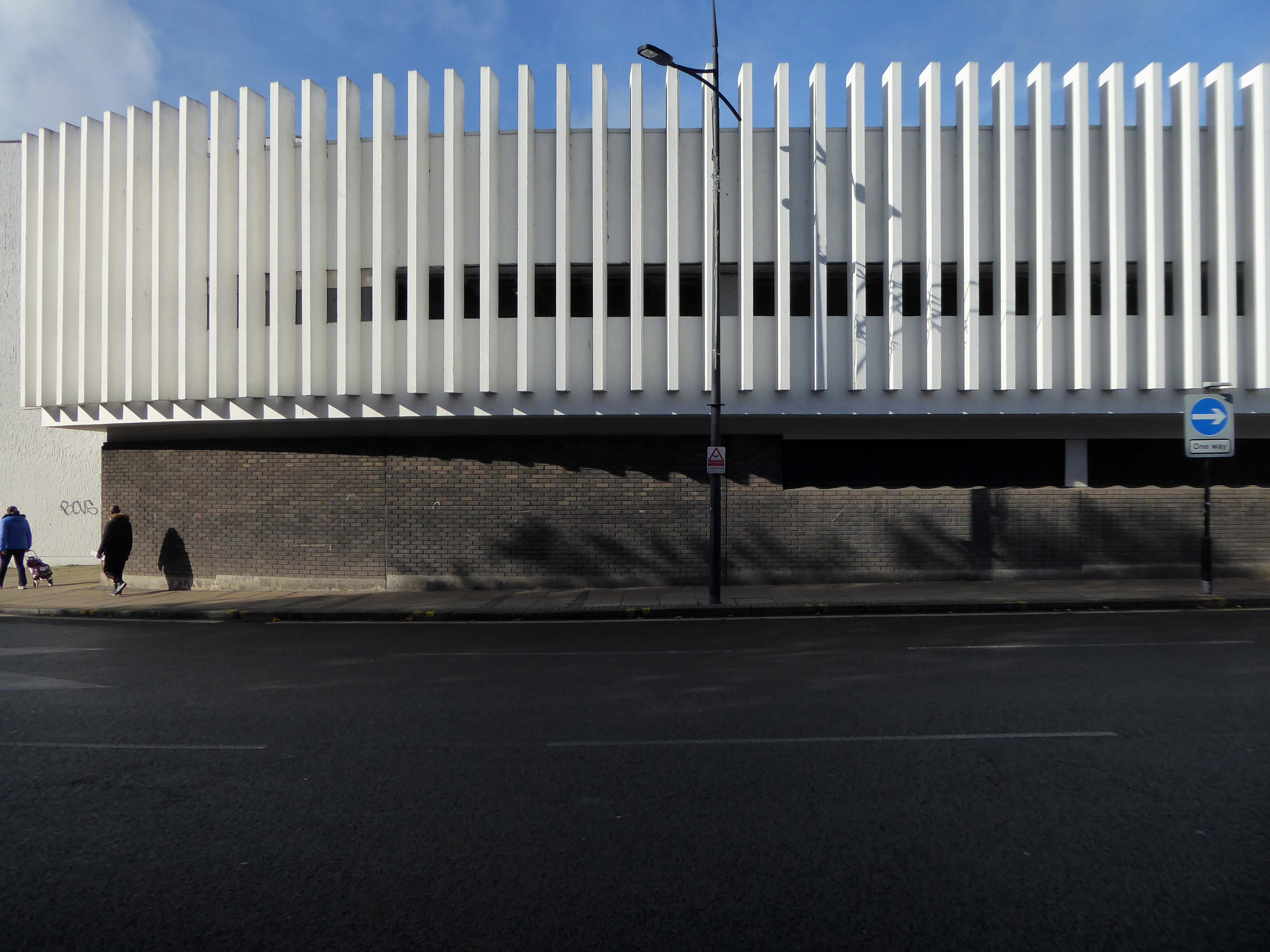
Across the way an enormous brick clad multi-storey car park – skirted by the lines for the tram, which travels to and from Birmingham.

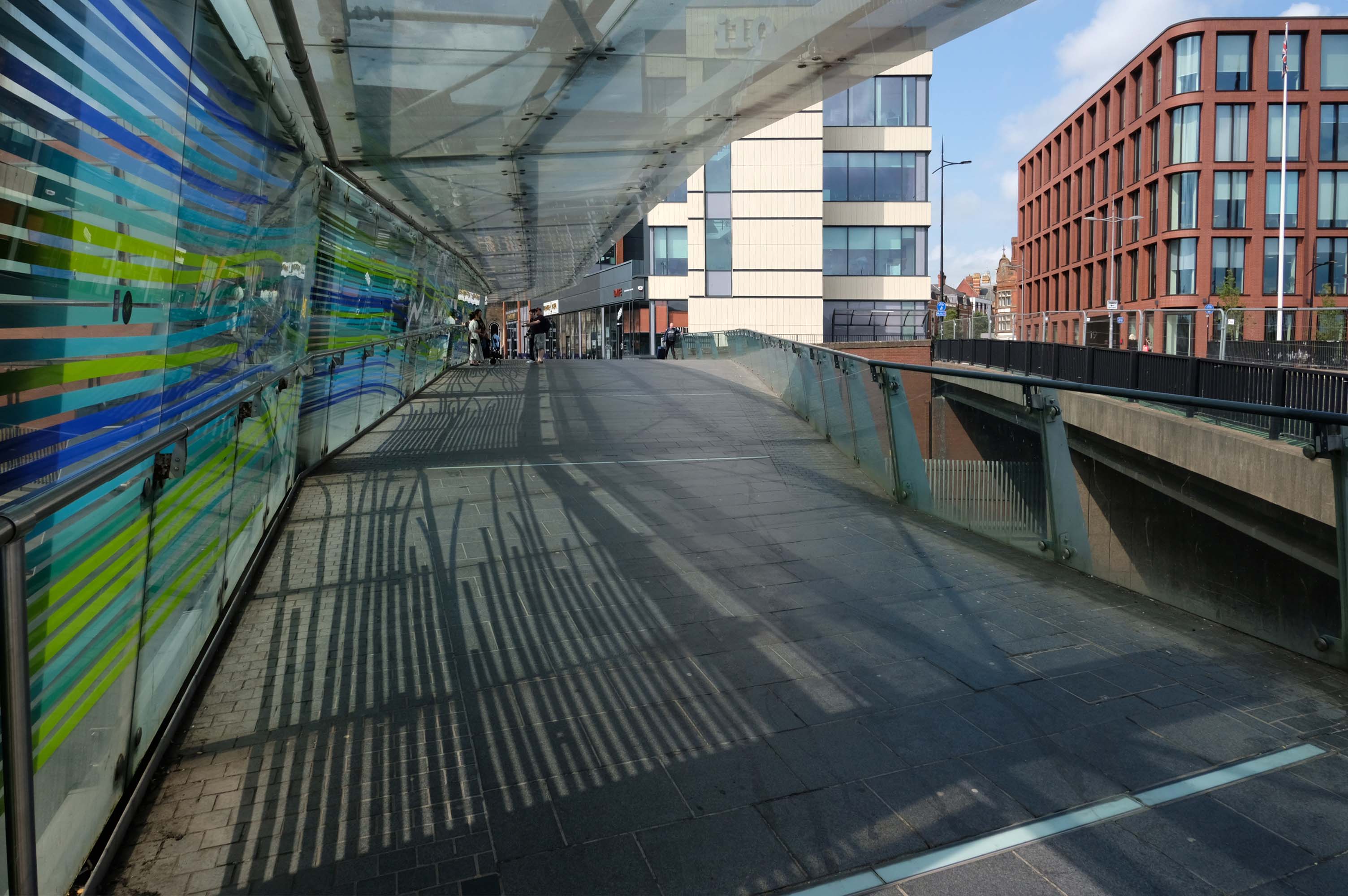
Walk across the brand new pedestrian footbridge over the ring road.

Architectural glass artist Kate Maestri was commissioned to produce the artwork design which features glass with blue and green strips of colour running through it.

BBC

Architects: Austin Smith Lord

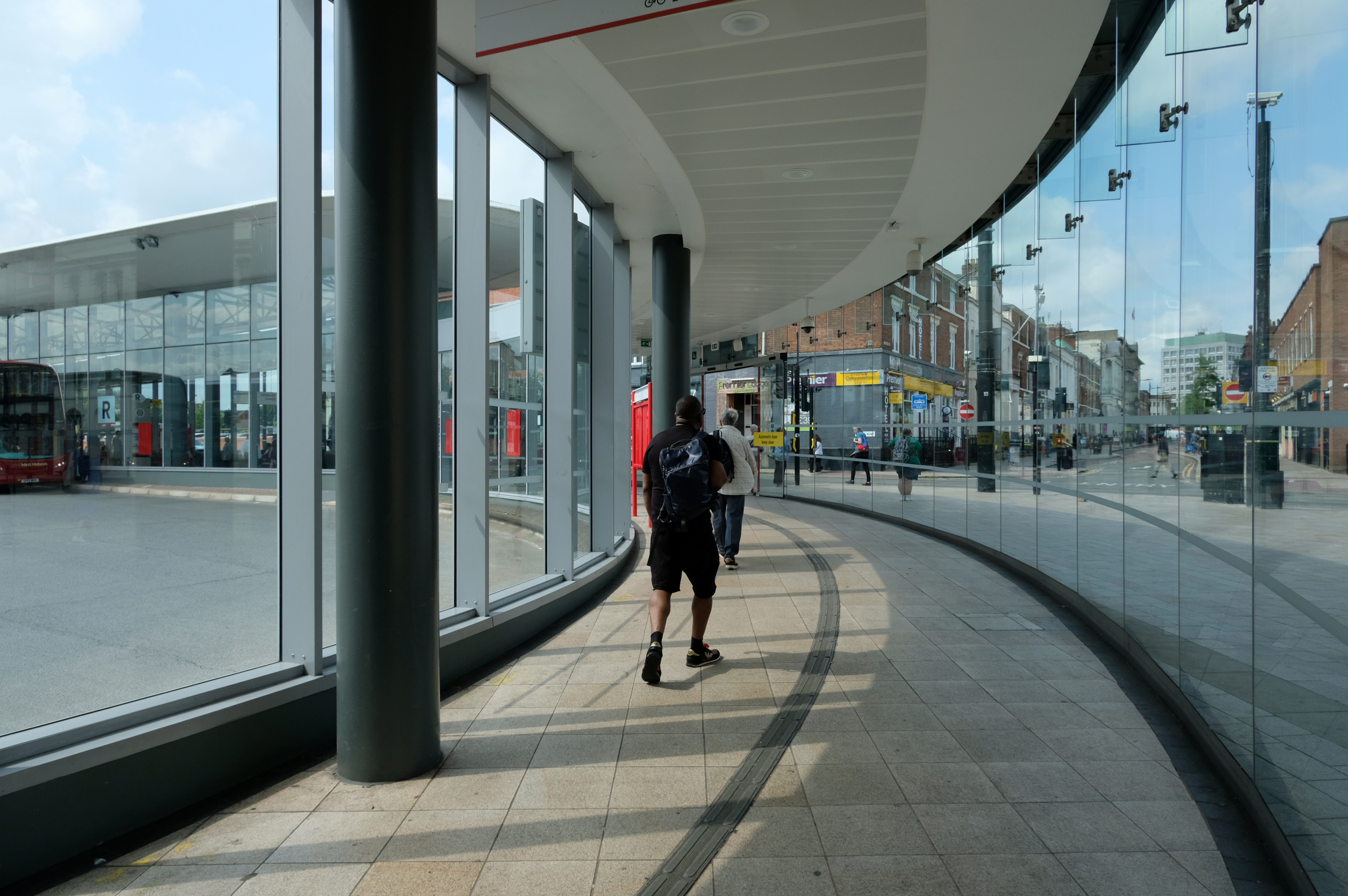
Linking the Rail Station with the brand new Bus Station.

The normal practice of the Wolverhampton Bus Service is to have dirty, smelly buses, that are cramped and extremely hot in the summer and freezing cold in winter. They offer no announcements apologizing for delays they know about and don’t appear to care how long passengers wait with no idea of how or when they’ll be getting a bus.

The best thing you can do is learn to drive as quickly as possible and get your own vehicle or car pool.

Sandra Anderson

Architects: Austin Smith Lord

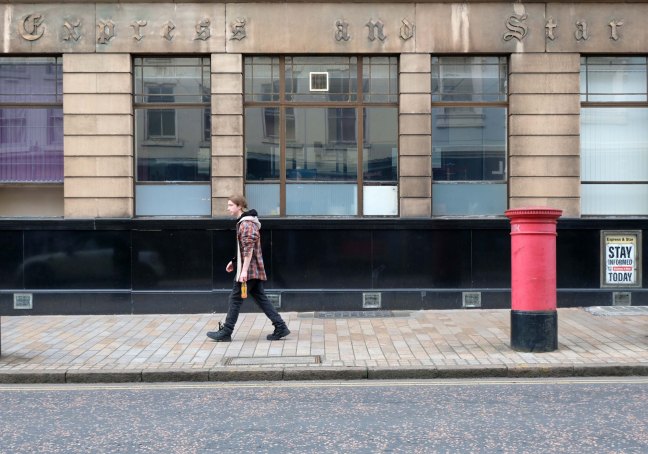
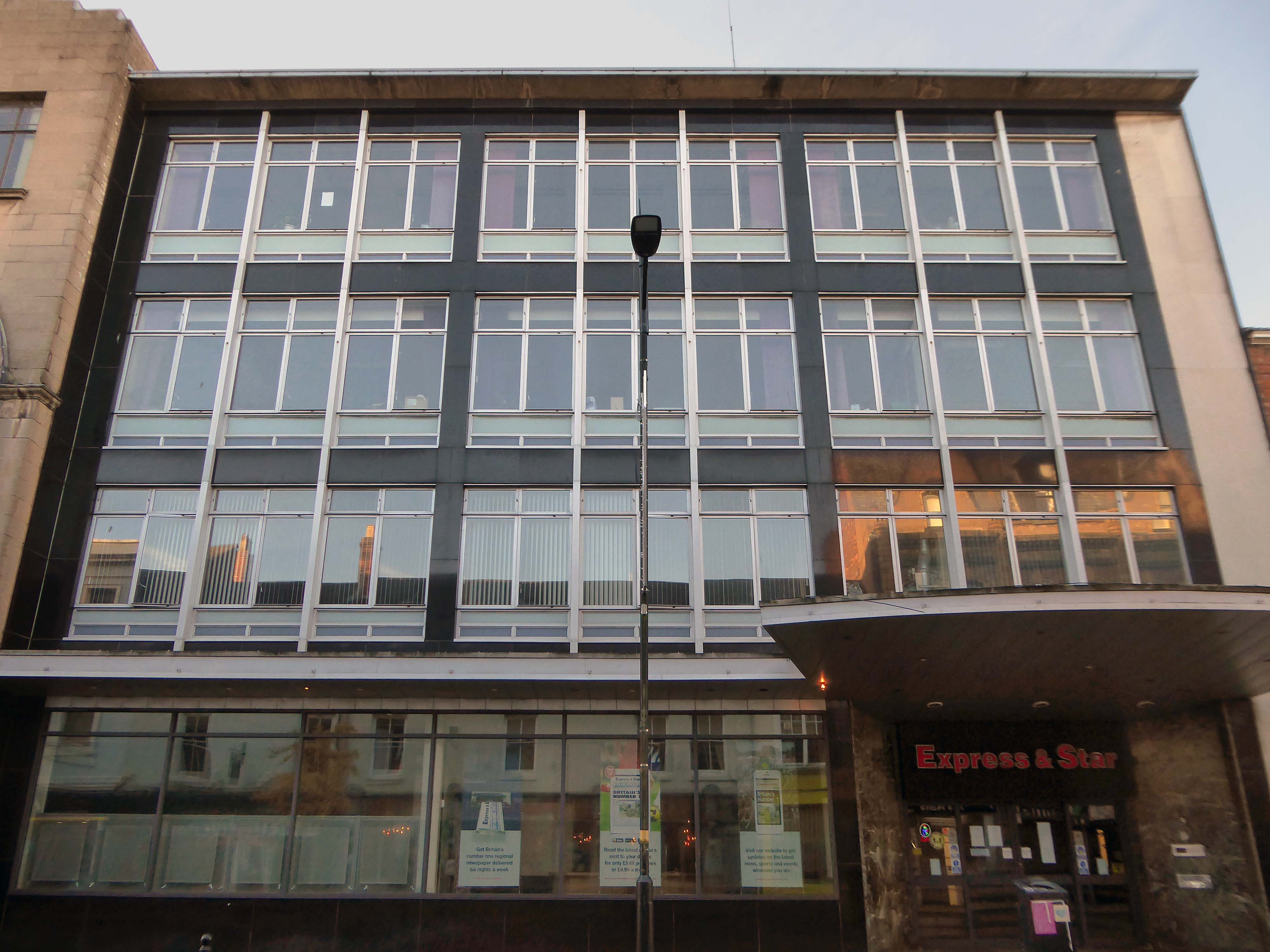
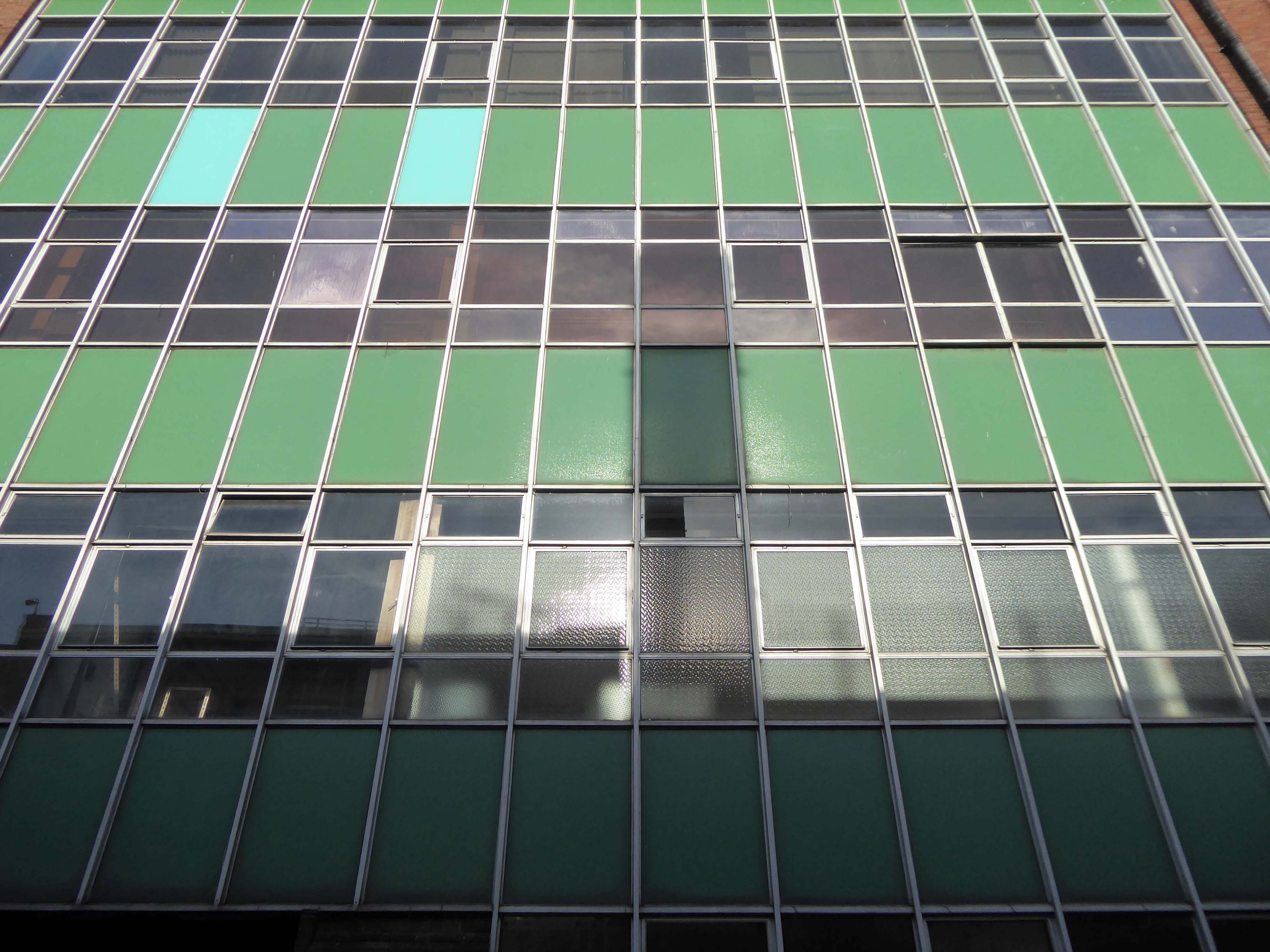
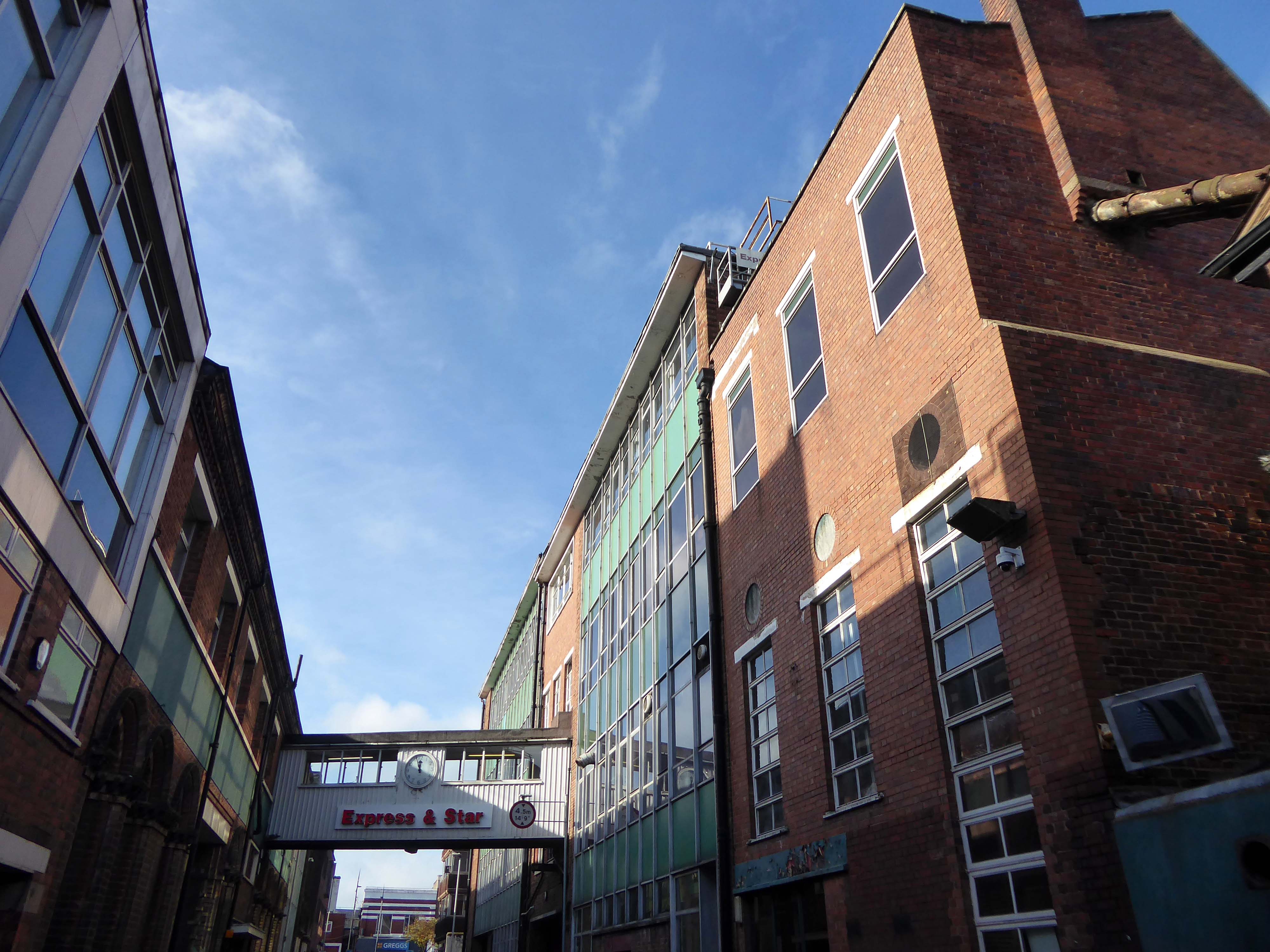
Onward now to the Express and Star Building – Grade II listed.

Architect: Marcus Brown 1934.

The building is faced in a reconstituted Hollington stone called Vinculum, produced by another local firm, Tarmac.

A plaque commemorates RJ Emerson, art teacher and sculptor who sculpted Mercury in 1932.

Wolverhampton History and Heritage Society

Midland News Association managing director Matt Ross confirmed the company is now looking at the building’s future.

For a number of years we have been exploring opportunities surrounding our historic Express & Star offices in the heart of Wolverhampton.

After removing the printing presses from the site and restructuring our departments we now have significant spare capacity available and so are looking at the various options available to us, be that redeveloping the current site or exiting the building altogether.

Hold the front page

Extension is by architects: H Marcus Brown & Lewis 1965

With further work at the rear.

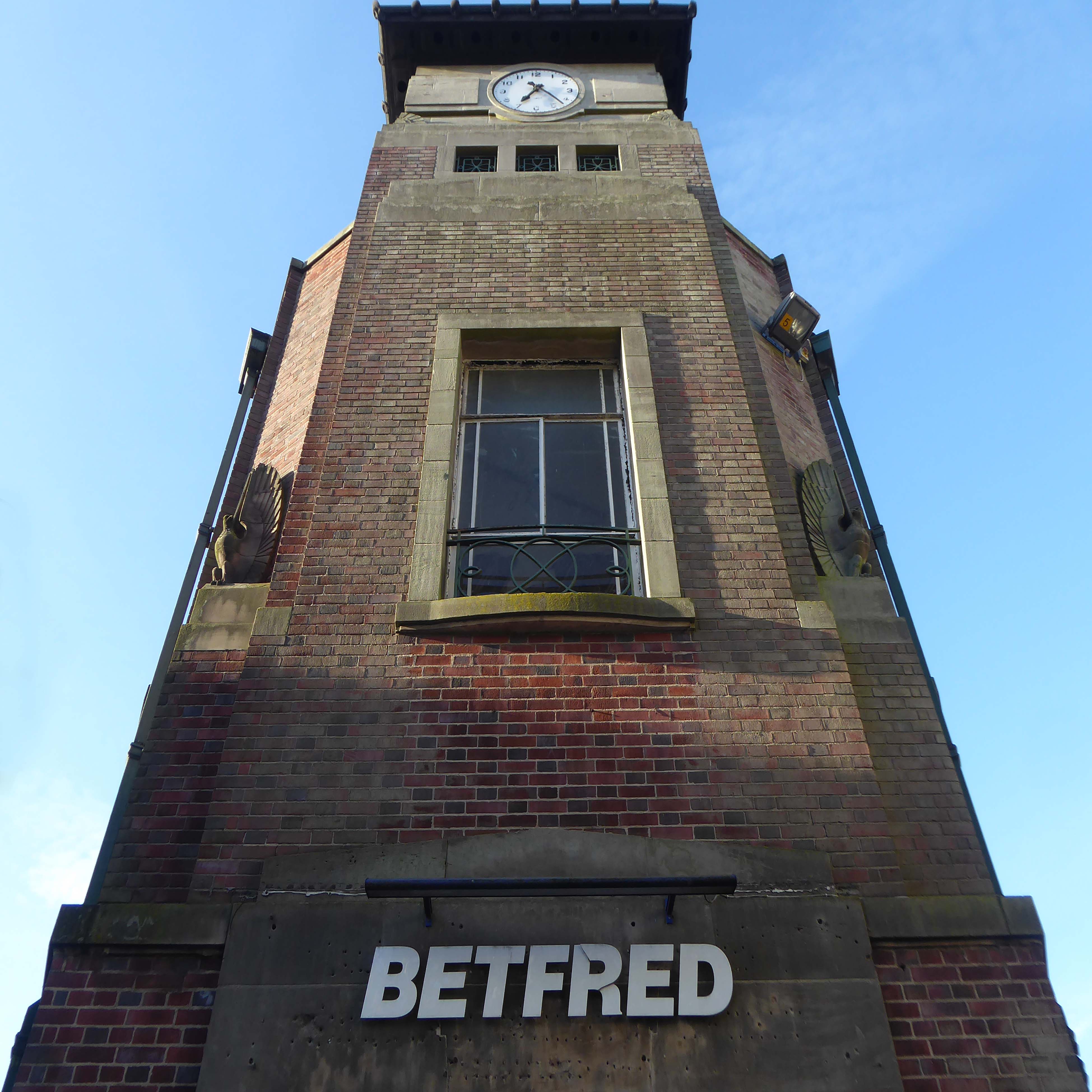
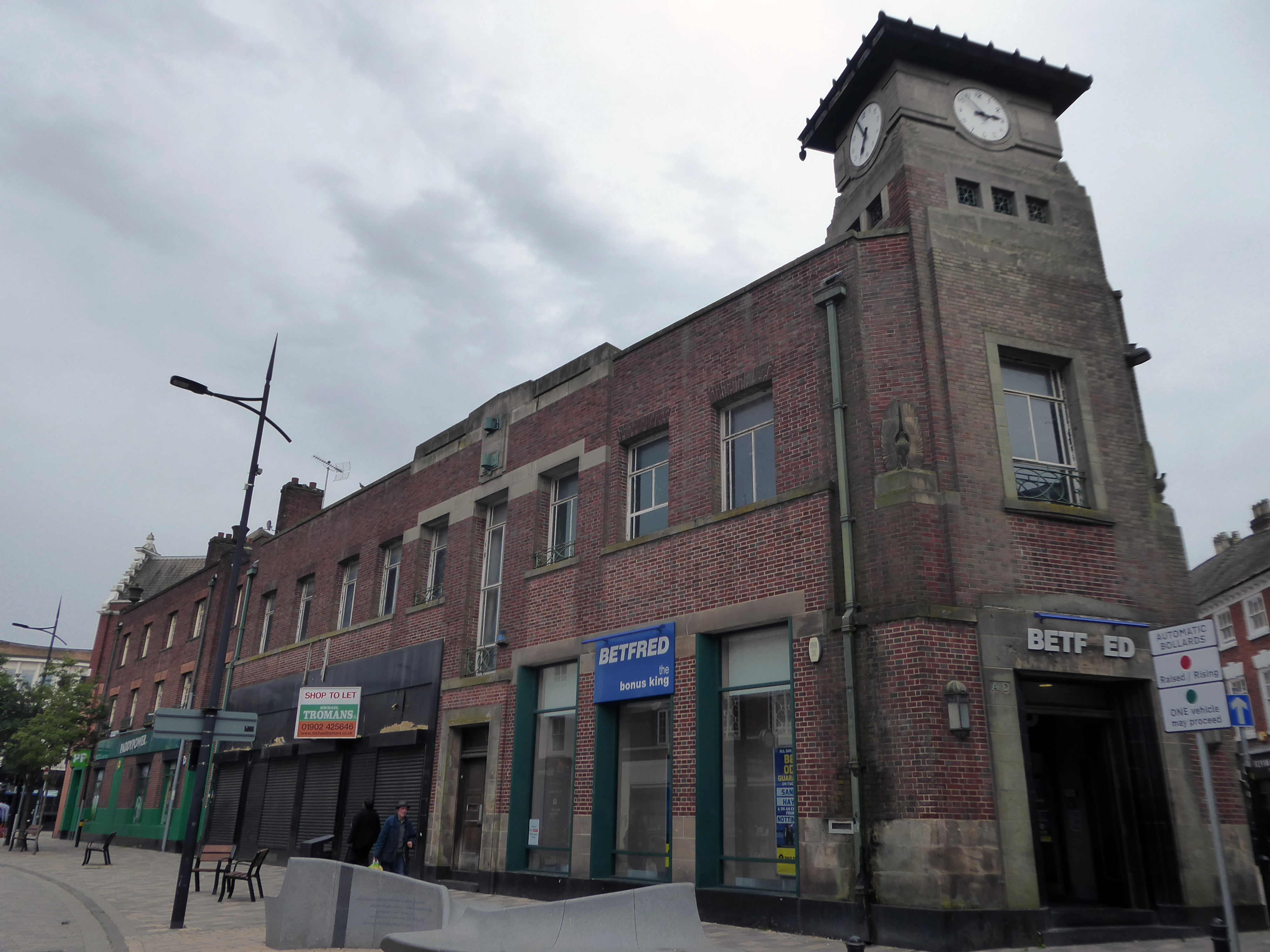
Along Princess Street this corner group, with an impressive clock tower – originally HQ for the South Staffordshire Building Society

Architects: George A Boswell of Glasgow 1932.

On to the Mander Centre – opened on 6th March 1968, refurbished 1987, 2003 and 2016-17.

The Mander Shopping Centre in the heart Wolverhampton is your one-stop shopping destination for all things fashion, home, beauty, food and technology.

Architects: James A Roberts principal architect Stanley Sellers.

Developed by Manders Holdings Plc, the paint, inks and property conglomerate, between 1968 and 1974. The site occupies four and a half acres comprising the old Georgian works and offices of the Mander family firm, founded in 1773, as well as the site of the former Queens Arcade.

Wikipedia

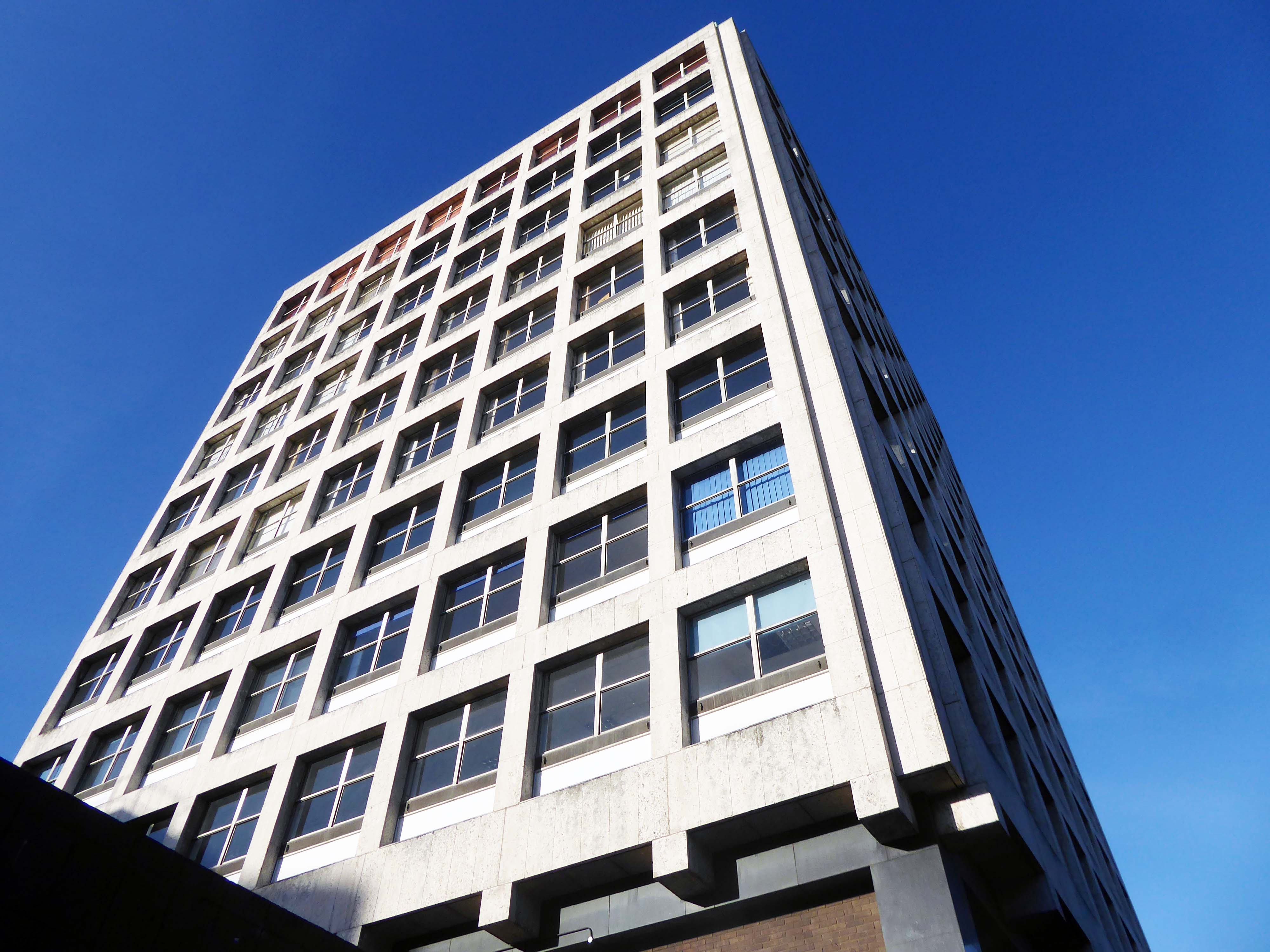
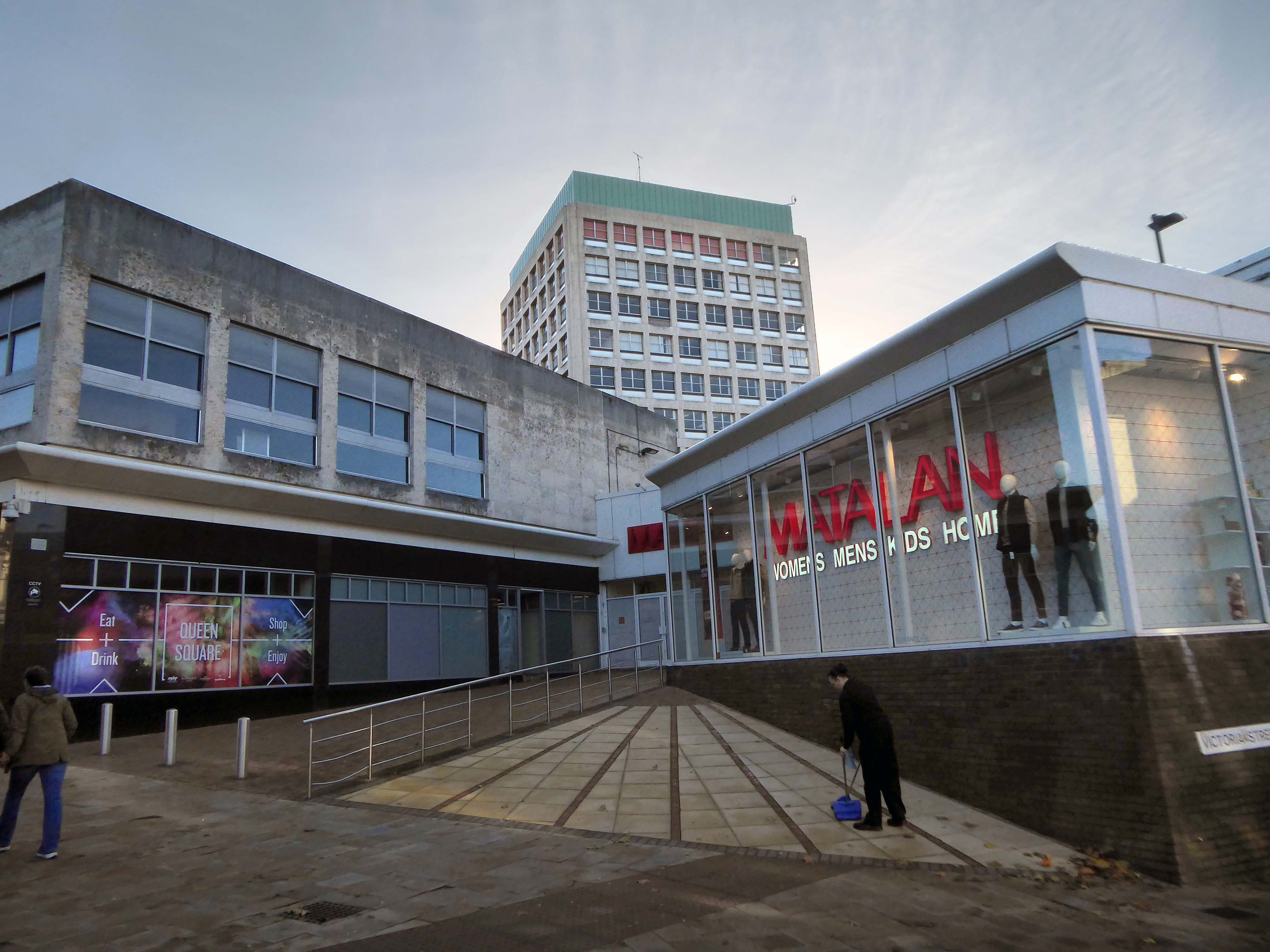
The Wulfrun Shopping Centre is an adjacent companion to the Manders development.

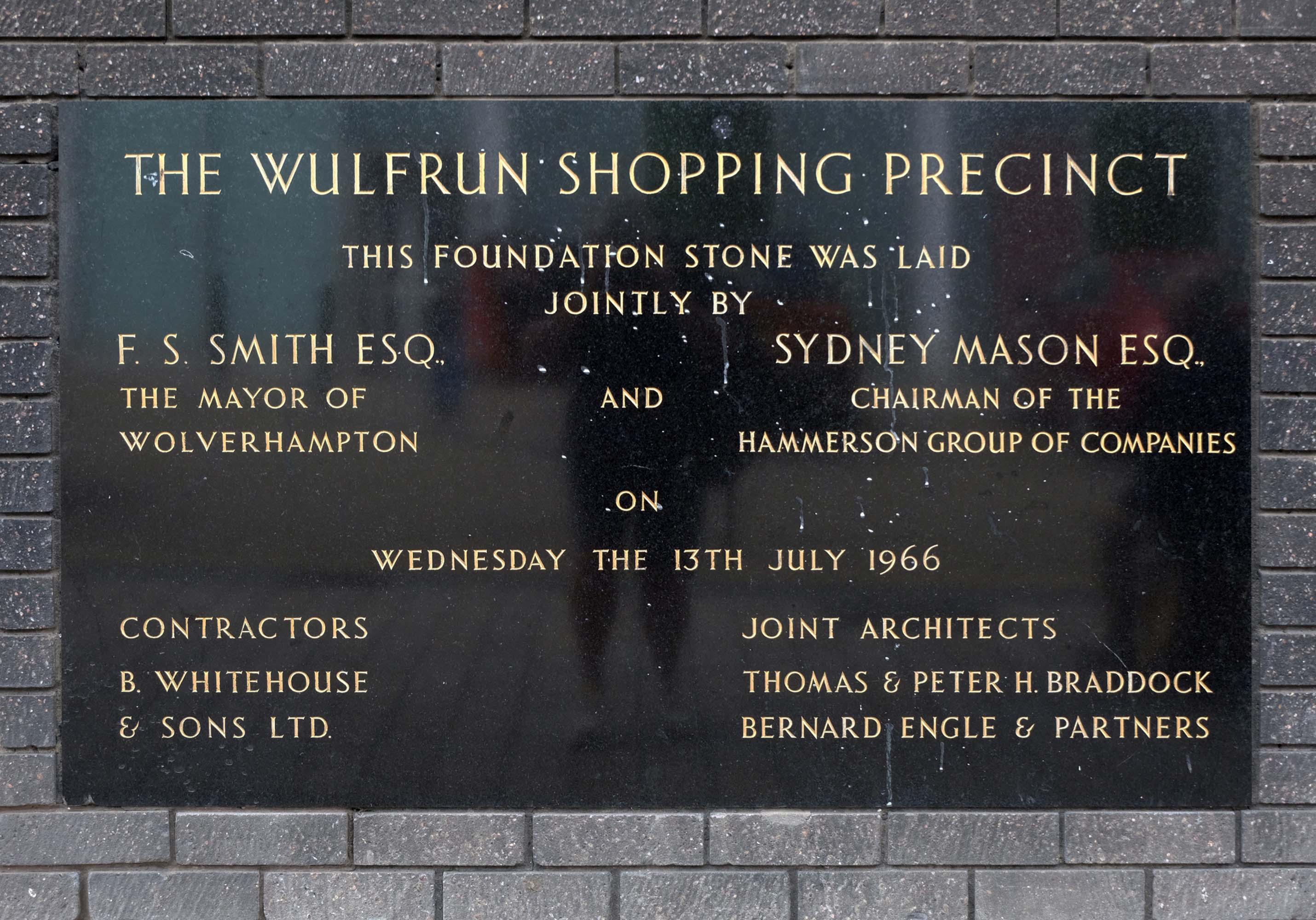
The Wulfrun Centre was built as a result of a joint project between Wolverhampton Council and the Hammerson Groupopen for business in October 1969.

History and Heritage Society

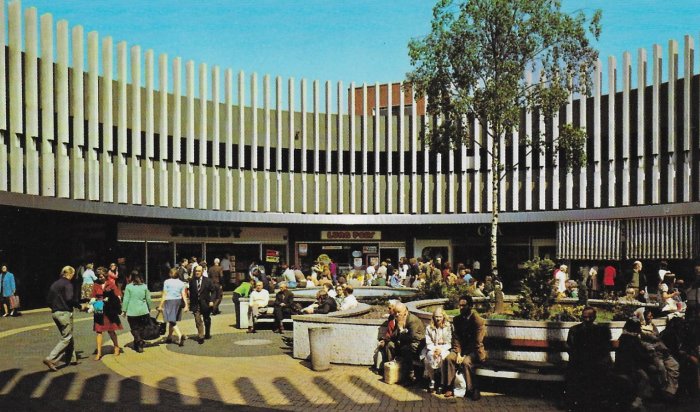
Piazza postcard 1970.

Architects: T & PH Braddock and also Bernard Engle & Partners.

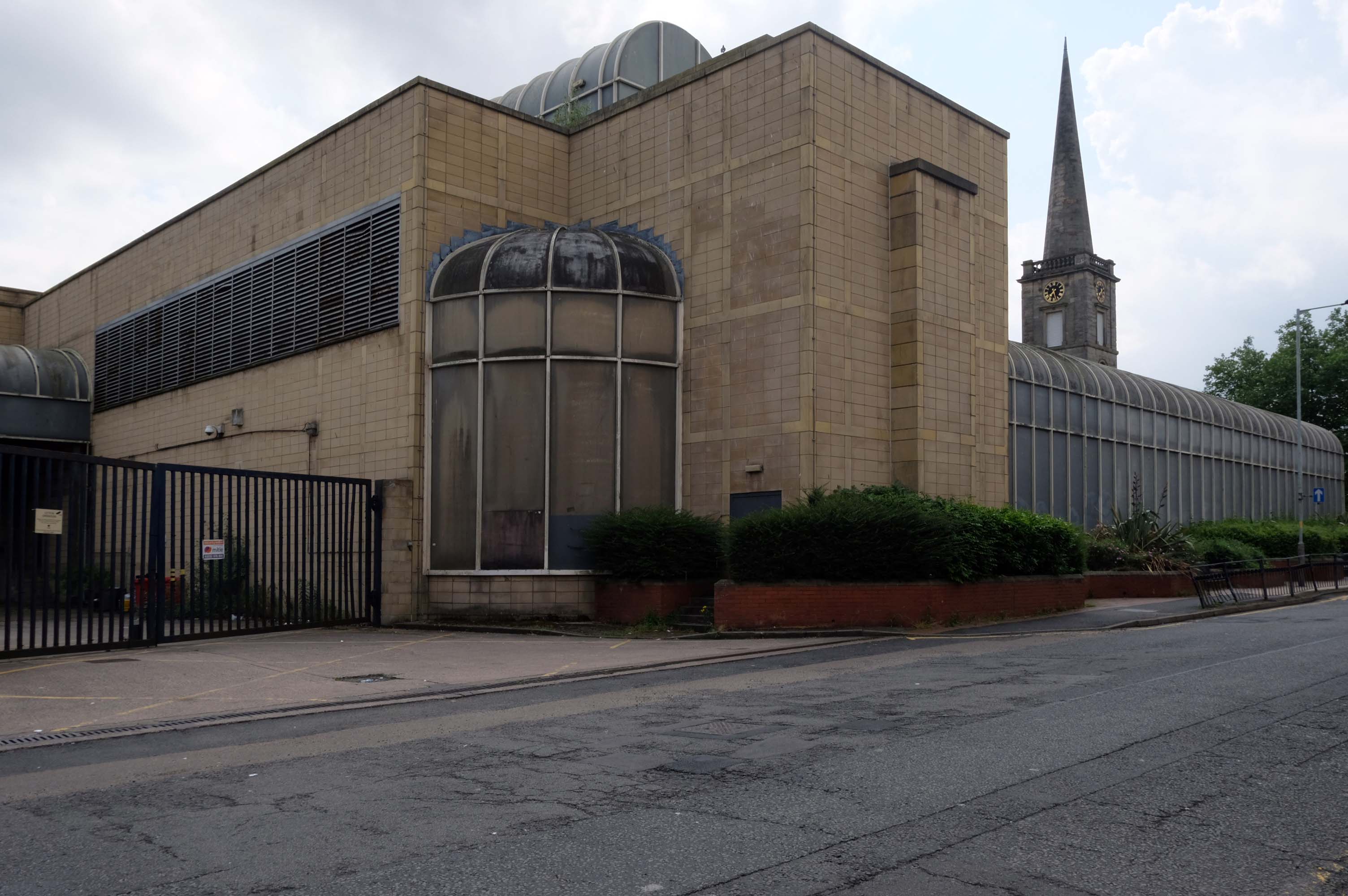
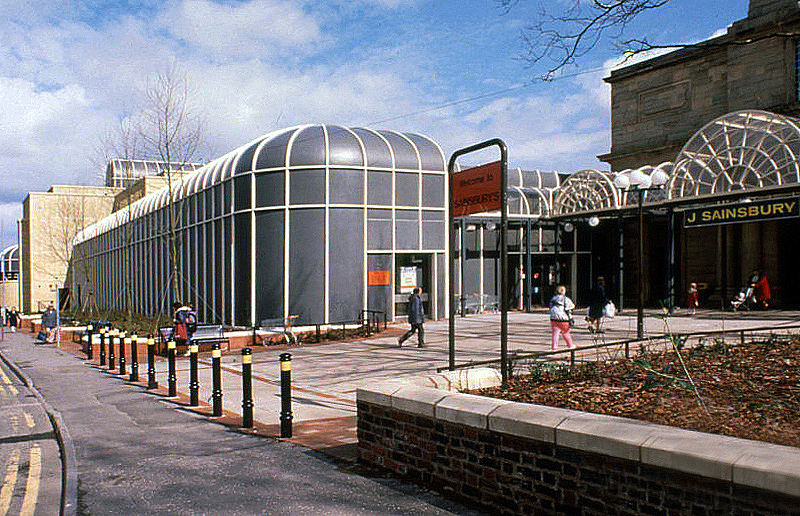
Along St Georges Parade, an abandoned Sainsbury’s church combo – store designed by J Sainsbury’s Architects Department opened 1988.

The church was built between 1828 and 1830 – architect: James Morgan, at a cost of £10,268. It was consecrated on Thursday 2 September 1830 by the Bishop of Lichfield, it was made redundant in 1978.

Sainsbury Archive

The site is currently under lease to Sainsbury’s for a further three years and will come forward on a phased basis subject to their lease concluding. The council is in active dialogue with prospective development partners on the redevelopment of this site and in wider consultation with Homes England.

Express & Star

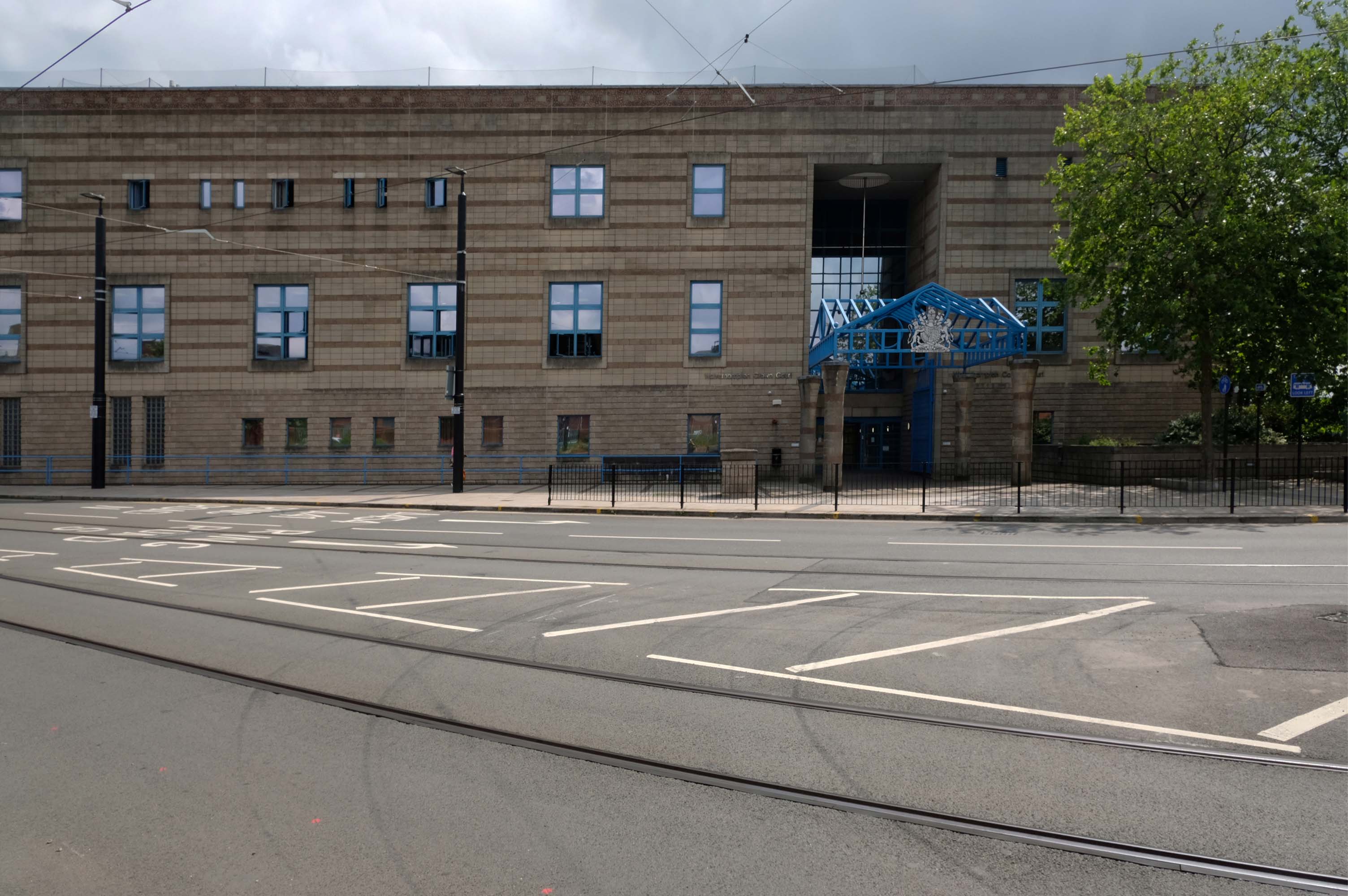
Back tracking to the Combined Court Centre.

Architects: Norman and Dawbarn 1990

Notable cases included trial and conviction of four members of The Stone Roses, in October 1990, for criminal damage to the offices of their former record company.

Wikipedia

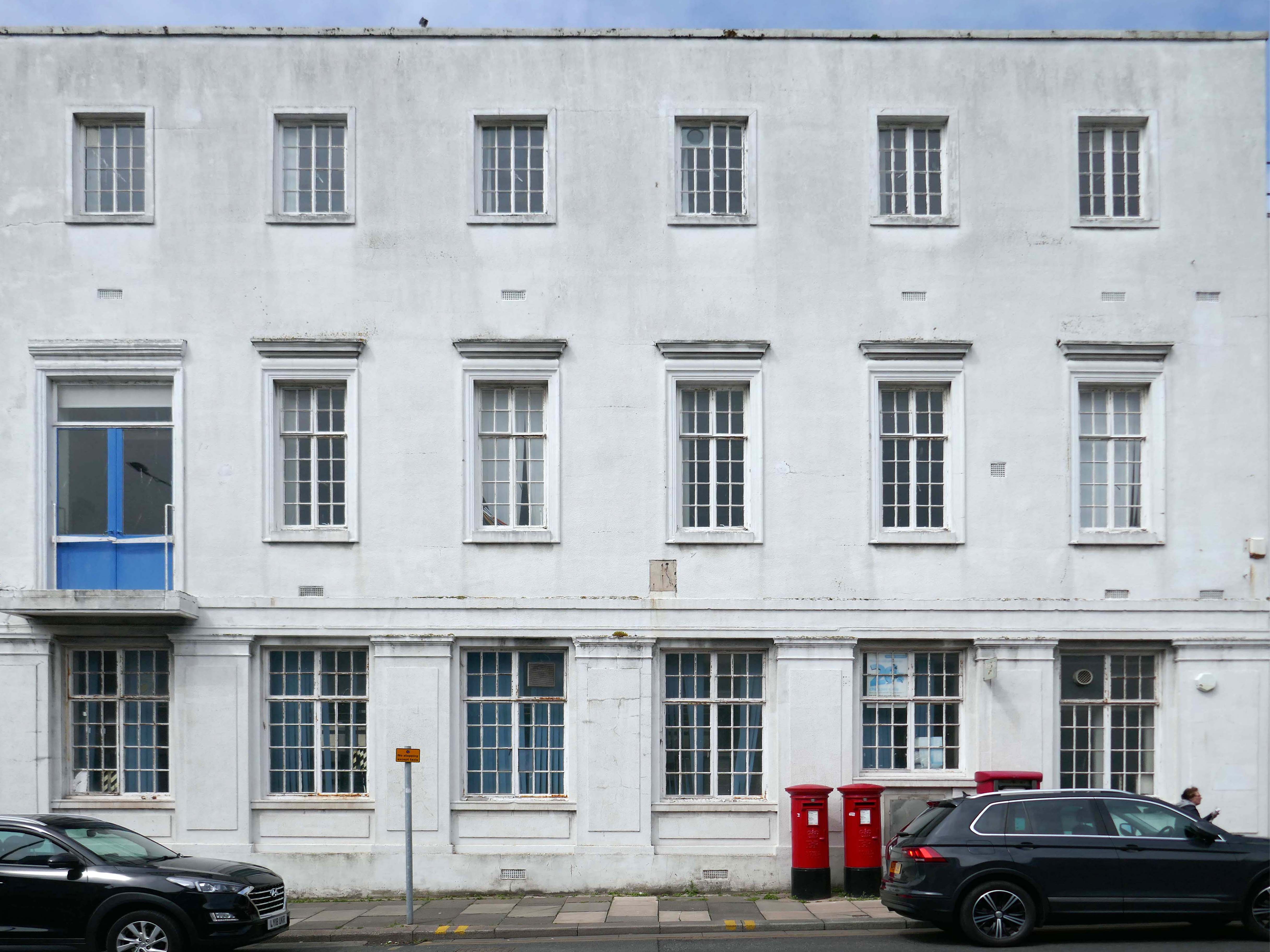
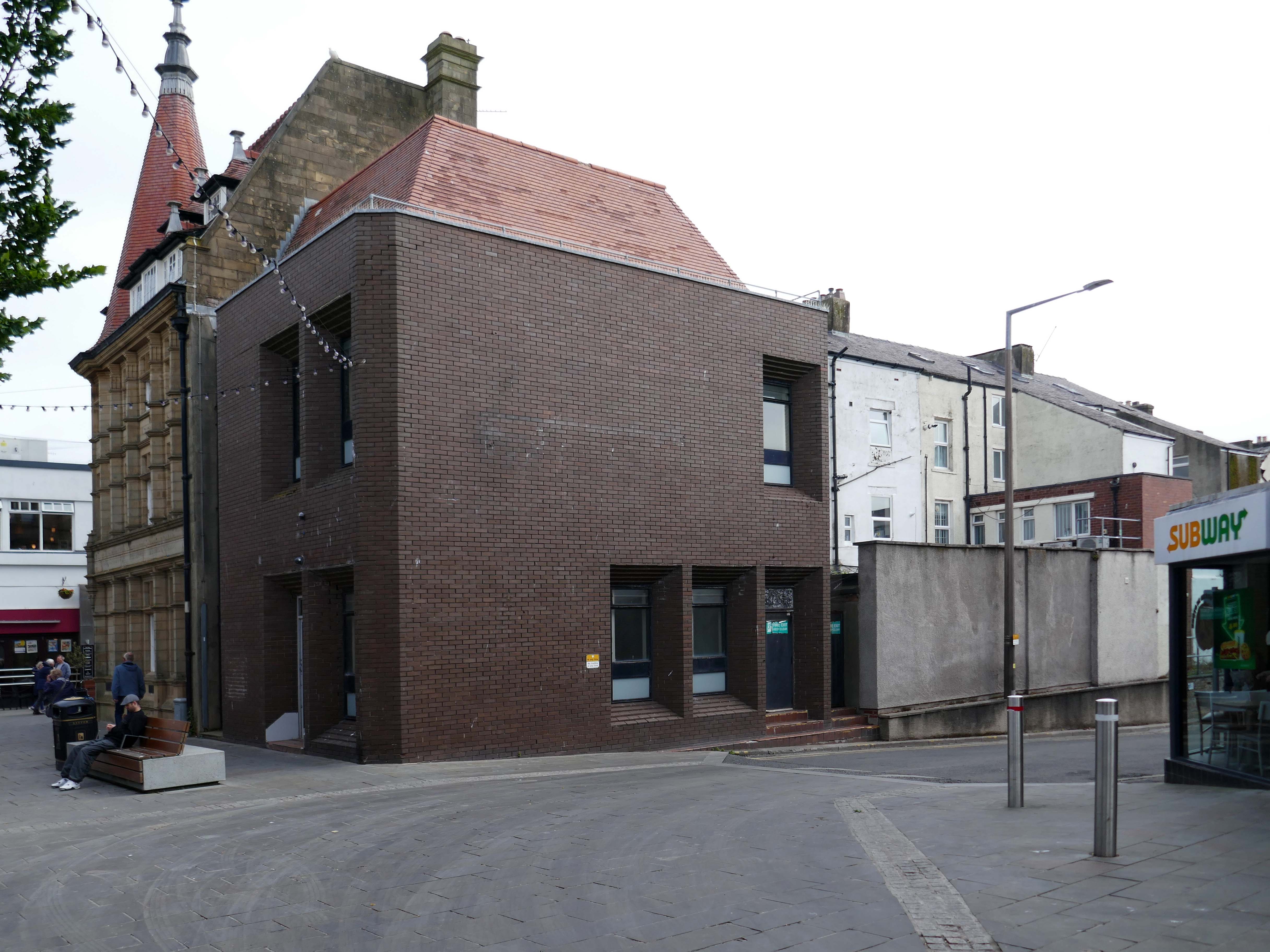
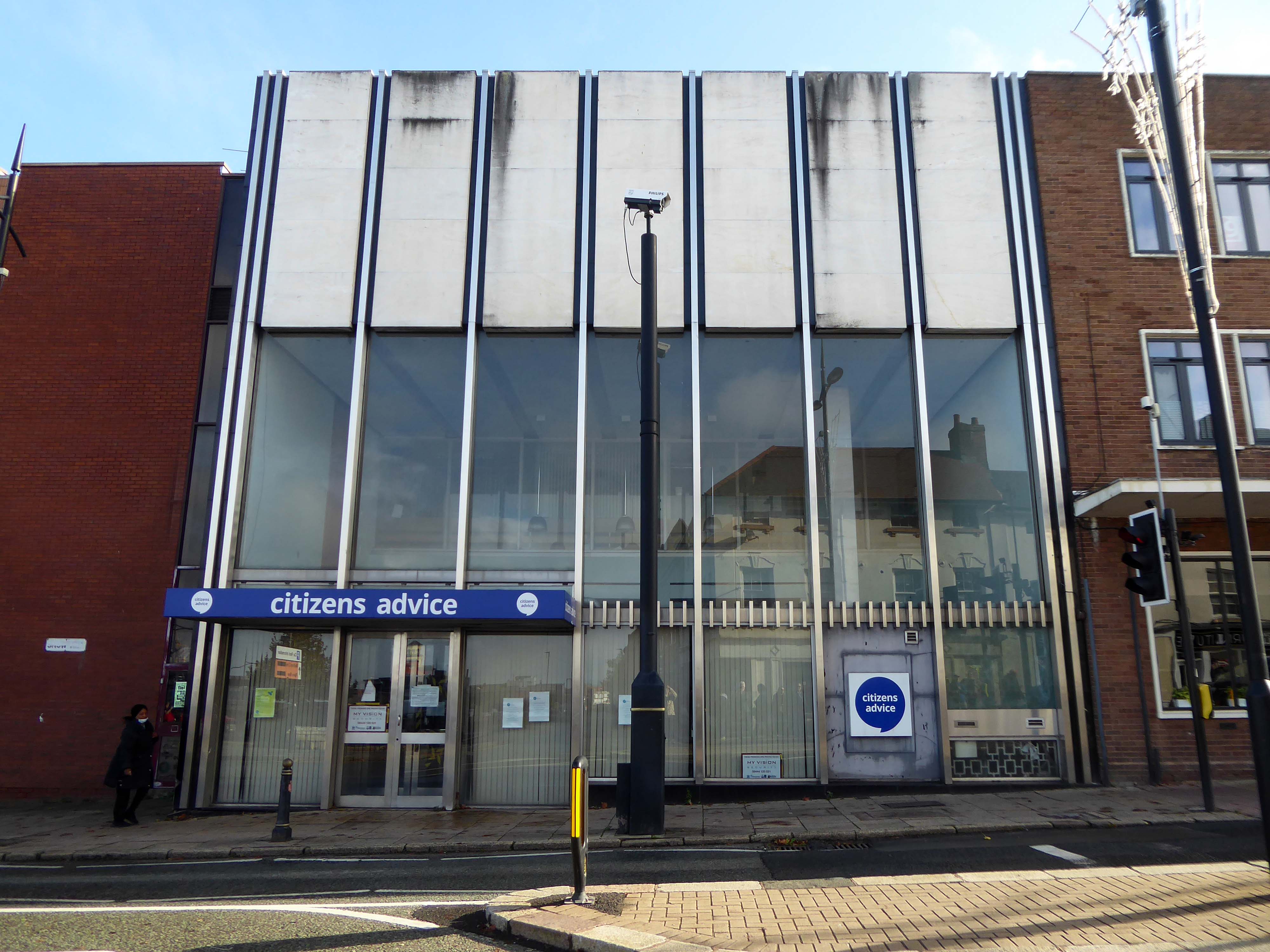
Thence up Snow Hill to the former Citizens Advice former Barclays Bank currently empty.

Architects: John HD Madin & Partners 1969

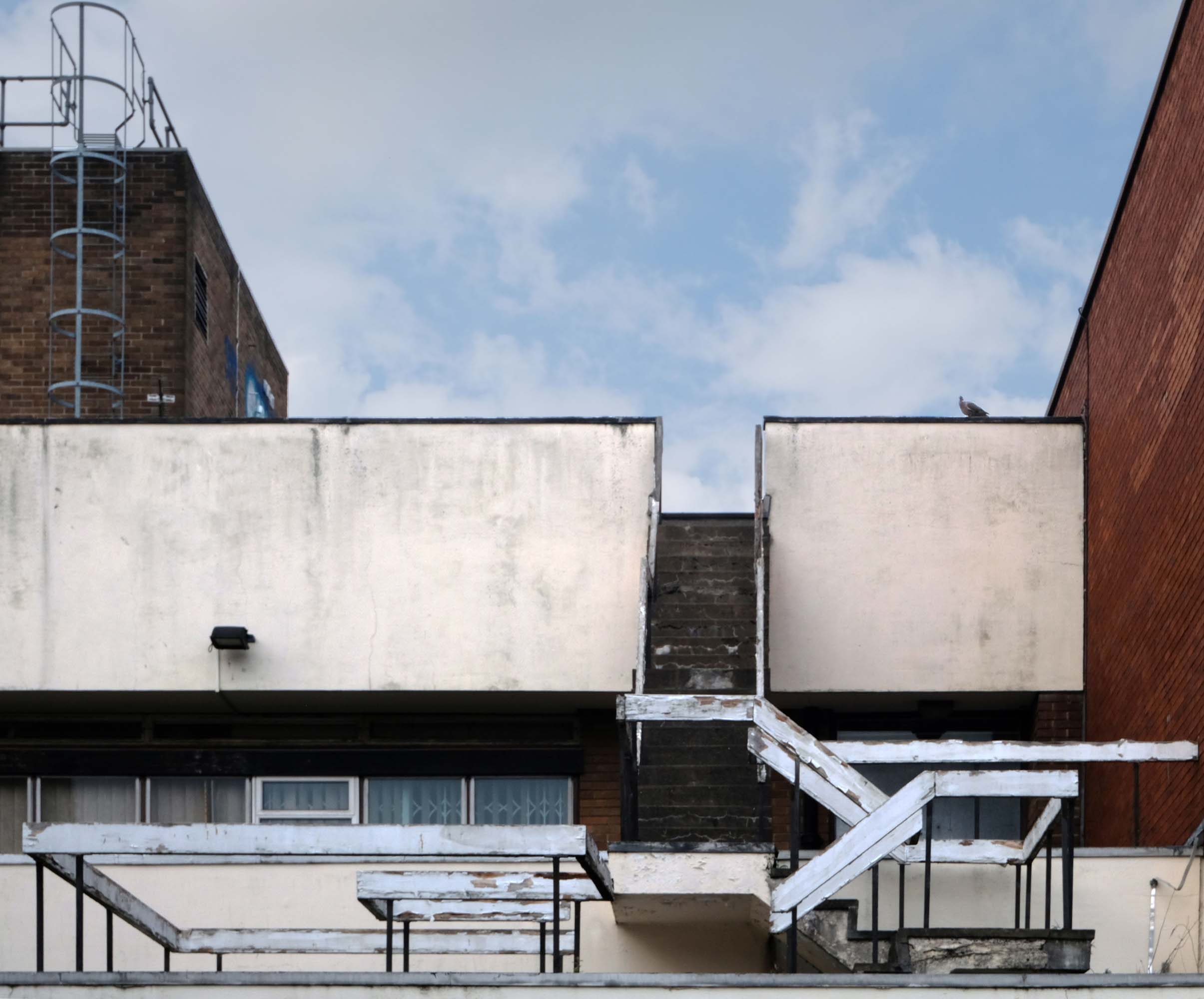
Take time to have a look around the back.

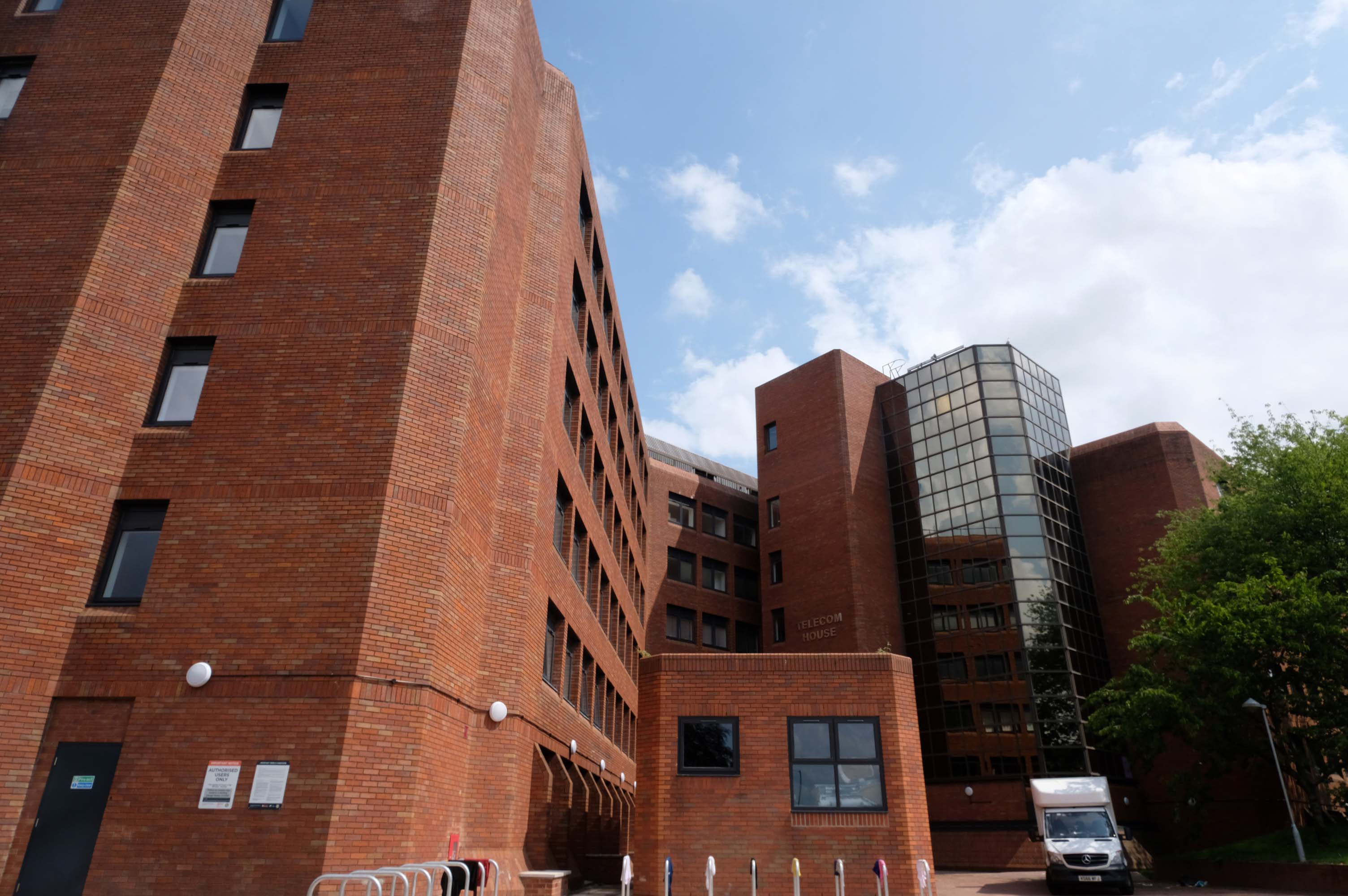
Off to Church Street and Telecom House

Sold for £4.25 million to Empire Property in 2022.

It had previously been sold for more than £3m in July 2018, also for use for apartments, to Inspired Asset Management which later went into receivership.

Express & Star

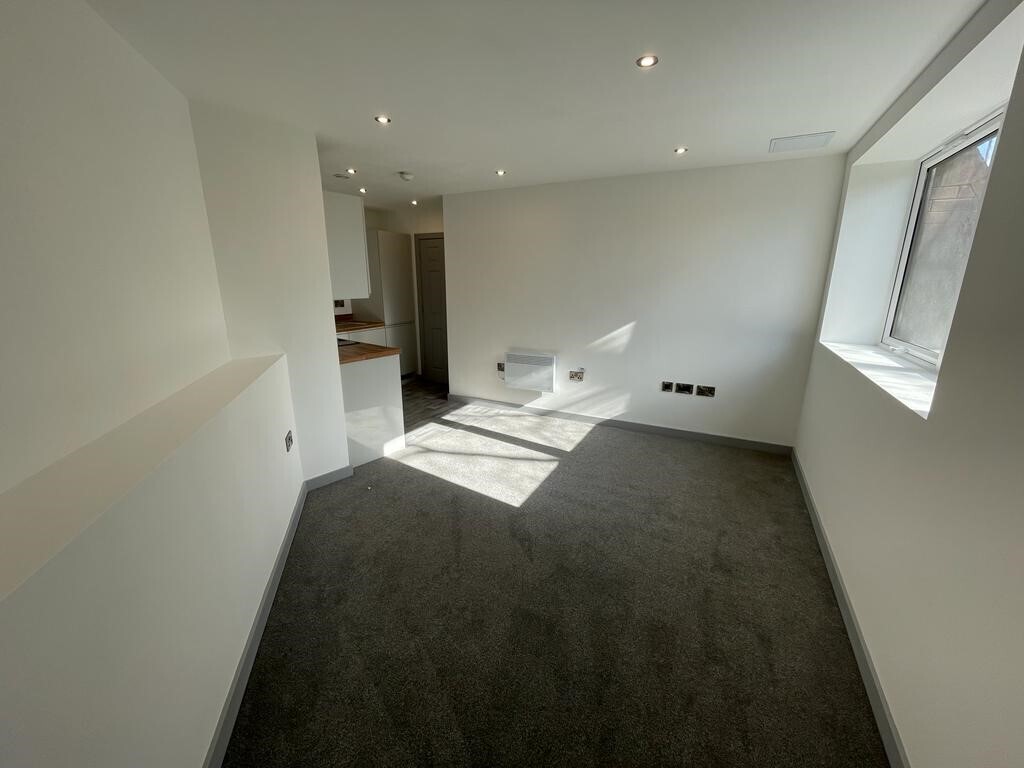
Located on a popular apartment block on Church street in the Wolverhampton centre, this 1 bedroom property has been newly renovated throughout and compromises an entrance hallway, open plan lounge/kitchen with in built appliances, shower room and double bedroom.

£650 PCM – Connells

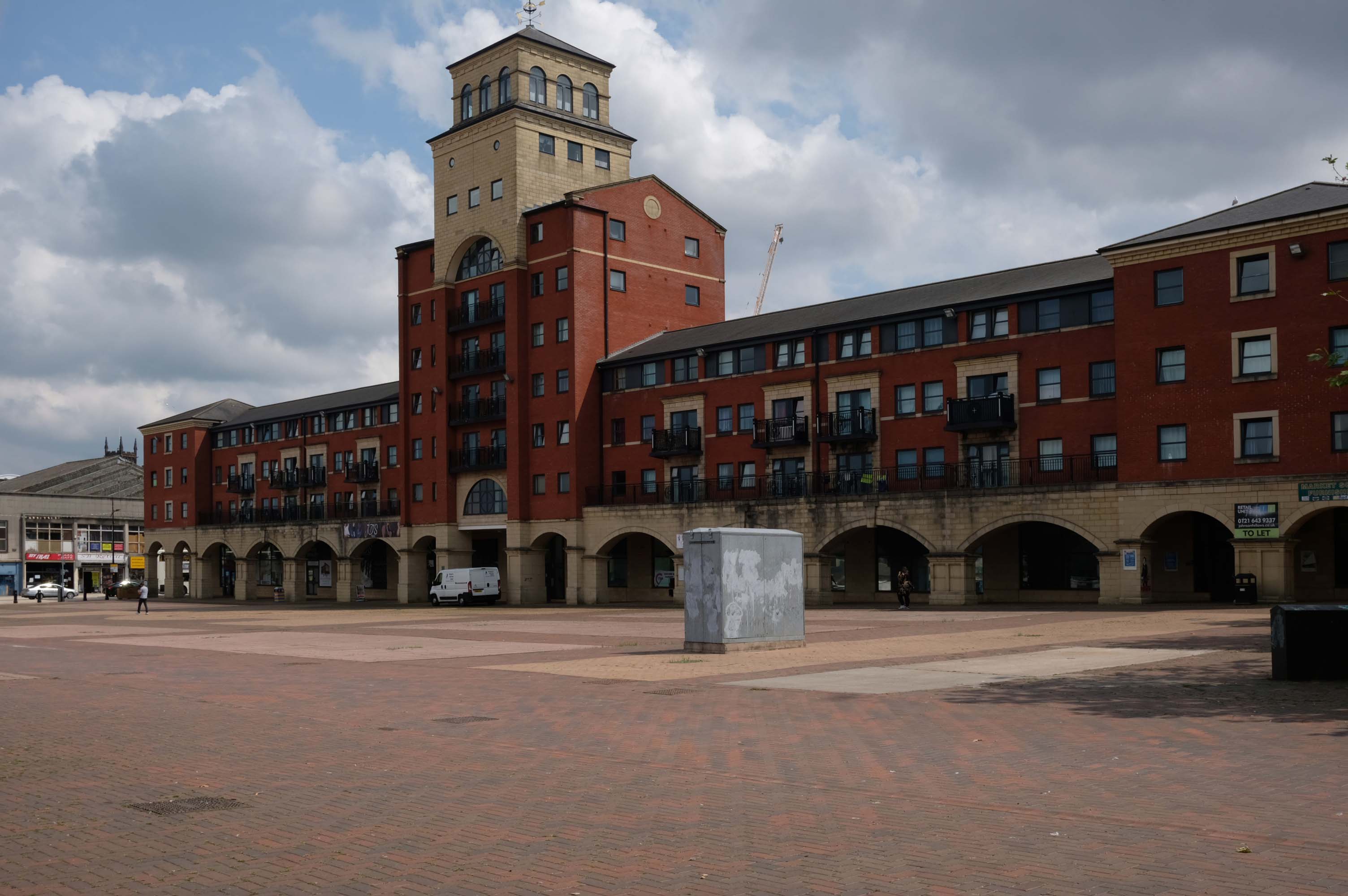
Next to this modern piazza New Market Square – Architects: Nicol Thomas from a concept by head of planning Costas Georghiou.

Formed from the former Market Square, a mix of flats and shops opened in 2004, in an Italianate version of the modish school of streaky bacon.

In 2021 the Coca-Cola Christmas Truck visit to the Midlands was cancelled.

It was meant to arrive at Market Square in Wolverhampton at 11am today but failed to show up.

One fan had waited since 7am this morning to see the Coca-Cola truck.

While schoolchildren were left gutted when the truck didn’t turn up – and one boy had been so excited his mother said he had been talking about the red truck all morning.

Birmingham Mail

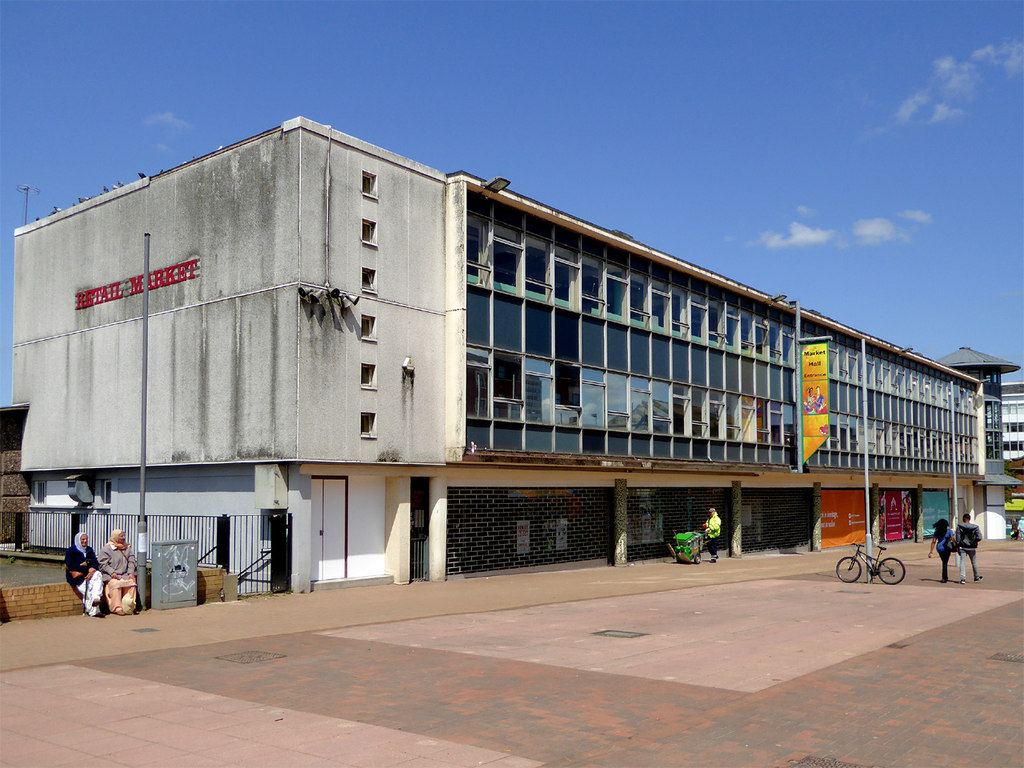
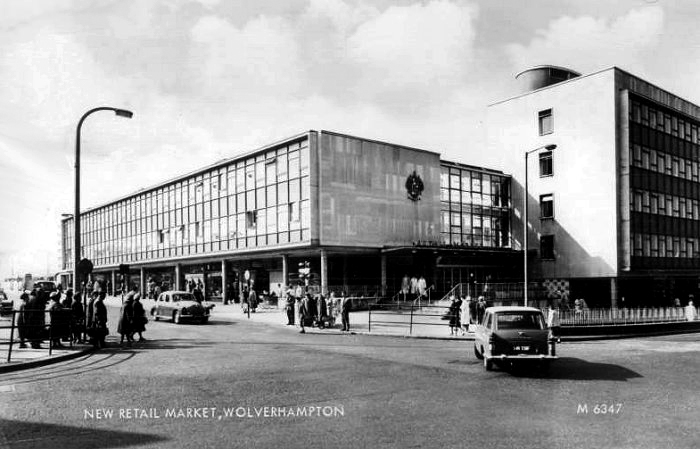
Retail Market – Late 1950s market hall and offices above. 

Architects: Borough Surveyor. 

Excellent example of the Festival of Britain style of architecture, won Civic Trust Award 1960.

Locally Listed March 2000.

demolished January 2017.

Photo: Roger Kidd

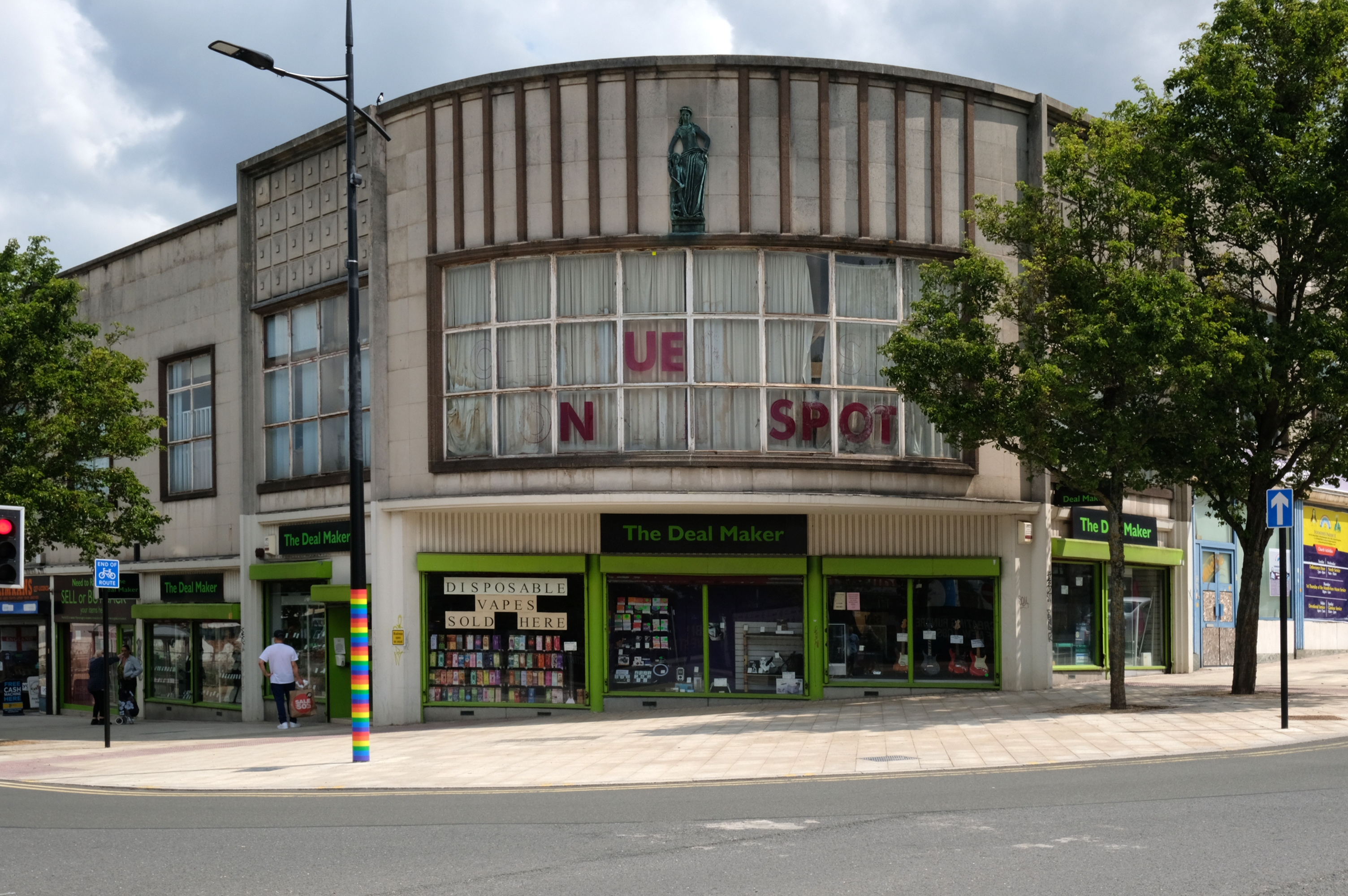
This development that wraps itself around Salop, Skinner and School Streets appears to be of a similar period to the Retail Market – and sports a Lady Wulfrun in relief.

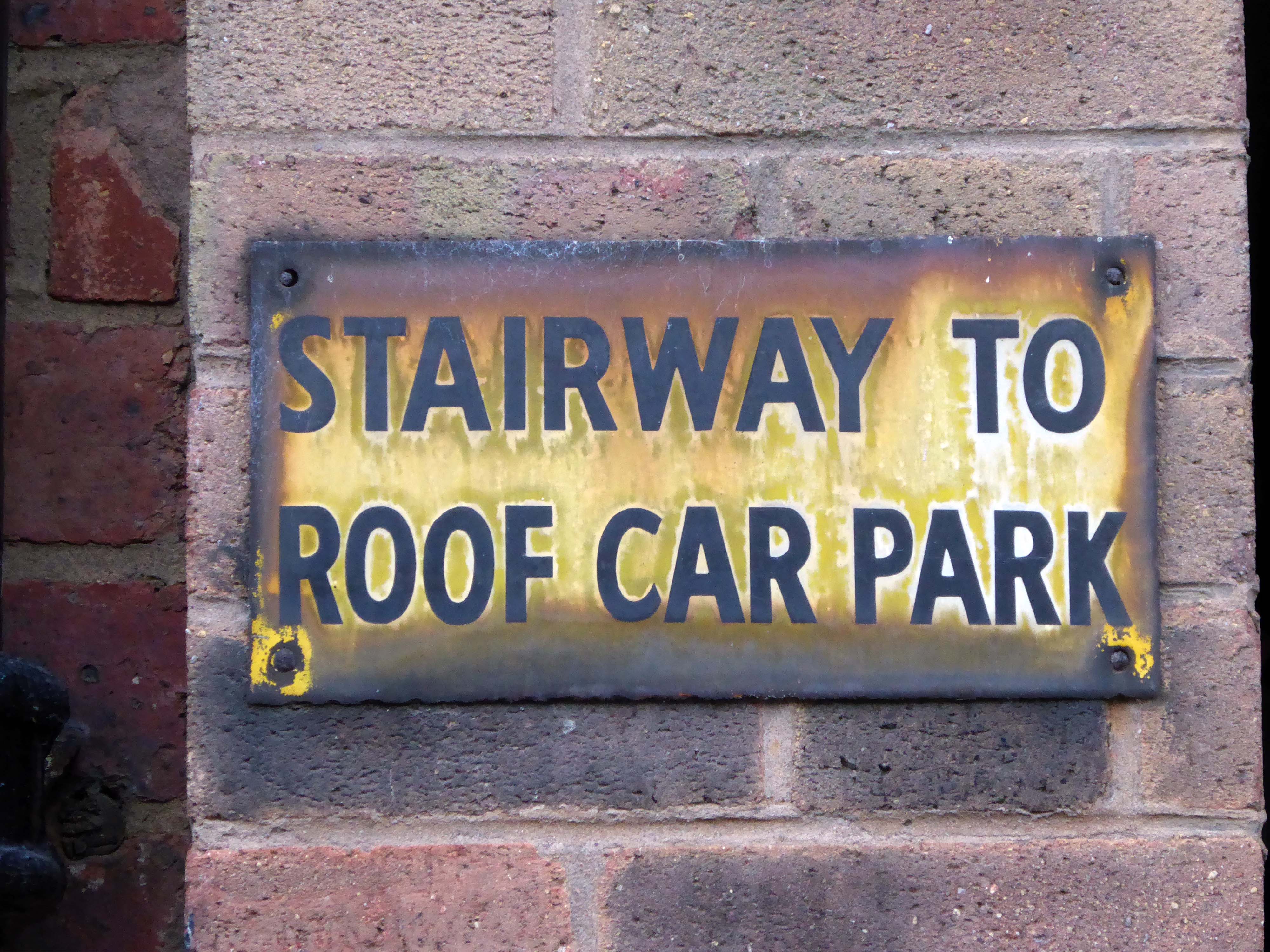
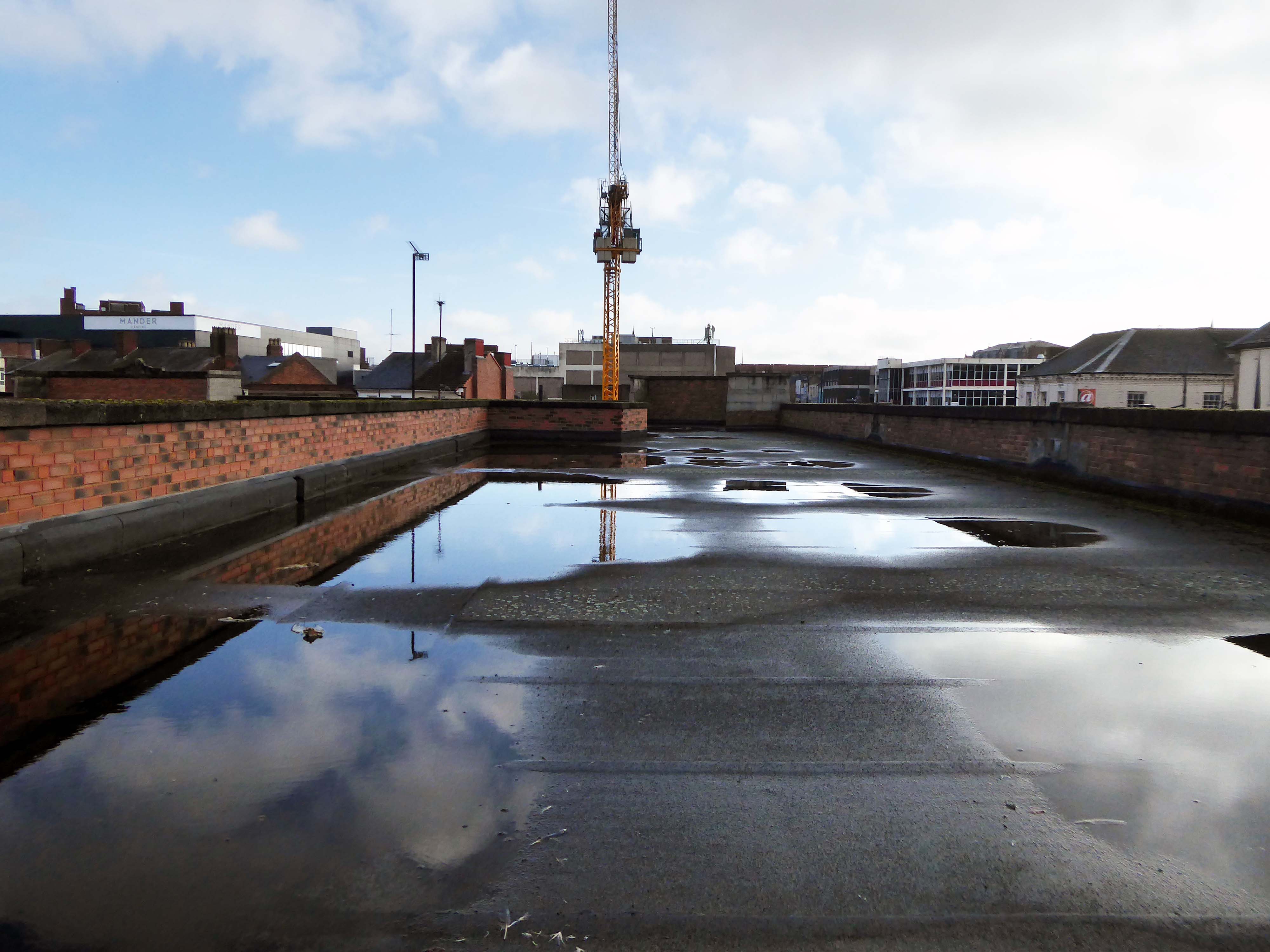
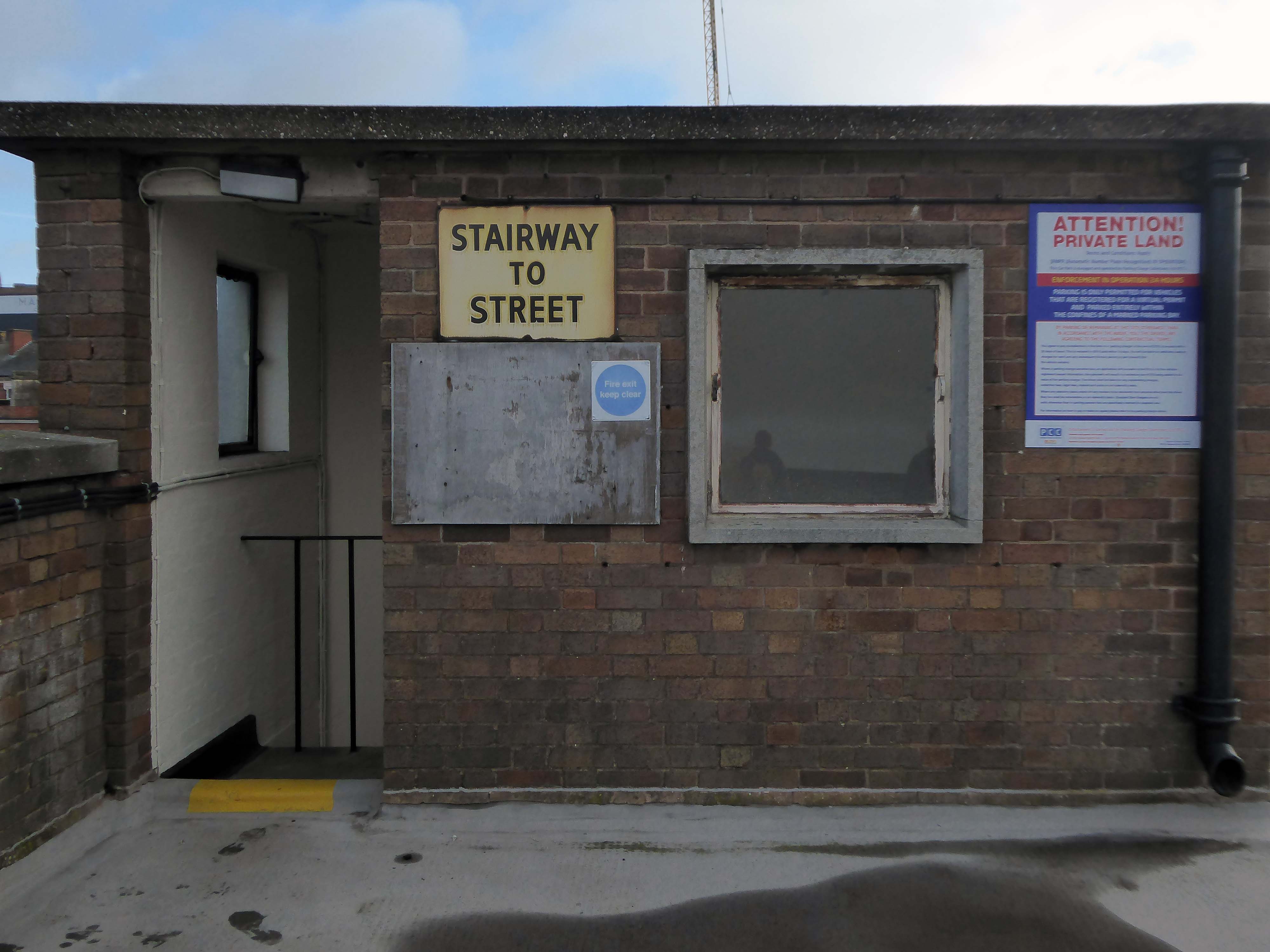
There is access to its roof top car park.

And also an exit back to street level.

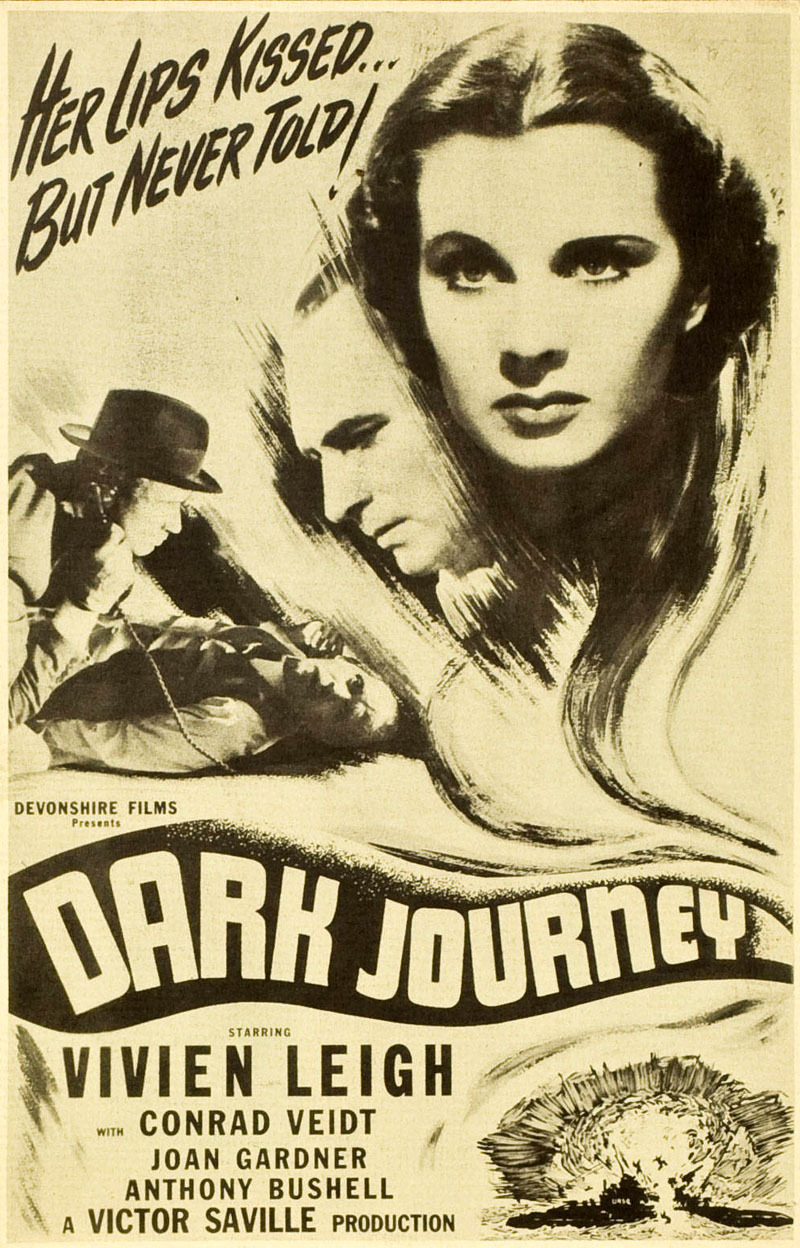
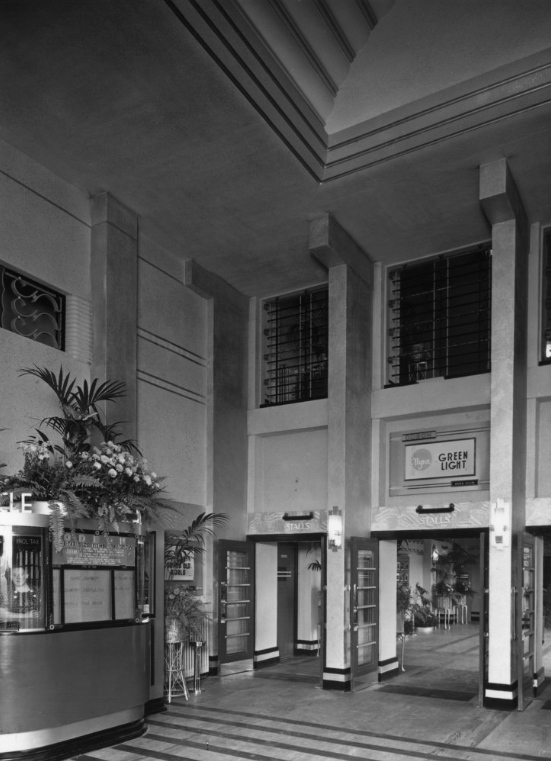
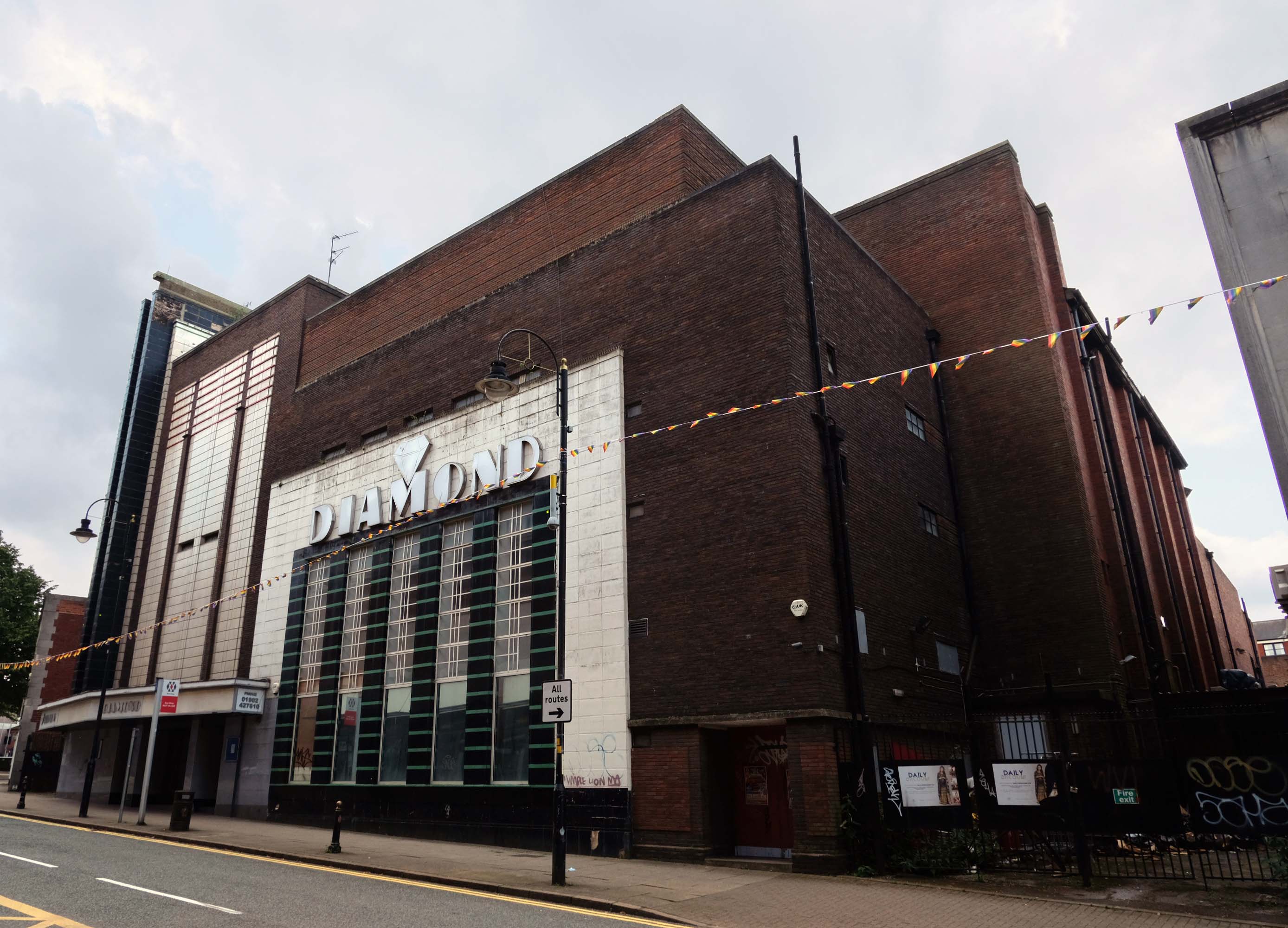
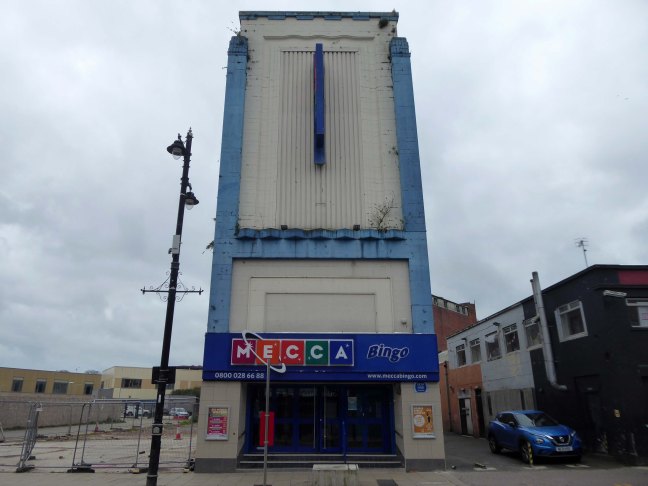
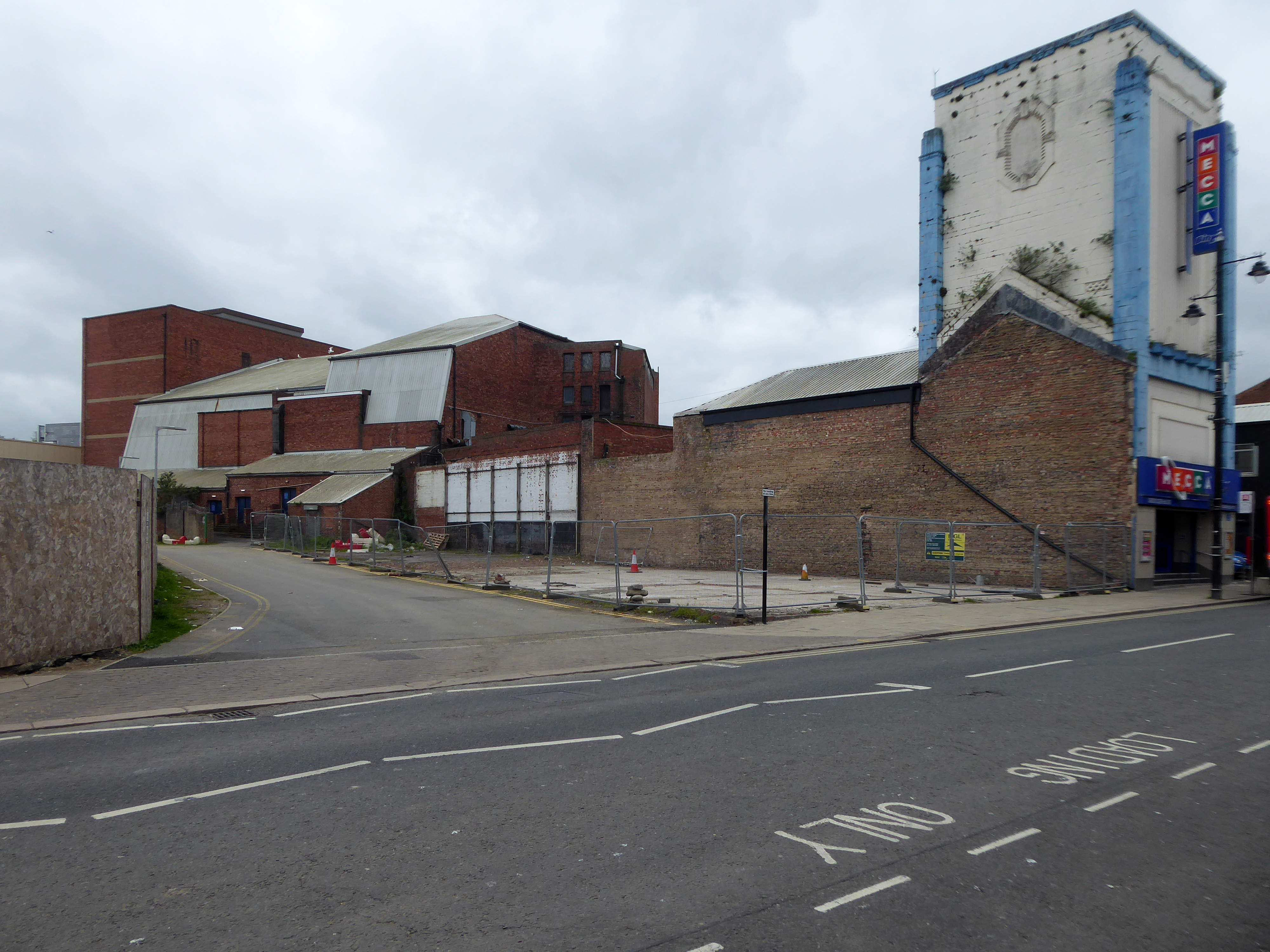
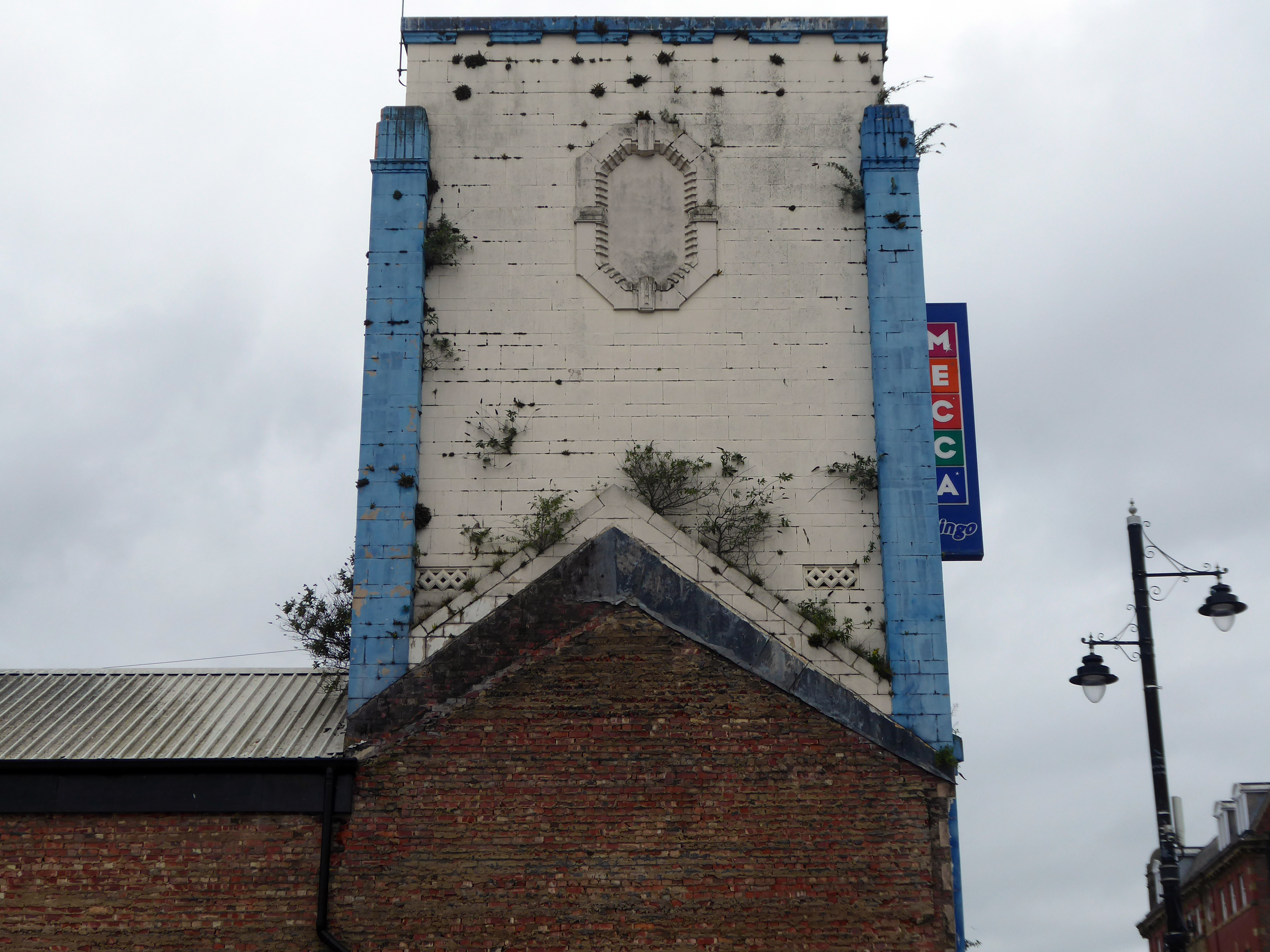
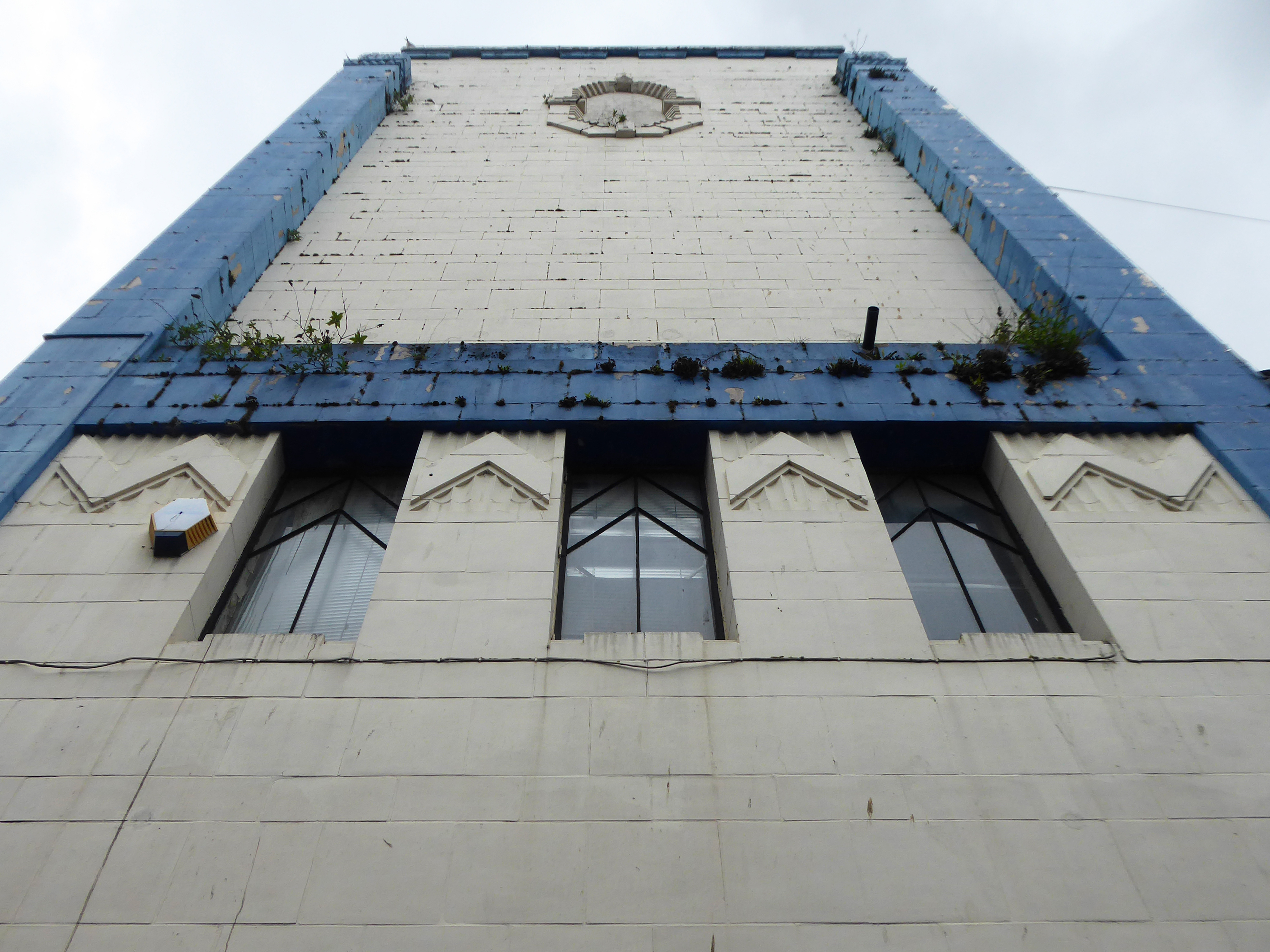
Where we find at street level the former Odeon Cinema, opened on 11th September 1937 with Conrad Veidt in Dark Journey.

Architects: PJ Price and Harry W Weedon.

In October 2000, the former Odeon was designated a Grade II Listed building by English Heritage.

RIBA pix

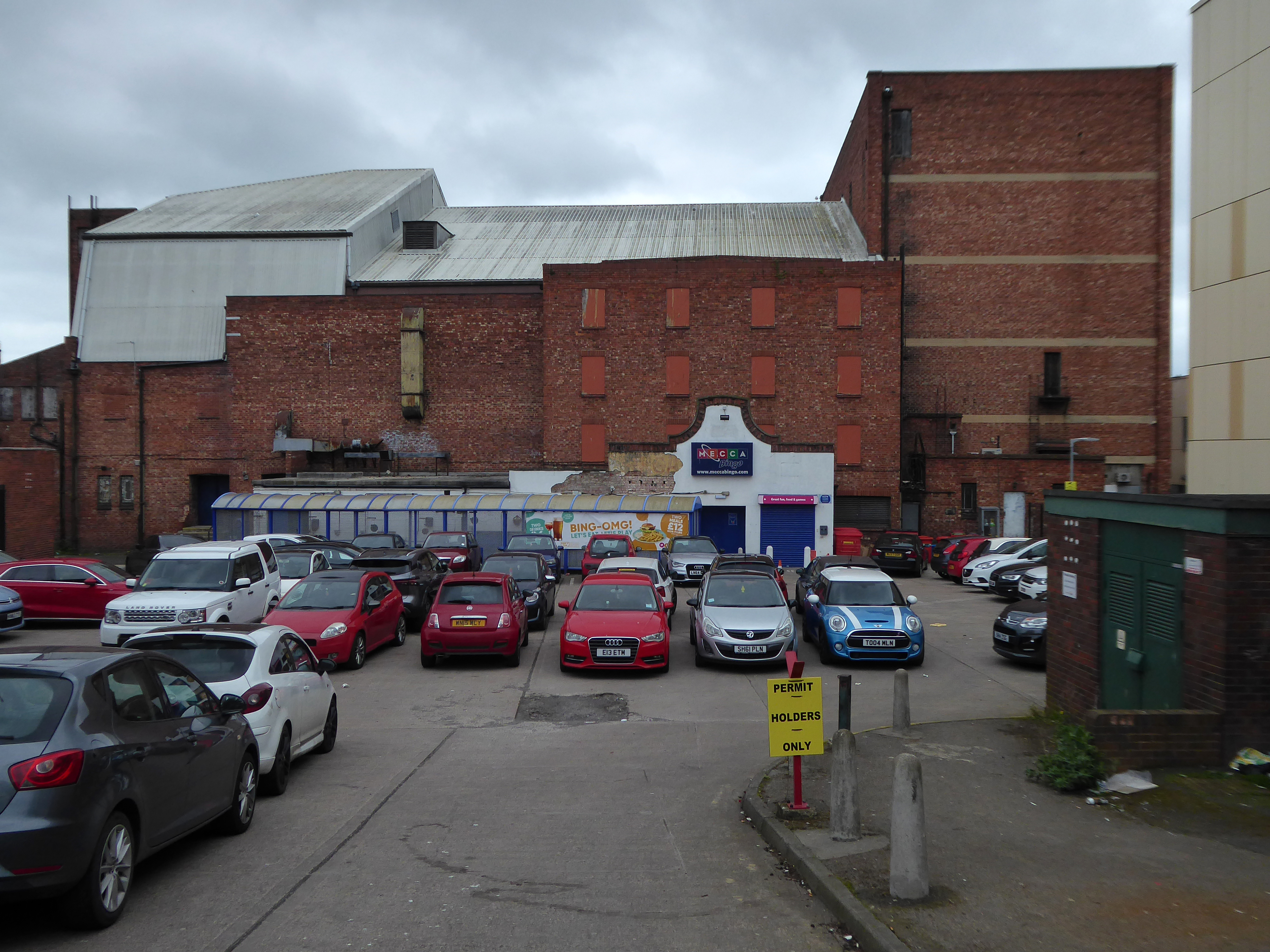
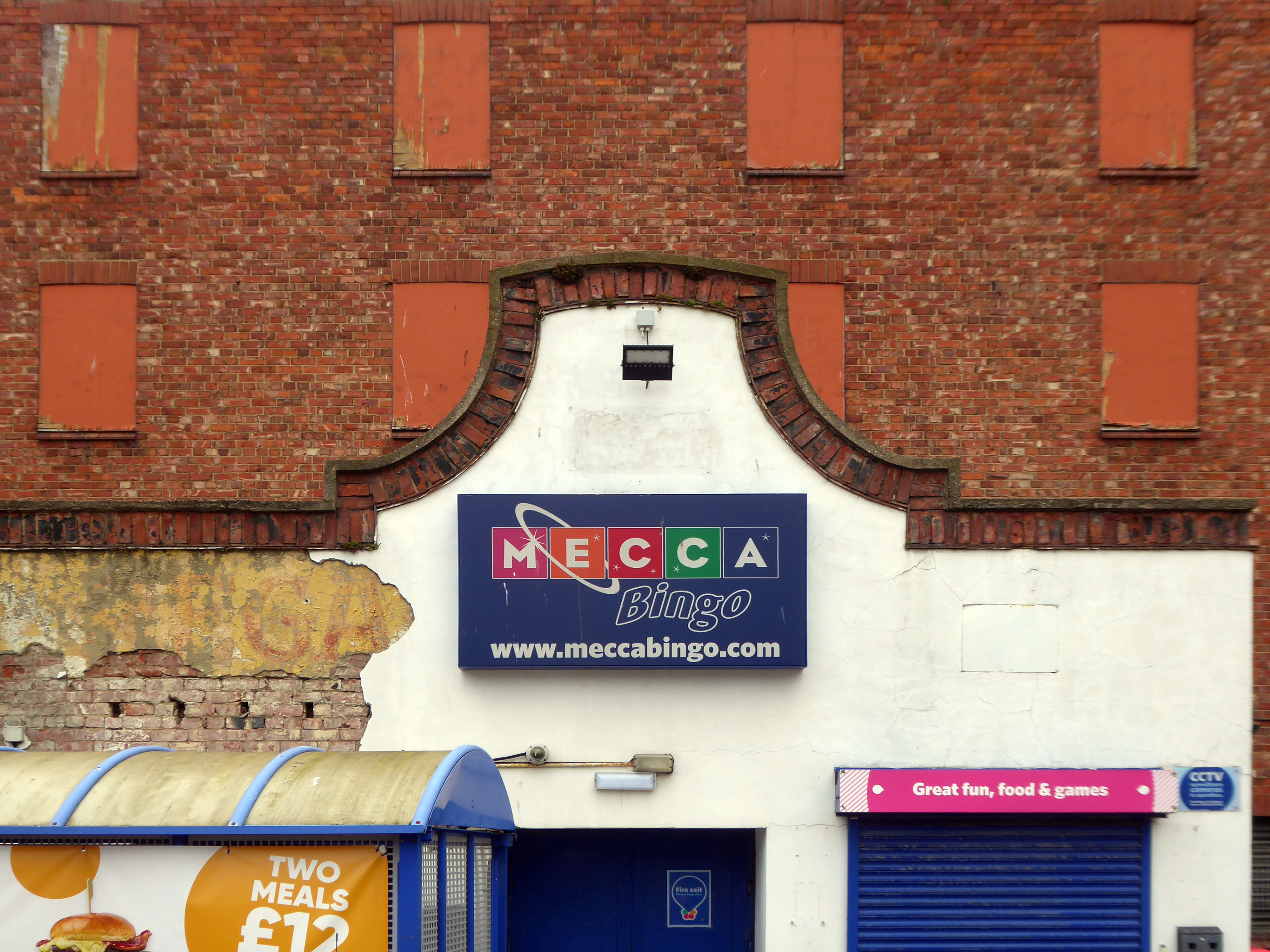
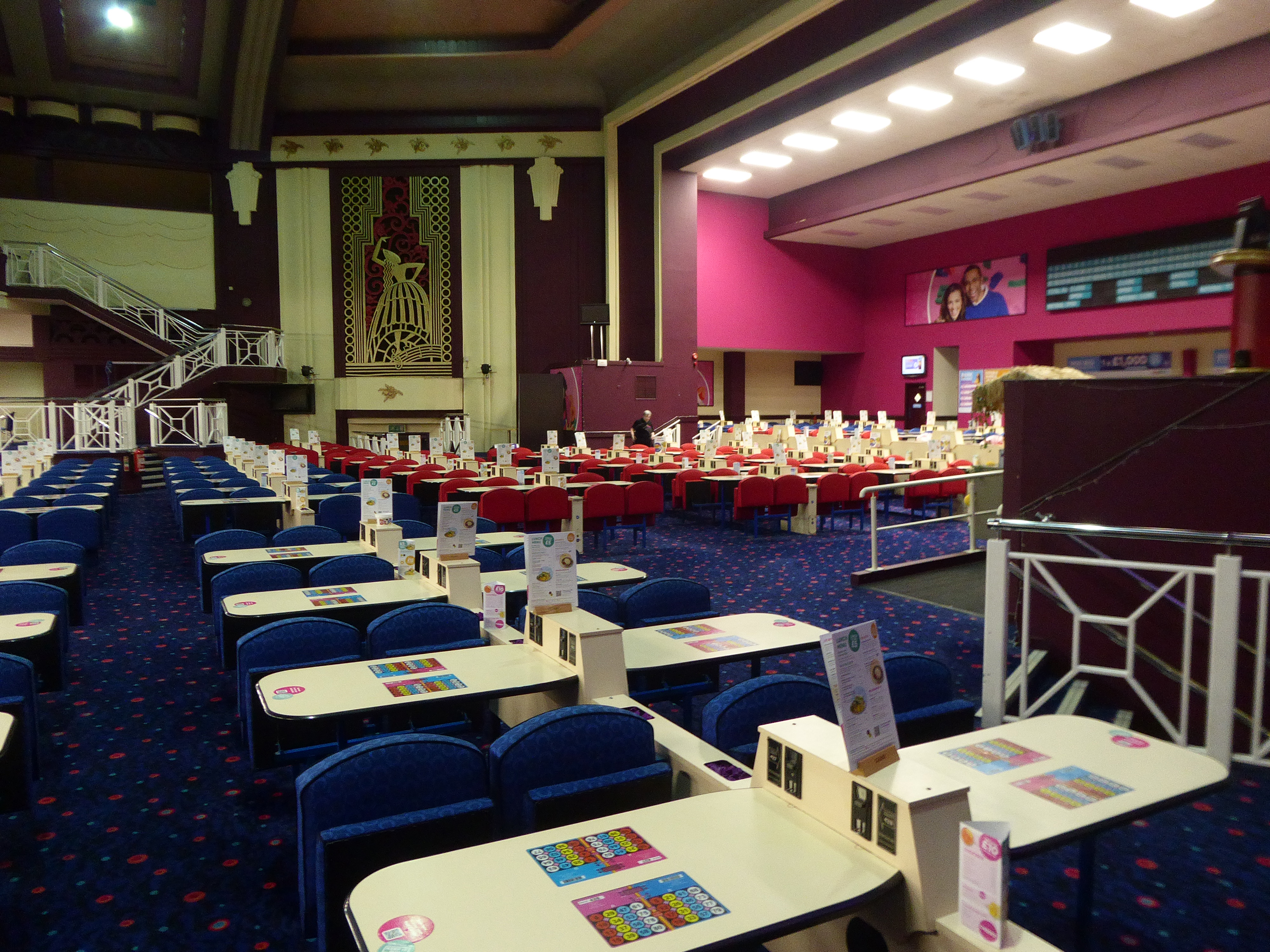
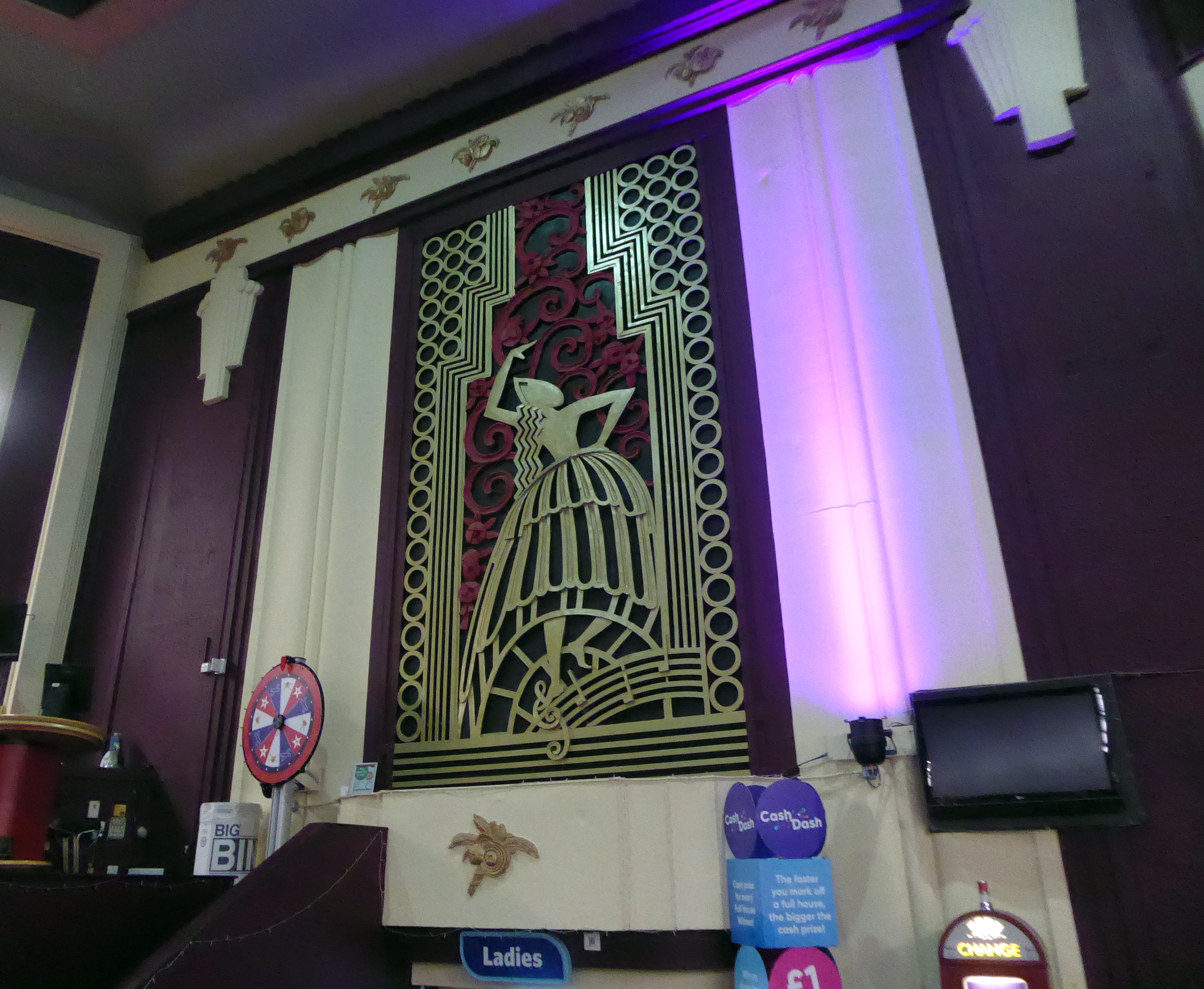
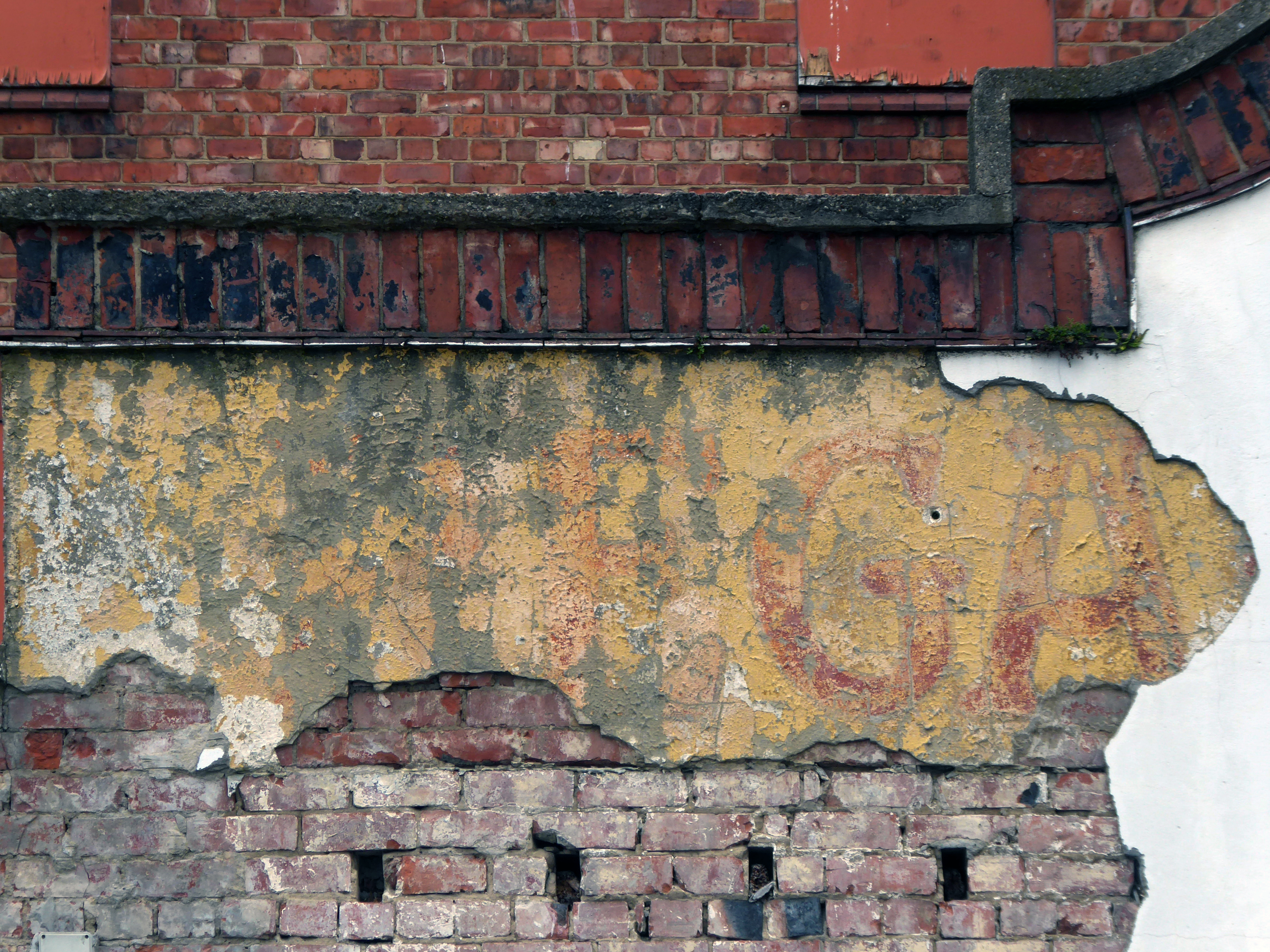
In recent years it was a Mecca Bingo Club, but this was closed in March 2007 In October 2009, it had been refurbished and re-opened as the Diamond Banqueting Suite. In April 2021 police raided the vacant building to discover an illegal cannabis farm operating in the building.

Four men were arrested.

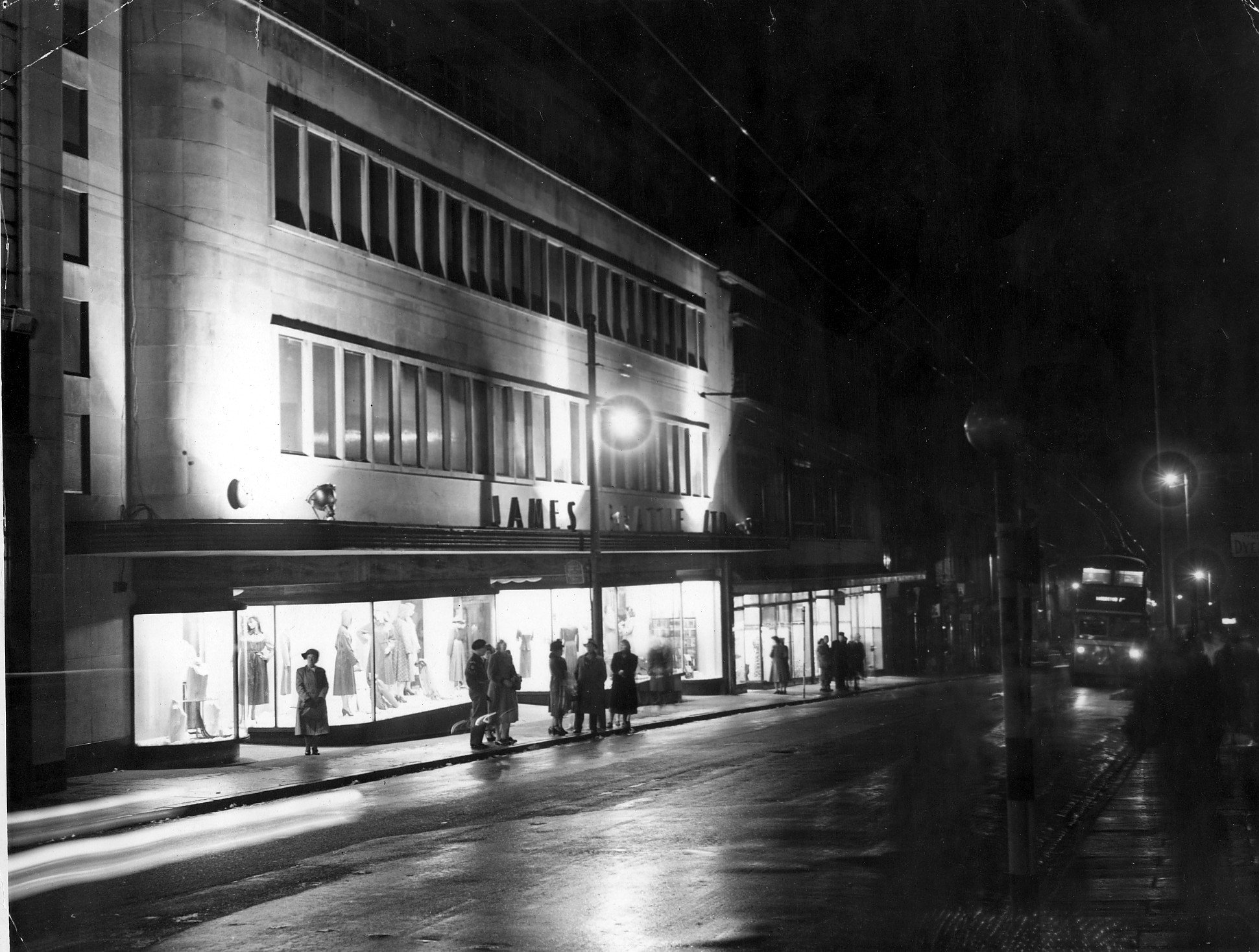
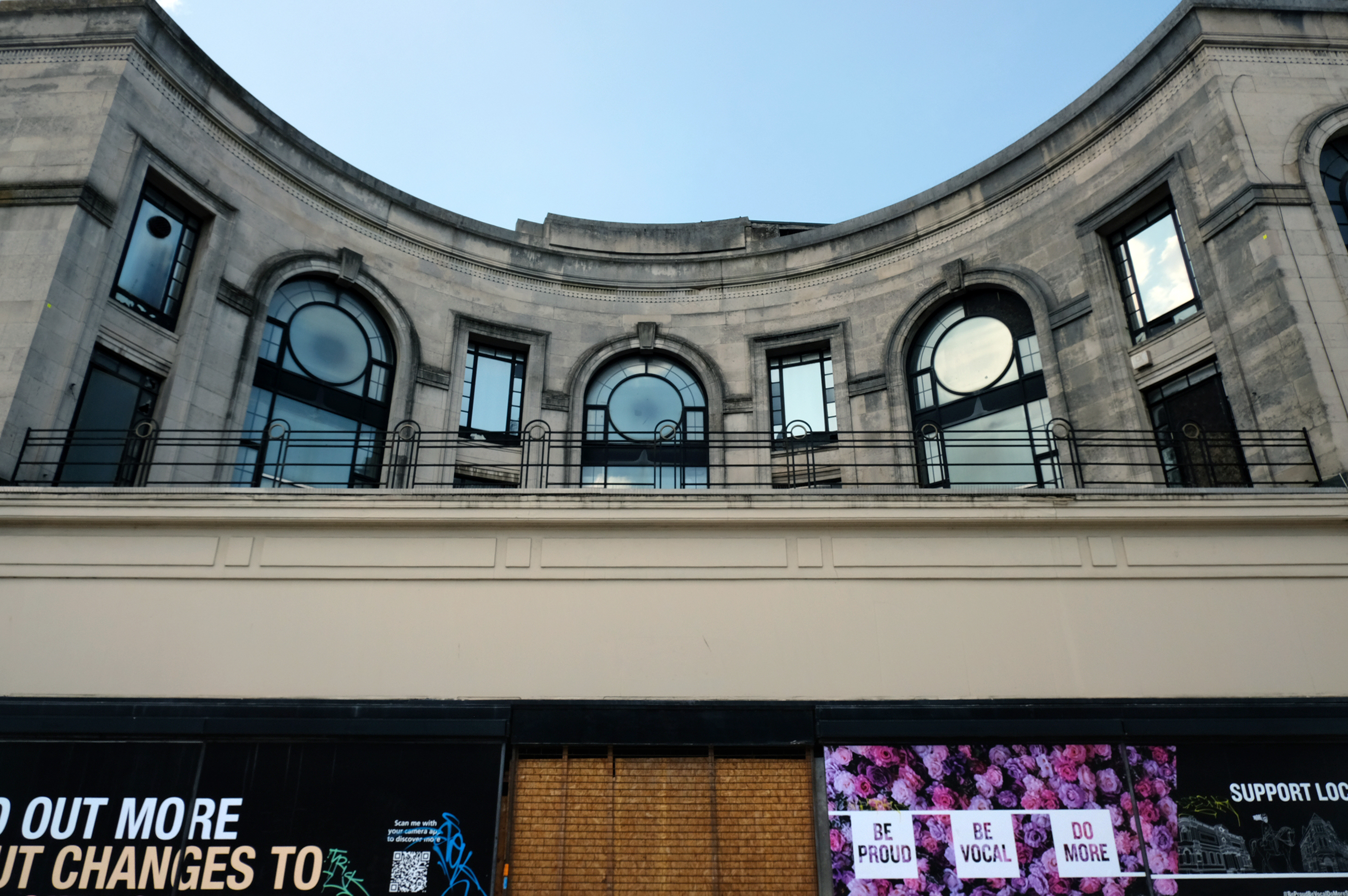
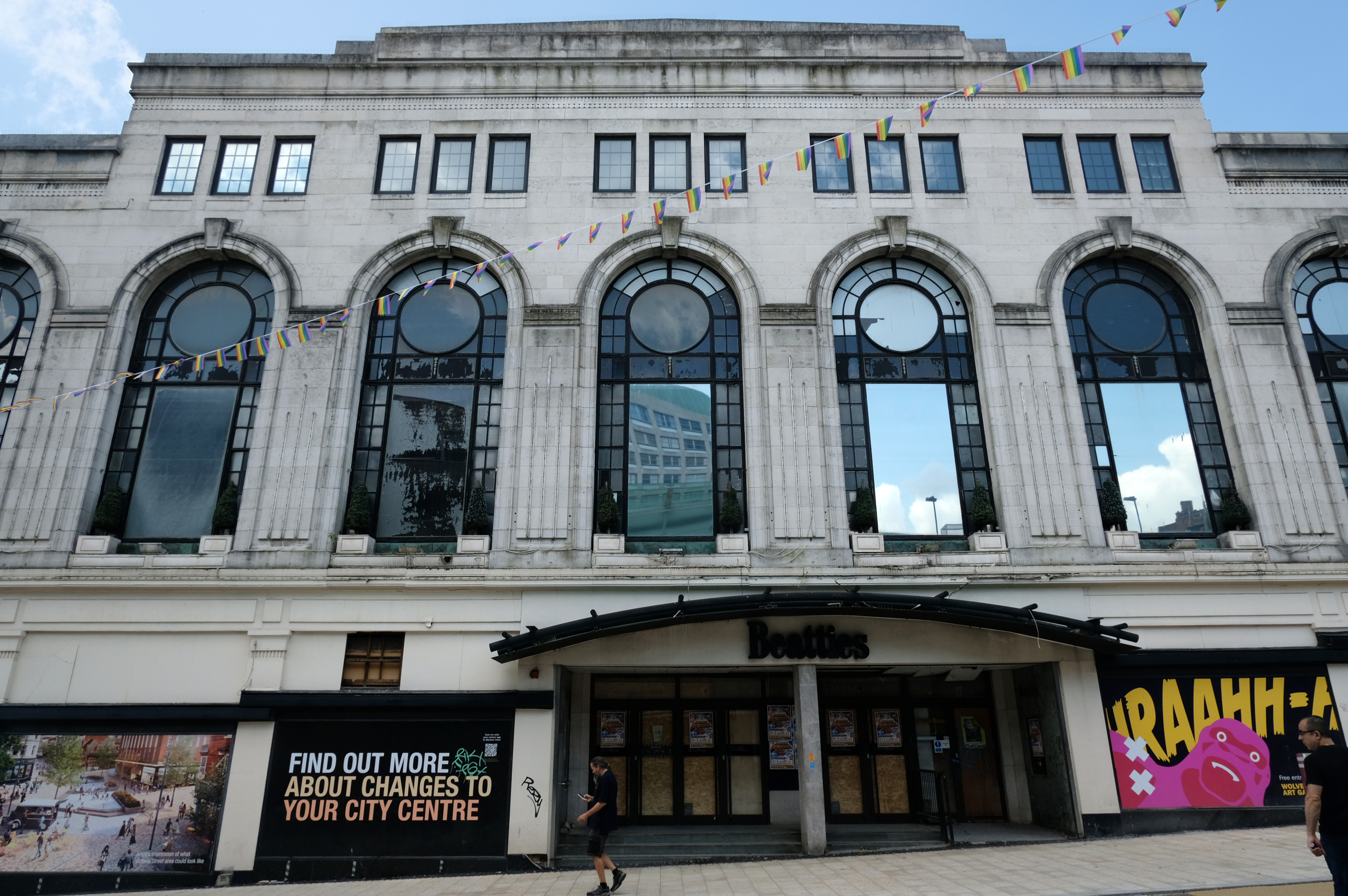
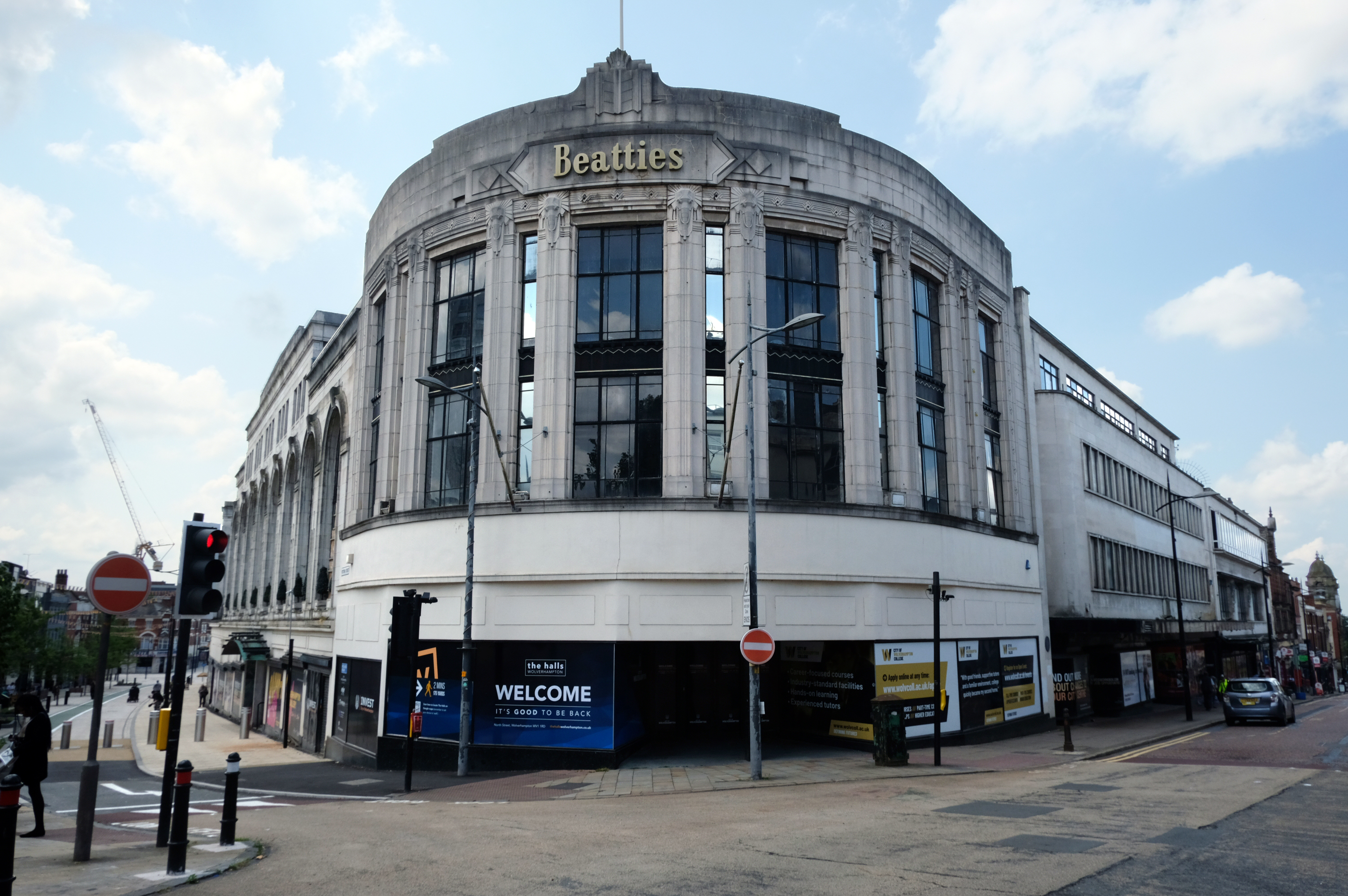
Let’s take a turn around the corner to Victoria Street where we find the complex of Beatties Buildings.

Architects: Lavender, Twentyman and Percy 1920’s – 30’s

The C20 Beatties store is a multi-period site developed first in the 1920s-30s. A Burton’s men’s clothes shop was built on a curved corner site at Victoria St/Darlington St and Beatties themselves replaced their existing Victoria St store in the 1930s with a building by local architects Lavender, Twentyman and Percy. Beatties later acquired and incorporated the Burton’s shop into their store. These two buildings form the locally listed building to which were added a mid-C20 extension along Darlington St and a late-C20 development to the rear at Skinner St.

c20 Society

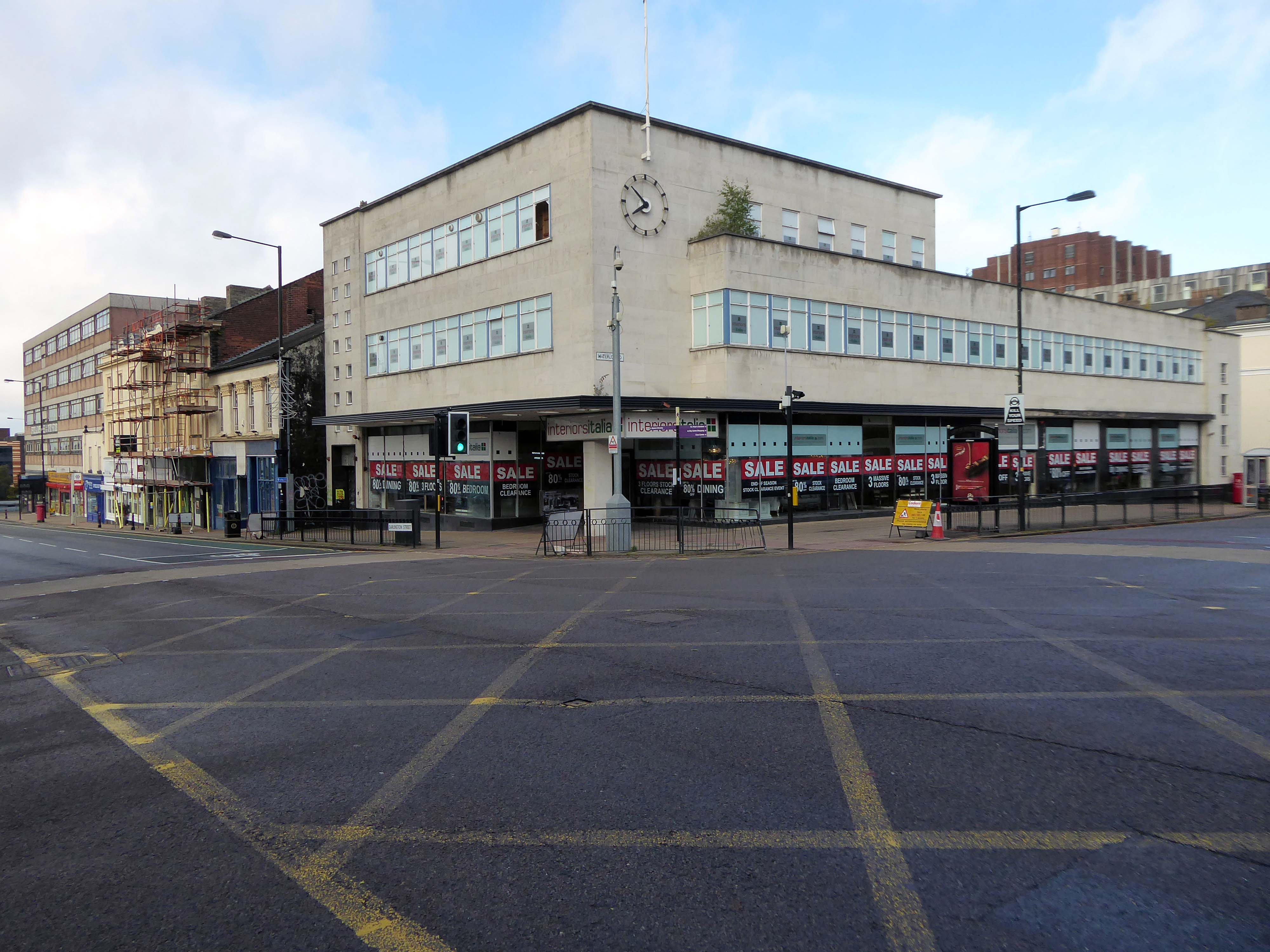
An imperious Portland stone clad mixed us block on Waterloo Road, with a delightful clock.

Formerly the Gas Showrooms then Sun Alliance & London Insurance offices – aka Clock Chambers

The showroom in Darlington Street was also the centre of a radio network that controlled a fleet of service vans. This enabled customers to receive service within minutes of making a telephone call. Demonstrations of cookery, washing and refrigeration were given by the Gas Board’s Home Service Advisers and a number of the company’s engineers, who specialised in designing gas equipment for industrial processes operated an advisory service for manufacturers. 

Architects: Richard Twentyman 1939.

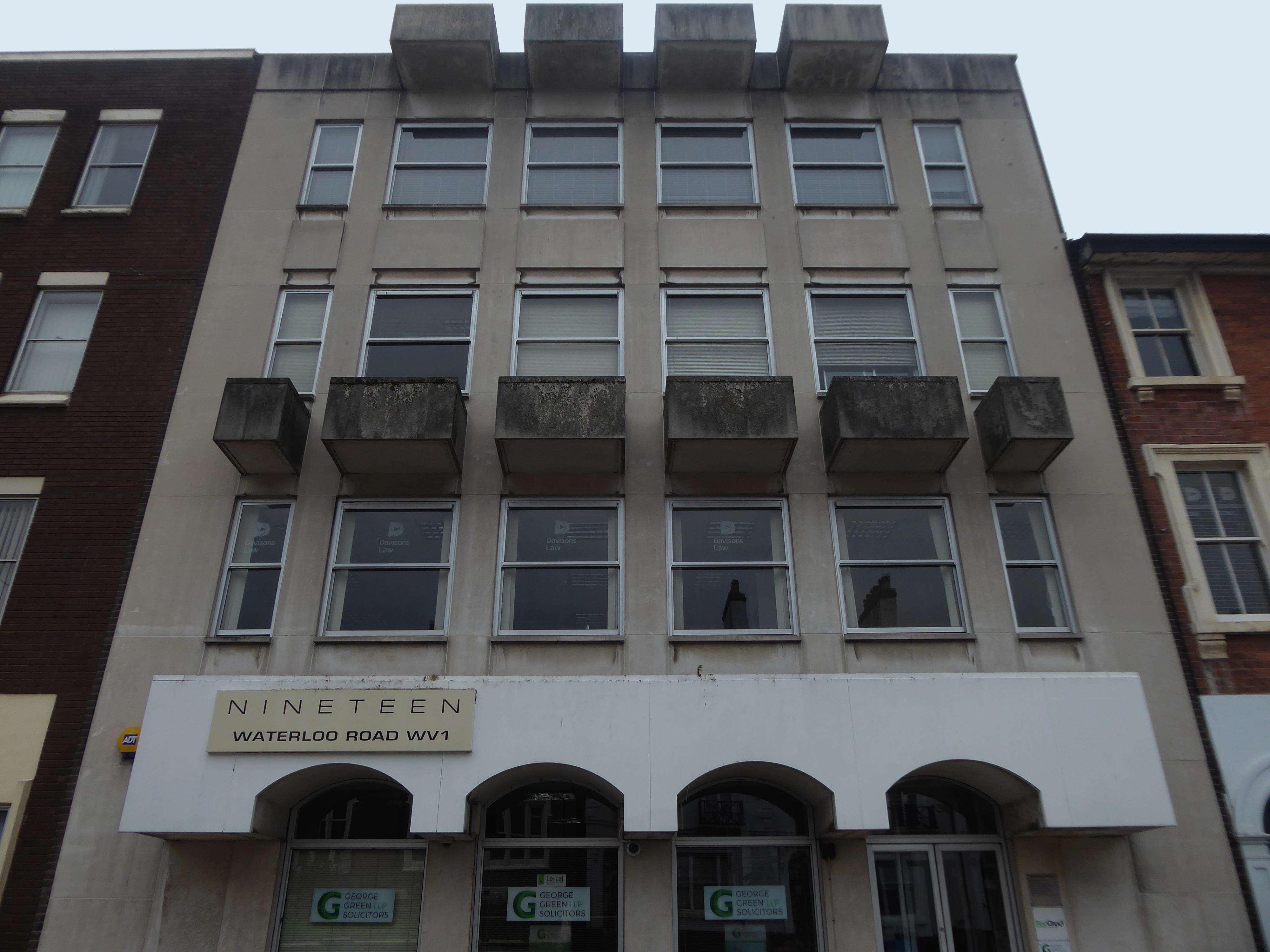
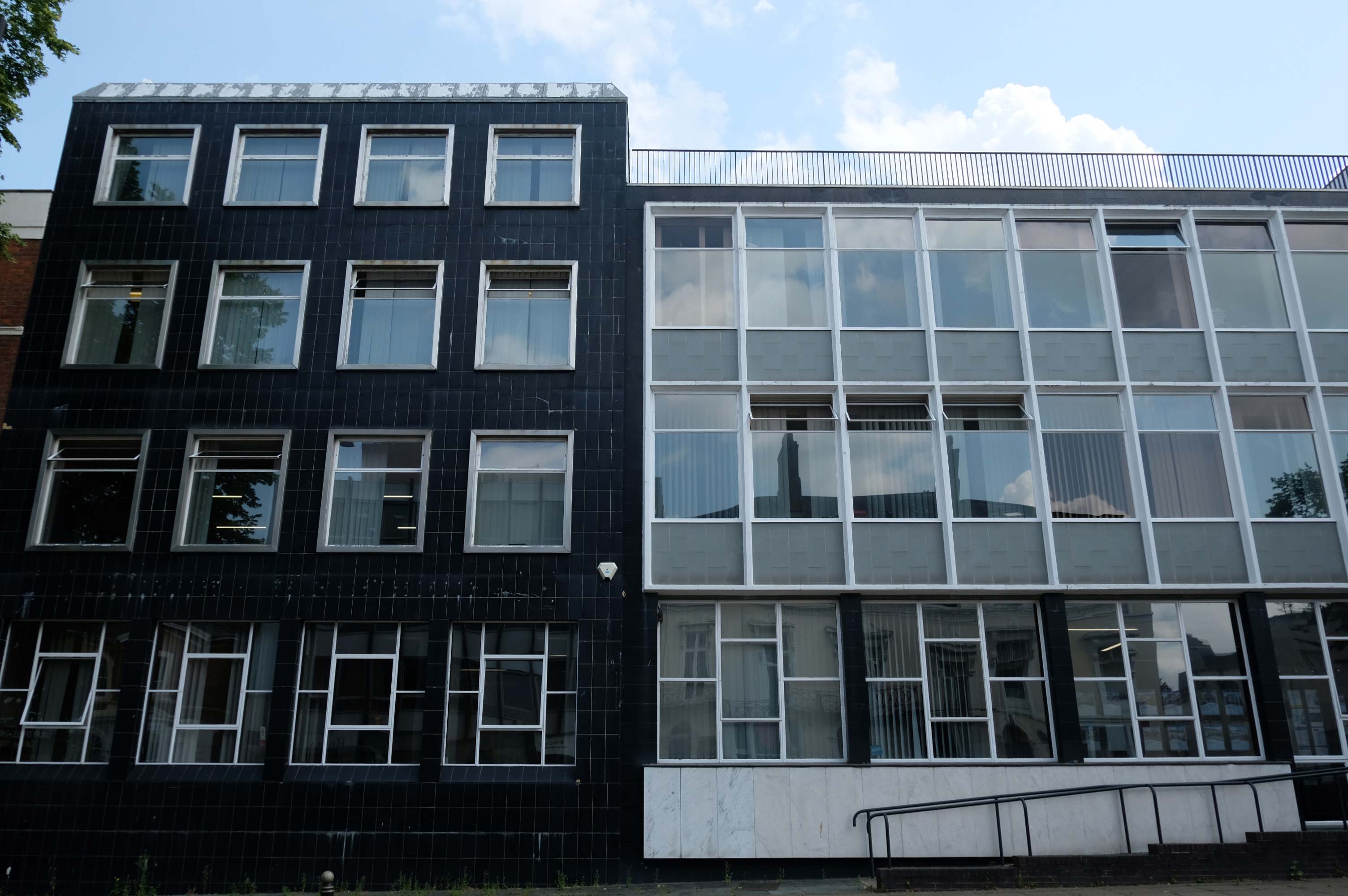
Nineteen Waterloo Road latterly First City House formerly home to Eagle Star Insurance 1970

8-10 Waterloo Road architects: Richard Twentyman 1959 extended 1966.

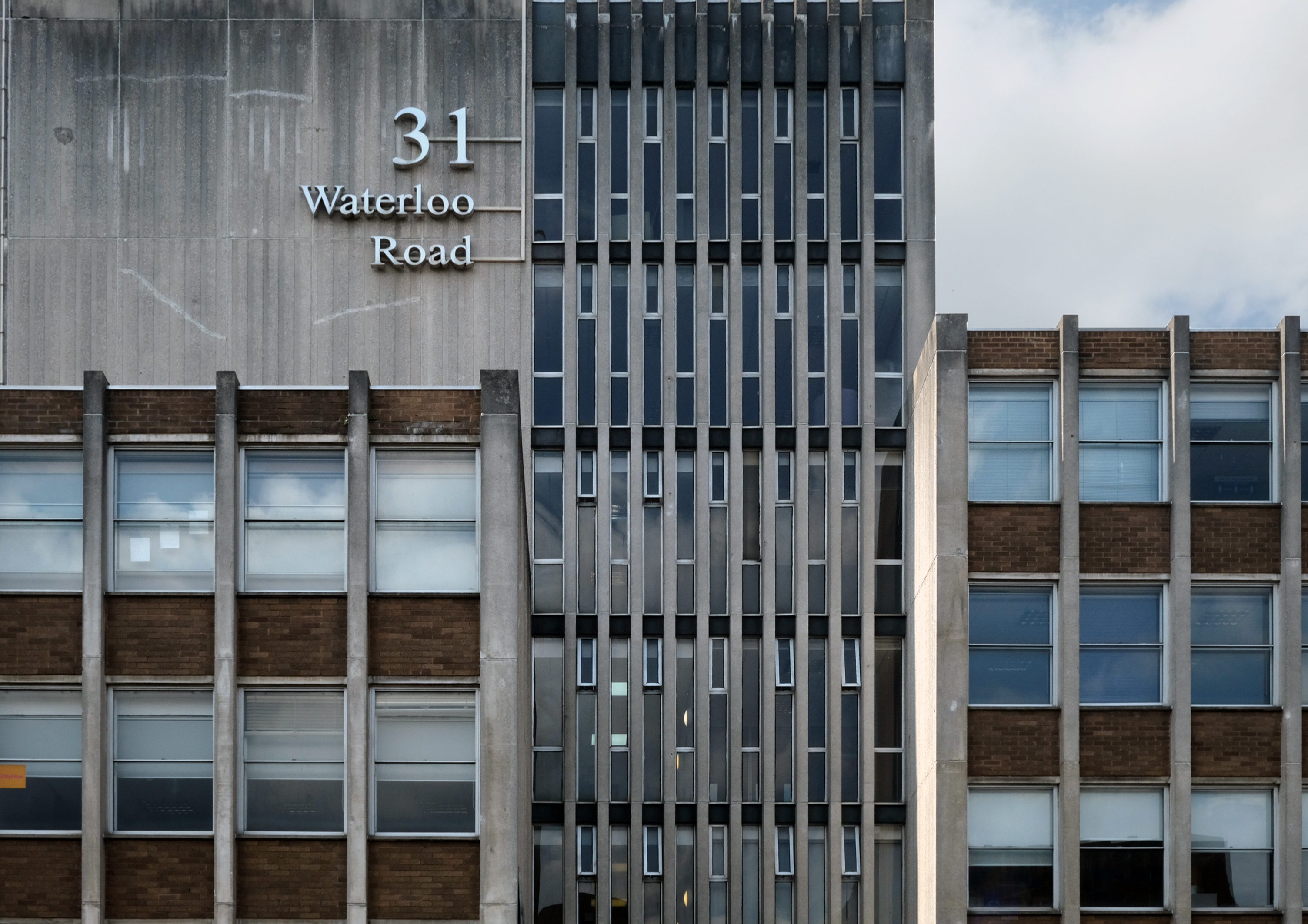
31 Waterloo Road – Waterloo Court architects: Kenneth Wakeford, Jerram & Harris 1972

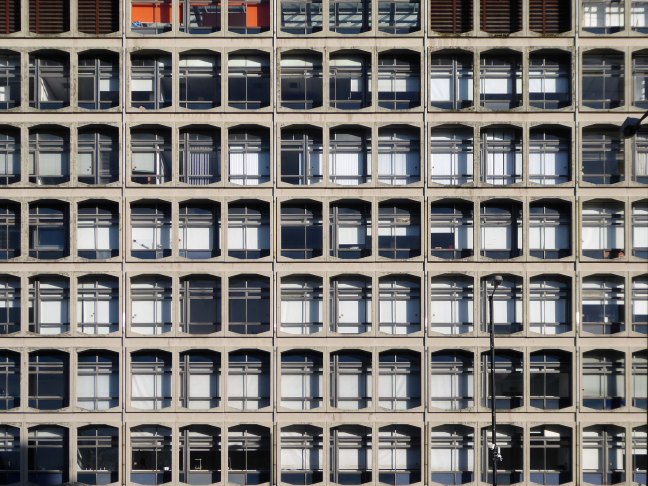
Right turn to the Telephone Exchange

Architects: NHA Gallagher of the Ministry of Public Buildings and Works and Clifford Culpin & Partners job architect Leslie Parrett 1971.

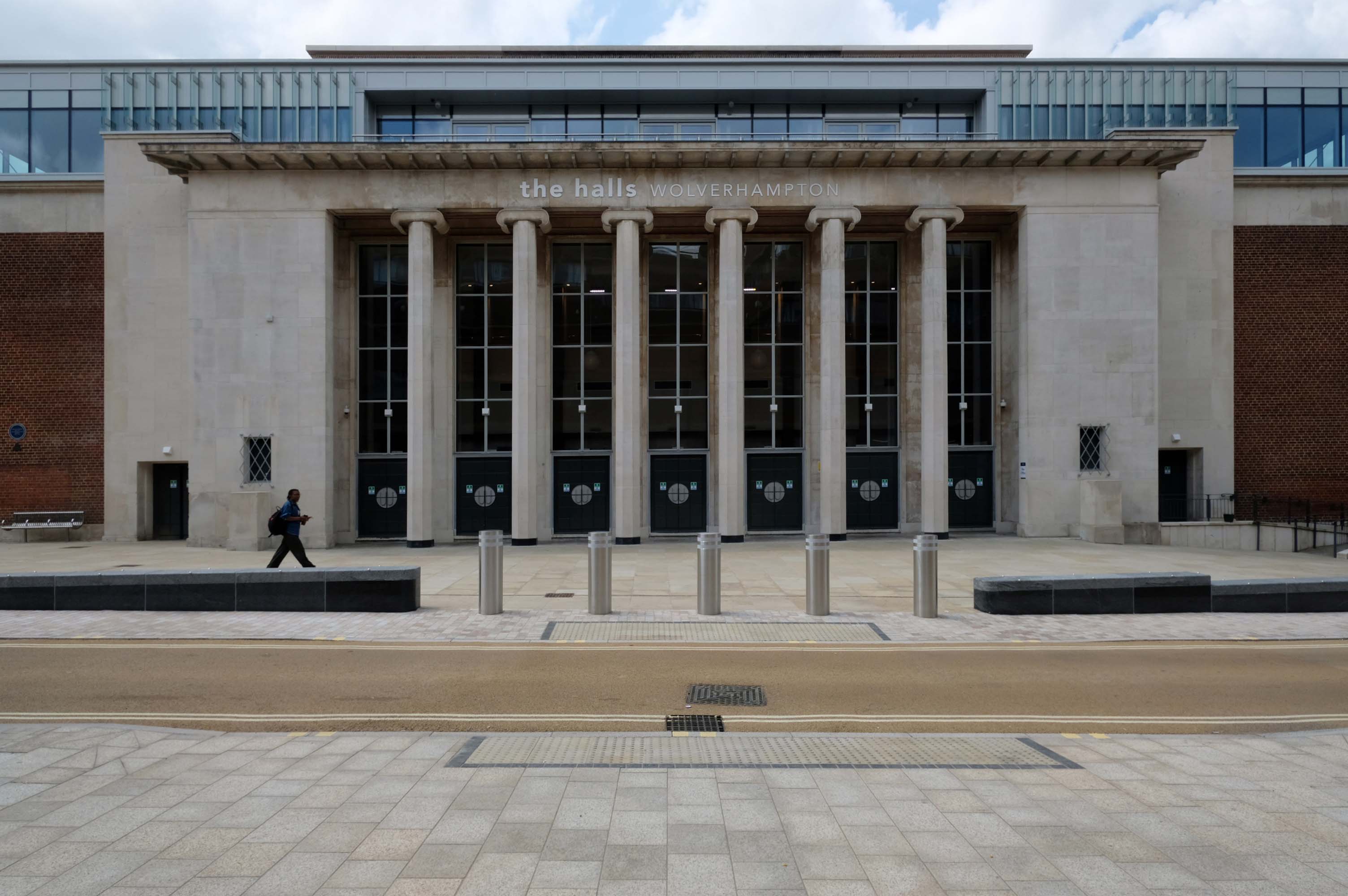
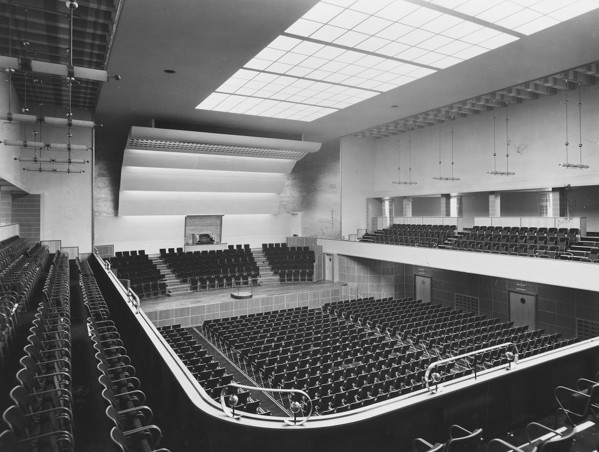
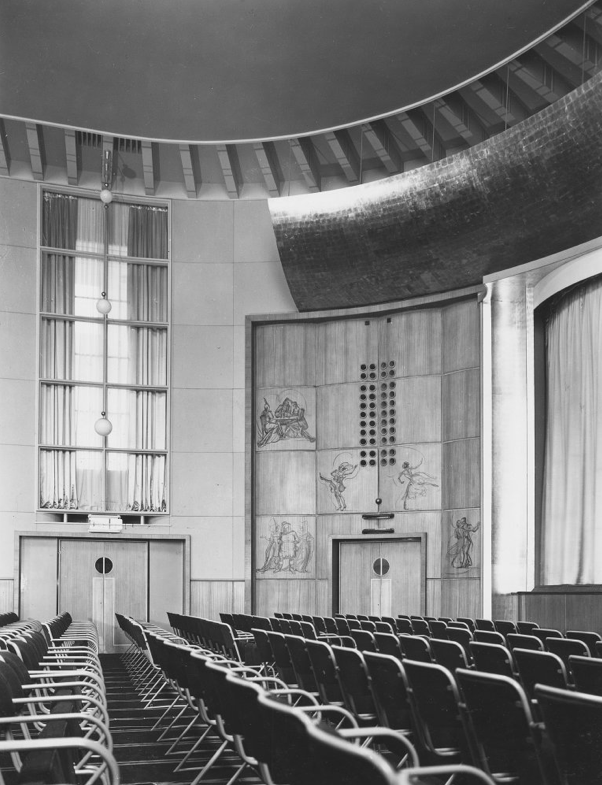
Around the bend to The Halls – once the Civic Halls.

Architects: Lyons and Israel 1936-38

Refurbished 2003 by Penoyre & Presad with more alterations in 2021 by Jacobs consulting engineers.

RIBA pix – 1939

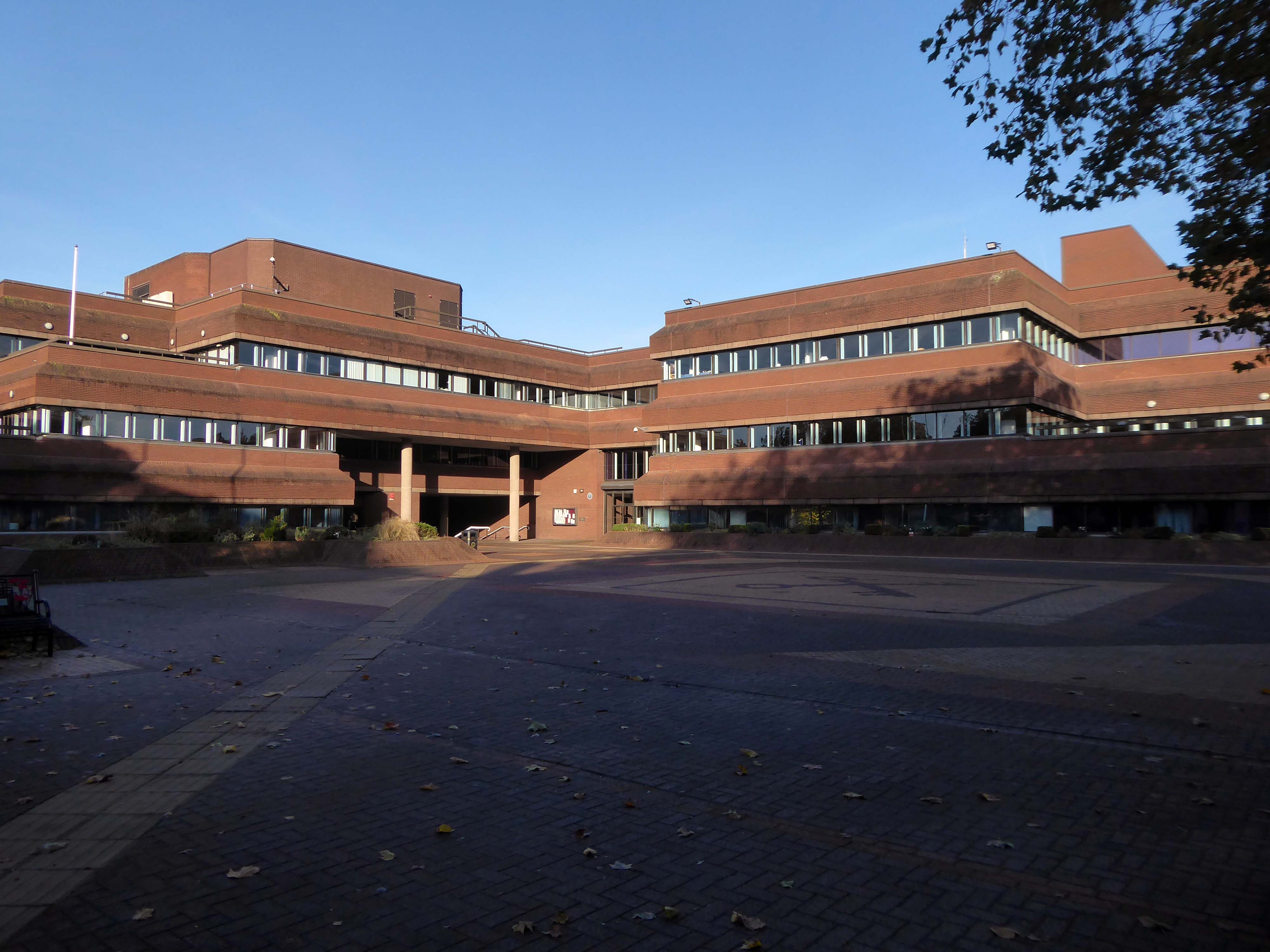
Over the road to the Civic Centre.

Architects: Clifford Culpin & Partners 1974-79.

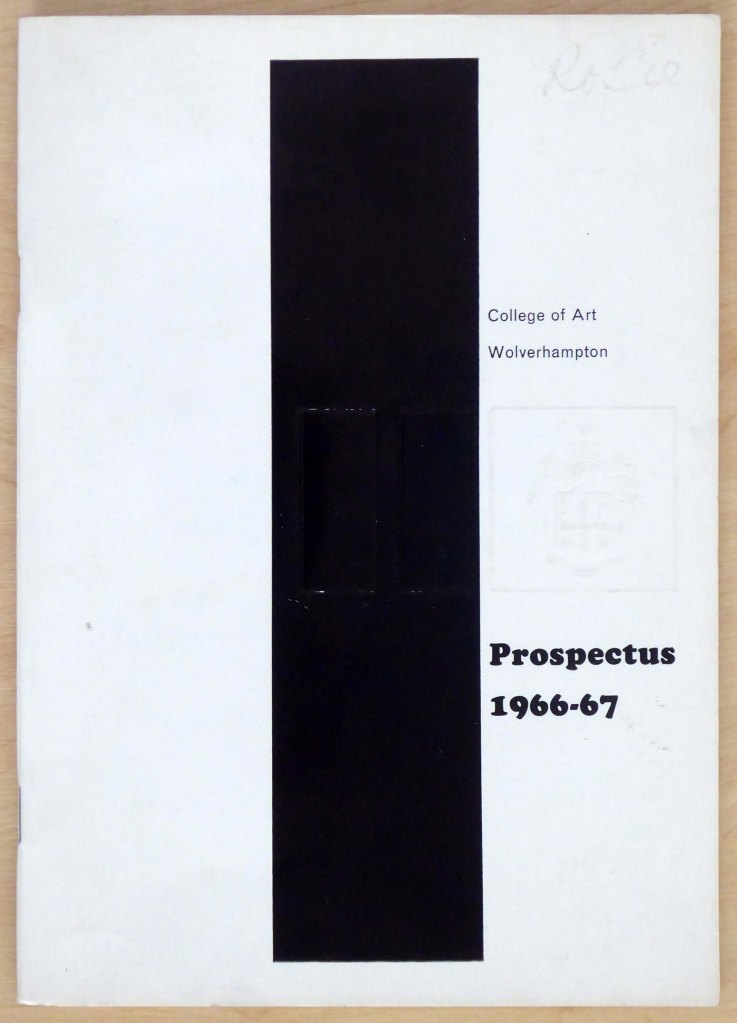
We end our Wolverhampton wander at the College of Art and Design

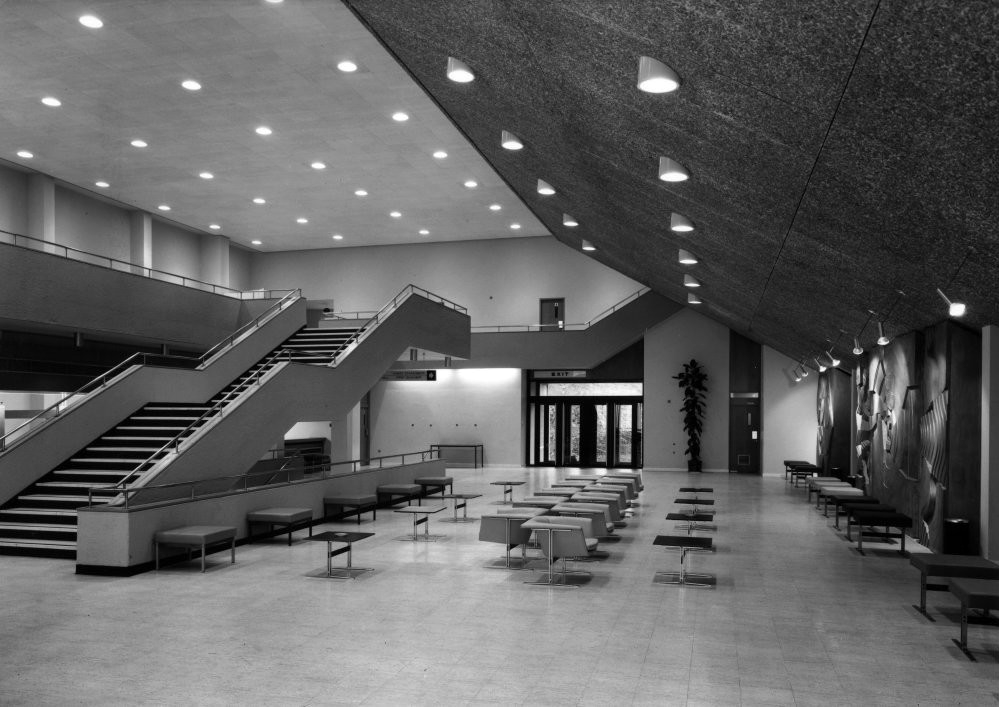
Architects: Diamond Redfern and Partners with A Chapman Borough Architect 1969

Huge thanks to Tom Hicks aka Black Country Type for his invaluable assistance.

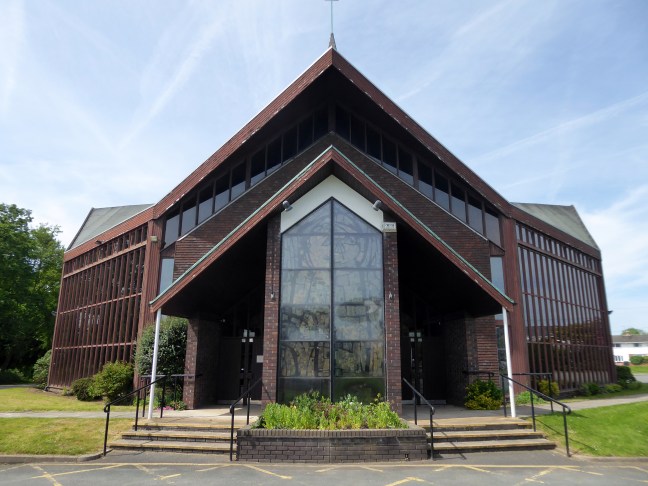
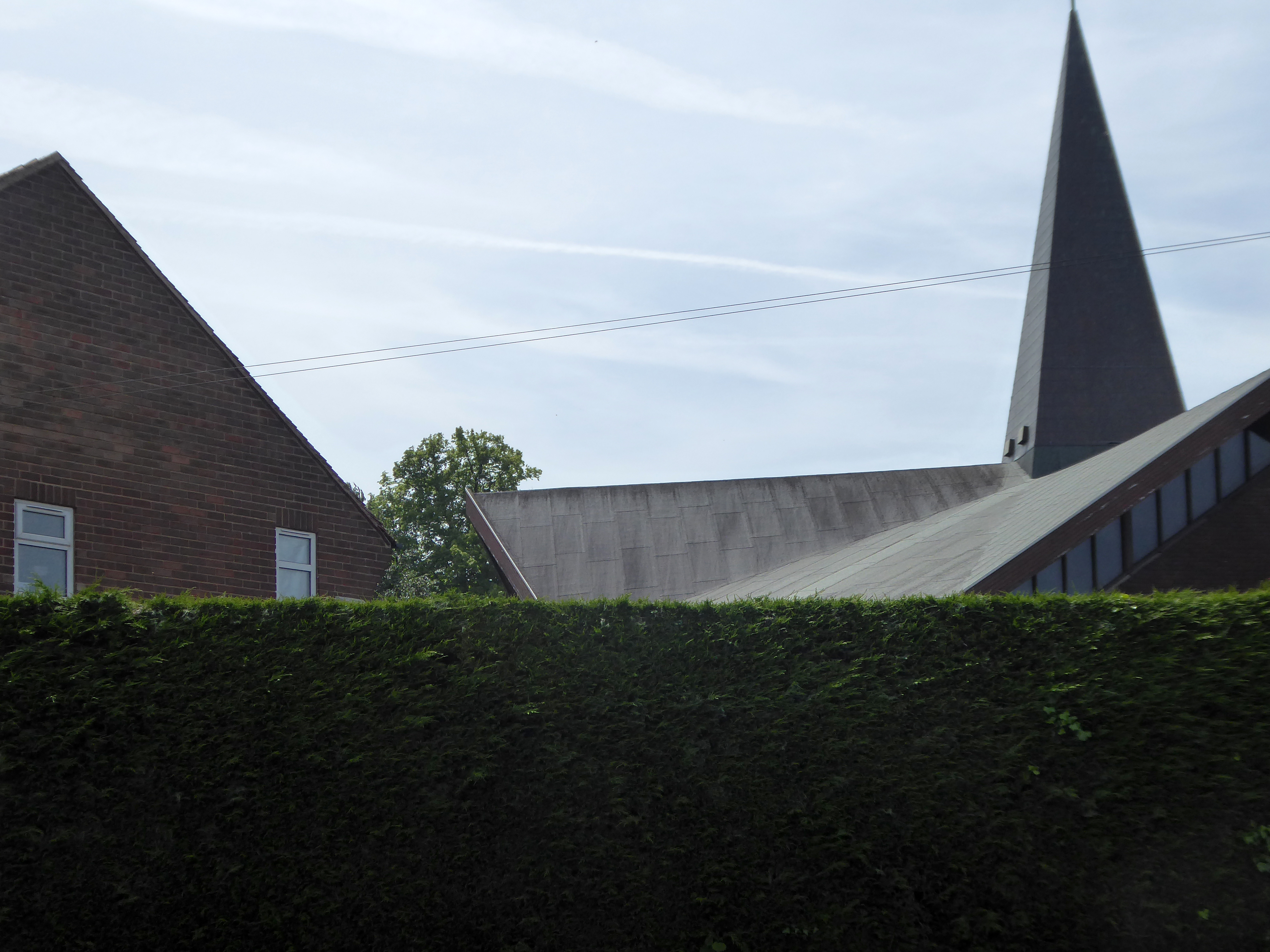
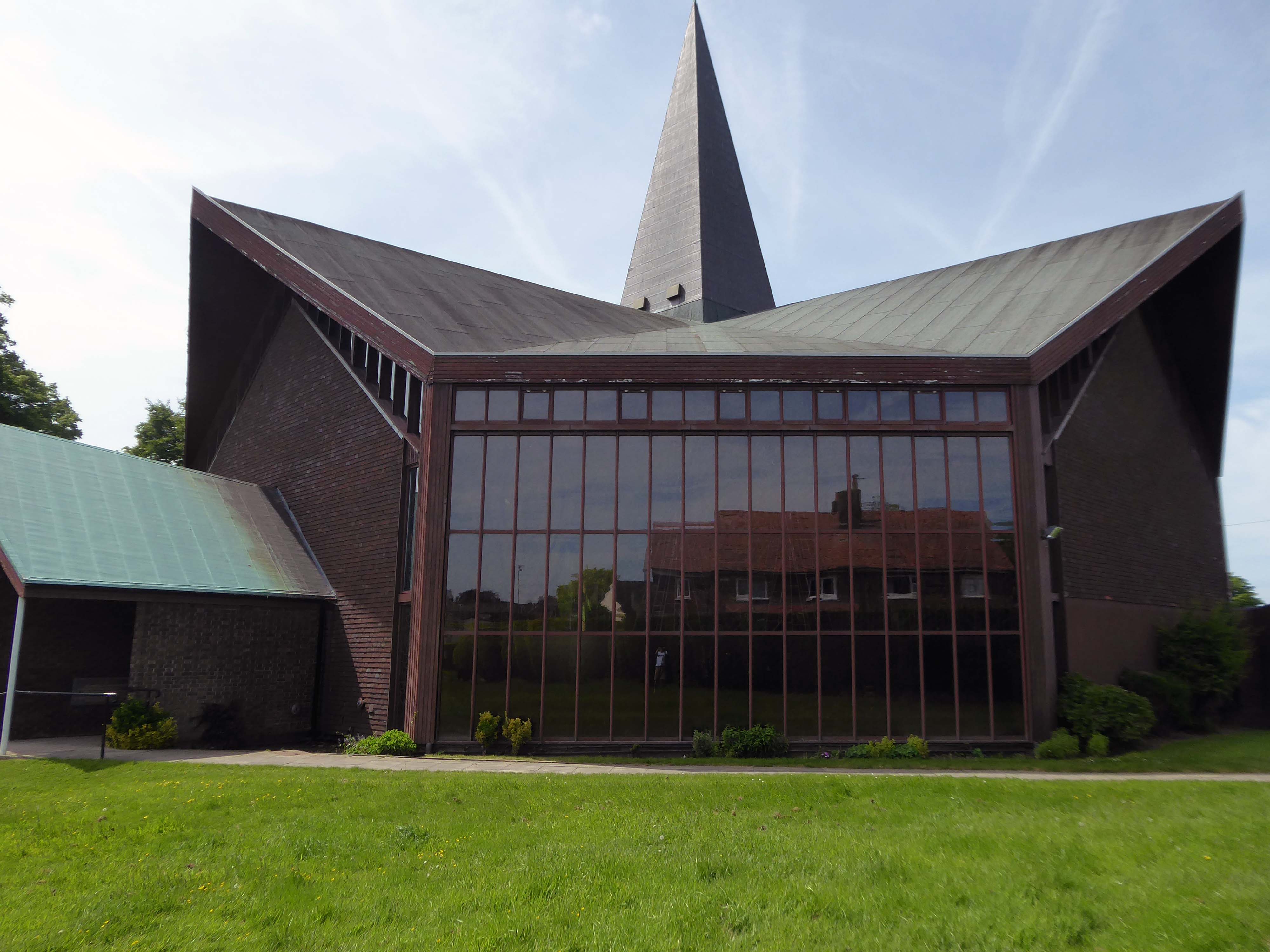
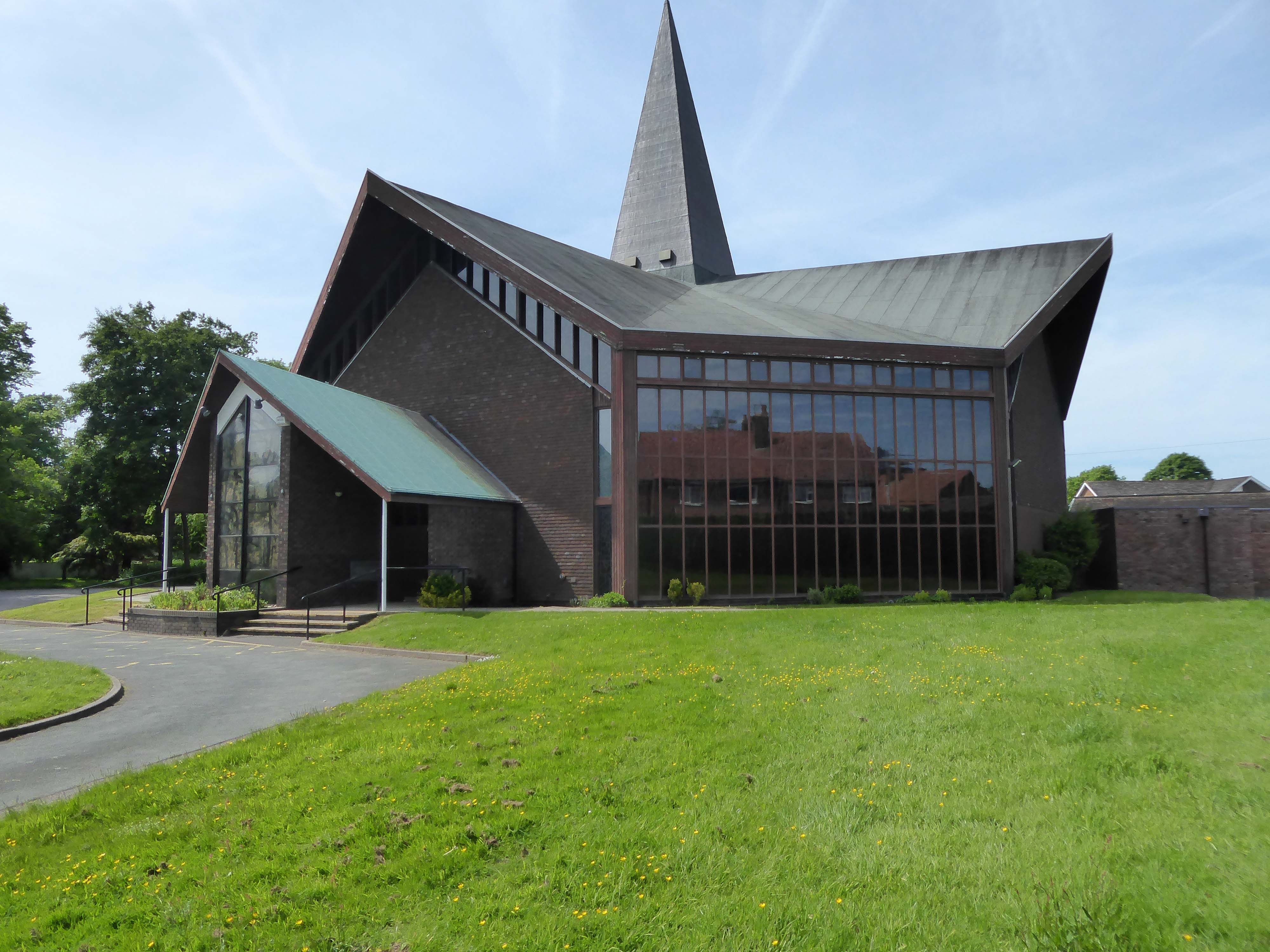
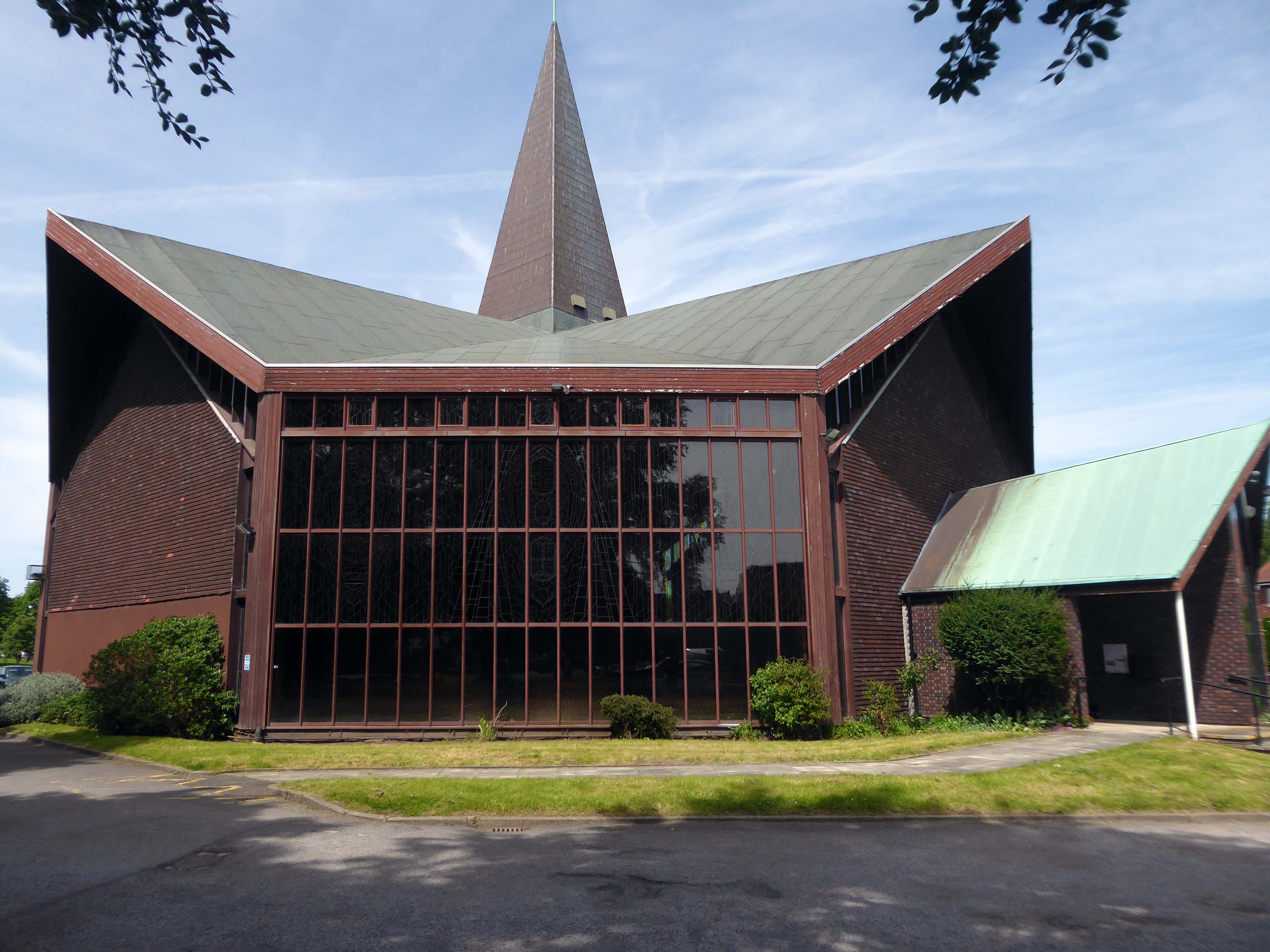
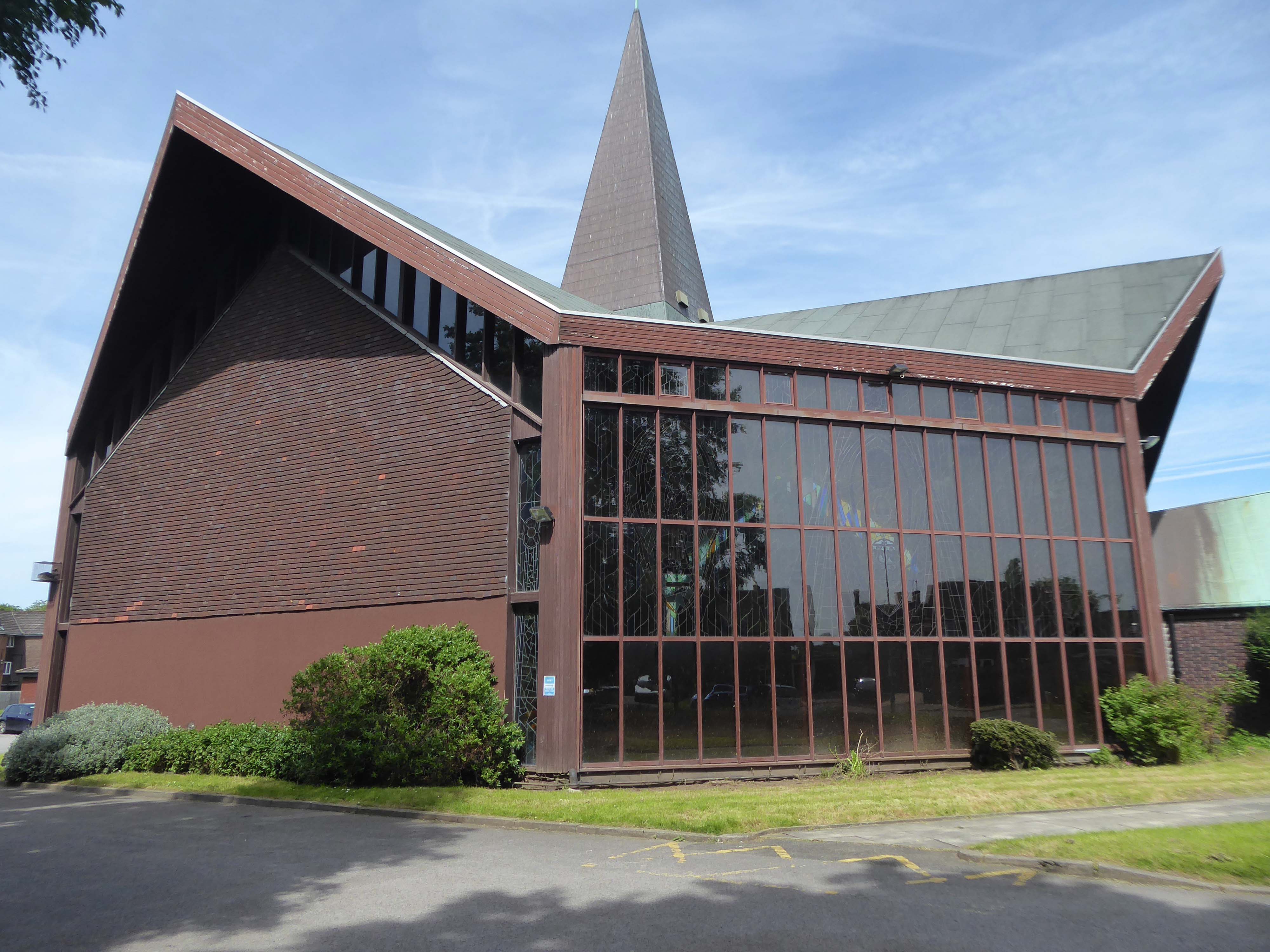
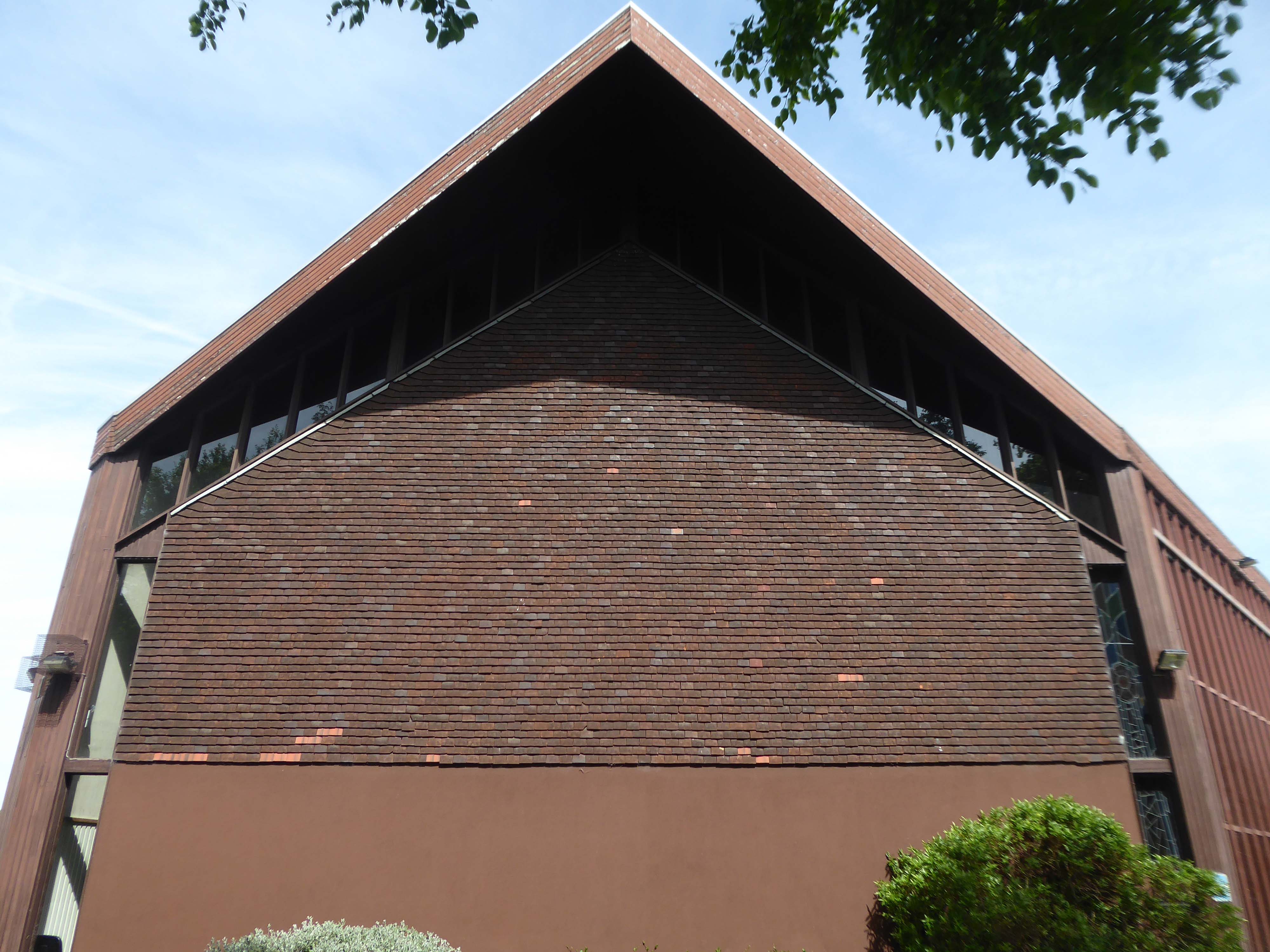
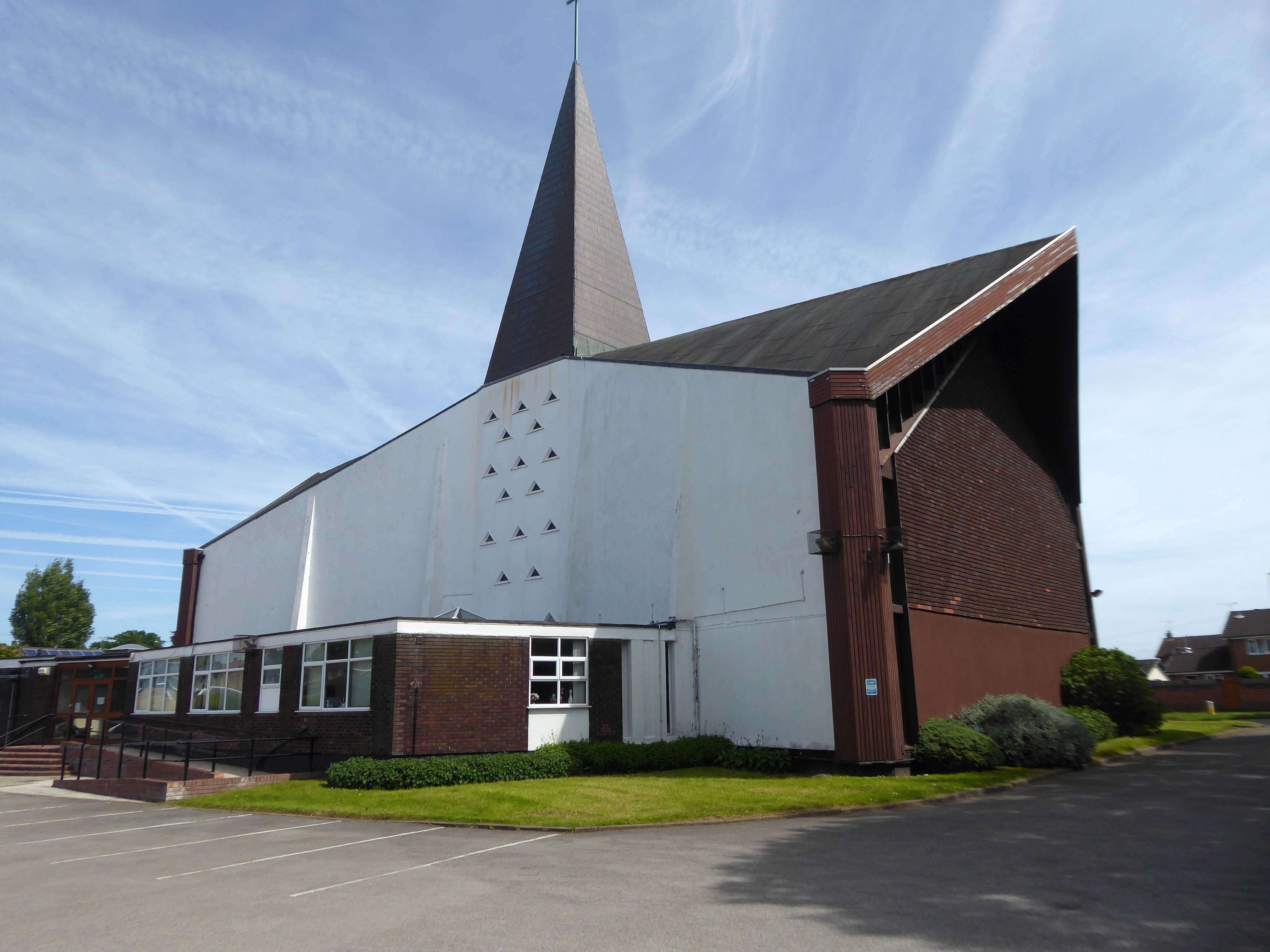
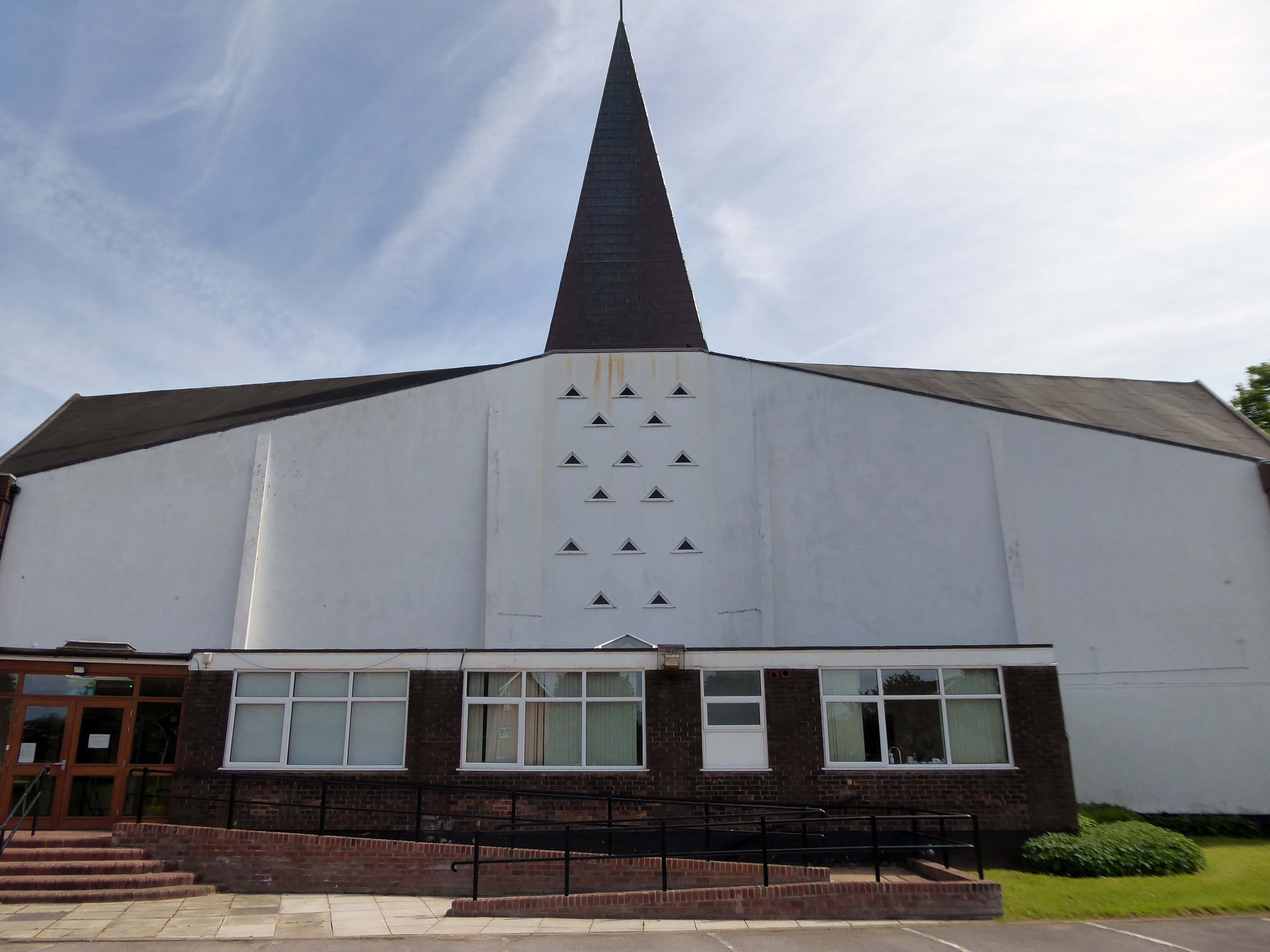
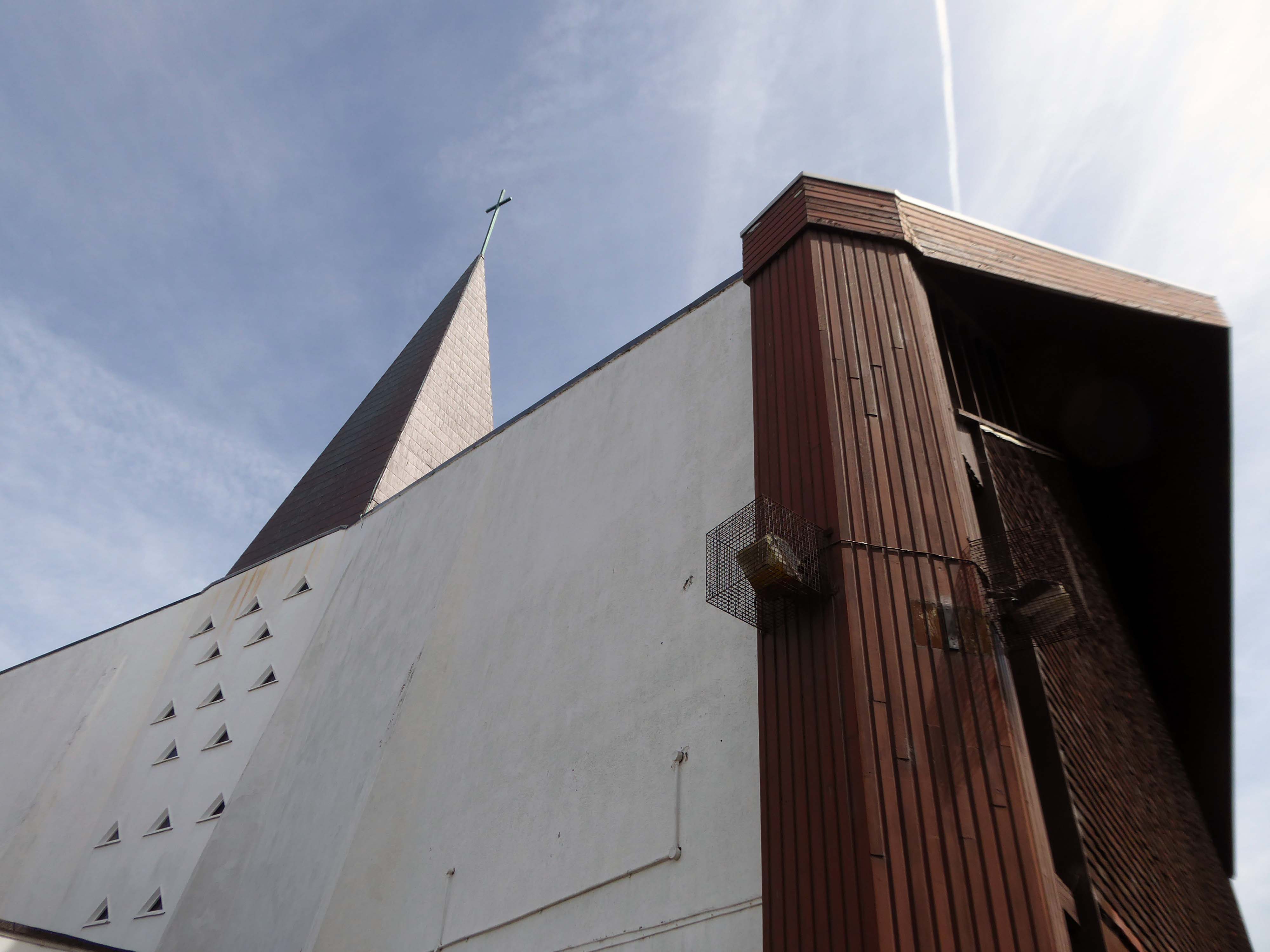
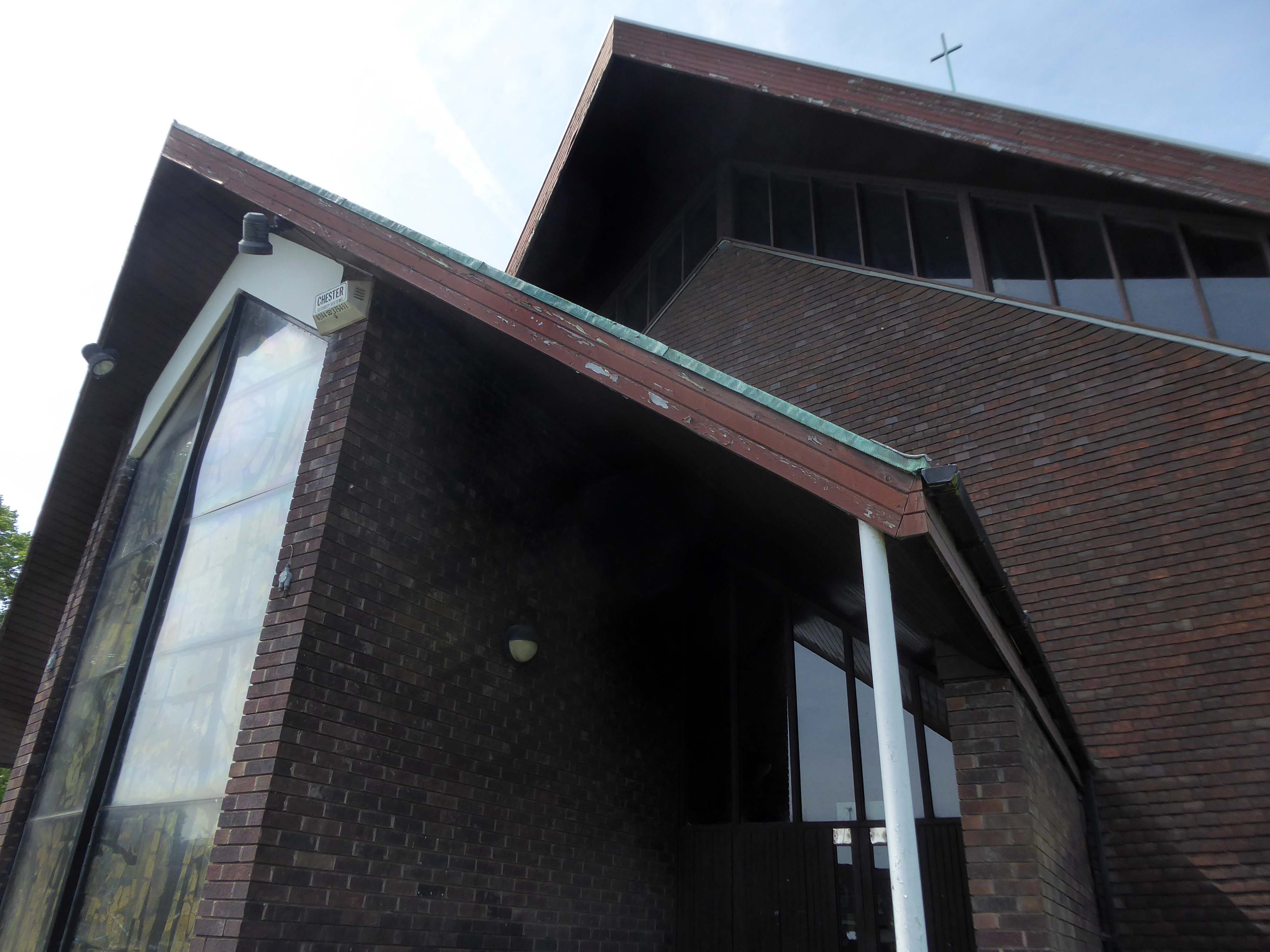
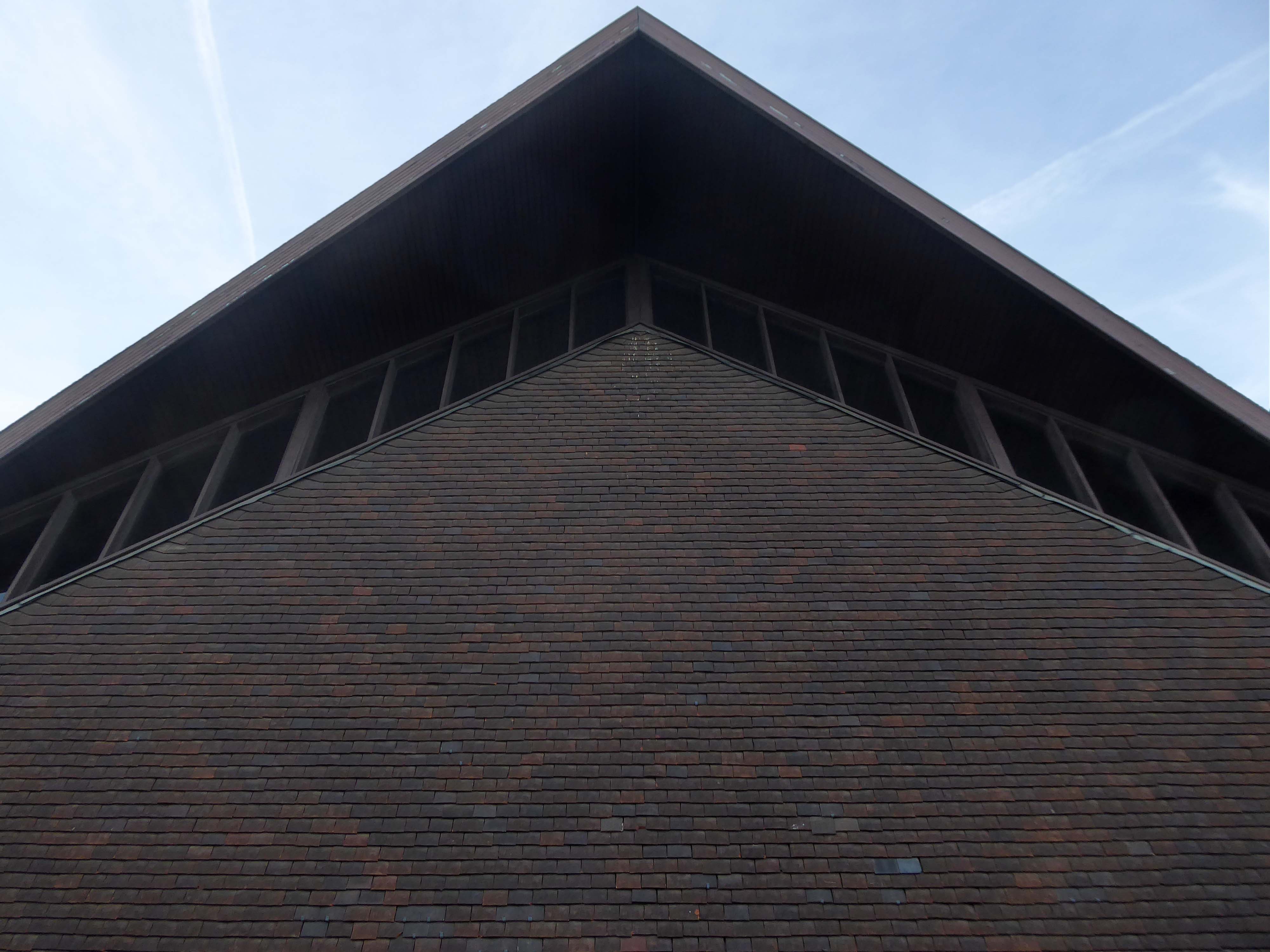
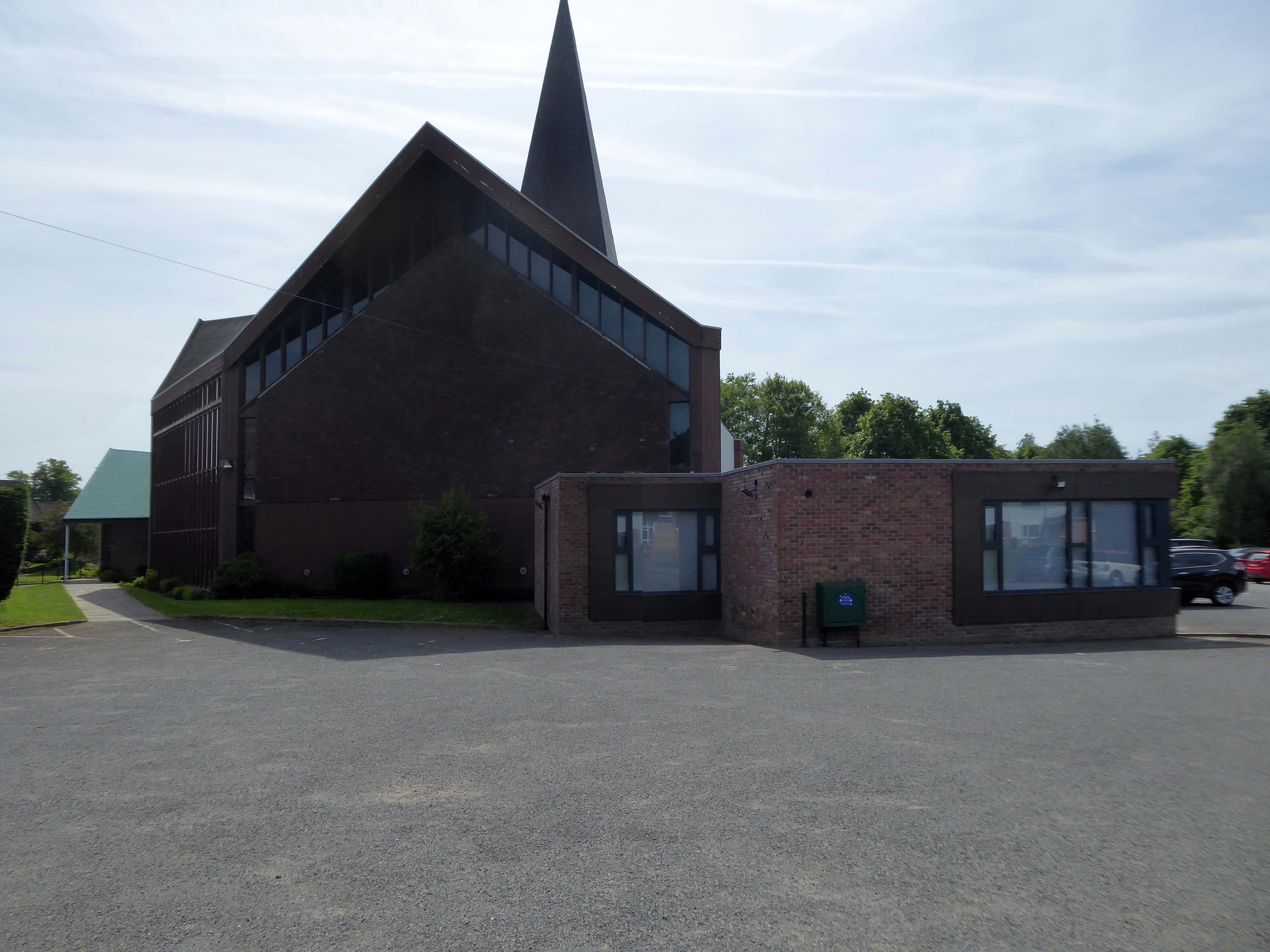
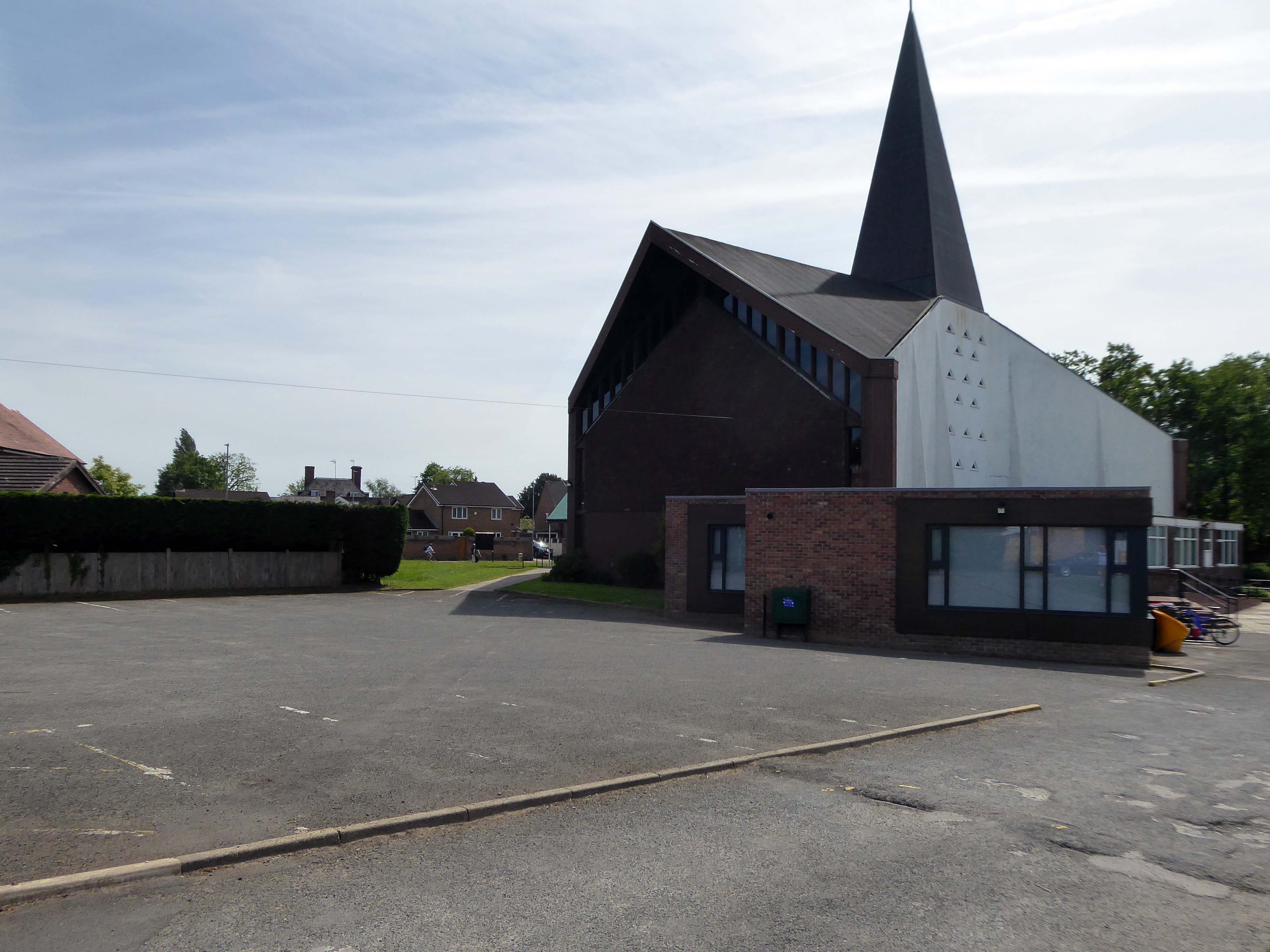
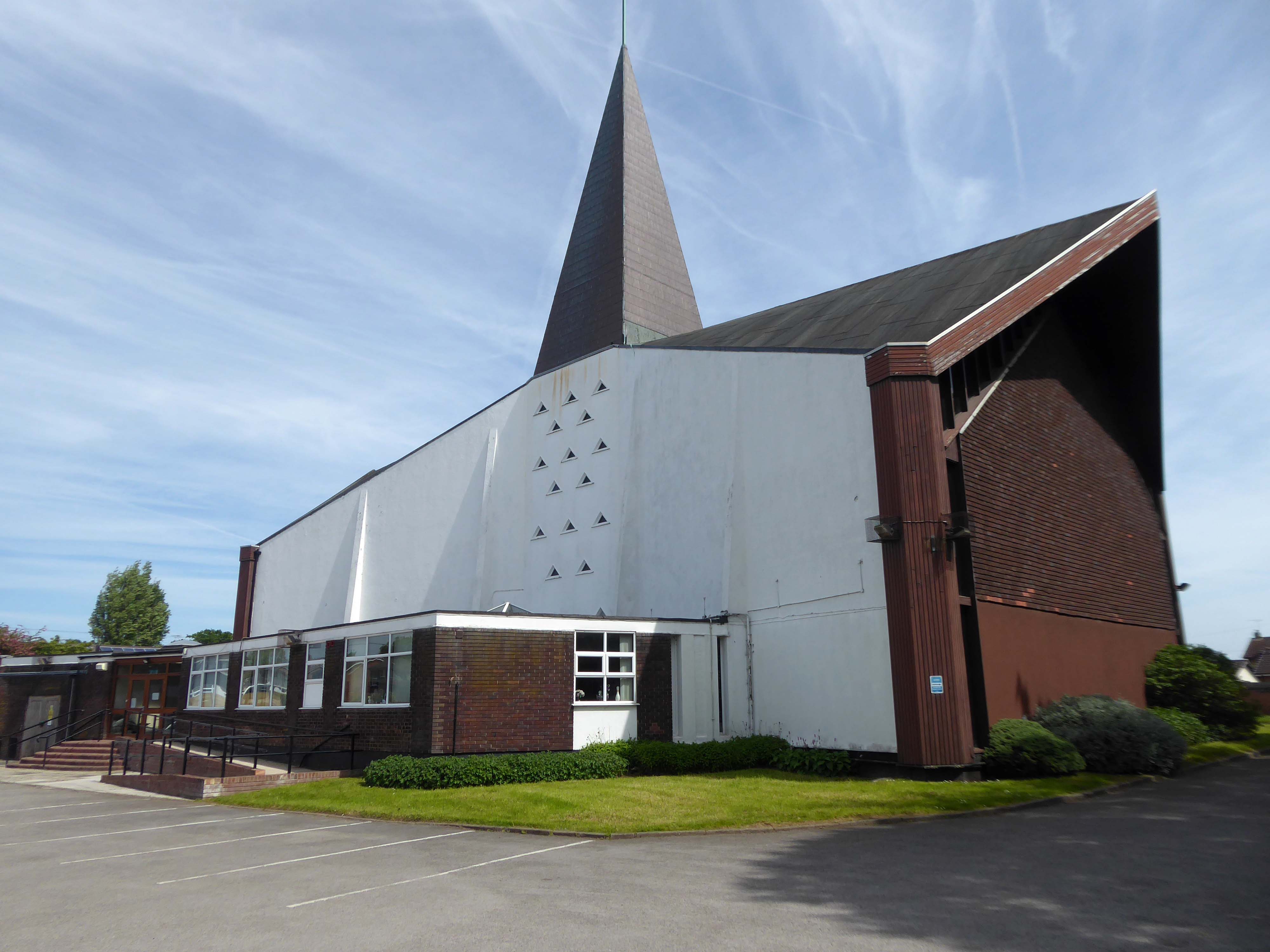
St Columba’s Church – Chester

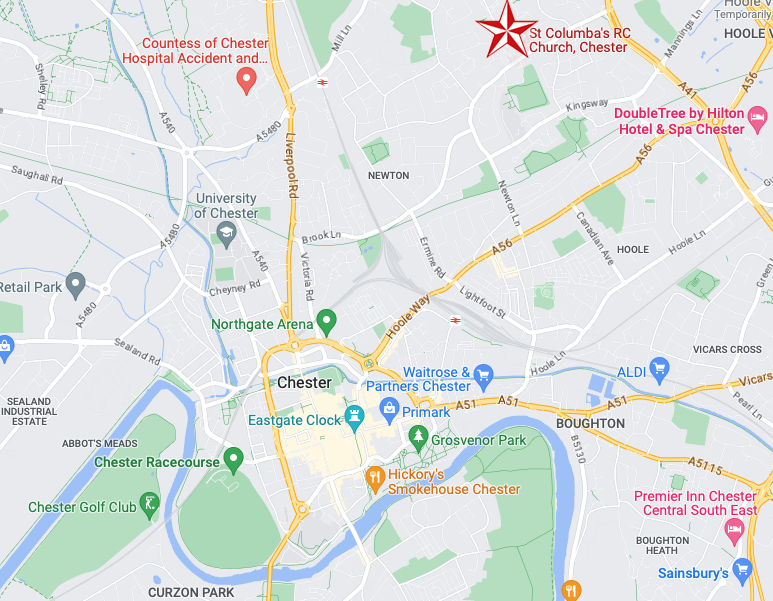
Plas Newton Ln Chester CH2 1SA

Architect: LAG Prichard – Son & Partners 1964/66

I caught the 51 Bus from the Bus Exchange – and the ever so helpful fellow passengers put me off at the right stop.

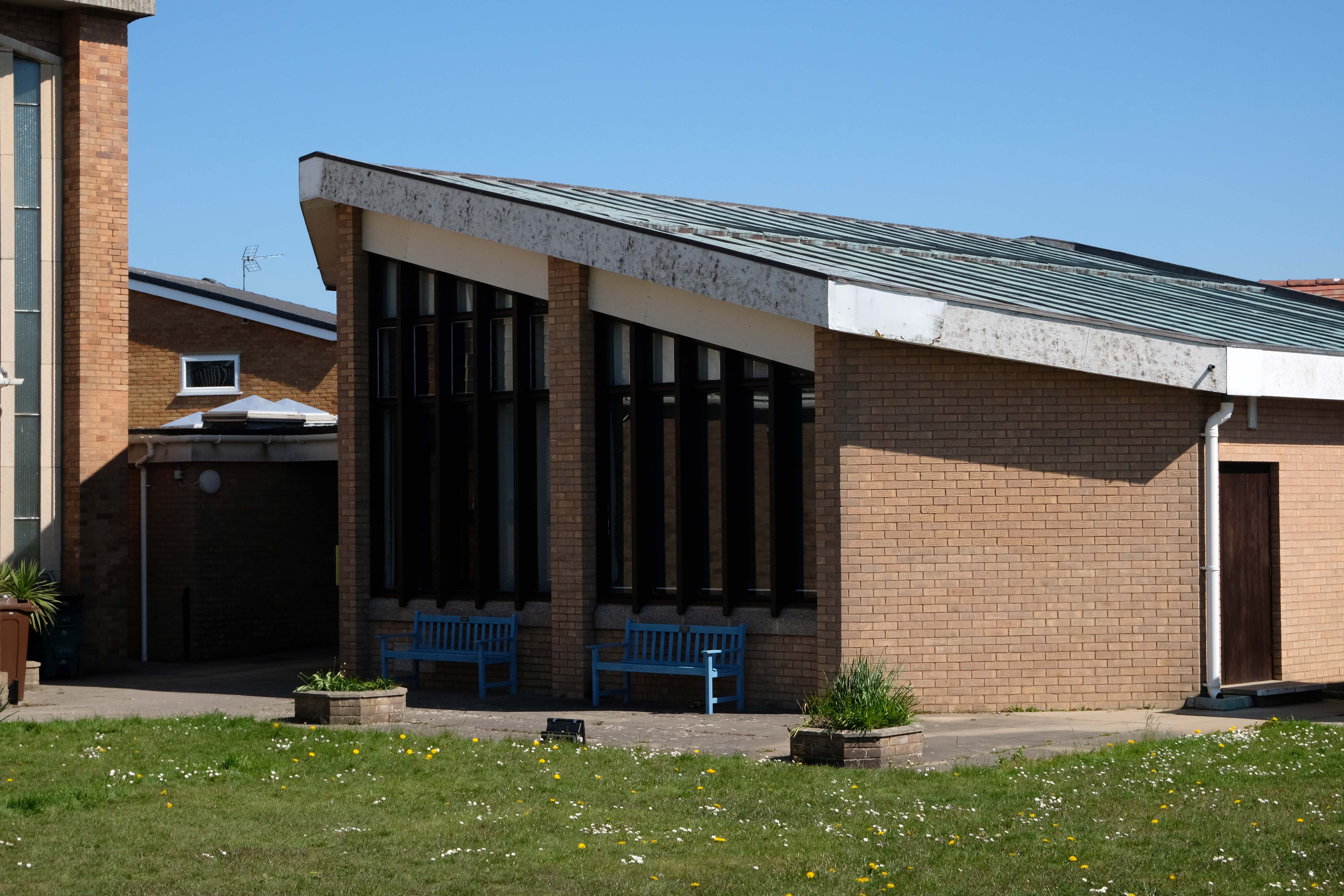
The church is set back from the road and sands in substantial grounds – visible through the surrounding houses.

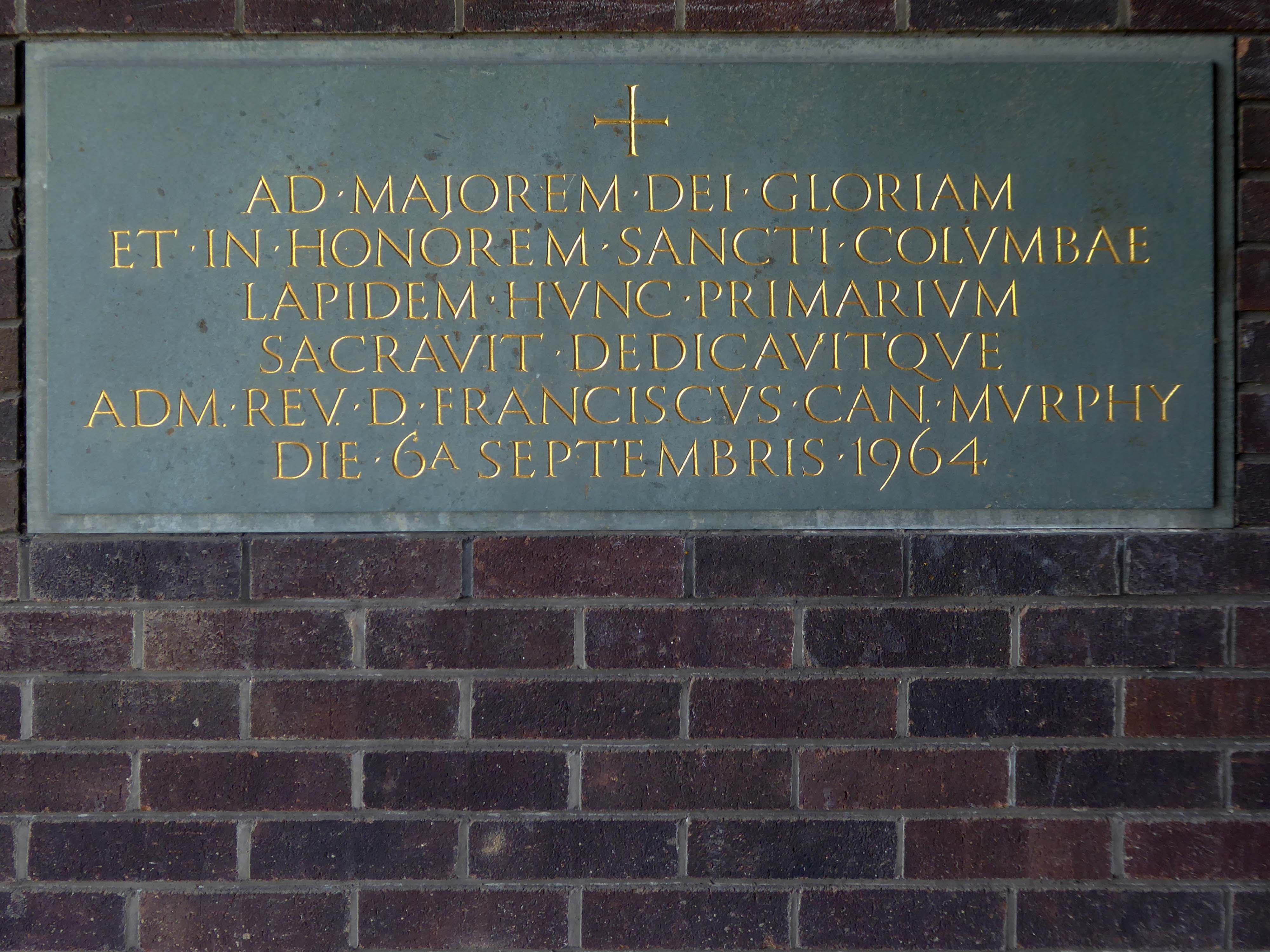
A large site at the corner of Plas Newton Lane and Newhall Road was acquired, and a new church designed by the architects LAG Prichard, Son & Partners. The design embodied the ideals of Vatican II, with no seating more than fifty feet from the altar. It was designed for 675 people. The foundation stone was laid in September 1964 by Canon Murphy, and the 115 ft spire lowered into position in December 1964. The first Mass was on 19 December 1965, and the church was officially opened in 1966 by Bishop Grasar. St Columba was the third new Catholic church to be built in Chester after the Second World War.

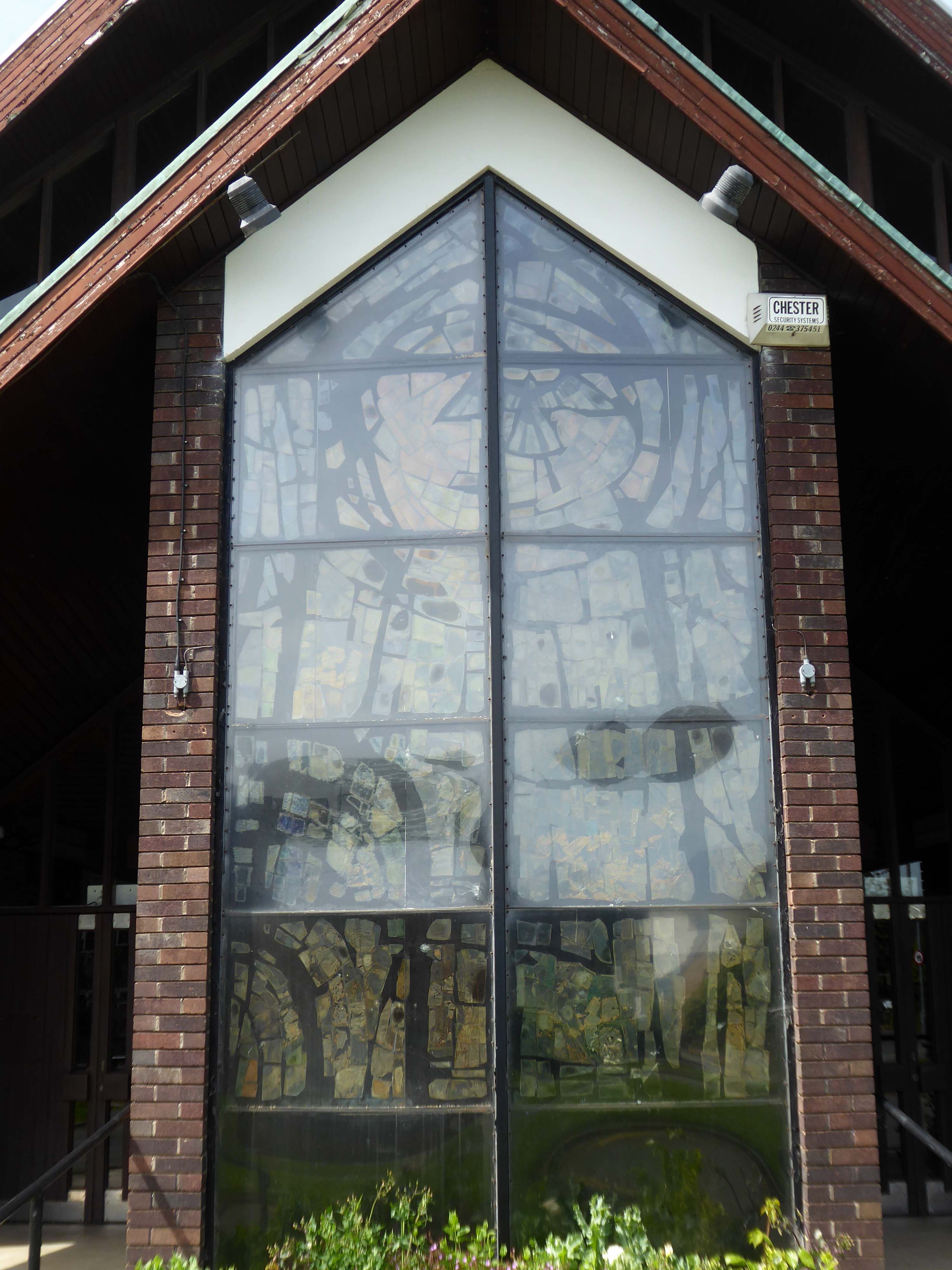
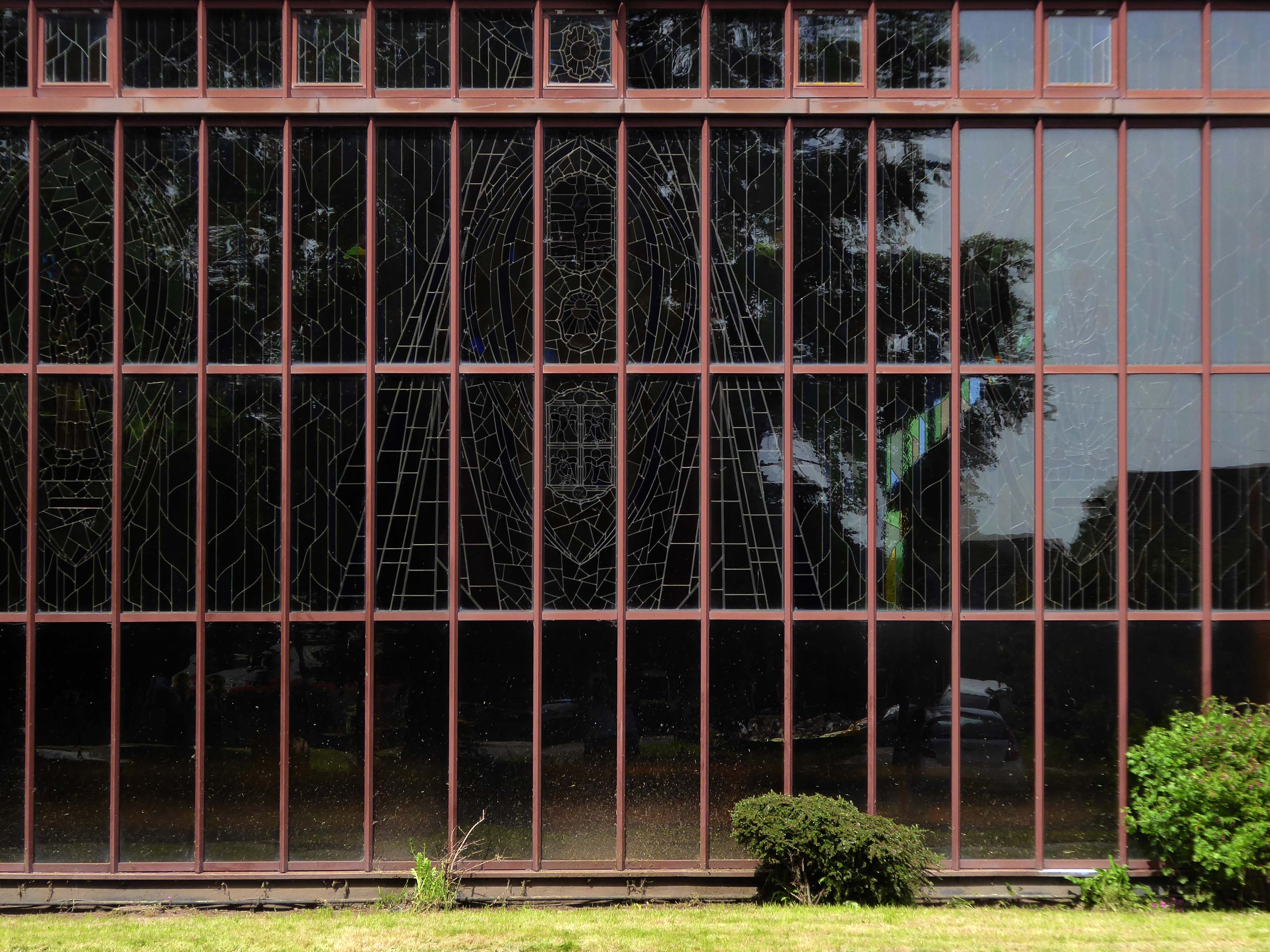
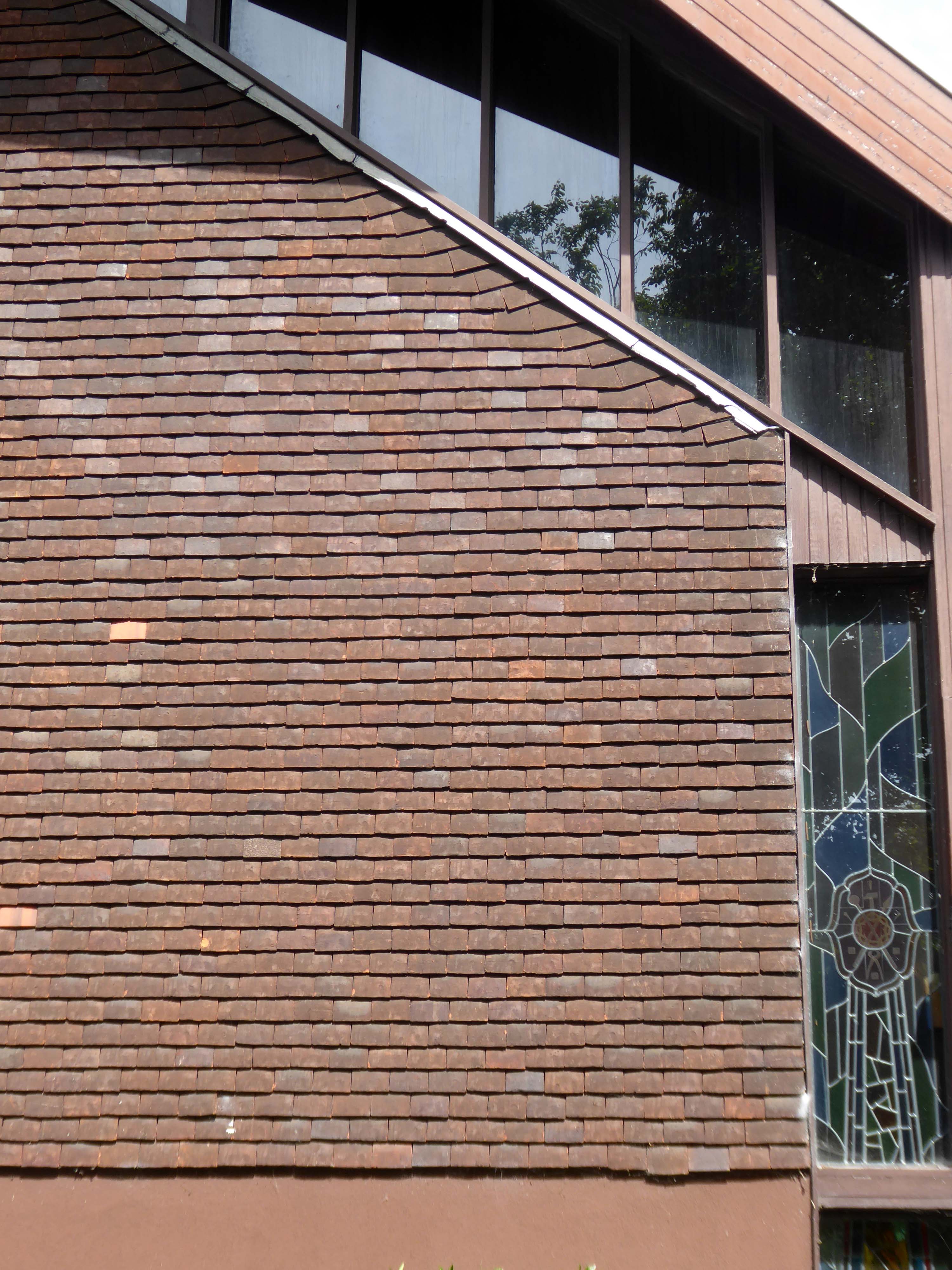
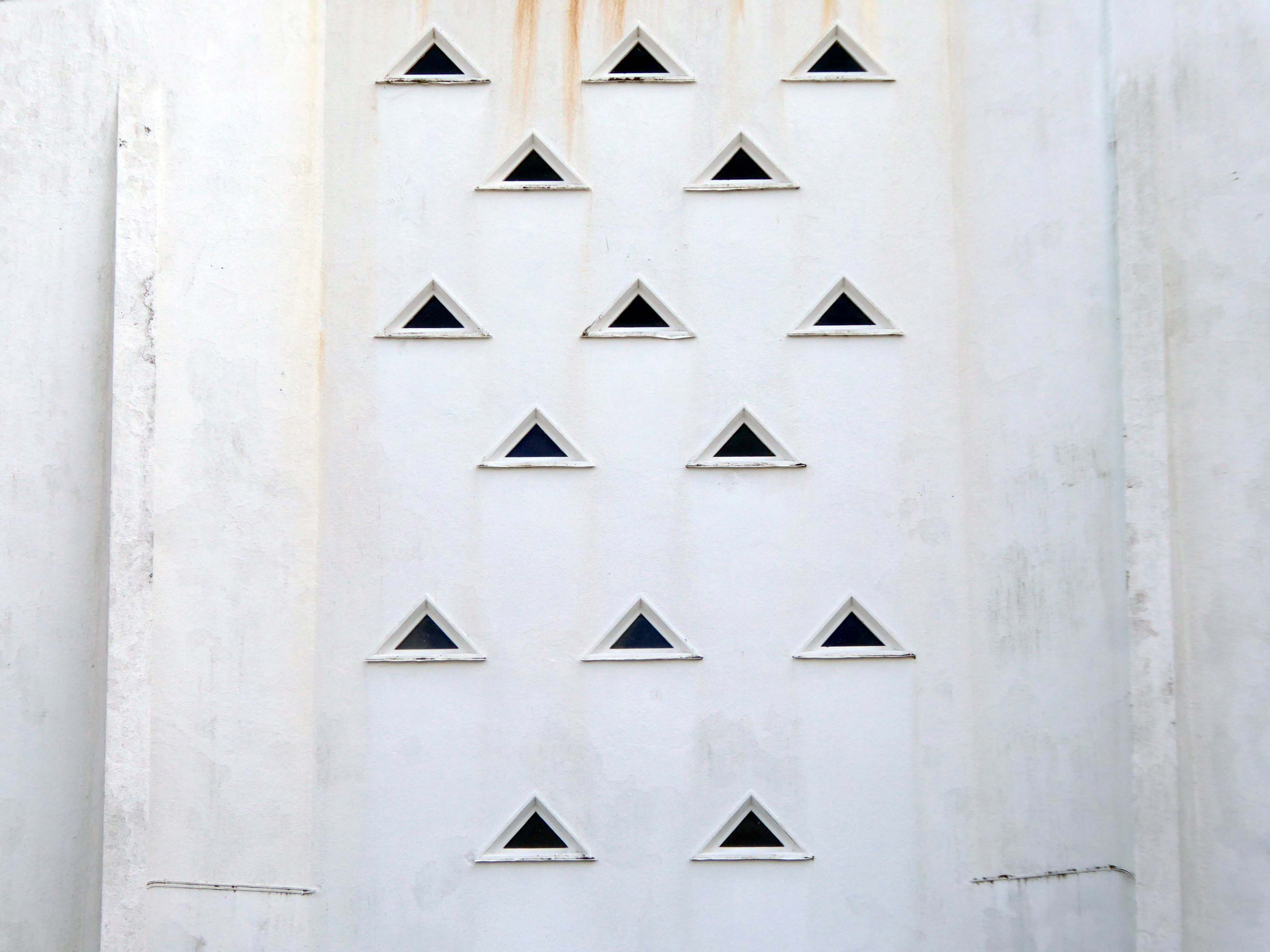
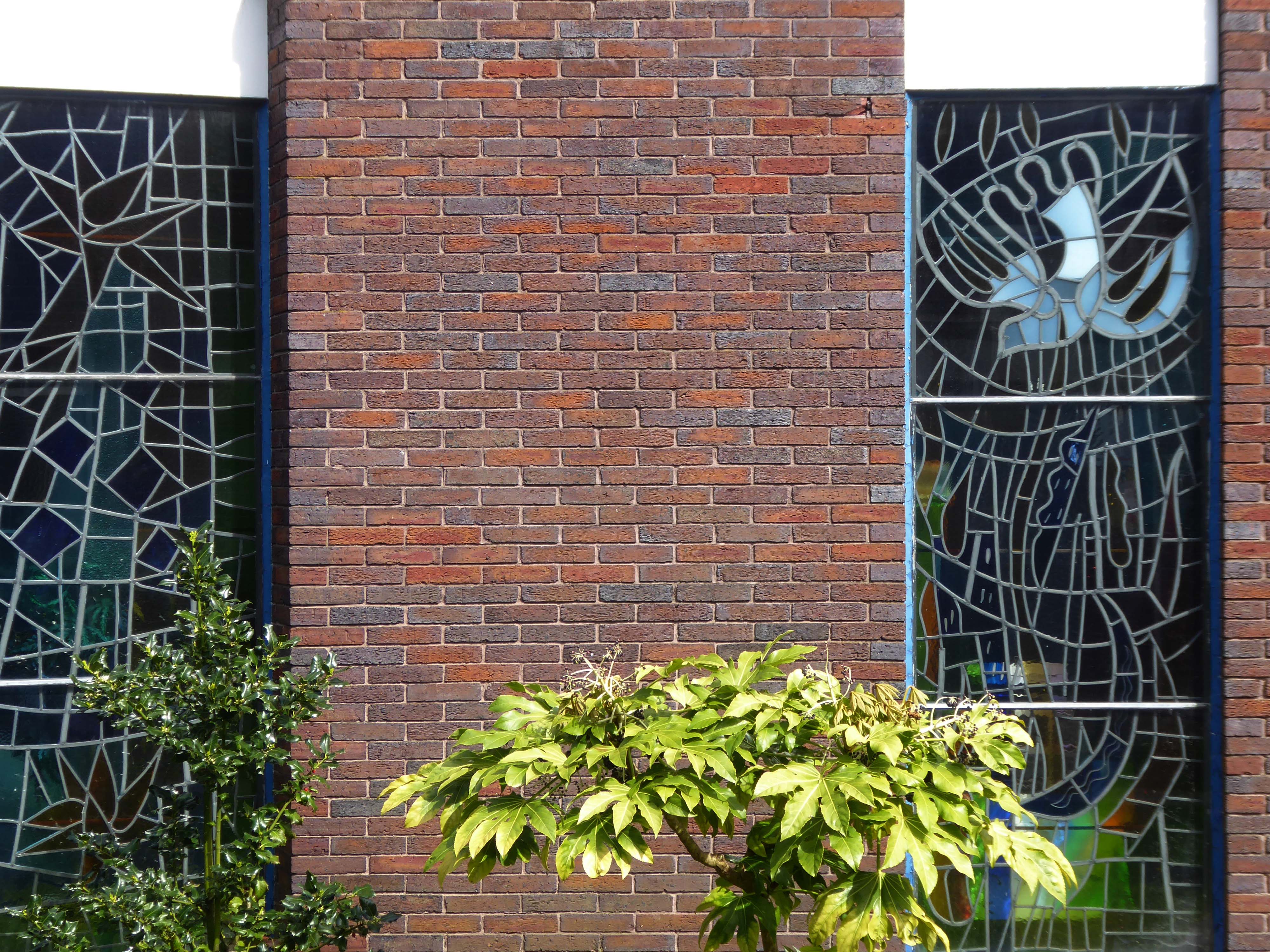
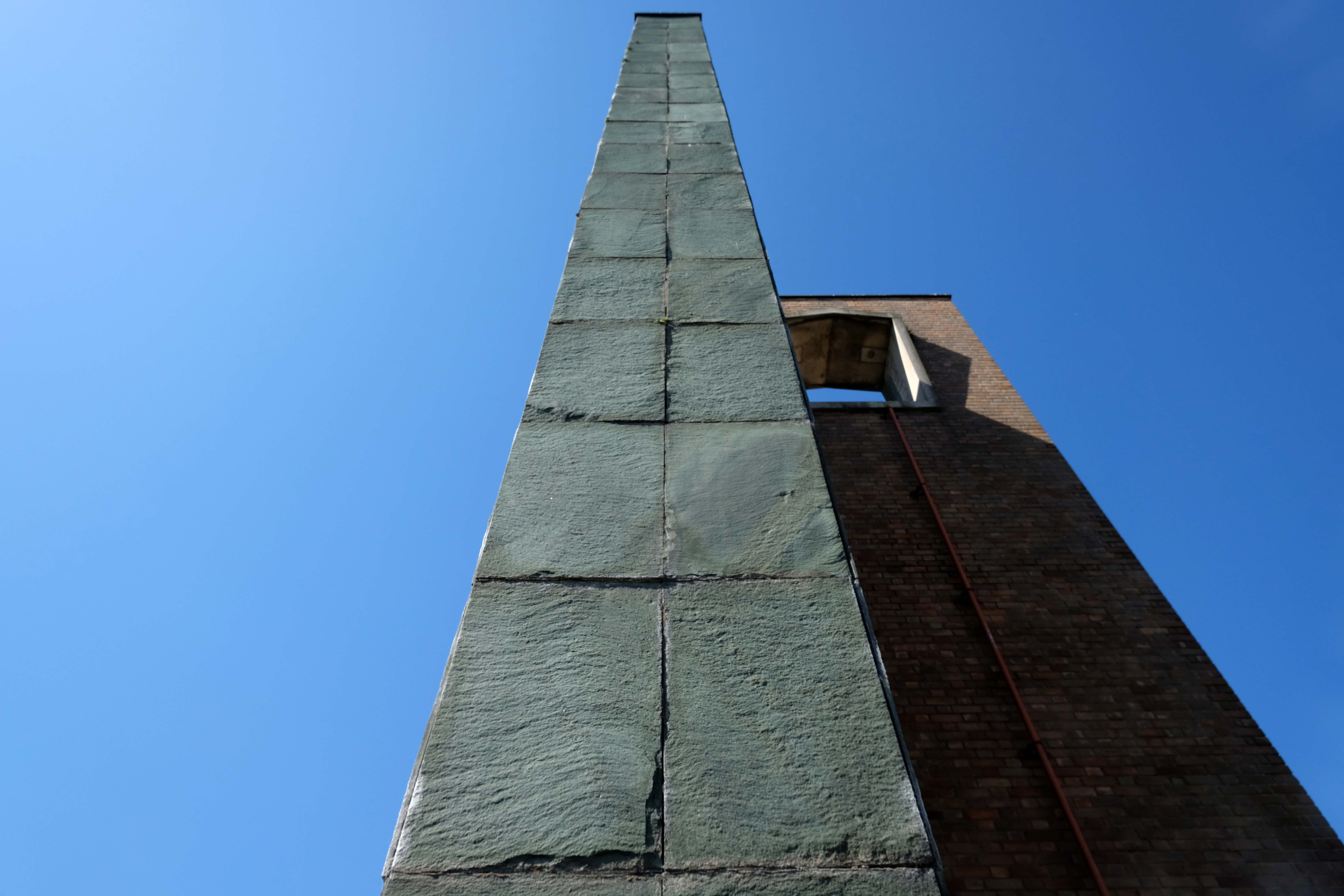
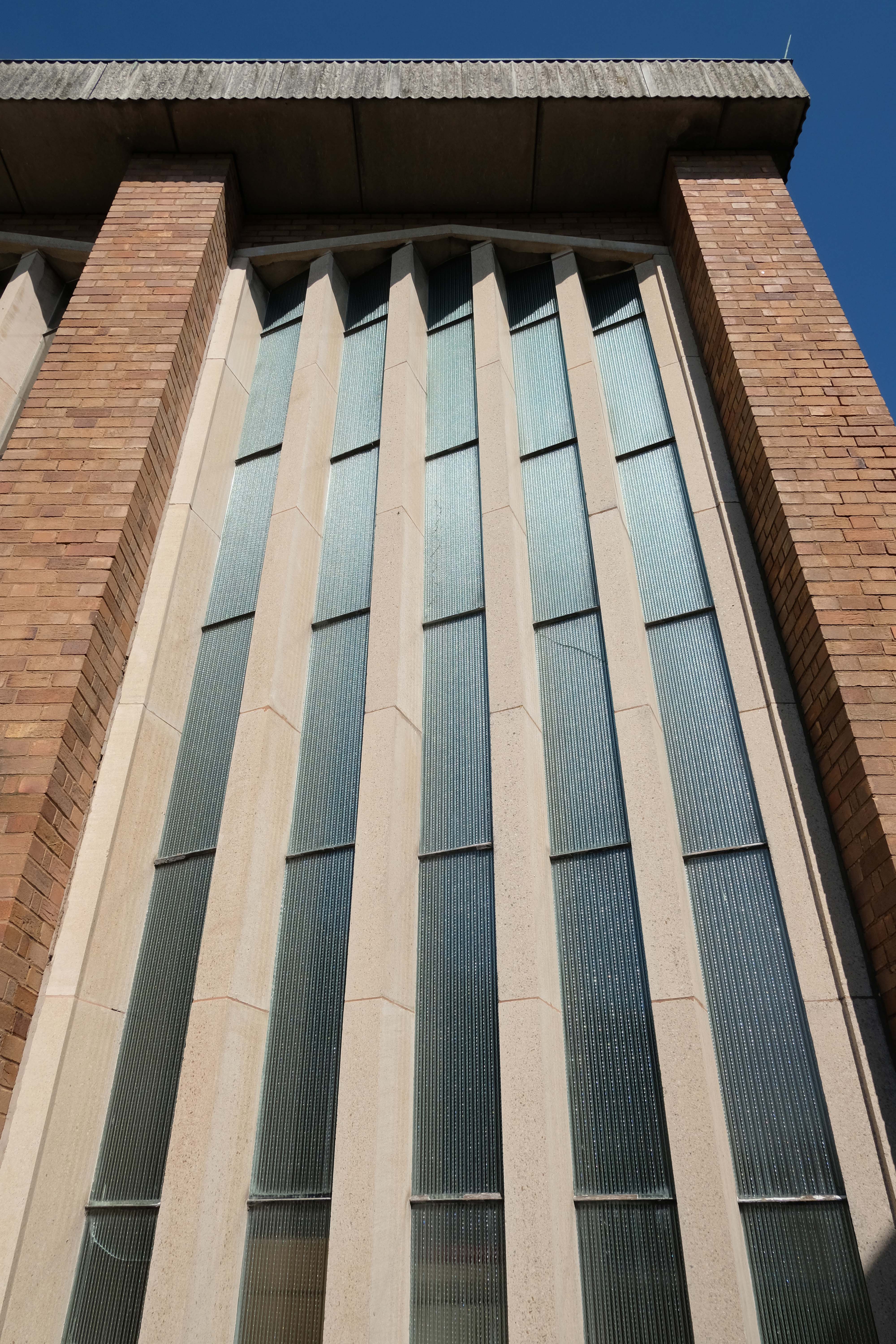
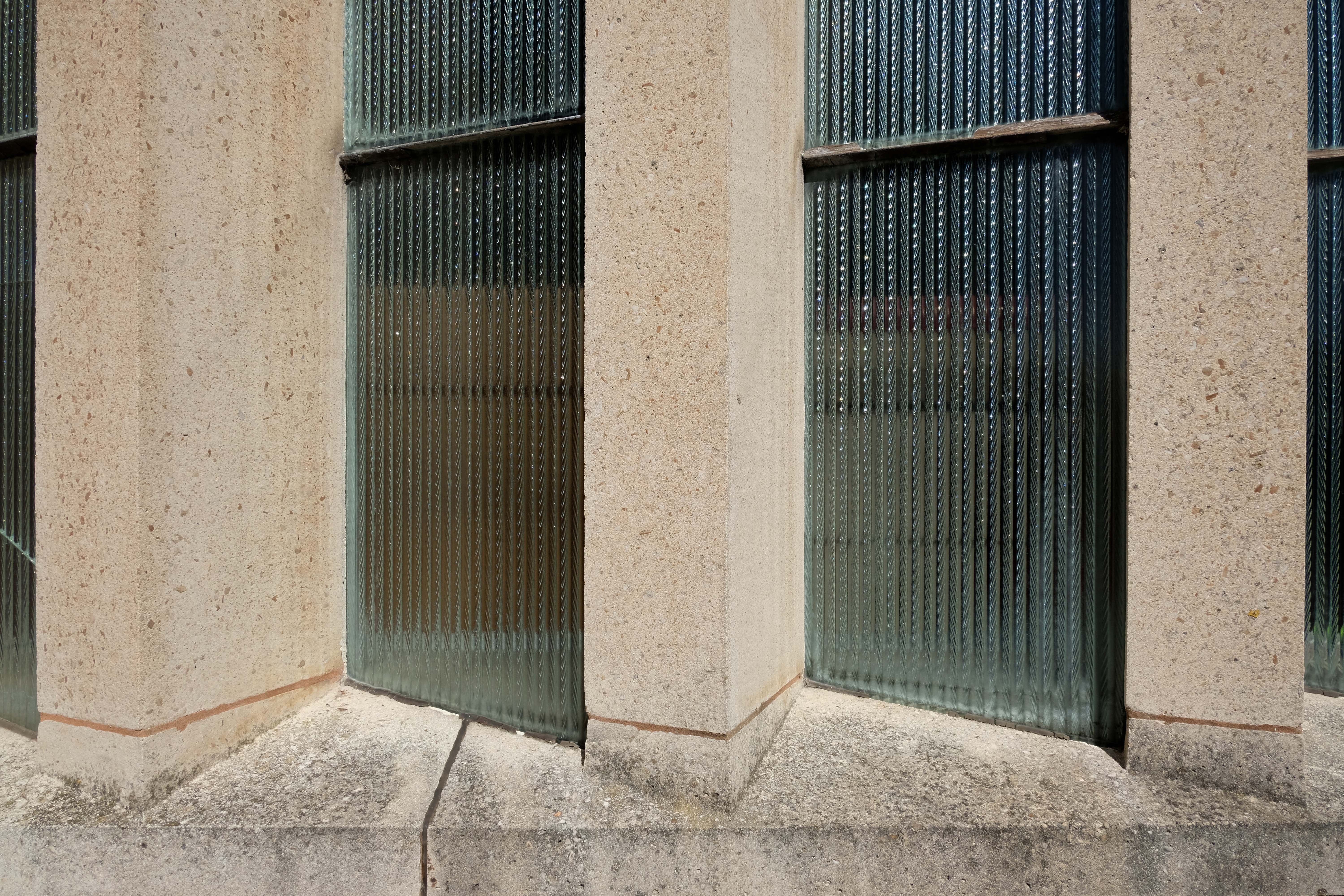
The only glazing to survive from the original church scheme is small triangles of glazing on the sanctuary elevation and the dalle de verre-style baptistery window by Hans Unger & E Schulze.

Unger & Schulze ran a prominent mosaic and glass studio in London from 1960-74, and provided a large mosaic for another LAG Prichard church in 1965, St Jude’s in Worsley Mesnes Wigan.

The coloured glazing depicting St Columba, Christ and the apostles was added in 1986.

Taking Stock

It is such a striking and dynamic church – angular, very angular.

Let’s take a good look around and about.

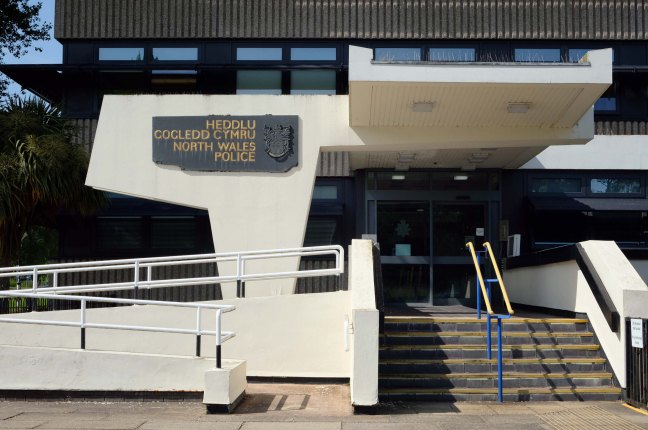
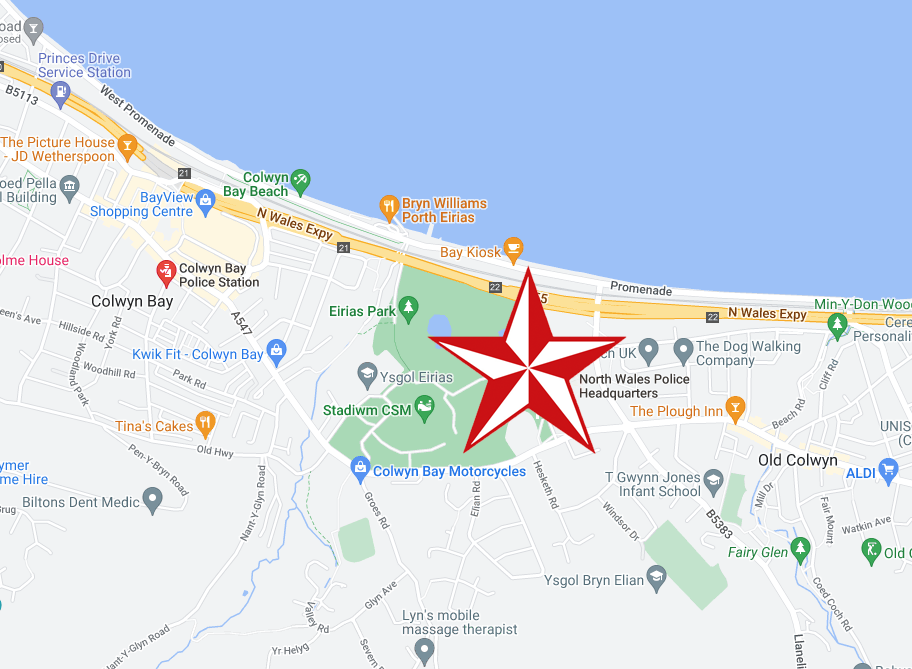
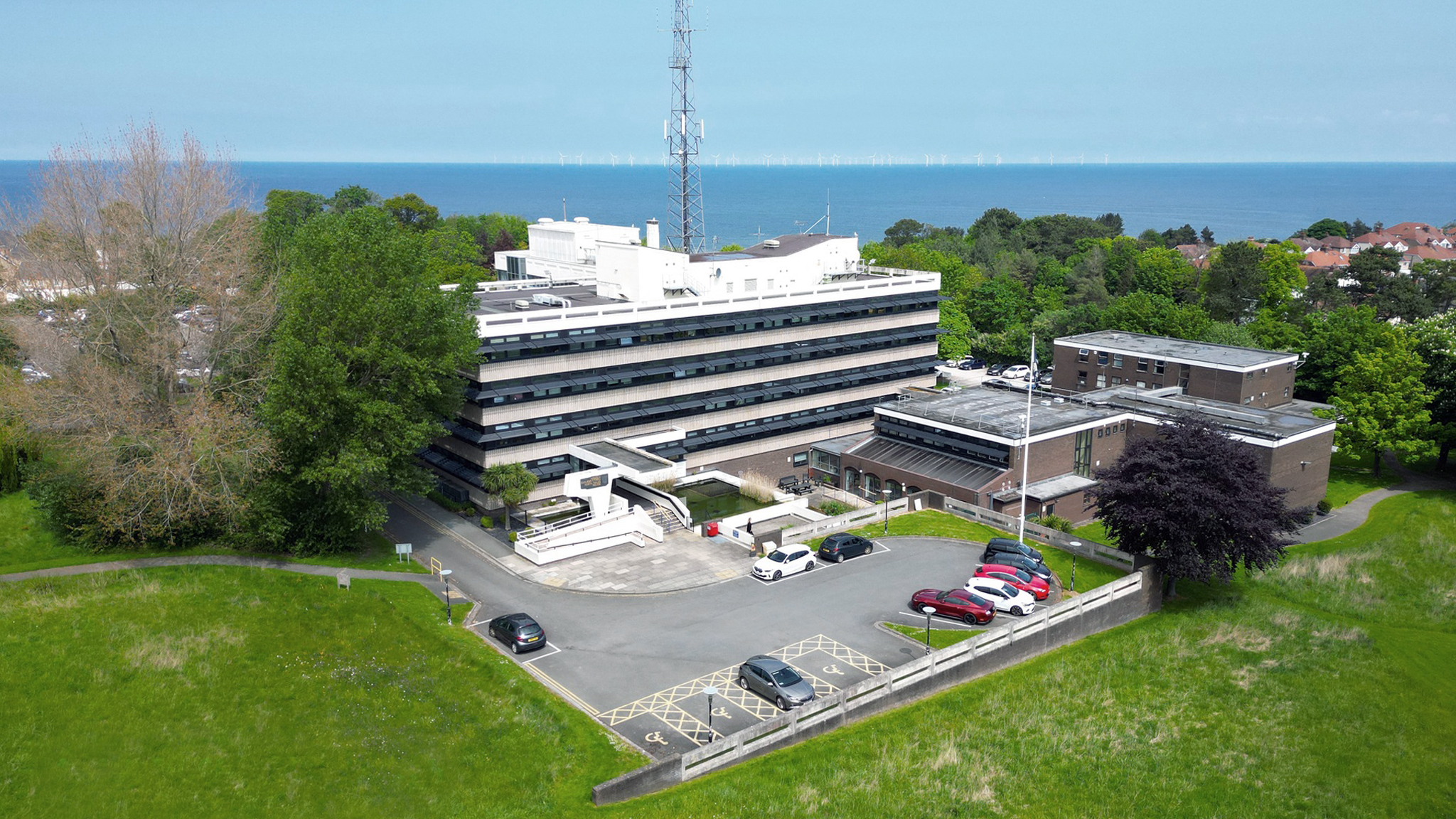
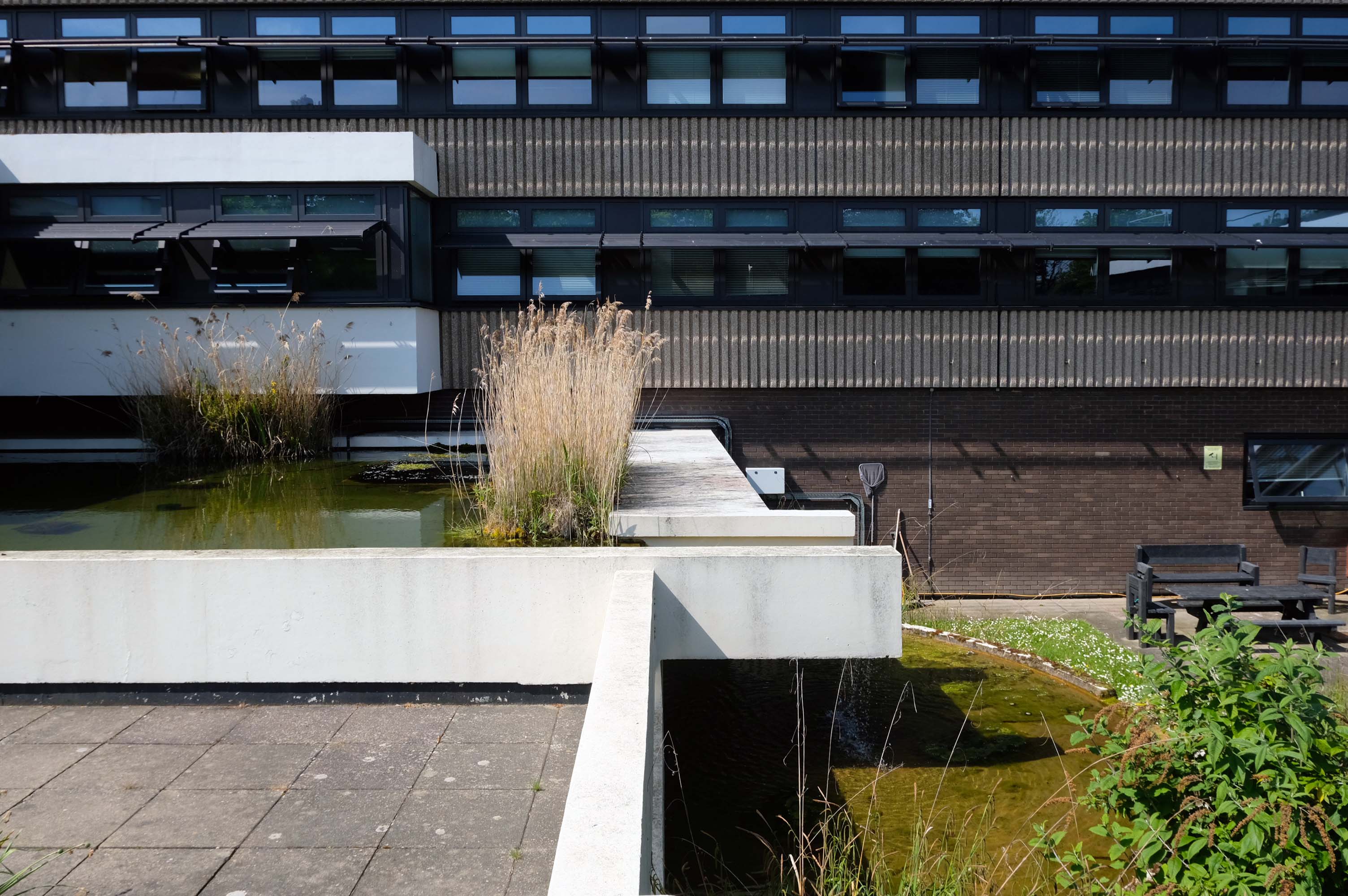
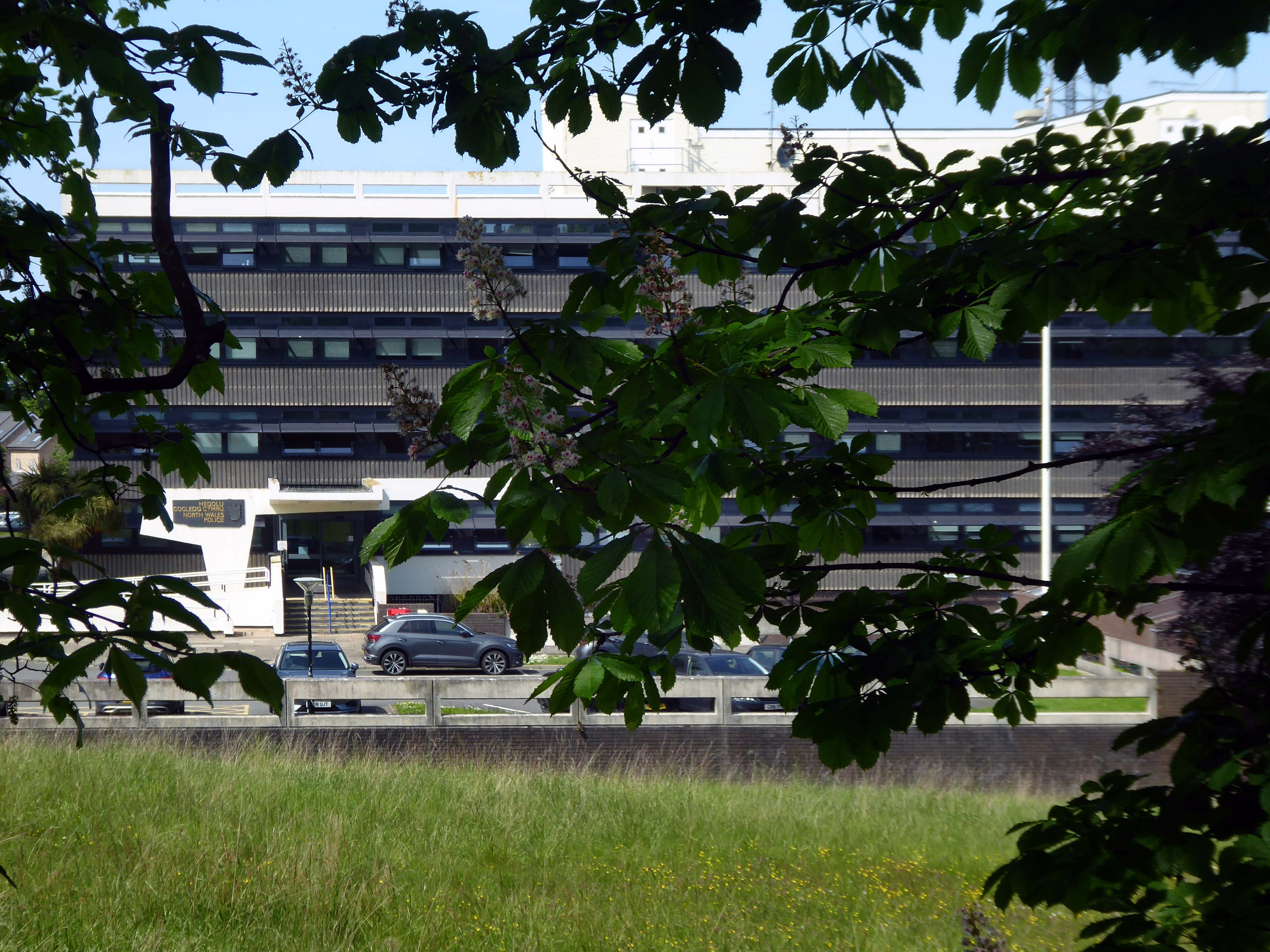
Pencadlys yr Heddlu – Bae Colwyn

Glan Y Don Abergele Road Colwyn Bay LL29 8AW

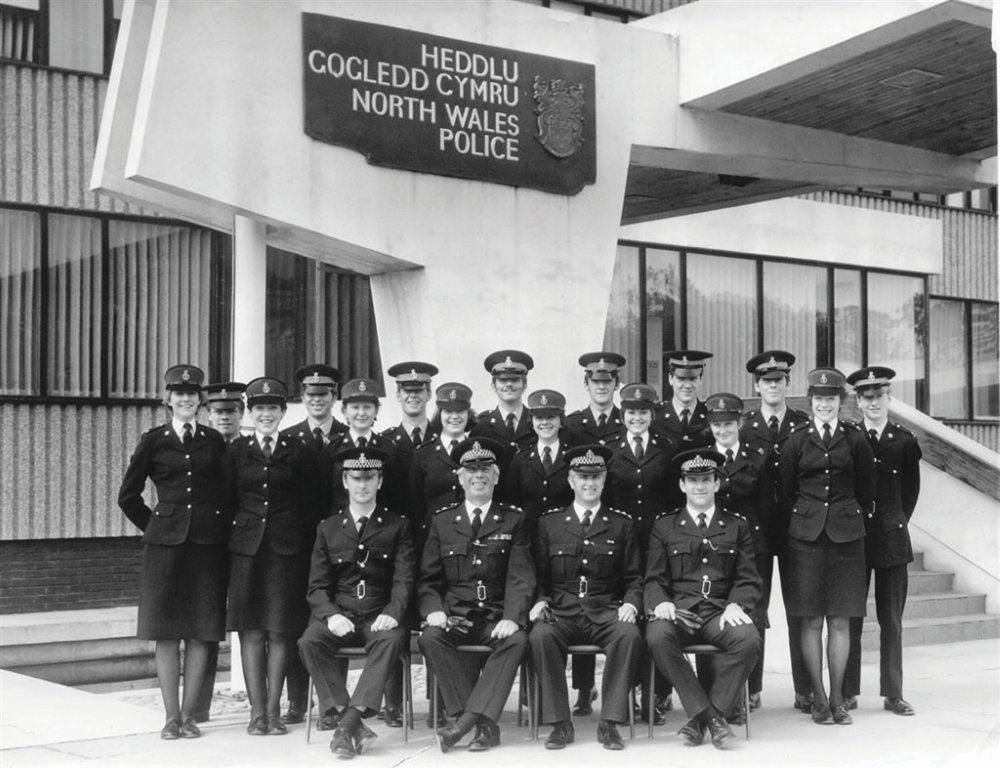
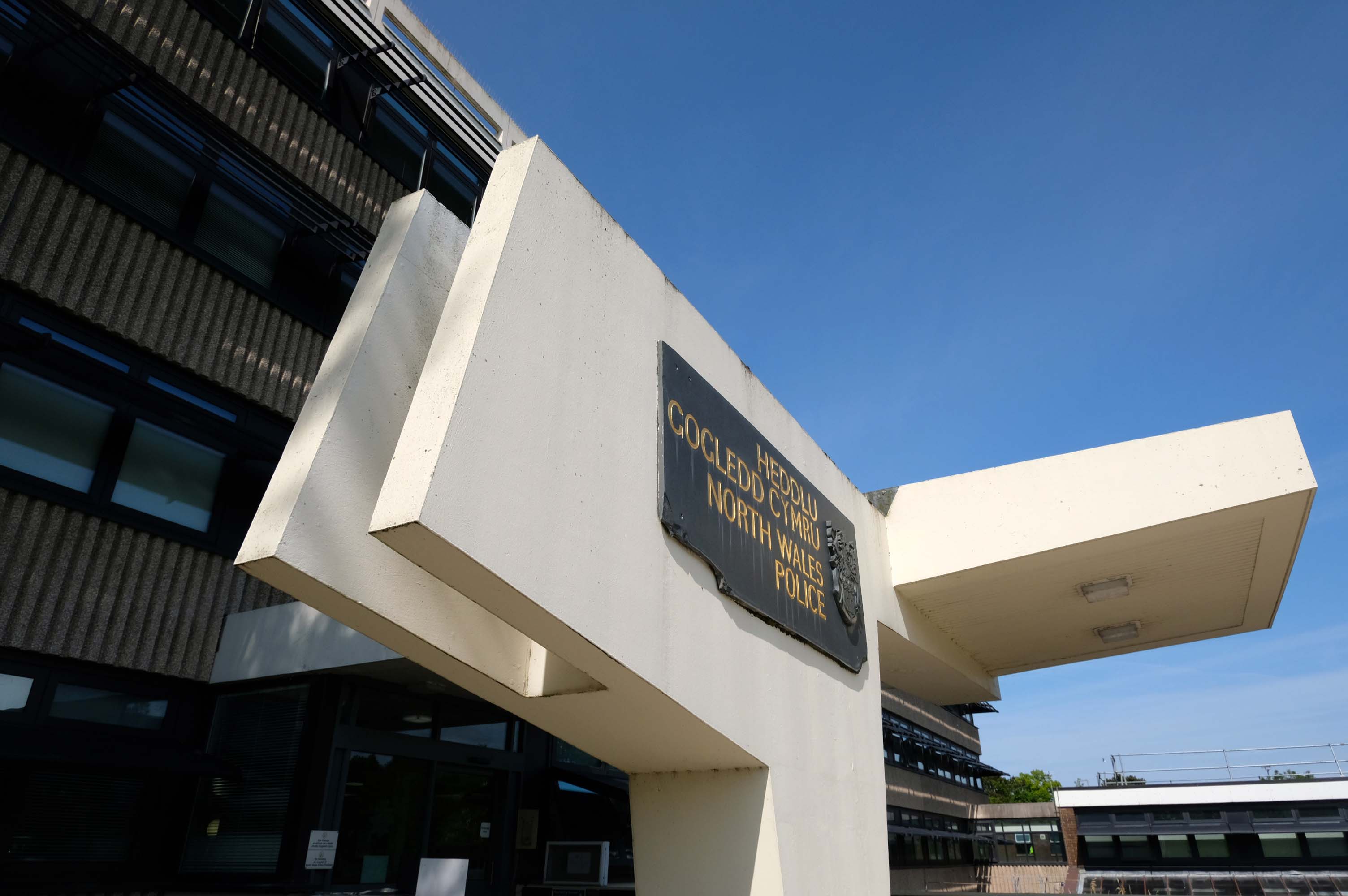
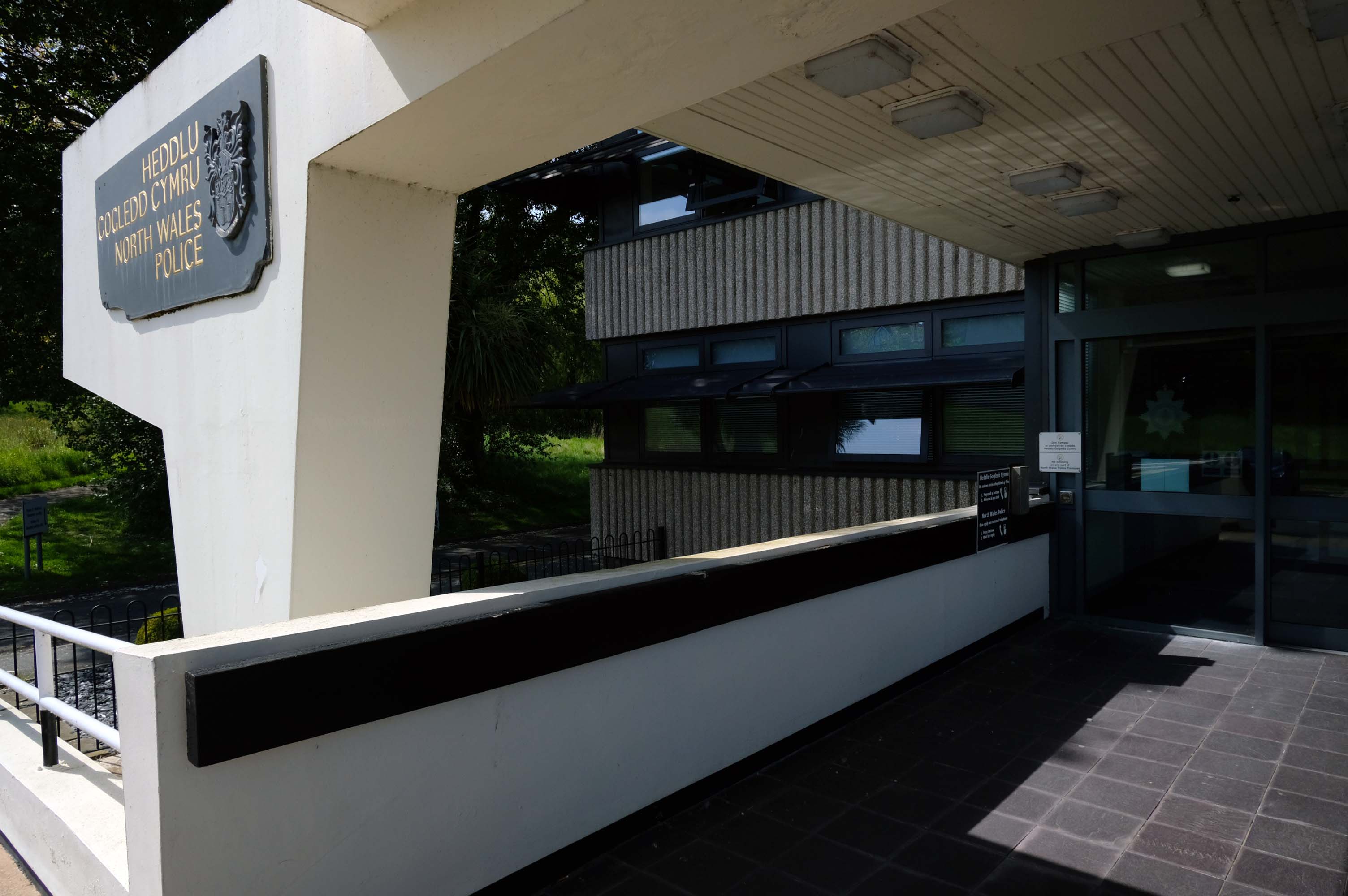
North Wales Police – Heddlu Gogledd Cymru is the territorial police force responsible for policing North Wales.

Photo: Gareth Ellidge

As of March 2020, the force has 1,510 police officers, 170 special constables, 182 police community support officers, 71 police support volunteers, and 984 staff.

Wikipedia

Having cycled from Prestatyn, I popped into reception to ask permission to photograph the exterior of the HQ.

Following a short wait, I was granted permission.

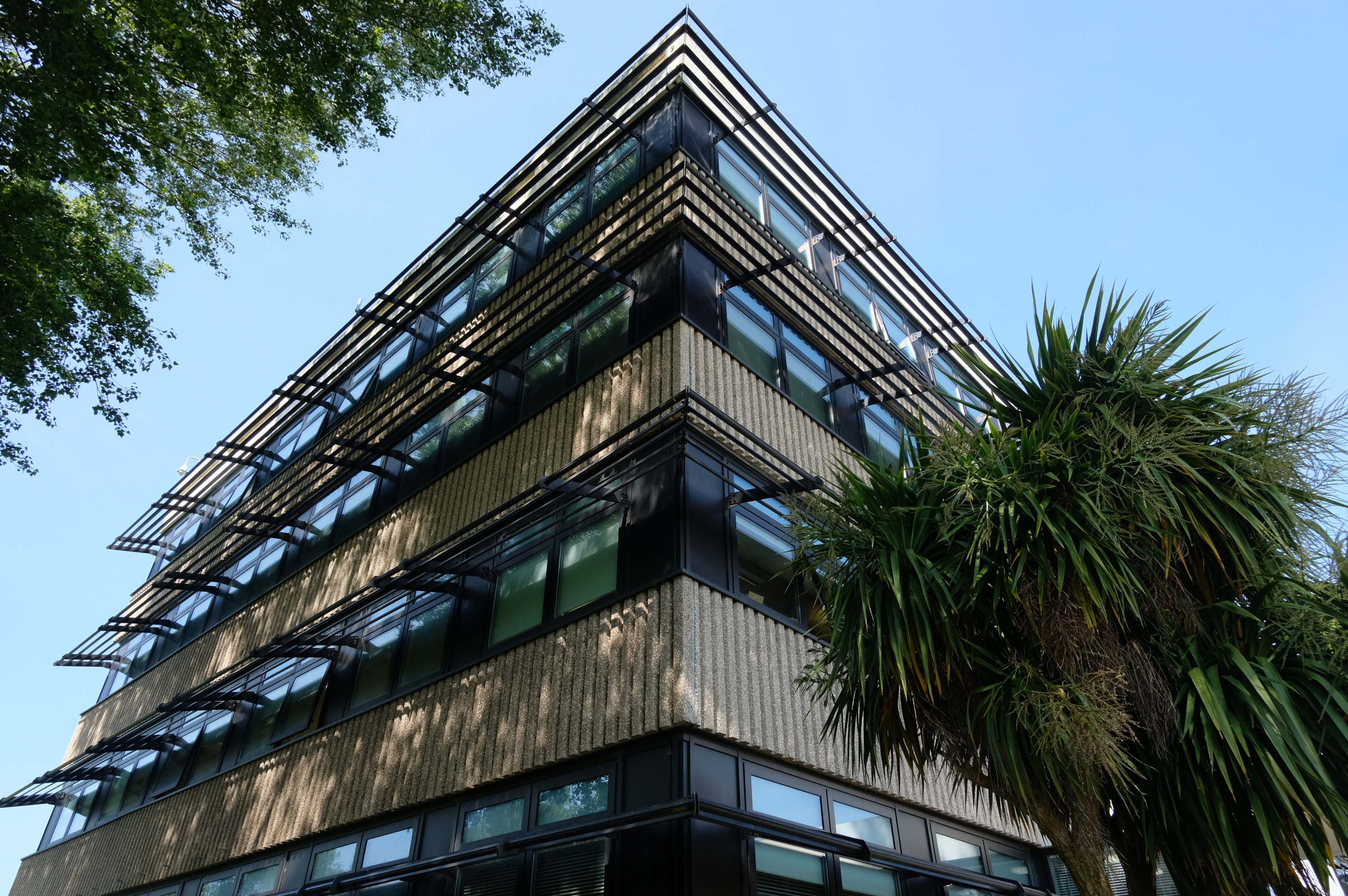
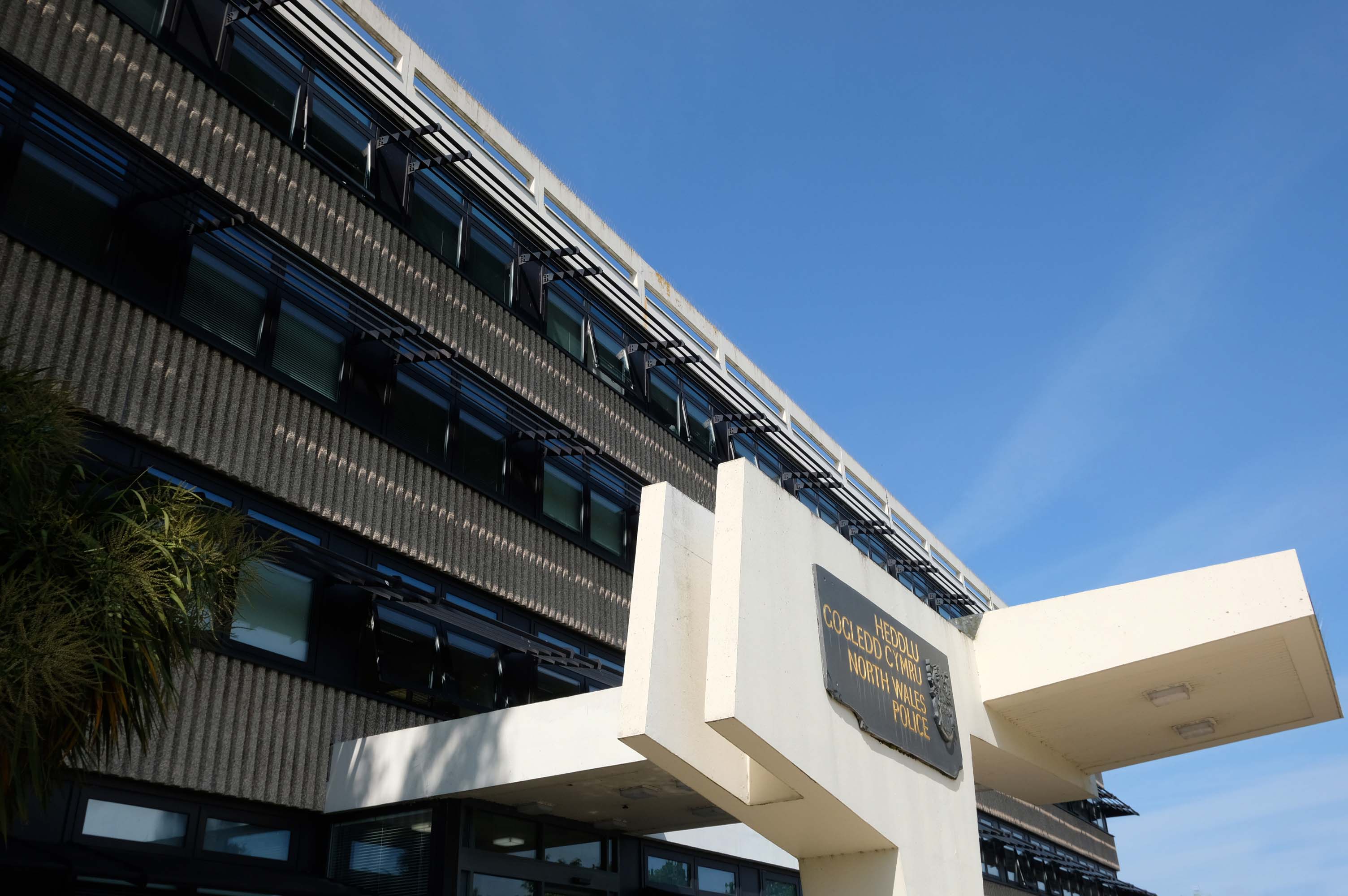
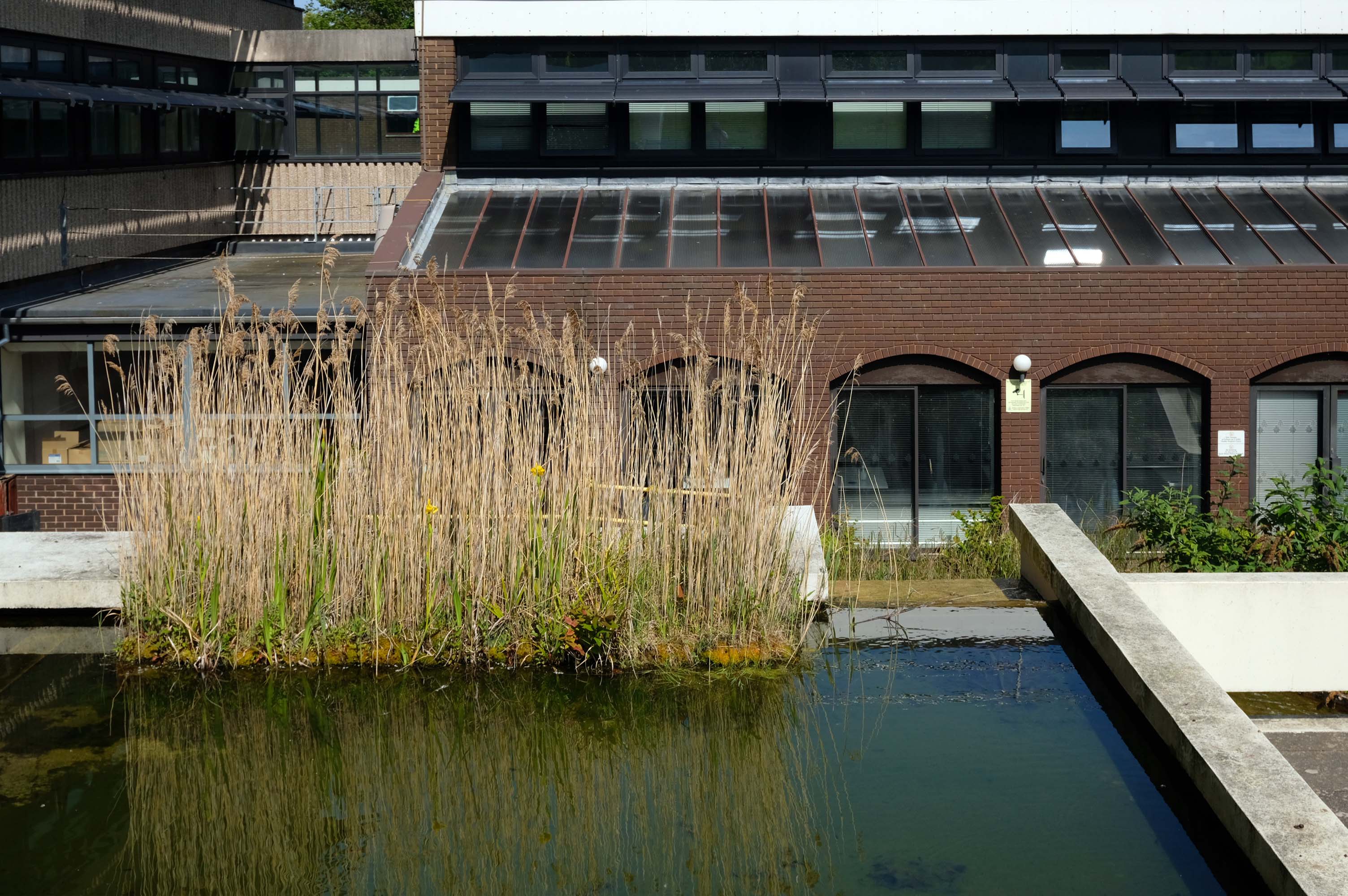
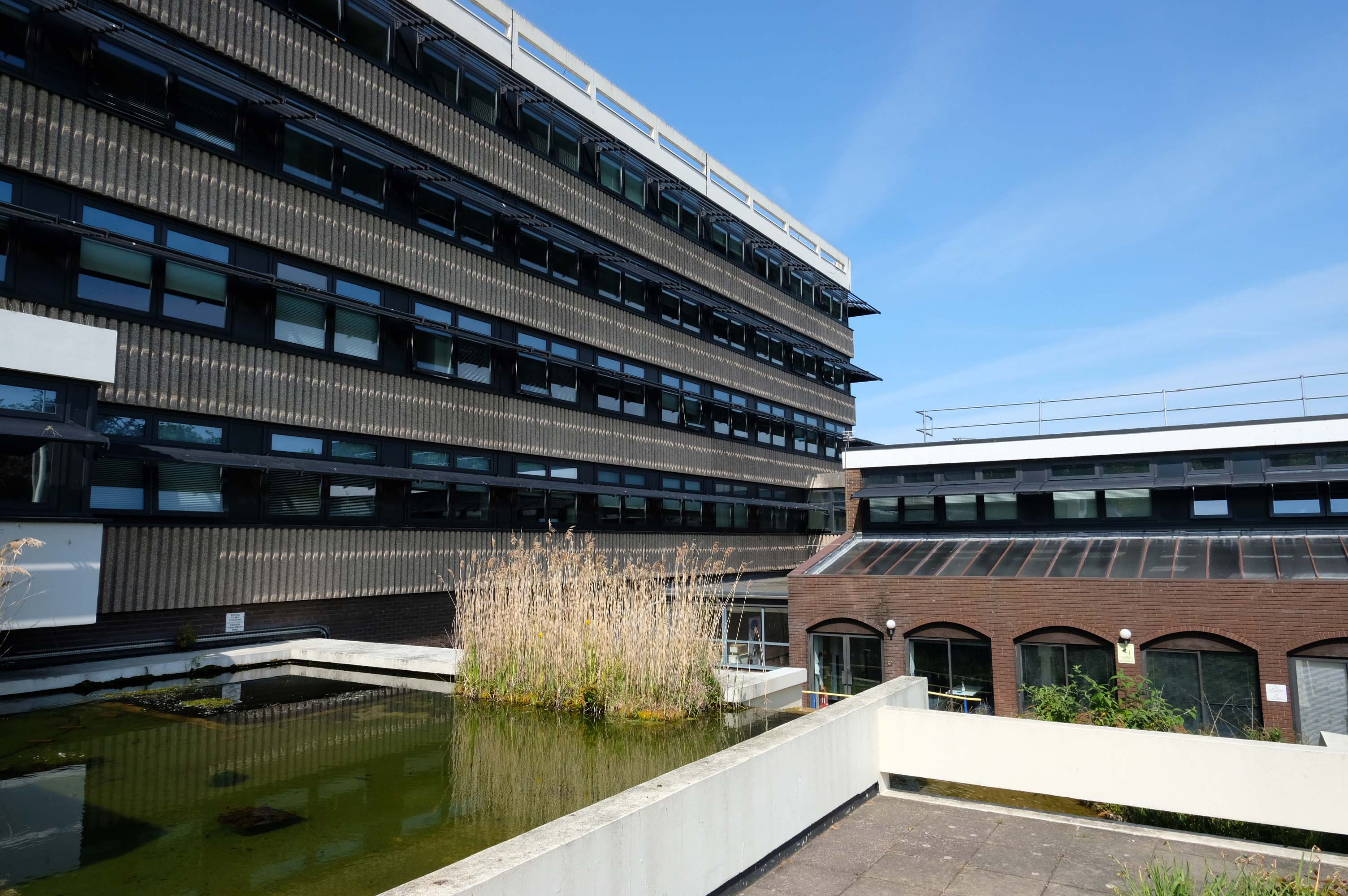
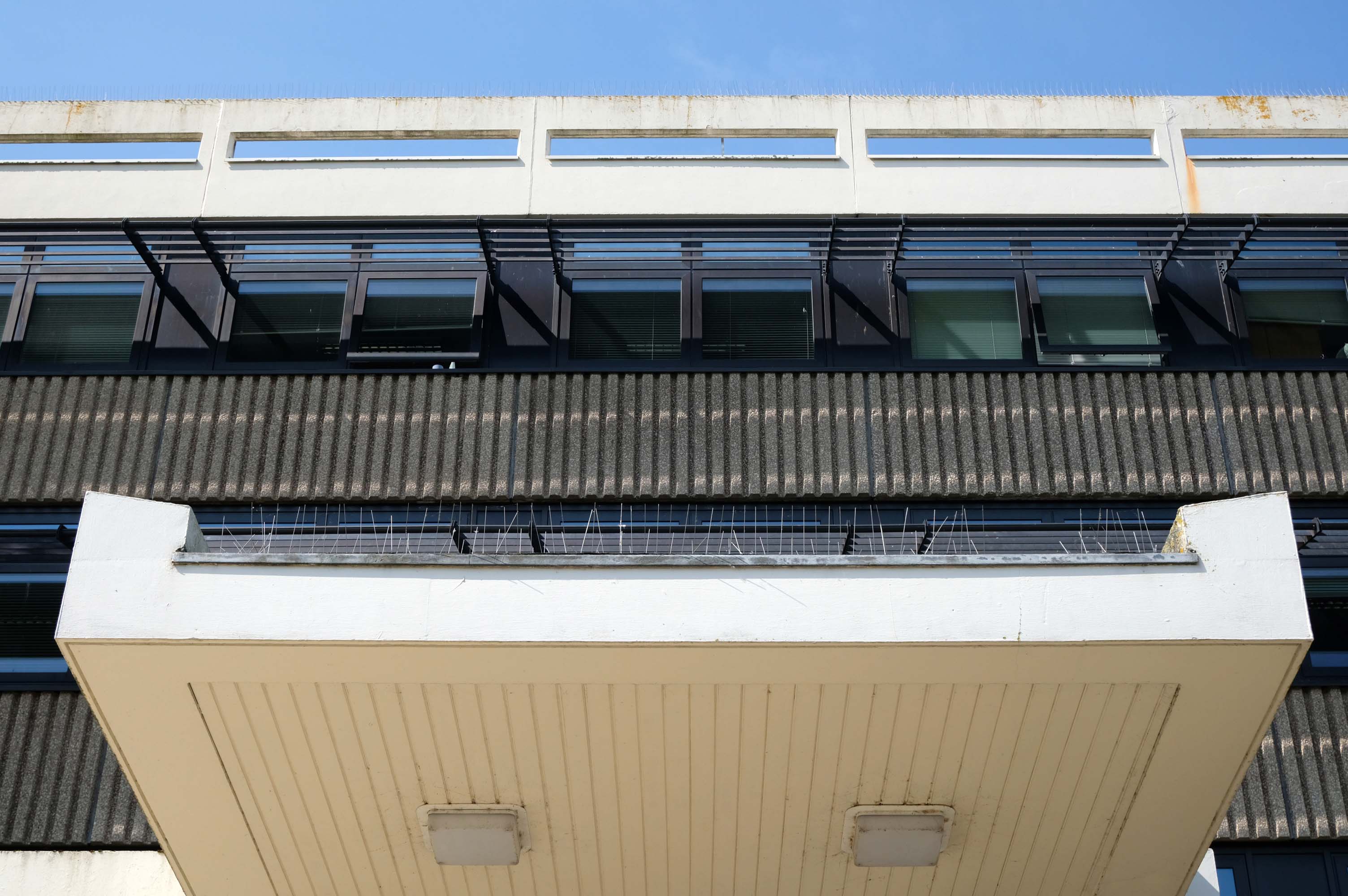
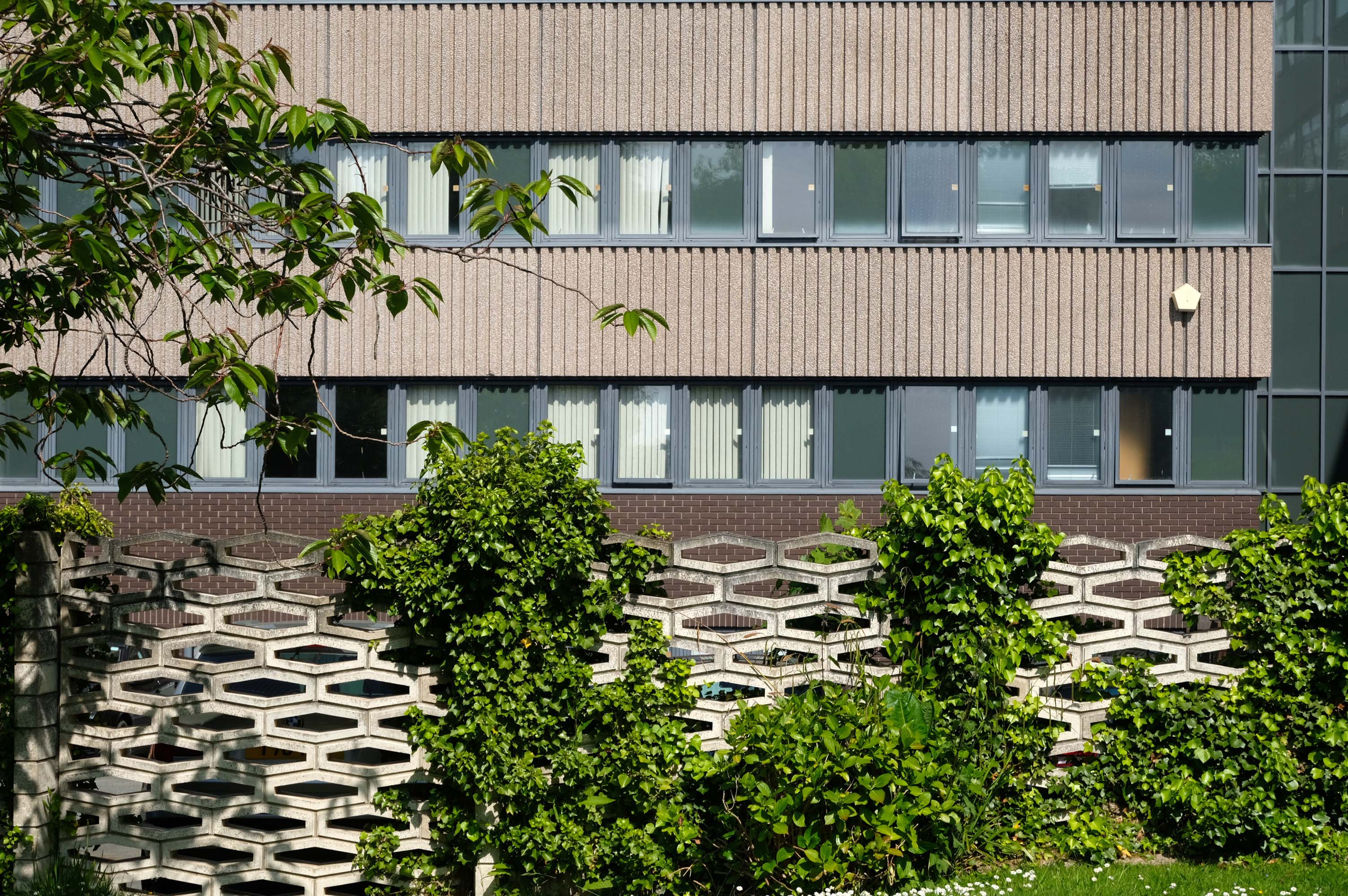
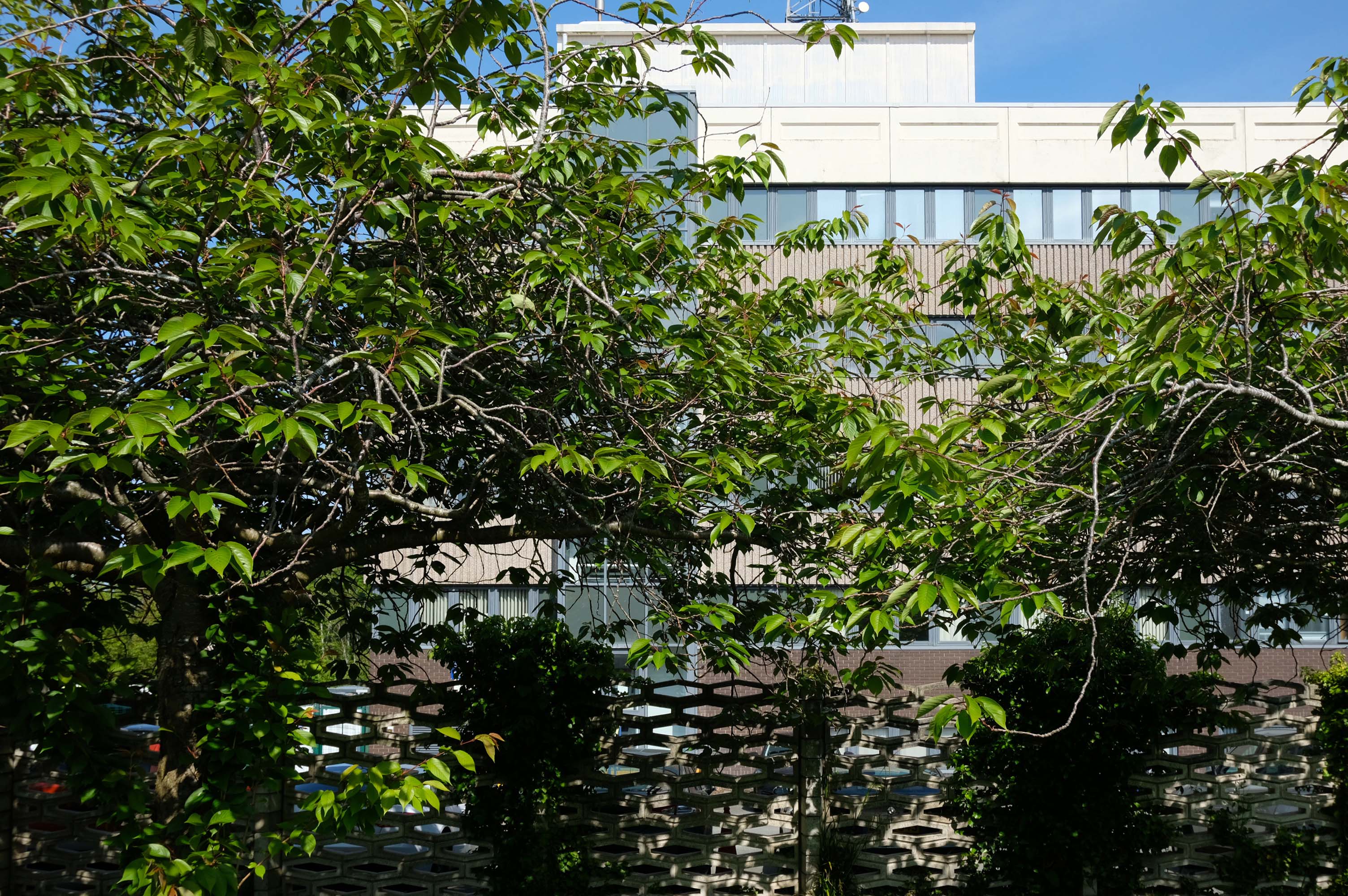
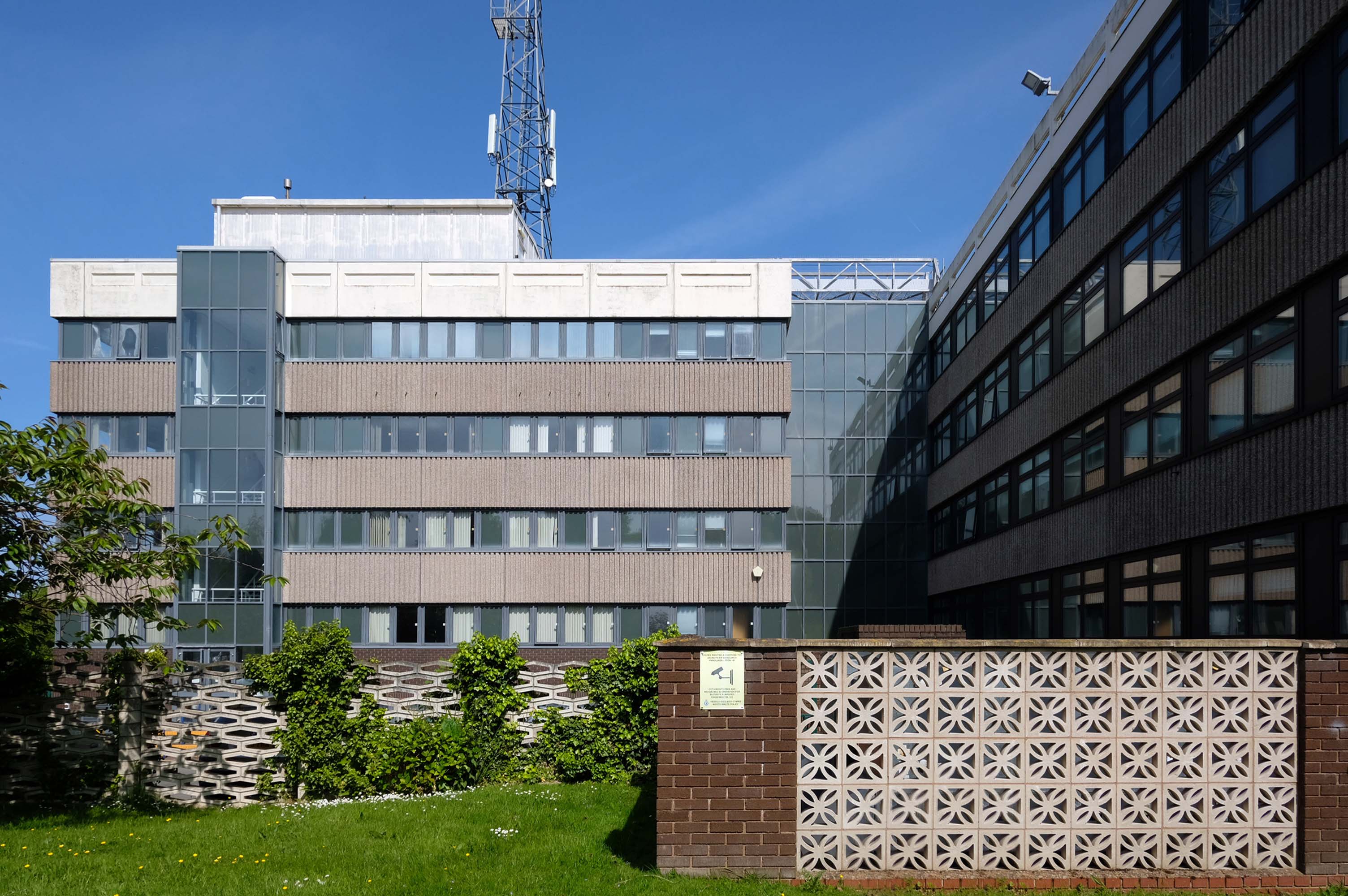
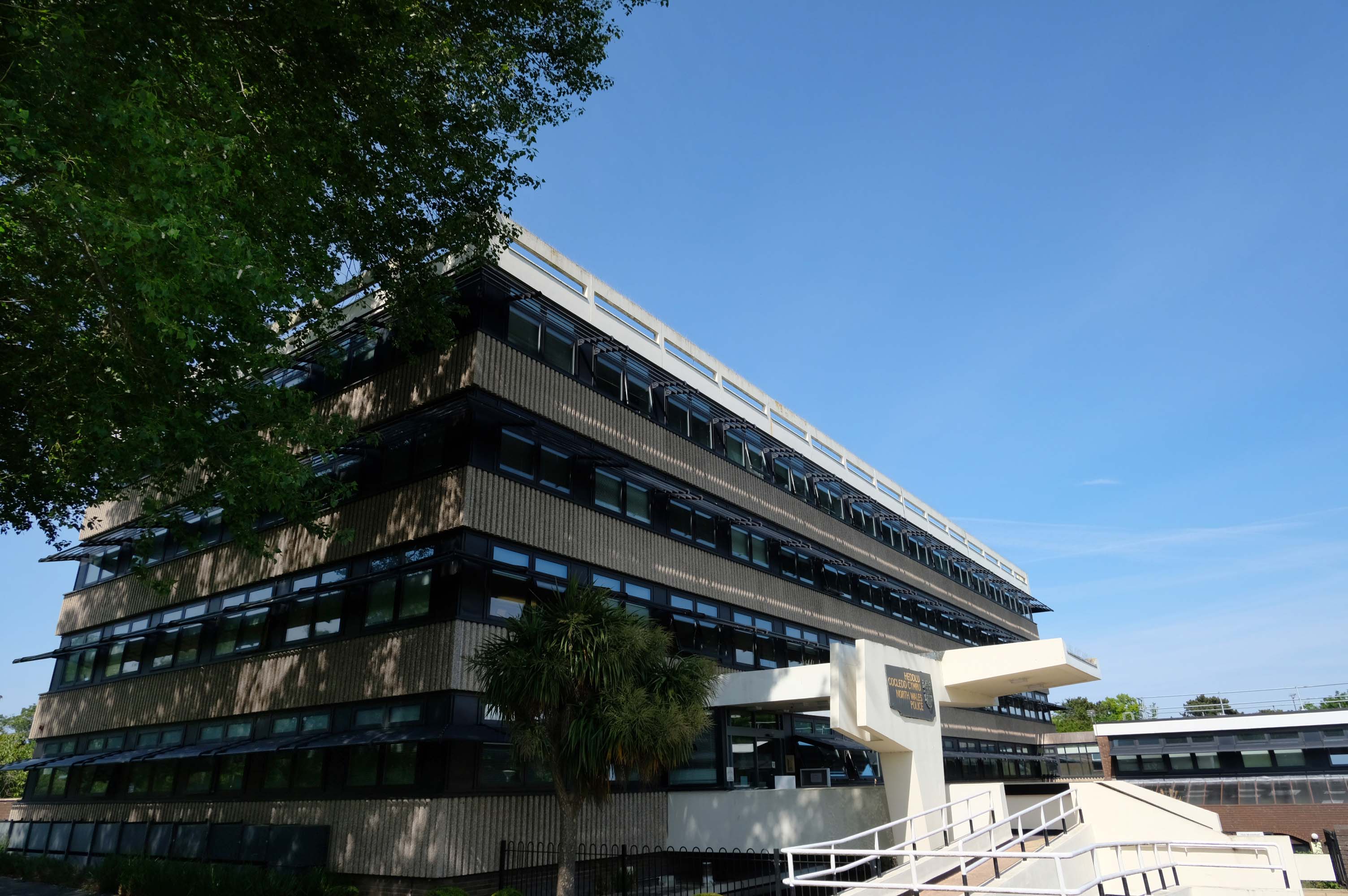
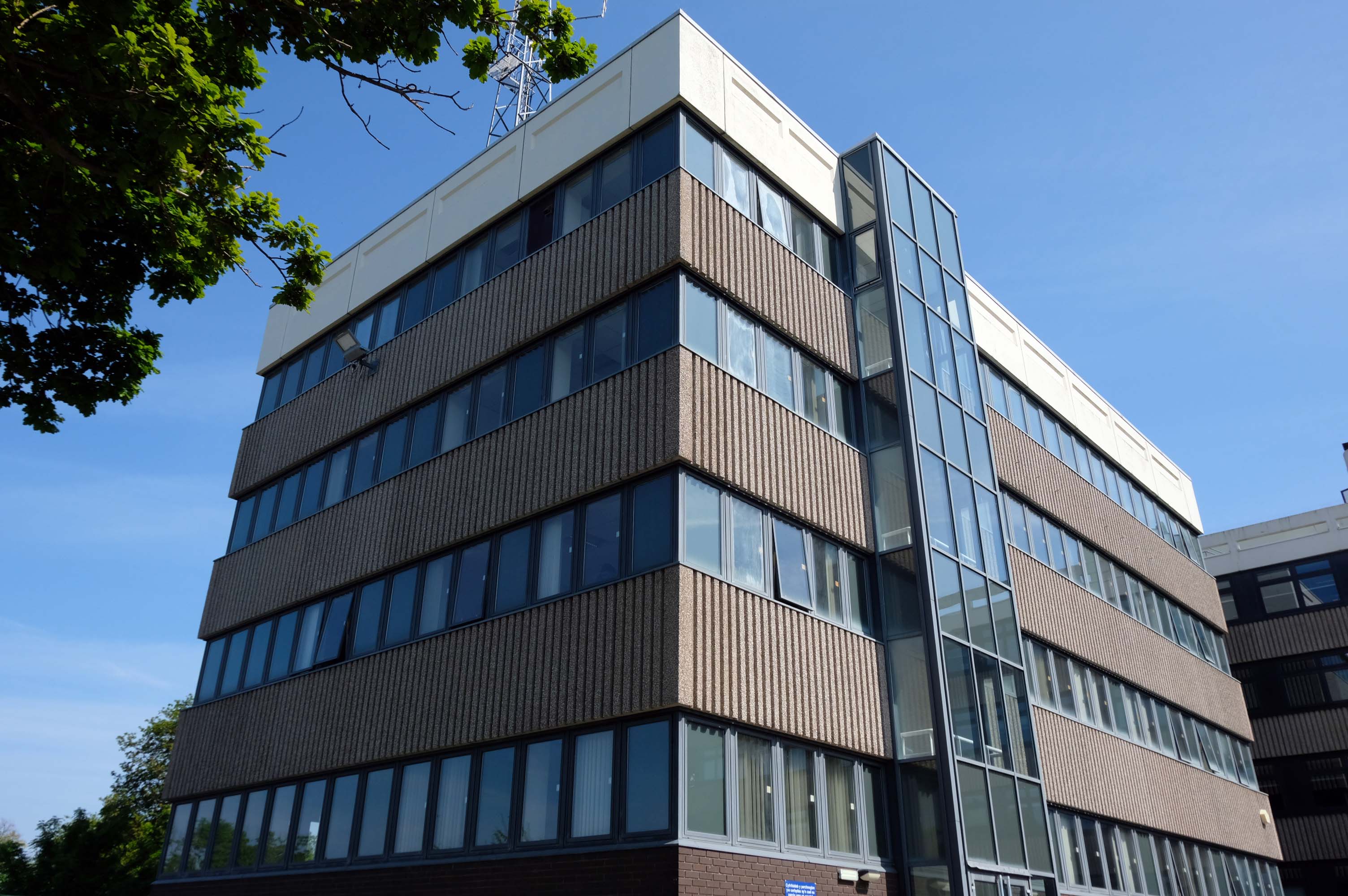
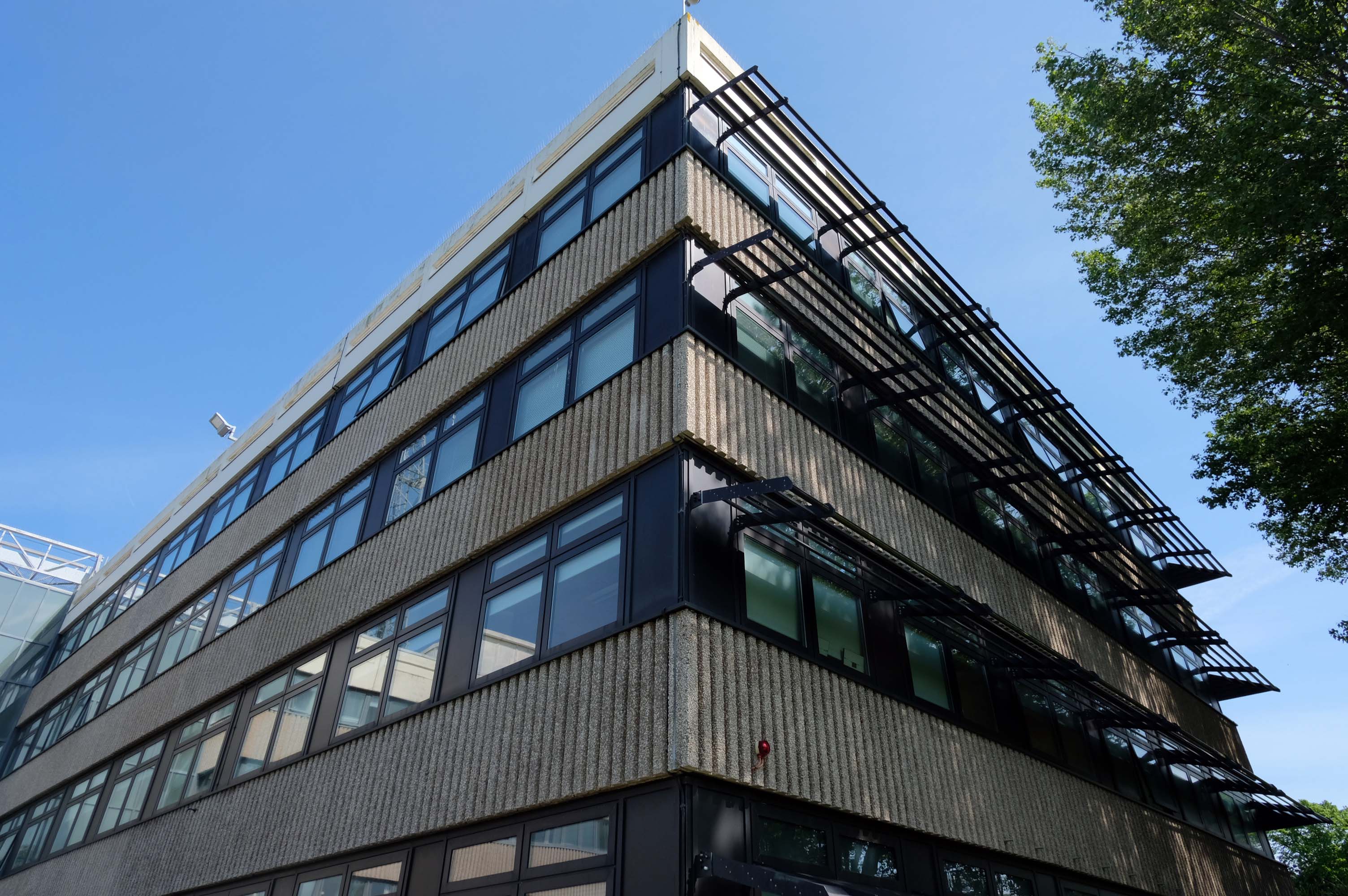
The building is an imposing steel, concrete and glass system built structure of 1972, with brick outliers on a grassy site.

It has undergone adaptation to modern eco-standards.

The administration building for North Wales Police, located in Colwyn Bay, was typical of the breed: a 1970s leaky and draughty concrete-framed building with high solar gains, especially on the South and West facades. It consumed a lot of energy and delivered very poor comfort conditions.

The budget for the refurbishment was set at around £2.4 million. North Wales Police appointed Capita Symonds as the Project Manager with the design team comprising FSP Architects, Buro Happold, WS Atkins, and Faithful+Gould.

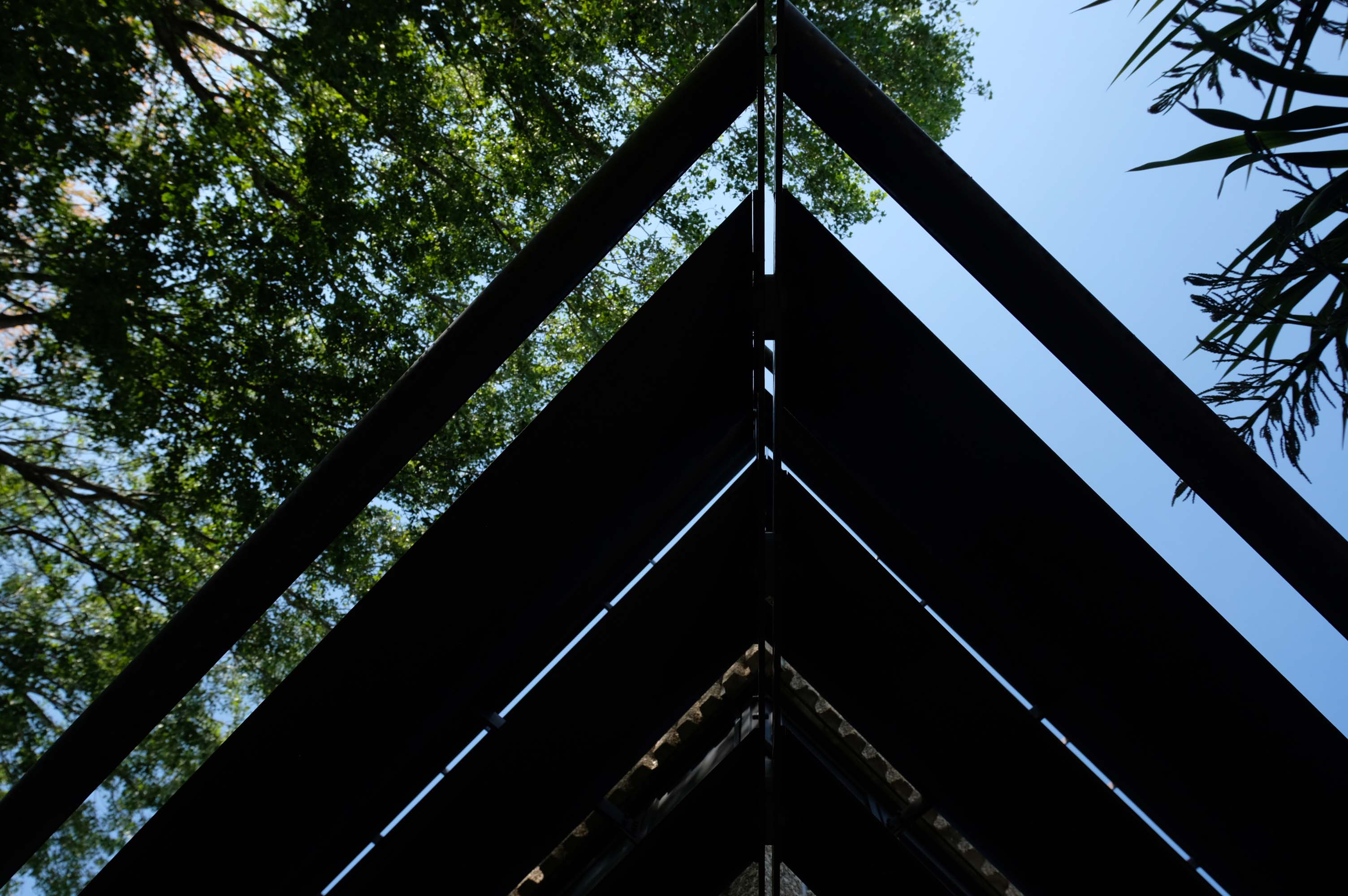
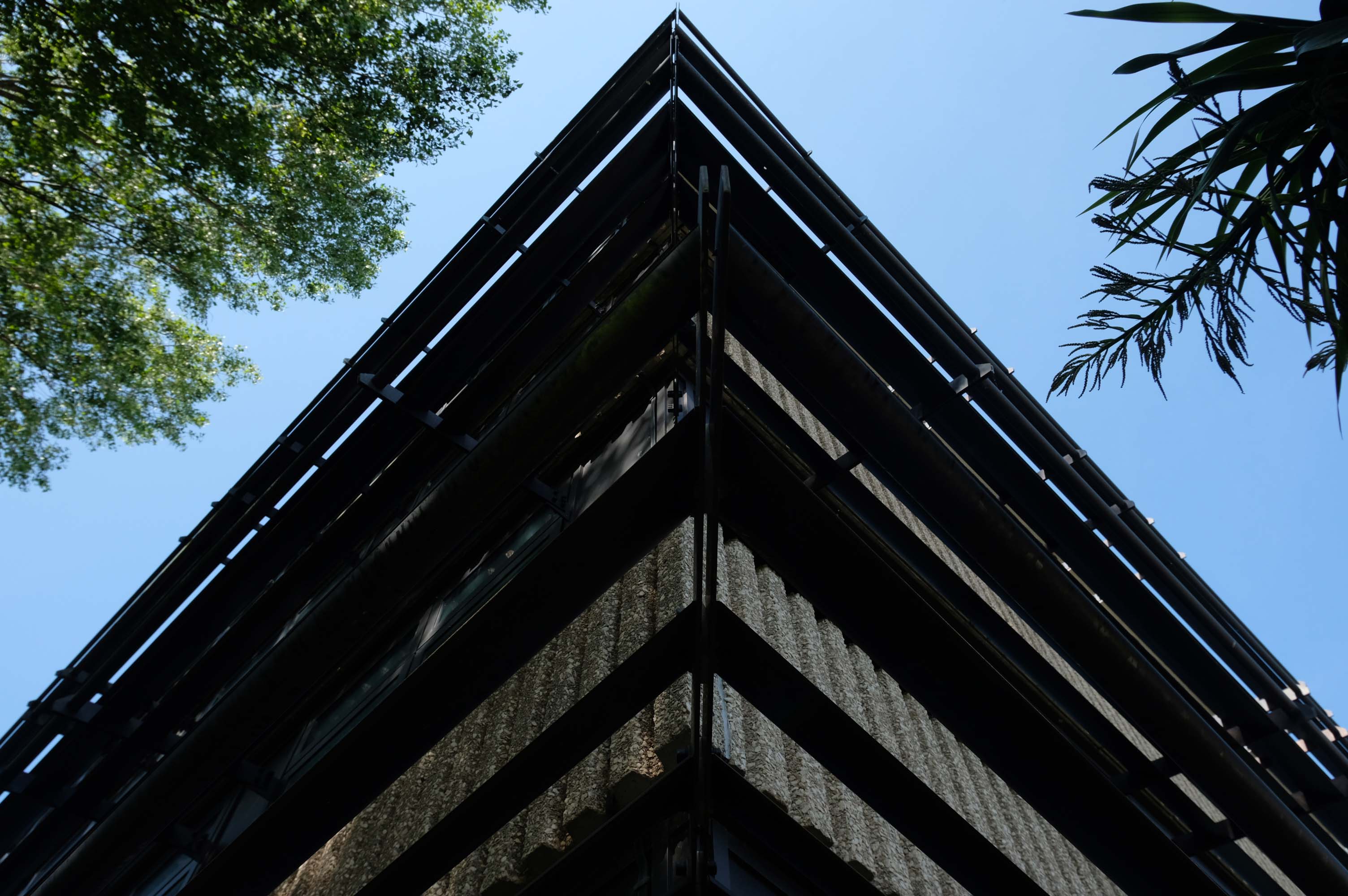
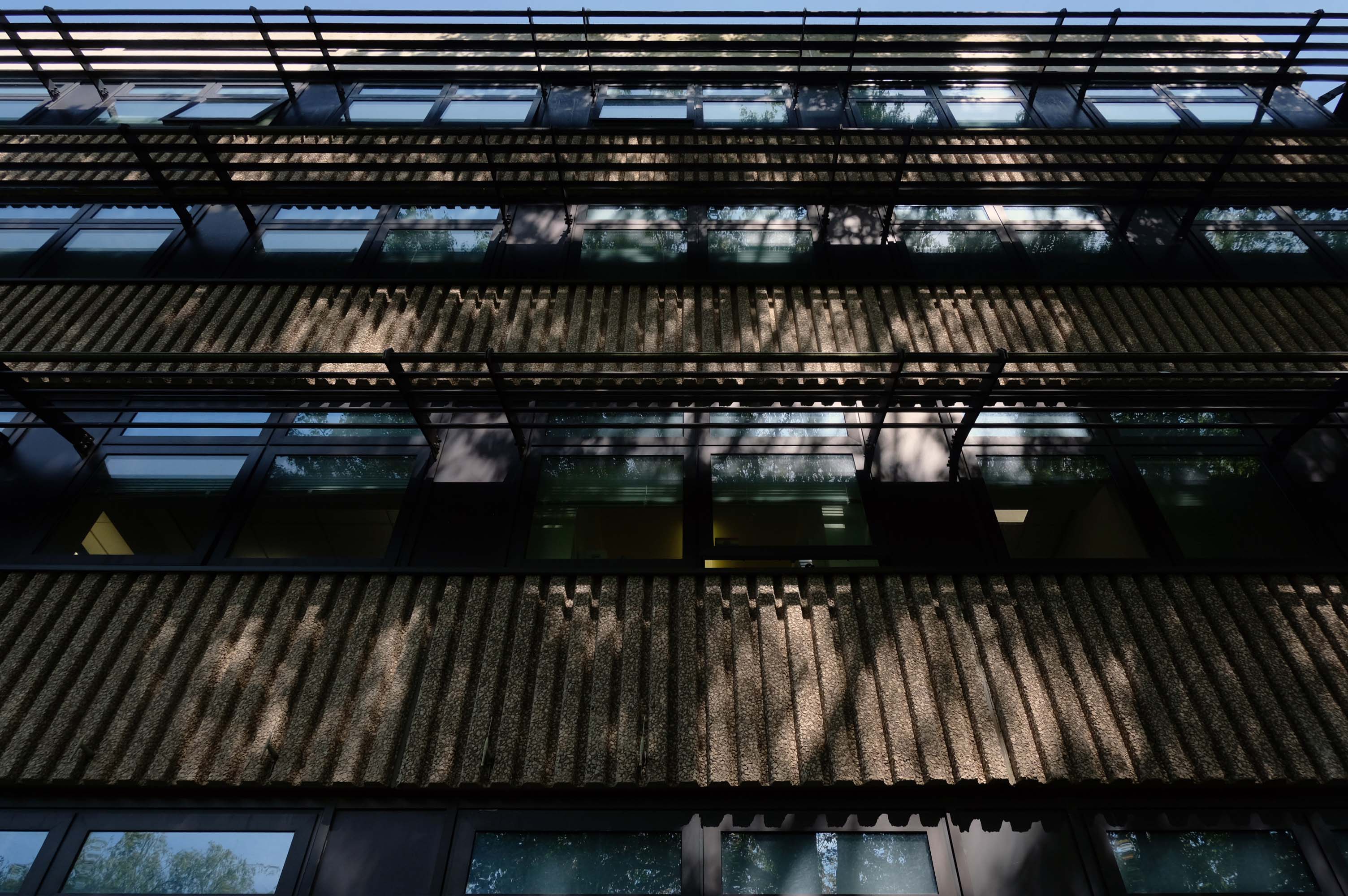
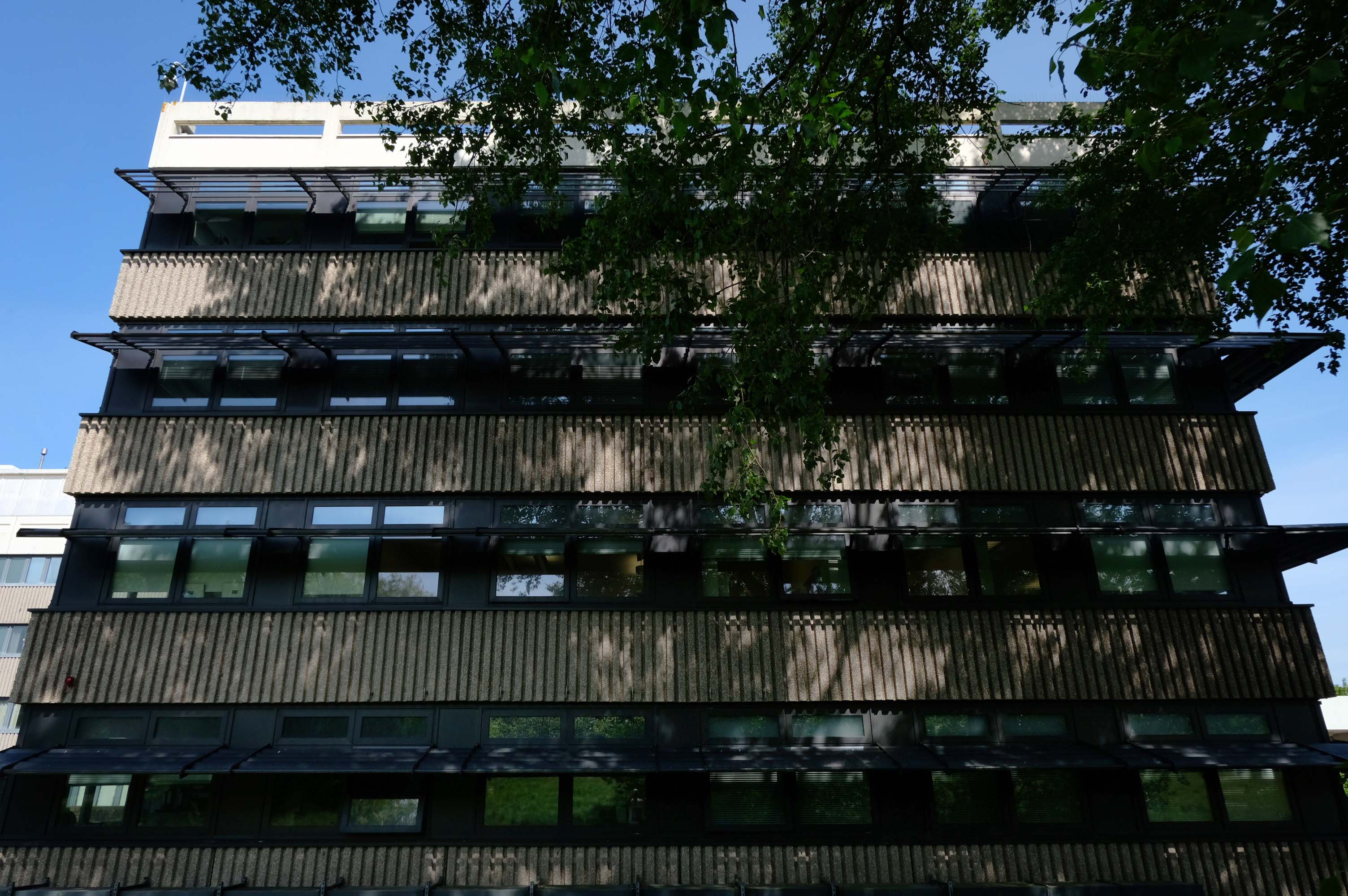
A system of brise-soleil solar shading was provided for the East, South and West facades. Combined with the reduced area of glazing, the brise soleil reduced the solar gains enough to avoid the need for mechanical cooling and for the natural ventilation strategy to be retained.

Roderic Bunn

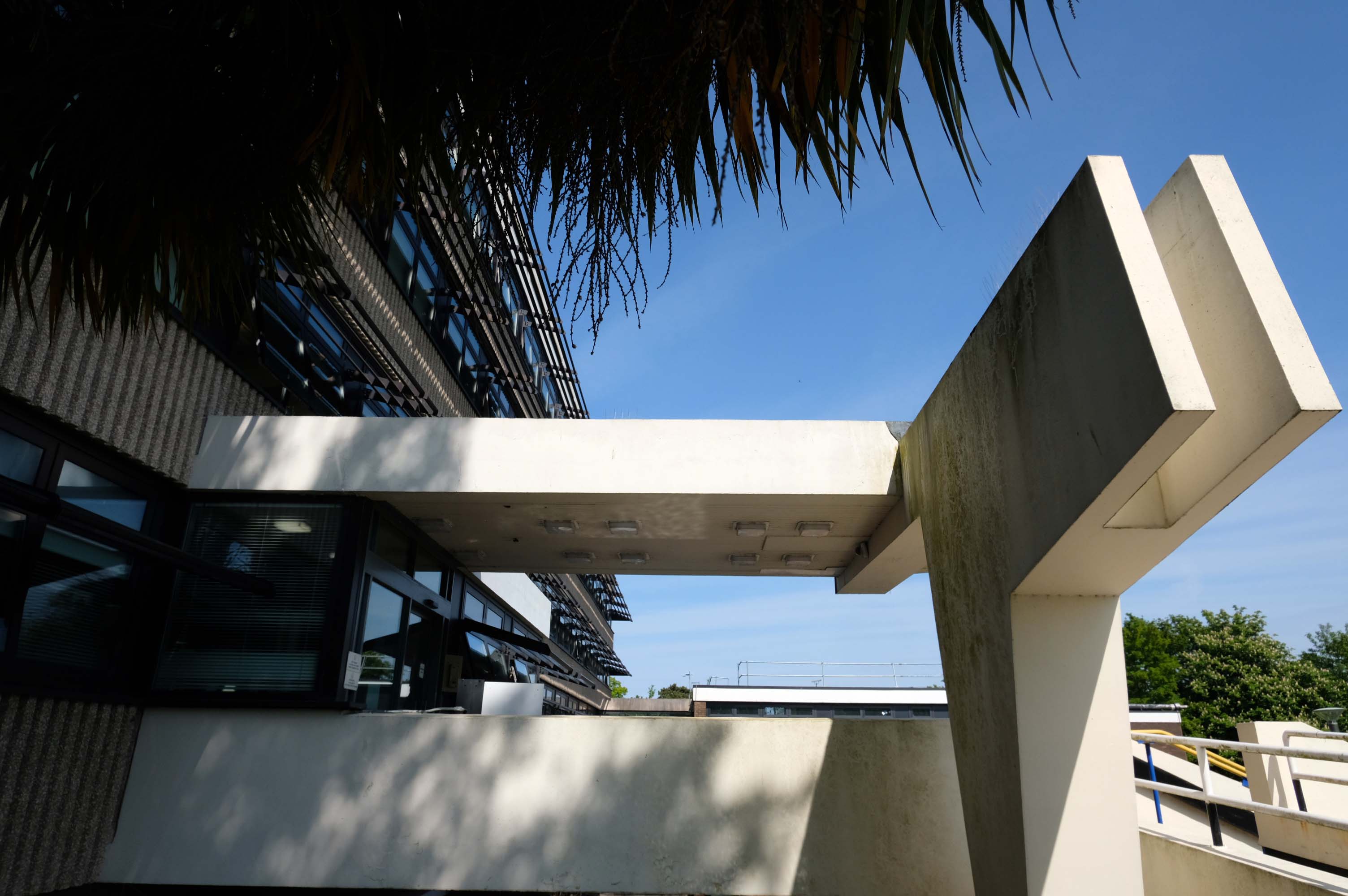
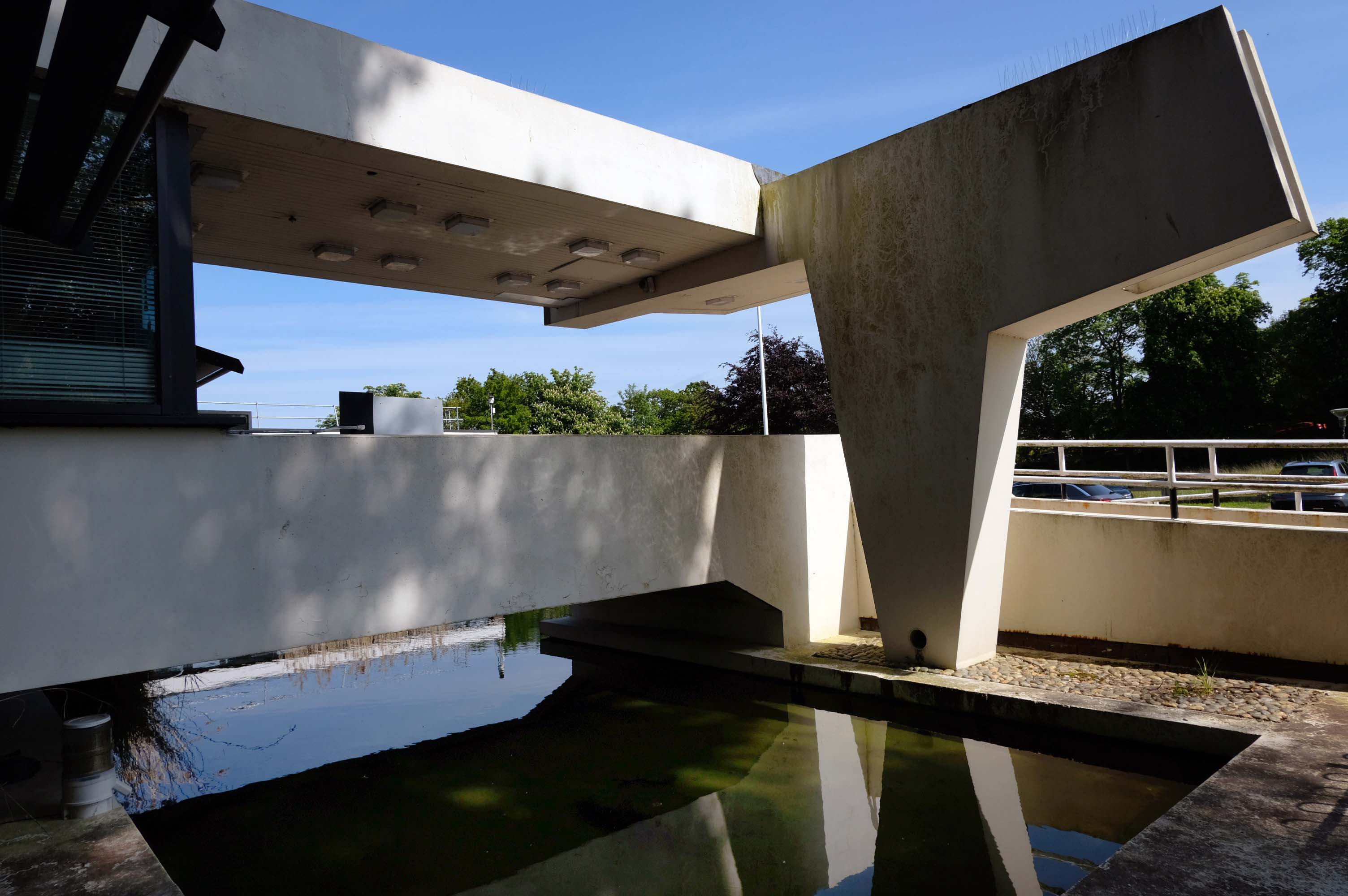
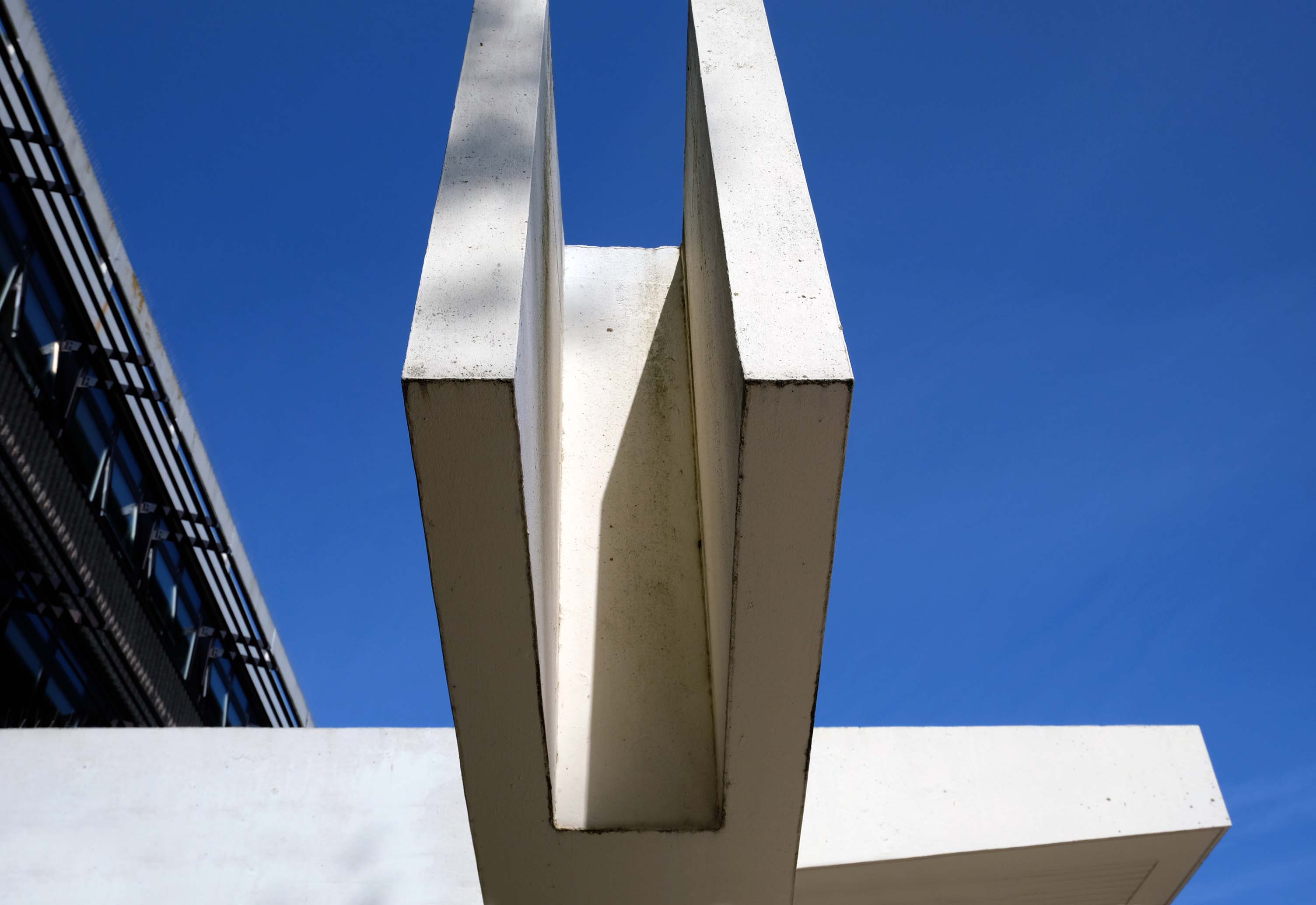
The building’s most striking features are the entrance porch and water feature – a gentle hint of Oscar Niemeyer.

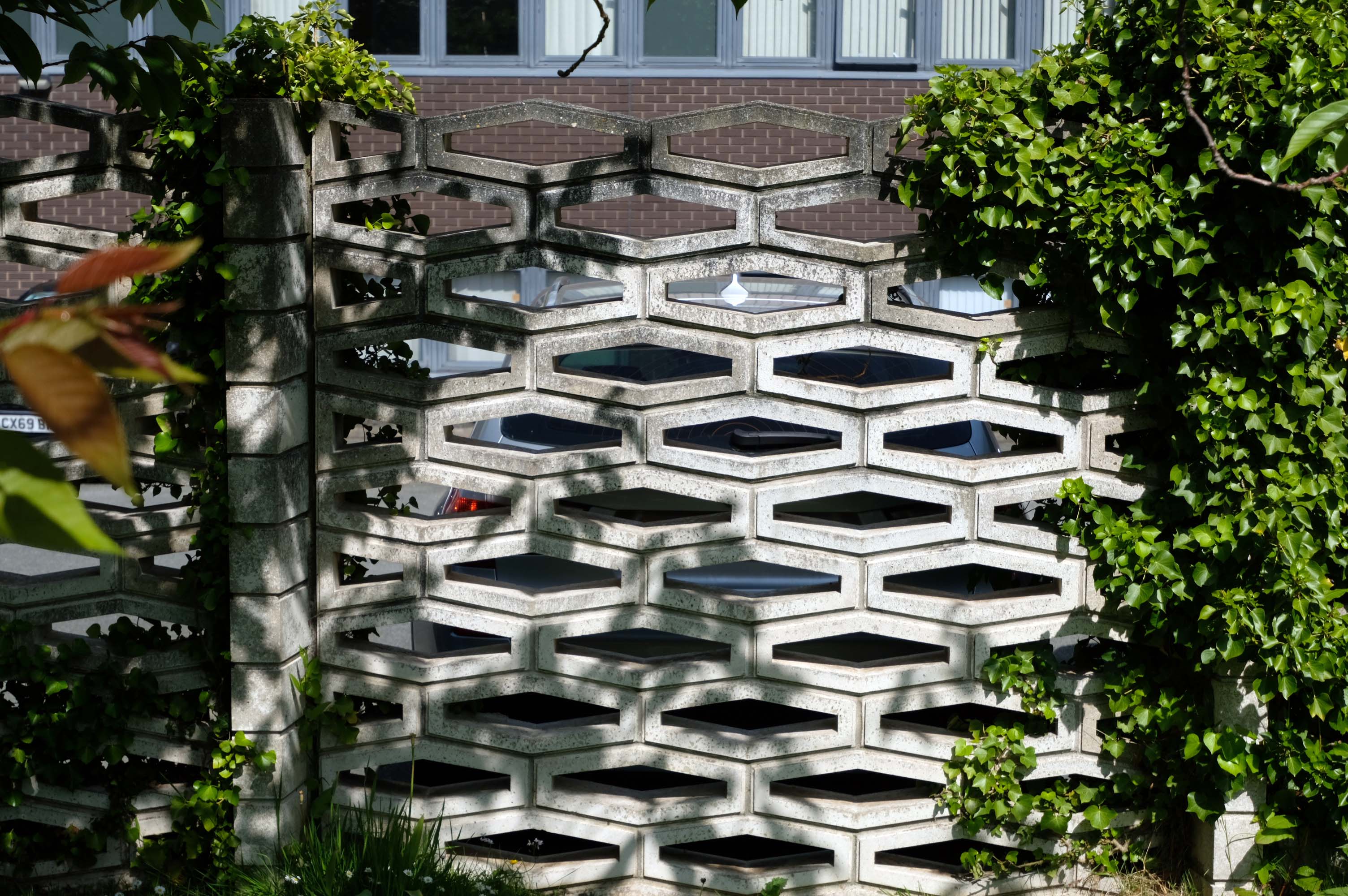
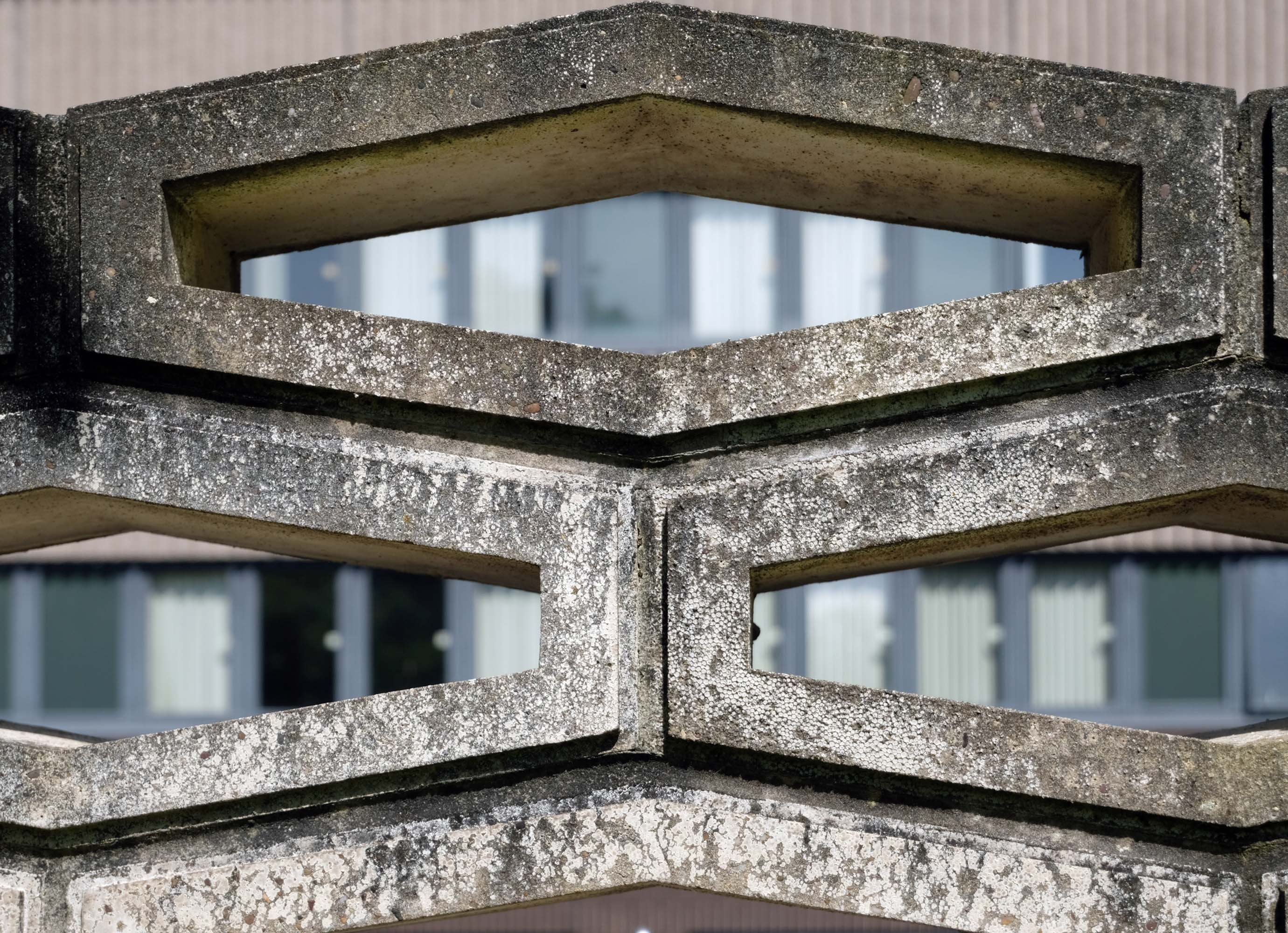
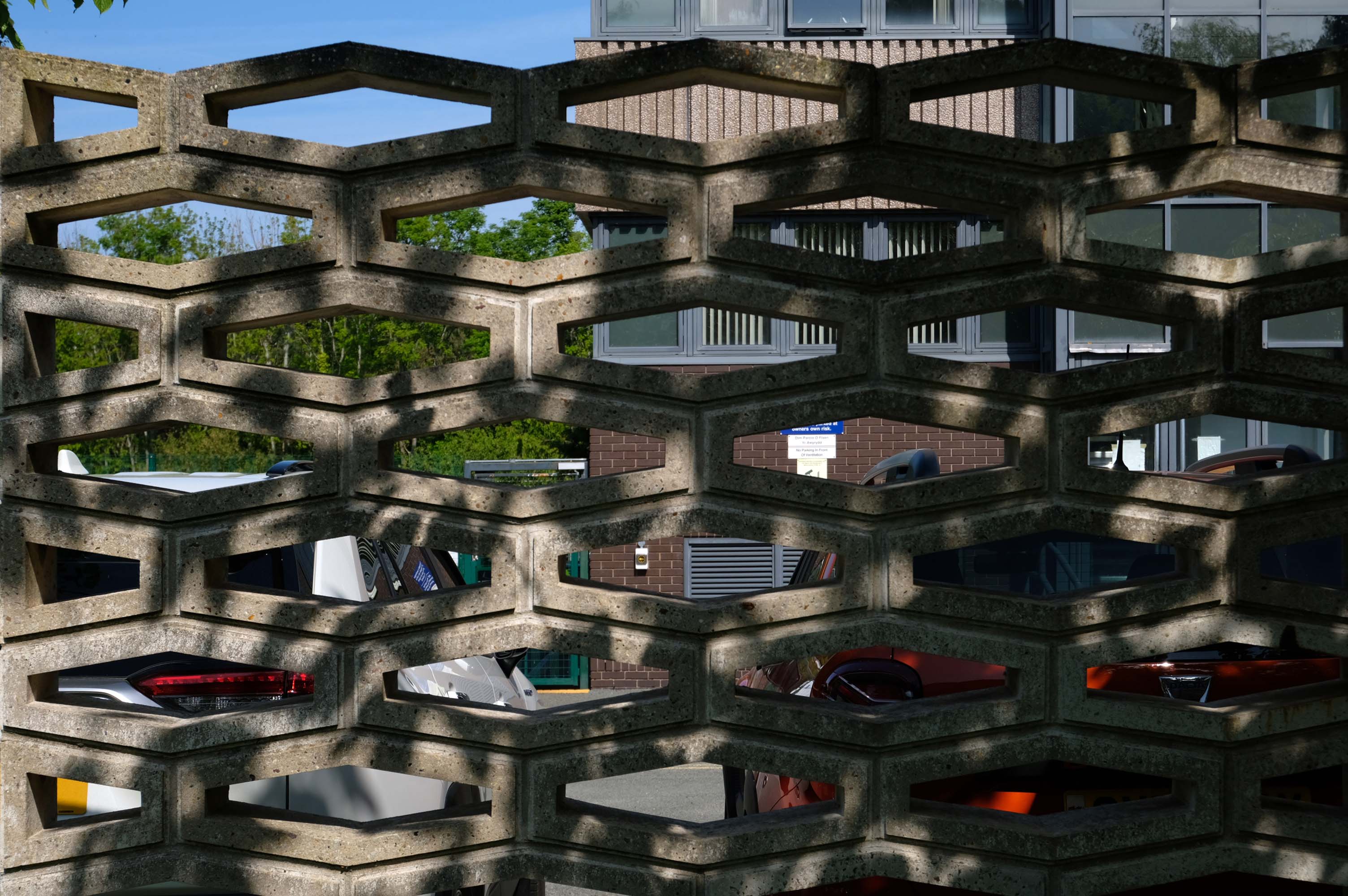
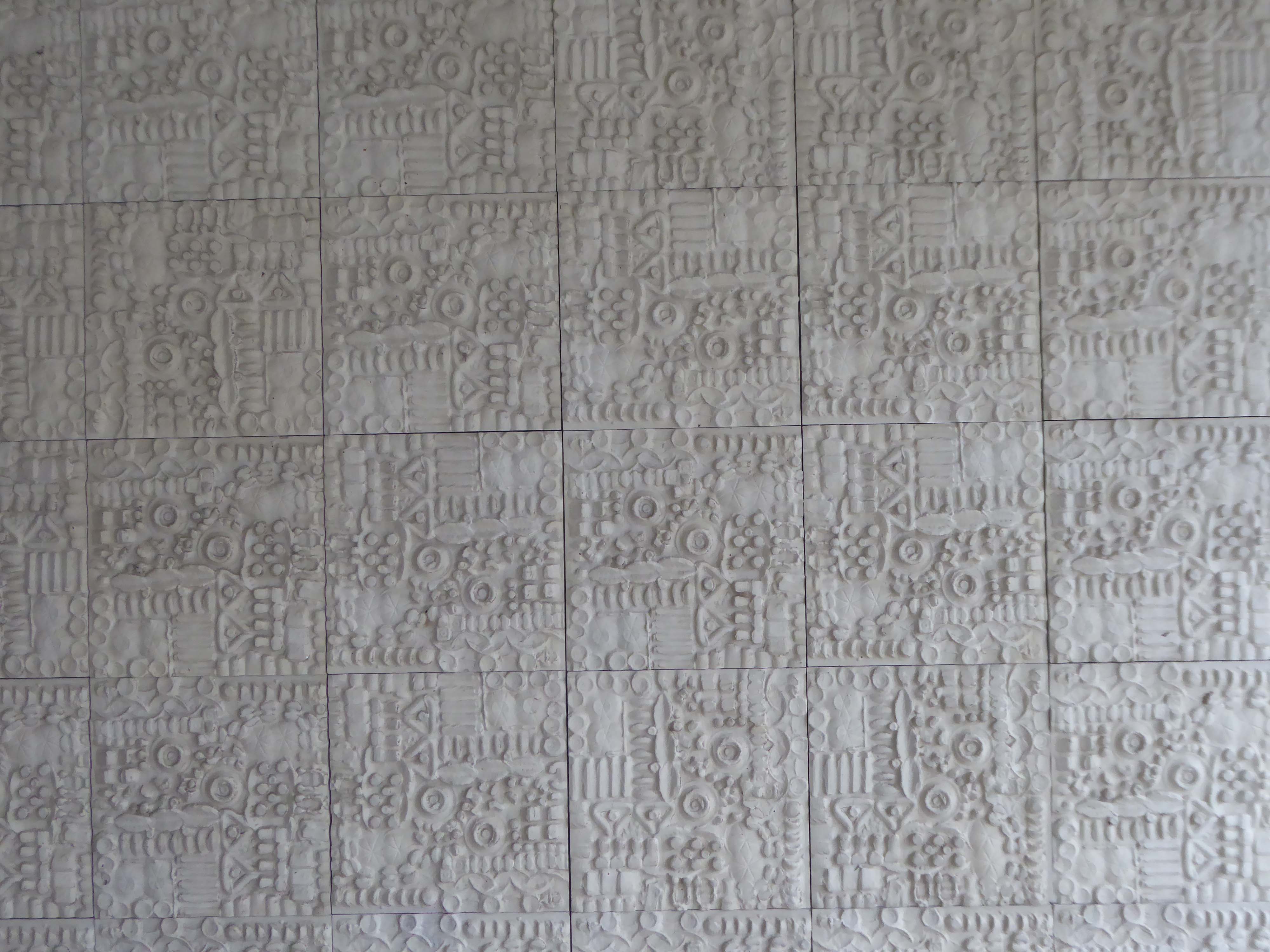
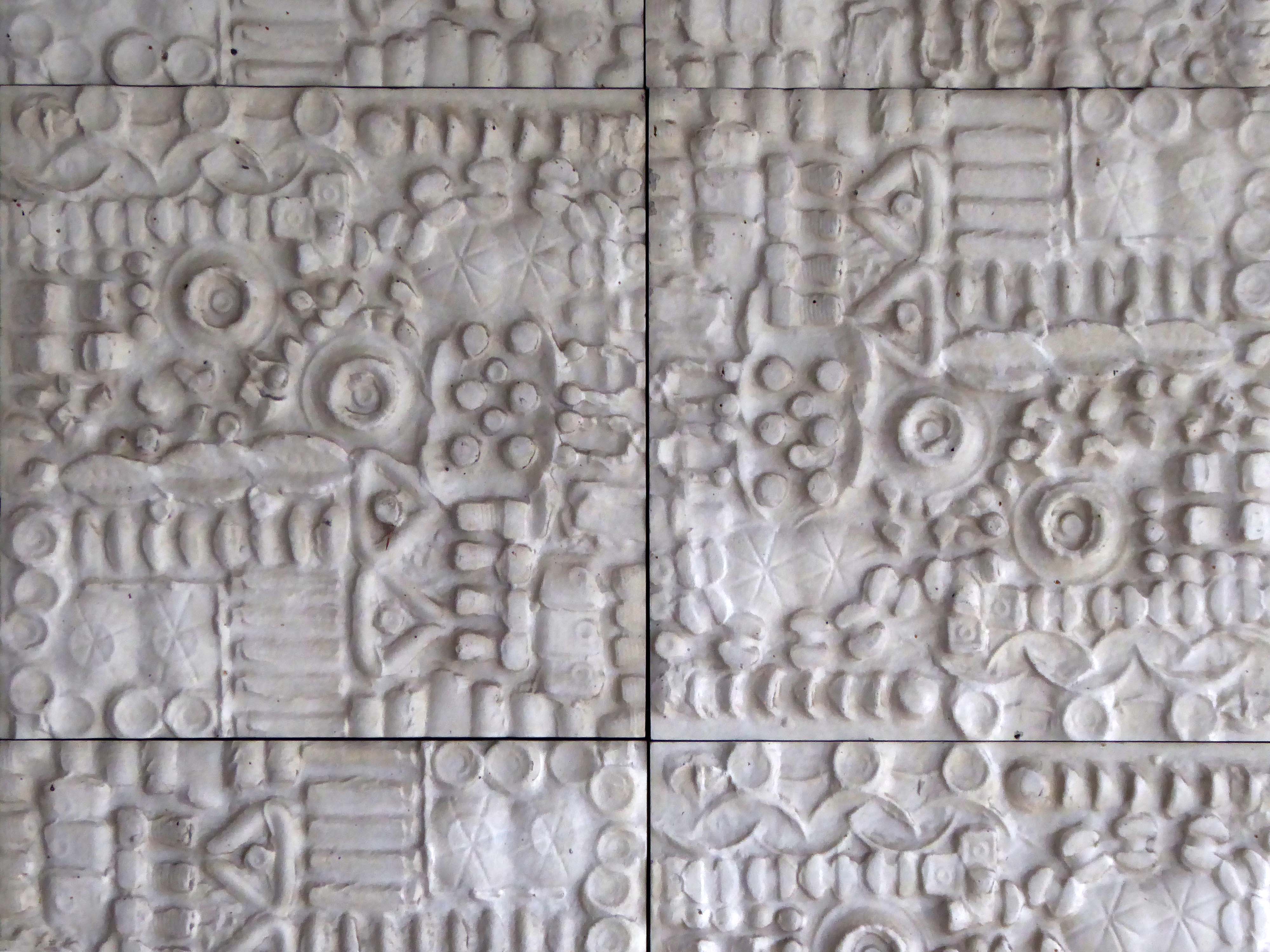
There is also a distinctive modular cast concrete screen wall.

Along with a more prosaic California screen block.

Walking the accessible area it is clear that the hard surfaces are broken up with the extensive planting and sylvan setting.

My thanks to the kindly receptionist for assisting me in my work. – much appreciated.

Diolch yn fawr!

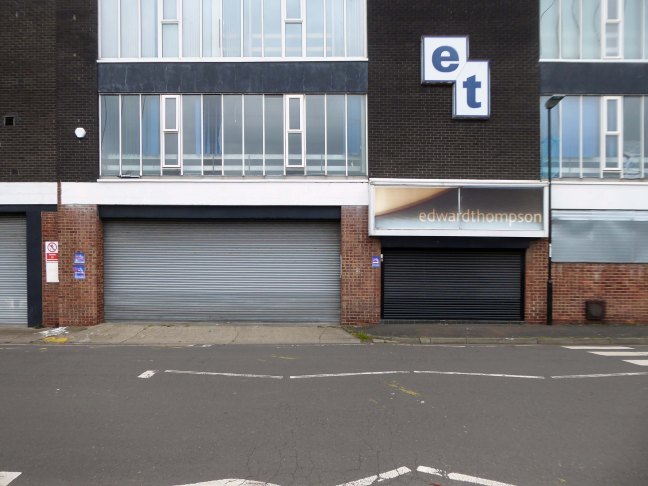
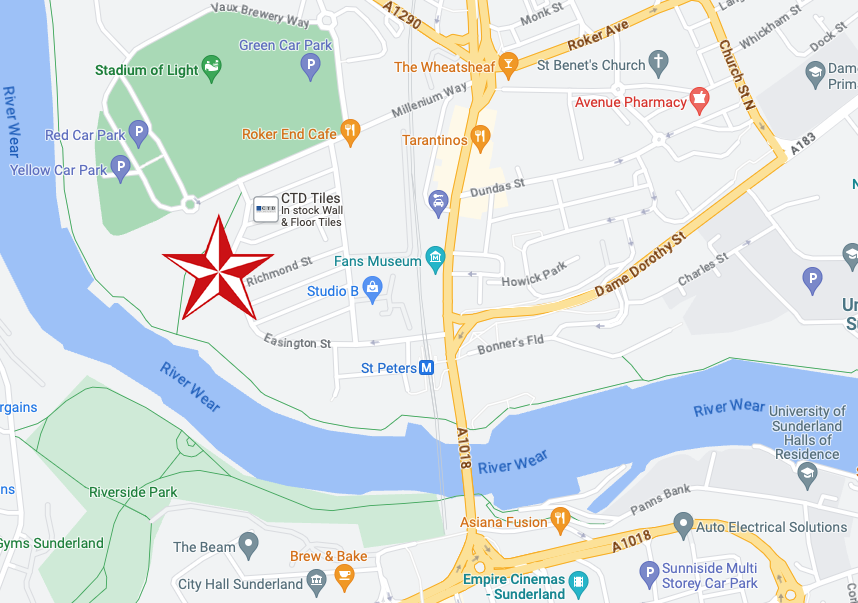
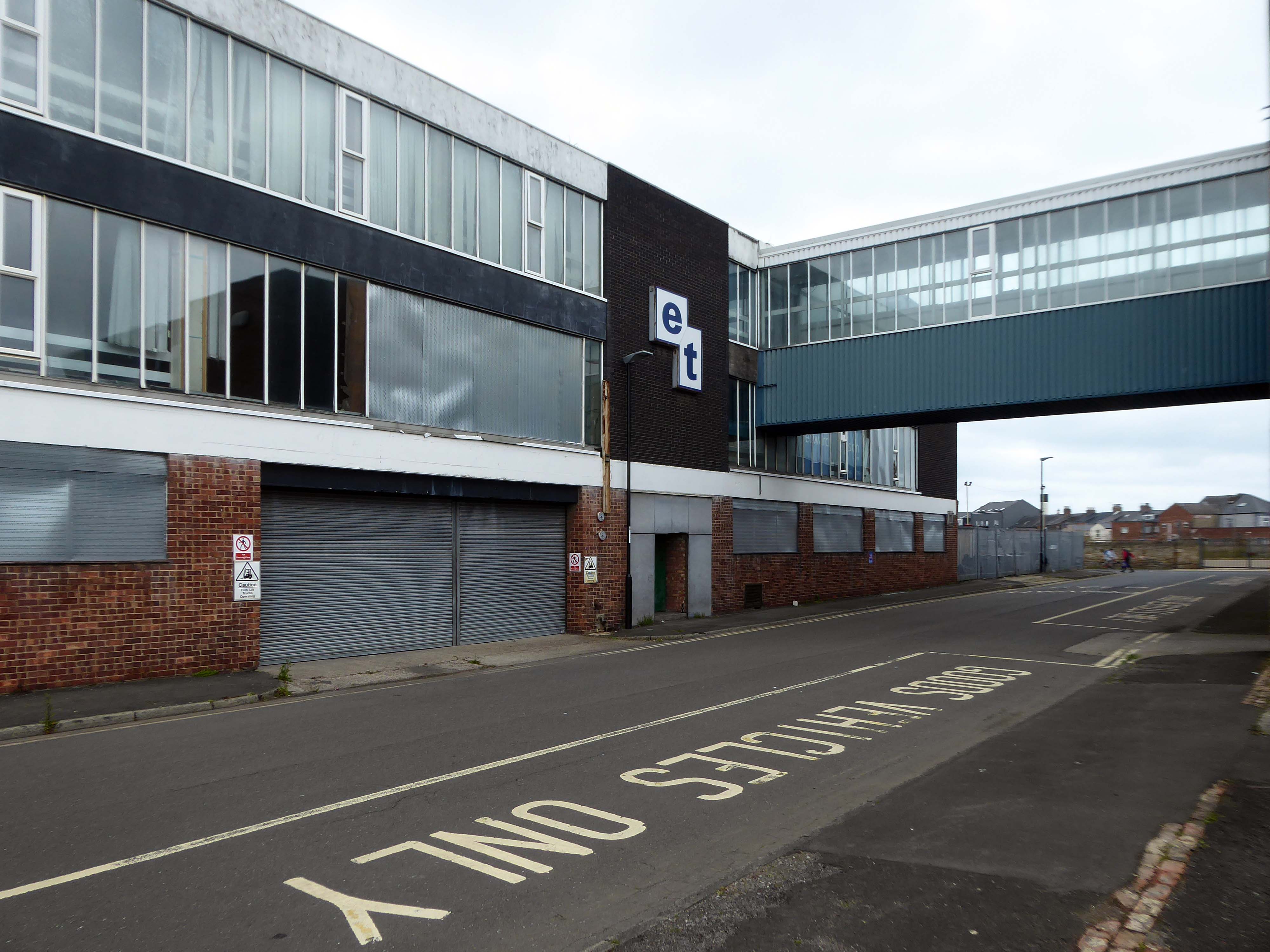
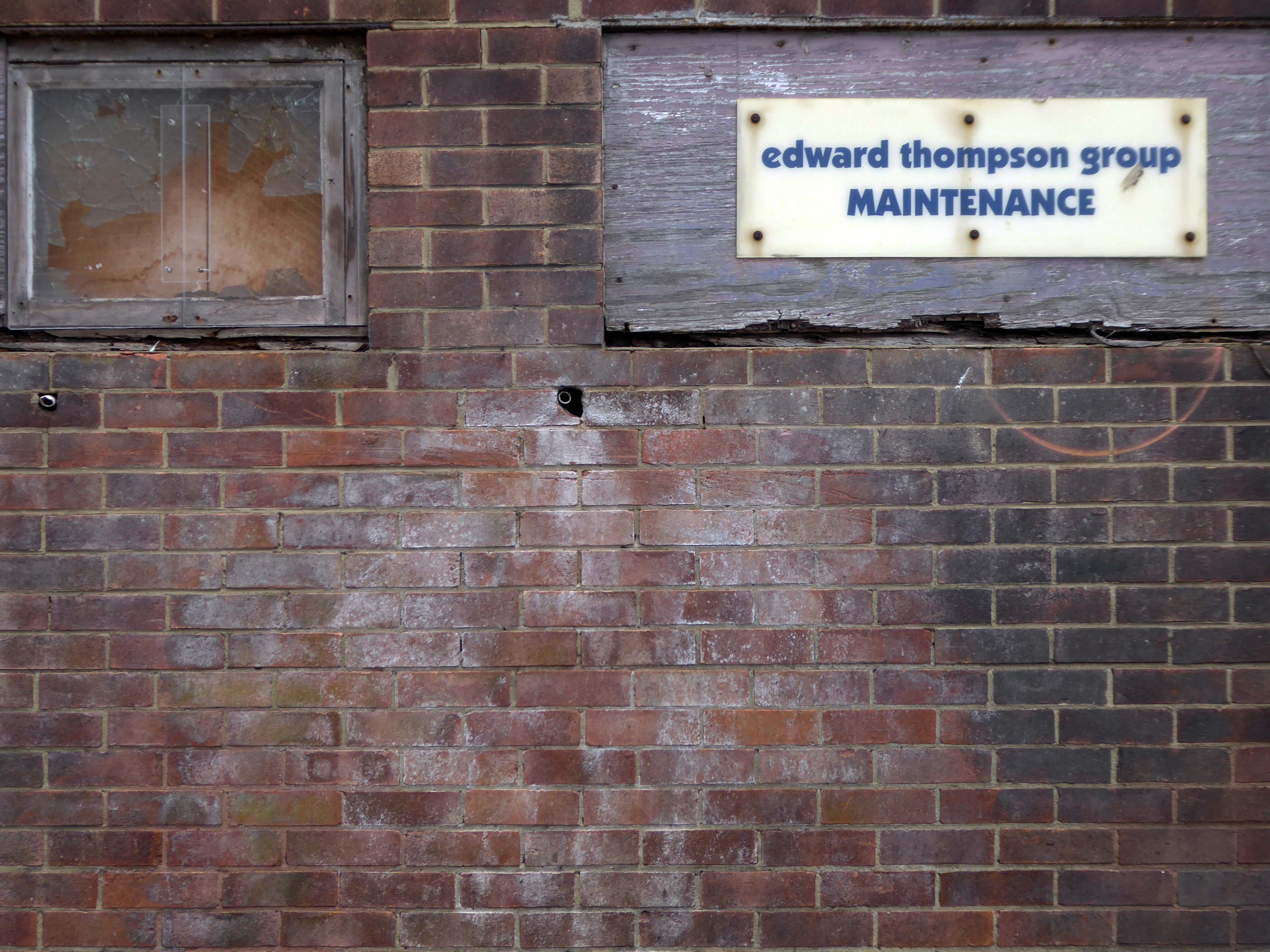
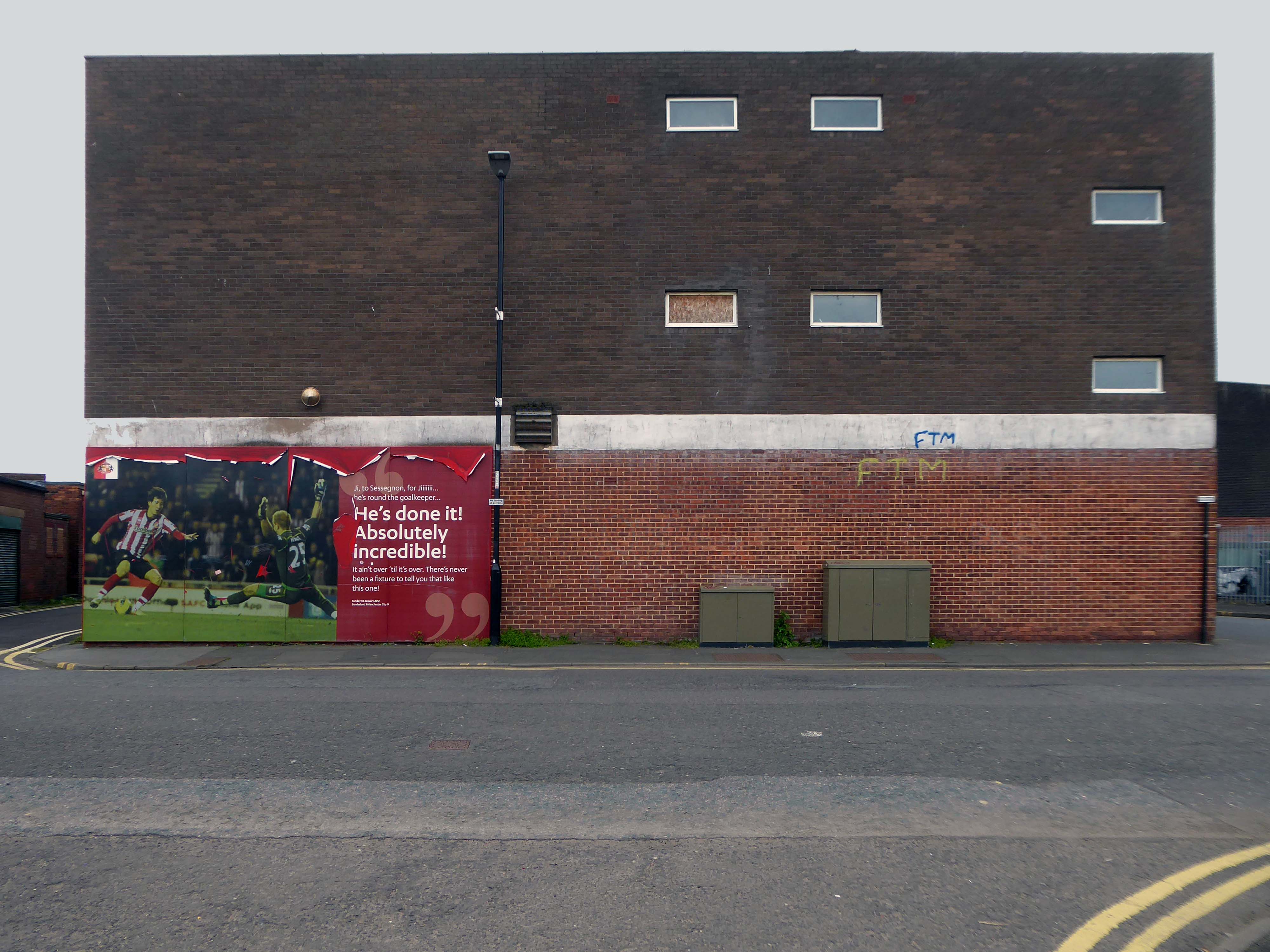
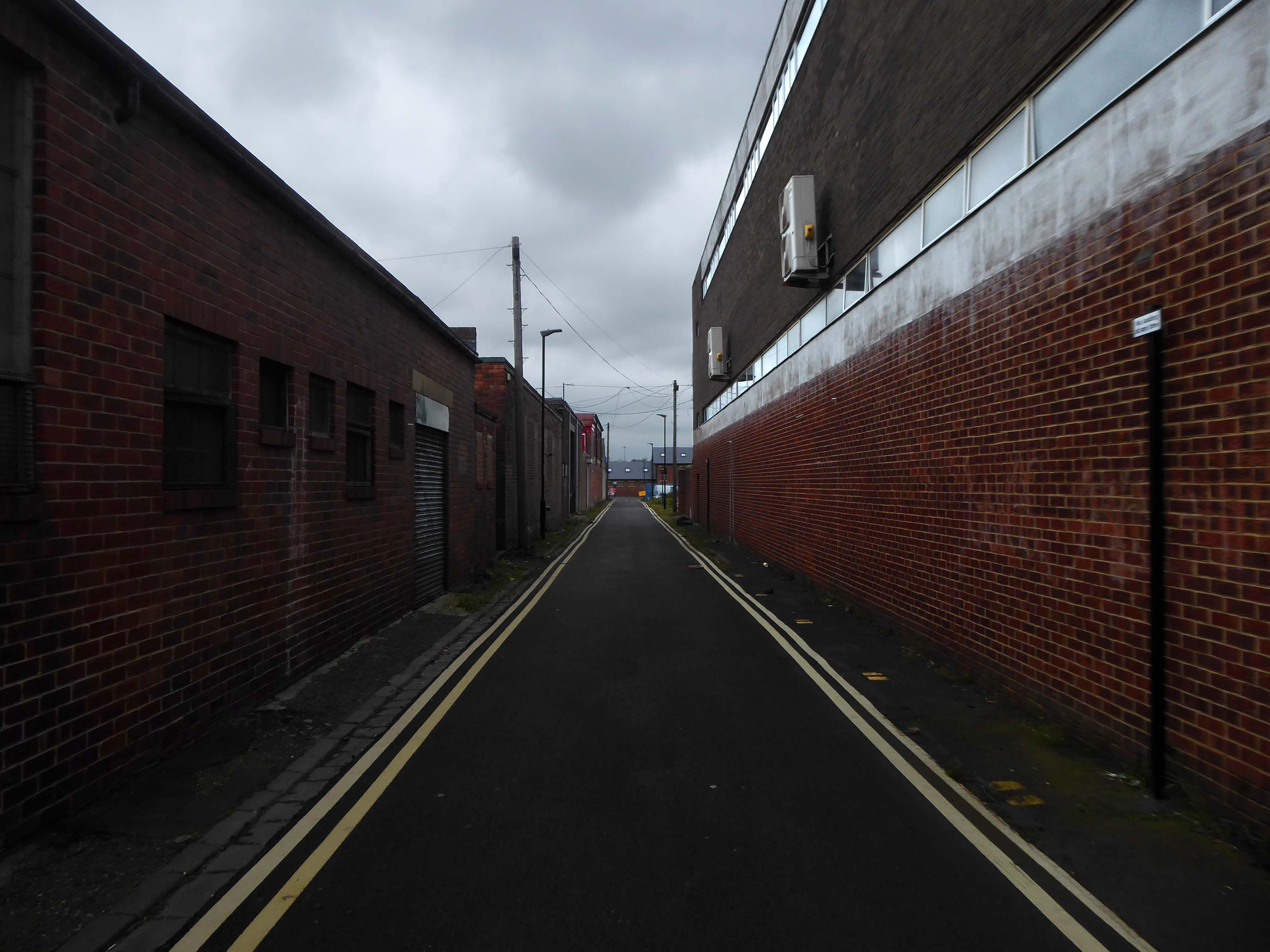
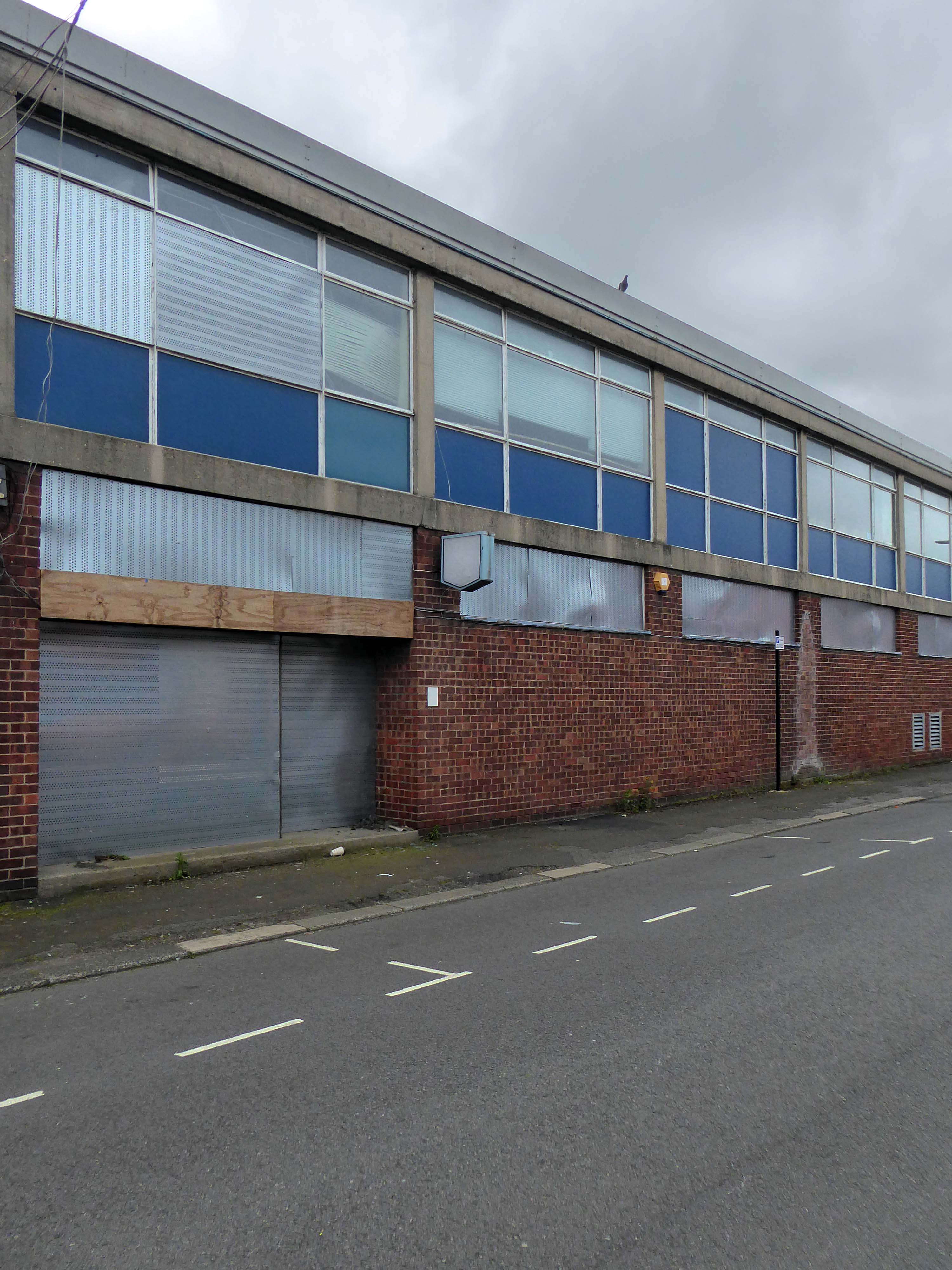
Edward Thompson – Sunderland

Richmond St Monkwearmouth Sunderland SR5 1BQ

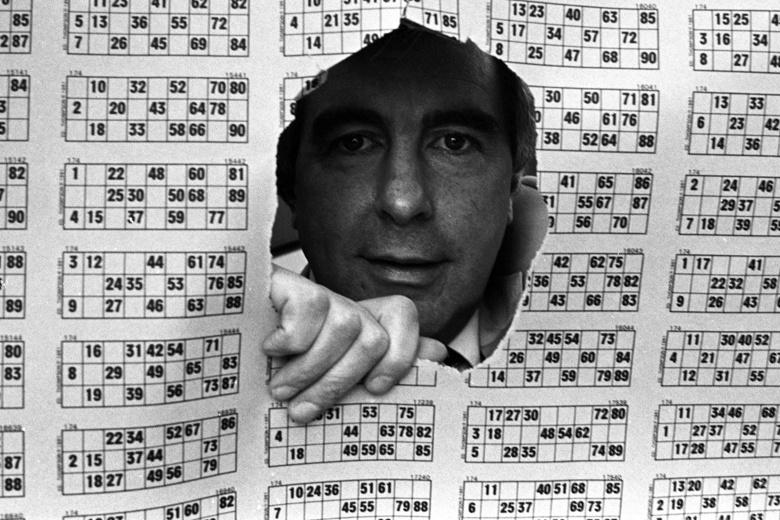
Bingo-Master’s Breakout!

Two swans in front of his eyes
Colored balls in front of his eyes
It’s number one for his Kelly’s eye
Treble-six right over his eye

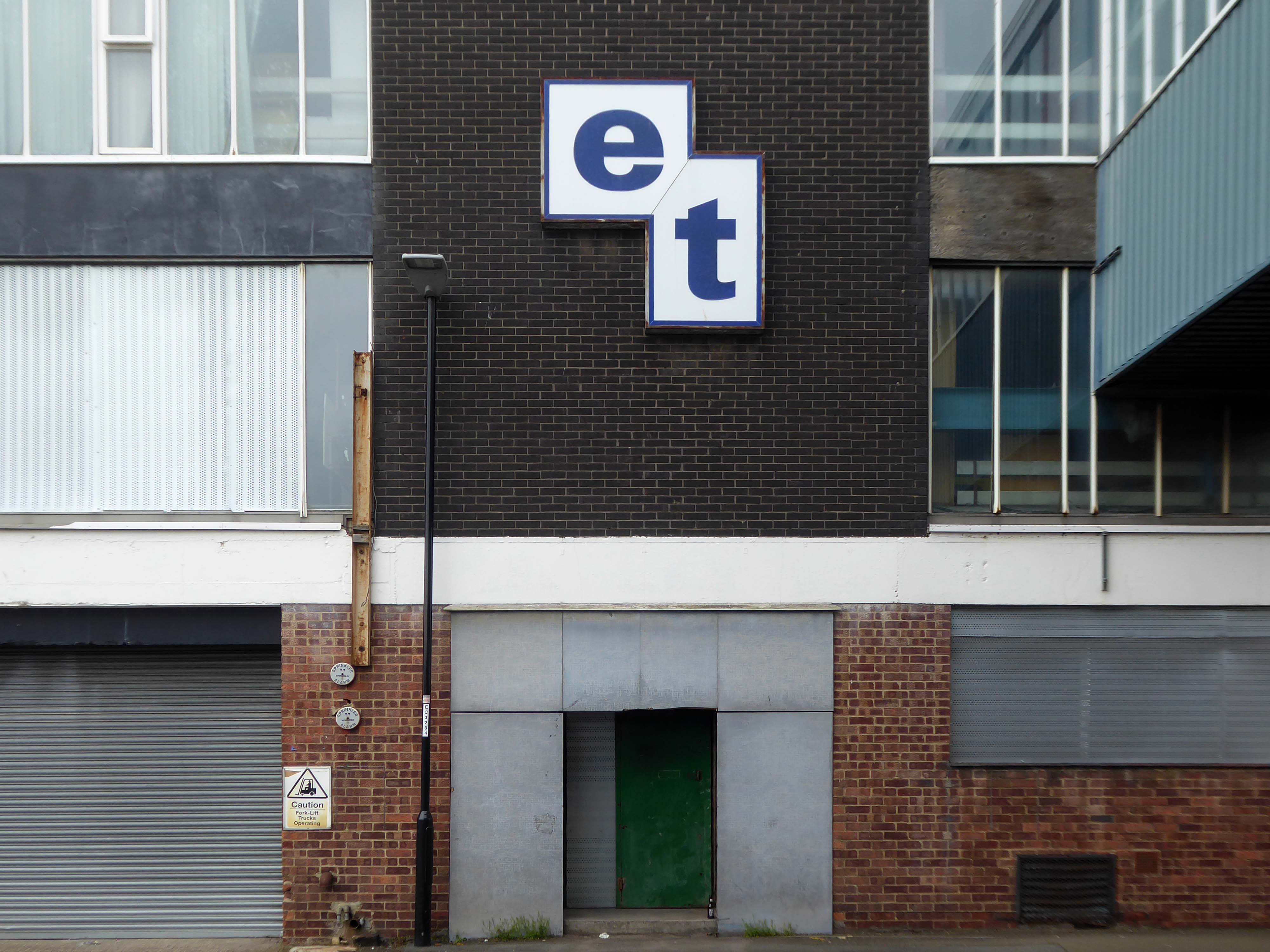
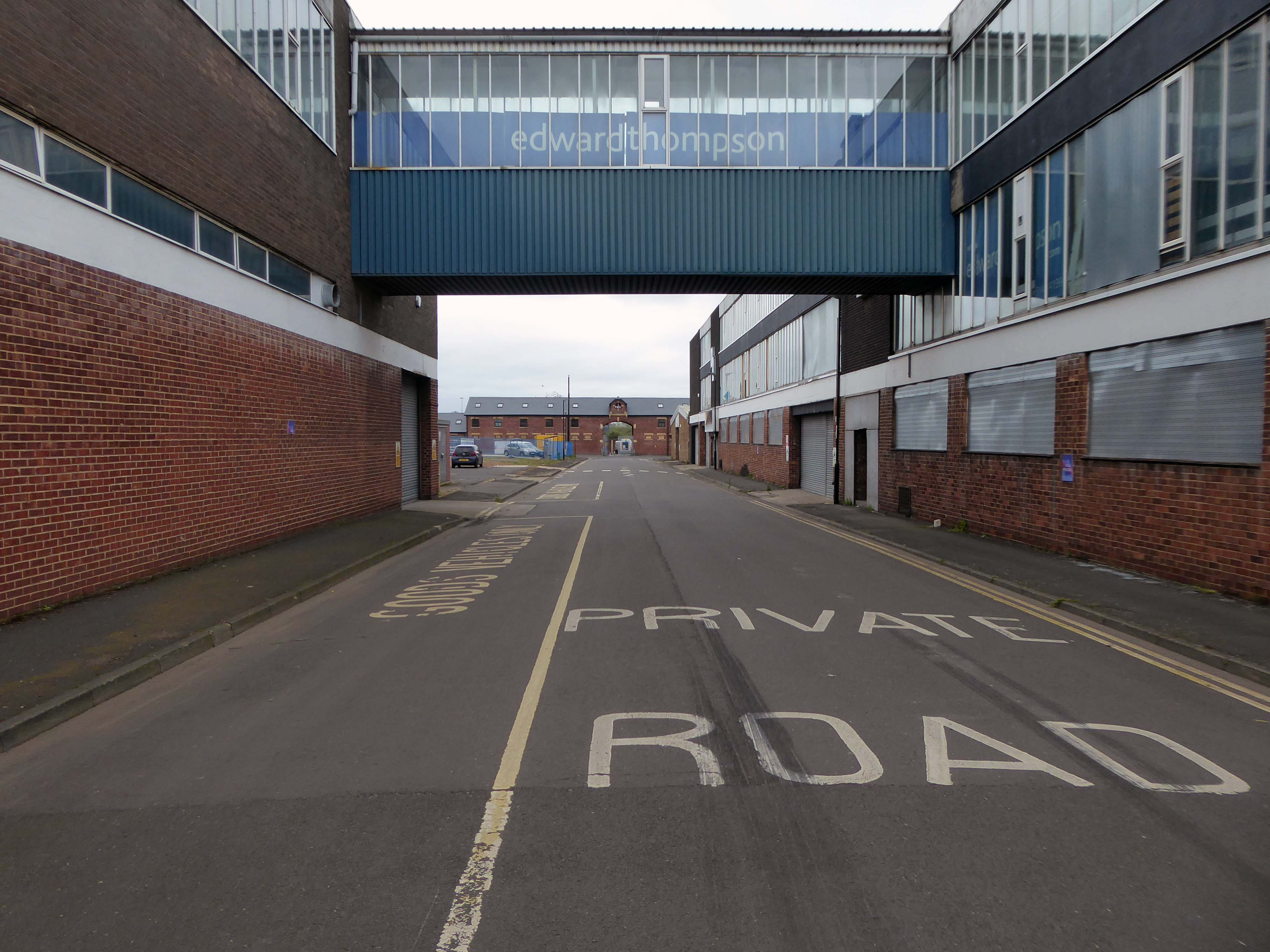
Edward Thompson, the family printing business, was founded in Sunderland in 1867.

They identified a business opportunity when a local priest, Jeremiah O’Callaghan, ordered some bingo tickets for a parish fund-raising exercise.

From those humble beginnings, Edward Thompson mushroomed in size as Britain went bingo-mad in the 1960s, becoming first the UK’s and then the world’s biggest producer of bingo cards and tickets.

Sky News

The company which has been printing for more than 155 years – has been hit hard by the crash in bingo hall use as Covid ripped through the leisure sector. CEO Paddy Cronin said he was ‘gutted’ but the business had finally had to face the inevitable as the cashflow dried up.

We were built on a bet but our luck has now run out – he told The Northern Echo.

Covid completely changed the market and as the halls went into decline it just became untenable so I had to break the news to the workers.

They were the pioneers of newspaper bingo, printing the first cards in 1975 and going on to work in places like Bolivia and Belgium and even printing the ballot papers for Nelson Mandela’s 1994 election in South Africa.

So their number is up the factory is tinned-up, house has been called for the very last time.

Yeah, yeah, industrial estate

Well you started here to earn your pay
Clean neck and ears on your first day
Well we tap one another as you walk in the gate
And we’d build a canteen but we haven’t got much space

Industrial Estate

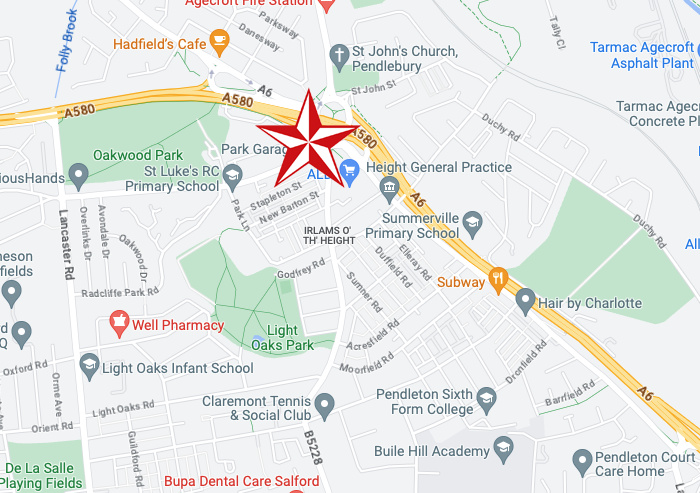
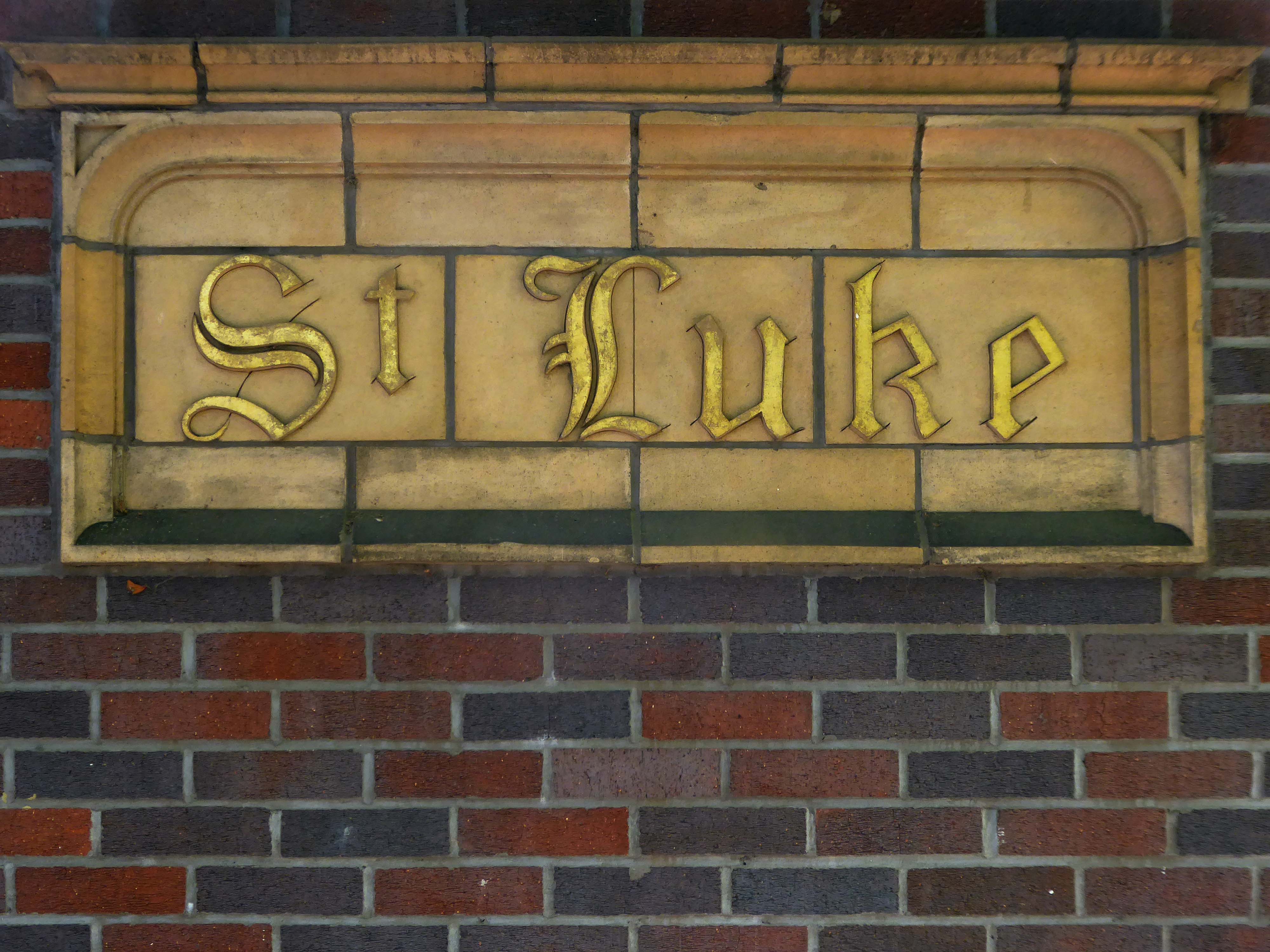
ST Luke’s RC – Salford

13 Swinton Park Rd Salford M6 7WR

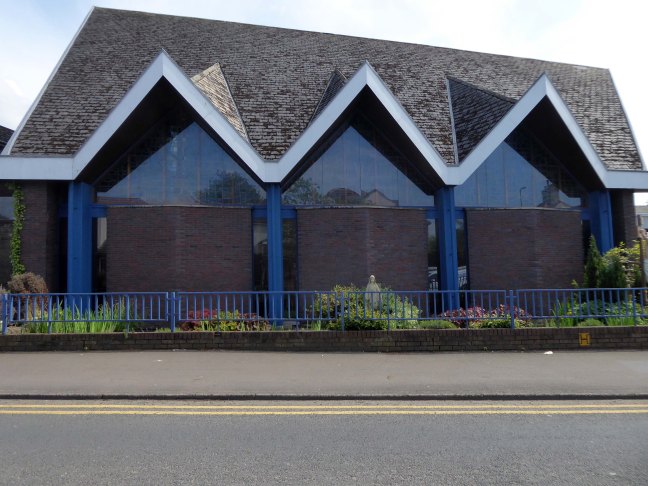
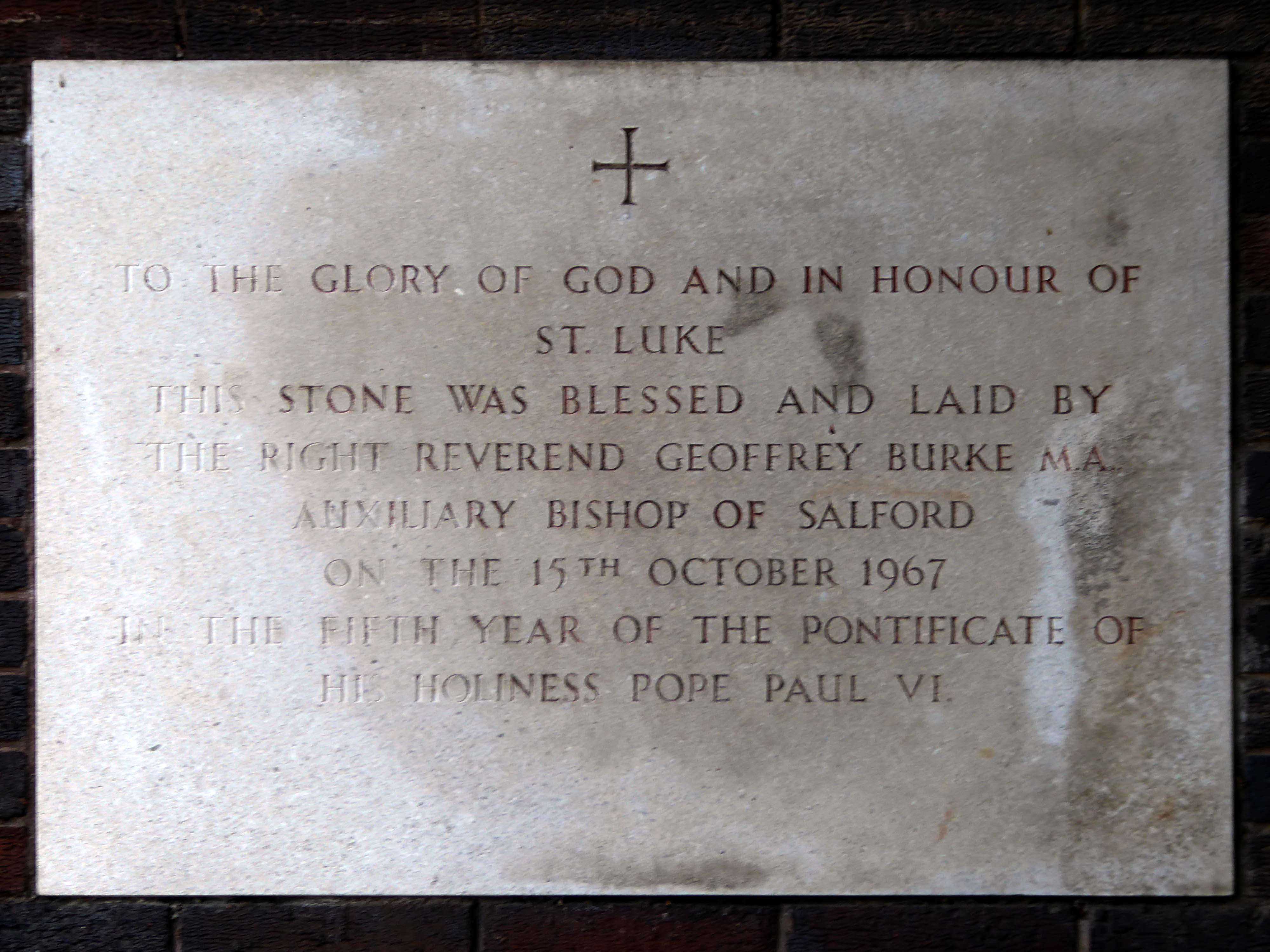
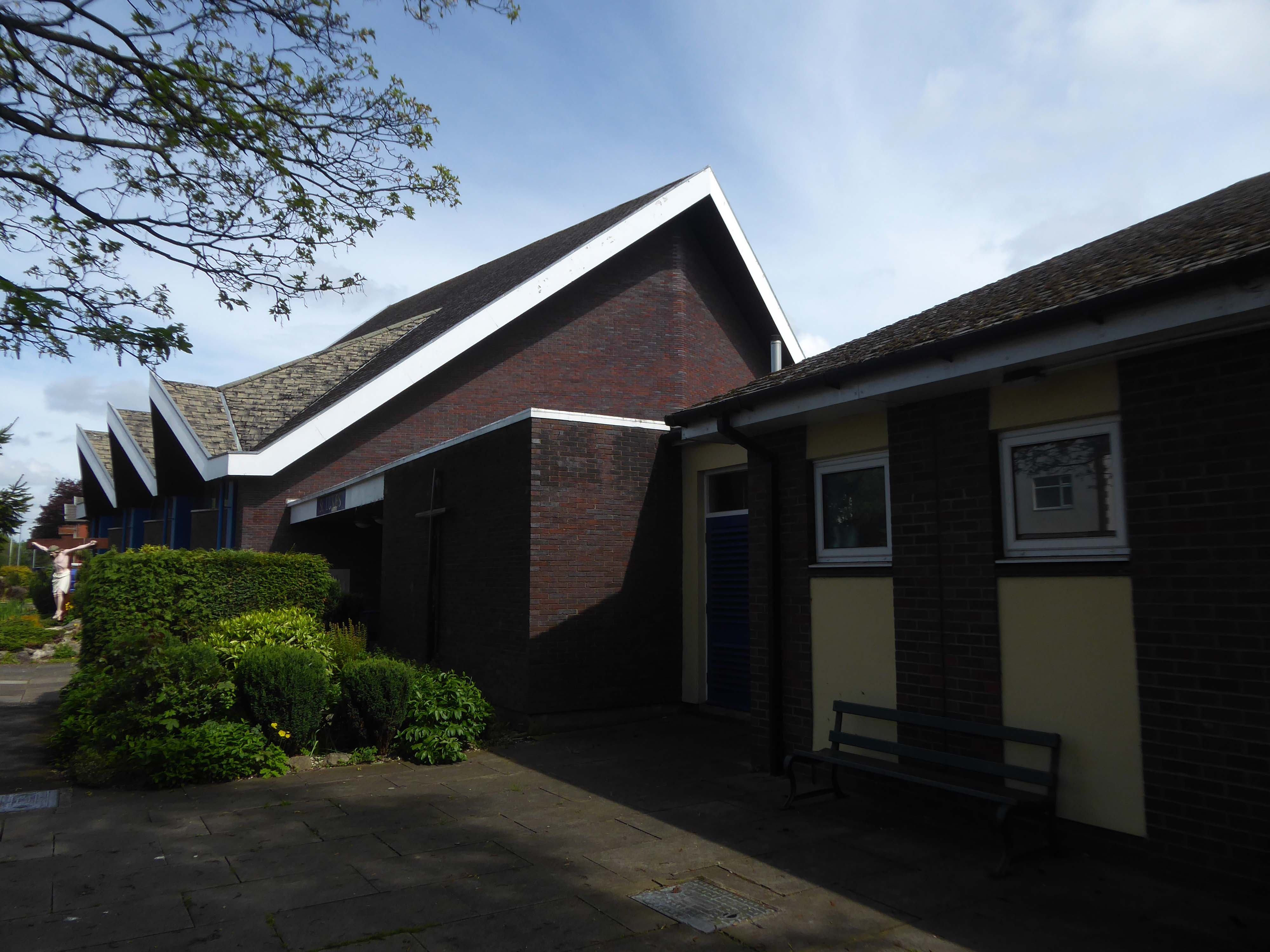
It was decided to build a new church in 1963, when the architects Burles, Newton & Partners were appointed and drew up a scheme for a church seating 470. Financial restraints delayed the start of building work until 1966. The contractors were William Thorpe and the foundation stone was laid by Bishop Burke in October 1967. The church was opened two years later in 1969. The church was built to reflect the emerging liturgical reforms of the Second Vatican Council, with a wide interior affording full views of the altar.  The same architects designed a presbytery, added in 1974-5.  A sanctuary reordering took place at some point when the Blessed Sacrament Chapel became the Lady Chapel and the tabernacle was placed behind the altar. The altar rails were removed, and the sanctuary carpeted. Perhaps at the same time the font was brought from the baptistery into the body of the church.

Description

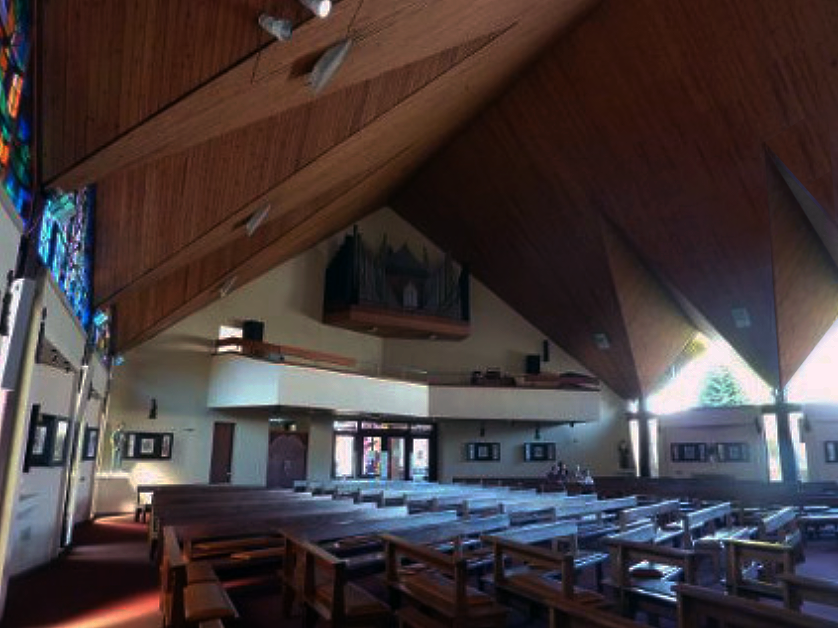
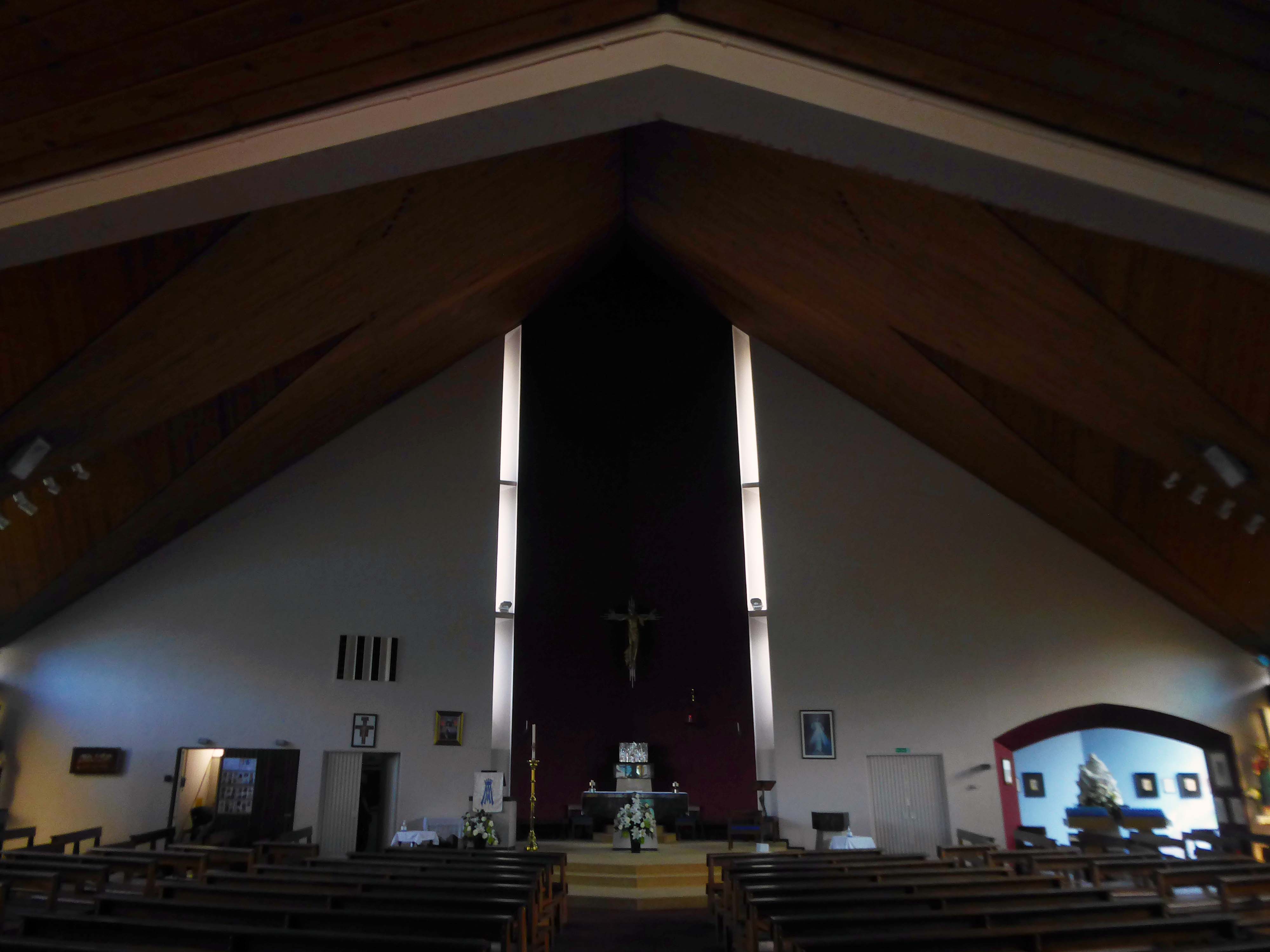
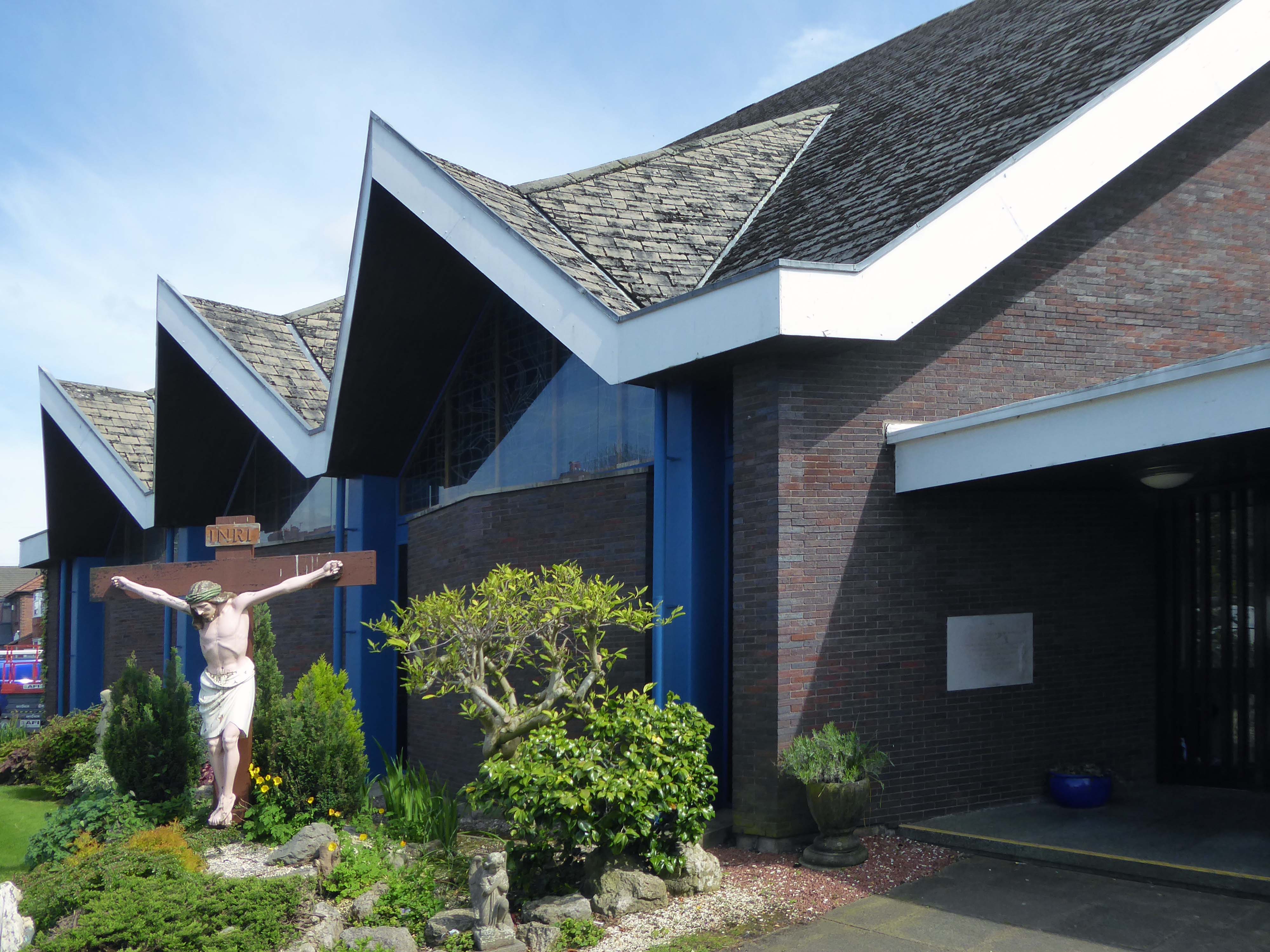
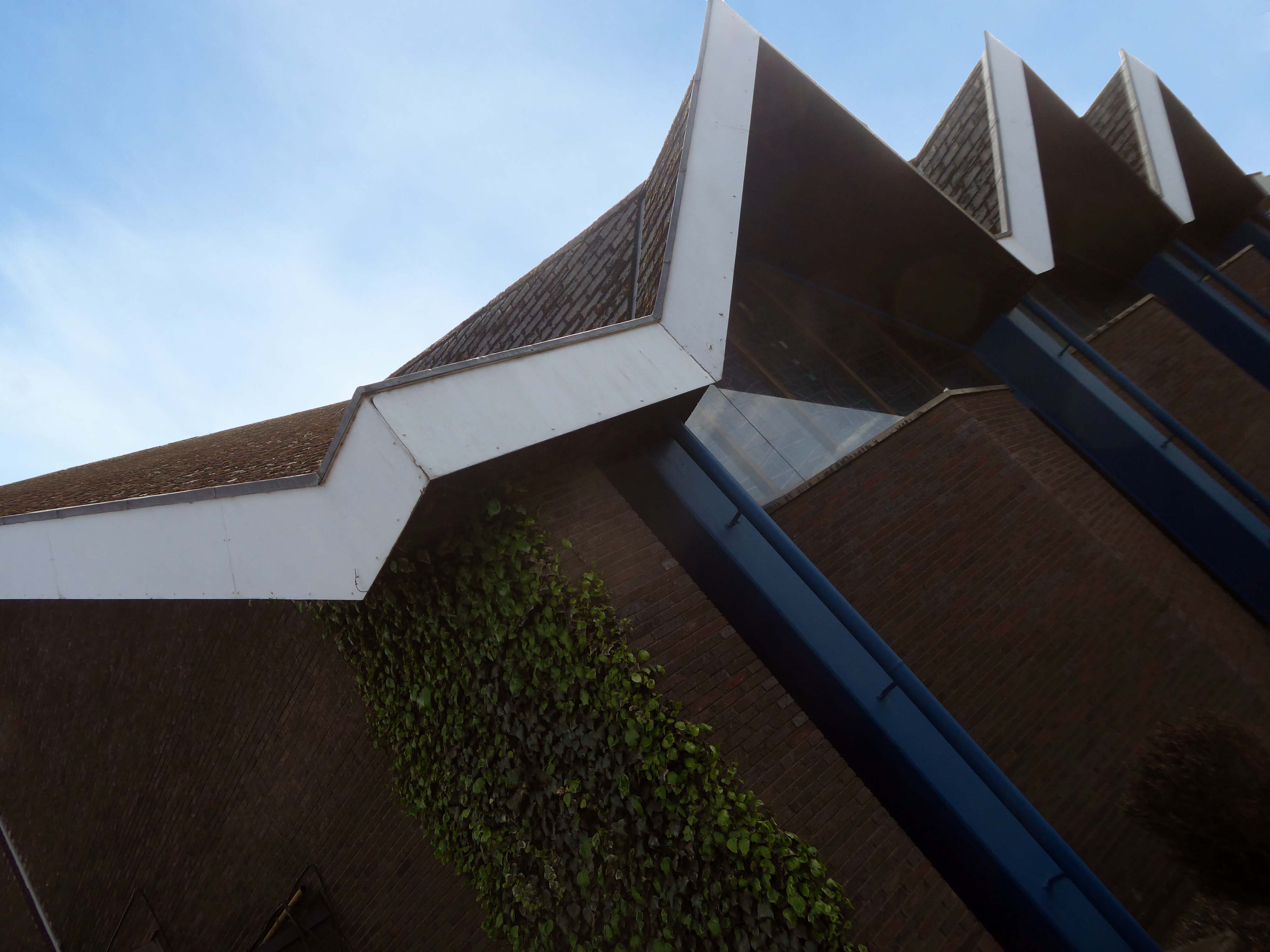
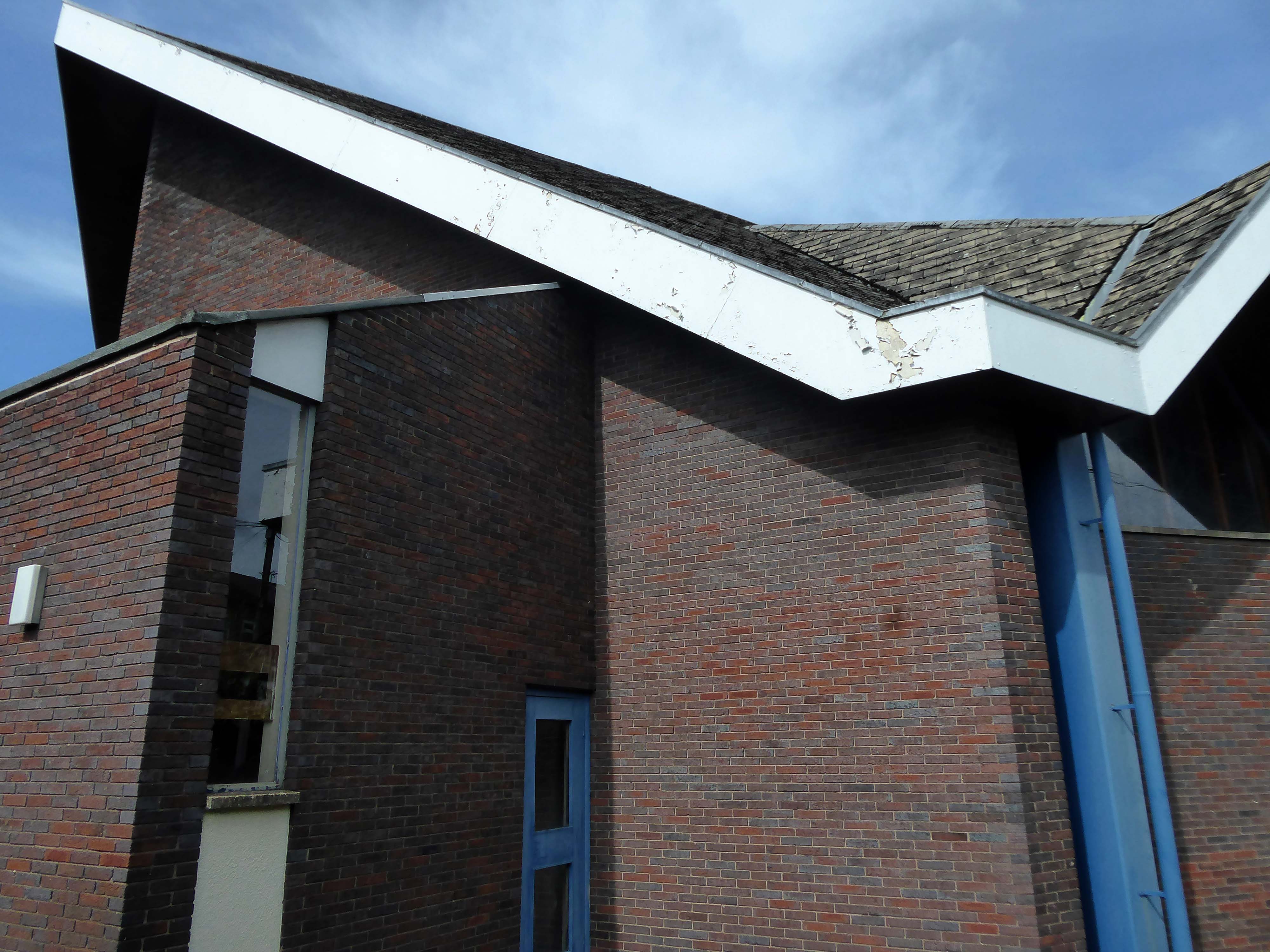
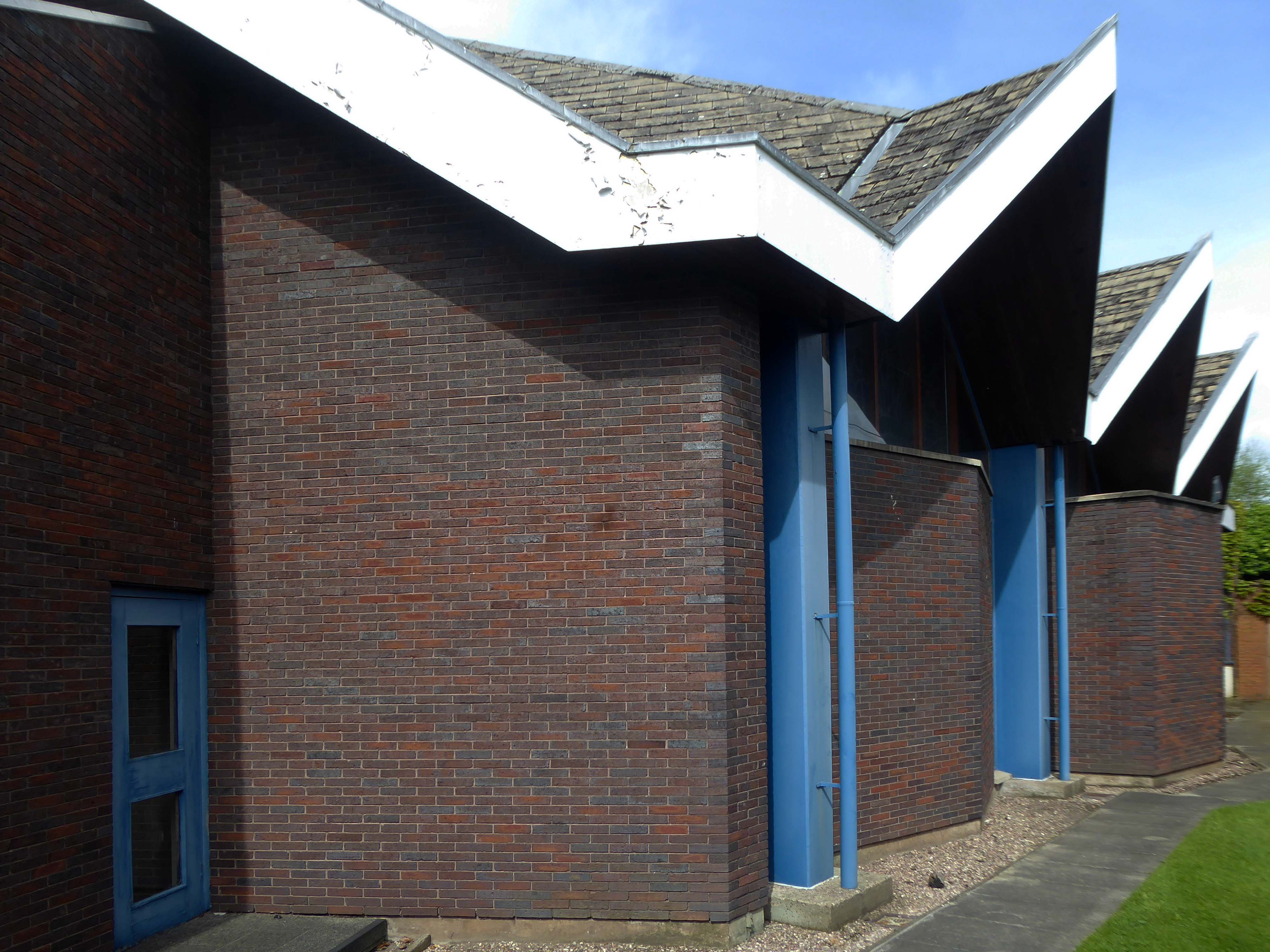
All orientations given are liturgical. The church is a steel-framed structure with loadbearing gable walls built on a series of rafts to guard against mining subsidence. It was designed to ensure that the congregation would have unimpeded views of the sanctuary, and the architects described the layout as ‘in conformity with the Spirit of the new Constitution’. The plan is near rectangular, angled at the east end, with a striking roof swooping up at the east end and trios of sharply pointed gables on each side.

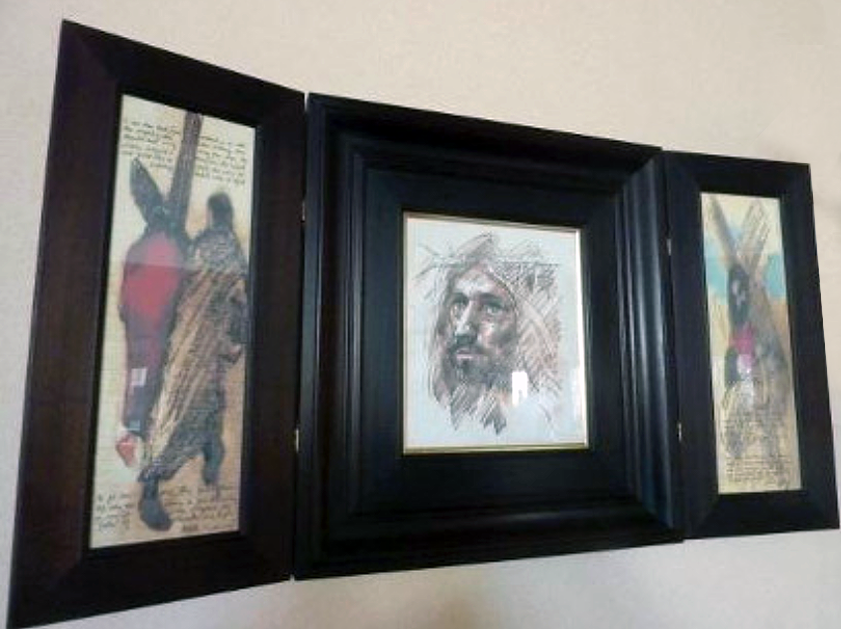
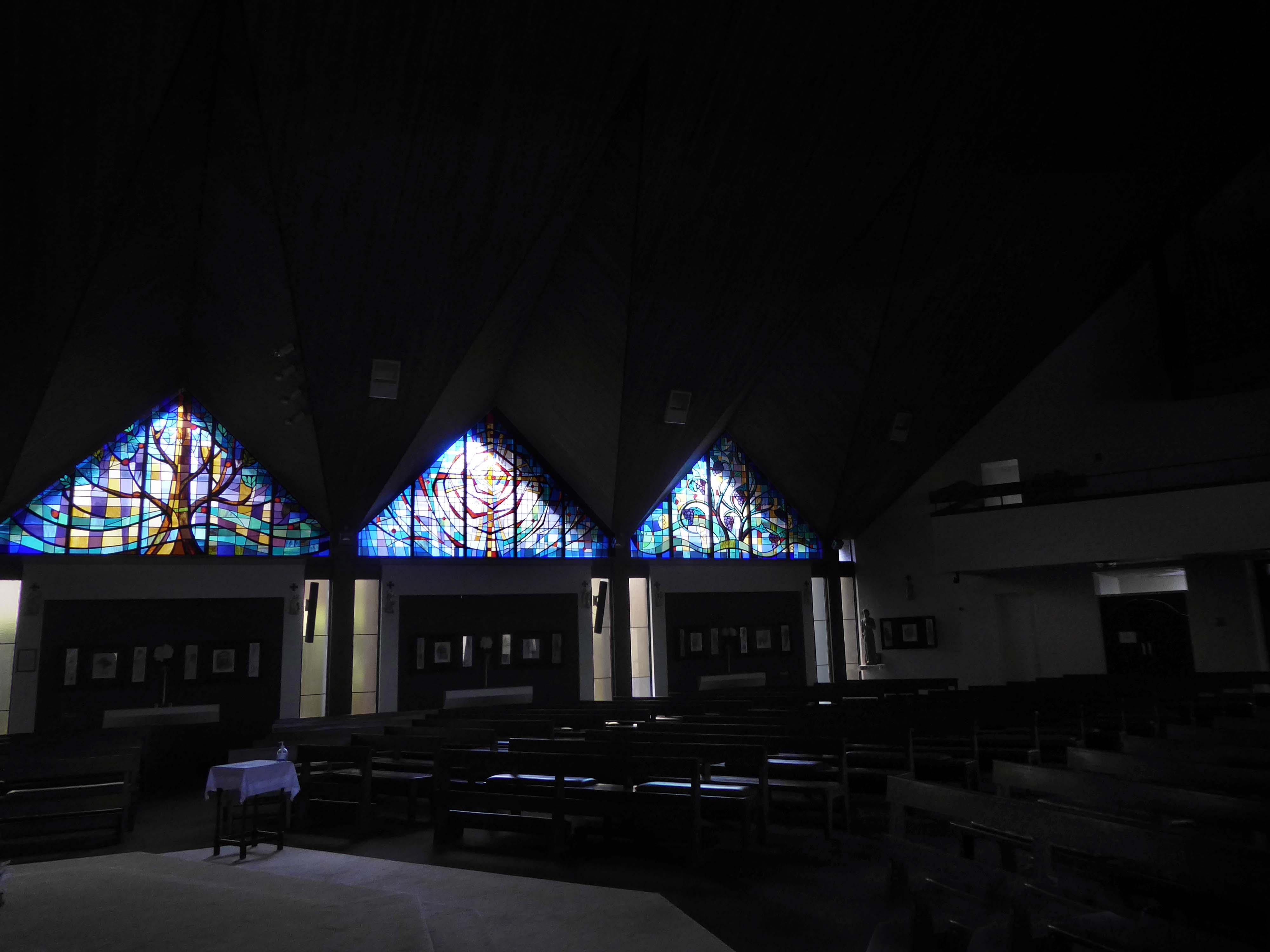
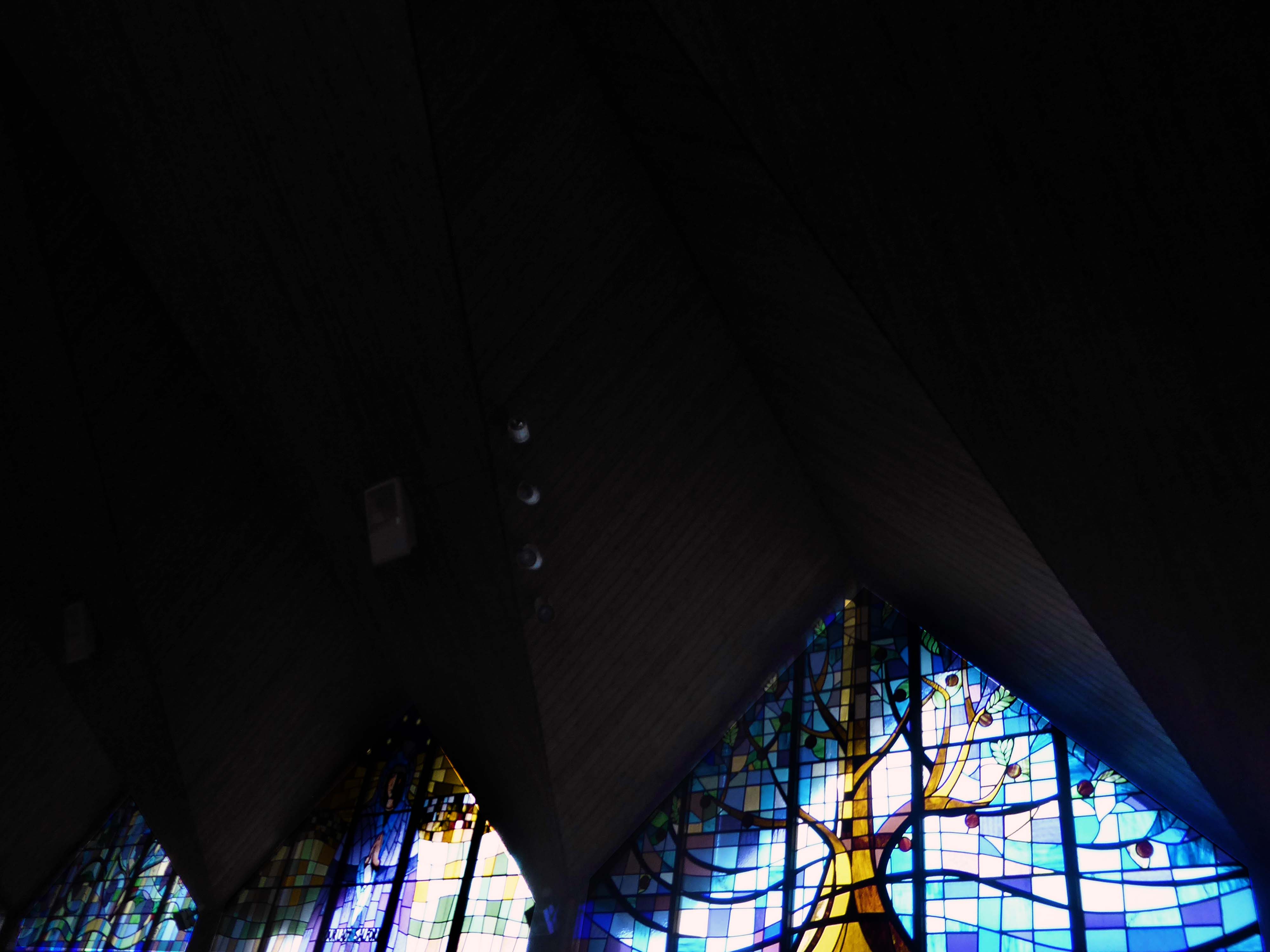
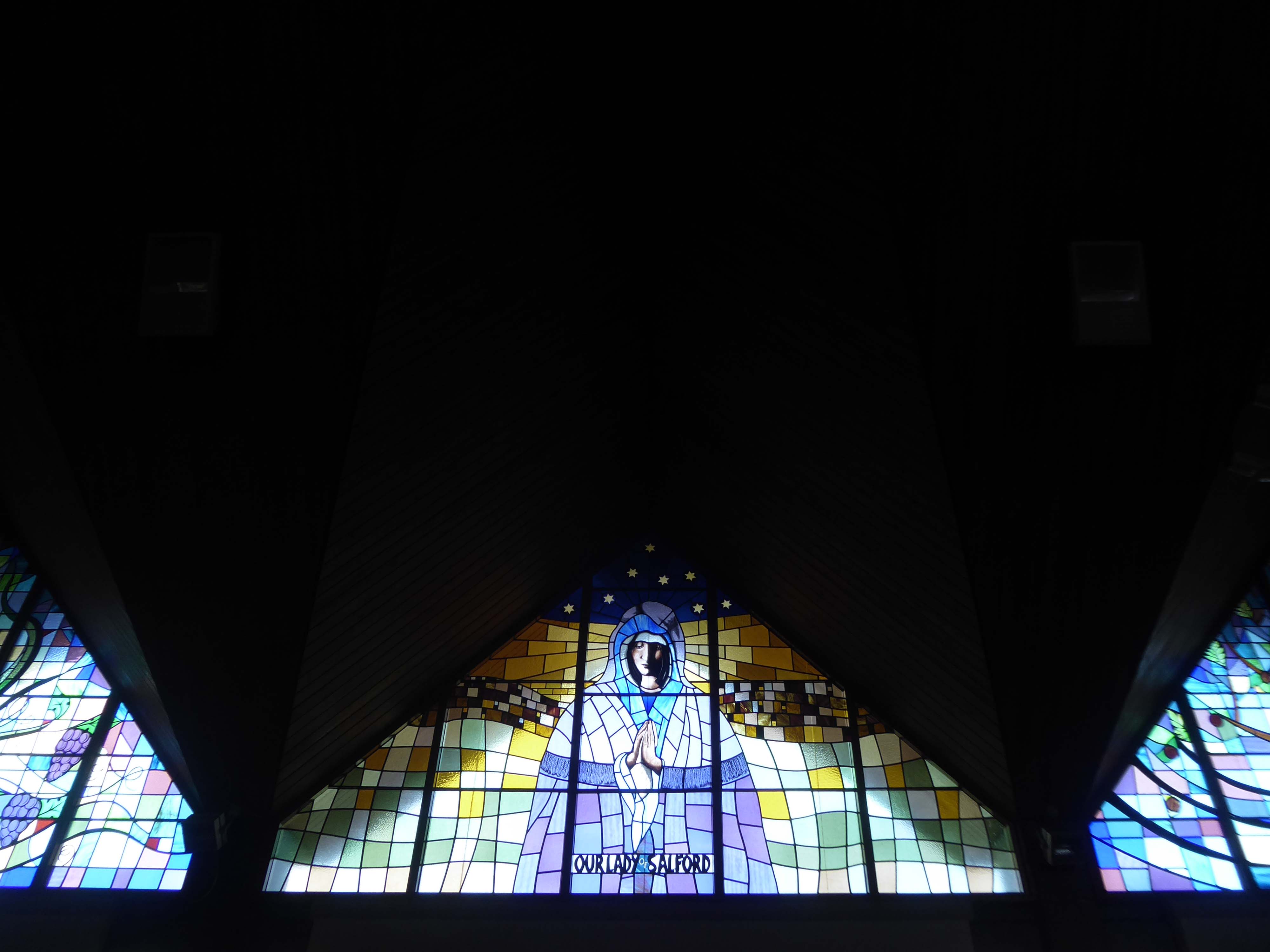
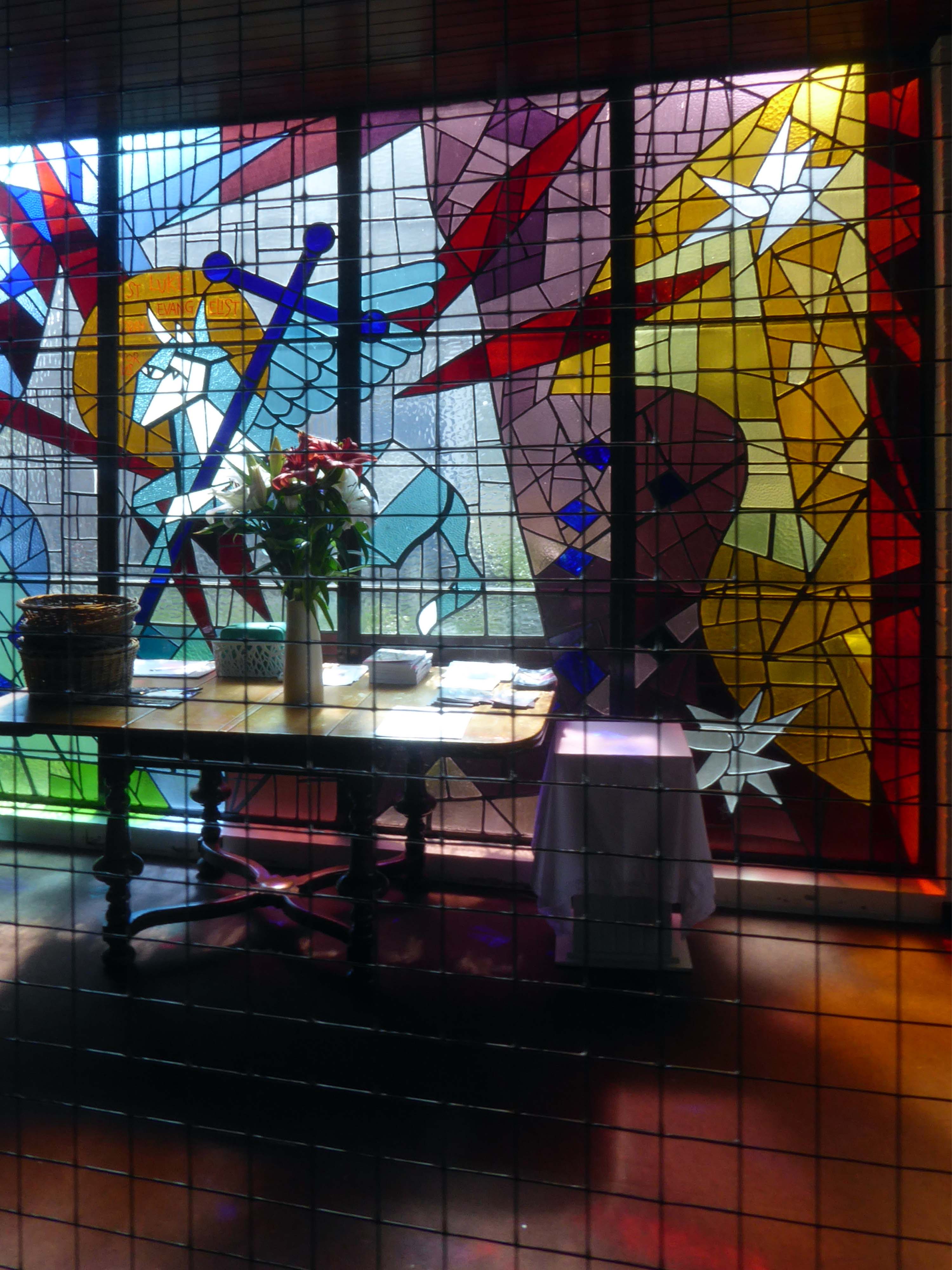
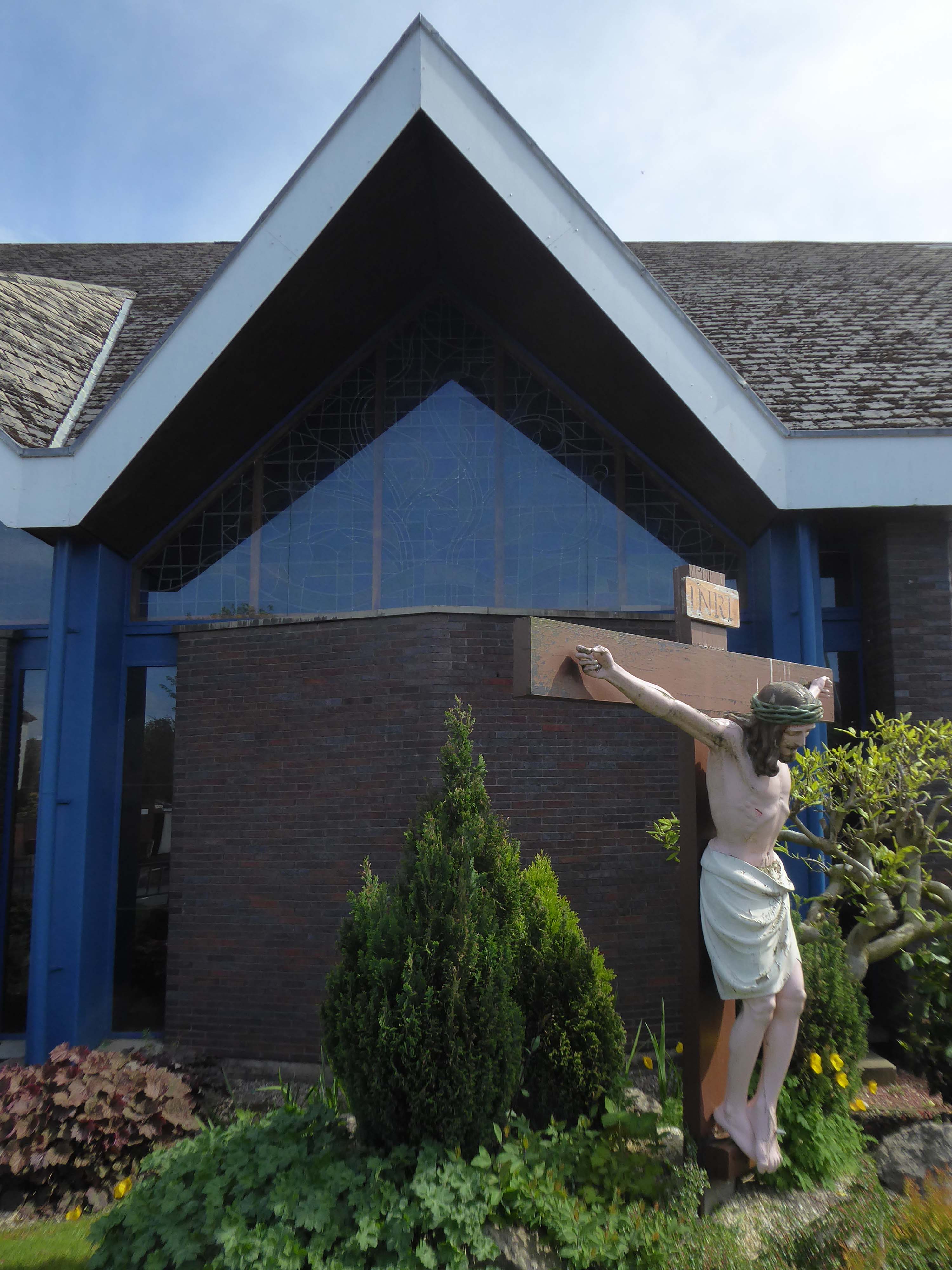
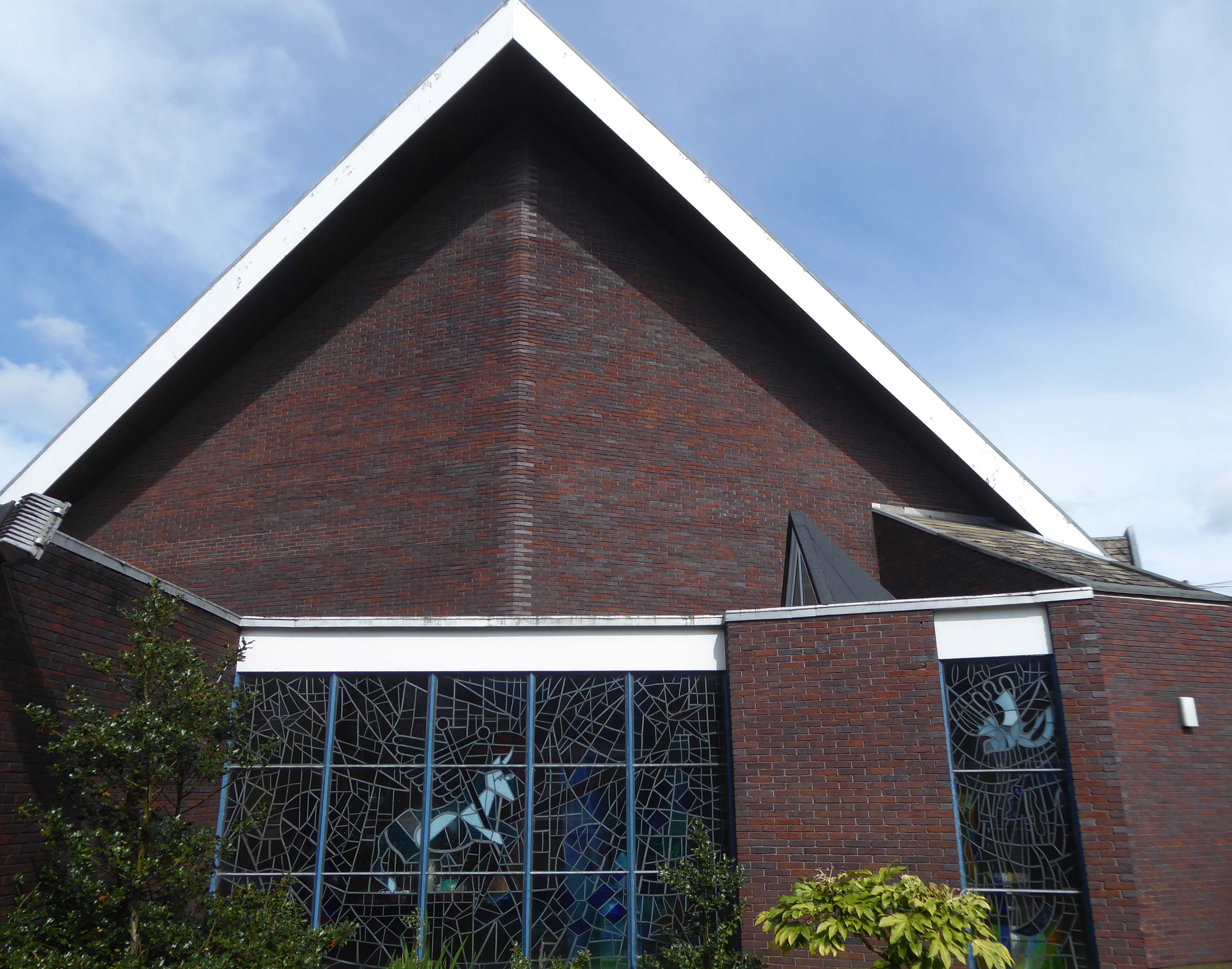
The building is entered on the northwest side via a low porch which gives to a narthex and a former baptistery lit by a pyramidal roof light, attached on the west side. Light pours in to the narthex from a screen with semi-abstract stained glass with the ox symbol of St Luke, an original fixture. The nave is an impressive and memorable space with the boarded roof forming dramatic shapes which frame the east end and sanctuary, where a pair of full-height slit windows are angled to cast light without creating glare and frame a Crucifix. The roof rises up on each side of the big triangular windows on the north and south sides. Those to the south have stained glass showing the Tree of Life the True Vine and the Cross of Faith designed by Roy Coomber of Pendle Stained Glass in 2002-3. There is a cantilevered west gallery with a pipe organ set into the wall above it and a southeast chapel, now a Lady Chapel, formerly of the Blessed Sacrament, with stained glass on sacramental themes. A Pietà in the chapel probably originated in the previous church. The tabernacle, of stainless steel with high relief abstract modelling, was repositioned behind the altar at the time of the reordering. This item and the sanctuary Crucifix with a gilded figure are by an unknown artist. Stations of the Cross are by Harold Riley, installed in circa 2003. They consist of triptychs executed in pencil and wash. Other works by Riley include a study of the Virgin dated 2003 and a print of his painting Our Lady of Manchester.
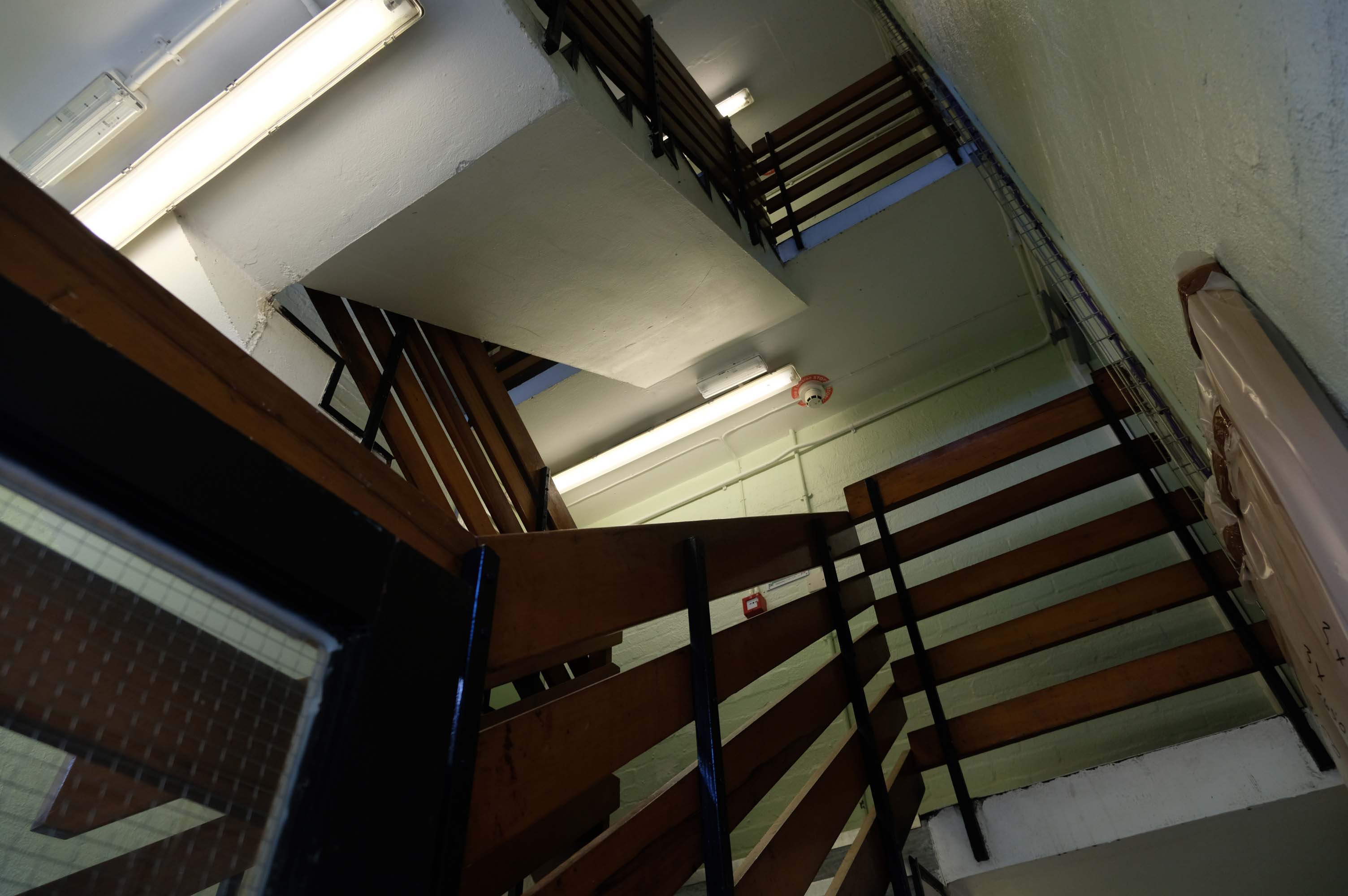
Taking Stock

I had a very brief moment in time to photograph the interior in very low light.

But a little more time to wander around outside.

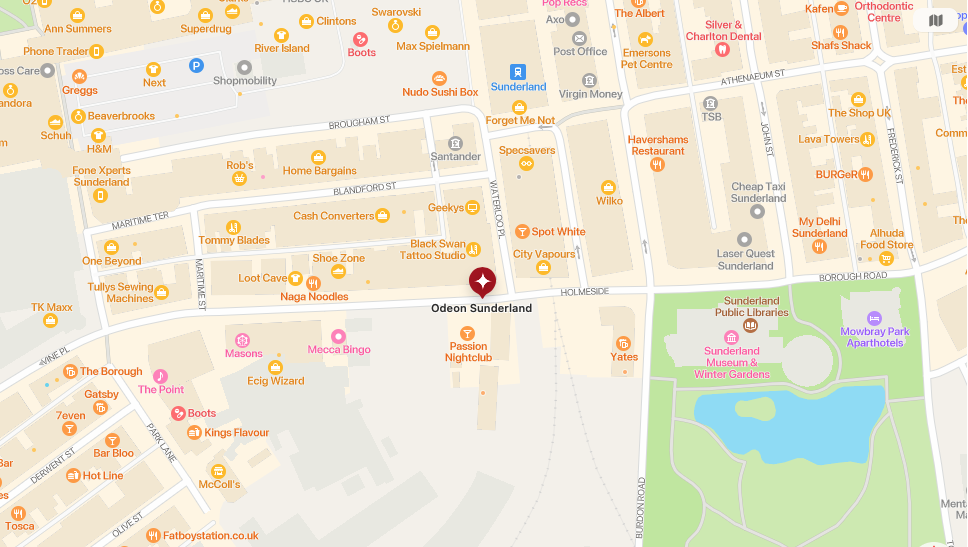
Odeon and Ritz Cinemas – Sunderland

44 Holmeside  Sunderland  SR1 3JE

Architects: Frederick EvansEdwin Sheridan Gray

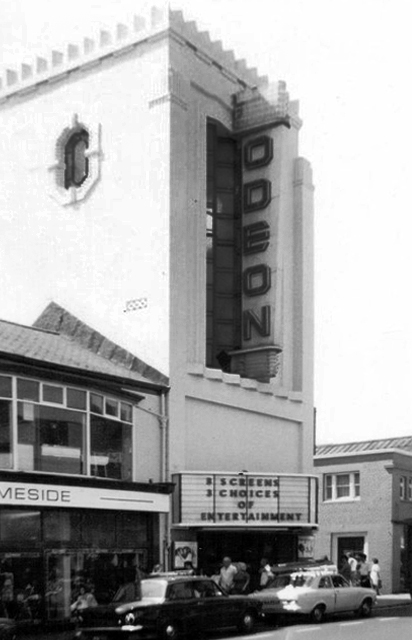
Black’s Regal Theatre was built on the site of the Olympia Exhibition Hall and Pleasuredrome 1897-1910 and it was built for the northern independent Black’s circuit. It opened on 28th March 1932 with Jessie Matthews in Out of the Blue.

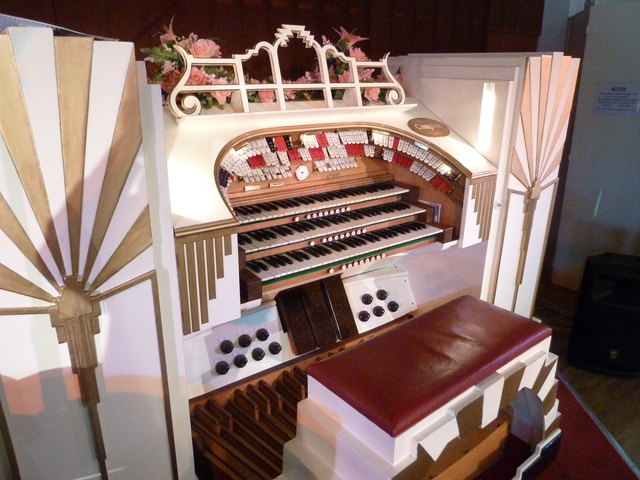
The theatre was equipped with a Compton three manual, nine ranks theatre organ which had an Art Deco style console on a lift.

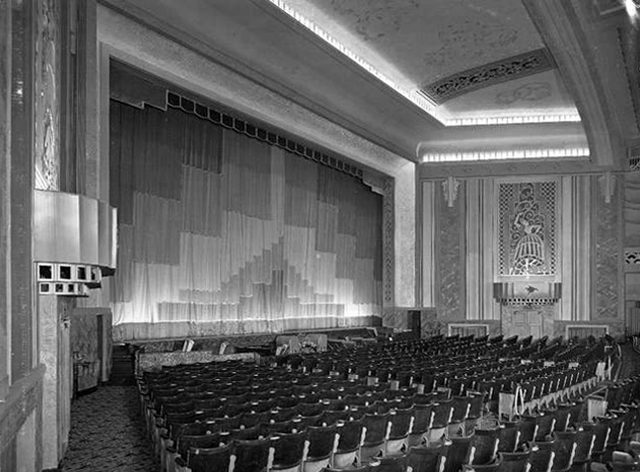
This was opened by organist J Arnold Eagle. The policy of the theatre for many years was pictures and variety and it had a fifty seven feet wide proscenium, the stage was forty feet deep and there were ten dressing rooms. Other facilities included a cafe and roller rink.

Regal/Odeon, Holmeside, Sunderland, Co. Durham

In 1955 the Black’s circuit was taken over by the Rank Organisation and the Regal was re-named Odeon from 28th November 1955. It was divided into a three screen cinema in 1975 with 1,200 seats in the former circle and two 150 seat screens in the rear stalls.

On 28th March 1982 a special 50th Anniversary concert was given by Phil Kelsall on the Compton organ. Three months later, on 26th June 1982 the Odeon was closed with One Flew Over the Cuckoo’s Nest, Star Wars & The Empire Strikes Back, Mary Millington’s True Blue Confessions.

The building was boarded up and abandonded for a long period of time.

However it was to re-open as a Top Rank Bingo Club and remains in use today as a Mecca Bingo Club. The sub-division of the auditorium has been removed. In July 2009, it was announced that the building and the entire block had been the subject of a compulsory purchase order.
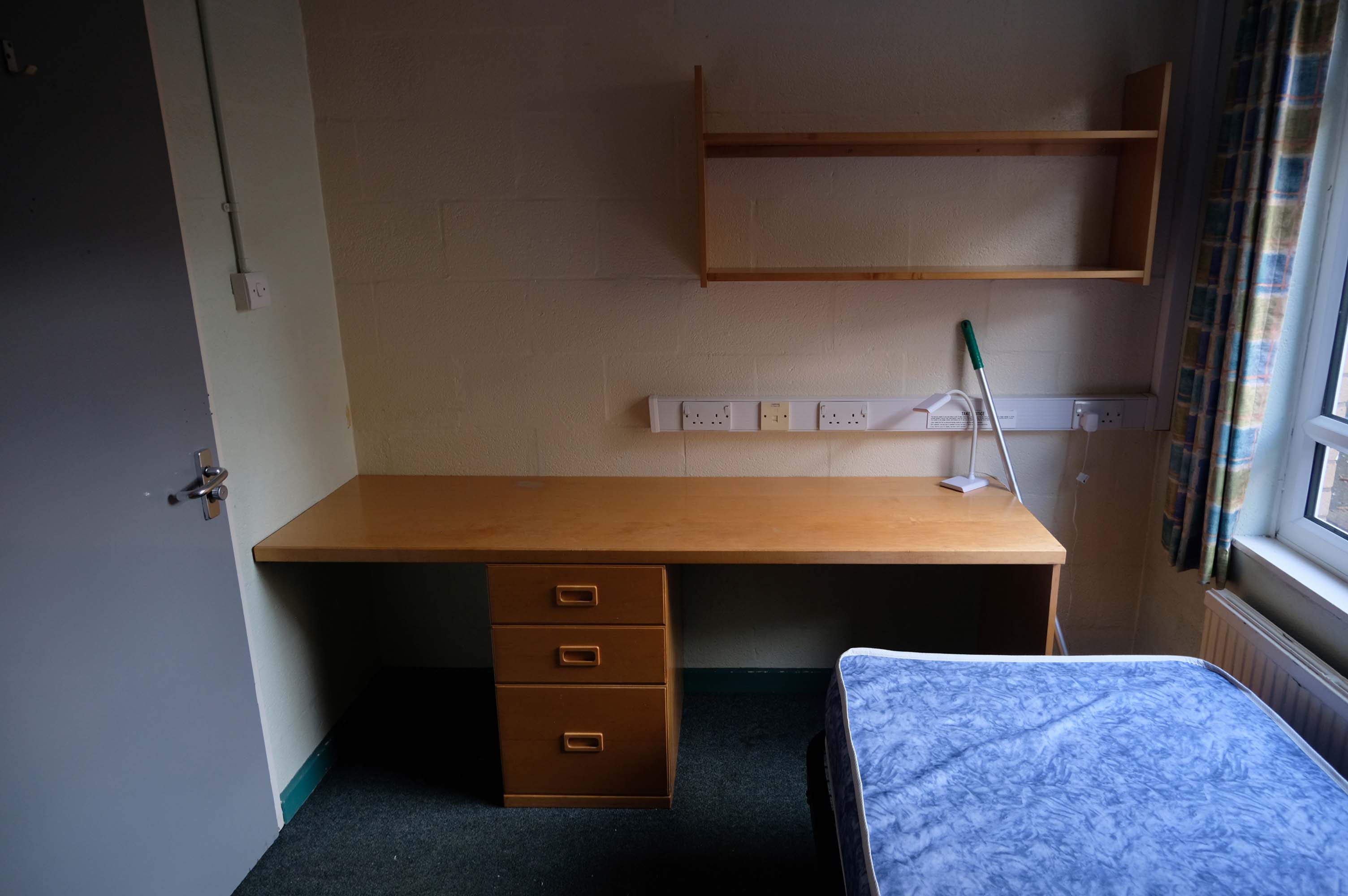
Cinema Treasures

I happened by the other day – attracted by the distinctive Deco tower.
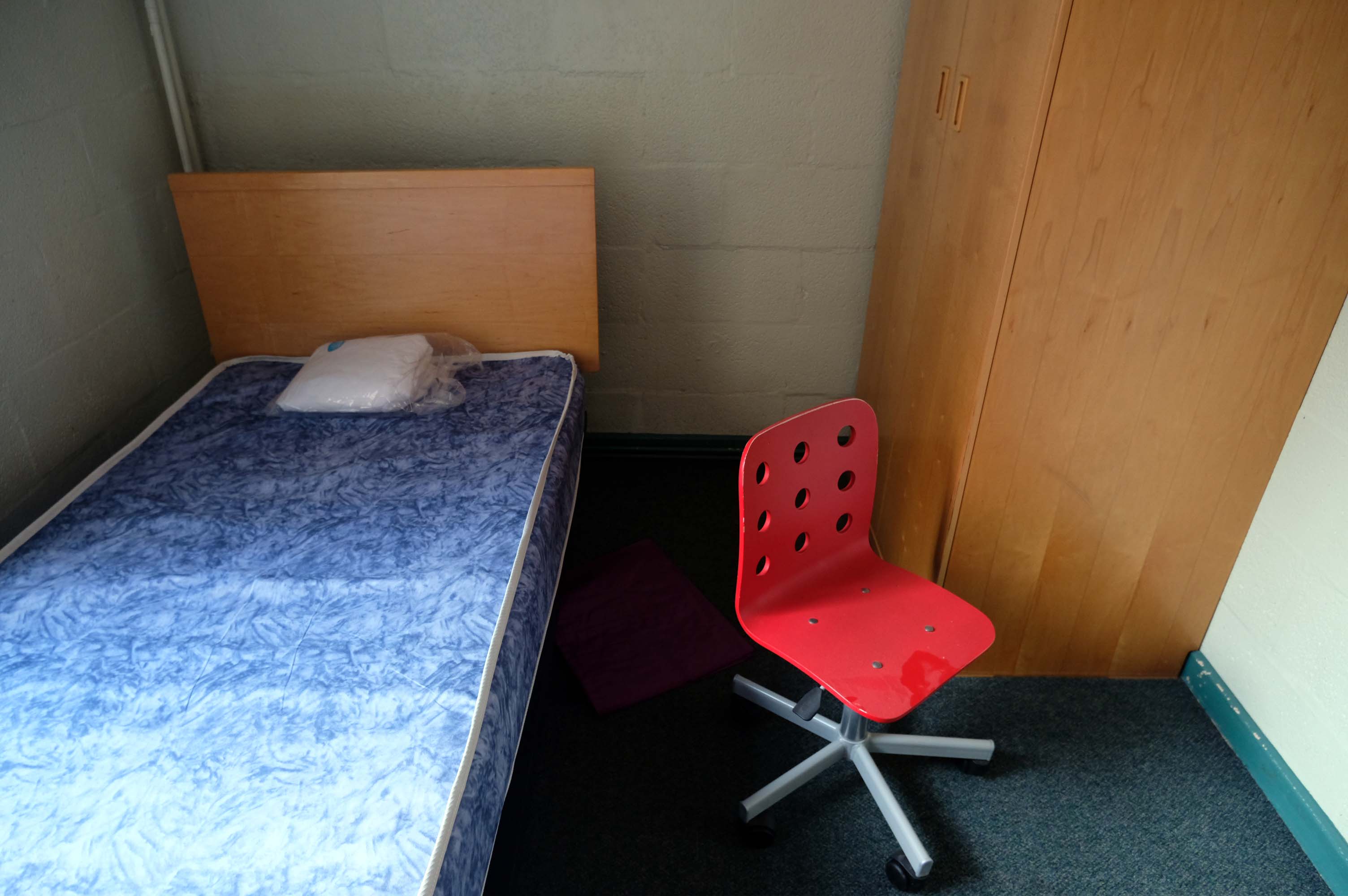
And the building’s amazing mass.
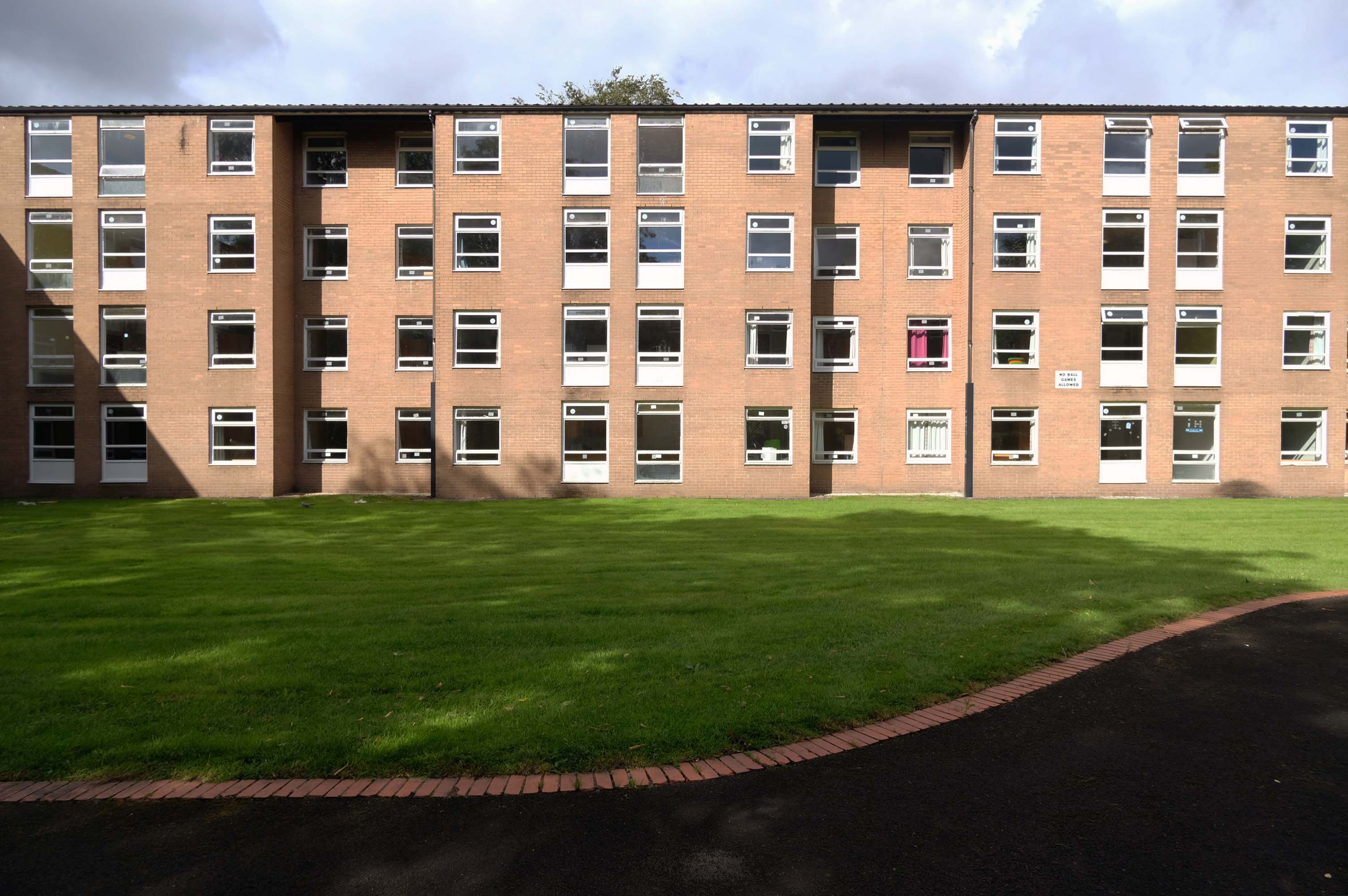
I walked around the corner to find the side entrance – as the original lobby is no longer in use.

I was ever so fortunate to happen upon a convivial cleaner, who kindly invited me inside the auditorium.

Much of the interior detail is intact though the balcony was no longer in use.

On exiting, I noticed the ghost of the Regal.

Though the exterior is a pale shadow of its former self, the building is still intact and in use.

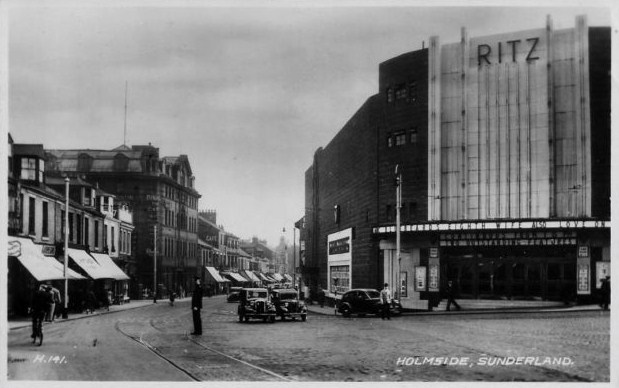
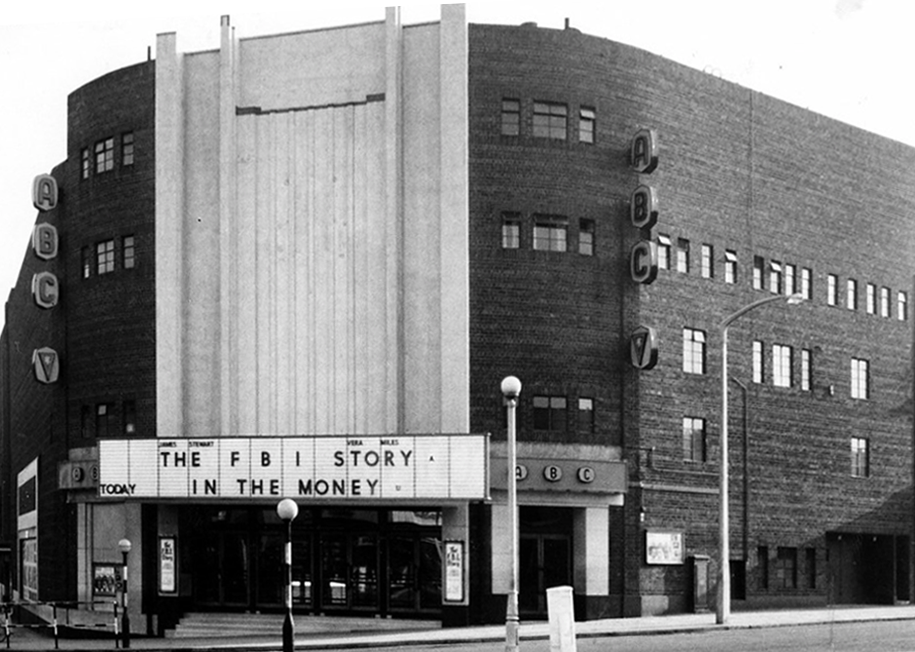
A close neighbour is the what was the Ritz latterly ABC Cinema.

Architects: William Riddell Glen

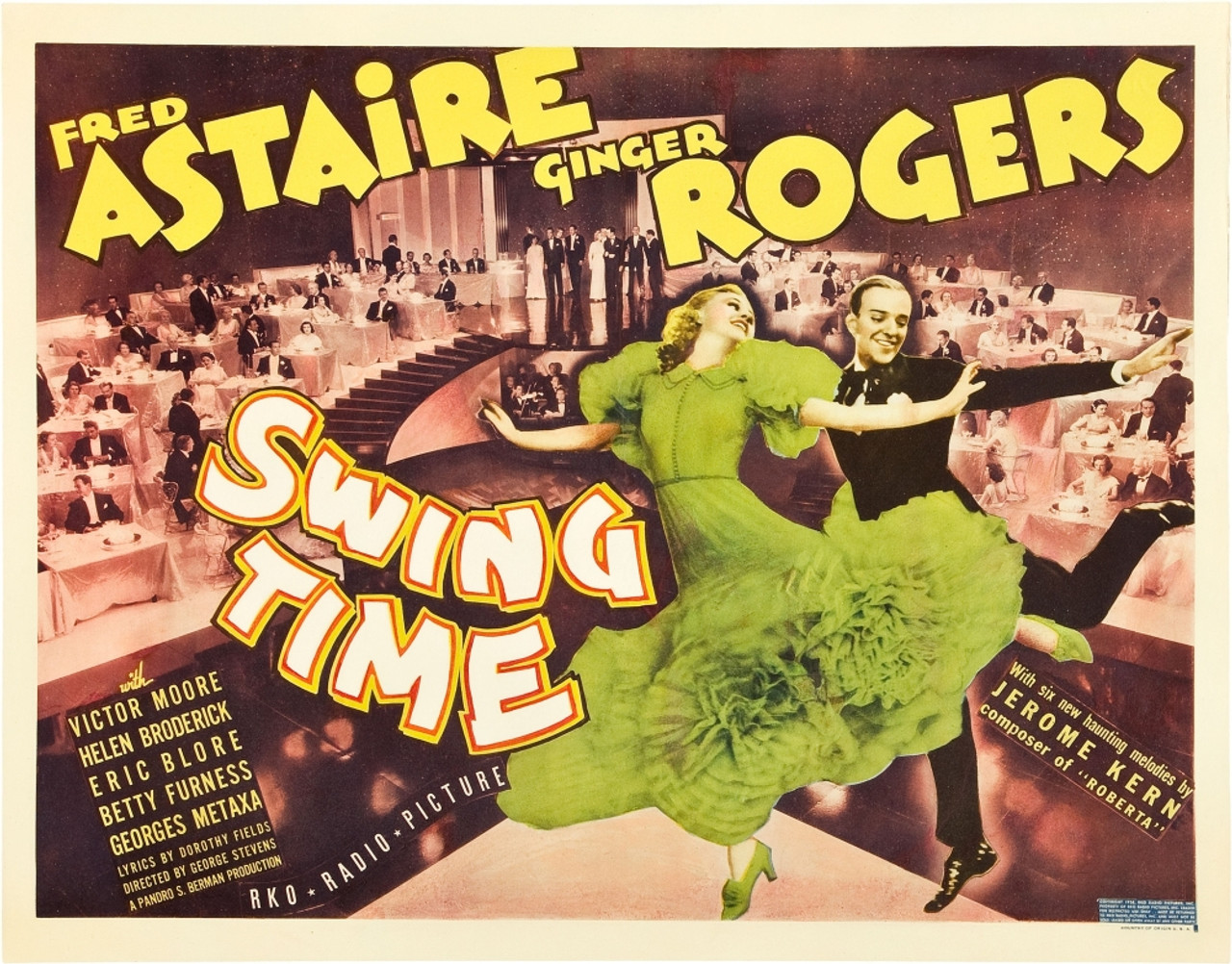
Opened on 1st March 1937 with Fred Astaire & Ginger Rogers in Swing Time, the Ritz Cinema was built by the Union Cinemas chain. They were soon taken over by Associated British Cinemas – ABC. It was lavishly fitted with deep pile carpets and chandeliers.

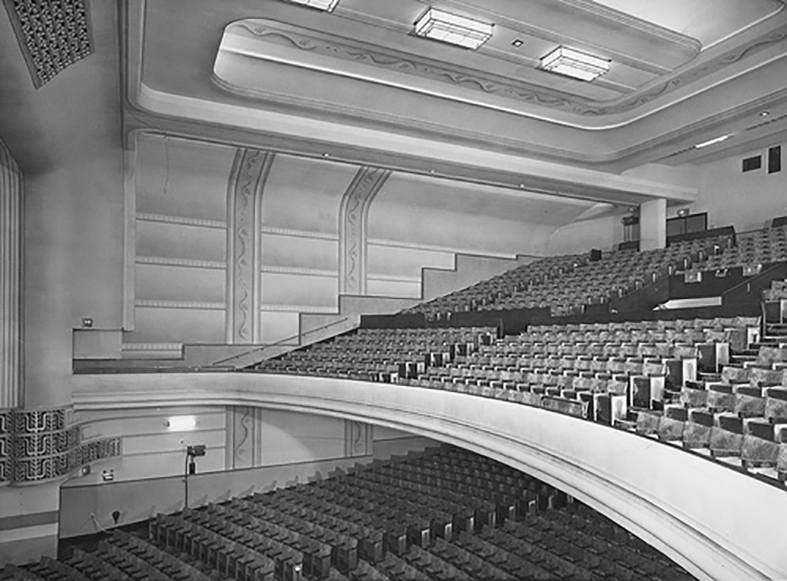
In 1961 it was re-named ABC. It was converted into a two screen cinema from July/August 1974 when the former circle became a 534 seat screen and the front stalls a second screen seating 212. The rear stalls area was converted into a Painted Wagon pub. Sadly the conversion destroyed much of the original interior of the auditorium. It was later taken over by the Cannon Cinemas group, but later went back to the ABC name.

Sadly it closed on 29th April 1999, the last of Sunderland’s major cinemas.

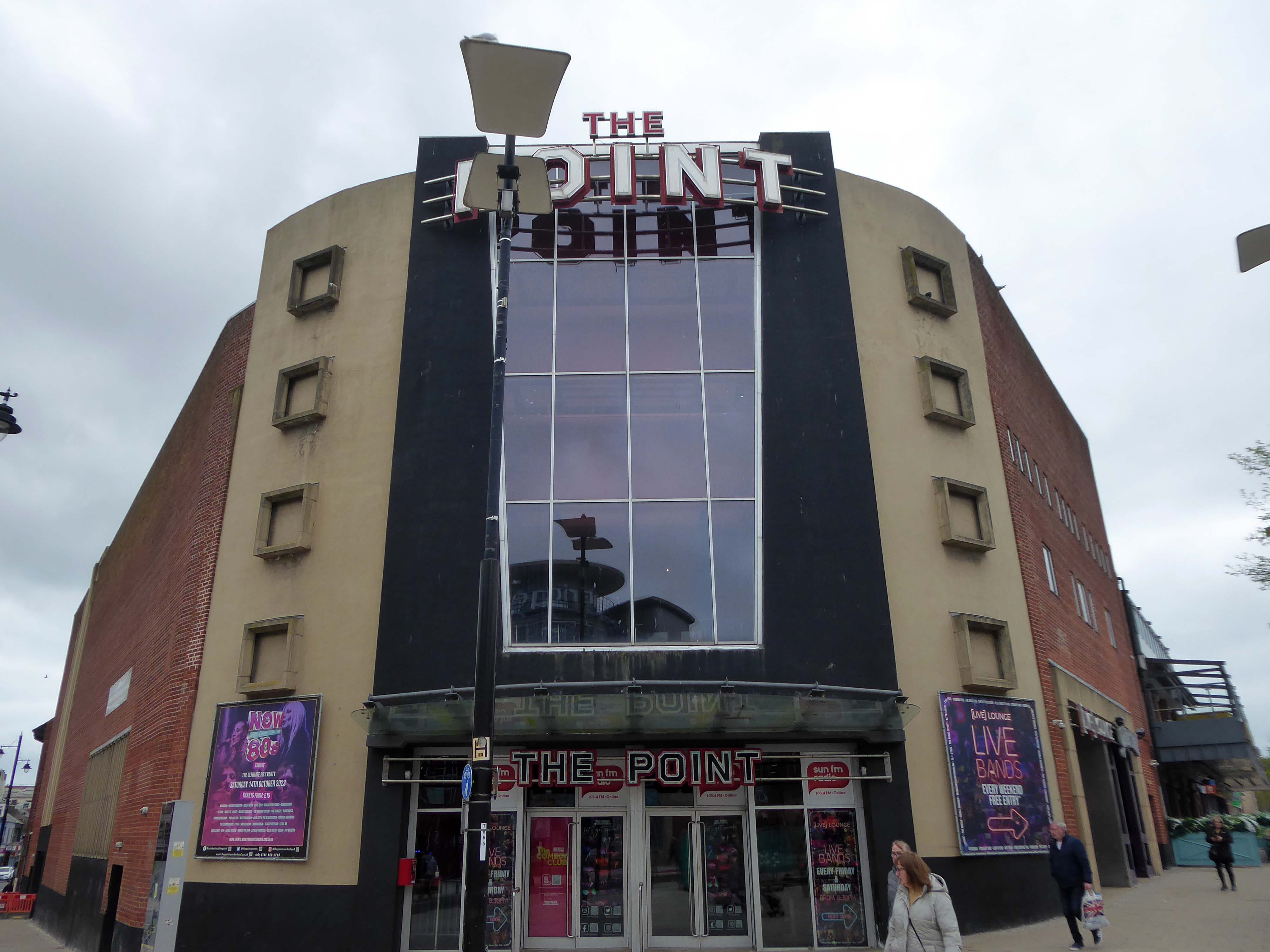
It has recently reopened as The Point a nightclub which has four dance floors and has now completely lost all features of its cinematic past.

Cinema Treasures

Get y’self pumped!

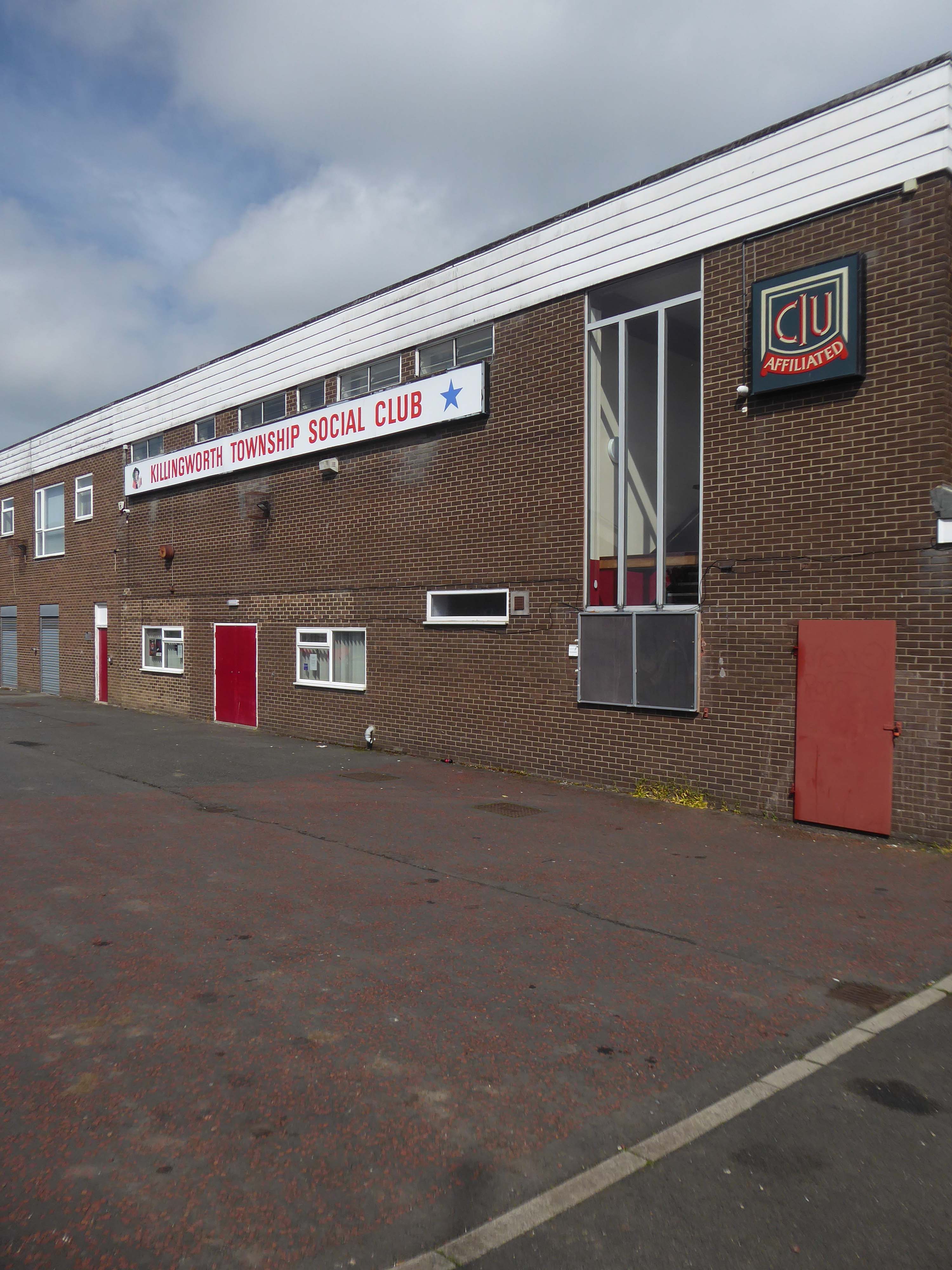
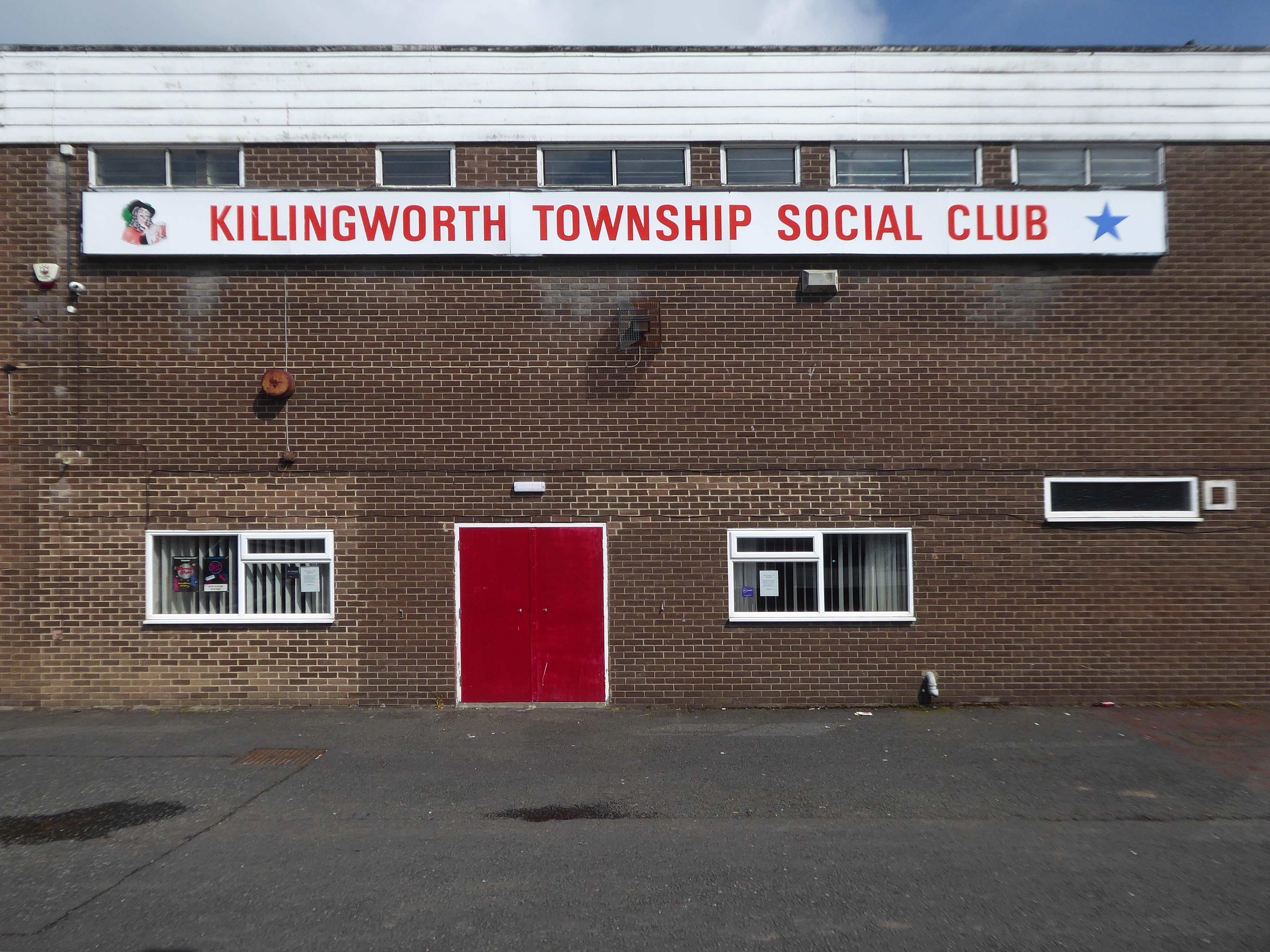
Killingworth

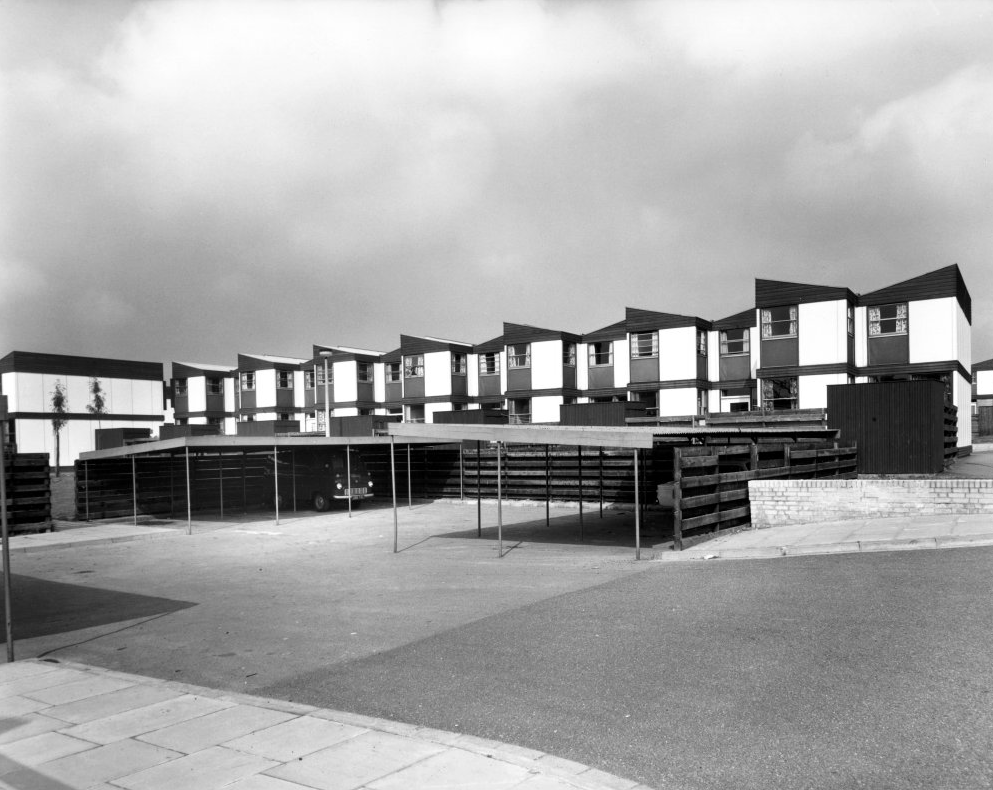
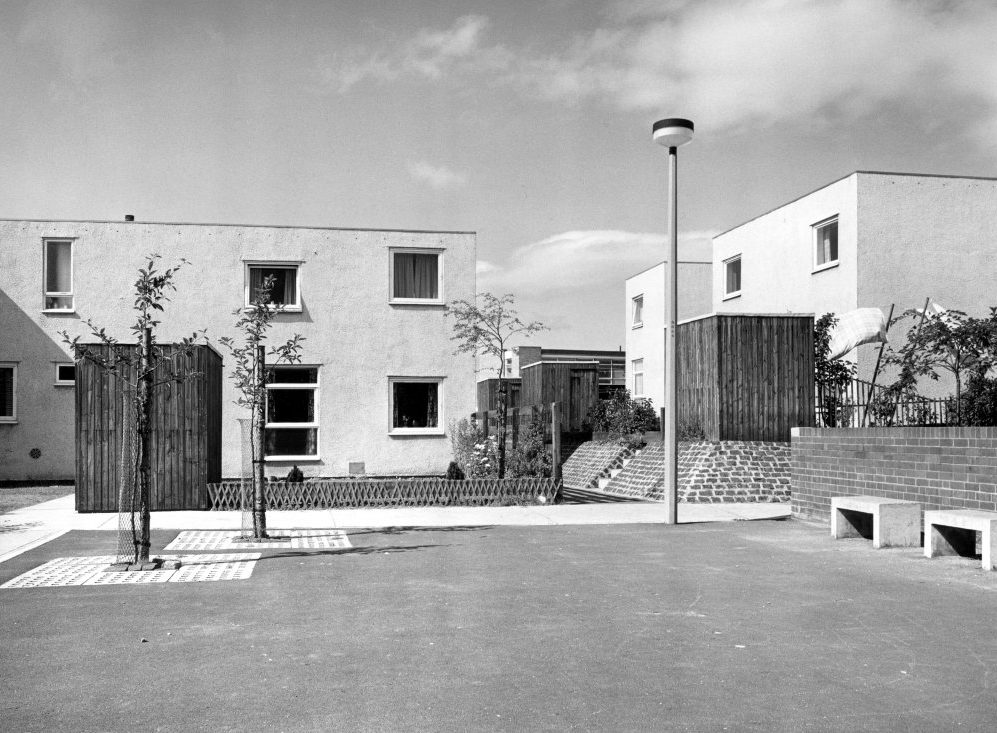
Construction of Killingworth, a new town, began in 1963. Intended for 20,000 people, it was a former mining community, formed on seven hundred and sixty acres of derelict colliery land near Killingworth Village. The building of Killingworth Township was undertaken by Northumberland County Council and was not formally a New Town sponsored by the Government. 

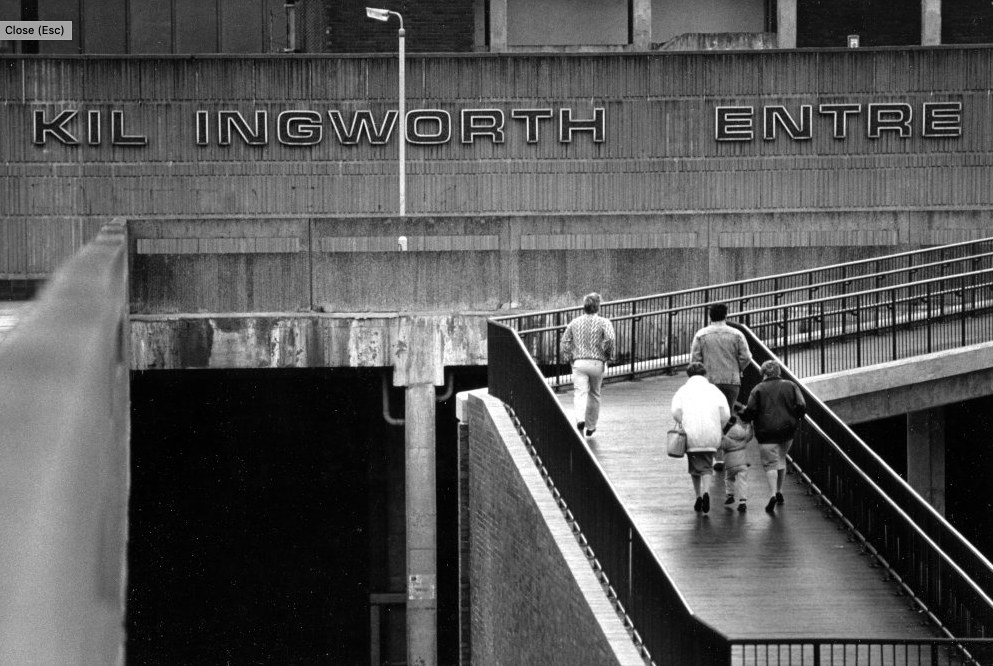
Unlike that town, Killingworth’s planners adopted a radical approach to town centre design, resulting in relatively high-rise buildings in an avant-garde and brutalist style that won awards for architecture, dynamic industry and attractive environment.

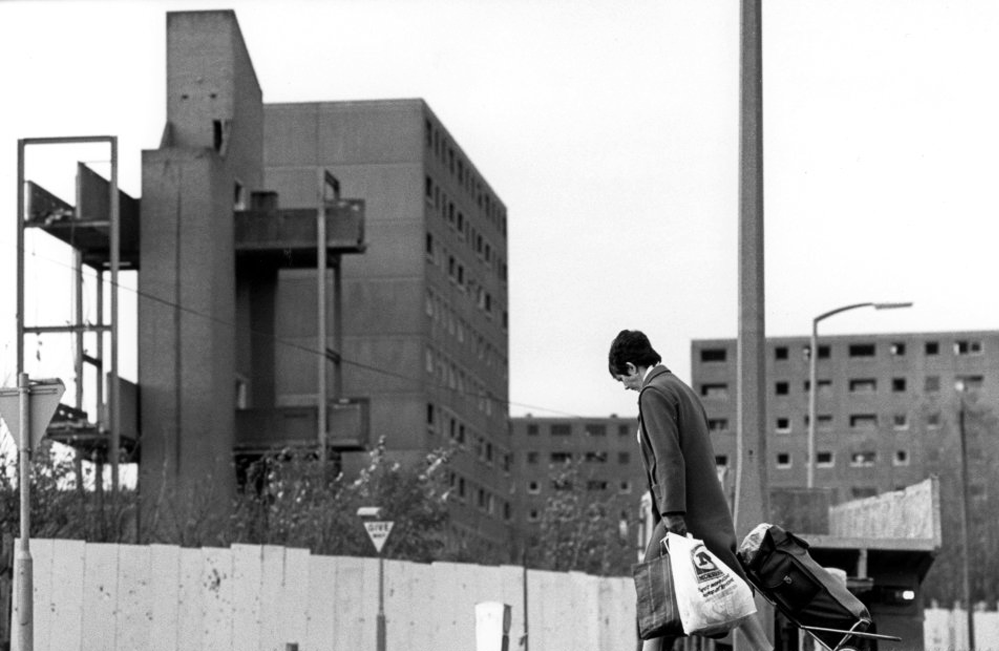
This new town centre consisted of pre-cast concrete houses, with millions of small crustacean shells unusually embedded into their external walls, five to ten storey flats, offices, industrial units and service buildings, which often consisted of artistic non-functional characteristics, shops and residential multi-storey car parks, interconnected by ramps and walkways. These made up a deck system of access to shopping and other facilities, employing the Swedish Skarne method of construction.

Killingworth Towers were demolished in 1987

Originally named Killingworth Township, the latter part was quickly dropped through lack of colloquial use.

Killingworth is referred to as Killy by many residents of the town and surrounding areas.

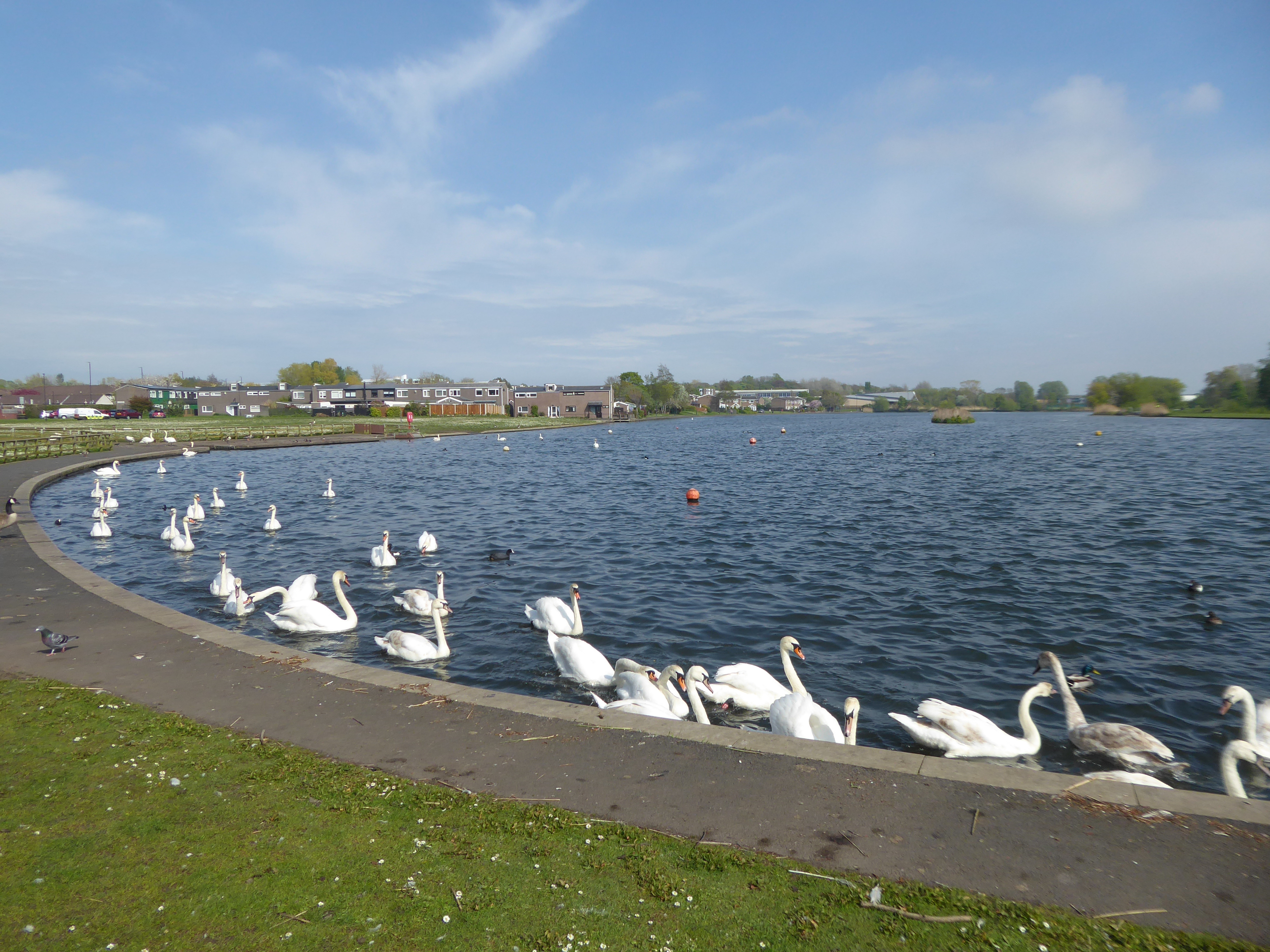
Around 1964, during the reclamation of the derelict pit sites, a fifteen acre lake south of the town centre was created; spoil heaps were levelled, seeded and planted with semi-mature trees.

Wikipedia

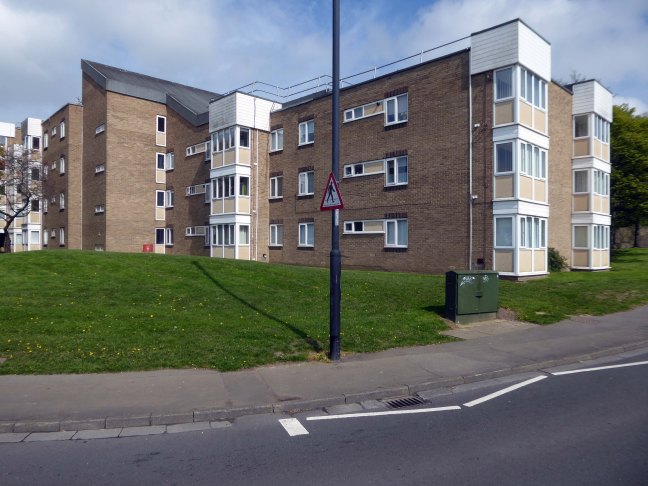
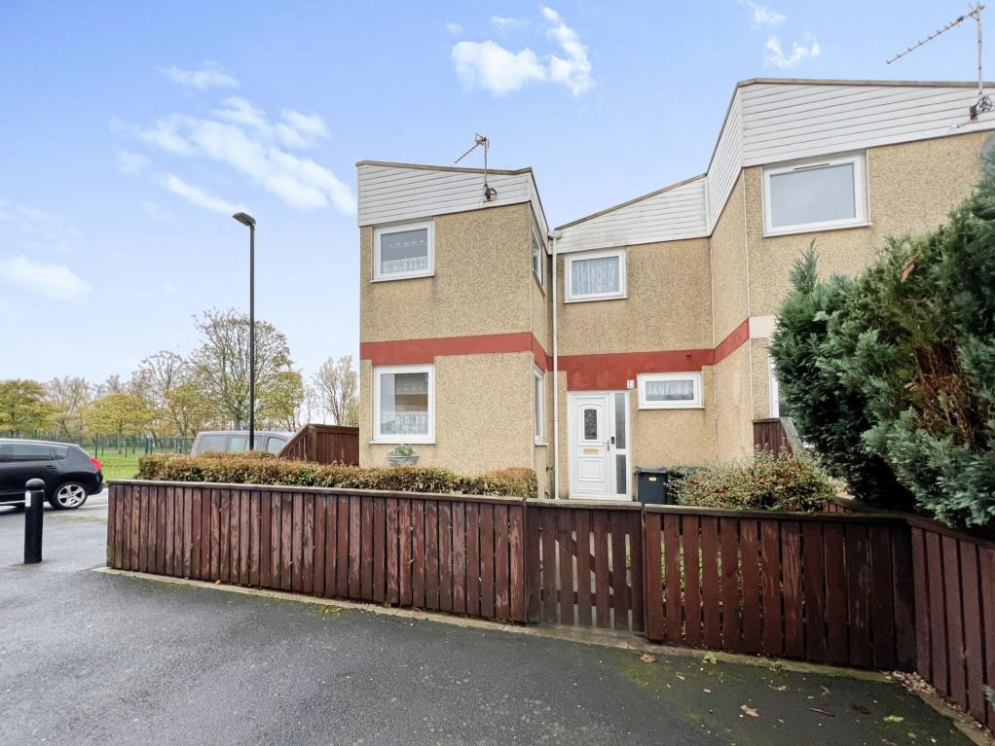
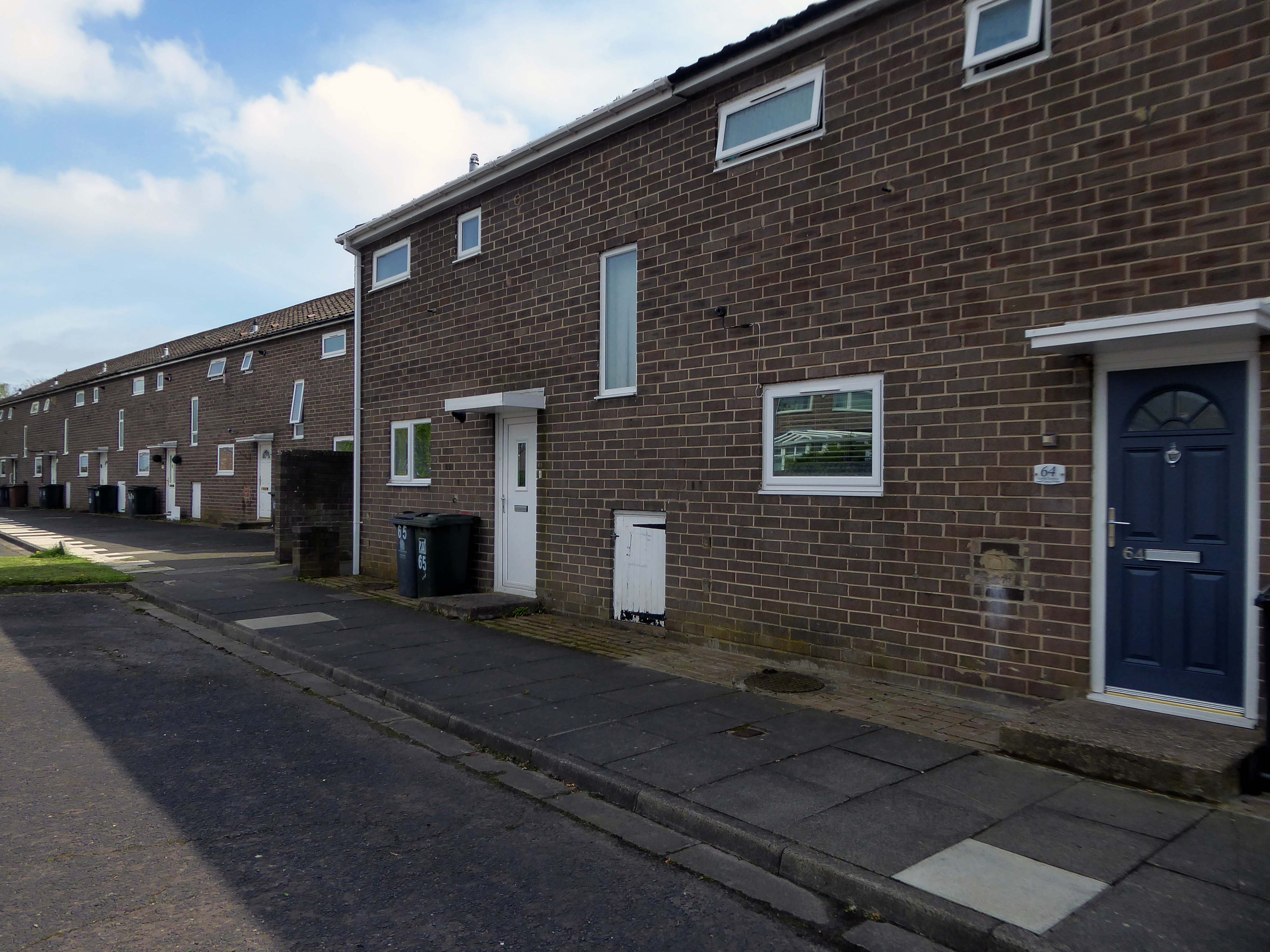
There were also groups of Calder Houses built, subsequently rendered neutral with render, their period characteristics erased.

Rightmove

All archive images RIBA pix

Once home to Thelma and Bob Ferris – whatever happened to the likely lads’ and lasses’ homes?

I had come in search of paradise on a 52 bus – too late was the cry, too late.

The winds of change had blown away the new coal dream, so I wandered lonely around the quiet streets.

The daffodils were past their best.

St David’s Church – Penrhyn Bay

St David’s1 Penrhyn Beach East Penrhyn Bay Llandudno LL30 3NT

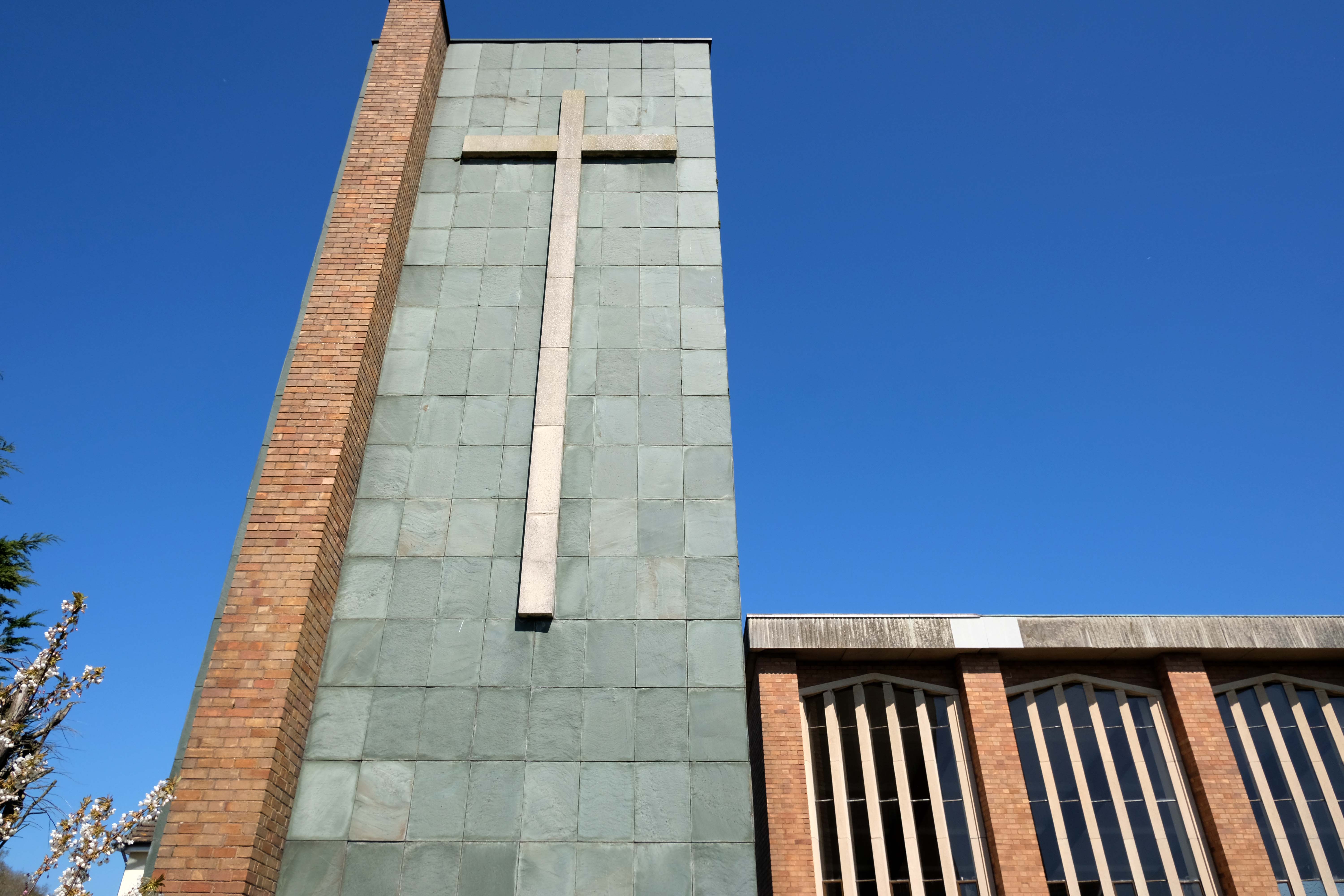
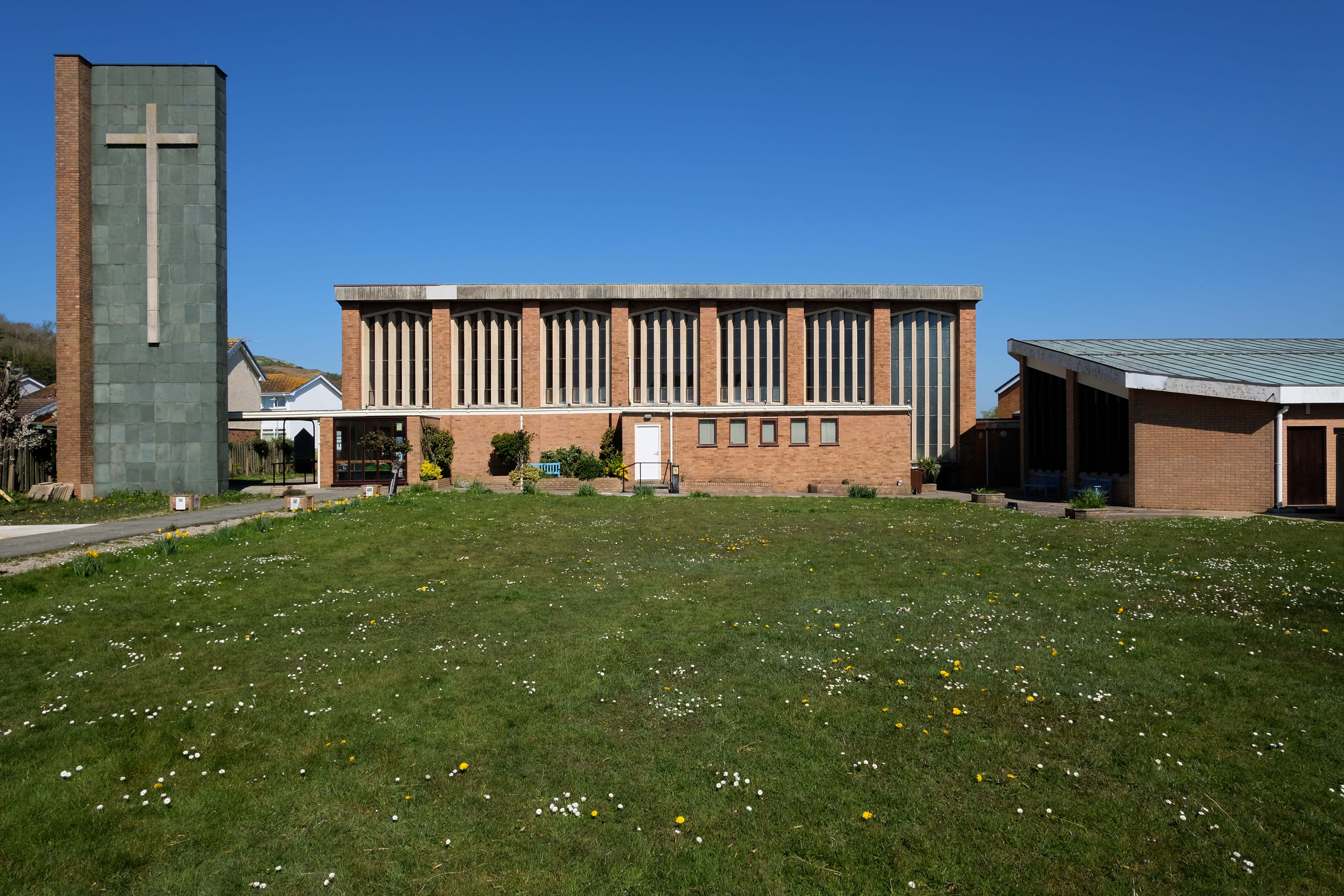
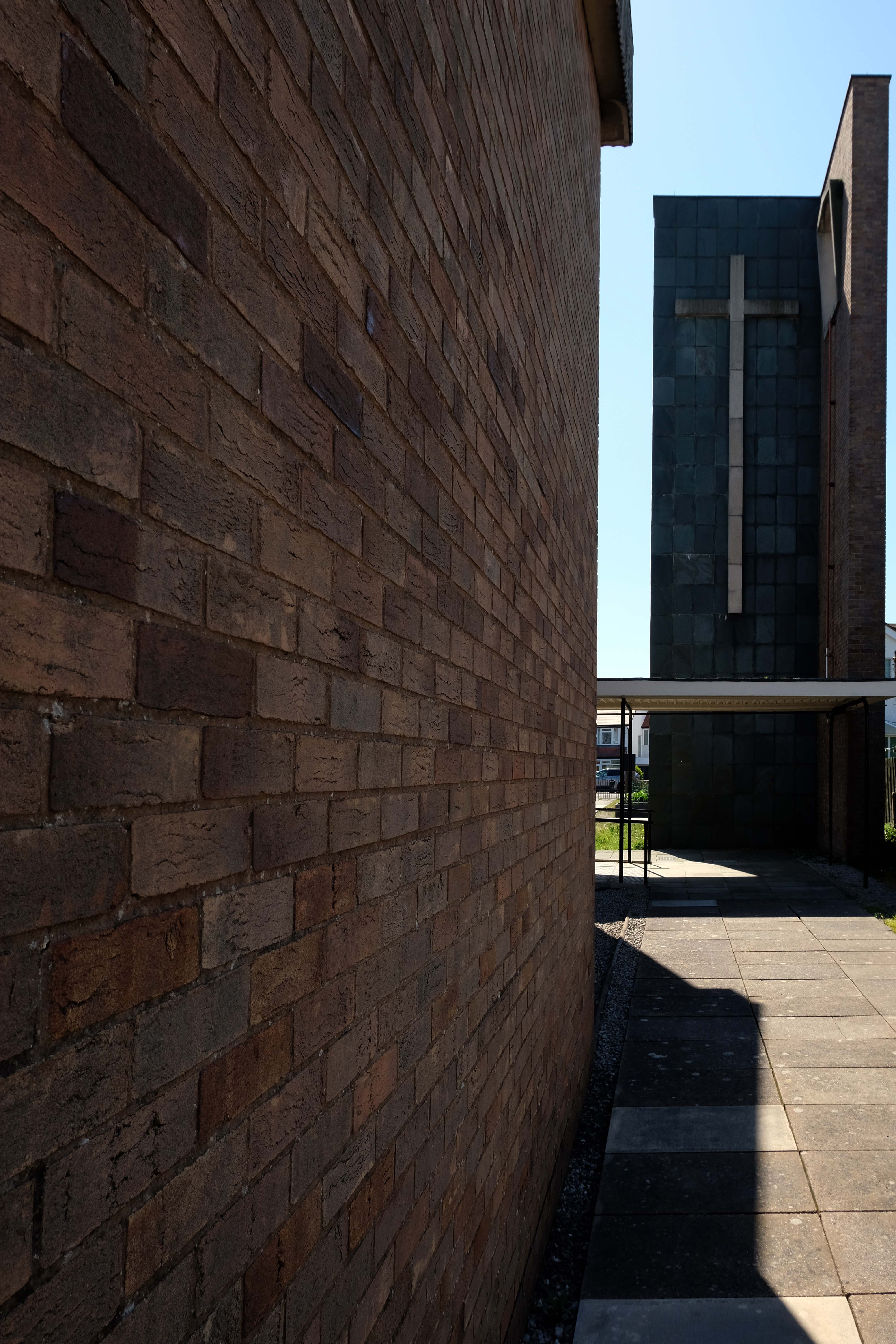
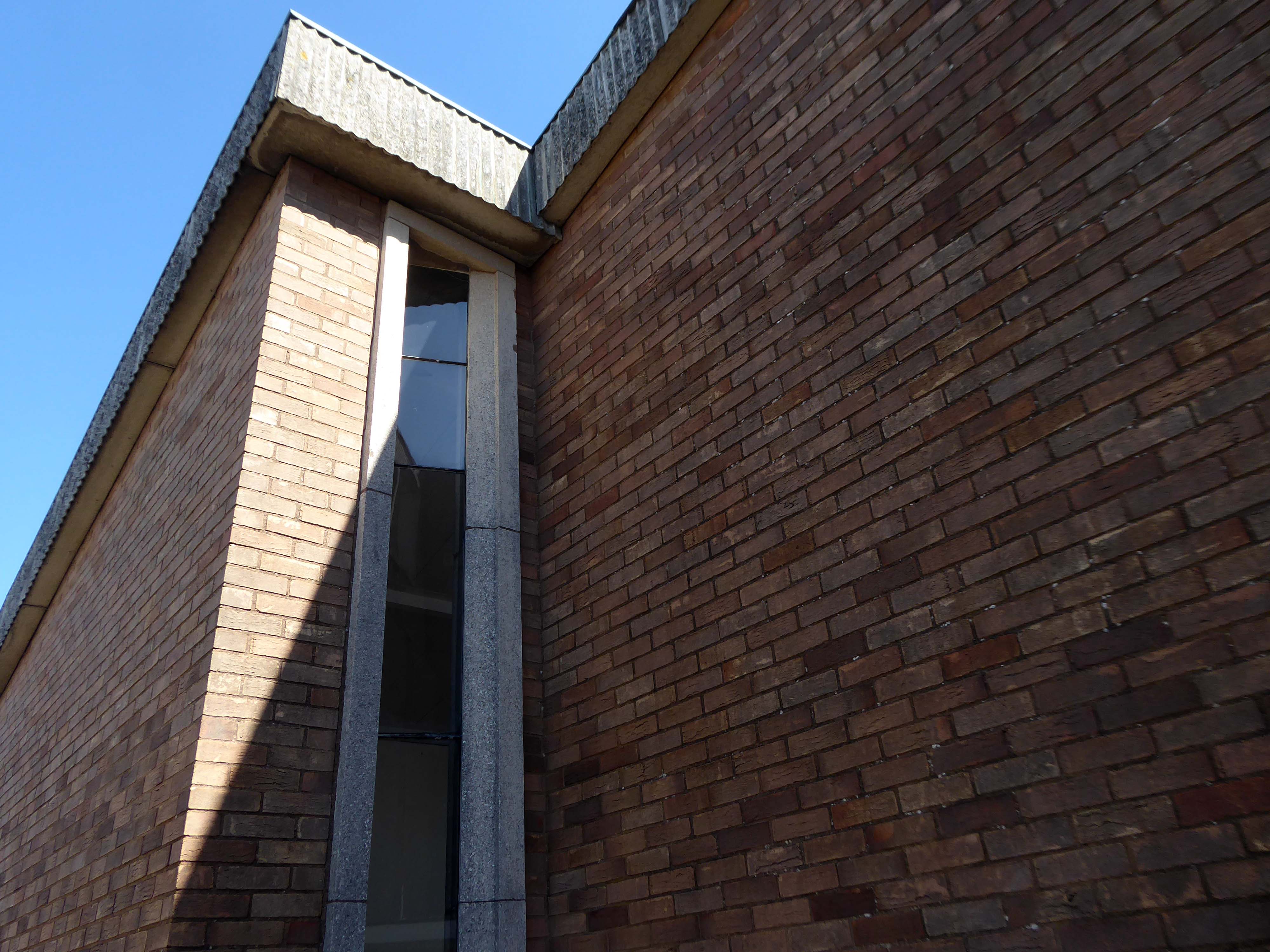
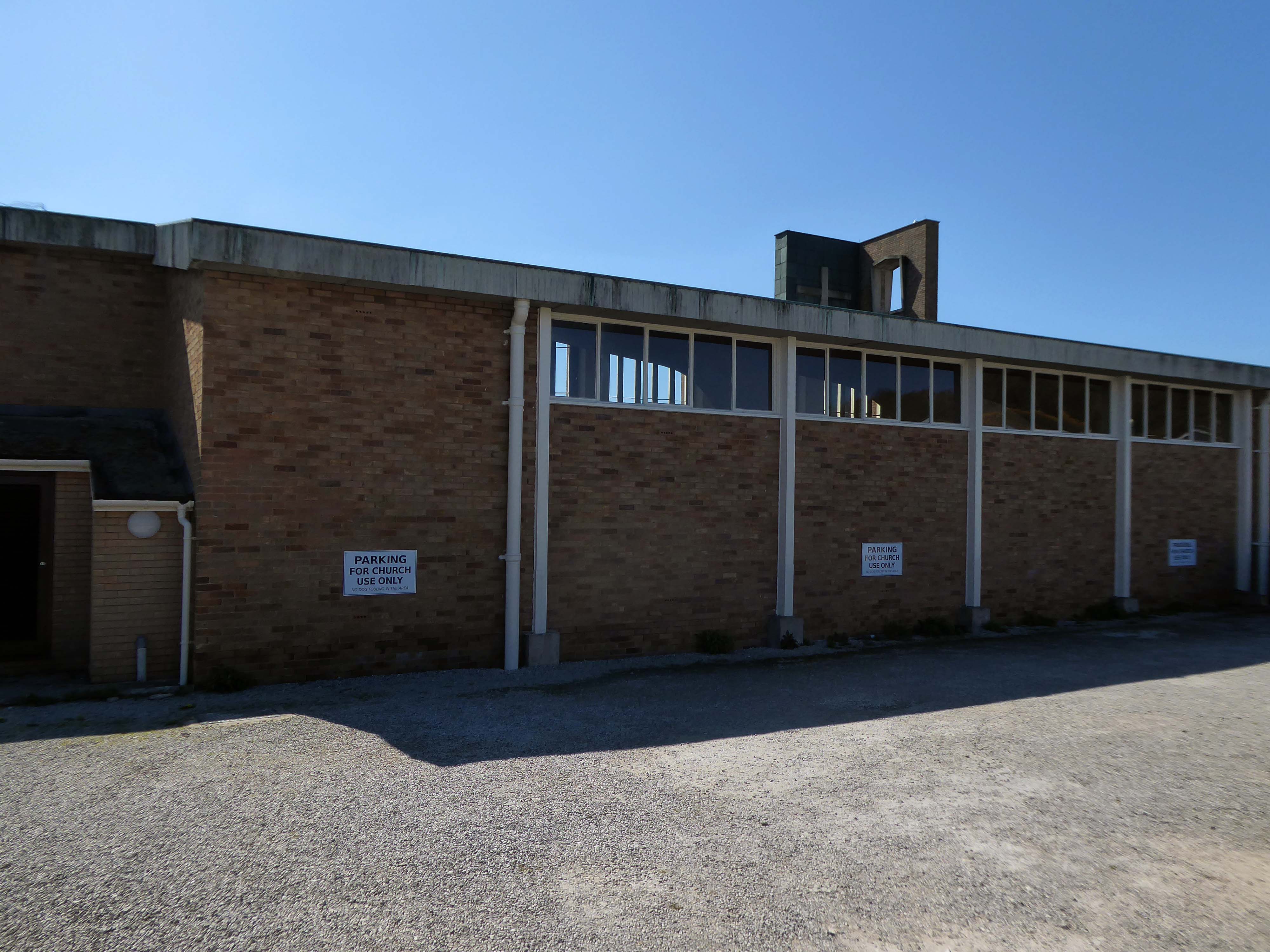
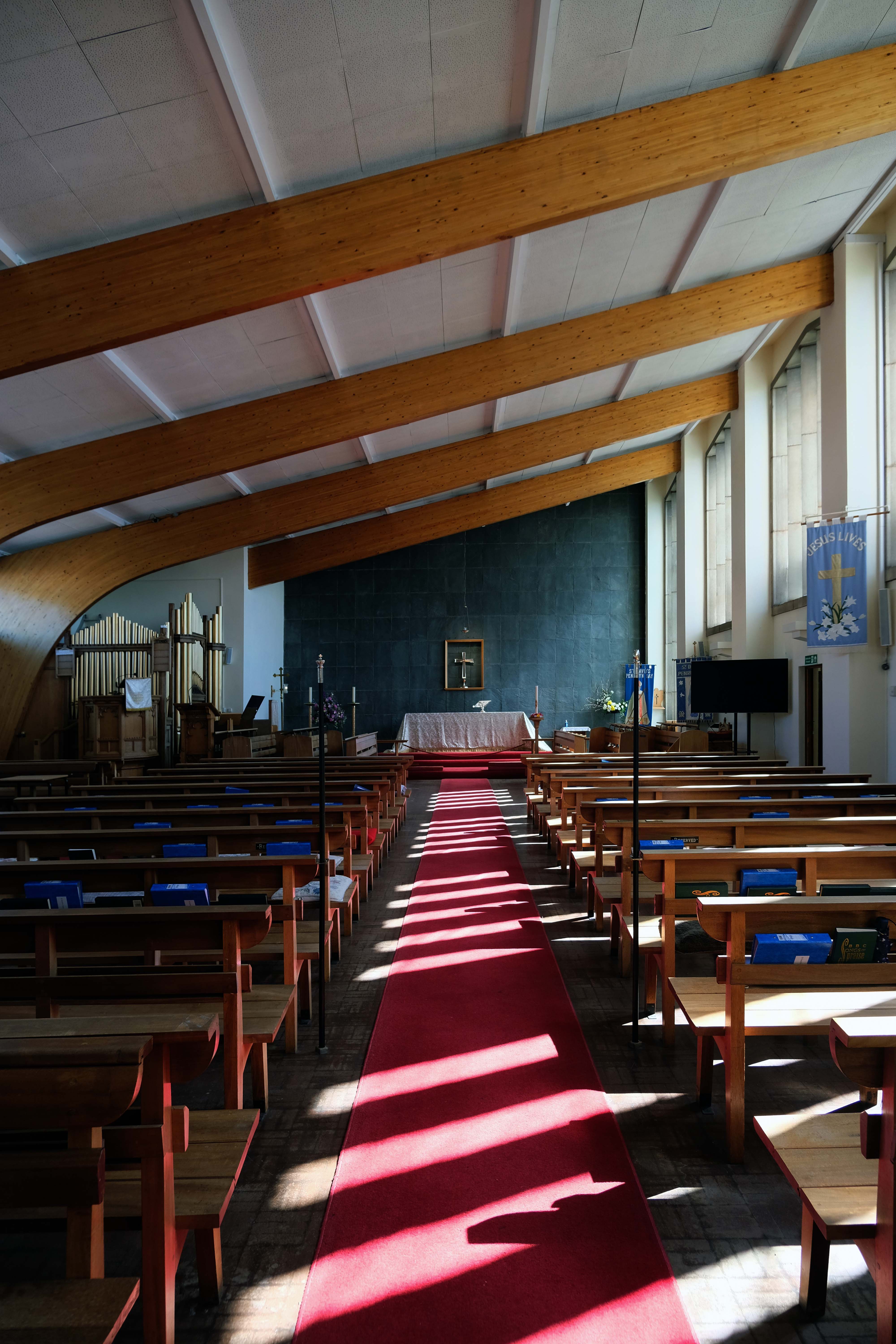
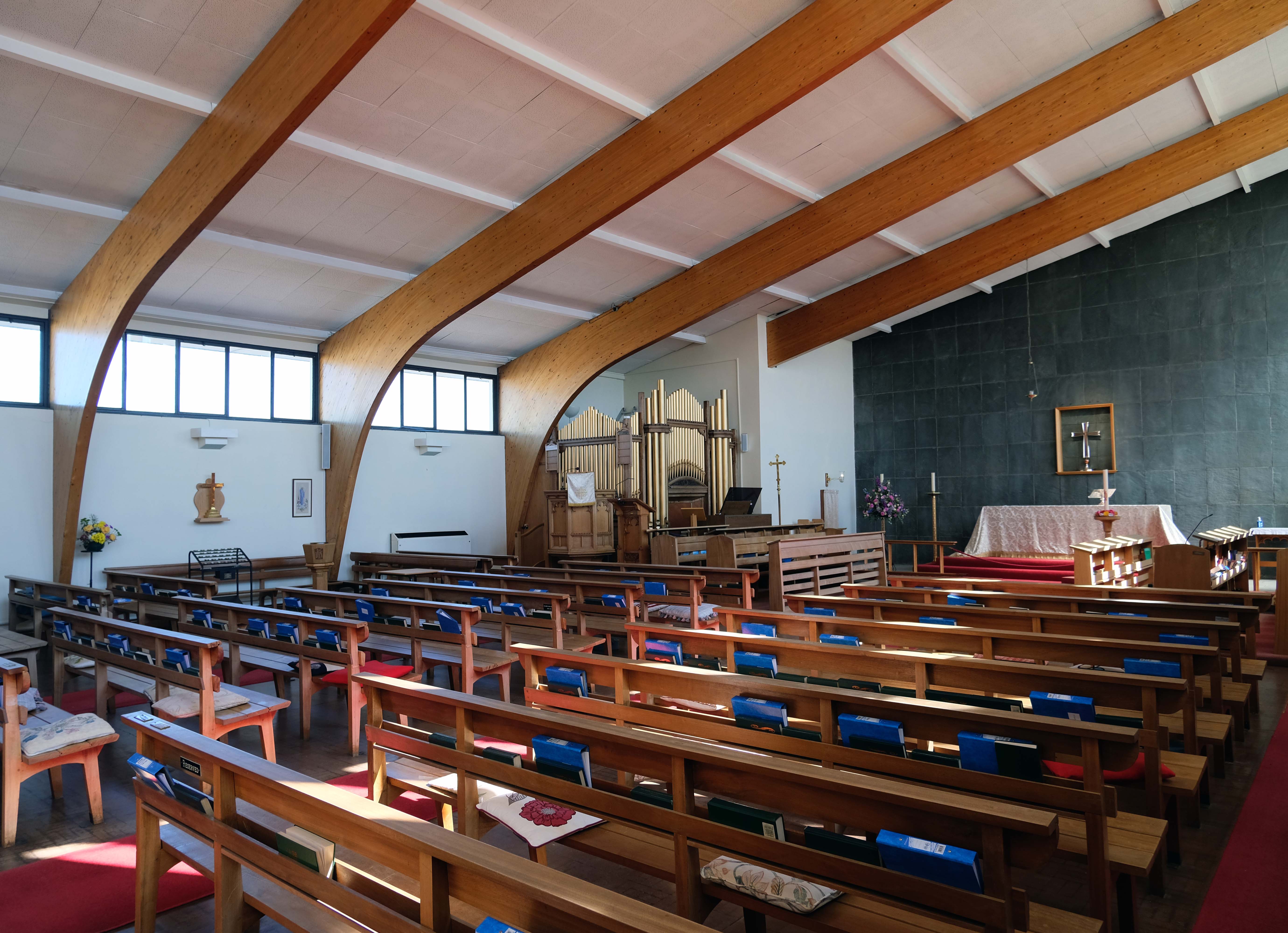
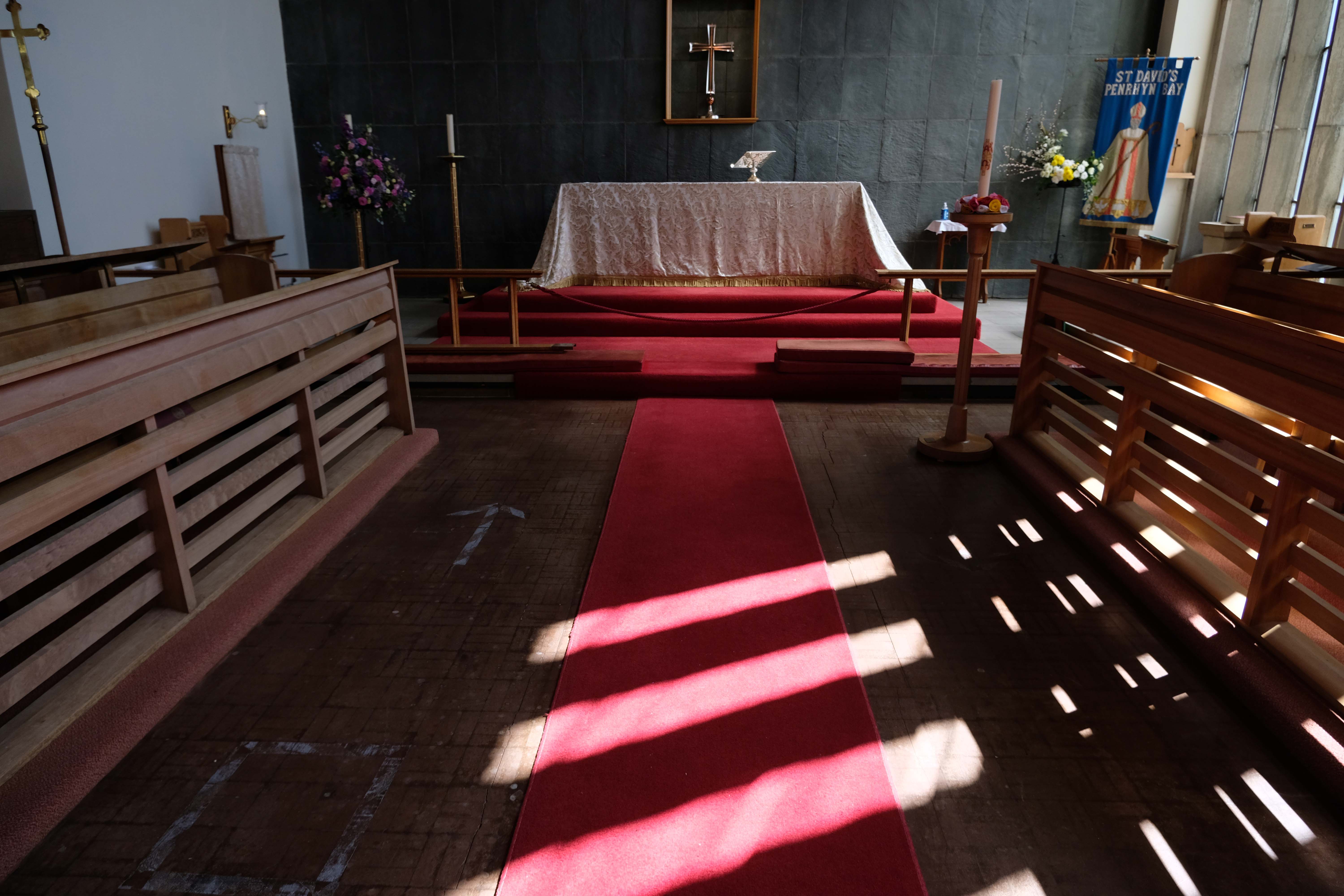
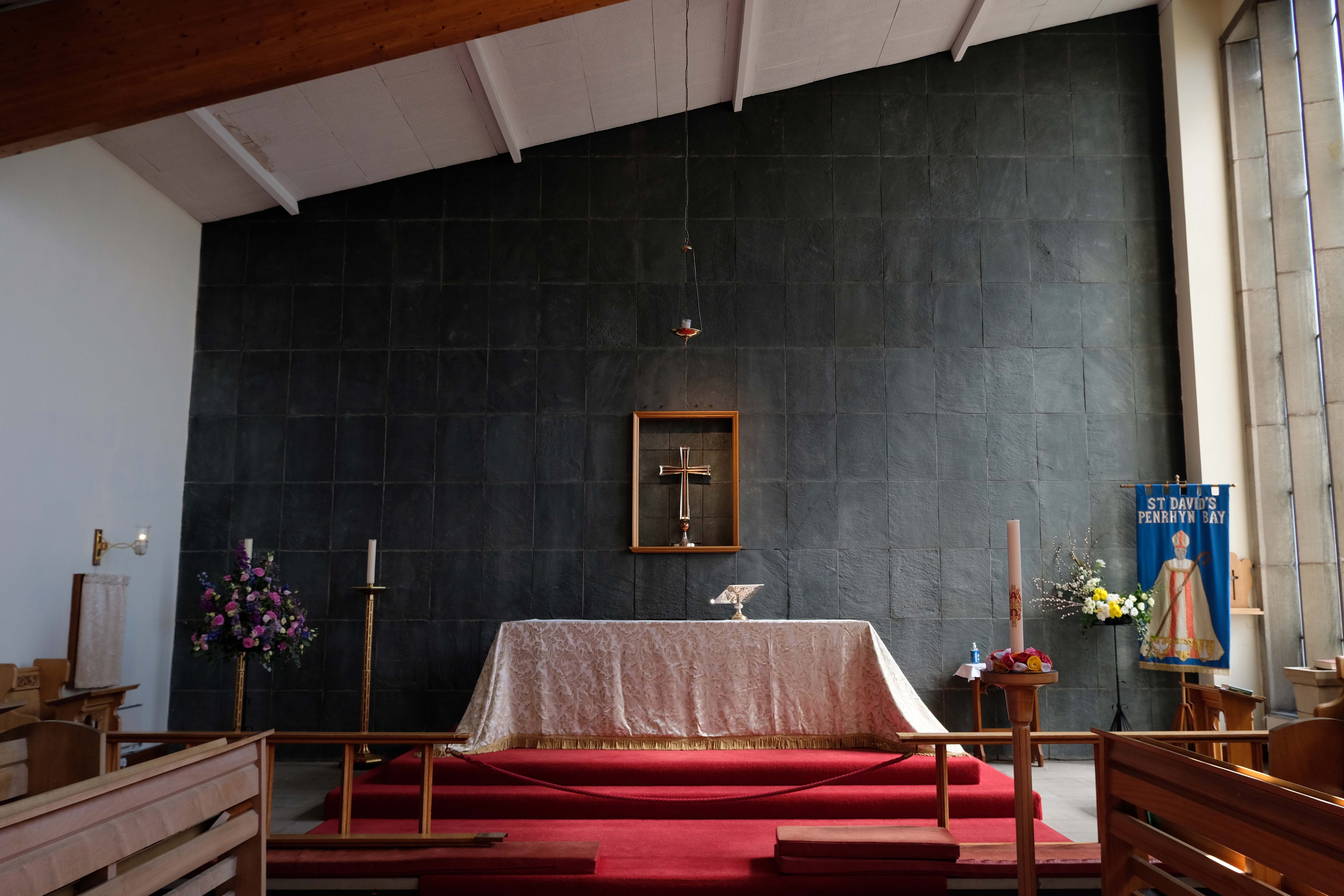
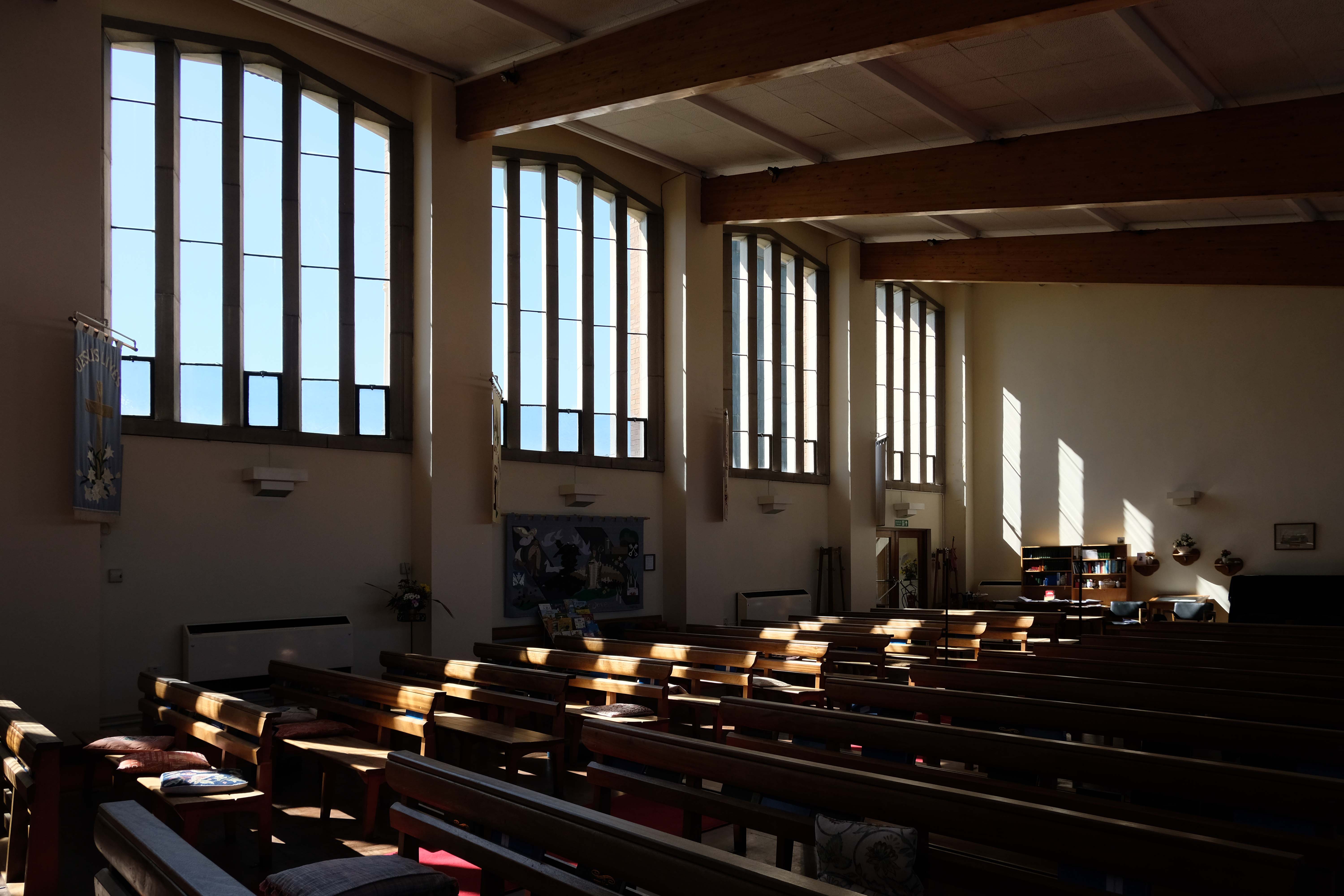
This church was built in 1963 to a design by Rosier and Whitestone of Cheltenham, to replace a wooden church of 1929.

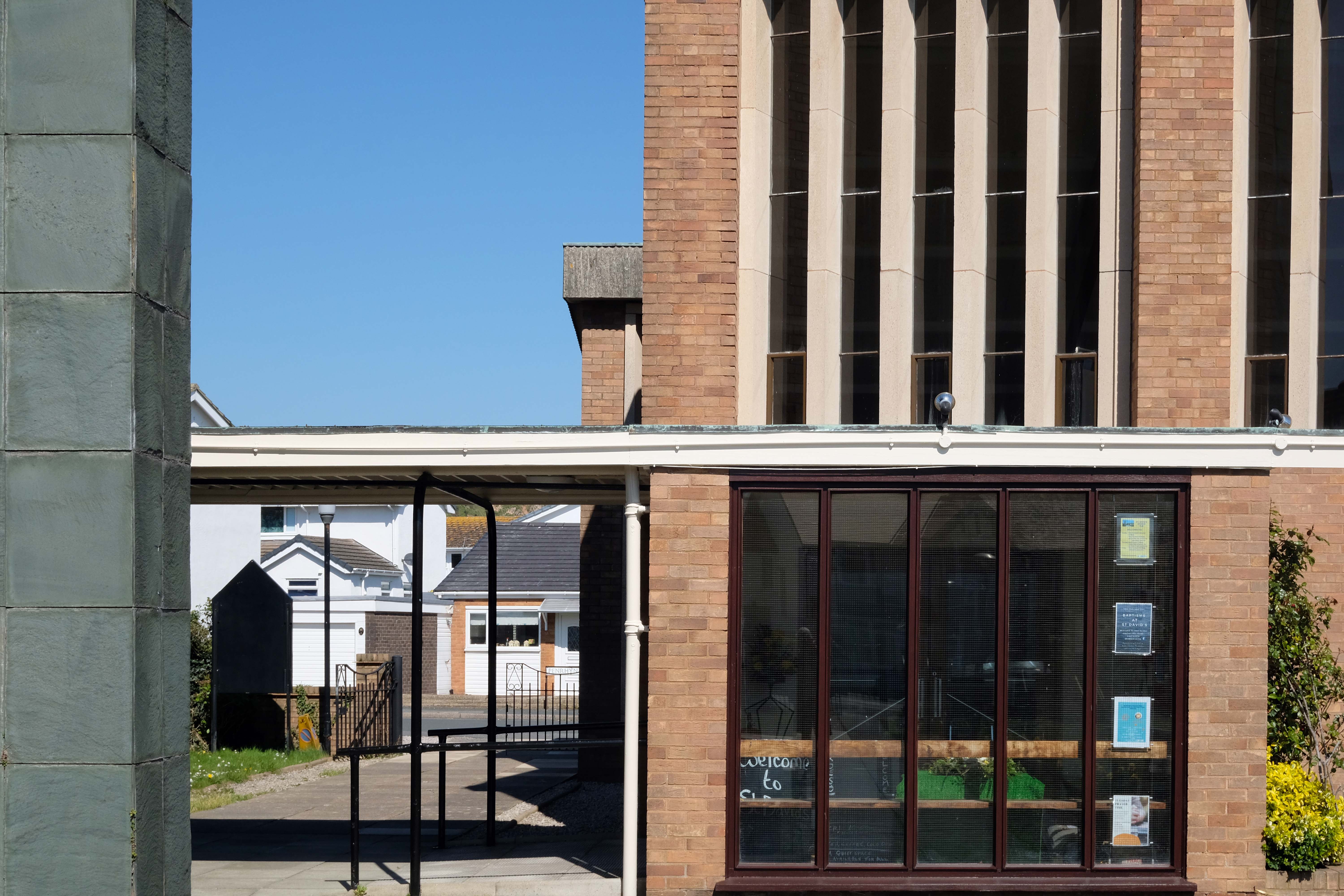
I had previously cycled by on one of my tours of North Wales – stopping to snap the elegant exterior.

On this occasion I contacted the church to arrange access to the interior – the building is open from 10.00 – 12.00 most weekdays.

The church has been recommended for listing in this CADW report on post war architecture in Wales.

St David’s deserves listing, a distinctive building with a remote slate clad campanile.

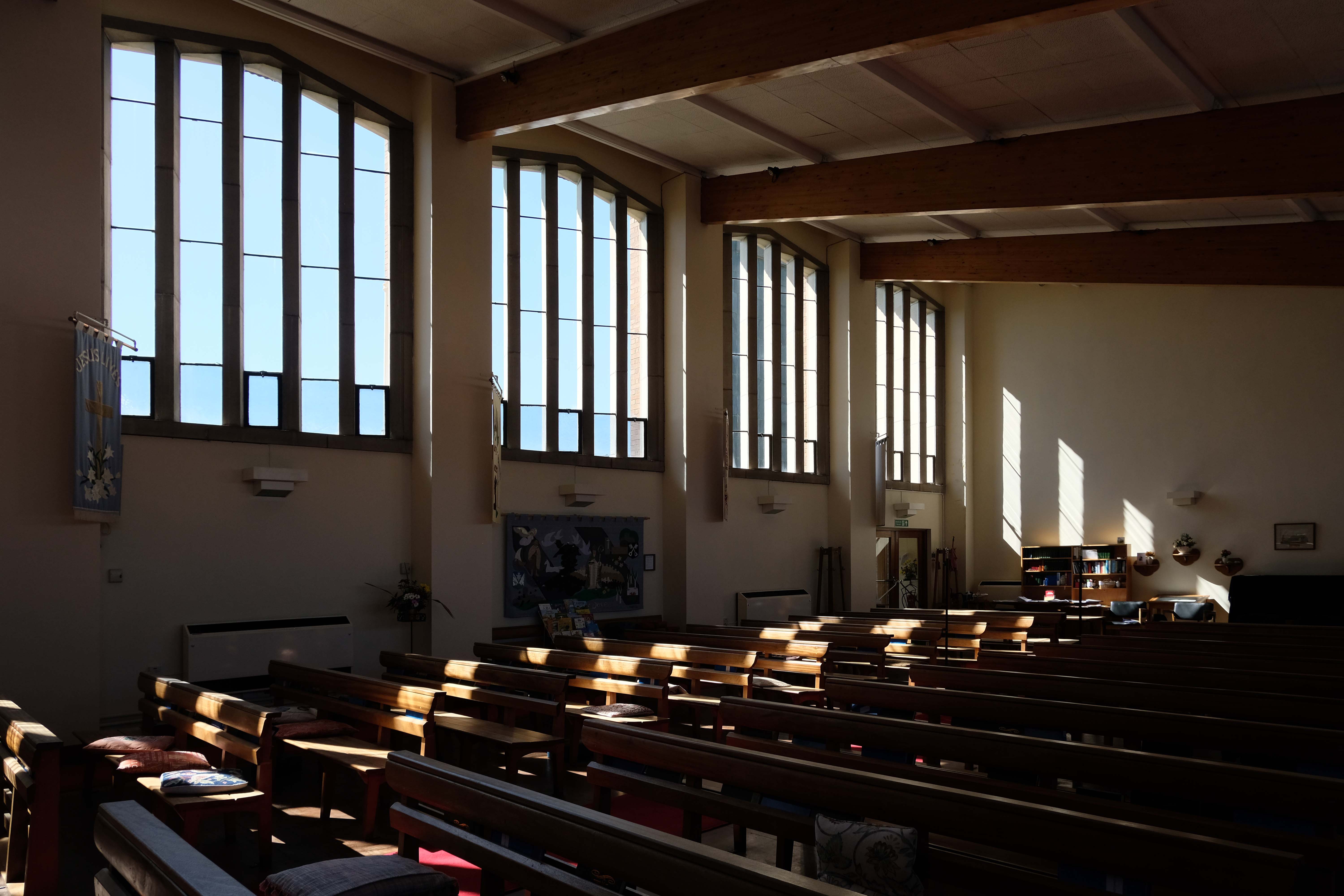
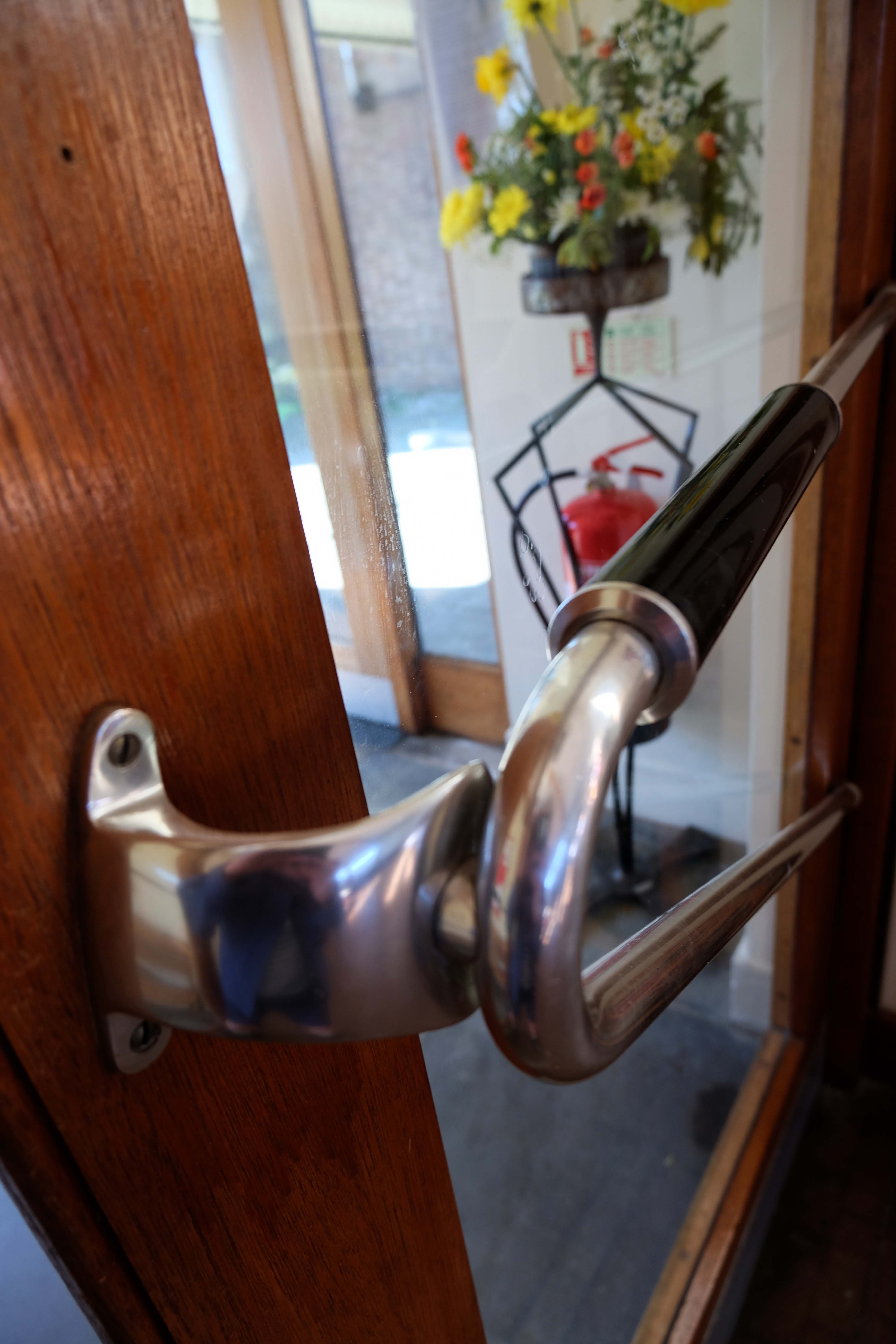
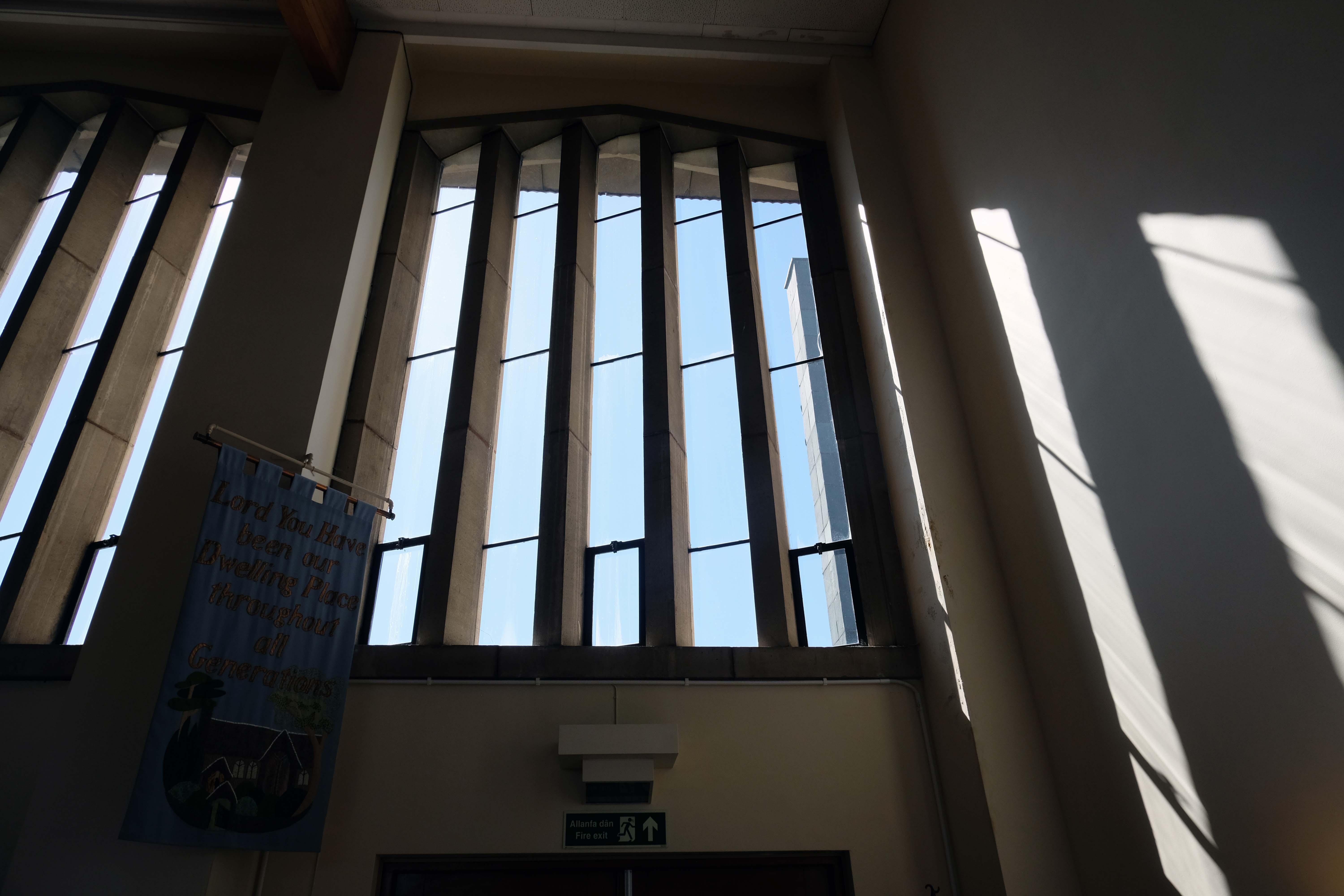
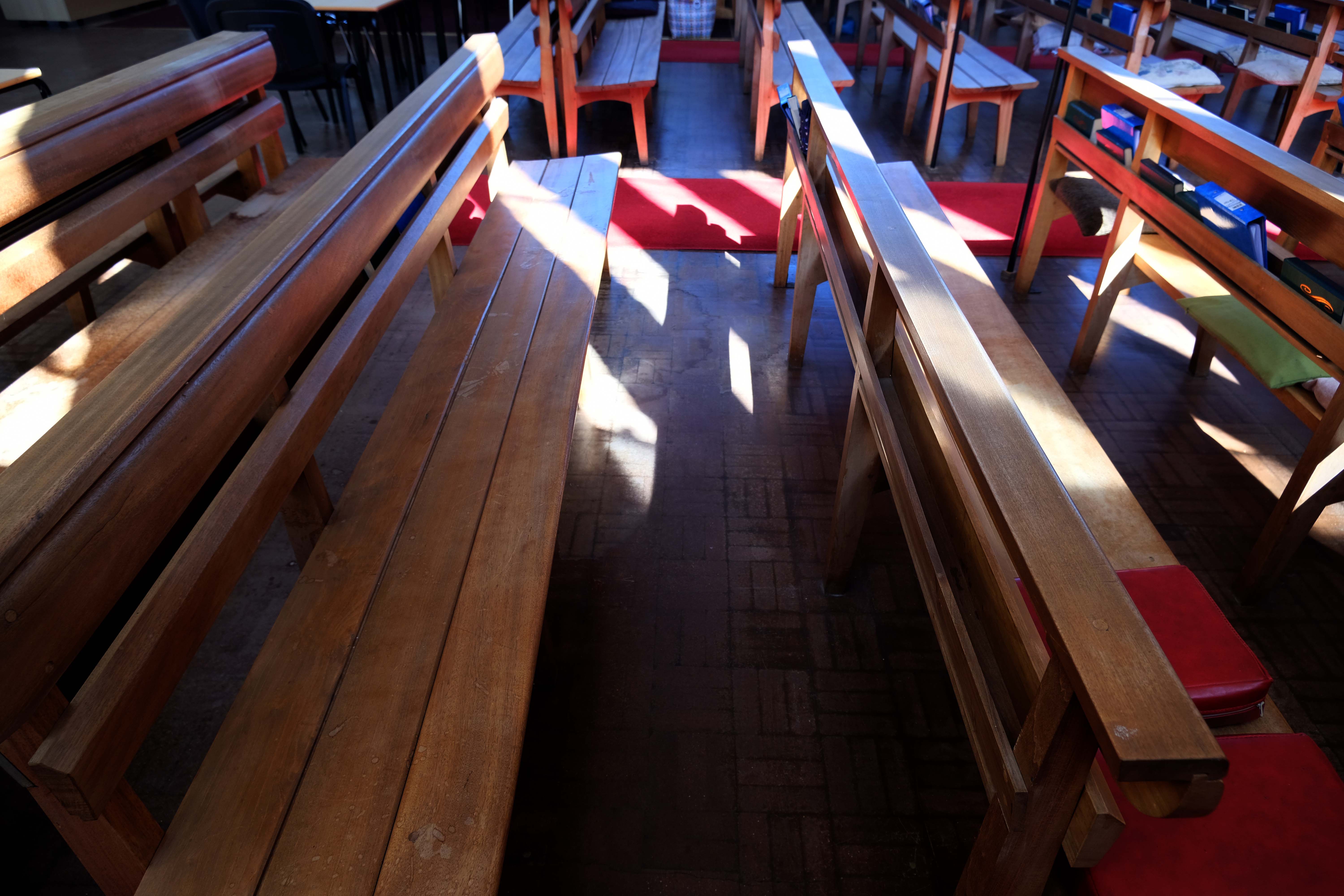
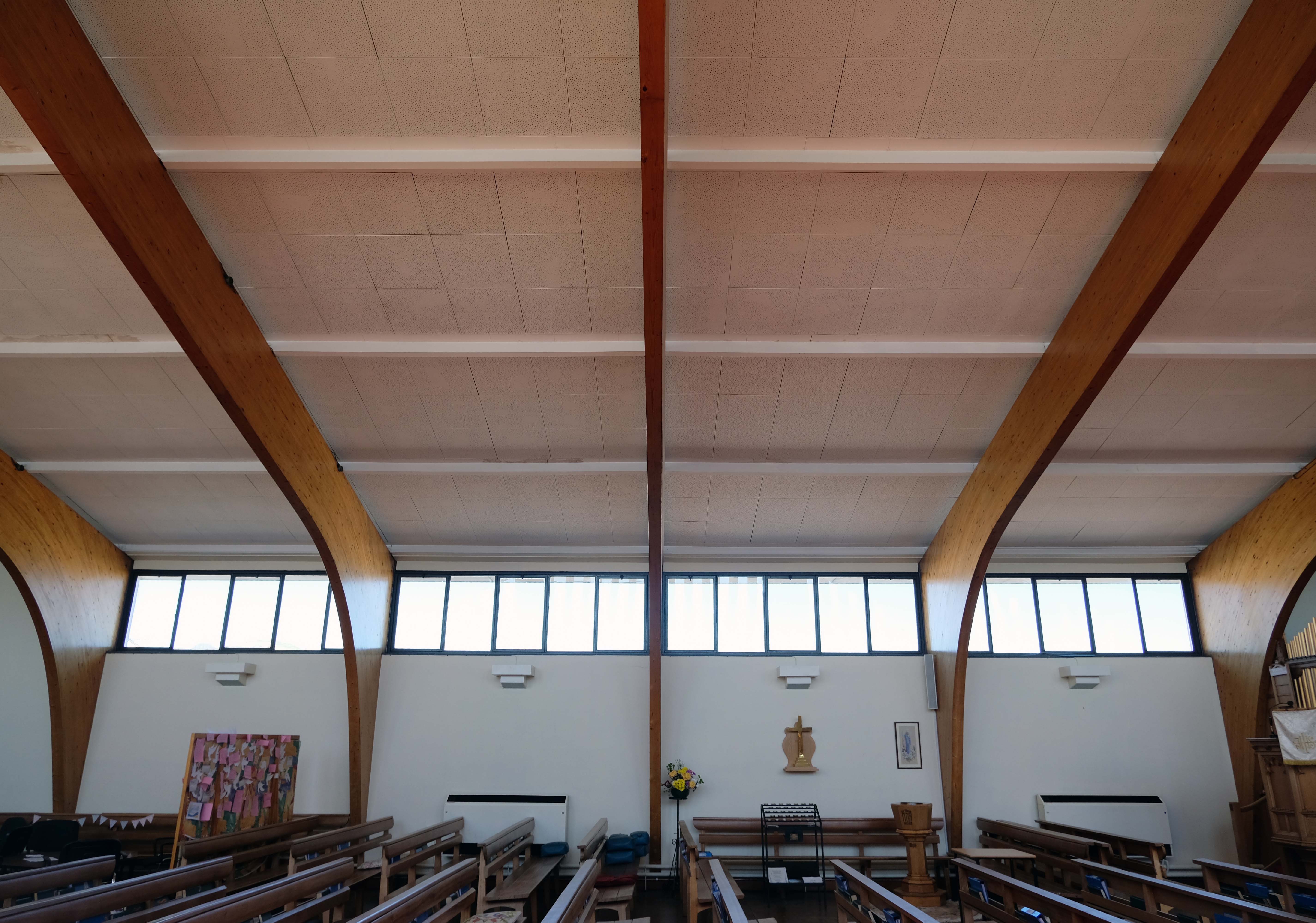
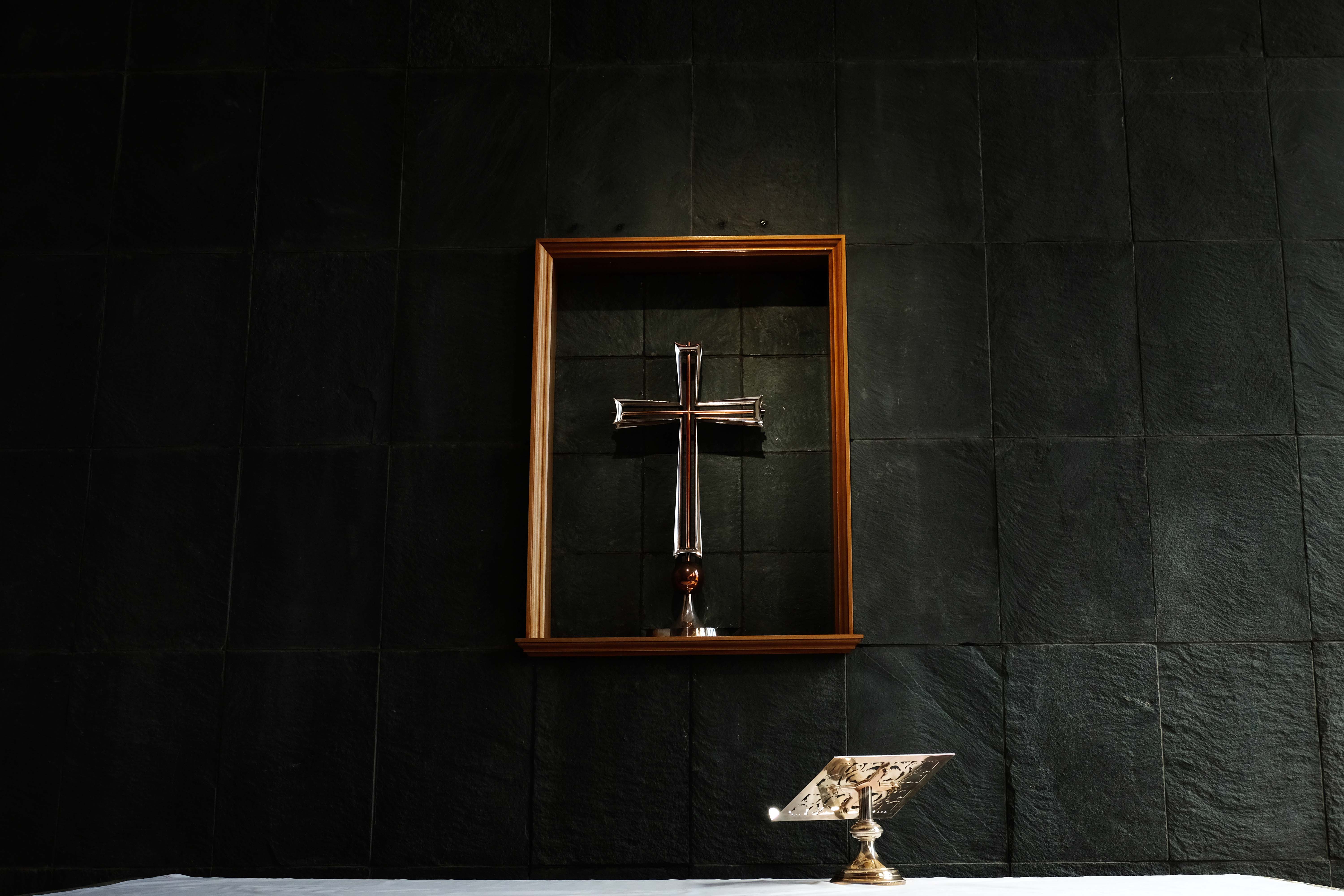
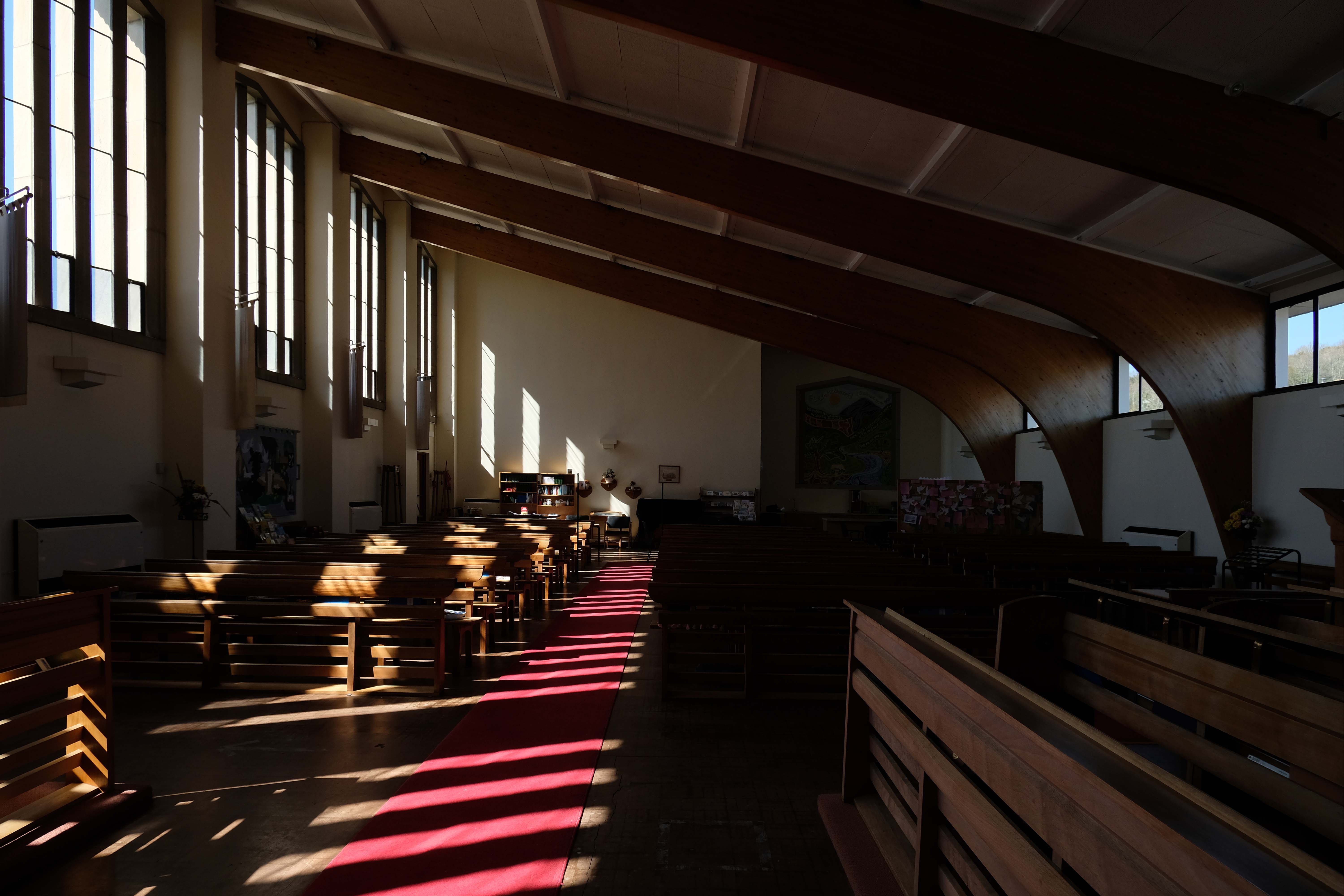
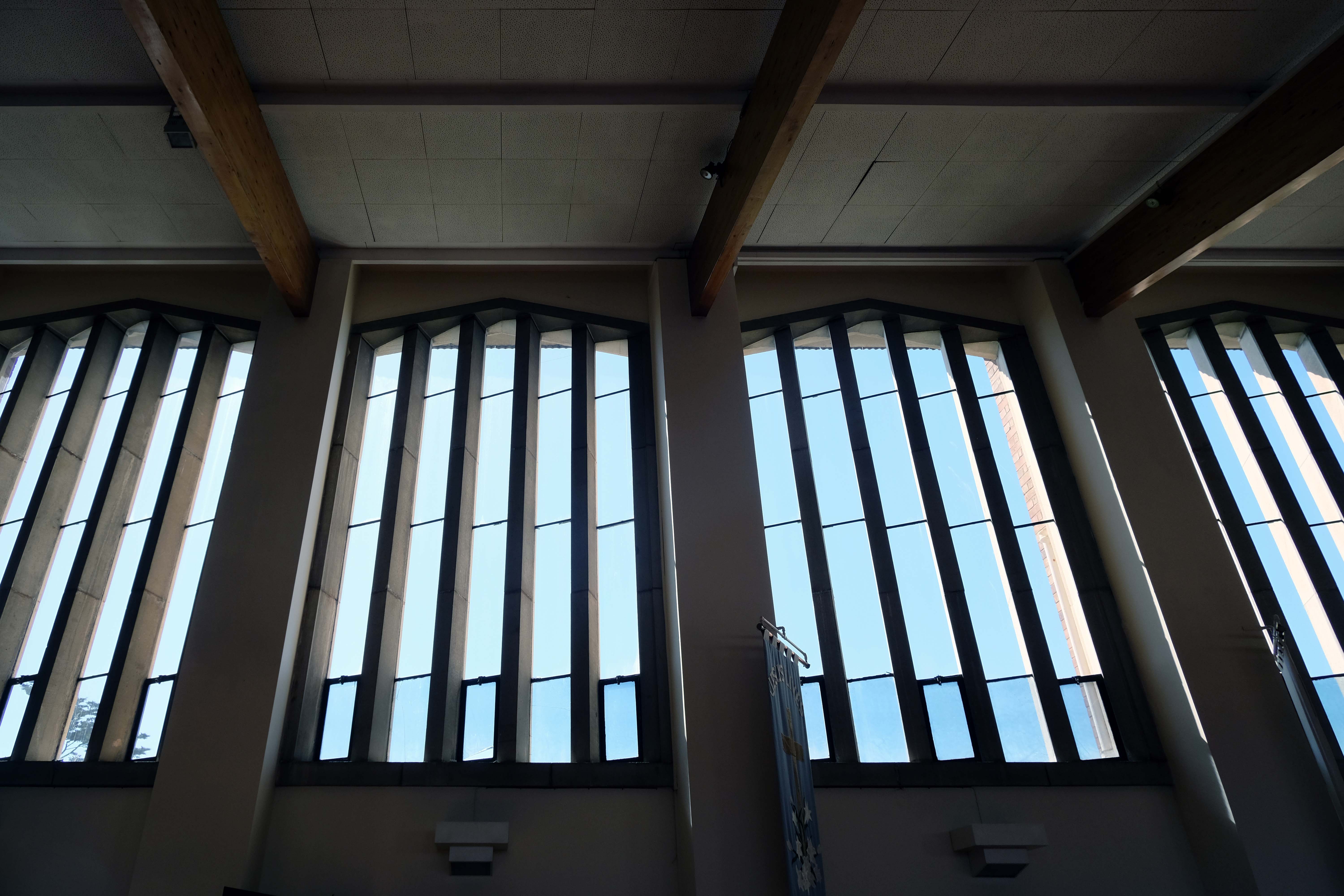
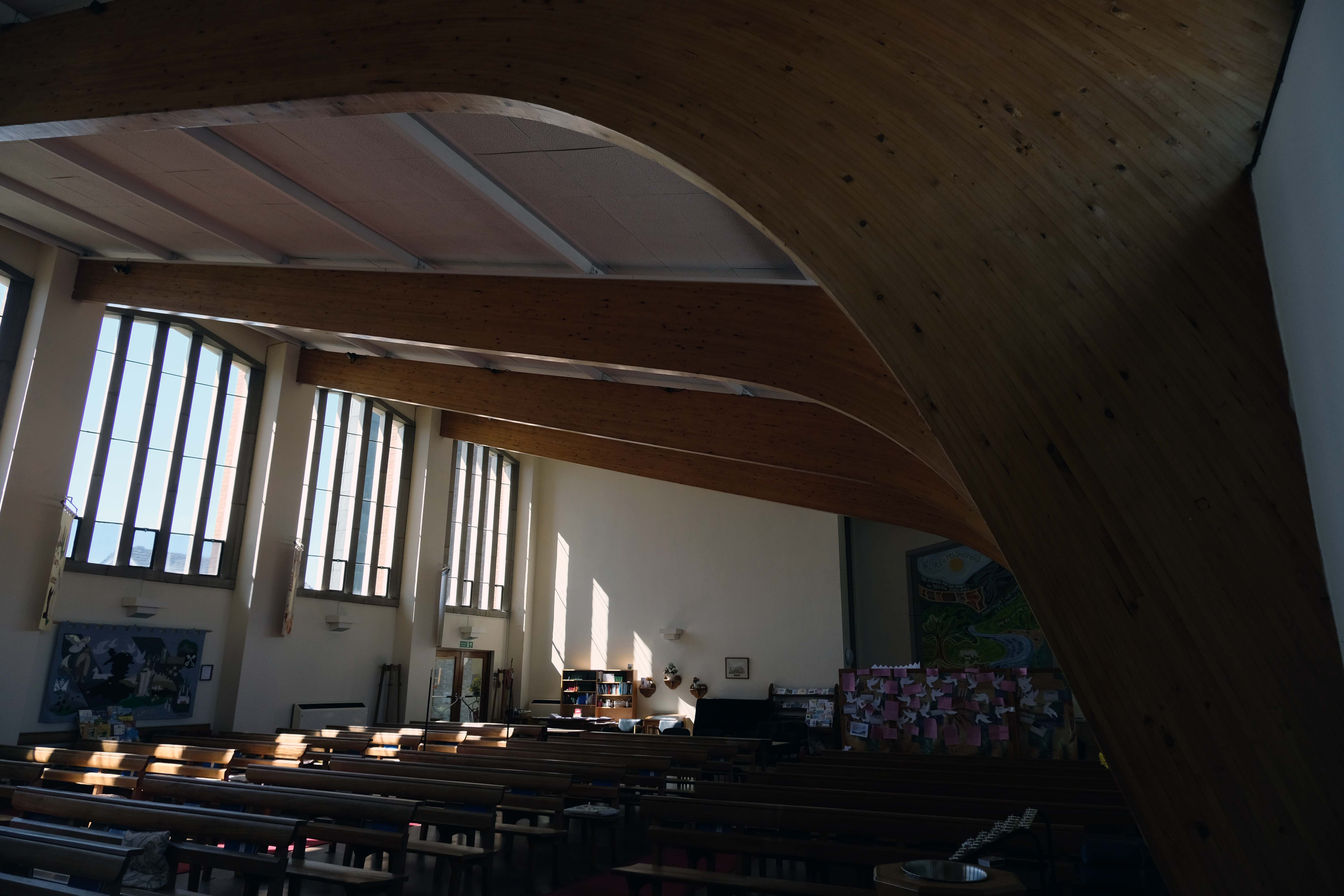
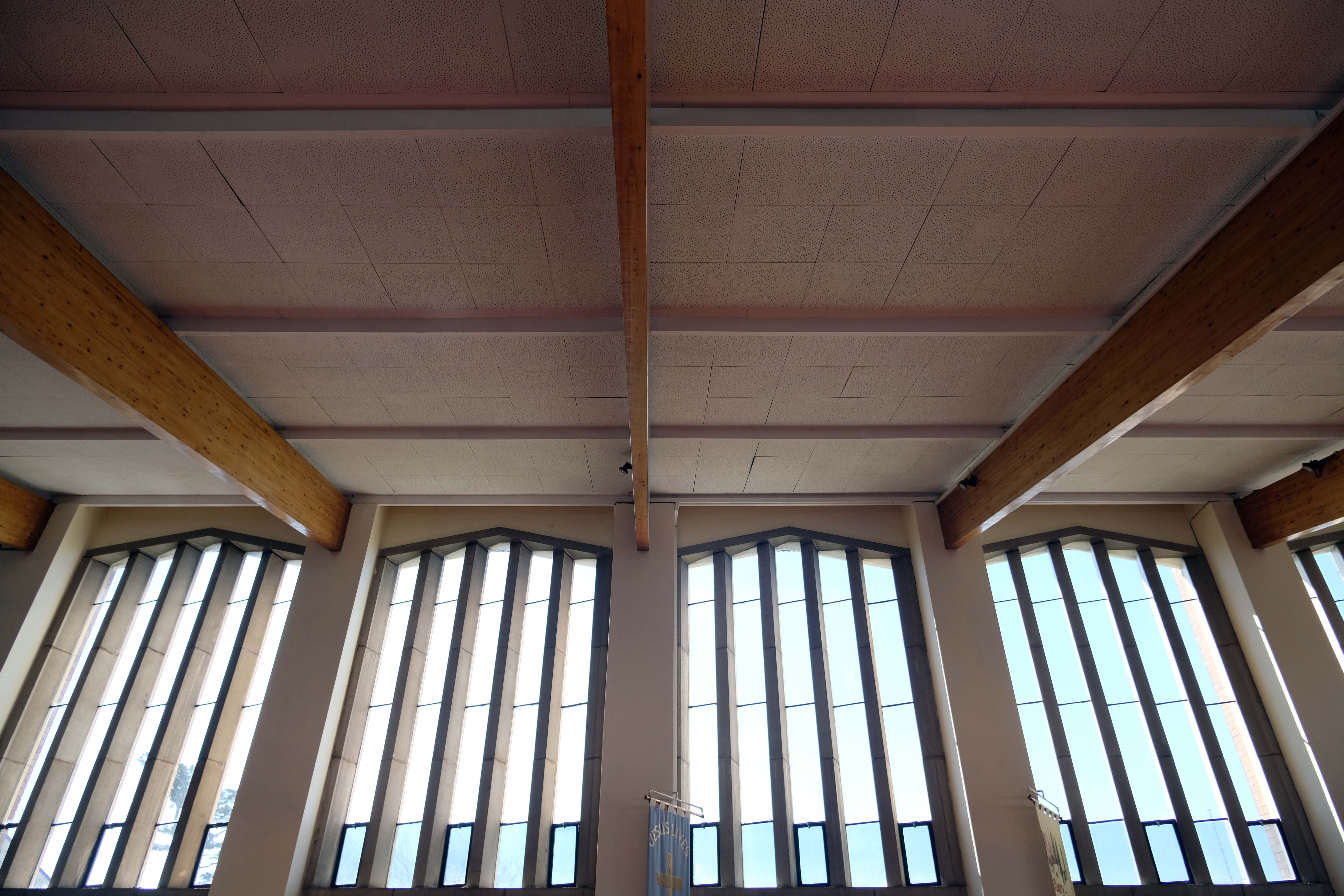
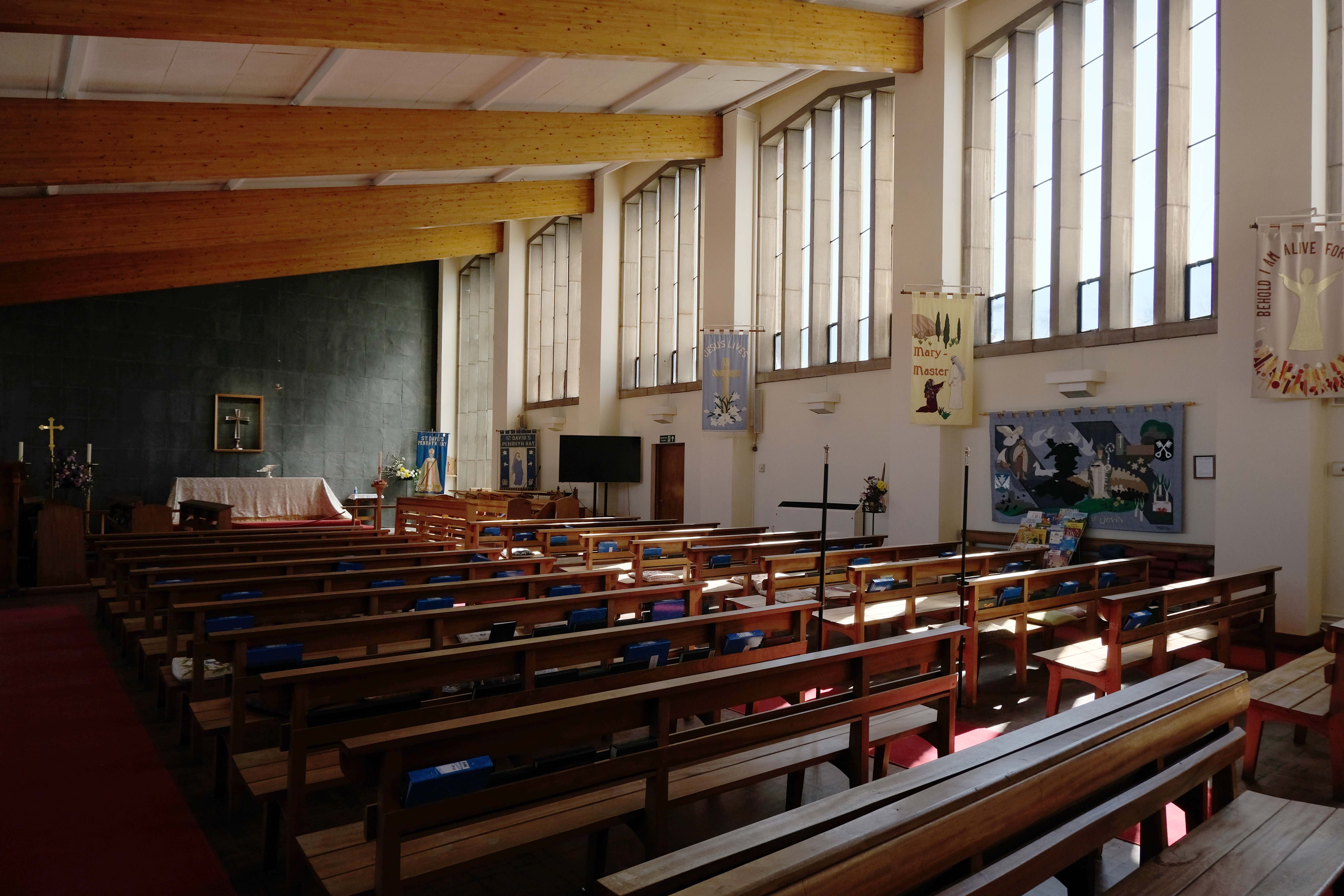
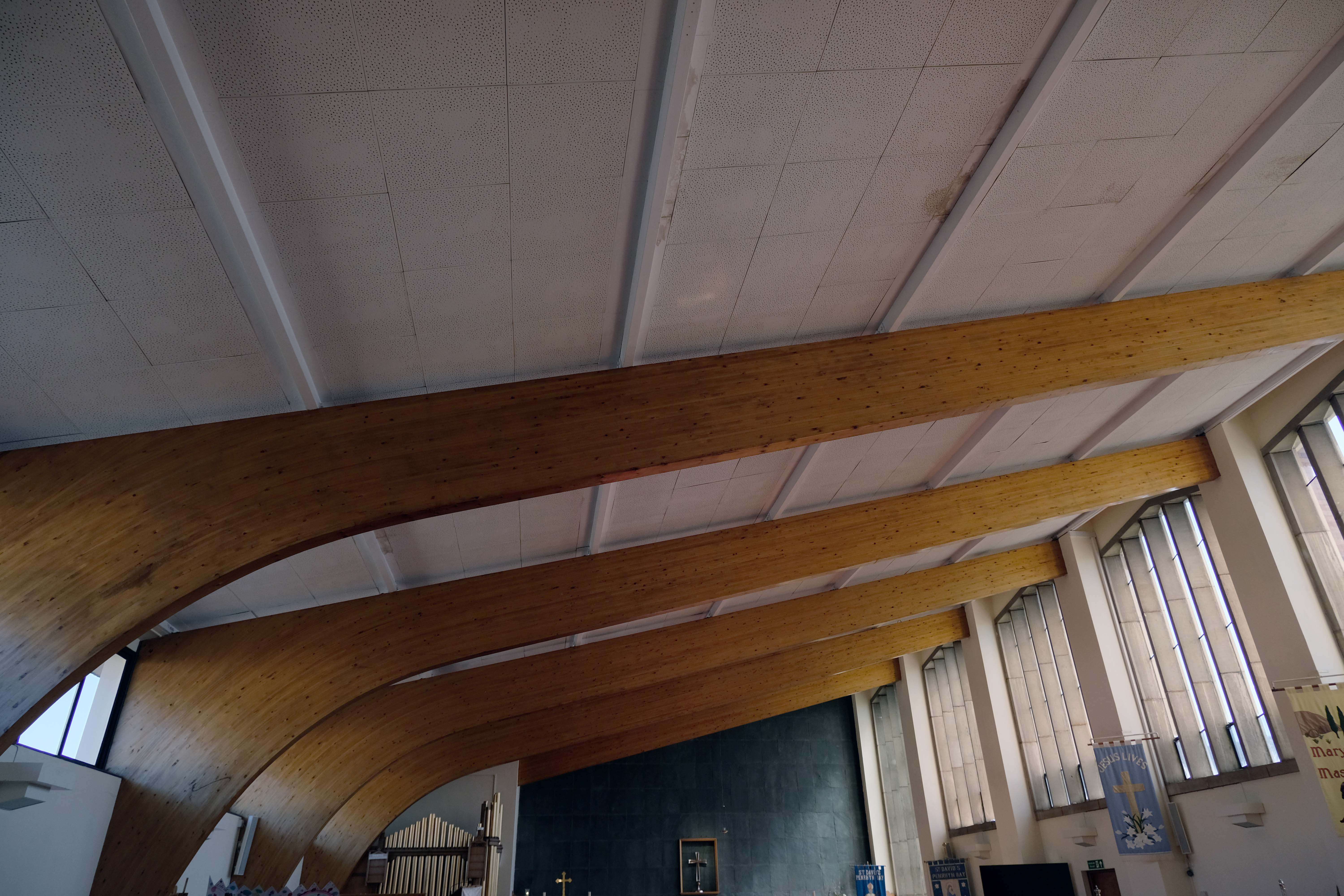
The interior does not disappoint, a light and airy space with confident curved wooden roof struts and clear angled arched windows.

My thanks to the kindly parishioner Alan, who made me more than welcome on the day of my visit.

Sadly the bell is no longer seated – its shell cracked and the wooden support rotted away.

Let’s take a look inside.

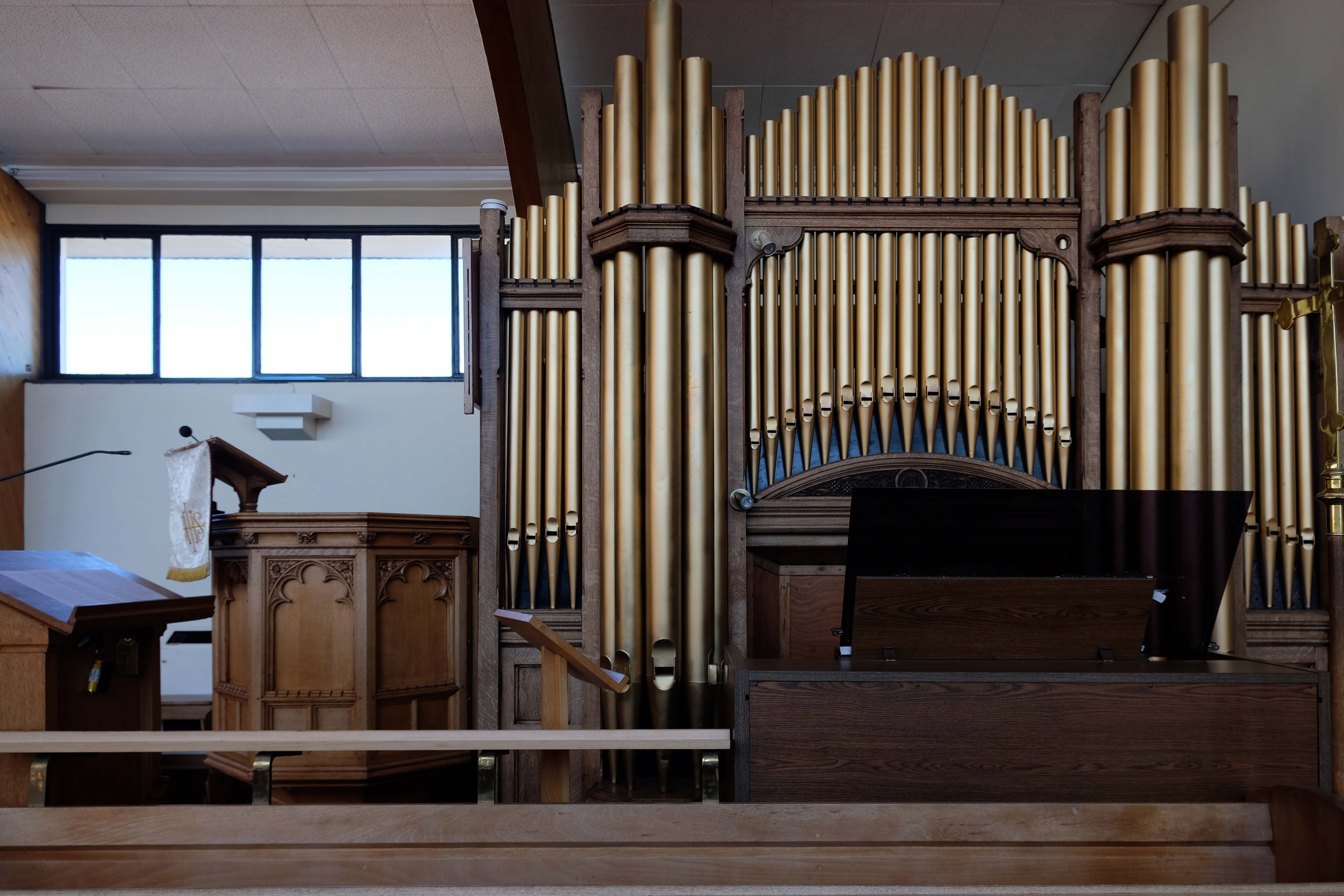
The organ pipes are purely decorative – the current console being digital.

Thanks again all for your time and informative conversation.

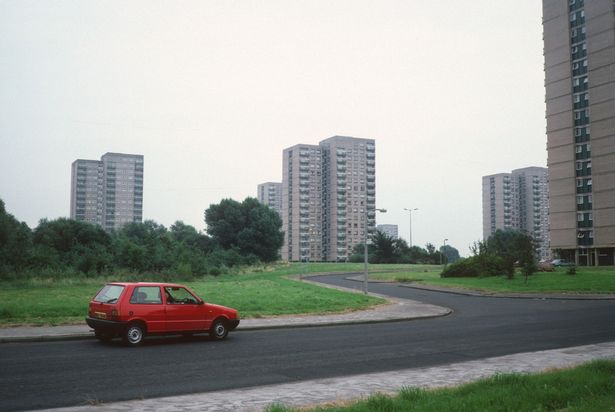
Charlestown Towers

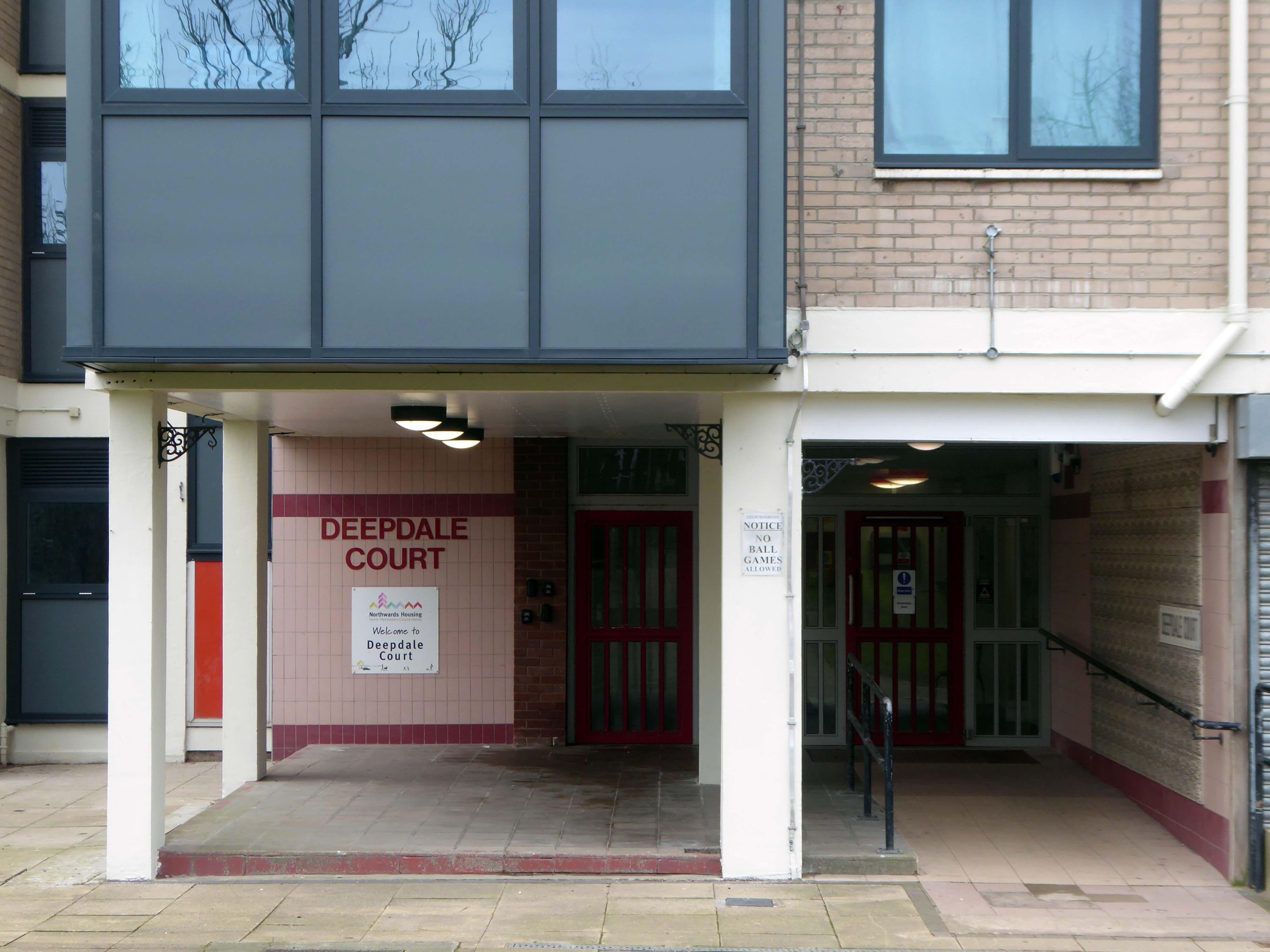
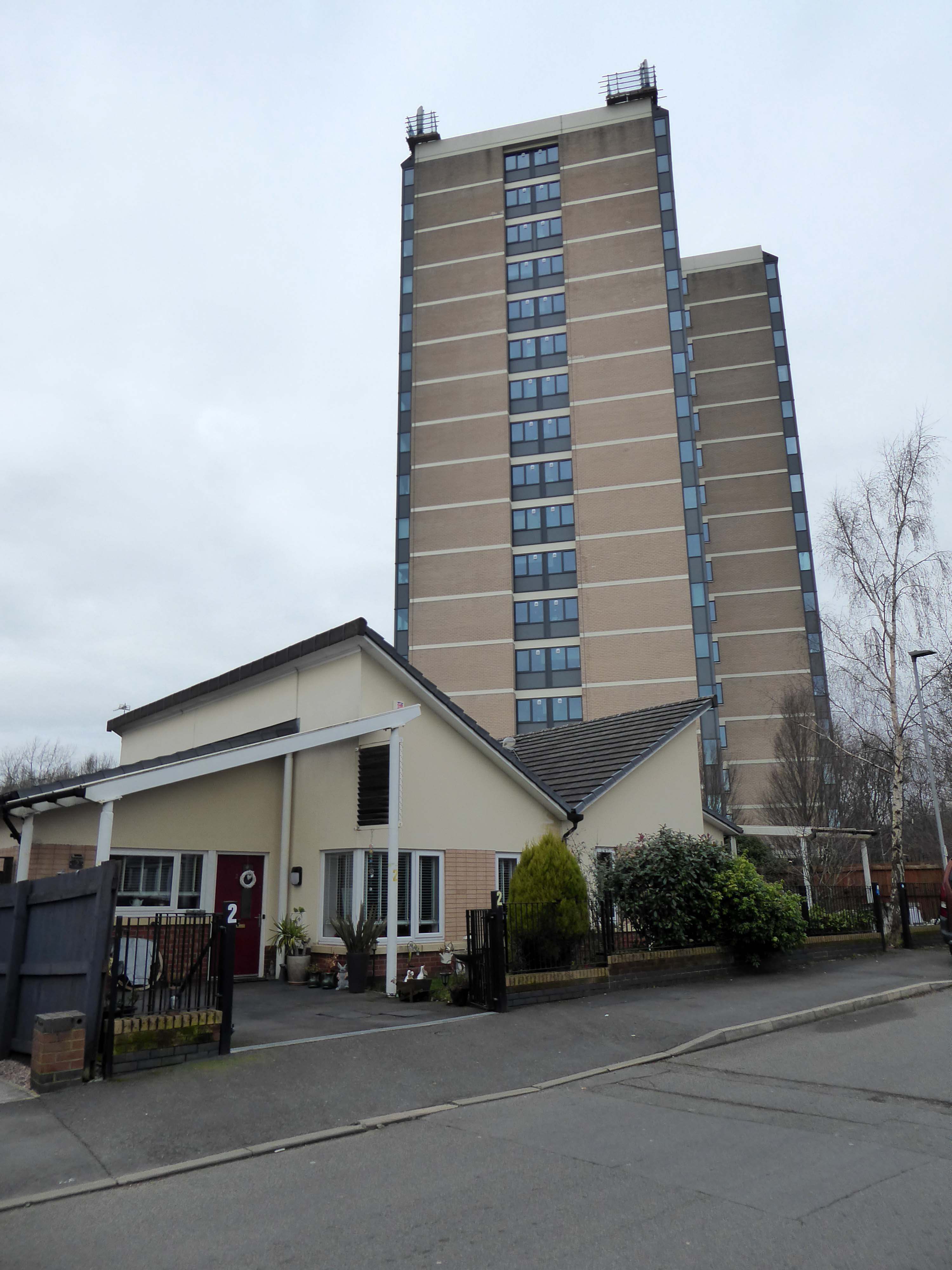
We have previously taken a look at Deepdale Court.

I returned last week to look at the remaining blocks.

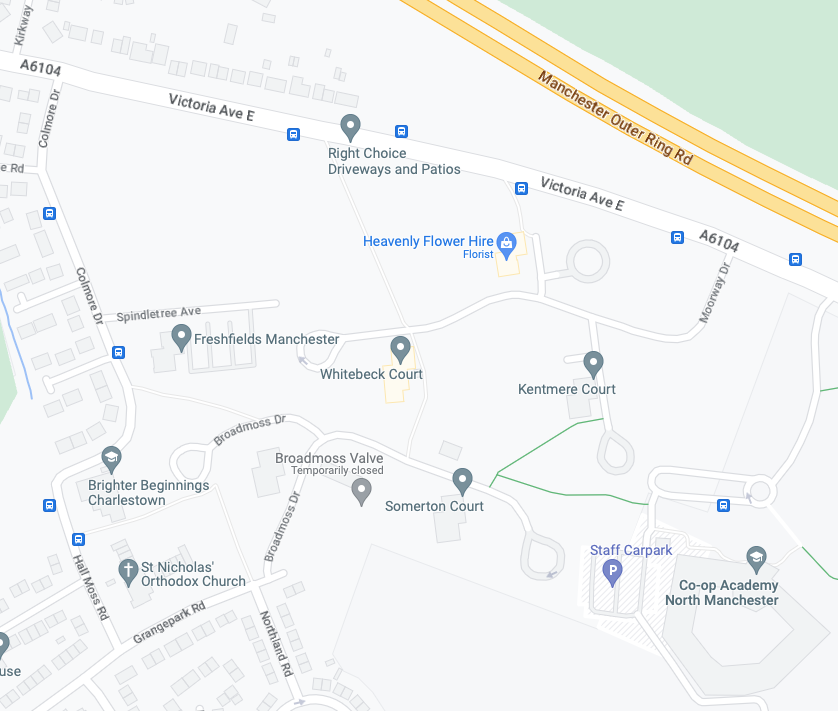
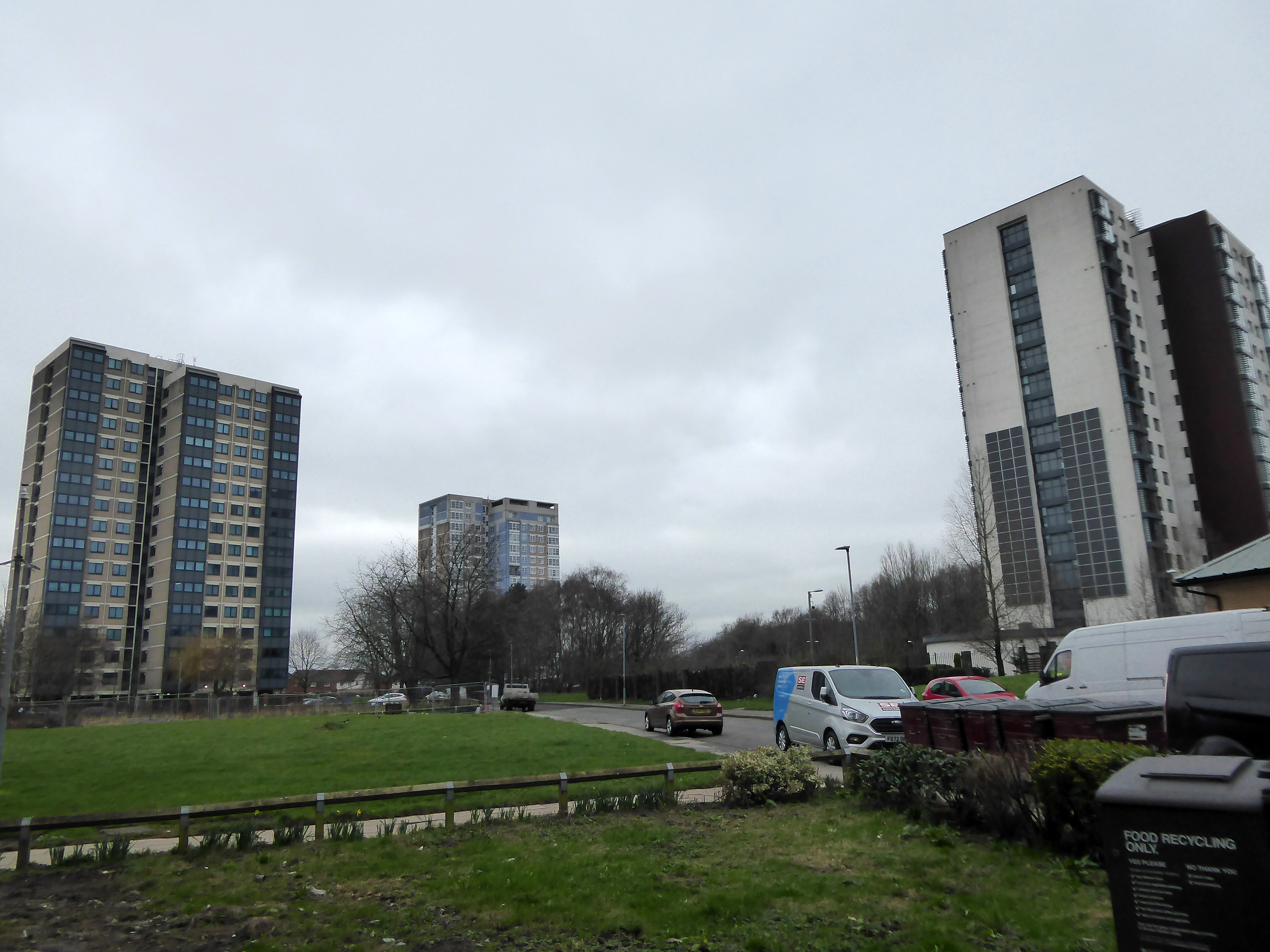
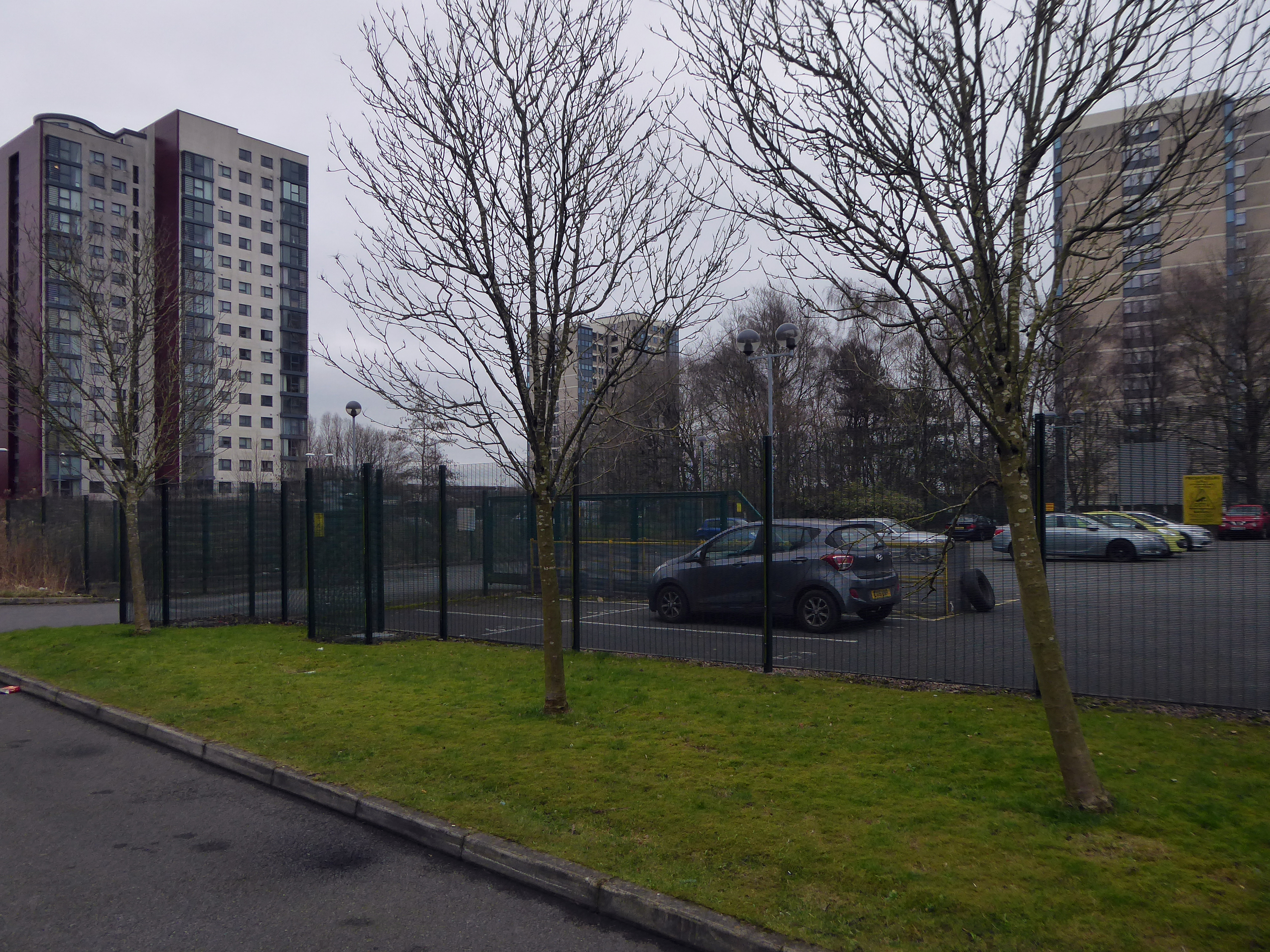
Cartmel, Rusland and Somerton are all social housing.

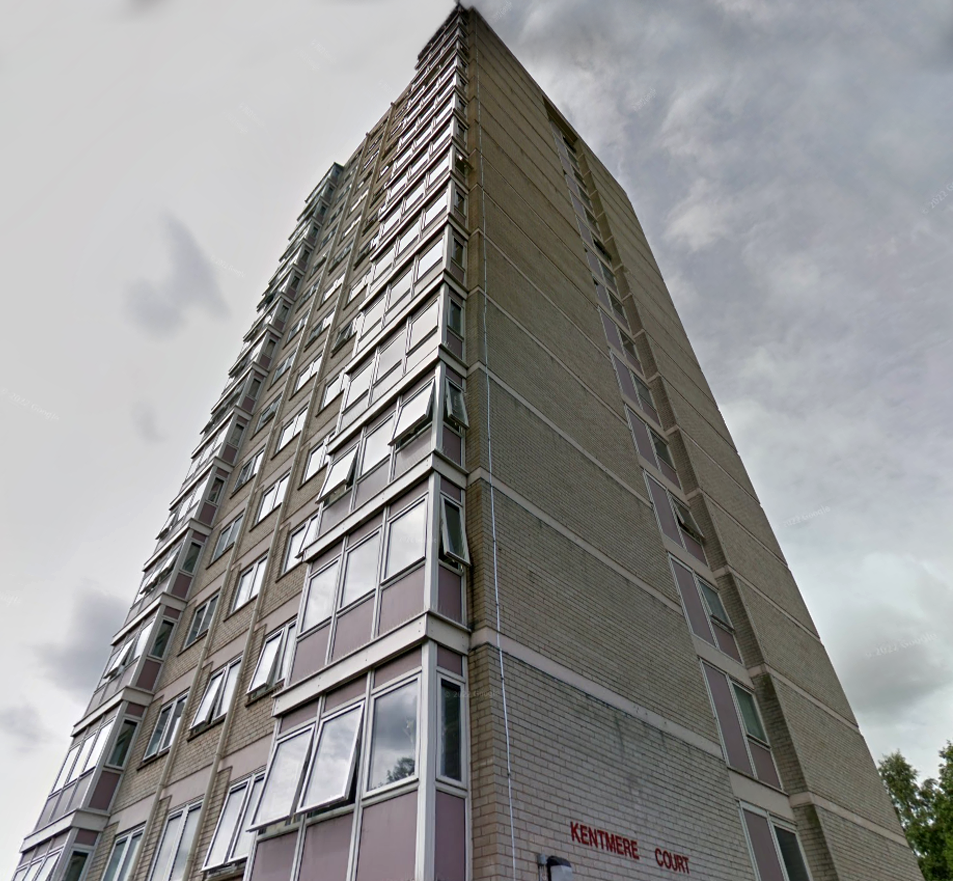
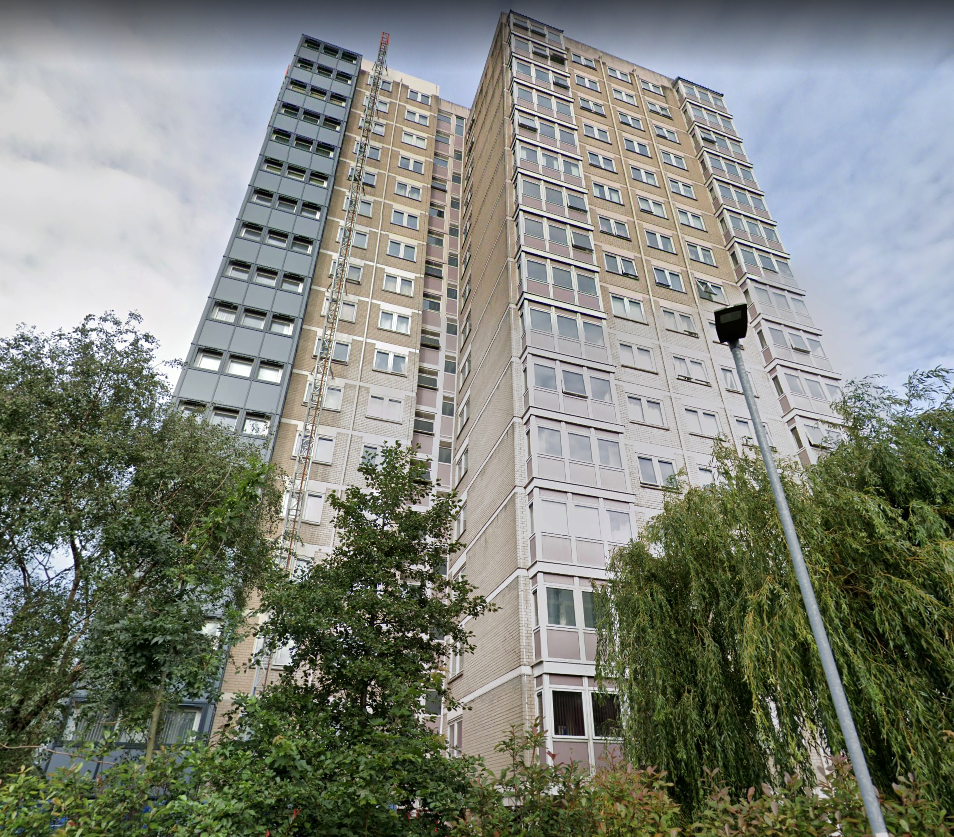
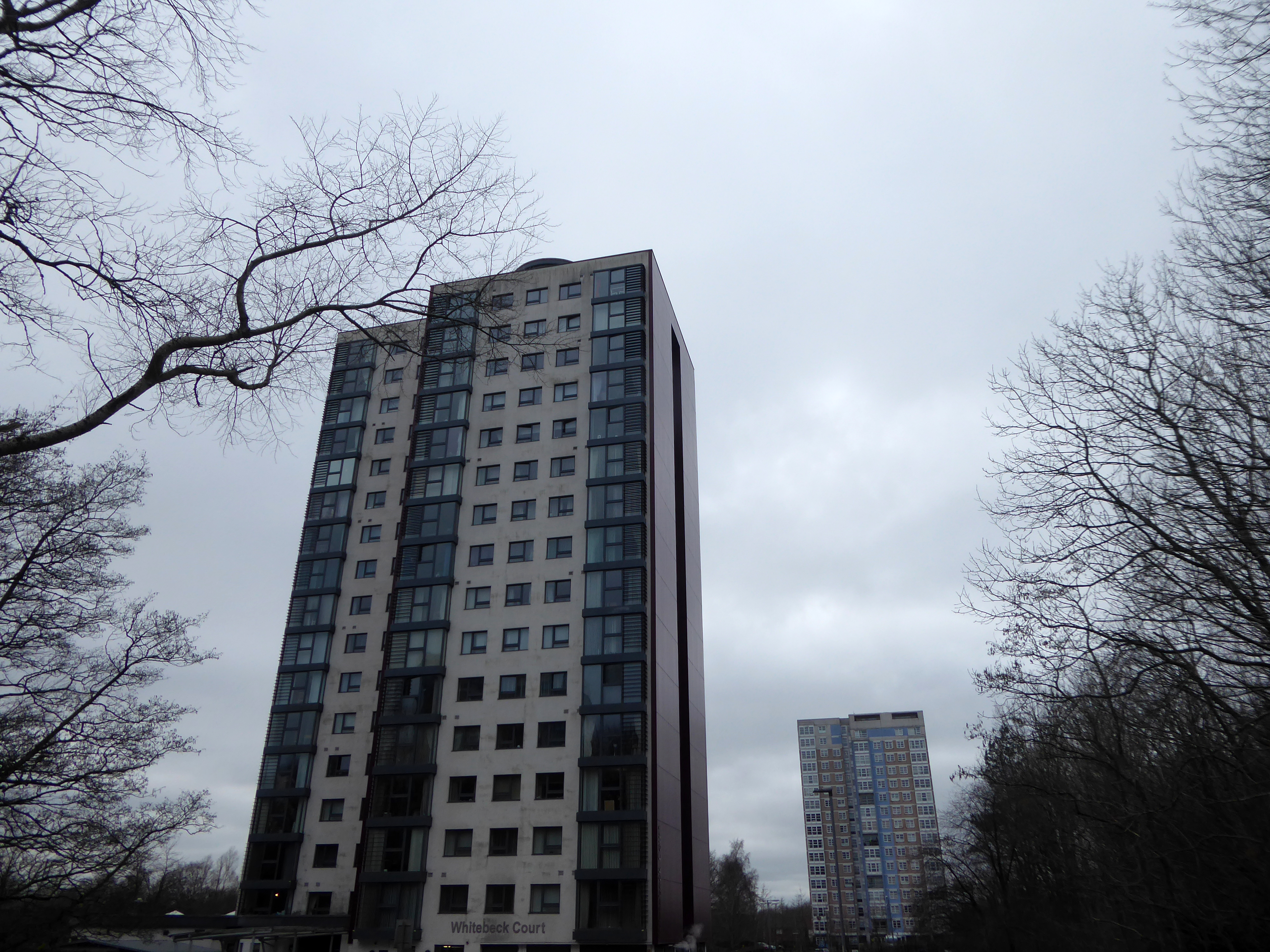
Kentmere and Whitebeck have been adapted for senior citizens managed by Northwards Housing.

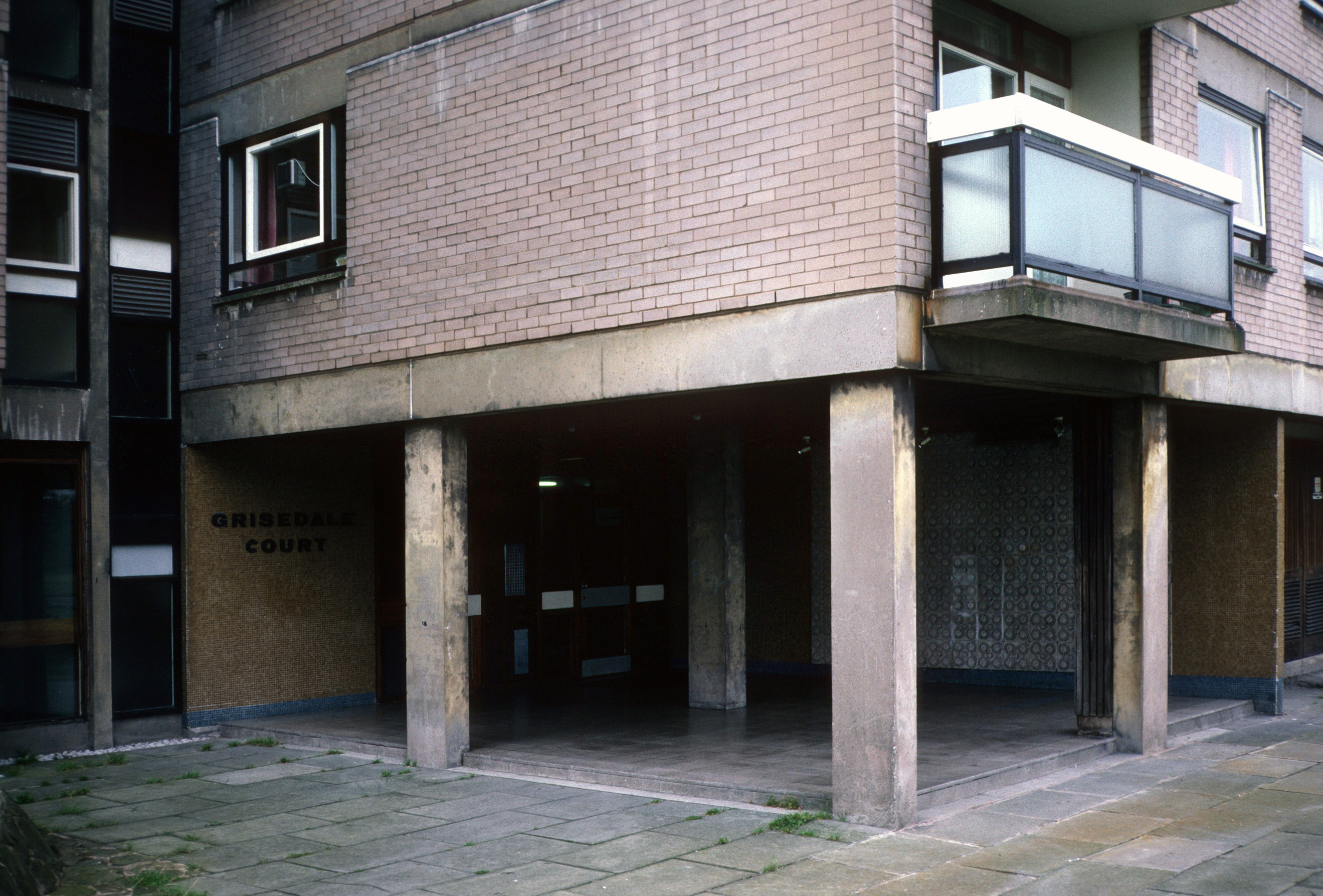
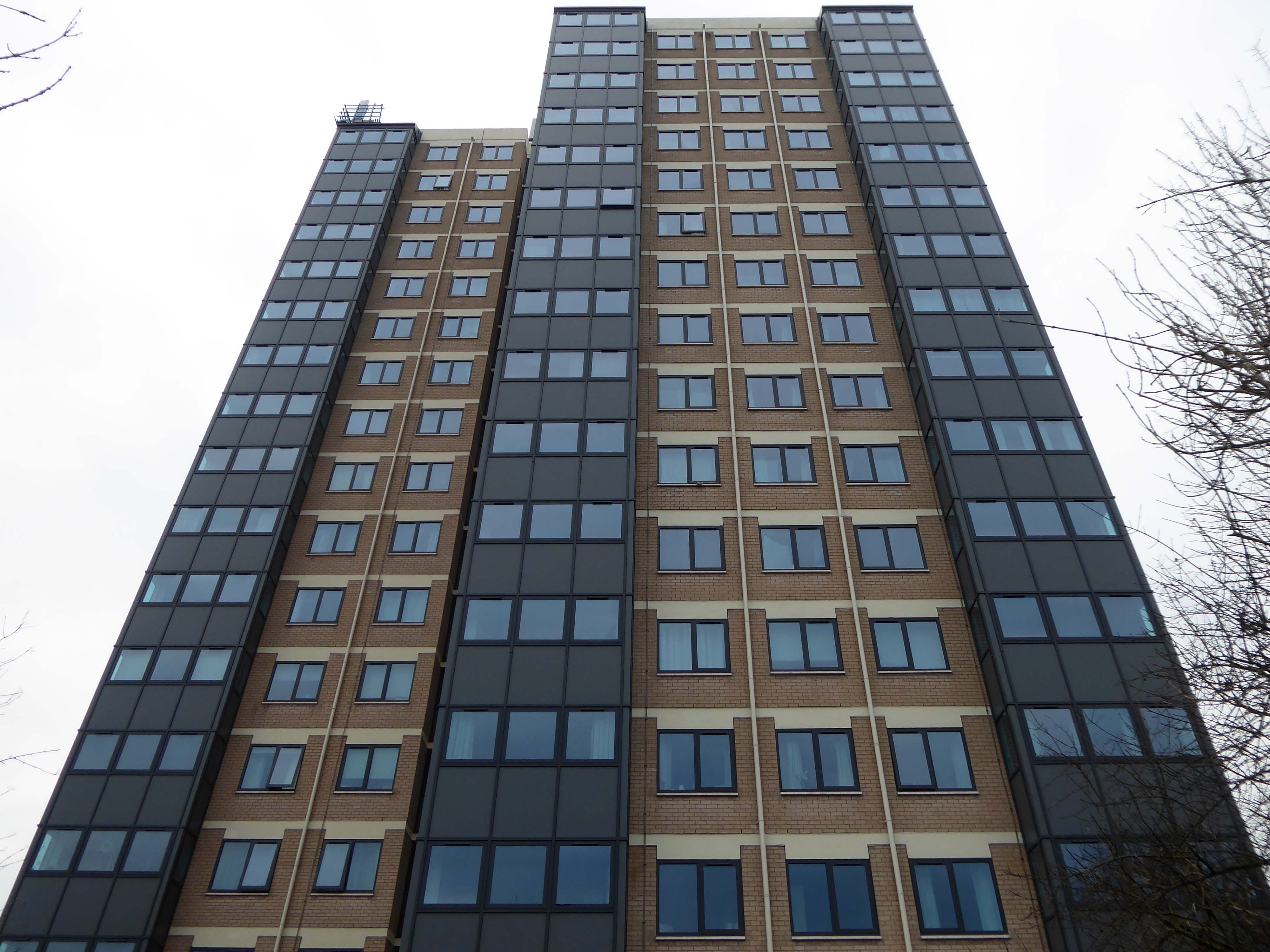
Freshfields formerly Grisedale is owned by private developers LPC Living and converted into a block of one, two and three bedroom homes.

Now, they boast floor-to-ceiling windows in the living spaces, modern fitted kitchens, and light wood-effect floors. Some also come with balconies.

A penthouse apartment, sold for £135,000 in 2008, even has a wrap-around outdoor terrace.

Manchester Evening News

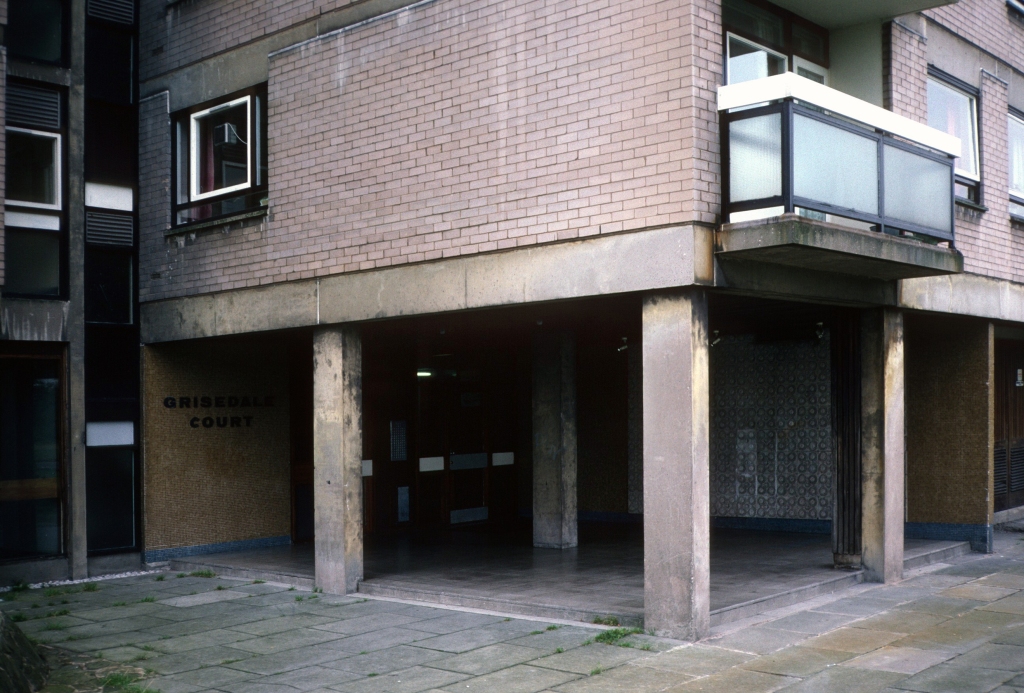
The circular tiles within Grisedale’s entrance have been covered or removed.

Tower Block – 1987

Tunstall Court and Skelton Court have been demolished.

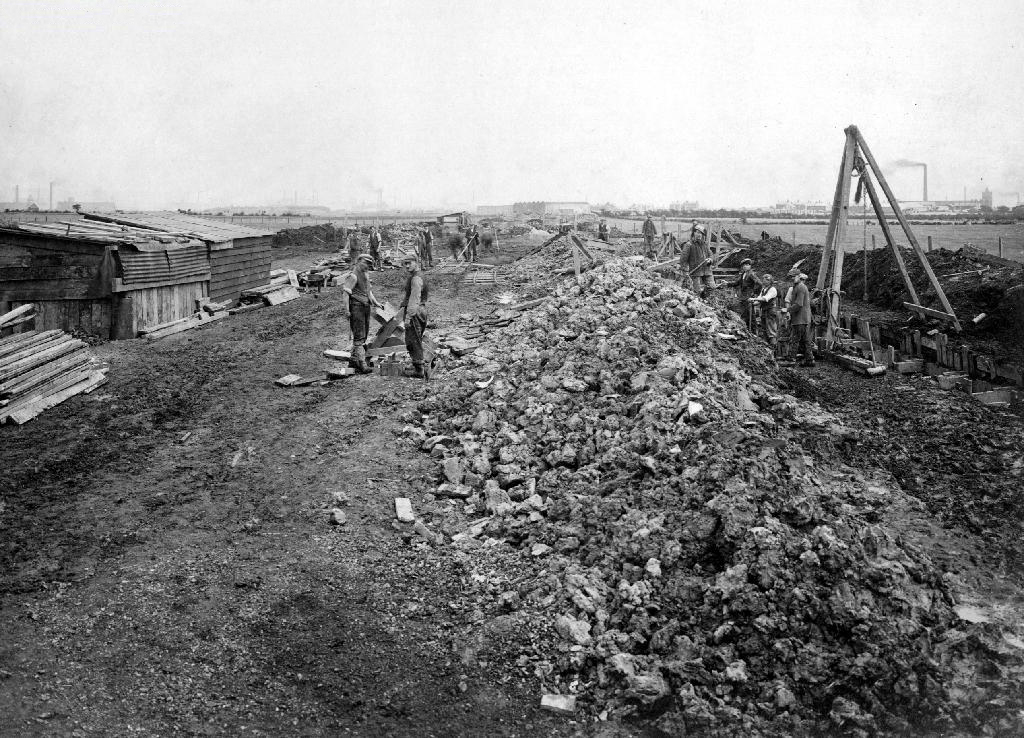
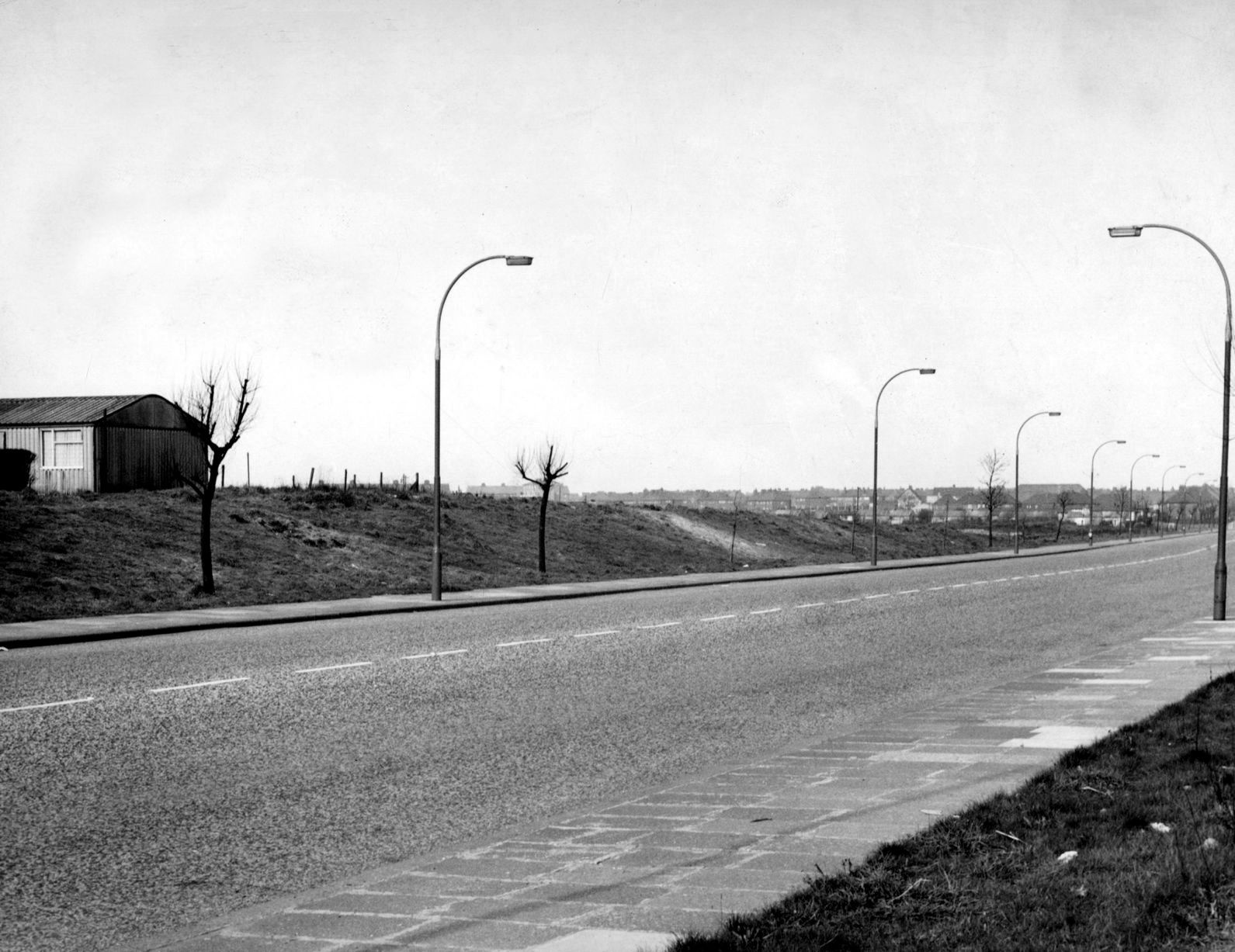
Let’s take a look back at the building of Victoria Avenue East – seen here in 1922.

The demands of an expanding industrial base and population created the need for new roads and housing.

There was subsequent development of inter-war semi-detached homes.

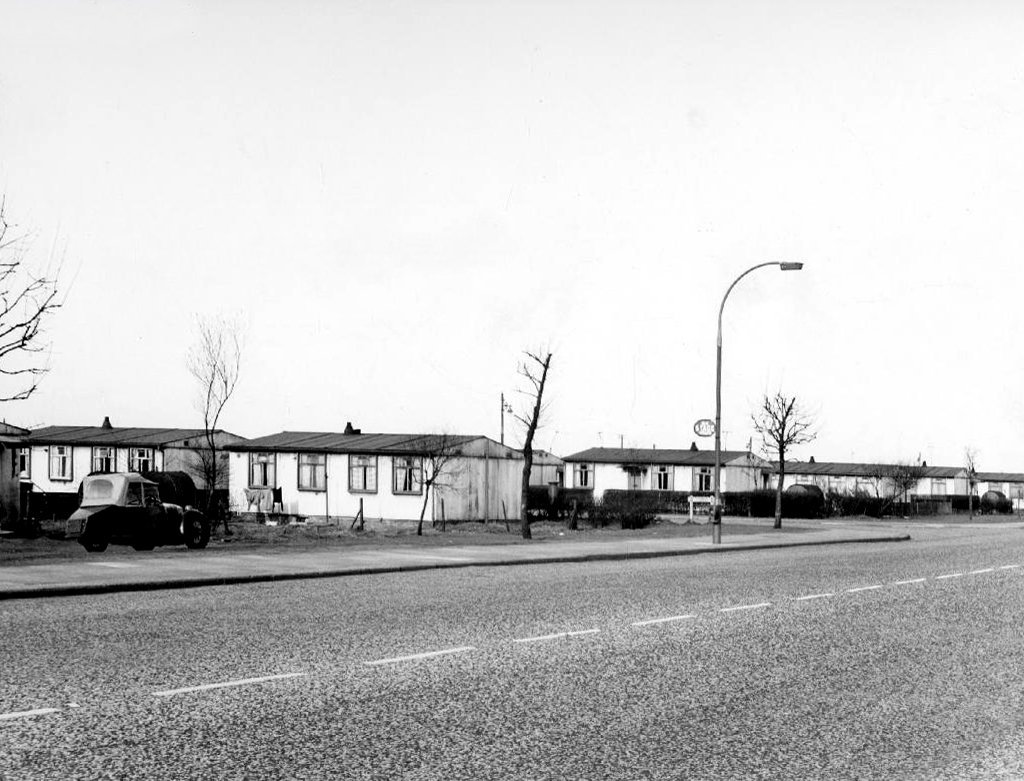
The urgent post-war need for temporary accommodation – was met by prefabricated structures.

Manchester City Council agreed to use the Phoenix model for their prefab estates.

A total of 43,206 Phoenix prefabs were built across the country, each one designed by the John Laing Group.

The Phoenix, designed by Laing and built by themselves as well as partners McAlpine and Henry Boot, looked much like an AIROH with a central front door. It was a two-bedroom in-situ preform design with steel frame, asbestos clad walls and an innovative roof of tubular steel poles with steel panels attached. Like all designs, it came pre-painted in magnolia, with green highlights on frames and skirting.

Phoenix prefabs cost £1,200 each constructed onsite, while the specially insulated version designed for use on the Isle of Lewis in the Hebrides cost £2,000.

Wikipedia

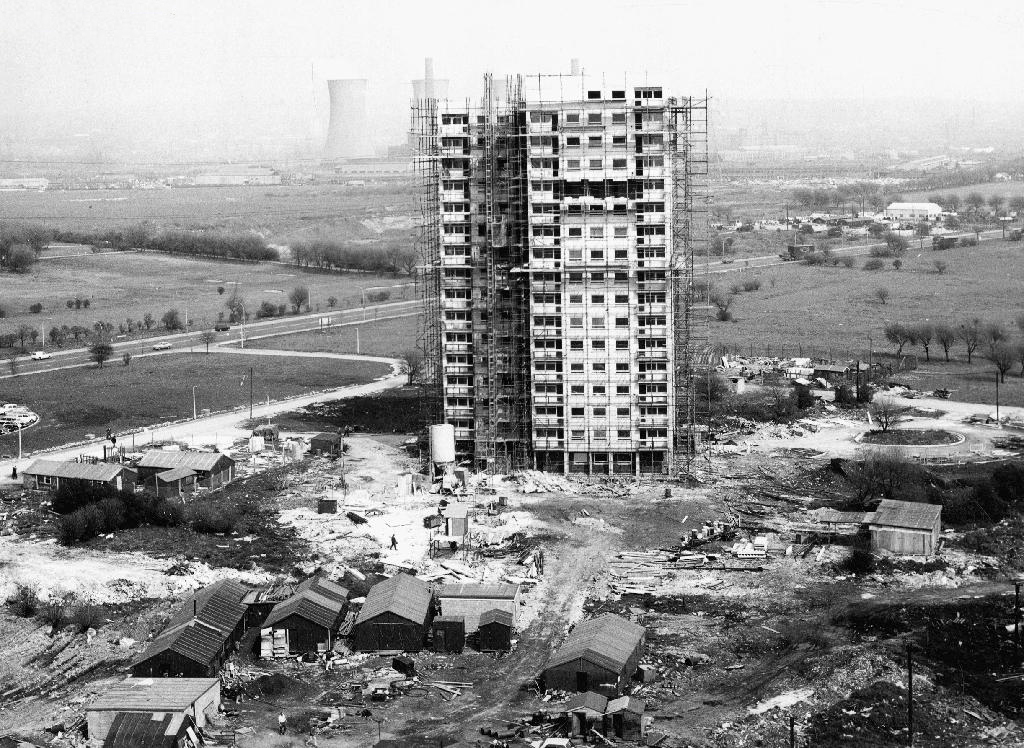
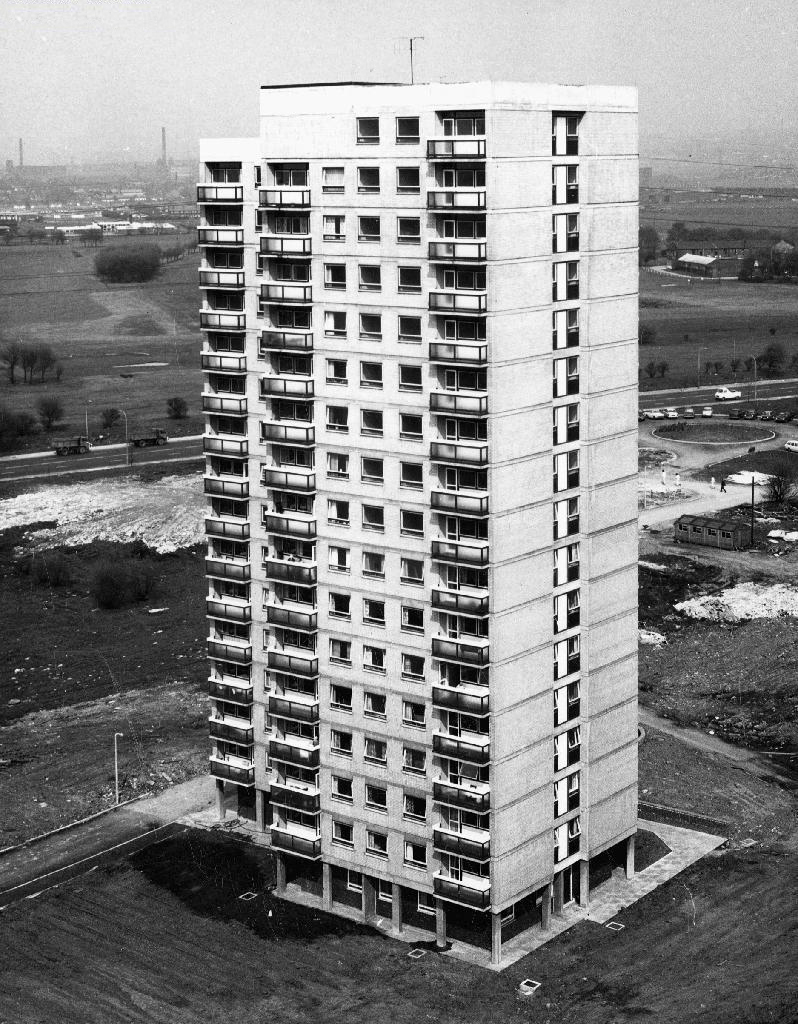
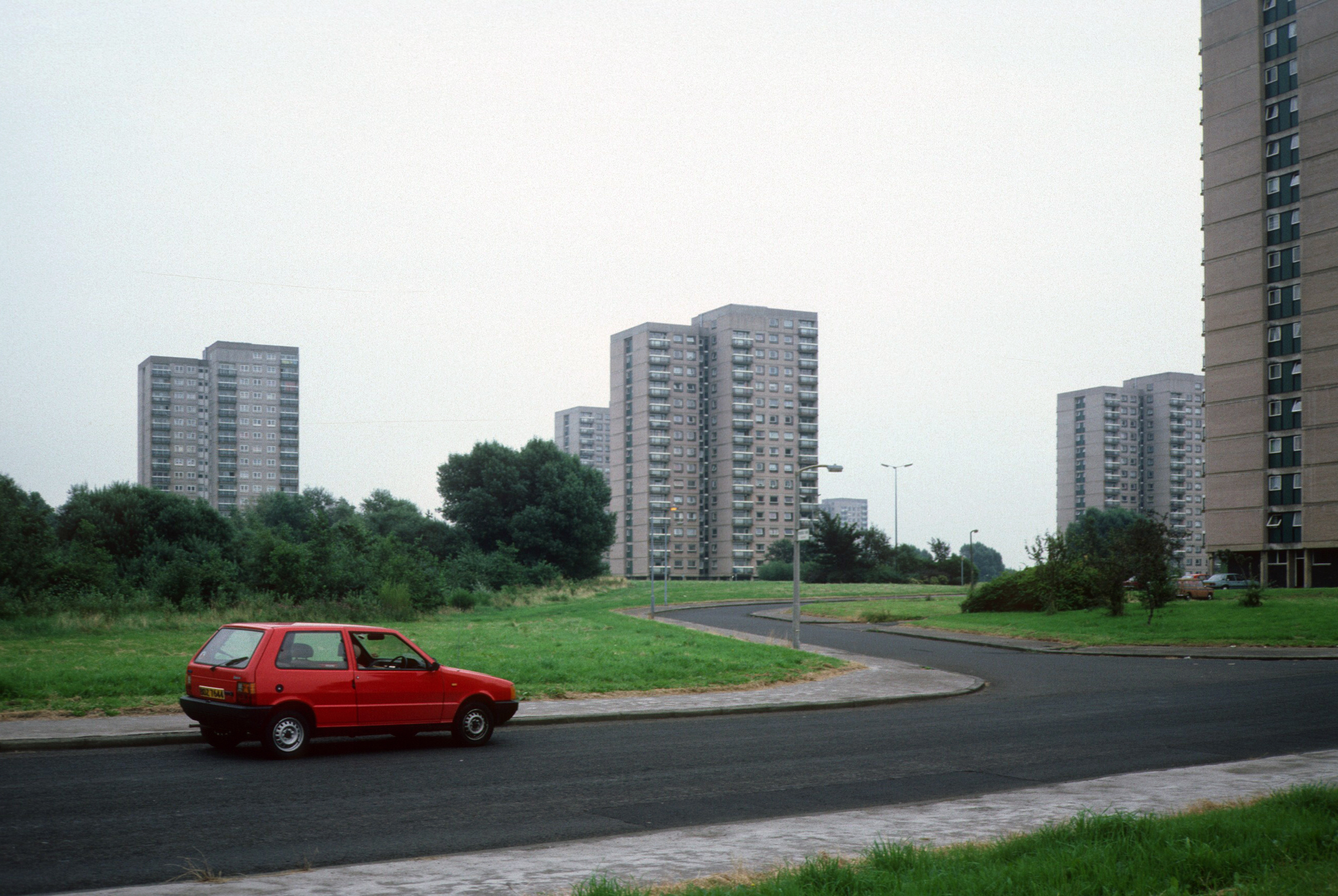
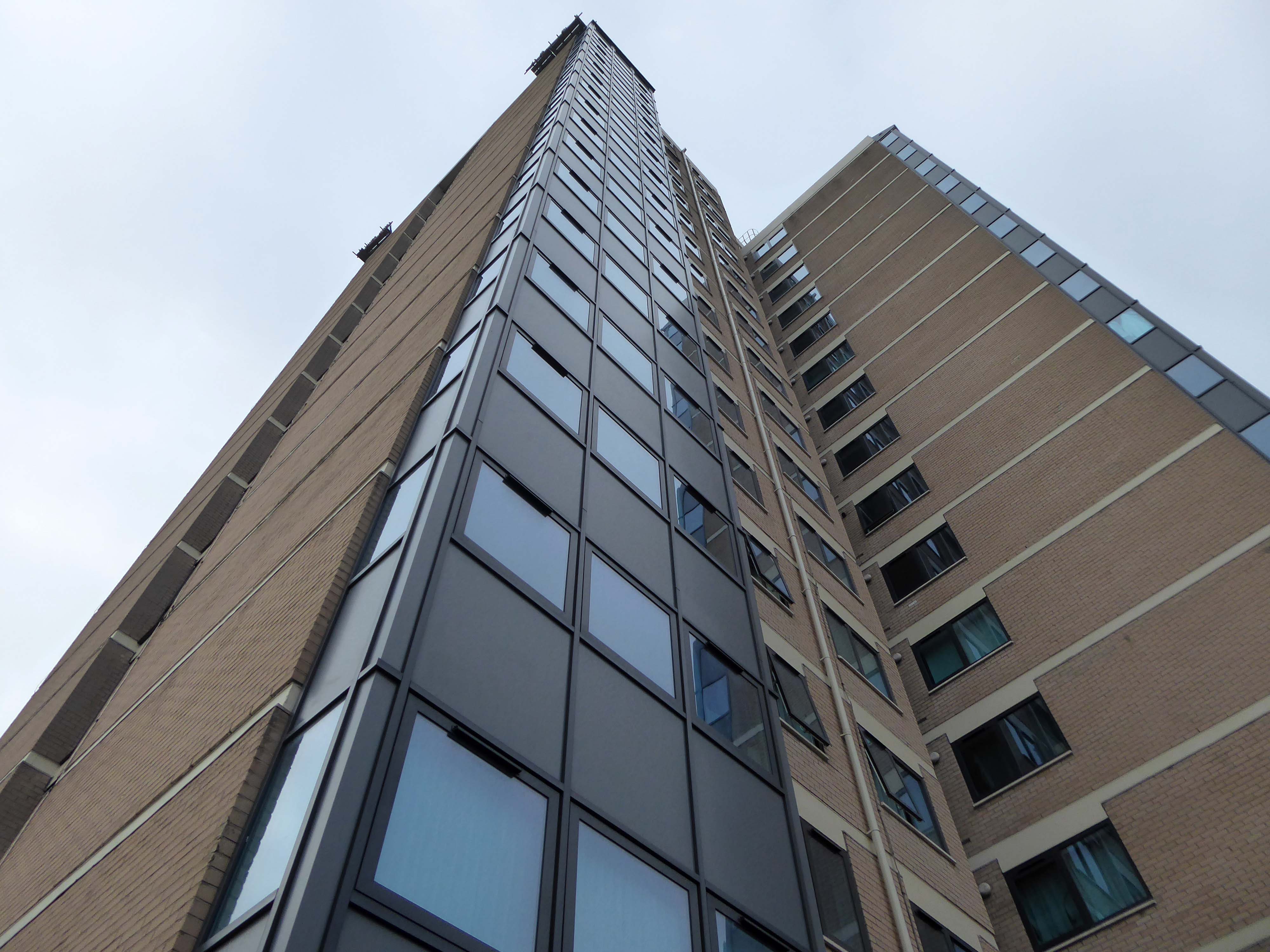
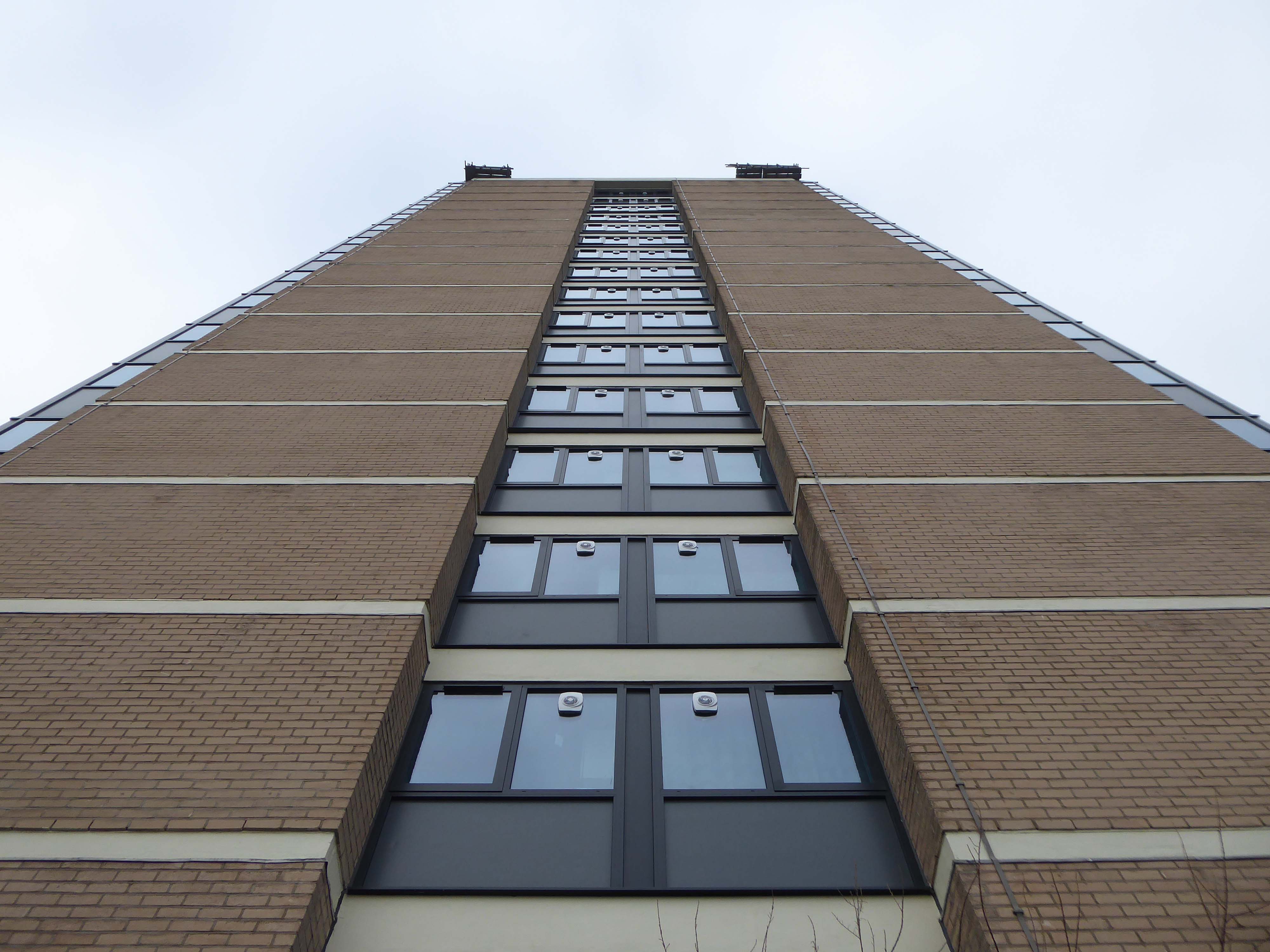
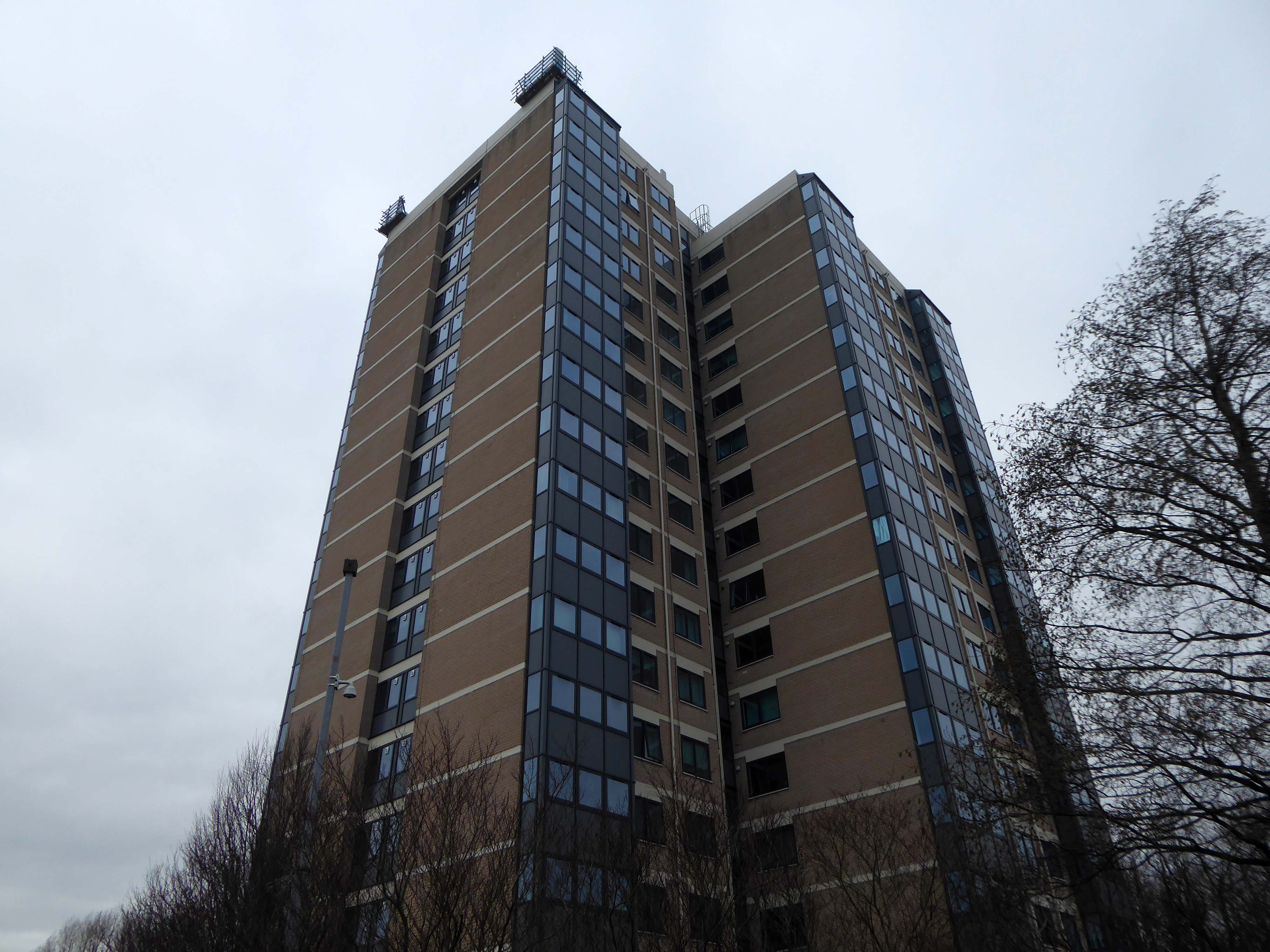
The prefabs were eventually demolished and along came the tower blocks – Architect J Austen Bent, whose work we have seen on the Wythenshawe Walk

In the distance Chadderton Power Station – demolished in 1986.

Photographs – Local Image Collection

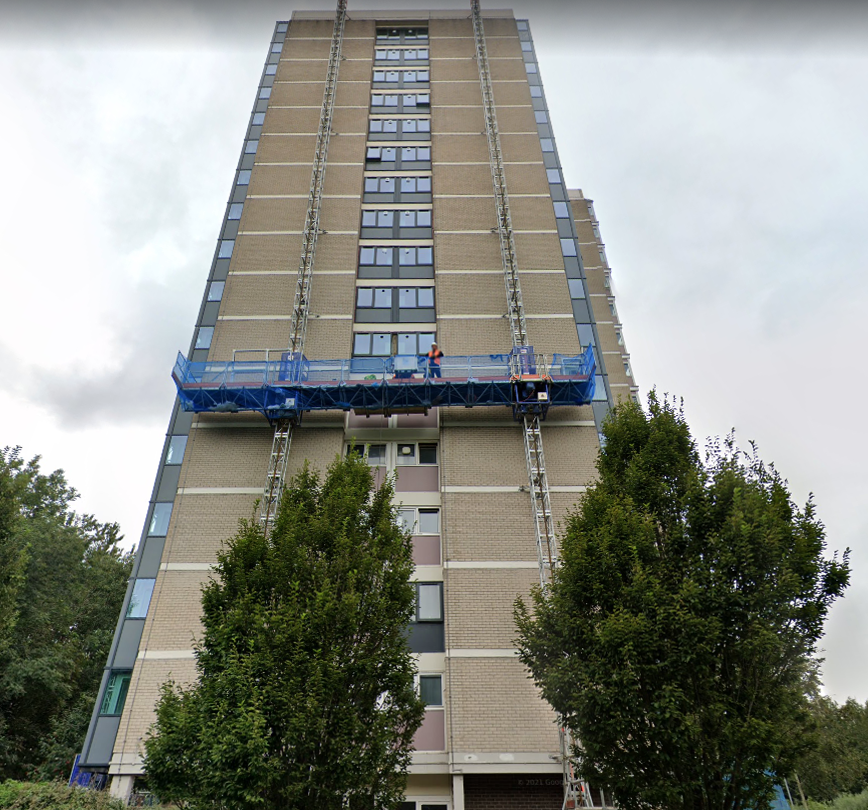
Here are the blocks prior to and during the current renovation programme.

Kentmere

Cartmel

Somerton

Rusland

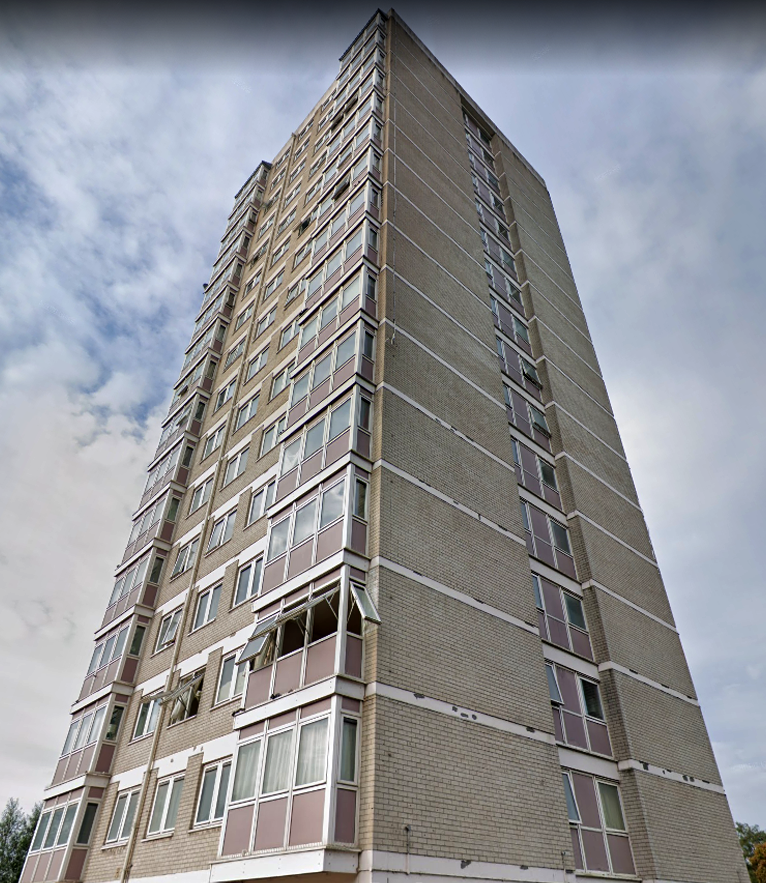
Here are the group as of February 2023.

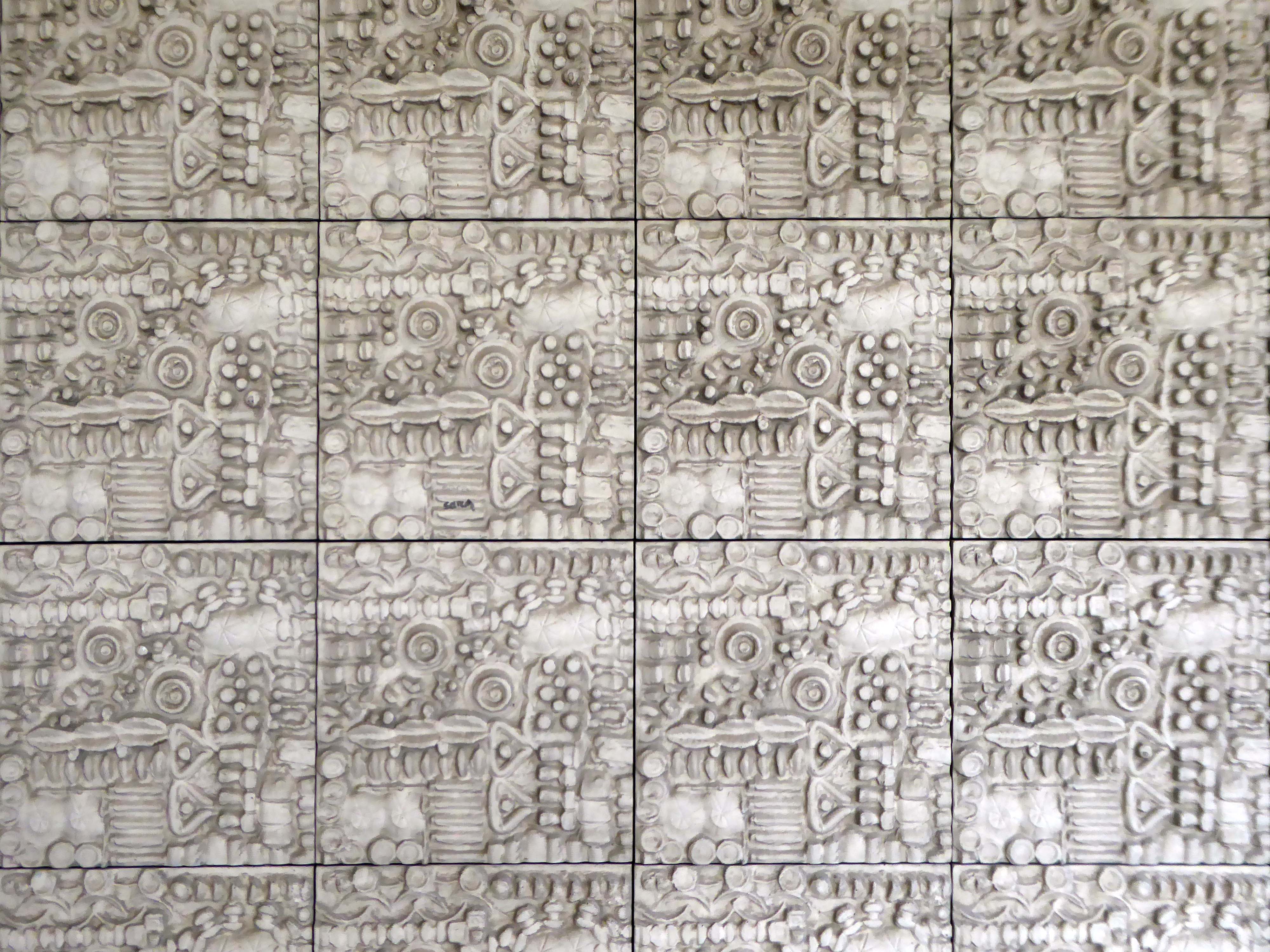
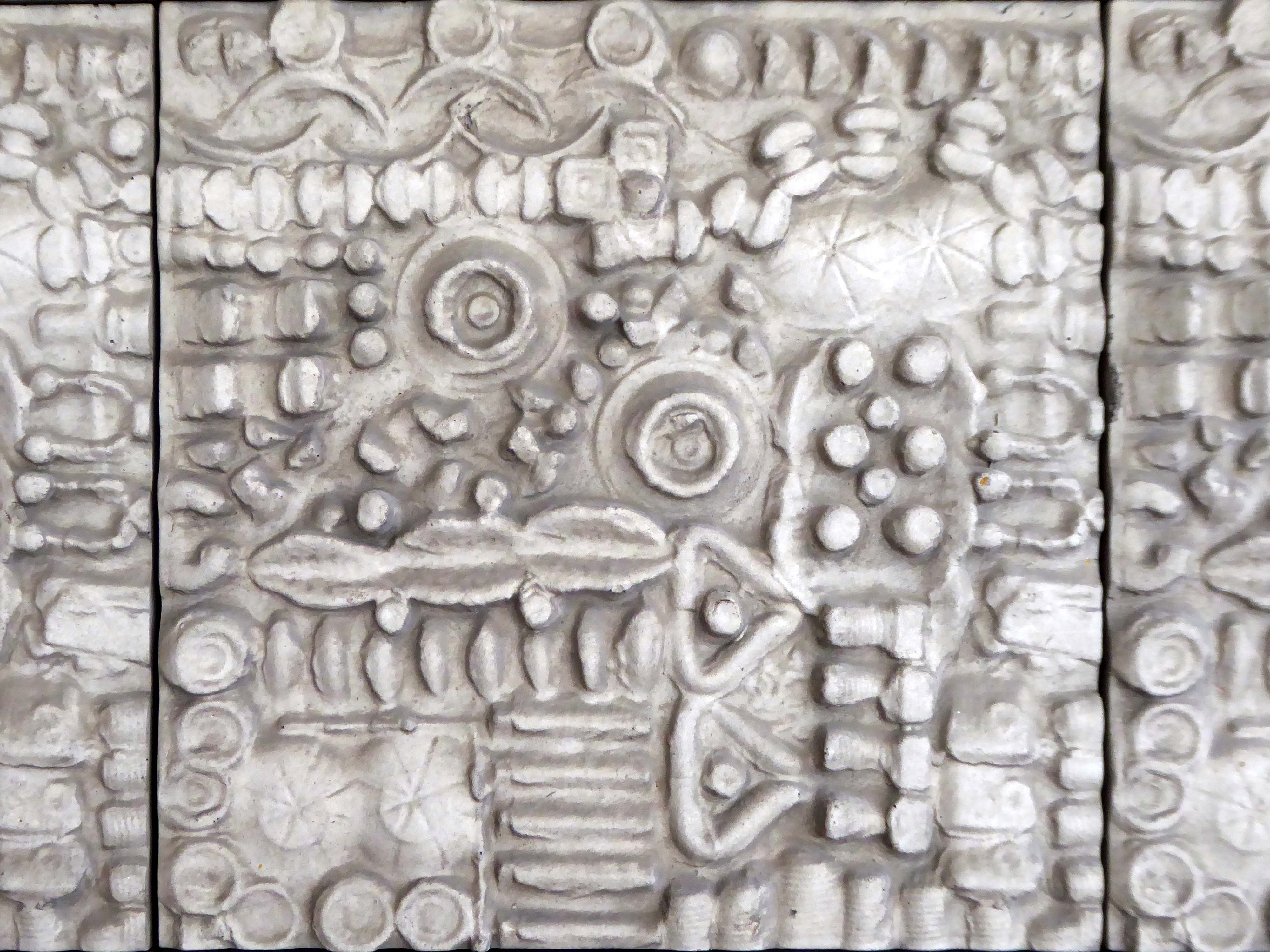
I was thrilled to find that each of the blocks had variants within the typology of handmade tiles.

Kentmere

Somerton

Cartmel

Rusland

There seems to be no record of attribution for these tiles – happily they are still extant.

Go and take a look.

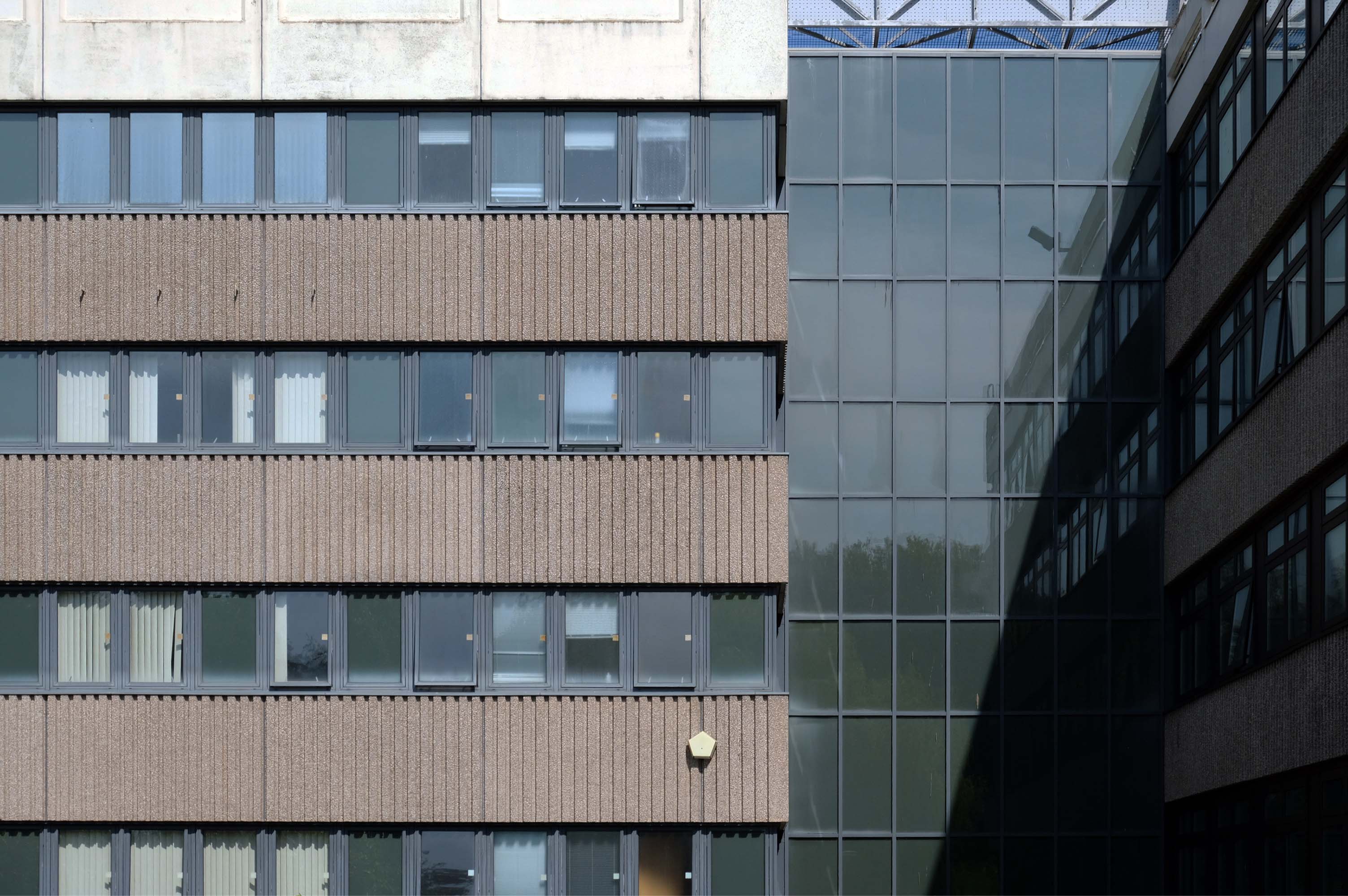
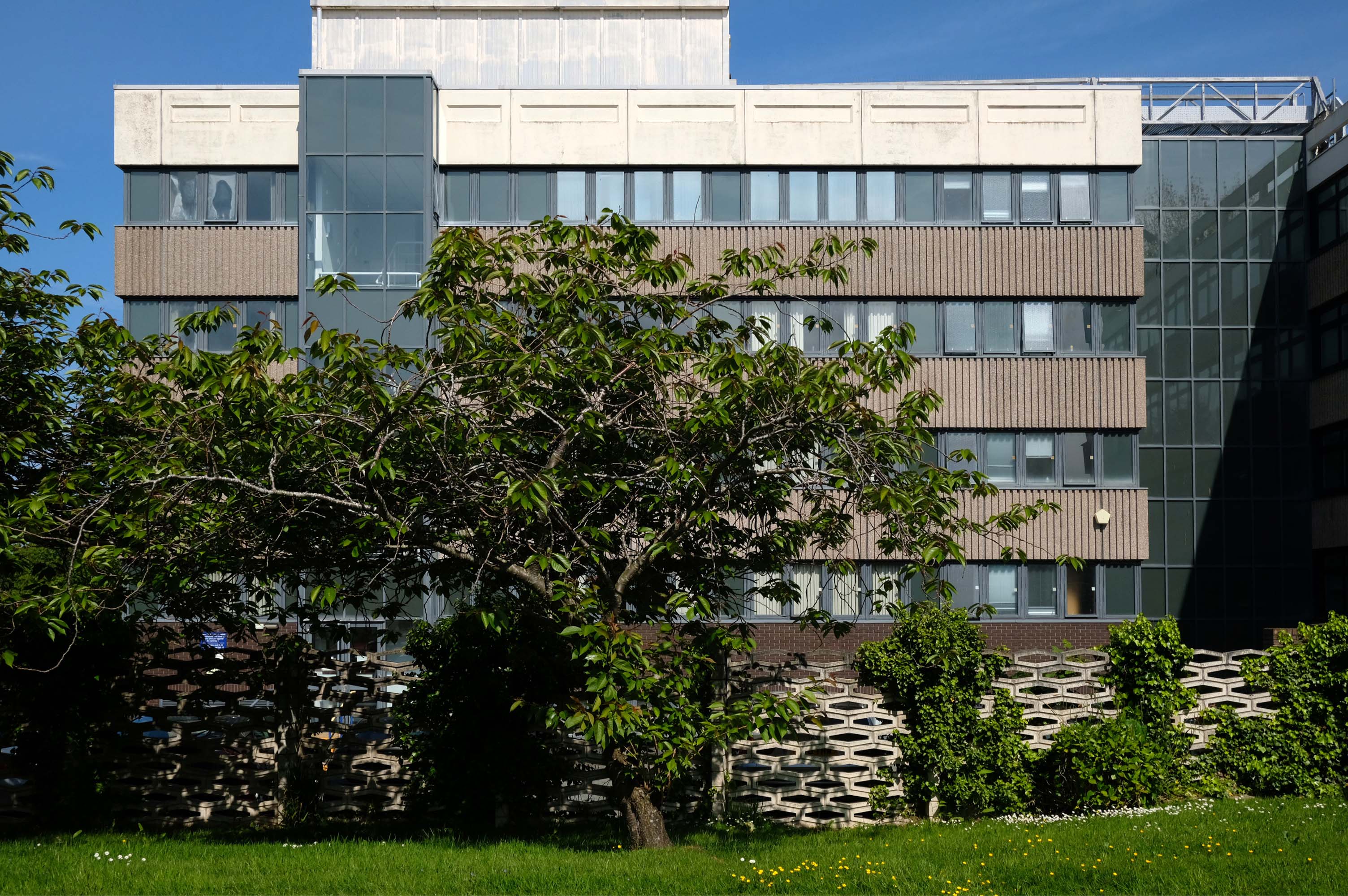
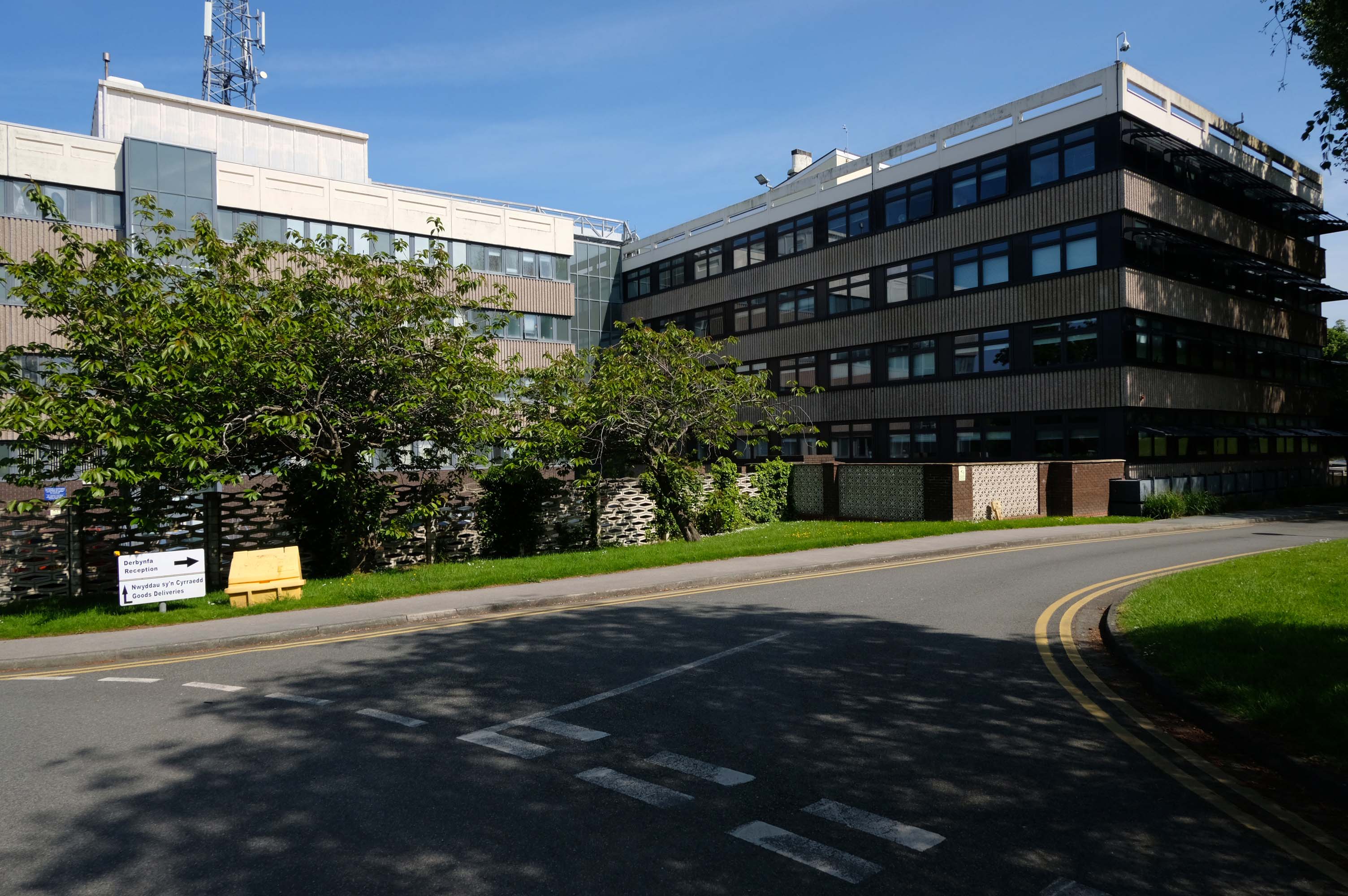
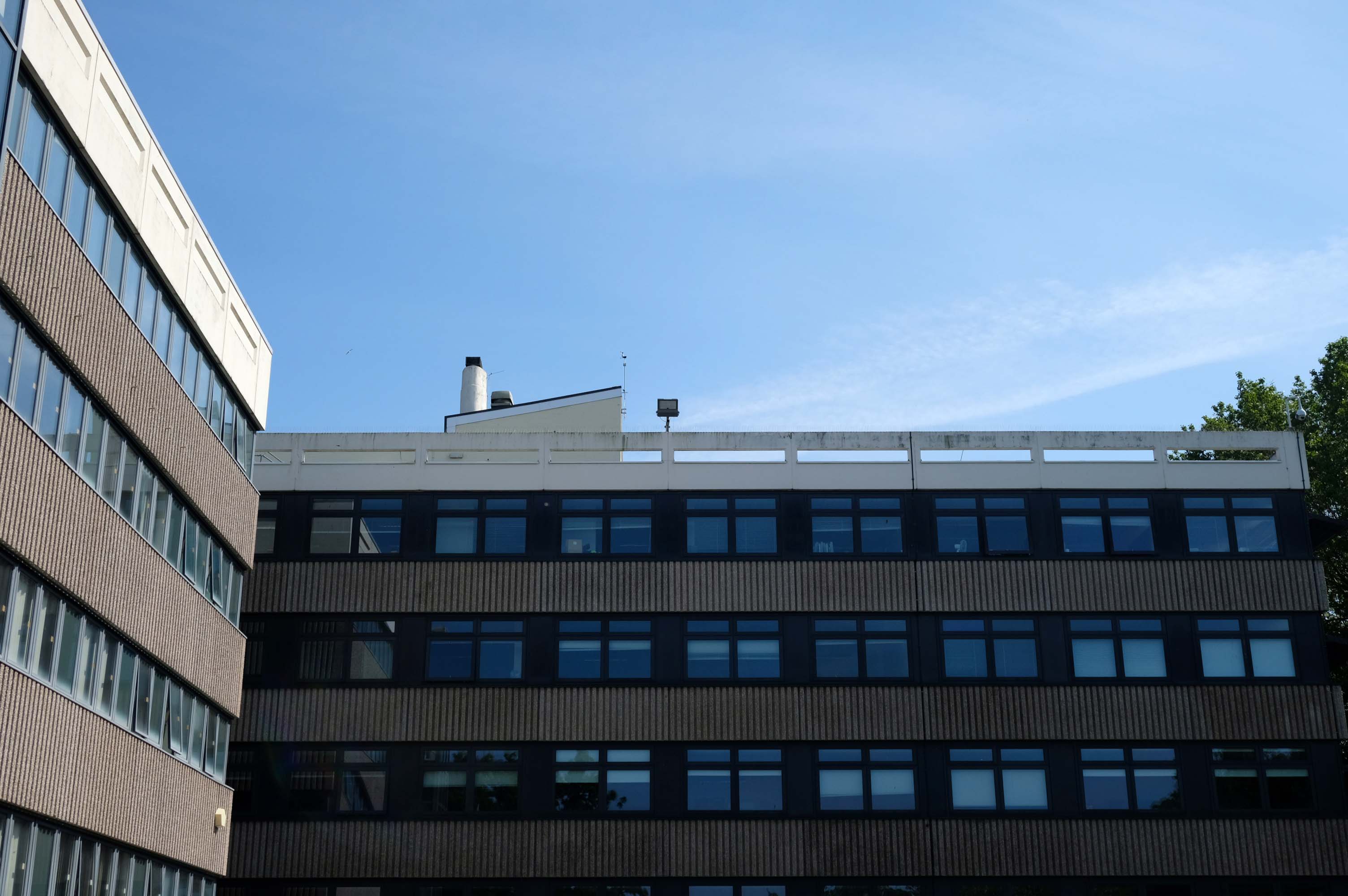
Prifysgol Aberystwyth University

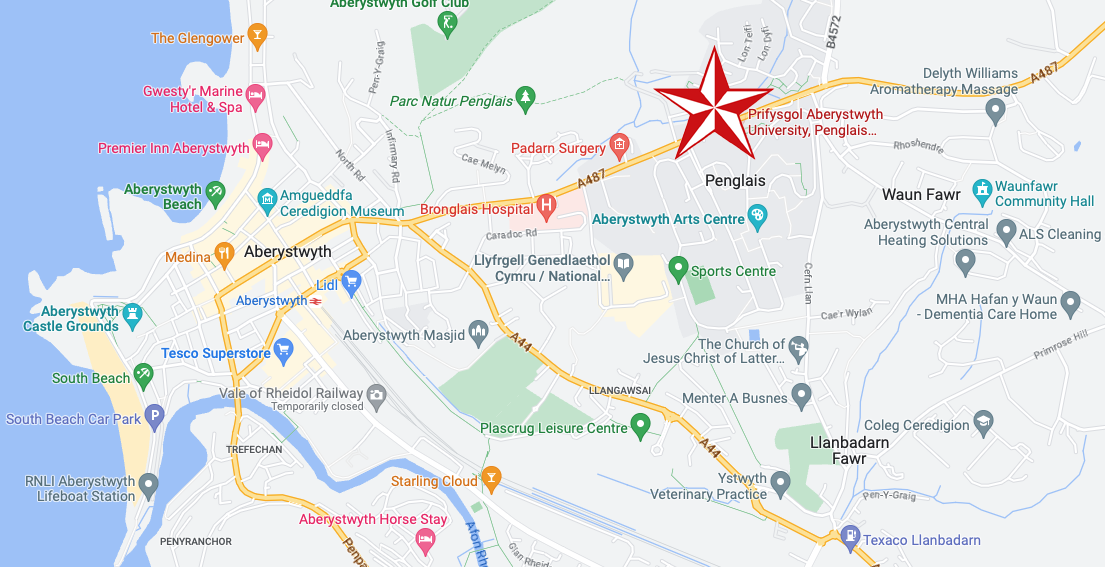
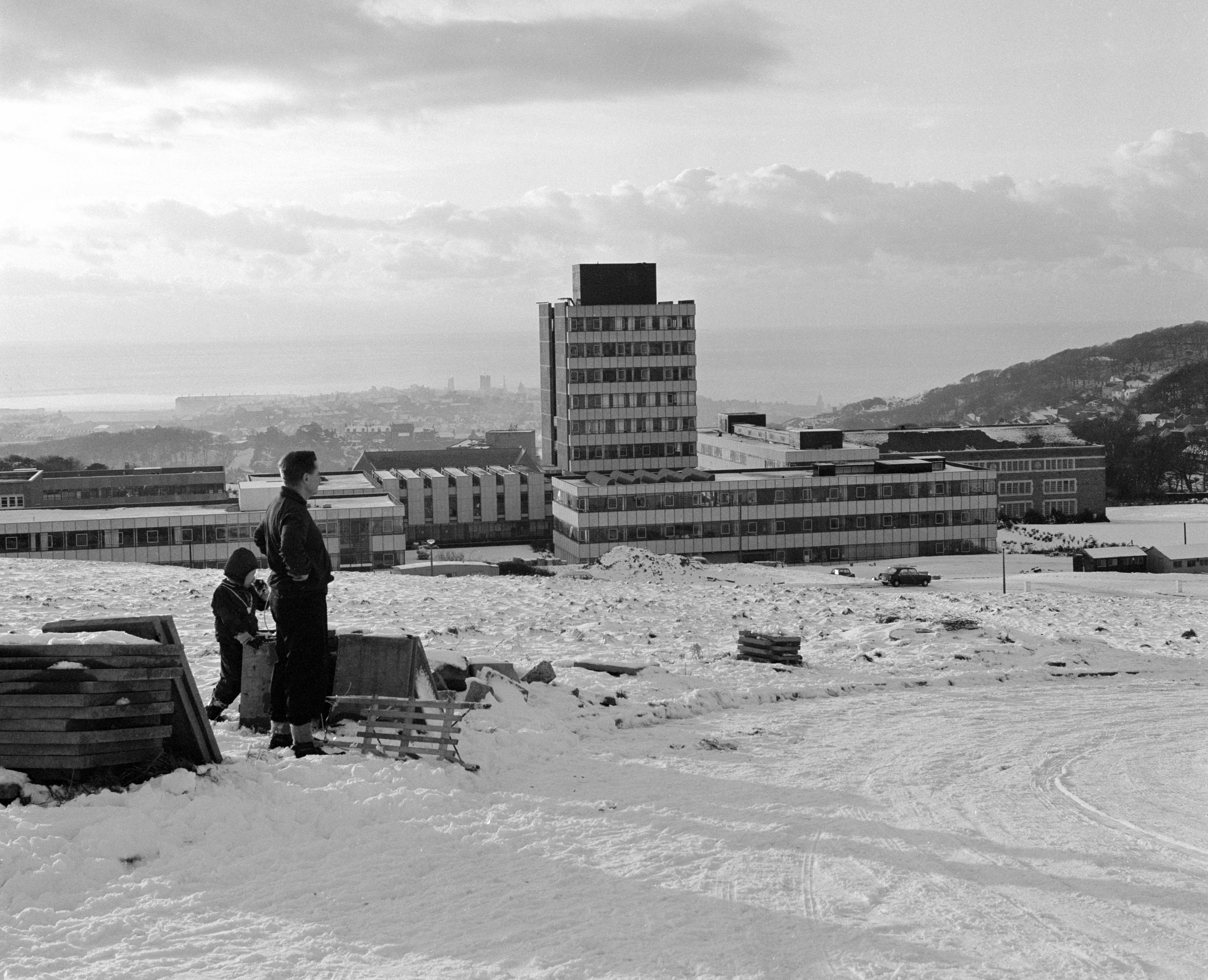
Prifysgol Aberystwyth University – Penglais Campus SY23 3AH

Led by London Welshman Hugh Owen, a small group of patriots sought from the 1850s onwards to raise enough money by public and private subscription to establish a college of university status in Wales. A project of enormous ambition, the University opened its doors in 1872 initially with a handful of teachers and just twenty five students in what was then a half-finished hotel building – the Old College on the seafront. 

The first decade presented many challenges for the University’s survival. The generosity of a few individual benefactors and organised appeals for support from the ordinary people of Wales kept the University in being, and, perhaps more importantly, deeply rooted it in the minds and the affection of the Welsh people. A matter of considerable pride is that the University has made a significant contribution to the education of women, being one of the first institutions to admit female students. 

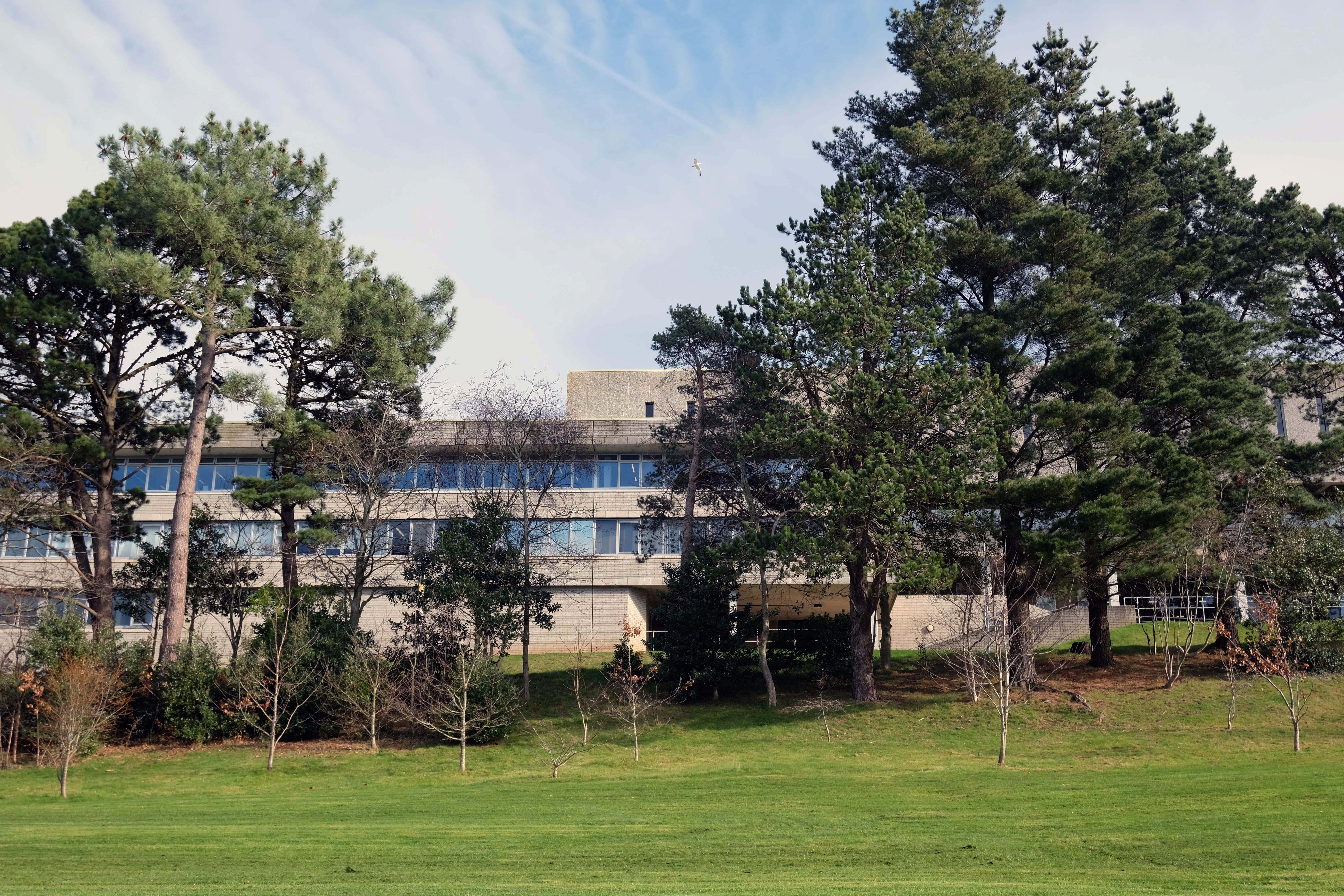
Since those early days, Aberystwyth University has gone from strength to strength and now has more than 6,000 students and 2,000 staff. As the institution grew, its main campus moved from Old College on the seafront to Penglais Hill. This finely landscaped site enjoys spectacular views over the historic market town of Aberystwyth and the Cardigan Bay coastline. New buildings, including major arts and science developments, halls of residence, a magnificent Arts Centre and sports facilities are located here.

aber.ac

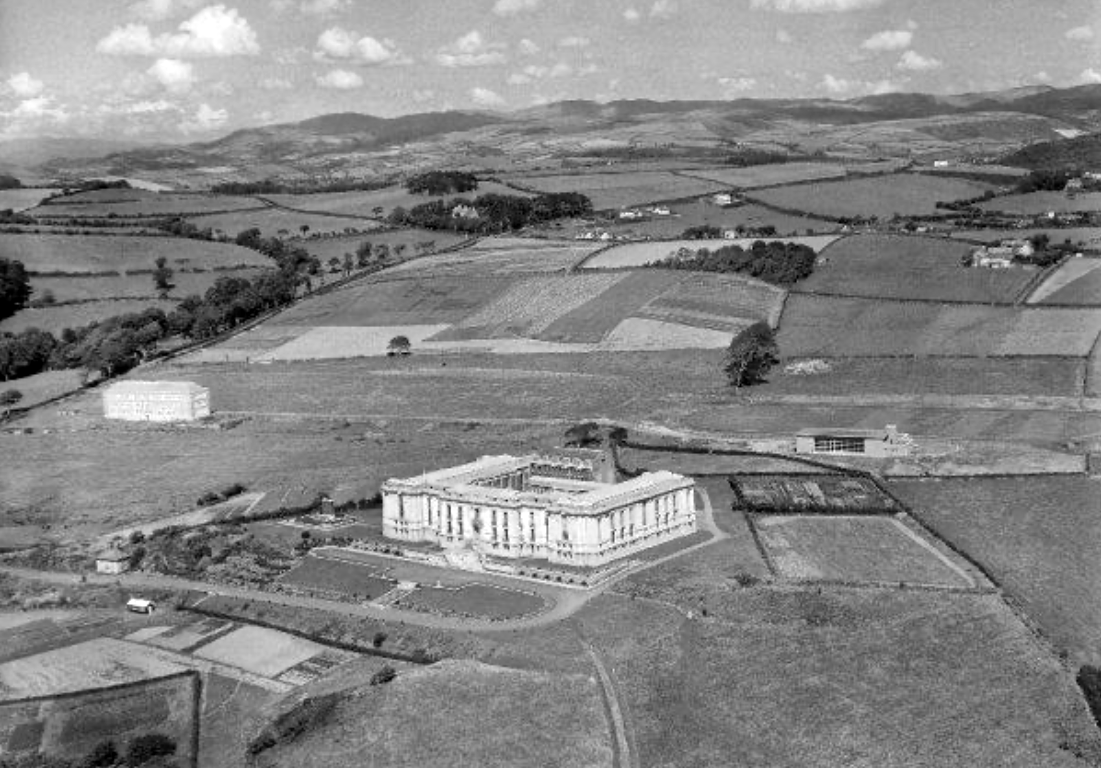
1947 and the site is developing behind the National Library of Wales.

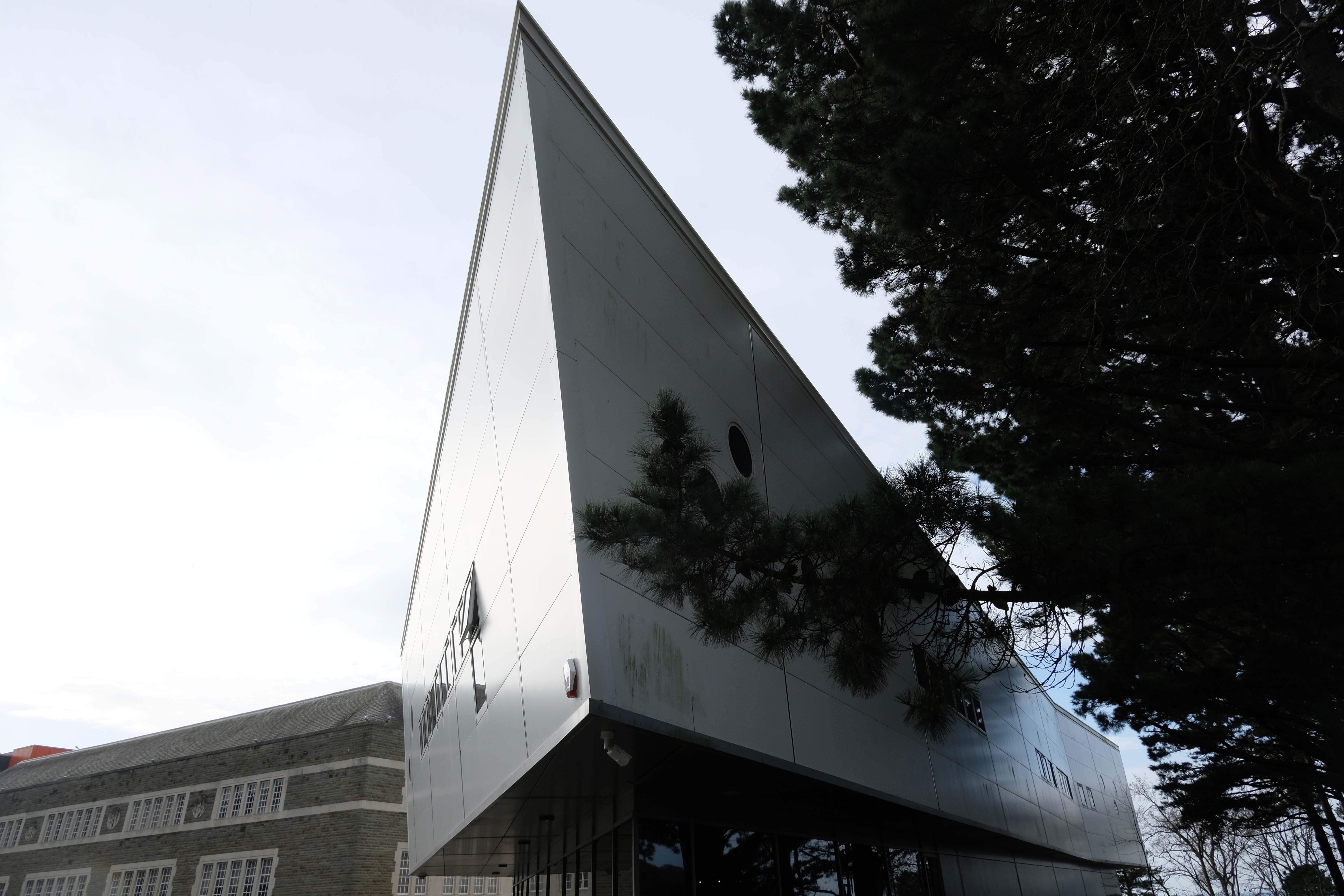
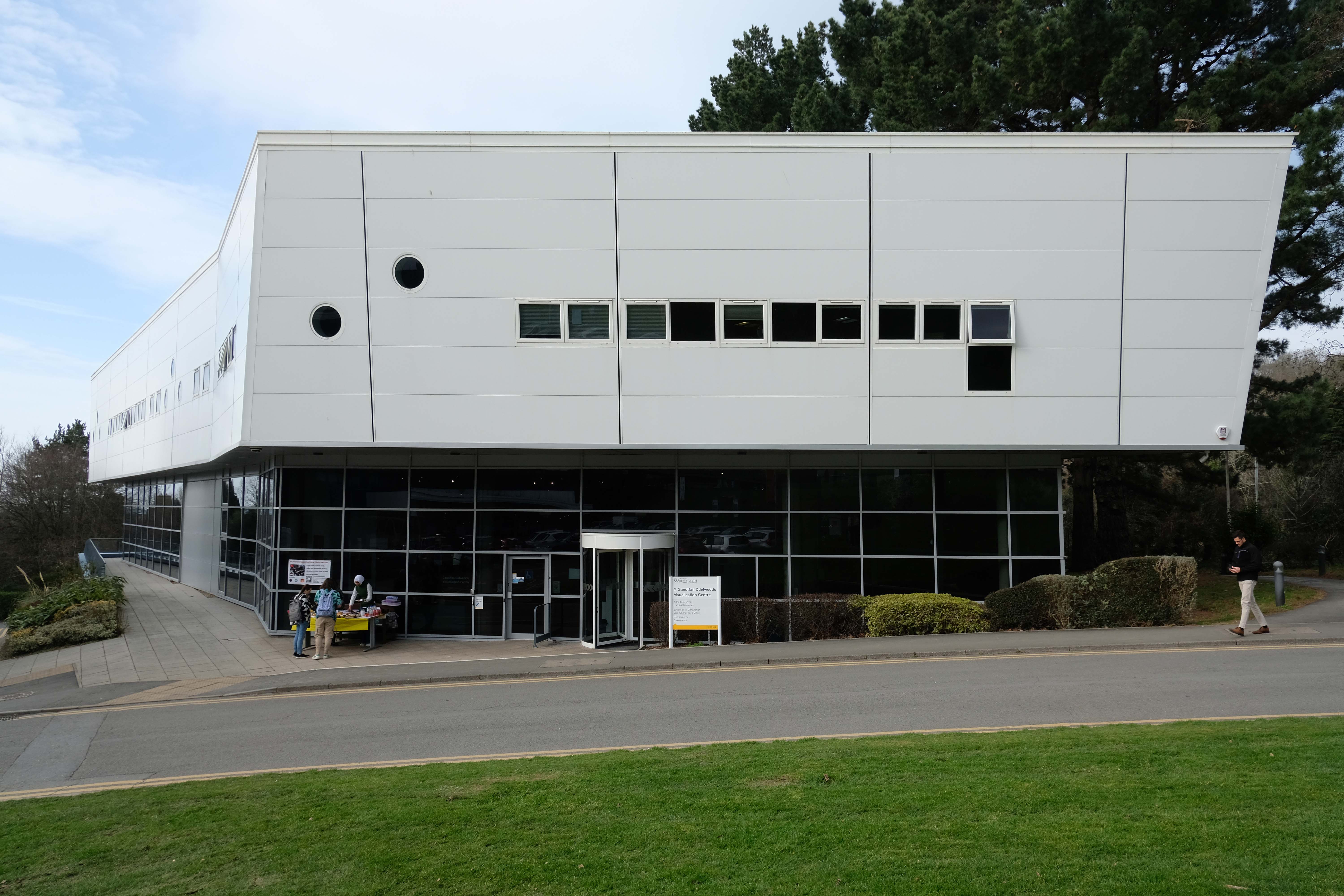
In 2023 we closely encounter – the Visualisation Centre Mathematics and Physics Department

Opened in 2007 – designed by Boyes Rees Architects.

Sadly a Welsh architecture practice which has ceased trading under the burden of late payments, leading to the loss of forty jobs.

BBC

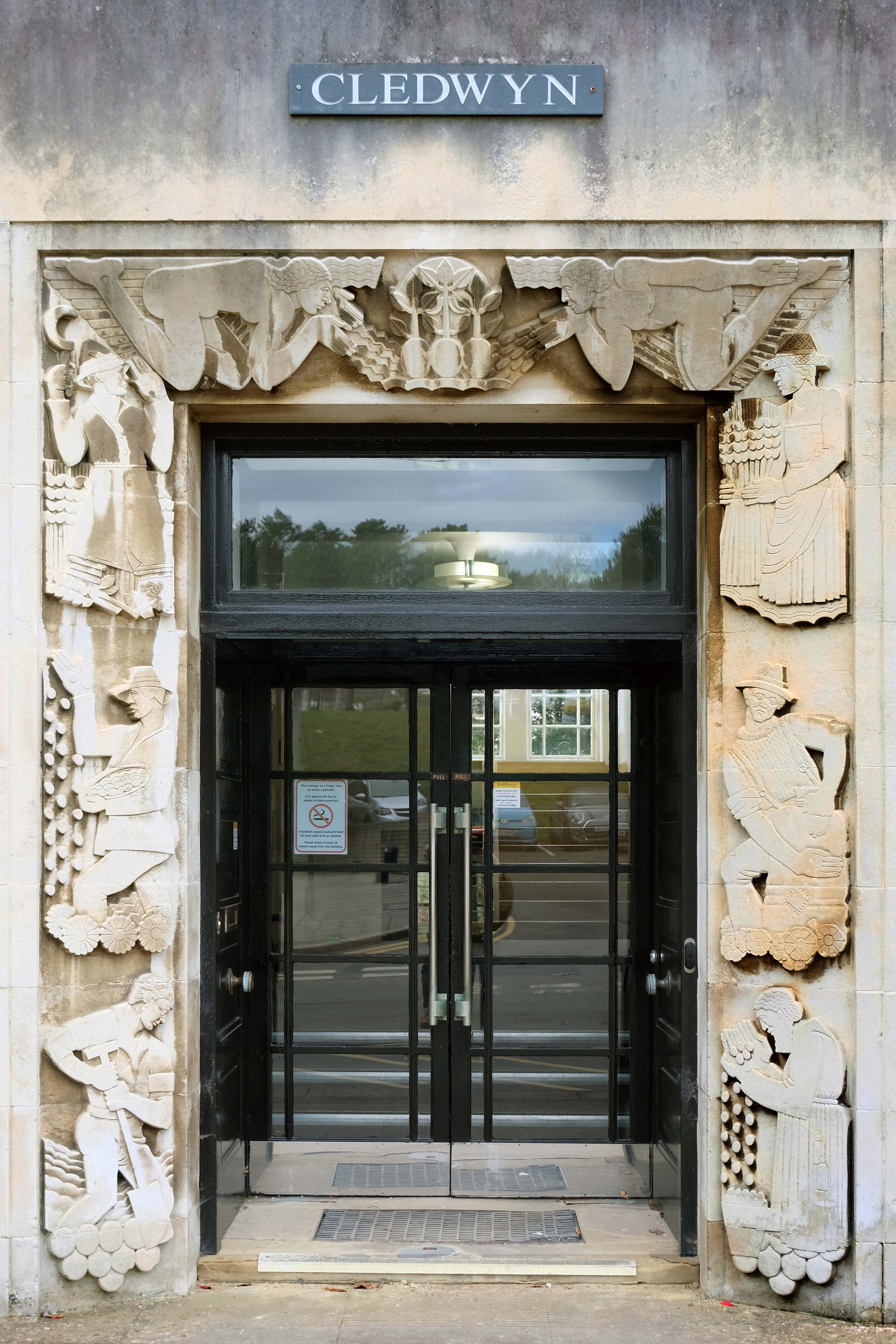
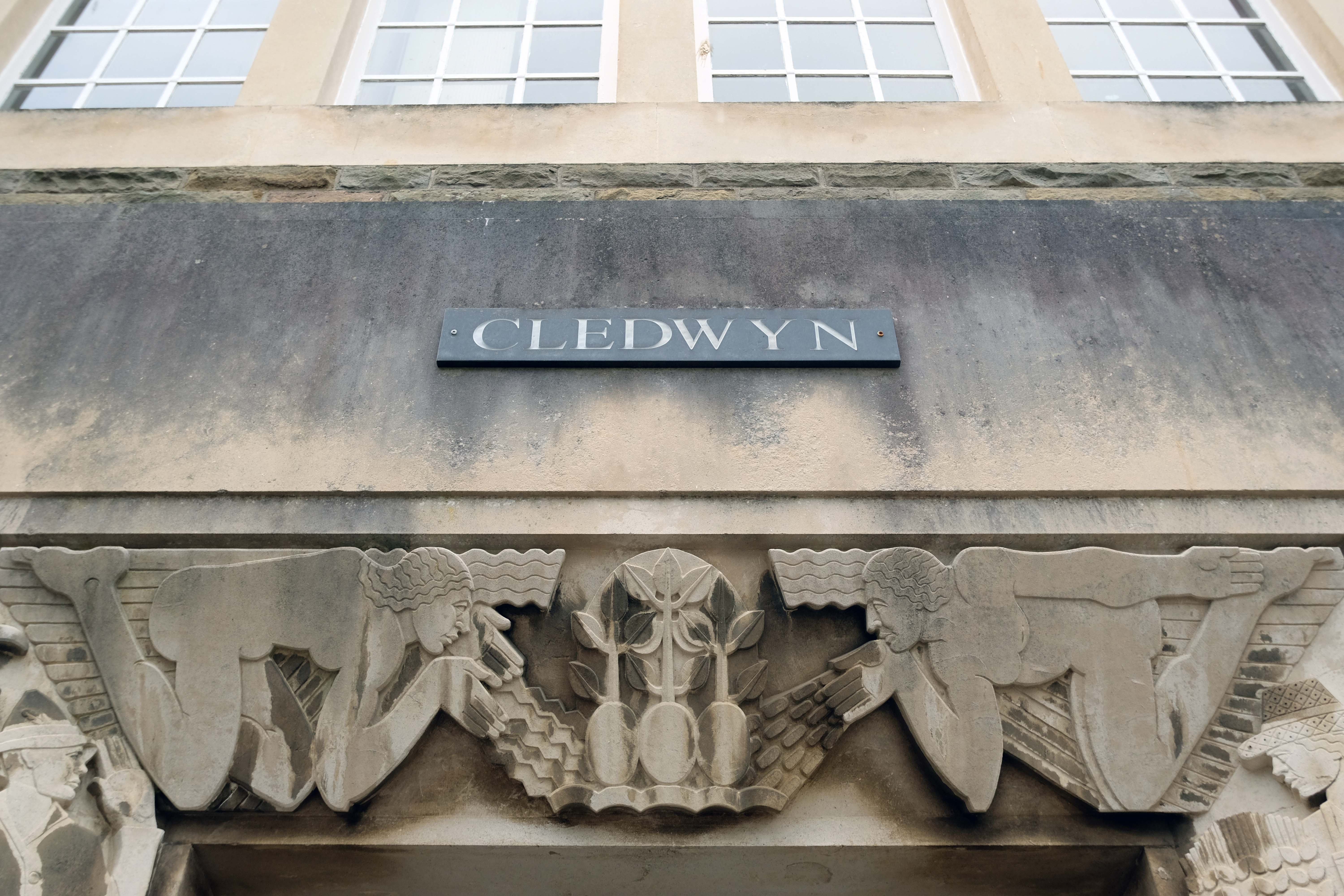
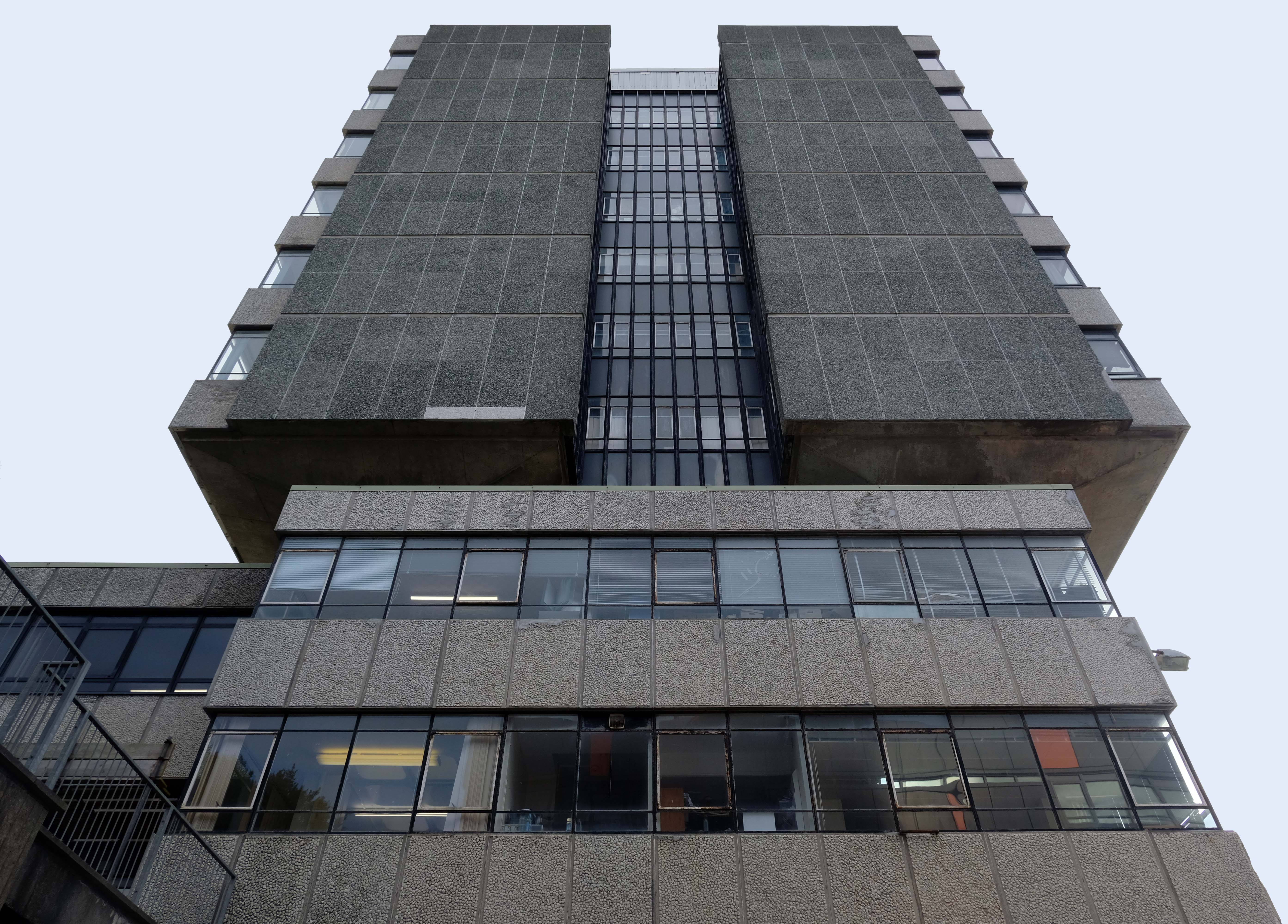
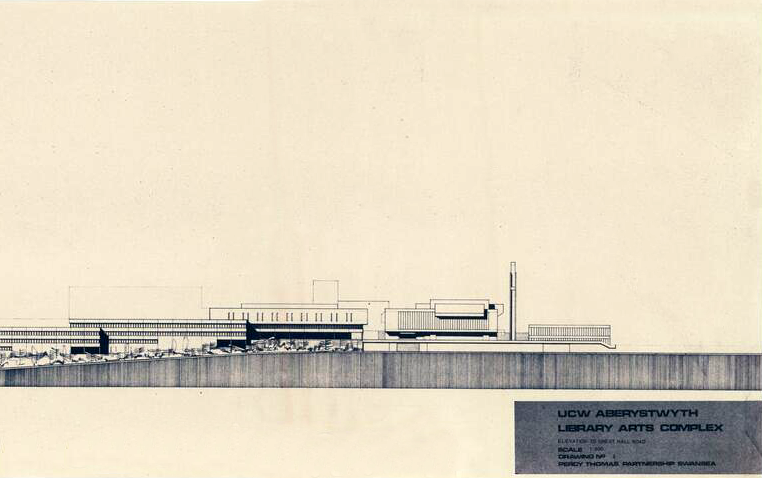
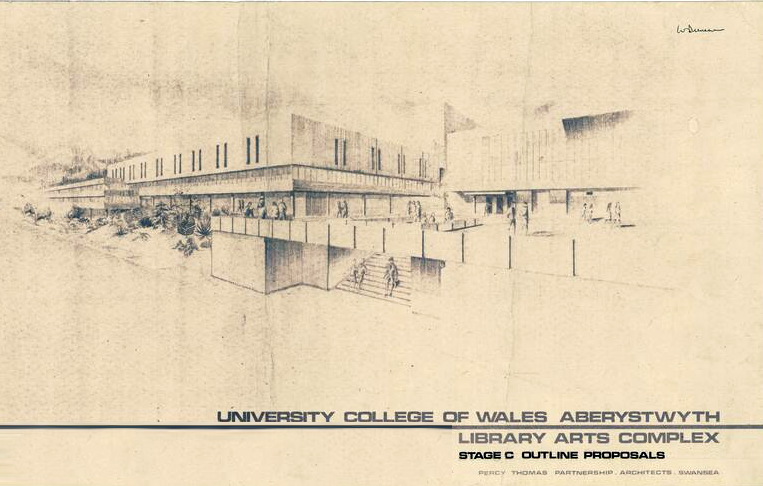
Its near neighbour is the Cledwyn Building – Architect: Sir Percy Thomas 1883-1969.

It has recently been Grade II listed.

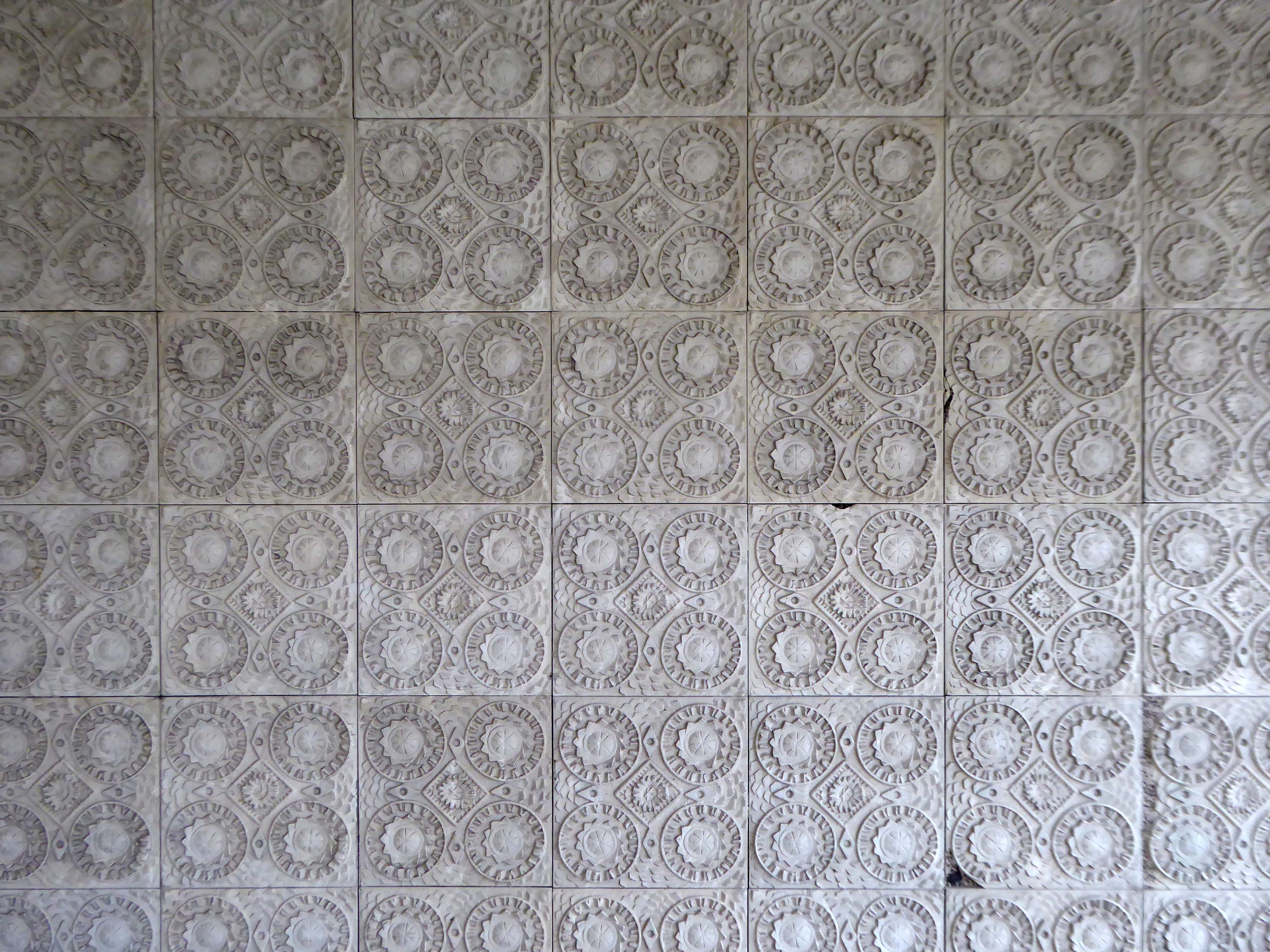
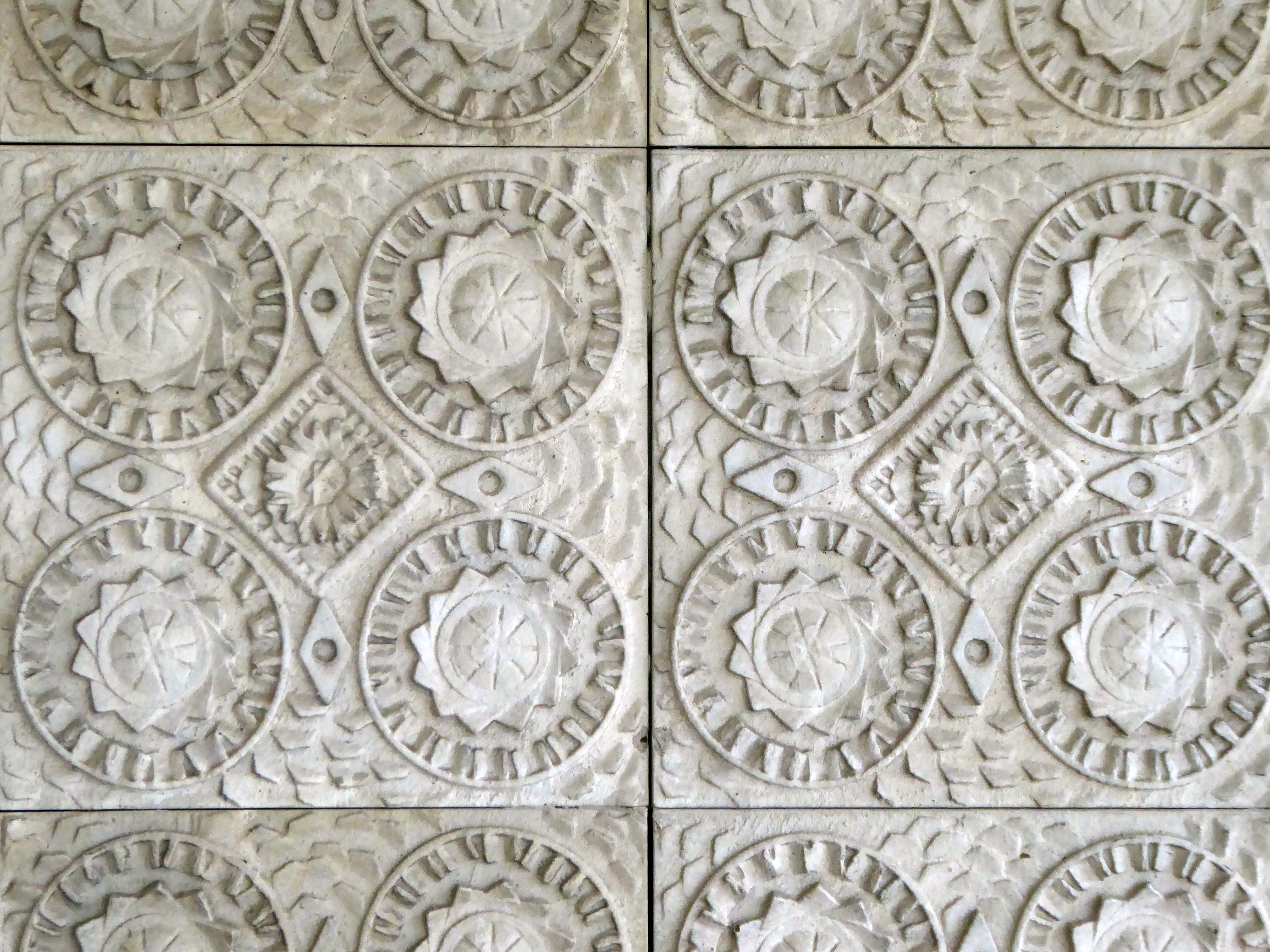
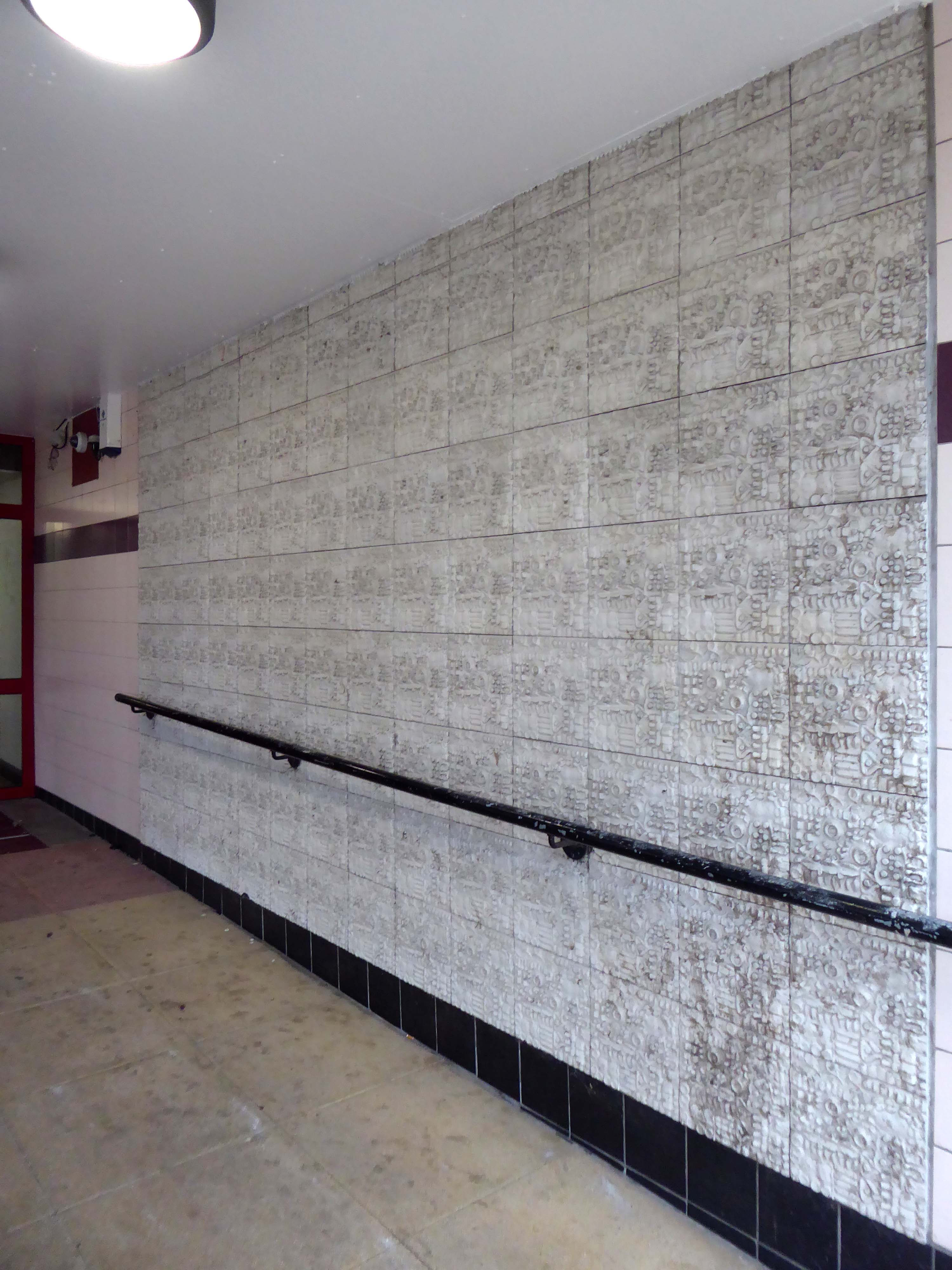
In 1935 Percy Thomas prepared a plan for the layout of a new campus, and was appointed as architect for the first three buildings to be constructed – Cledwyn, Pantycelyn and the swimming bath.  This marked the beginning of the move away from the college by the sea to the college on the hill. 

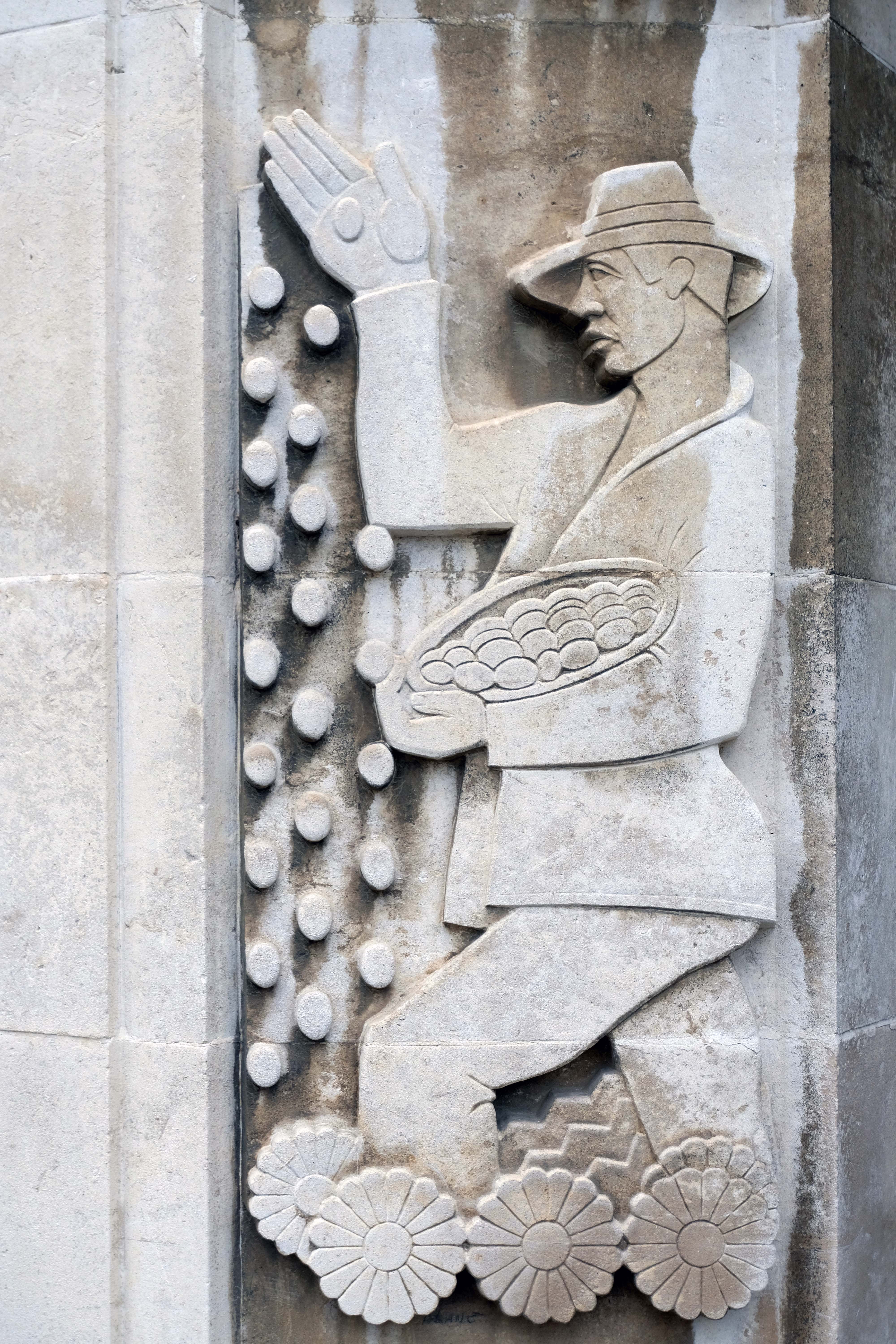
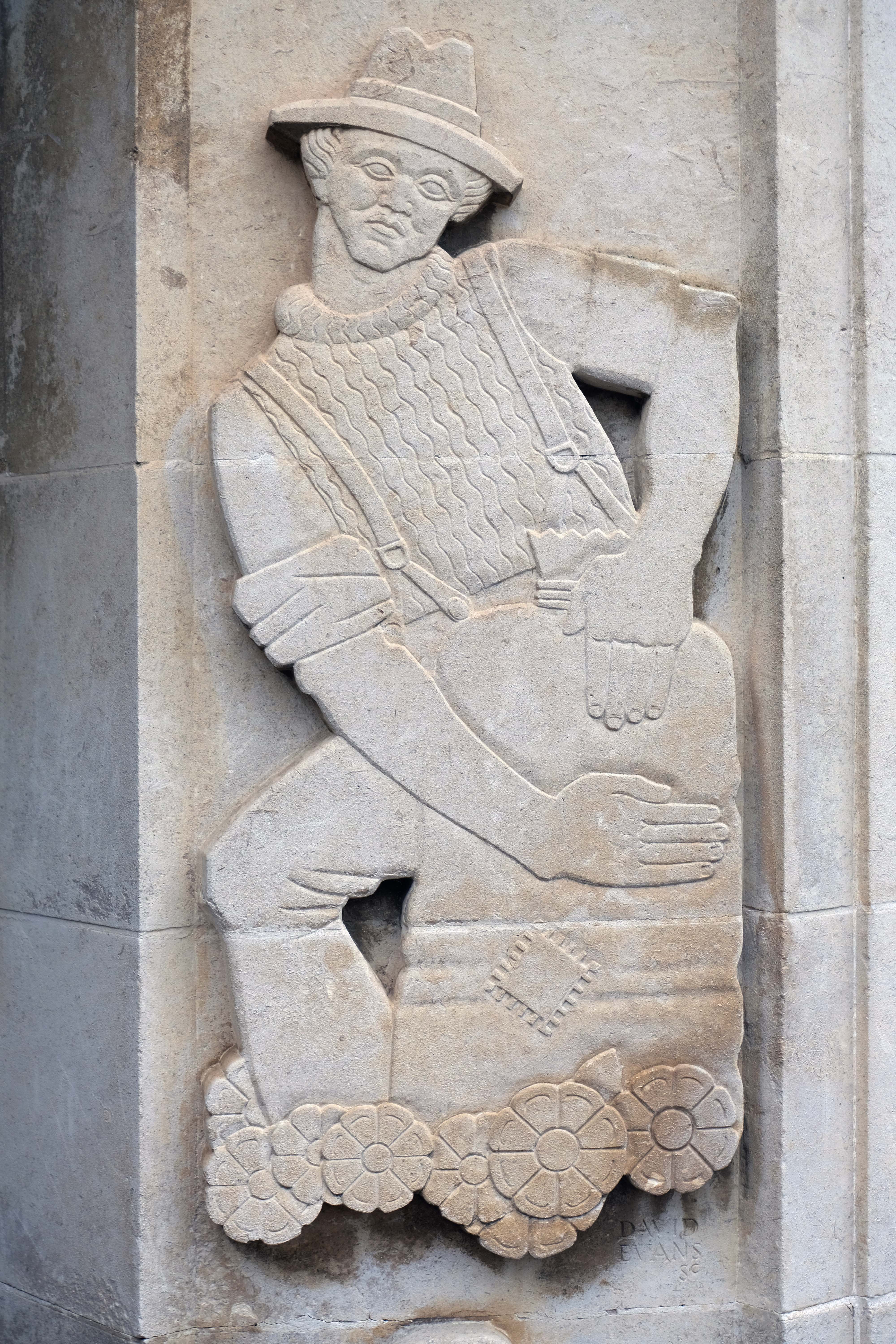
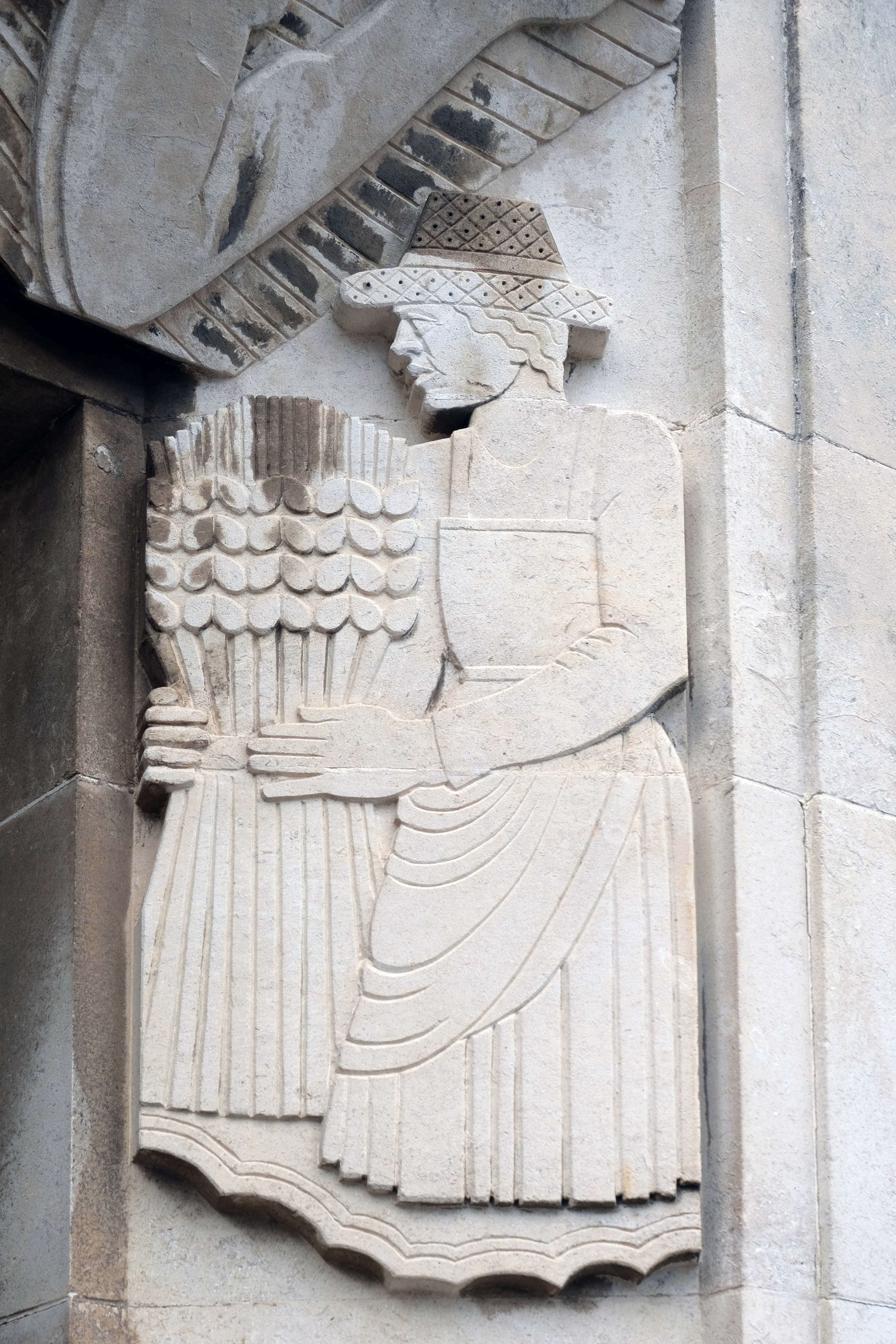
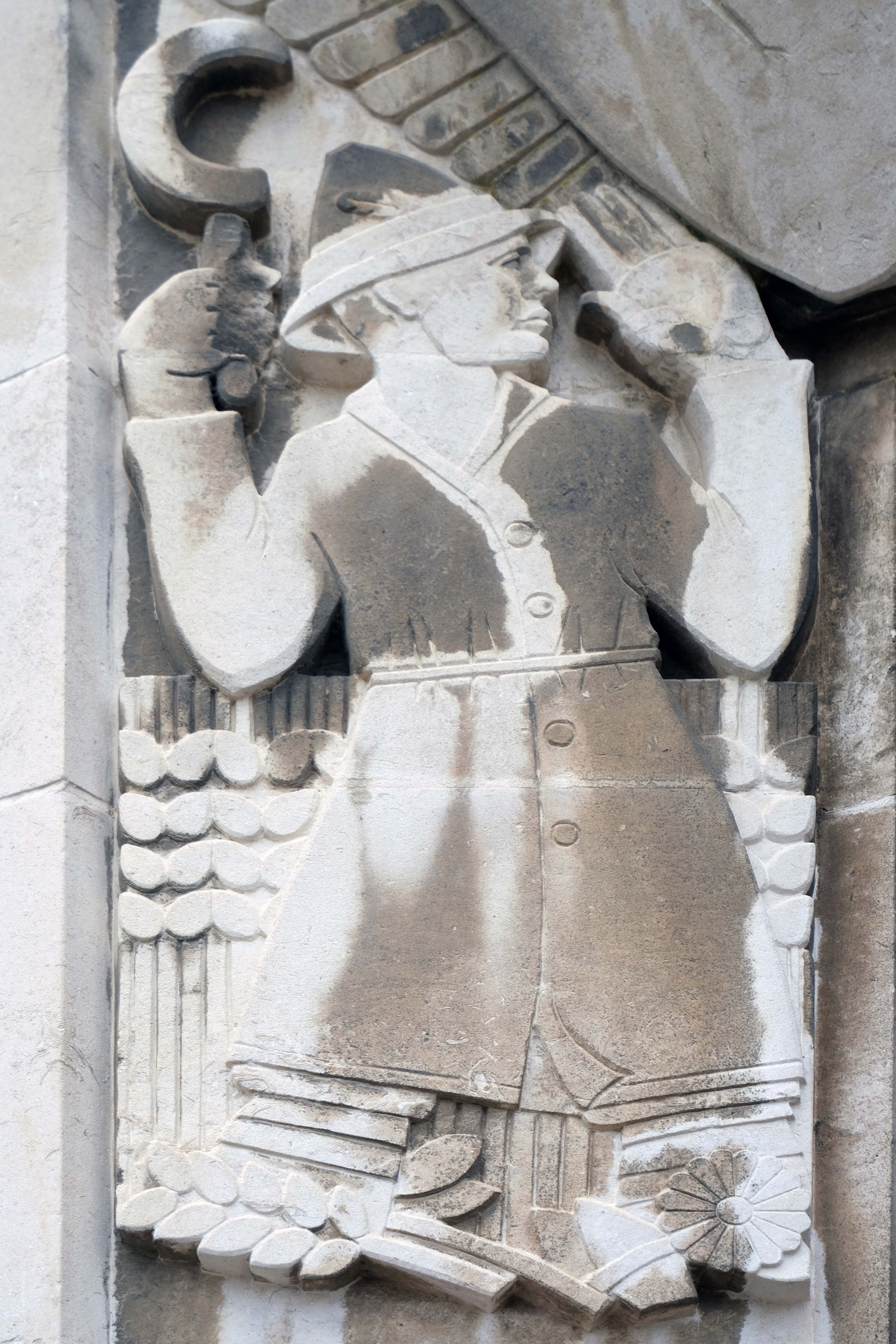
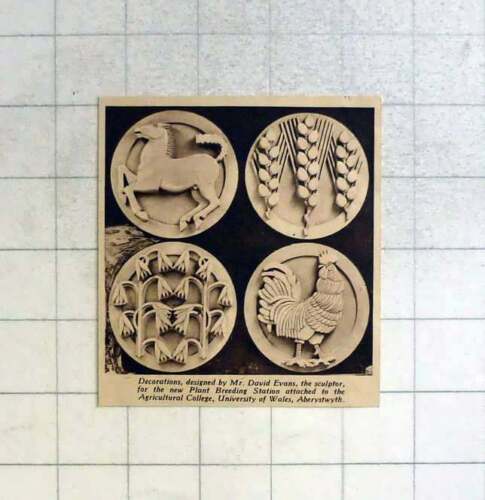
Built in a simple Georgian modern style, faced with Forest of Dean stonework, the building’s main entrance features a broad architrave adorned with low reliefs of agricultural scenes, and there are decorative circular stonework emblems in between the windows of the upper floor.

The carved stone work is by David Evans.

A Manchester-born sculptor who attended the Manchester School of Art, and won a scholarship to the Royal College of Art. After active service in the World War I, he resumed his studies at the Royal Academy, where he was instructed by Francis Derwent Wood. In 1922, he won the Landseer Prize and later went to work in the British School at Rome. He had been exhibiting at the Royal Academy since 1921. His works from the 1920’s are mainly highly stylised religious and mythological themes. 

During his stay in the United States, he executed some significant work for public buildings in New York. The locations there included Rockefeller Center, Radio City, Brooklyn Post Office, a bank on Wall Street, St Thomas’s Church on Fifth Avenue.

Here are the four decorative panels placed higher on the building.

Liss Llewellyn

Next to the Llandinam Building

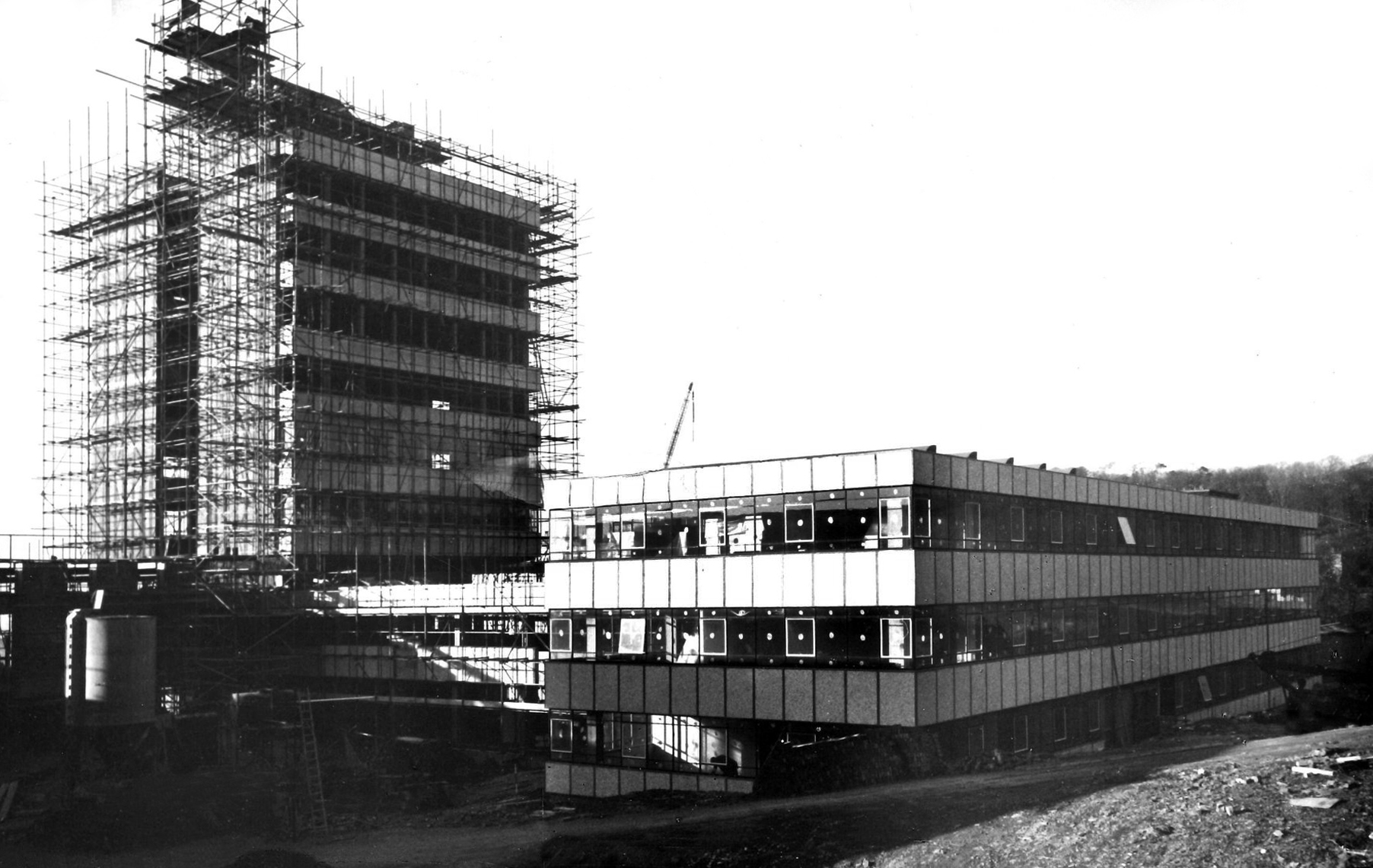
Seen here under construction in 1963

On completion in deep winter.

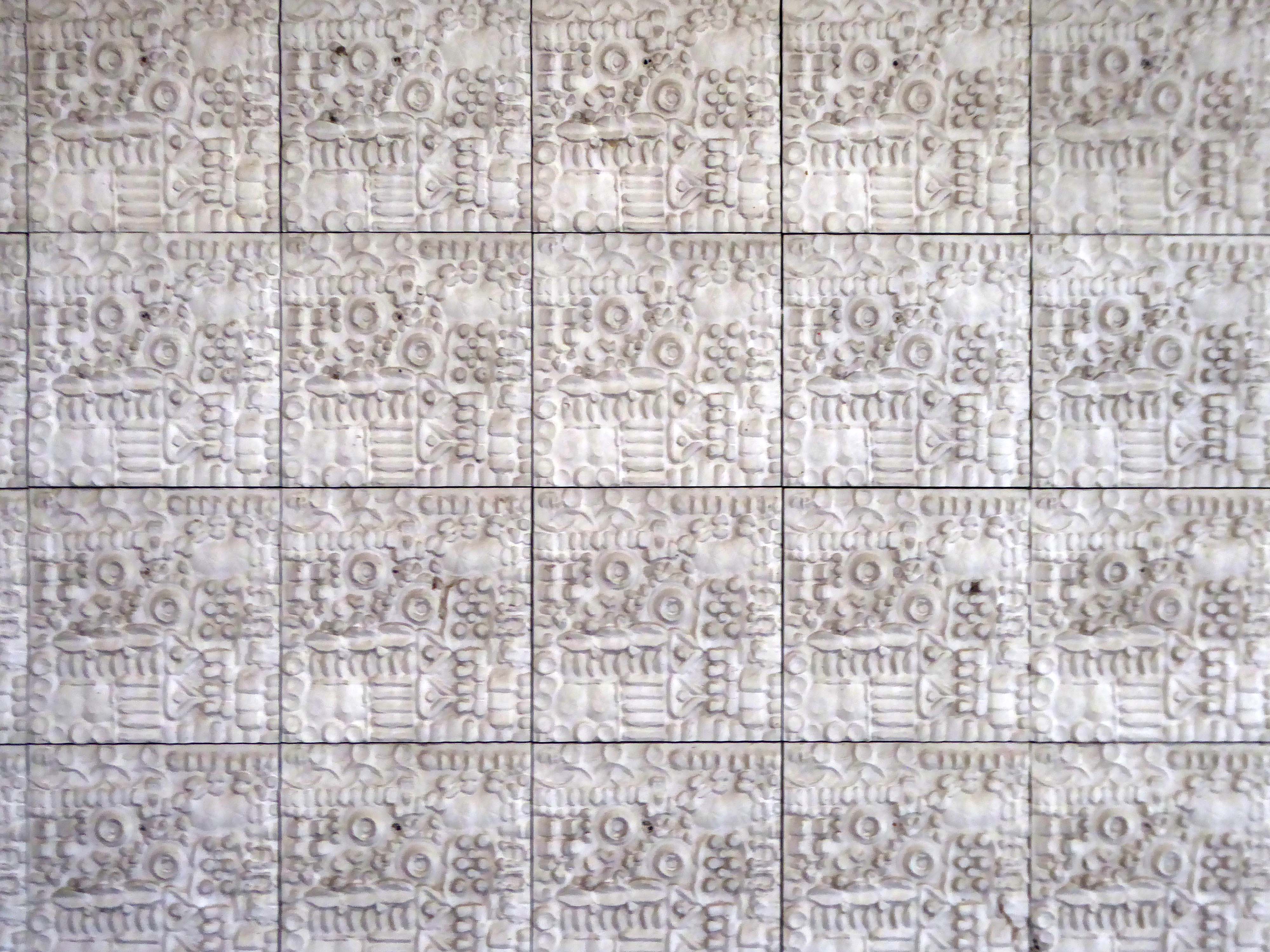
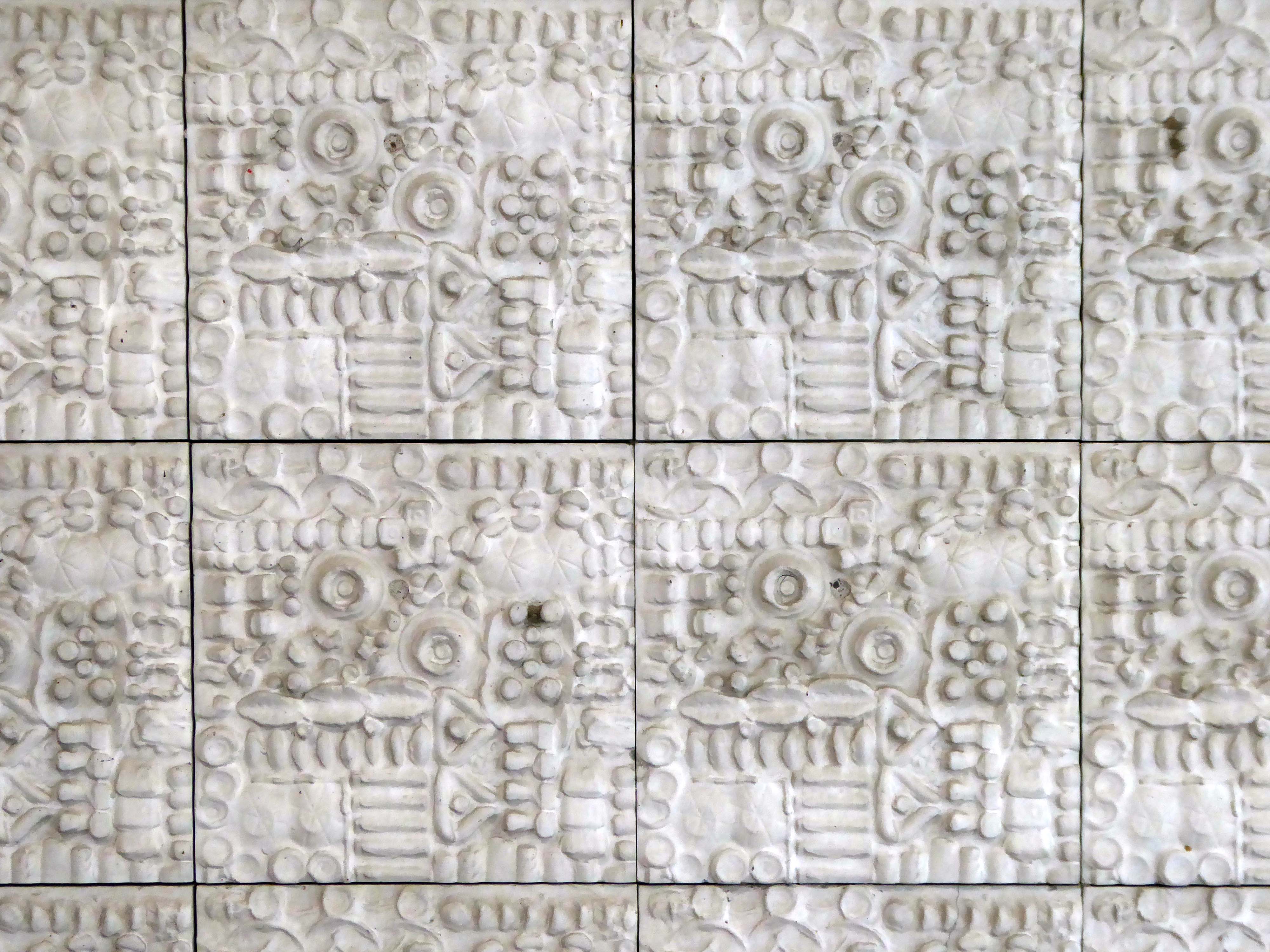
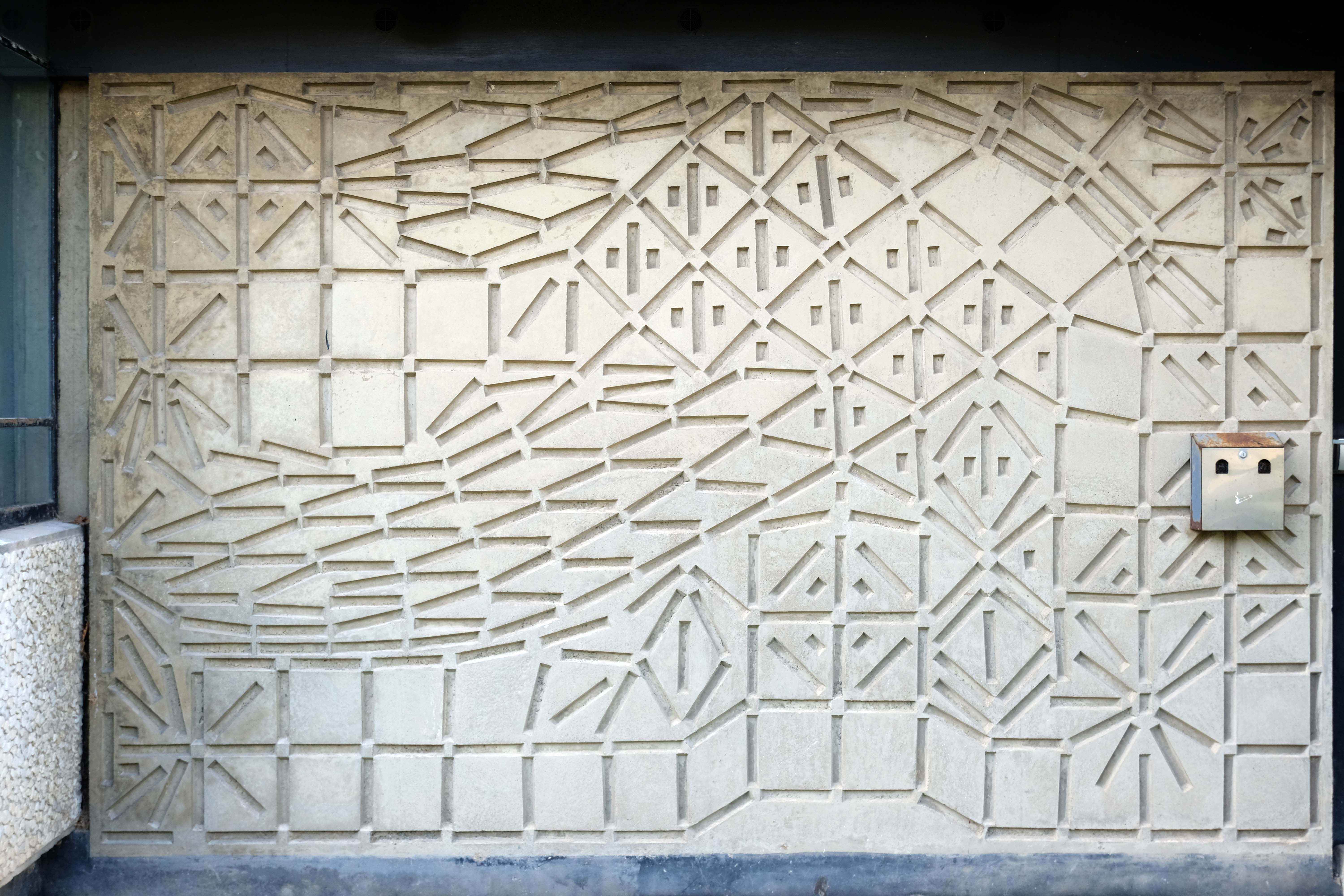
Tucked away at the back is this decorative concrete relief lacking attribution but gaining an ashtray.

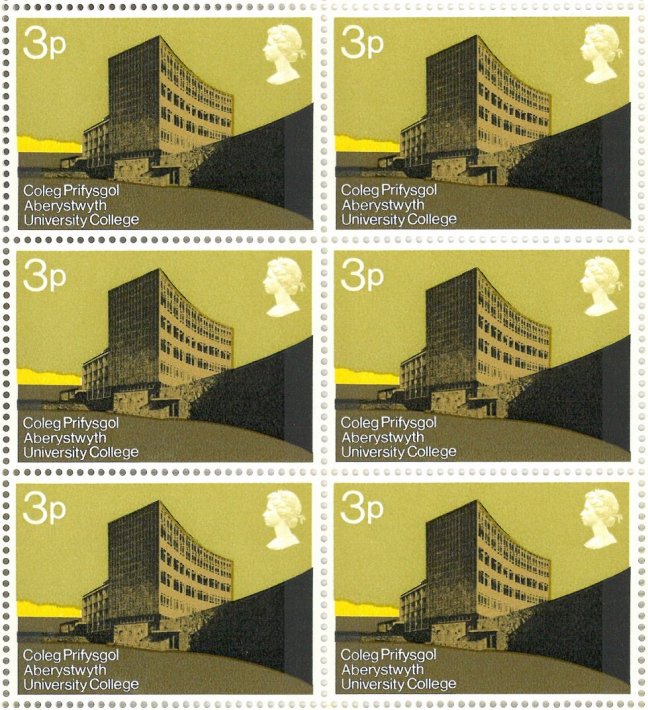
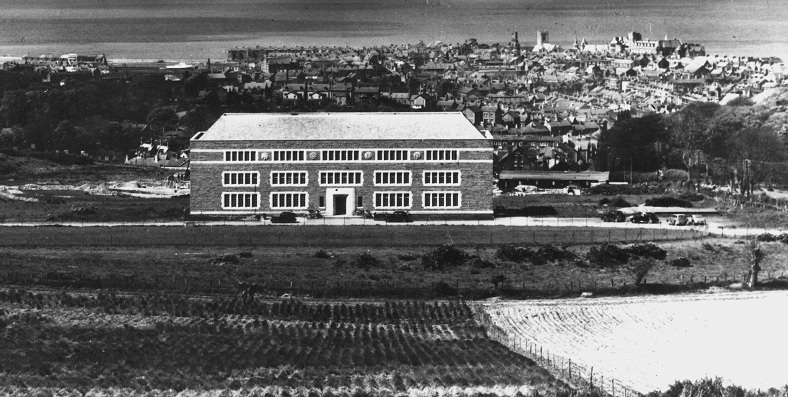
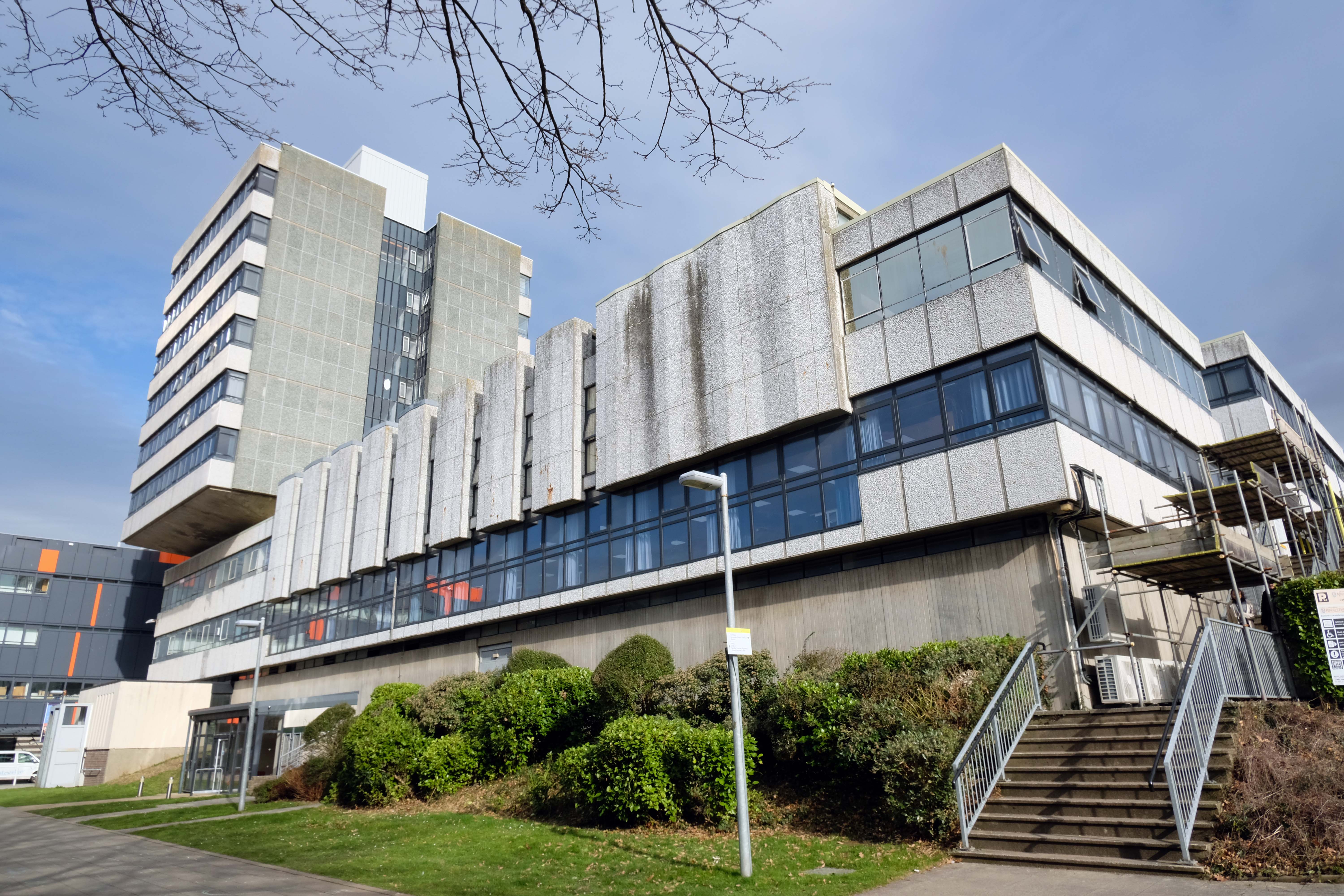
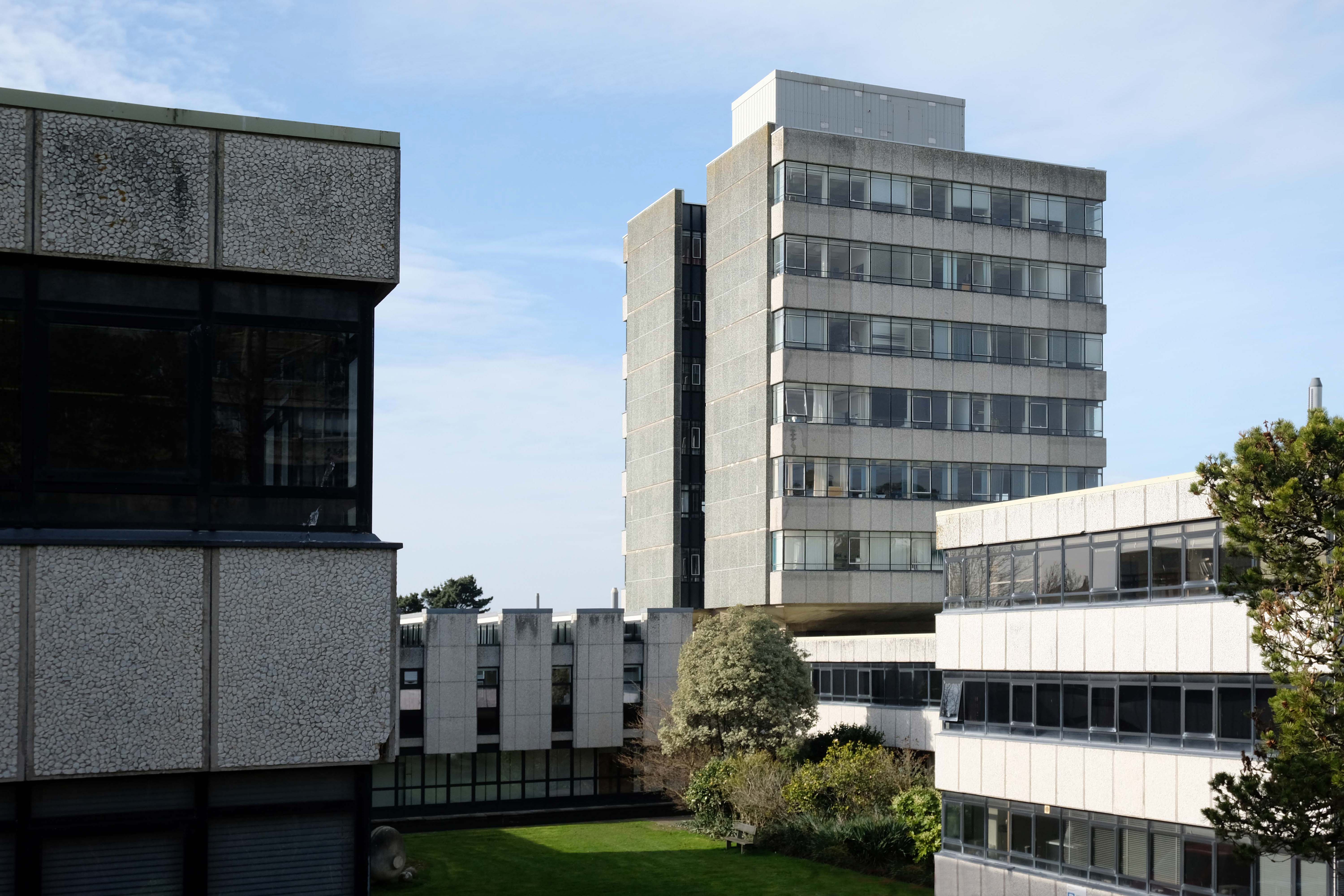
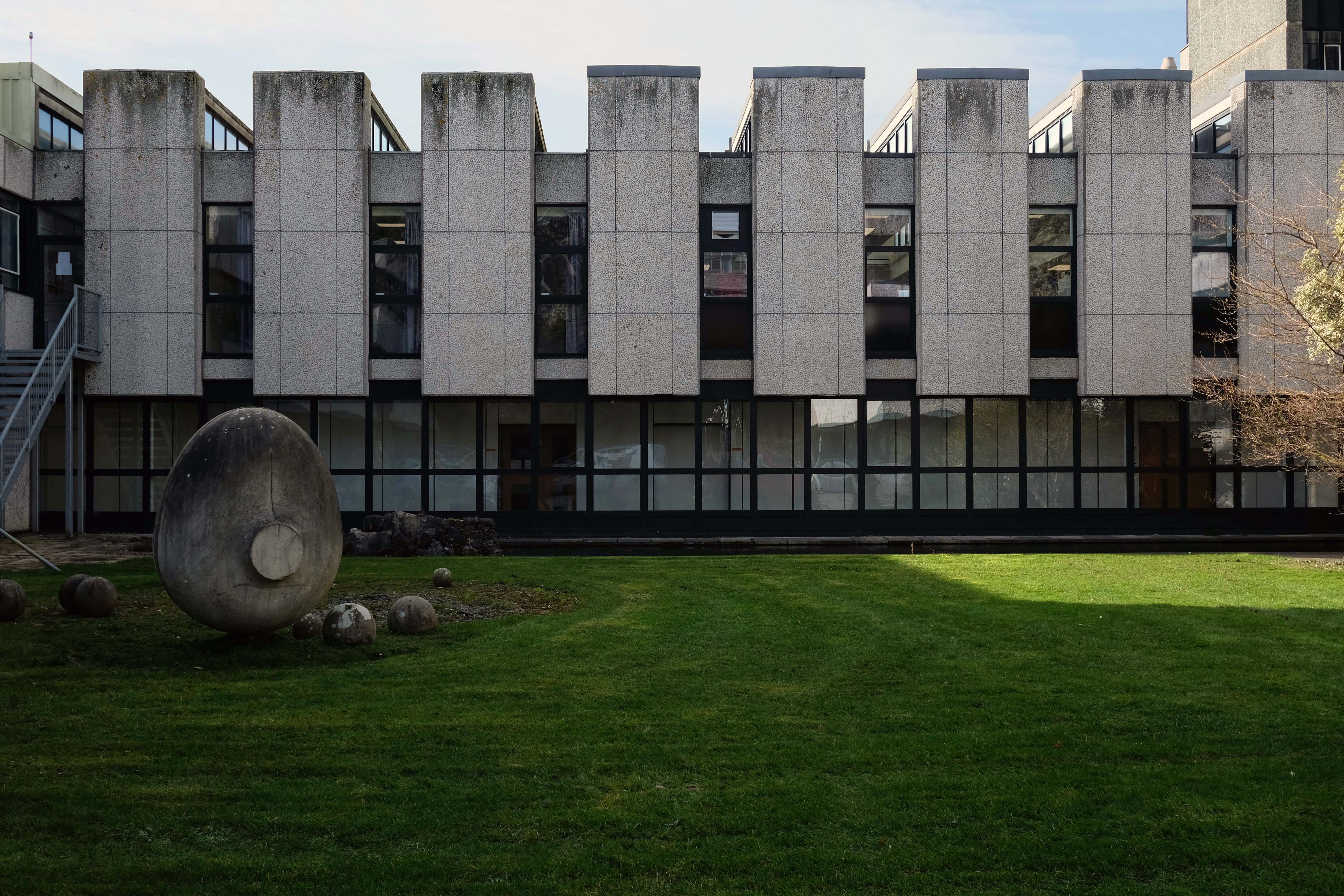
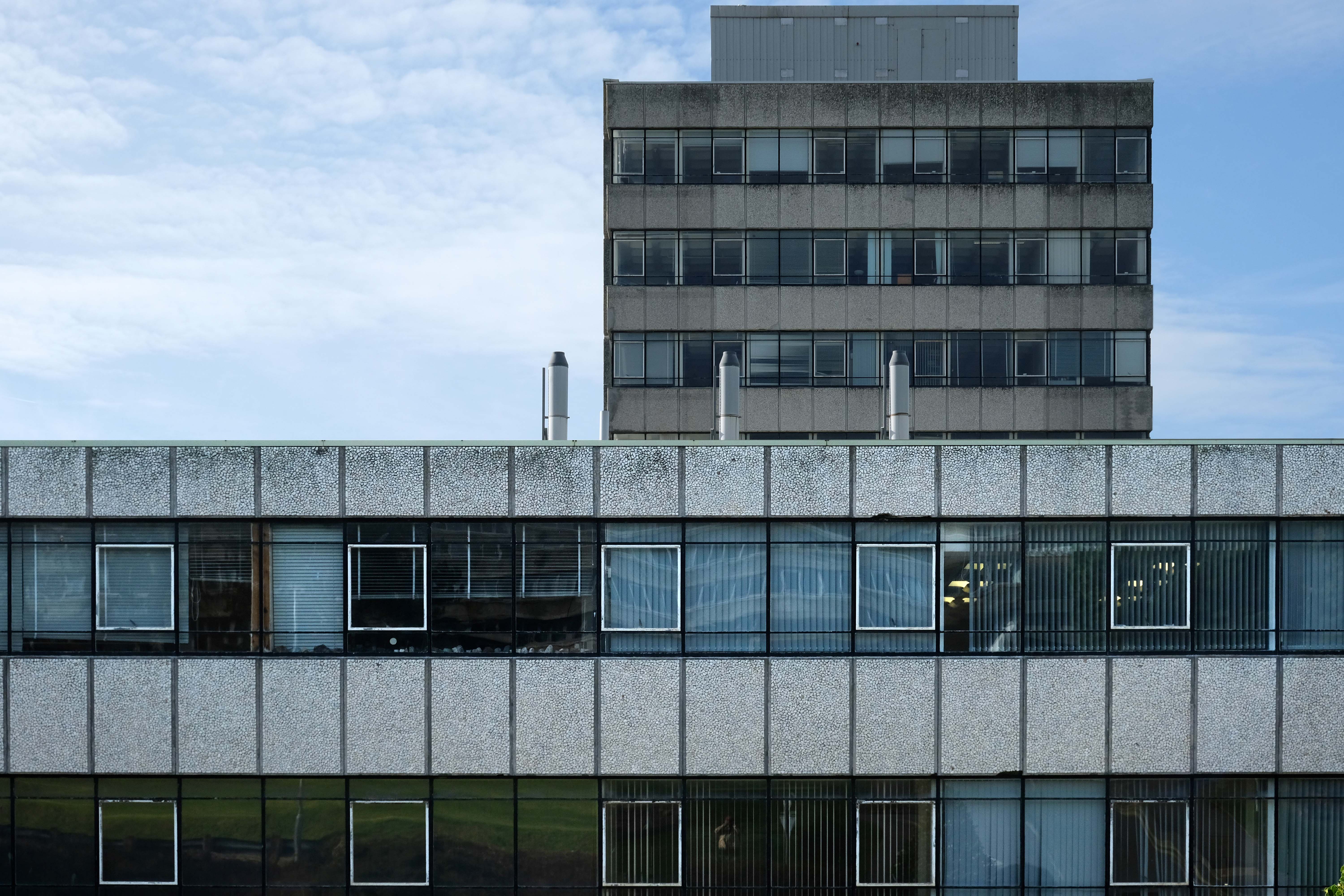
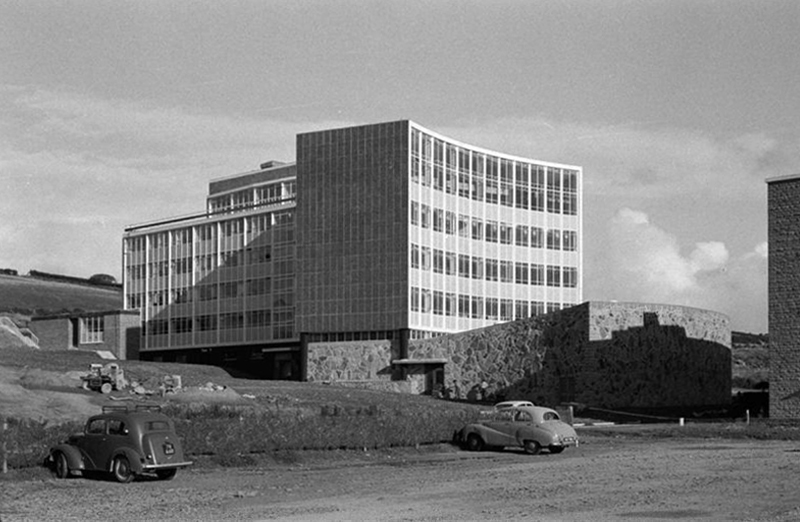
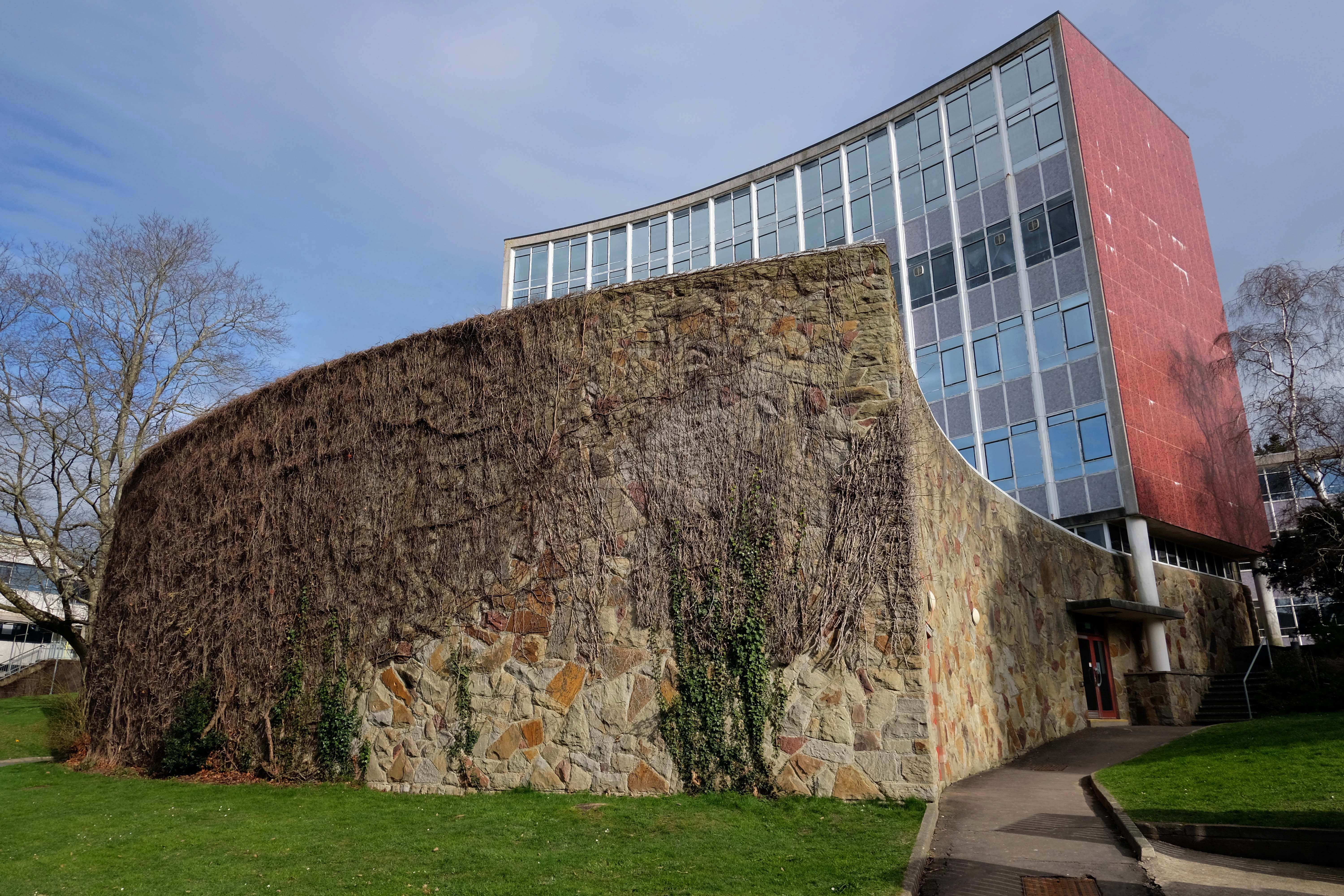
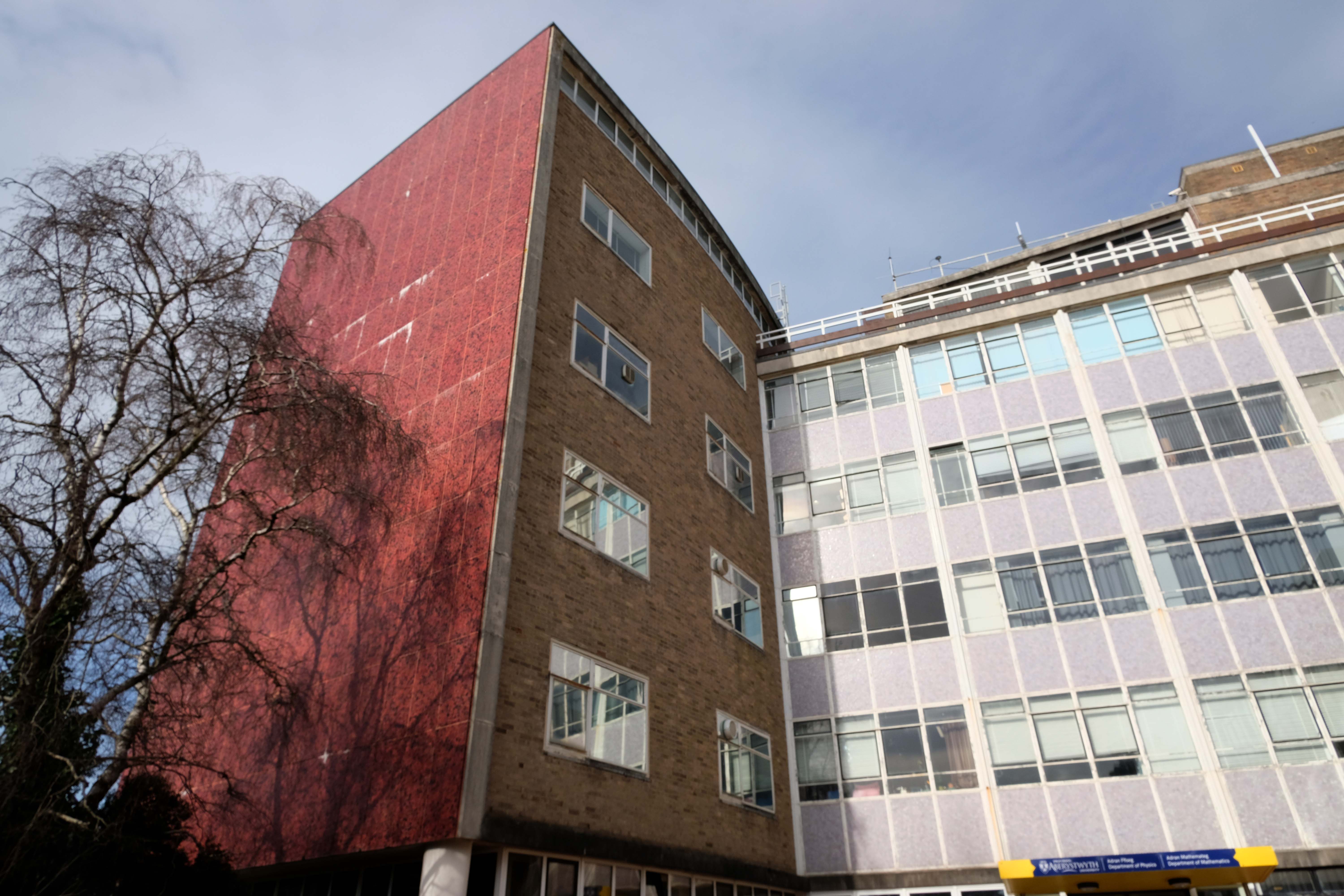
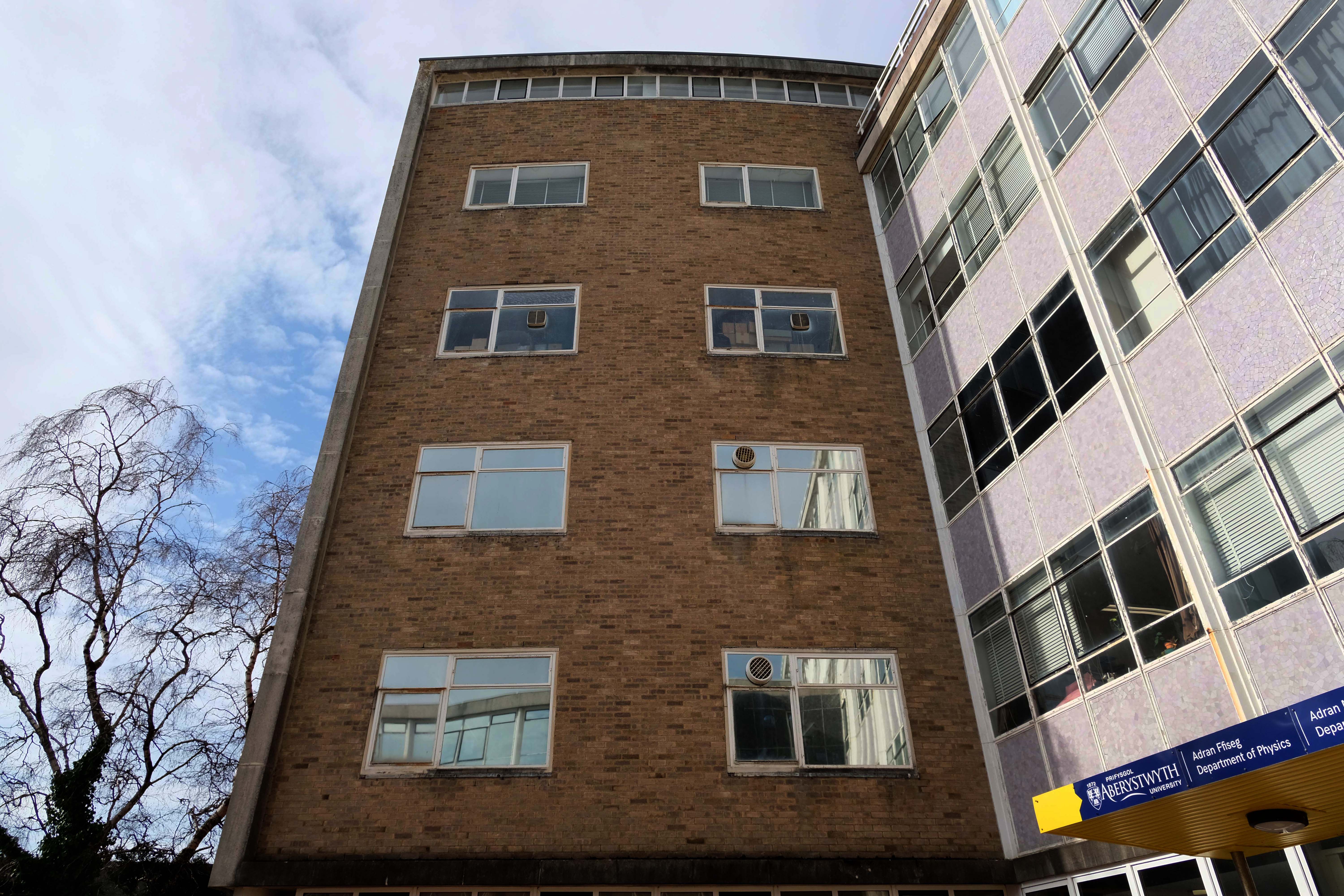
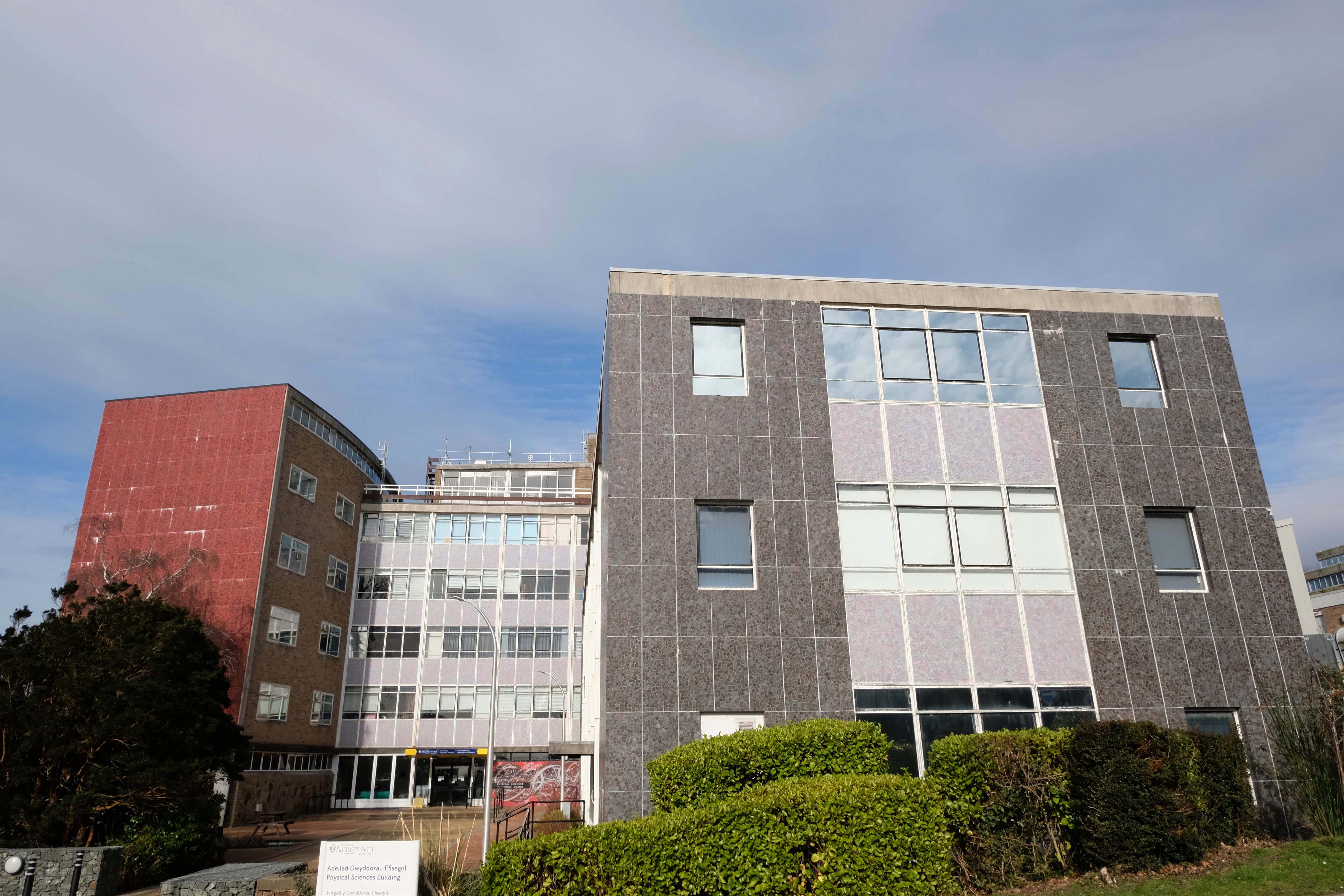
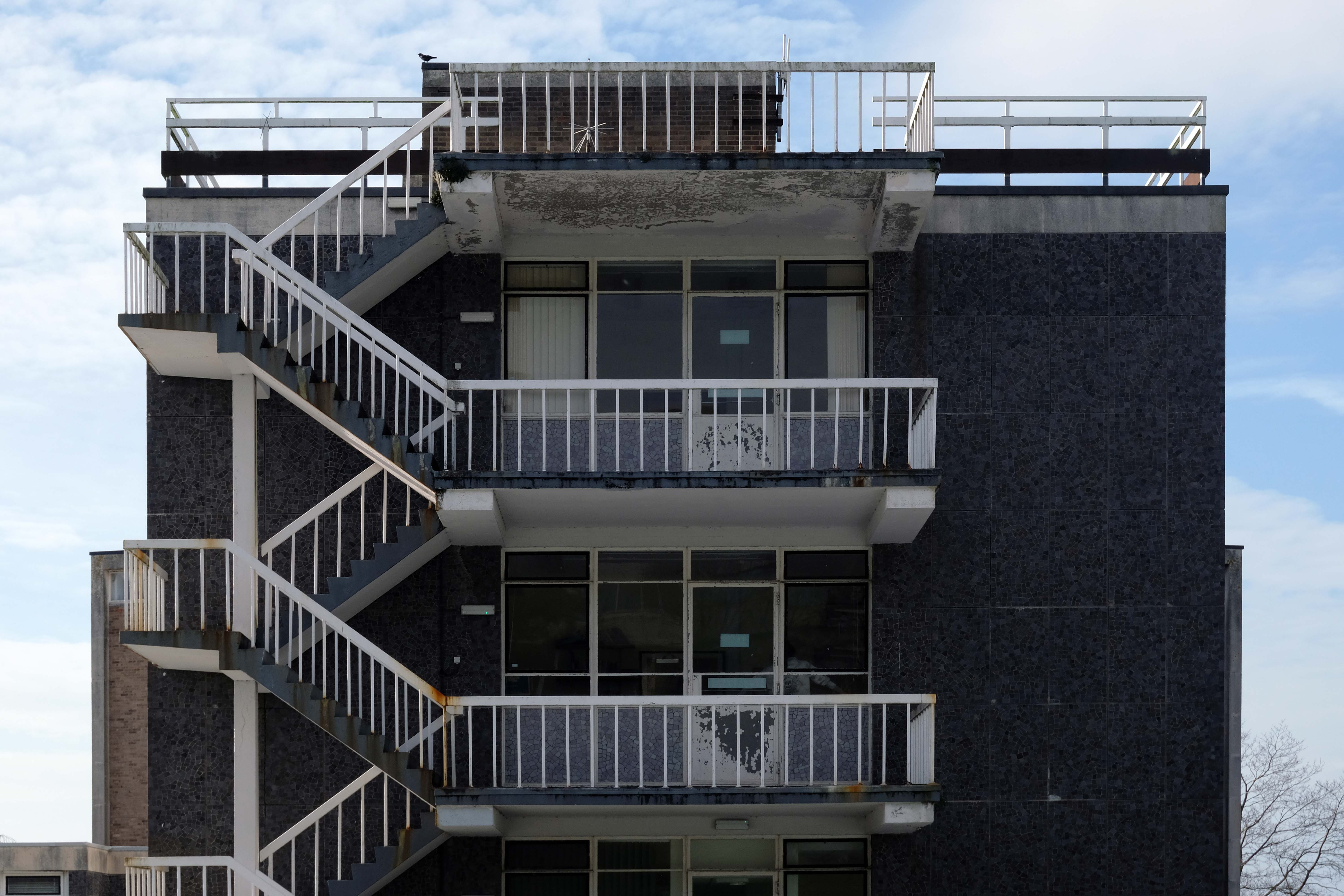
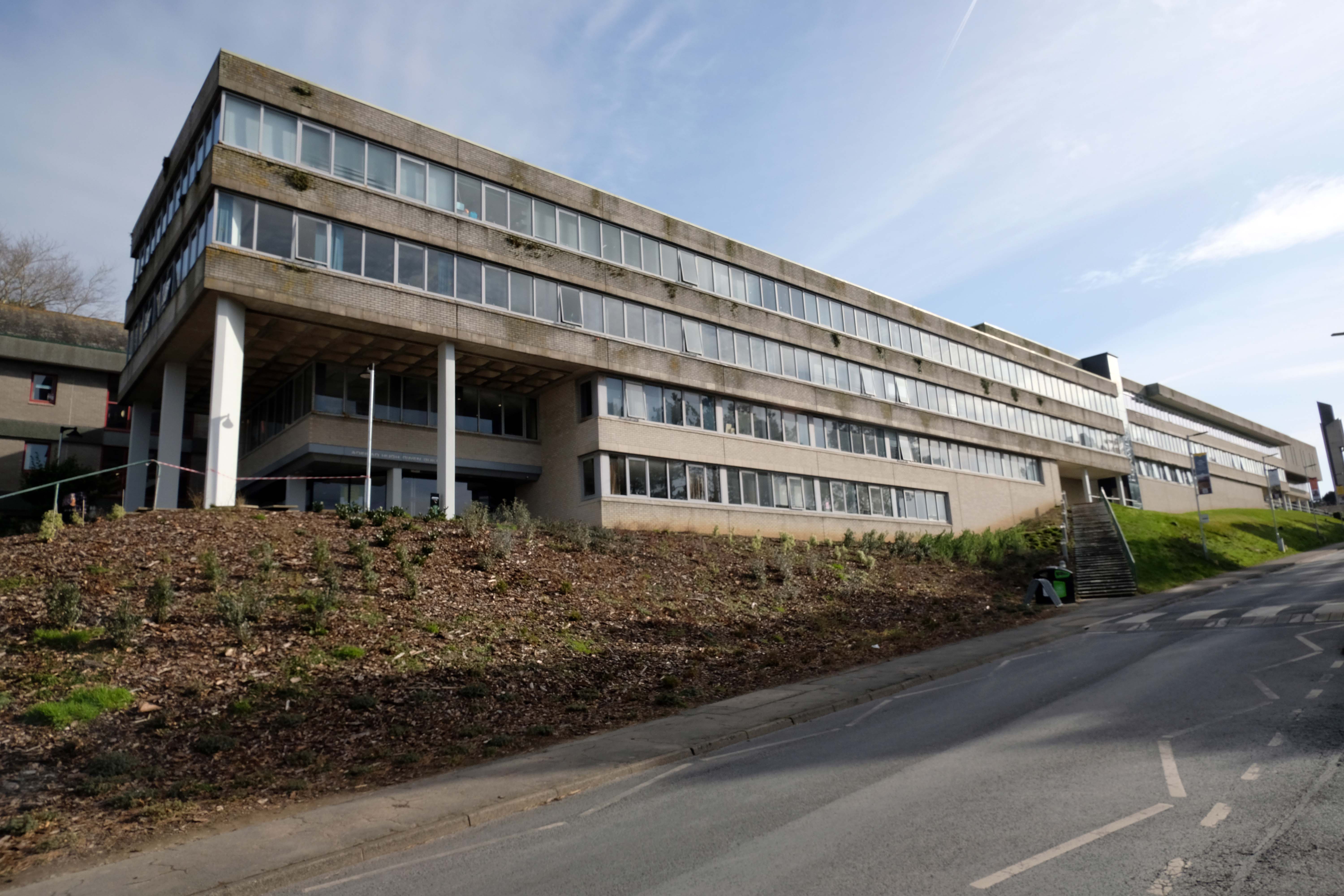
Backtracking now to the Physical Sciences Building completed in 1962 and opened in 1963 – Sir Percy Thomas Partnership

August 1st 1962: Arthur Chater

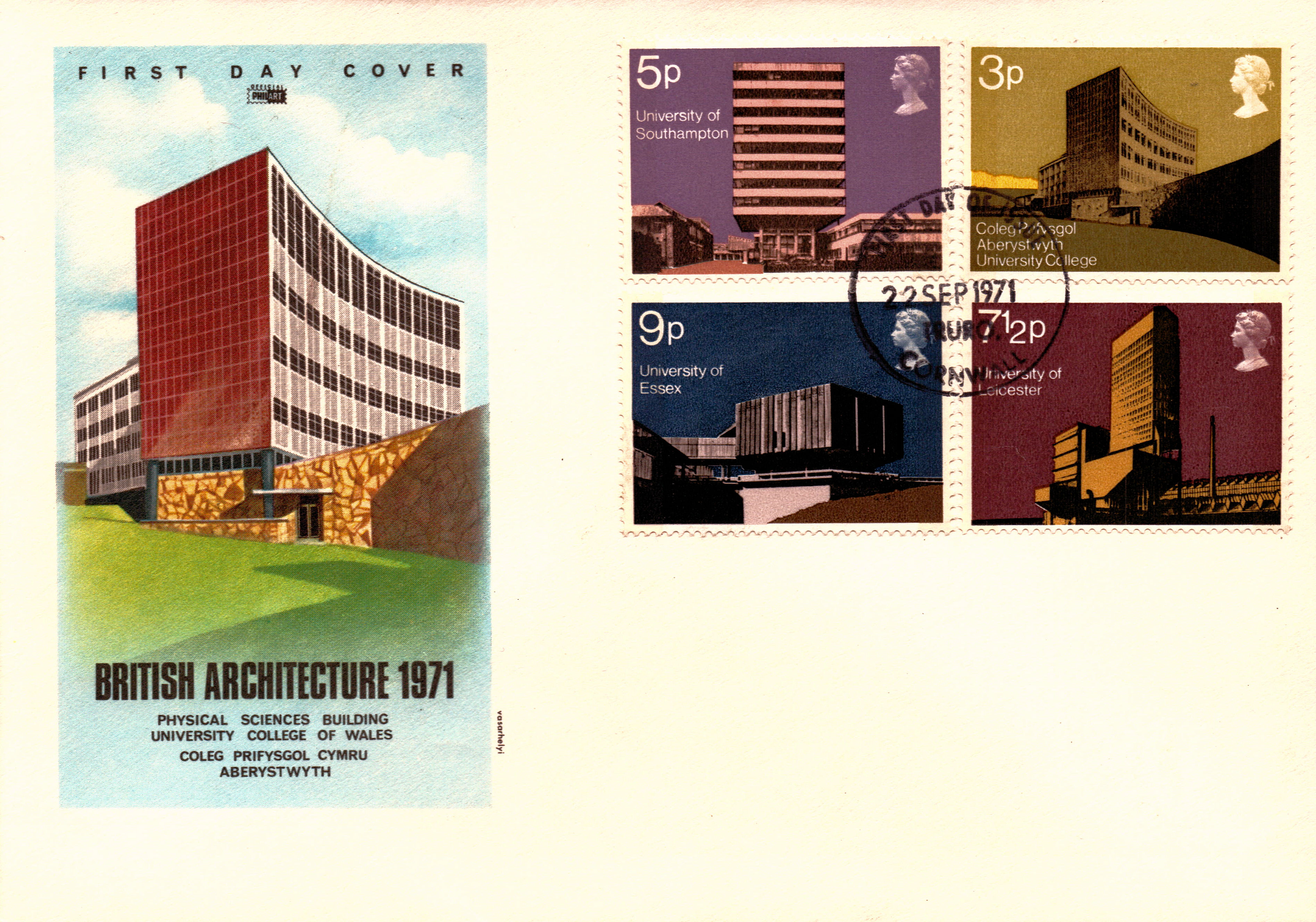
Immortalised in this elegant educational stamp set – designed by Mr Nicholas Jenkins of the Royal College of Art 

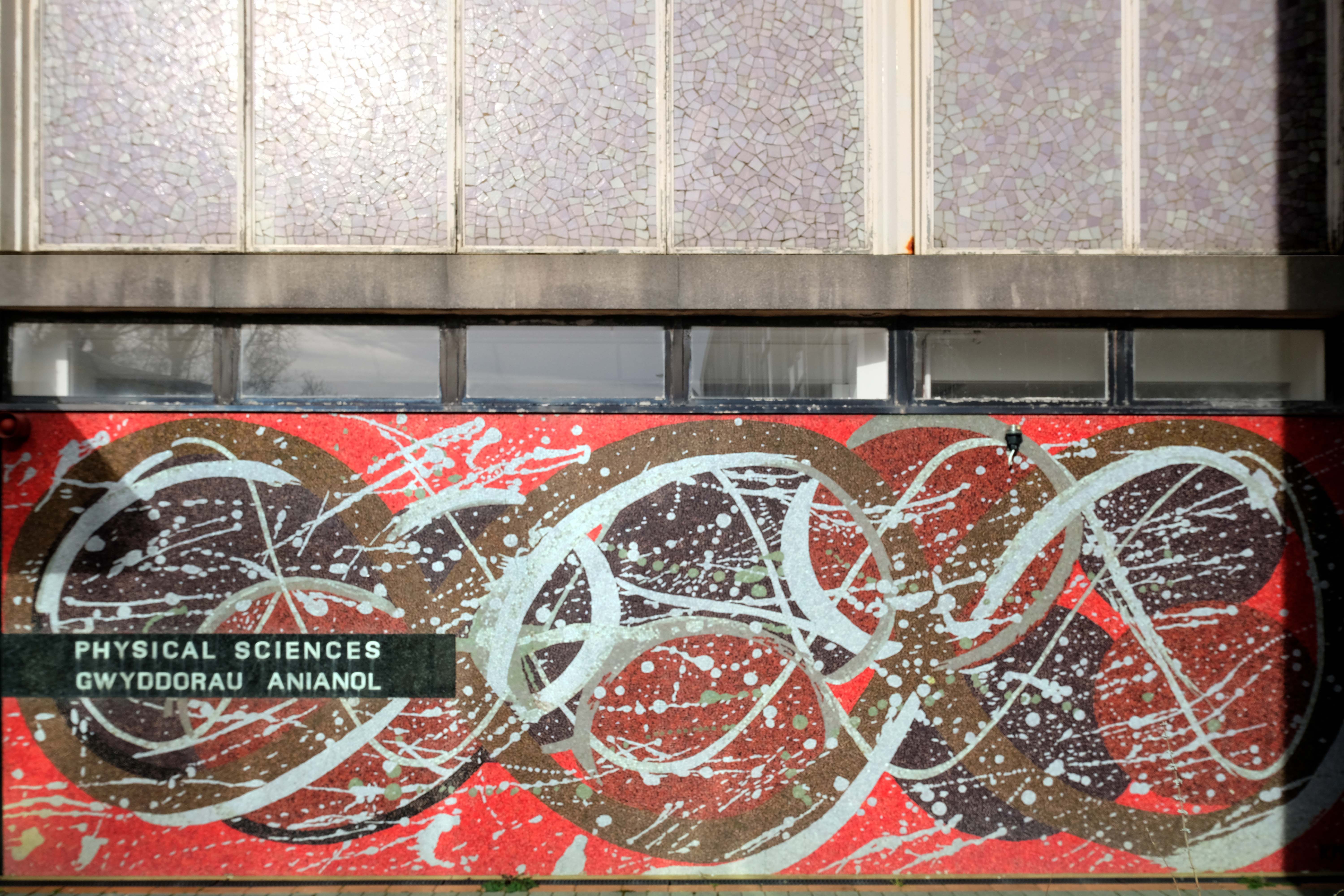
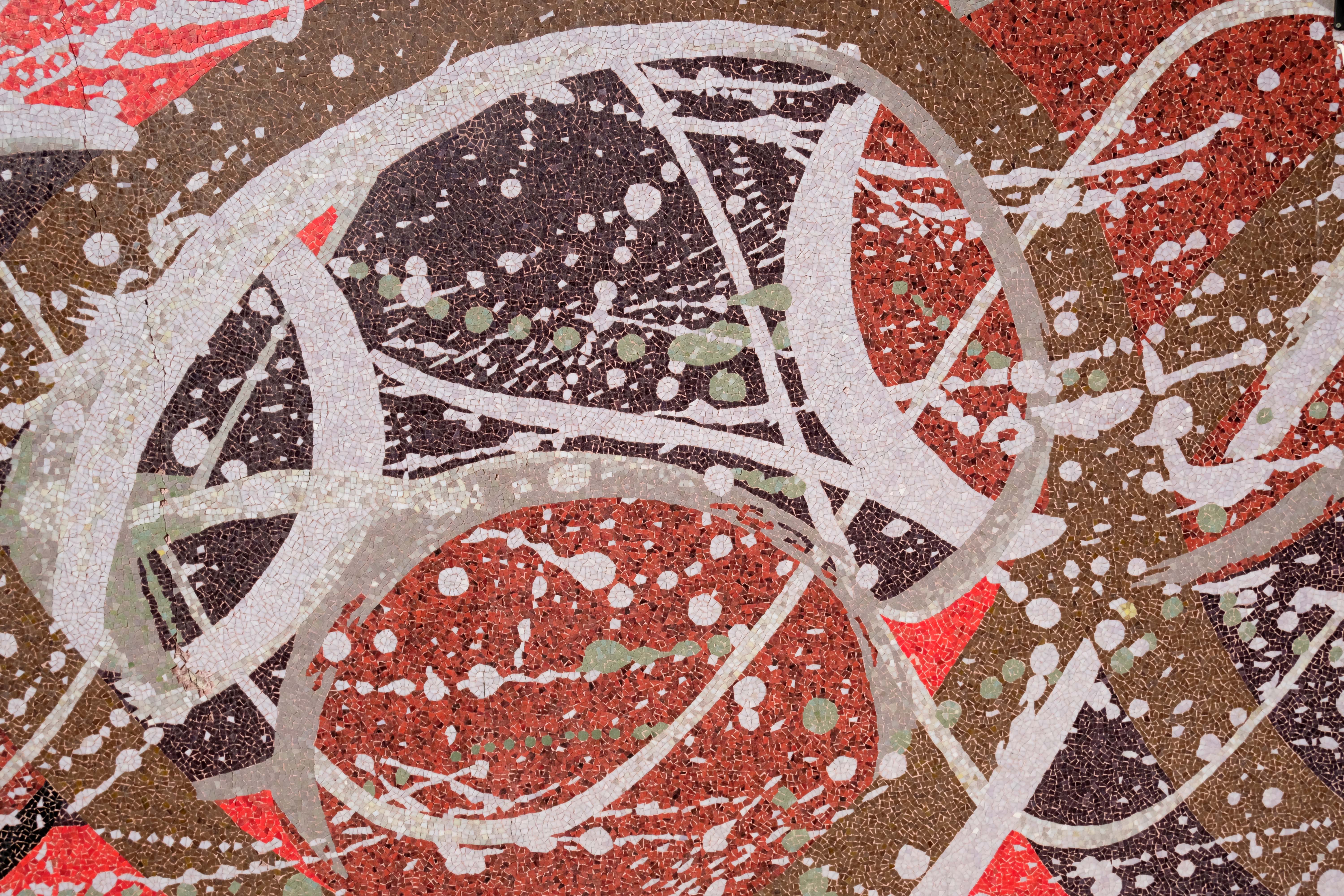
To the right of the entrance this striking mosaic – action is ossified in the manner of a semi-permanent Pollock.

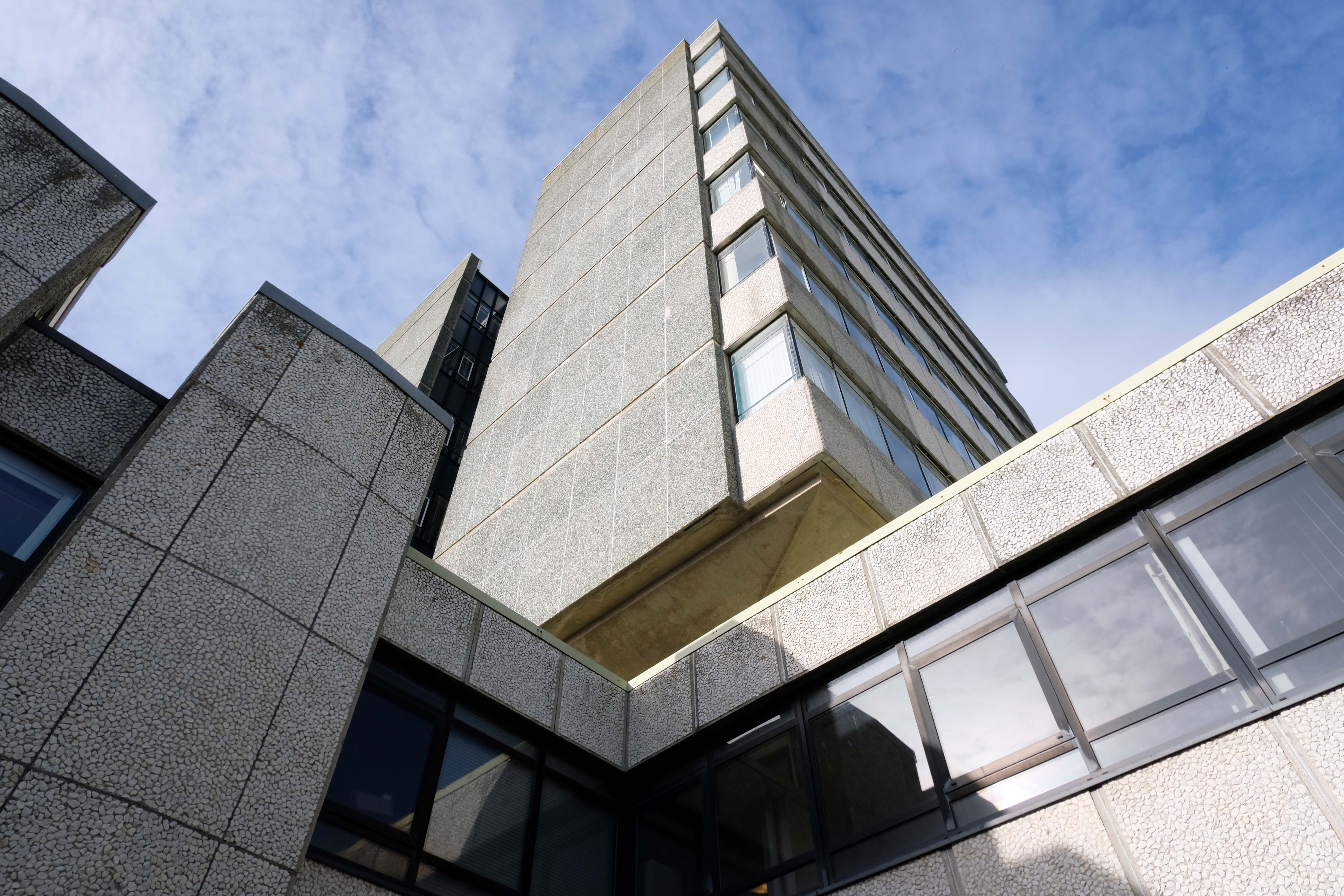
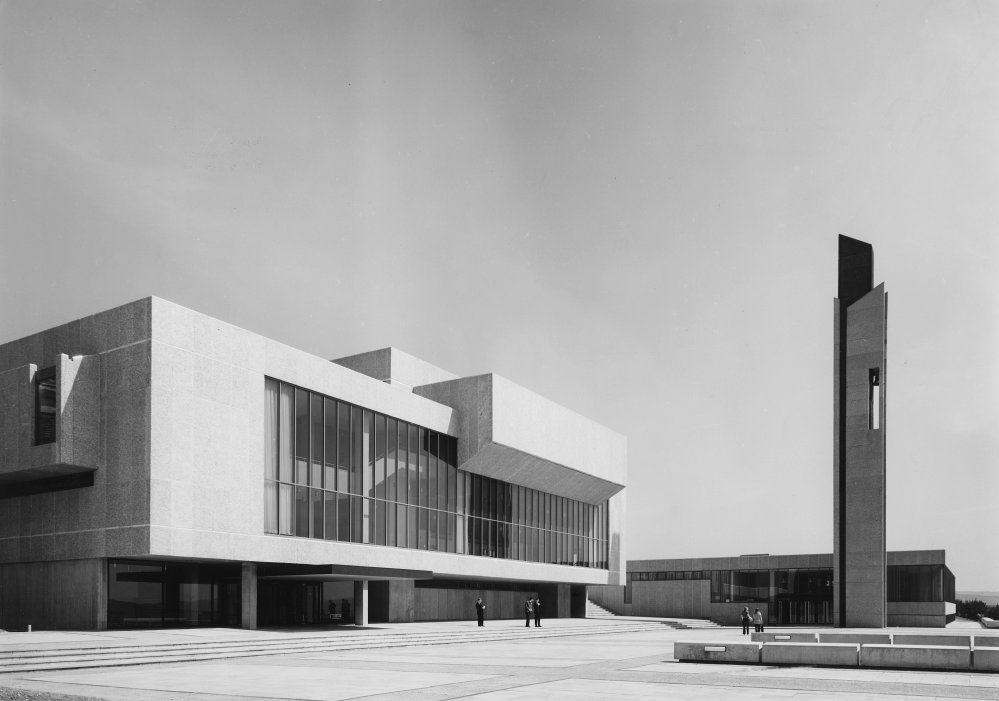
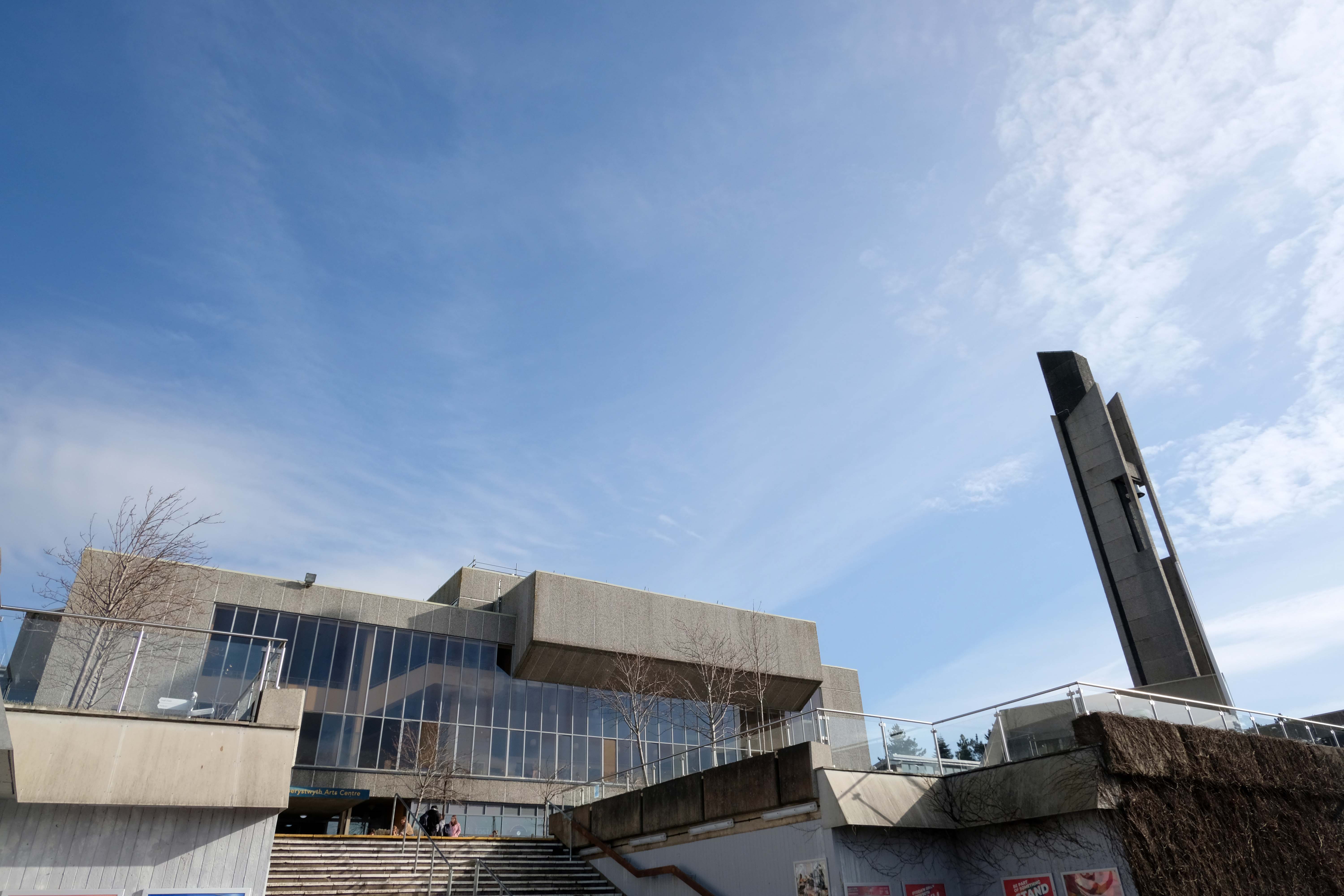
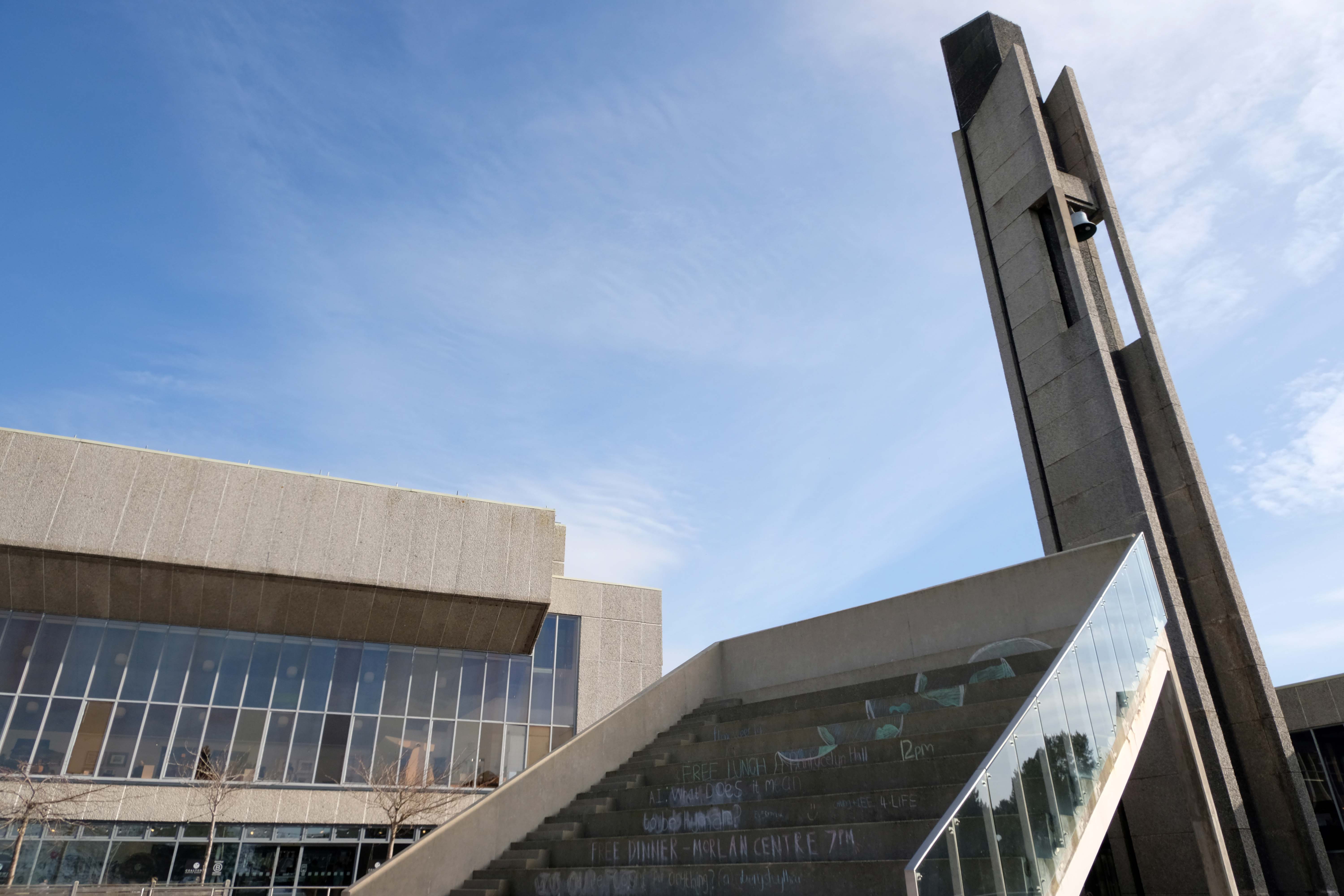
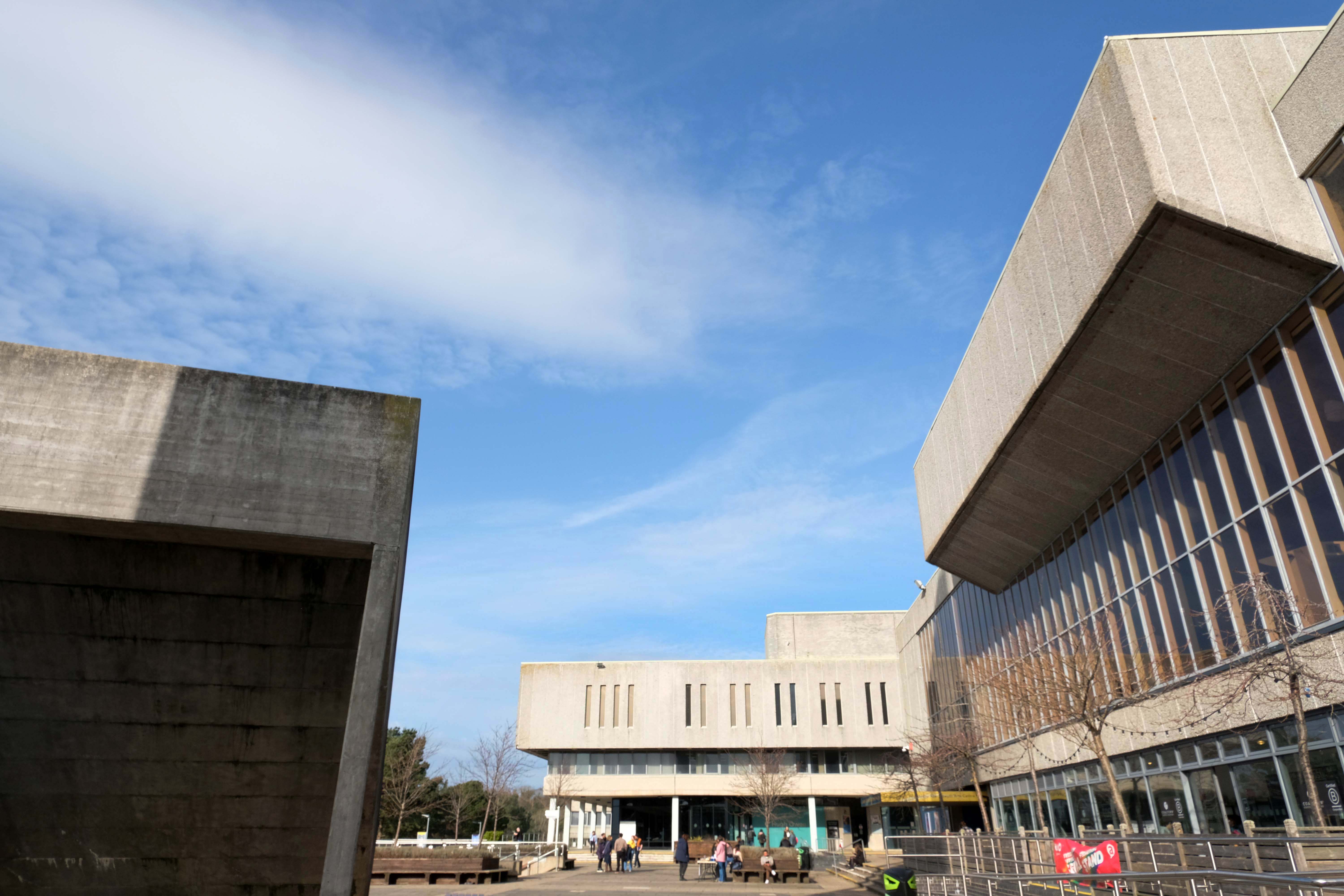
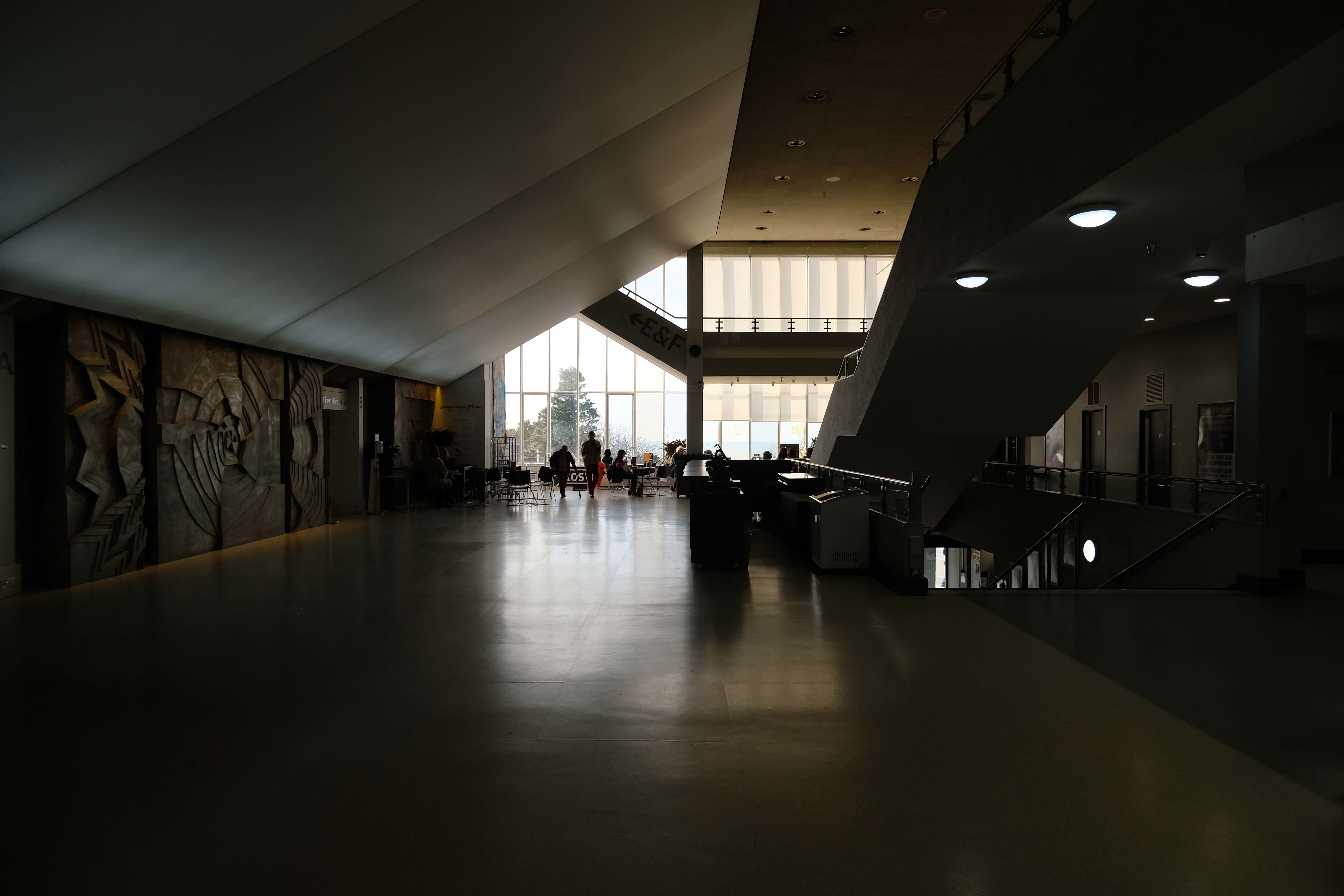
Aberystwyth Arts Centre is one of a number of campus buildings designed by Dale Owen of Percy Thomas Partnership, and completed in 1970-1972.

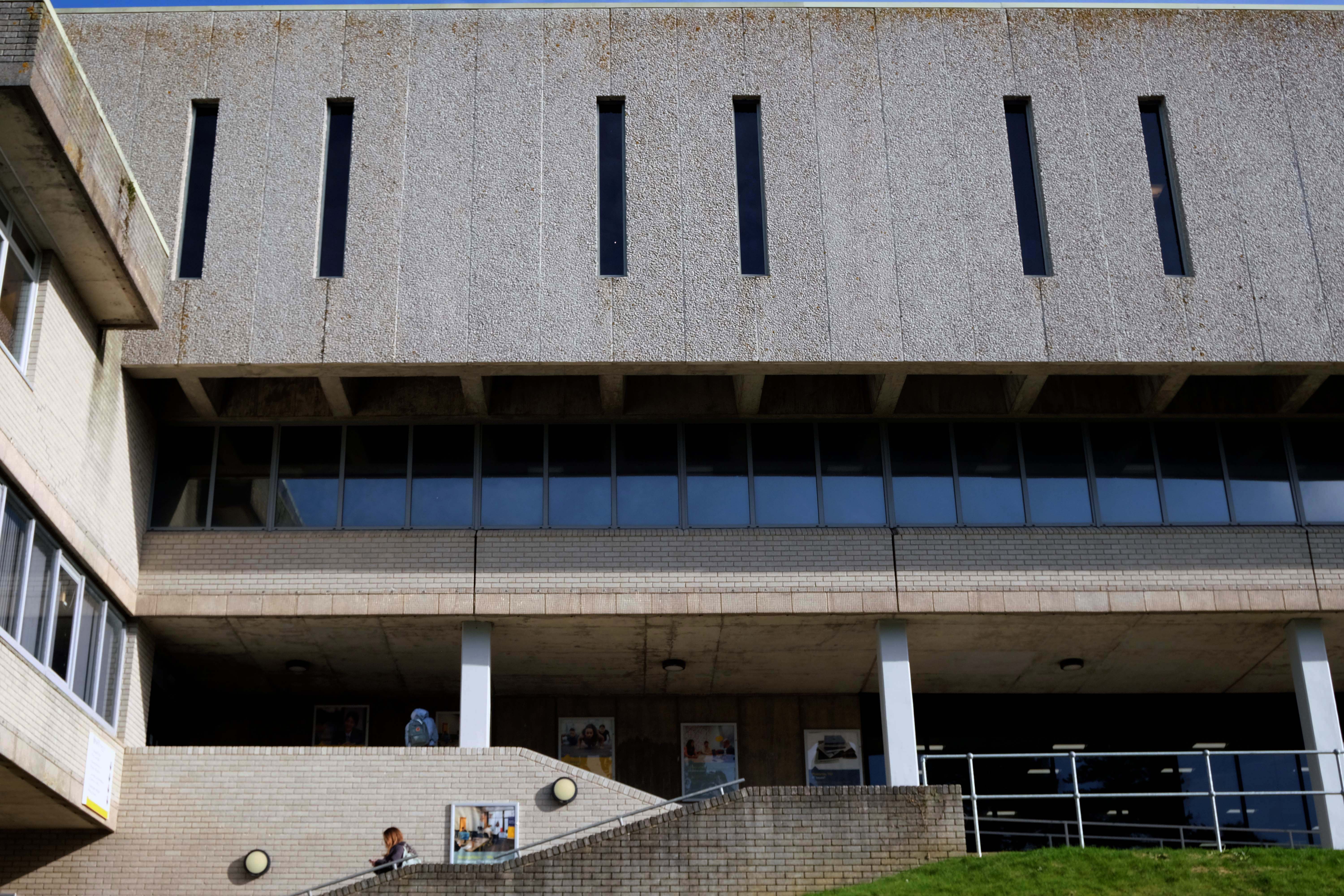
Built to a strongly horizontal design using grey granite aggregrate, the facade is essentially an overhanging rectangle framing of glass with an off-centre overhang. The position of the building providing unobstructed panoramic views over the main piazza style concourse and the sea beyond.

Coflein

Ribapix: Stewart Bale 1970

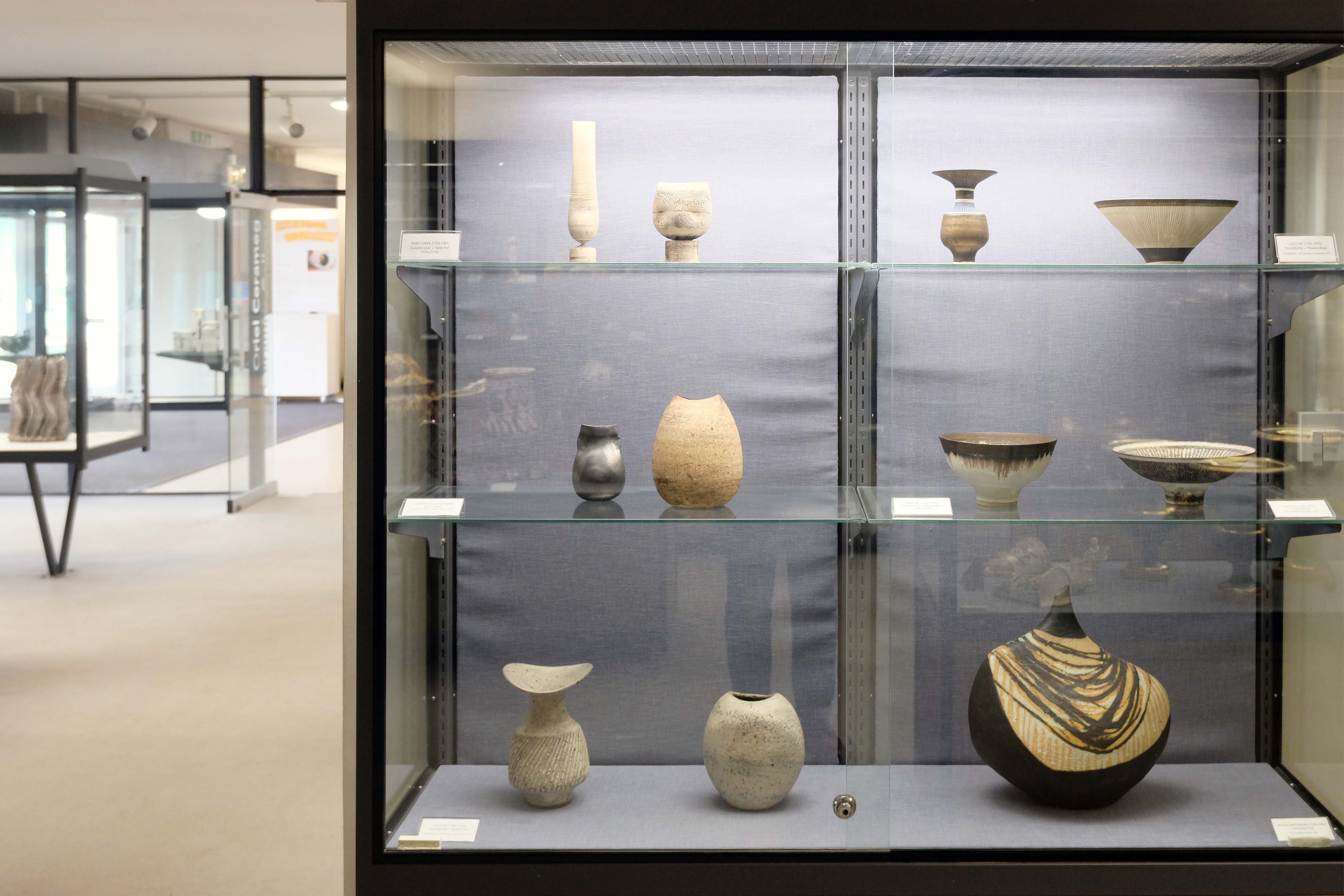
Let’s take a look inside the Arts Centre – to the right an exceptional collection of ceramics.

At its inception the reception area – an exemplary example of integrated interior design and architecture.

Ribapix: John Maltby 1970

David Tinker’s striking cast aluminium relief.

David began lecturing at Cardiff College of Art, later teaching and holding administrative posts at University College of Wales in Aberystwyth, retiring in 1988 as director of the department of visual art.

ARTUK

David Tinker was prominent in so many aspects of the visual arts in Wales throughout the second half of the 20th Century as a painter, sculptor, teacher, and stage designer. 

Tinker is perhaps best known as one of three originators of the 56 Group with Eric Malthouse and Michael Edmonds, the new generation of young artists in Wales who were interested in modernism and keen to ally themselves to the international art world. 

The 56 Group had no manifesto and for the most part they acted as an exhibiting co-operative; not all were abstract painters and their work was stylistically very different from one another, but all shared radical ideals. Their orderly revolt against the establishment was unique in the history of art in Wales. 

They championed abstraction and allied themselves to European and American modernism, at a time when painters in Wales were being commended for recording the urban, rural and industrial face of Wales and its inhabitants. 

As might be expected, the art establishment more readily accepted 56 Group avant garde works, and those artists who had been achieving some success as painters of the contemporary scene suddenly found themselves side-stepped, and labelled parochial. 

The period 1966-1974 saw in his paintings a move toward hard-edged abstraction in which Tinker employed geometry-based structures, simple arithmetical problems, colour mixed from a restricted palette, and gentle tonal gradation. 

Free Library

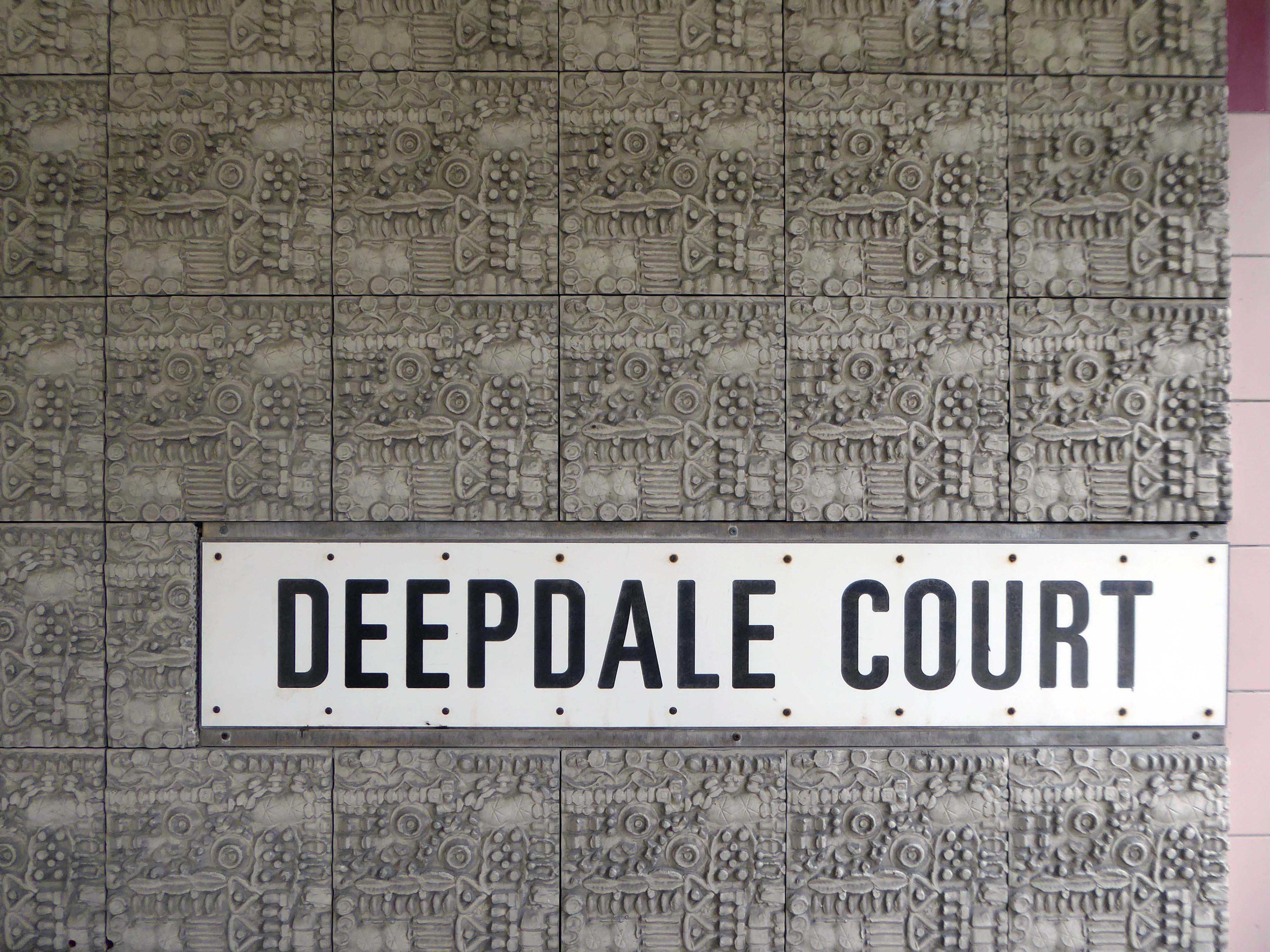
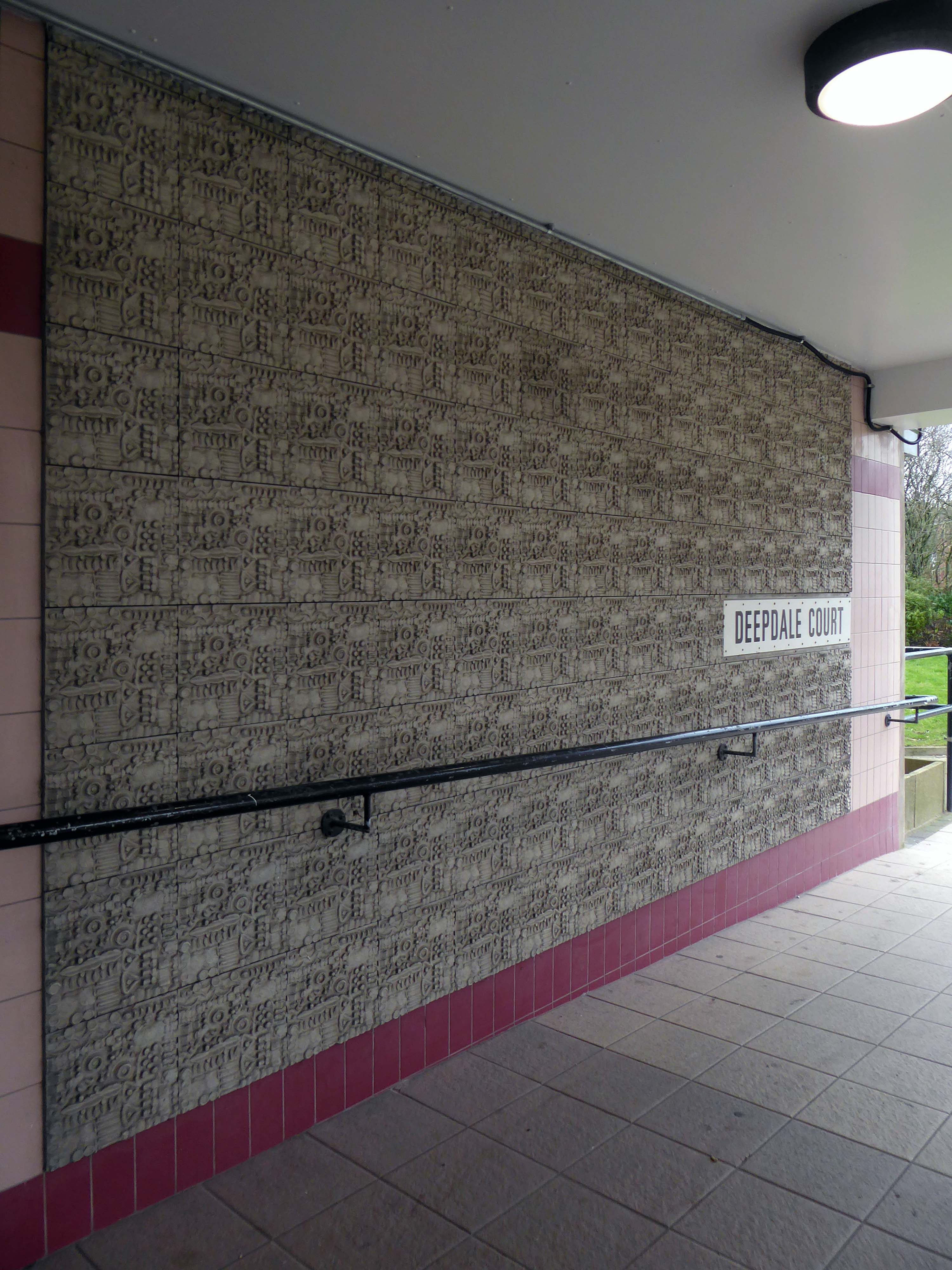
Deepdale Court – Blackley

Deepdale Court Northwold Drive Manchester M9 7HX

On the way betwixt somewhere and there I took time to come here.

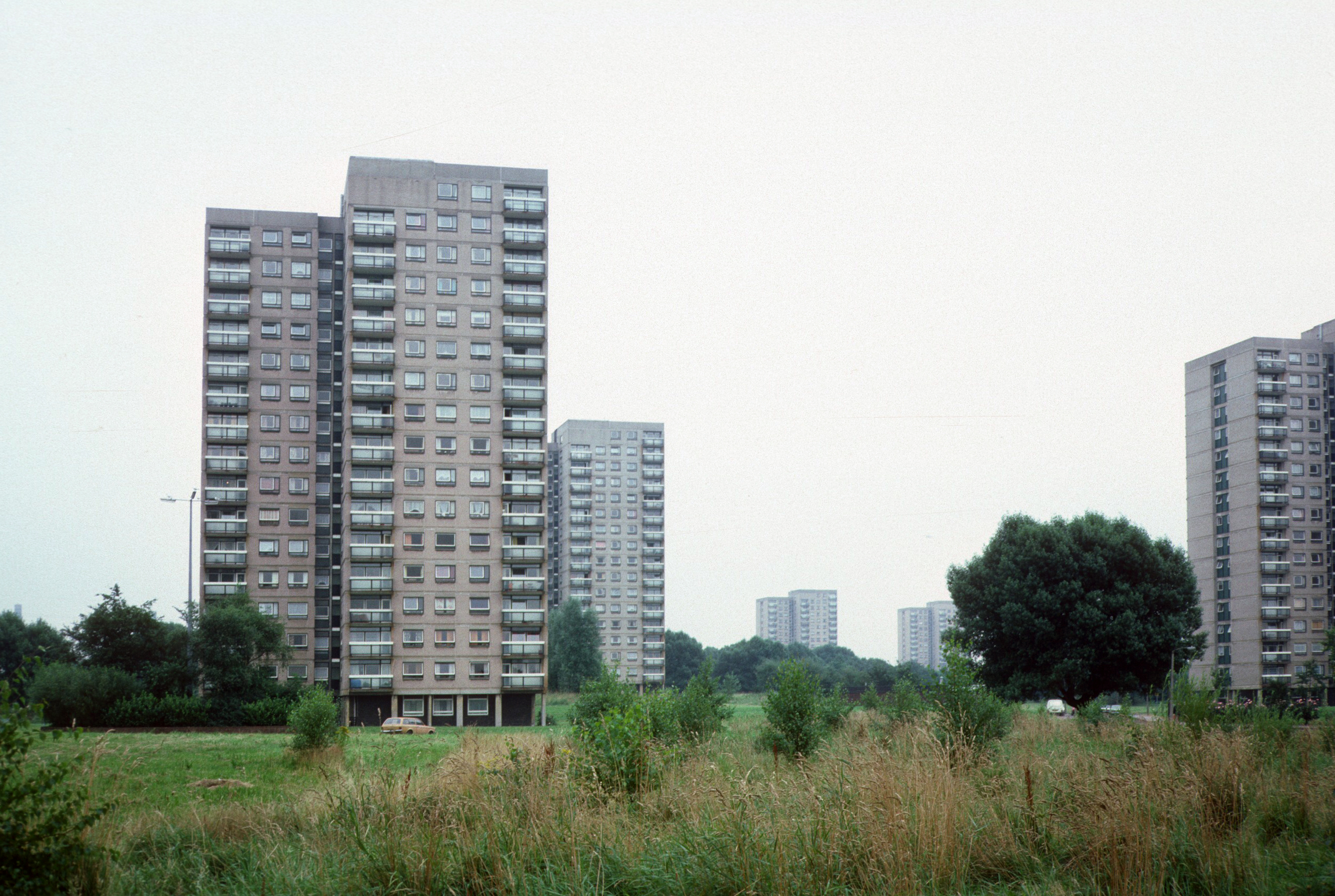
A tower block on high ground on the edge of Blackley.

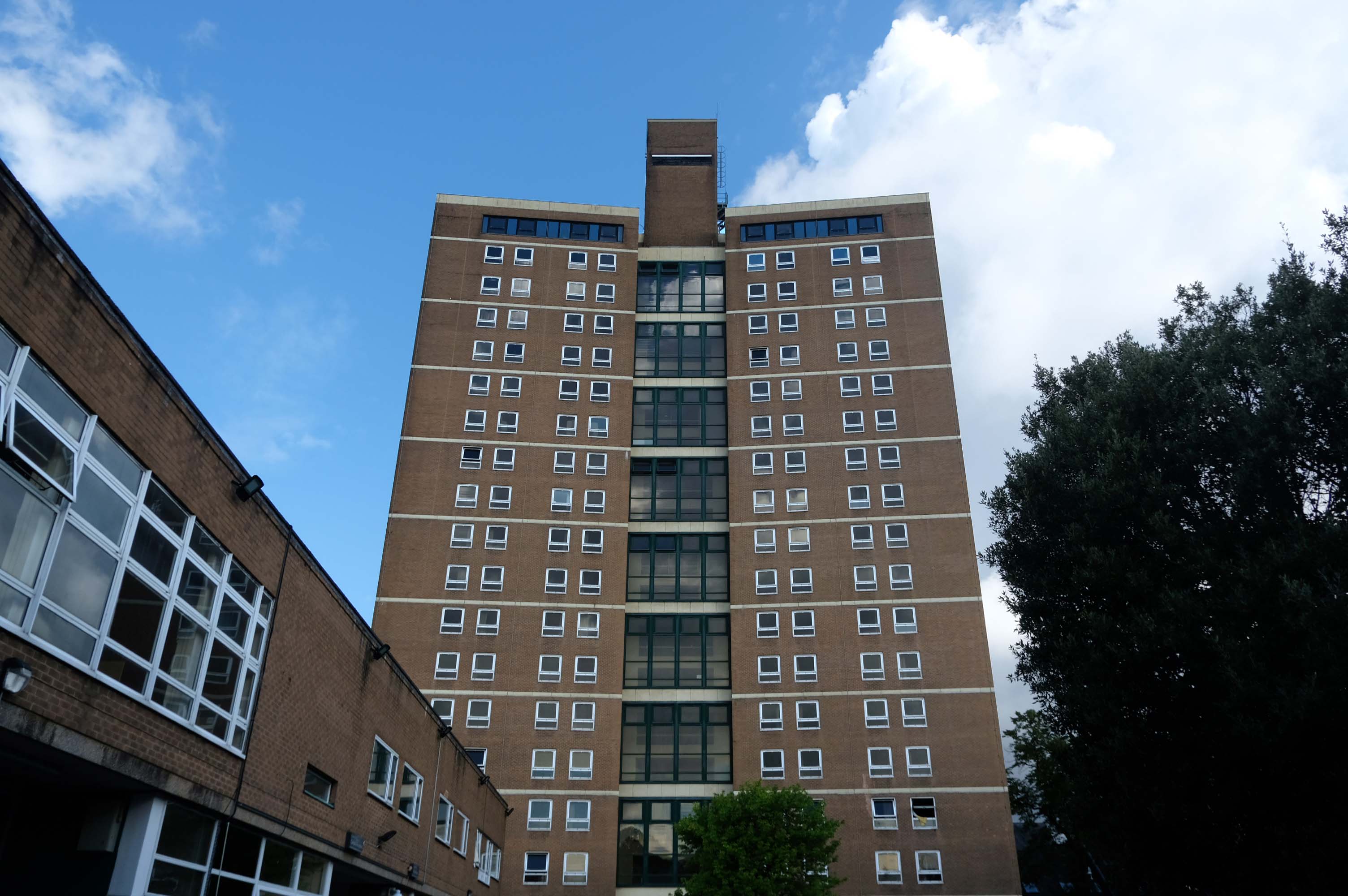
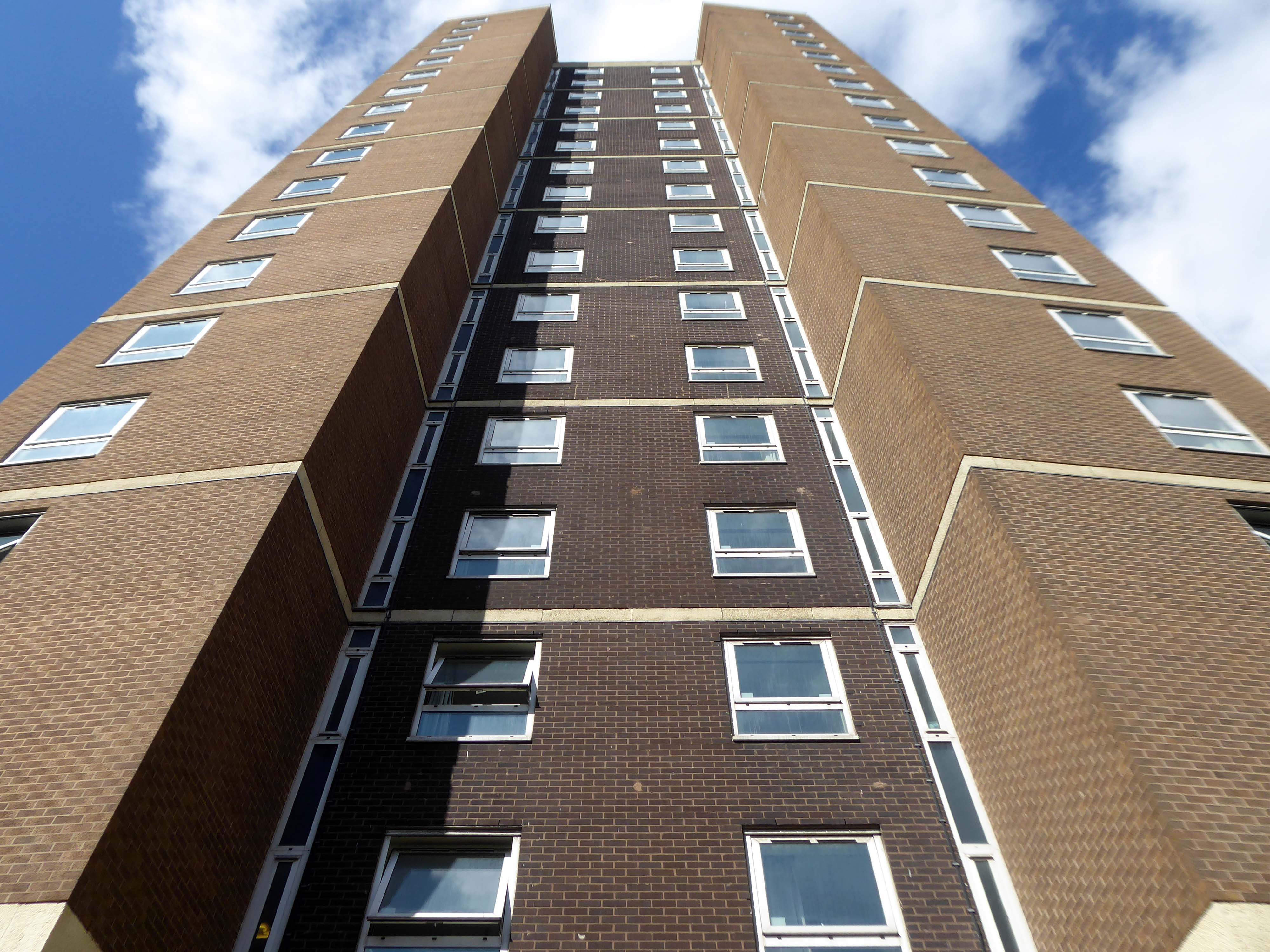
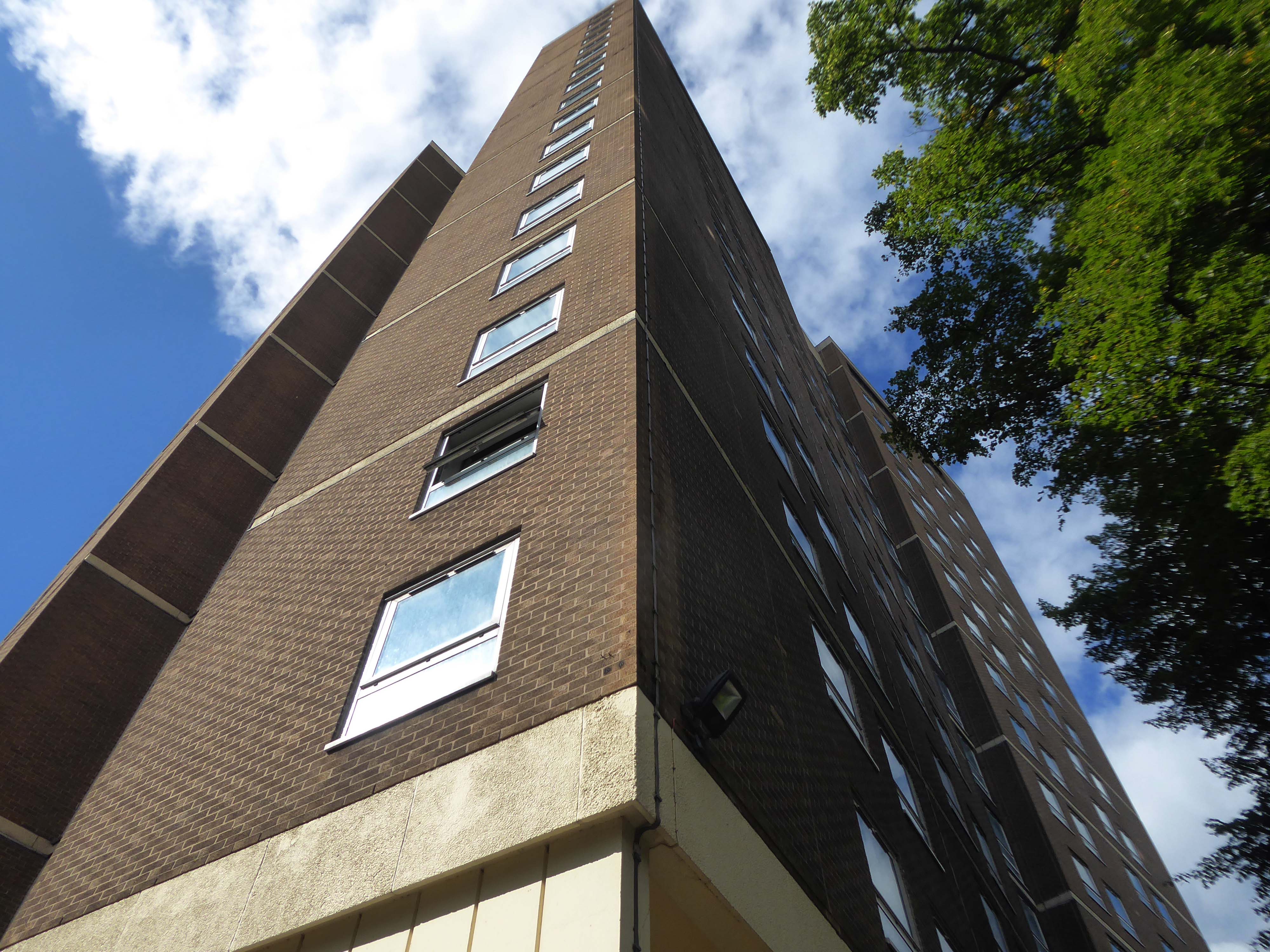
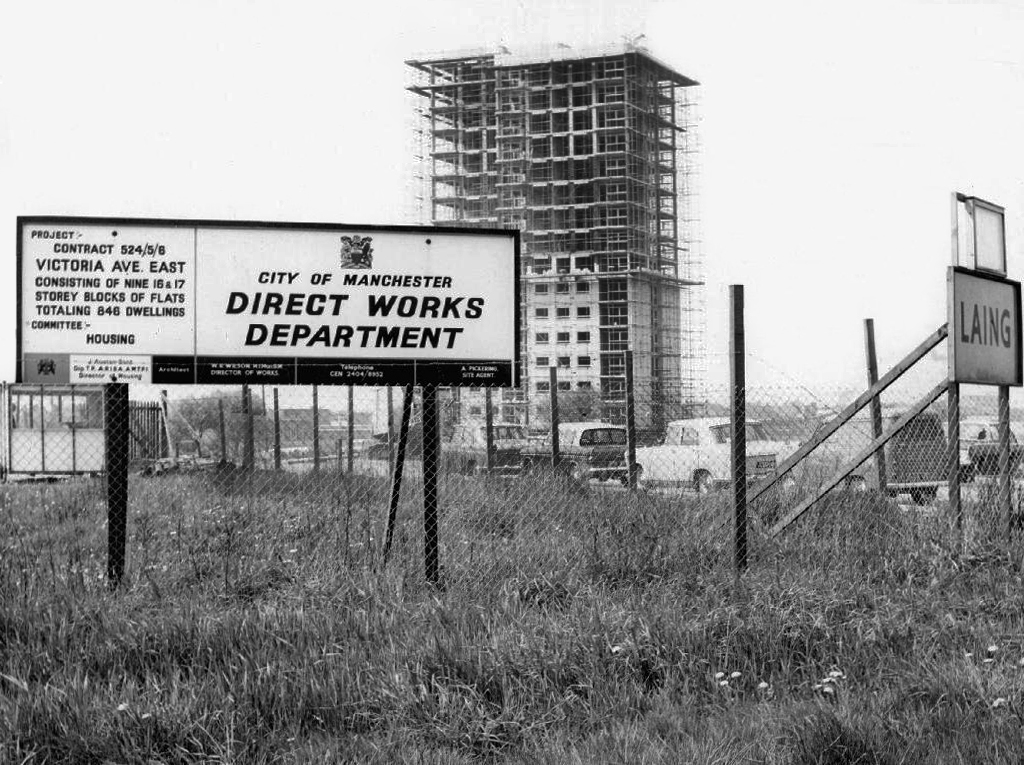
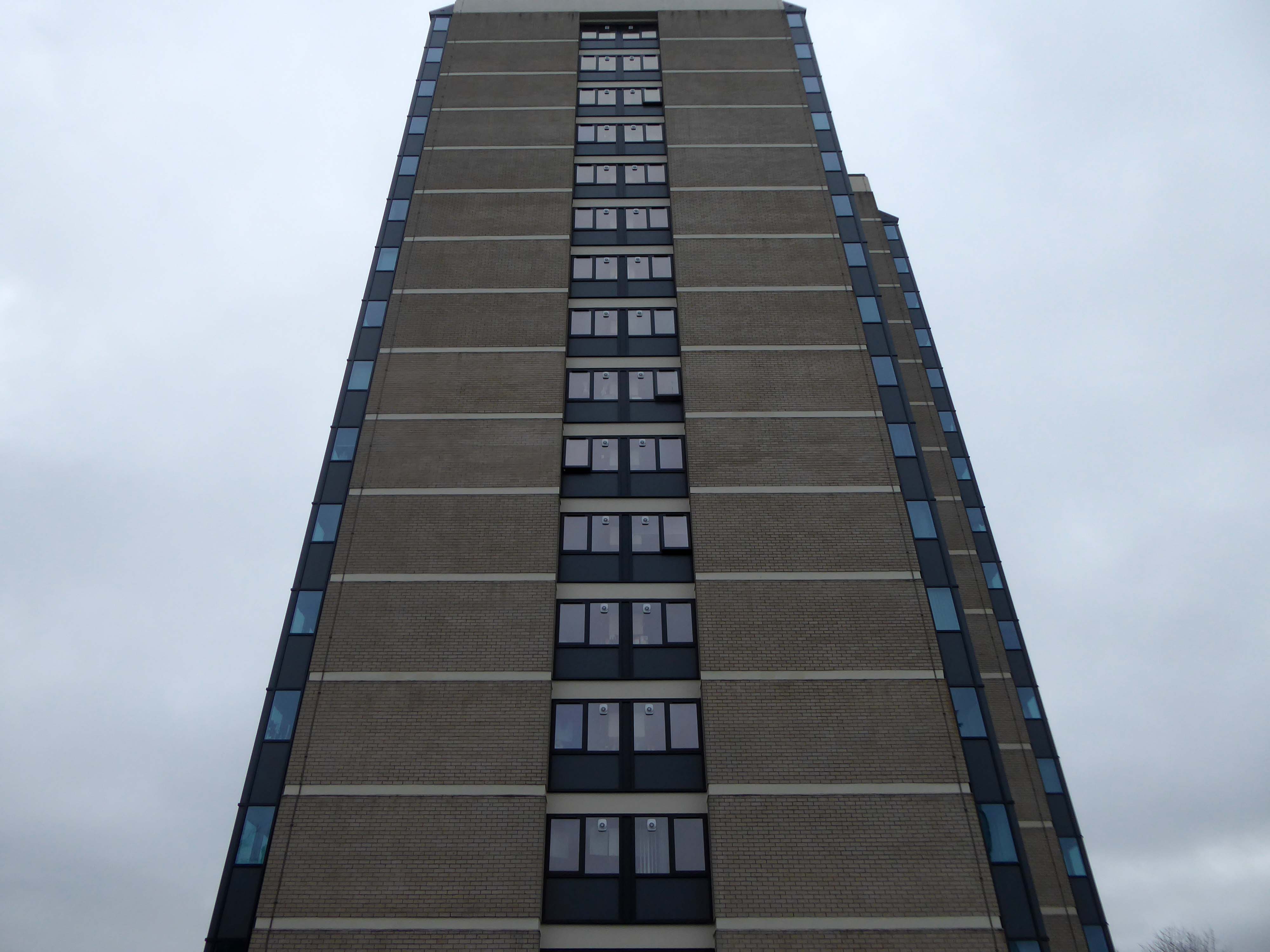
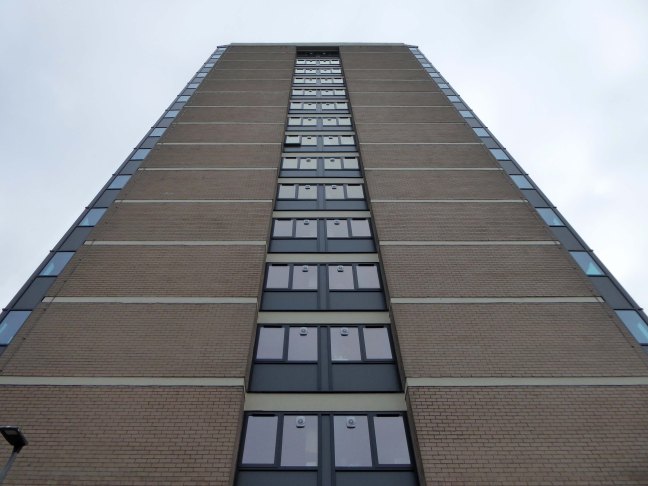
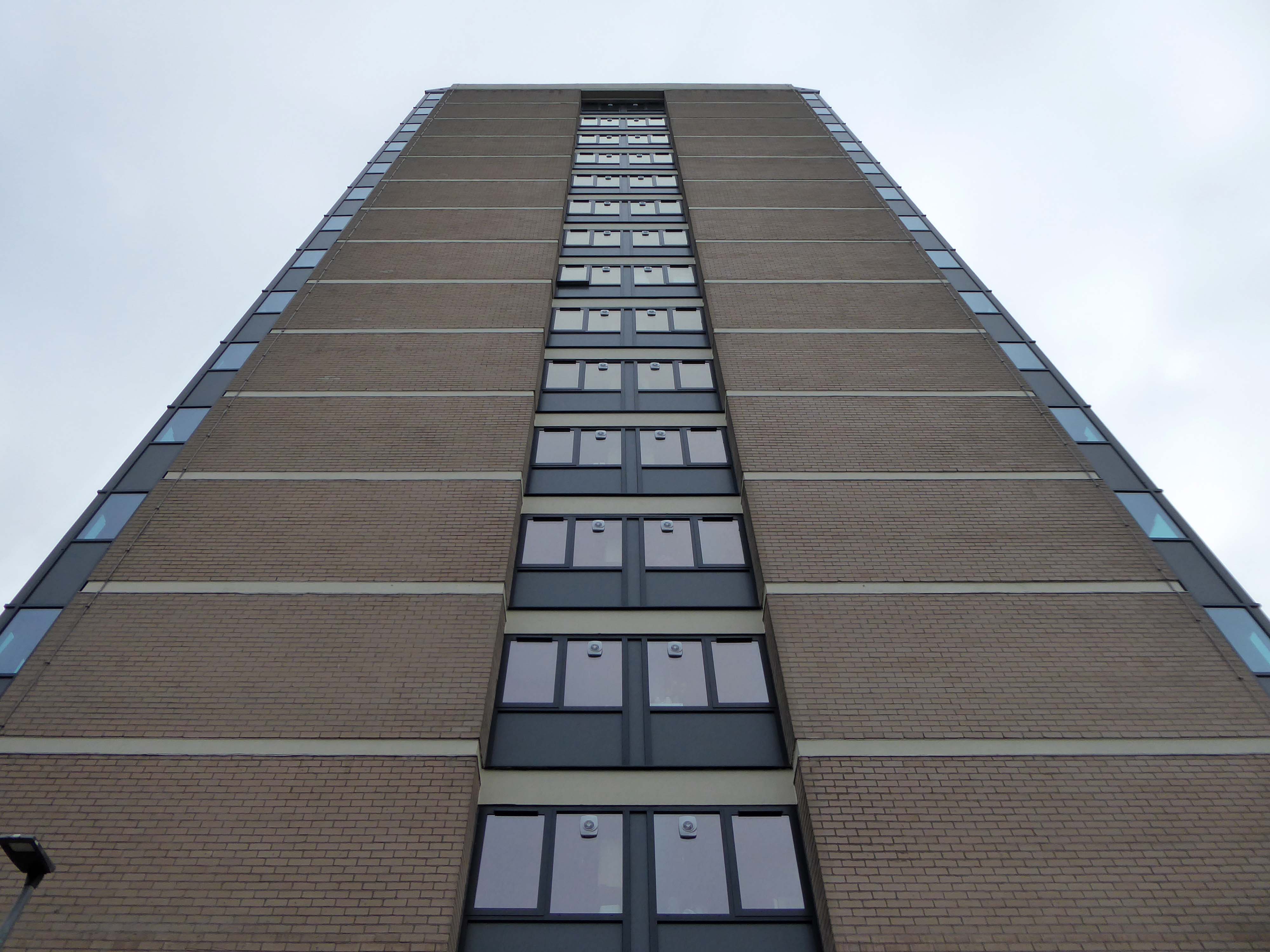
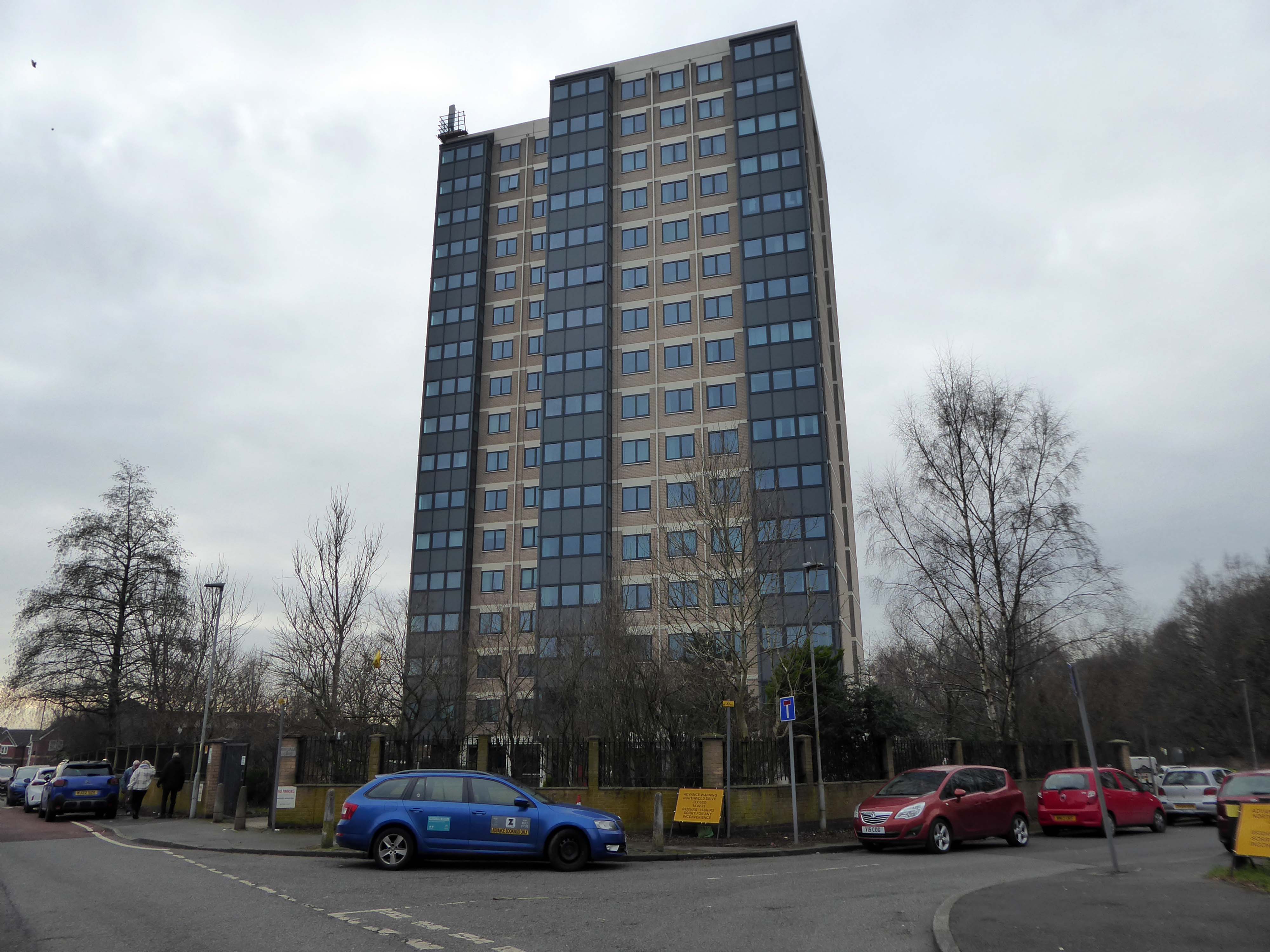
One of nine seventeen-storey blocks containing eight hundred and forty six dwellings.

Committee approval date: 1967

Building contractor: Direct Municipal Labour

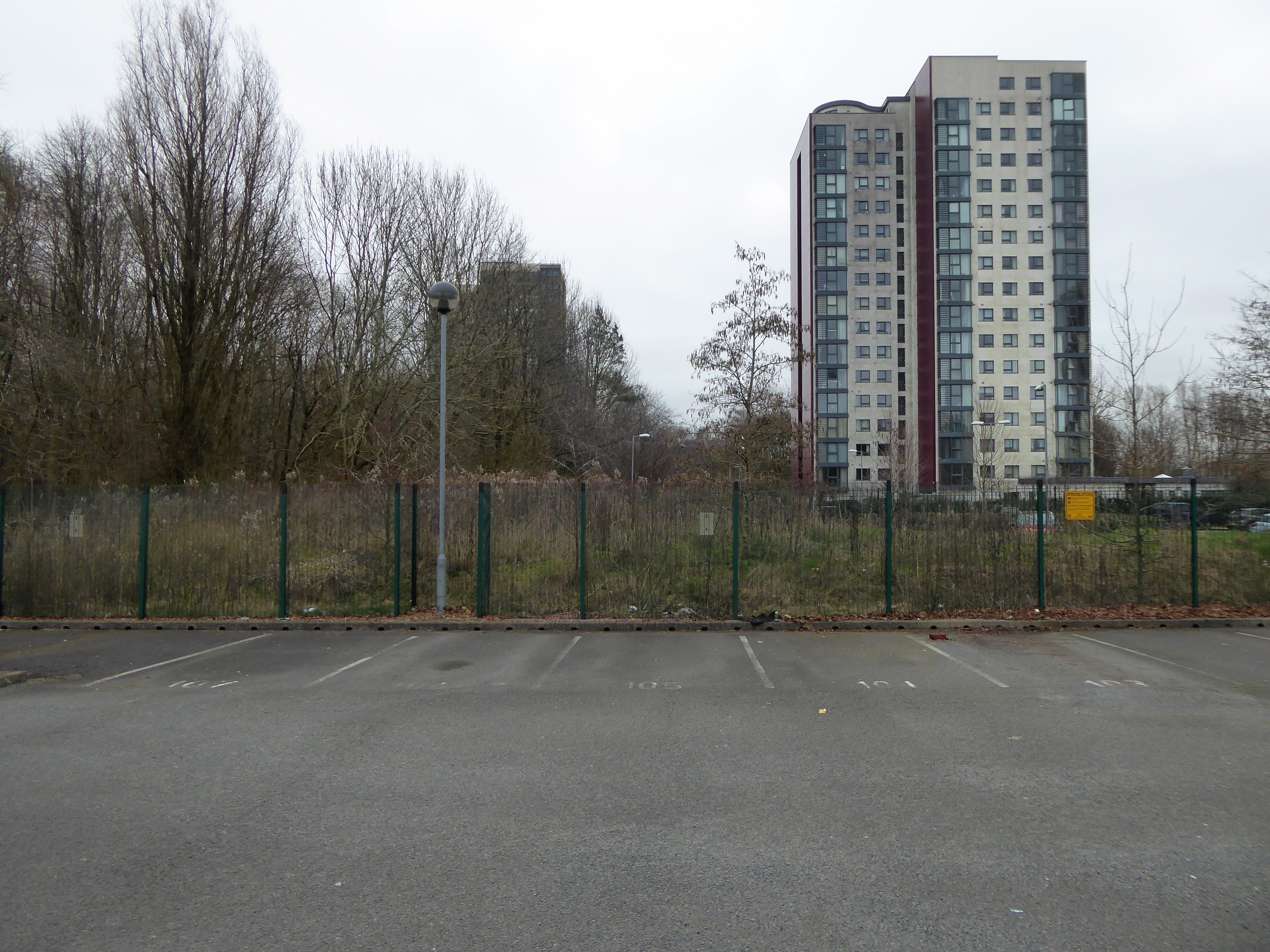
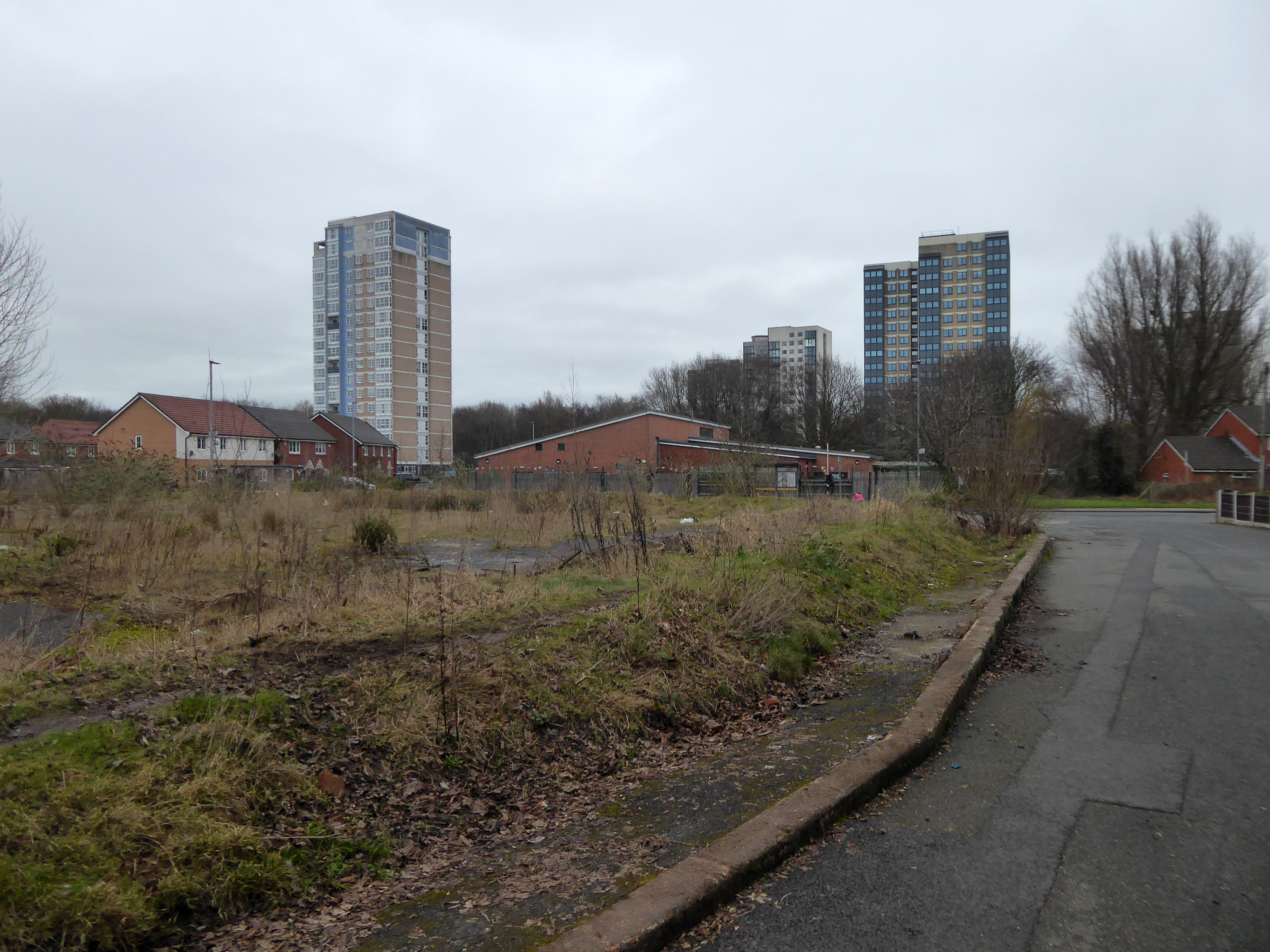
The two blocks that were demolished were Tunstall Court and Skelton Court.


Freshfields as listed is the new name for Grisedale Court as was sold by council and now private flats.

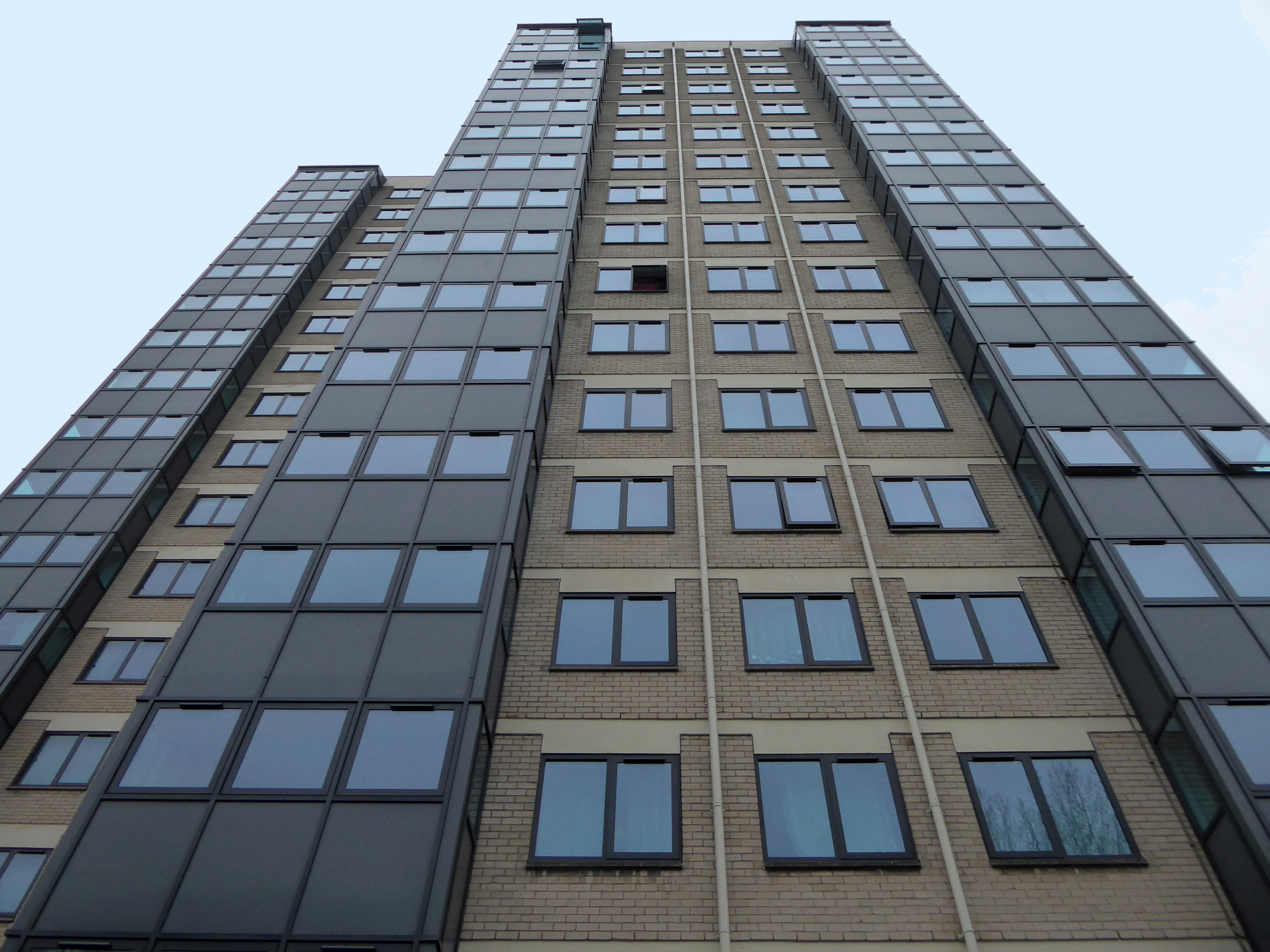
There are 16 floors in each block, 15 on one side and 16 on the other side

This area is known as the Charlestown Towers.

Tower Block

1987 – Grisedale Court with circular tiles in the entrance.

Over time the balconies have been boxed in and more recently the glazing replaced.

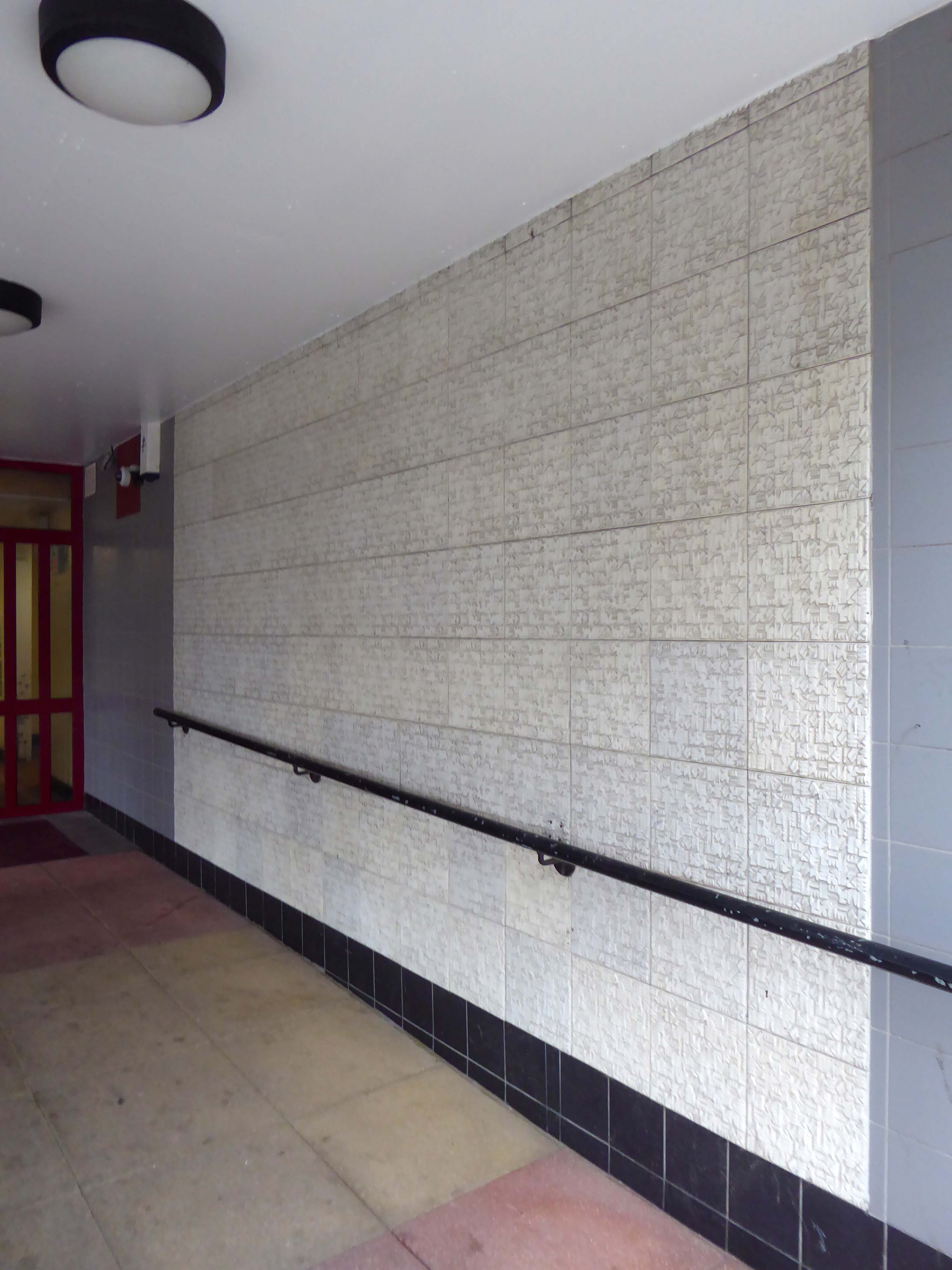
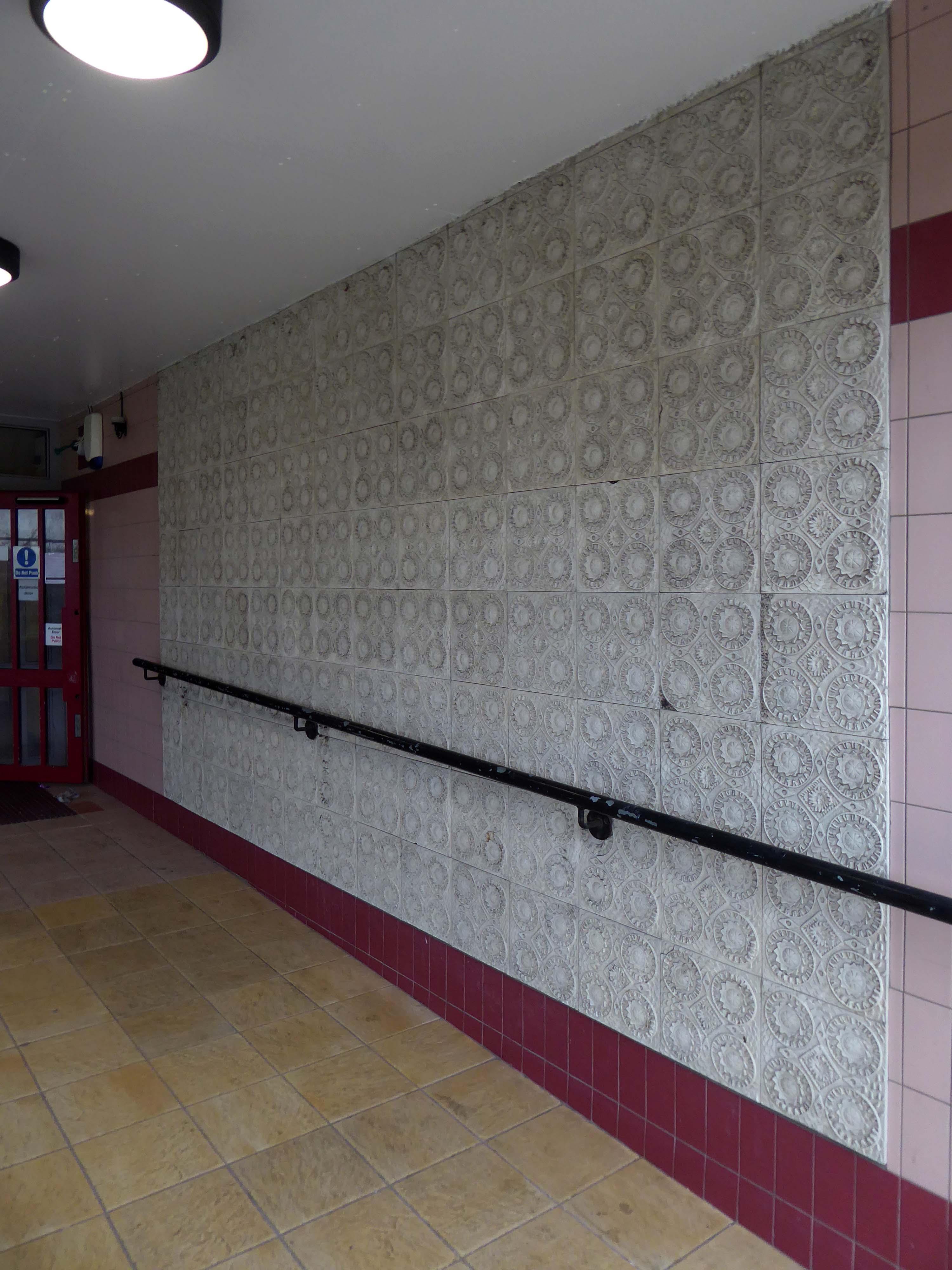
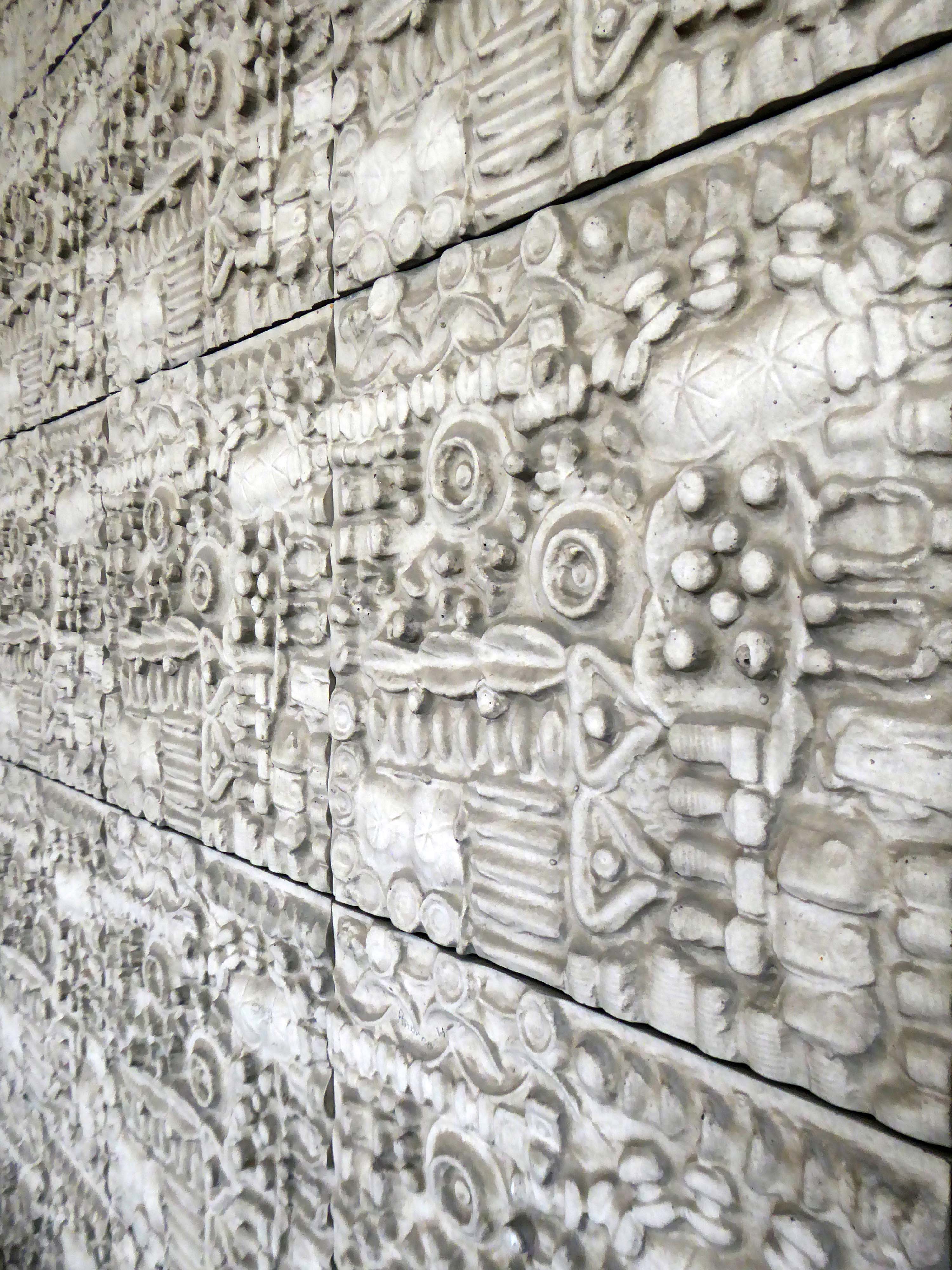
I was particularly interested in the hand made tiles inside the entrance – very much in the style of William Mitchell.

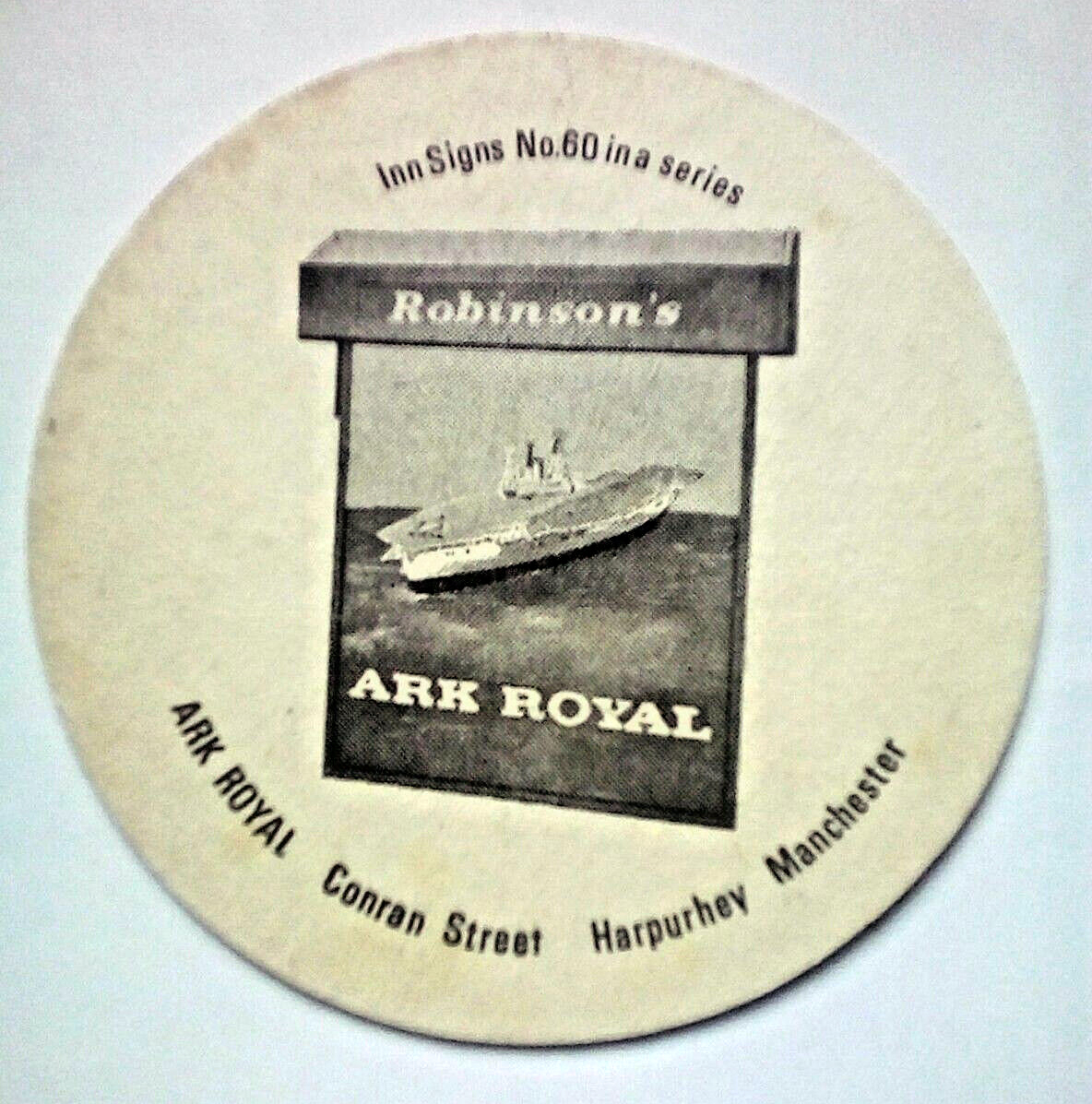
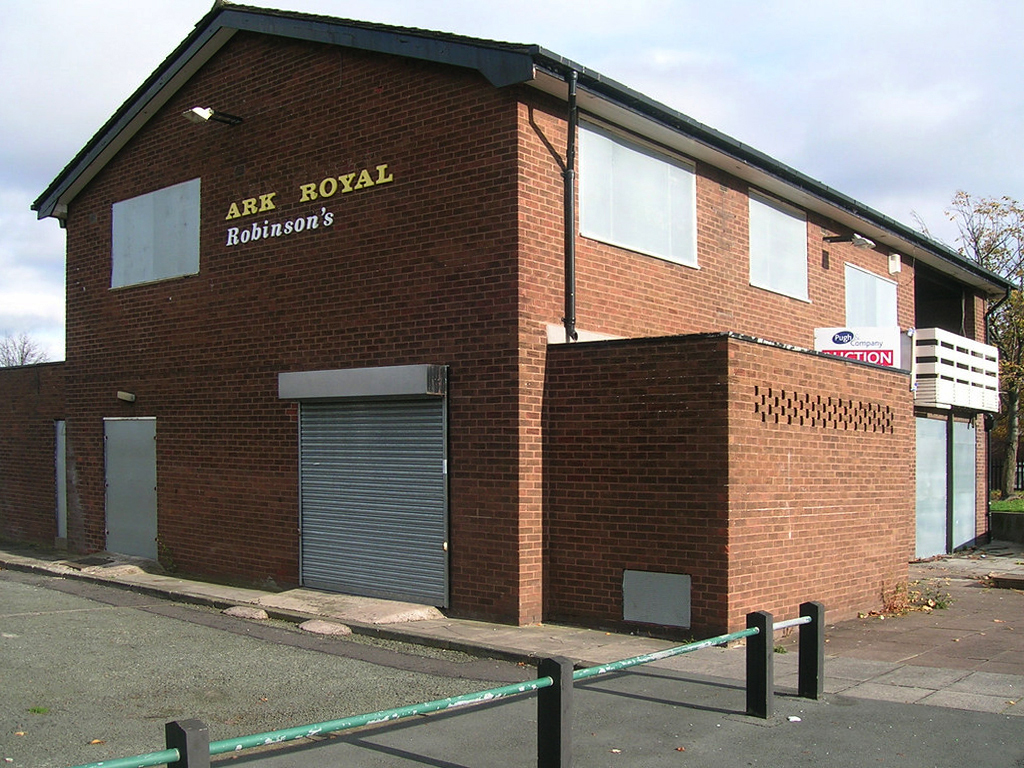
The Ark Royal – Harpurhey

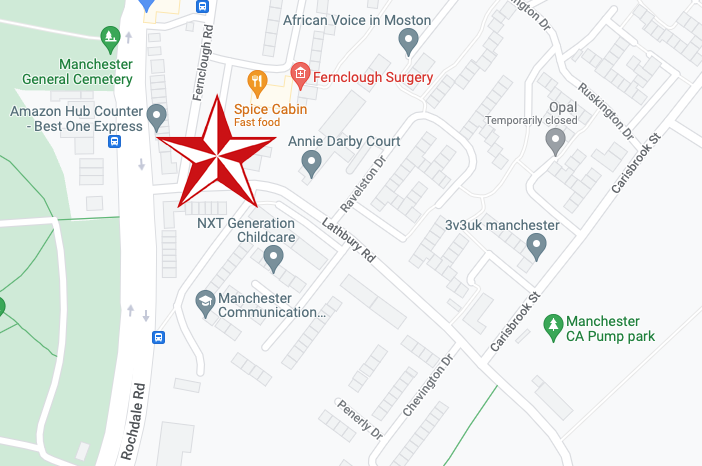
Lathbury Road Harpurhey M9 5SY

Looks to me as though the pub was launched in the 1960’s along with the surrounding houses and shops.

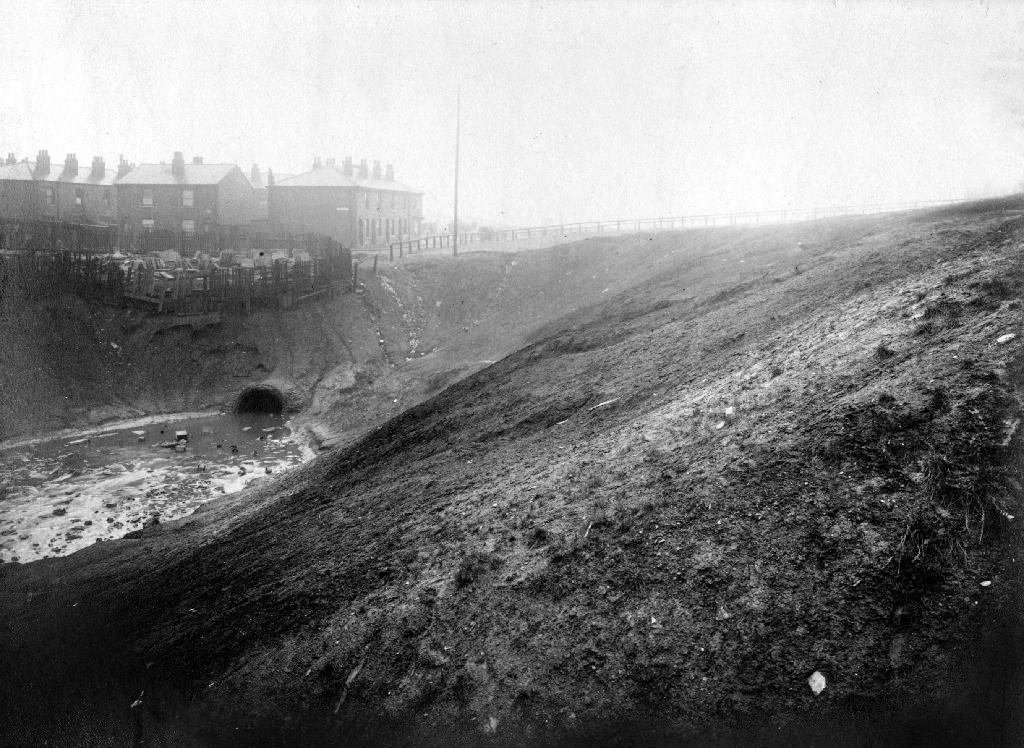
In 1910 Lathbury Road looked like this.

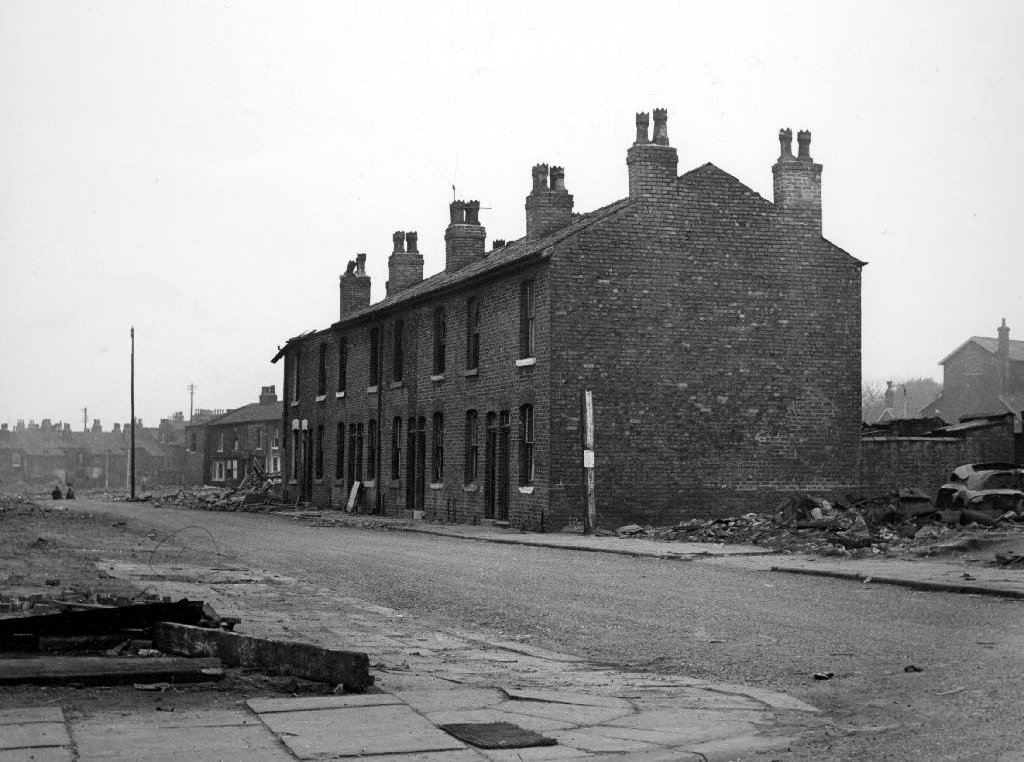
In 1968 the area was part of the Manchester slum clearance programme.

Photo: Tommy Brooks

The real Ark Royal was built by Cammel Laird at Birkenhead, completed in November 1938.

Torpedoed and subsequently sunk on 10th November 1941.

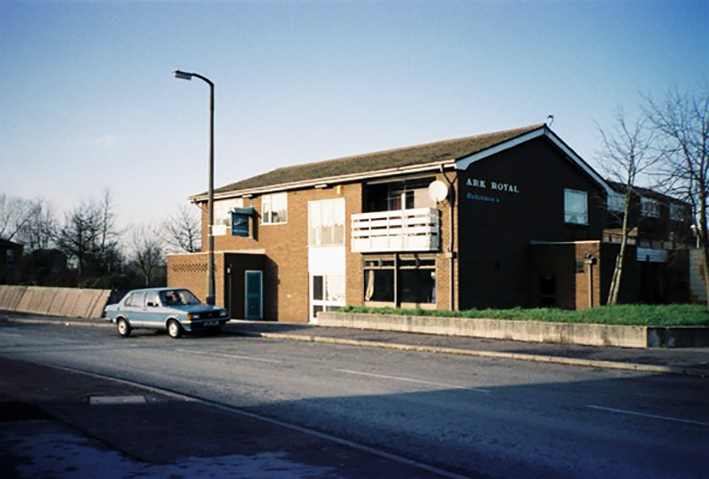
The pub closed in 2007 – here it is in 1992.

Photo: Alan Winfield

Another great looking estate pub that was on the same estate as the Hipp which it was also fairly close to.


There was the usual two rooms inside, I had a drink in the bar room which was quite busy on my Friday afternoon visit, there was also a more comfortable lounge.


The pub was a Robinsons tied house, there were two real ales on, I had a drink of Robinsons Bitter which was a nice drink, there was also Robinsons Mild on.


Another pub that was was well pleased to do.

Never Ending Pub Crawl

Here its is in 2007.

Photo: Mikey

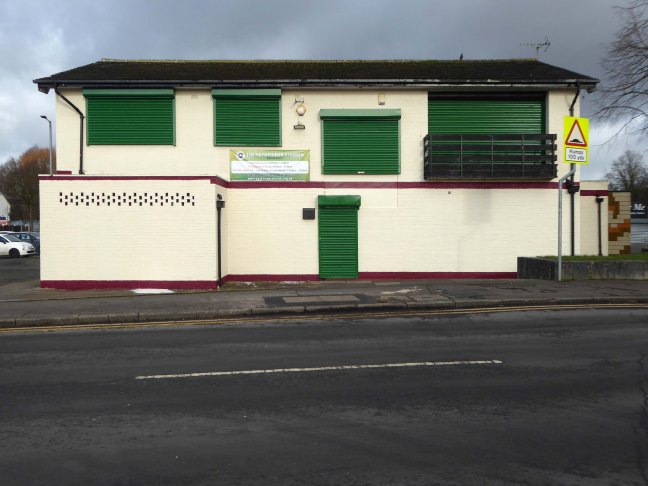
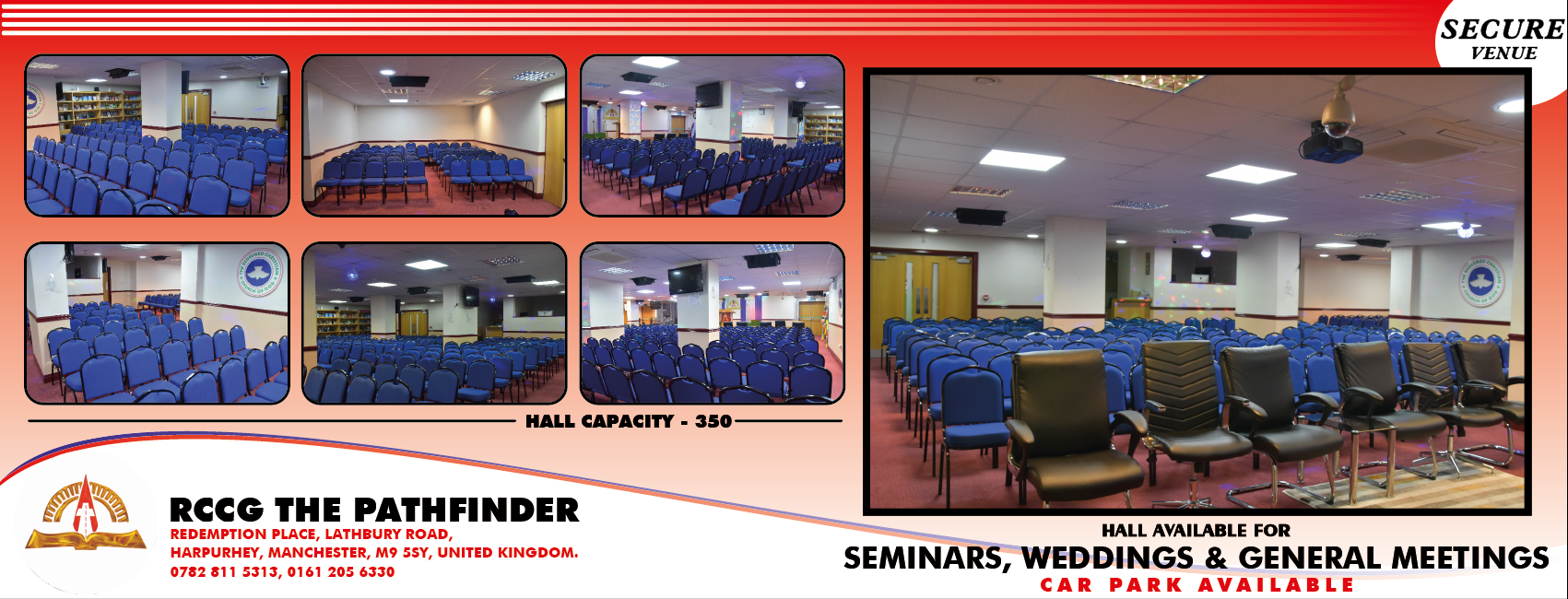
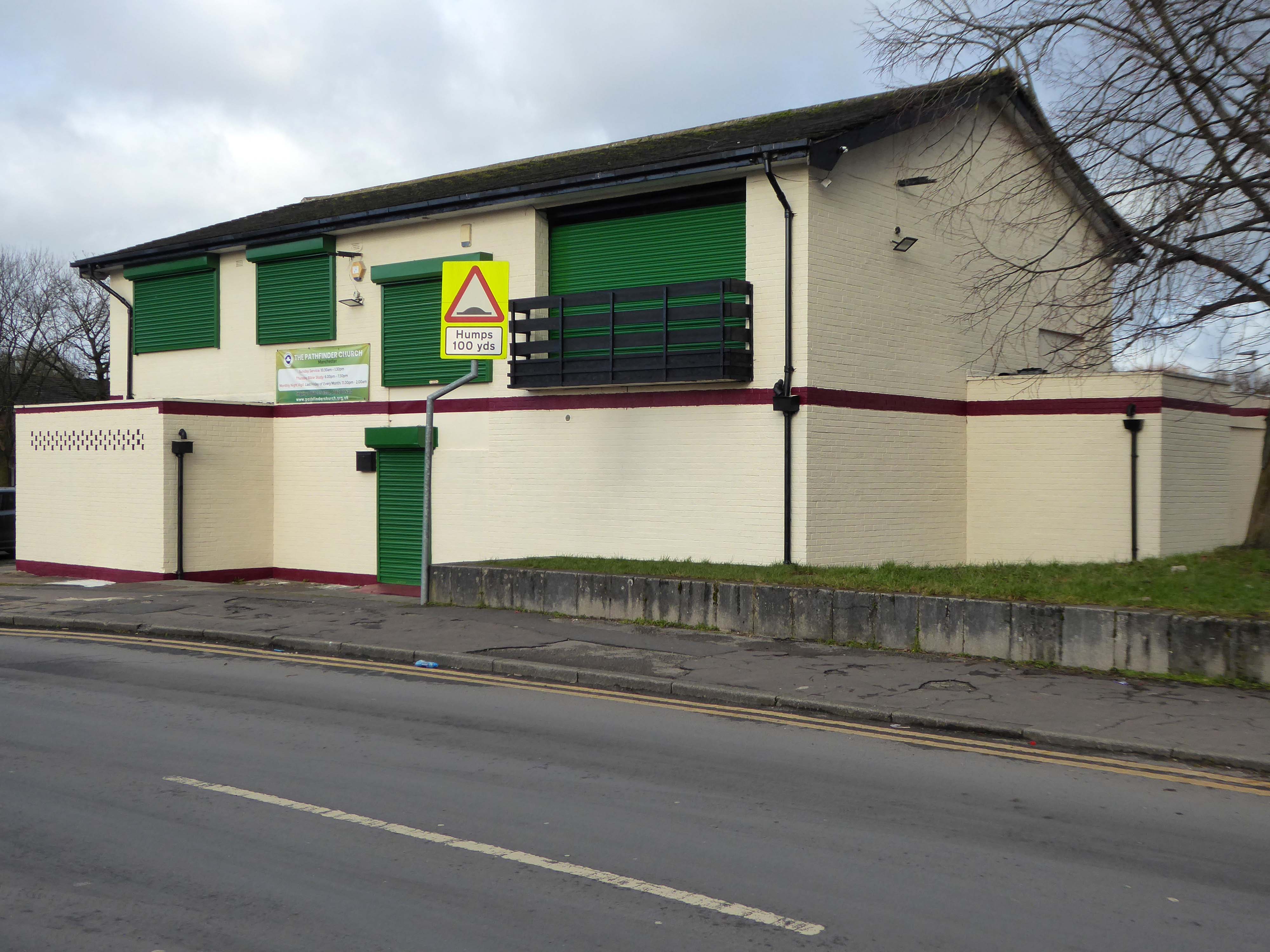
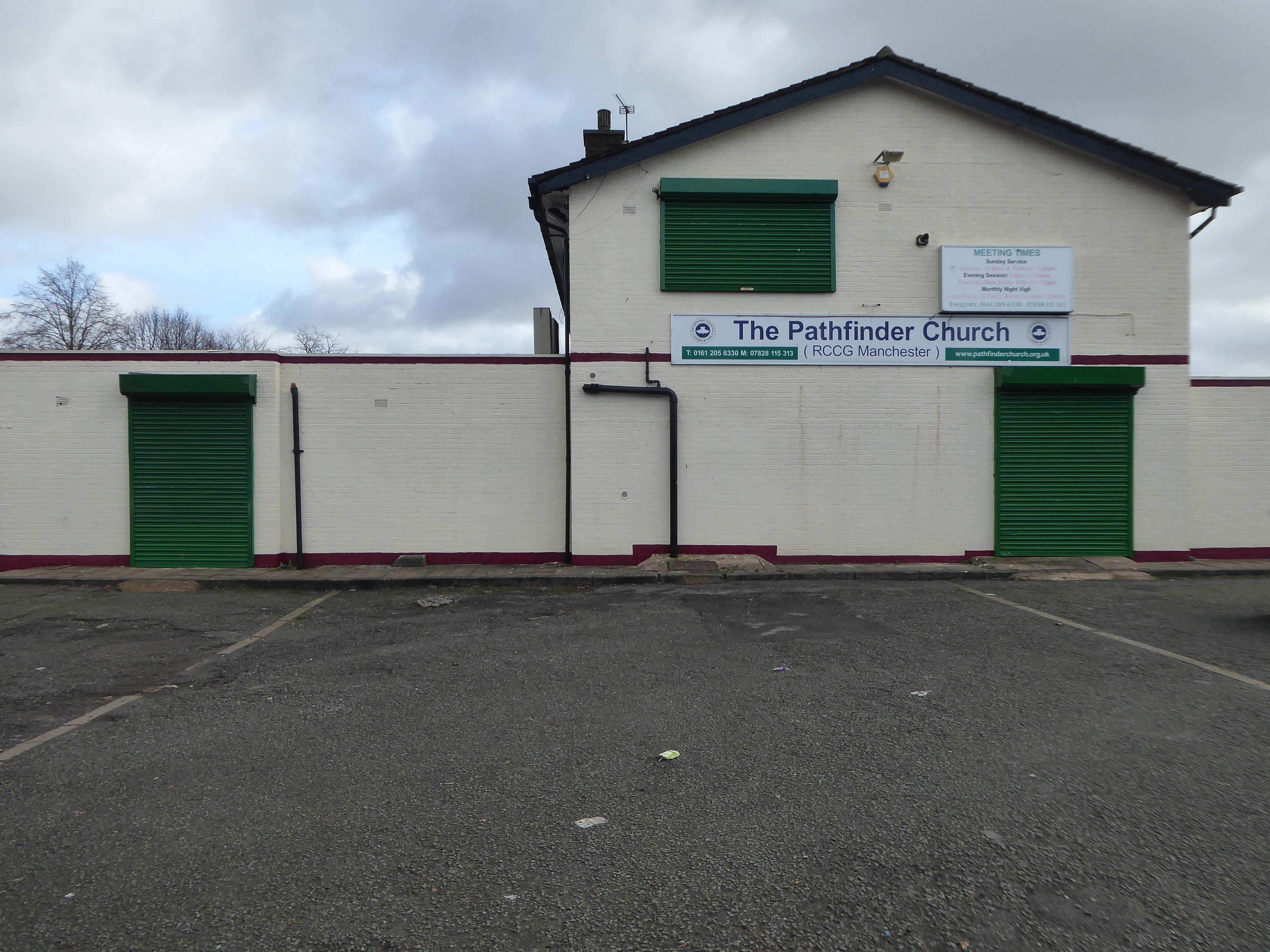
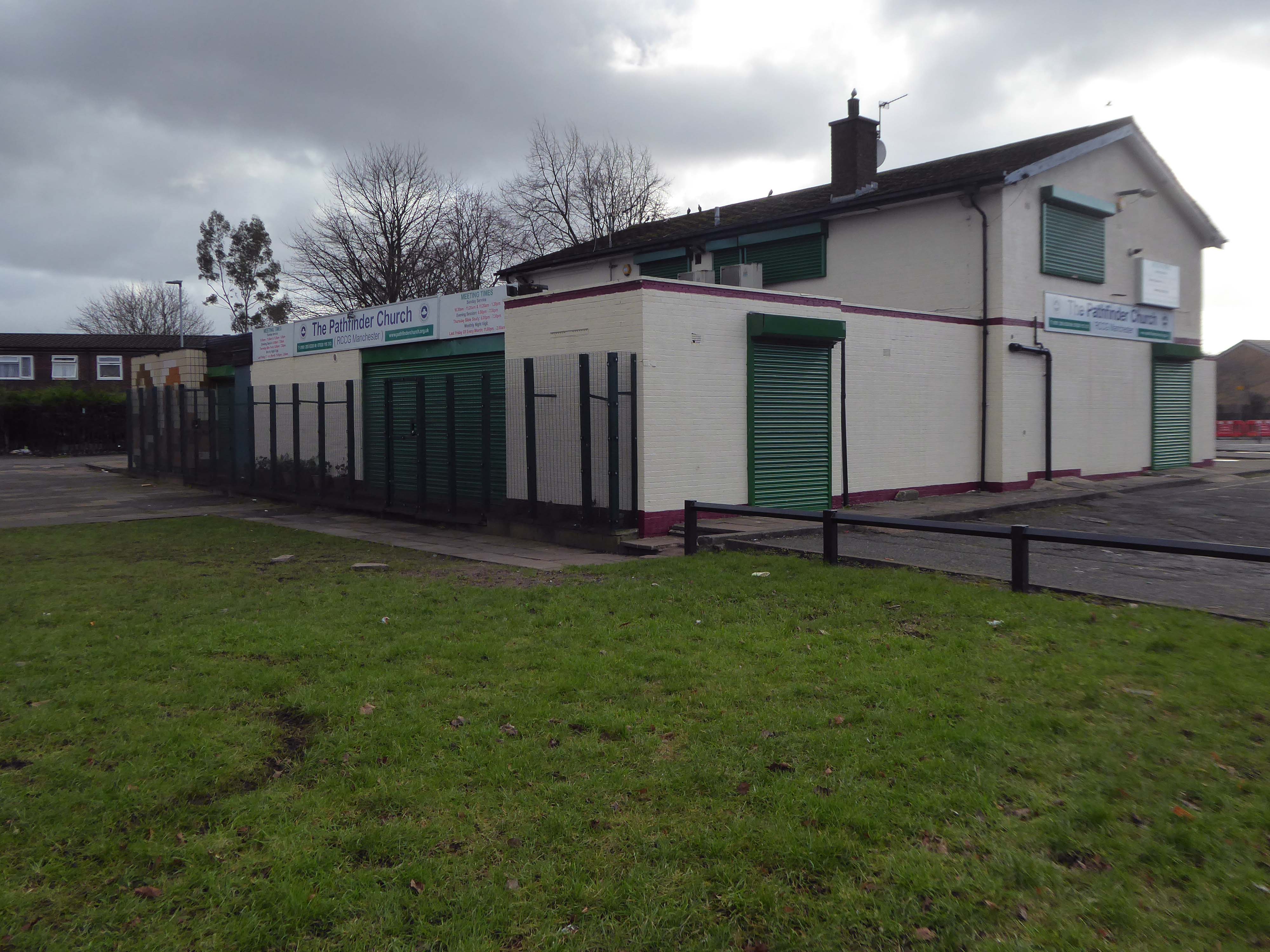
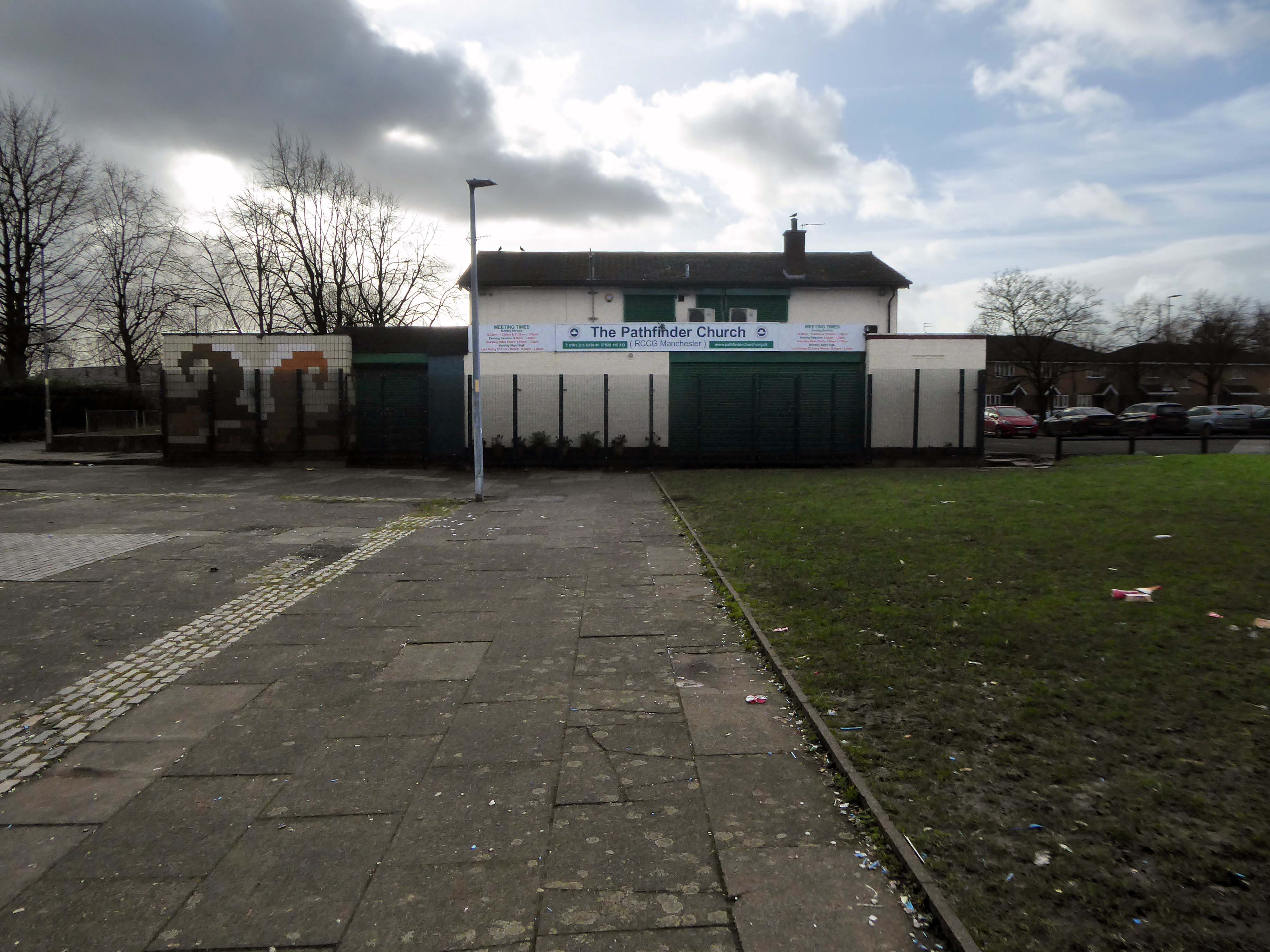
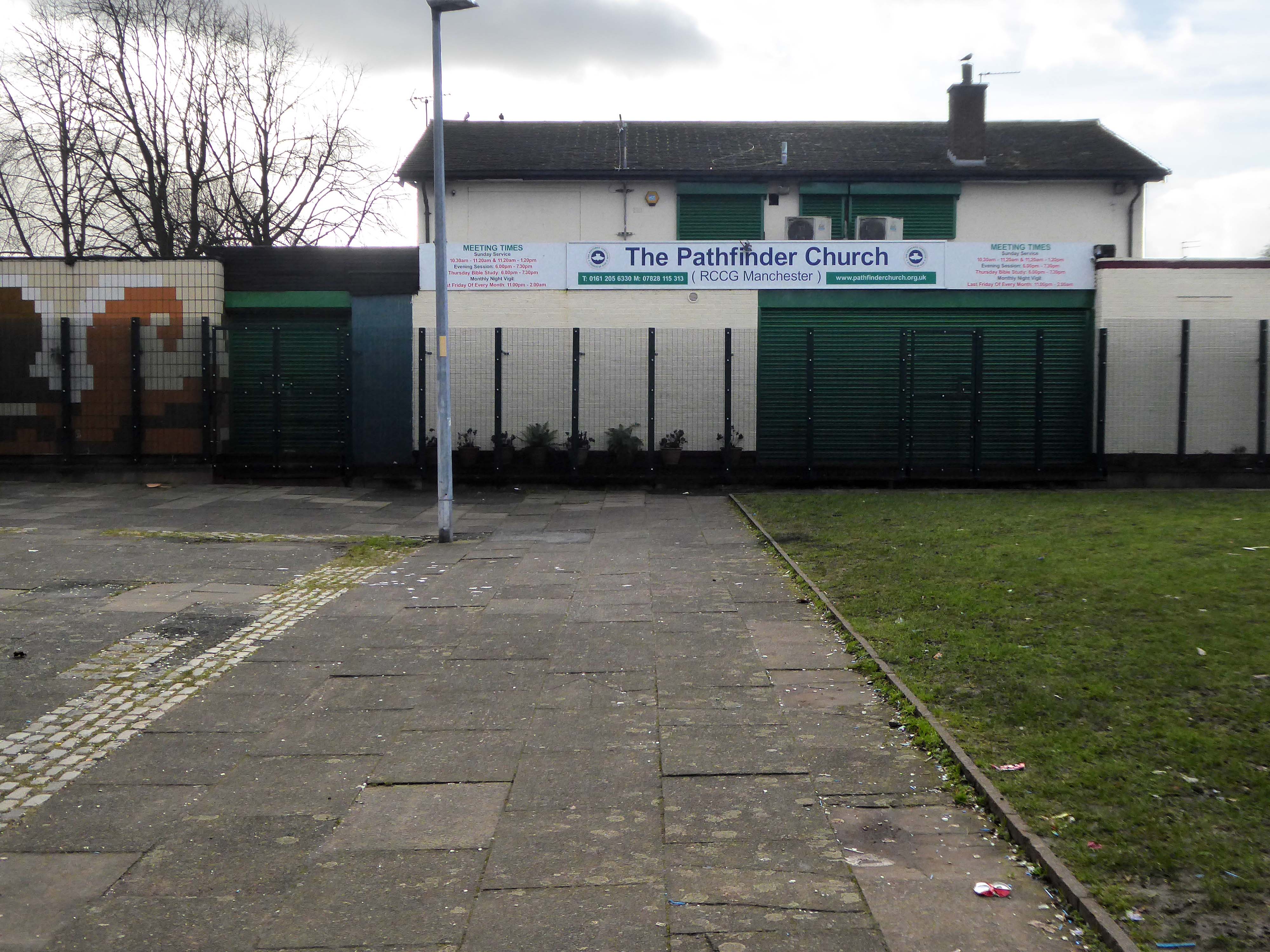
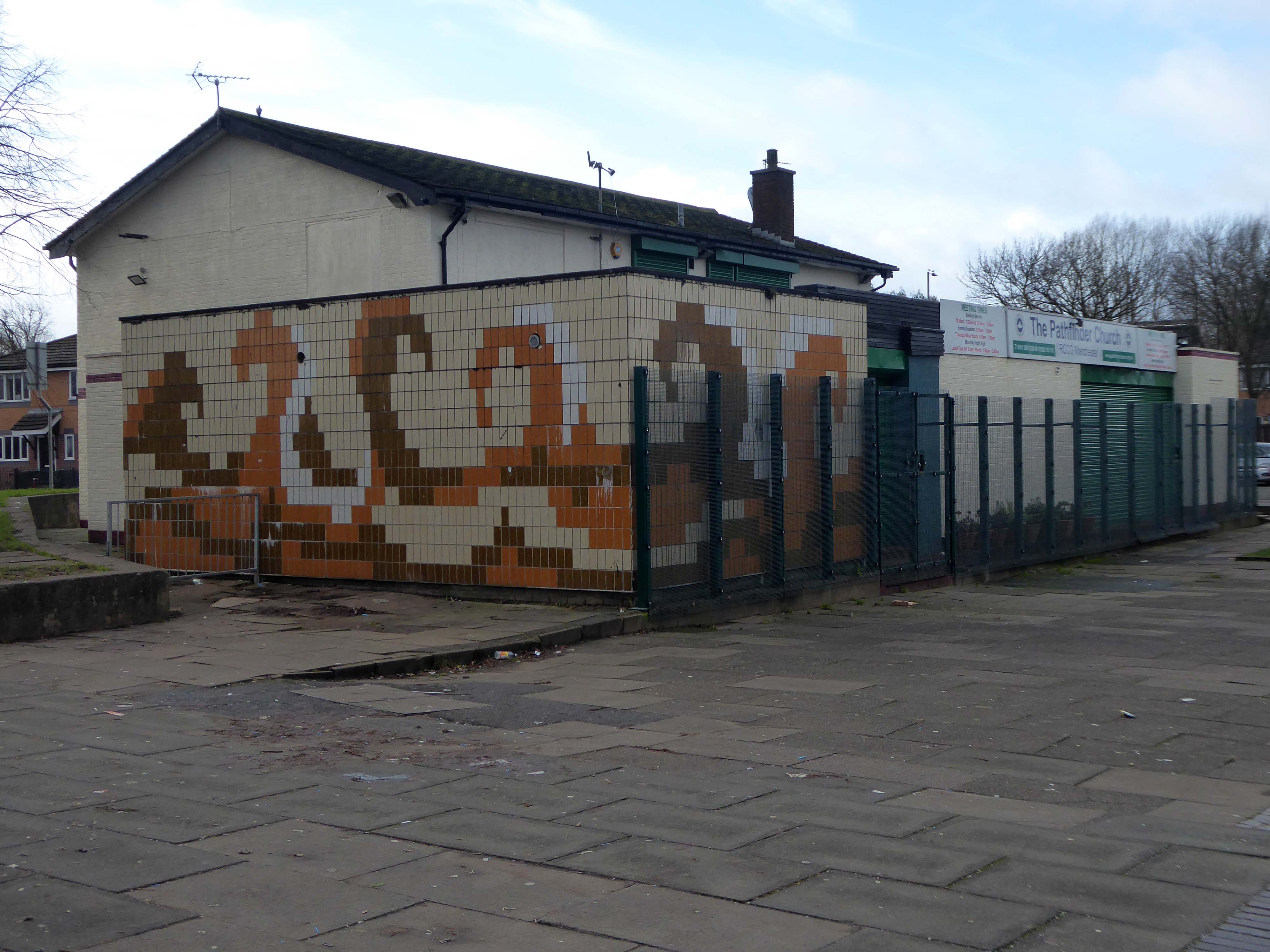
The pub currently trades as the Pathfinder Church.

We are committed to the growth and development of individual, our local and international communities. In the interim may I use this medium to invite you to be part of the move of God in our church, the Pathfinder.

The Lord bless your richly as you navigate through in Jesus name.

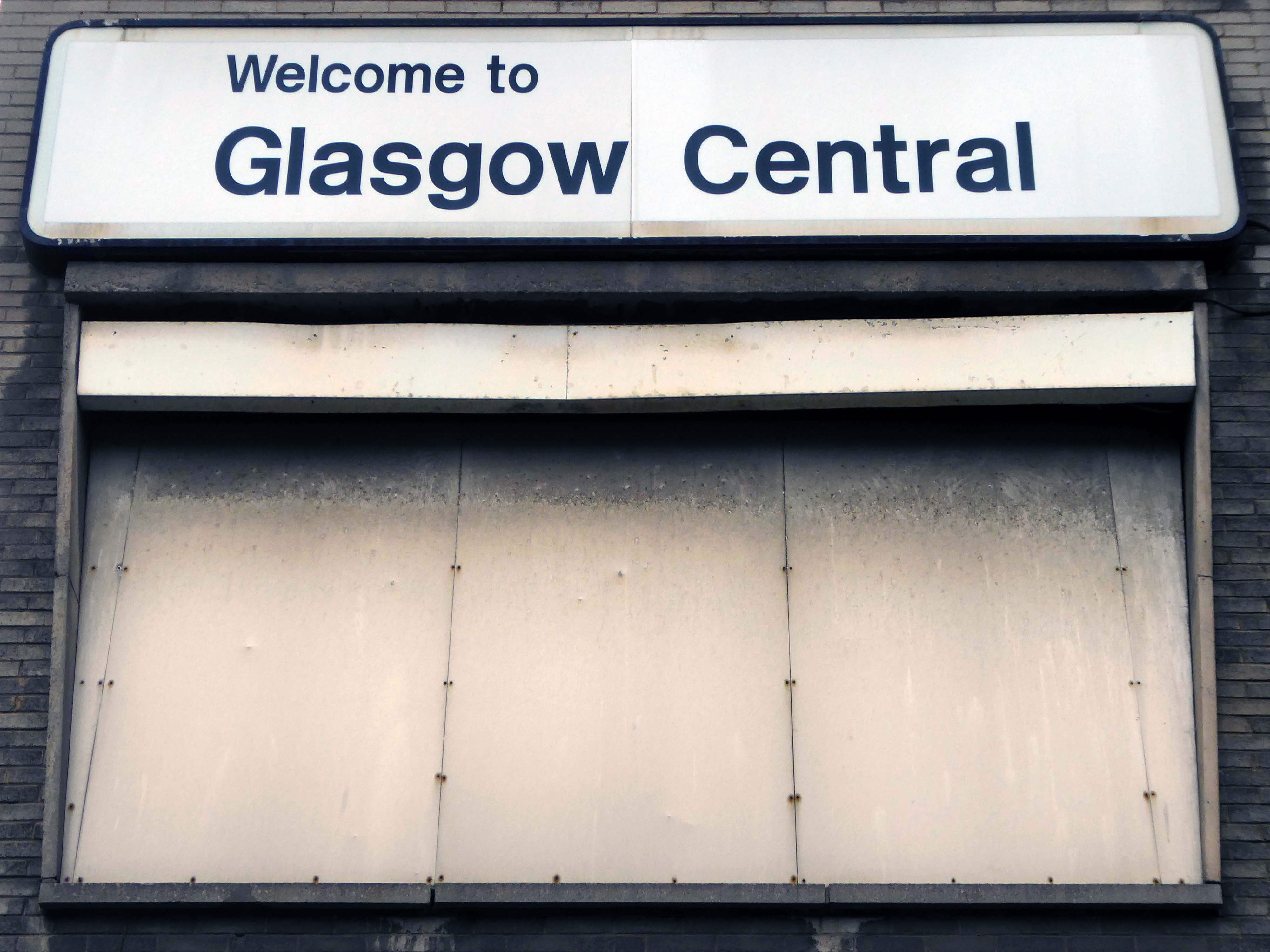
Glasgow Central Signal Box

Situated at the junction of Salkeld Street and Cook Street

Glasgow Central Signalling Centre, located in the vee of Bridge Street Junction, opened on 2 January 1961. It replaced signal boxes at Central Station, Bridge Street Junction, Eglinton Street Junction and Eglinton Street Station. When initially opened it was capable of handling 1,000 routes.

Glasgow Central Signalling Centre closed on 27 December 2008, when its area of control was transferred to the new West of Scotland Signalling Centre – WSSC at Cowlairs. The NX panel is to be preserved. The station is currently signalled by two Westinghouse Westlock Interlockings which are controlled via an Alstom MCS control system.

Wikipedia

Portwood – 2023

Where are we?

We once were lost, but are we saved?

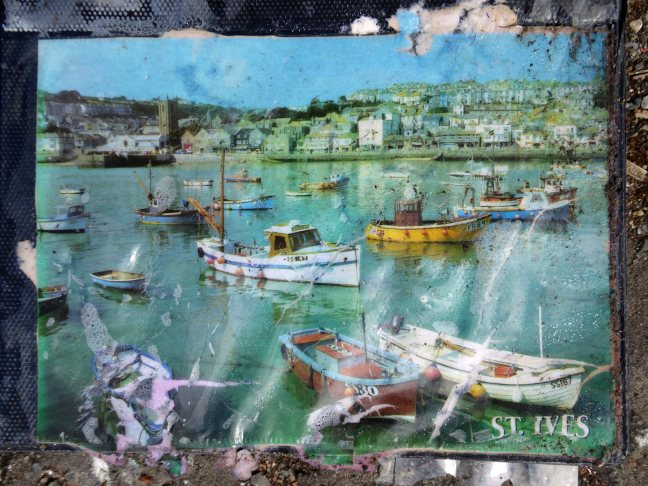
A remnant from a discarded photographic album locates us in Cornwall.

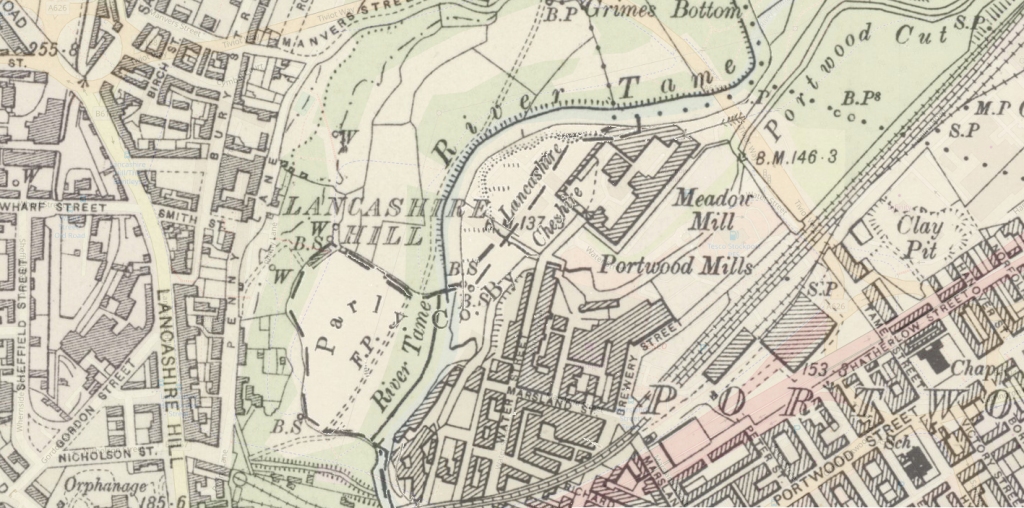
The Ordnance Survey places us at the heart of the Industrial Revolution.

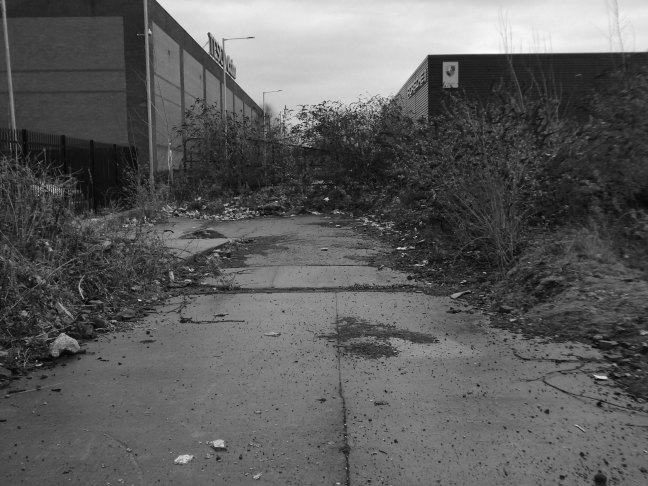
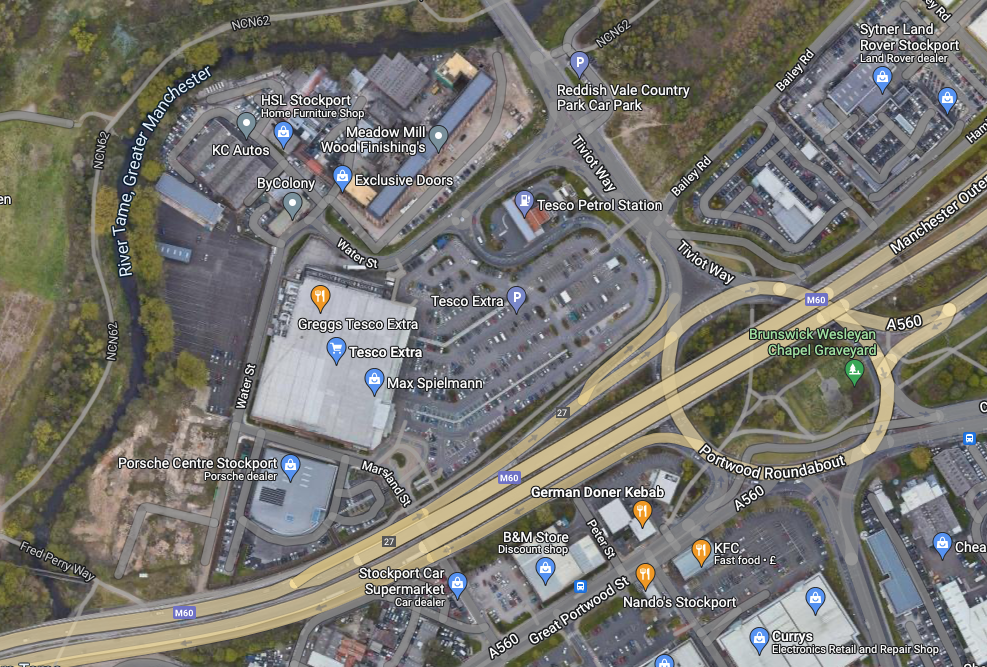
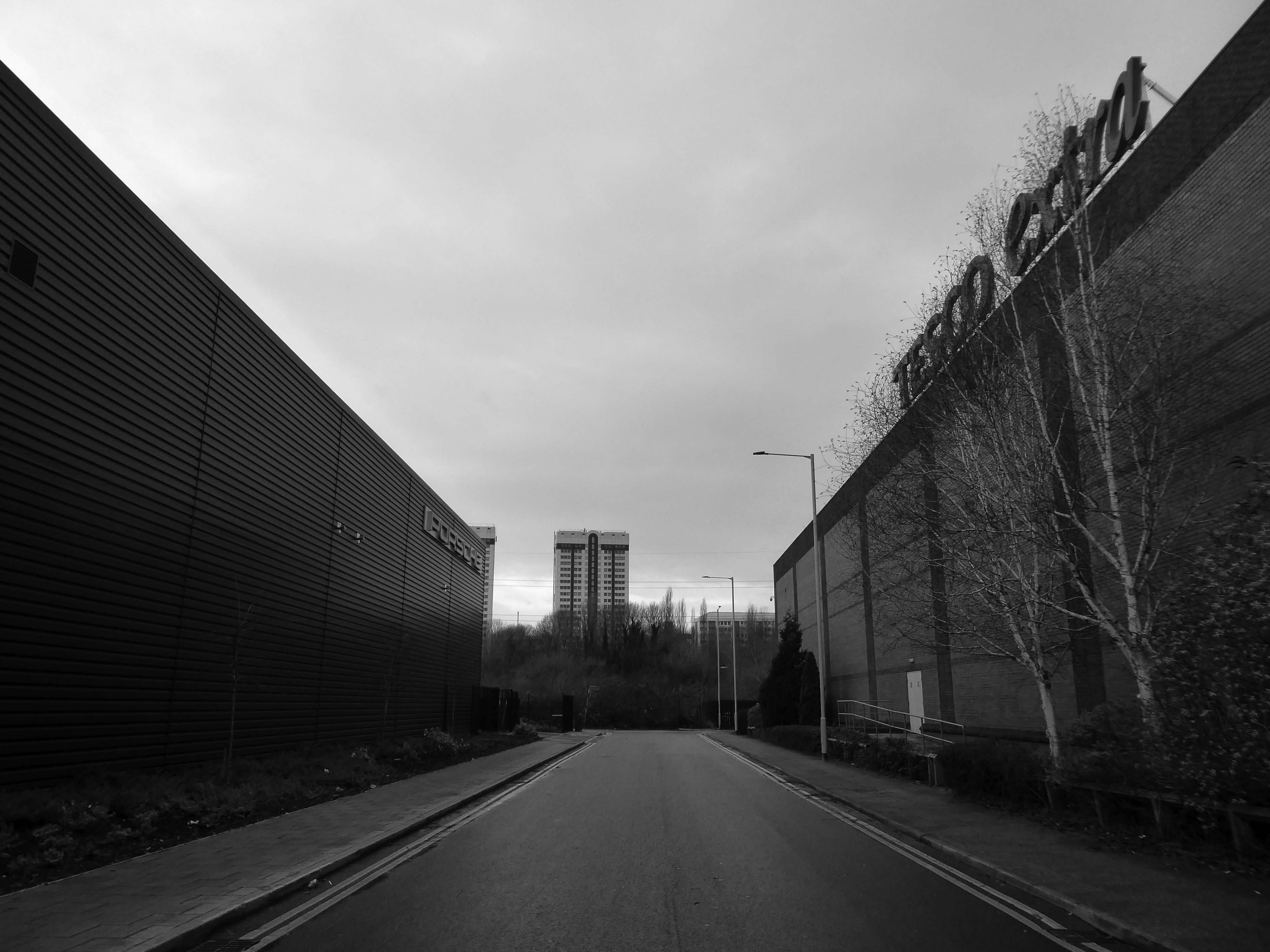
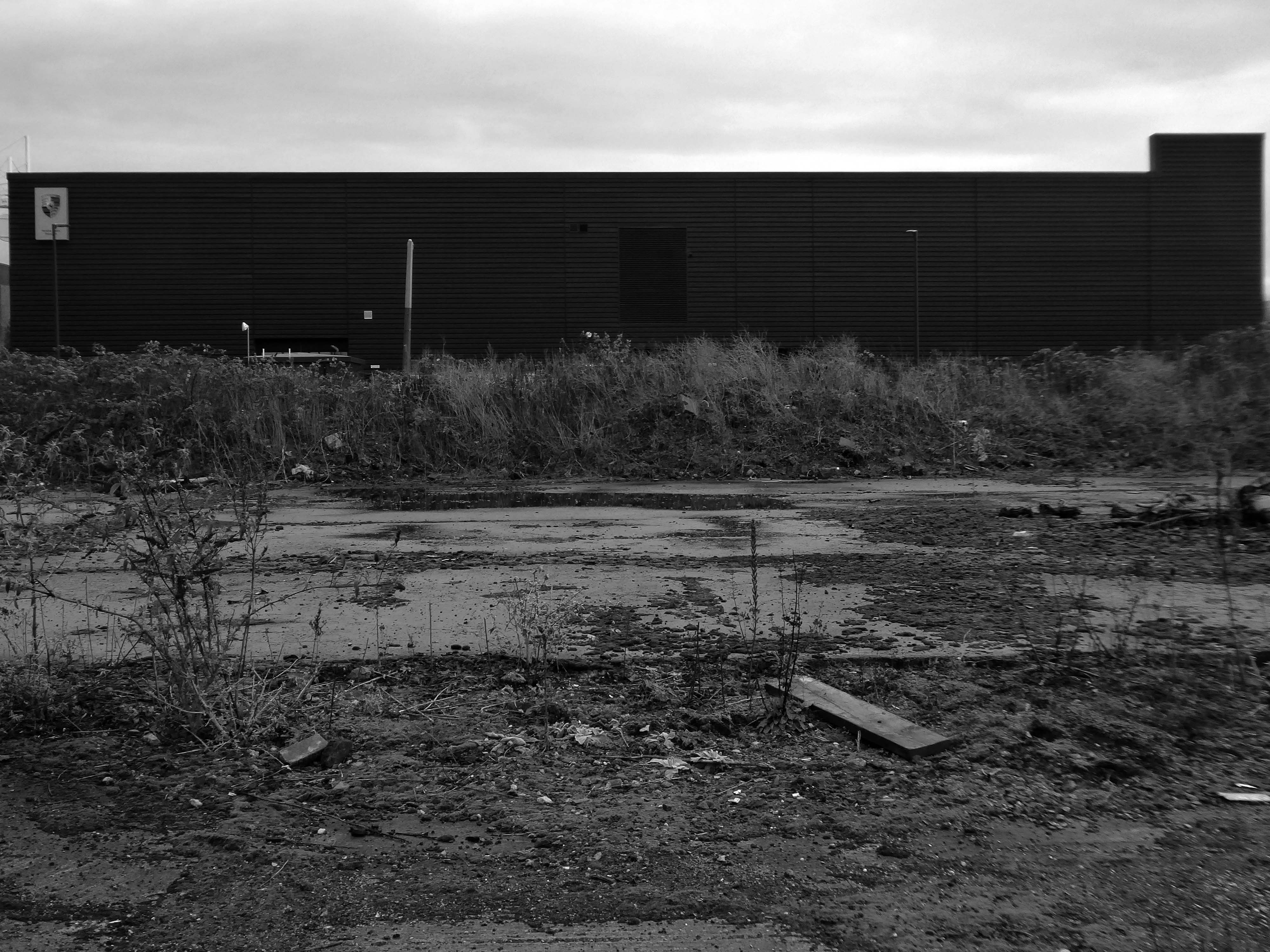
Now we are in the shadow of Tesco Extra and a recently opened Porsche dealership.

As of 2022, the supermarket chain had a brand value of roughly 9.91 billion US dollars.

Porsche Automobile Holding SE net worth as of January 2023 is 16.51 US dollars.

By the side of the River Tame and the M60 Motorway

The 19th-century industrial concentrations in the above-named urban areas resulted in the Tame being a much polluted waterway. As well as industrial pollution from the dyes and bleaches used in textile mills, effluent from specialised paper-making cigarette papers, engineering effluents, including base metal washings from battery manufacture, phenols from the huge coal-gas plant in Denton, rain-wash from roads and abandoned coal spoil heaps there was also the sewage effluent from the surrounding population. Up to two-thirds of the river’s flow at its confluence with the Goyt had passed through a sewage works. The anti-pollution efforts of the last thirty years of the 20th century have resulted in positive fauna distributions.

Wikipedia

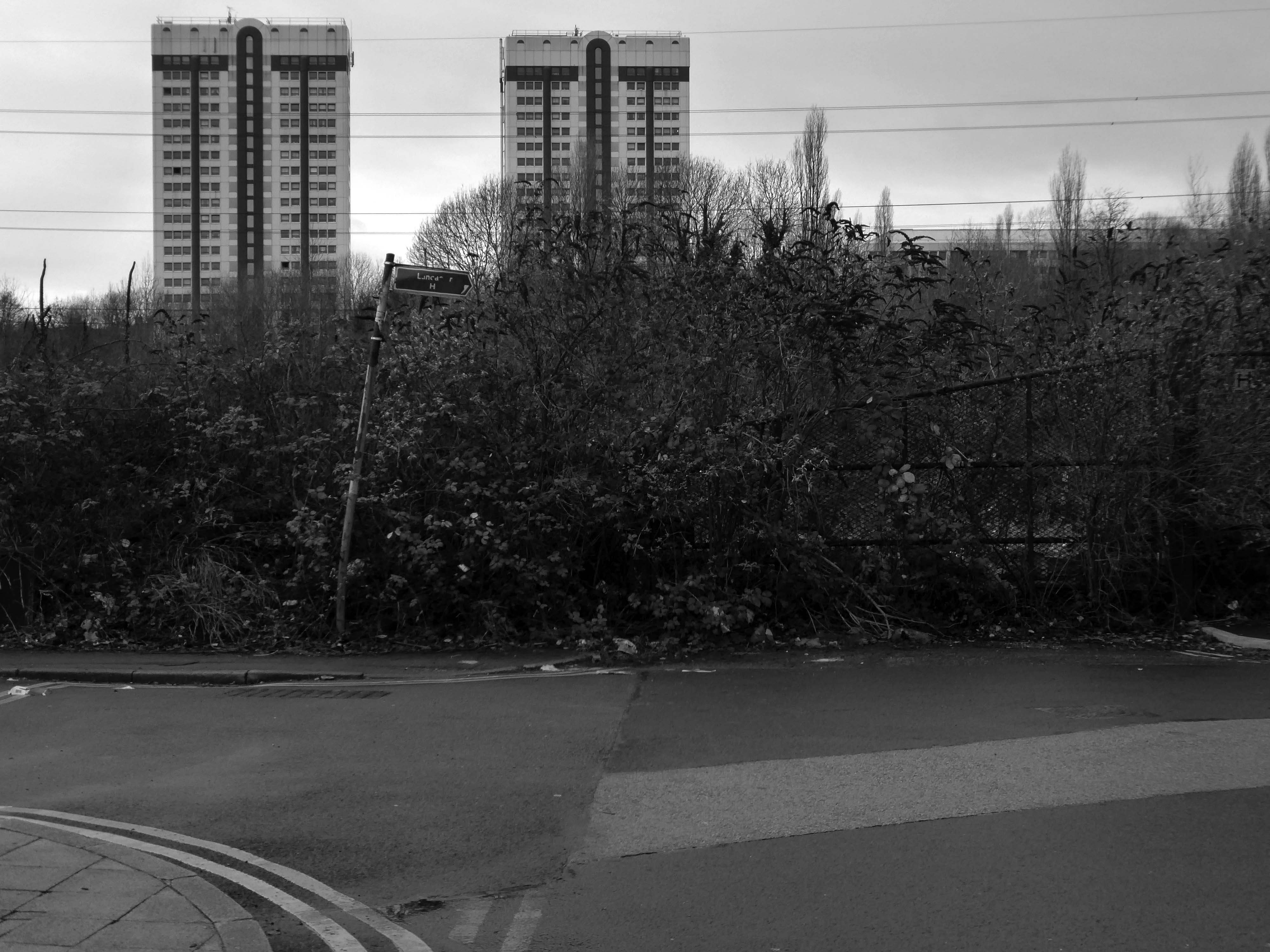
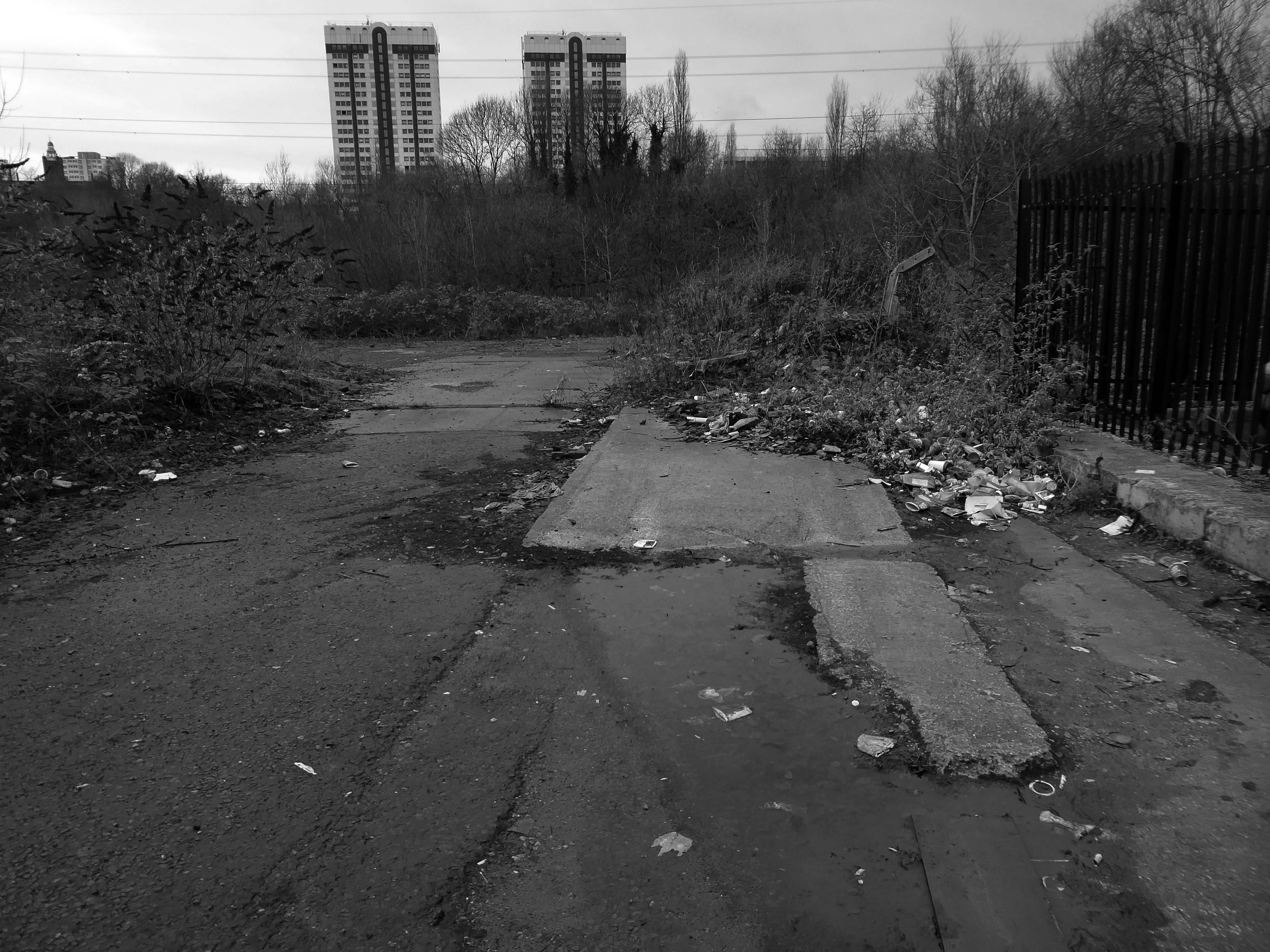
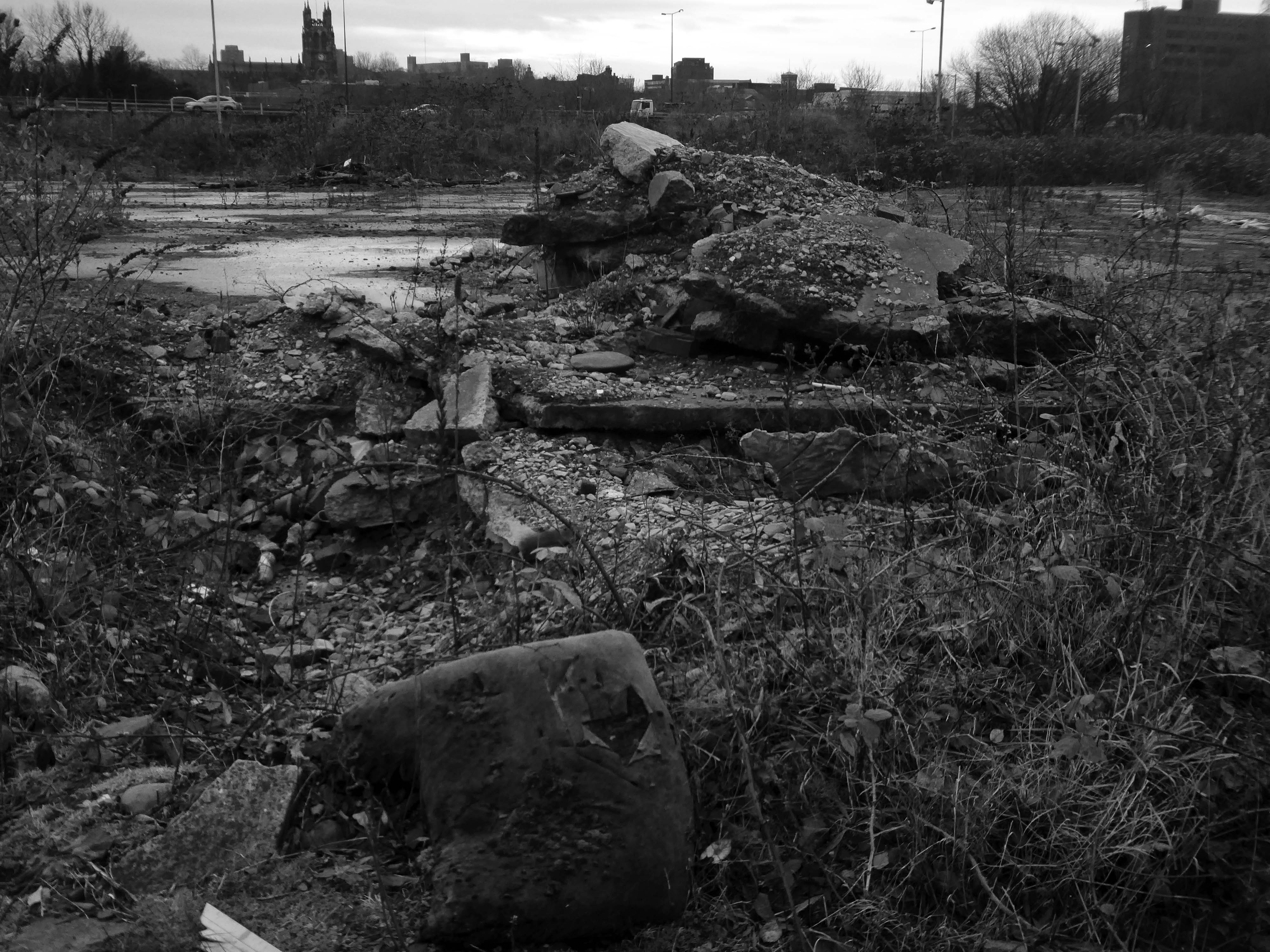
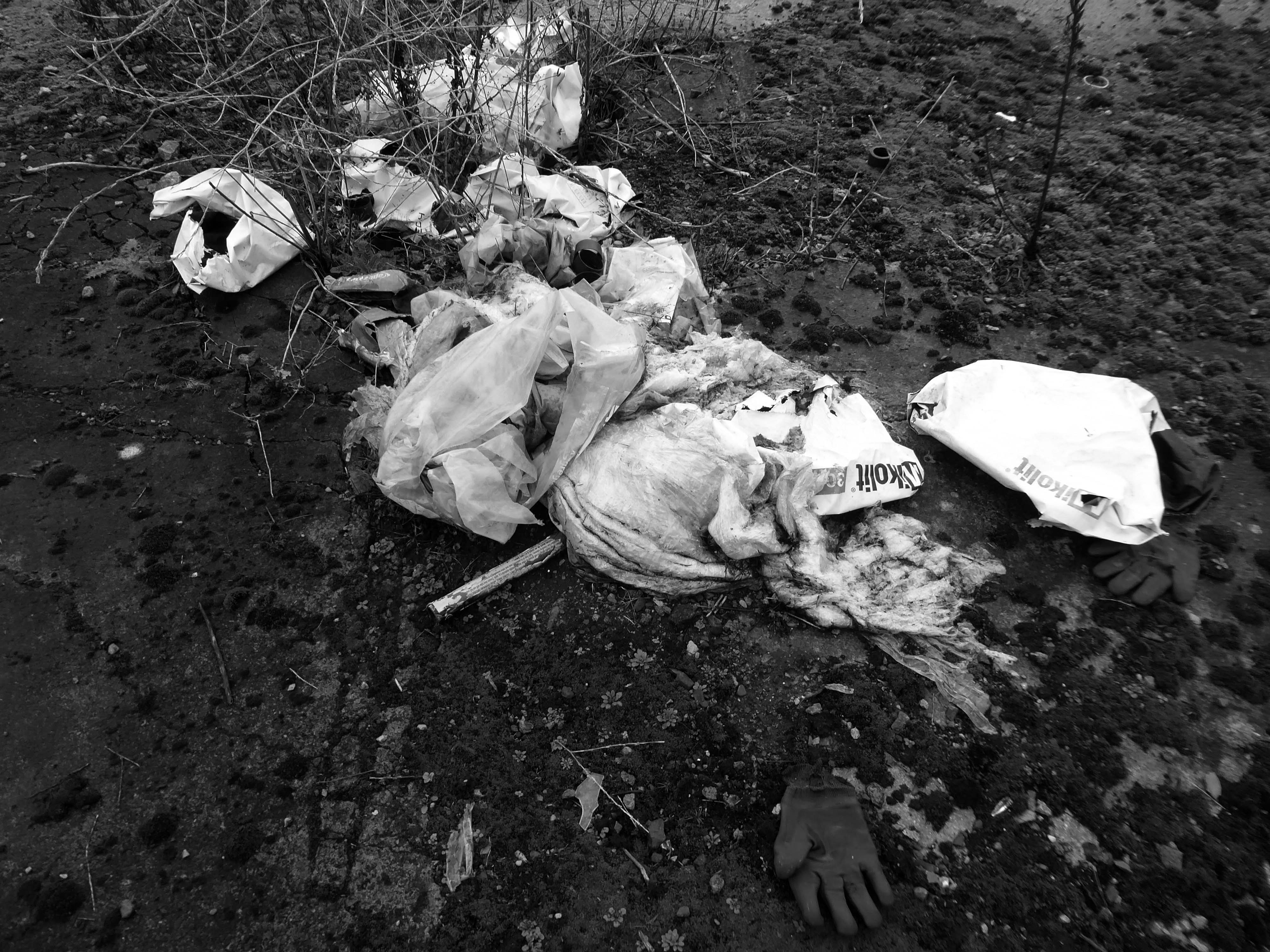
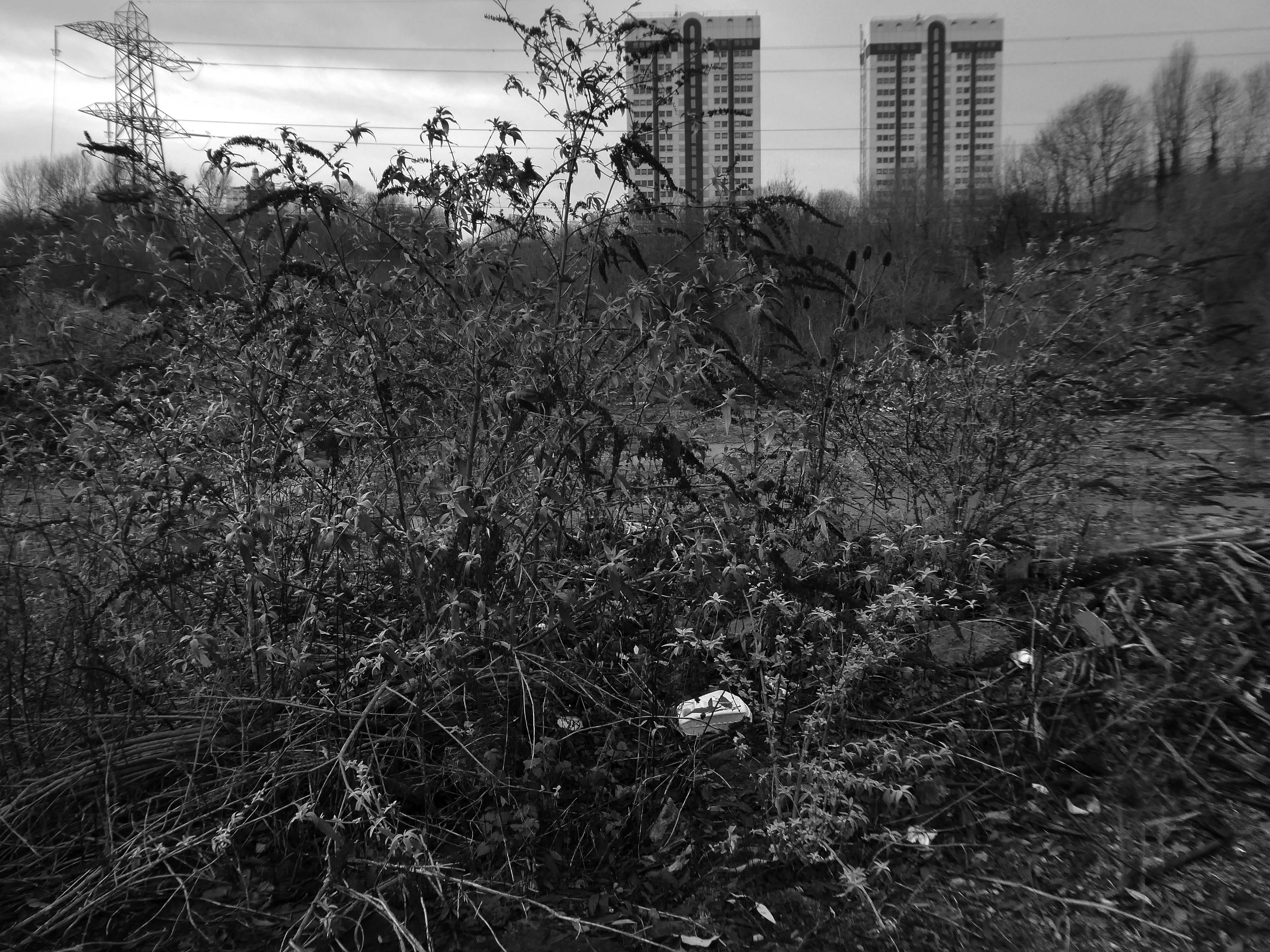
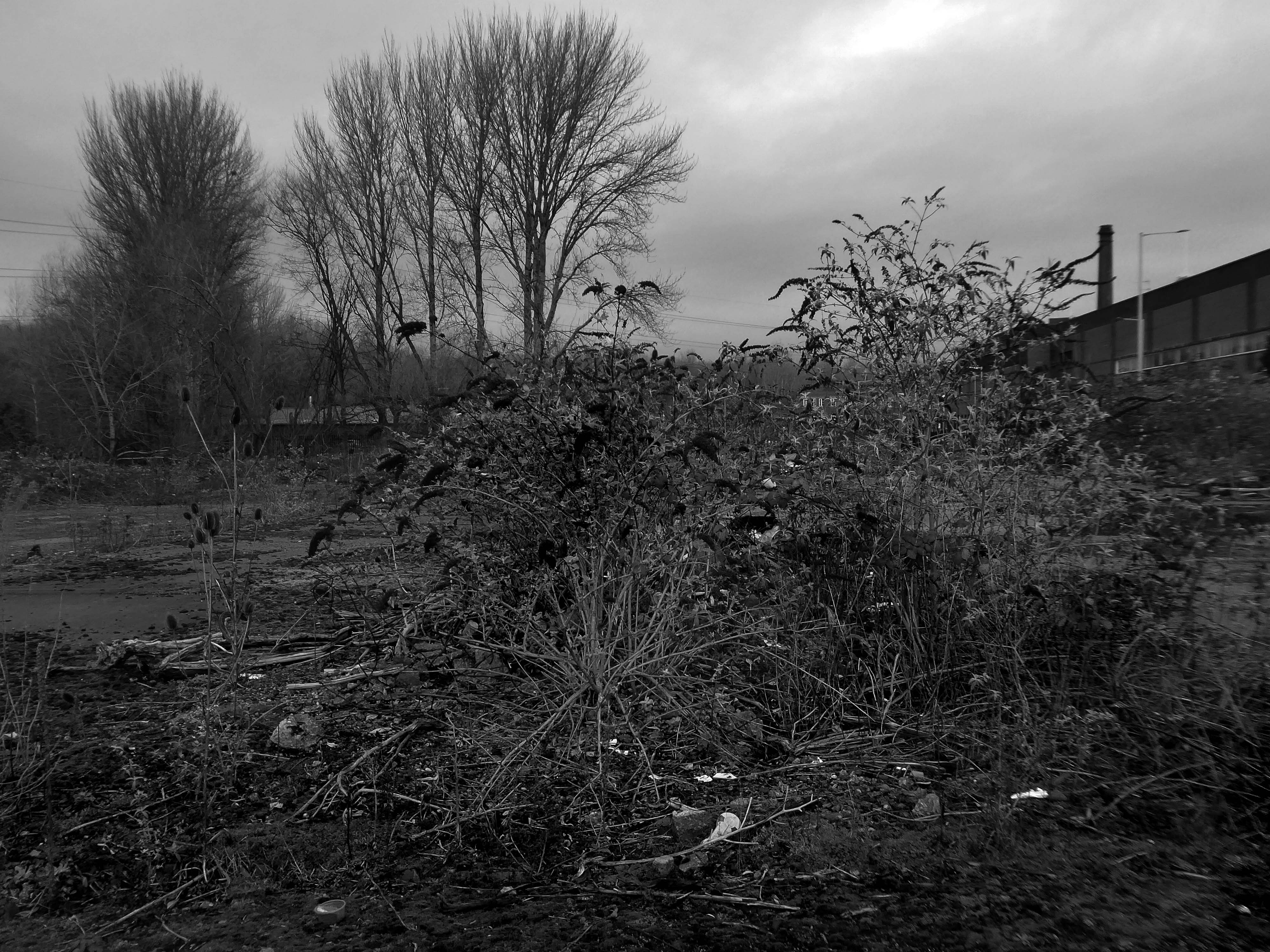
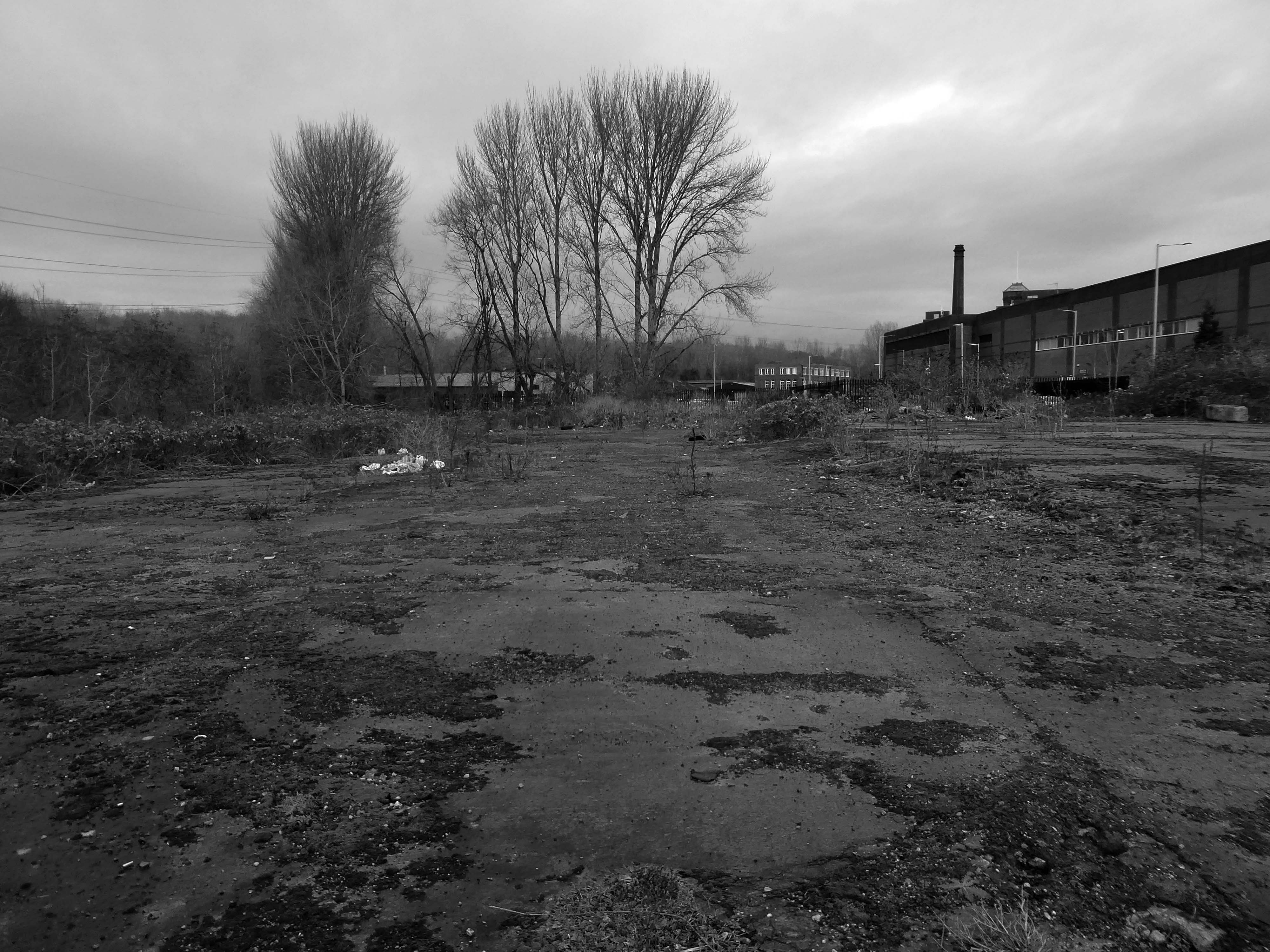
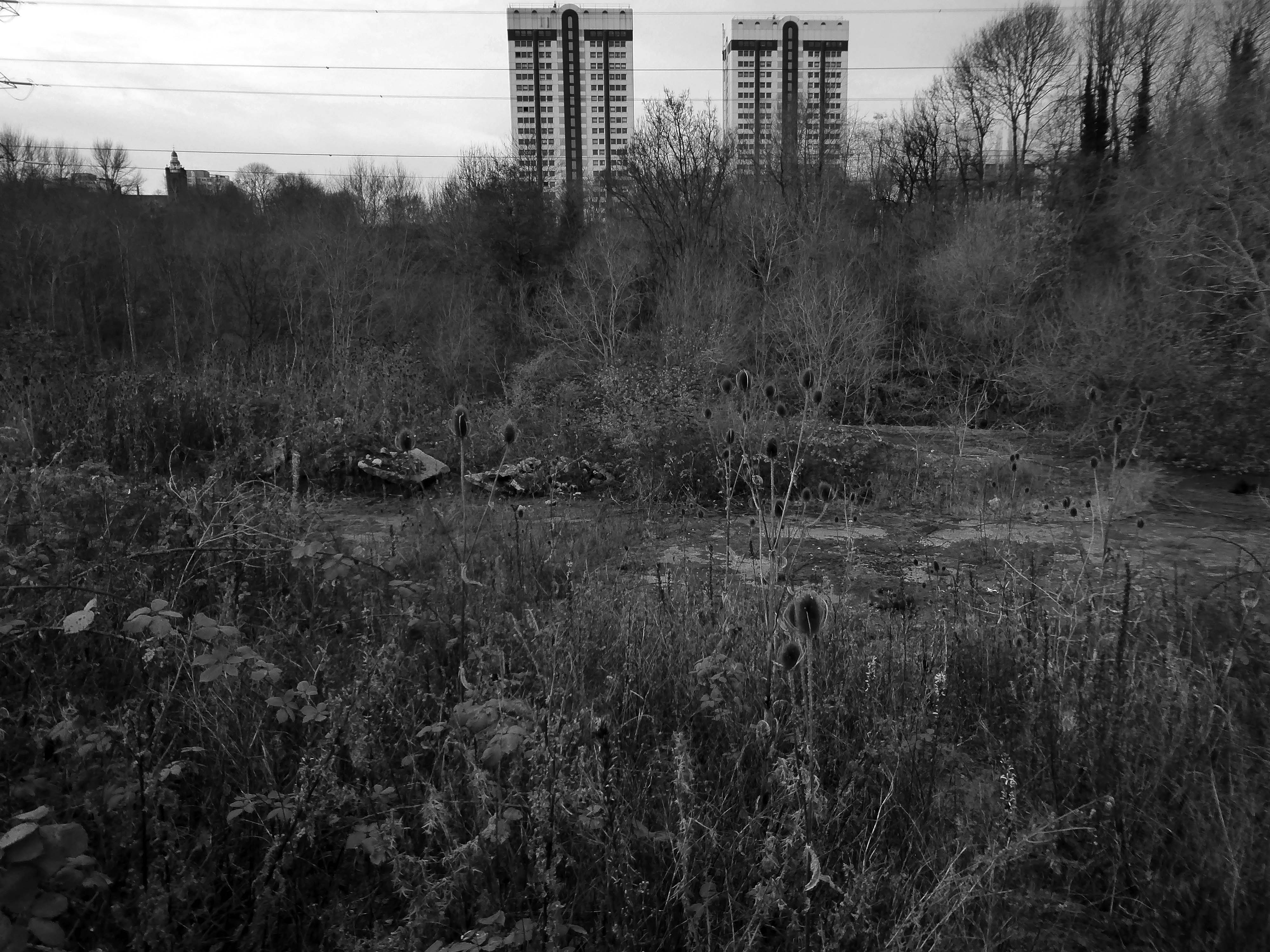
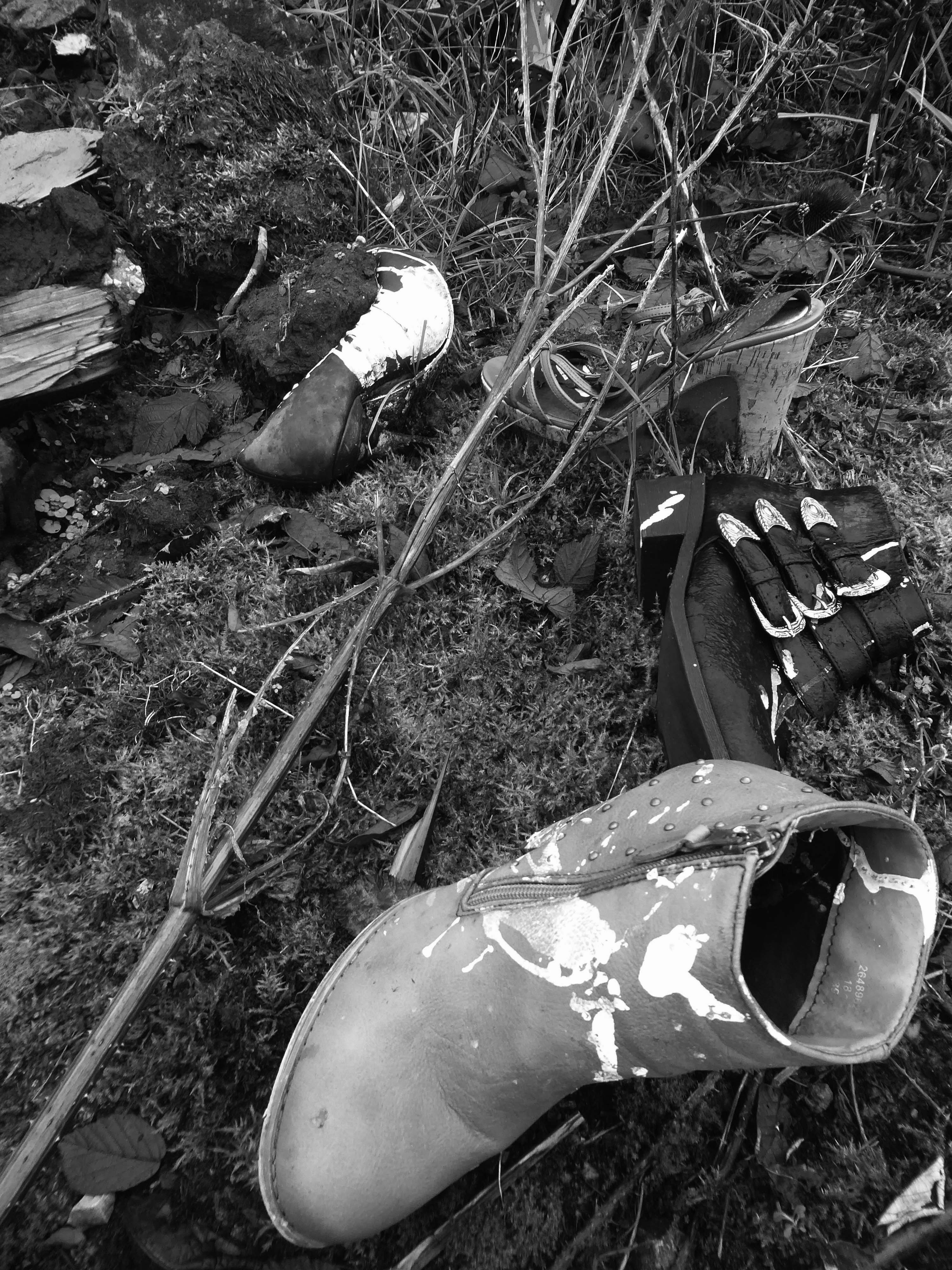
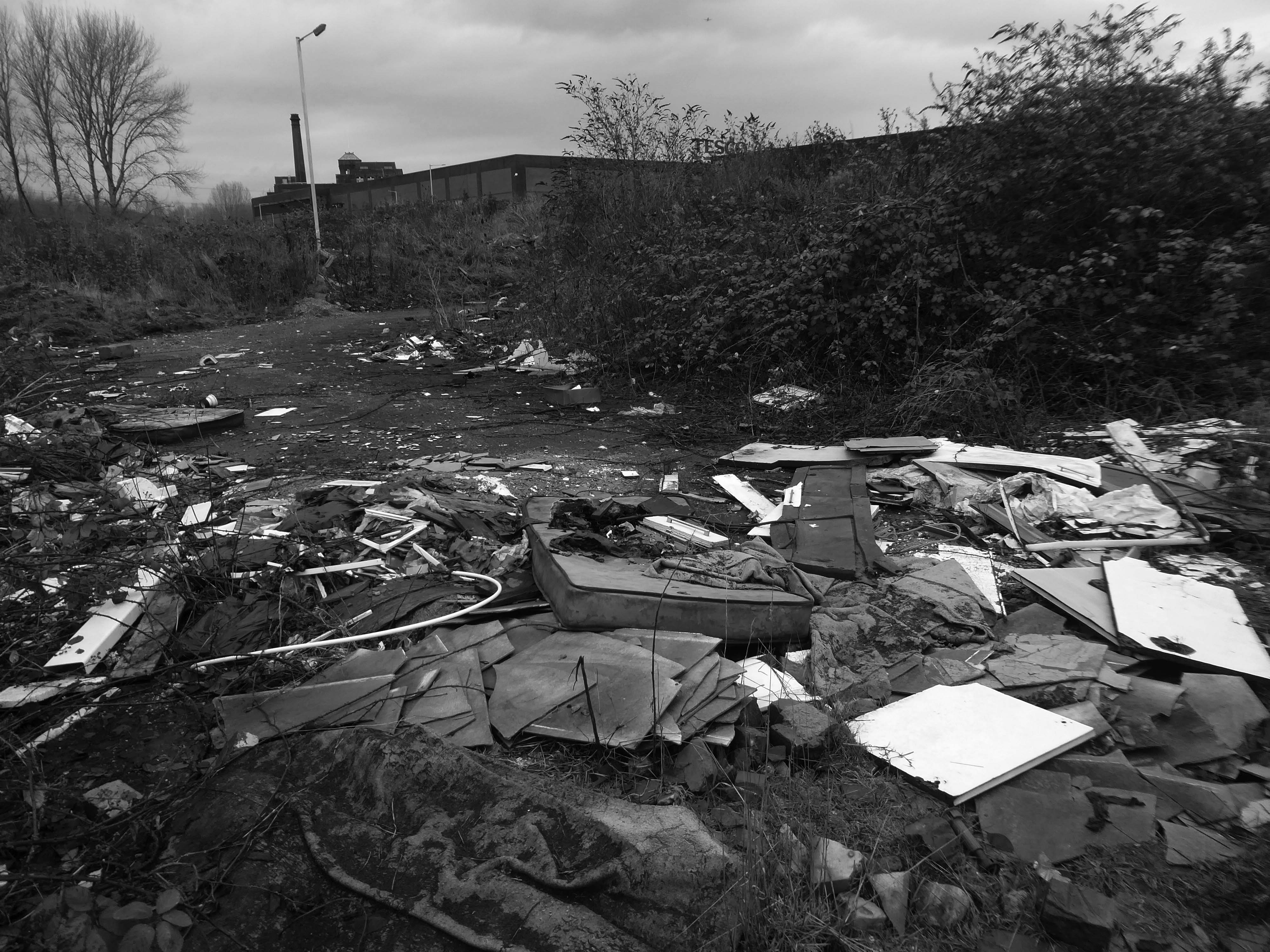
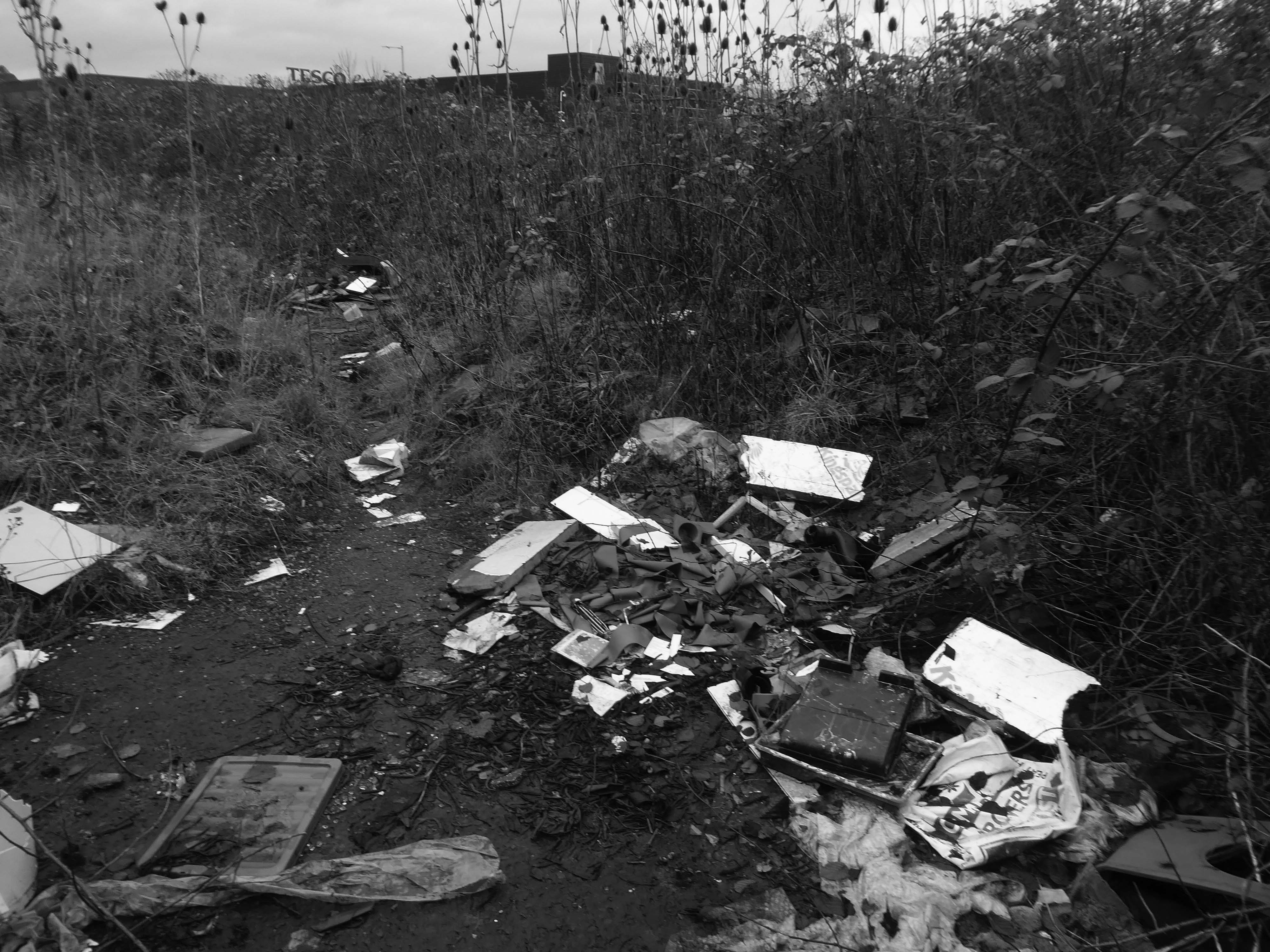
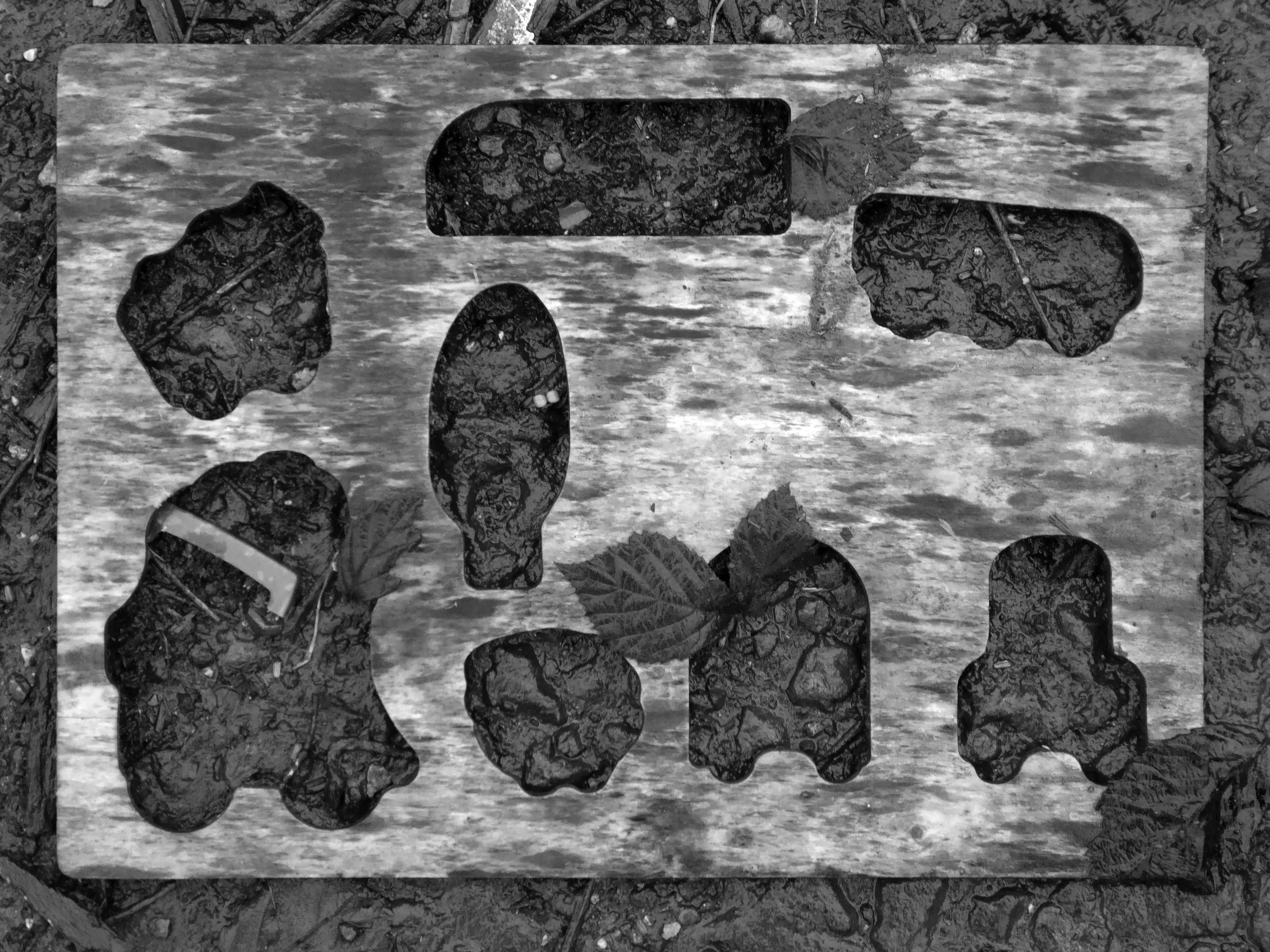
There is a plot of land to the left of Porsche which remains undeveloped, I often walk around this area, what would have once been for myself and others the place of childhood high jinx.

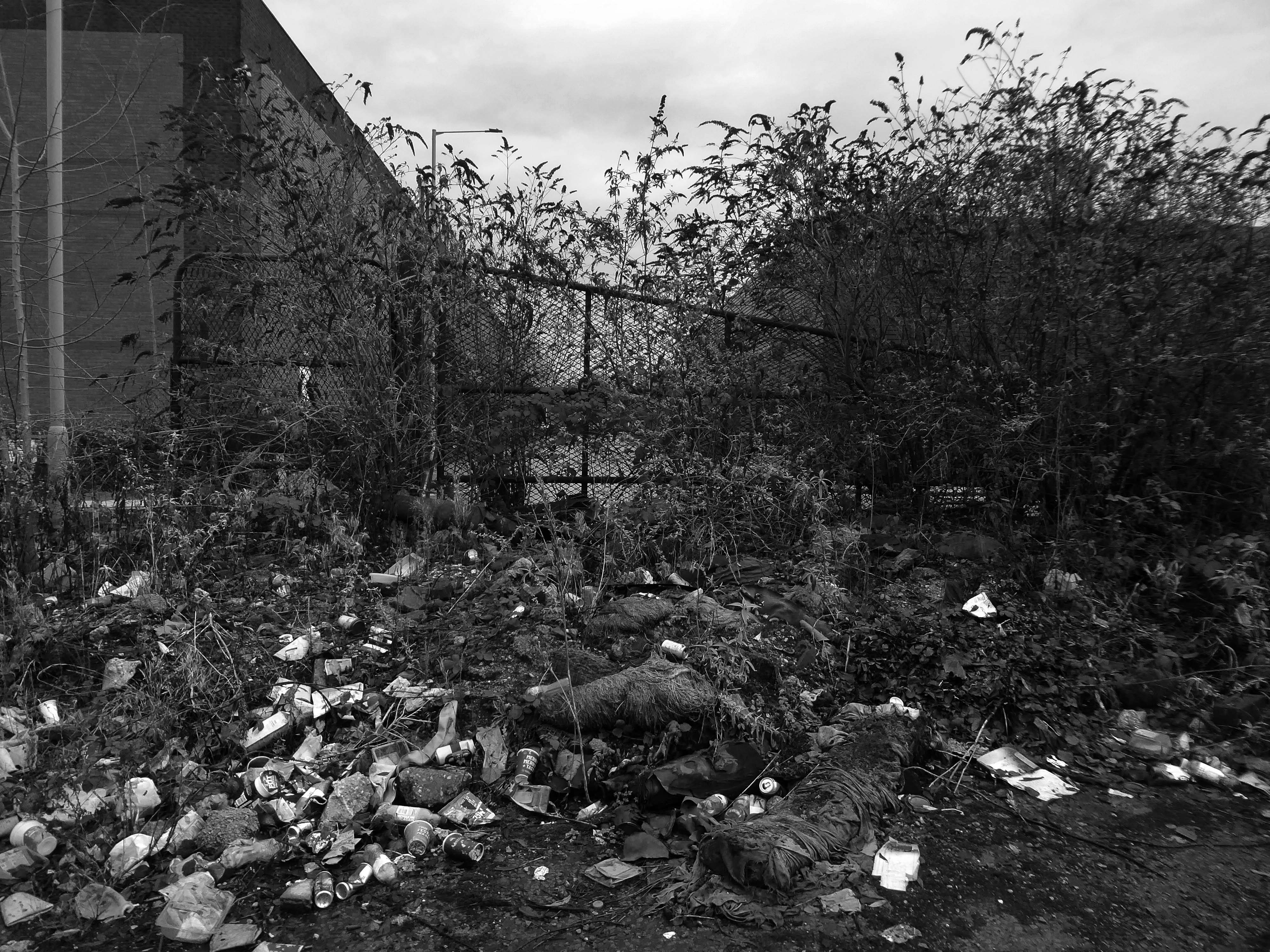
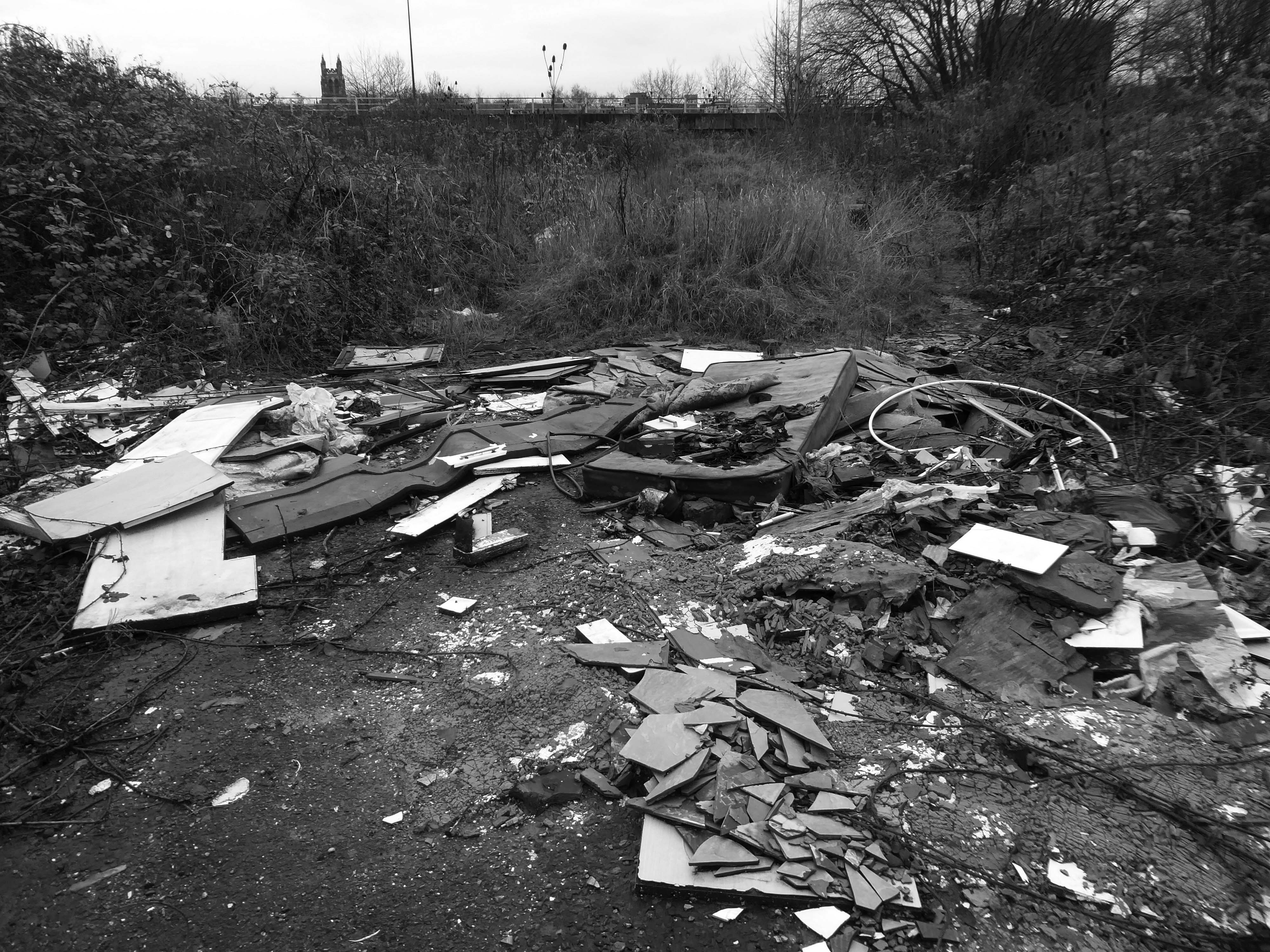
Now it is the domain of the fly-tipper, the home of the homeless, a war zone for a species which has declared war upon itself.

A desert of detritus, interpolated with tangles of brambles, seas of teasels and the ubiquitous buddleia.

This is the unofficial showroom for the unofficial Anthropocene Epoch – always crashing in a different car, during increasingly unseasonal weather, the superabundance of abundance.

It seems that the sun may set on us, before the sun finally sets.

Let’s take a peep at Portwood.

Game over.

Vehicle use affects our whole quality of local life. Traffic can be dangerous and intimidating, dividing communities and making street life unpleasant, whilst air pollution and traffic noise can make urban living uncomfortable.

Environmental Protection UK

The impacts of mass consumption are: Misuse of land and resources, exporting pollution and waste from rich countries to poor countries, obesity due to excessive consumption, a cycle of waste, disparities and poverty.

Global Issues

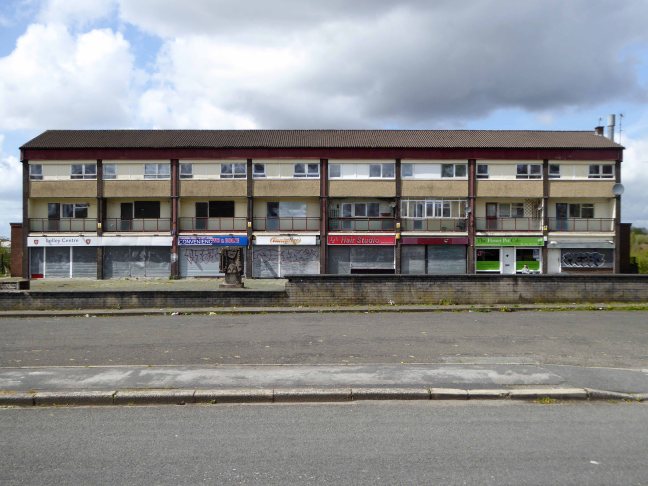
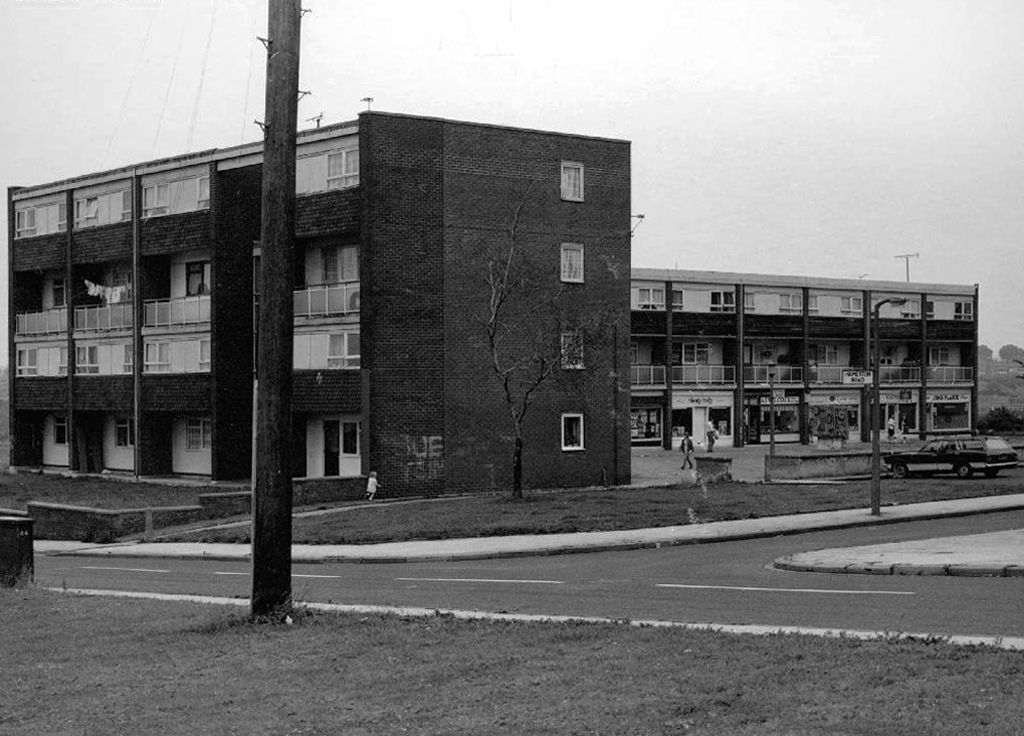
Swinton Square – Shopping Centre

Opened in 1966 along with the slightly later Lancastrian Hall and Library, the Swinton Square shopping precinct provided an integrated modern setting for shopping, living, learning and entertainment.

The late 60s and early 70s was a time of general prosperity – and the hard landscaping offered a soft option for the local folk.

This was the age of the Precinct, celebrated nationally with postcard after postcard.

My local haunt in Ashton under Lyne.

Local traders and national chains rubbed shoulders.

There was even a Job Centre opening- there was even a wide range of vacancies.

Following a challenging year, the letting reinforces Swinton Square as a pillar in the local community. Whilst retail has been heavily affected throughout the Covid-19 pandemic, footfall at the scheme has remained buoyant, with shoppers staying local, favouring the convenience and independent retailers of Swinton Square. Renovations began on the site of the new, temporary job centre at the beginning of the year and is due to be completed in May. The centre is expected to boost footfall and support for local, independent businesses.

Avison Young

Despite Swinton’s many strengths, it faces similar challenges to other towns. The shopping centre and other buildings in the town centre are dated and in need of investment. Demand for local housing has grown by 23% in the last five years, but there is a lack of high-quality family and affordable housing in the right locations in the area.

The vision is just the first step of the journey, the next is to appoint a developer partner who can take this vision and help shape it, through ongoing consultation and engagement with the community, into a framework and plan for Swinton that will guide future investment.  

Salford Gov UK

The road to Swinton is paved with good intentions – rather than gold.

Sadly I was too late for August’s Dino Crazy Golf.

Another Brick In The Wall – Leeds

Here we are at the Stan and Audrey Burton Gallery – an exhibition with a Pink Floyd-ish hue.

Curiously brick-ish, for work largely concerning concrete.

Did they not know the Madcap Syd wrote See Emily Play down the road at the now demolished Leeds College of Technology?

A fact I discovered whilst researching my Leeds Walk.

Myself I would have gone with – Borrow Somebody’s Dreams ’til Tomorrow.

For here we have an exposition of the architecture of three Universities, exploring the possibilities of a new age.

An age typified by the expansion of minds and opportunities in higher education, rendered corporeal in glass, steel and concrete – with some concession to the use of brick.

Basil Spence at the University of Sussex

Denys Lasdun at the University of East Anglia.

And Chamberlin, Powell and Bon at University of Leeds.

I was minded of the political context to these campuses, radicalised by the events of the late Sixties and early Seventies.

Myself a student at Portsmouth Polytechnic during these heady days, where several Maoist, Marxist-Leninist, Stalinist and Trotskyite factions played out ideological debate and display, against these Modernist backdrops.

Epitomised by the Hornsey School of Art sit-in.

On the day of my visit to the Leeds campus, I saw three students stood behind a hardboard paste table, selling the Socialist Worker.

Along with staff building support for the following day’s UCU strike.

So to the exhibition – Another Brick In The Wall at the Stan and Audrey Burton Gallery until Saturday 25th March.

Photographer Simon Phipps shines a contemporary light on the innovative designs of this period. He has produced new work of a variety of campuses, including the University of Leeds, exclusively for the exhibition. 

Alongside these contemporary photographs, the exhibition displays archival material from the Universities of Leeds, Sussex and East Anglia.

Rarely seen material from the Arup archive is also exhibited.

Let’s take a look at a topic from a bygone age that seems to come of age – there’s never been a better time to be Brutal!

Go and take a look, we really do need education – and exhibitions.

Chorley Walk

I arrived at Chorley Railway Station.

The current railway station is a modern version from the 1980s that was built on top of the original station. The level of the old platforms can be seen under the existing station’s two platforms which are connected by underpass. The initial station was opened on 22 December 1841 by the Bolton and Preston Railway – which later became part of the Lancashire and Yorkshire Railway and was subsequently served by the Lancashire Union Railway between St Helens, Wigan North Western and Blackburn from 1869.

Passenger trains over this route between Blackburn & Wigan were however withdrawn in January 1960. Further work was done in 2016 and 2017 in connection with the electrification of the line between Euxton Junction and Manchester.

Wikipedia

Crossed over to the Interchange – which was formerly a humble bus station, opened in February 2003 replacing the previous structure.

Across the way a stand of shops with distinctive faience fascias.

Further along the Shepherds’ Victoria Hall – once home to the Jubilee of the Ancient Order of Shepherds’ Friendly Society which was quite prominent in Chorley in the late 1800’s and early 1900’s

Down the way a ways a Baptist Chapel of 1845 on Chapel Street – currently trading as Malcolm’s Musicland.

Next door the Chorley Town Cafe with some excellent stained glass.

Hang a sharp right to the Market – where there is this newish piece of public art Pattern of Life a bronze relief by Diane Gorvin and mosaic work by Tracey Cartledge

This piece involves an innovative combination of cast bronze and ceramic mosaic. Two bronze relief panels display female figures holding out rolls of fabric, each decorated with patterns and images that are particular to the town of Chorley. Payphones, for example were invented and manufactured in Chorley, the crested newt is protected here and you might also notice the famous Chorley Cakes. As the fabrics tumble down, the designs are translated from bronze relief on the wall surface into 2D mosaic in the pavement.

Looking down Fazakerley Street to where Fine Fare once was.

We’ll return to such matters in a moment – we have to get to the Post Office – which is no longer a Post Office.

Architect Charles Wilkinson.

It was a Post Office in 1935 – it also has a later extension.

The local list declares that the post office dates from 1935. This is almost certainly erroneous since the contract documents date from 1924, and from contract to completion the average construction and fitting-out time was about 18 months.

British Post Office Buildings

Happily, the Library is still a library.

Plans supplied by the Architects Messrs. Cheers & Smith of Blackburn which were approved by the Education Committee on the 18th August 1904design proposals for the new Technical School entitled Light and Air.

The considerable task of erecting the school was given to the local builder Mr. William Hampson of Pall Mall.

Surely the envy of his trade, the total contract was worth a mouth- watering £10,041 15s. 9d. – approx. £720,000 today.

The building was officially opened by the 16th Earl of Derby on September 24th 1906.

Chorley History Society

Heading to the Council Offices.

Over the road the town’s newest retail development Market Walk – the work of AEW Architects.

Chorley Council bought the shopping centre from Orchard Street Investments for £23m in 2013 and commenced a large-scale regeneration scheme in 2018 involving a £15m, 79,000 sq ft retail and leisure extension led by main contractor Eric Wright Group and designed by AEW Architects. Here, Conrad Heald of Chorley Council tells his interviewer, AEW director Phil Hepworth, how the scheme came to fruition and has rejuvenated the town centre.

Place North West

The memorial re-sited in 2018 commemorates the Chorley Pals.

In less than 20 minutes, 235 of the 720 men from the 11th East Lancs. were killed. Another 350 were wounded, of which 17 would eventually succumb to their wounds. Many of the Battalion died where they fell, in No Man’s Land.

As a result of the attack on the morning of the 1st July, the Chorley Pals – Y Company, had 31 men killed and three died within a month of their wounds received on that day. 21 have no known graves and their names are transcribed on the Thiepval memorial to the Missing on the Somme battlefield. A further 59 were wounded, making a total of 93 casualties out of approximately 175 men from Chorley who went over the top that morning.

Landscaping of the public realm by CW Studio.

Reversing now to the former Barclays Bank – which closed earlier in 2022.

We return now to the former Fine Fare.

The company began as one single supermarket in Welwyn Garden City in 1951, as an offshoot of the Welwyn Department Store, owned by Howardsgate Holdings, the company of Ebenezer Howard, the founder of the garden city movement.

Wikipedia

Now here’s a thing a bank which is a bank NatWest not gone west.

Next to the former Woolworths, opened in Chorley in 1930 on Market Street, with its pale Deco faience fascia.

They traded from this building for sixty five years, before closing in March 1995 in order to move to a new store on Market Walk – it became an Argos, then it didn’t.

Woolies Buildings

Here we are now at a Post Office that is a Post Office but was an RBS Bank.

The new location is at the former Royal Bank of Scotland on Market Street in the town centre.

Since the Post Office that was based at WH Smith on New Market Street came to an end, when that store closed in January, it relocated to a temporary unit in Market Walk until a permanent solution could be found.

The unit, which had been provided by the postmaster from Burscough Bridge Post Office, closed on Tuesday.

Kenny Lamont, Post Office Network Provision Manager, said a Post Office is important to a community.

Lancashire Post

This had been a Methodist Church – then, it became the HQ of the Lancashire Electric Power Company.

The Lancashire Electric Power Company was one of the largest private electricity companies in the UK. It was established in 1900 and generated and supplied electricity to 1,200 squares miles of Lancashire from 1905 until its abolition under nationalisation in 1948.

Wikipedia

Time to back track to the Cop Shop – the work of County Architect Roger Booth and crew.

The Magistrates’ Courts are closed and up for sale.

Next door the White Hart once upon a time the Snooty Fox, a pub with an up and down trajectory – currently open and described online as plush.

Down the road a pub no longer a pub but an Urban Spa.

We offer you a full range of professional treatments tailored to your own personal needs. We treat every client as an individual and offer an extensive range of treatments and professional products making your visit one to remember.

Let’s go to the theatre – The Empire tucked away at the back of town.

The Empire Electric Theatre opened, as the town’s first purpose-built cinema, on 3rd September 1910. In 1912 Archie Hooley began his connection with the cinema business at the Empire Electric Theatre. By 1927 it had been re-named Empire Cinema and by 1930 it was equipped with a Western Electricsound system and was operated by the Perfecto Filmograph Co. Ltd. By 1939 it was operated by the Snape & Ward chain. According to the Kine Year Books, in 1940 the seating was for 800, while by 1952 it had been reduced to 679 – still a far cry from today’s 236 seats. 3D films were shown in the early-1950’s. Archie had died in 1944; his son Selwyn closed the cinema in 1957, apparently “because of the taxes”.

1959

Wrestling took over for a while before Chorley Amateur Dramatic and Operatic Society – CADOS acquired the building and renamed it the Chorley Little Theatre. Since 1960 CADOS have been putting on high-quality productions, presenting at least six productions per season – from September to July. It is also the home of the award-winning Chorley Youth Theatre who meet every Saturday, putting on shows throughout the year; and Chorley Empire Community Cinema who present the cinema experience on their 21ft wide screen with 8-Speaker Surround Sound. Run entirely by volunteers the theatre has state-of-the-art sound systems and a full range of lighting equipment. There are two spacious dressing rooms, space for costumes and props and the Empire Bar. The building has disabled access throughout the public area, including a toilet, and the auditorium is fitted with a hearing loop. There are three spaces for wheelchairs in the auditorium. It was re-named Chorley Empire Cinema at Chorley Theatre in October 2019 and films are still part of the programming.

Cinema Treasures

Spare a thought for the town’s lost cinemas:

The Odeon Market Street was built for and operated by Oscar Deutsch’s Odeon Theatres Ltd. chain, it opened on 21st February 1938 with Jack Buchanan in The Sky’s the Limit.

Architect Harry Weedon was assisted by PJ Price.

It was closed by the Rank Organisation on 6th February 1971 with George Lazenby in “On Her Majesty’s Secret Service”. After laying closed and un-used for over two years it was sold to an independent bingo operator and re-opened on 9th August 1973 as a Tudor Bingo Club. It later became a Gala Bingo Club which was renamed Buzz Bingo Club in June 2018. It was closed on March 21, 2020 due to the Covid-19 Pandemic. On 15th July 2020 it was announced that the closure would be permanent.

The building was handed over to Chorley Council who decided that asbestos removal would be too costly and the building was demolished in August 2021.

Located on Salisbury Street, off Cunliffe Street, built in 1888 as a military warehouse, it was converted into a roller skating rink around 1909. It opened as the Pavilion Picture Palace on 14th September 1911, operated by George Testo Sante, a music hall strong man, who also operated the Grand Theatre as a cinema. By 1915, music hall acts were also part of the programme. After the end of World War I, the flat floor of the cinema was raked, allowing for better viewing of the screen. The proscenium was 30ft wide, the stage was 16 feet deep and there were two dressing rooms.

The Pavilion Cinema was the first in town to screen ‘talkies, when an Electrochord sound system was installed in 1929. It was taken over by the J.F. Emery Circuit in 1932 and they operated it until the end of 1933. The sound system was upgraded to a British Talking Pictures sound system. In 1954 it was the first cinema in town to be fitted with CinemaScope and the proscenium was widened to 36 feet.

The Pavilion Cinema was closed by 1962 and converted into a bingo club. In 1972 it was re-opened as a cinema again, but due to Star Cinemas chain barring it from showing first run features – they operated the Plaza Cinema, it was closed after 5 months of operation. It was later demolished and the area was redeveloped for housing.

Cinema Treasures

No trace of The Hippodrome Theatre on Gillibrand Street, which was built and opened in 1909, or the Theatre Royal, opened on 30th September 1911, It was demolished in 1959.

A supermarket was built on the site which later became a McDonalds, which is now a Pizza Hut.

Last but not least – located on the Flat Iron Parade, aka Cattle Market, The Grand Theatre was a wooden building built in 1885, which presented melodramas and plays. In June 1909 it was taken over by George Testo Santo, who had been a music hall strongman, and his family. It went over to operating as a Picture Palace for a short season.

By 1914 it was operating as a full time cinema, but was destroyed by fire in 1914.

Chorley Theatre Cinema History Map

This was a splendid day out – there is much more to see, these have been some of the less obvious landmarks.

Go see for y’self!

Chorley Police Station and Magistrates’ Court

St Thomas’s Road Chorley PR7 1RZ

The police station and magistrates’ court at Chorley was designed to replace a building from 1896 – a weights and measures plaque from the original building was retained and remounted at the foot of the new building.

The two buildings were set adjacent one another and around a newly formed square with one side made up of the rear of the existing town hall. This small civic group was intended to relate to one another in scale, but was markedly contrasting in its material make-up.

County Architect’s Report: 1963-64.

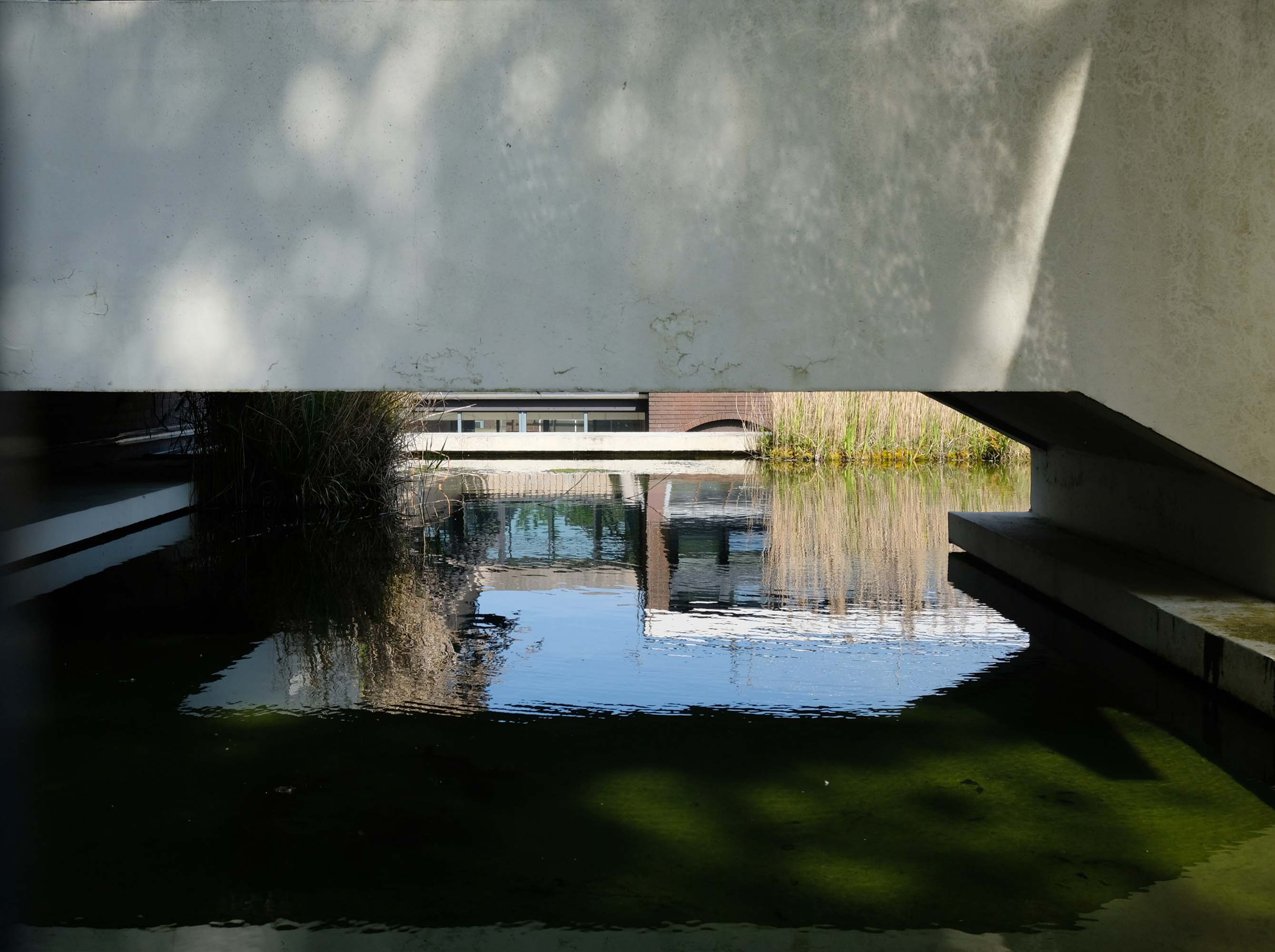
The design team was Roger Booth, Lancashire County Architect; C.A. Spivey, Assistant County Architect; D.B. Stephenson, Design Architect; and D.G. Edwards, A.G. Gass, responsible for the detailed design and construction. The seven-storey in-situ concrete framed main block was the last bespoke police station to be built in Lancashire, following this the department developed a systemised concrete construction method which was deployed across the county. The dramatic cantilevers gave the new building a stature and presence that signalled authority. The lower levels were accessed by ramps and provided space for police vehicles. To enter the police station one ascended a set of external stairs across a pool that once contained koi carp – fittingly, one boy described the new building as a ‘fishtank’ upon its completion. The magistrates’ court was finished externally in a grey brick and carried the signature pyramid rooflights that were synonymous with the Department.

Many thanks to Richard at Mainstream Modern

This is one of many Roger Booth police stations I have visited – Bonny Street Blackpool under threat, Bury long gone and the extant variant in Morecambe

The Magistrates’ Court is up for sale:

Coun Alistair Bradley, Leader of Chorley Council, confirmed that the council had enquired to take ownership of the building but that this was knocked back.

He said: We’ve enquired about taking the building on but the owners, the Ministry of Justice, has said they want to take it to market.

Lancashire Post

The building is being advertised as a potential site for a future office, residential, restaurant and bar, leisure, entertainment, and hotel.

Asked about its future, Chorley councillor Aaron Beaver told Lancs Live he had heard no news of developments but desperately wanted to see something happen with the building, he said:

It’s a perfect location. There’s lots of things it could be used for. 

If you were to knock it down, there’s all sorts of things which could be built there. If you were to convert it to something like flats, it could be tricky because there’s not many windows.

Commenting on the progress of the sale since it’s closure, he added:

I wouldn’t say it’s slow moving, I’d say it’s not moving.

Lancs Live

We eagerly await any possible developments.

Whilst walking around the adjoining Police Station.

St John The Baptist RC – Rochdale 2022

I was last here in 2020 – made ever so welcome in this Byzantine cathedral like church.

The apsed sanctuary is completely covered in a mosaic scheme with the theme Eternal Life designed by Eric Newton. Newton was born Eric Oppenheimer, later changing his surname by deed poll to his mother’s maiden name. He was the grandson of Ludwig Oppenheimer, a German Jew who was sent to Manchester to improve his English and then married a Scottish girl and converted to Christianity. In 1865 he set up a mosaic workshop, (Ludwig Oppenheimer Ltd, Blackburn St, Old Trafford, Manchester) after spending a year studying the mosaic process in Venice. Newton had joined the family company as a mosaic craftsman in 1914 and he is known to have studied early Byzantine mosaics in Venice, Ravenna and Rome. He later also became art critic for the Manchester Guardian and a broadcaster on ‘The Critics’. Newton started the scheme in 1932 and took over a year to complete it at a cost of £4,000. It had previously been thought that he used Italian craftsmen, but historic photographs from the 1930s published in the Daily Herald show Oppenheimer mosaics being cut and assembled by a Manchester workforce of men and women. It is likely, therefore, that the craftsmen working on St John the Baptist were British.

Historic England

There had, as ever, been issues with the structure, water ingress and such, given several flat roofs and a temperamental ferro-concrete dome.

Happily, a successful Lottery Heritage Fund grant has covered the cost of two phases of repair to the physical fabric.

Thanks to the Parish Team, for once again making us all feel so welcome, and thanks also for their efforts in securing the finances which have made the restoration possible.

We were all issued with our hard hats and hi-vis at the comprehensive and informative introductory talks.

Followed by a detailed explanation of the mosaic work being undertaken by Gary and his team from the Mosaic Restoration Company.

This involves skilfully cleaning the whole work, whilst repairing and replacing any damaged areas.

We were then privileged to ascend the vast scaffold, the better to inspect the work up close and personal.

And this is what we saw.

Many thanks again to our hosts, the contractors and all those involved with this spectacular undertaking.

Middleton Walk

Middleton has not the gloom of so many South Lancashire towns its size. It benefits from its position close to the hills, but it has also the advantage of a large medieval church on a hill and of a number of buildings by one of England’s most original architects of the period around 1900.

Nikolaus Pevsner – The Buildings of England

He refers to Edgar Wood 1860-1935

He was the most advanced English architect of his generation, stylistically moving through through art nouveau, vernacular, expressionist and finally art deco phases a decade or more before other designers. He became England’s uncontested pioneer of flat roofed modern buildings. He worked more like an artist than an architect, designing buildings, furniture, stained glass, sculpture, metal and plaster work.  His buildings are mostly clustered in the towns of Middleton, Rochdale, Oldham, Huddersfield and Hale.  Influenced by the writings of William Morris, he saw himself as an artisan serving the people of these localities.

We begin our tour at the Queen’s Jubilee Free Library of 1889 located on Long Street.

Sixty-seven sets of designs for the proposed free library at Middleton were received by the Corporation of that borough in response to their advertisement; and a joint committee comprising of six members of the Corporation and six non-members has awarded the premium to Mr Lawrence Booth, architect of this city.

Curiously, we encounter an anchor.

Around 10pm that evening when weather conditions deteriorated to near hurricane-force gales, with the Sirene making little headway despite tacking.

Losing her helm, her sails in tatters and within sight of the Great Orme, the gales drove her back through the night towards the Lancashire coast. Eventually, and with great difficulty, Captain Gjertsen and his crew managed to manoeuvre the stricken vessel between the Central and North Piers. Becoming increasingly unmanageable, and swept in by the rushing tide and gale force winds, the Sirene looked a doomed vessel. She was helpless in the close shore currents, and unable to drop anchor she was at the mercy of the waves. She was carried alongside the North Pier, tearing off a section of the pier superstructure and part of her own keel.

Thousands of people lined the Promenade to witness the spectacle as she came in on the south side of the pier; many more stood on the pier itself, but there was a mad rush for safety when the ship collided against the structure.

Heritage Blackpool

The captain and crew survived, including the ship’s cat, many offers were made for the cat, but the captain refused them.

Onwards through Jubilee Park opened in 1889 to commemorate the Golden Jubilee of Queen Victoria.

In 1906 Alderman Thomas Broadbent Wood commissioned his son, Edgar, to design a flight of steps to lead up to a contemplation spot in the park – the inscription reads:

Who works not for his fellows starves his soul.

His thoughts grow poor and dwindle and his heart grudges each beat, as misers do a dole.

Nearby we find a memorial to the Middleton Flood – following torrential rain, the canal embankment at Mills Hill broke, flooding the already swollen River Irk, subsequently deluging the town.

Up the hill to Grade 1 Listed Parish Church of St Leonard.

Much of the present building was erected in 1412 by Thomas Langley – born in Middleton in 1363, who was Bishop of Durham and Lord Chancellor of England. He re-used the Norman doorway from an earlier structure to create the tower arch. Also distinctive in this region is the weather-boarded top stage to the tower.

The church of St Leonard was enlarged in 1524 by Sir Richard Assheton, in celebration of the knighthood granted to him by Henry VIII of England for his part in the Battle of Flodden in 1513. The Flodden Window, in the sanctuary, is thought to be the oldest war memorial in the UK. It commemorates on it the names of the Middleton archers who fought at Flodden. The church also has one of the finest collections of monumental brasses in the north of England, including the only brass in the UK depicting an English Civil War officer in full armour, Major-General Ralph Assheton.  

George Pace designed a war memorial and, in 1958, added a choir vestry and installed new lighting.

Wikipedia

This image has an empty alt attribute; its file name is dscf3808.jpg

Middleton Old Cemetery once the Thornham and Middleton Burial Ground, which became the local authority cemetery in 1862.

Retrace to the Library – adjacent is the Parish School 1842

Across the road the Old Boar’s Head

Part of the timber framing to the right of the front door has recently been tree-ring dated and confirms a building date of 1622. The first tenant was Isaac Walkden, son of Middleton schoolmaster, Robert Walkden. Isaac died during a typhus epidemic in the summer of 1623. His will, preserved at Lancashire Archives, includes an inventory of all his possessions listed on a room by room basis. There were a total of 9 beds and 20 chairs or stools in the 6 rooms. This, together with barrels, brewing vessels, pots, glasses, etc, strongly suggest the building was an inn. The Walkden family went on to run the Boar’s Head until the end of the 17th century. They also farmed nearby land including what is now Jubilee library and park.

In 1888, the fledgling Middleton Corporation purchased the building from the church with the intention of demolishing it to build a town hall. Discussions were held in 1914 but, thankfully, the plan was abandoned due to an outcry from the public spearheaded by architect Edgar Wood.

Down the road is Wood’s Methodist Church and School Rooms 1897.

Tucked away is the Durnford Street Clinic.

Further down Long Street to the Assheton Arms Hotel.

Then around the corner to the Manchester & Salford Bank again by Edgar Wood

Next door the former Market Place Bank latterly RBS.

Plans to convert a long-vacant town centre bank into a nightclub have been revived despite previously being rejected over anti-social behaviour concerns.

An application to change the use of the former Royal Bank of Scotland, in Middleton, was refused by Rochdale council’s planning committee eighteen months ago, with members citing a history of alcohol-fuelled trouble in the area.

Rochdale Online

Further up Market Place the faience fronted Bricklayers Arms formerly a Bents and Gartsides boozer – delicensed in 2012 and Converted to a takeaway.

Moving along Wood’s much altered Guardian Buildings 1889.

The Guardian Buildings, were commissioned by Fred Bagot, the proprietor of the Middleton Guardian newspaper and a man with a reputation at the time for keeping a tight control of finances. In consequence, Guardian Buildings were one of Edgar Wood’s low budget buildings, of which there are several in and around Middleton. The building housed the operations of the newspaper with the cellar containing the printing machines and the tall ground floor housing a shop, office and more machines. The whole of the first floor, with its pair of oriel windows, was taken up by the composing room.

Time has not been kind to the Grade II Listed United Reformed Church 1860.

28 Days Later

It fell into disrepair after the church moved to smaller premises in Alkrington in the 1960s.

The building collapsed in July 2012, when it was hit by a fire.

On Townley Street Lodge Mill built in1839 beside the River Irk battling on despite recent setbacks.

In August 2019, Martin Cove and Paula Hickey opened a small ice cream shop on the ground floor of the mill – named the Ice Cream Shop at Lodge – selling locally-made ice cream from Birch Farm, Heywood.

Across the way the magnificent Sub Station and Electrical Department Offices.

Then taking a turn around the banks of the Irk down Sharp Street onto Lance Corporal Joel Halliwell VC Way, where we find the Middleton ArenaBDP 2009

Then over the road to Oldham Road and Grade II Listed Warwick Mill 1907 G. Stott of J. Stott and Sons.

The mill recently changed ownership and new owner, Kam Lei Fong (UK) Ltd, has been working with Rochdale Borough Council over the past nine months on proposals to redevelop the site.

The plans will form the cornerstone of a new masterplan for Middleton town centre focusing on delivering new homes, business space, highway and environmental improvements, new walking and cycle routes to pave the way for the planned extension of the Metrolink into Middleton Town Centre.

The Business Desk

In 2005, the new Middleton Bus Station was opened – Jefferson Sheard Architects.

The station, with 13 stands, cost £4.5 million and replaced the previous station which dated to the 1970s.

The Middleton Arndale Centre commenced trading in 1971, although it was officially opened by Her Royal Highness the Duchess of Kent in March 1972.

Once home to The Breadman designed by Rochdale’s town artist of the time, Michael Dames.

Photo: Local Image Collection – Touchstones

Now trading as the Middleton Shopping Centre

The brick reliefs illustrating the town’s history are by Fred Evans of Dunstable, who completed the work in one week during May 1972 using a high powered sandblasting blaster.

Thanks to Phil Machen for the top tip.

At the centre of the public domain the Middleton Moonraker 2001 by Terry Eaton

According to folklore, the legend has several different interpretations. One version is that a traveller came upon a drunken yokel trying to rake a reflection of the moon in a village pond, convinced it was cheese.

This version conveys the notion that the men were drunk and acting foolishly.

However, an alternative narrative – and perceived to be the most reliable version – tells a different story and dates back to the time when smuggling was a significant industry in rural England.

It appears that many residents wish to rid themselves of the Moon Raker moniker and presumably become Middletonians.

There’s so much more to Middleton’s history than the Moonraker. Why did they spend all that money on a fairytale?

There were 3,000 Lancaster bombers built in Middleton during World War Two, a magnificent contribution to the effort to beat Hitler.

The bulbs inside the moon which light it up at night haven’t worked for five years.

Bernard Wynne

Along Long Street the Cooperative store what was – next door the long gone Palace Cinema demolished in 2001.

More Edgar Wood – three shops 1908.

Tim RushtonMiddleton Gateway

Middleton celebrates its history and rightly so – now is the time to take stock and plan for the future.

More green space, public transport, pedestrians and cyclists prioritised to meet the Green Agenda.

Mixed development for housing, retail and leisure in the town centre.

Take some time to explore and dream.

View the Masterplan click here

For more information on Edgar Wood click here