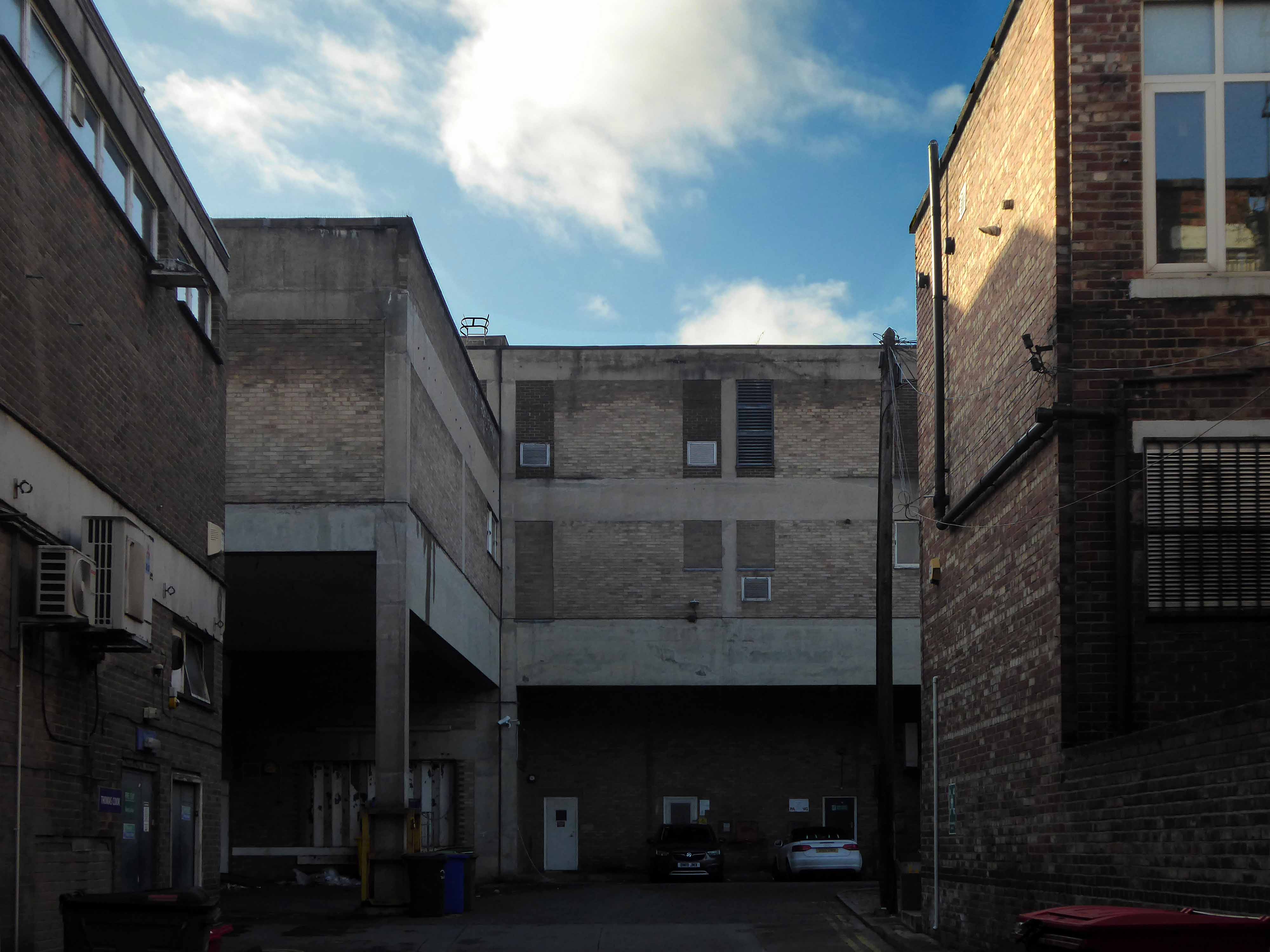
There comes a time in very life when you finally go where you have never been before – even though you have walked by that very same place almost every day.
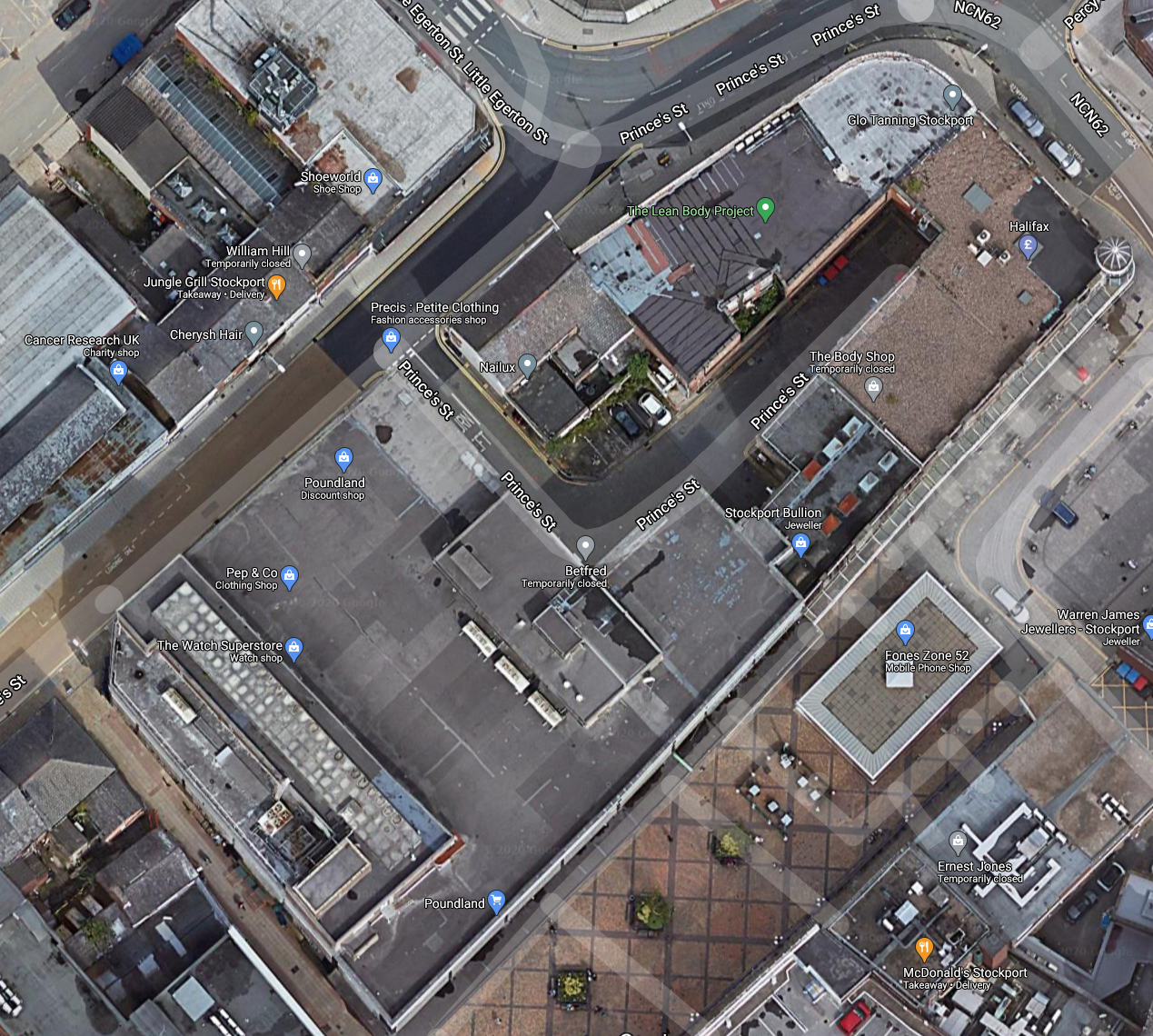
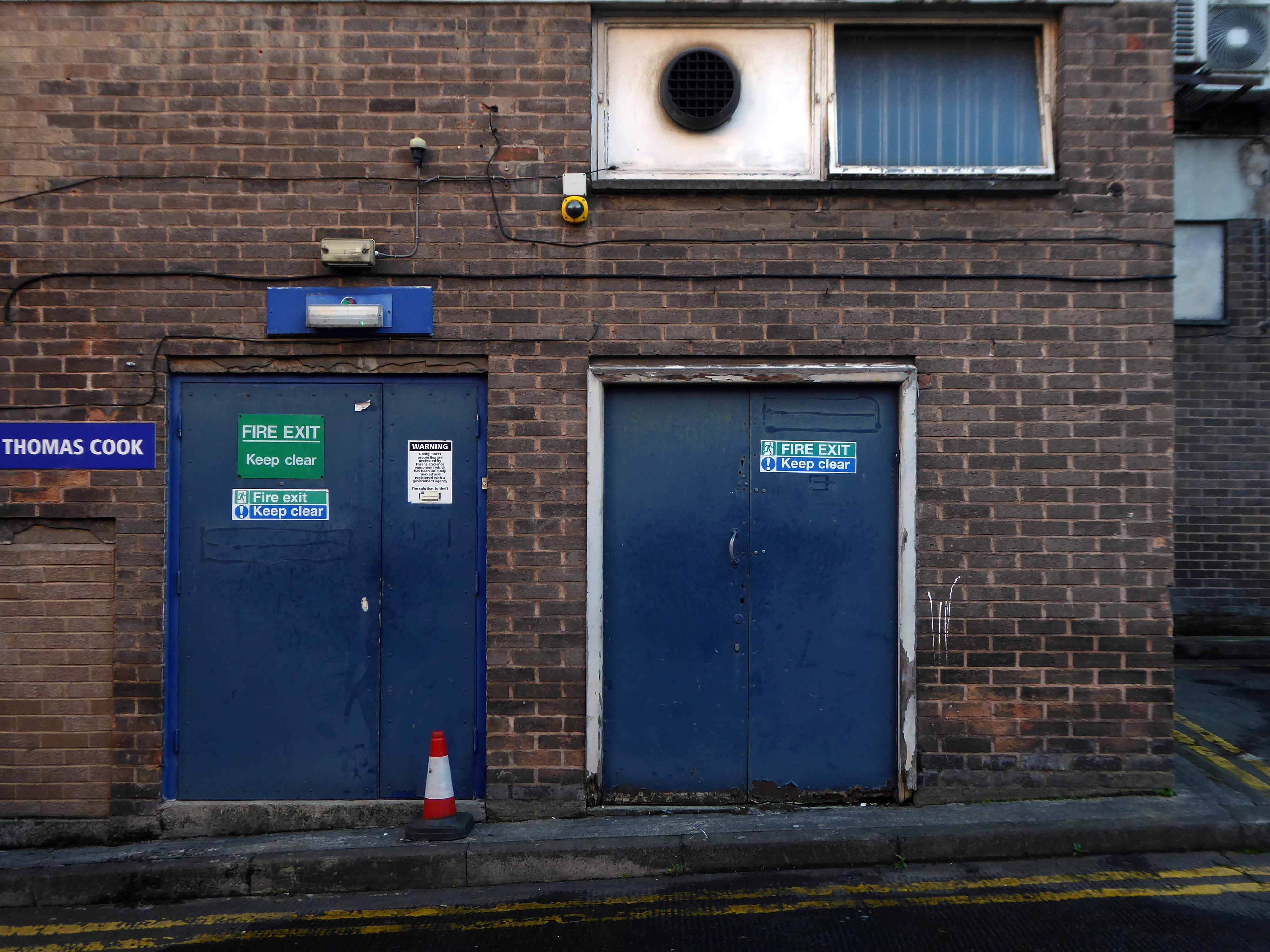
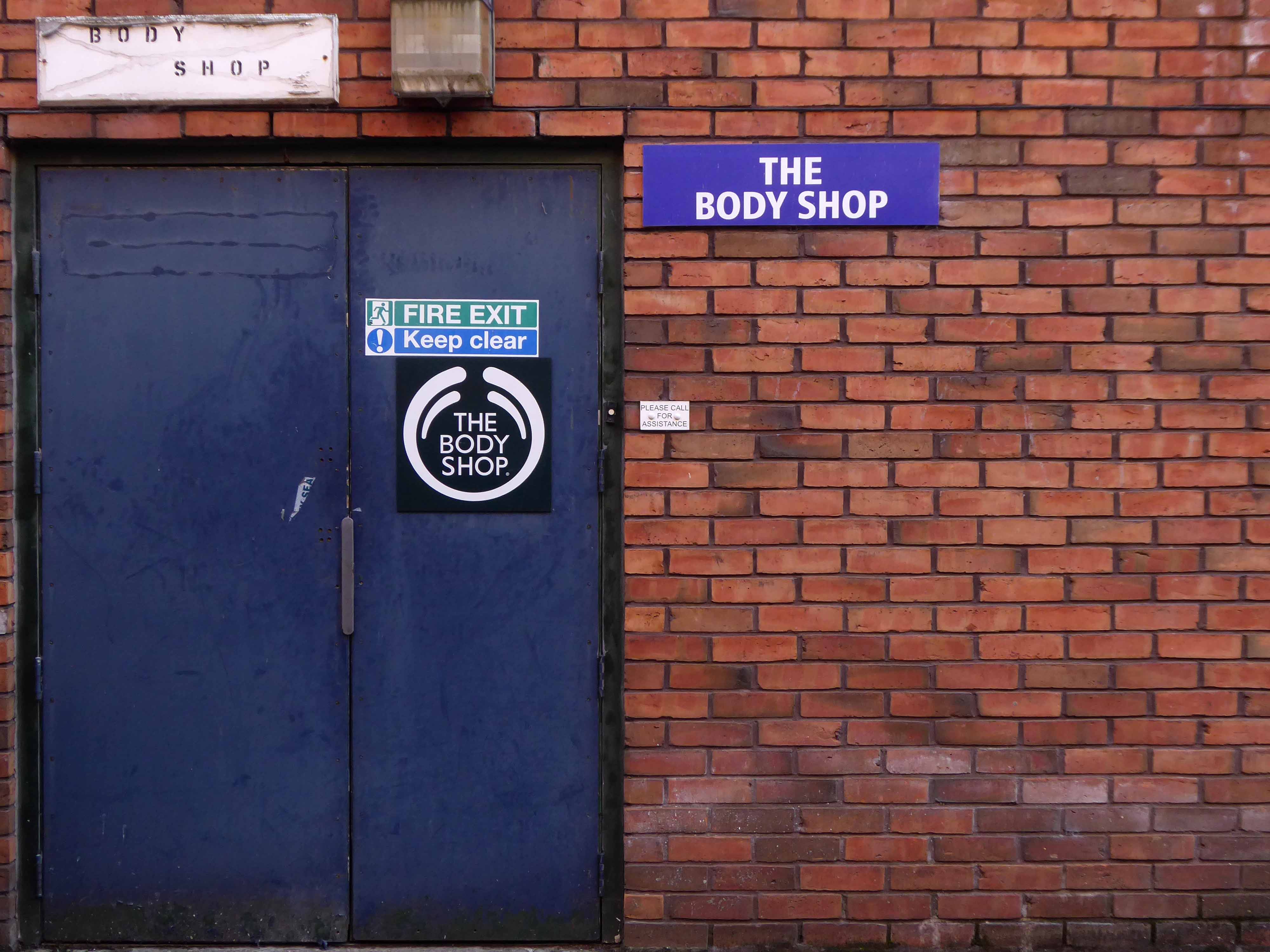
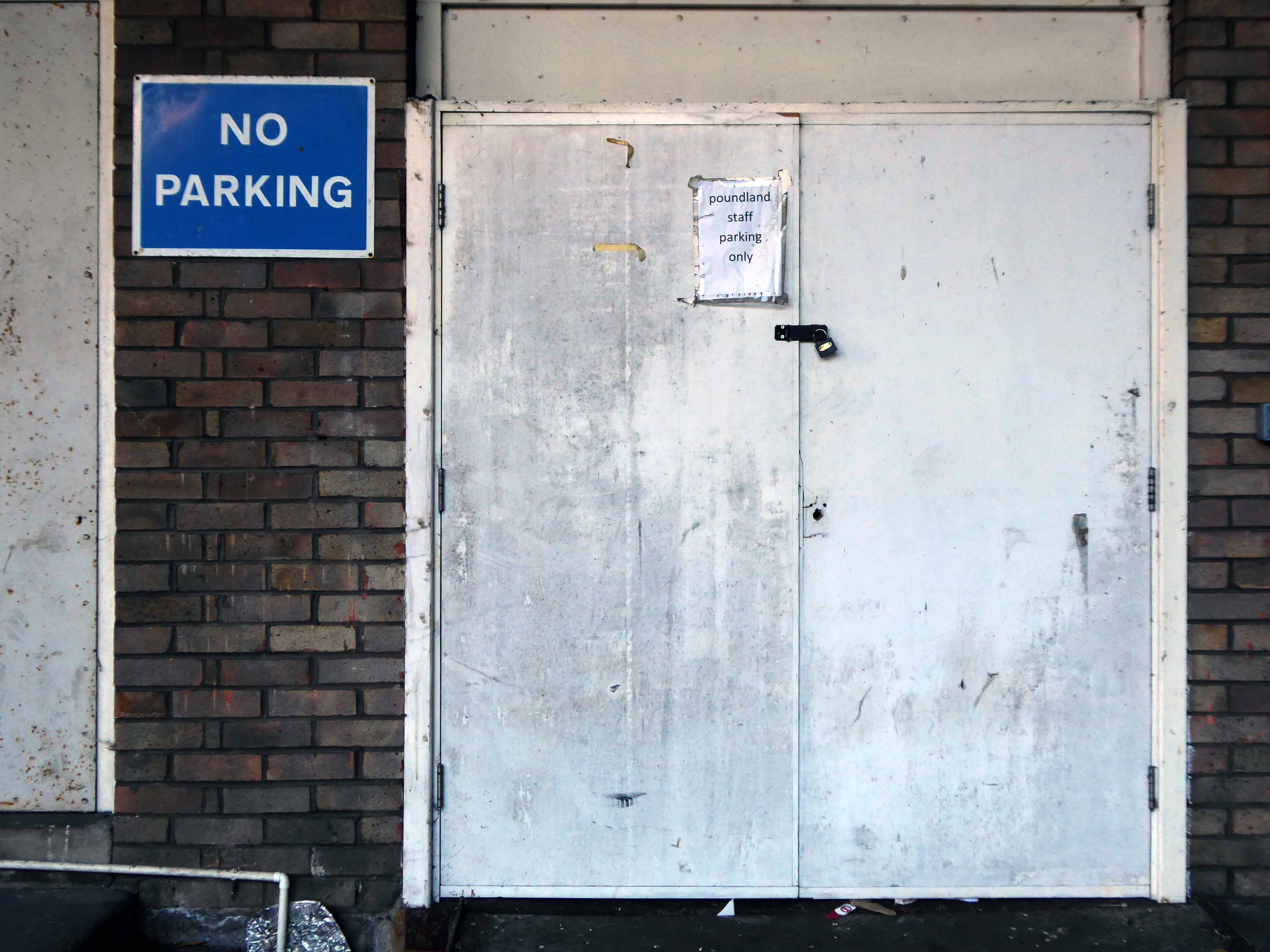
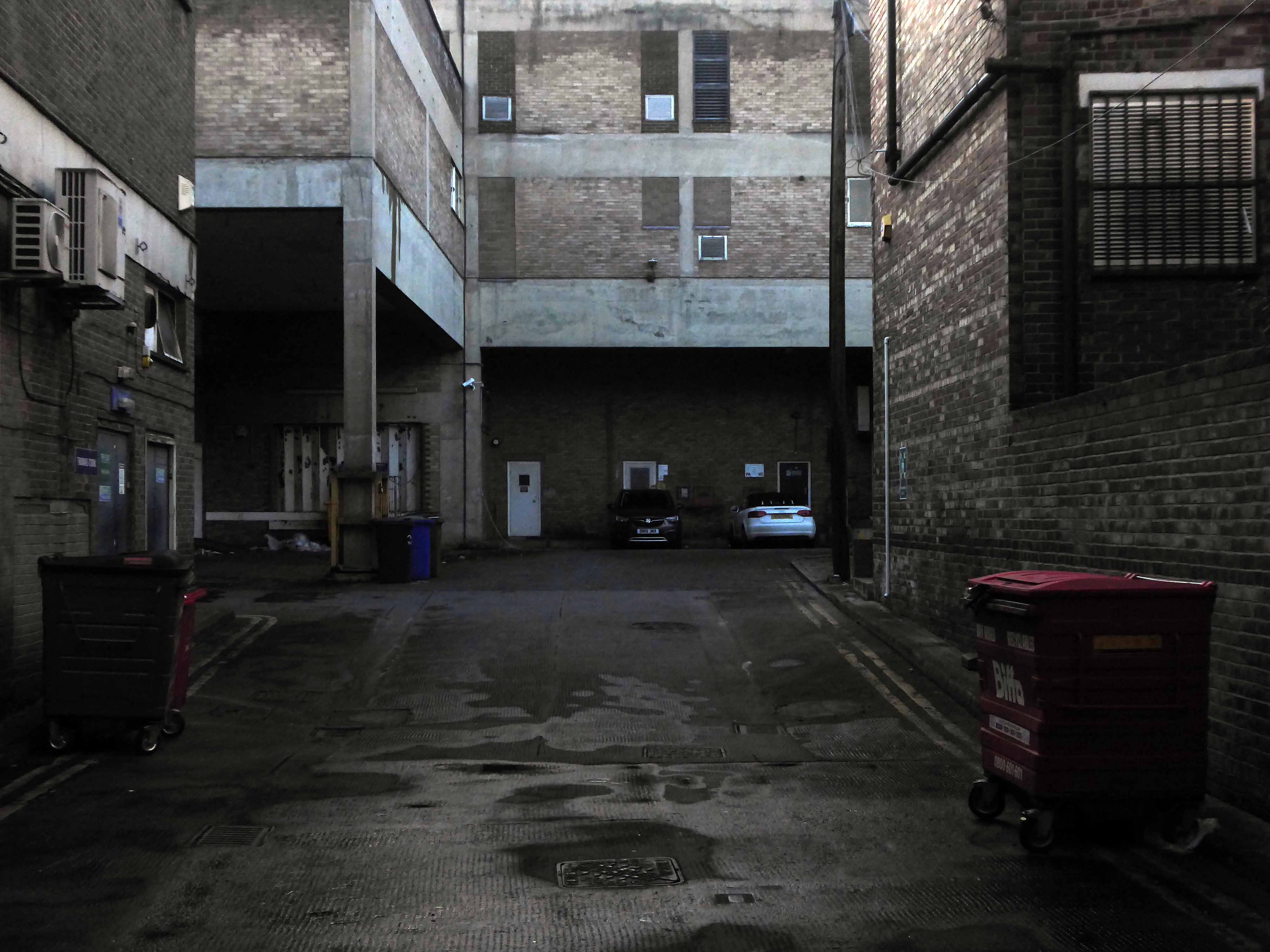
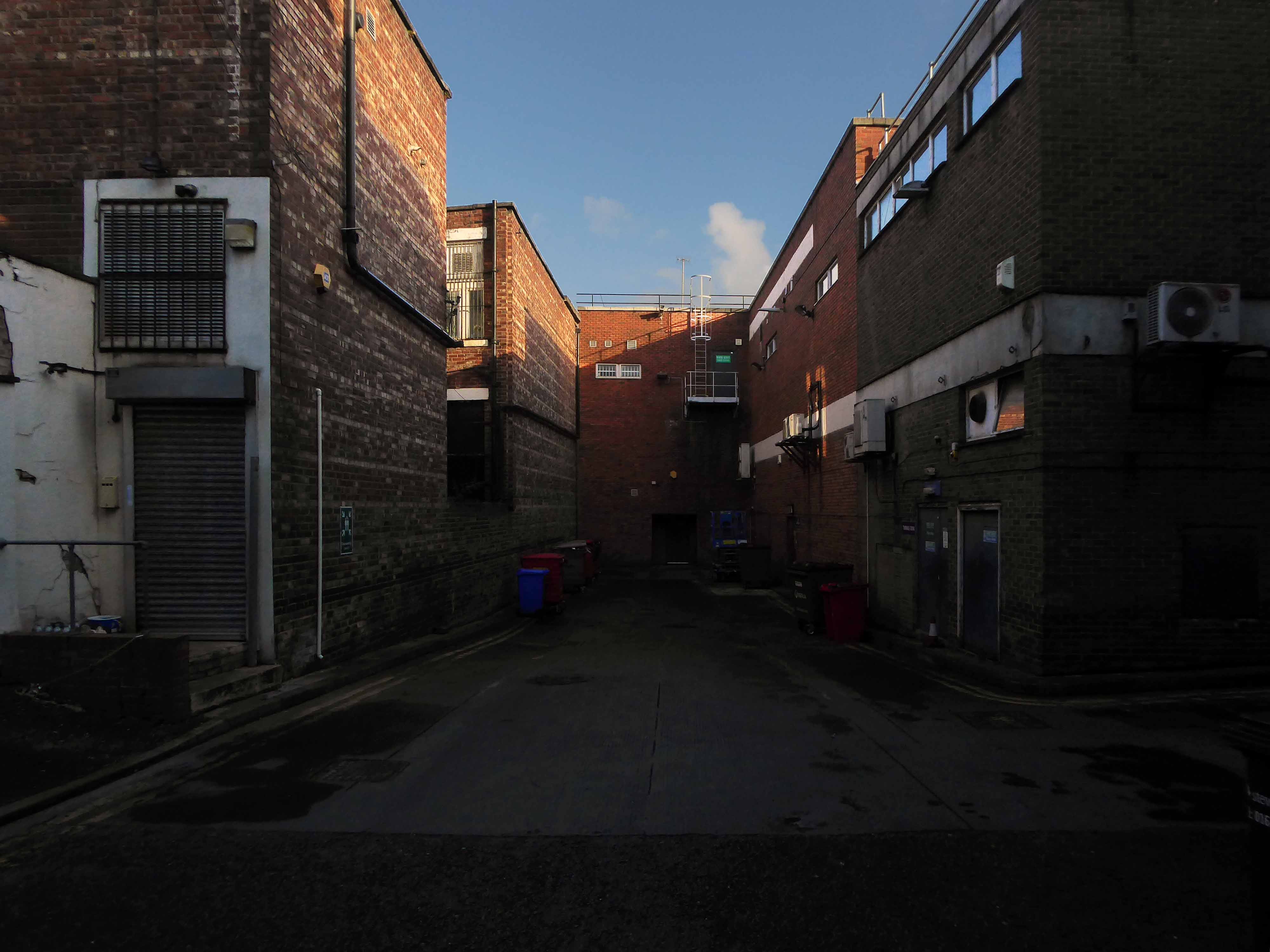
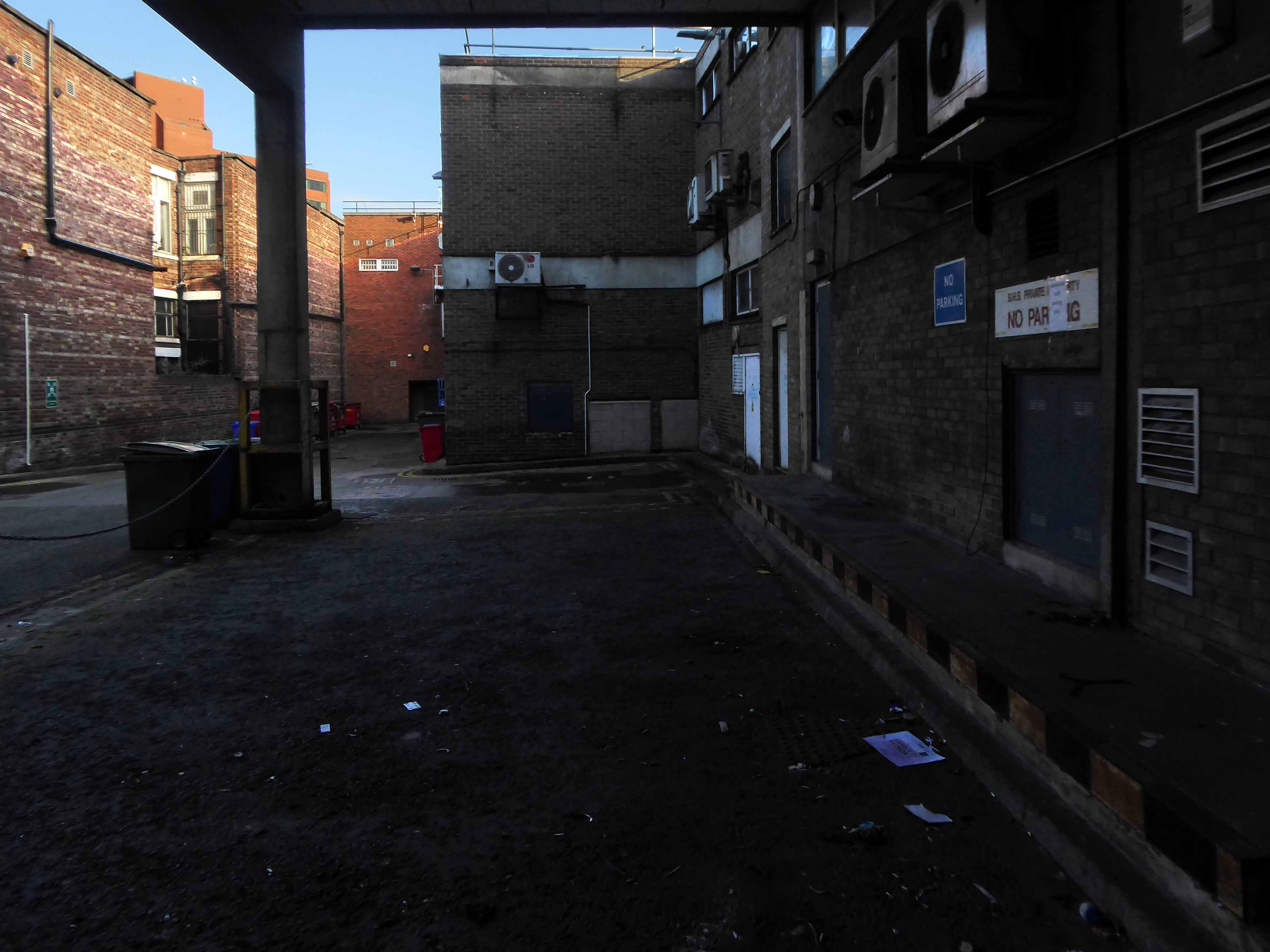
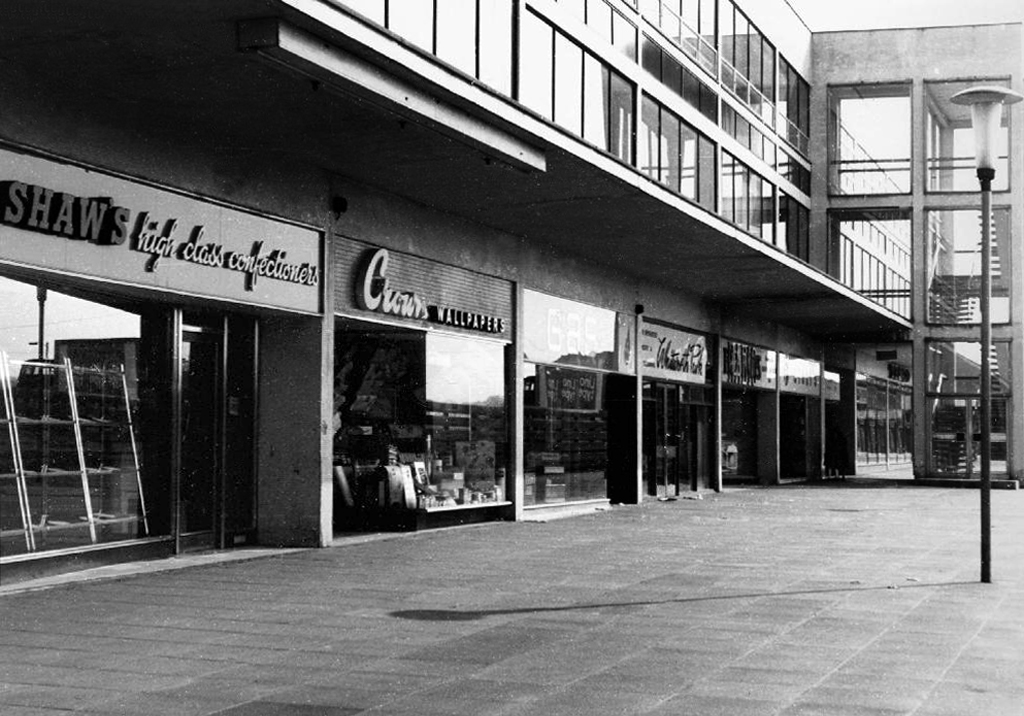
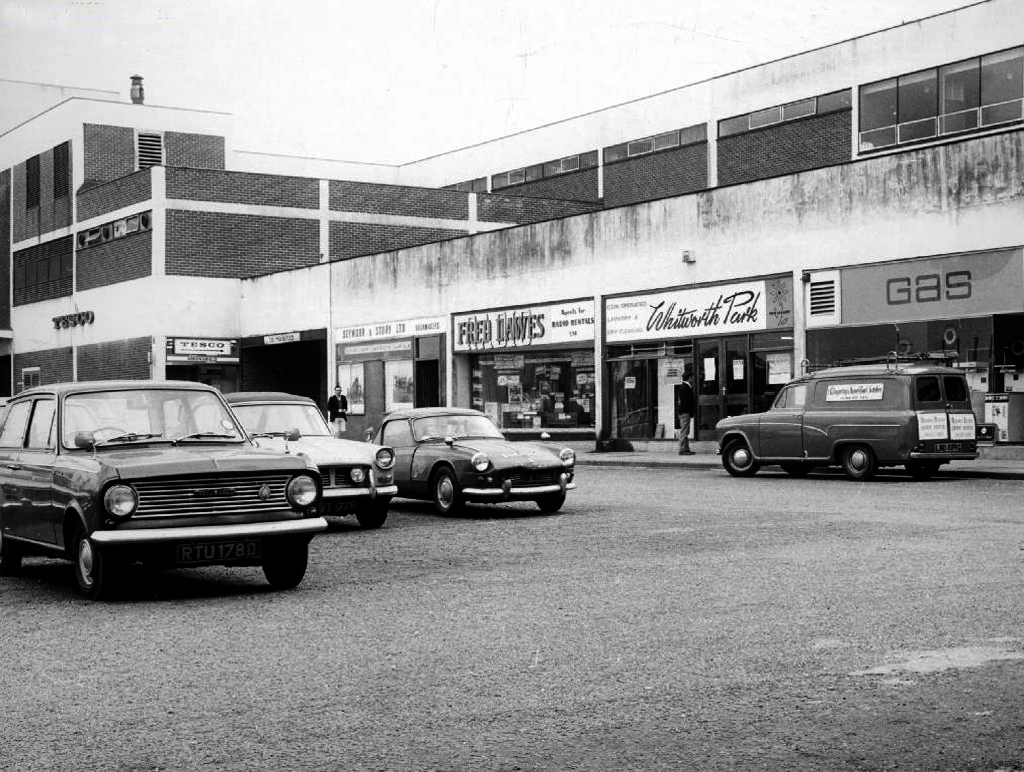
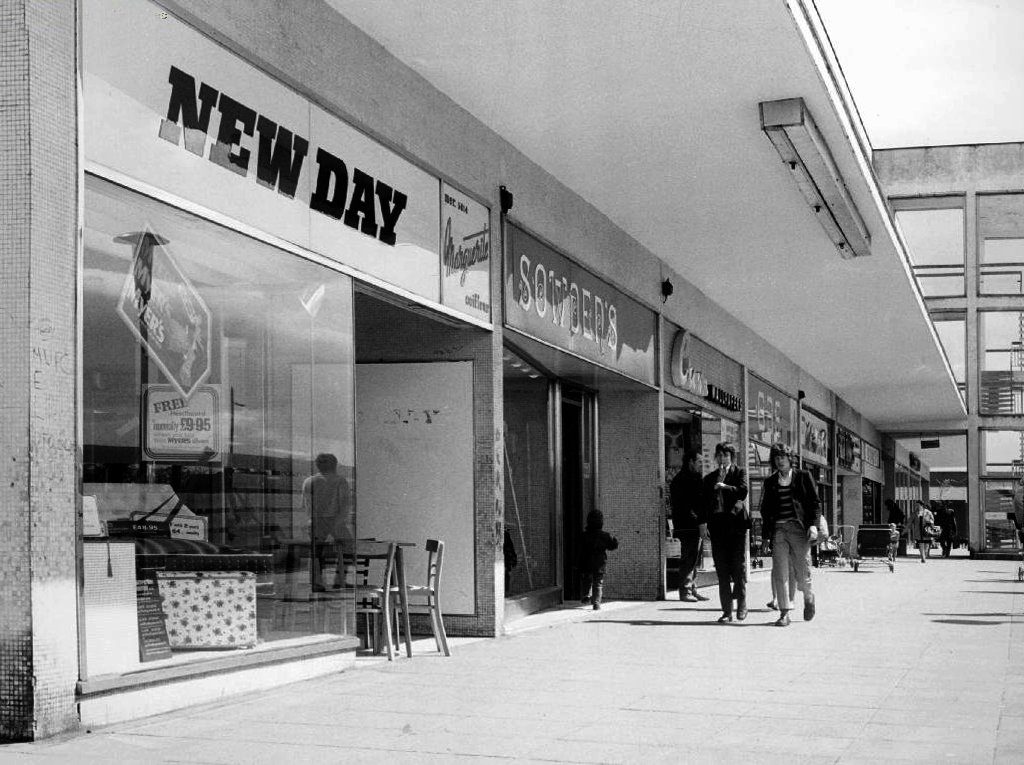
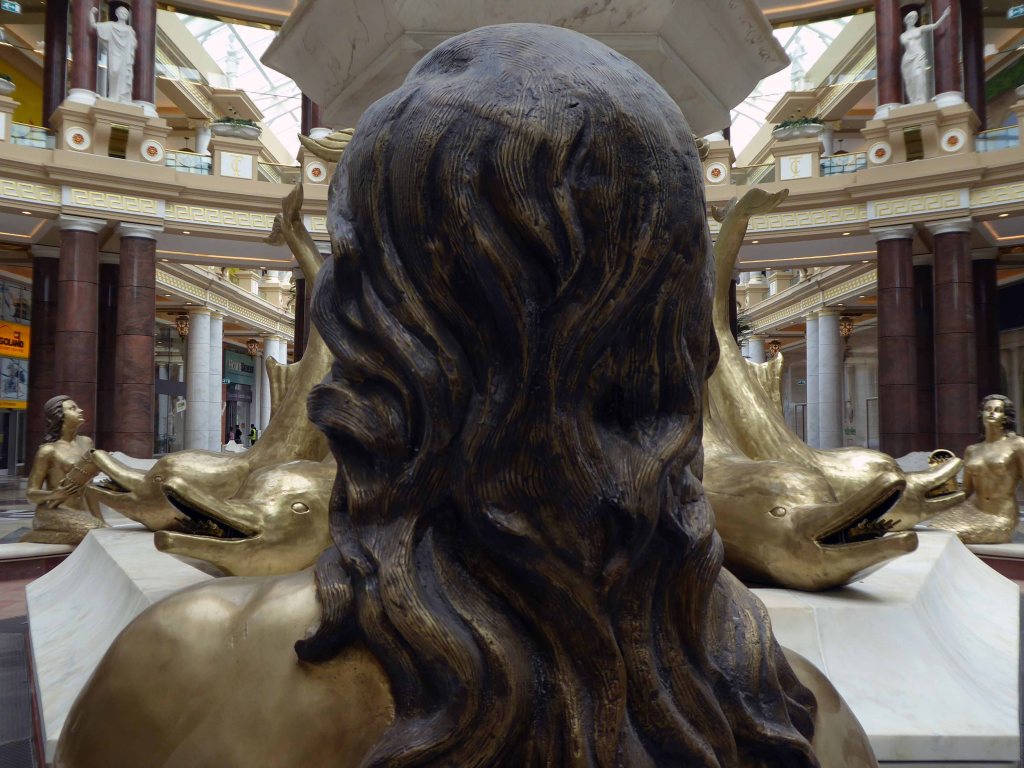
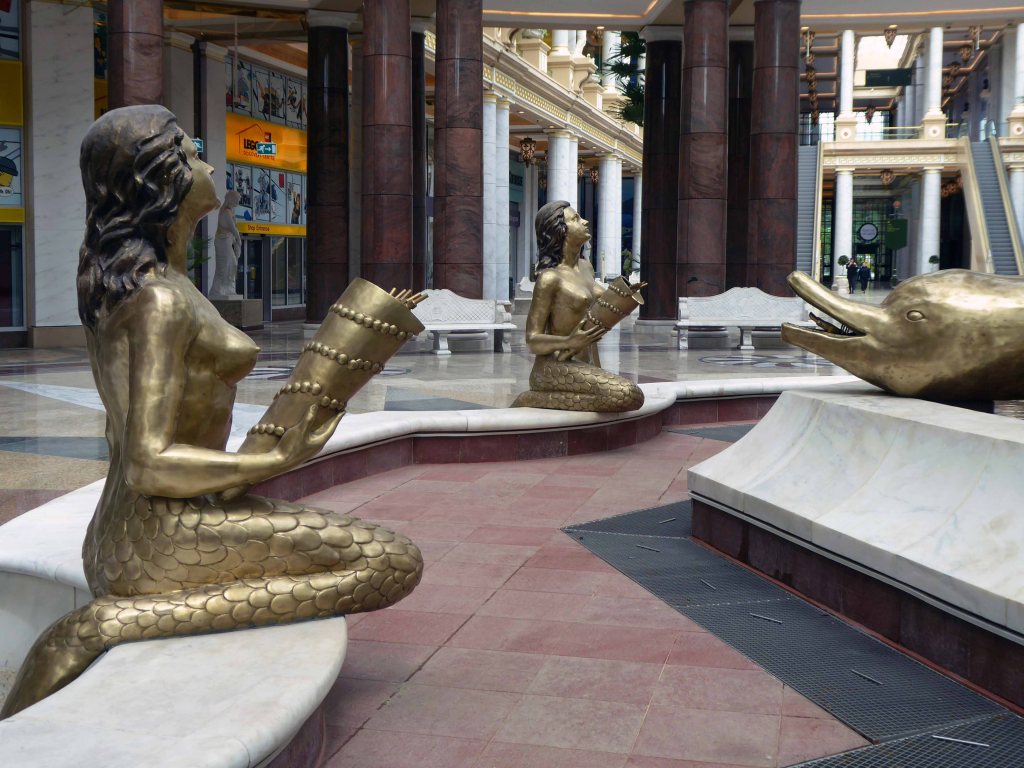
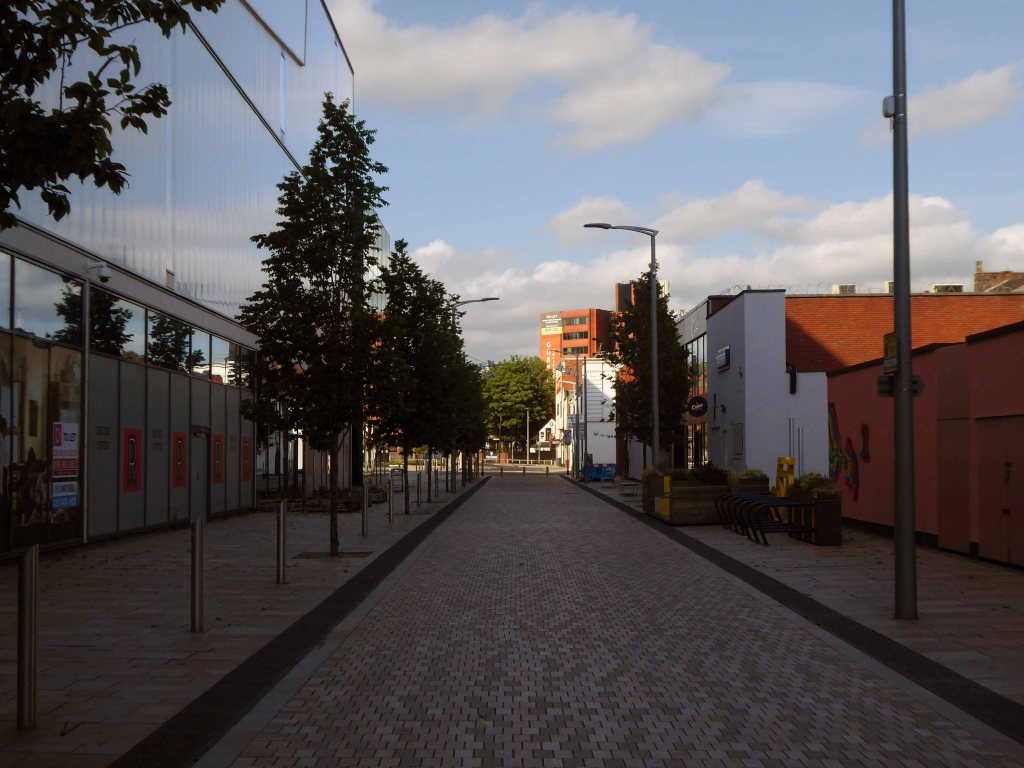
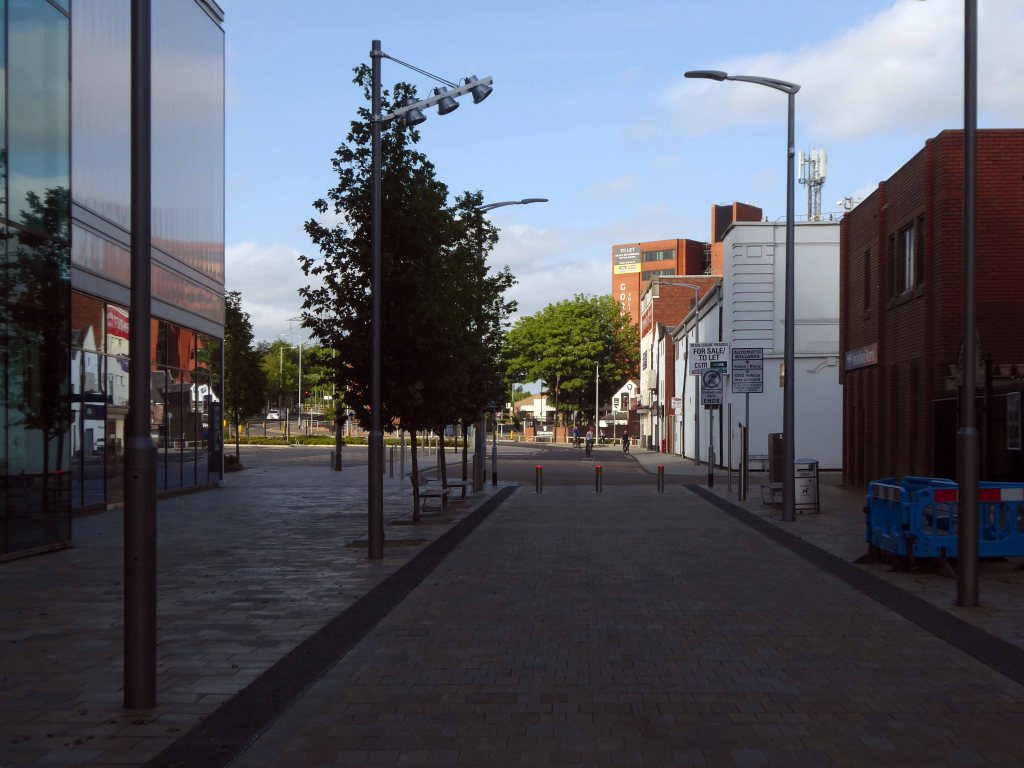
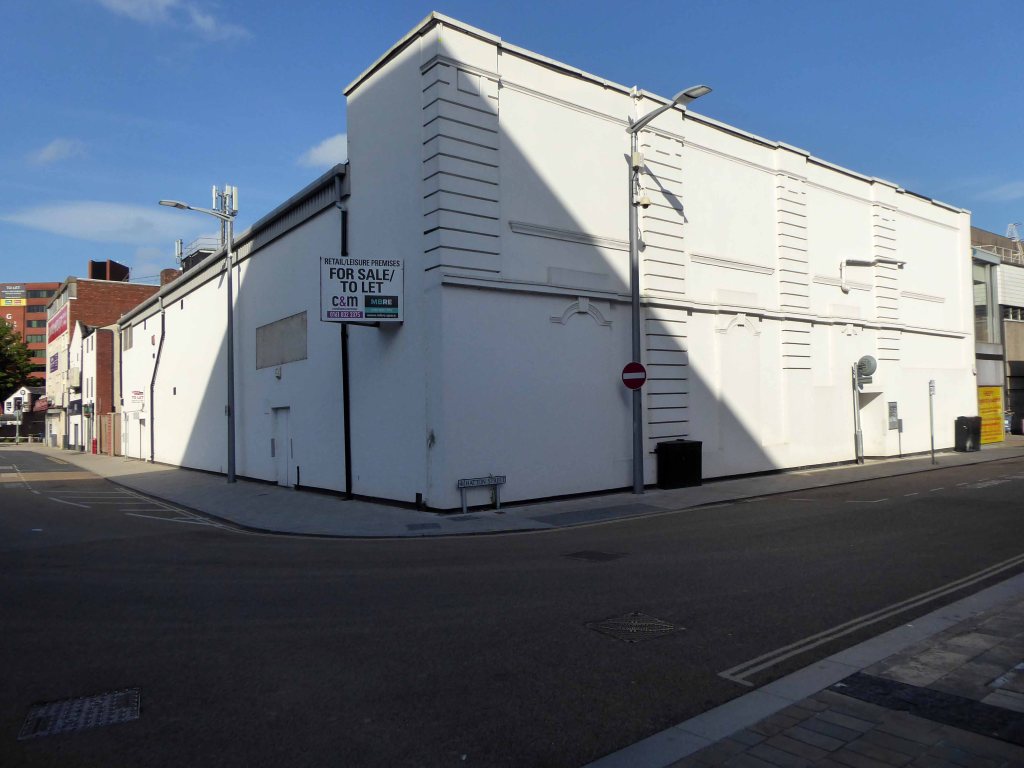
It is bounded by the former Burton’s store, the long gone BHS now home to Poundland, a later extension to the precinct and a Nineteenth century building. Illustrating the mongrel nature of many English towns, the result of world wars, speculative development and town planning.
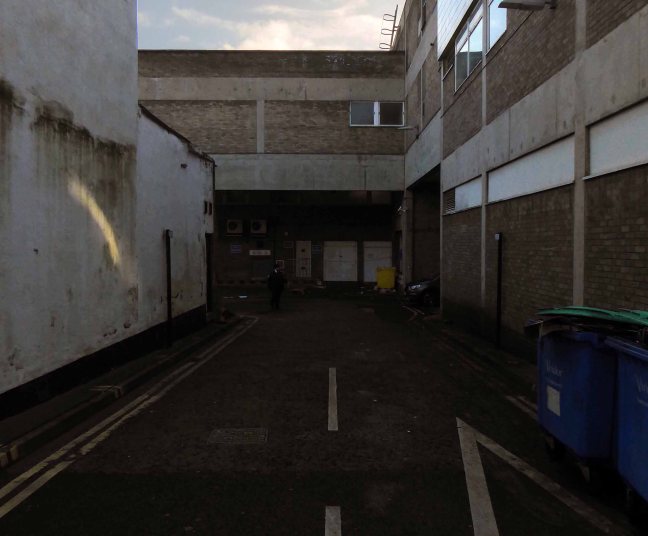
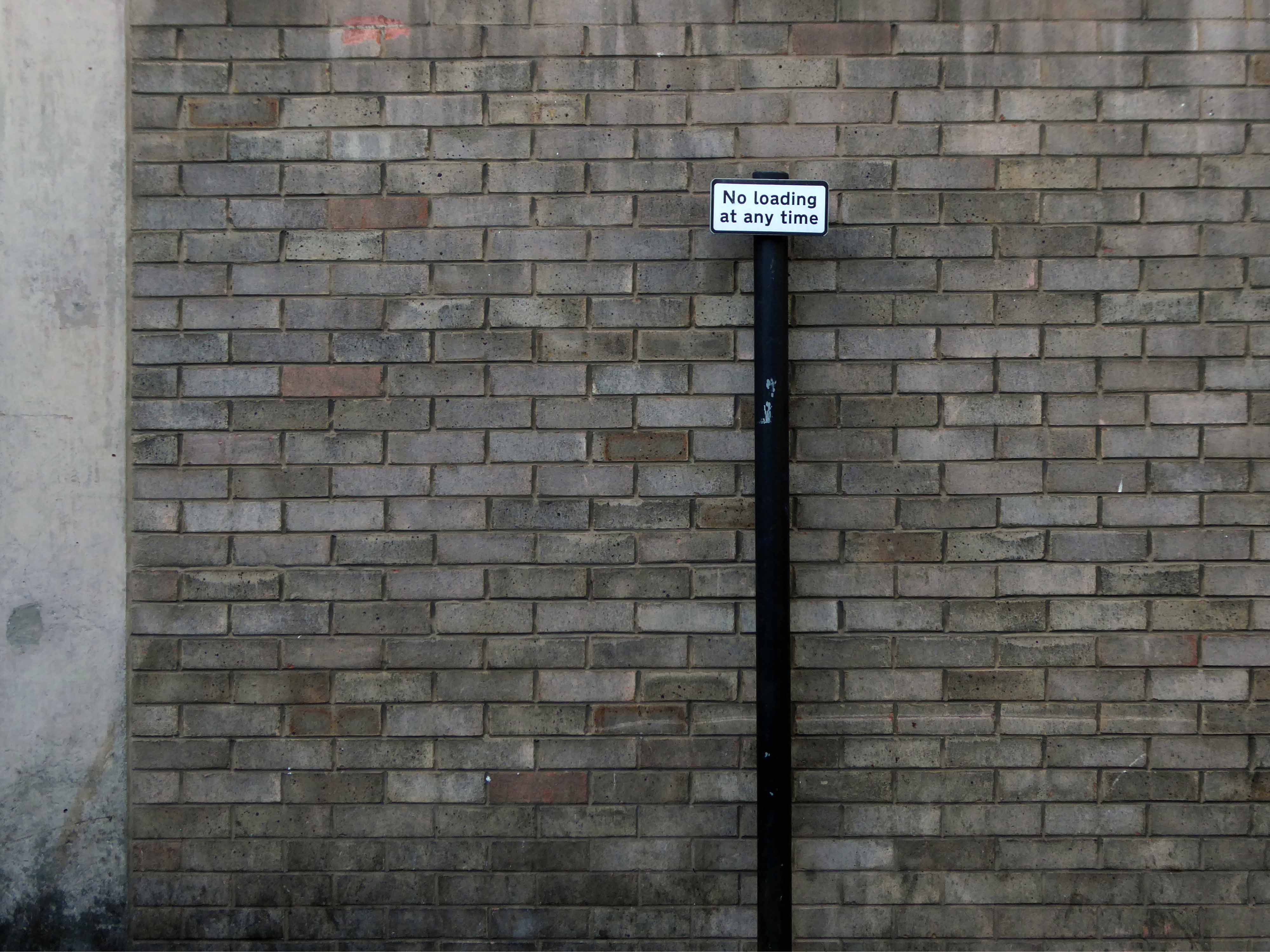
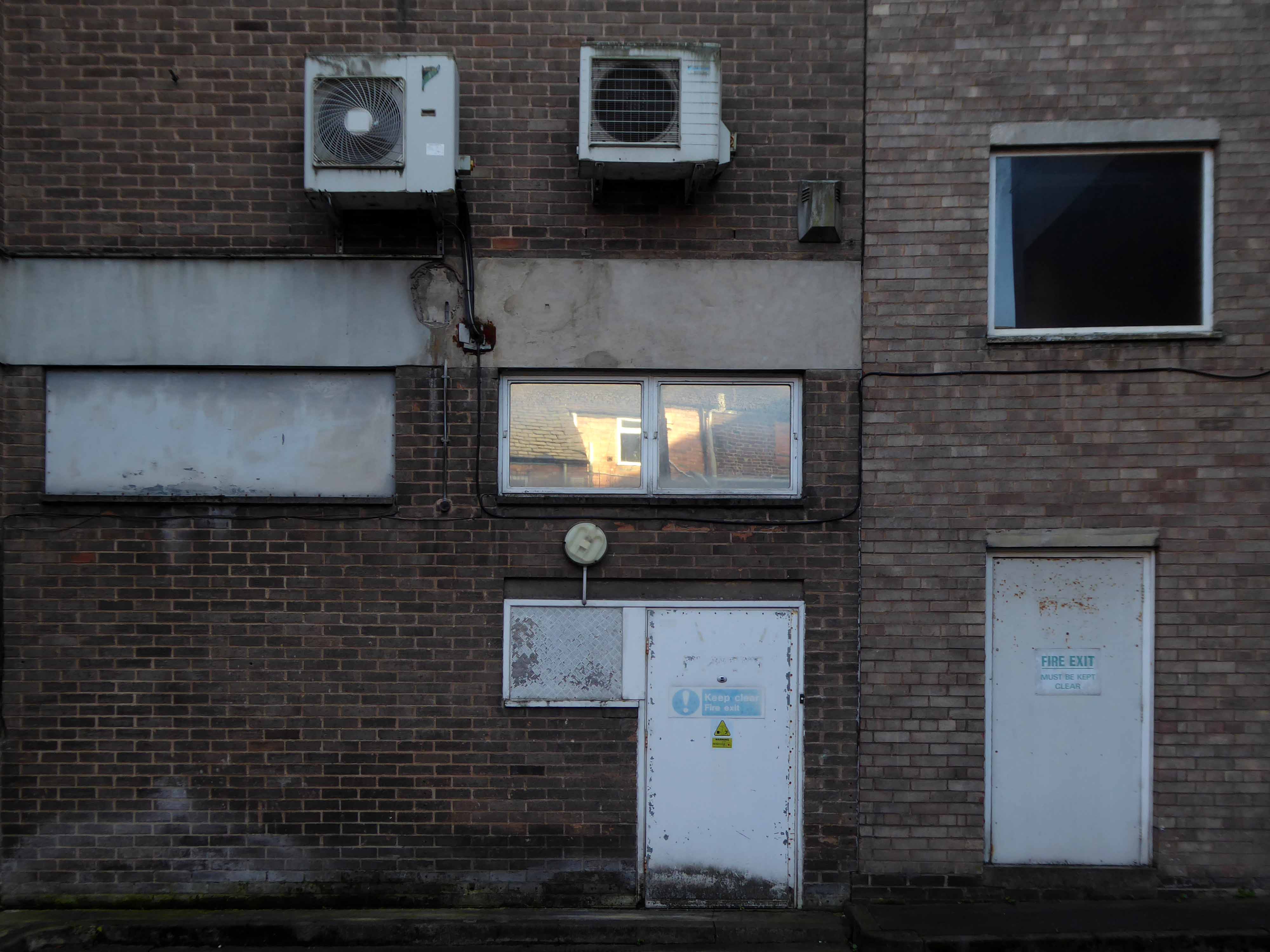
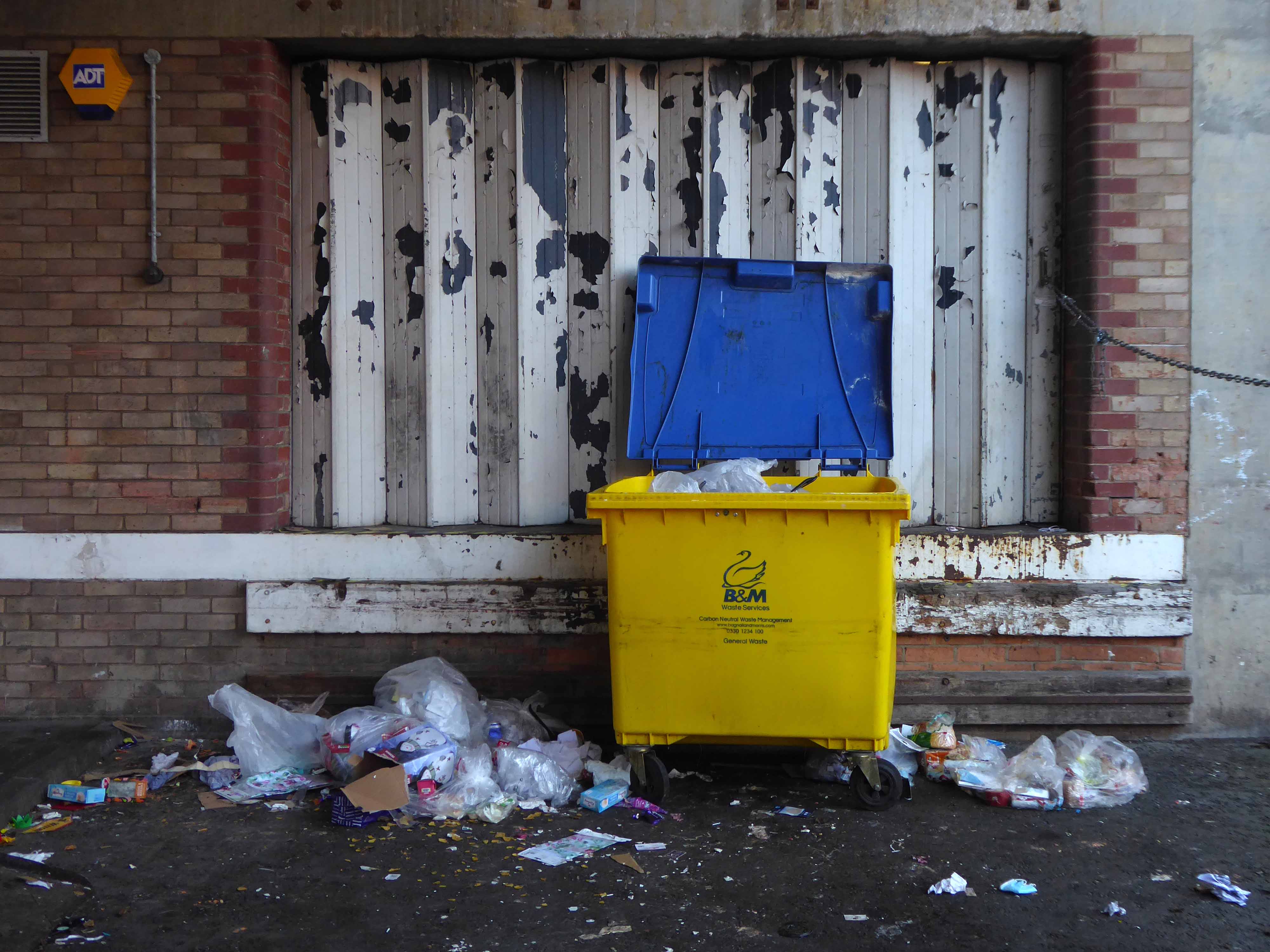
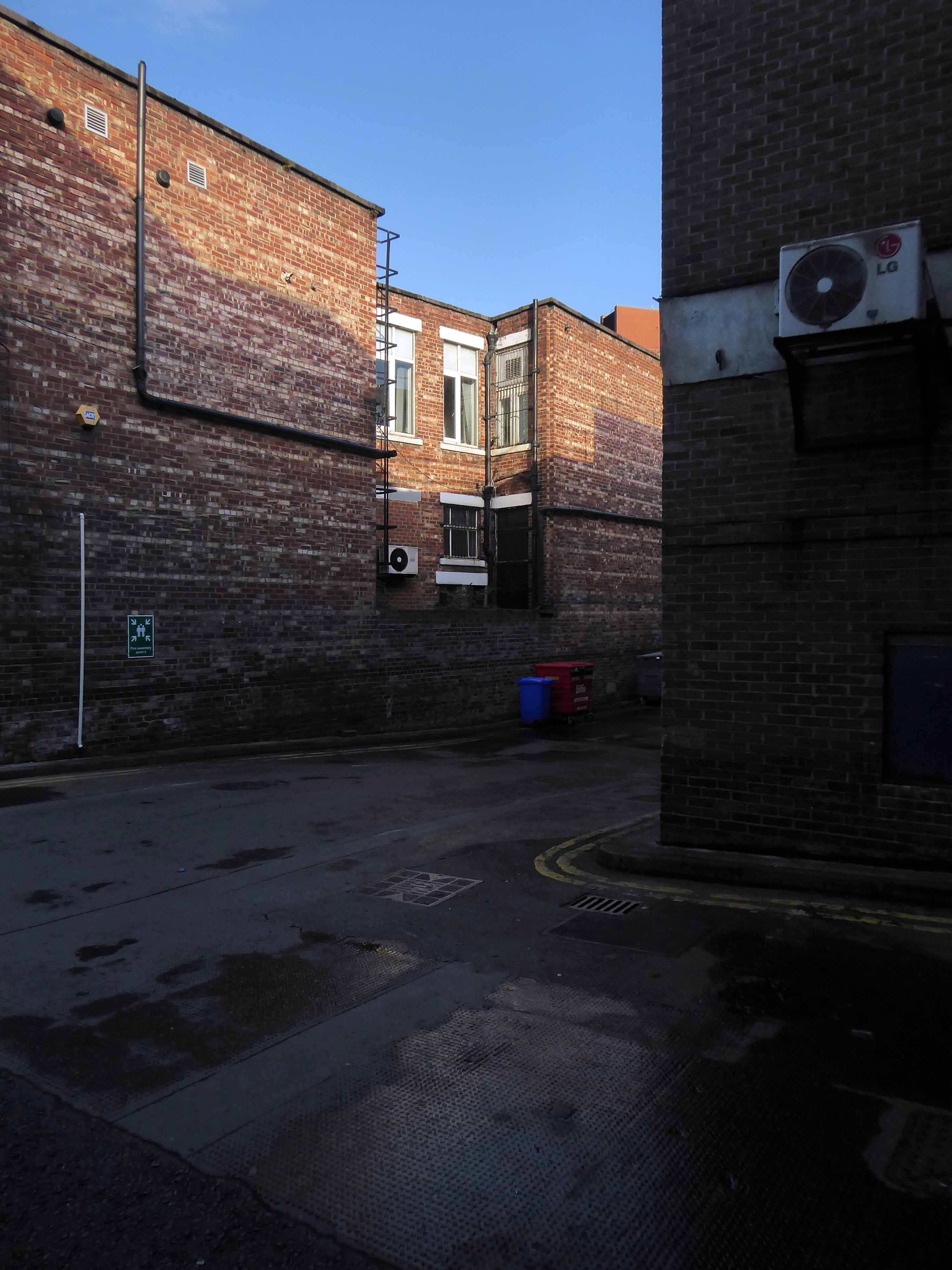
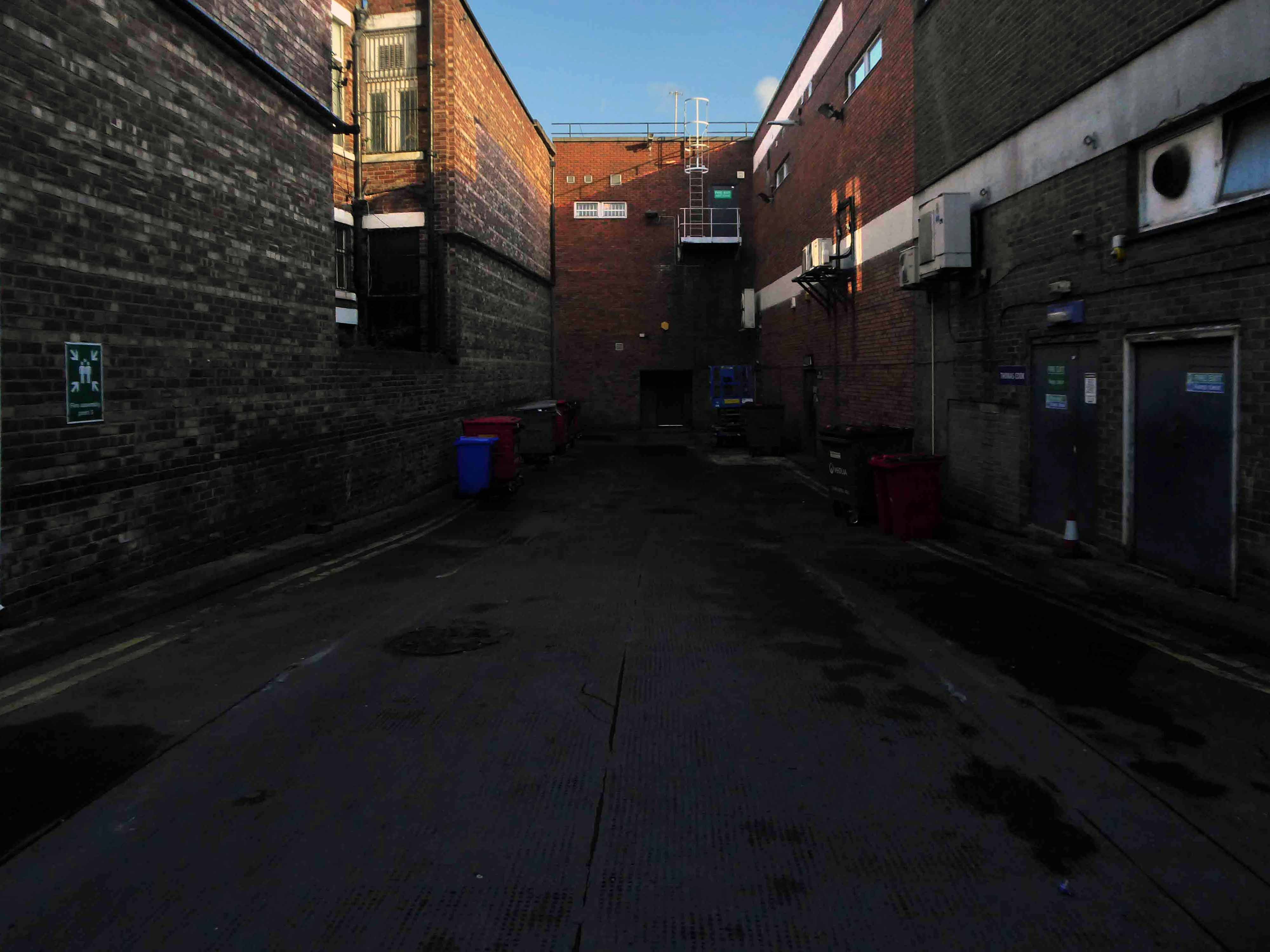
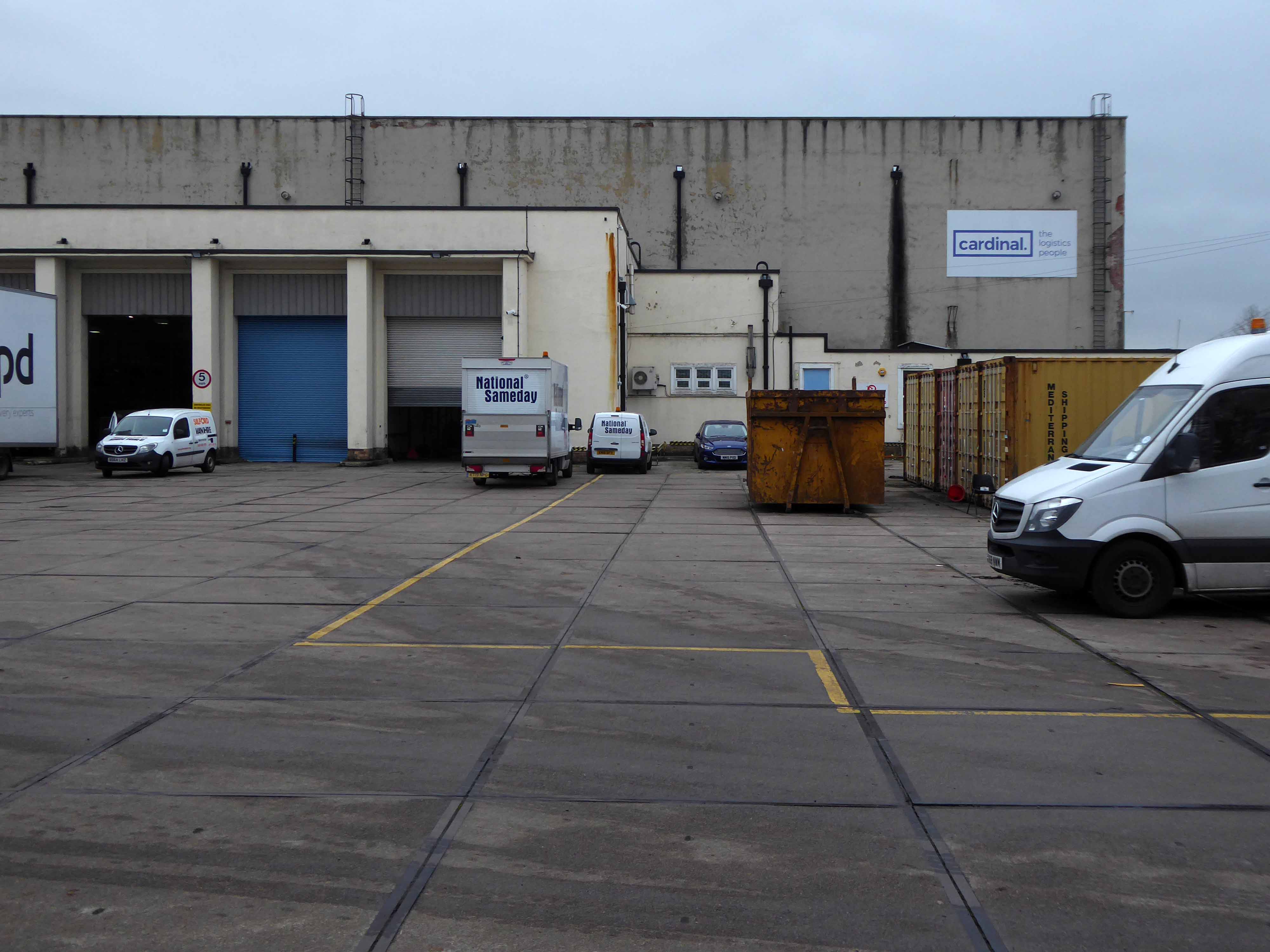
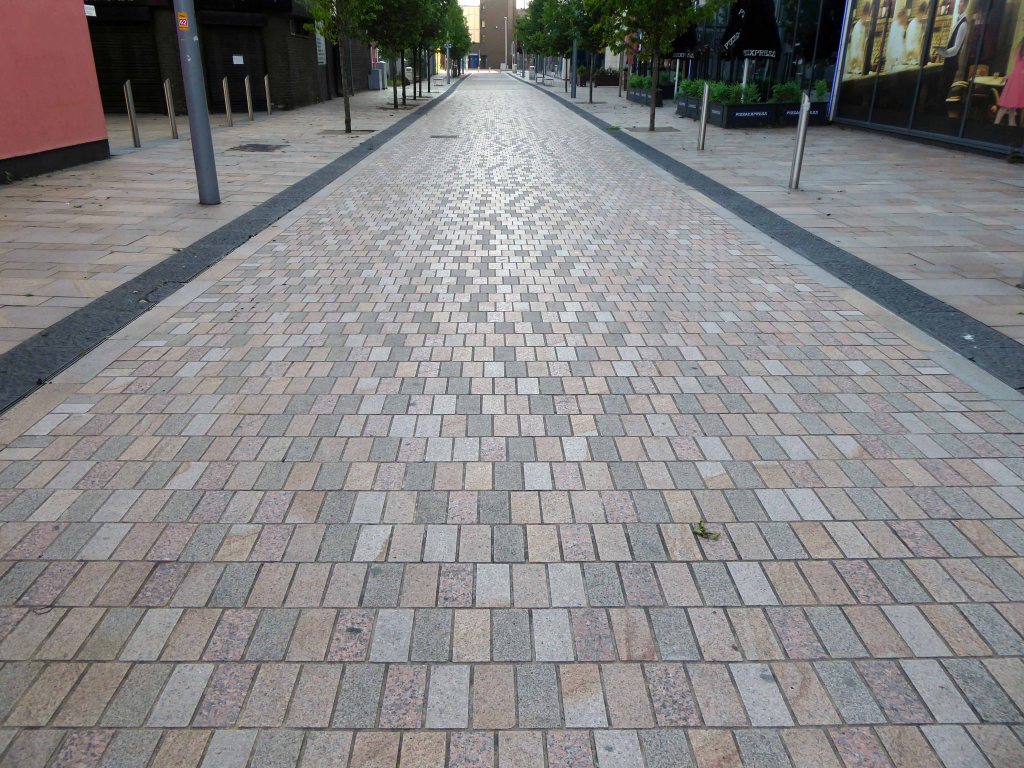
It’s a self contained world of loading, unloading unloved and overused.
Home to the pirate parker, carelessly avoiding the imposition of the municipal surcharges.
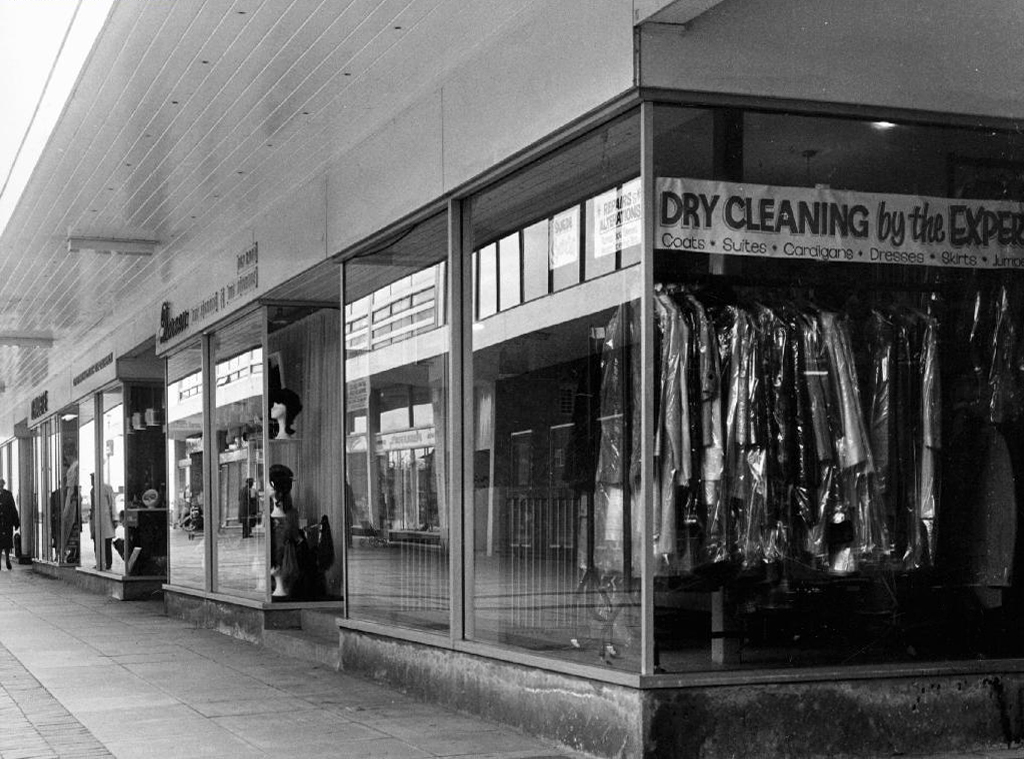
Shops and goods come and go part of the merry retail gavotte.
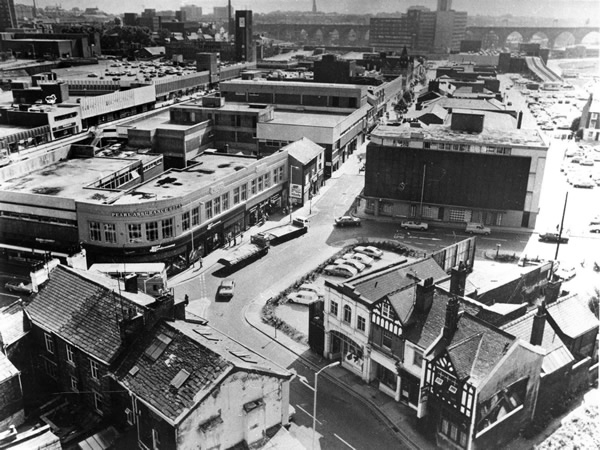
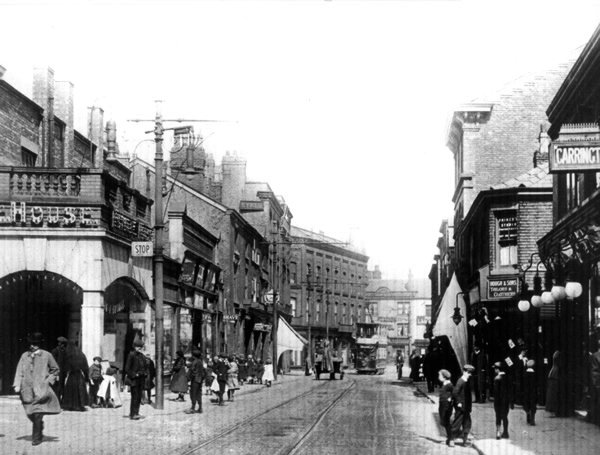
The trams once clang, clang, clanged along and the Picture House opened 2nd June 1913, later The Palladium, finally closing in 1956 – now occupied by a huge Charity Shop – Highway Hope.
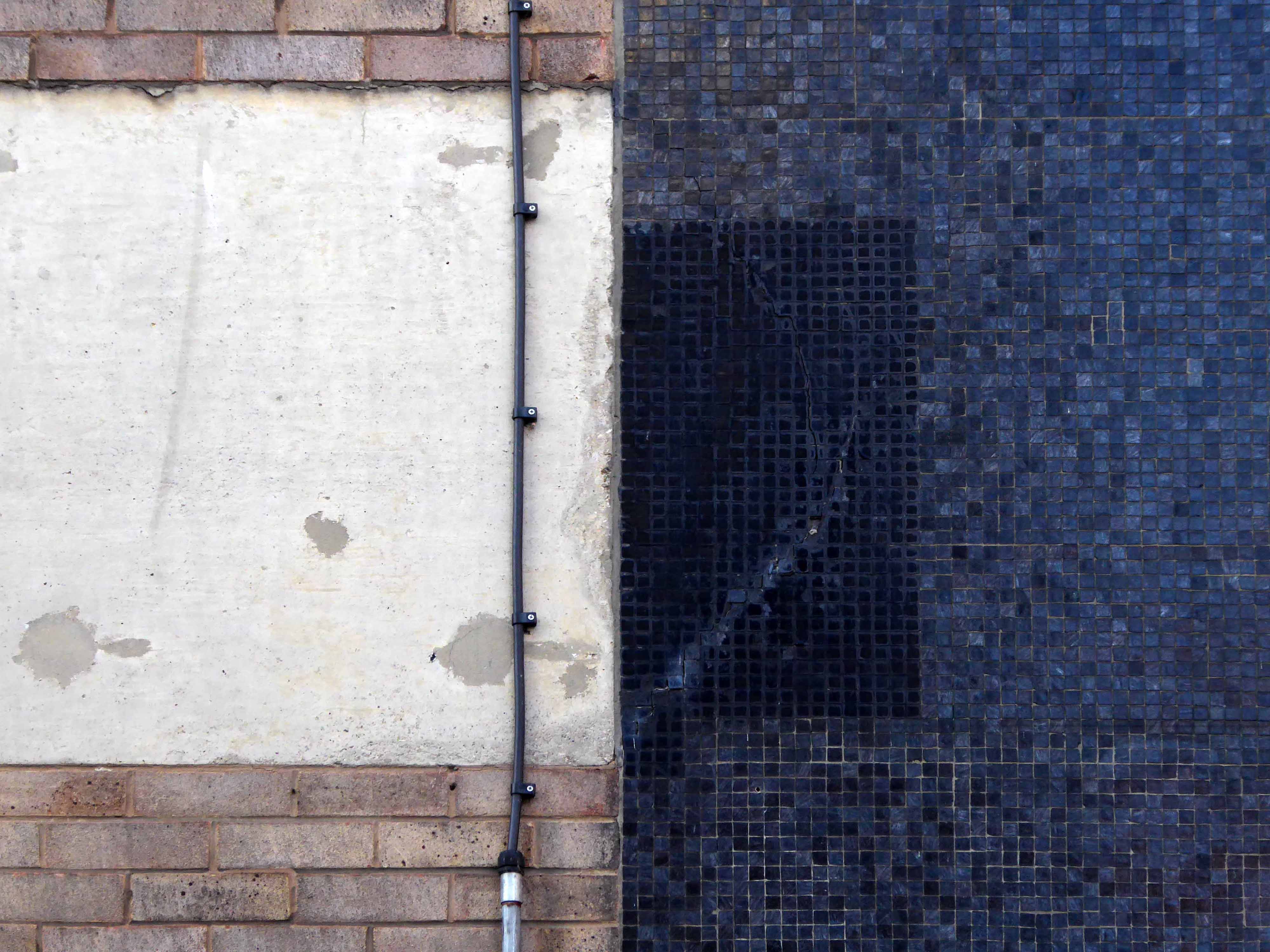
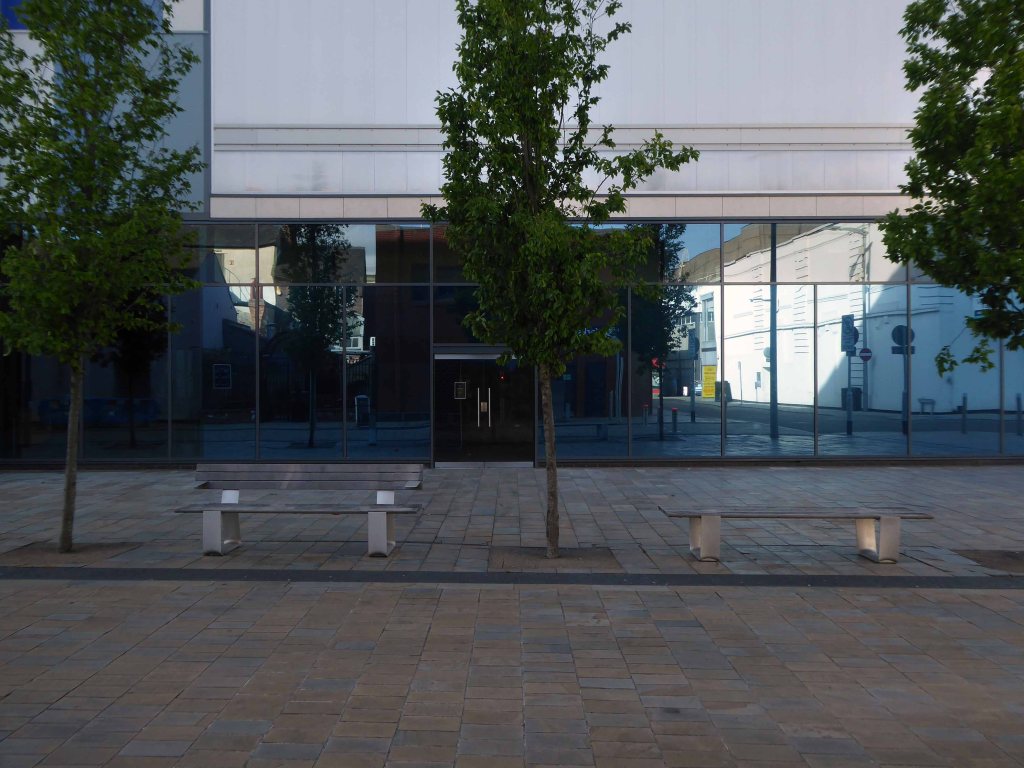
The Merseyway construction is a modern amalgam of mosaic, brick and cast concrete.
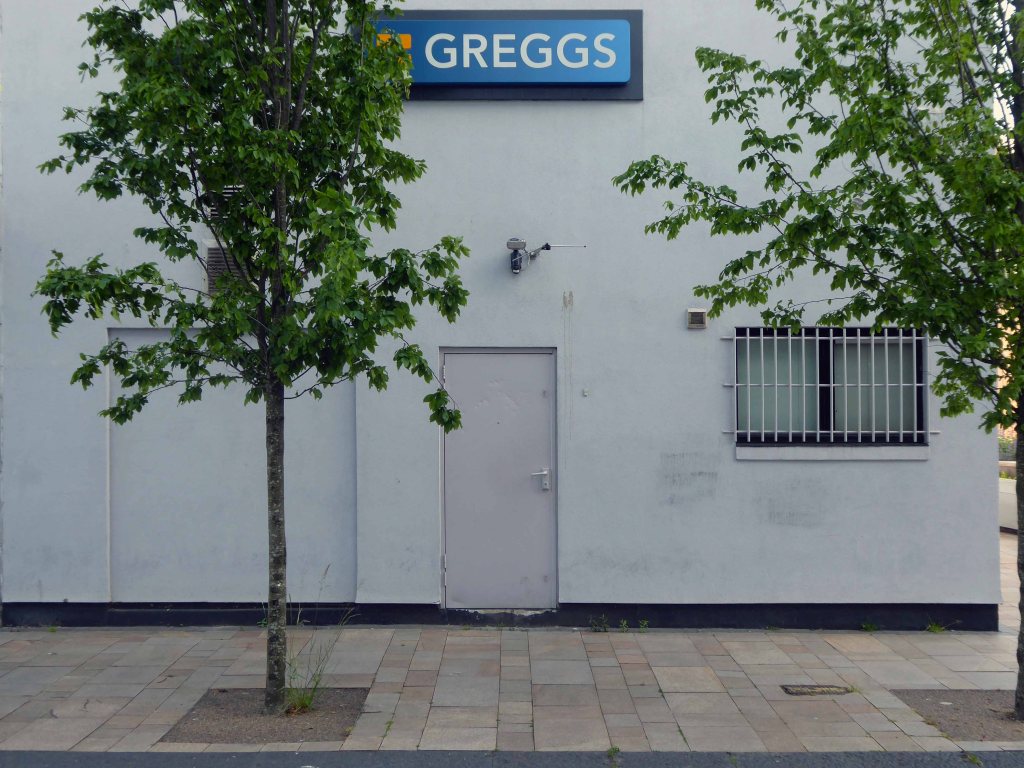
The older brick building now almost rendered and coated in off white exterior emulsion.
There are signs of life and former lives.
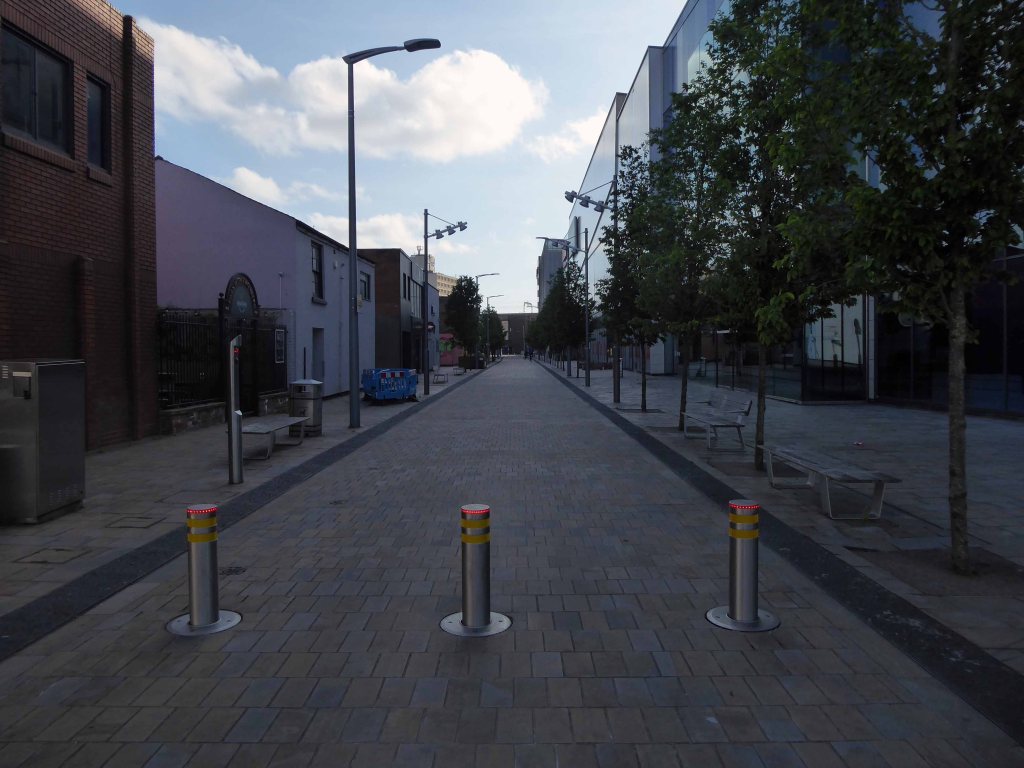
This is a nether world that never really was a world at all.
The place where the sun almost doesn’t shine.
And the blue sky seems like an unwelcome intrusion.
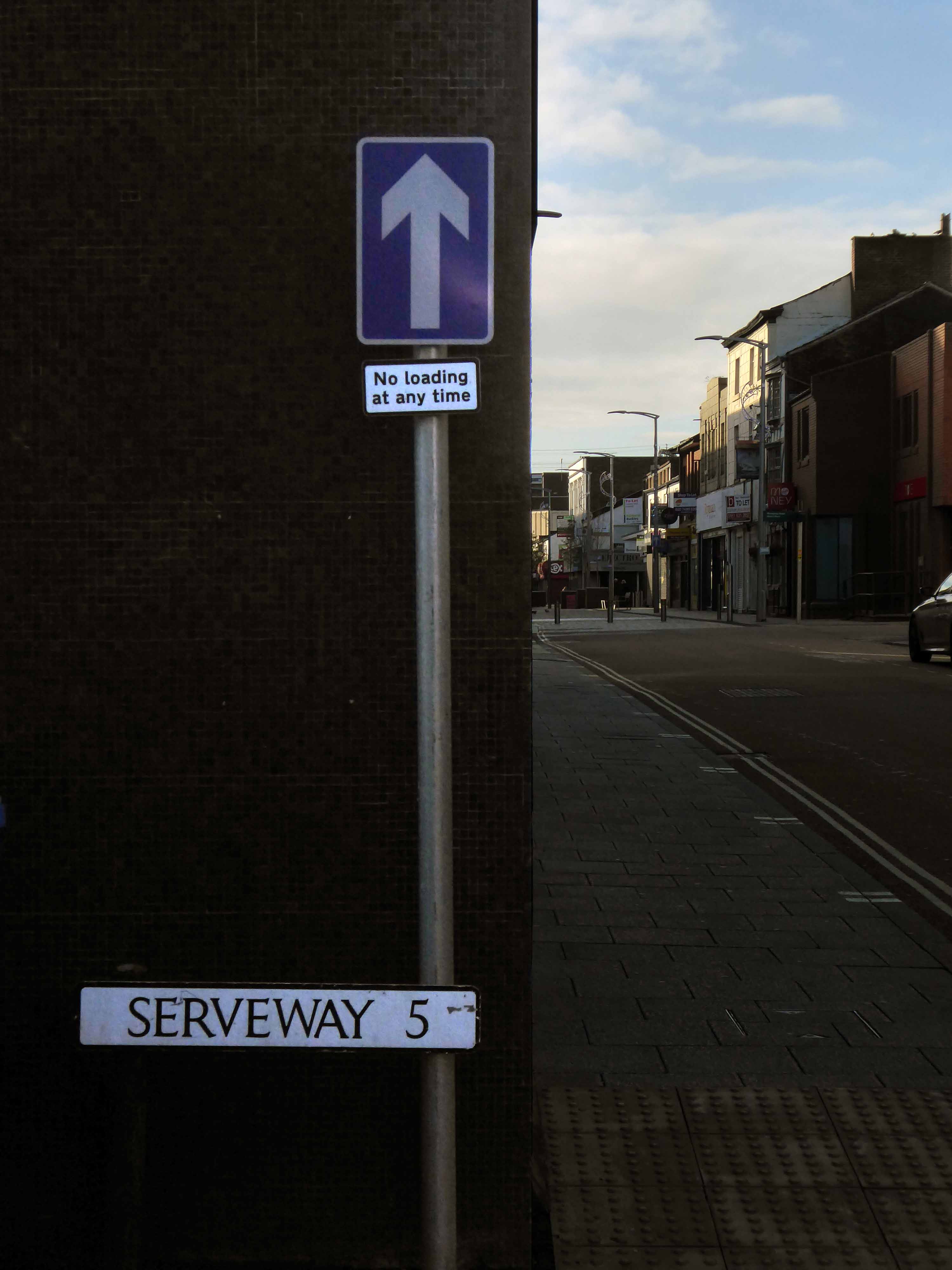
So as the retail sector contracts and the virus remains viral – wither Serveway Five?
The Council purchased the development at no cost to taxpayers via the current income stream. The rationale for purchase was to create a sustainable future for the centre via a series of targeted redevelopments. Key aspirations for the centre will be to fully integrate it into the town centre. We also want it to complement our exciting ownerships such as Debenhams, Redrock and Market Place and Underbanks.
The investment will seek to change perceptions of not only the retail offer but also Stockport as a whole. It will ultimately create a town centre that will benefit the local business community and Stockport residents.
A social history of Wythenshawe and its Civic Centre can be found here at Archives +.
A general history of the garden city’s development can be found here at Municipal Dreams.
Lest we forget, the story begins with a level of overcrowding and human misery that is – thankfully – almost unimaginable in Britain today. In 1935, Manchester’s Medical Officer of Health condemned 30,000 (of a total of 80,000) inner-city homes as unfit for human habitation; 7000 families were living in single rooms.
The estate was always considered to be, in some sense, the realisation of an ambitious vision.
The world of the future – a world where men and women workers shall be decently housed and served, where the health and safety of little children are of paramount importance, and where work and leisure may be enjoyed to the full.
Cooperative Women’s Guild
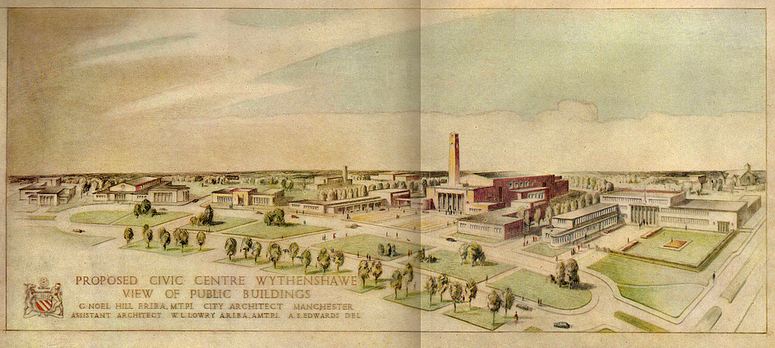
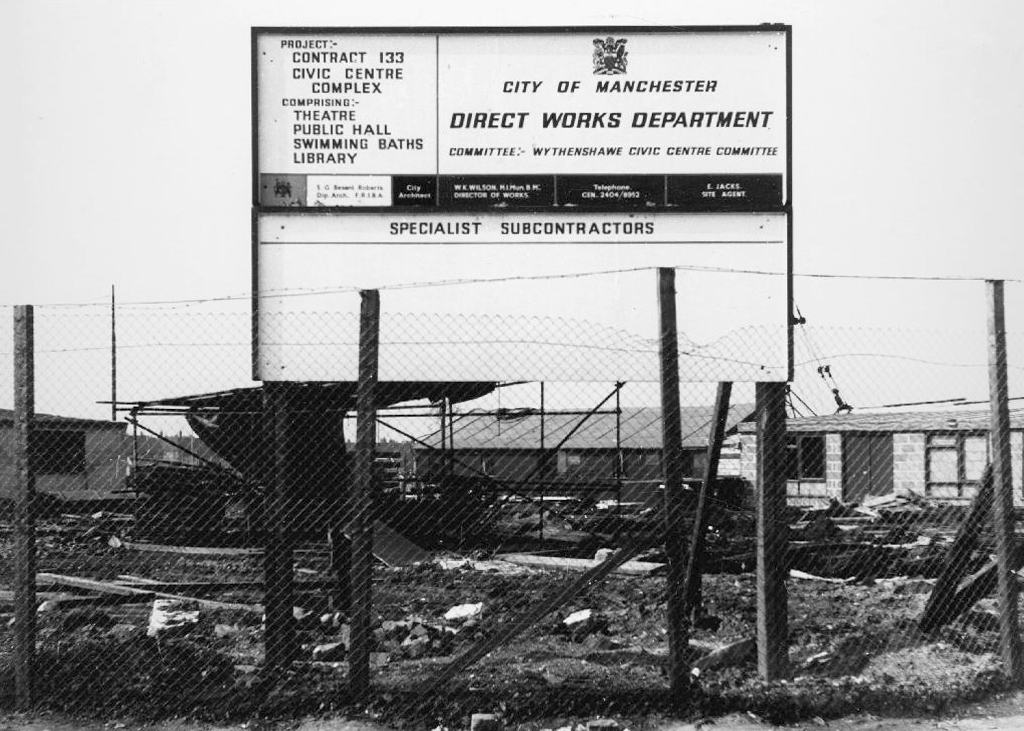
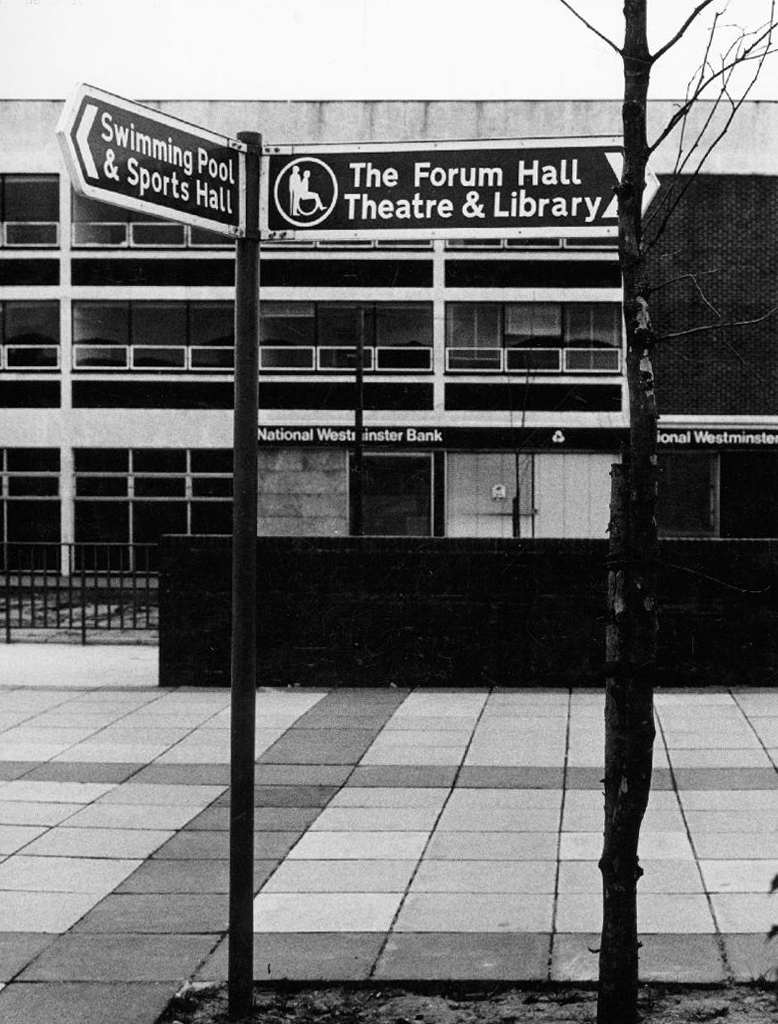
Work began in the interwar years, and continued following the hiatus of 1939-45. The shopping centre named the Civic Centre was open in 1963, the actual Civic Centre containing a swimming pool, theatre, public hall and library in 1971.
A triumph for Municipal Modernism conceived by the City Architects and realised by Direct Works. This post war development owed more to the spirit of Festival of Britain optimism, new construction methods and materials, rather than the grandiose functionalist classicism of the original scheme.
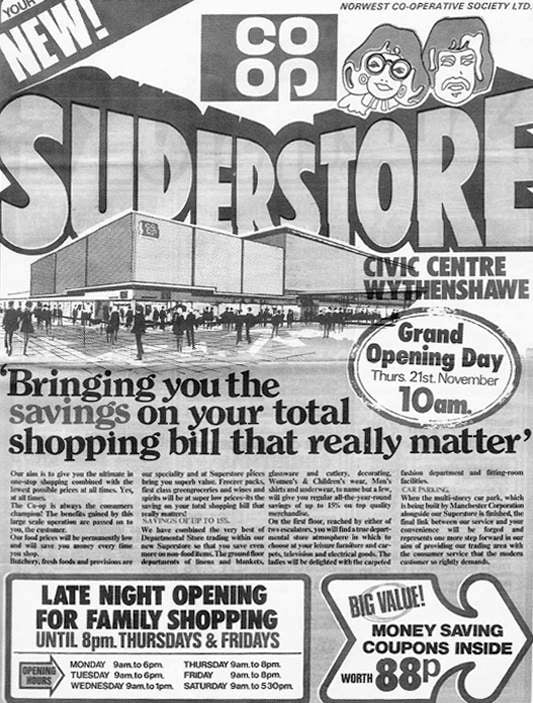
The Co-operative Superstore was a key element in the provision of provisions.
There still is – The Forum is a bright and modern hub for co-located services used by community and business.
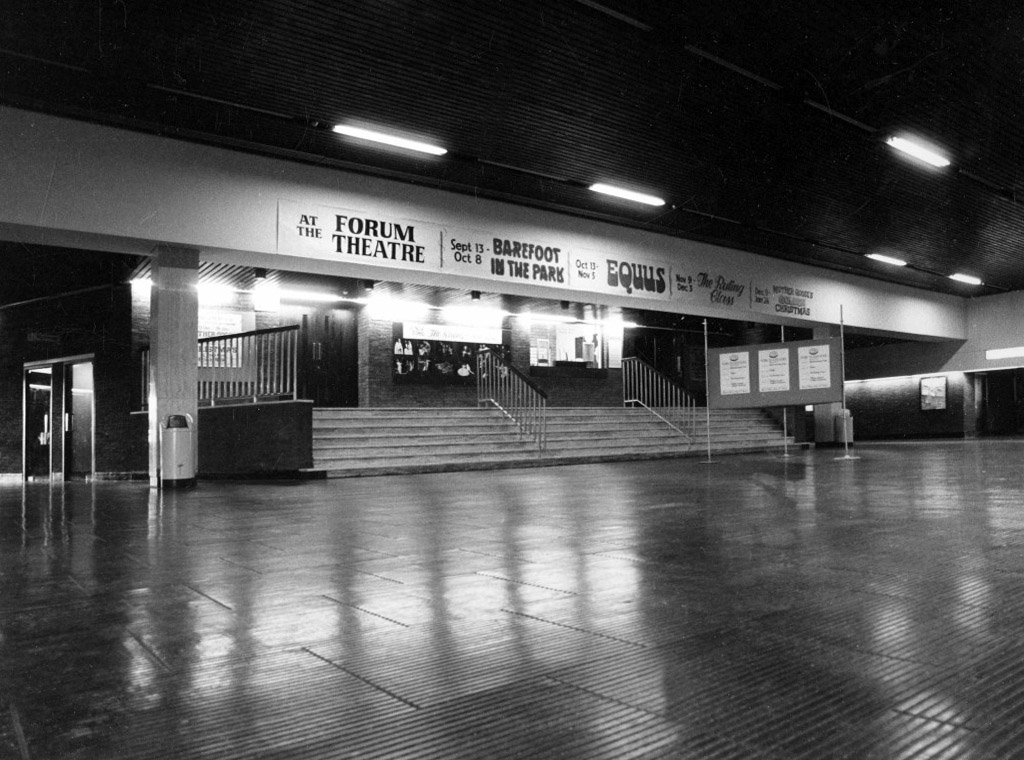
The original Forum opened in 1971. One of Manchester’s largest public buildings, it had a leisure centre, library, theatre, main hall and meeting rooms. By the mid 1990’s it was under used, had deteriorated internally and externally and needed substantial investment.
The new Forum, along with a new police sub-divisional headquarters and improved transport link was designed to help strengthen the town centre, and provide a landmark project to raise Wythenshawe’s profile within Manchester and beyond.
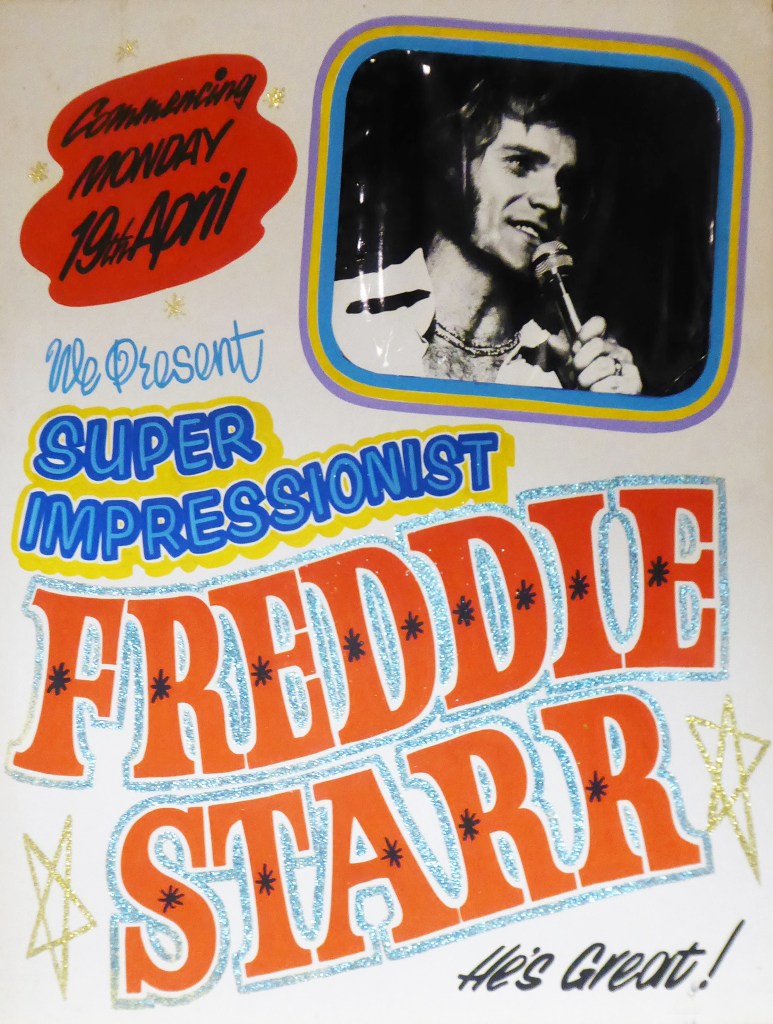
In the 1980’s they put on a superb array of shows including Roll on 4 O’Clock which starred John Jardine, Jack Smethurst and Glynn Owen. Oh What a lovely War; What the Butler Saw and Habeas Corpus by Alan Bennett. Bury’s own Victoria Wood starred in Talent which she wrote. Another Manchester icon Frank Foo Foo Lammar, famous as the top drag queen of the North-West whose club was re-known for its great party nights appeared in The Rocky horror Show.
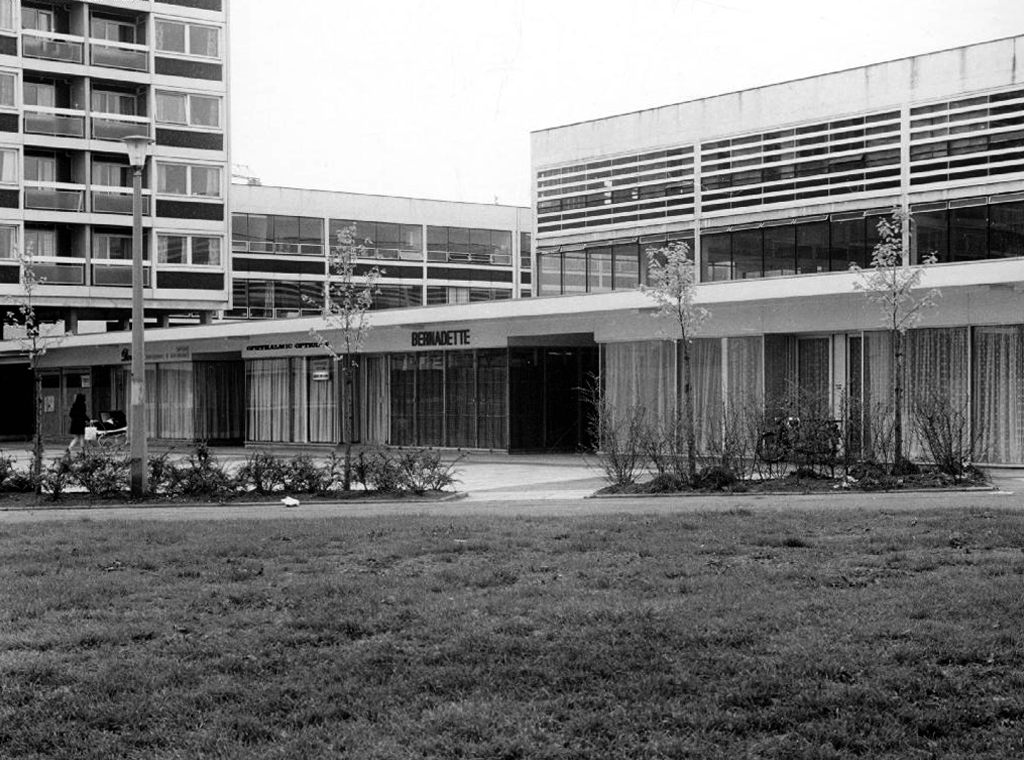
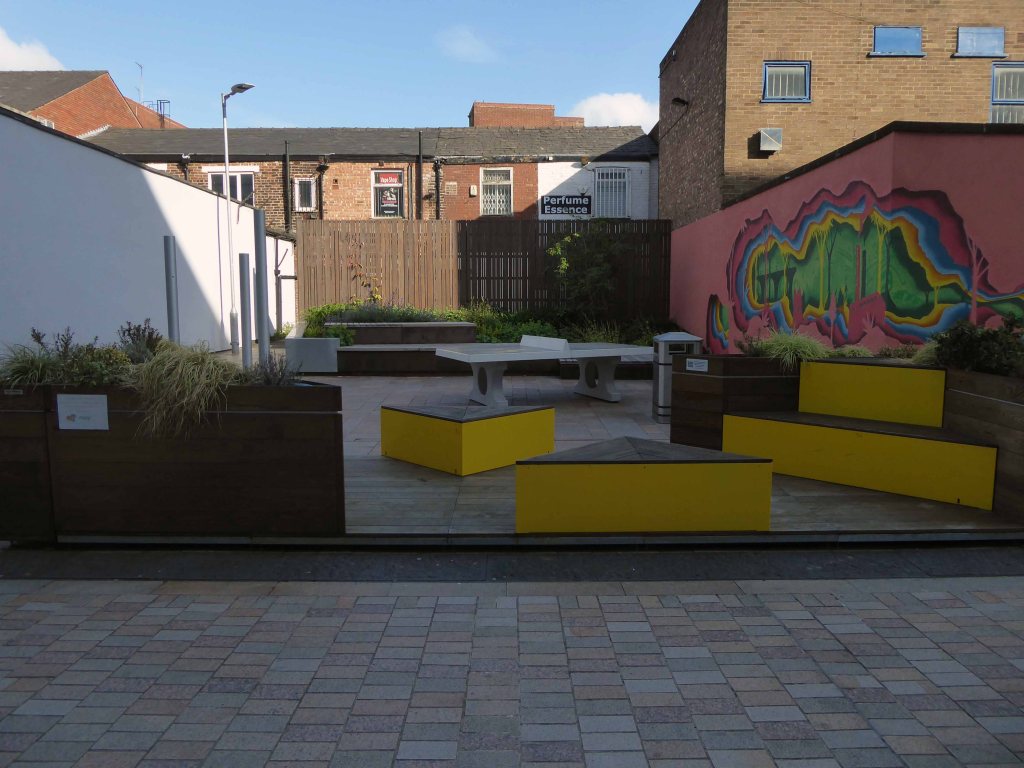
A land of elegant covered walkways and raised beds.
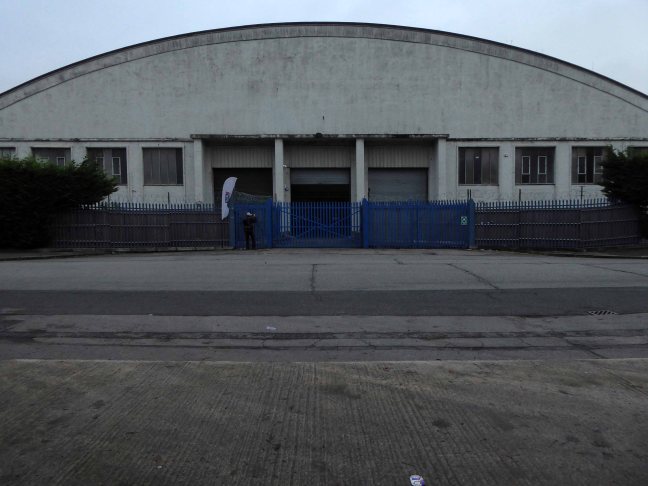
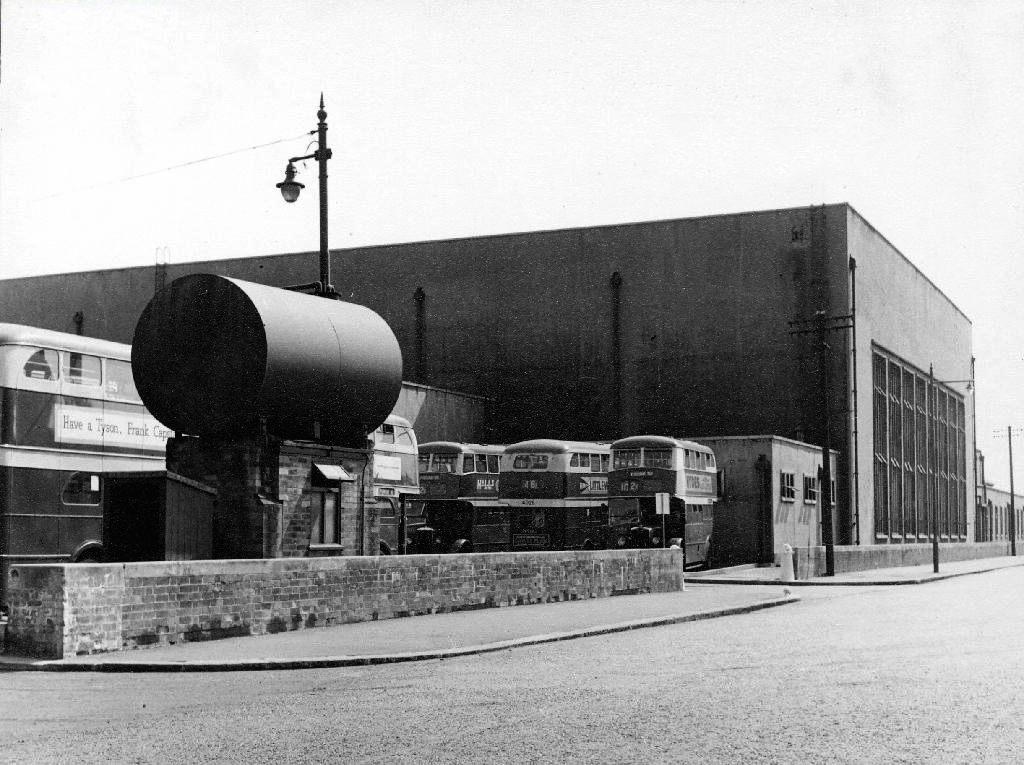
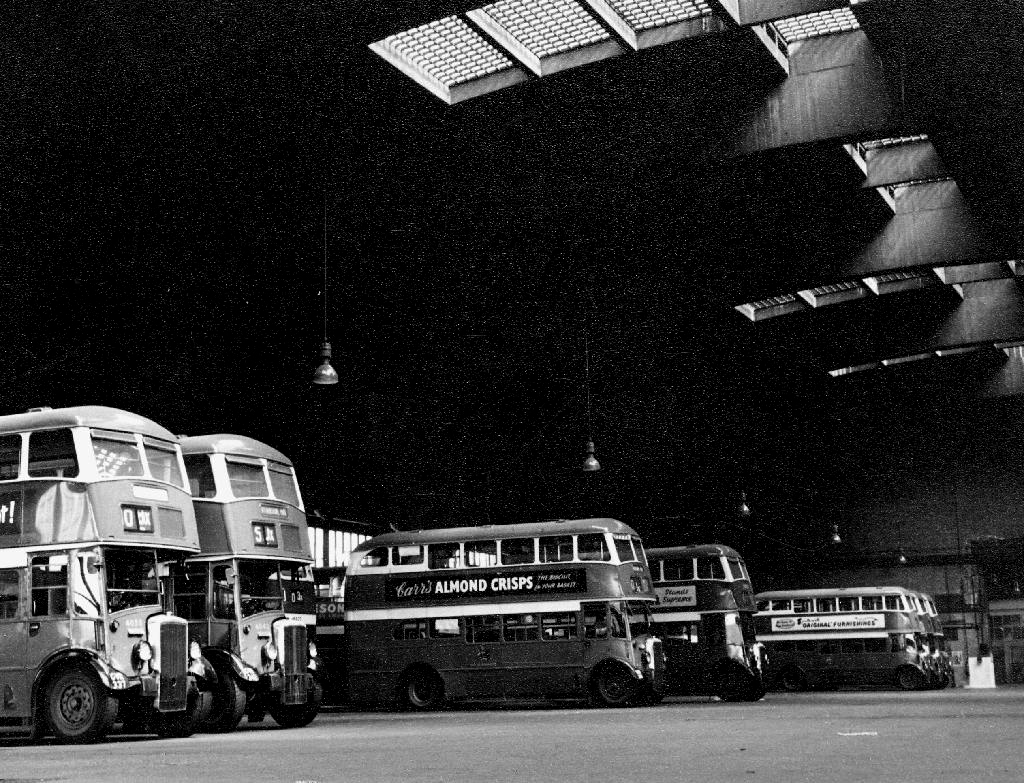
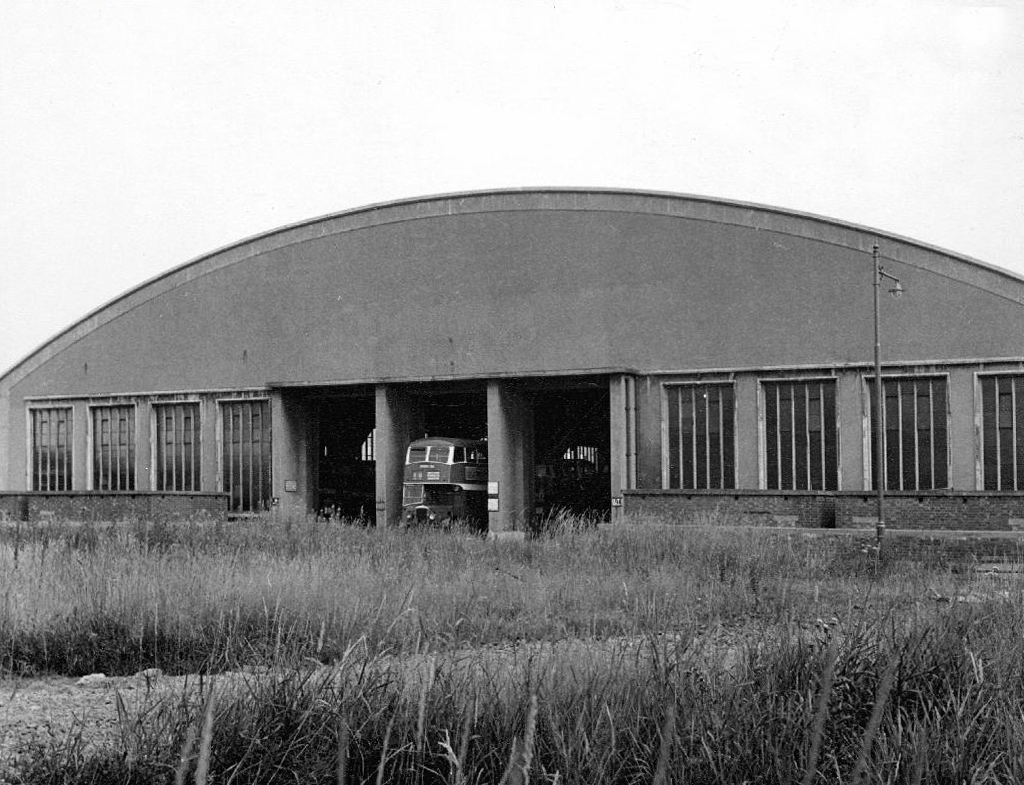
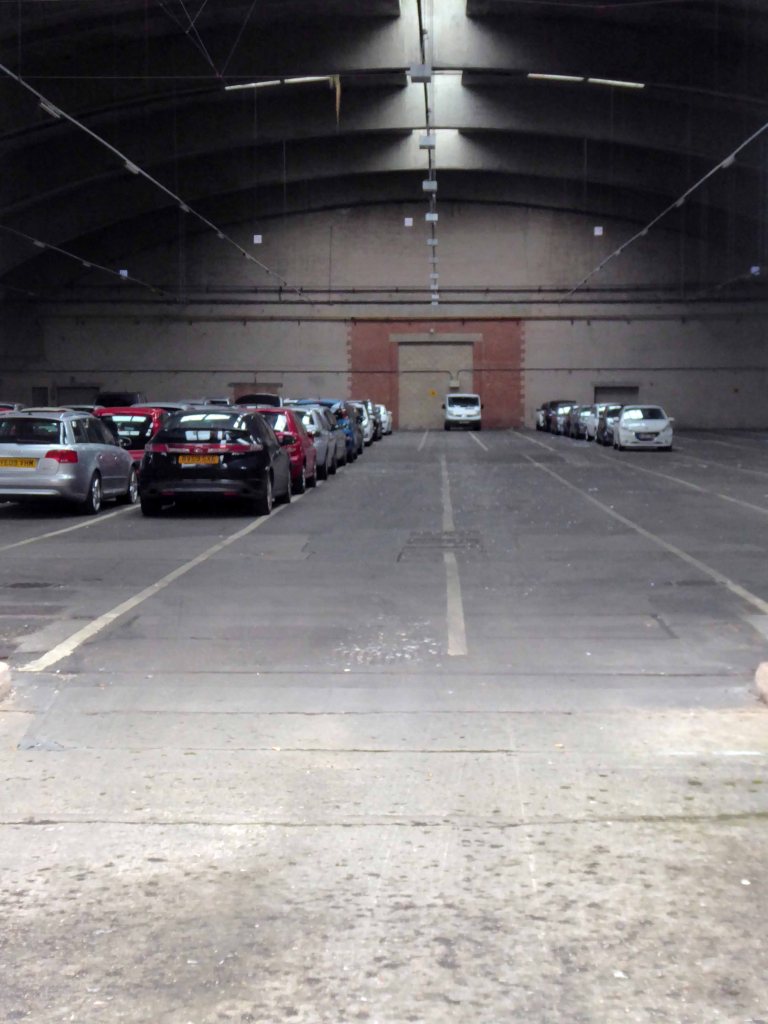
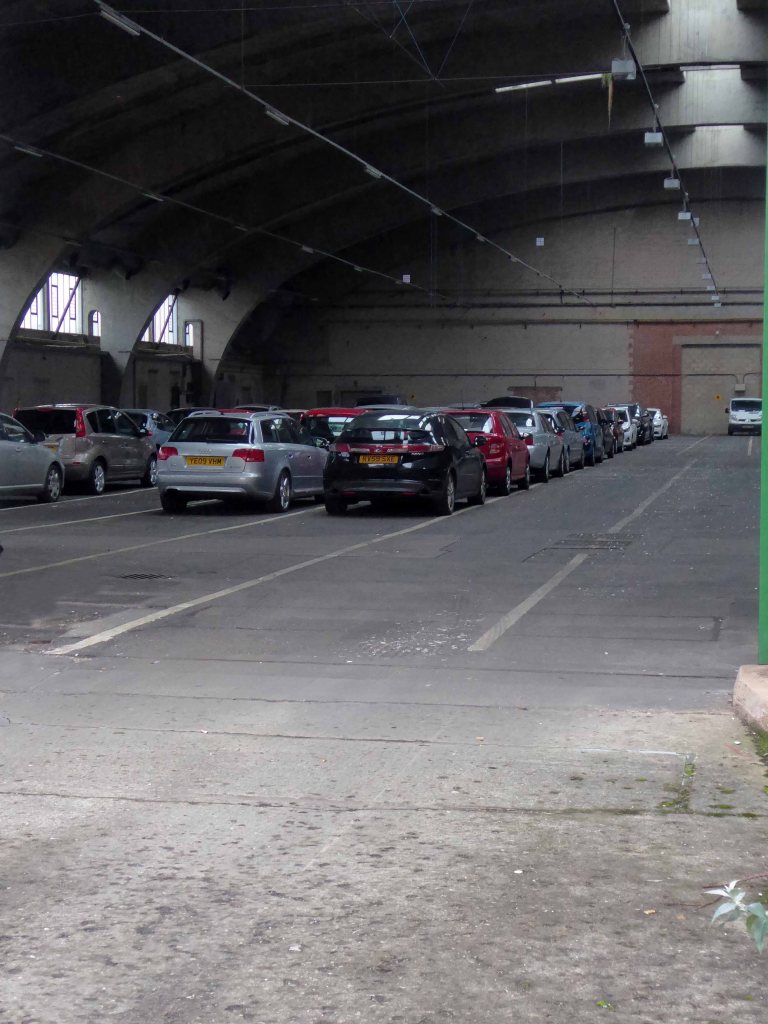
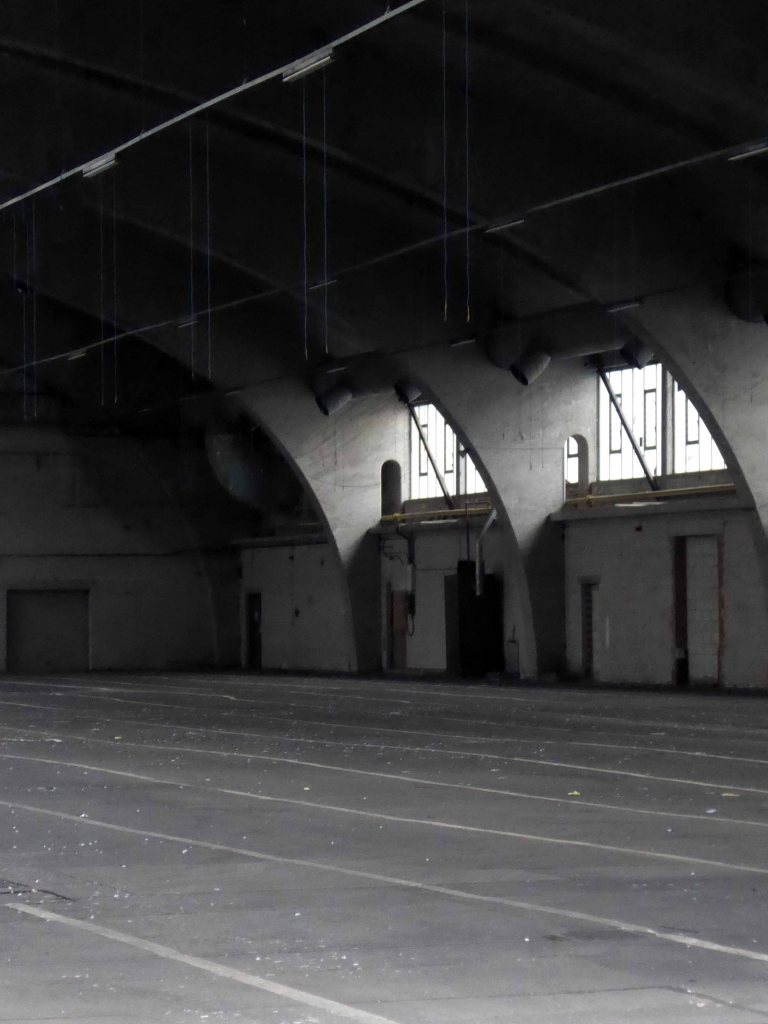
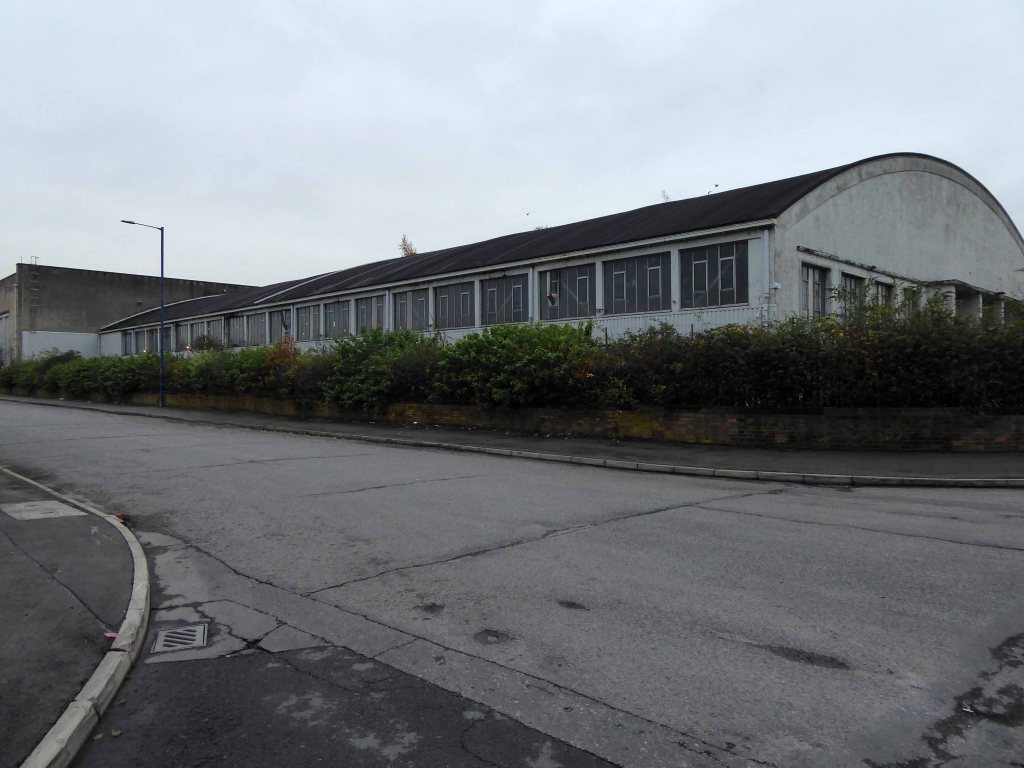
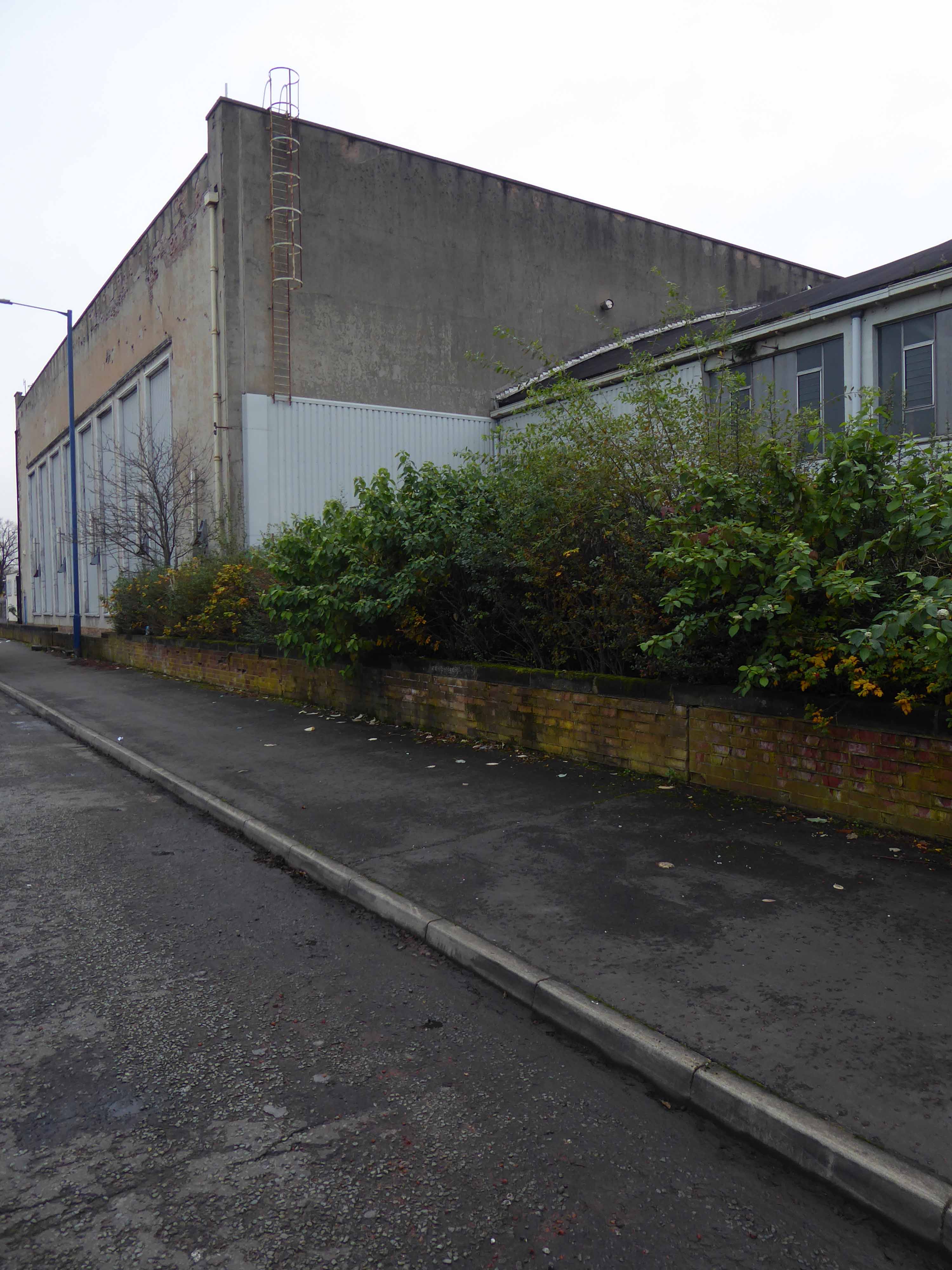
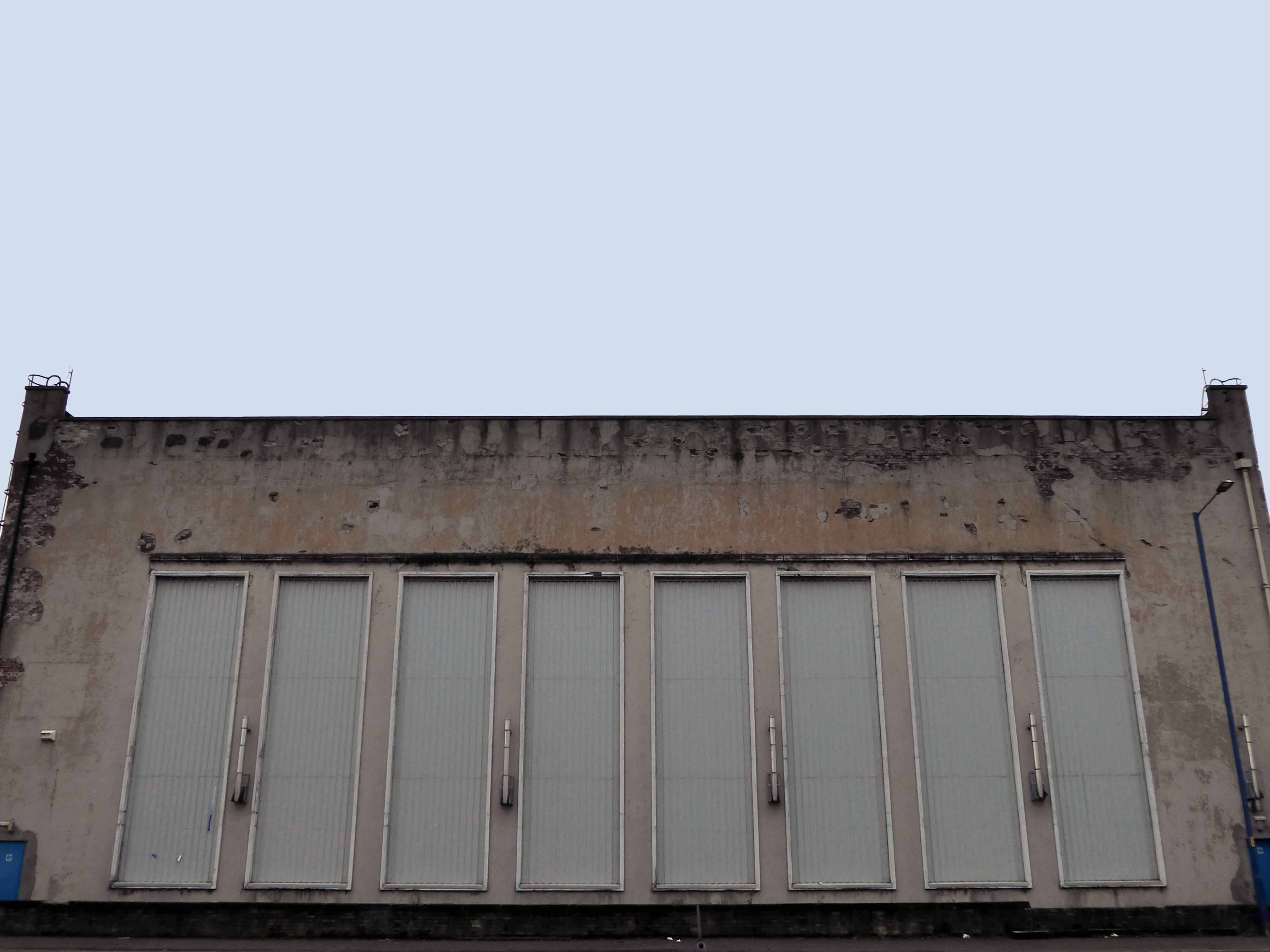
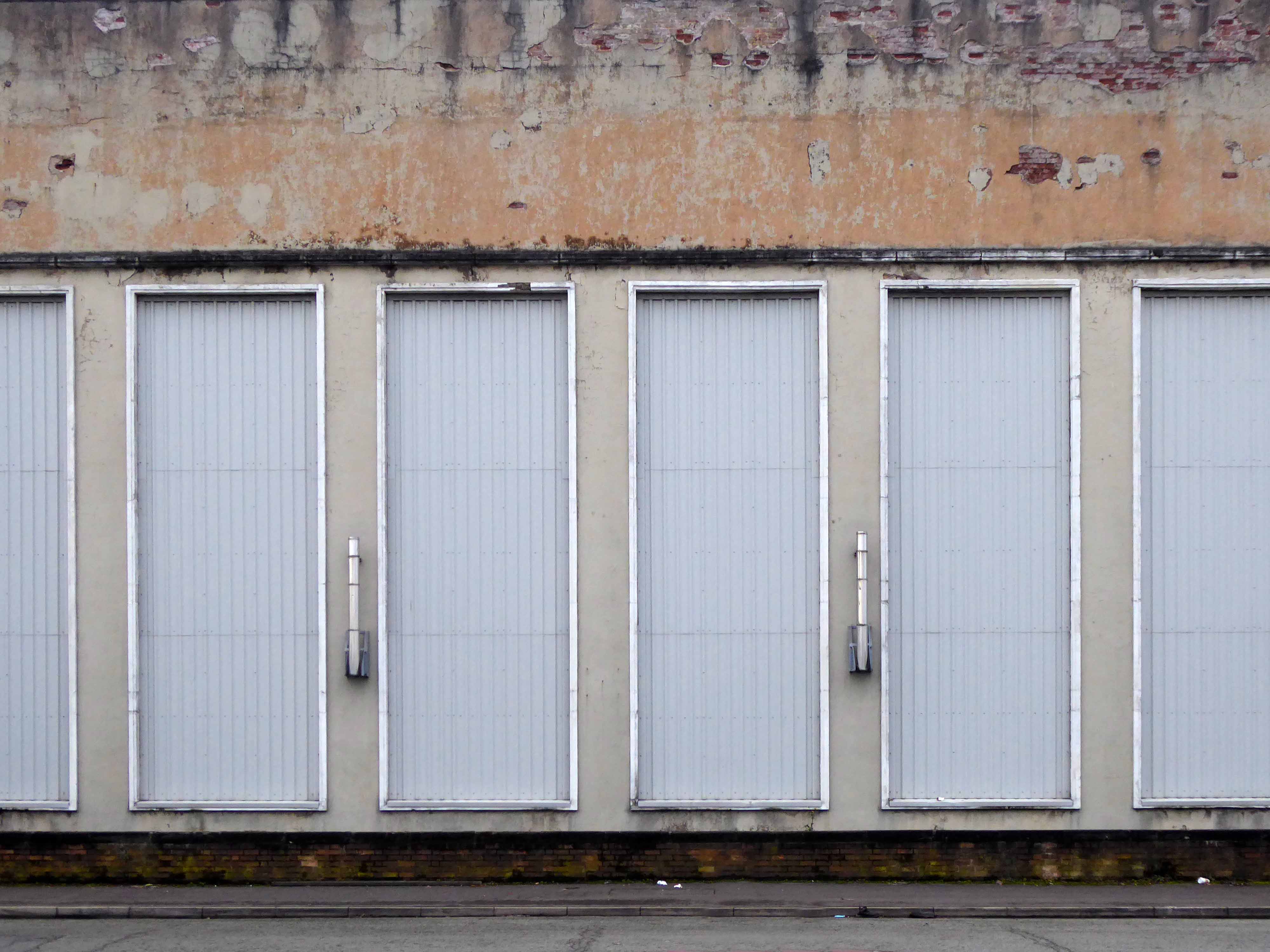
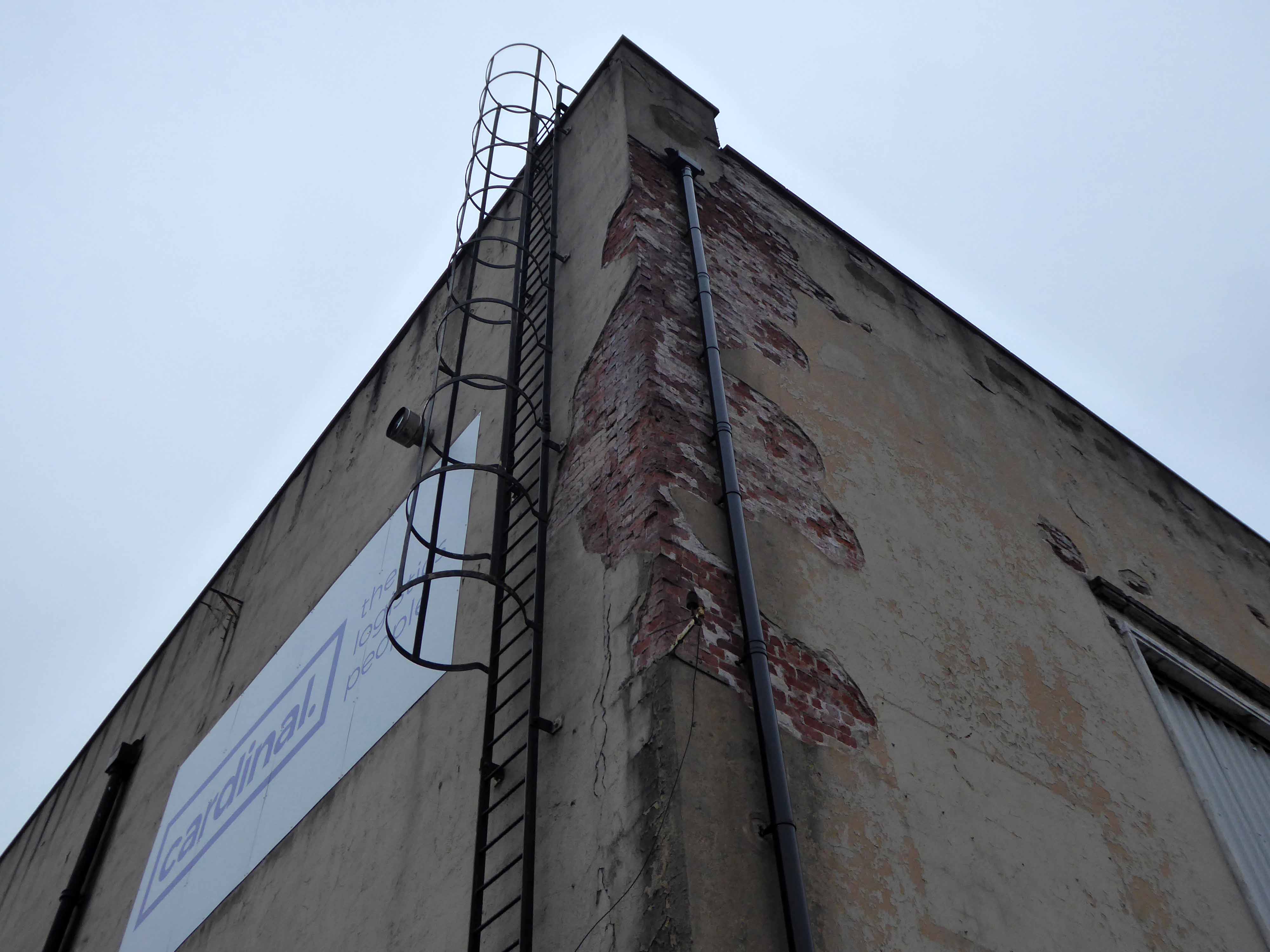
This building formed part of the later phasing of the proposed Garden Suburb of Wythenshawe. It was intended to house up to 100 double-decker buses but was put to use as a factory for components for Lancaster bombers during the war. It is included here for the functionalist qualities of the building and the acknowledgement of the daring of the City Architects Department. Academic papers, as late as 1952, cited this simple structure as exemplar of its type; Elaine Harwood notes, ‘this was the pioneering example of the means of construction, and the model for larger shells at Bournemouth and Stockwell’. The arches that support the shell have a span of over fifty metres and are spaced at twelve metre intervals. The concrete shell roof is of the short-barrel type commonly used on single span buildings such as hangars, it is uniformly around seventy millimetres thick. The only single span structure larger than this was indeed an aircraft hangar, at Doncaster Airport, demolished around 1990. This building is now in the ownership of an airport parking company that utilise it as vehicle storage; close to its original function.
Walking from our house to Sharston, this was the furthest point west – I kept on walking towards the security gates, they opened – I snapped, they closed.
This is now the home of Manchester Airport Parking – no place for a pedestrian, I walked away, slowly circumnavigating this uplifting, uplifted behemoth.
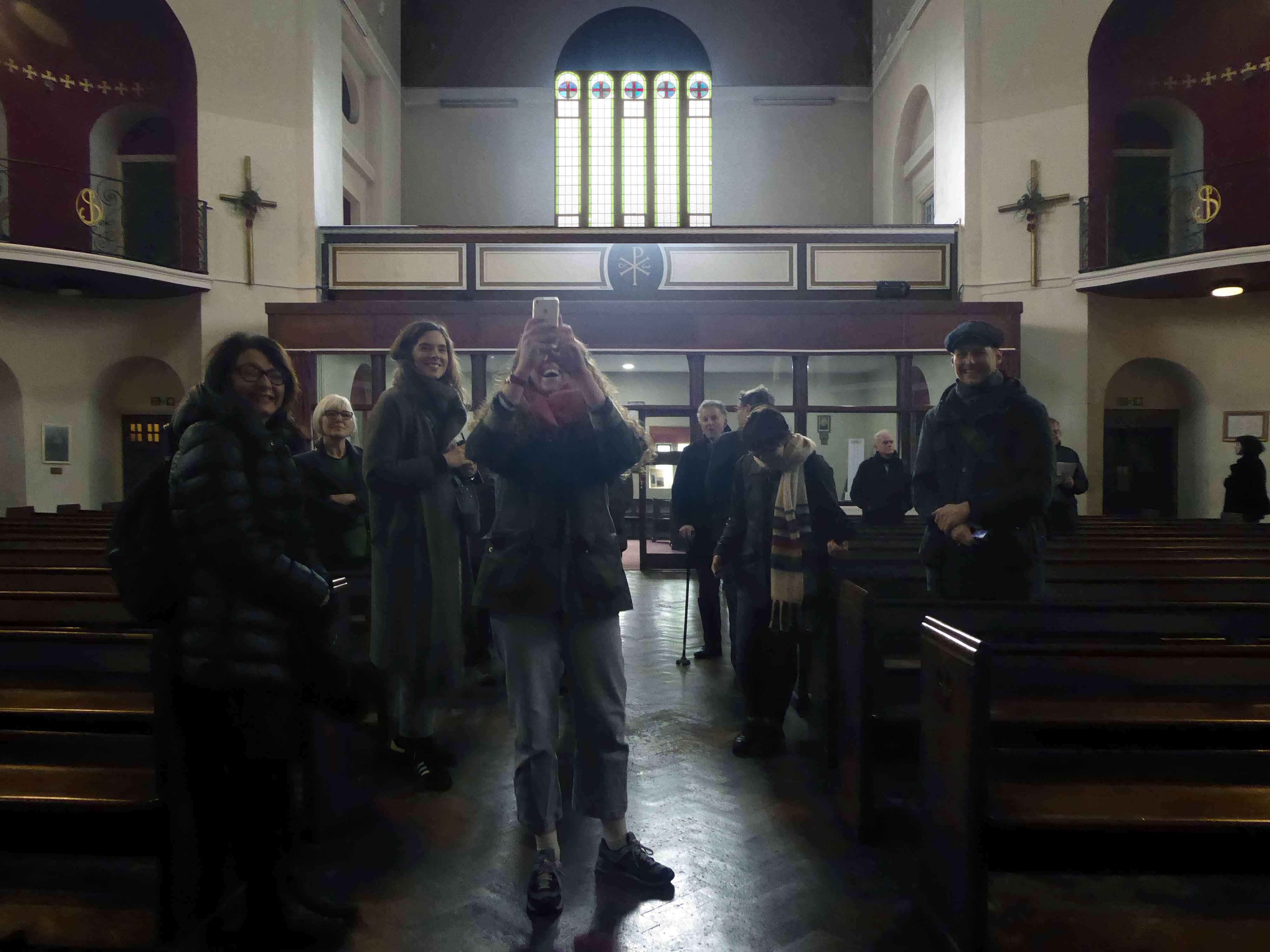
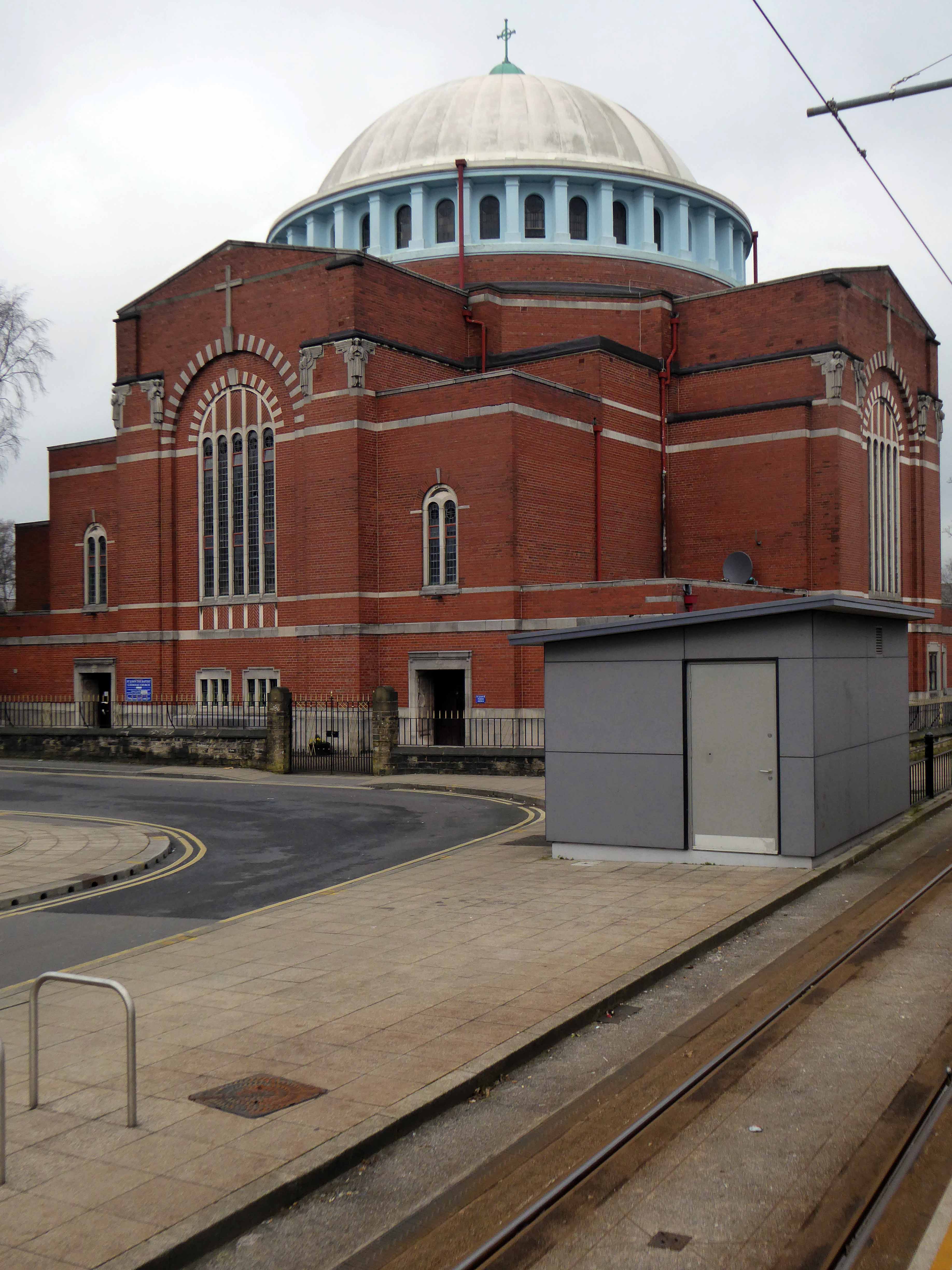
I have had the privilege and pleasure to visit St John’s several times over the years and doubly pleased to visit with a group of some 30 Modernists in March 2020 as part of a Rochdale Walk, prior to the lockdown days later.
I cannot thank Christine Mathewson and her fellow volunteers enough for the warm welcome we were given. They take such pride in their church and are eager to convey that pride along with their obvious erudition.
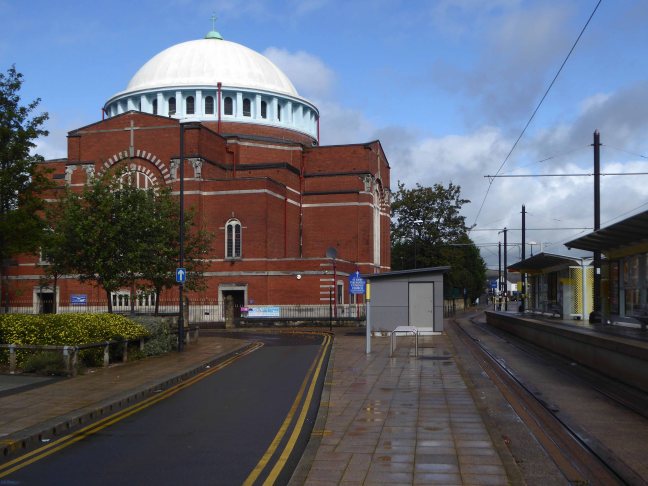
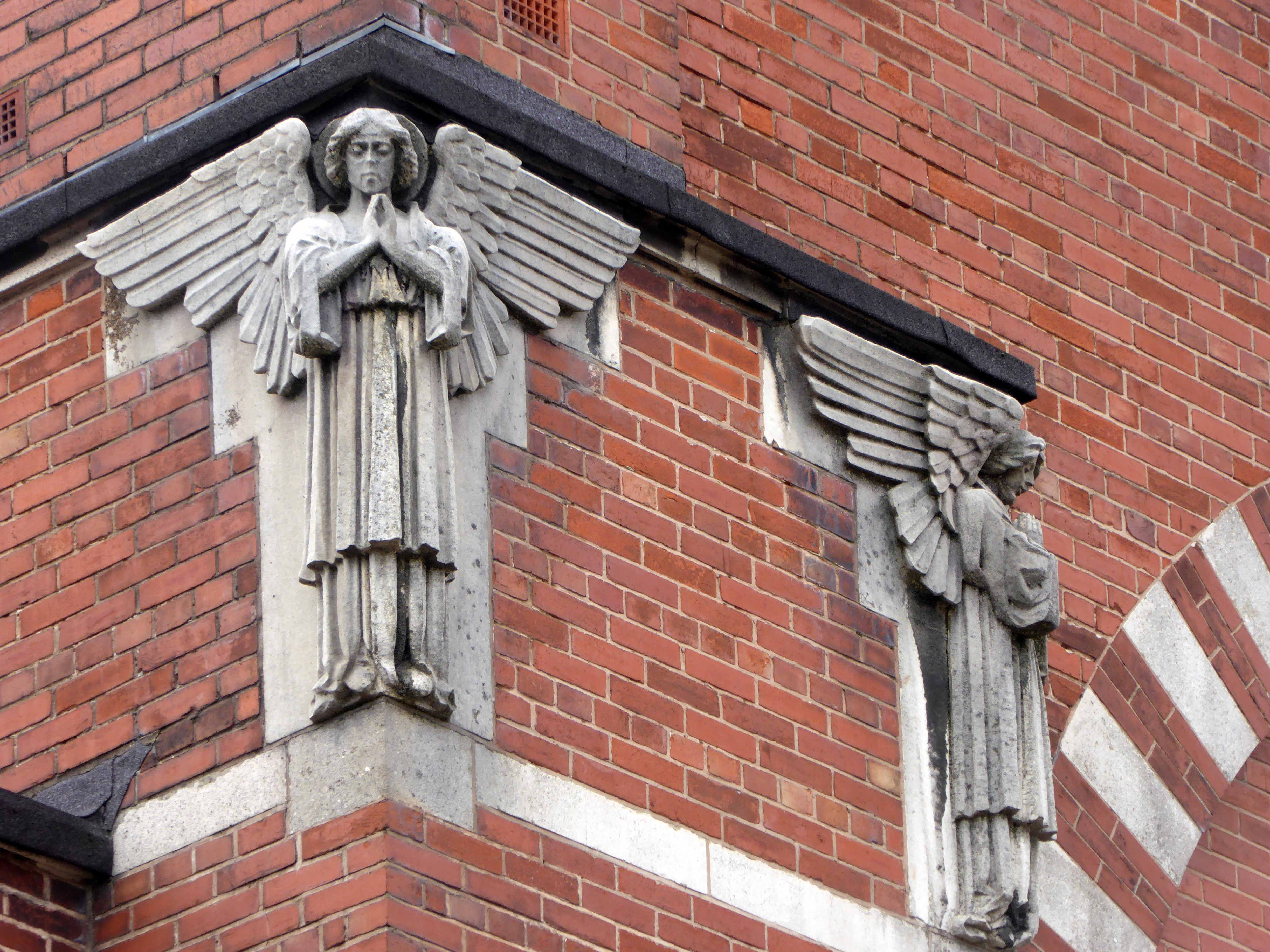
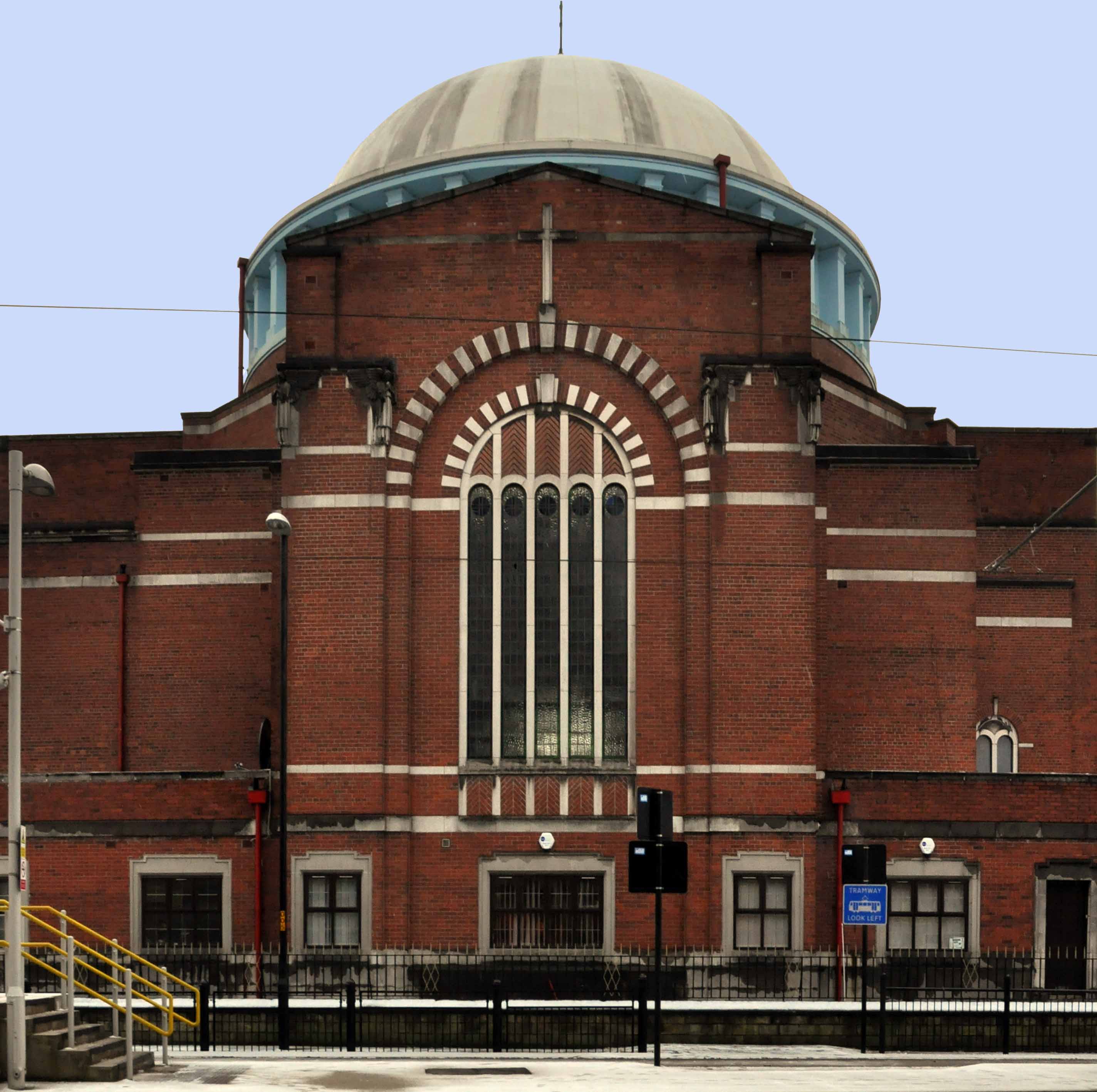
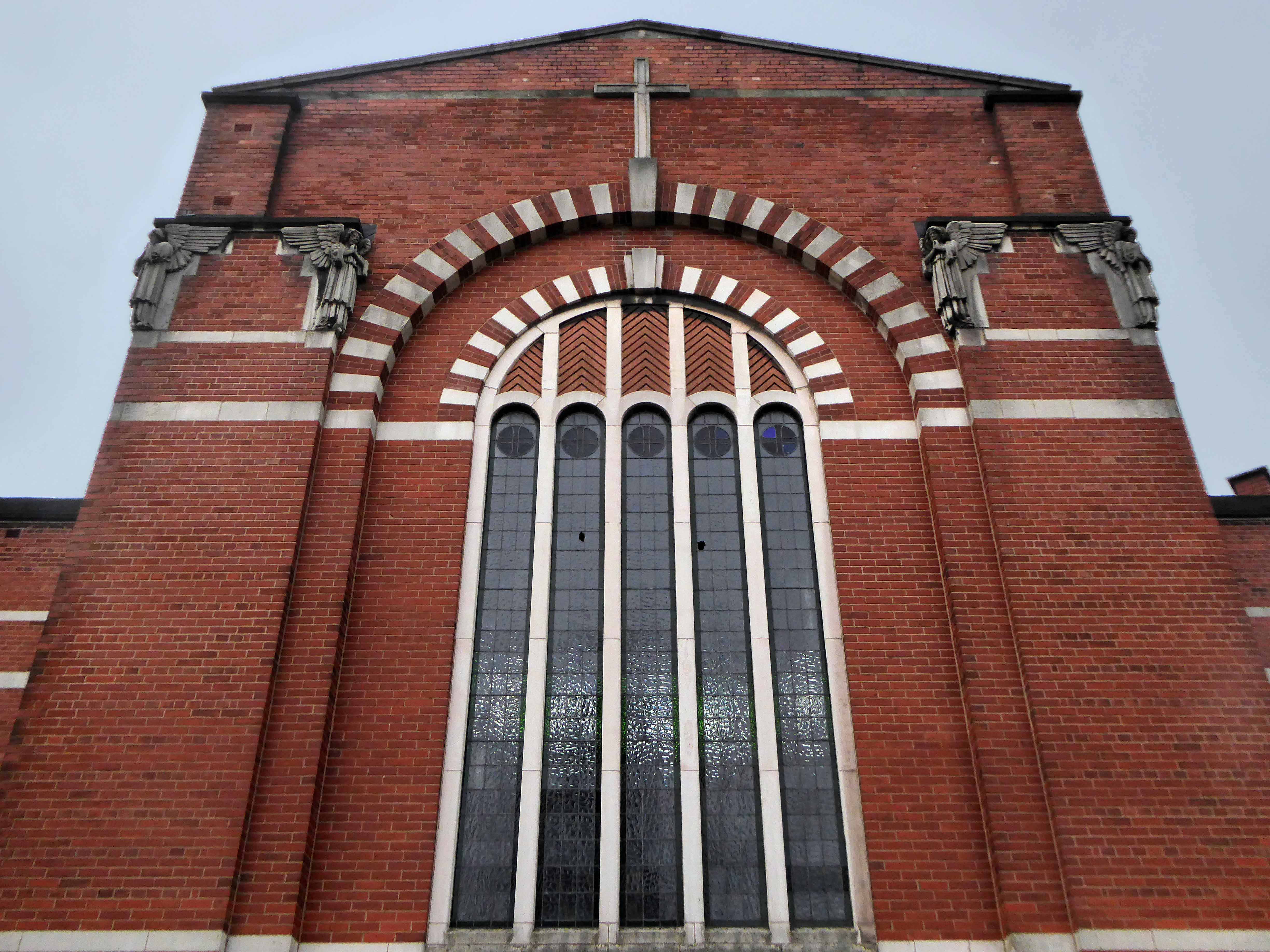
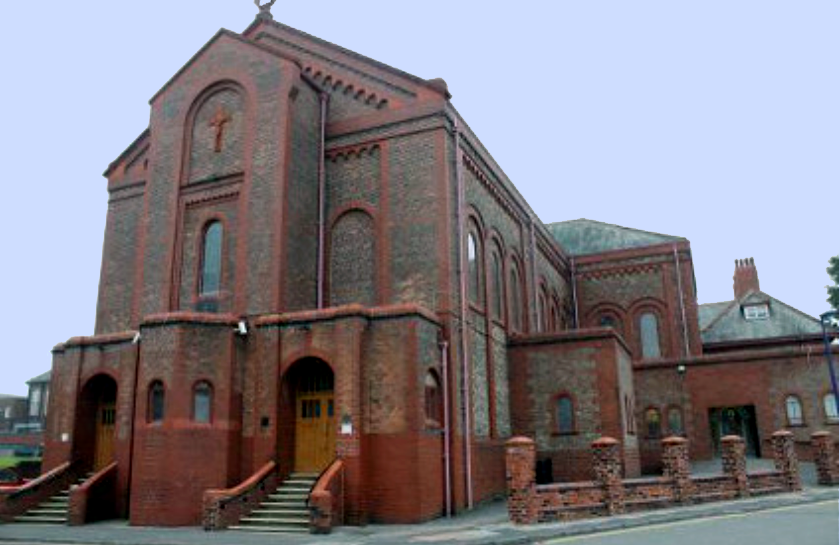
Approaching from the adjacent railway station we could not fail to be impressed by the scale and grandeur of the church, a wonderful mix of the Byzantine and restrained Art Deco – most clearly expressed in the sculptural angels looming high above the tram stop.
The building is Grade II* Listed and deservedly so – details can be found here on the Historic England site.
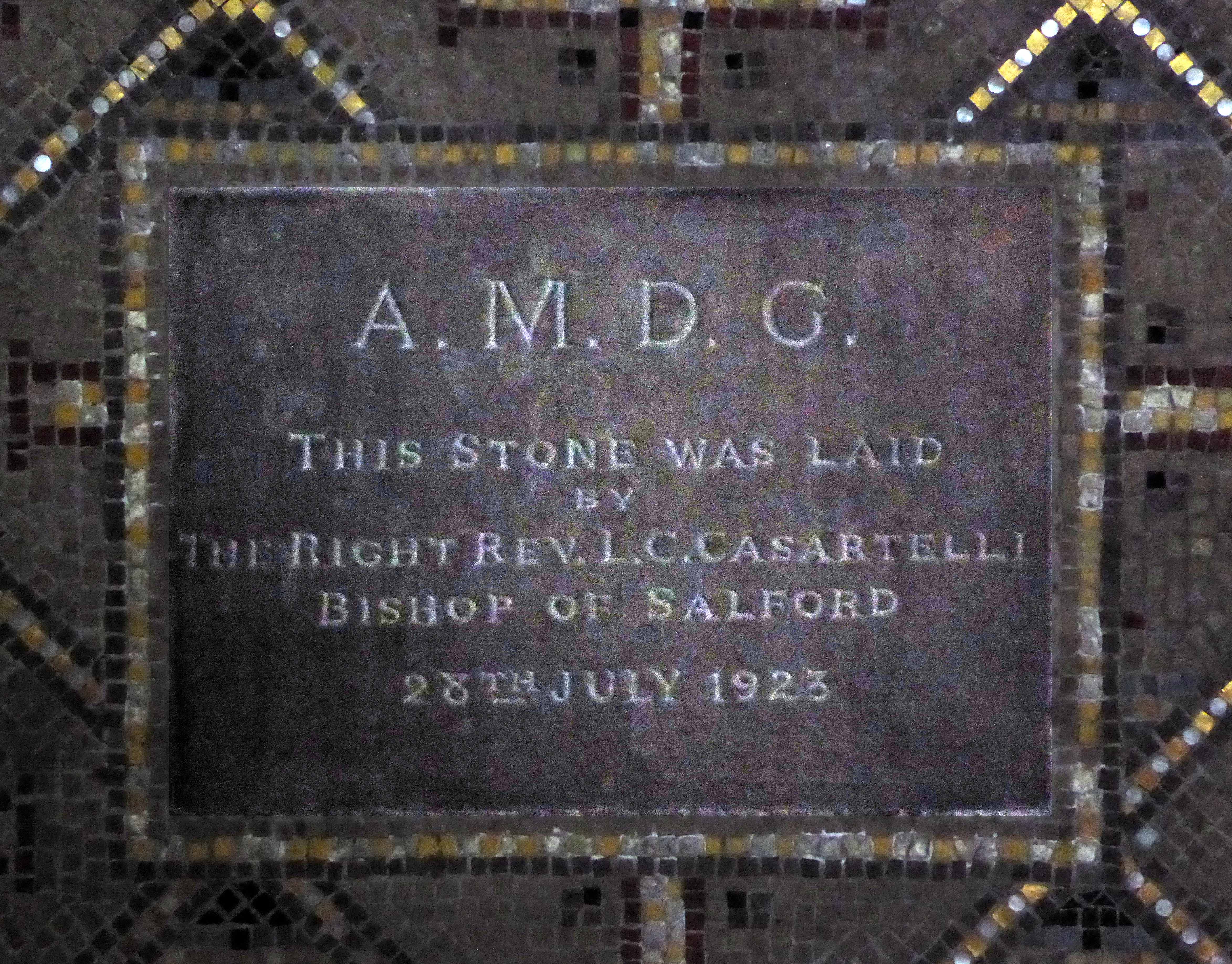
The original design pre-1917 by Oswald Hill, executed in 1923-25 by Ernest Bower Norris. Henry Oswald Hill was a promising architect with a clear interest in contemporary church-building trends, as evidenced here and at the nearby RC Church of St Joseph, Heywood, he was tragically killed in action in the First World War.
St Joseph’s
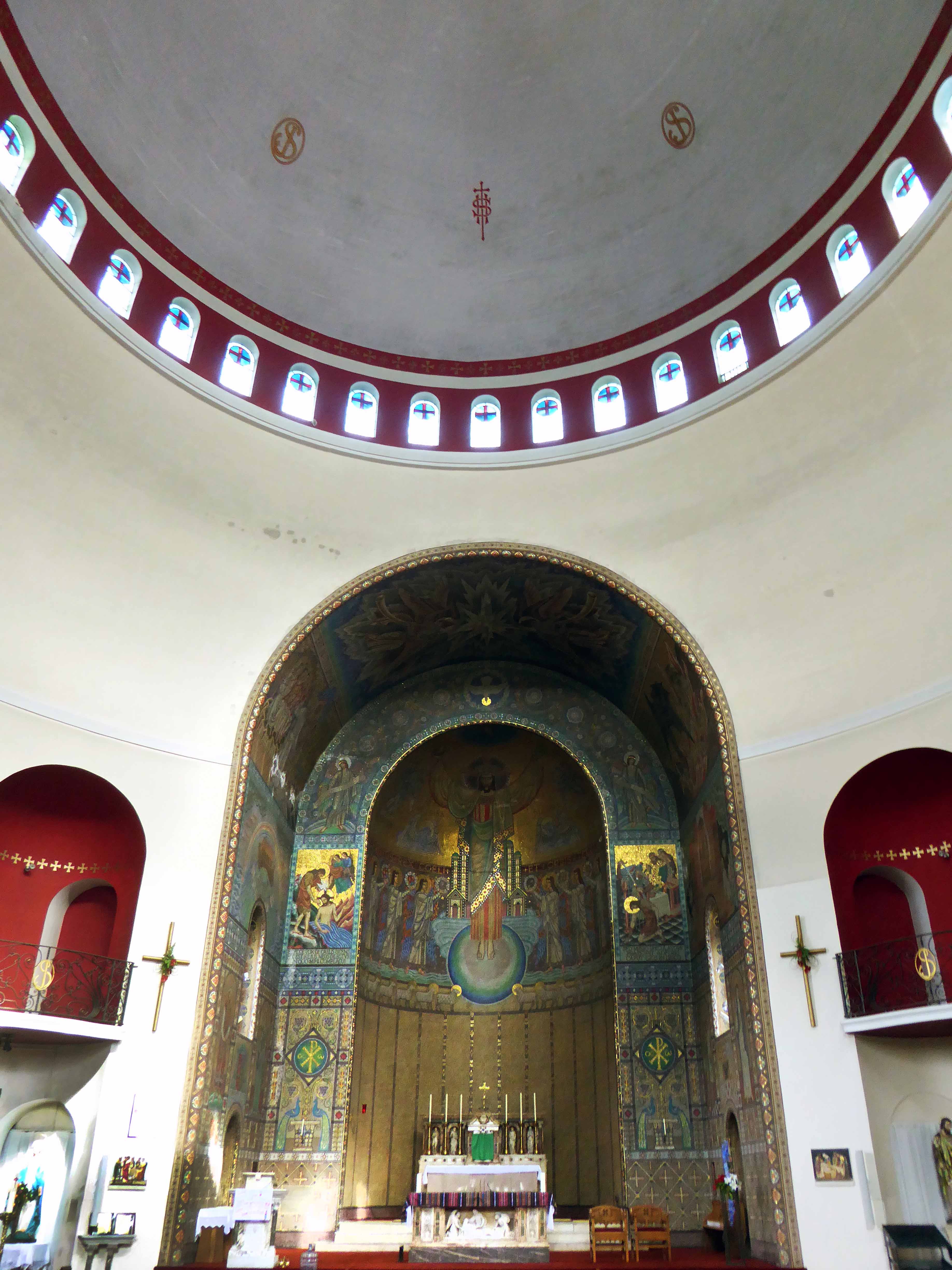
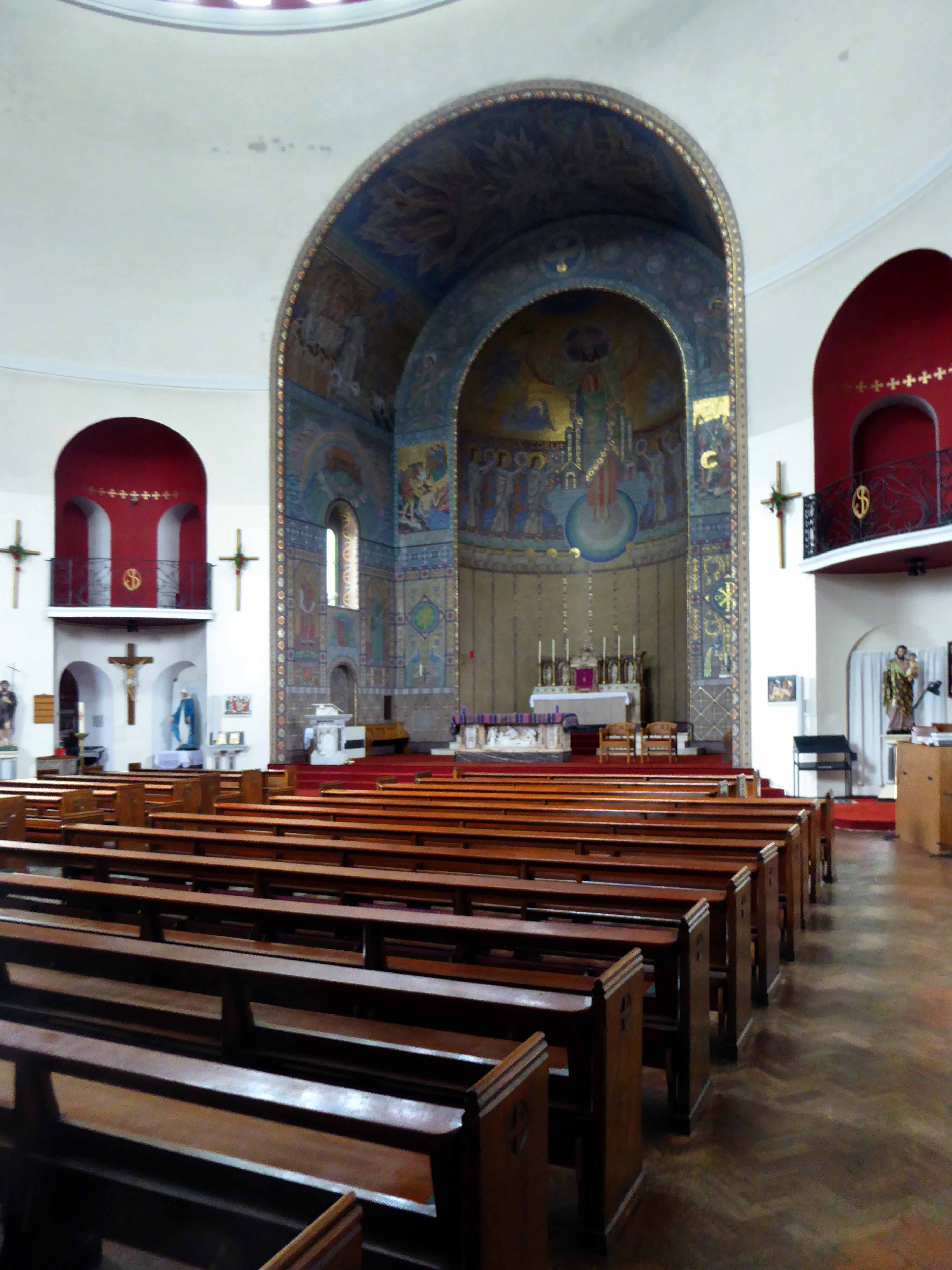
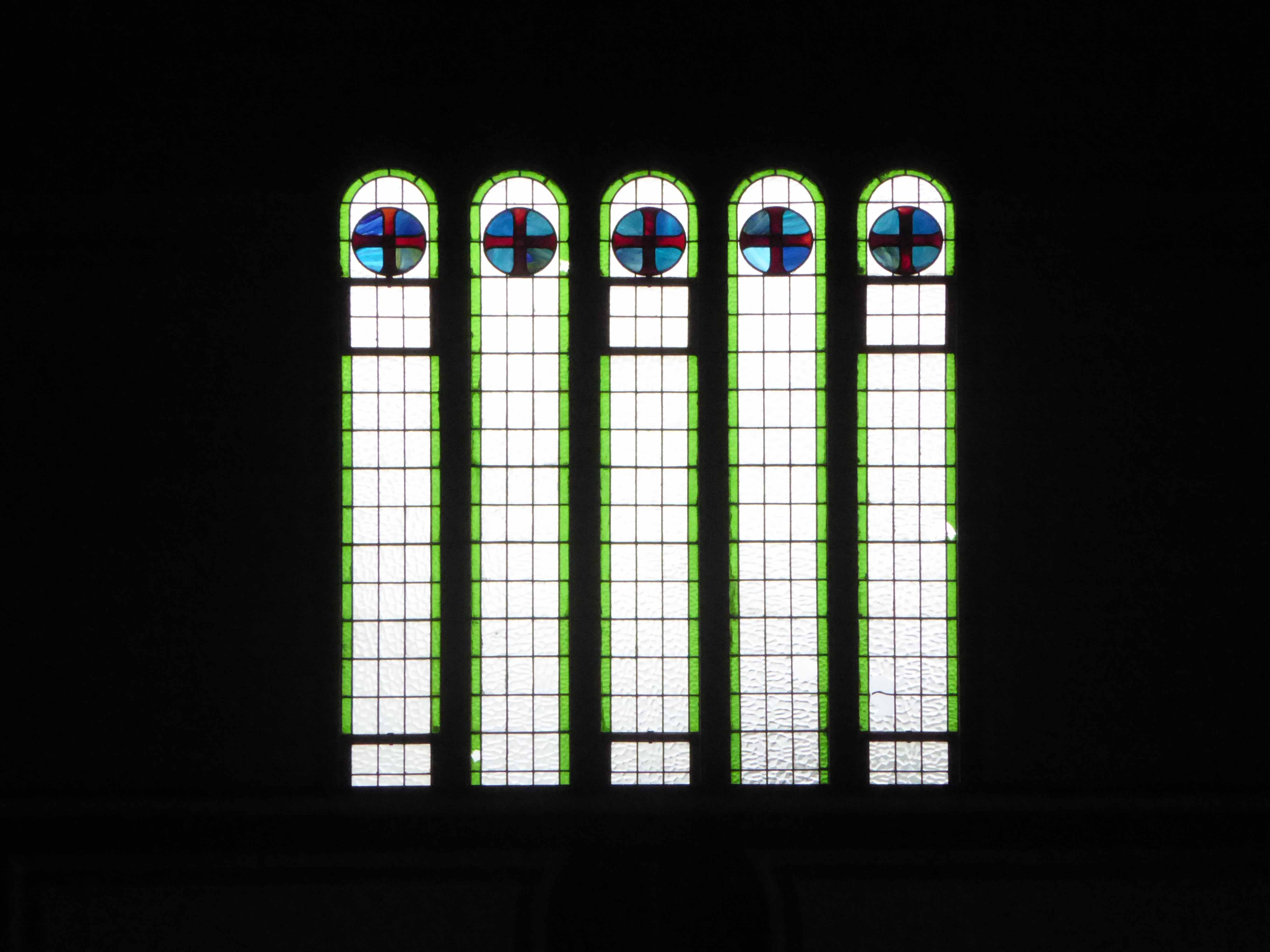
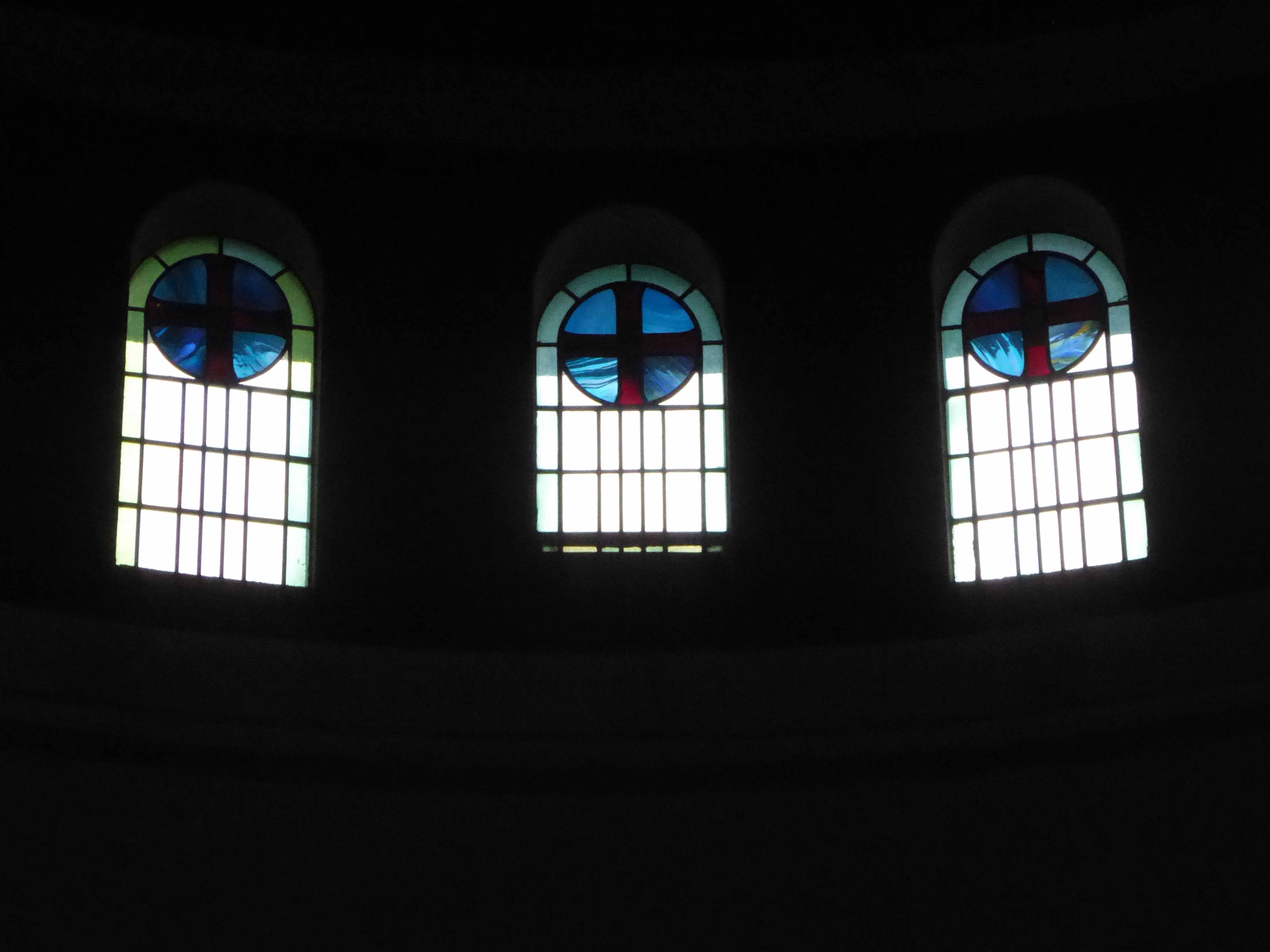
The church uses concrete to its advantage in the construction of the striking, 20m-wide central dome, surrounded by the delicate touch of several arched stained glass windows at the perimeter.
Illuminating the concave space in a heavenly manner.
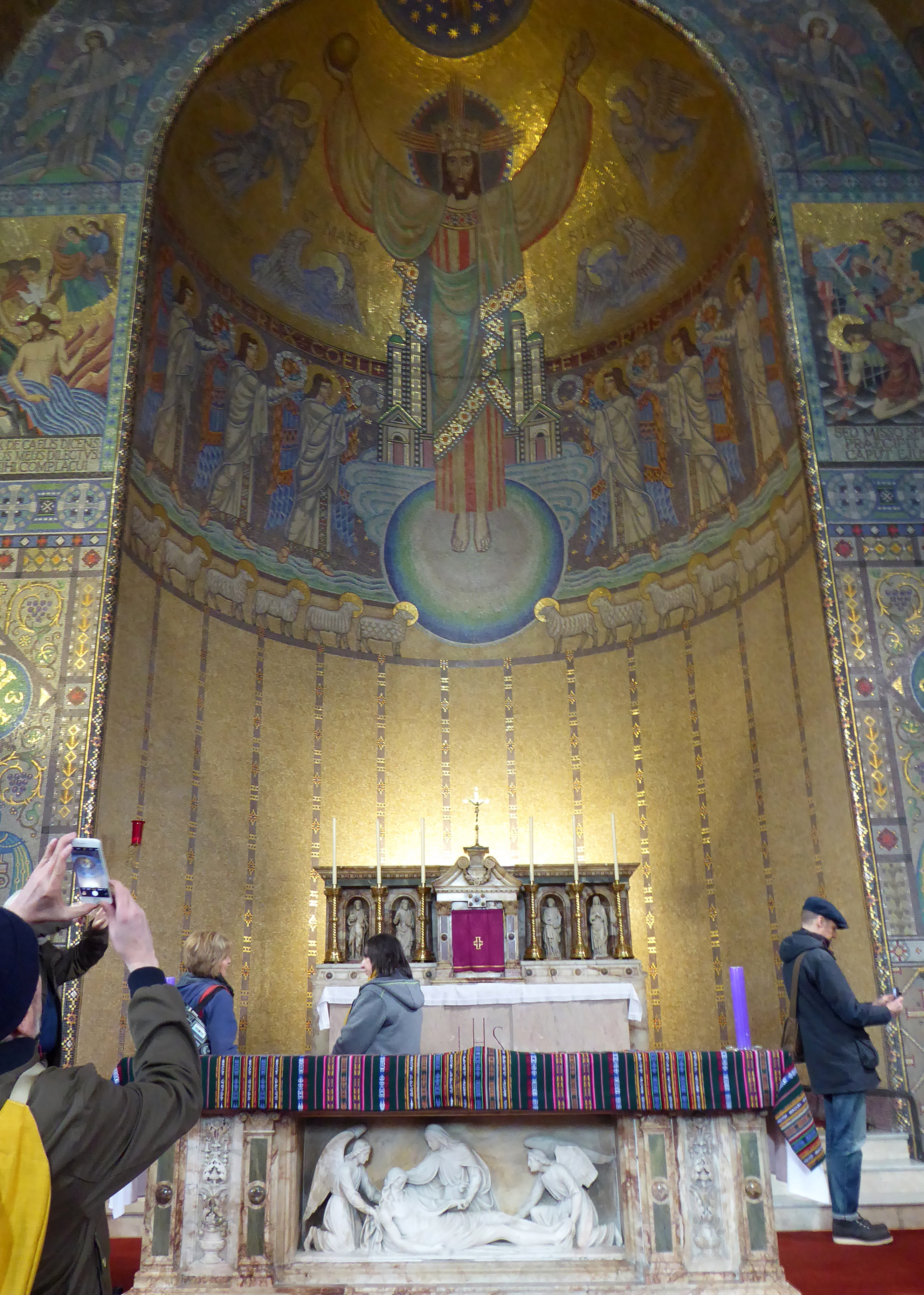
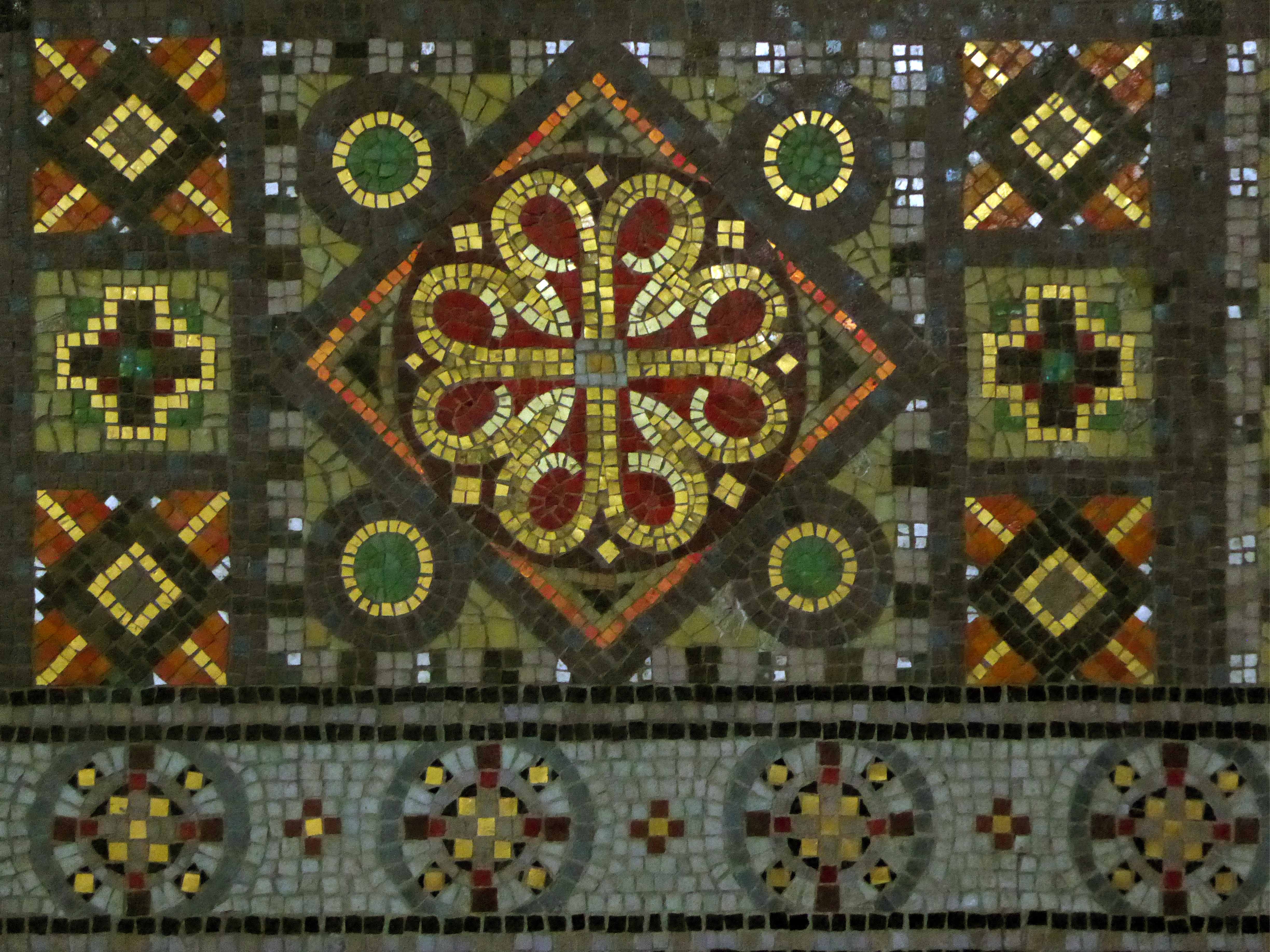
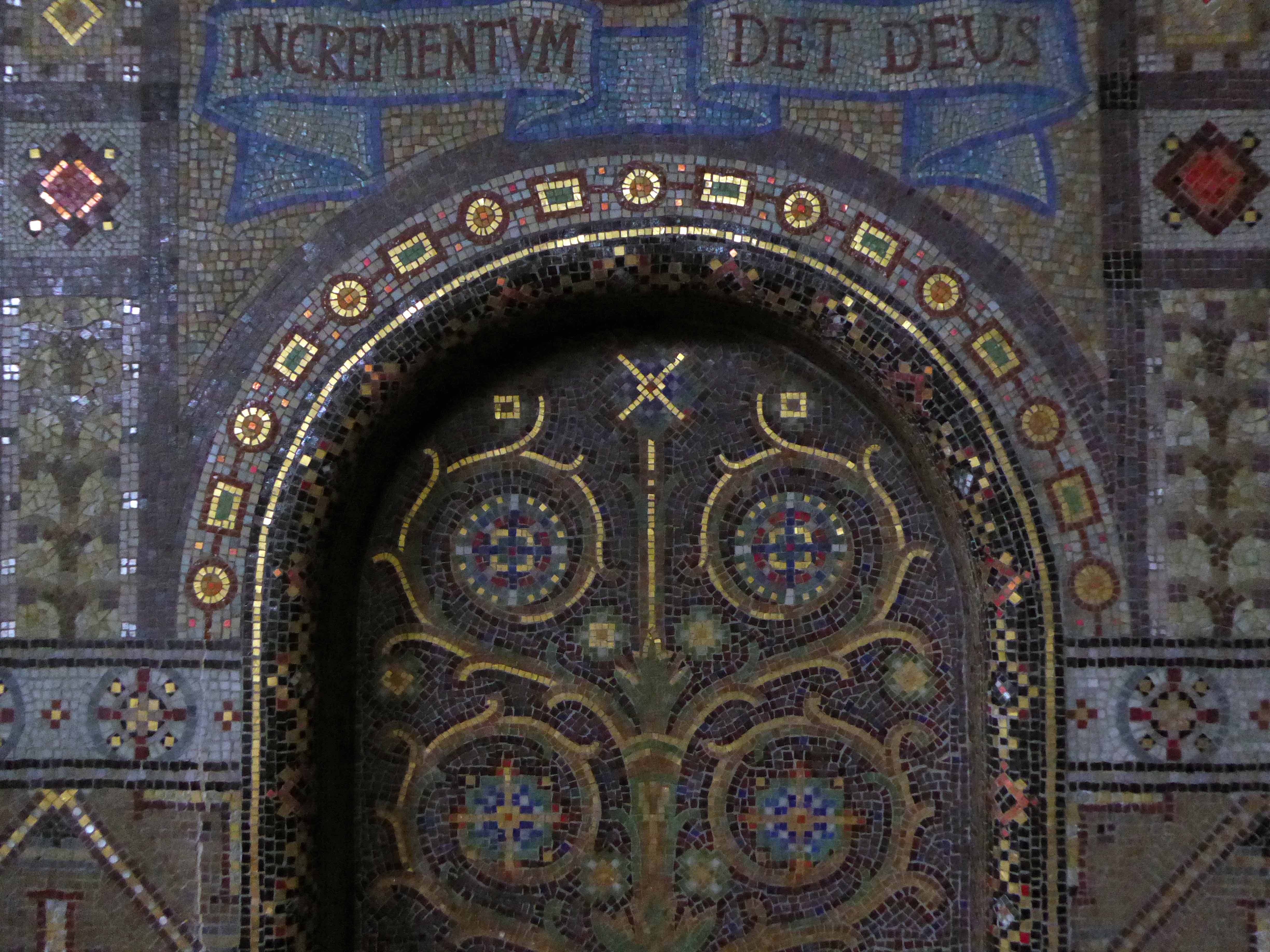
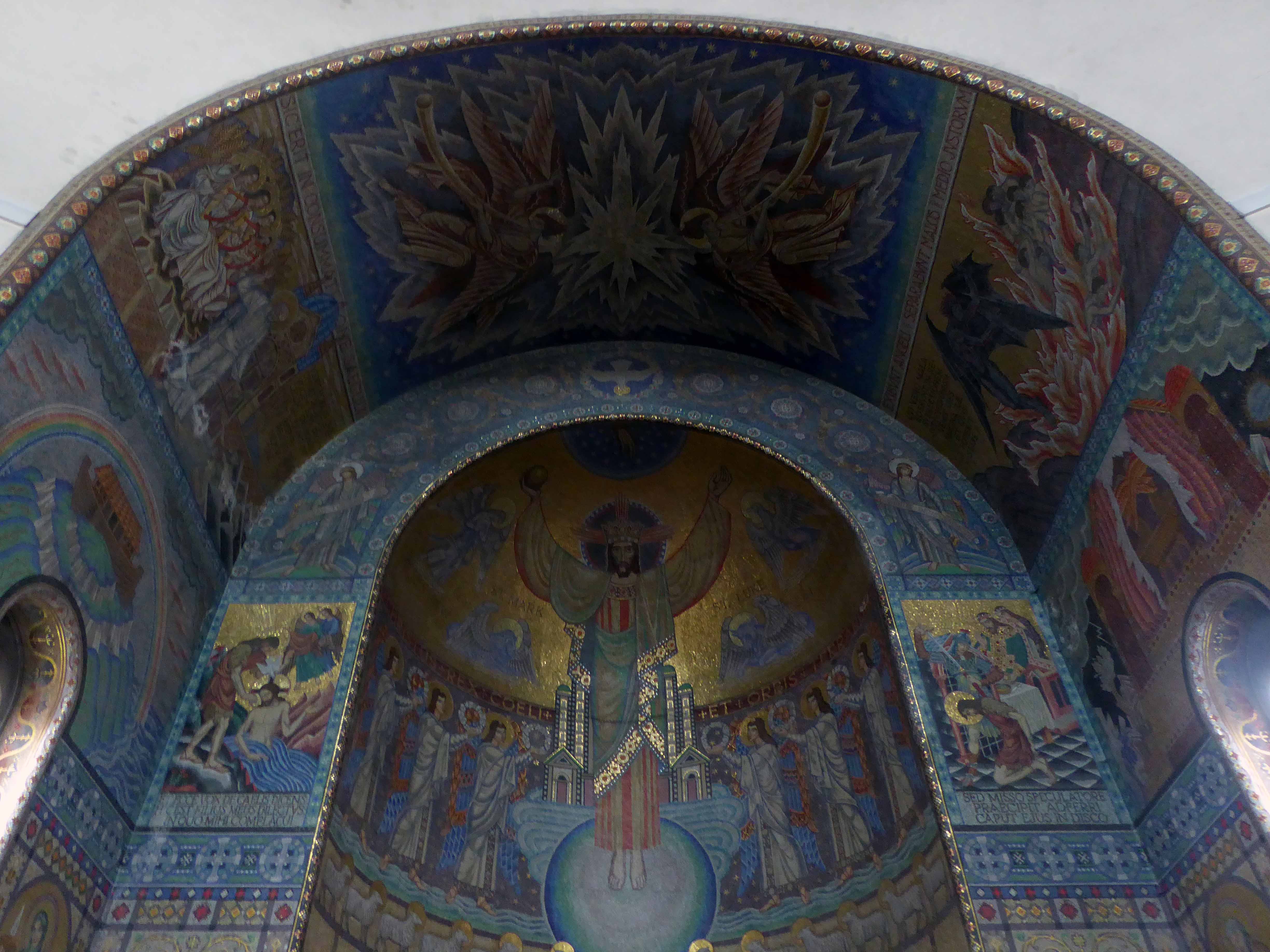
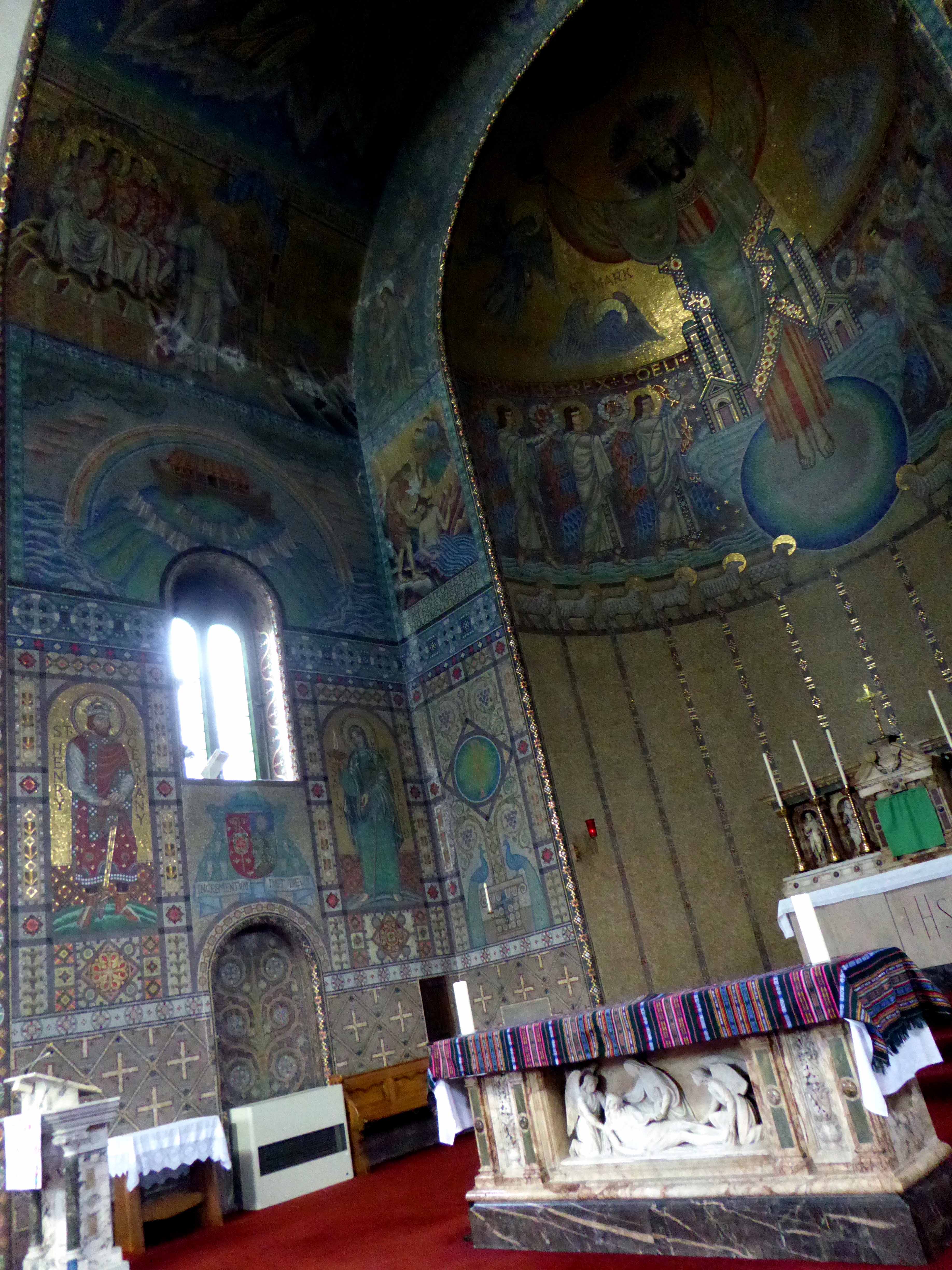
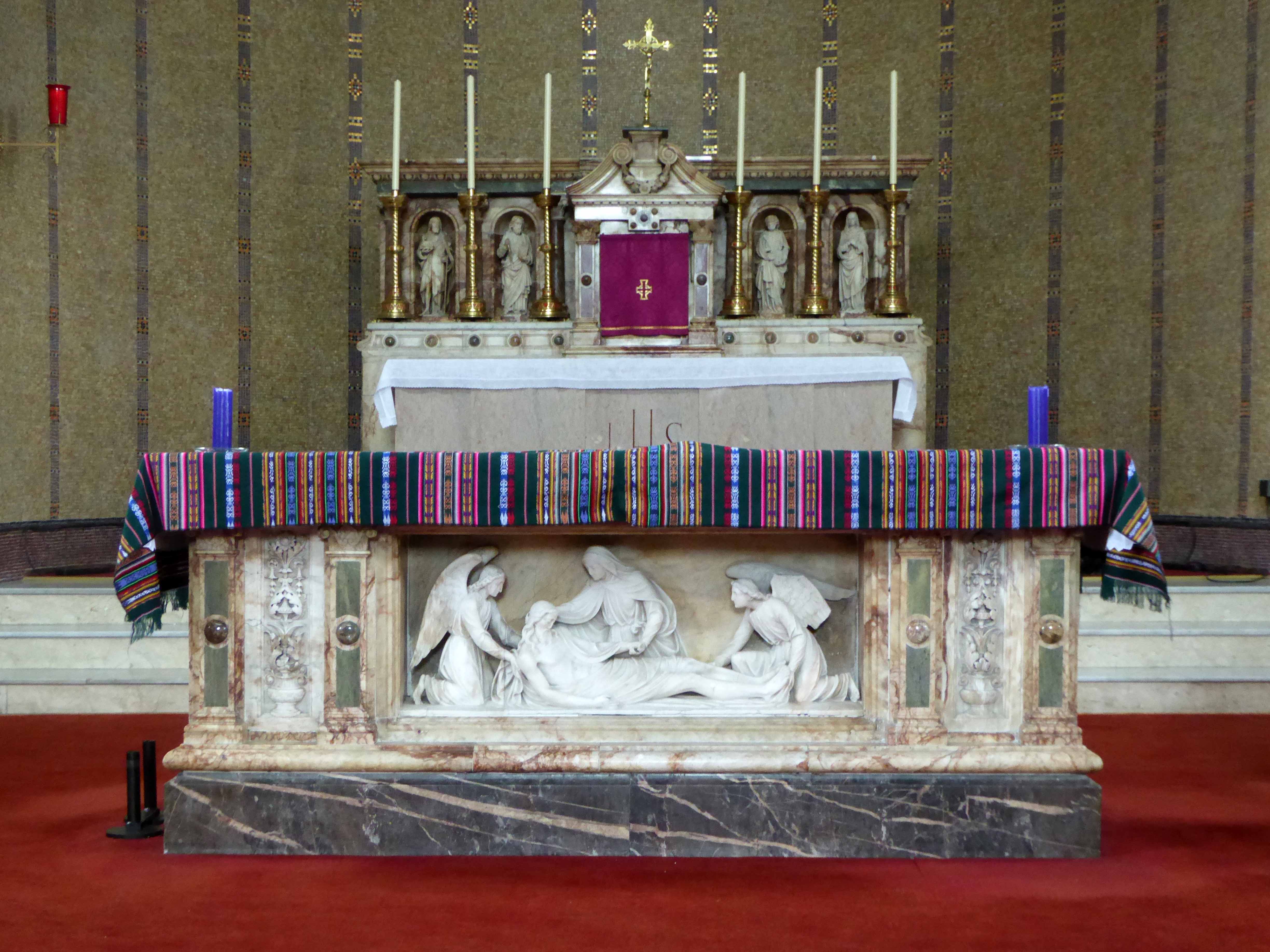
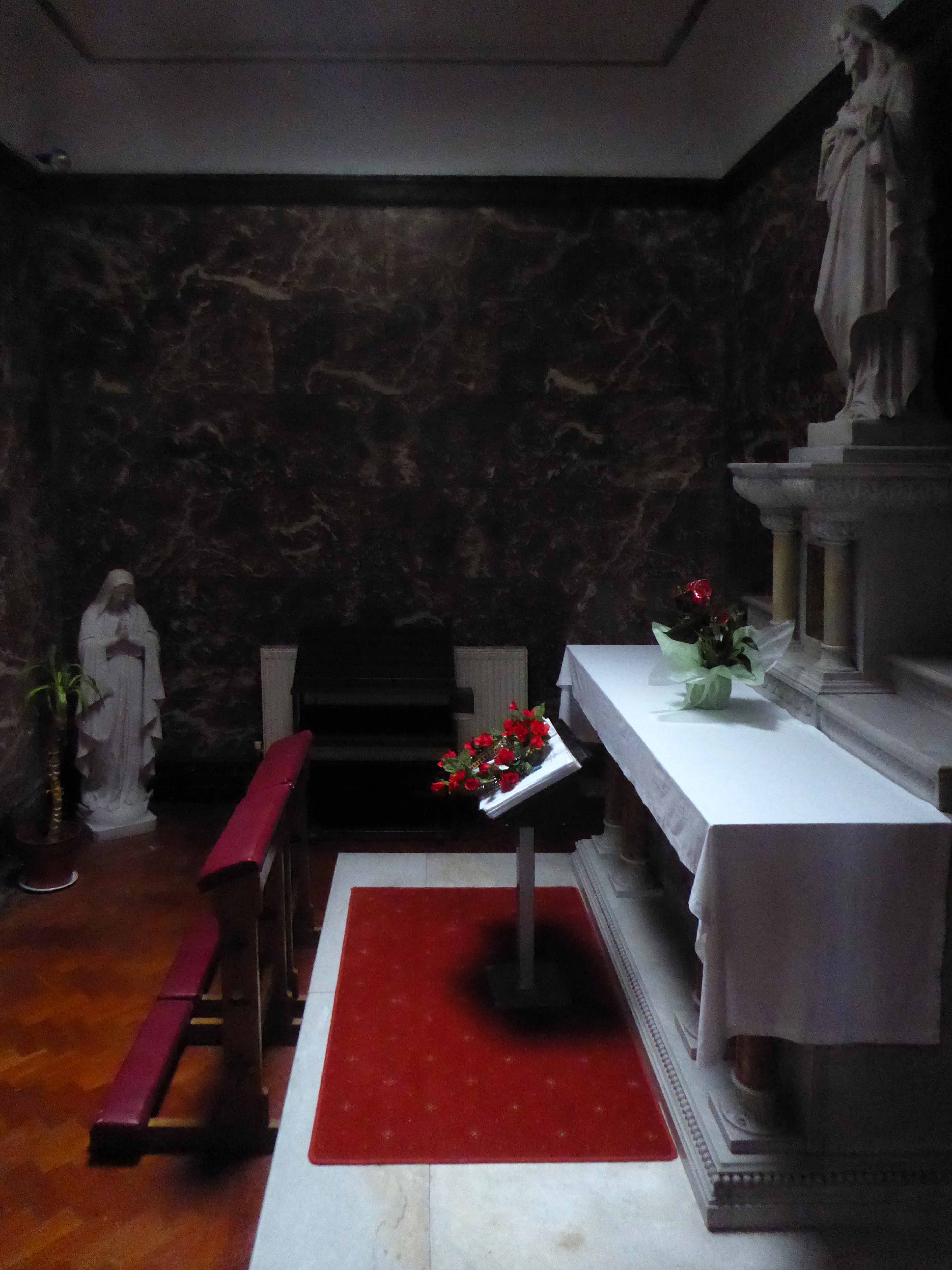
The apsed sanctuary contains an encompassing mosaic scheme of powerful emotional intensity designed by leading mosaic designer, Eric Newton of specialist firm Ludwig Oppenheimer Ltd.
The mosaic is breathtaking in scale, design and execution – nothing can prepare you for its impact as you enter the church.
The quality of the sanctuary mosaic is further enhanced by the use of high-quality tesserae made of stone, coloured marbles and coloured glass, set off by a shimmering background of gold tesserae.
The apsed sanctuary is completely covered in a mosaic scheme with the theme Eternal Life designed by Eric Newton. Newton was born Eric Oppenheimer, later changing his surname by deed poll to his mother’s maiden name. He was the grandson of Ludwig Oppenheimer, a German Jew who was sent to Manchester to improve his English and then married a Scottish girl and converted to Christianity. In 1865 he set up a mosaic workshop, (Ludwig Oppenheimer Ltd, Blackburn St, Old Trafford, Manchester) after spending a year studying the mosaic process in Venice. Newton had joined the family company as a mosaic craftsman in 1914 and he is known to have studied early Byzantine mosaics in Venice, Ravenna and Rome. He later also became art critic for the Manchester Guardian and a broadcaster on ‘The Critics’. Newton started the scheme in 1932 and took over a year to complete it at a cost of £4,000. It had previously been thought that he used Italian craftsmen, but historic photographs from the 1930s published in the Daily Herald show Oppenheimer mosaics being cut and assembled by a Manchester workforce of men and women. It is likely, therefore, that the craftsmen working on St John the Baptist were British.
Historic England
The whole building is full of surprising details of the highest quality.
Lit by simplest yet most effective stained glass.
This is an exemplary building, on entering one is filled with both calm and awe, an experience which is never diminished by subsequent visits.
The mosaic work is on local and international significance – it is unthinkable that it may ever be lost to us, or that funding was not forthcoming to secure its future into perpetuity.
I implore you to visit, whensoever that may be possible.
Please take a moment append your comments on this post and play some small part in ensuring the St John’s is preserved for generations to come.
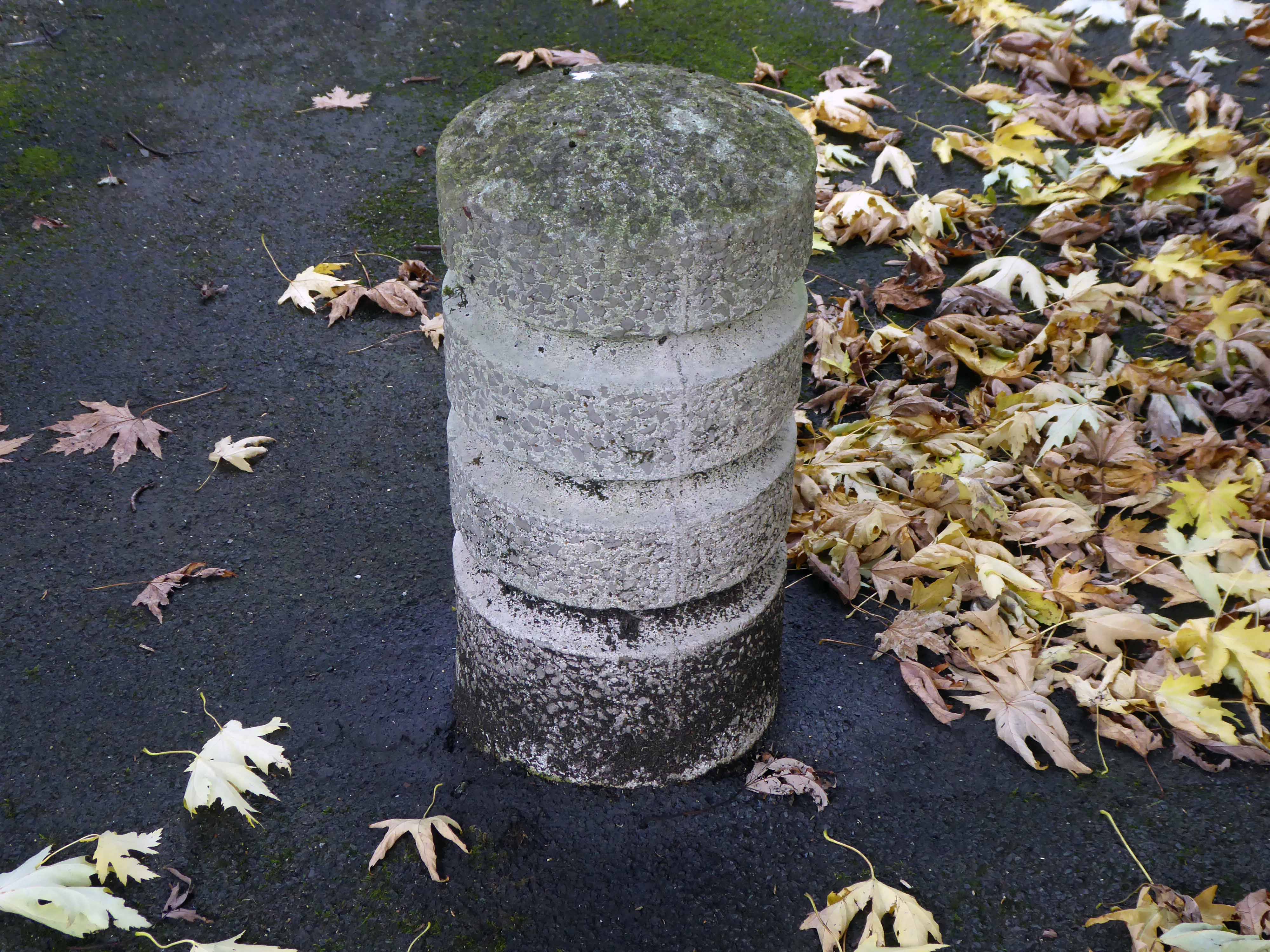
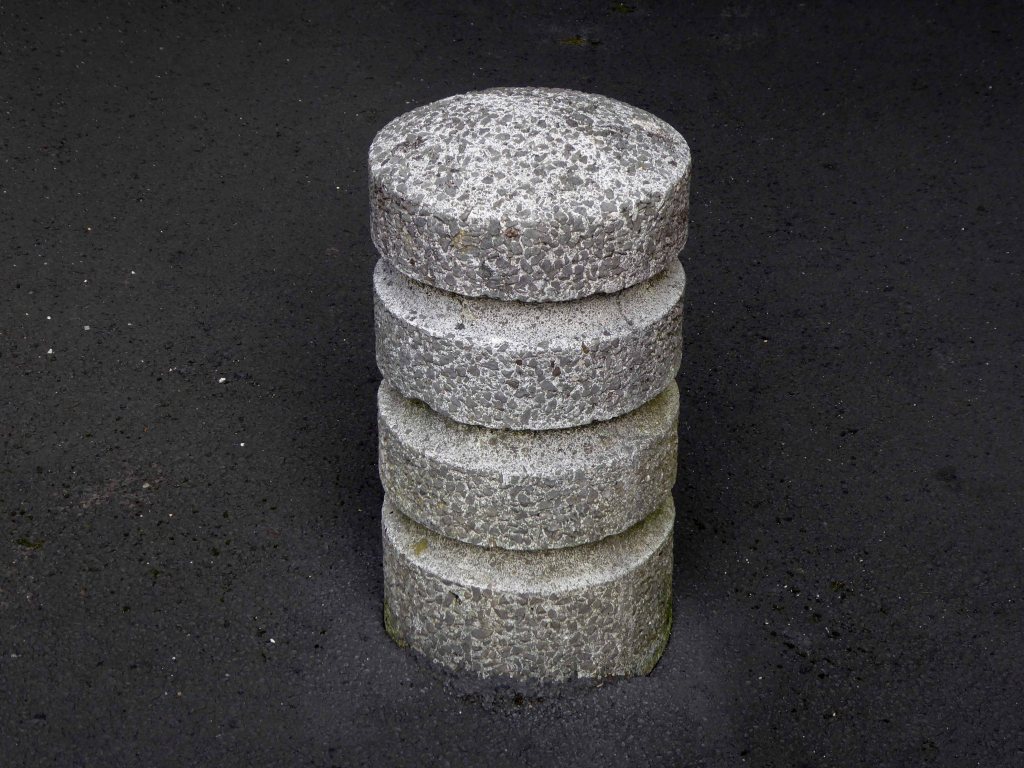
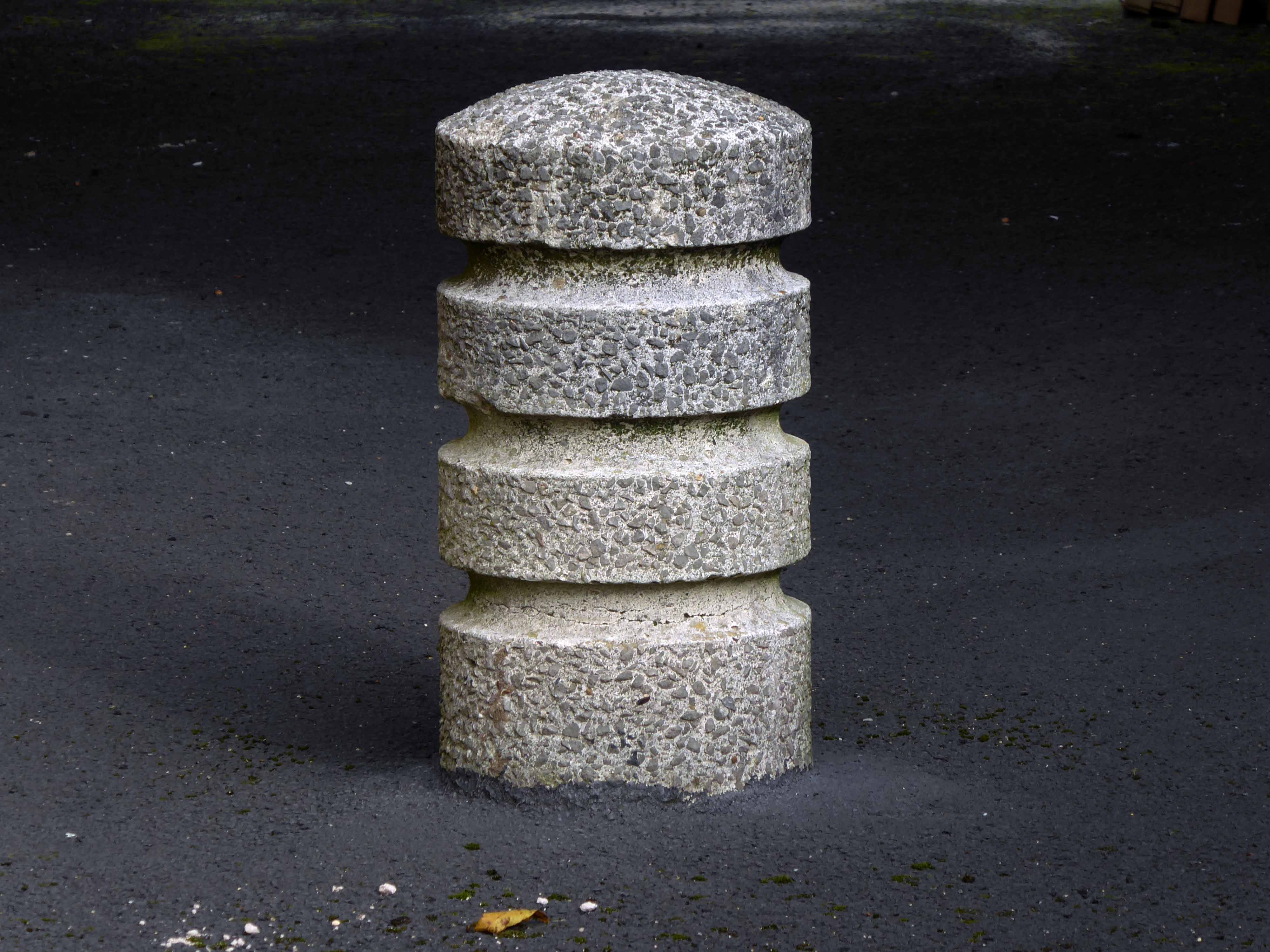
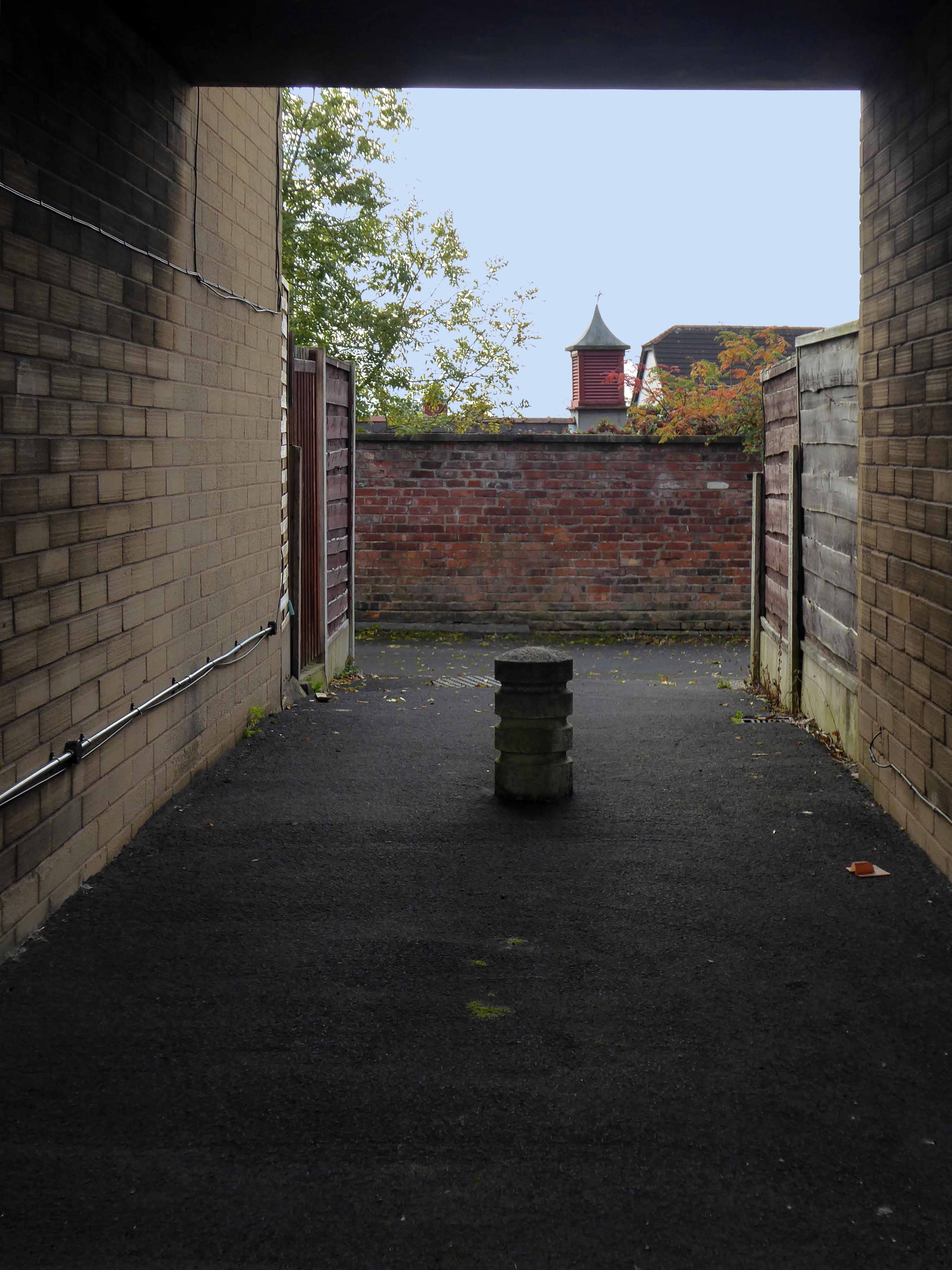
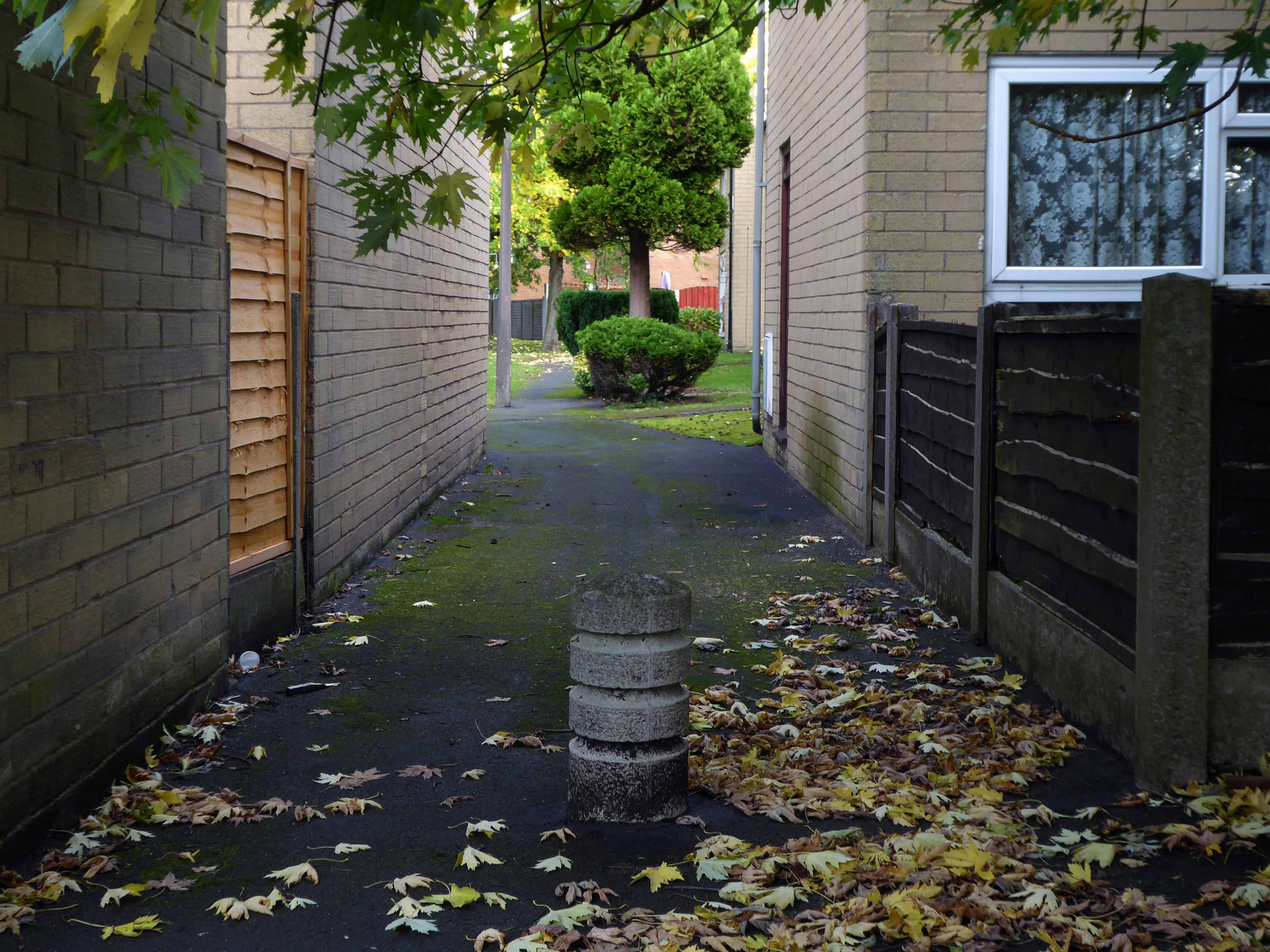
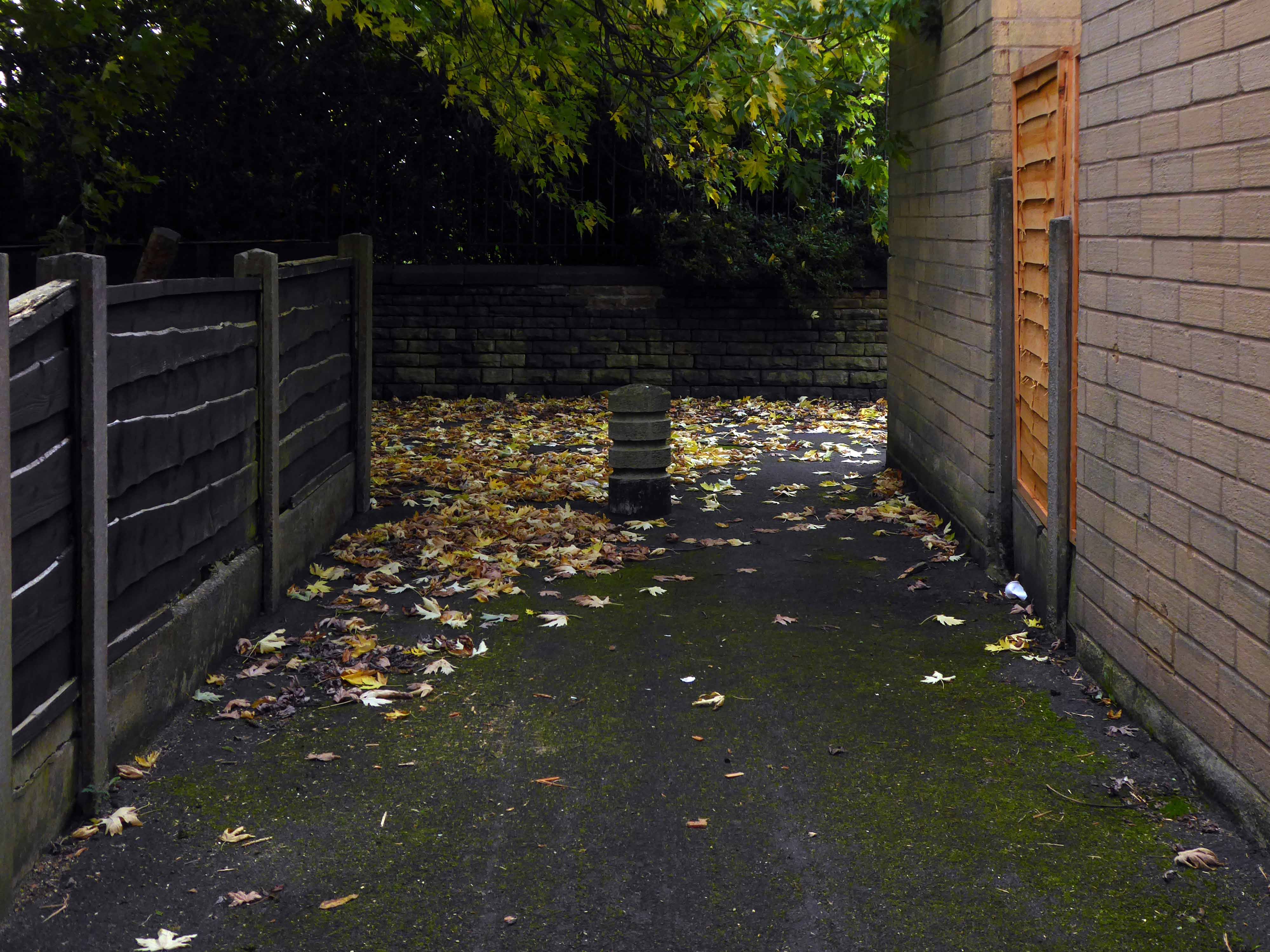
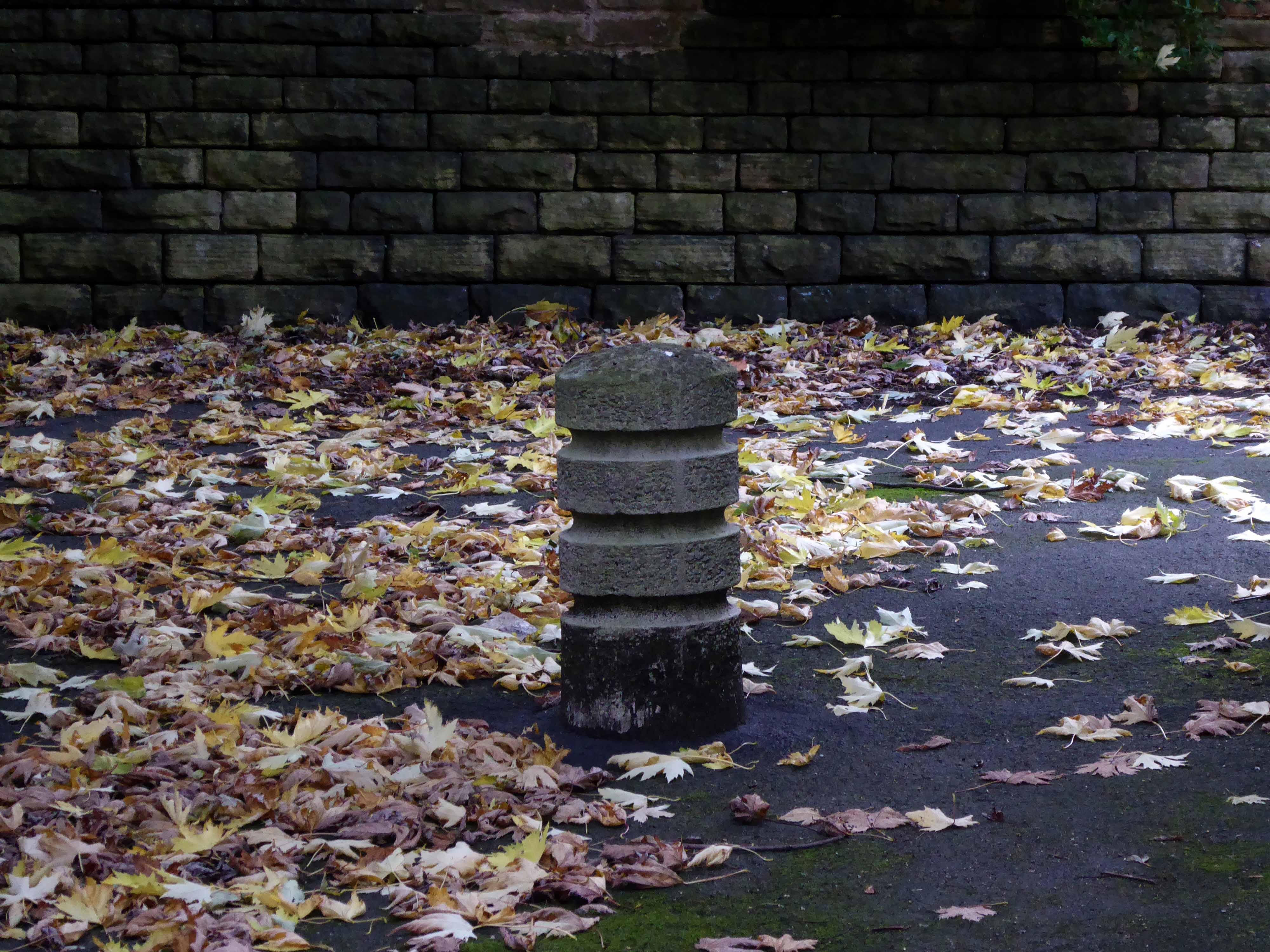
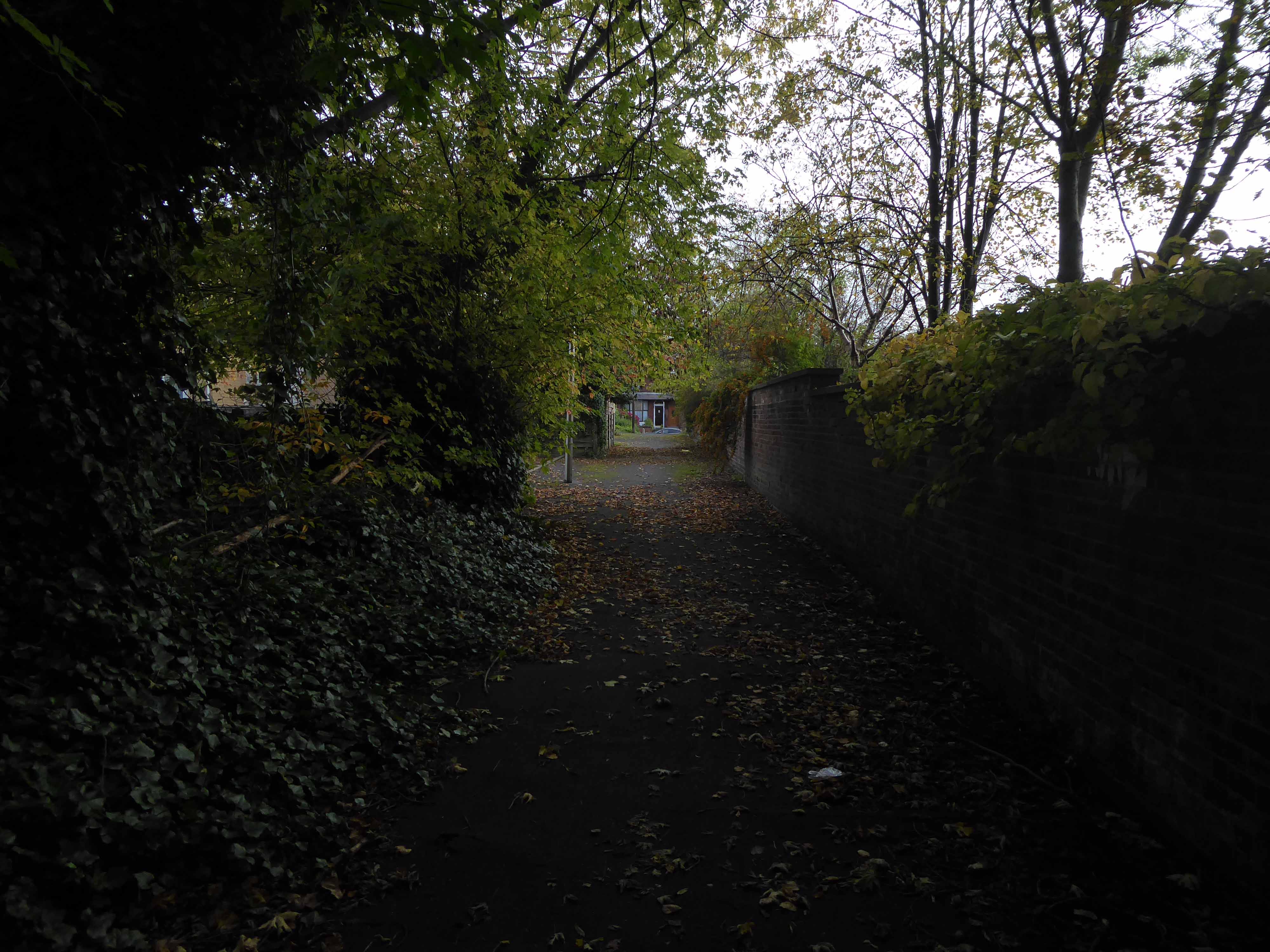
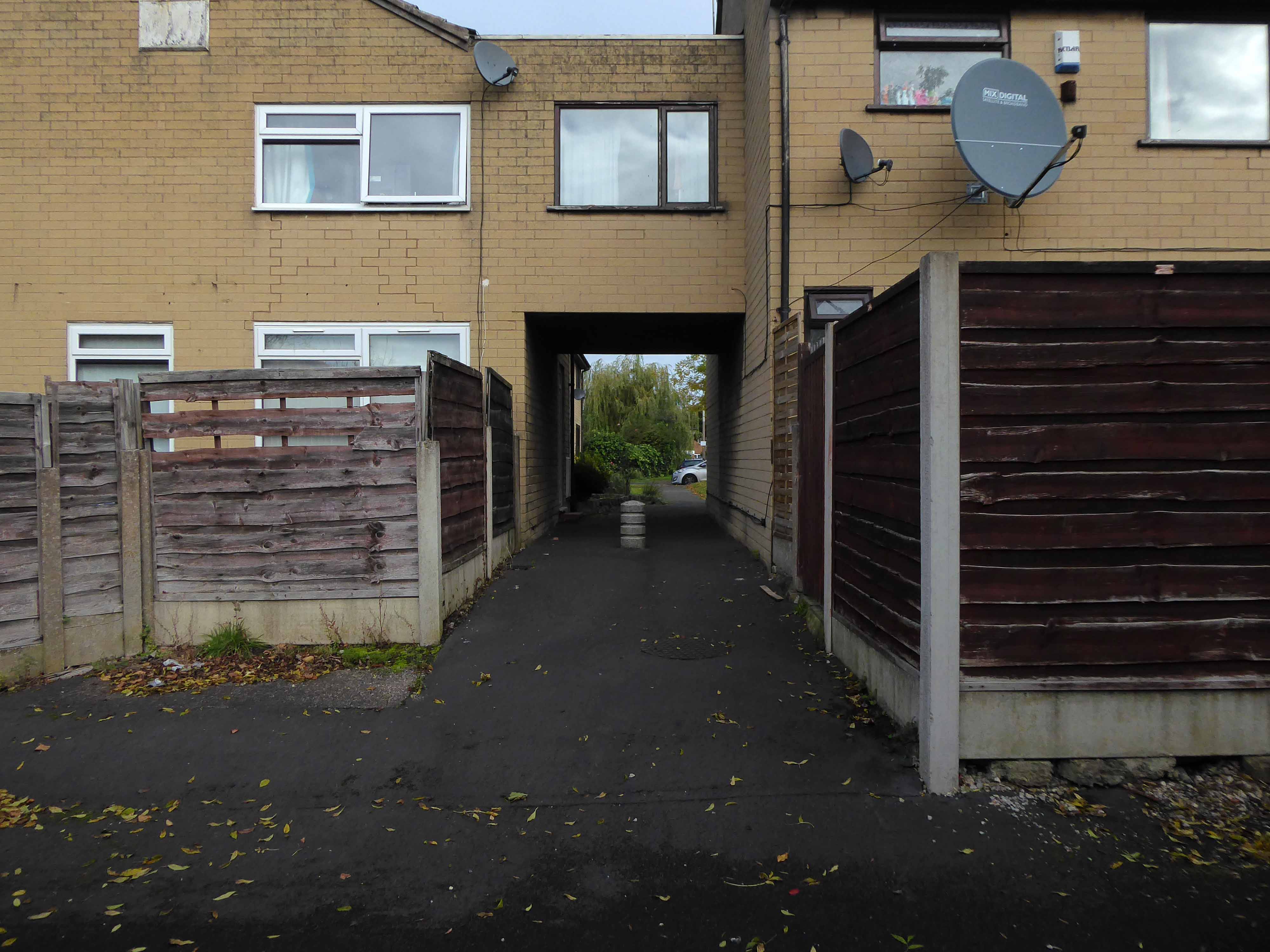
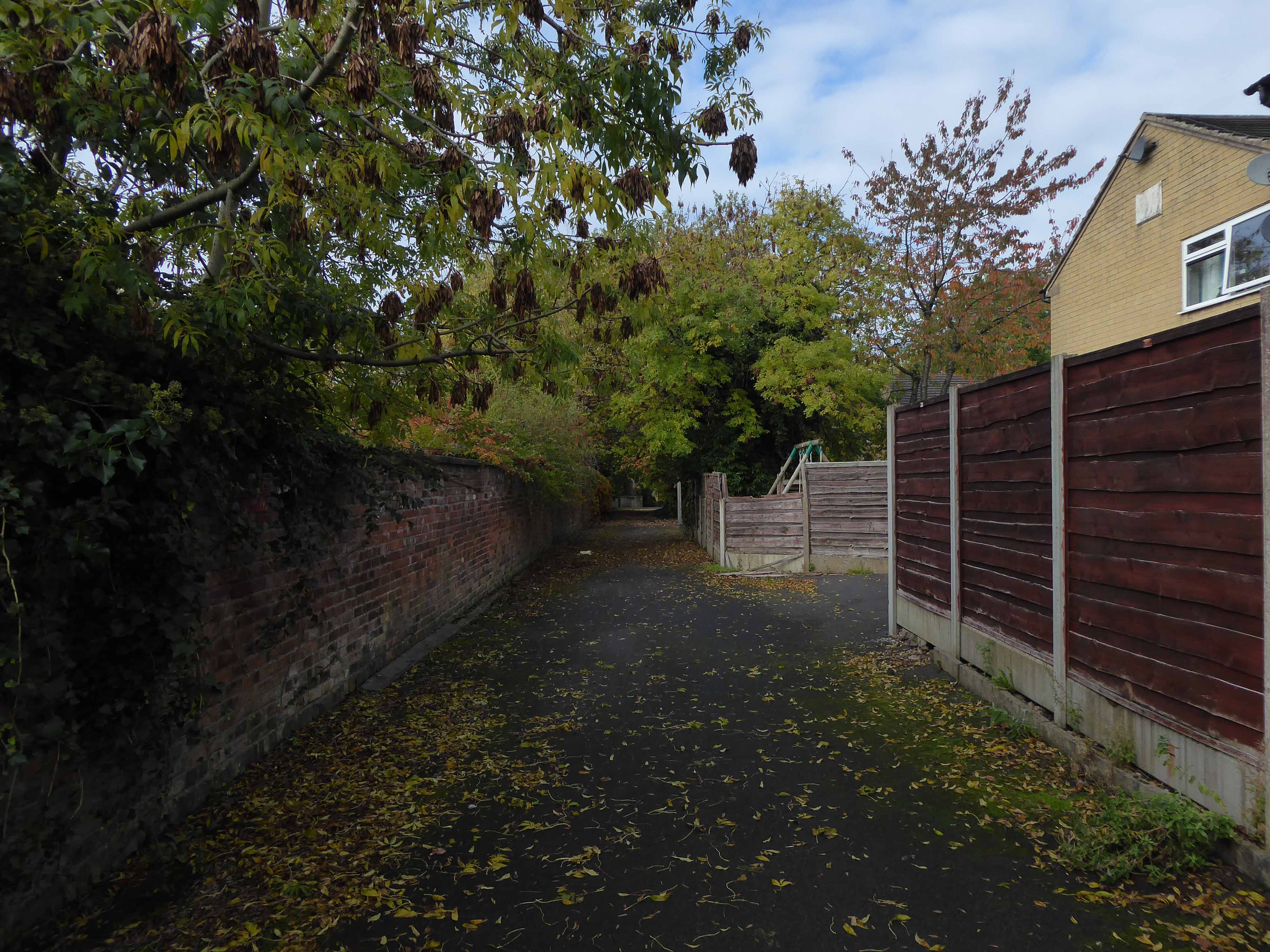
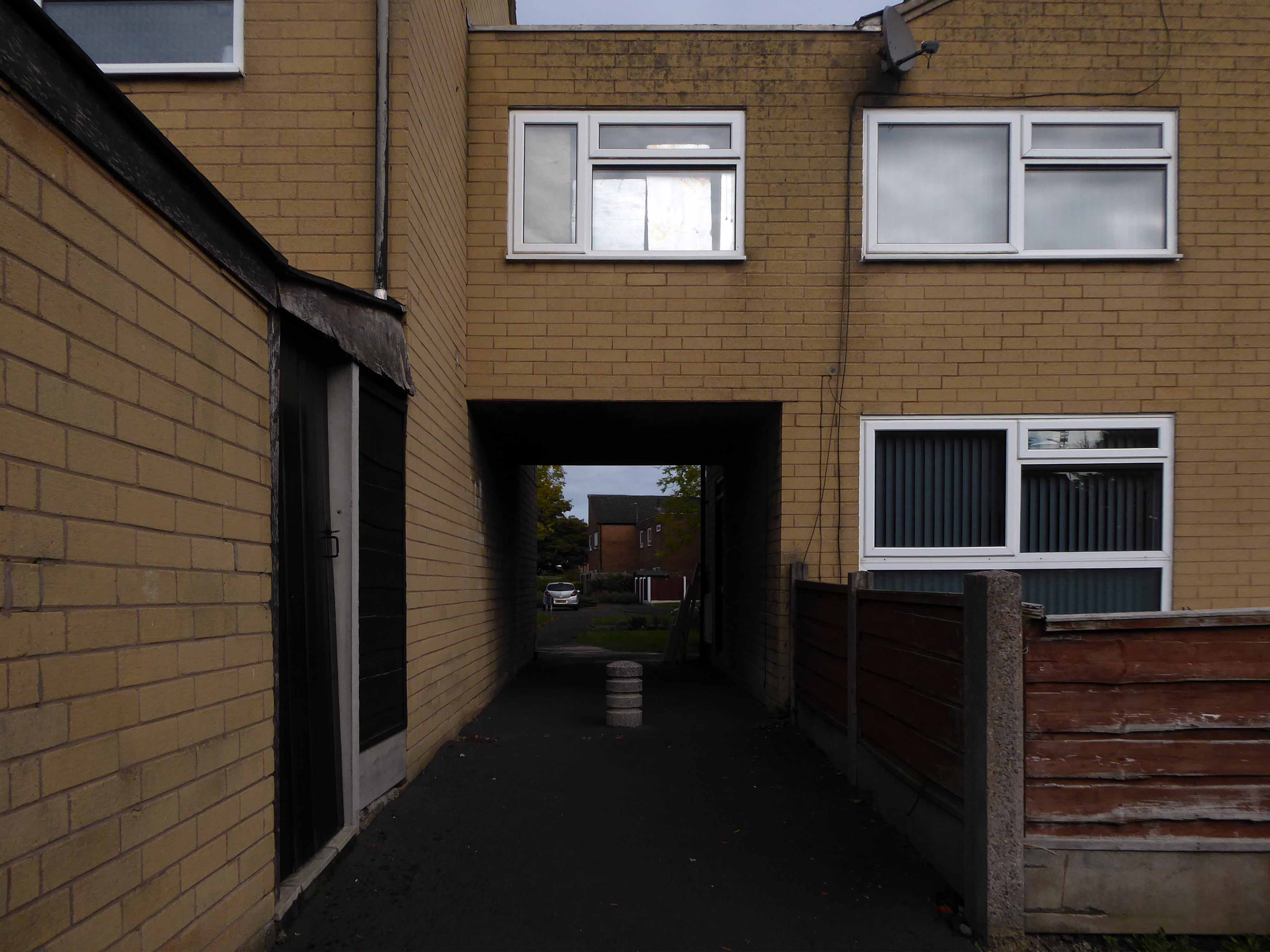
As I was out walking on the corner one day, I spied an old bollard in the alley he lay.
To paraphrase popular protest troubadour Bob Dylan.
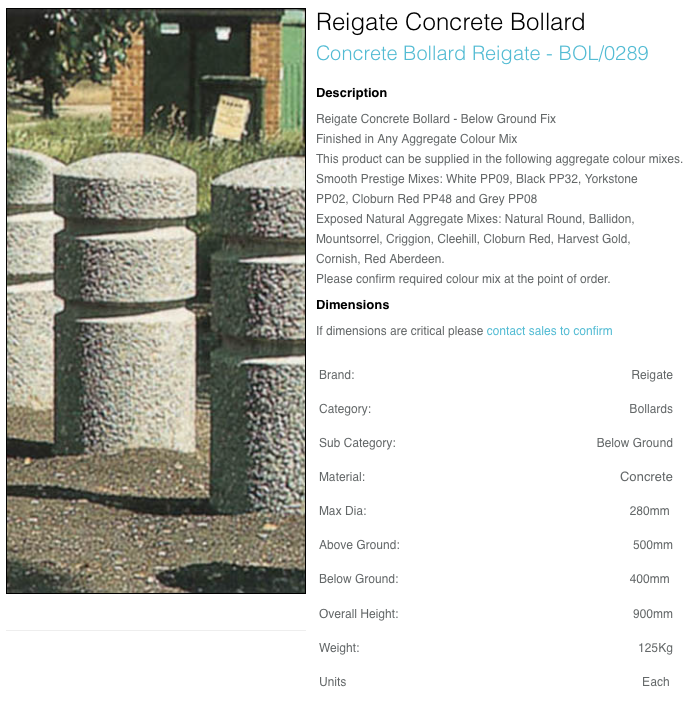
I was struck by the elegant symmetry and rough patinated grey aggregate.
To look up on the world from a hole in the ground, To wait for your future like a horse that’s gone lame, To lie in the gutter and die with no name?
I mused briefly on the very word bollards, suitable perhaps for a provincial wine bar, Regency period drama, or family run drapers – but mostly.
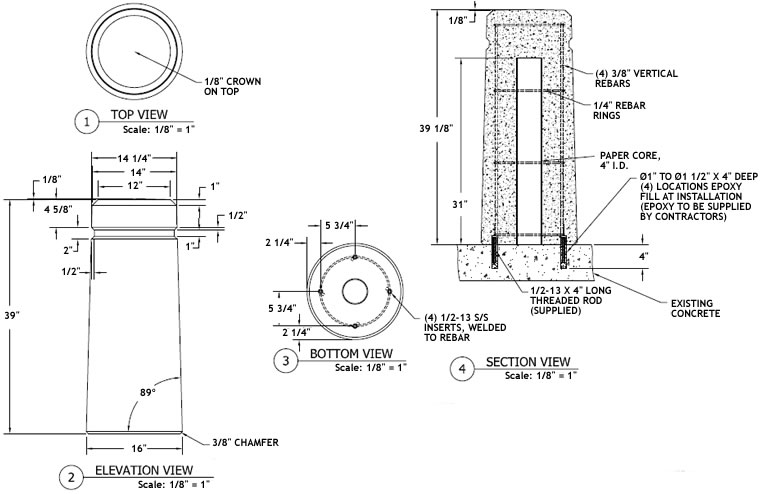
A bollard is a sturdy, short, vertical post. The term originally referred to a post on a ship or quay used principally for mooring boats, but is now also used to refer to posts installed to control road traffic and posts designed to prevent ram-raiding and vehicle-ramming attacks.
The term is probably related to bole, meaning a tree trunk.
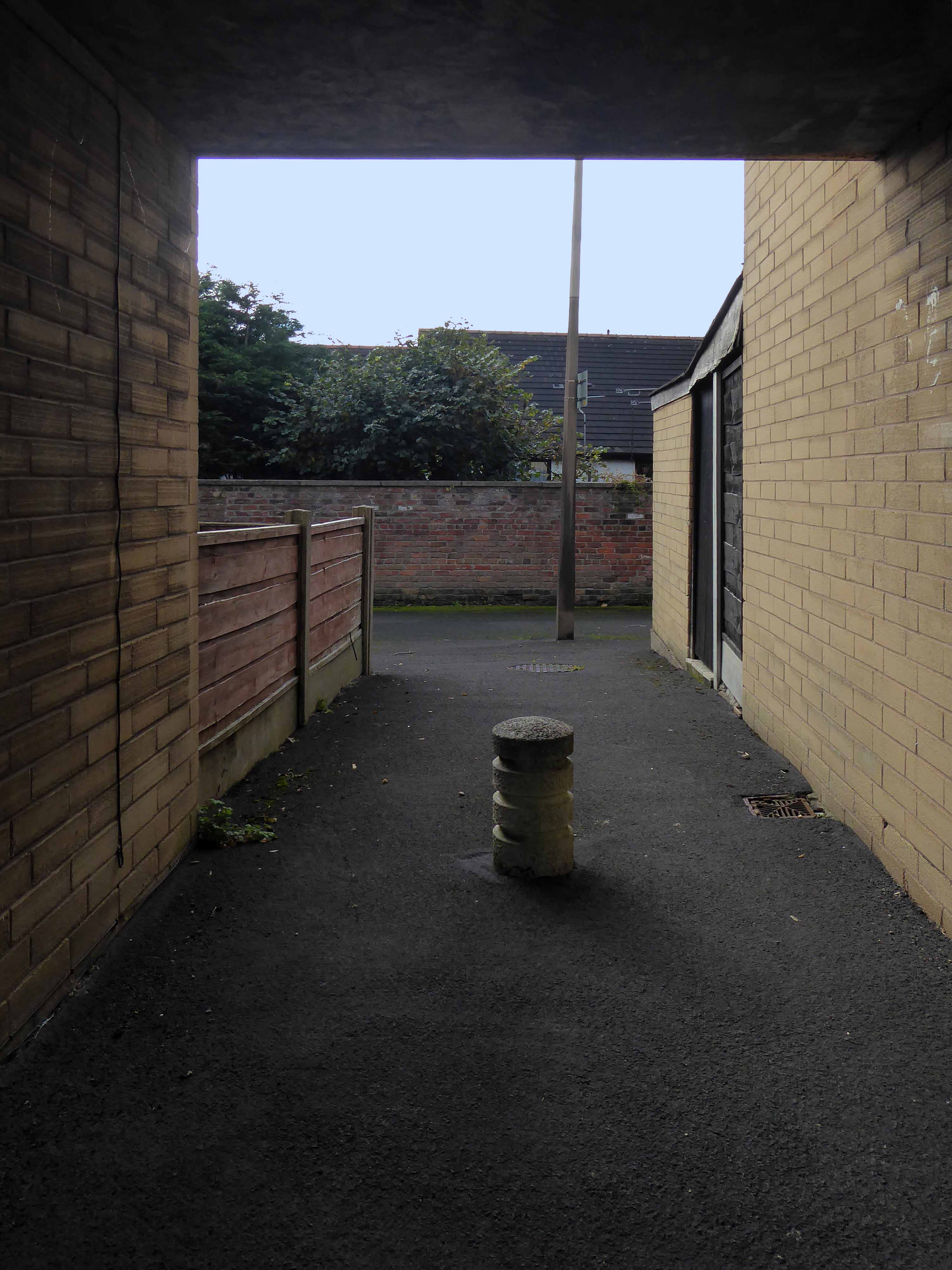
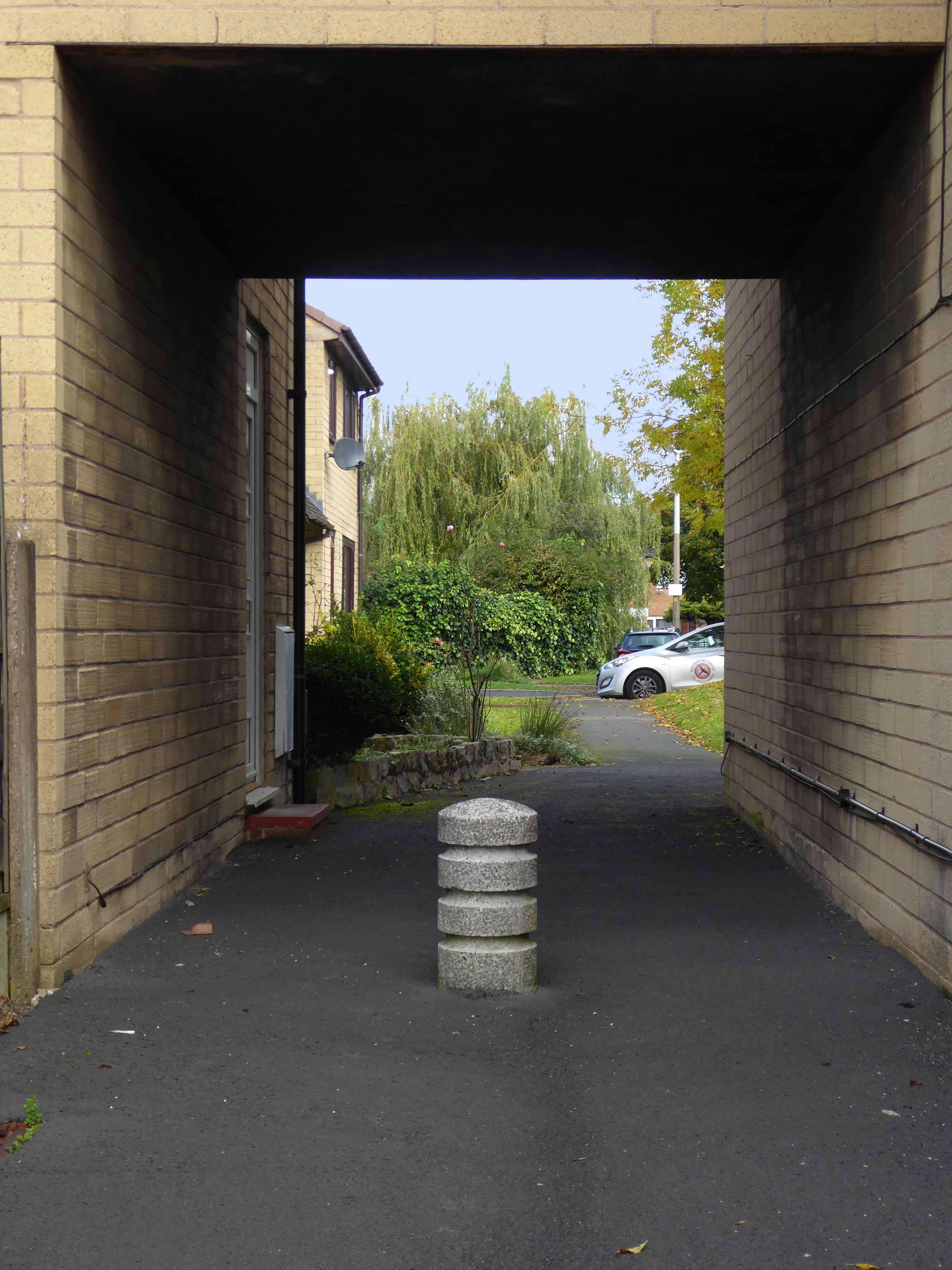
Having so mused I began to wander a tight little island of alleys and homes, discovering three of the little fellas, each linked by typology and common ancestry, steadfastly impeding the ingress of the motor car.
Yet also presenting themselves as mini works of utilitarian art – if that’s not a contradiction in terms.
Having returned home I began another short journey into the world of bollards, where do they come from?
PAS 68 approved protection for your people and property combining security, natural materials and style.
My new pals seem to be closely related to the Reigate.
Available in a mind boggling range of finishes.
Bollards can be our friends, an expression of personal freedom and security.
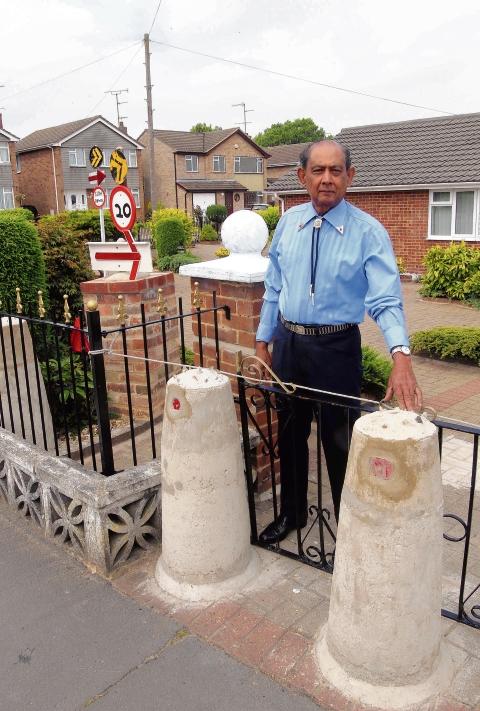
A pensioner says he will go to court if necessary after putting up concrete bollards in a last-ditch attempt to protect his home.
Owen Allan, 74, of Beaufort Gardens, Braintree, claims motorists treat the housing estate like a race track, driving well in excess of the 20mph speed limit, and that the railings in front of his home have regularly been damaged by vehicles leaving the road.
He was worried it would only be a matter of time before a car came careering off Marlborough Road and flying through the wall of his bungalow.
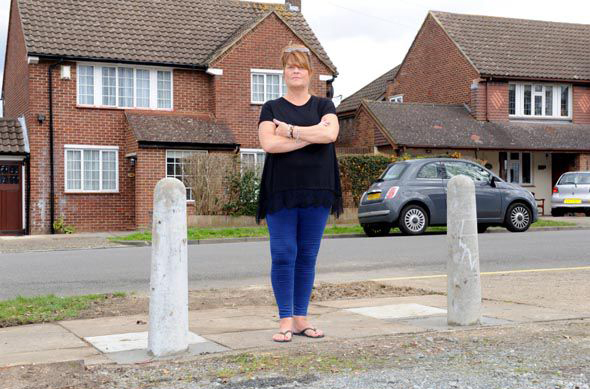
I have cause to thank the humble concrete bollard, having suffered an assault on our front wall from a passing pantechnicon, I subsequently petitioned the council, requiring them to erect a substantial bollard barrier.
Which was subsequently hit by a passing pantechnicon.
They are our modernist friends, little gems of public art and should treated with due respect – think on.
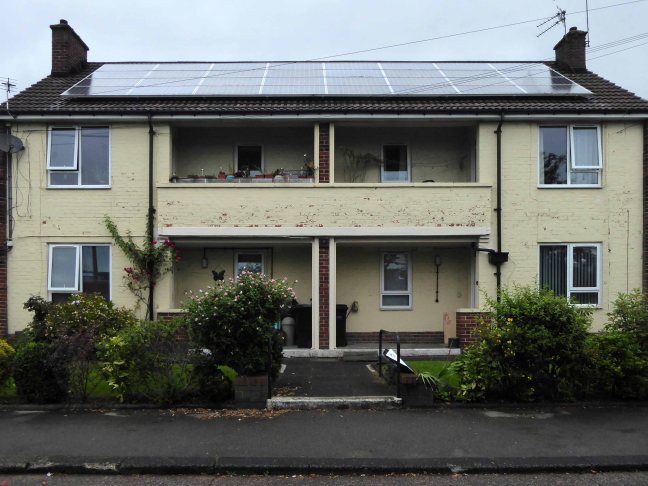
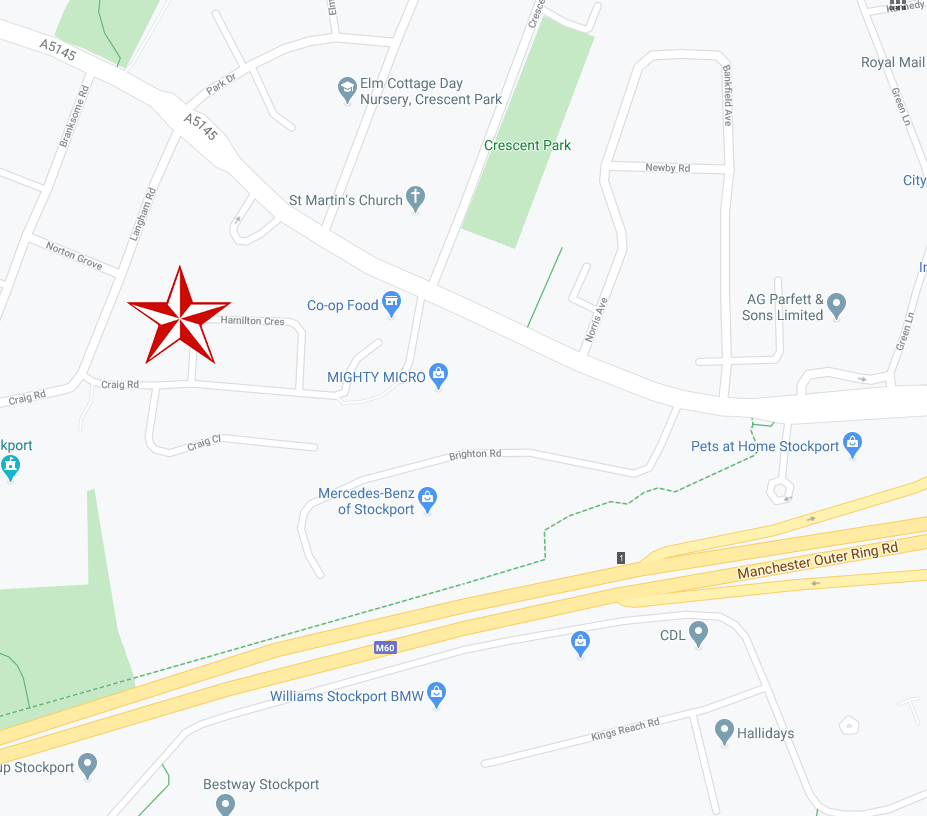
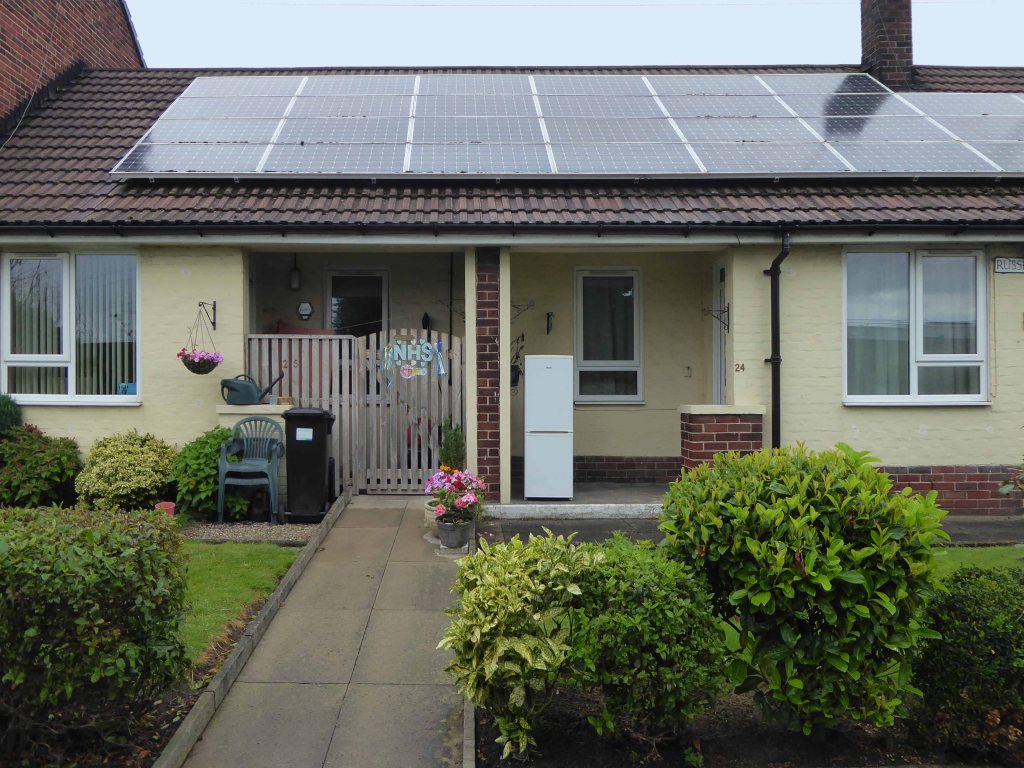
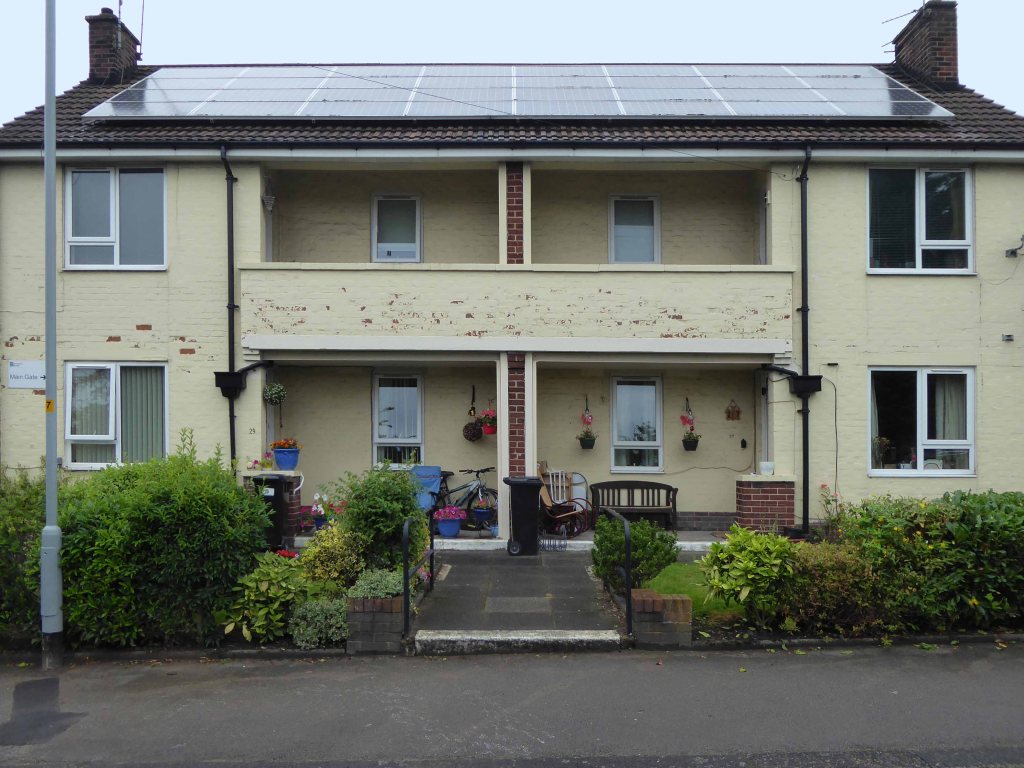
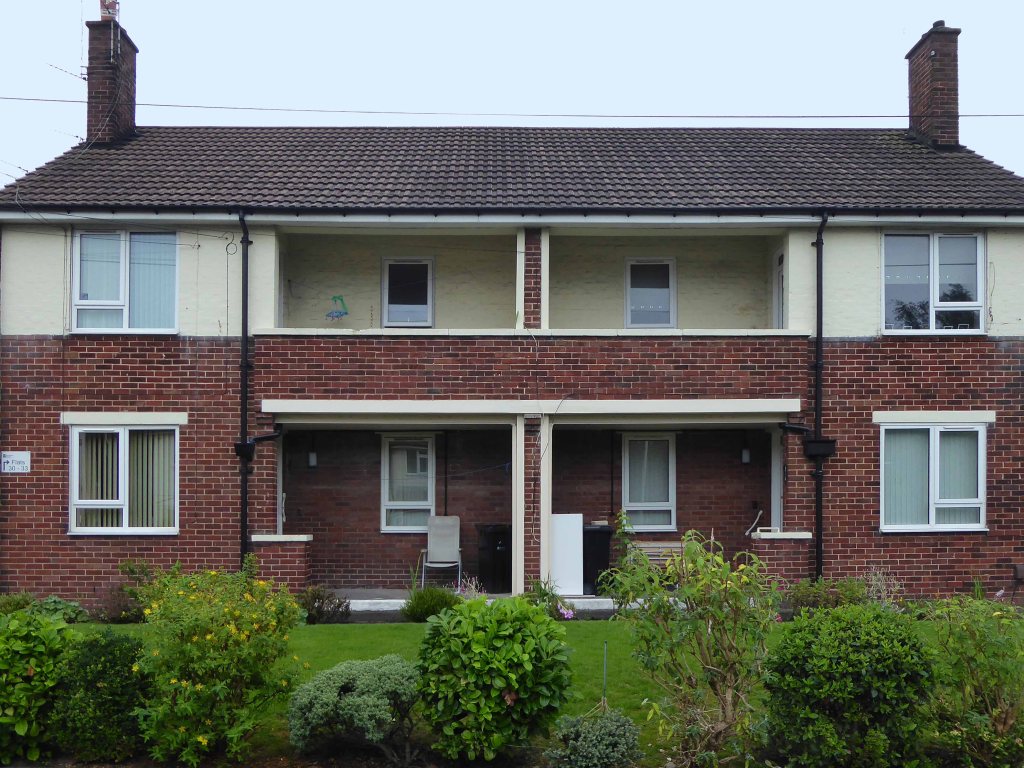
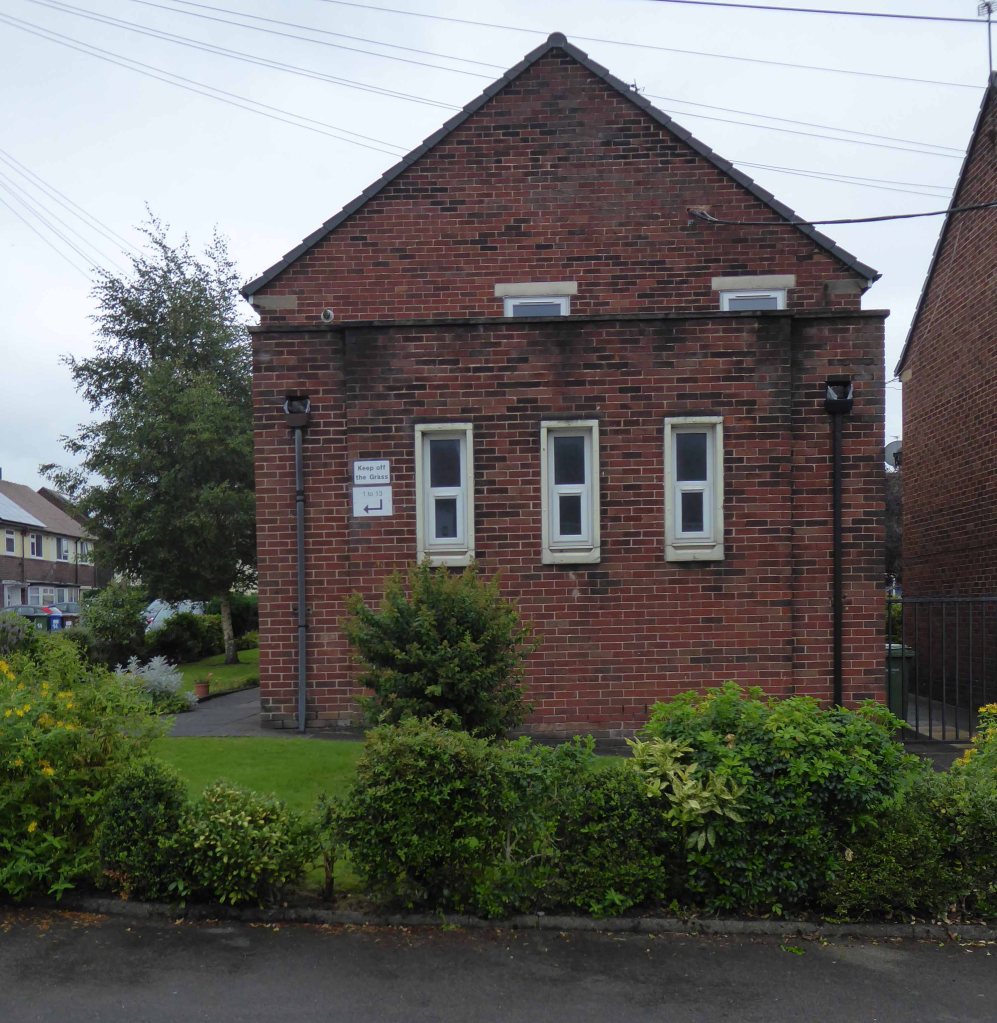
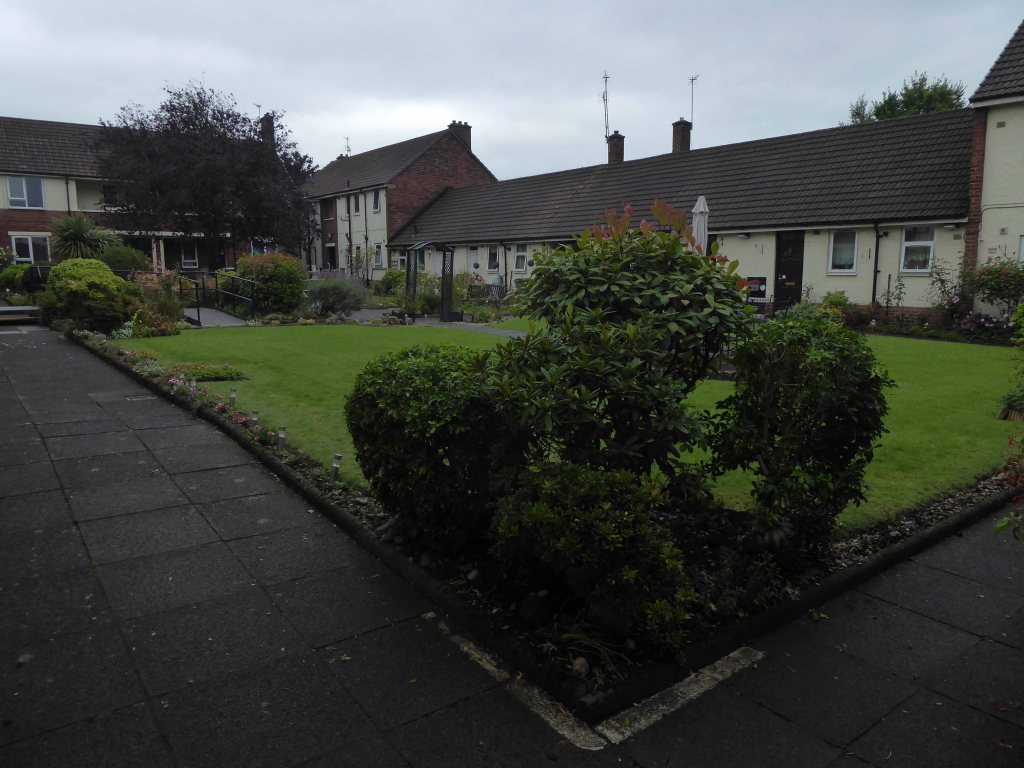
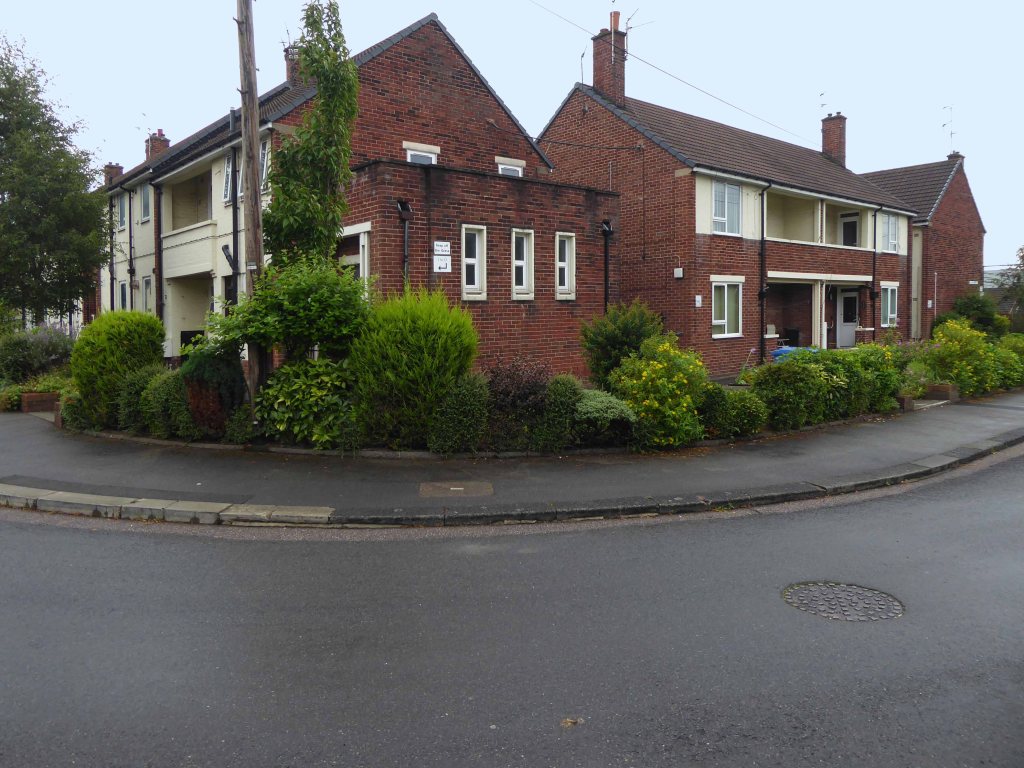
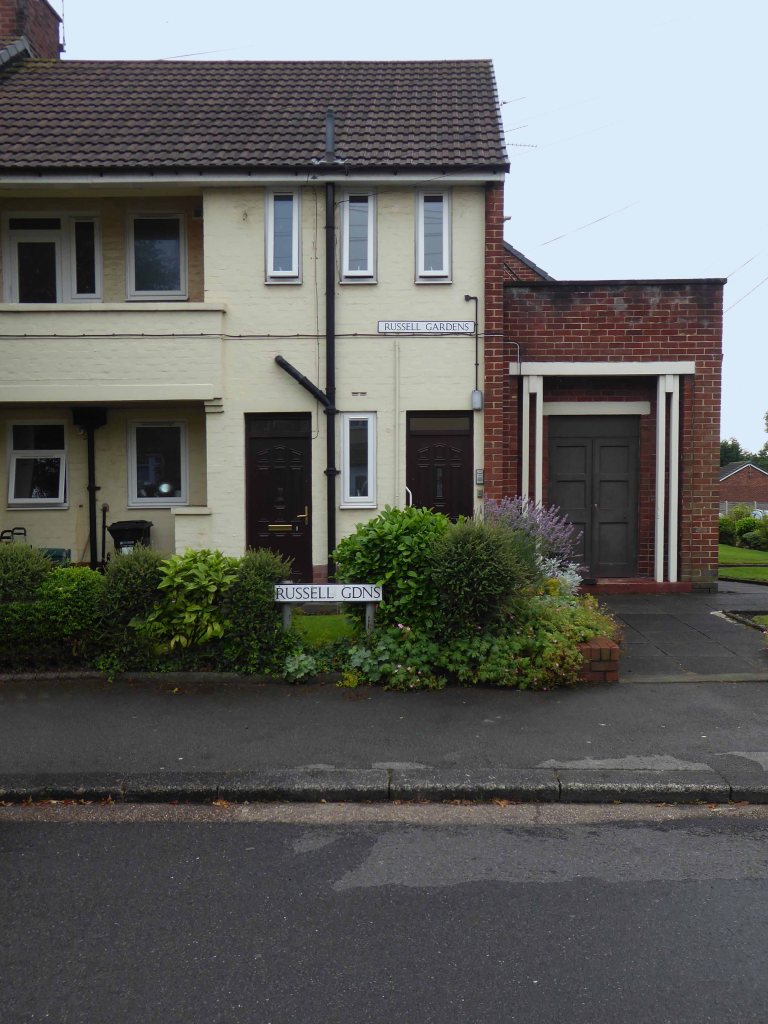
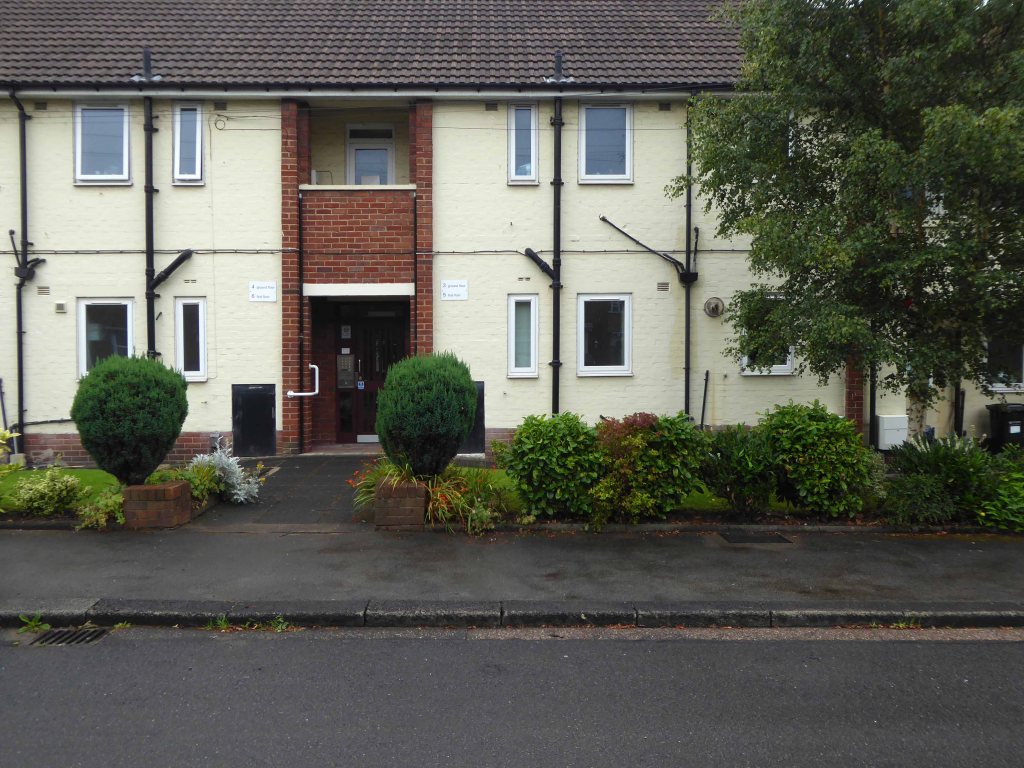
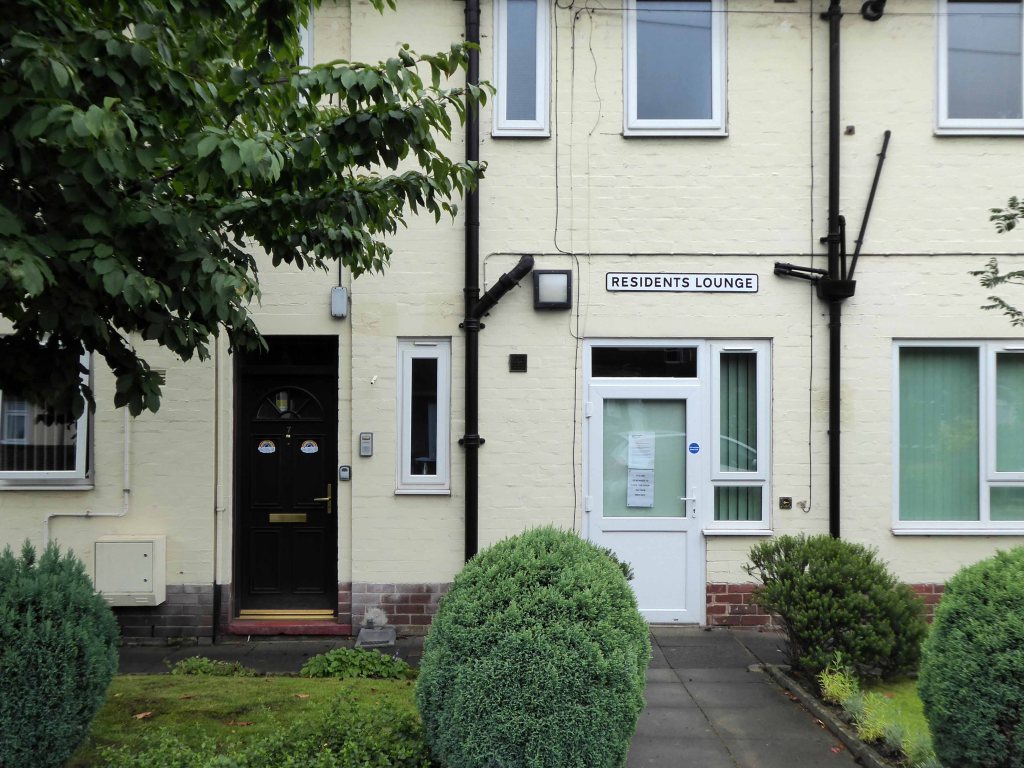
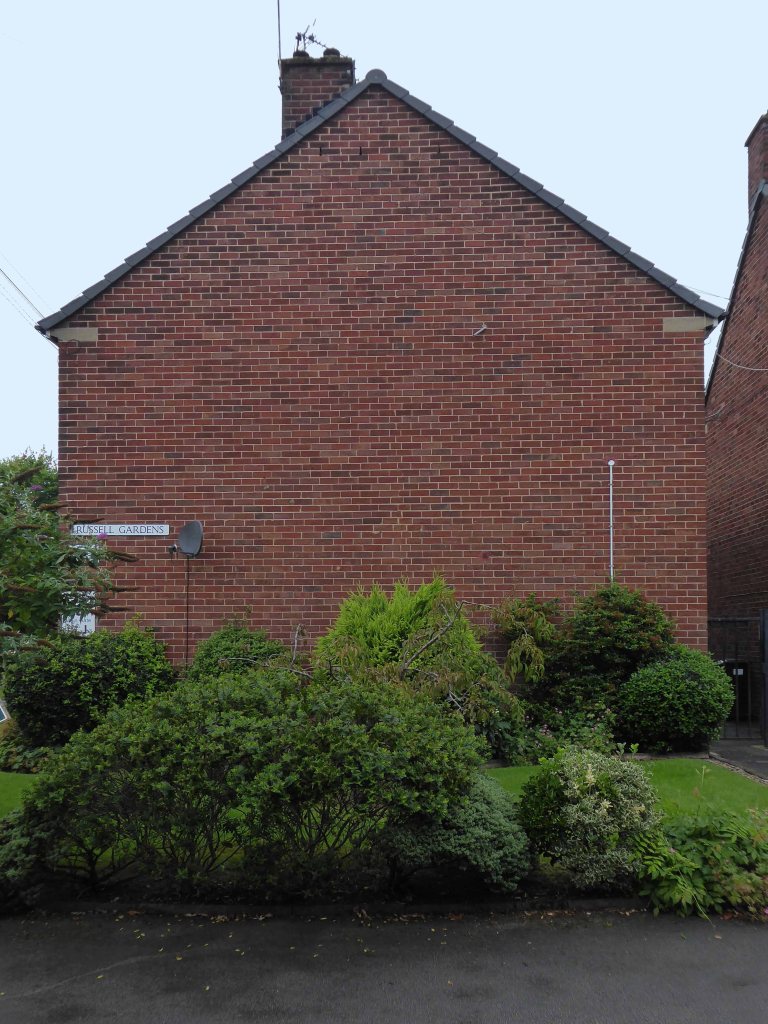
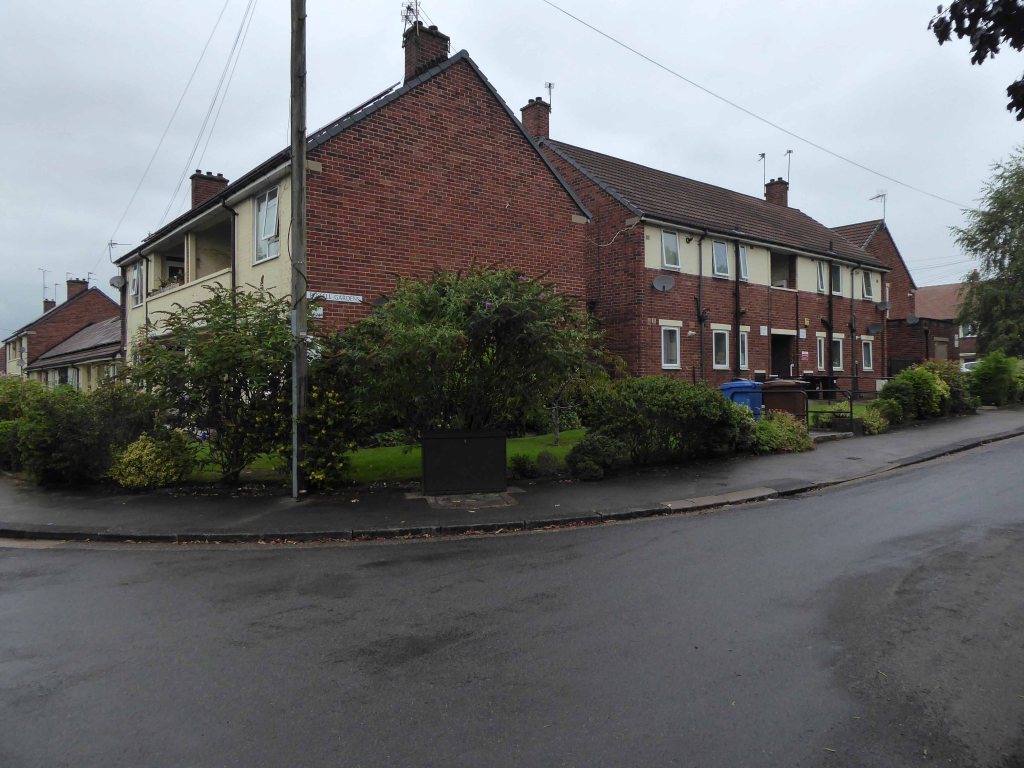
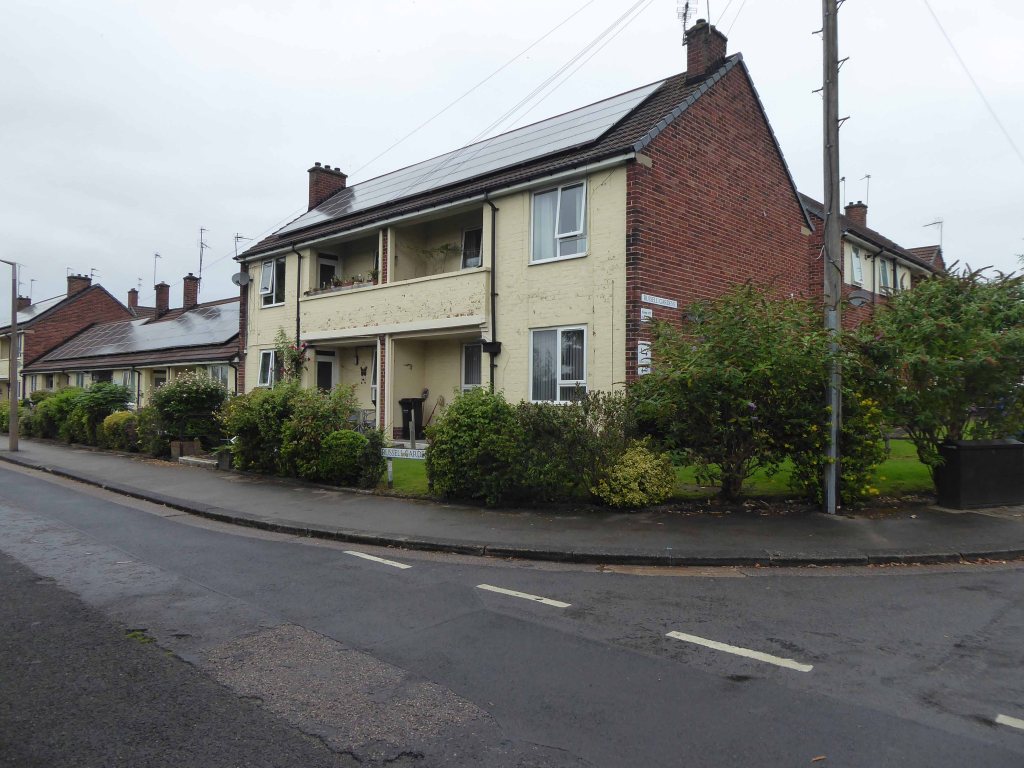
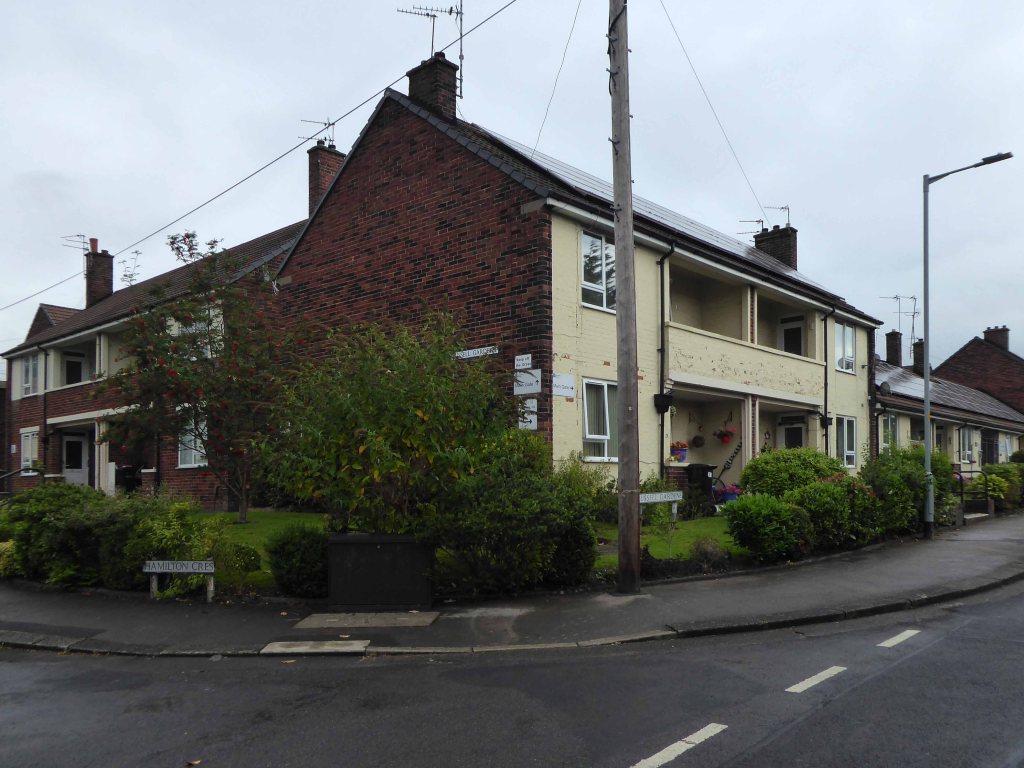
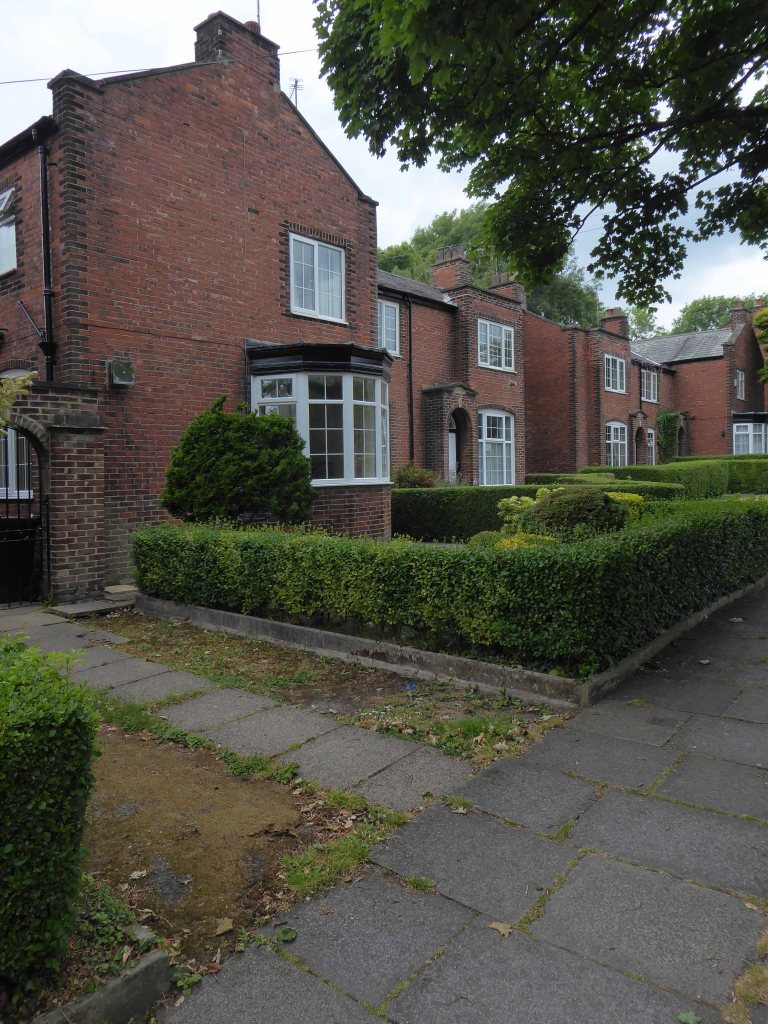
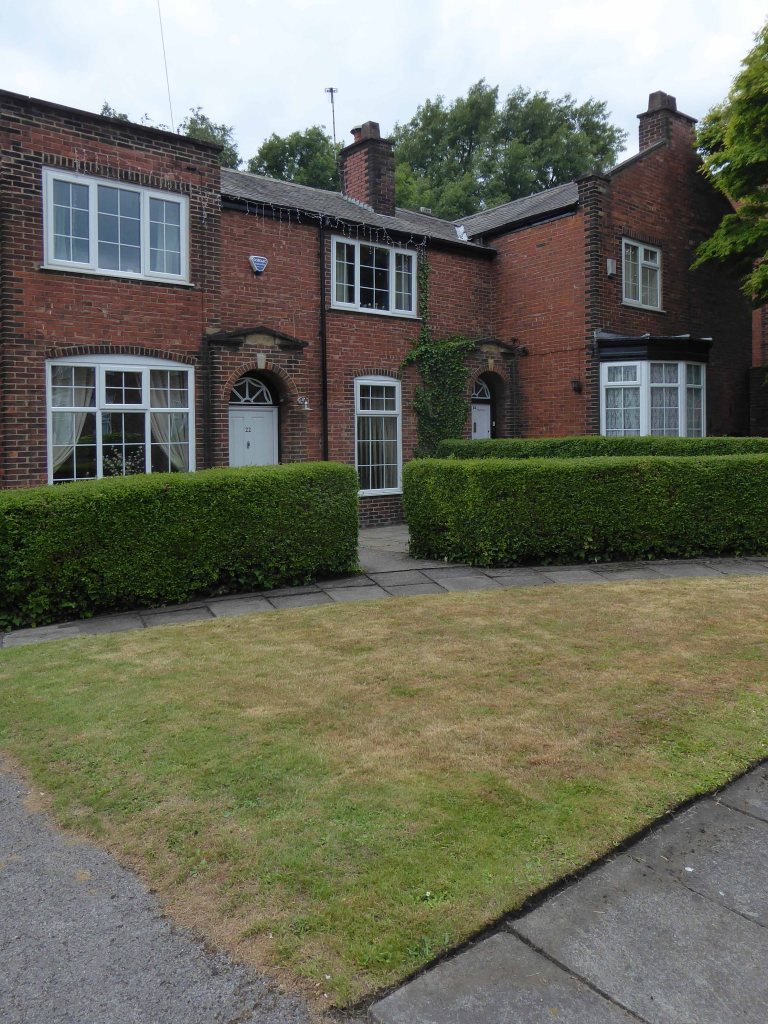
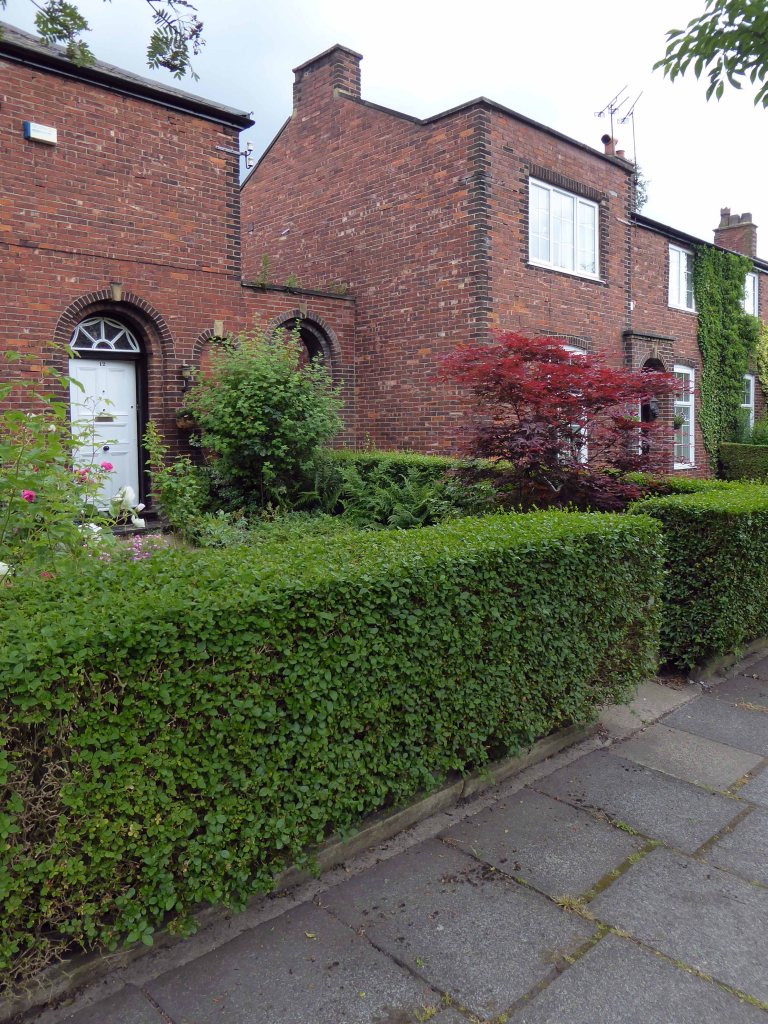
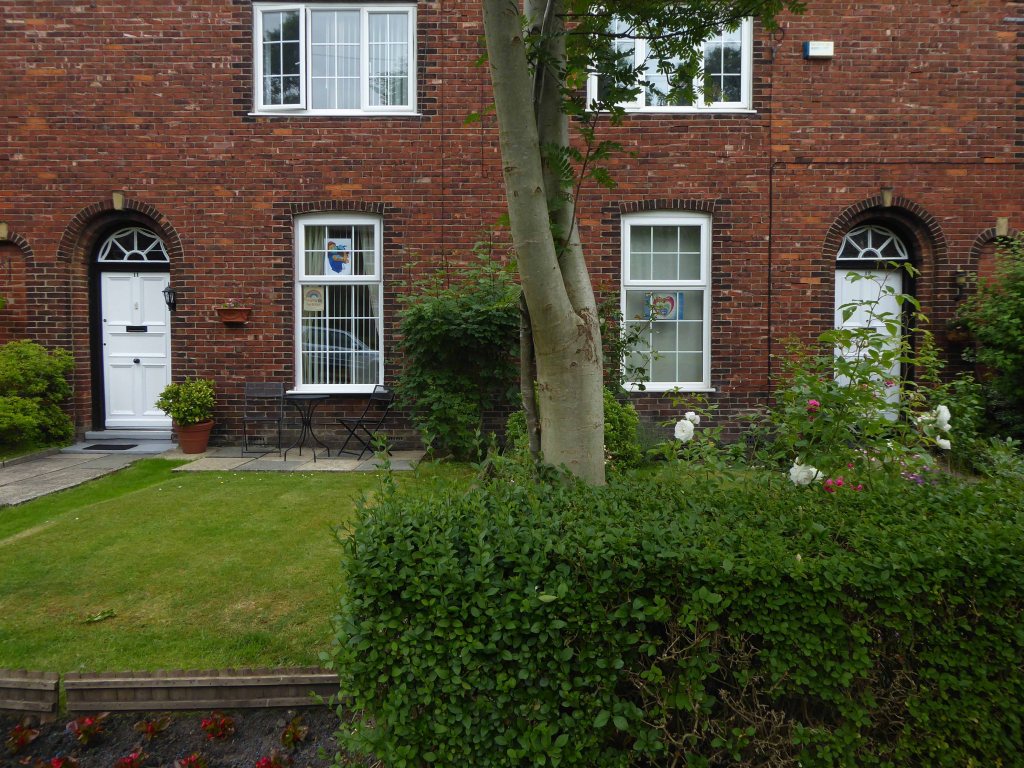
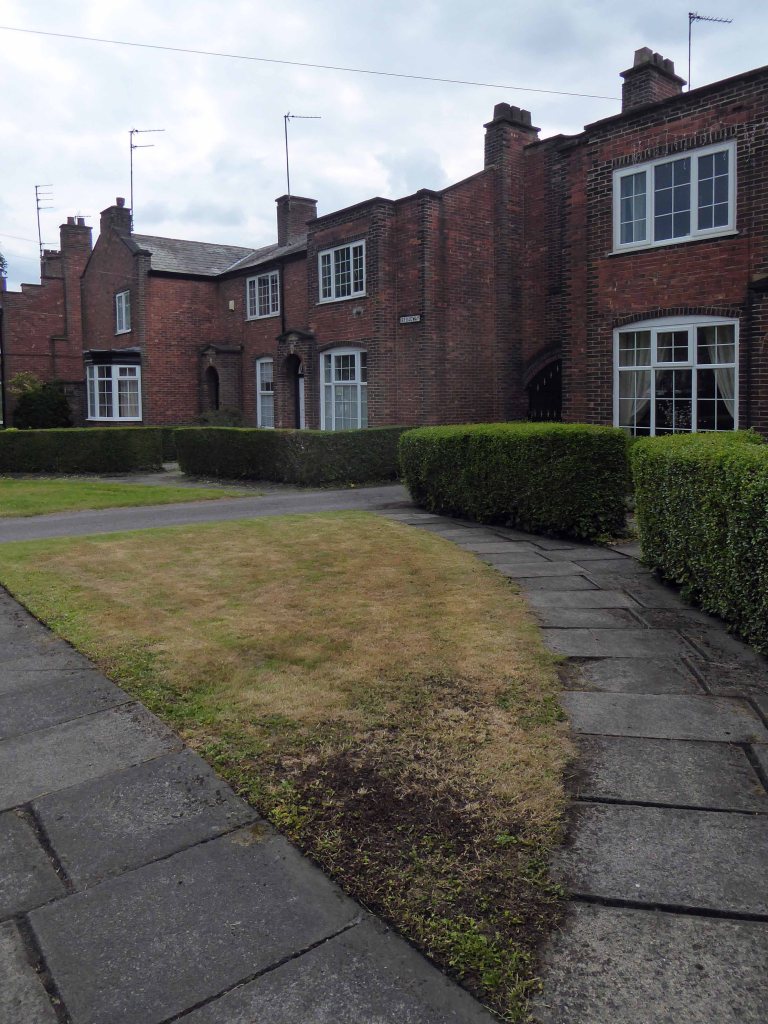
I live just around the corner and often walk by, intrigued by this small rectangle of rectangular sheltered homes, I chose to take a closer look.
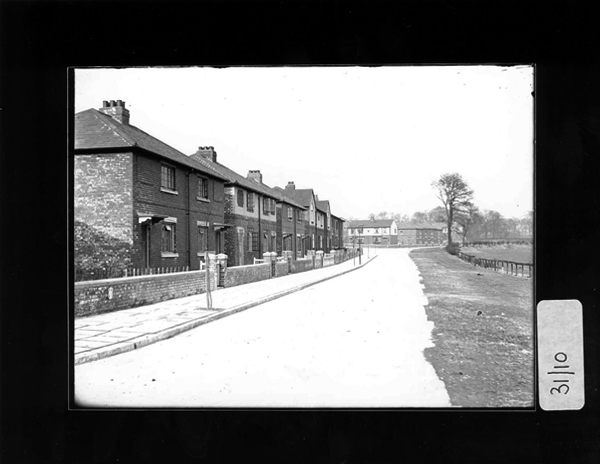
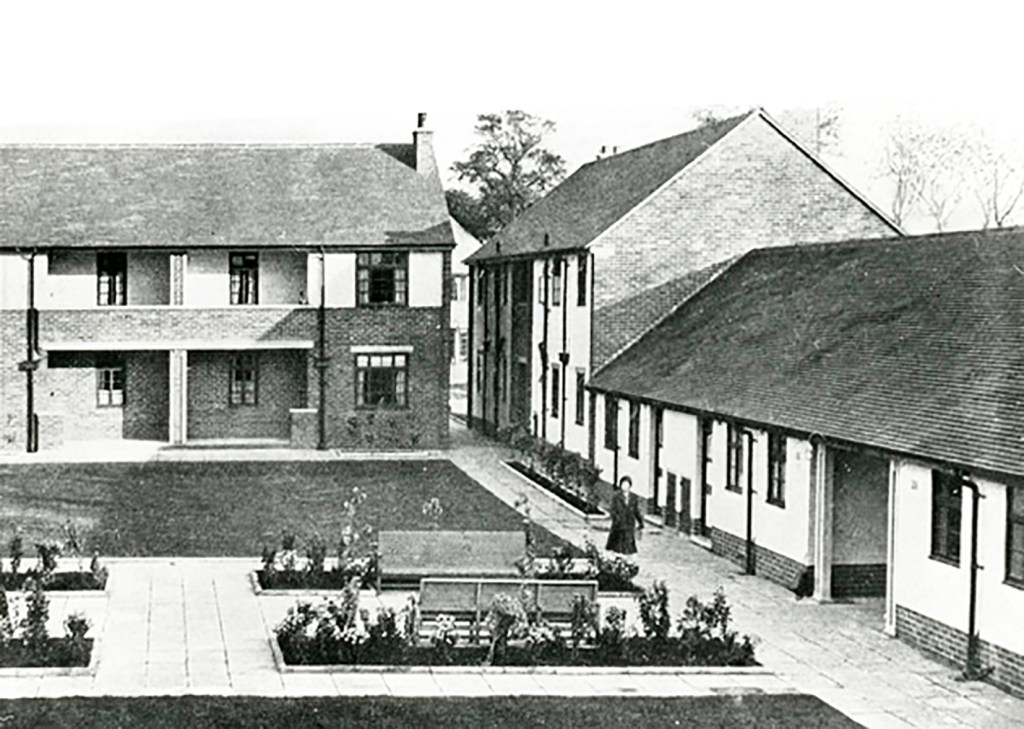
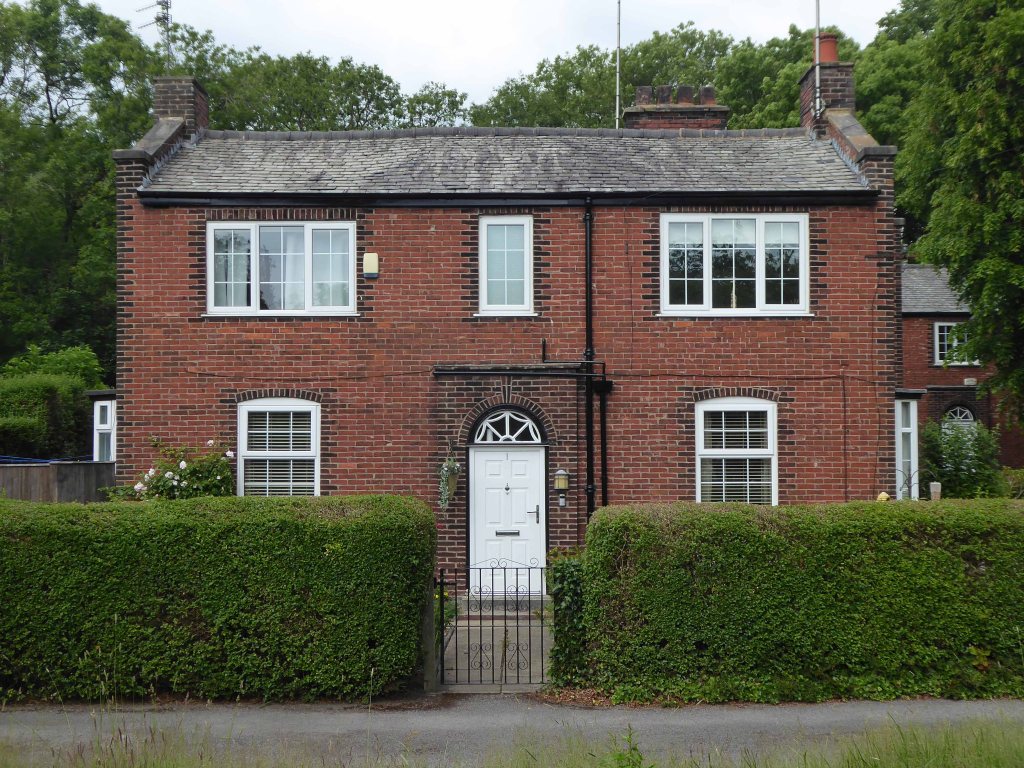
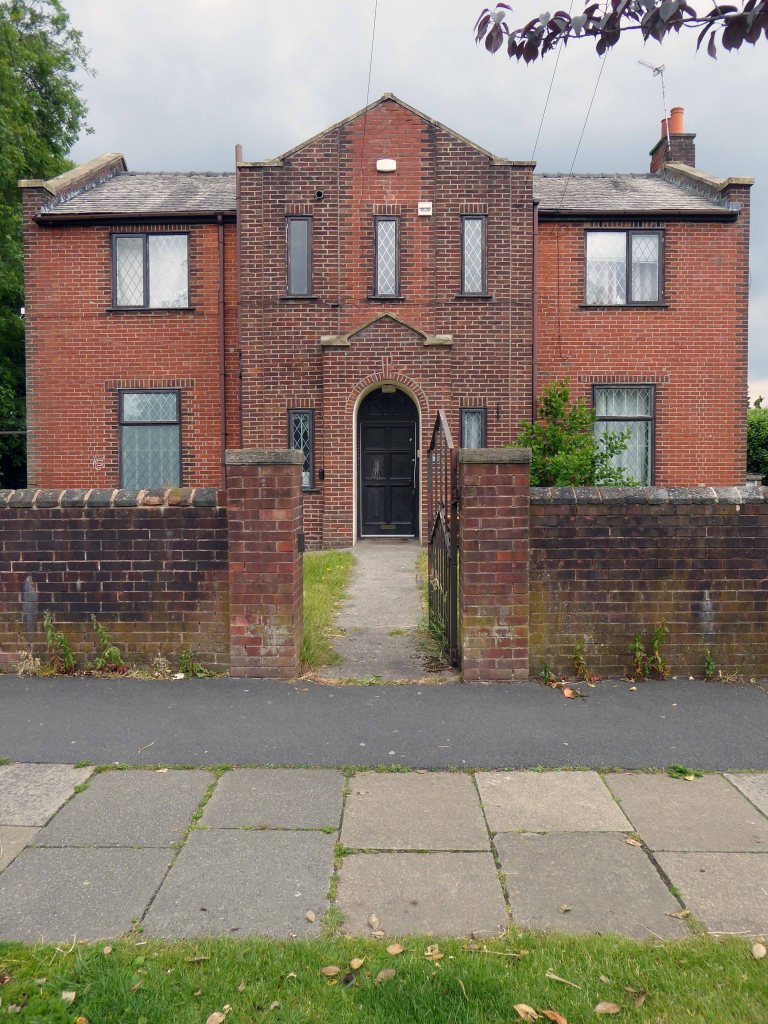
On adjoining Craig Road there are a group of interwar semi-detached homes, social housing built in 1930, facing on to open ground which leads down to the Mersey.
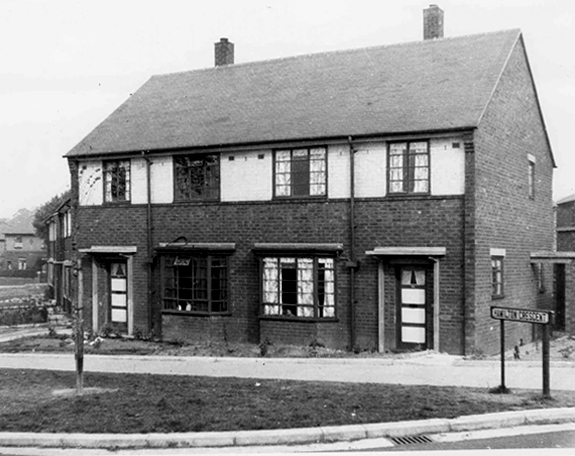
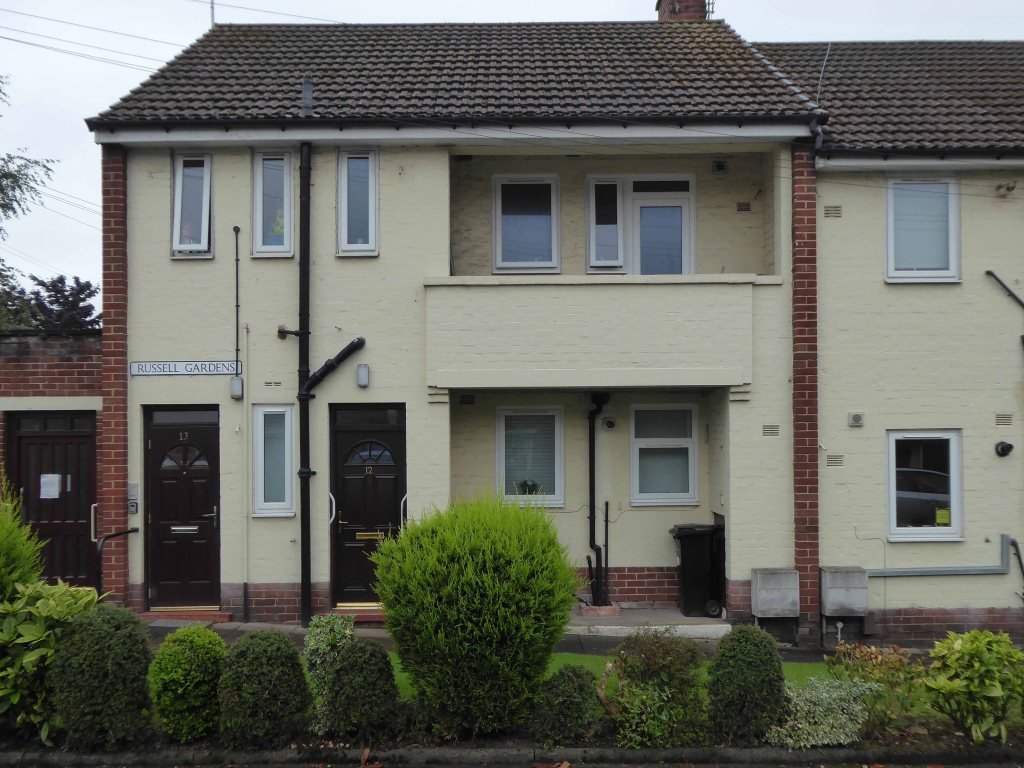
There is an arc of post war social housing on Hamilton Crescent, which surrounds Russell Gardens.
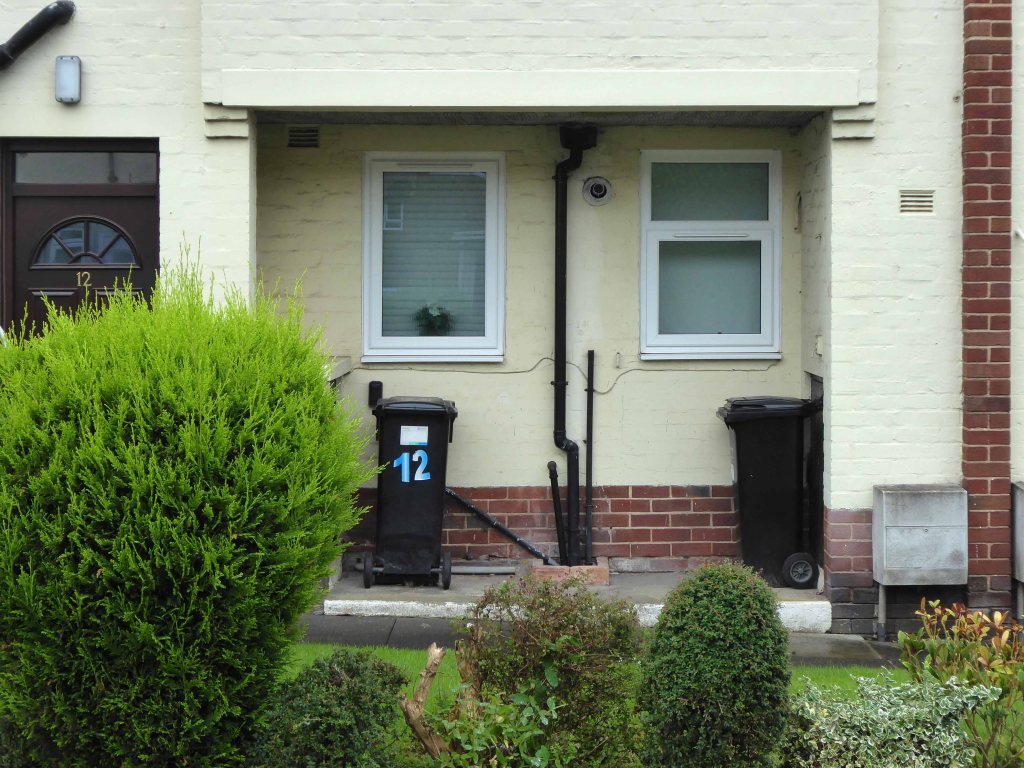
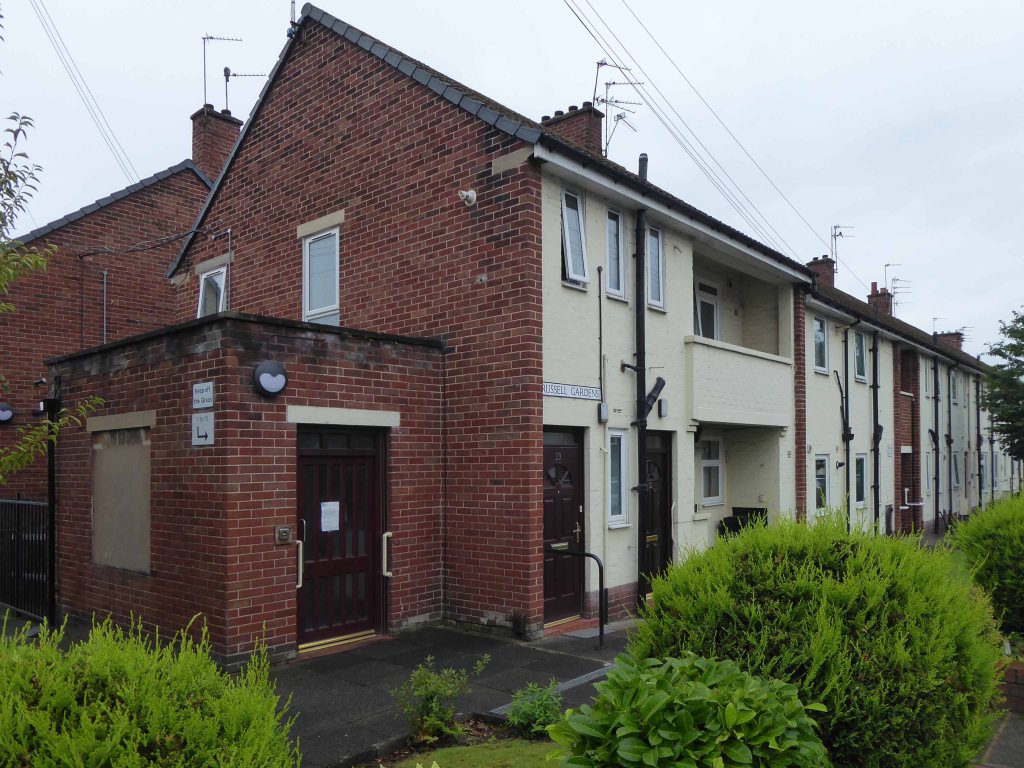
The homes that constitute Russell Gardens built in 1947 were illustrated in the town’s 1948/49 guide book, considered to be something of value.
Designed as a diminutive Garden Village, smaller in scale to those found in Burnage or Fairfield, but based on the principle of shared green space and community services.
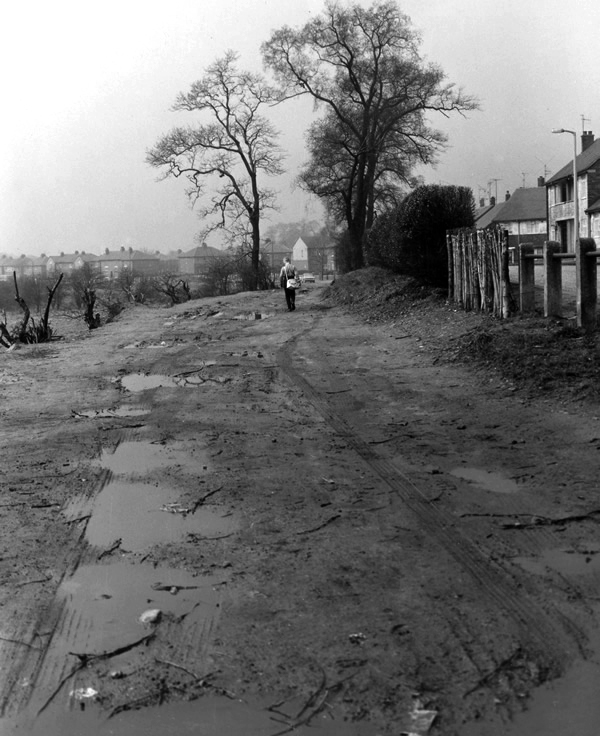
In the 1970s the land to the south, now occupied by the Craig Close development, was yet to be built upon.
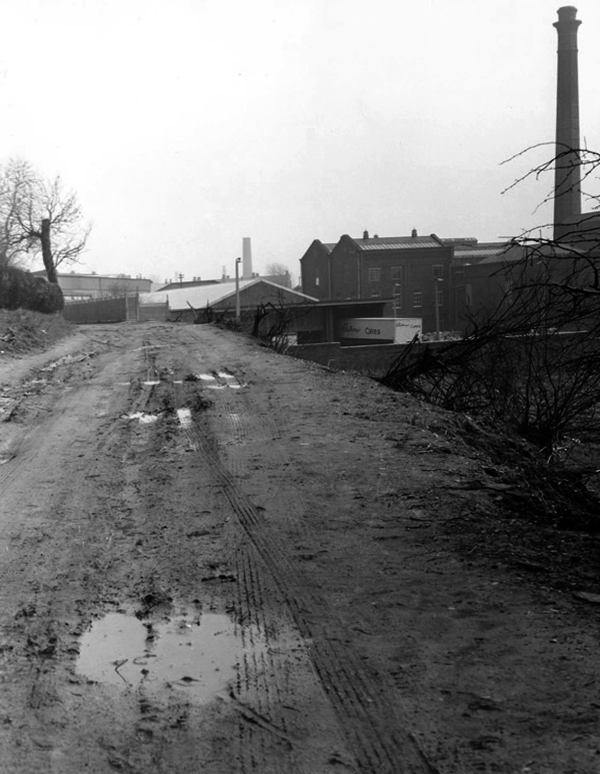
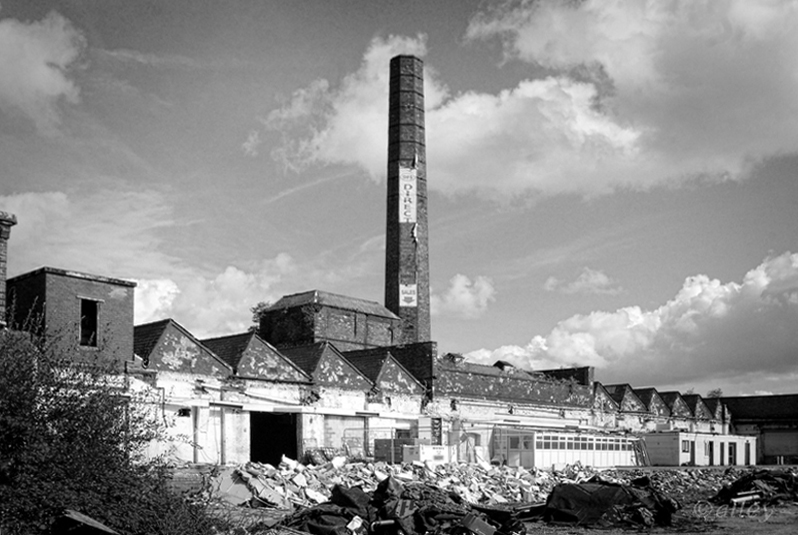
And the Cadbury Works still stood close by on the Brighton Road Industrial Estate:
Built in the late 1800s this was originally Silver Spoon (Pan) Fruit Processing Works, then in the 1920s was Faulders’ Cocoa and Chocolate Works. By the 1930s it was Squirrel Chocolate Works and in 1960s became a distribution depot for Cadbury’s. A friend remembers playing among the pallets of the ‘chocolate factory’ in the 1950s. Later it was occupied by small businesses. The works comprises a large rectangular block with sawtooth roof, and central entrance house with tall chimney. The adjacent rail line, built in 1880, branched into the site.
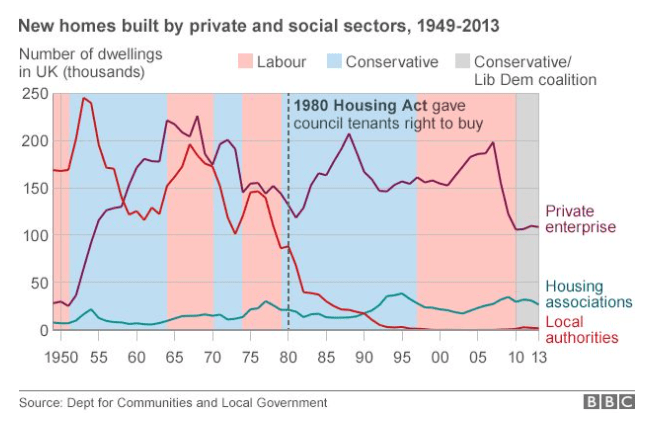
Though many of the surrounding homes were sold off during the Right to Buy era:
After the election of May 1979 a new Conservative government drafted legislation to provide a Right to Buy but, because this would not become law until October 1980, also revised the general consent (May 1979) to enable sales with higher discounts matching those proposed in the new legislation. The numbers of sales completed under this general consent exceeded previous levels. Between 1952 and 1980 over 370,000 public sector dwellings were sold in England and Wales. Almost a third of these were in 1979 and 1980 and it is evident that higher discounts generated and would have continued to generate higher sales without the Right to Buy being in place.
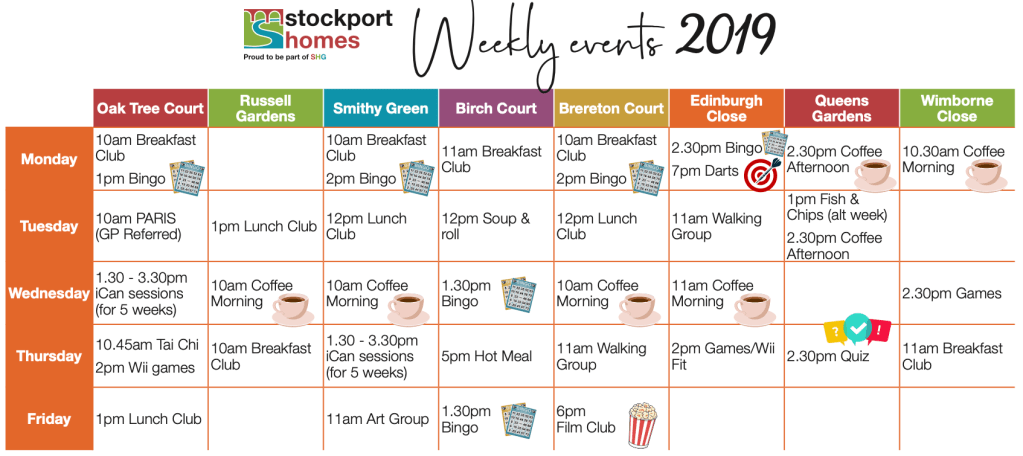
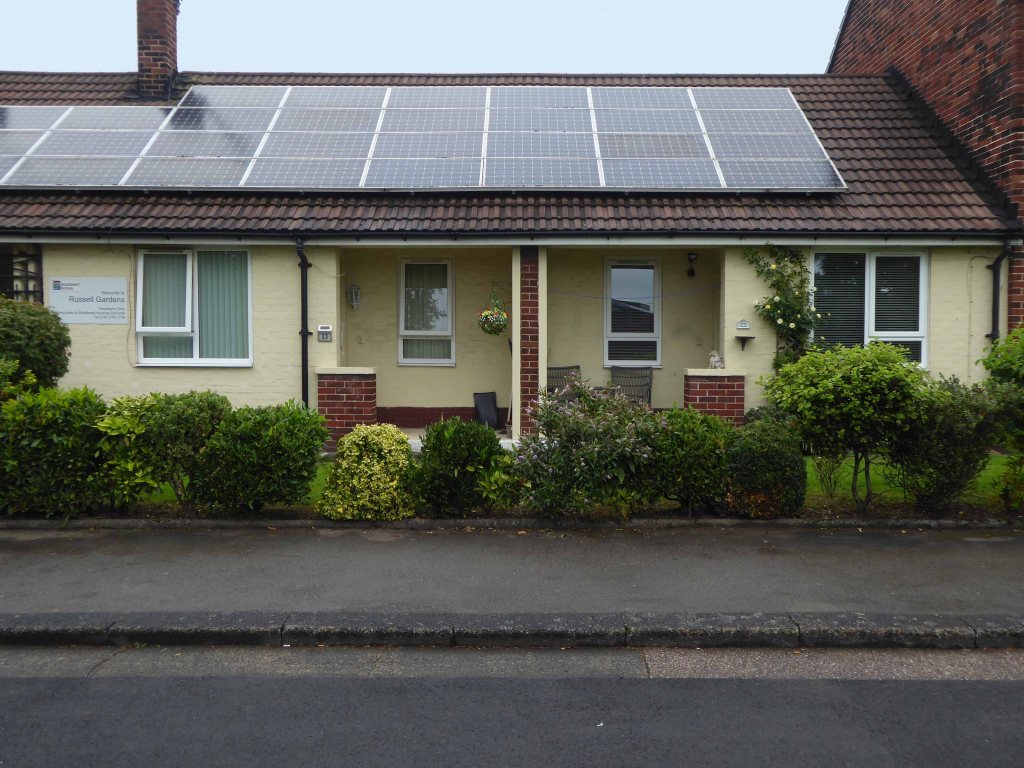
Russell Gardens remains the estate of Stockport Homes managed as sheltered housing for the over 60s.
Retirement housing
33 one bedroom flats built in 1947
Non-resident part time management staff and Careline alarm service
Lounge, Laundry, Garden
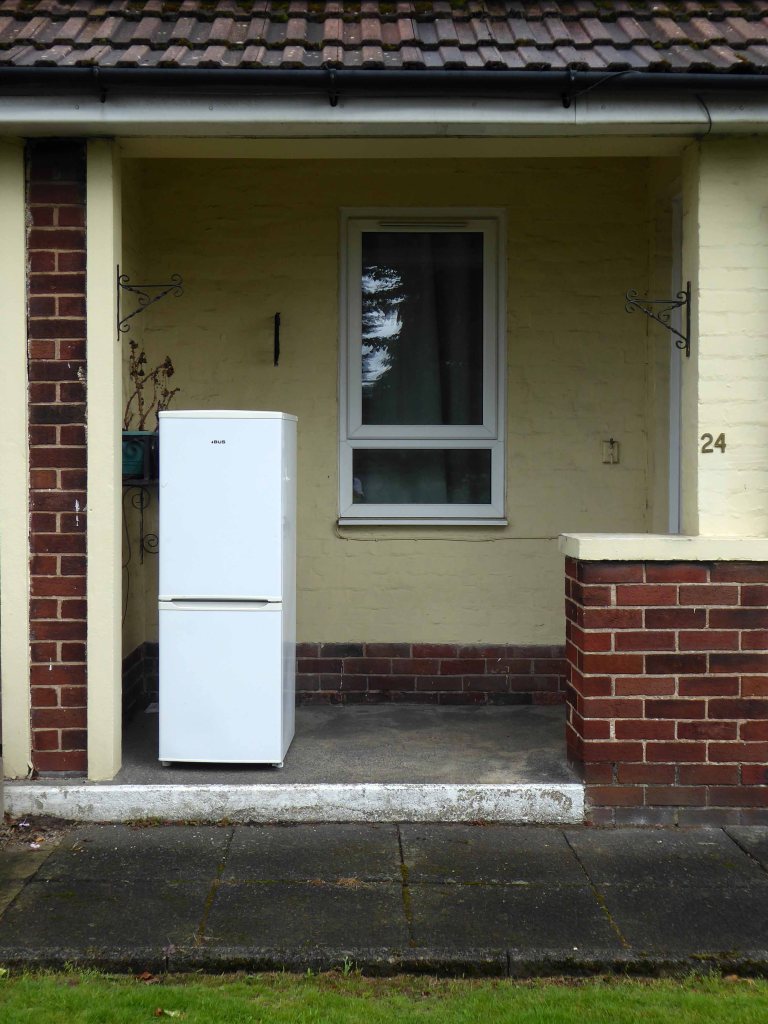
The houses are now some fifty years old and in good order, the residents with whom I spoke, seemed more than happy with their homes.
Would that more and more affordable homes for folks of all ages could be built.
The post-war consensus and political will that created this upsurge in construction, has been swept away by market forces.
Let’s take a look at the vestiges of more enlightened times.
Fairfield is a suburb of Droylsden in Tameside, Greater Manchester, England. Historically in Lancashire, it is just south of the Ashton Canal on the A635 road. In the 19th century, it was described as “a seat of cotton manufacture”. W. M. Christy and Sons established a mill that produced the first woven towels in England at Fairfield Mill.
Fairfield is the location of Fairfield High School for Girls and Fairfield railway station.
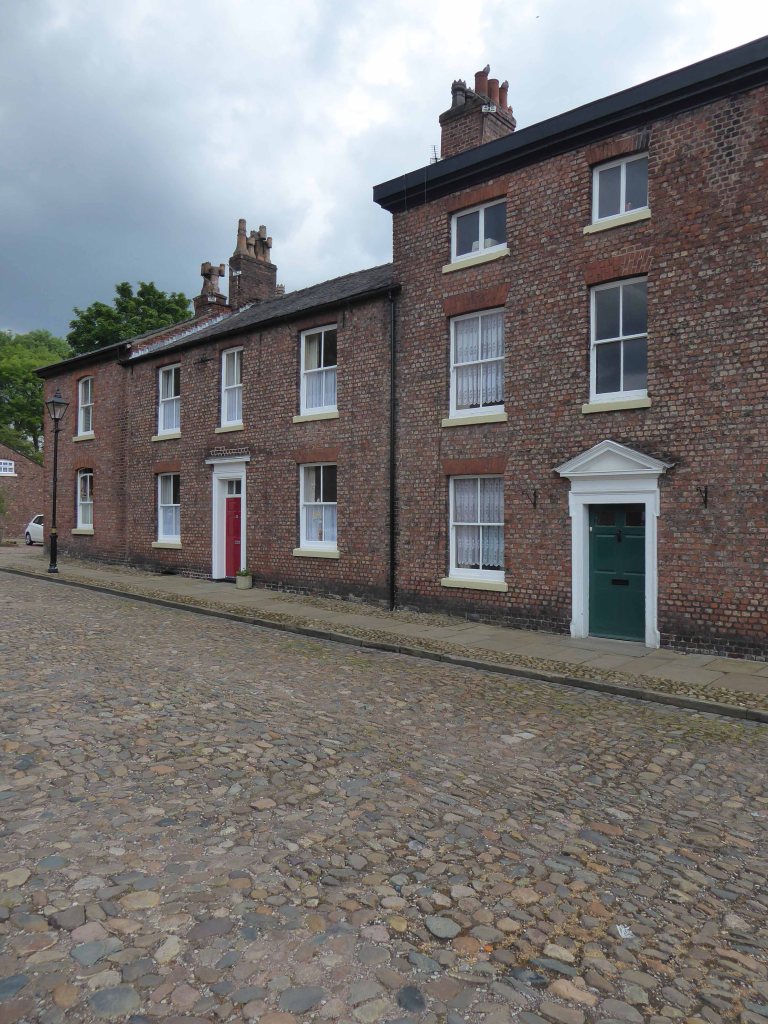
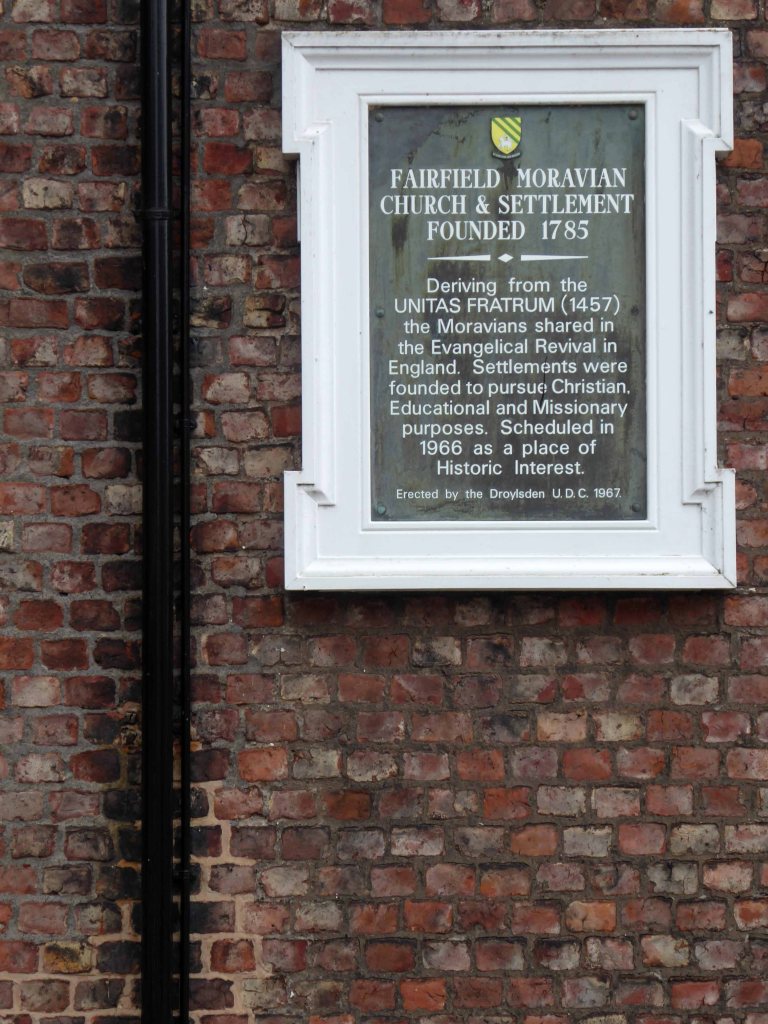
The community has been home to members of the Moravian Church for many years after Fairfield Moravian Church and Moravian Settlement were established in 1783.
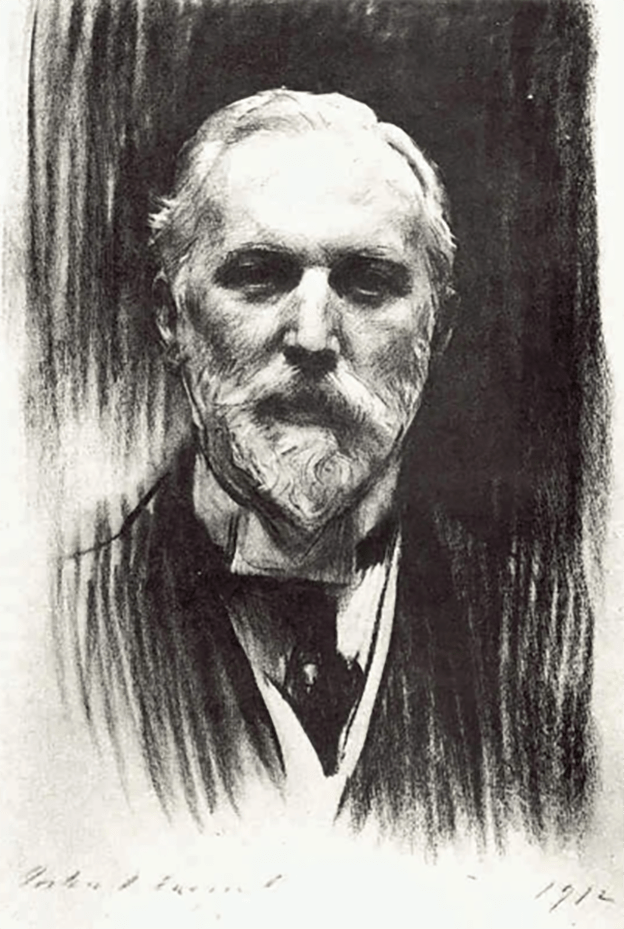
Also the merchant banker and art collector Robin Benson (1850–1929).
Drawing – John Singer Sargent
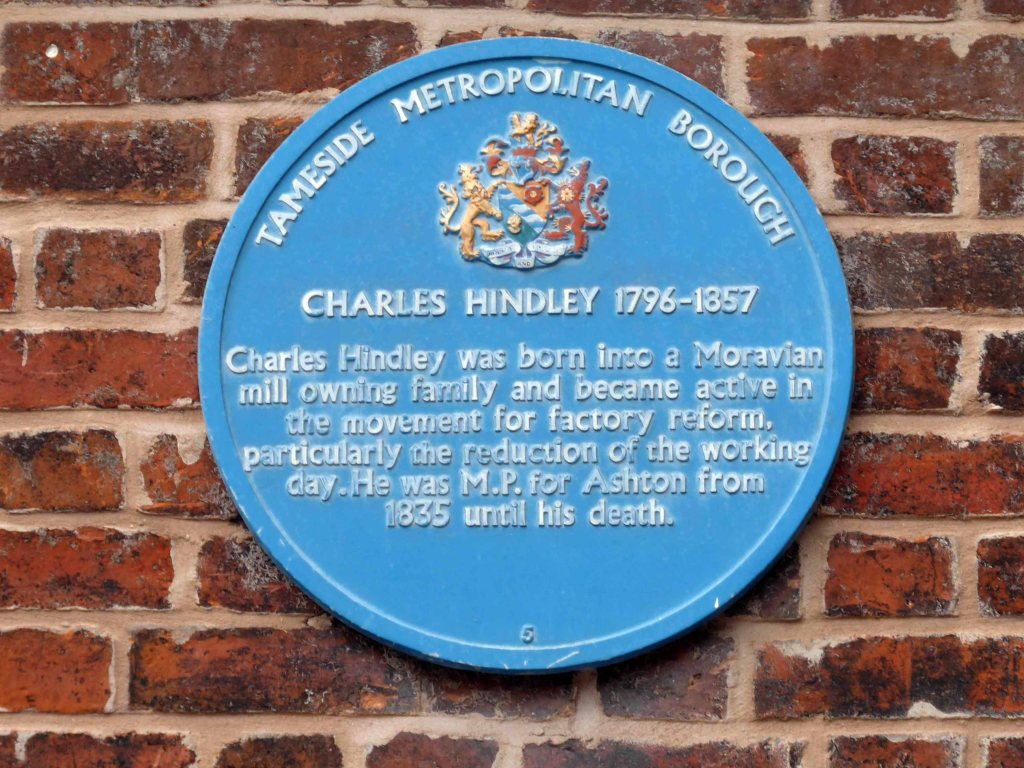
Charles Hindley 1796 – 1857 was an English cotton mill-owner and radical politician the first Moravian to be elected as an MP.
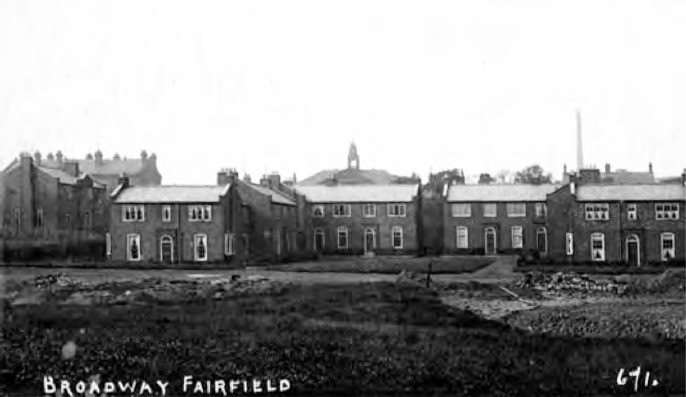
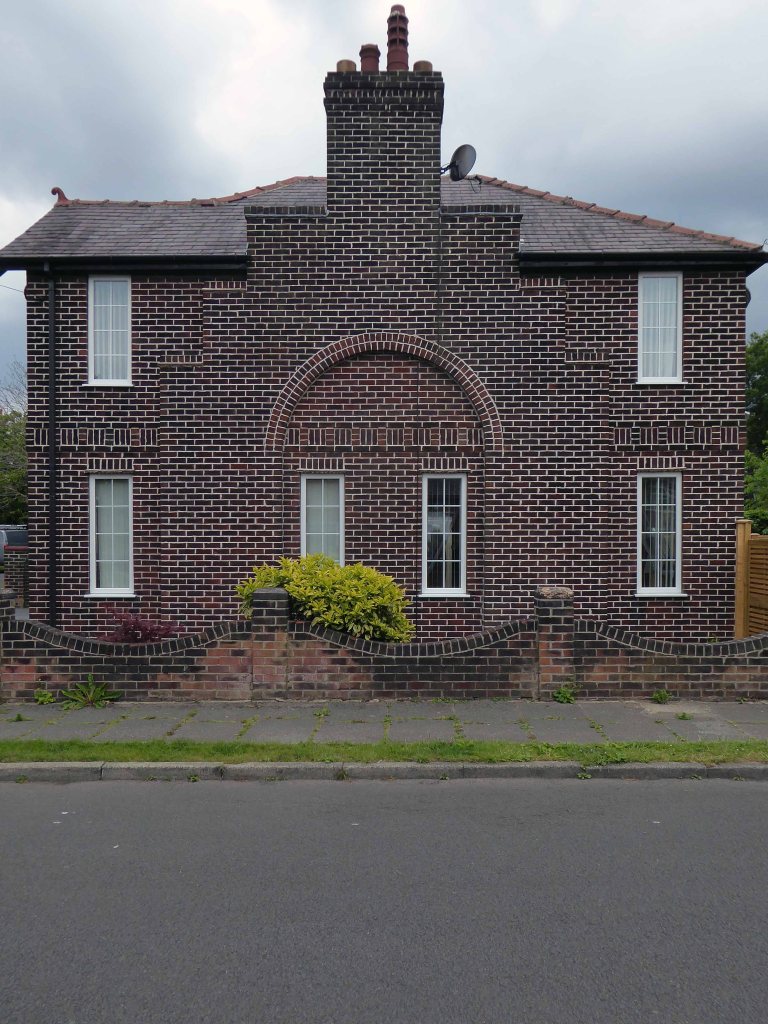
Turning into Fairfield Avenue from Ashton Old Road you’ll find Broadway sitting prettily on your right hand side. It was intended to be an extensive Garden Village but was abandoned at the outbreak of the First World War. The estate consists of 39 houses, built between 1914 and 1920 in a neo-Georgian style. These are a mixture of detached, semi-detached and terraces in a range of sizes.
Broadway is a small scale example of a garden suburb development and is composed of a mixture of detached, semi detached and terraced houses ranging in size and built in a reddish-orange brick with dark brick dressing and patterning. The properties appear to be generously proportioned and they share similarities in design and construction and a unifying scheme of decoration.
It issuggested that the ‘imaginative exploitation of the levels and texture suggest that Woods was responsible for the layout, but the chaste Neo-Georgian character of the houses undoubtedly reflects the taste of Sellers’.
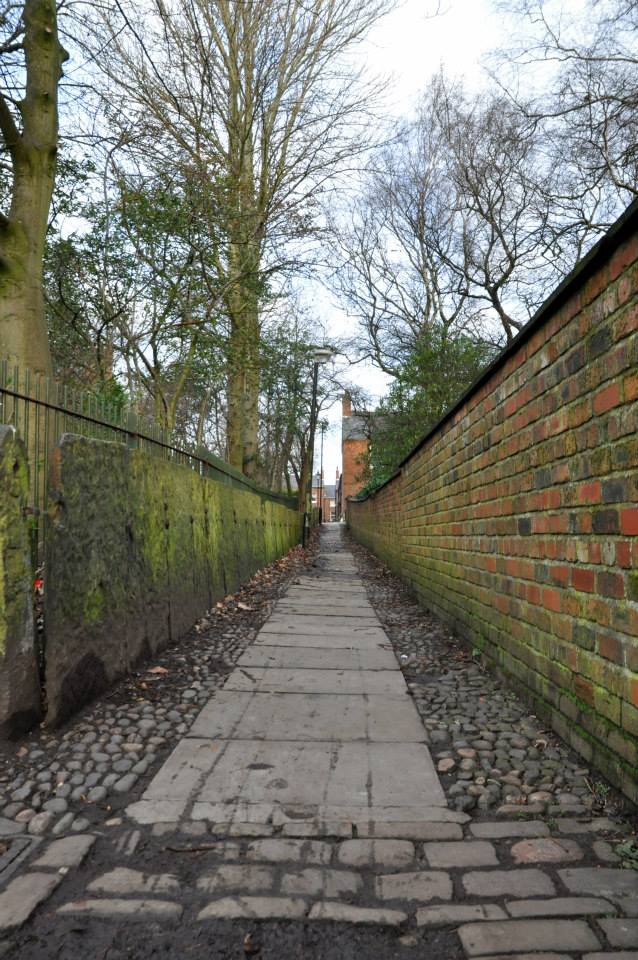
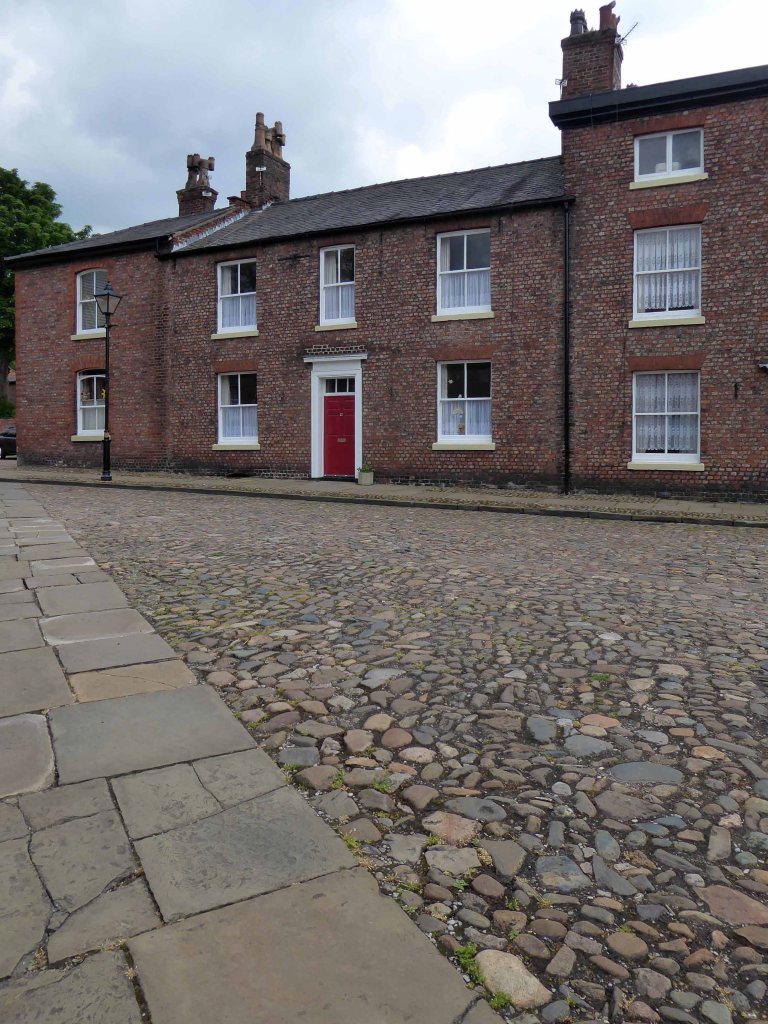
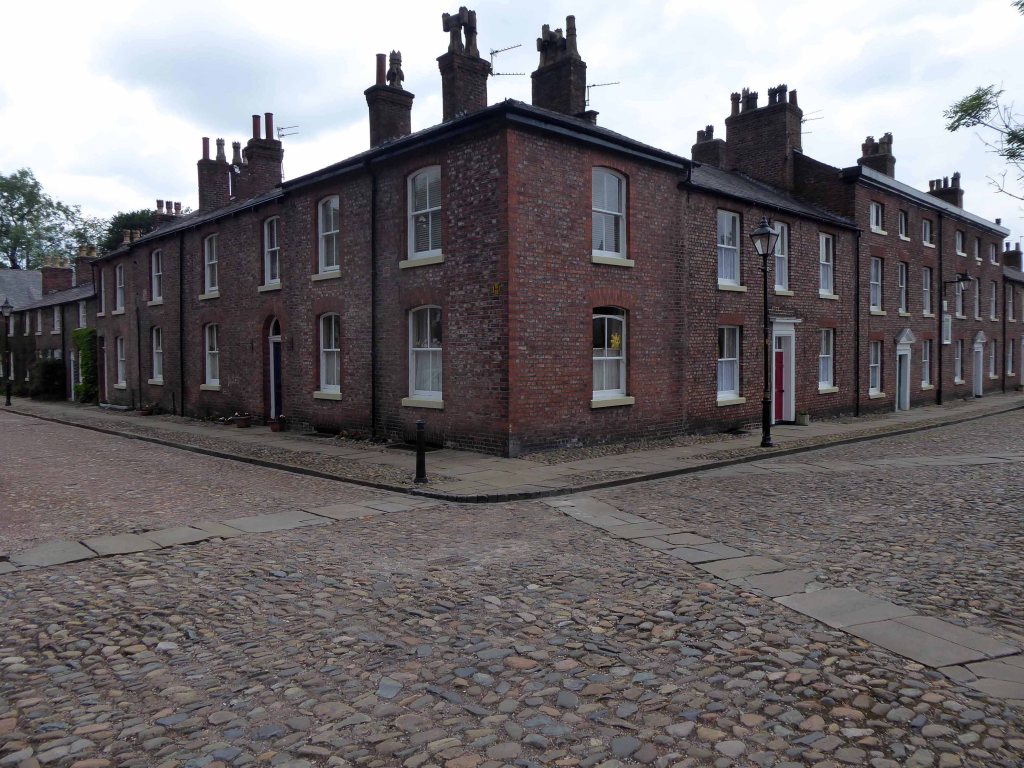
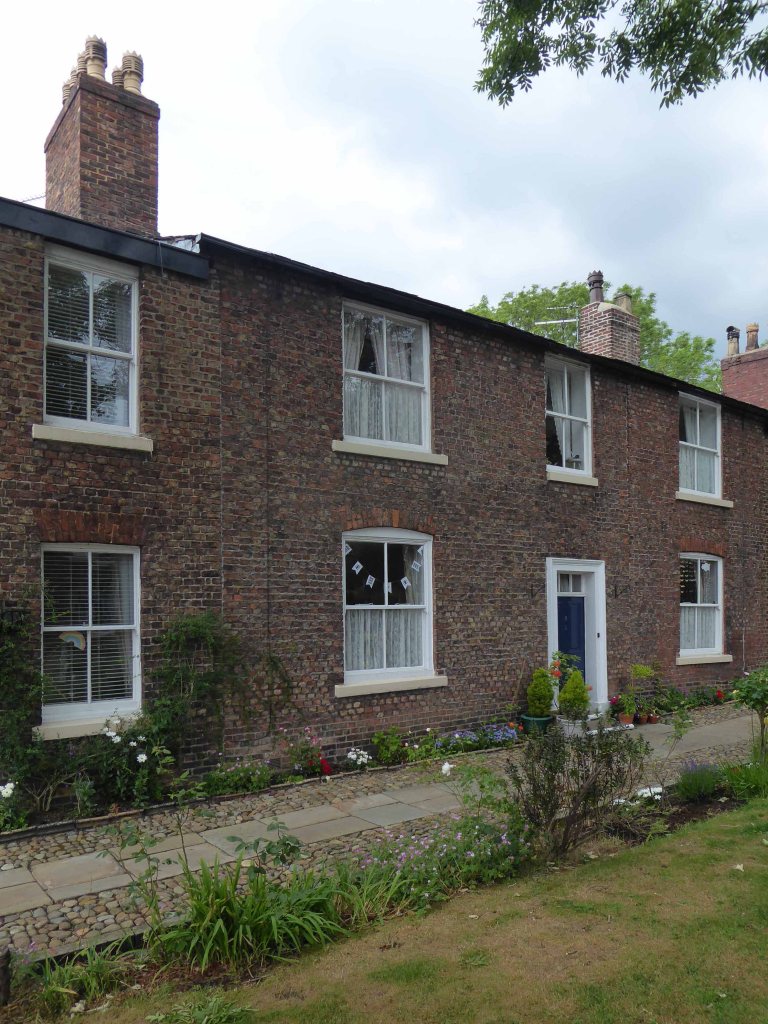
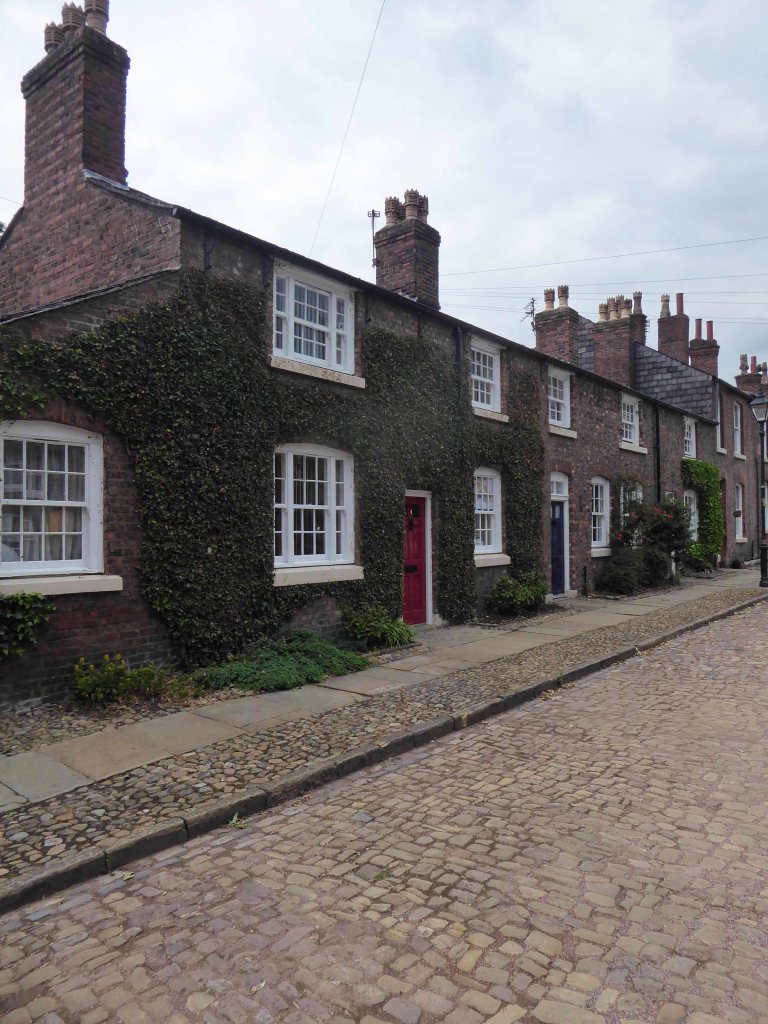
Sneaking through the alley – lined with a Yorkshire Stone fence you enter the Moravian Settlement.
Engraving 1794
The Unitas Fratrum or Moravian Church is an international Protestant Christian group which originated from the followers of Jan Hus in Bohemia (now part of the Czech Republic) during the 15th century. As a result of persecution, the group eventually re-established itself in Saxony in the early 18th century, and it is from there that followers first came to this country in the 1730s, with the intention to go on to carry out missionary work in America and the Caribbean. A decision was taken to establish the first Moravian Settlement in England at Fulneck in Yorkshire in 1744. The first Moravian settlement to be located in Tameside was in Dukinfield during the 1740s. It was there that they laid the foundation stone for their chapel at the top of Old Road in May 1751. By 1783, 40 years after their first arrival in Tameside, the lease on their land at Dukinfield expired, and negotiations for a new one proved difficult. This resulted in the purchase and removal of the community to a 54 acres site at Broad Oak Farm in Droylsden where they established a new settlement known as Fairfield.
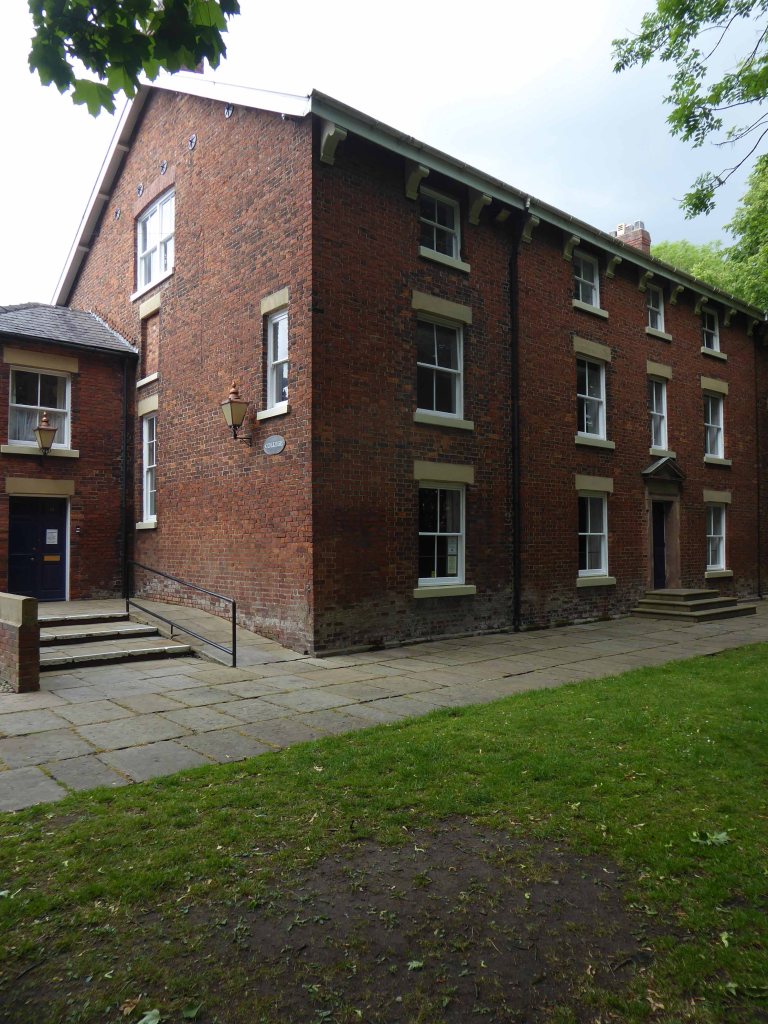
As well as providing domestic accommodation, the buildings at Fairfield had industrial functions. During the late 18th and 19th centuries the Settlement would have been a hive of religious and industrial activity, which included the church, schools, domestic dwellings, inn, shop, bakery, laundry, farm, fire engine, night-watchman, inspector of weights and measures, an overseer of roads, physician, as well as handloom weaving and embroidery.
Intu, who own the Manchester shopping centre, expects to breach covenants on its current debts as shopping centres struggle in the face of the coronavirus pandemic.
This is a journey from the corner shop to the high street, by the banks of the Bridgewater Canal, a whole retail history told during troubled times.
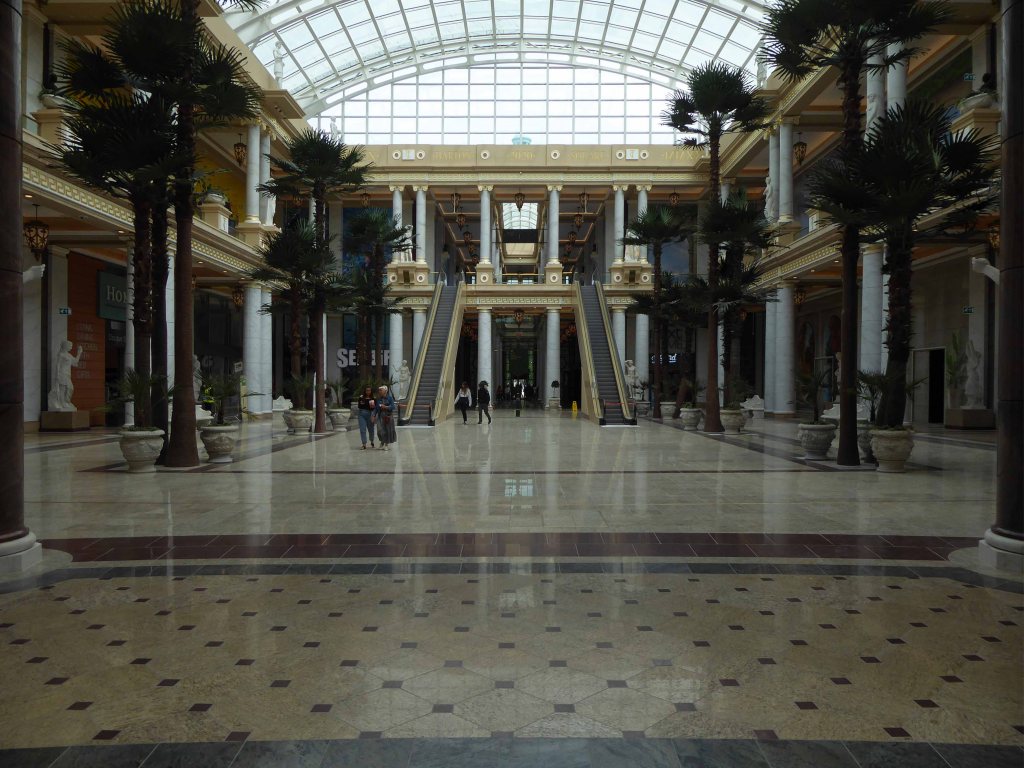
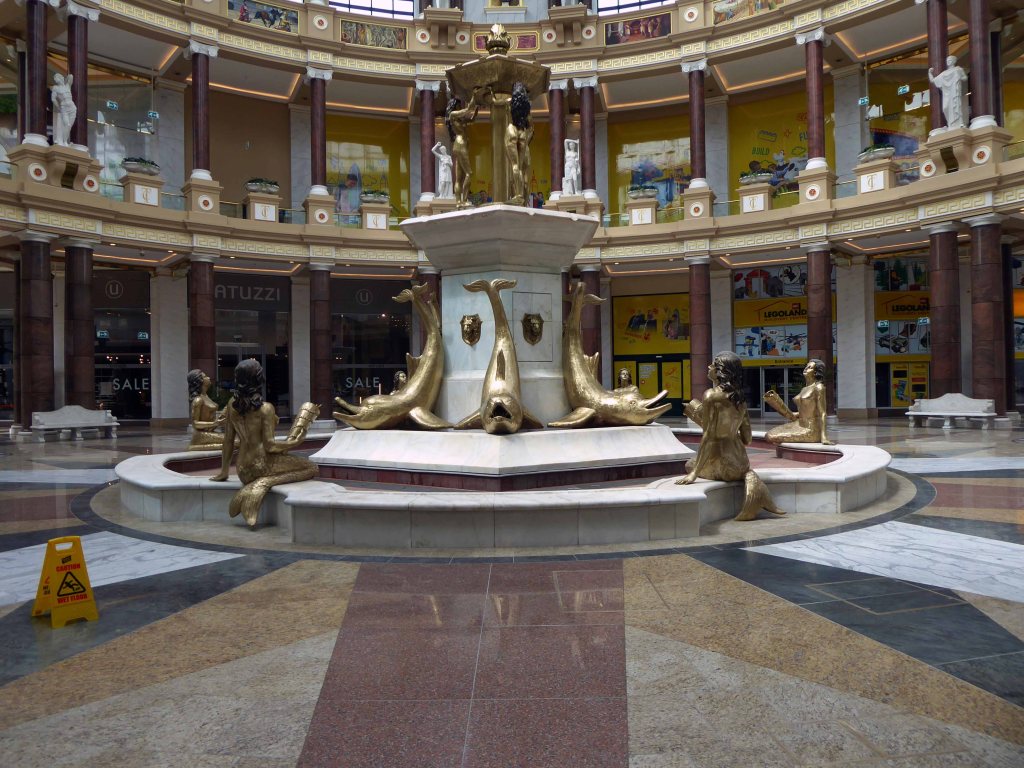
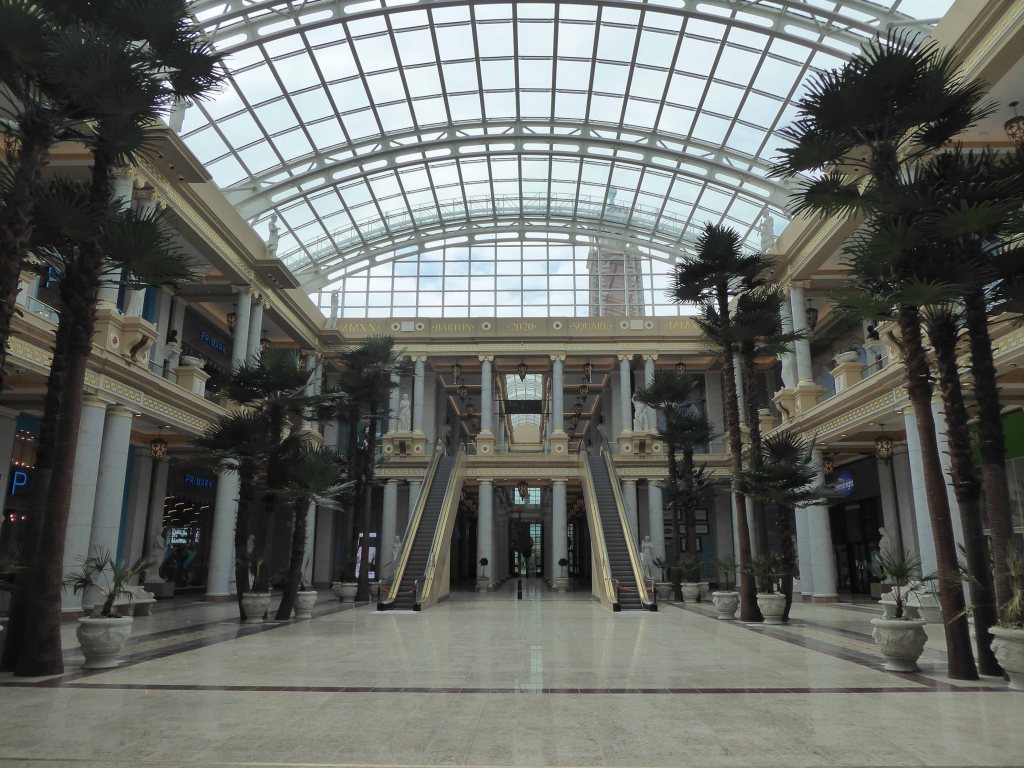
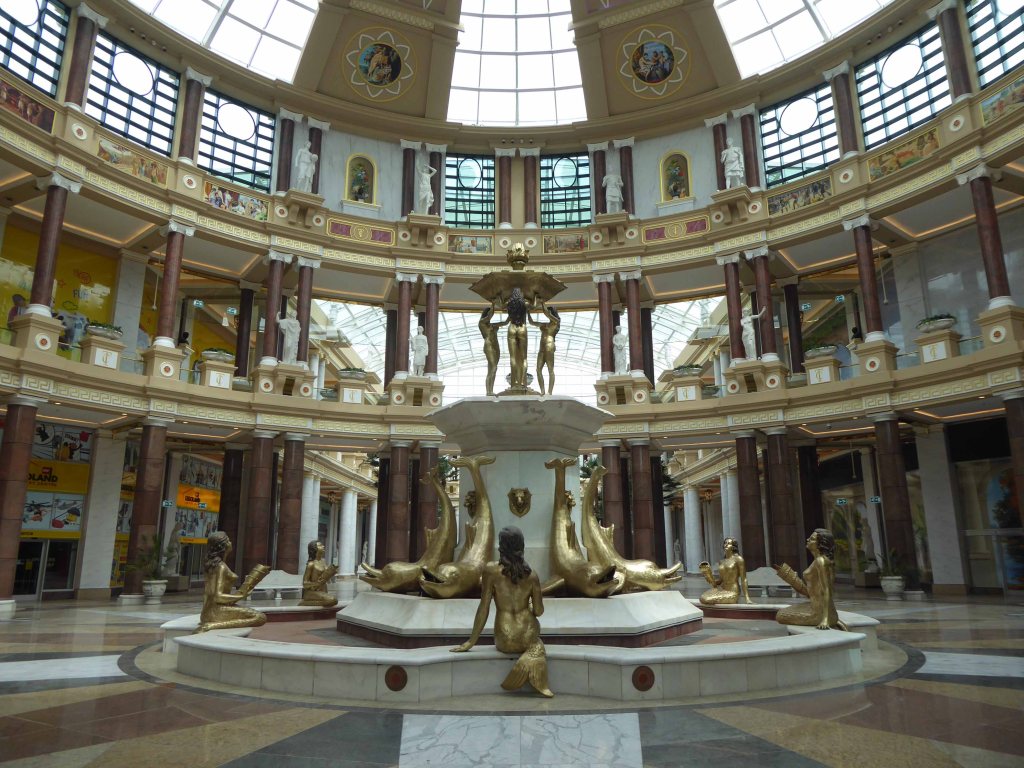
The Trafford Centre opened in 1998 and is the third largest shopping centre in the United Kingdom by retail size. It was developed by the Peel Group and is owned by Intu Properties following a £1.65 billion sale in 2011 the largest single property acquisition in British history. As of 2017, the centre has a market value of £2.312 billion.
The advent of the motor car, and the development of out of town shopping has seriously affected the viability of the traditional town centre and the almost long gone local shop.
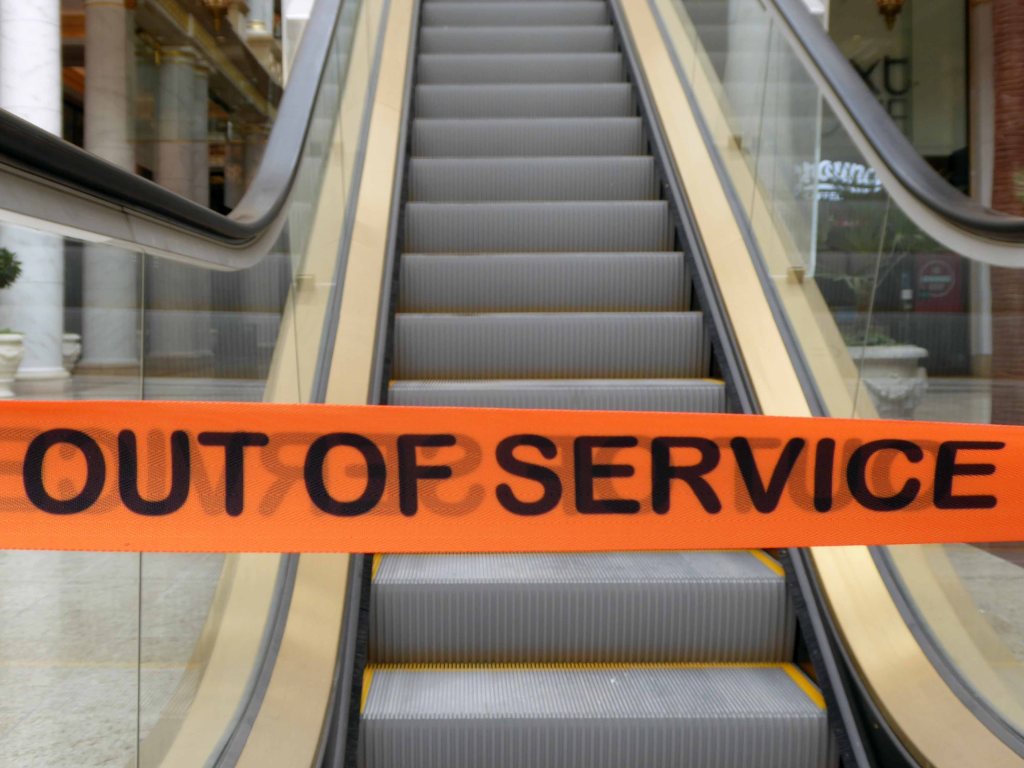
And now in turn the mall is threatened by the increase in online trade and the current lockdown.
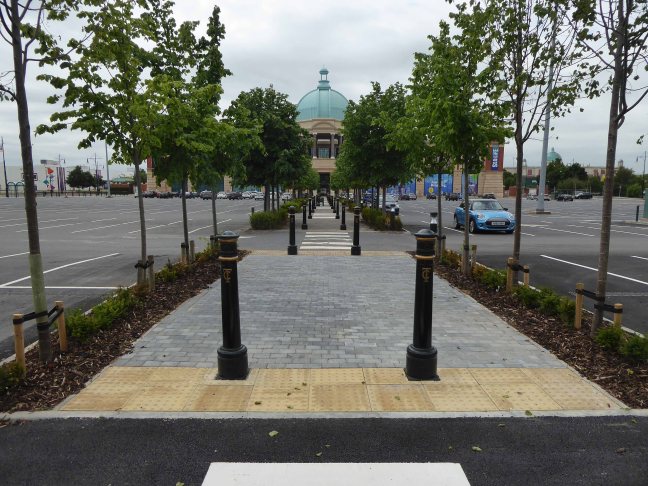
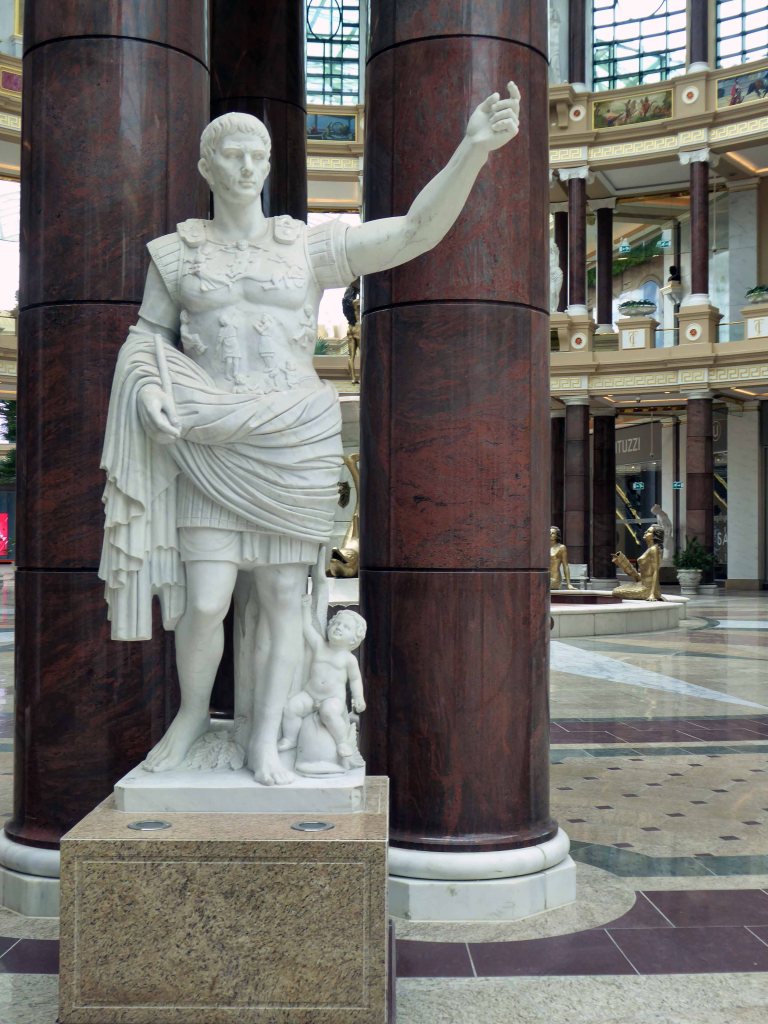
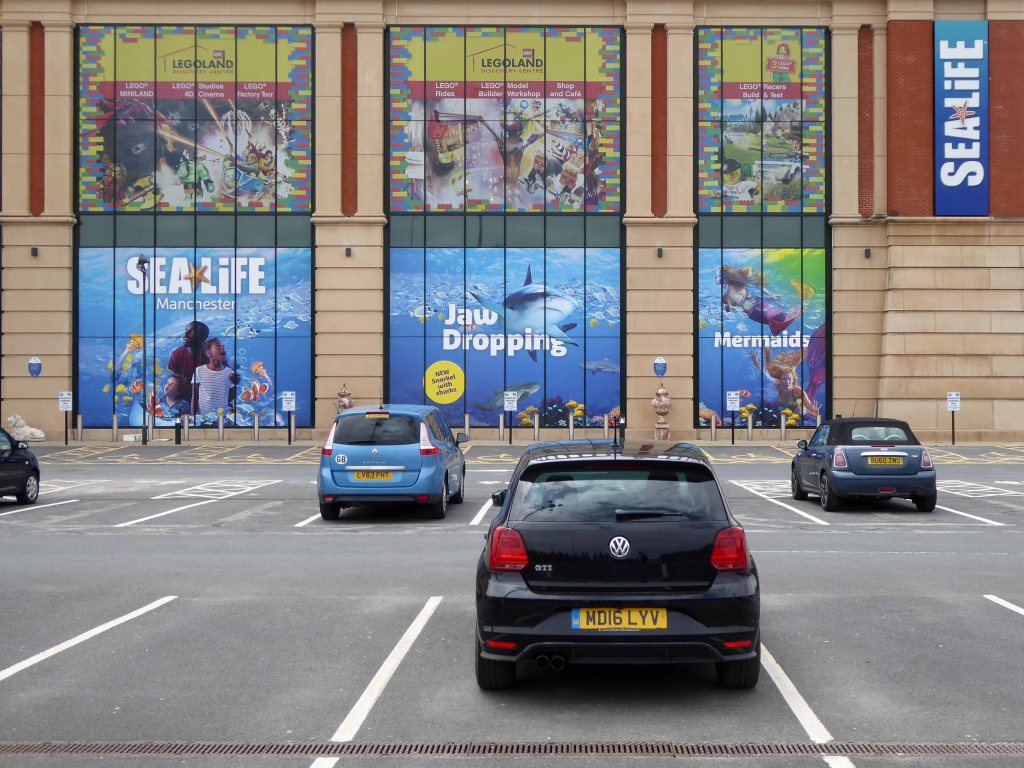
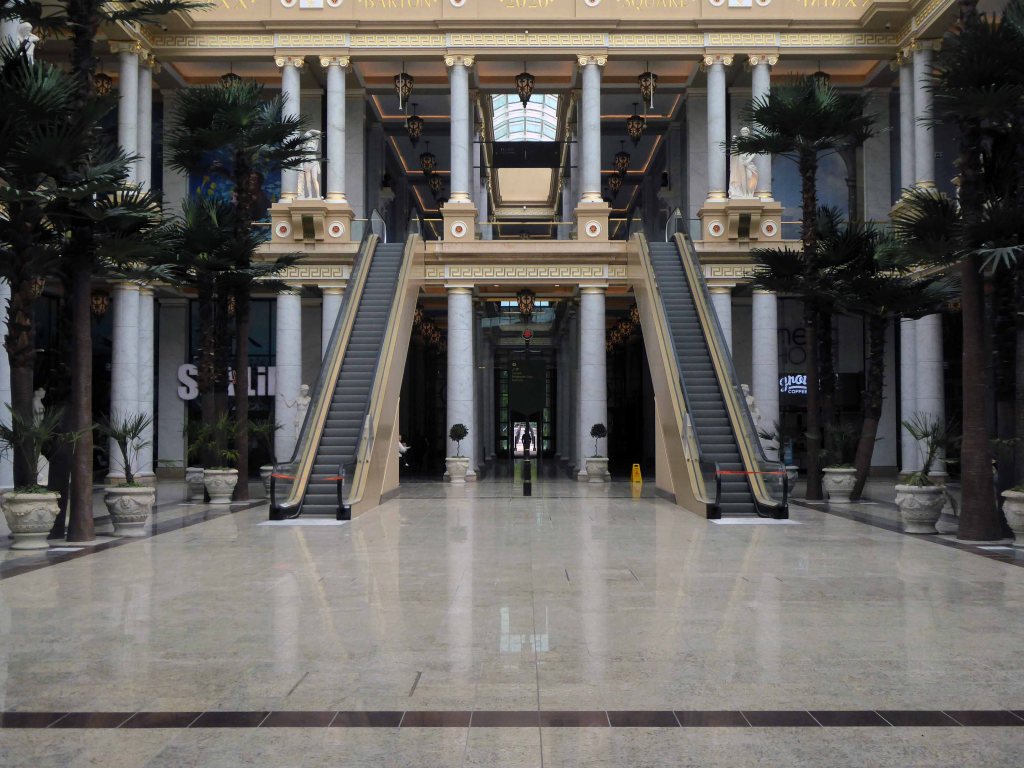
The Trafford Centre reopens on June 15th, no doubt the sensation seeking, thrill a moment shoppers will return in droves, to further satiate their unquenchable desire for stuff and more stuff, in a pseudo Romano Soviet oligarch setting.
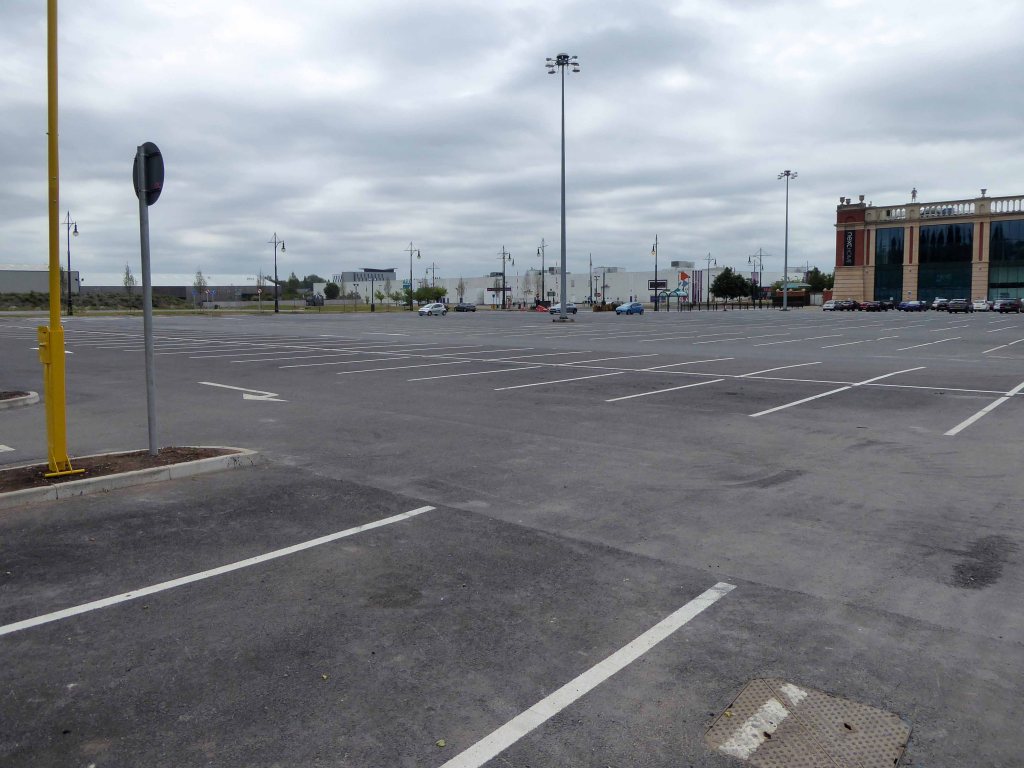
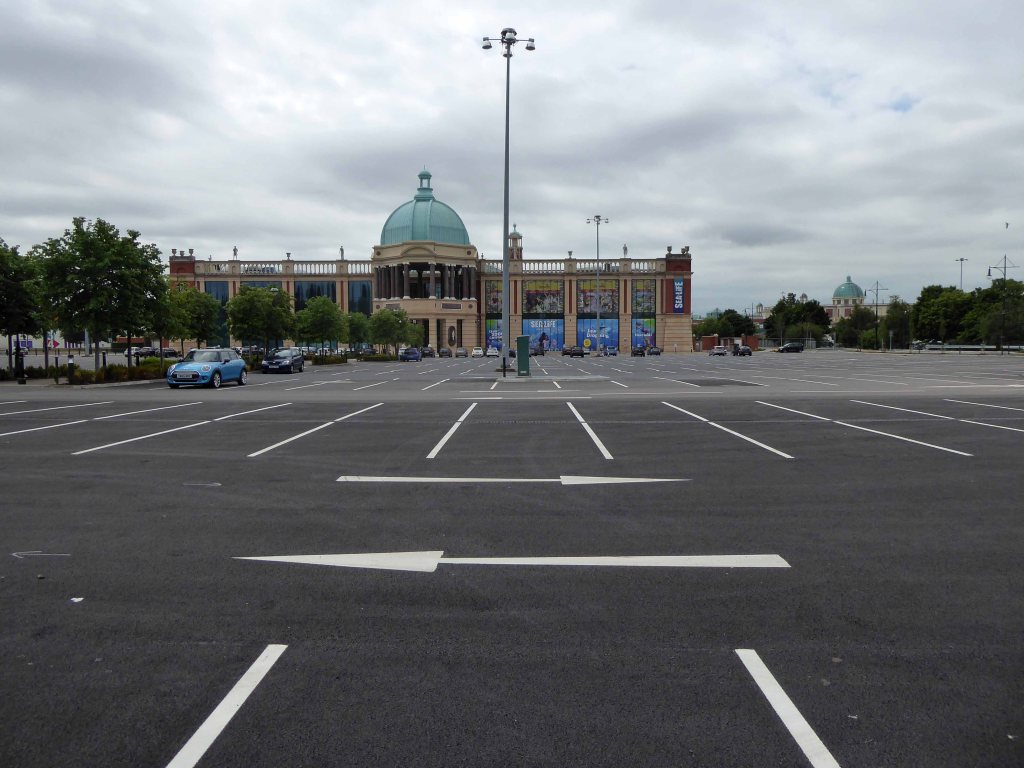
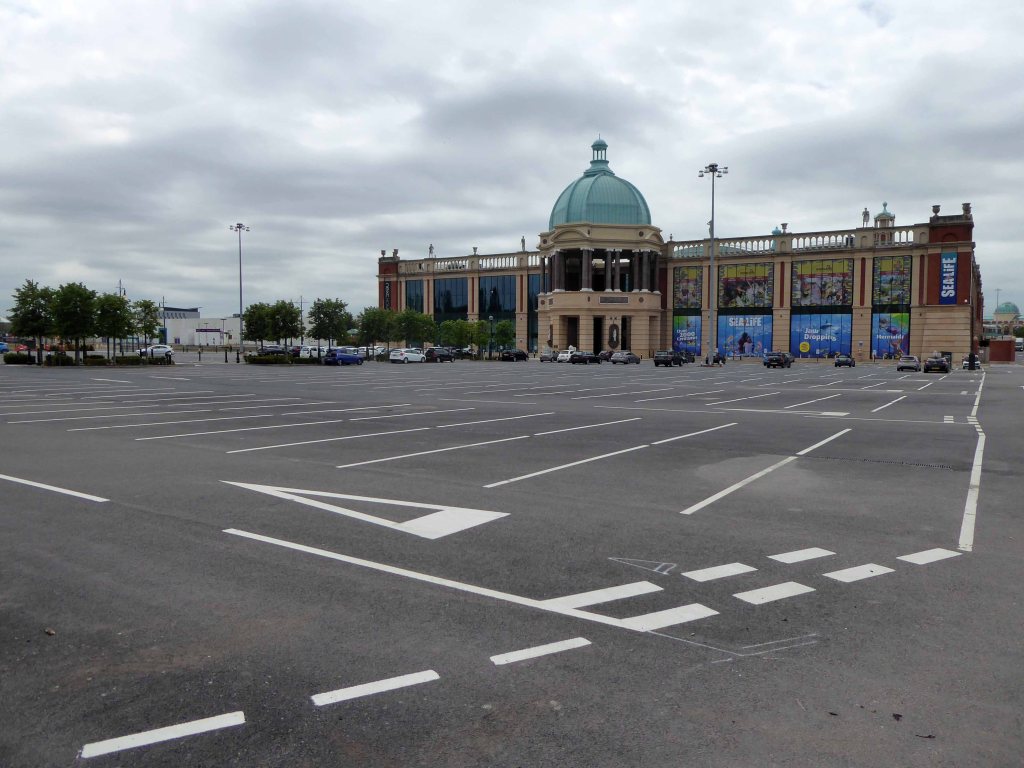
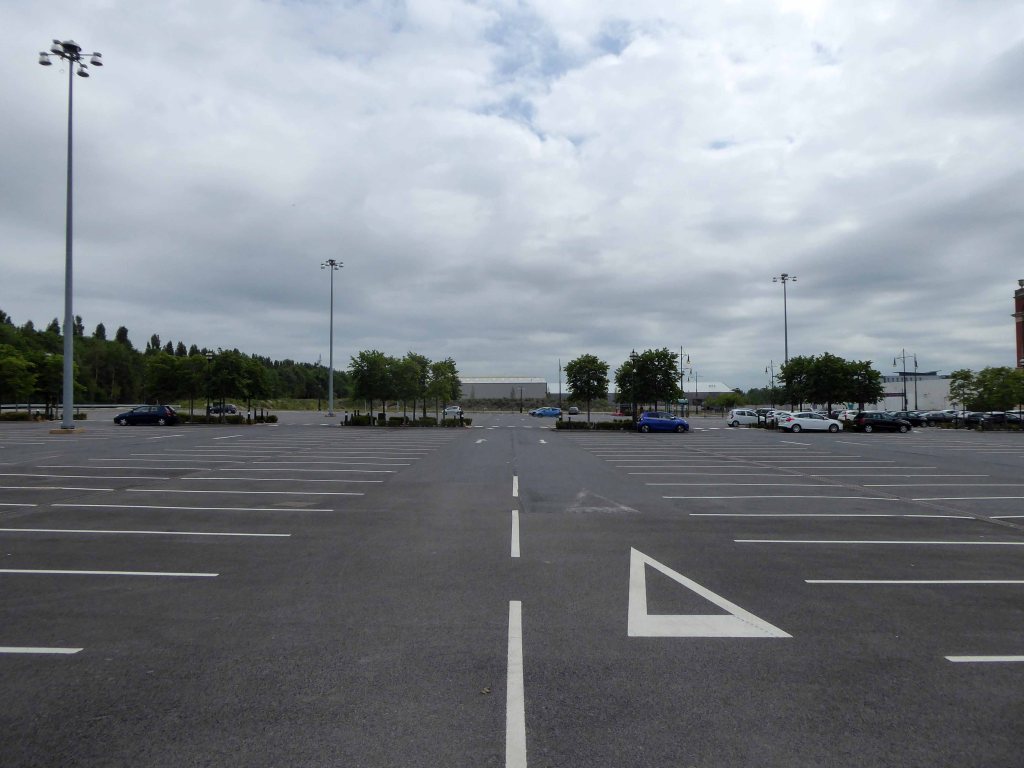
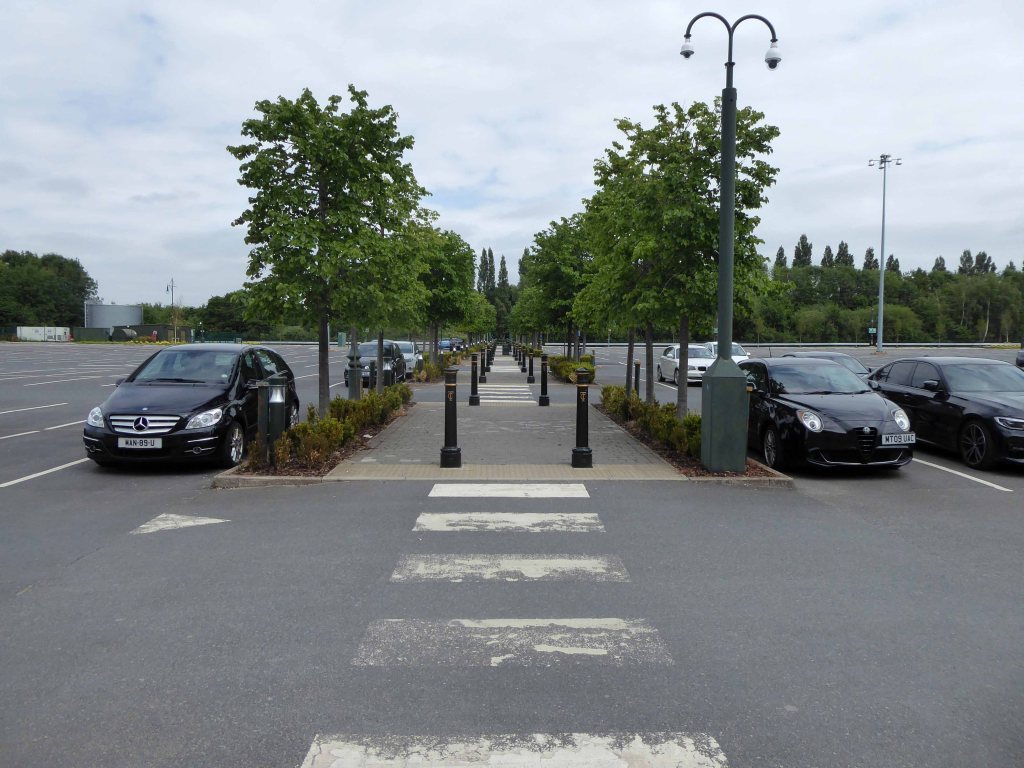
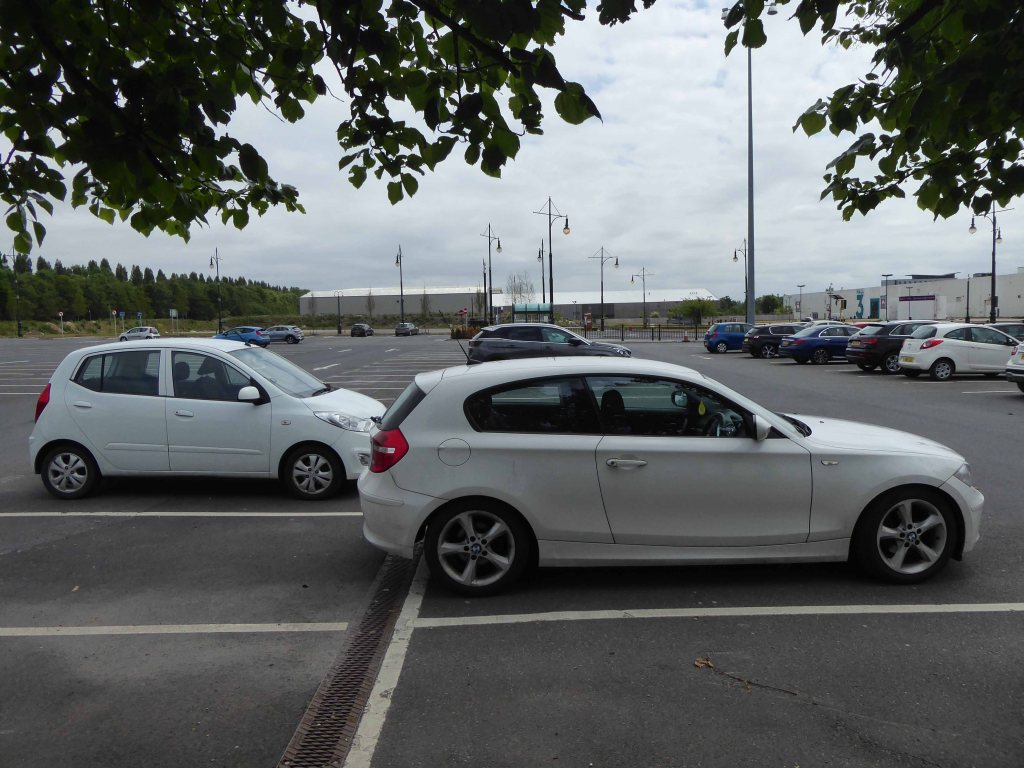
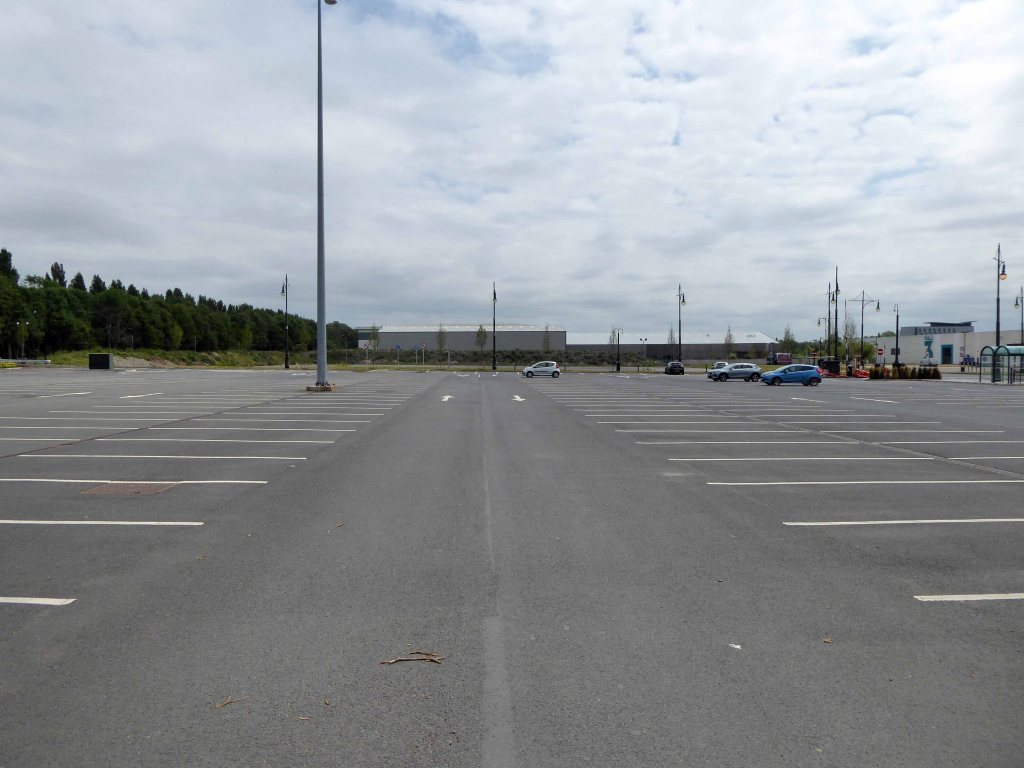
As of Monday 8th the space was mostly devoid of both customers and cars – there are two home stores open, we arrived on foot and took a look around.
This may seem sufficient to satiate the local historian’s voracious appetite for facts and general tittle tattle, but wait.
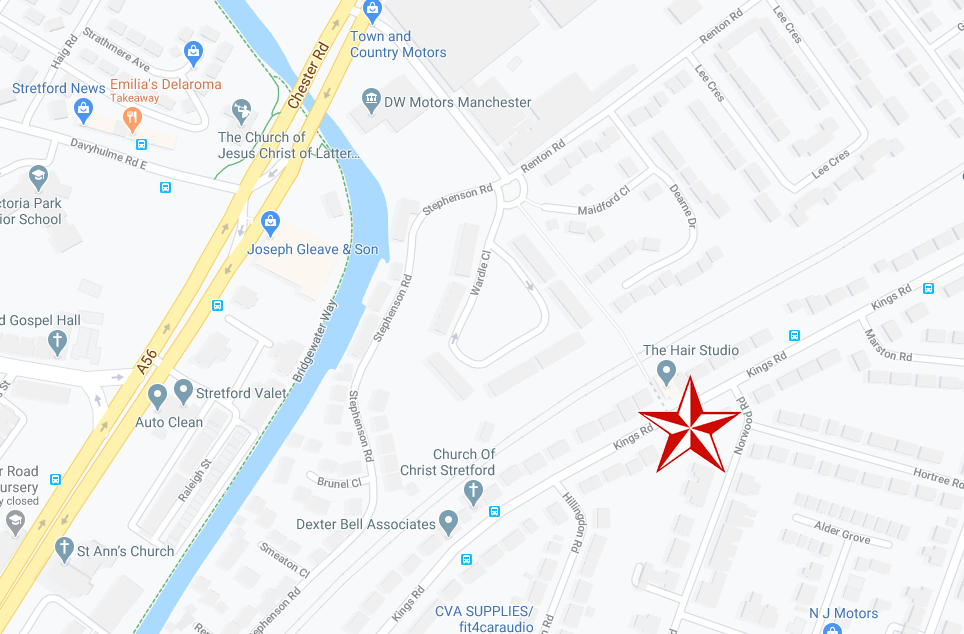
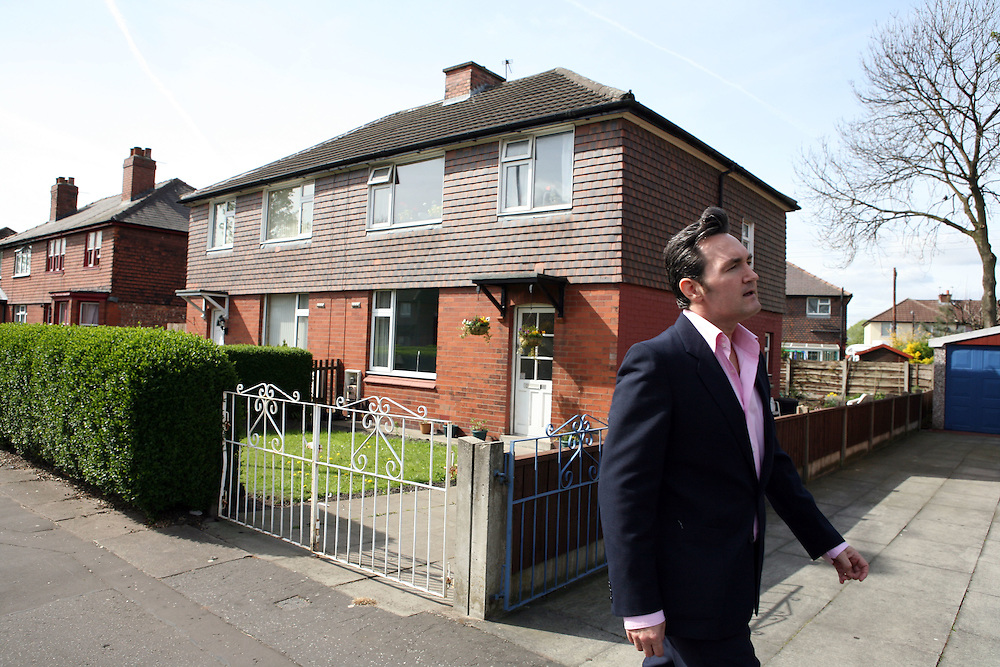
384 King’s Road was once home to pop sensation Steven Patrick Morrissey – seen here imitating himself in Elisabeth Blanchet’s photograph.
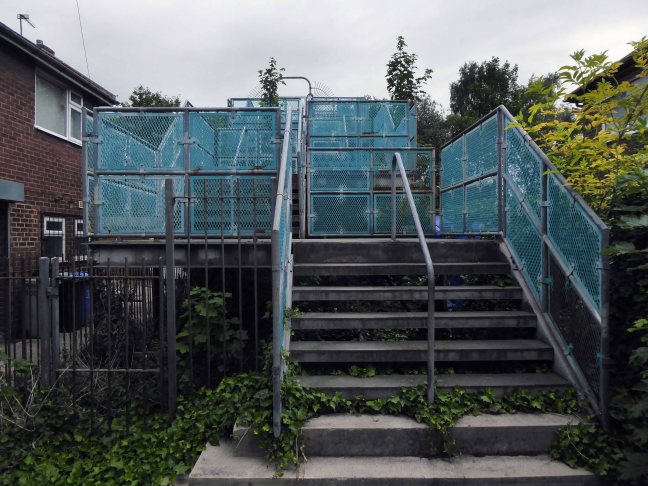
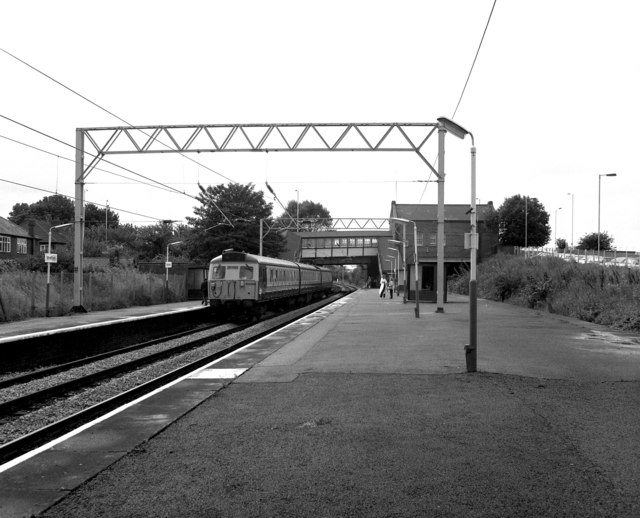
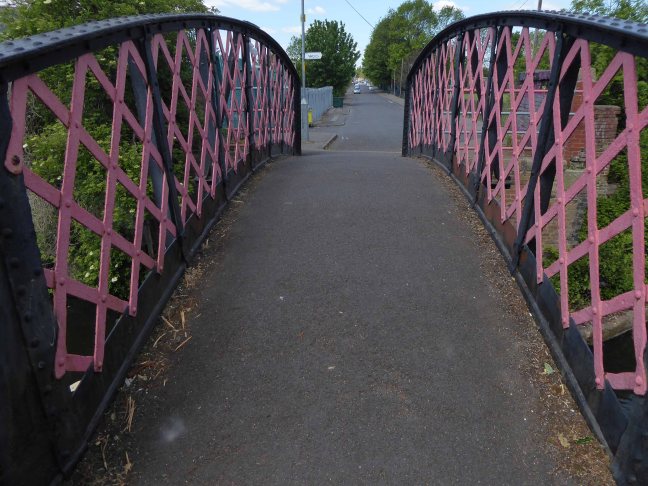
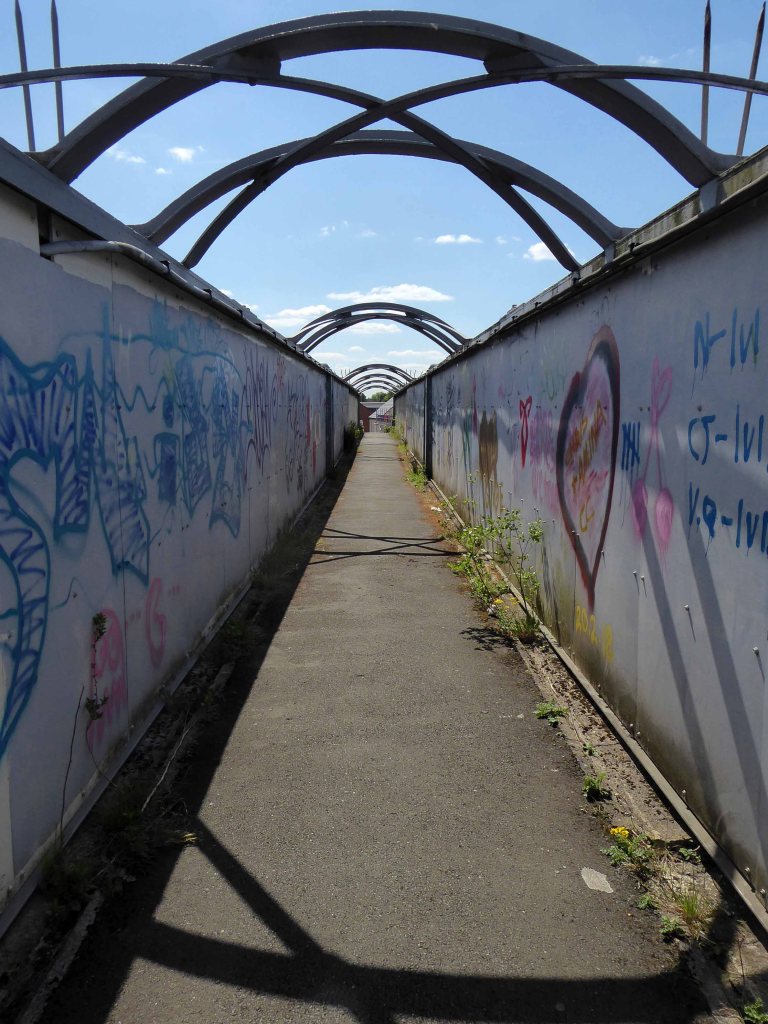
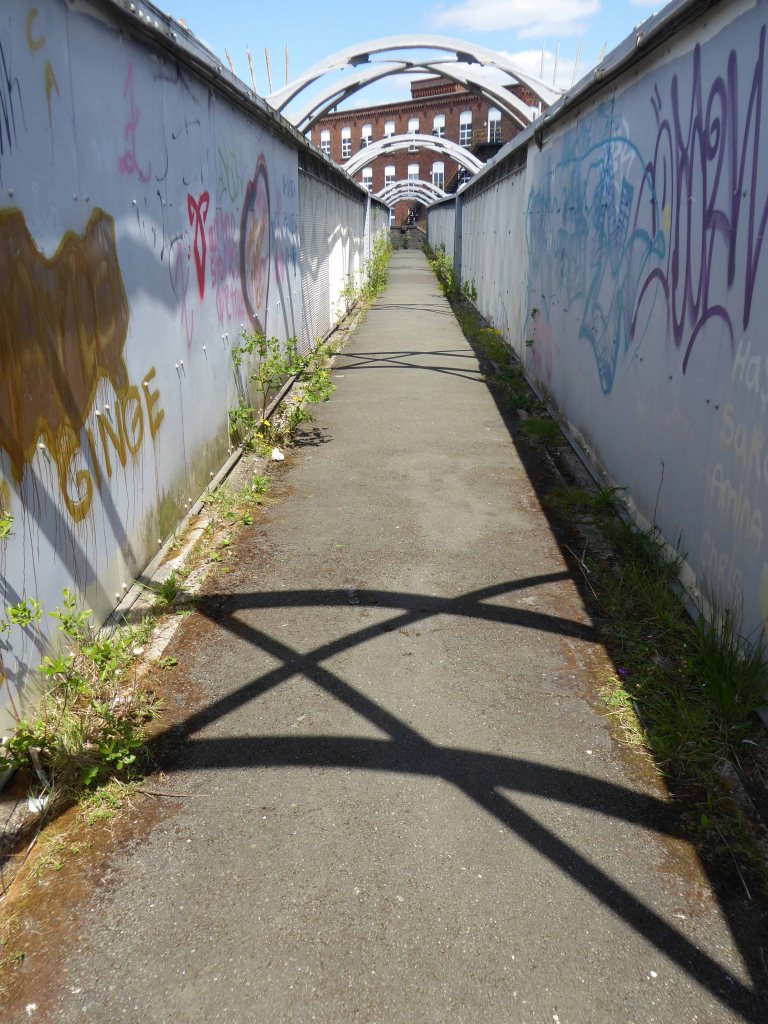
More than once this charming lad would have walked the bridge himself – on the way to goodnesses knows where.
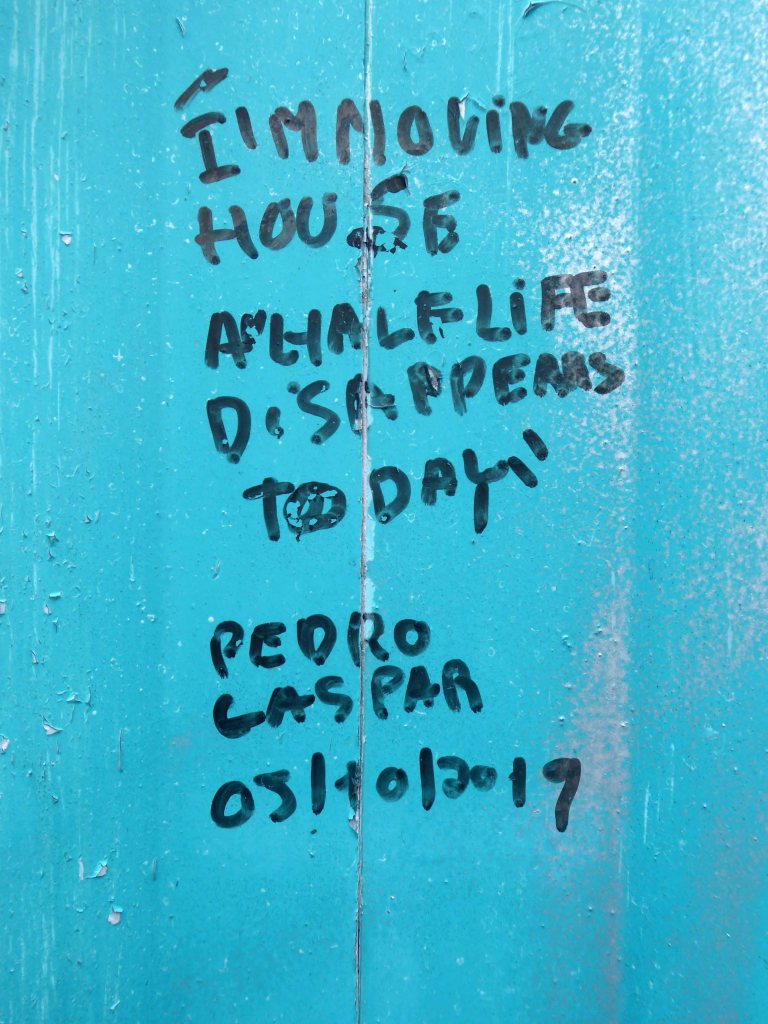
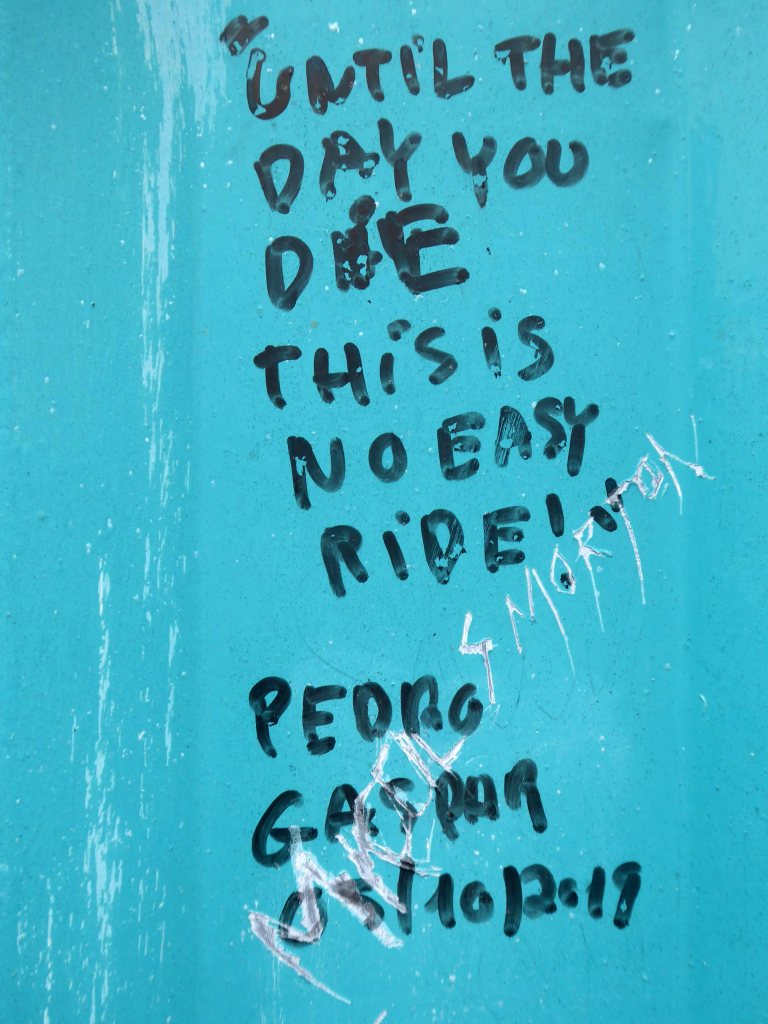
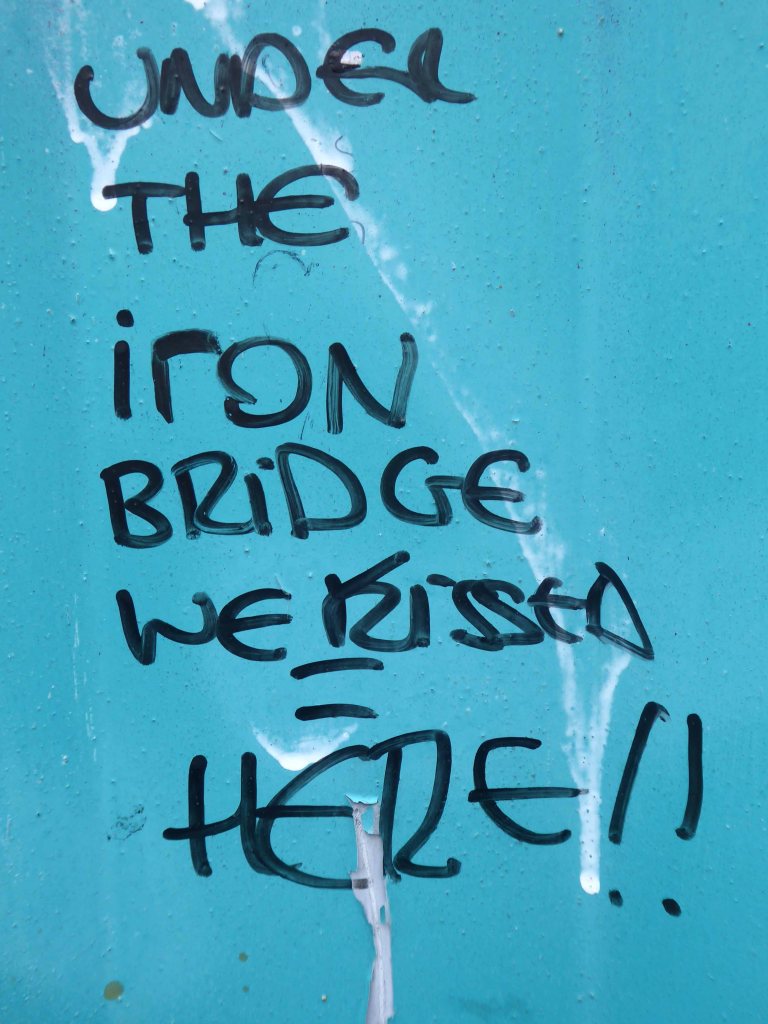
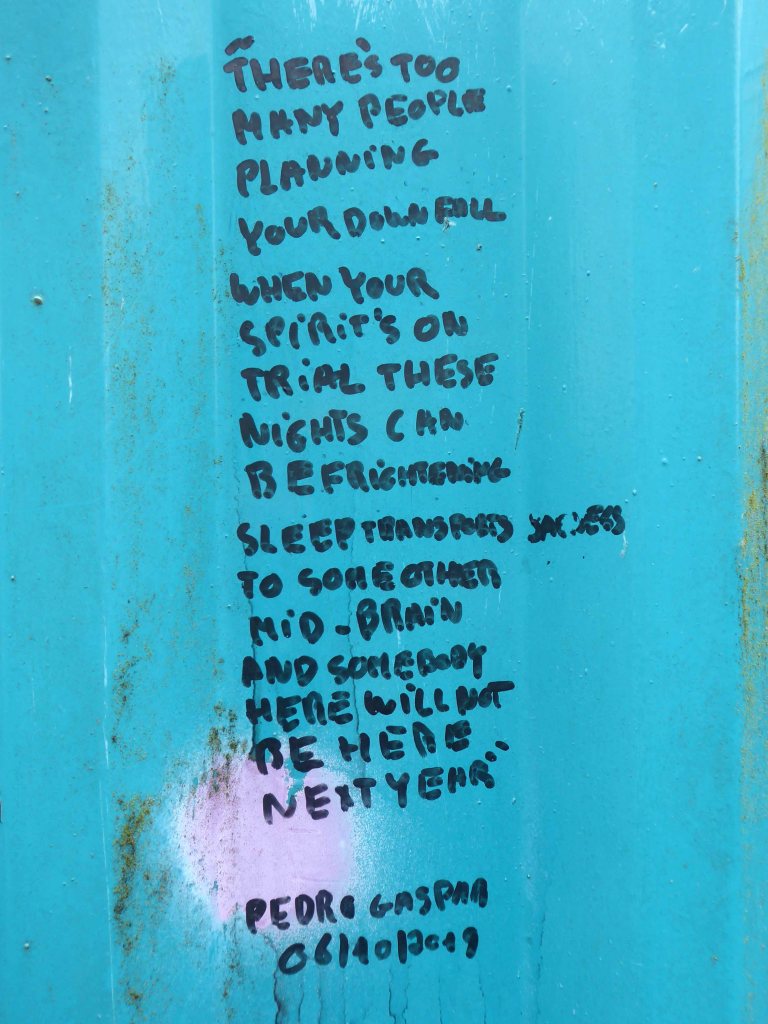
In later life he changed his name to The Smiths and wrote a chart topping tune Still Ill name checking the Iron Bridge.
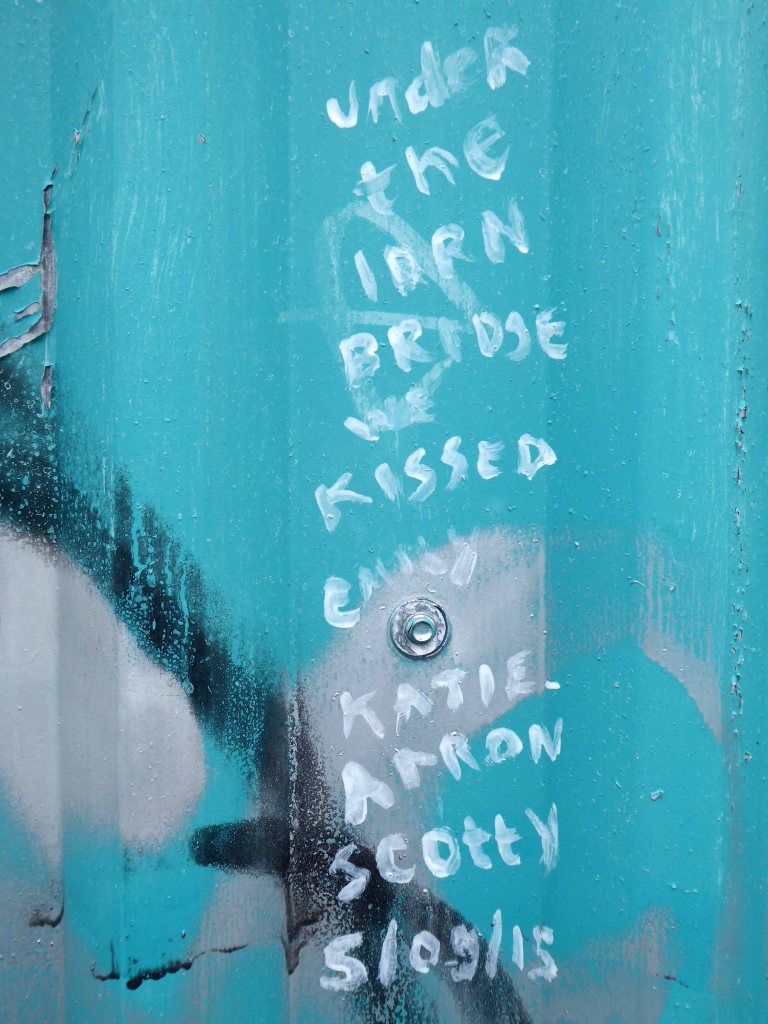
Under the iron bridge we kissed And although I ended up with sore lips It just wasn’t like the old days anymore No, it wasn’t like those days, am I still ill?
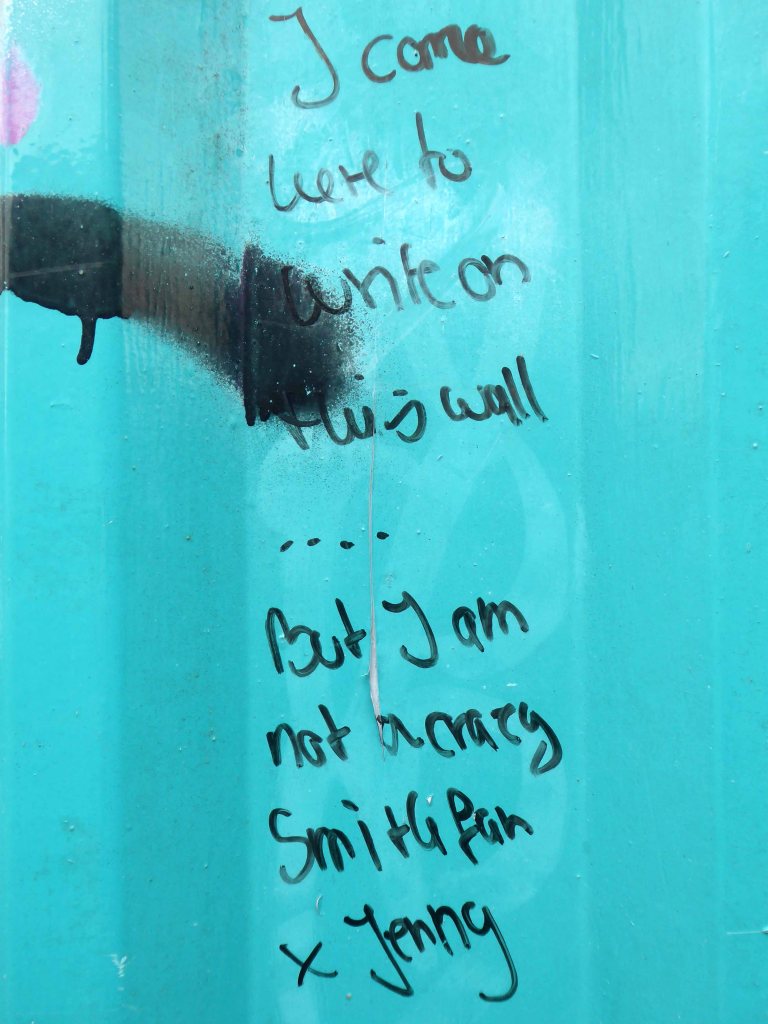
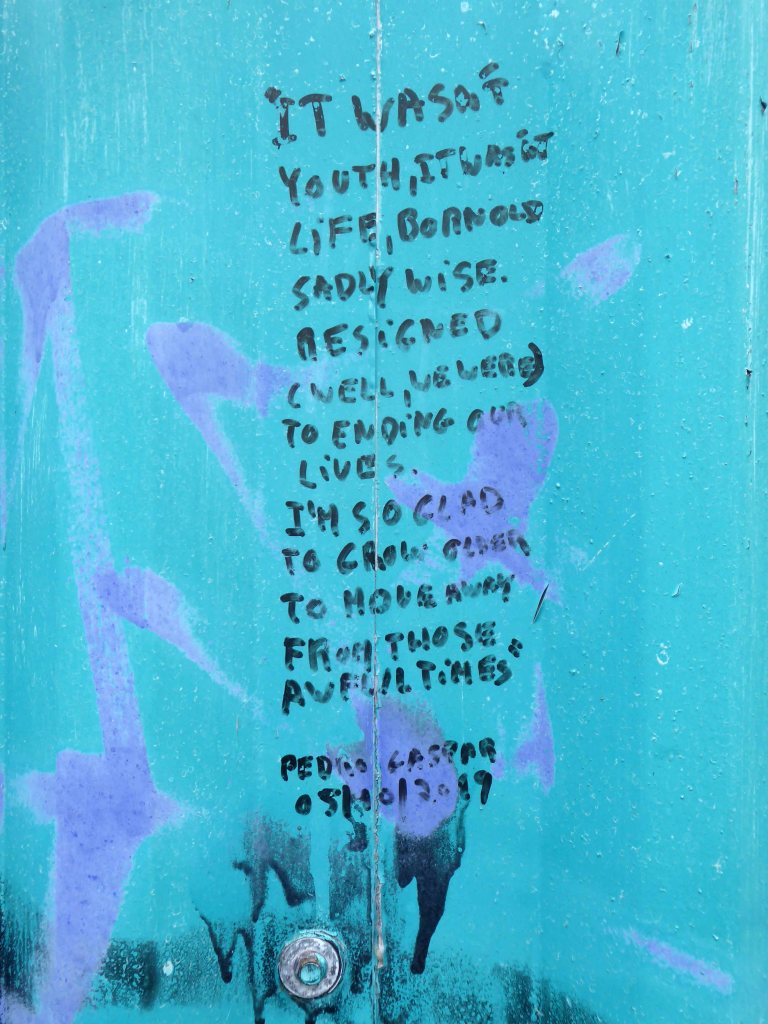
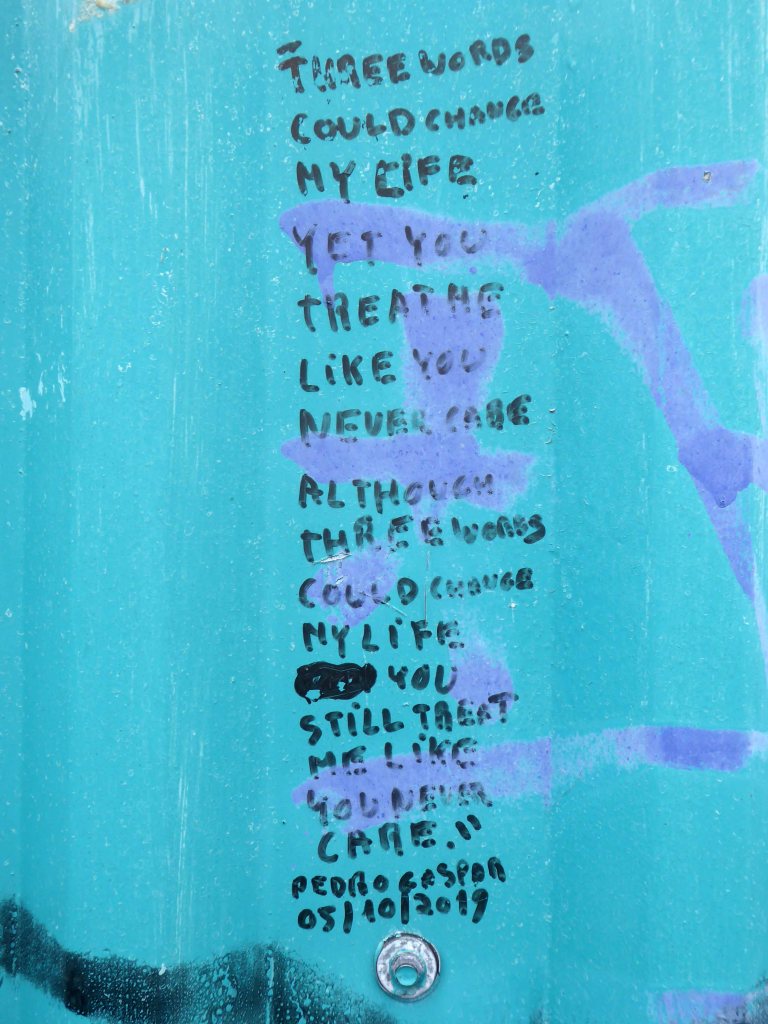
The location is now a place of pilgrimage for Morrissey’s deluded fans, who with depressing regularity, adorn the structure with their misquoted quotes.
Sun drenched faux-Californian Mr Morrissey does seem to be still ill in his own unique and unpleasant manner.
Let’s take a look at what he’s been missing.
What indifference does it make?
Self confessed Smiths sceptic Mr Mark Greer – currently incognito.
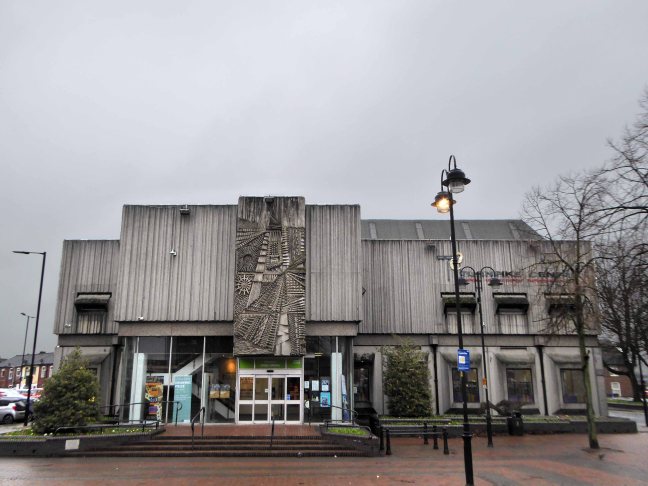
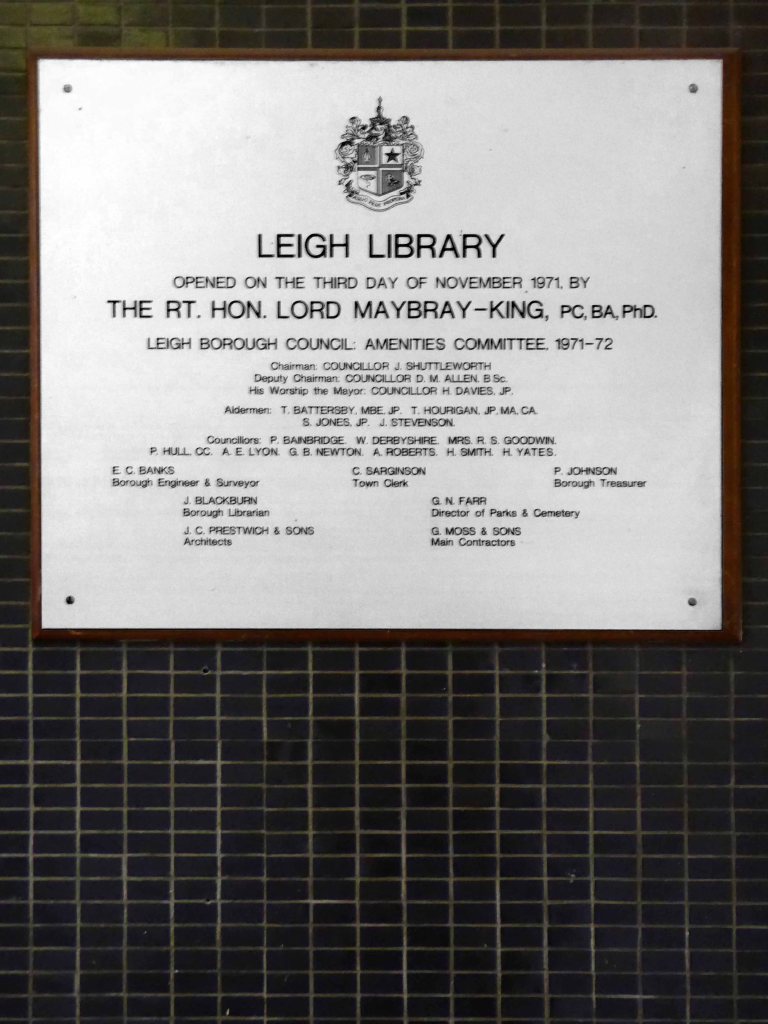
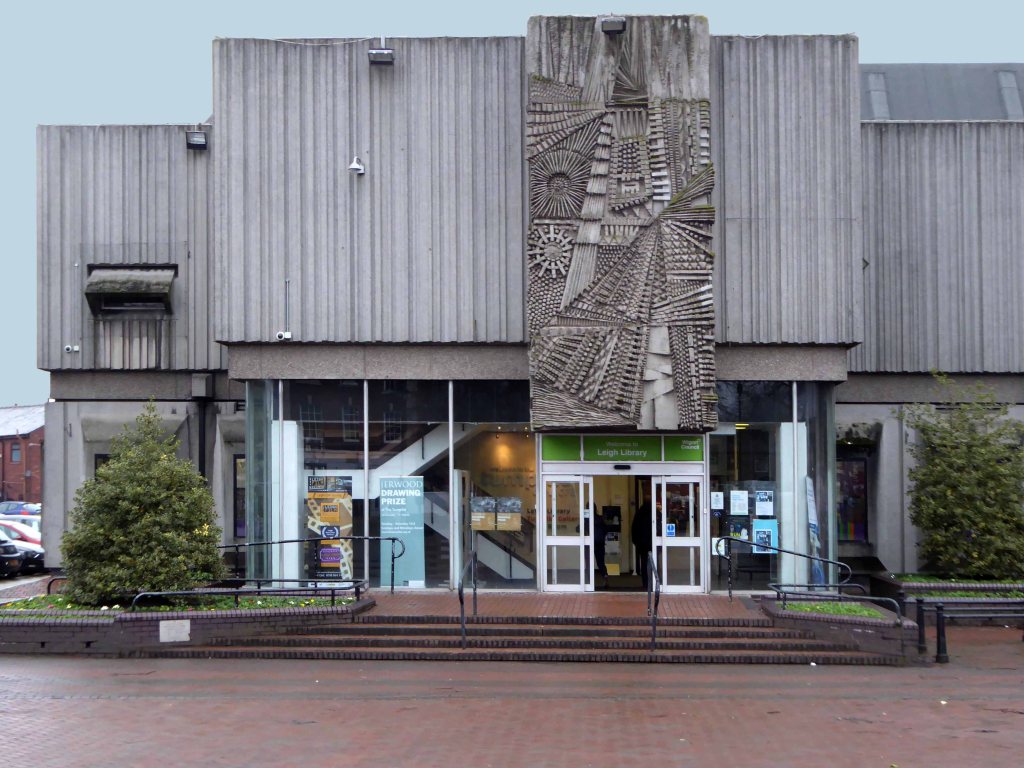
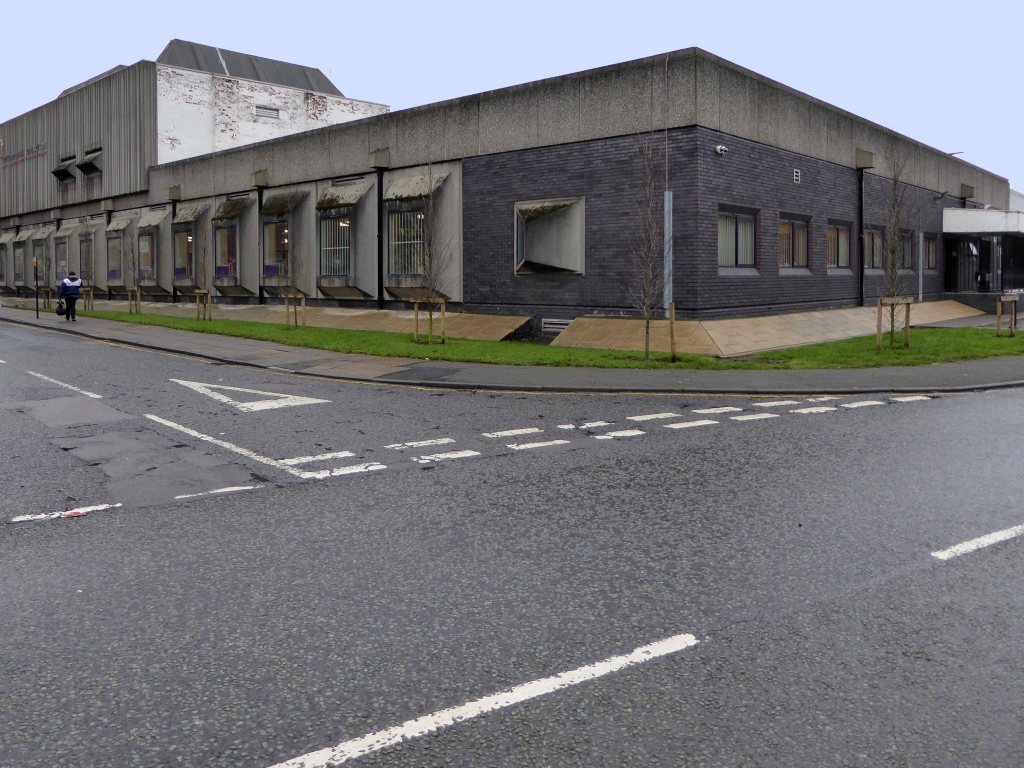
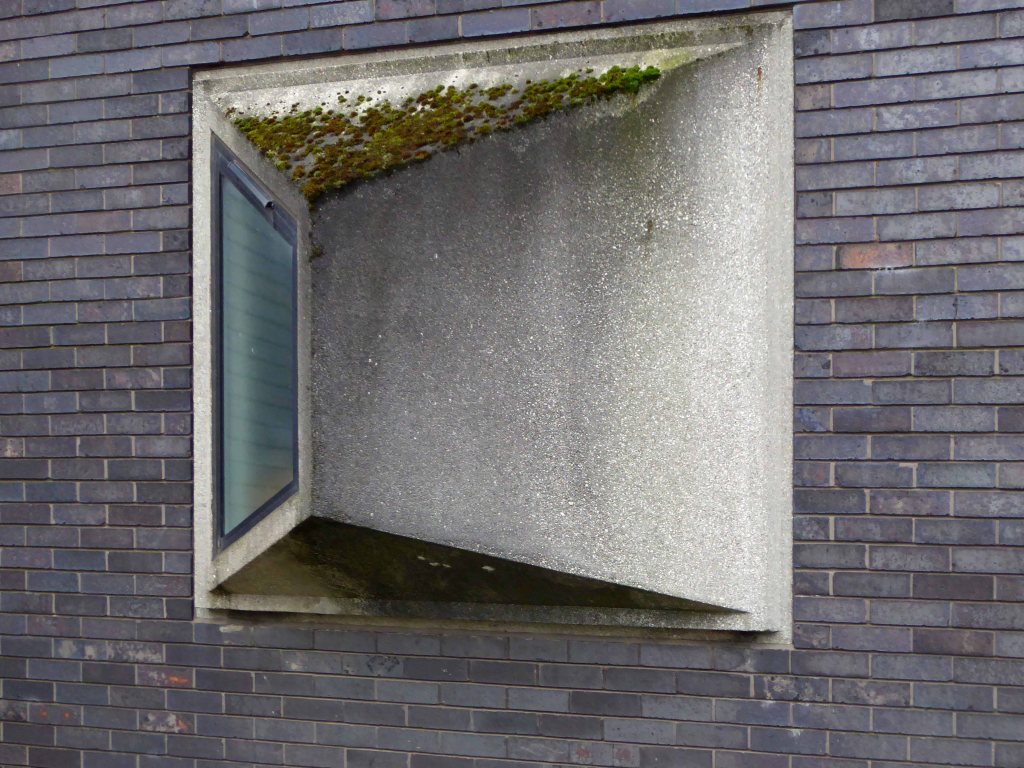
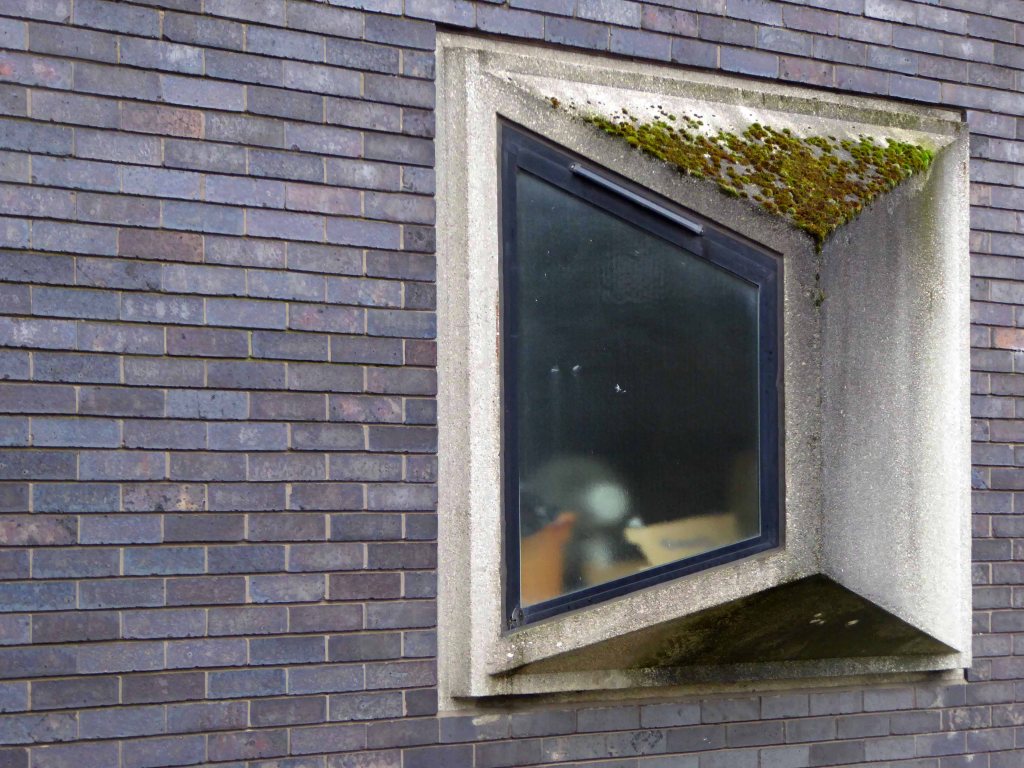
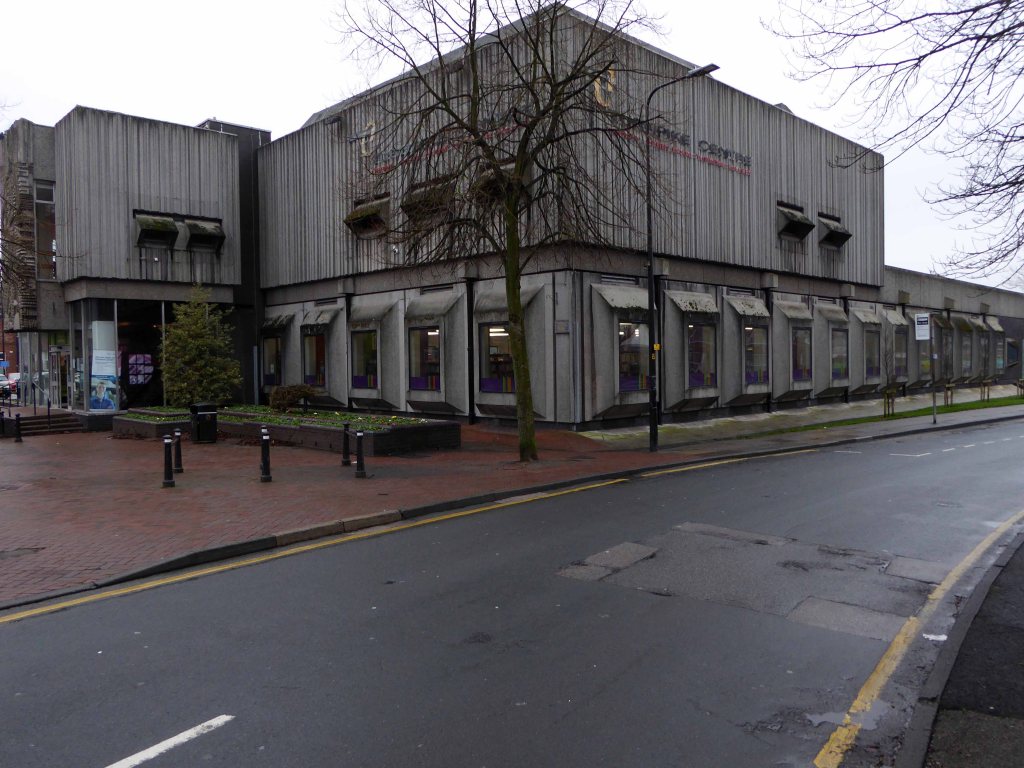
The Turnpike Centre was designed by J C Prestwich and Sons architects, who, incidentally, also designed Leigh Town Hall nearly 70 years earlier.
Since its opening in 1971, the bustling library, thriving art gallery and popular meeting rooms have seen a phenomenal 12 million people walk through the doors, while staff have answered almost 400 thousand questions and issued more than 17 million books, cassettes and CDs.
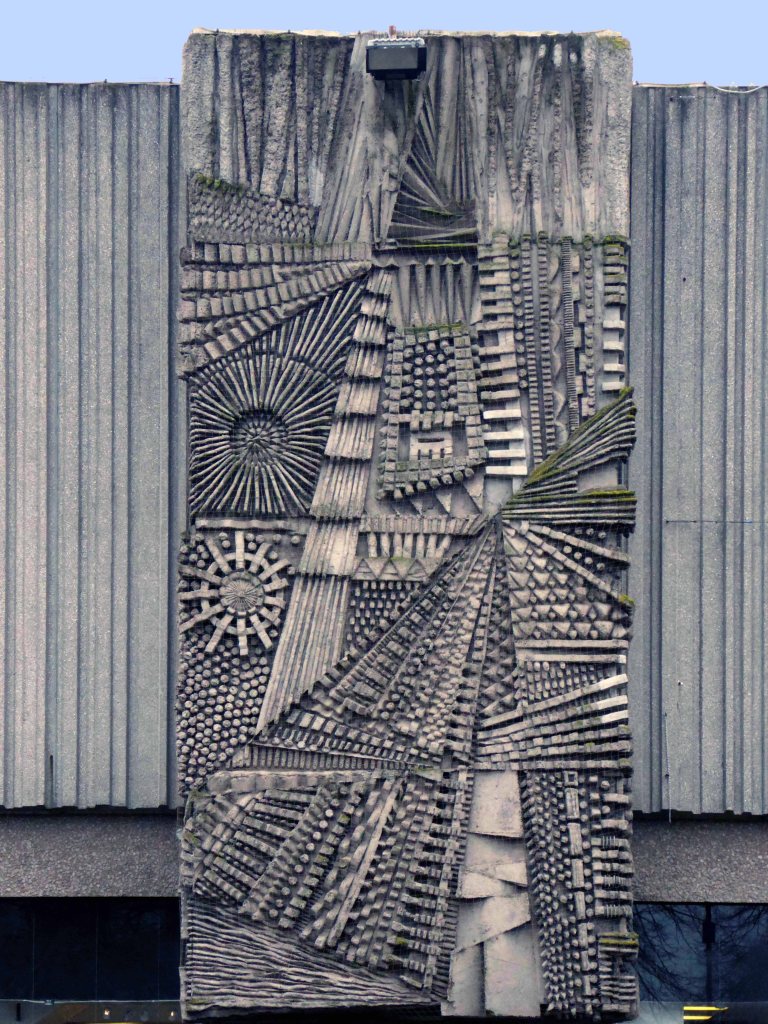
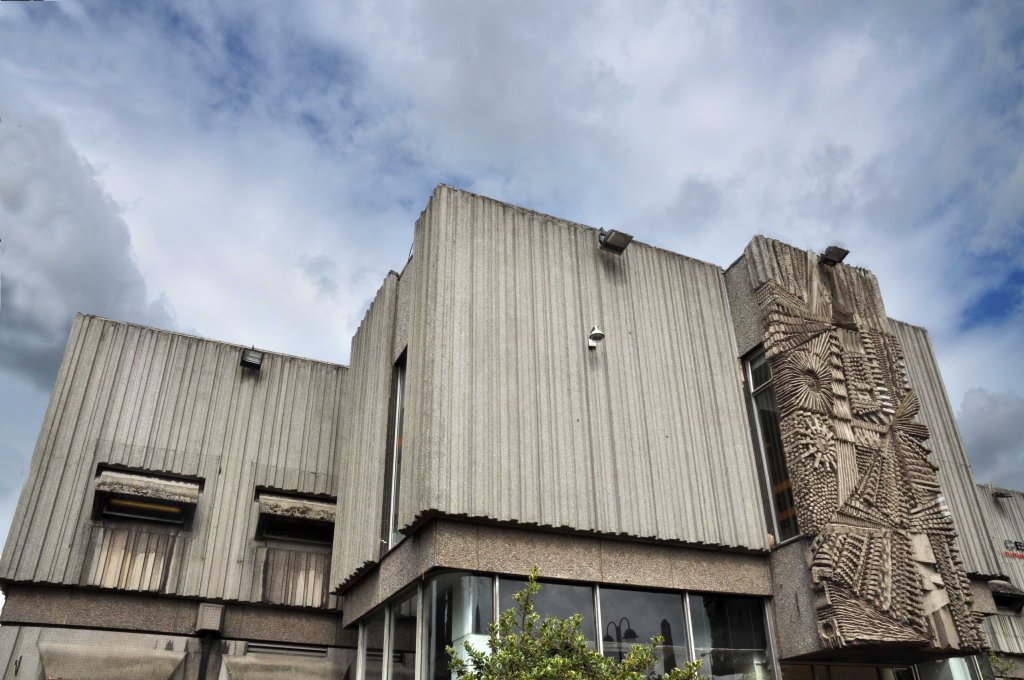
The fascia is graced by a grand cast concrete relief the work of William Mitchell.
All but abandoned by the cash-strapped local council in 2013, Turnpike Gallery in the former mining town of Leigh near Wigan, is entering a new stage in its history with the creation of a community interest company to run its programme.
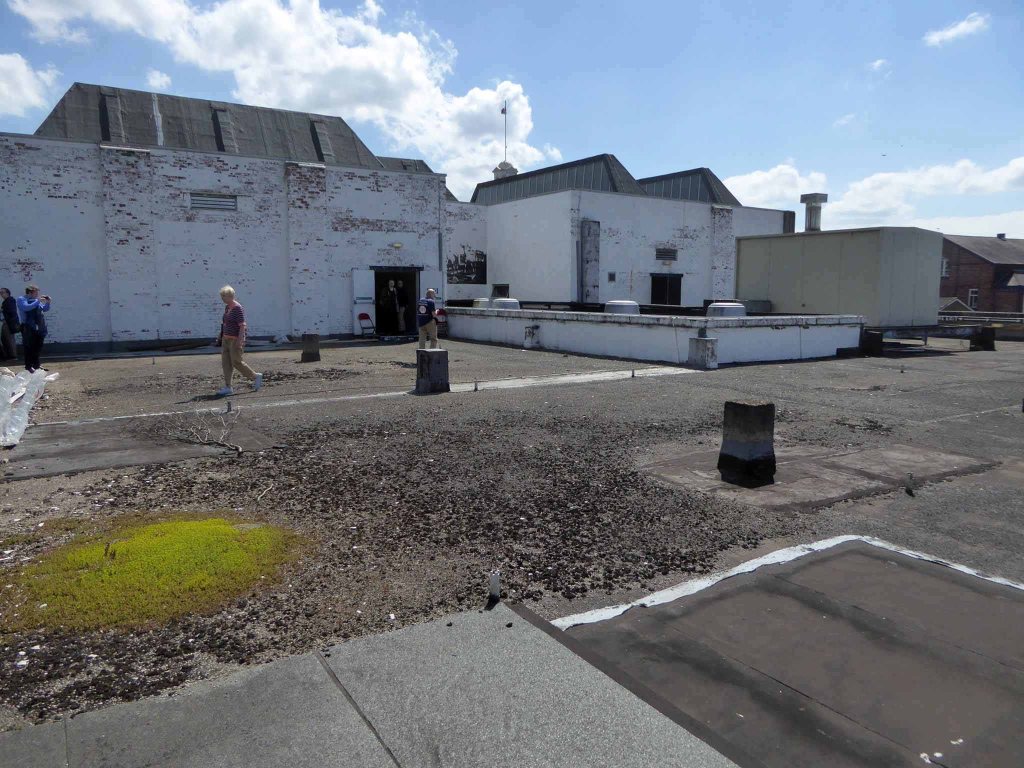
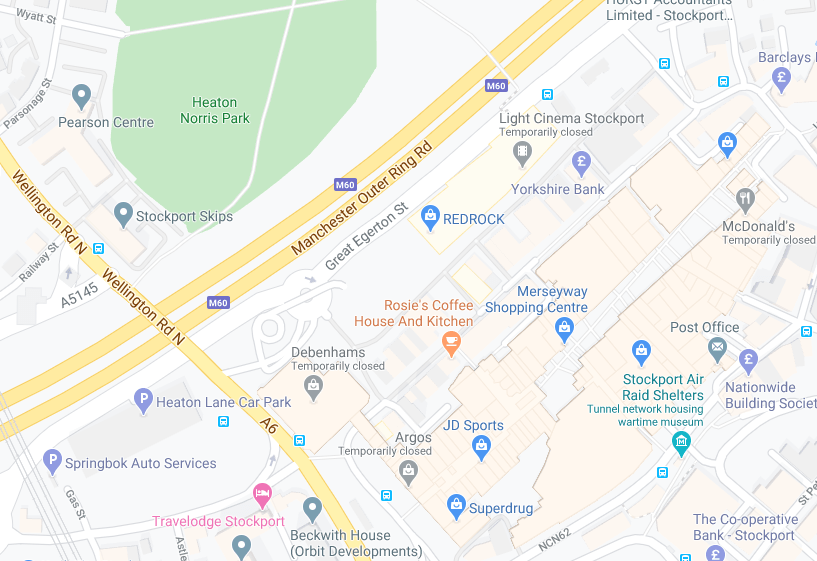
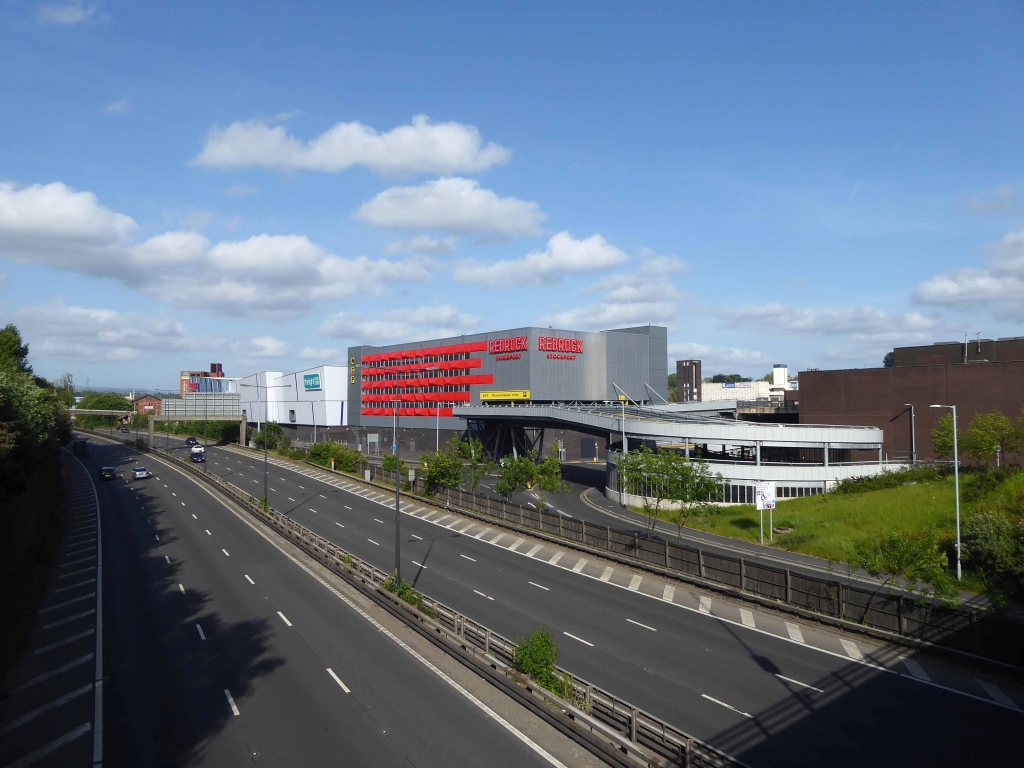
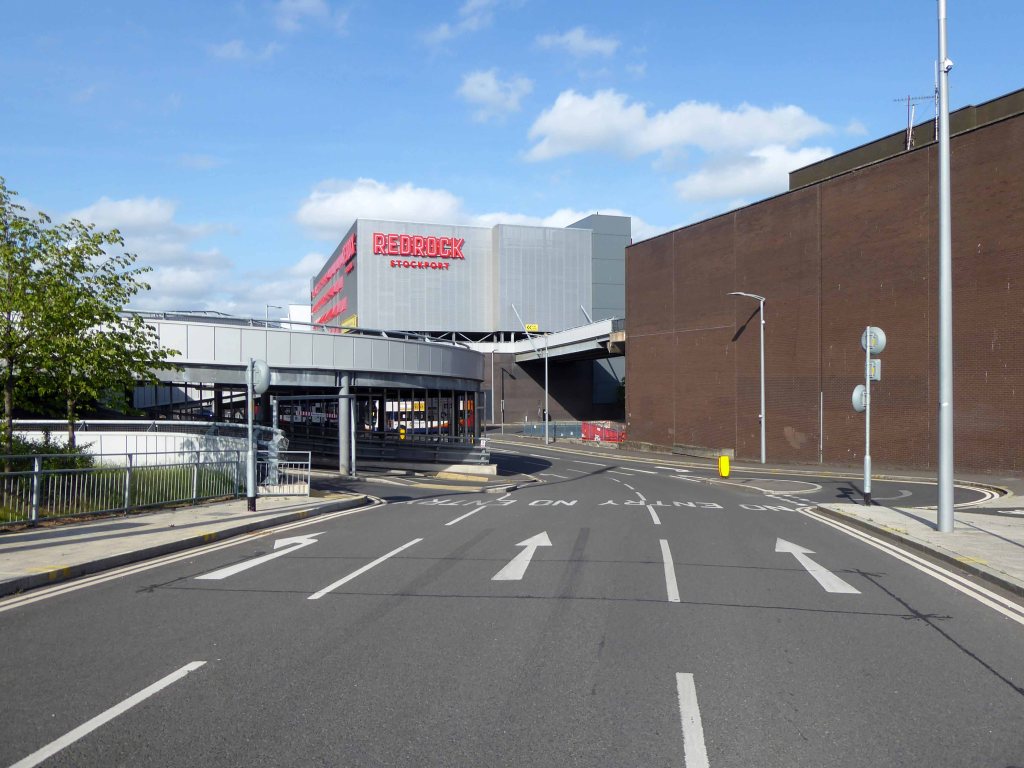
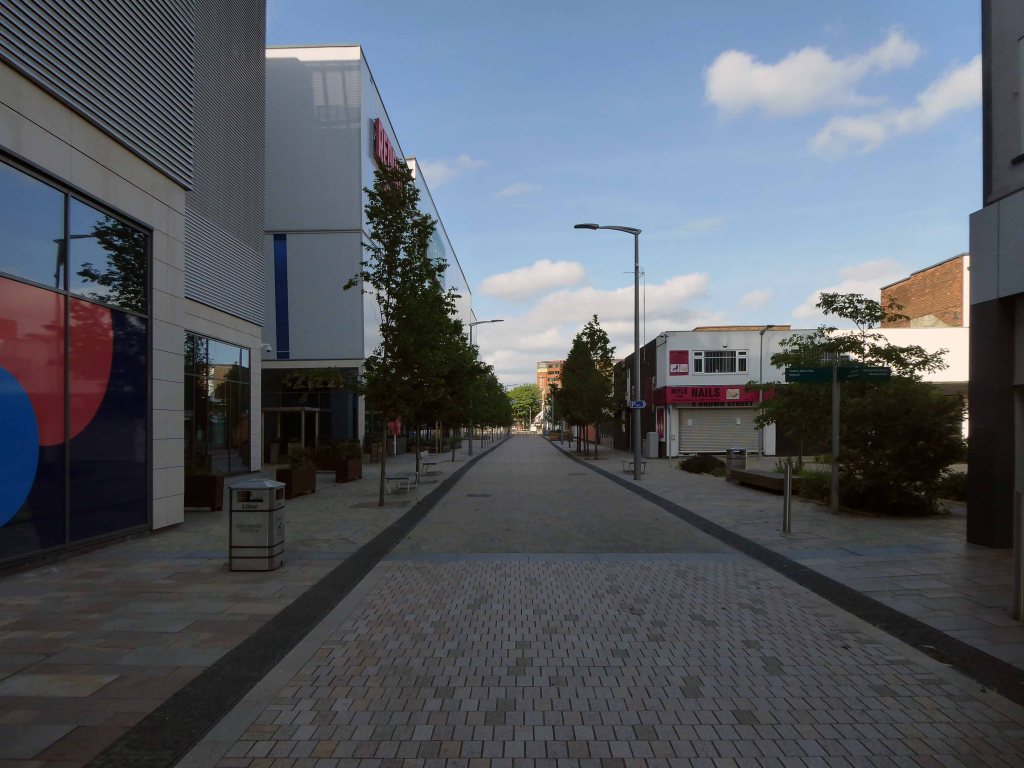
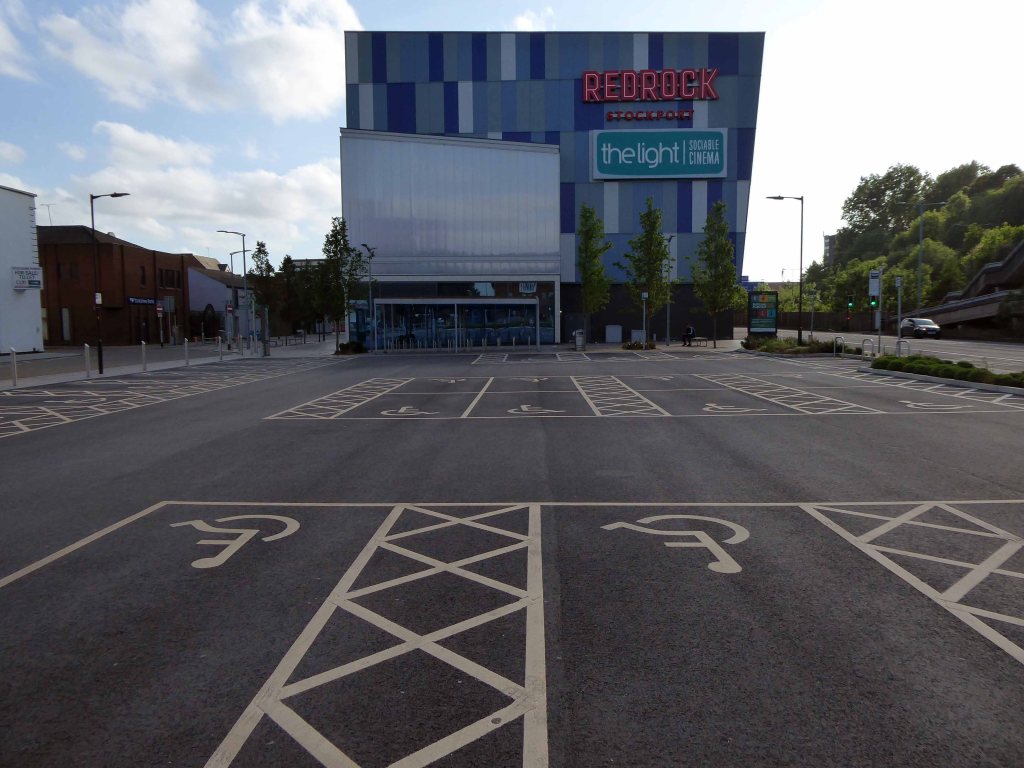
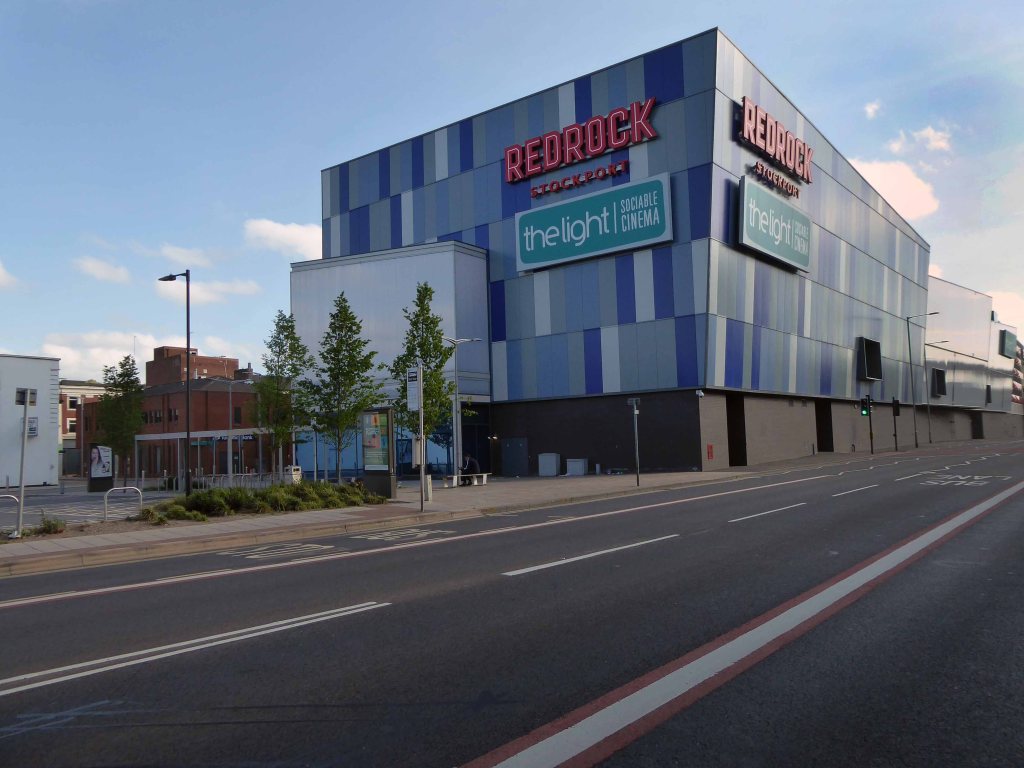
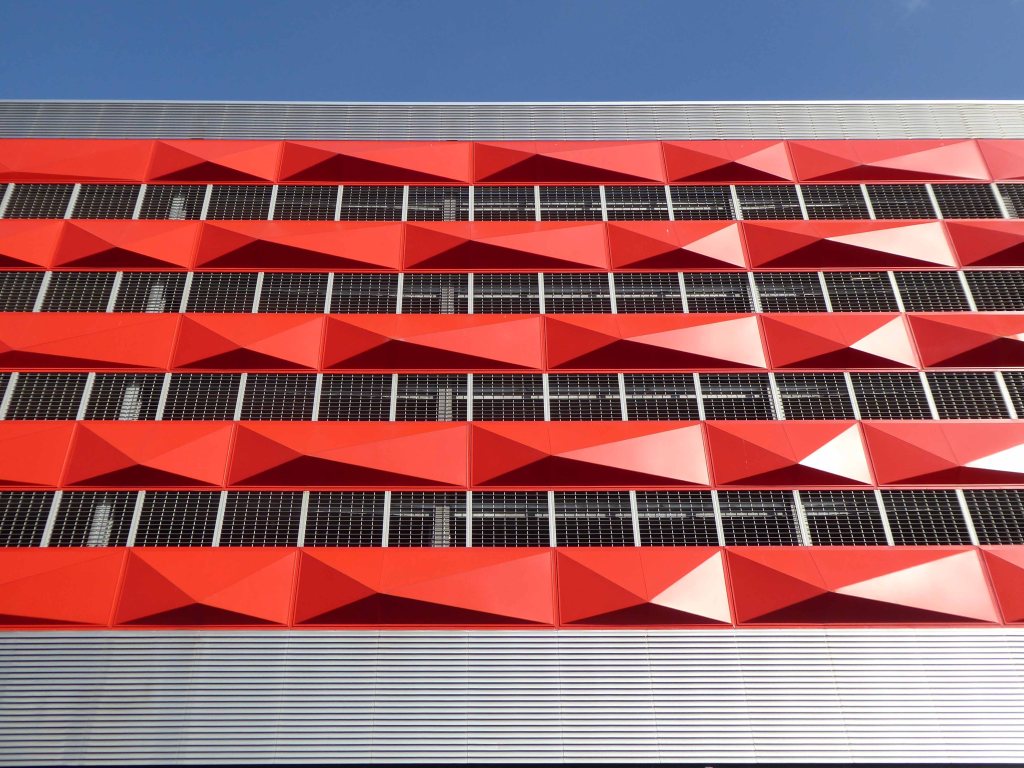
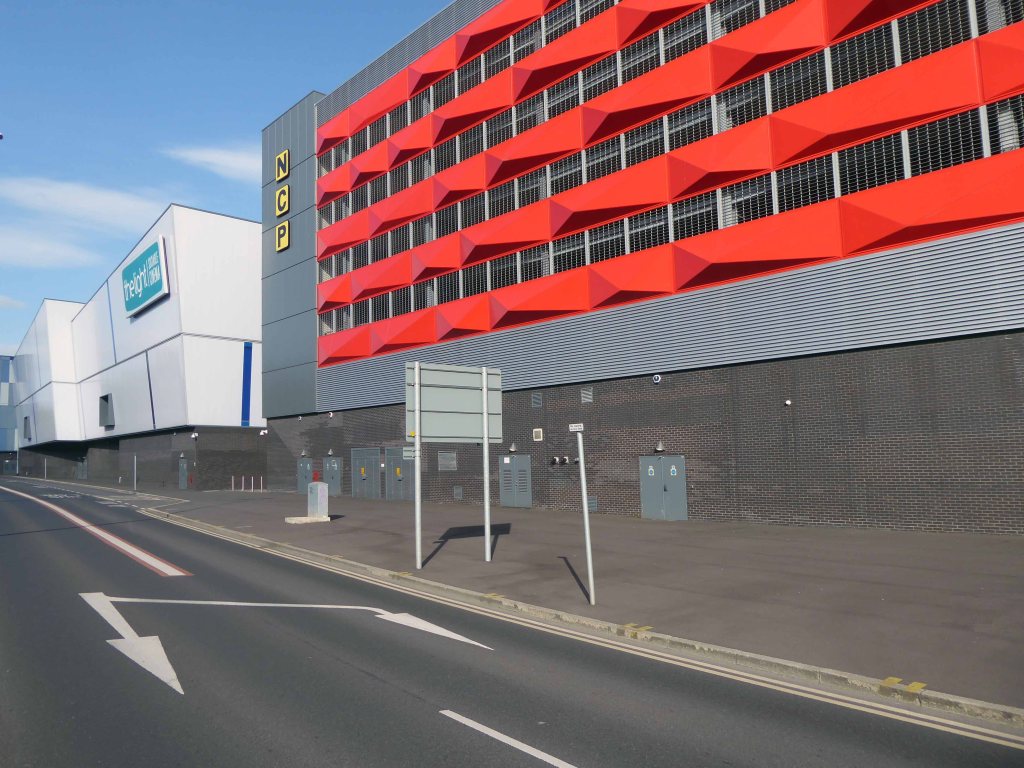
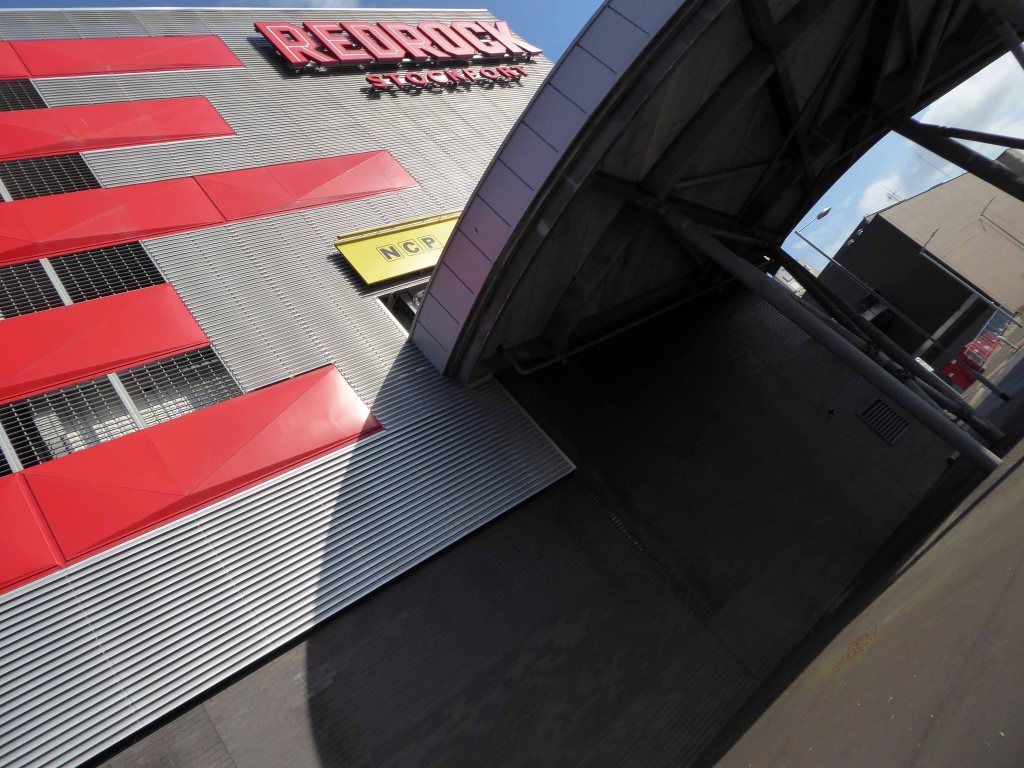
We recently took a look around Redrock, today we visit the next door neighbour – the car park ramp.
Replacing the old Debenham’s ramp.
Linking the old world of Merseyway with the shiny new NCP.
I don’t drive no car so I have to make do with the ecologically sound and ever so affordable means of pedestrian trespass, proceeding incautiously I recorded my journey into the unknown.
Returning safely to Basecamp I investigated further, circumnavigating the drainage area.
I have to admit that I am over fond of this small sacred space, a modern impenetrable temple of Brutalism. My ambition is to stage an art/music event within, just wait and see/hear if I don’t!
Much maligned, universally loathed – the Stockport leisure facility everyone loves to hate.
What’s the story?
No more darkness, no more night. Now I’m so happy, no sorrow in sight. Praise the Lord, I saw the Light.
1900
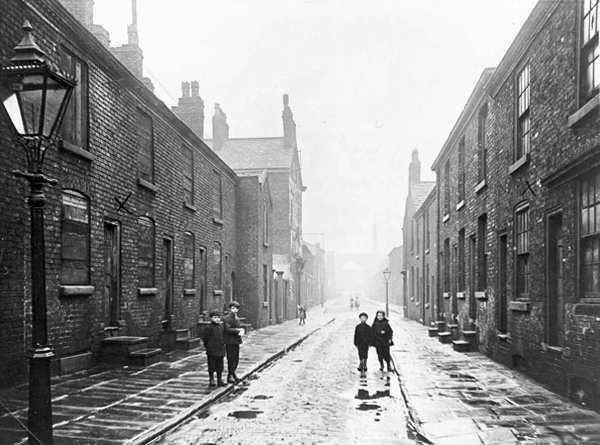
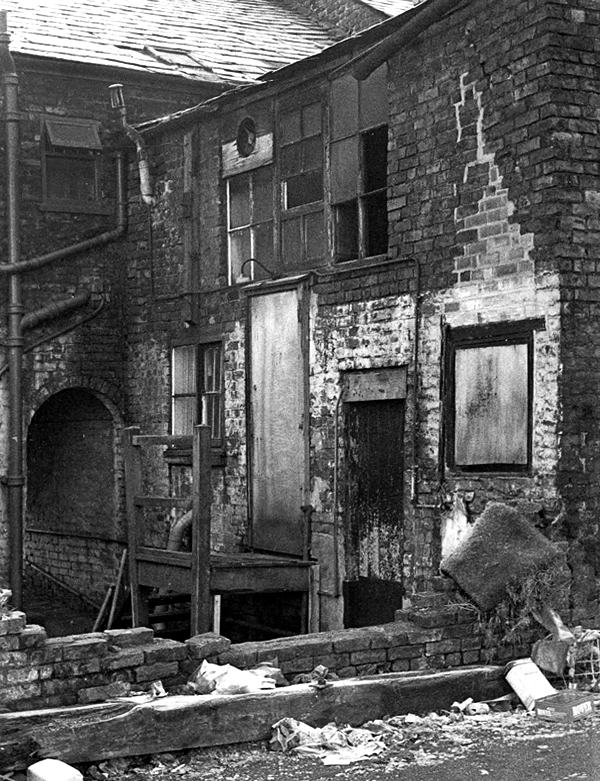
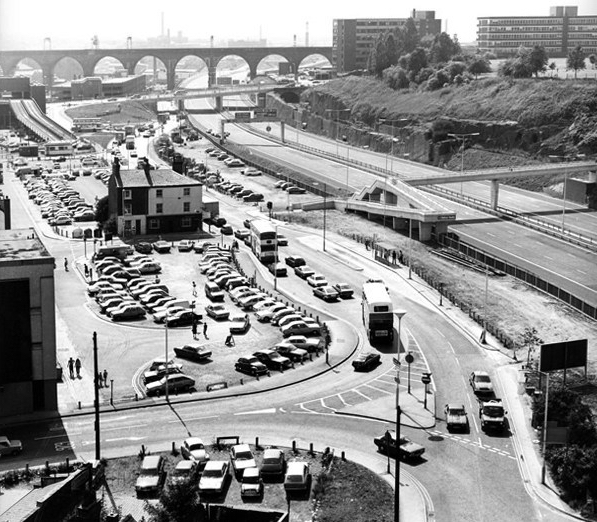
The area between Princes Street and Bridgefield Street was a tight warren of housing, shops and industry, eventually demolished in the 1970s, designated as slum clearance.
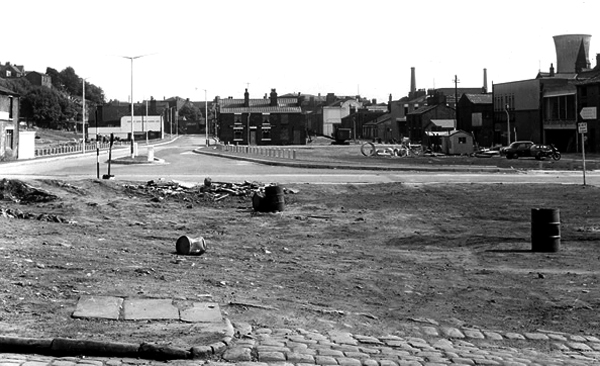
Prior to the arrival of the ring road the space remained undeveloped and turned over to car parking.
Little changes as the M60 is opened.
Images TS Parkinson – Stockport Image Archive
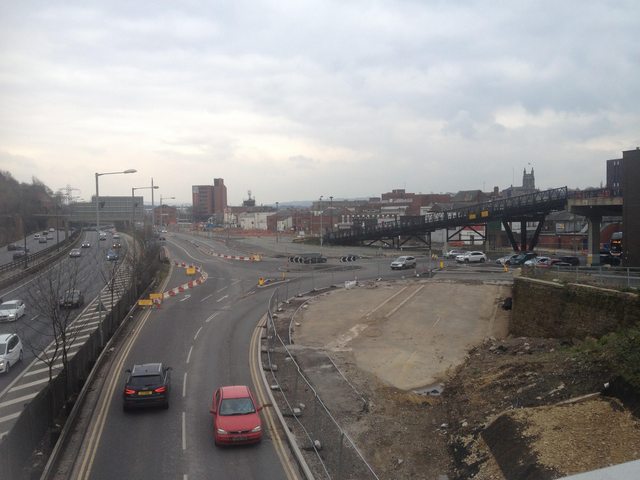
So for over forty years the land lies pretty vacant, but far from pretty.
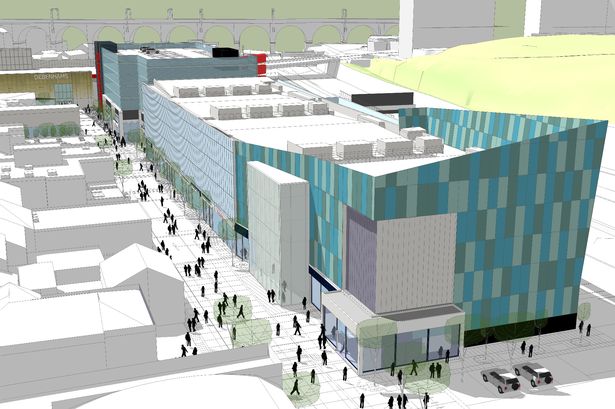
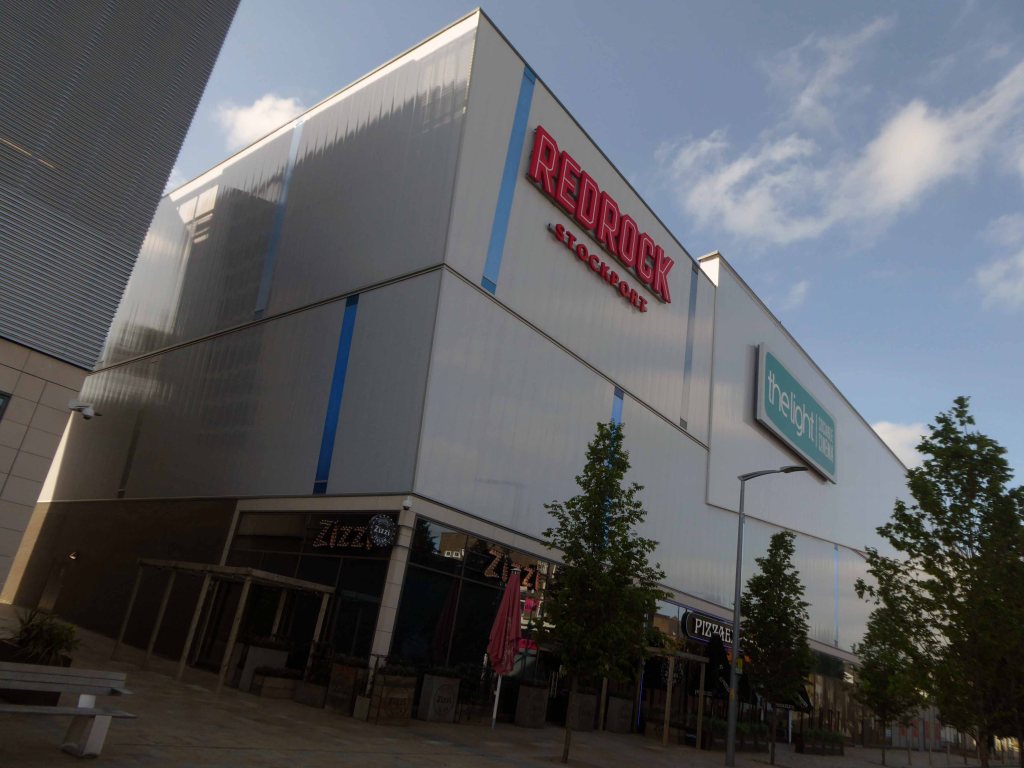
Until 2015 when planning permission is granted for the £45m Redrock leisure scheme, which includes a 10-screen cinema, restaurants and shops.
Councillor Patrick McAuley, the council’s executive member for economic development and regeneration, said:
This is a very exciting time for Stockport. Developments such as these help our ambition of putting Stockport on the map to bring more people to work, shop and socialise here. We have been keen to involve the public in plans for both developments, by holding various consultation exercises.
We look forward to an exciting few years improving Stockport’s offer.
So good bye to all this, the local authority is making serious progress, developing Stockport’s future, against a background of structural decline and the dominance of Manchester city centre.
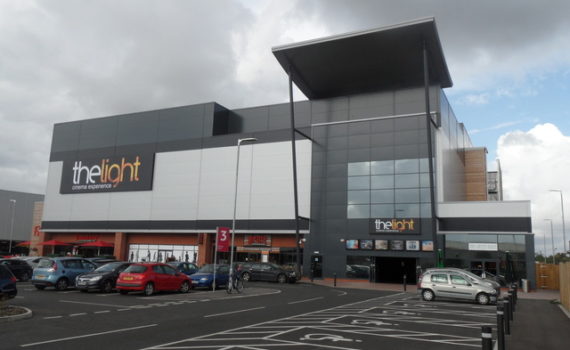
The architects for the scheme are BDP – the building was not well received as it was awarded the Carbuncle of the Year 2018.
Judges were left unimpressed by the – awkward form, disjointed massing and superficial decoration, while readers called it an absolute monstrosity.
Though to be fair The Light has a house style that leans heavily towards the anonymous industrial shed.
Sittingbourne
The development has however become a commercial success – once inside customers seem more than happy with the facilities.
The people of Stockport have welcomed us with open arms since opening in 2017. We’ve now had over one million guests join us for everything from the latest blockbusters to opera, theatre and concerts.
It’s been that busy that we’ve just added two additional screens and now offer freshly made pizzas, burgers and sliders. We’ve got plenty more exciting additions up our sleeve for next yeartoo!
Yet it continues to attract wave after wave of criticism on local Facebook groups, perhaps the former car parking area should be reinstated, or the Victorian slums rebuilt?
I went to take a look for myself during lockdown – see what you think.
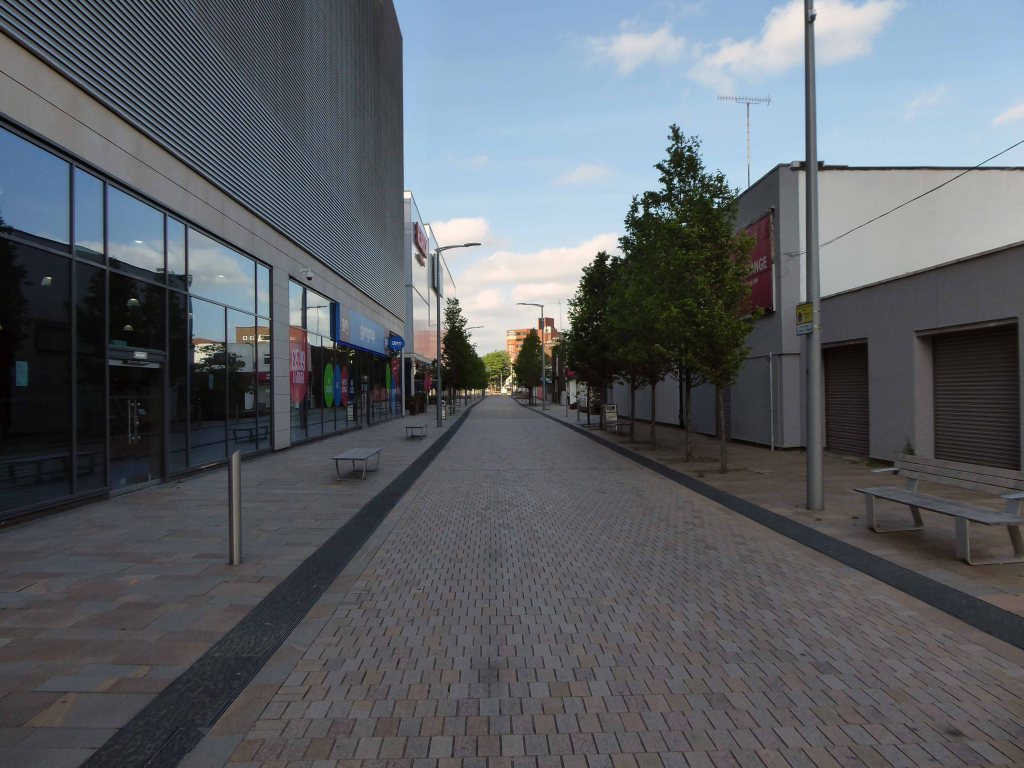
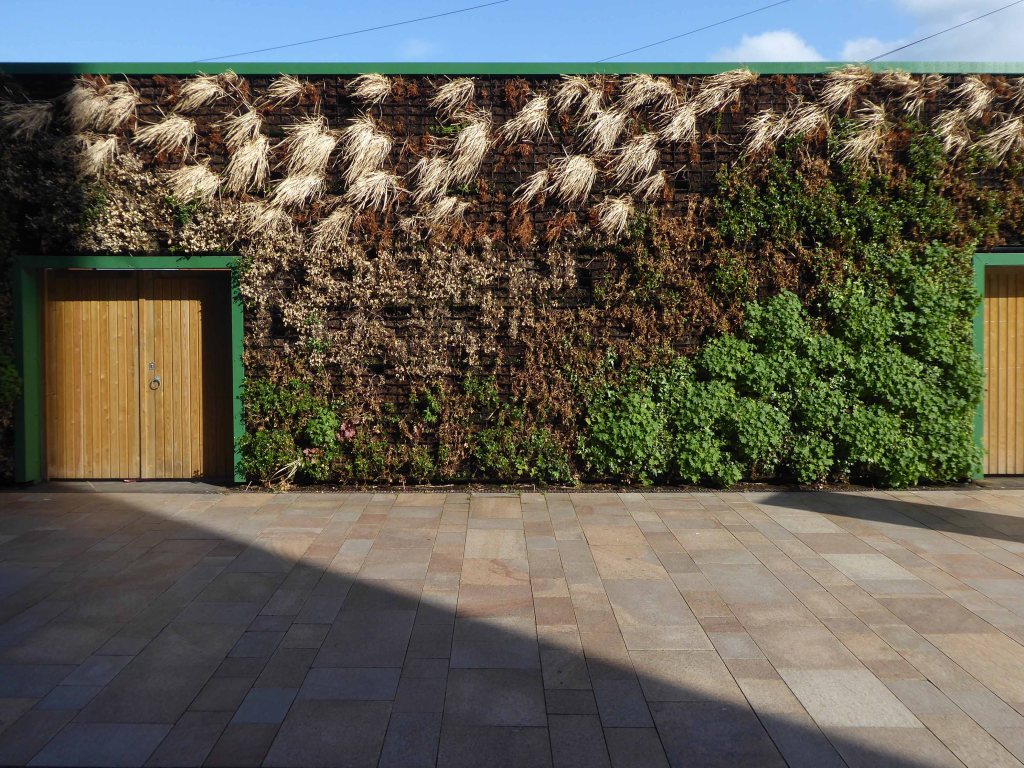
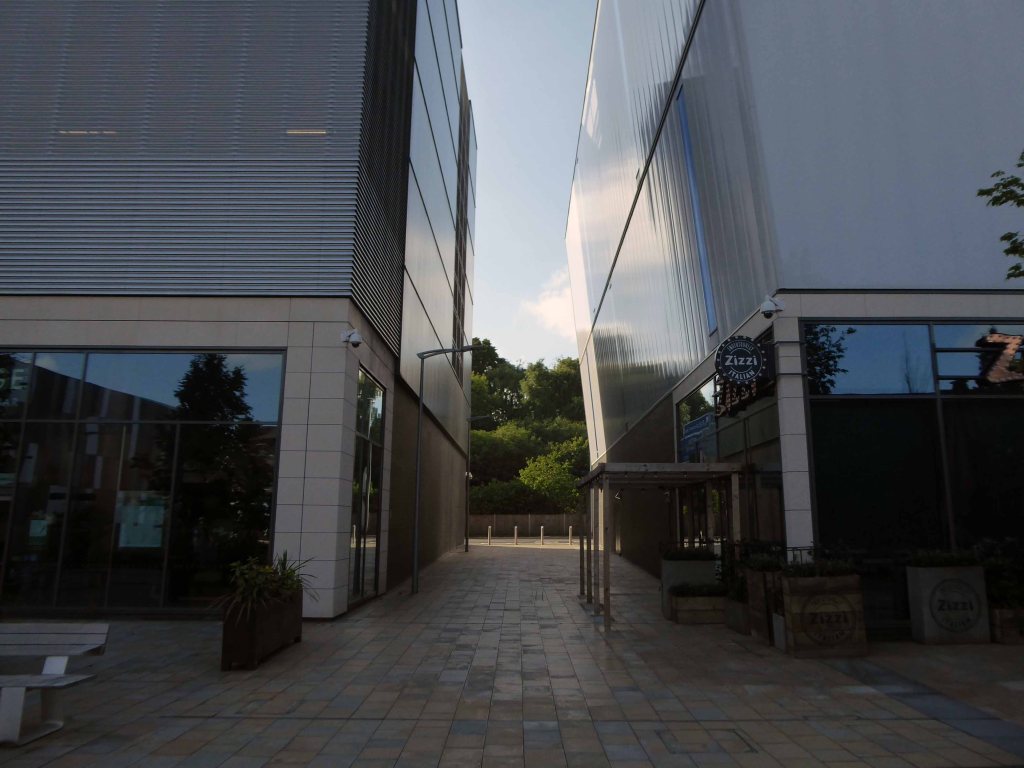
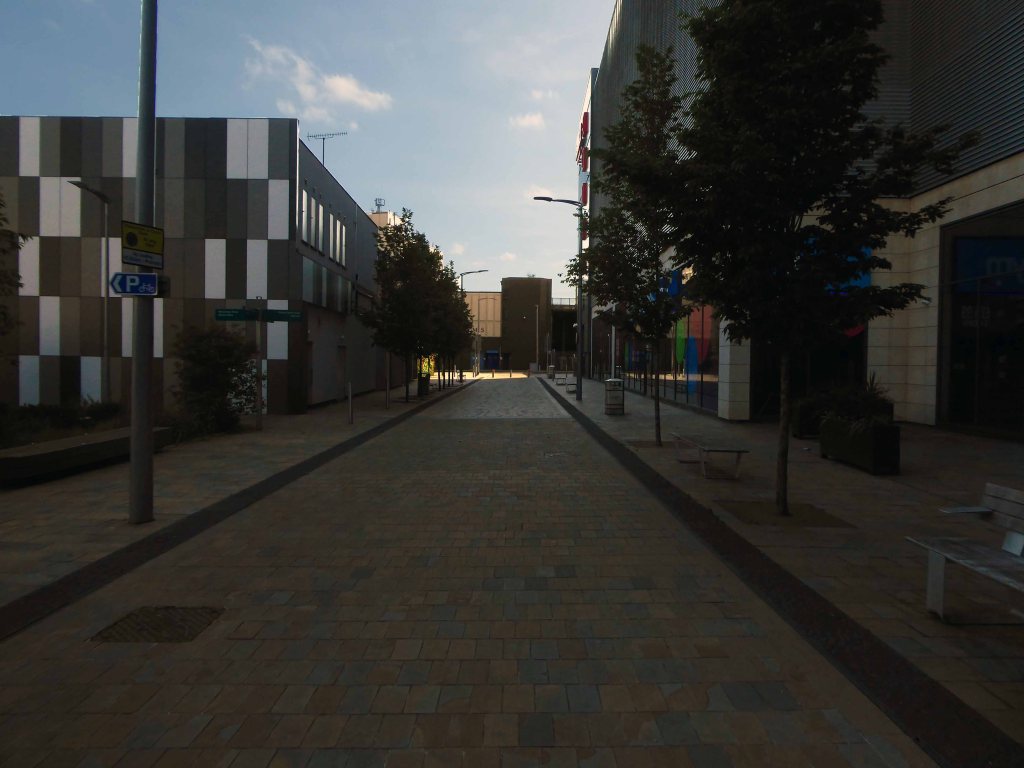
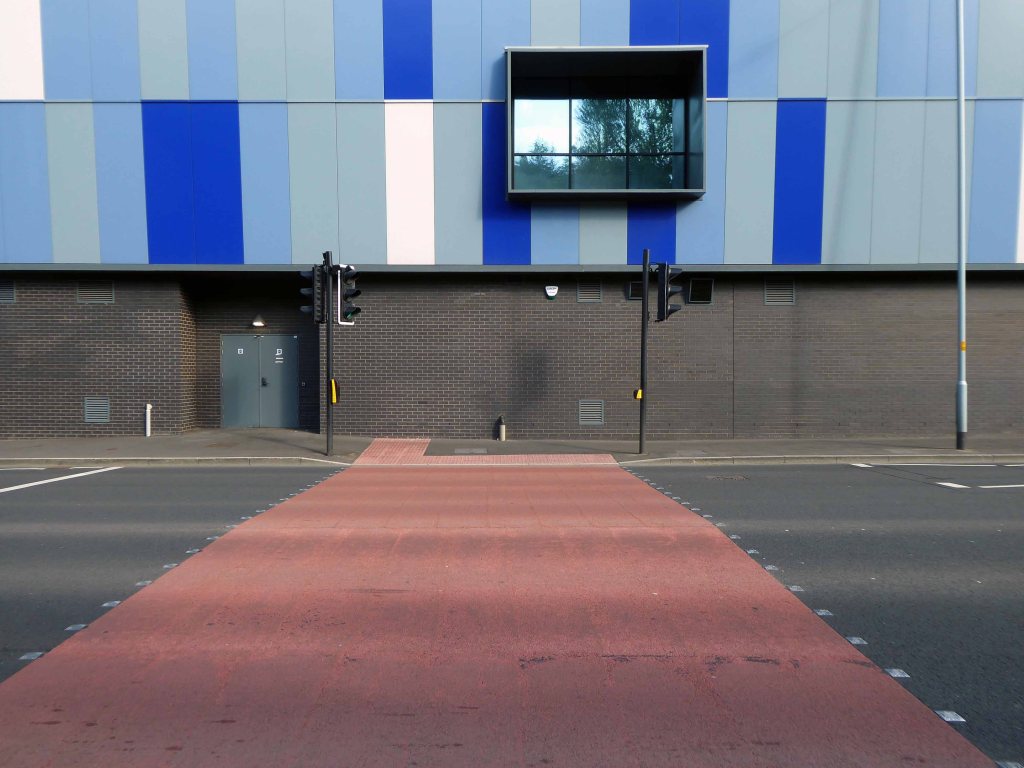
Real attempts have been made to make the landscaping and street view amenable to pedestrians, it feels like an attractive and safe urban space.
The view from the north is less successful, the scale and decorative work looks over ostentatious and confused.
Look away if you wish, it won’t be here forever – and if you fancy something different try The Plaza or The Savoy.
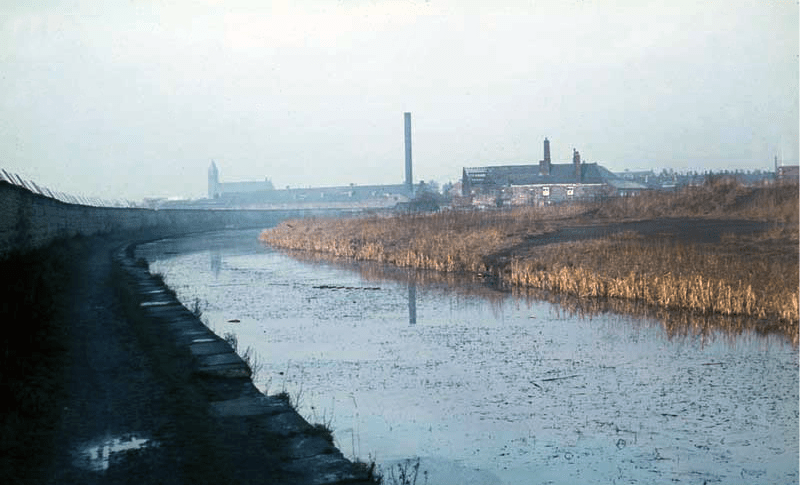
The canal received its Act of Parliament in 1792. It was built to supply coal from Oldham and Ashton under Lyne to Manchester. The first section between Ancoats Lane to Ashton-under-Lyne and Hollinwood was completed in 1796.
The Great Central Railway in England came into being when the Manchester, Sheffield and Lincolnshire Railway changed its name in 1897, anticipating the opening in 1899 of its London Extension. On 1 January 1923, the company was grouped into the London and North Eastern Railway.
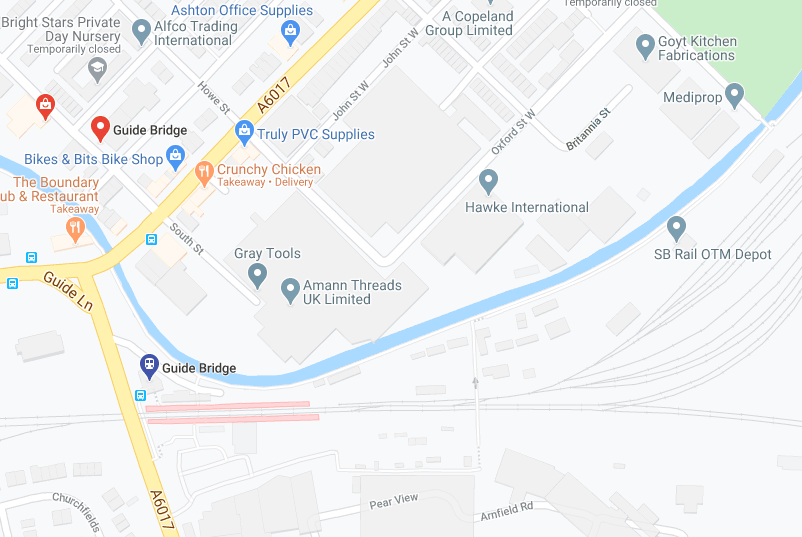
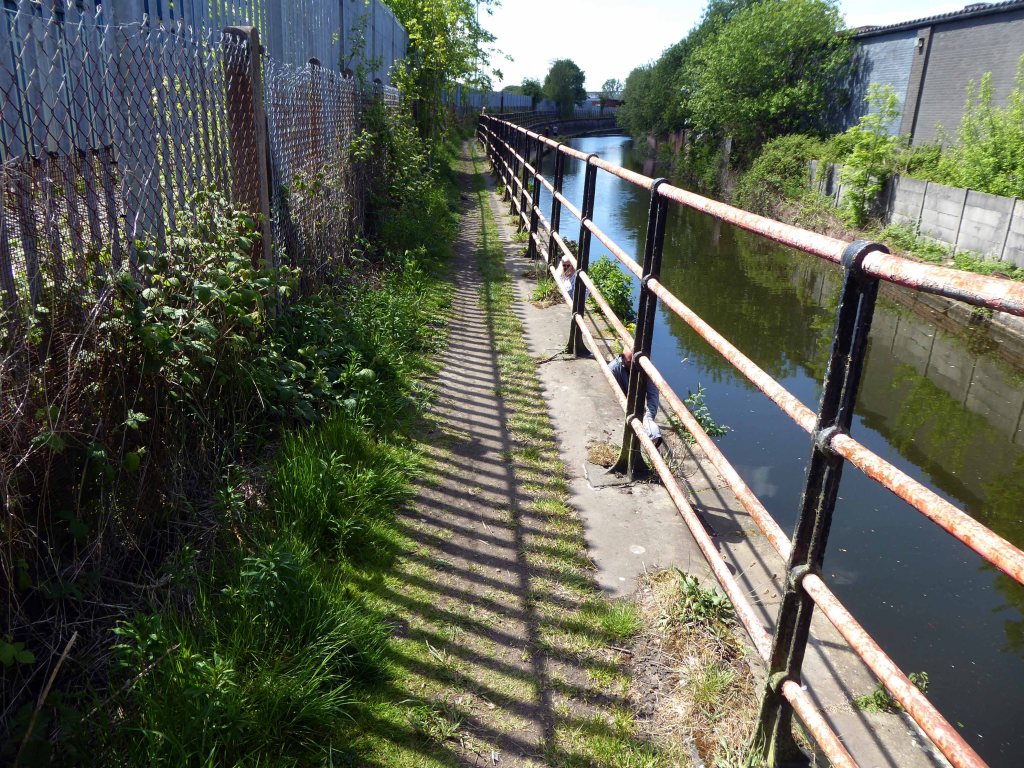
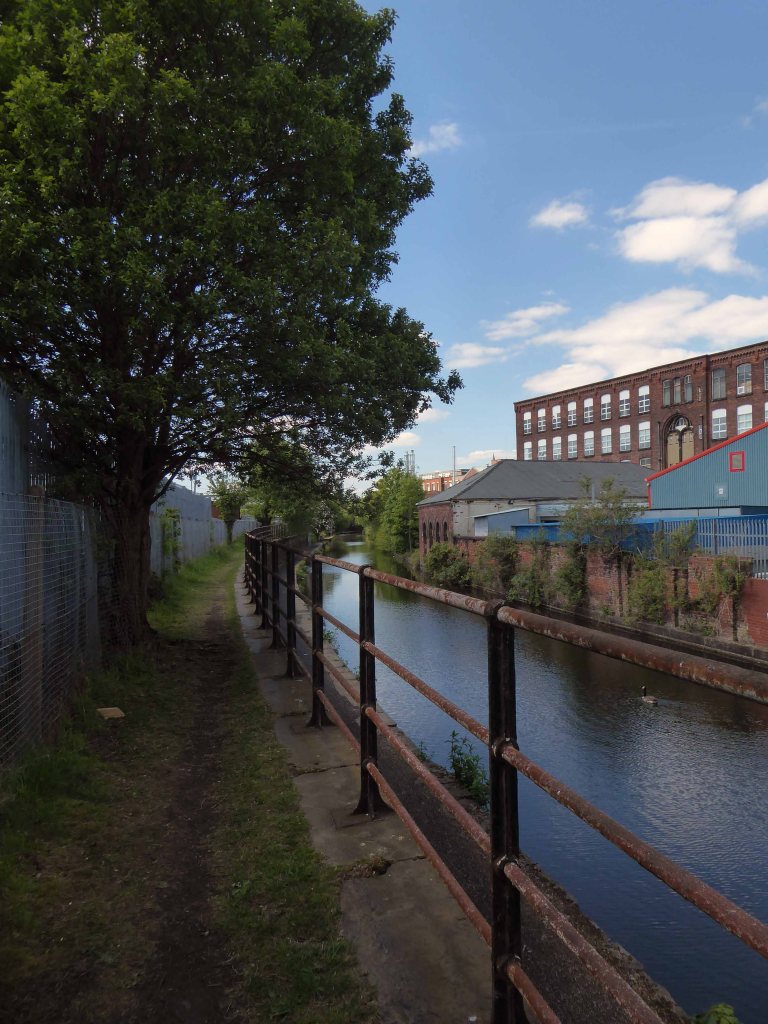
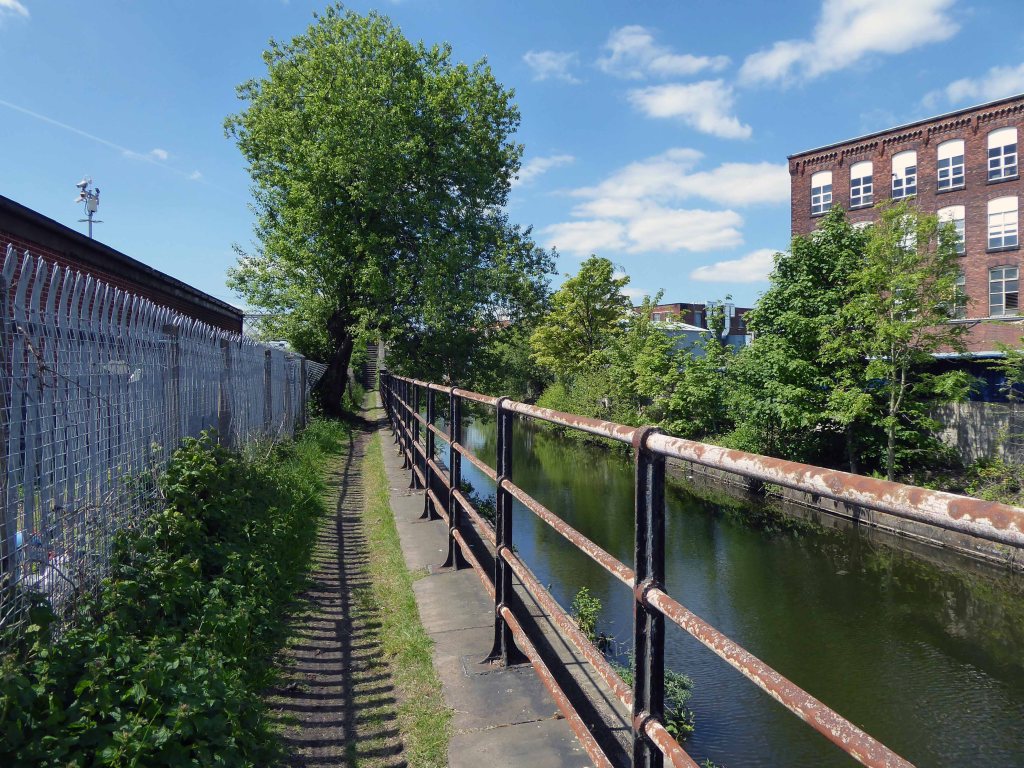
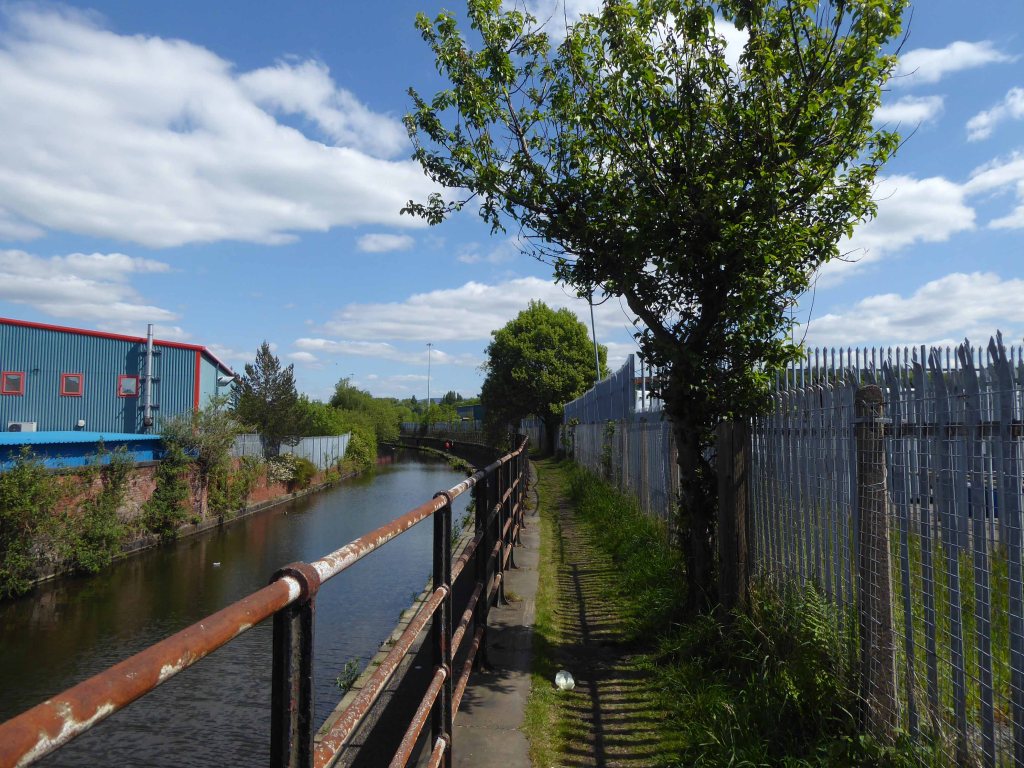
I had walked beside the elevated path, alongside the canal coming home from school, rode by it whilst working as a Guide Bridge goods guard.
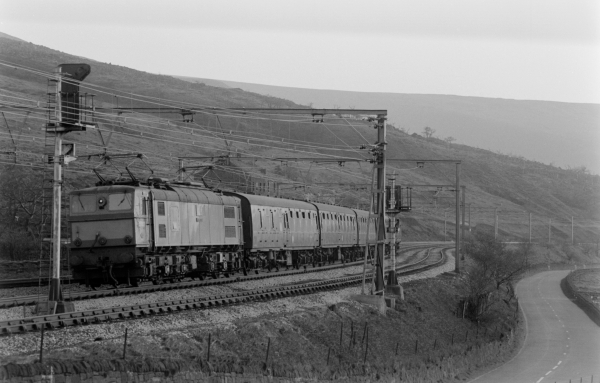
This was busy railway, steel coal, oil and people hurtling back and forth across the Pennines, under the DC wires of the Woodhead Line.
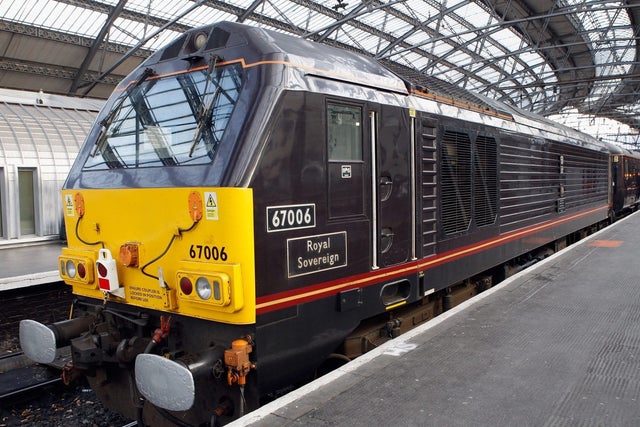
One memorable night the Royal Train stayed overnight, in what are now the SB Rail OTM sidings.
Toffs in dinner jackets were leaning from the windows, as we gazed in awe from the platform.
Swietelsky is one of Austria’s leading construction companies with international contracts encompassing highways, tunnelling, residential and commercial developments, alpine construction and railways.
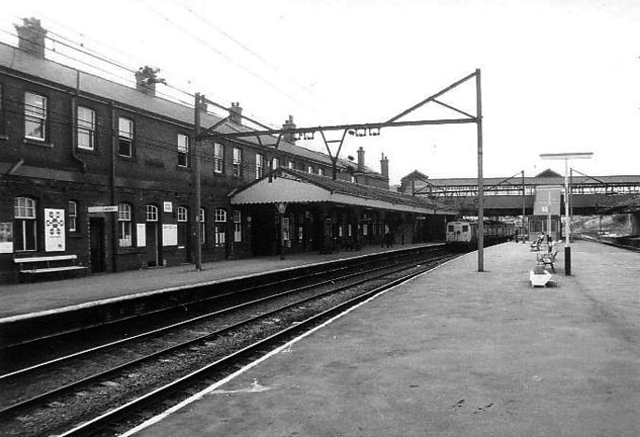
The journey ends by the seriously depleted station buildings, the buffet bar, depot and engine shed long gone.
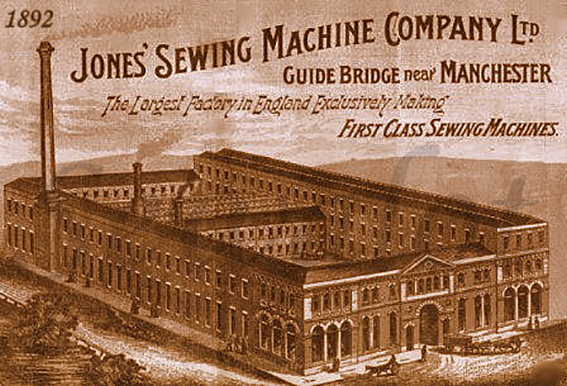
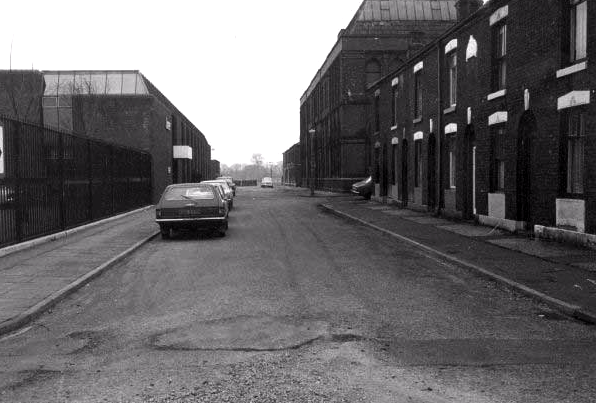
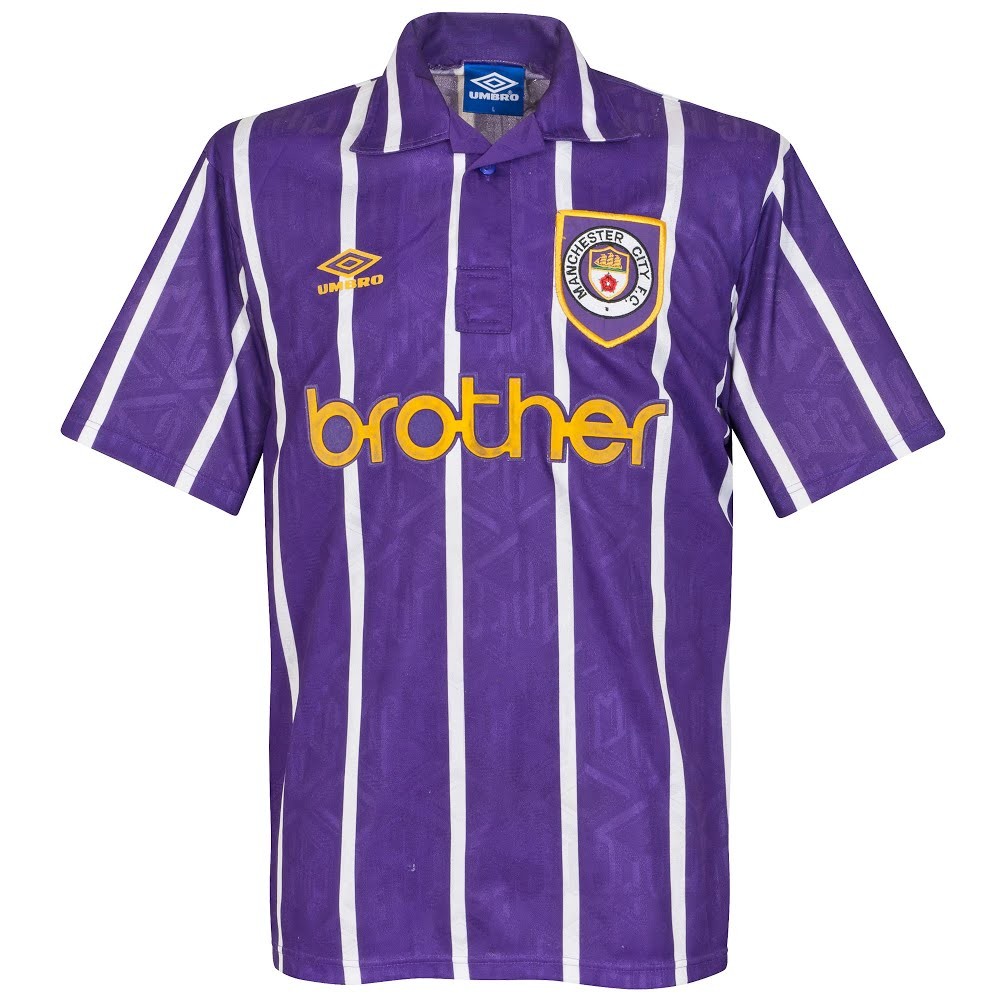
Thomas Chadwick later joined Bradbury & Co. William Jones opened a factory in Guide Bridge, Manchester in 1869. In 1893 a Jones advertising sheet claimed that this factory was the – Largest Factory in England Exclusively Making First Class Sewing Machines. The firm was renamed as the Jones Sewing Machine Co. Ltd and was later acquired by Brother Industries of Japan, in 1968. The Jones name still appeared on the machines till the late 1980s.
The site is now home to new homes and homeowners, as the area seeks to capitalise on the spread of wealth from Central Manchester.
Arnfield Woods is an exclusive development offering two, three and four bedroom homes, located adjacent to the Guide Bridge train station, which provides direct access into Manchester City Centre and direct access into Glossop.
The world turns:
Time changes everything except something within us which is always surprised by change.
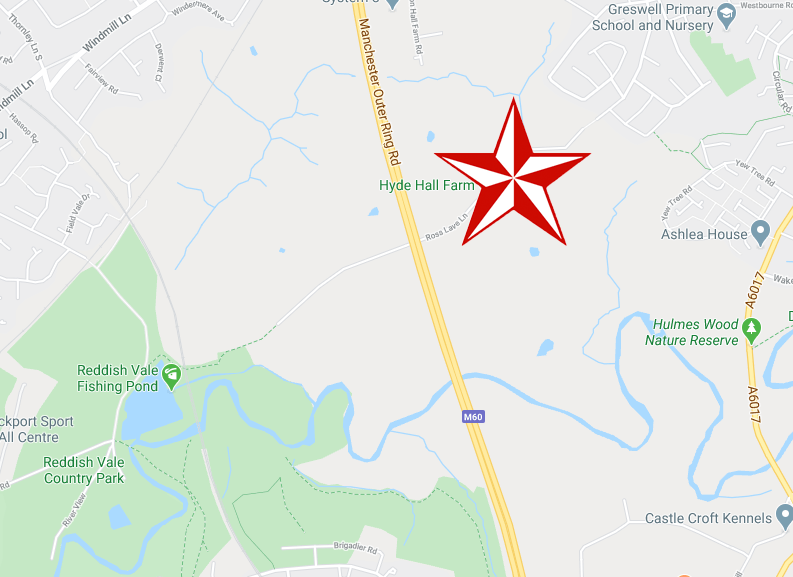
Hyde Hall Farm is Grade II Listed one of the few Tudor model farms in the region, a building of immense importance.
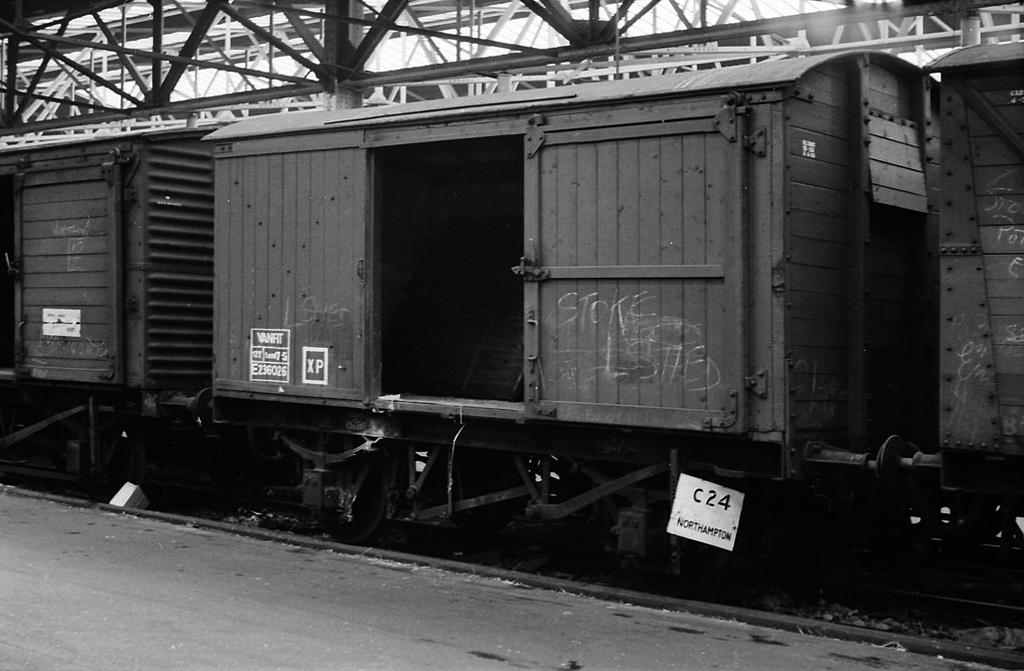
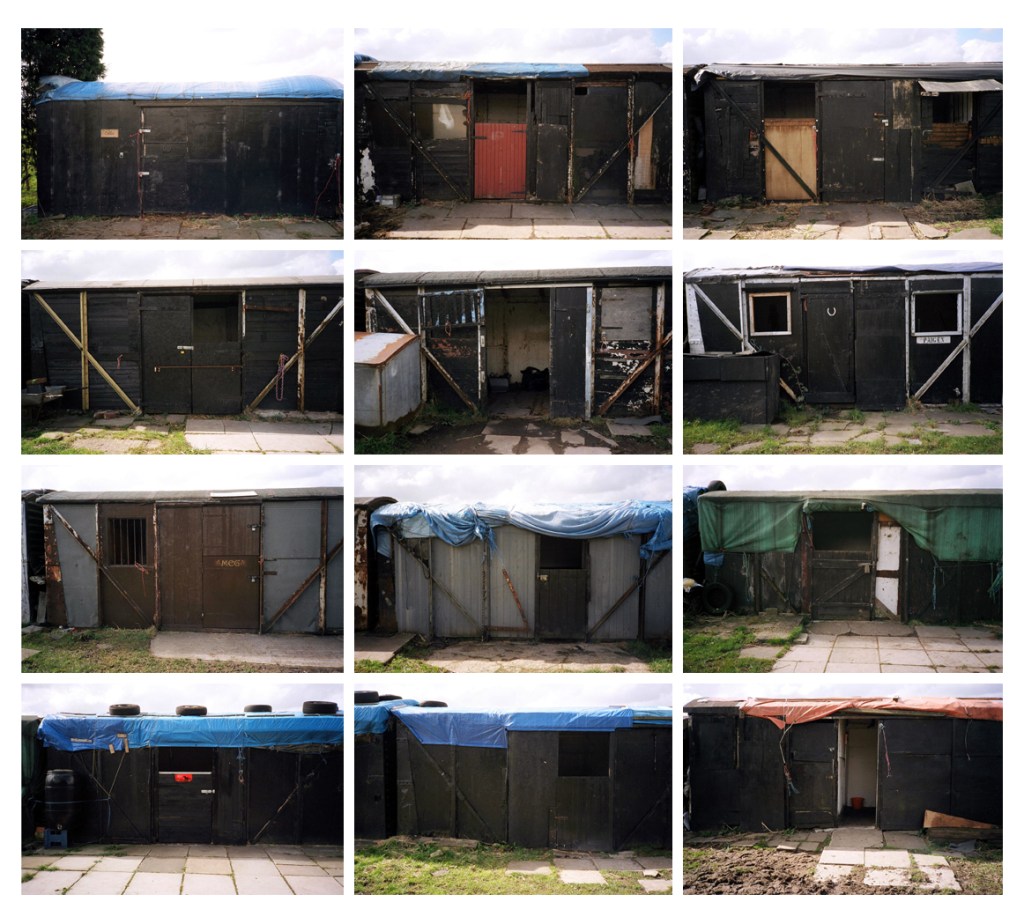
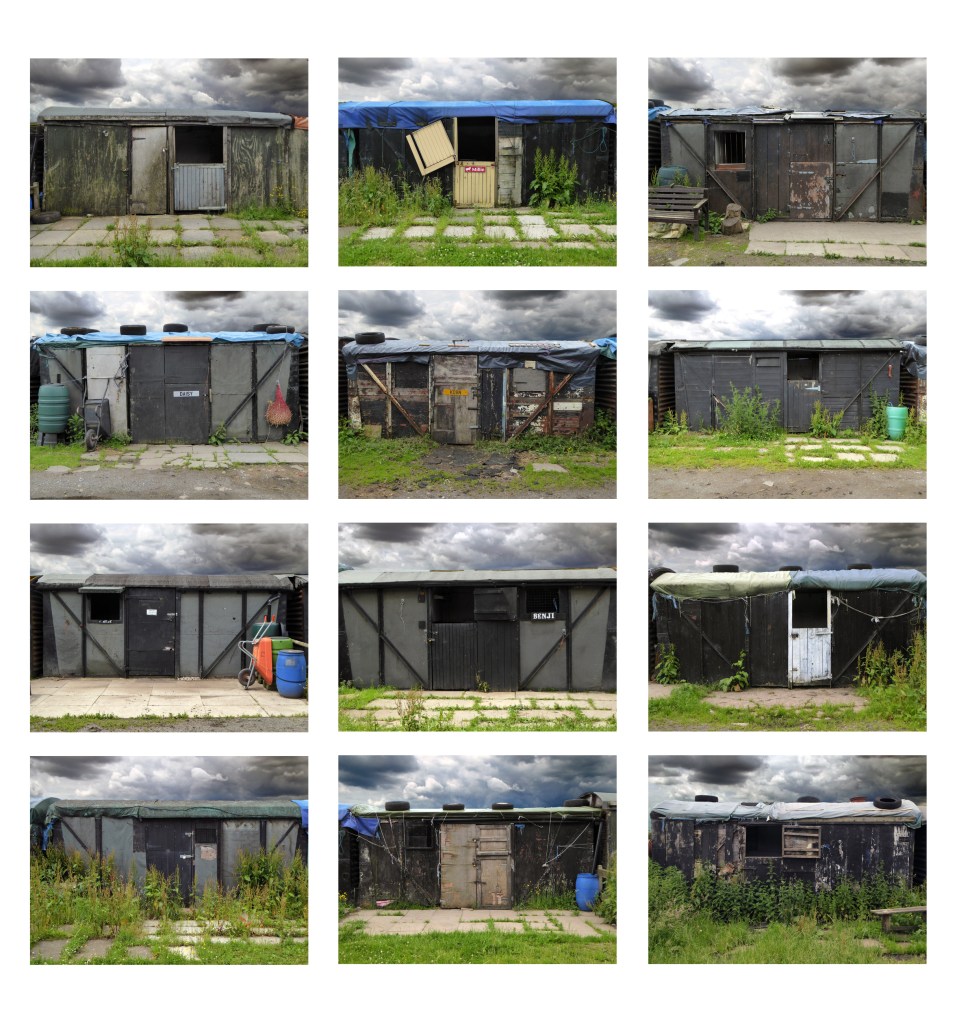
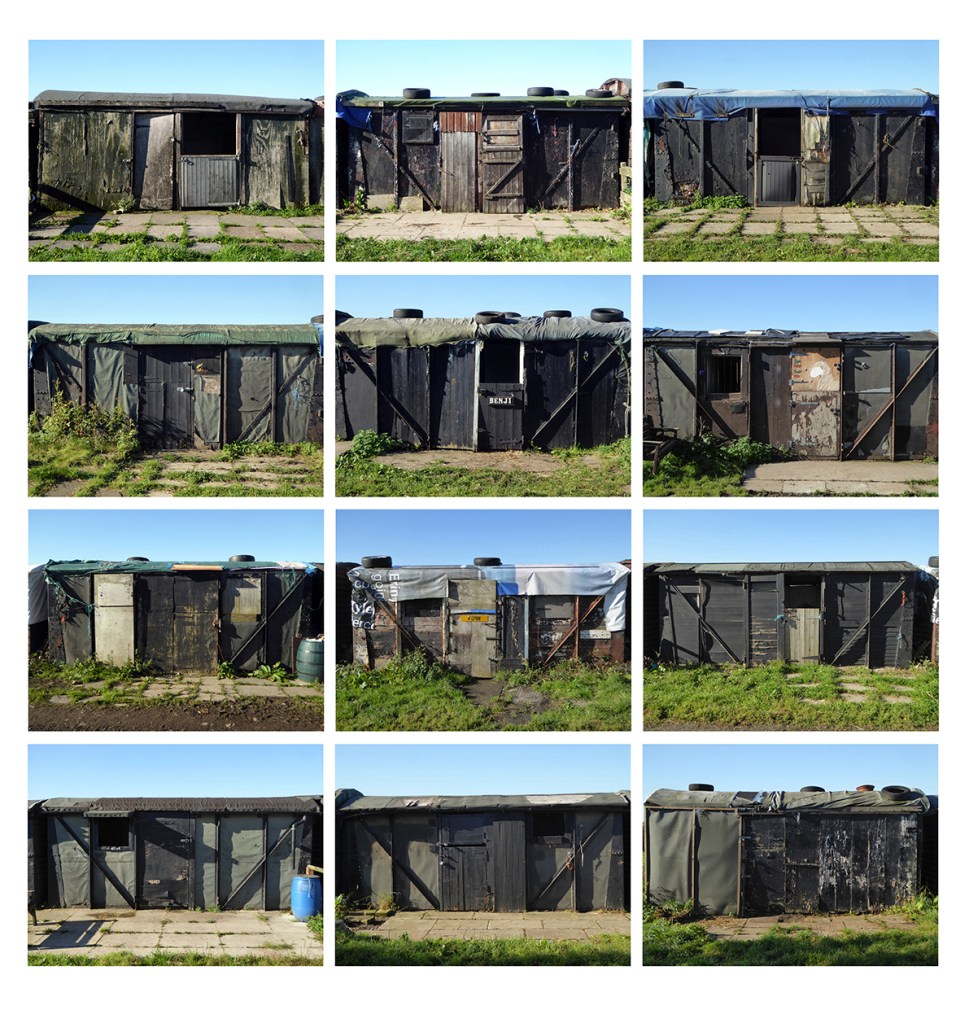
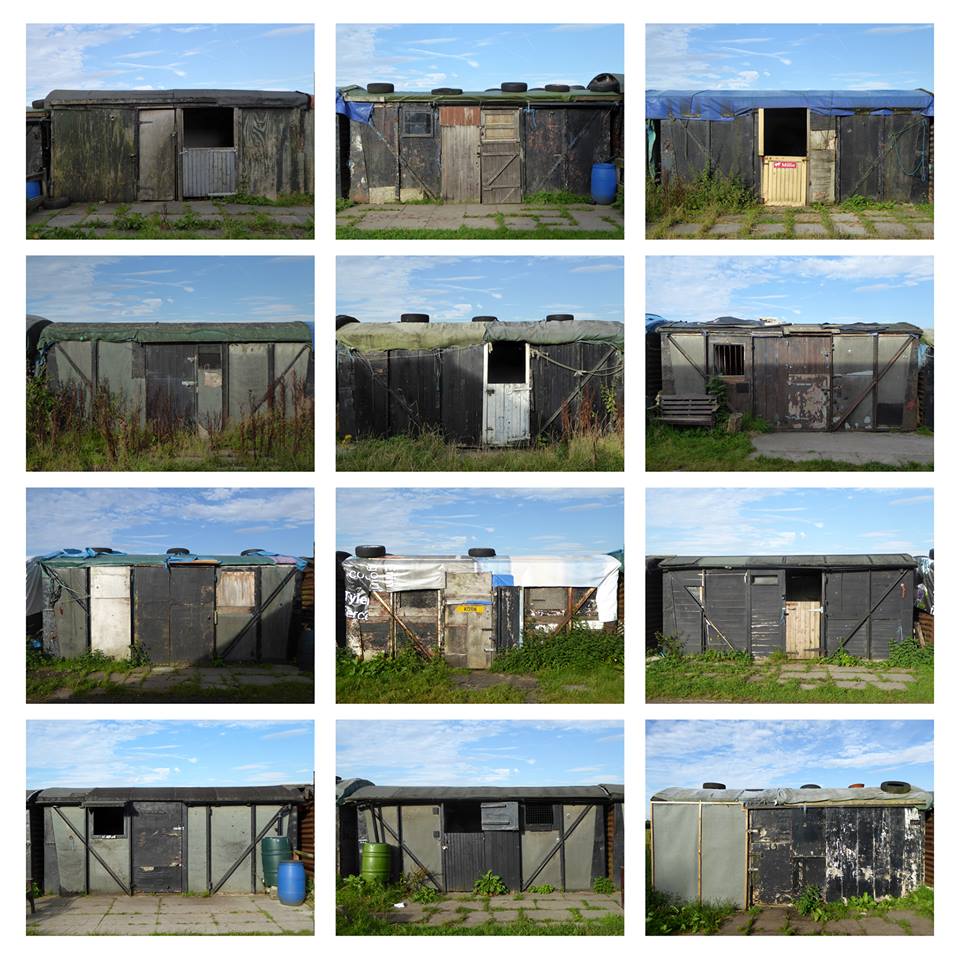
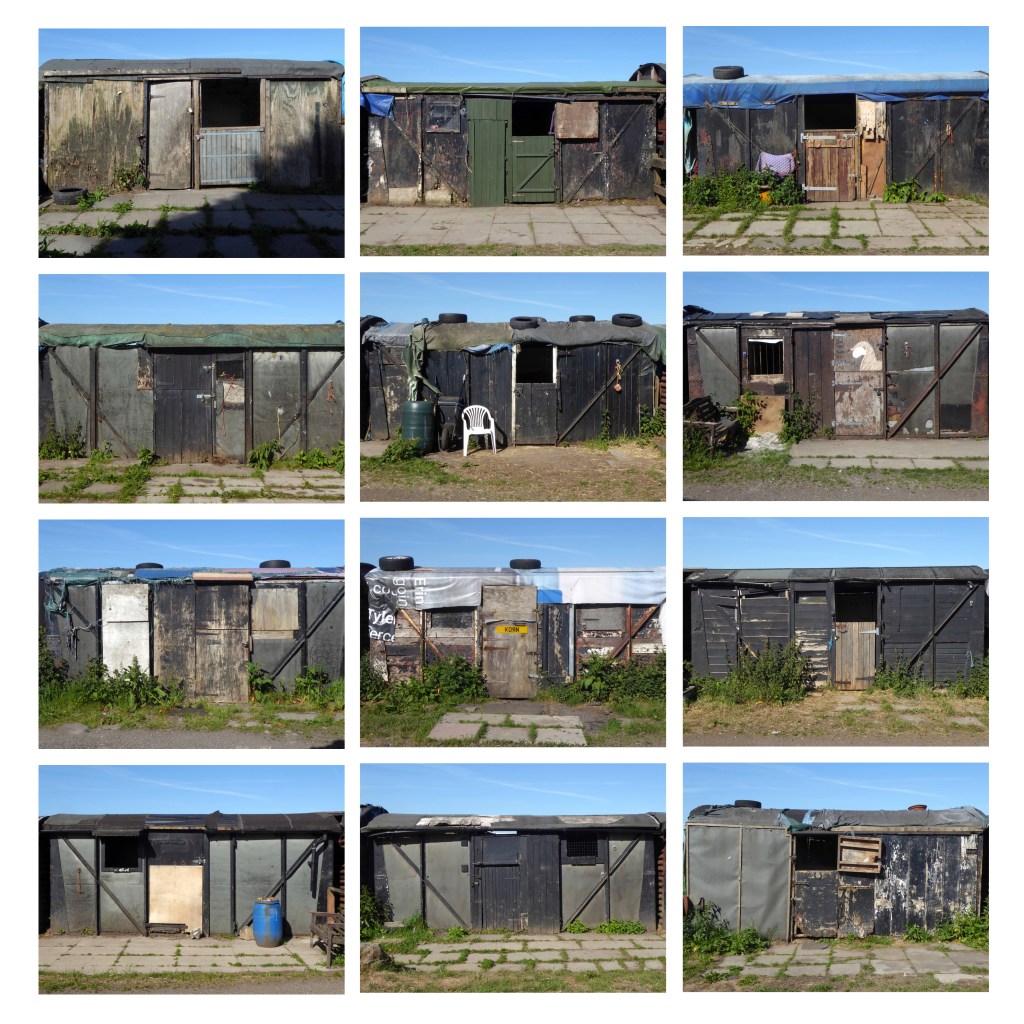
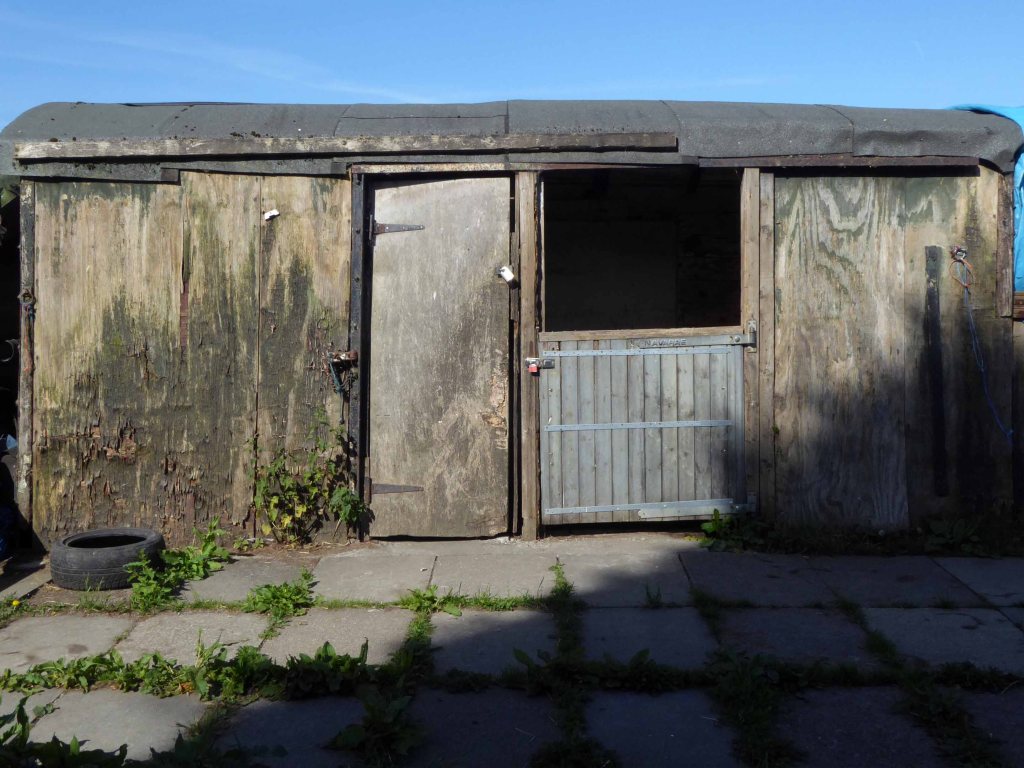
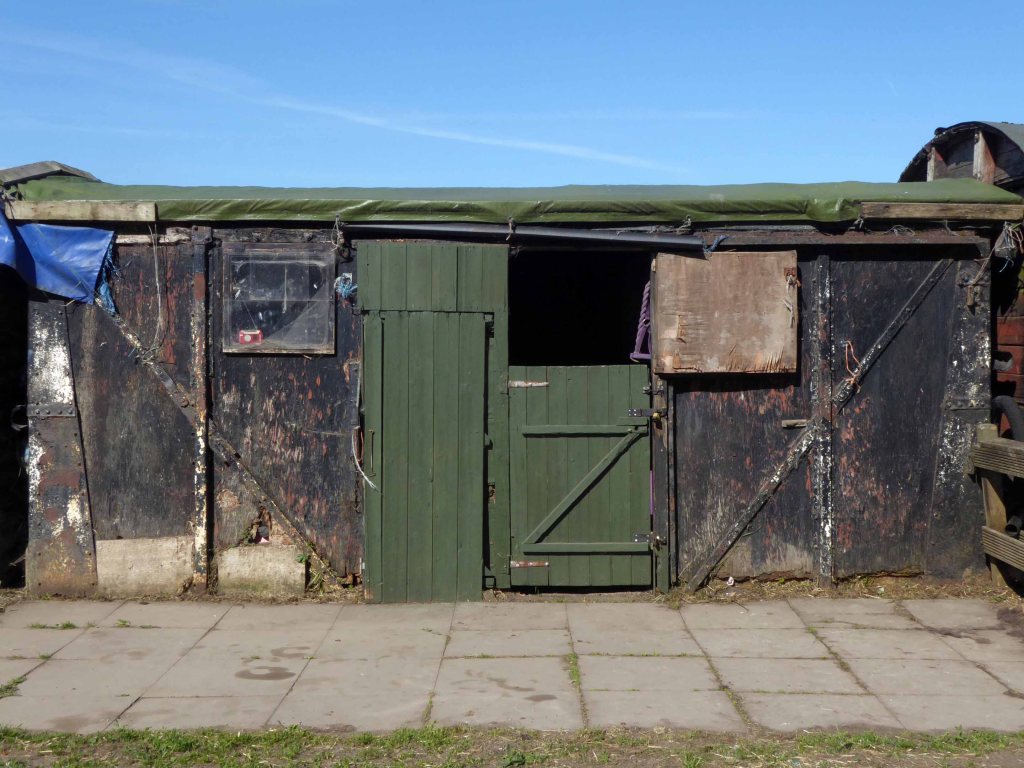
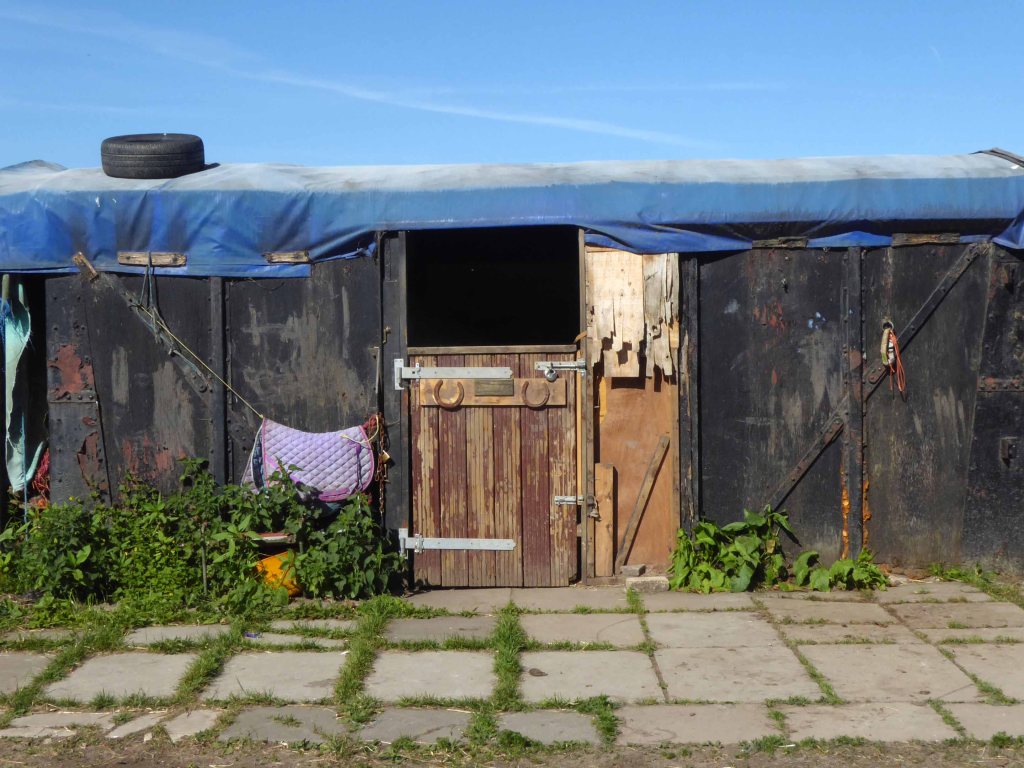
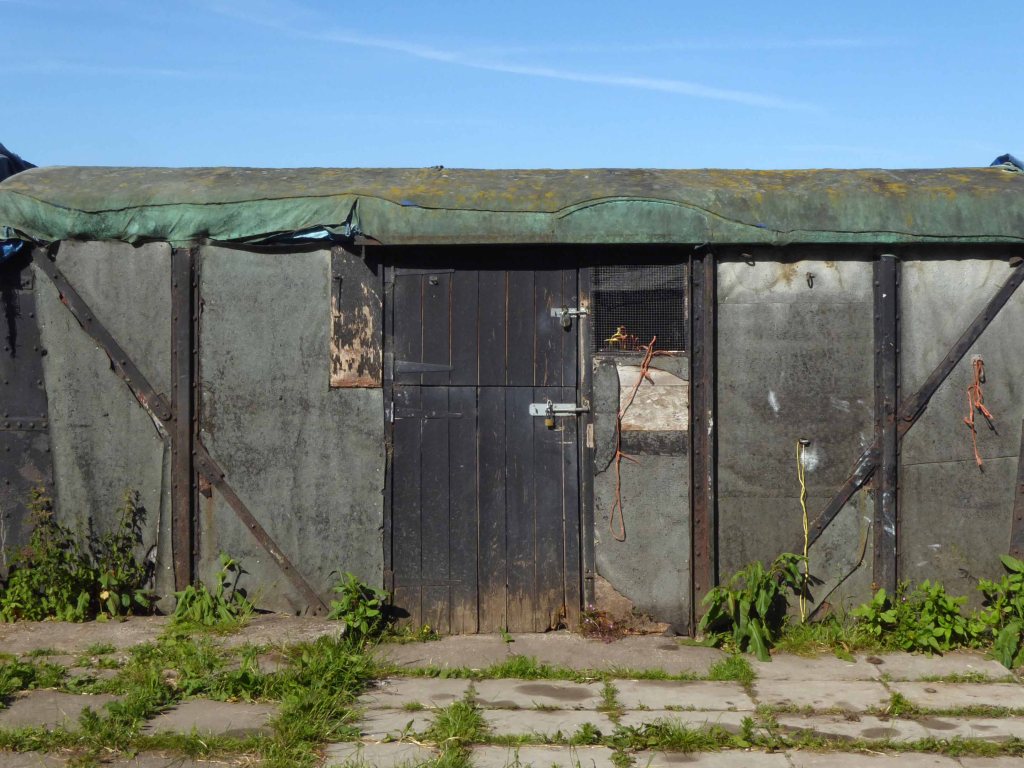
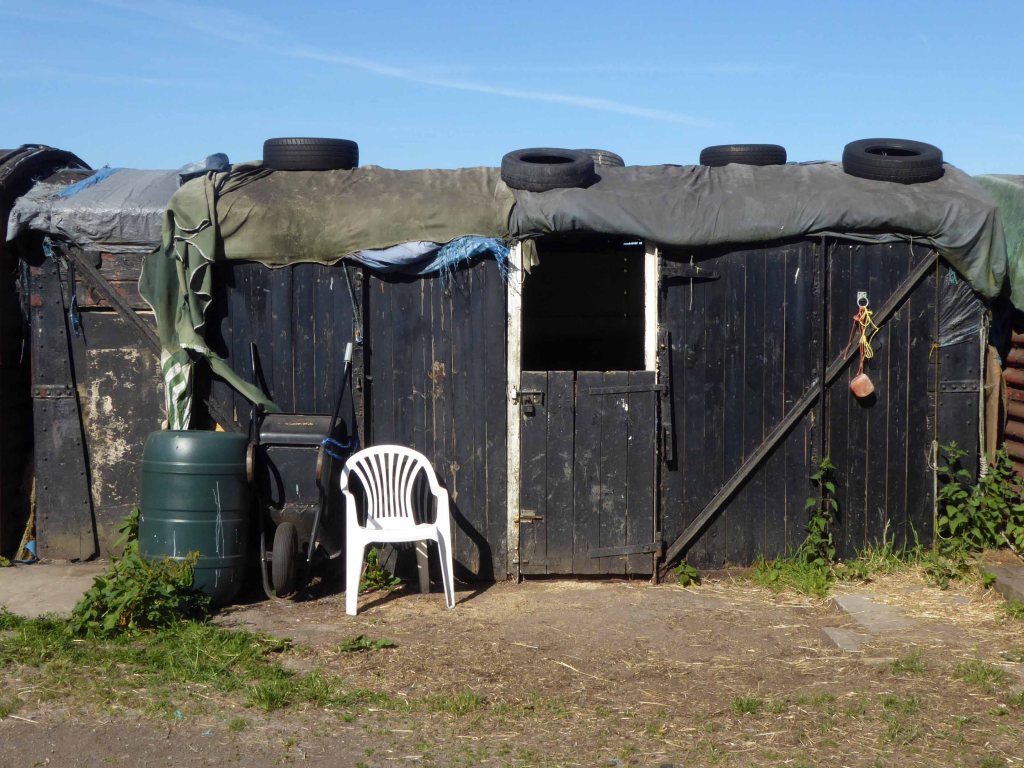
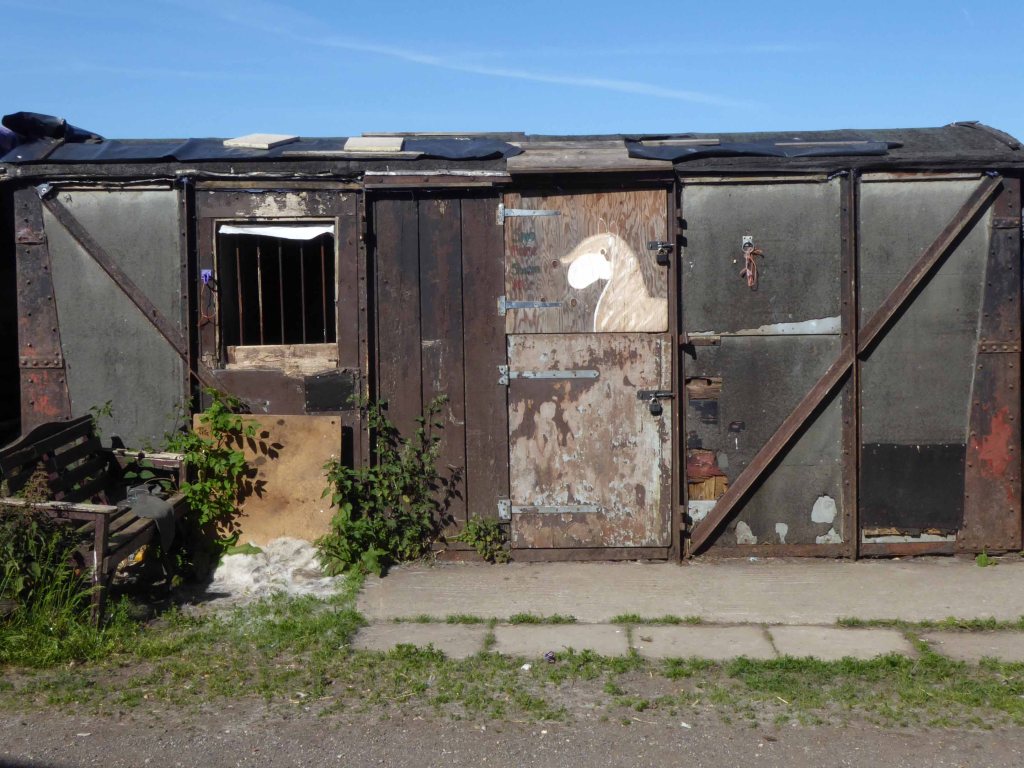
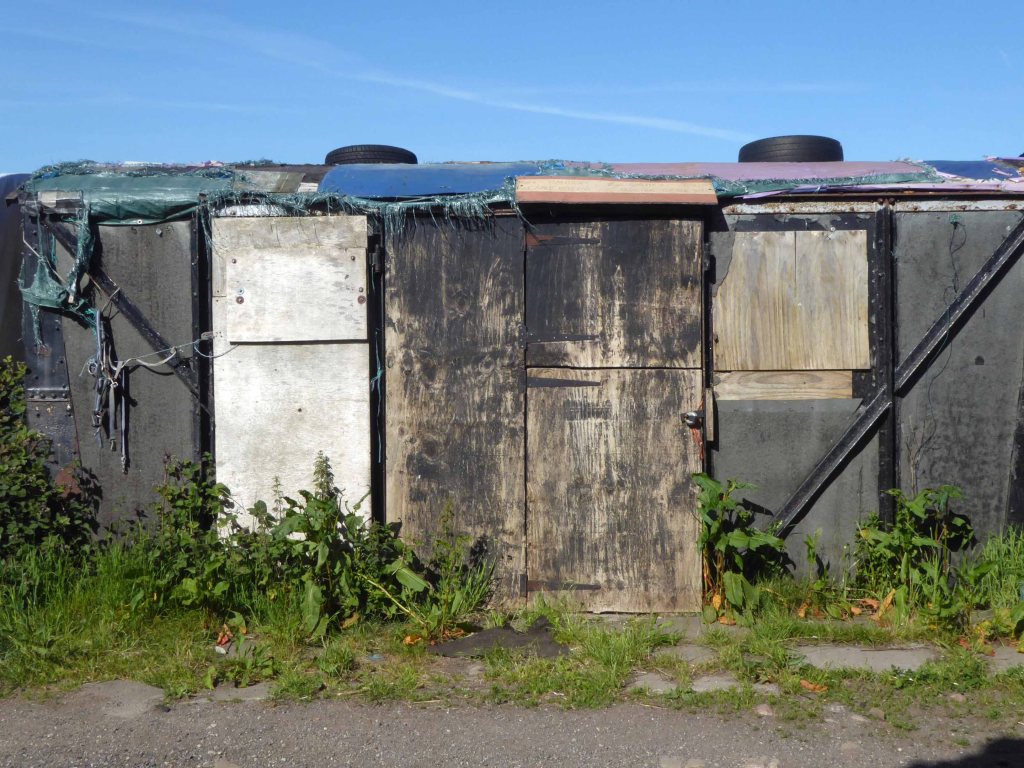
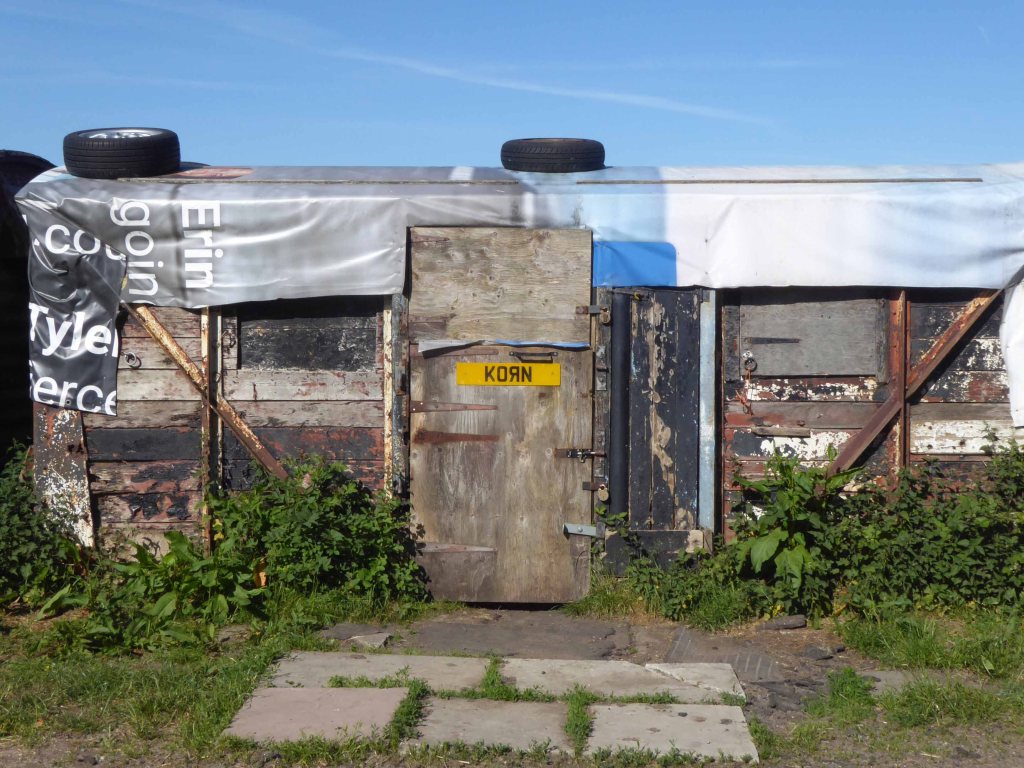
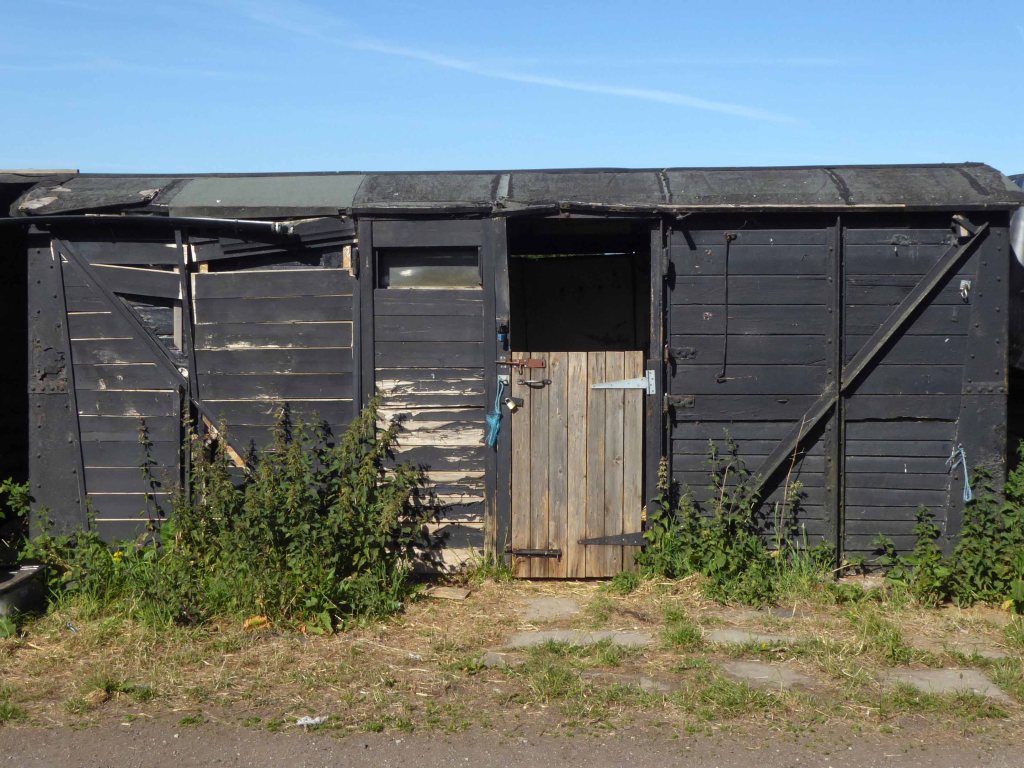
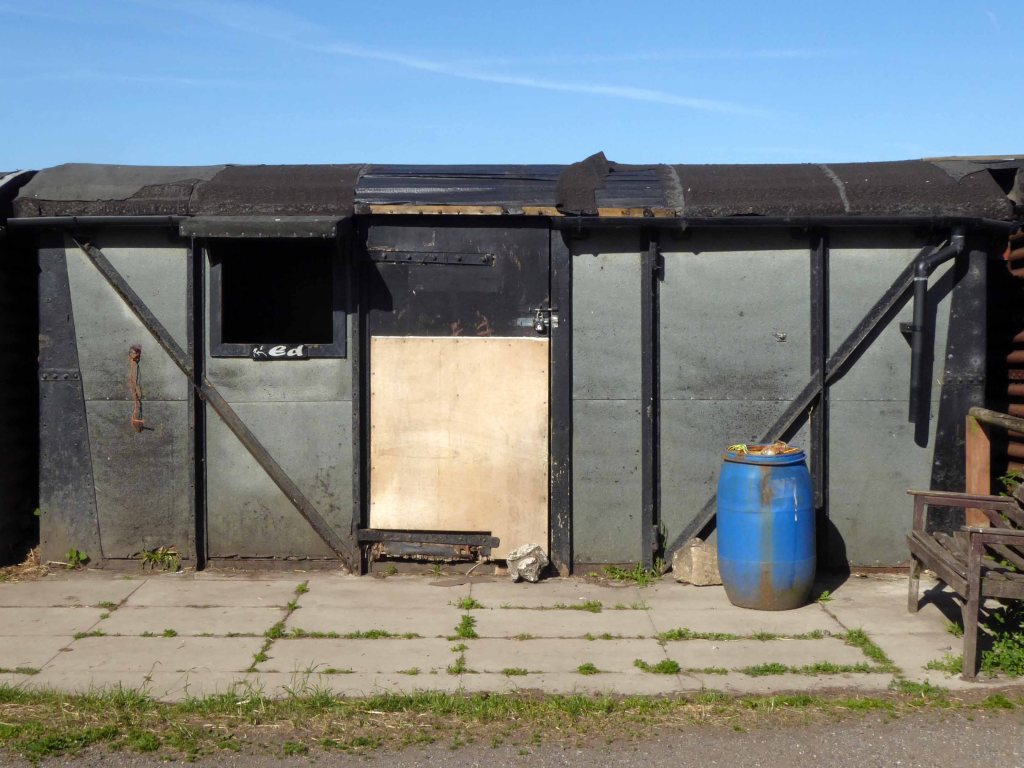
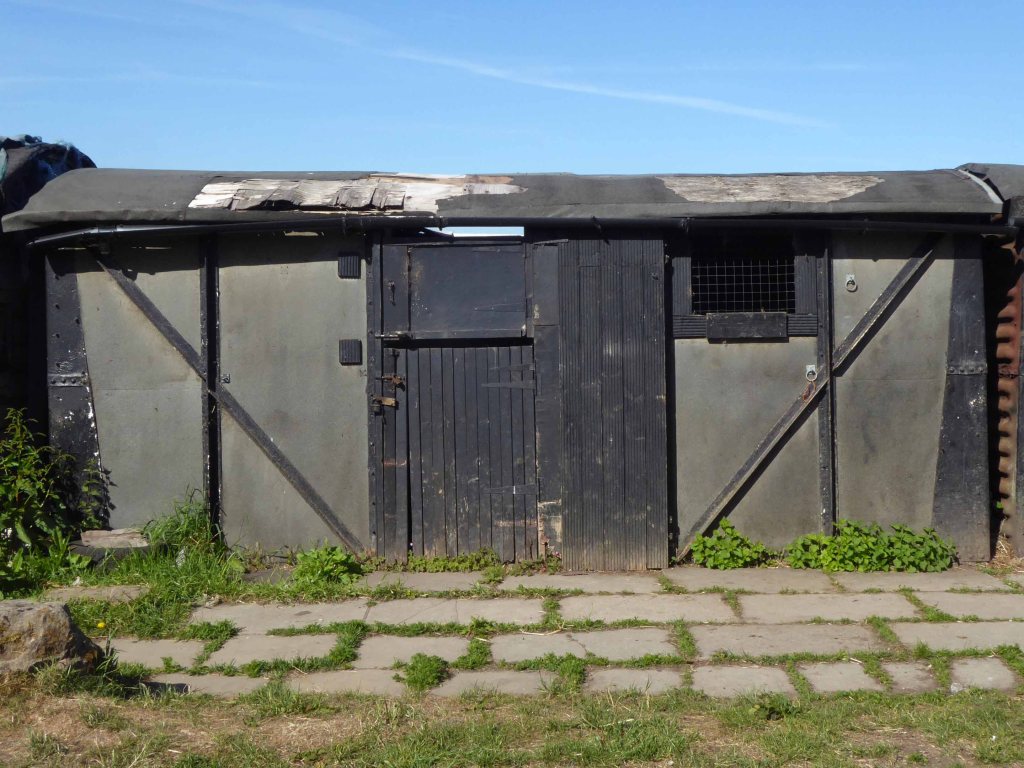
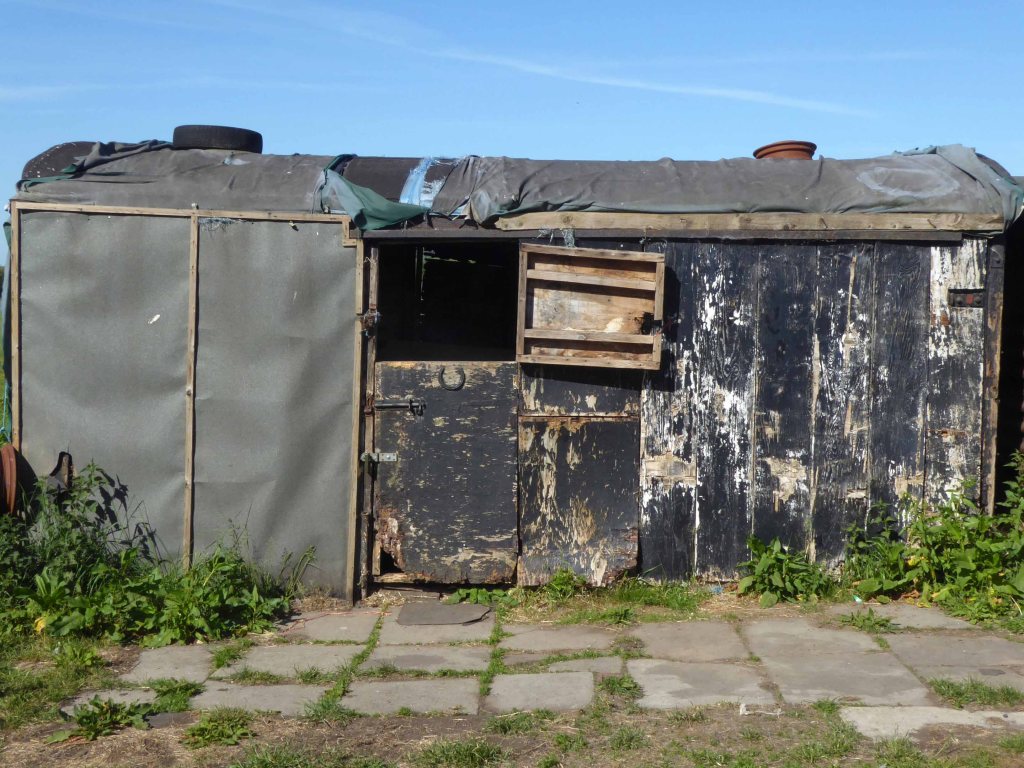
Alongside the farm are twelve stable blocks, formed from former British Rail Vanfit rolling stock.
Derby Works
I have cycled by here for some fifty years ago man and boy, sadly observing a slow decline, as the structures are kept in service with the addition of sheeting, rope, tyres and will power.
In recent years I have stopped to take photographs:
20082016201720182020
They have survived wind, rain and hail, just about intact, providing adequate shelter for their equine inhabitants.
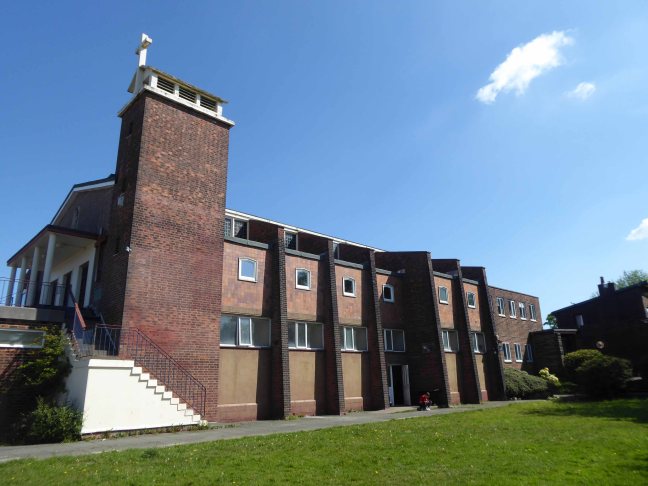
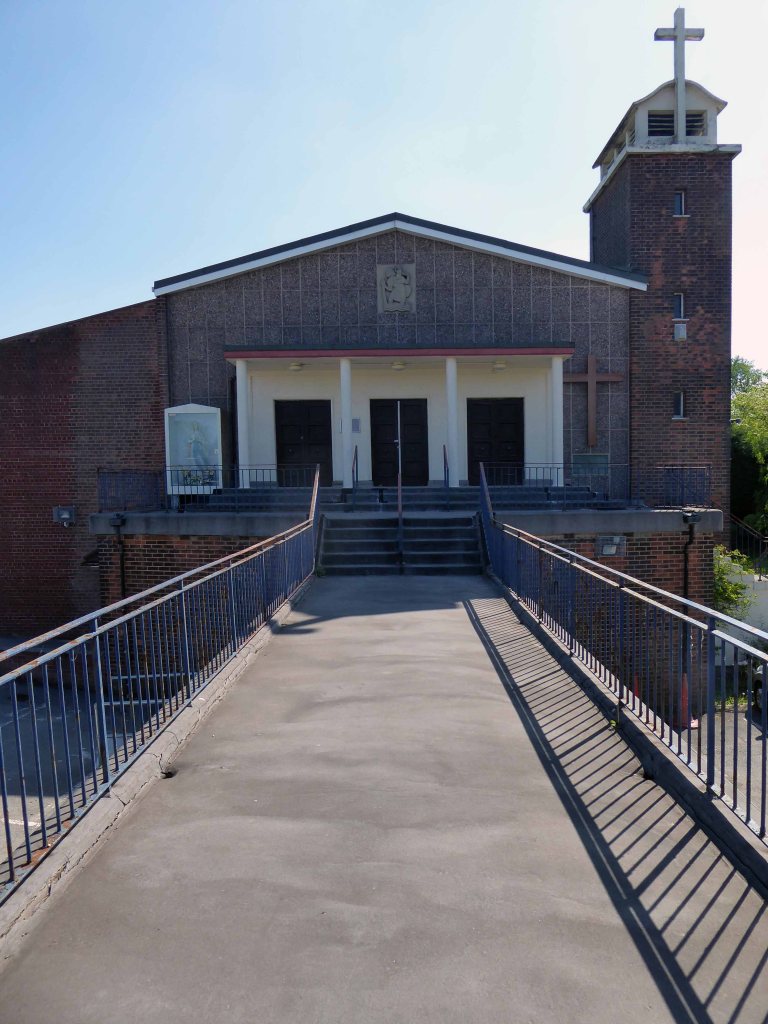
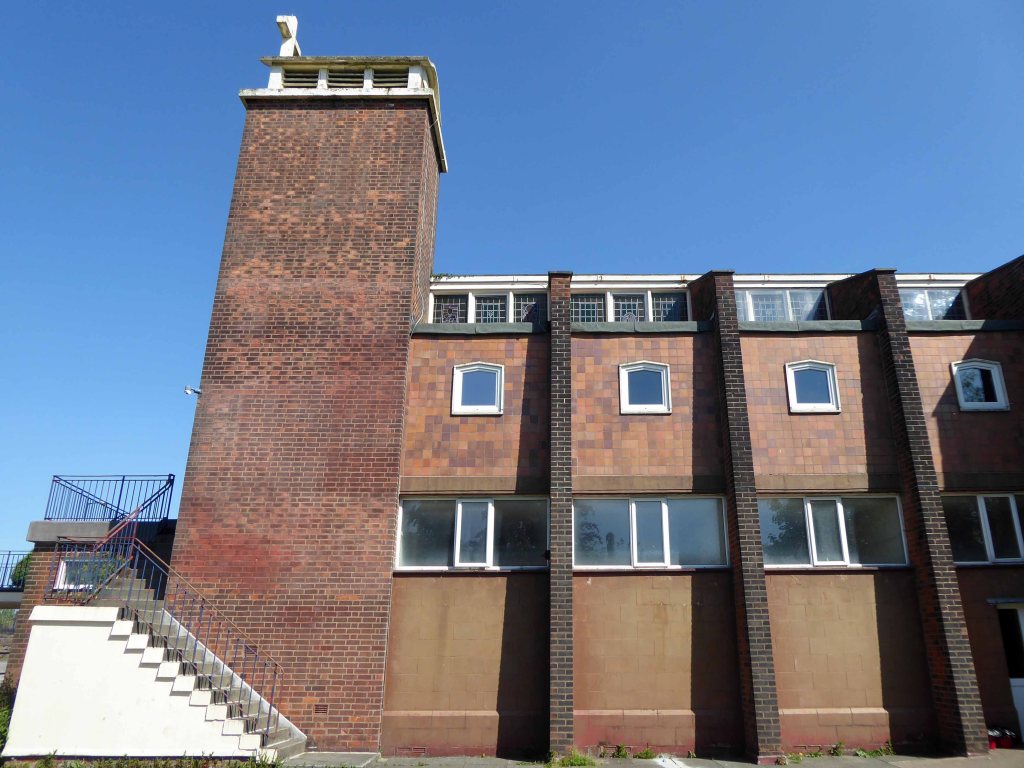
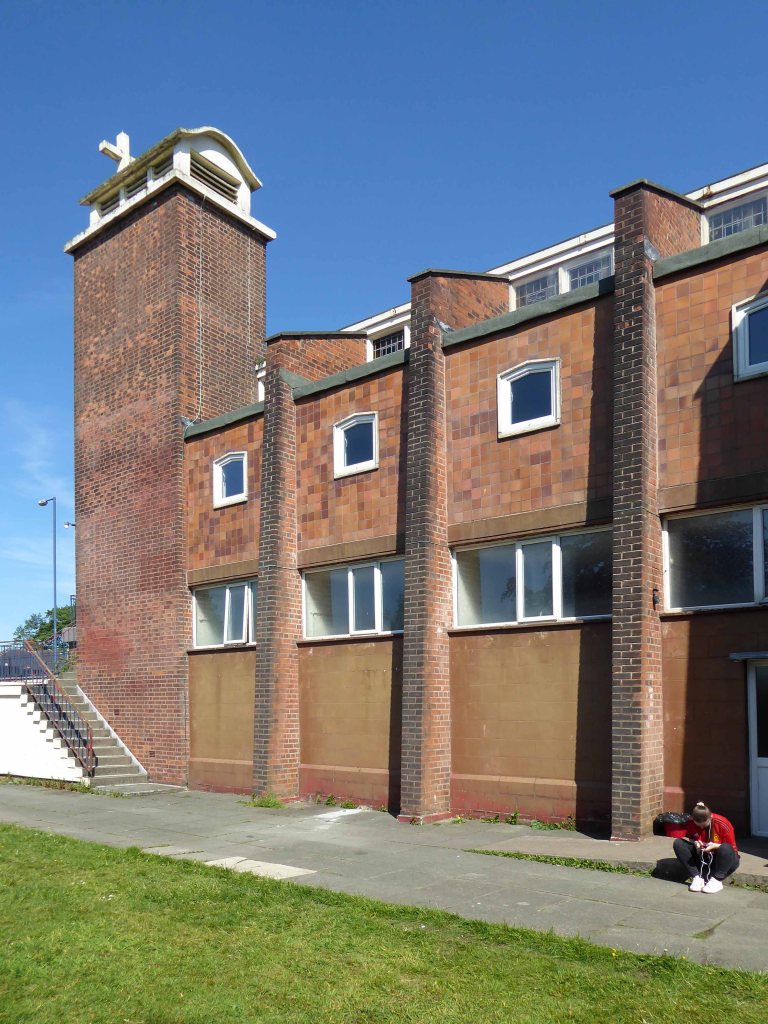
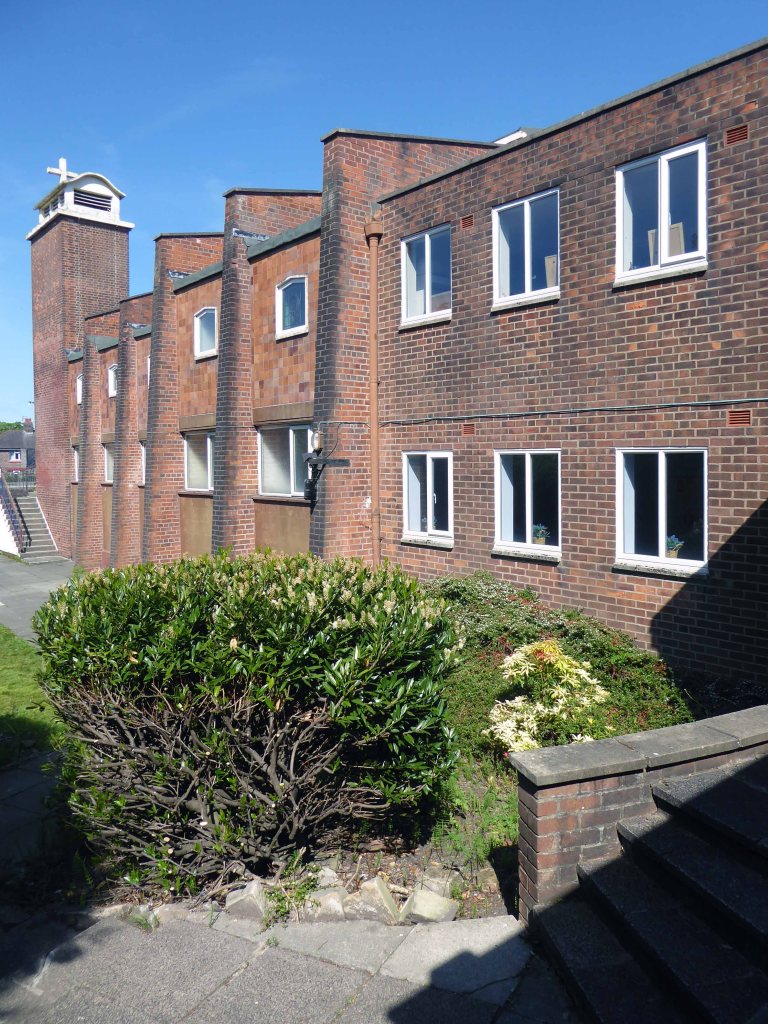
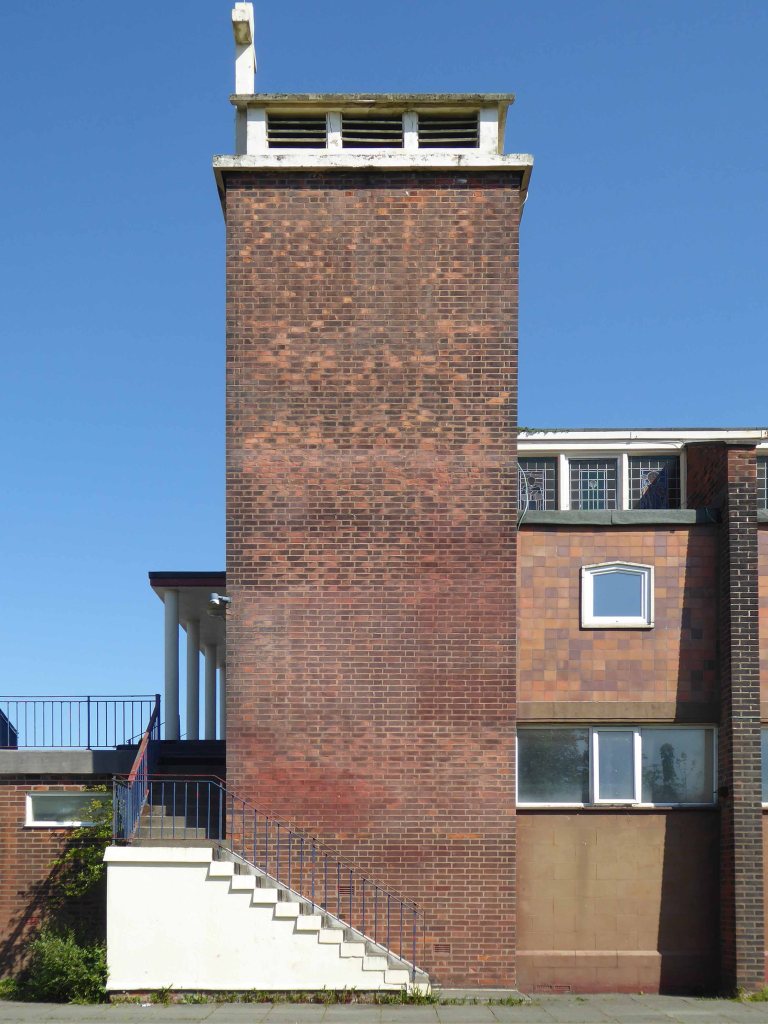
A post-war design consisting of an upper church over a lower hall, the prominent campanile making it something of a local landmark. The portal frame construction, materials and design are standard for the time. The interior has been reordered but retains some original furnishings.
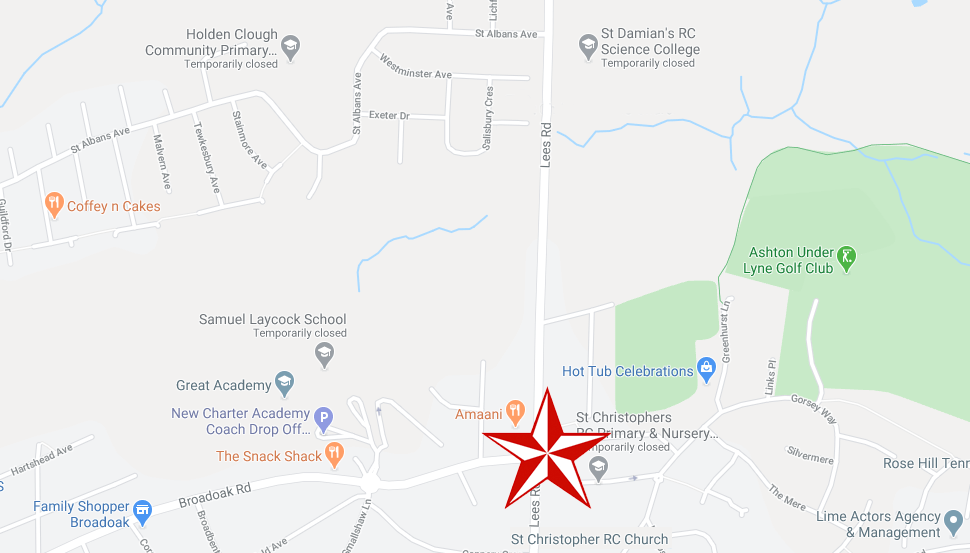
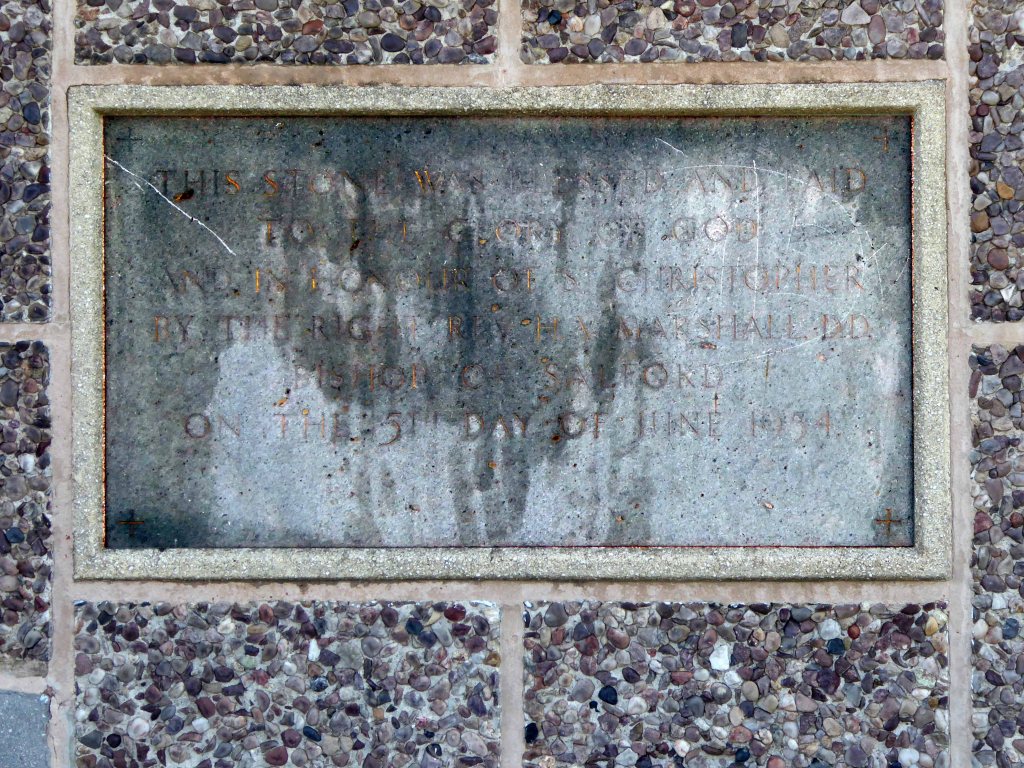
A new post-war parish was created to serve the growing residential area in Hurst Cross, previously served from St Anne’s, Ashton. Fr Kelly built the new church, whose foundation stone was blessed by Bishop Marshall on 5 June 1954. The first Mass was held on Easter Monday, 1955.
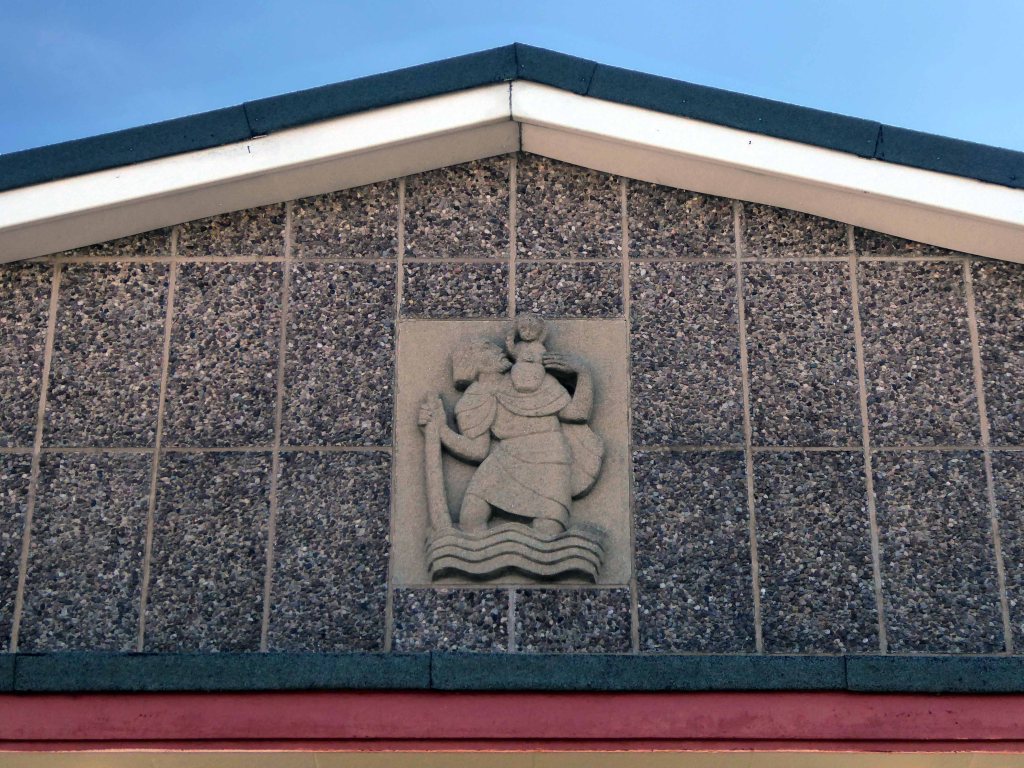
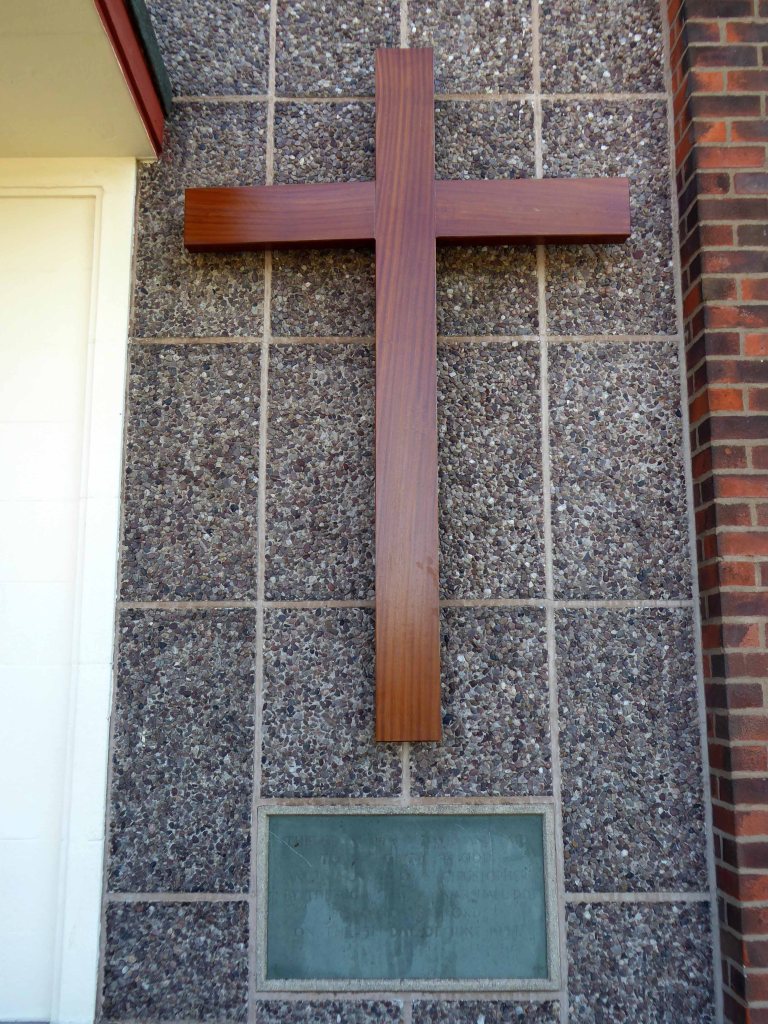
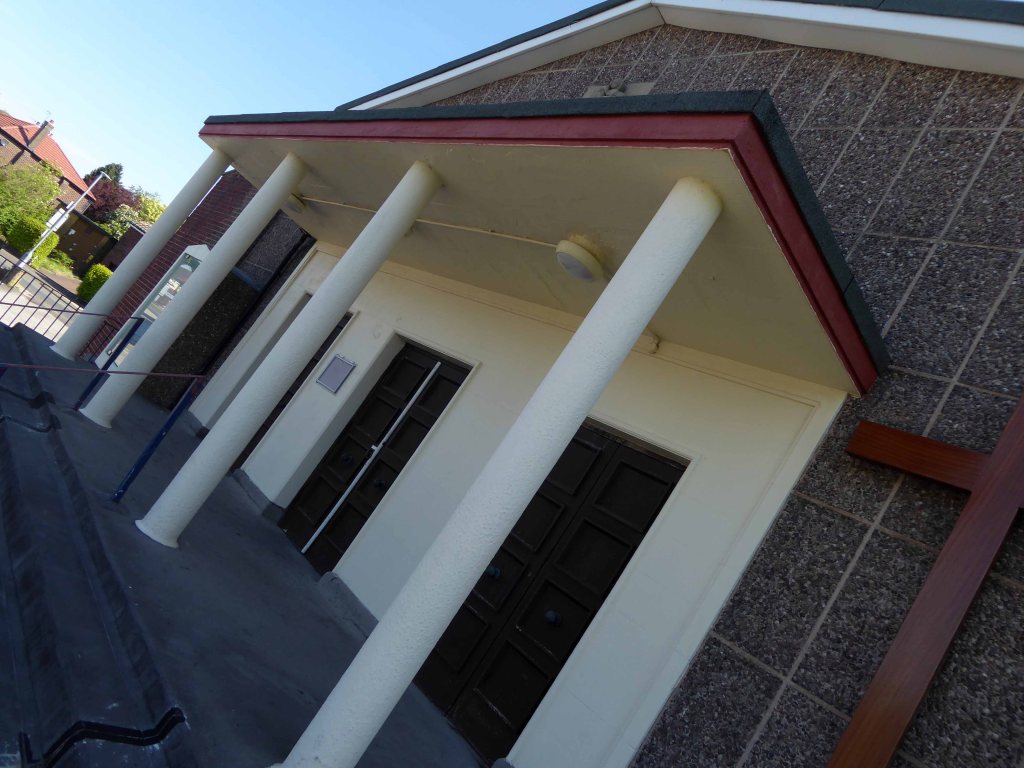
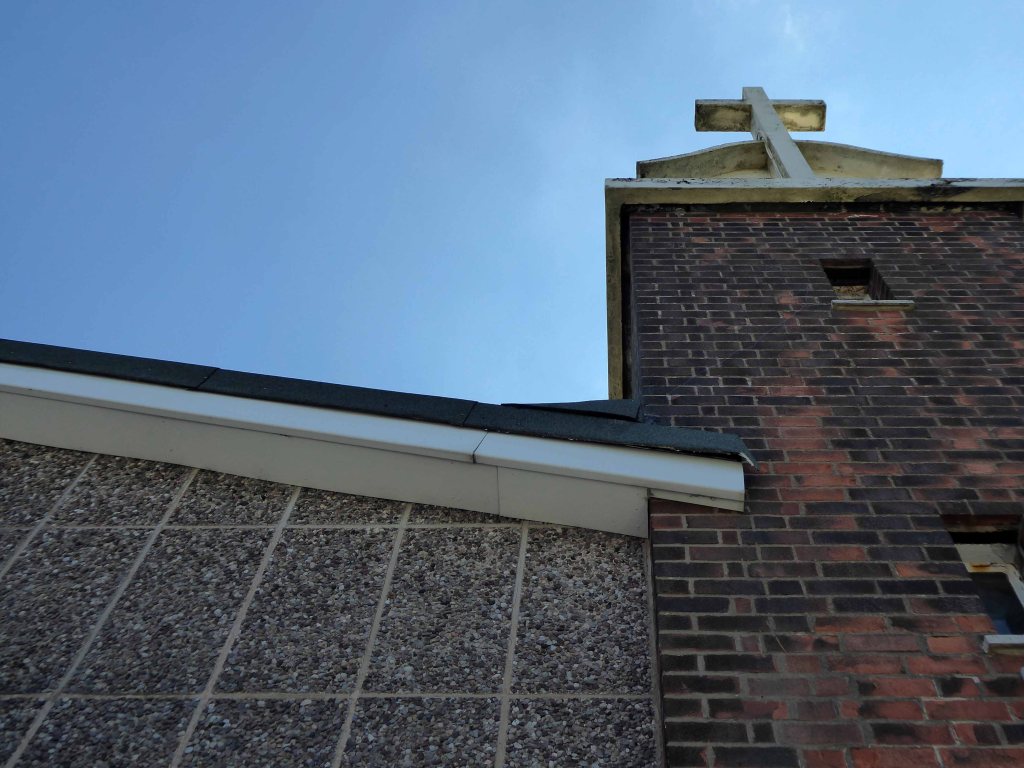
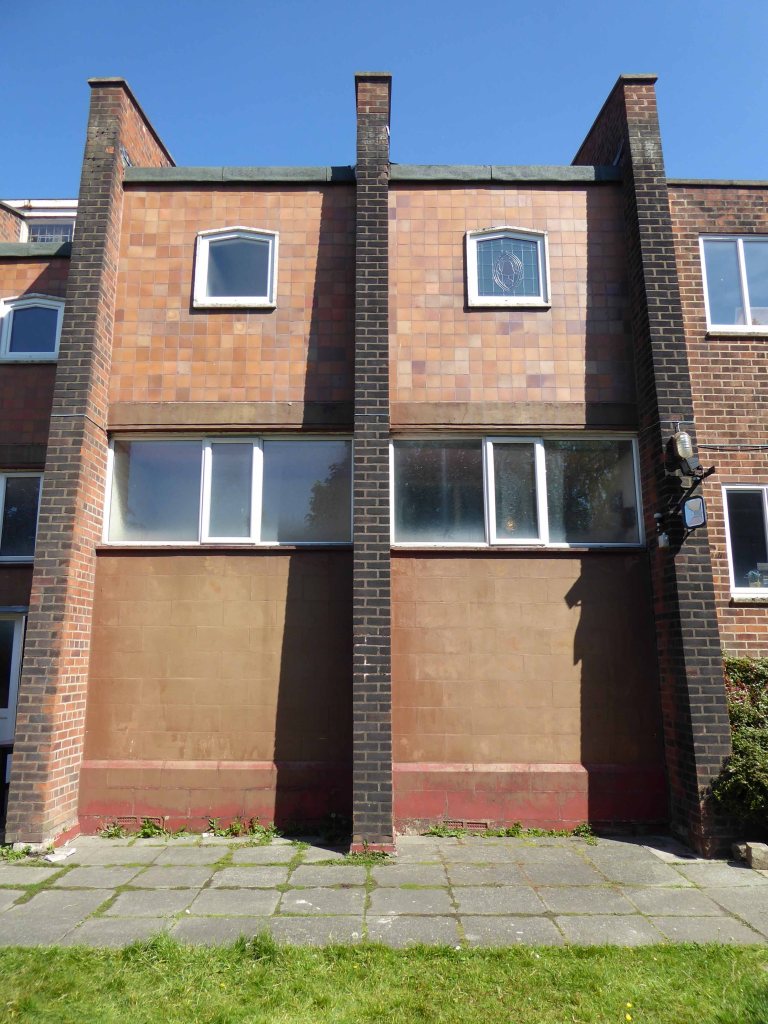
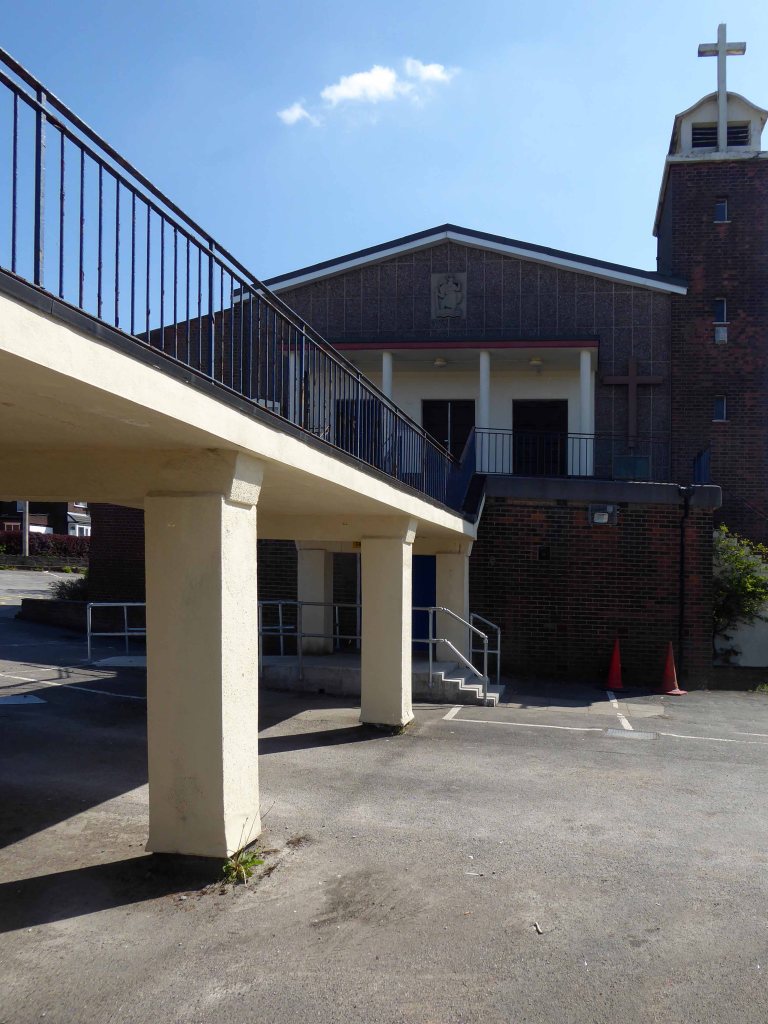
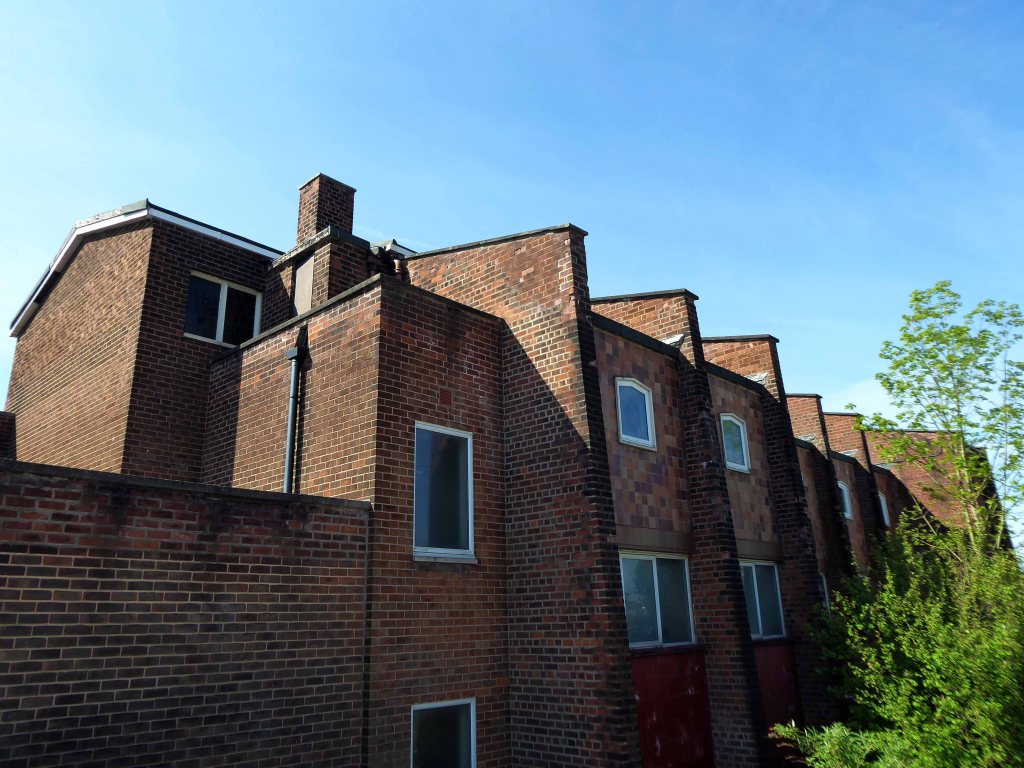
The church is conventionally orientated with the sanctuary to the east. Less conventionally, it is a two-storey building, with a ground floor parish hall and a first floor church. The church is reached from Lees Road by a reinforced concrete bridge and steps. A brick campanile marks the southwest corner. The structure of the portal-framed building is expressed externally by raking brick buttresses to side elevations. The west gable end is faced in aggregate panels with a concrete relief depicting St Christopher over a plain three-bay flat-roofed portico. The aisles are faced in ceramic tiled panels to the upper level with render to the parish hall level. The nave is lit by three-light clerestory windows with smaller windows to the aisles. The shallow-pitched roof is laid with mineral felt. A two-storey blockcontaining a large sacristy connects to the contemporary presbytery.
Inside, the six-bay upper church has a plain west gallery above a narthex with glazed screen. The aisles have arcades of square brick piers and plain plastered walls. The clerestory windows are leaded with coloured glass margins. The ceiling is lined with acoustic panels and the concrete floor is laid with carpet or linoleum tiles. The reordered sanctuary retains the original polished concrete altar in a forward position; the 1950s altar rails and pulpit have been removed. The east wall is now hung with wallpaper, but was originally fair-faced brick; the Crucifix and painted timber high altar canopy are part of the original arrangement. The side chapels also retain original 1950s polished concrete altars. The octagonal font with oak cover dates from the late nineteenth or early twentieth century, of unknown provenance. The hardwood pews were designed for the church.
I have known this church for some fifty years – living just up the road.
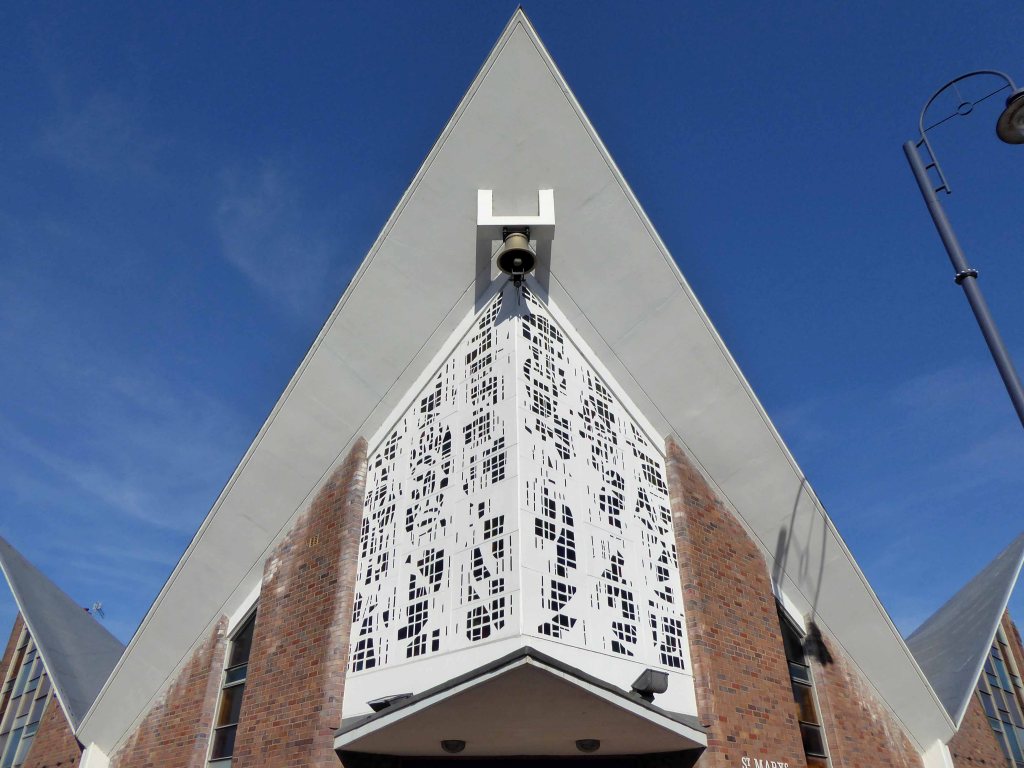
It was probably along with St Mary’s Denton my first experiences of Modern Architecture.
I went to the youth club in the social area beneath the church.
St Mary
It is typical of the Italianate styling of the time, a functional mix of glass brick and concrete, far from ostentatious – and sitting comfortably in its setting.
On the day of my visit the country is in lockdown, Mass suspended and the body of the church used as a homeless shelter, prior to rehousing – signs of the times.
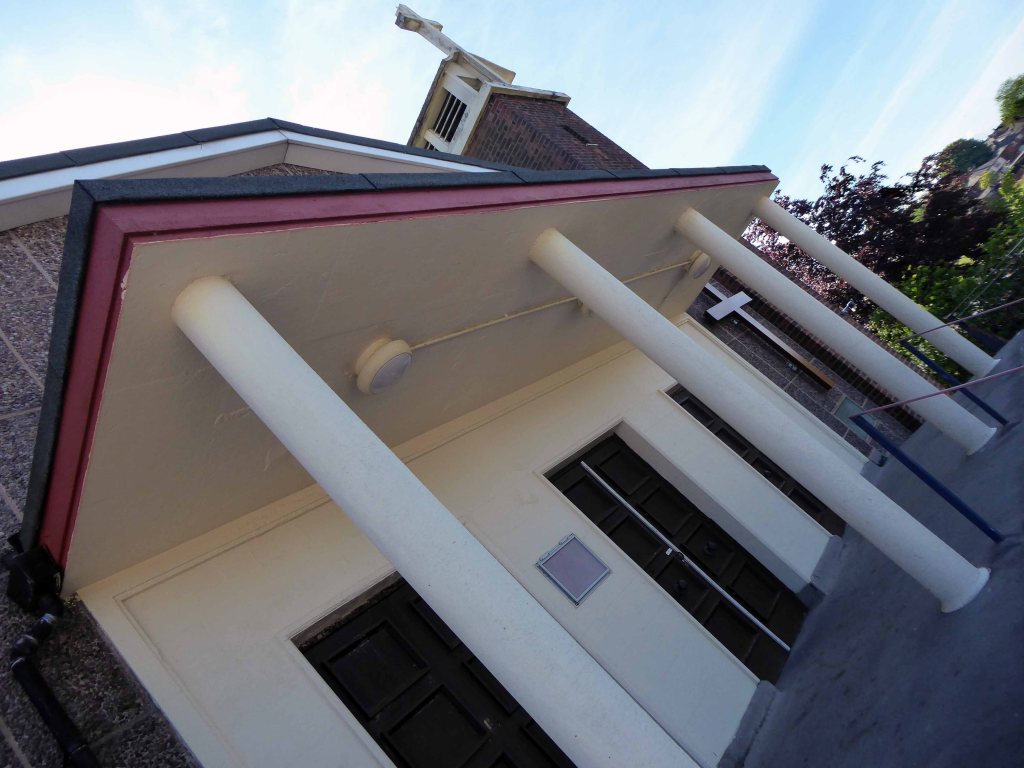
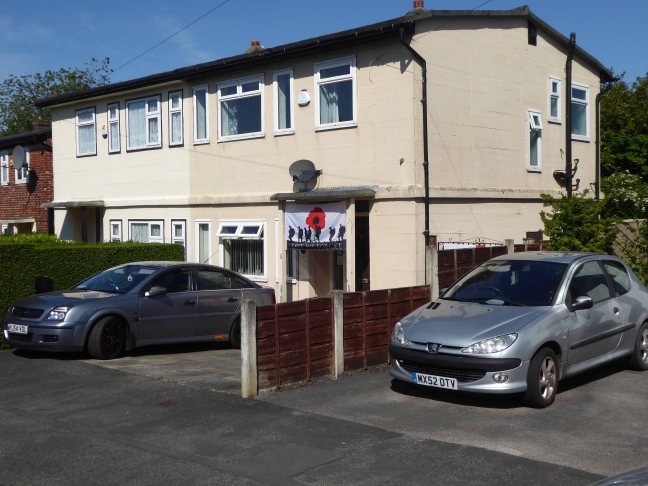
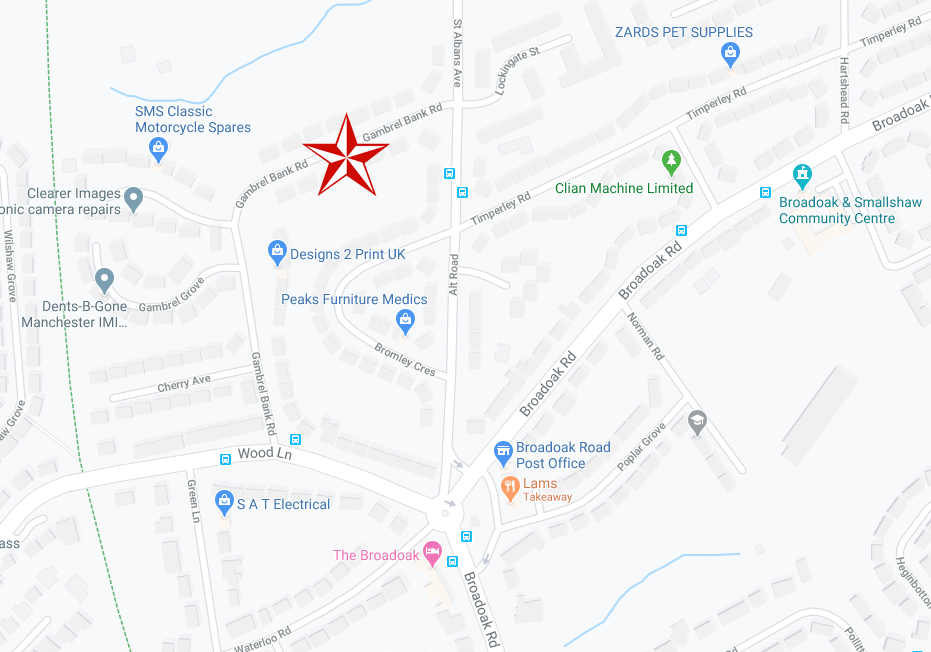
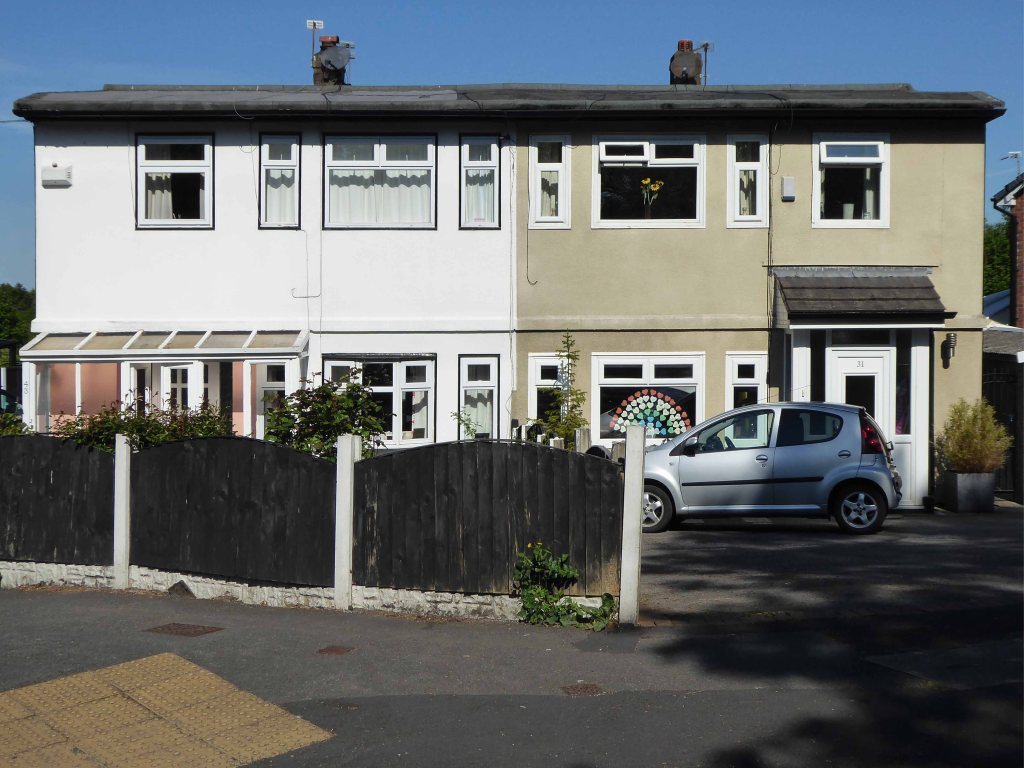
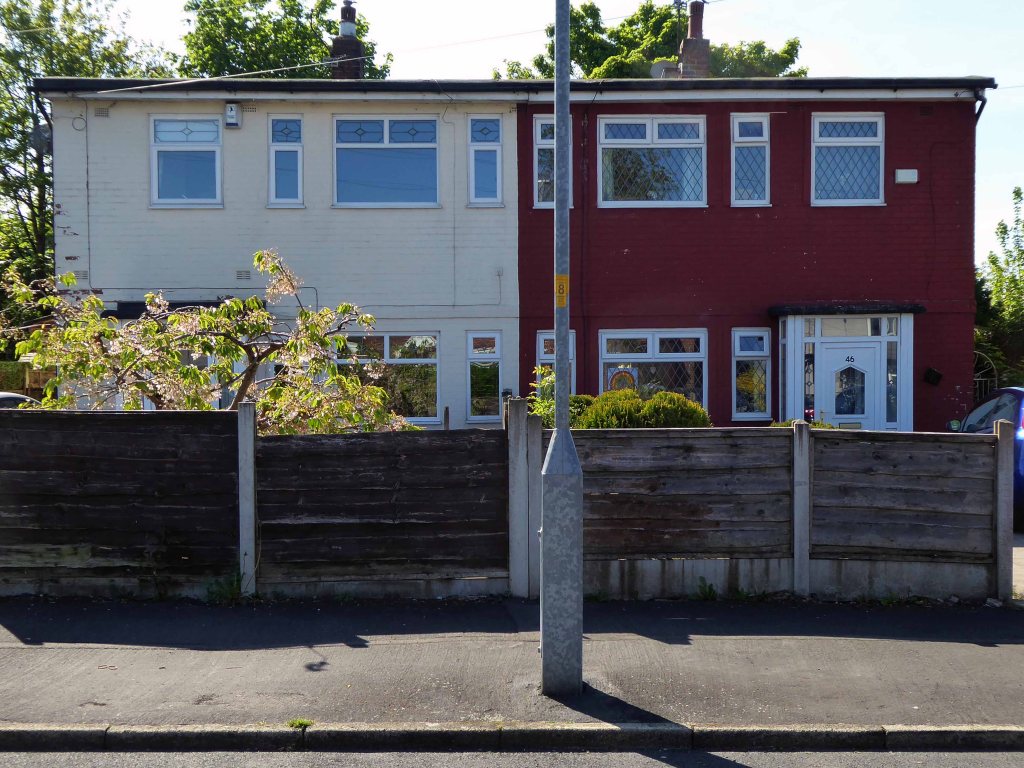
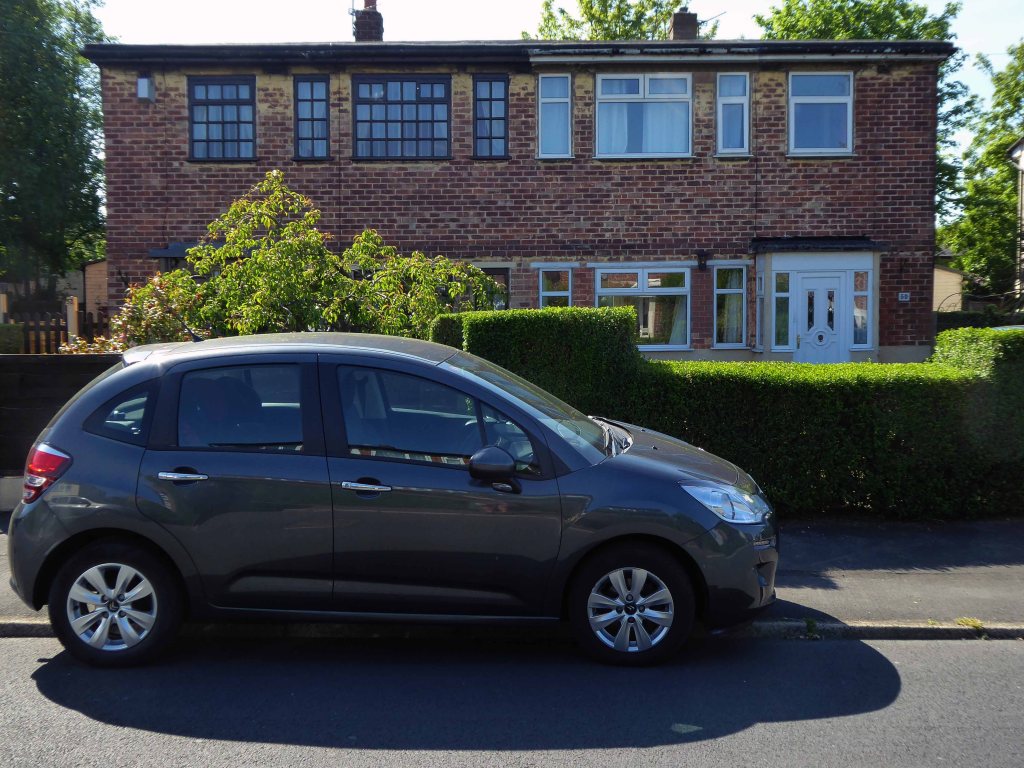
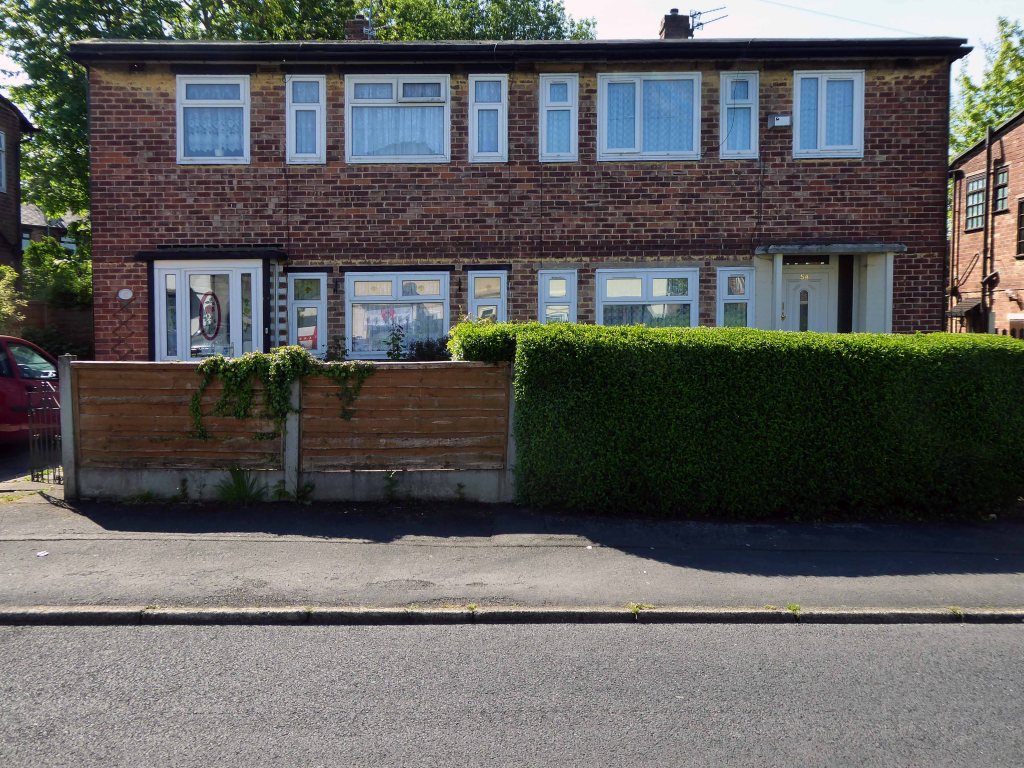
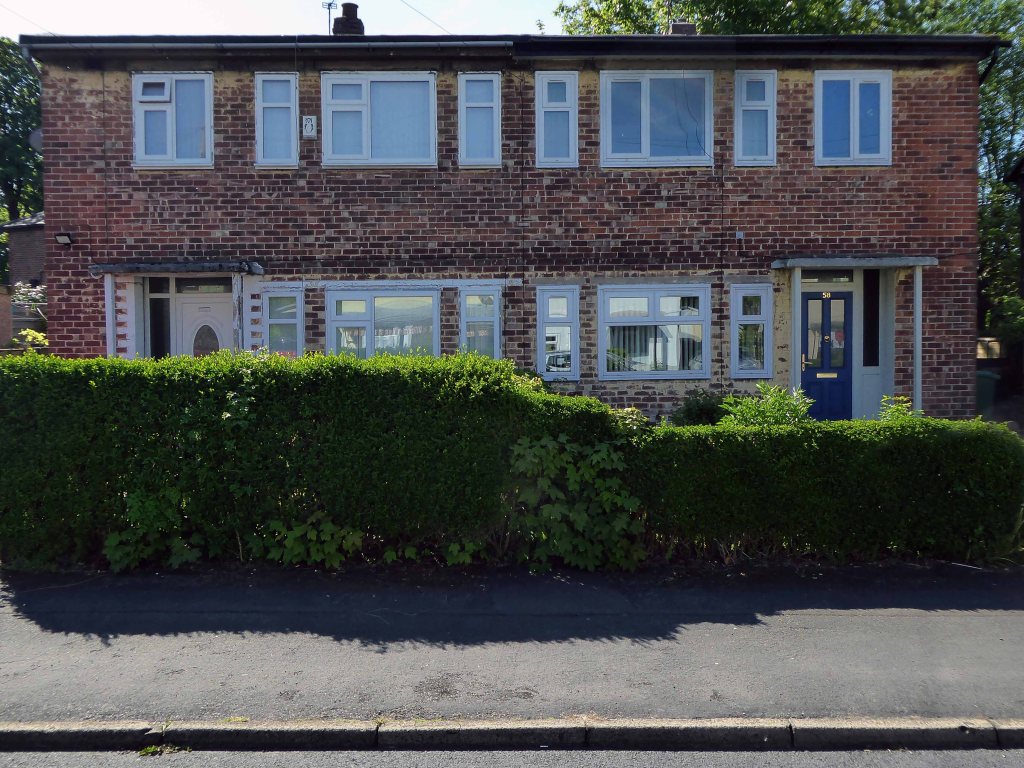
I have been here before in 2015 en passant, snapped the homes chatted to a resident and off, she had informed me that they had been post-war experimental concrete homes.
I thought no more about it – but subsequently I did, returning to the road to take another look.
Here’s one I didn’t make earlier.
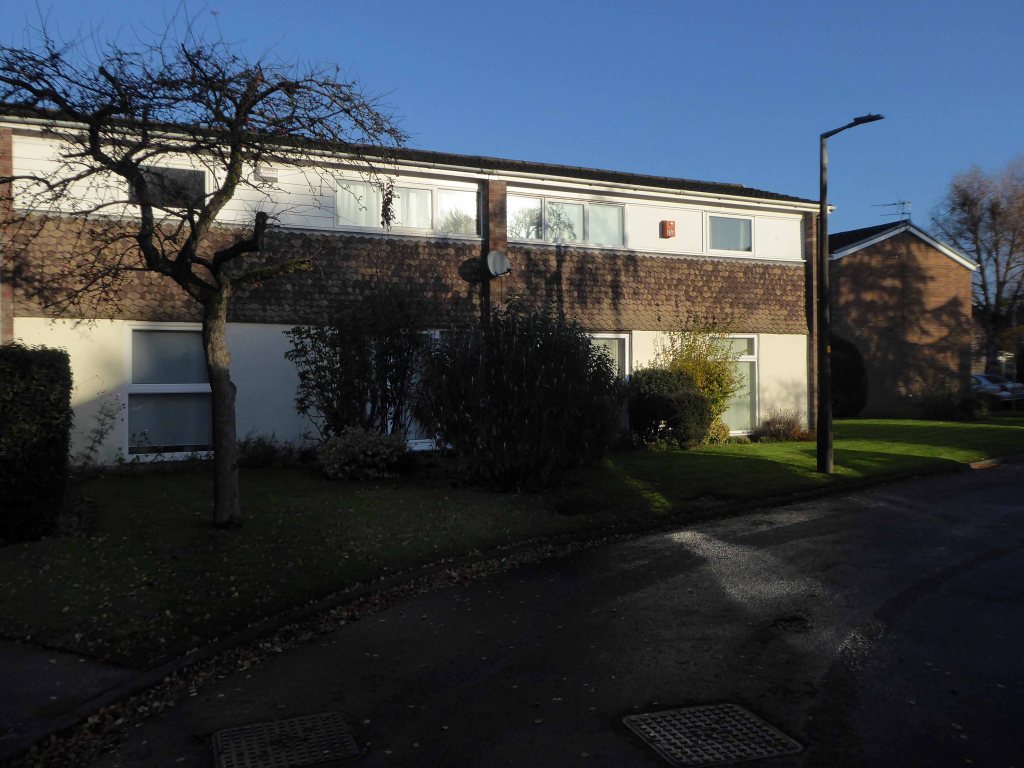
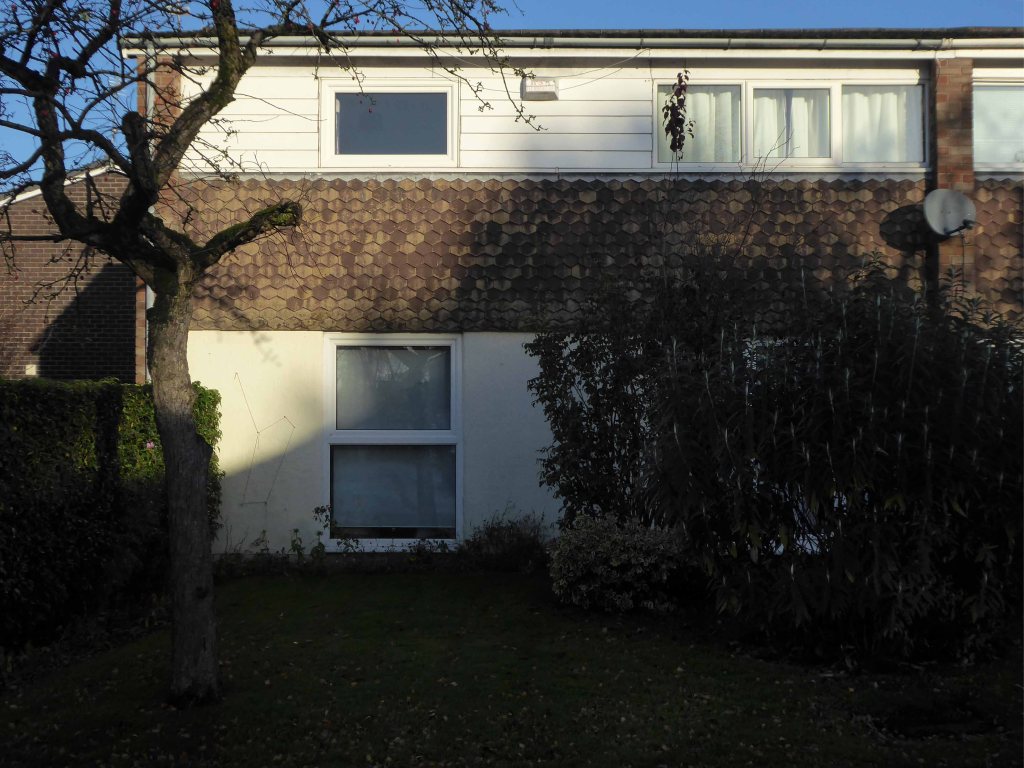
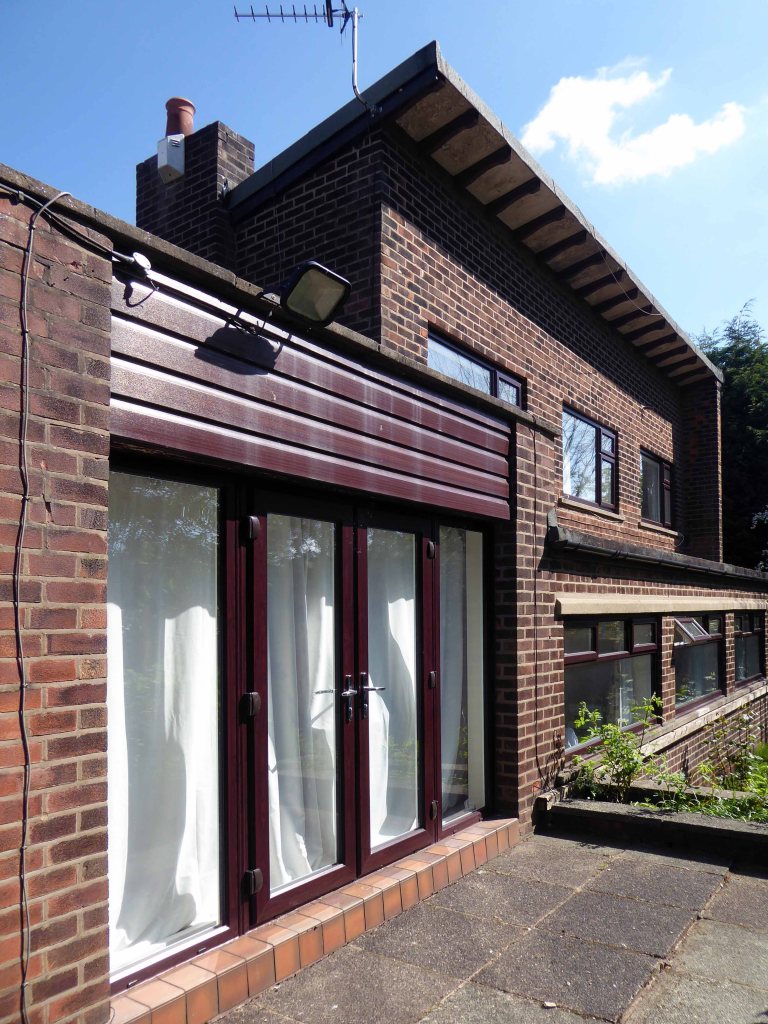
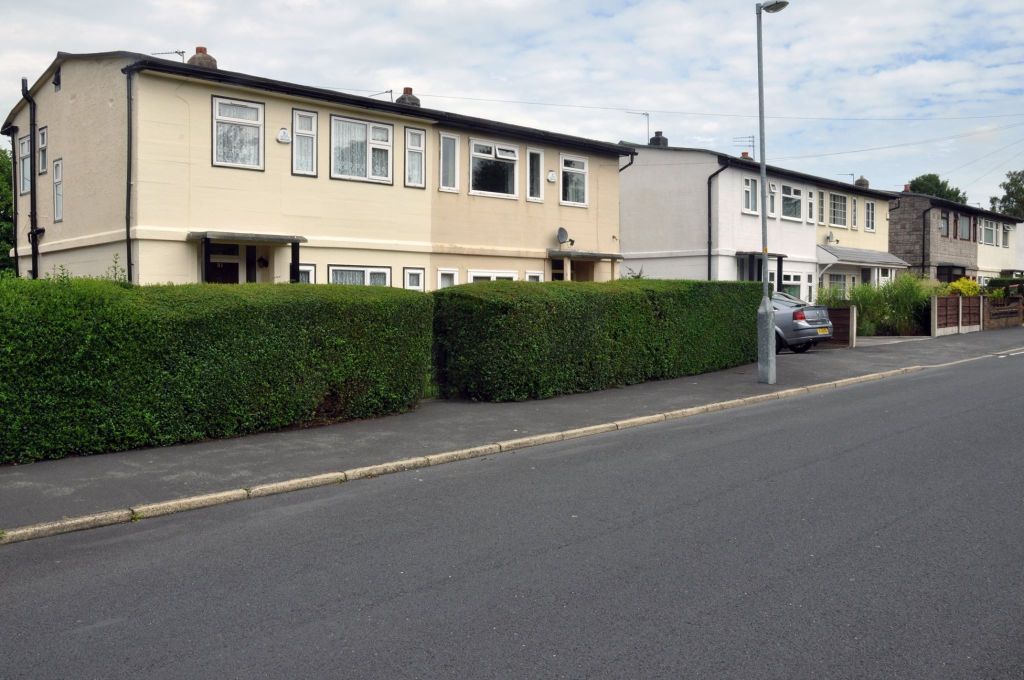
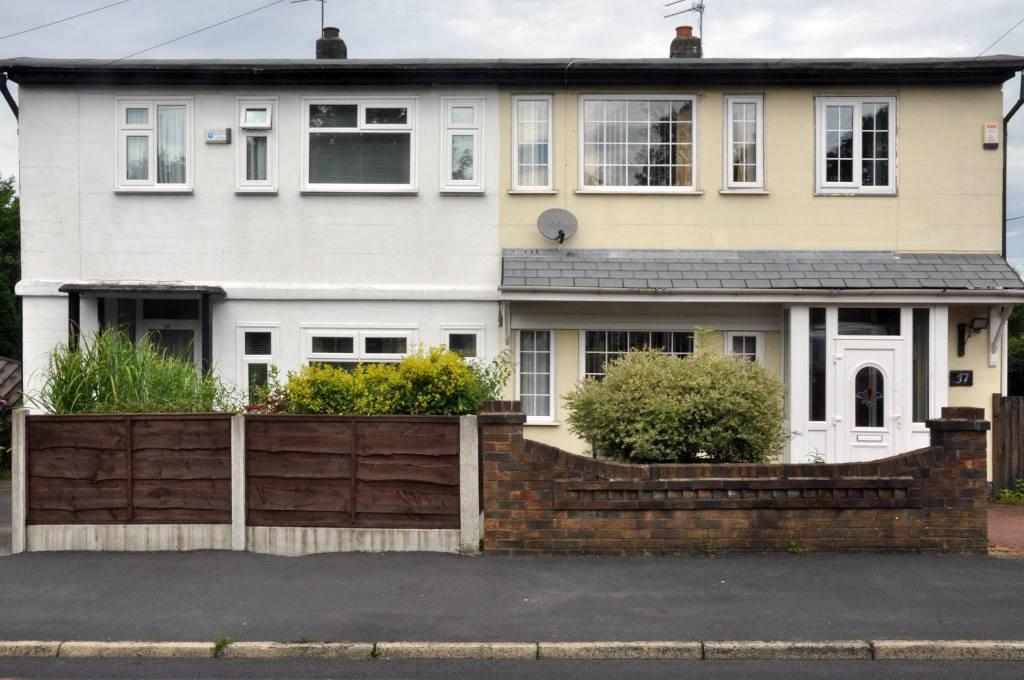
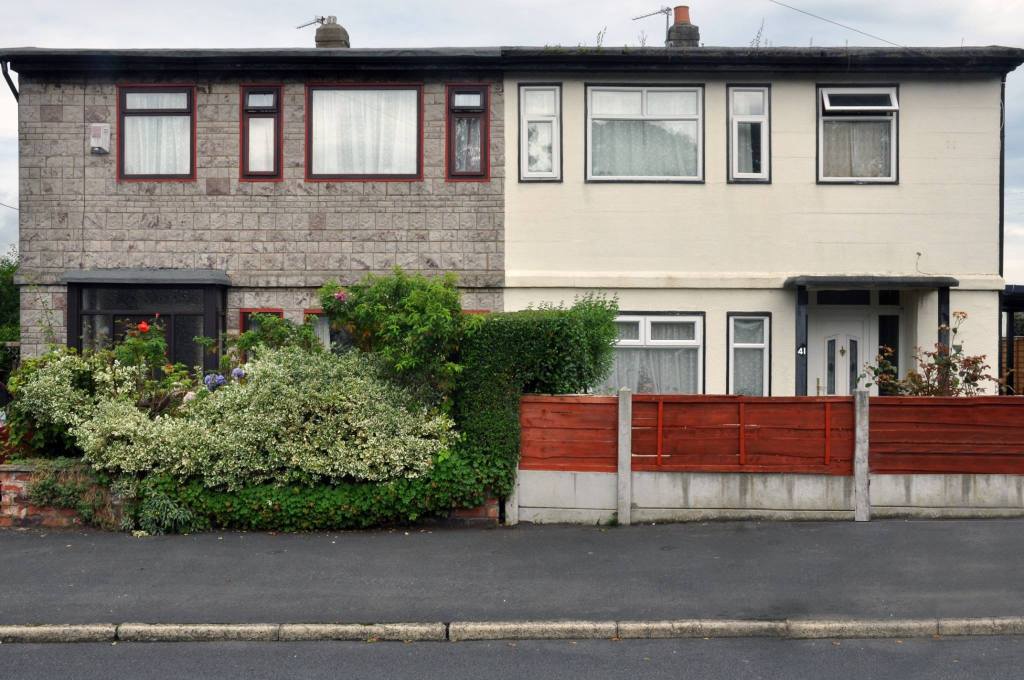
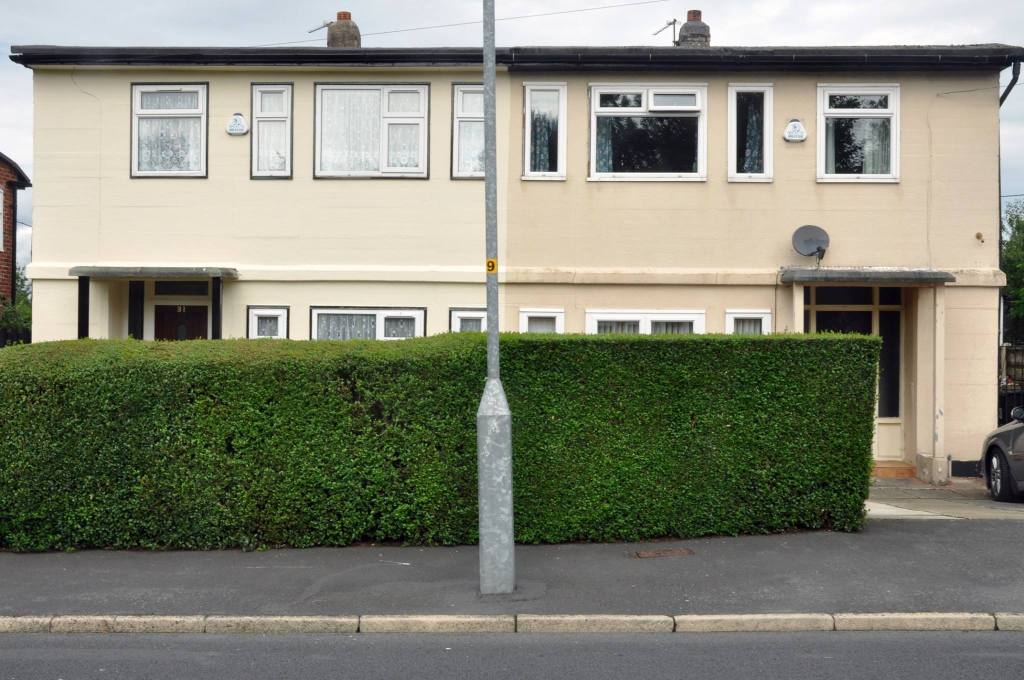
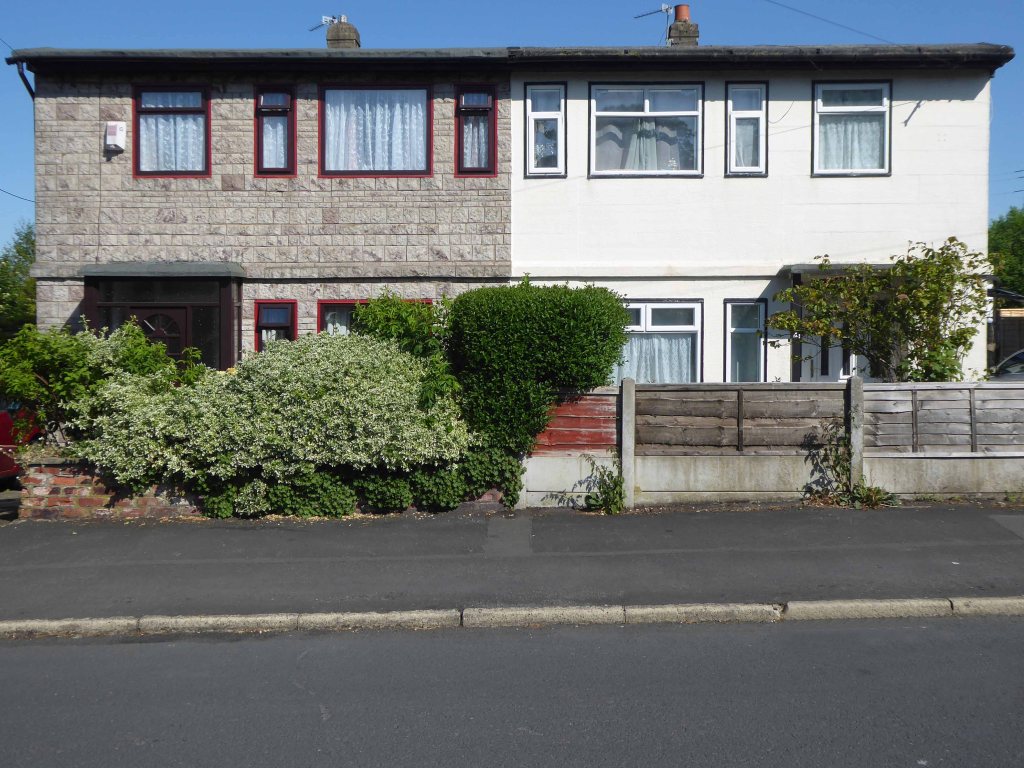
There are four semi detached homes constructed from concrete, rendered painted and clad over the years, windows replaced, additions and amendments made.
Though the basic design characteristics have been retained.
There are no local archival images or histories, I assume that they were post-war, an addition to the inter-war Smallshaw council estate.
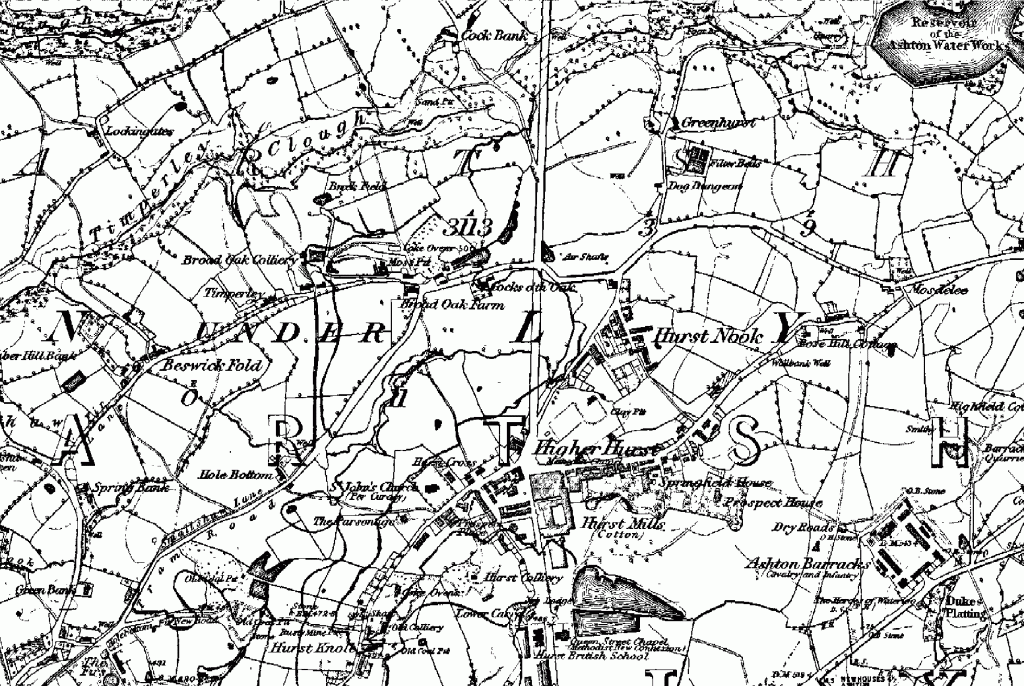
In an area which in 1848 was given over to mining and agriculture.
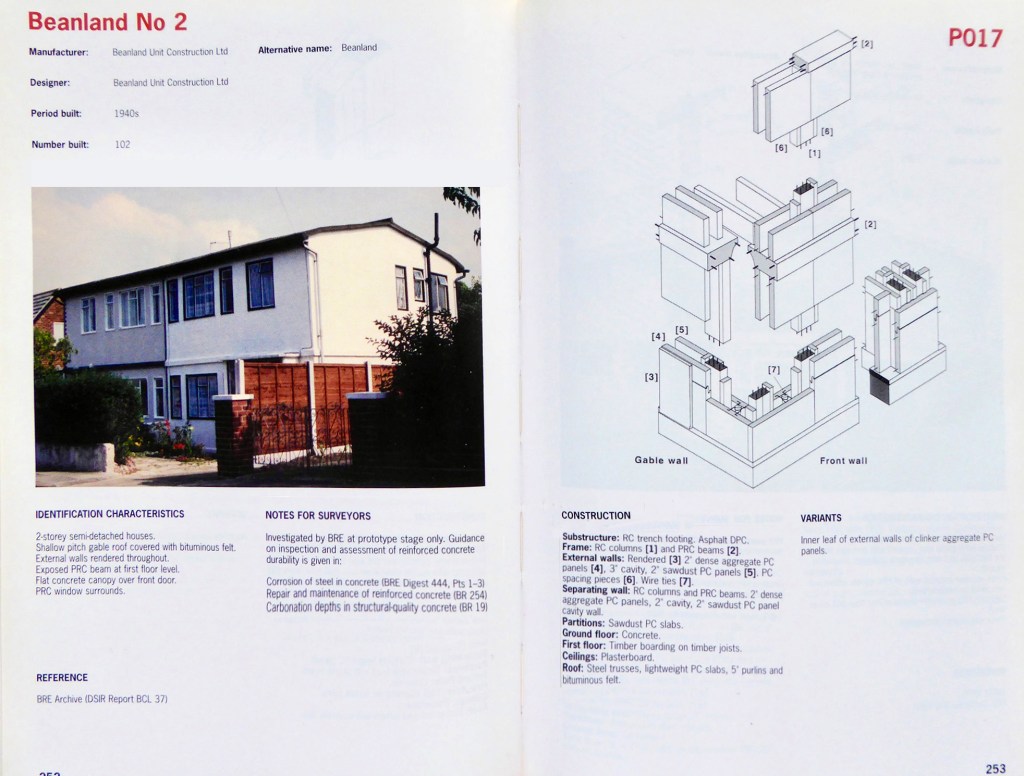
I have subsequently learnt from an online contact Mr Sid Cat, that the homes are Beanland No 2.
They are listed on the BISF site – 102 were built.
More than this I cannot say – further searches for Beanland proving largely fruitless.
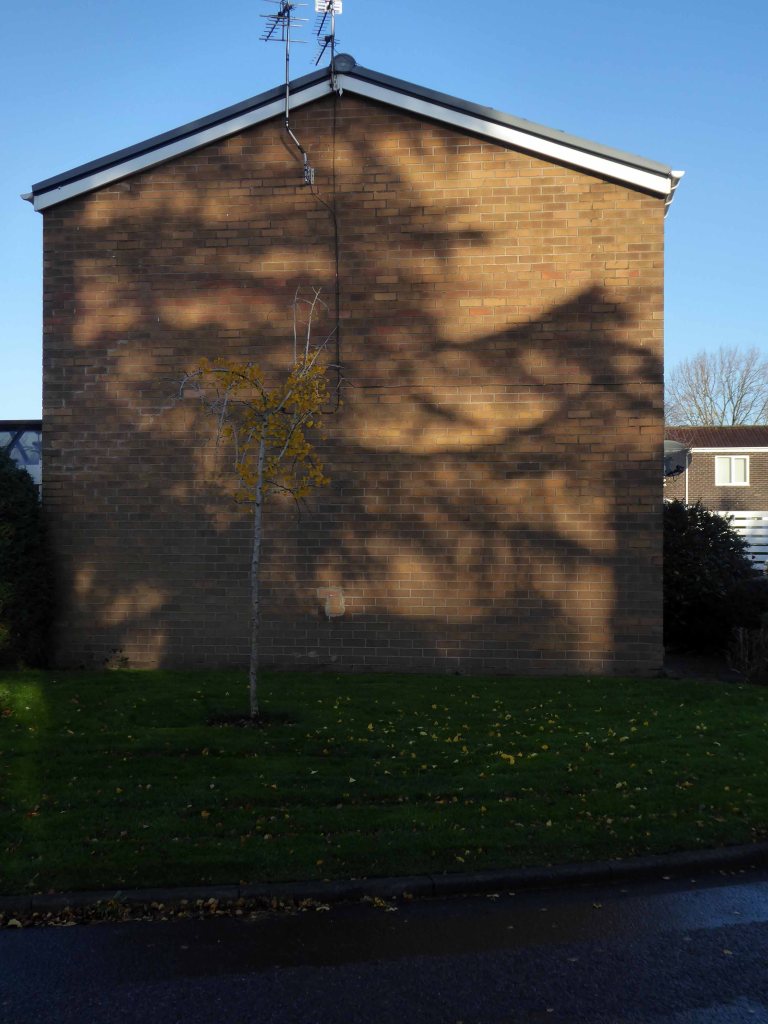
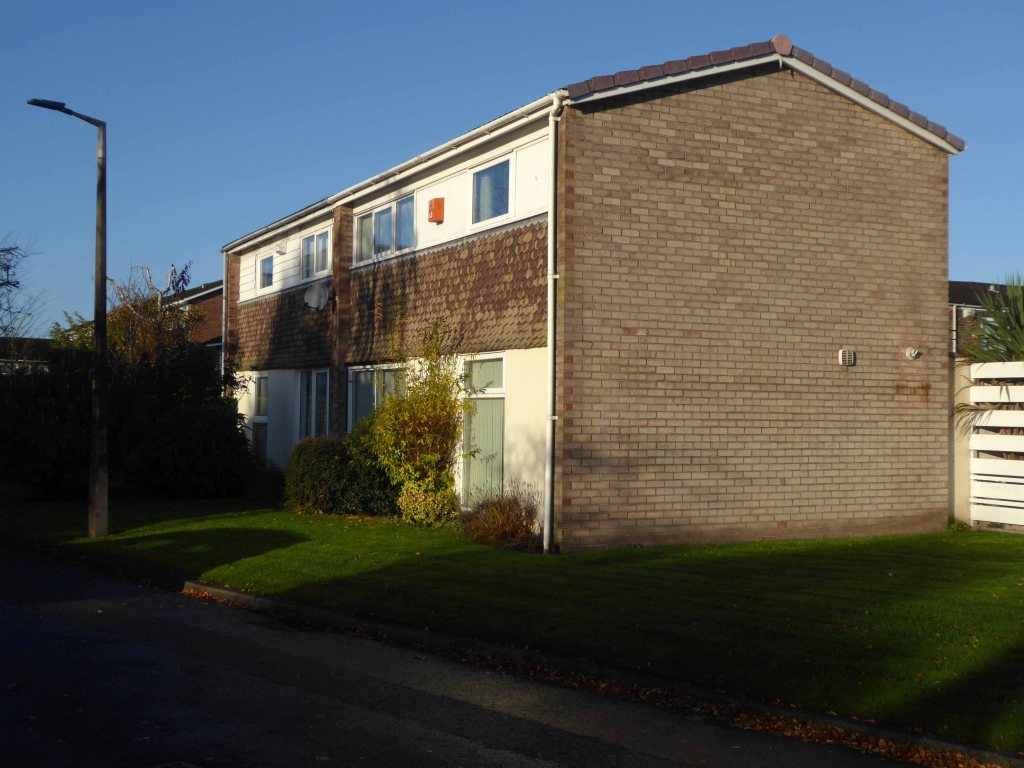
In addition there are also several semi detached houses of identical shape and proportion faced in brick – why?
Suffice to say here we are now and here they all are.
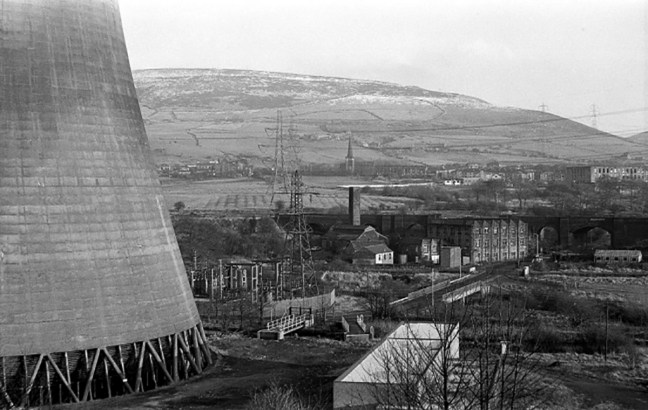
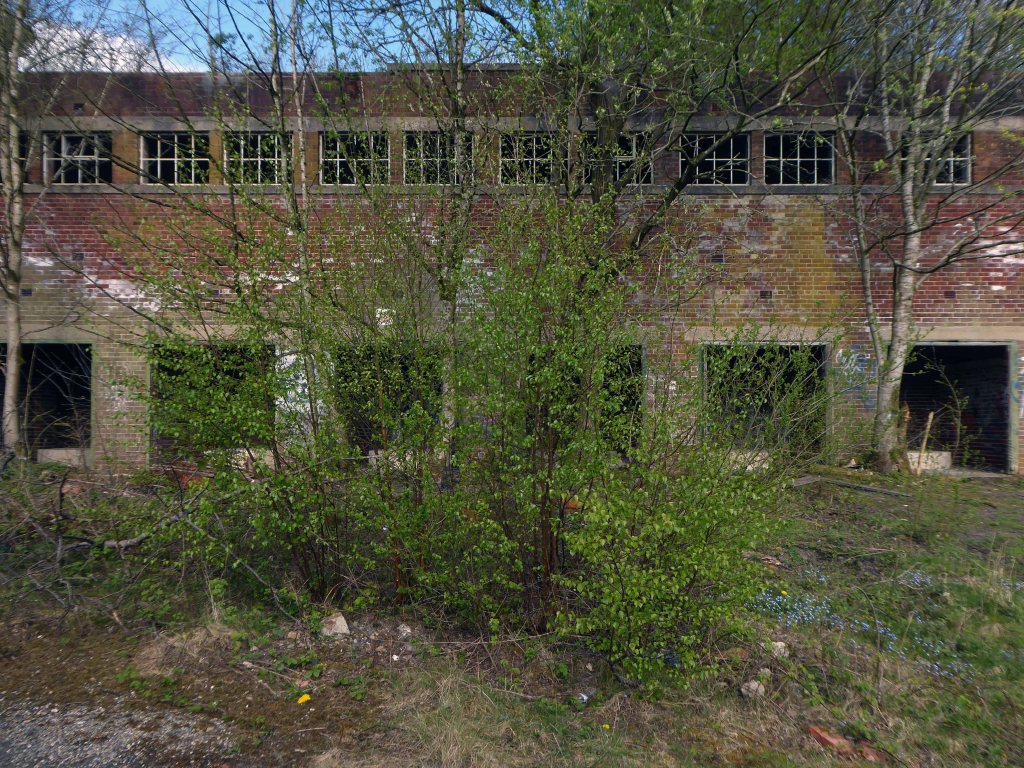
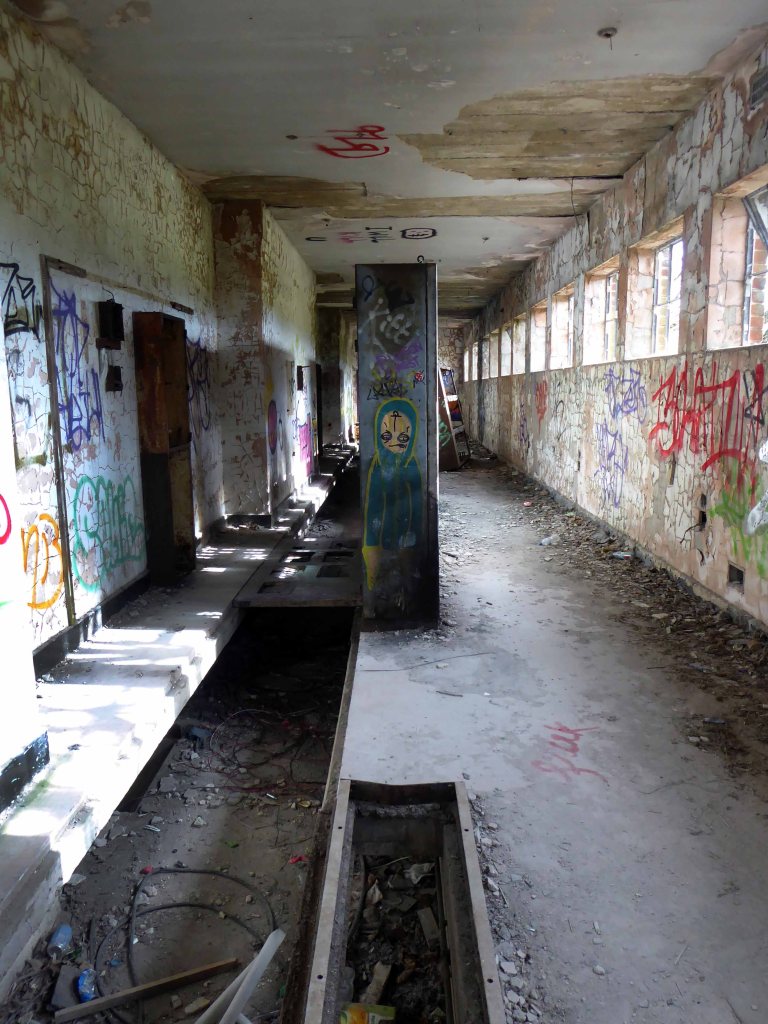
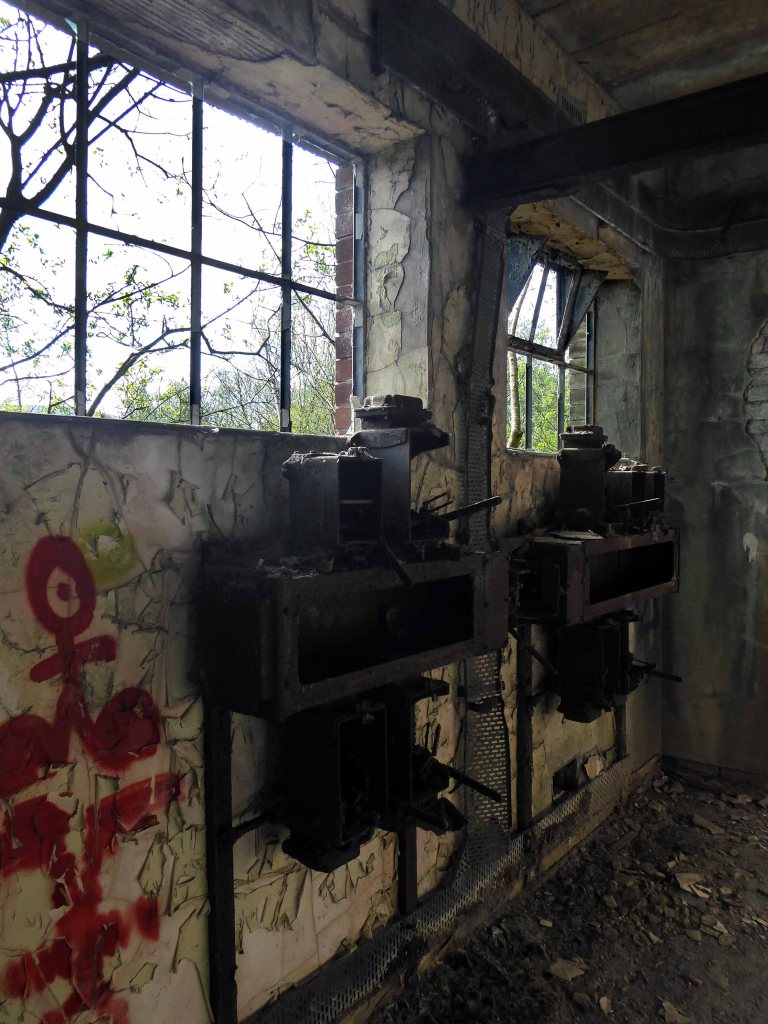
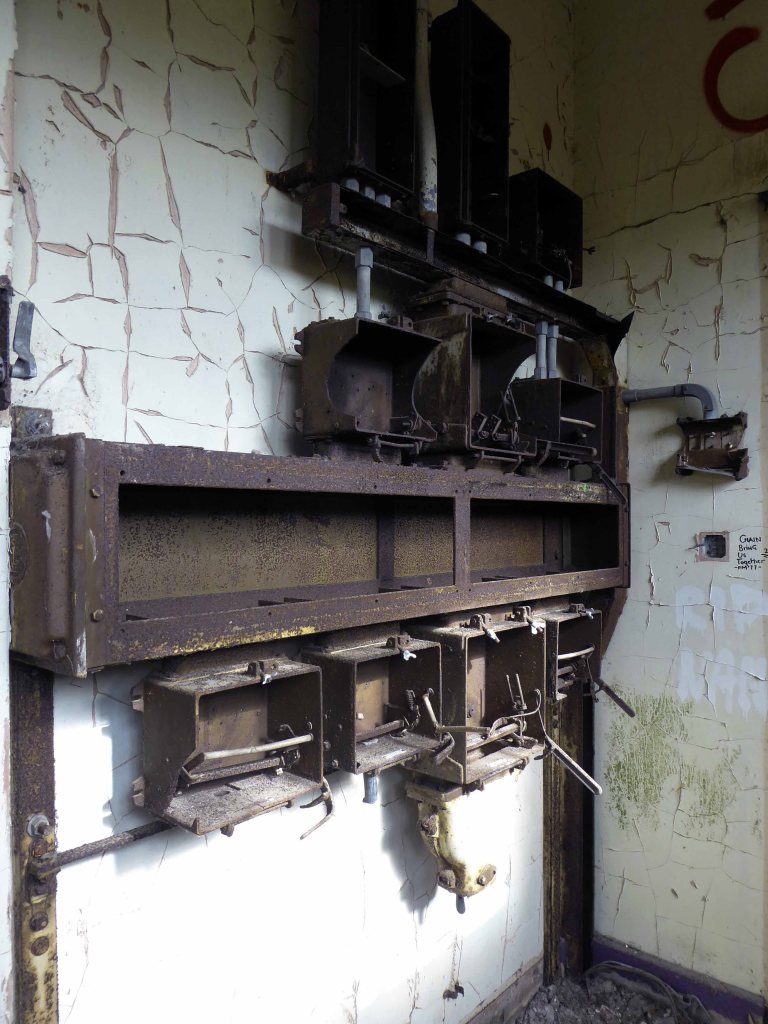
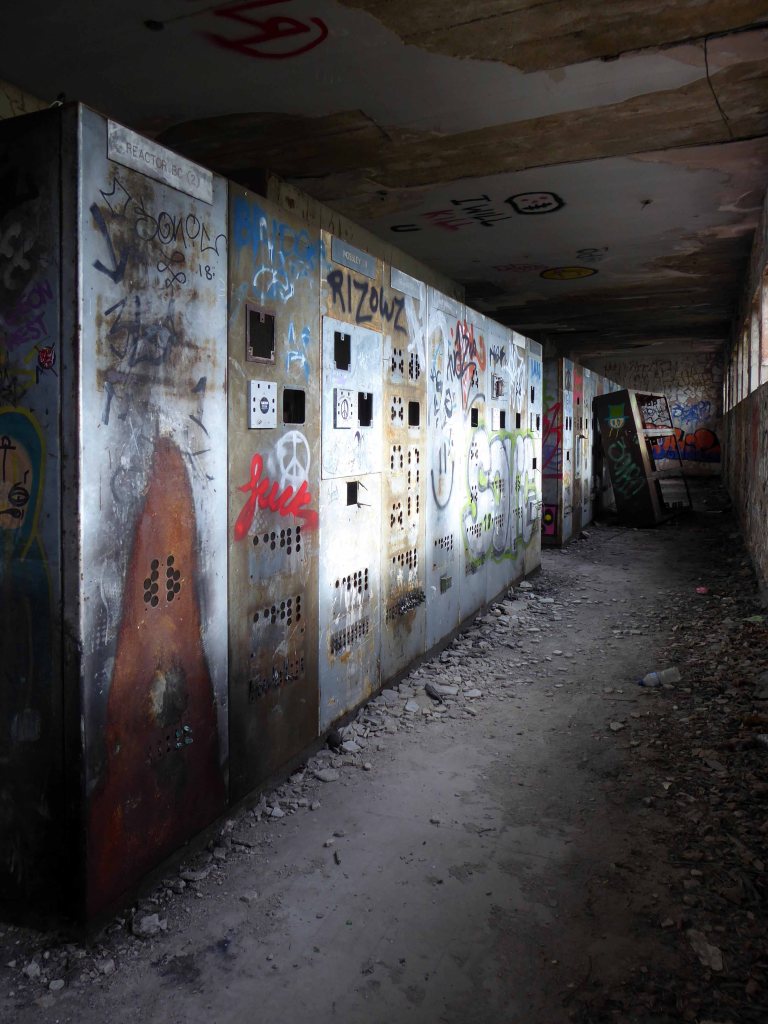
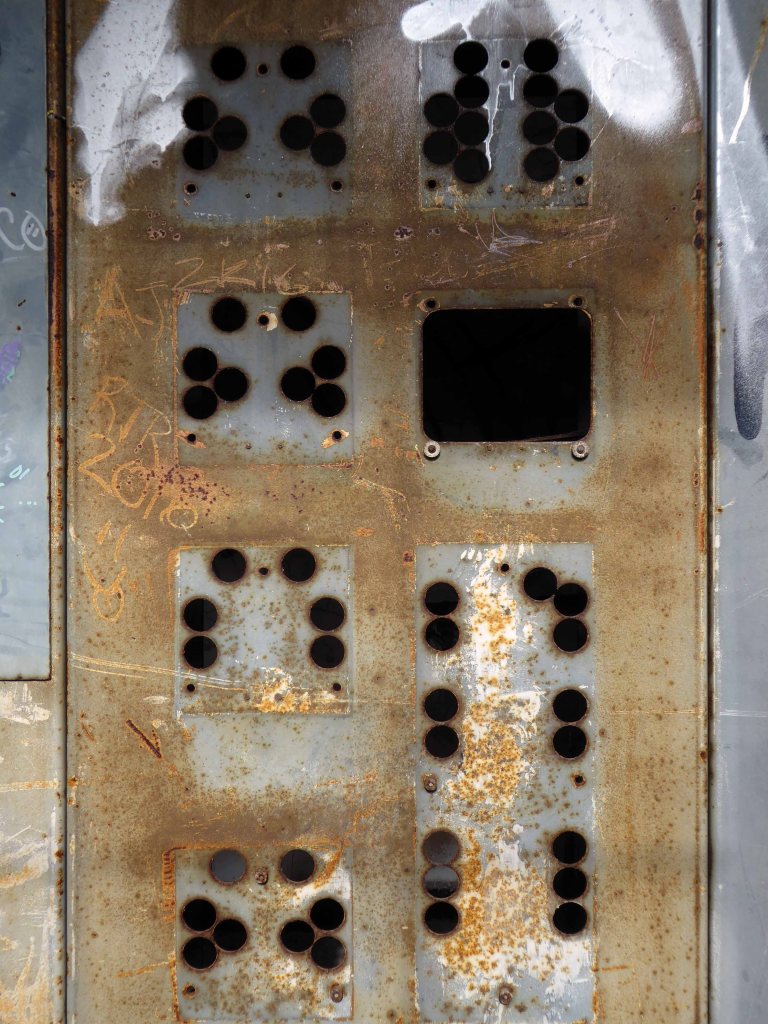
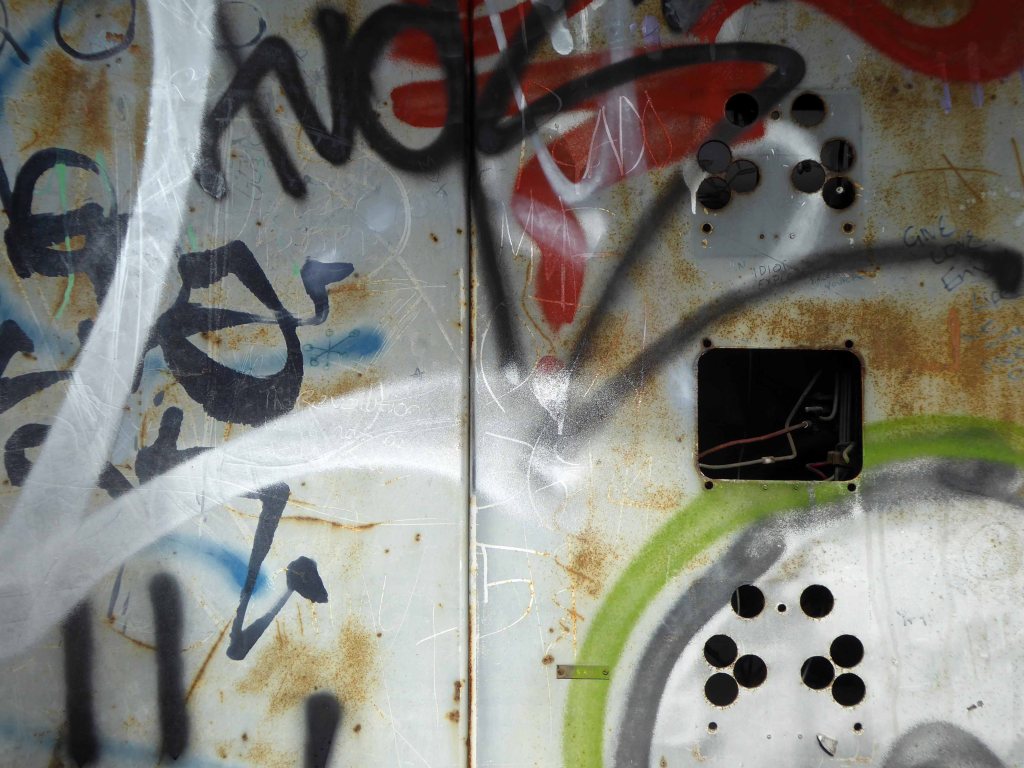
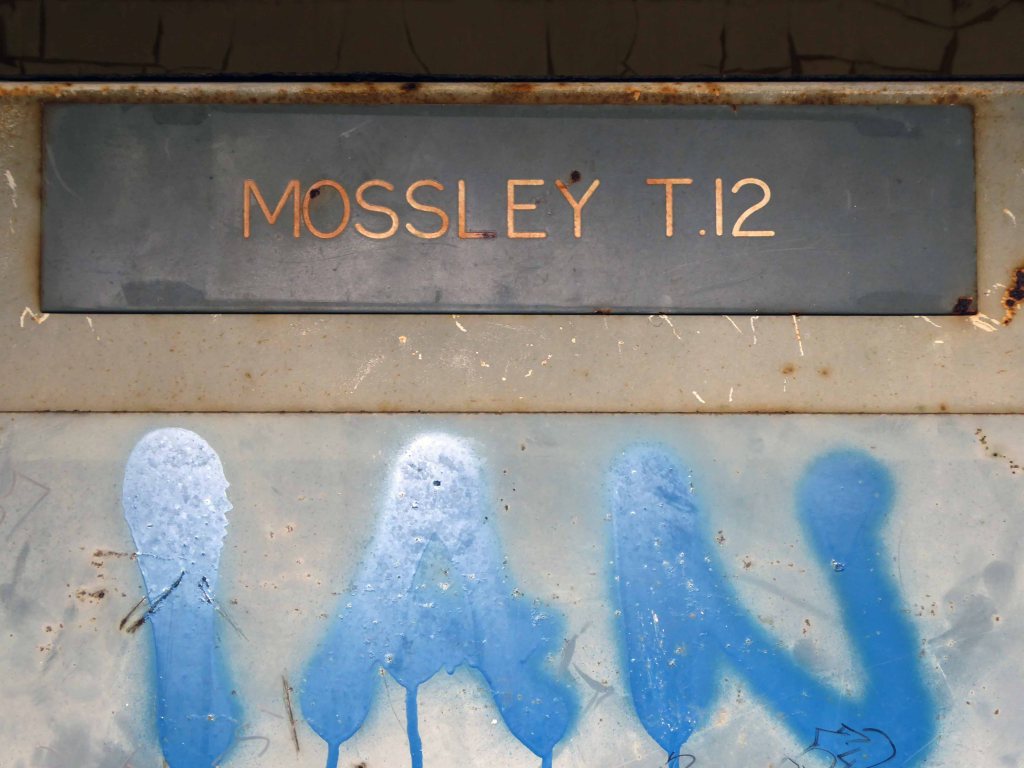
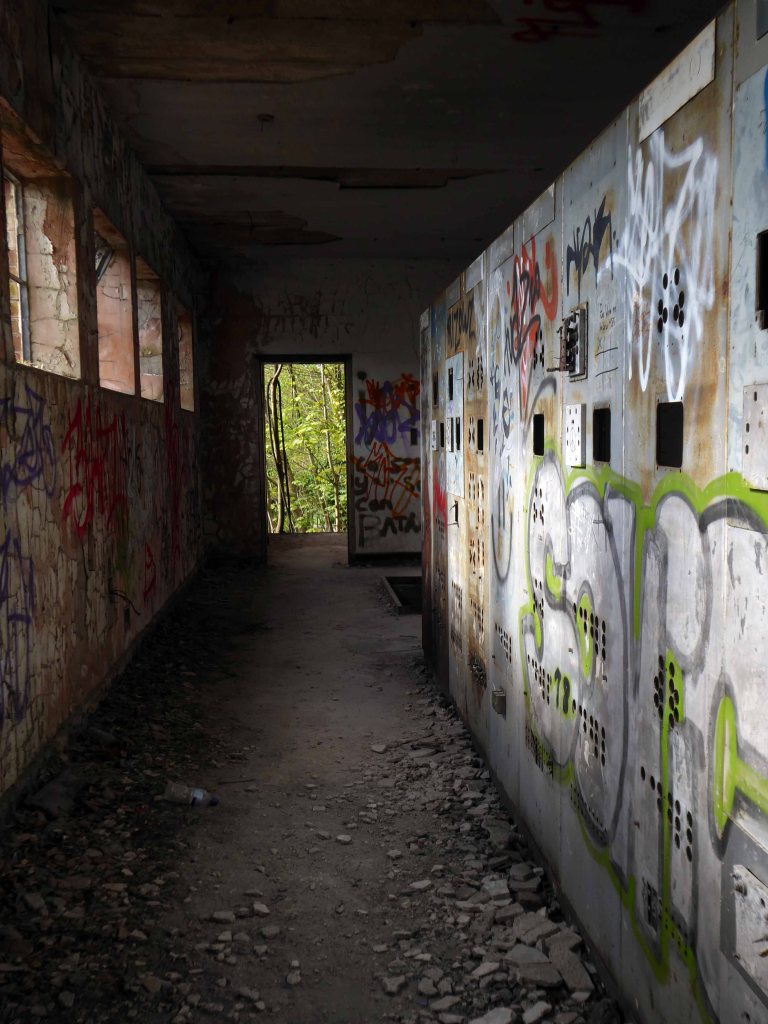
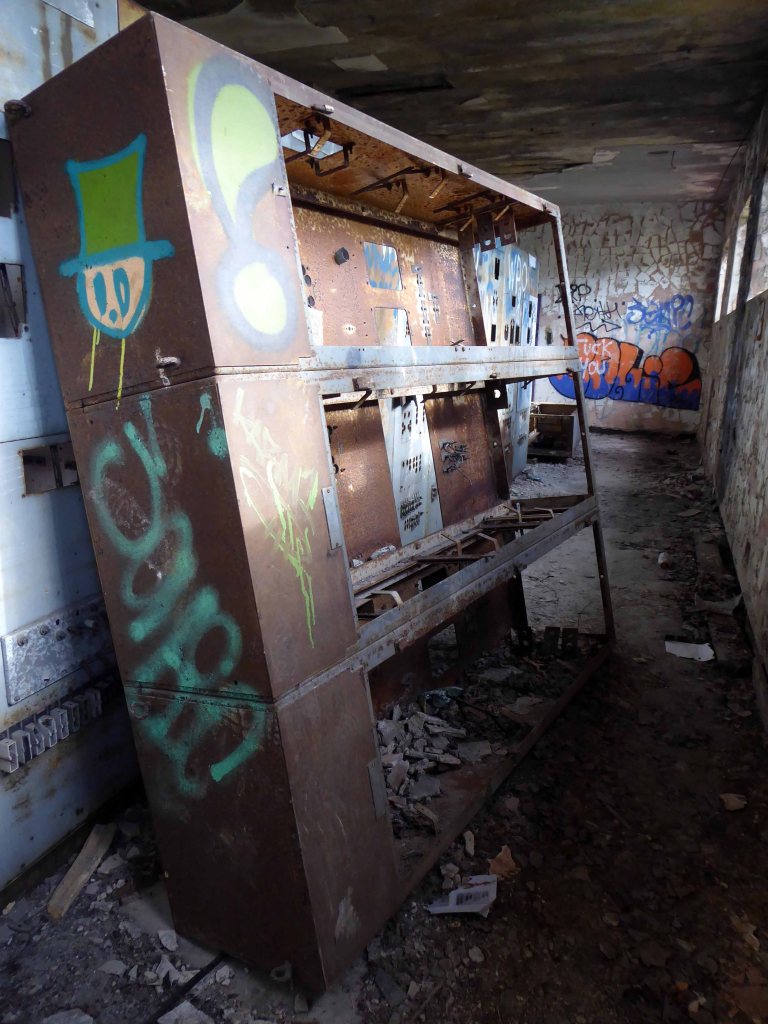
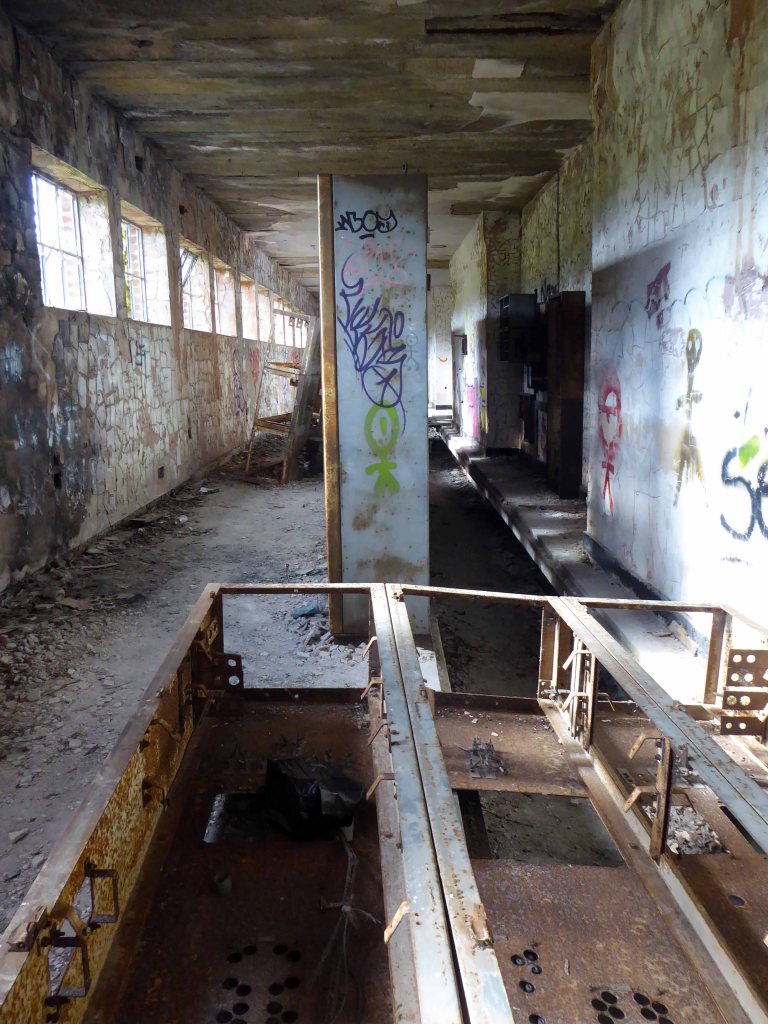
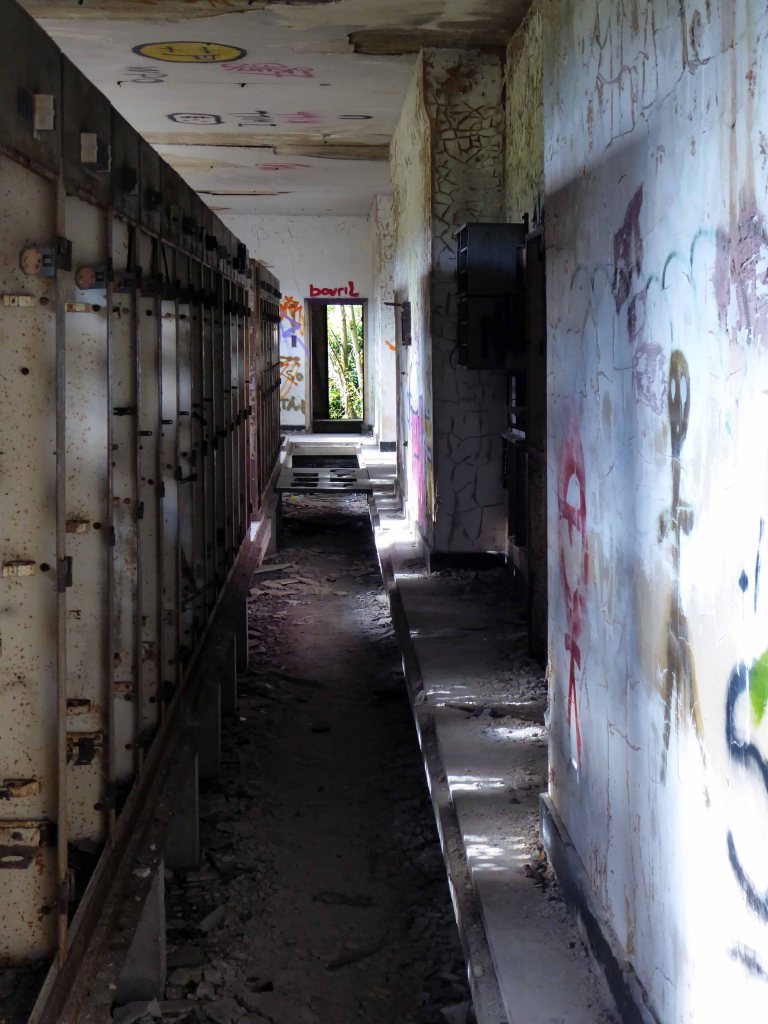
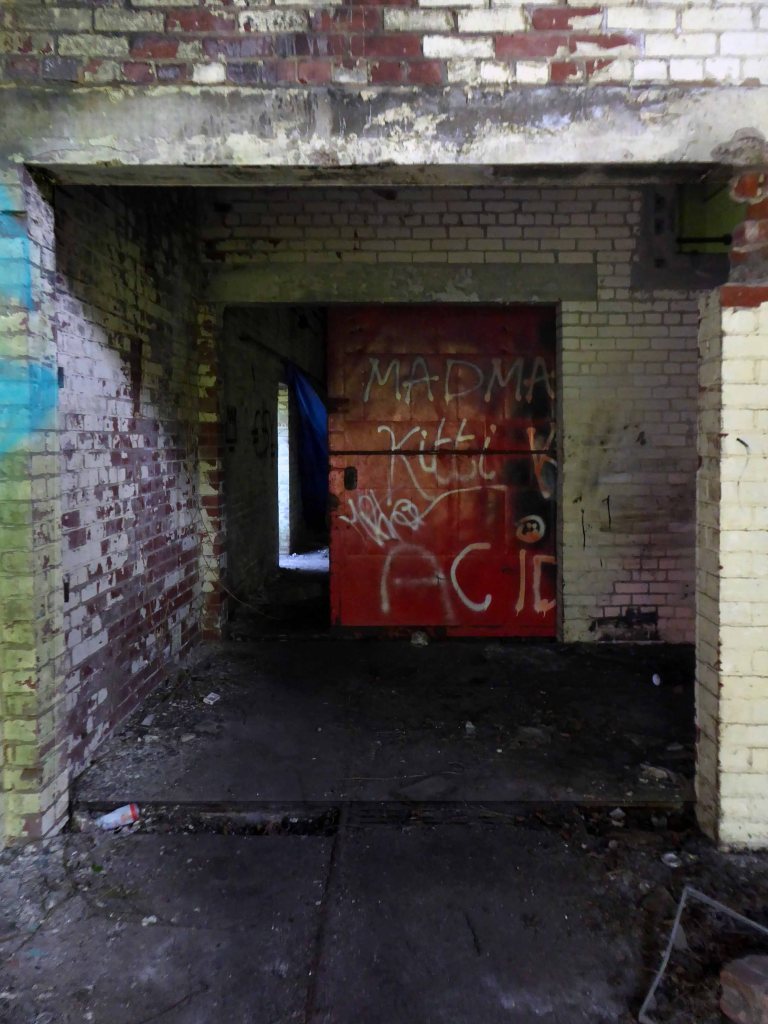
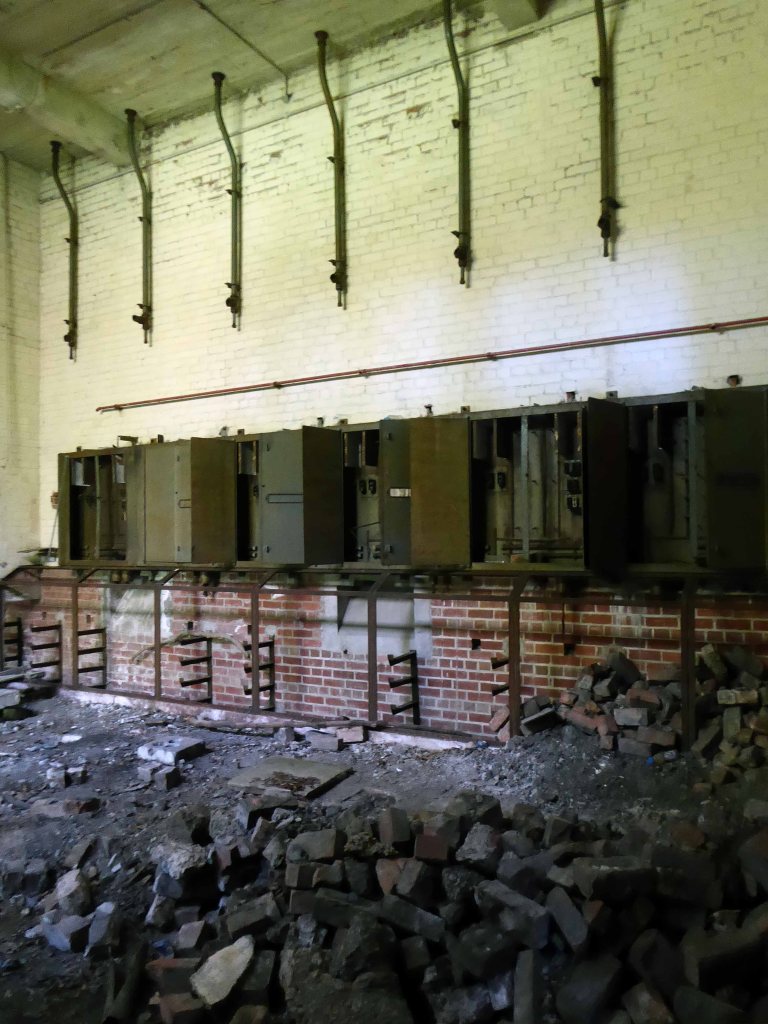
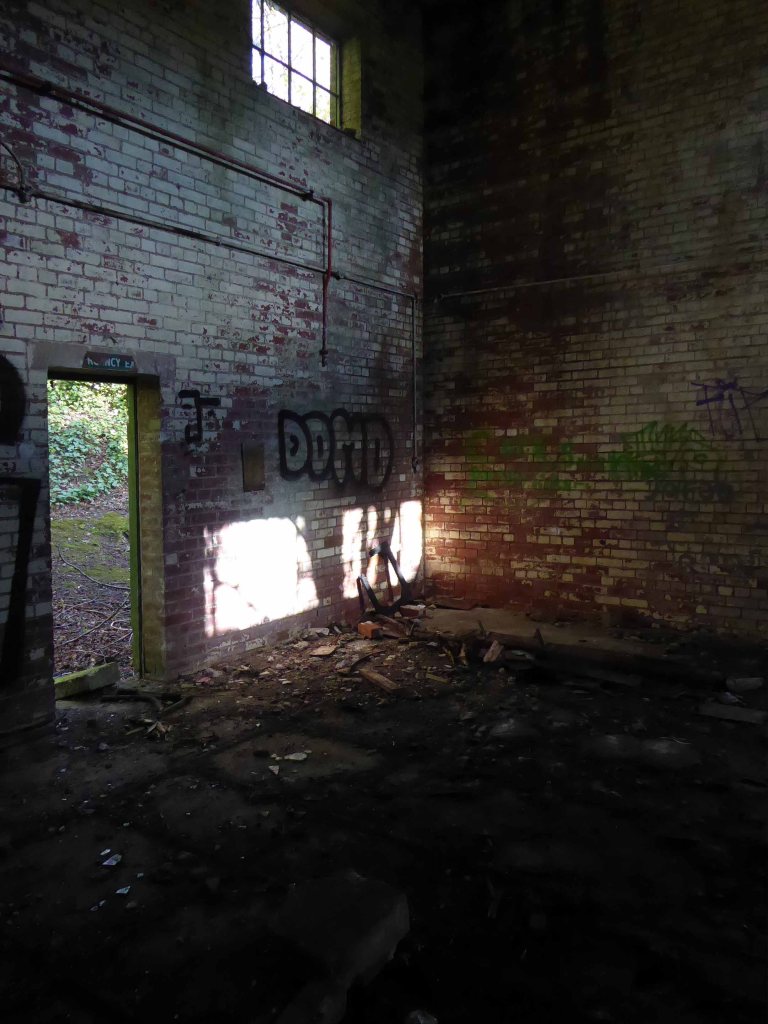
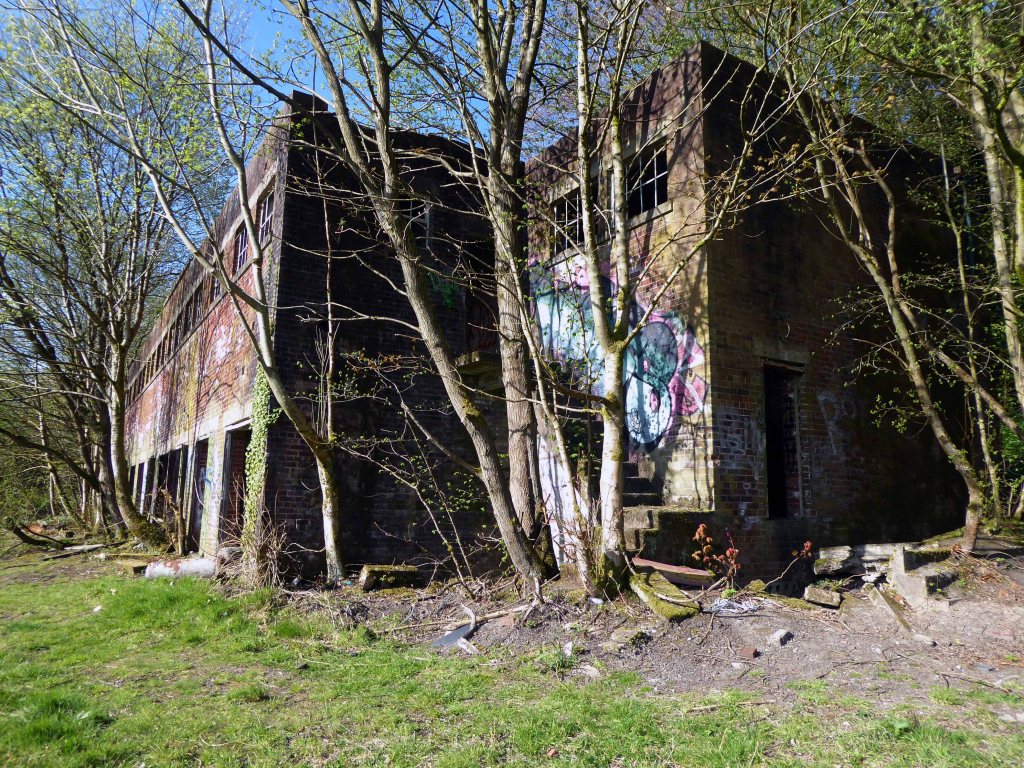
I’m back here to day in search of an abandoned control centre at the long gone Hartshead Power Station.
The station was opened in 1926 by the Stalybridge, Hyde, Mossley and Dukinfield Transport and Electricity Board.
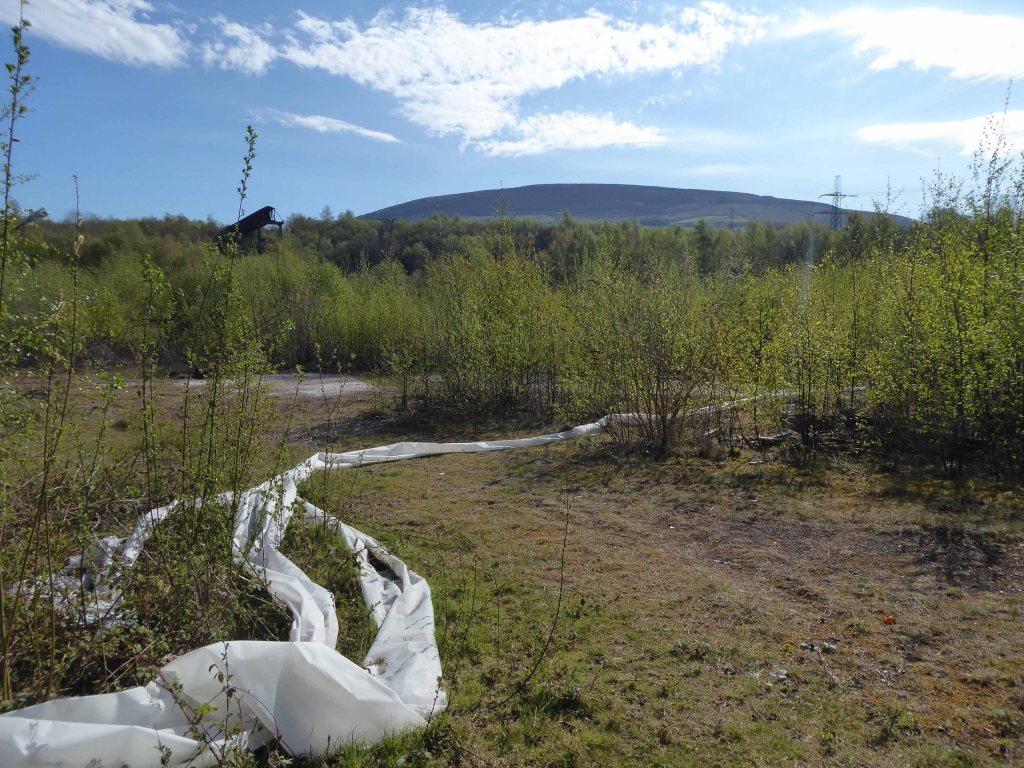
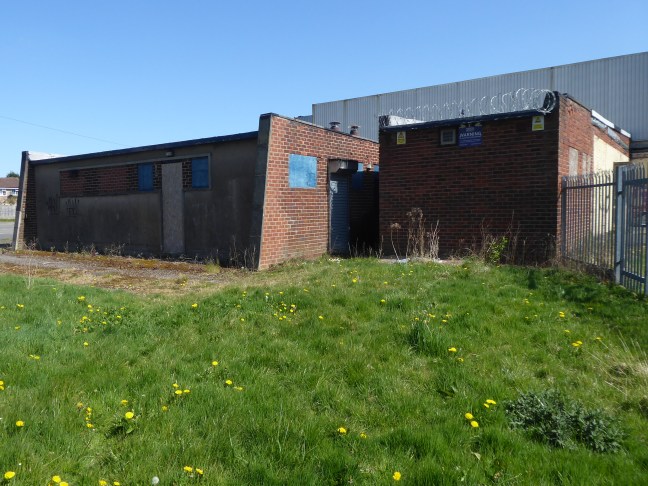
The station was closed on 29 October 1979 with a generating capacity of 64 megawatts. It was demolished during the late 1980s, although part of the site is still used as an electrical substation.
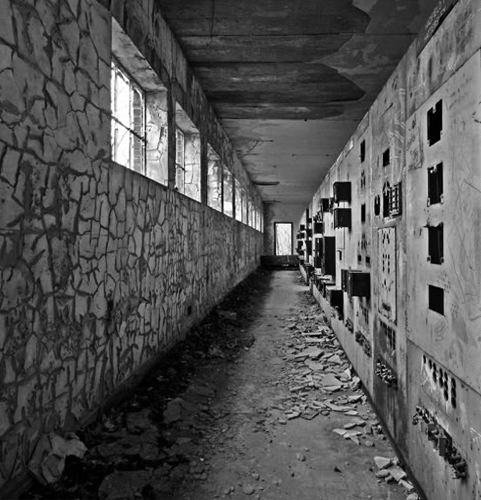
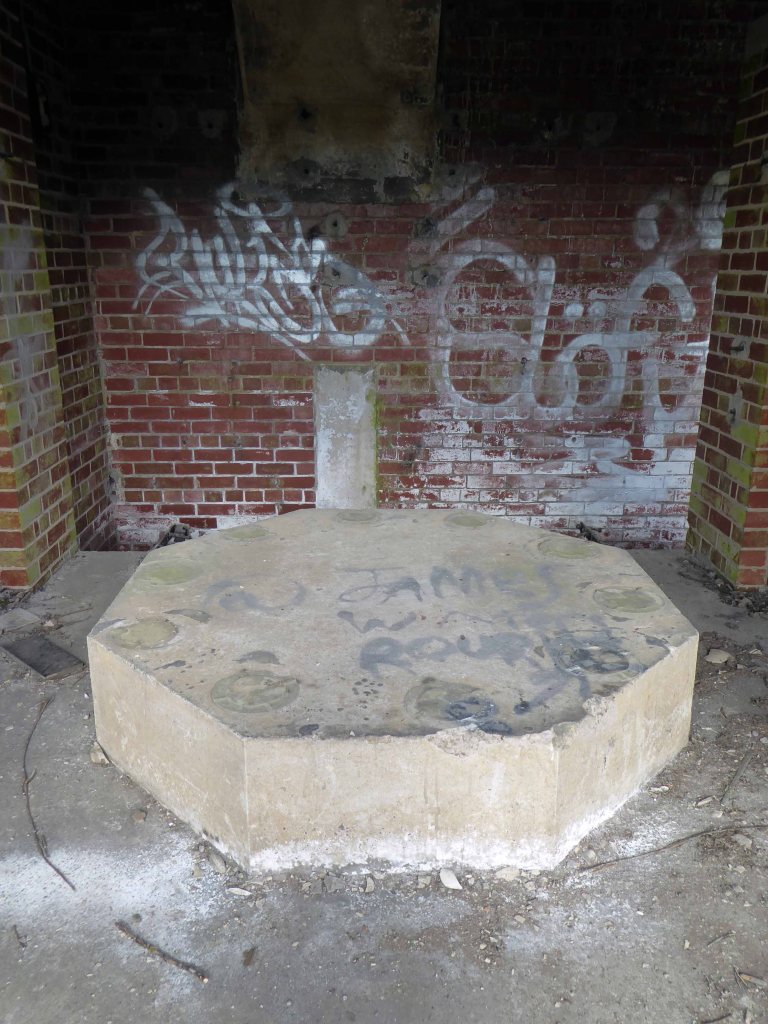
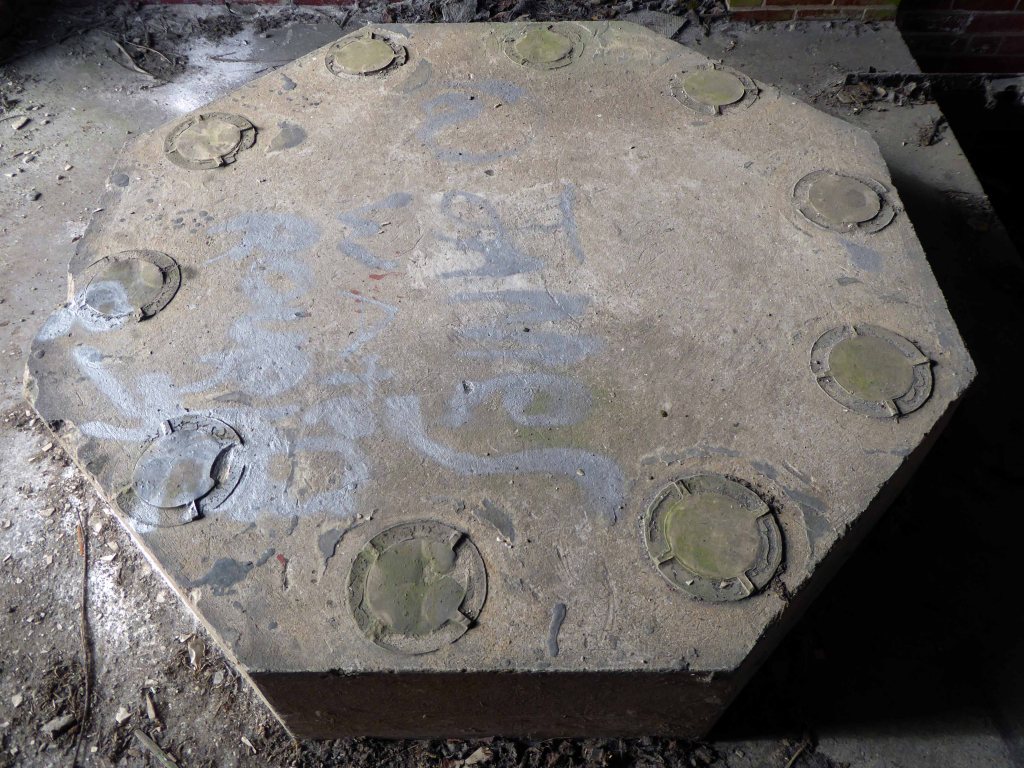
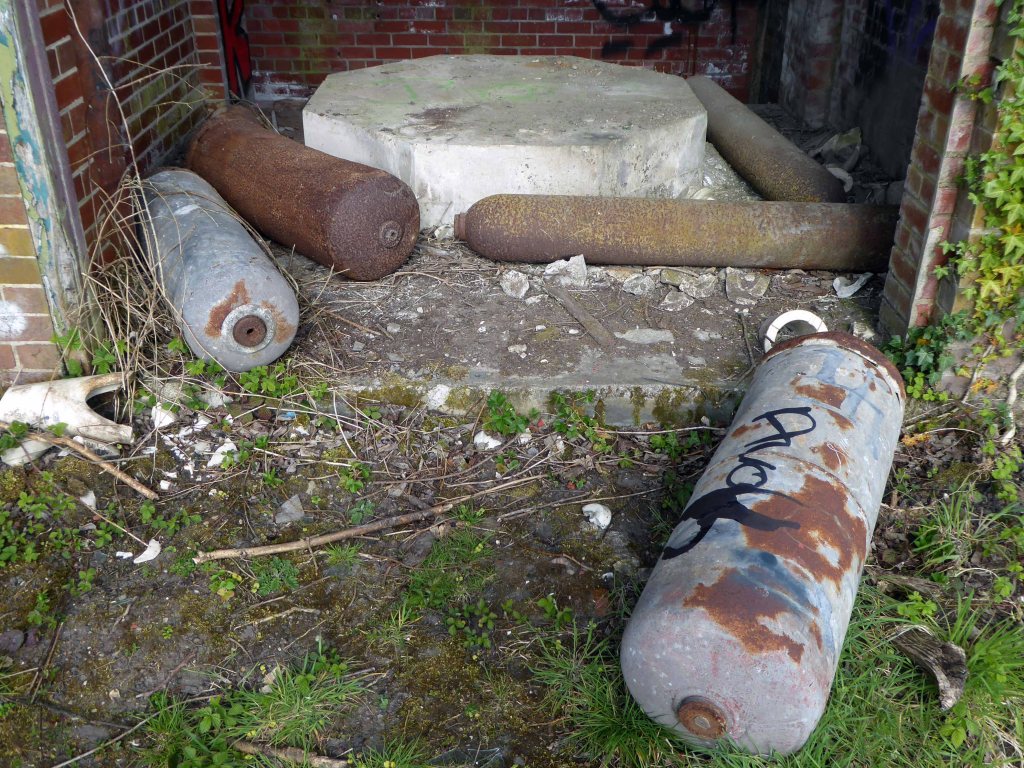
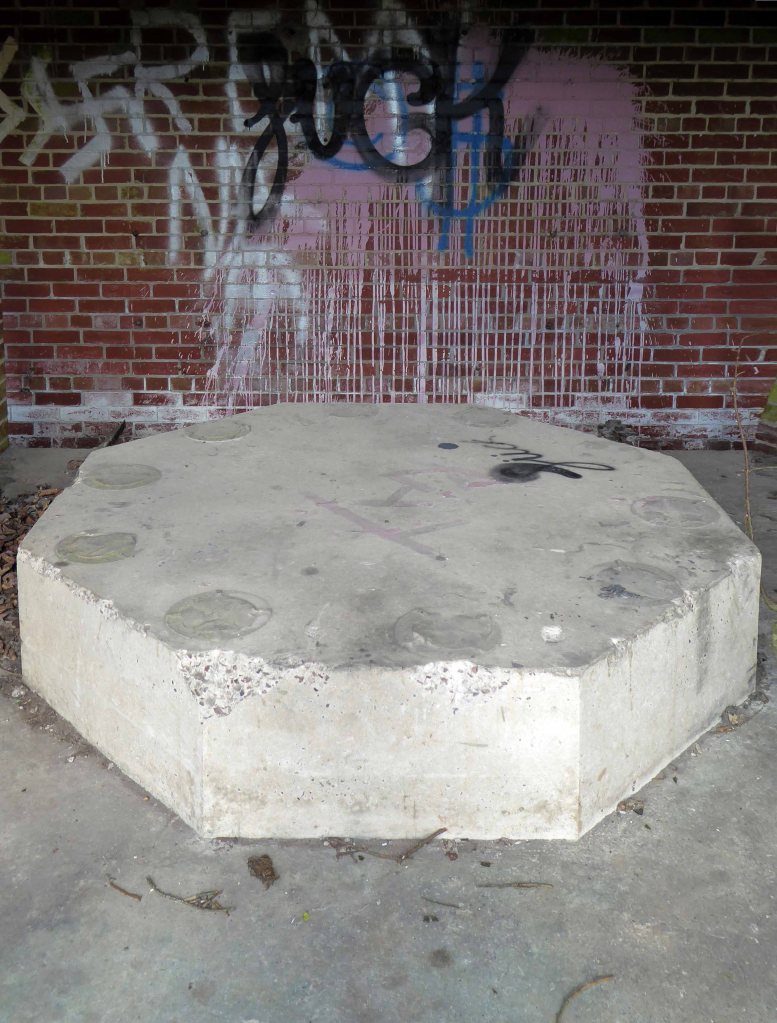
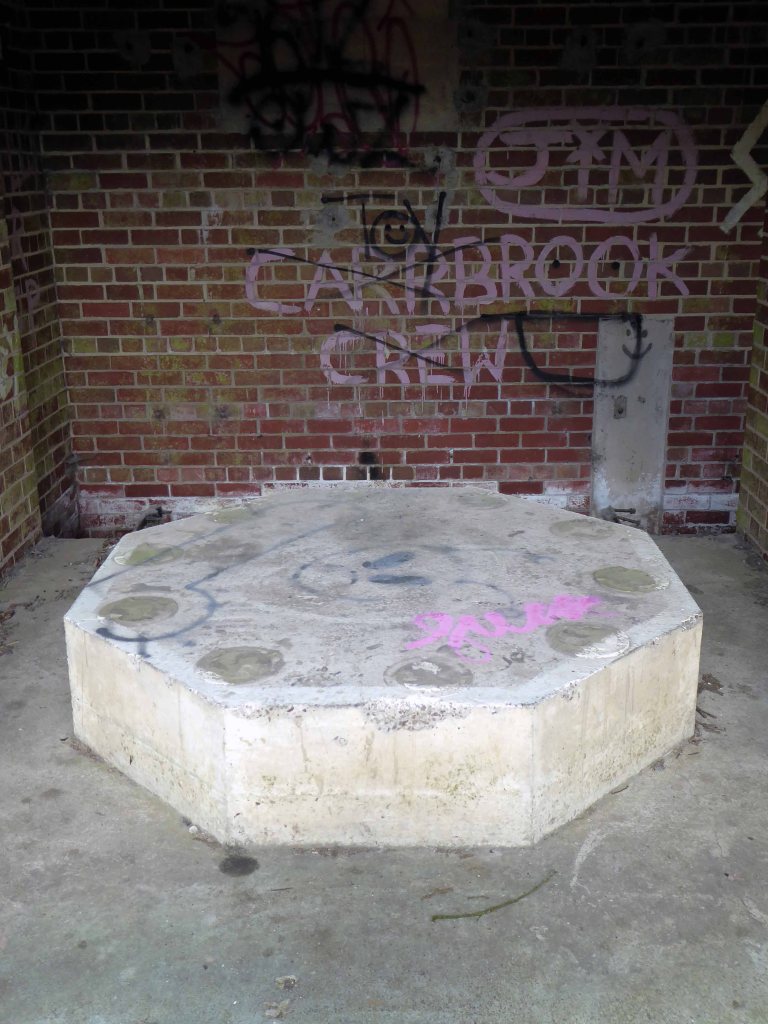
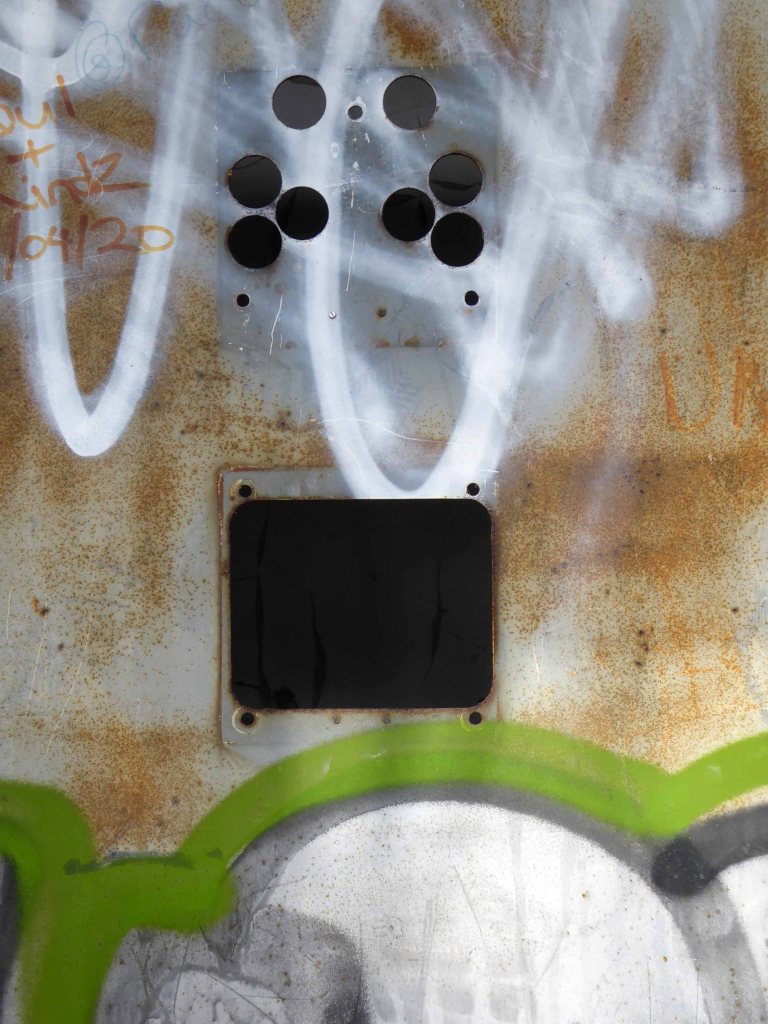
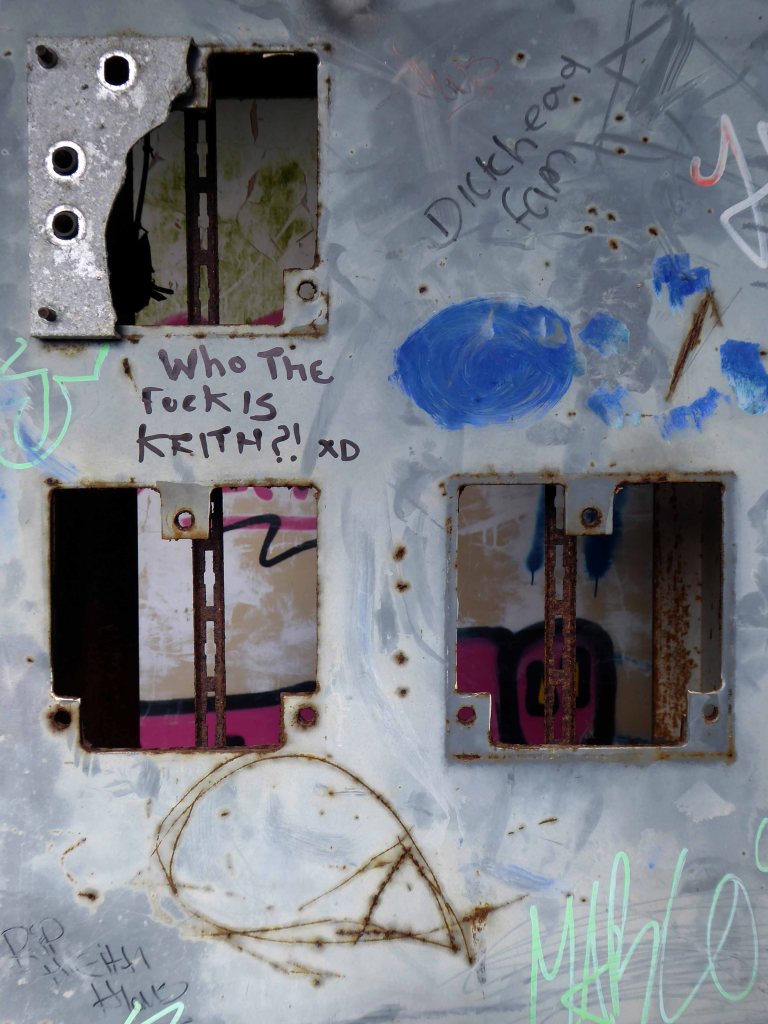
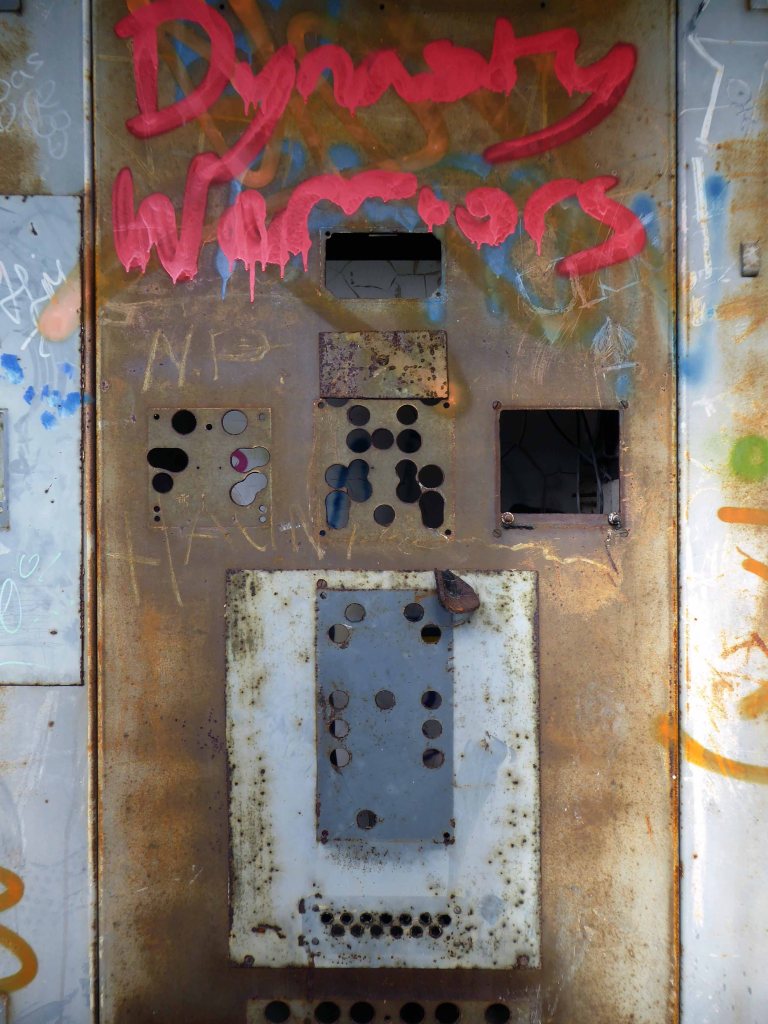
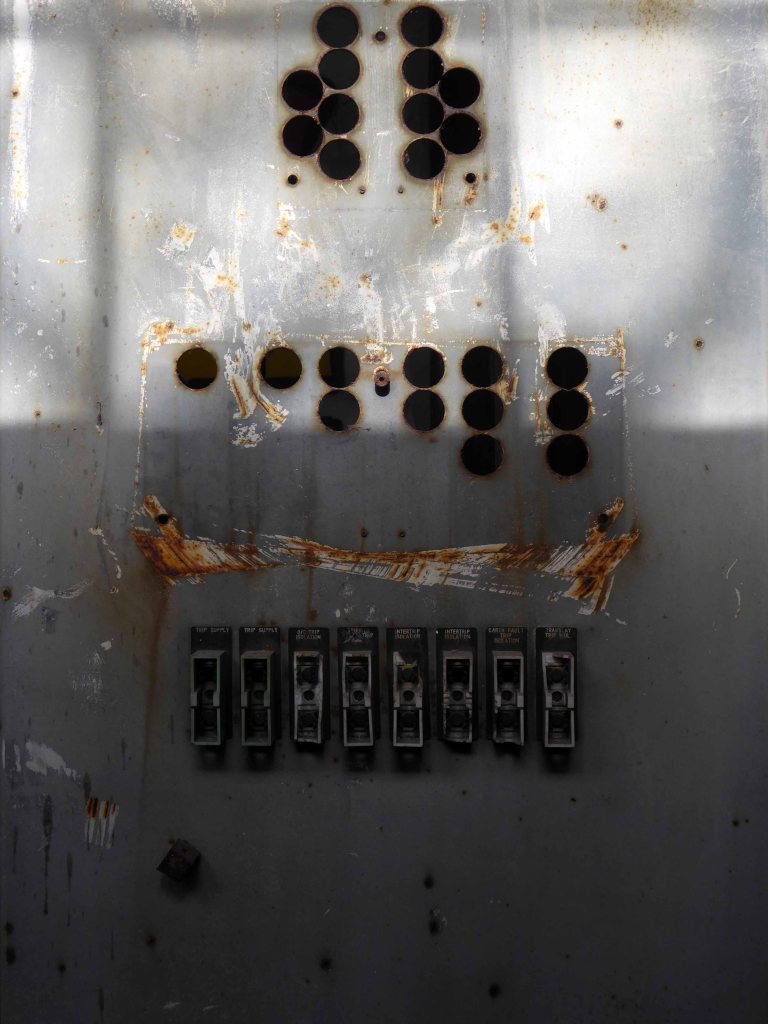
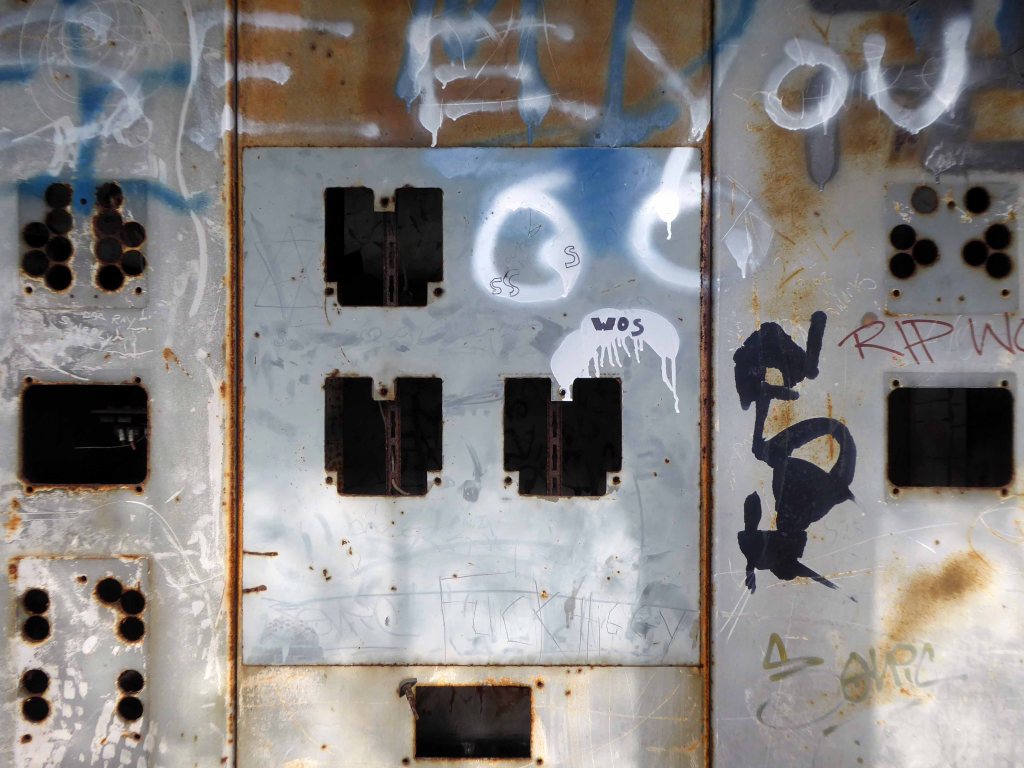
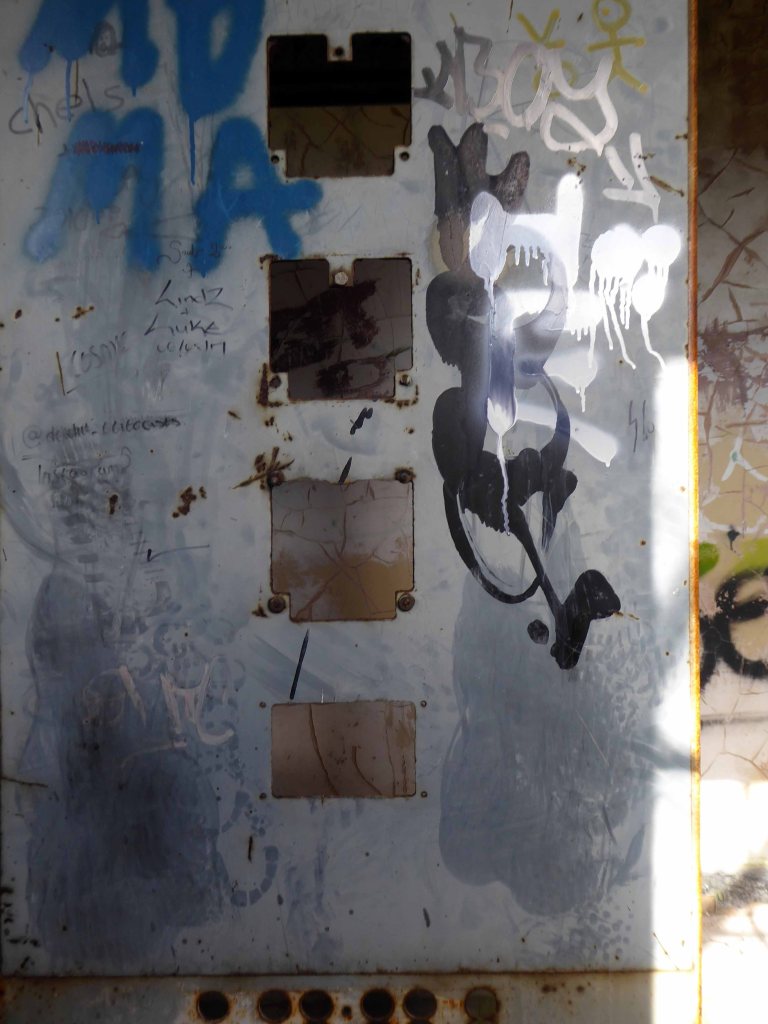
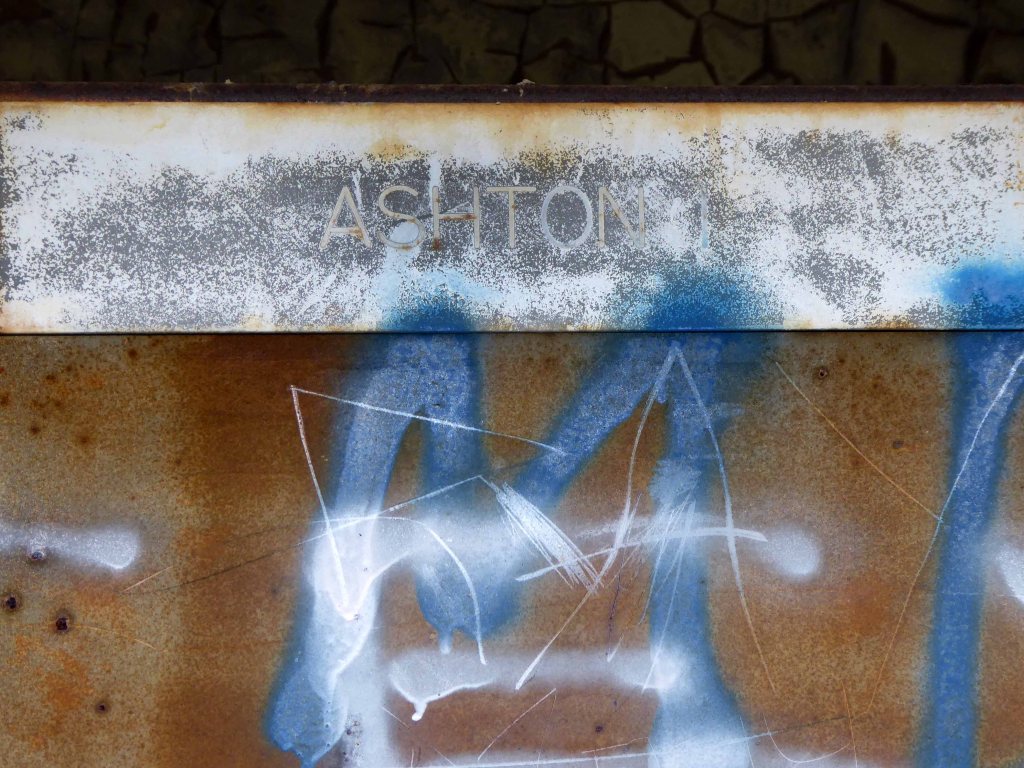
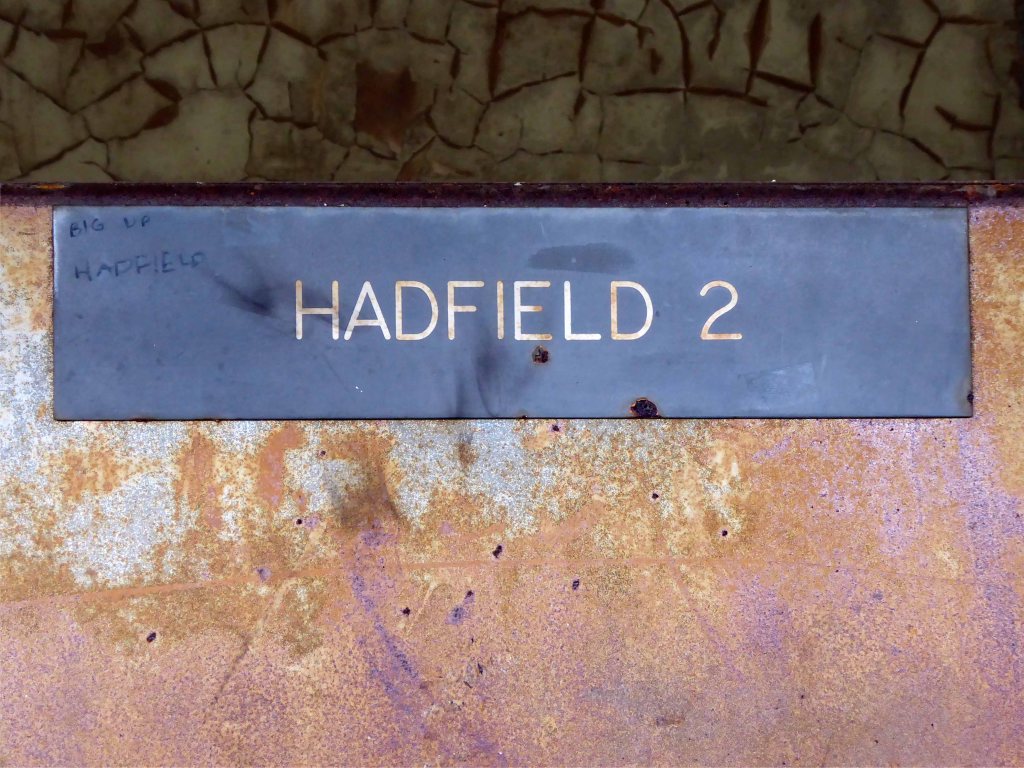
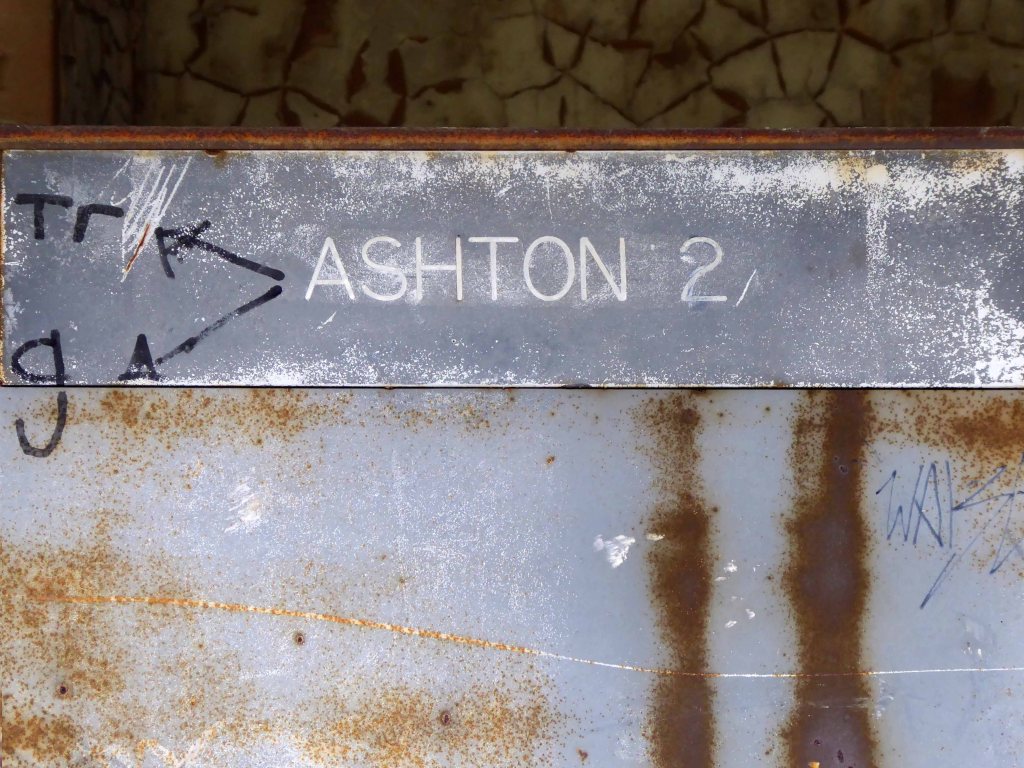
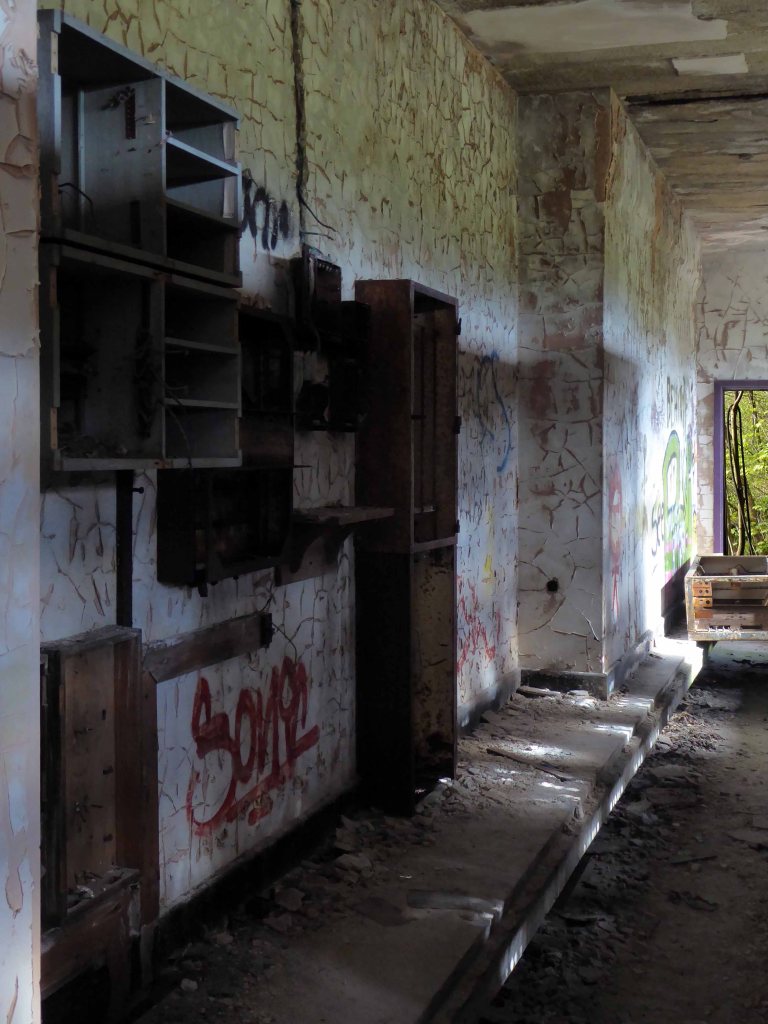
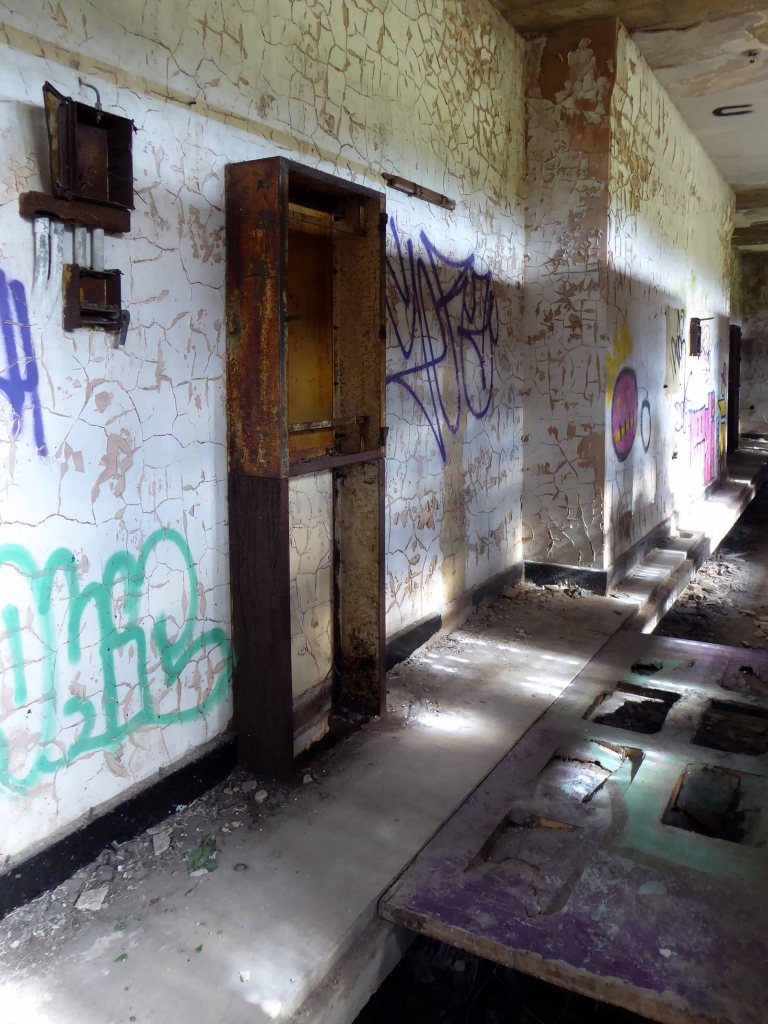
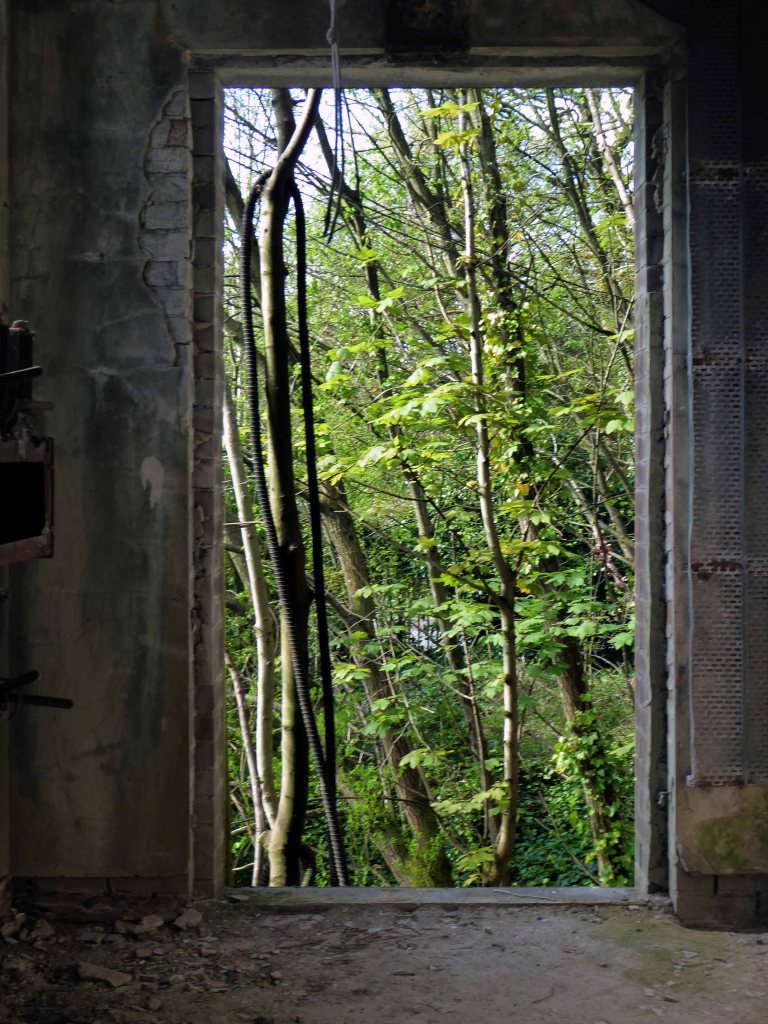
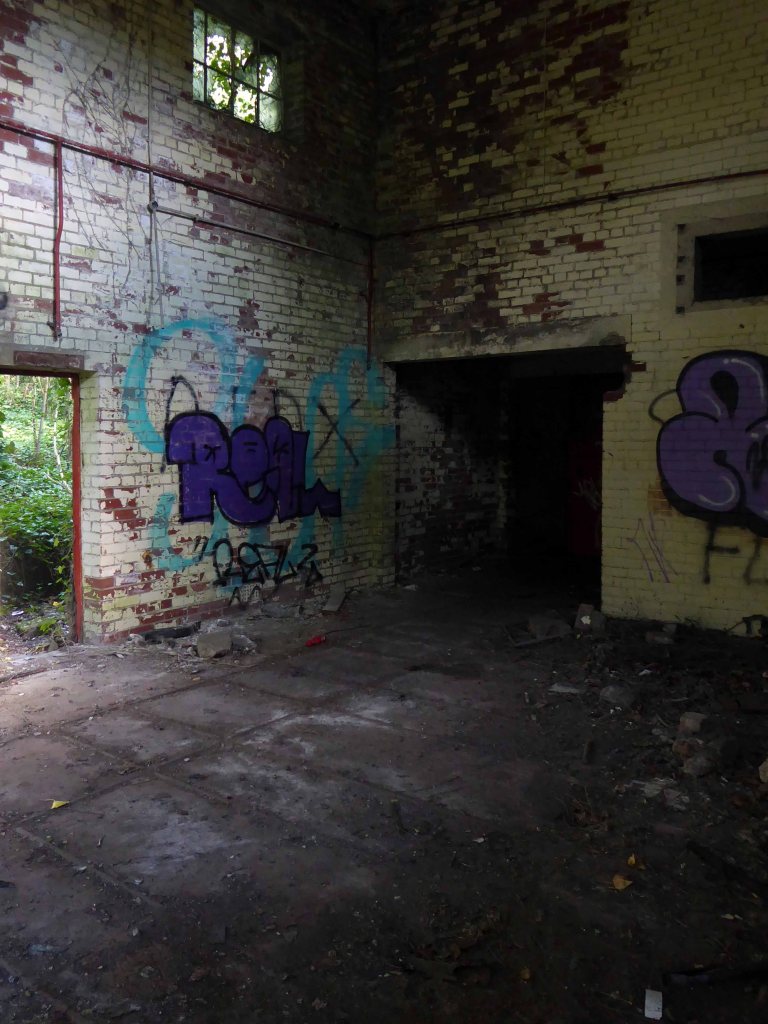
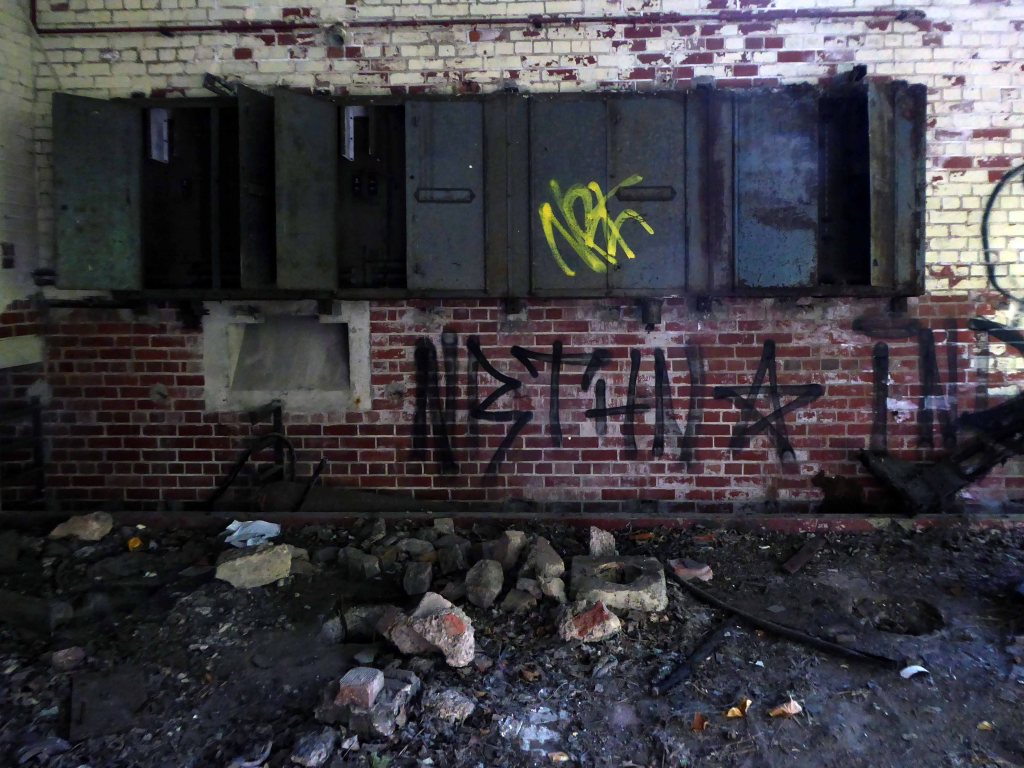
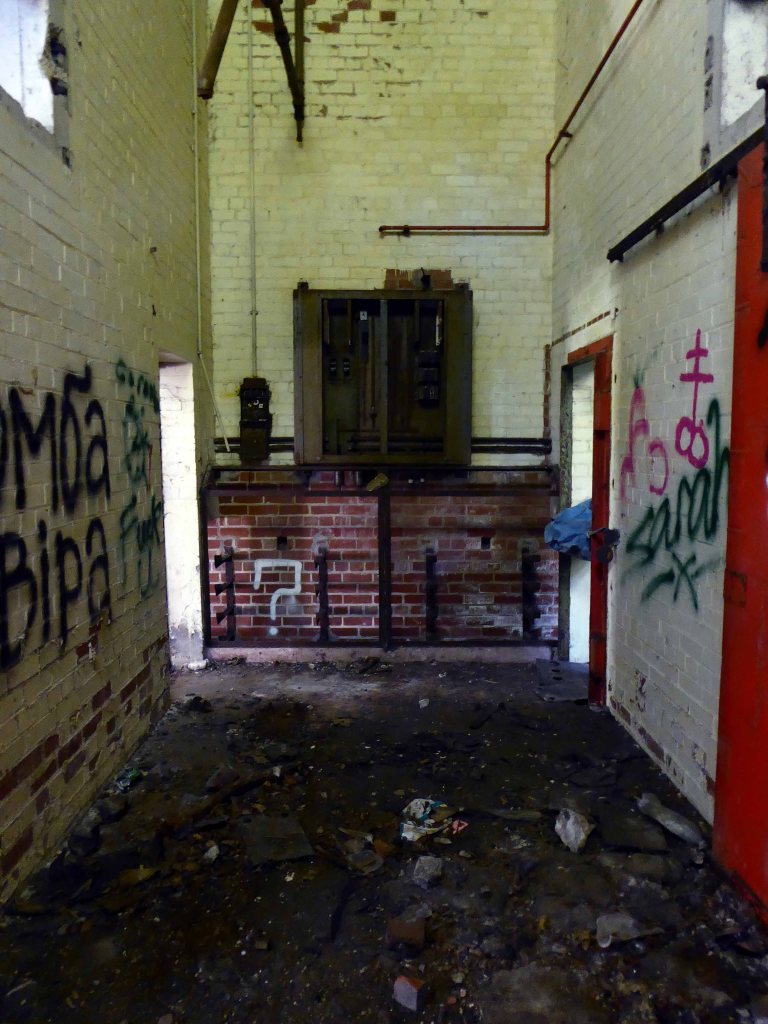
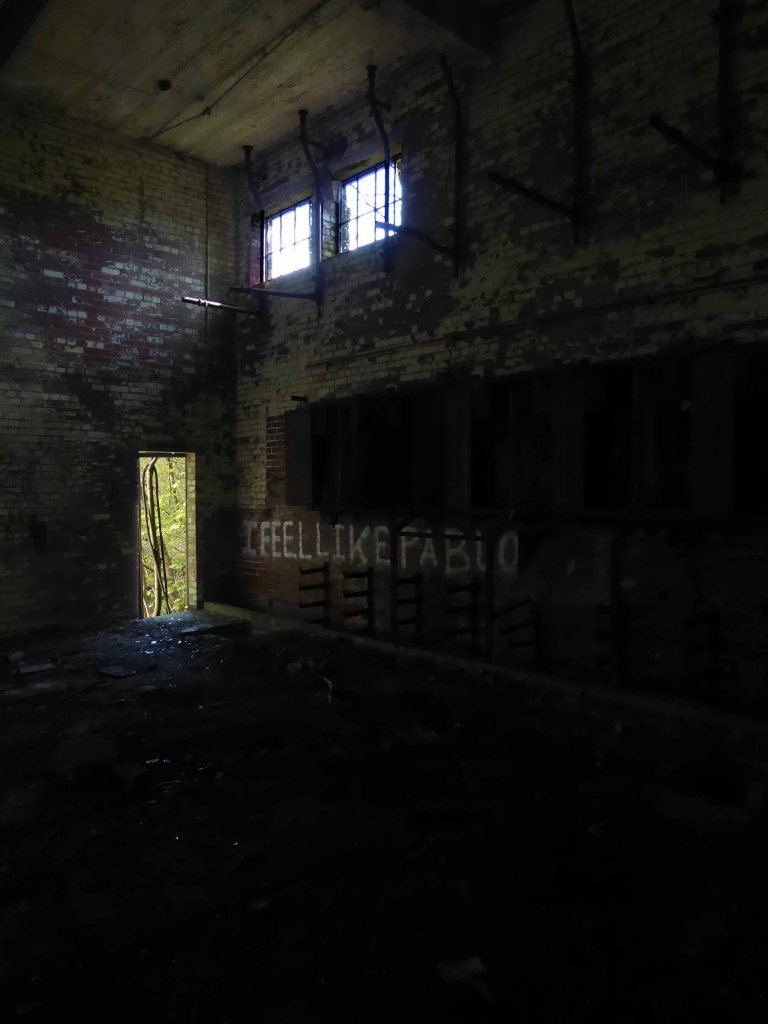
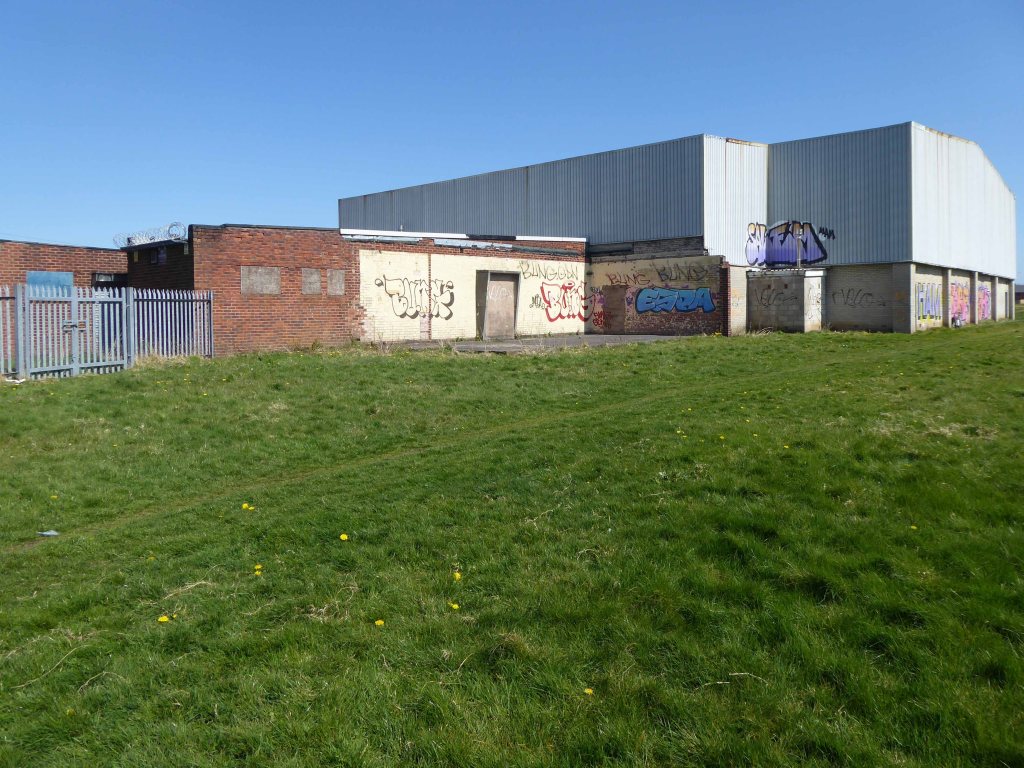
First glimpsed on an urban exploration site, I had awaited an opportunity to slip through the fence and take a look around – here’s what I found.
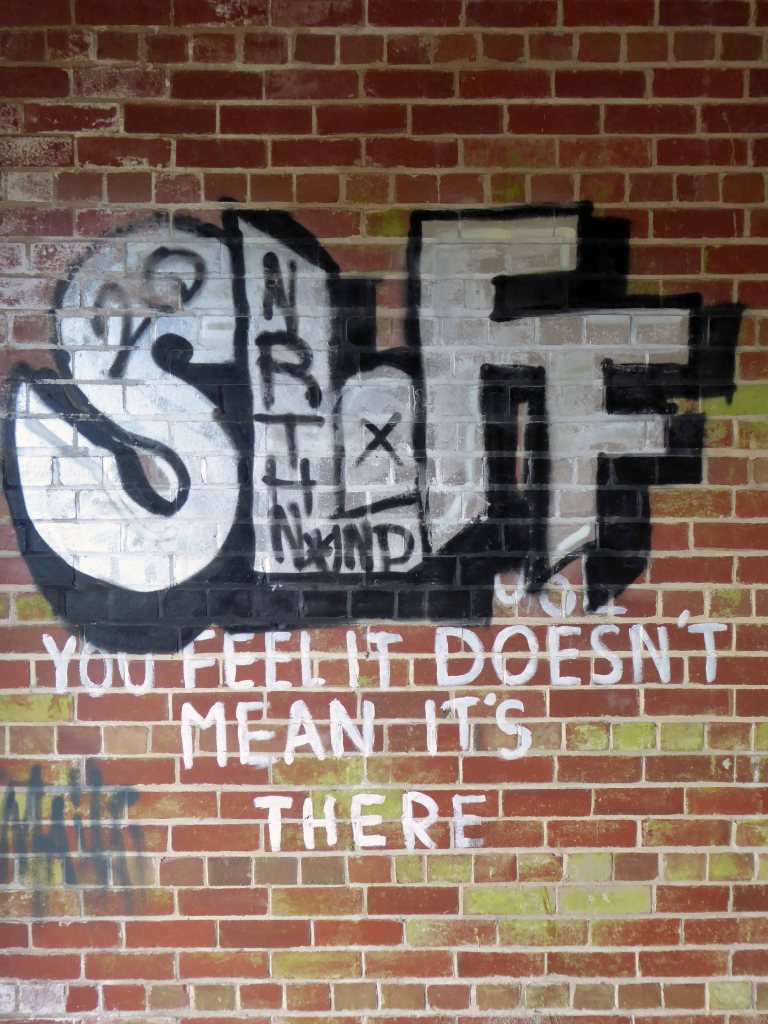
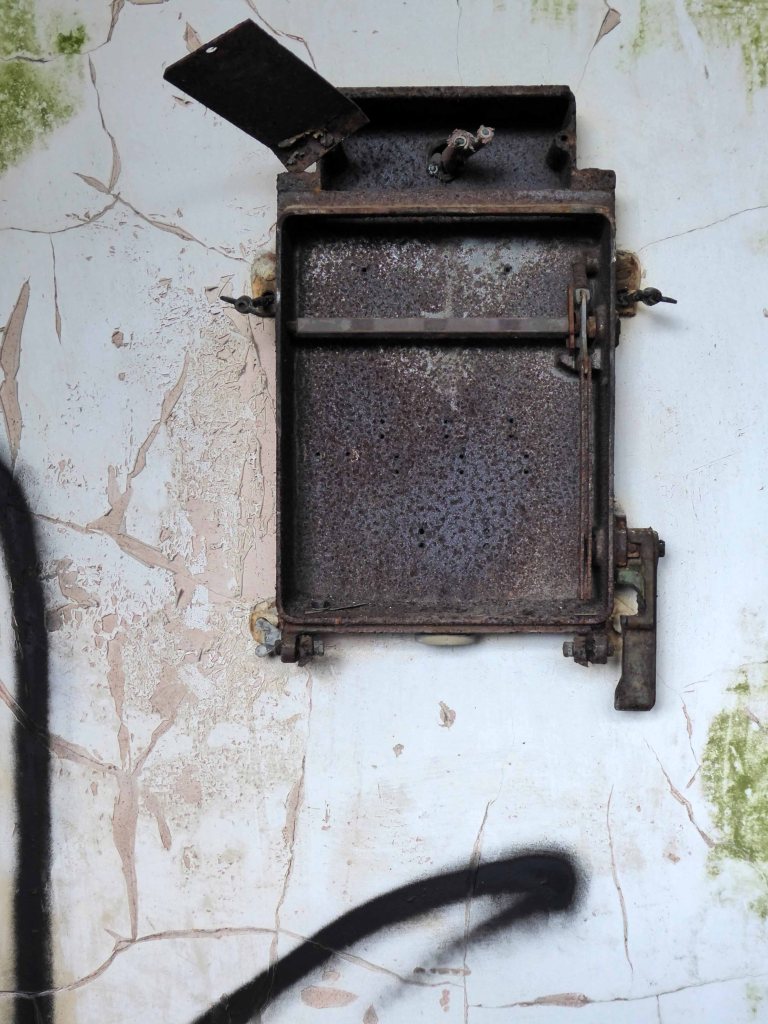
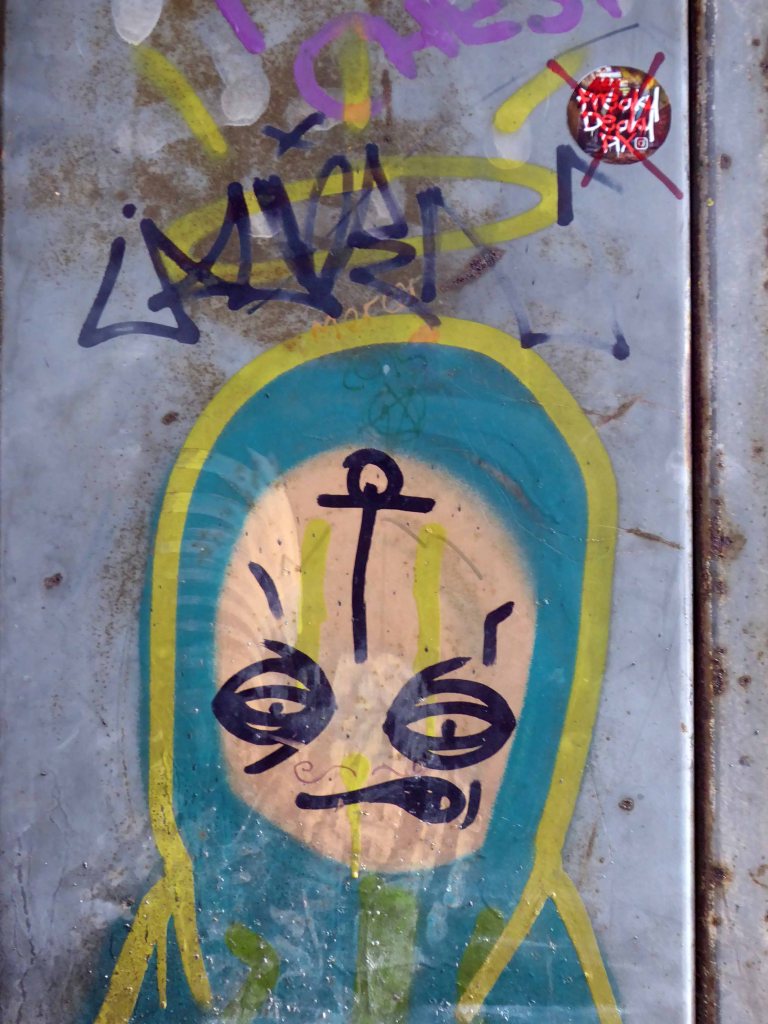
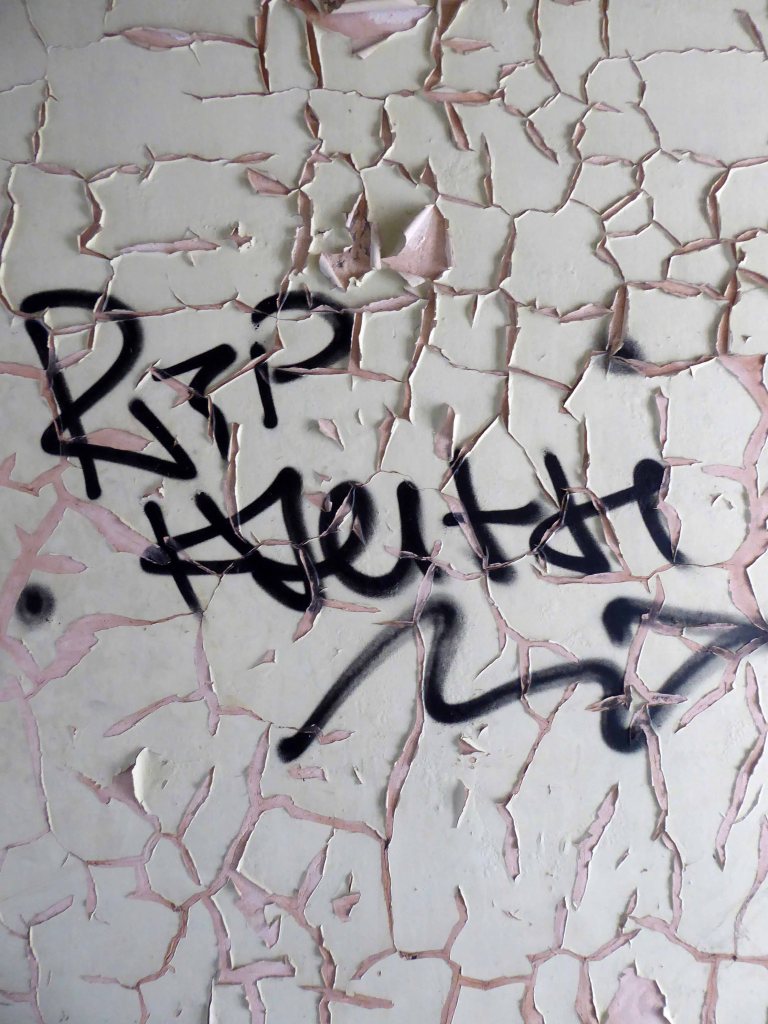
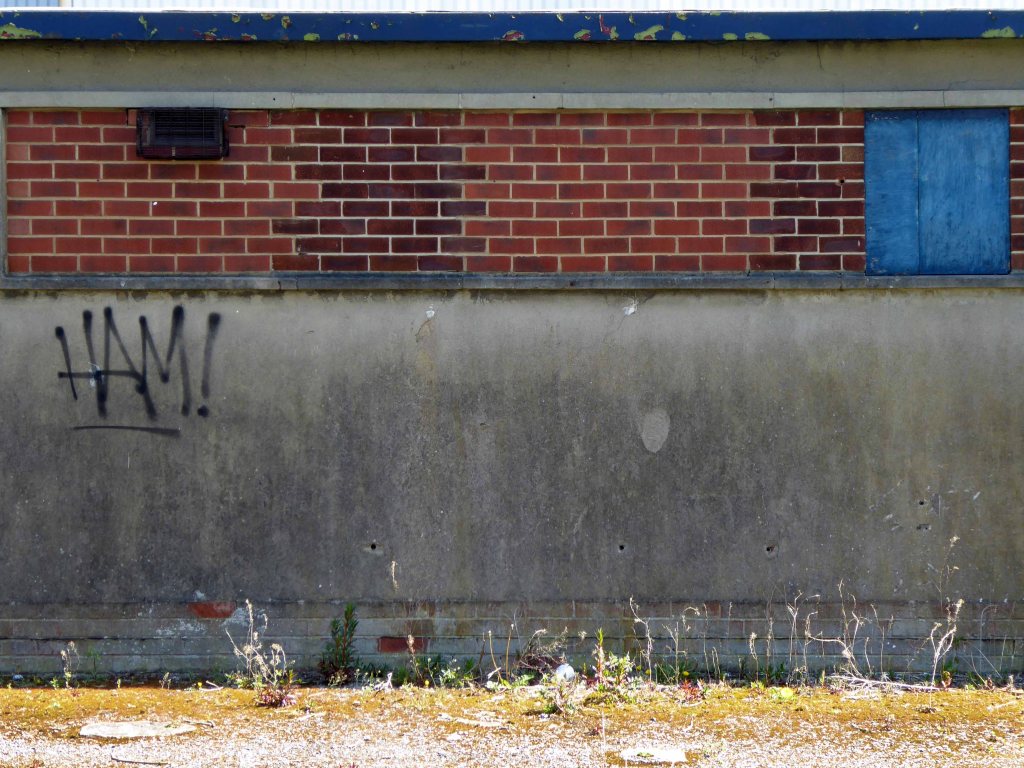
Most of the valuable equipment stripped out leaving and empty shell, covered in layers of the taggers’ interventions.
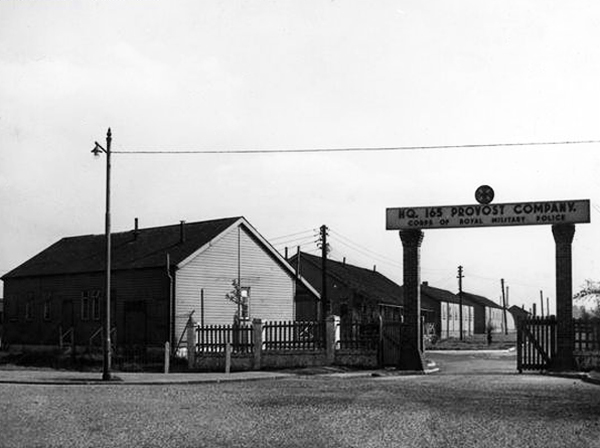
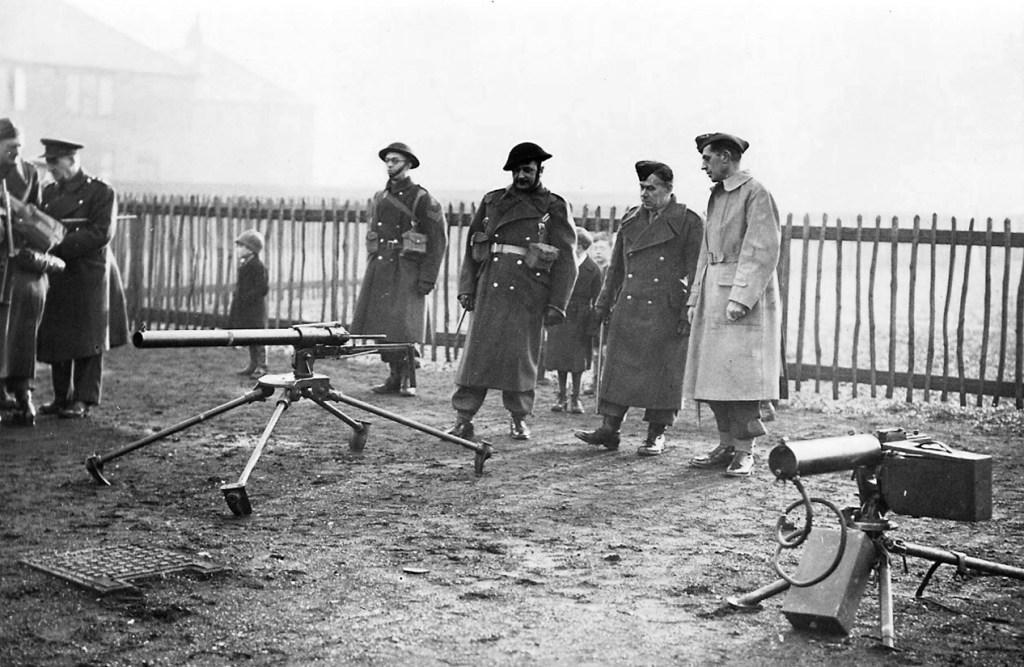
As a Military Police and POW CampThe 48th Battalion Manchester Home Guard used the facilities
Photograph Brian Wood
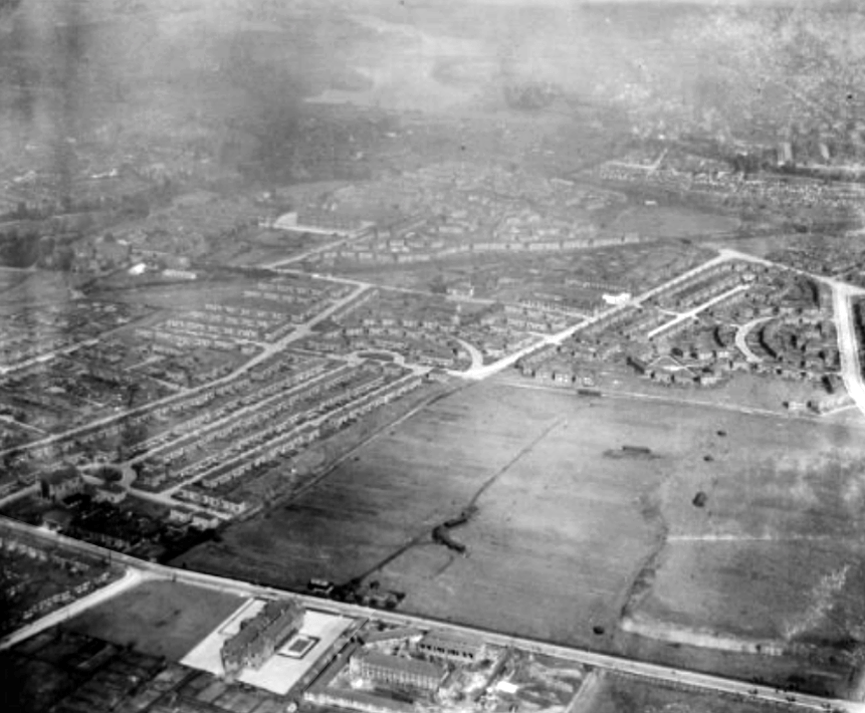
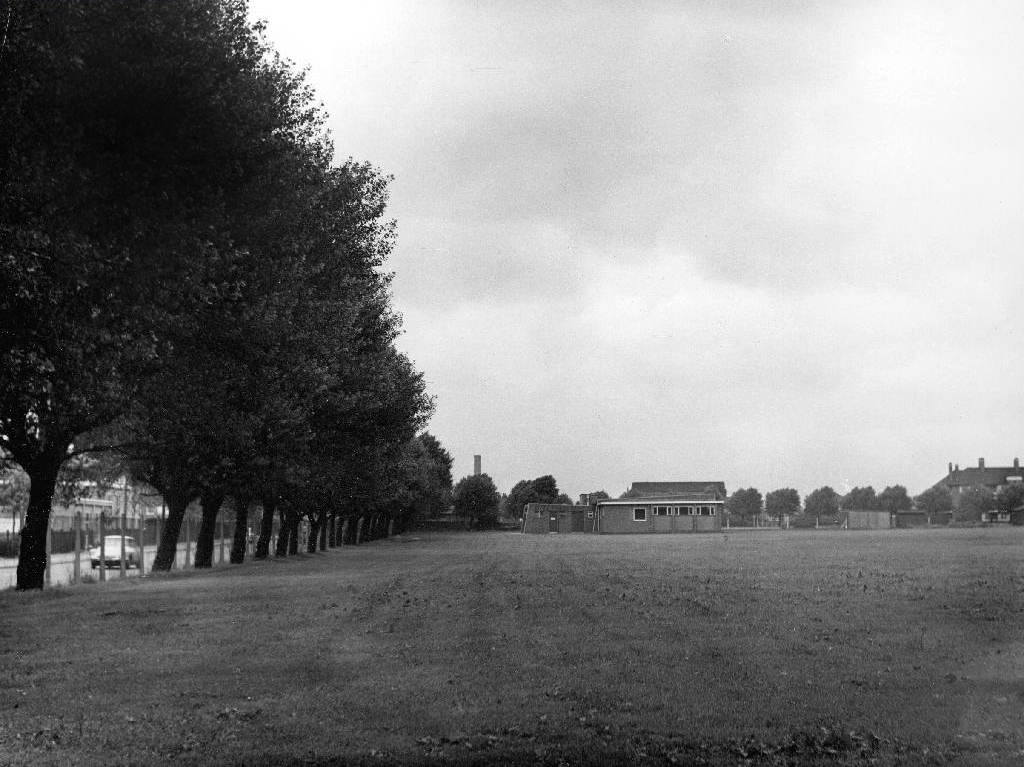
I remember from the 60’s onwards the fields in use for amateur football – pubs, clubs, schools and works all supplying teams to the plethora of leagues across the city.
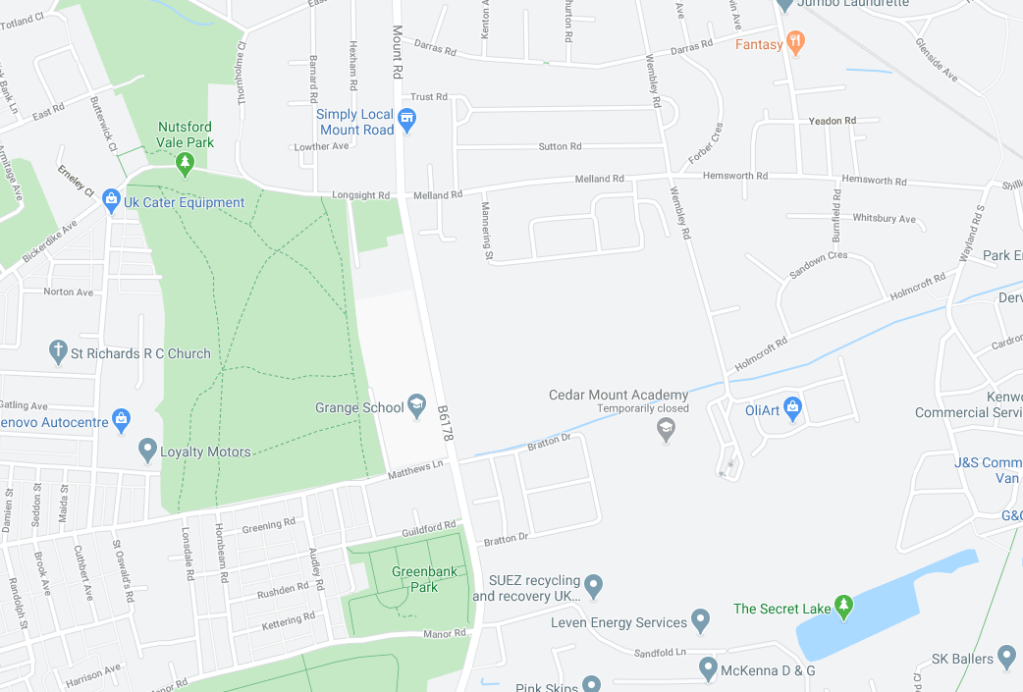
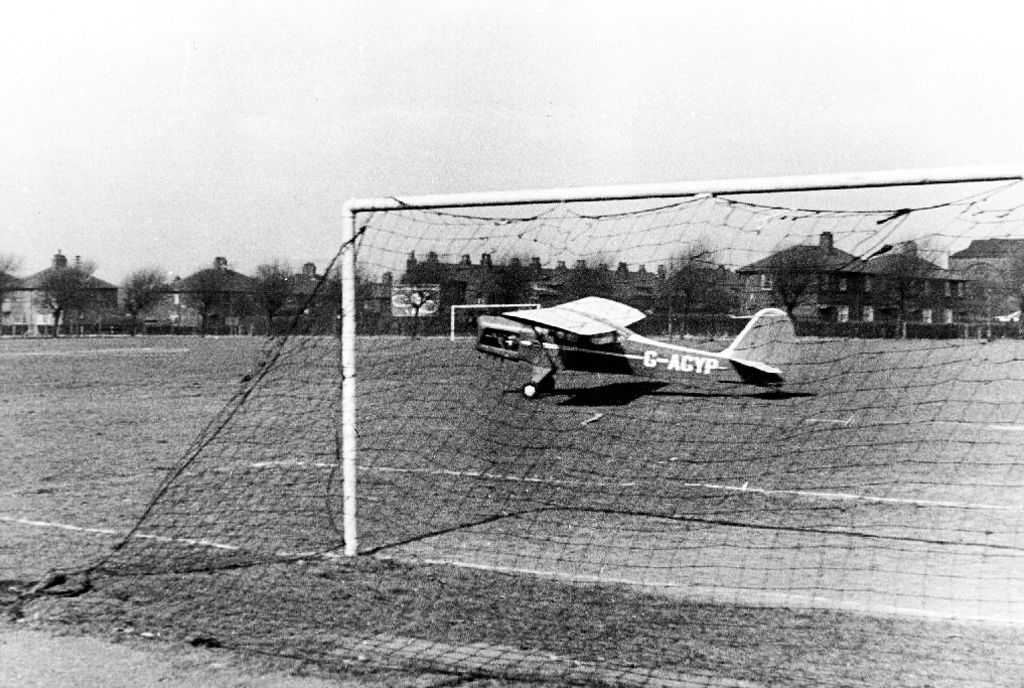
Auster Aircraft of Airliners forced to land at Melland Playing Fields whilst towing banner 19611963
Gorton has received significant regeneration and investment over recent years as have nearby areas including Levenshulme. This is an aspirational, exciting new development and Arkwright Place has something for everyone – from first time buyers to growing families and downsizers – with a huge range of beautiful homes on offer.
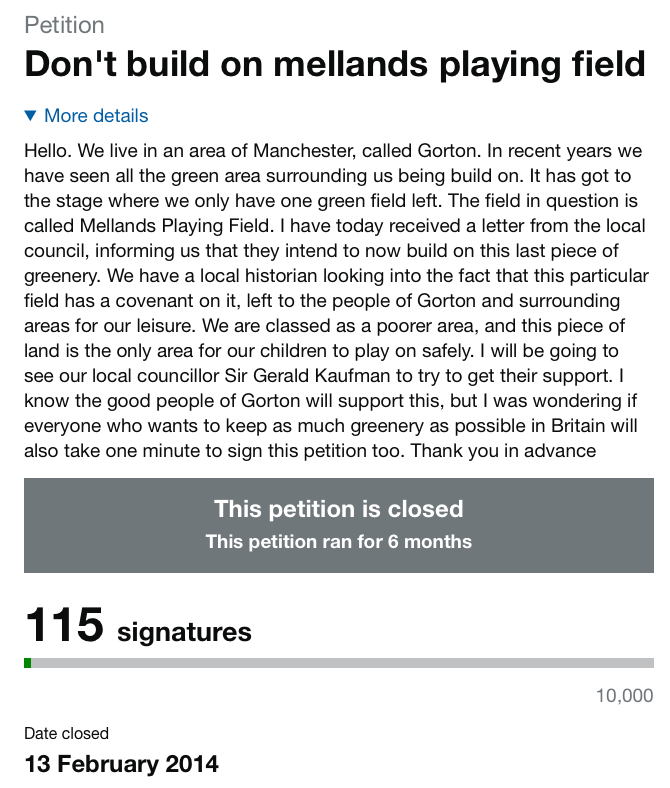
A local campaign was organised to preserve the open space:
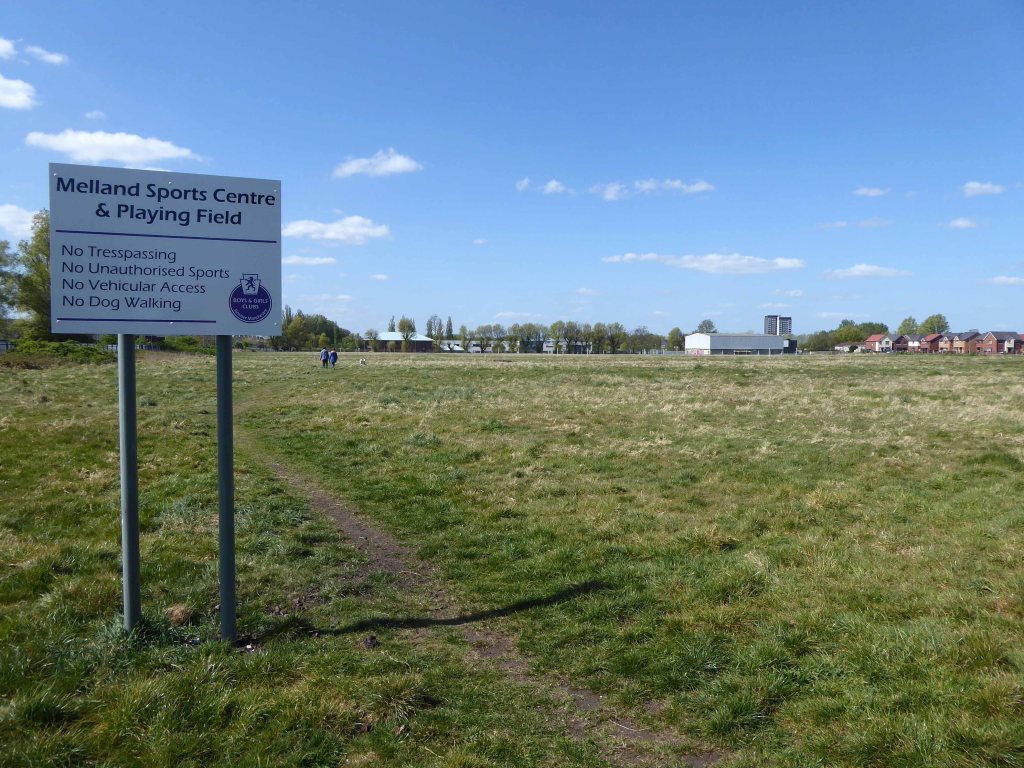
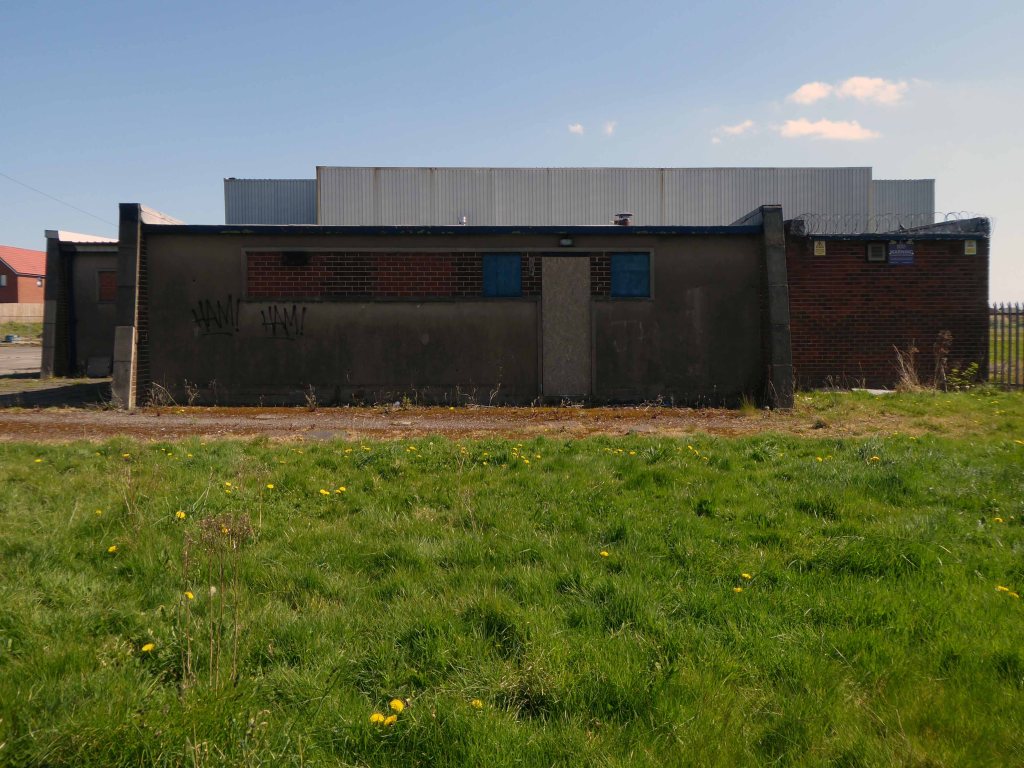
At present the fields are fenced and secured – though gaps have been made to allow access for strollers.
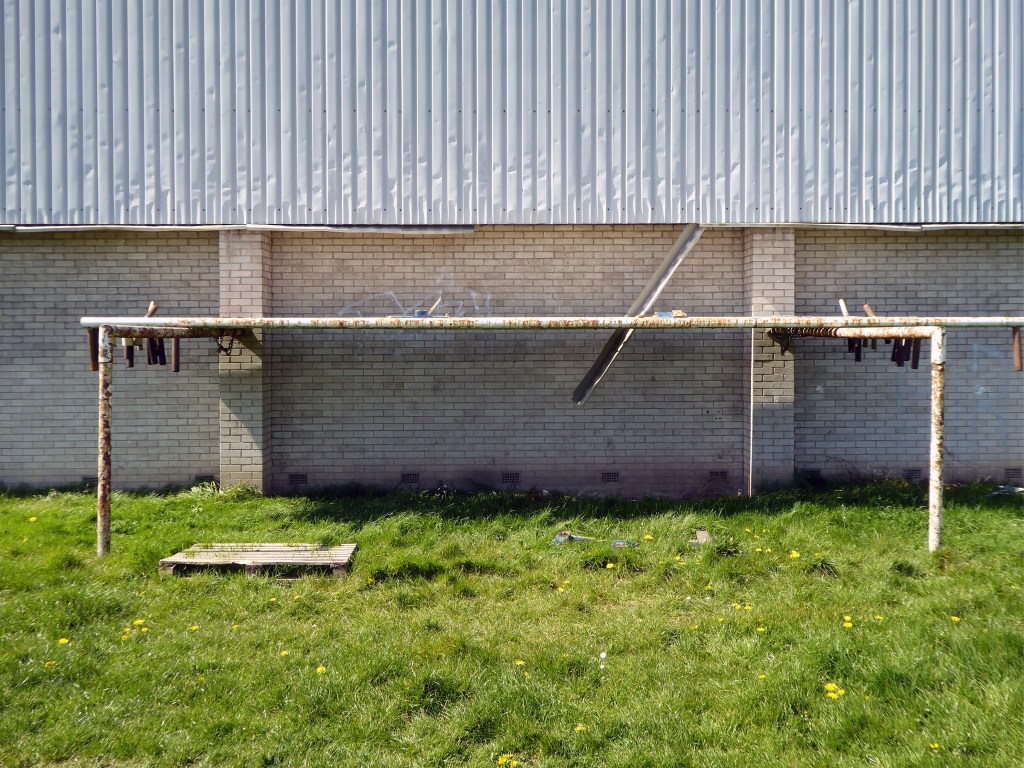
The goalposts still stand though currently without crossbars.
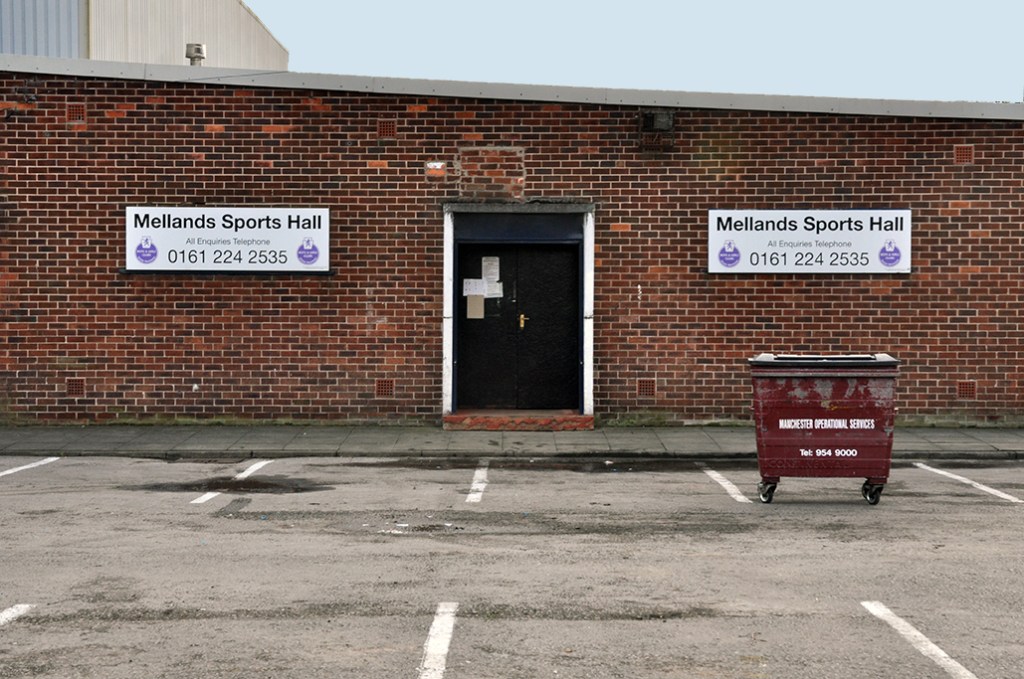
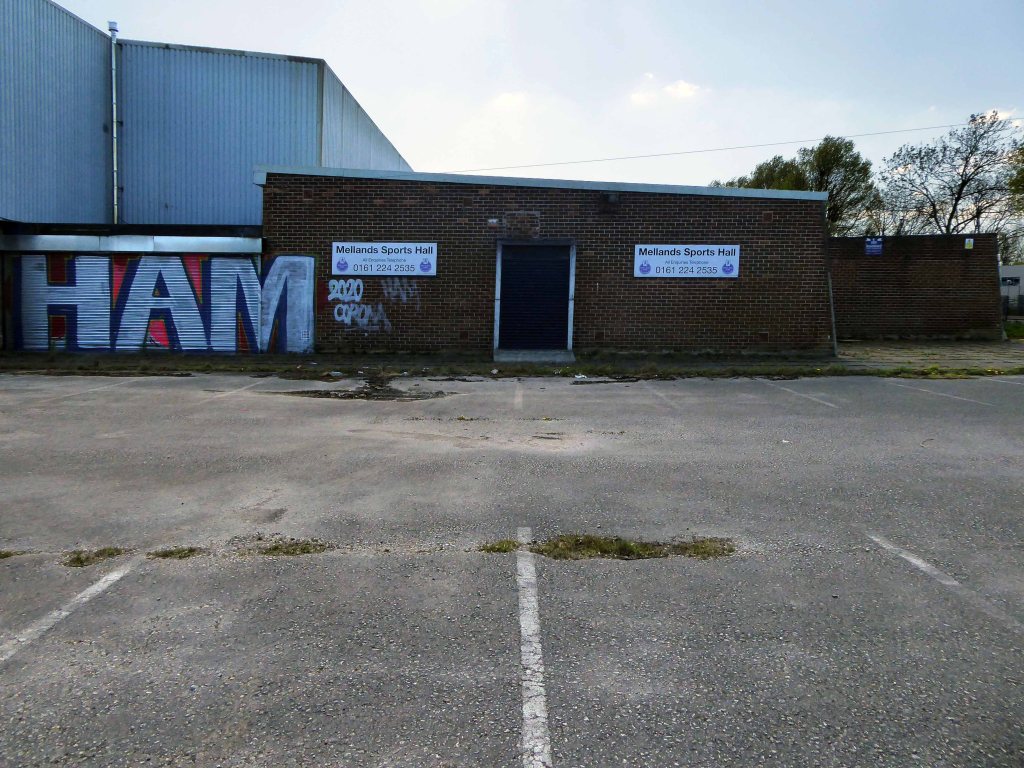
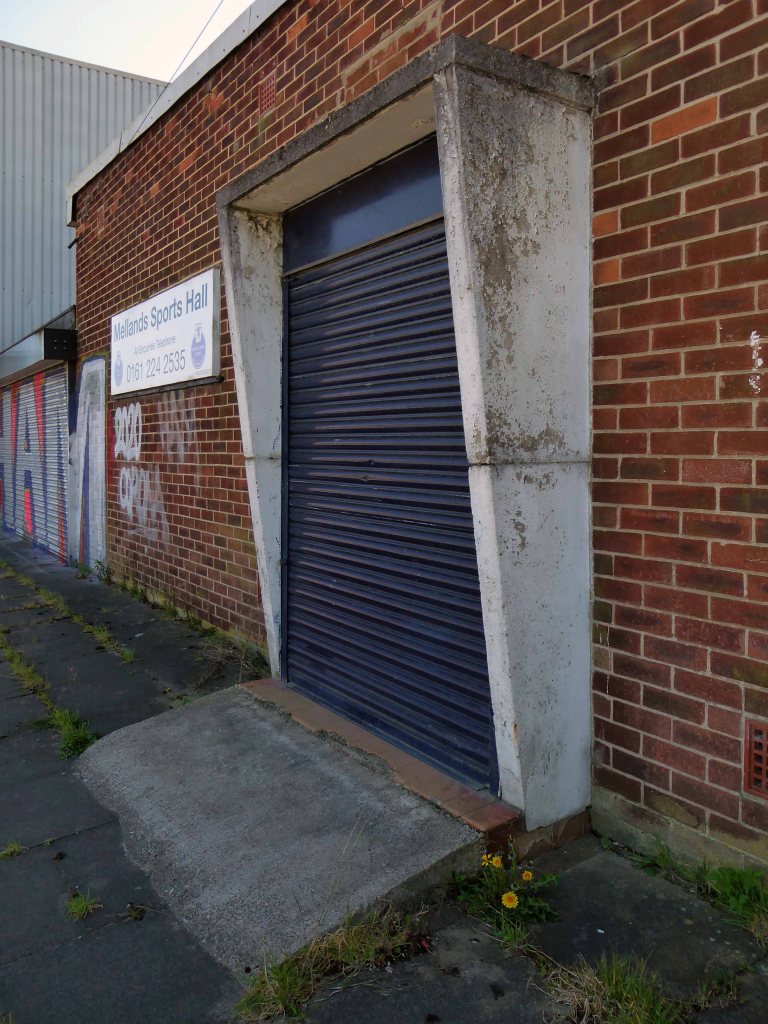
Which are stored by the Sports Hall.
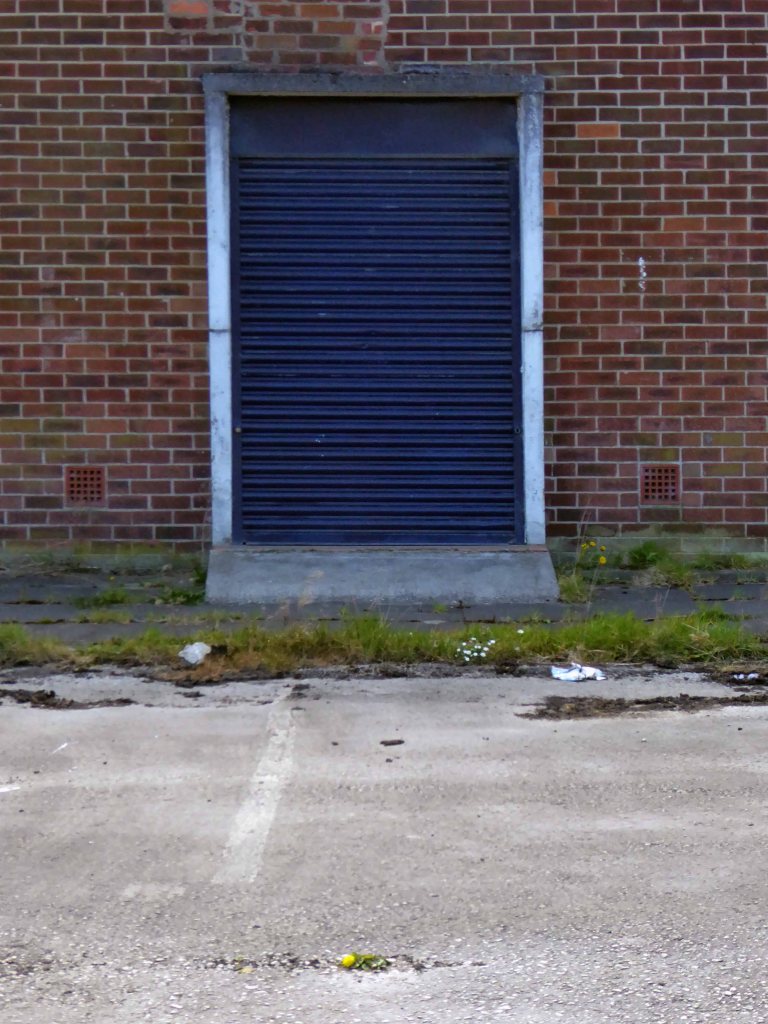
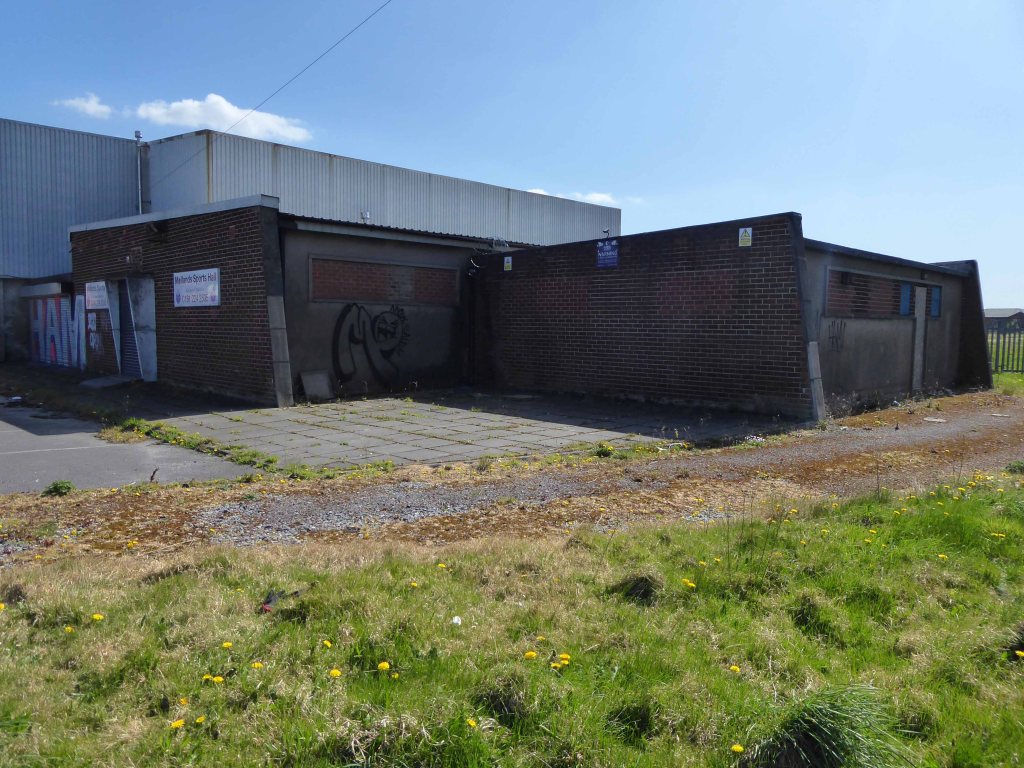
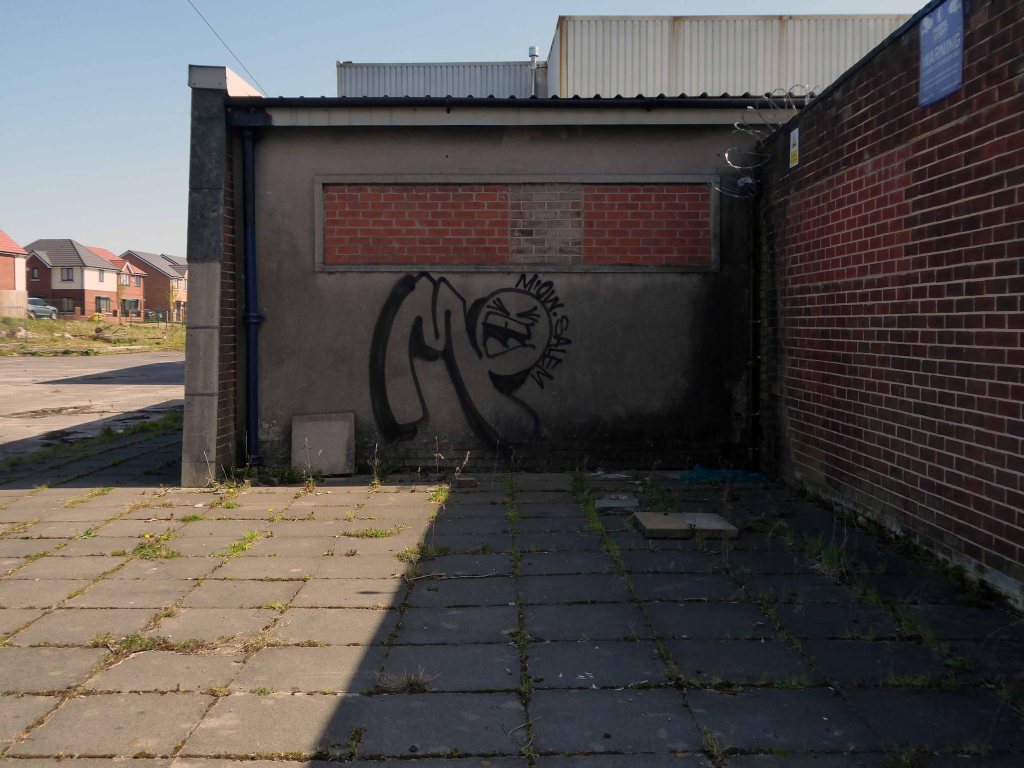
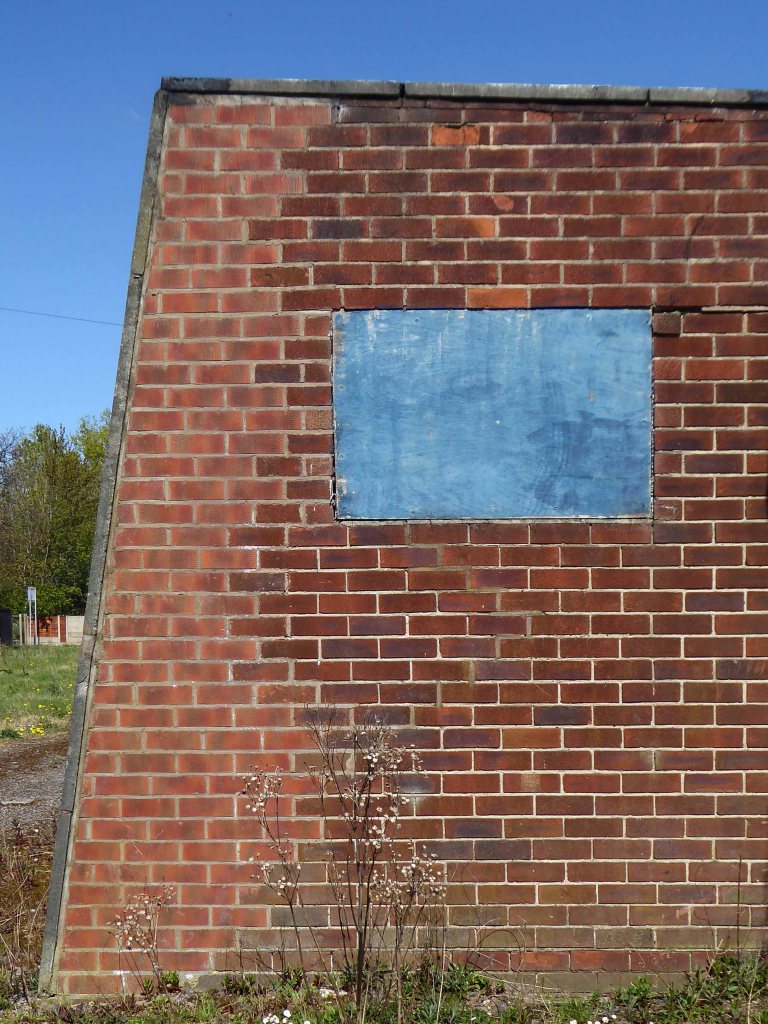
The buildings are mothballed – awaiting what?
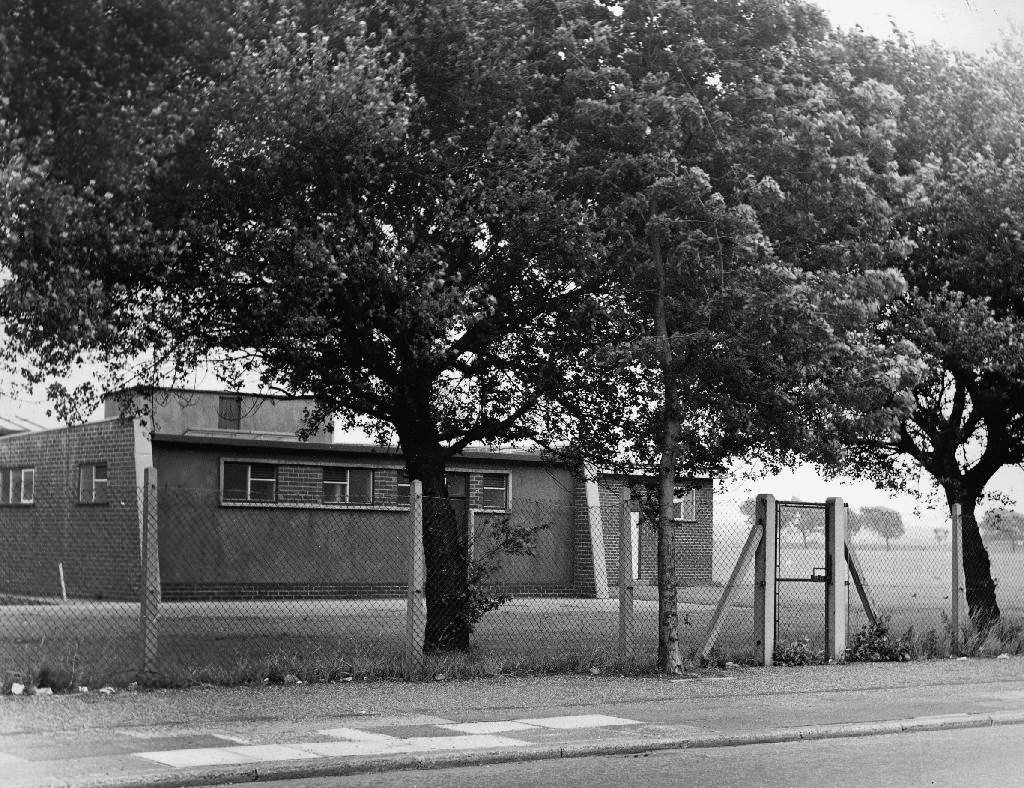
For me the concrete and brick functionalist changing rooms are a thing of beauty and seem to have been a part of my life for quite some time, as I cycled back and to – on my way to work.

































































 Modern Mooch