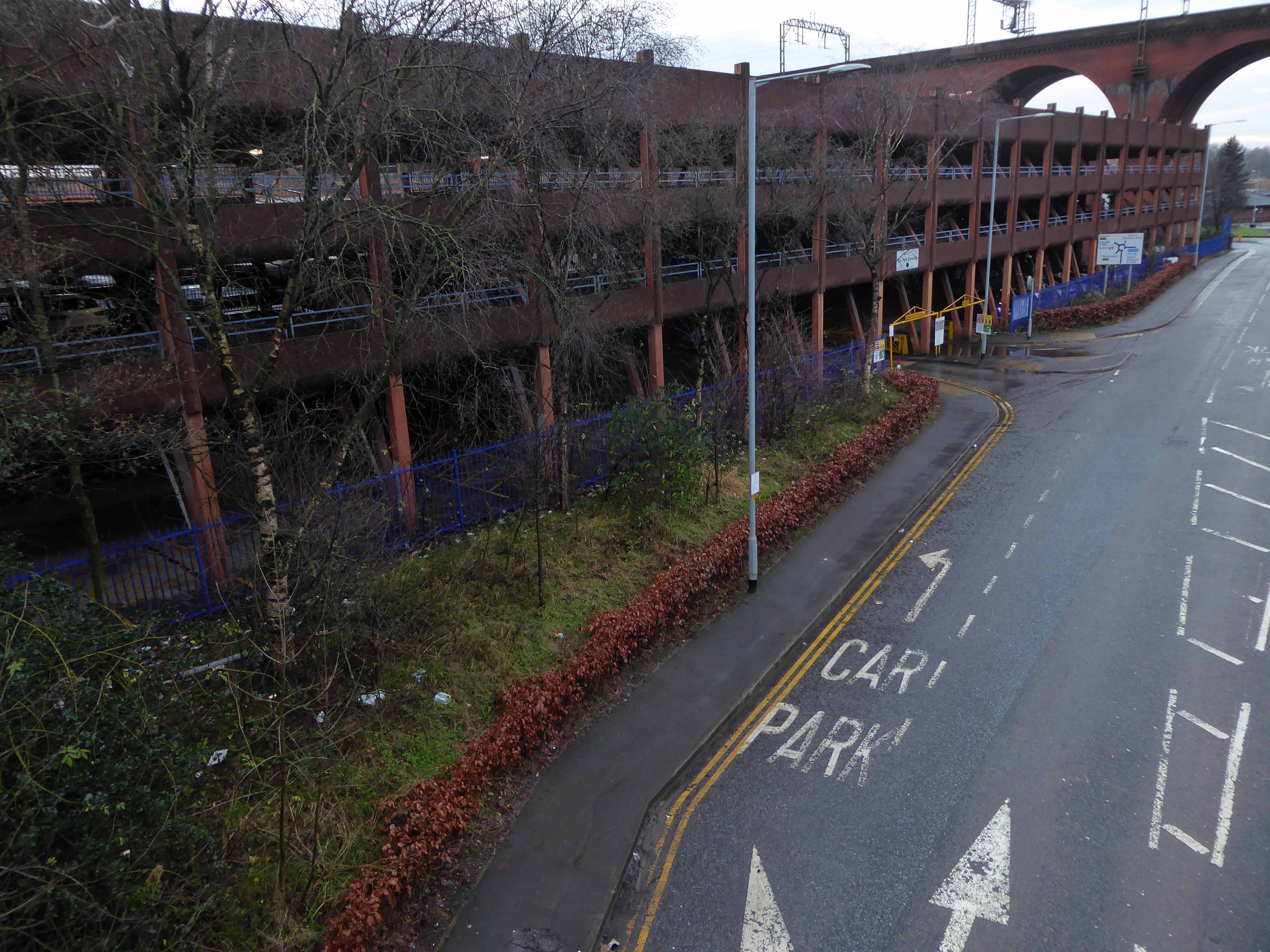
Walking the stairwells, ramps and interlocking tiers, the curious pedestrian becomes aware of the ambition and complexity of the scheme. Often identified on local social media groups as an anachronistic eyesore, I feel that it is a thing of rare and precious beauty.
Knock most of the precinct down, free the river, but keep this wall and what is within.
Anon
Some are slaughtering imaginary white elephants, whilst others are riding white swans.
Currently under the ownership of Stockport Borough Council, changes are afoot.
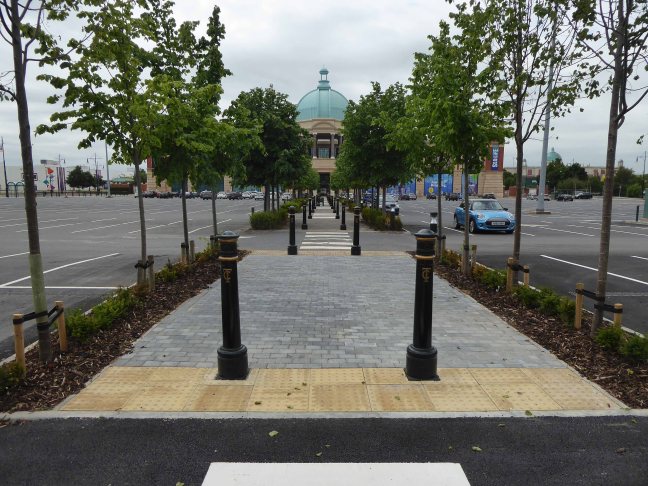
Work to redevelop Adlington Walk in Stockport starts this week, as the first stage in the regeneration of the 55-year-old Merseyway shopping centre.
As of today work is still in Covid induced abeyance, it is still possible to walk the old revamped Adlington Walk. The future of retail in particular and town centres in general is in the balance, the best of the past and the finest of the new should be the watchword.
The scheme and car park redevelopment, is managed by CBRE of Manchester.
The future shopper is looking for more than just a simple buying transaction, they want an experience, entertainment and excitement.
This is where Merseyway Shopping Centre’s future lies.
CBRE Group Inc. is an American commercial real estate services and investment firm. The abbreviation CBRE stands for Coldwell Banker Richard Ellis. It is the largest commercial real estate services company in the world.
Their net worth as of January 28th 2021 is $21.18 Billion.
It is to be hoped that these dreams of entertainment and excitement, may be realised in the not too distant future.
In the meanest of mean times, in the mean time let’s have a look around.
The future moocher is looking for more than just a simple buying transaction, they want an experience, entertainment and excitement.
One of the great glories of cinema is that it has the power to take the mundane and make it magical. To most of us, car parks signify a world of pain, where fearsome red-and-white crash barriers dictate our fate and where finding a space is often like finding meaning in the collective works of Martin Lawrence. To others, they meant lost Saturday afternoons spent waiting for your mum to finally come out of Woolworths so you could rush home to catch Terrahawks.
Either way, car parks are grey and dull. In the movies, however, they are fantastic places, filled with high-level espionage, and high-octane chases.
I beg to differ, the cinema and TV has helped to define our perception and misconception of the car park.
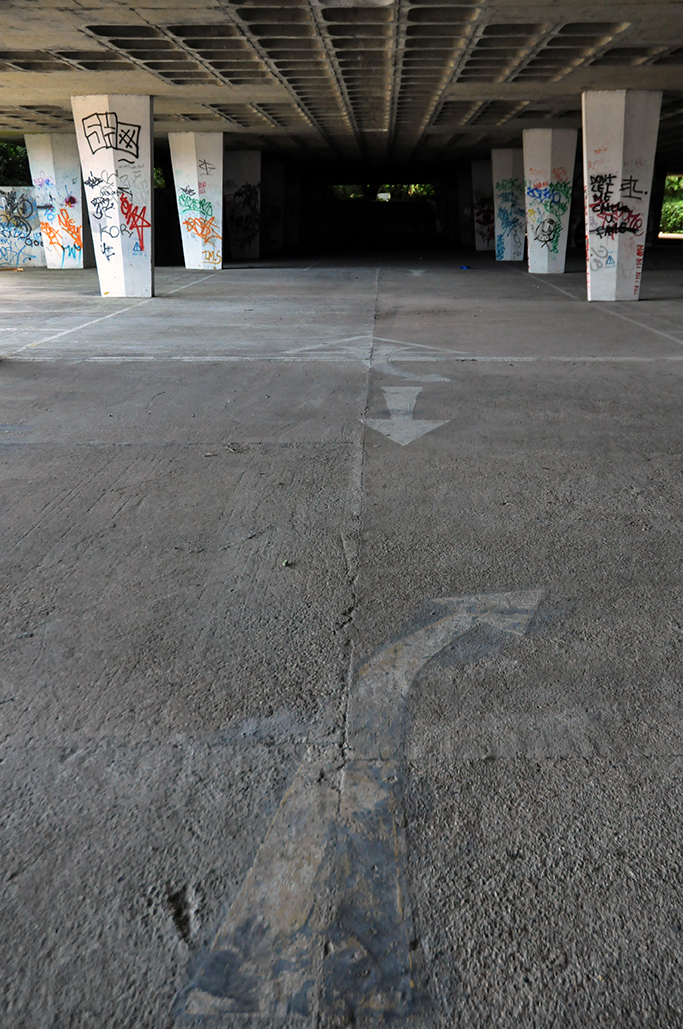
The modern day pedestrian may reclaim, redefine and realise, that far from mundane each actual exemplar is different, in so many ways. The time of day, weather, light, usage, abusage, condition, personal demeanour and mood all shape our experience of this particular, modern urban space.
To walk the wide open spaces of the upper tier, almost touching the sky.
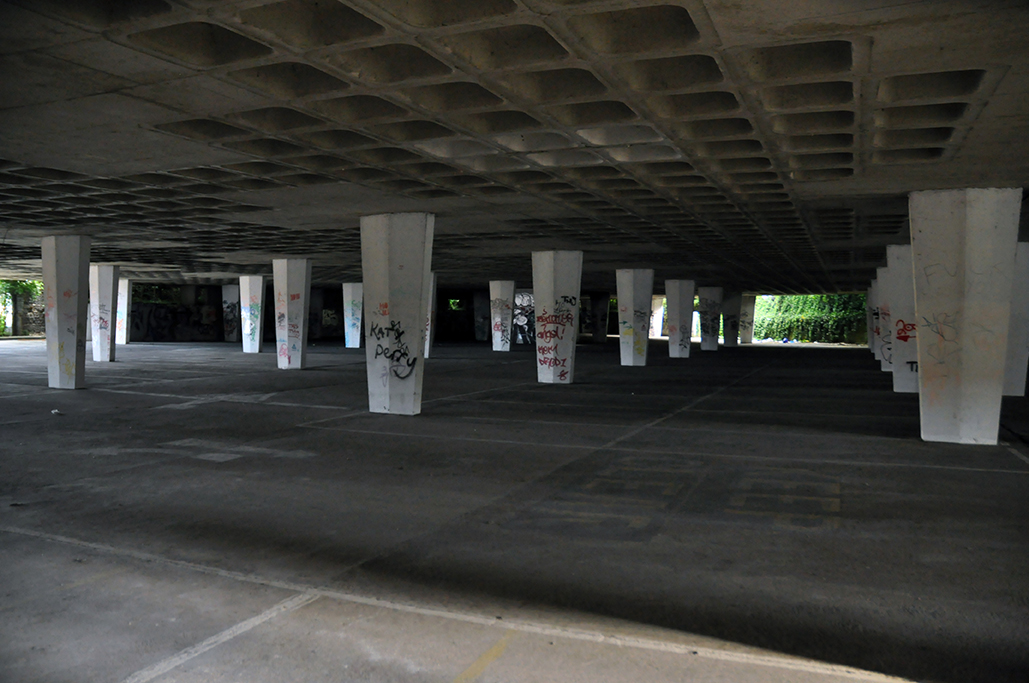
Is a far cry from the constrained space of the lower levels.
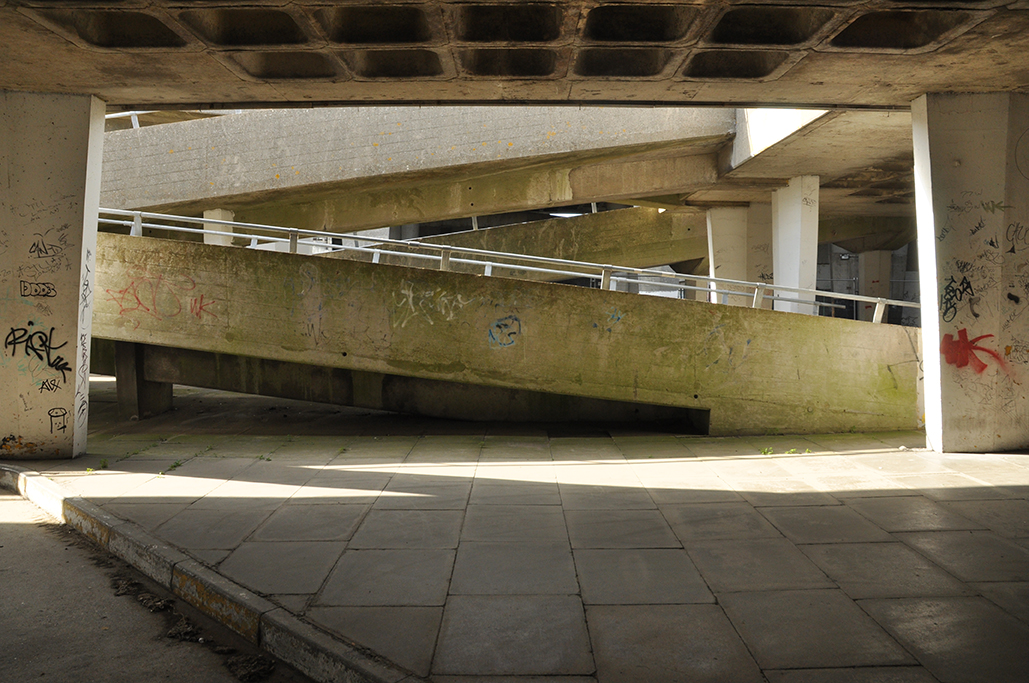
To walk the ramps with a degree of trepidation, visceral and fun.
This is an inversion of the car-centric culture, walking the concrete kingdom with a carbon-free footprint.
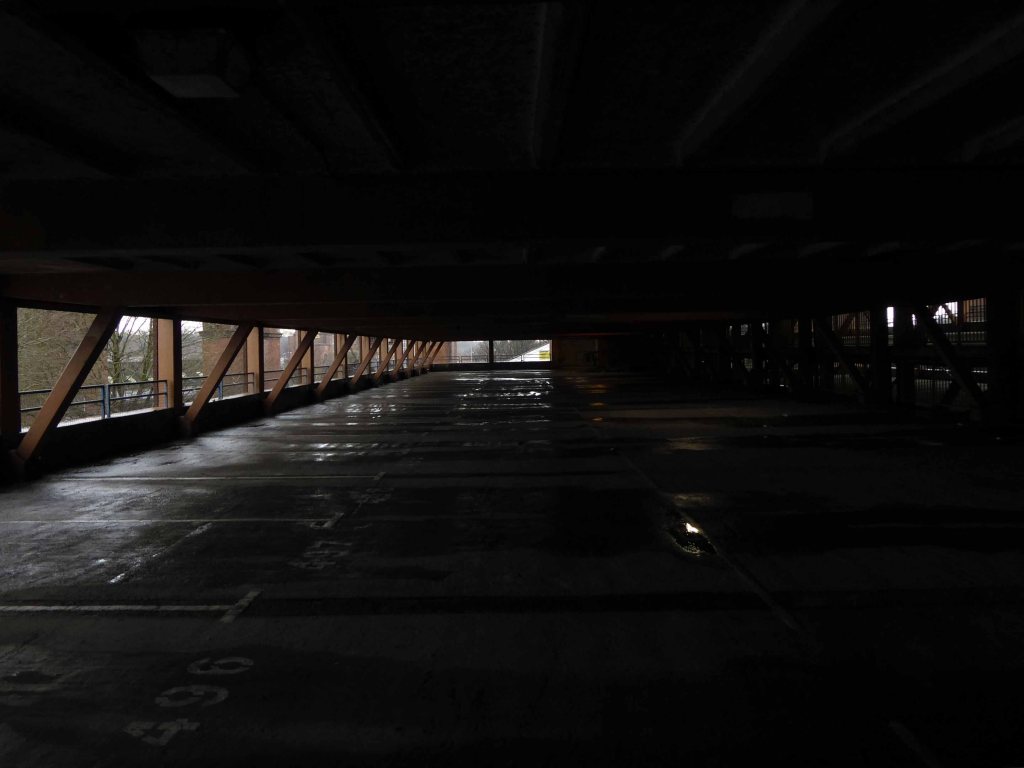
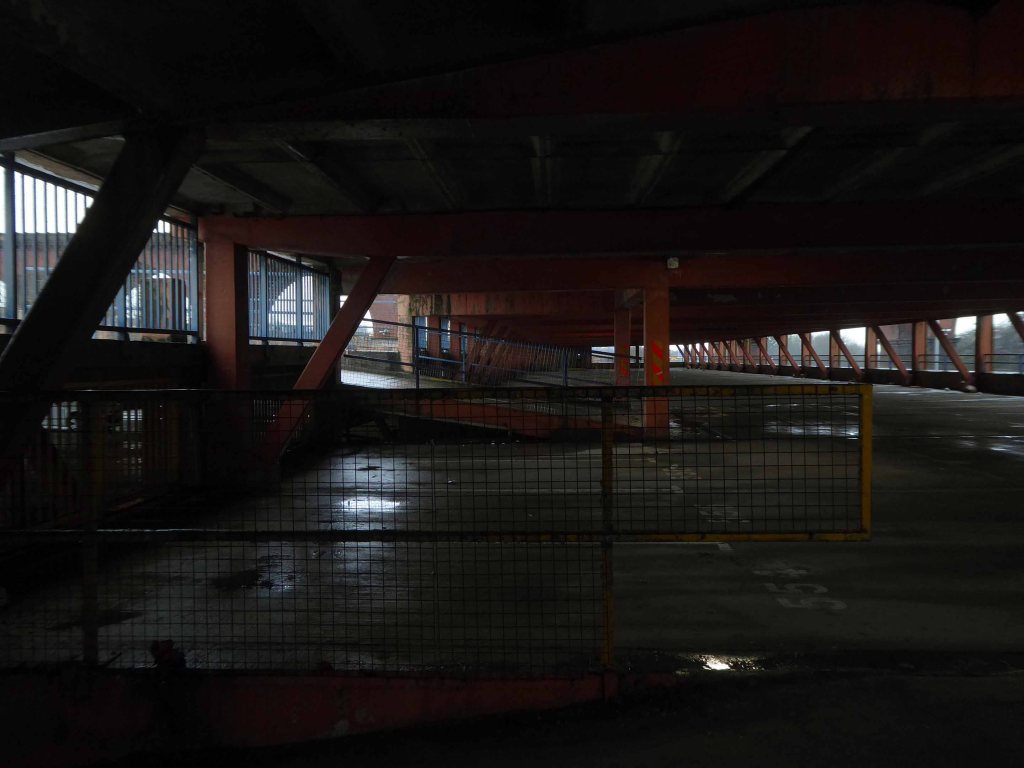
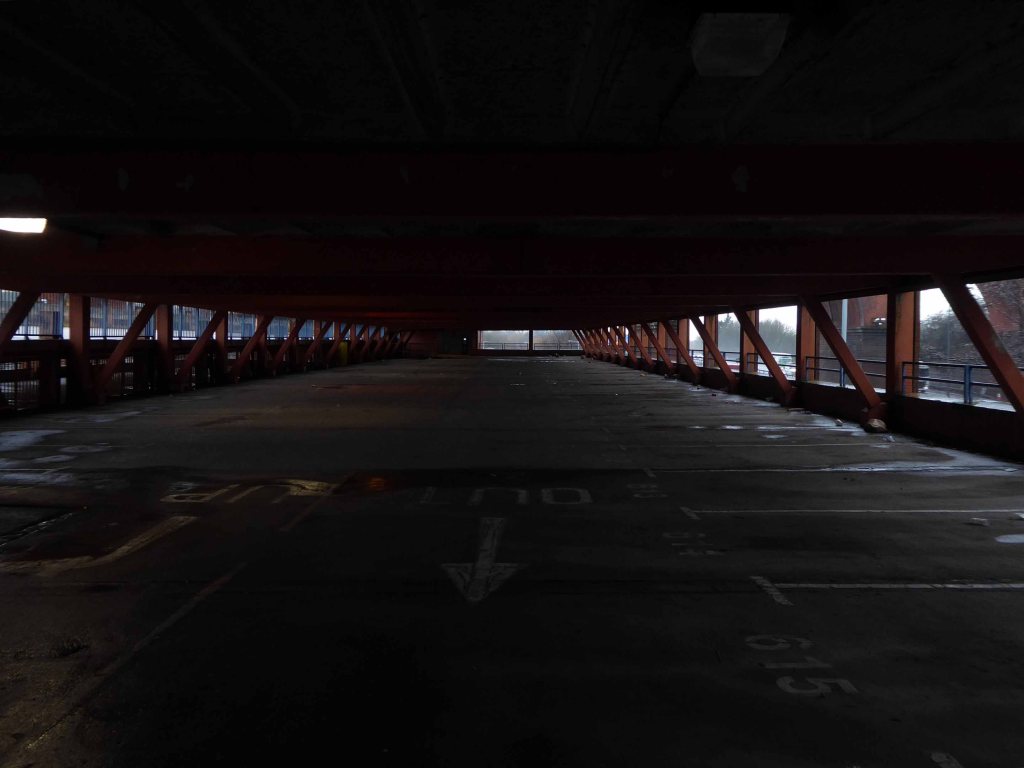
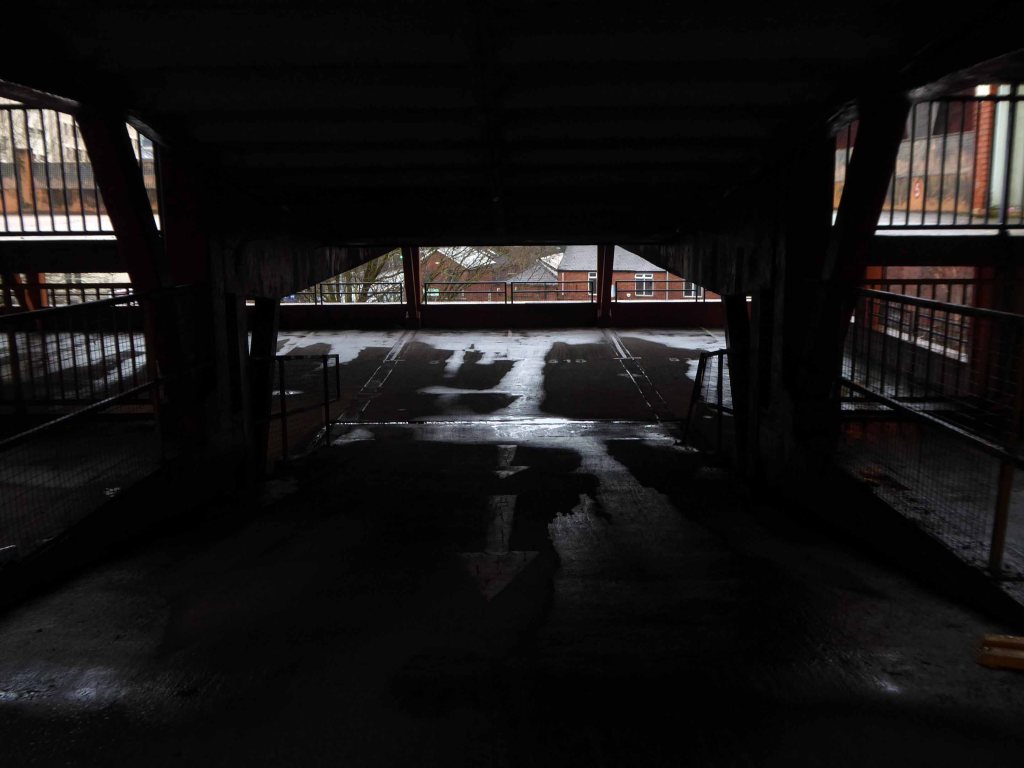
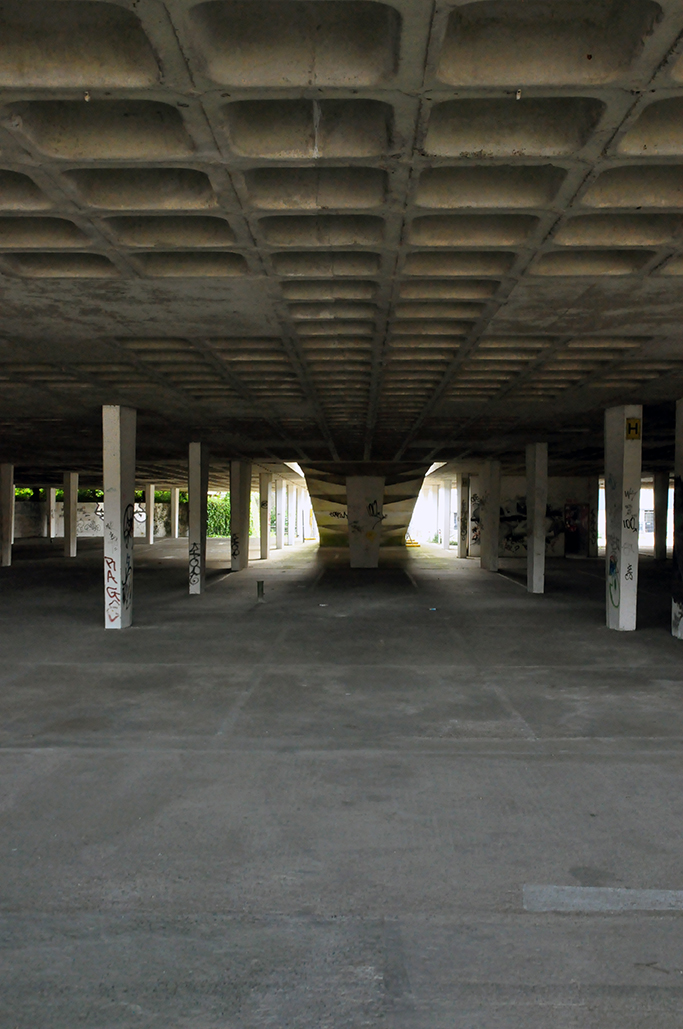
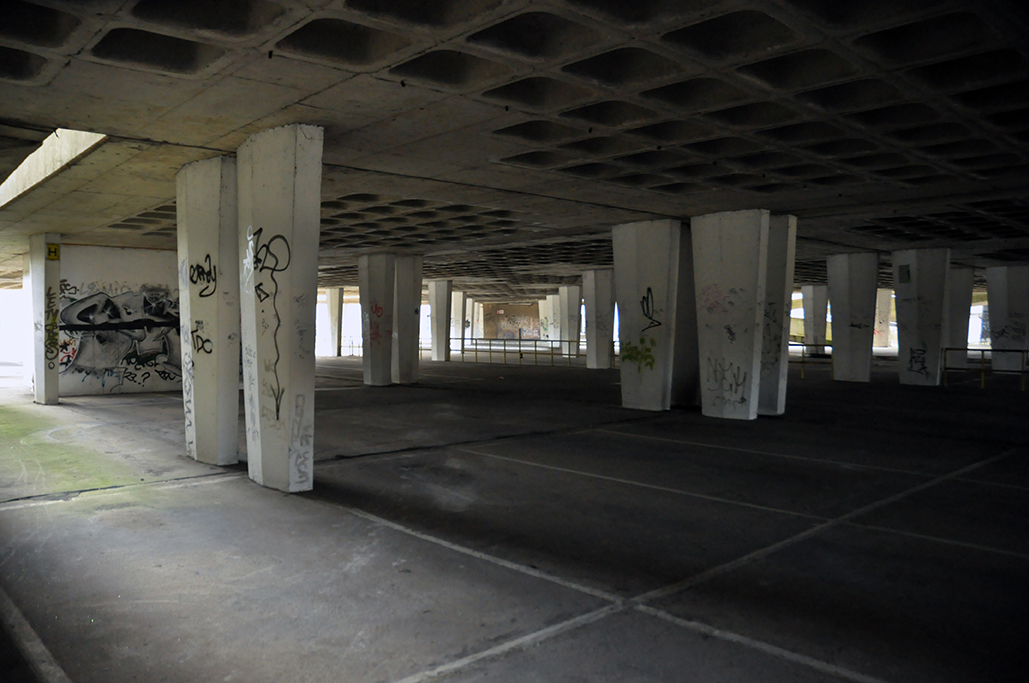
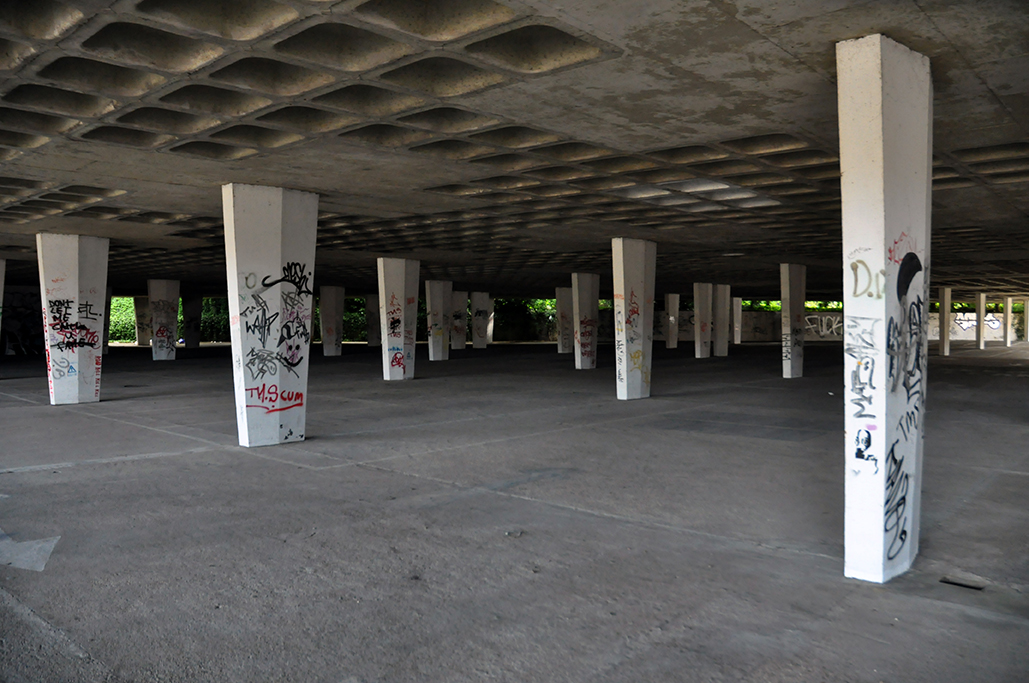
I was inspired by a recent viewing of All The Presidents Men to revisit my local multi-storey on Heaton Lane Stockport.
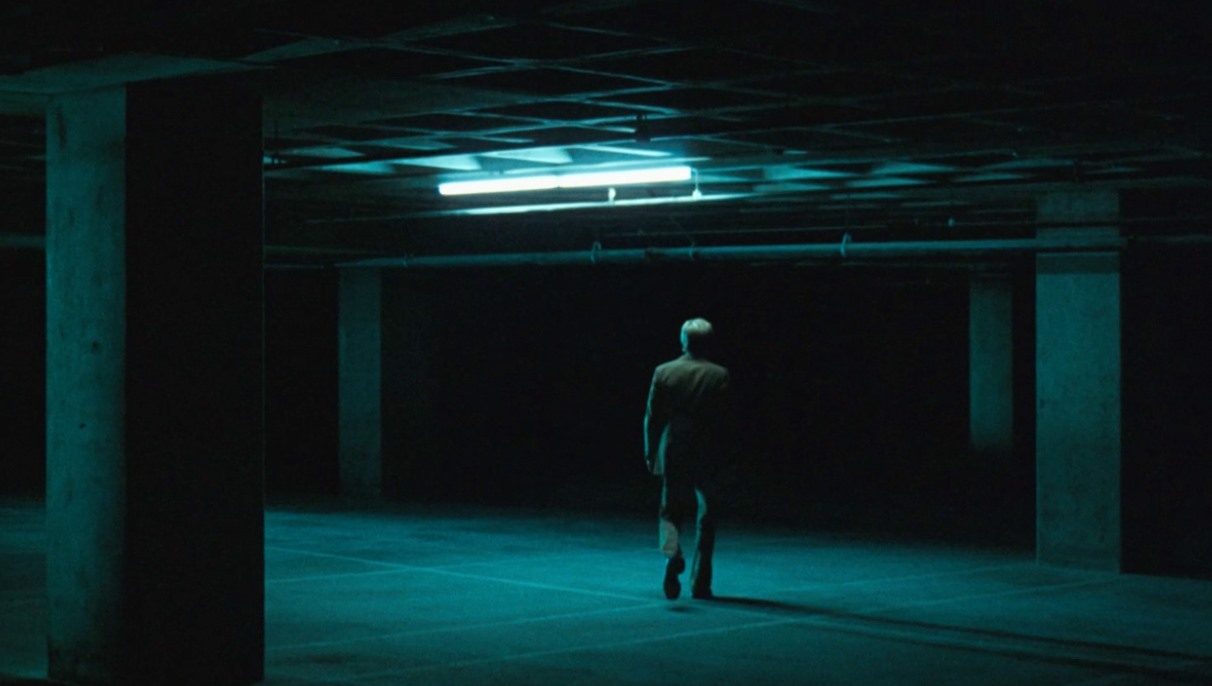
Cinematographer Gordon Hugh Willis Jr constructs a shadow world where informer and informed meet to exchange deep secrets, ever watchful, moving in and out of artificial light, tense and alert.
Look over your shoulder- there’s nobody there, and they’re watching you.
But they have been here.
To party.
To tag.
To live.
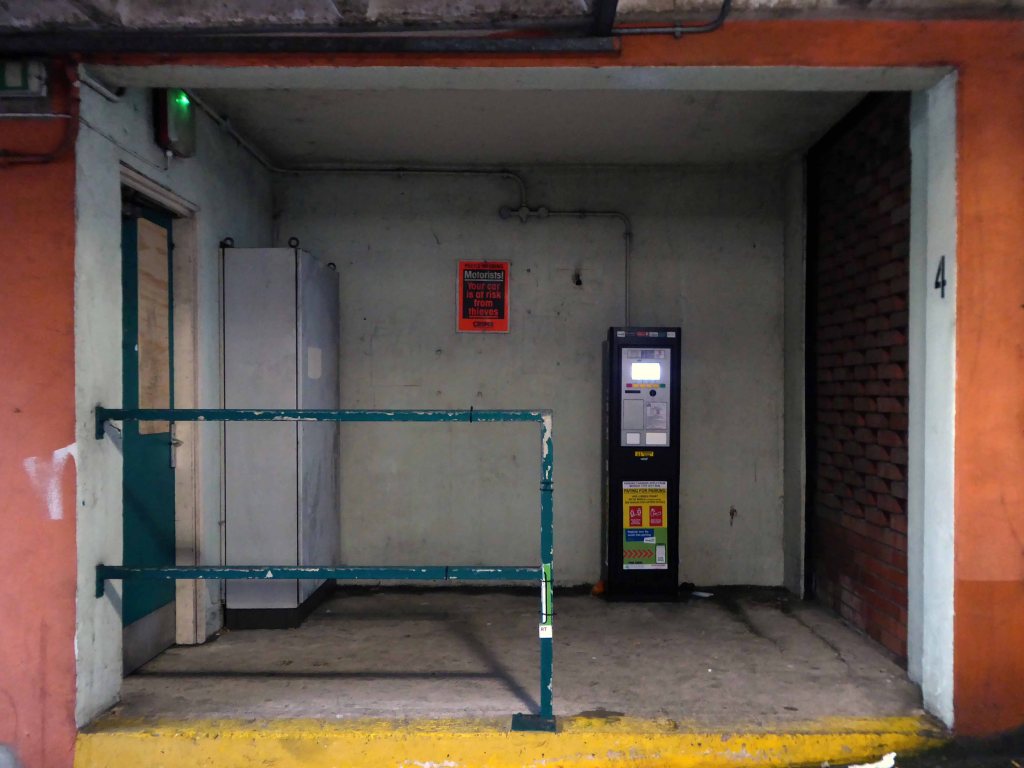
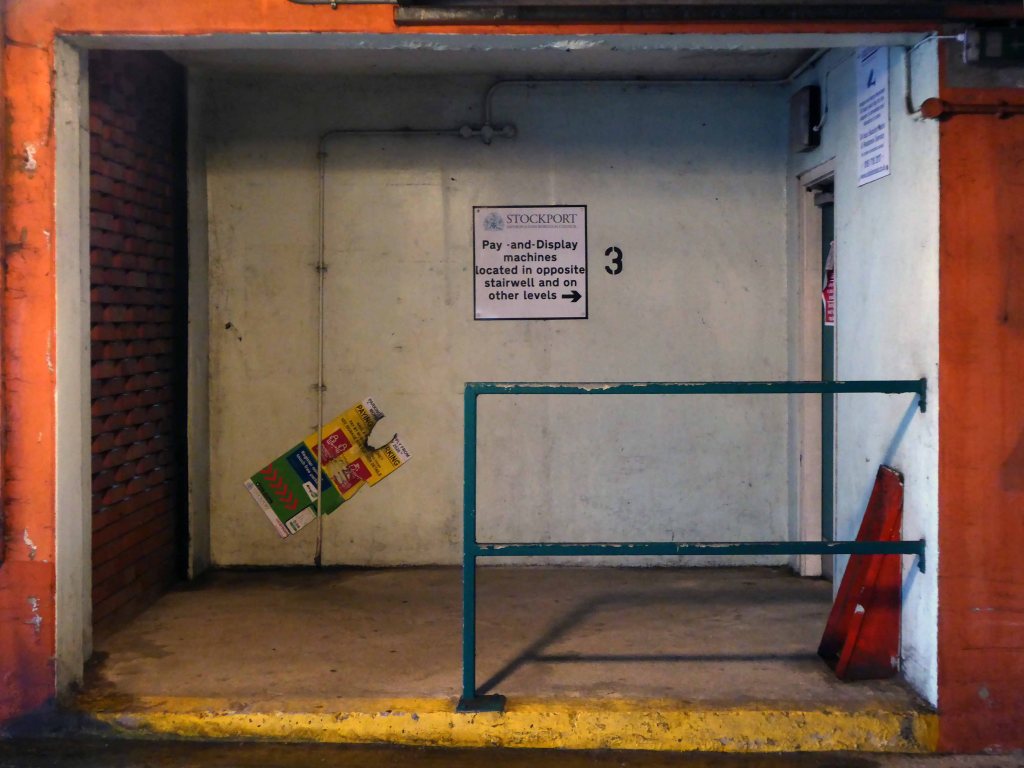
Pay here, your time is time limited, your presence measured.
Let’s explore this demimonde together, wet underfoot, lit laterally by limited daylight, walking through the interspersed pools of glacial artificial glow.
Time’s up, check out and move on – tomorrow is another day, another car park; in a different town.
Cinema and car parks wedded forever in the collective popular cultural unconscious.
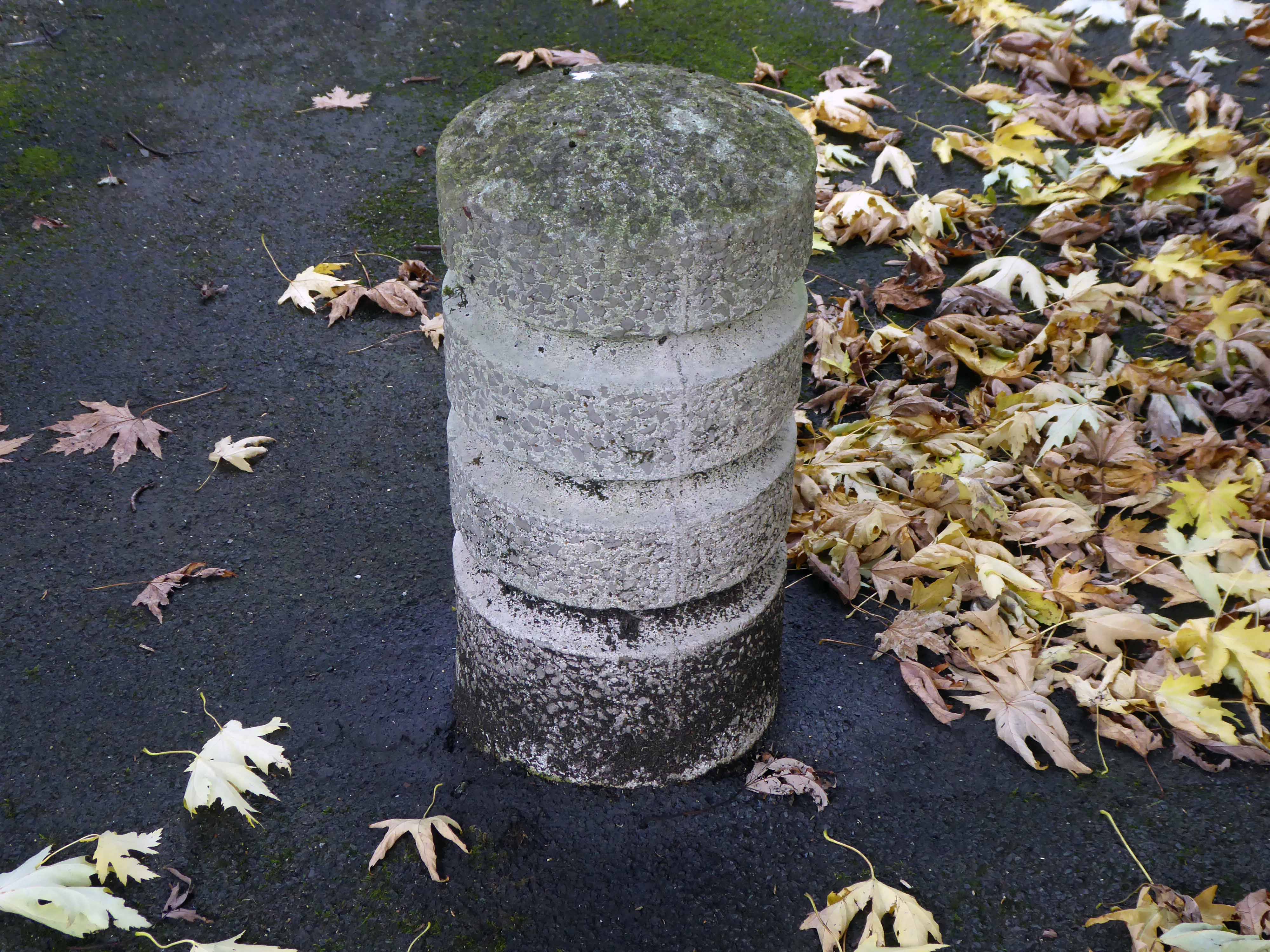
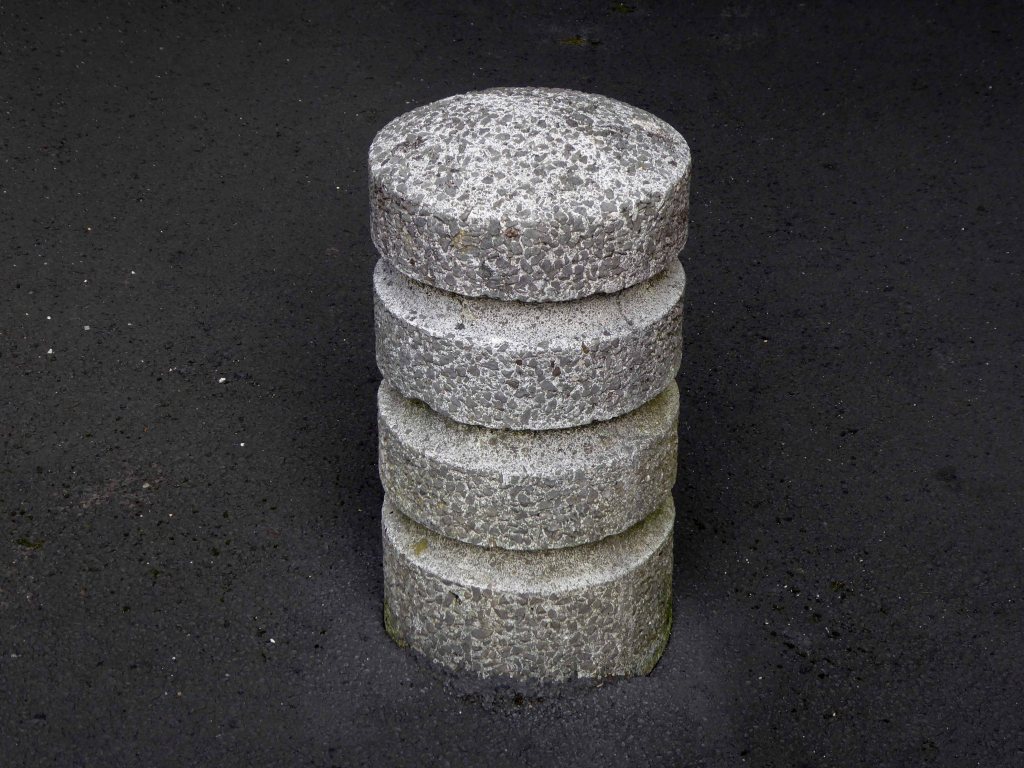
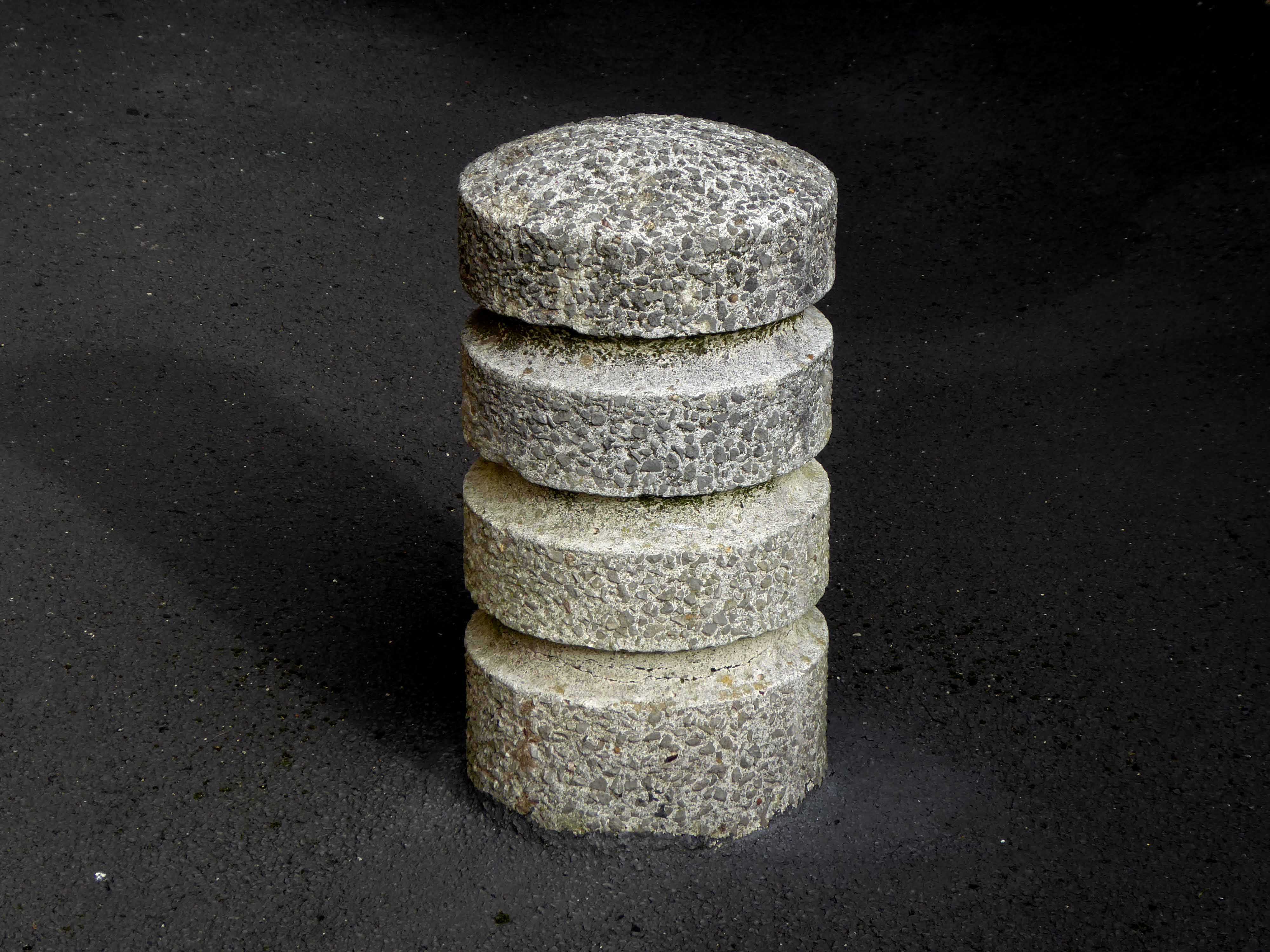
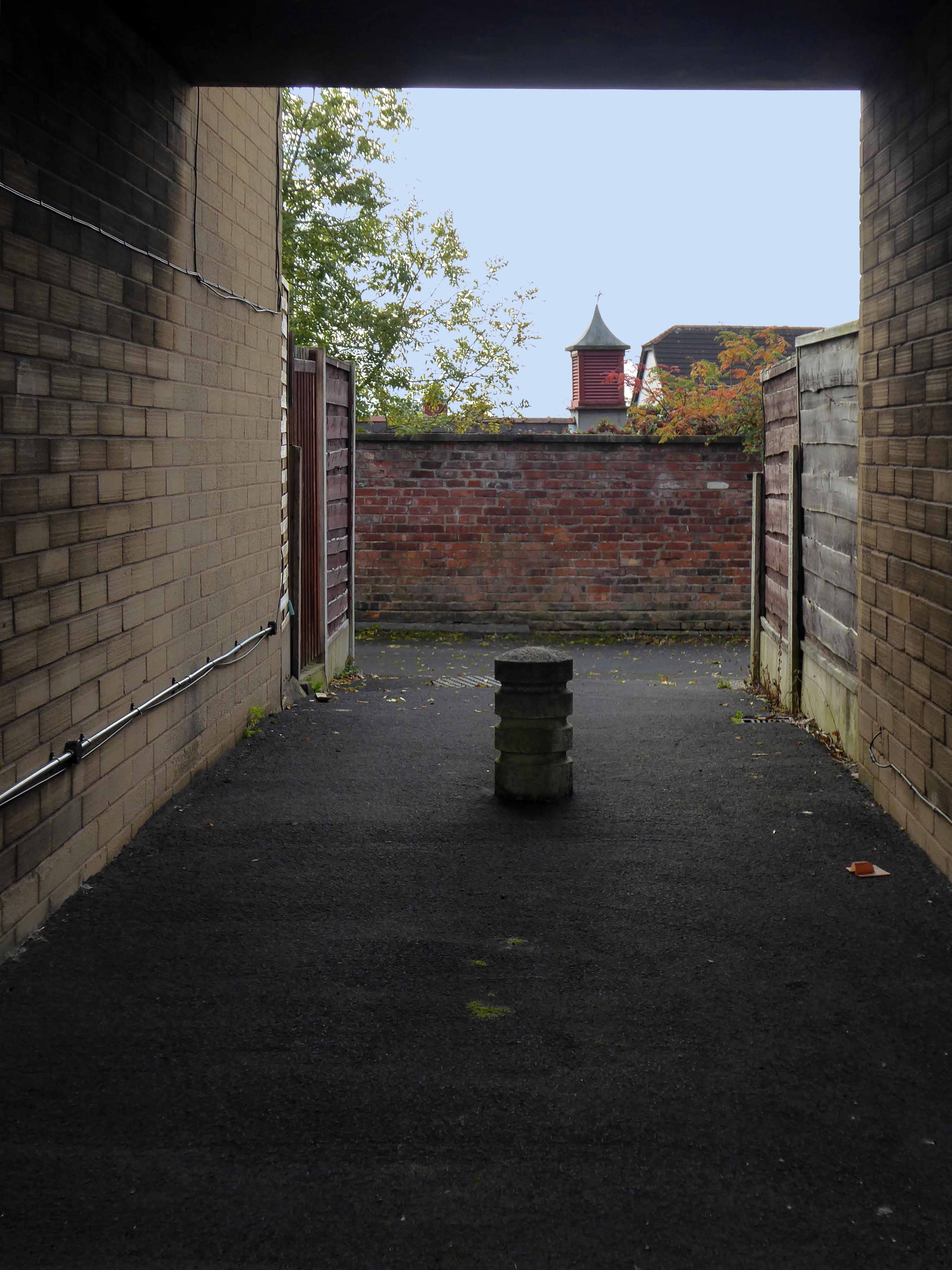
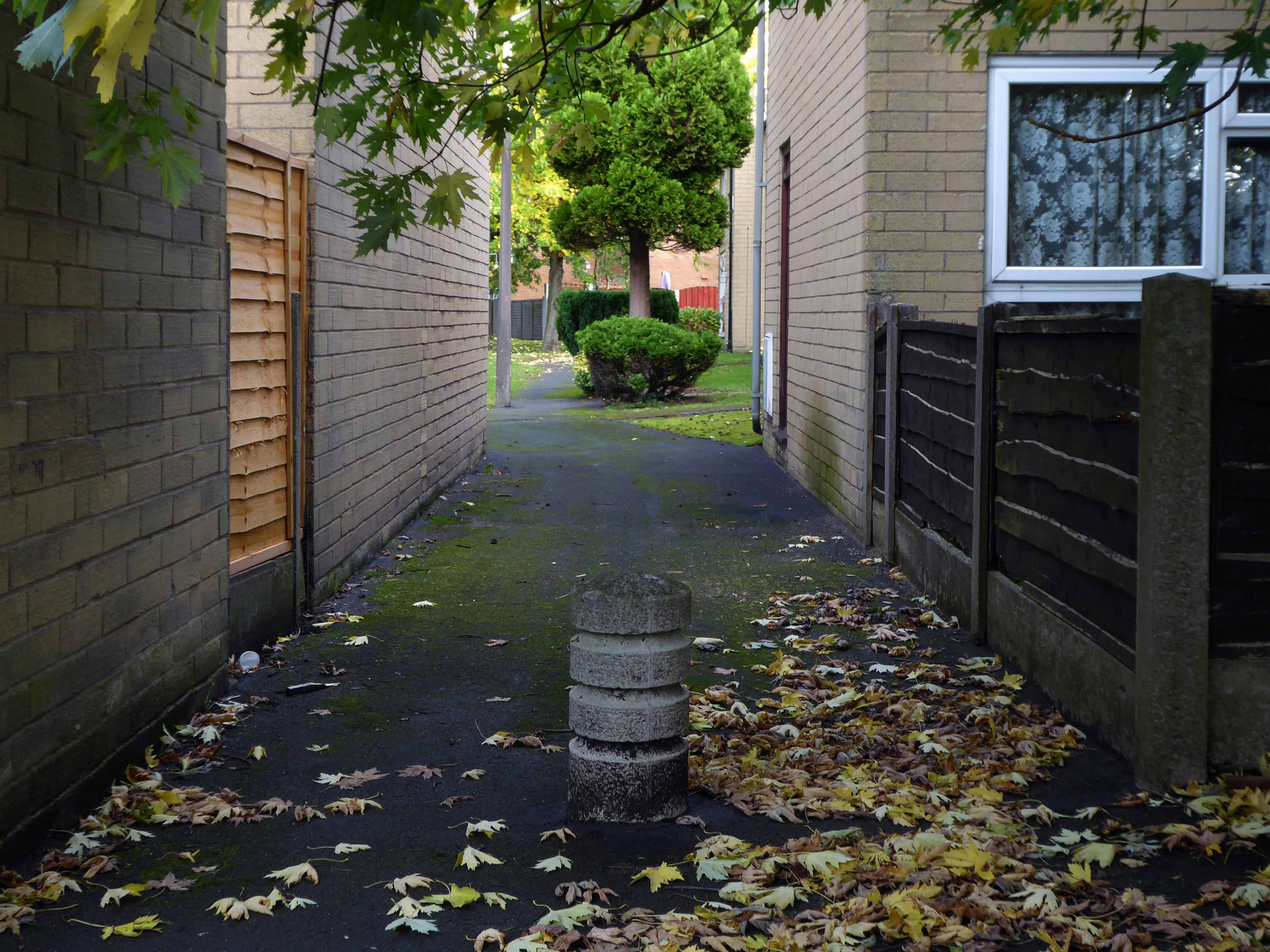
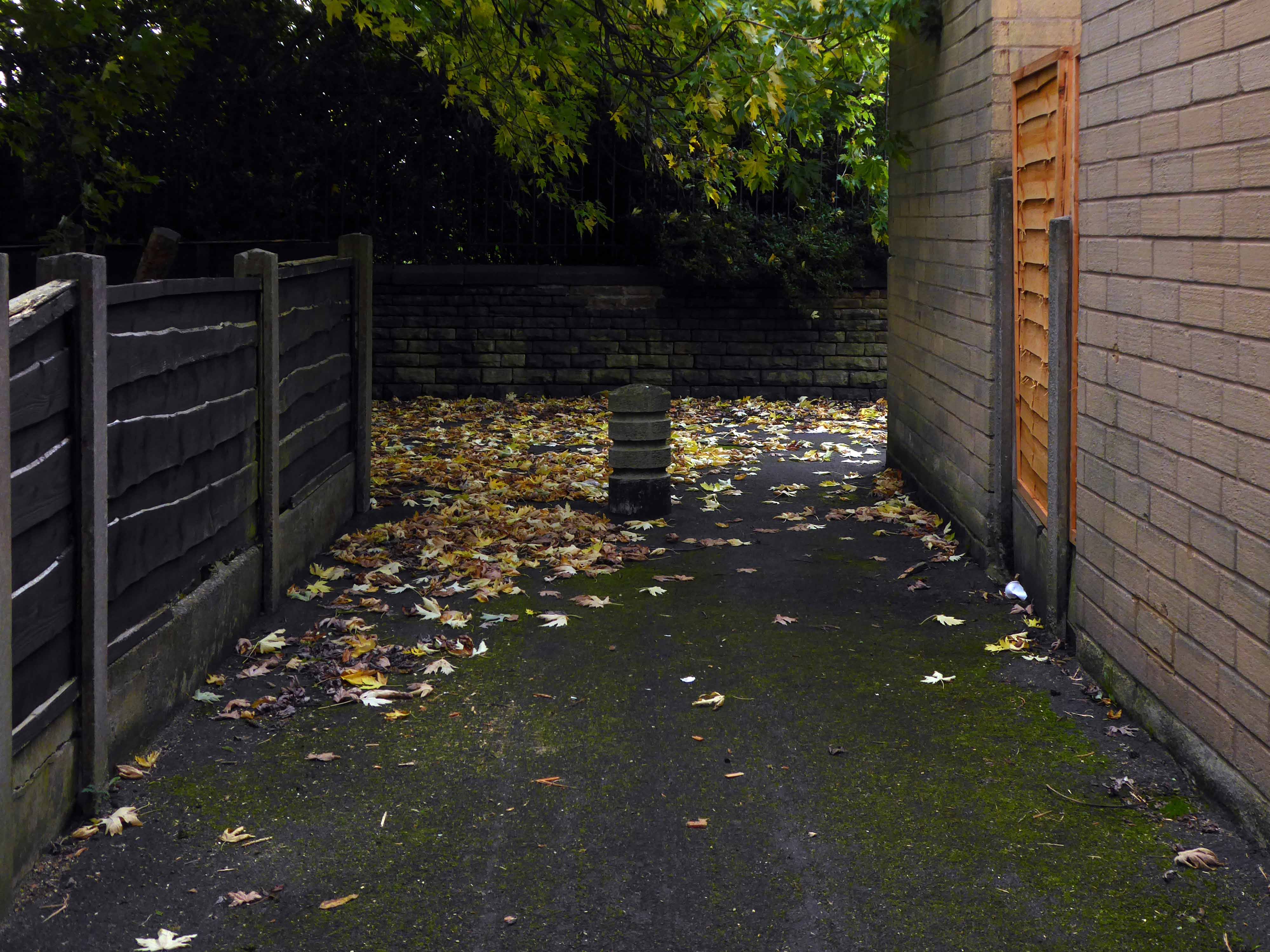
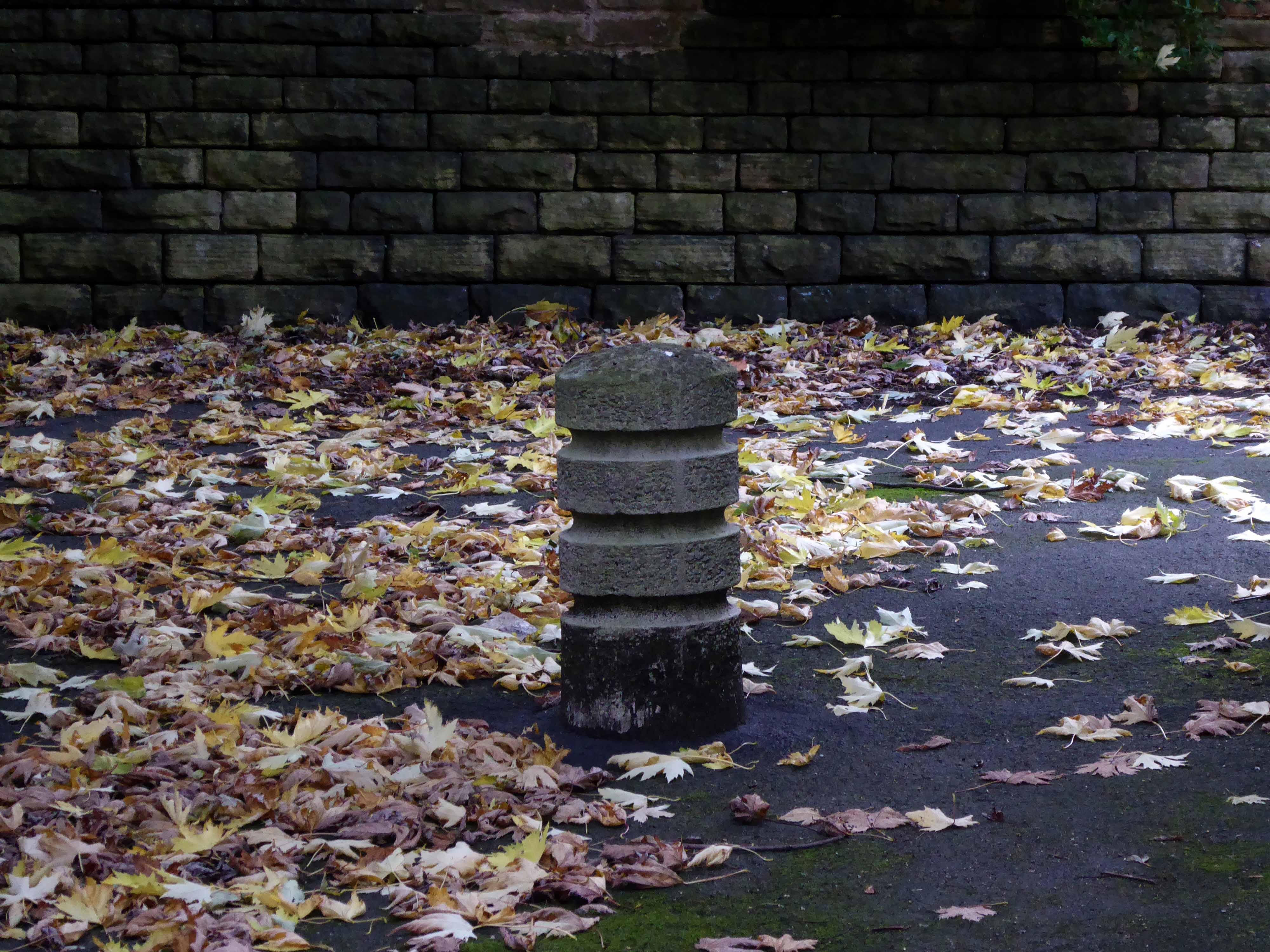
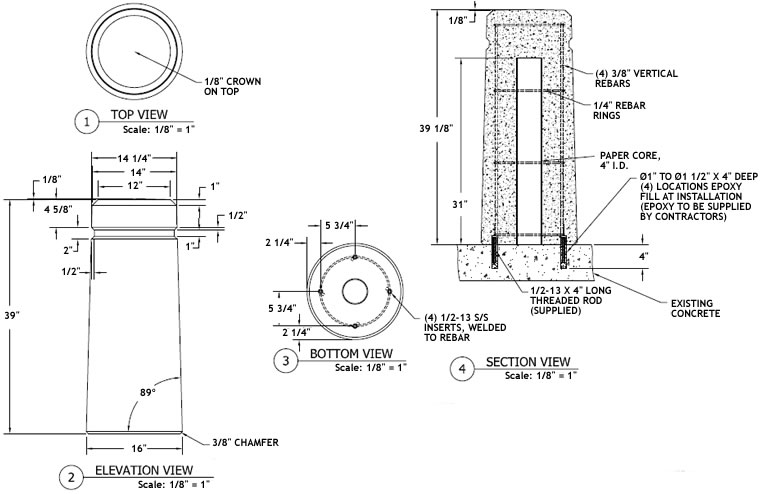
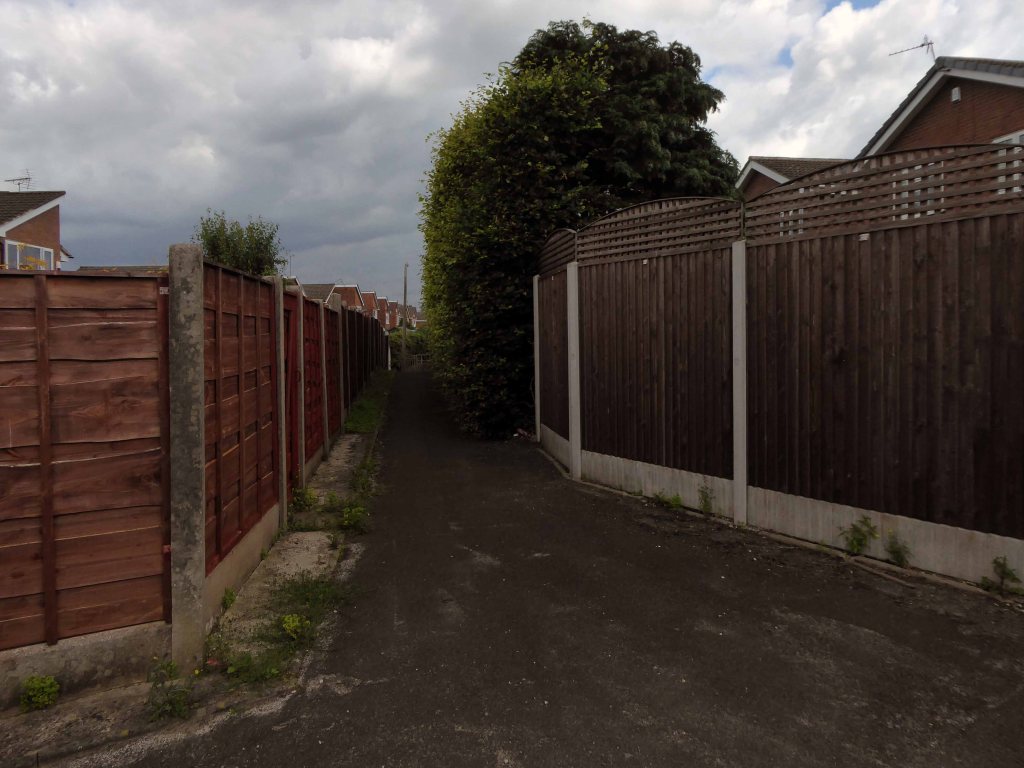
As I was out walking on the corner one day, I spied an old bollard in the alley he lay.
To paraphrase popular protest troubadour Bob Dylan.
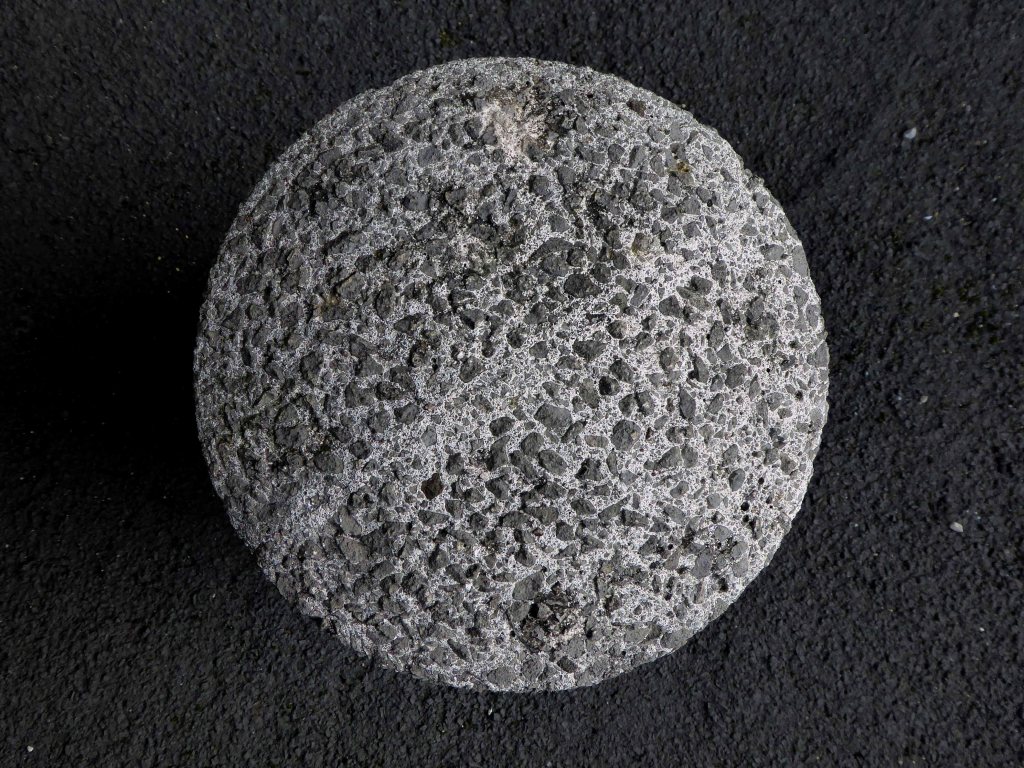
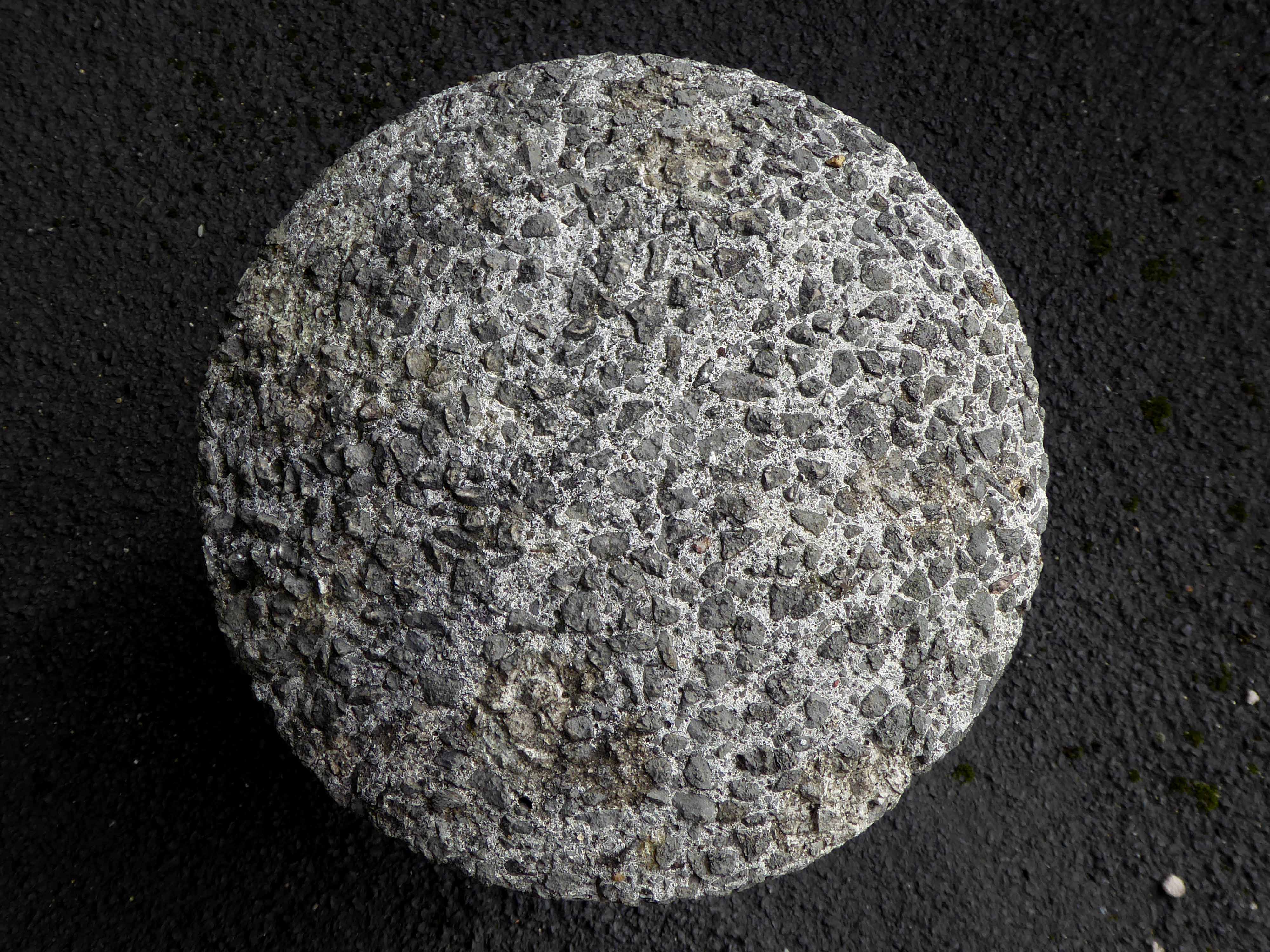
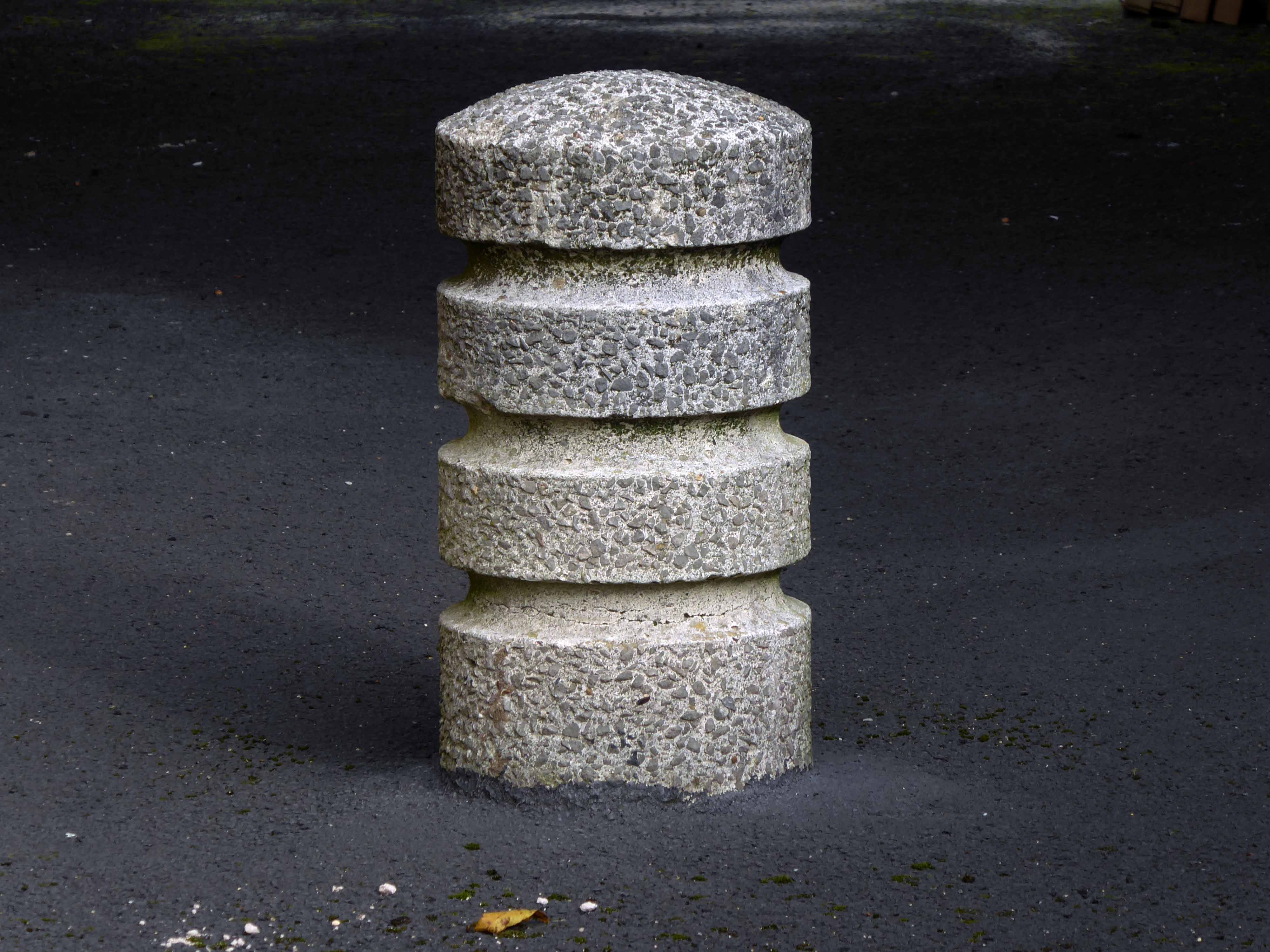
I was struck by the elegant symmetry and rough patinated grey aggregate.
To look up on the world from a hole in the ground, To wait for your future like a horse that’s gone lame, To lie in the gutter and die with no name?
I mused briefly on the very word bollards, suitable perhaps for a provincial wine bar, Regency period drama, or family run drapers – but mostly.
A bollard is a sturdy, short, vertical post. The term originally referred to a post on a ship or quay used principally for mooring boats, but is now also used to refer to posts installed to control road traffic and posts designed to prevent ram-raiding and vehicle-ramming attacks.
The term is probably related to bole, meaning a tree trunk.
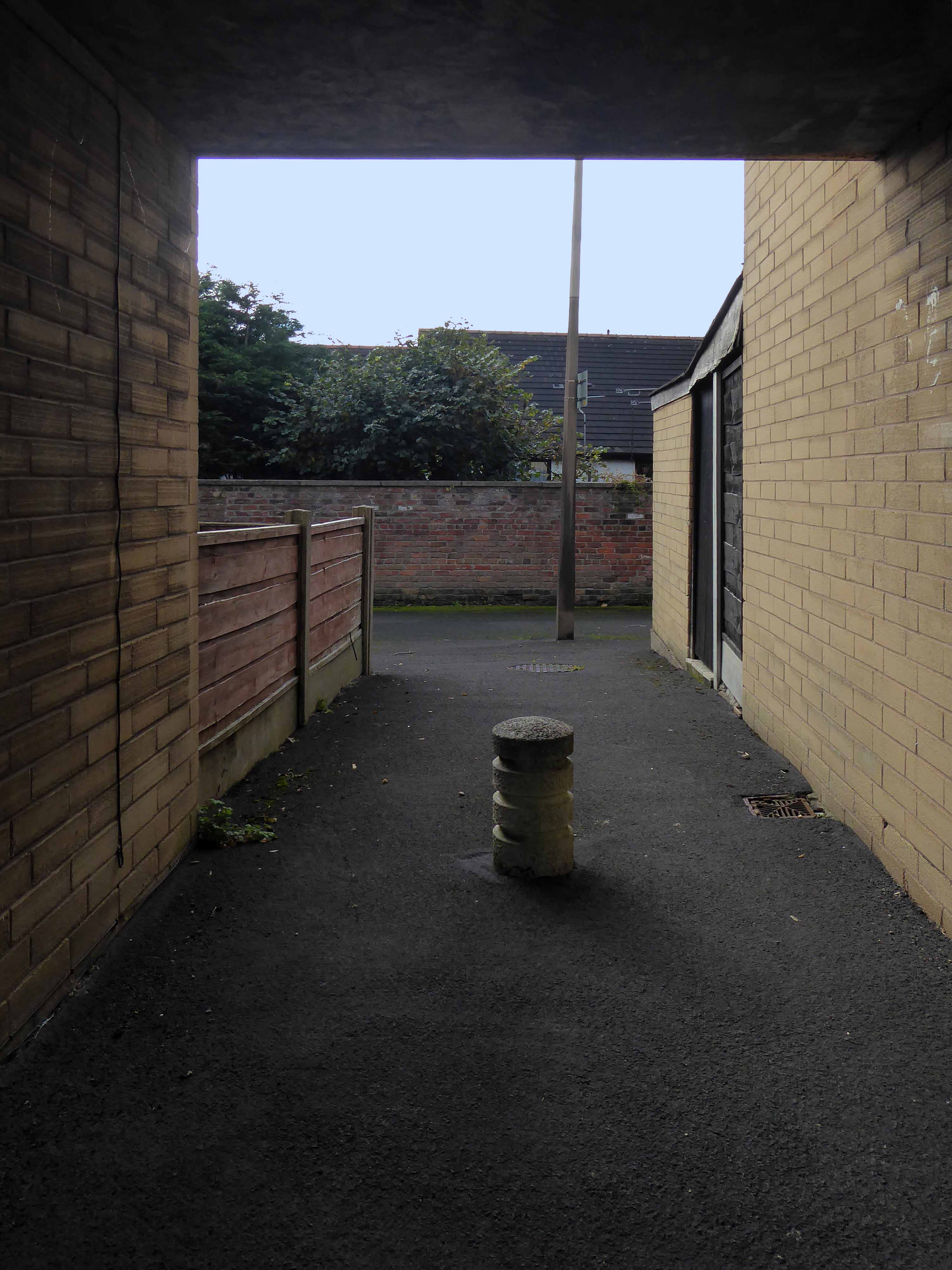
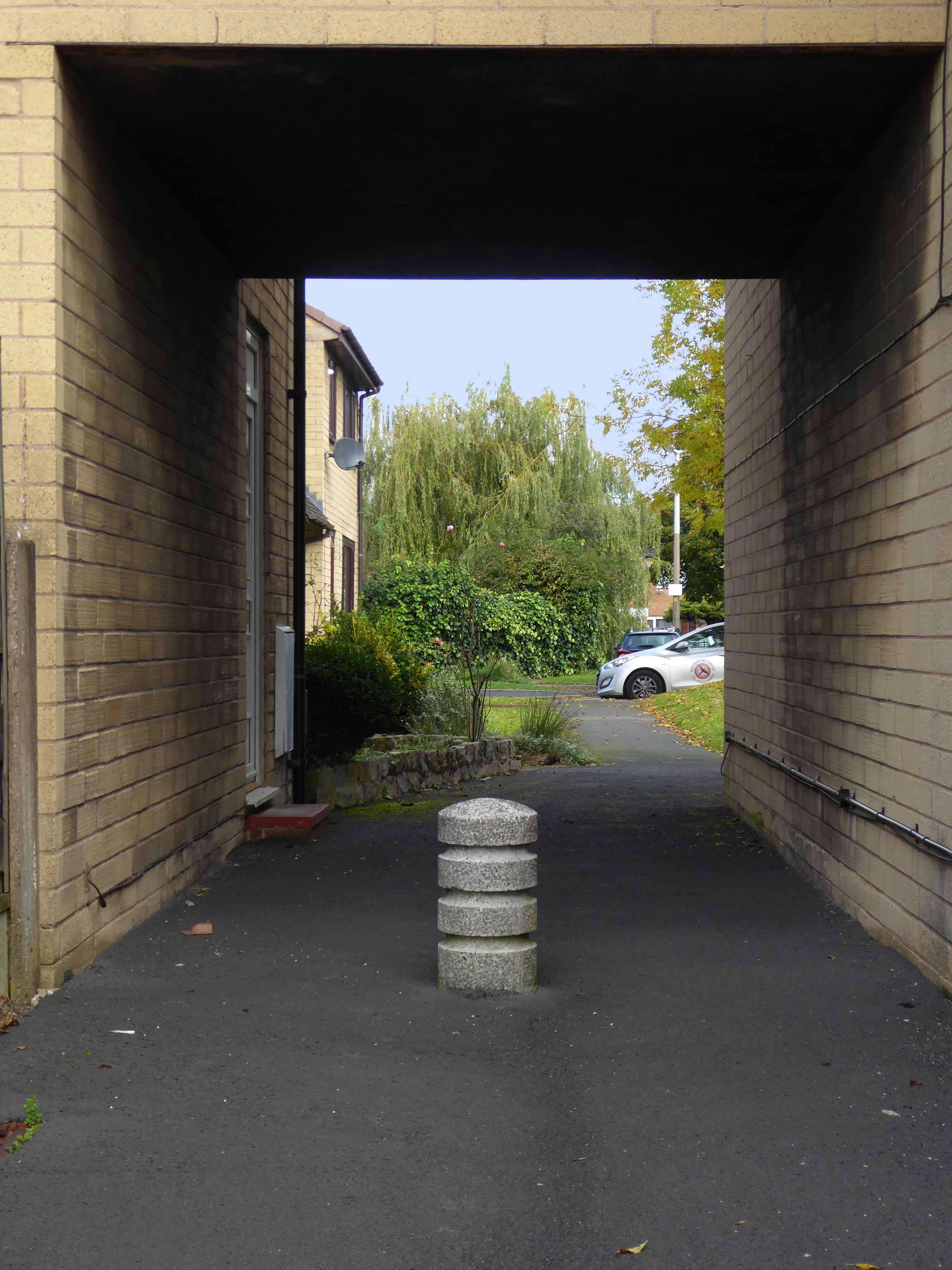
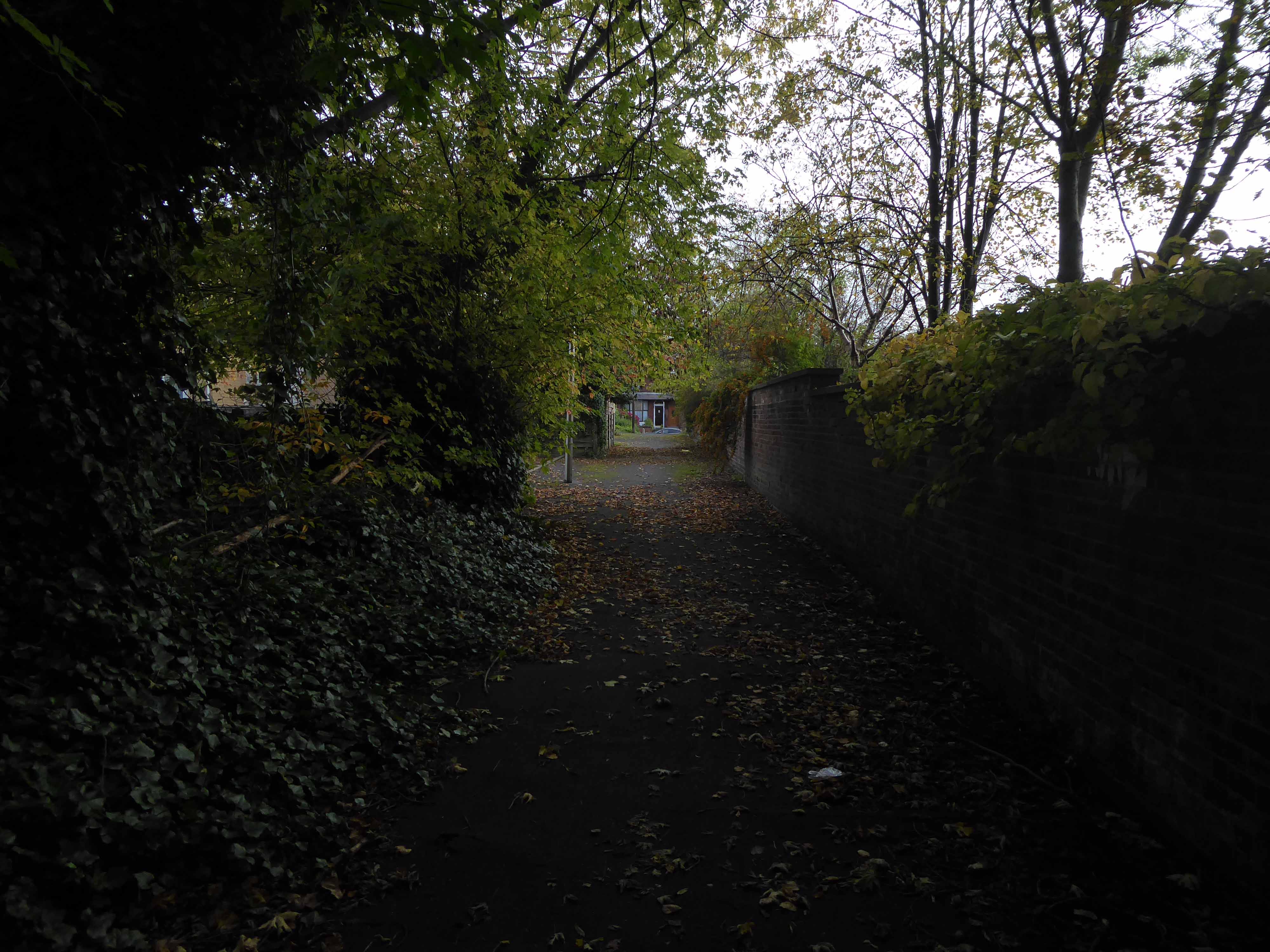
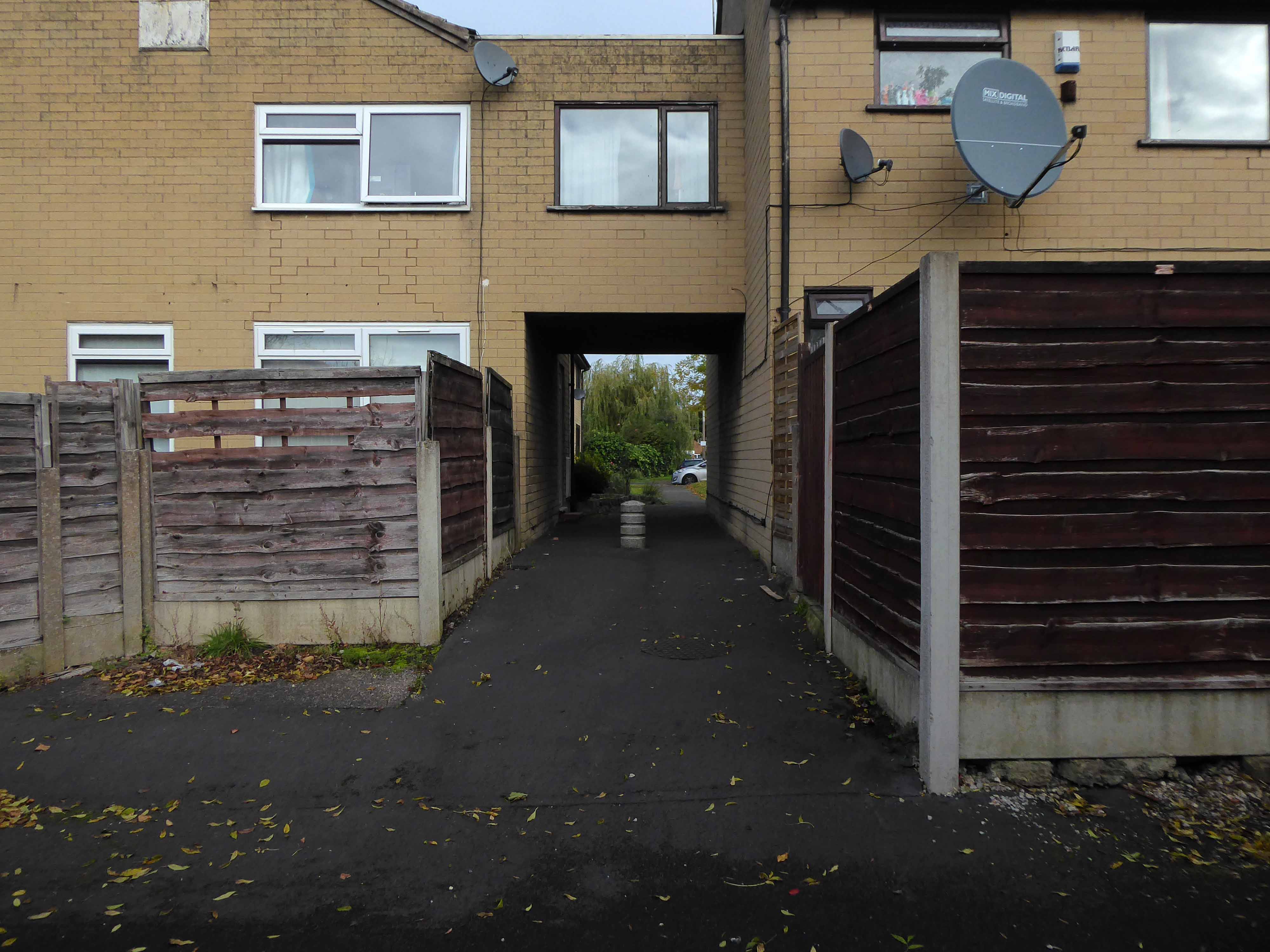
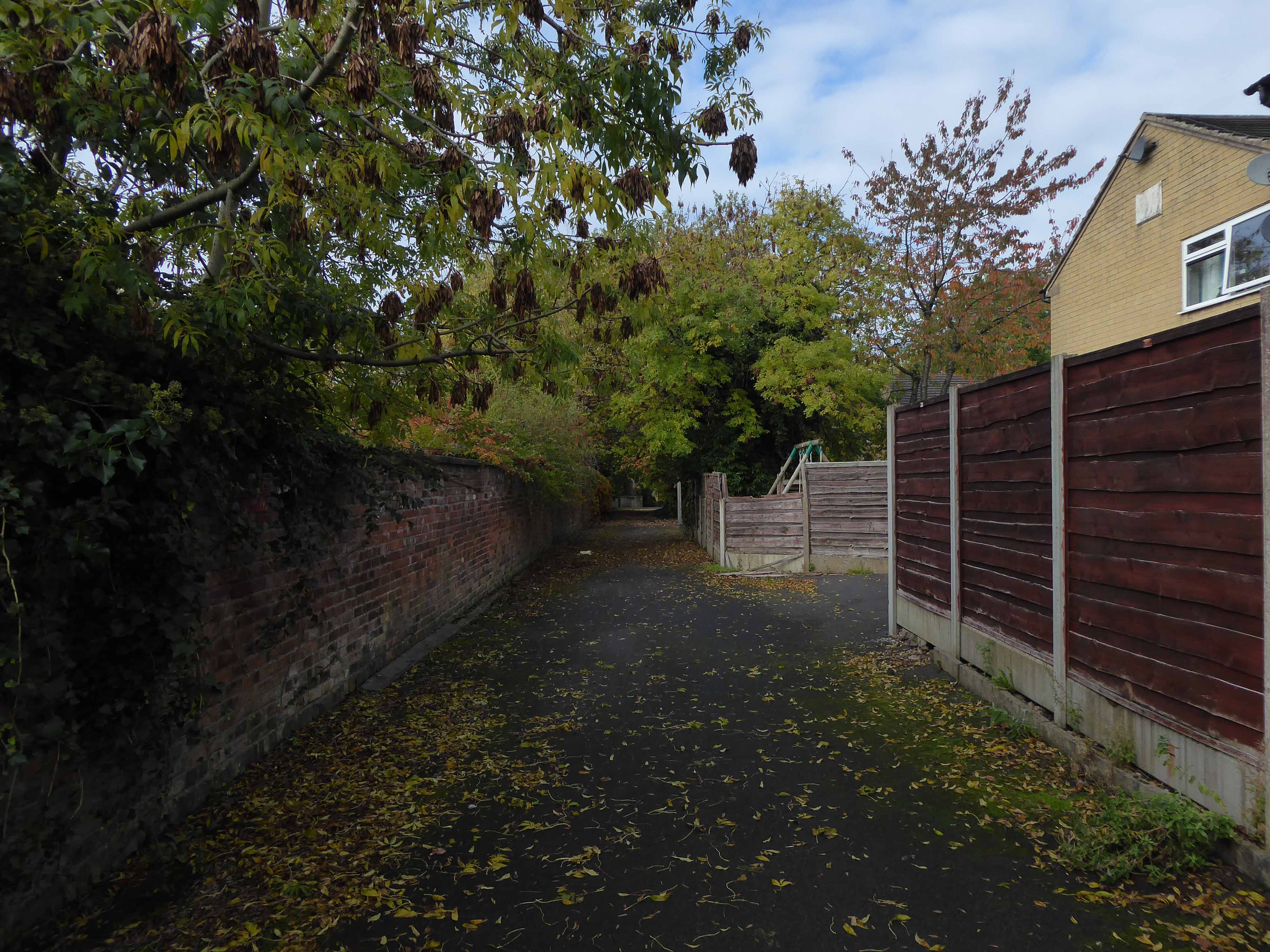
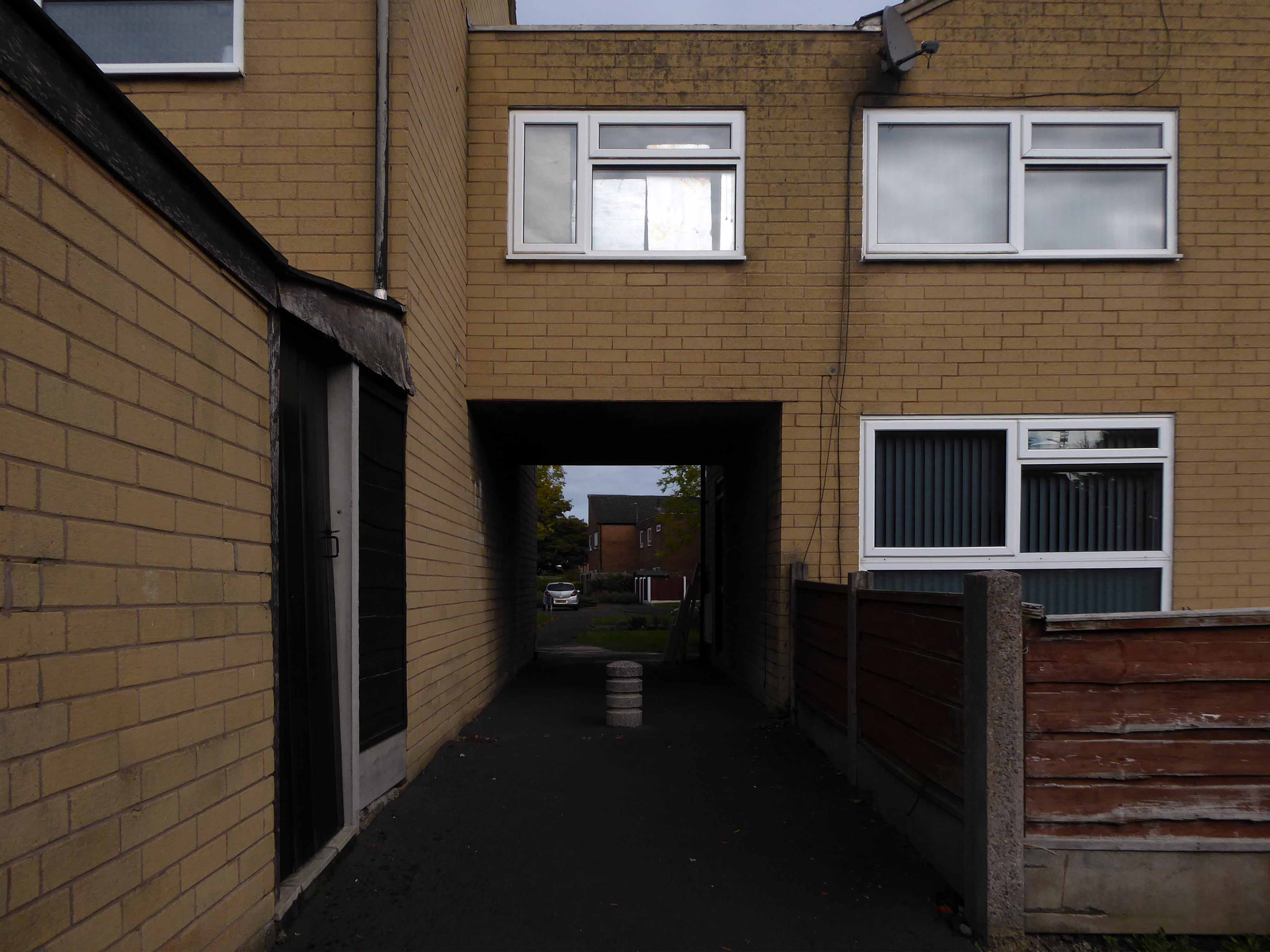
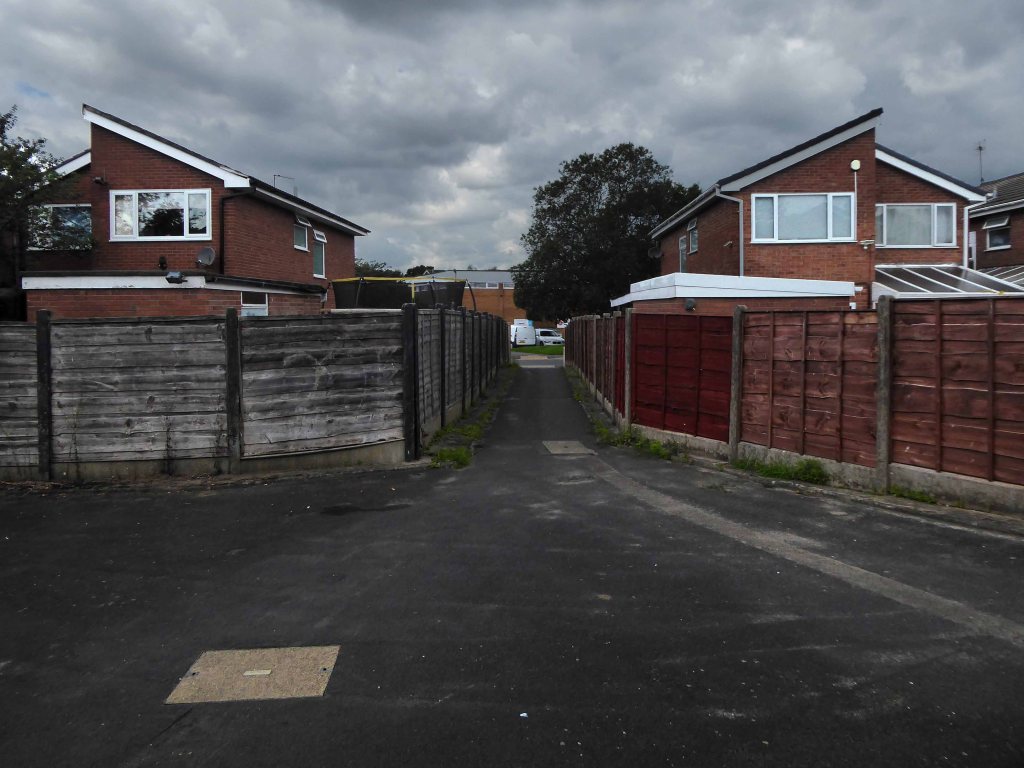
Having so mused I began to wander a tight little island of alleys and homes, discovering three of the little fellas, each linked by typology and common ancestry, steadfastly impeding the ingress of the motor car.
Yet also presenting themselves as mini works of utilitarian art – if that’s not a contradiction in terms.
Having returned home I began another short journey into the world of bollards, where do they come from?
PAS 68 approved protection for your people and property combining security, natural materials and style.
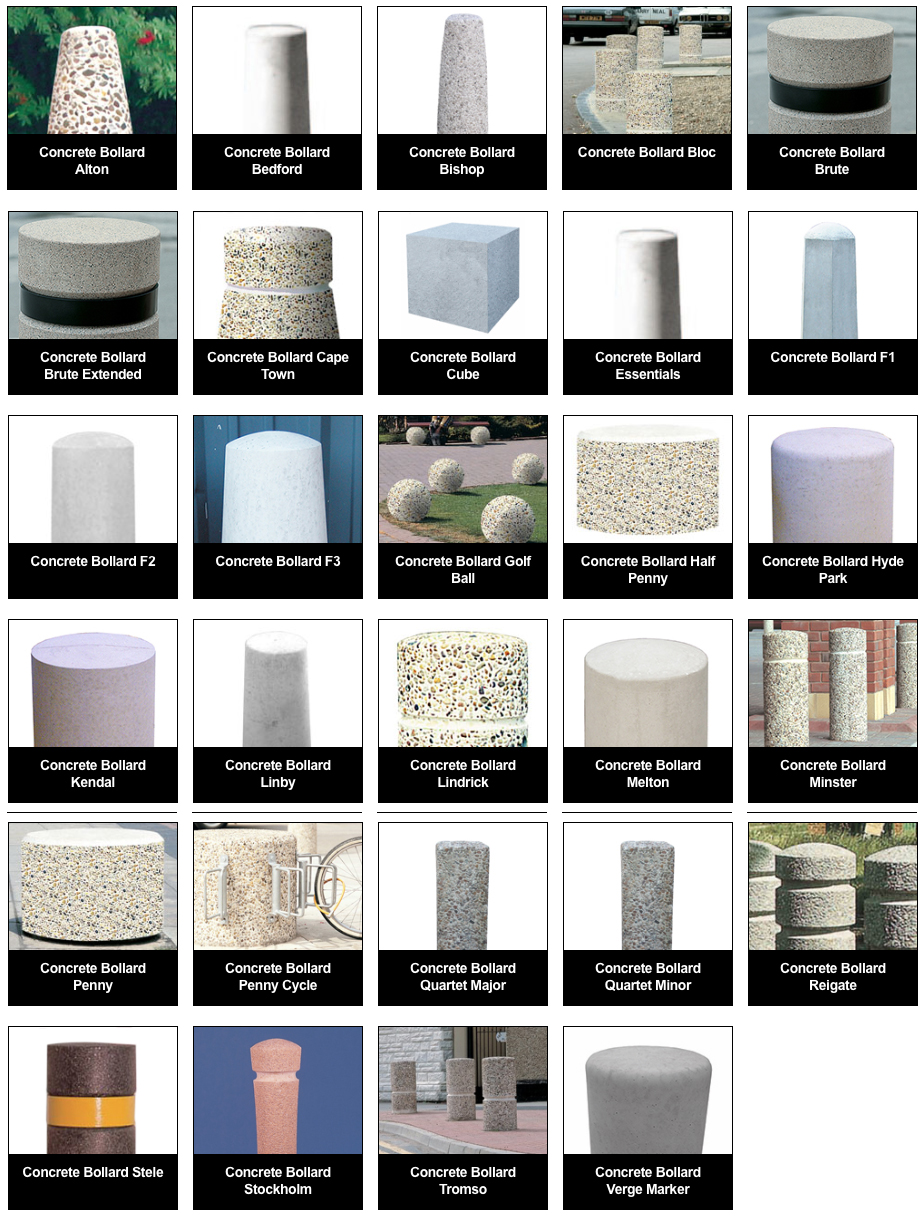
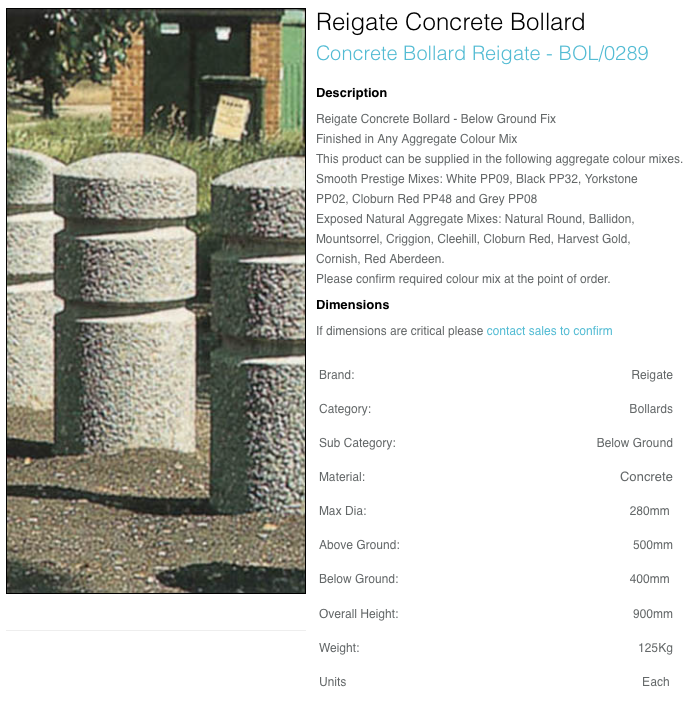
My new pals seem to be closely related to the Reigate.
Available in a mind boggling range of finishes.
Bollards can be our friends, an expression of personal freedom and security.
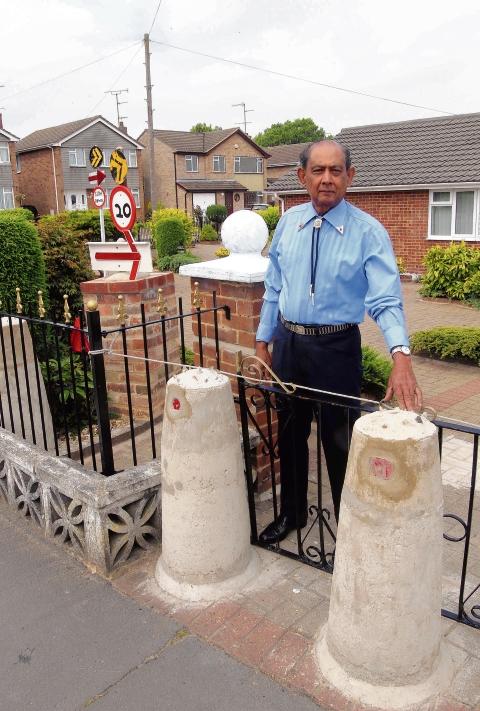
A pensioner says he will go to court if necessary after putting up concrete bollards in a last-ditch attempt to protect his home.
Owen Allan, 74, of Beaufort Gardens, Braintree, claims motorists treat the housing estate like a race track, driving well in excess of the 20mph speed limit, and that the railings in front of his home have regularly been damaged by vehicles leaving the road.
He was worried it would only be a matter of time before a car came careering off Marlborough Road and flying through the wall of his bungalow.
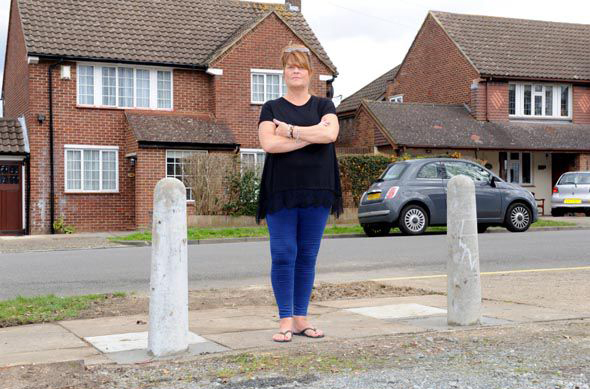
I have cause to thank the humble concrete bollard, having suffered an assault on our front wall from a passing pantechnicon, I subsequently petitioned the council, requiring them to erect a substantial bollard barrier.
Which was subsequently hit by a passing pantechnicon.
They are our modernist friends, little gems of public art and should treated with due respect – think on.
Having started in the middle, let’s fast forward to the end – the beginning will have to wait.
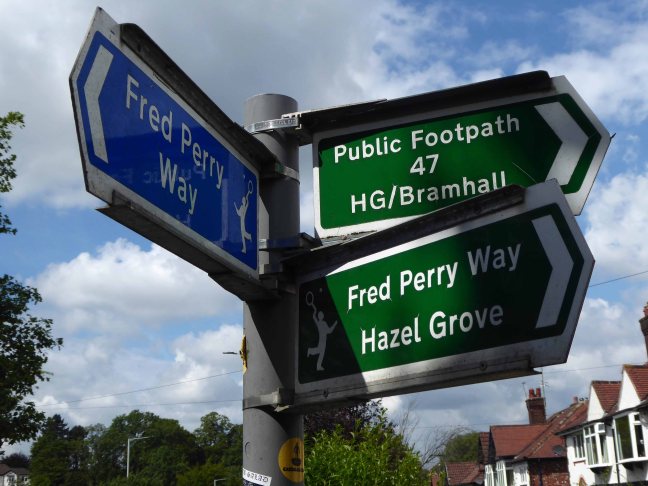
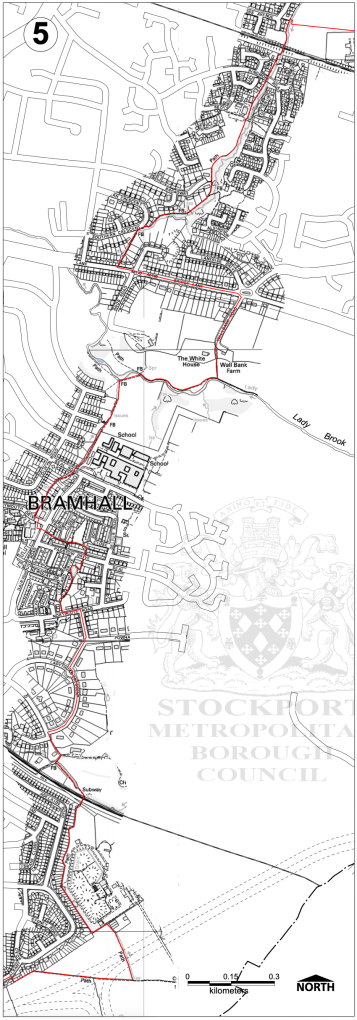
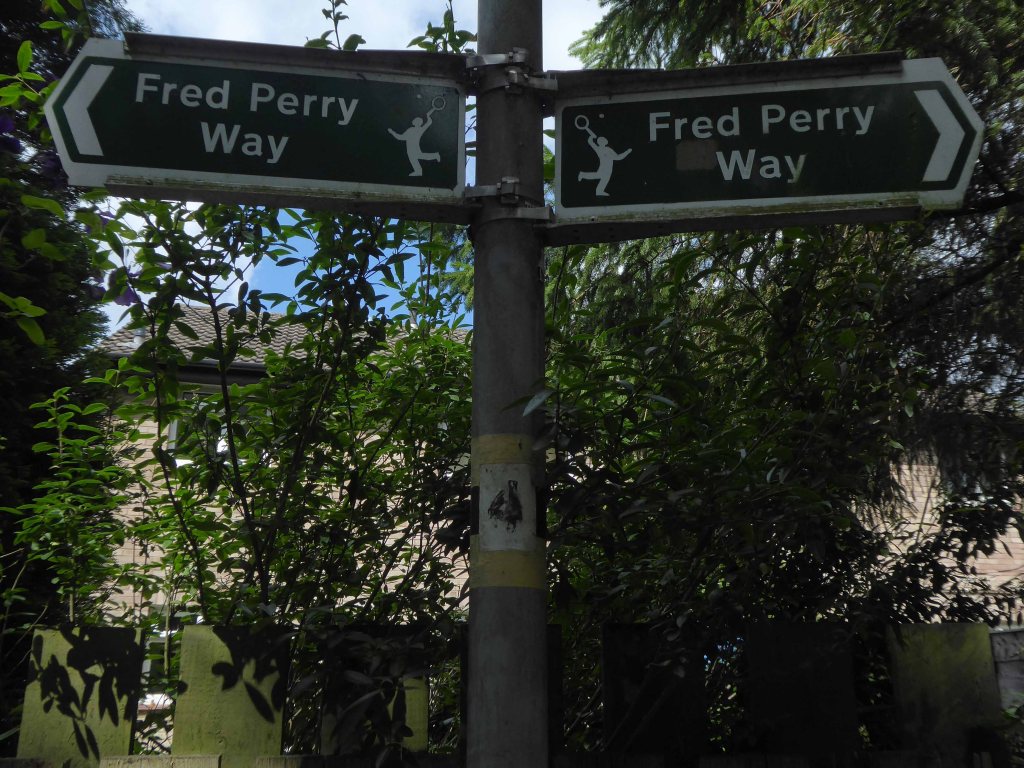
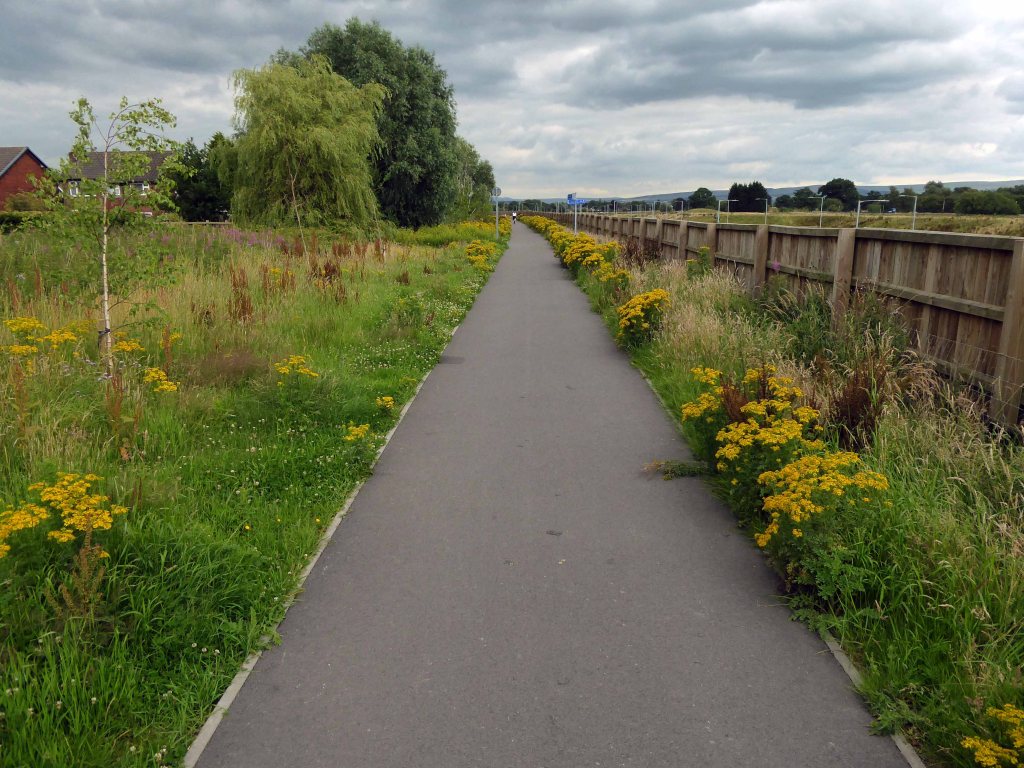
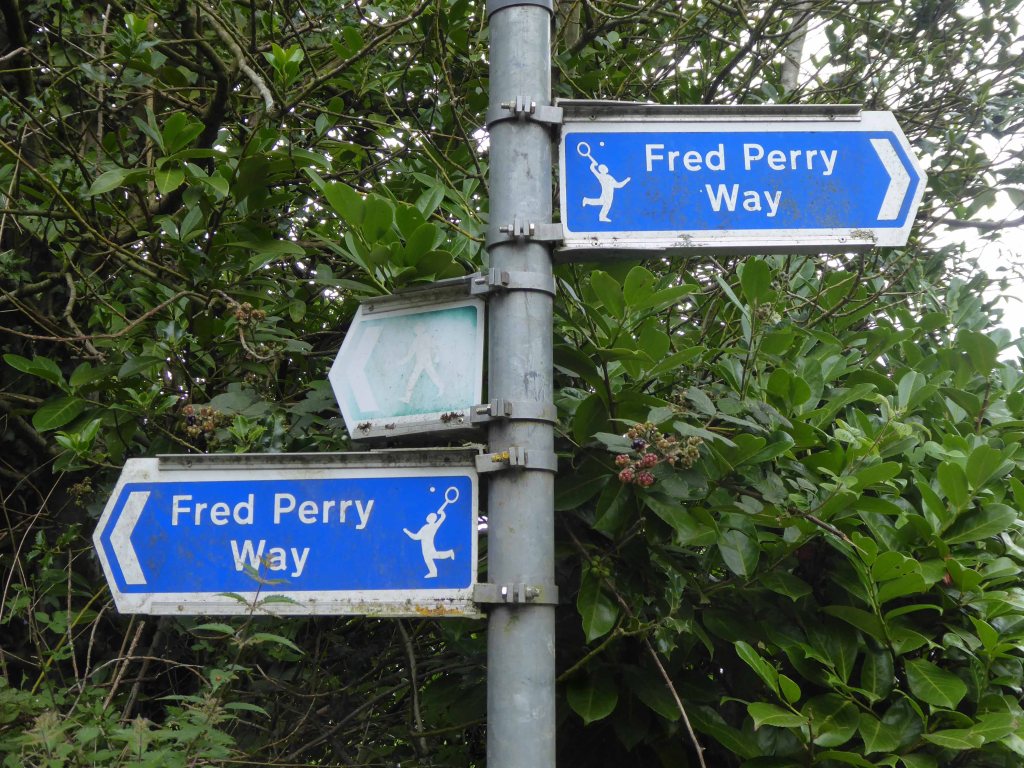
We take up our walk along Fred’s Way once more by Mirrlees Fields.
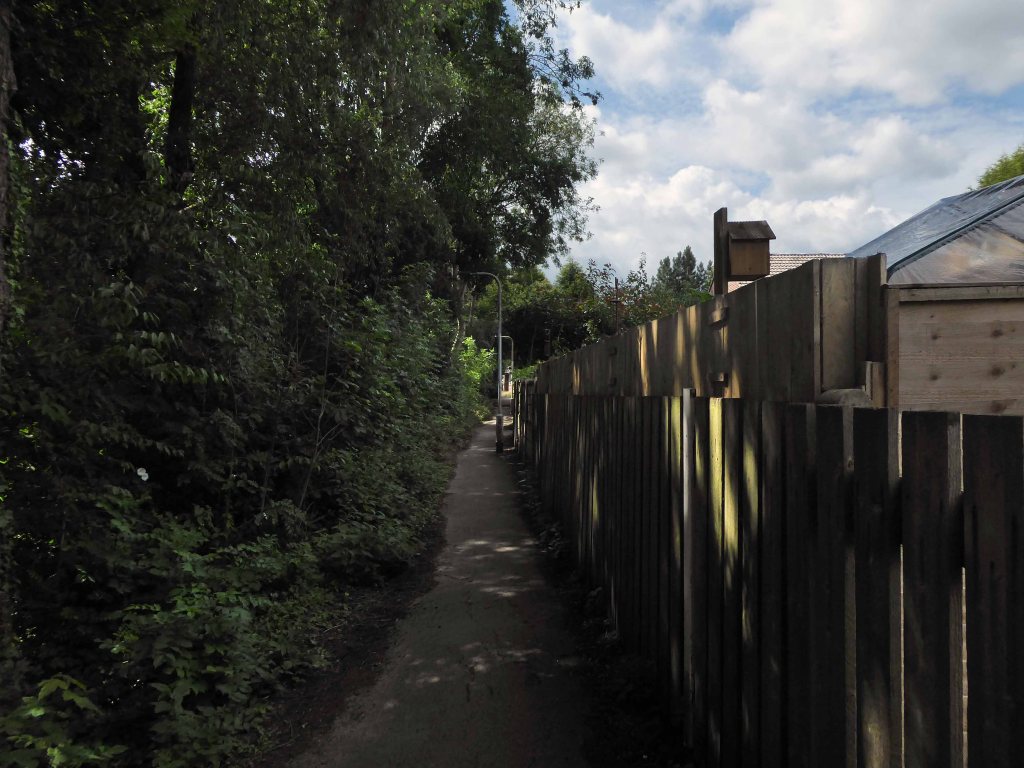
Following the brook along the narrow shallow valley, betwixt and between houses.
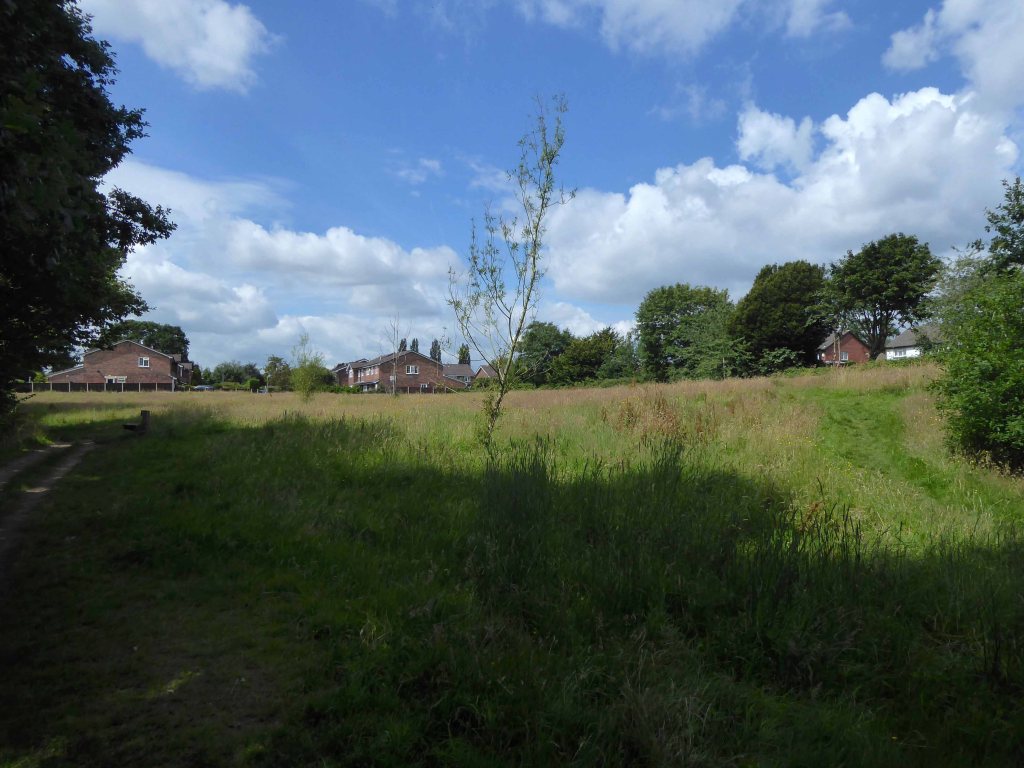
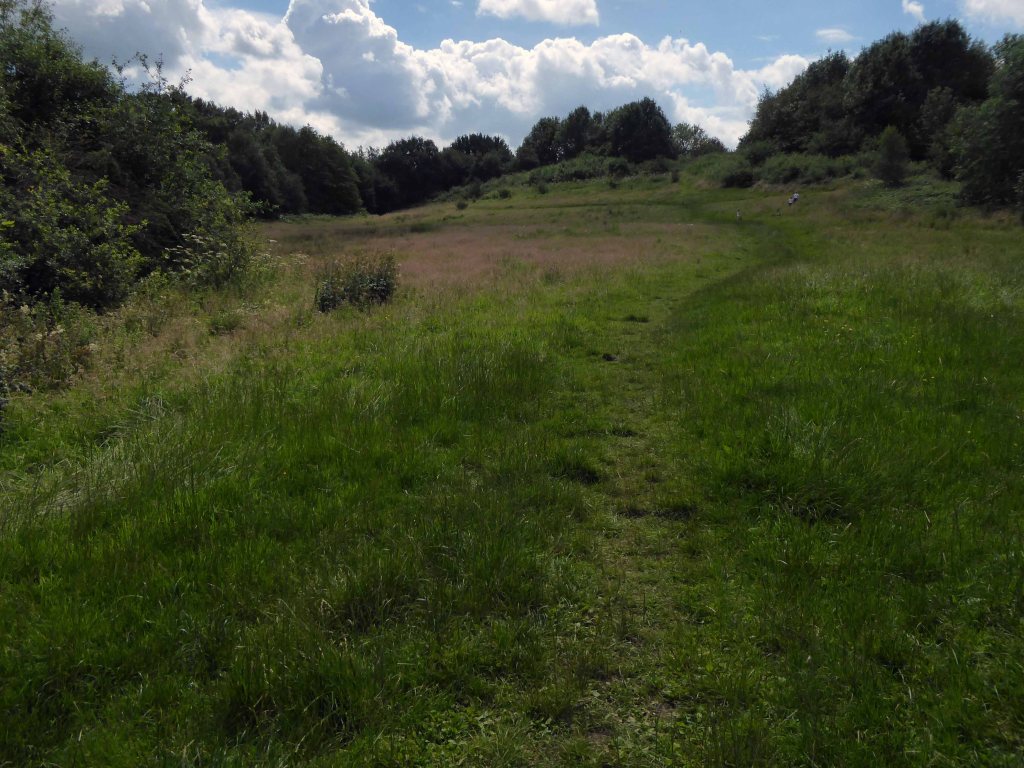
Briefly opening out into green open space.
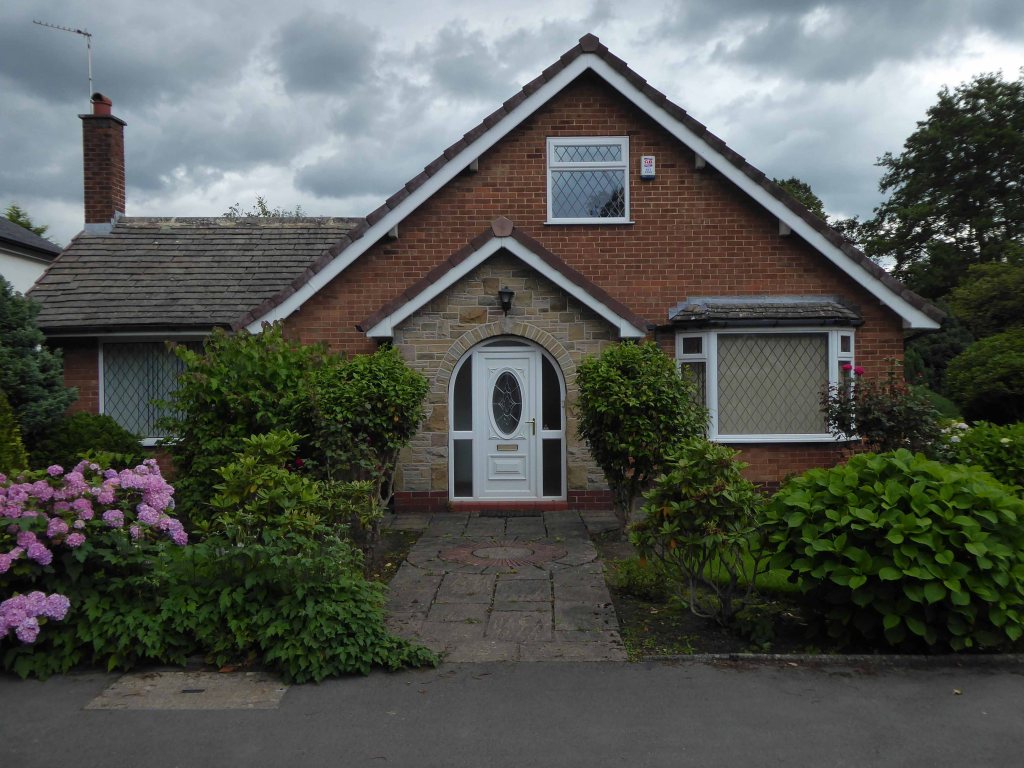
Crossing the road and entering the detached world of the detached house.
No two the same or your money back!
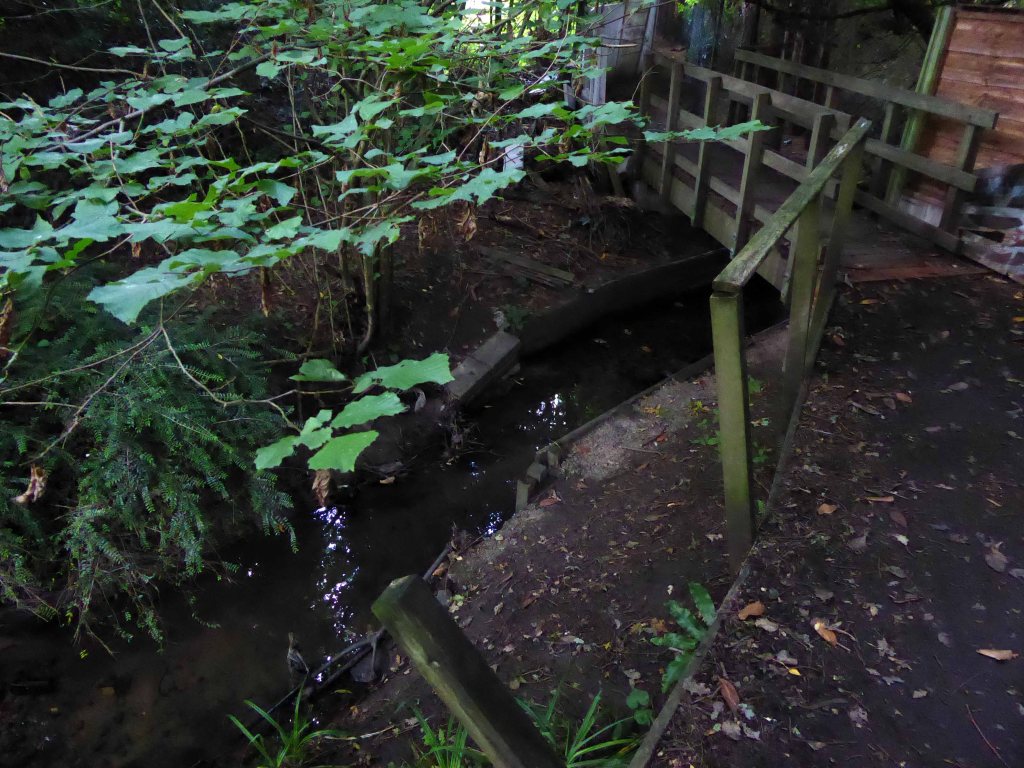
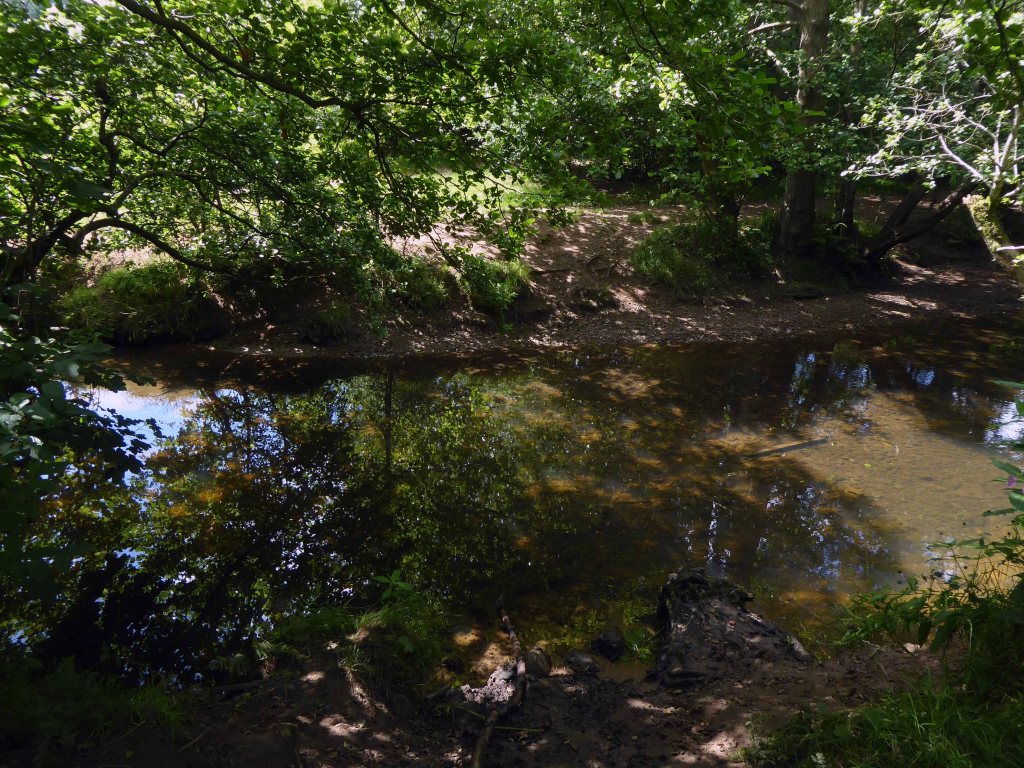
Diving feet first into Happy Valley, home to the Lady Brook stream.
And quickly out again.
Emerging once again into the space between spaces.
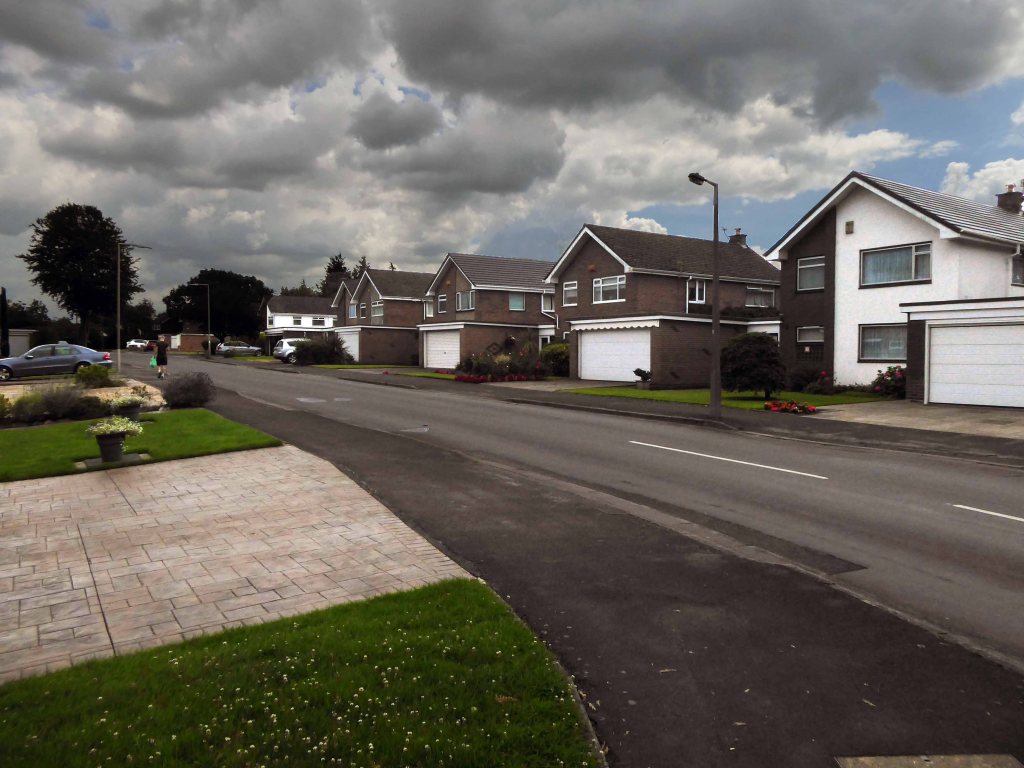
The suburban idyll of the Dairyground Estate home to very few semi-skilled and unskilled manual workers; those on state benefit/unemployed, and lowest grade workers.
But home to an interesting array of Post War housing.
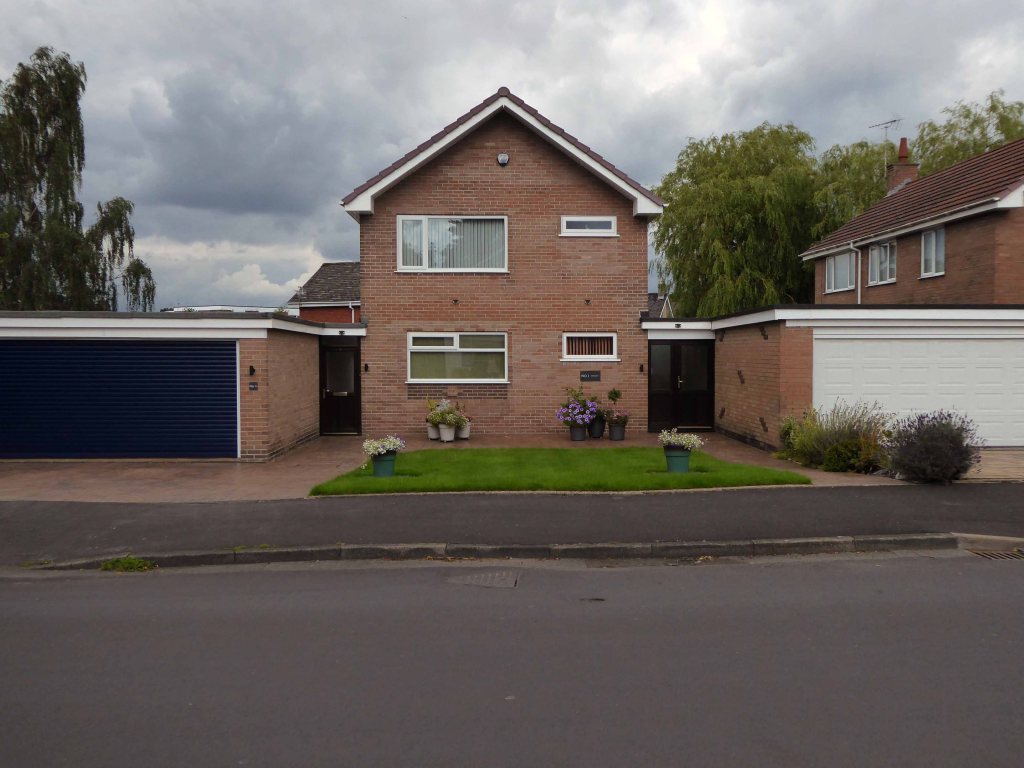
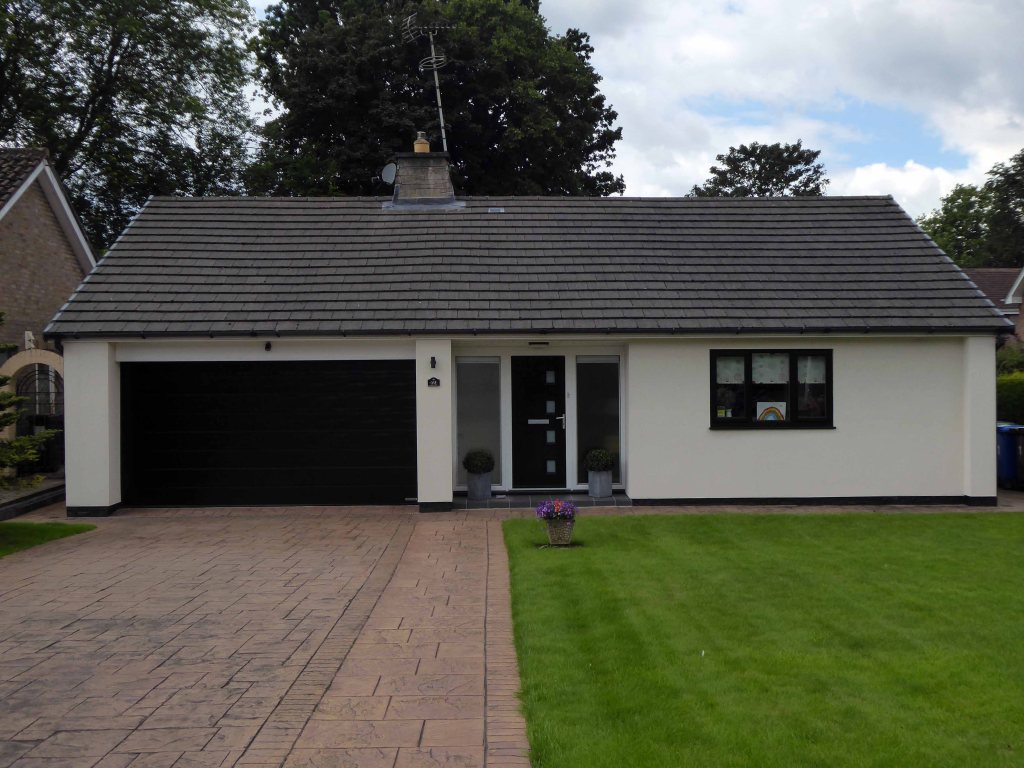
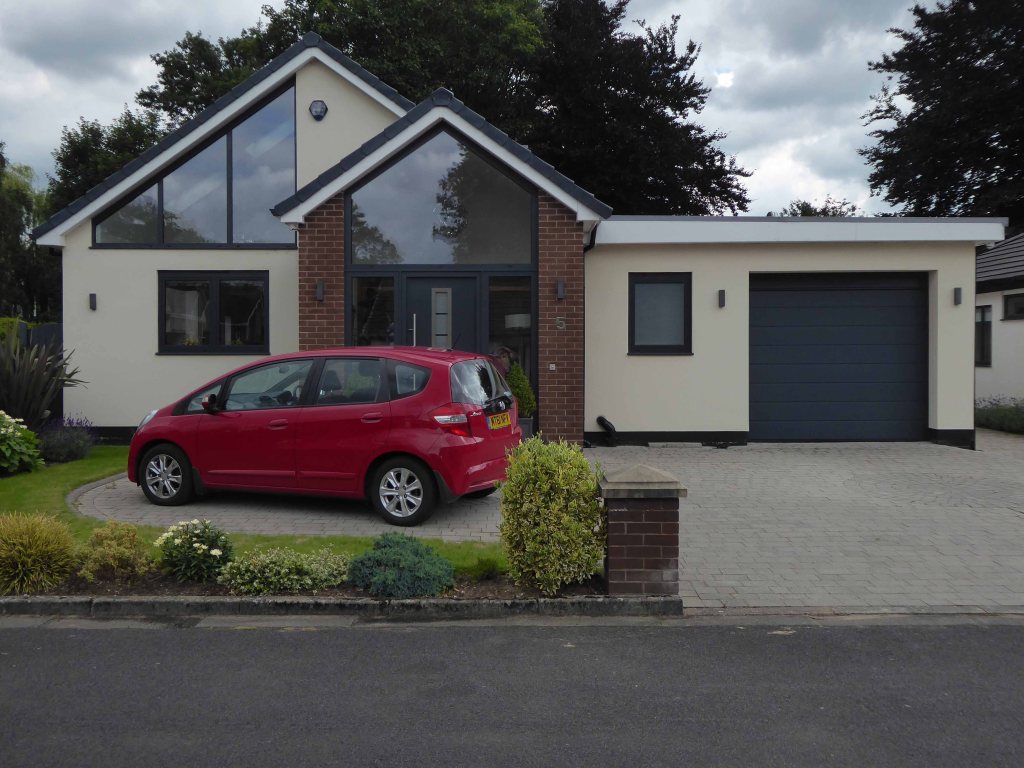
Including examples of the style de jour, à la mode conversions and updates extended and rendered, black, white and grey symbols of success or extensive extended credit facilities.
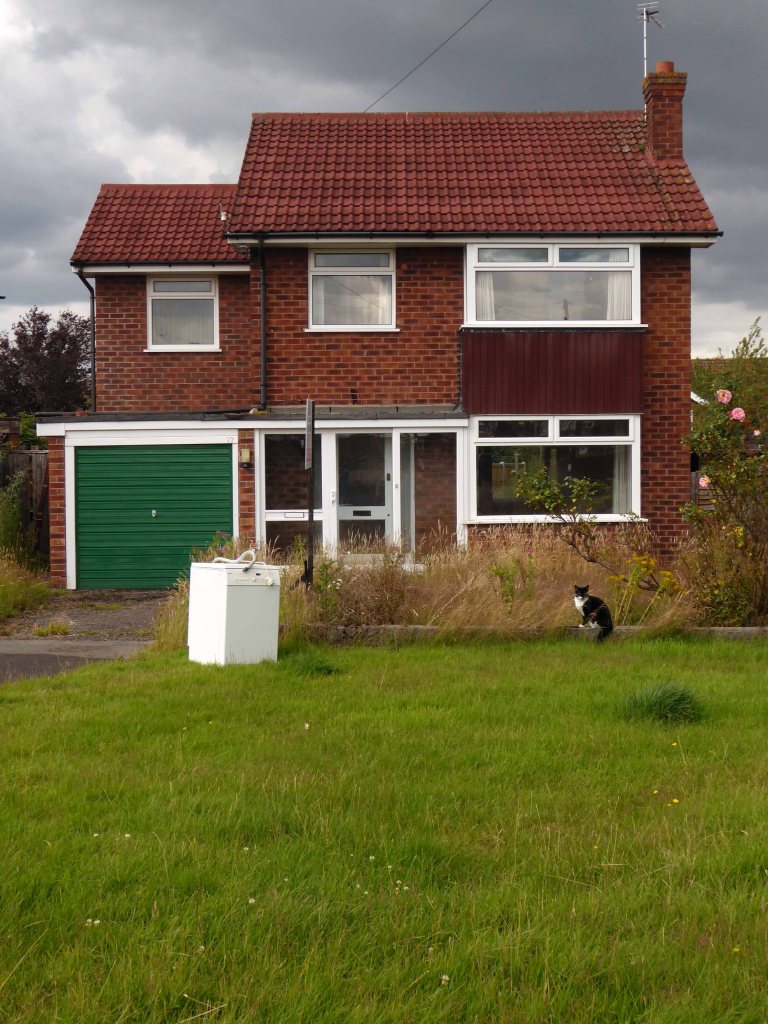
Though the more traditional fairy tale variant still has a space and place, in the corner of some well behaved cul de sac.
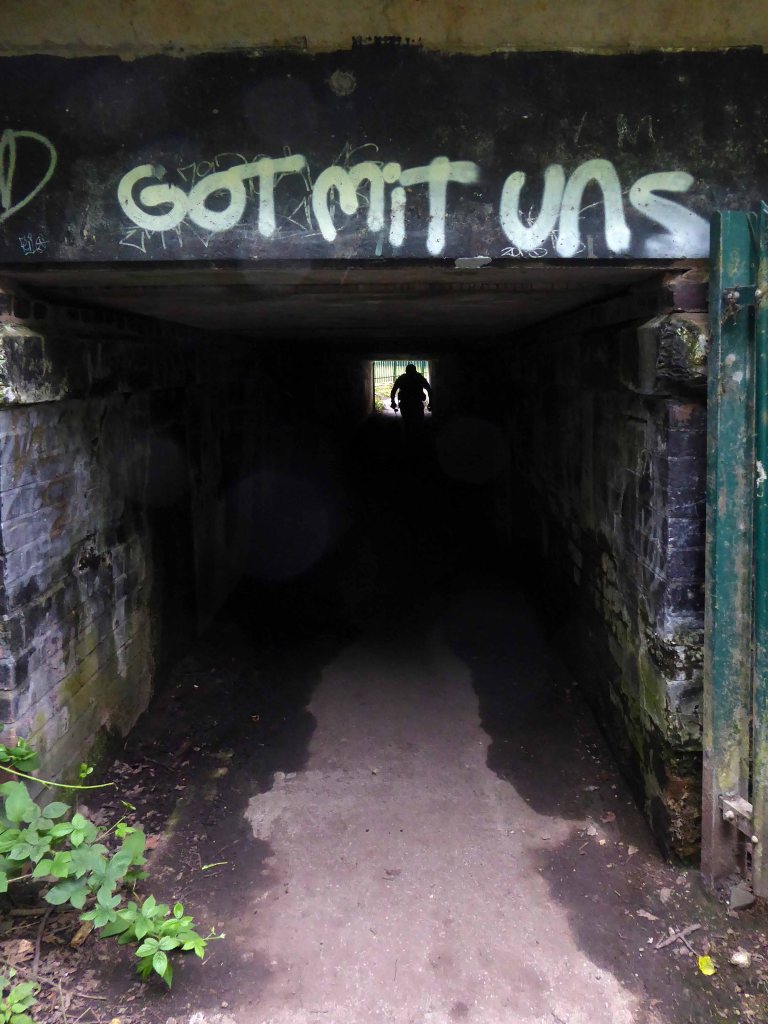
Under the railway – through a low tunnel darkly.
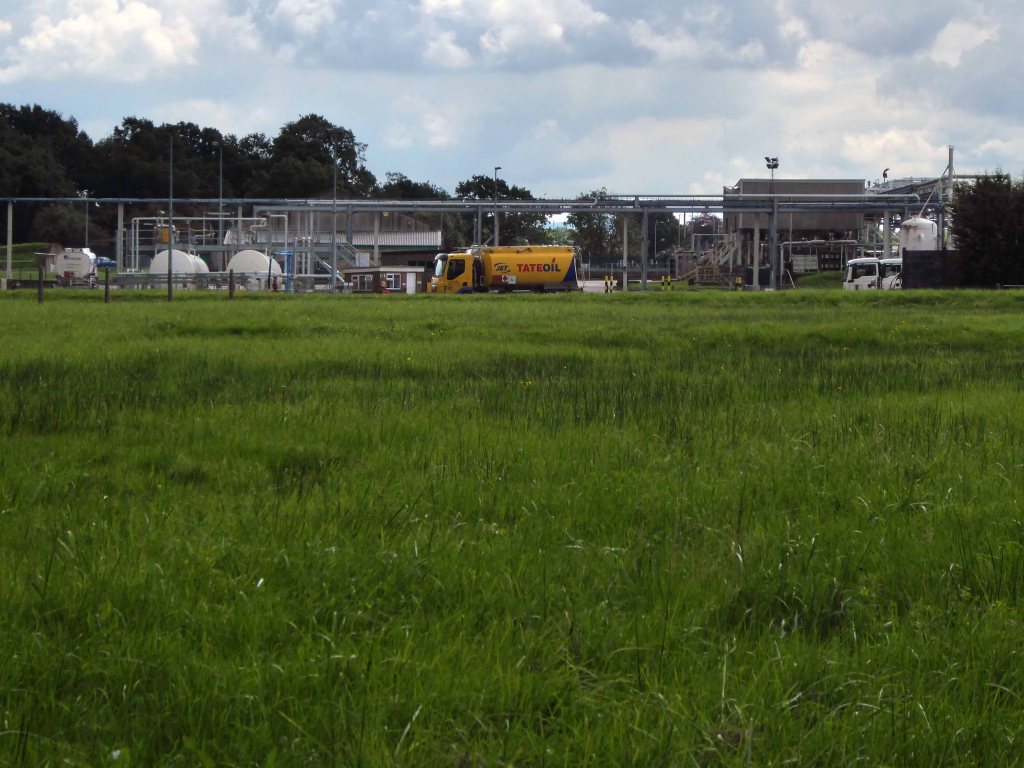
We struck oil, black gold, Texas Tea – Tate Oil.
The area of Little Australia – so called as all the roads are named after towns in Australia, is bordered by the West Coast Main Line to the north, the Bramhall oil terminal to the east, Bramhall village centre to the west and Moorend Golf Club to the south.
We emerged into a warren of obfuscation, dead ends and conflicting signs, having made enquiries of the passing populace, we realigned with the new bypass.
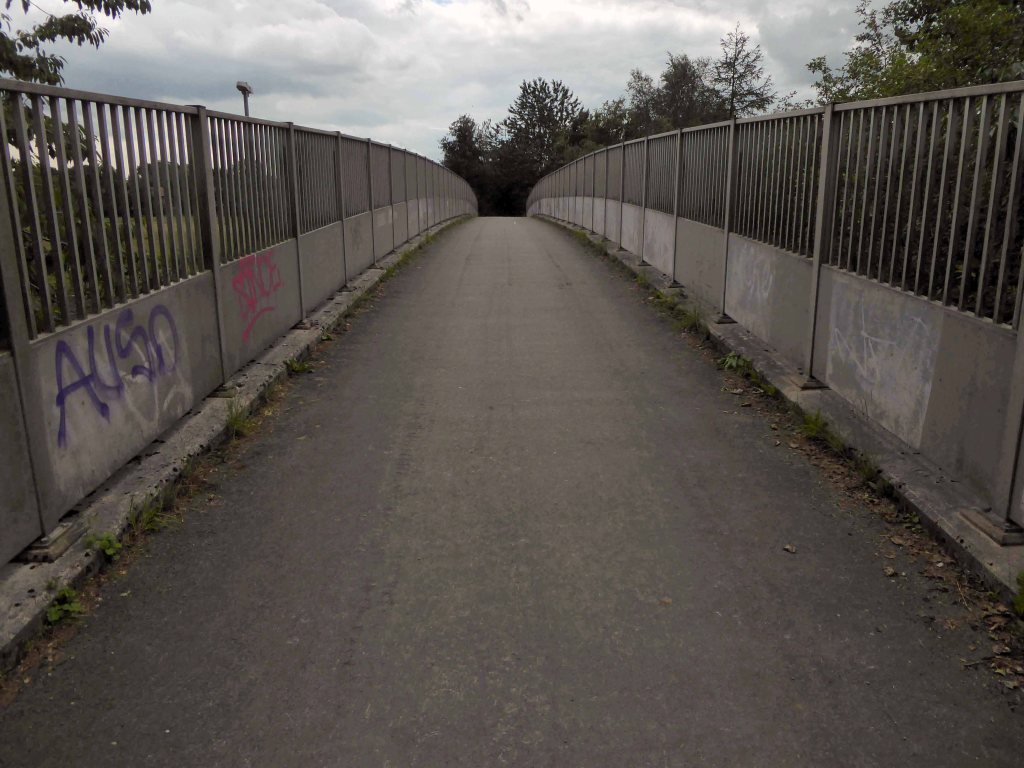
Passing over the conveniently placed footbridge over the bypass and beyond.
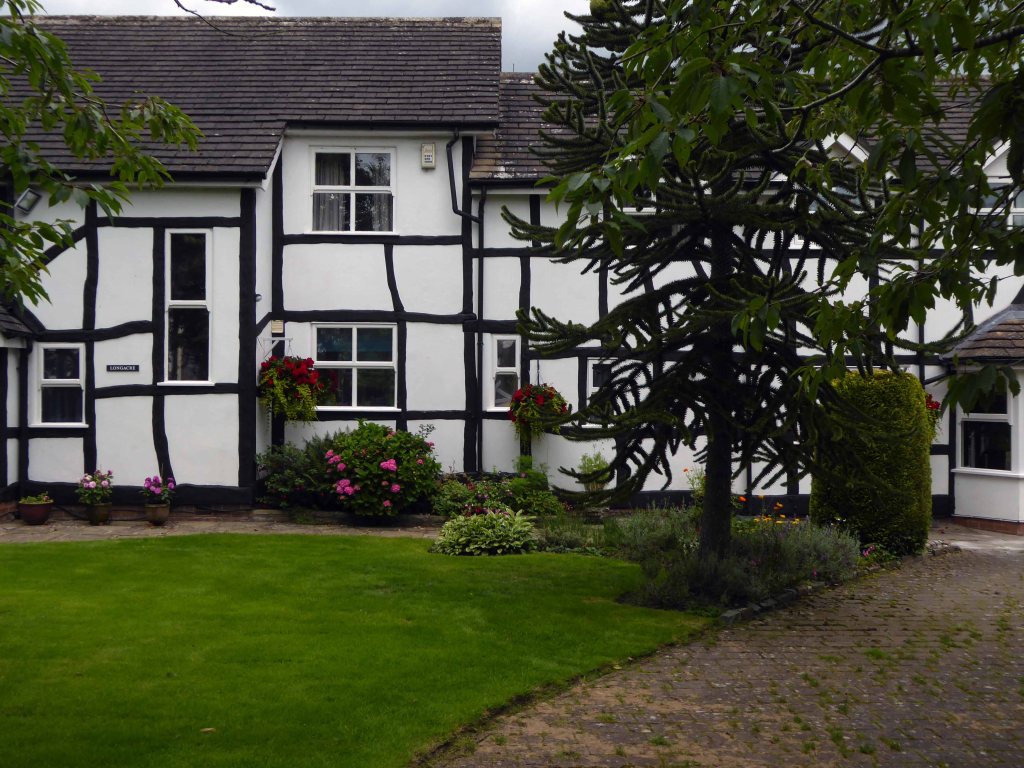
Emerging amongst faux beams and real Monkey Puzzles.
It was at this point that, unbeknownst to us, we followed a twisted sign, misdirecting us along an overgrown path – to Handforth.
We failed, in the end we failed to arrive to arrive at the end.
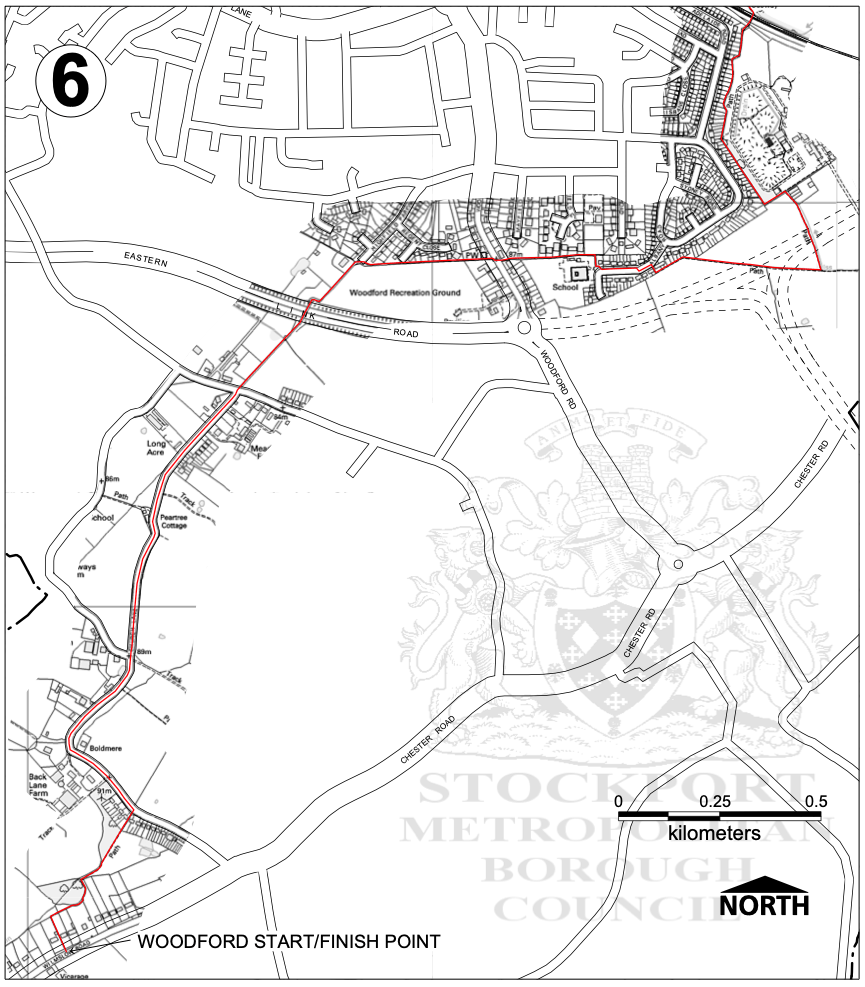
Heading west like headless chickens towards the Turkey Farm.
Making our way mistakenly to Handforth Dean Retail Park – rear of.
Crossing slip roads with no pedestrian access and the forbidden territory of an industrial sized gymnasium car park.
Woodford will just have to wait, another day another dolorous excursion.
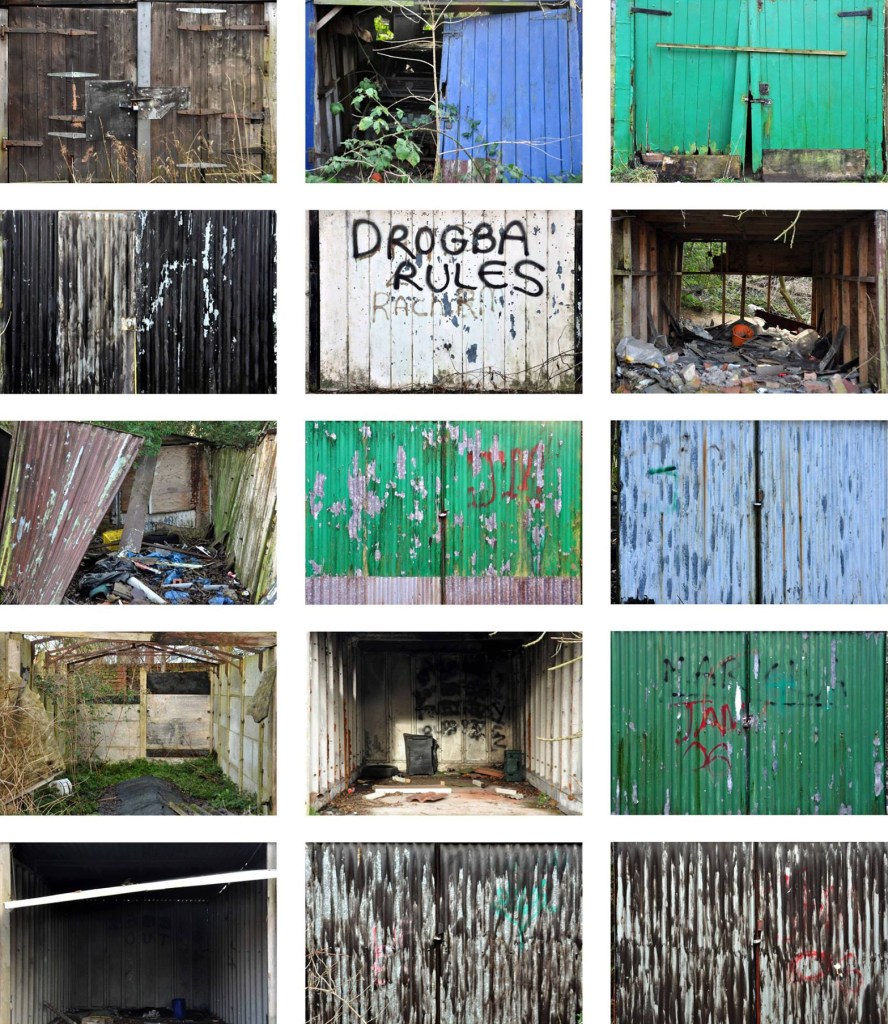
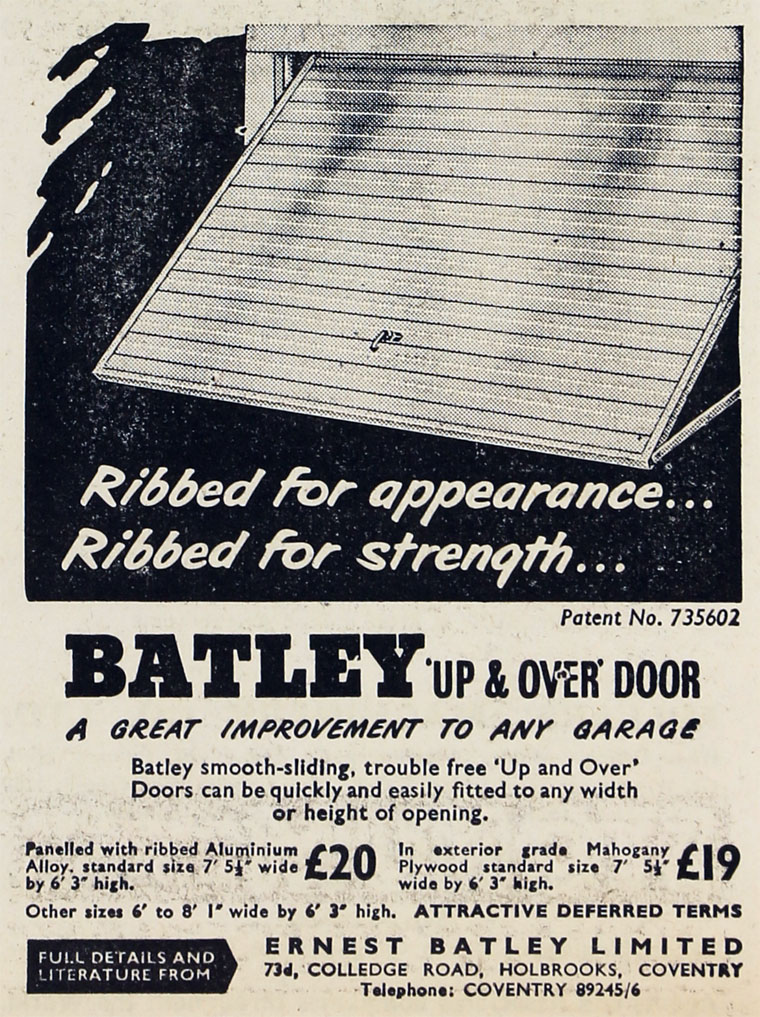
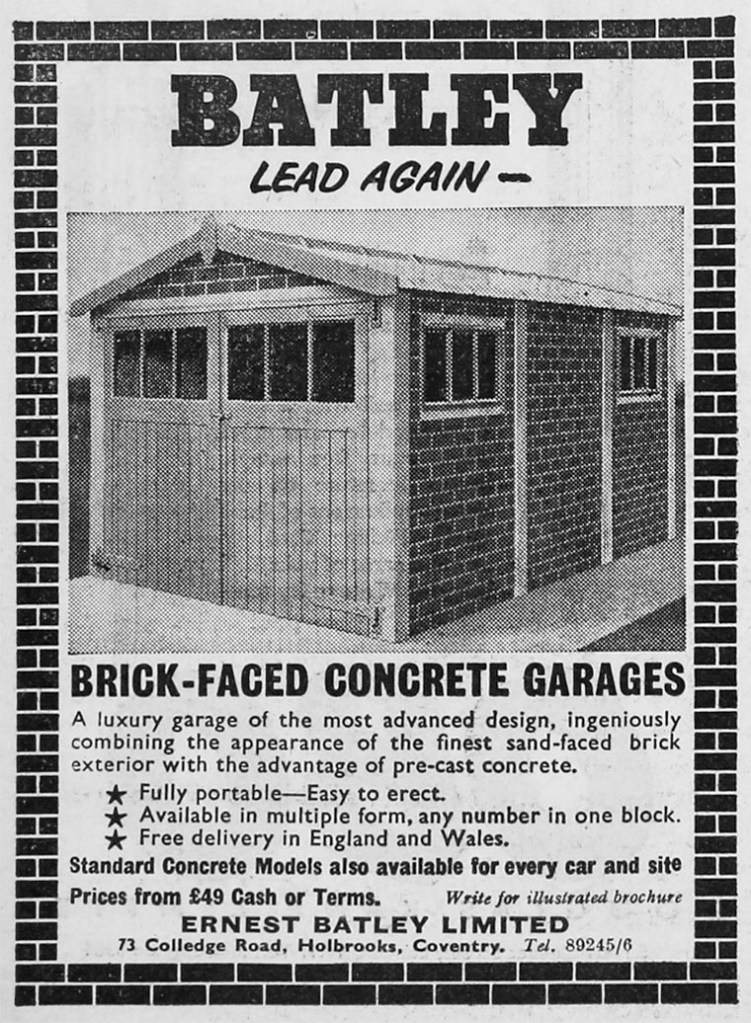
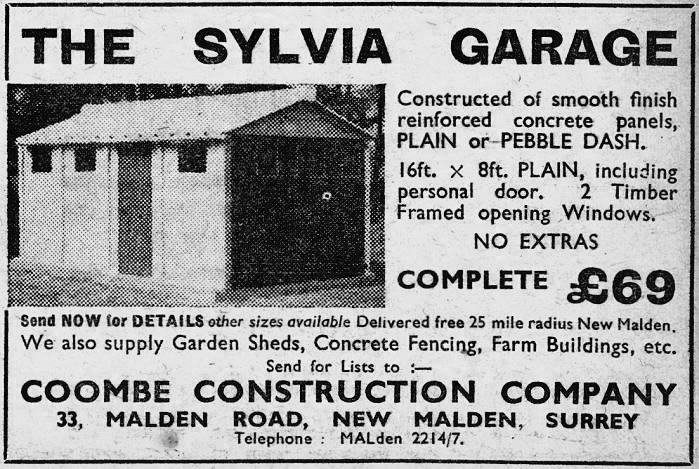
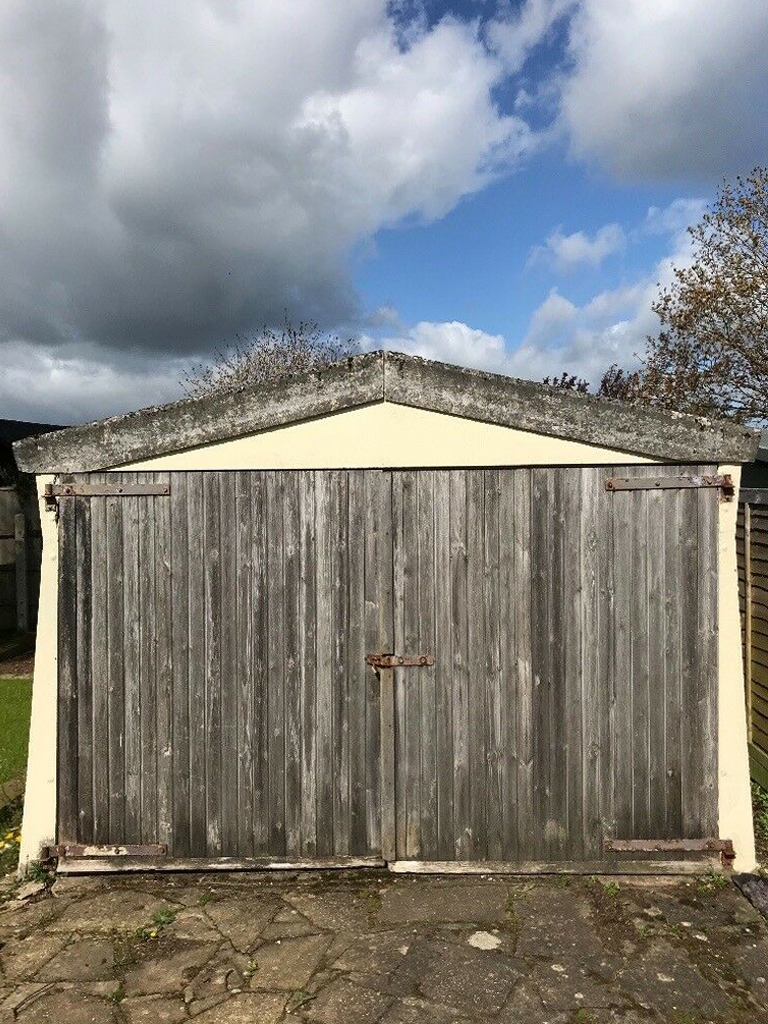
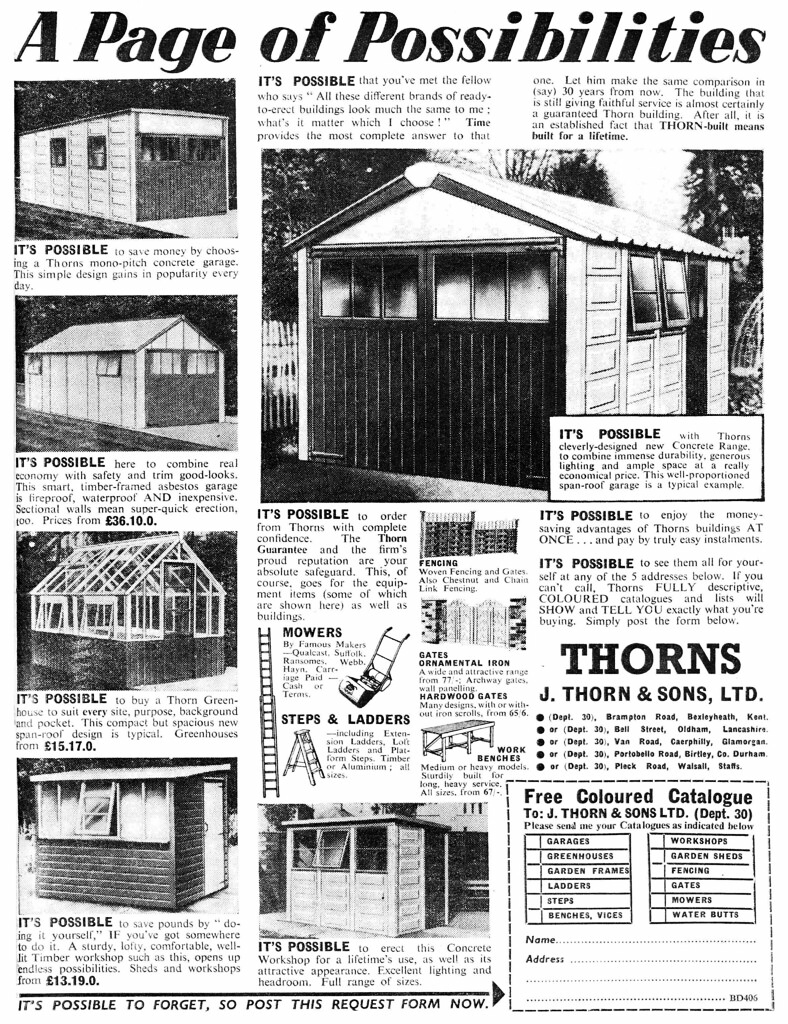
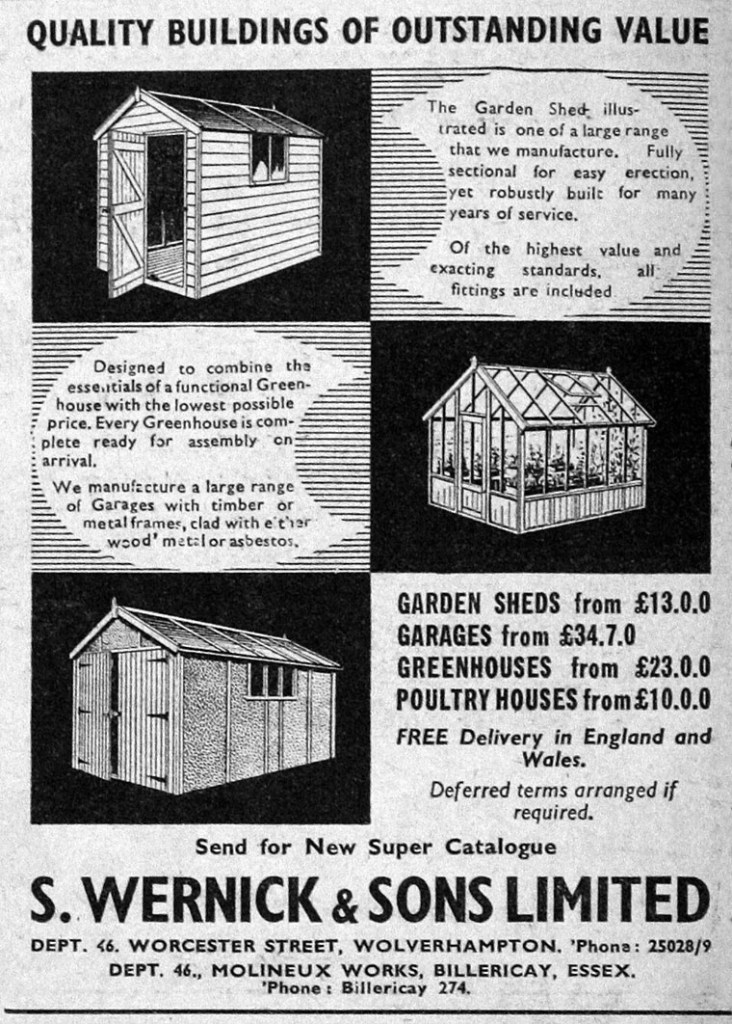
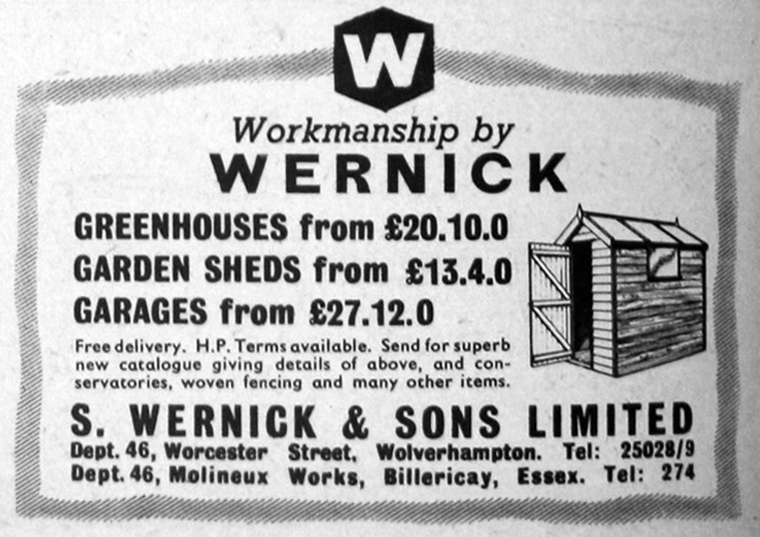
In casual conversation with Mr Matt Rettalick, at the Manchester Modernist HQ our attention casually turned to the topic of the prefabricated concrete garage.
I thought little more of it until yesterday, I then I resolved to get to the bottom of the matter.
Joseph Monier was a gardener and his idea was to develop permanent planters at a low price. In 1867, he patented different products made of reinforced concrete.
Precast panelled buildings were pioneered in Liverpool 1905. The process was invented by city engineer John Alexander Brodie, a creative genius who also invented the idea of the football goal net. The tram stables at Walton in Liverpool followed in 1906. The idea was not taken up extensively in Britain. However, it was adopted all over the world, particularly in Eastern Europe and Scandinavia.
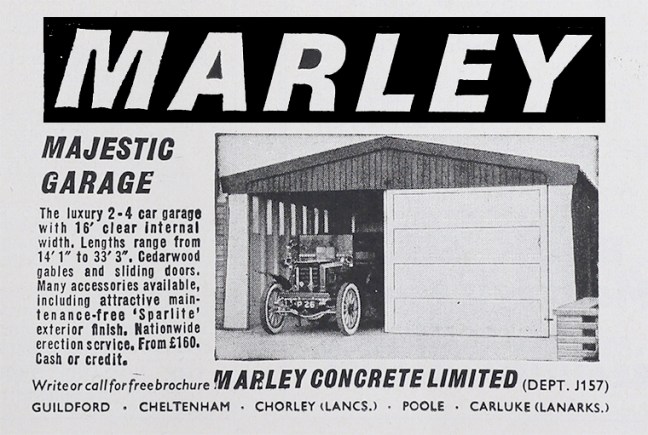
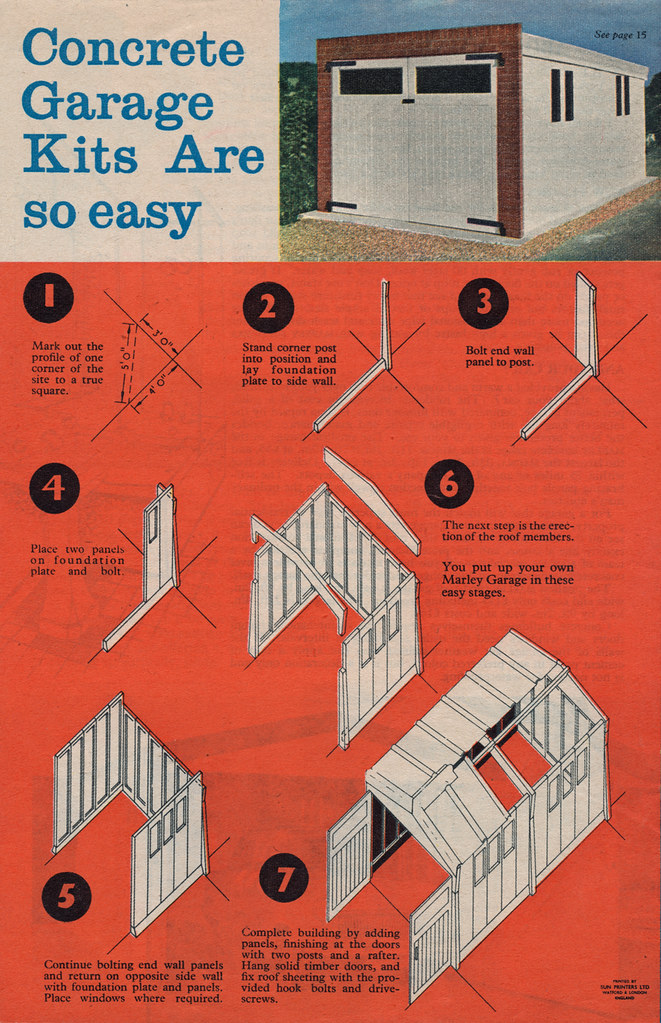
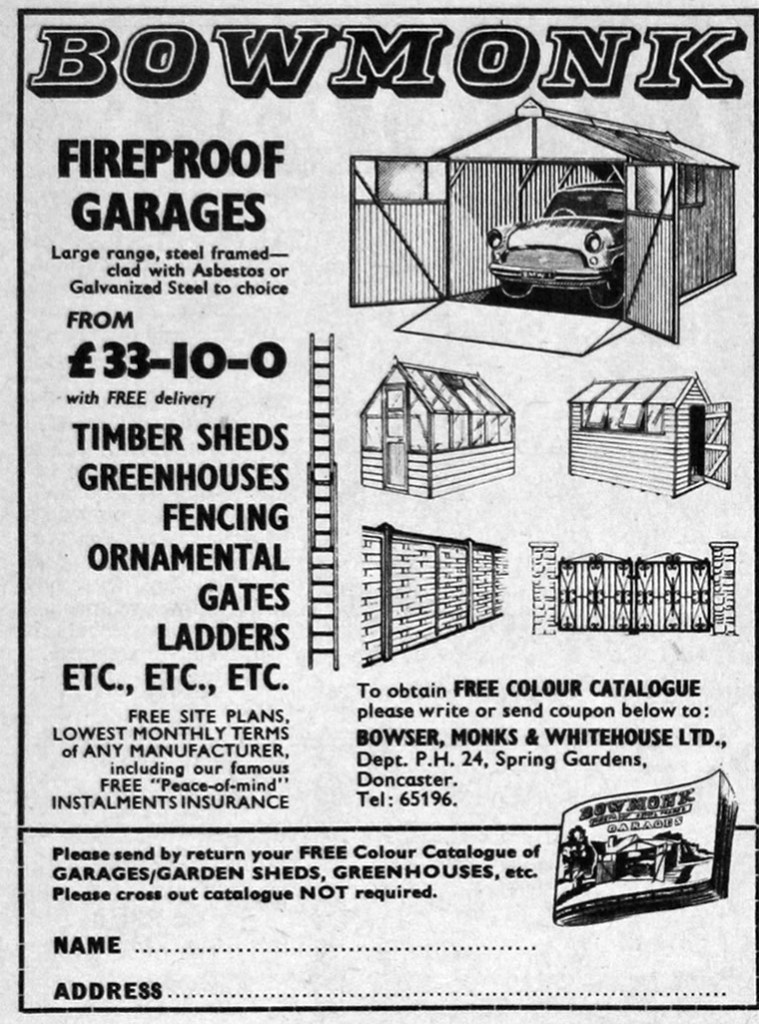
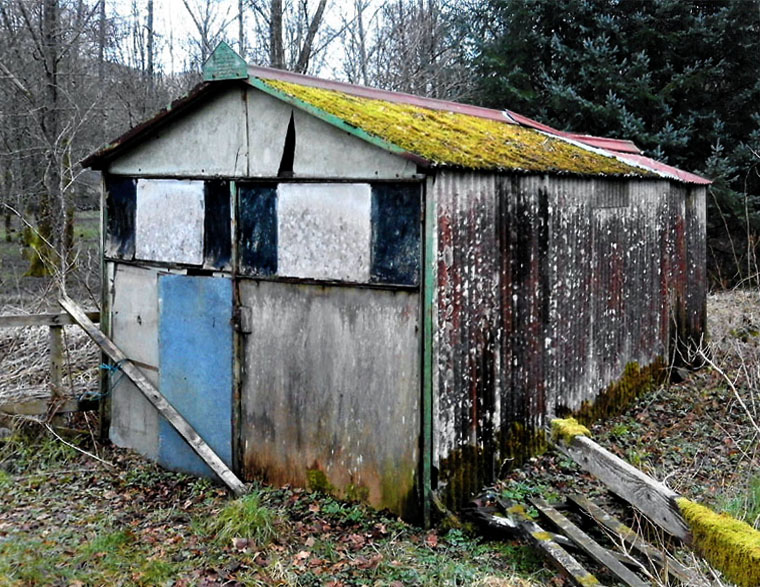
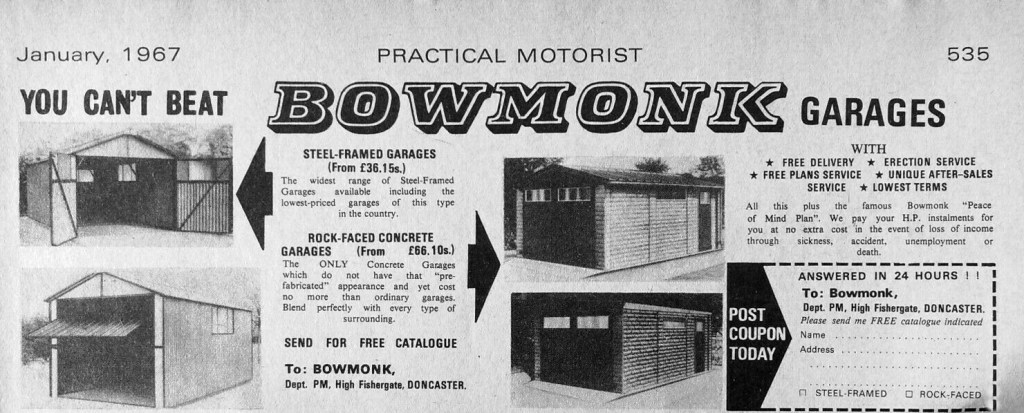
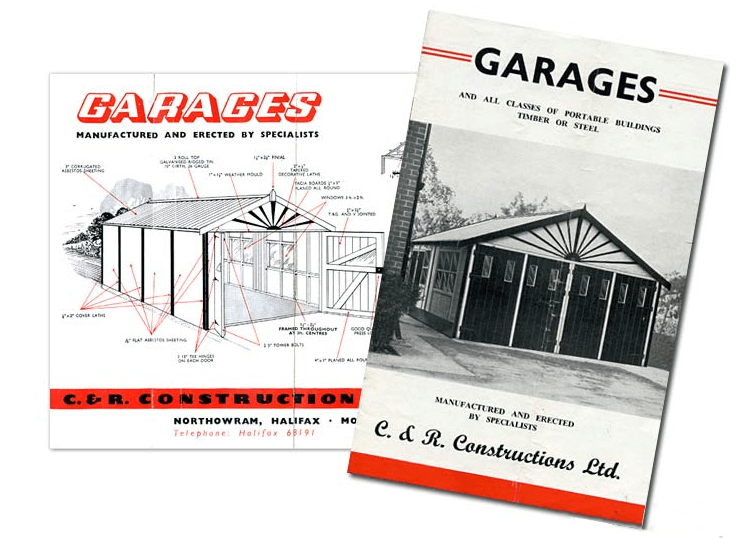
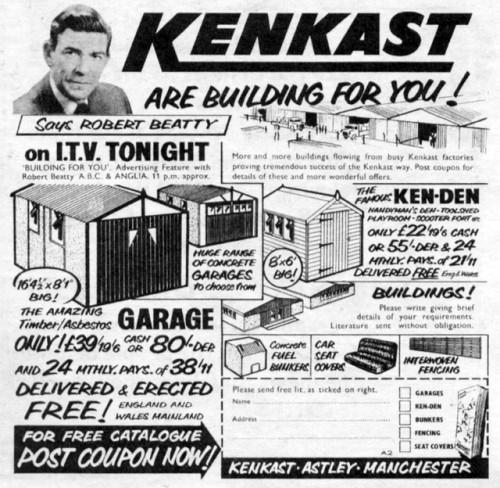
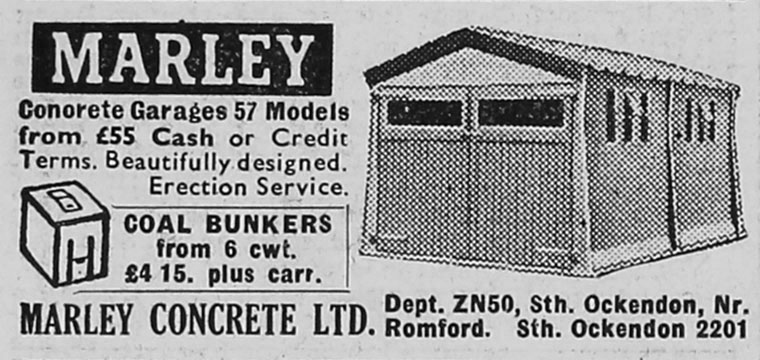
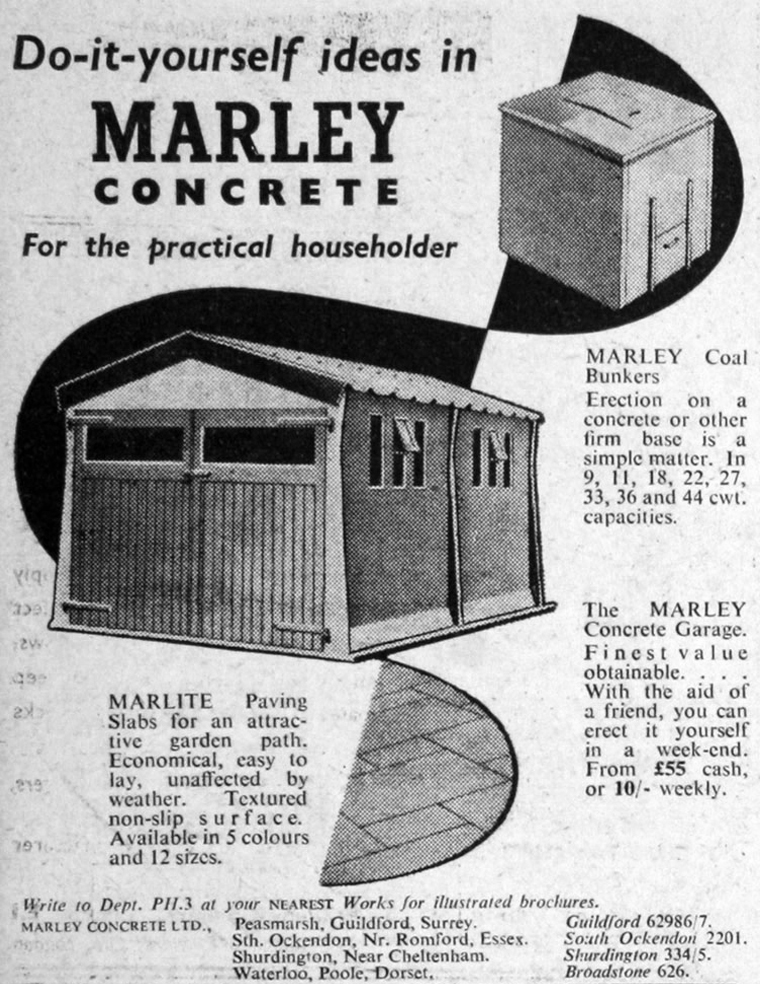
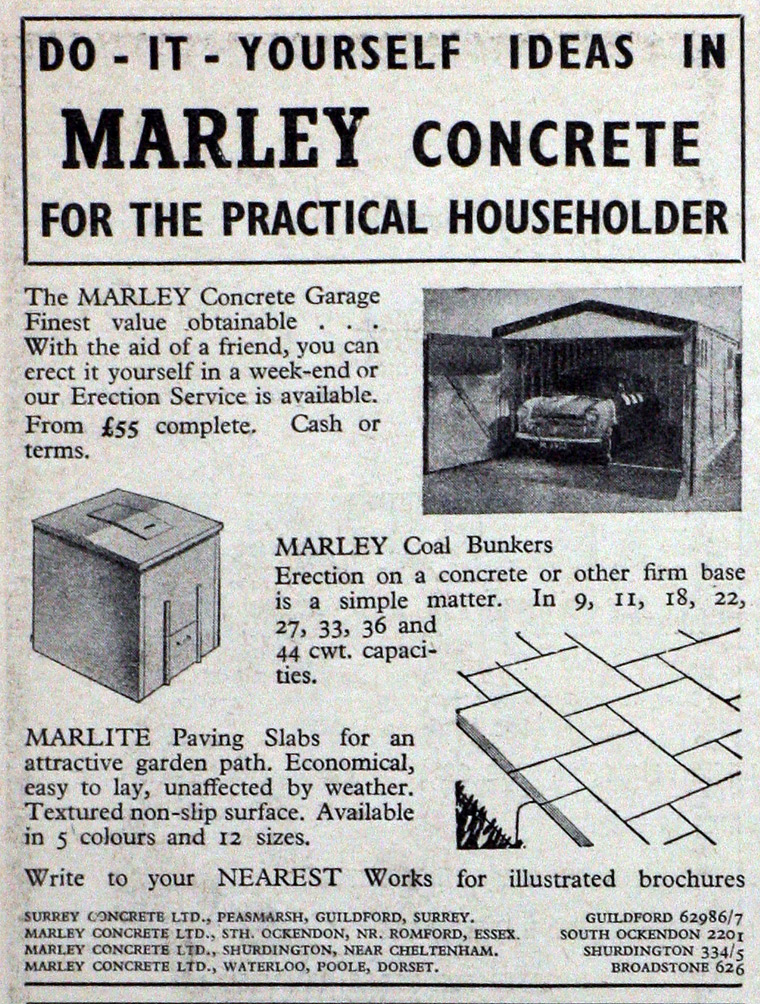
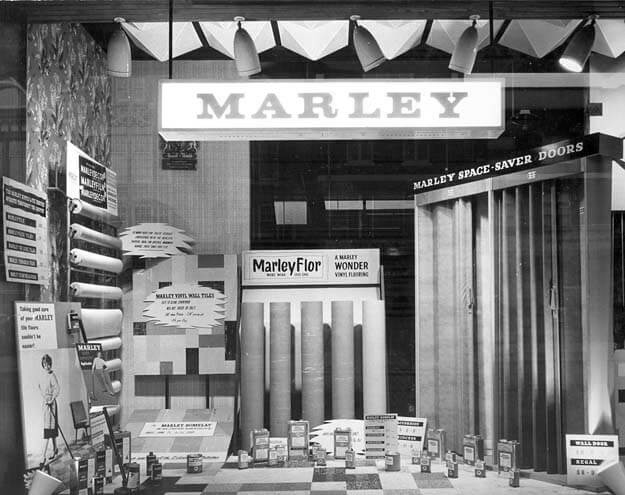
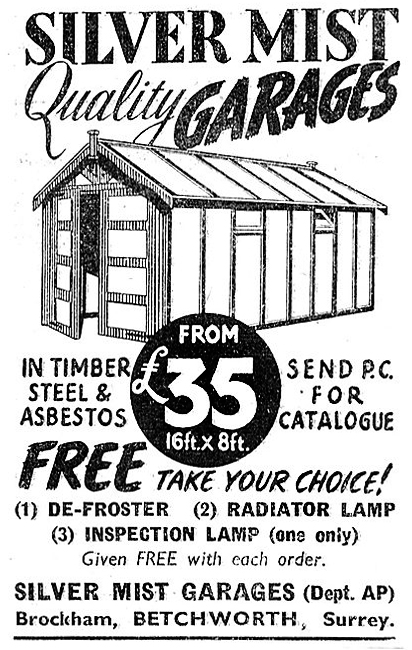
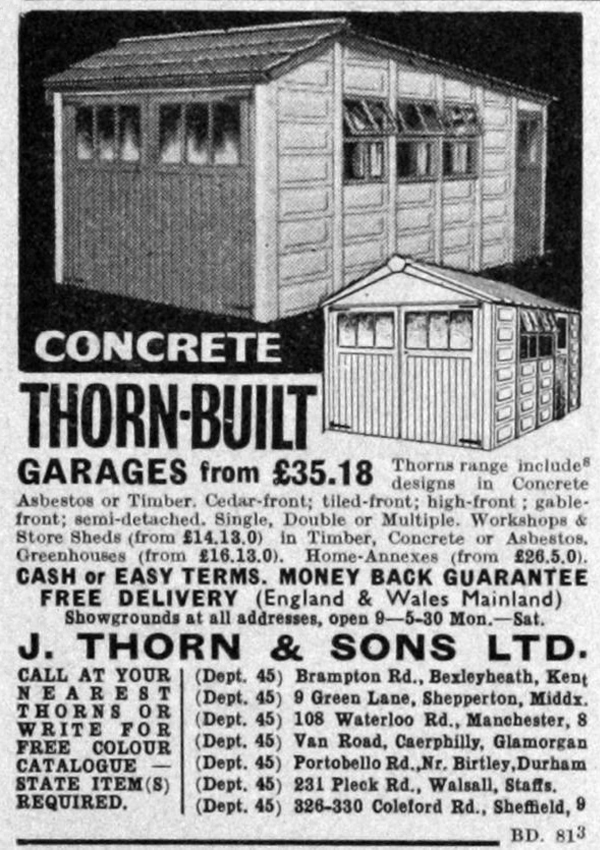
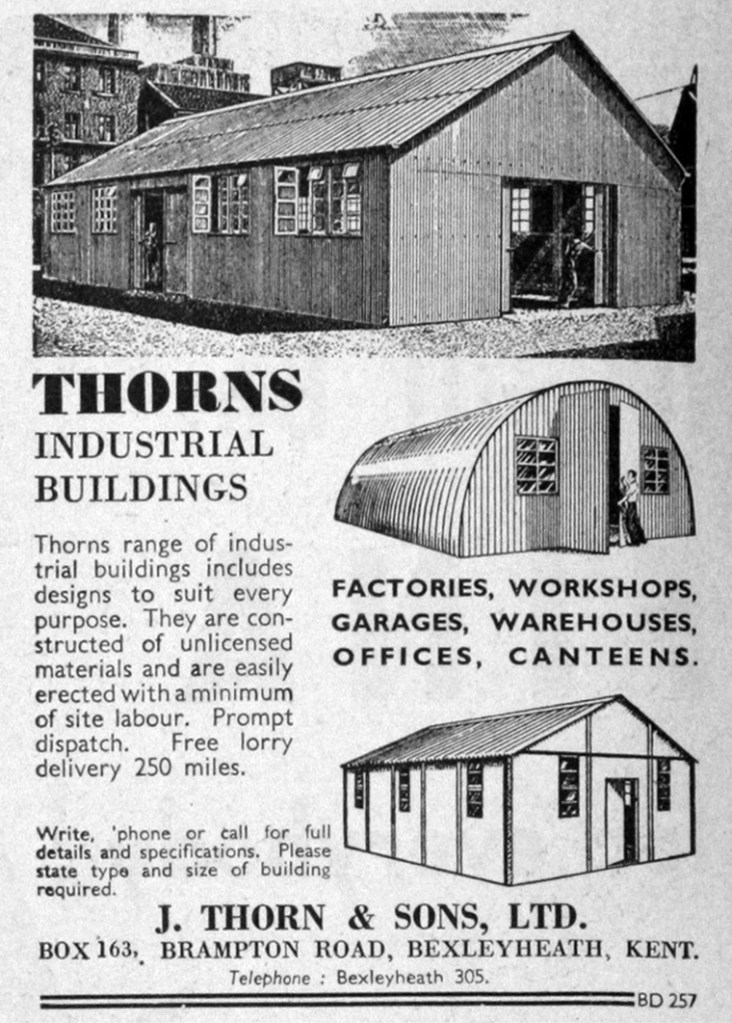
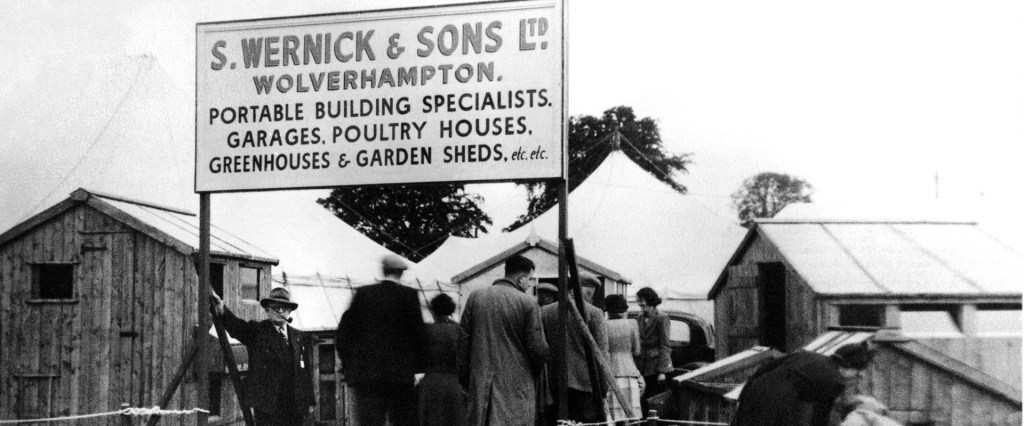
The first concrete kit garages appeared in 1952, manufactured by Marley, earlier models had been constructed from wood, asbestos, corrugated iron or galvanised steel.
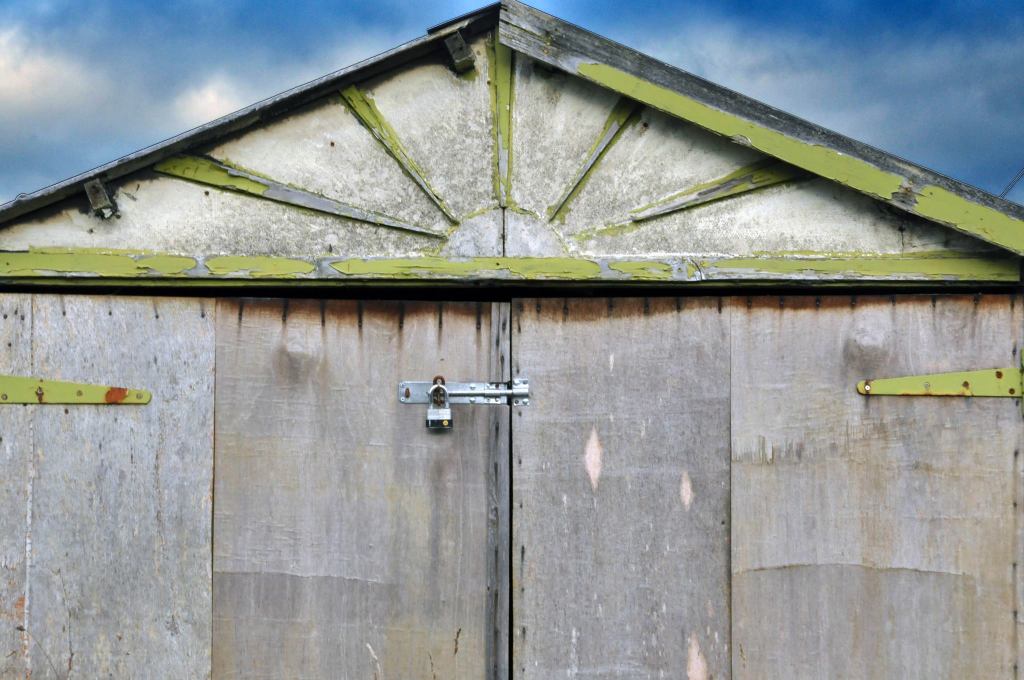
The sunrise became a common symbol of inter war optimism.
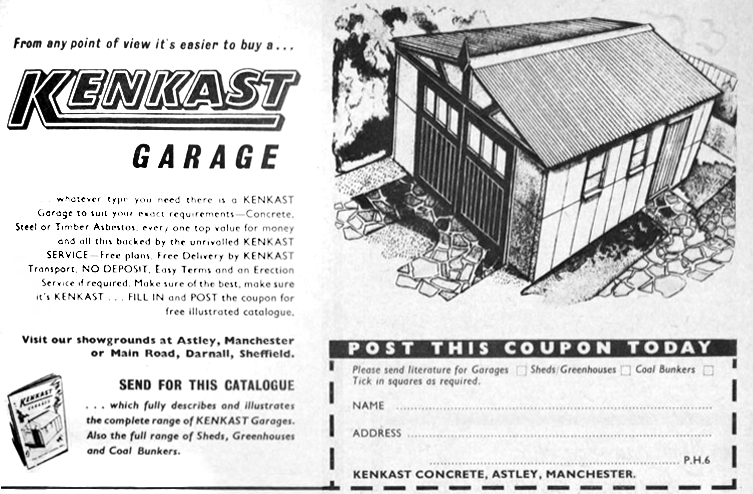
The increase in car ownership, the growth in the DIY ethic and the lack of an integrated garage, drove the demand for a pre-cast concrete auto-haven at the end of the drive.
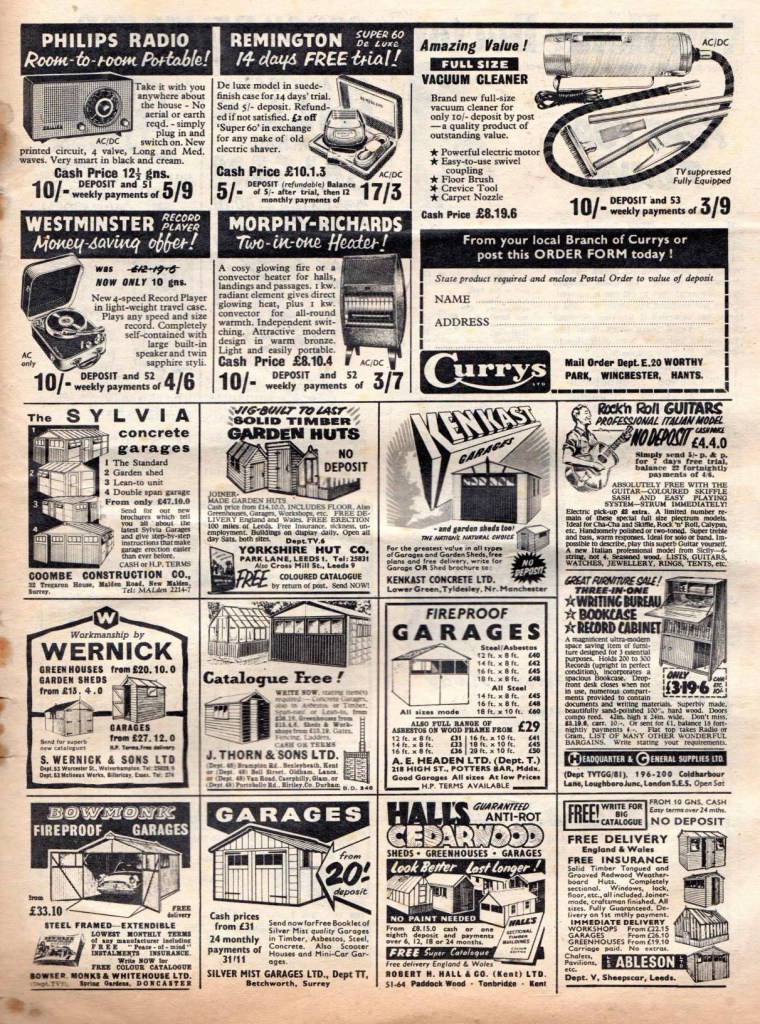
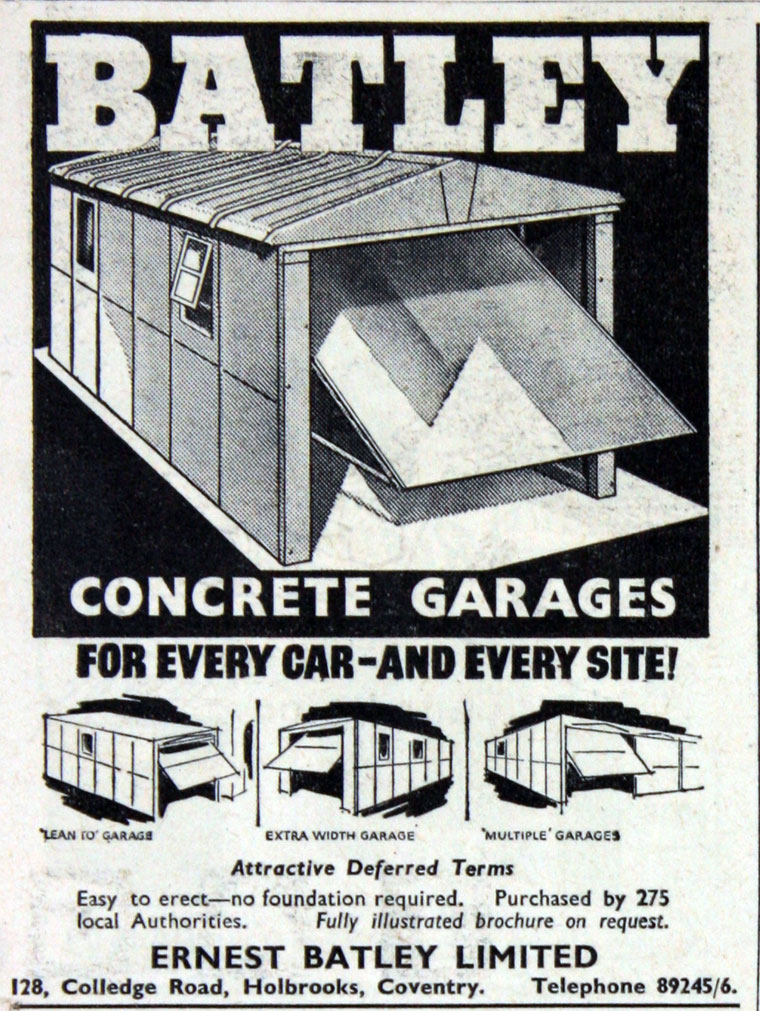
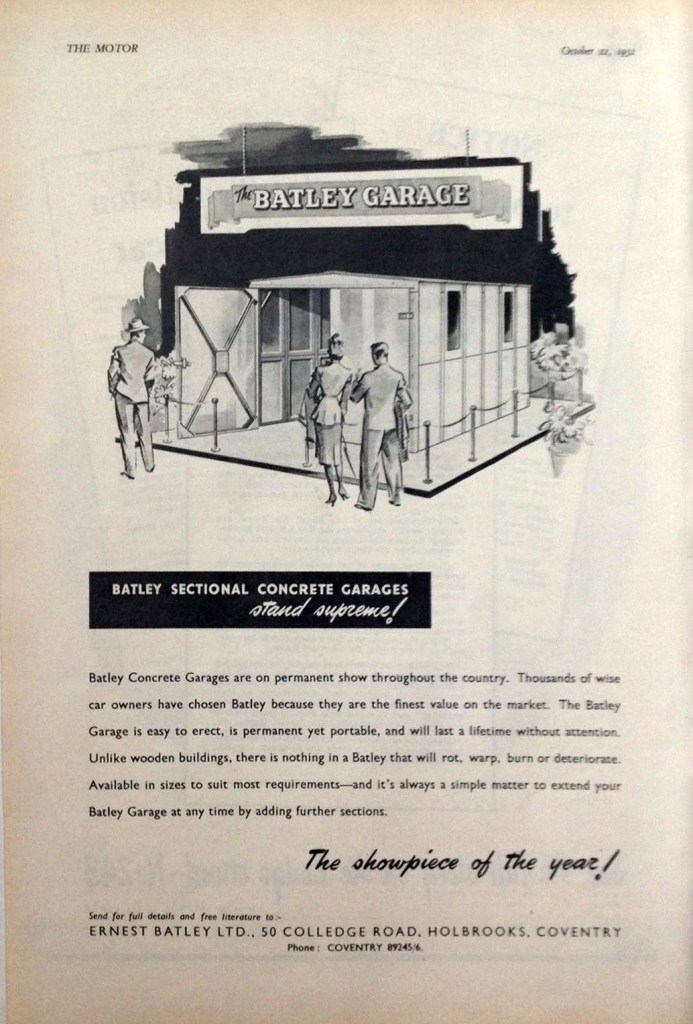
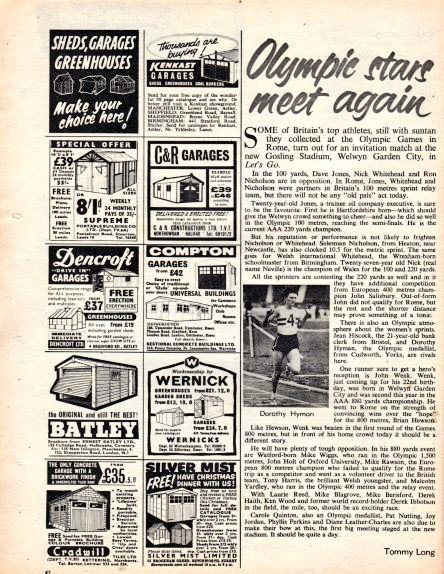
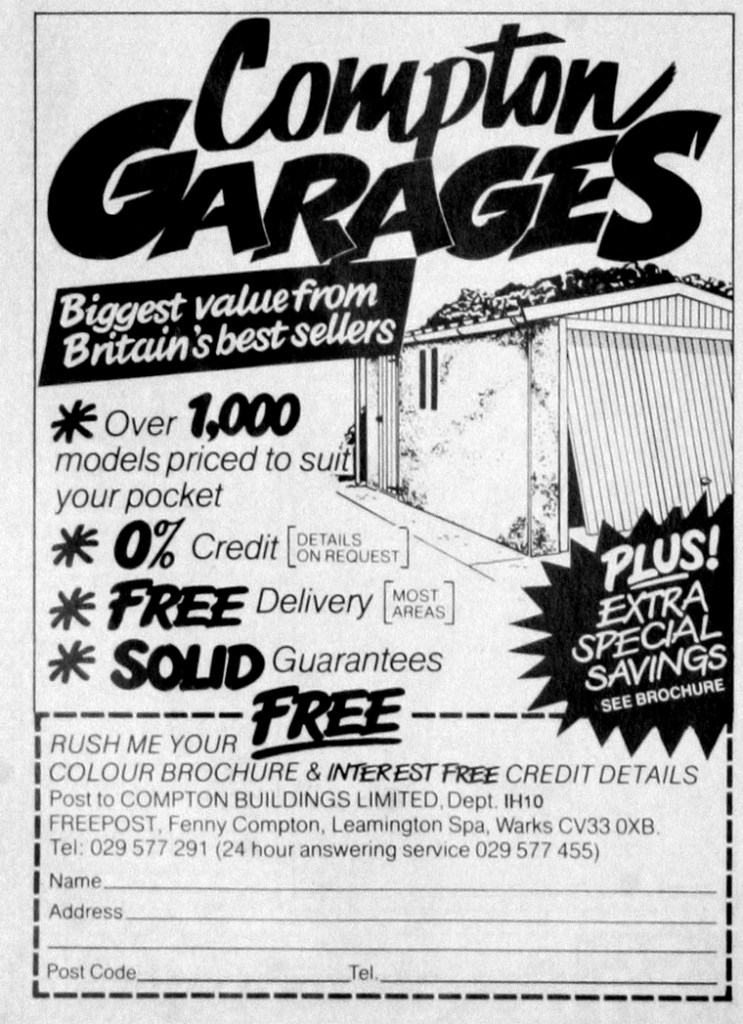
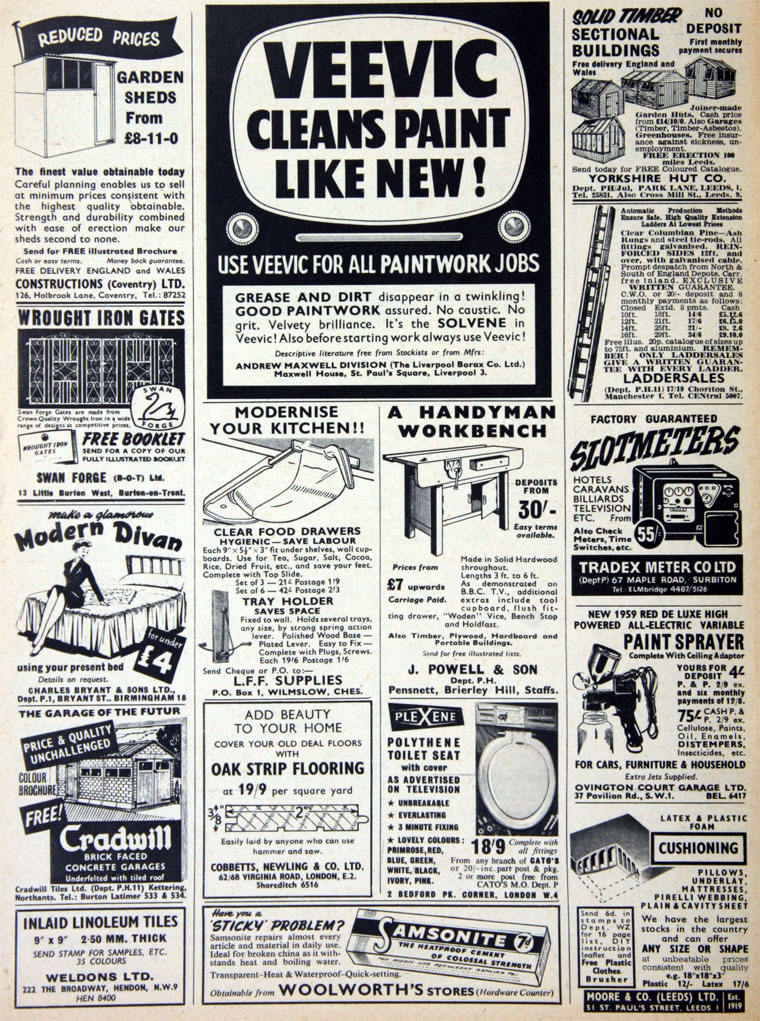
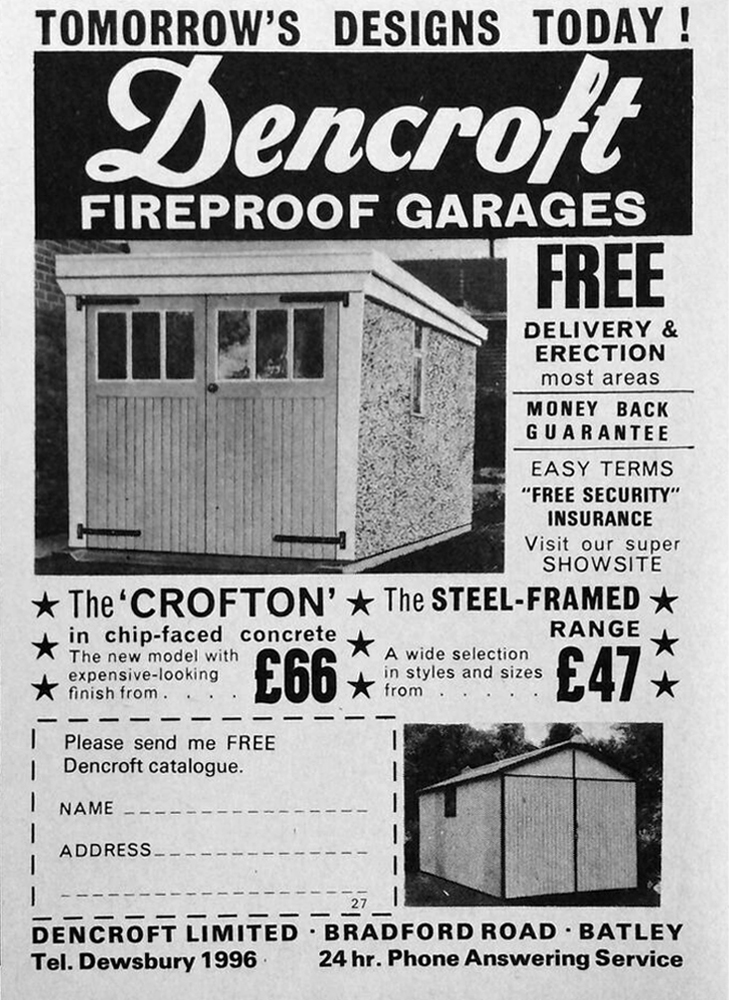
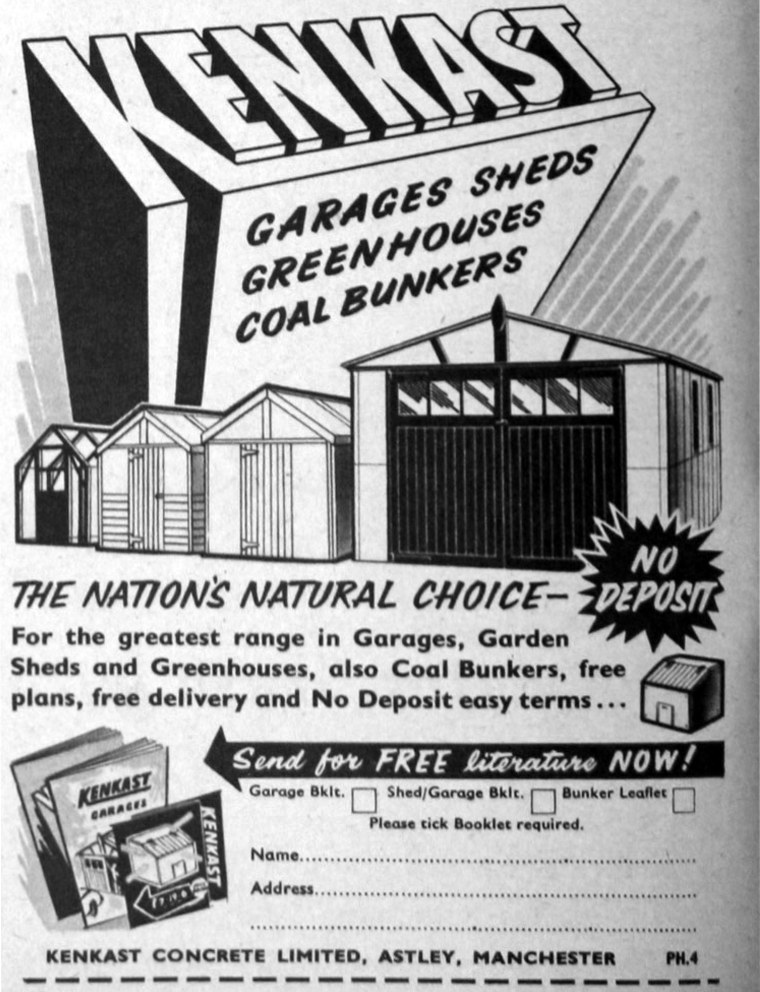
They became a staple of the small ads.
Easy terms built to last.
Kenkast is the name which for me resonates down through the years, though there were it seems, several other manufacturers.
We now live in an age of endless non-stop domestic extension, all of the above are reminders of an age when extra external domestic space was added over a weekend, with help from a friend.
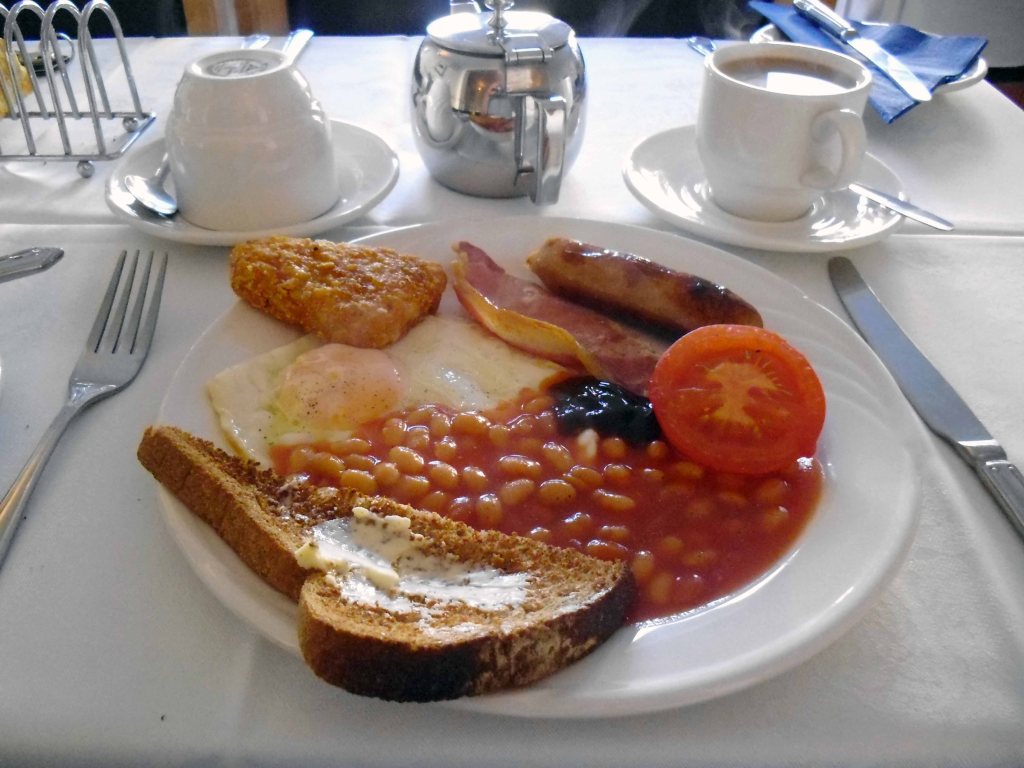
Another day another breakfast – reduced rations and rashers, the now inevitable hash brown and a far too common failure to recognise my preference for tinned tomatoes.
Soldier on.
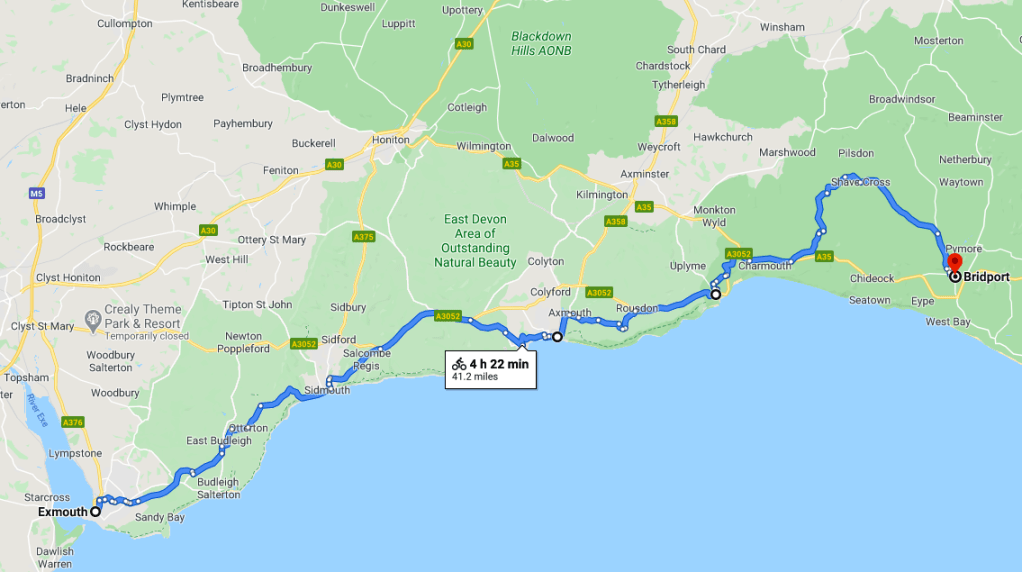
Friday 31st July 2015 leaving town beneath the bright morning sun.
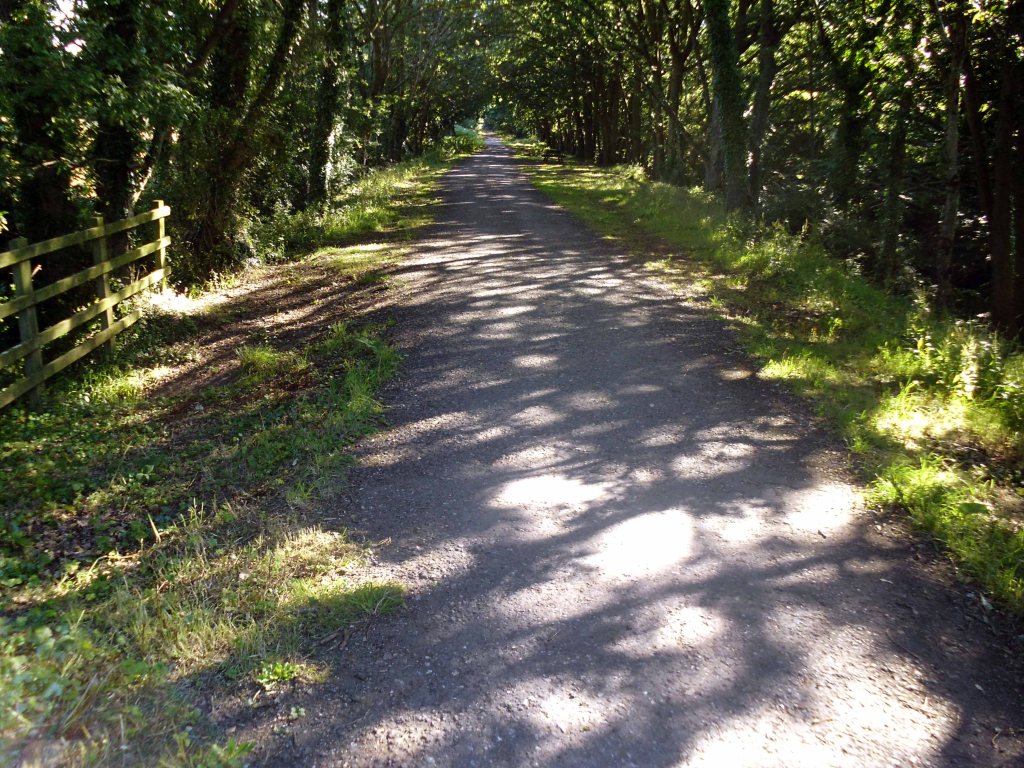
Following a shady lane.
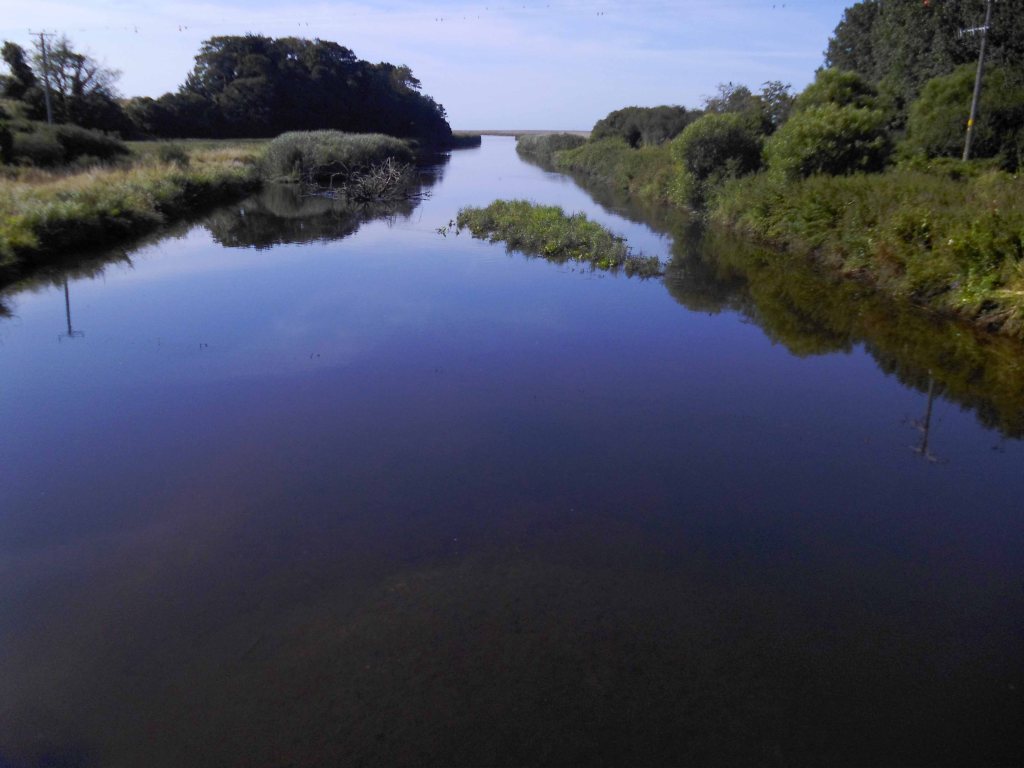
Crossing a drain.
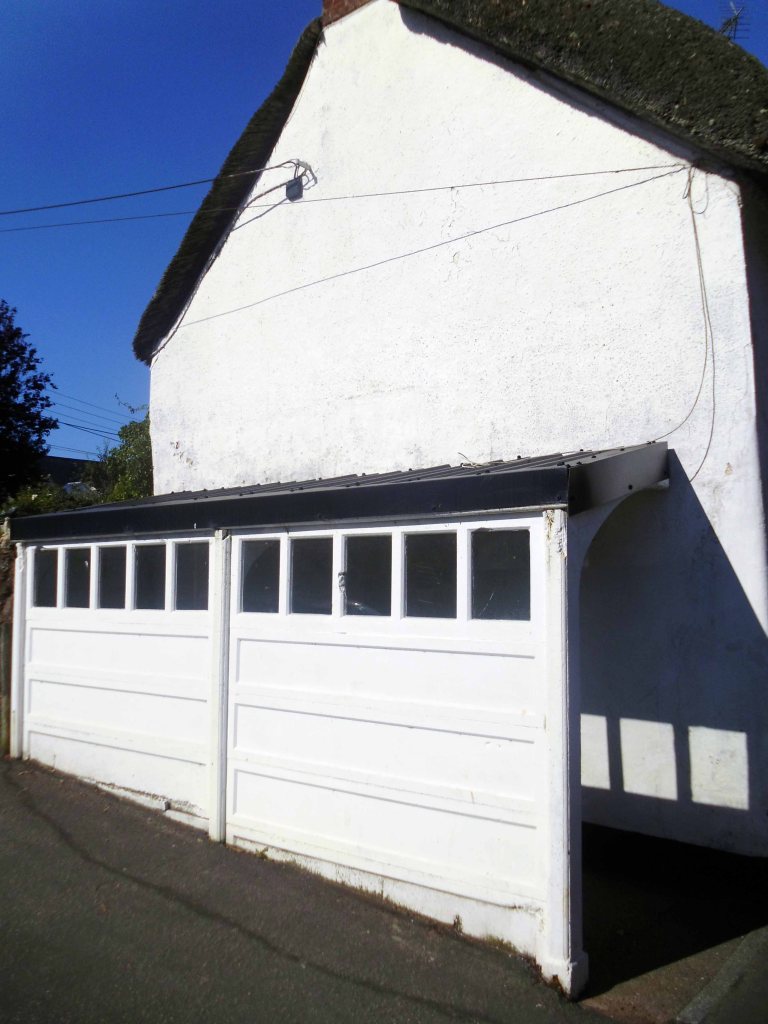
Noting one curious prefabricated concrete lean to too.
A beautiful coastal town with a regency feel which is ideal for visitors of all ages. Sat in the middle of spectacular countryside Sidmouth is home to beautiful beaches, stylish eating places and great shopping, with everything from unusual gifts, designer clothing and lifestyle goods available.
The day of my visit the Folk Festival was in full swing – I encountered hardened drunken cider drinkers, drunk in the park and more tie-dyed clothing, than you would consider it humanly possible to produce.
With a hey nonny no I left town – up a very steep hill.
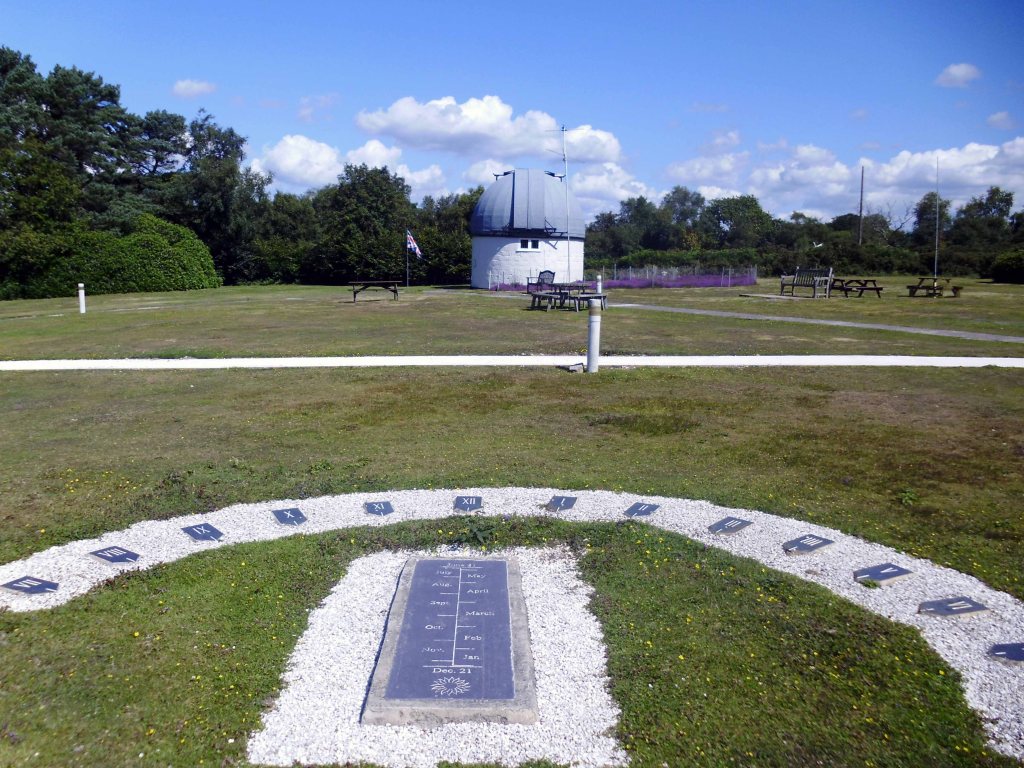
At the top of the hill, I unexpectedly came upon an observatory.
It is both a historical observatory and home to an active amateur astronomical society. It is a centre for amateur astronomy, meteorology, radio astronomy, and the promotion of science education.
The observatory is regularly open to the public, staffed entirely by volunteers, and each summer hosts the South West Astronomy Fair.
Norman Lockyer was a Victorian amateur astronomer, who discovered the element Helium in the Sun’s corona in 1868 and was one of the founders of the science journal Nature in 1869. He became the director of the Solar Physics Observatory at South Kensington and the first professor of astronomical physics in the Normal School of Science – now the Royal College of Science, in 1887, he was knighted in 1897.
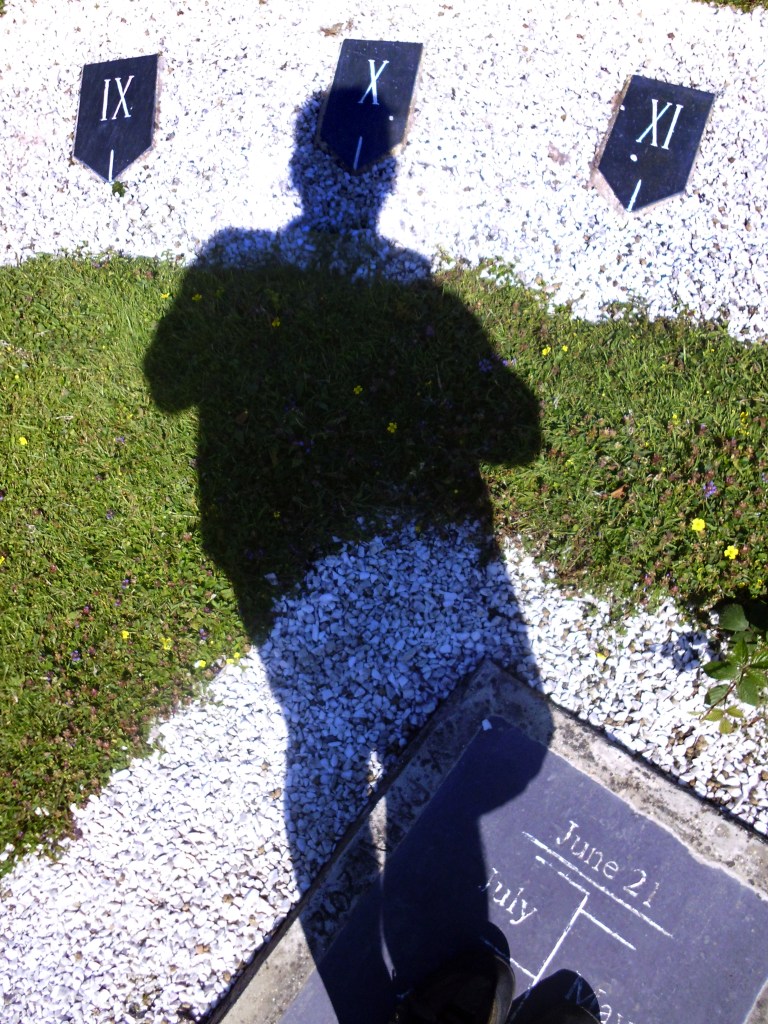
Using one’s own skill and ingenuity it is entirely possible to deduce that one arrived at such an august hill top observatory – at exactly X o’clock!
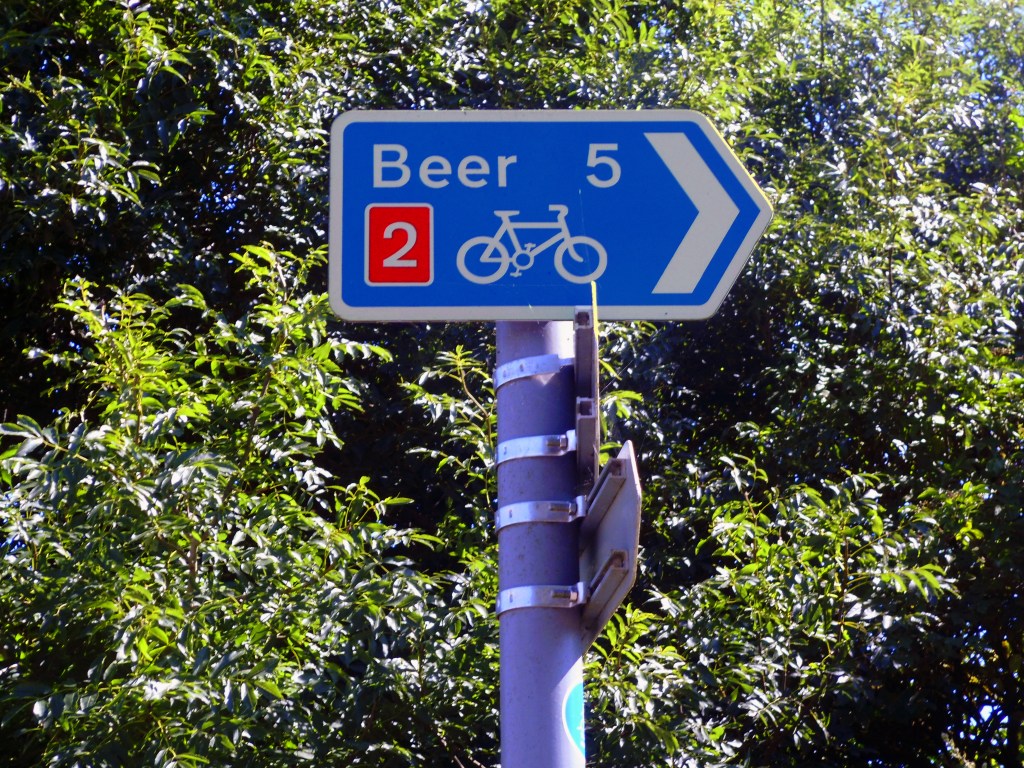
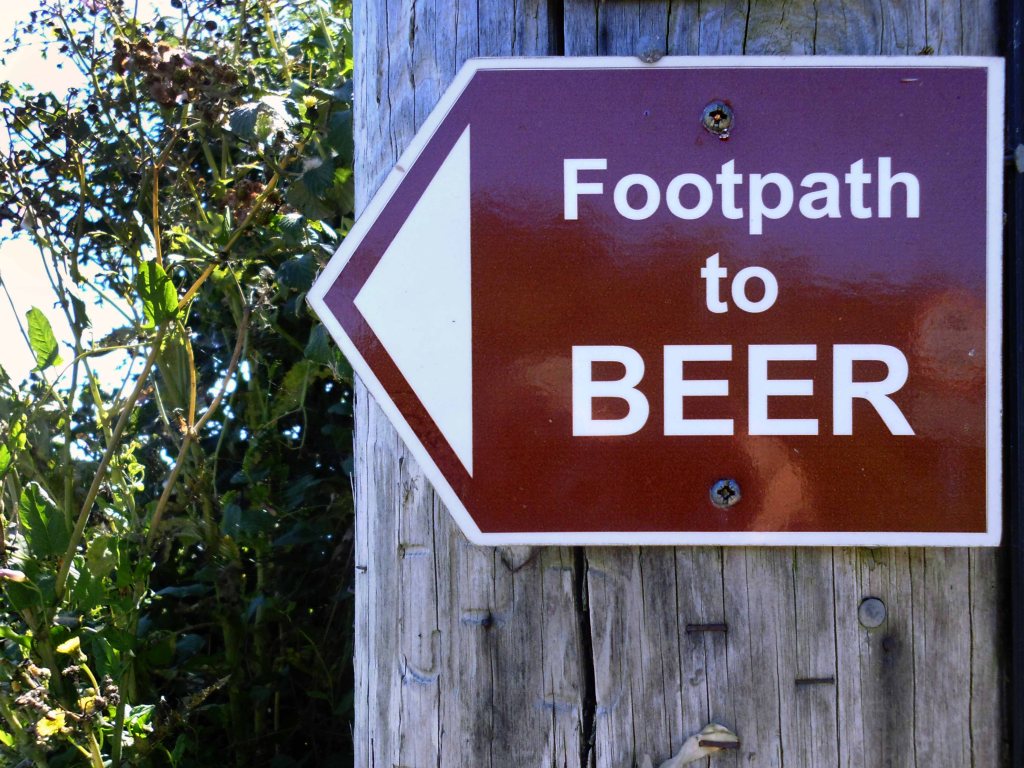
We’re now on the road to Beer, more of which in a moment first we’re on the way to Branscombe.
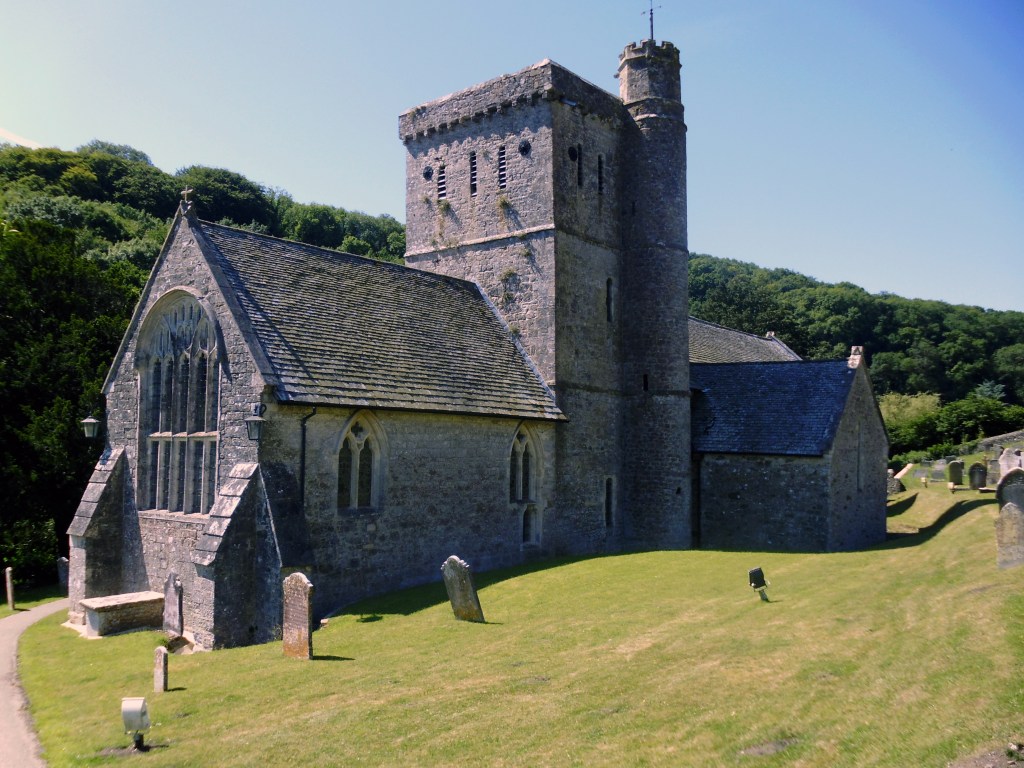
Characteristic Saxon chiselling on stones hidden in the turret staircase suggest the probability of an earlier, 10th century, Church on the site. Saint Winifred’s is among the oldest and most architecturally significant parish churches of Devon. The 12th century square central tower is one of only four completely Norman towers in Devon.
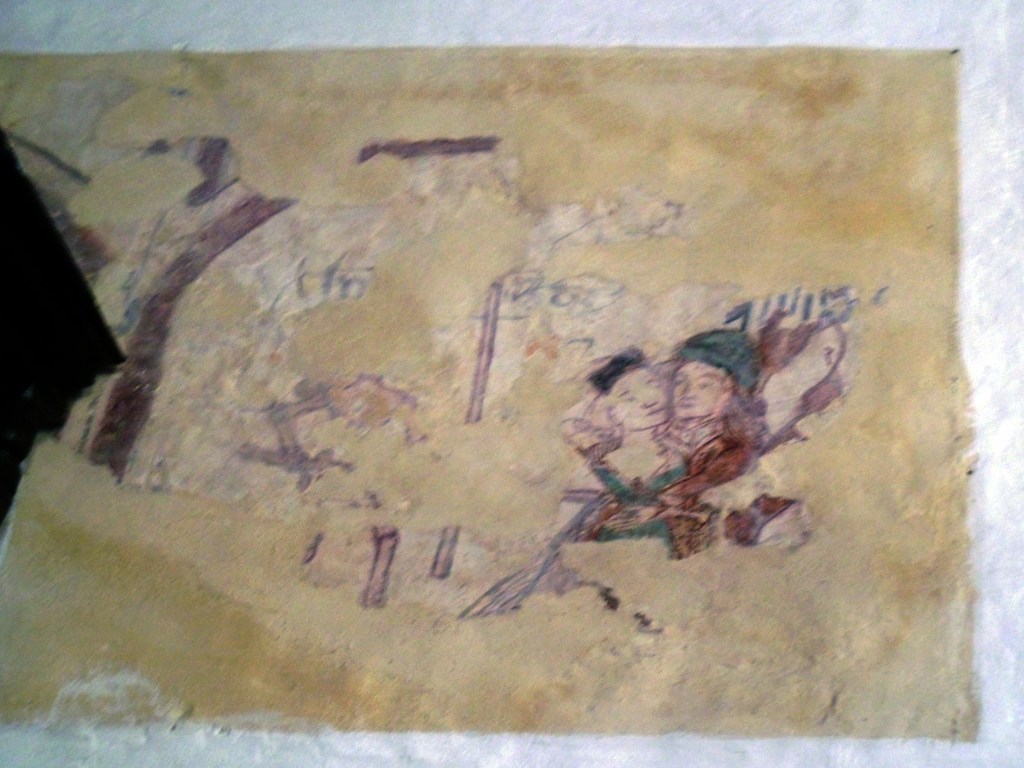
The church contains a rare surviving example of wall painting, dated about 1450 and discovered in 1911, the couple in this fragment illustrate Lust.
Sadly much of our ecclesiastical art was removed, destroyed or over painted during the Reformation, exacerbated by Cromwell and a general disdain for pictures and such.
Lust was also to be removed, destroyed or over painted.
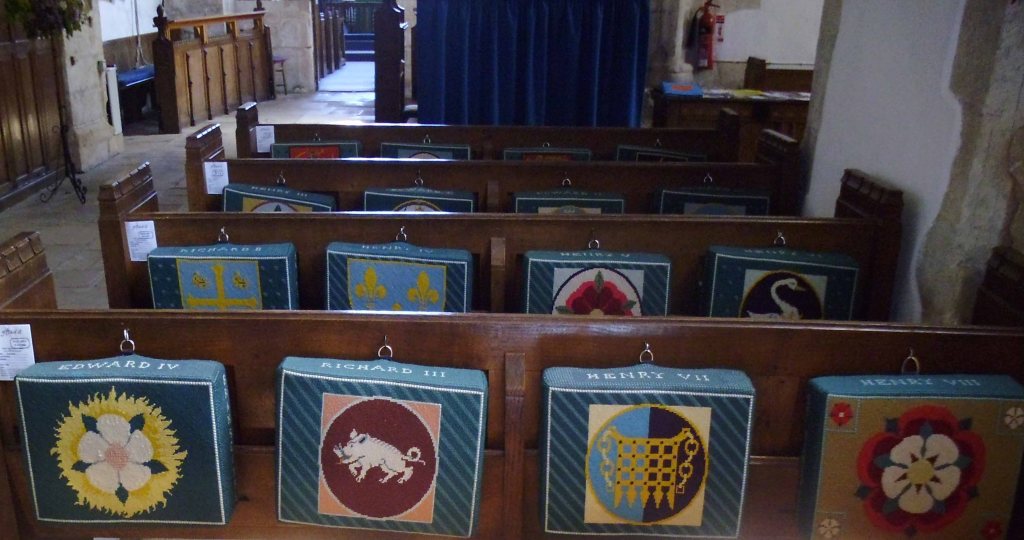
The reverence for royal succession was and is actively encouraged.
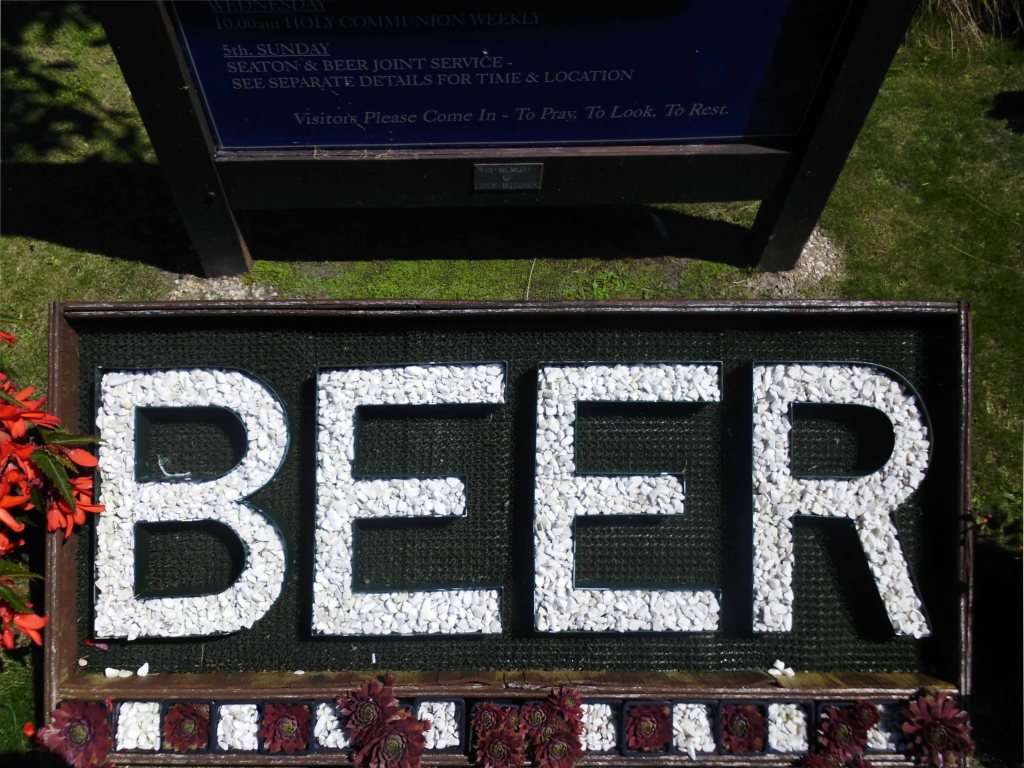
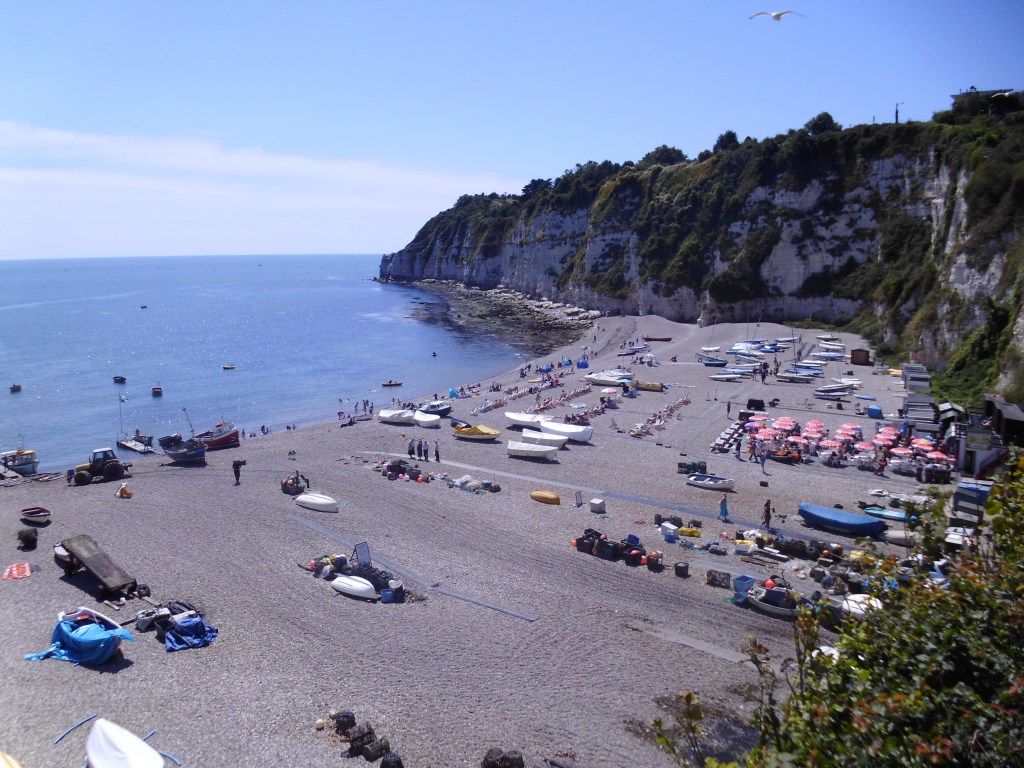
The beautiful picturesque village of Beer is located on the UNESCO World Heritage Jurassic Coast in Devon. Surrounded by white chalk cliffs, the shingle beach is lined with fishing boats still bringing in their daily catches and is famous for its mackerel.
On the edge of the South West Coast Path, Beer has some of the most stunning coastal walks in the county, one of the best being from Seaton to Beer with dramatic views across the Jurassic Coastline. Beer was also named recently by Countryfile as the Top Picnic spot in the UK from Jubilee Gardens at the top of the headland, chose for its stunning view of the beach and village from the hillside.
A narrow lane leads to the bay, clogged with oversized Toytown motor cars, full of folk in search of something which they’re doing their level best to remove, destroy or over paint.
Toytown is home to Larry the Lamb,and his clever sidekick, Dennis the Dachshund. Each day a misunderstanding, often arising from a device created by the inventor, Mr. Inventor, occurs which involves Ernest the Policeman, the disgruntled Mr Growser the Grocer and the Mayor.
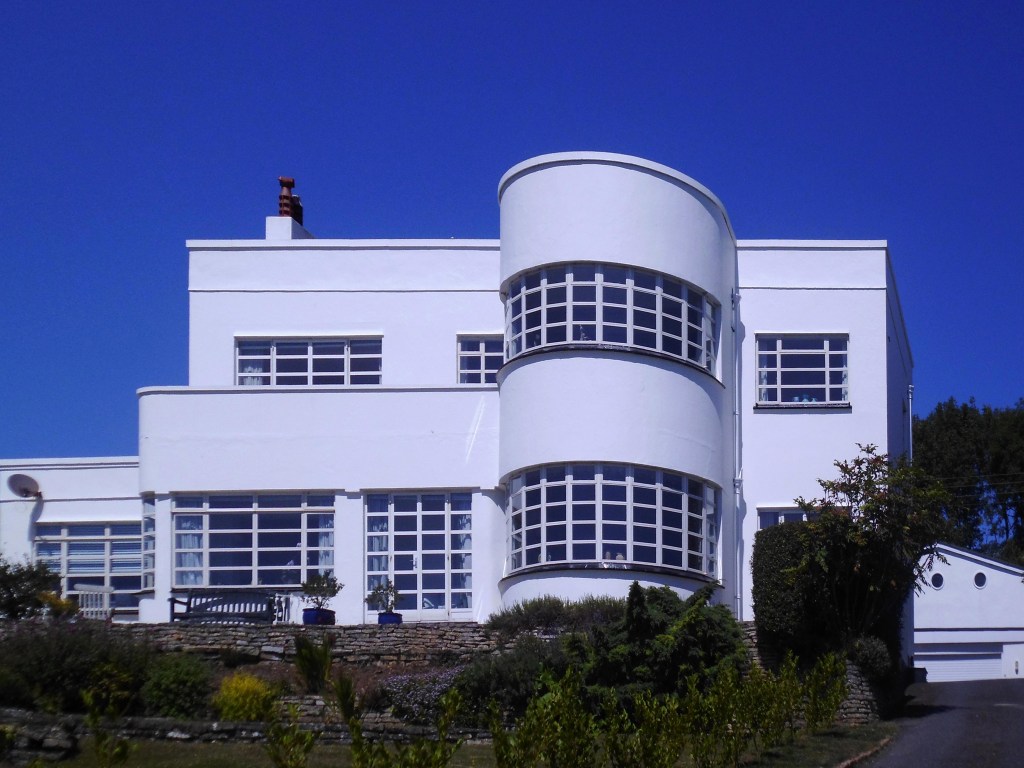
Delightful home compromised by the curse of the ubiquitous uPVC.
Whether you are looking for interesting attractions, wanting to explore stunning natural landscapes, experience thrilling outdoor activities, or just wanting somewhere to stay, eat or shop, you’ll find it all in Seaton.
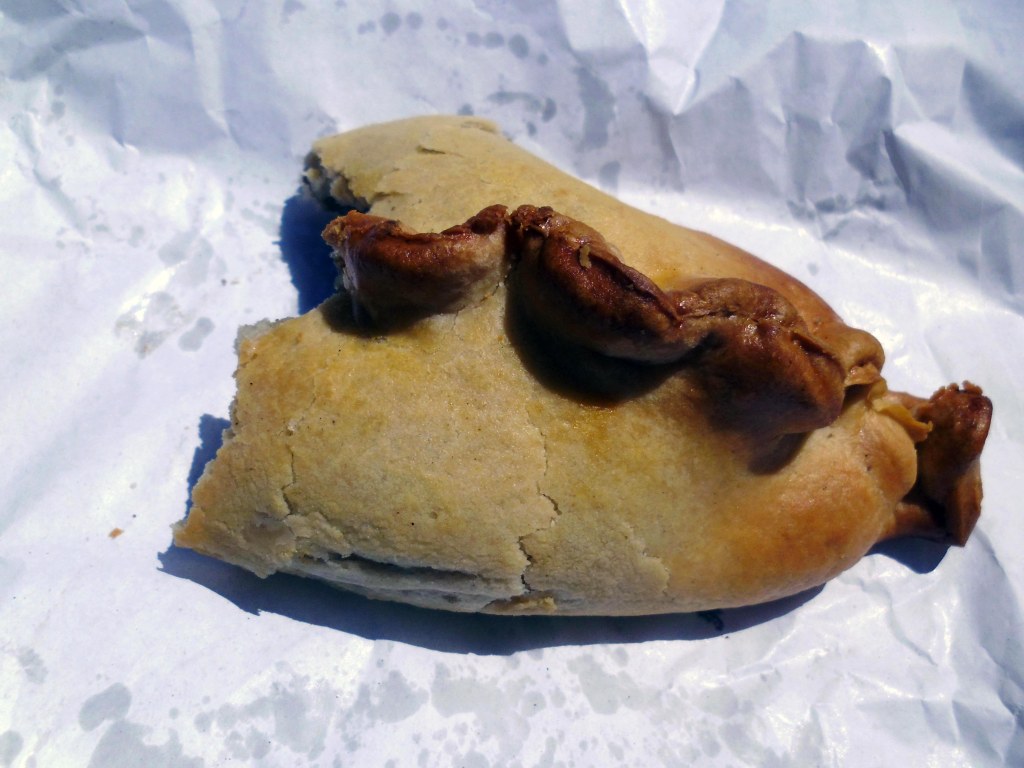
I found a pie shop and a pastie.
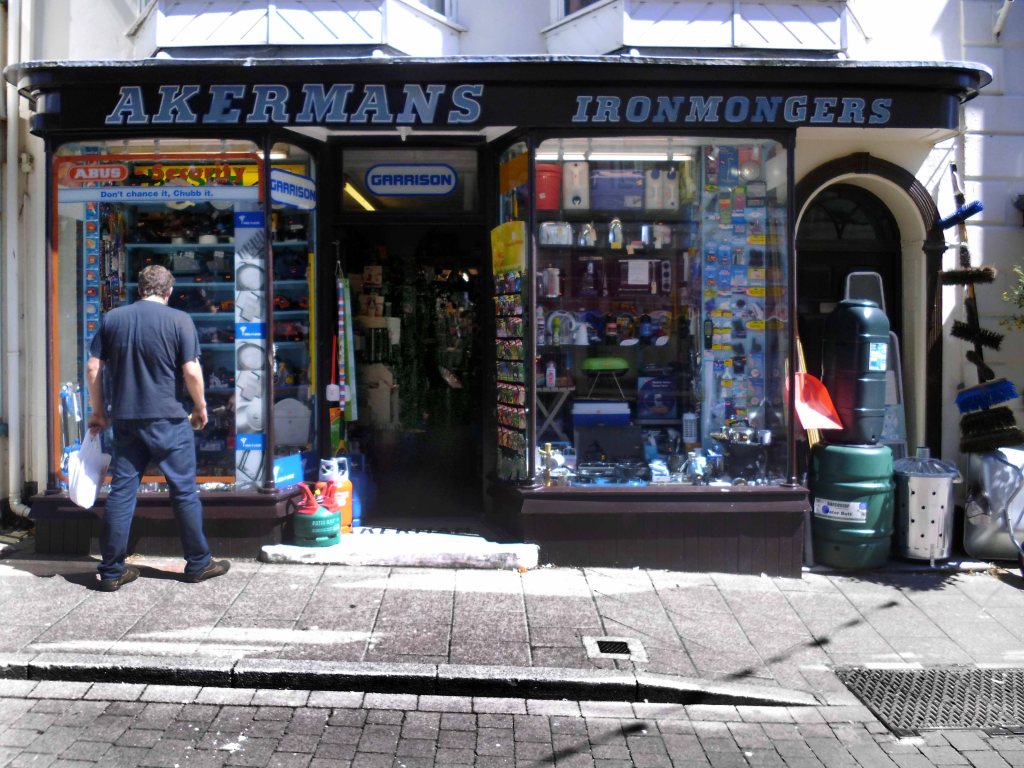
I found an ironmongers with a Stymie Bold Italic/Profil fascia.
Frequented by men who tend to adopt a combative stance when confronted with displays of ironmongery.
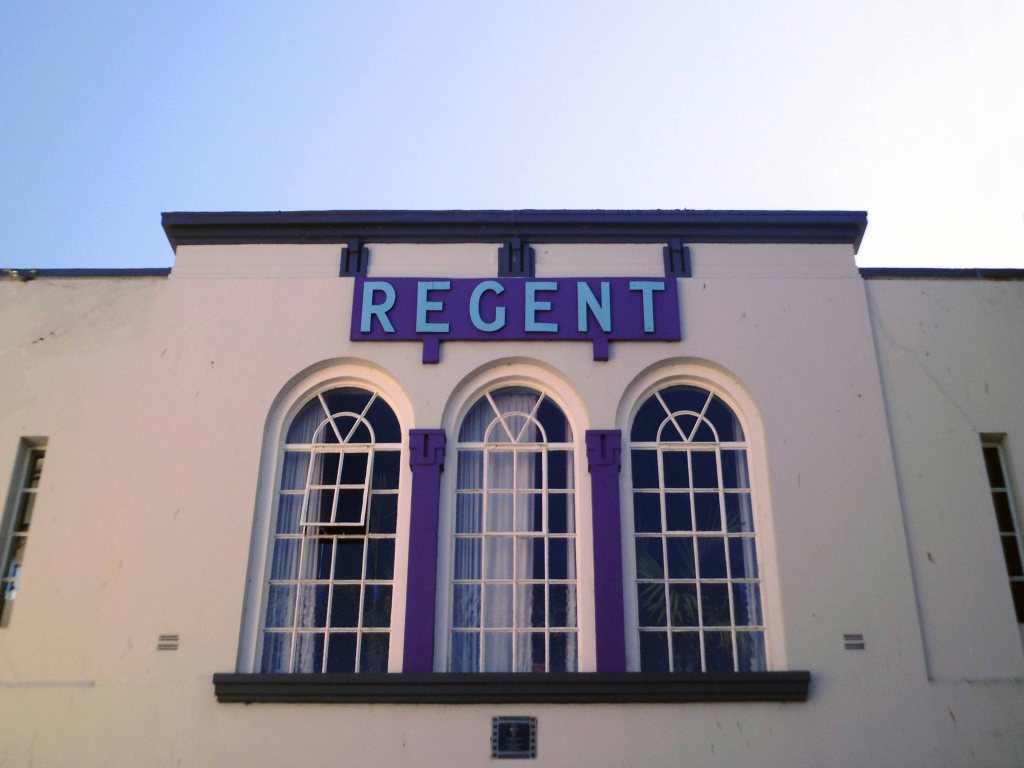
I found the road to Lyme Regis and the Regent Cinema.
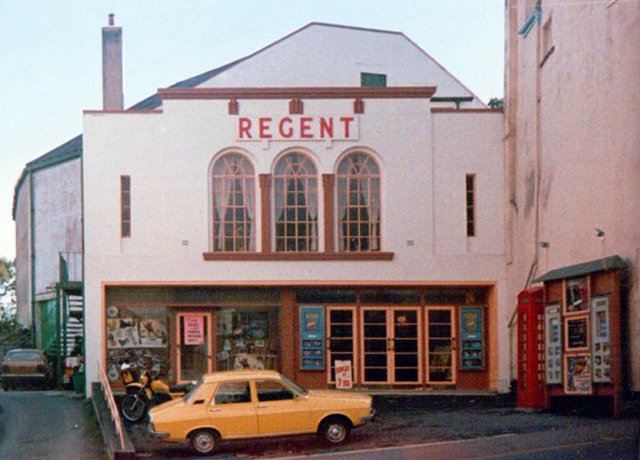
1985
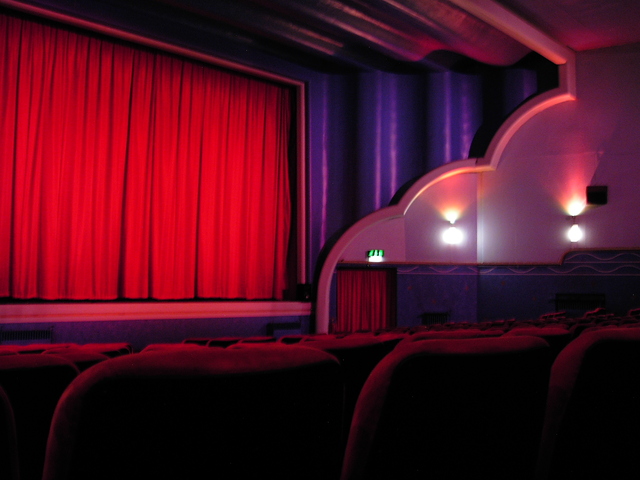
The Regent Cinema opened on 11th October 1937 with Hugh Wakefield in The Limping Man. It was built for and was operated by an independent exhibitor.
Bristol based architect William Henry Watkins designed a splendid Art Deco style inside the cinema which has seating on a stadium plan, originally the seating capacity was for 560. It has a raised section at the rear, rather than an overhanging balcony. Lighting in the auditorium is of a ‘Holophane’ type, which changes colours on the ceiling. The proscenium opening is 35 feet wide. There was a cafe located on the first floor level.
In recent Years it has been operated by the independent Scott Cinemas chain. The Regent Cinema has been recently restored. From October 2000, English Heritage gave it a Grade II Listed building status.
2016 – Following the devastating fire at the Regent Cinema on Tuesday 22nd March, we can now confirm that the auditorium block of the Regent has been damaged beyond repair, and will have to be rebuilt. Damage to front of house areas is largely cosmetic, and will be attended to as part of the wider build scheme. We have every intention to rebuild the cinema to its former glory.
2019 – The WTW-Scott Cinema group is still actively engaged in a potential rebuild scheme for the Lyme Regis cinema. We’re currently working on our fourth set of design proposals, from which we need to reach the point where the rebuild scheme is both financially and architecturally viable. At present, we have not consulted with local authorities as there is little point in wasting everybody’s time presenting a scheme design that isn’t viable. New build cinemas are architecturally very complicated, and the Lyme Regis venue being a listed building presents challenges to overcome, all of which add significantly to any build schedule. Once we have a viable, workable scheme, we look forward to working with the local authority and Historic England to progress this.
The remainder of my time in Lyme was spent desperately seeking a bed for the night, to no avail. Following multiple enquiries and dead end directions to no-go destinations, I headed out of town.
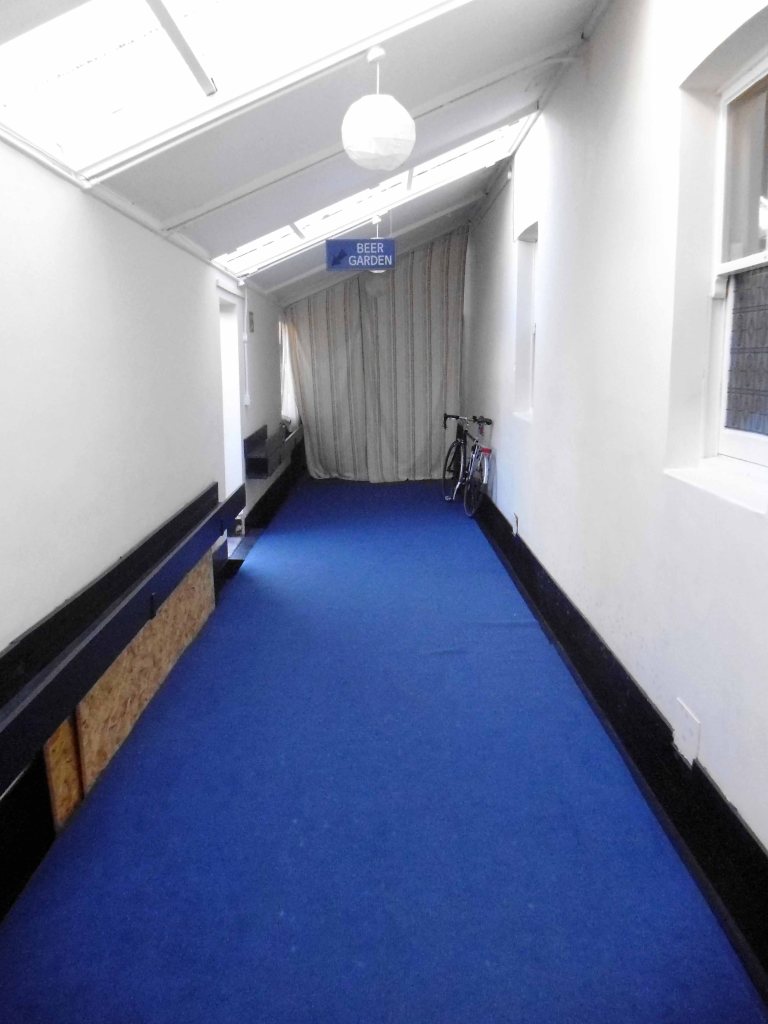
Bridport bound – where I chanced upon a Pub/B&B the magnificent Lord Nelson where the owners allowed me to store my bike in the ninepin bowling alley.
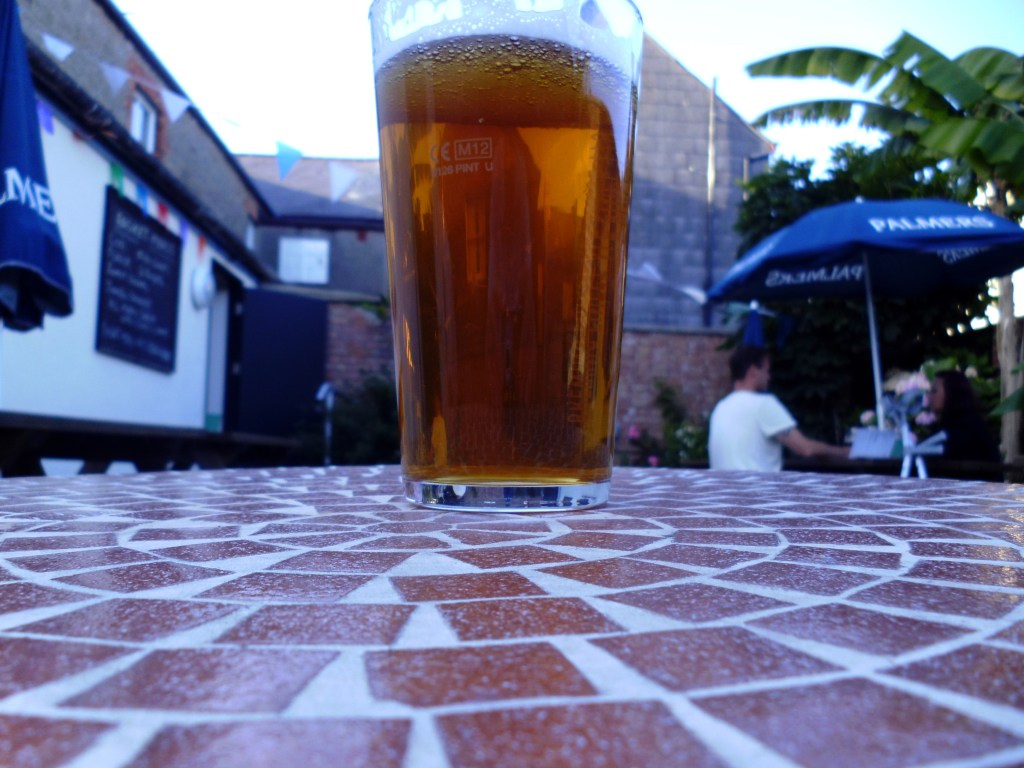
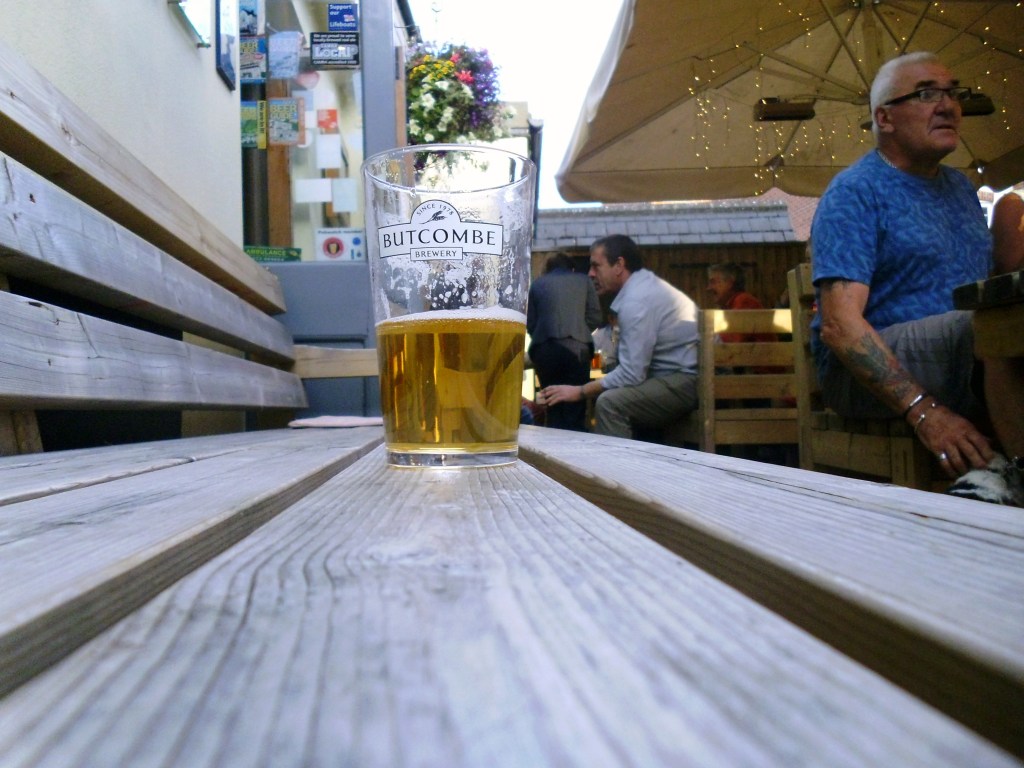
I sat in the beer garden at the Lord Nelson and boozed – chatting to a local lad that worked in the local brewery, brewing the local beer, that was served in this very same local pub.
Palmers Ales are brewed in one of Britain’s oldest and prettiest breweries and have been since 1794. The only thatched brewery in the UK, Palmers sits adjacent to the river Brit just a mile from Dorset’s Jurassic Coast. All our fine ales are brewed using water from our own naturally rising spring.
Our Head Brewer uses only the finest Maris Otter malt and carefully selected whole leaf hops to produce ales in a way they have been made for generations. Palmers historic brewhouse has a traditional Mash Tun, an open top Copper, along with top fermentation, this is the way ale should be brewed.
I finished up somewhere else, sat outside chatting to someone else, about something else.
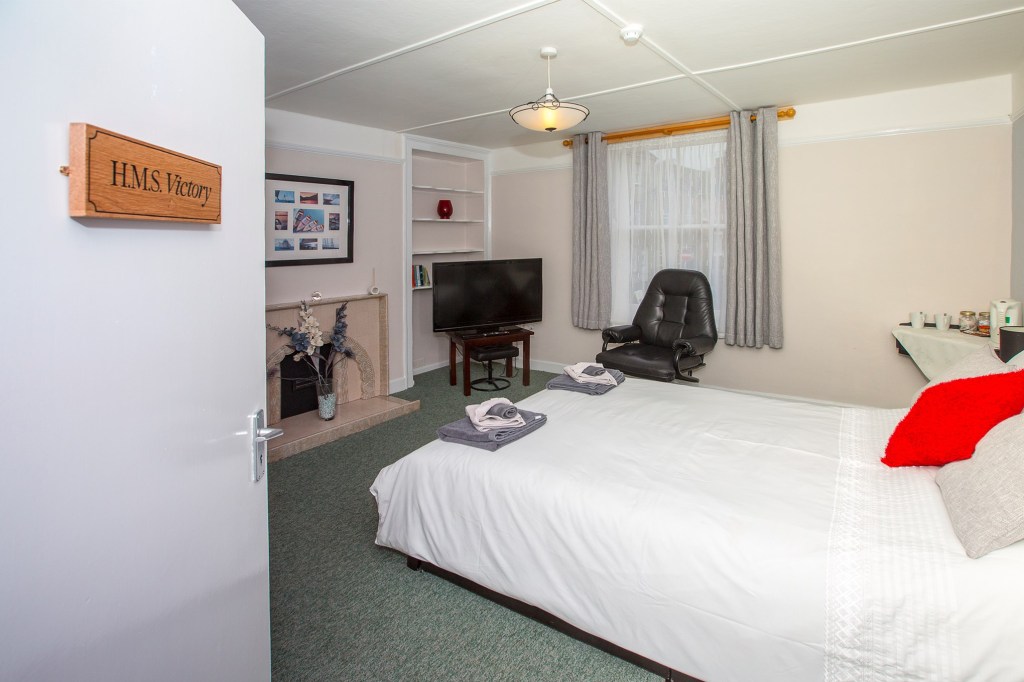
Leaving the compact anonymity of my B&B for the open road!
Having been unable to sample the joys of the Quality Hotel.
The Quality Hotel closed in 2014 and was demolished two years later after the site was bought by the city council following vandalism and fires.
The ten-storey concrete block was built in 1970 in the 350th anniversary year of The Mayflower ship setting sail from Plymouth for North America.
Gilpin Demolition
Plymouth Hoe’s fifty million pound hotel and apartments project appears to have ground to a halt with no building work happening more than a year after developers vowed it would start in 2018.
Henley Real Estate, the firm behind the plans for an 11-story hotel and a 15-floor block of flats on the demolished former Quality Hotel site, has gone silent on plans and not responded to emails and phone calls from Plymouth Live.
When we visited the site the only sign of life was some weeds growing out of the ground.
I’ll leave them to it, I’m off in search of the South West Passage
The South West Coast Path itself is 630 miles long and is the longest established National Trail in the country. Starting at Minehead in Somerset it runs along the coastline of Exmoor, continuing along the coast of North Devon into Cornwall. It follows the entire coastline of Cornwall, goes across the mouth of the River Tamar and continues into Devon. After running along the south coast of Devon it then follows the Dorset coastline before finally ending at Poole Harbour.
However if you follow the Coastal Path you’ll miss this delightful concrete fire station training tower in Plympton.
Along with the longest corrugated iron structure in the West Country.
You’ll miss getting slightly lost and a cup of tea at the Dream Bites roadside café in Modbury.
Dream Bites café, we’re all is welcome, from cars to Biker’s to Ride outs to Puplic and to work companies even you the cyclists!
GREAT FOOD GREAT PRICE.
You’ll miss the deep hedged lanes of Devon.
Where the four x fours force you into the roadside brambles with consummate ease and regularity – even on a designated cycle route.
Respite from such trials and tribulations can be found upon siting a water tower or a deserted butchers – down at Slapton Ley.
Slapton Ley is the largest natural lake in south-west England. Although it is only separated from the sea by a narrow shingle bar, it is entirely freshwater.
Much beloved of my old pal Harry H Potts and family.
Then it’s up a hill down a hill to Dartmouth.
I made enquiries at several sea front hotels – who upon assessing my mode of dress and transport, despatched me to a back street pub B&B, suit y’self suits me, and my pocket.
The Seale Arms was just the job.
Quick change for the artist – let’s have a look around.
It’s full of historical architectural detail.
And slightly more hysterical architectural detail.
Time for a pint – chatting in the pub to yachting types, for it is here that the sense of tradition, the sea, power and wealth traditionally resides.
Intu, who own the Manchester shopping centre, expects to breach covenants on its current debts as shopping centres struggle in the face of the coronavirus pandemic.
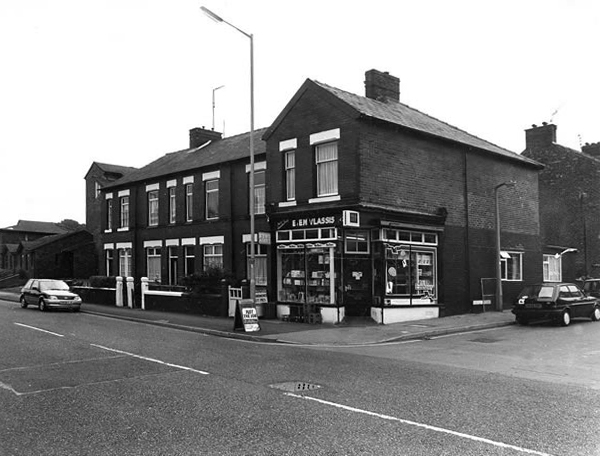
This is a journey from the corner shop to the high street, by the banks of the Bridgewater Canal, a whole retail history told during troubled times.
The Trafford Centre opened in 1998 and is the third largest shopping centre in the United Kingdom by retail size. It was developed by the Peel Group and is owned by Intu Properties following a £1.65 billion sale in 2011 the largest single property acquisition in British history. As of 2017, the centre has a market value of £2.312 billion.
The advent of the motor car, and the development of out of town shopping has seriously affected the viability of the traditional town centre and the almost long gone local shop.
And now in turn the mall is threatened by the increase in online trade and the current lockdown.
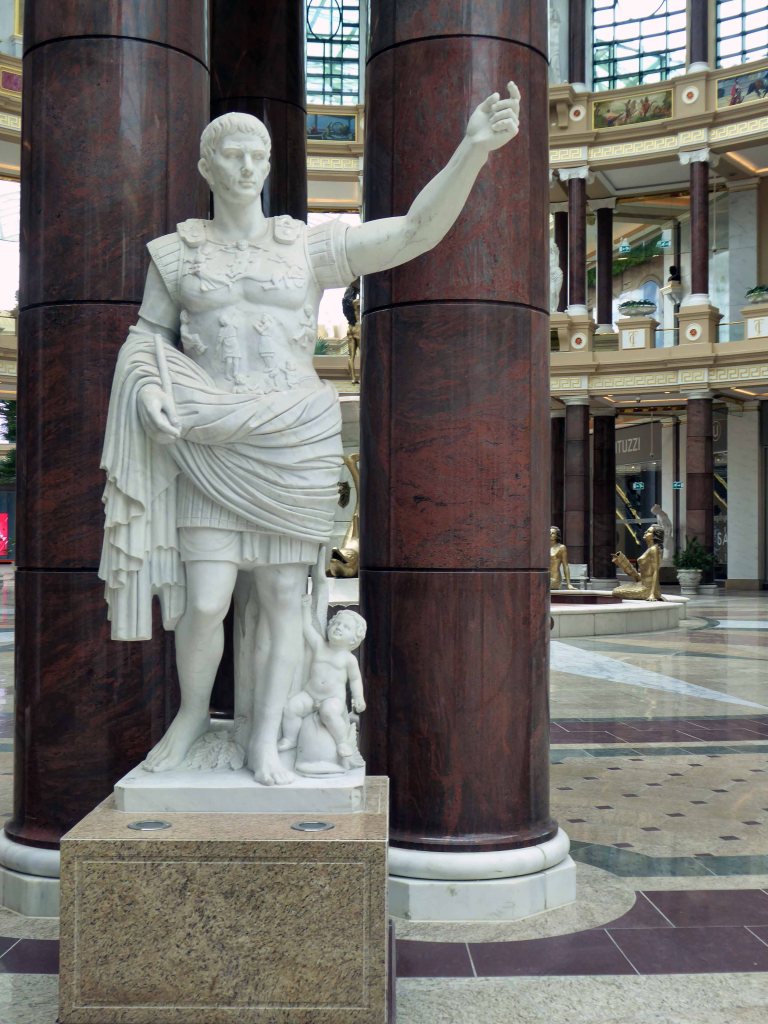
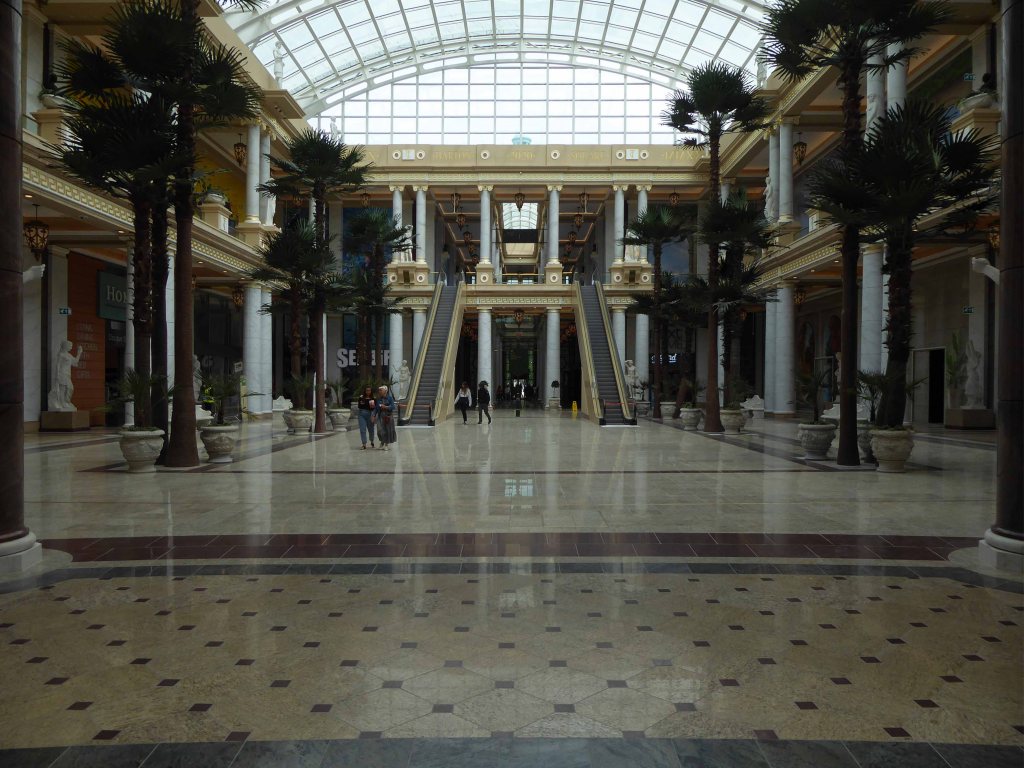
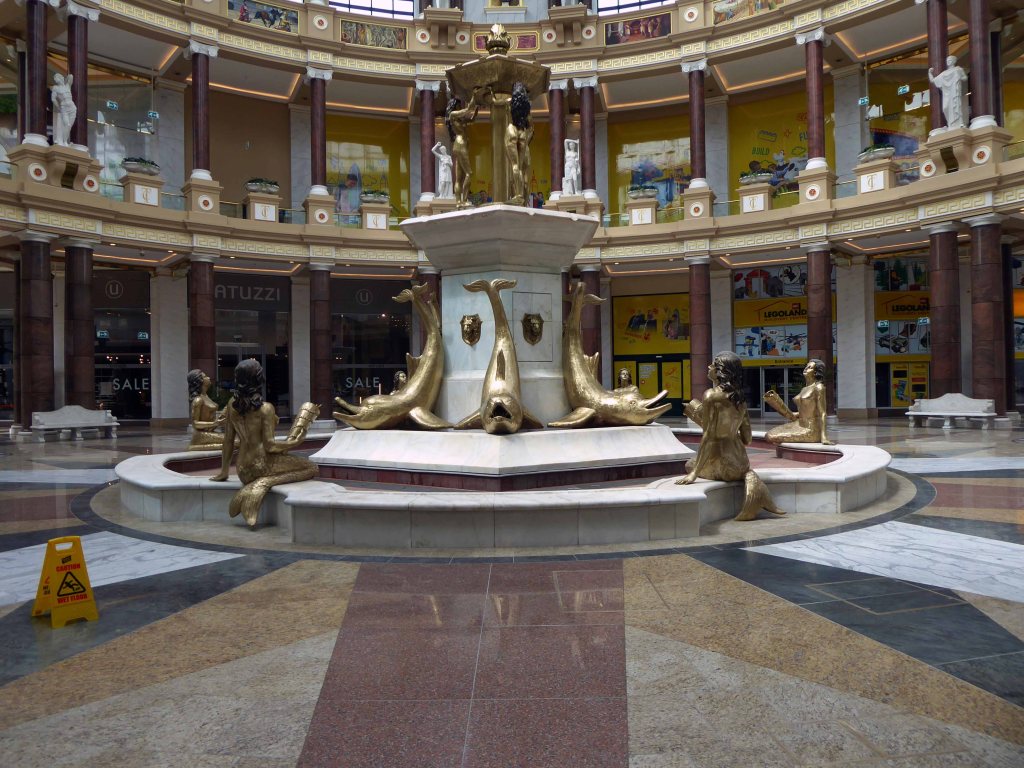
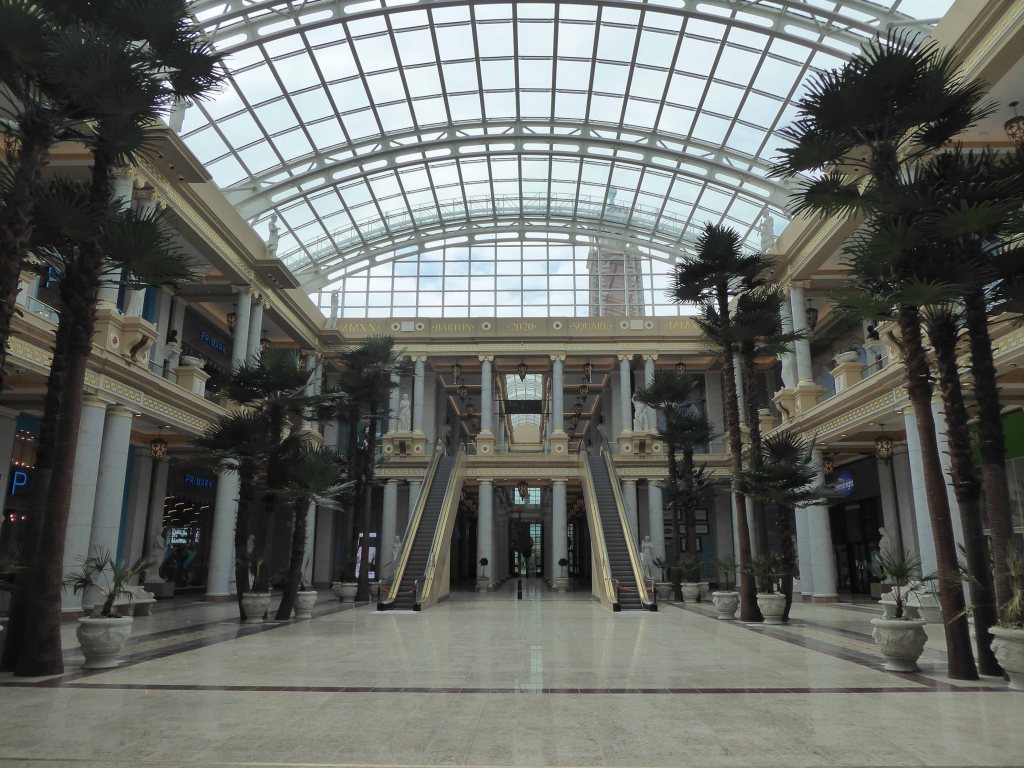
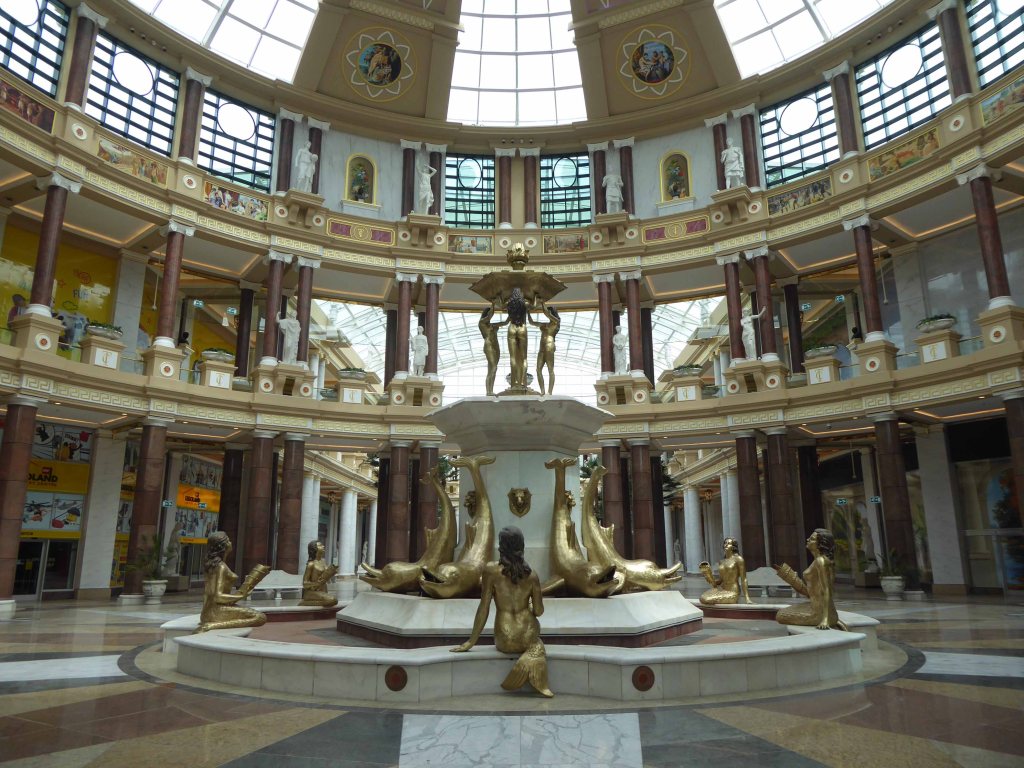
The Trafford Centre reopens on June 15th, no doubt the sensation seeking, thrill a moment shoppers will return in droves, to further satiate their unquenchable desire for stuff and more stuff, in a pseudo Romano Soviet oligarch setting.
As of Monday 8th the space was mostly devoid of both customers and cars – there are two home stores open, we arrived on foot and took a look around.
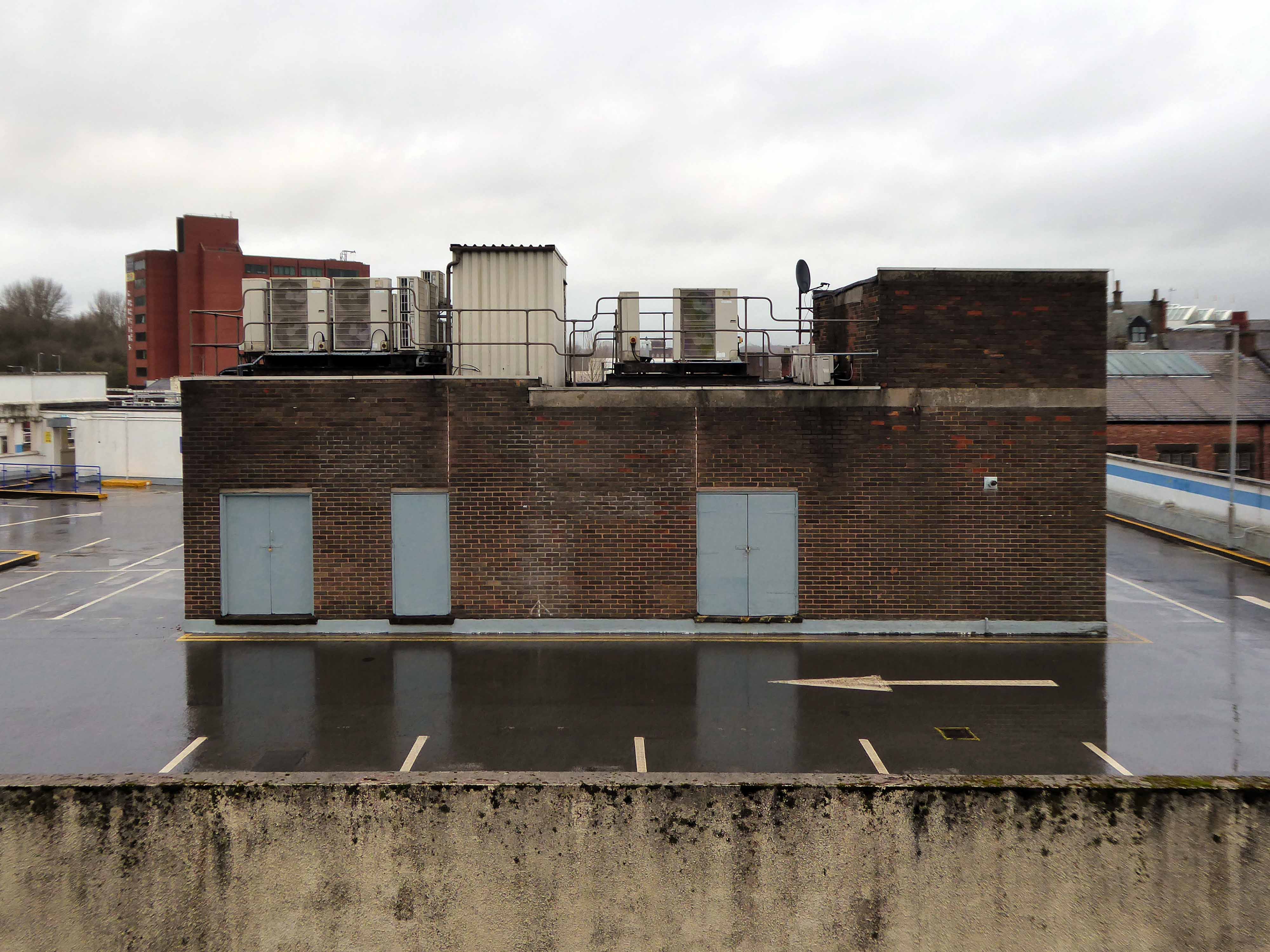
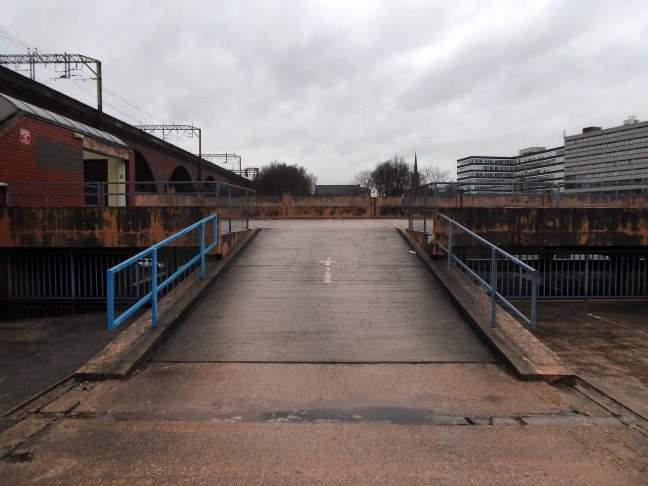
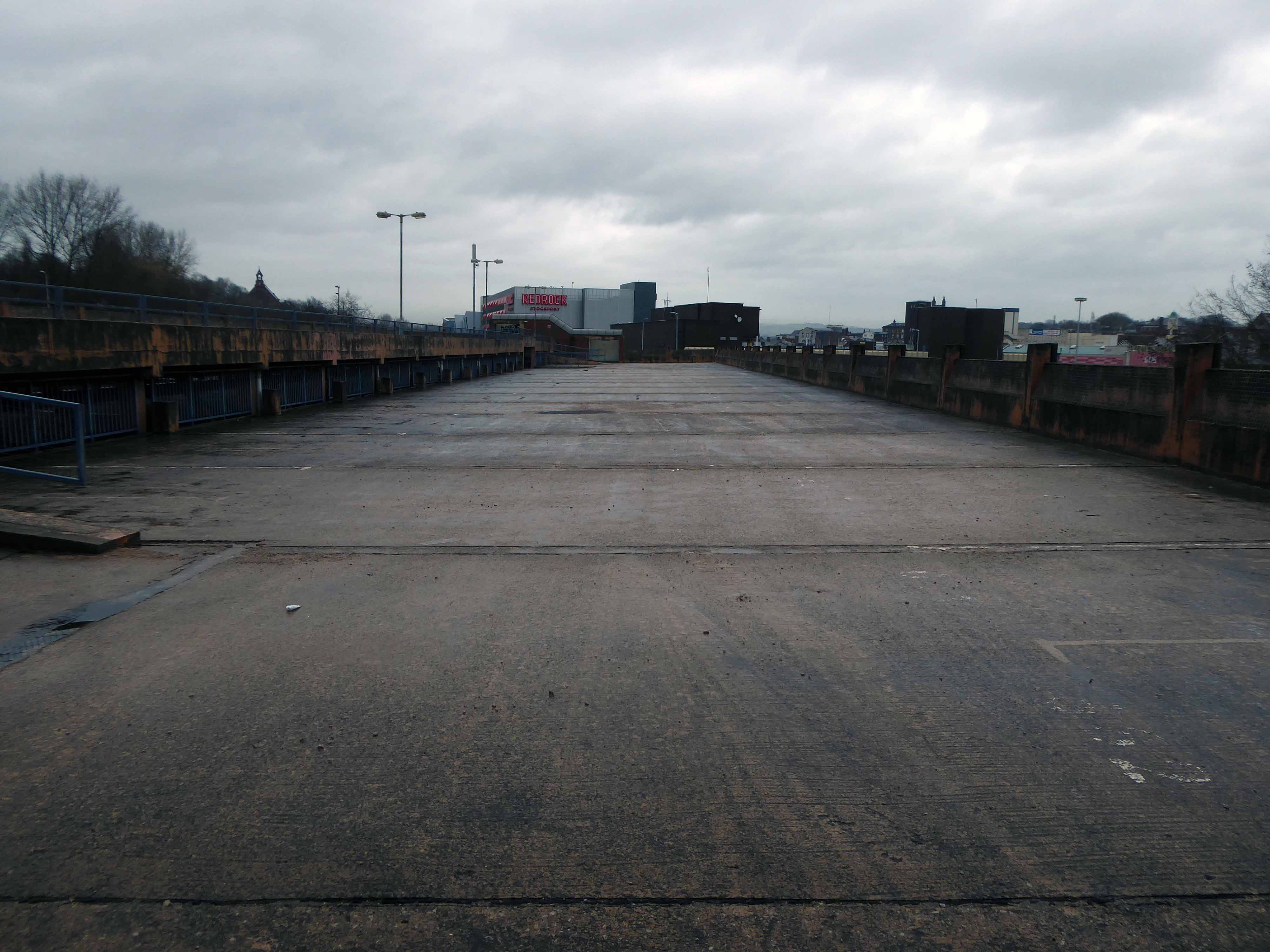
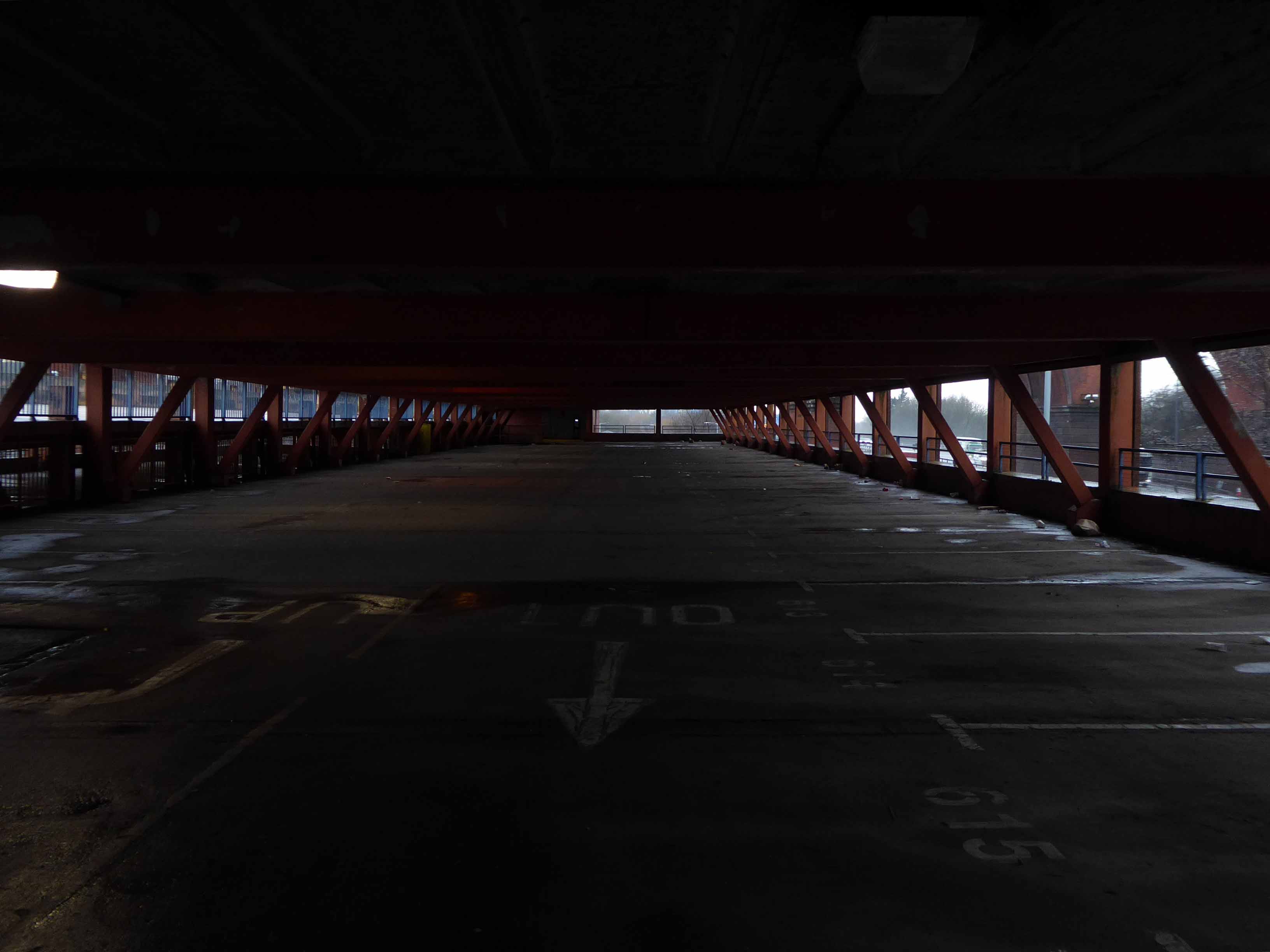
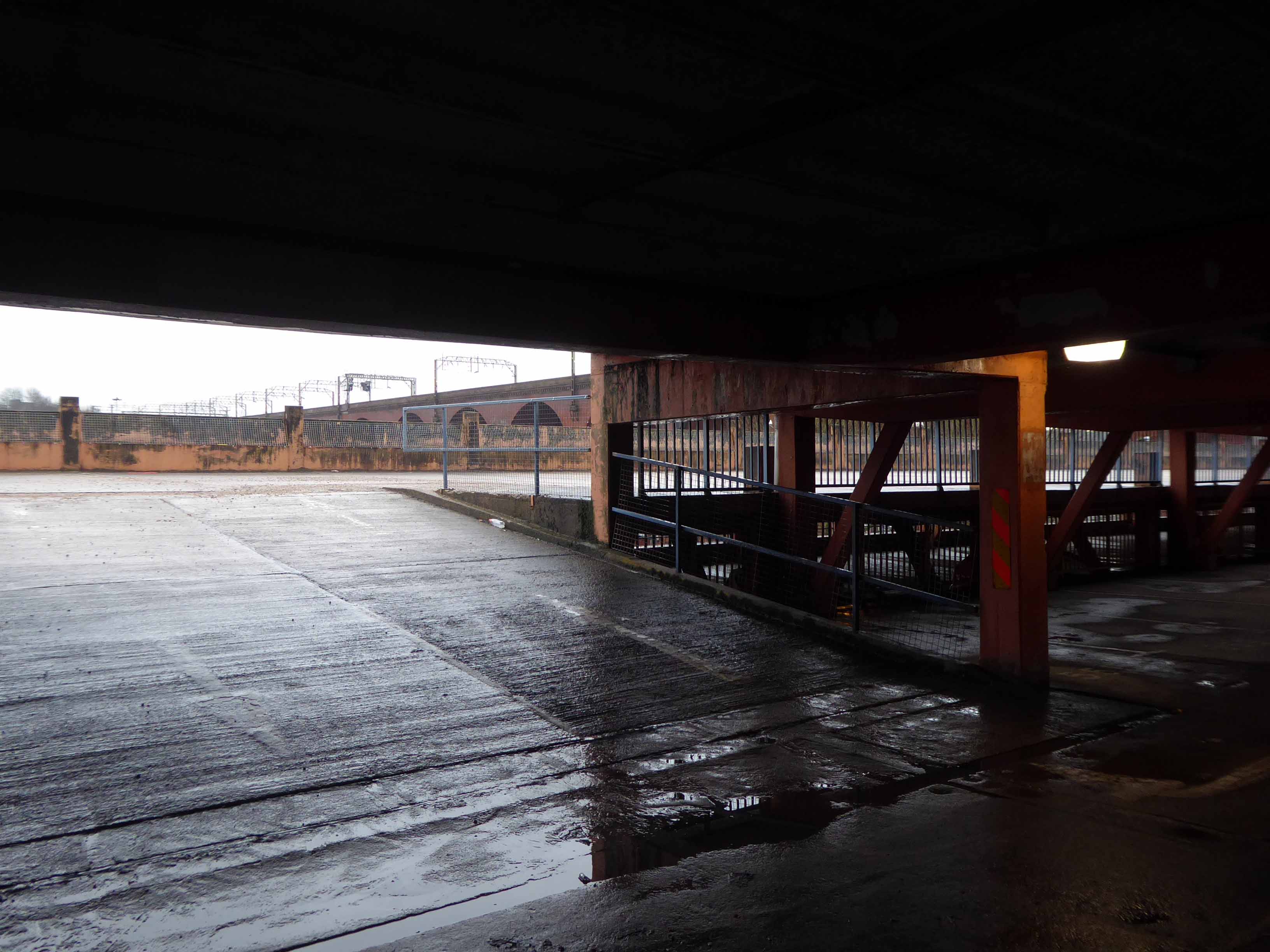
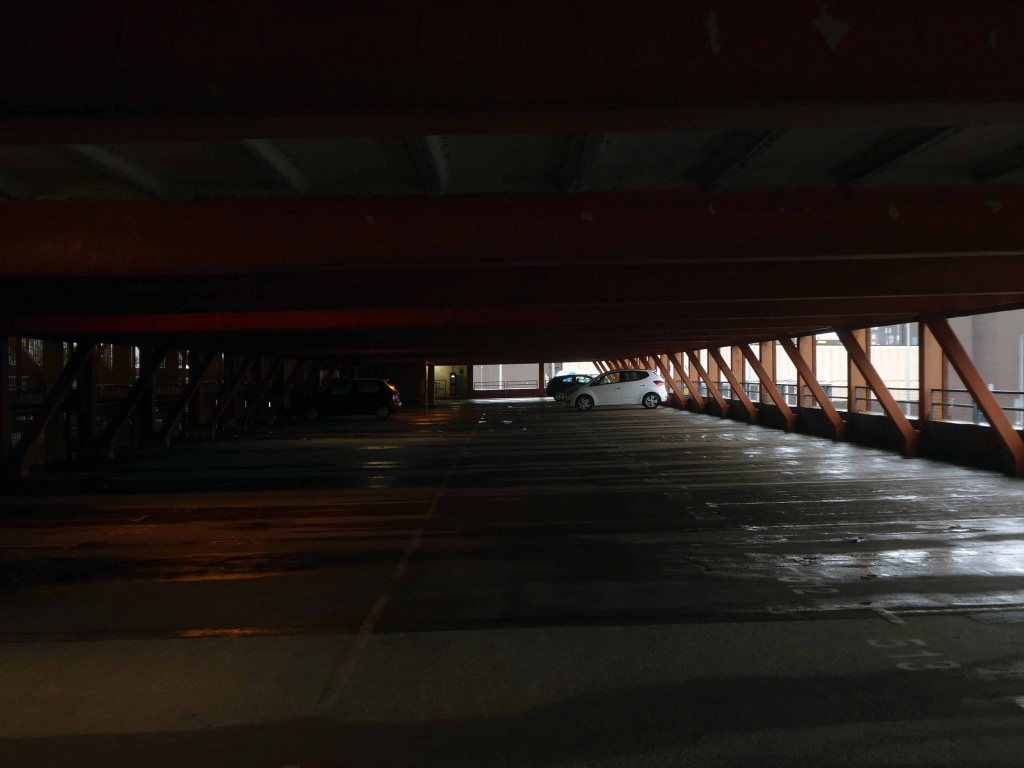
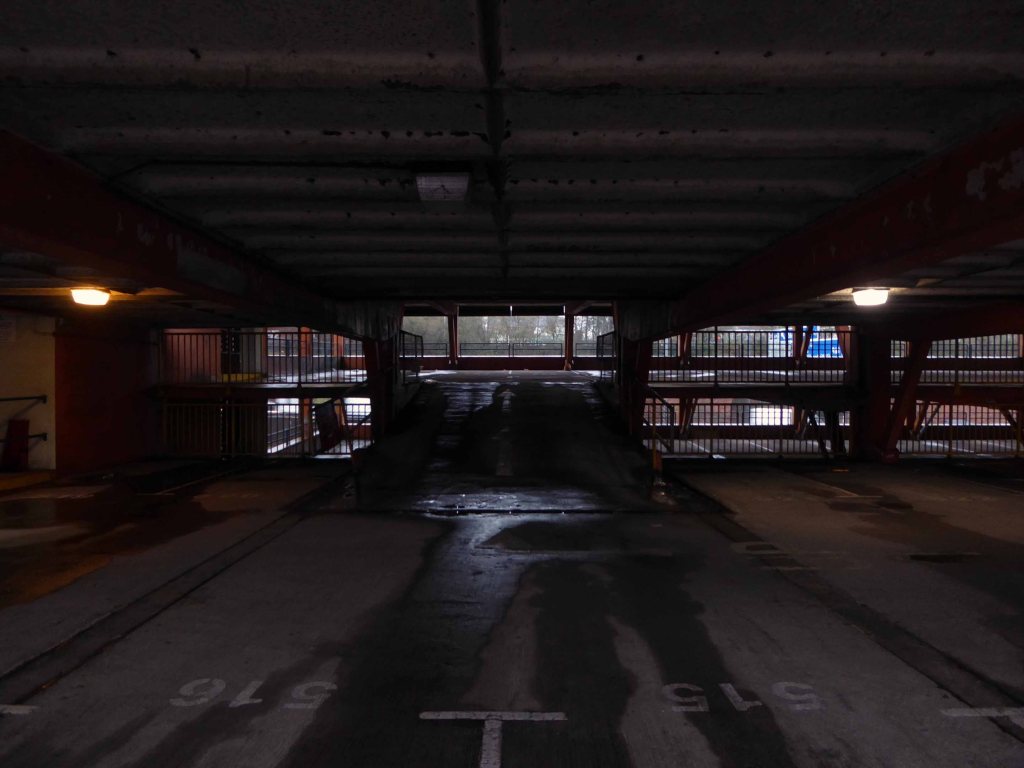
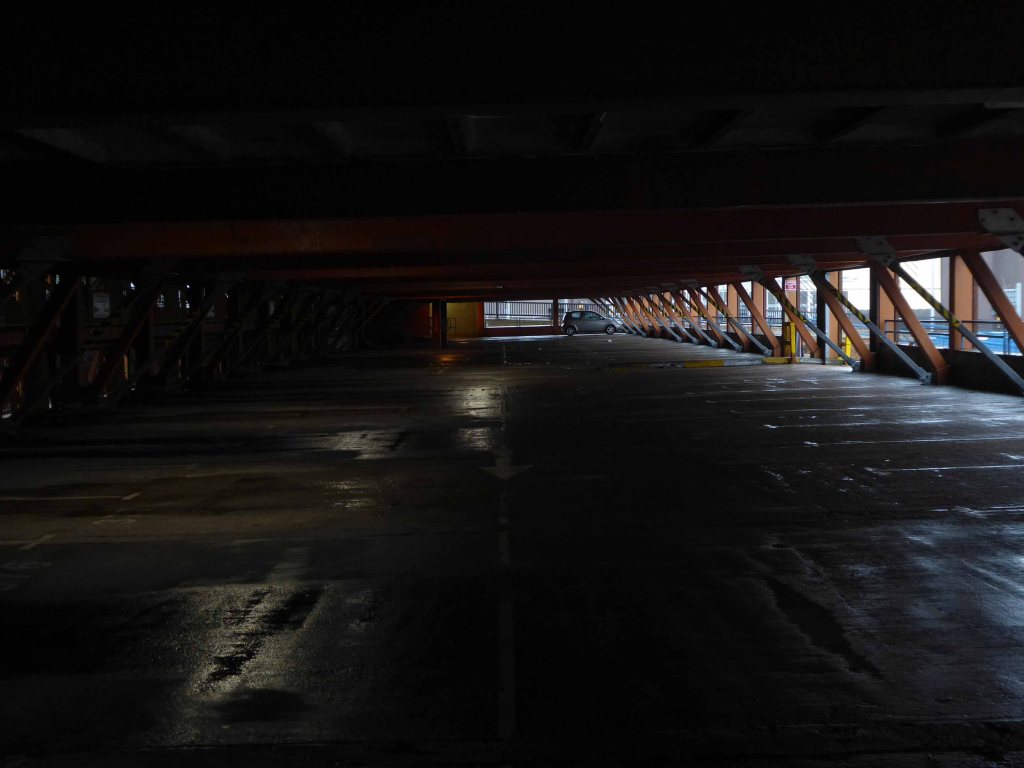
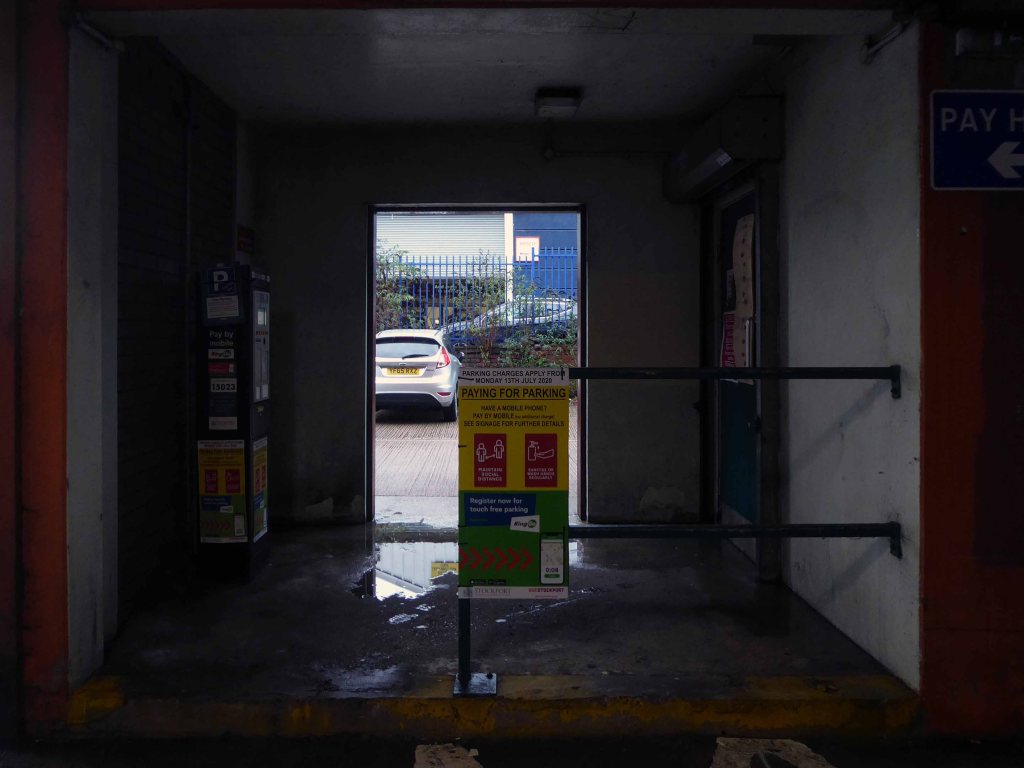
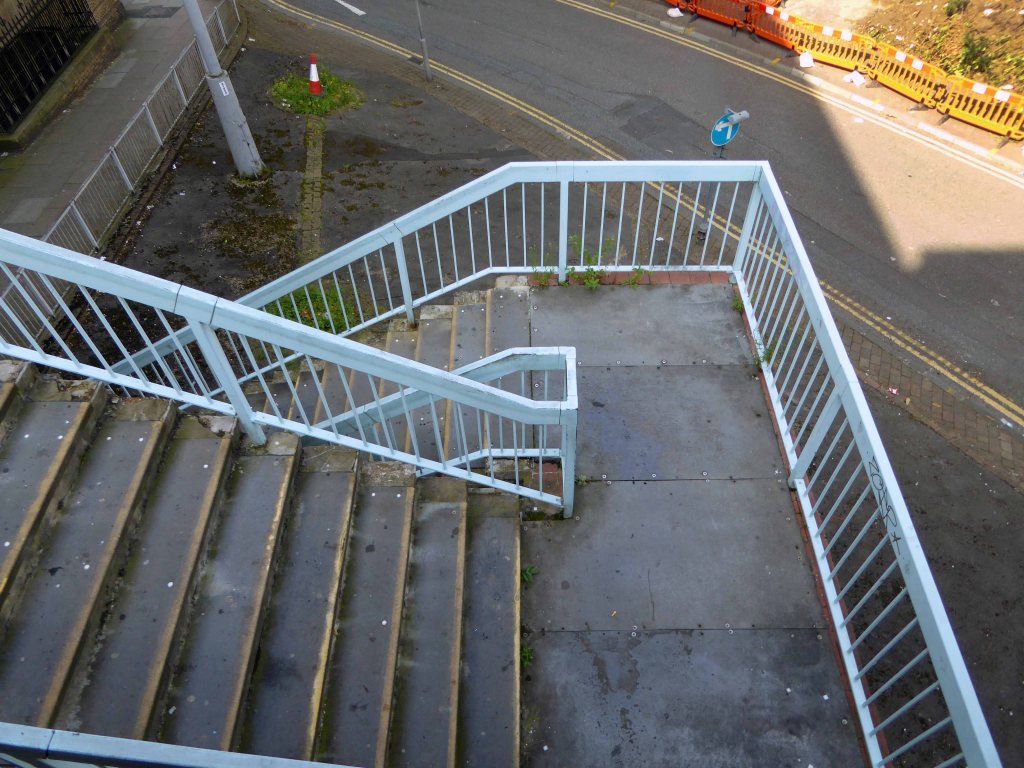
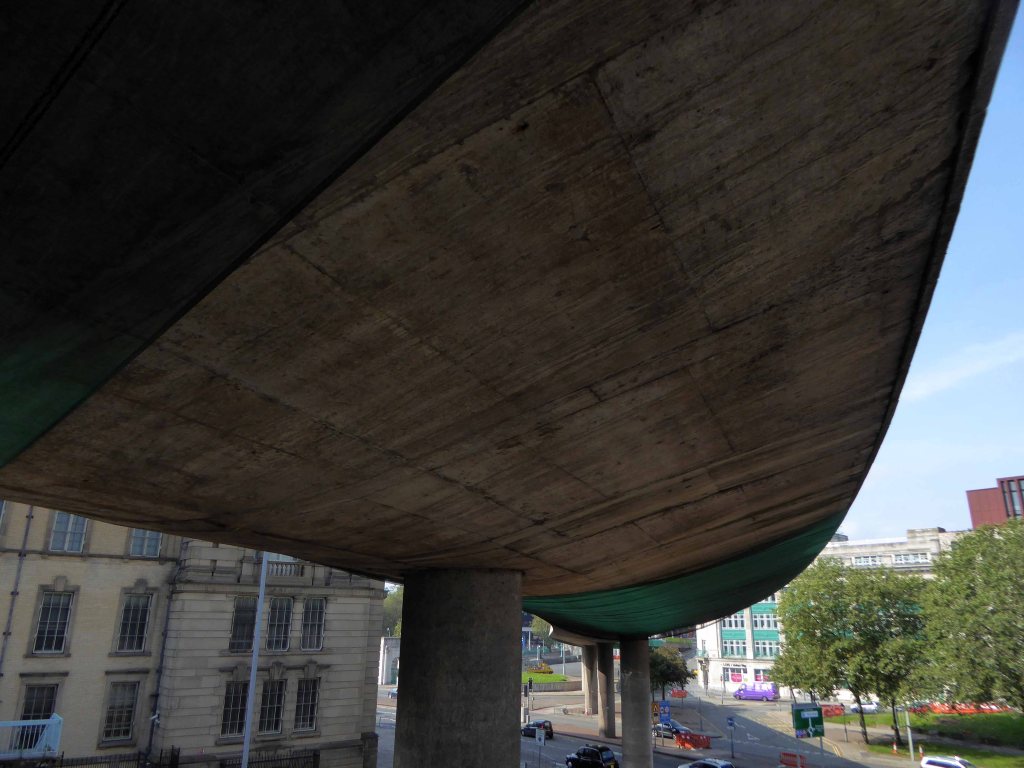
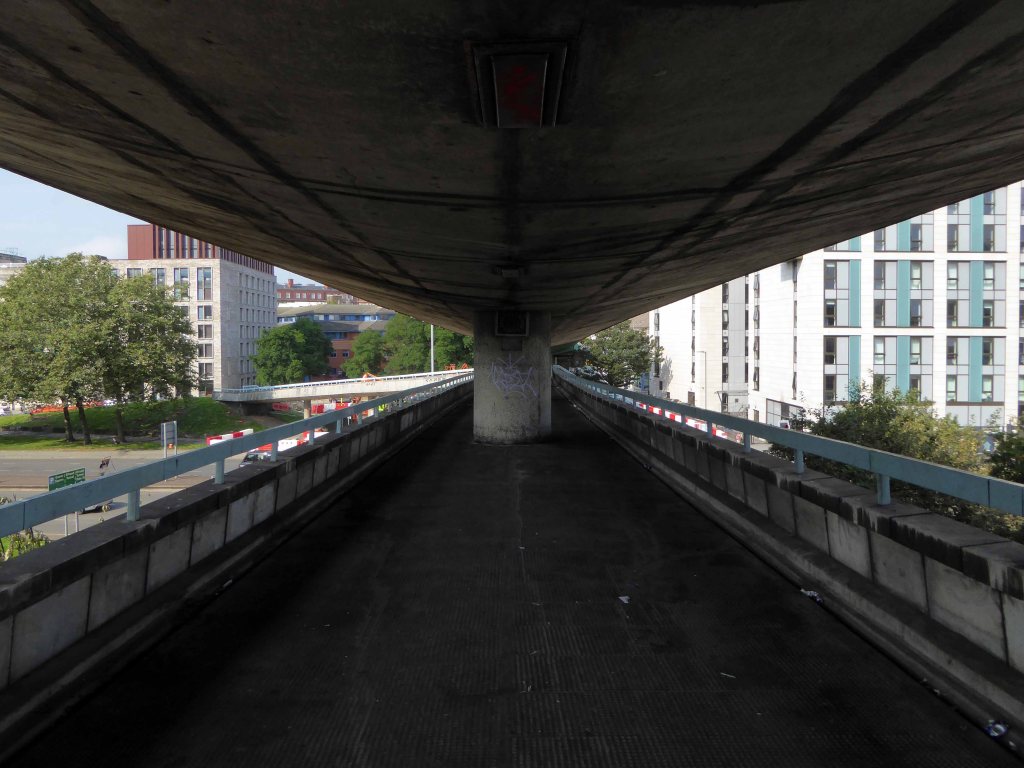
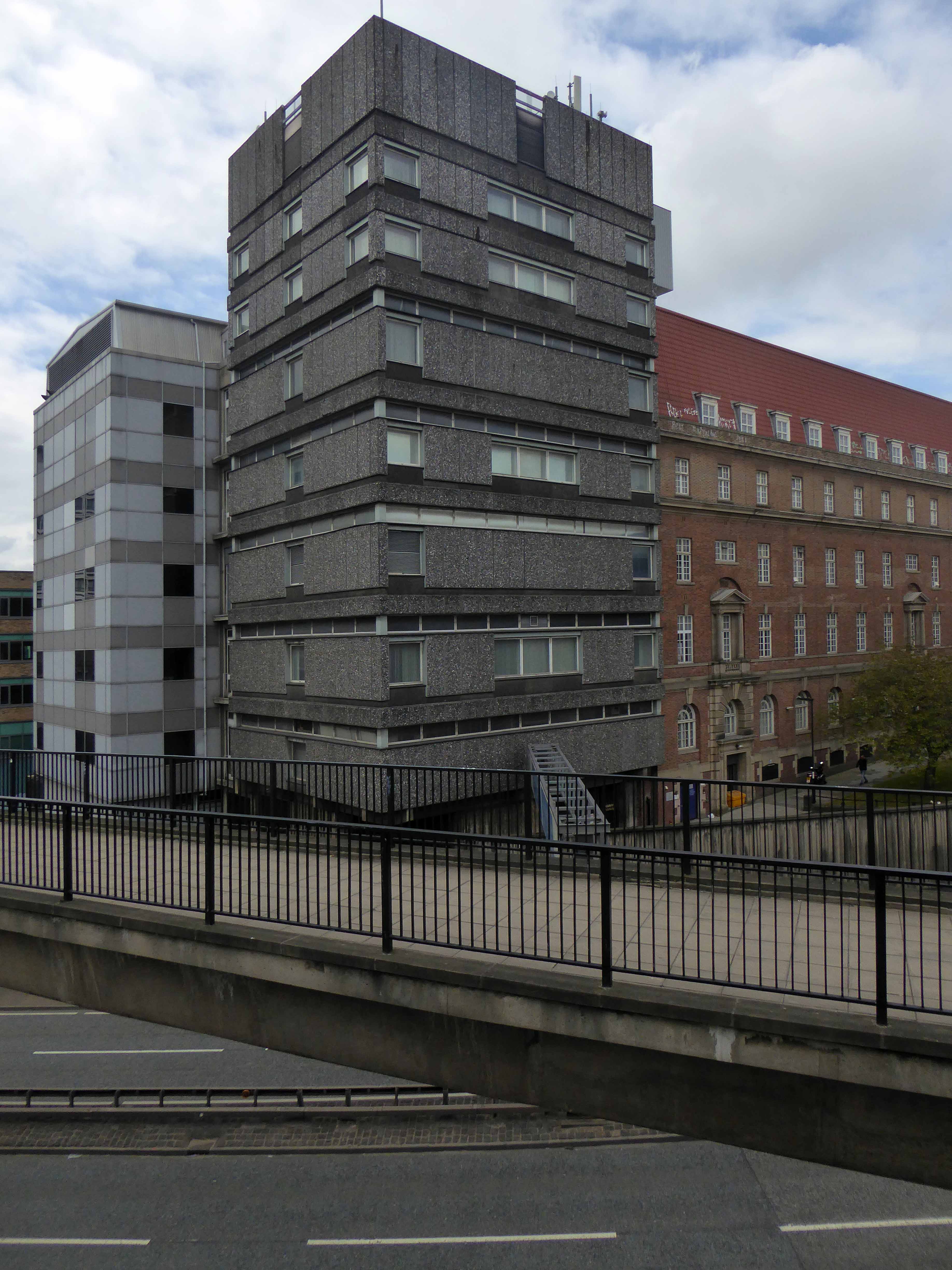
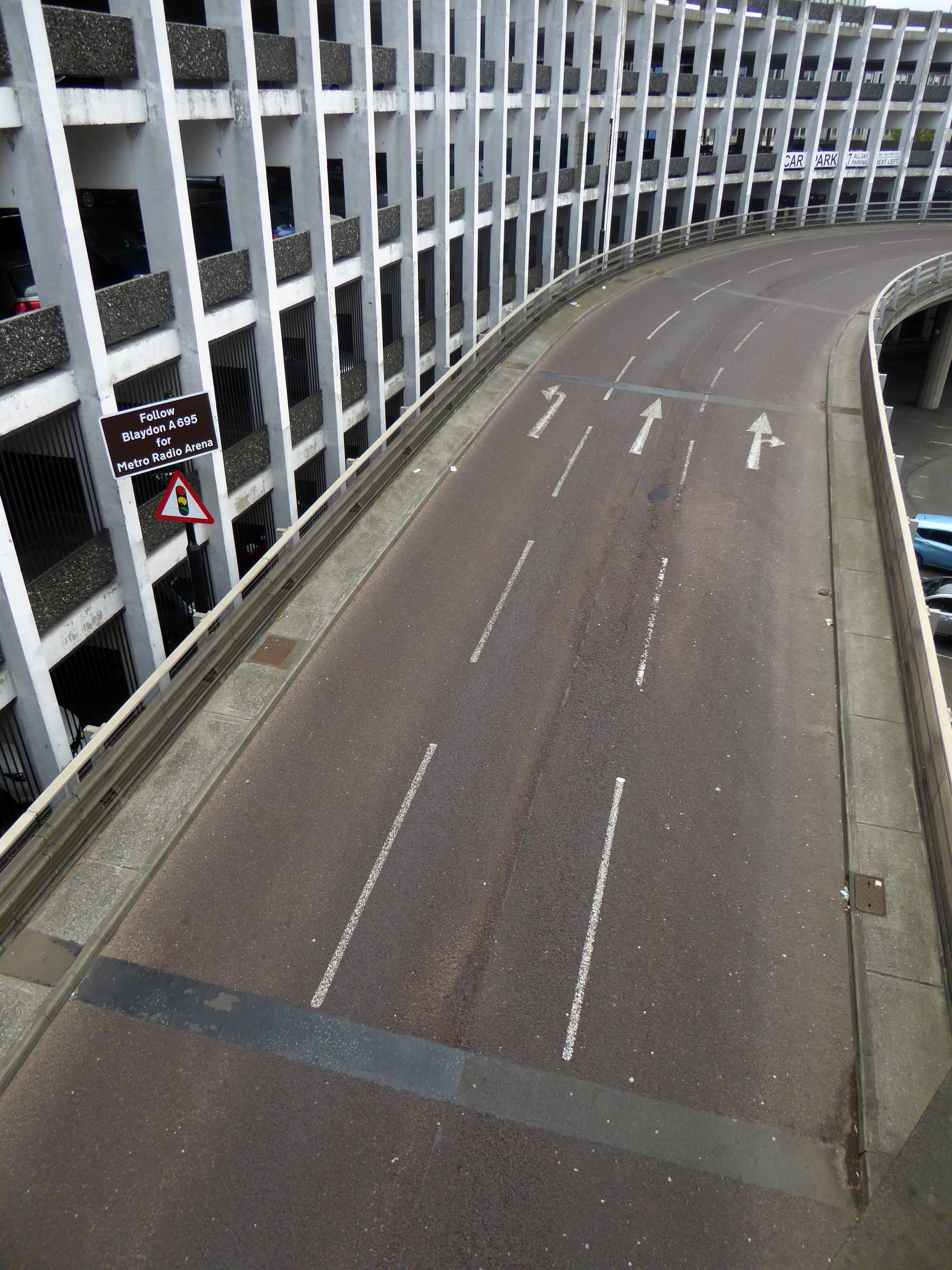
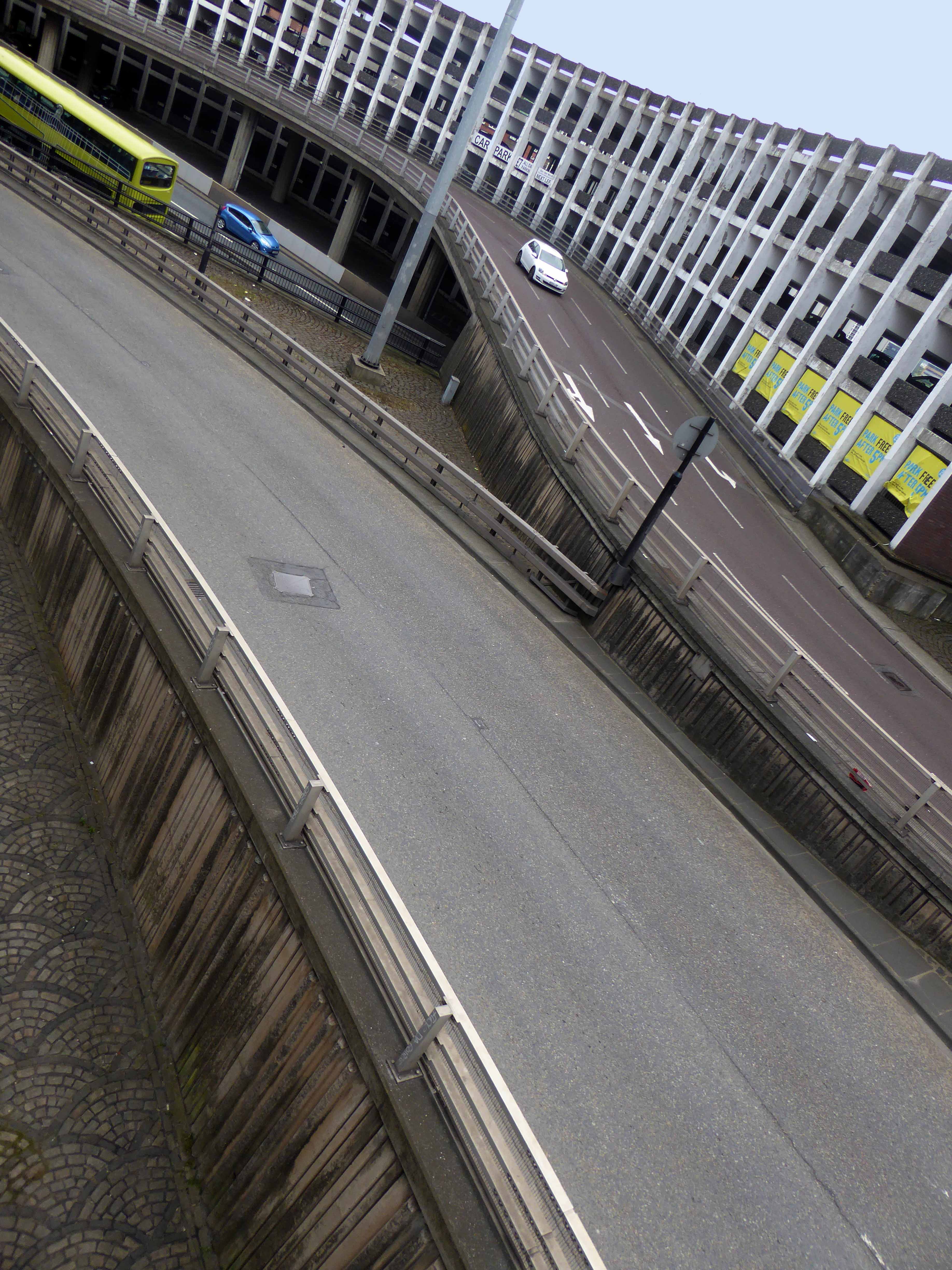
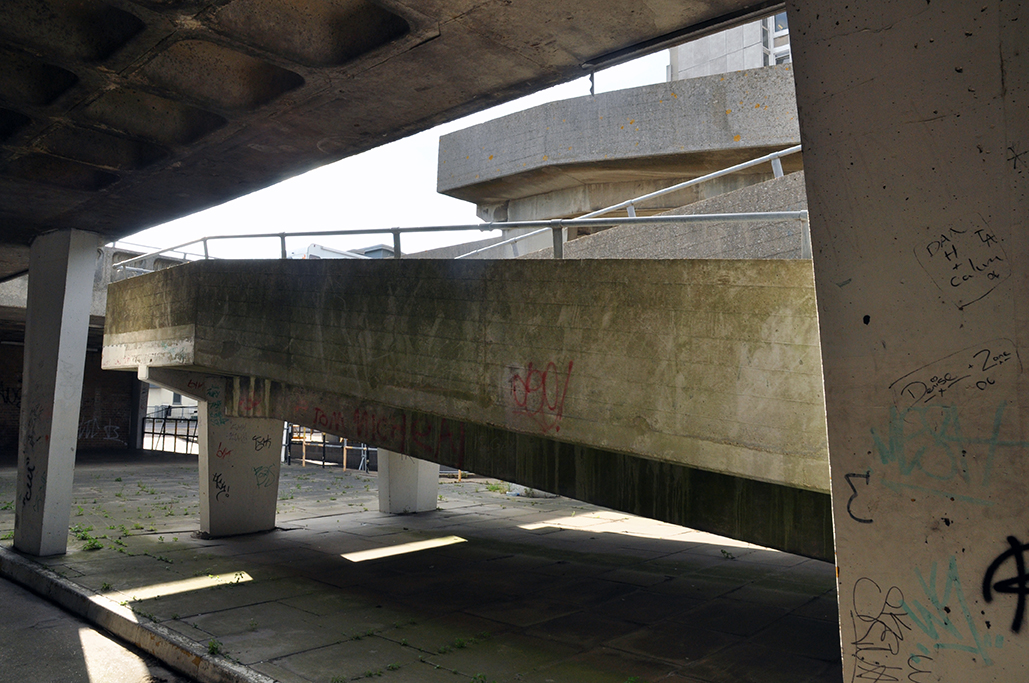
We recently took a look around Redrock, today we visit the next door neighbour – the car park ramp.
Replacing the old Debenham’s ramp.
Linking the old world of Merseyway with the shiny new NCP.
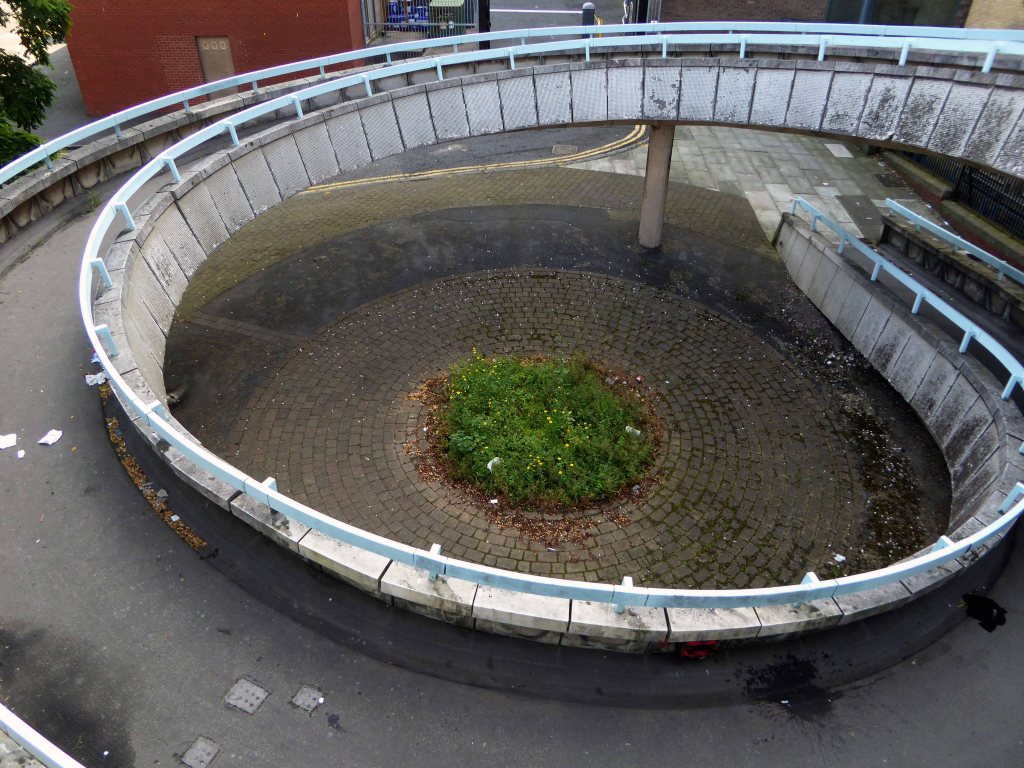
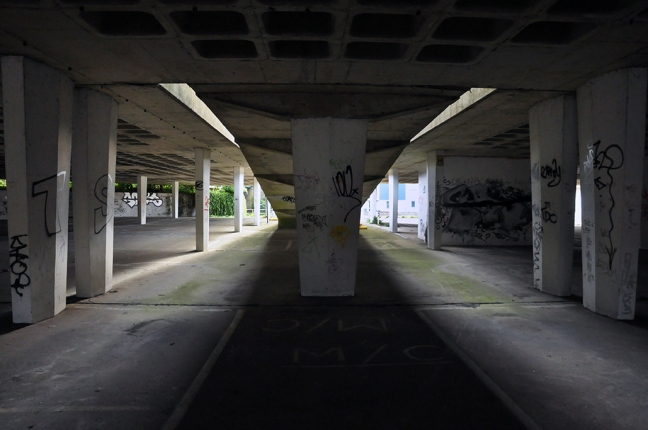
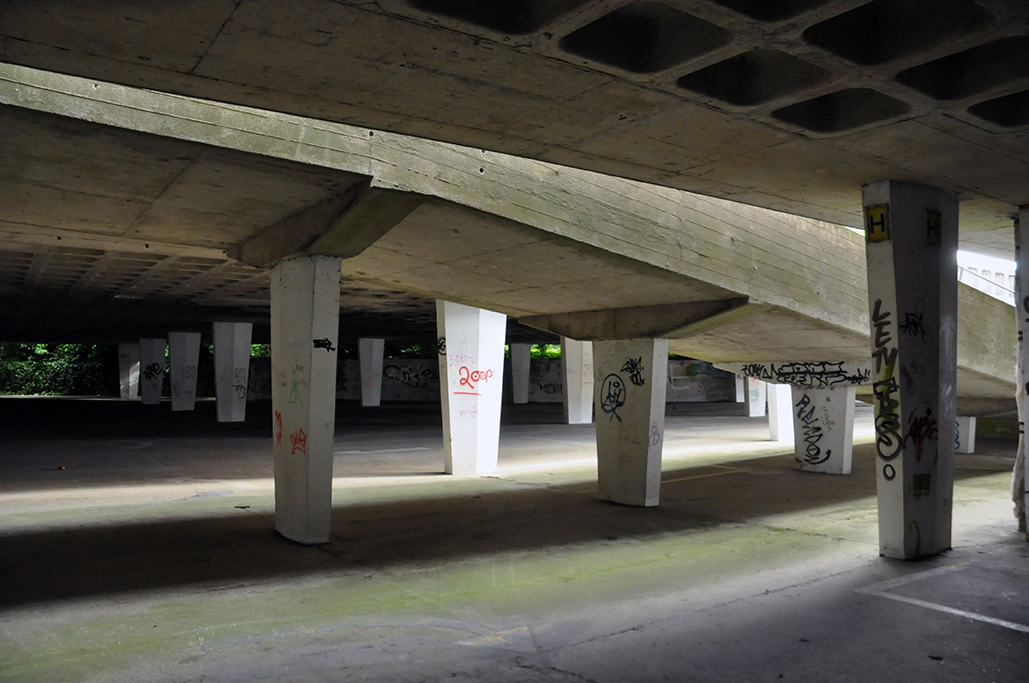
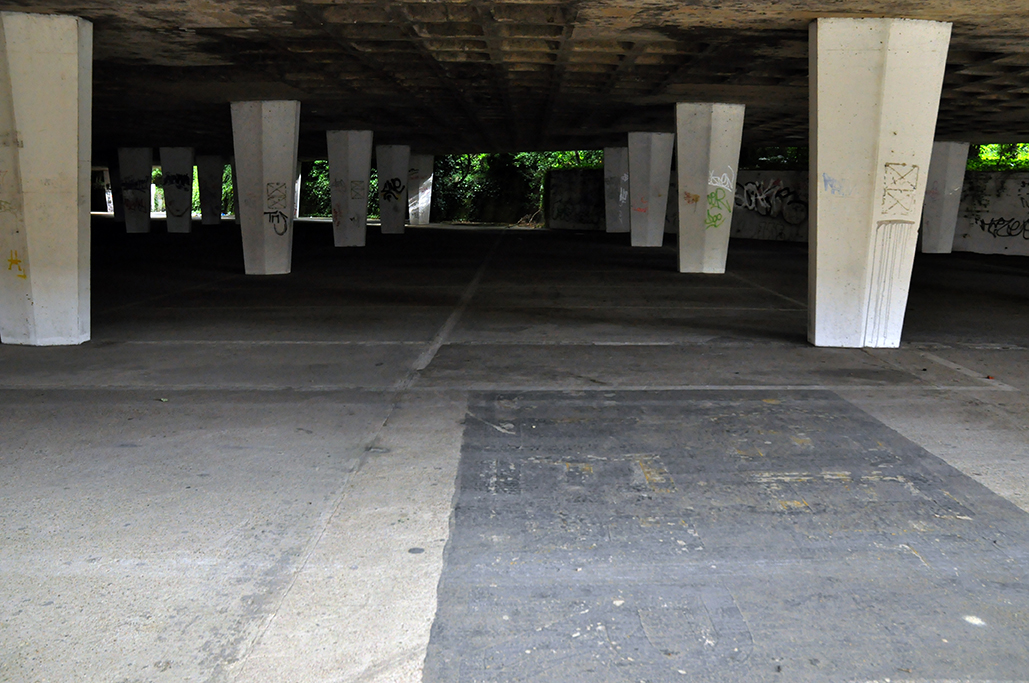
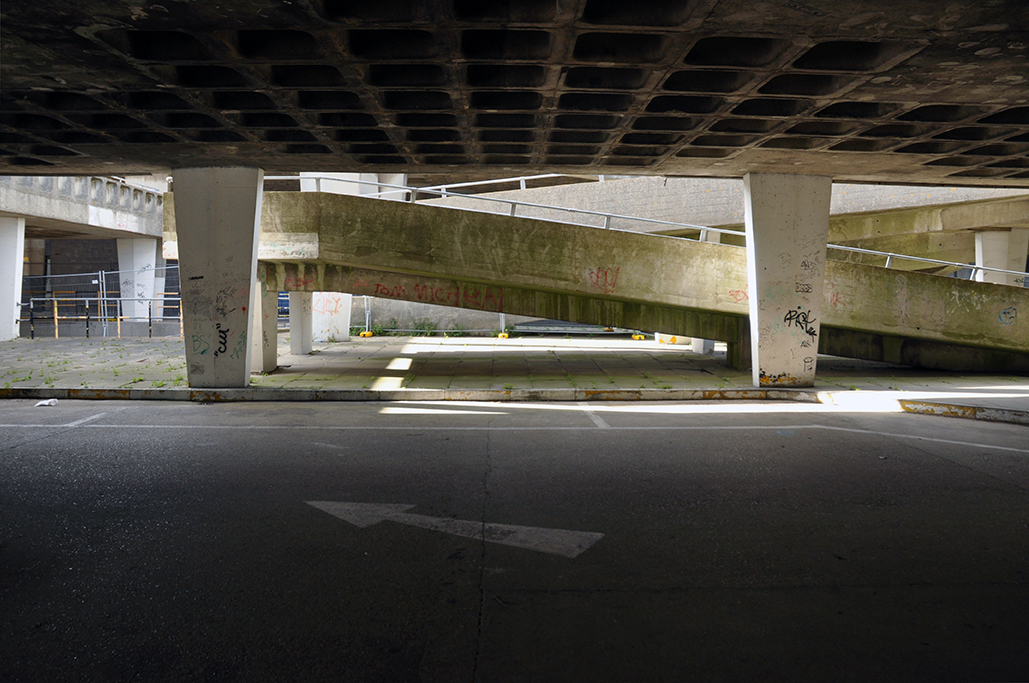
I don’t drive no car so I have to make do with the ecologically sound and ever so affordable means of pedestrian trespass, proceeding incautiously I recorded my journey into the unknown.
Returning safely to Basecamp I investigated further, circumnavigating the drainage area.
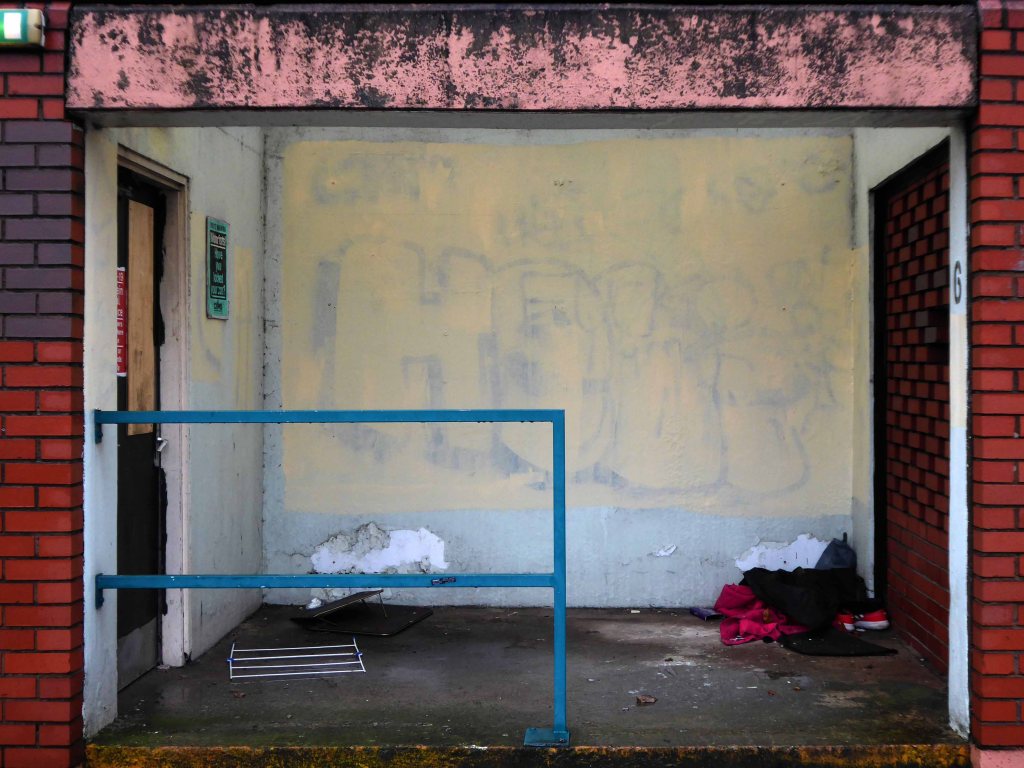
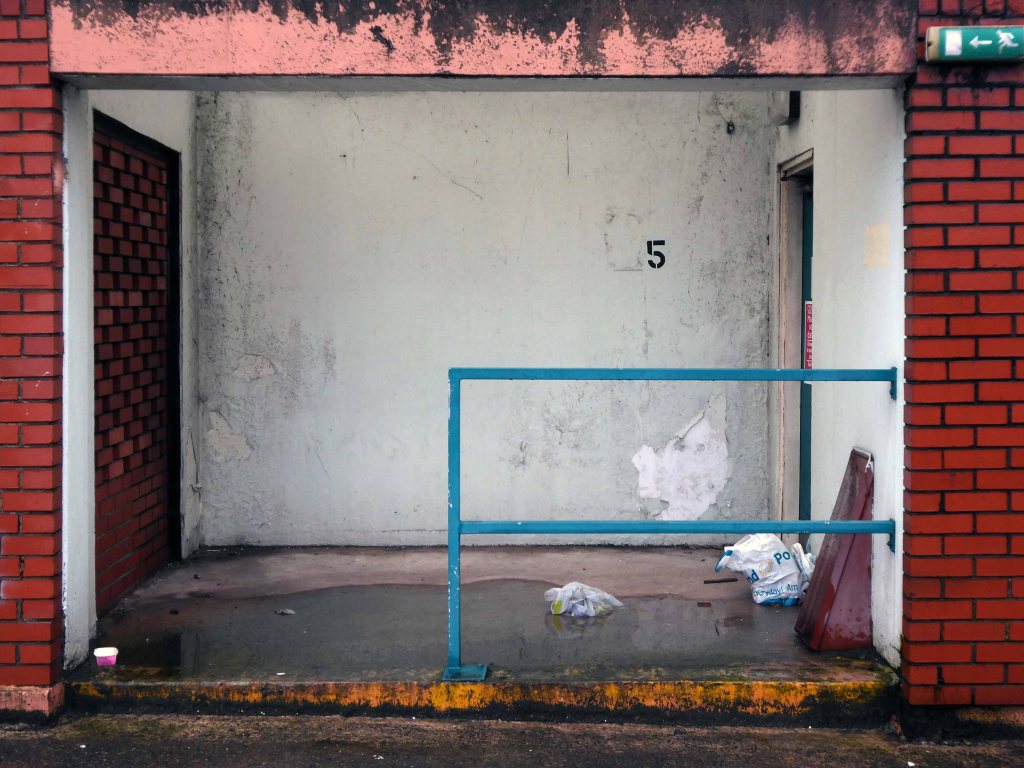
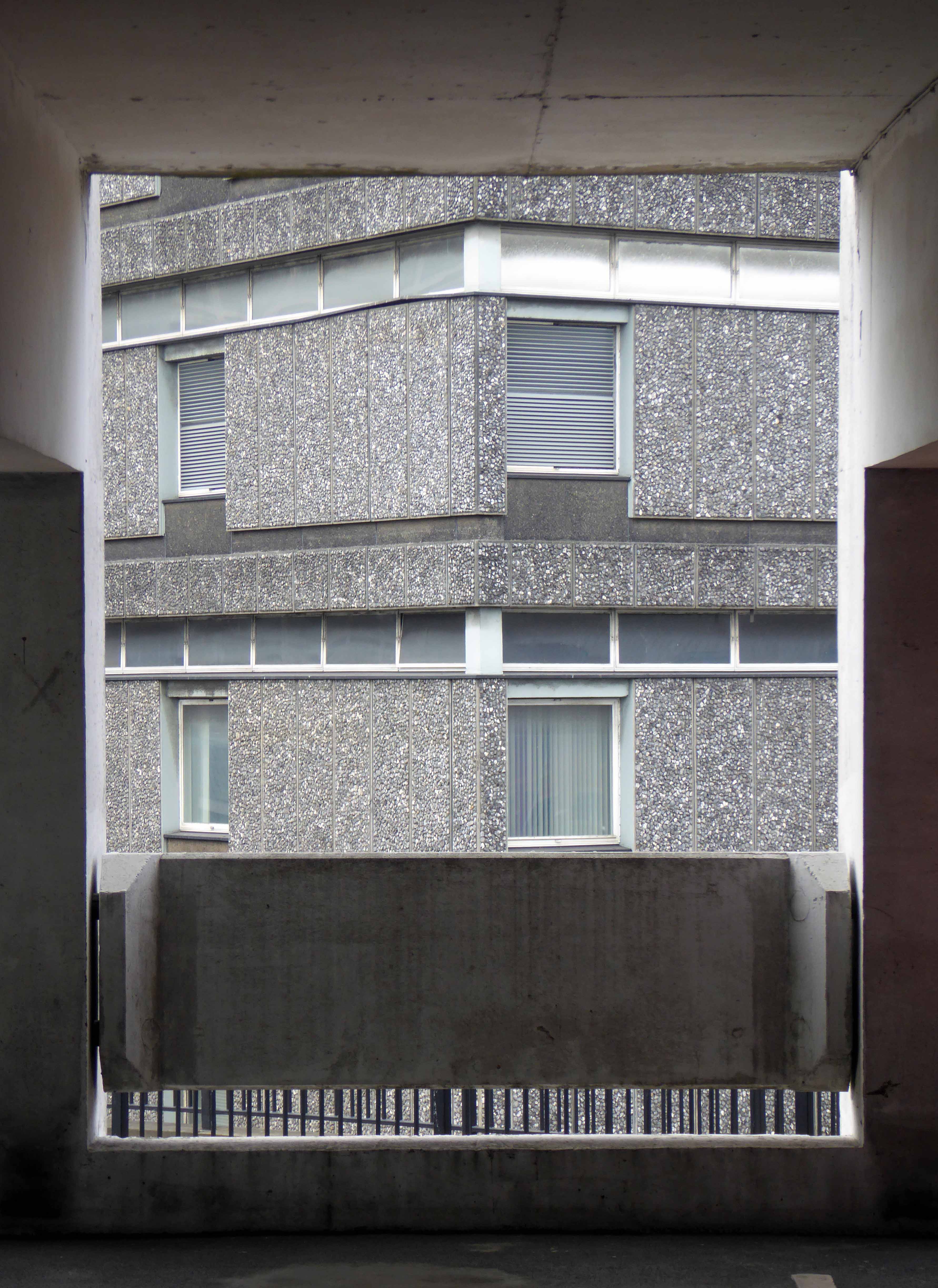
I have to admit that I am over fond of this small sacred space, a modern impenetrable temple of Brutalism. My ambition is to stage an art/music event within, just wait and see/hear if I don’t!
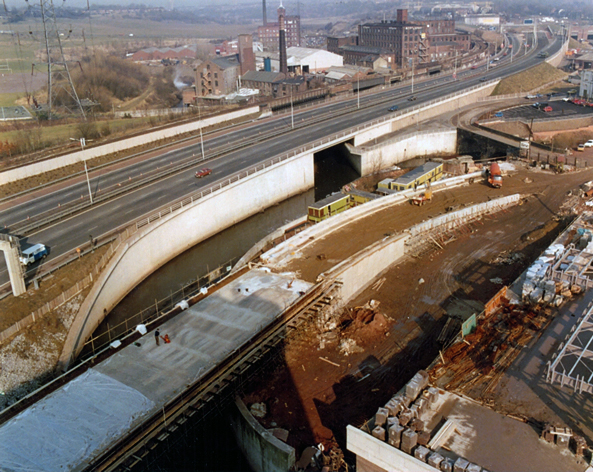
He reached the foot of the embankment, and waved with one arm, shouting at the few cars moving along the westbound carriageway. None of the drivers could see him, let alone hear his dry-throated croak, and Maitland stopped, conserving his strength. He tried to climb the embankment, but within a few steps collapsed in a heap on the muddy slope.
Deliberately, he turned his back to the motorway and for the first time began to inspect the island.
Maitland, poor man, you’re marooned here like Crusoe – If you don’t look out you’ll be beached here for ever. He had spoken no more than the truth. This patch of abandoned ground left over at the junction of three motorway routes was literally a deserted island.
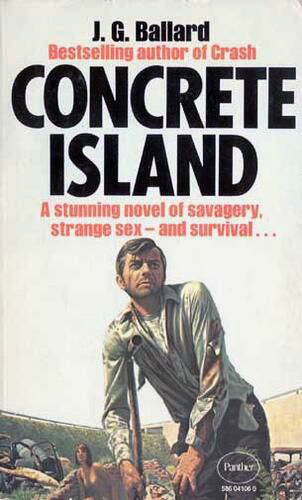
JG Ballard Concrete Island
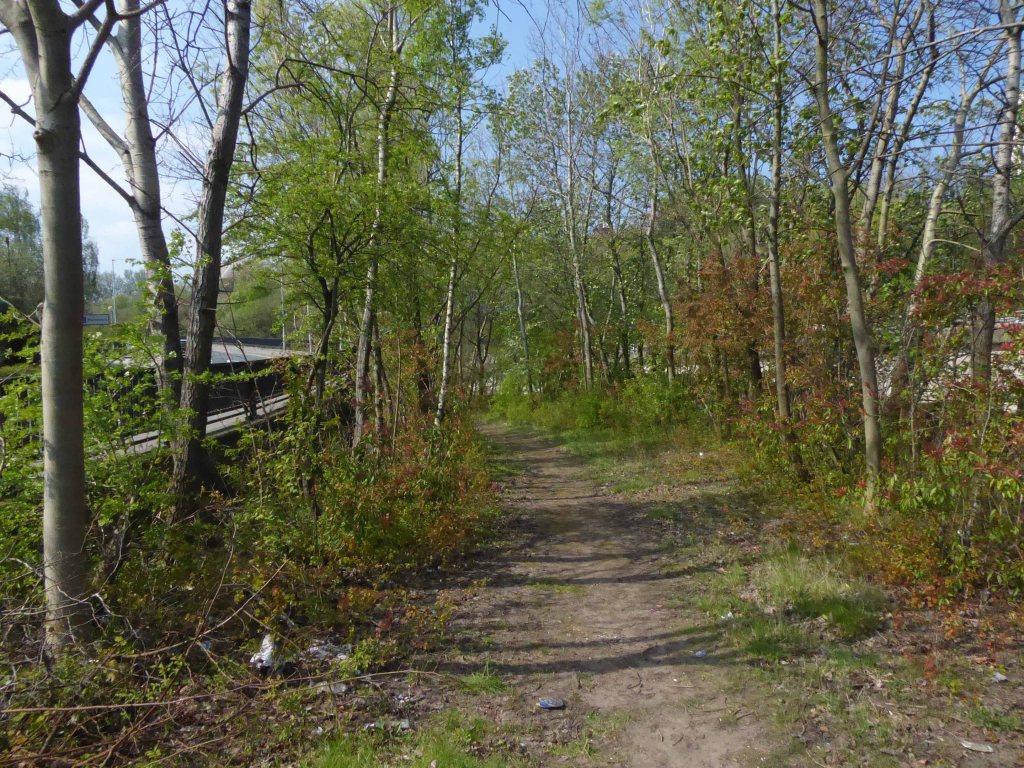
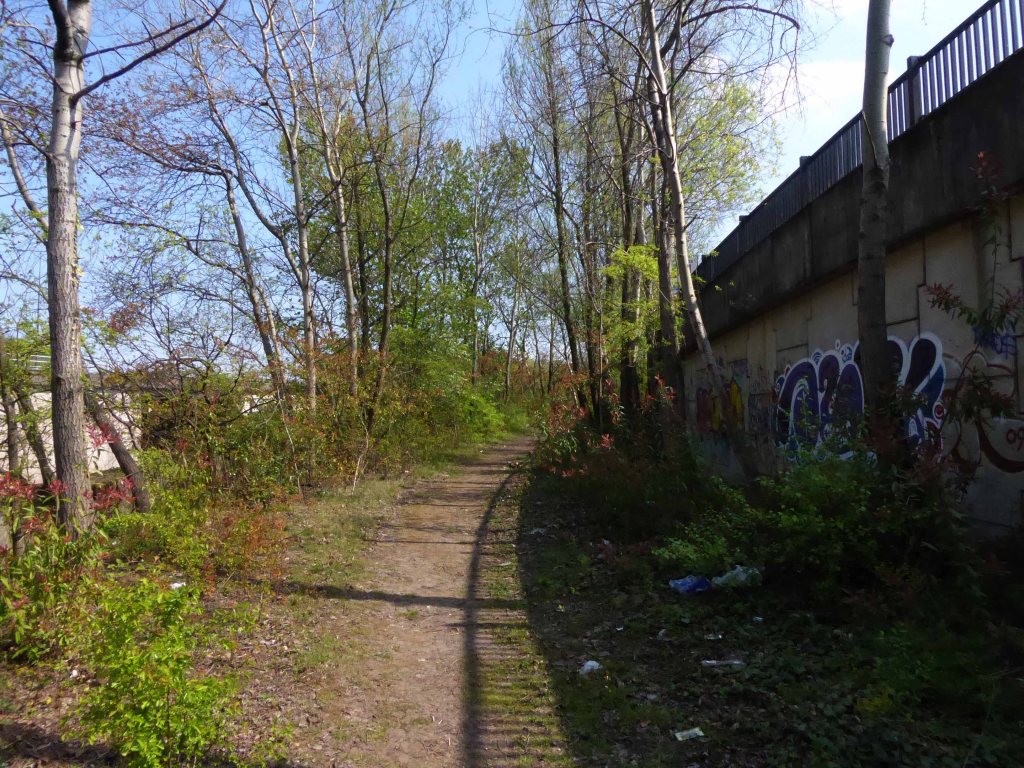
I’m in a different place – the same but different, whilst out walking I went through an open gate, following a well worn path, for the very first time.
Leading who knows where.
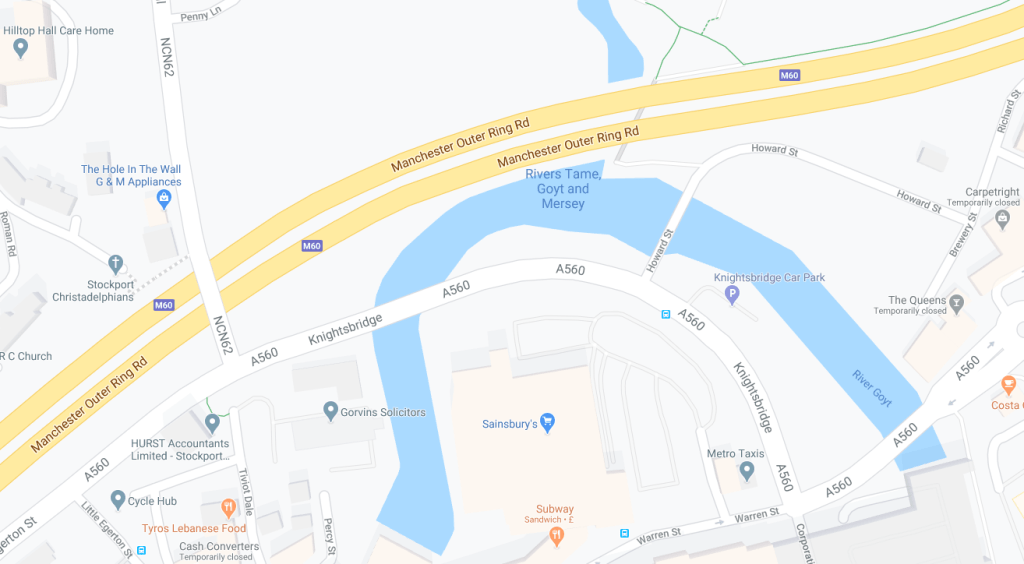
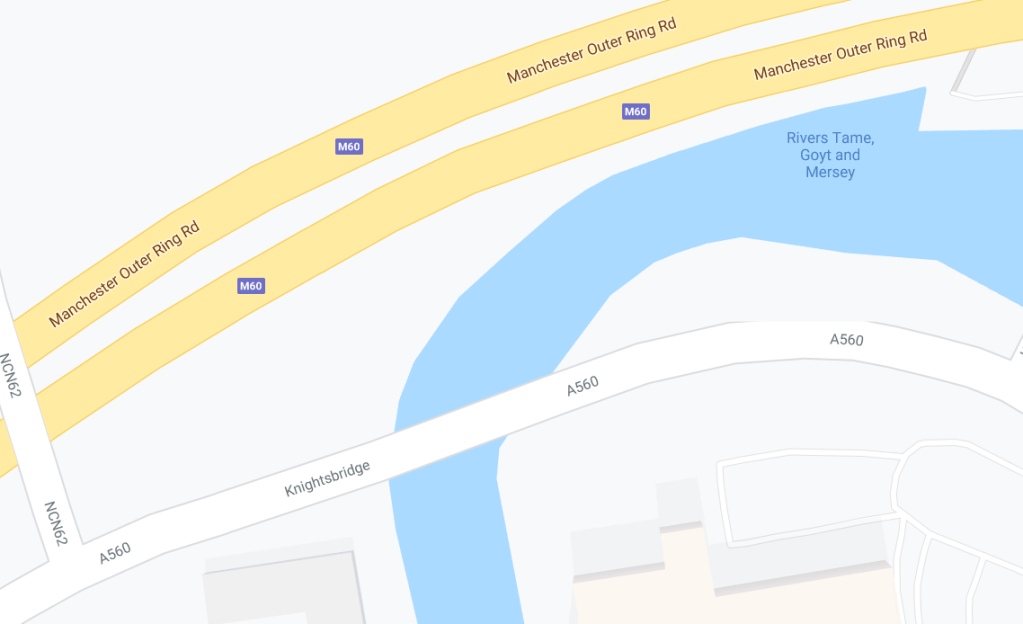
The confluence of three rivers, the meeting of motorway and main road.
I ventured further – where if anywhere are we going?
This tight tree lined and paint daubed triangle offers no answers.
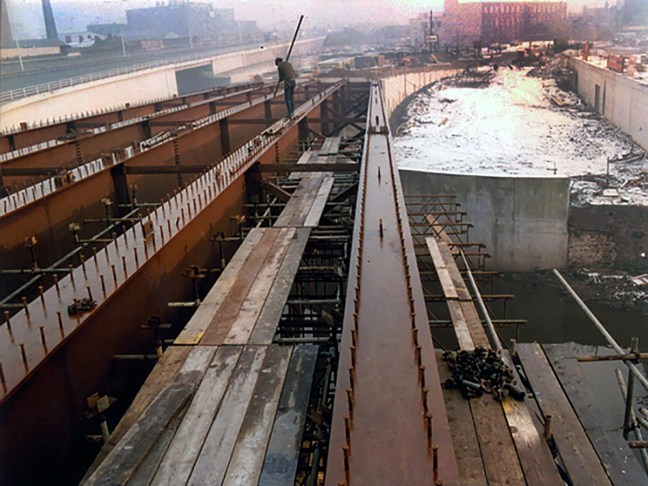
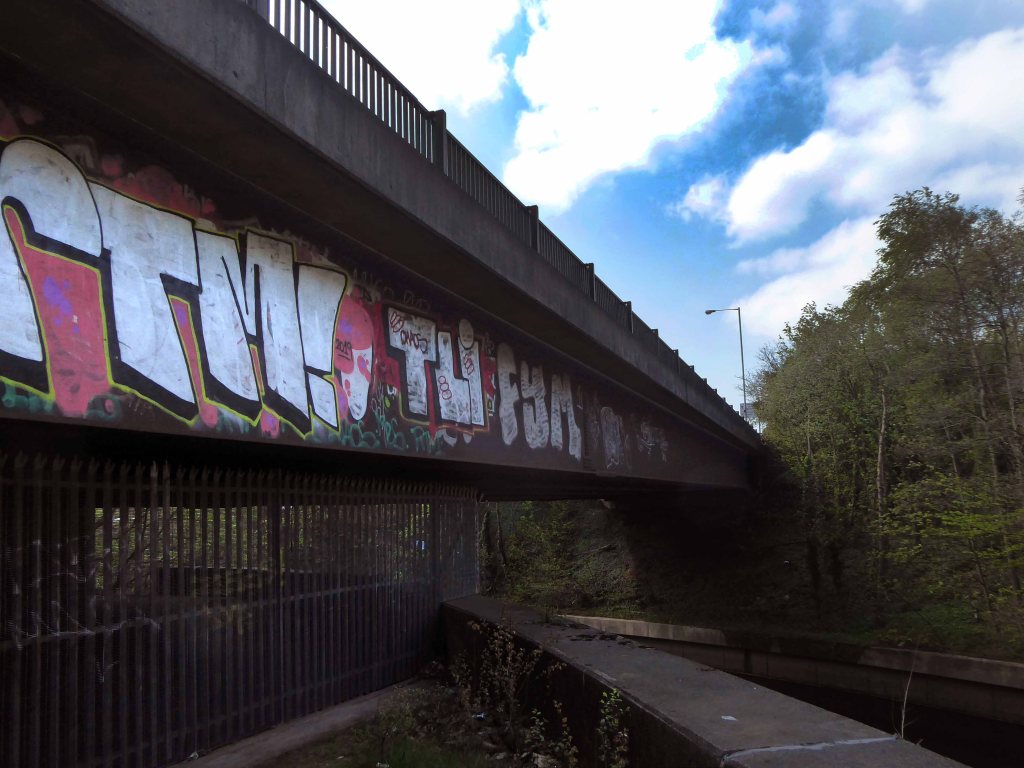
Tamed thirty years or so ago, with concrete and steel.
Further and further.
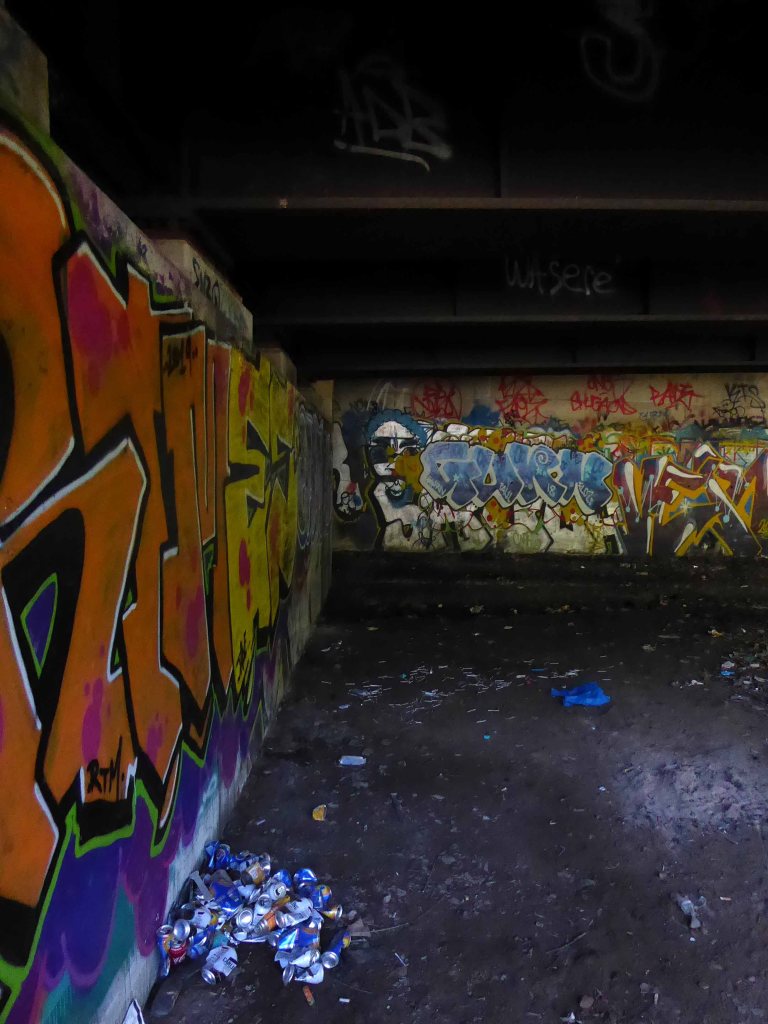
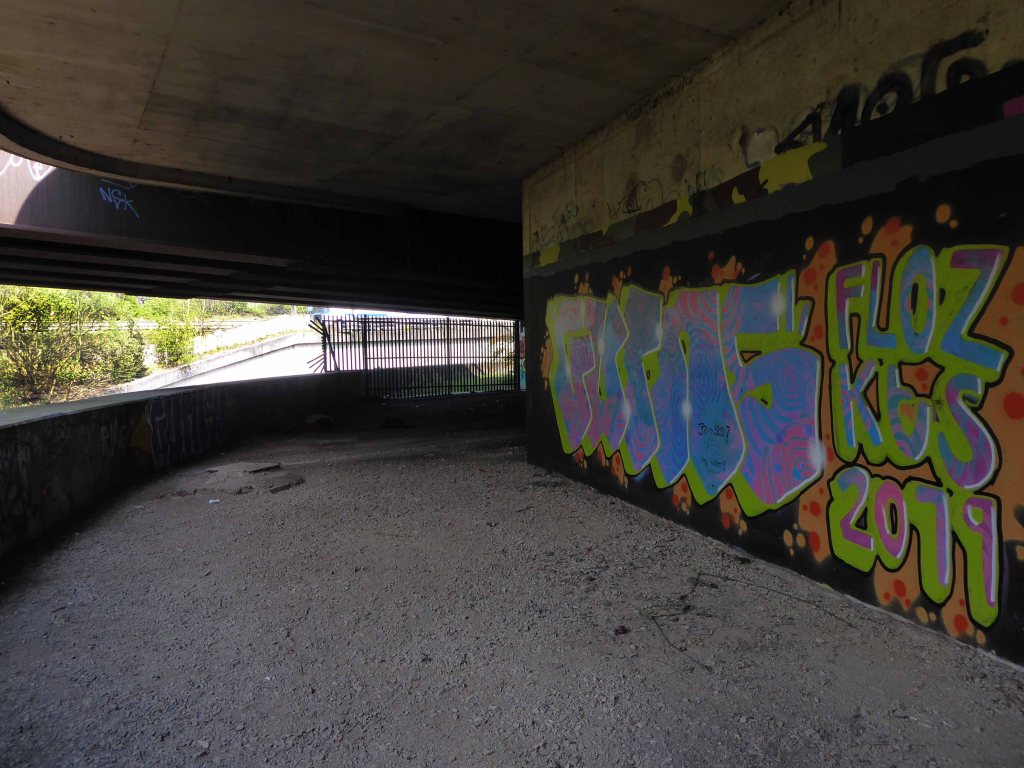
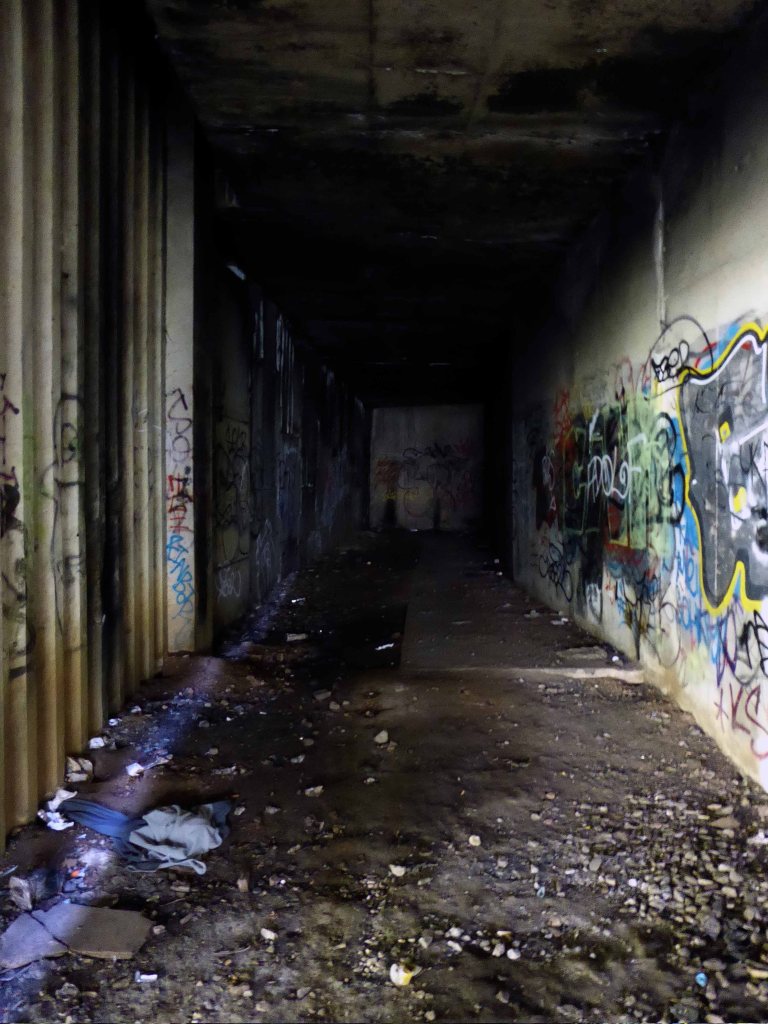
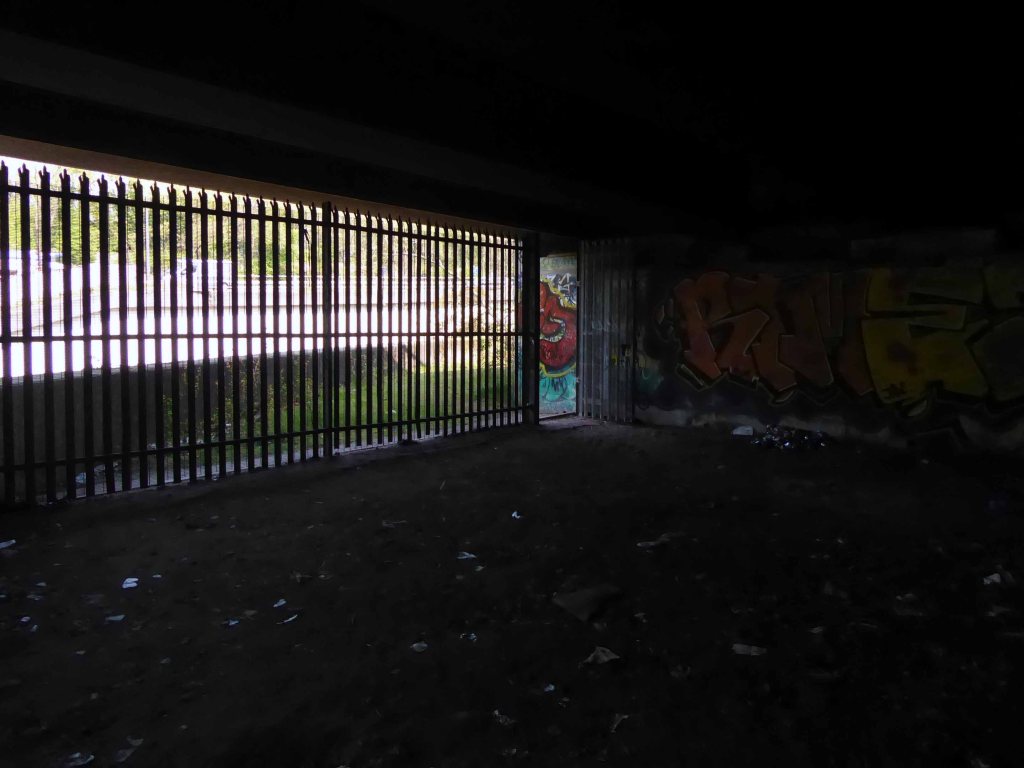
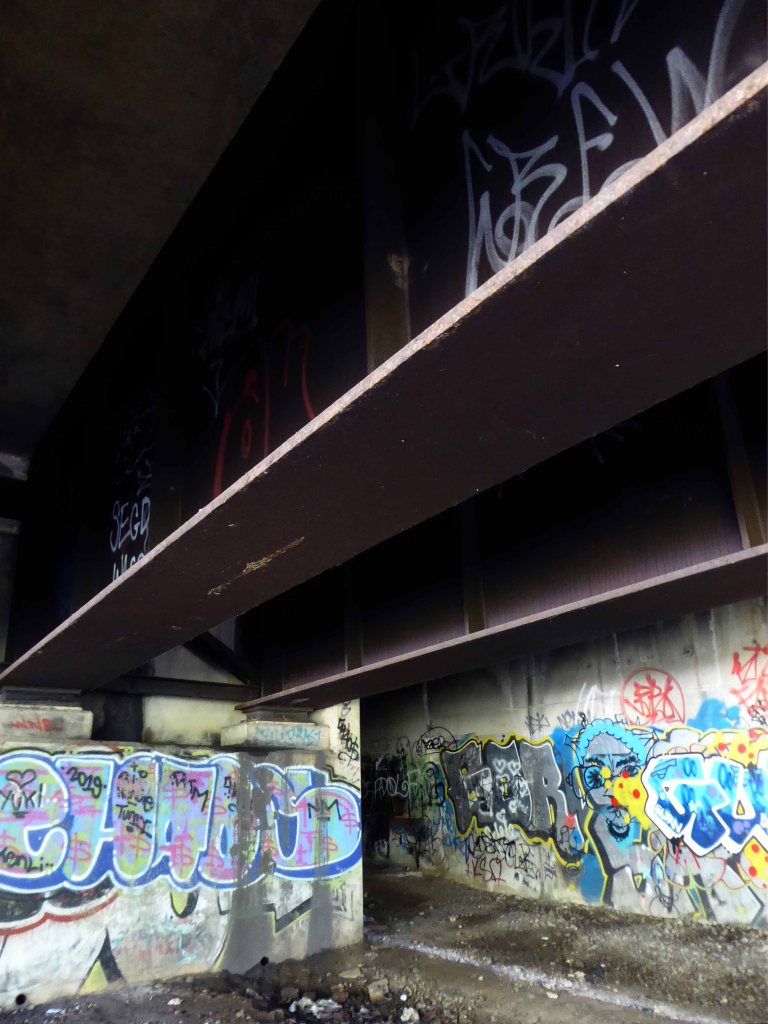
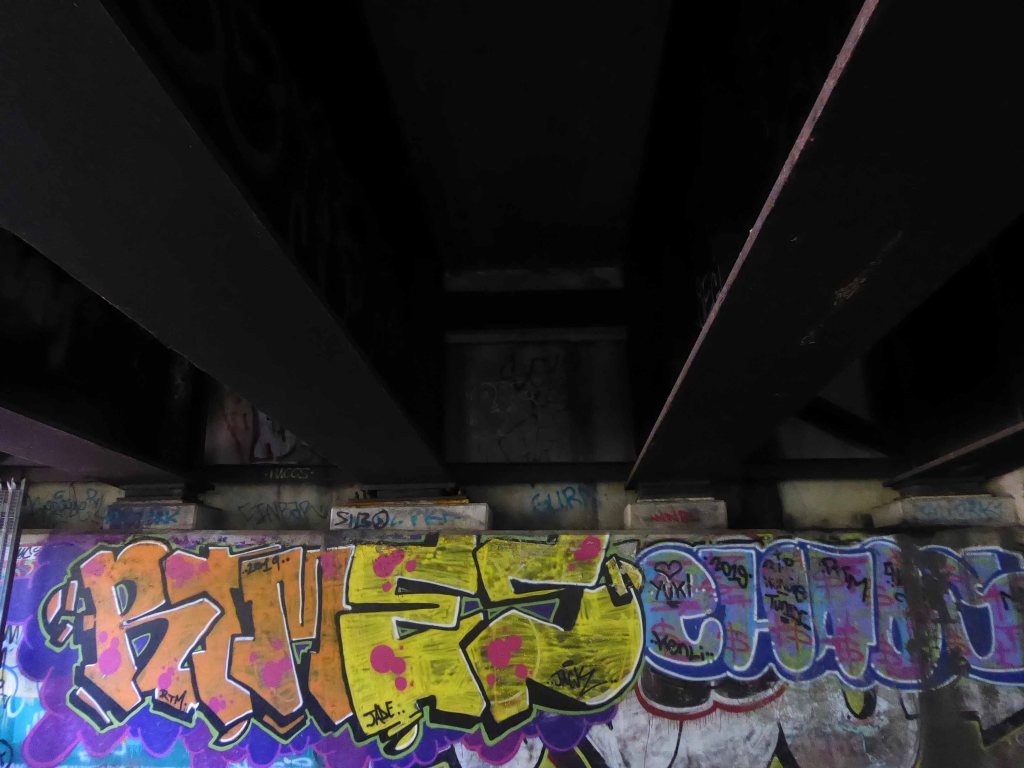
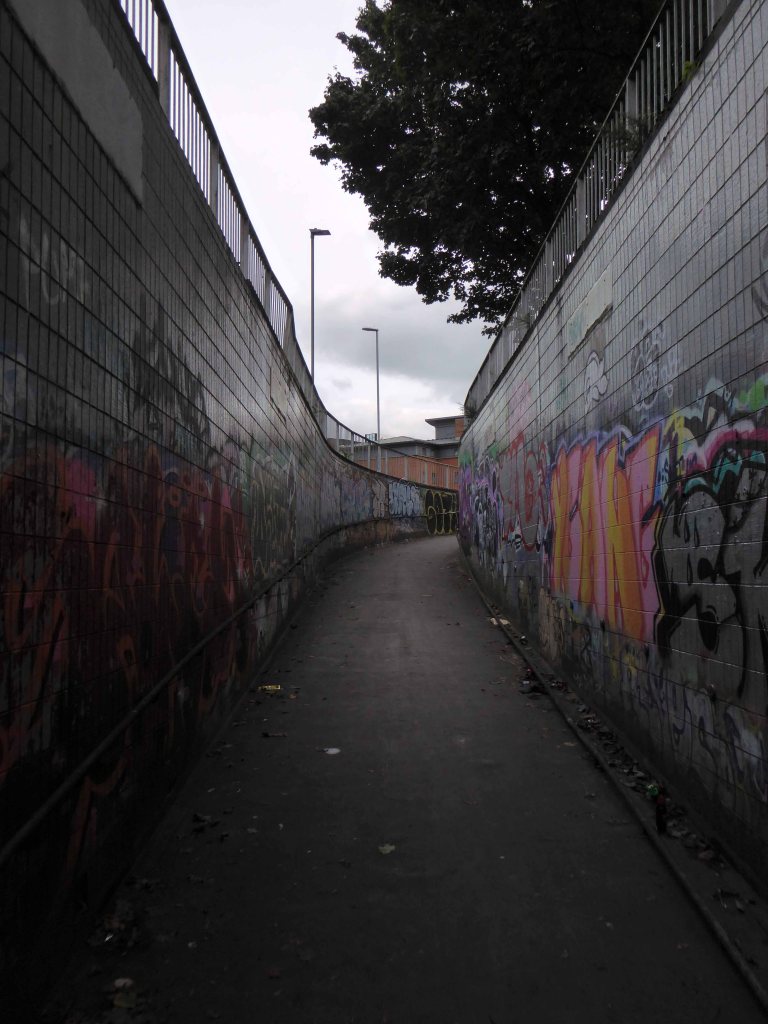
Into an underground world.
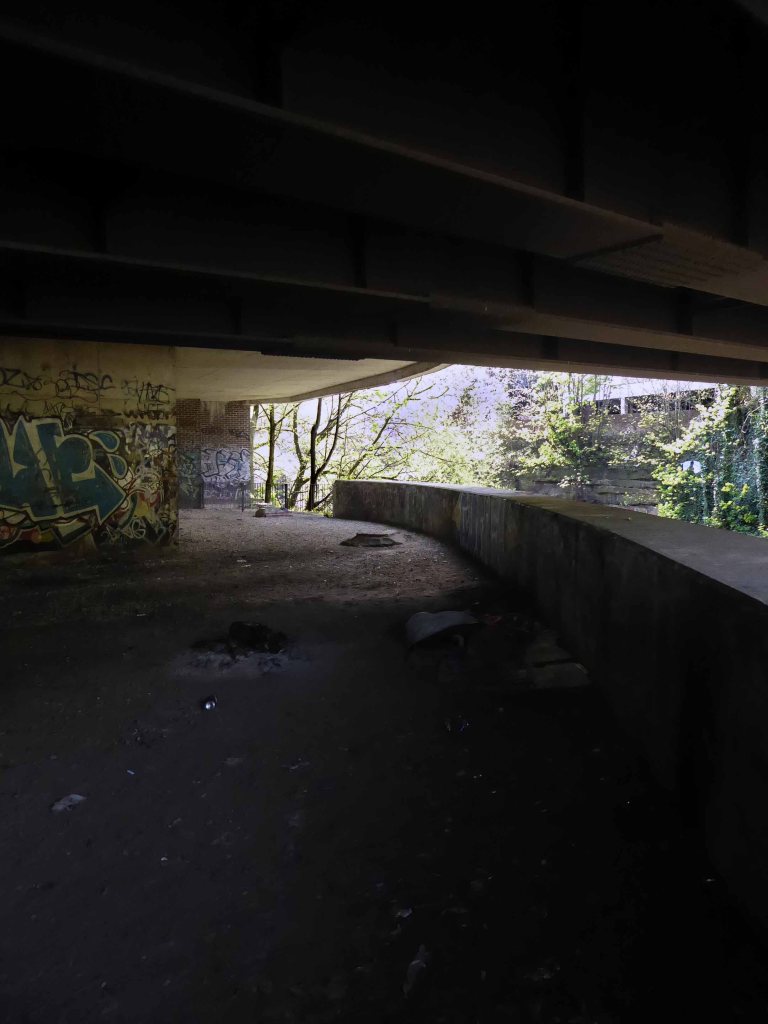
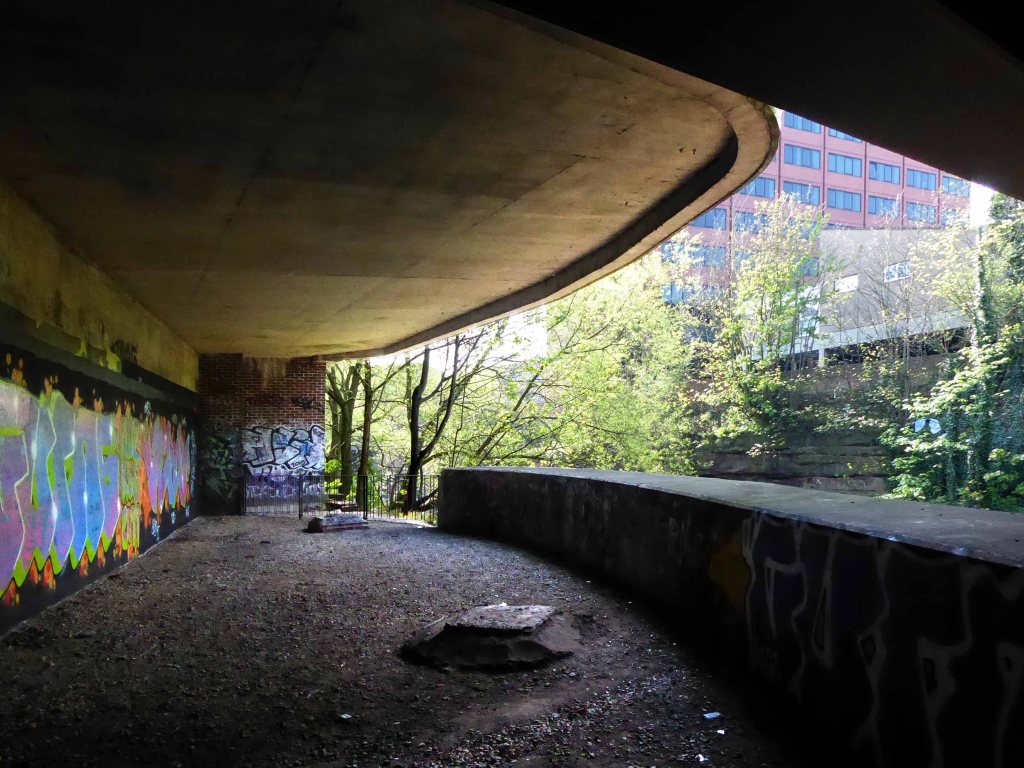
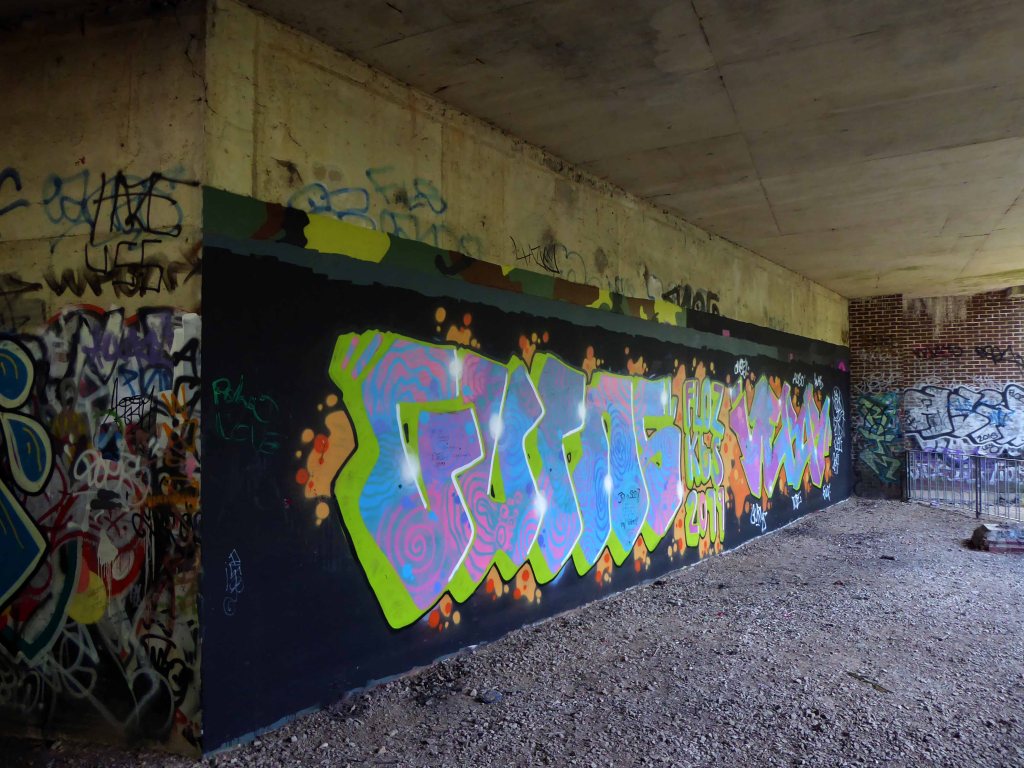
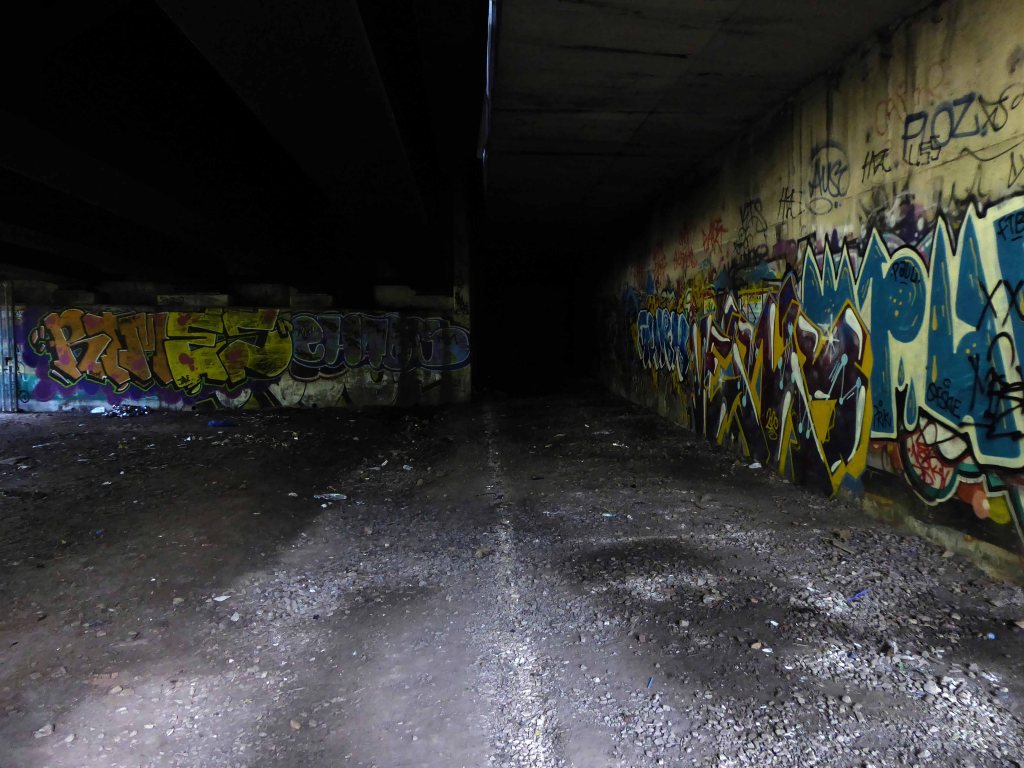
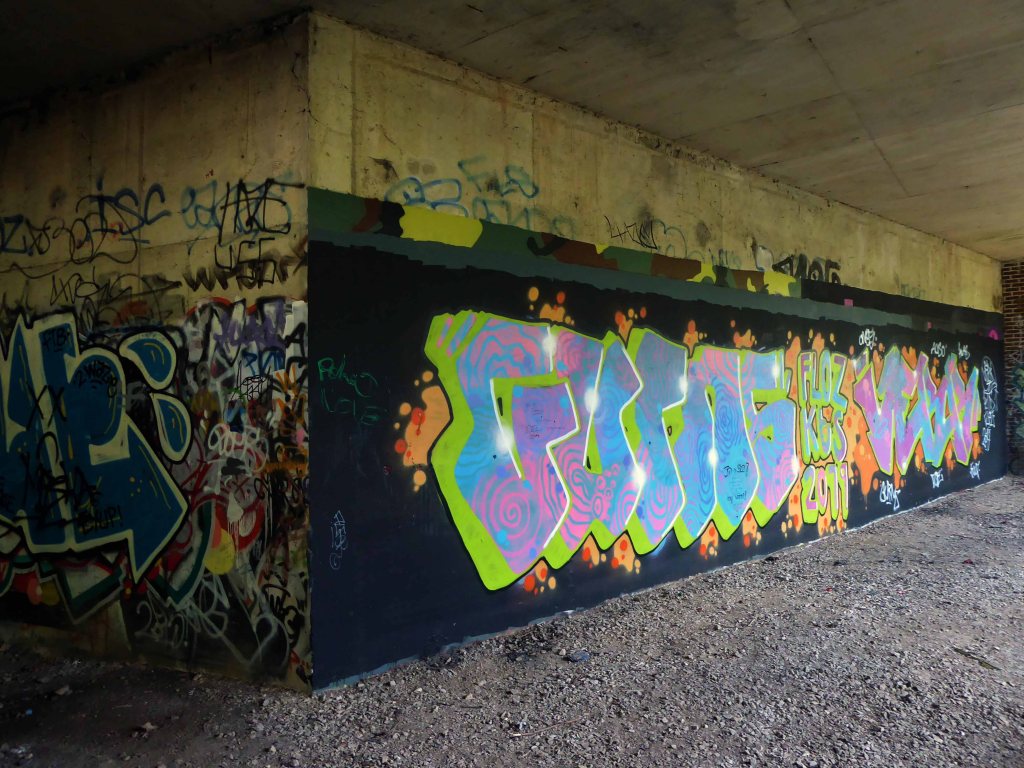
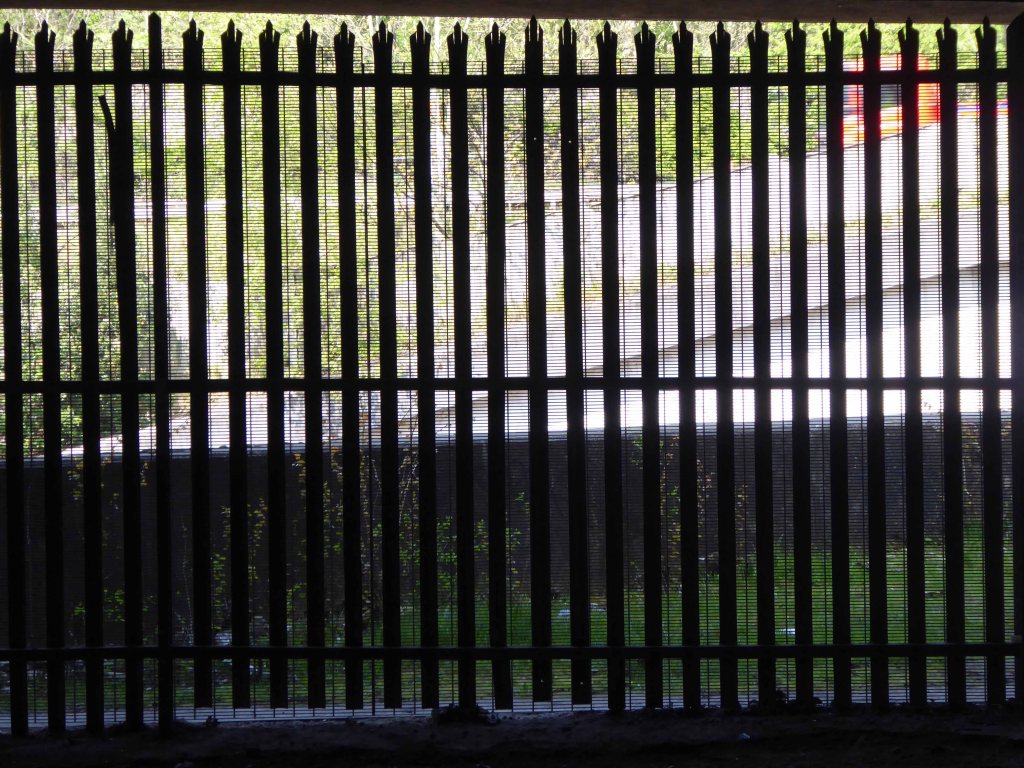
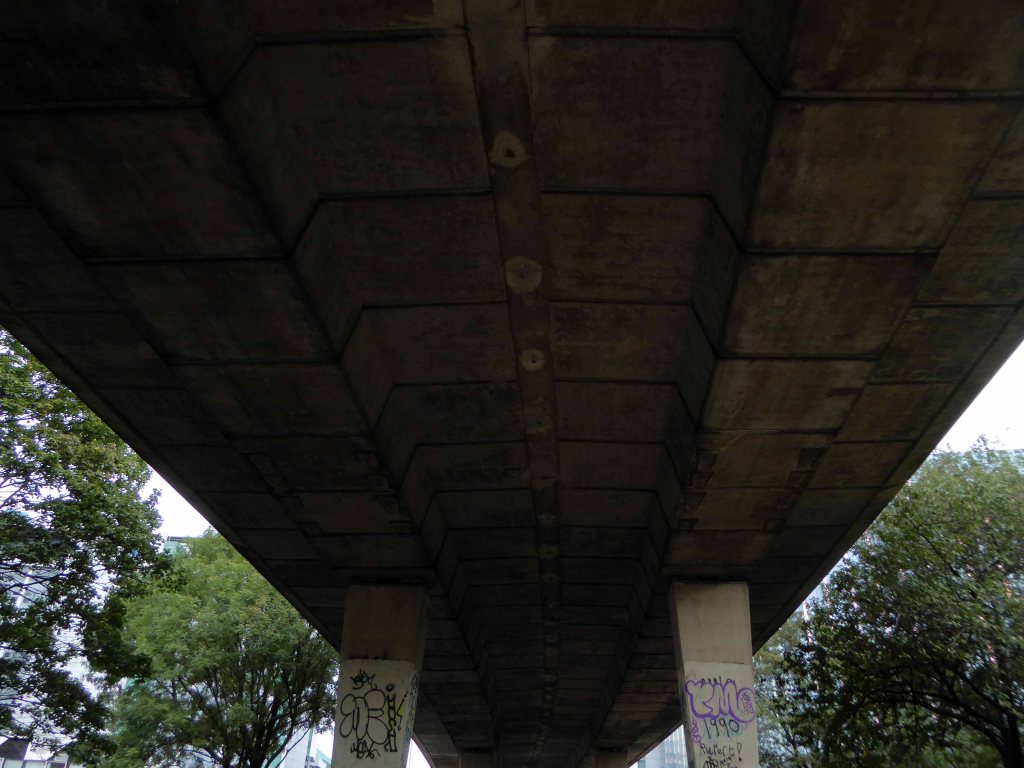
Through the railings and into a void – a void that had become home to the otherwise engaged, seeking solace somewhere, finding shelter from the storm. A storm of Twenty First Century austerity, man made – moving money around until those without are out, out in the open, nowhere else to go but here.
How often have I lain beneath rain on a strange roof, thinking of home.
The Humber Ferry was a ferry service on the Humber between Kingston upon Hull and New Holland in Lincolnshire which operated until 1984, after the completion of the Humber Bridge in 1981.
I walked from Hull to Hessle – but you were always on my mind.
Glimpsed once or twice from a train, I’d never been up close and personal.
The Humber Bridge was opened by Her Majesty Queen Elizabeth II in 1981.
It is one of the marvels of modern engineering and was, until 1998, the longest single span suspension bridge in the world but there are now five other longer bridges of this type. However it is still the longest that can be used by pedestrians.
The bridge is 2,220 metres long and the towers, which are farther apart at the top than the bottom to compensate for the curvature of the earth, are 155 metres high. It was built at the narrowest point of the estuary known as the ‘Hessle Whelps’ and when completed it was admired for its design and elegance, but reviled by others as a bridge from nowhere to nowhere, the crossing comprises a dual carriageway with walkways for pedestrians and cyclists on both sides.
Although approval to build the bridge was granted in 1959 work did not begin until 1972 due to difficulties in financing the project. In 1966 Harold Wilson, the Prime Minister of the day, allowed Barbara Castle, the Minister for Transport, to give permission for the bridge to be built, hoping that the announcement would be a vote winner in the forthcoming Hull North by-election.
Construction Team
The consulting engineers for the project were Freeman Fox & Partners . Sir Ralph Freeman had produced the first ideas in 1927 and in the early 1930s the cost of the project was estimated at £1.725 million and that the bridge would be unlikely to recoup the construction or maintenance costs. In 1935 he had an idea for a 4,500-foot suspension bridge for the Humber Tunnel Executive Committee. Sir Gilbert Roberts produced more ideas in 1955 for a bridge with a 4,500-foot central span, costing £15 million, to be paid for by East Riding County Council and Lindsey County Council. Once it was likely that a bridge would be constructed, Bernard Wex produced the design in 1964 that was actually built. The bridge was built to last 120 years.
The architect was R. E. Slater ARIBA. The administration building for the tolls, was designed by Parker & Rosner. The landscaping was designed by Prof Arnold Weddle. Wind tunnel testing took place at the National Maritime Institute at Teddington and the road deck is designed for wind speeds up to 105 miles per hour (170 km/h).
Even on the calmest of days the power and sway, push and pull of wind and tide is an uplifting, hair-raising and visceral experience.
The elegantly engineered giant towers above as you gaze from the shore.
An elegy to human endeavour in concrete and steel.
The bridge is of necessity firmly anchored to the ground.
The walkway wide and high astride the estuary.
The tall towers towering above.
The whole structure tied down, anchored and suspended securely.
The mid brown waters of the Humber flowing gently below.
I walked back and to in the company of a handful of fellow travellers, on foot and bike, one of life’s best ever free rides, and reluctantly bade farewell as I headed home to Hull.
But just like just like General MacArthur I came through andI shall return.
My previous Hull walk was was linear, along the Humber Estuary open and expansive.
This was a very different kettle of fish – spiralling out of control, rising and falling, walking the ramp, a journey into one’s inner self.
Possibly the worst multi storey I have been in for years.
Spooky, filthy, bays too small, machines remote, access tortuous.
Avoid.
So says Nick Shields
Dark, Gloomy and Rotting .
Looks a good candidate for a location for a crime watch reconstruction.
Quoth Peter Campbell
It’s a multi story multi Storey and no mistake
I couldn’t possibly pass comment, I walk can’t drive, won’t drive – though simply can’t resist exploring car parks.
Though the local paper has identified an issue of fitness to fit.
Heard the one about a city centre car park where you can’t easily park your car?It might sound like a joke but it’s no laughing matter for drivers trying to squeeze into vacant spaces at Hull City Council’s multi-storey car park in George Street.For motorists are finding it increasingly difficult to manoeuvre into its tight parking bays.
I myself navigated the bays with ease, though not without that unique sense of foreboding and unease, generated by an empty concrete carapace where car space, decay and ingress are issues.
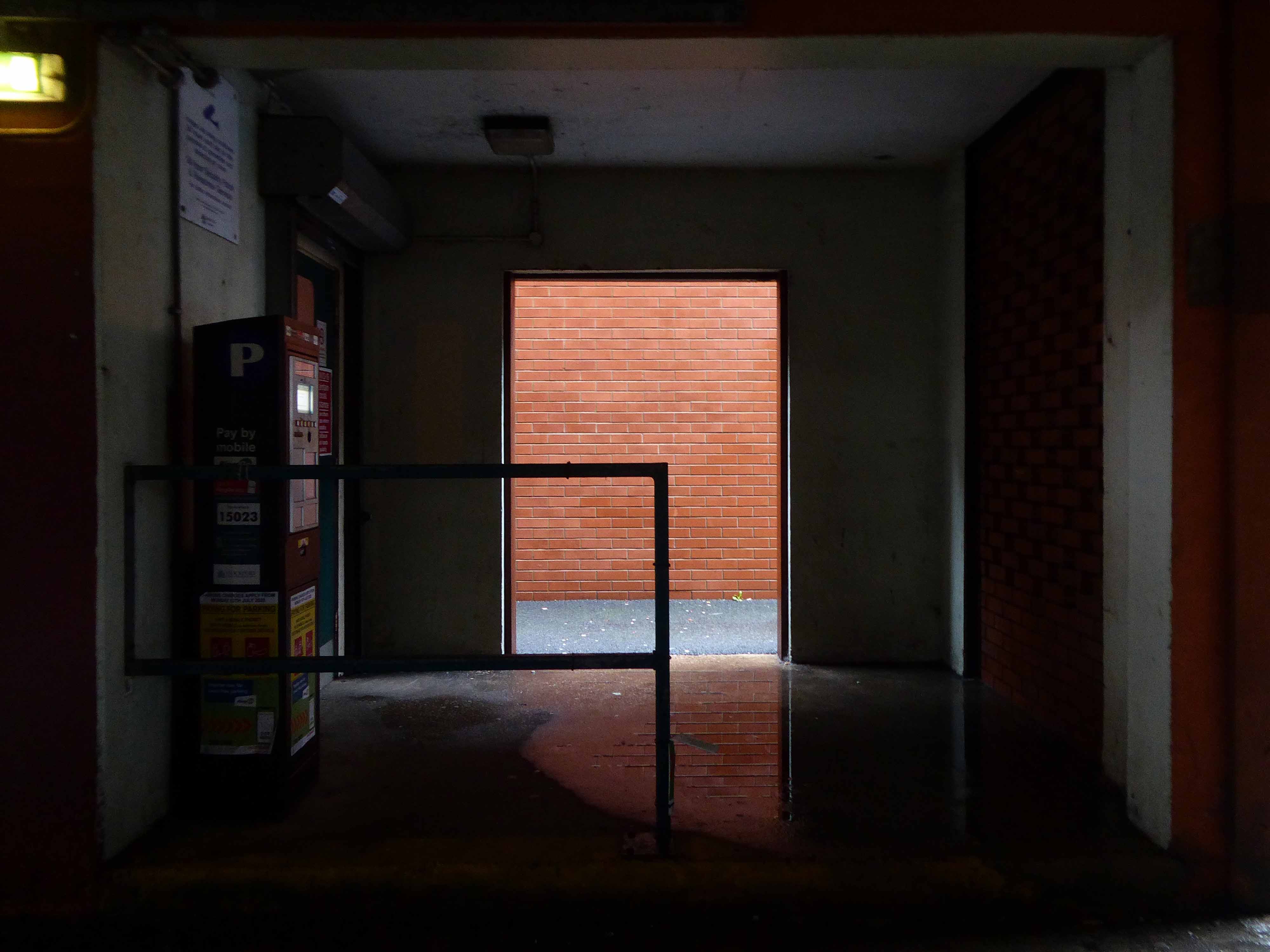
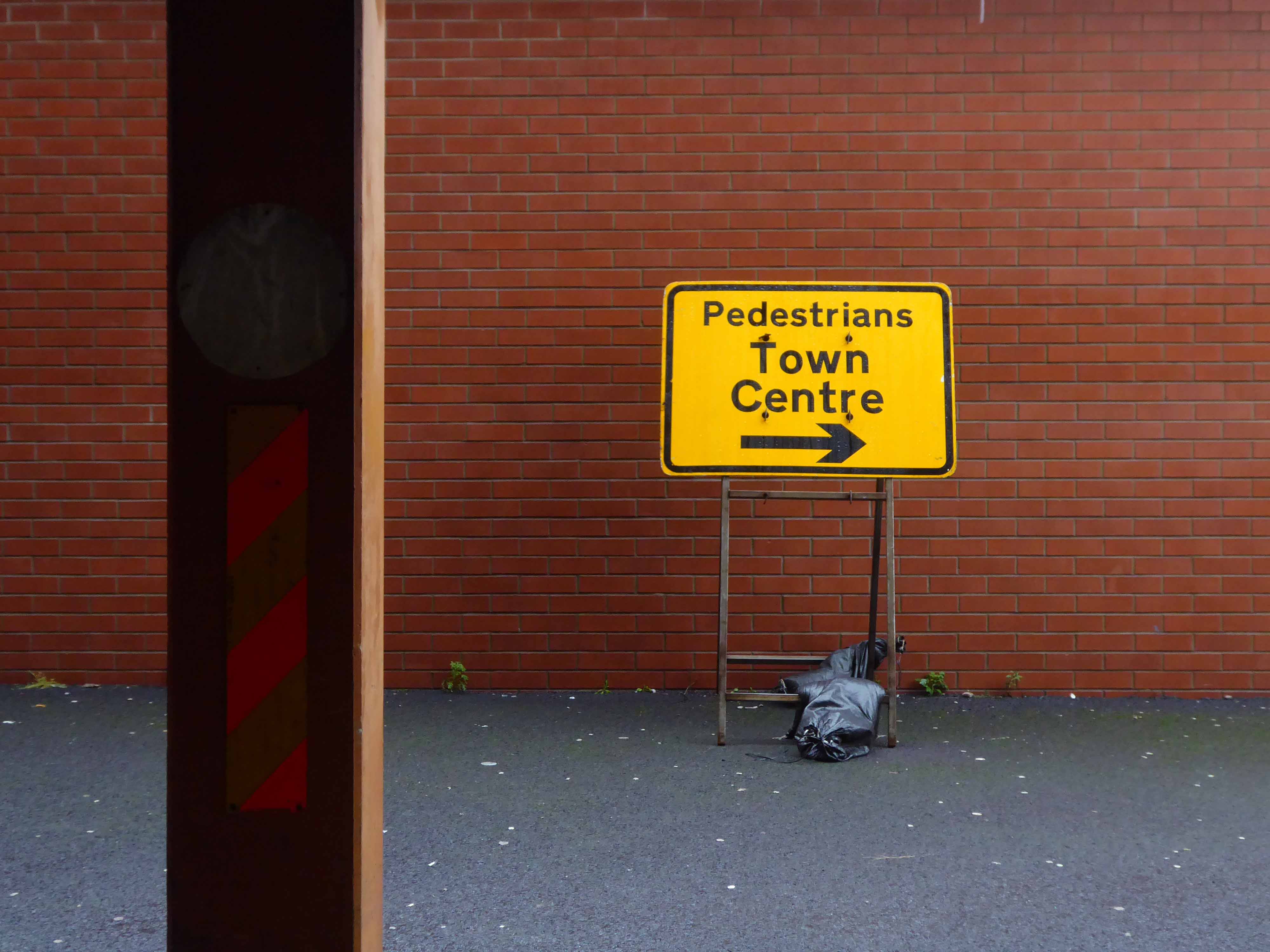
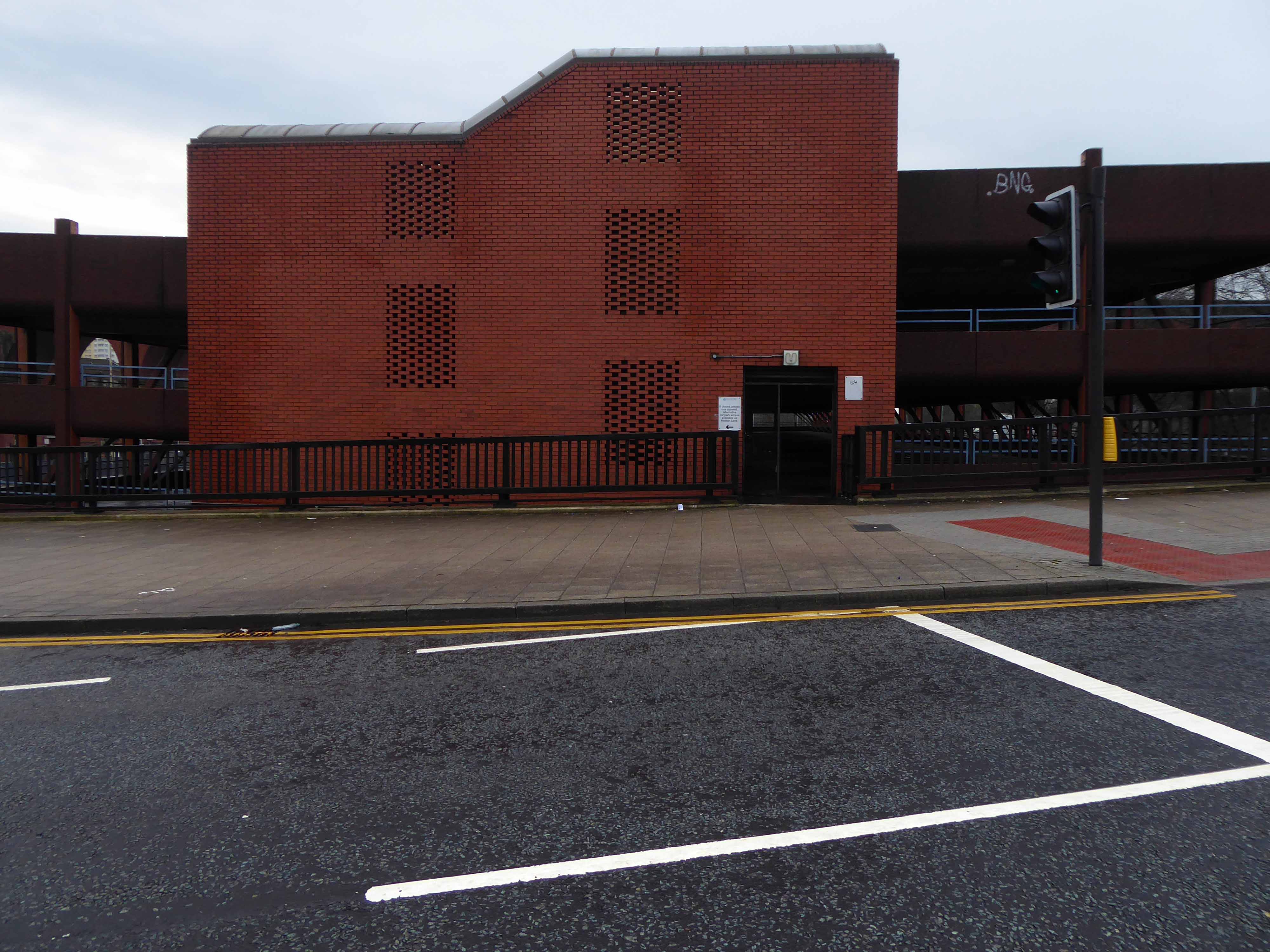
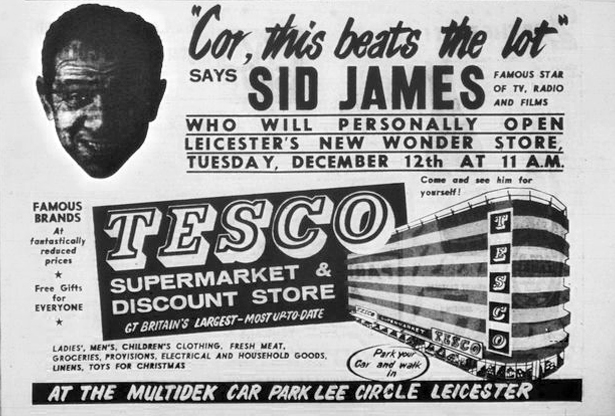
It was designed and developed by Maurice Weston in the 1960s. He had two companies, Multidek and Dekotel, and built circular continuous ramp car parks in Hull, Nottingham, Leicester, Bristol and Bournemouth, some of them also involving circular hotels on the upper floors. In its day, the bays were easily wide enough for most cars. When I used George Street myself, it felt great to use, because you could easily reverse into the pitches and there were no tight corners to negotiate. But car widths have probably got the better of it, these days, and you can’t widen the pitches because of the position of the pillars.
The plans were very complicated to get approved because the George pub was a listed building and the car park had to be built around it. Incidentally, Maurice Weston also had an option to develop the wasteland on Ferensway in the 60s, but his hotel and entertainment centre project didn’t get past the council.
I was in town, just looking around, just looking for modernity, just looking.
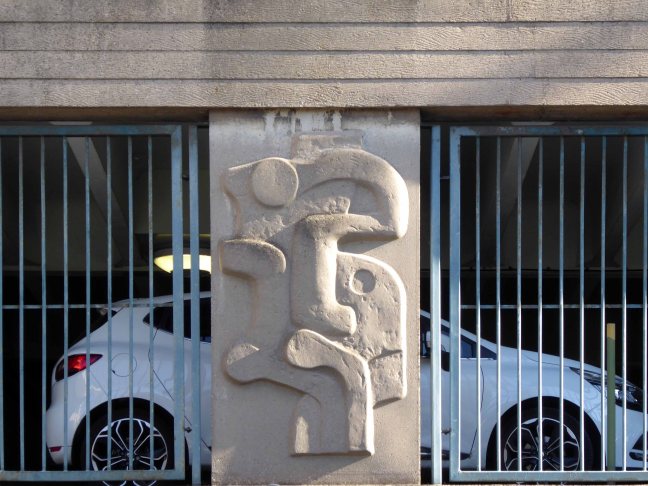
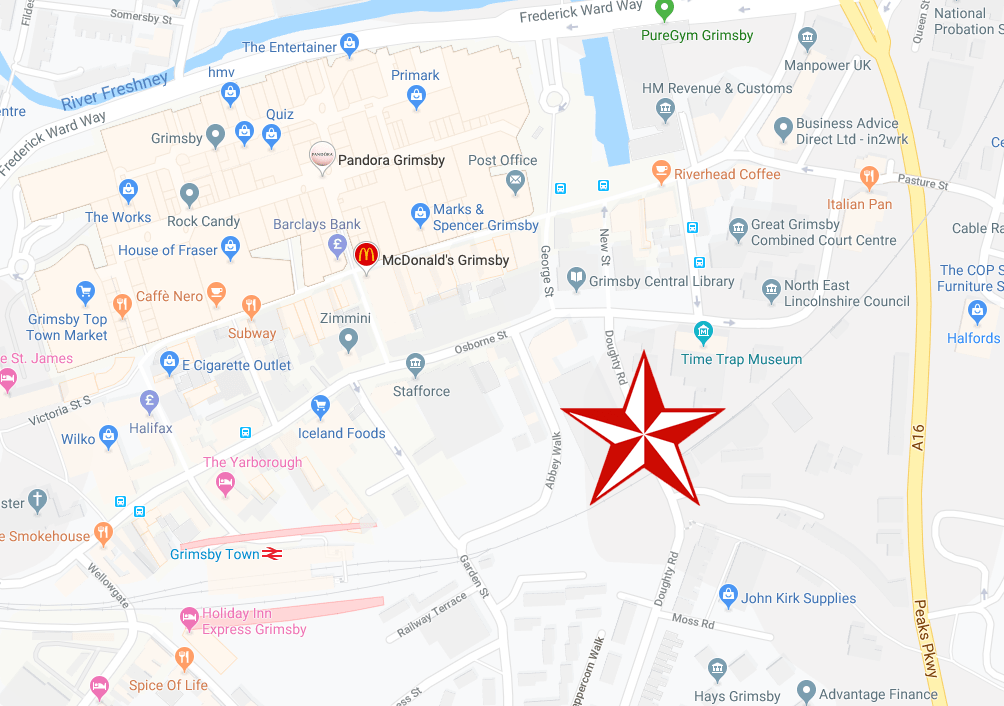
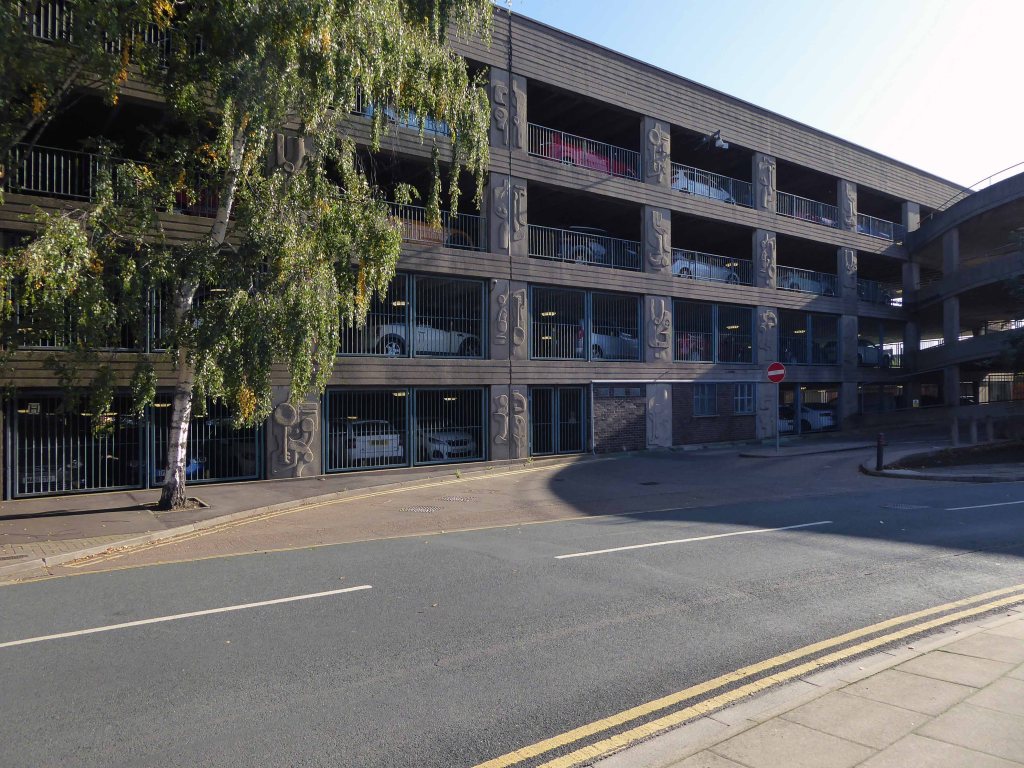
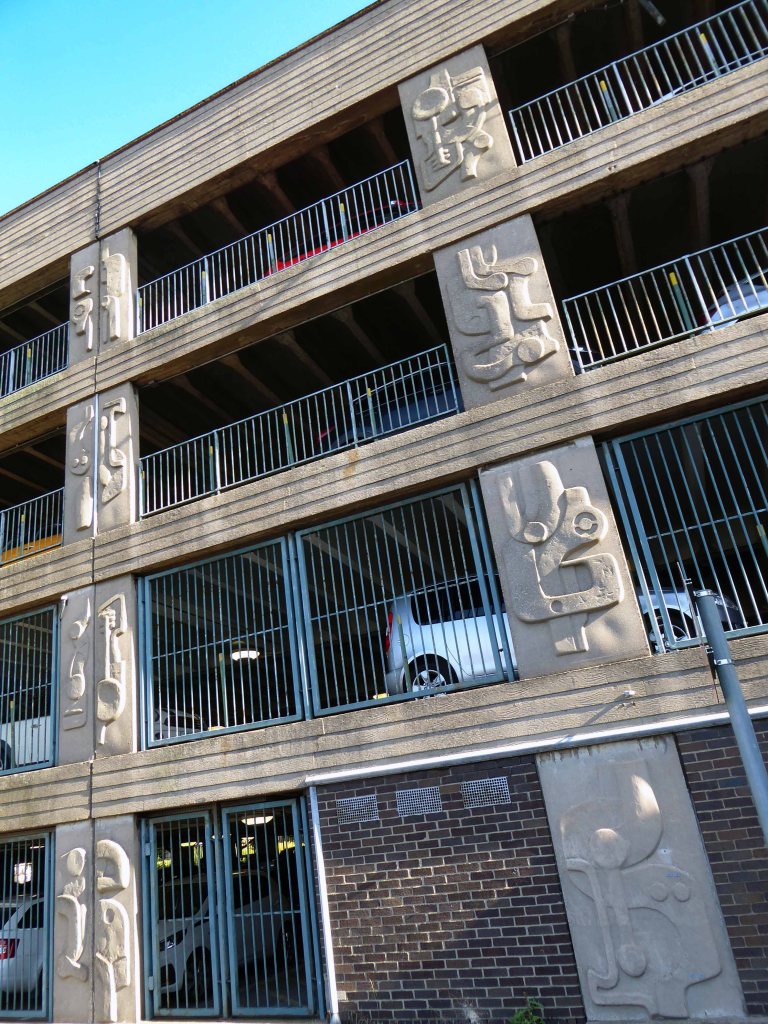
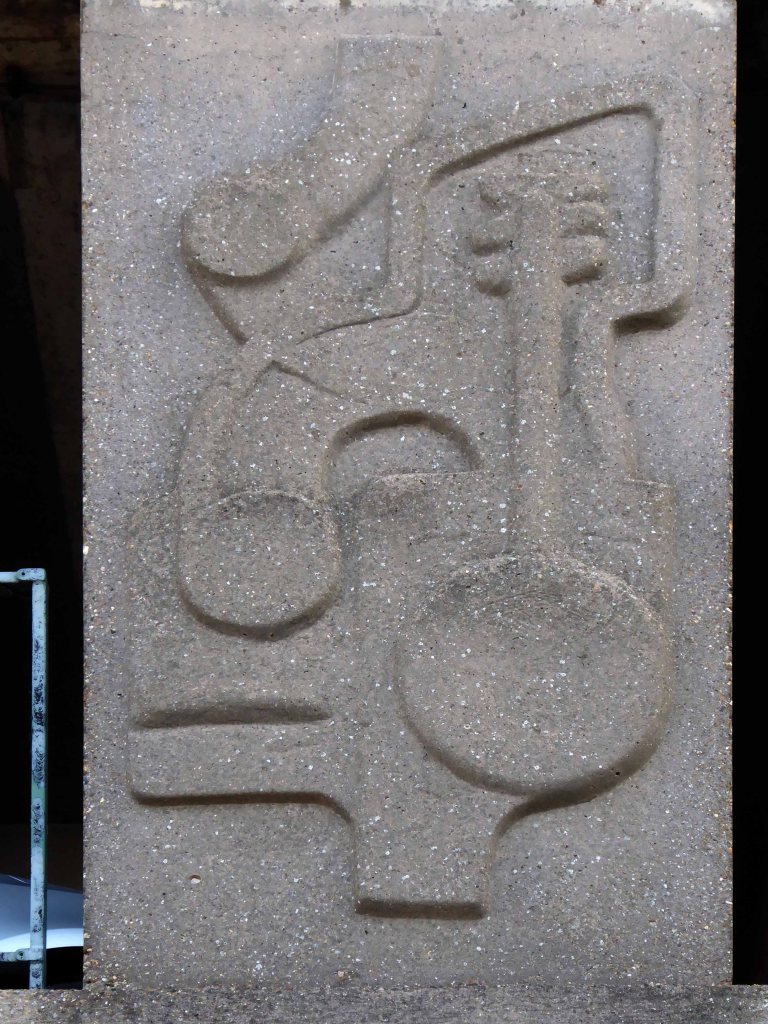
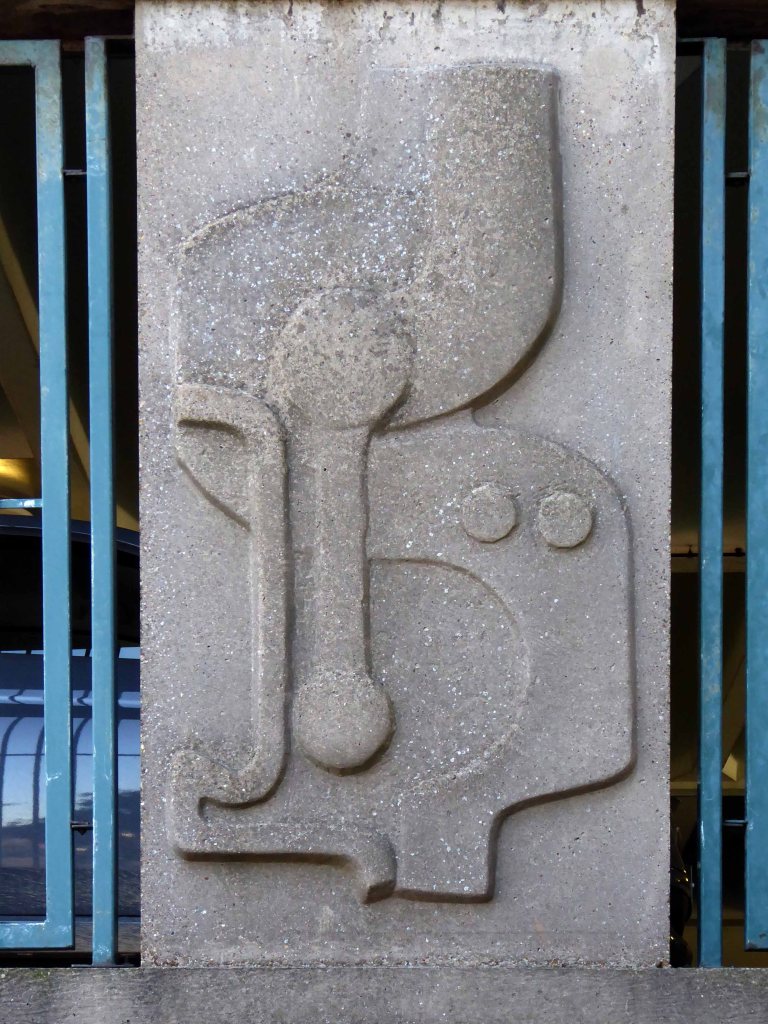
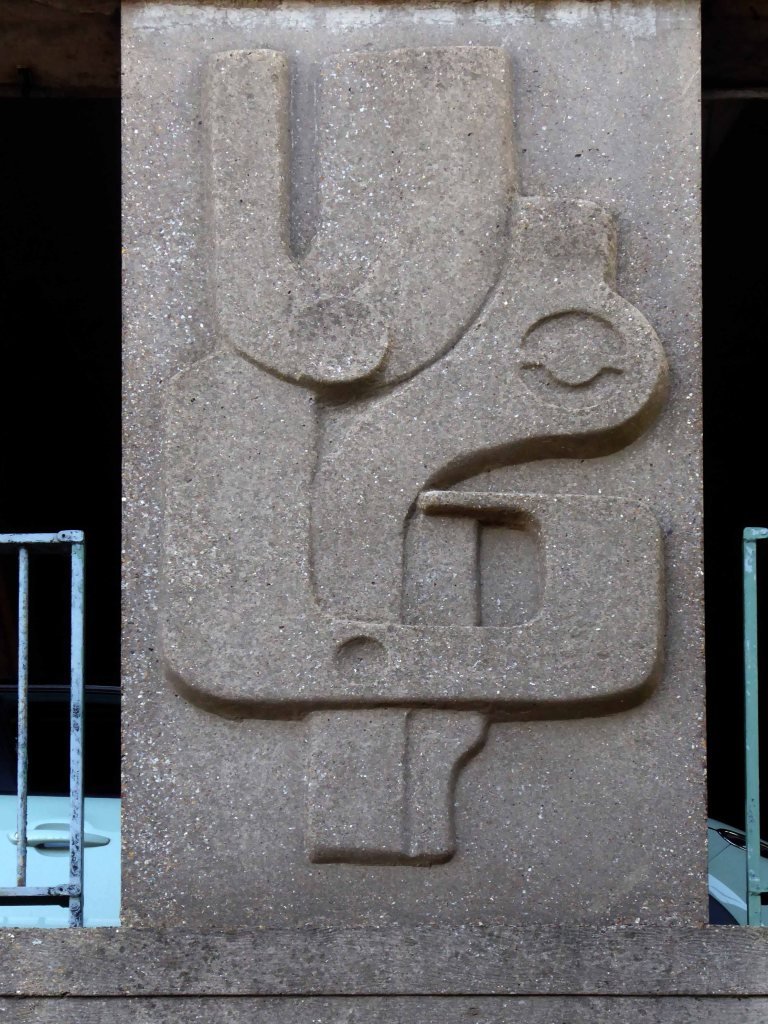
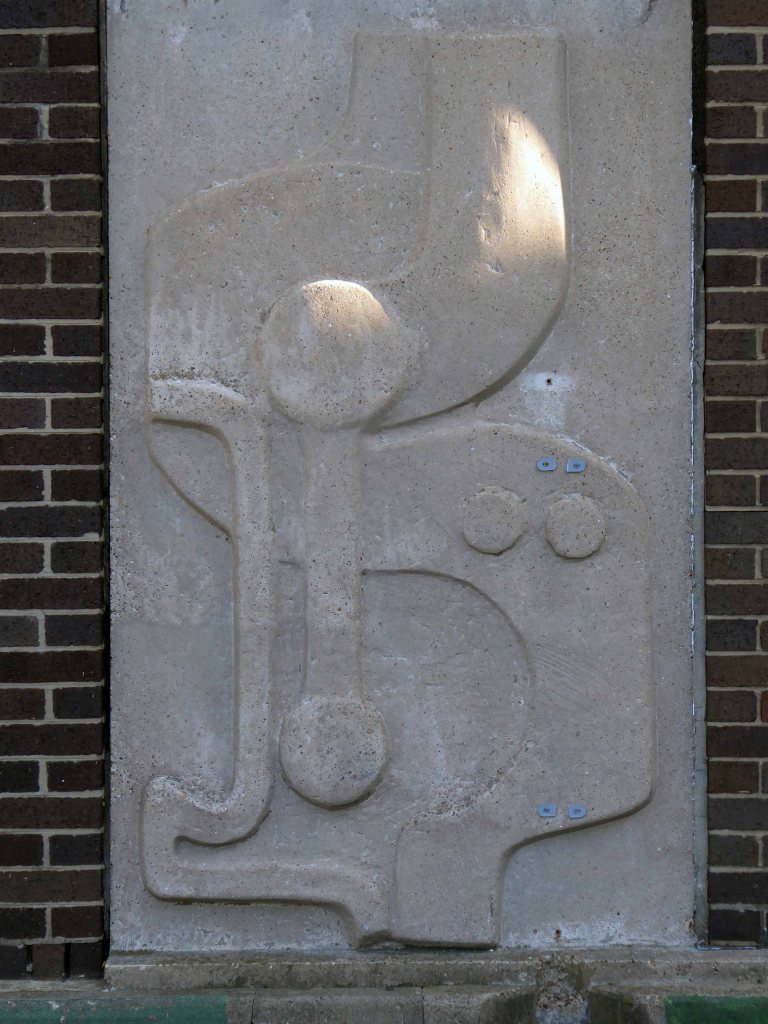
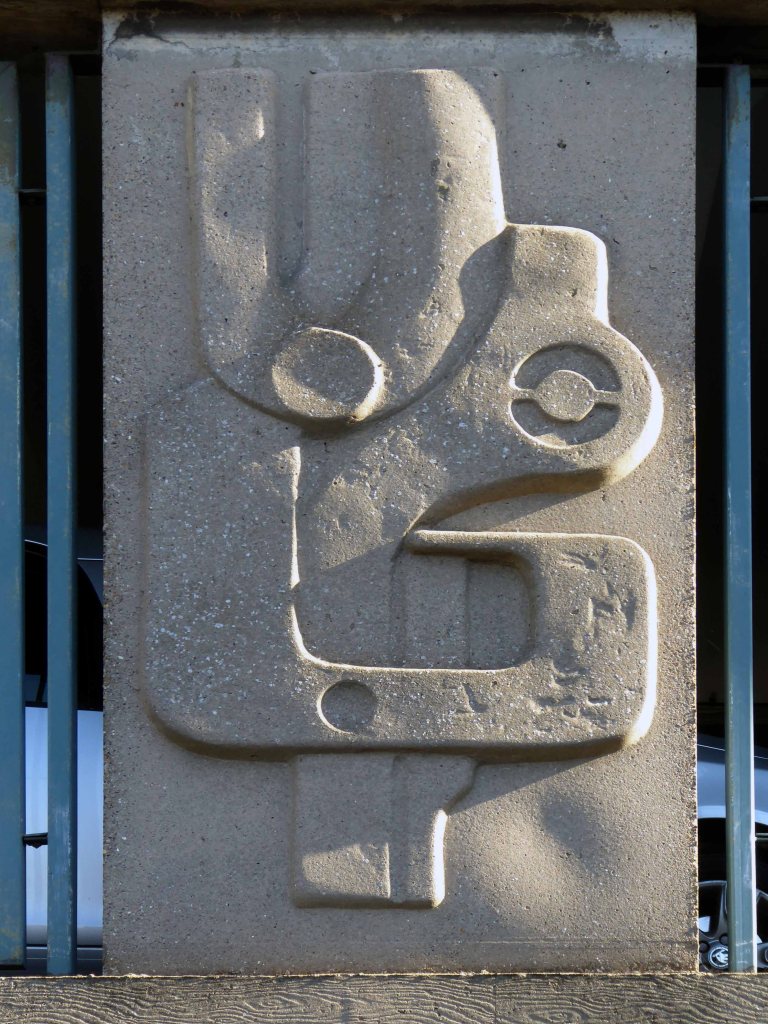
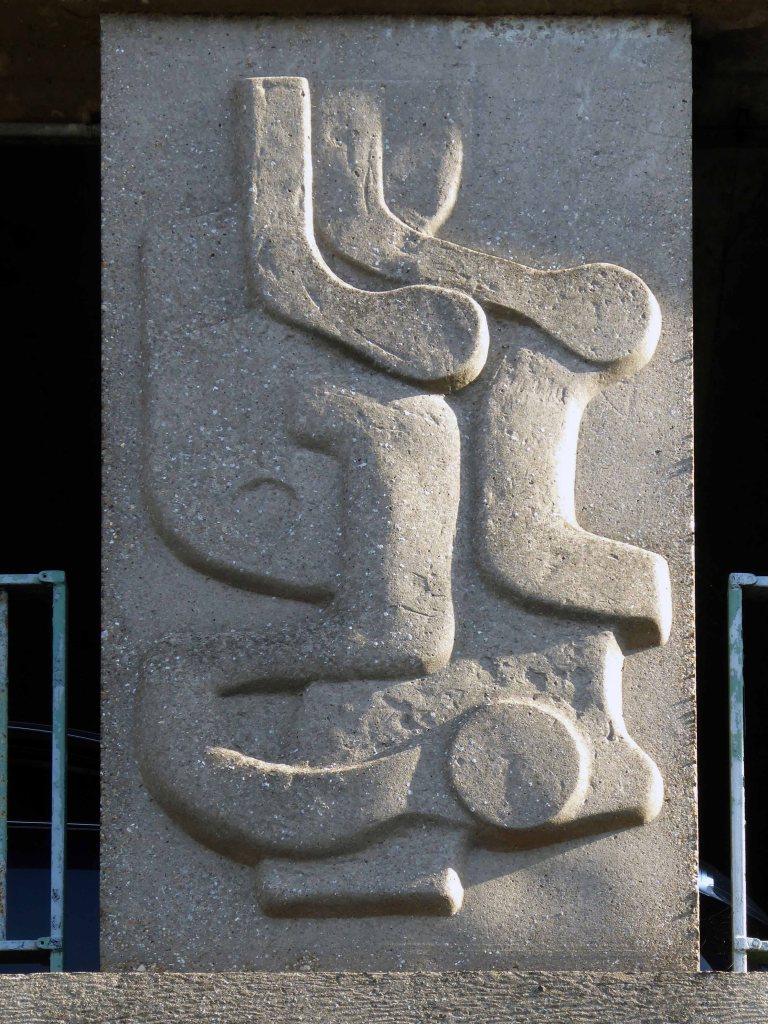
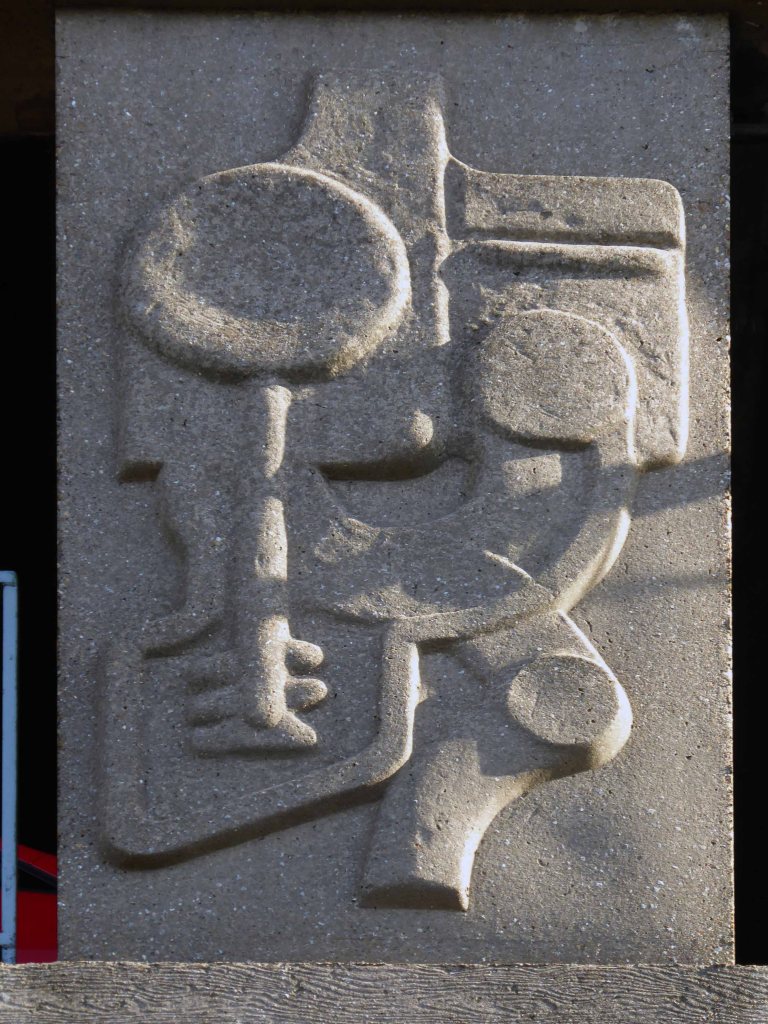
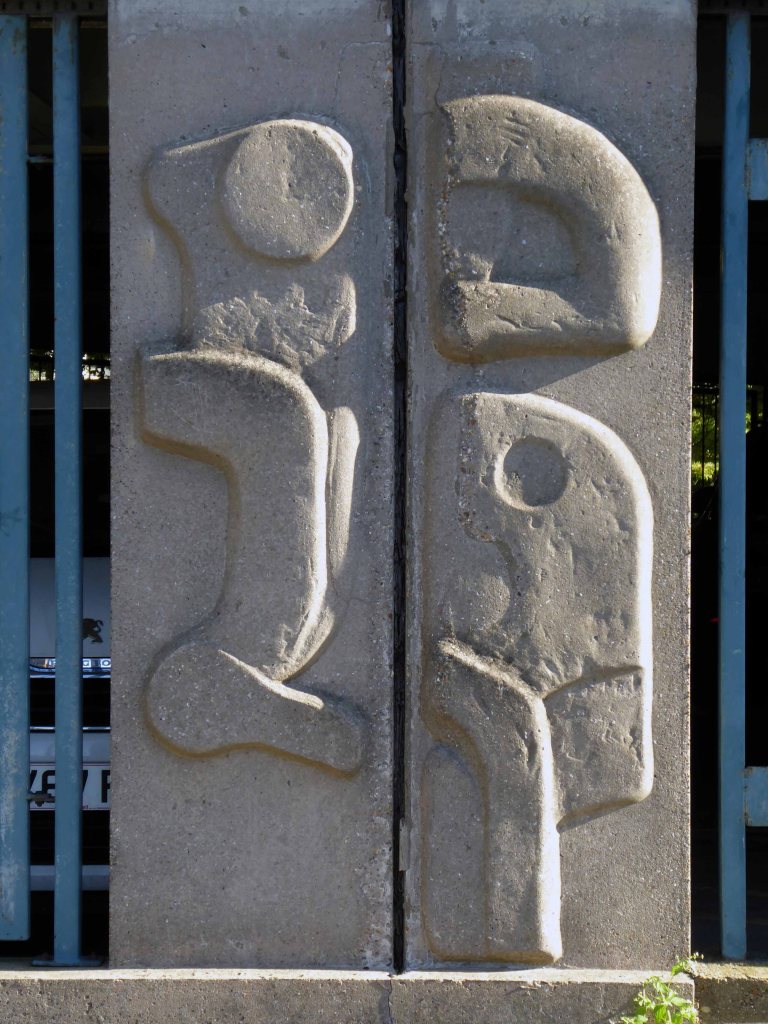
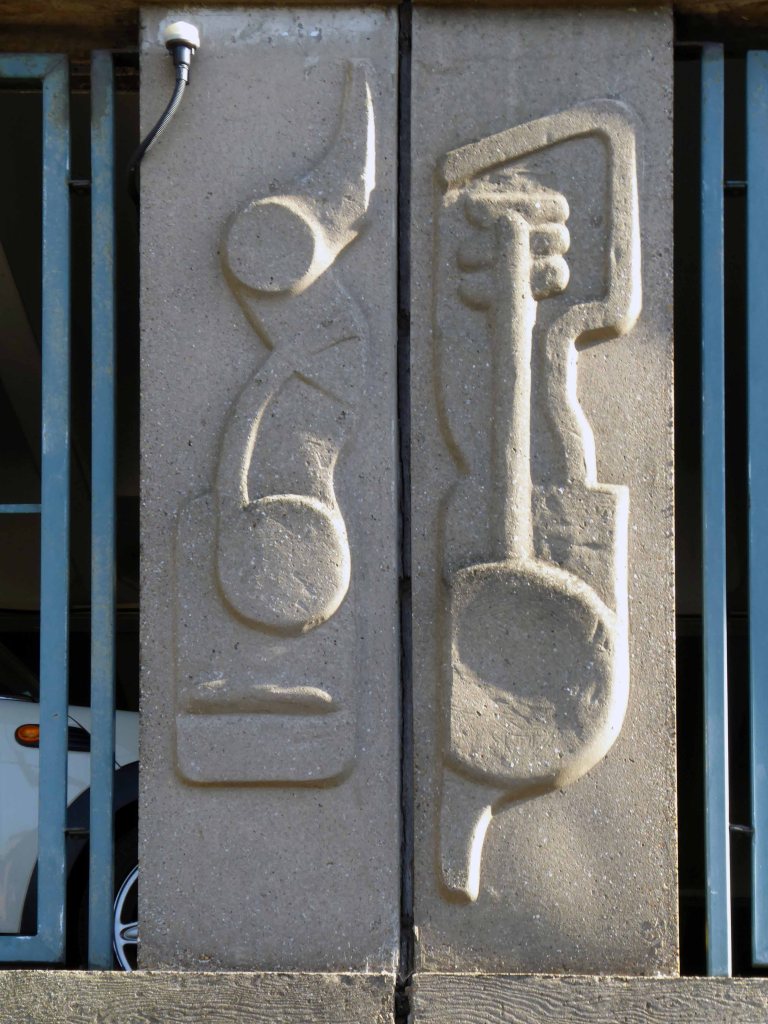
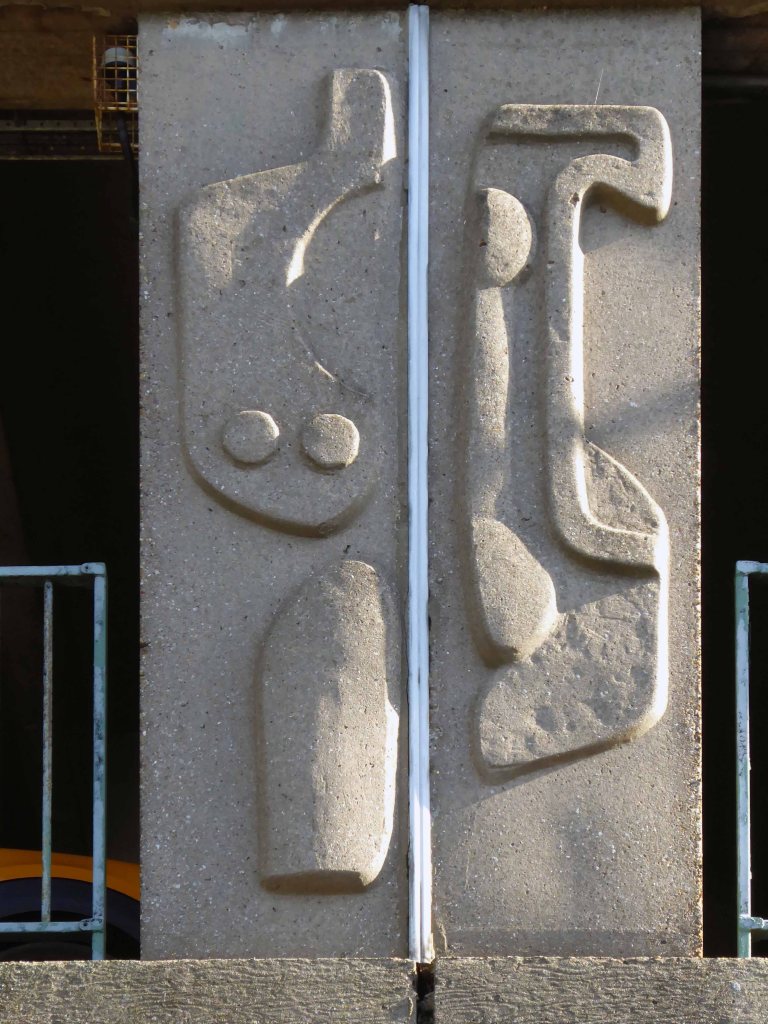
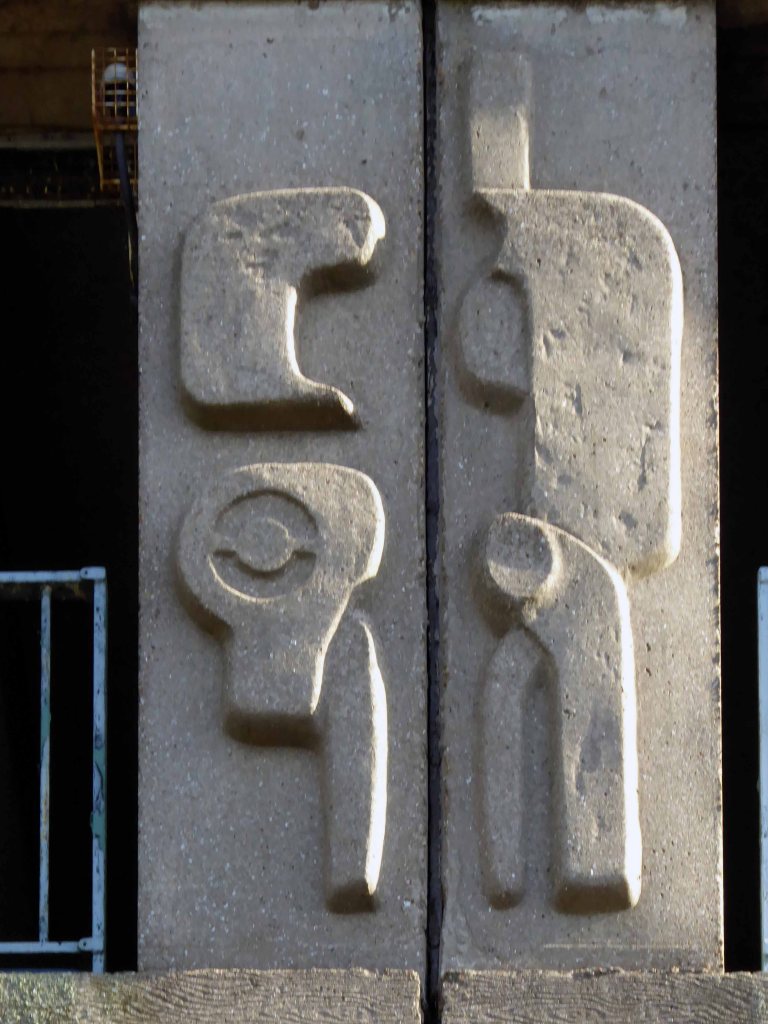
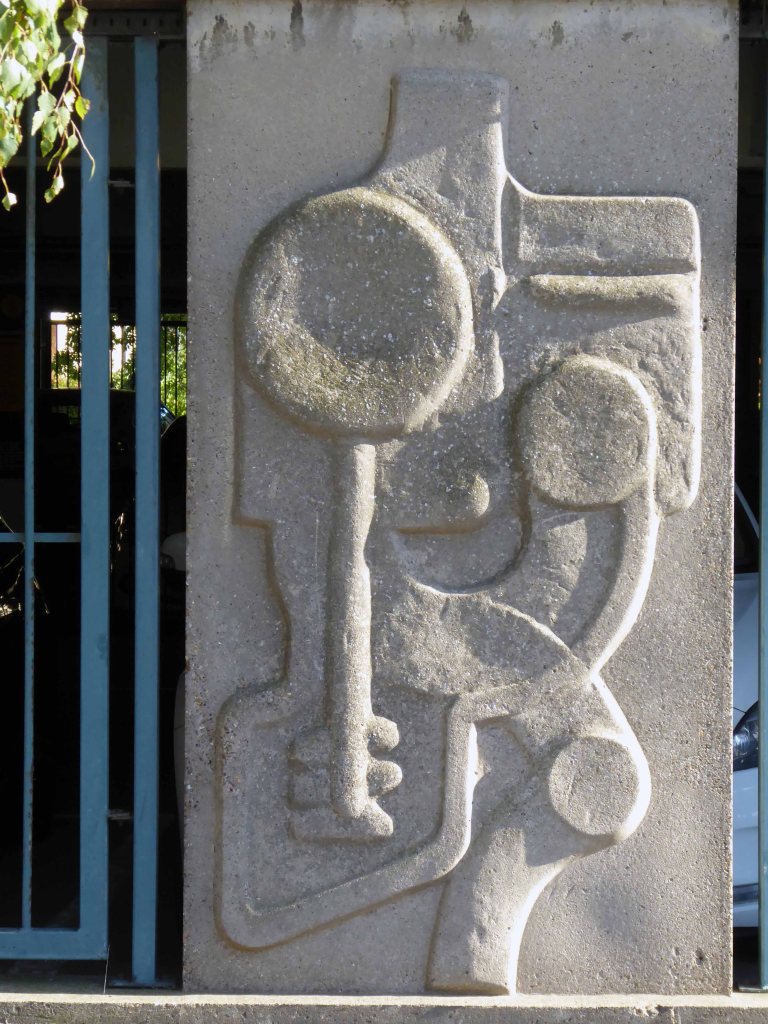
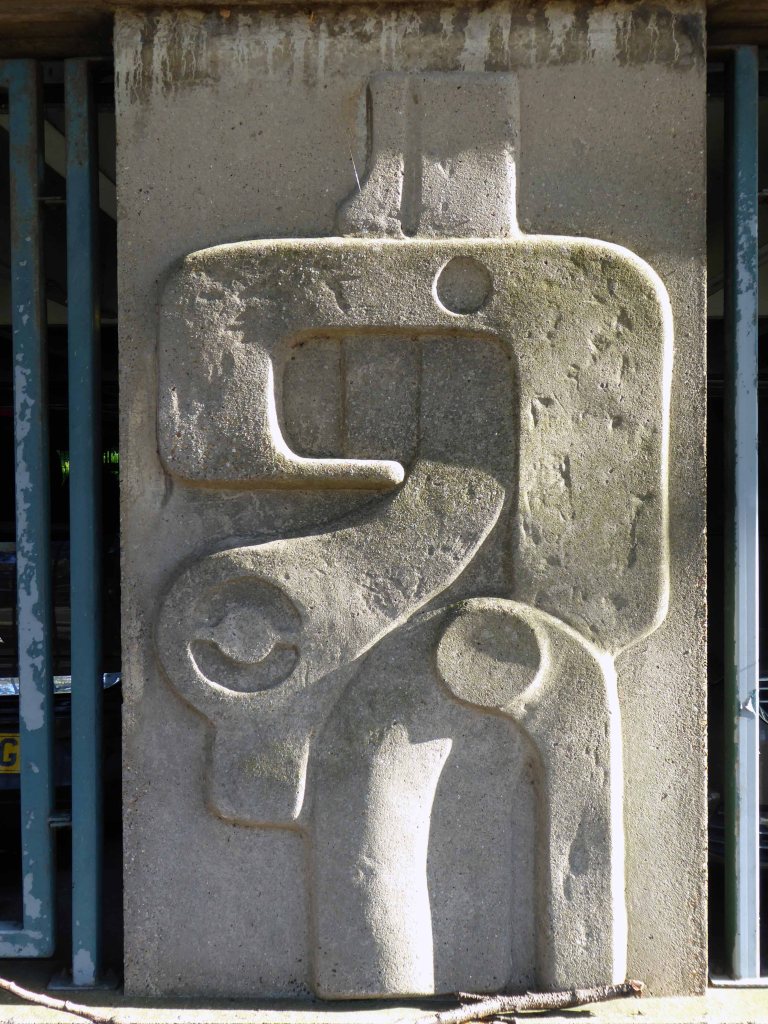
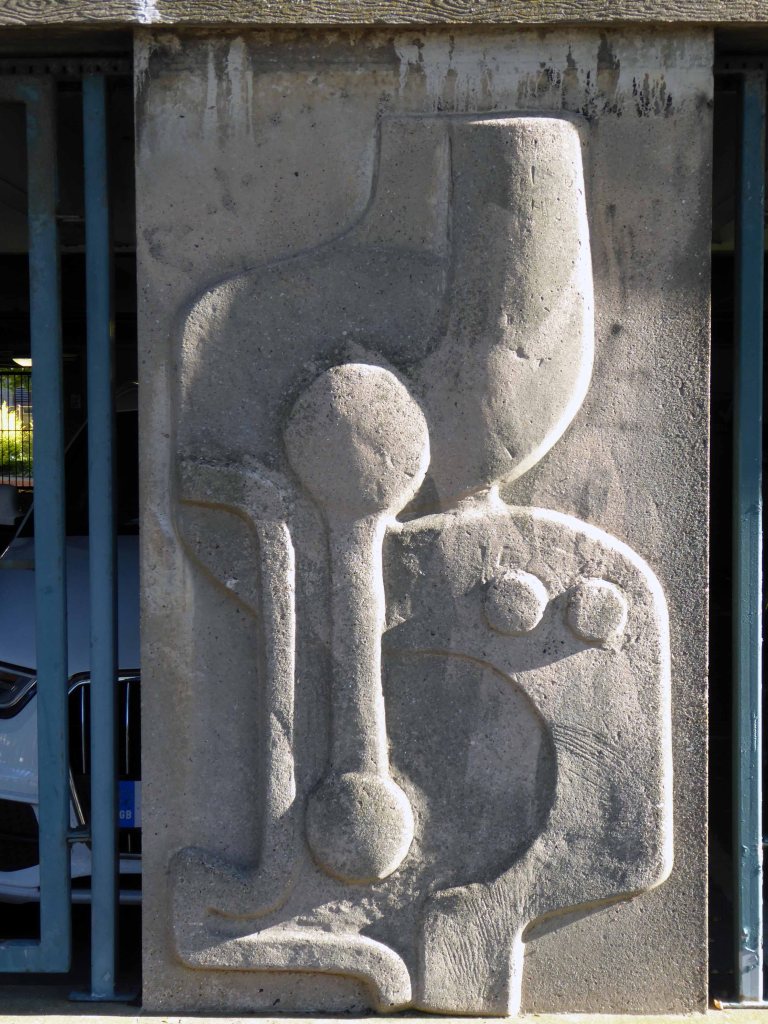
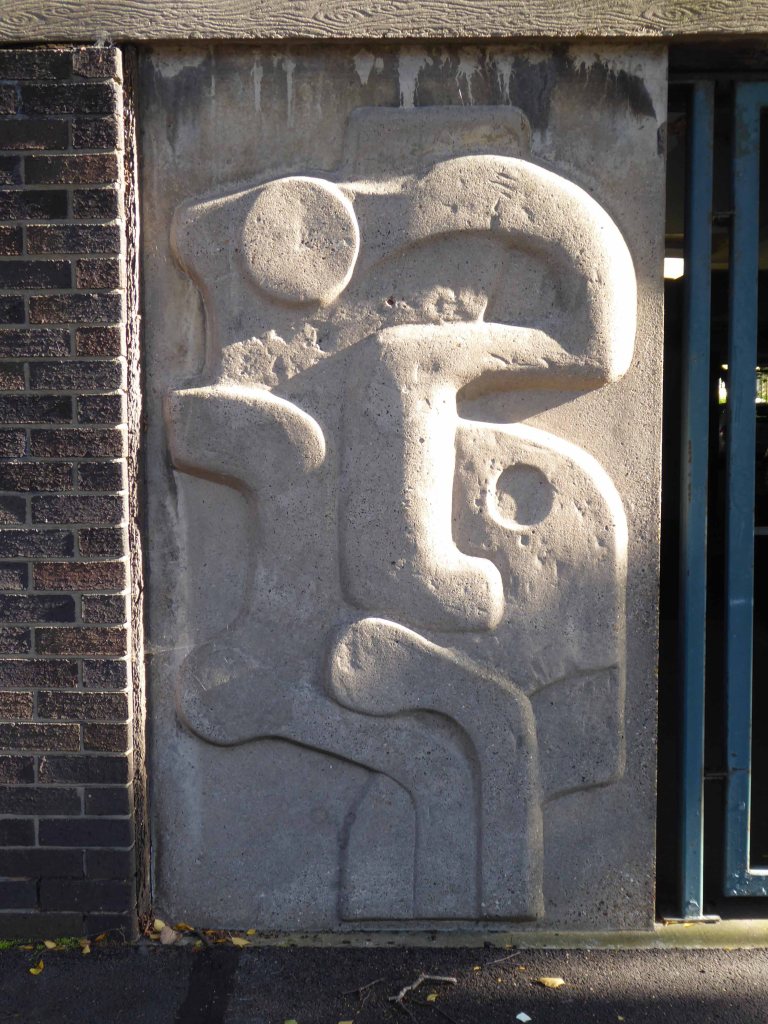
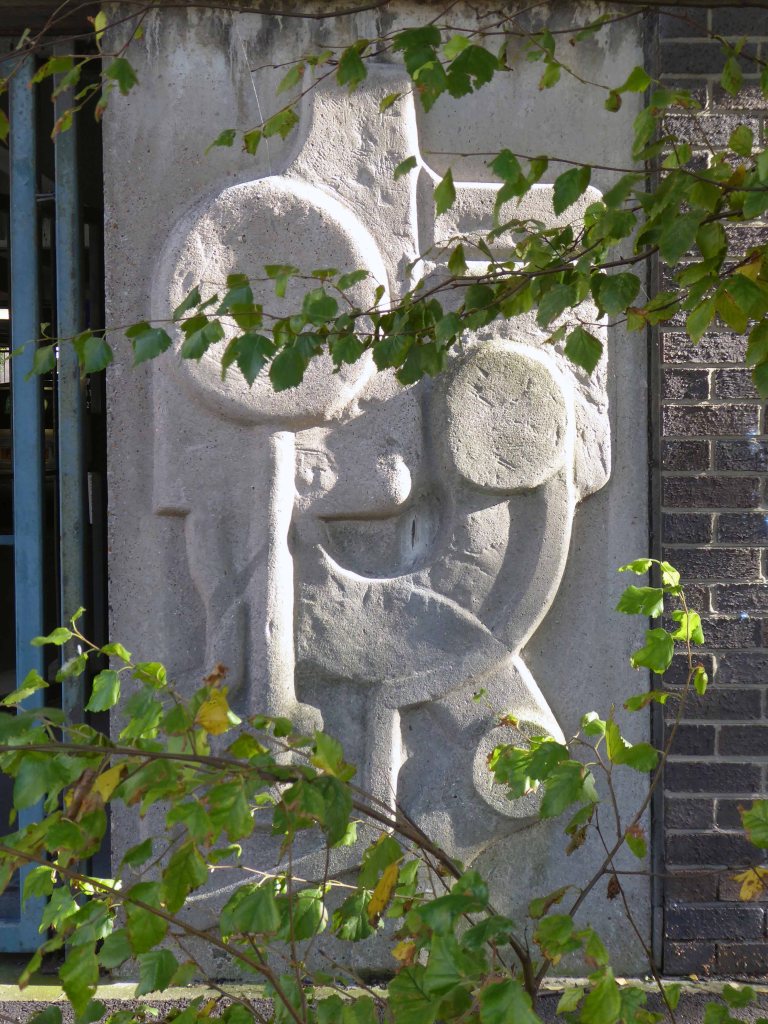
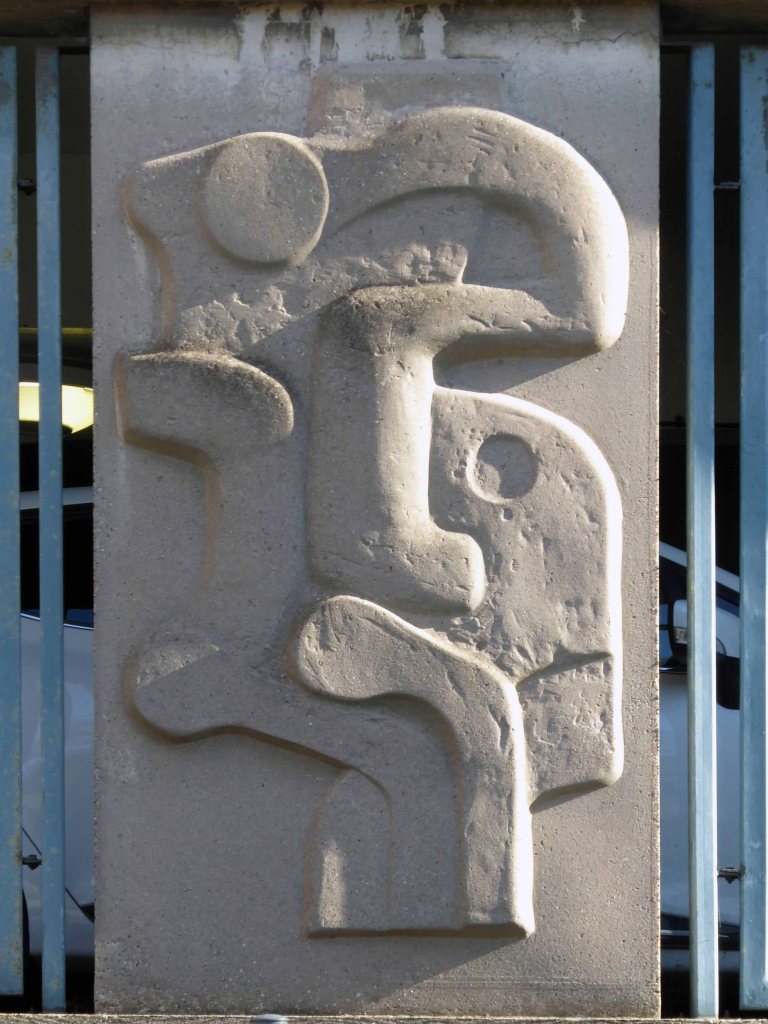
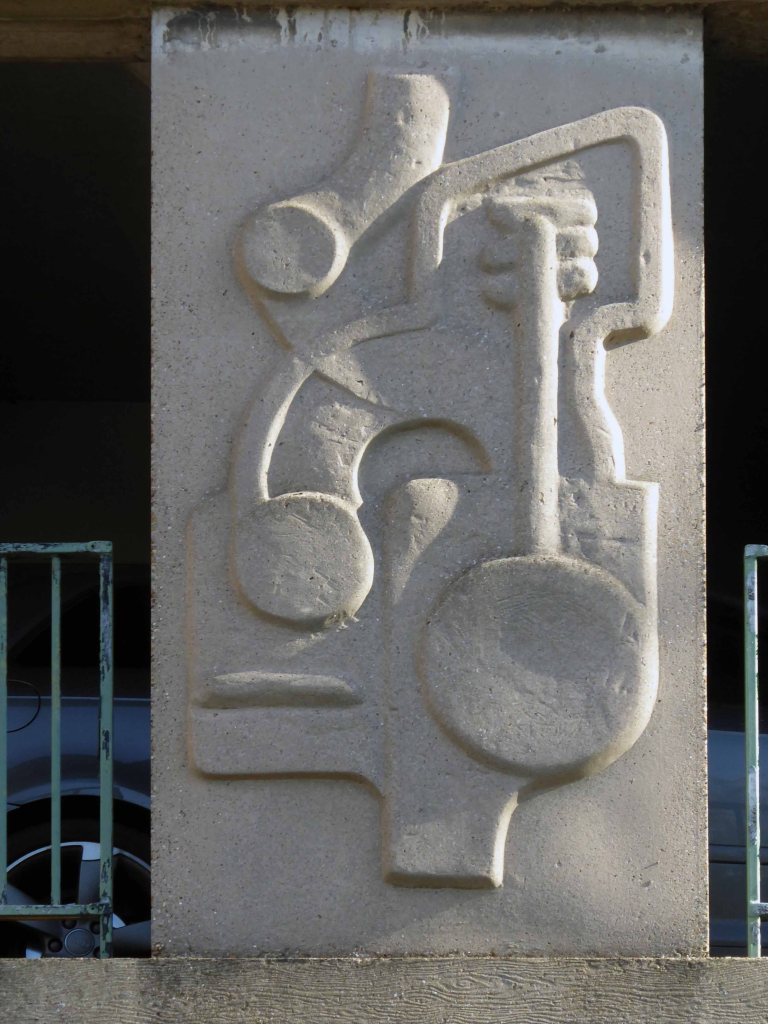
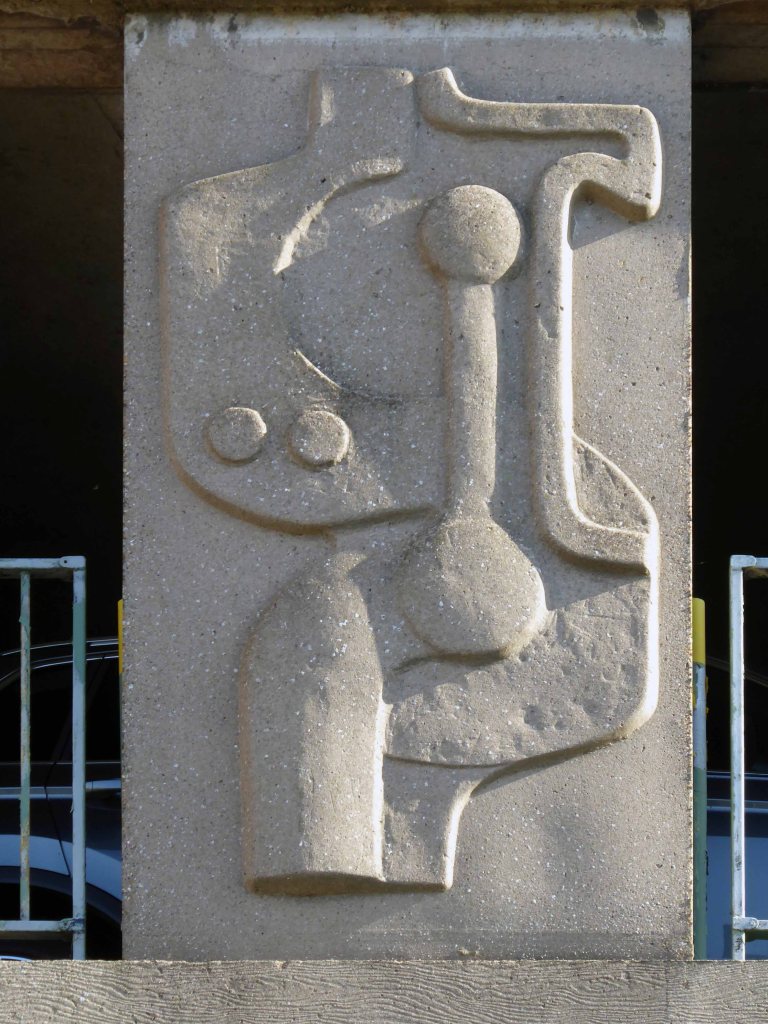
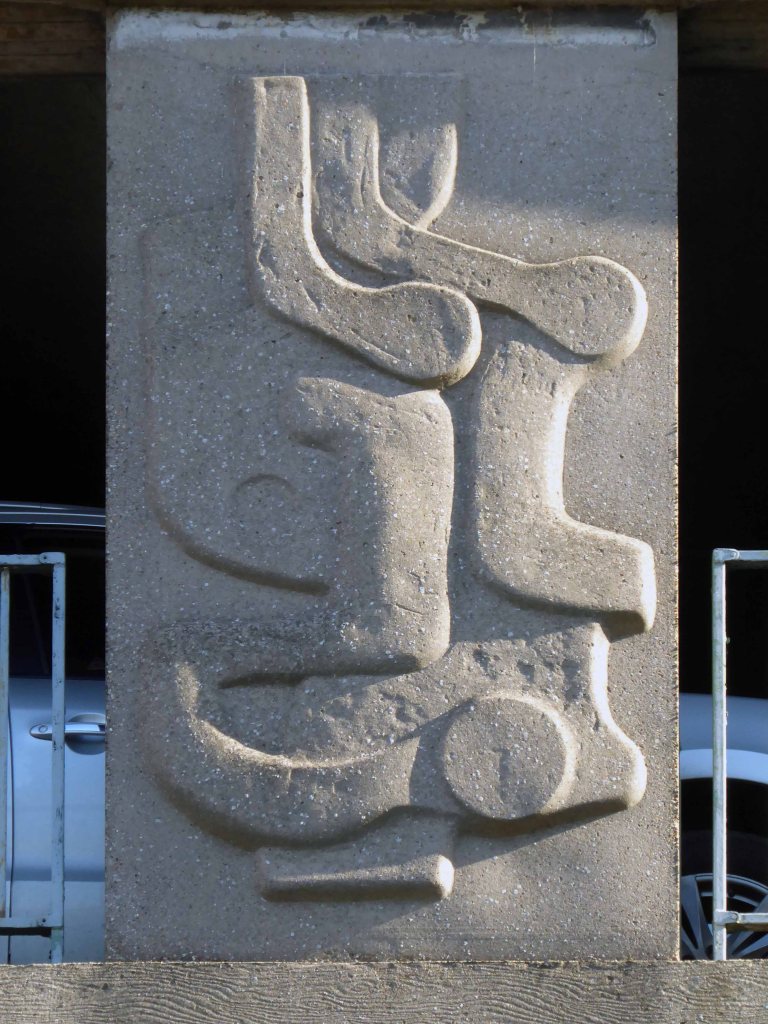
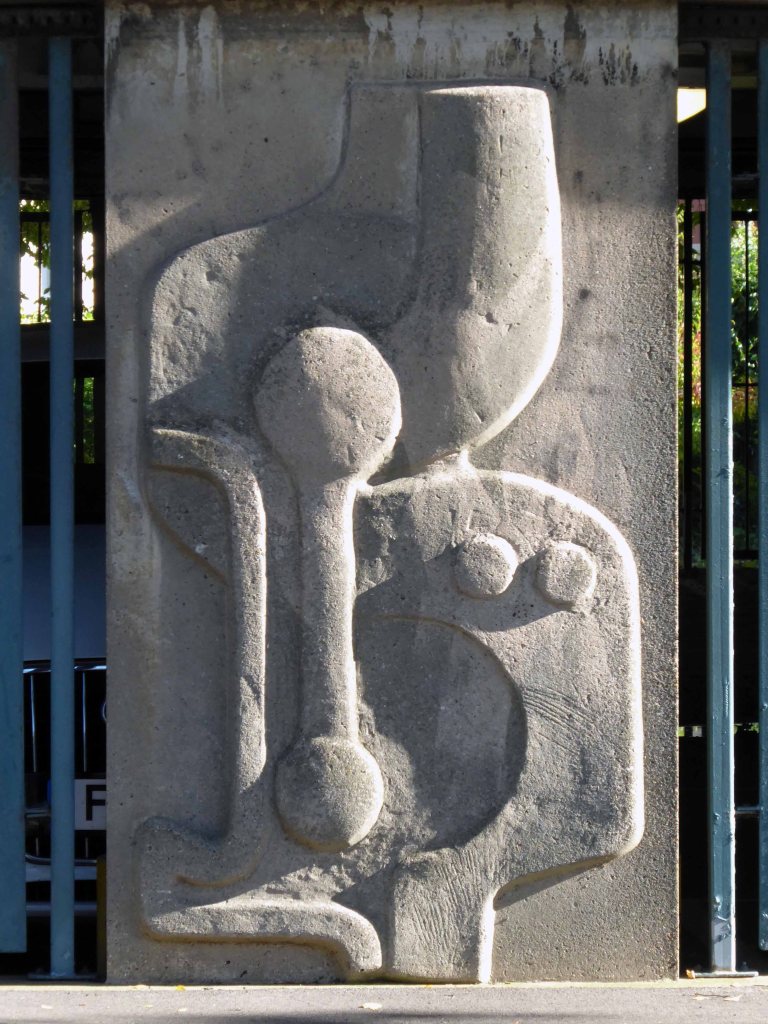
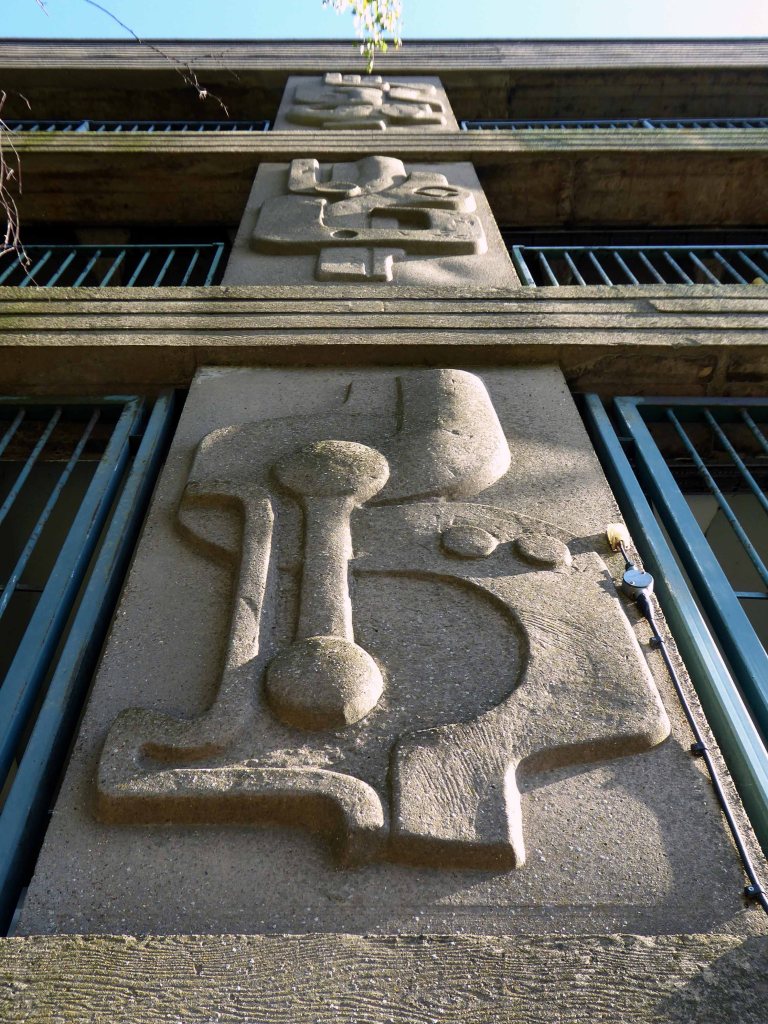
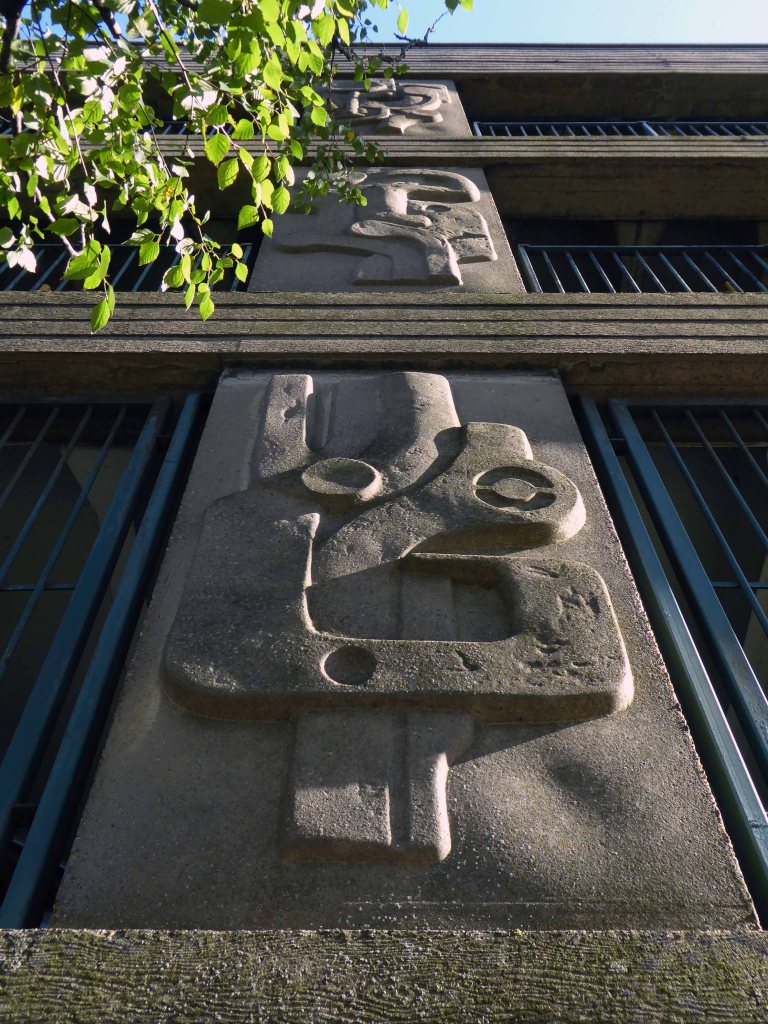
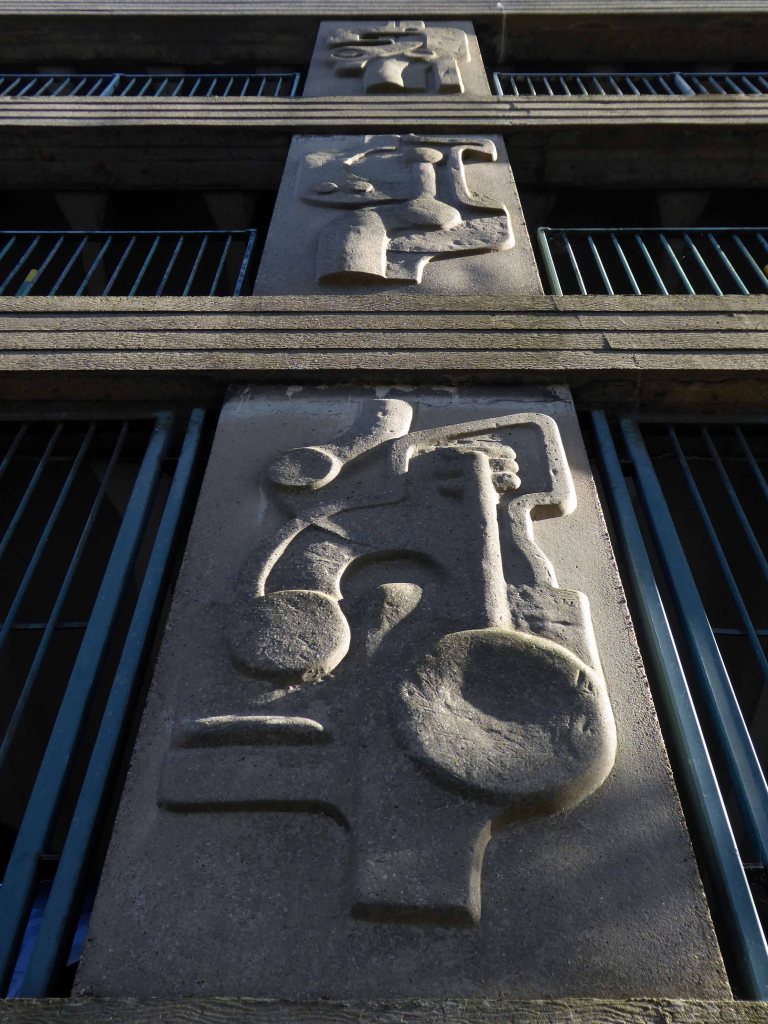
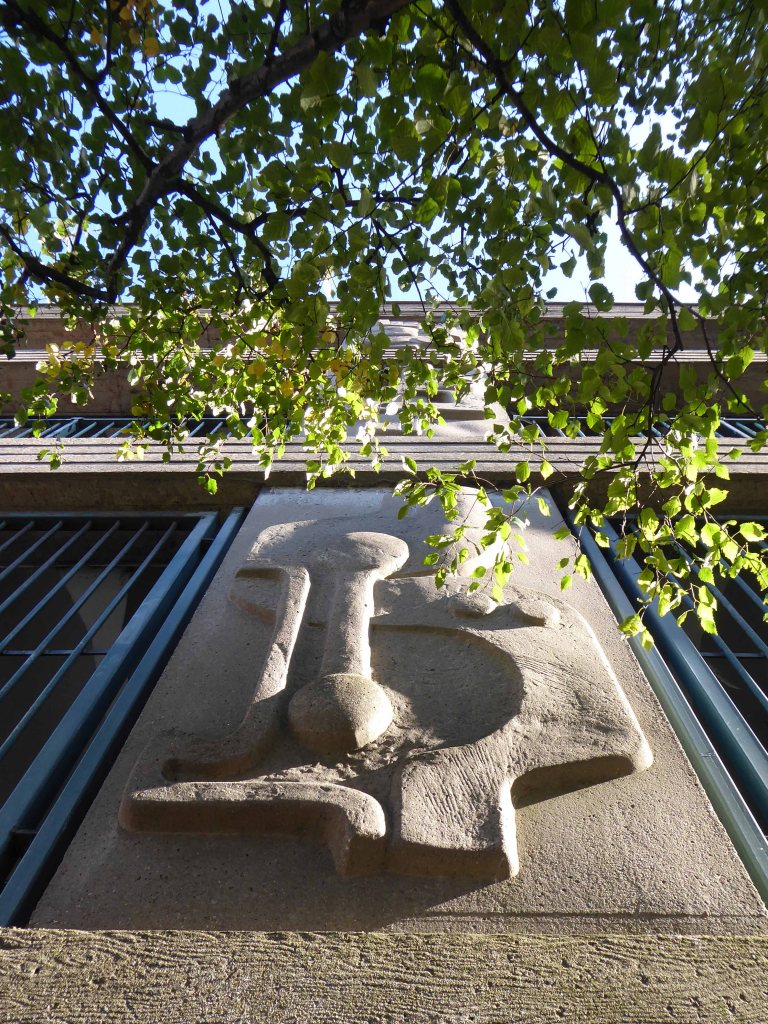
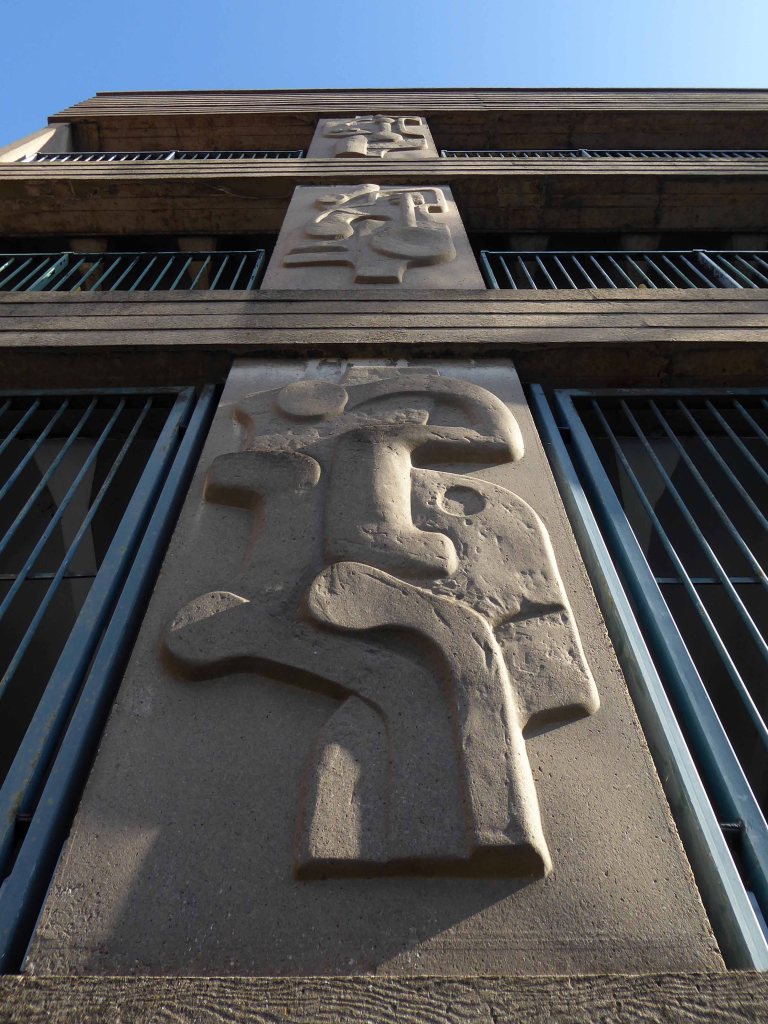
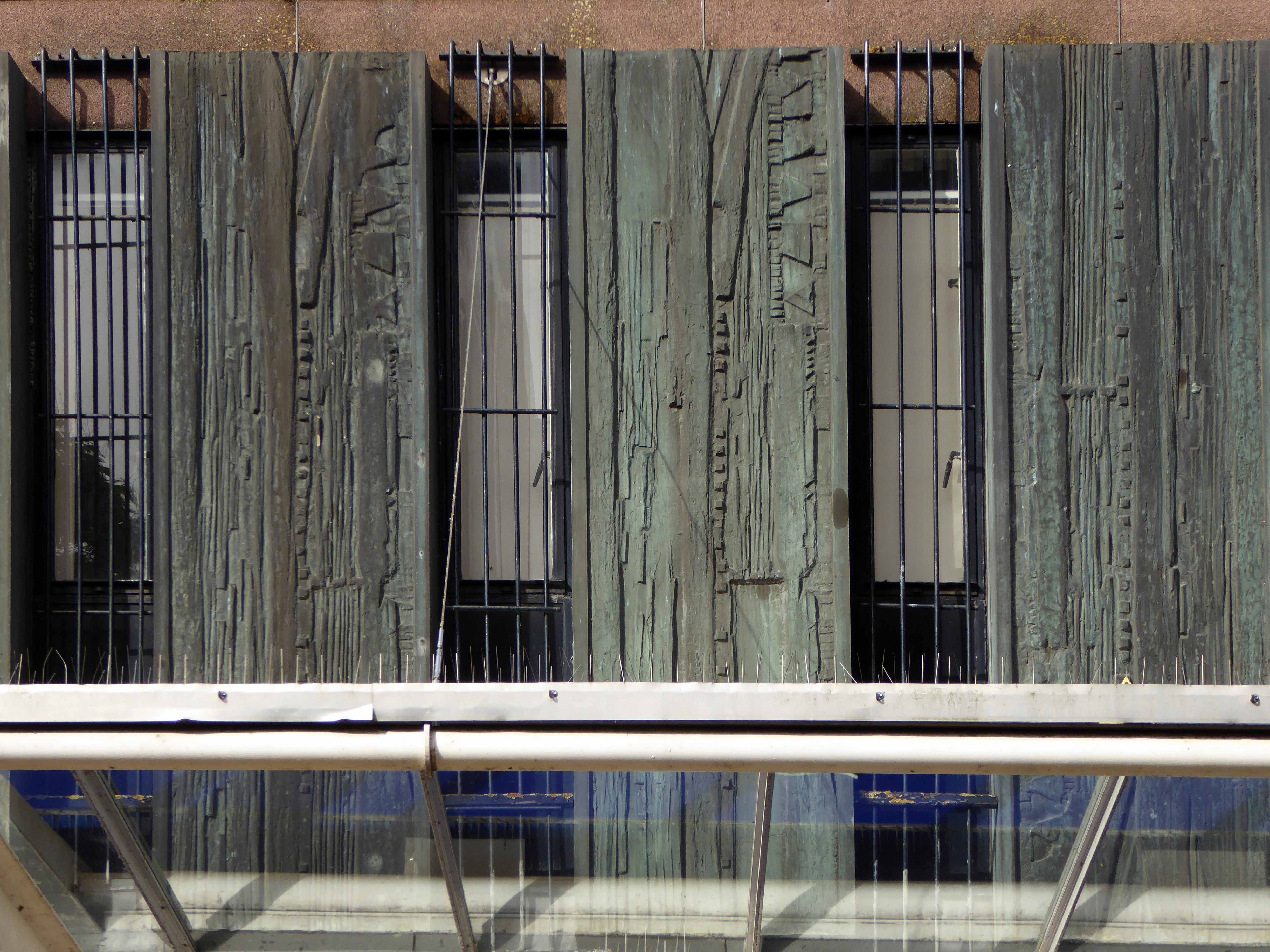
I found you by chance between the railway and the high street, so I took a good look around, fascinated by the concrete sculptural panels on your fascia columns, those facing Abbey Walk.
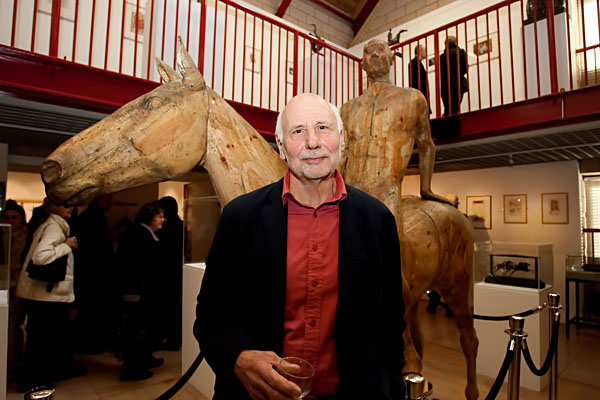
Research tells me that they the work of Harold Gosney – born in Sheffield, he studied at Grimsby School of Art and London’s Slade School of Fine Art.
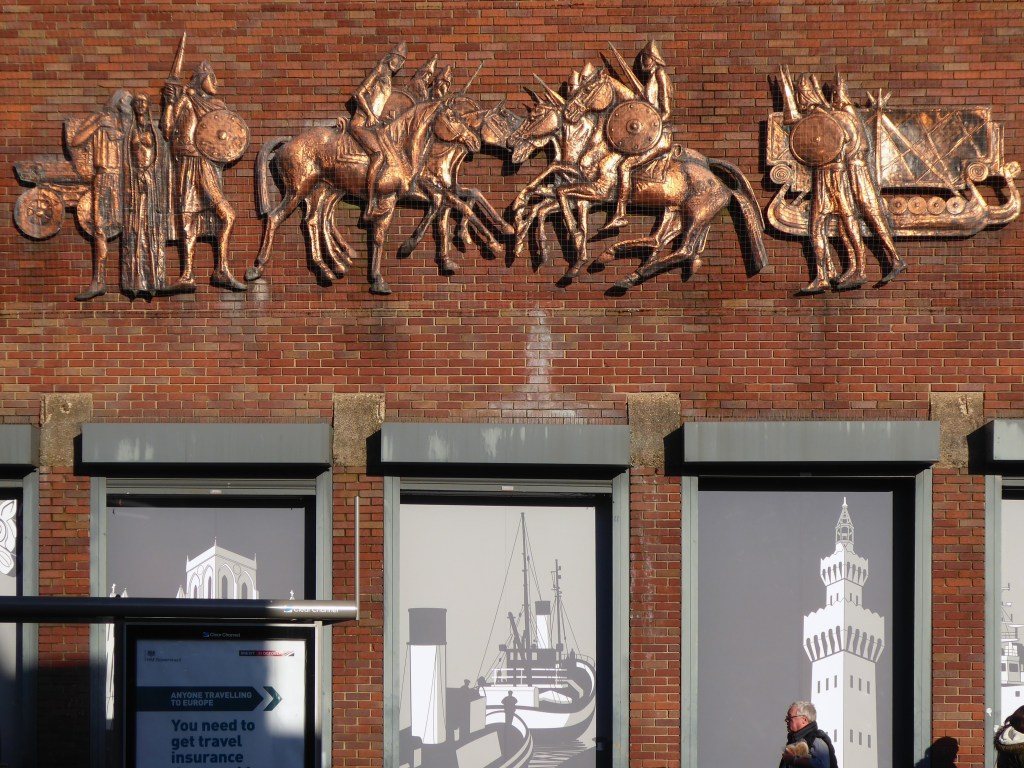
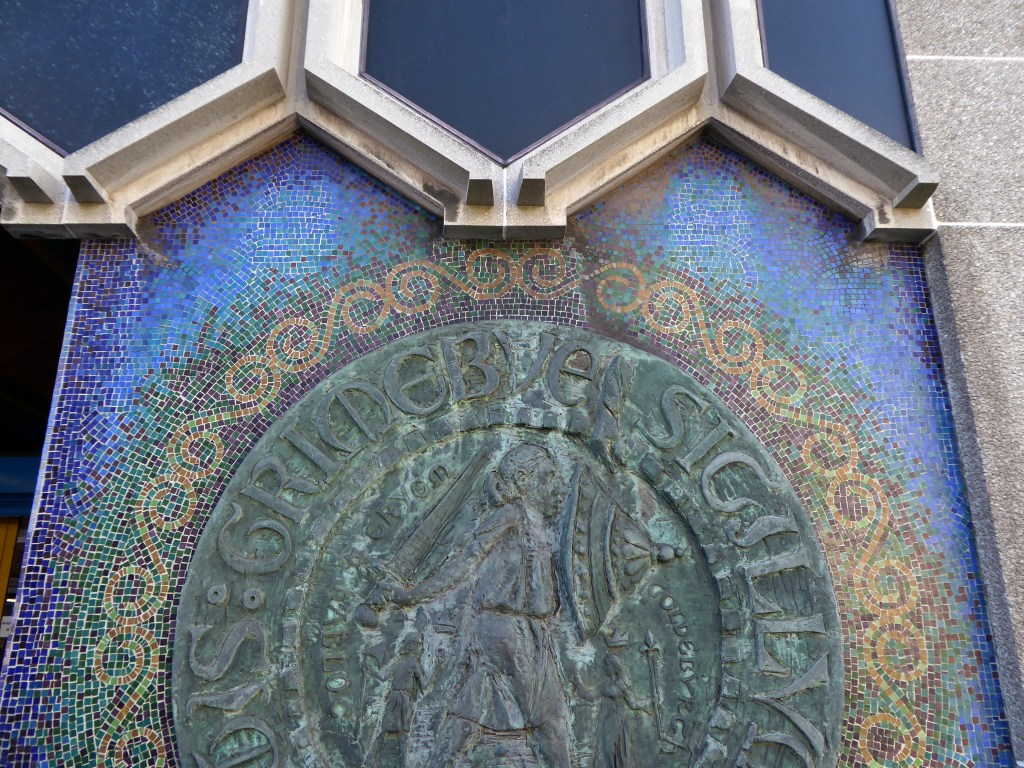
The majority of Gosney’s early commissions were collaborations with architects and he has made a significant contribution to public art in Grimsby. He is the artist responsible for the reliefs on the Abbey Walk car park, the large Grimsby seal by the entrance to the Grimsby Central Library and the Grim and Havelok themed copper relief on the side of Wilko store in Old Market Place.
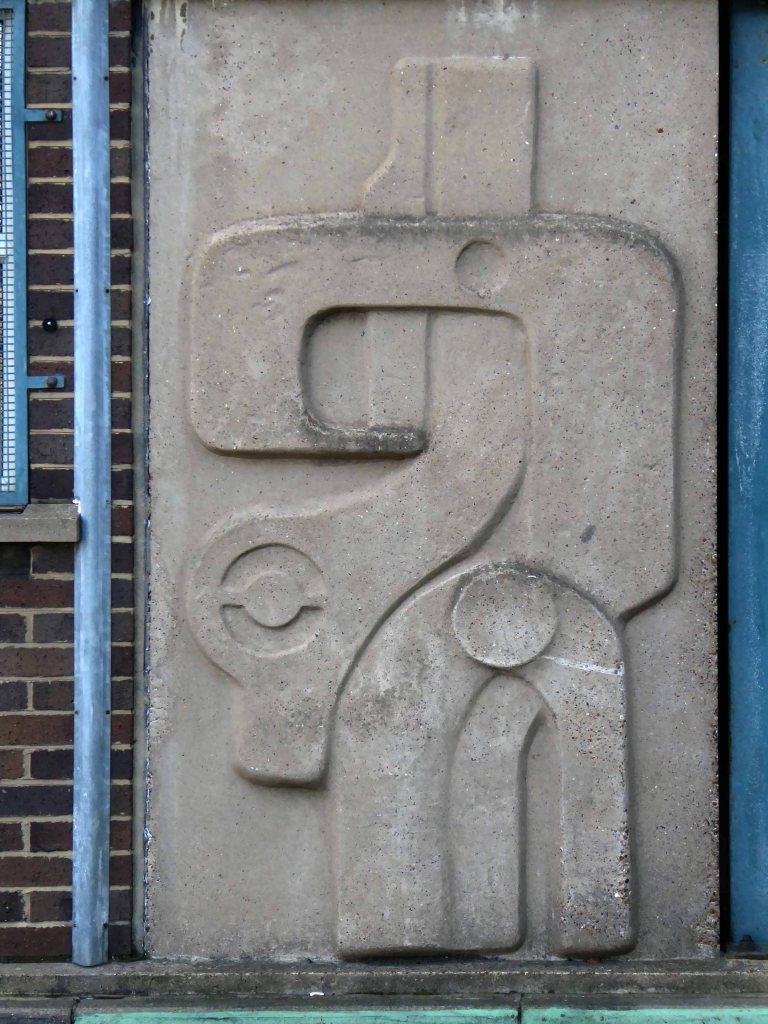
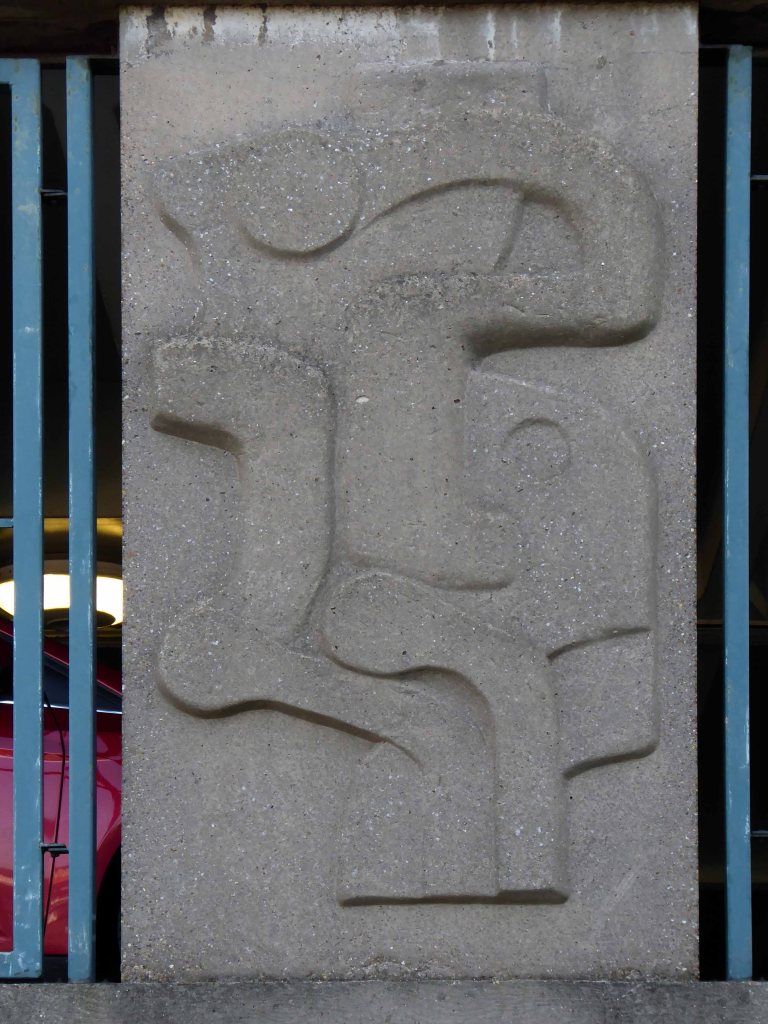
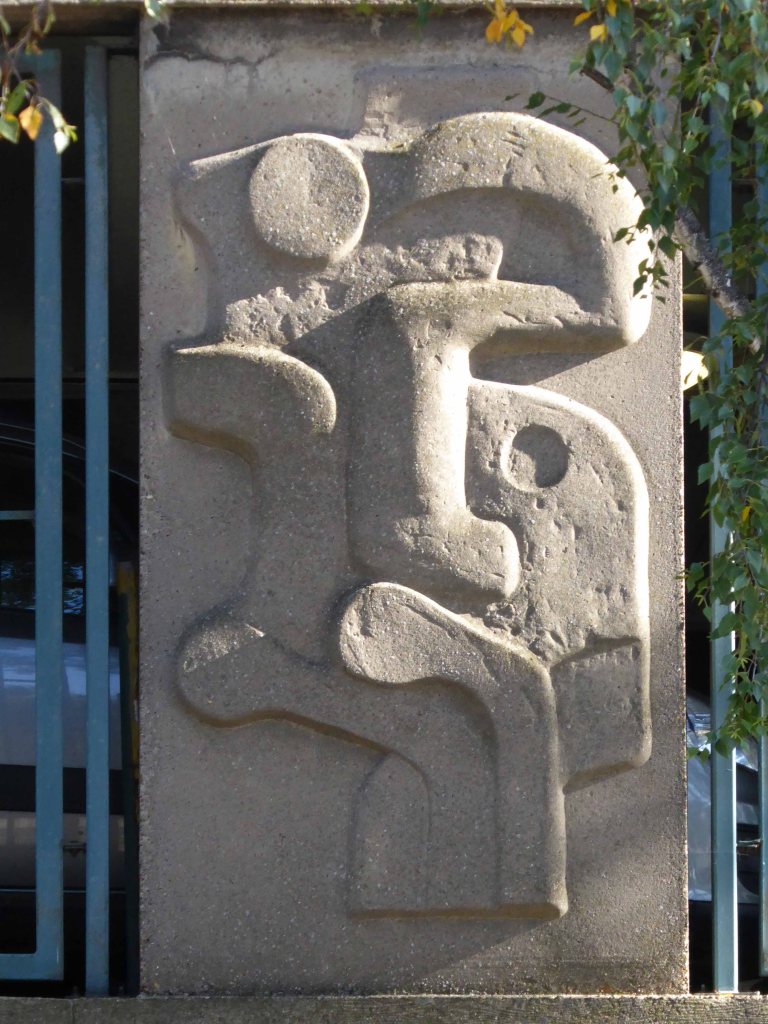
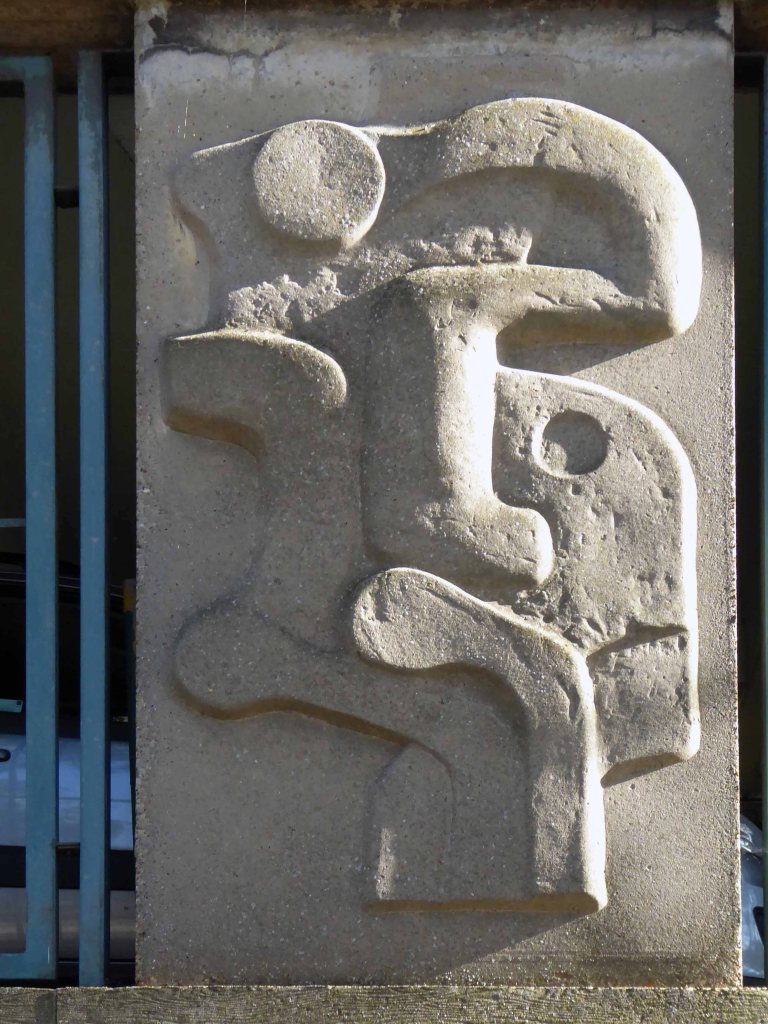
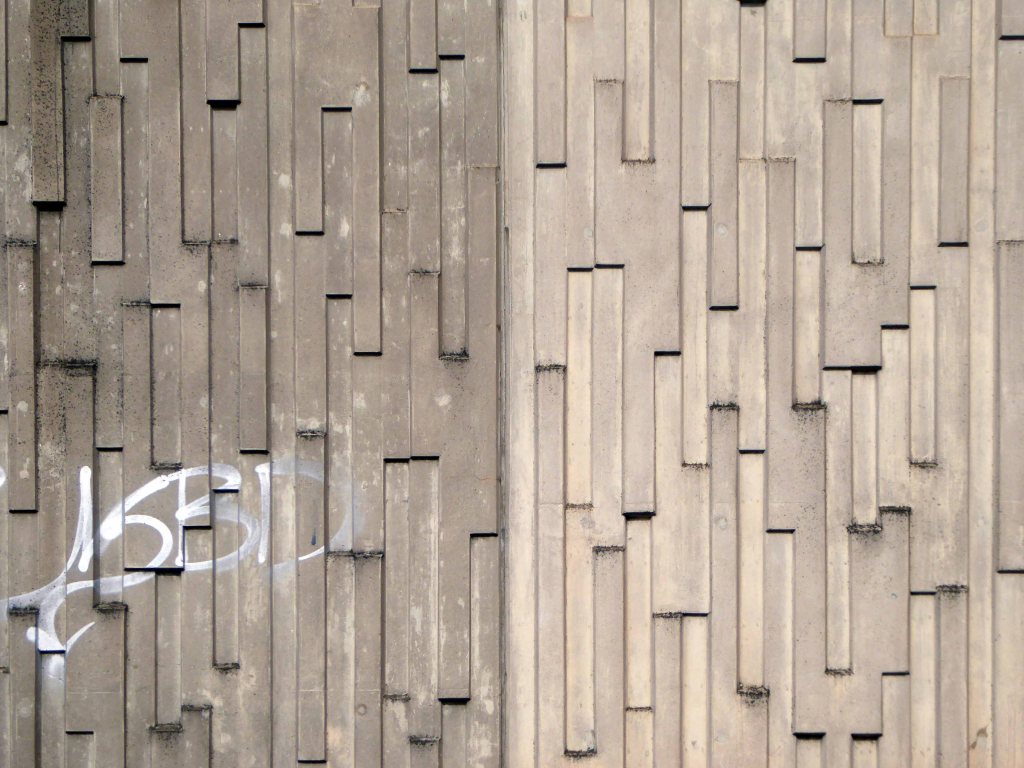
Abbey Walk was designed by architects Nicholson & Rushton and built in 1969 by Holst & Company of Scunthorpe at a cost of approximately £200,000. The concrete panels were structural pillars, cast in situ and featuring a repeated series of four abstract designs – some flipped 180 degrees.
In an interview with the BBC, Gosney explained the inspiration for these: “The four designs I produced were inspired by drawings in the handbook of the car that I had at the time, which was an Austin Cambridge estate car, and included suspension, carburettor, etc.”
The car park has been the subject of some speculative repairs and refurbishment:
In total, the scheme will cost the council £1.54 million.
The authority will borrow £1.34 million to fund the project with a further £200,000 coming from a local transport grant. But the council said that the improvements made could help increase revenue from the car park of around £34,000 a year.
Councillor Matthew Patrick, portfolio holder for transport at the council, said that the work is essential to “brighten up” the building and attract people into Grimsby.
“It’s one of the largest car parks in the town,” he said.
“It will attract more people into the town centre and help to improve the offering of the car park.”
So here we are faced with a rare, precious and beautiful example of municipal modernism, a bold and brave attempt to decorate what is often the most functional of functional structures.
Owing something to the work of both Henry Moore and Pablo Picasso the imagery is derived from automotive parts, along with it seems to me, vague intimations of figuration.
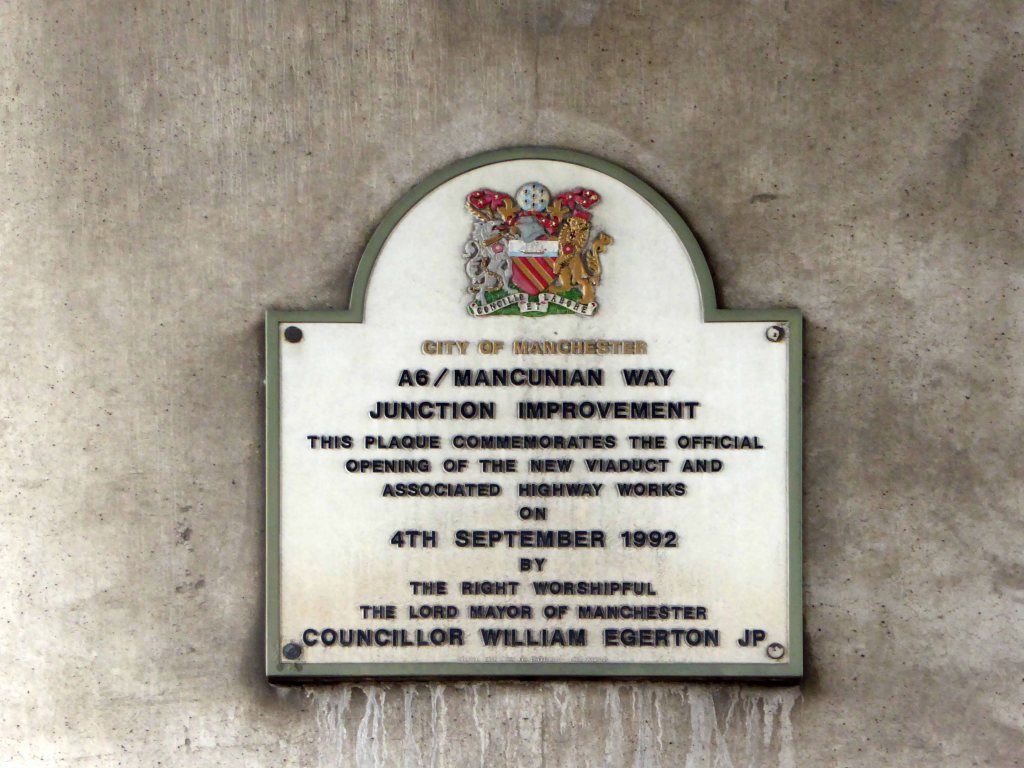
Previously posted as historical journey – this, as they say, is the real deal, one foot after another, one sunny afternoon in September.
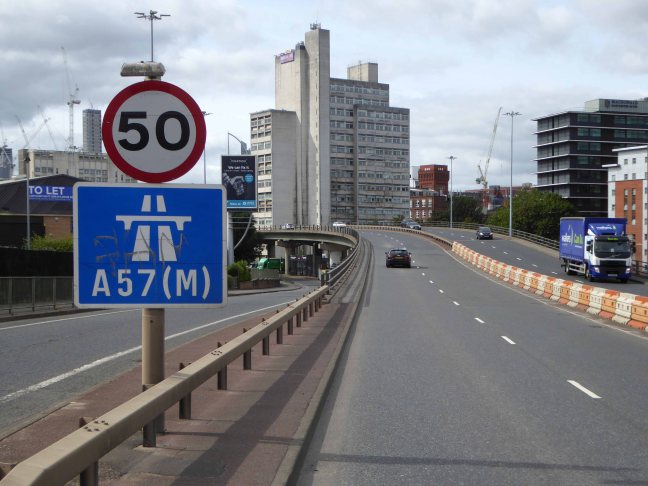
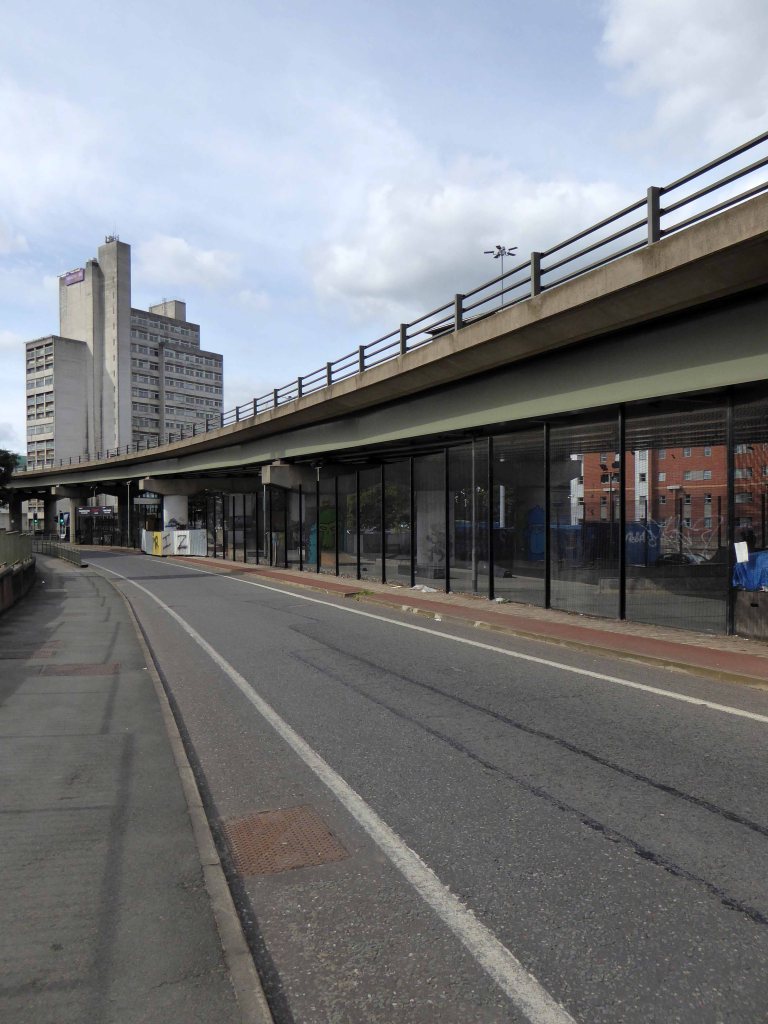
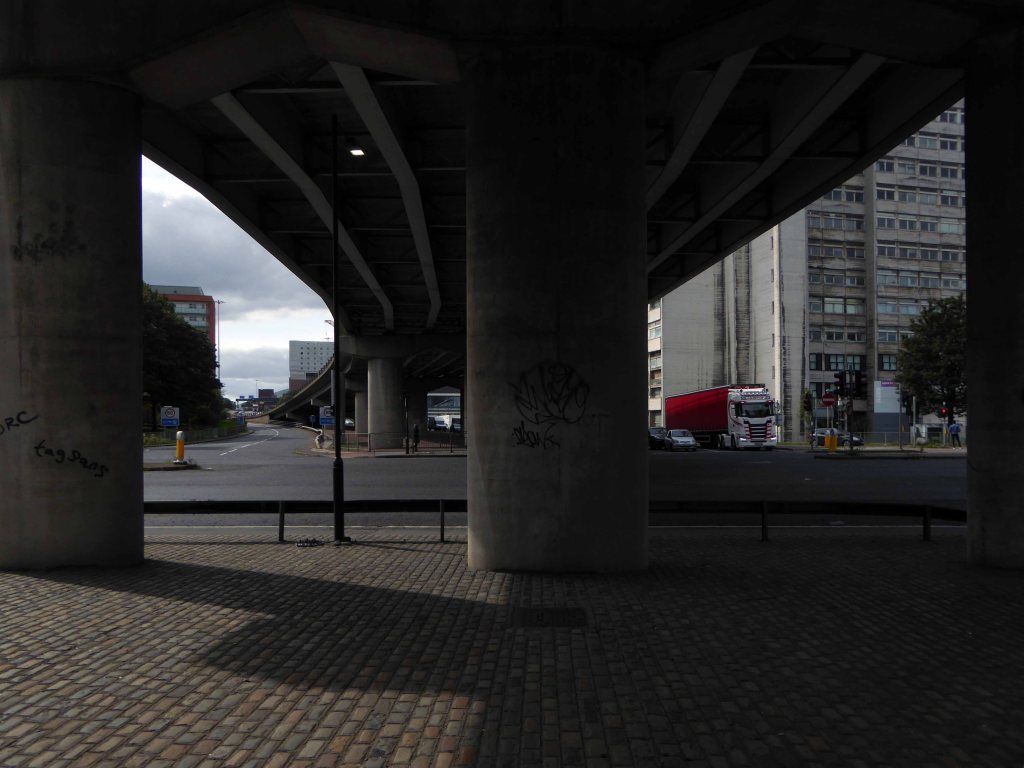
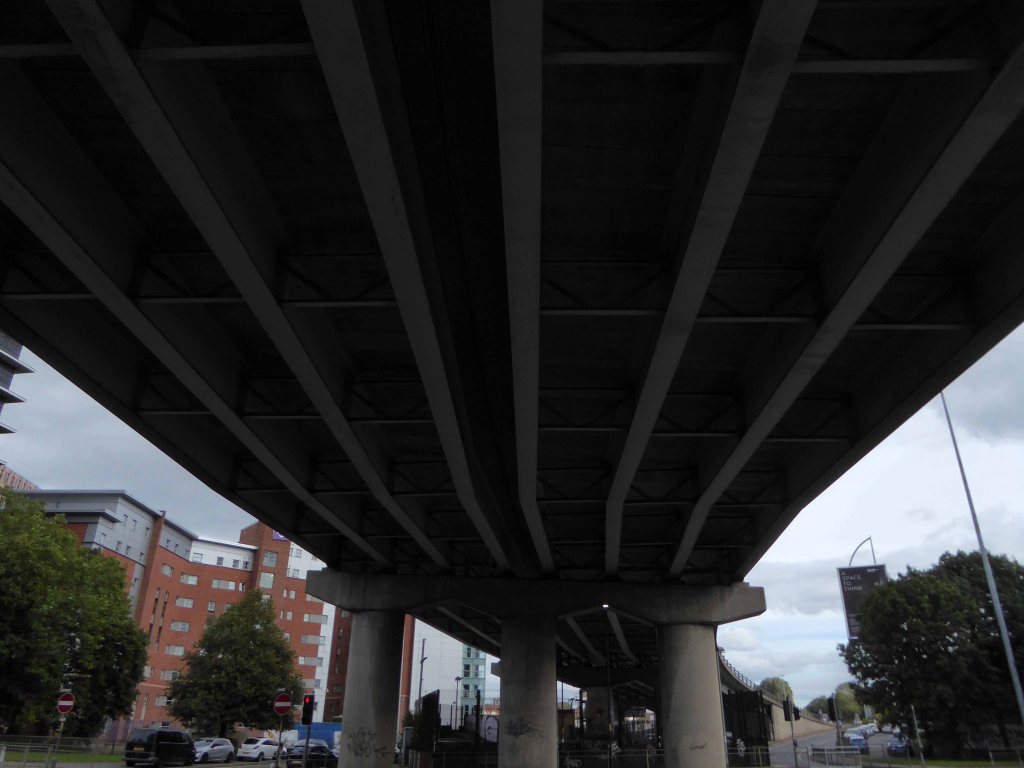
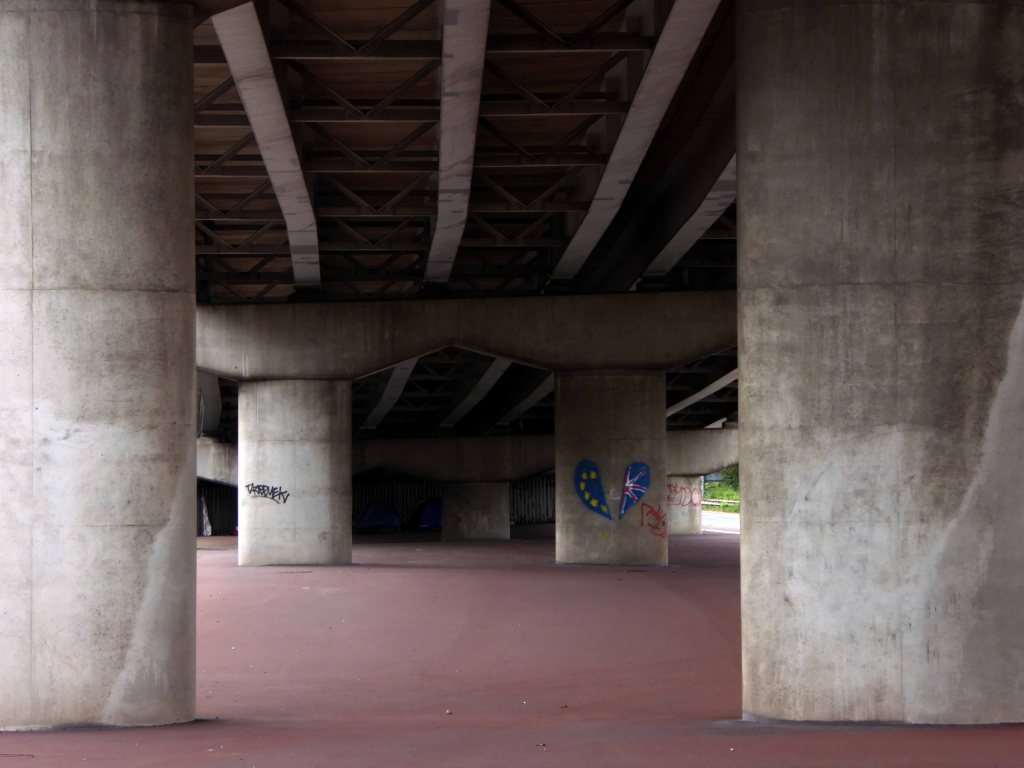
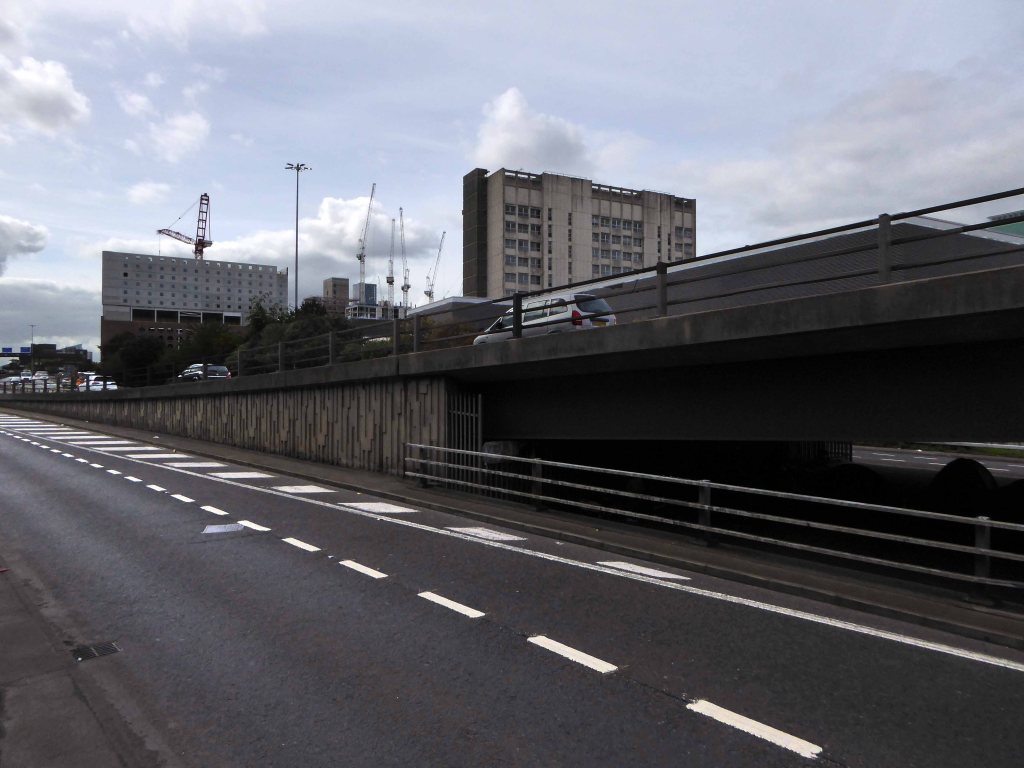
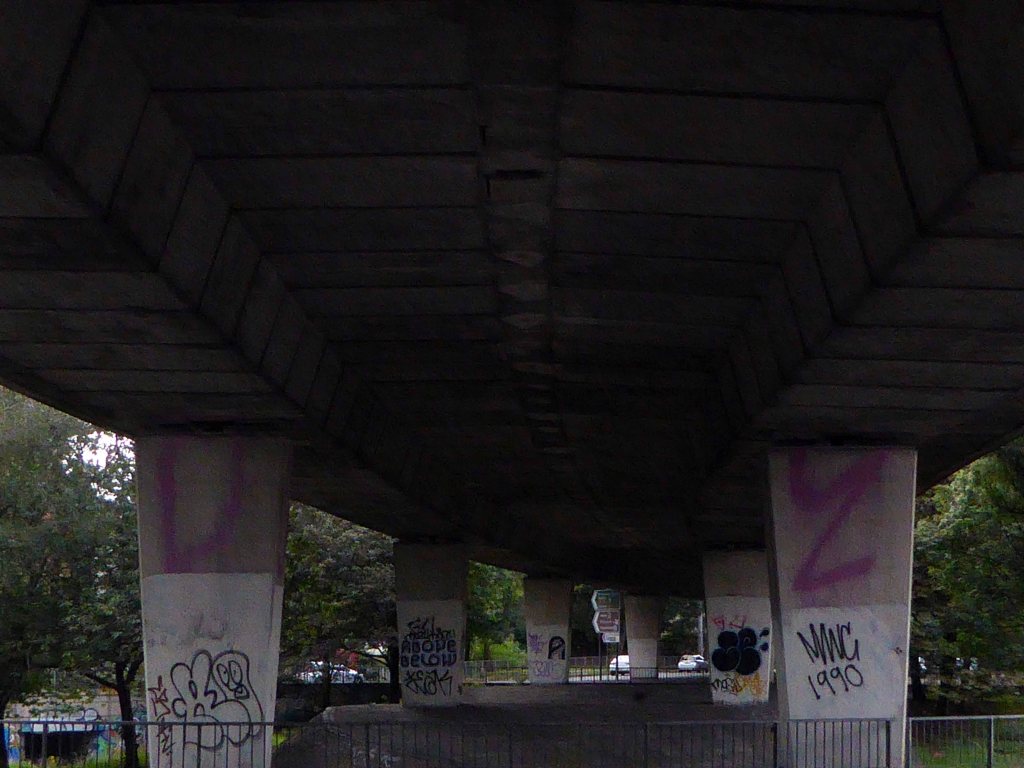
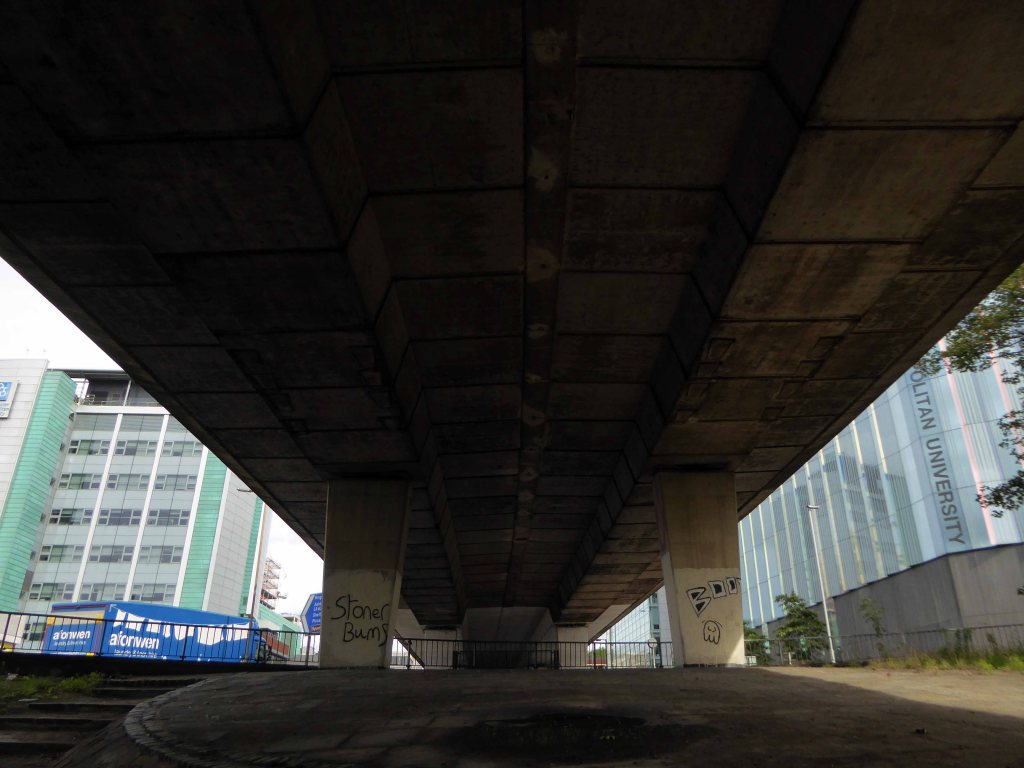
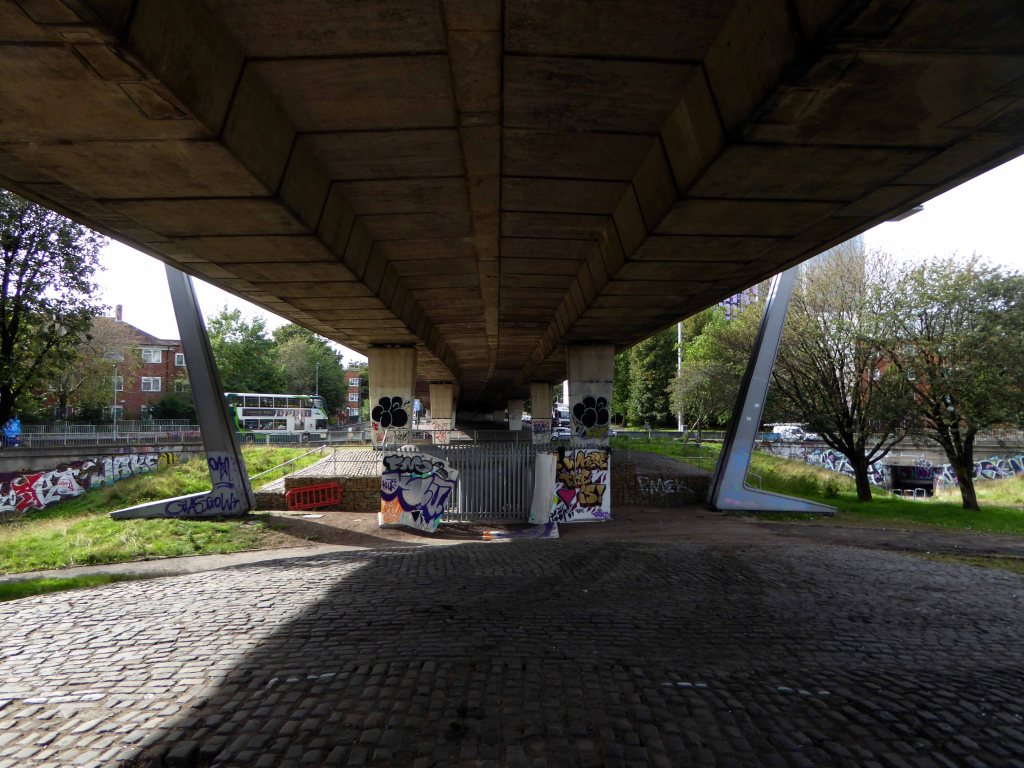
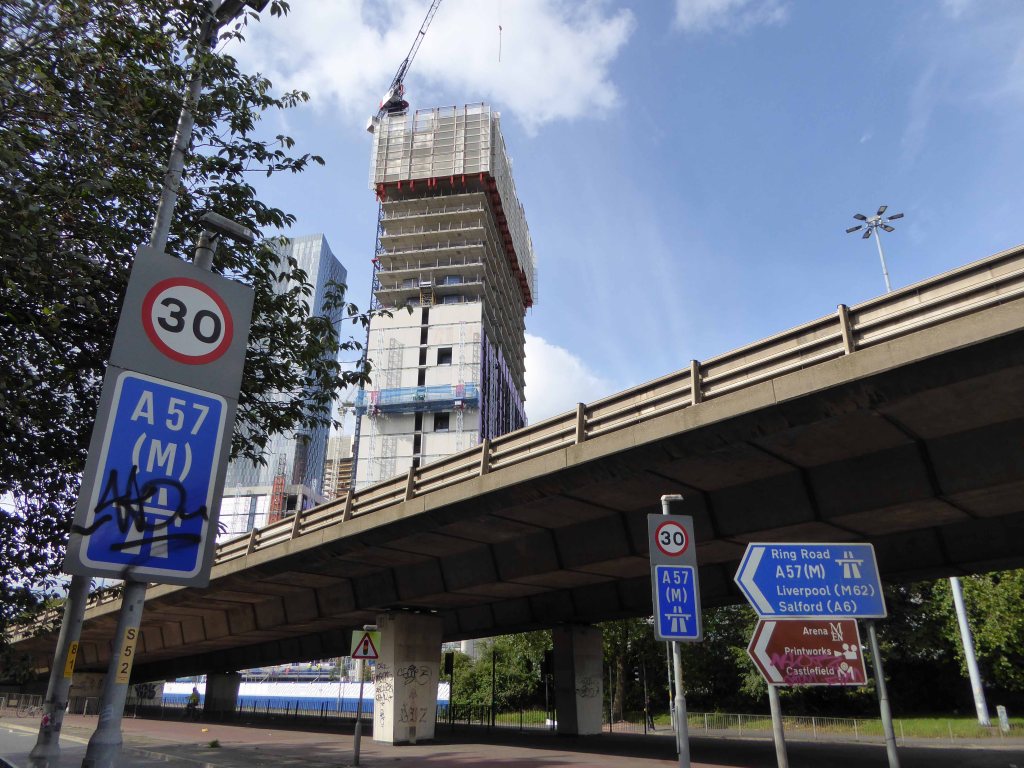
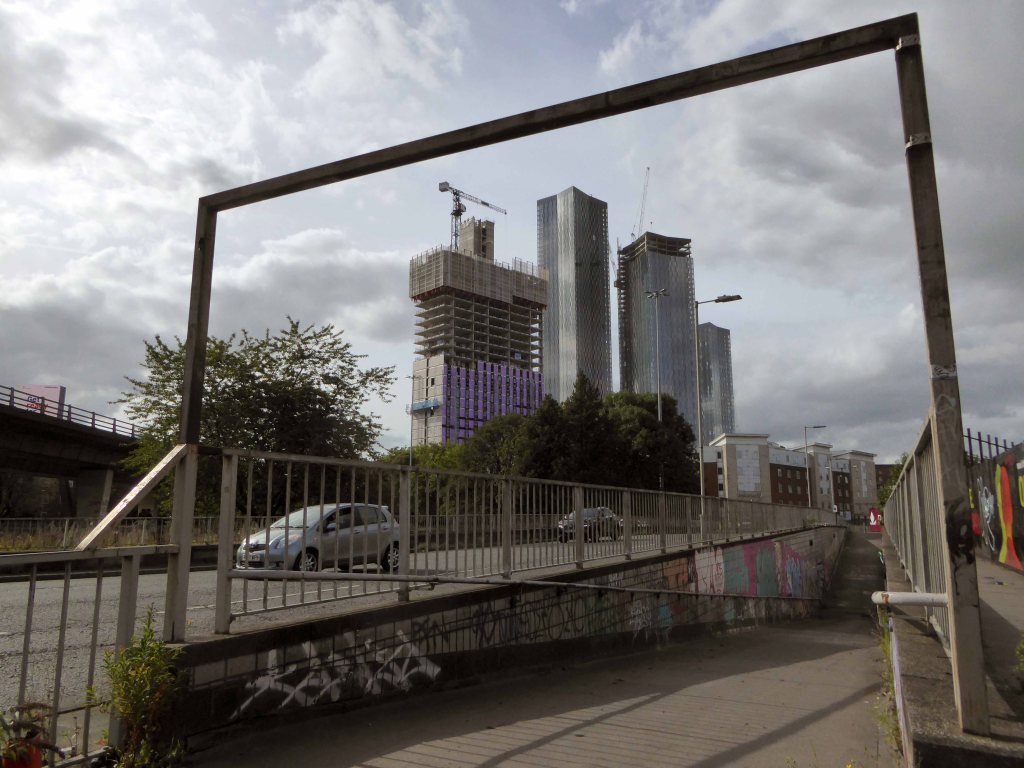
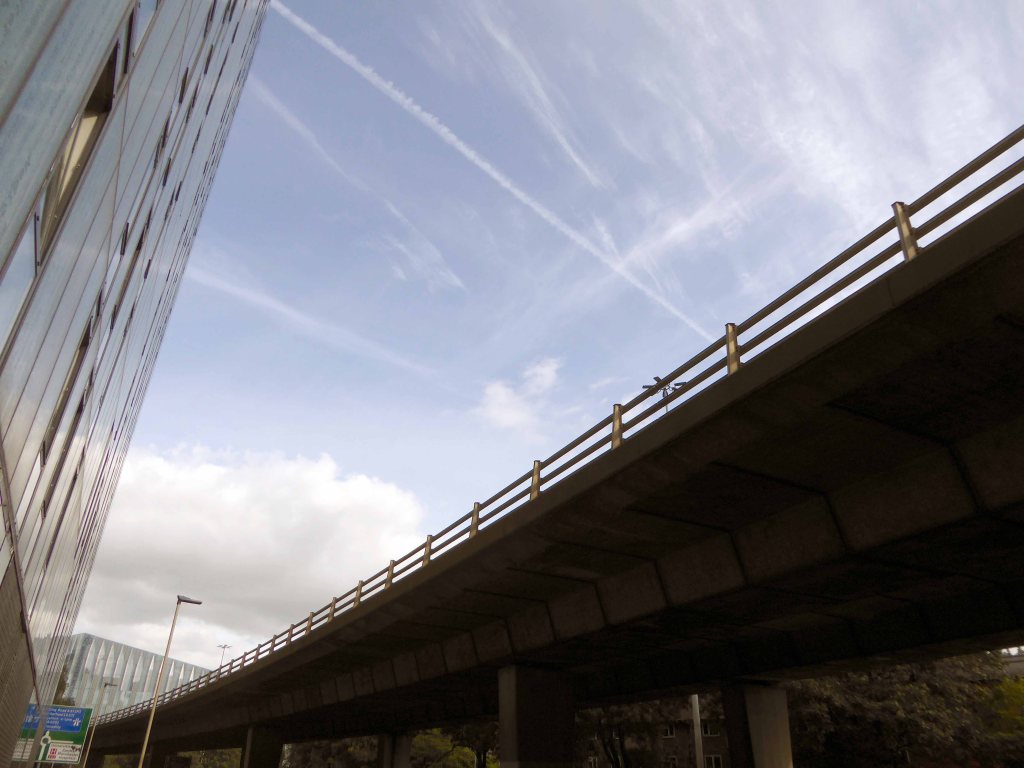
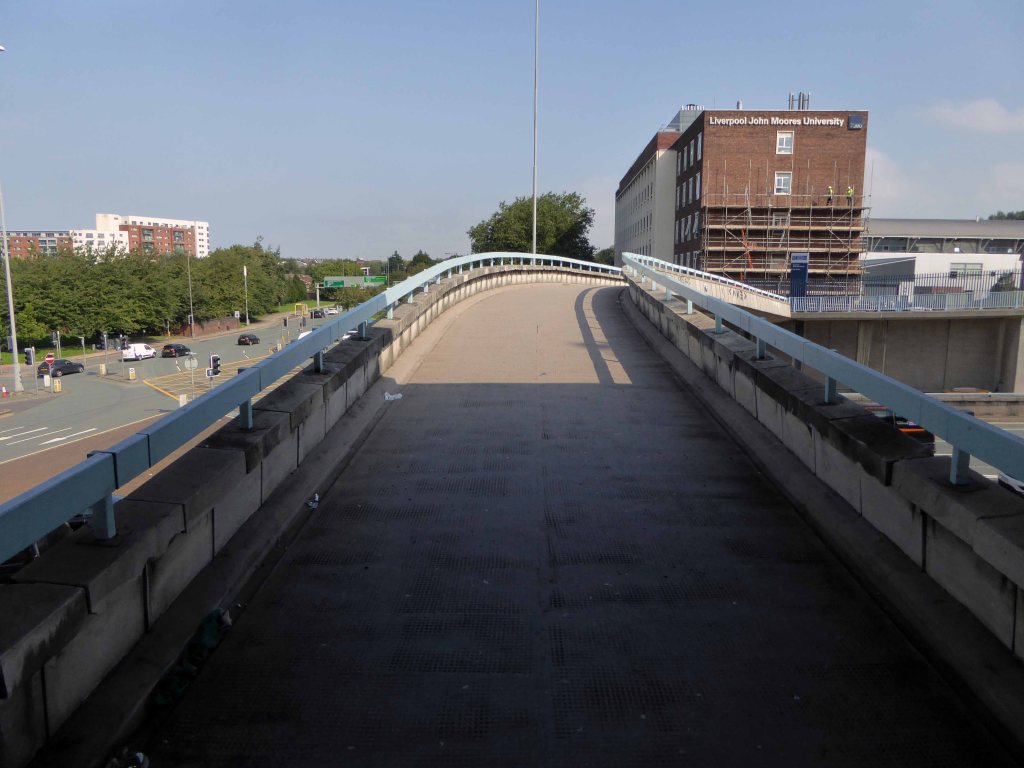
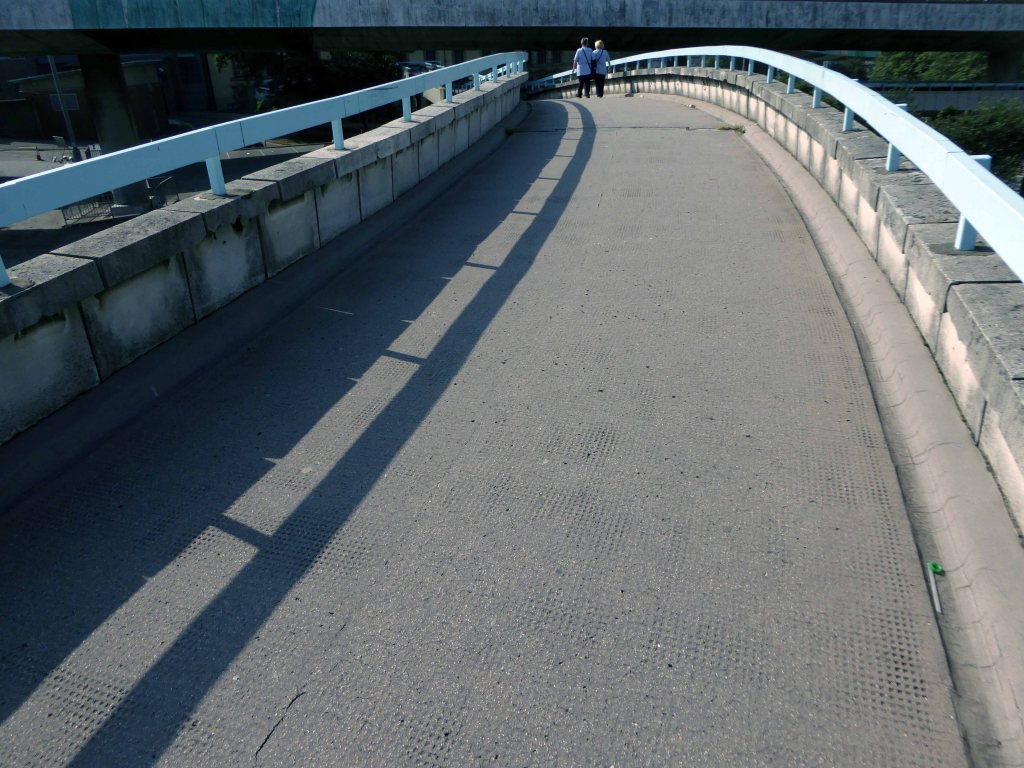
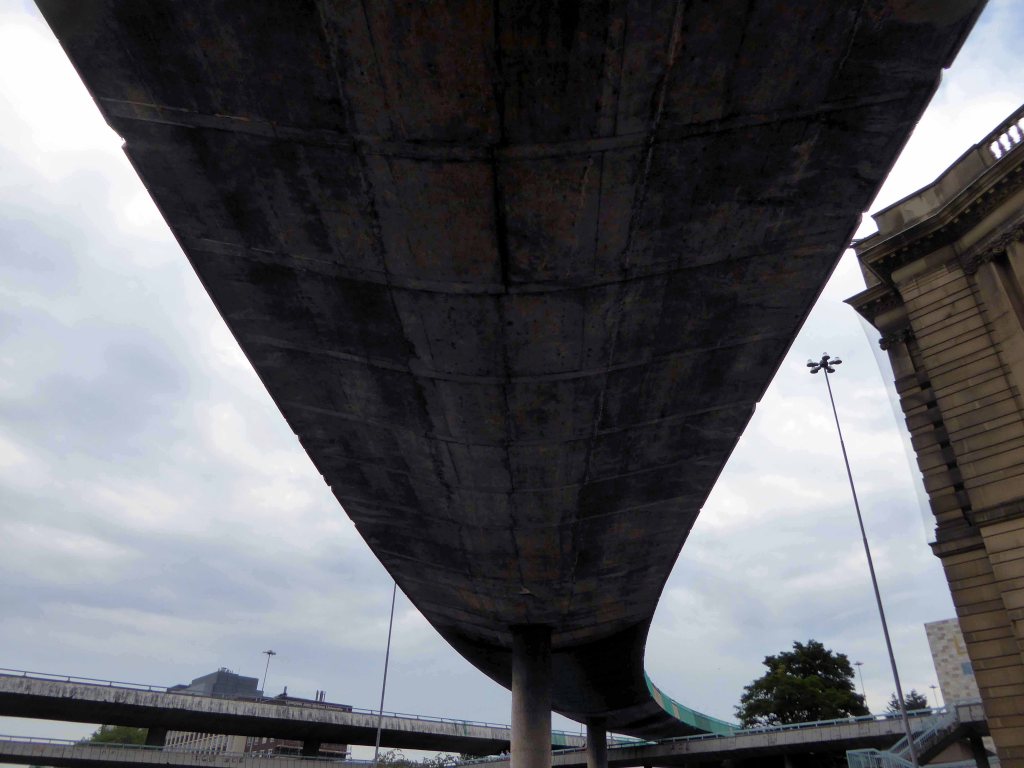
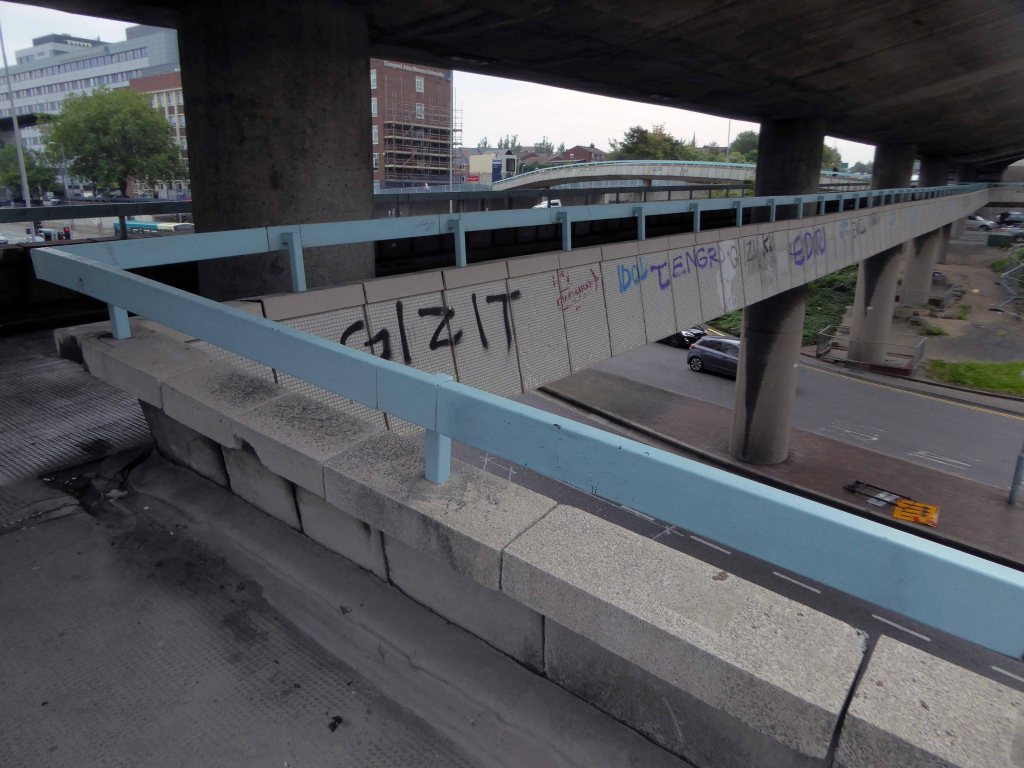
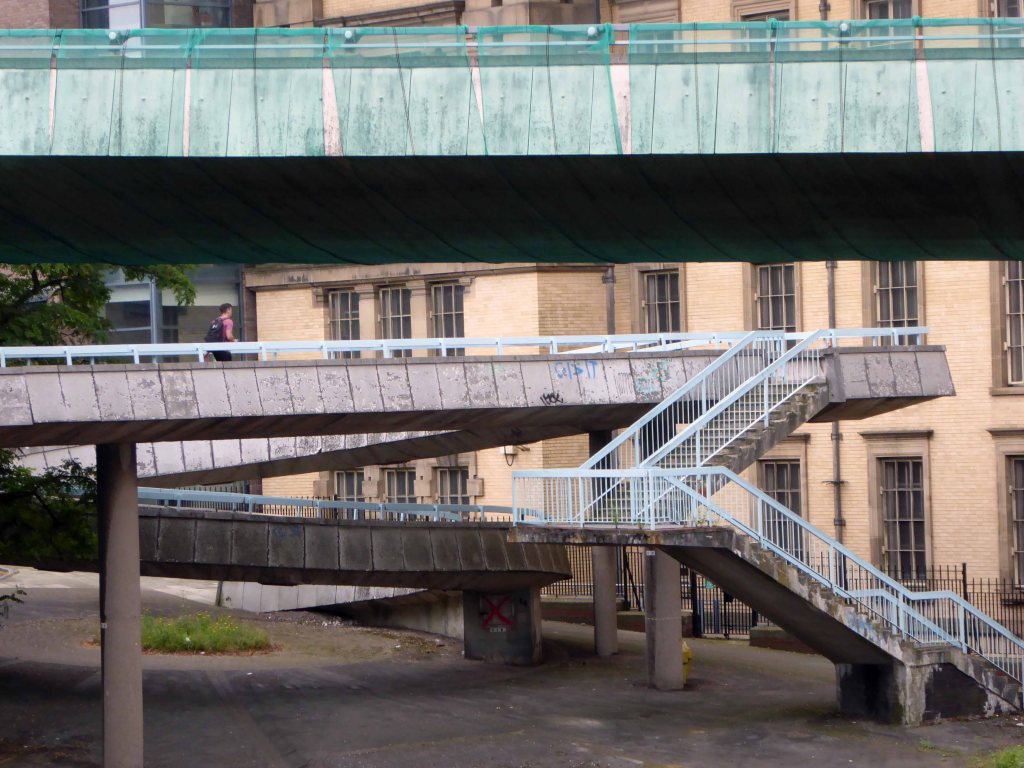
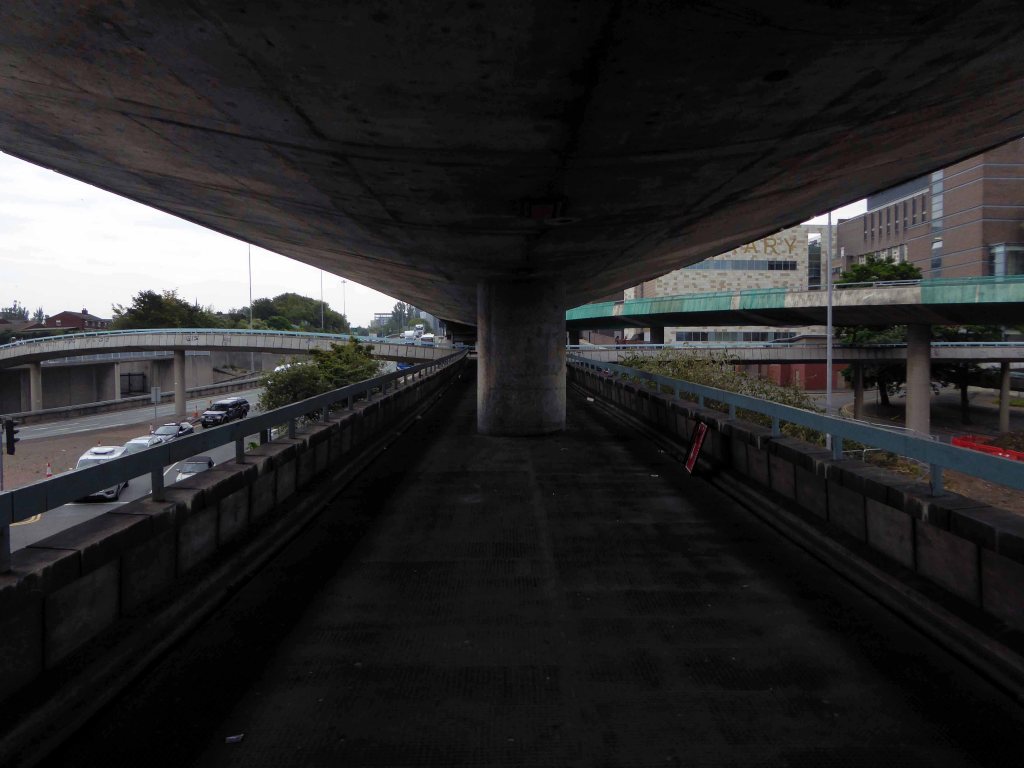
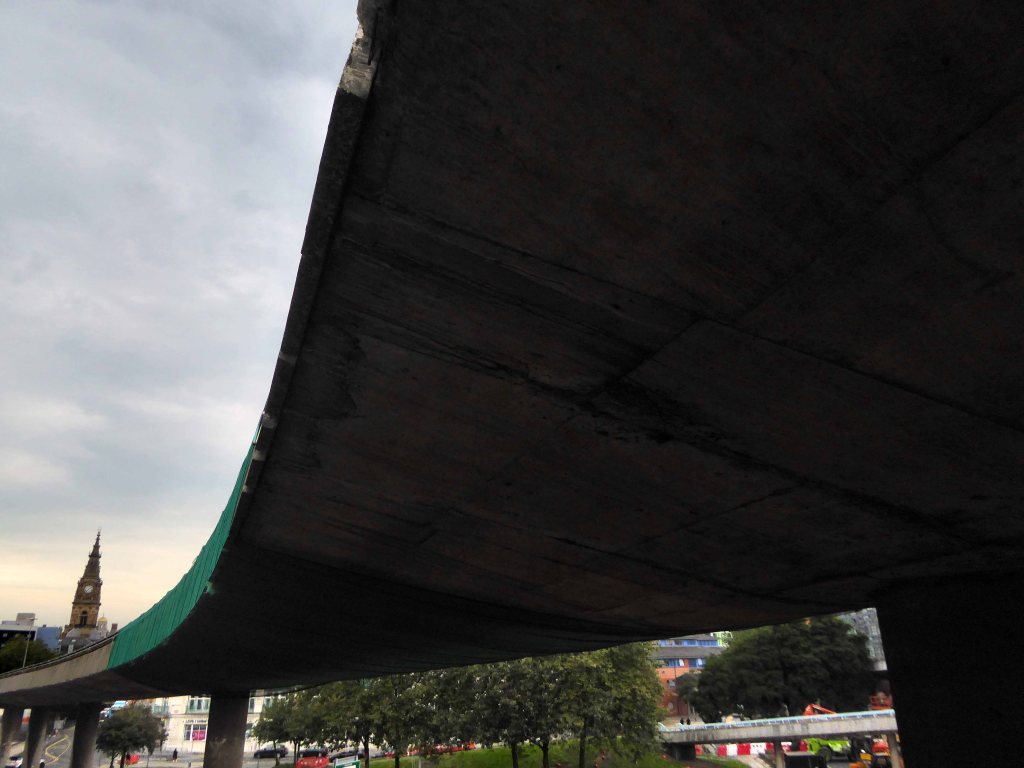
From east to west and back again – in or on, under and around our very own Highway in the Sky.
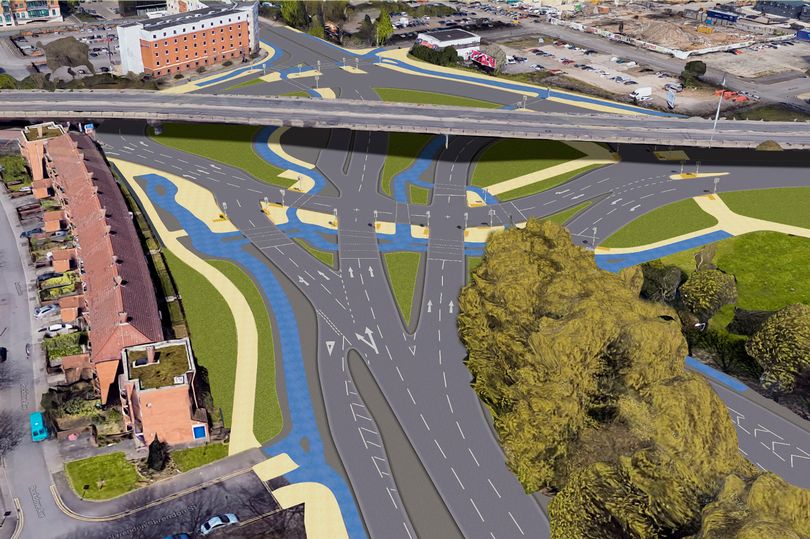
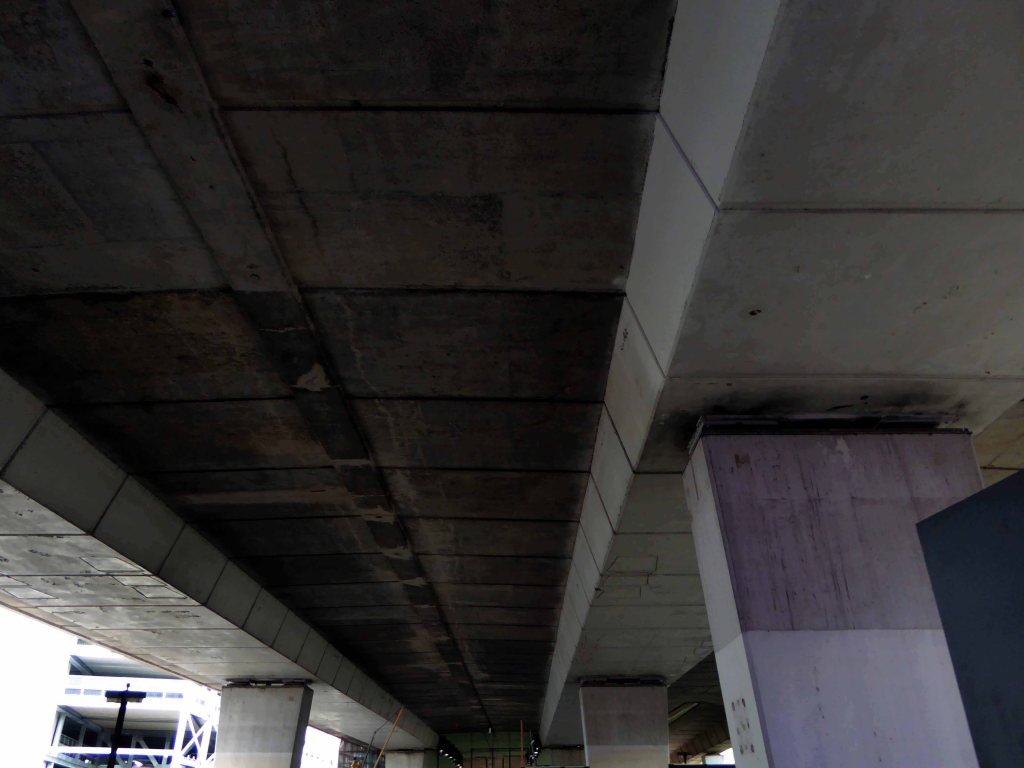
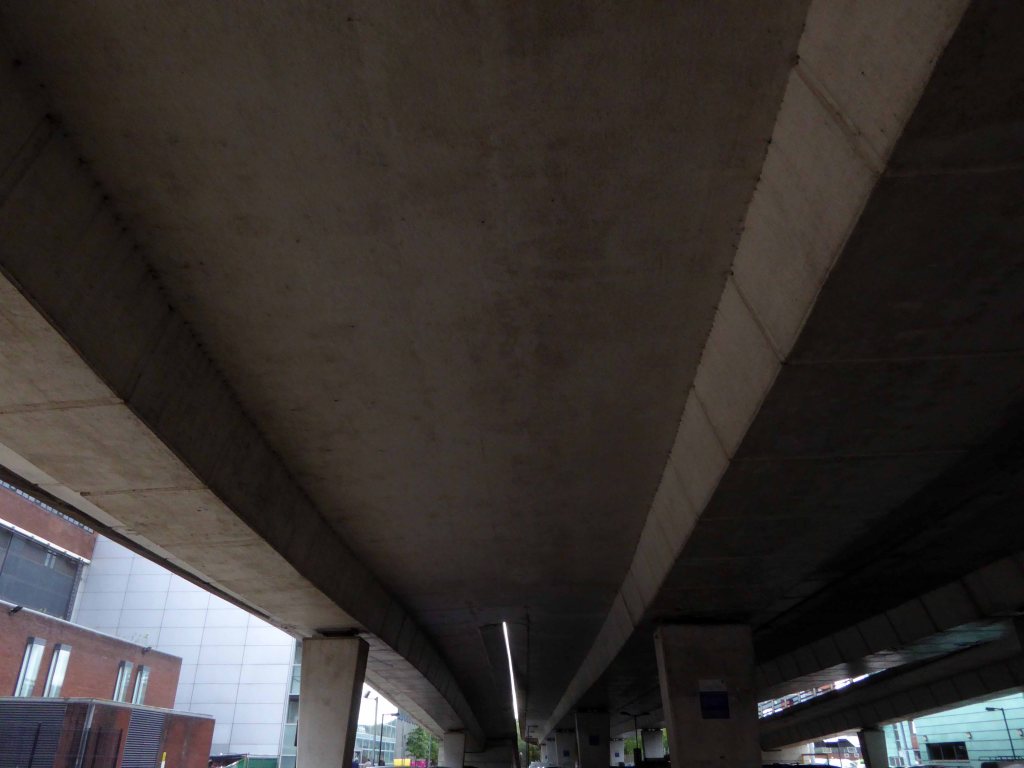
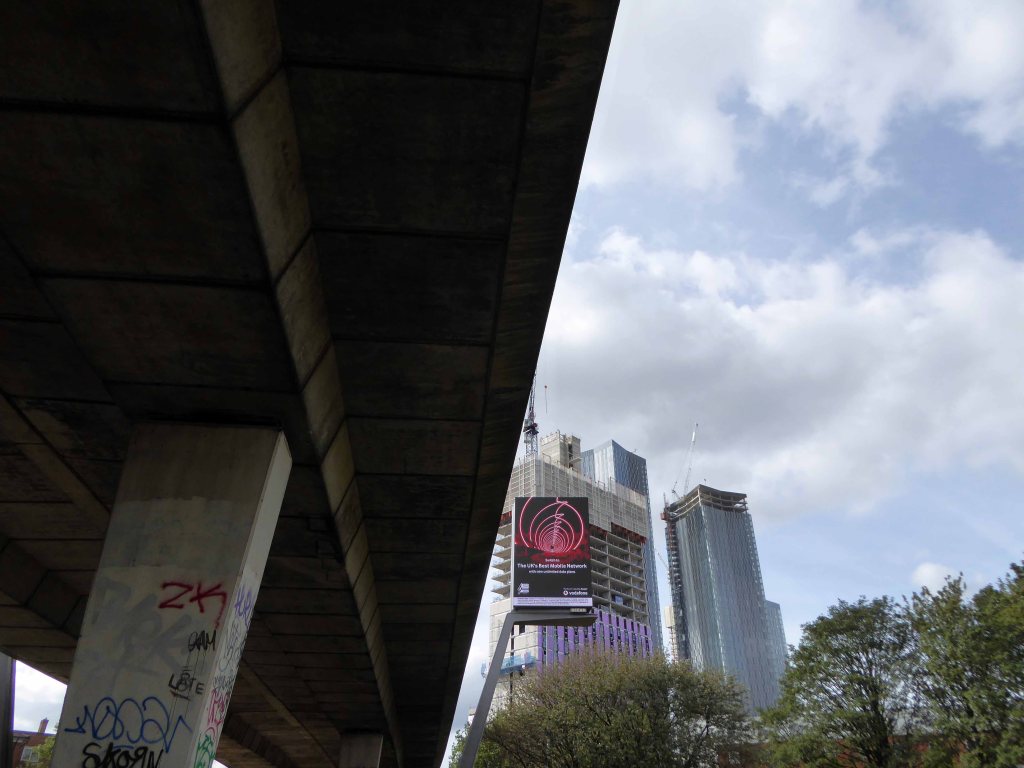
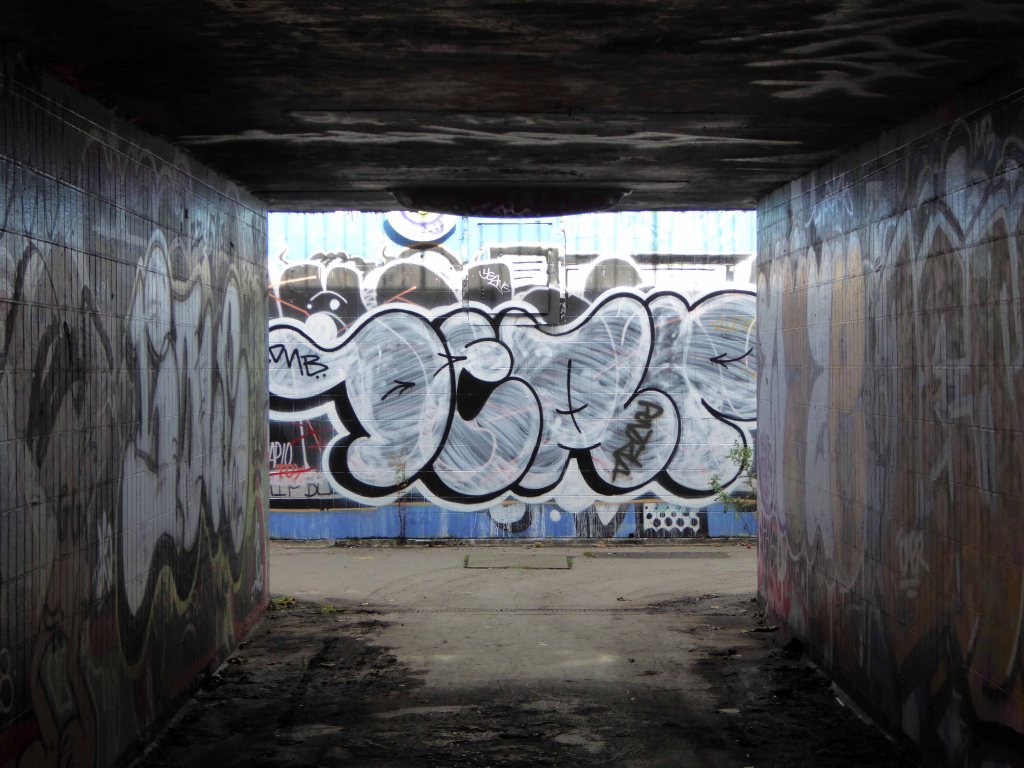
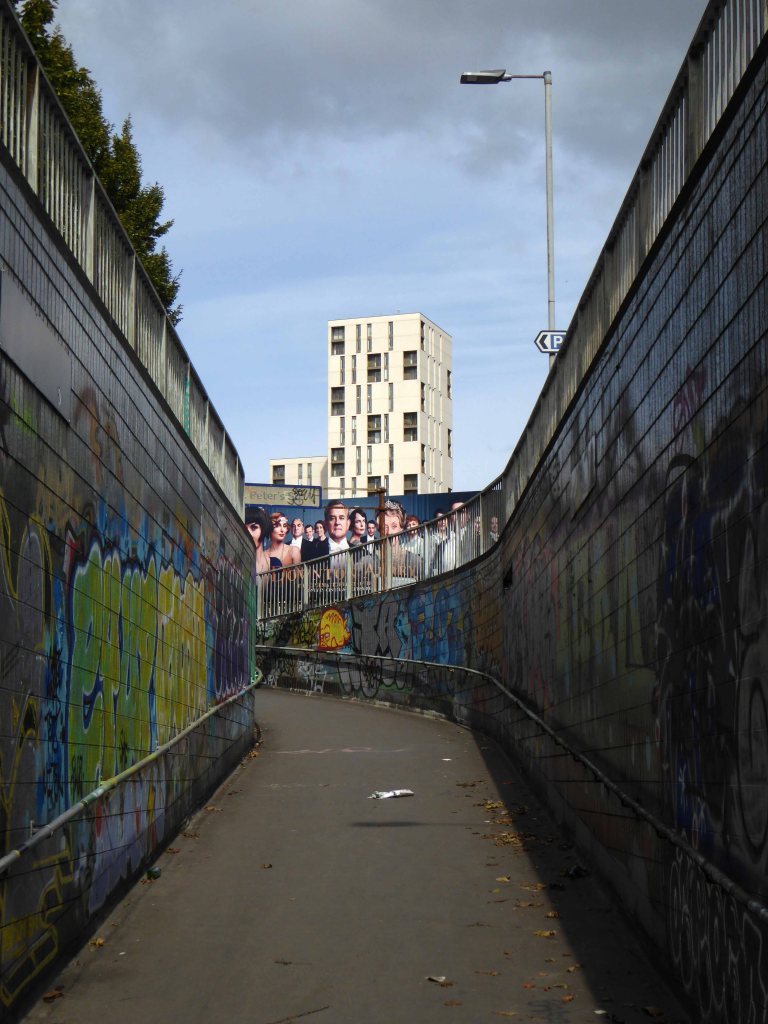
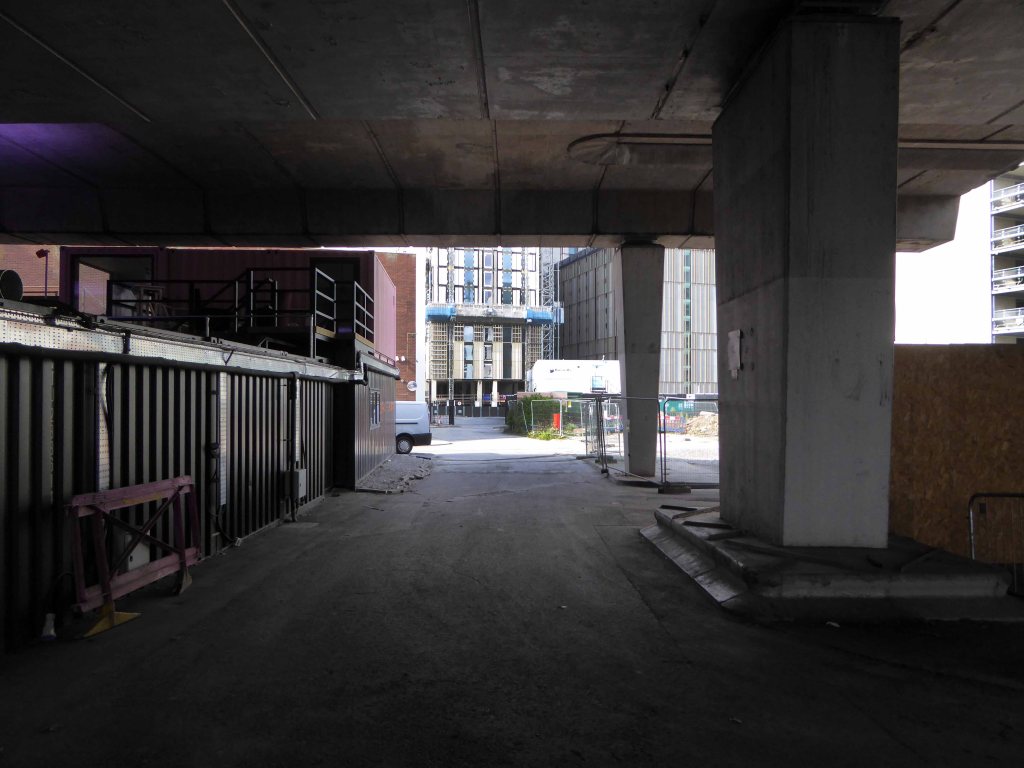
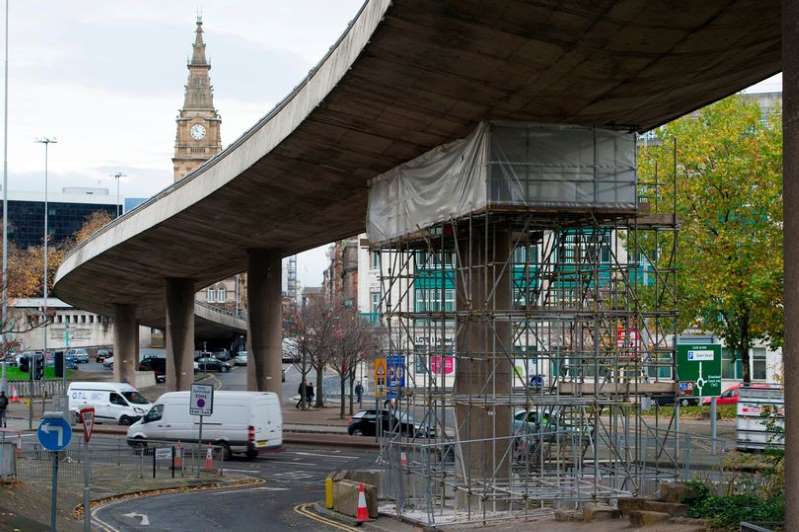
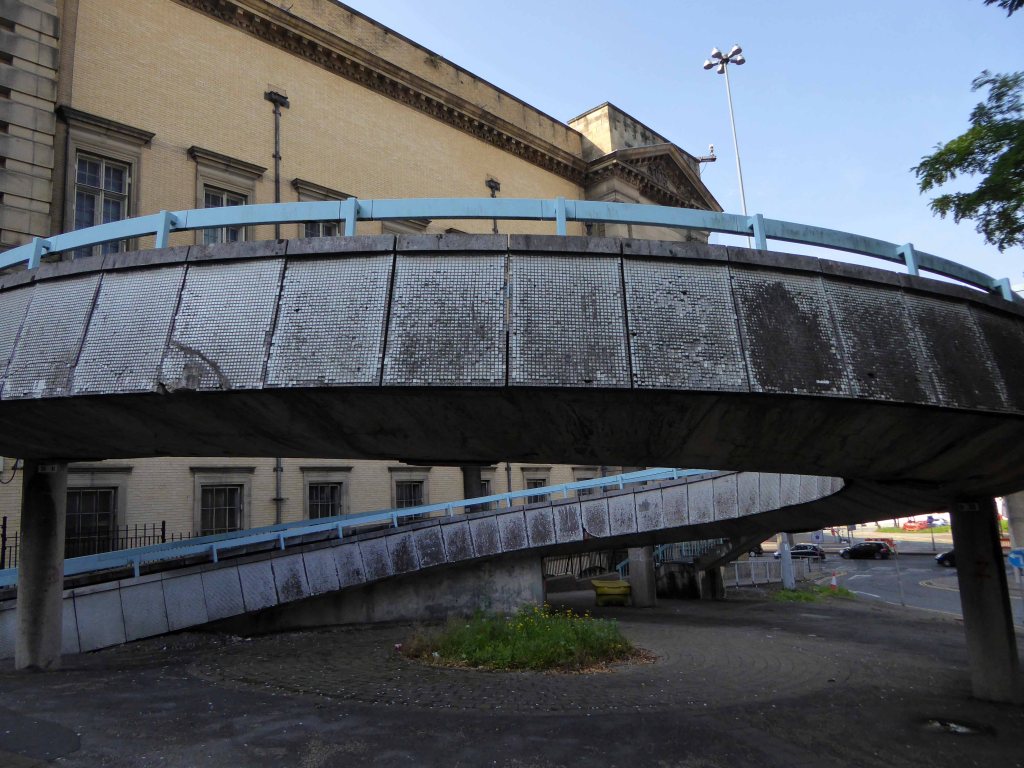
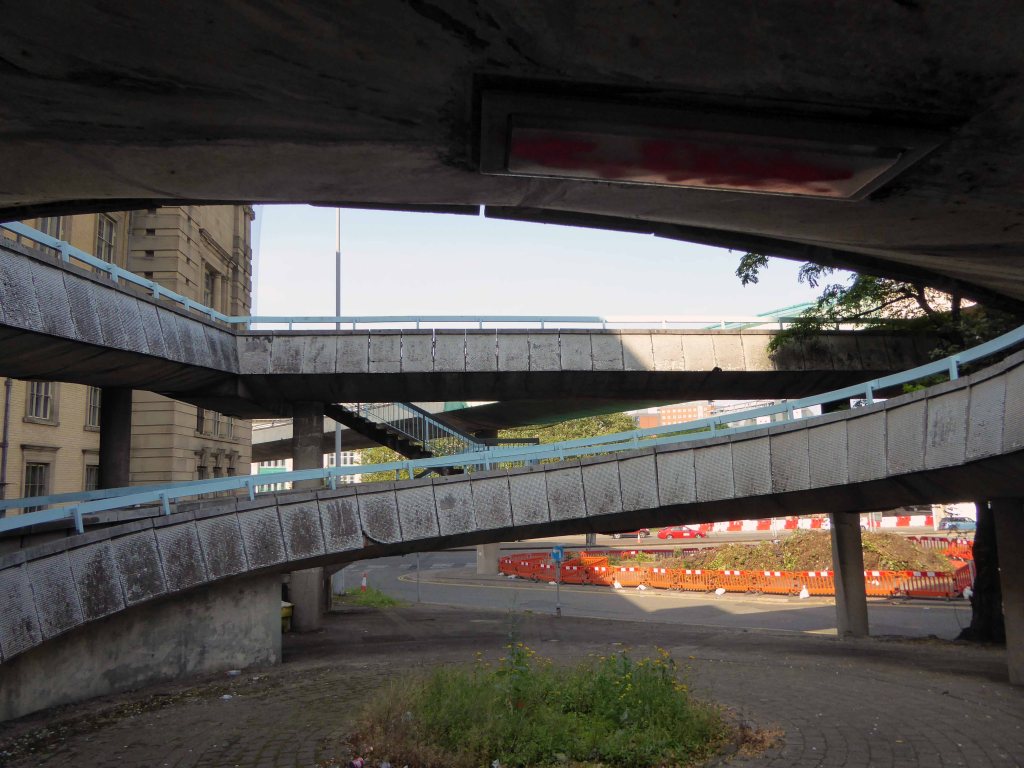
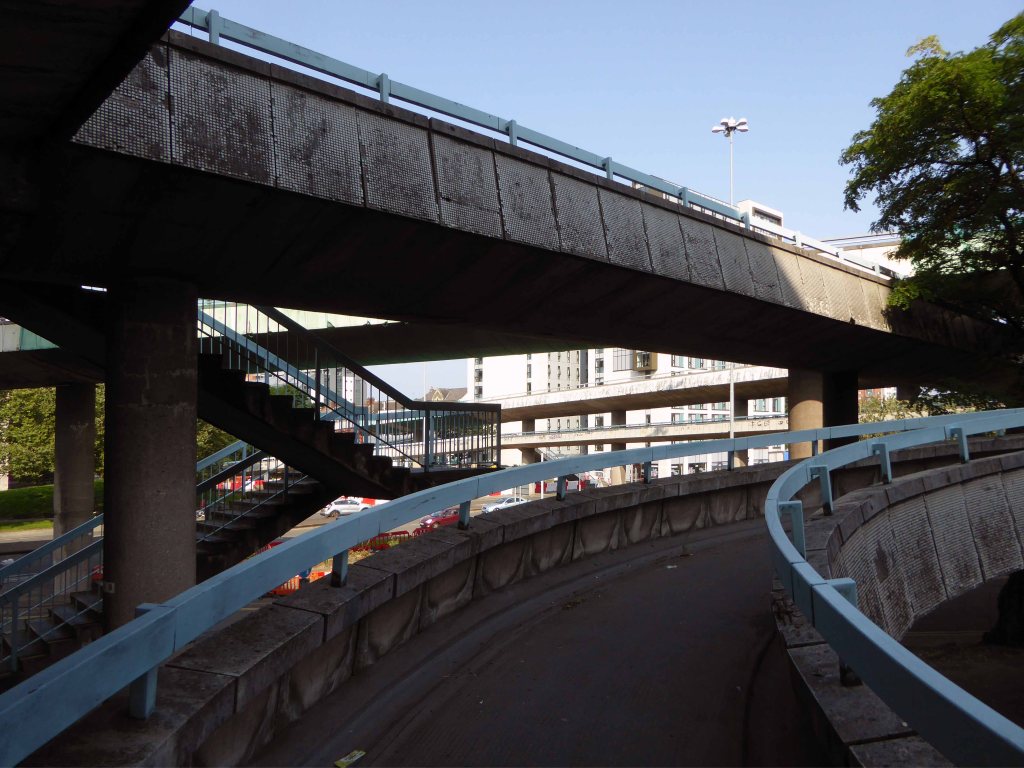
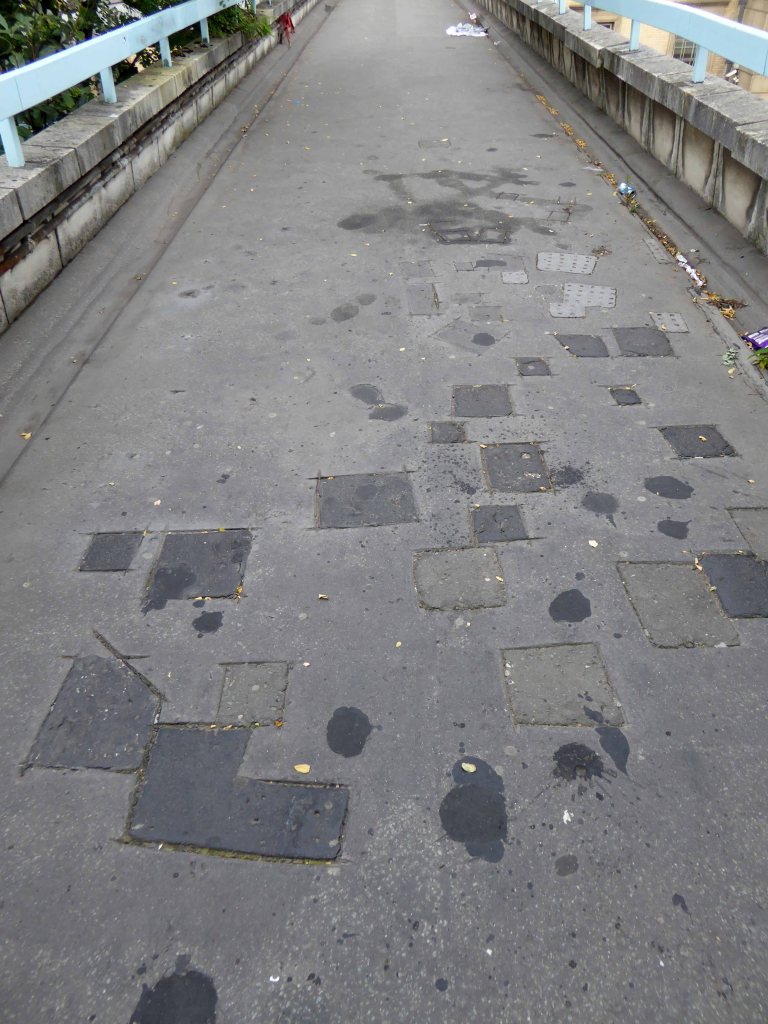
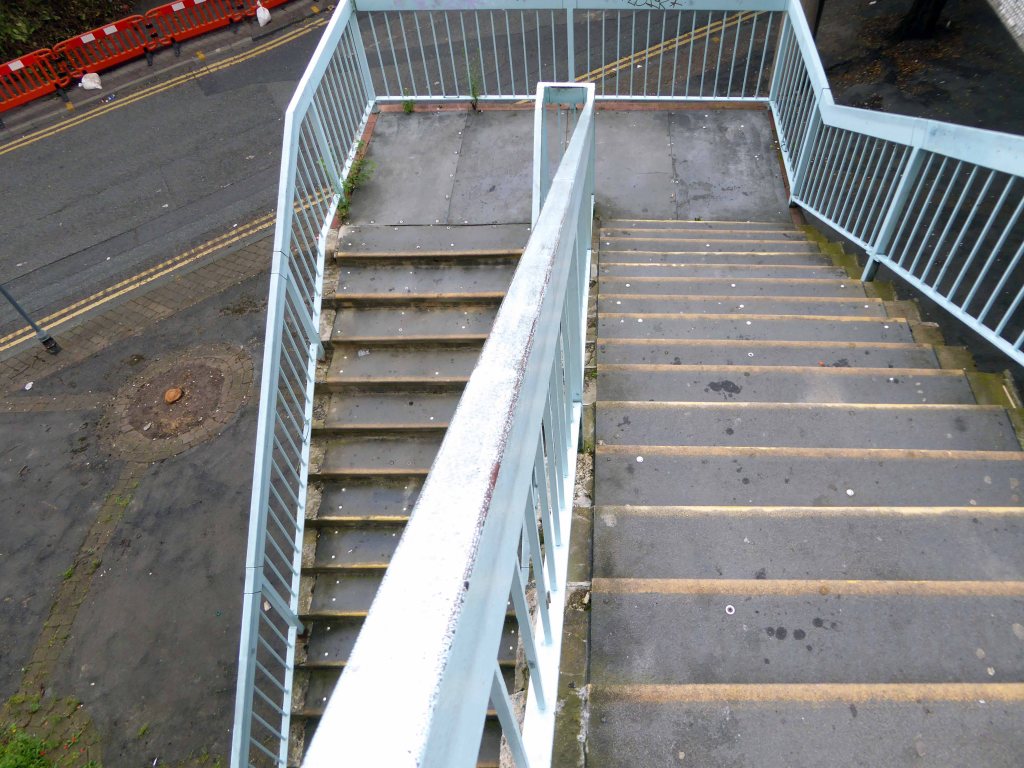
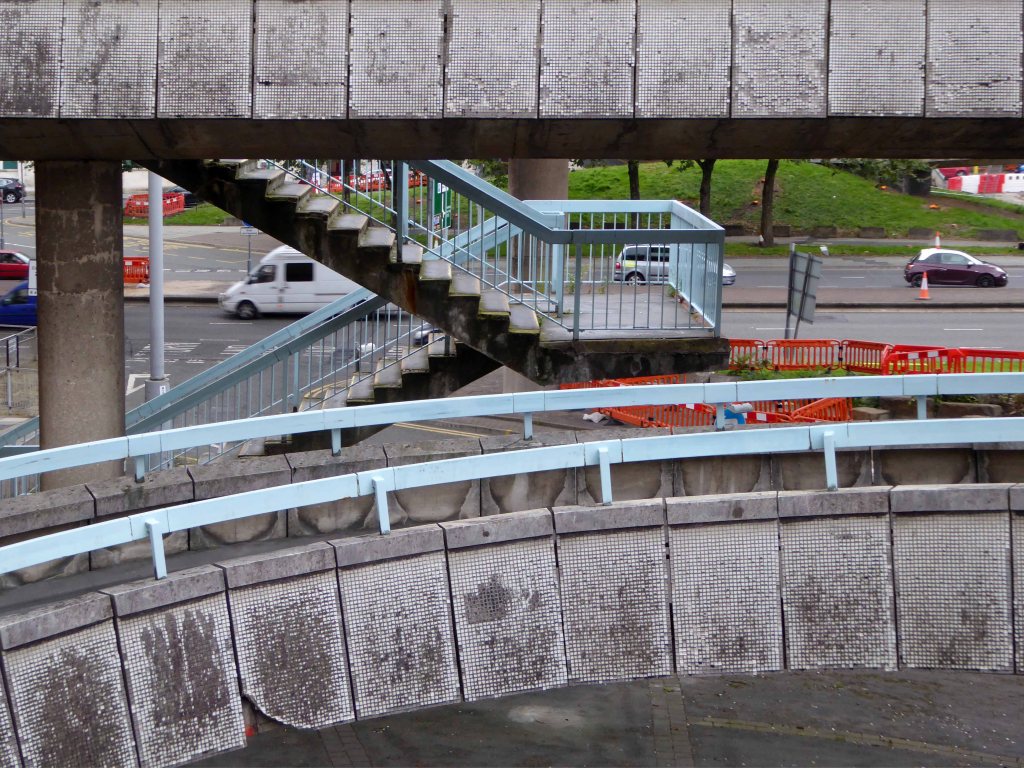
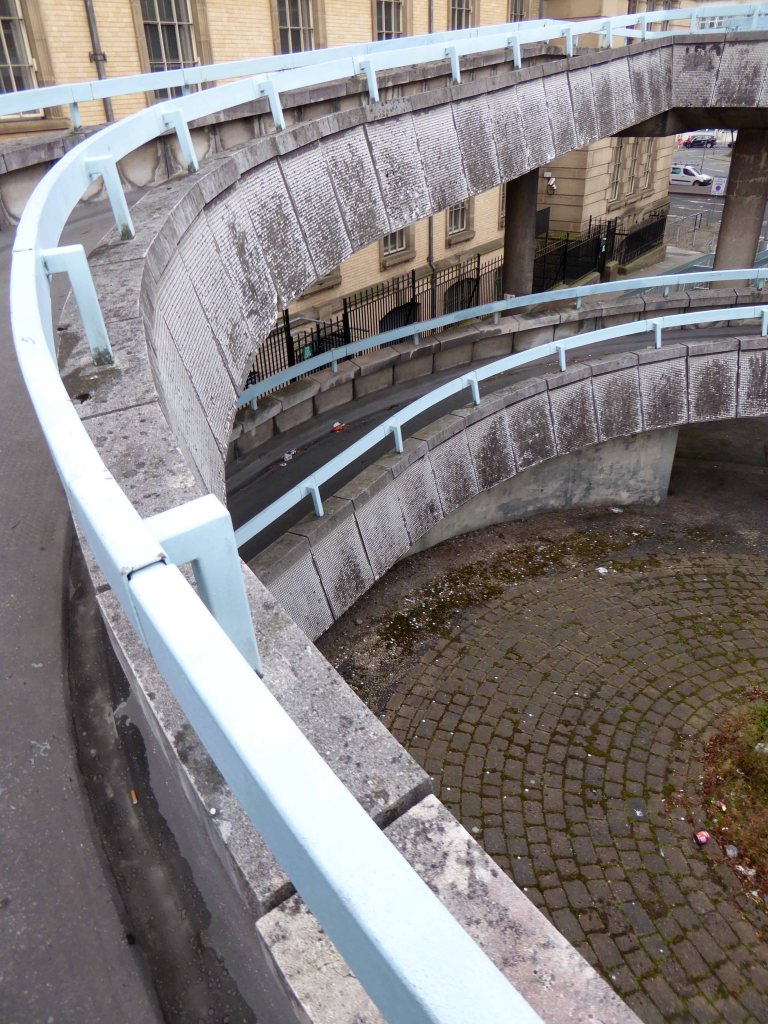
Part of the ever changing patchwork of demolition and development which defines the modern city. The carriageway prevails, whilst the pervasive rise and fall continues apace, its forlorn pedestrian underpasses may soon be superseded by wider walkways.
Manchester City Council is spending around £10million to make major changes to the junction where Princess Road meets the Mancunian Way and Medlock Street.
Much to the chagrin of local residents, who value the solace of their sole soulful green space and the frequent users, passing under the constant waves of sooty traffic.
What you see is what you get today, tomorrow is another kettle of concrete, trees, traffic and steel.
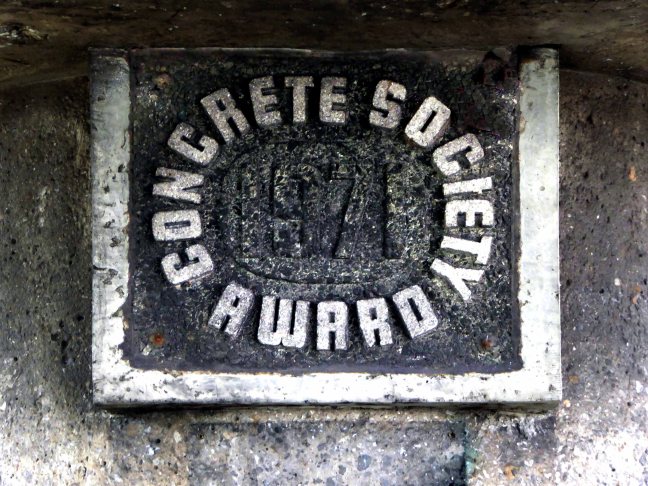
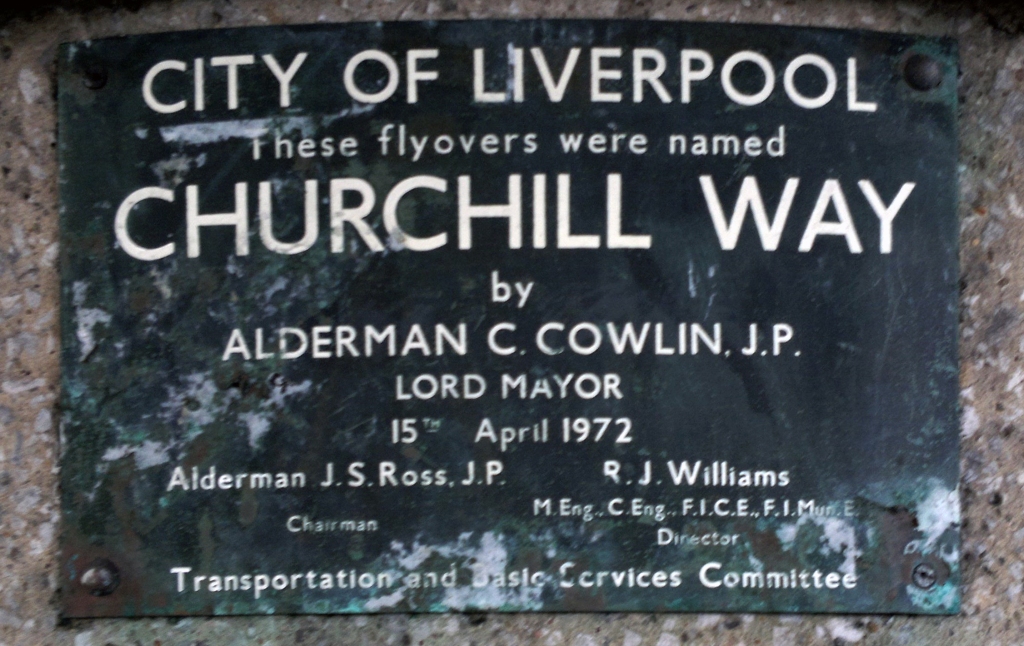
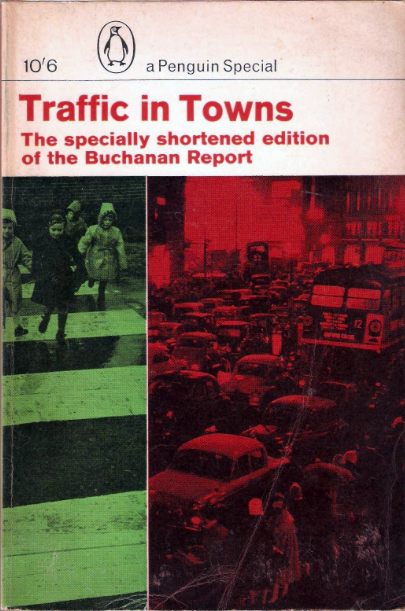
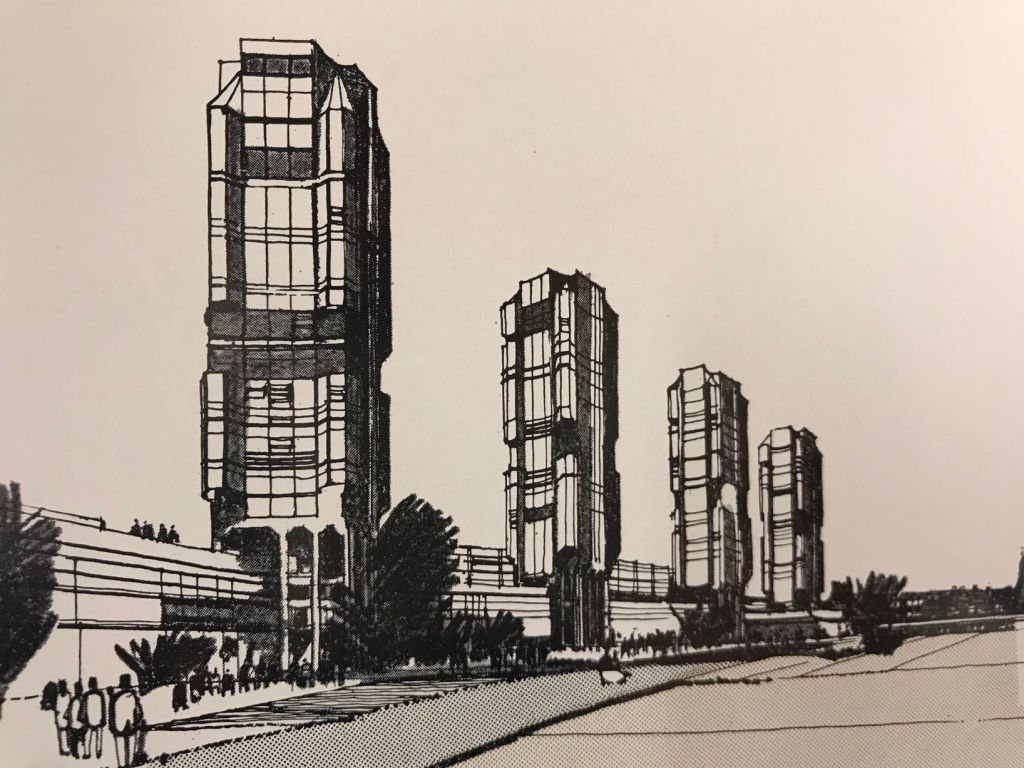
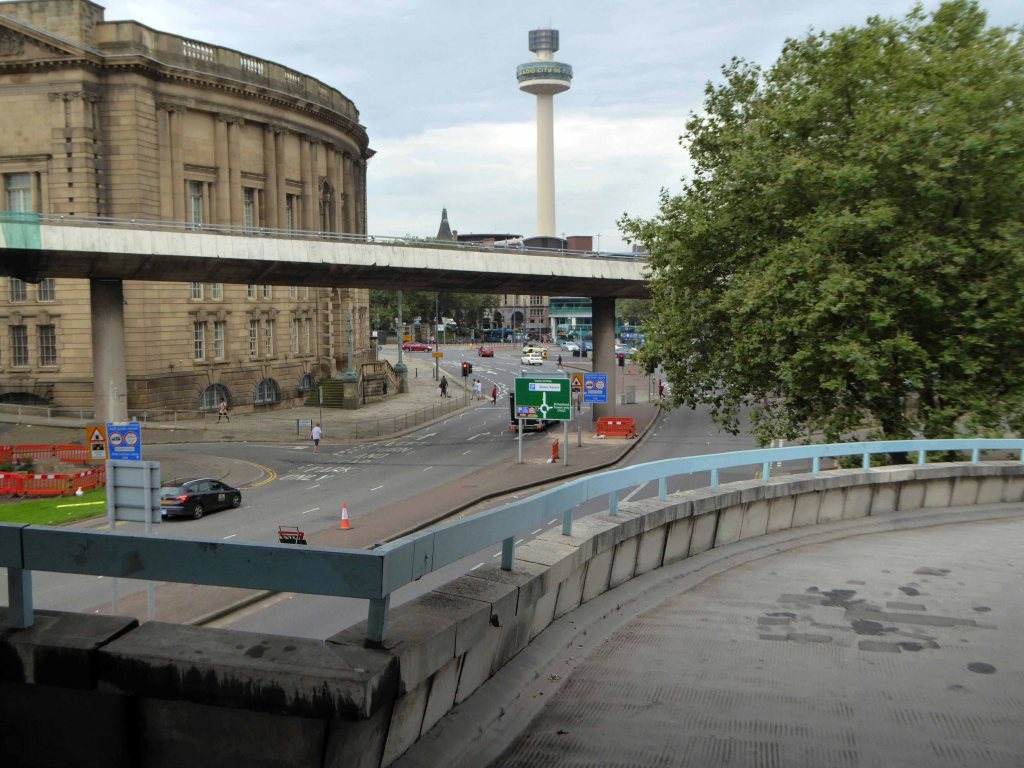
Opened in 1972 as an almost belated response to George Buchanan’s 1963 Traffic in Towns which had informed the Liverpool City Centre Plan of 1965.
The report warned of the potential damage caused by the motor car, while offering ways to mitigate it. It gave planners a set of policy blueprints to deal with its effects on the urban environment, including traffic containment and segregation, which could be balanced against urban redevelopment, new corridor and distribution roads and precincts.
These policies shaped the development of the urban landscape in the UK and some other countries for two or three decades. Unusually for a technical policy report, it was so much in demand that Penguin abridged it and republished it as a book in 1964.
The Churchill Way was realised and remained in use until September 2nd 2019 – closed and facing a £10 million demolition programme, following a maintenance report which found them to be unsafe – and presumably beyond economic repair.
And so I took one last look around taking snaps, an epitaph to the end of an era, and the end of an idea that was once once rendered concrete.
I ride a bicycle, which seriously restricts my access to the world of the M – one and six or otherwise. Having a more than somewhat ambivalent outlook on motor cars and their ways I have nevertheless written a short history.
So to satisfy my idle curiosity, and fill the damp wasteland of a Bank Holiday Sunday afternoon, let’s go on a little trip back in time by means of archival images.
What of your history?
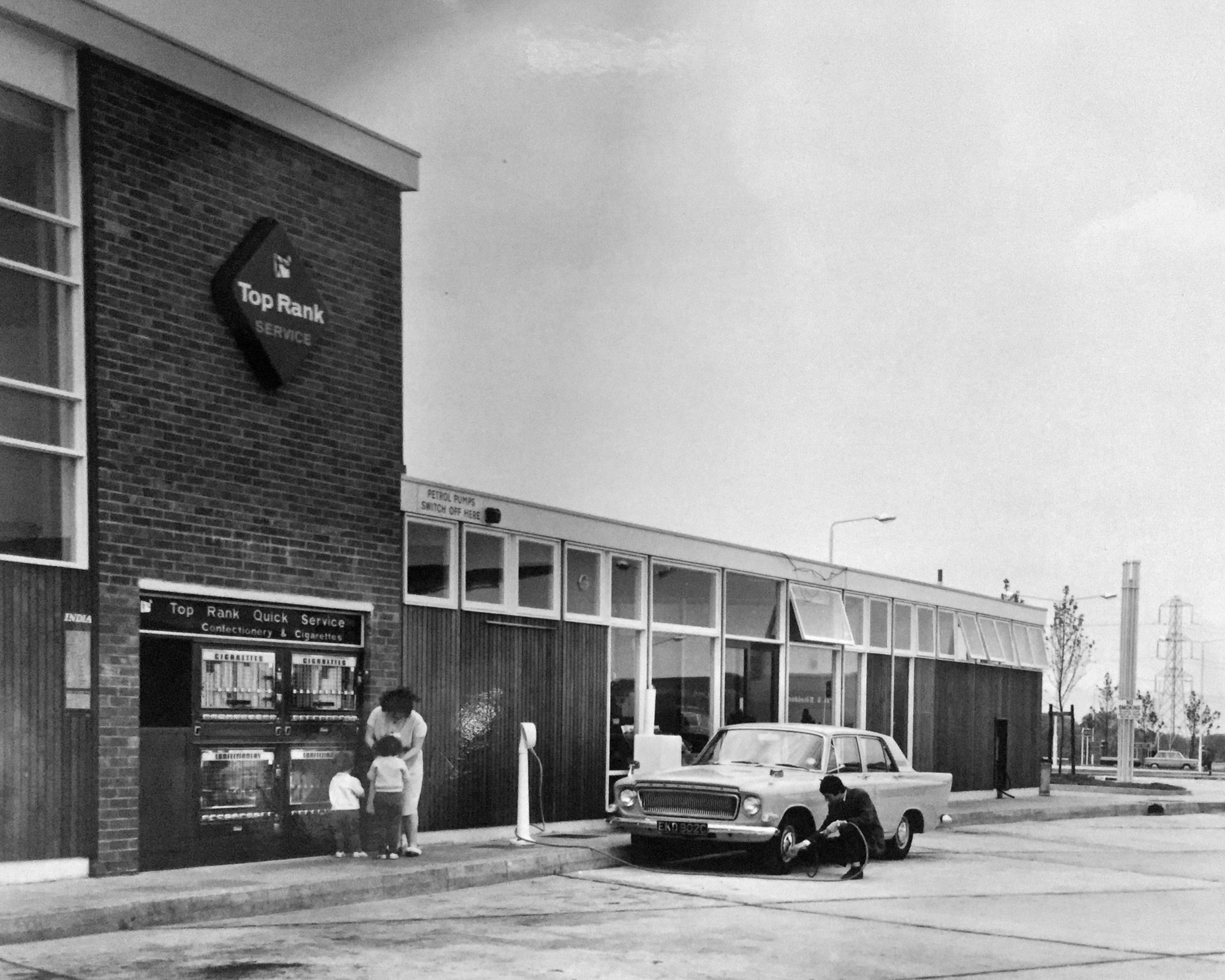
Tendering documents were sent out in 1962 describing it as a 17.7 acre site, requiring at least a £250,000 investment, including an eastern corner reserved for a picnic area, and an emphasis that the views to the west must be considered in the design, and facilities must be provided on both sides. Replies were received – from Telefusion Ltd, J Lyons, Banquets Catering Ltd, Granada and Rank
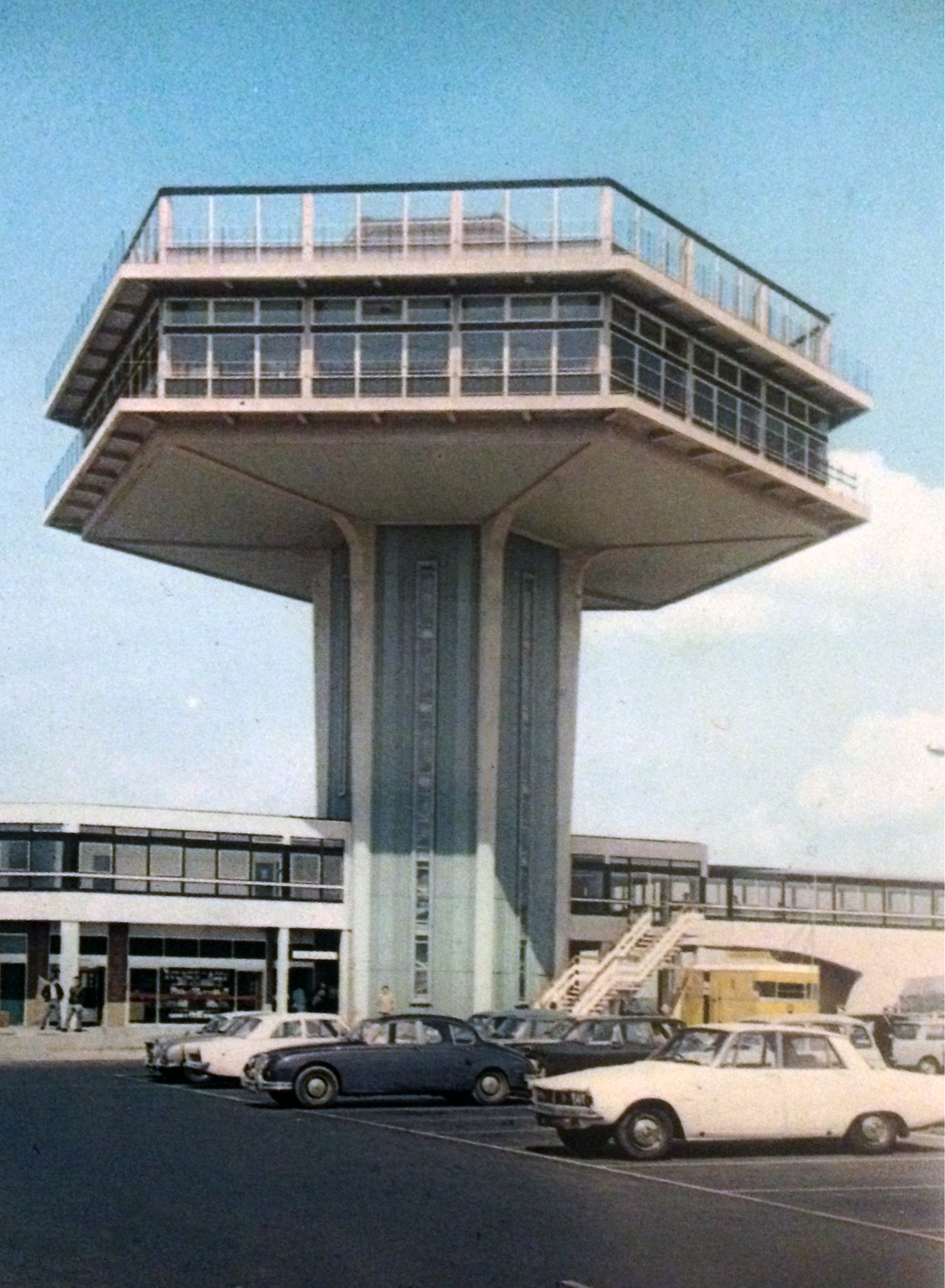
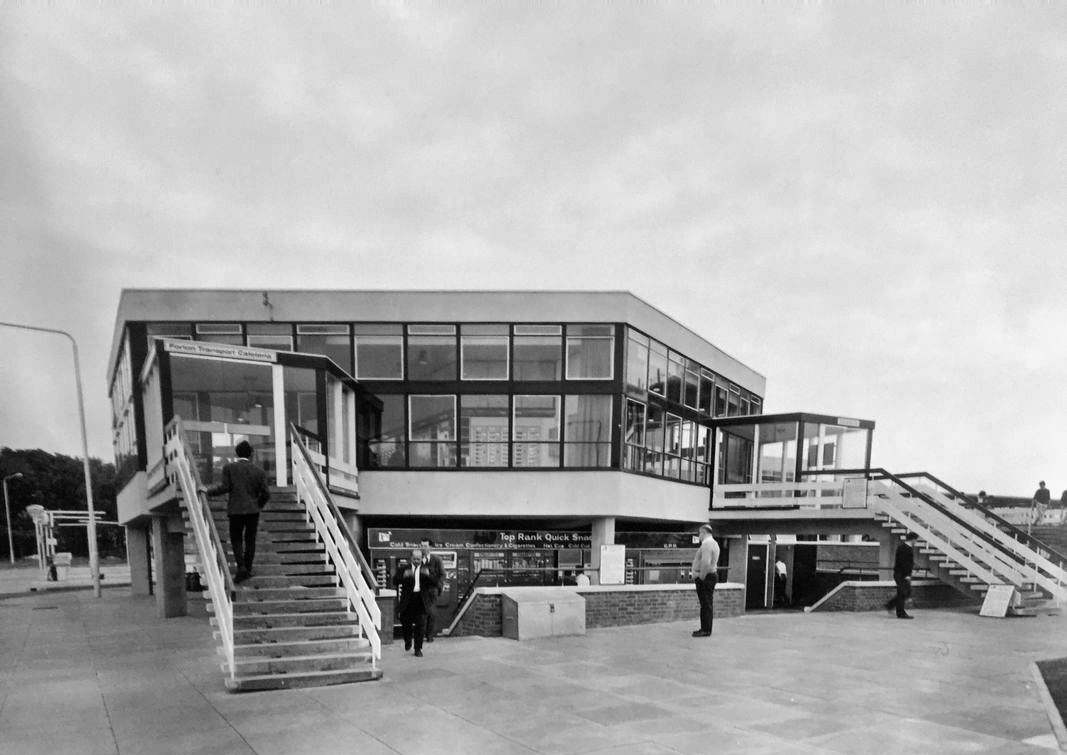
Top Rank’s plan came consistently highly rated by all the experts it was passed between. It showed a restaurant and a self-service café on the west side, the restaurant being at the top of a 96ft (29m) tower. At the top of the tower was a sun terrace – a roof with glass walls, which they had described but hadn’t included any suggestions for how it could be used, adding that maybe it could form an observation platform, serve teas, or be reserved for an additional storey to the restaurant.
Including a transport café on each site, seating was provided for 700 people, with 101 toilets and 403 parking spaces. A kiosk and toilets were provided in the picnic area.
“The winning design looks first class. Congratulations.”
Architects T P Bennett & Sons had been commissioned to design the services, along with the similar Hilton Park. At £885,000, it was the most expensive service station Rank built, and was considerably more than what had been asked of them.They won the contract, but on a condition imposed by the Landscape Advisory Committee that the height of the tower was reduced to something less striking.
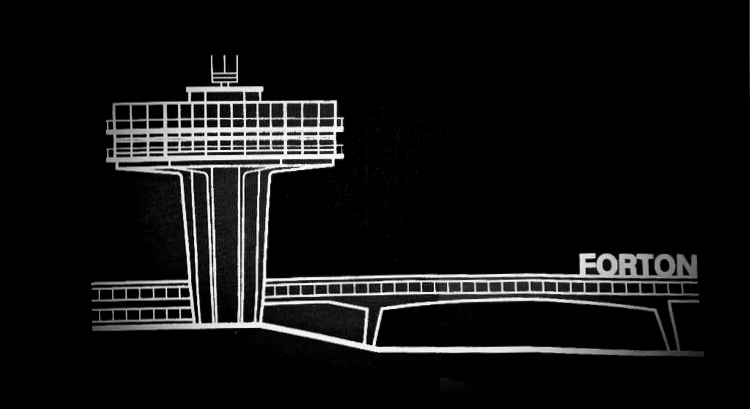
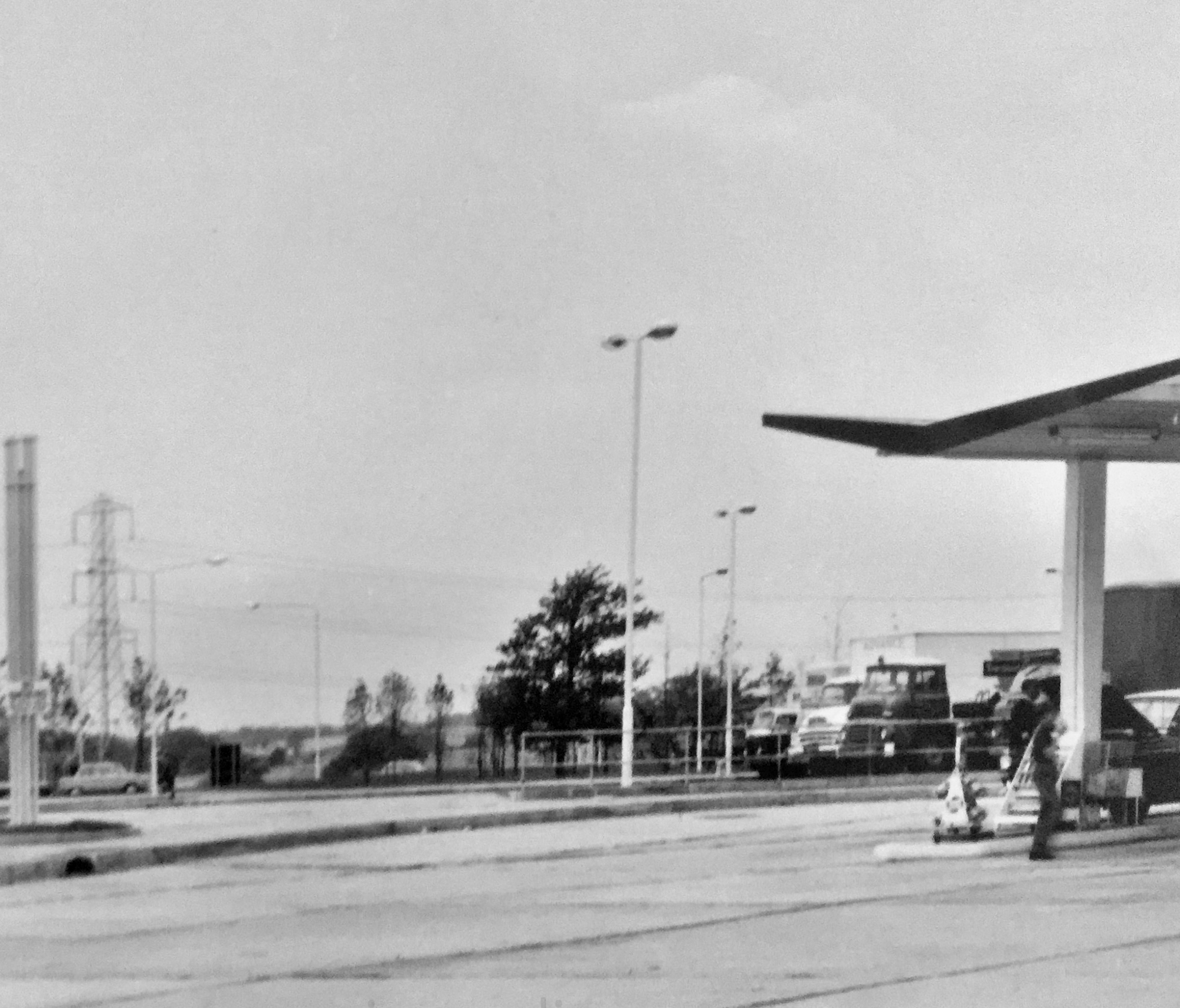
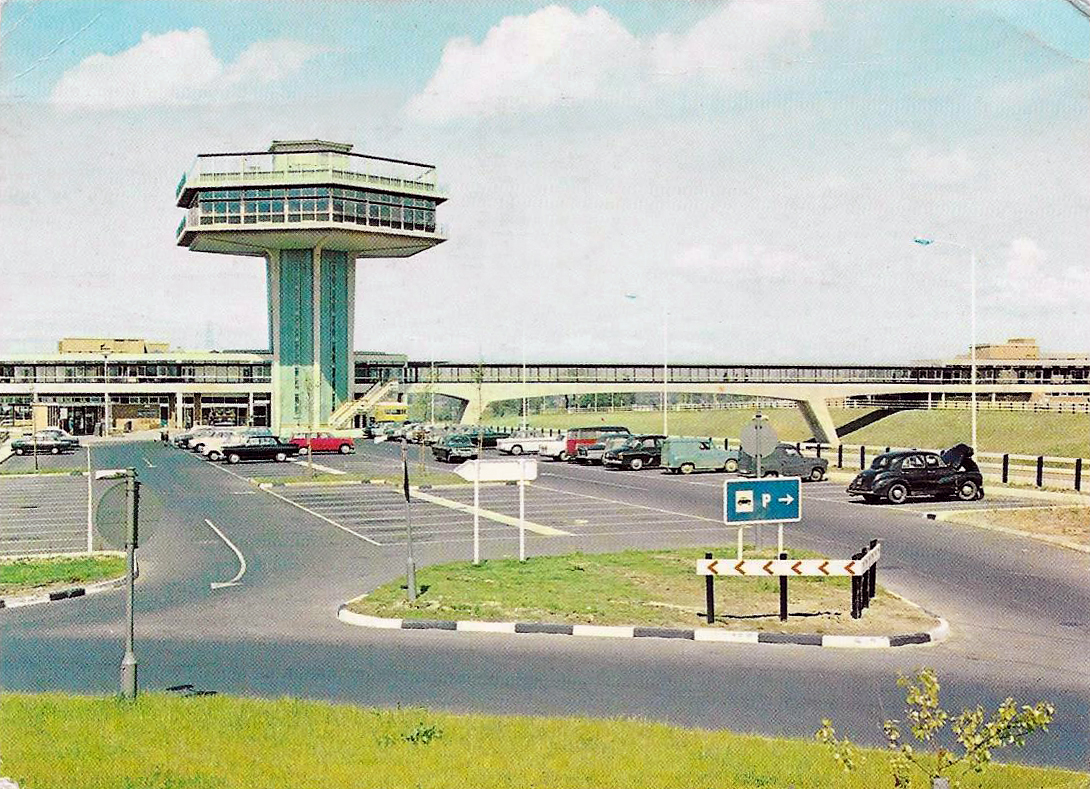
Lancaster was opened in 1965 by Rank under the name ‘Forton’. The petrol station opened early in January, with some additional southbound facilities opening that Spring.
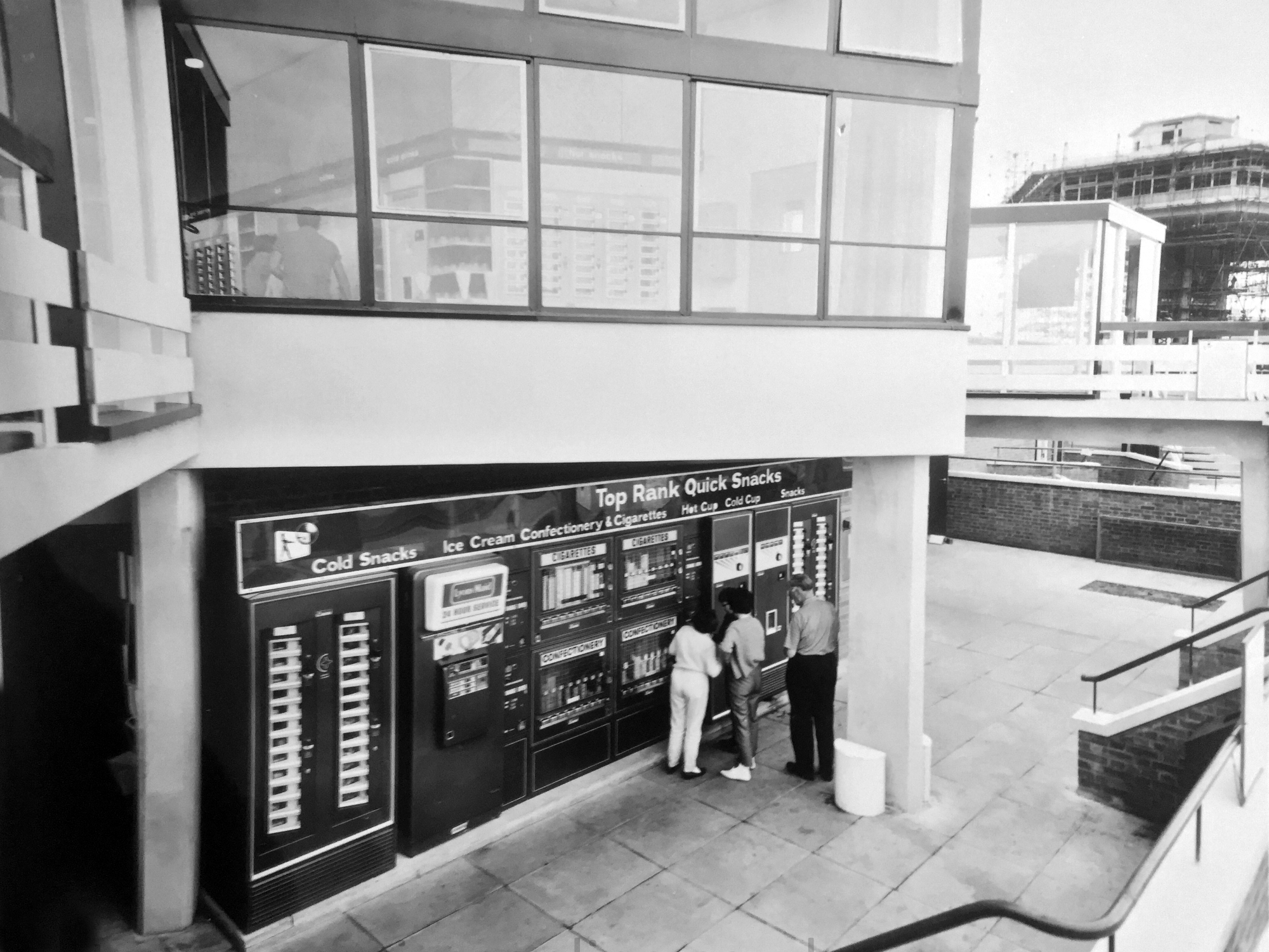
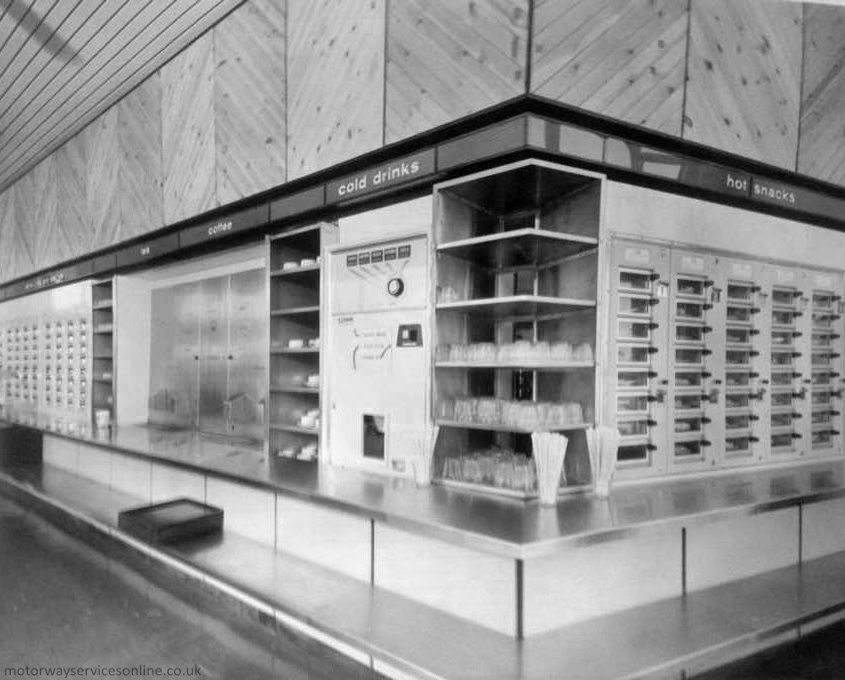
The southbound amenity building had a lowered section with a Quick Snacks machine and the toilets. Above it was the transport café which had only an Autosnacks machine, where staff loaded hot meals into the back and customers paid to release them. These were the motorway network’s first catering vending machines, and the Ministry of Transport were won round by the idea, but Rank weren’t – they removed them due to low demand.
In 1977, Egon Ronay rated the services as appalling. The steak and kidney pie was an insult to one’s taste buds while the apple pie was an absolute disgrace. He said everywhere needed maintenance and a coat of paint, the toilets were smelly and dirty, and the food on display was most unattractive.
A 1978 government review described the services as a soulless fairground.
The Forton Services and the typology generally have had a chequered career, rising and falling in public favour and perception. Purveying food and facilities of varying quality, changing style and vendors with depressing regularity – knowing the value of nothing yet, the Costas of everything.
Ironically the prematurely diminished tower has taken on iconic status in the Modernist canon – listed in 2012 yet closed to the public, admired from afar – in a car.
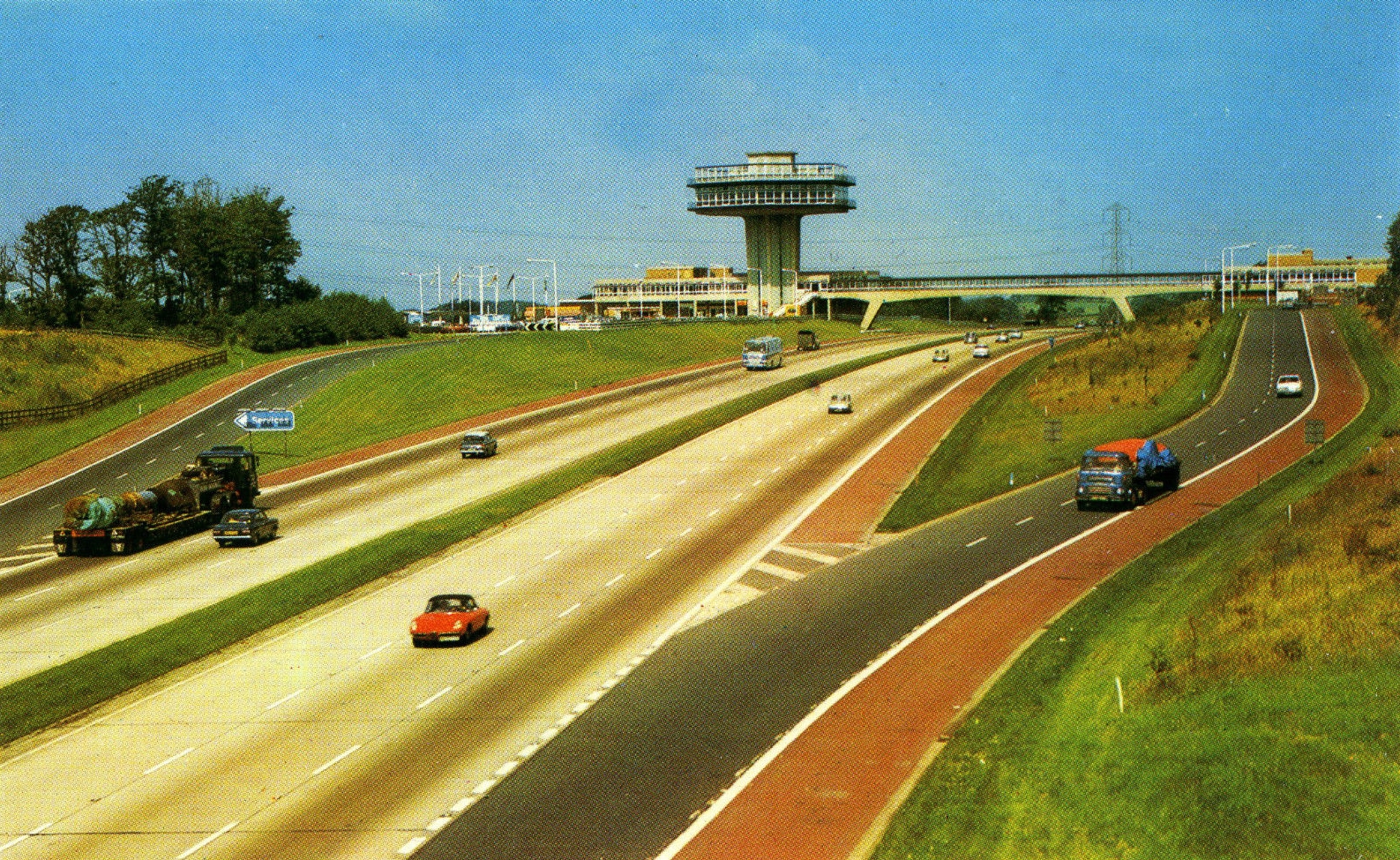
The Pennine Tower was designed to make the services clearly visible – the ban on advertising had always been an issue, and the previous technique of having a restaurant on a bridge, like down the road at Charnock Richard, was proving expensive and impractical. Rank commissioned architects T P Bennett & Sons to capitalise on the benefits of exciting design while trialling something different. The tower resembles that used by air traffic control, summarising the dreams of the ’60s.
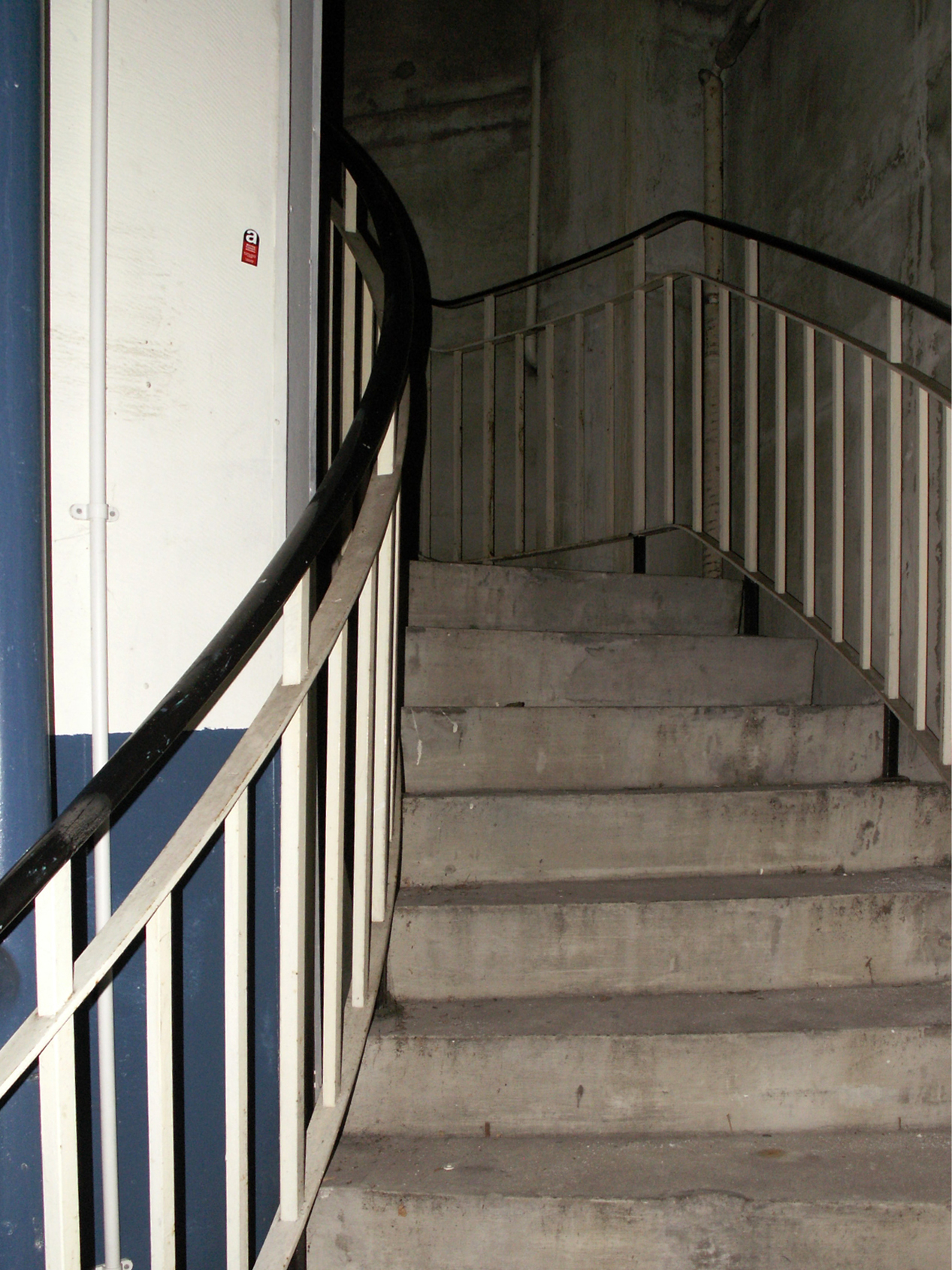
The central shaft consists of two lifts, which were originally a pentagonal design until they were replaced in 2017. They’re still in use to access the first floor, but with the buttons to higher floors disabled. There are then three service lifts, and one spiral staircase – satisfying typical health and safety regulations.
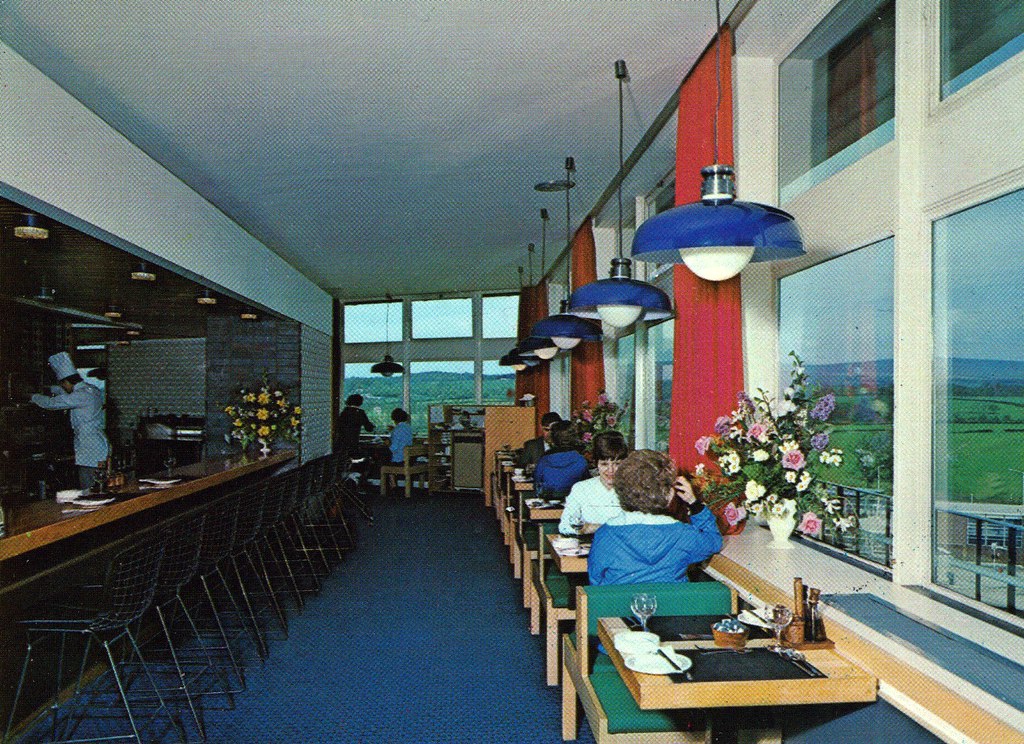
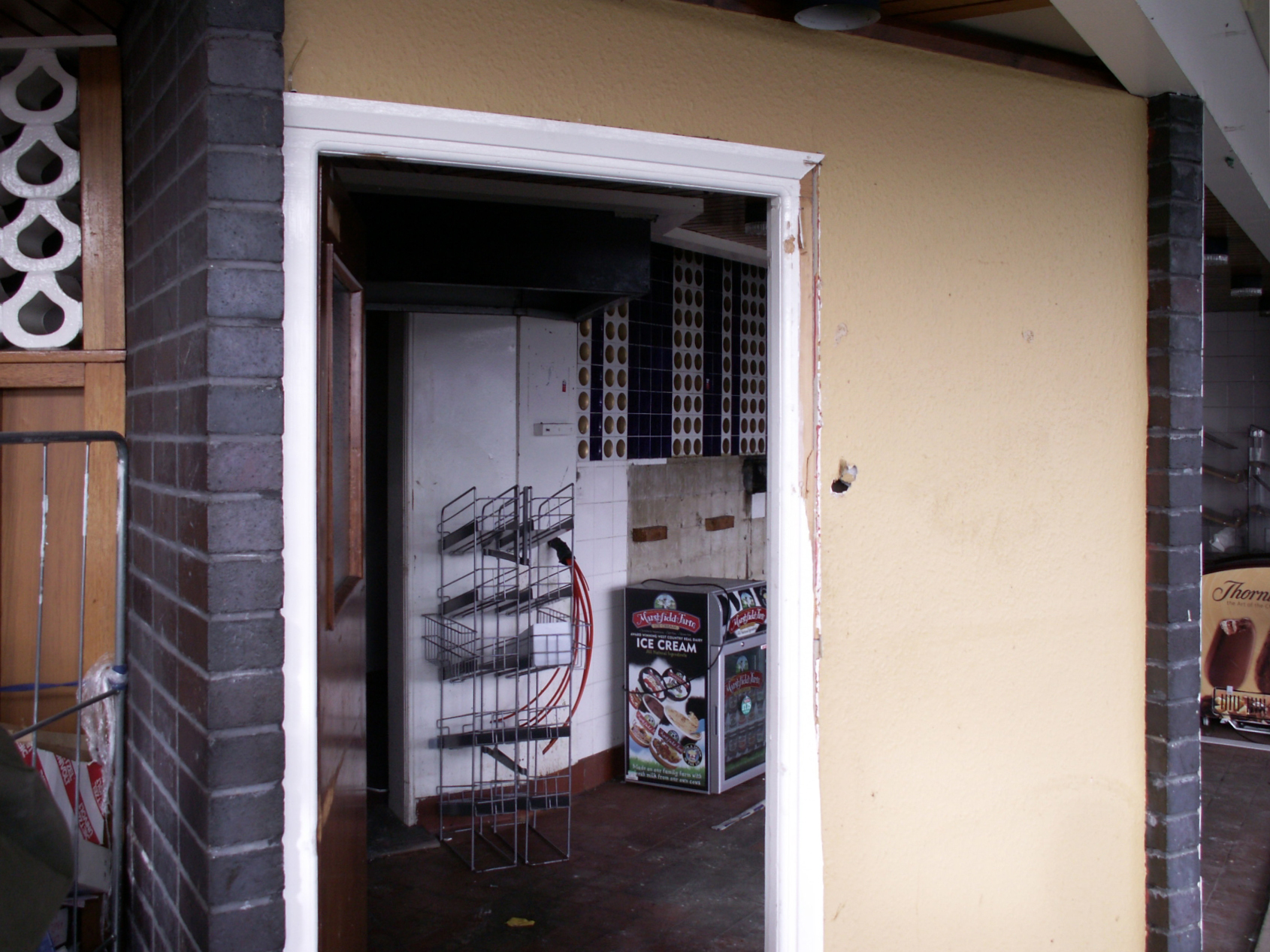
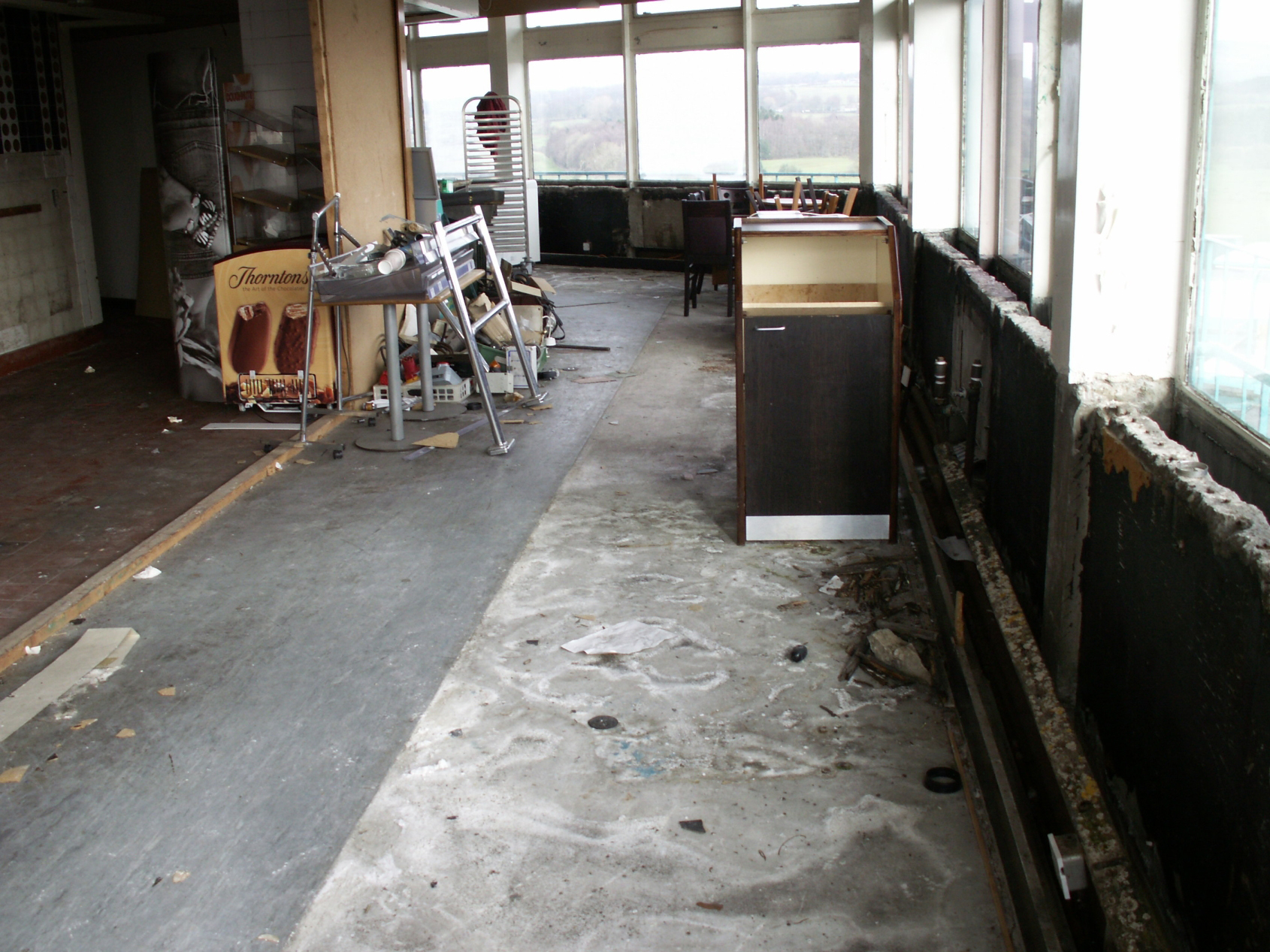
At the top of the tower stood a fine-dining waitress service restaurant, offering views over the road below and across Lancashire. Above the restaurant the lift extended to roof-level, to allow the roof to serve as a sun terrace – although Rank admitted they weren’t sure what this could be used for, suggesting serving tea or eventually building another level.
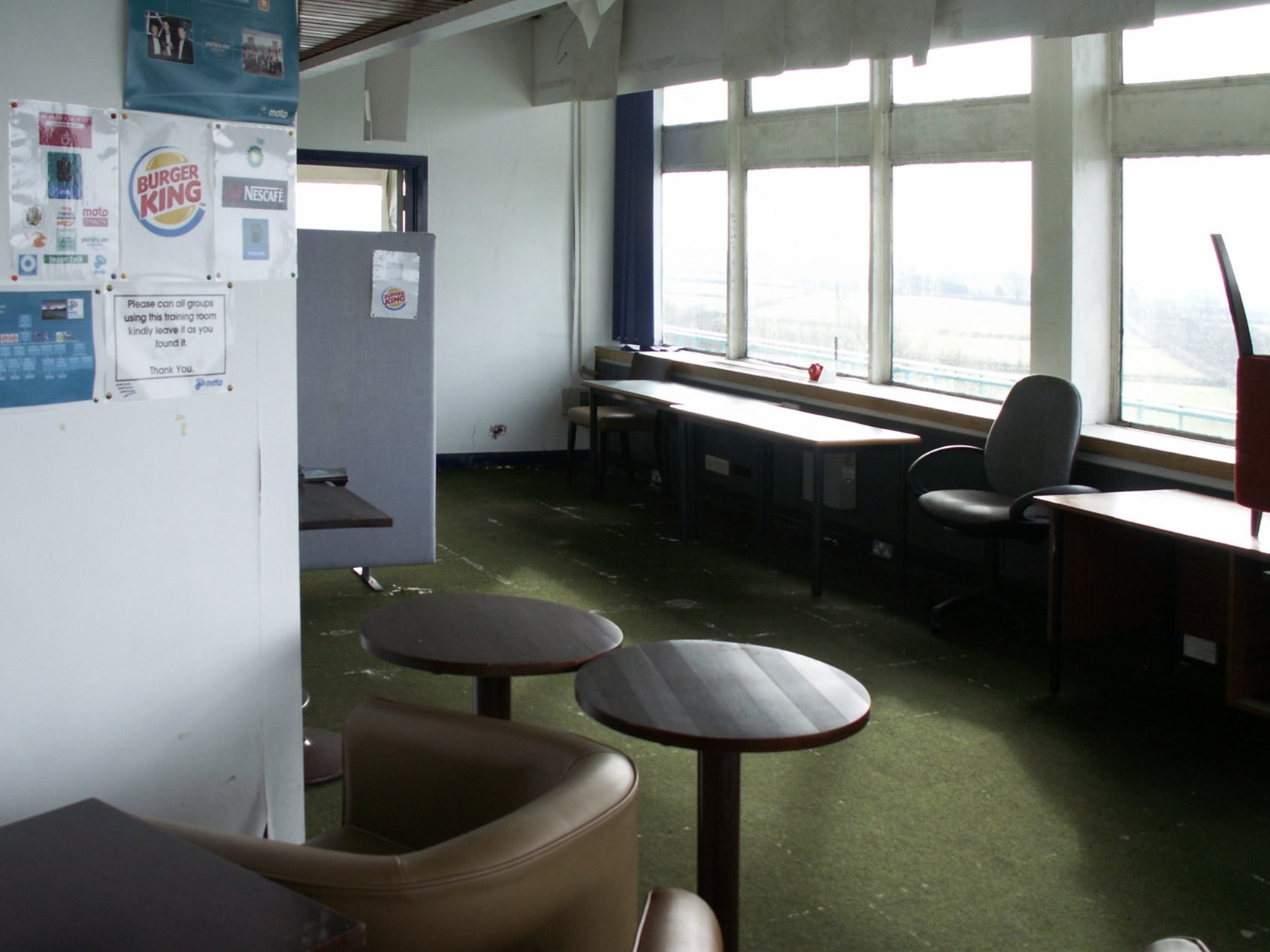
In reality social changes and cost-cutting limited the desirability of a sit-down meal, and this coupled with high maintenance costs made the tower fall out of favour. The ‘fine dining’ restaurant became the trucking lounge that had been on the first floor, before closing to the public in 1989. It then soldiered on for another 15 years, partially re-fitted, as a head office, then staff training and storage, but even this became too impractical, and the tower is now not used at all.
Although the tower is unique to these services, the concept of large high-level floors can be seen in many Rank services of the era, the idea of each one being to have a visible landmark and a good view of the surrounding area, such as at Hilton Park. The lower-level restaurant at Forton sticks out over the first floor, and partially in to the road, to give an optimum view. Toilets and offices were in the ground floor buildings below.
There are lots of myths flying around that the tower was forced to close by safety regulations, and that it is about to fall down. Like any building which hasn’t been used for 30 years it would take a lot of investment to get it open again, and with roadside restaurants across the country closing due to a lack of trade, nobody has come up with an convincing plan to justify investing in the Pennine Tower.
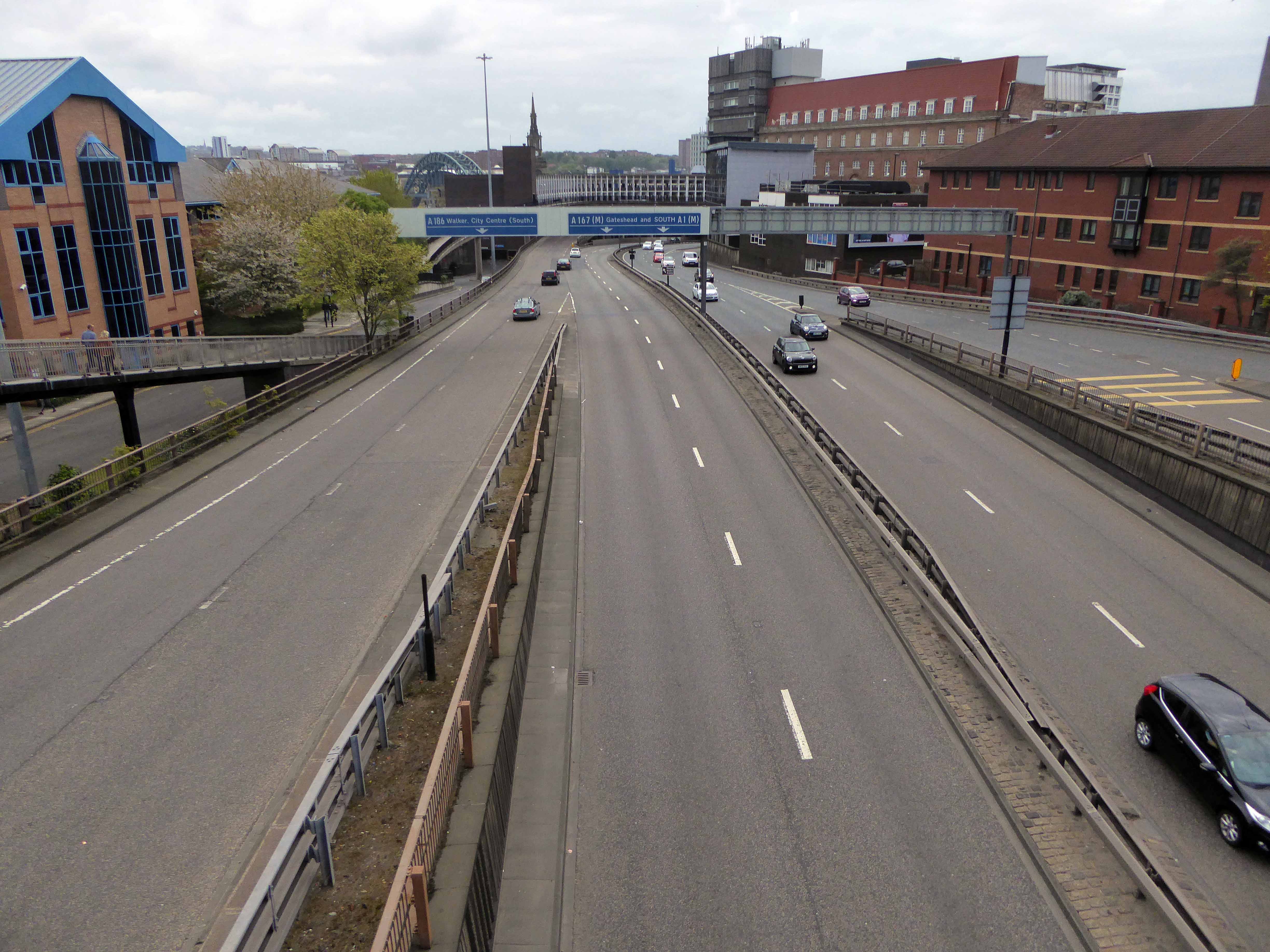
Tyneside is self evidently enamoured of elevation – they simply adore bridges, having five and another one as well. Walking driving, running trains across the mighty Tyne Valley, why they even write songs about them.
In the Swinging SixtiesT Dan Smith vowed to create a Brasilia of the North, which as good as his word he did, though sadly lacking the requisite regard for the law of the land.
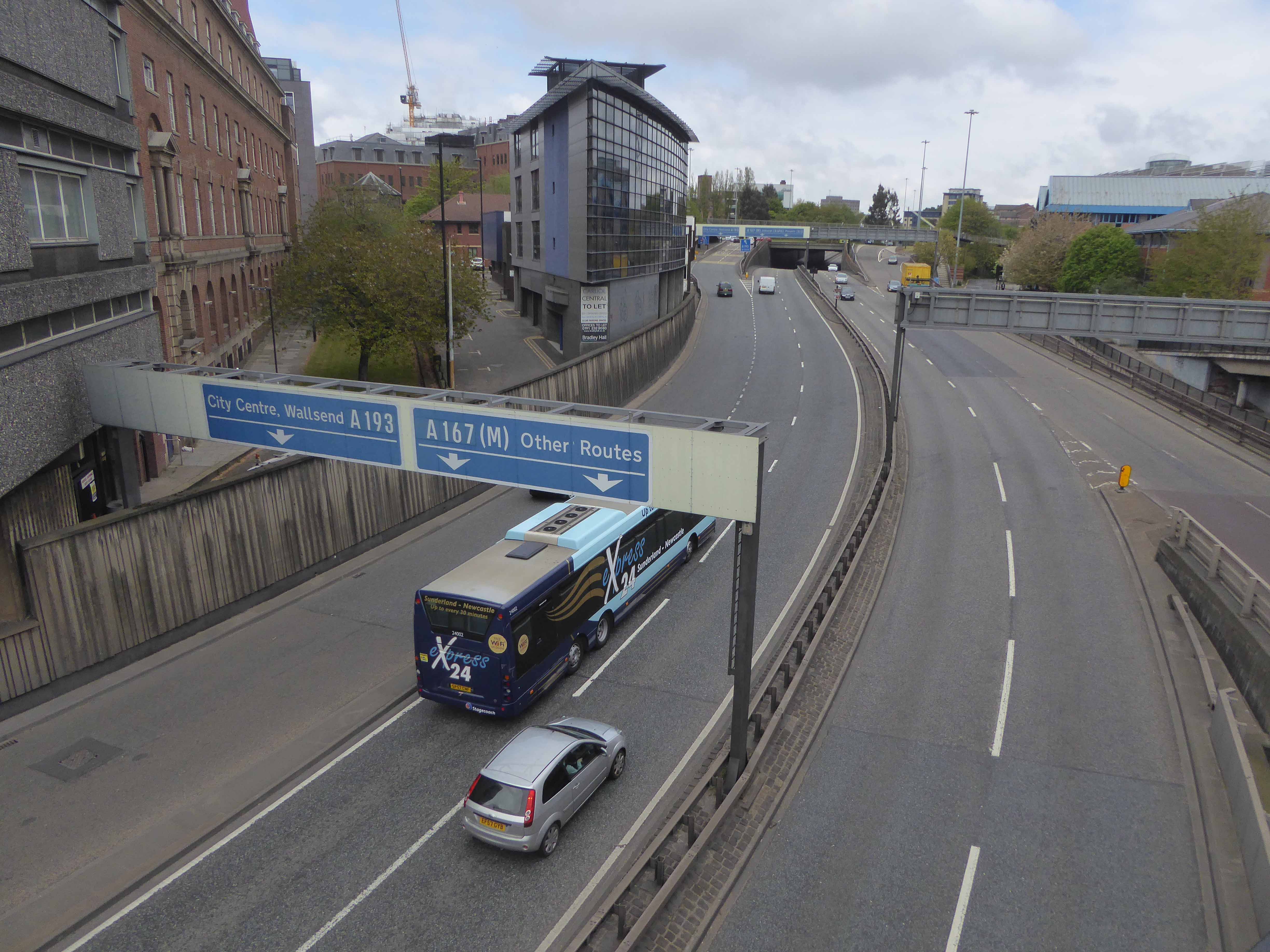
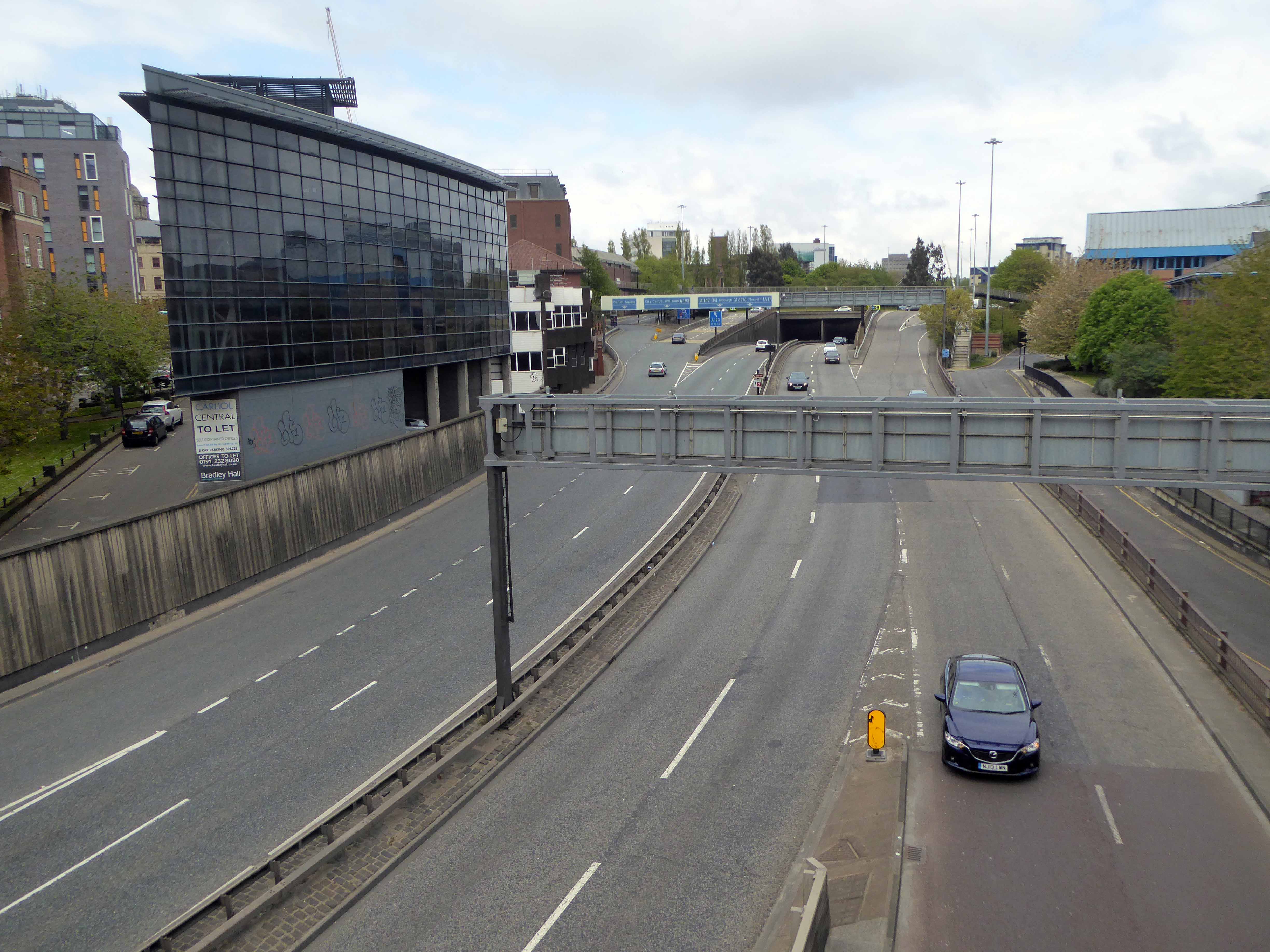
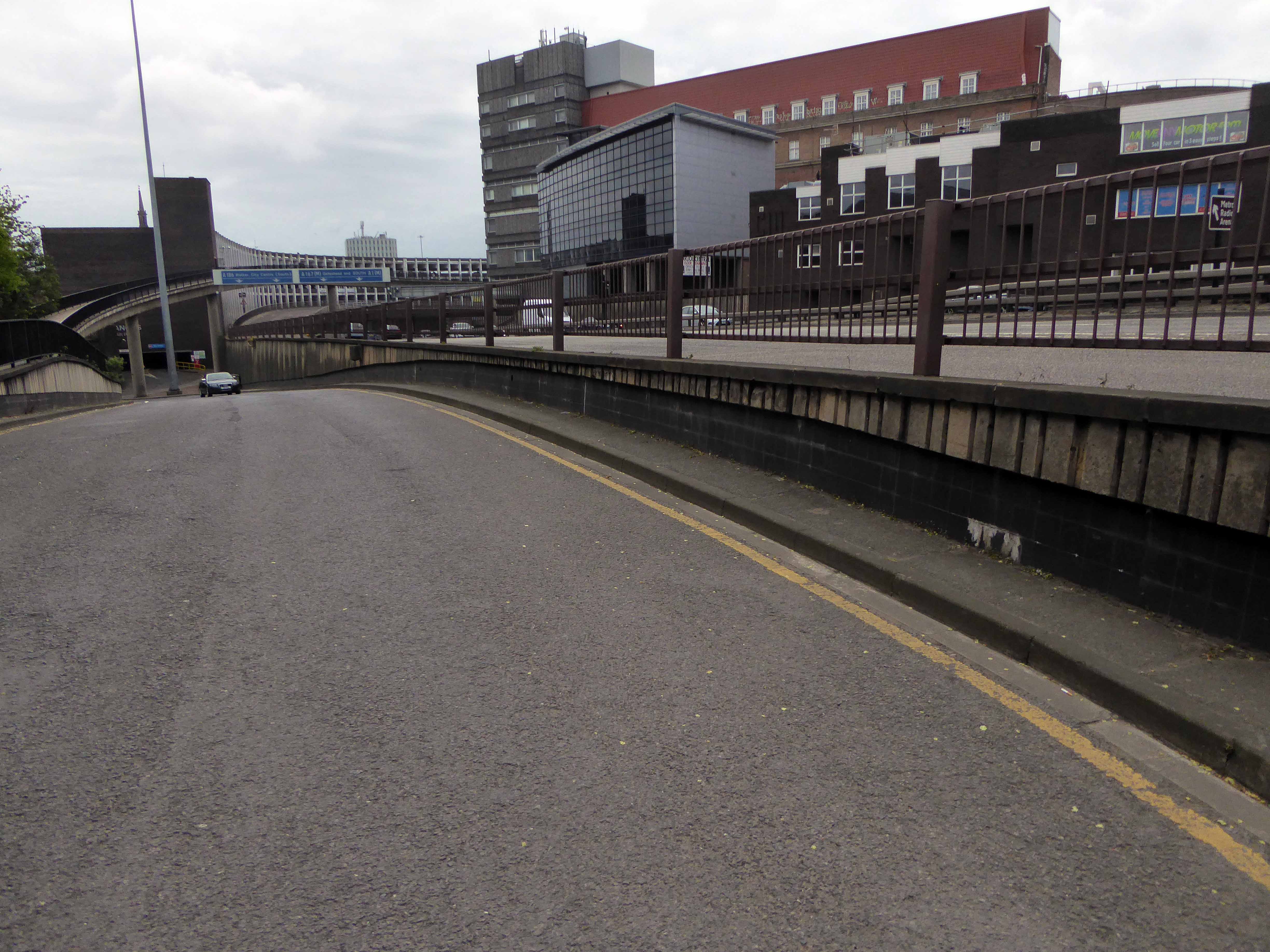
What remains is a complex interwoven structure of urban motorways, walkways, multi-storey car parks and tower blocks. To explore is to enter a world of the sublime, exhilarating and still yet mildly confusing.
Hard by the seafront linking Foreshore, Cleveland Way and Valley Road sits a neat little tight little island, giving pedestrian access to almost everywhere – and a car park.
As with every other torus worth calling a torus, at its very centre sits the presence of absence, darkened concrete subterranean causeways, linking everything to nothing.
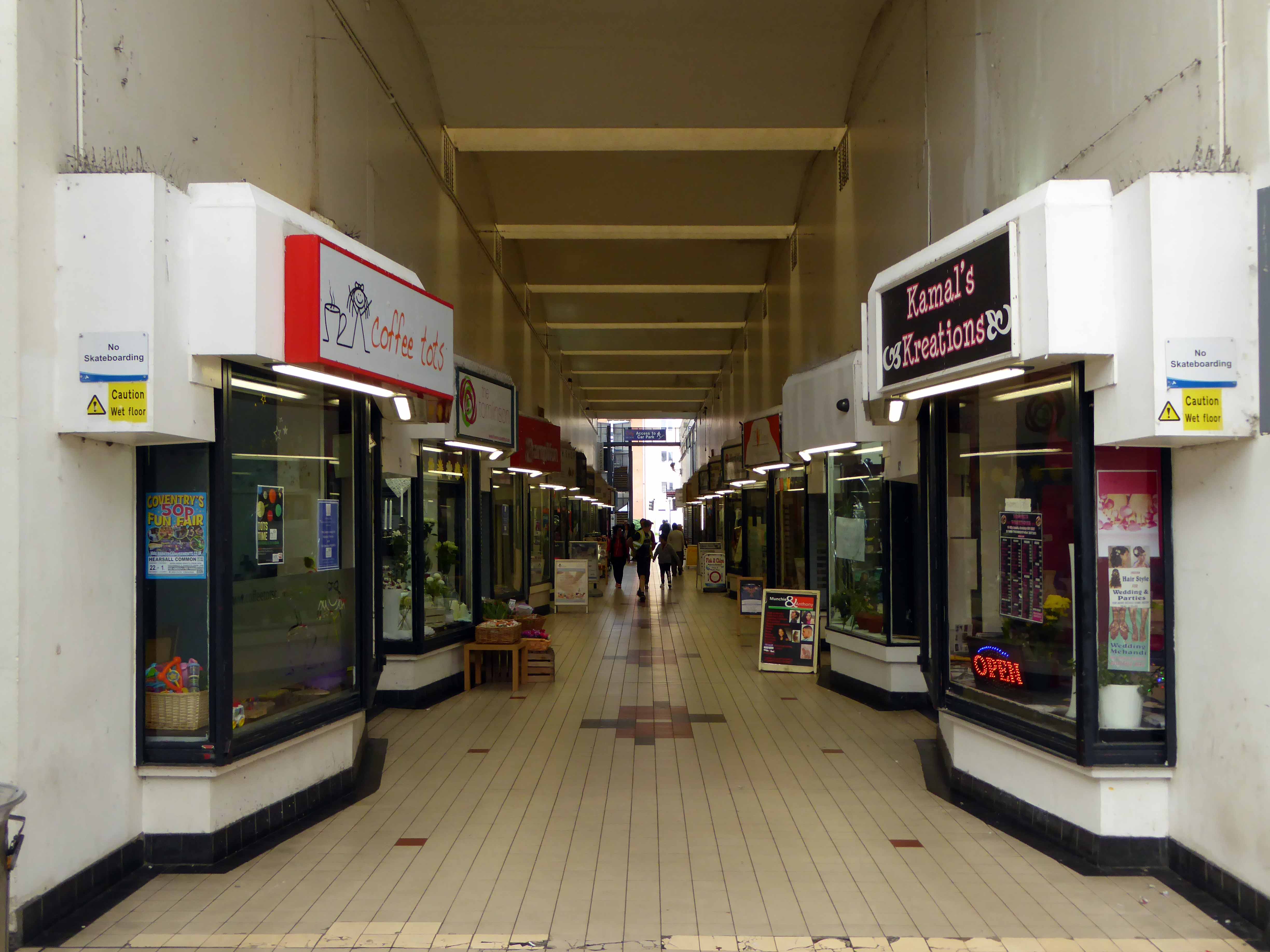
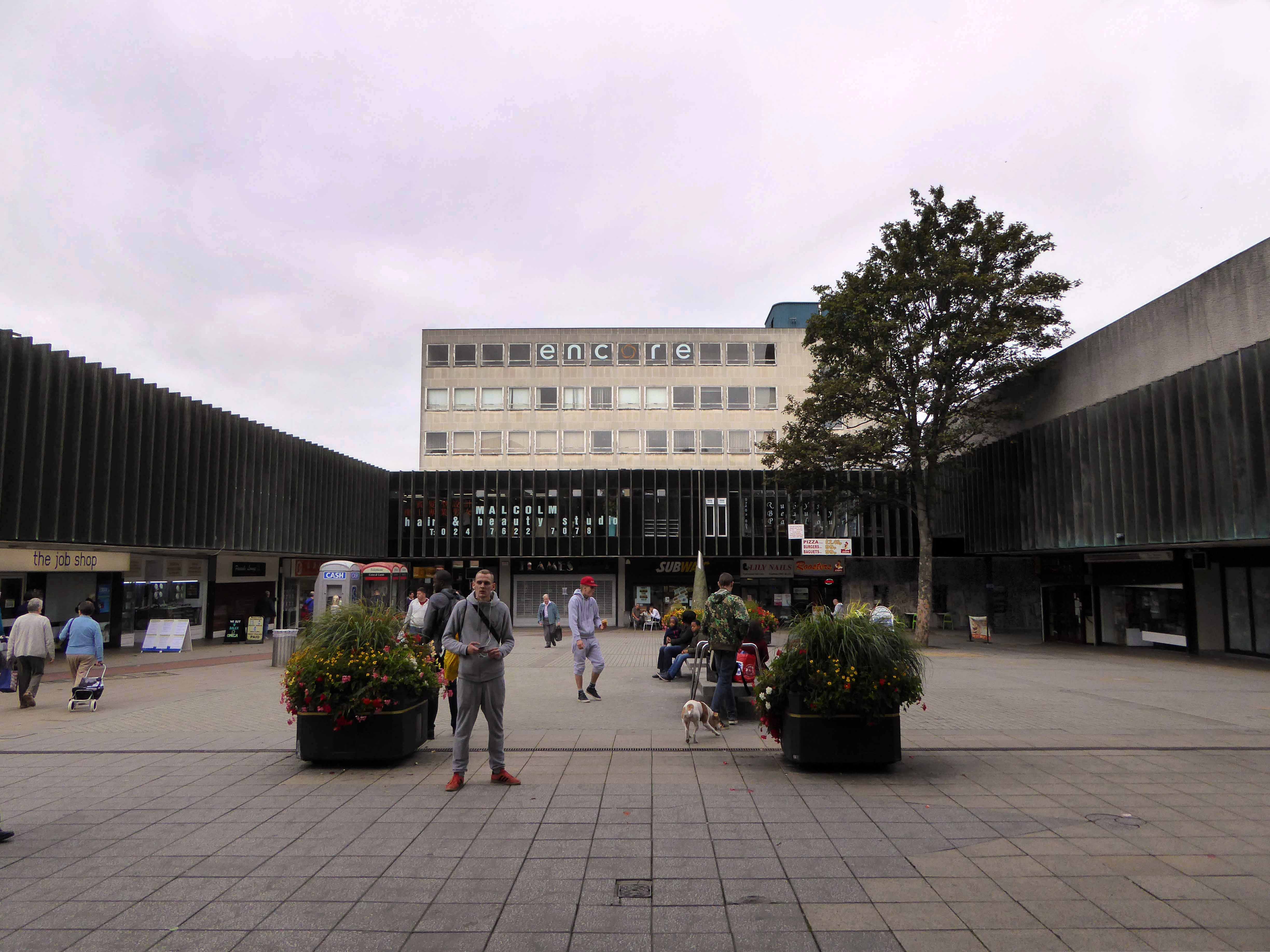
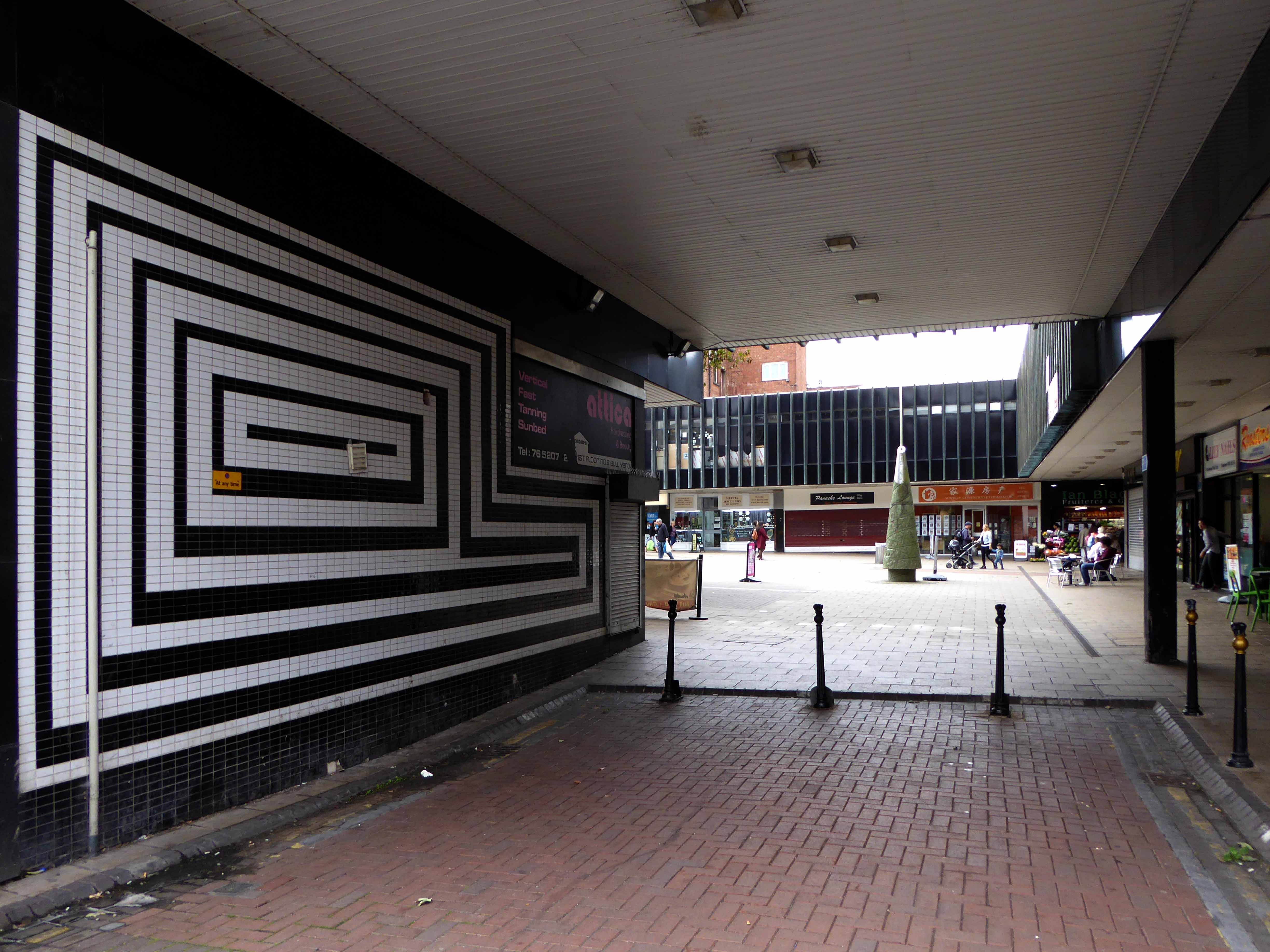
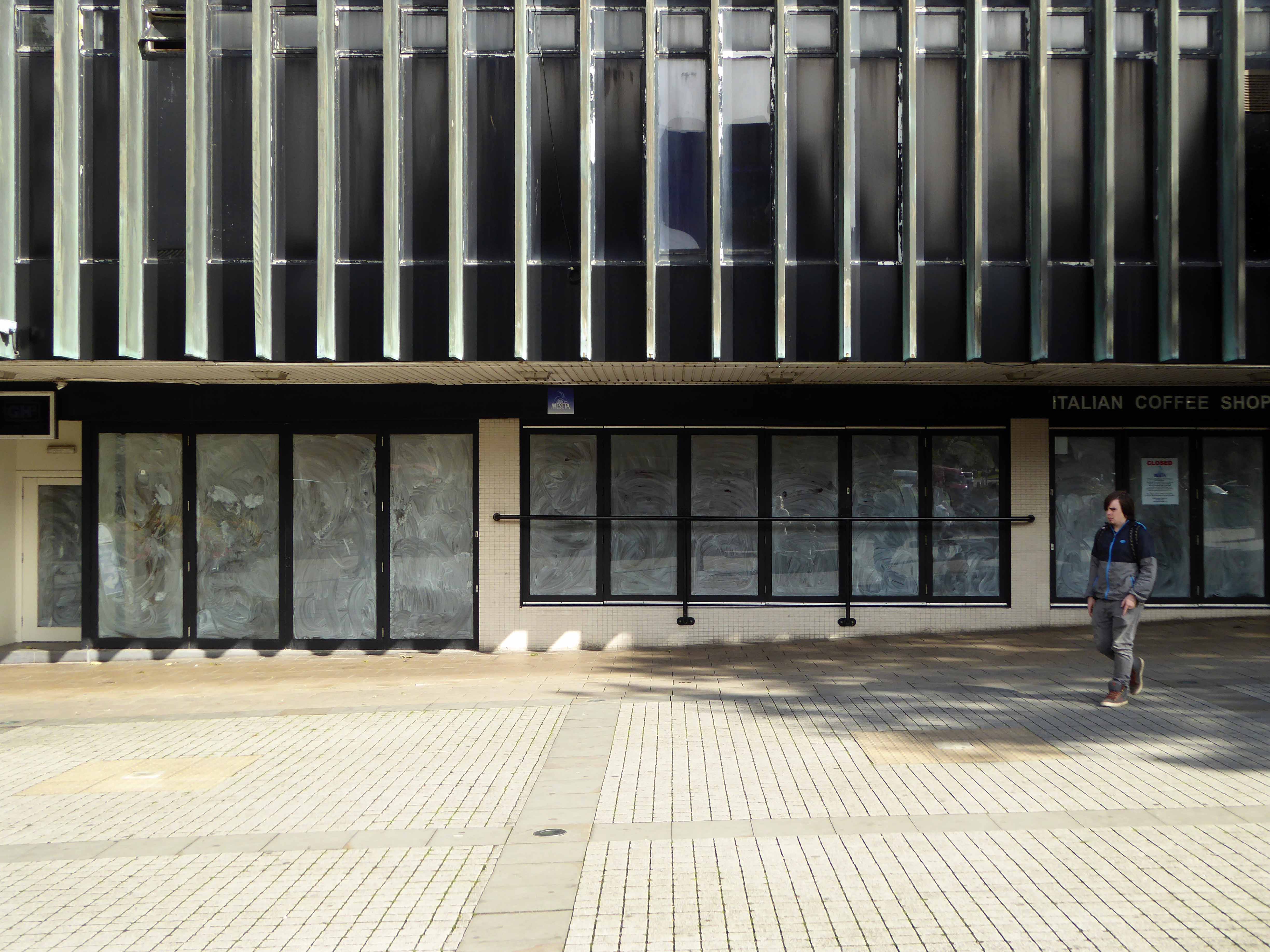
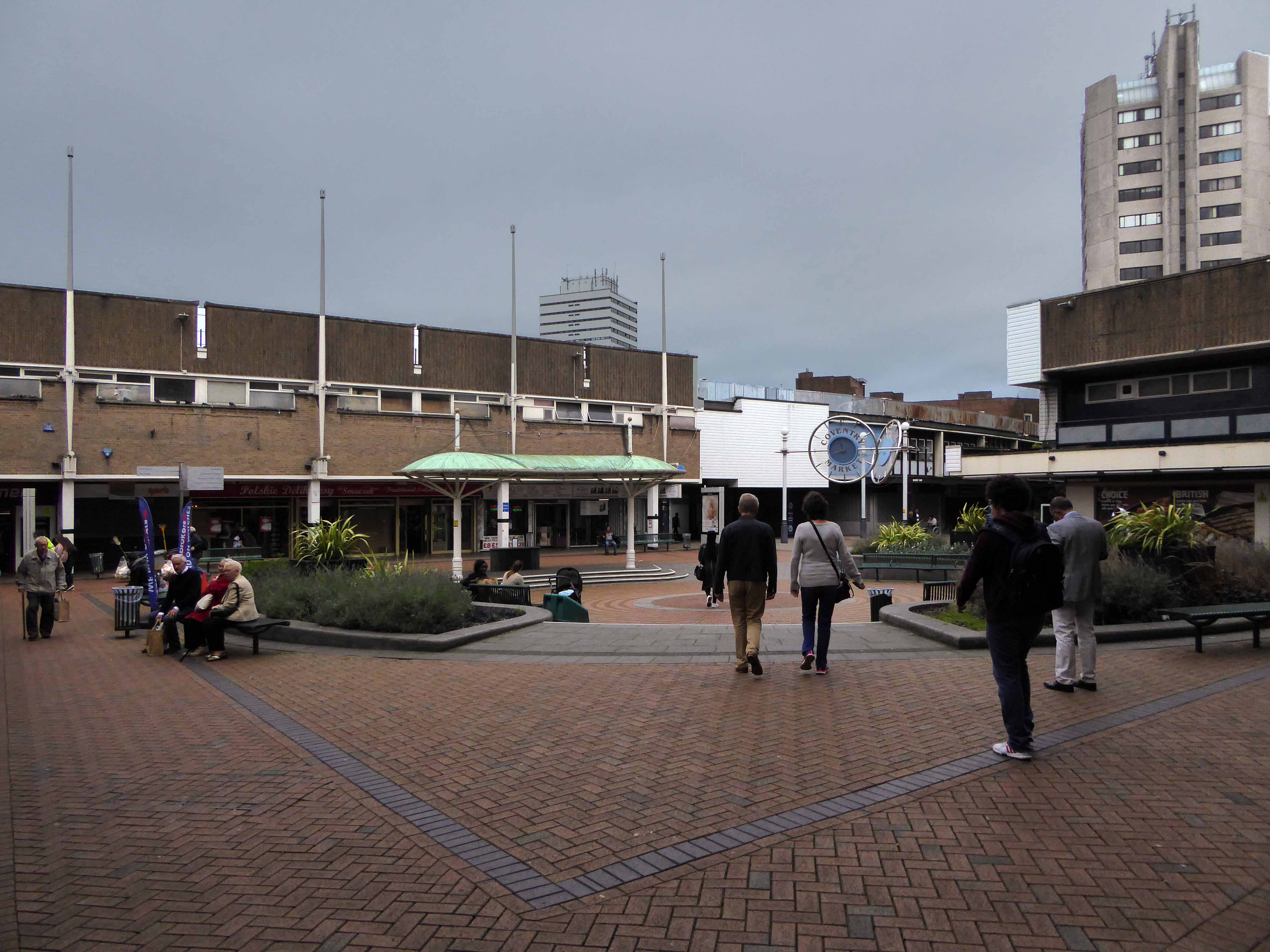
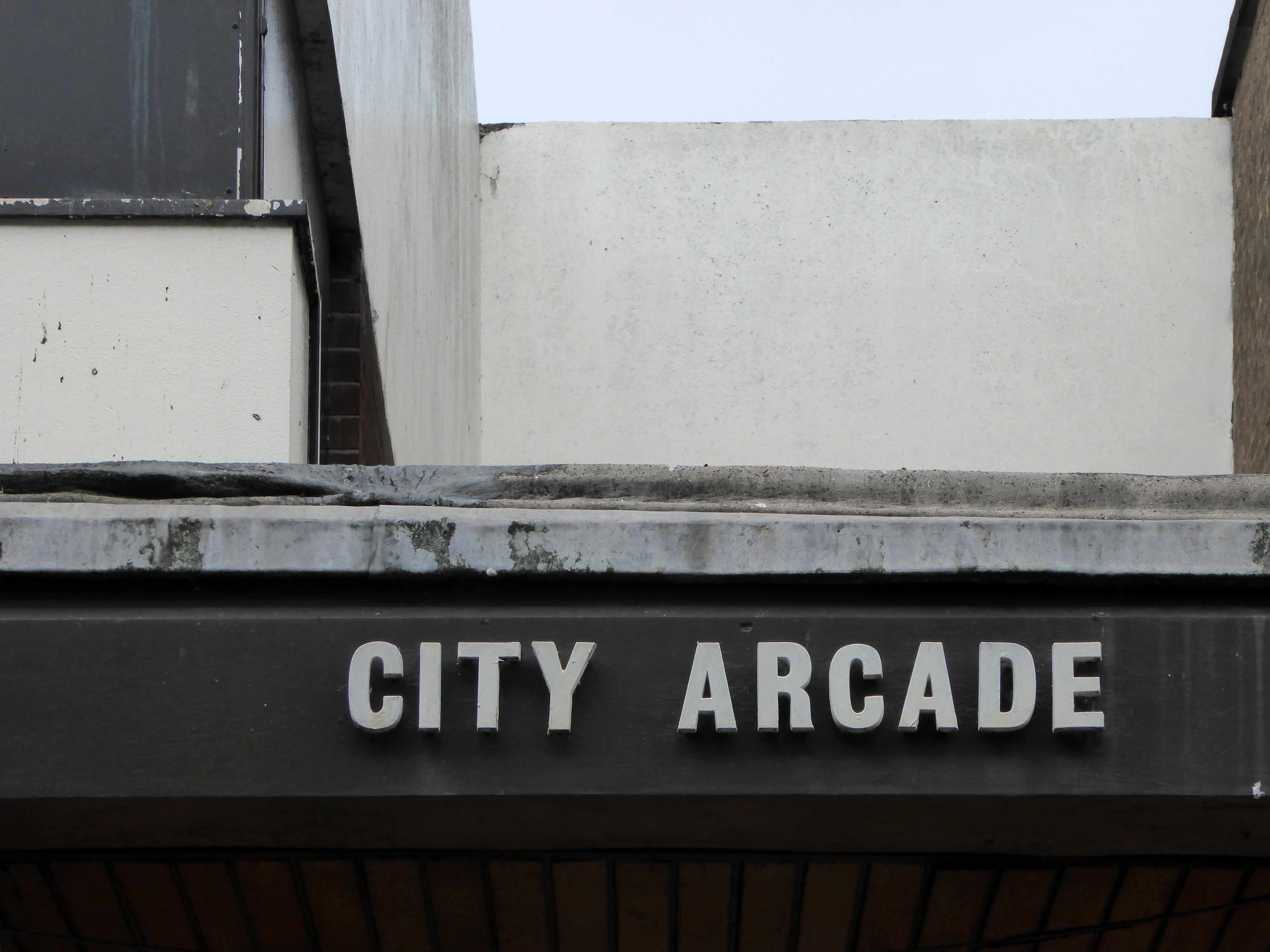
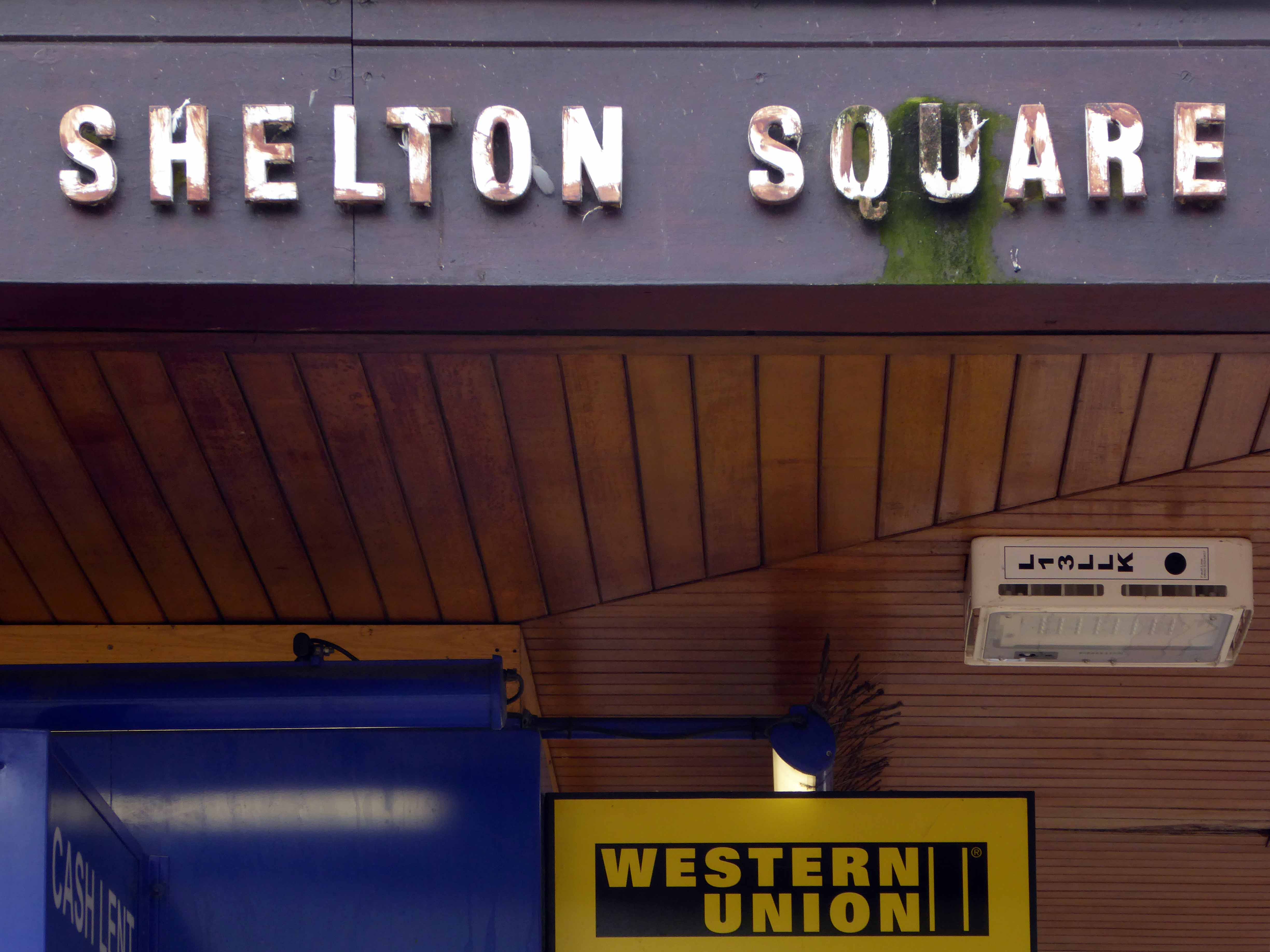
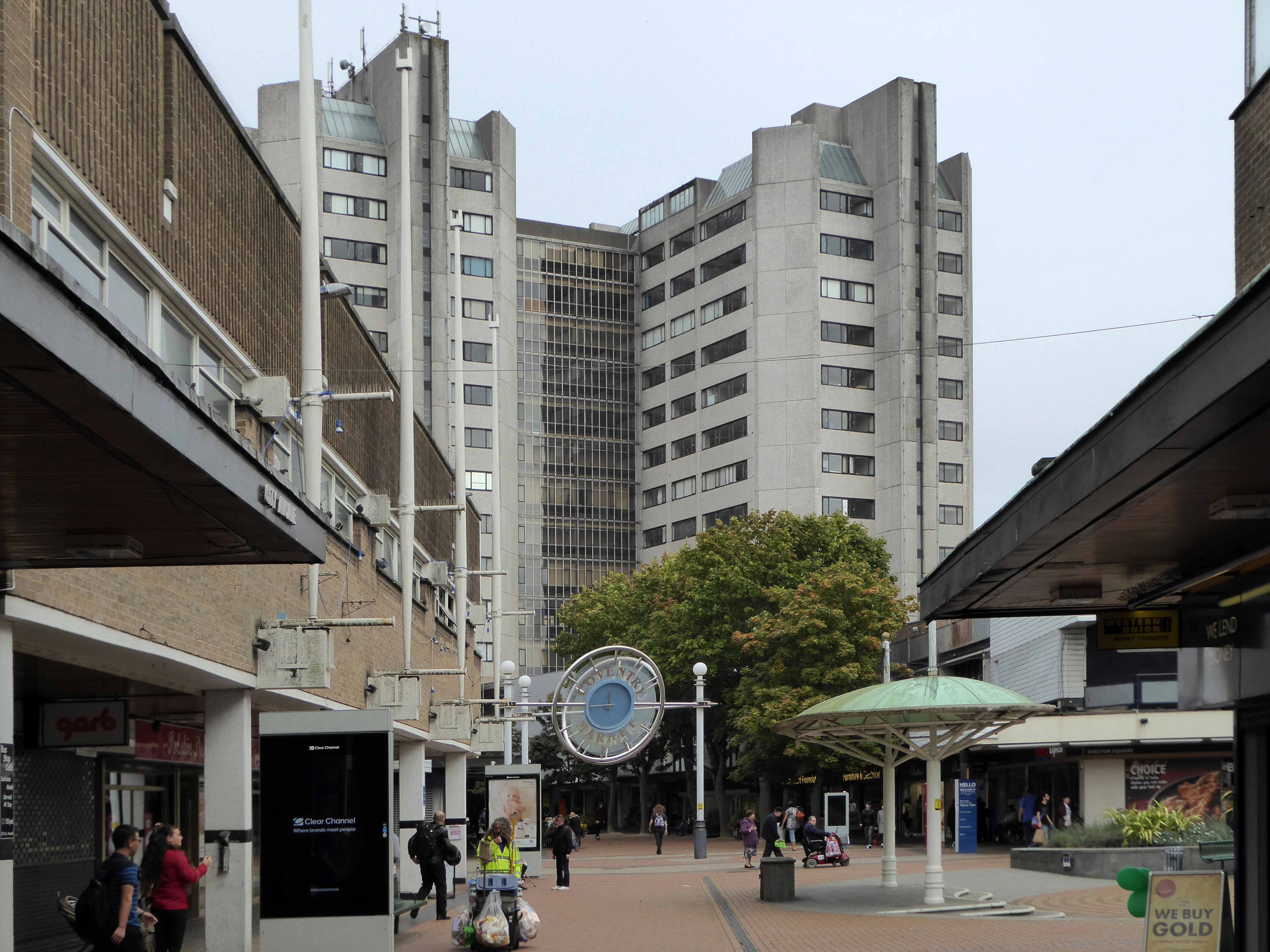
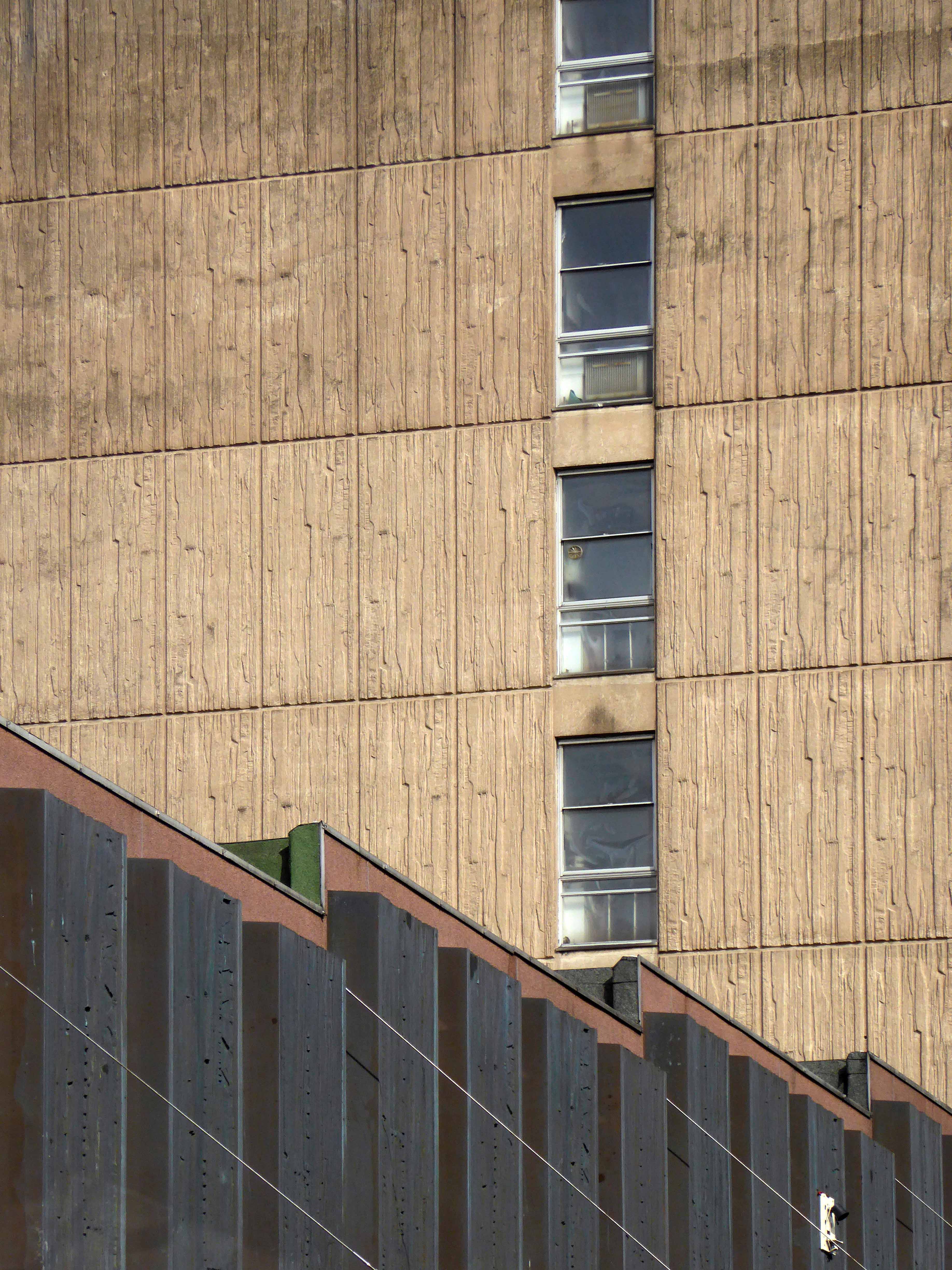
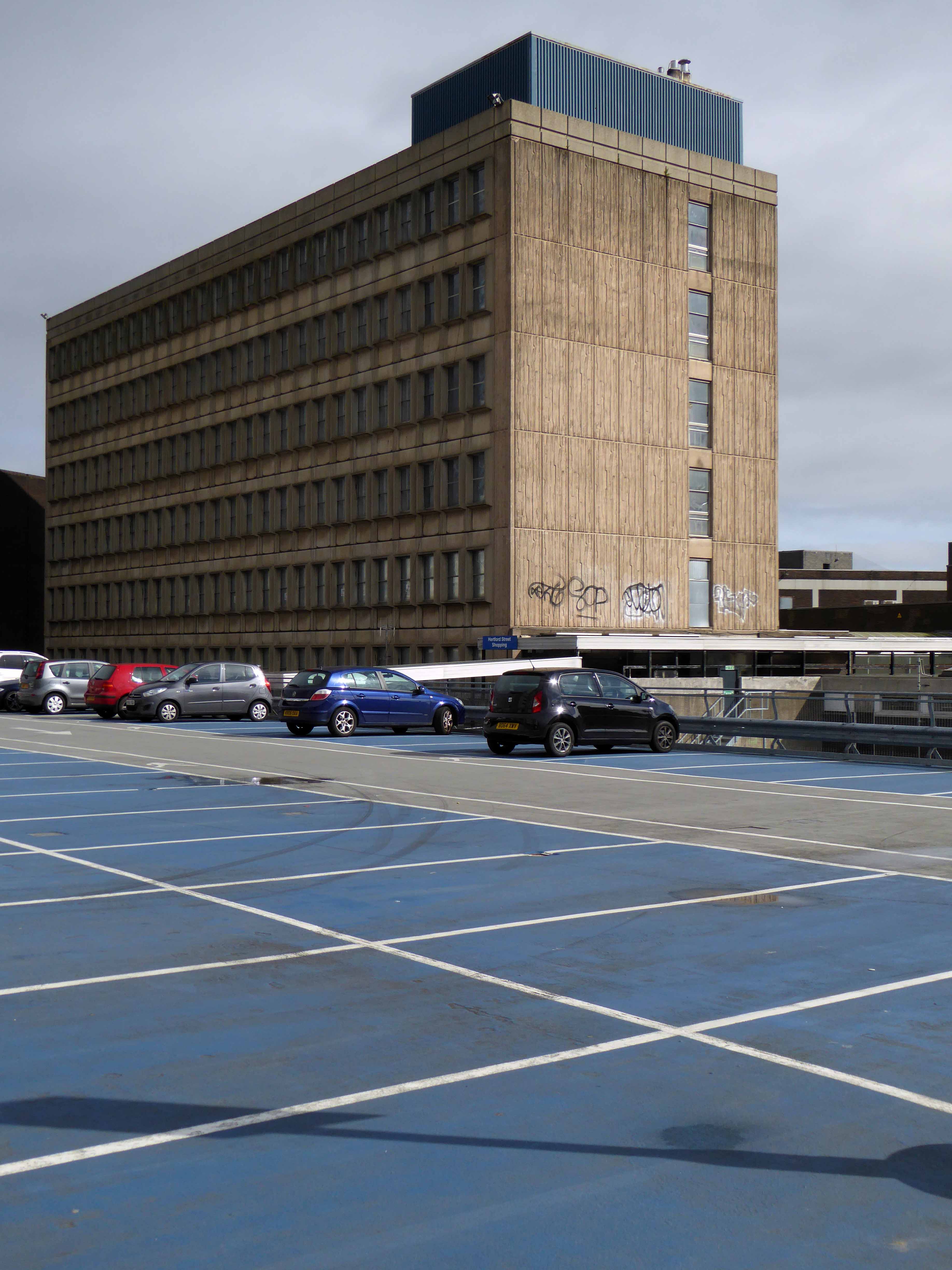
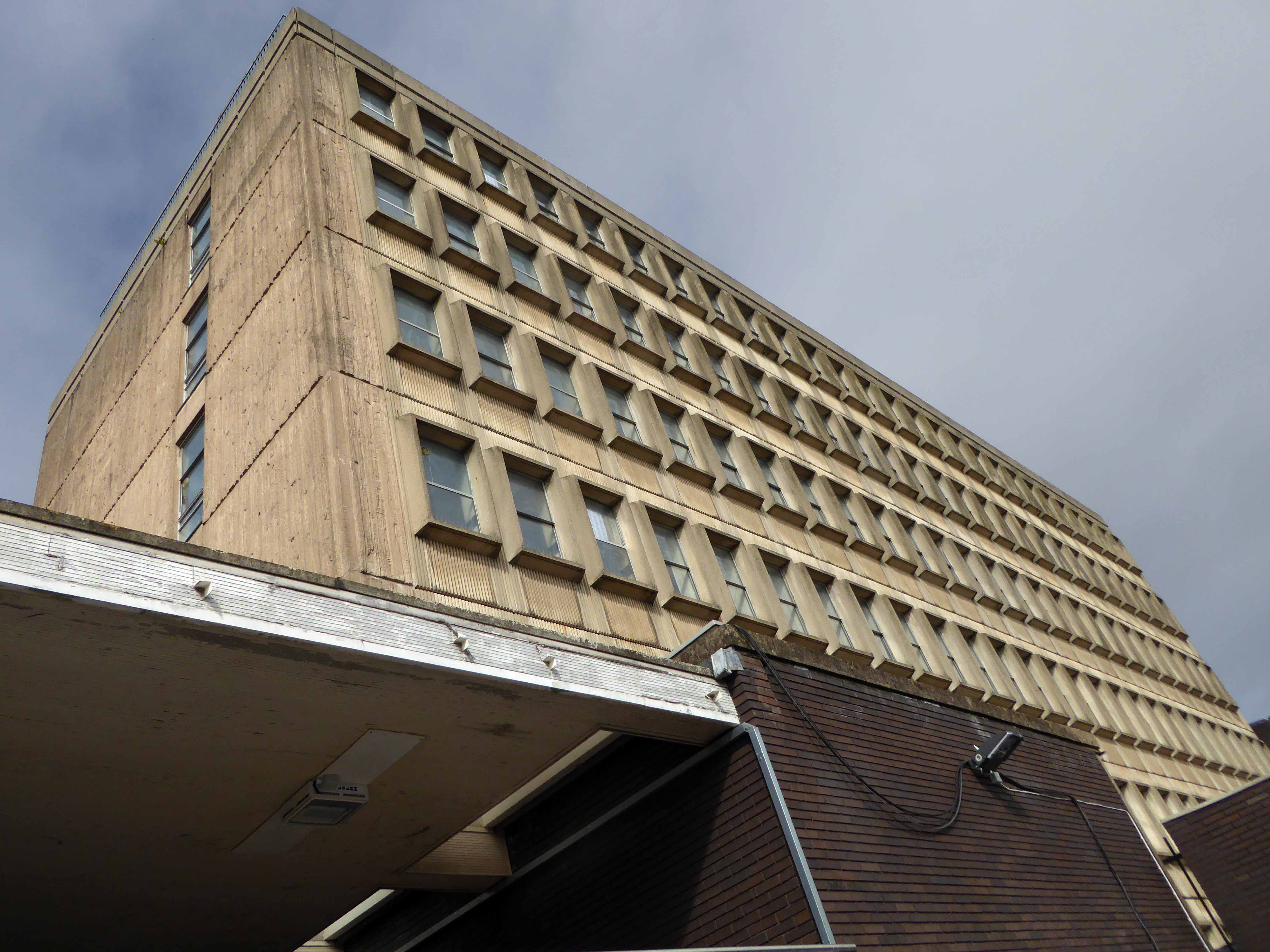
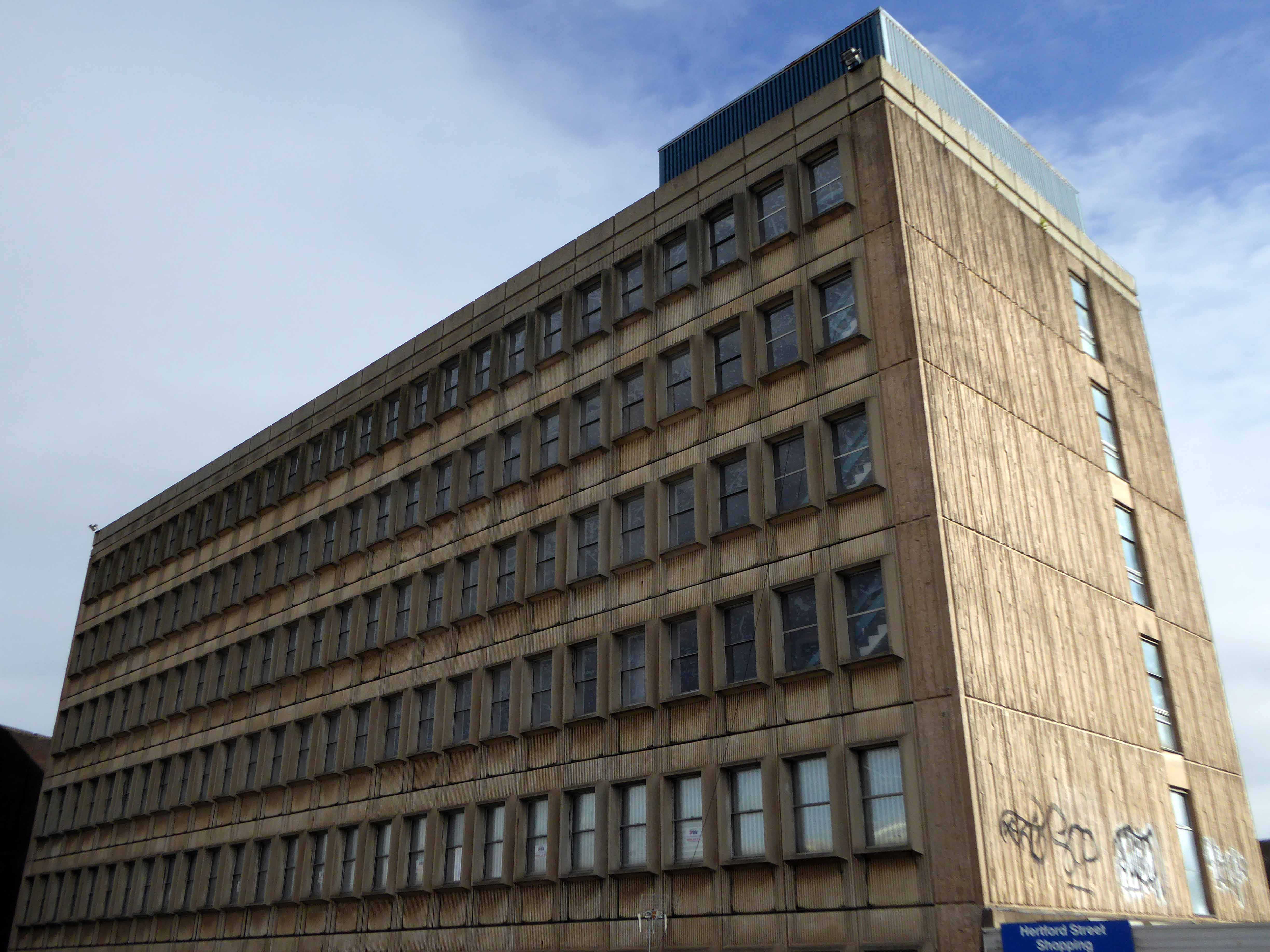
Coventry city centre is a city centre, comprised of several interlocking post- war facets, realised over a thirty year period. This later addition The Bull Yard, the work of Arthur Ling and Terence Gregory, city architects and planning officers 1963-69.
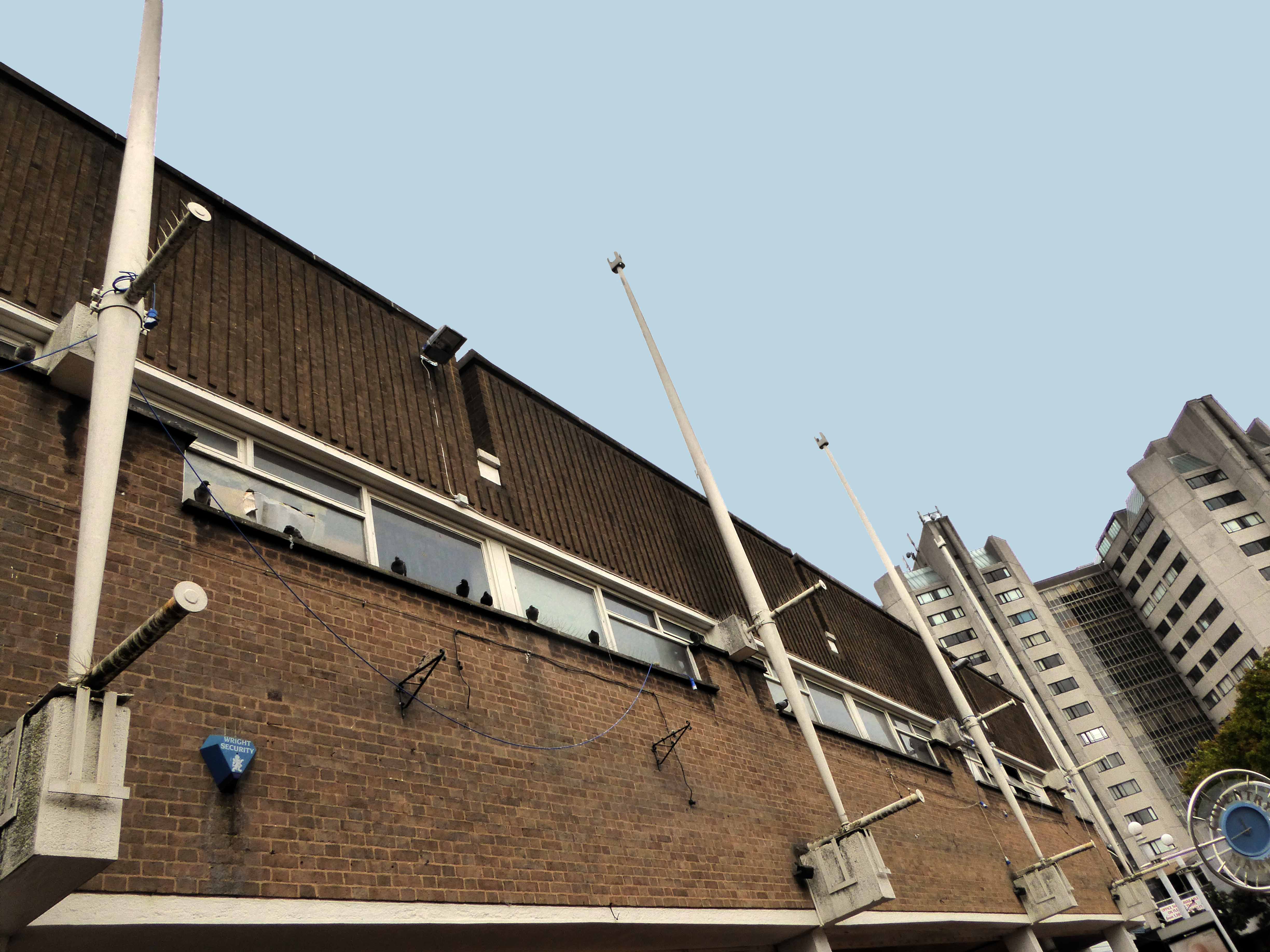
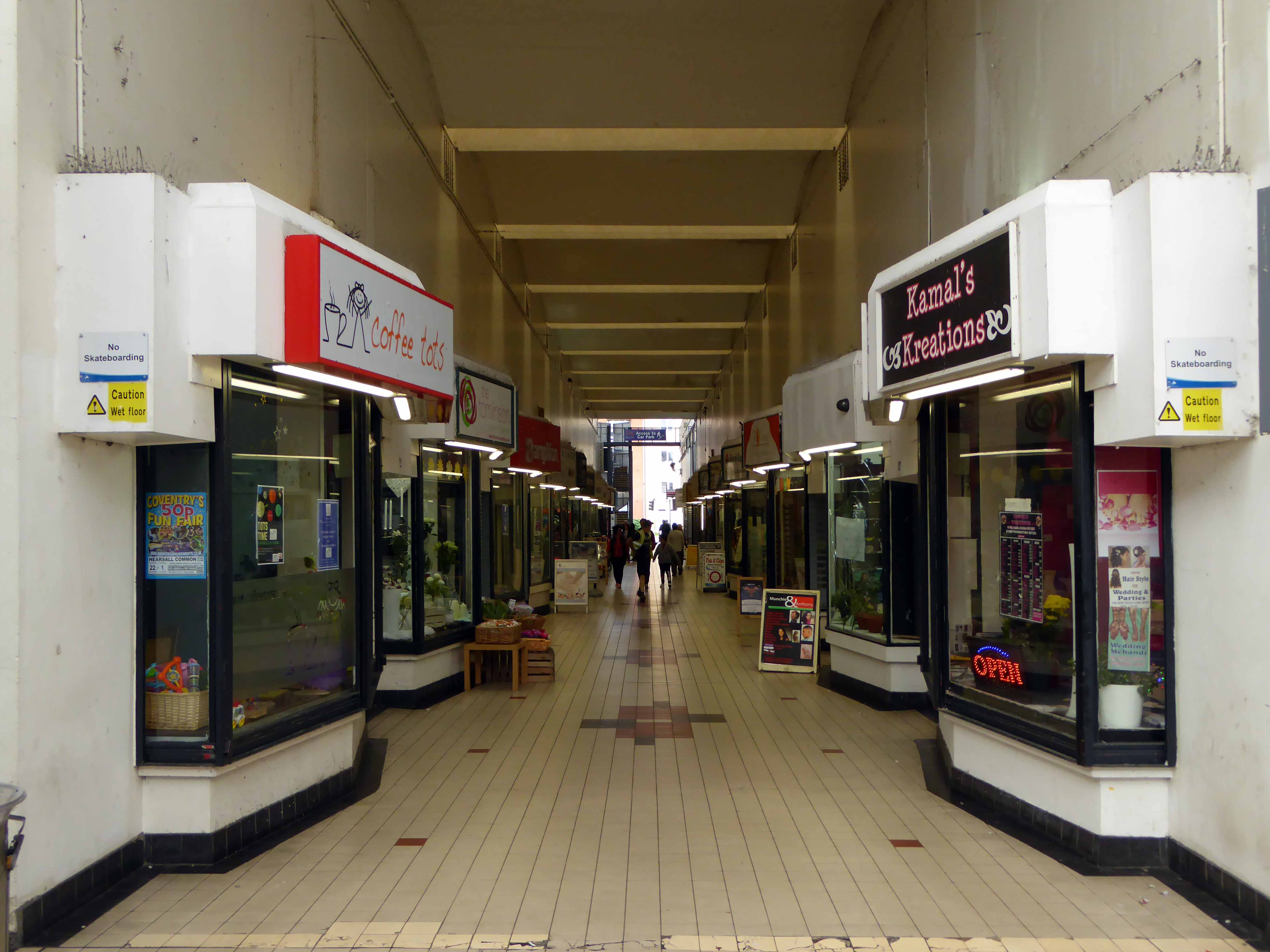
It incorporates pedestrian walkways, retail, civic and car parking facilities with a crowded unease and grace. Much of the original detail survives, though not unusually, some more recent additions detract from the integrity of the scheme.
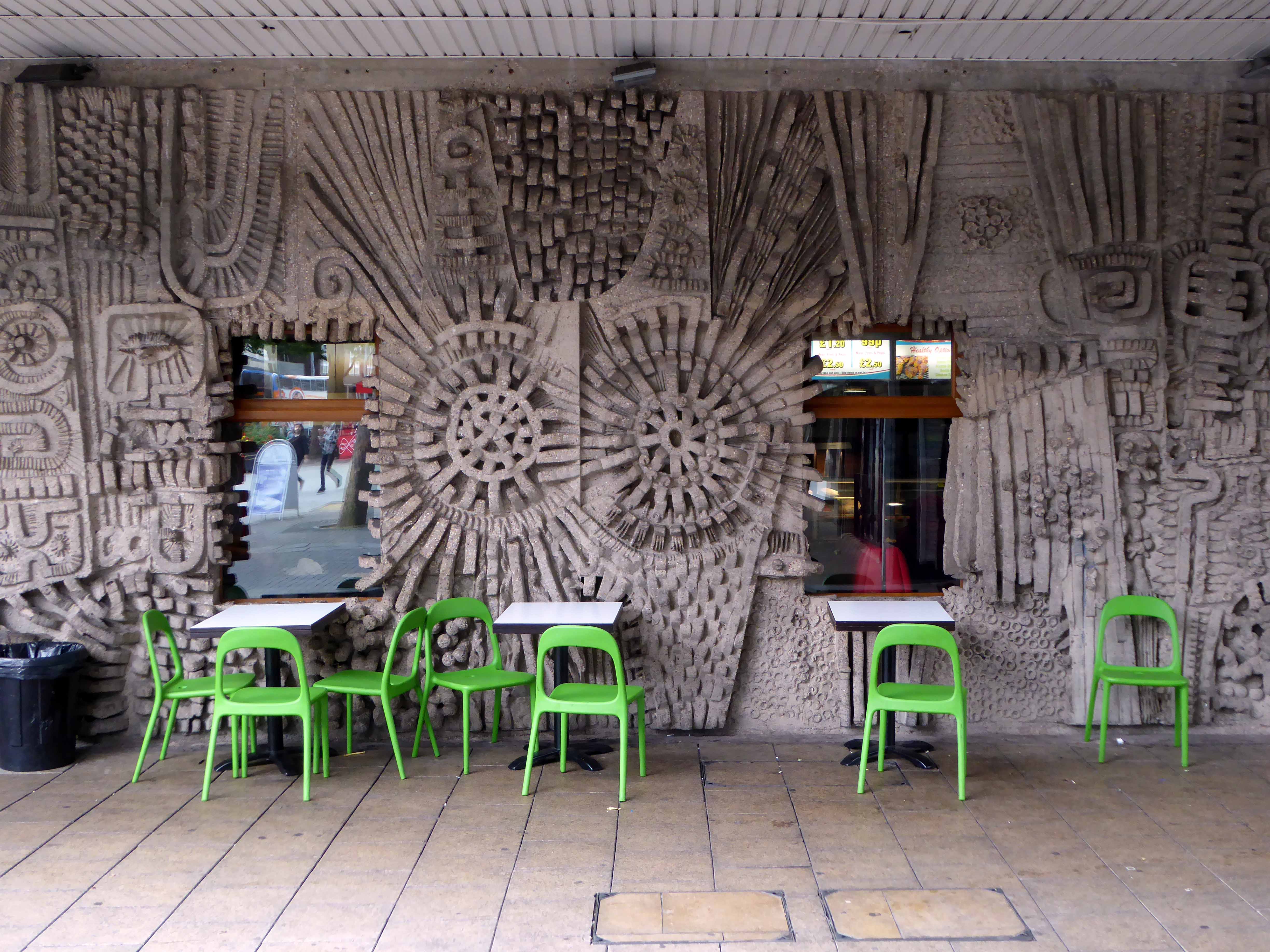
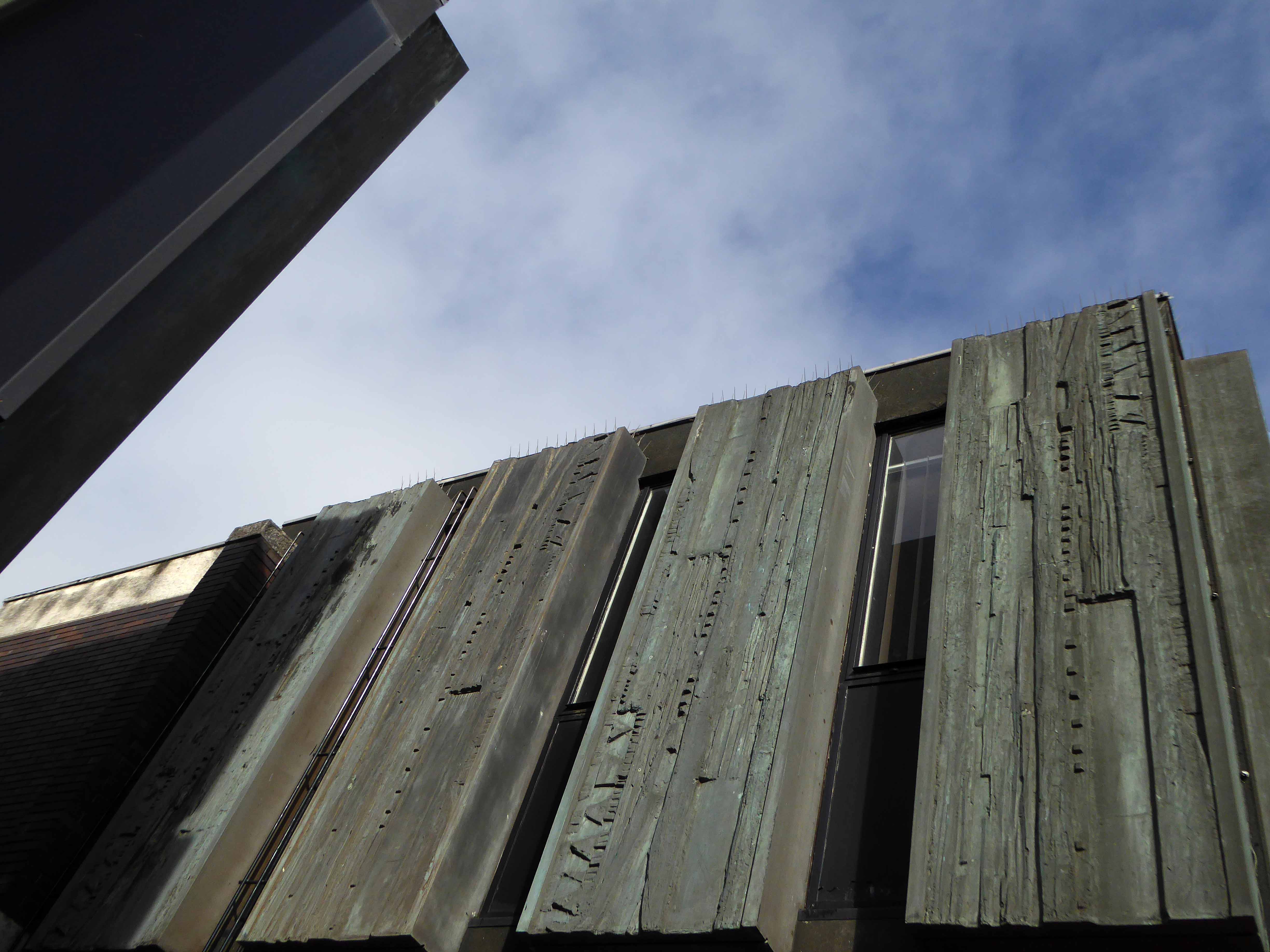
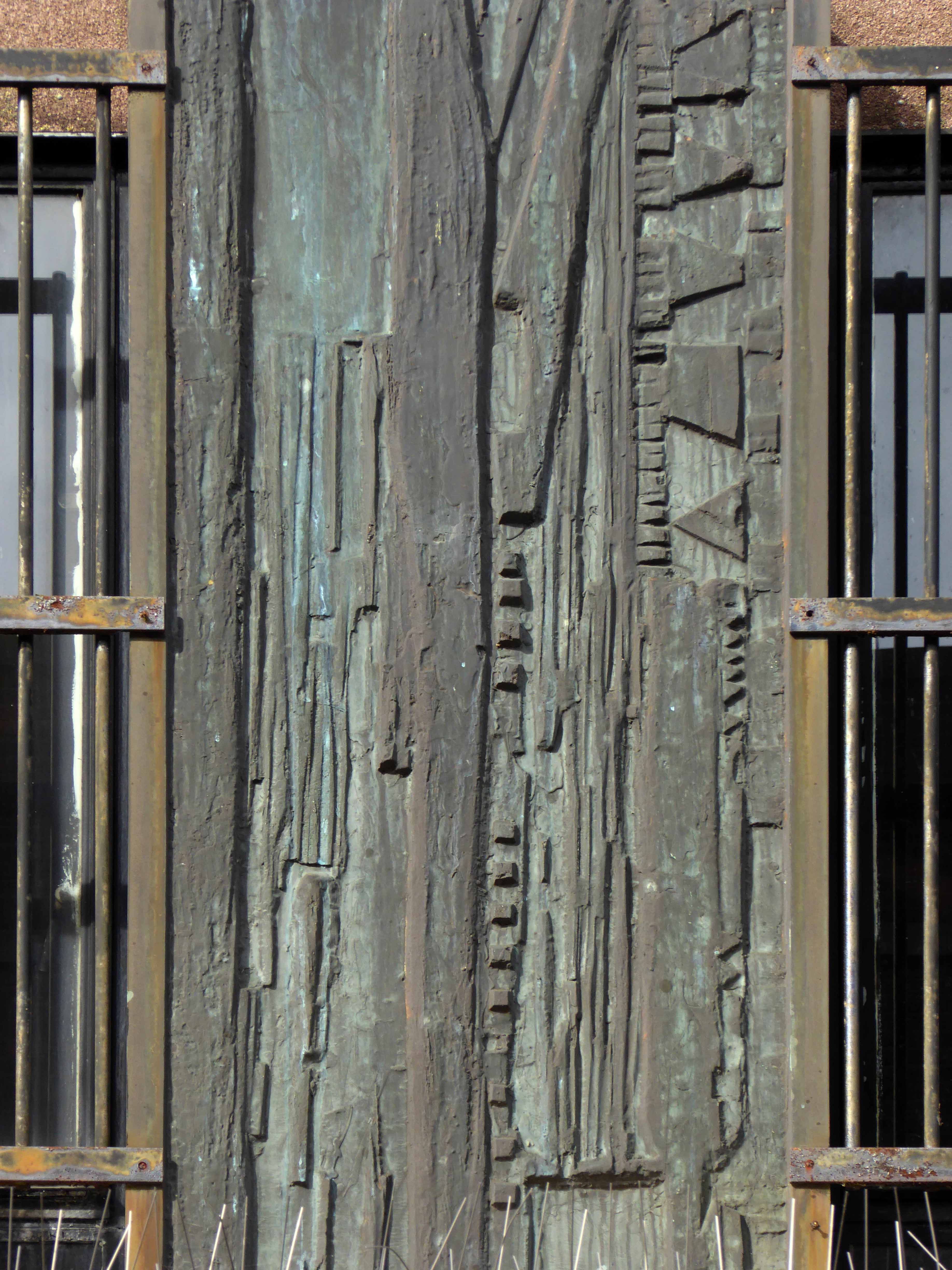
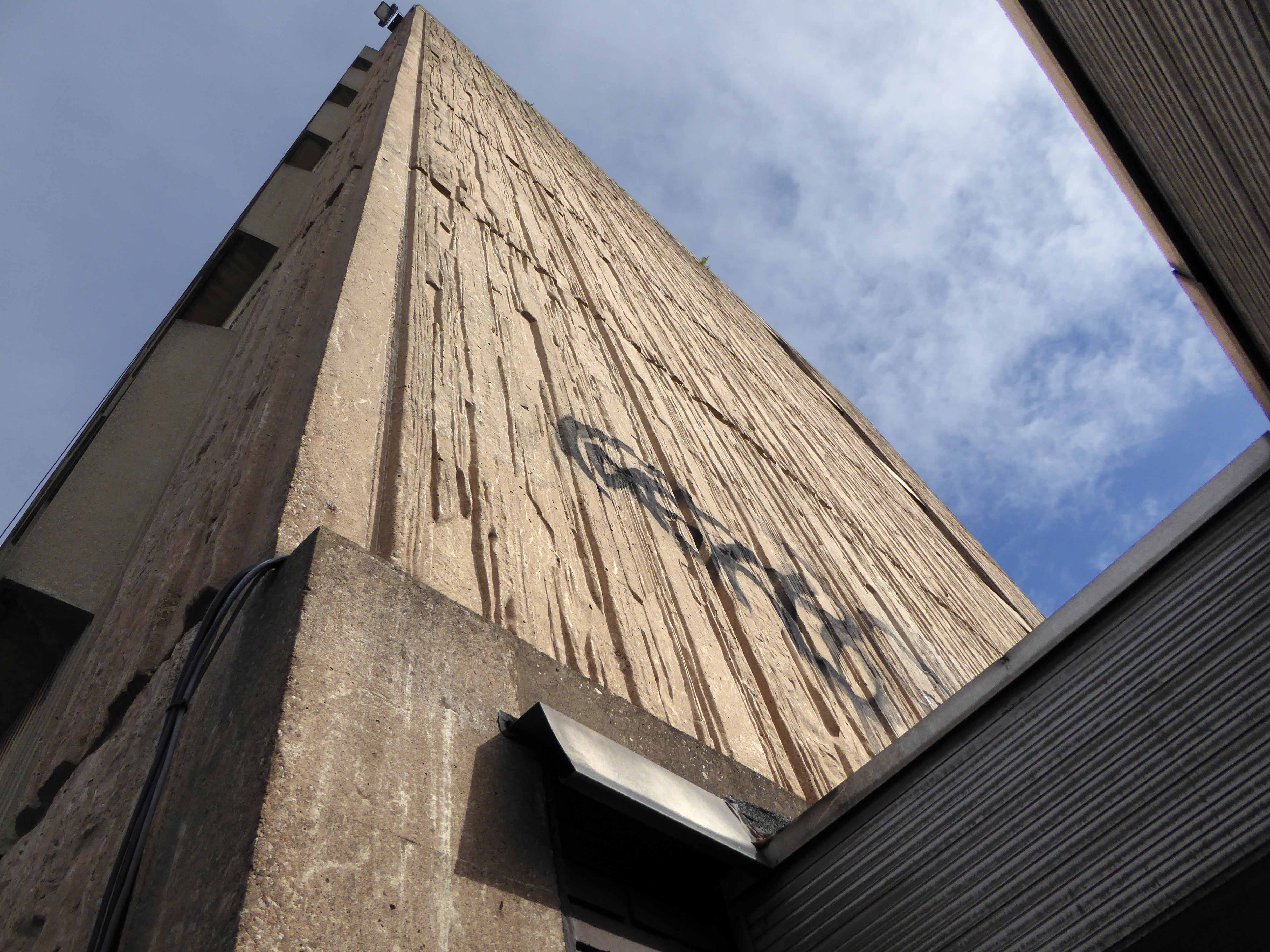
The site is graced by two major works by William Mitchell – the concrete facade and interior of the former Three Tuns public house.
And the sculpted panels on Hertford Street.
So we are left with a series of spaces that now seem slightly adrift, particularly the City Arcade, as both the earlier and more recent developments in the city compete for clients and customers.
To explore is to discover a work continually in progress, or regression, as the forces of heritage, commercial development, and civic planning pull each other this way and that.
There is an initiative for redevelopment for the area yet to find a satisfactory resolution.
Take a look.
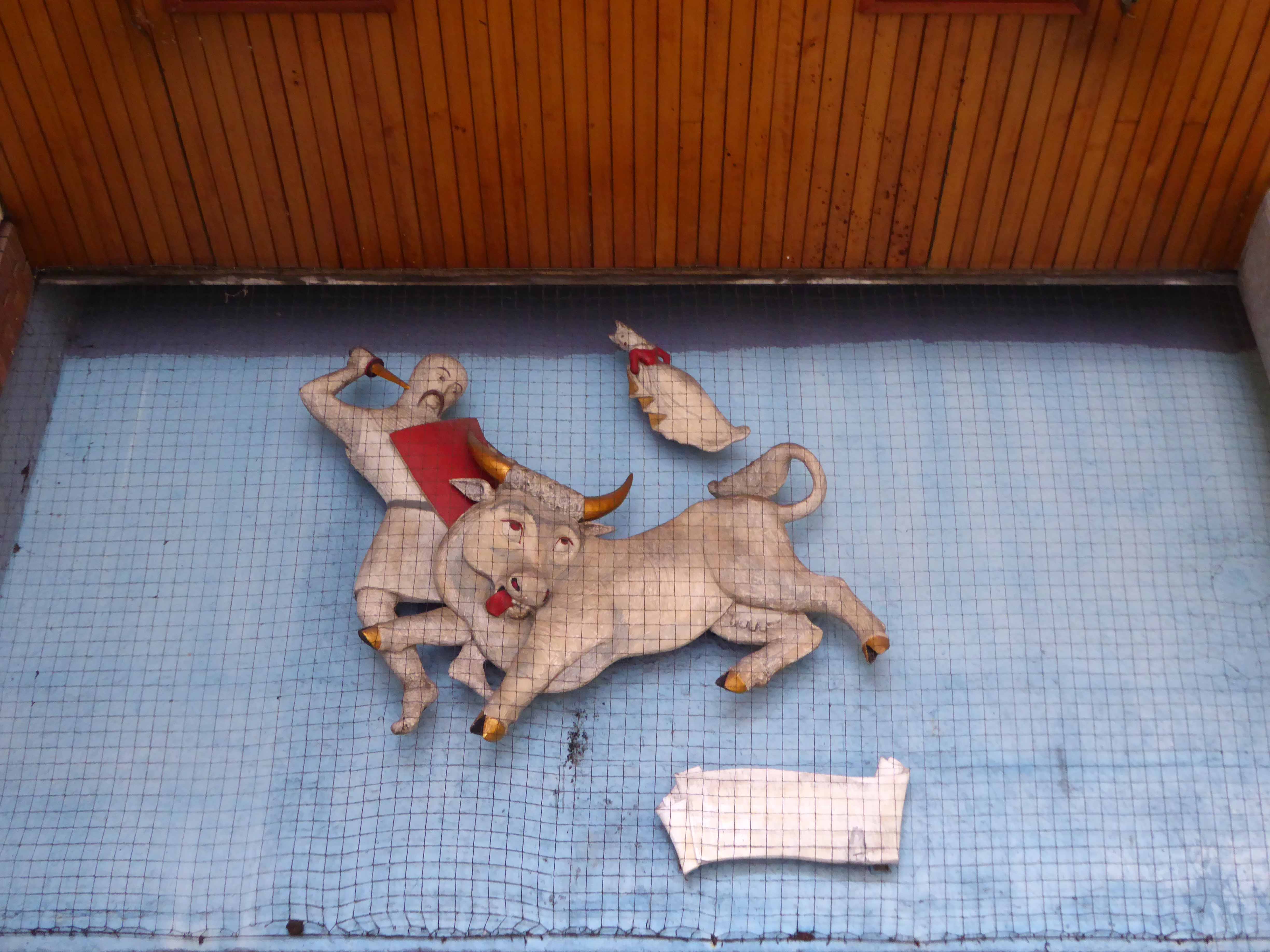
Up on high we find Sir Guy and the Dun Cow by Alma Ramsey 1952.
Coventry Point architects: John Madin Design Group 1969/75
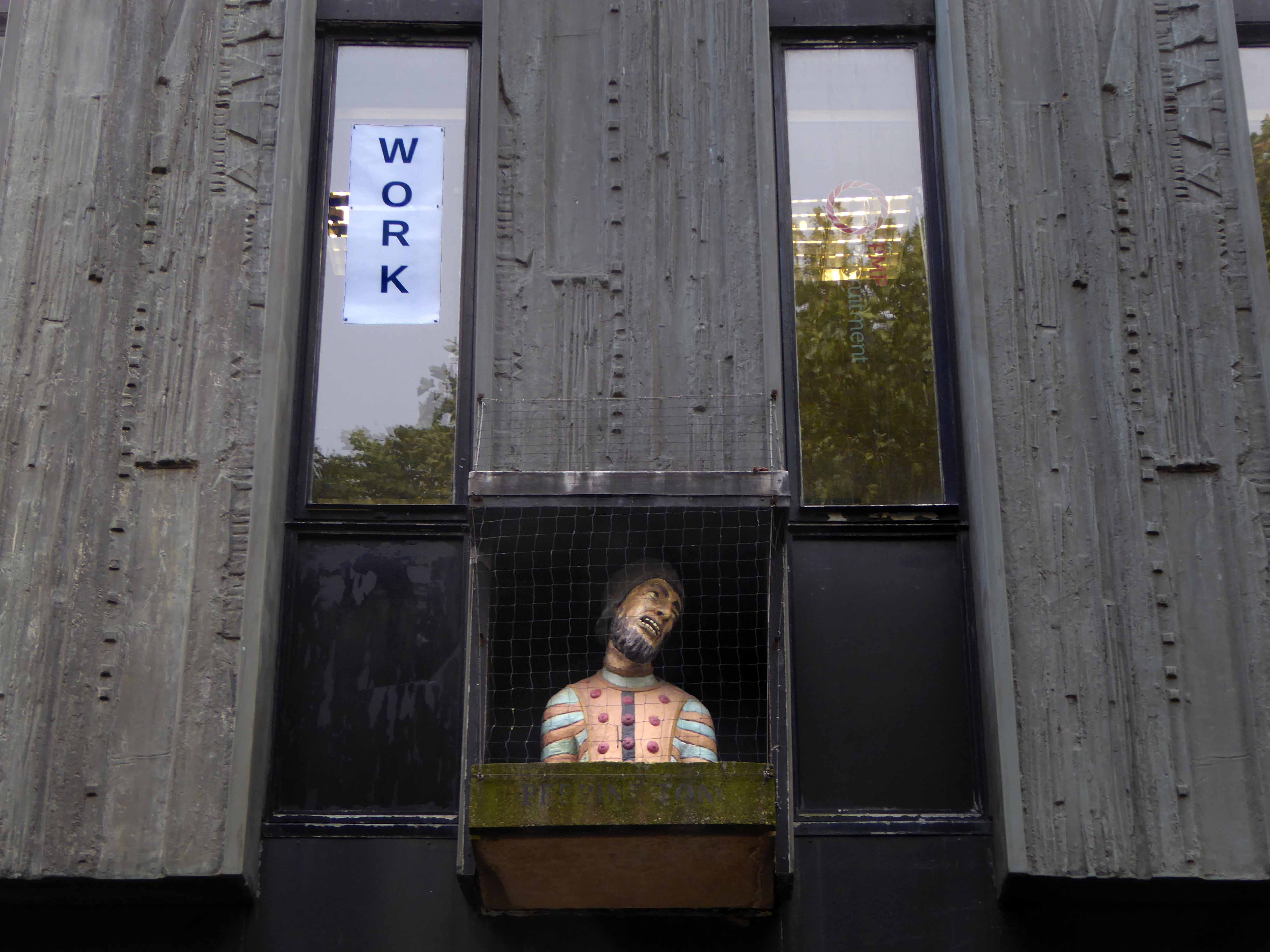
The Peeping Tom head and shoulders sculpture is currently located in Hertford Street, mounted high up over the entrance to the covered walkway. It was originally a public house sign. It is not known who made it. It was displayed sitting in the top corner window of the Peeping Tom Public house which was on the corner of Hertford Street and Bull Yard, not far from where it is now. It was moved when the road was being redeveloped in the late 1960’s and early 70’s.















































 Modern Mooch