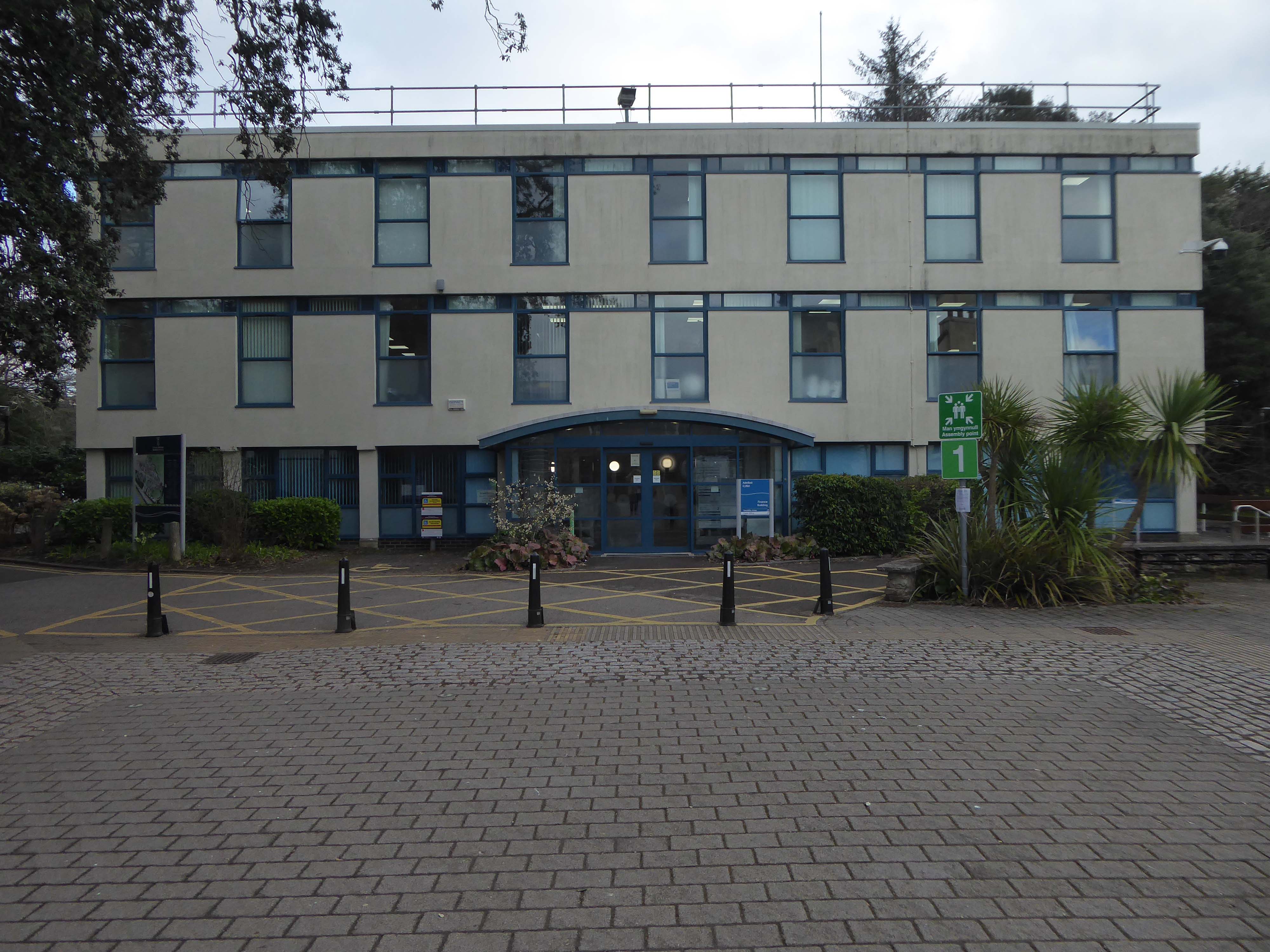
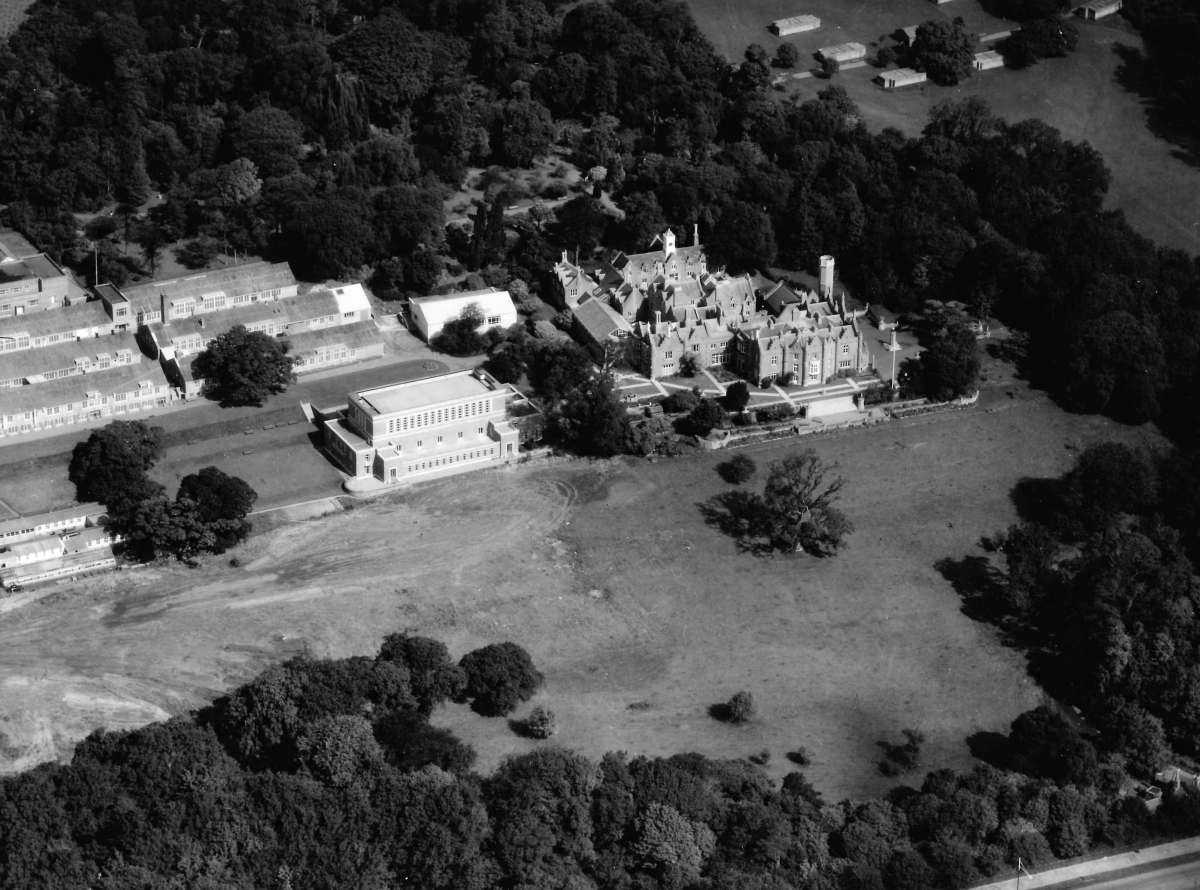
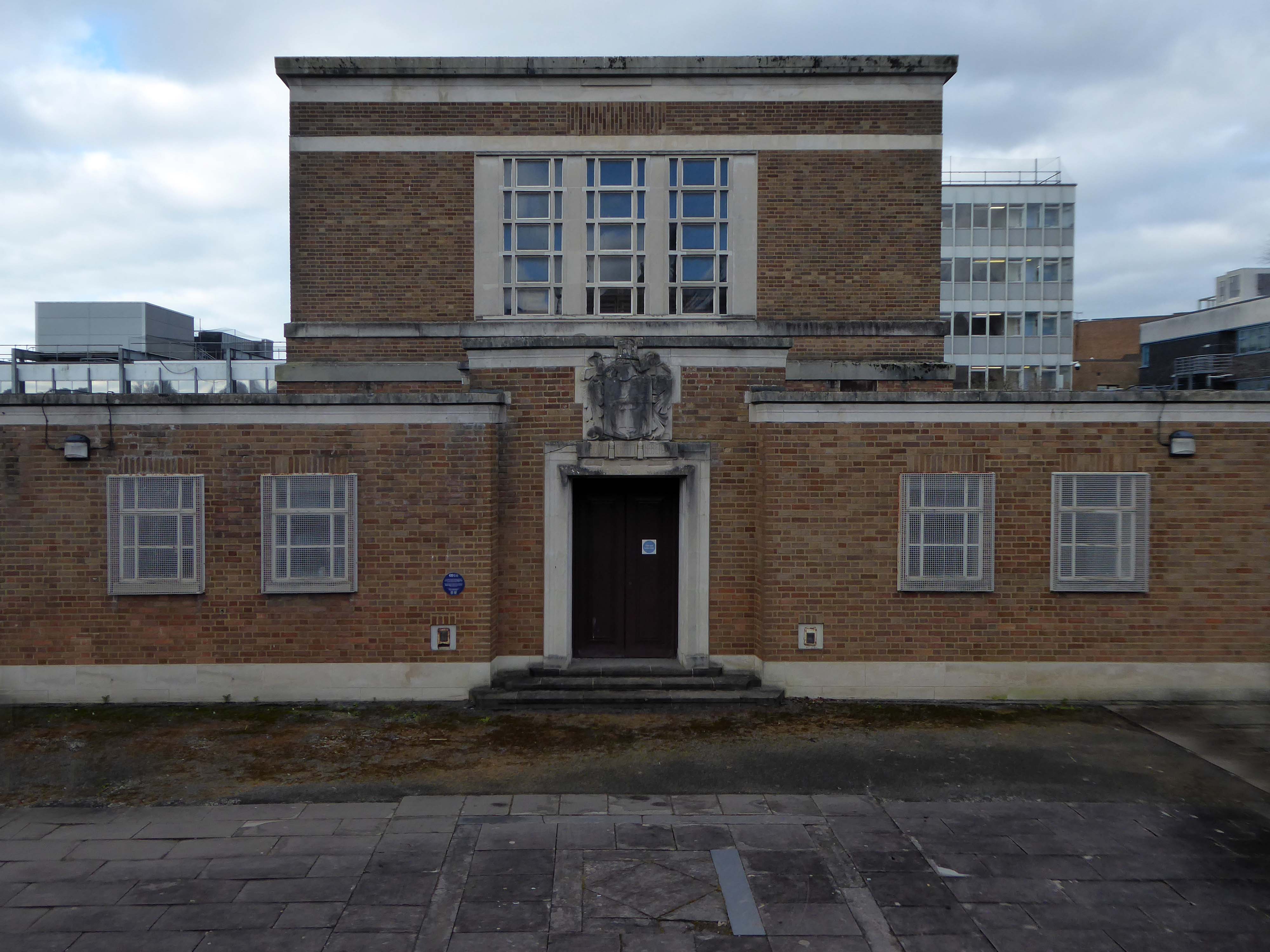
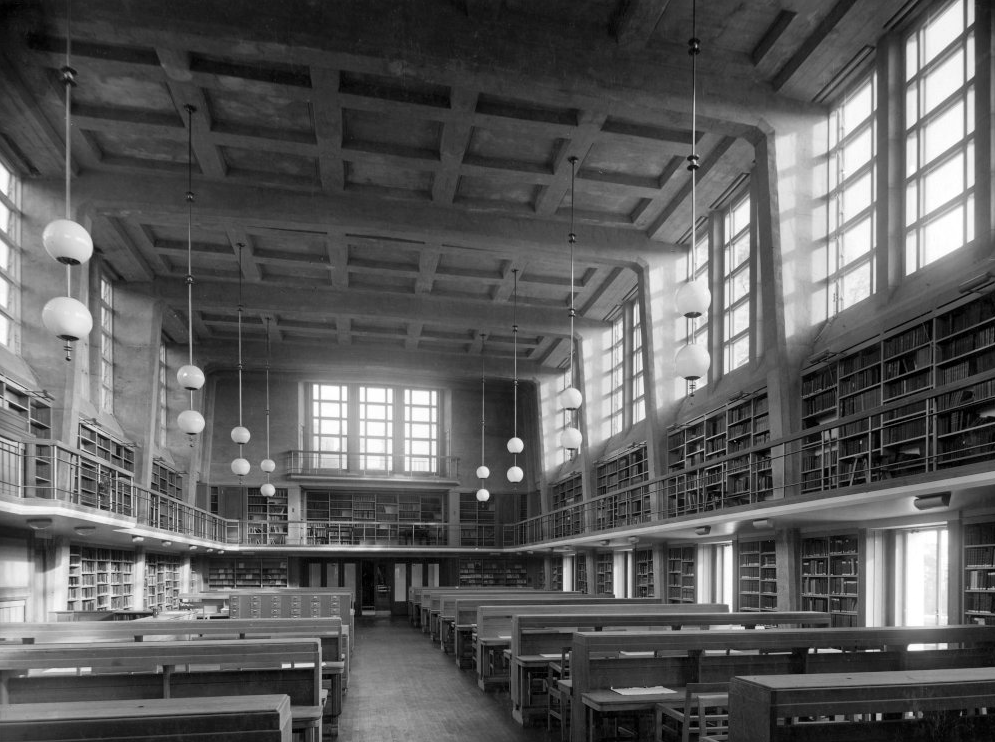
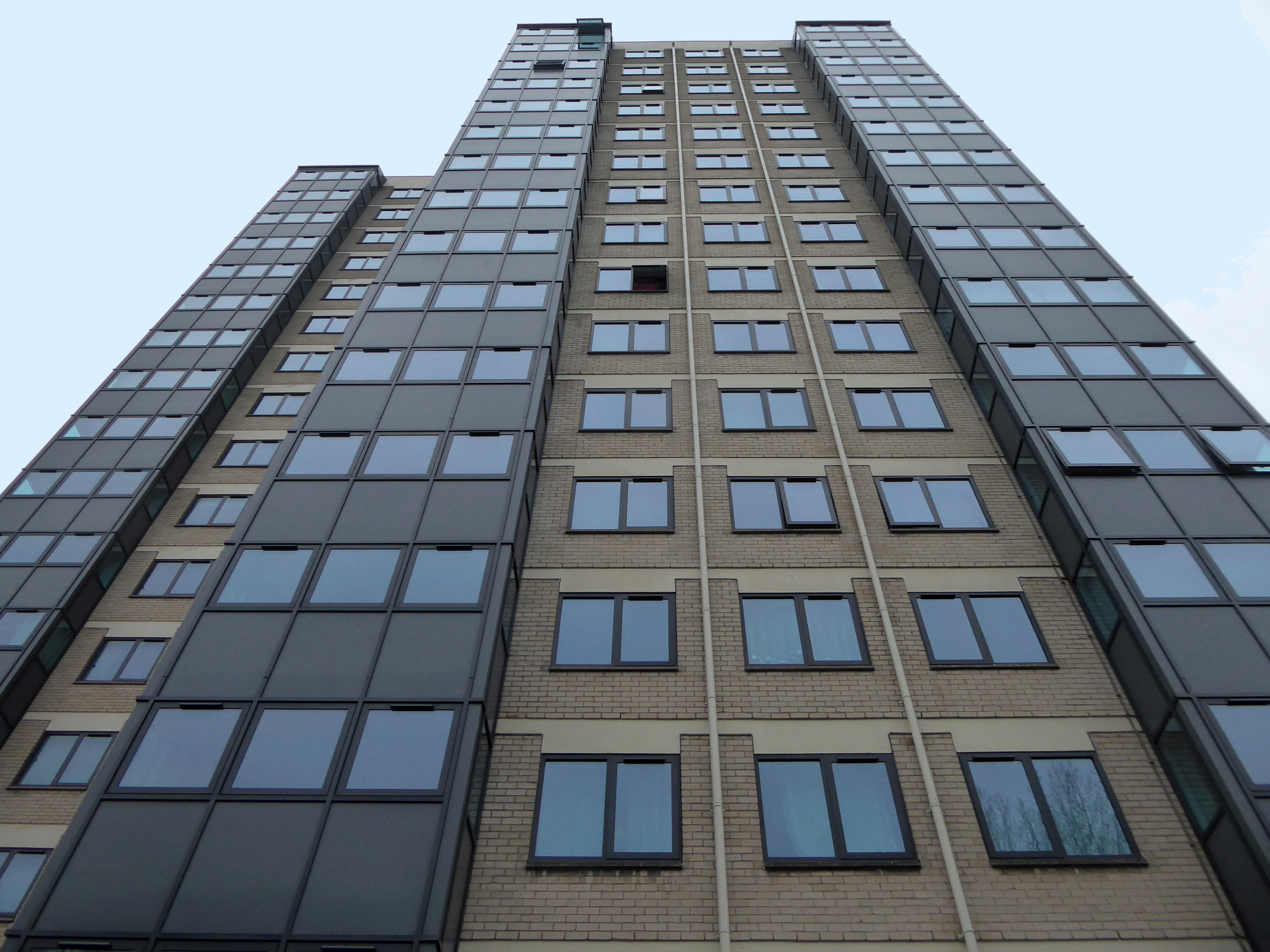
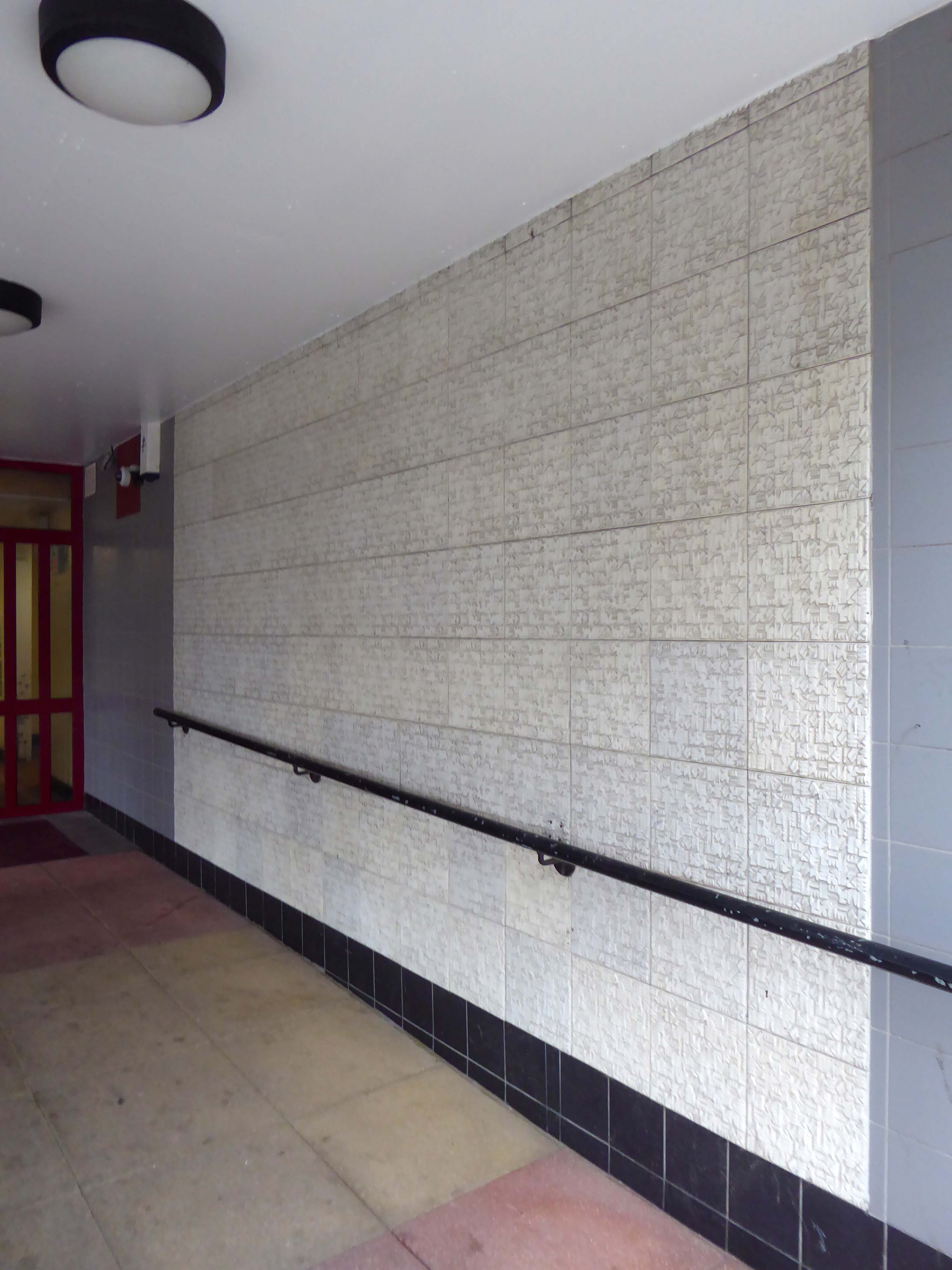
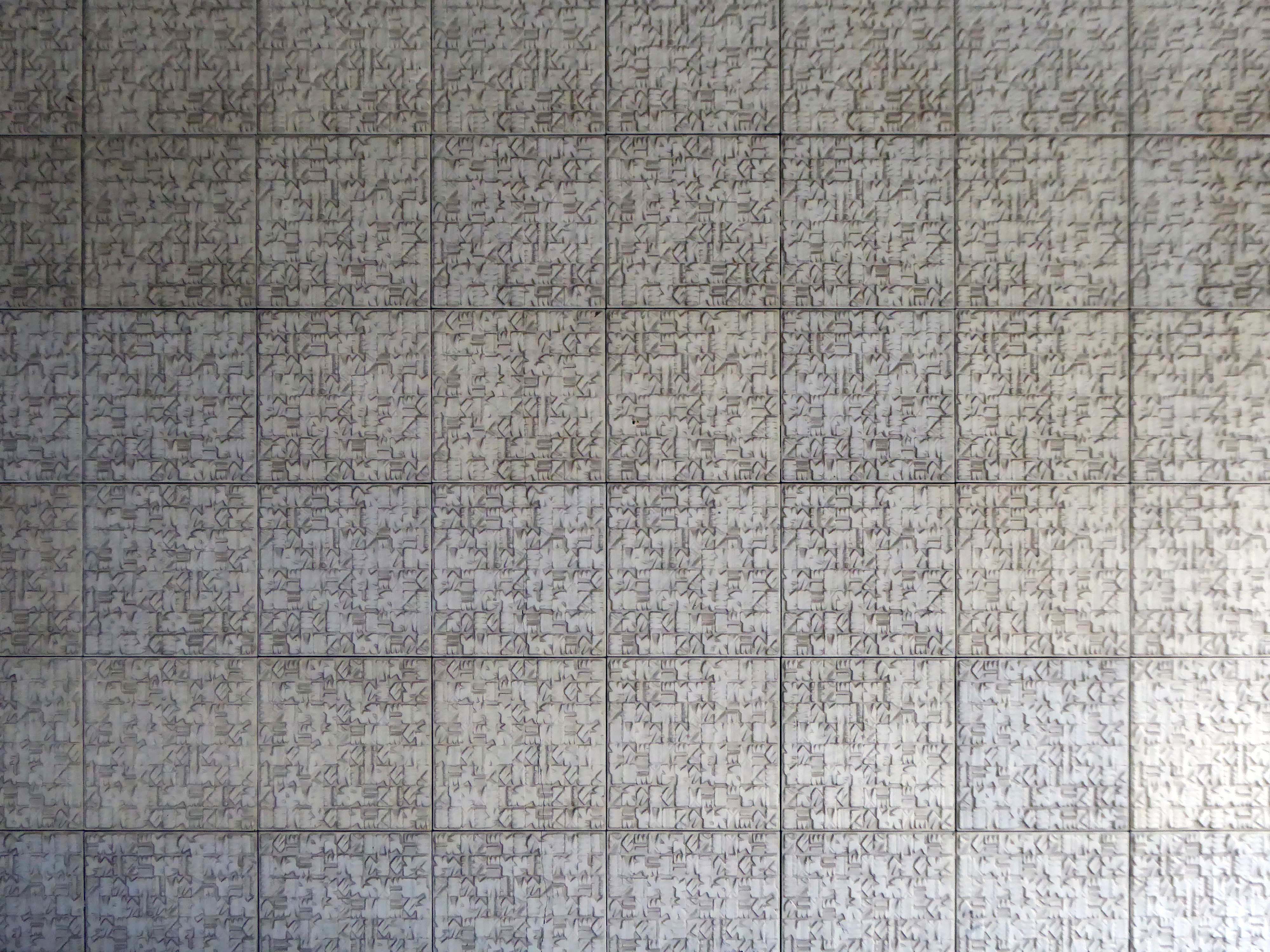
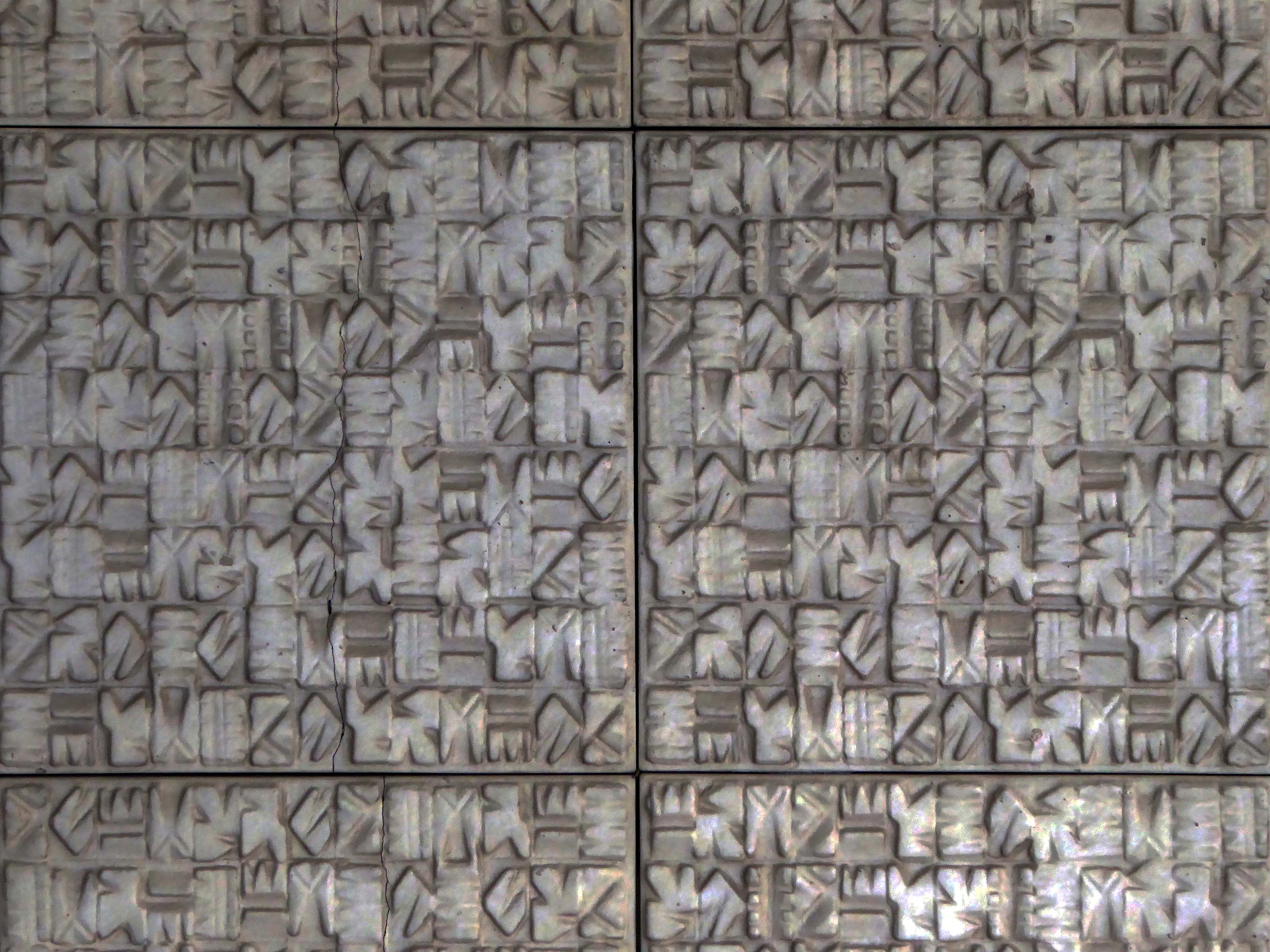
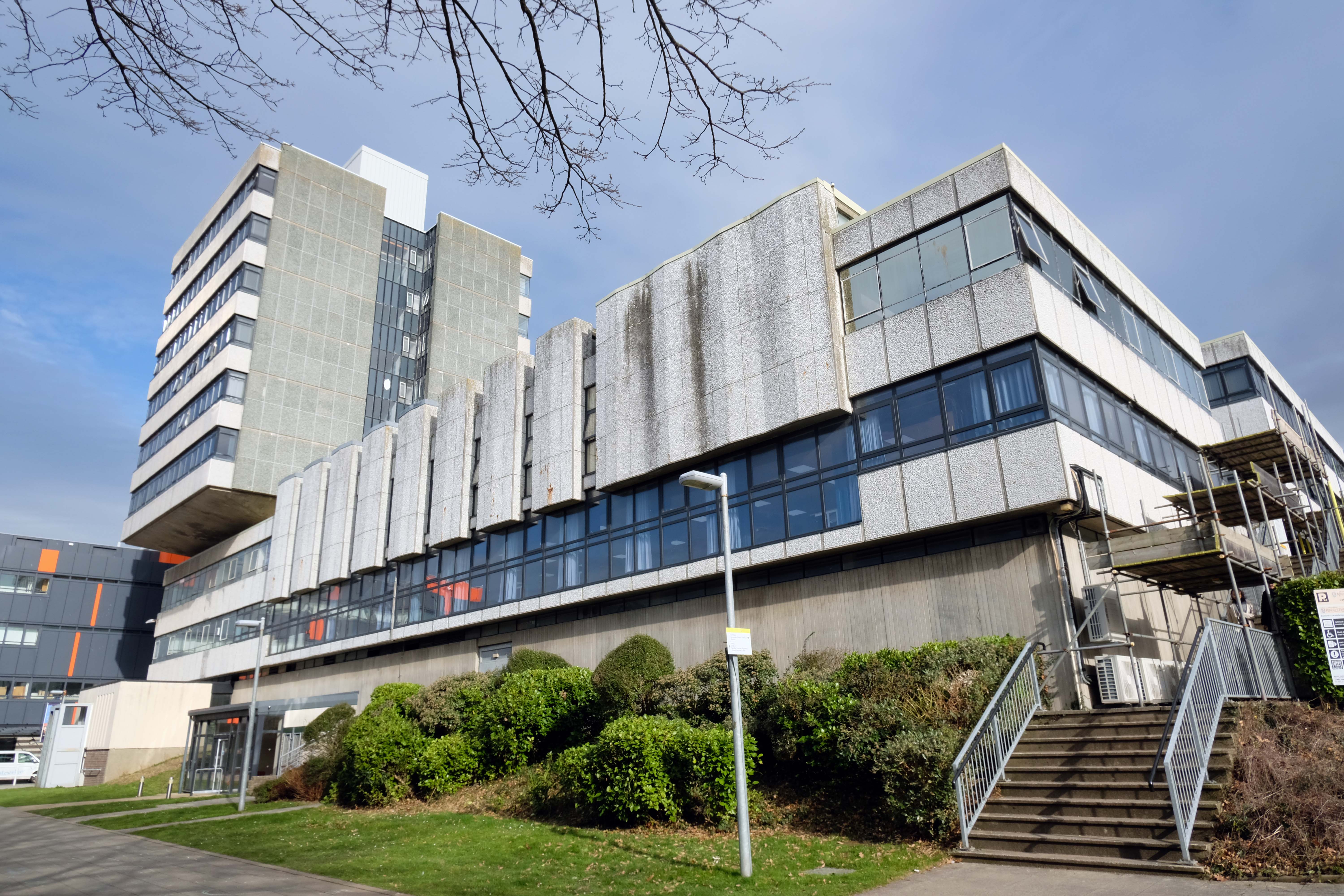
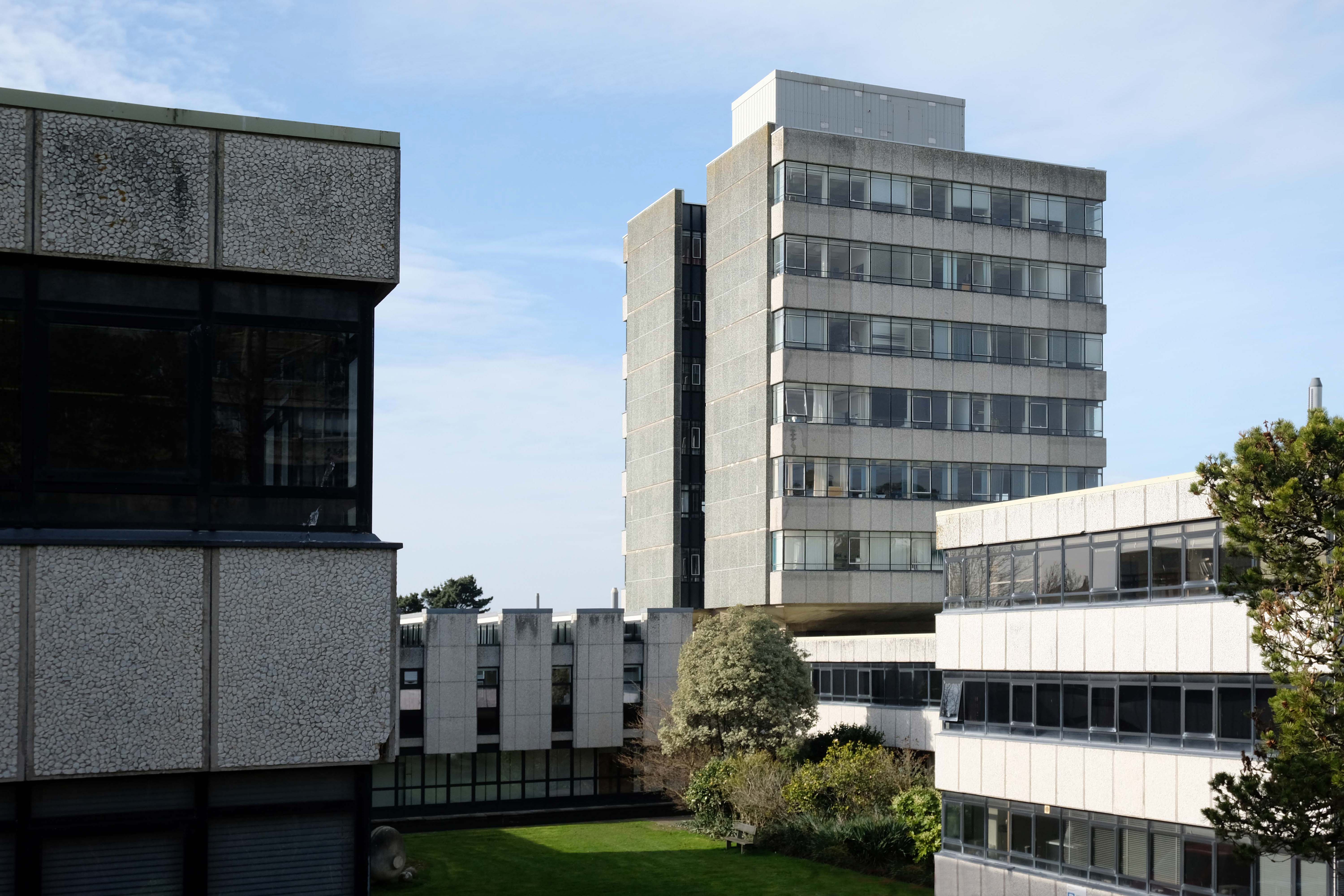
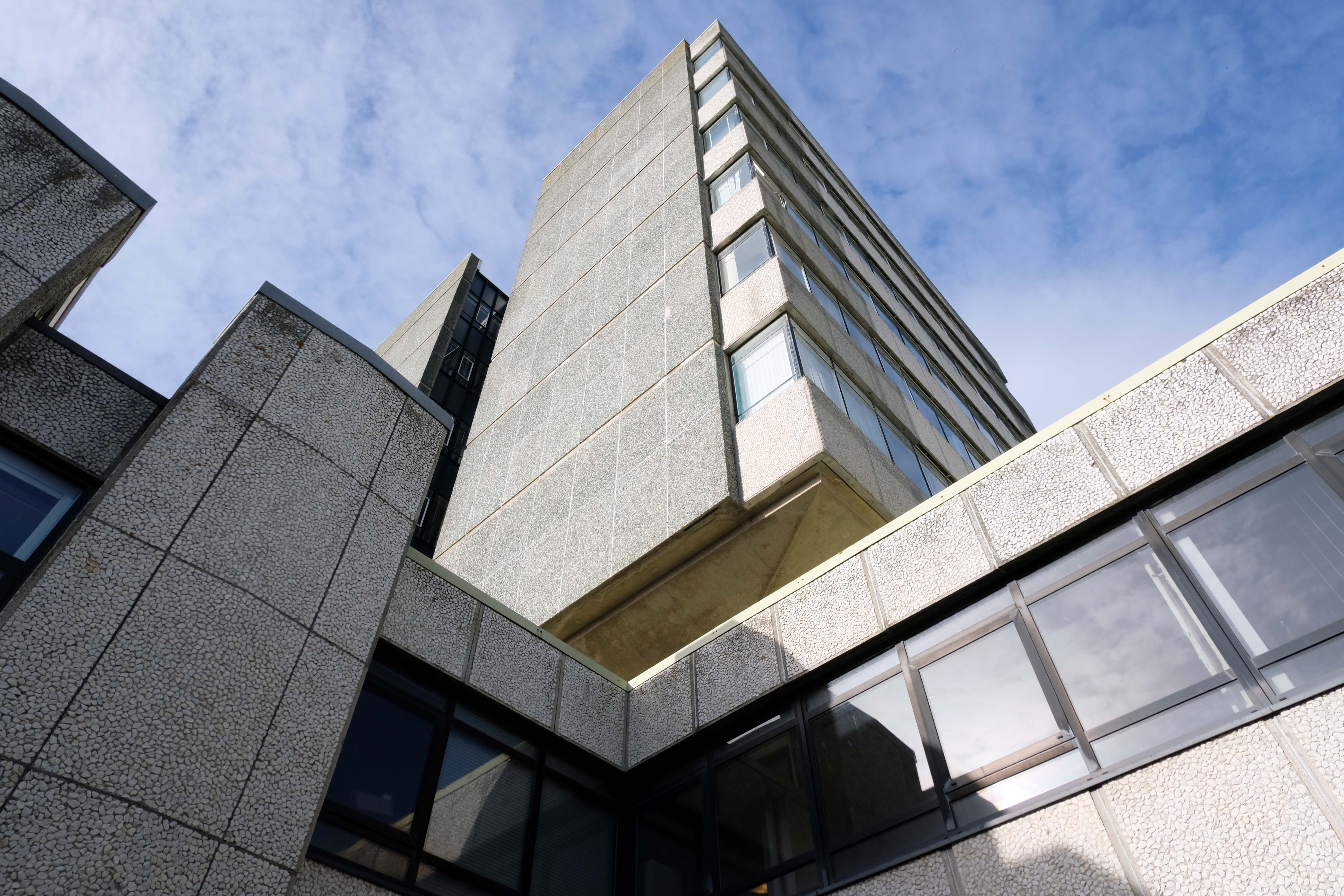
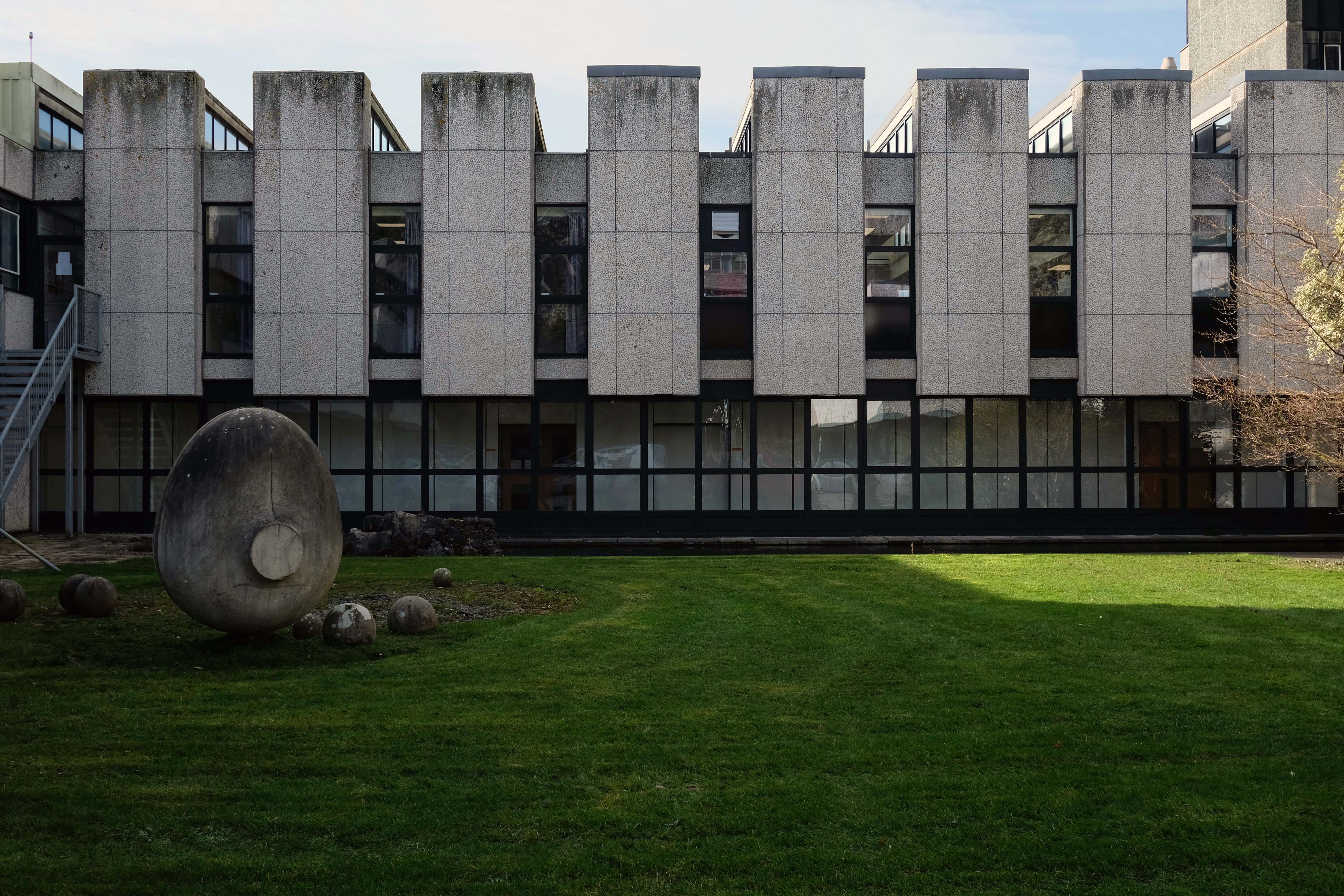
The history of the building which today houses Scarborough Art Gallery began in 1828, when local solicitor and Town Clerk, John Uppleby, in partnership with local builders John Barry and his brother William, bought the land on which The Crescent would be built from the wealthy local banker and shipowner, John Tindall. In 1830, the York architect Richard Hey Sharp and his brother Samuel were commissioned to draw up plans for the site.
Crescent Villa was the last of the villas to be built, erected in 1845 as a home for John Uppleby and his family. After John’s death in 1856, his wife and family continued to live in the house until her death in 1881, at which time it was bought by Edward Chivers Bower, father of the sculptor Lady Ethel Alice Chivers Harris and the great grandfather of Katharine, Duchess of Kent.
Bower renamed the house ‘Broxholme’ after his family seat near Doncaster.
Following Henry Donner’s death, the house was purchased by Scarborough Corporation in 1942 for £3000 and for five years was used as a welfare clinic and children’s nursery. The clinic moved out in February 1947 and the Corporation decided to turn the building into a public art gallery.
The permanent collection includes paintings donated by famous hotelier Tom Laughton, the brother of the film star and actor Charles Laughton.
Detail from a 1931 map of Scarborough by Edward Bawden – Scarborough Museums Trust collection
Both Eric Ravilious and Edward Bawden, who were close friends, became acquainted with Tom Laughton, who acted as a patron, particularly to Bawden and commissioned pieces from him to adorn his hotels.
I visit Scarborough at least once a year – travelling by train from my home in Stockport and one occasion cycling from Hull.
Whilst visiting, a visit to the gallery is almost de rigueur.
This year I had a particular interest in the gallery’s photographic exhibition Squaring The Circles
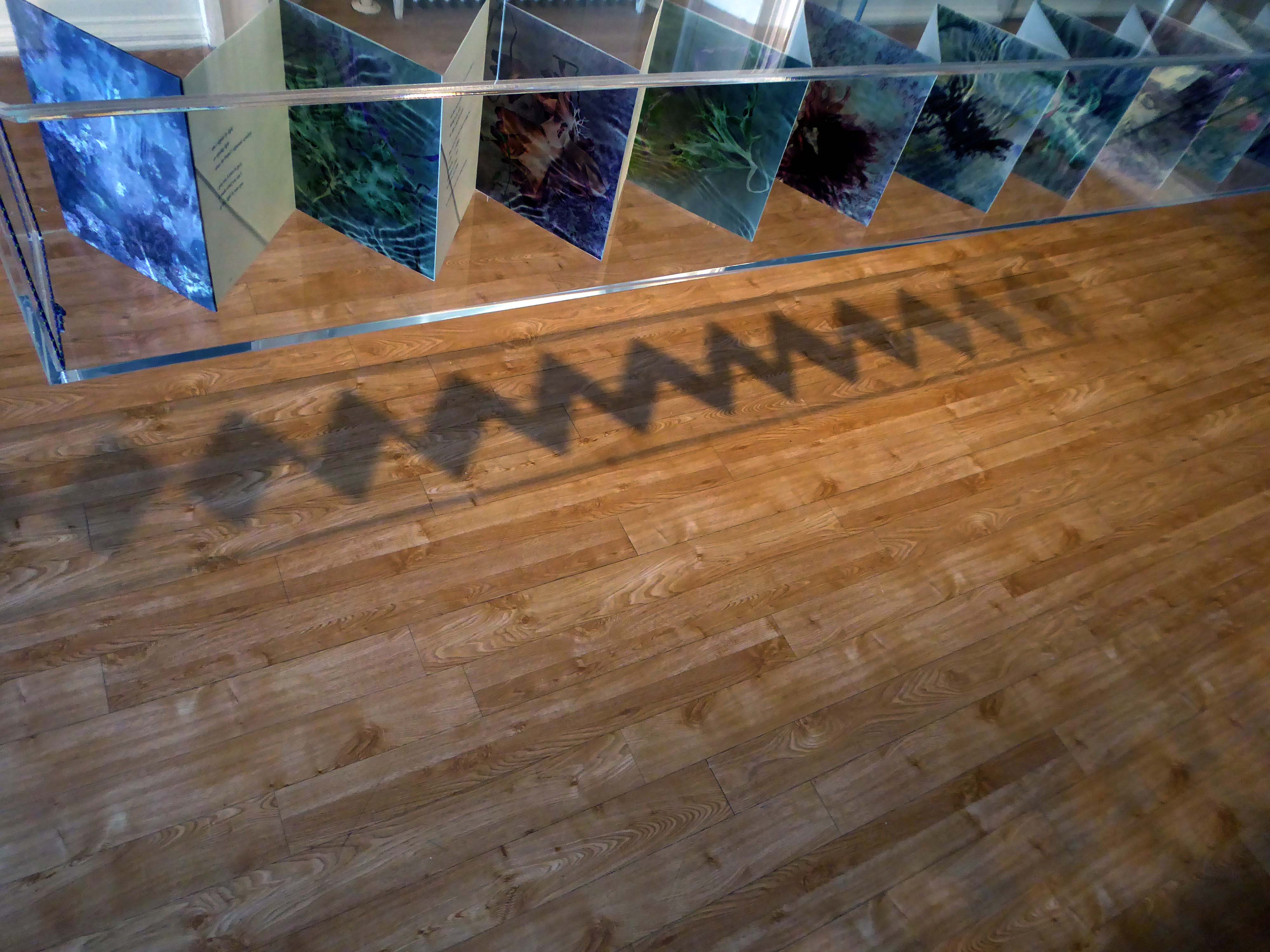
The works on show demonstrate radical and experimental investigations into the process of making photographs. From cyanotypes and daguerreotypes to pinhole and cameraless imagery, the exhibition blurs the boundaries between art and photography, resulting in an expressive, otherworldly, and inspiring display.
Exhibiting photographers include Takashi Arai, Angela Chalmers, David Chalmers, Susan Derges Hon FRPS, David George, Joy Gregory Hon FRPS, Tom Hunter Hon FRPS, Ian Phillips McLaren, Céline Bodin and Spencer Rowell.
Curated by Zelda Cheatle Hon FRPS.
I turned up paid my three pounds for an annual pass and looked around.
This is what I saw inside and out.
Angela Chalmers
Tom Hunter
Tom Hunter
Susan Derges
Céline Bodin
Tom Hunter
The show’s full title was Squaring the Circles of Confusion – here’s some information to dispel the confusion
Having taken a particular interest in this particular piece of public art for some time – I need to go and take a little look.
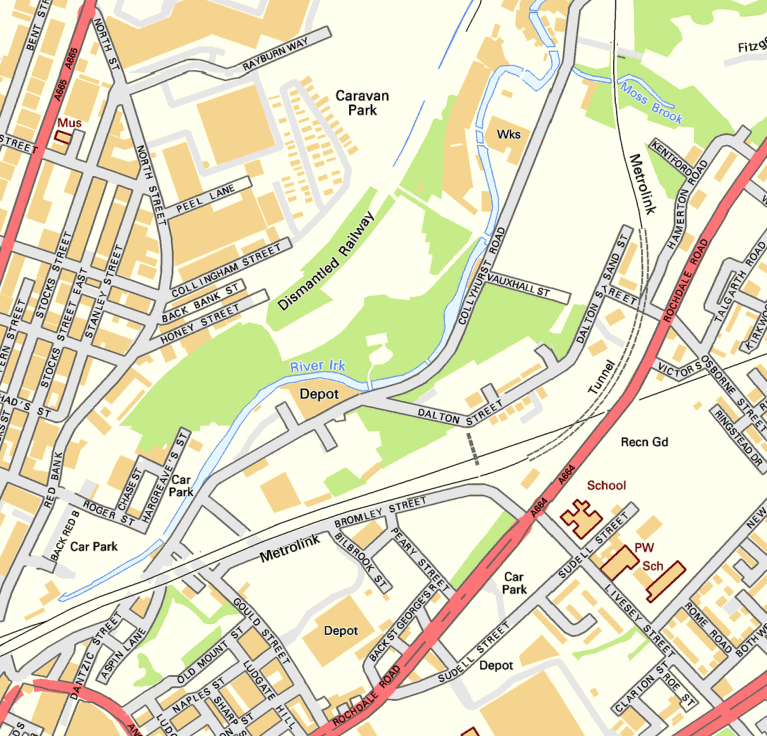
But what will we see along the way, as we hasten along Rochdale Road?
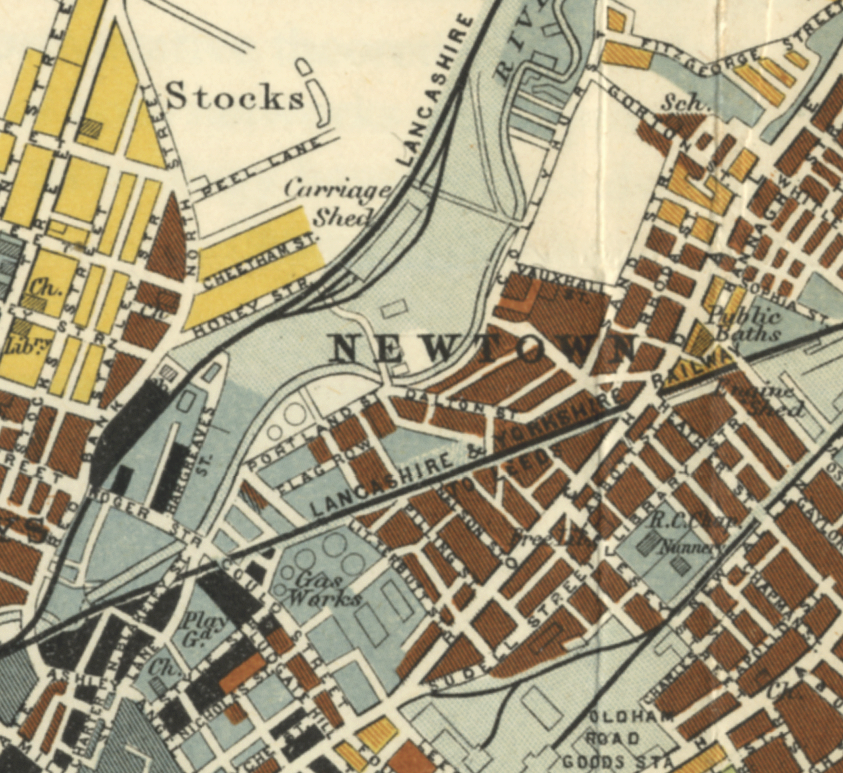
Which once looked like this, way back when in 1904.
Though some things inevitably come and go, as some things are prone to do.
The city is undergoing yet another reinvention as Manchester becomes – an attractive place to invest and do business.
See, I am doing a new thing!
Now it springs up; do you not perceive it?
I am making a way in the wilderness and streams in the wasteland.
Isaiah 43:19
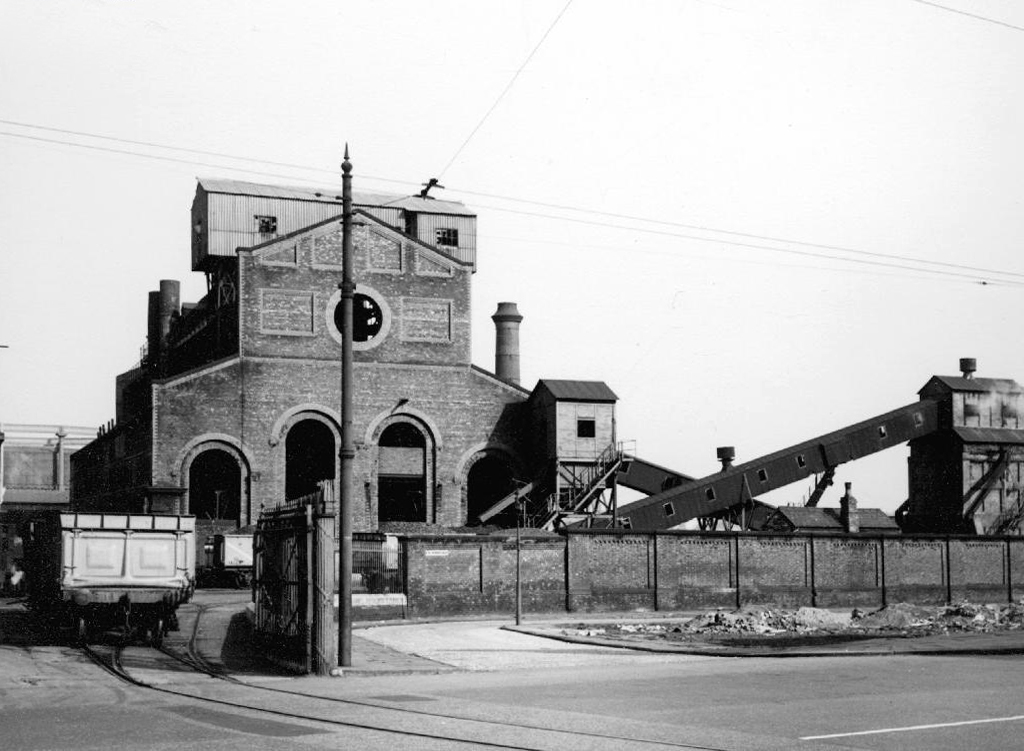
Once there was a gas works here – adjoining Gould Street, seen here in 1958.
The Gould Street Gas Works was a gas manufacturing plant located in Manchester, England. Originally built in 1824, the plant was operated by the Manchester Corporation Gas Department and was in operation from 1833 to 1969. It was named after the street on which it was located, which was named after John Gould, who was a prominent Manchester businessman in the 19th century.
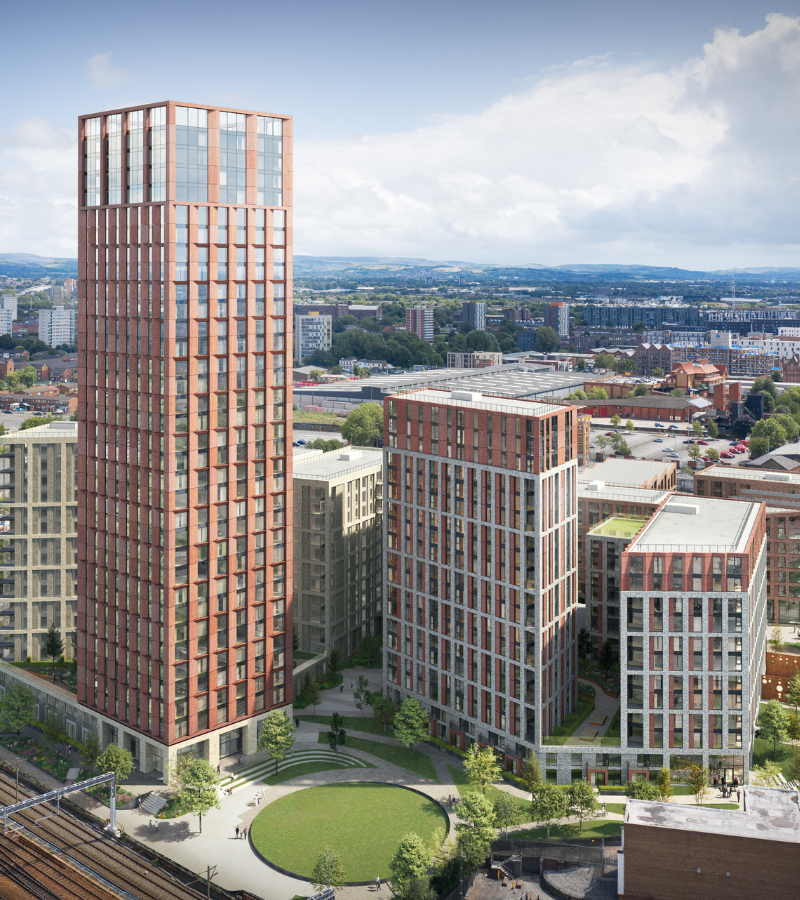
The Gasworks New Town neighbourhood is one of seven envisioned by the £4bn Victoria North masterplan. It will feature nine buildings ranging from 8 to 34 storeys. The 6.6-acre site has most recently been home to a car park but the green development will overwhelmingly prioritise walking and cycling over driving. It will result in tens of millions of pounds being pumped into the city’s economy over the lifetime of the development.
Plans for a trailblazing city centre regeneration scheme that will create more than 1200 homes has been approved by Manchester City Council.
A total of 85 of the 1200, will be affordable homes available through Shared Ownership.
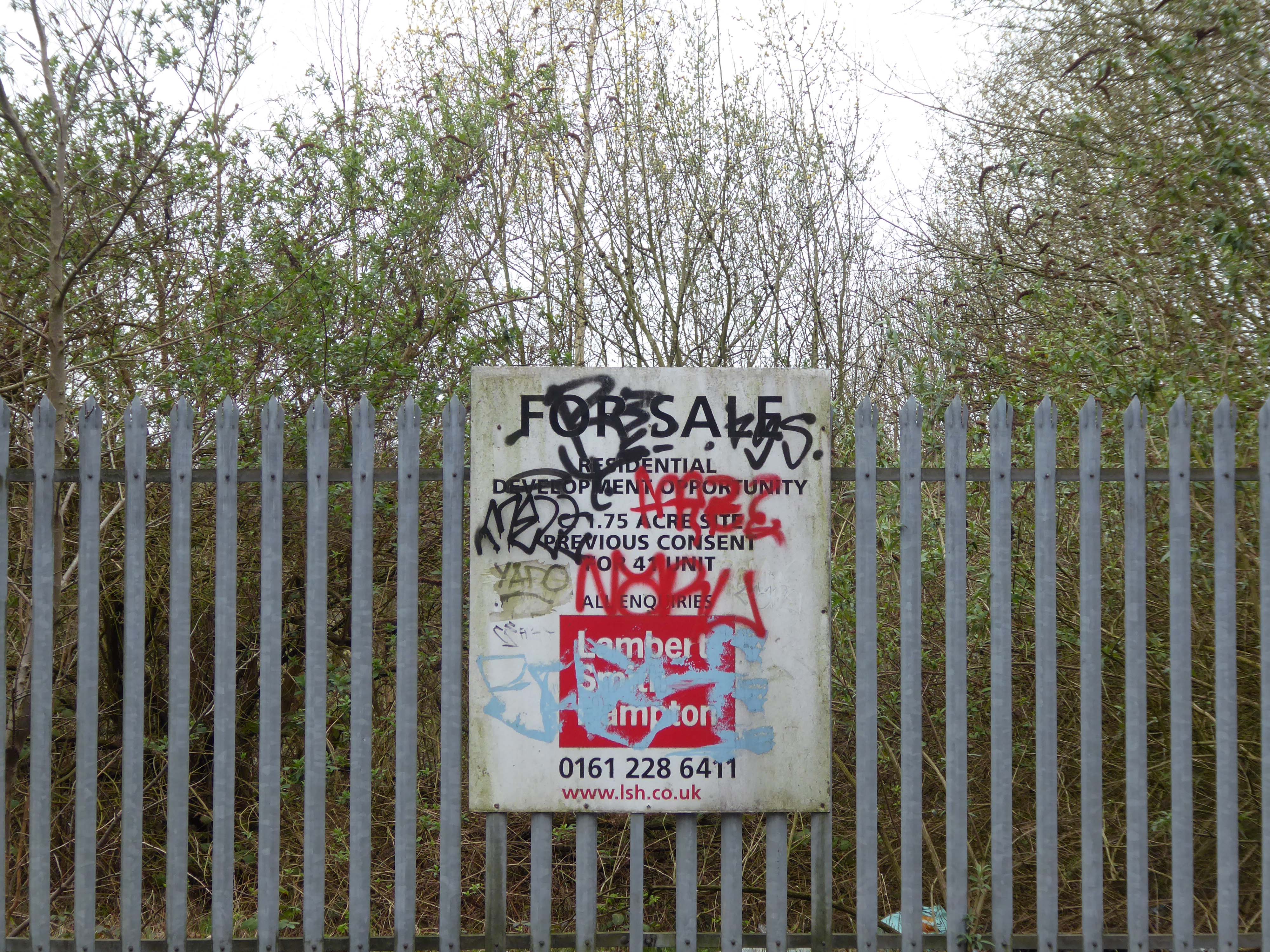
Though as of March 31st 2023 ground is yet to be broken, no signs of the:
New centre of gravity for central Manchester that will create thousands of jobs and inject tens of millions of pounds into the city’s economy.
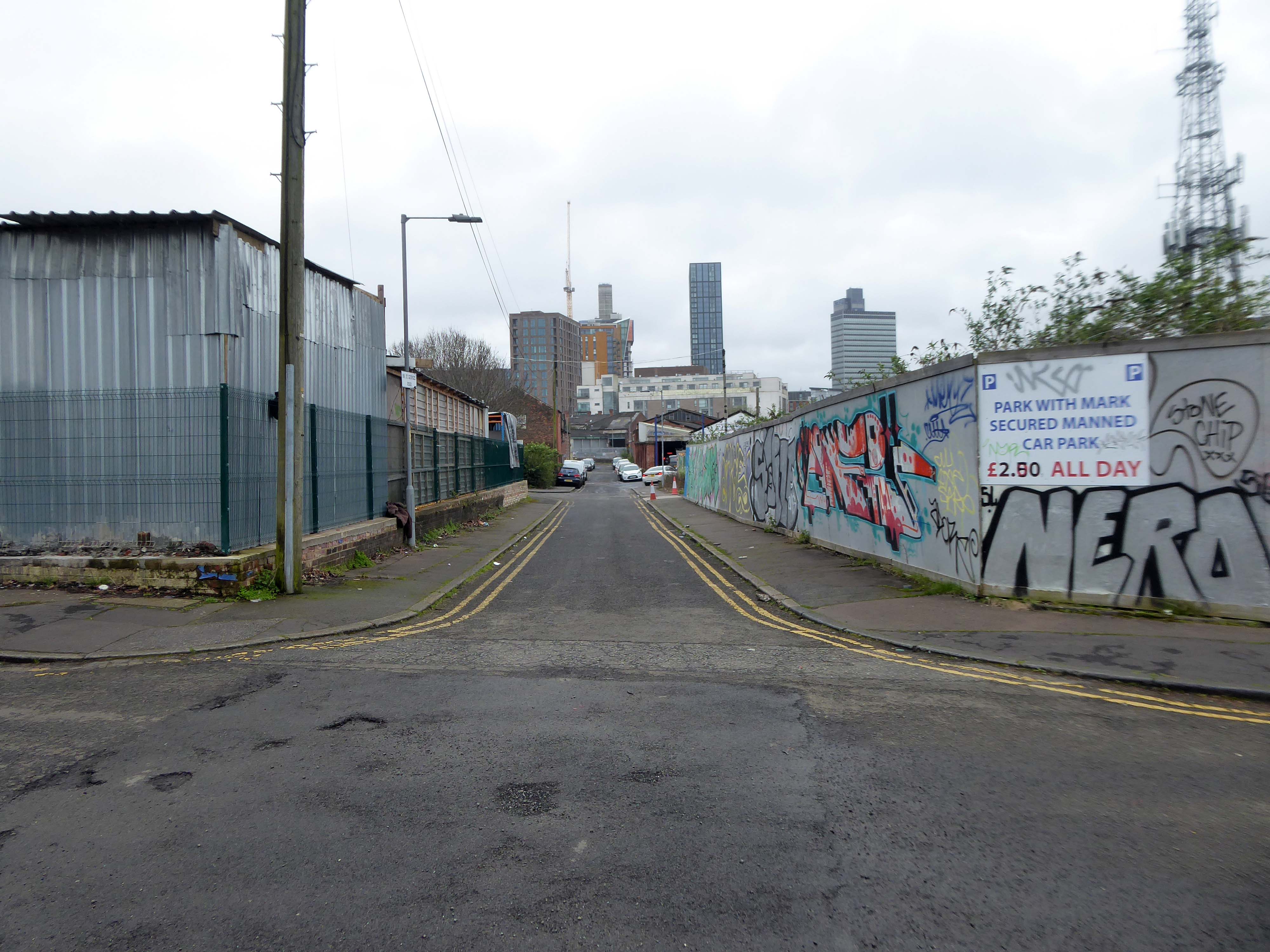
So you zig-zag wanderers, make the most of these wide open expanses of affordable car parking, while you can.
The future may yet be here today – or the next.
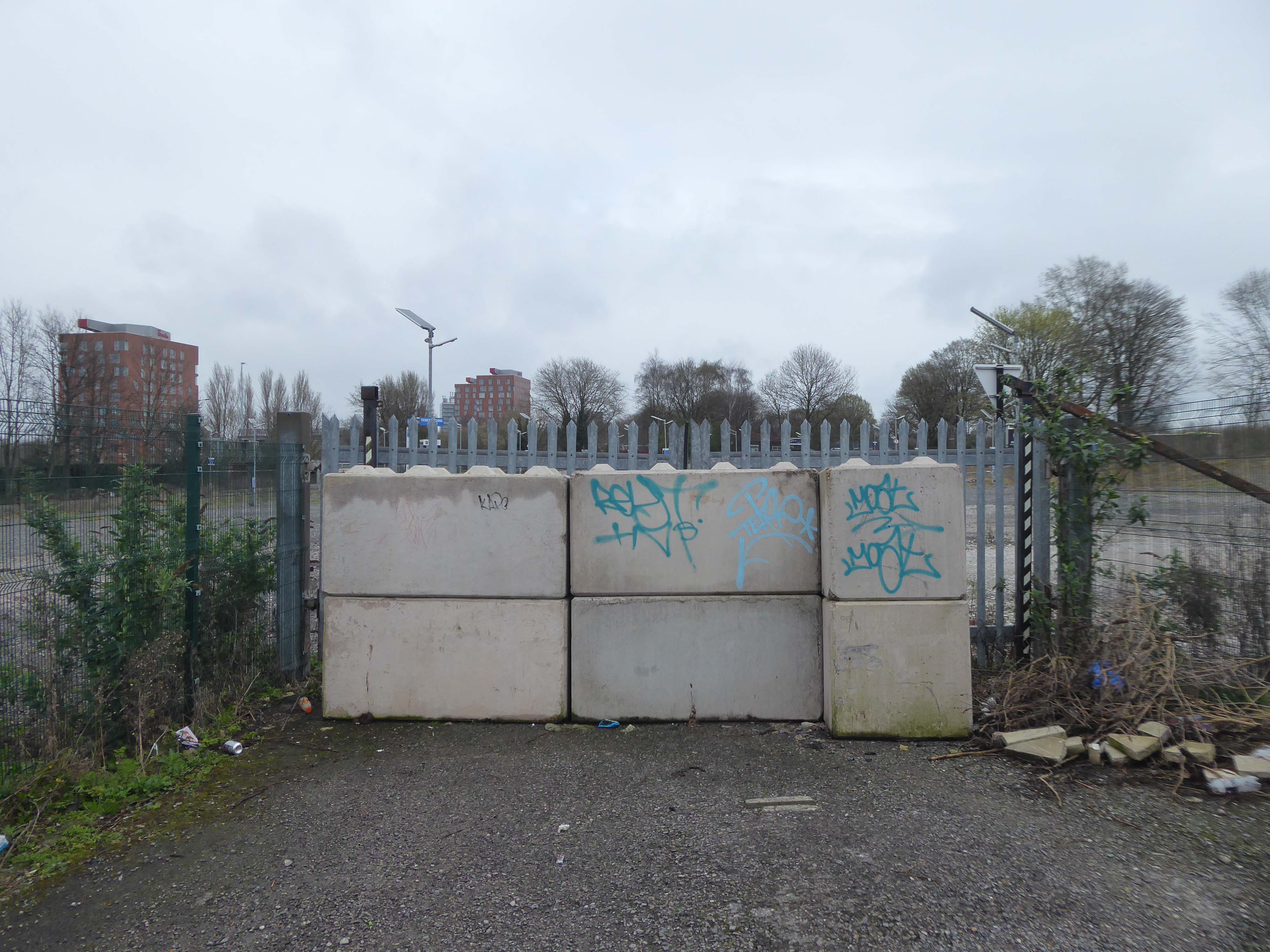
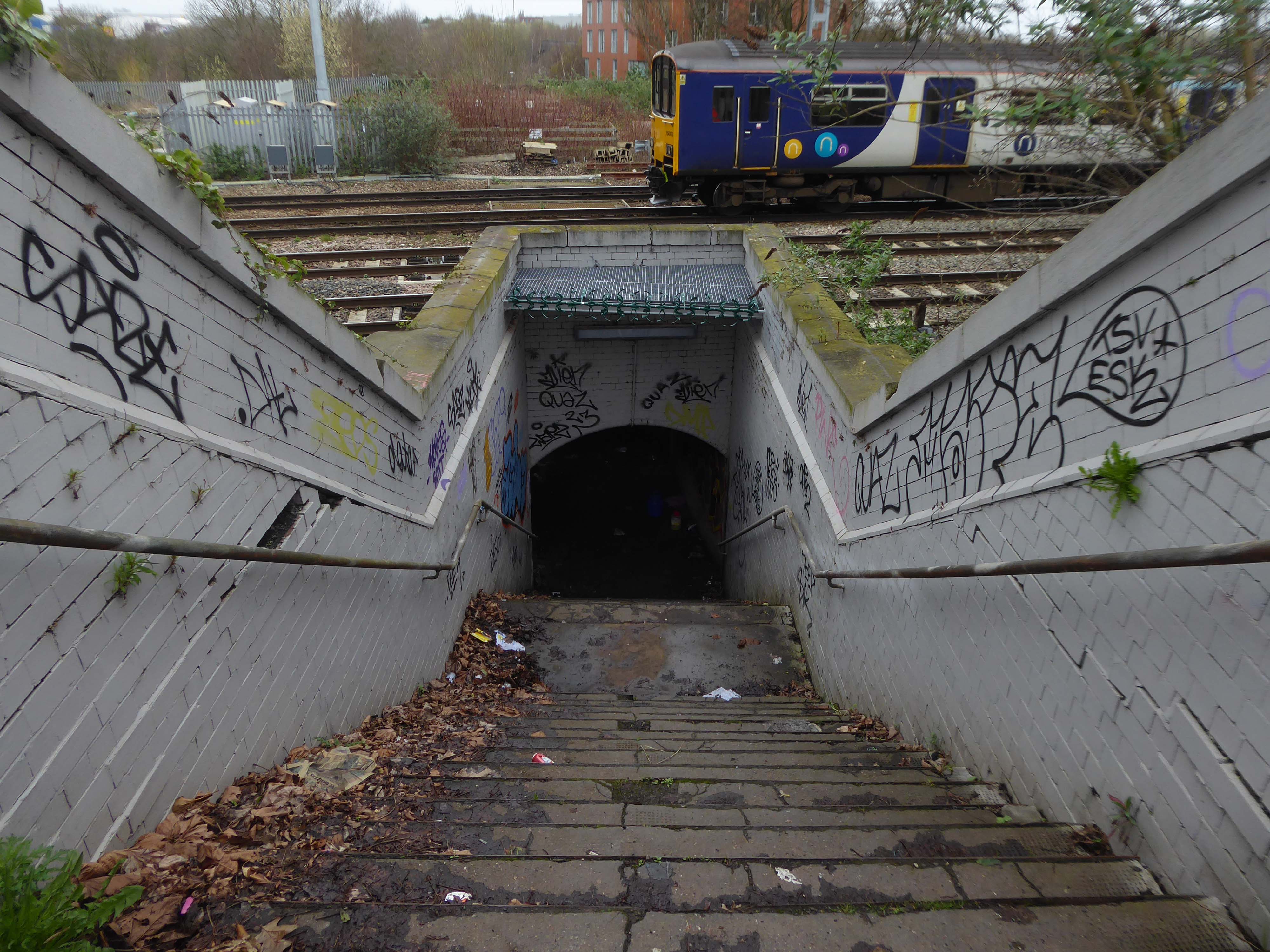
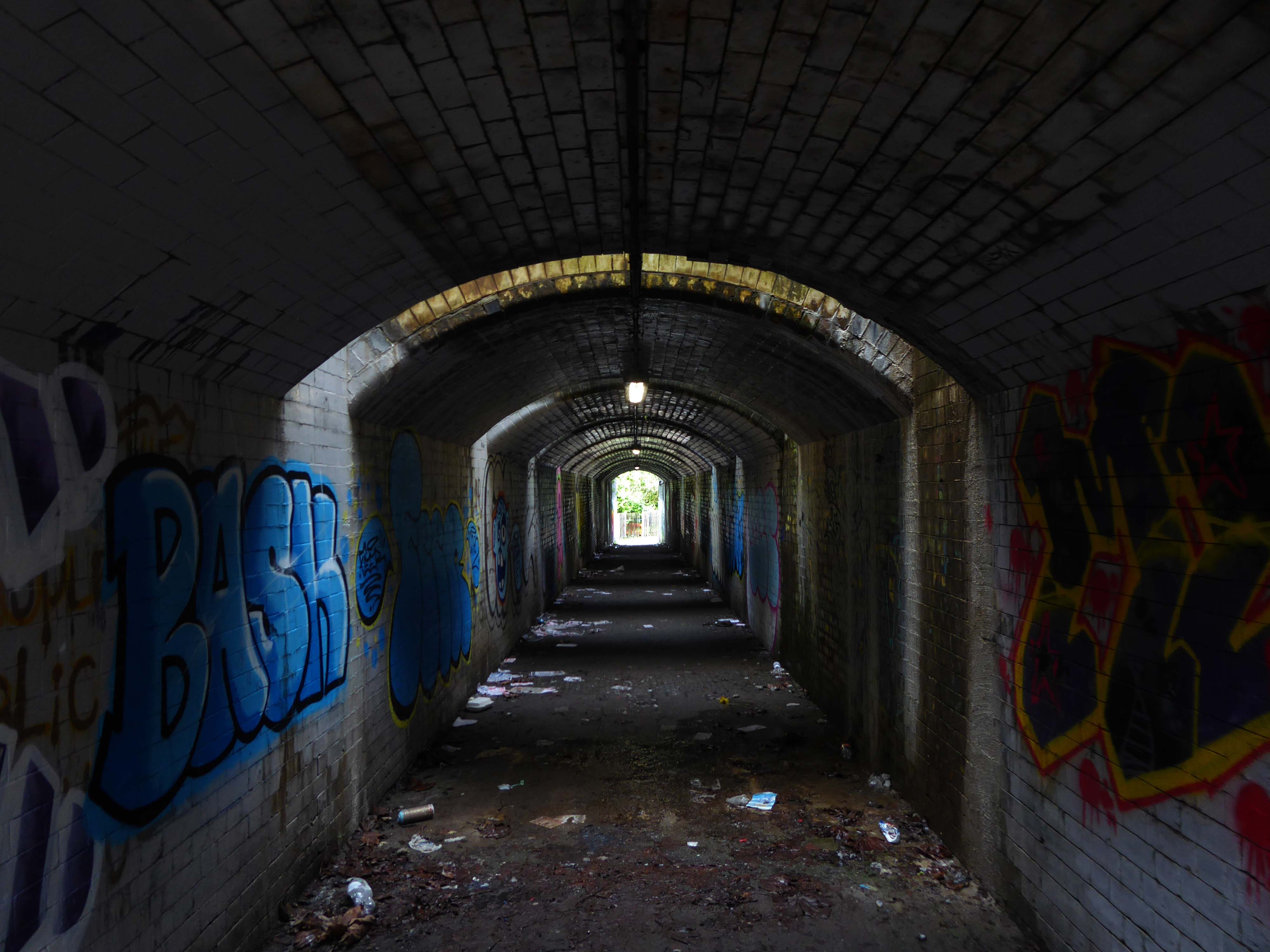
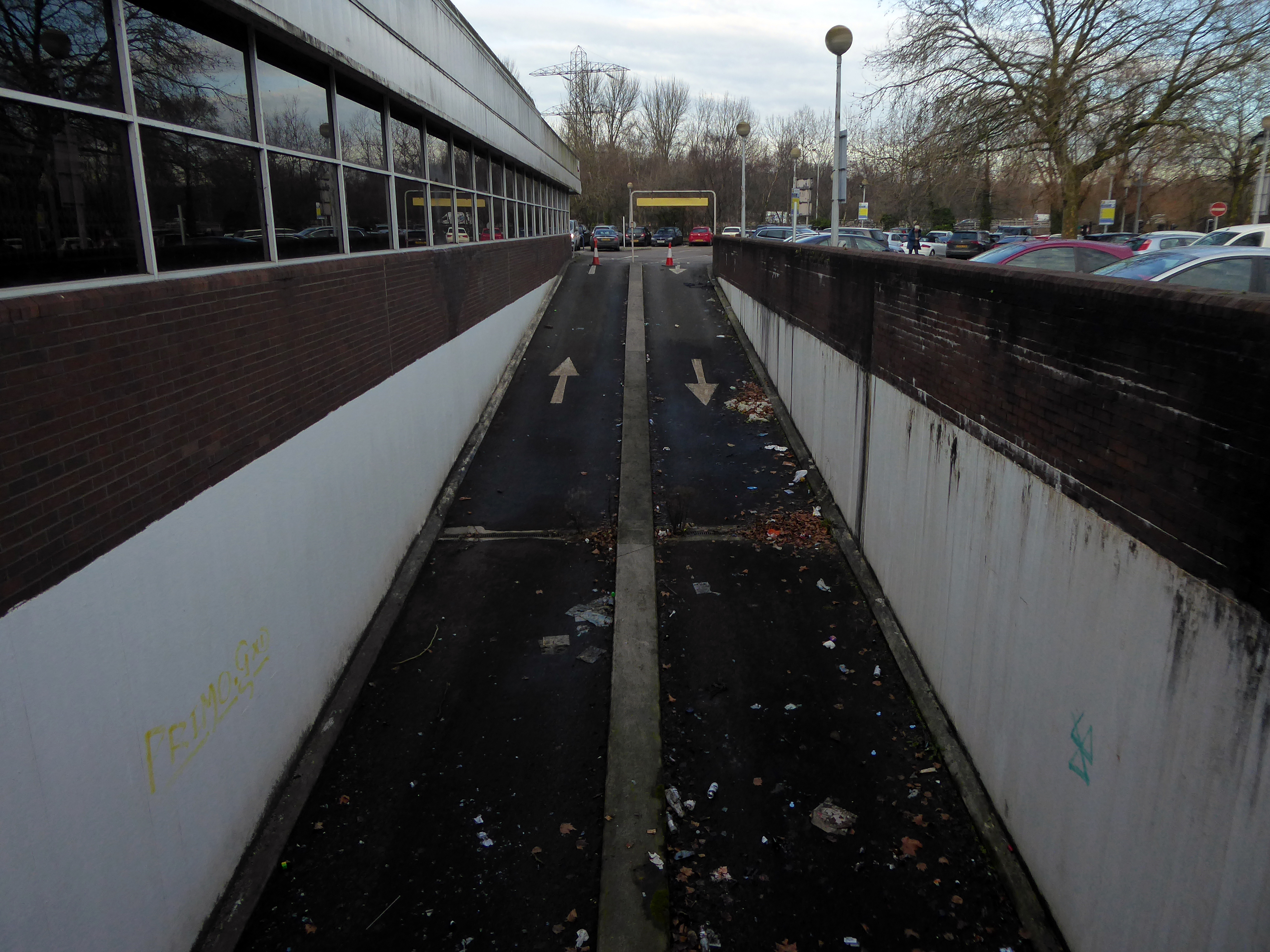
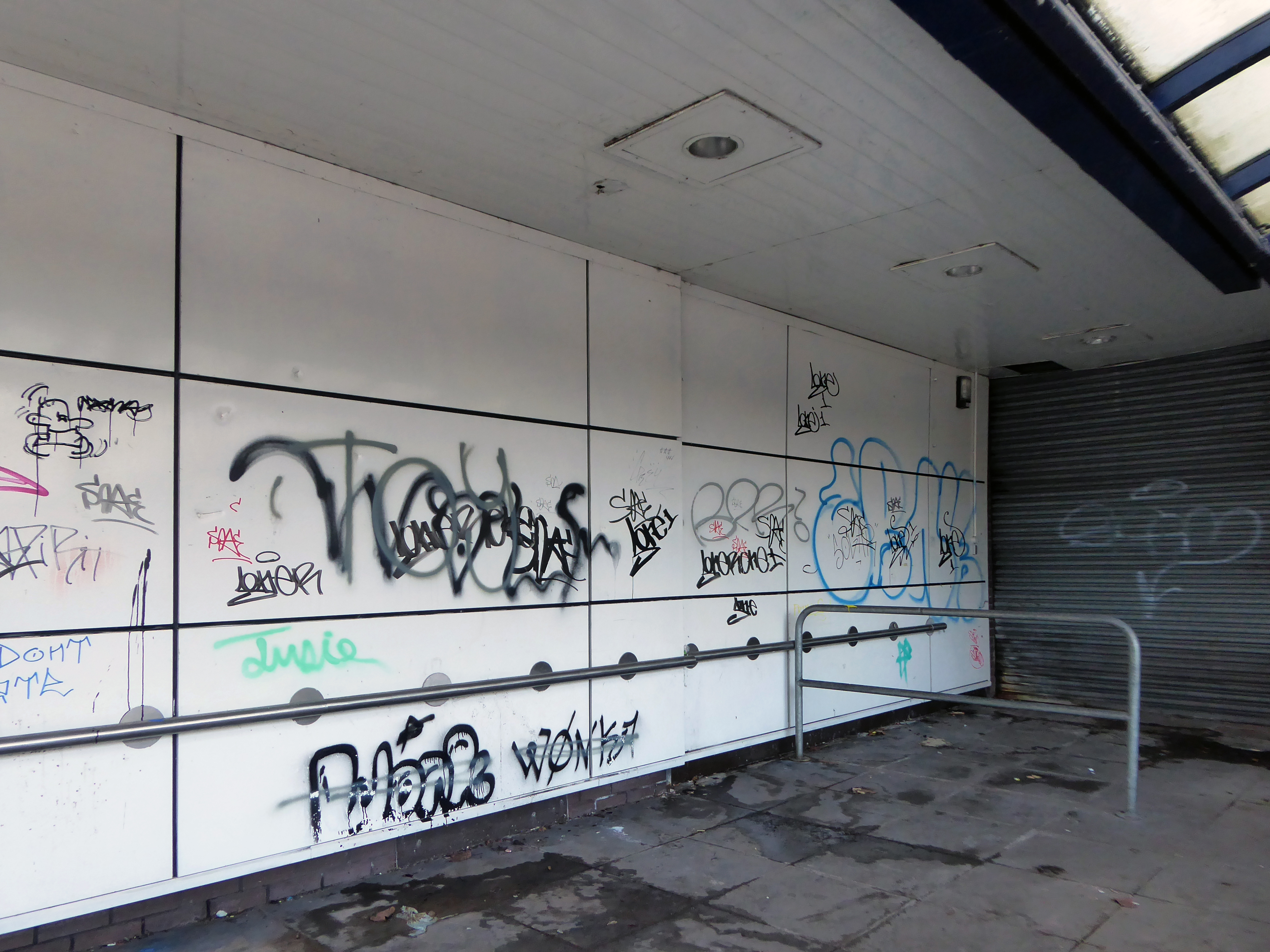
Let’s duck under the railway, through this sad damp pedestrian tunnel – the domain of the cash strapped daytime drinker, transient tagger and disaffected leaflet distributor.
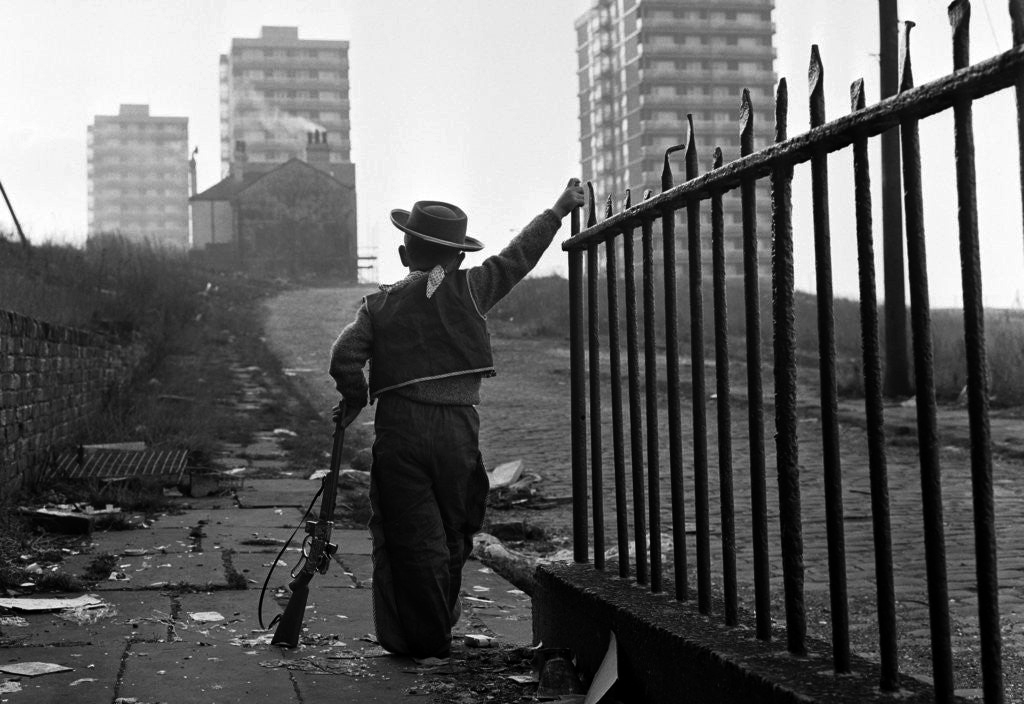
Next thing you know you have emerged into the daylight on Dalton Street – we have been here before seeking the Collyhurst Cowboy.
Photograph: Dennis Hussey
Onwards to Eastford Square.
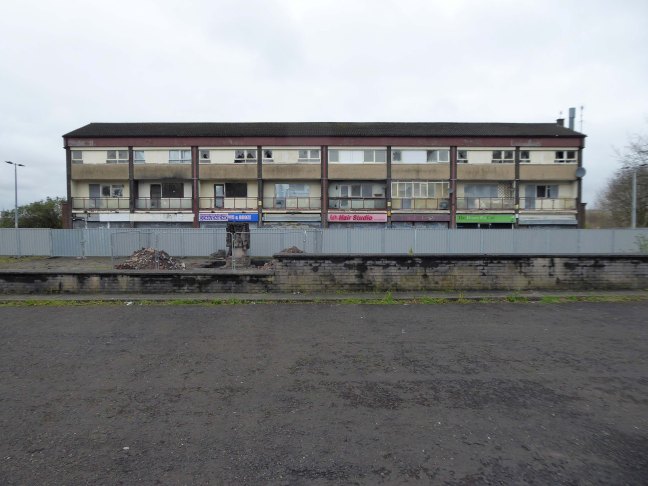
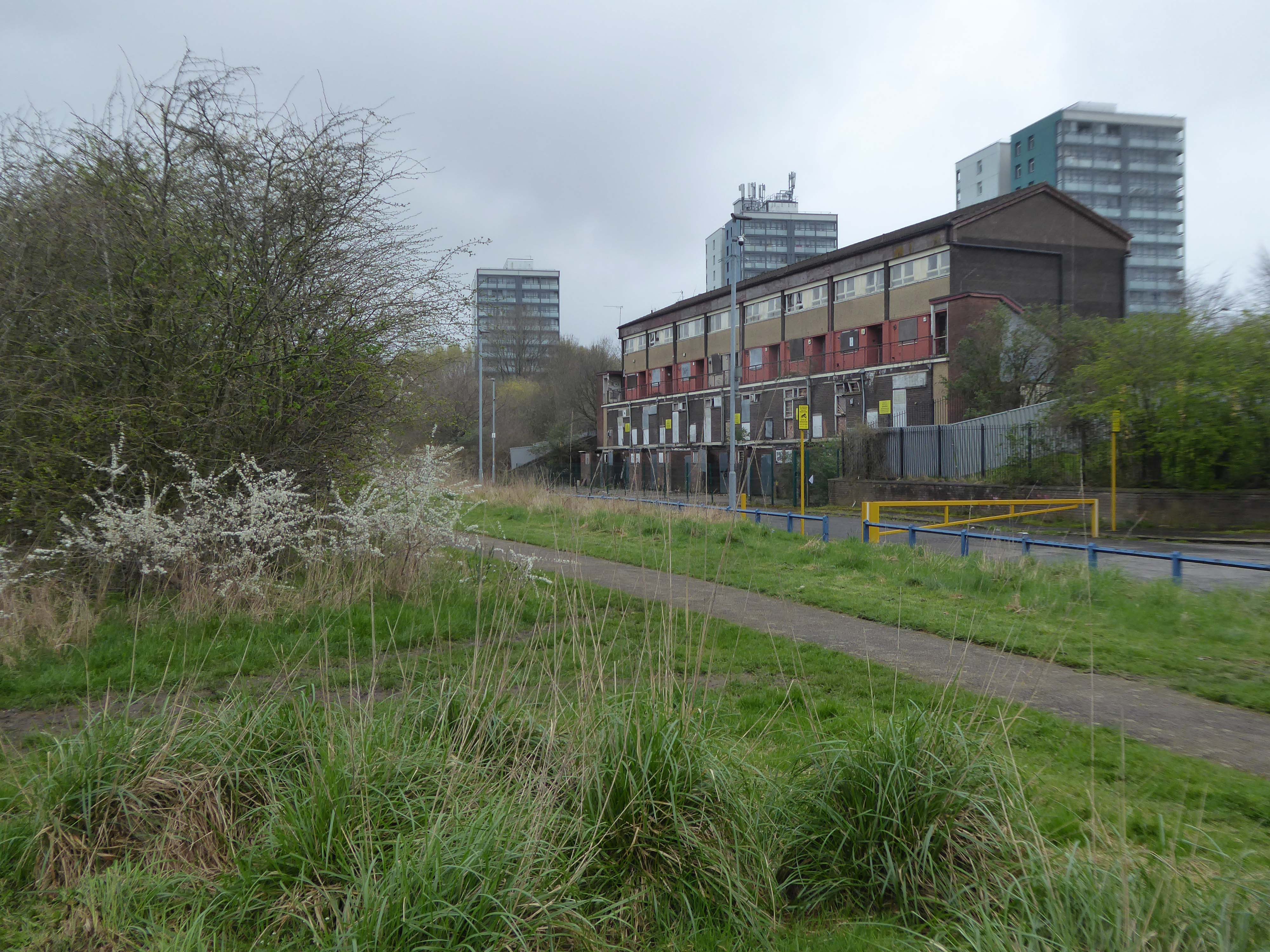
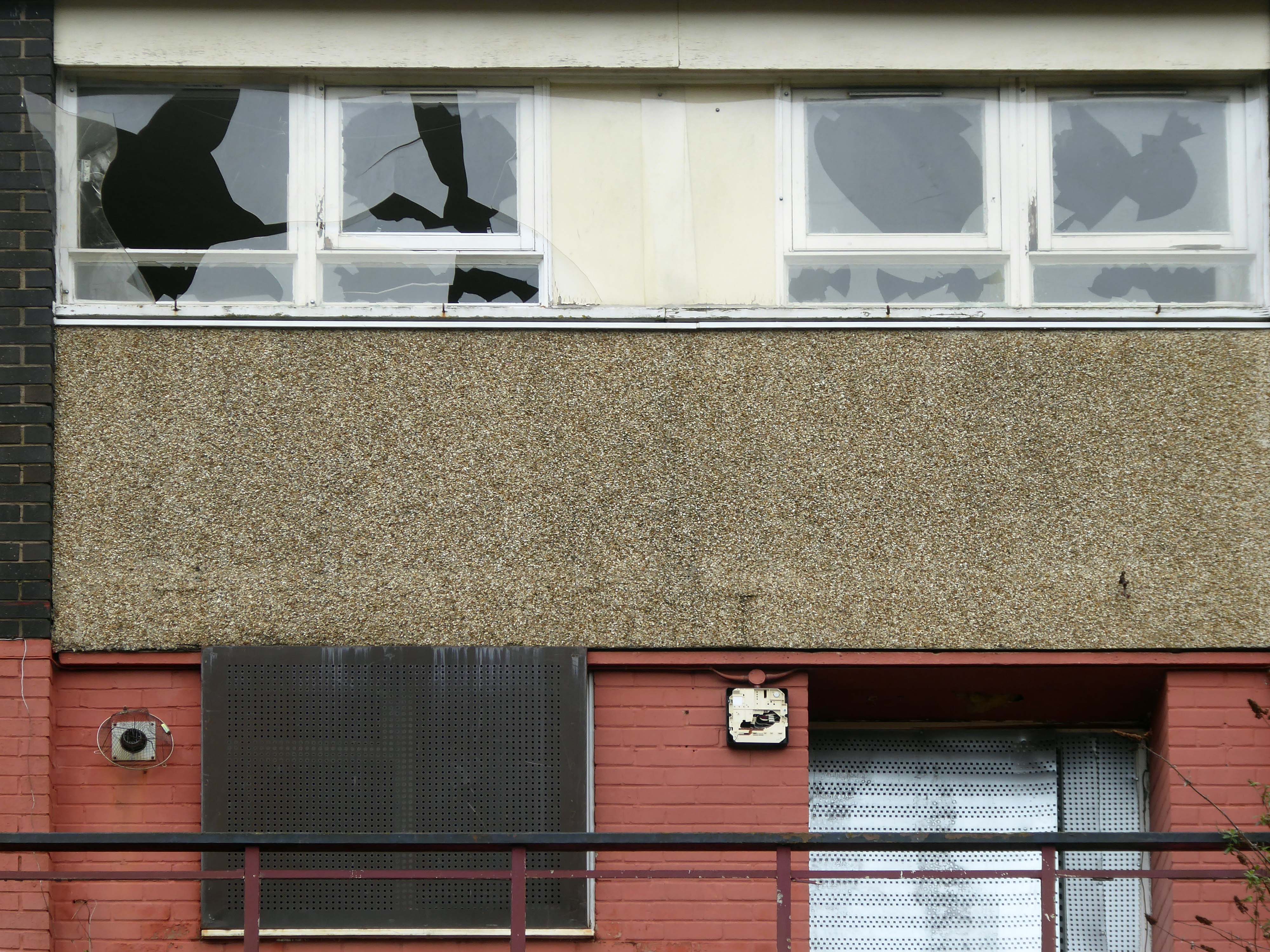
The shops and maisonettes are due to be demolished any day now – no longer to gaze open-eyed upon the former quarry of Sandhills.
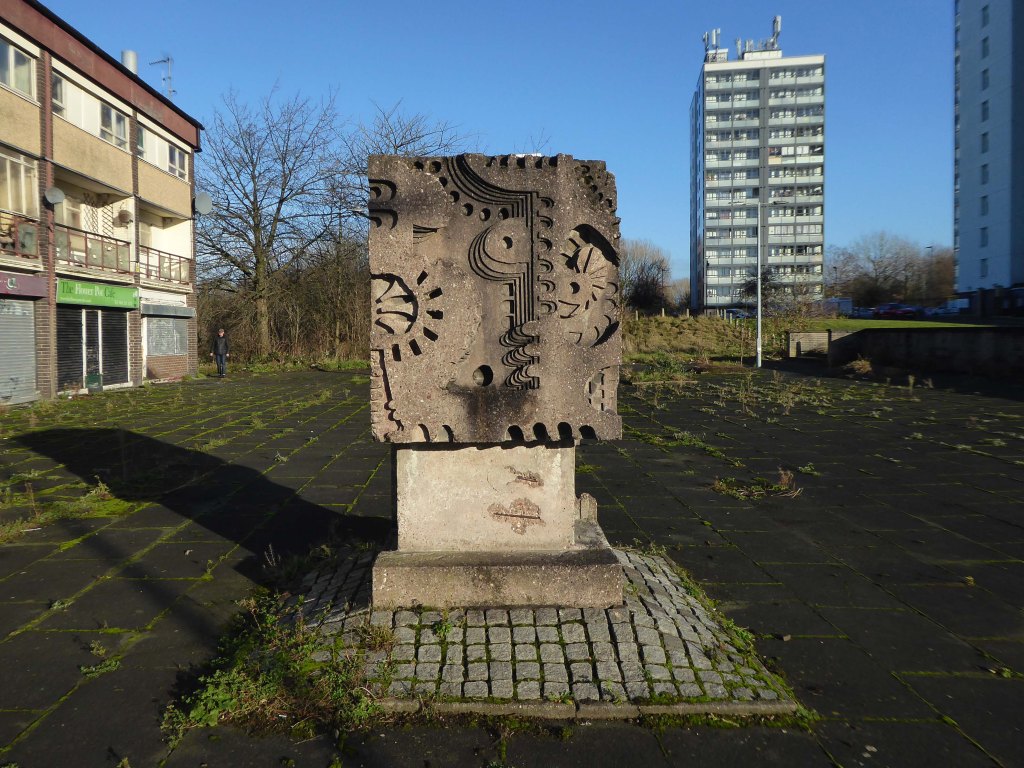
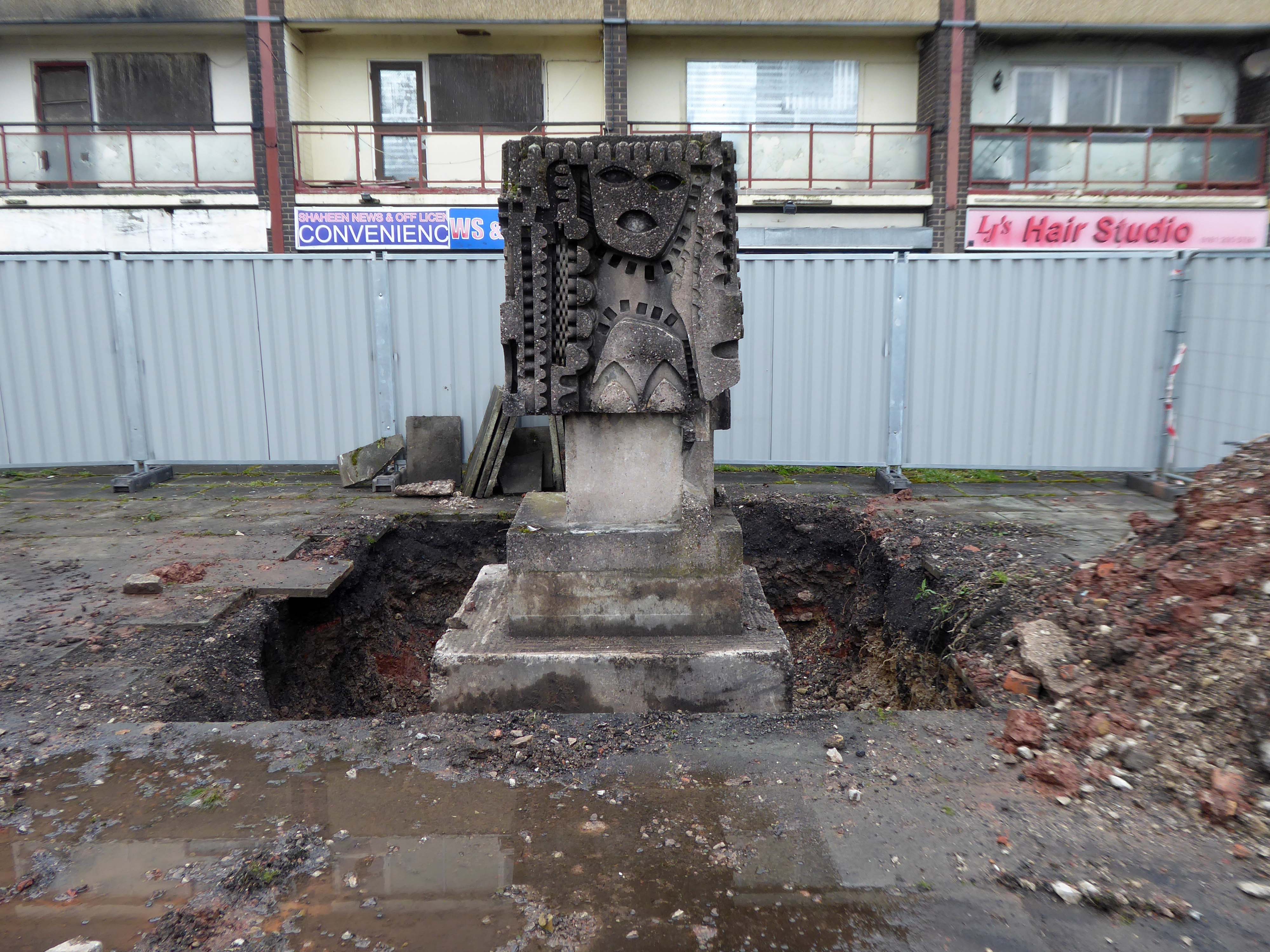
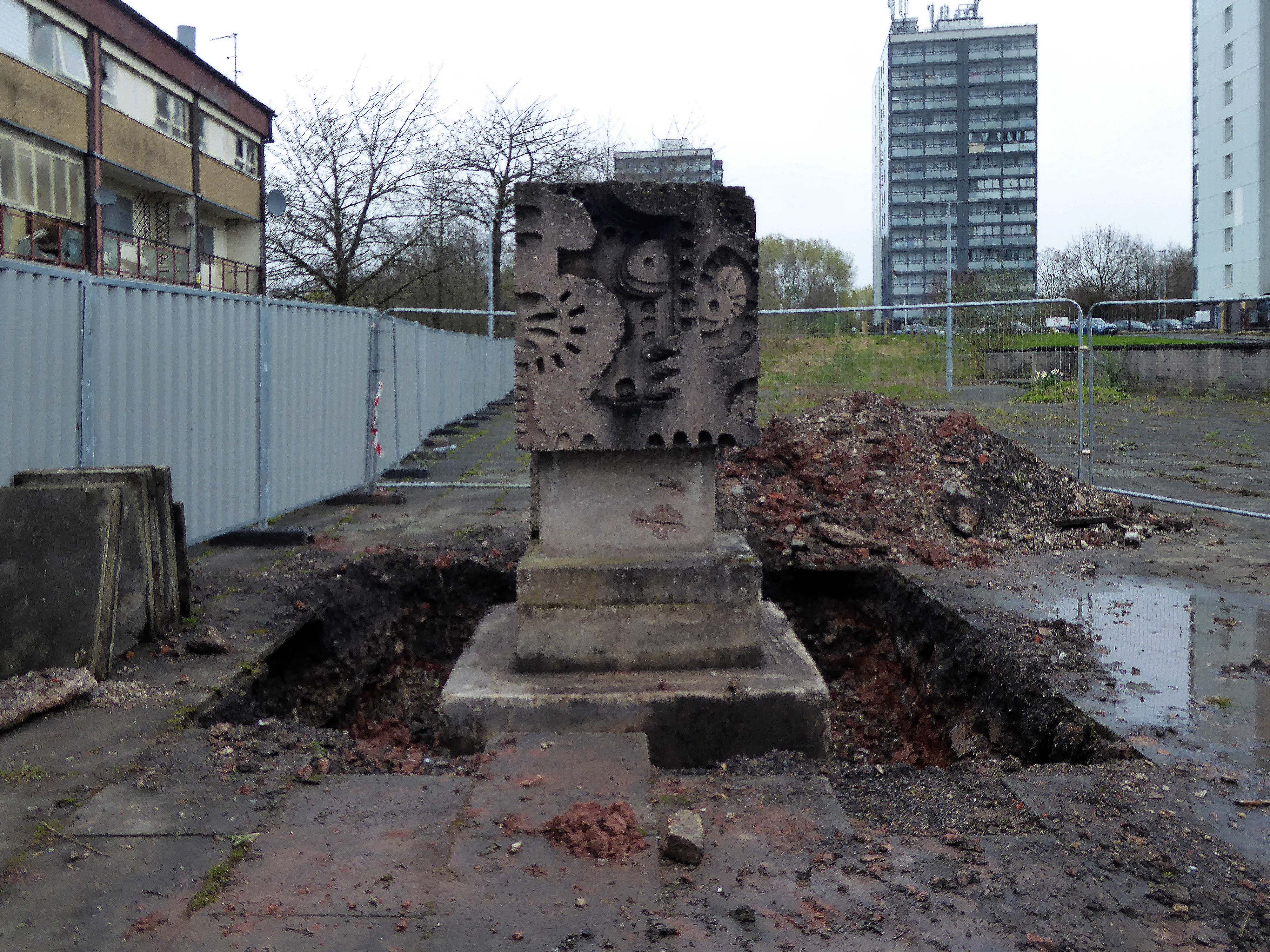
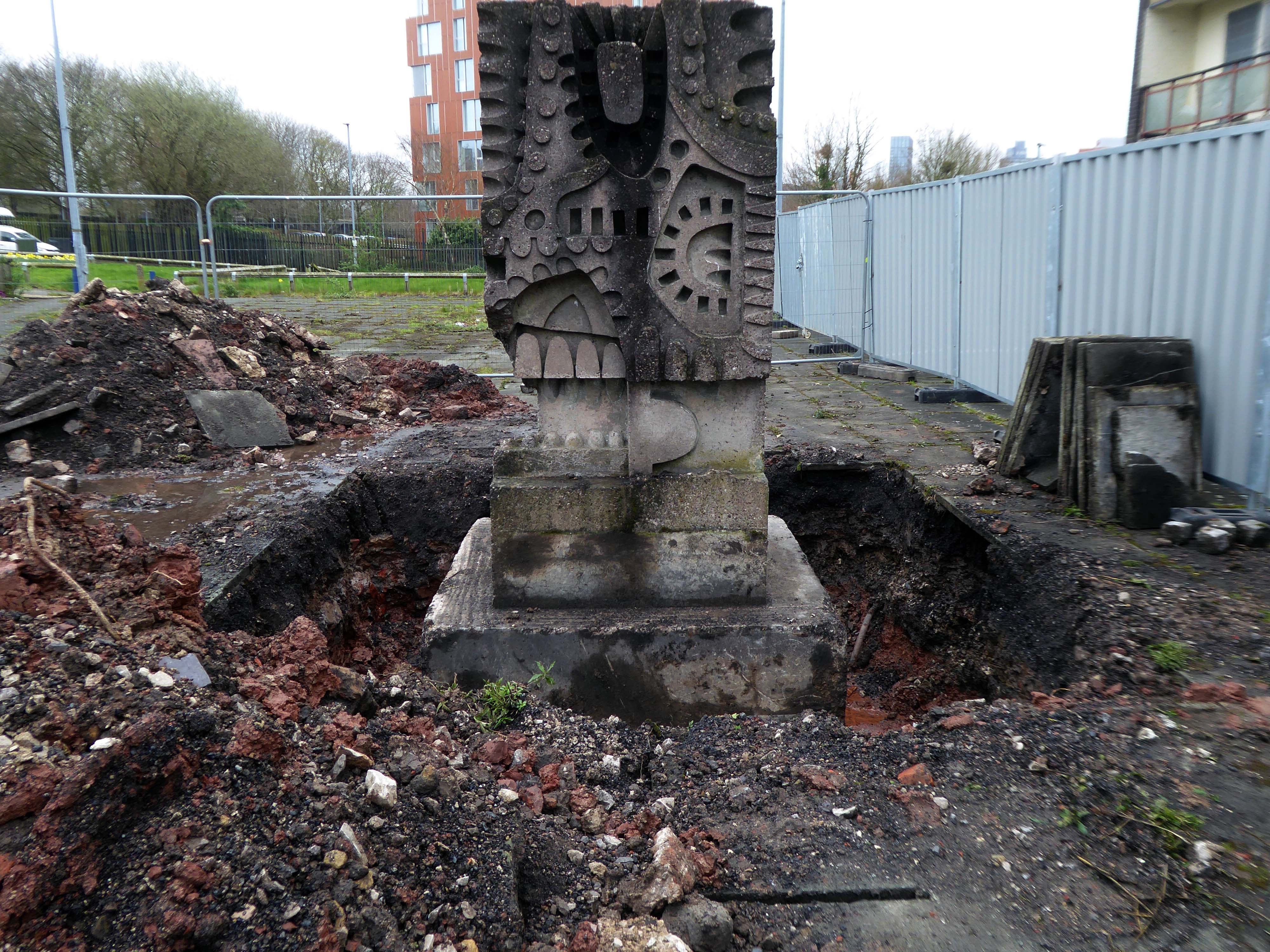
Around the front the diggers have been a digging – digging up around the base of the totem.
The work is to be re-sited by the nearby tower blocks.
The end is nigh.
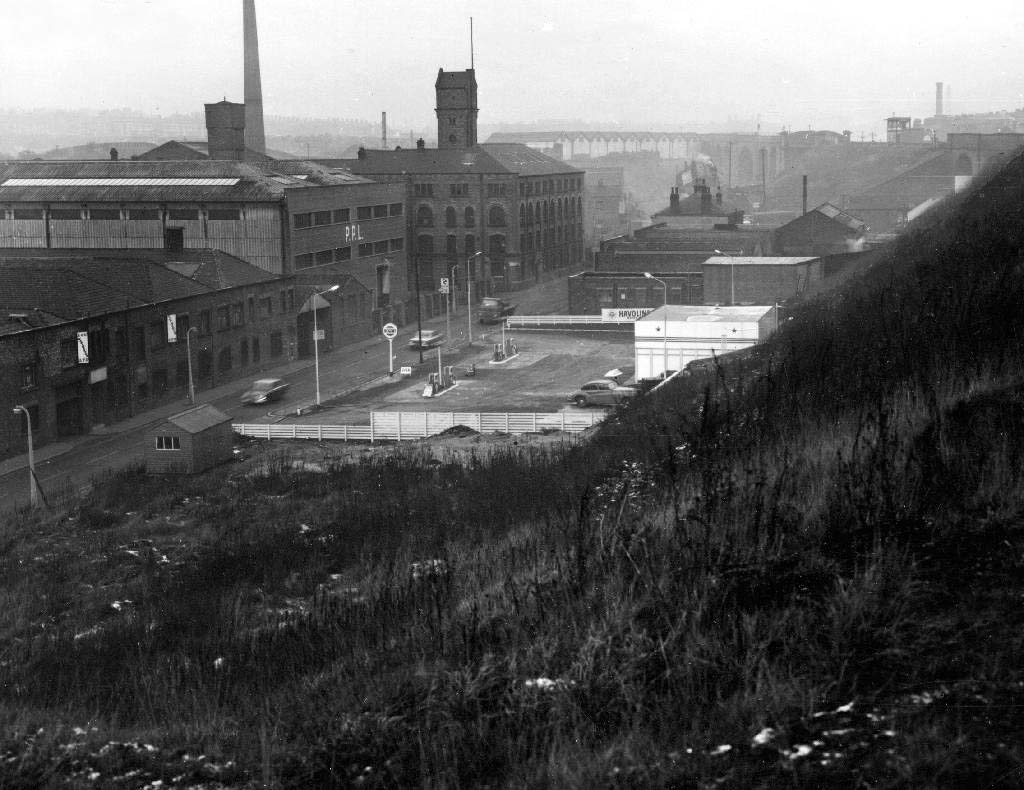
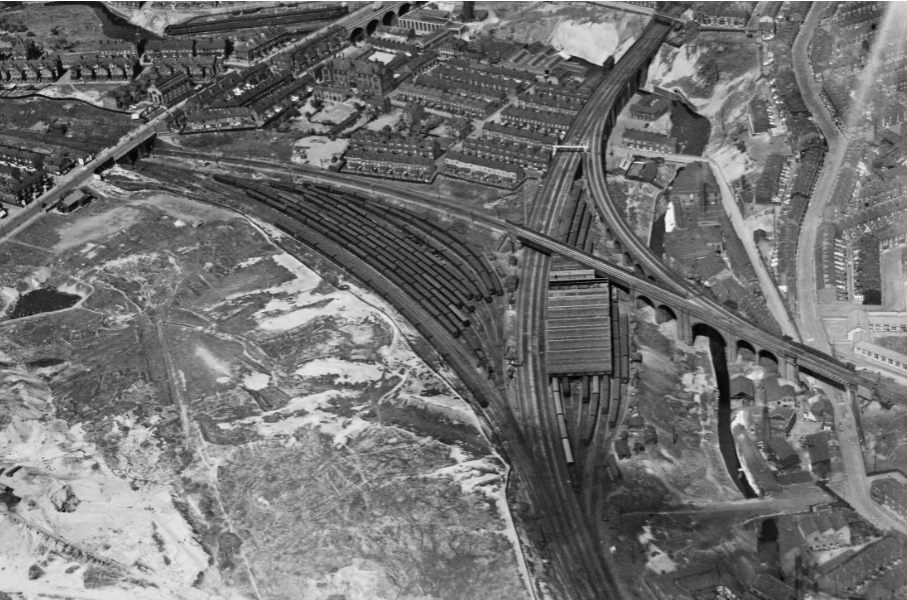
Heading now for Collyhurst Road and the Irk Valley – seen here in 1960.
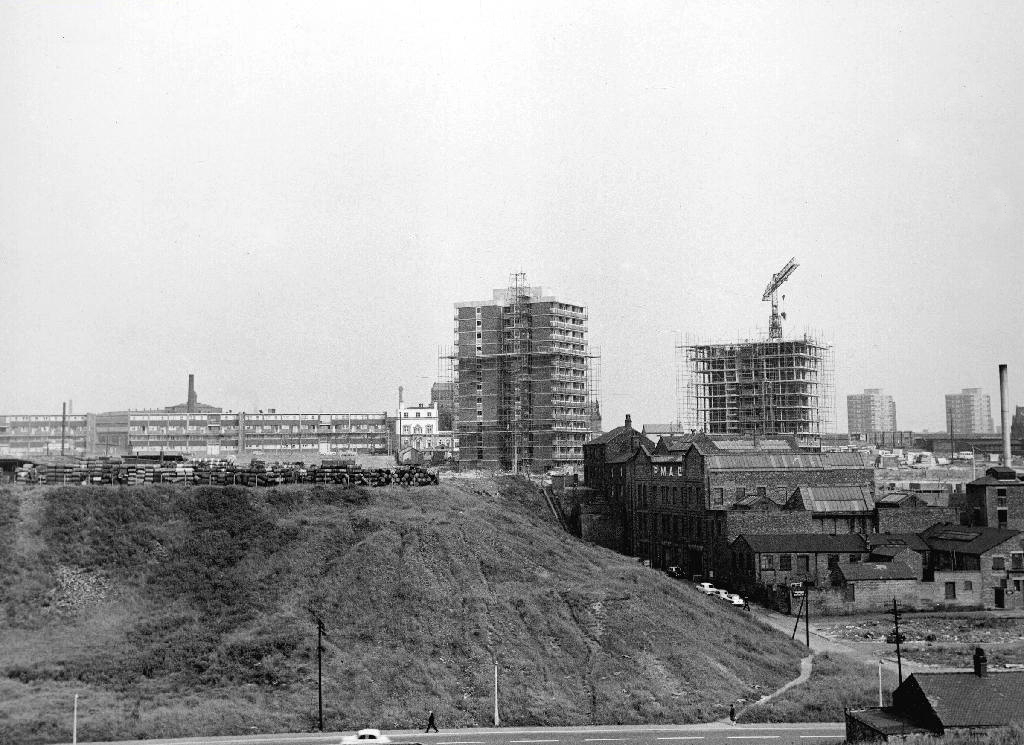
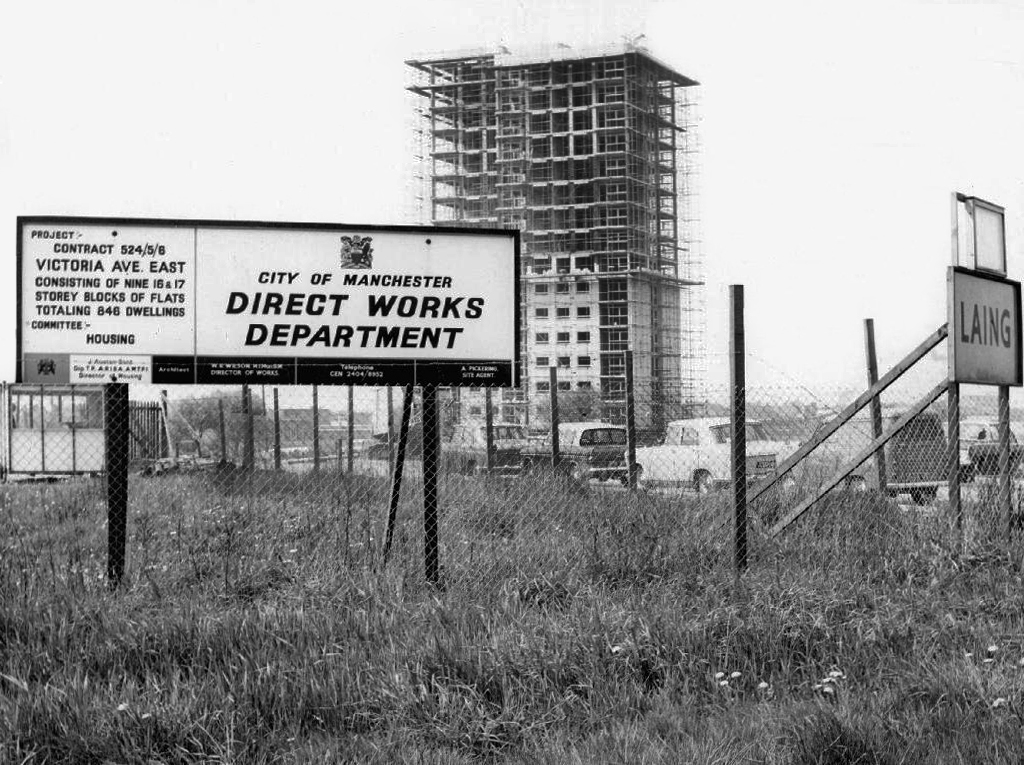
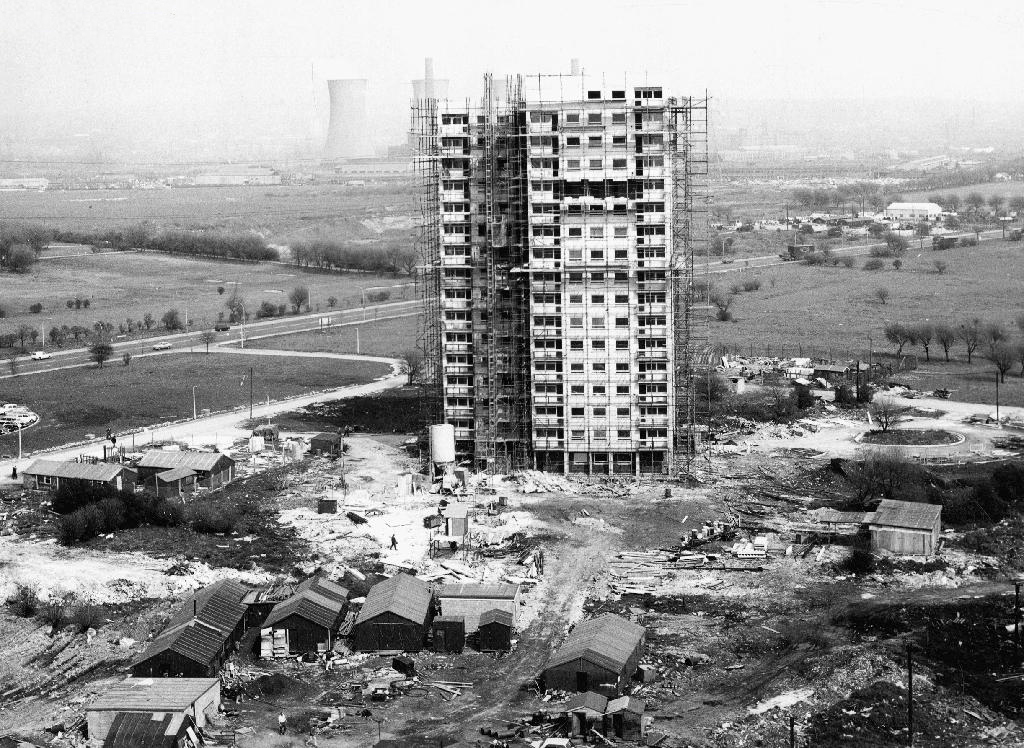
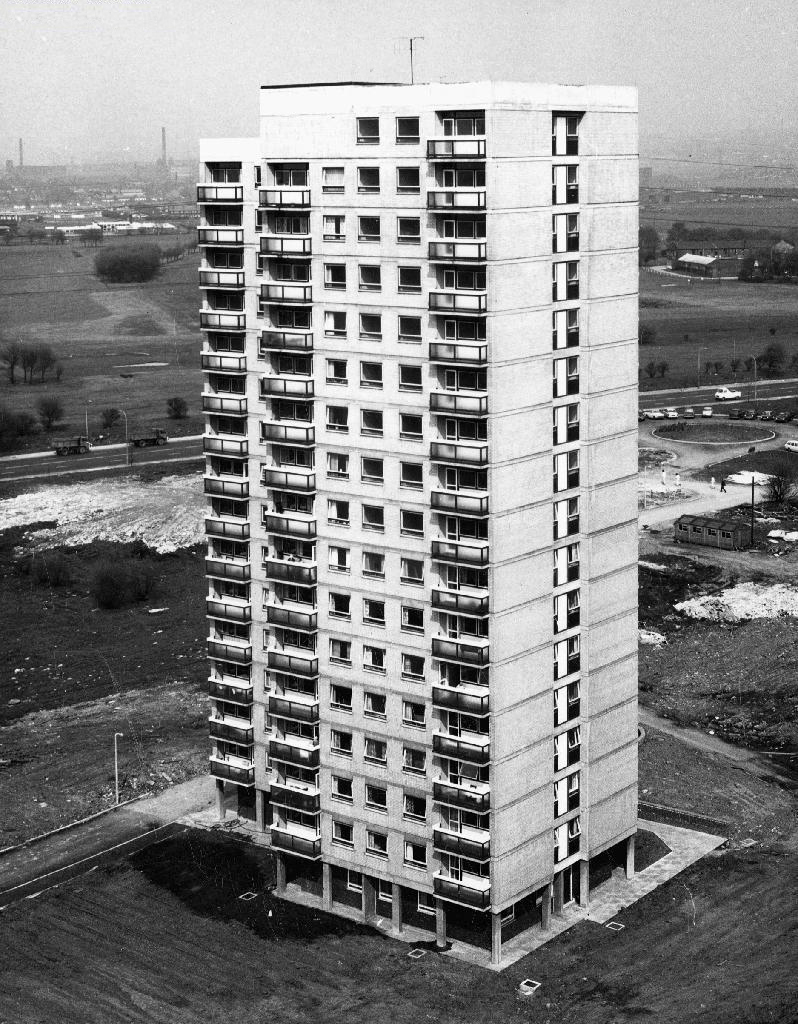
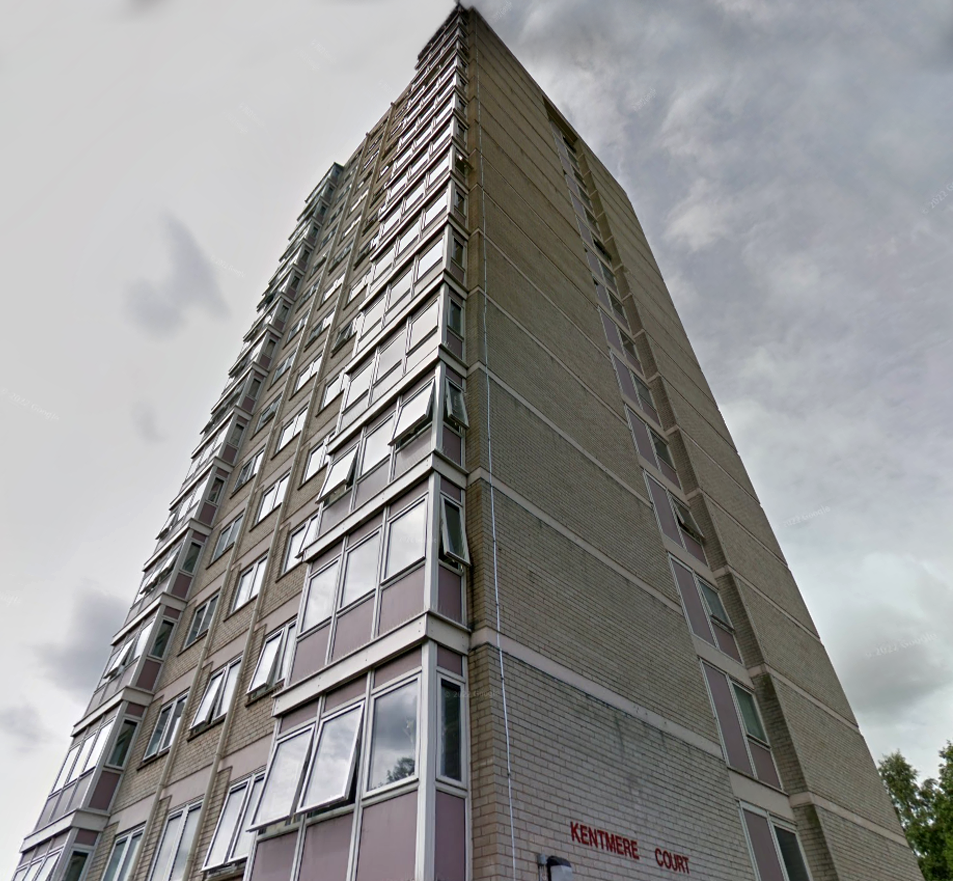
Looking back on the Square and the Dalton Street flats – Humphries, Dalton, Roach, Vauxhall and Moss Brook Courts under construction.
Vauxhall Street now but a shadow of its former self – the last traces of industry long gone.
Reclaimed over time by trees and dense underbrush.
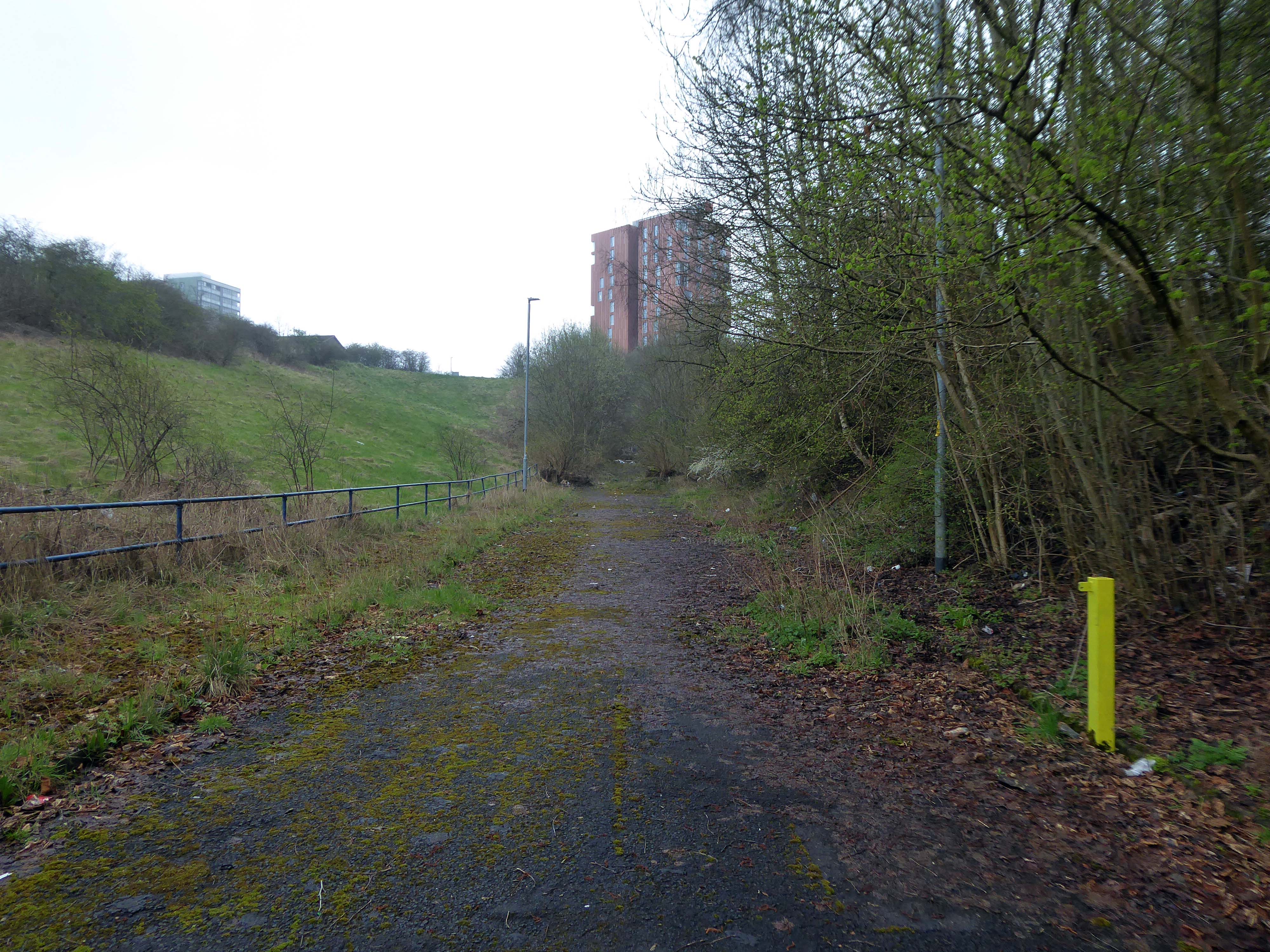
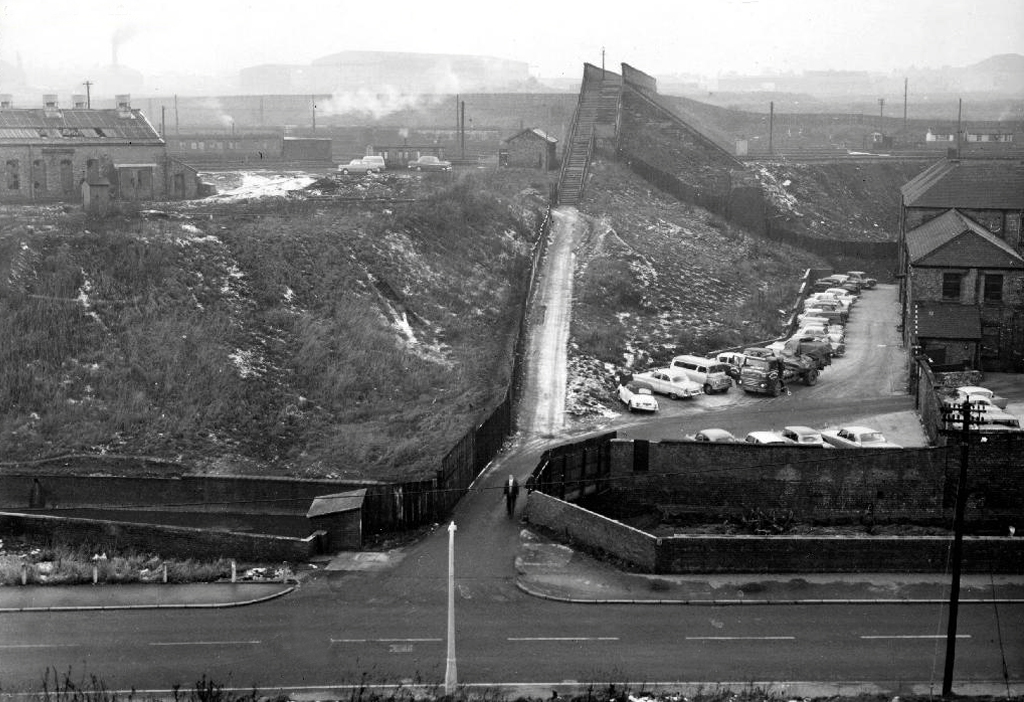
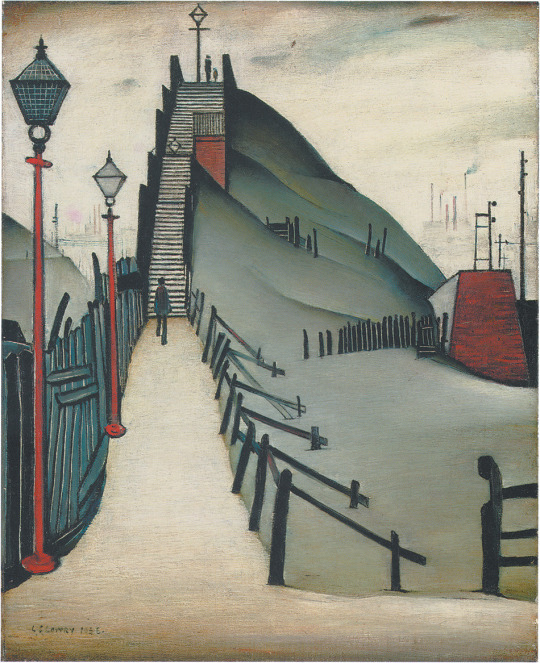
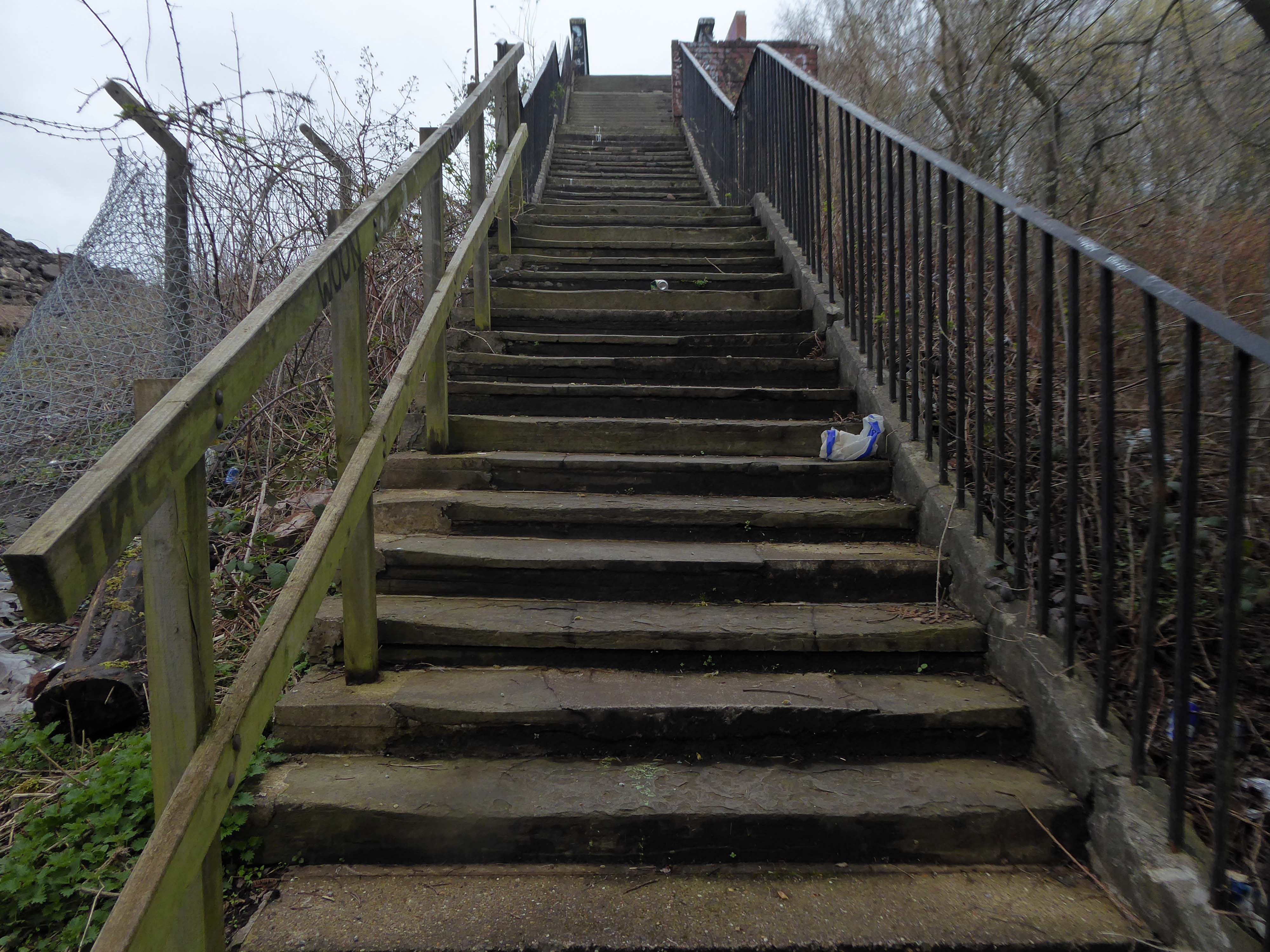
Crossing Collyhurst Road and up and over the railway via Barney’s Steps also known as the Lowry Steps.
LS Lowry
By the late 1950’s the whole of this area which we called Barney’s Tip became a refuse tip for Manchester City Council.
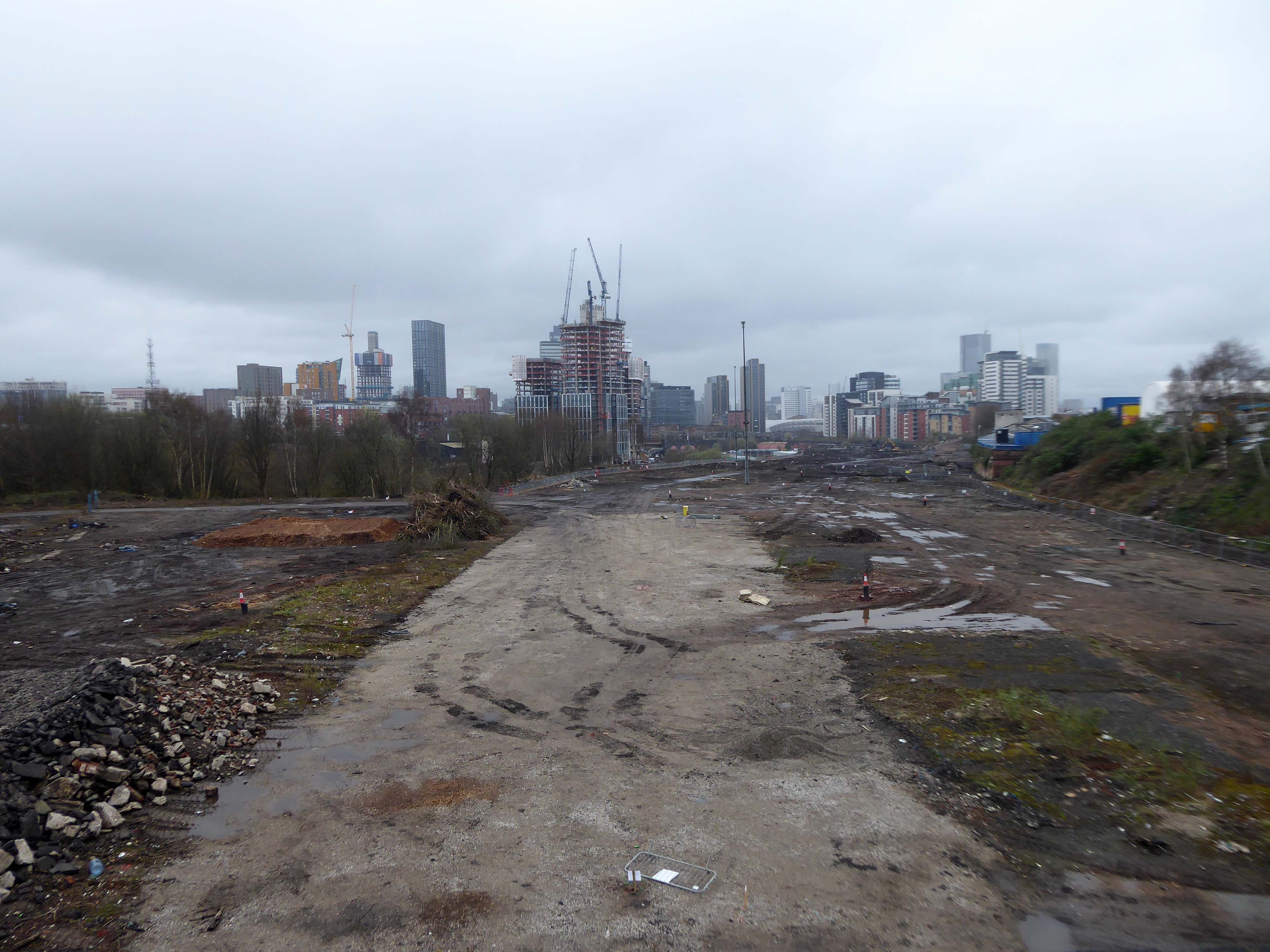
The area is in the process of being reconfigured as a delightful country park.
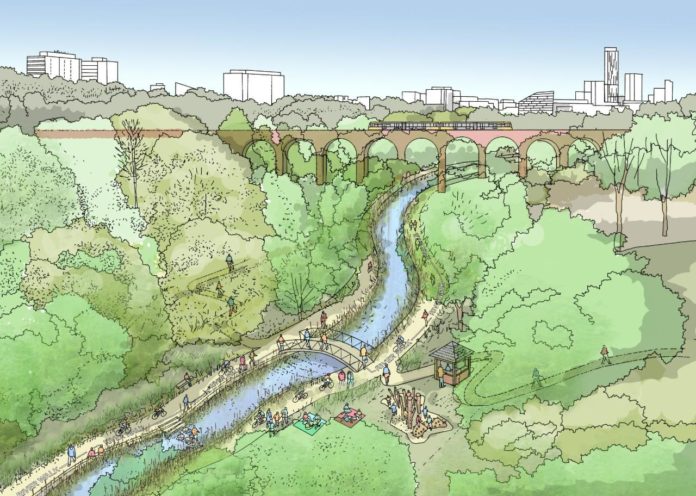
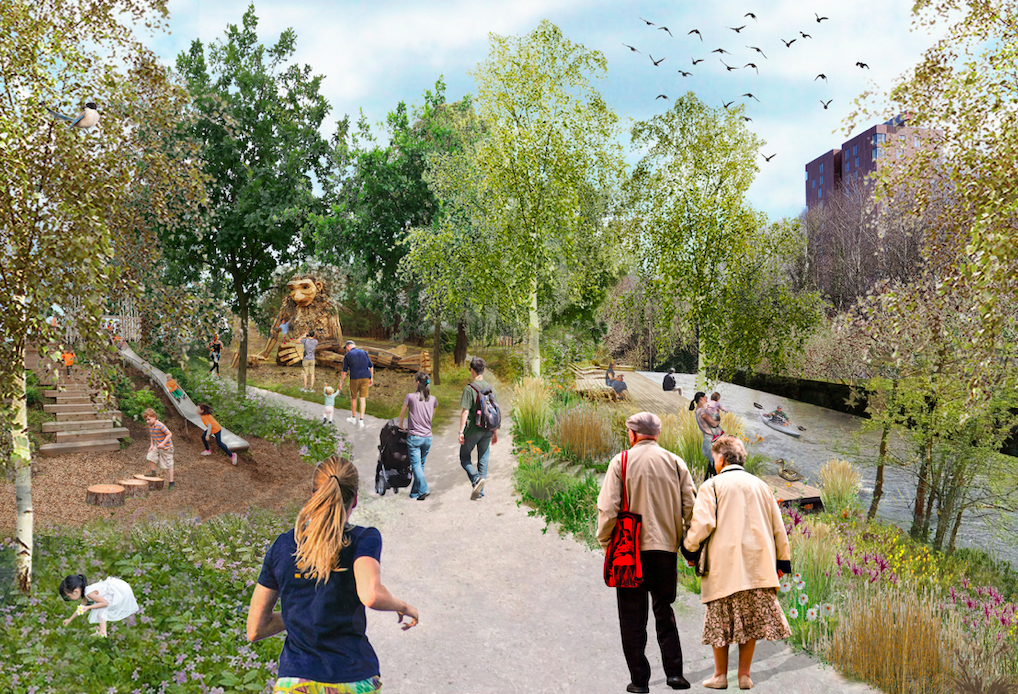
The investment will also help develop an initial phase of the planned City River Park incorporating St Catherine’s Wood as part of a network of public open space, including improvements along the River Irk and works to improve flood resilience, unlocking the potential of the Irk Valley that will characterise the wider Northern Gateway project.
The first phase of the City River Park will begin work to transform former railway architecture to develop the new Viaduct Linear Park north of Victoria Train Station, new stepped public realm space – Red Bank Terraces, along with new green space by the River Irk and the key improvements to St Catherine’s Wood.
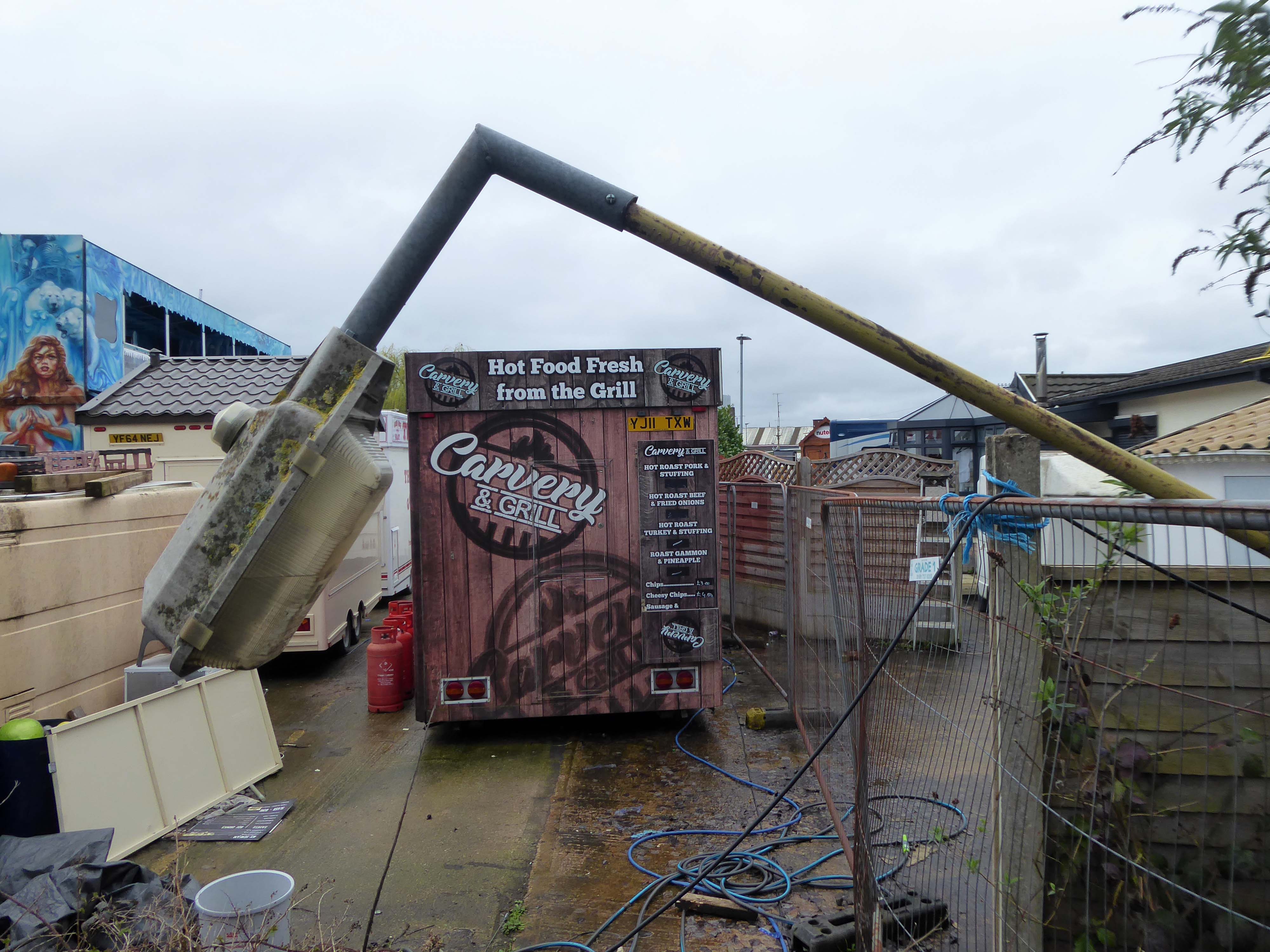
Collingham Street is lined with trucks, trailers, stalls and mobile homes.
But there’s nothing temporary about this Cheetham Hill neighbourhood; most residents have lived here for years and many plan to spend the rest of their lives here.
Founded more than forty years ago, it was created by the Showman’s Guild of Great Britain – and it’s reserved exclusively for fairground workers both retired and current.
Built on Queens Road tip, a former rubbish dump, and rented out by Manchester Council, many of the 52 homes belong to older retired showmen or families for whom an itinerant lifestyle has become more challenging.
It’s a close-knit community with a unique shared history.
Though not without its own particular issues it would seem, according to the MEN.
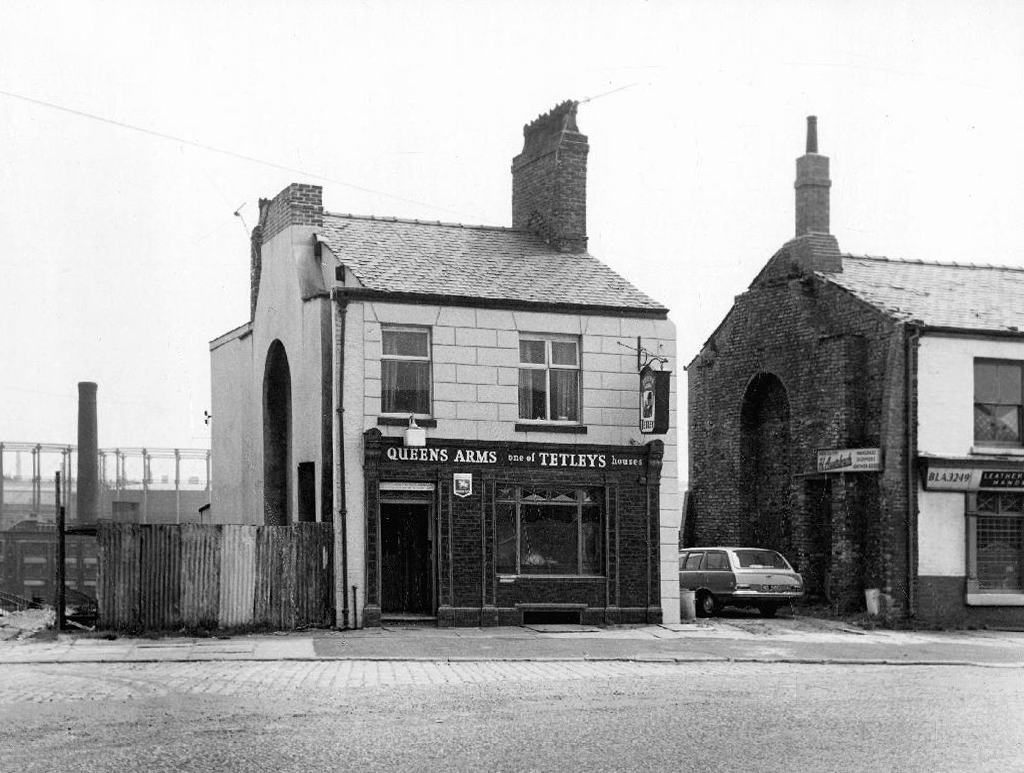
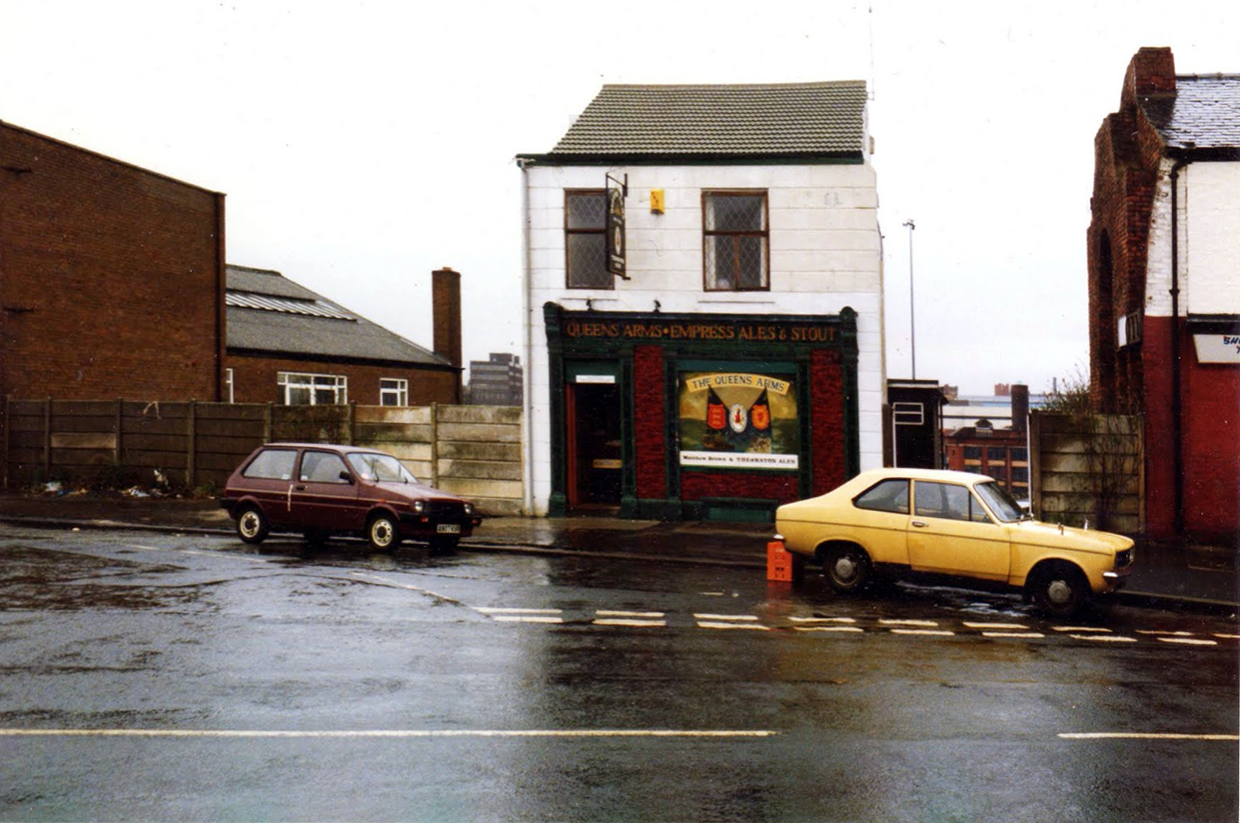
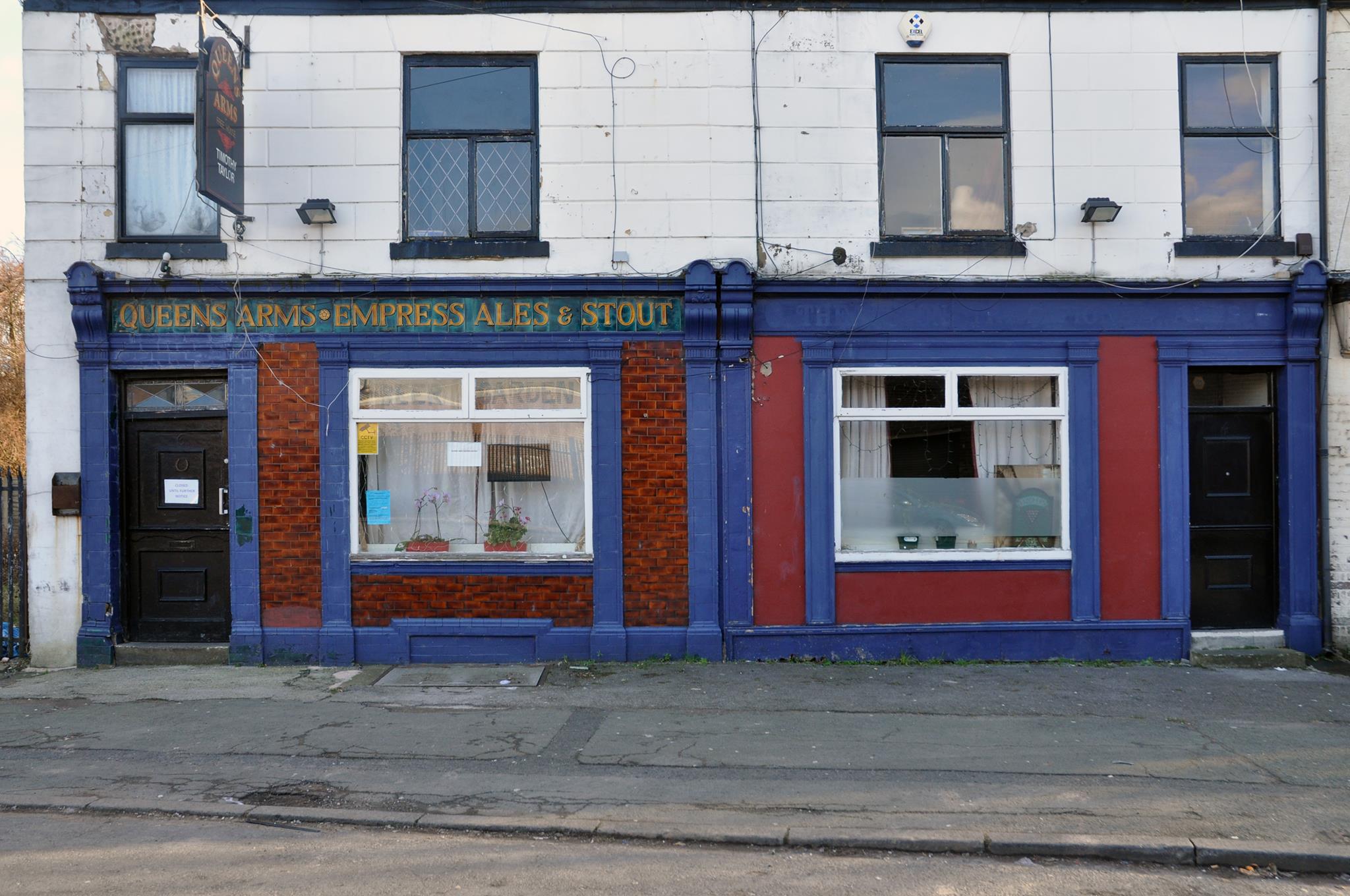
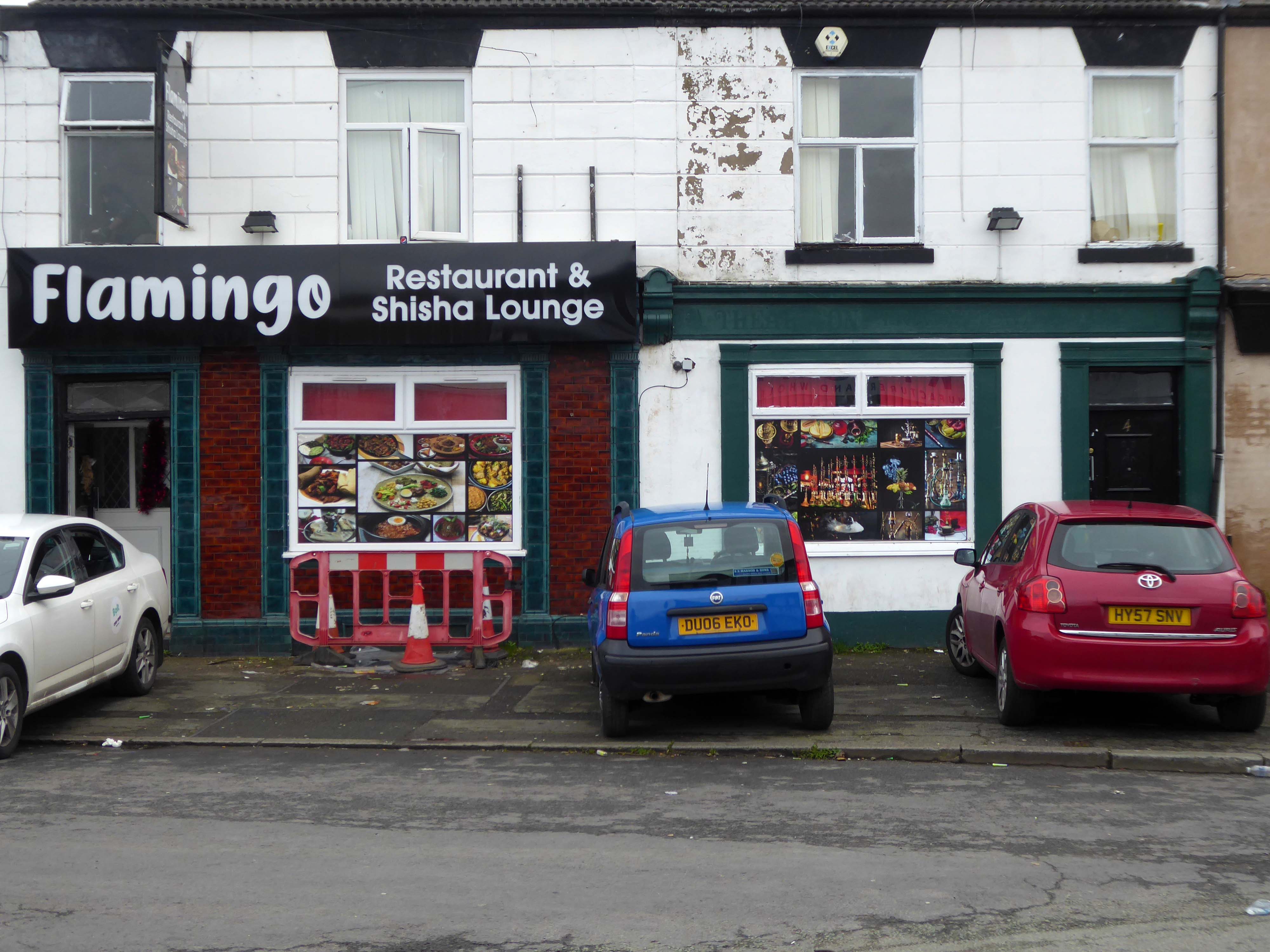
The licensing out of hours team has received noise complaints relating to the premises which was found to be open beyond permitted hours when visited. Officers also identified breaches of the Health Act during inspections in which people were seen smoking shisha pipes in an enclosed extension at the back.
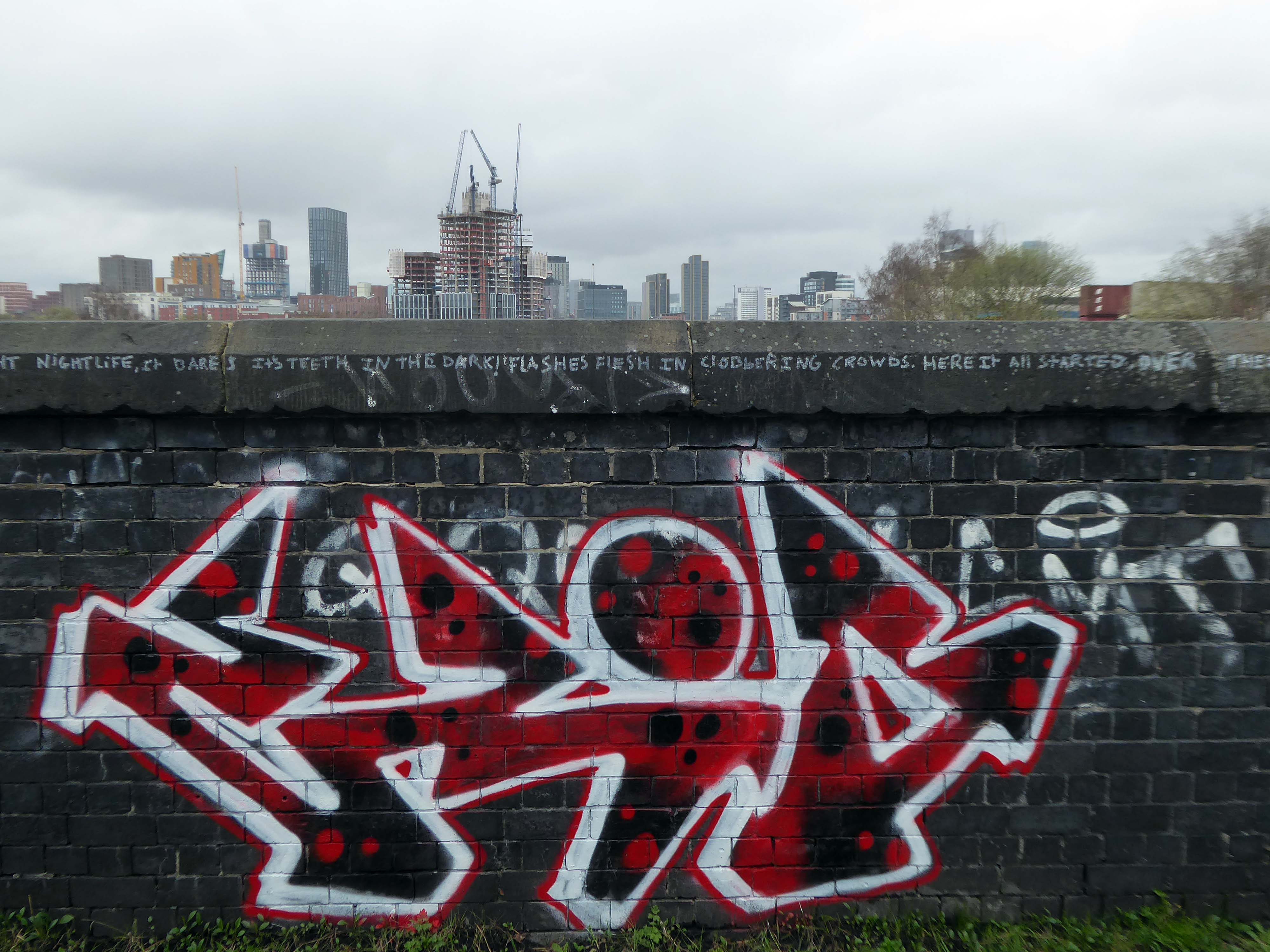
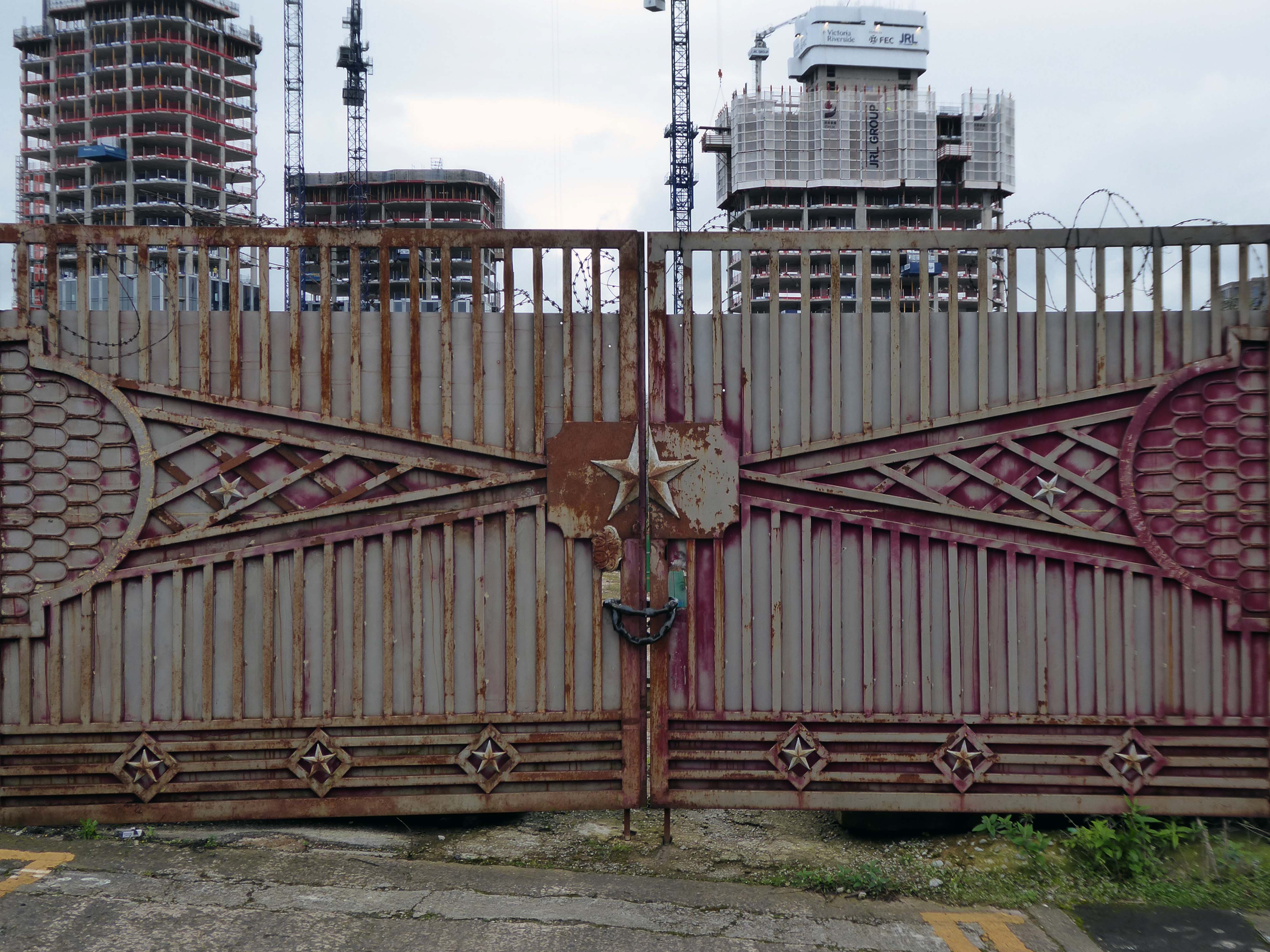
We will leave the Flamingo be and head back into town – but not without giving a nod to this confusing collision between this self-made scrapyard-man chic gate and the ever changing skyline of overheated urban regeneration.
The new creation has come: The old has gone, the new is here!
In his postcard, Phyl writes that the weather is nice, he has a self-catering apartment near a pond, but complains about the expensive cost of Spanish bread at £1 a loaf.
Although it was delivered to the right address on the card, Mr Davies said he has no clue who either Phyl or Mrs Leon could be.
I’ve been baffled by it really.
I suppose Mrs Leon once lived in my flat, but I’ve asked around neighbours who have lived here twenty or thirty years, and none of them have ever heard of her.
The Post Office say they have no idea what could have happened to the postcard for twenty nine years, may be it got stuck in a sorting machine, may be given that it’s got both British and Spanish stamps on it, someone found it and posted it on.
Really I’d just like to find out who either Phyl or Mrs Leon are, so I could finally give it to them after all this time.
Curiously the story does not reproduce the picture of the picture postcard.
Dear Eddie, this is a very pleasant place and the weather is just right. The food is very expensive though over £1 for a loaf of bread! We have a self catering little apartment by the side of a pond complete with ducks.
There is something very poignant about the handwritten reportage of holidays past and also a sadness attached to the blank other side -sentiments forever unsent.
I’ve looked at life from both sides now From win and lose and still somehow It’s life’s illusions I recall I really don’t know life at all
We are all going somewhere or nowhere or other – we report back.
Having a nice relaxing holiday. Not had good weather. Got caught in rain on Friday have lost my voice. Uncle Jim laughing
Auntie Ethel & Jim
Hope Leslies finger is coming on alright
20th August 1968
Hello Sharon, hope you are as happy as can be. Sorry I can’t tell you anything about your country, as I’ve never been; not yet anyway.
Bye Don
23rd April 1979
Dear Rita, here we are enjoying our holiday with Frank, Jacky & Stuart. The weather has been very poor, but there is an improvement today. Hope all is well with you. Lynn her husband and the little ones are visiting on thursday, so we shall have a real tea-party.
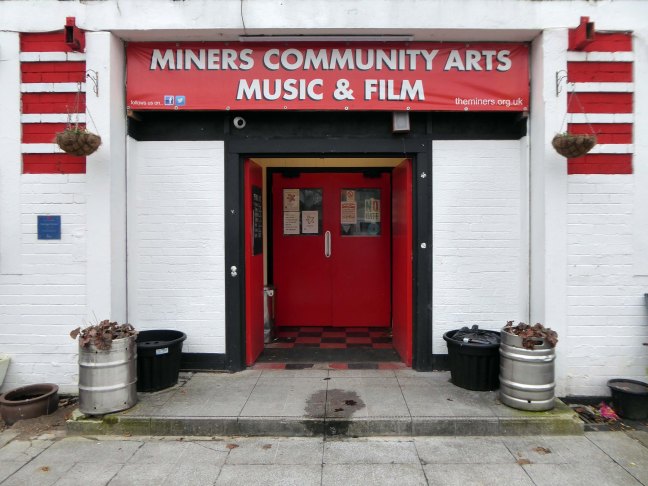
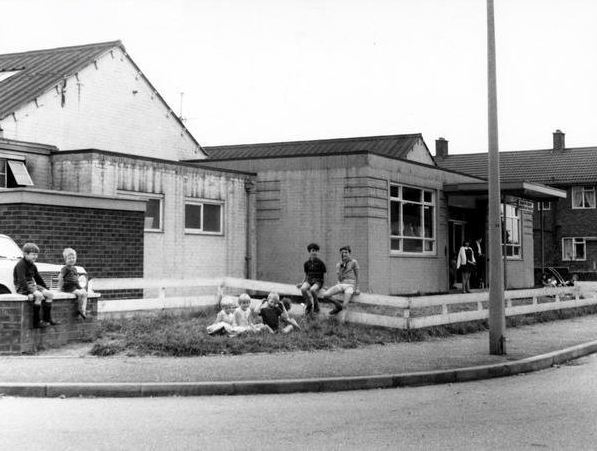
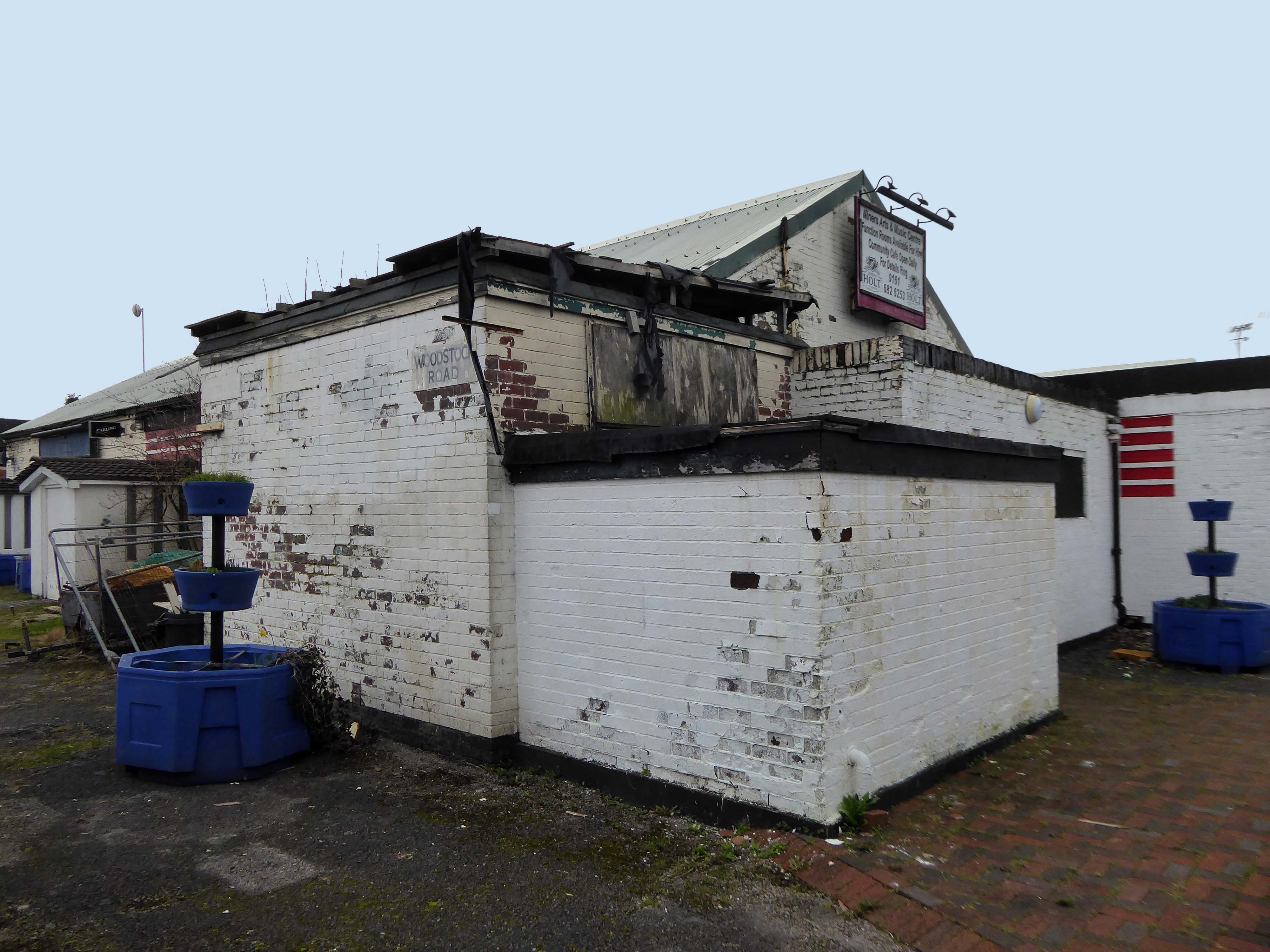
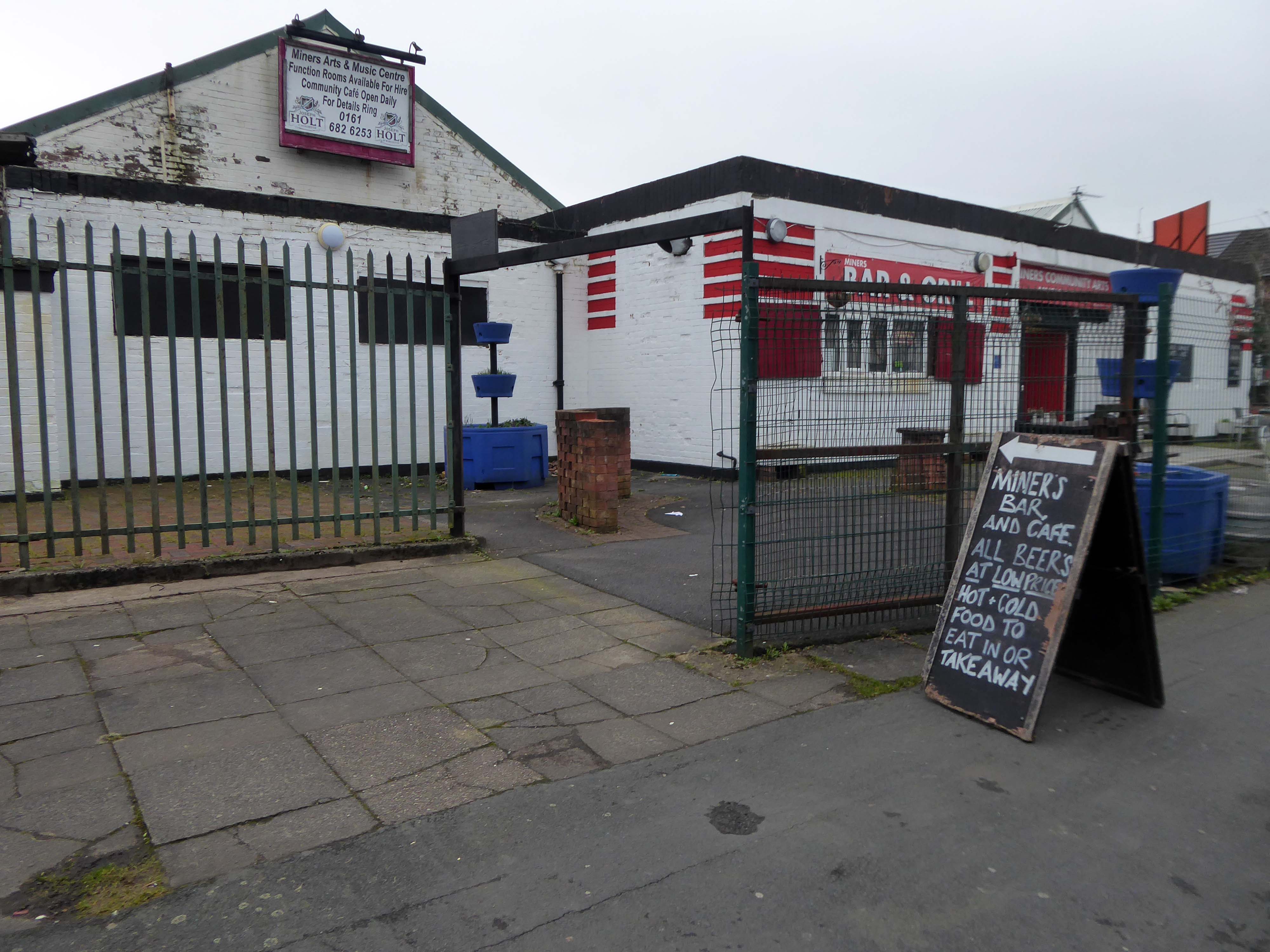
More recently it has had a renaissance under the stewardship of local lad Louis Beckett.
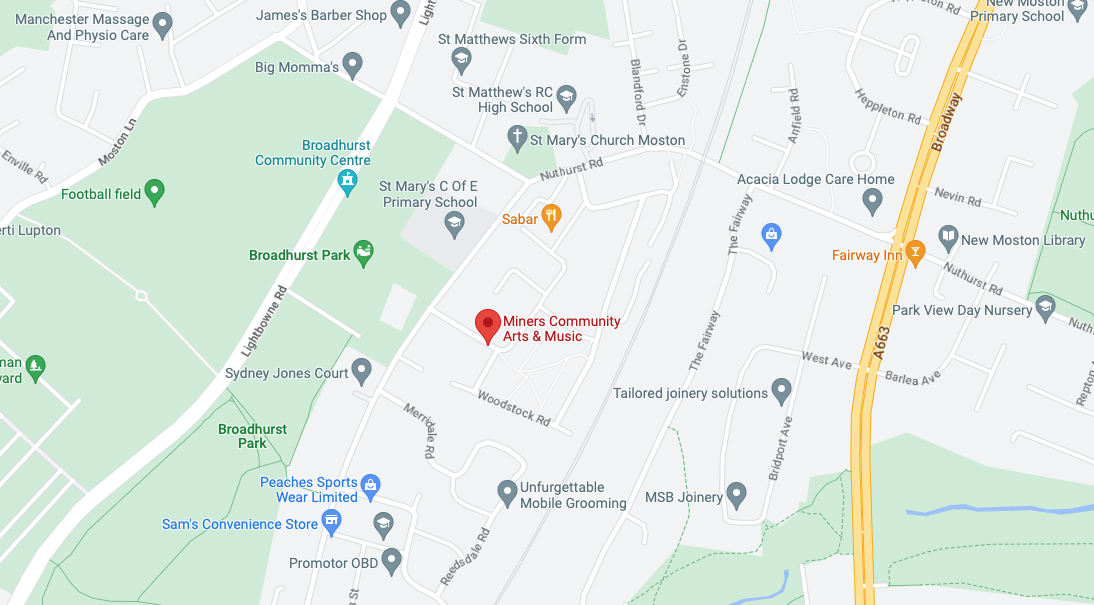
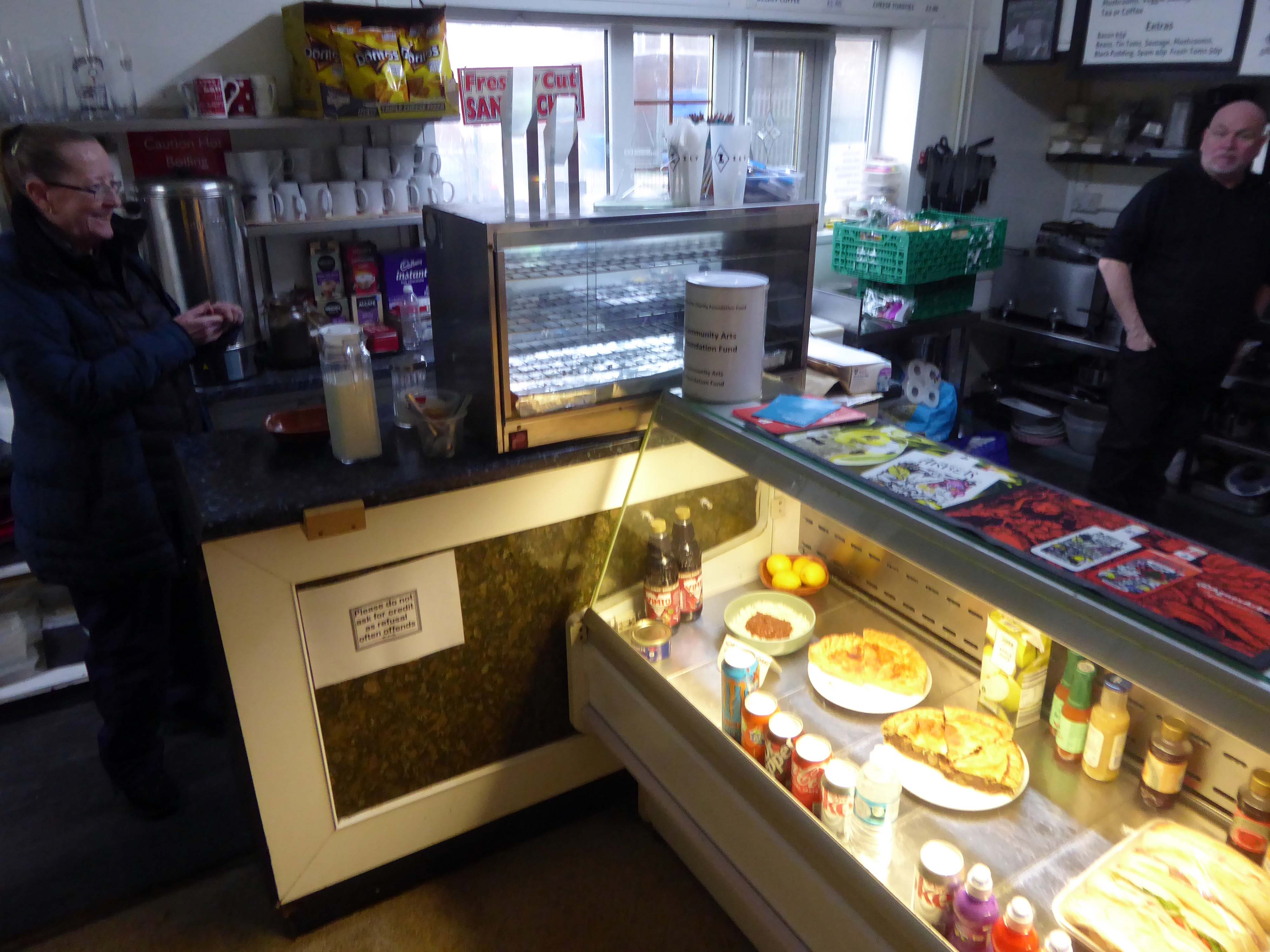
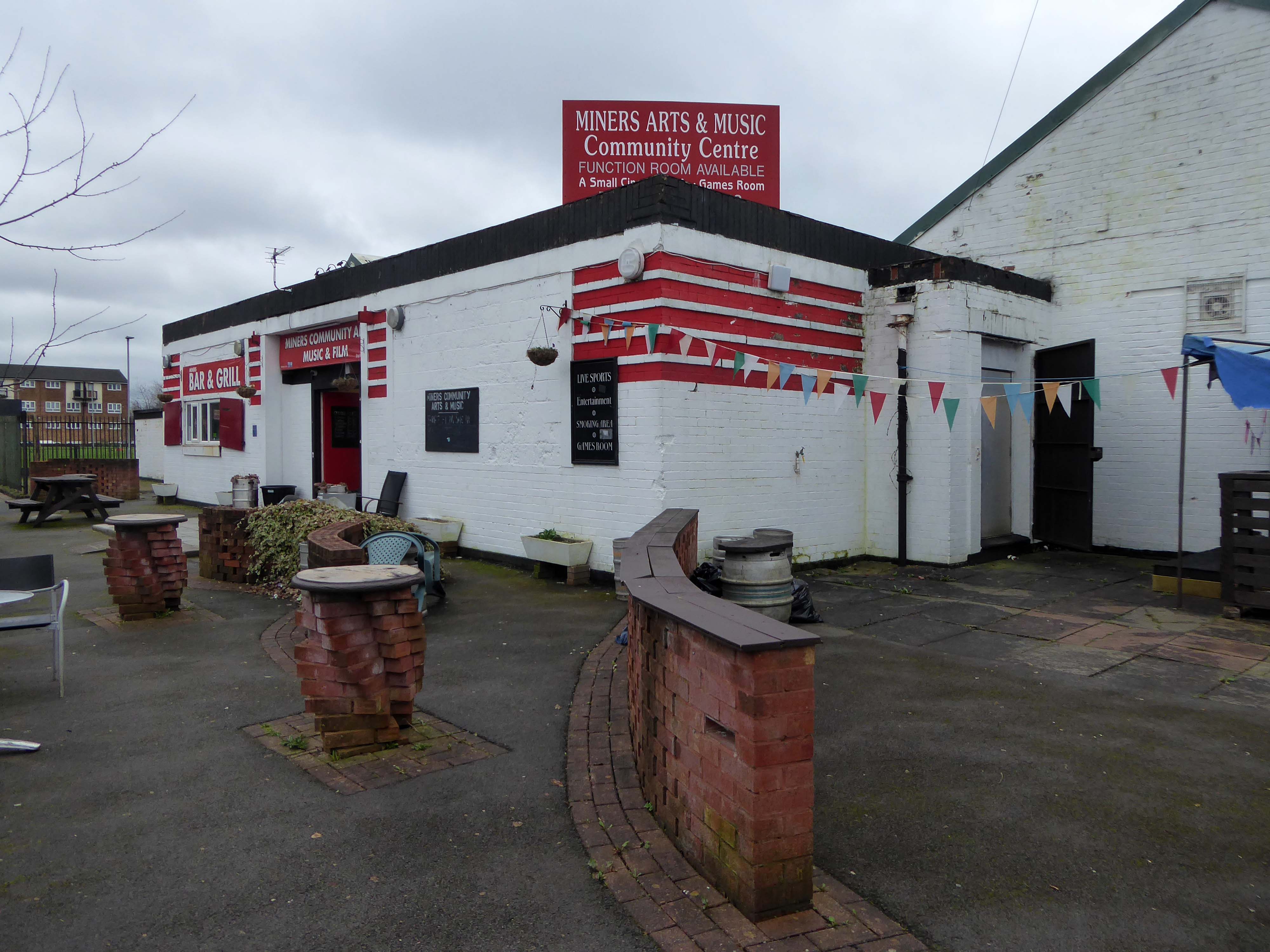
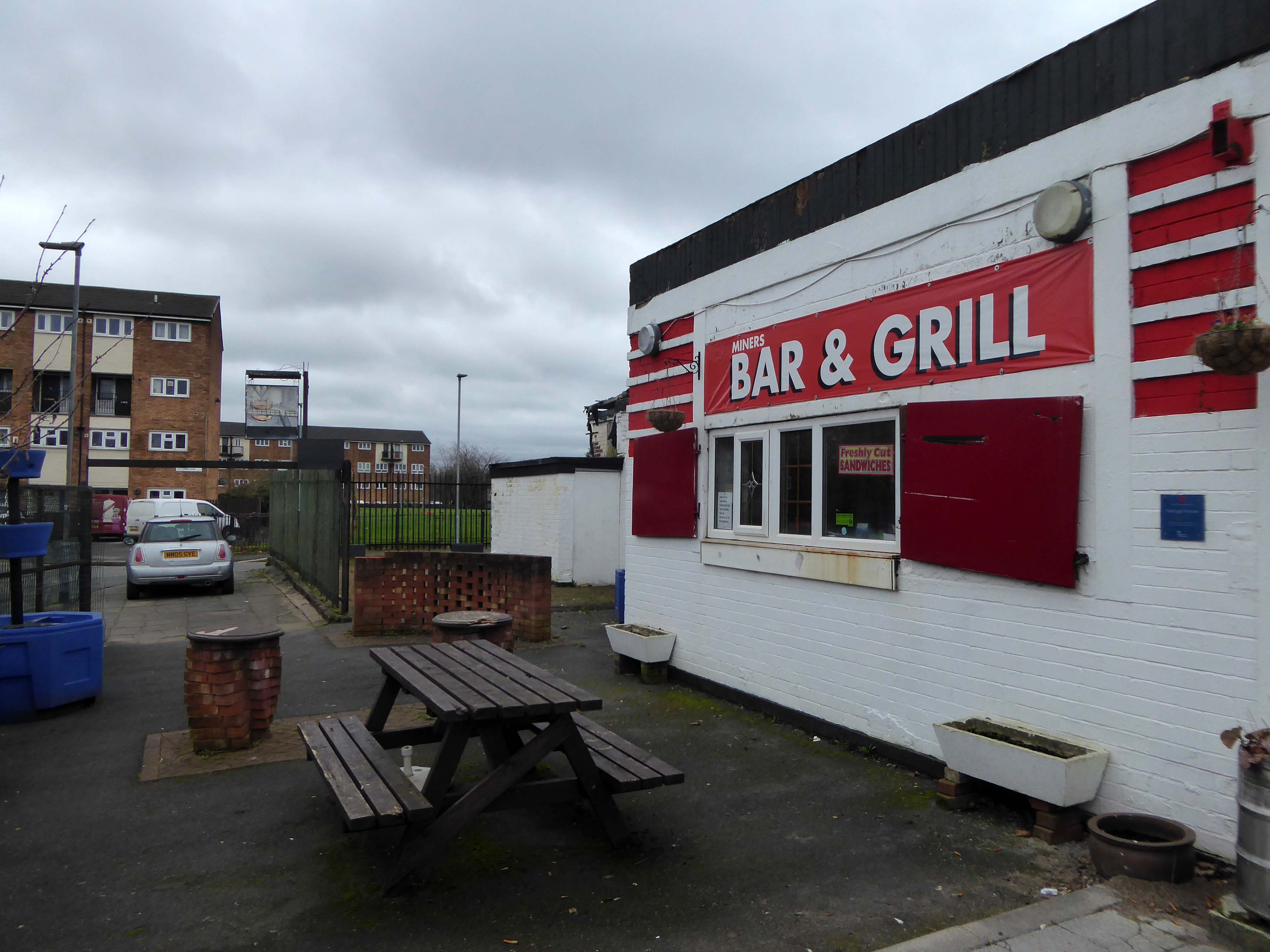
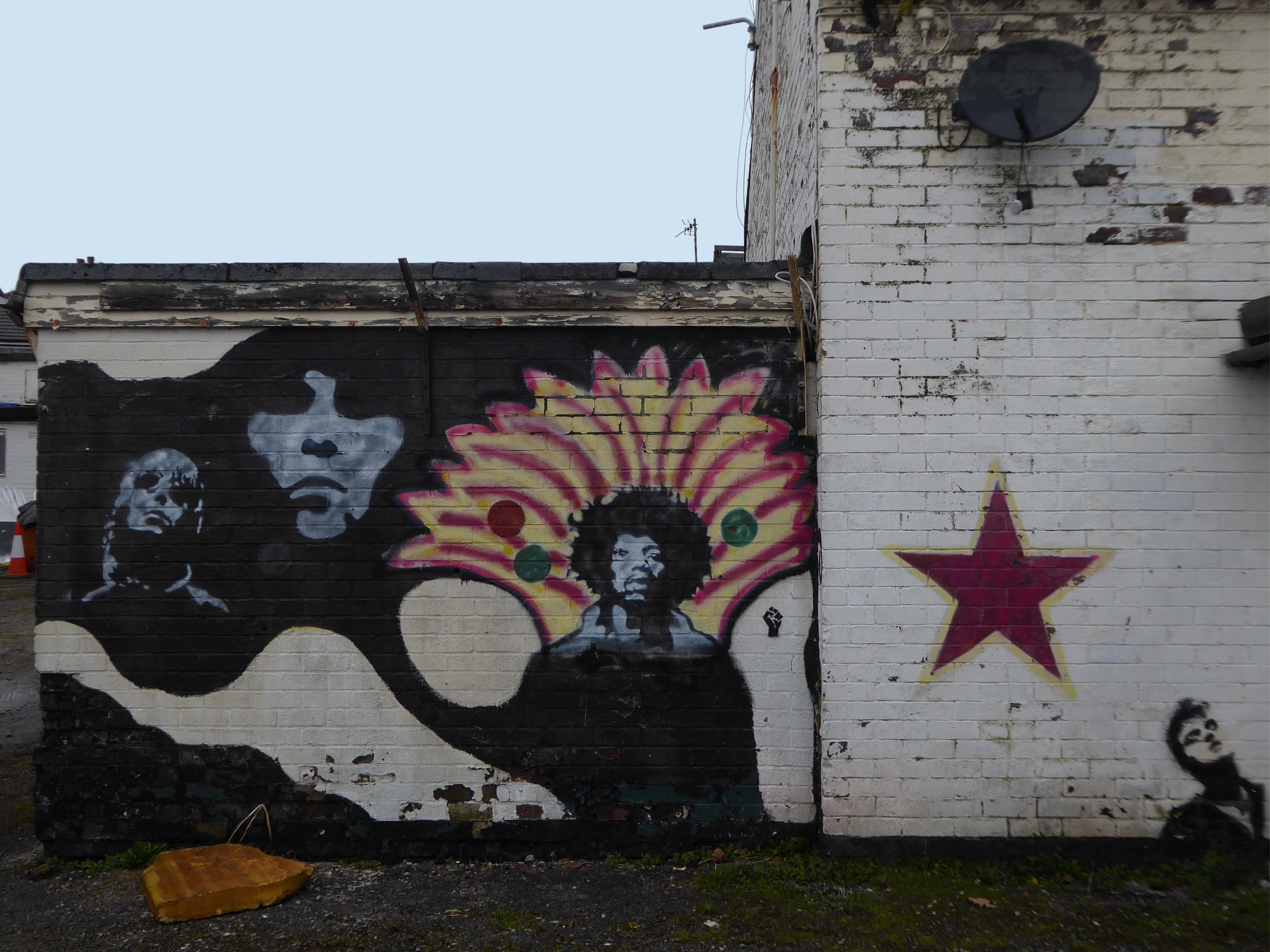
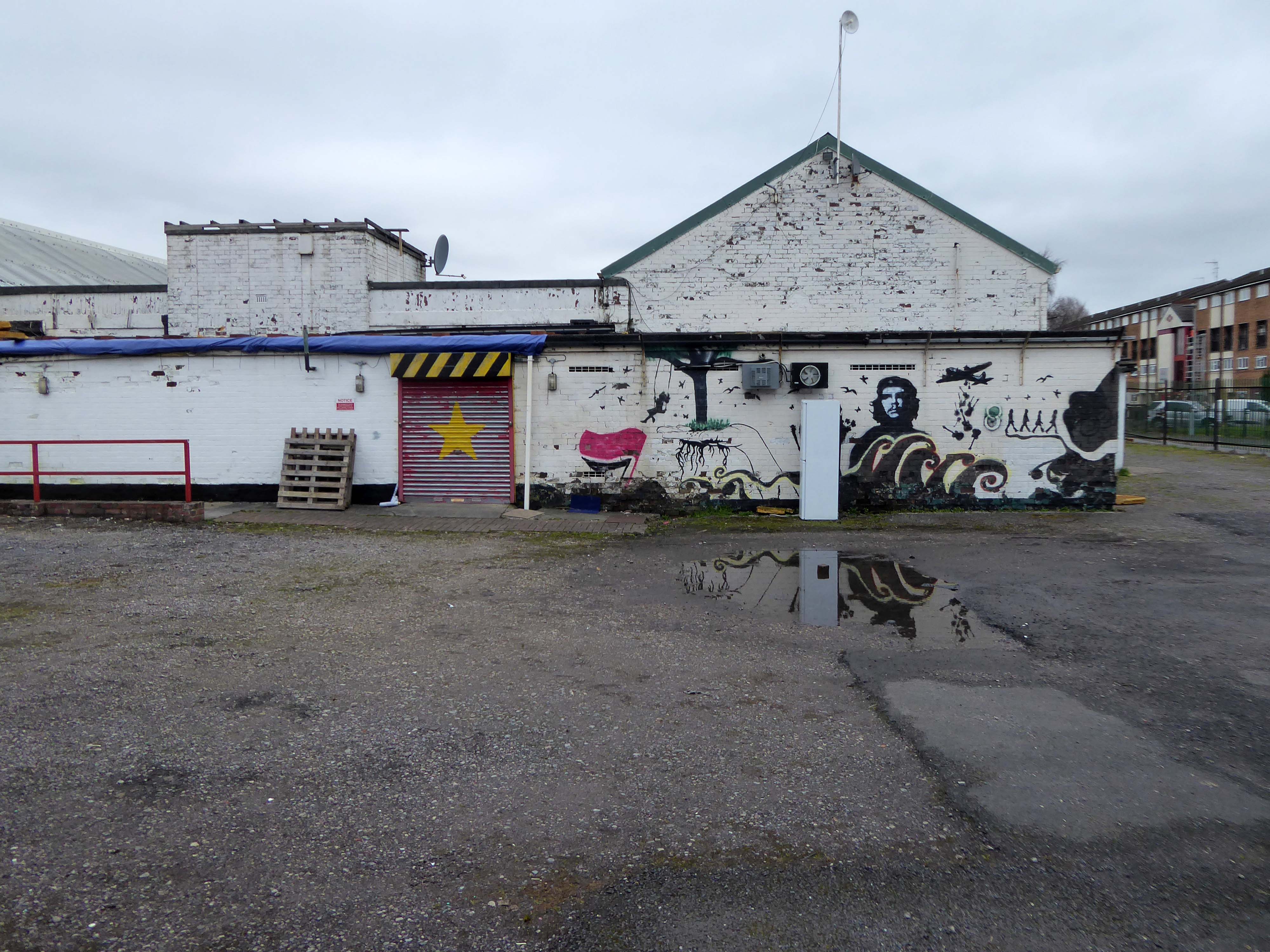
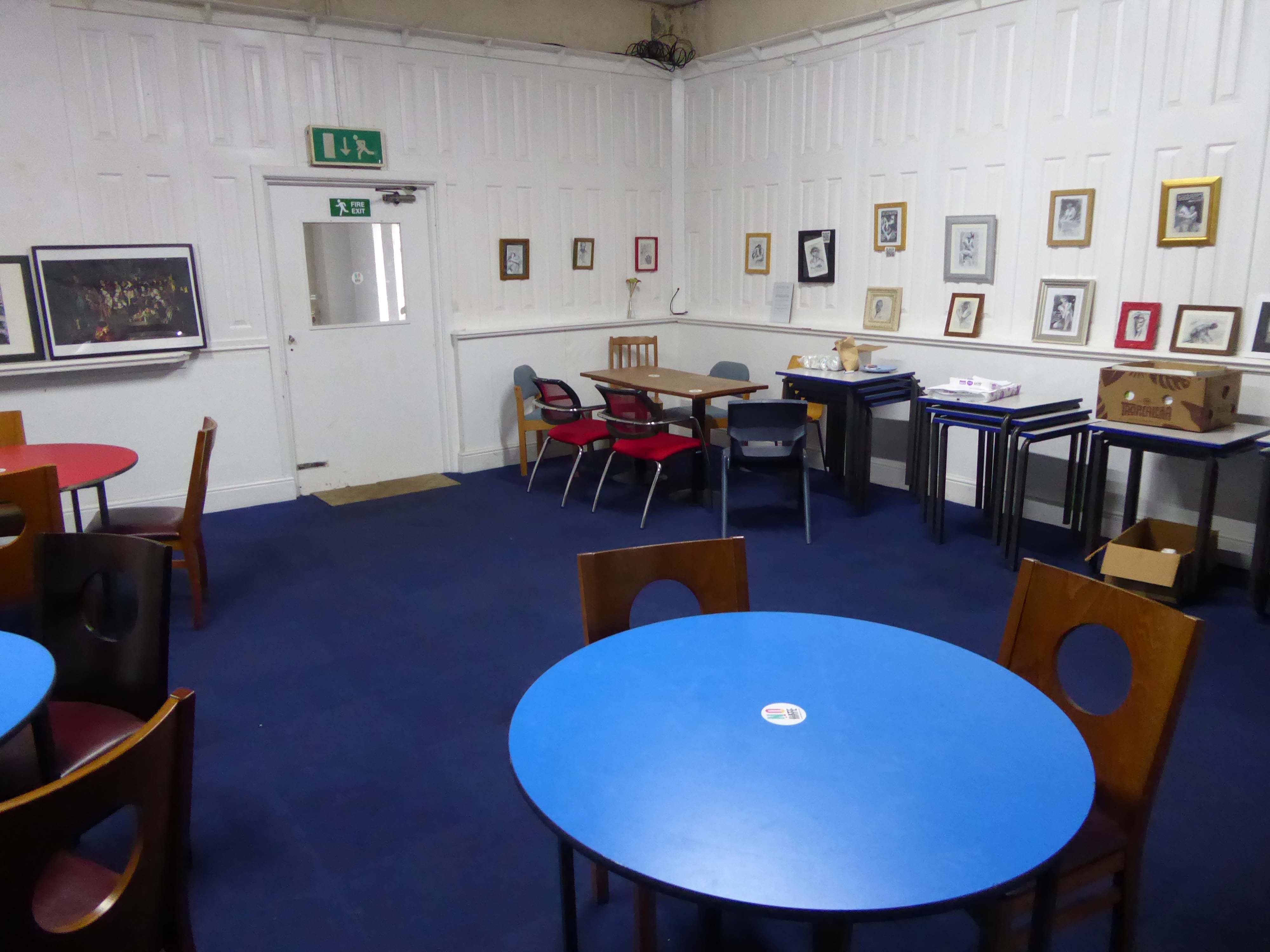
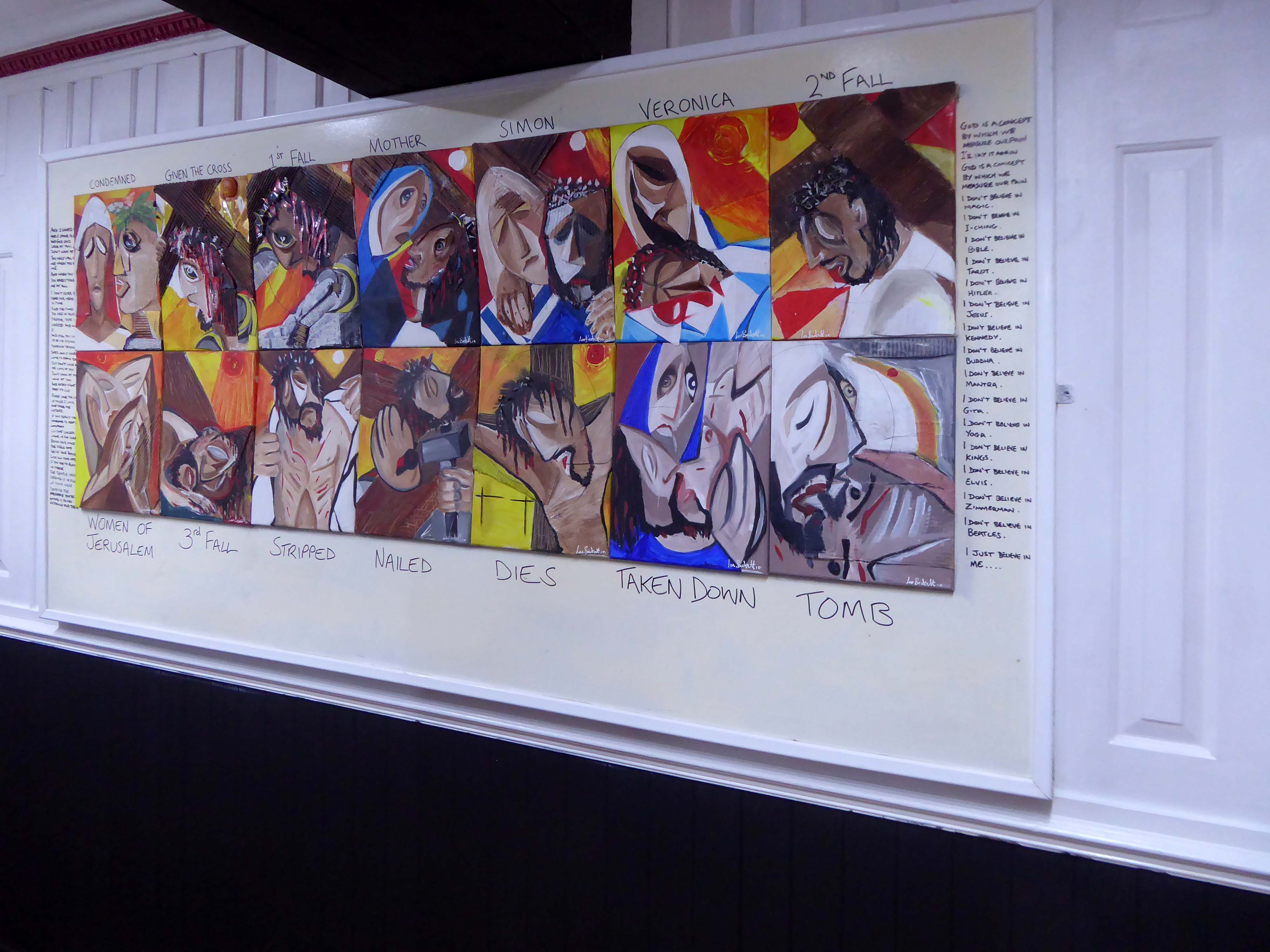
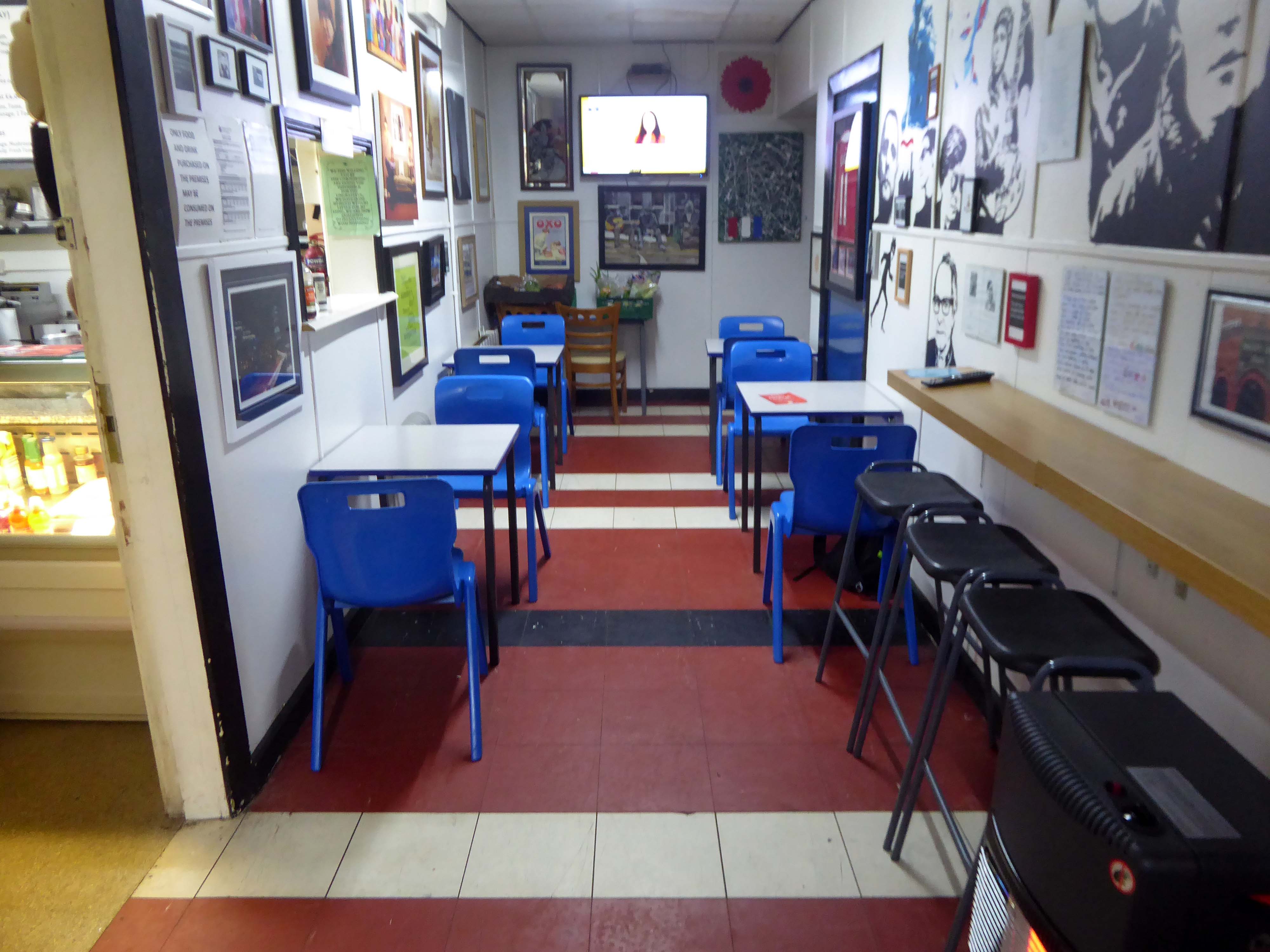
The community centre now provides space for local bands to rehearse, local artists to exhibit their work, a community cafe and larger function rooms that are available for events.
A wide range of events takes place here through the year including live gigs, pantomines, Halloween parties, cabaret nights and art exhibitions, and since 2012 it’s been home to the Moston Small Cinema which screens a range of films and sporting events.
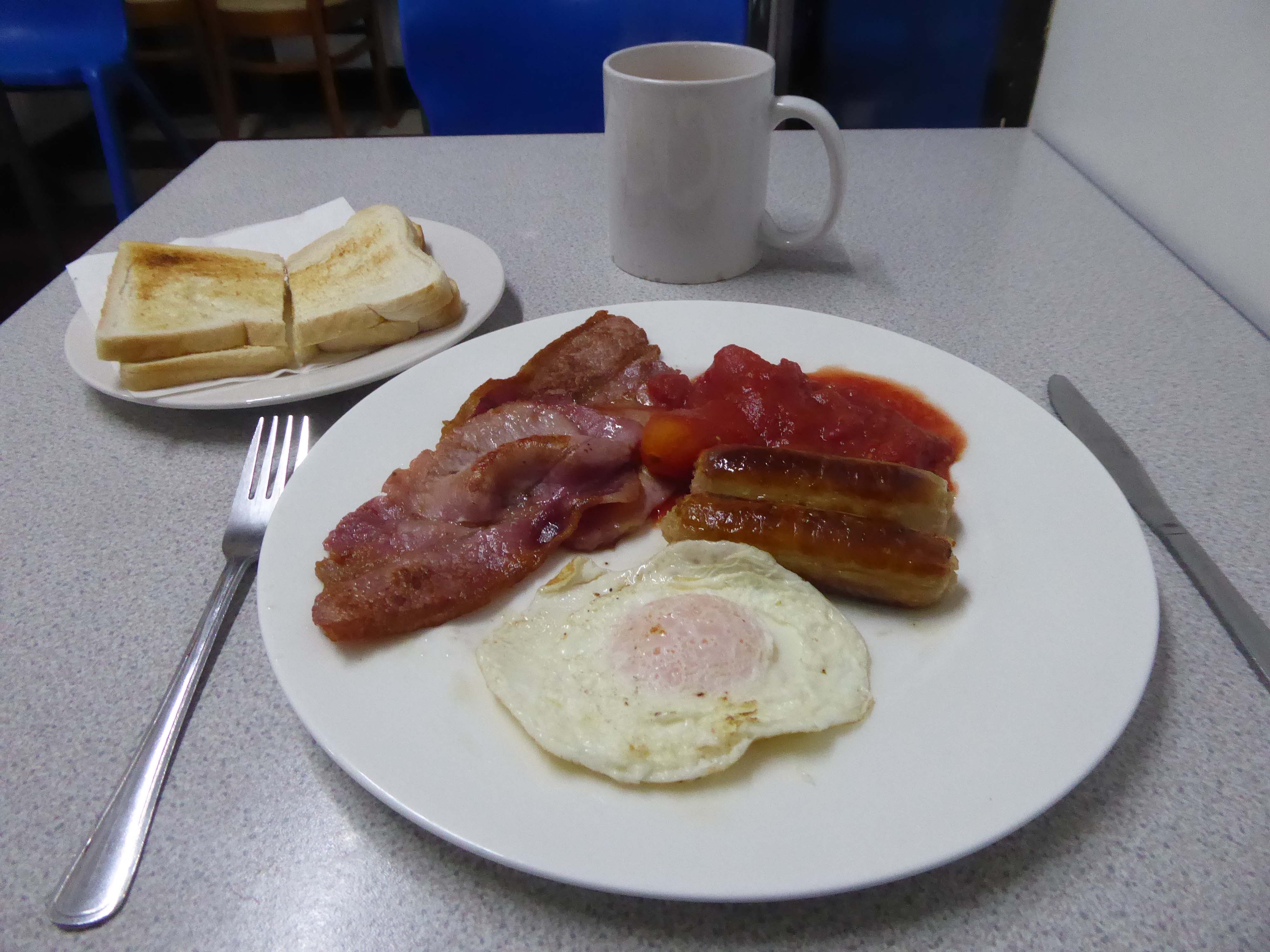
I popped by a couple of weeks ago and was given a terrific tour by Paula and Lou, along with a competitively priced tasty brew and breakfast.
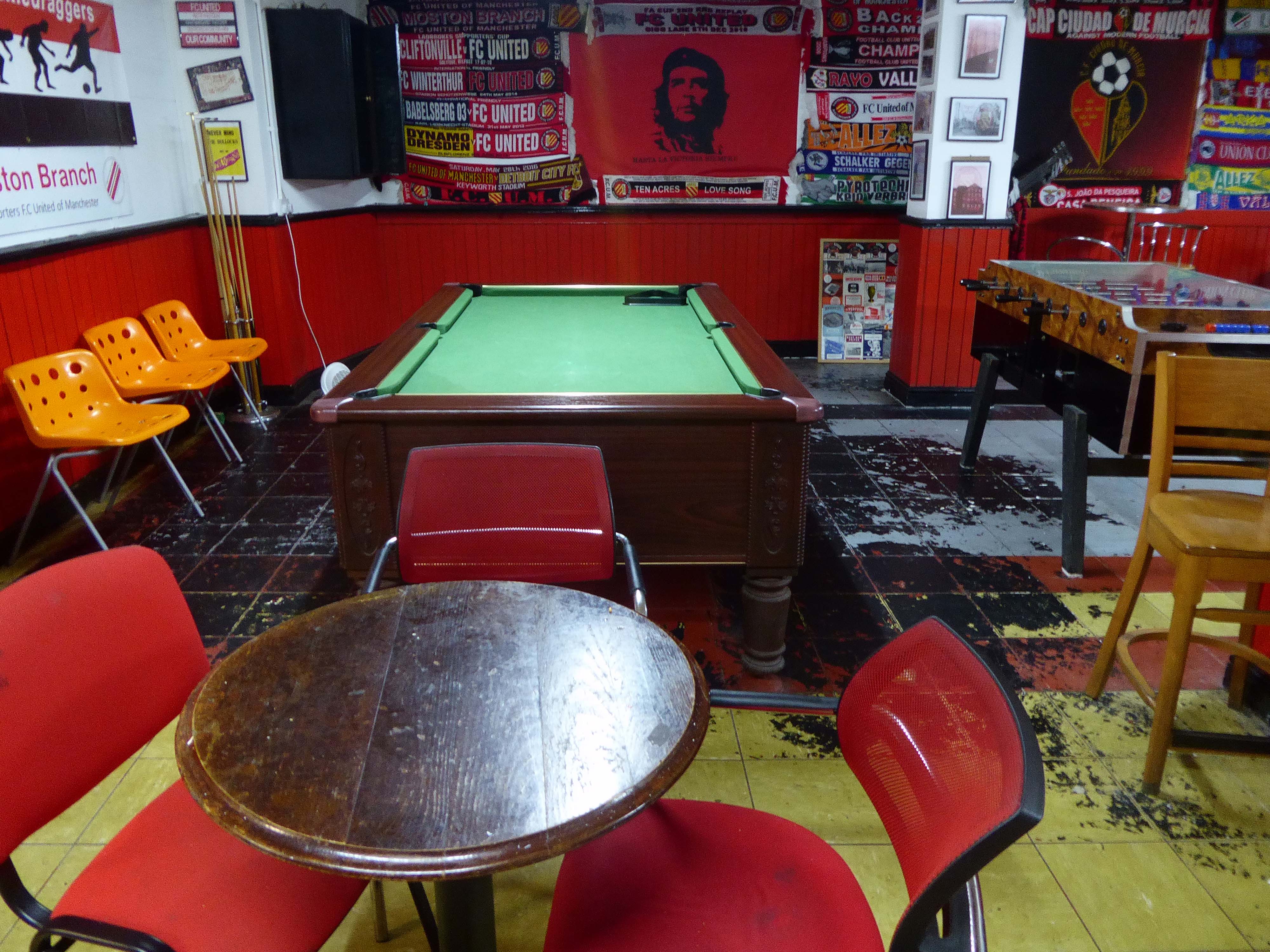
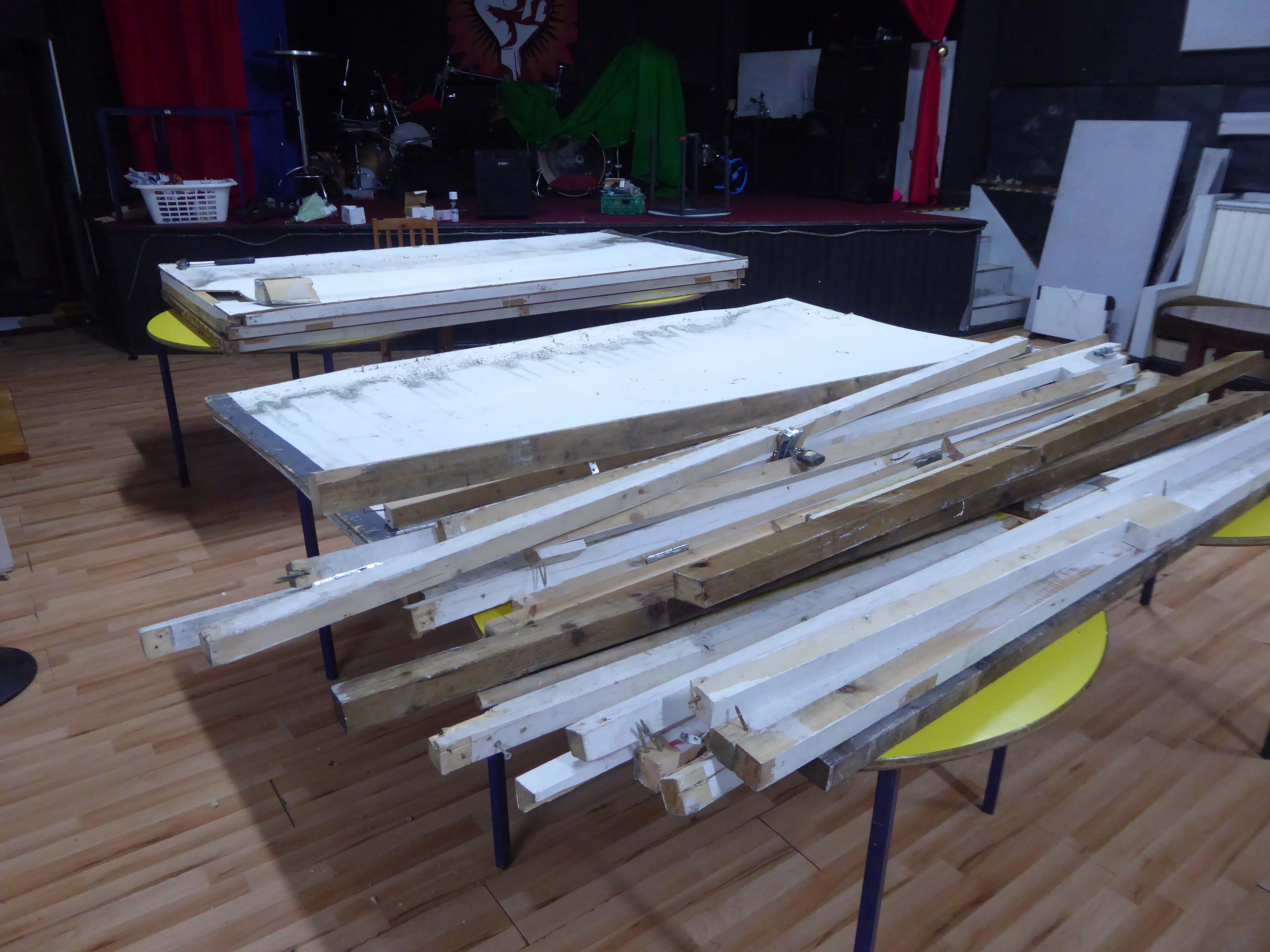
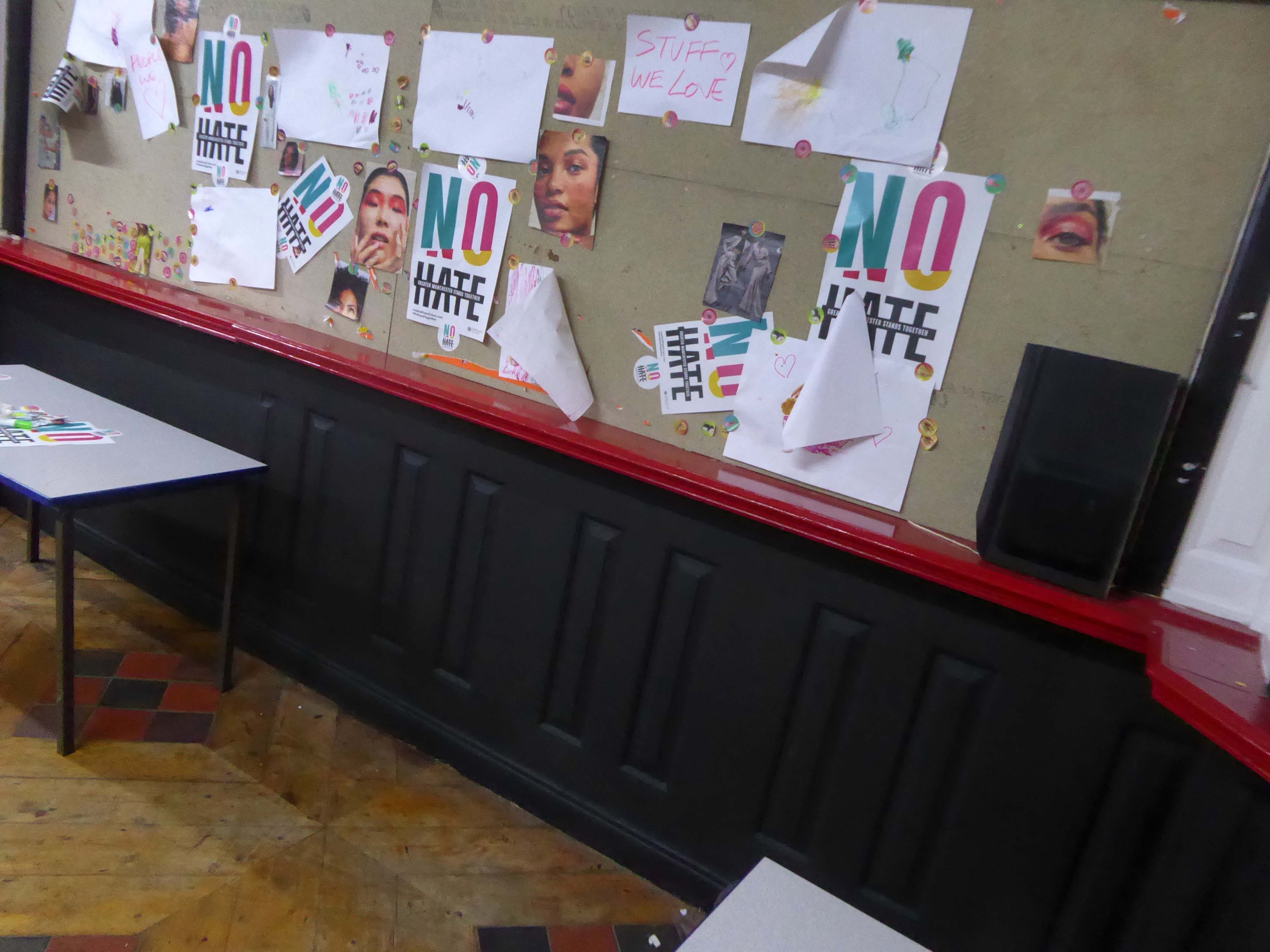
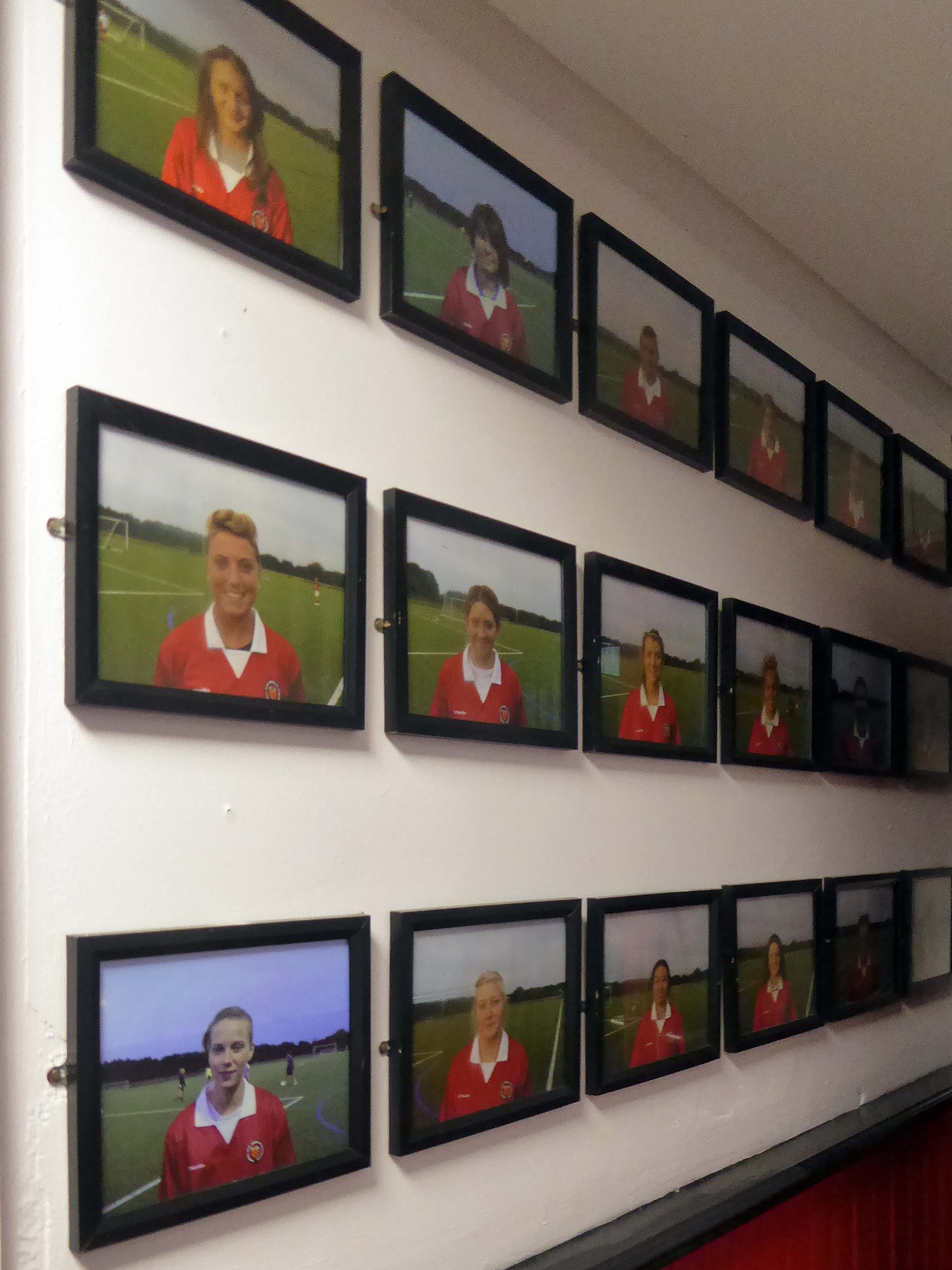
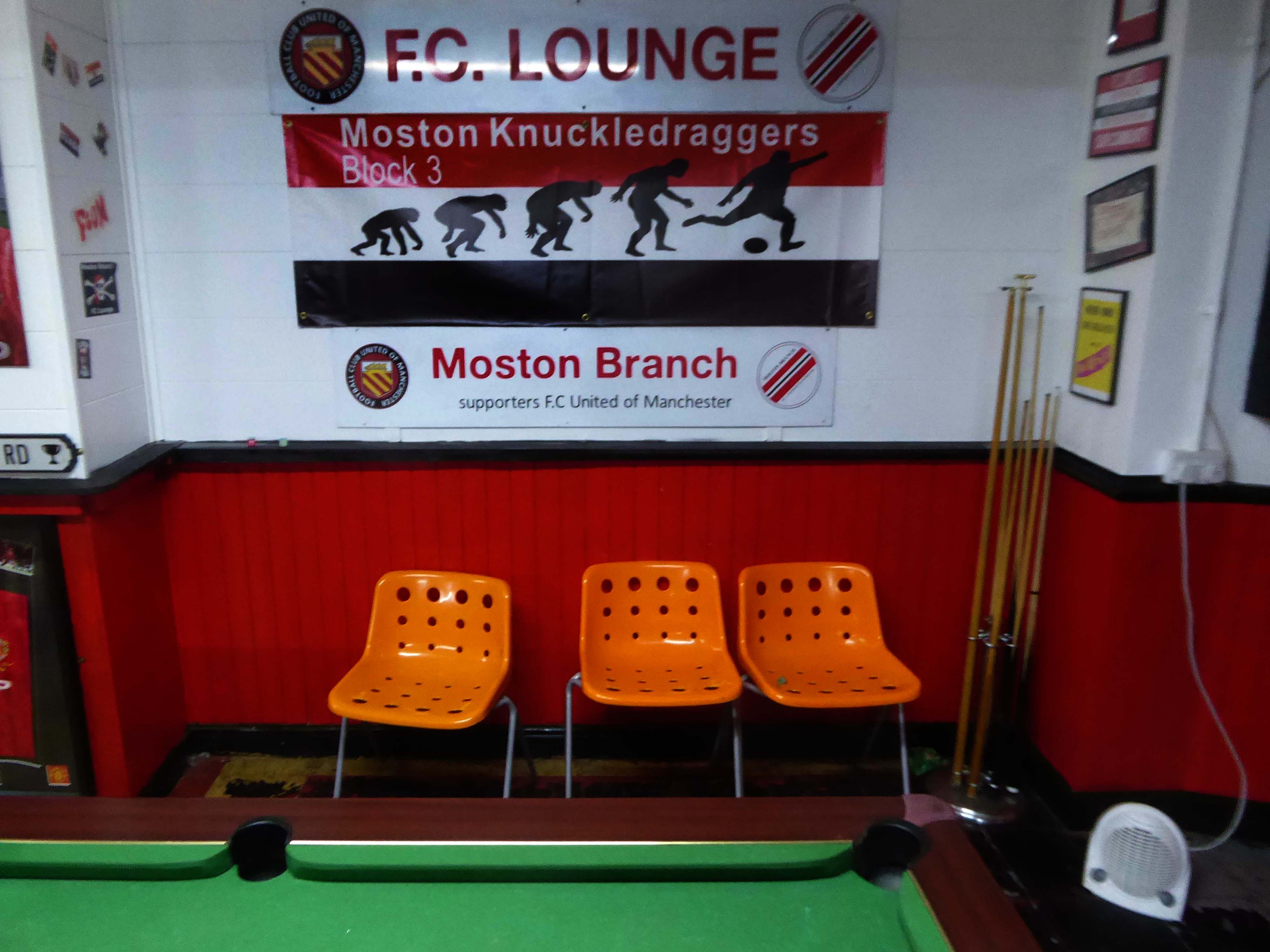
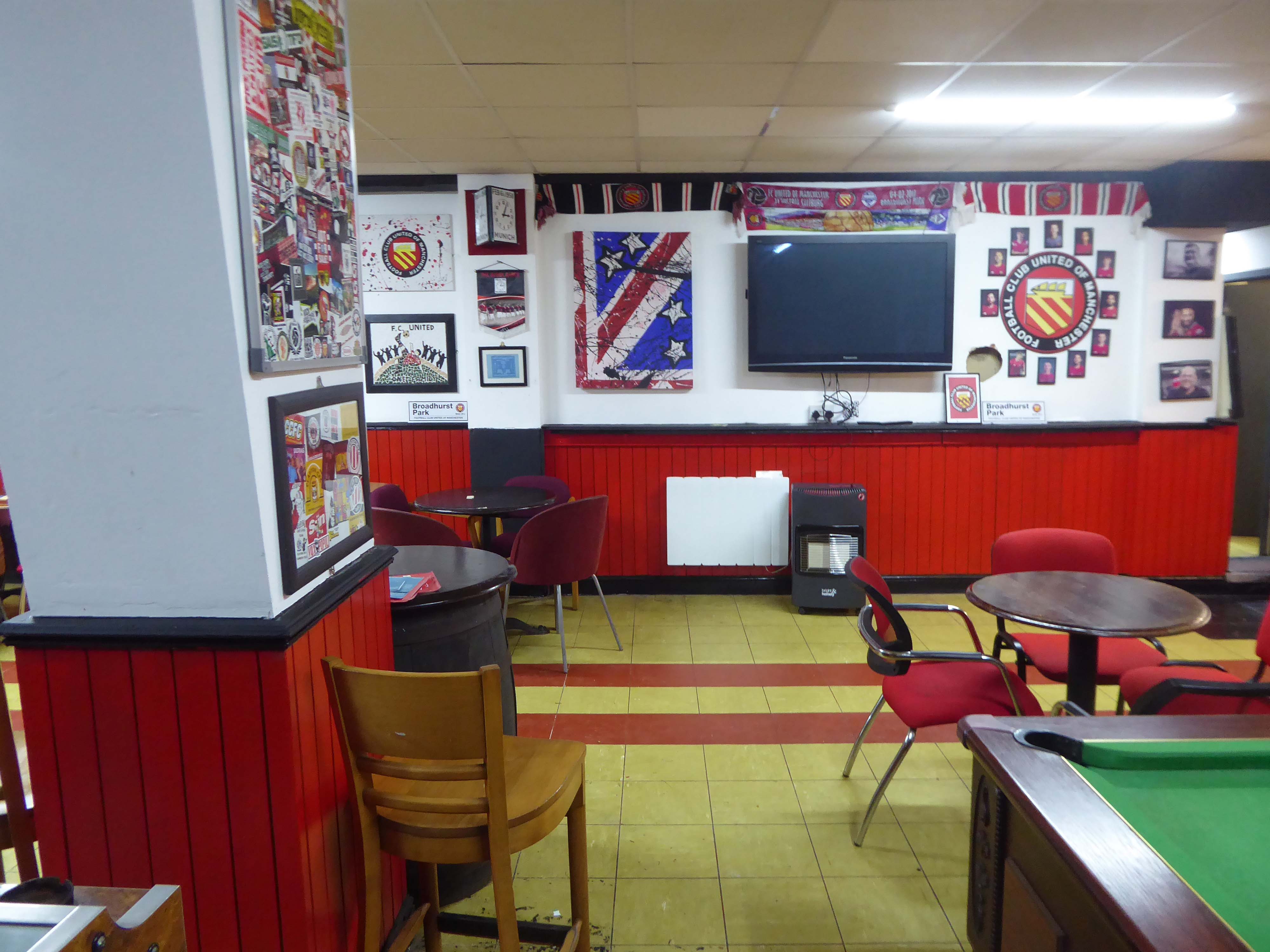
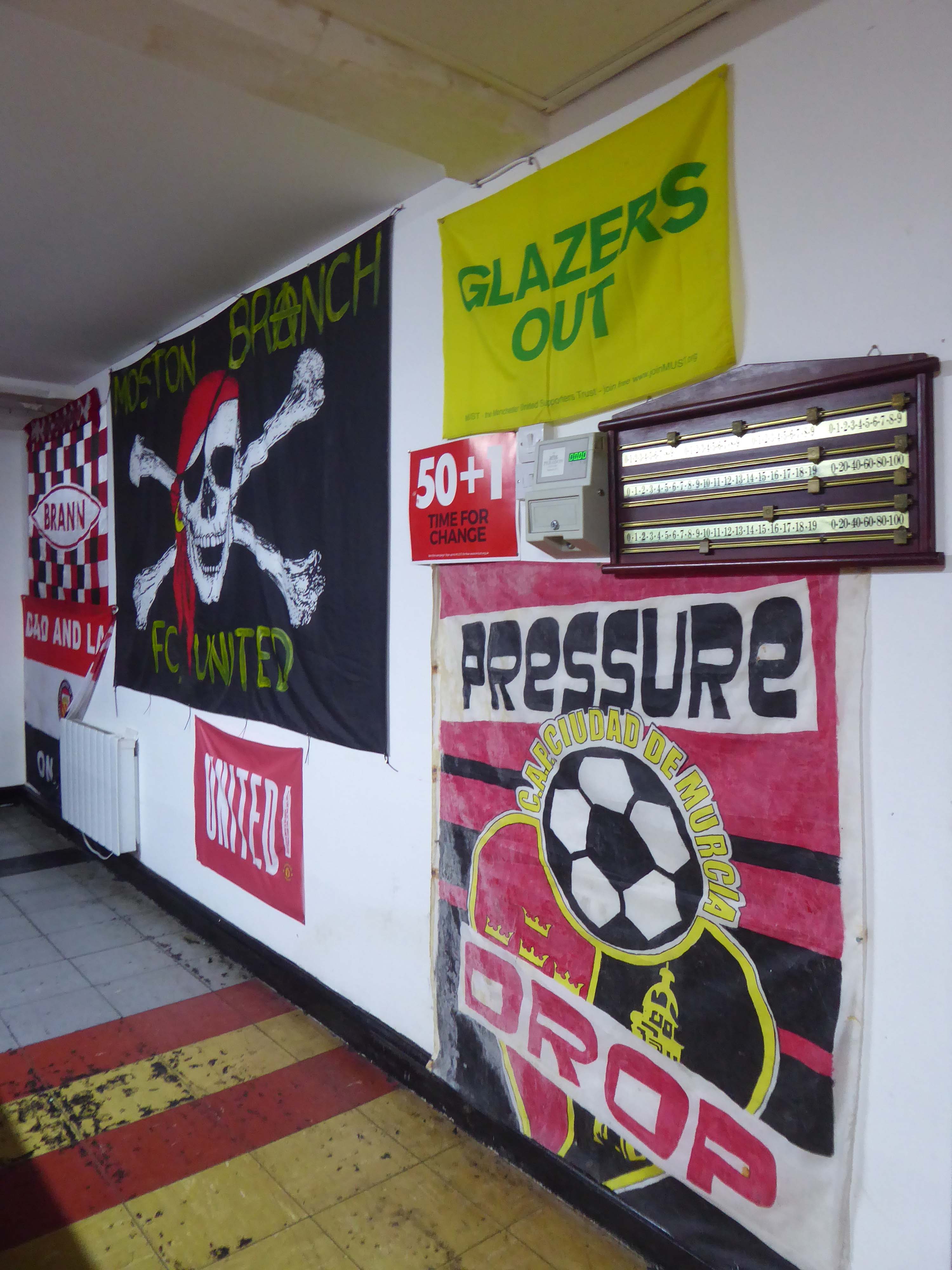
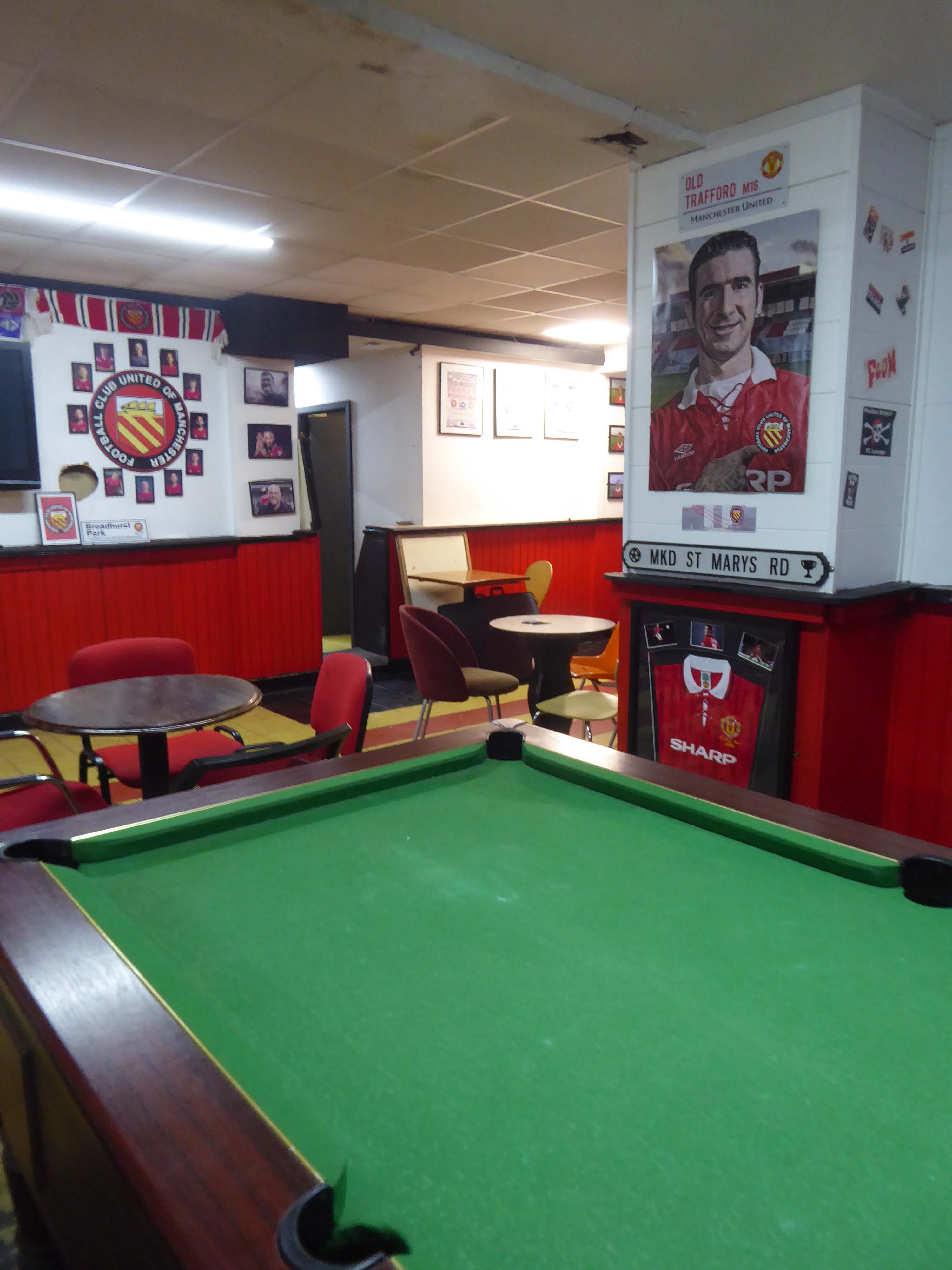
Work was underway for the current Art Show and evidence of the club’s affable affiliation with FC Unitedof Manchester, along with the results of the previous week’s art activities for the local youngsters.
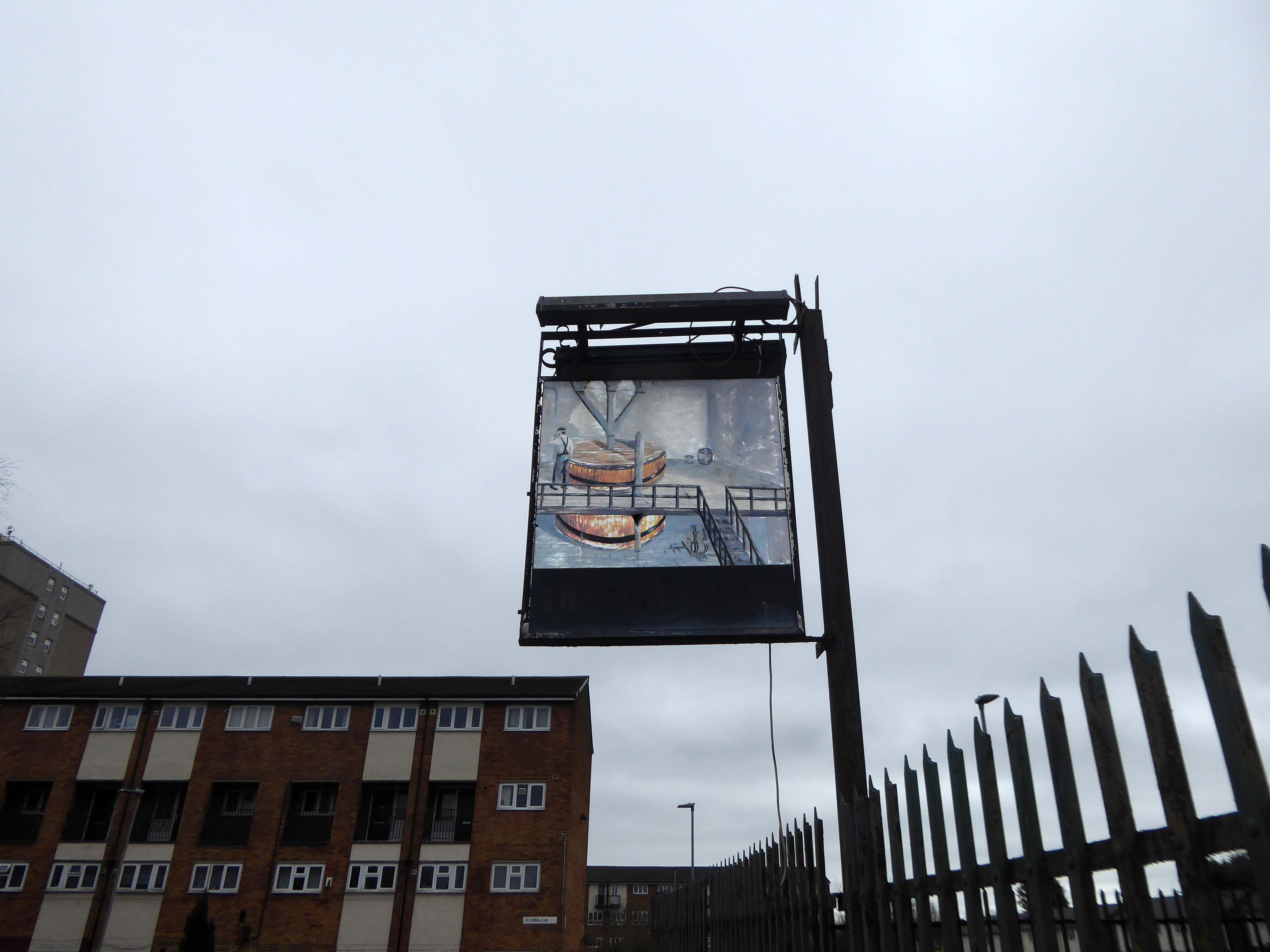
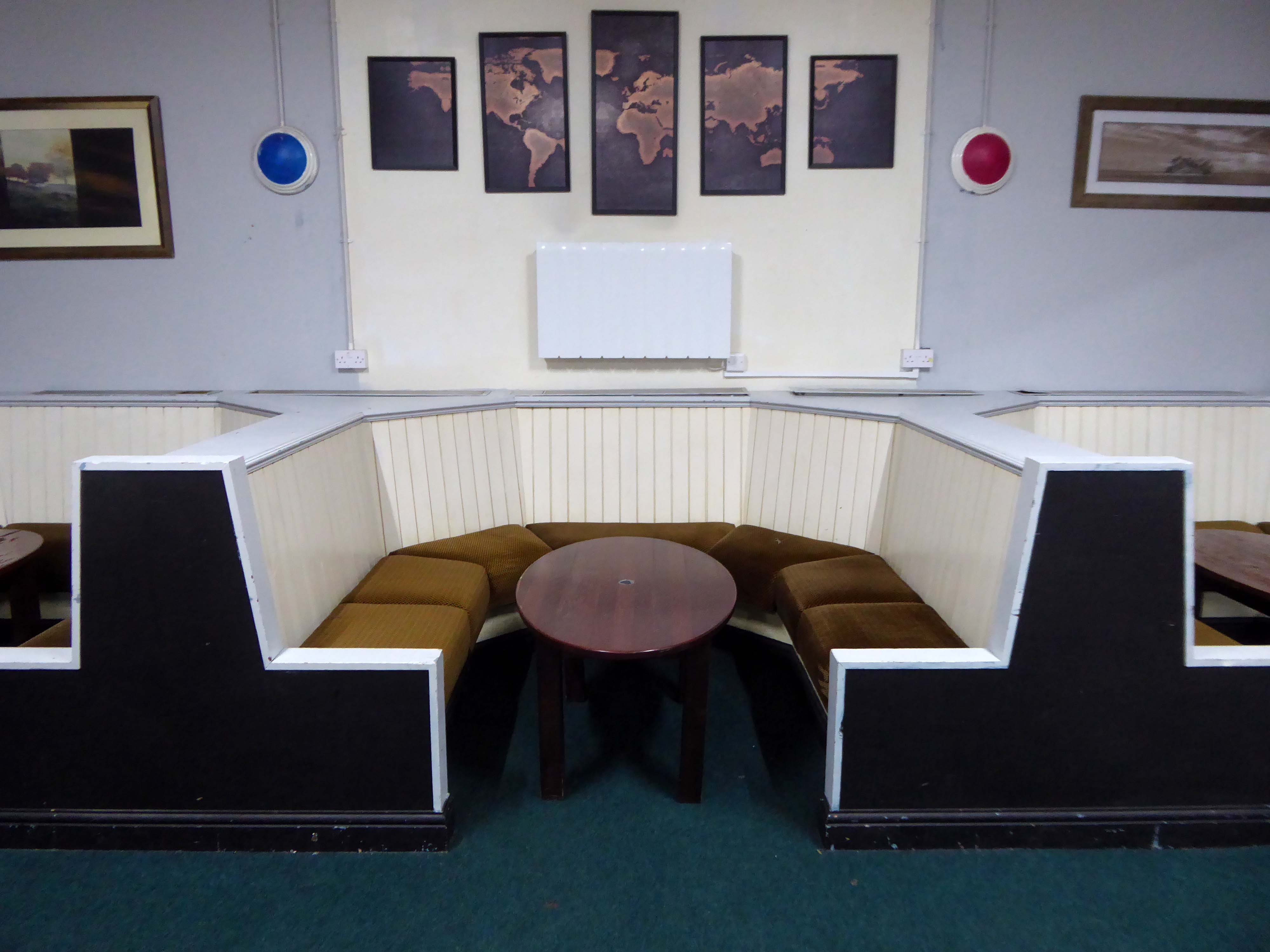
Let’s take a look around outside and in.
Keep an eye and ear out for forthcoming events – get y’self up there soon!
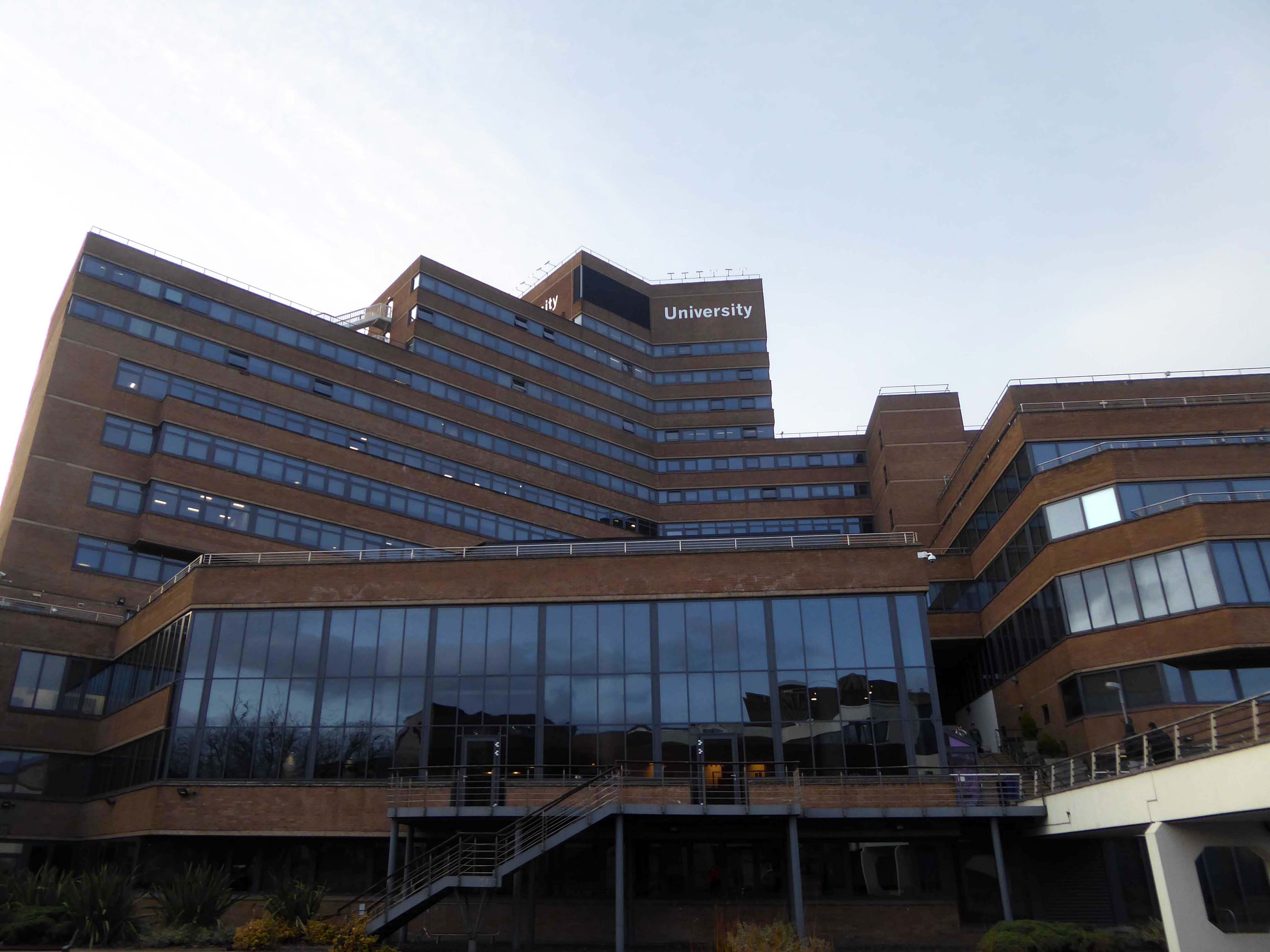
So I walked along the edge of the bay and cut up through the park to the University.
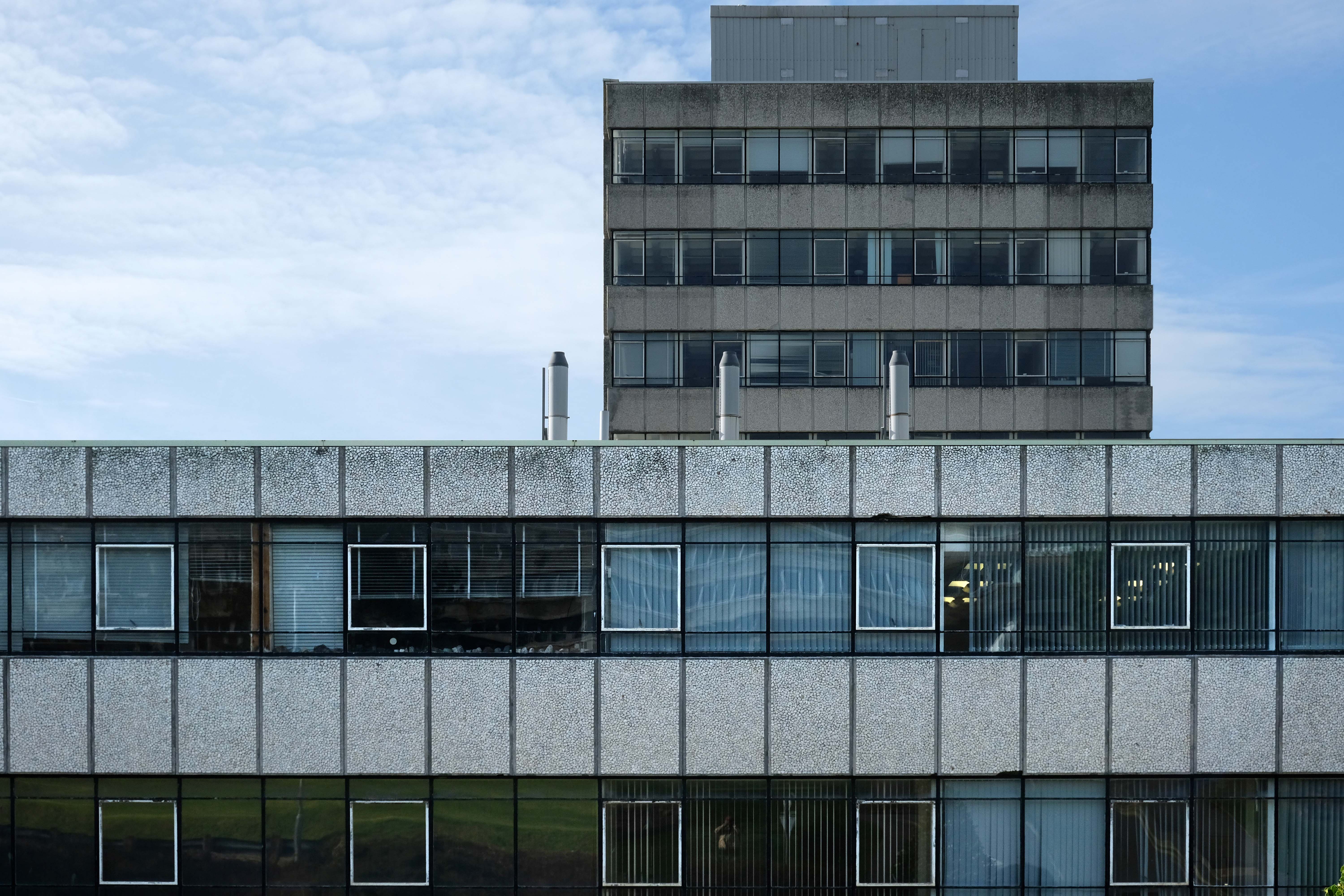
Singleton Park, and the Abbey, in which the university sits, were given to the borough of Swansea by John Henry Vivian, the 19th century Swansea copper magnate. The abbey was given to the university in 1923, but other campus developments, by and large, had to wait until after WW2, when a significant building programme was undertaken
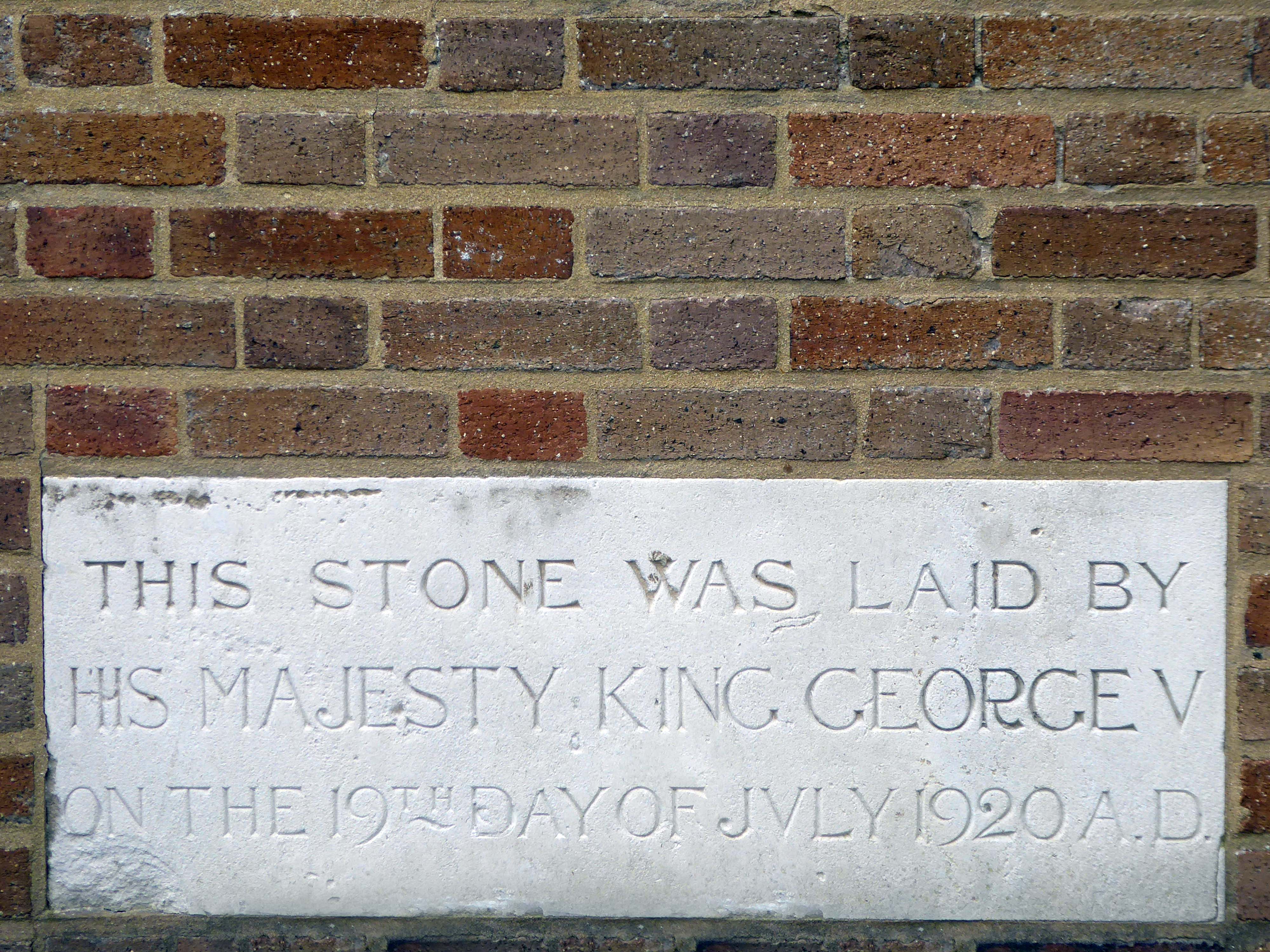
The University’s foundation stone was laid by King George V on 19 July 1920 and 89 students (including eight female students) enrolled that same year. By September 1939, there were 65 staff and 485 students.
In 1947 there were just two permanent buildings on campus: Singleton Abbey and the library. The Principal, J S Fulton, recognised the need to expand the estate and had a vision of a self-contained community, with residential, social and academic facilities on a single site. His vision was to become the first university campus in the UK.
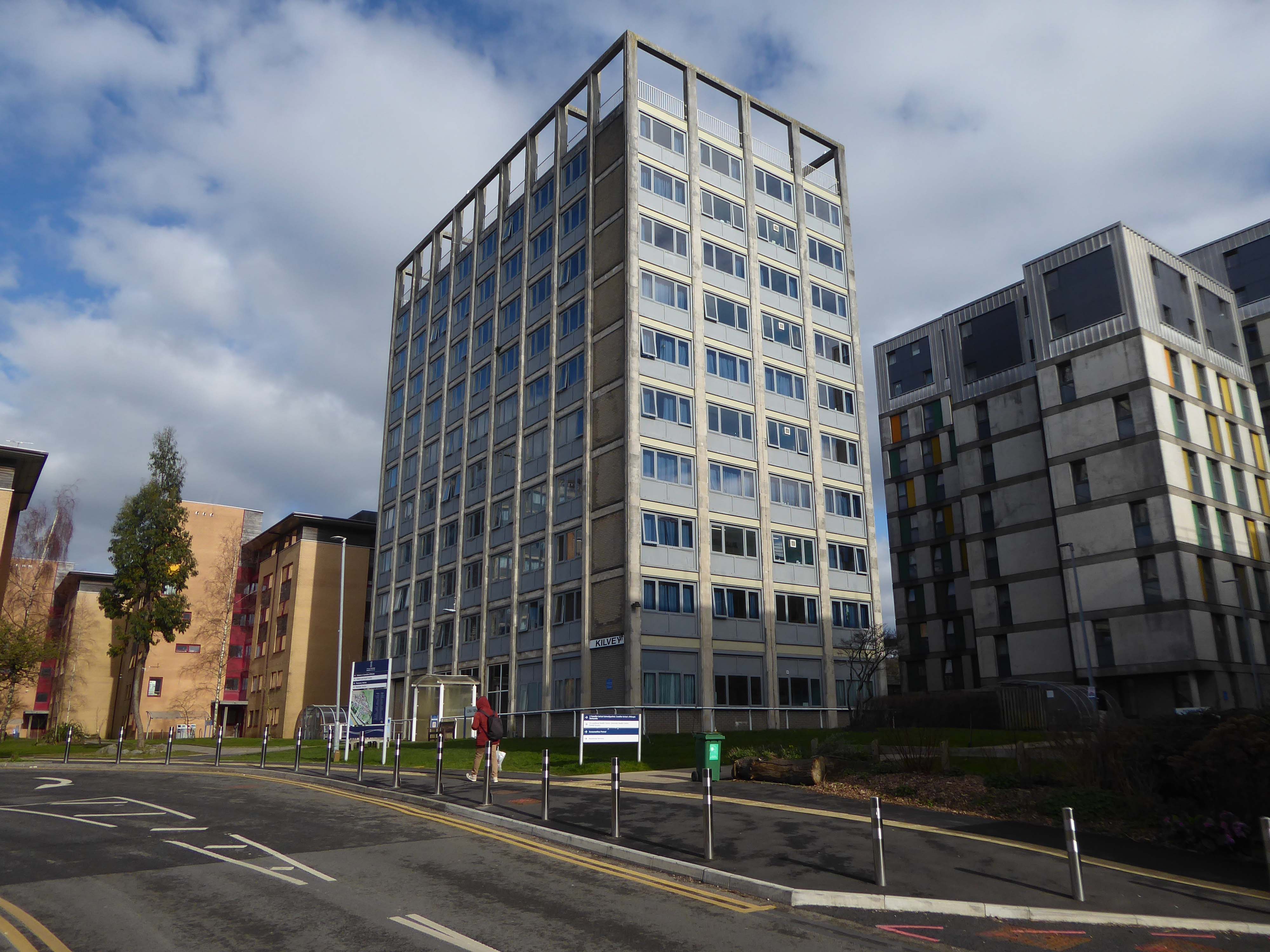
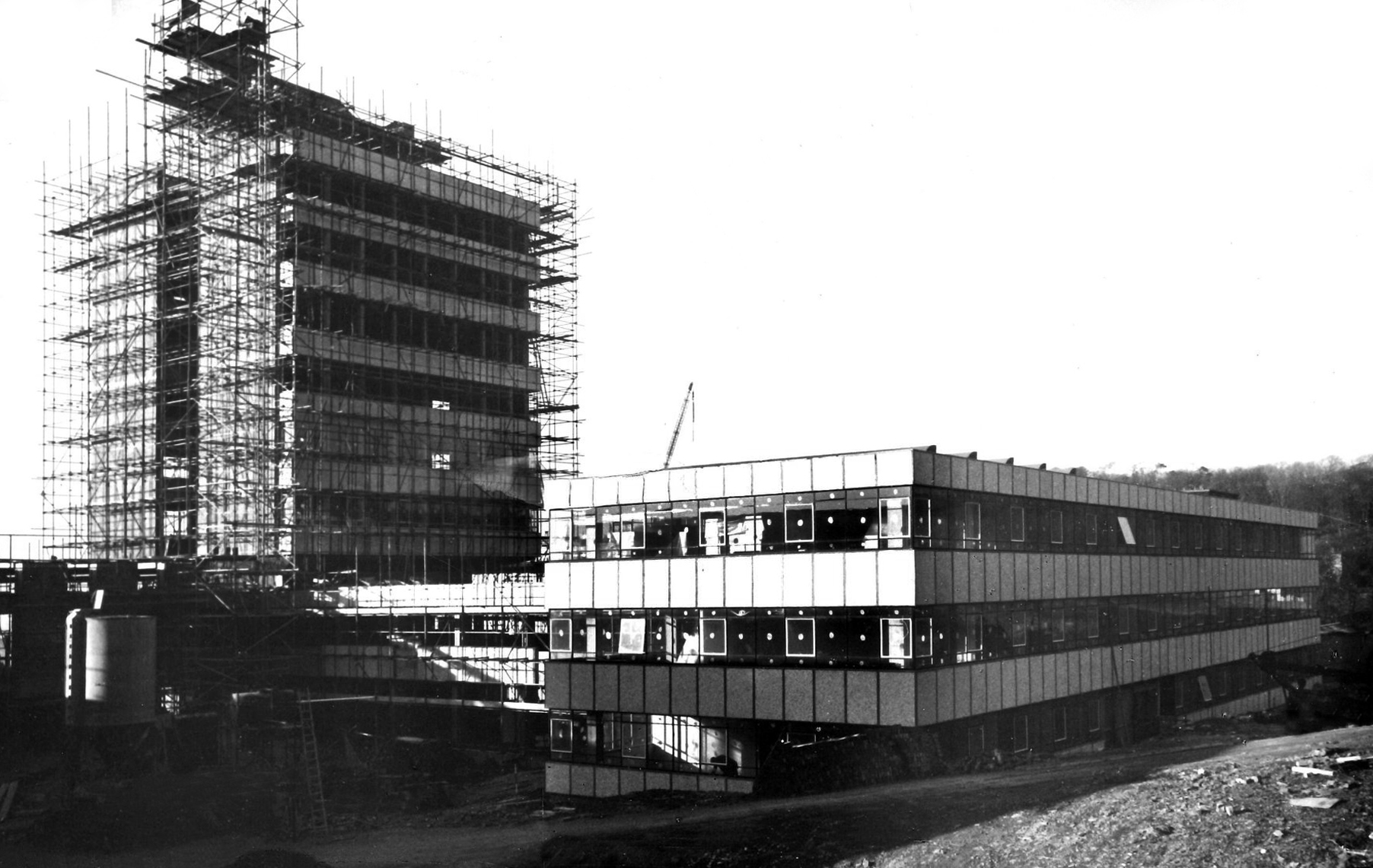
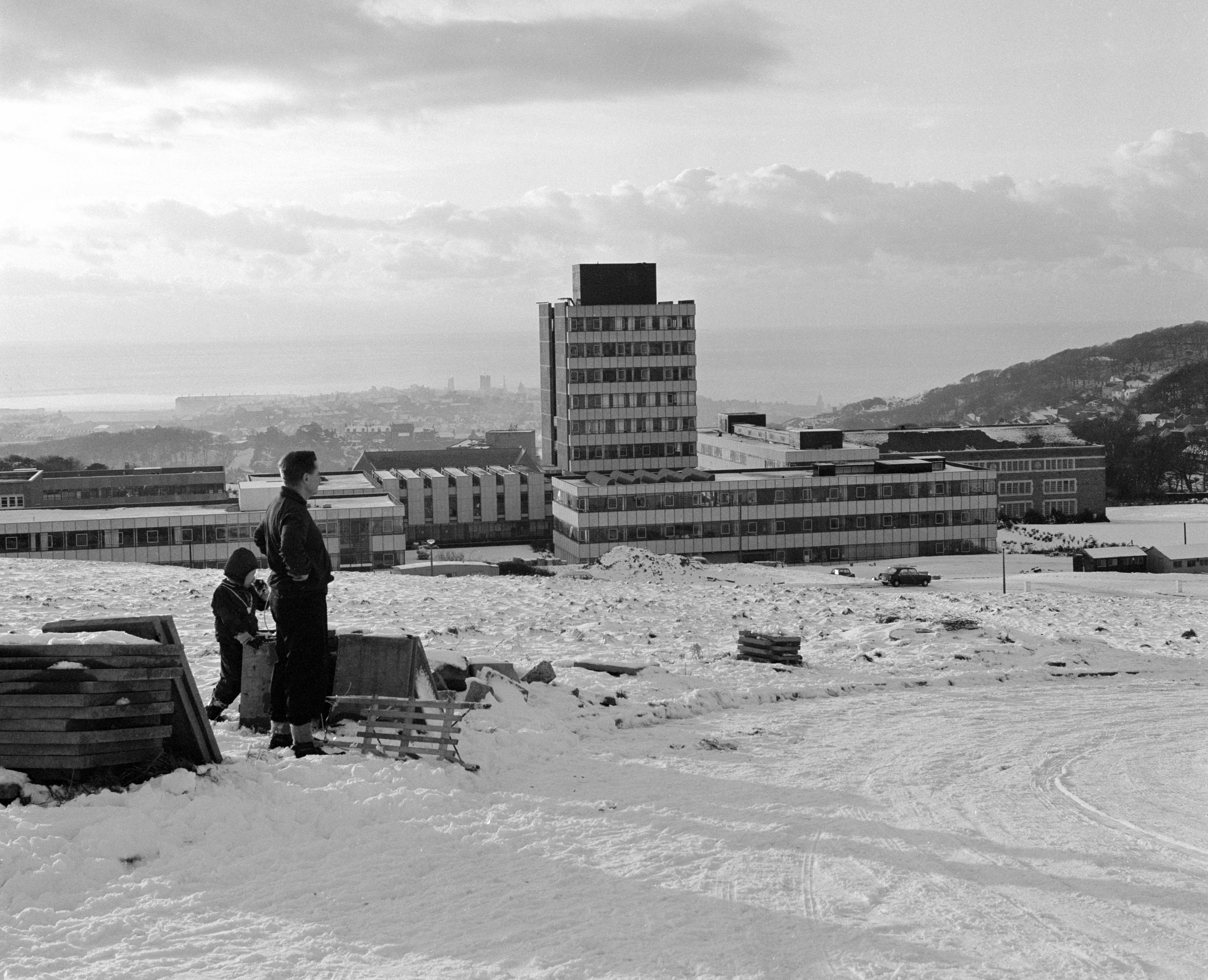
By 1960 a large-scale development programme was underway that would see the construction of new halls of residence, the Maths and Science Tower, and College House – later renamed Fulton House. The 1960s also saw the development of the “finite element method” by Professor Olek Zienkiewicz. His technique revolutionised the design and engineering of manufactured products, and Swansea was starting to stake its claim as an institution that demanded to be taken seriously.
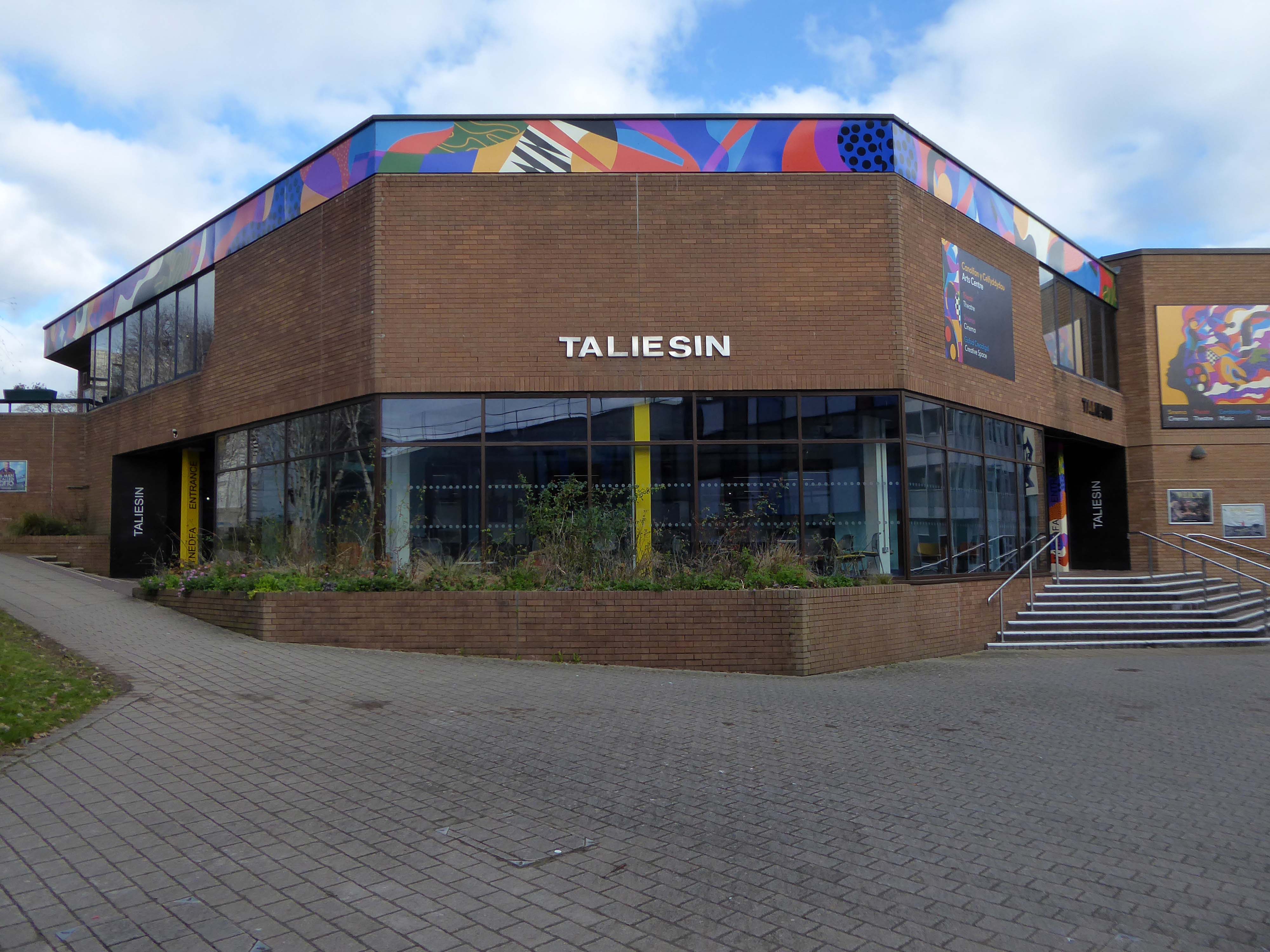
Work began on the student village at Hendrefoelan in 1971, the South Wales Miners’ Library was established in 1973 and the Taliesin Arts Centre opened on campus in 1984. The Regional Schools of Nursing transferred to Swansea in 1992, and the College of Medicine opened in 2001. Technium Digital was completed in 2005 and, barely two years later, the University opened its Institute of Life Science, which commercialises the results of research undertaken in the Swansea University Medical School. Work commenced on a second Institute of Life Science in 2009.
In 2012 we began an ambitious campus expansion and development project, including the opening of our Bay Campus in 2015; which is home to the College of Engineering and the School of Management. In 2018 we opened the doors to two further projects, The College; Swansea University’s joint venture with Navitas (The International College Wales Swansea, ICWS) and the Computational Foundry; the home of the College of Science’s departments of Computer Science and Mathematics.
Having been gifted the Singleton Abbey – the 1937 Library was the first new build on the site.
A competition was held in 1934 to find an architect to design a new library building.
The winner was Verner Owen Rees, a London architect with Welsh heritage. The Library opened in the autumn of 1937 and was known as the ‘New Library’, and has later become known as the ‘1937’ or ‘Law’ Library. Miss Olive Busby, who had been the University’s librarian since 1920, moved to this new building and was famous for patrolling it for the next twenty years, ensuring everyone was being quiet!
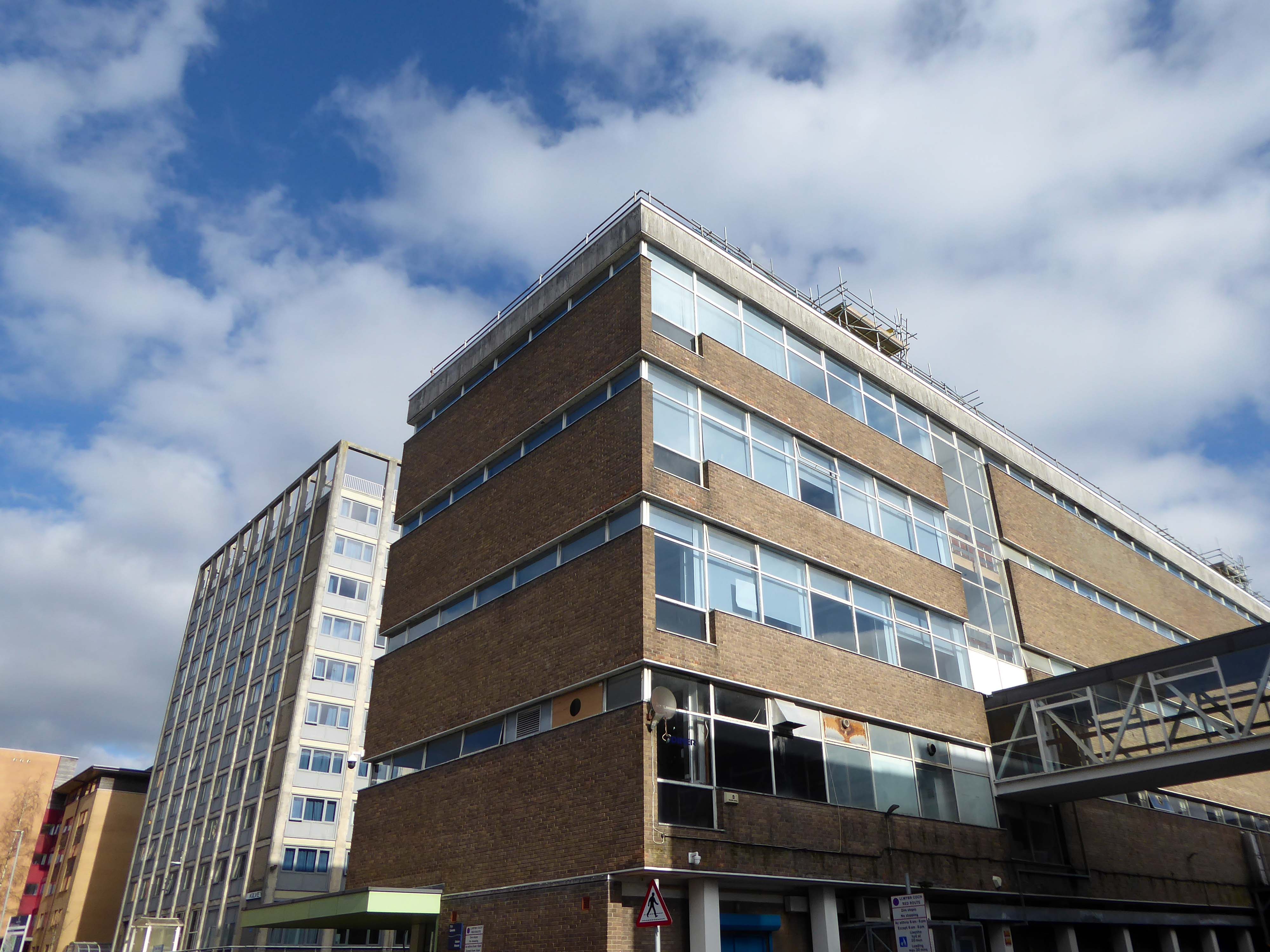
Then a swift right into the lea of the Faraday Building.
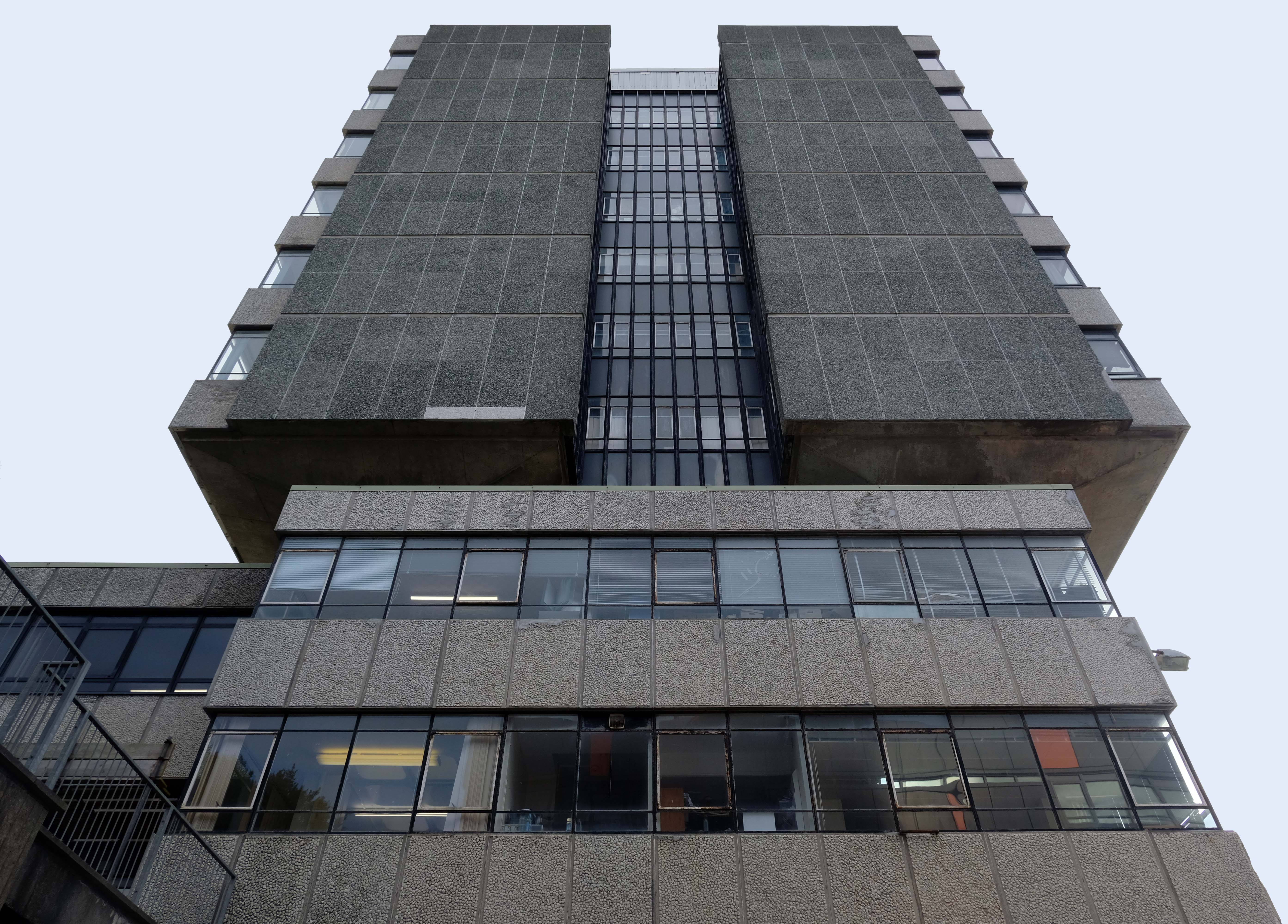
Walking beneath the Faraday Tower and looking back.
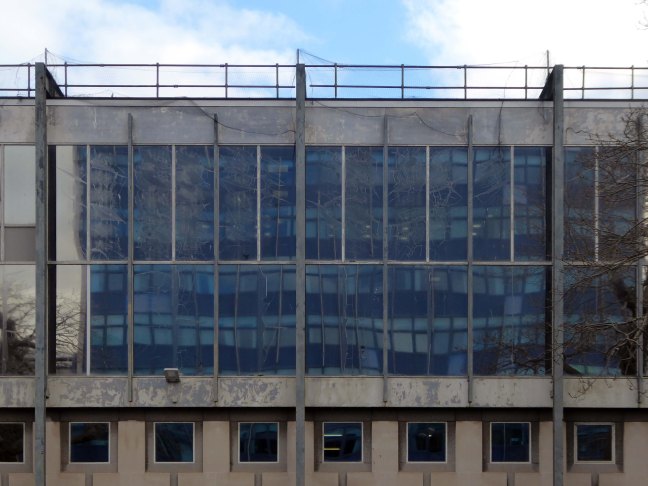
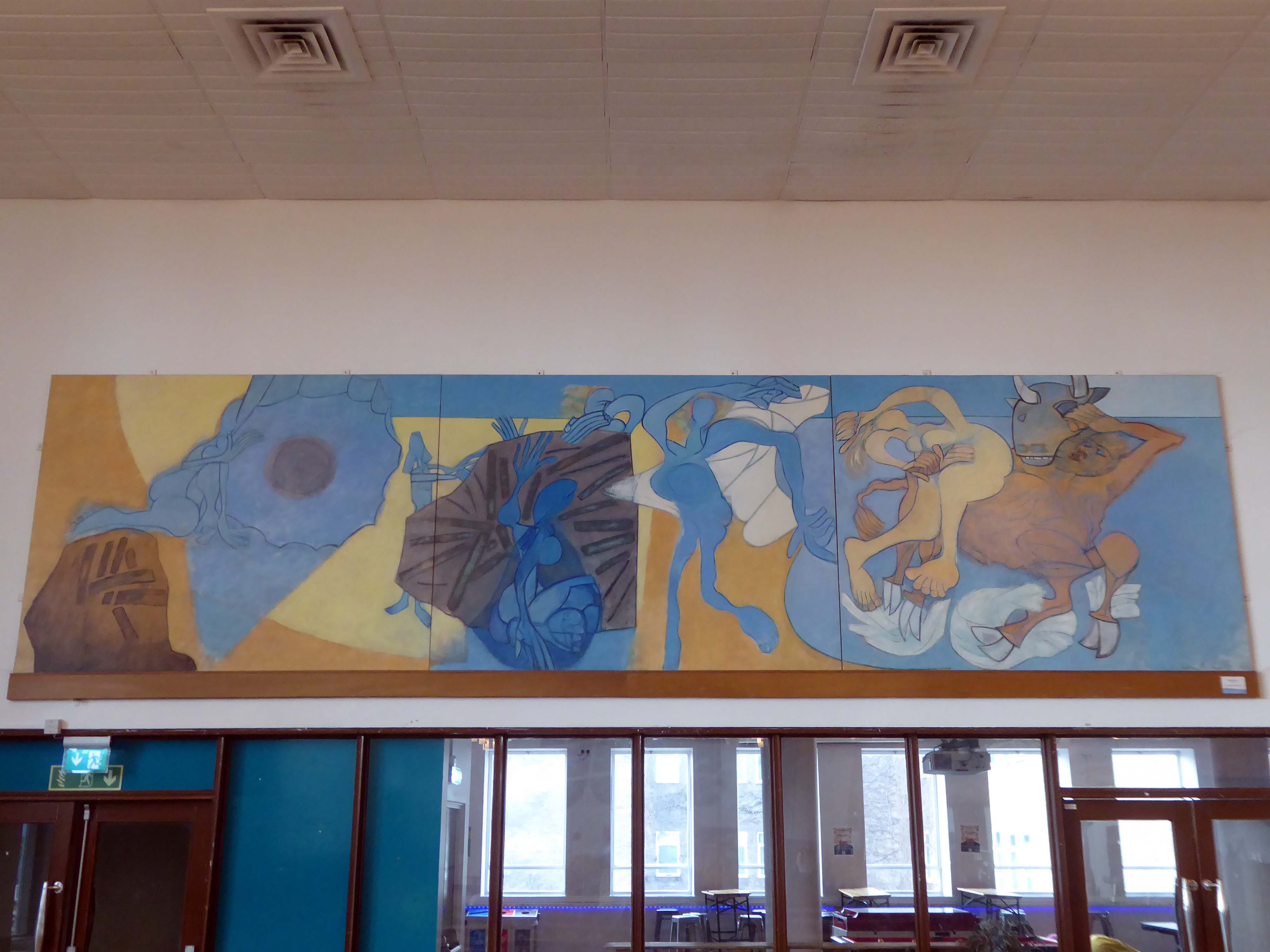
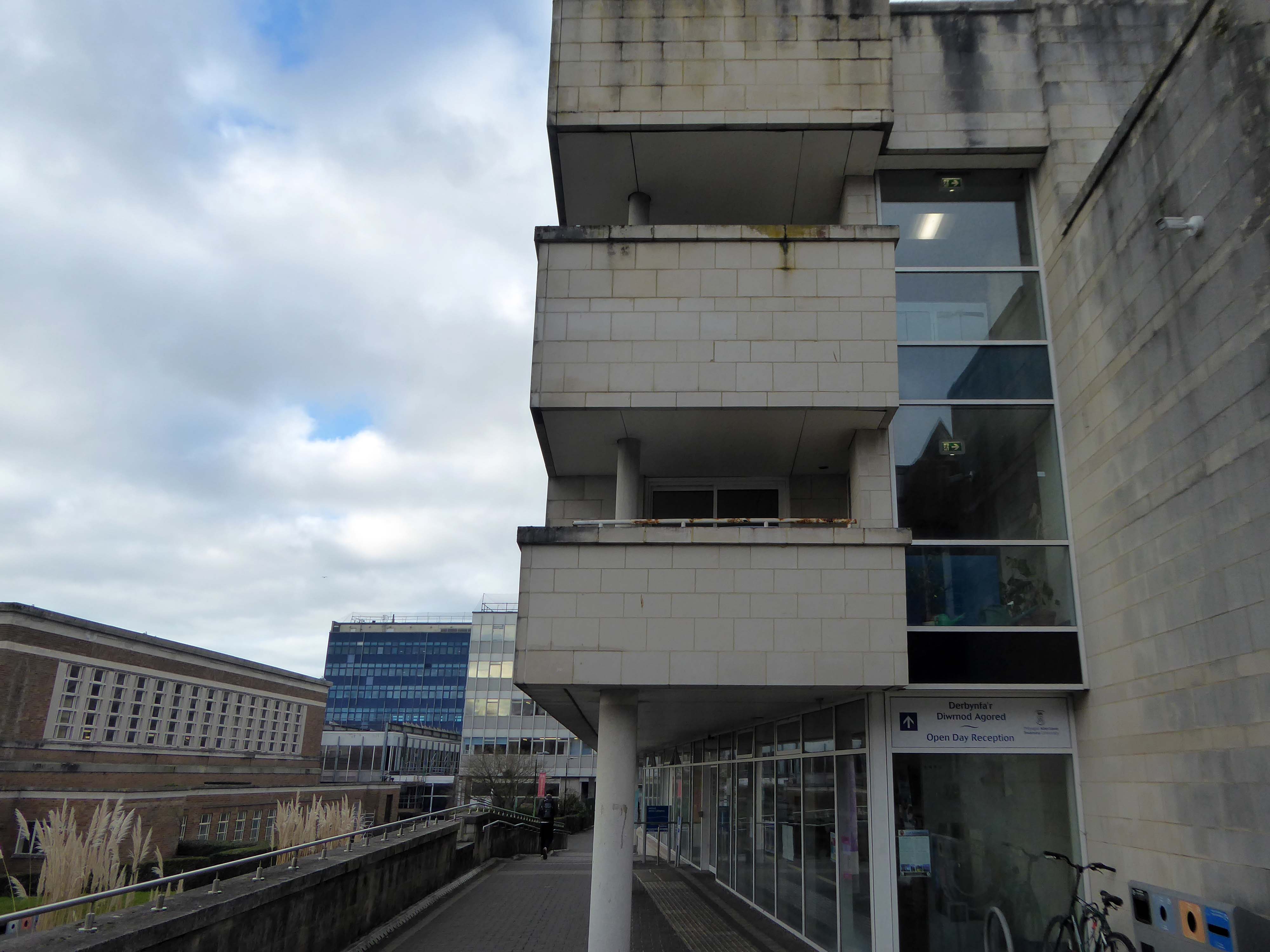
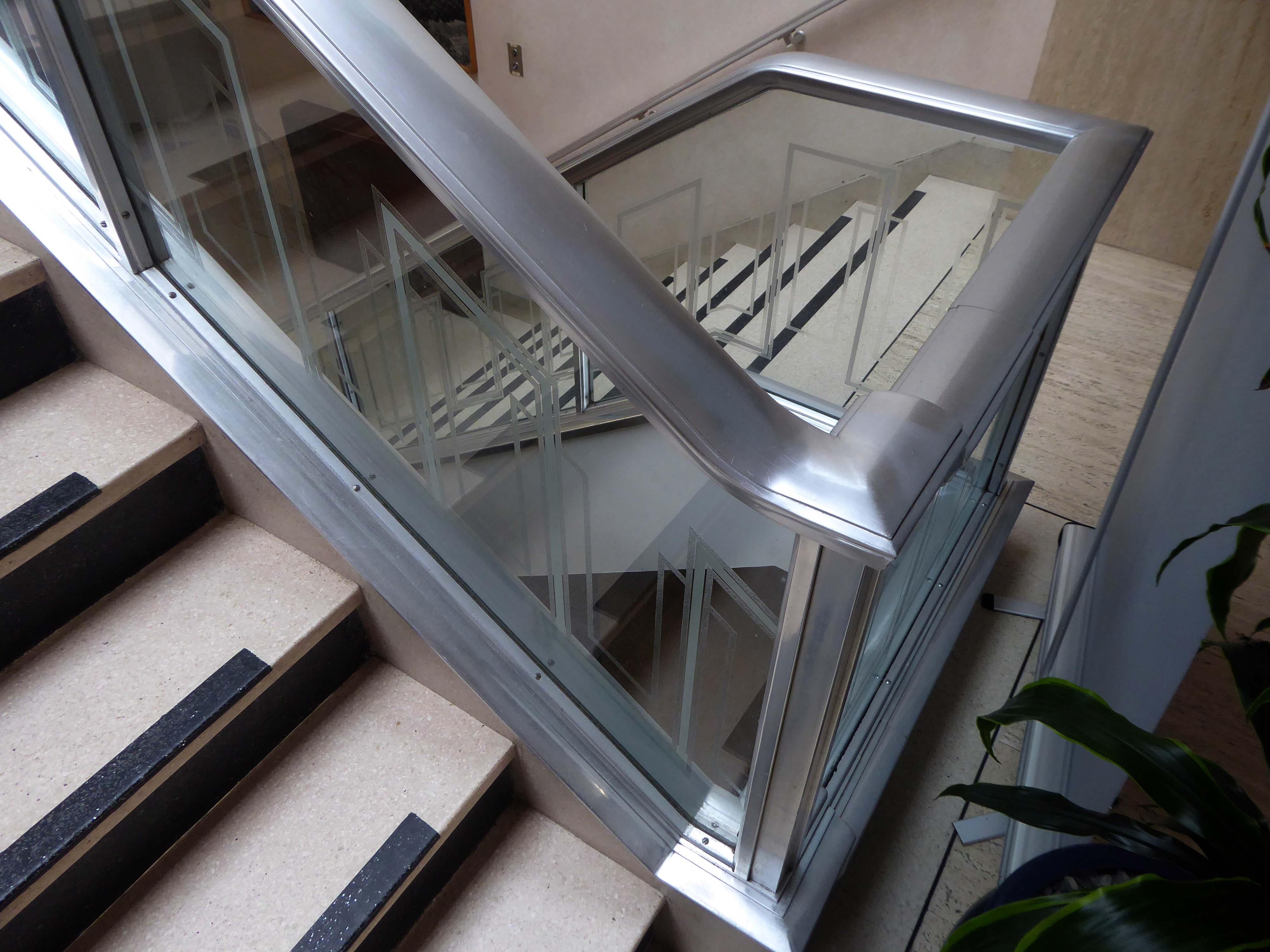
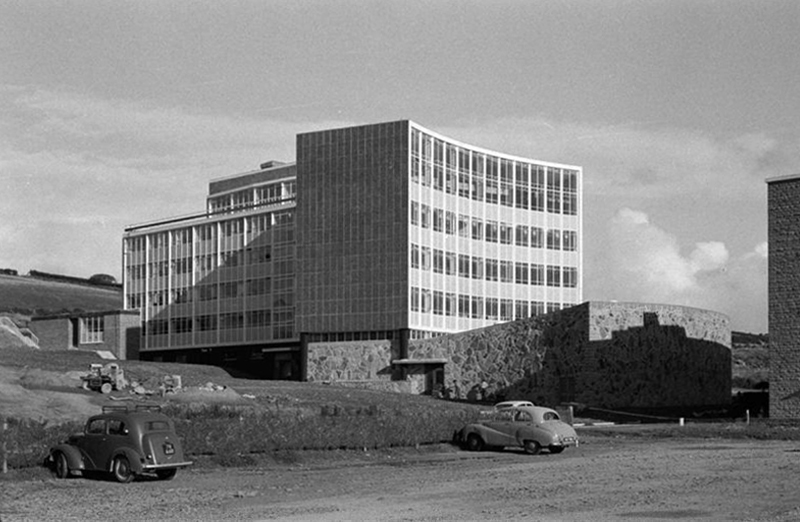
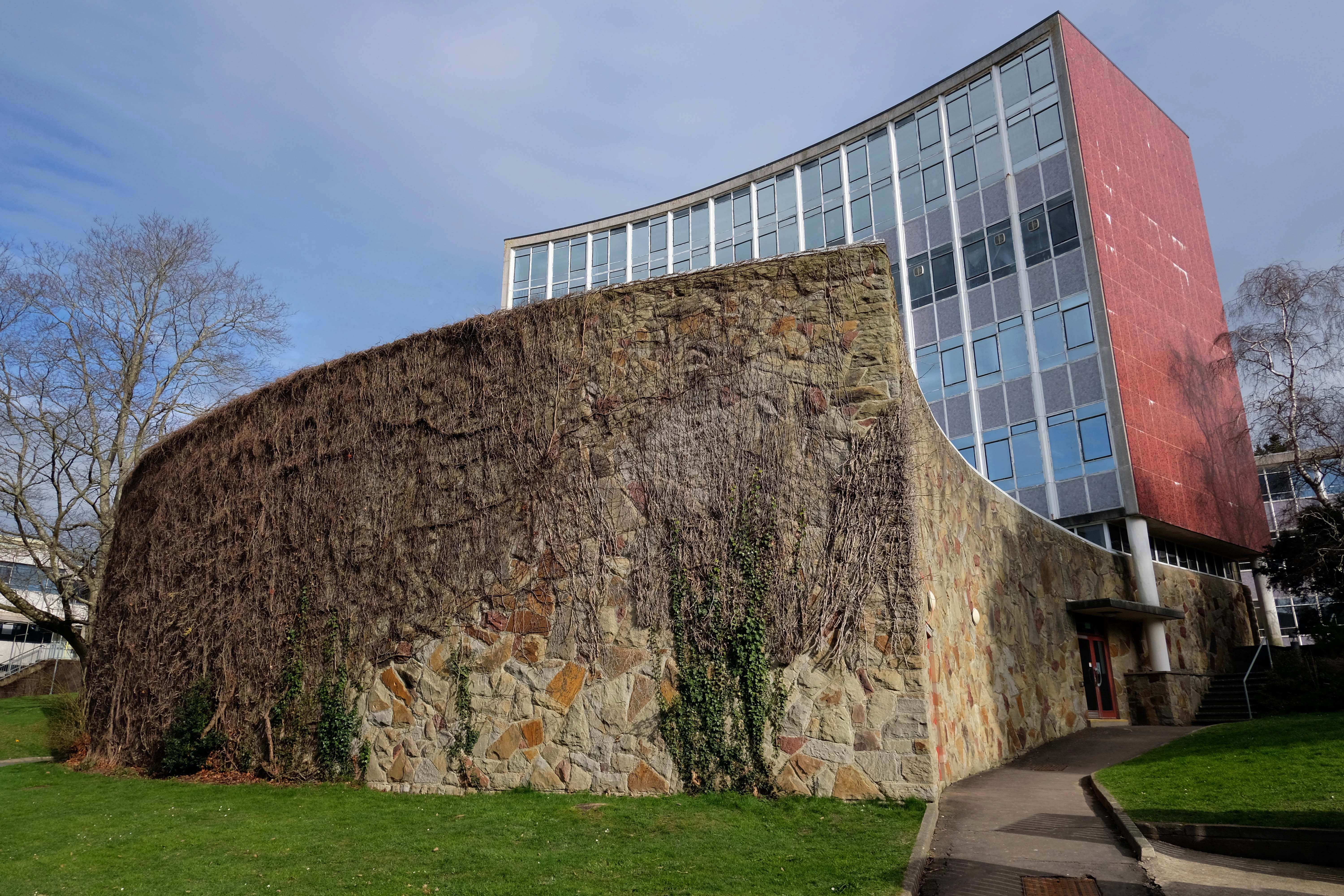
To our right Fulton House – This was built 1958-62 by Sir Percy Thomas & Son – design partner Norman Thomas. The decorative scheme in the main hall is by Misha Black; the panels ofThe Rape of Europa by Ceri Richards are an addition of 1970.
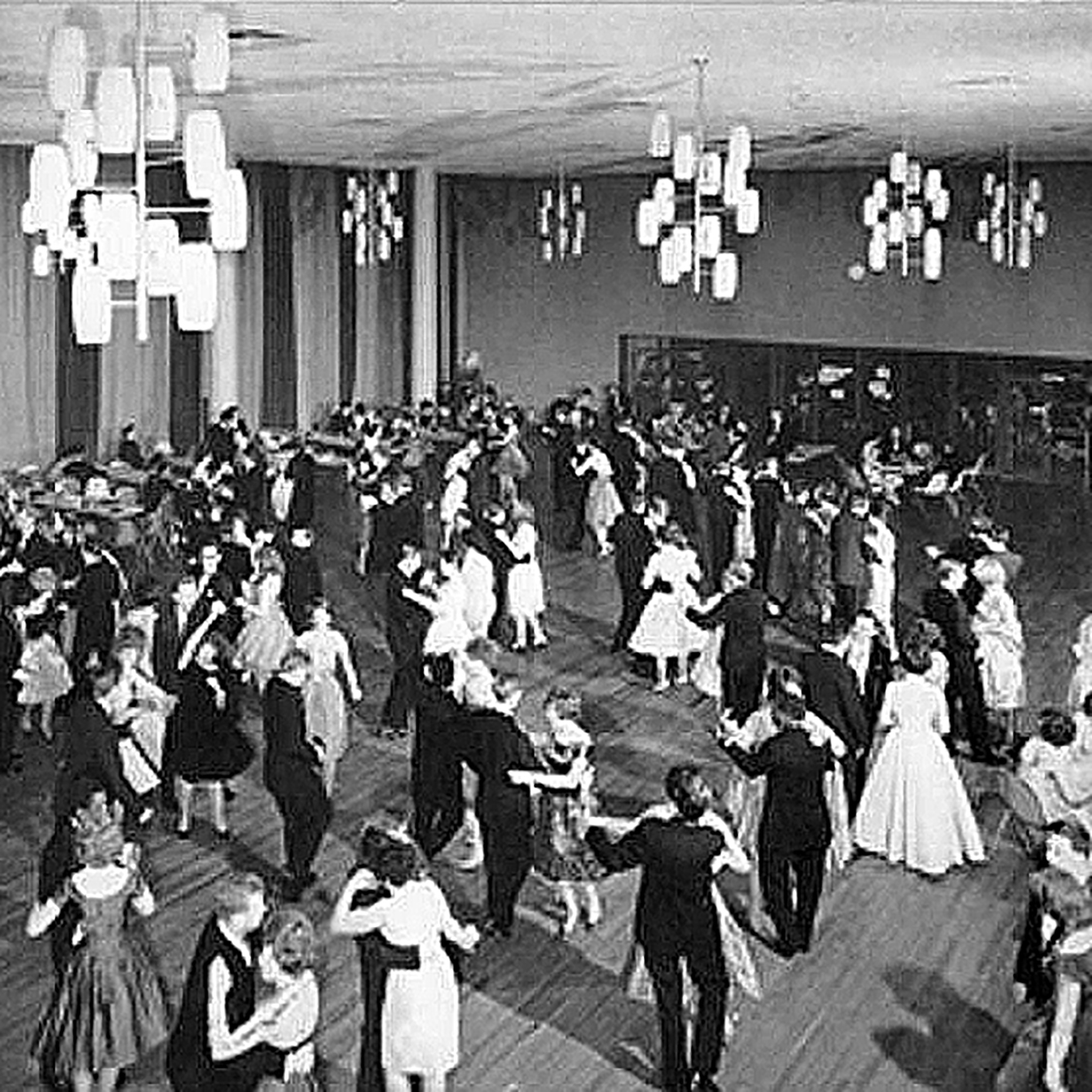
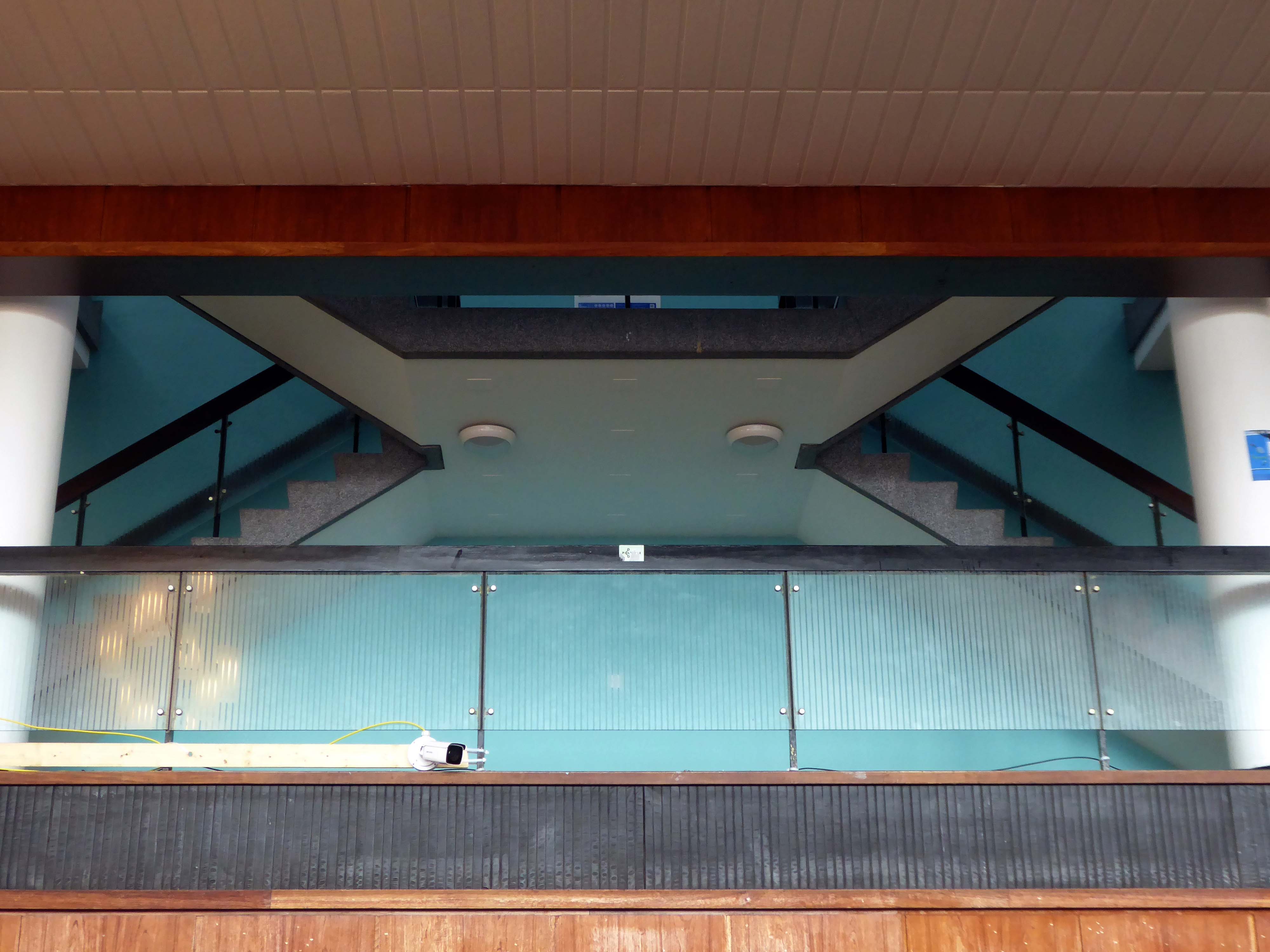
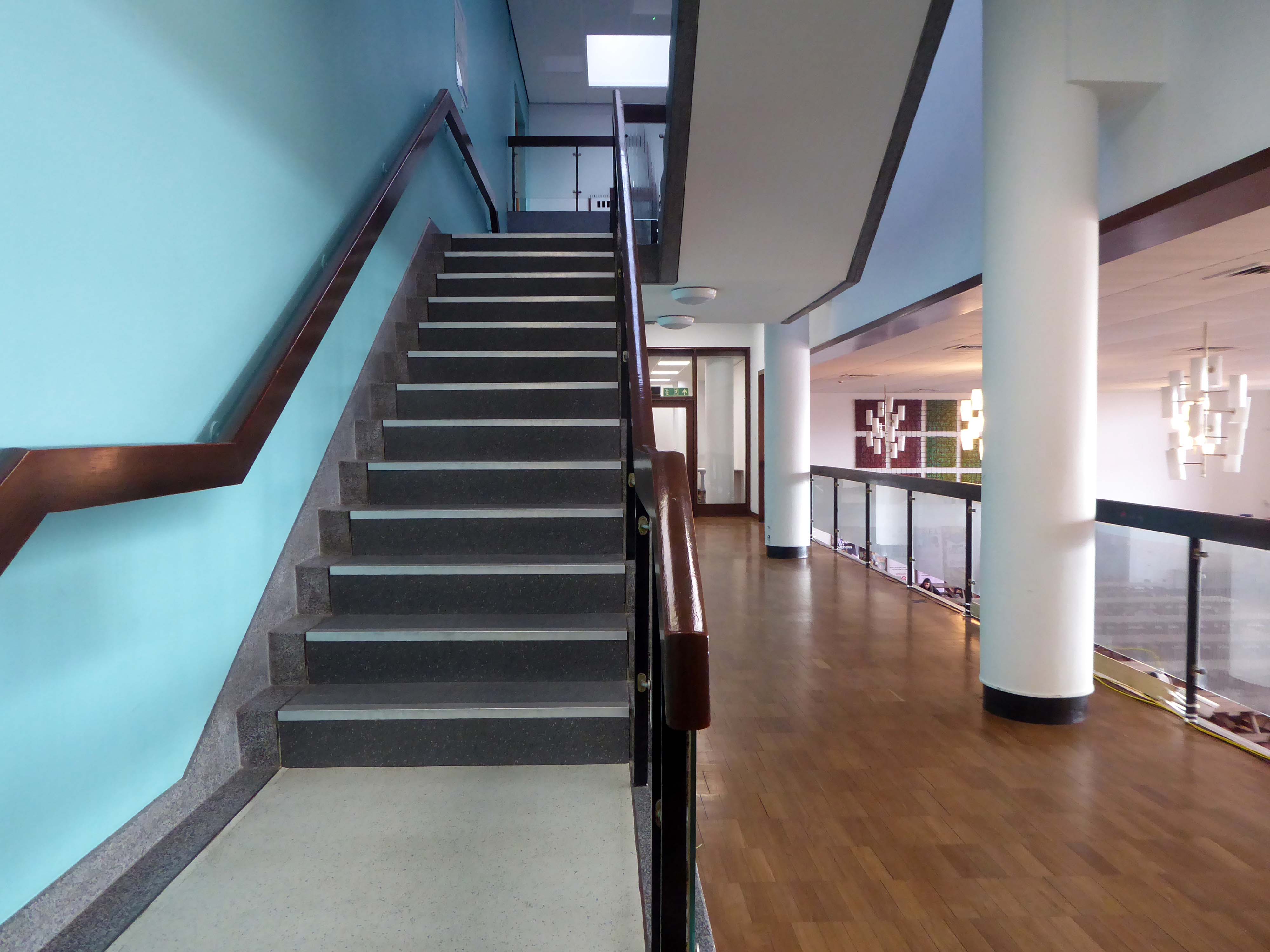
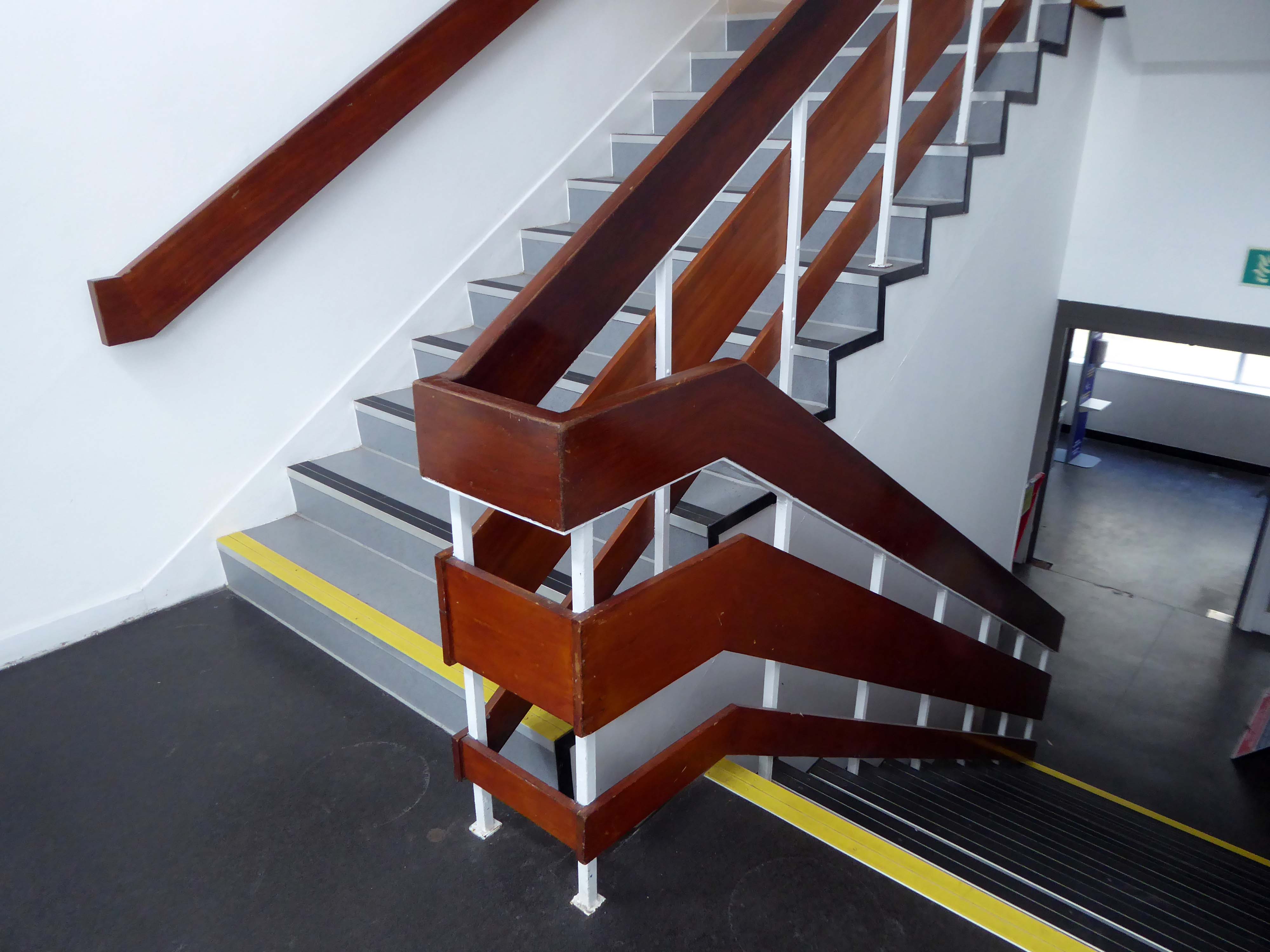
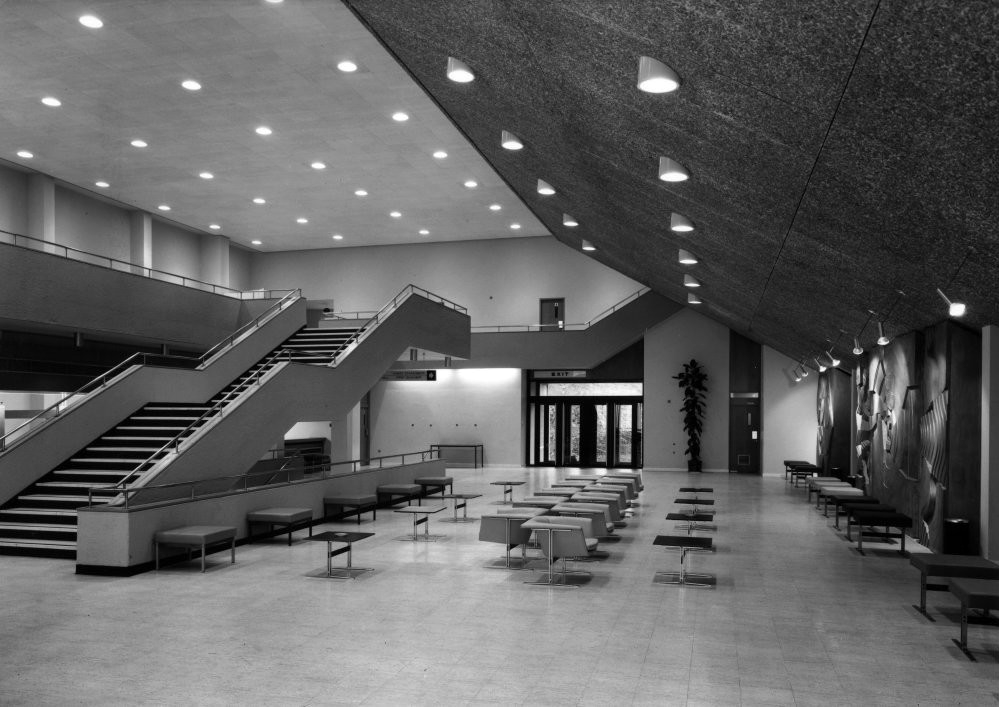
Fulton House, which was called College House from when it first opened in 1961 until 1986, is one of the most historically significant buildings on the Singleton Campus. Throughout the early 1950s, extensive plans were put in place to expand the Singleton site. At the core of this vision was a large building that could act as a meeting place, and a social and academic hub. This is what it became after 1961. The building contained common rooms, a music room, a coffee lounge, an extra library, a book shop and a barber’s shop.
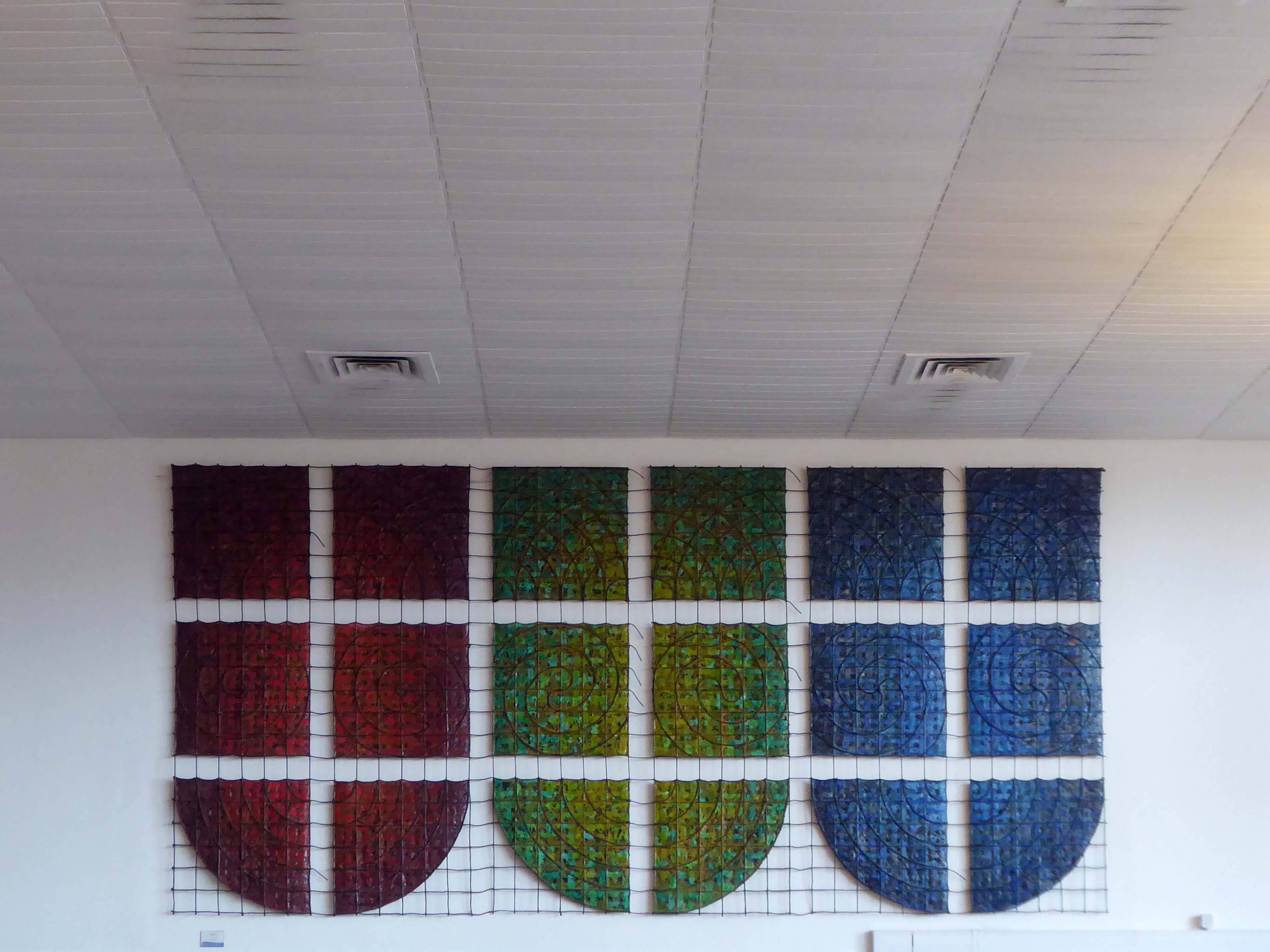
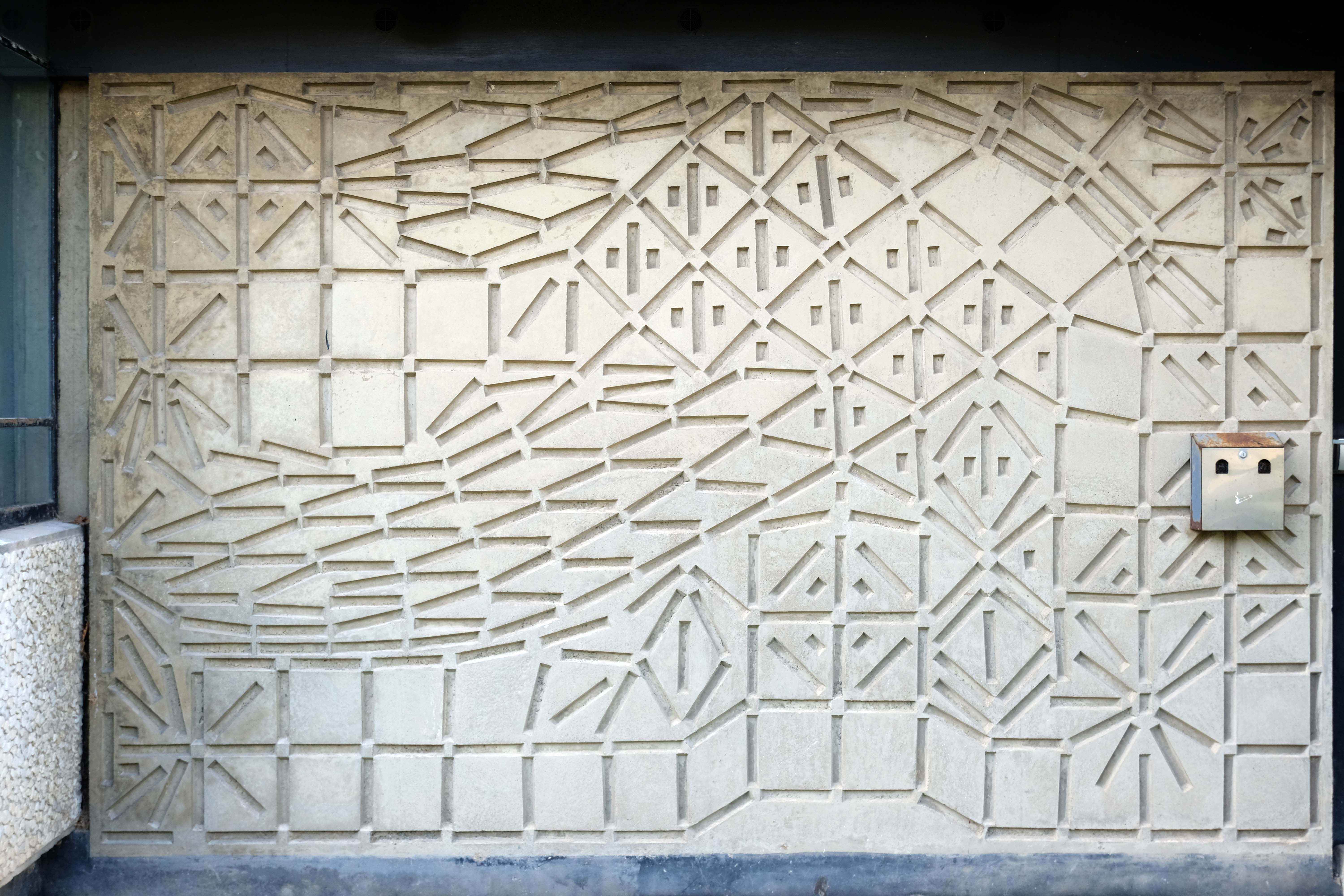
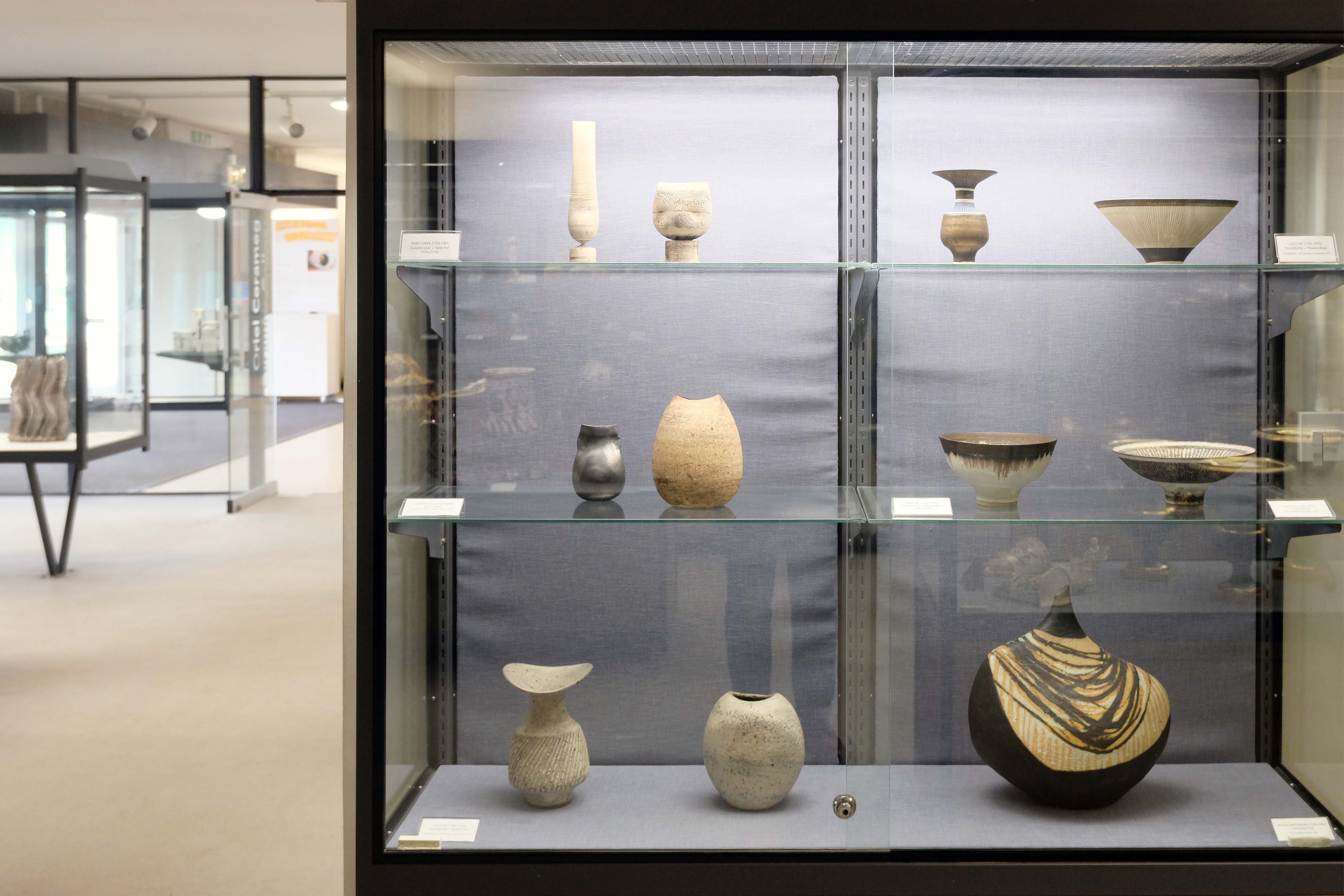
This large wall hanging measuring H305cm x W620cm hangs on the wall opposite the Ceri Richards paintings. The hangings were very dusty and the nails holding the piece up were rusty. We were able to interview the artist to find out more about how the hanging was made. Glyn Jones used a blow torch to apply pitch and PVA medium to canvas and skrim fabric that he then attached to a geometric rope structure. Gouache paint was used and a solvent fixative spray allowed the colours to become imbibed into the PVA film. The hanging was made in six panels and then the horizontal rope ends glued together on site. These glued attachments had failed several times in the past and Jones had fixed them. With his permission we decided to come up with a new approach to these fixings. After cleaning the panels, we adhered magnets into the ends of the ropes so that they would click together easily. We reinforced the vertical ropes between the sections with nylon thread. Strong polyester was attached to the back of the top edge allowing a new hanging system where the strips were screwed into the wooden fixing battens. The hanging now looks much brighter and more colourful and detaching rope problem has been permanently resolved.
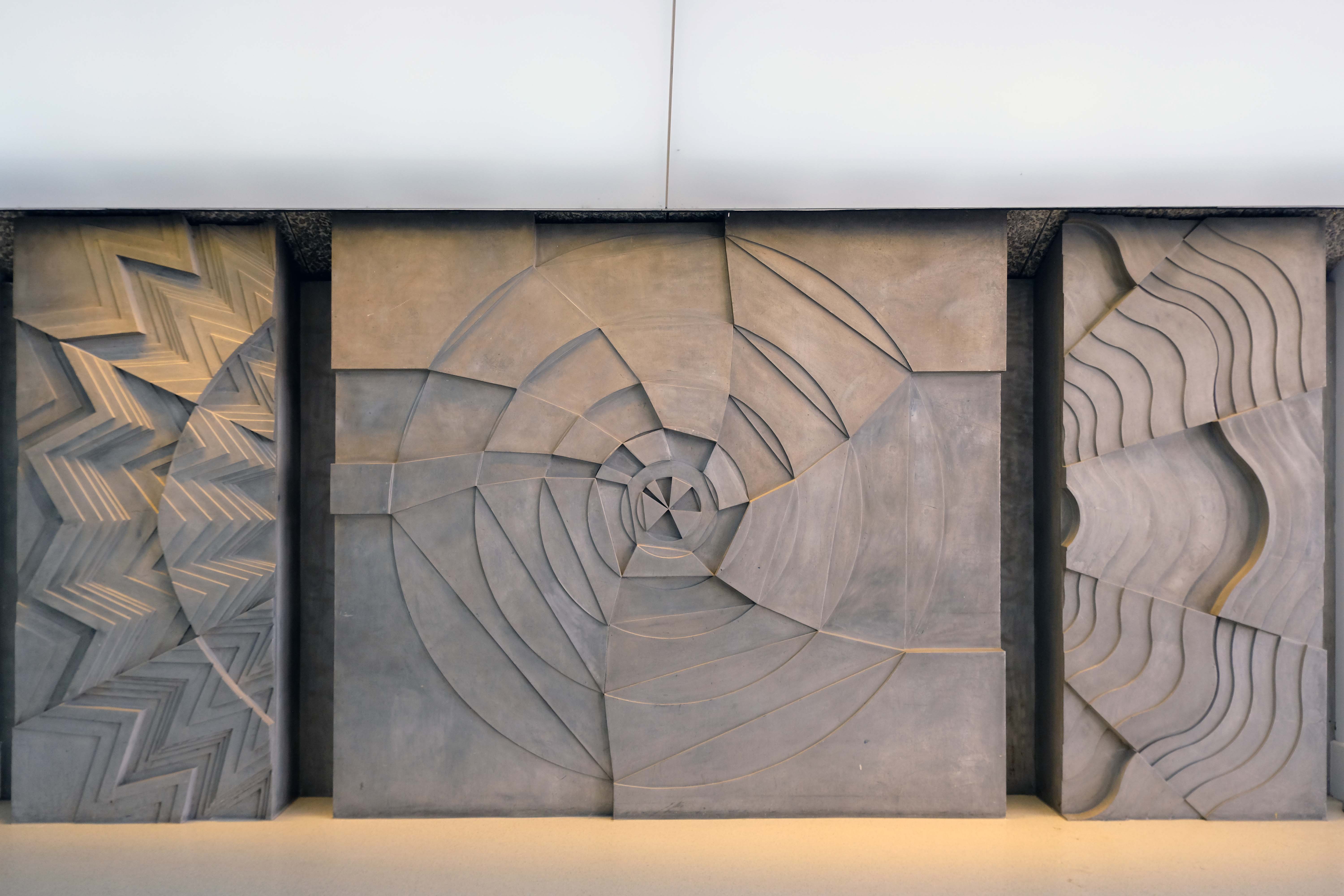
This generously spaced mural in the form of three splendid green, red, and blue shields in glazed plastic material and black cording is a creation in which the artist, Mr Glyn Jones symbolically portrays the Holy Trinity
The centre shield, in green, represents God the Father as creator and sustainer.
On the right of the centre shield, that is on the right hand of God the Father, is the red shield which represents our Lord and Saviour.
On the left of the centre shield, that is, on the left hand of God the Father, is the blue shield which represents the Holy Spirit.
In other ways the mural is modern in its abstract technique. Its basic symbolism is simple: a shield is for protection and green fertility sustains all life. Mr Glyn Jones is to be congratulated on a study which appealingly and joyfully presents the Holy Trinity as a protective and creative life-force that is yet associated with the Cross. His is a new and attractive achievement in the artistic tradition of Celtic Christianity.
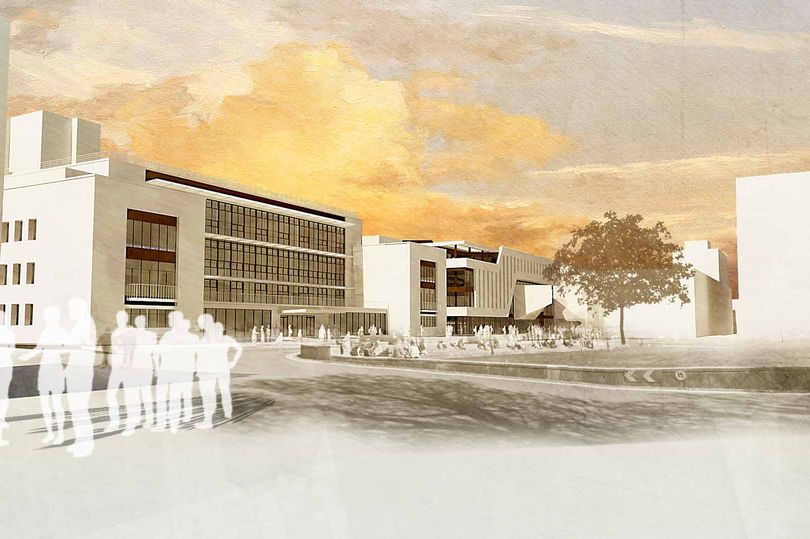
Controversially plans for a £30 million Student Activity Centre at Swansea University’s Singleton campus have been revealed.
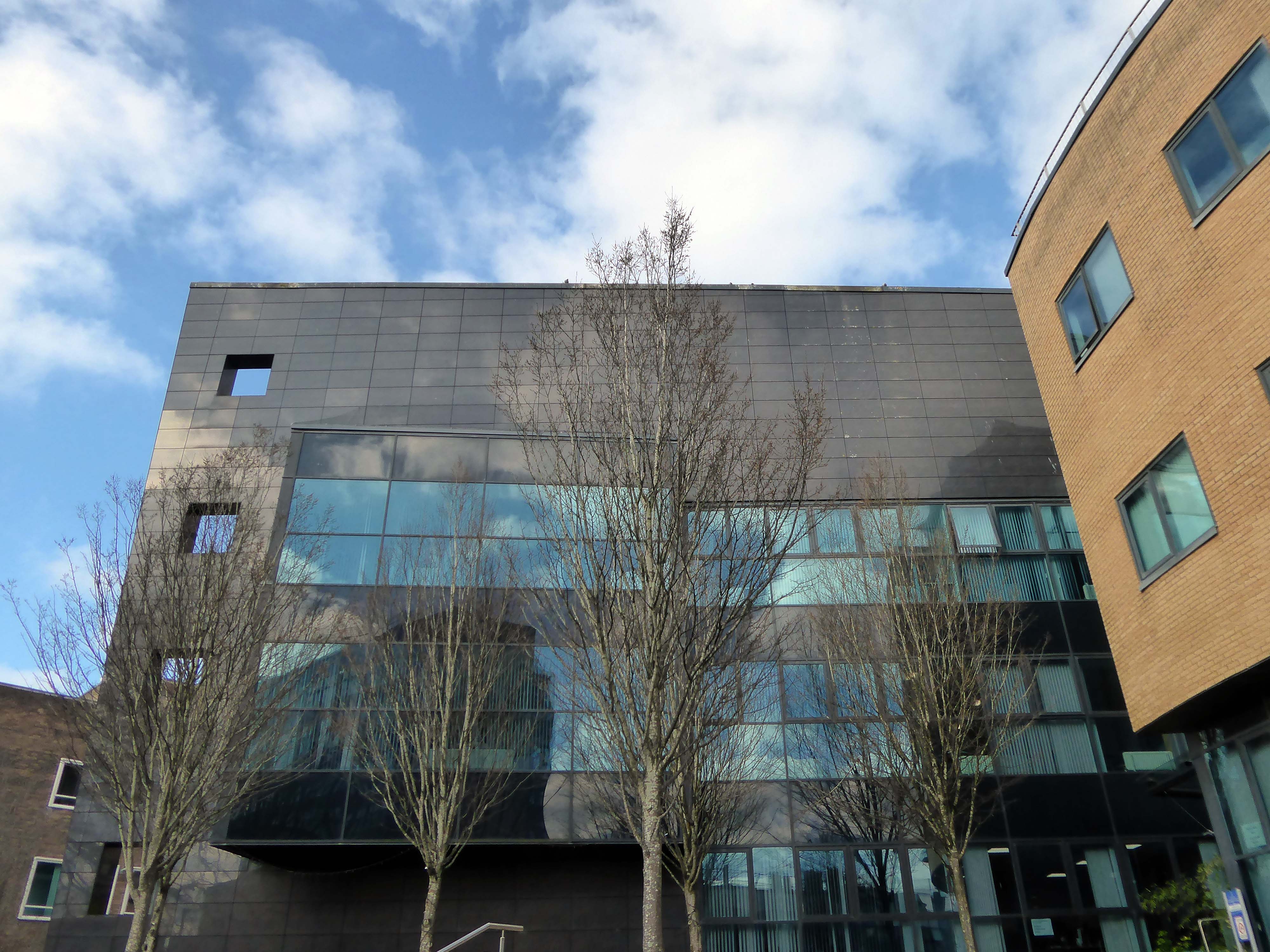
Bosses say the centre will form part of a new Student Precinct and, subject to planning permission, will replace the former Digital Technium building which was built in 2003 at a cost of £9.5million.
The scheme will replace the existing Digital Technium building and will be linked to the adjacent Grade II listed Fulton House, which will also be refurbished. Together, they will form the core of the new Student Precinct. Designs to resolve the surrounding streetscape and provide new access routes across the campus are also included.
Peter Moro is the forgotten co-designer of the Royal Festival Hall. A German émigré who had worked with Berthold Lubetkin’s famed practice, Tecton, in the 1930s, Moro was drafted in to help realise the Festival Hall in just two short years, in time for the Festival of Britain in 1951. With a team of his former students, he created many of the interiors we see today. For Moro, the Festival Hall was a stepping-stone to a career designing many of Britain’s finest post-war theatres, particularly Nottingham Playhouse, Plymouth Theatre Royal, and the renovated Bristol Old Vic. He and his colleagues also designed some exceptional one-off houses, as well as exhibitions, university buildings, schools, and council housing, collaborating with leading talents such as the designer Robin Day.
Set in the heart of Swansea University’s Singleton campus we exist to enrich the cultural lives of individuals and communities across the region, presenting arts experiences for audiences in our spaces and on the streets of Swansea.
Carl Cozier aka Holy Moly has added decorative details to the site.
Next door the Keir Hardie Building and its Neighbour the James Callaghan Building.
Heading back on ourselves toward the Wallace Building.
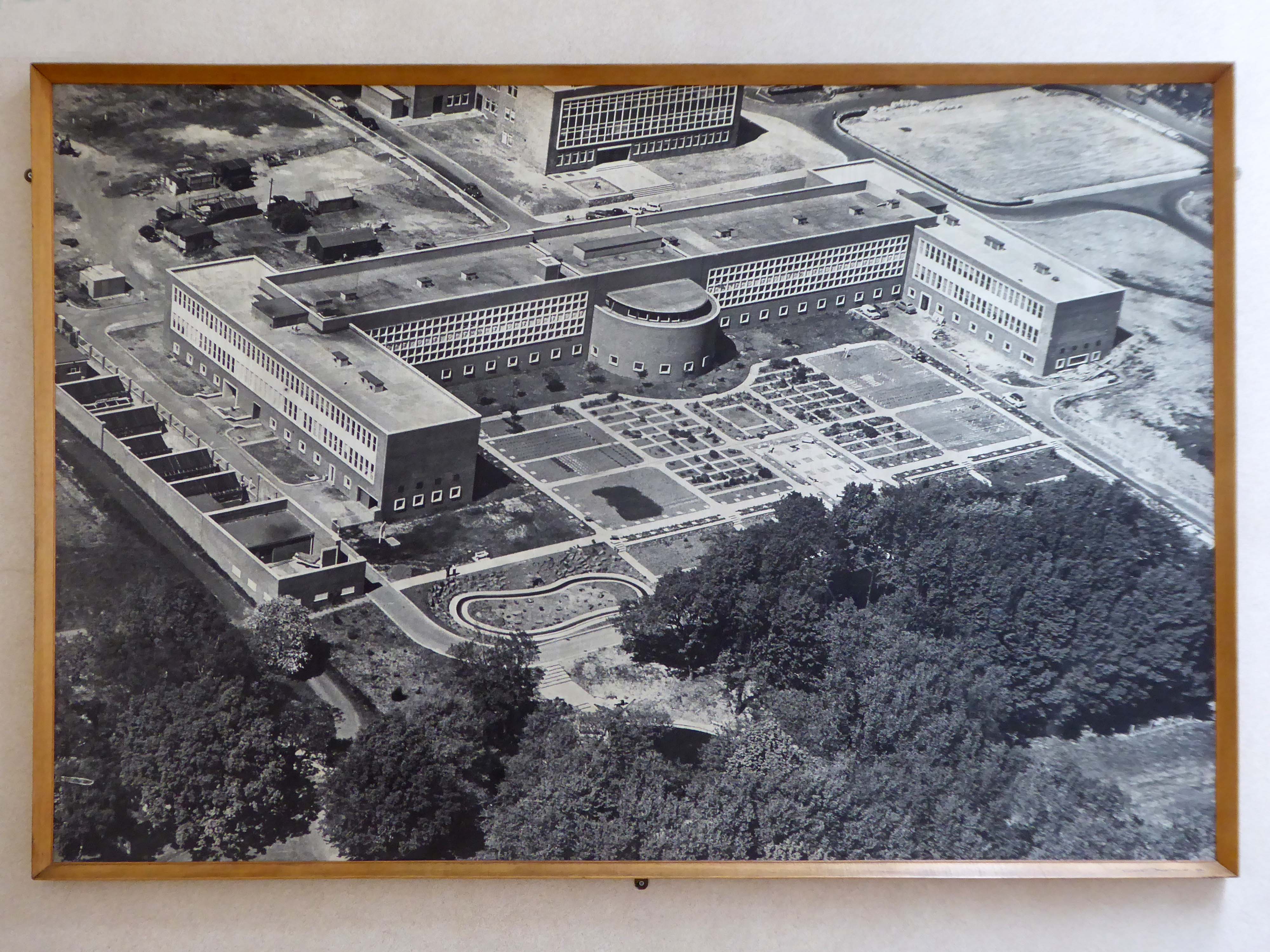
Percy Thomas was commissioned to design new buildings for science and engineering, but these plans were thwarted by cost constraints. However, following the appointment of John Fulton as principal in 1947, Thomas was re-engaged to prepare a new development plan.
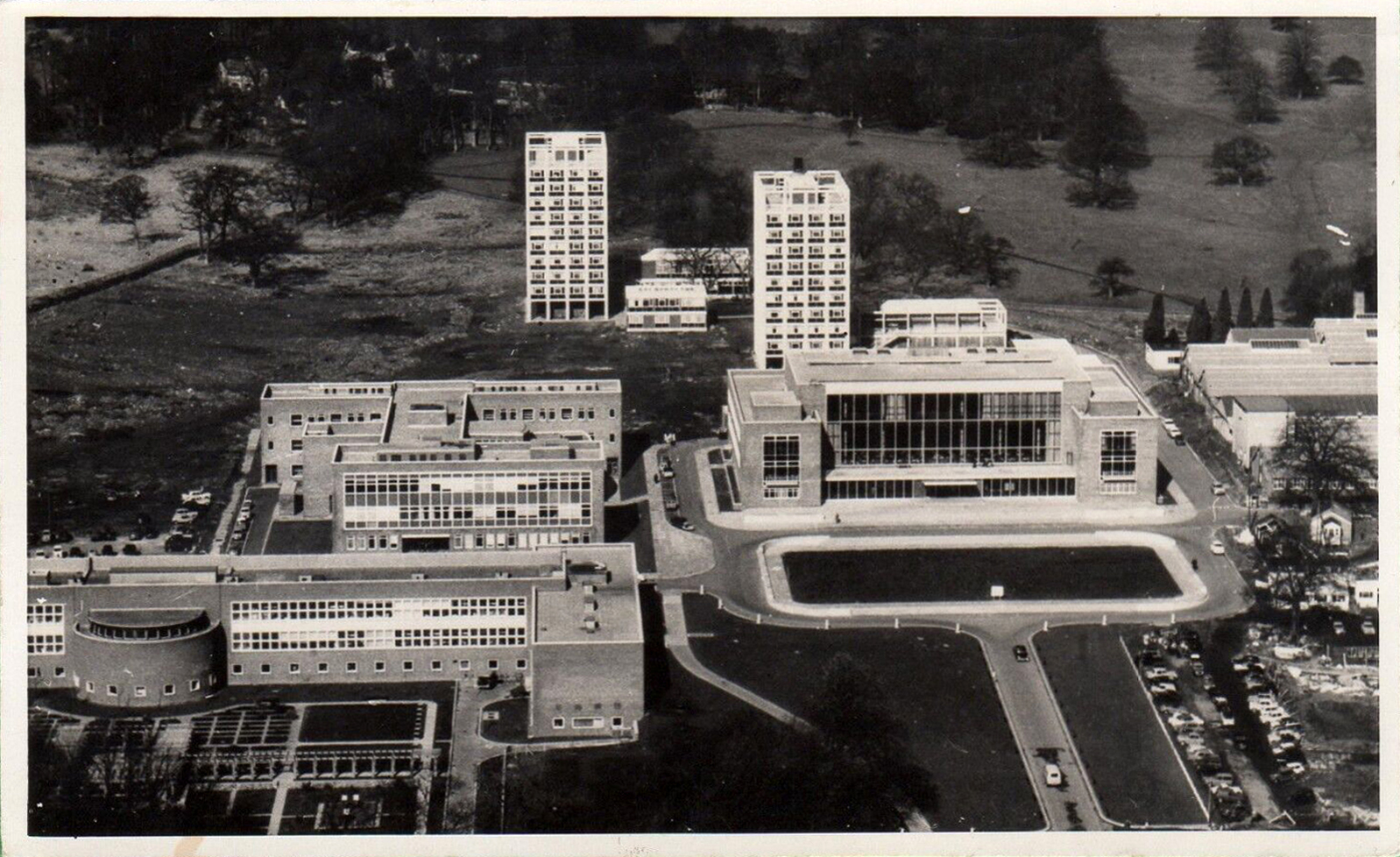
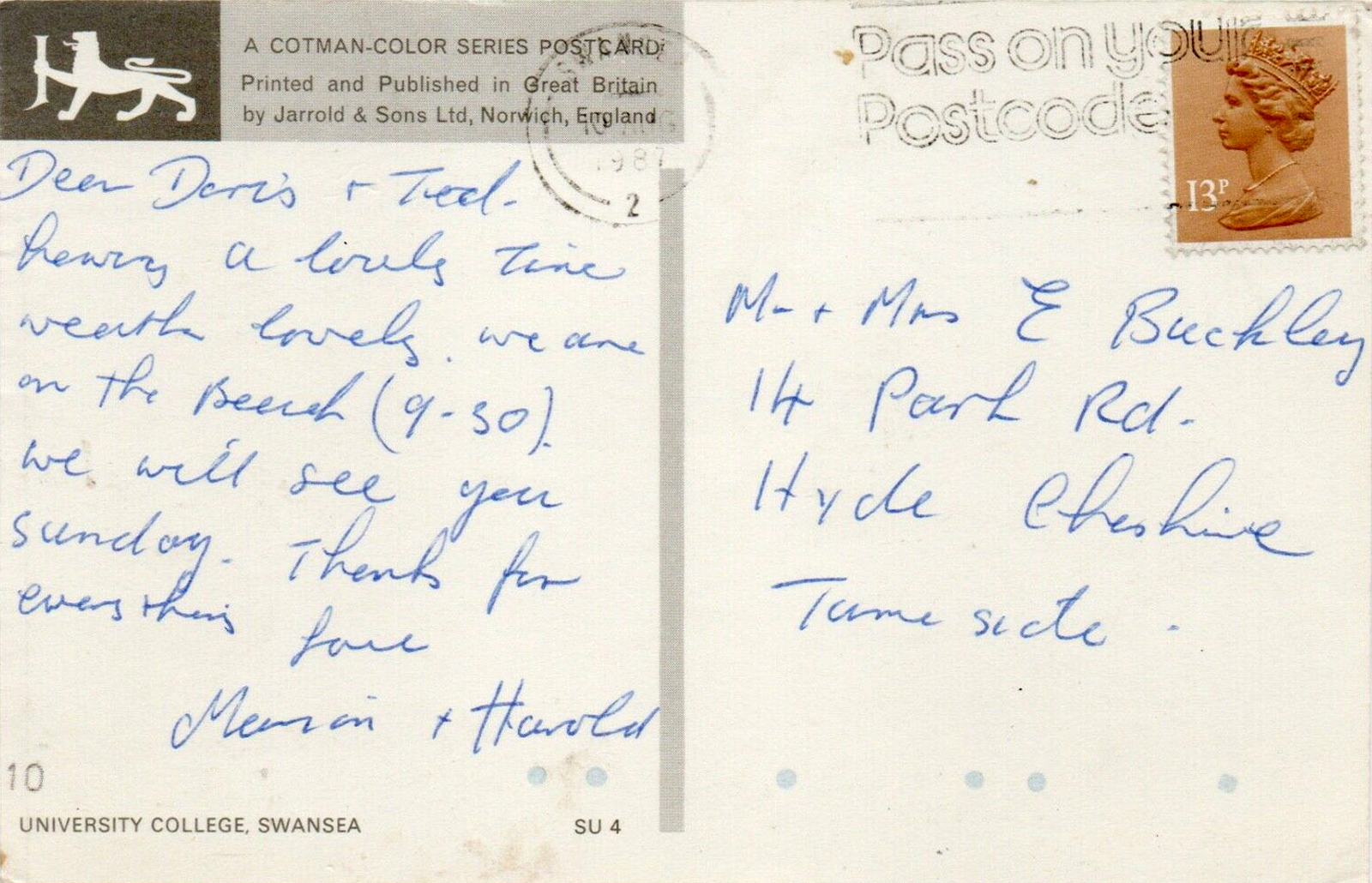
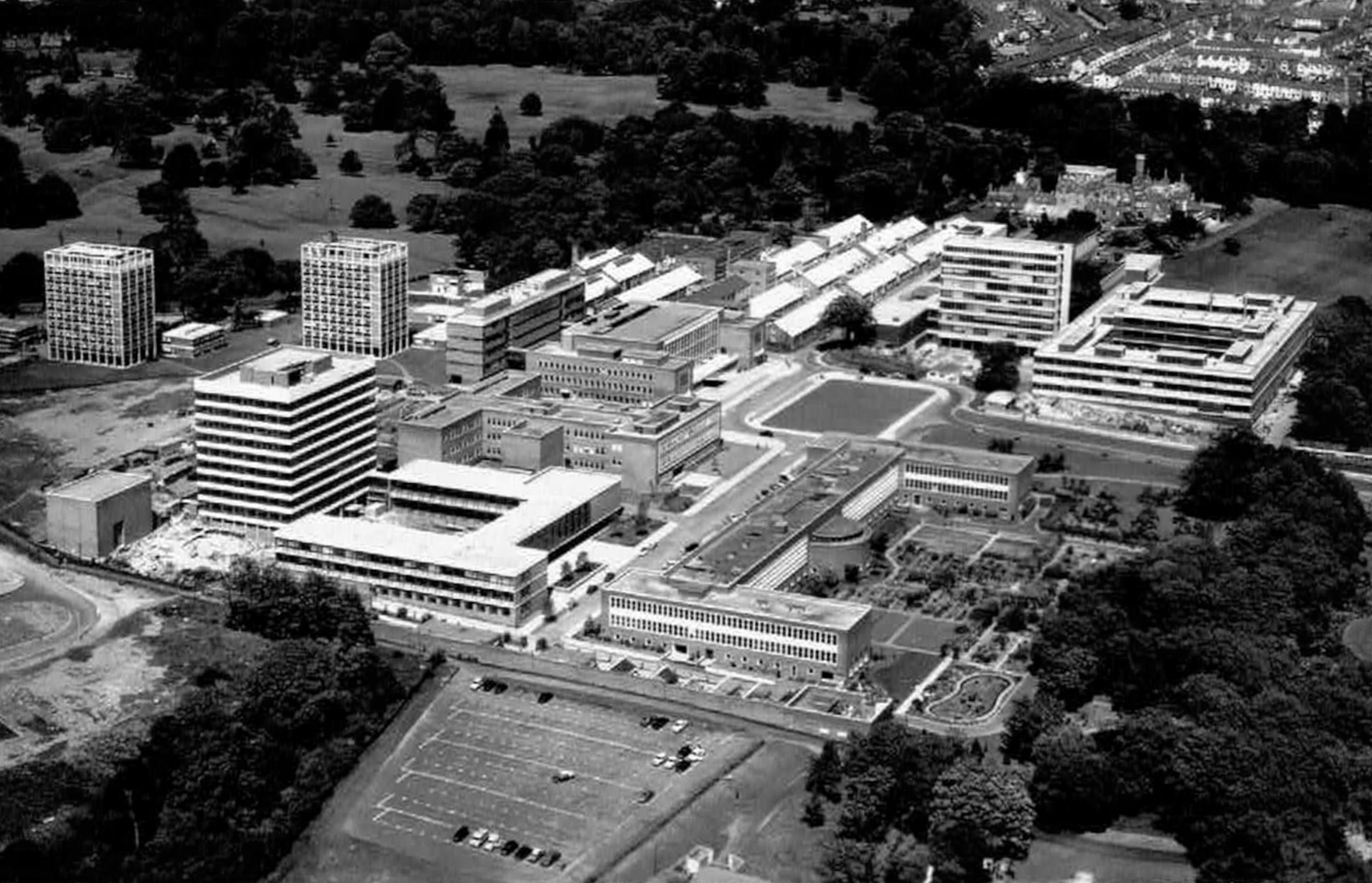
The earliest halls can be seen at the centre of this postcard.
Also to the left of this later postcard.
This card shows the Singleton campus of Swansea University. Top right, the abbey which was the university’s original building; beyond that the houses around St Helens – the sports ground where in August 1968 Sir Gary Sobers scored six sixes in an over for Nottinghamshire against Glamorgan.
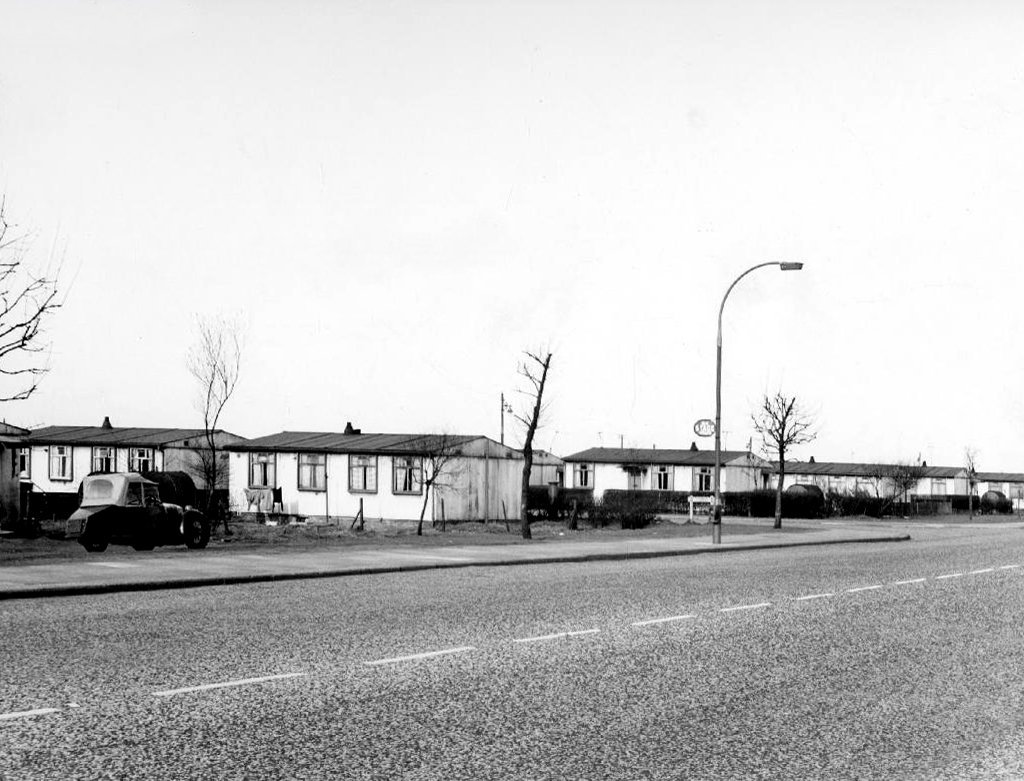
Manchester City Council agreed to use the Phoenixmodel for their prefab estates.
A total of 43,206 Phoenix prefabs were built across the country, each one designed by the John Laing Group.
The Phoenix, designed by Laing and built by themselves as well as partners McAlpine and Henry Boot, looked much like an AIROH with a central front door. It was a two-bedroom in-situ preform design with steel frame, asbestos clad walls and an innovative roof of tubular steel poles with steel panels attached. Like all designs, it came pre-painted in magnolia, with green highlights on frames and skirting.
Phoenix prefabs cost £1,200 each constructed onsite, while the specially insulated version designed for use on the Isle of Lewis in the Hebrides cost £2,000.
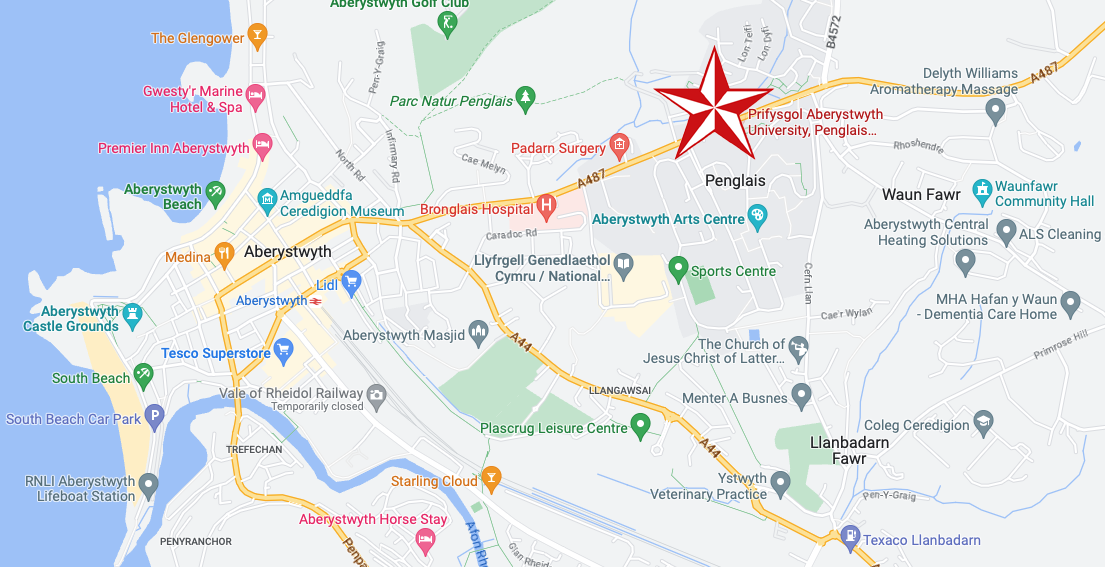
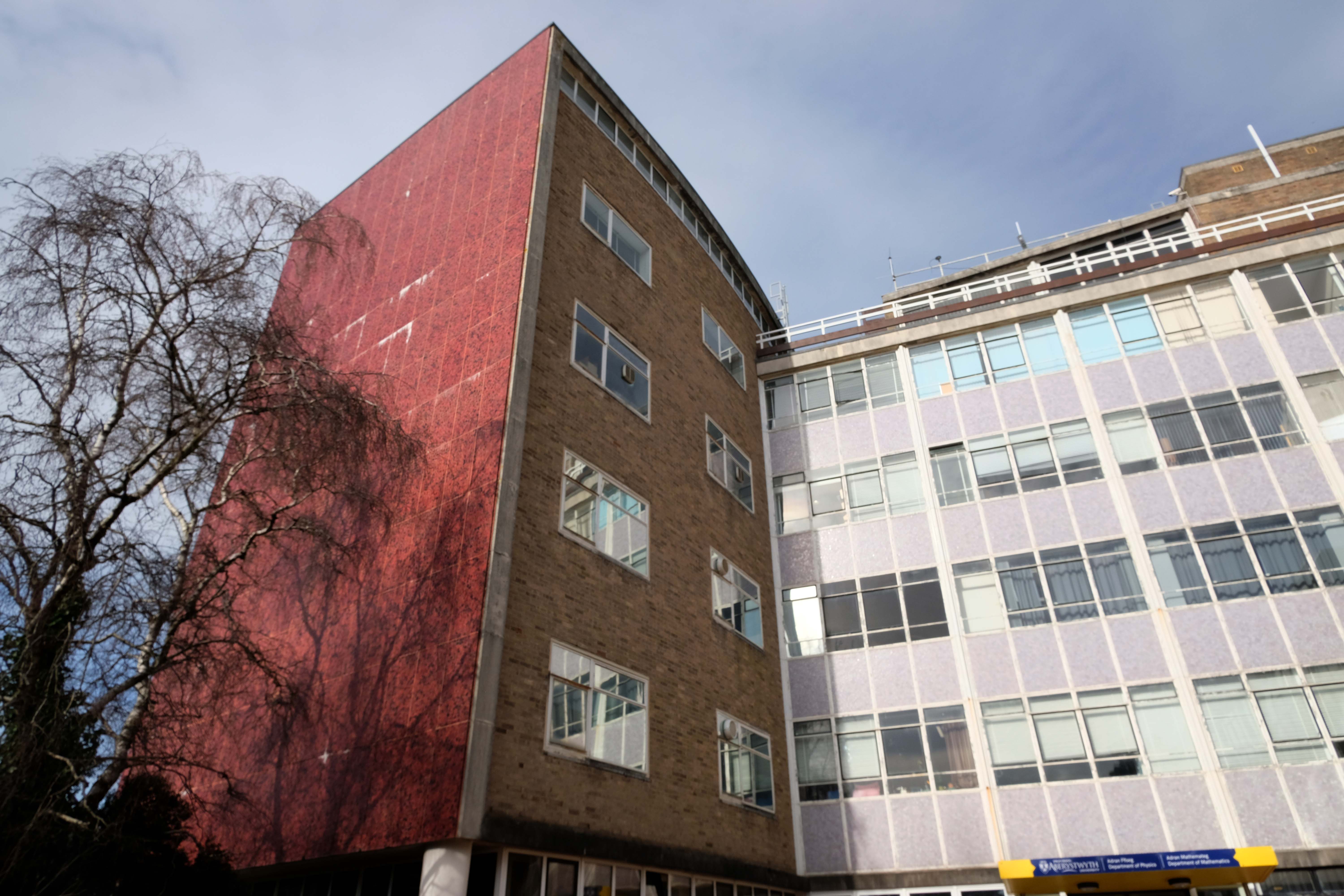
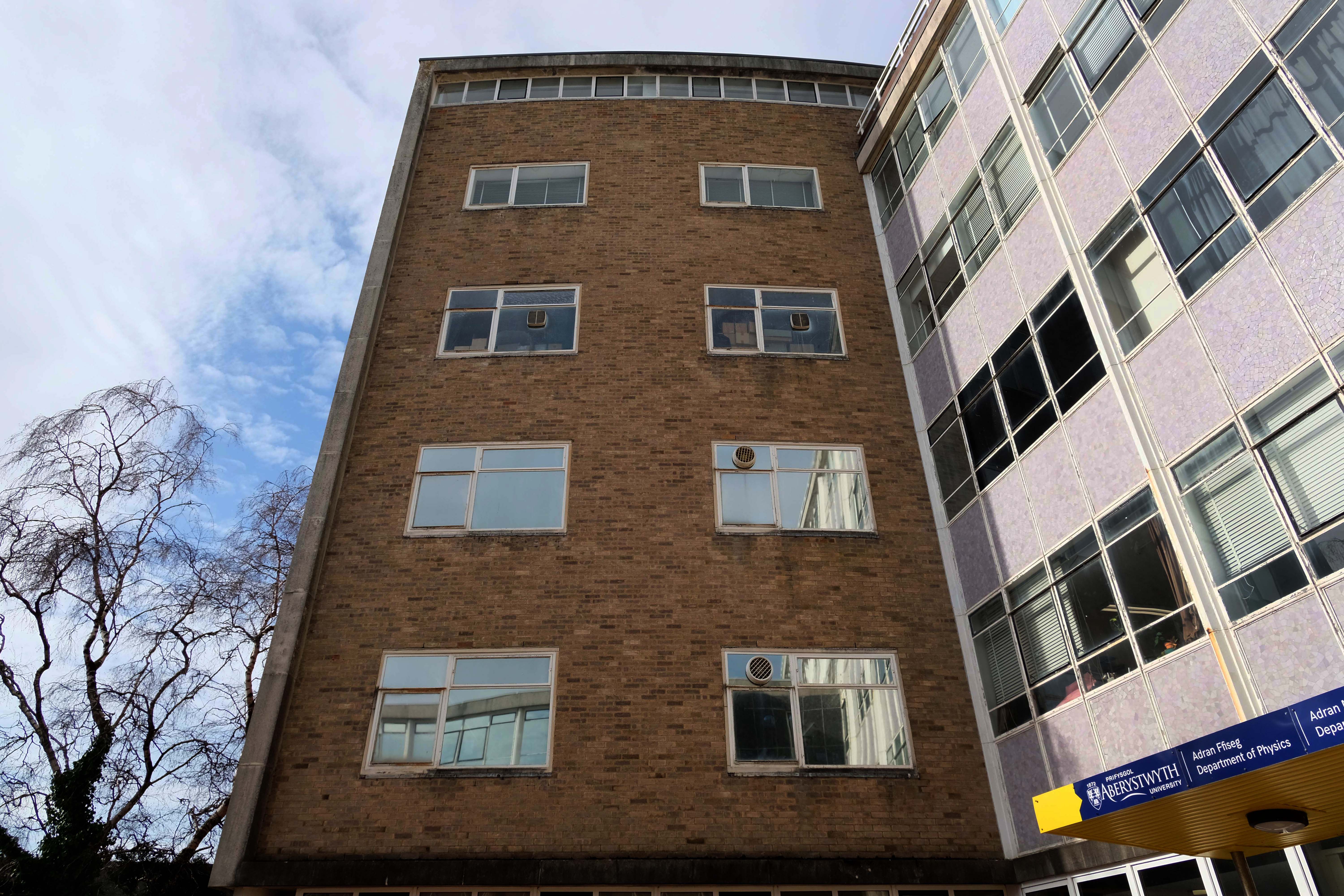
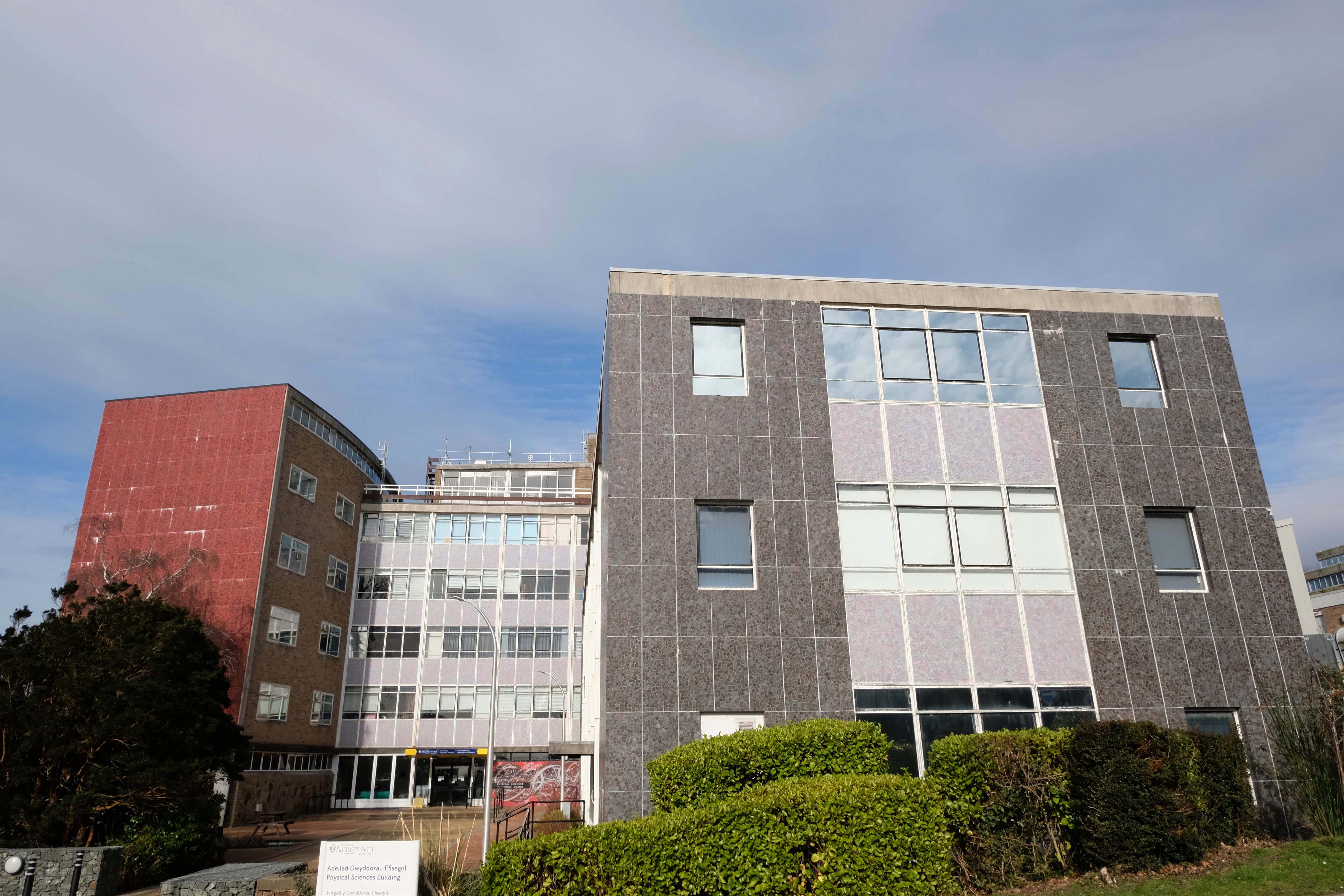
Prifysgol Aberystwyth University – Penglais CampusSY23 3AH
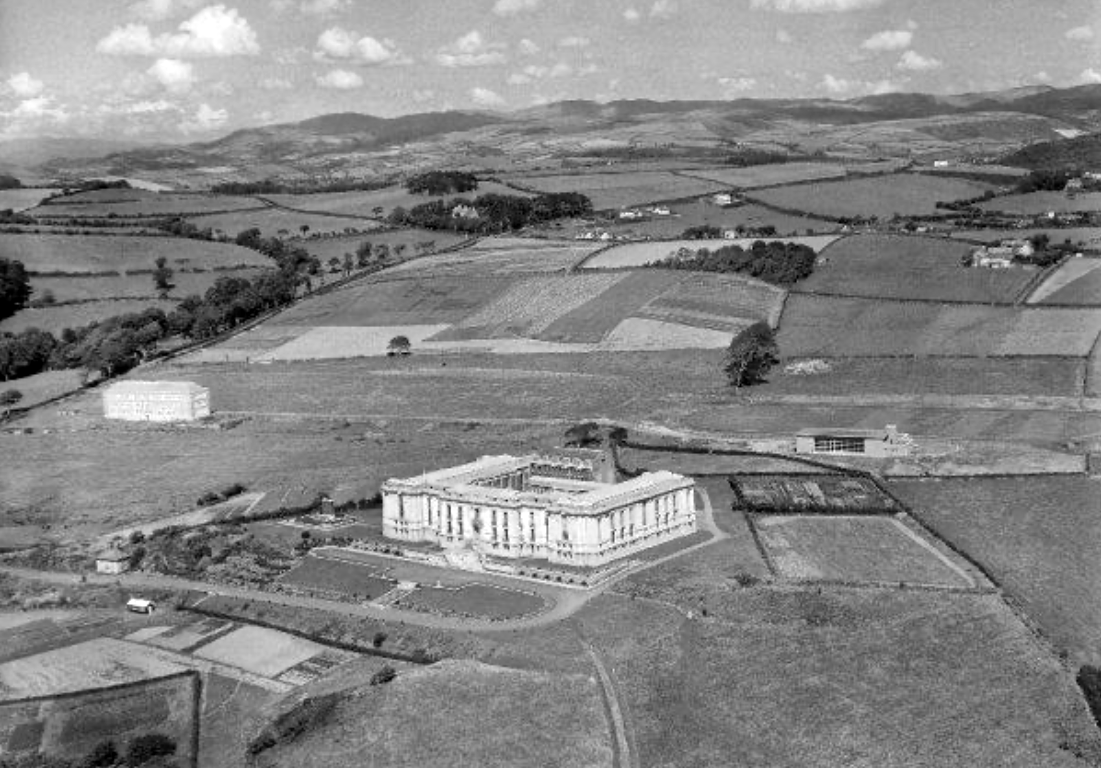
Led by London Welshman Hugh Owen, a small group of patriots sought from the 1850s onwards to raise enough money by public and private subscription to establish a college of university status in Wales. A project of enormous ambition, the University opened its doors in 1872 initially with a handful of teachers and just twenty five students in what was then a half-finished hotel building – the Old College on the seafront.
The first decade presented many challenges for the University’s survival. The generosity of a few individual benefactors and organised appeals for support from the ordinary people of Wales kept the University in being, and, perhaps more importantly, deeply rooted it in the minds and the affection of the Welsh people. A matter of considerable pride is that the University has made a significant contribution to the education of women, being one of the first institutions to admit female students.
Since those early days, Aberystwyth University has gone from strength to strength and now has more than 6,000 students and 2,000 staff. As the institution grew, its main campus moved from Old College on the seafront to Penglais Hill. This finely landscaped site enjoys spectacular views over the historic market town of Aberystwyth and the Cardigan Bay coastline. New buildings, including major arts and science developments, halls of residence, a magnificent Arts Centre and sports facilities are located here.
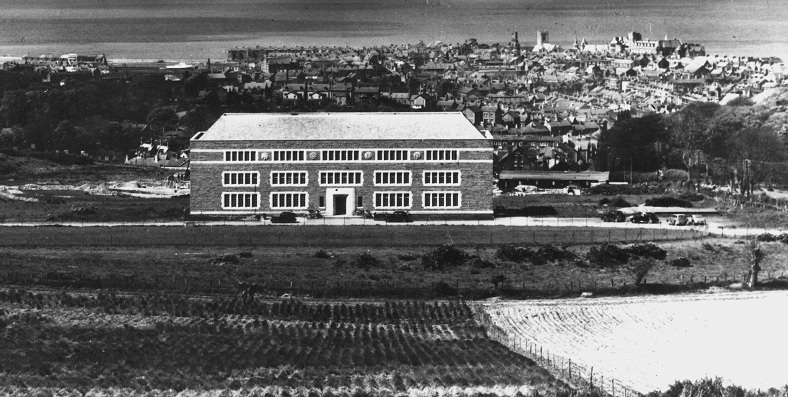
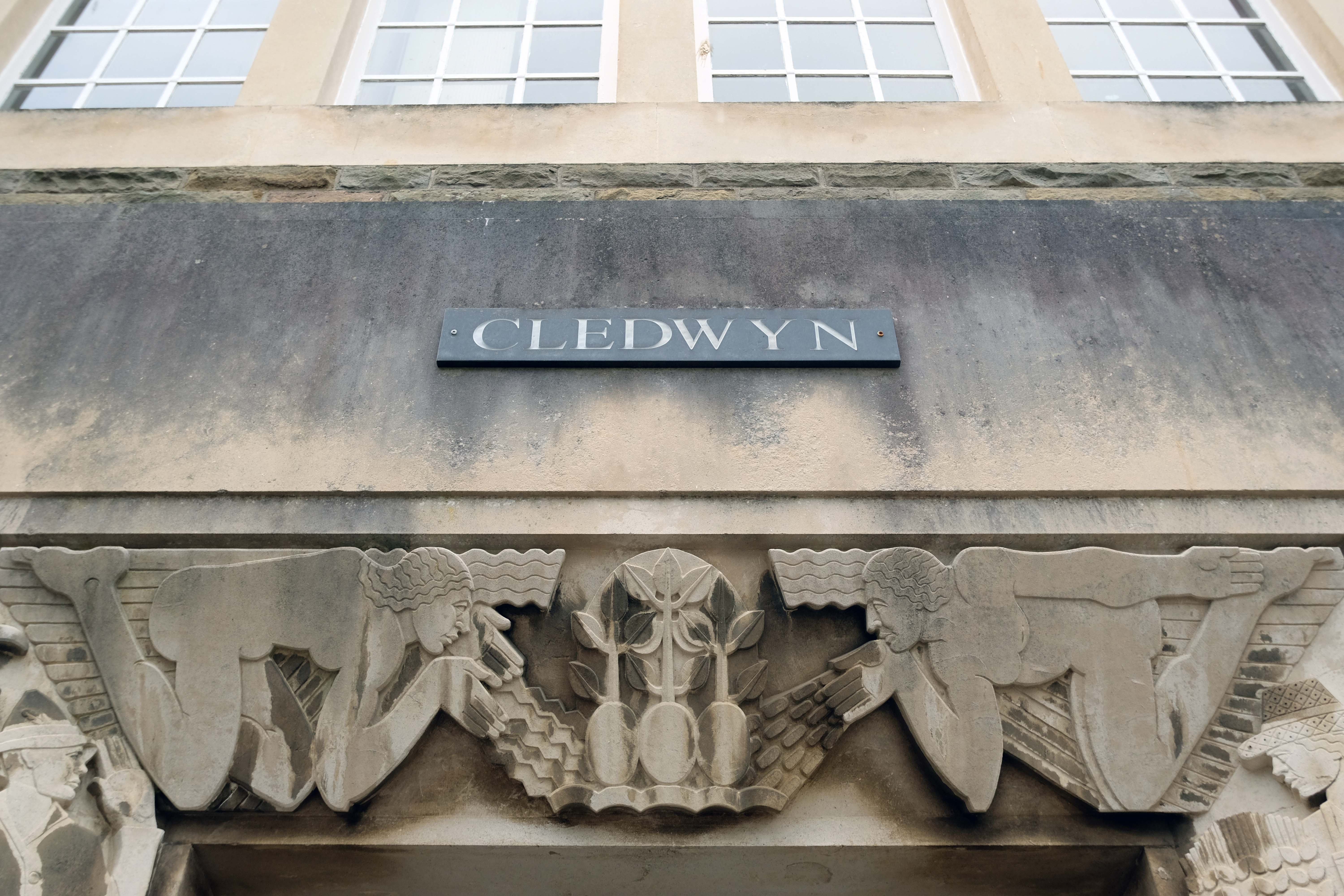
In 1935 Percy Thomas prepared a plan for the layout of a new campus, and was appointed as architect for the first three buildings to be constructed – Cledwyn, Pantycelyn and the swimming bath. This marked the beginning of the move away from the college by the sea to the college on the hill.
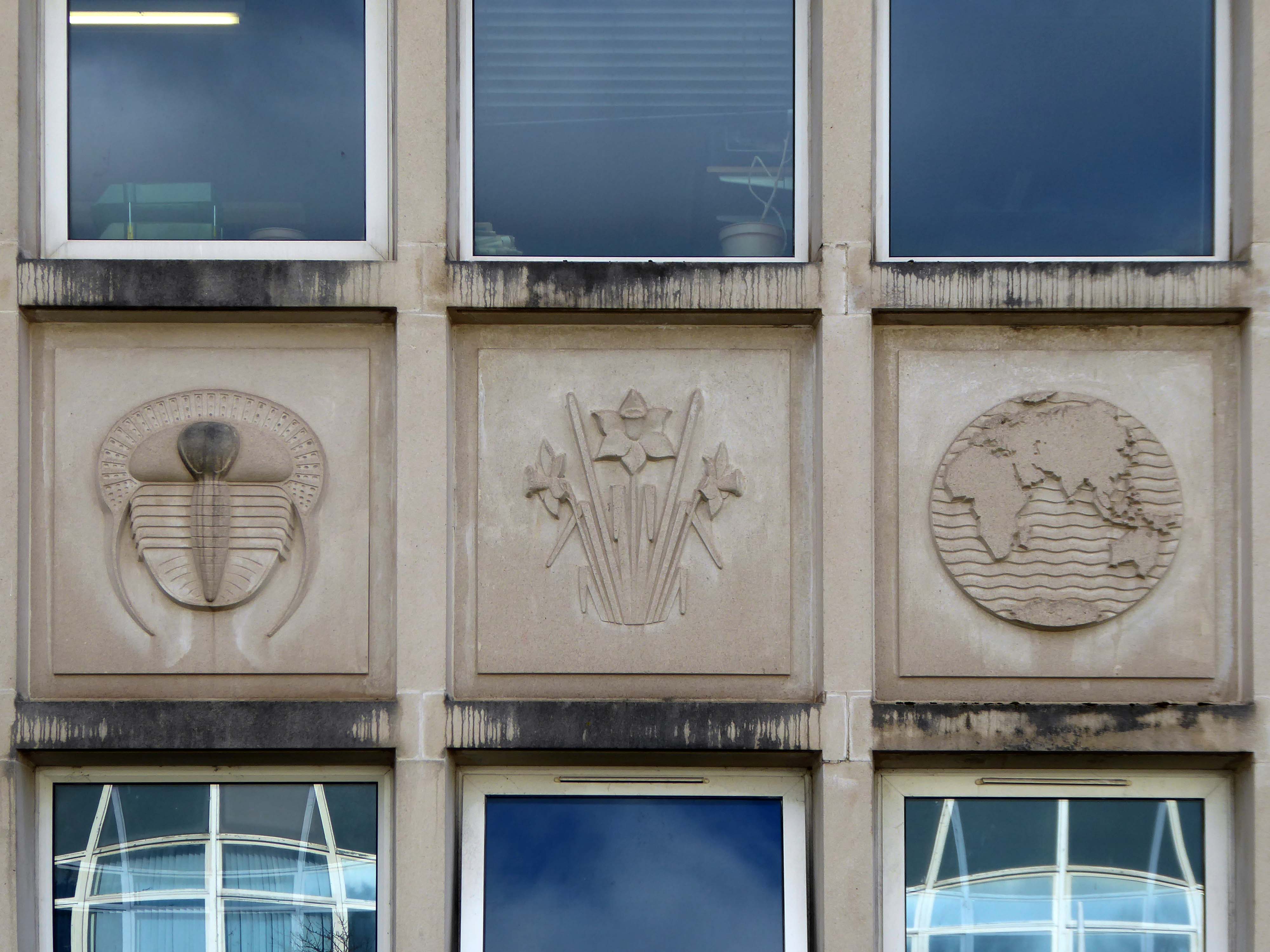
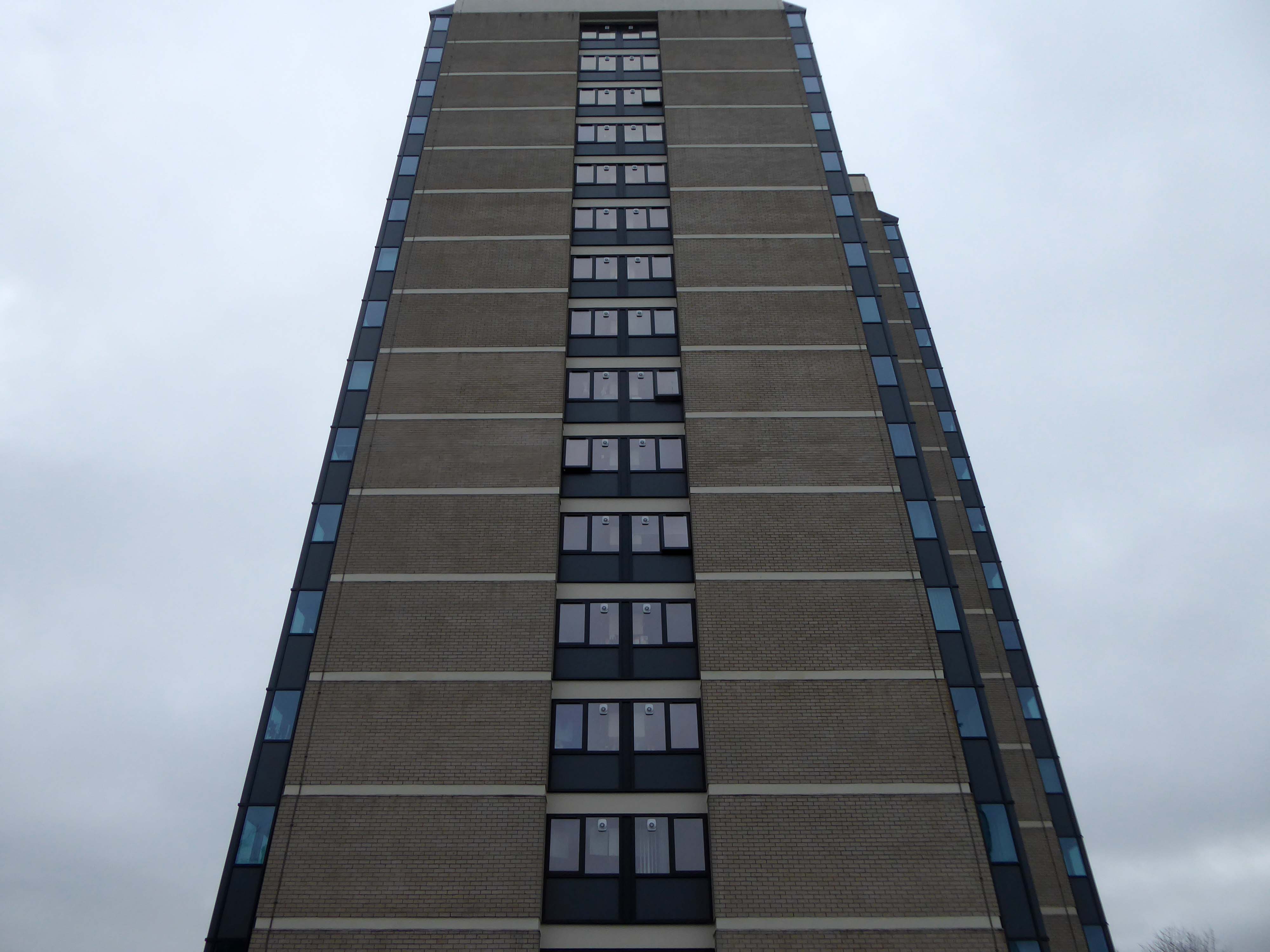
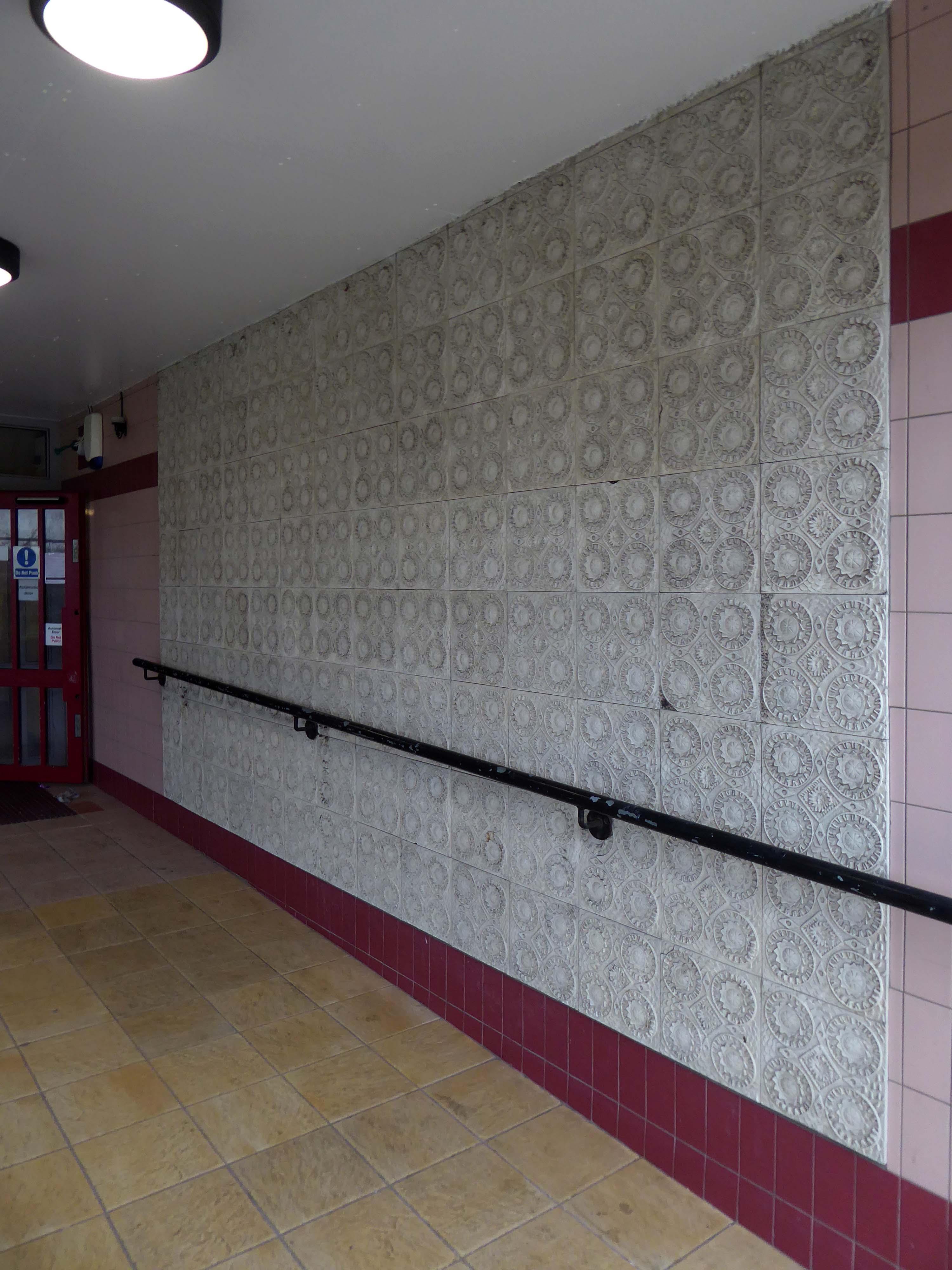
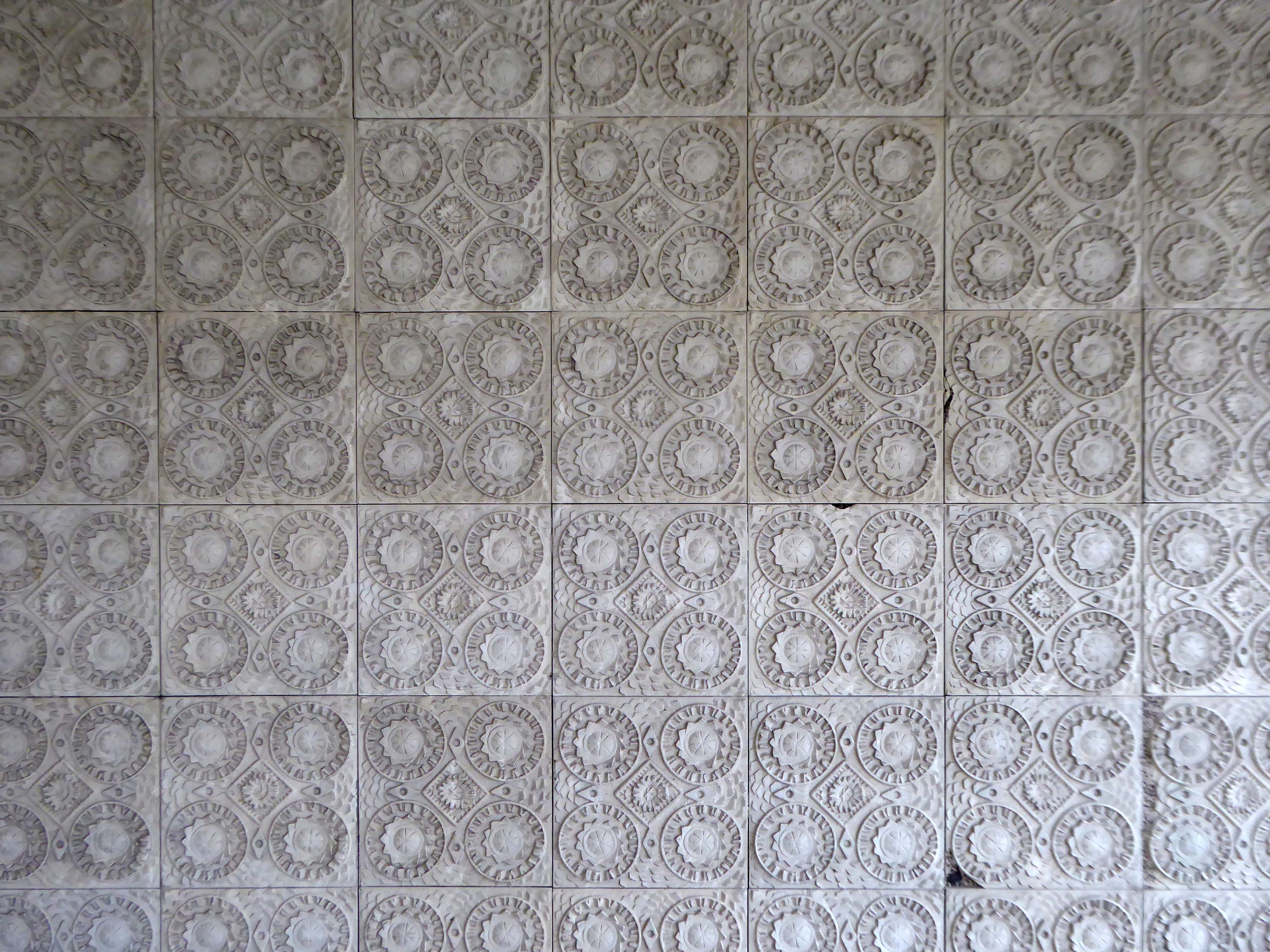
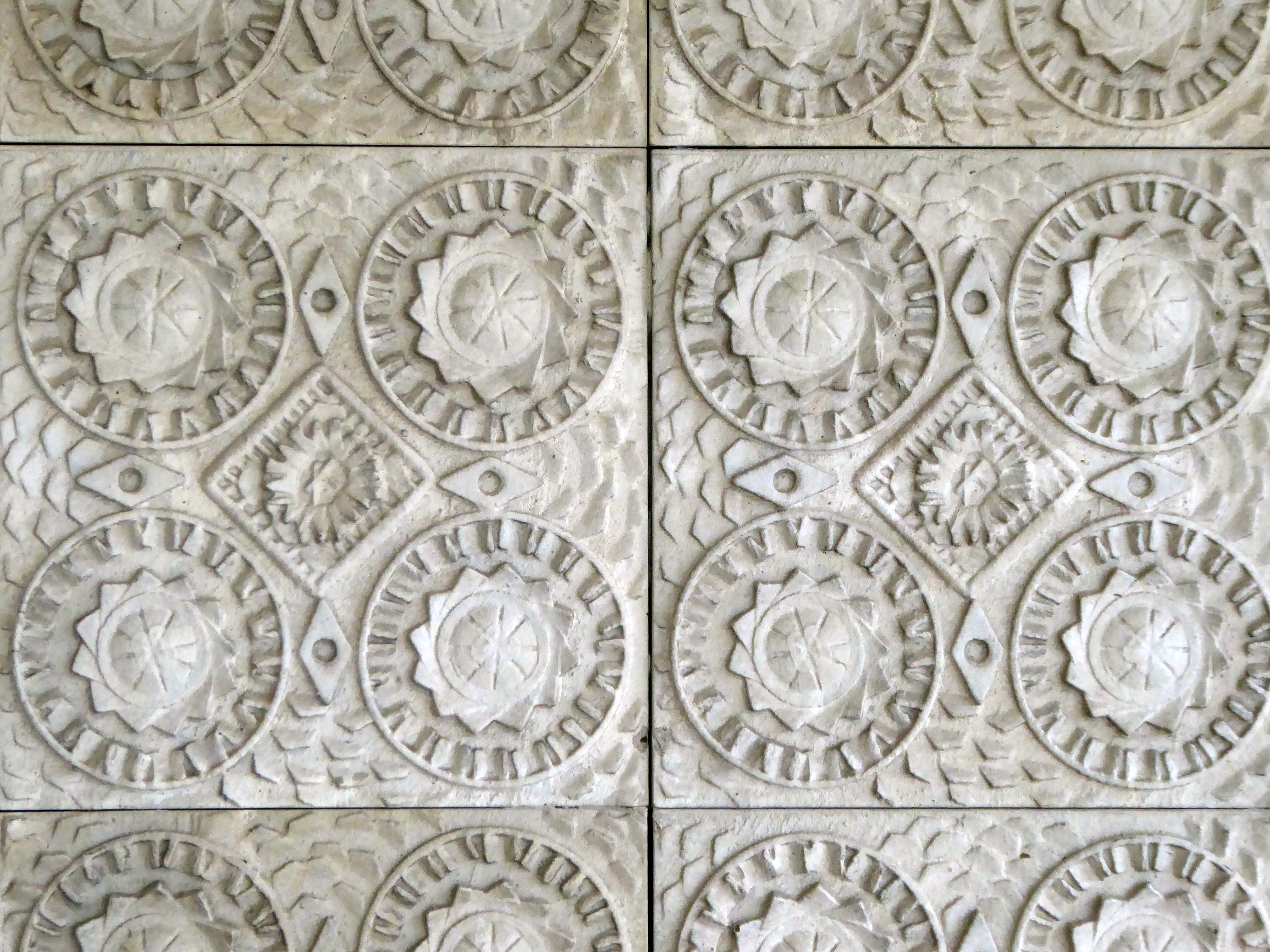
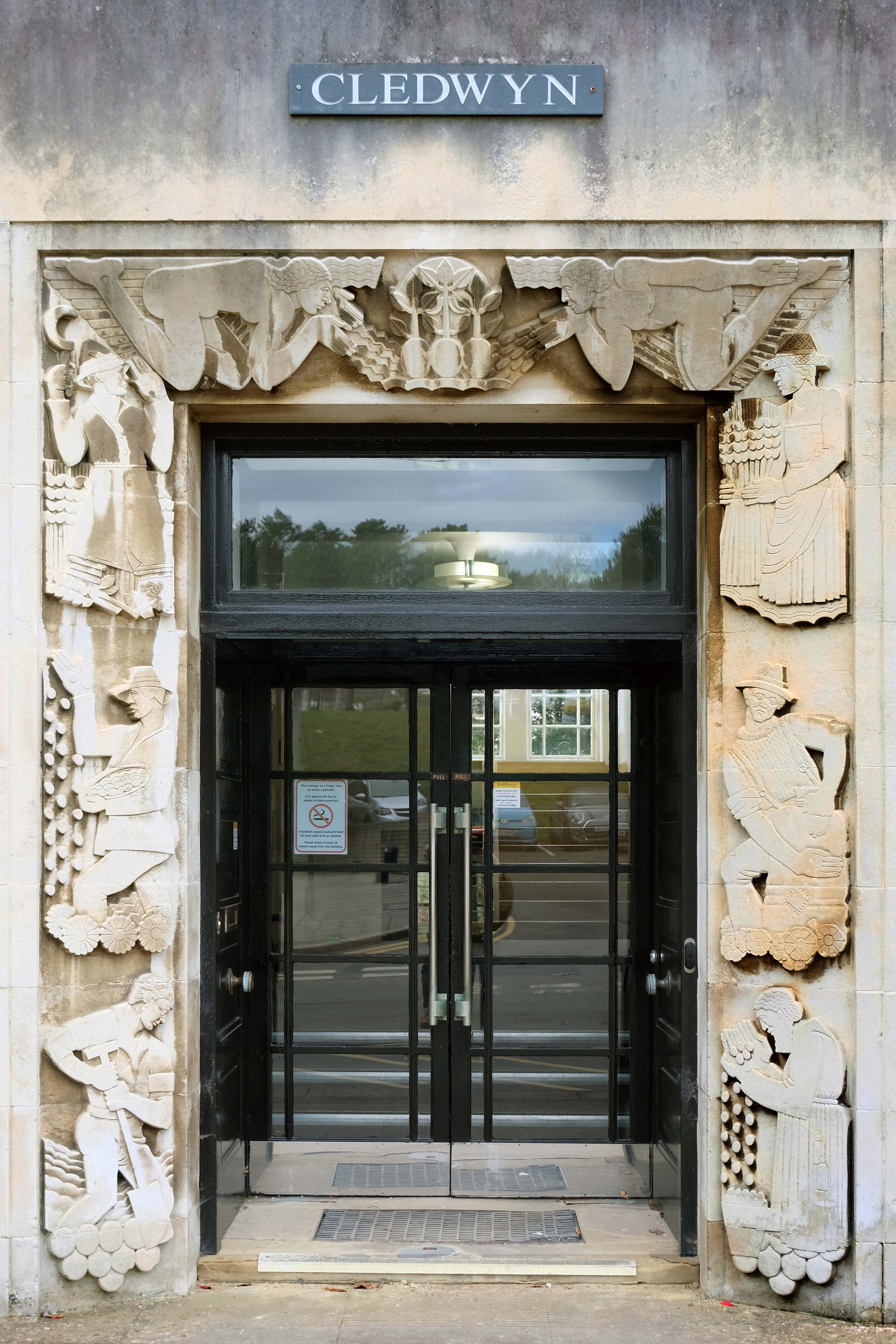
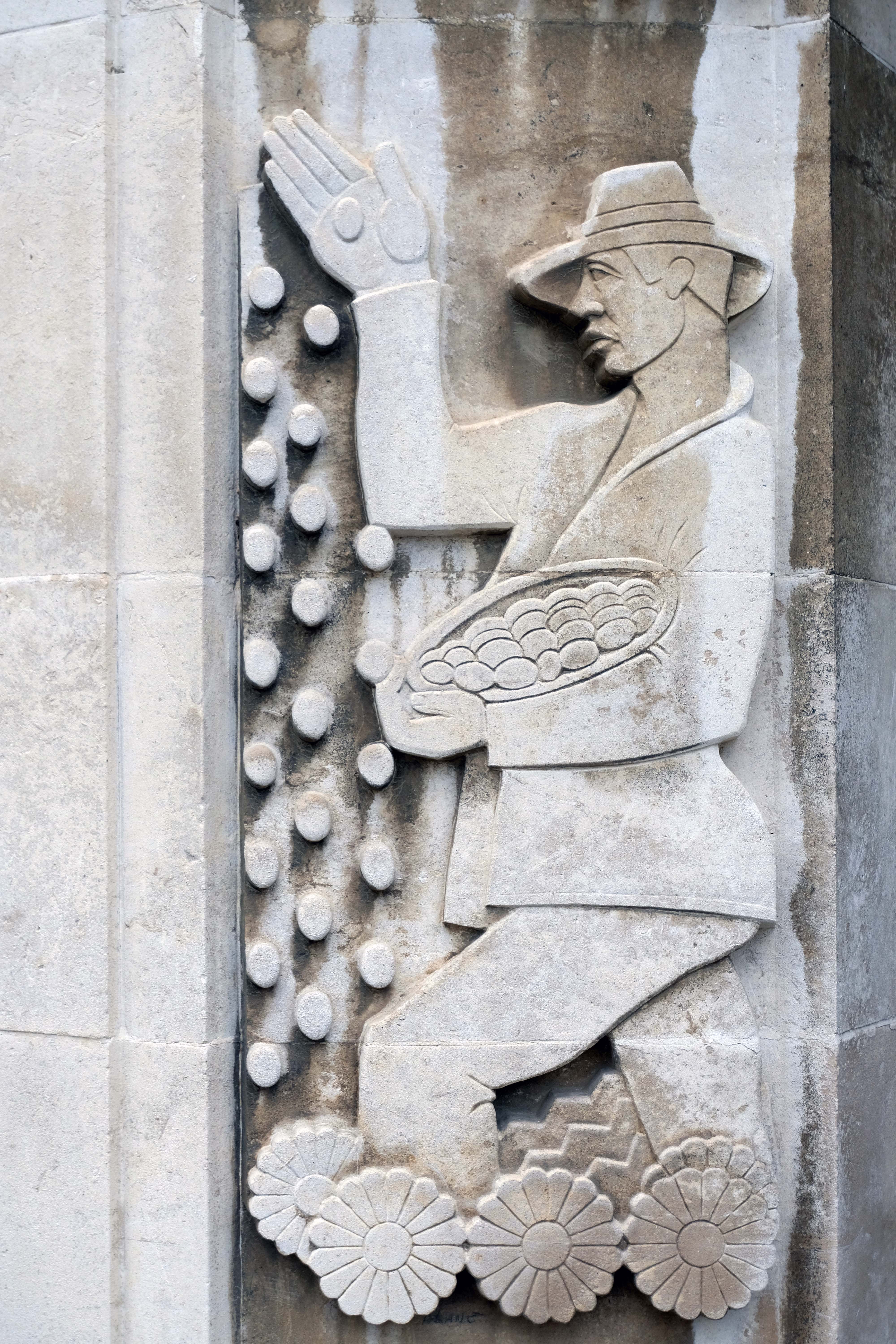
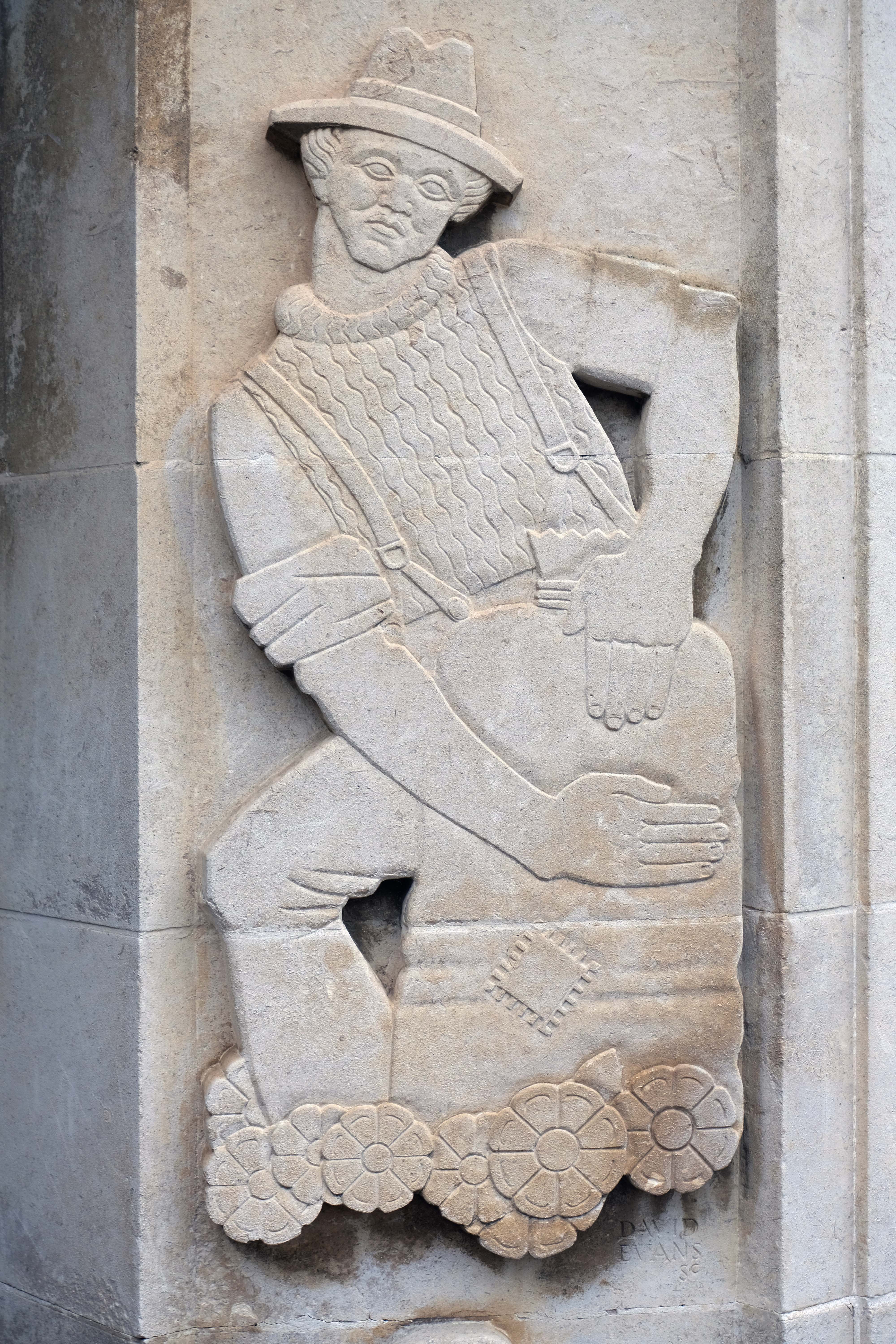
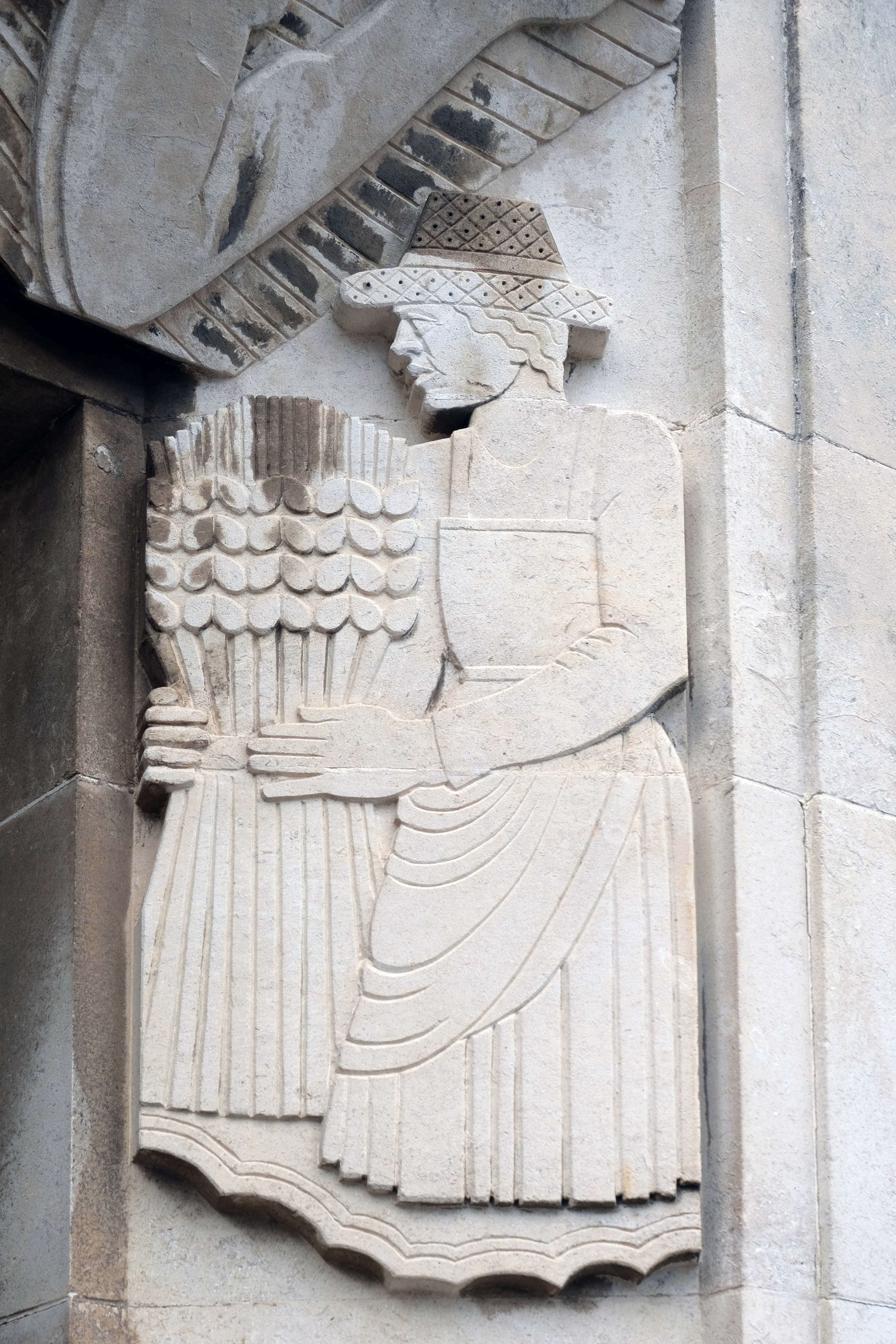
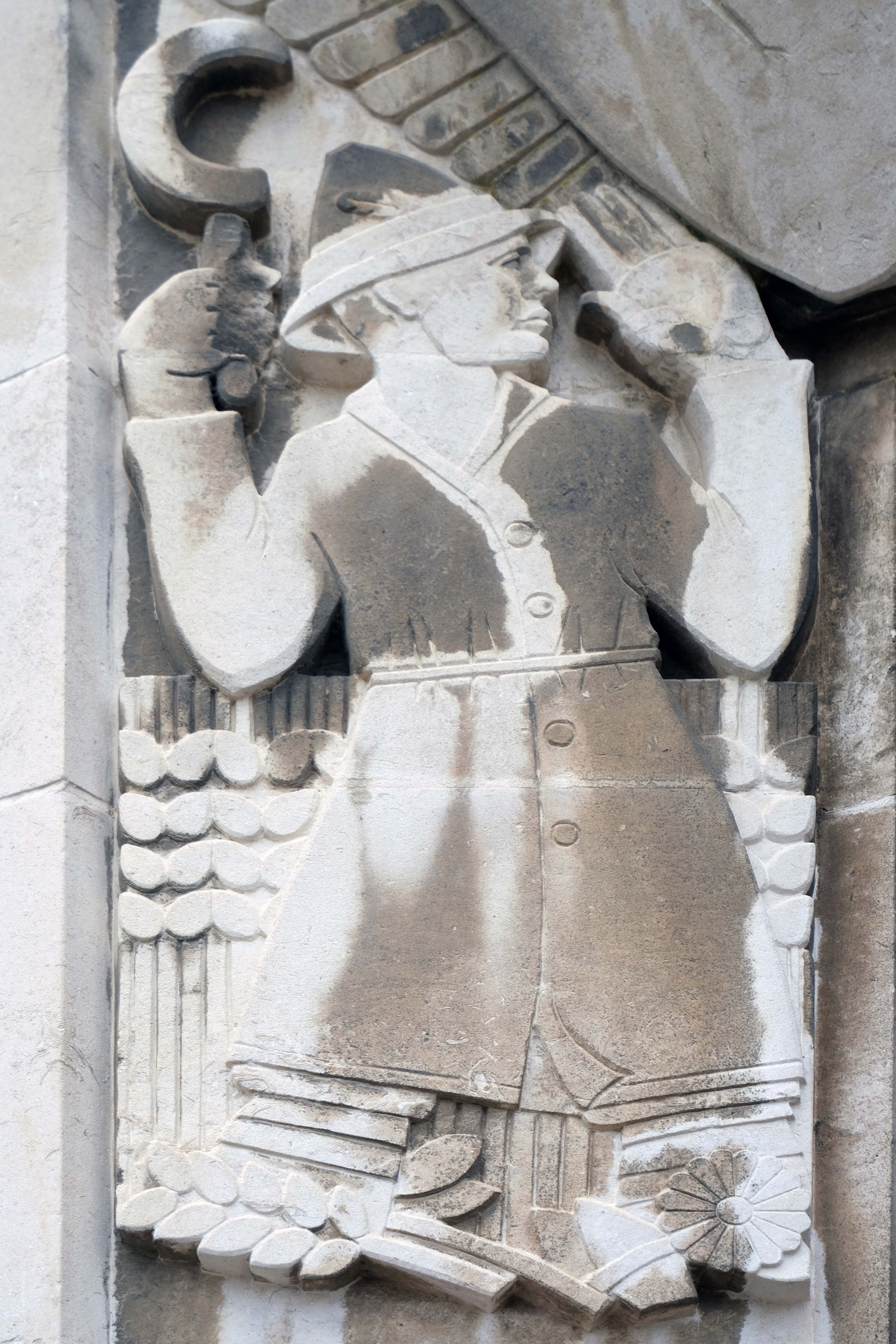
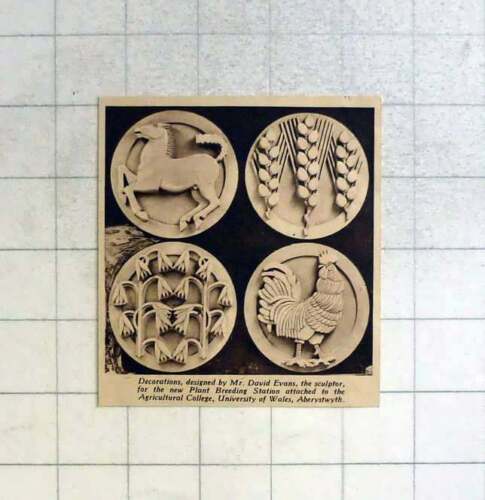
Built in a simple Georgian modern style, faced with Forest of Dean stonework, the building’s main entrance features a broad architrave adorned with low reliefs of agricultural scenes, and there are decorative circular stonework emblems in between the windows of the upper floor.
The carved stone work is by David Evans.
A Manchester-born sculptor who attended the Manchester School of Art, and won a scholarship to the Royal College of Art. After active service in the World War I, he resumed his studies at the Royal Academy, where he was instructed by Francis Derwent Wood. In 1922, he won the Landseer Prize and later went to work in the British School at Rome. He had been exhibiting at the Royal Academy since 1921. His works from the 1920’s are mainly highly stylised religious and mythological themes.
During his stay in the United States, he executed some significant work for public buildings in New York. The locations there included Rockefeller Center, Radio City, Brooklyn Post Office, a bank on Wall Street, St Thomas’s Church on Fifth Avenue.
Here are the four decorative panels placed higher on the building.
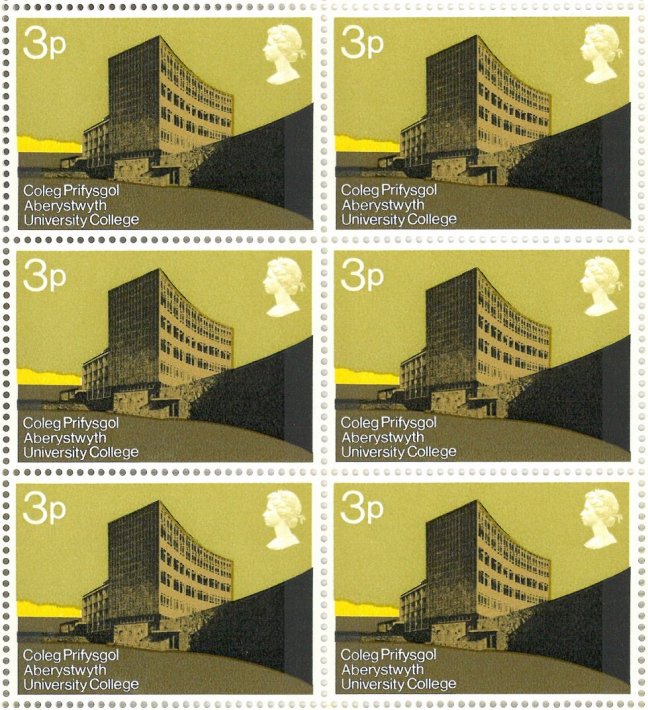
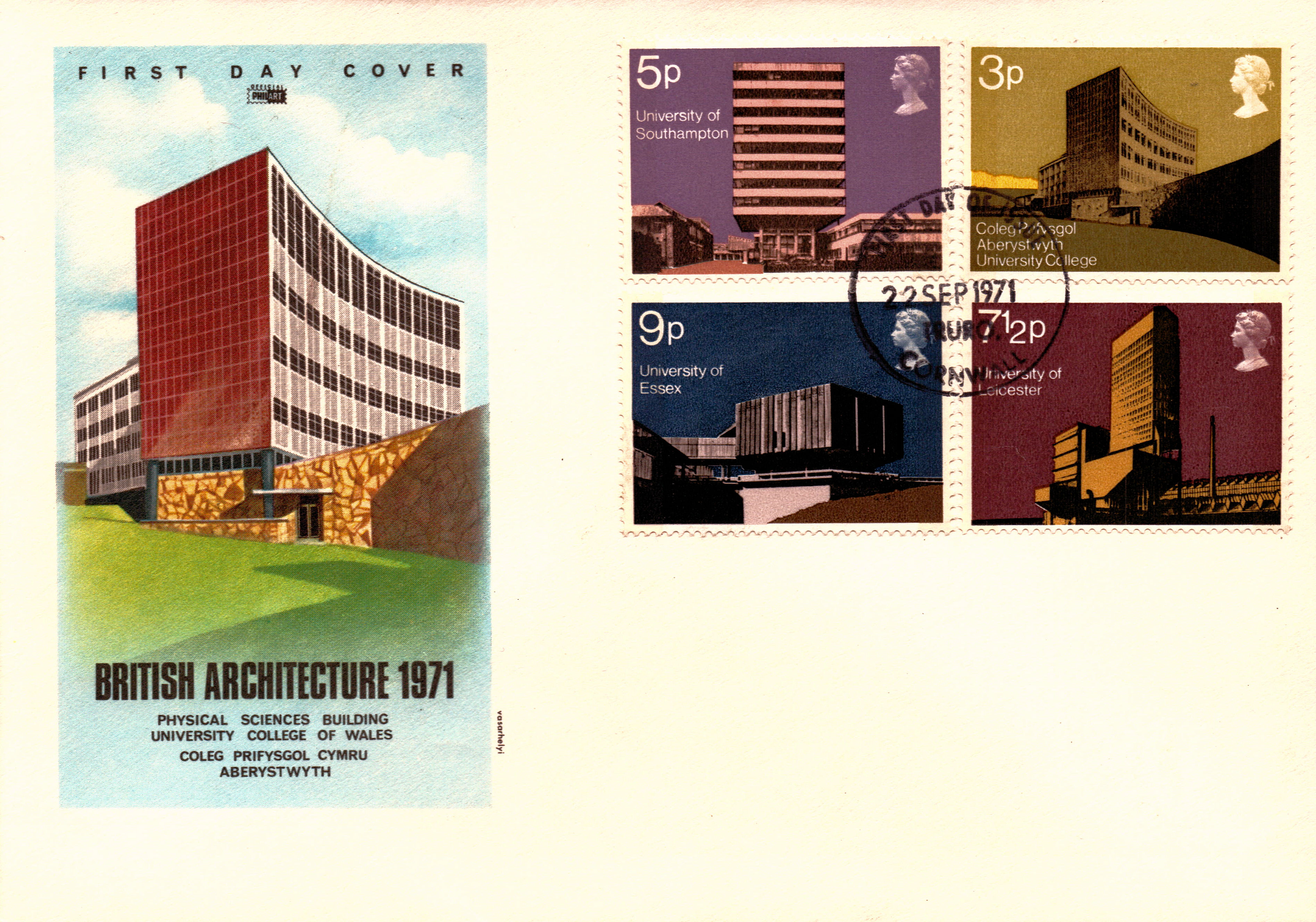
Immortalised in this elegant educational stamp set – designed by Mr Nicholas Jenkins of the Royal College of Art
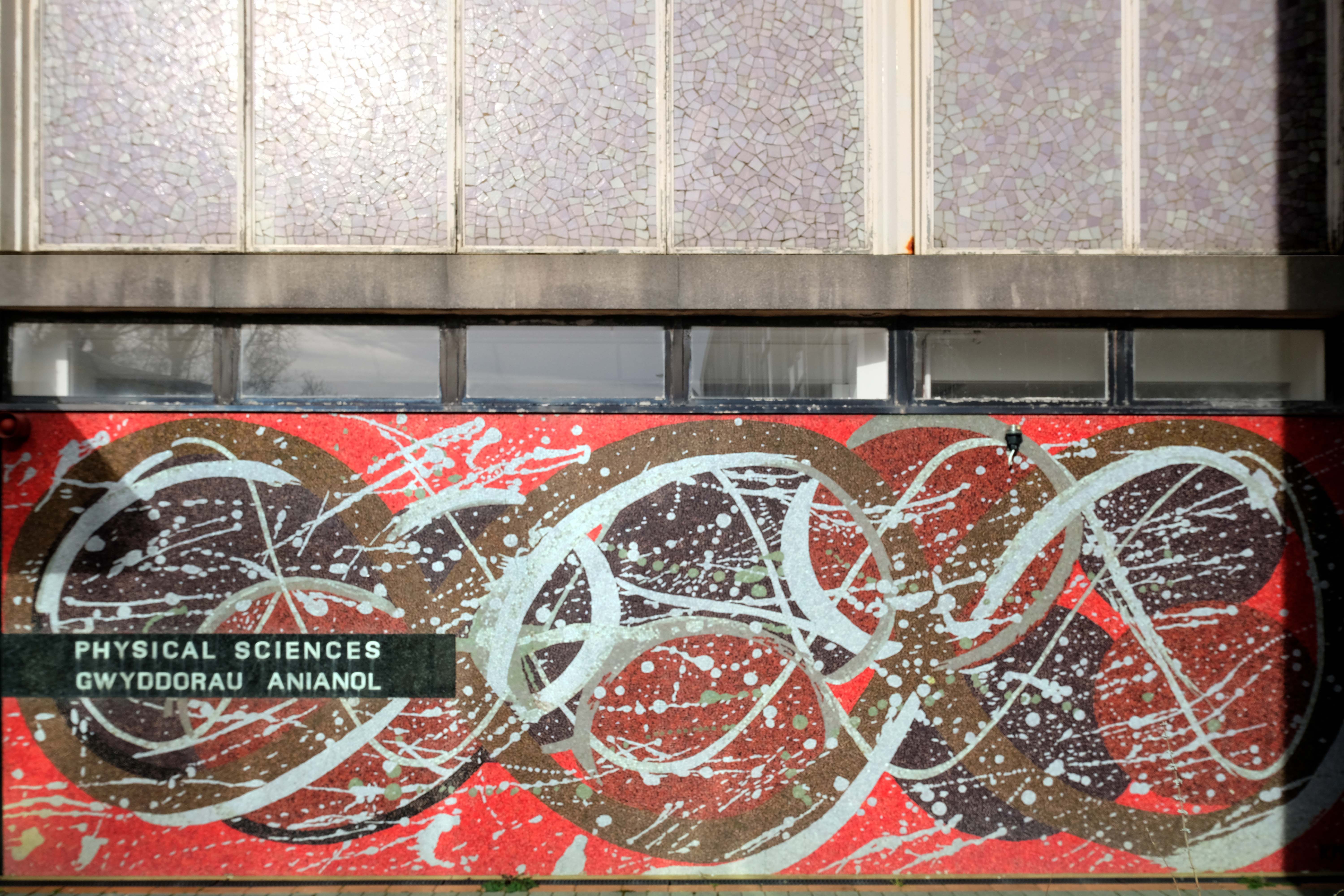
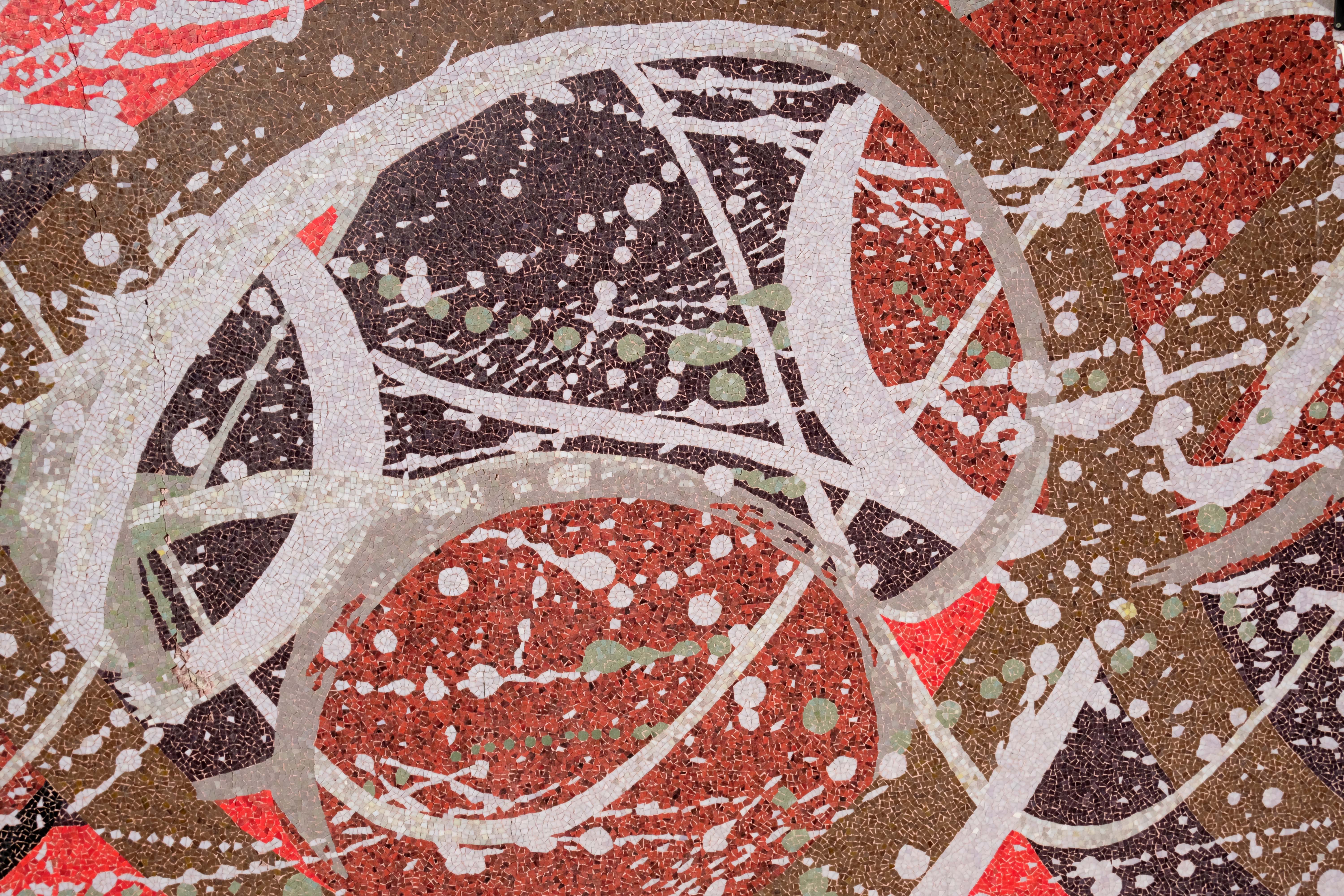
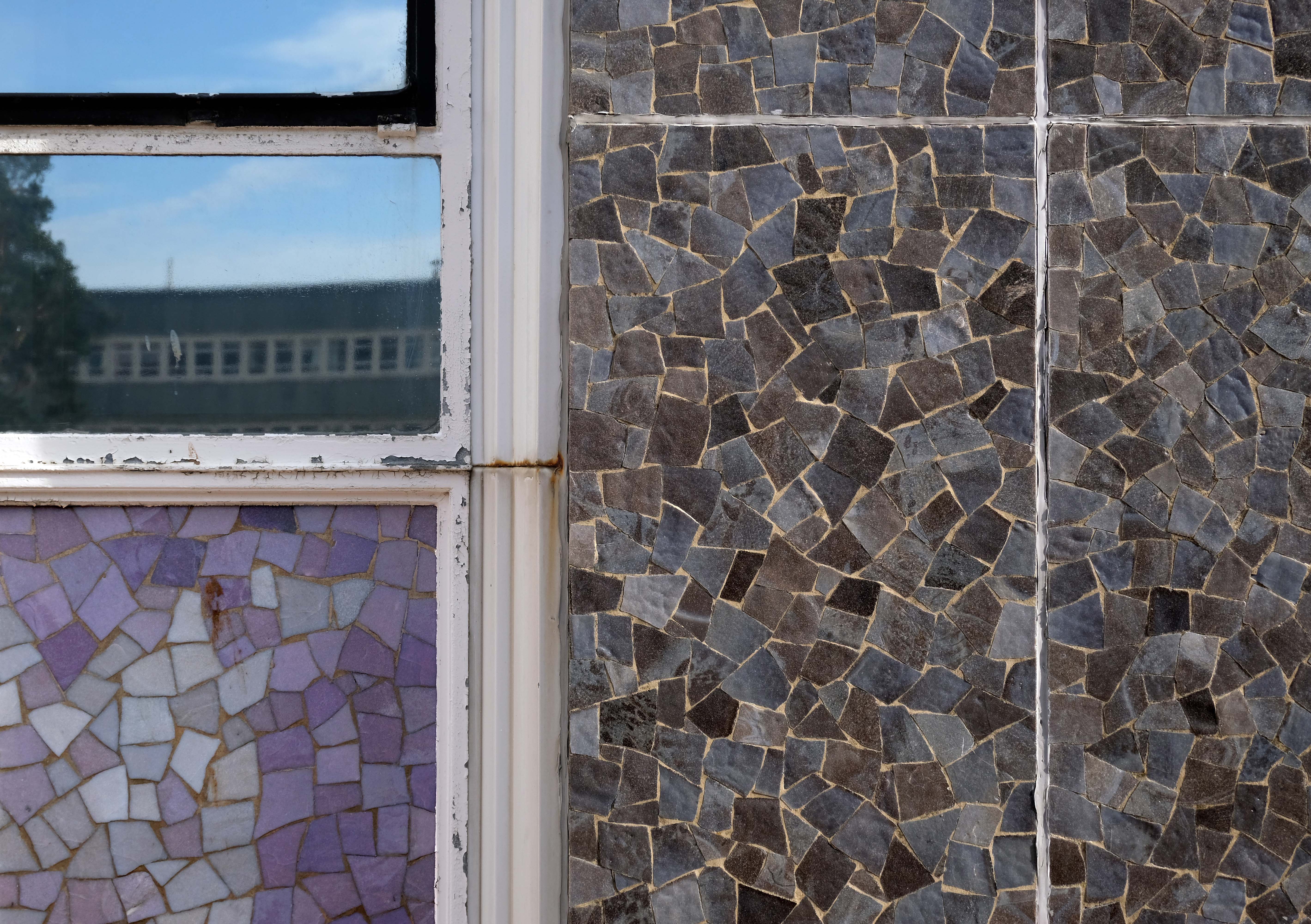
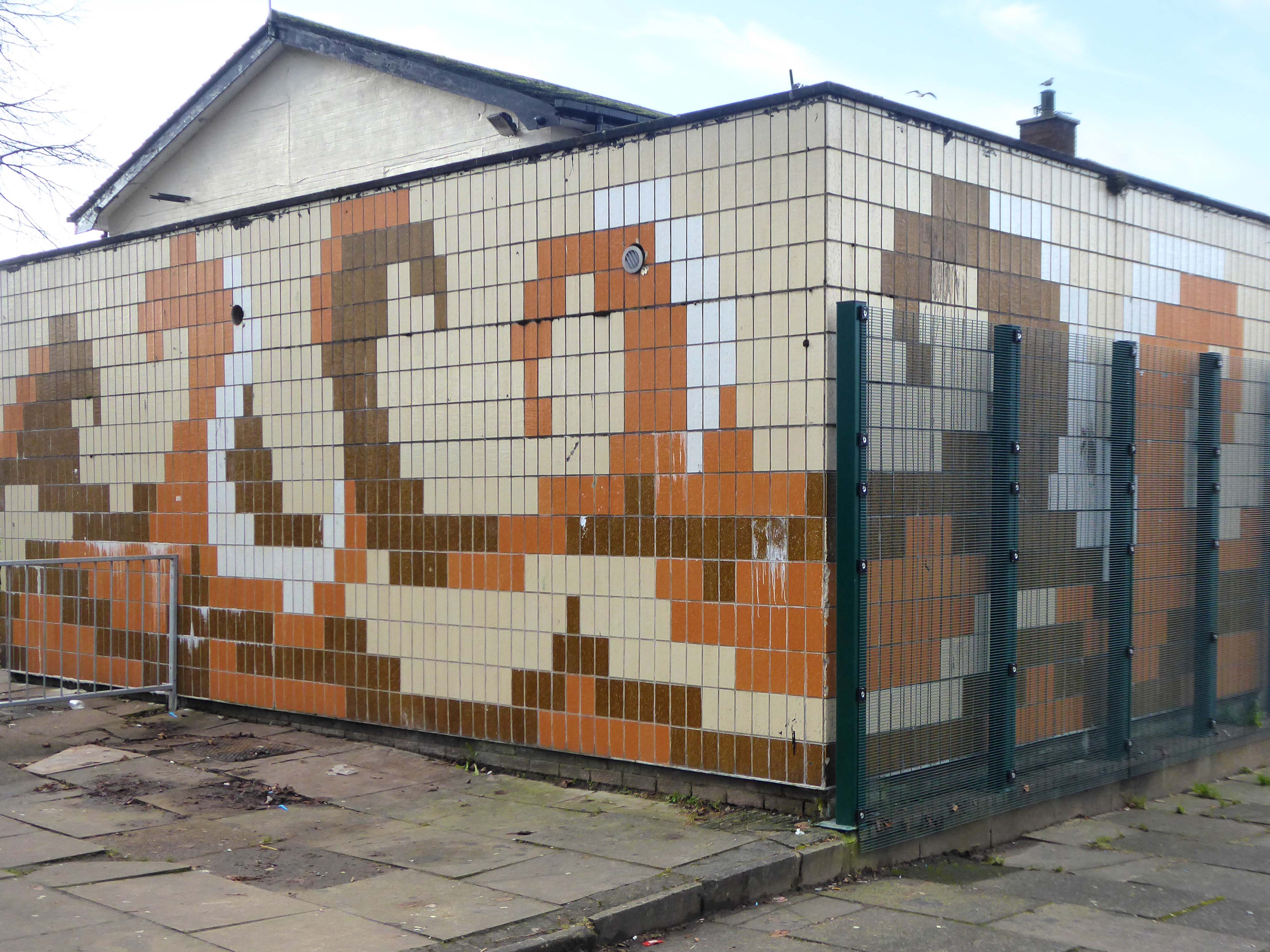
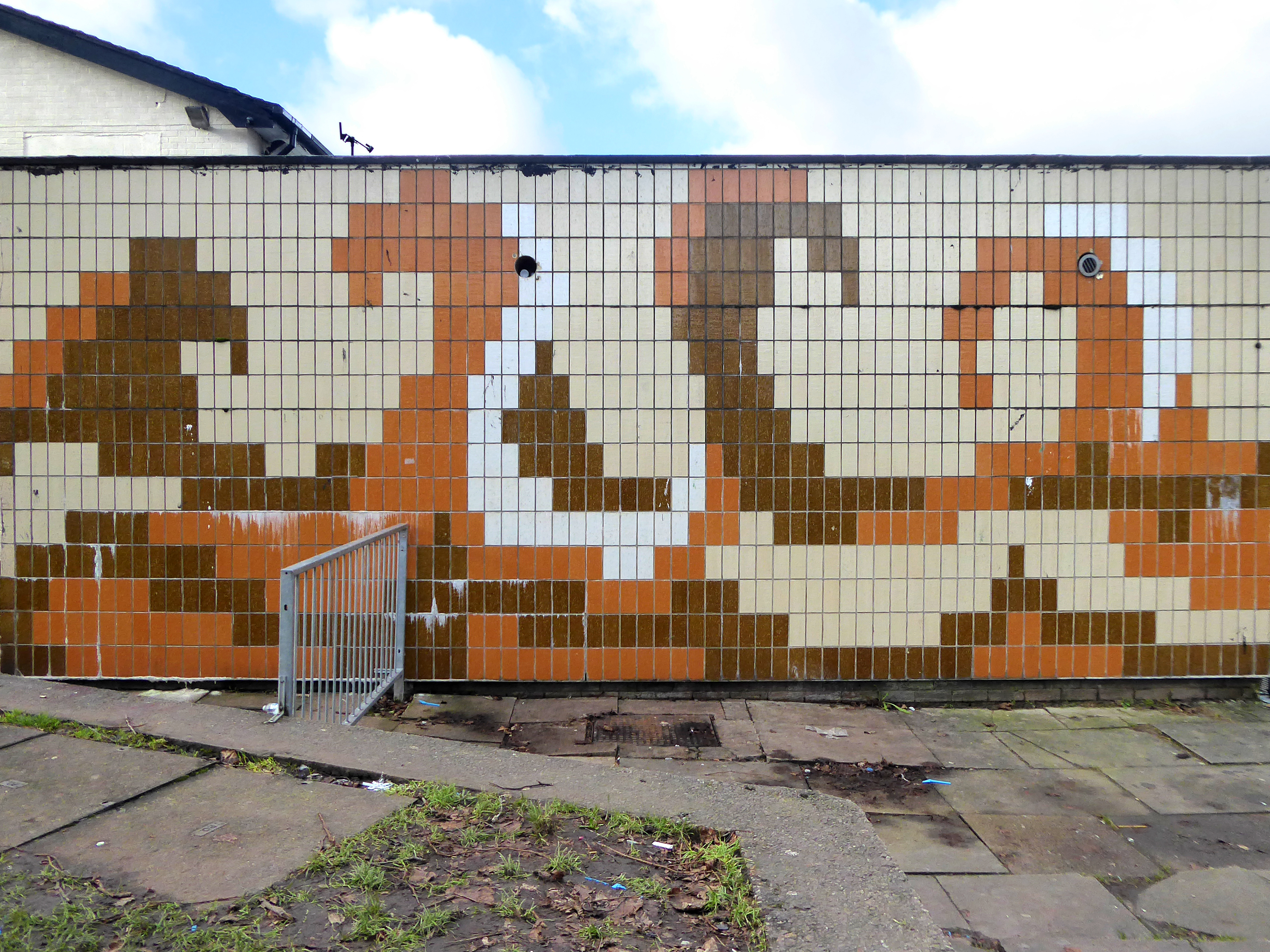
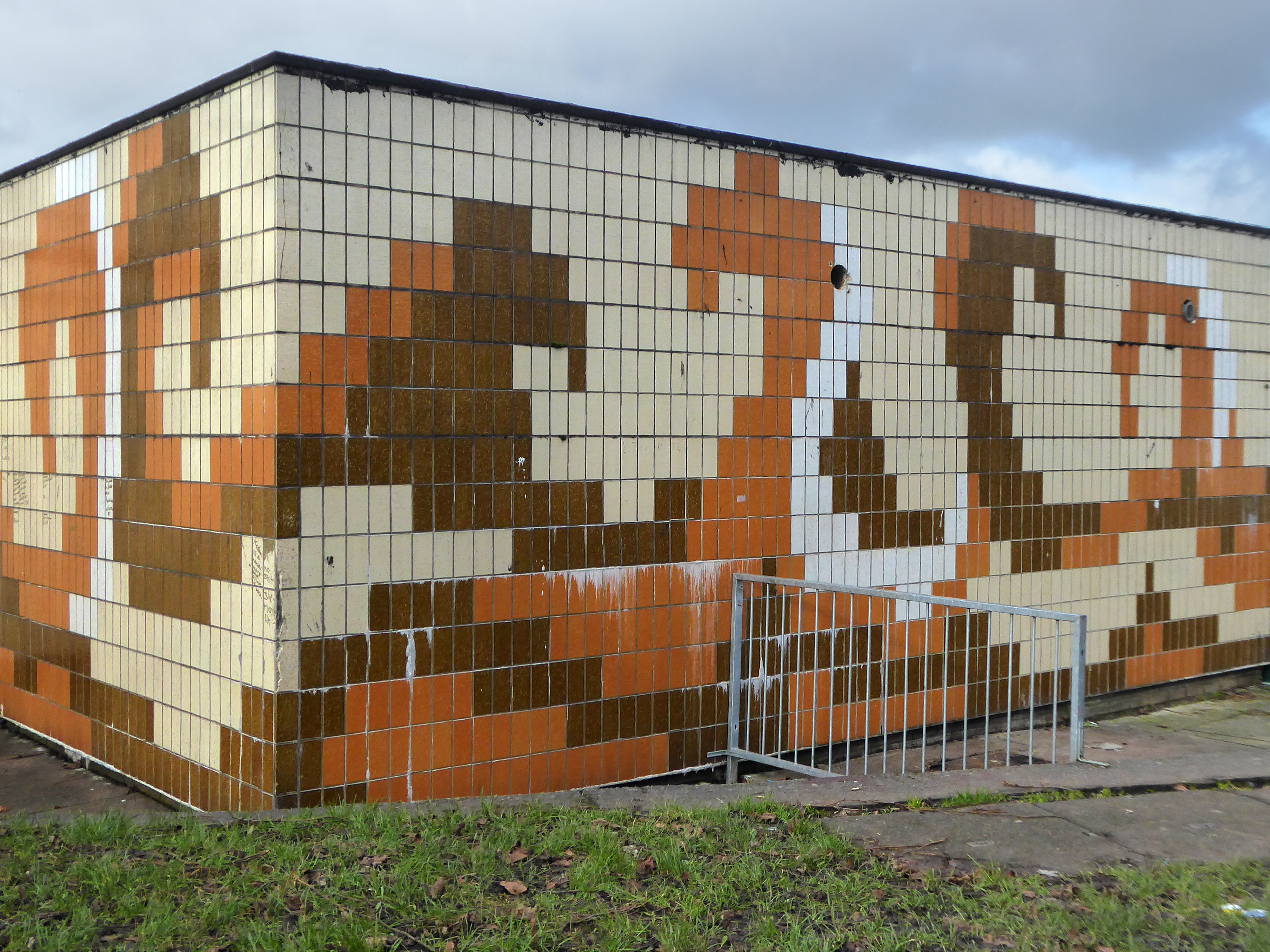
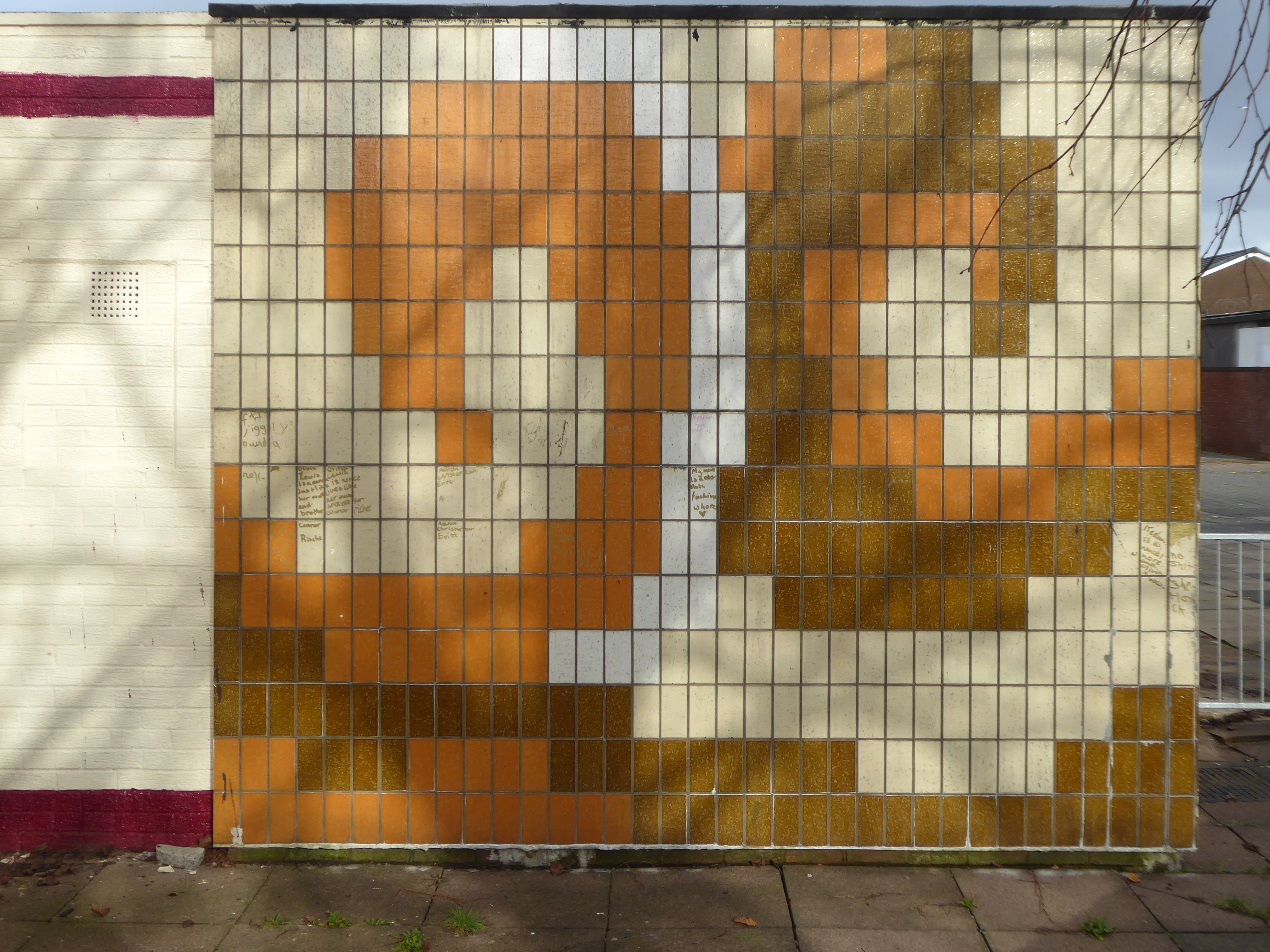
To the right of the entrance this striking mosaic – action is ossified in the manner of a semi-permanent Pollock.
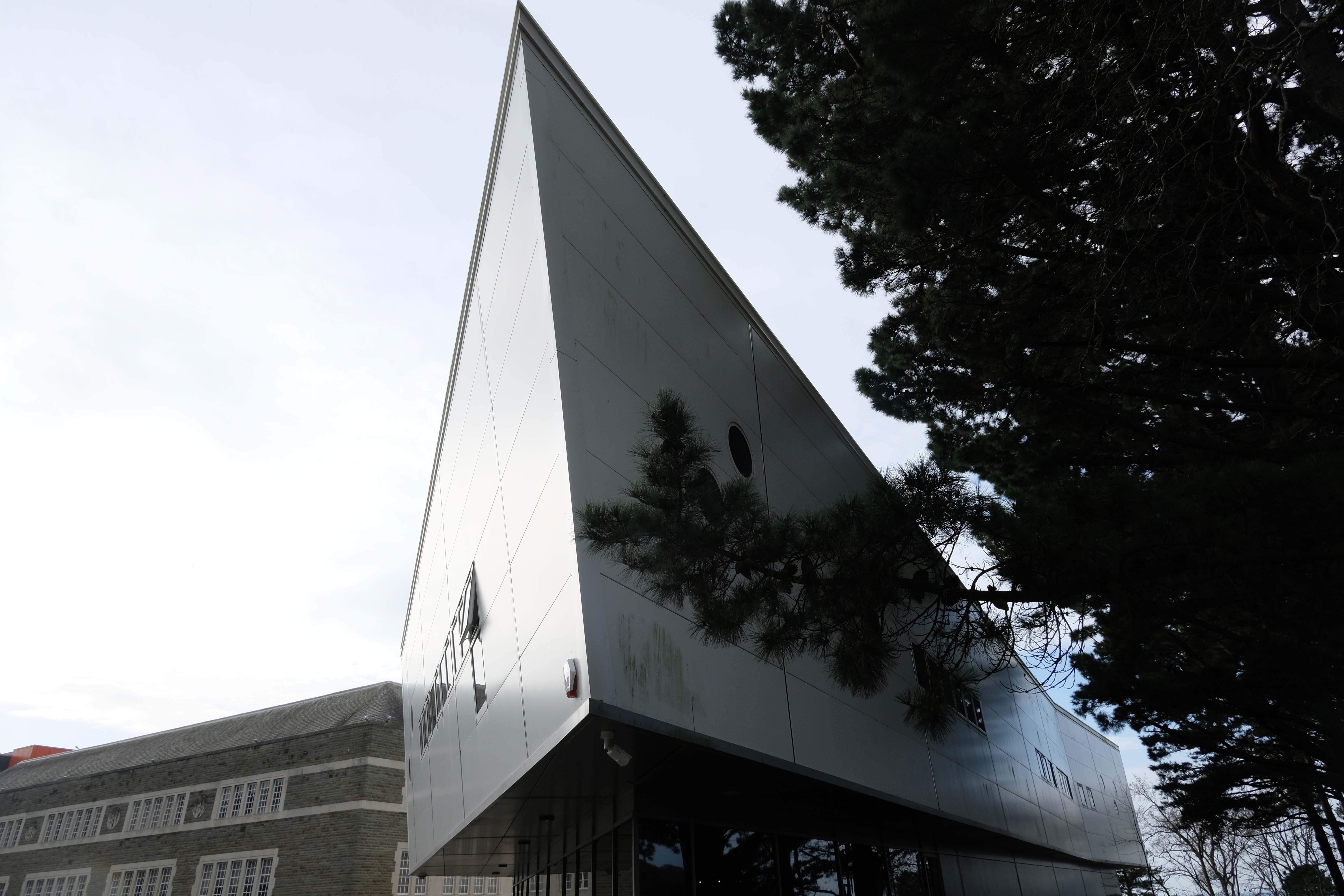
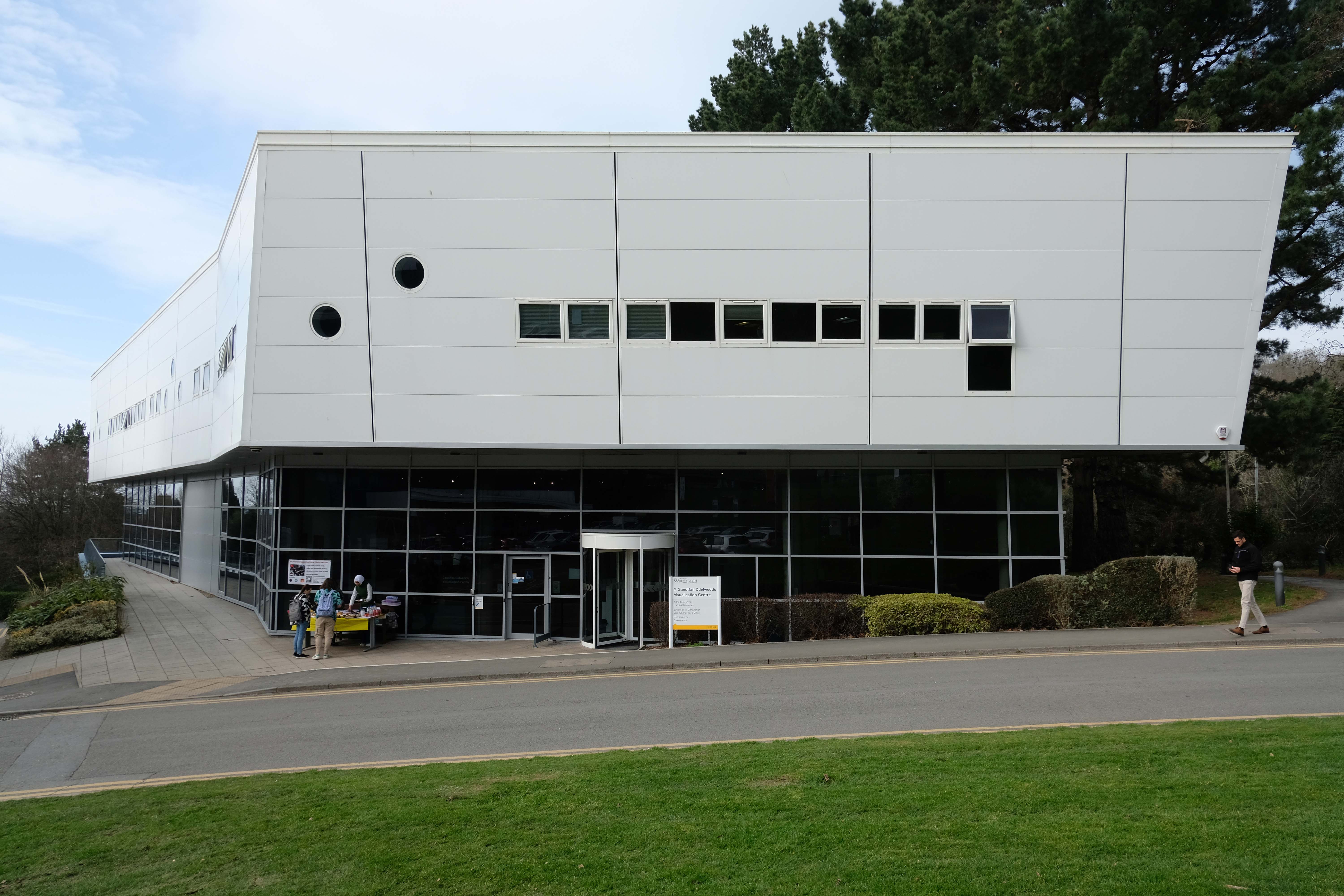
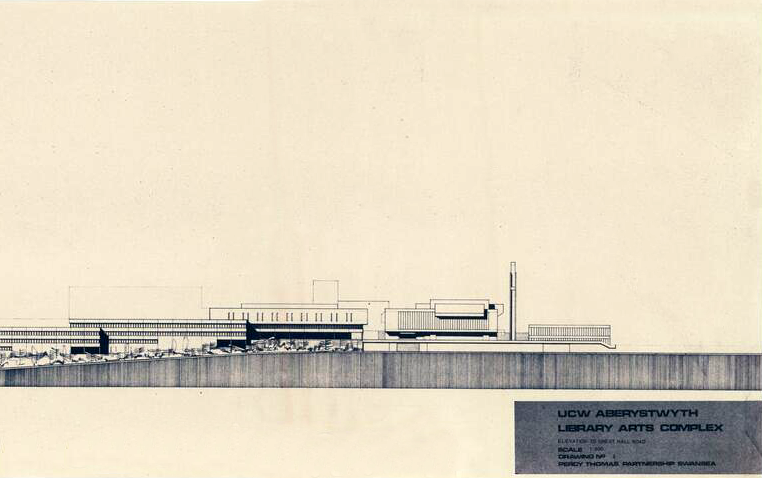
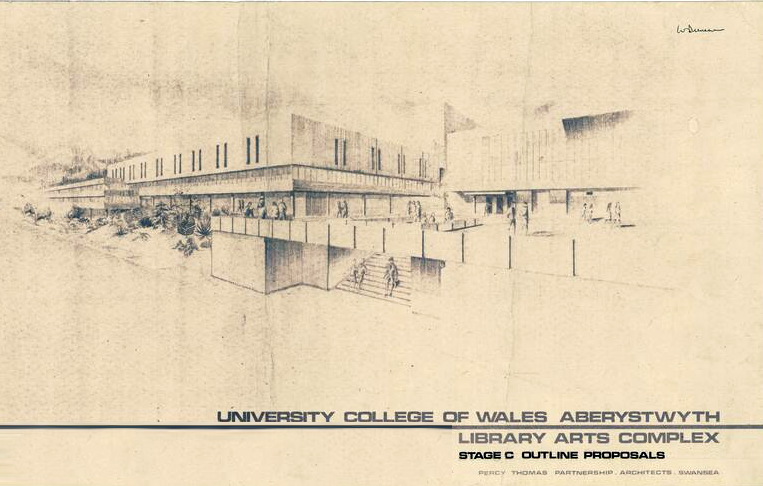
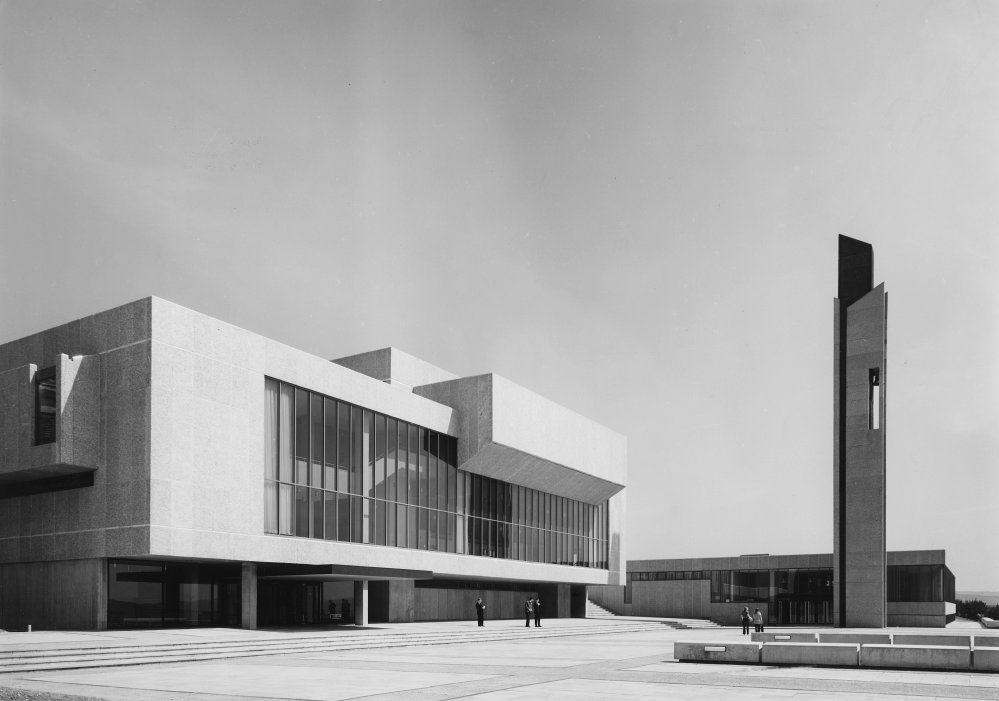
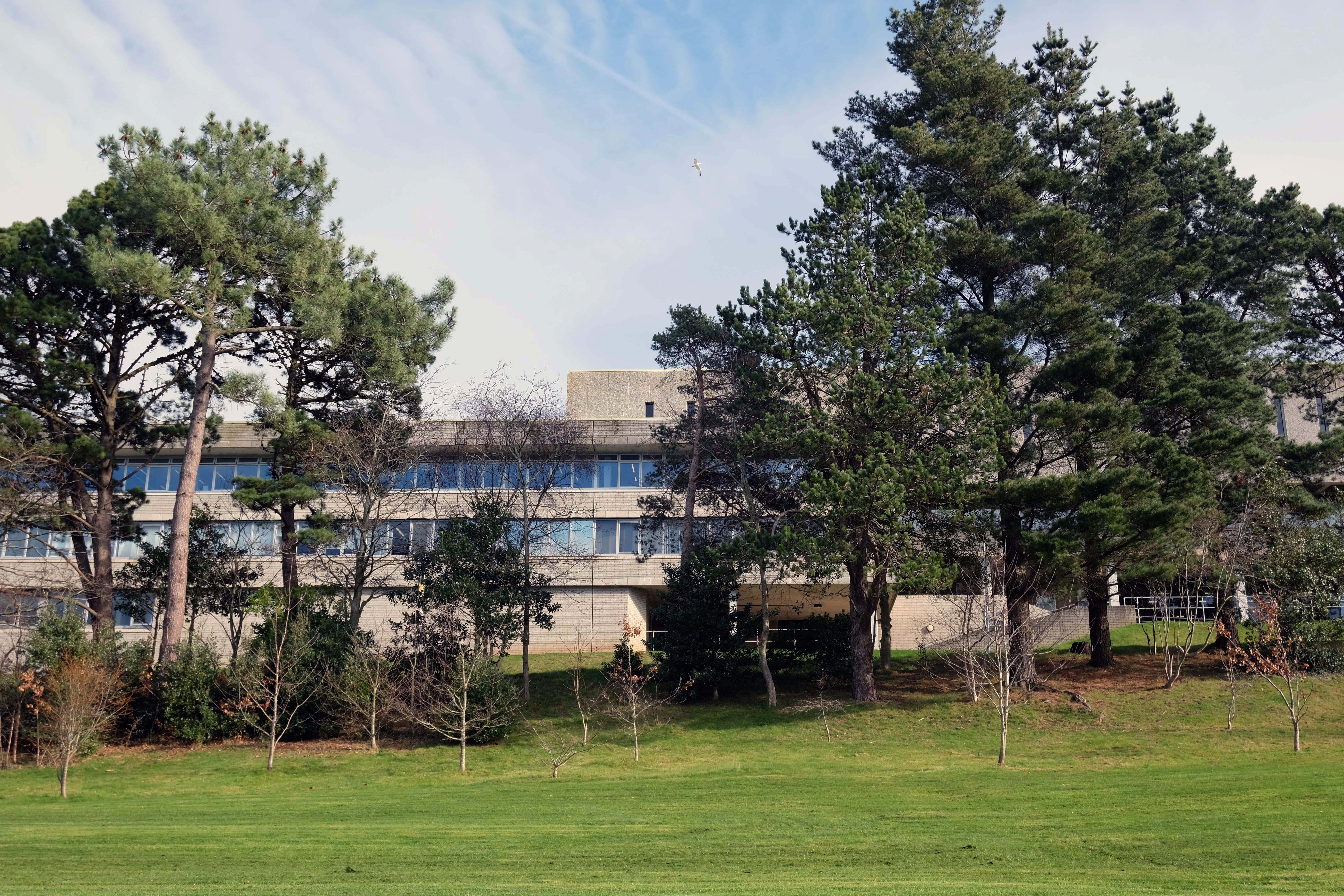
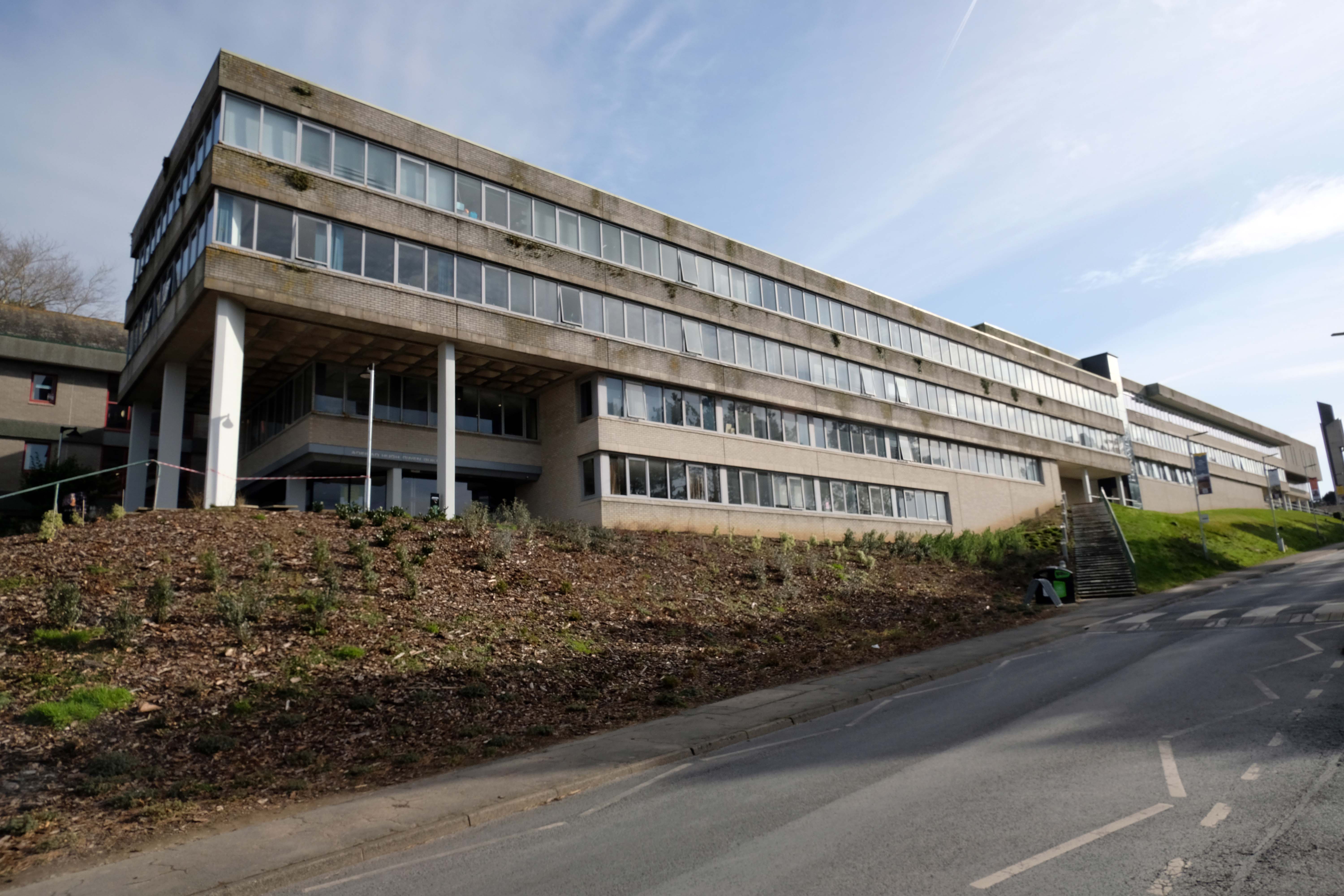
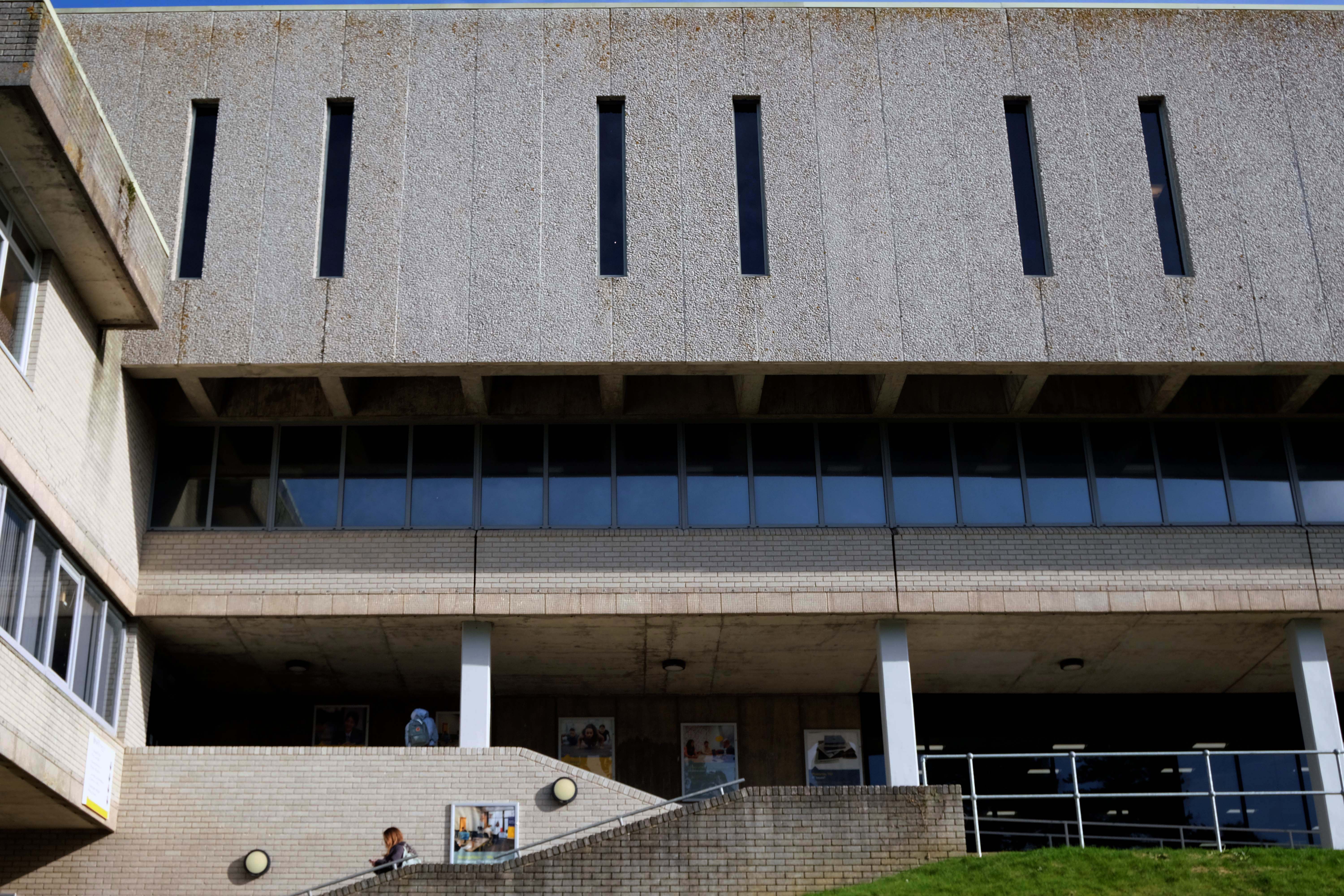
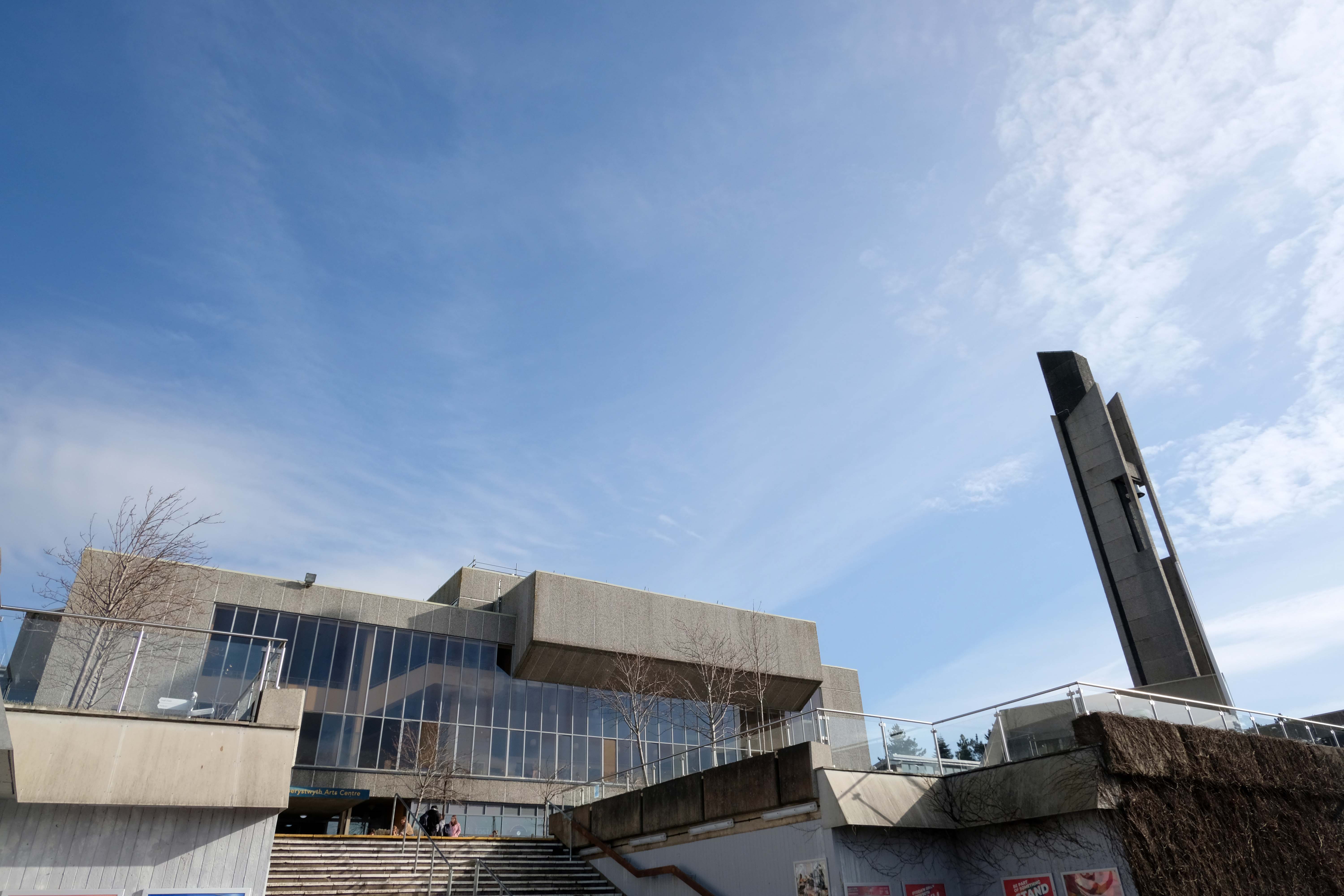
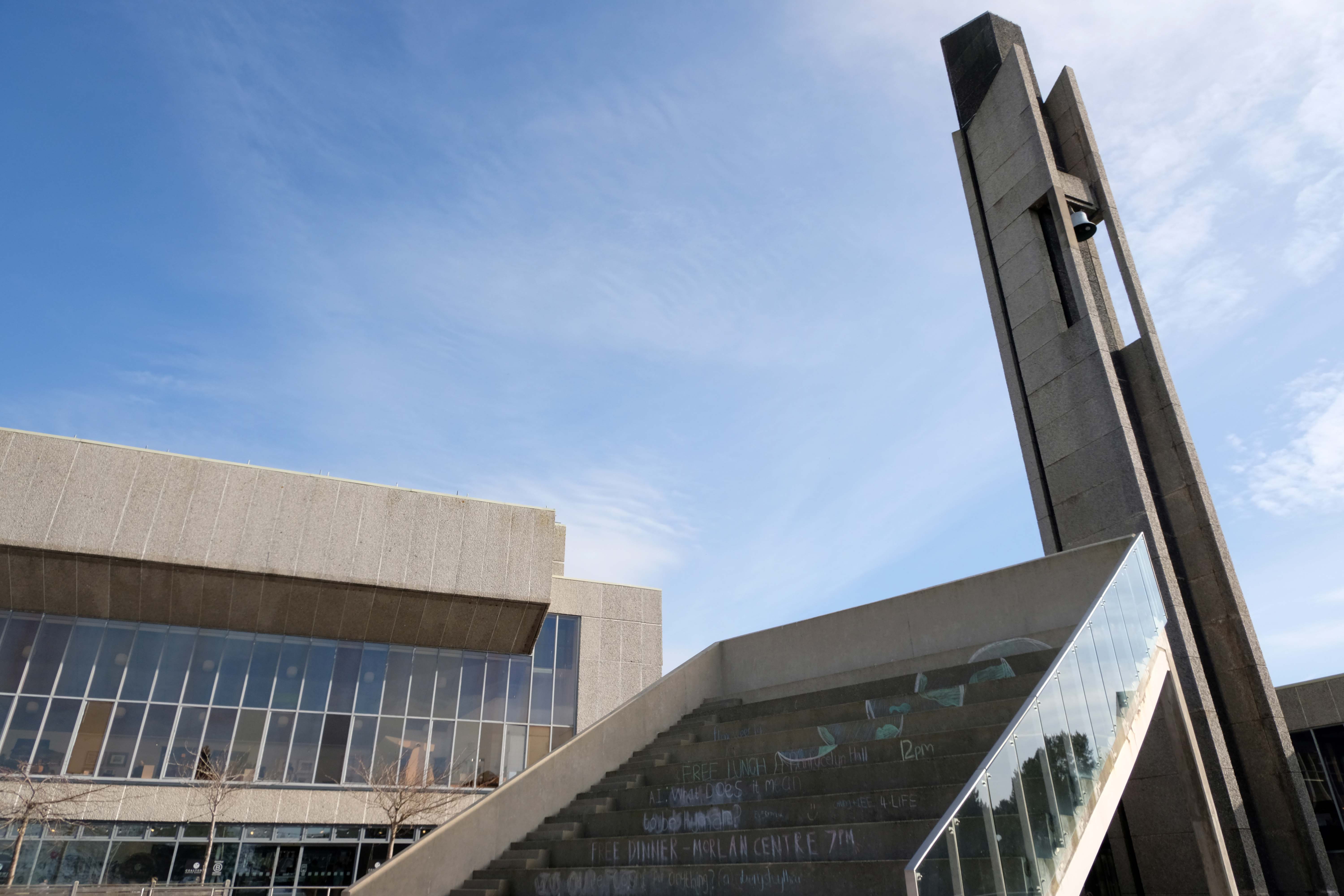
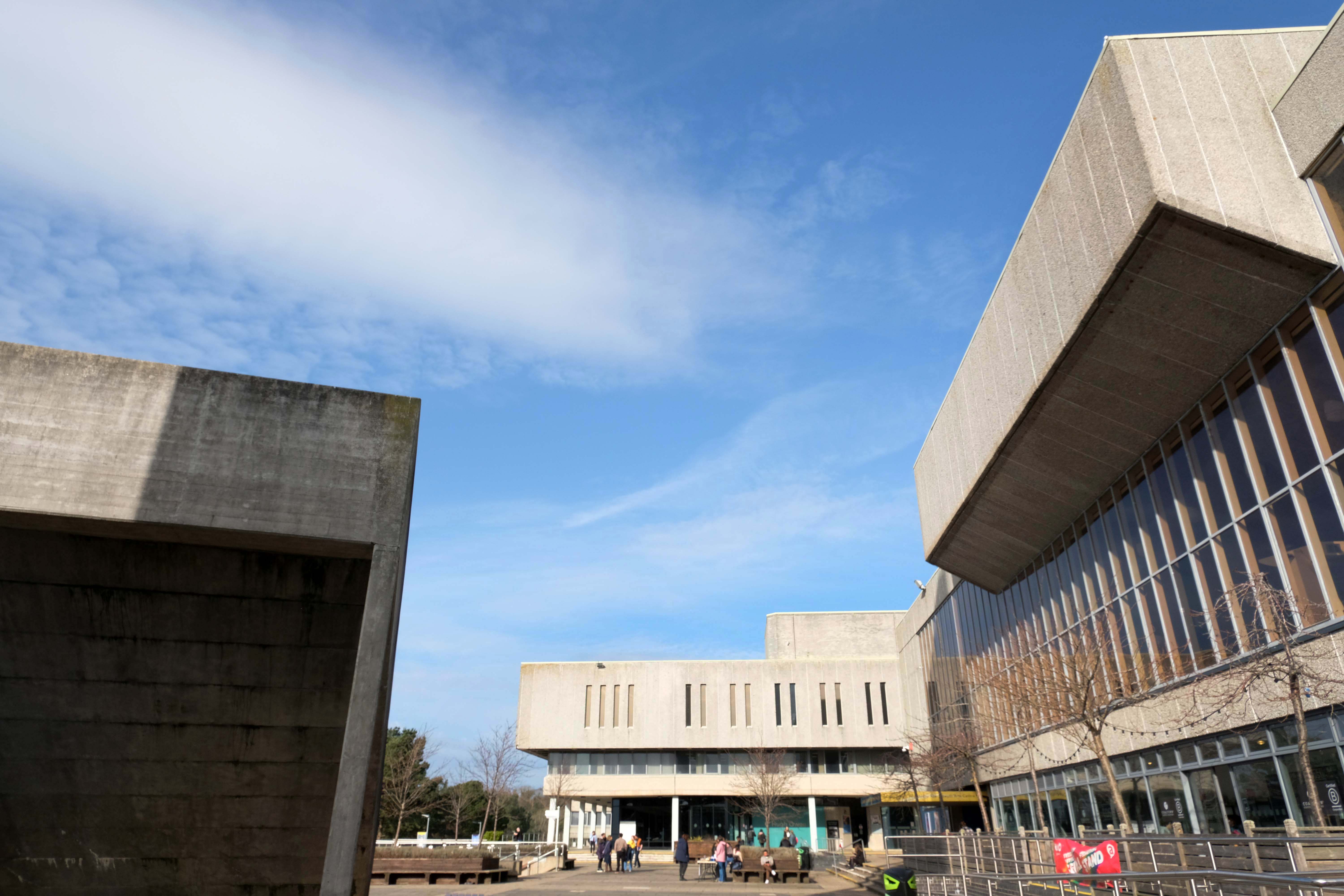
Aberystwyth Arts Centre is one of a number of campus buildings designed by Dale Owen of Percy Thomas Partnership, and completed in 1970-1972.
Built to a strongly horizontal design using grey granite aggregrate, the facade is essentially an overhanging rectangle framing of glass with an off-centre overhang. The position of the building providing unobstructed panoramic views over the main piazza style concourse and the sea beyond.
David began lecturing at Cardiff College of Art, later teaching and holding administrative posts at University College of Wales in Aberystwyth, retiring in 1988 as director of the department of visual art.
David Tinker was prominent in so many aspects of the visual arts in Wales throughout the second half of the 20th Century as a painter, sculptor, teacher, and stage designer.
Tinker is perhaps best known as one of three originators of the 56 Group with Eric Malthouse and Michael Edmonds, the new generation of young artists in Wales who were interested in modernism and keen to ally themselves to the international art world.
The 56 Group had no manifesto and for the most part they acted as an exhibiting co-operative; not all were abstract painters and their work was stylistically very different from one another, but all shared radical ideals. Their orderly revolt against the establishment was unique in the history of art in Wales.
They championed abstraction and allied themselves to European and American modernism, at a time when painters in Wales were being commended for recording the urban, rural and industrial face of Wales and its inhabitants.
As might be expected, the art establishment more readily accepted 56 Group avant garde works, and those artists who had been achieving some success as painters of the contemporary scene suddenly found themselves side-stepped, and labelled parochial.
The period 1966-1974 saw in his paintings a move toward hard-edged abstraction in which Tinker employed geometry-based structures, simple arithmetical problems, colour mixed from a restricted palette, and gentle tonal gradation.
More than once, though that’s no reason not to do so again – so I did.
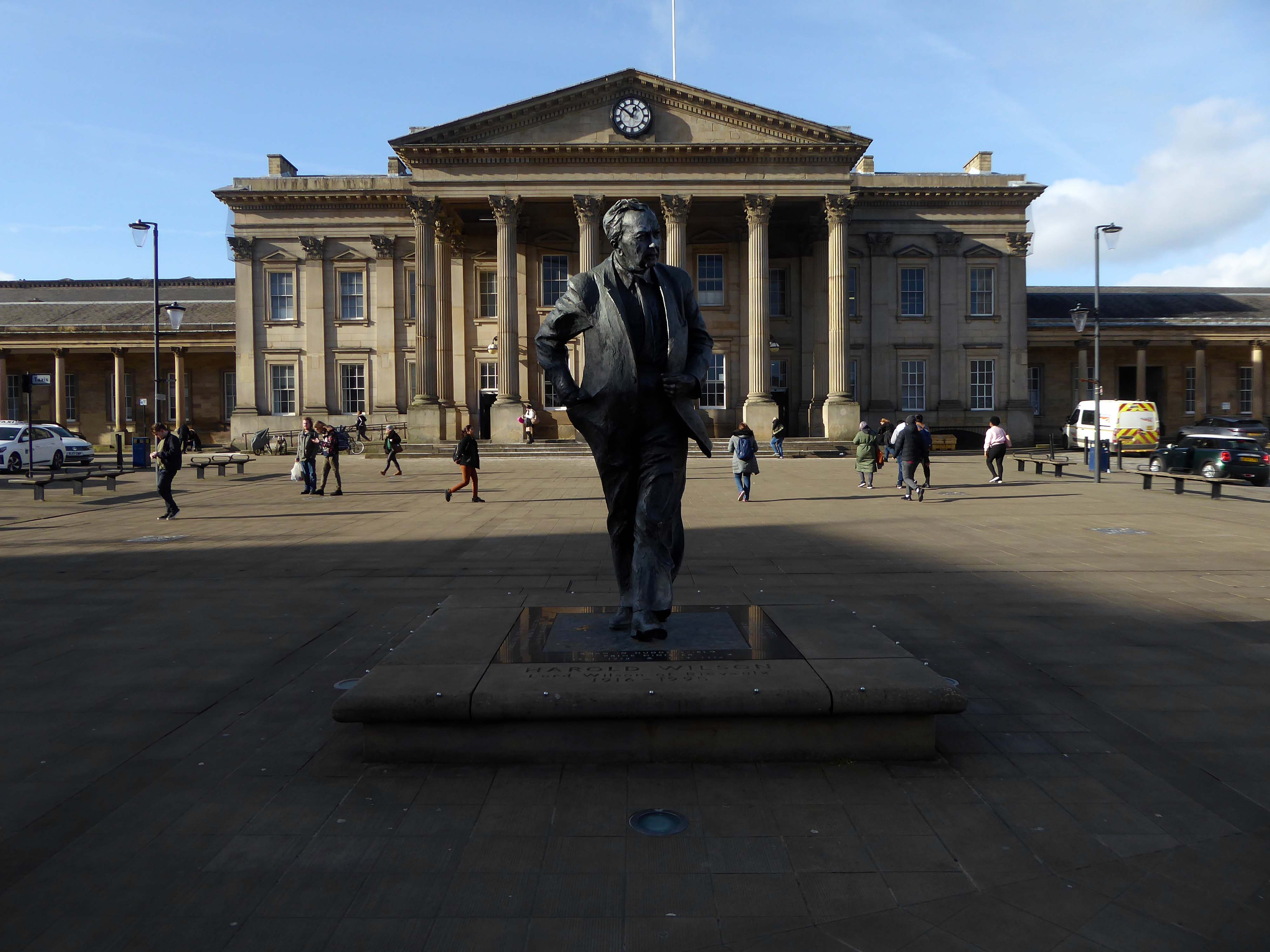
Saying hello to Harold.
Harold saying hello to us:
Nostalgia won’t pay the bills; the world doesn’t owe us a living; and we must harness the scientific revolution to win in the years to come. This scientific revolution is making it physically possible, for the first time in human history, to conquer poverty and disease, to move towards universal literacy, and to achieve for the whole people better living standards than those enjoyed by tiny privileged classes in previous epochs.
He warned change would have to reach every corner of the country; The Britain that is going to be formed in the white heat of this revolution will be no place for the restrictive practices or for outdated methods on either side of industry.
Standing sentinel over one of Nikolaus Pevsner and John Betjeman’s favourite railway station front elevations.
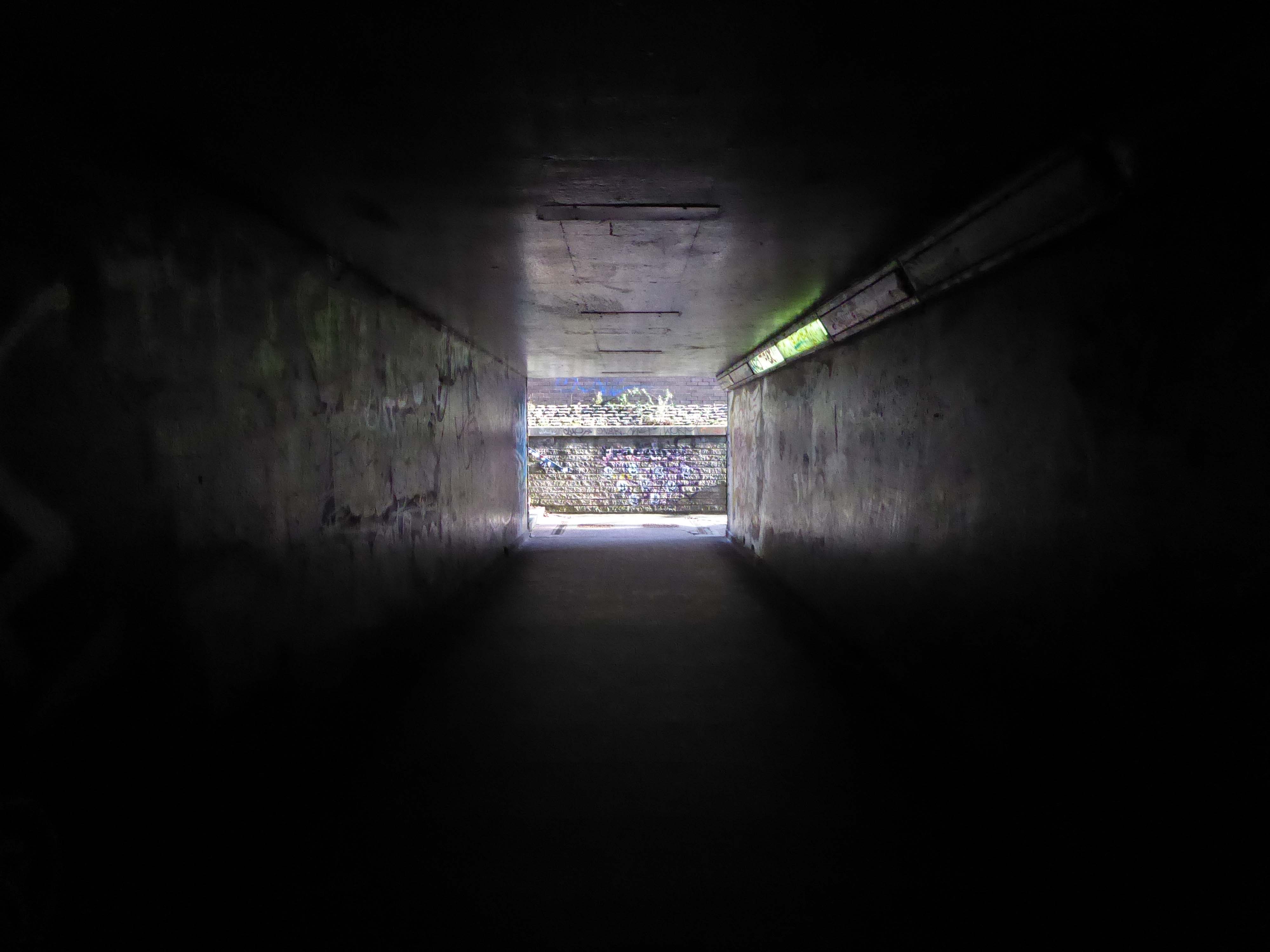
Through a passage darkly.
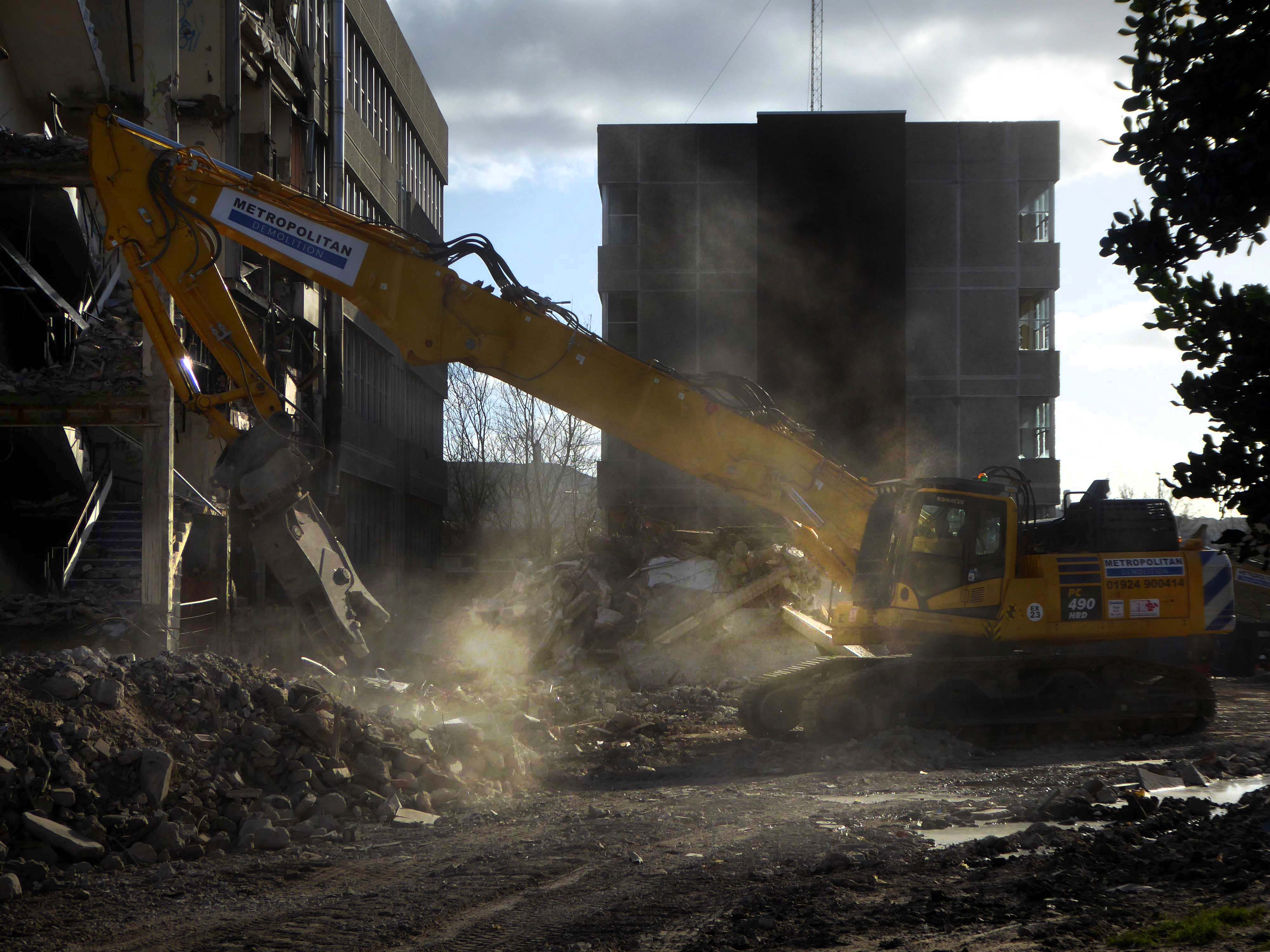
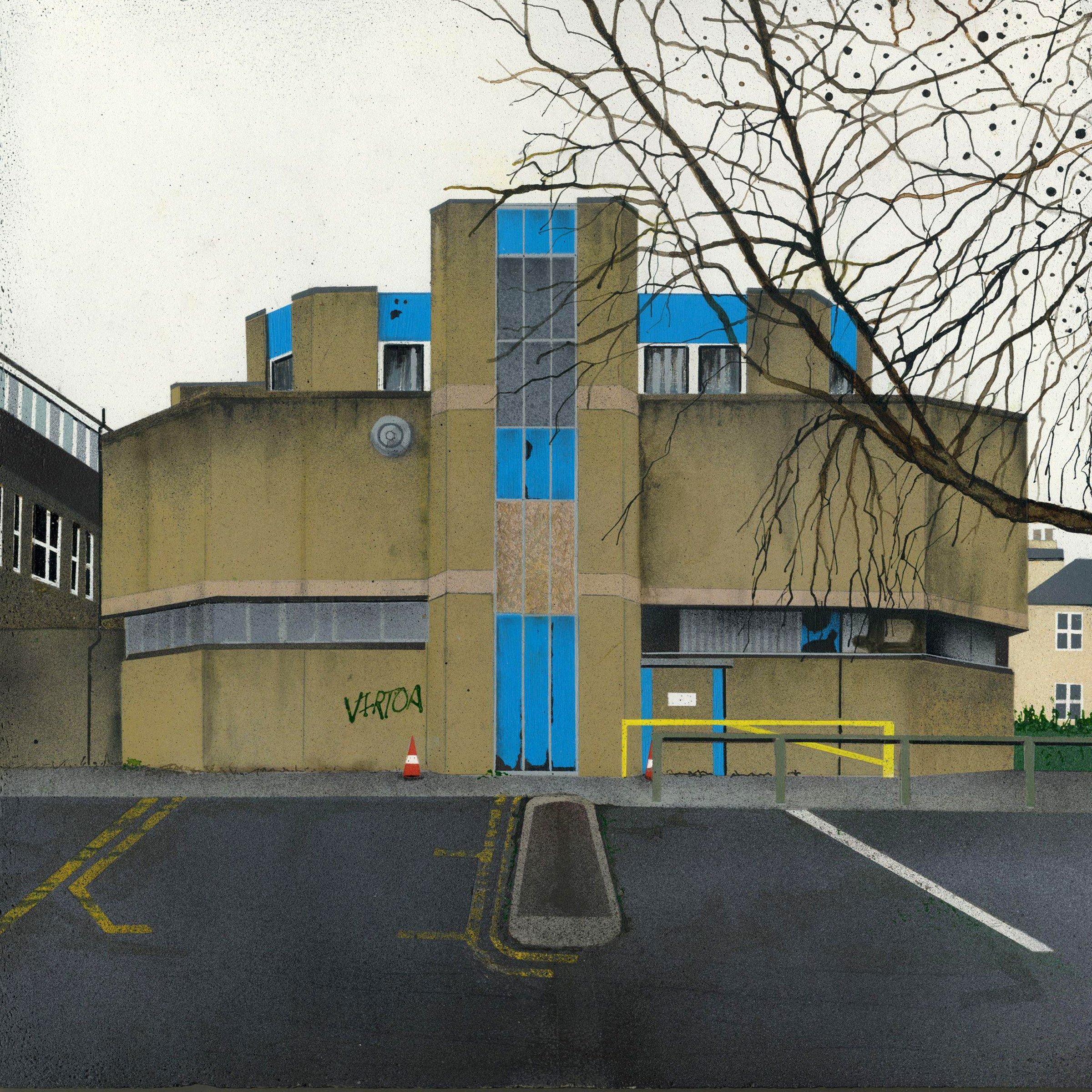
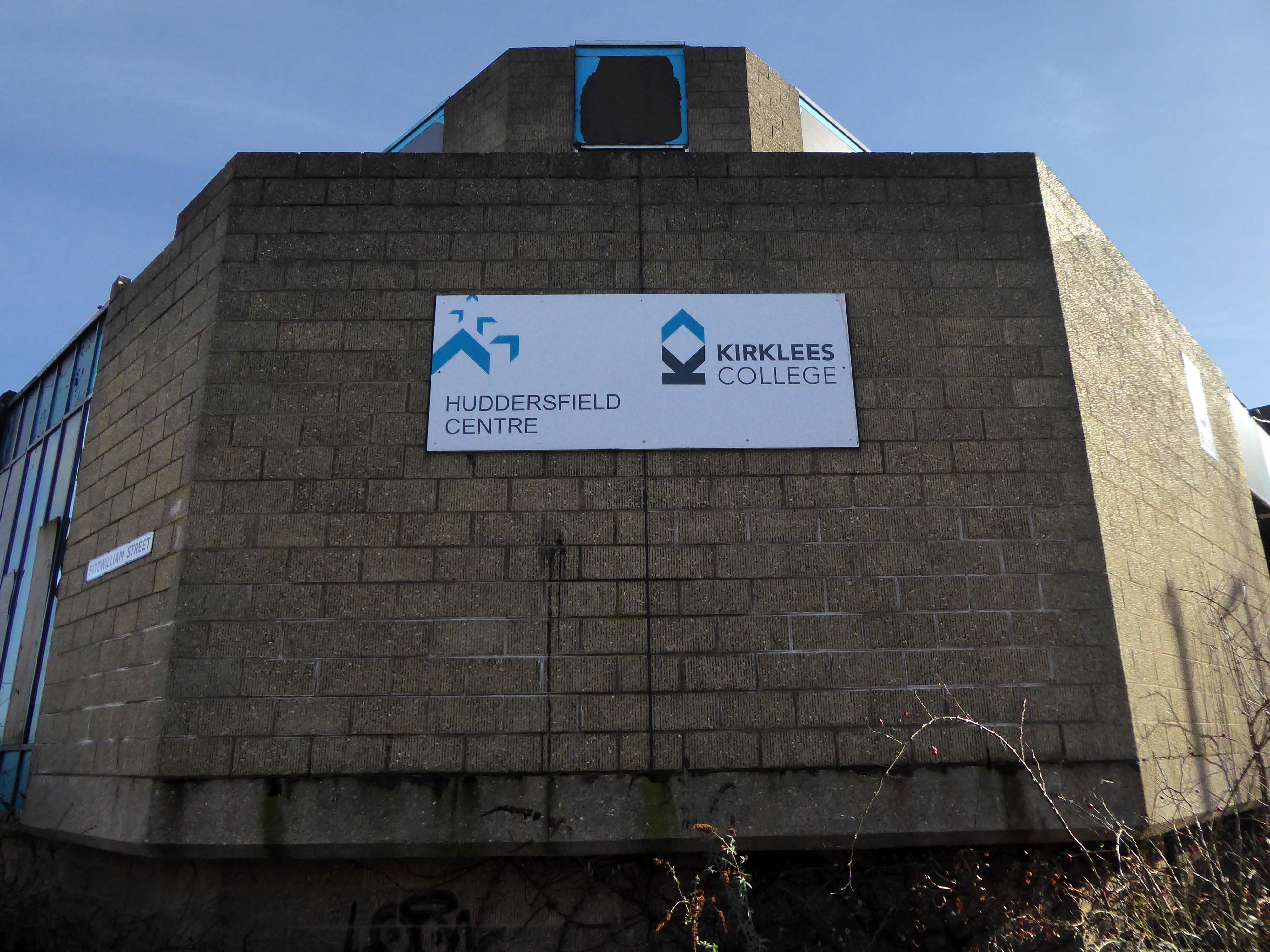
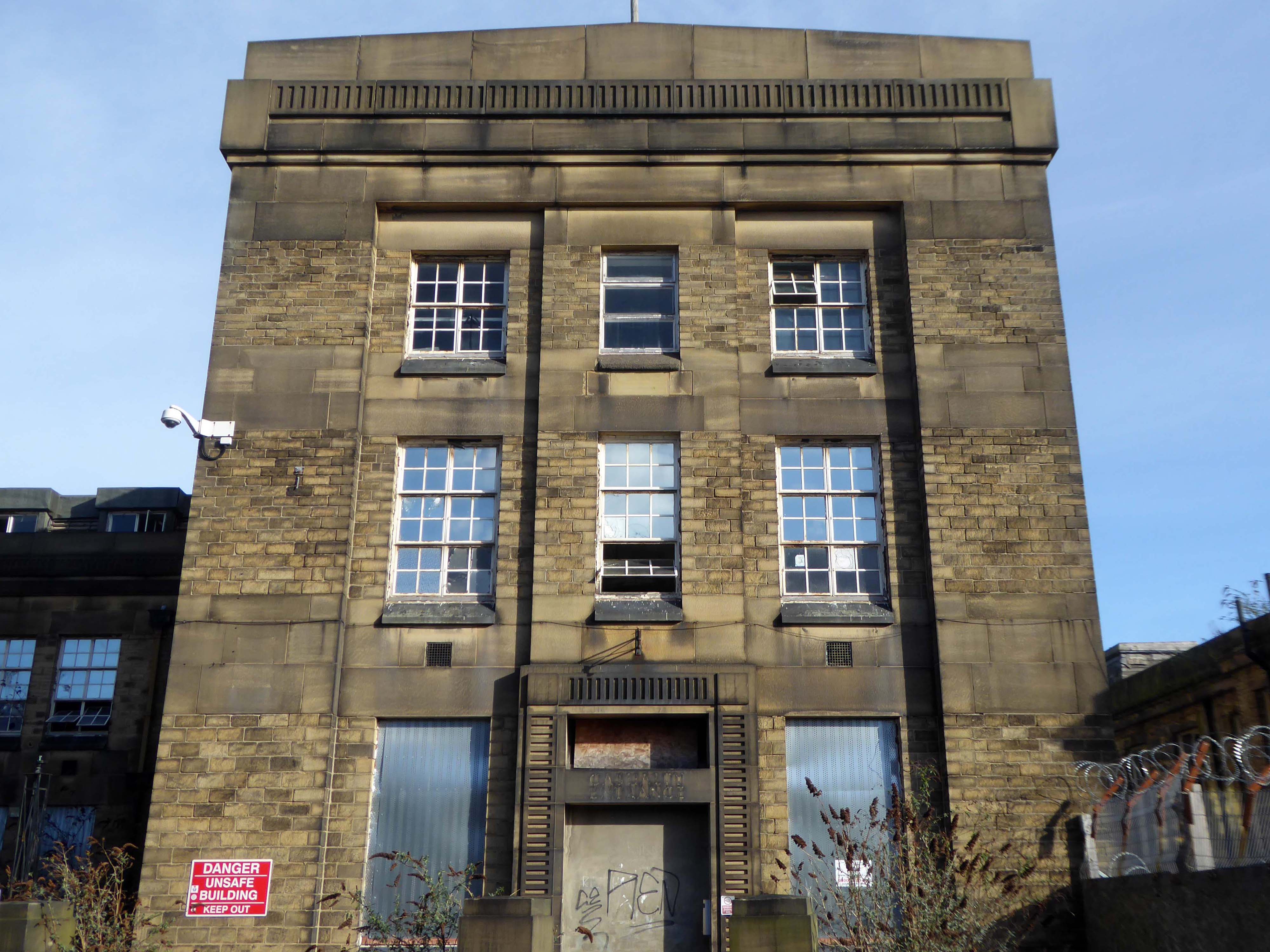
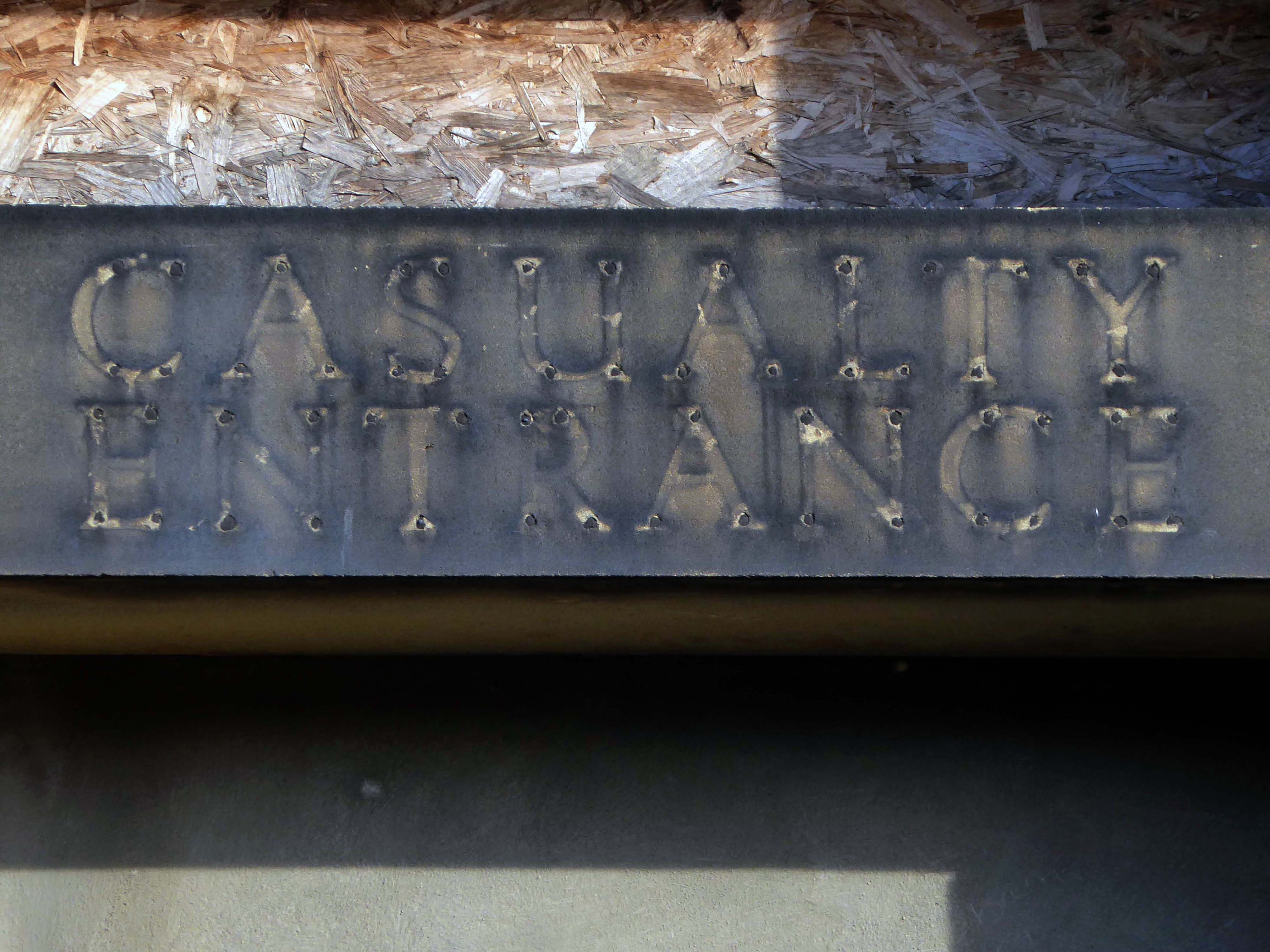
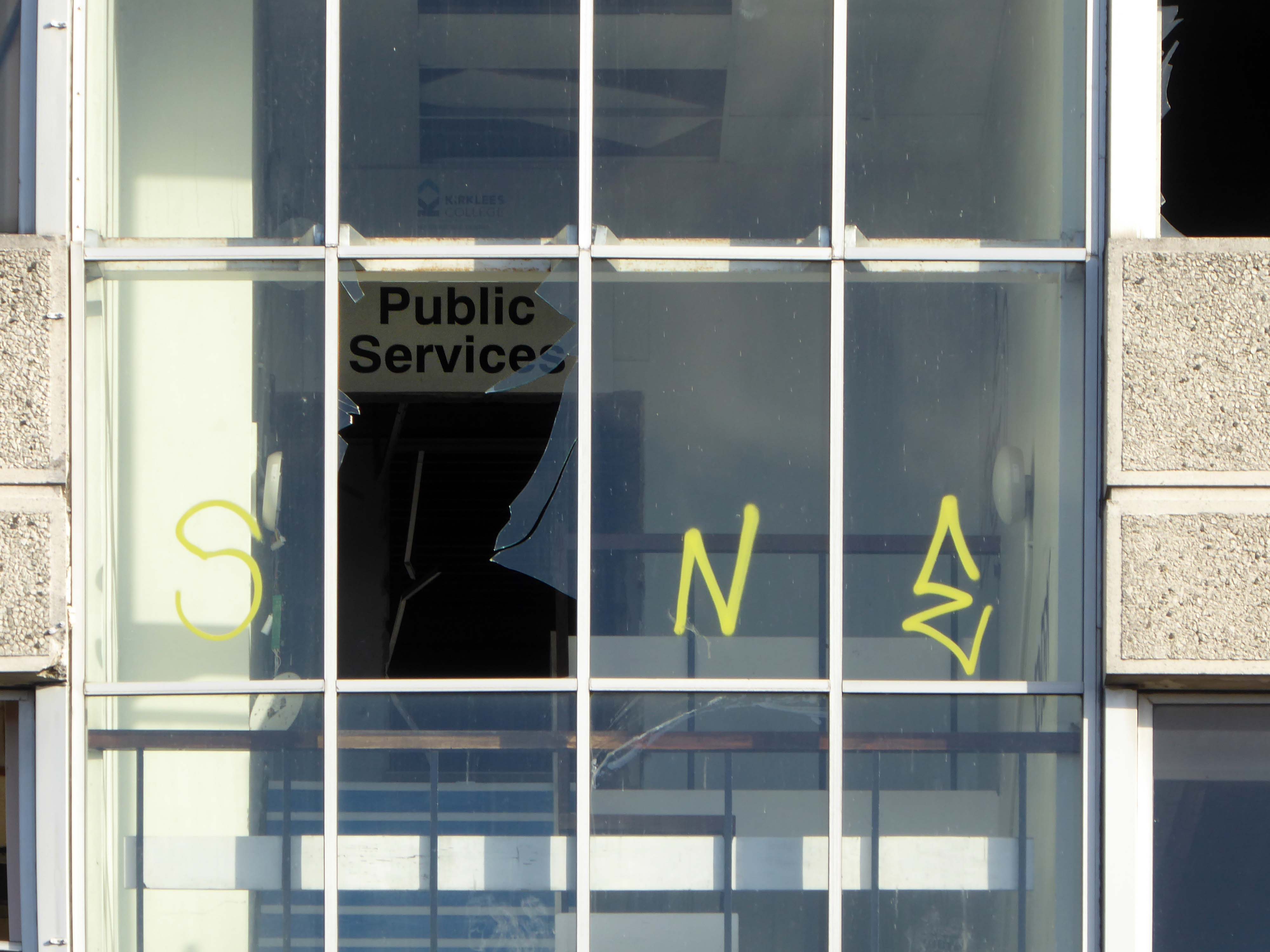
Emerging into the light of day and the demolition of the Kirklees College 1969-72 by Borough Architect Charles Edmund Aspinall.
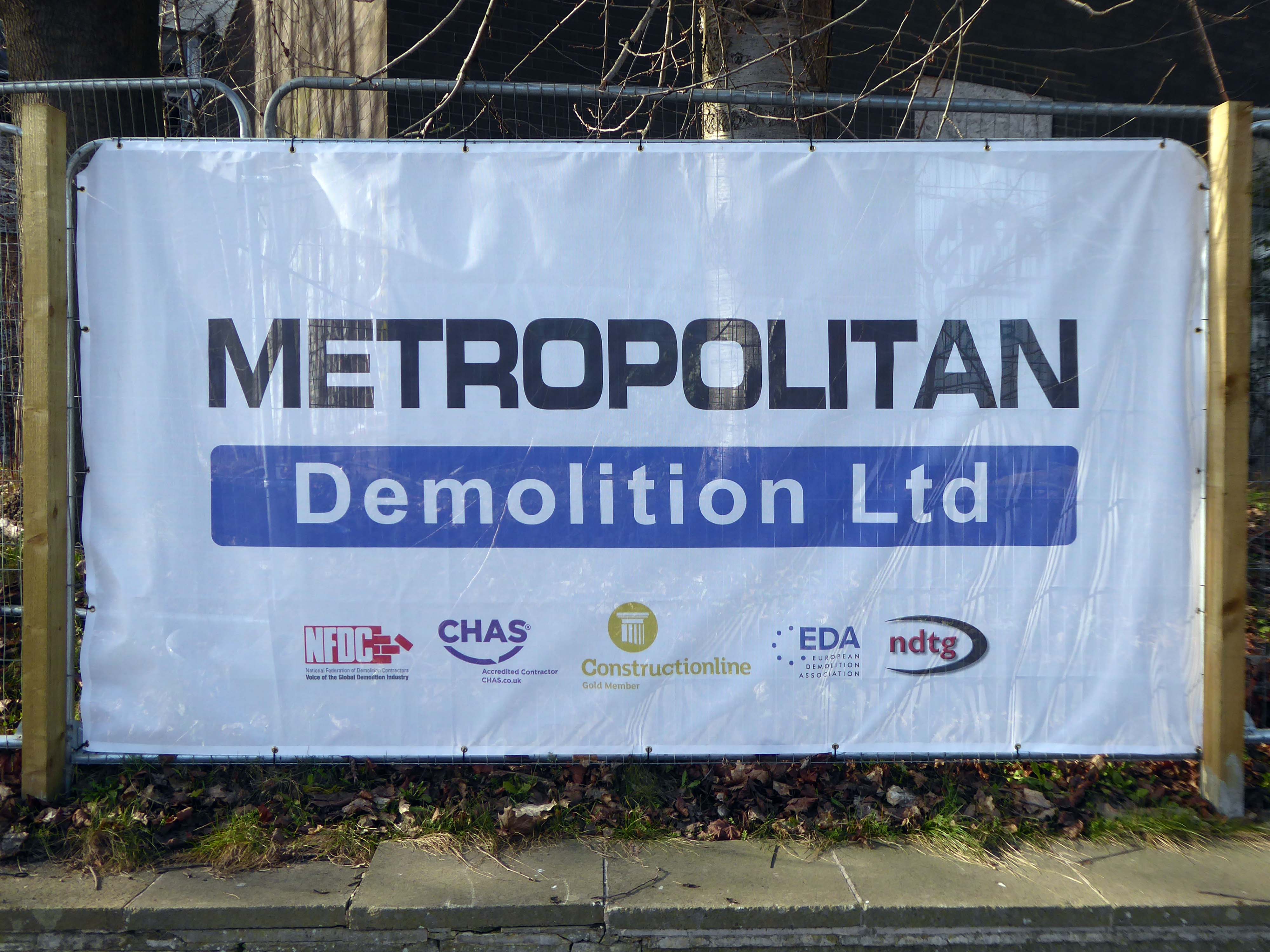
My thanks to the Metropolitan team who invited me in beyond the barriers.
We provide safe and efficient demolition services across a broad range of projects, from the small domestic dwelling to large scale industrial units – we offer the complete solution. With excellent communication and impeccable health and safety standards, we can project manage the decommissioning a structure on time and on budget.
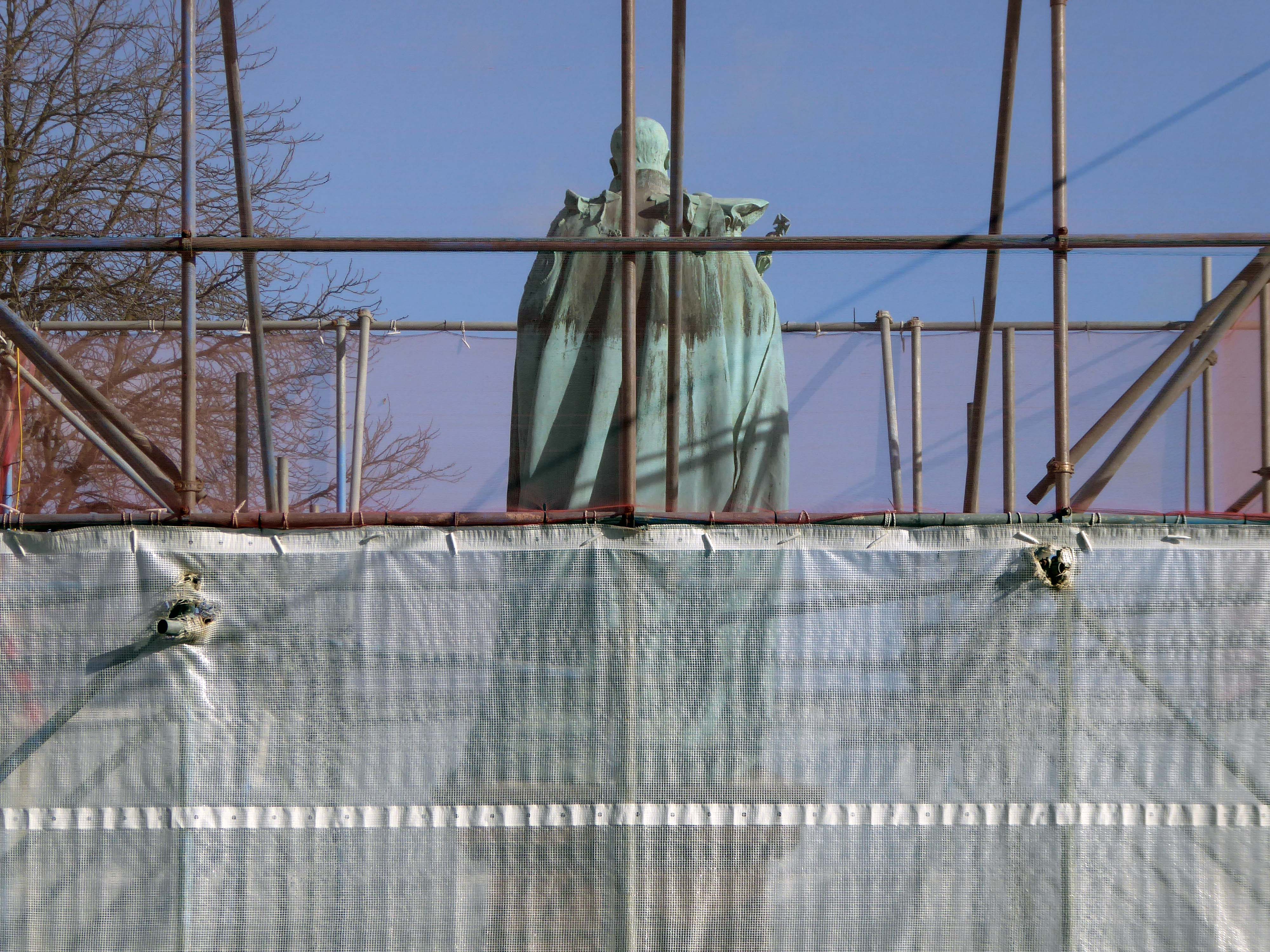
Edward VII is under wraps.
Everything else is up for smash and grab – including the later concrete block immortalised by Mandy Payne.
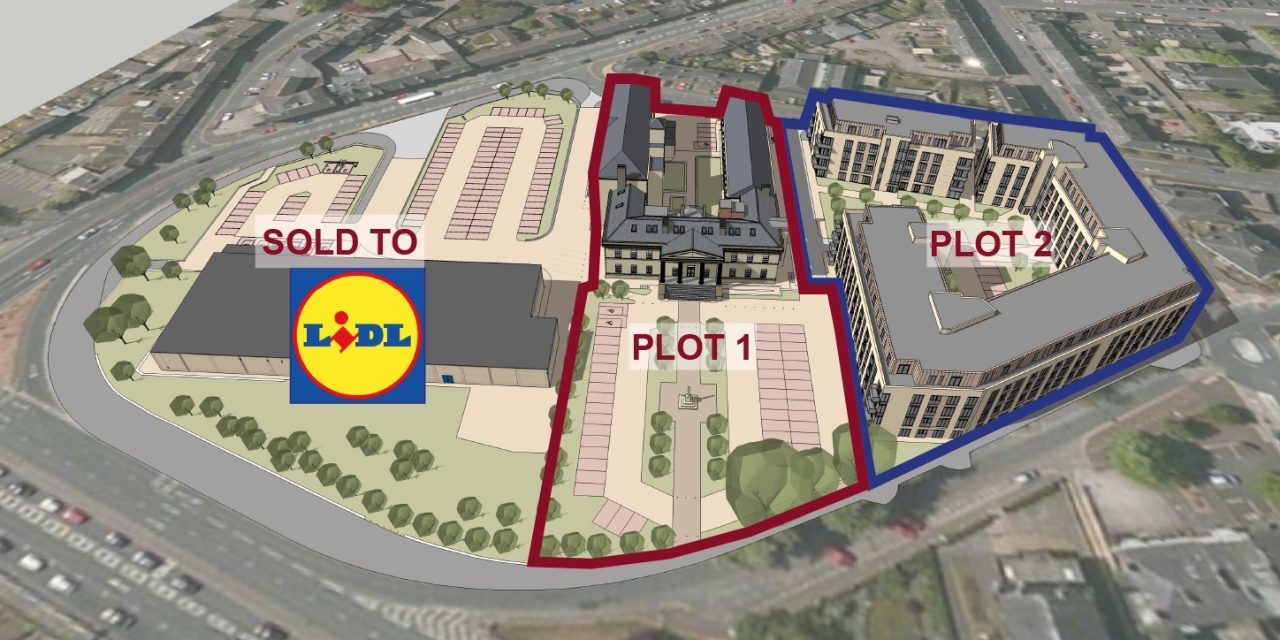
LIDL is coming – and some homes
The final details have now been signed off by the council and work on the six-acre site – which includes the Grade II-listed original Huddersfield Royal Infirmary – can now begin.
The vandal-hit and fire-damaged late 1960s and early 1970s college buildings are to be demolished and Lidl will build a new supermarket with a 127-space car park. The store will eventually replace the store on Castlegate.
The former hospital will be retained and the site will see 229 apartments and an office complex. The apartments are expected to be for older or retired people.
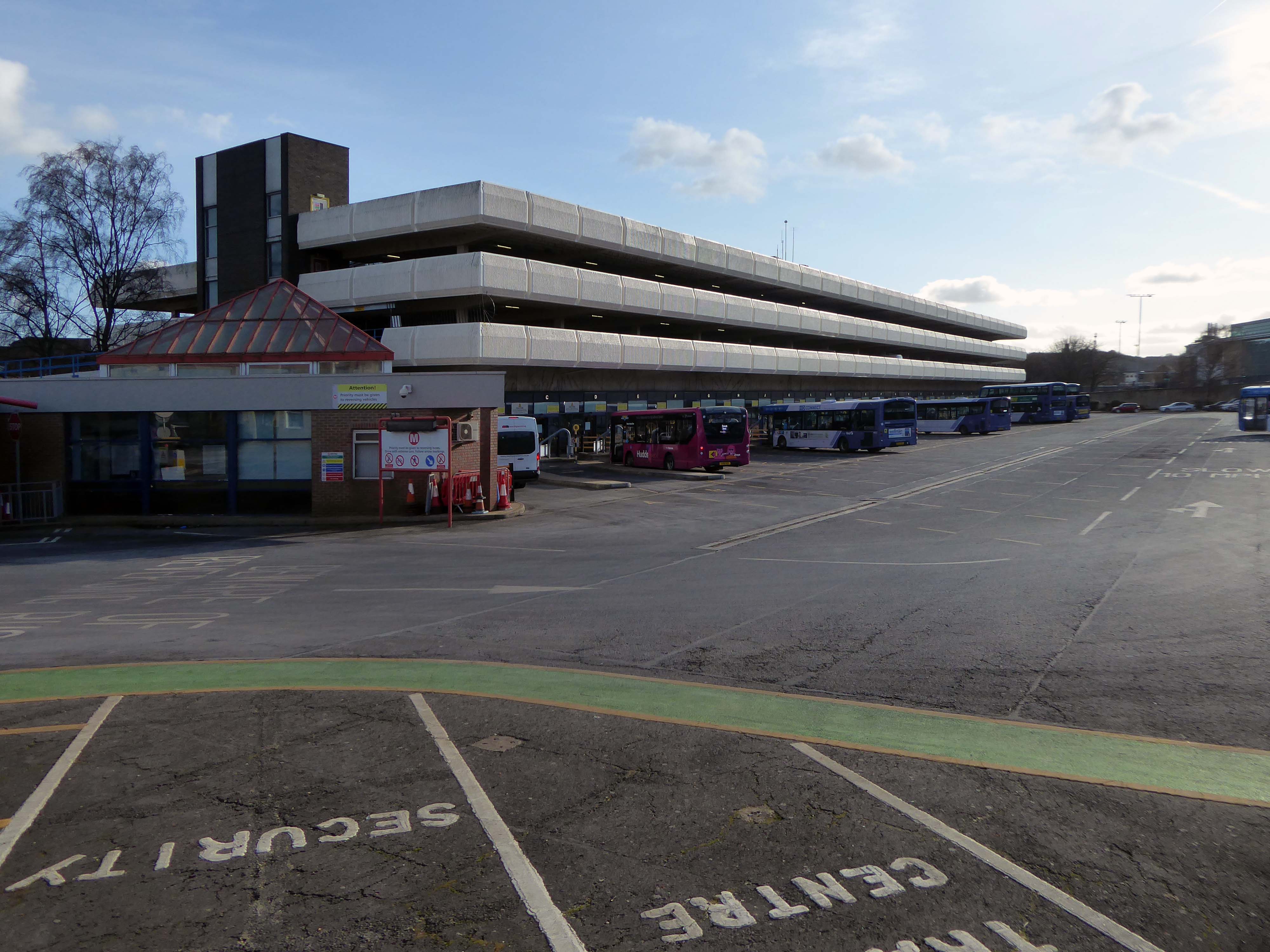
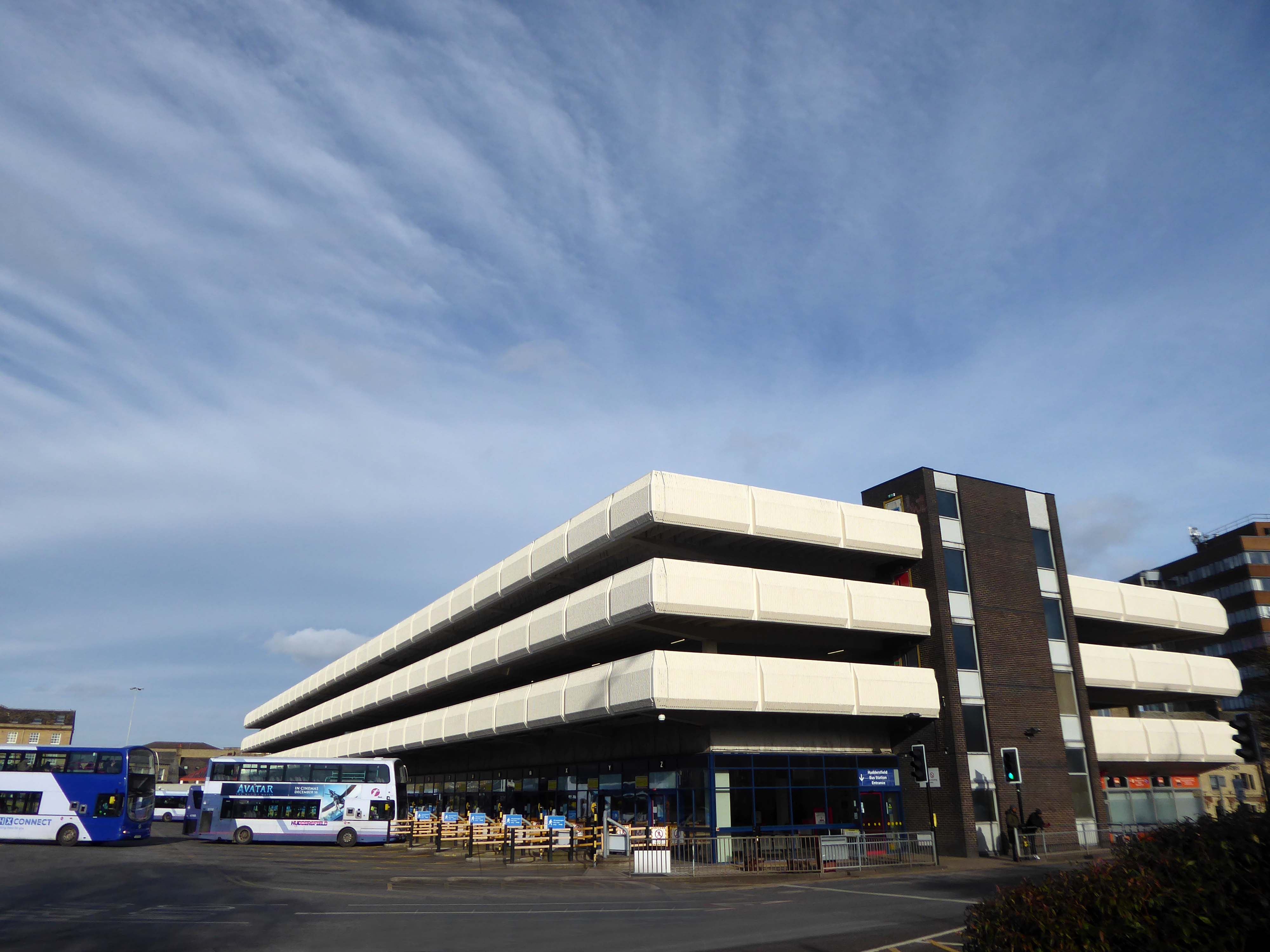
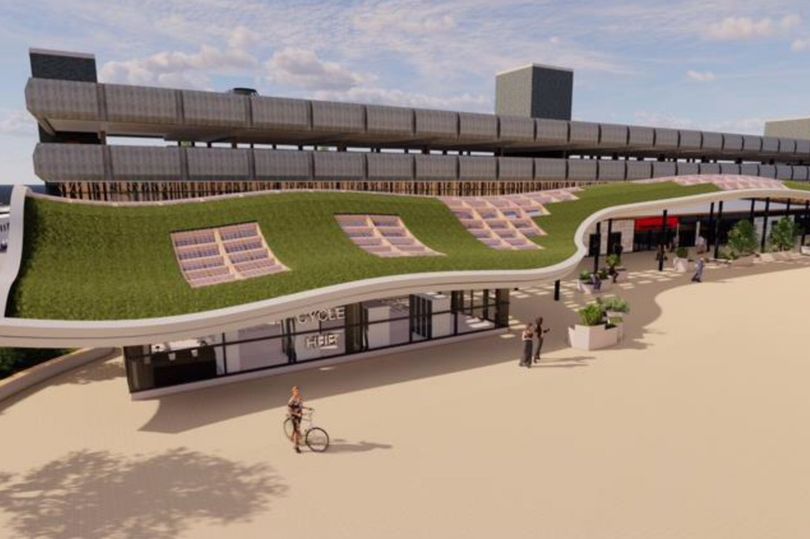
Huddersfield’s £20M game-changing bus station is set to be completed by the end of 2025 with a living grass roof, sixty bike cycle hub, upgraded shops and new facilities
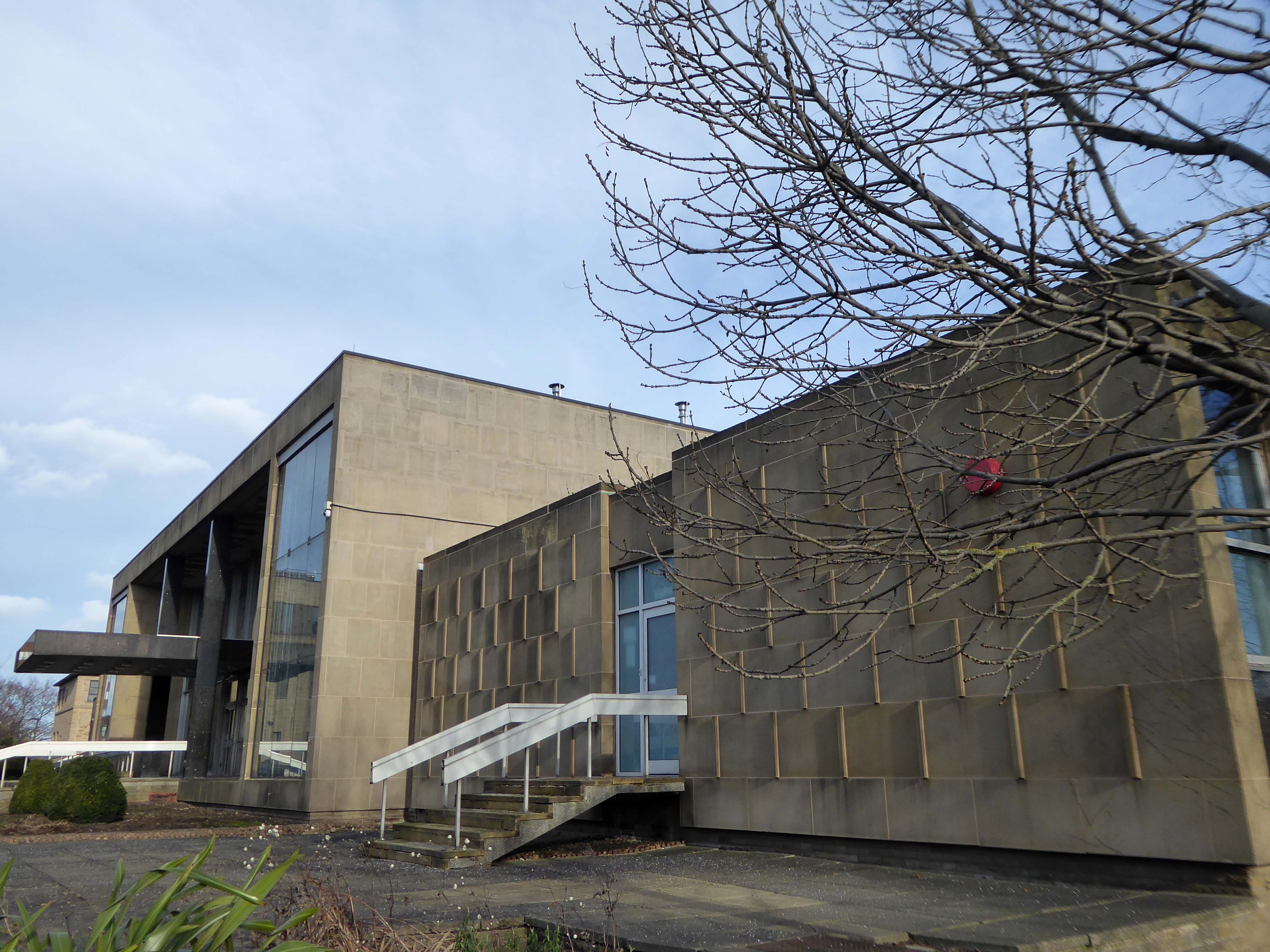
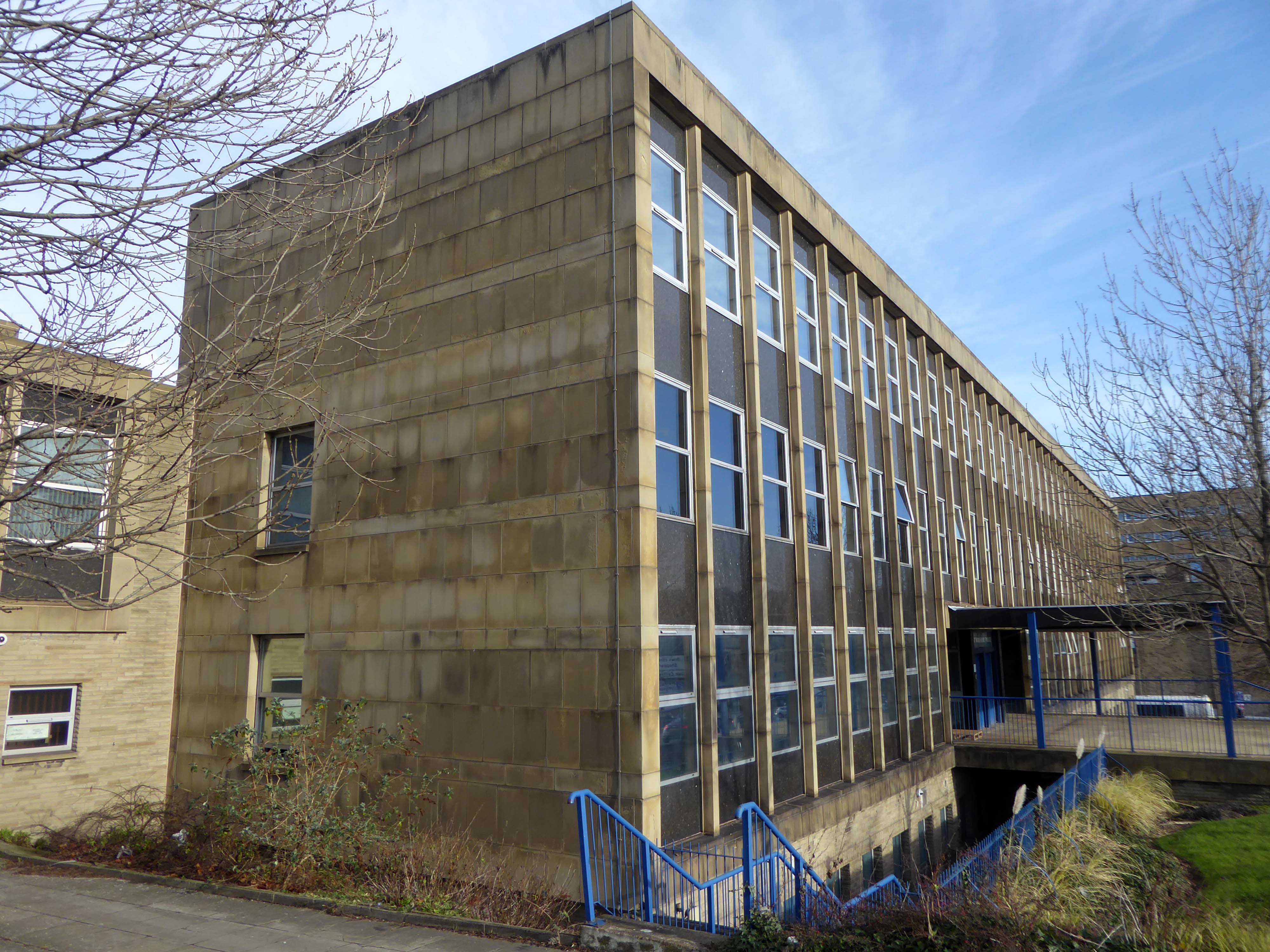
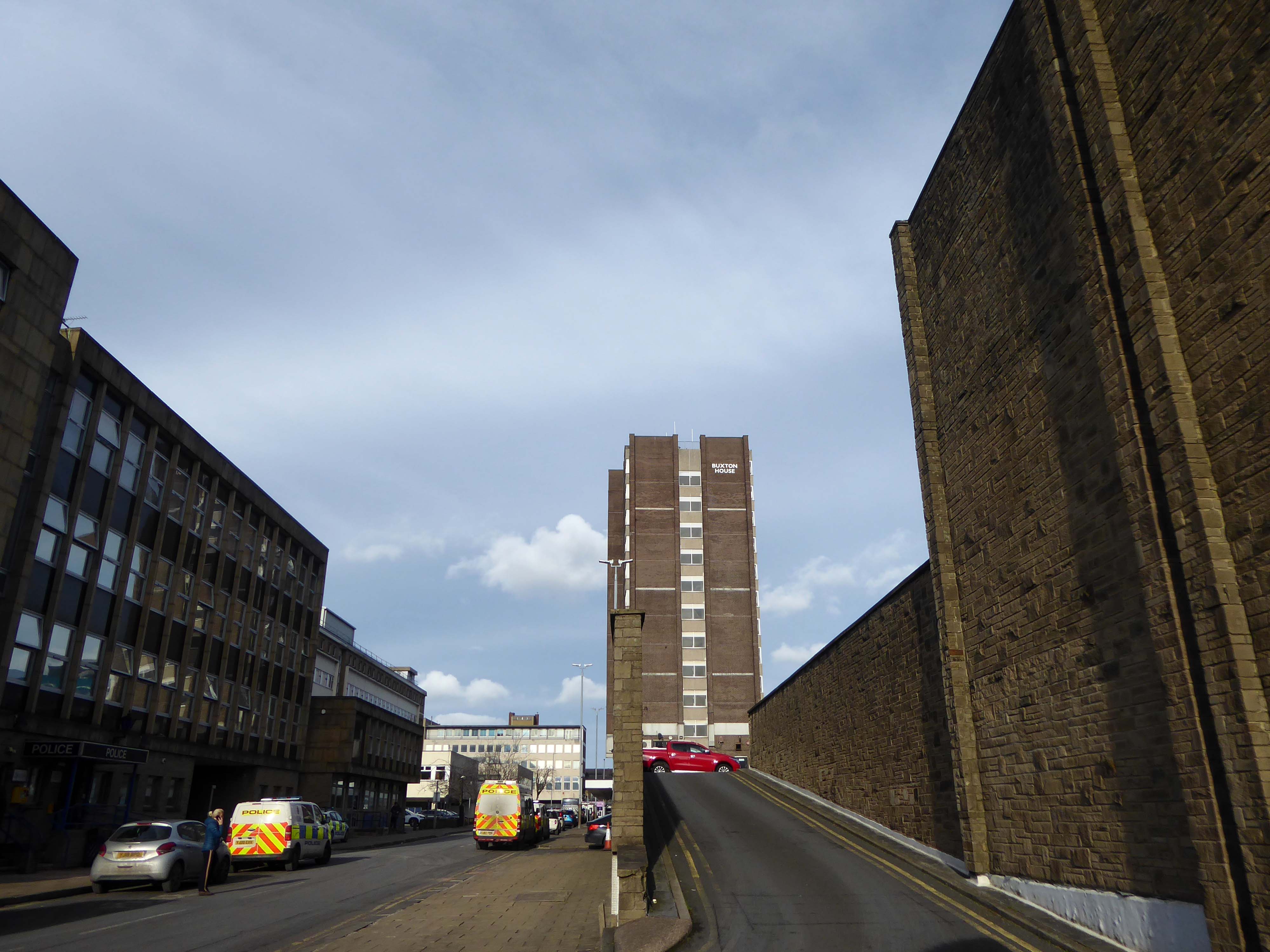
Crossing the road to the Civic Centre and the perennially empty piazza which along with the Magistrates Courts and Police Station was the work of the Borough Architects team – led by Charles Edmund Aspinall.
Walking excitedly toward the Exsilite panels set in the stone faced columns – a brand name for a synthetic, moulded, artificial marble.
Magistrates Courts
Police Station
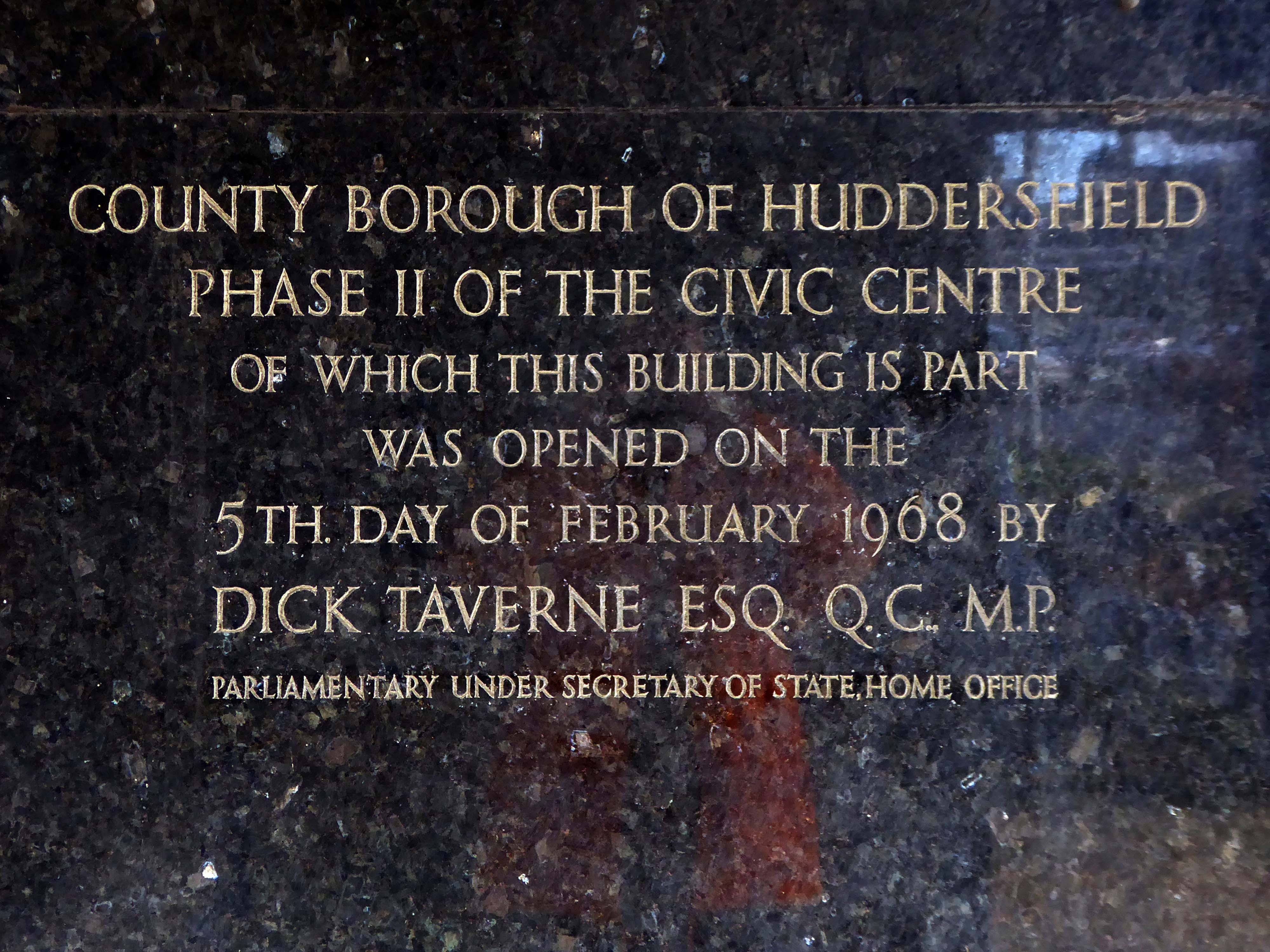
Dick Taverne served under Harold Wilson’s premiership in the 1960s, he served as a Home Office Minister from 1966 to 1968, Minister of State at the Treasury from 1968 to 1969 and then as Financial Secretary to the Treasury from 1969 to 1970.
In 1970, he helped to launch the Institute for Fiscal Studies, now an influential independent think tank and was the first Director, later chairman.
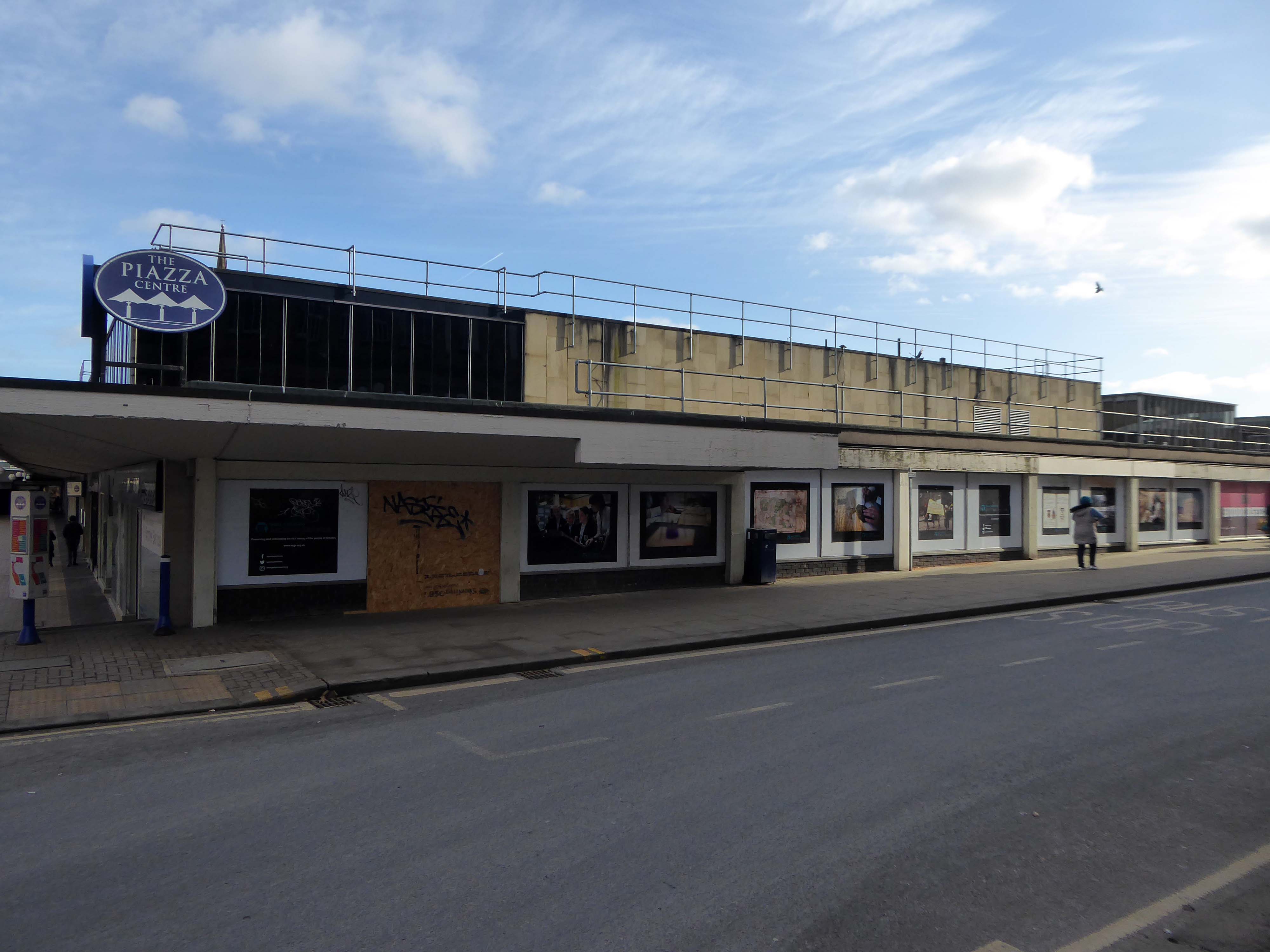
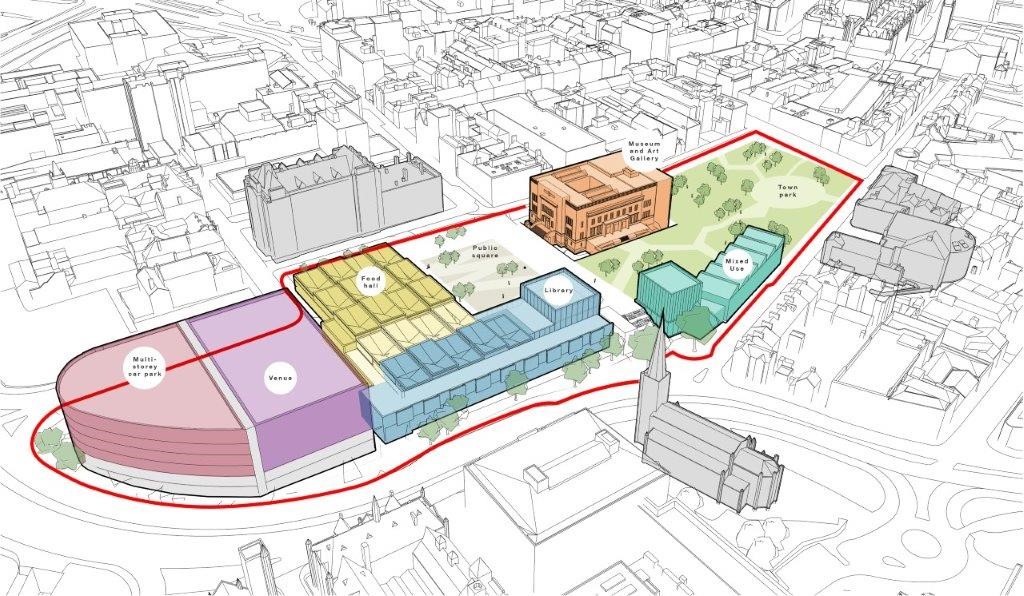
The vision is to create an inclusive space where families, residents and visitors can enjoy a vibrant mix of music, arts, food and more in one central area, overlooking a stunning new urban park.
The council plans to demolish the Piazza Centre and create a new events/live music venue, a food hall, a museum and art gallery, a new library and a new multi-storey car park, all centred around a new Town Park.
Named after one of the Twentieth Century’s finest artists, the space nurtures a new and inspired generation of designers. Through visual and physical connection, the environment encourages students to work together, stimulating communication and ingenuity, the ingredients of successful collaboration.
Take that to the bank/s
Keep savin’, keep buildin’ That interest for our love Take that to the bank Keep savin’, keep buildin’ That interest for our love Take that to the bank
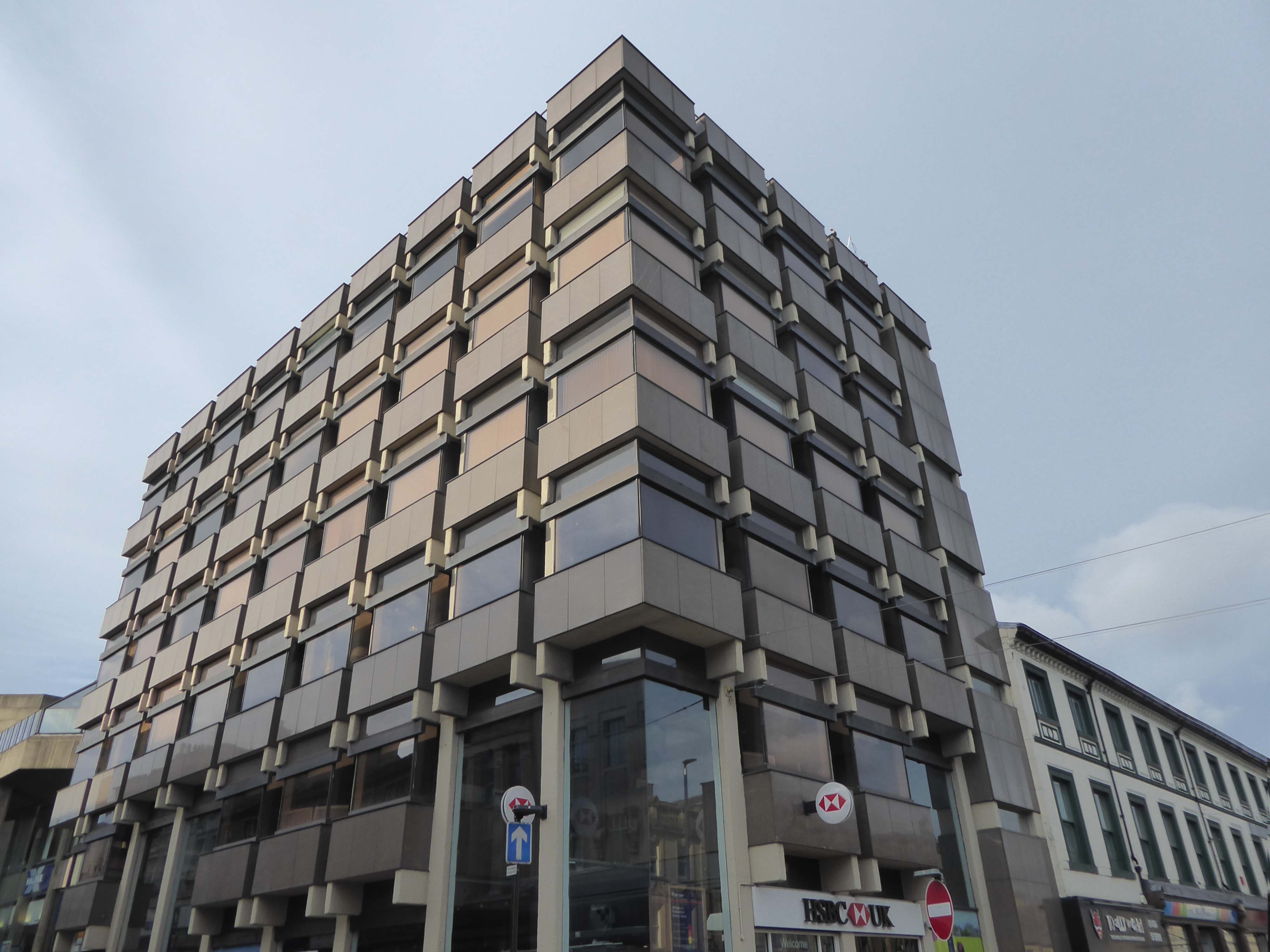
HSBC was designed by Peter Womersley, who also designed the thoroughly modern private house, Farnley Hey, near Castle Hill, which won the RIBA Bronze Medal in 1958.
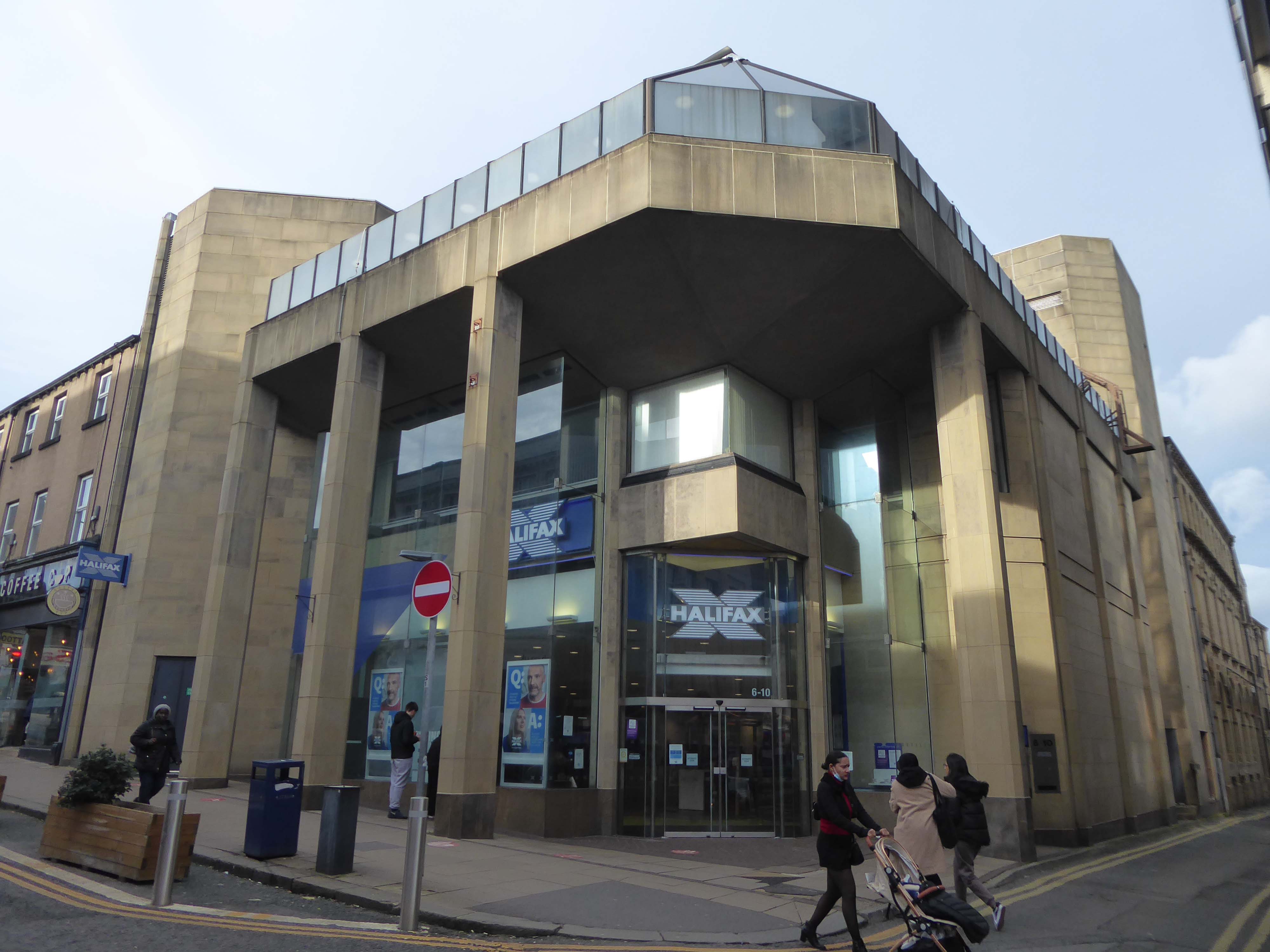
Halifax Building Society
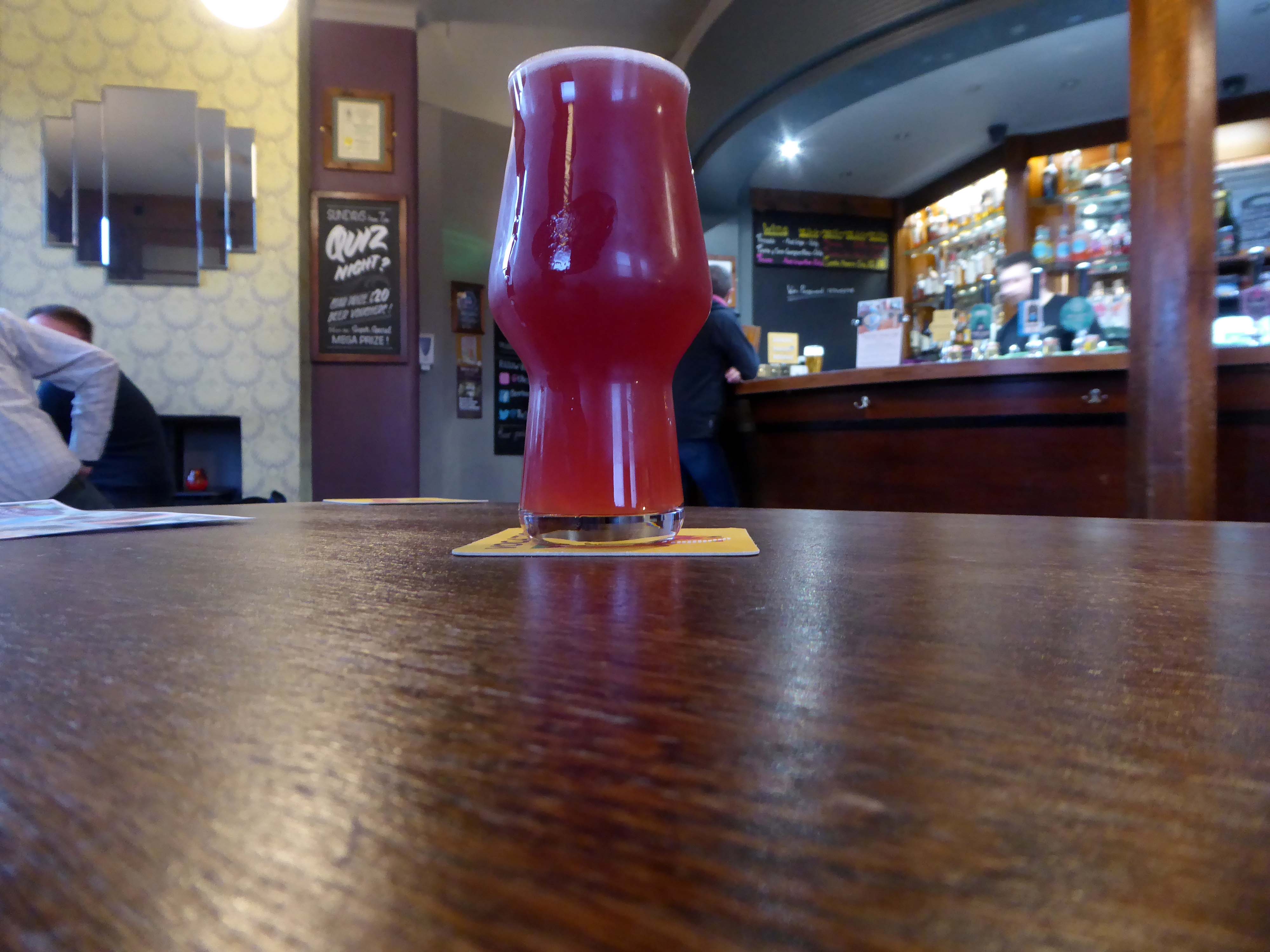
Having walked around town for more hours than enough I sought respite in The Sportsman and a glass of Squawk multi-berry fruited sour
Another great looking estate pub that was on the same estate as the Hipp which it was also fairly close to.
There was the usual two rooms inside, I had a drink in the bar room which was quite busy on my Friday afternoon visit, there was also a more comfortable lounge.
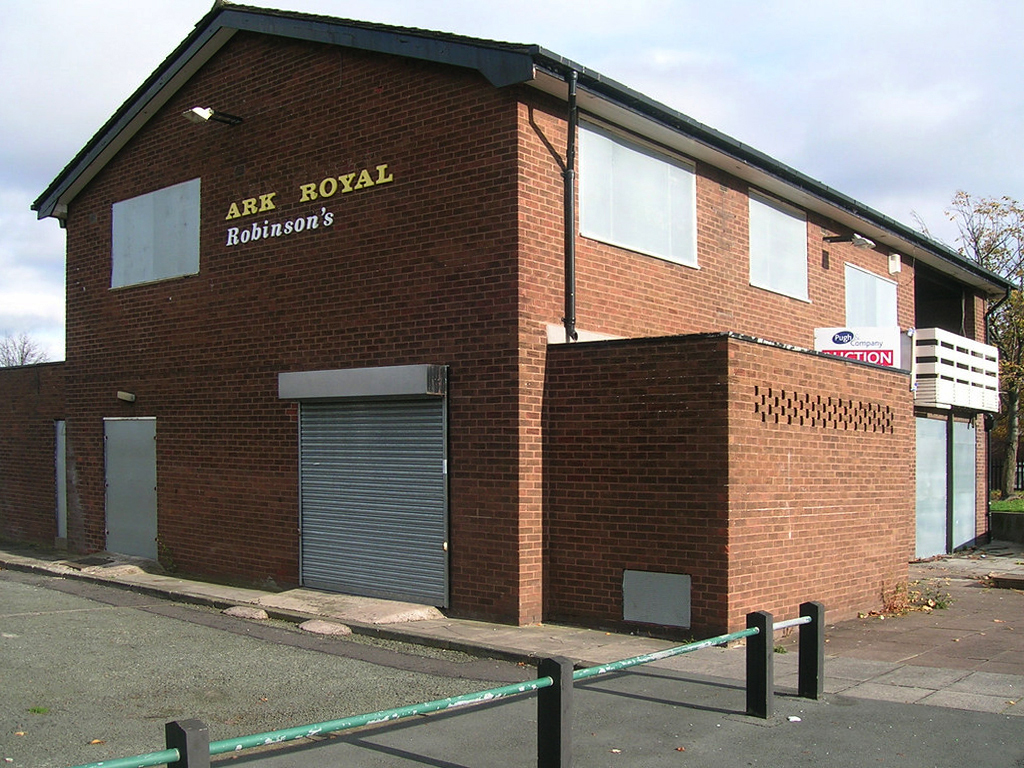
The pub was a Robinsons tied house, there were two real ales on, I had a drink of Robinsons Bitter which was a nice drink, there was also Robinsons Mild on.
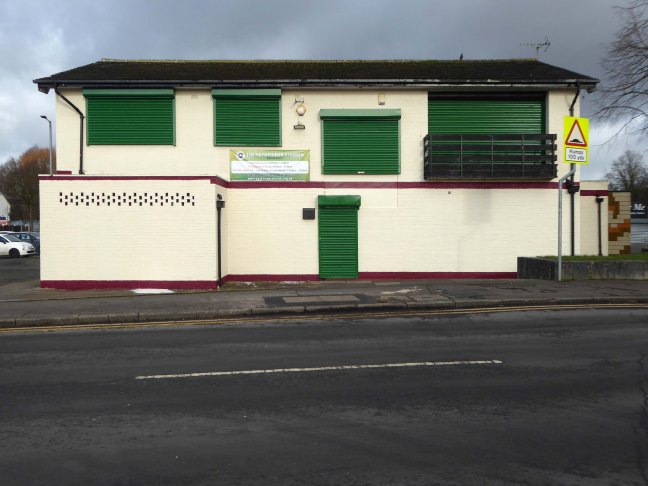
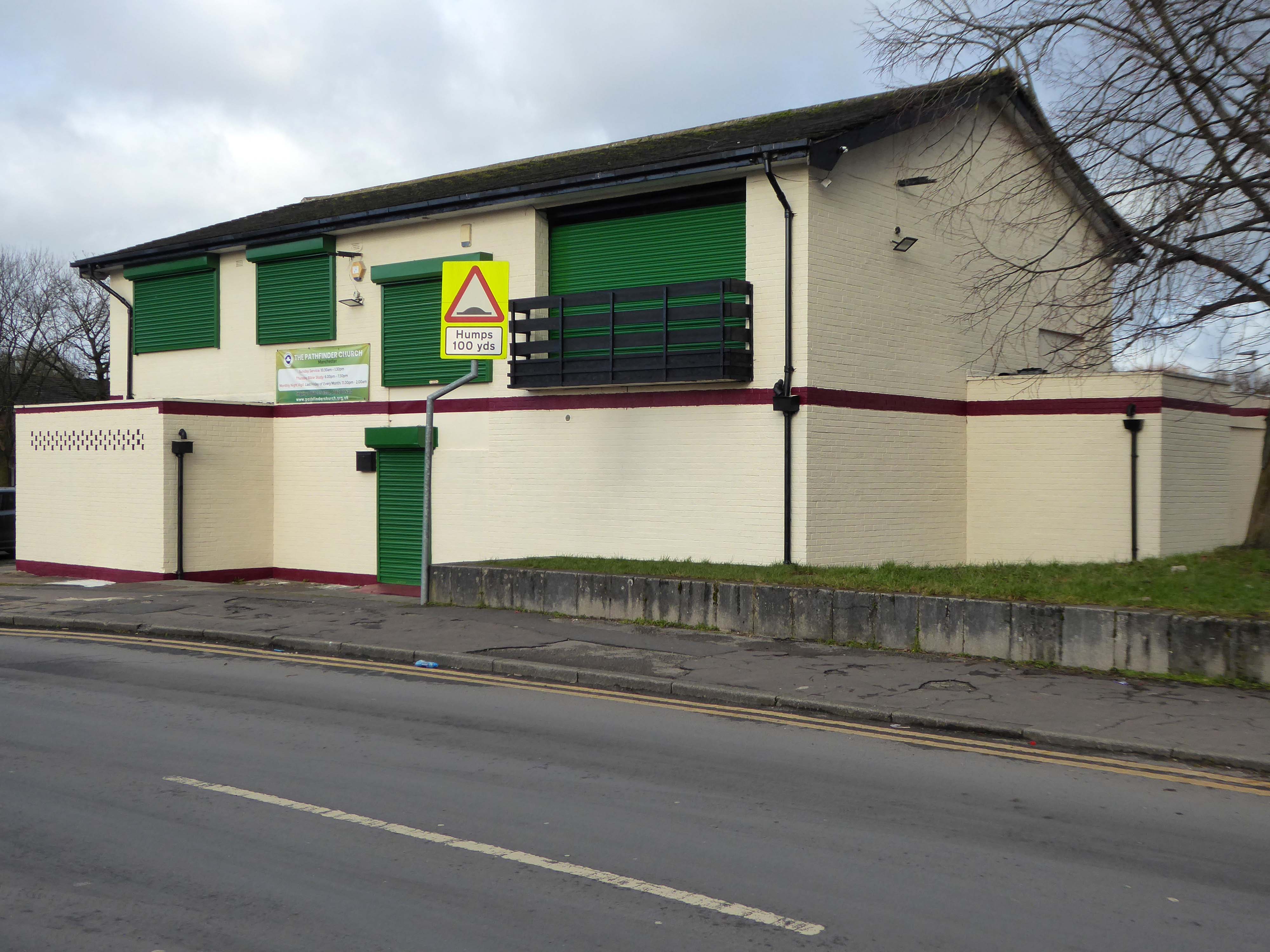
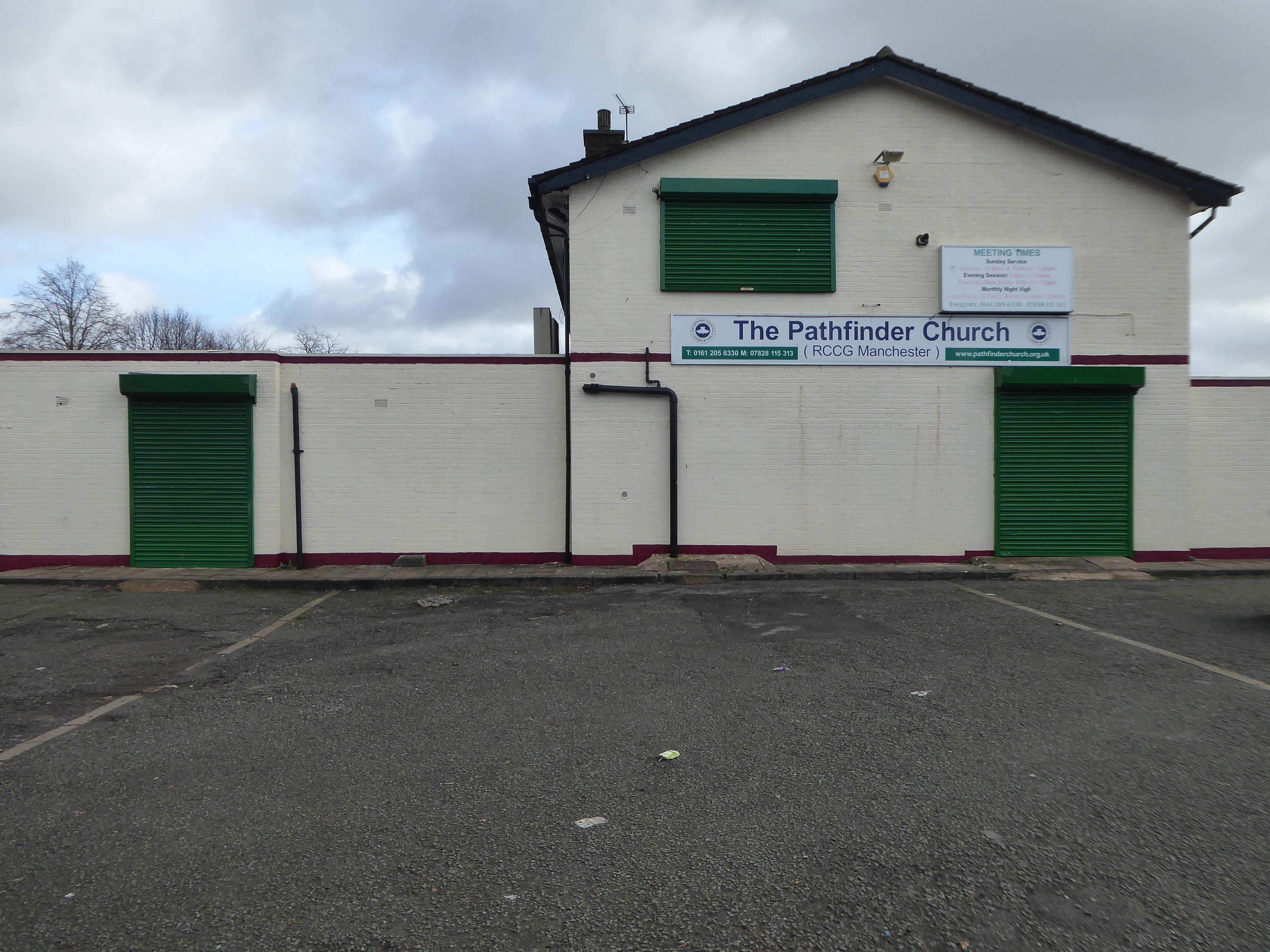
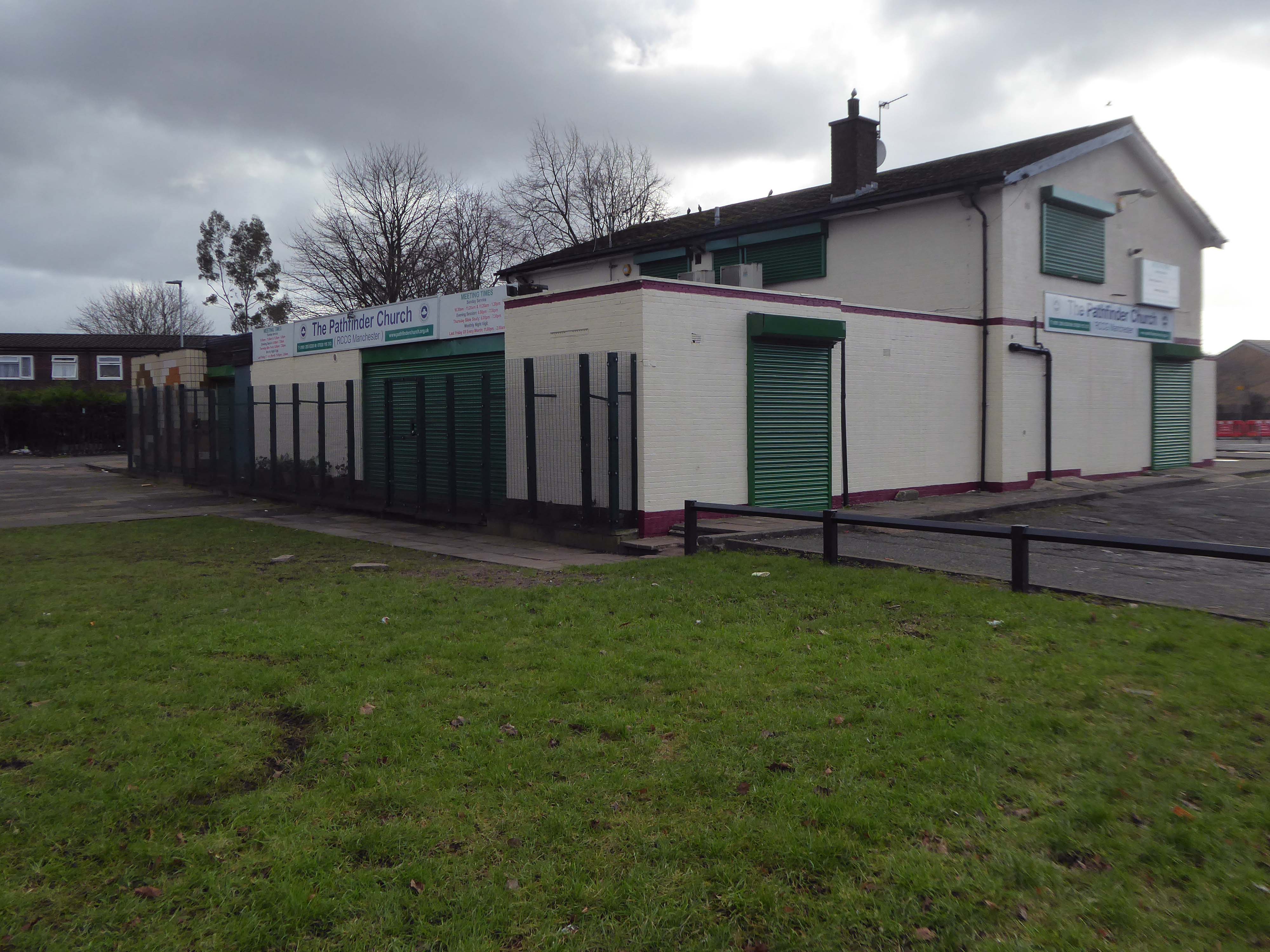
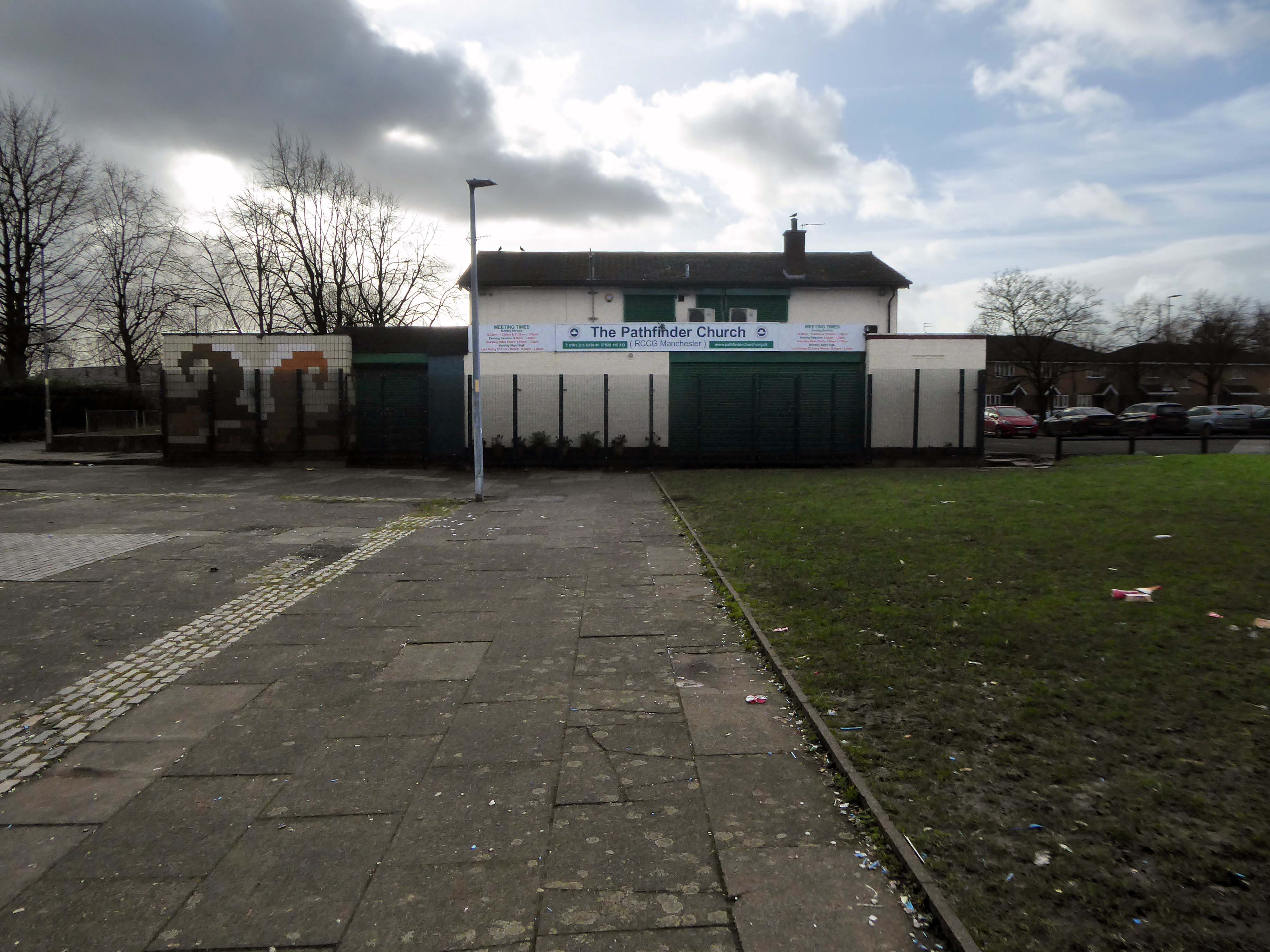
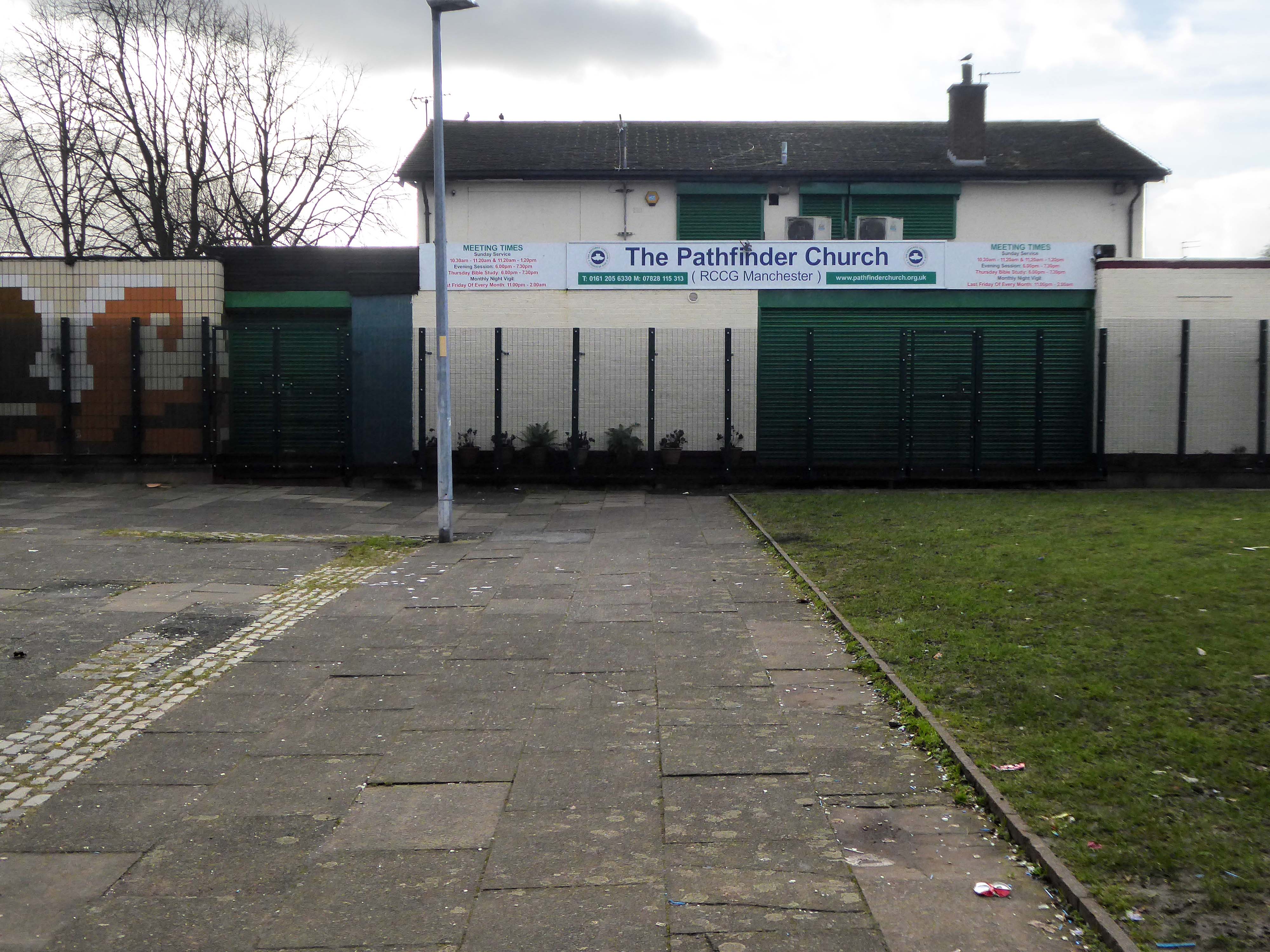
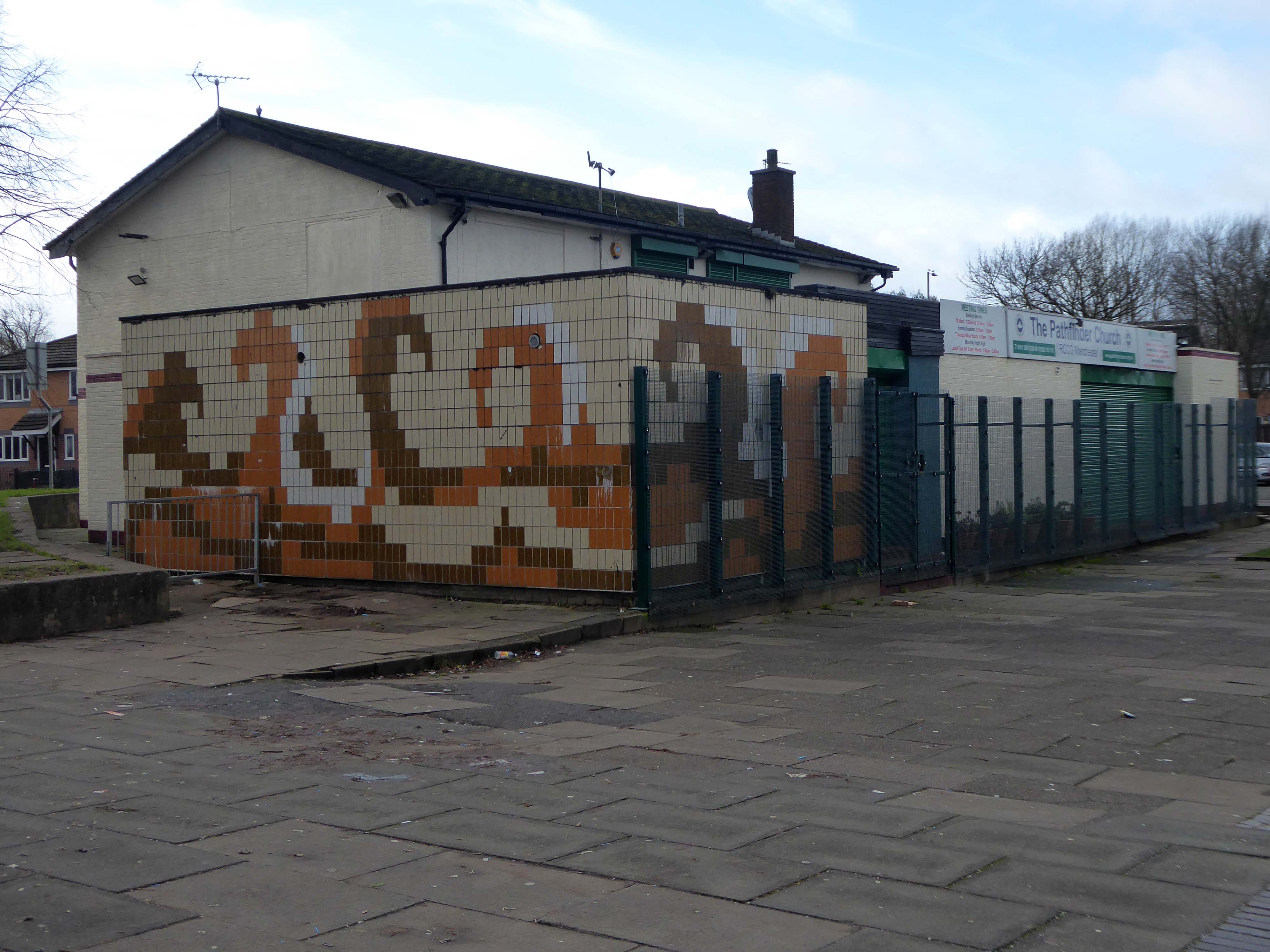
We are committed to the growth and development of individual, our local and international communities. In the interim may I use this medium to invite you to be part of the move of God in our church, the Pathfinder.
The Lord bless your richly as you navigate through in Jesus name.
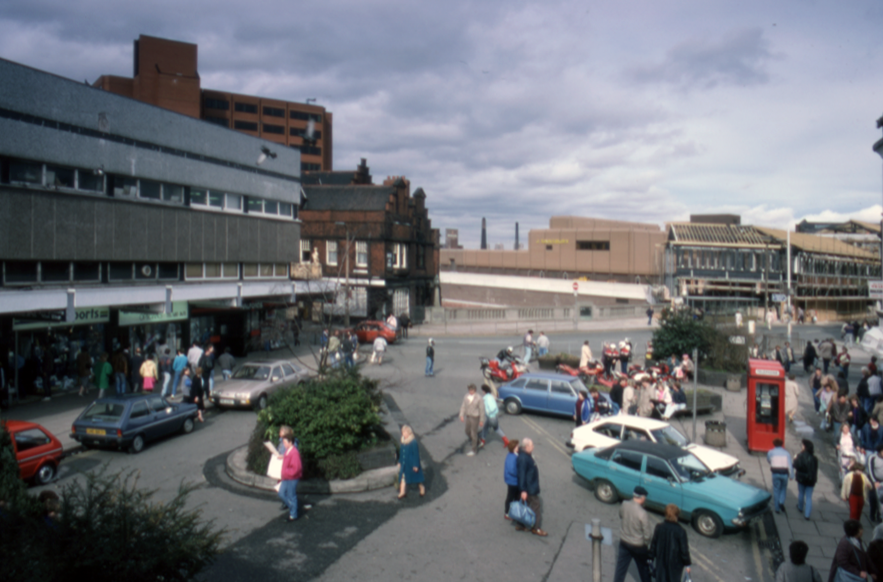
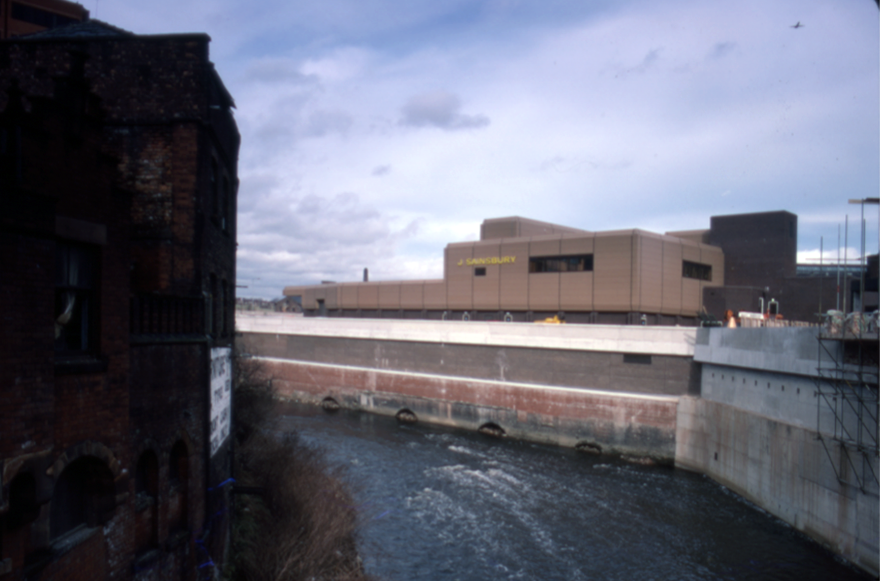
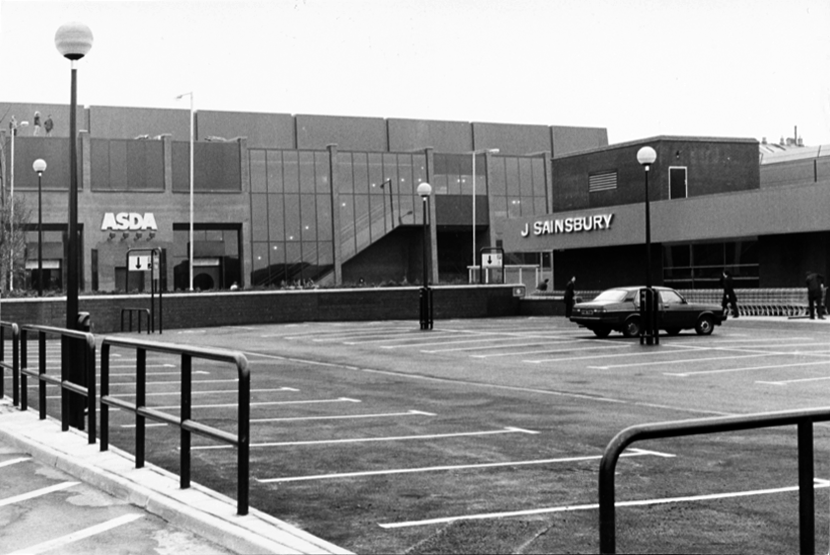
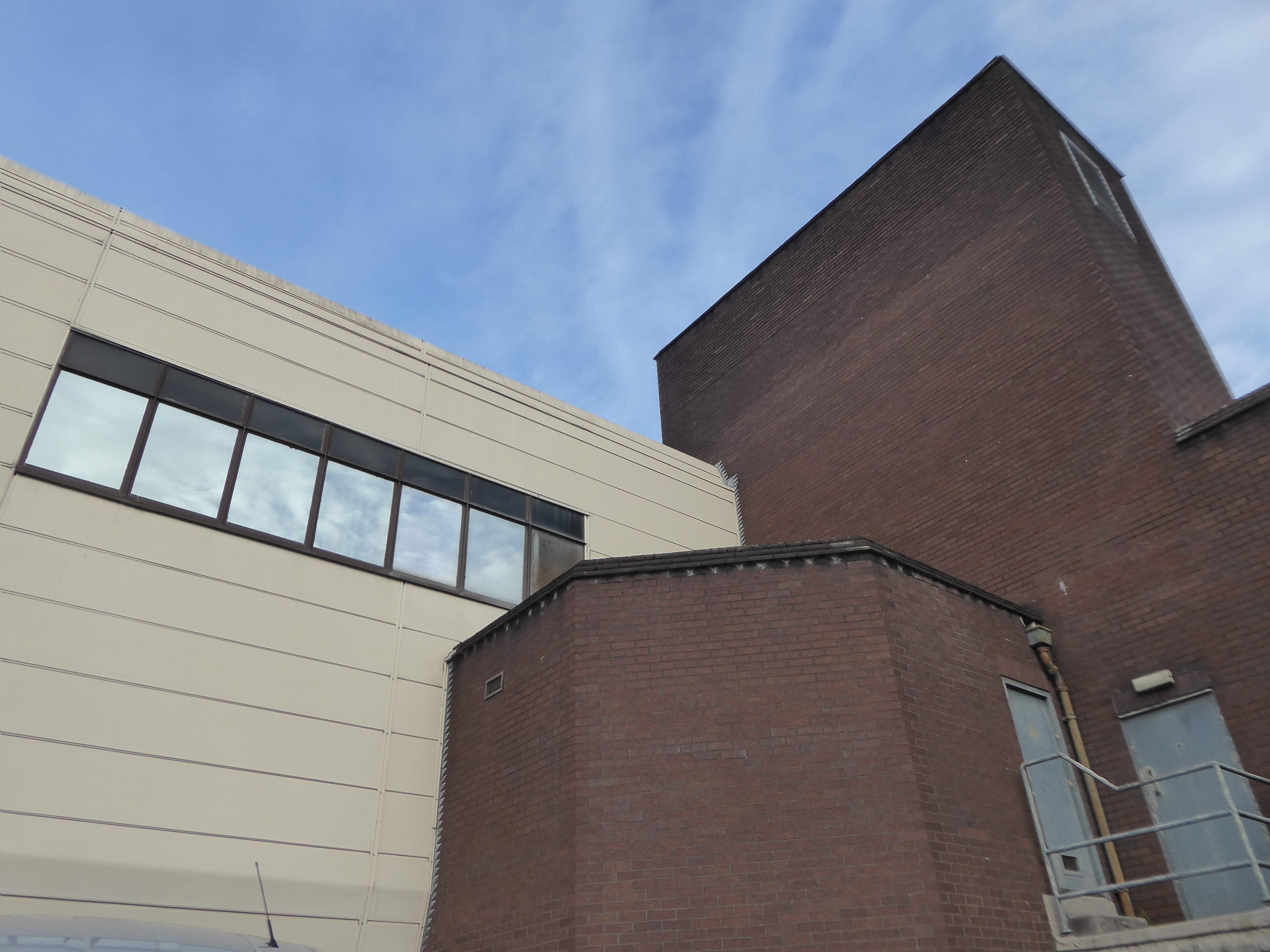
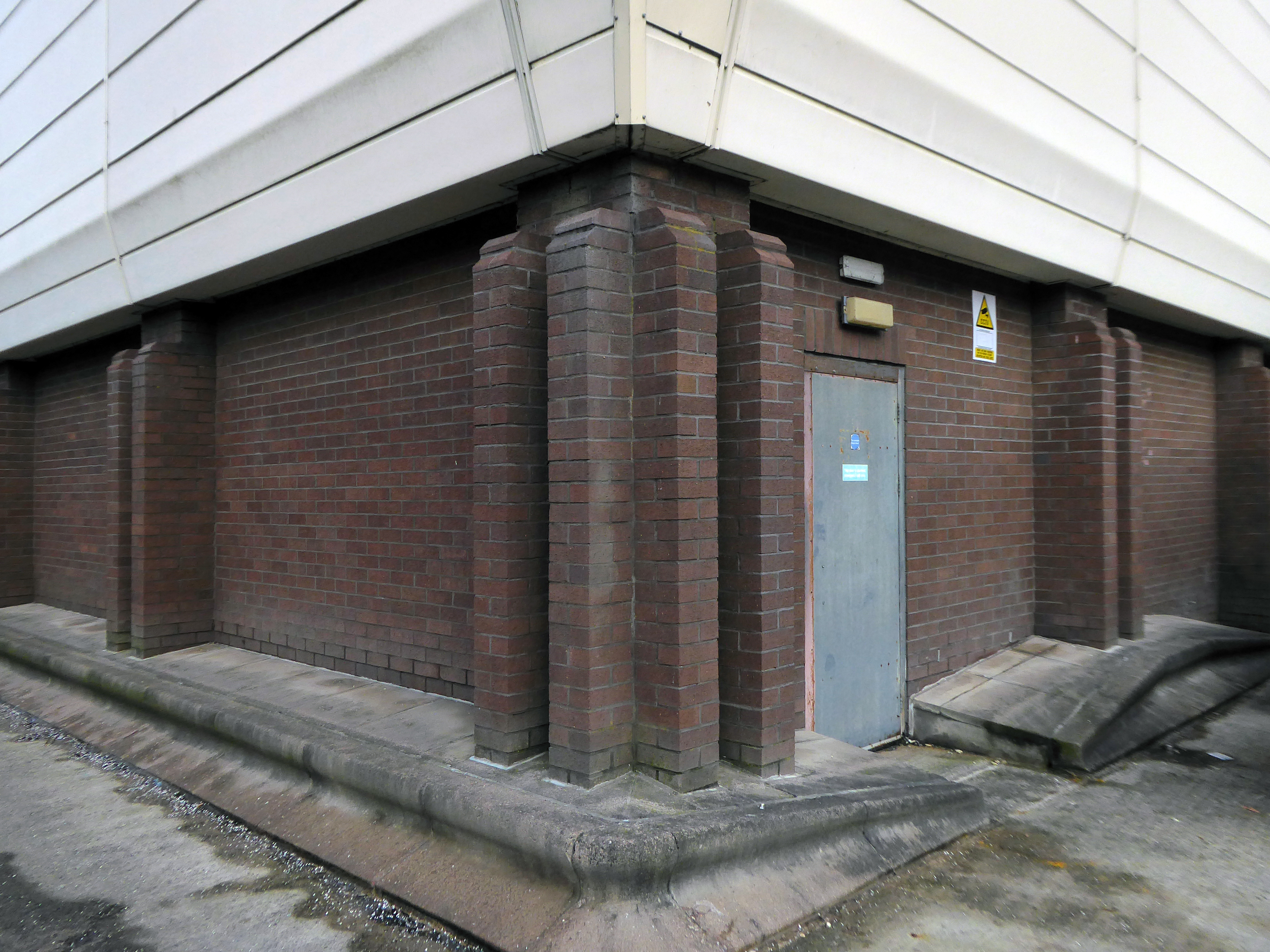
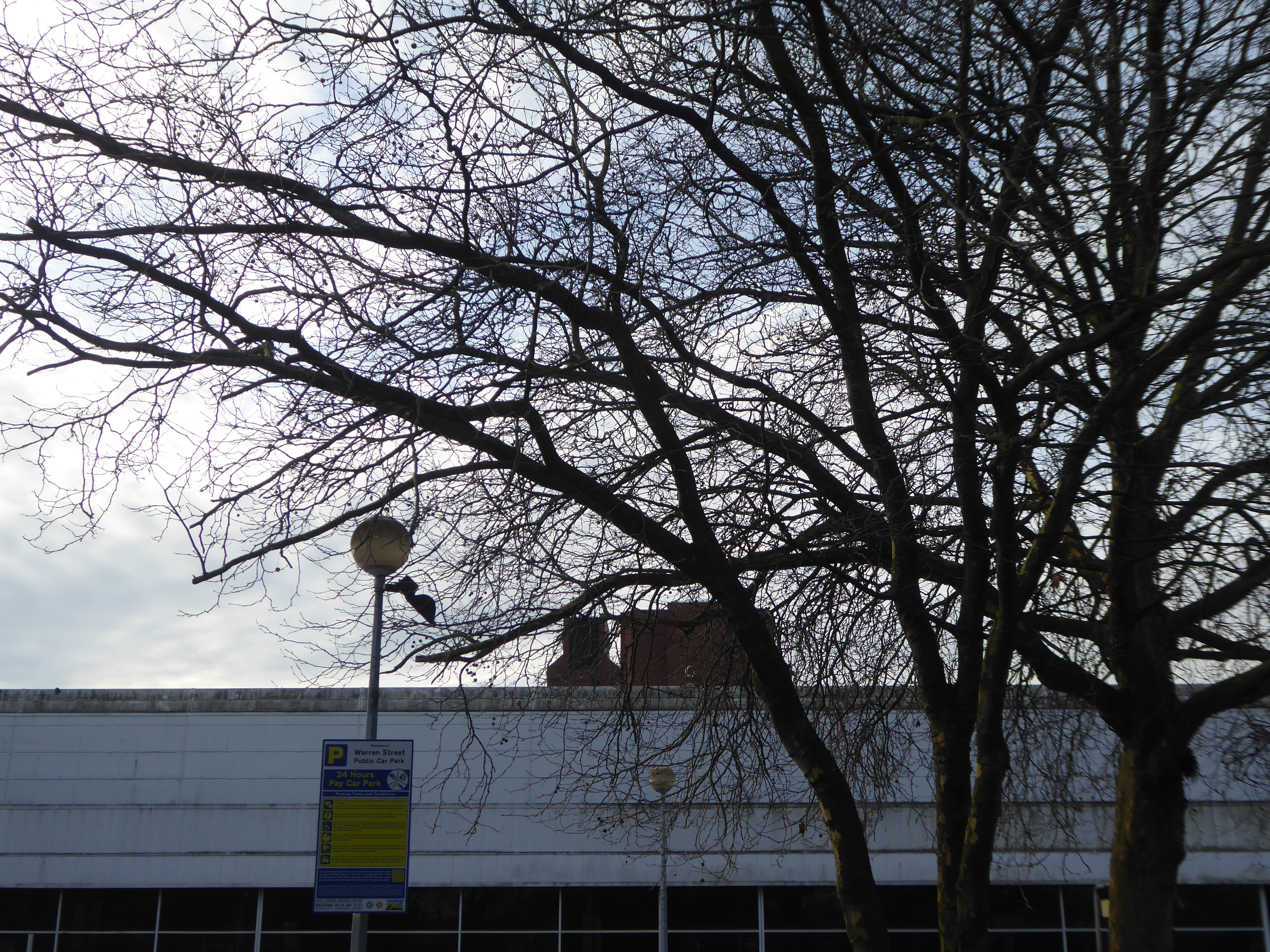
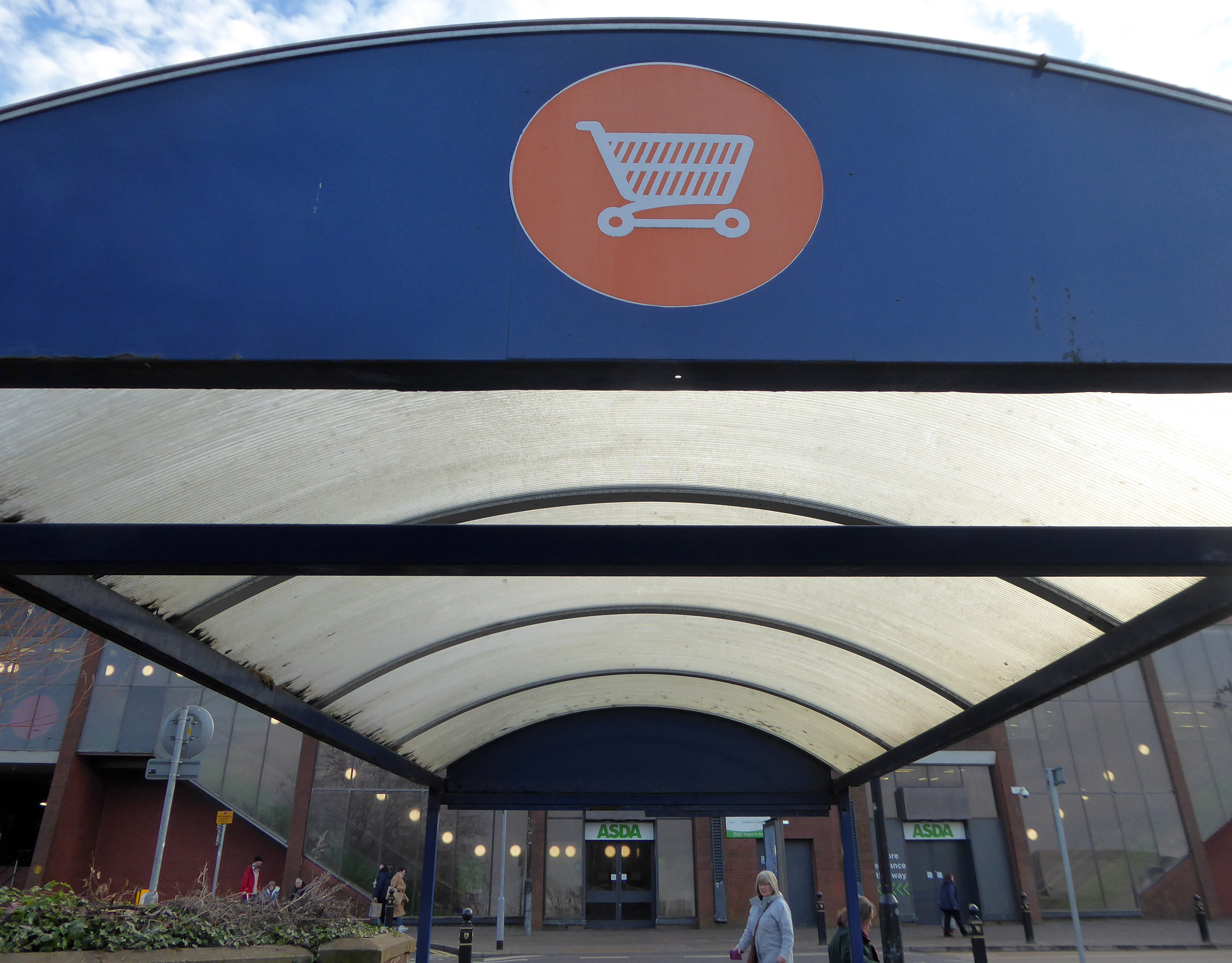
Warren Street Stockport, north of Lancashire Bridge beside the Mersey – seen here in the 1920s a mix of retail, dwellings and industry as was most of the town centre.
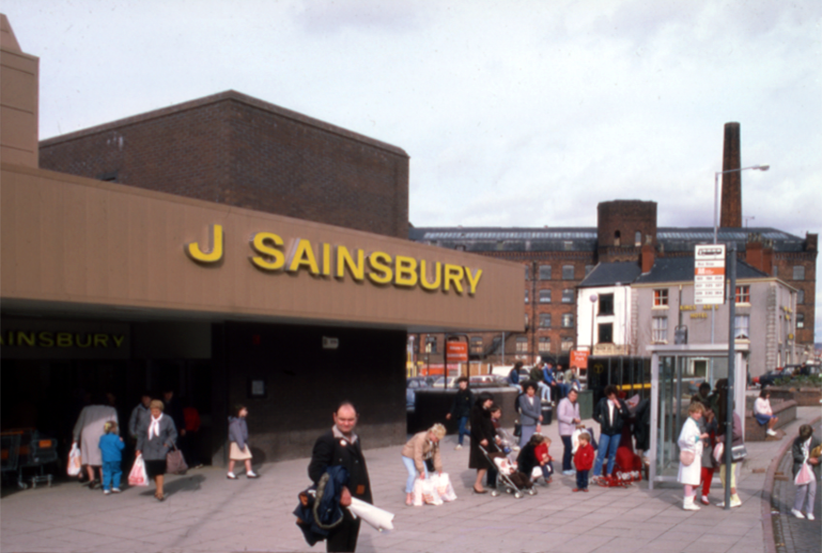
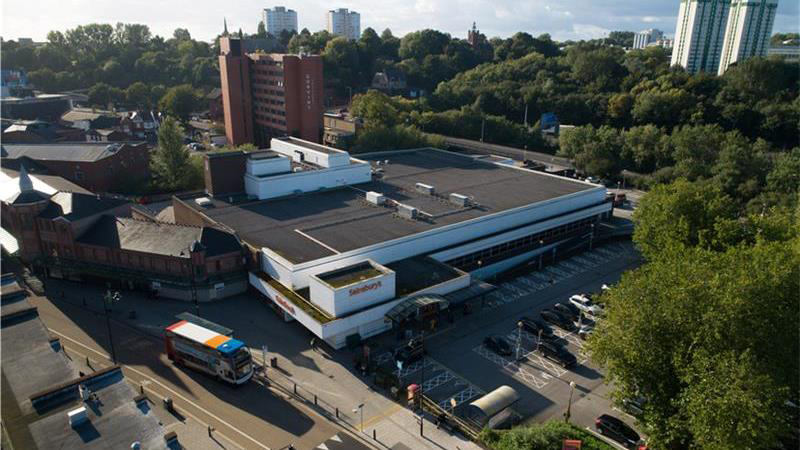
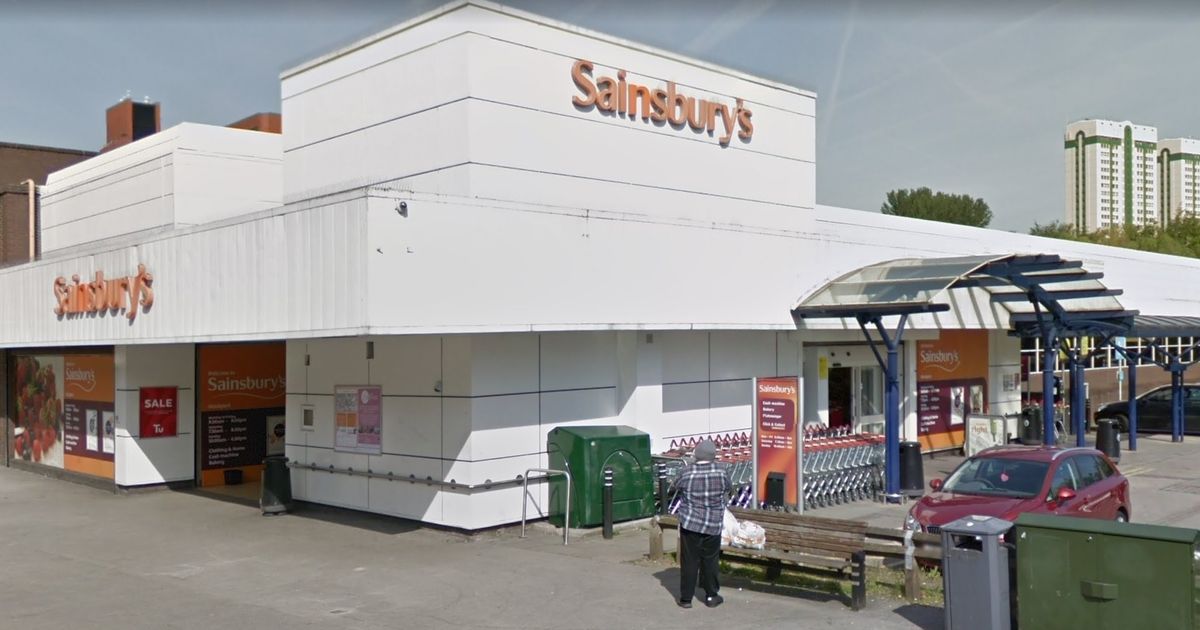
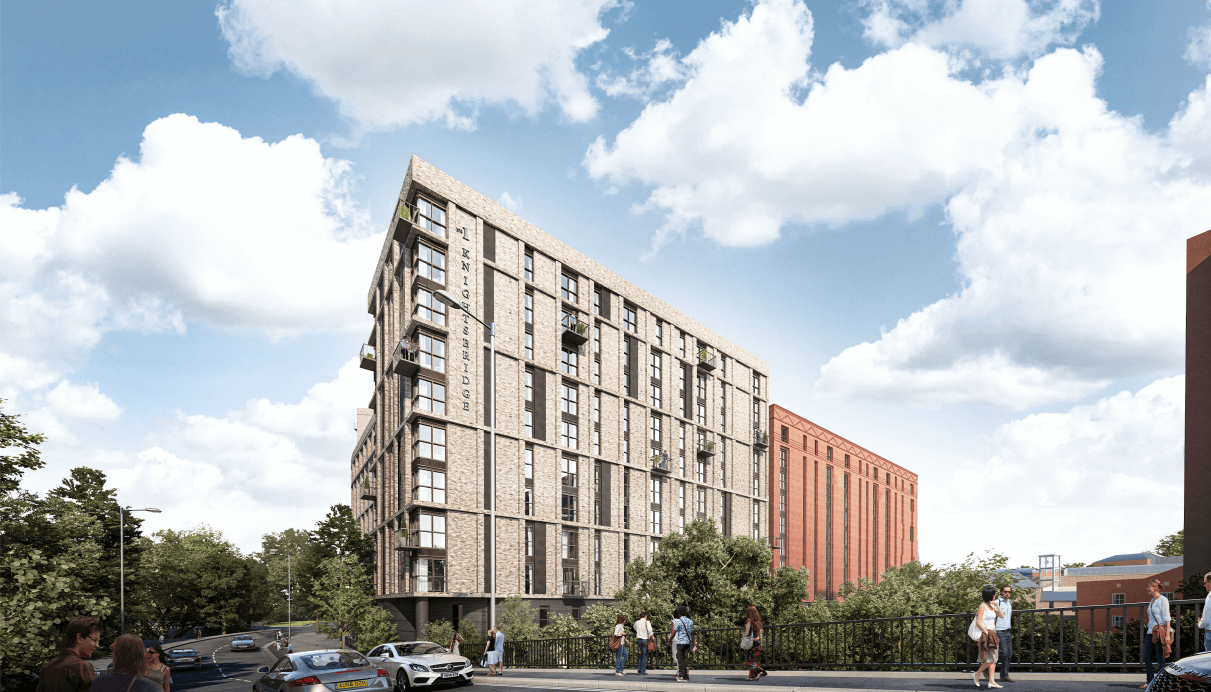
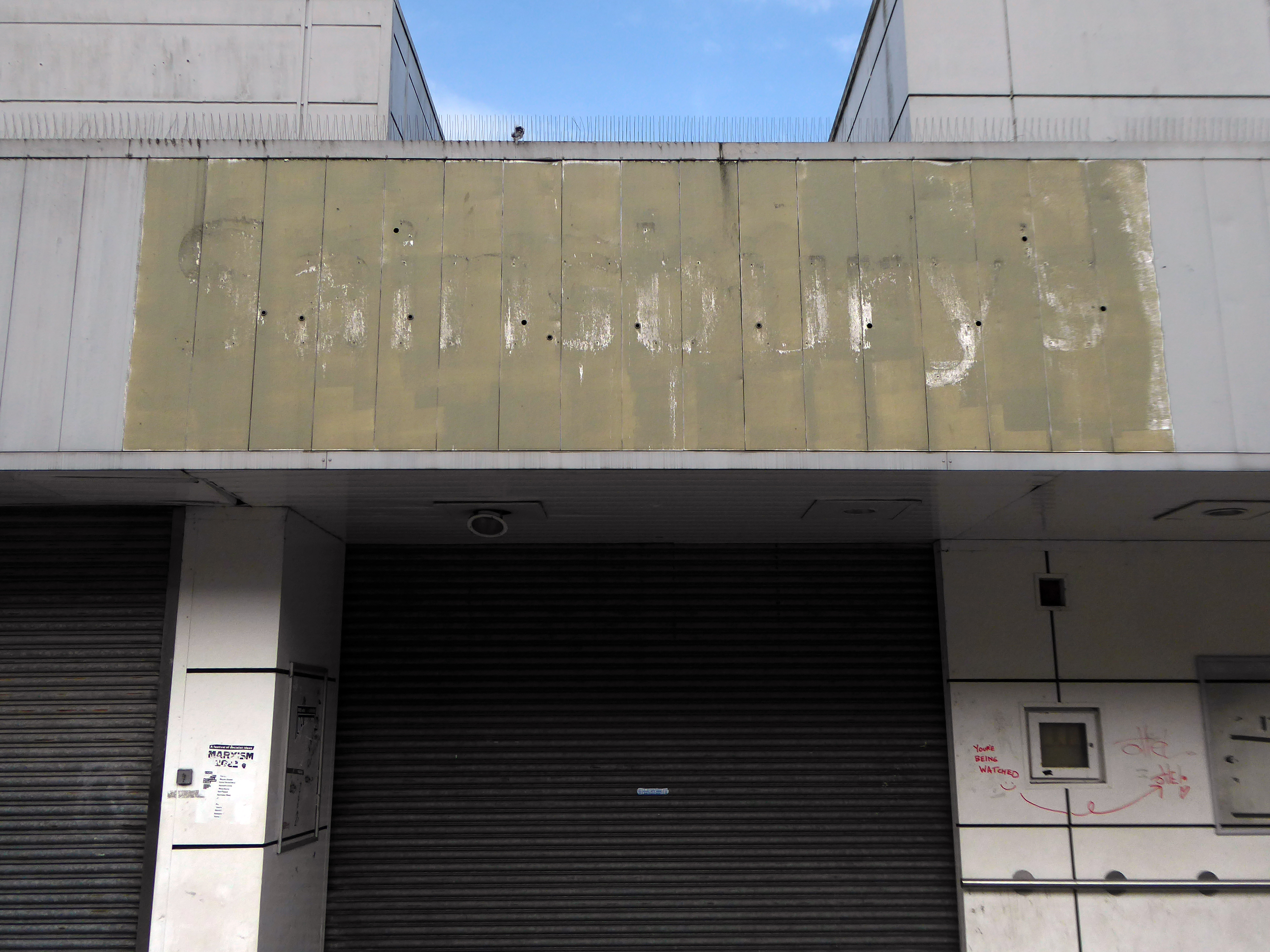
Plans to build hundreds of new homes – including a 15-storey tower block – on a vacant Sainsbury’s site in Stockport town centre are set to get the go-ahead.
Proposals that would bring more than 500 flats and 34 townhouses to the three-acre plot, in Warren Street, are set to go before the council’s planning committee next Thursday night. The 573 homes would be spread across a trio of buildings – rising in height from five to 15 storeys. Two of these would also have space for a range of potential uses, ranging from shops and cafes to gyms and creches.
Martin Halsey, operations director at Amstone Ventures, added:
We can see that Stockport has untapped demand for quality homes within its town centre, offering a vibrant lifestyle and everything Stockport town centre has to offer, all on the doorstep.”
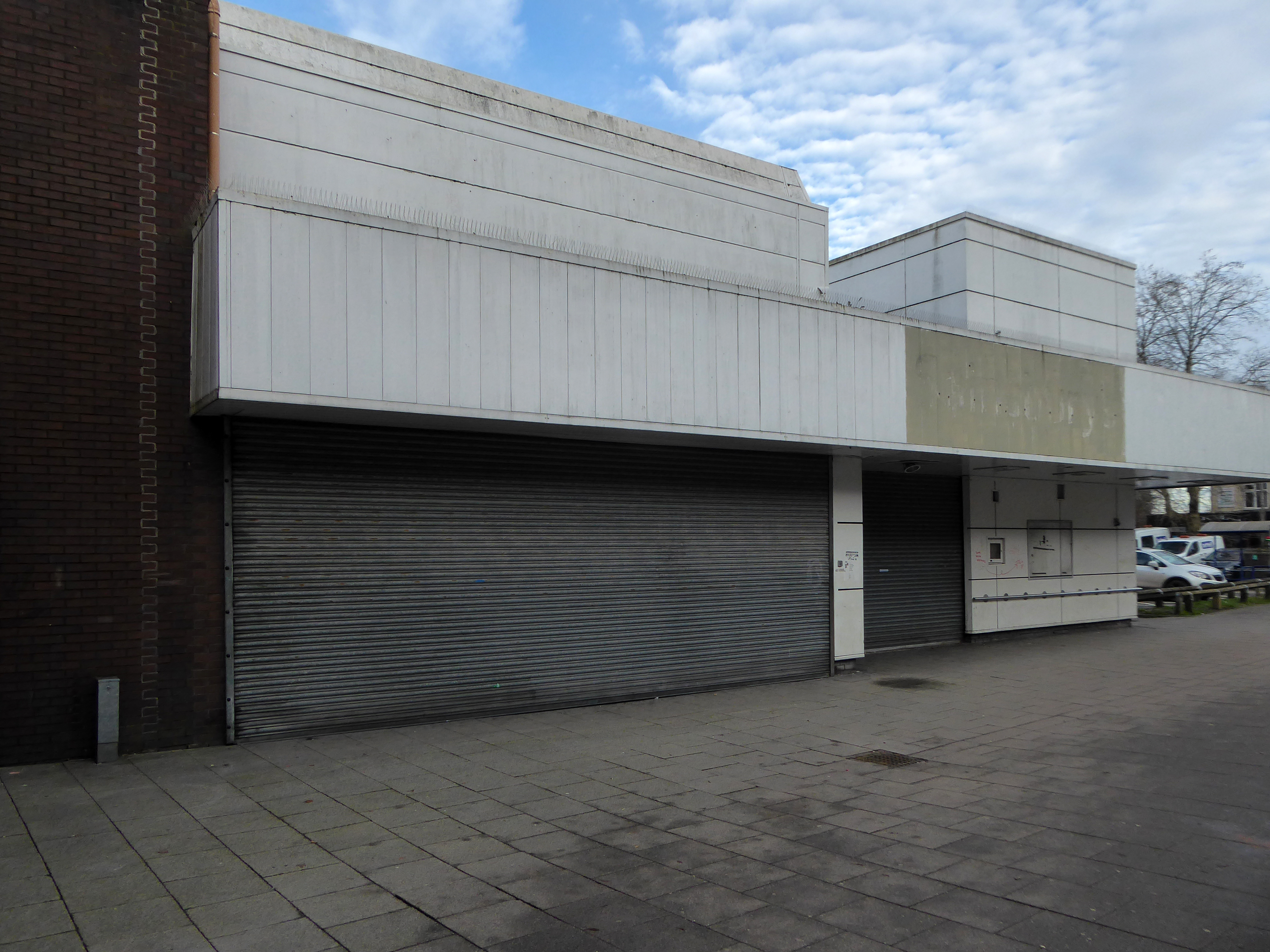
Took a look around the site before it’s no longer possible to look around the site.
Take in all the best that Manchester’s creative scene has to offer and let your imagination go wild.
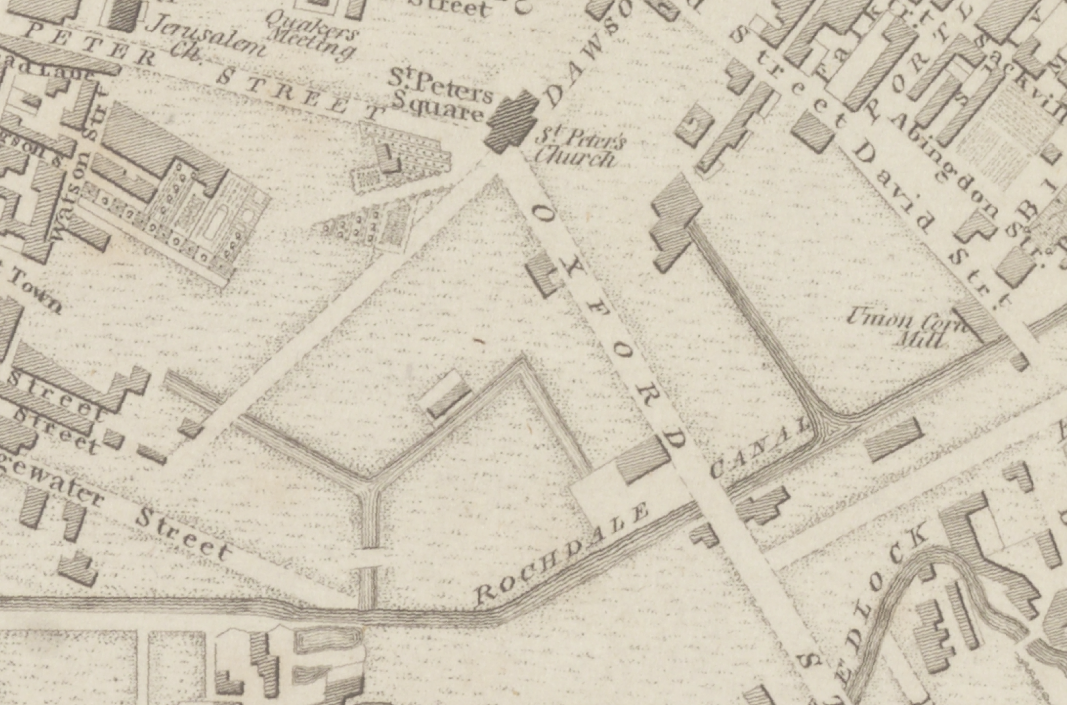
In 1807 you really had to use your imagination to discover the creative scene.
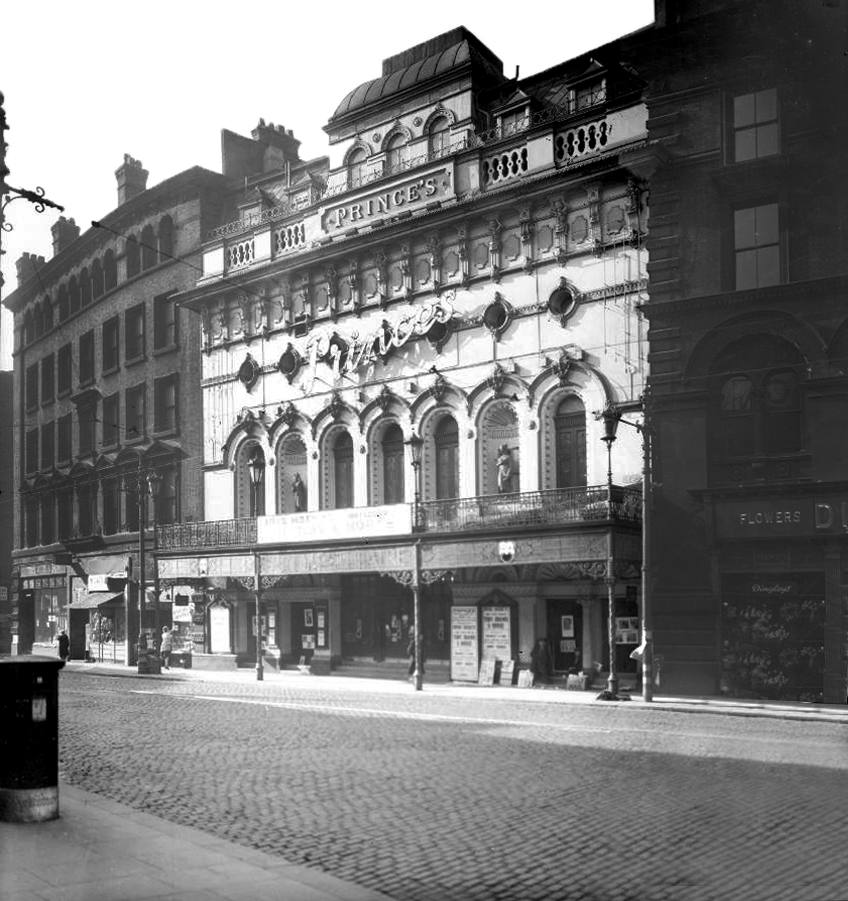
The site was home to the Prince’s Theatre:
Constructed by Metcalf and Waterson at a cost of £20,000, and designed by the architect Edward Salomons. The Theatre, which had seating for 1,590, opened with a production of Shakespeare’s ‘The Tempest’ on Saturday, October the 15th 1864, under the management of Charles Calvert.
Sadly the Prince’s Theatre was closed in April 1940 when it was sold to ABC Cinemas who planned to build a new Cinema complex on the site, the Theatre was subsequently demolished but because of the war – the new Cinema was never built
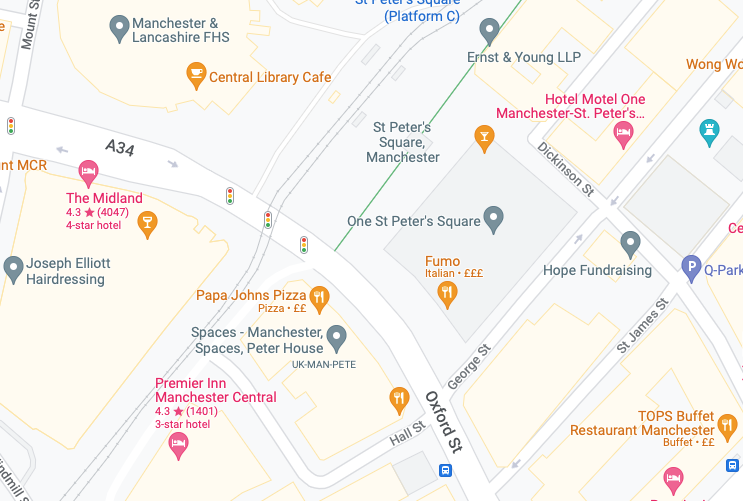
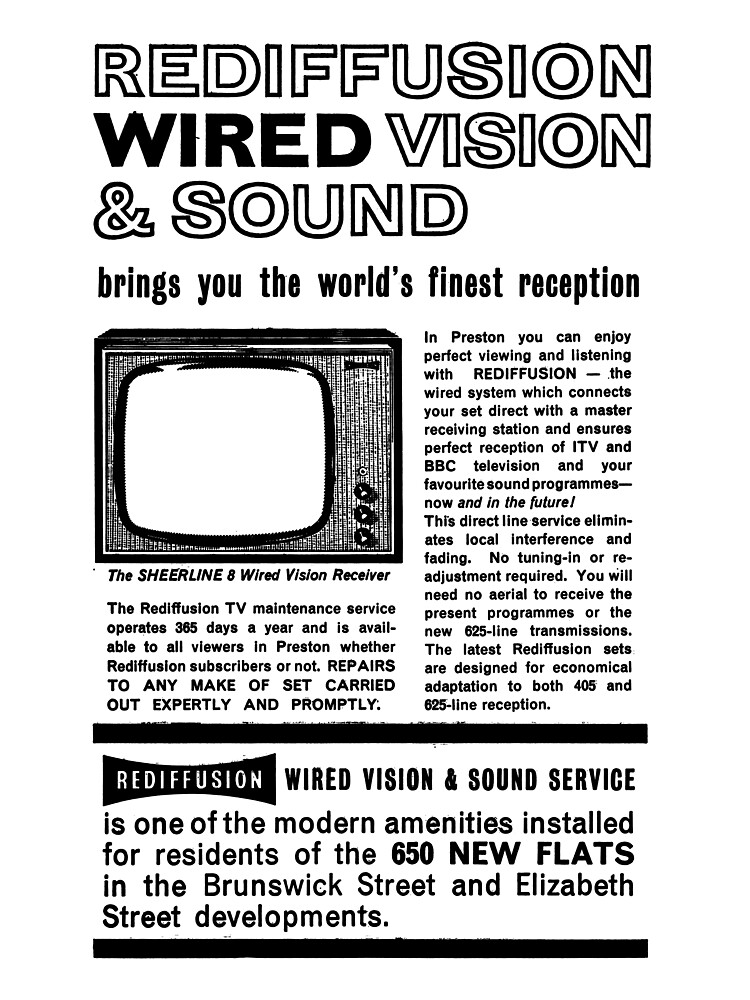
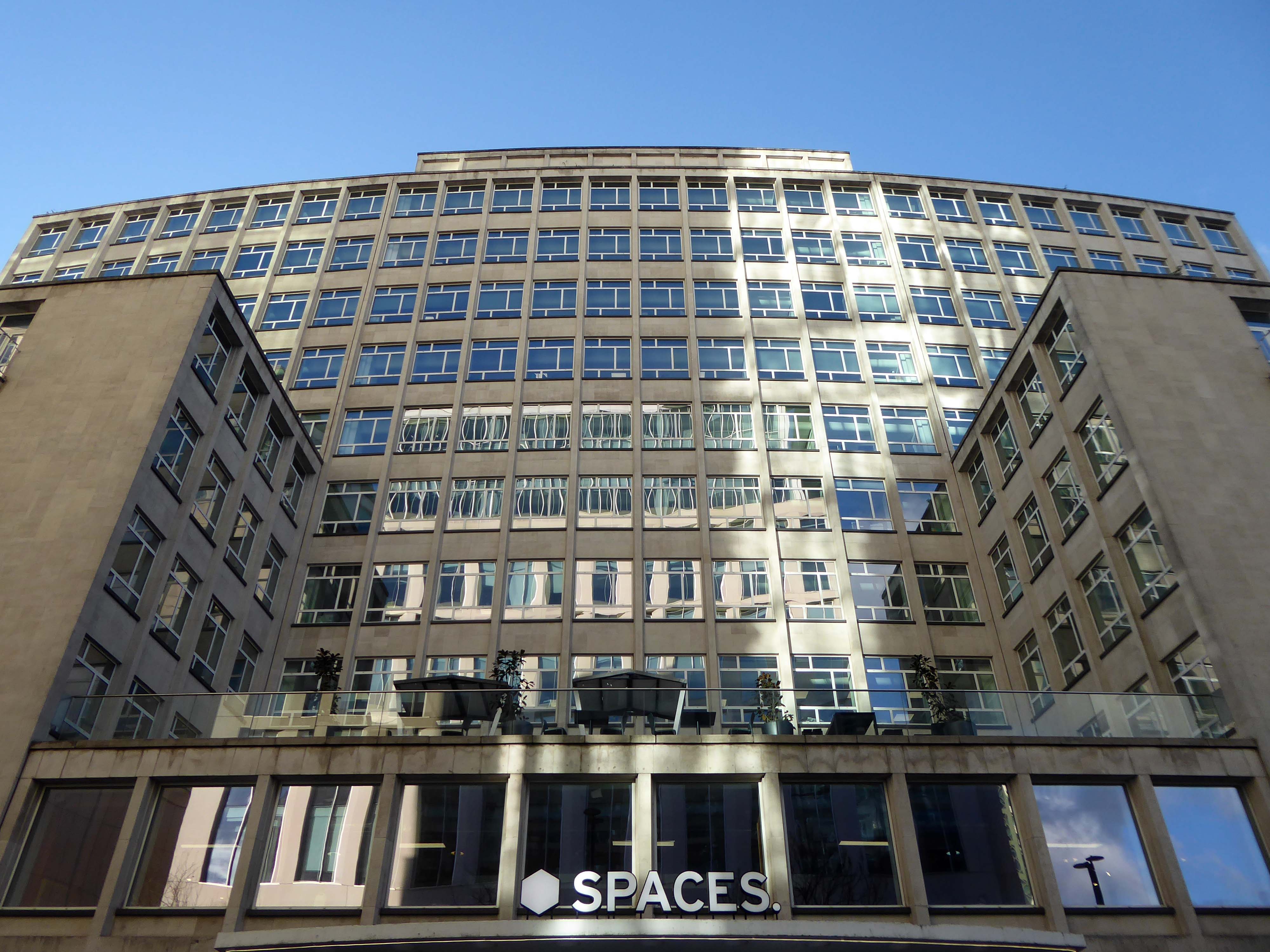
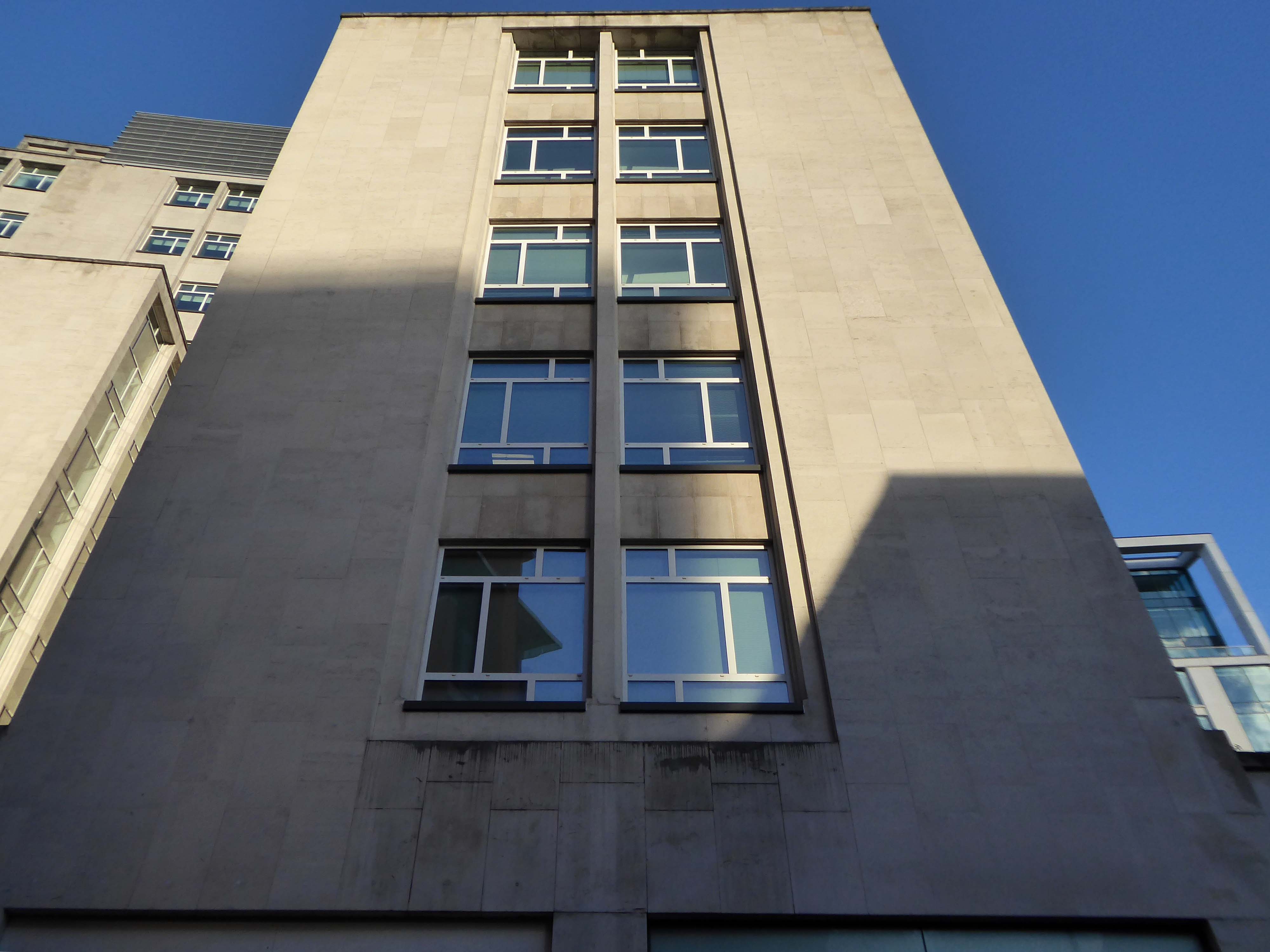
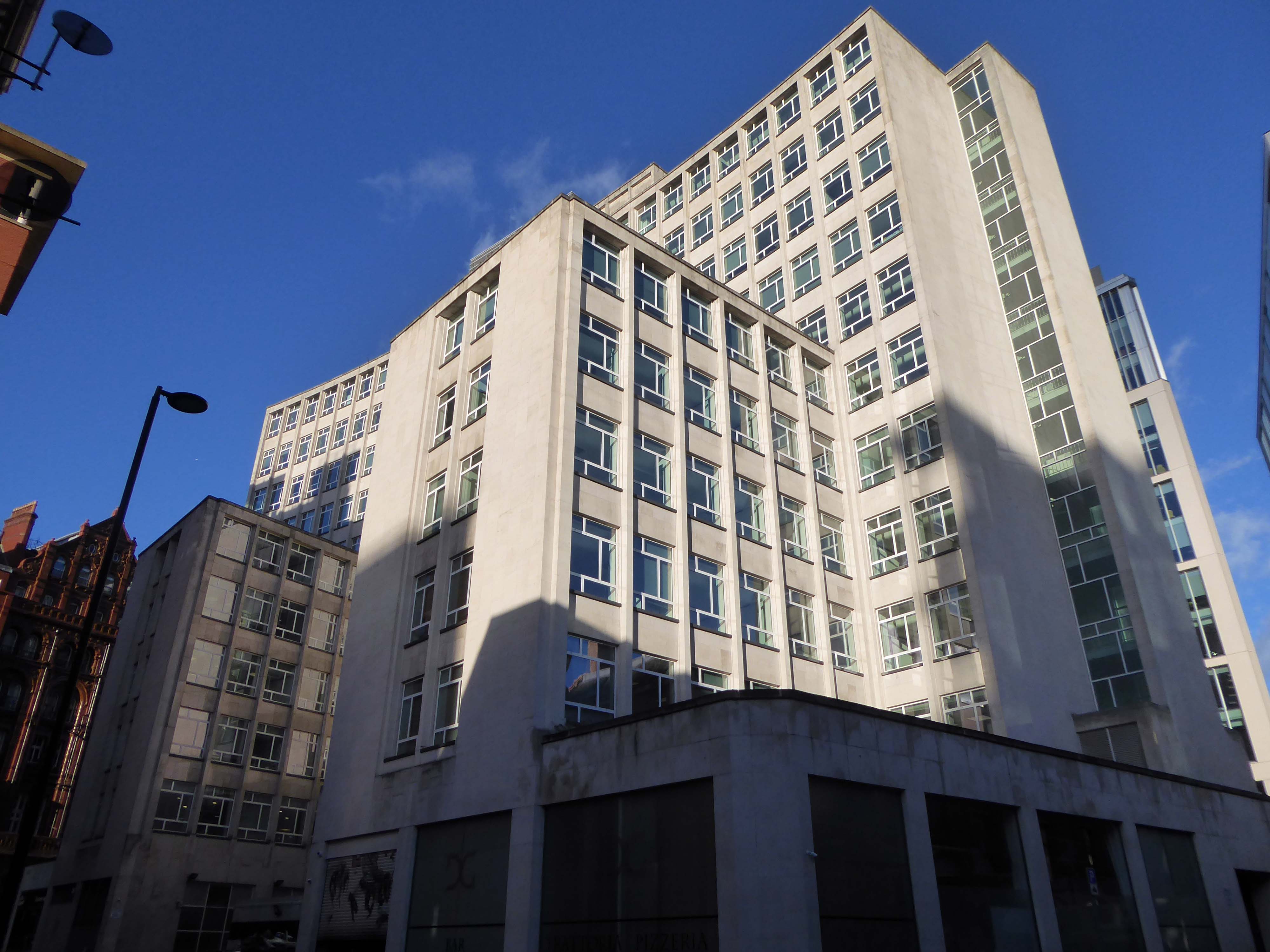
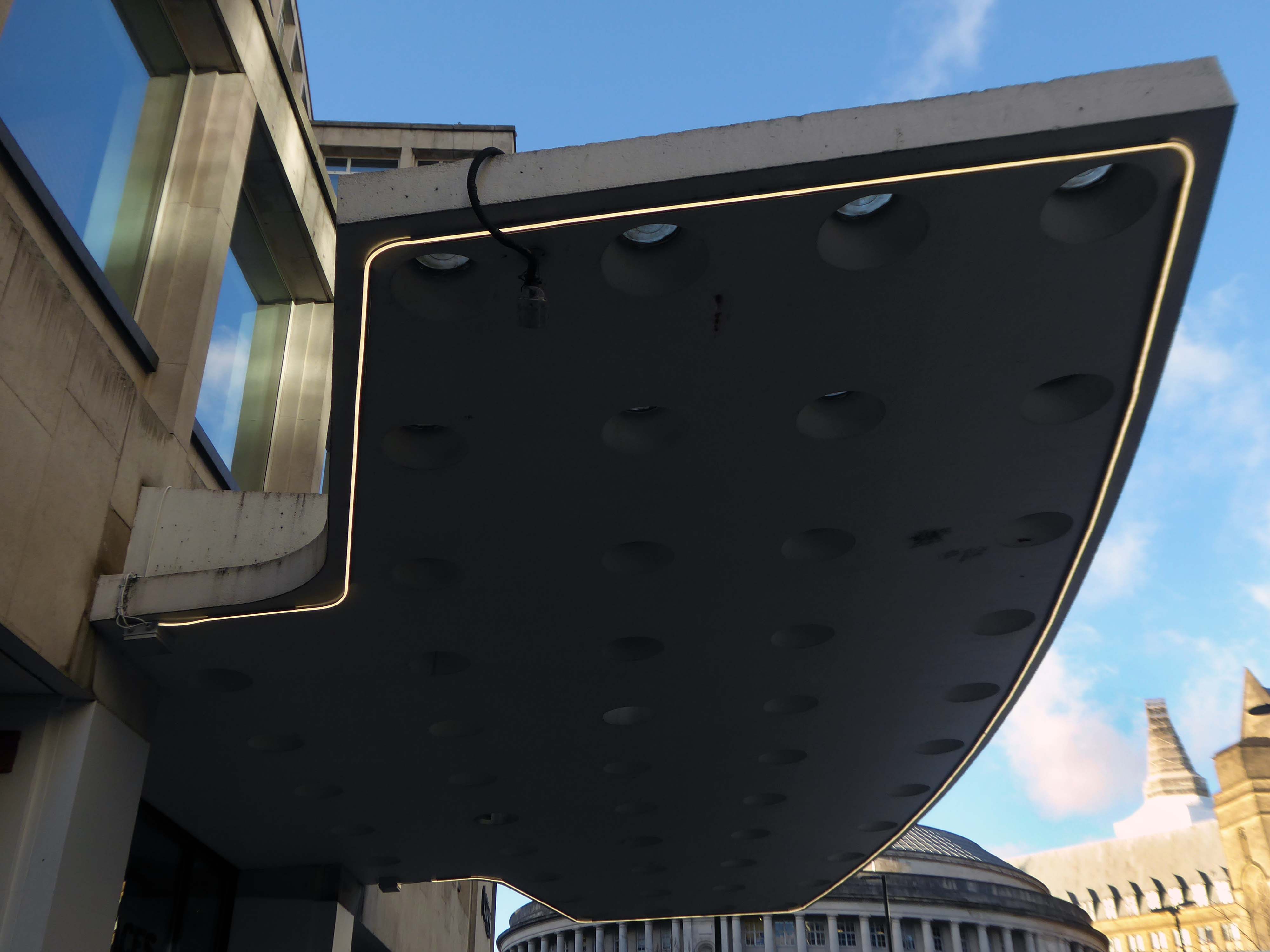
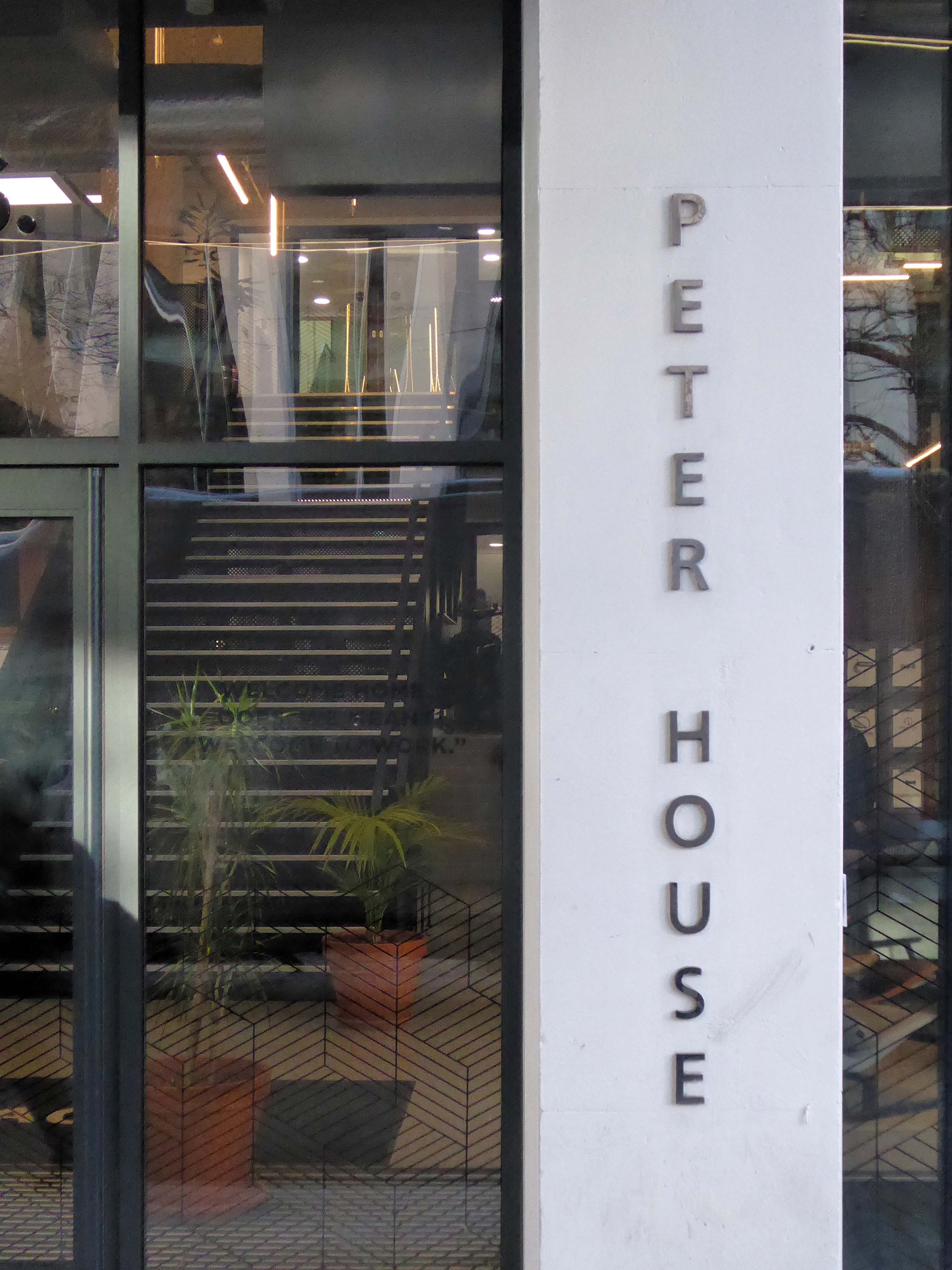
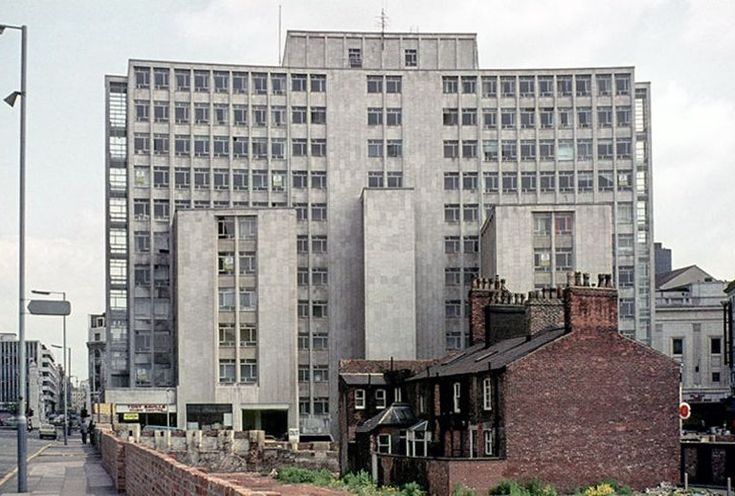
It was replaced by Rediffusion House – later Peter House architects Ansell & Bailey.
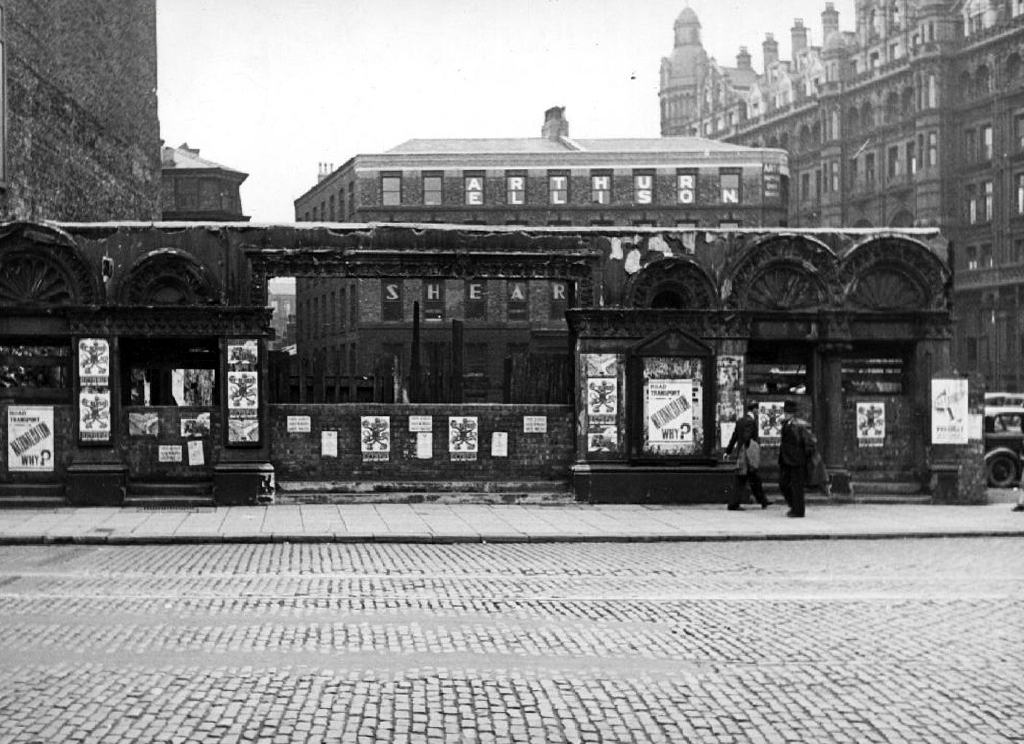
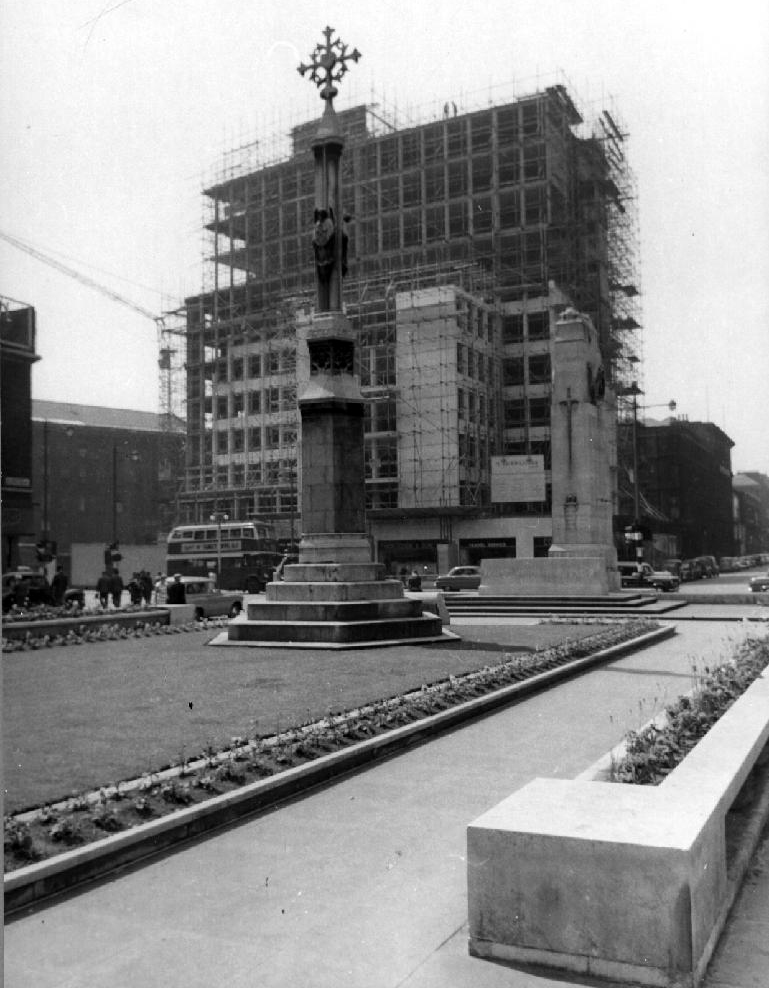
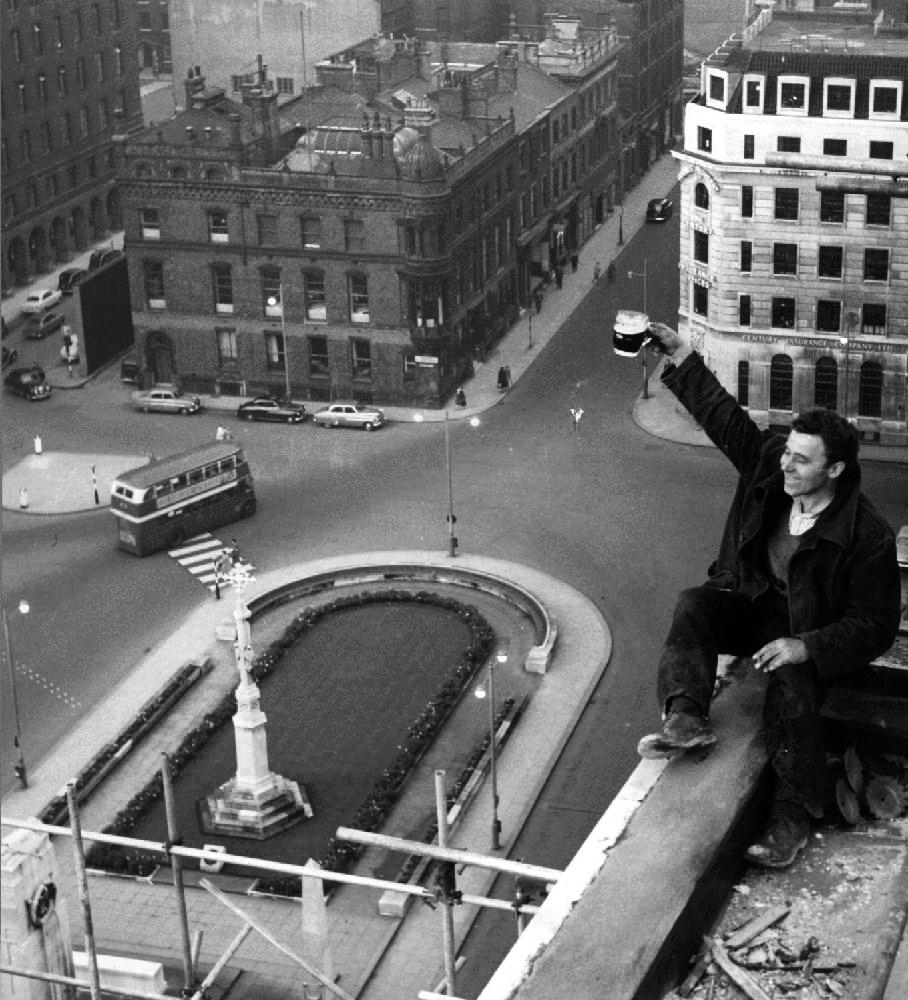
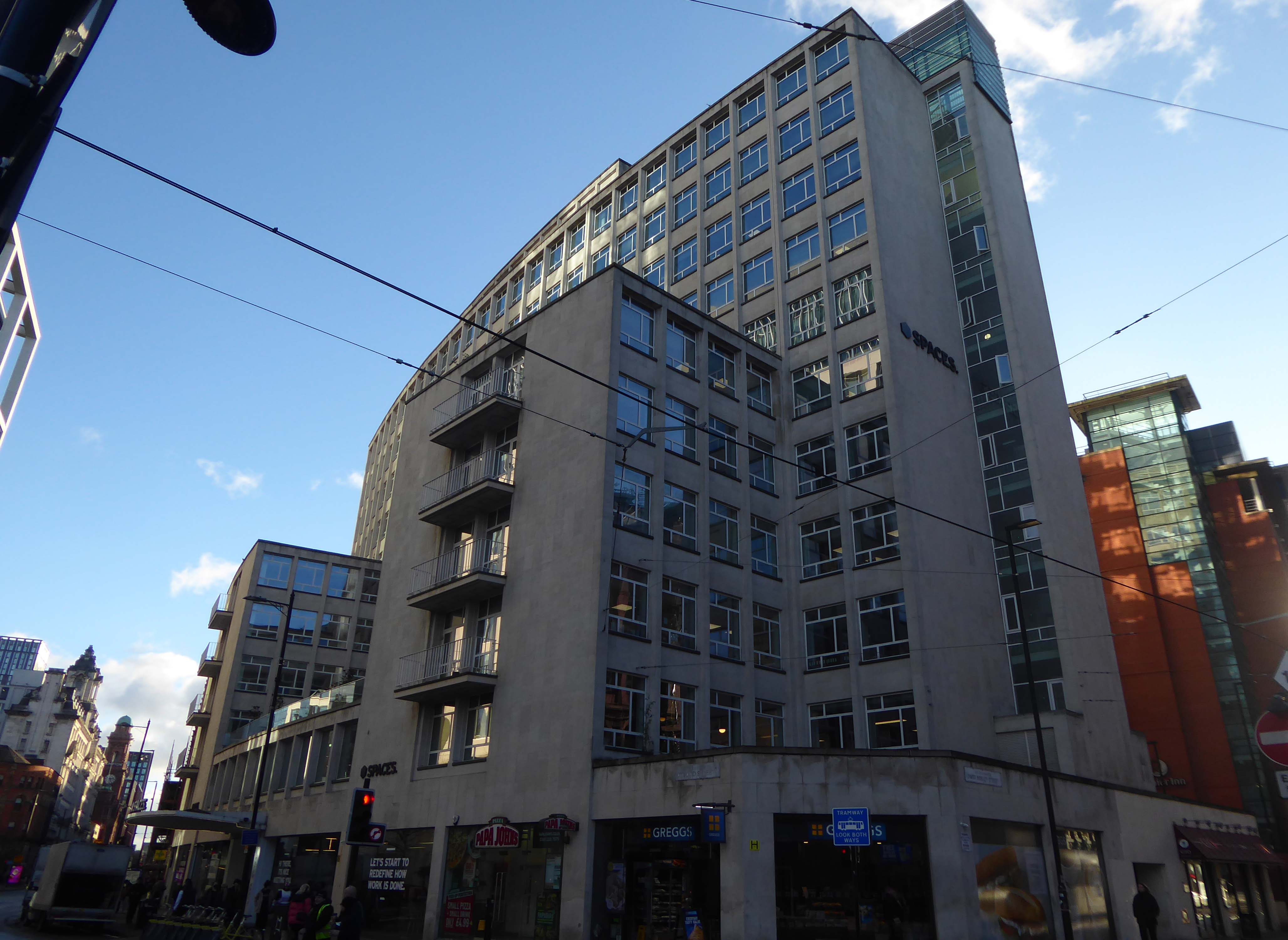
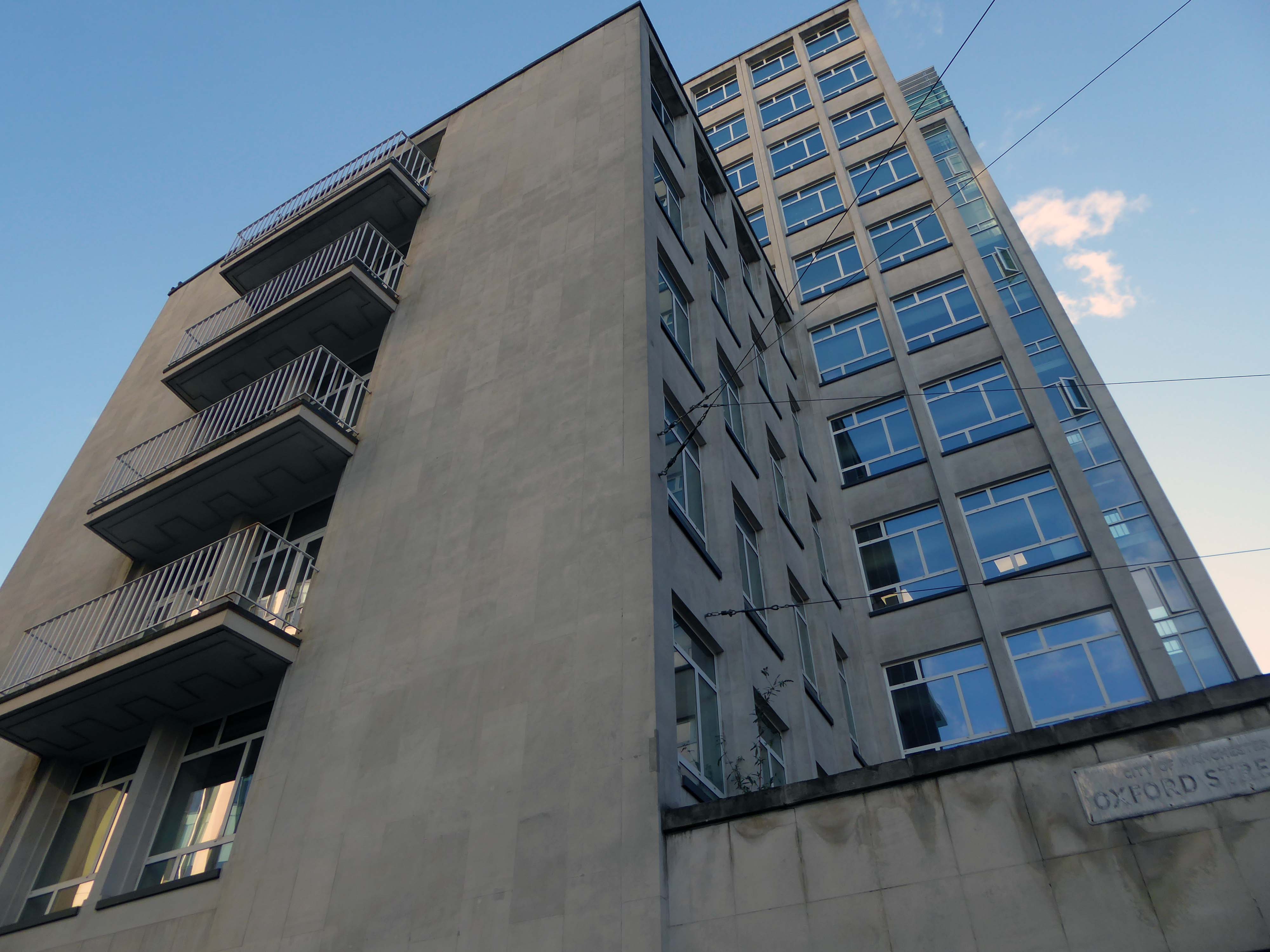
Topped out in 1957 with a pint of Chester’s Mild.
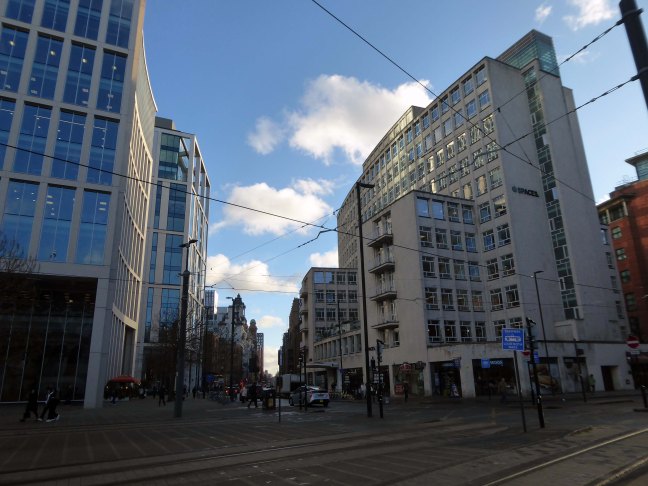
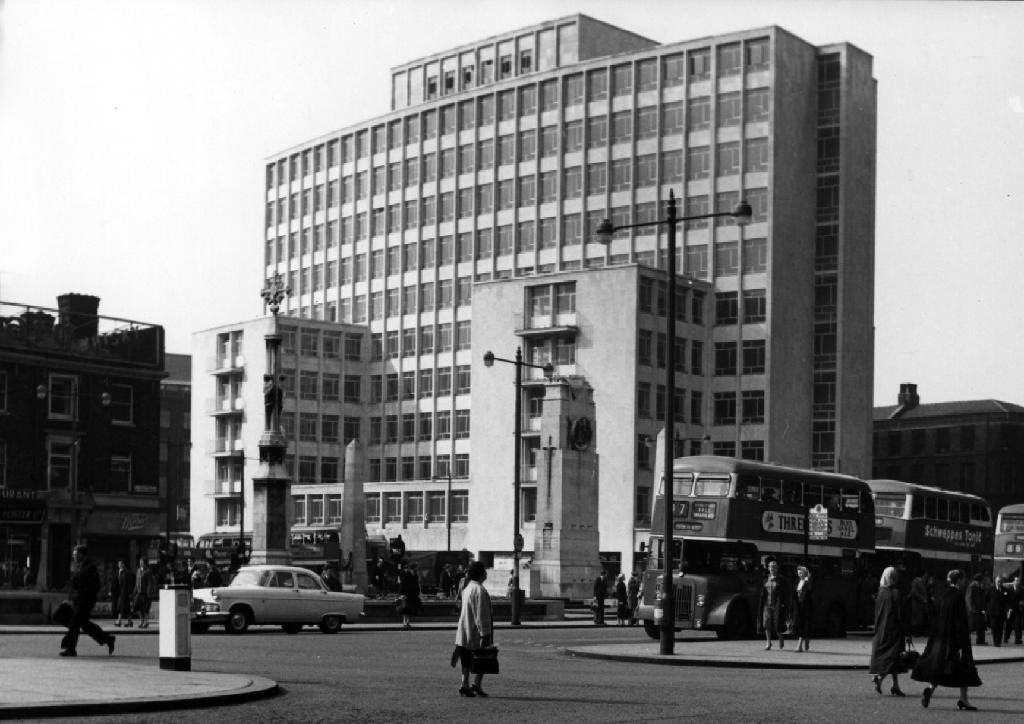
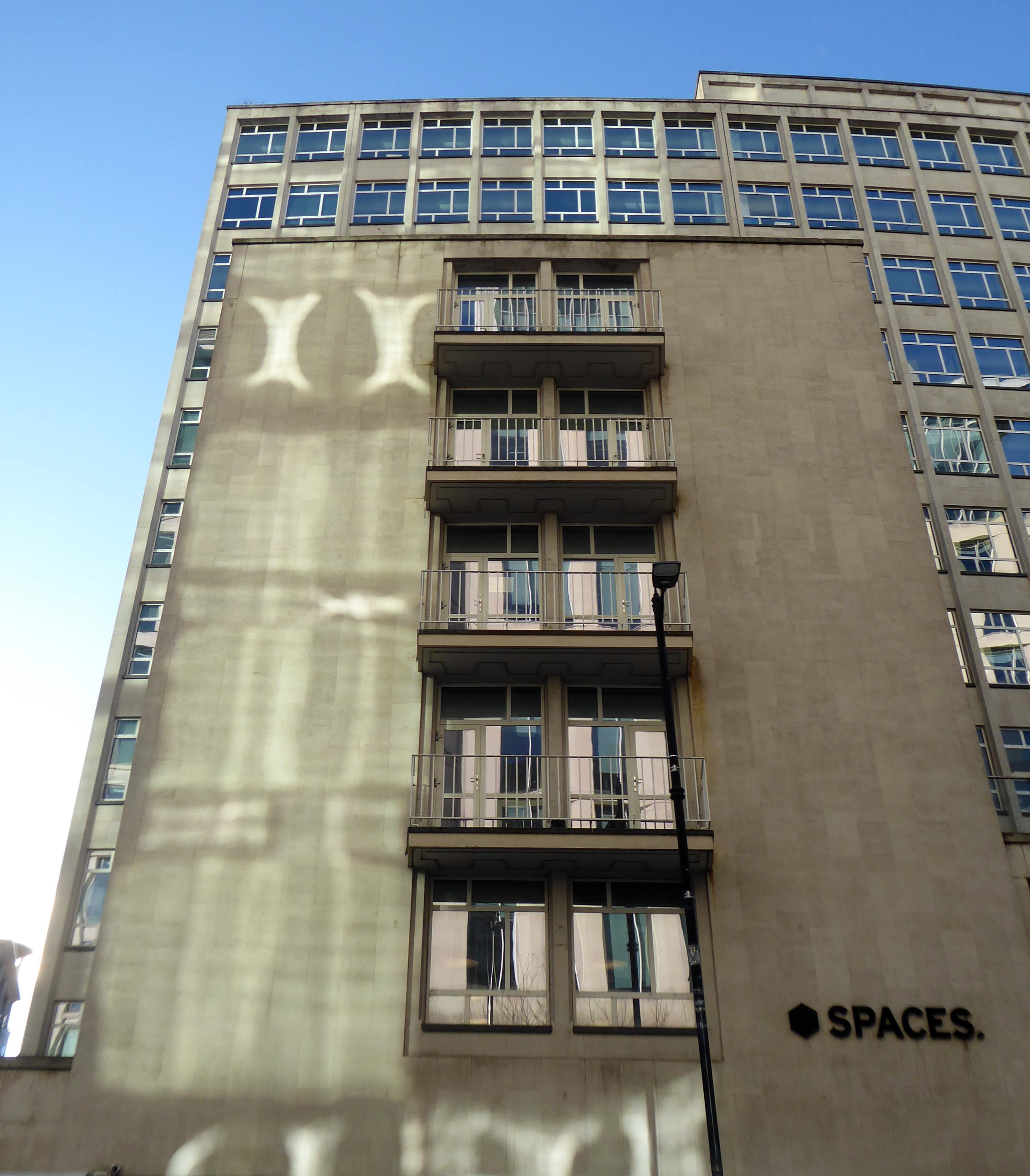
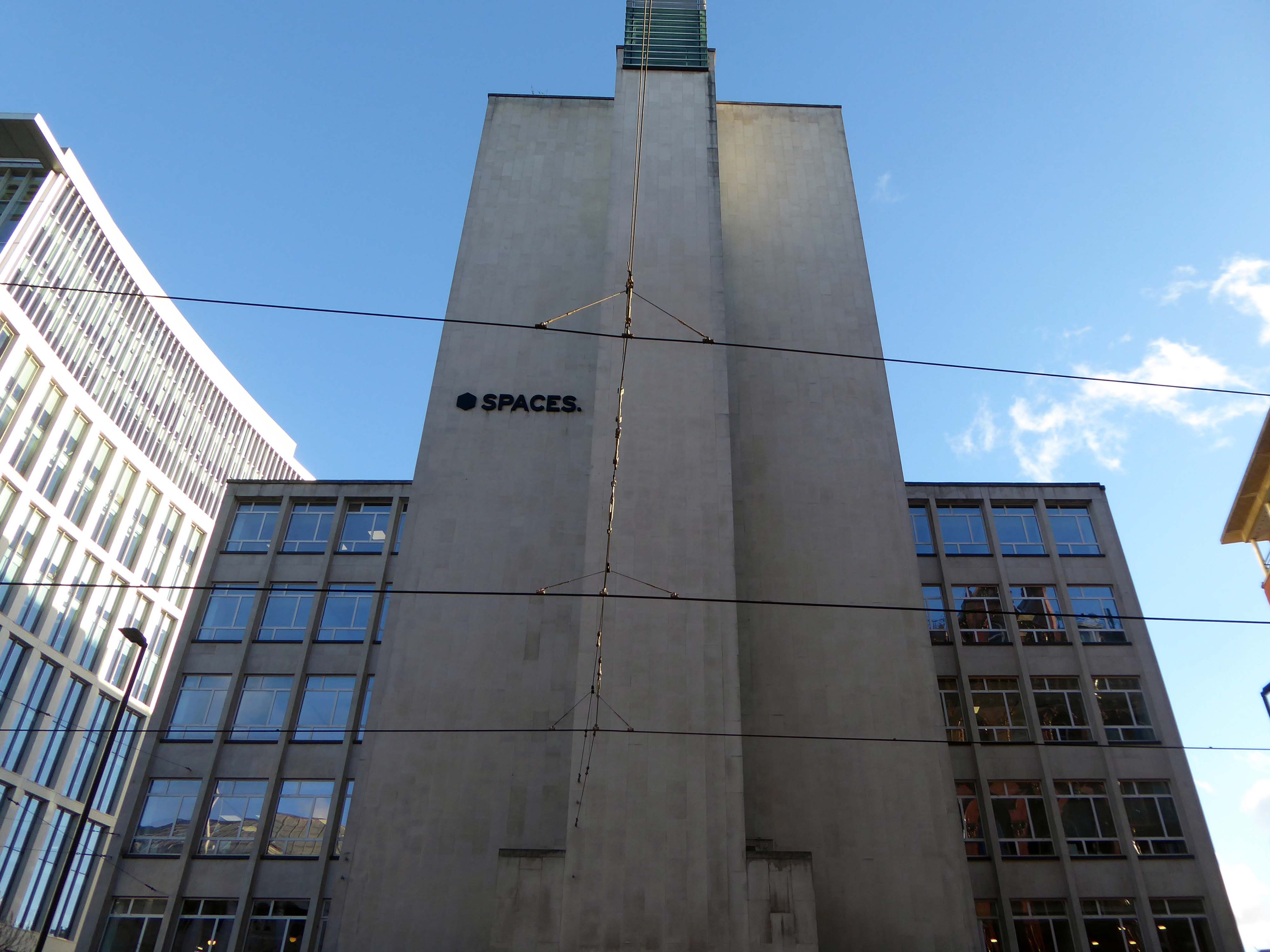
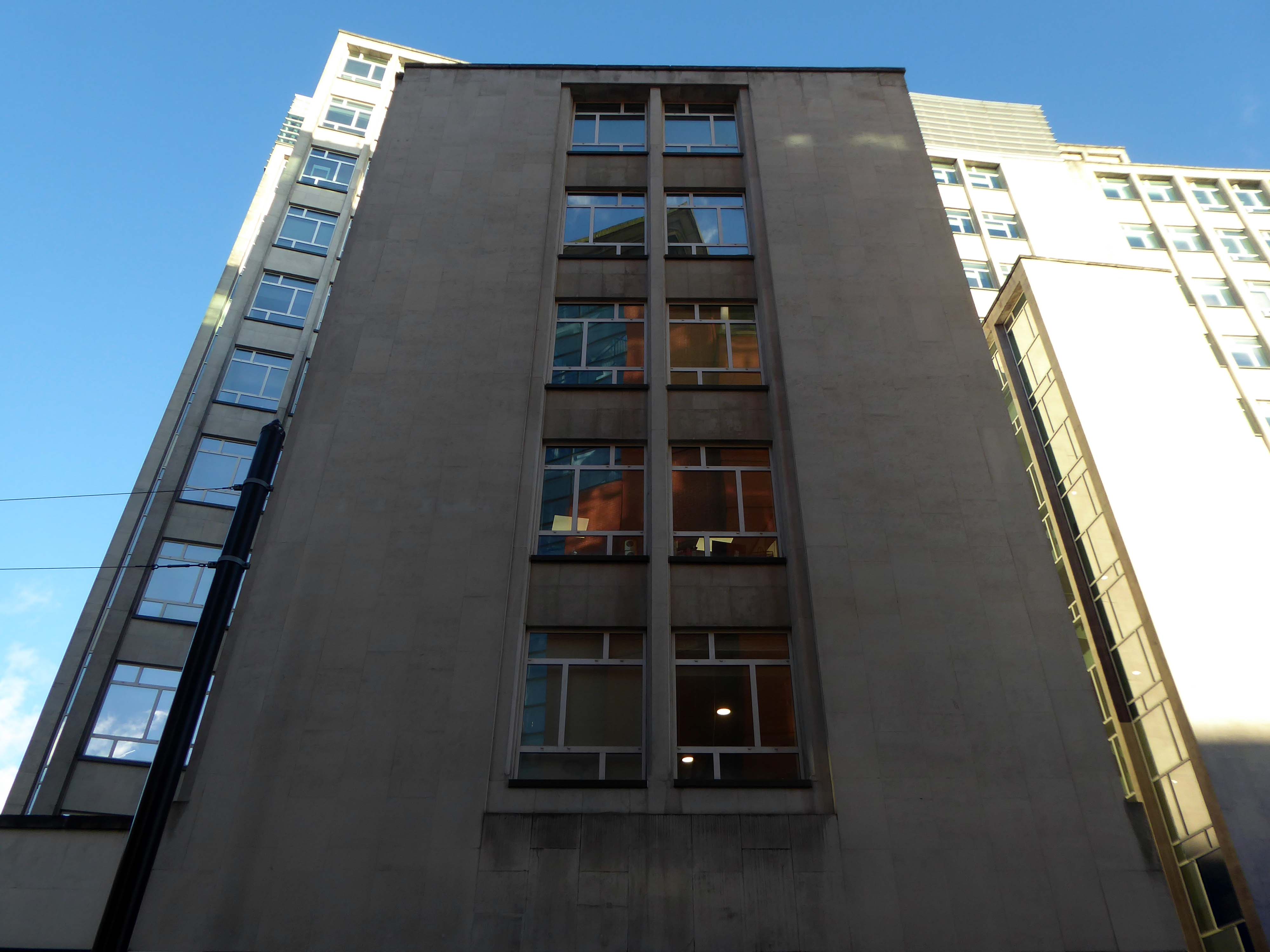
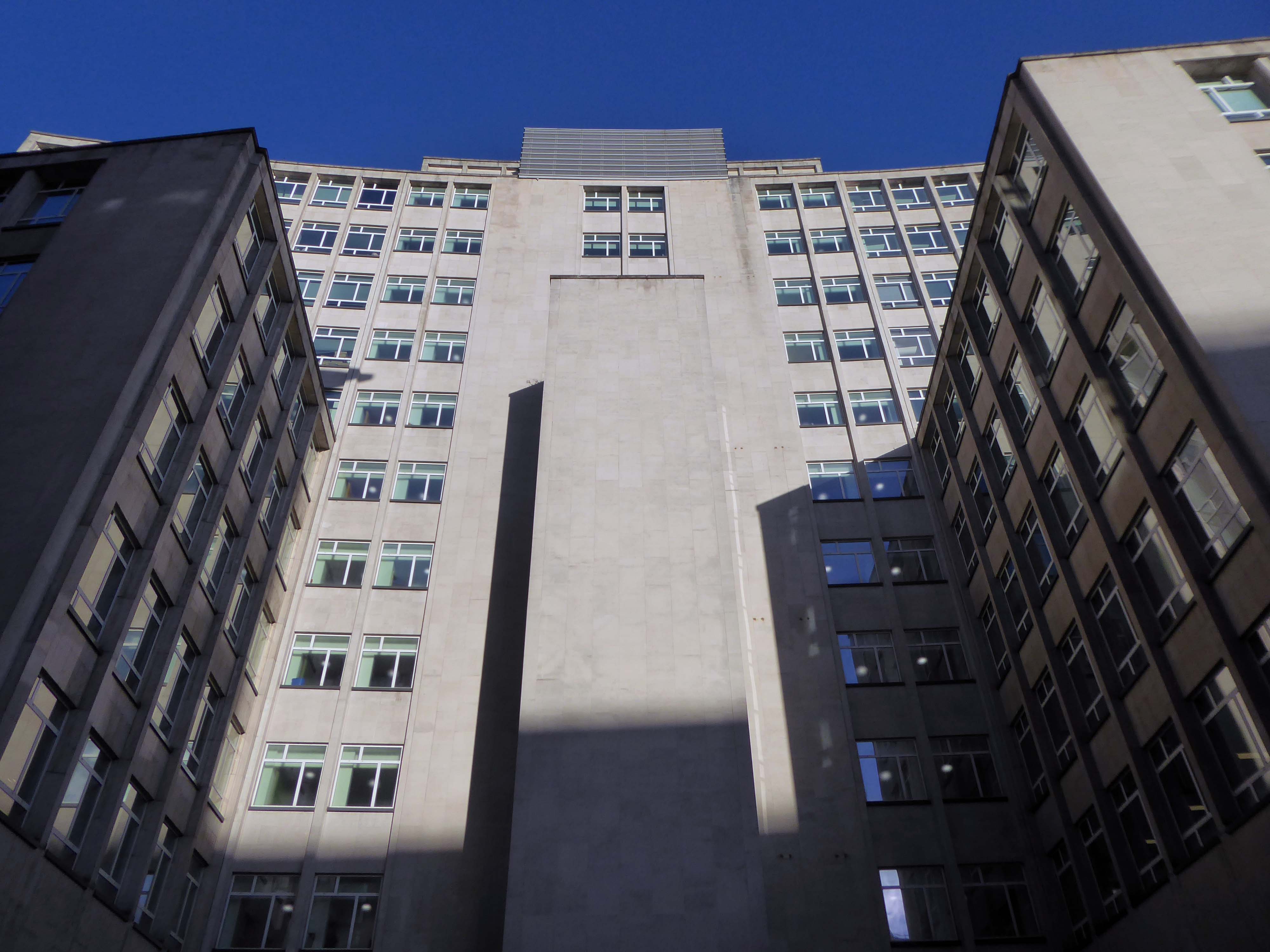
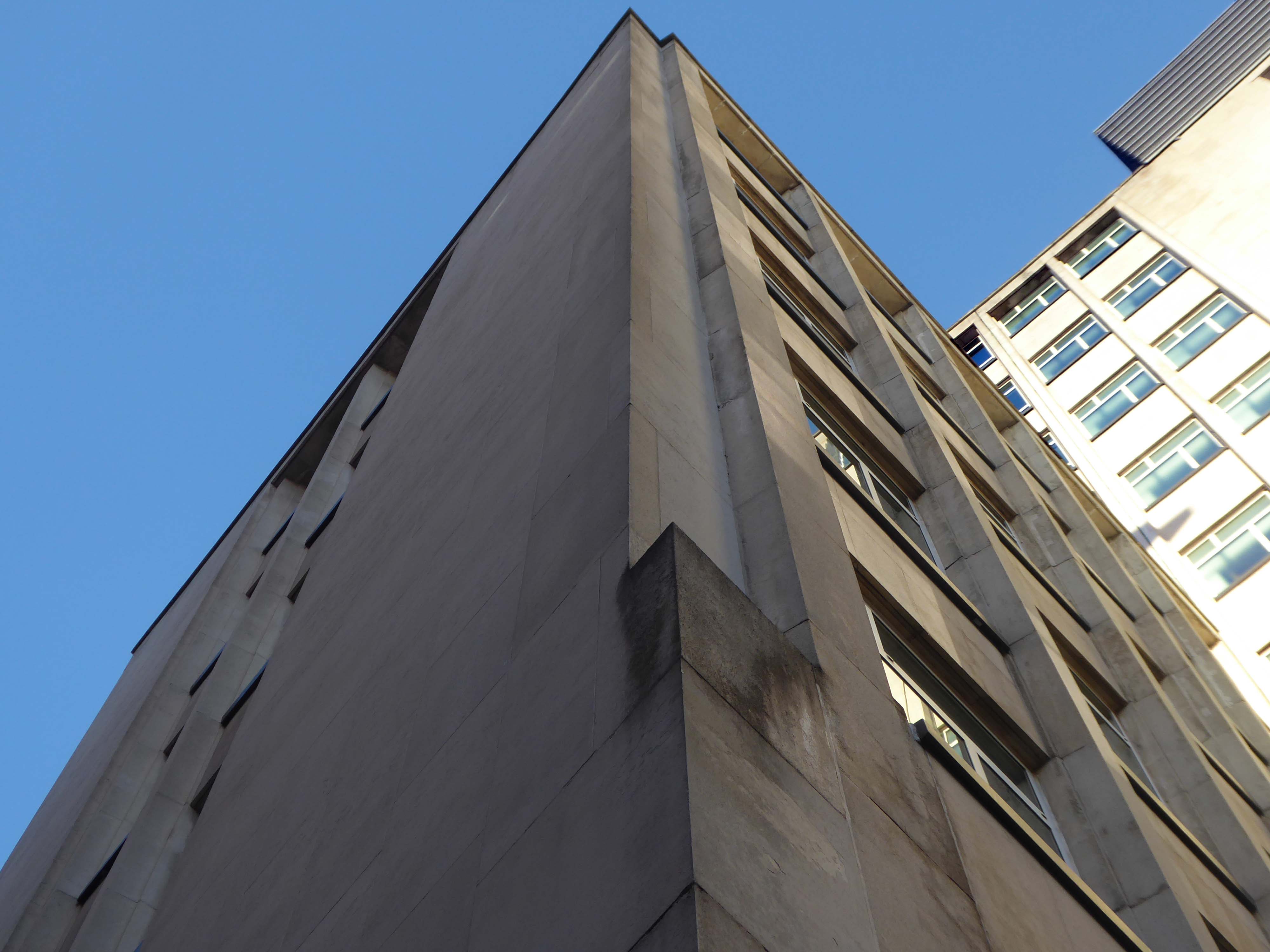
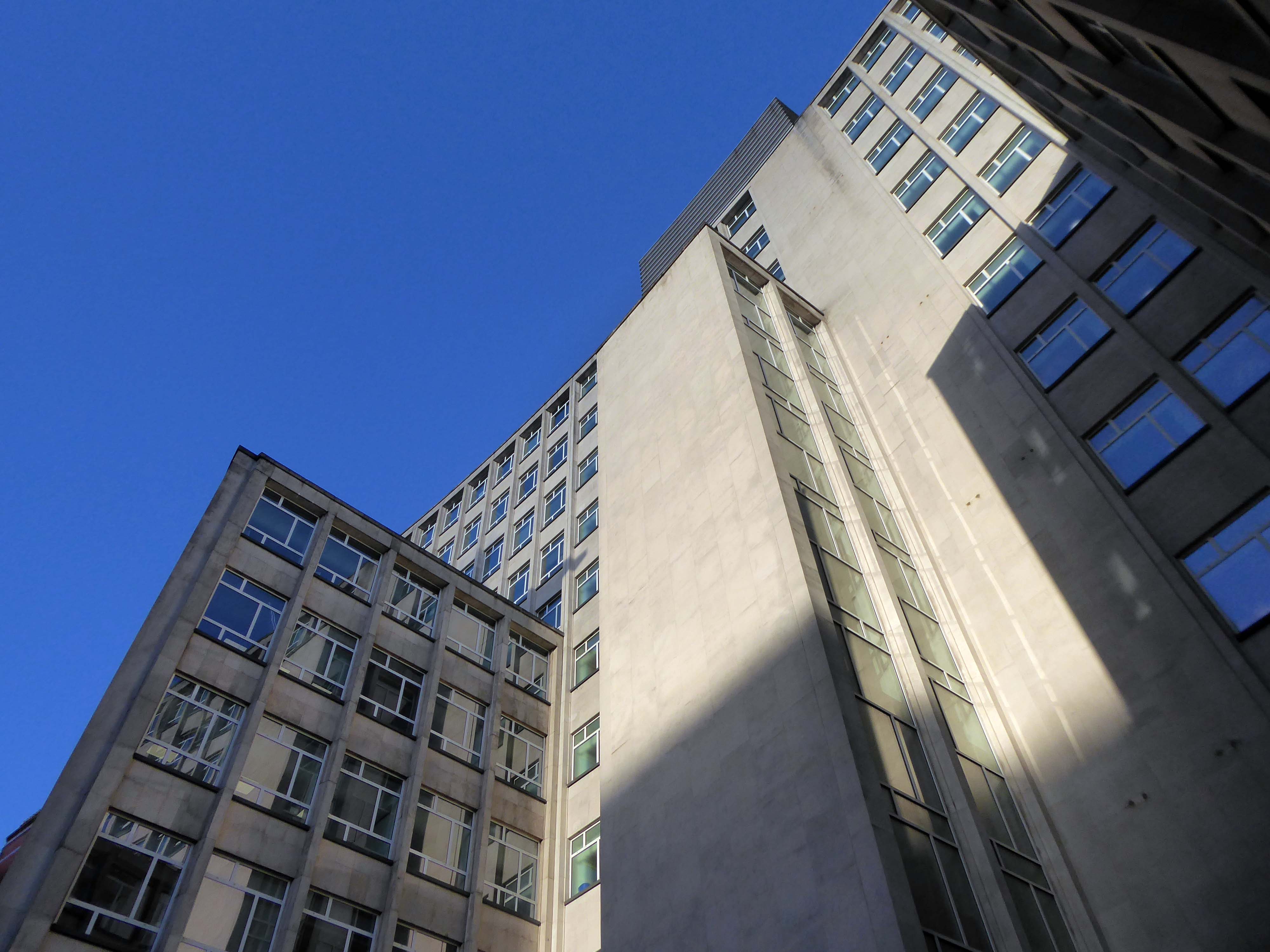
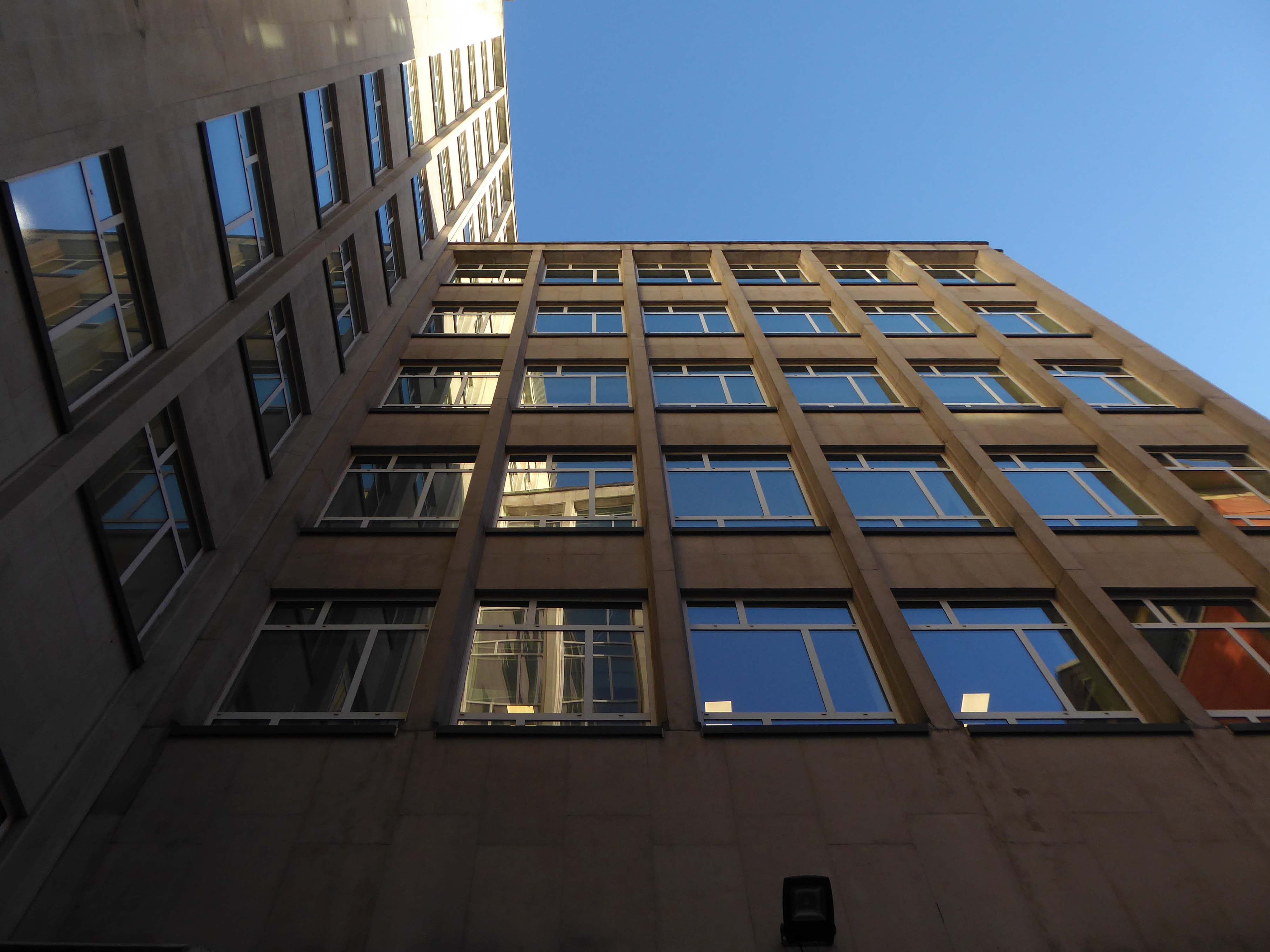
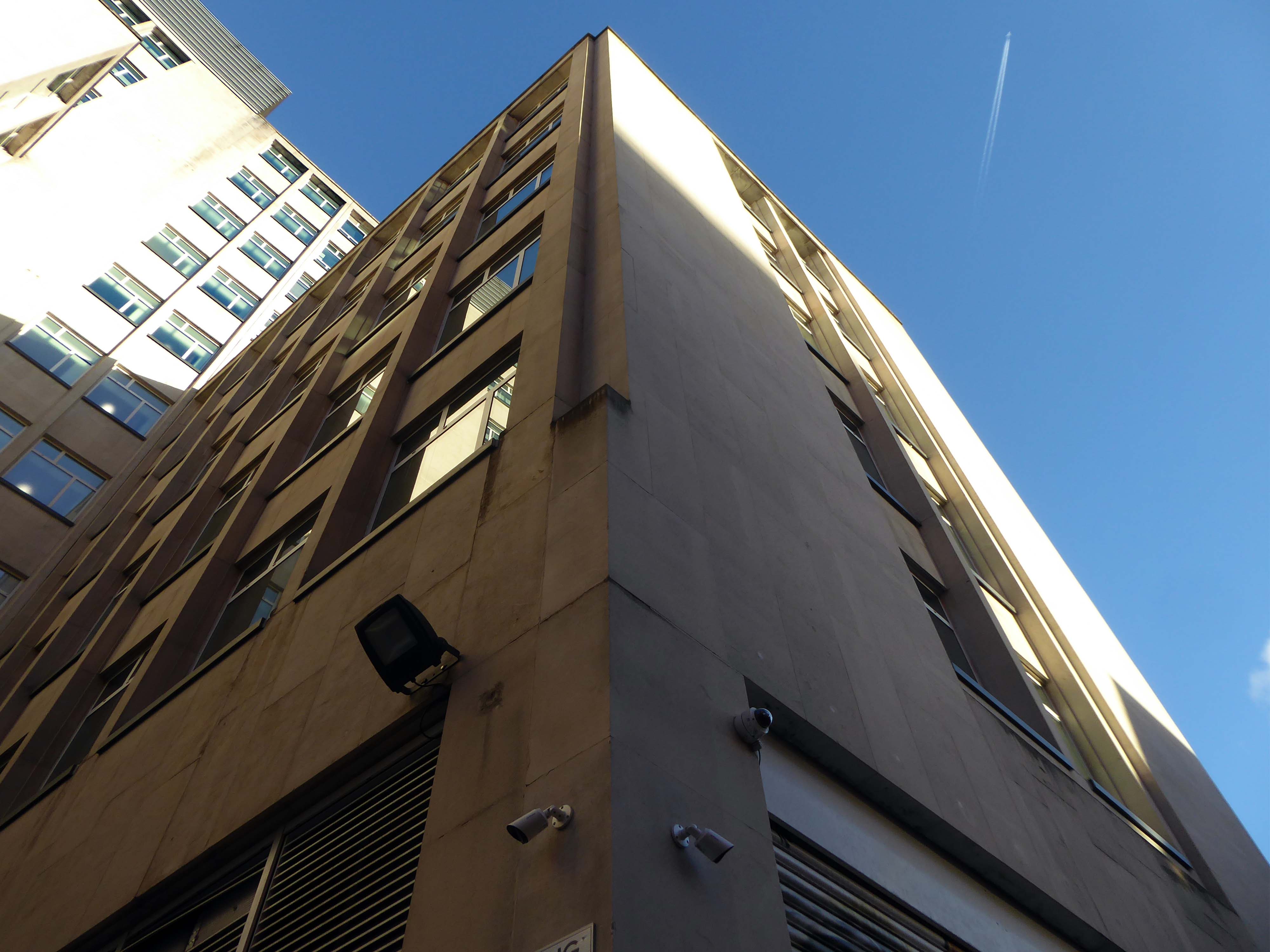
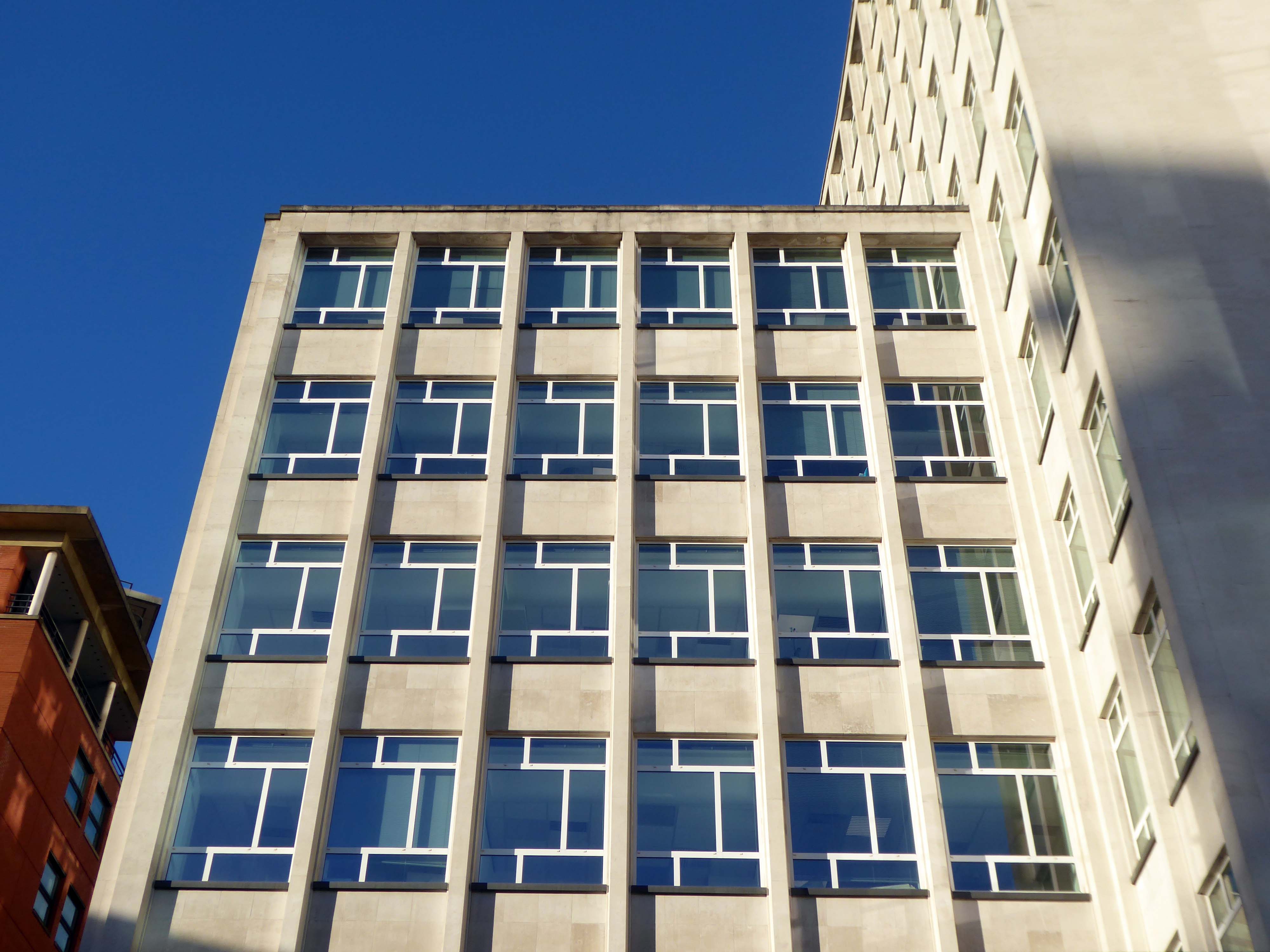
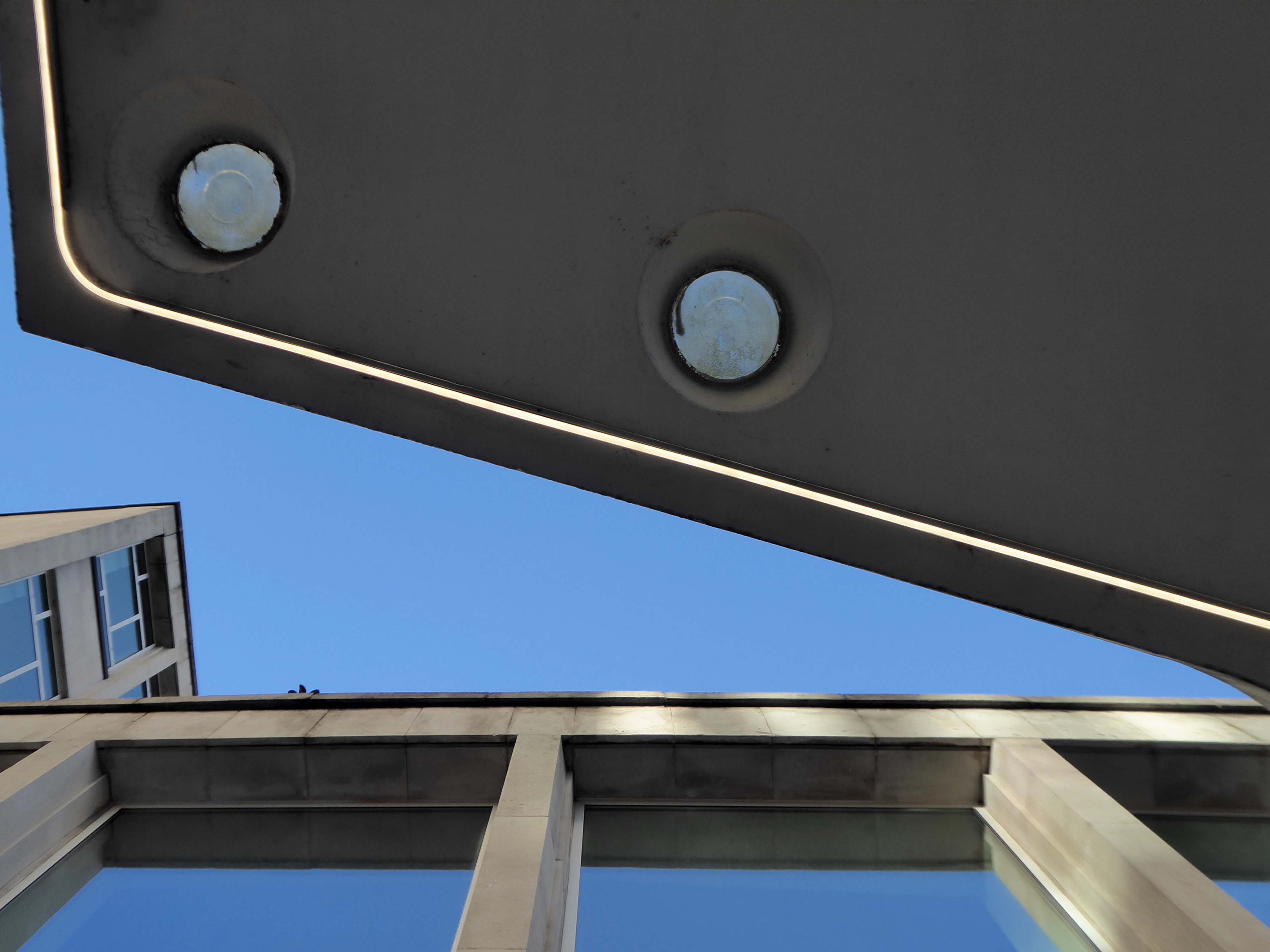
Peter House gracefully hugs the curve of Oxford Street as it leads into St. Peter’s Square. This was one of the earliest commercial buildings to be completed post-war, which demonstrates the slow economic recovery of the region. Built on a site that had been bombed, the Portland stone seemed to marry with the material narrative established by JW Beaumont and LC Howitt in their buildings of the 1950’s and following earlier interwar commercial buildings. This scheme has more panache than the rather serious facades of the Student Union building or the Law Courts though.
The stepped massing and the articulation of the wings of the building preclude the accepted commercial norm of developing to the edge of the site and instead promote a satisfying formal interplay between the six and eleven storey elements. The building has been sensitively modified despite a lack of any listed status and remains commercially viable as offices and as retail. The continued success may be attributed to the air of quality afforded by the stone, certainly it has ensured the longevity, particularly when one considers the fate that befell the easement hugging concrete of Elizabeth House – Cruickshank & Seward, 1971 across the road; it was demolished in 2012.
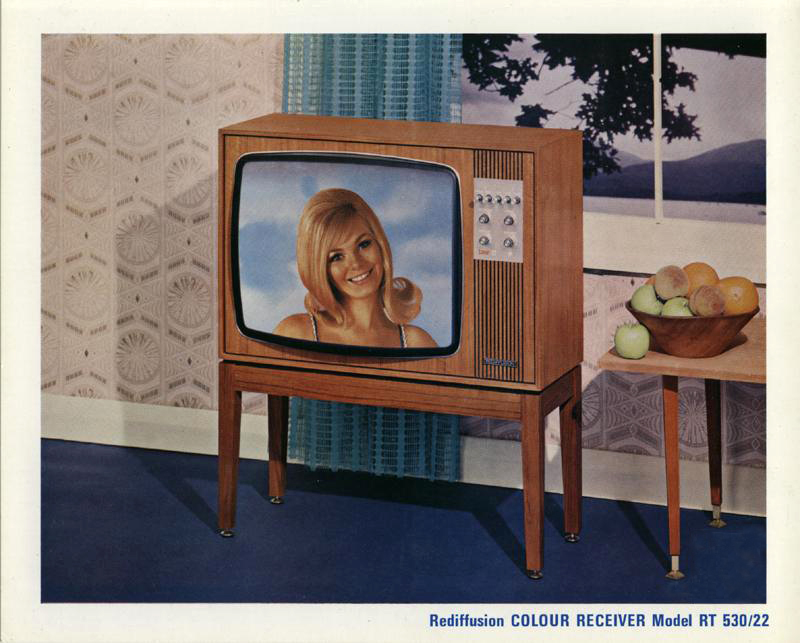
Rediffusion was the first independent commercial TV franchisee, in 1956 Associated-Rediffusion struck a very lucrative deal with Granada Television, the franchise holder for weekday broadcasts in the North of England.
The company offered a low-bandwidth cable TV and radio distribution system, provided in most United Kingdom towns. Selection of TV or radio station was by means of a rotary switch, usually mounted on a wall or window frame close to the point of entry of the cable into the home.
The Rediffusion retail chain, renting and servicing TVs, radios, VCRs and hi-fi systems, was common on high streets until it was bought by Granada Rentals in 1984.
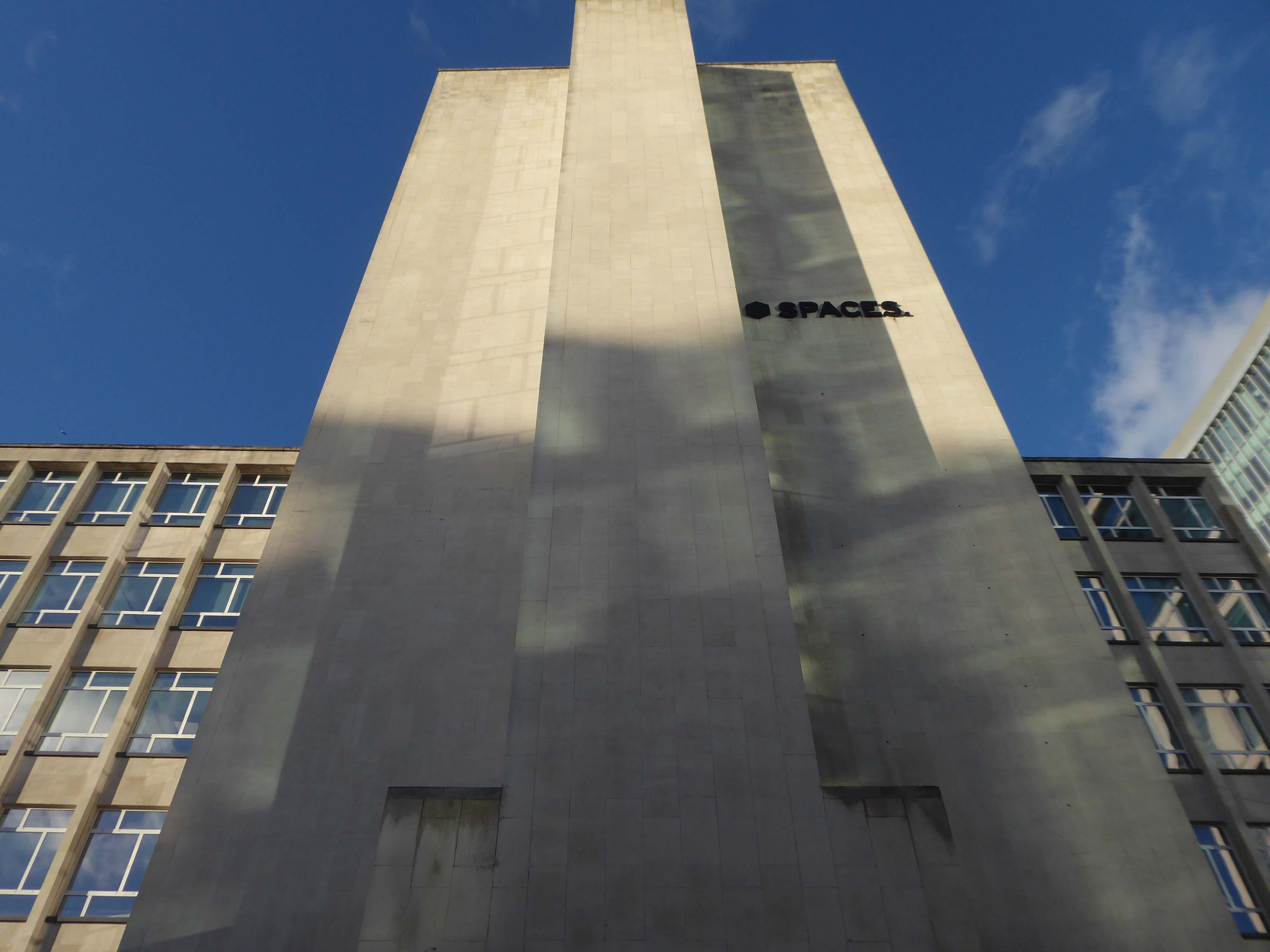
The days of the monolithic mono-culture of the sole occupant are in decline – we live in the age of the co-working space and homes of multi-use creative scene.
Peter House prevails a pale white Portland Stone embodiment of different days and different ways.
Let’s take a walk around.
As a footnote – once in the shadow of Peter House, Tommy Ducks was demolished overnight.
Apparently, its supporters managed to arrange a preservation order for the building but, according to the excellent Pubs of Manchester website, that order expired at midnight on February 12, 1993, and the pub was literally reduced to rubble before anyone could seek a renewal on February 13th.
Situated at the junction of Salkeld Street and Cook Street
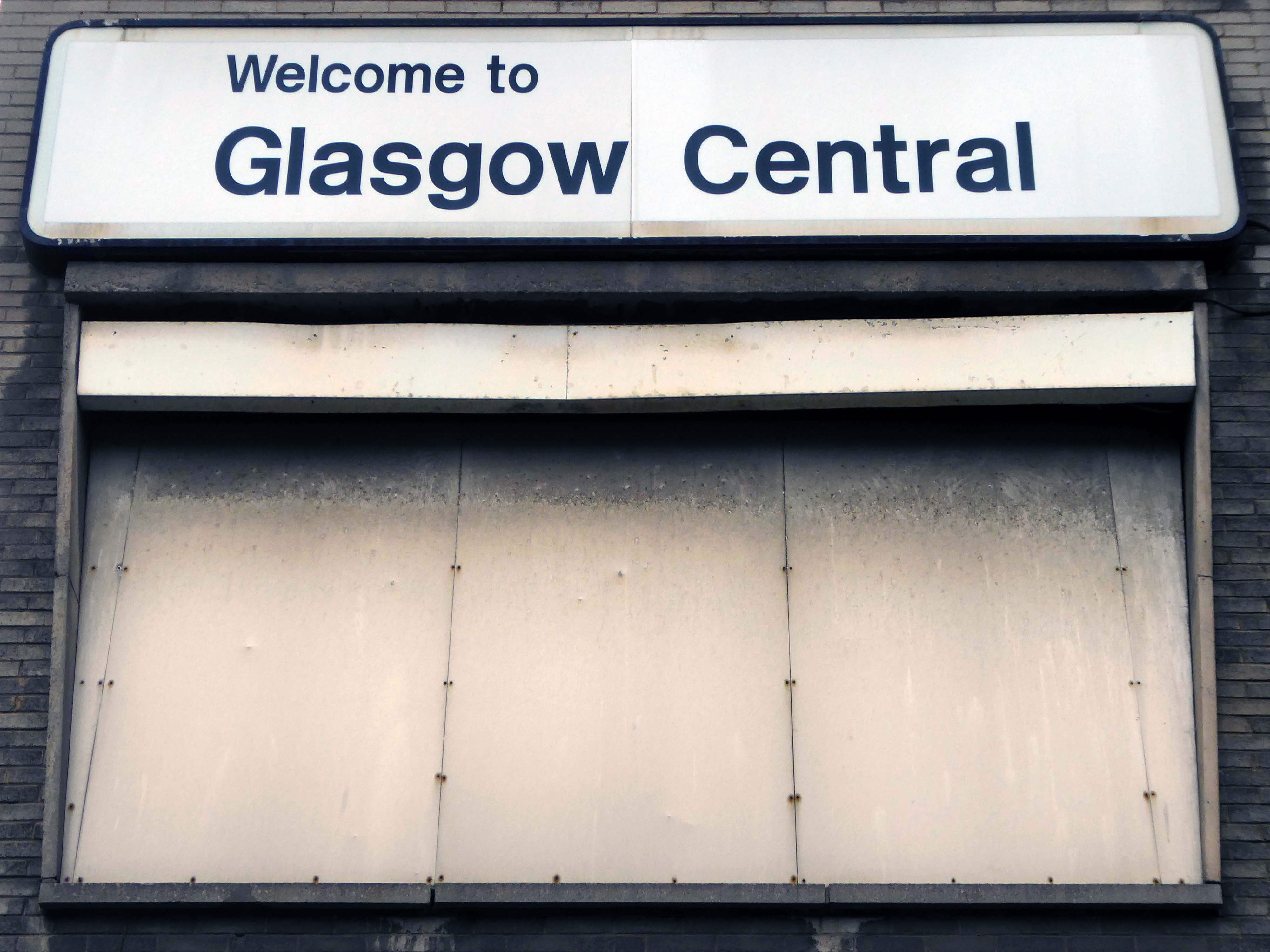
Glasgow Central Signalling Centre, located in the vee of Bridge Street Junction, opened on 2 January 1961. It replaced signal boxes at Central Station, Bridge Street Junction, Eglinton Street Junction and Eglinton Street Station. When initially opened it was capable of handling 1,000 routes.
Glasgow Central Signalling Centre closed on 27 December 2008, when its area of control was transferred to the new West of Scotland Signalling Centre – WSSC at Cowlairs. The NX panel is to be preserved. The station is currently signalled by two Westinghouse Westlock Interlockings which are controlled via an Alstom MCS control system.
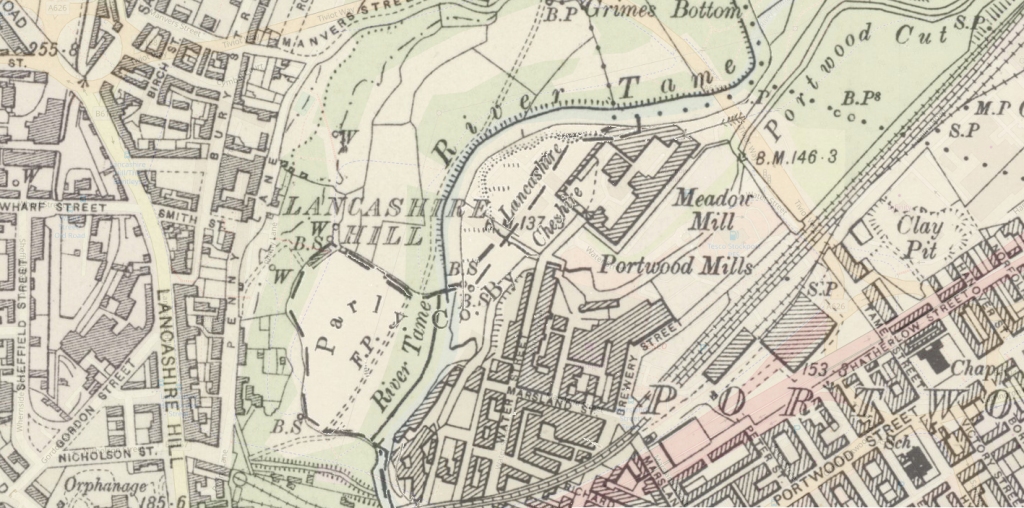
The 19th-century industrial concentrations in the above-named urban areas resulted in the Tame being a much polluted waterway. As well as industrial pollution from the dyes and bleaches used in textile mills, effluent from specialised paper-making cigarette papers, engineering effluents, including base metal washings from battery manufacture, phenols from the huge coal-gas plant in Denton, rain-wash from roads and abandoned coal spoil heaps there was also the sewage effluent from the surrounding population. Up to two-thirds of the river’s flow at its confluence with the Goyt had passed through a sewage works. The anti-pollution efforts of the last thirty years of the 20th century have resulted in positive fauna distributions.
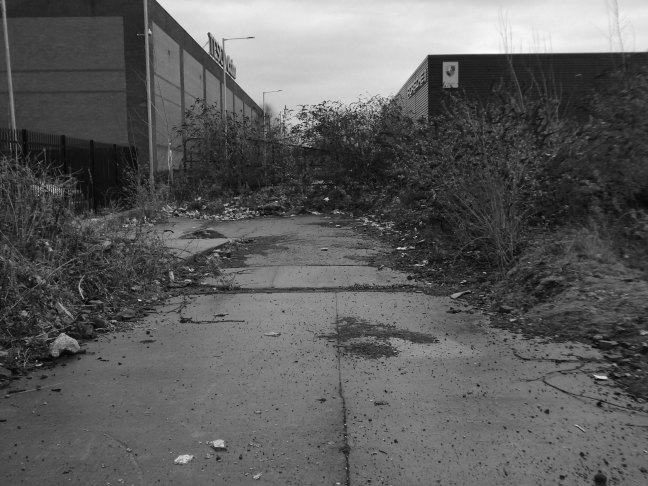
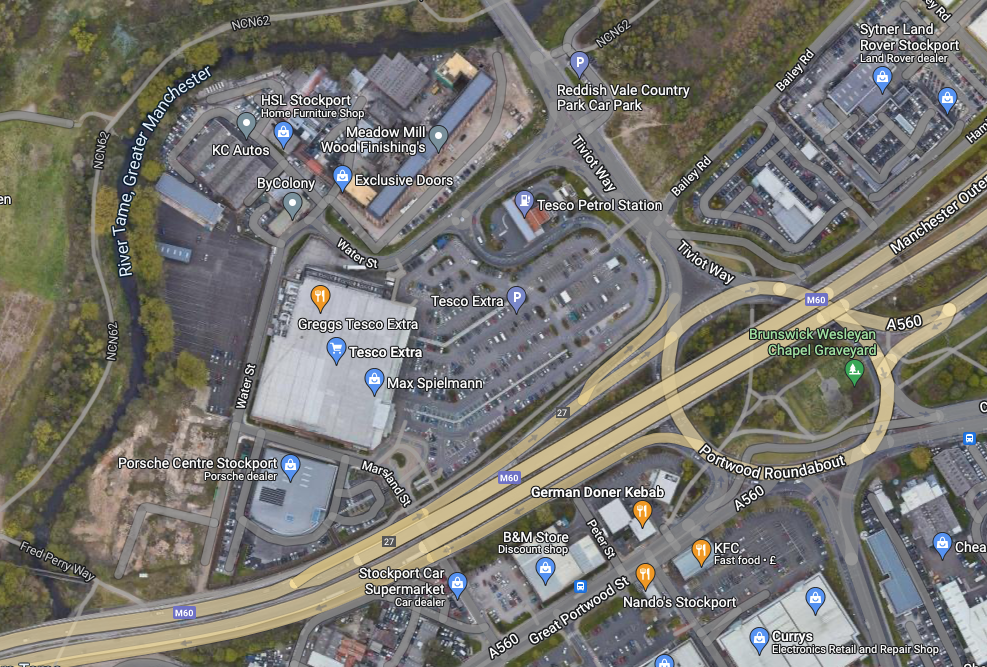
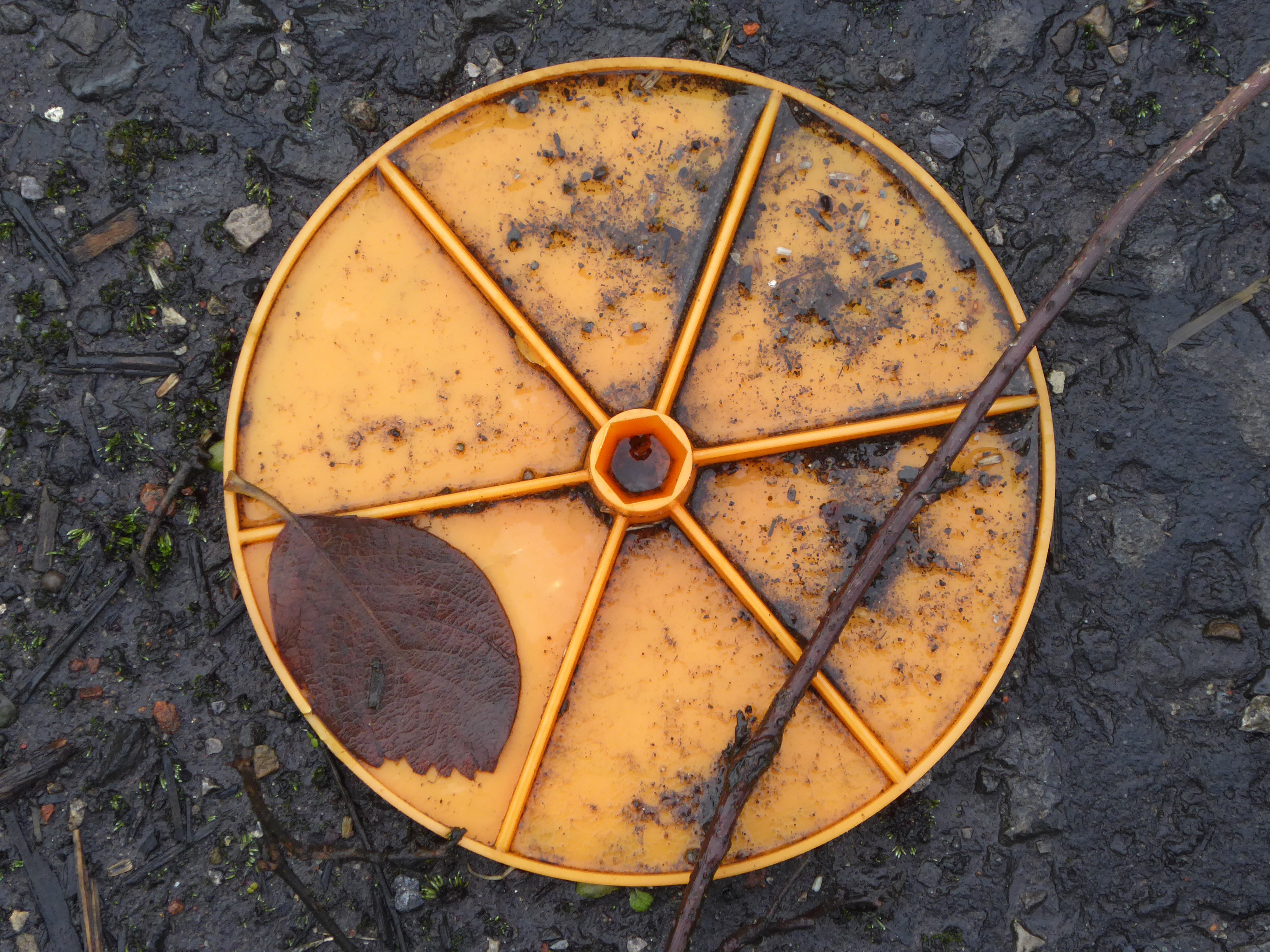
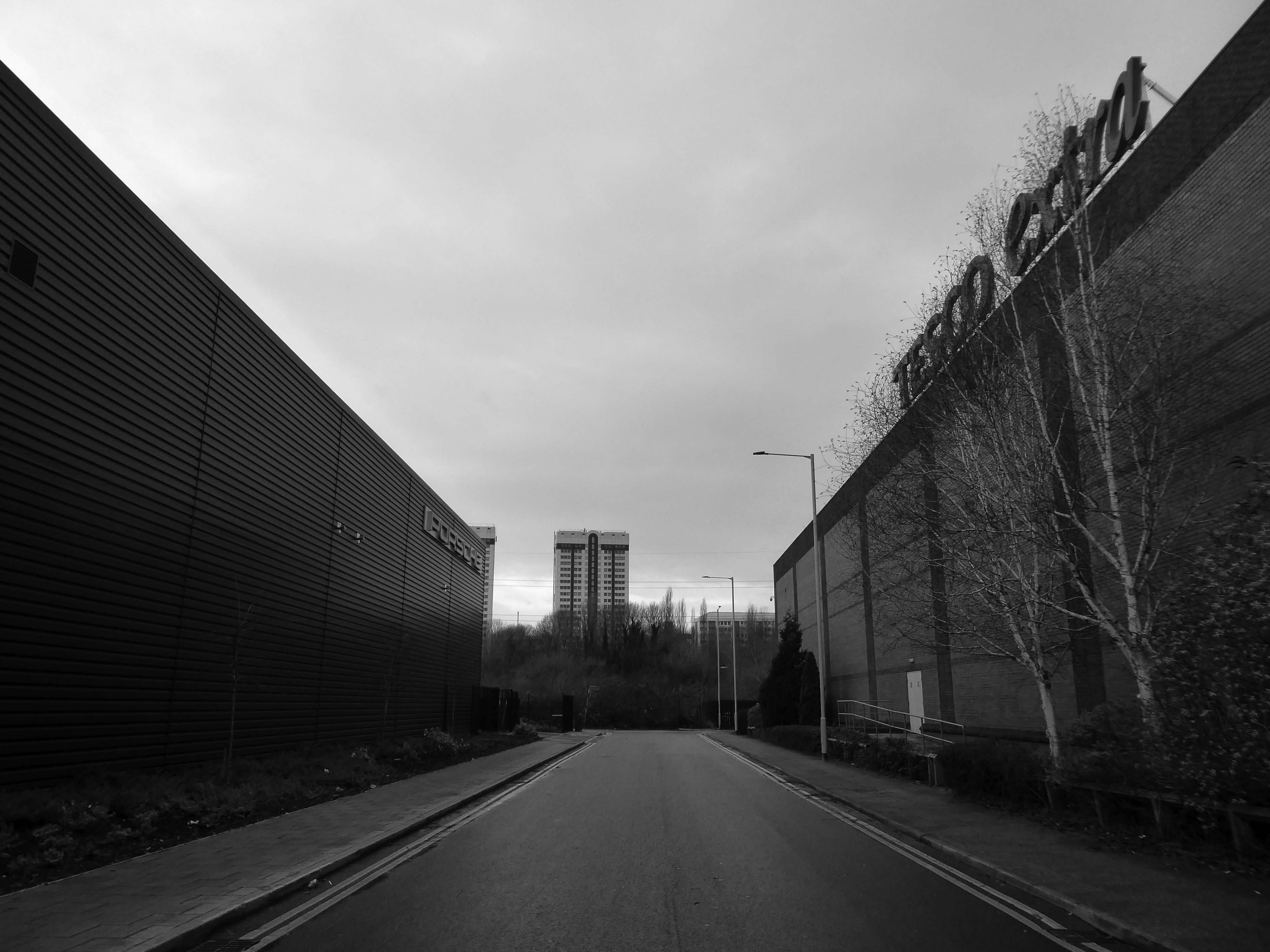
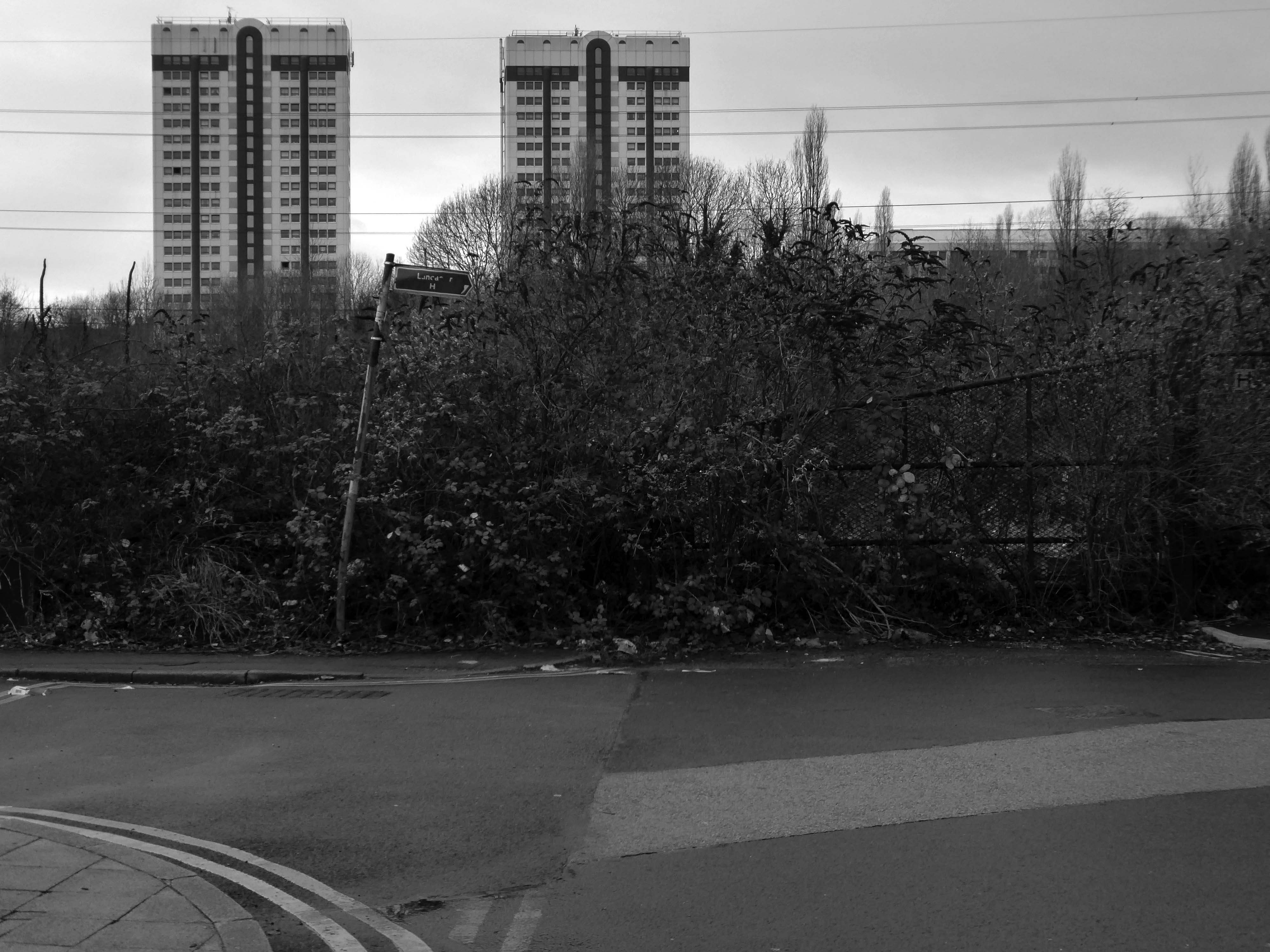
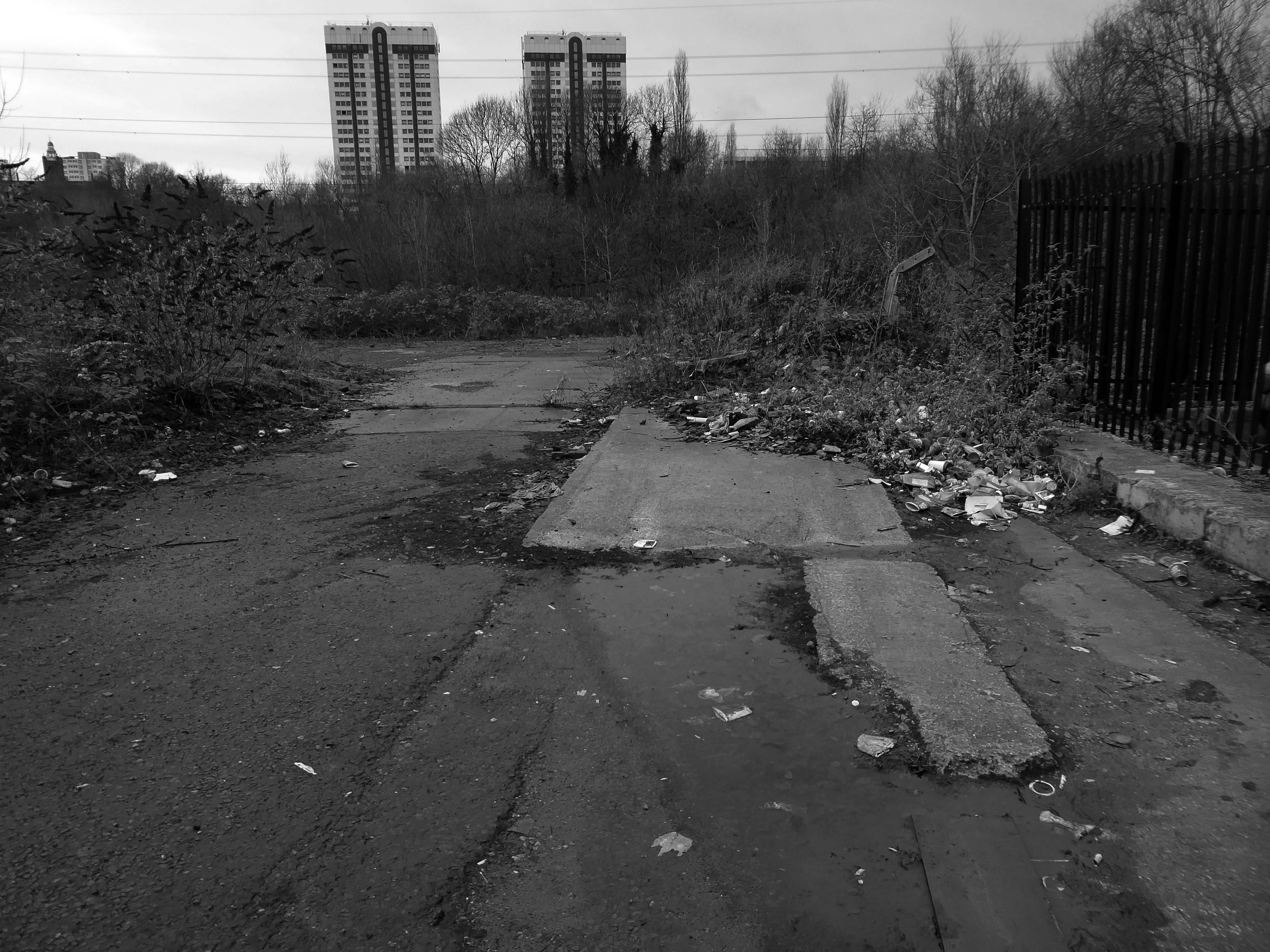
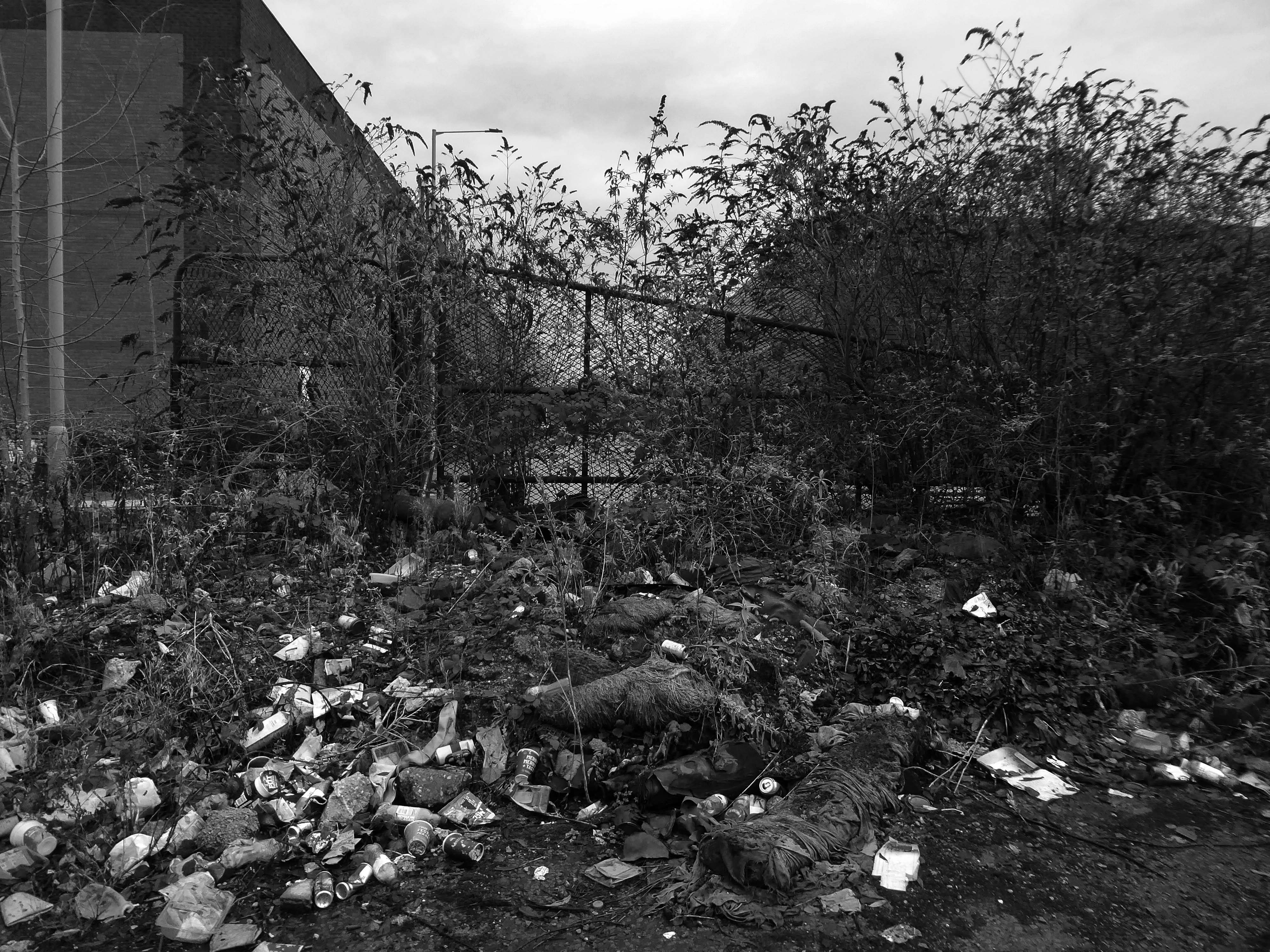
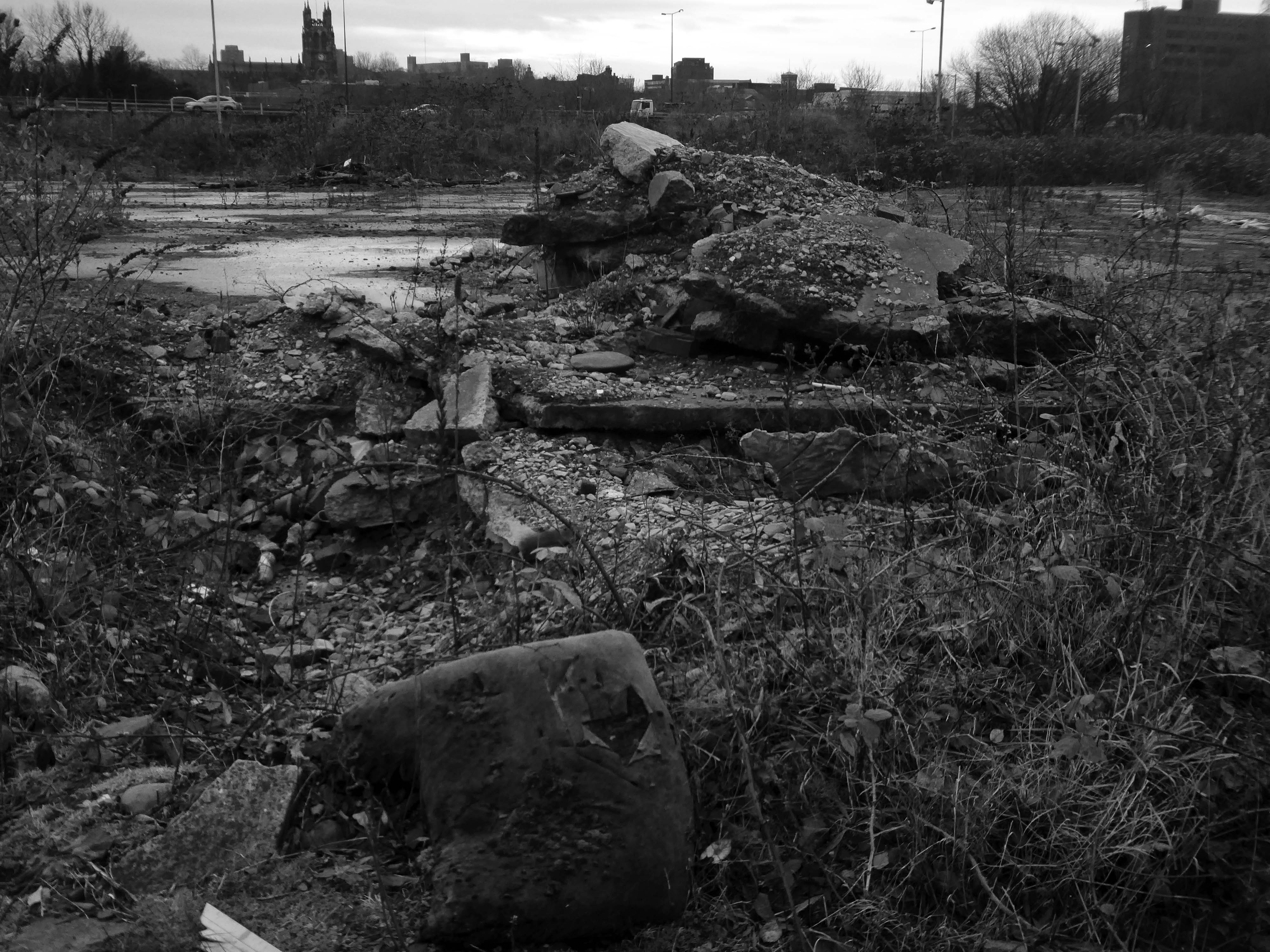
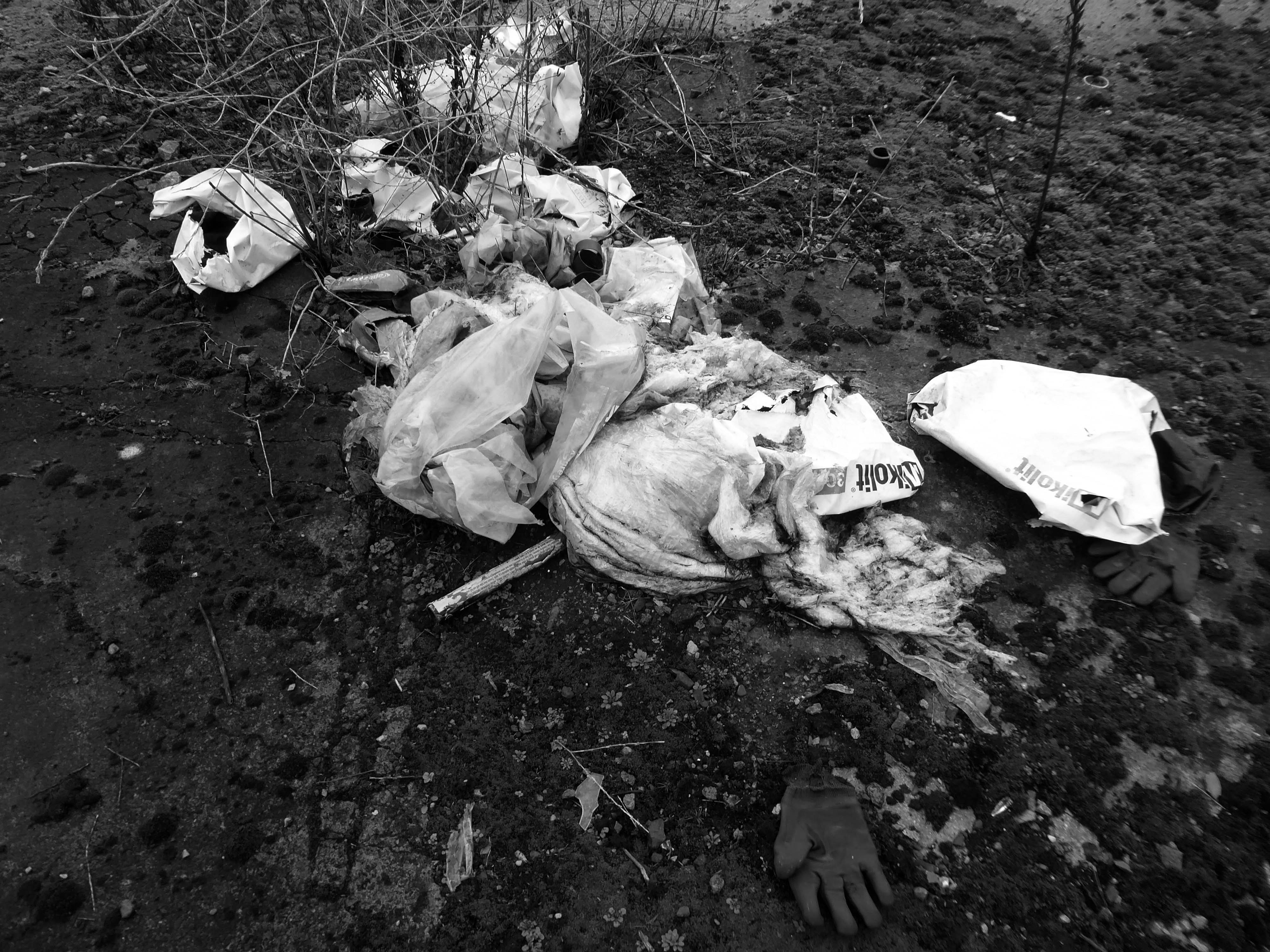
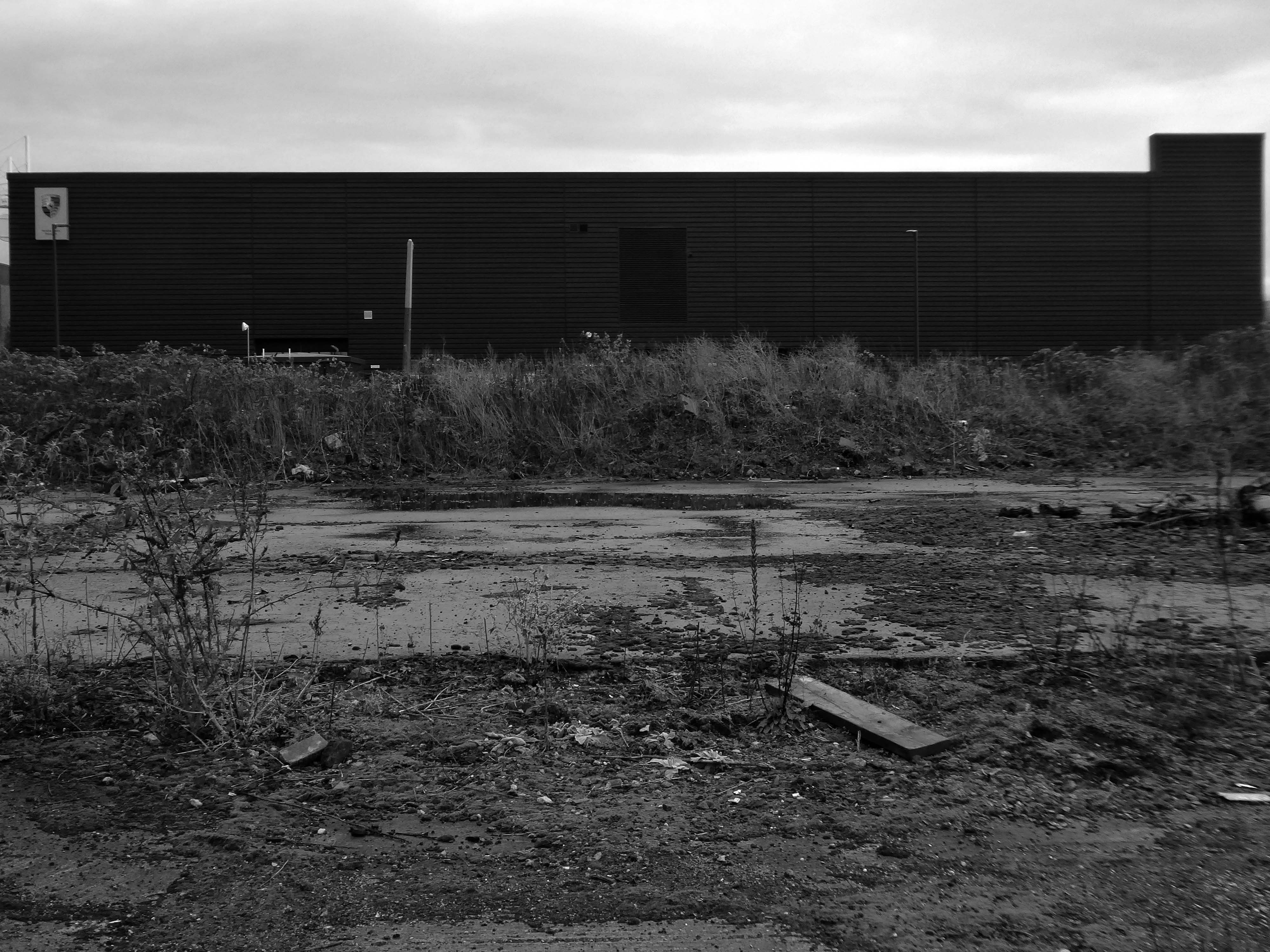
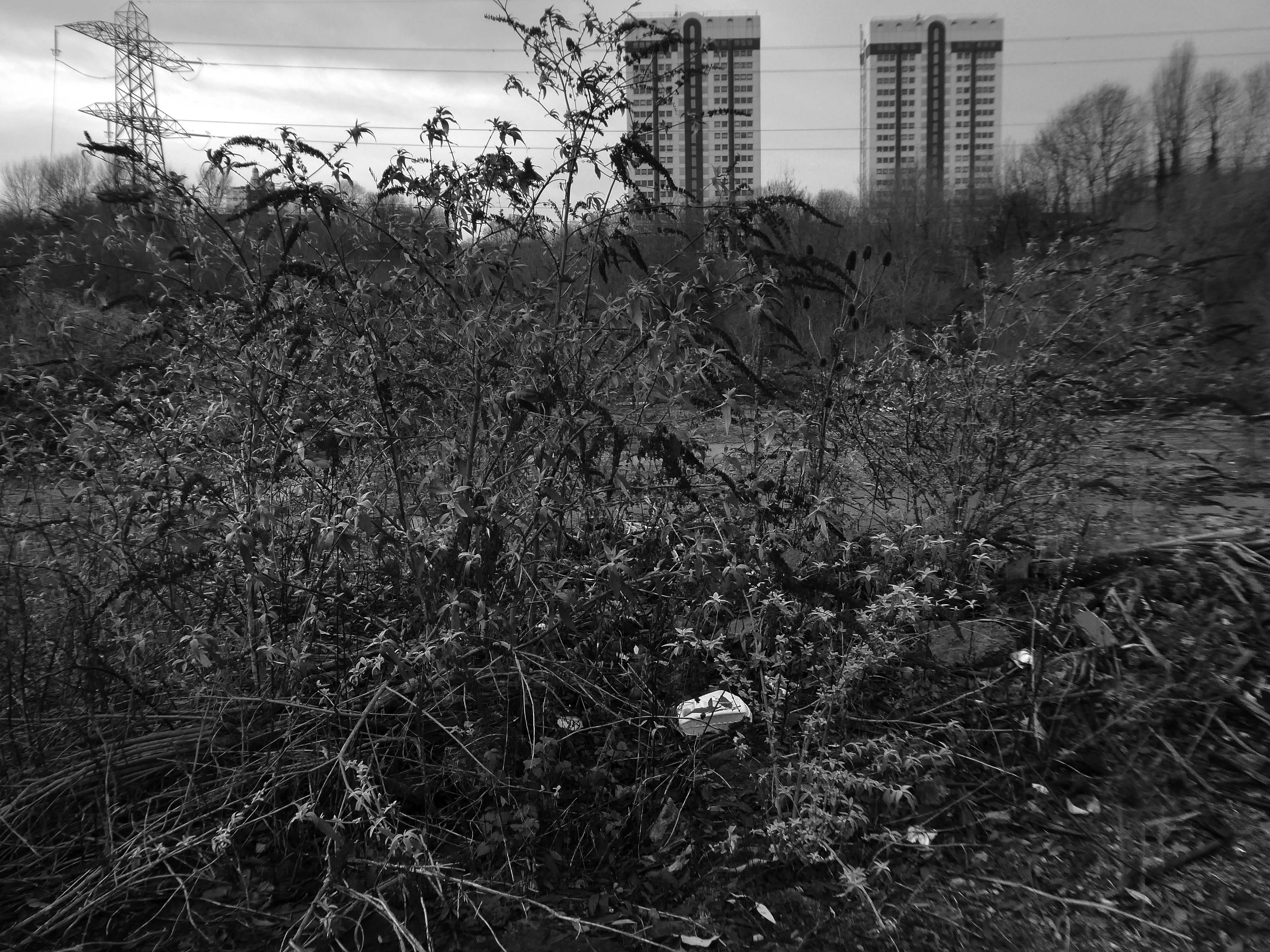
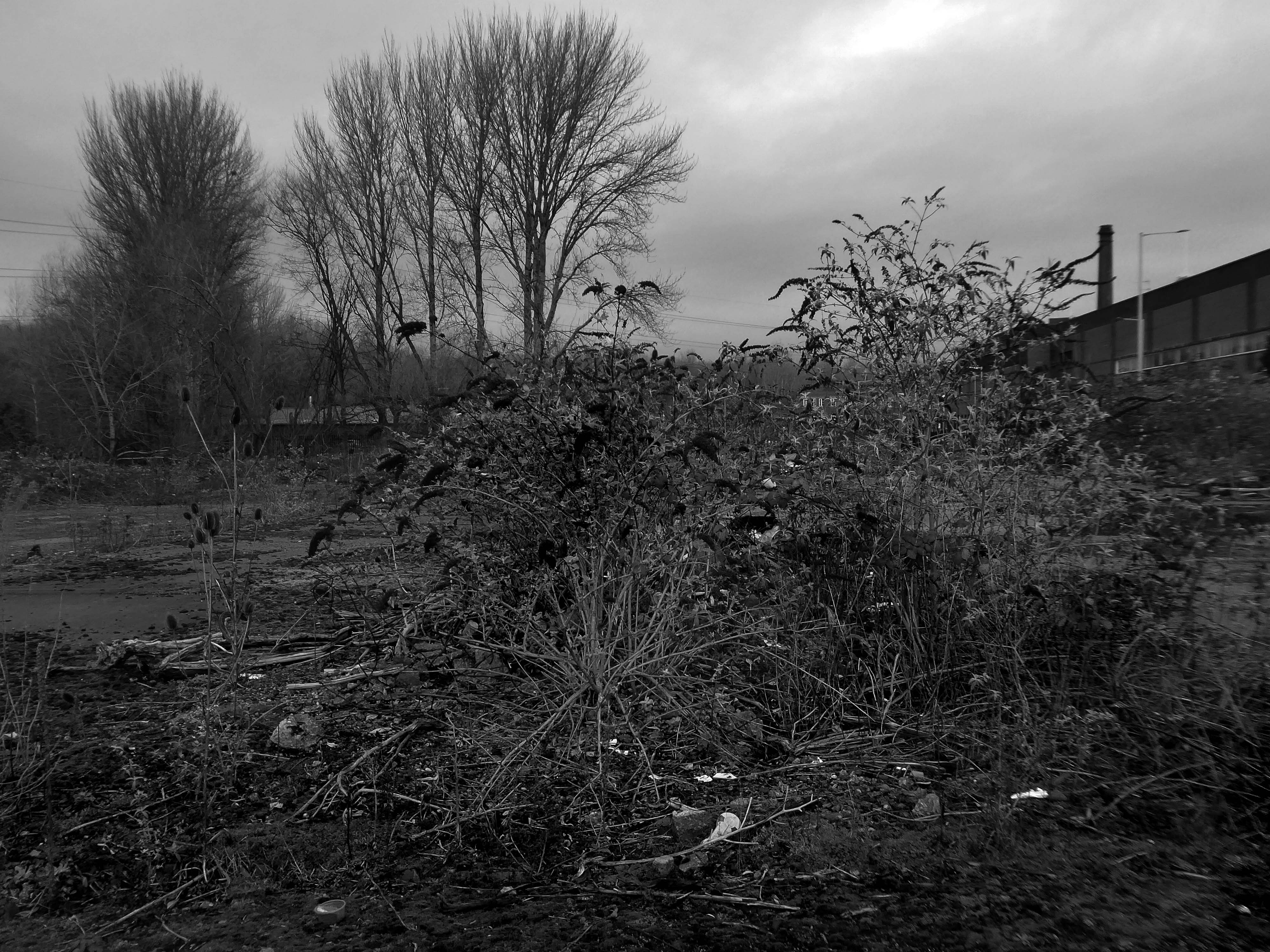
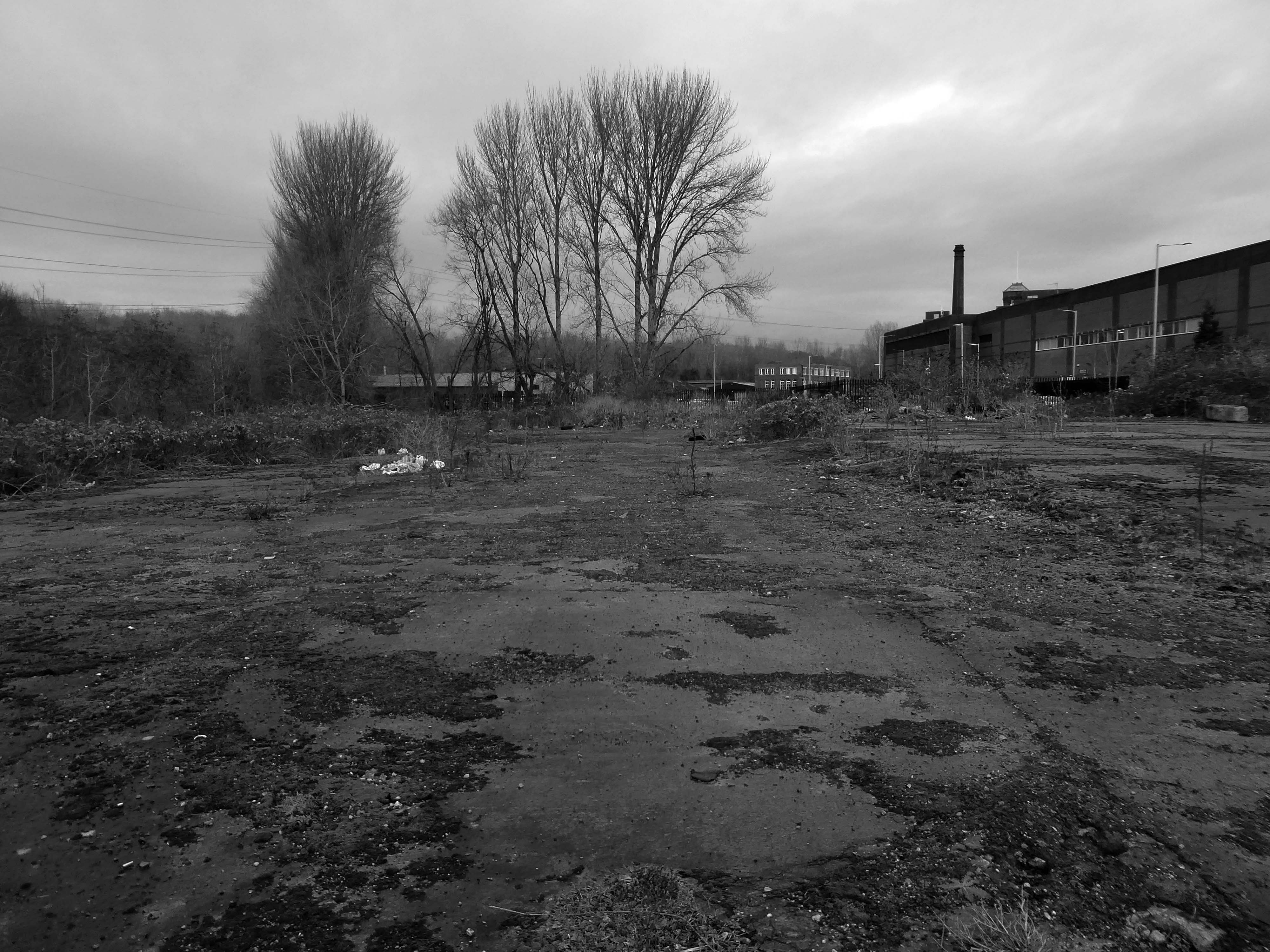
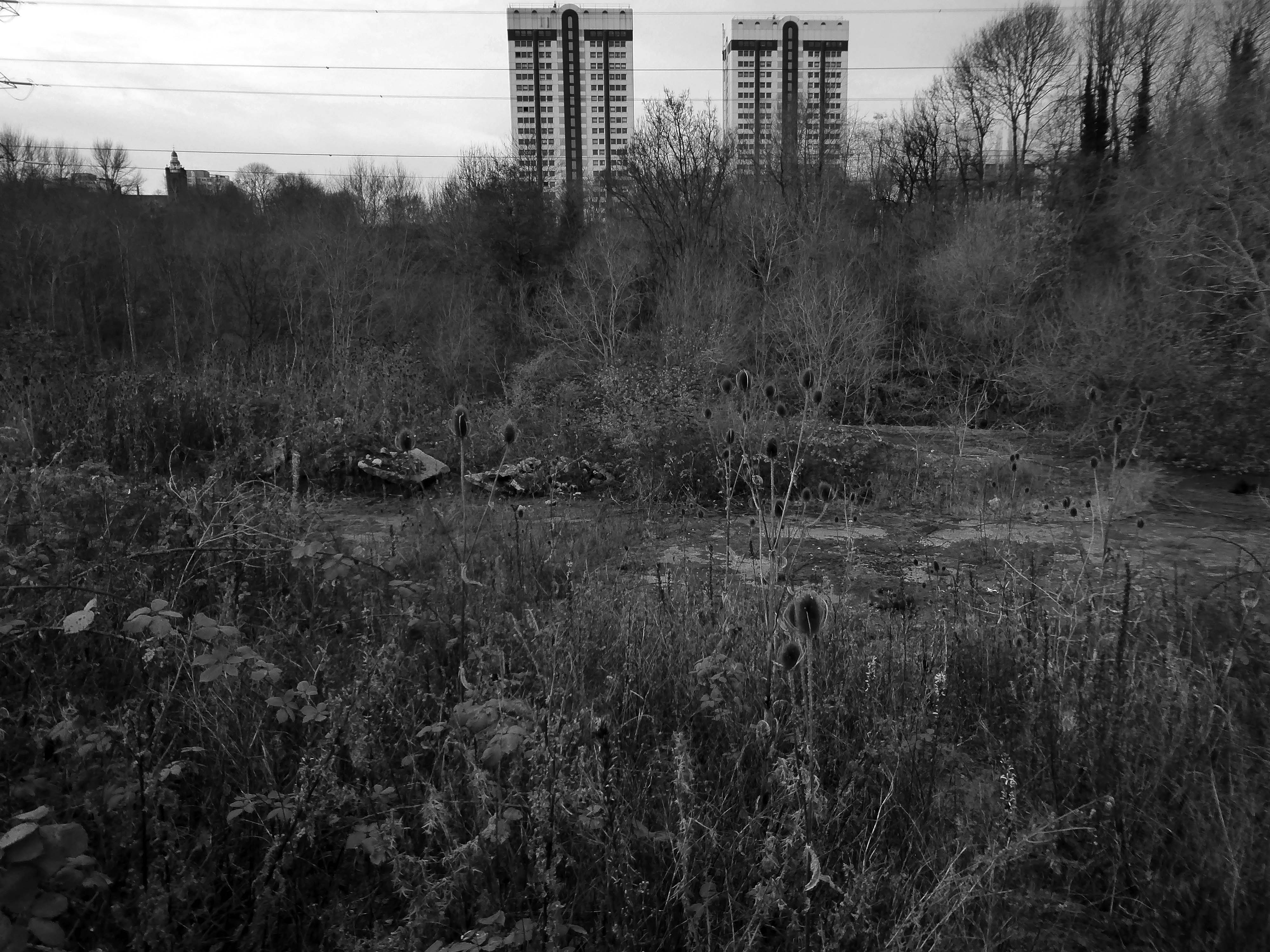
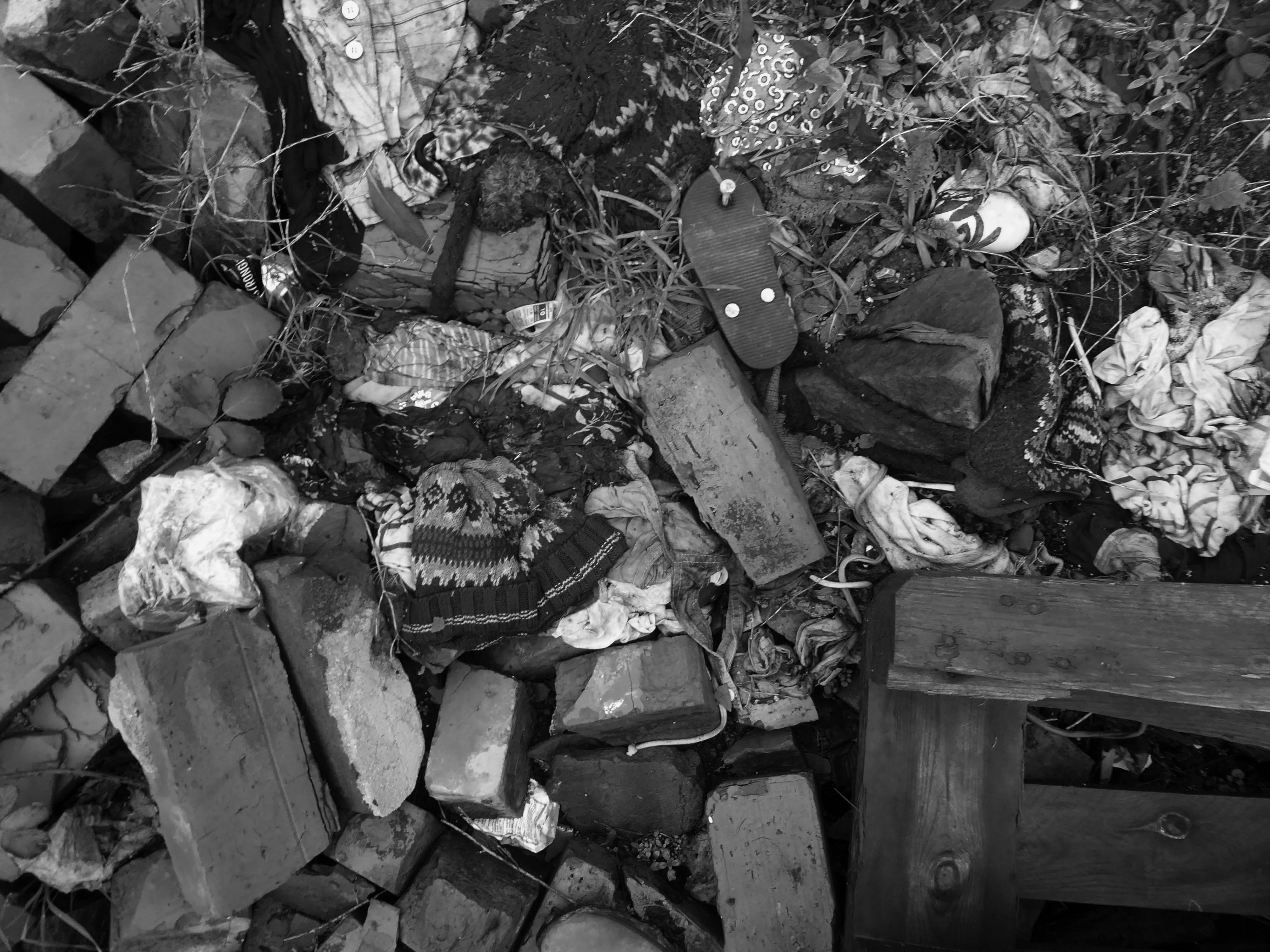
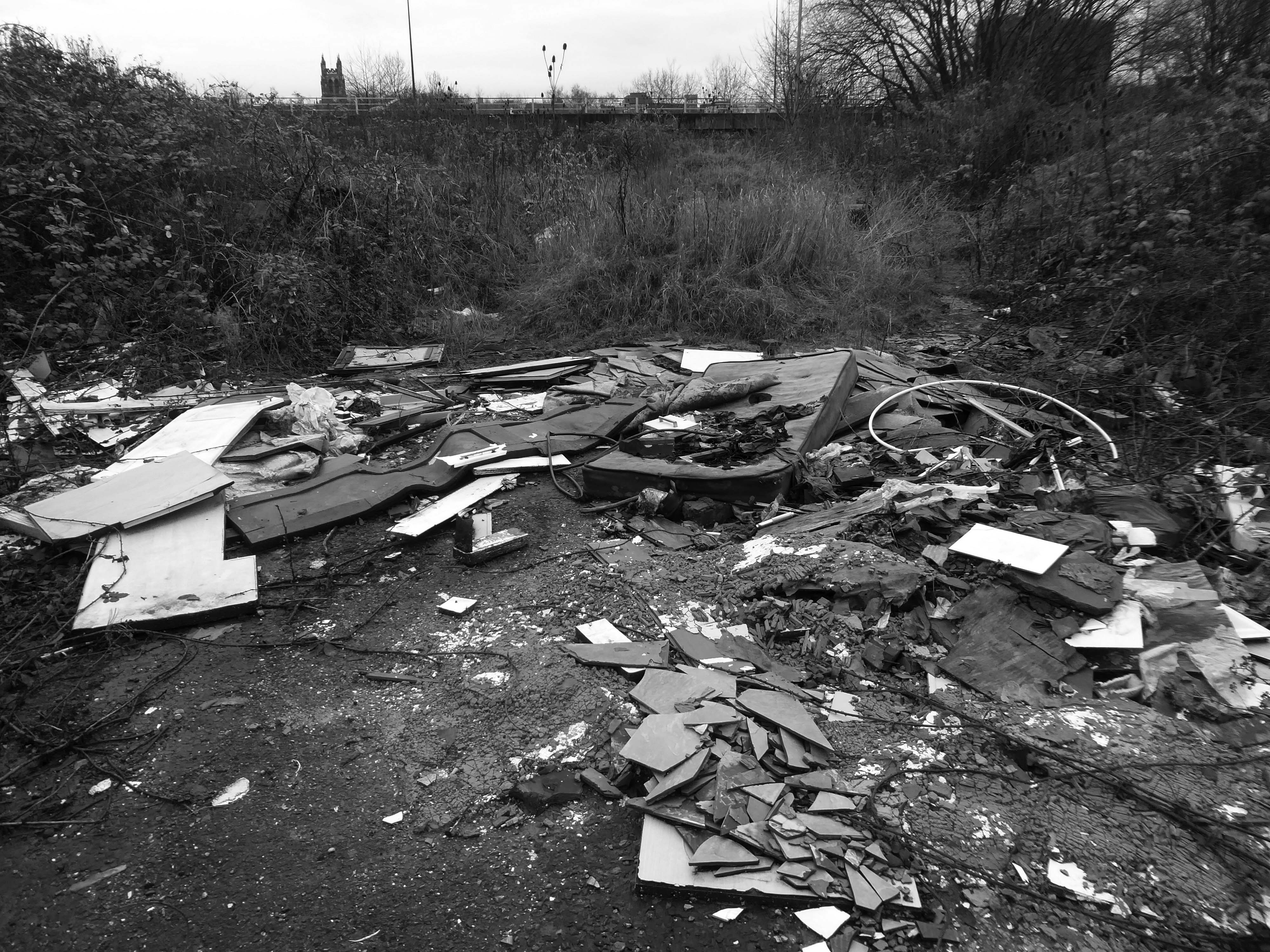
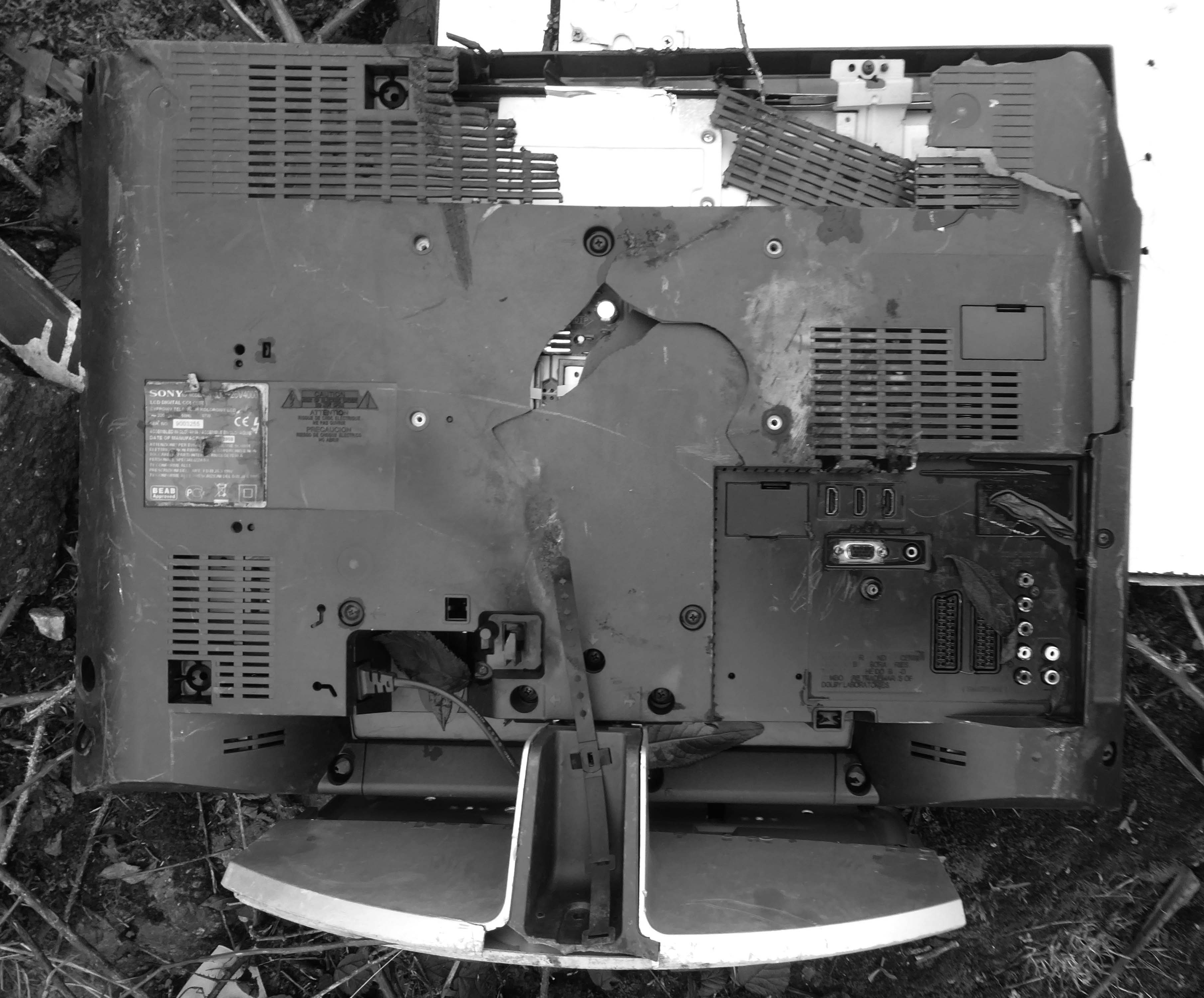
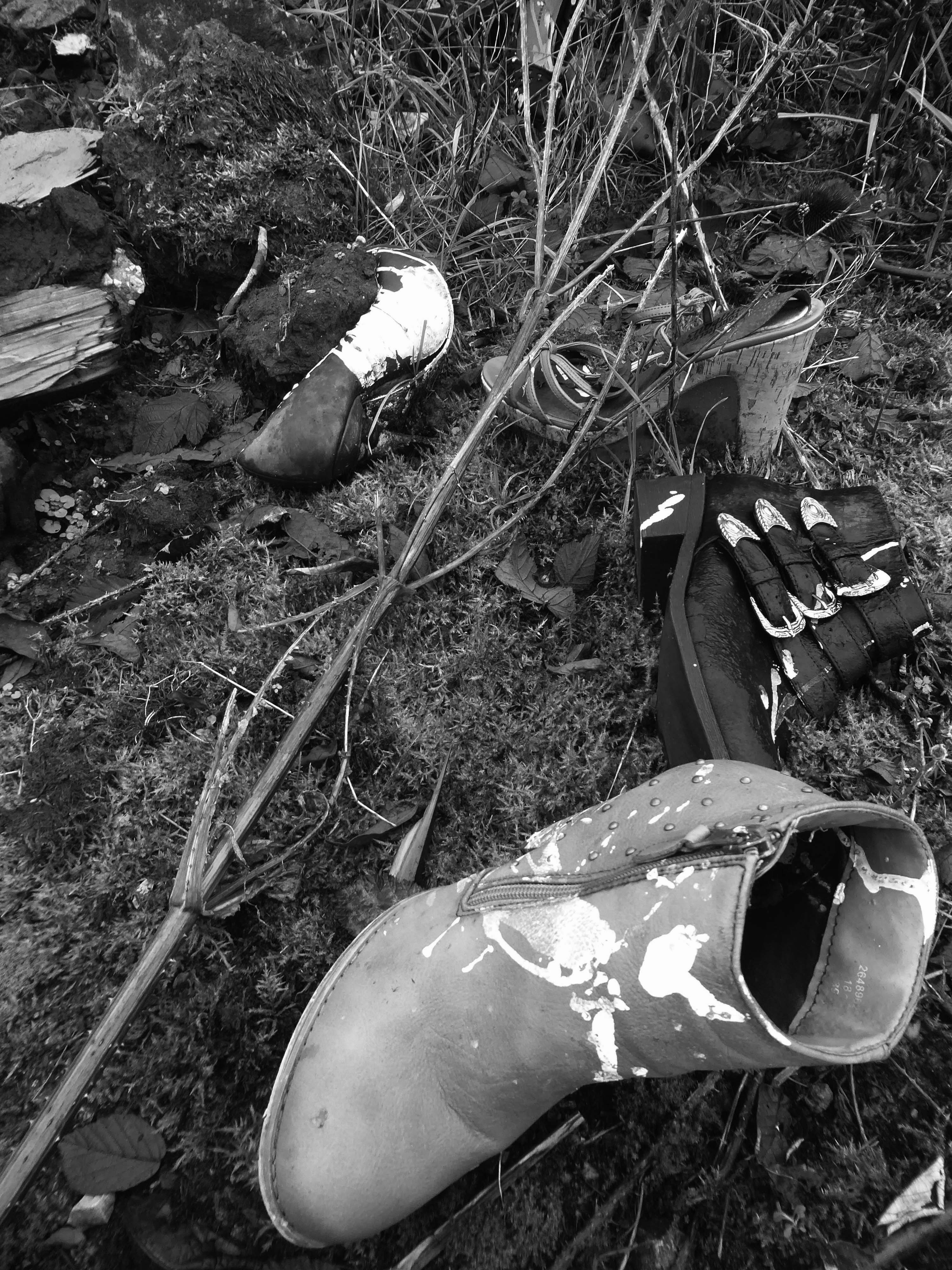
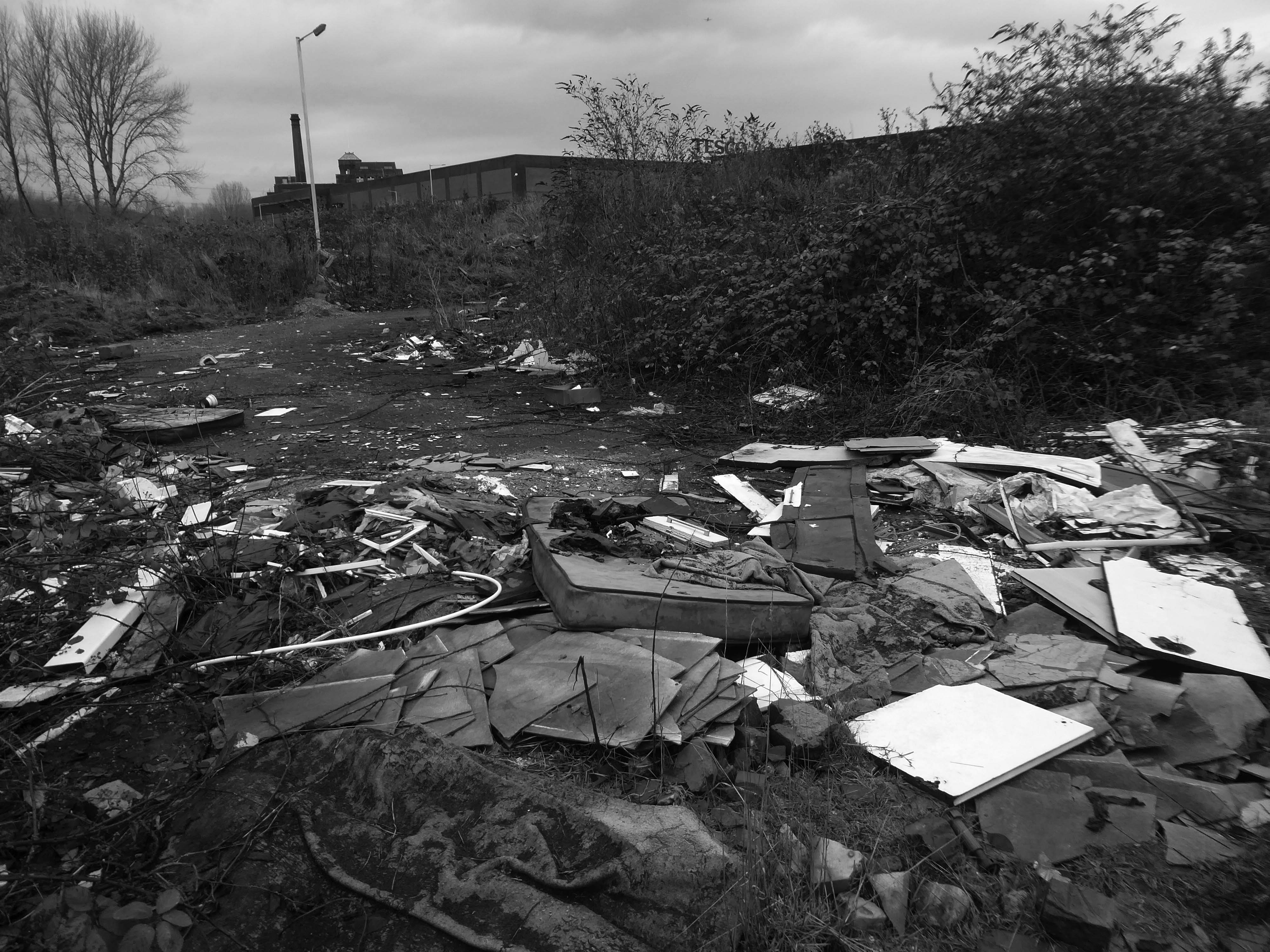
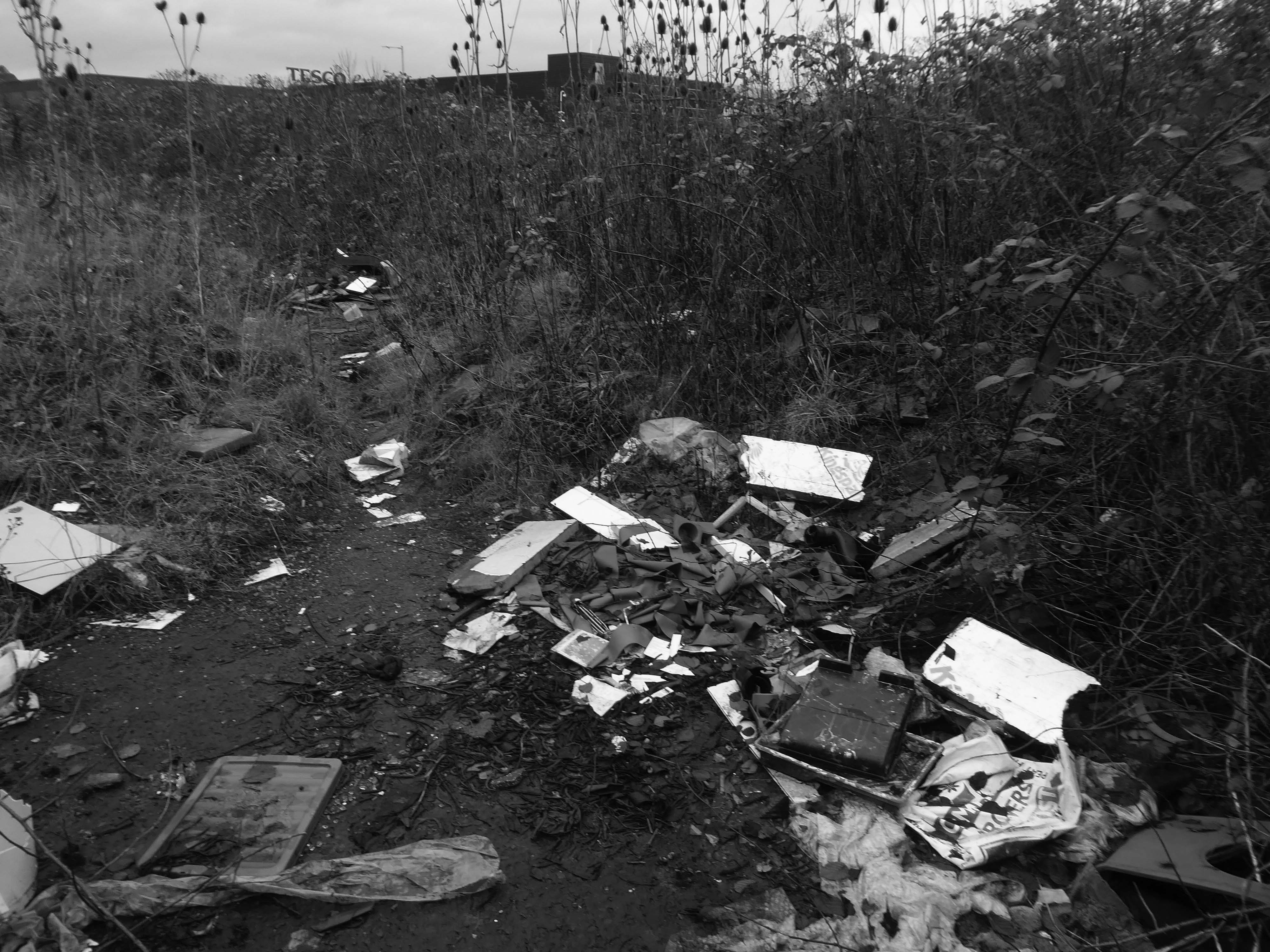
There is a plot of land to the left of Porsche which remains undeveloped, I often walk around this area, what would have once been for myself and others the place of childhood high jinx.
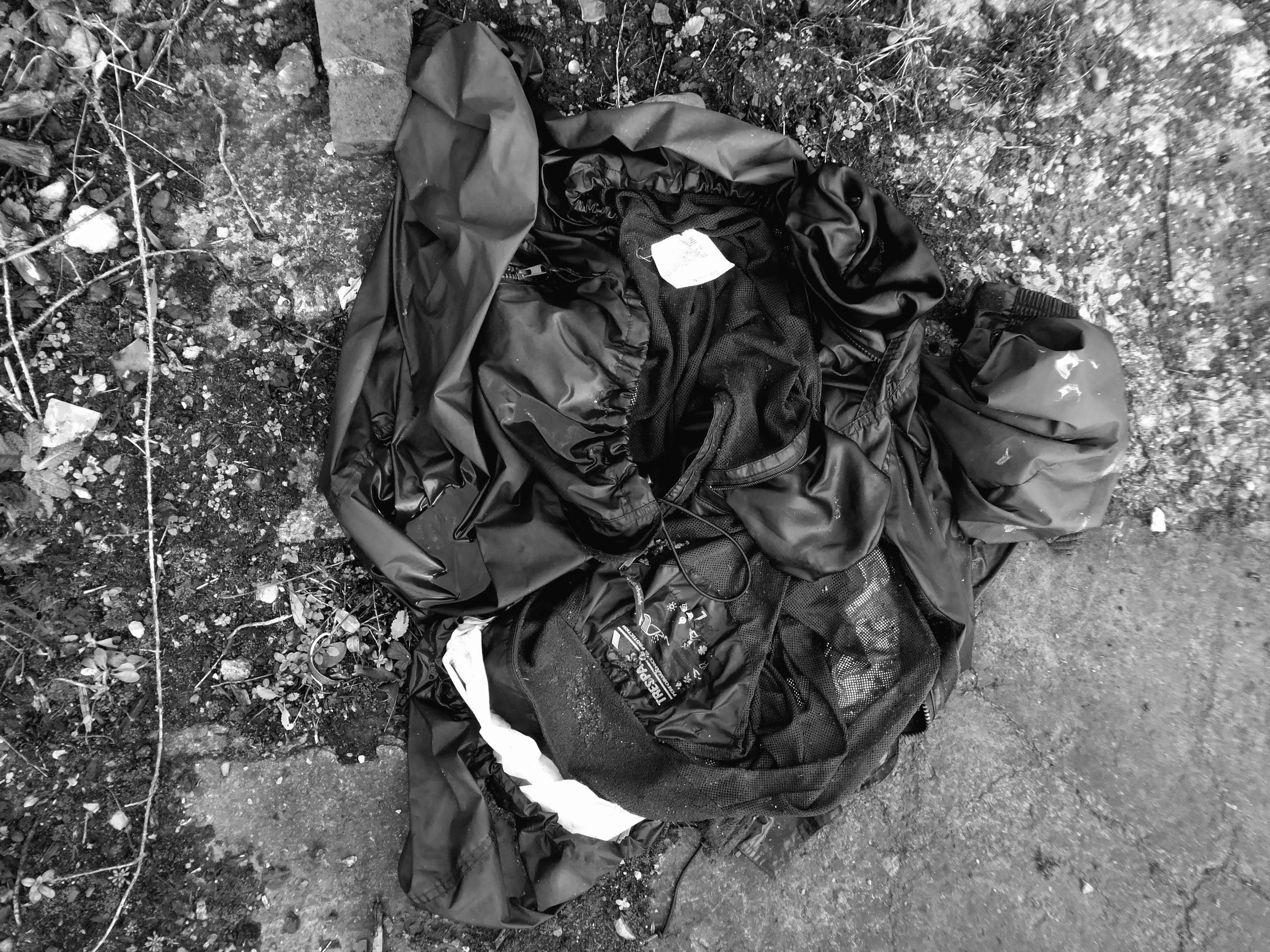
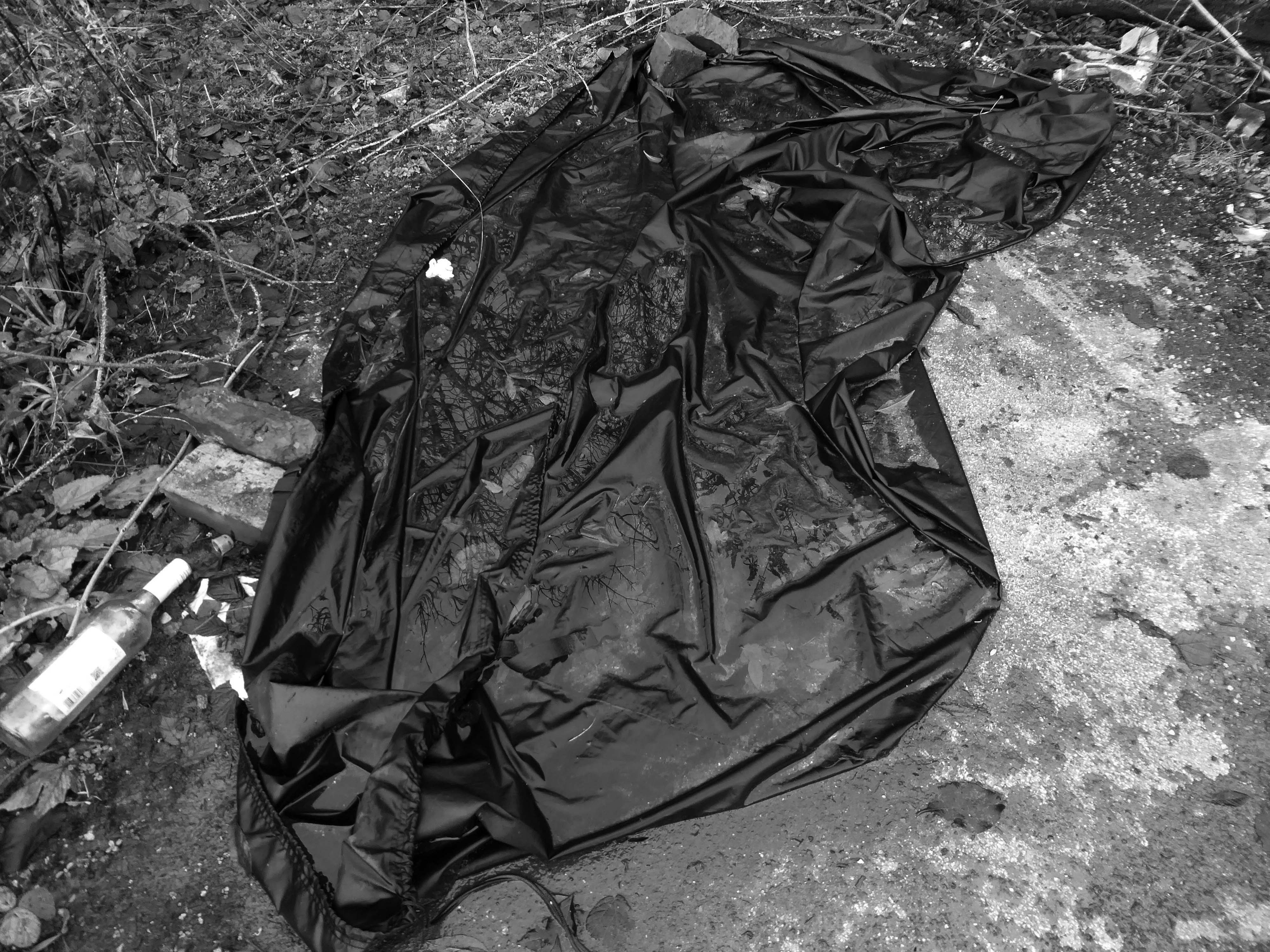
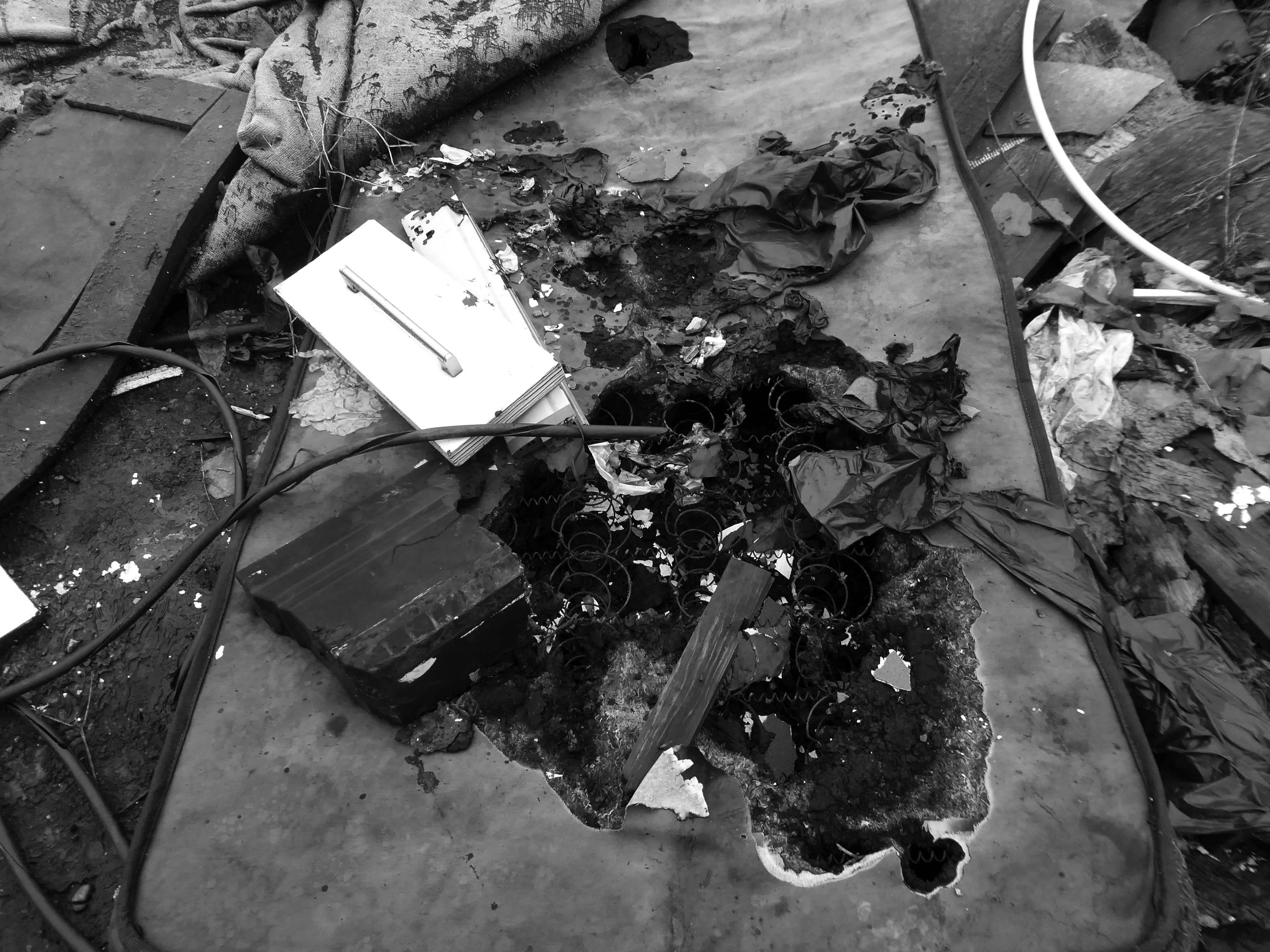
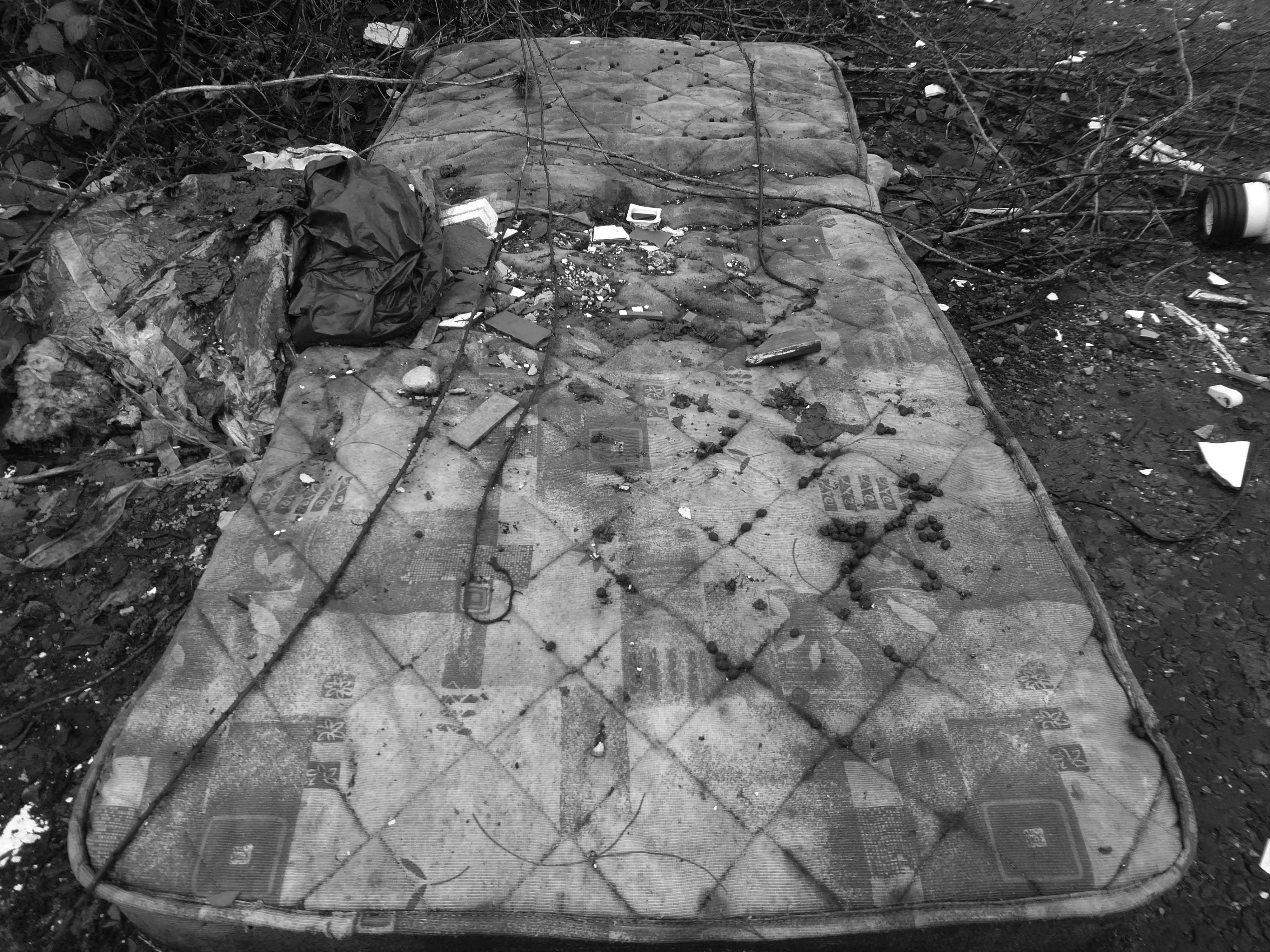
Now it is the domain of the fly-tipper, the home of the homeless, a war zone for a species which has declared war upon itself.
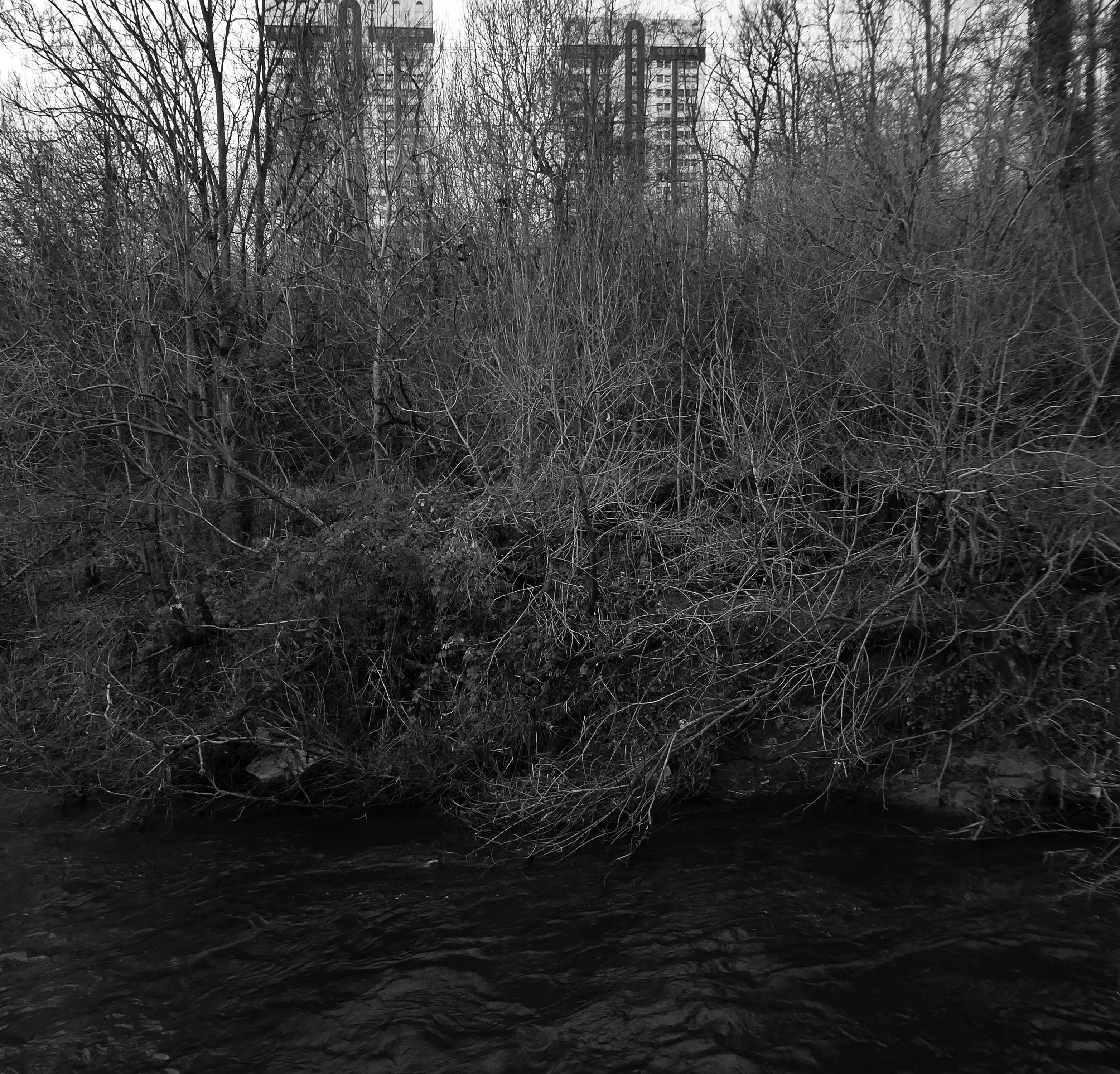
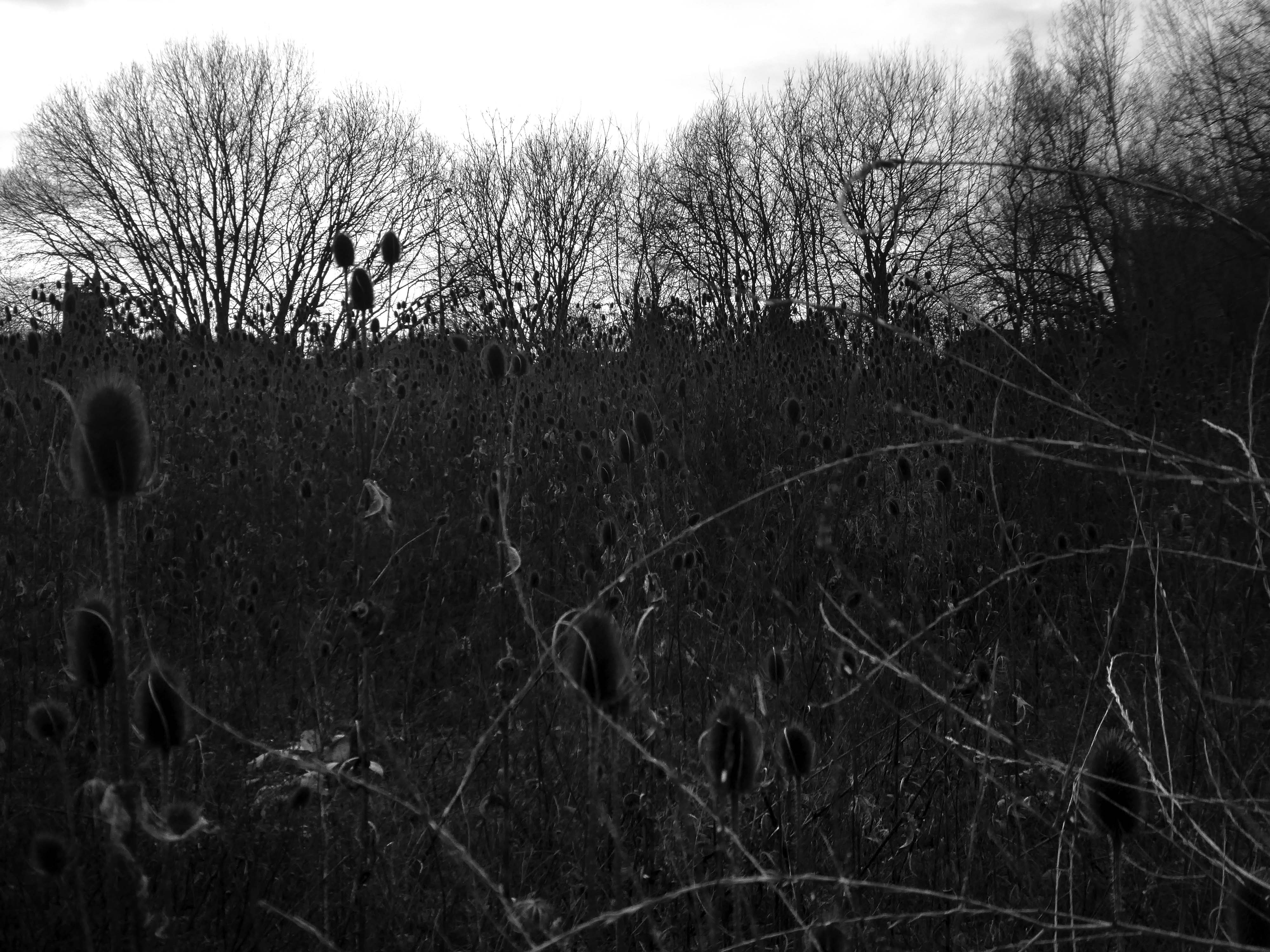
A desert of detritus, interpolated with tangles of brambles, seas of teasels and the ubiquitous buddleia.
This is the unofficial showroom for the unofficial Anthropocene Epoch – always crashing in a different car, during increasingly unseasonal weather, the superabundance of abundance.
It seems that the sun may set on us, before the sun finally sets.
Let’s take a peep at Portwood.
Game over.
Vehicle use affects our whole quality of local life. Traffic can be dangerous and intimidating, dividing communities and making street life unpleasant, whilst air pollution and traffic noise can make urban living uncomfortable.
The impacts of mass consumption are: Misuse of land and resources, exporting pollution and waste from rich countries to poor countries, obesity due to excessive consumption, a cycle of waste, disparities and poverty.
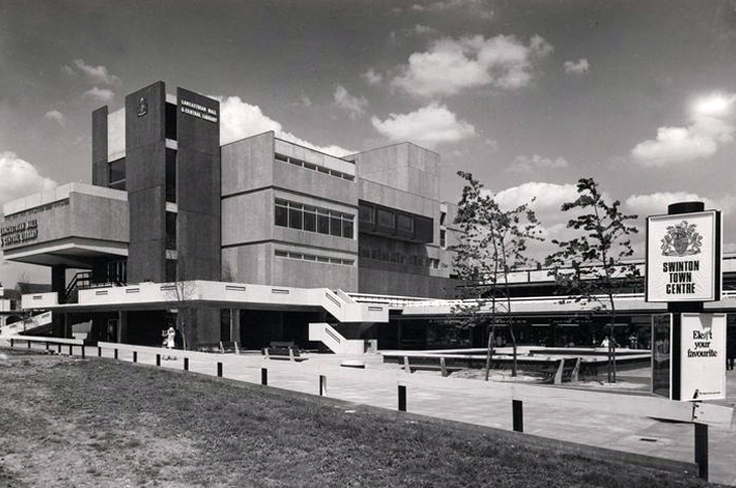
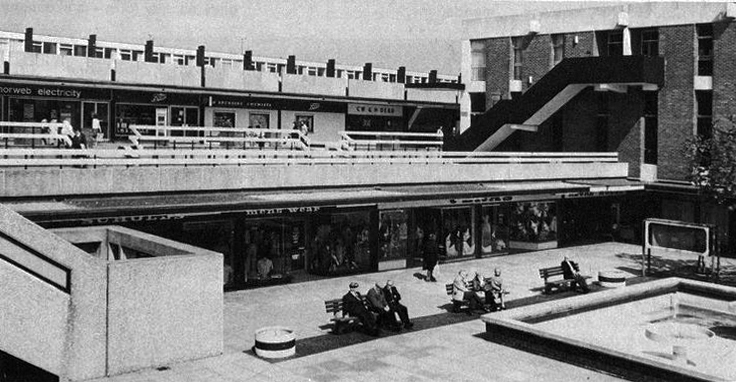
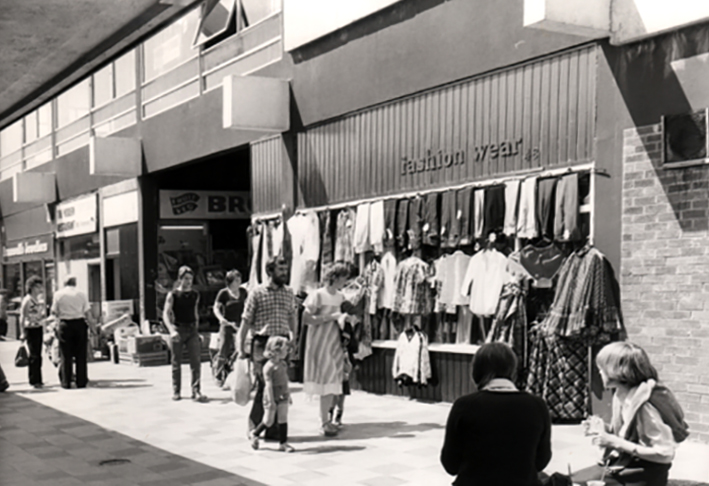
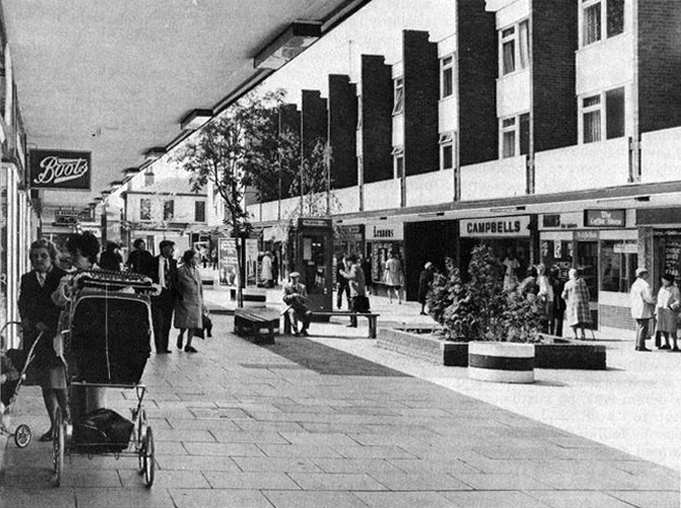
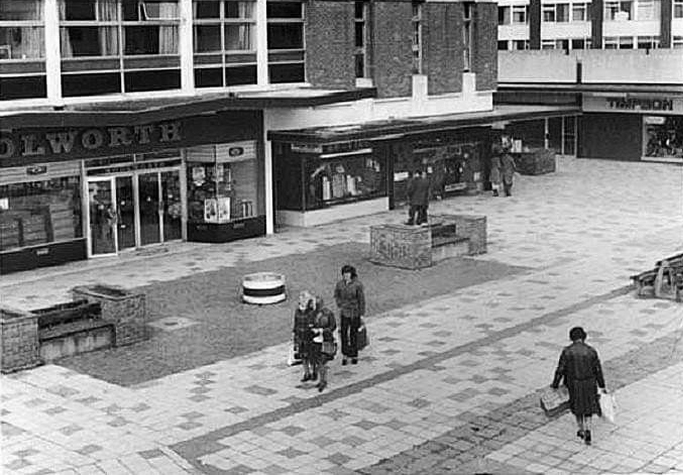
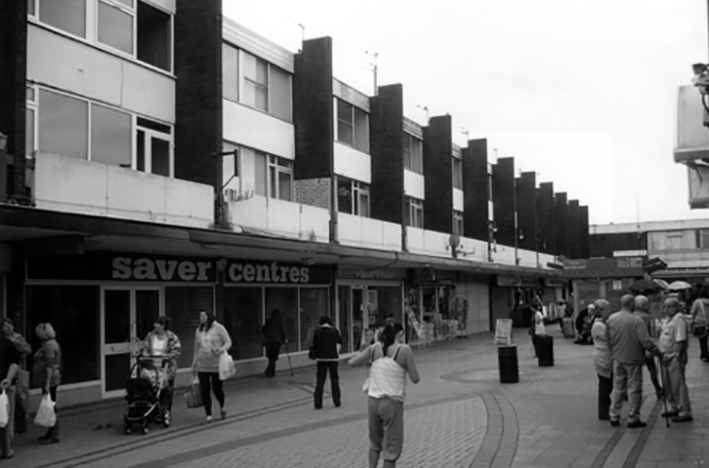
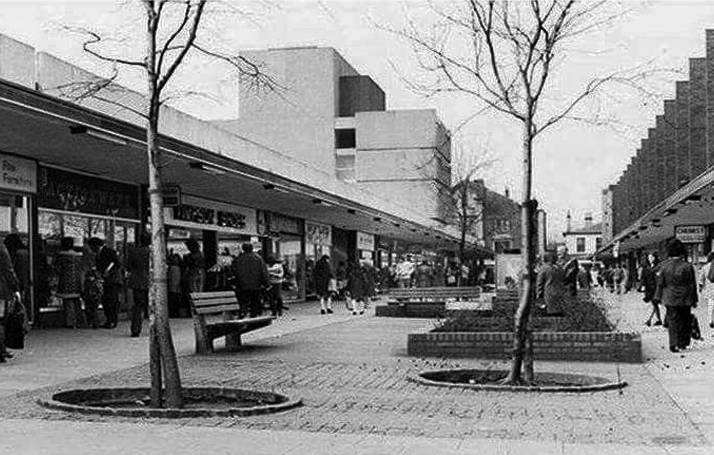
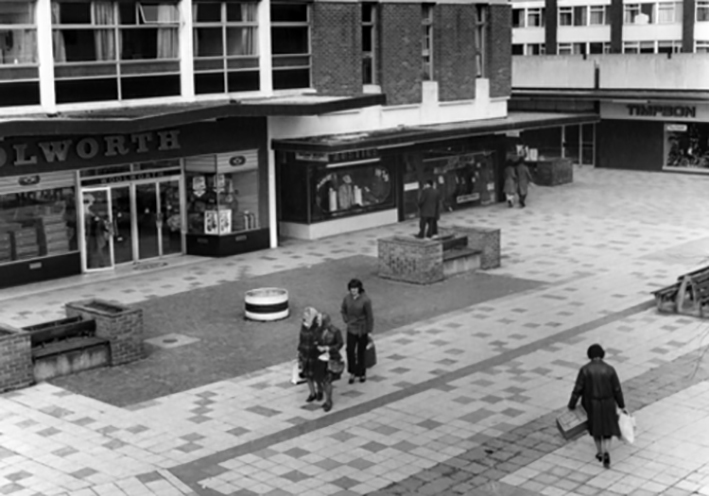
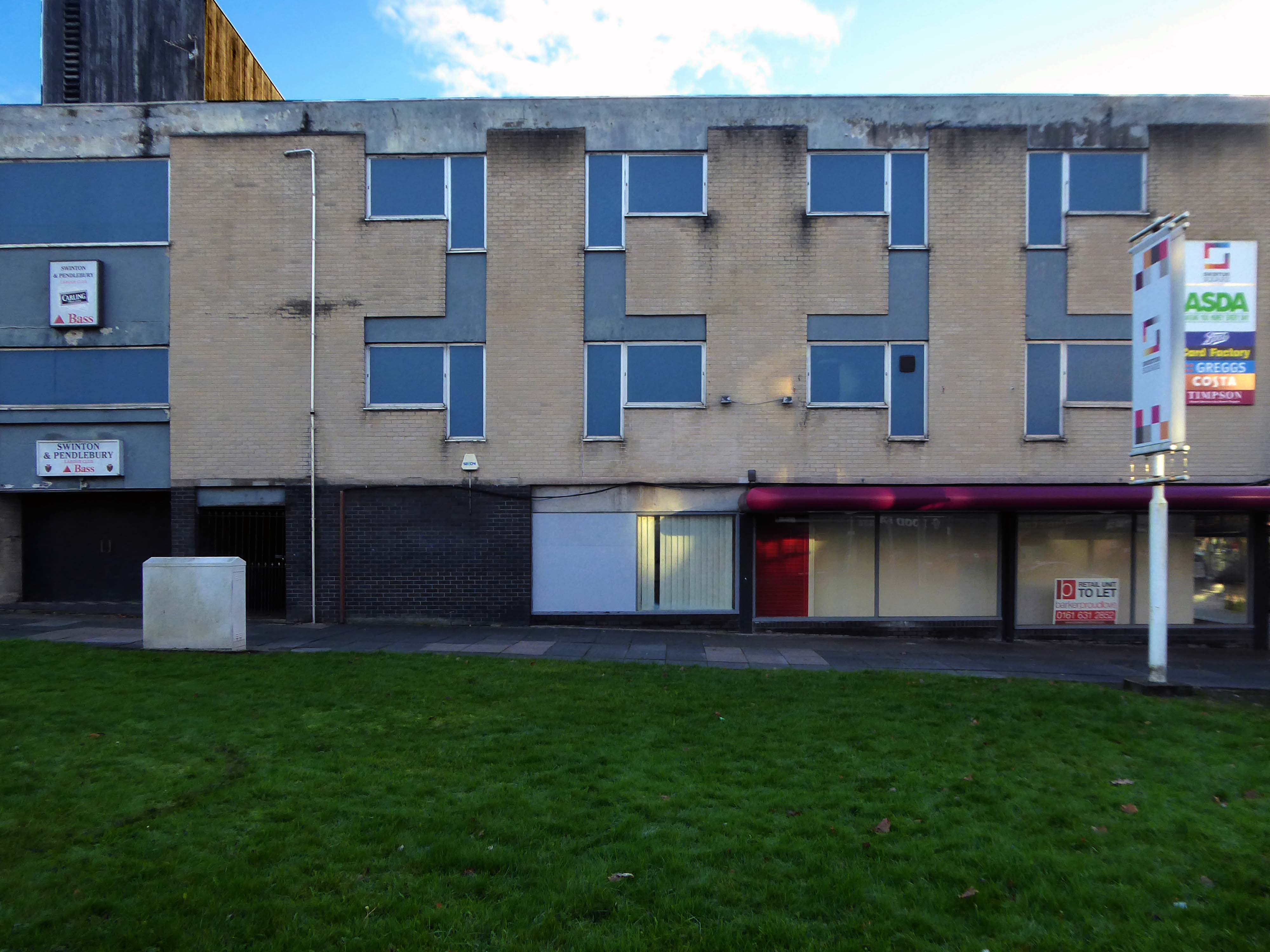
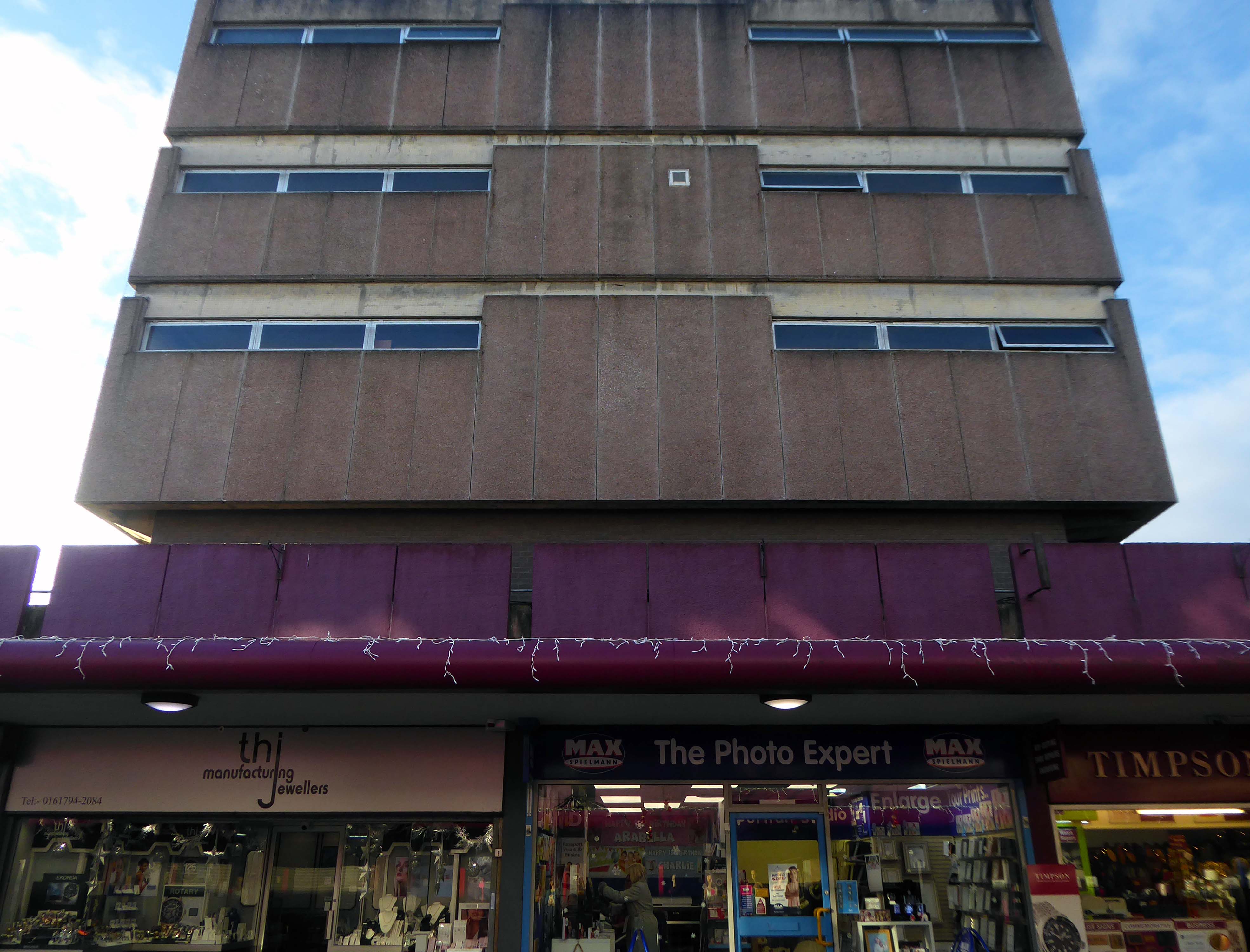
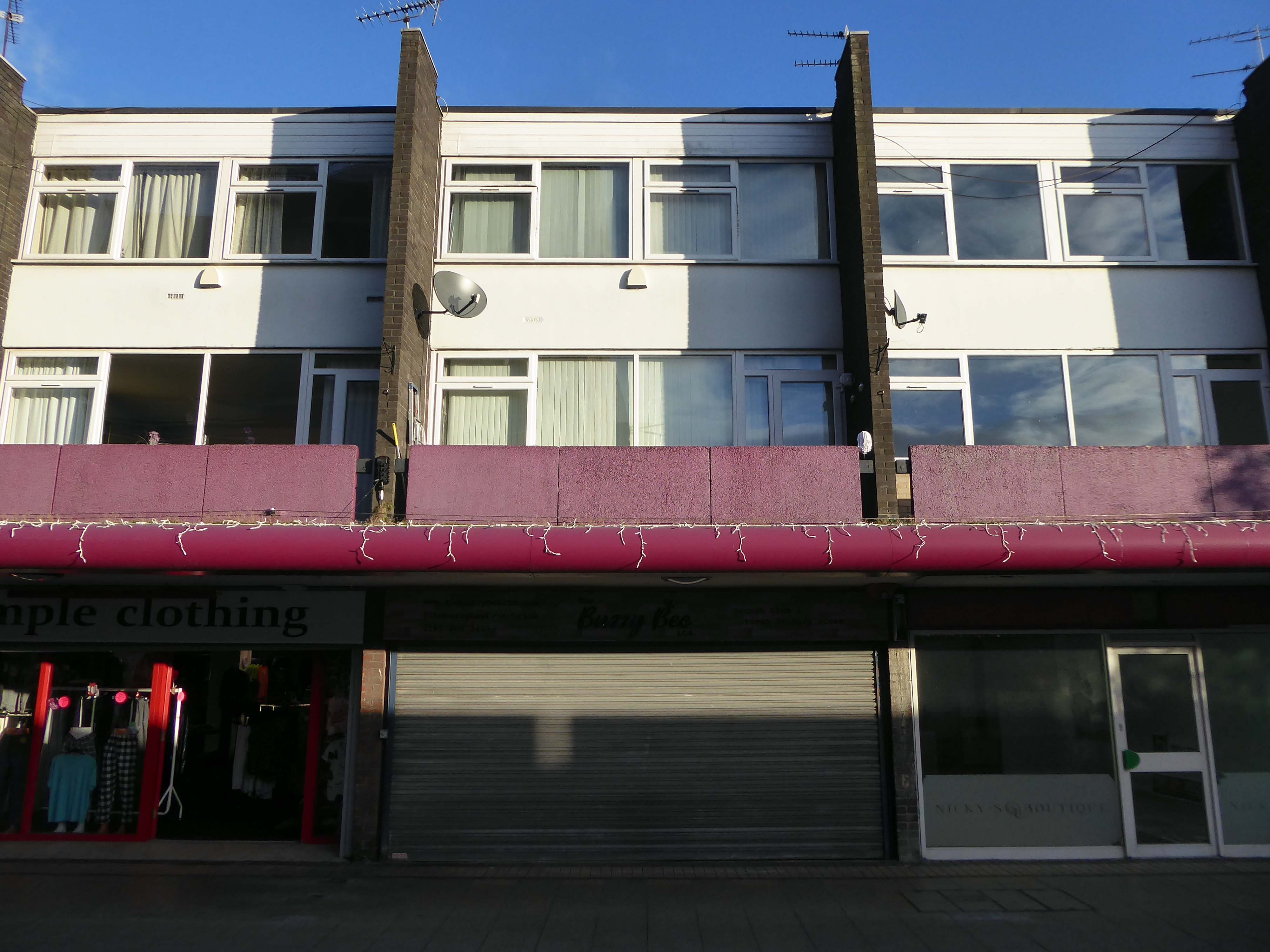
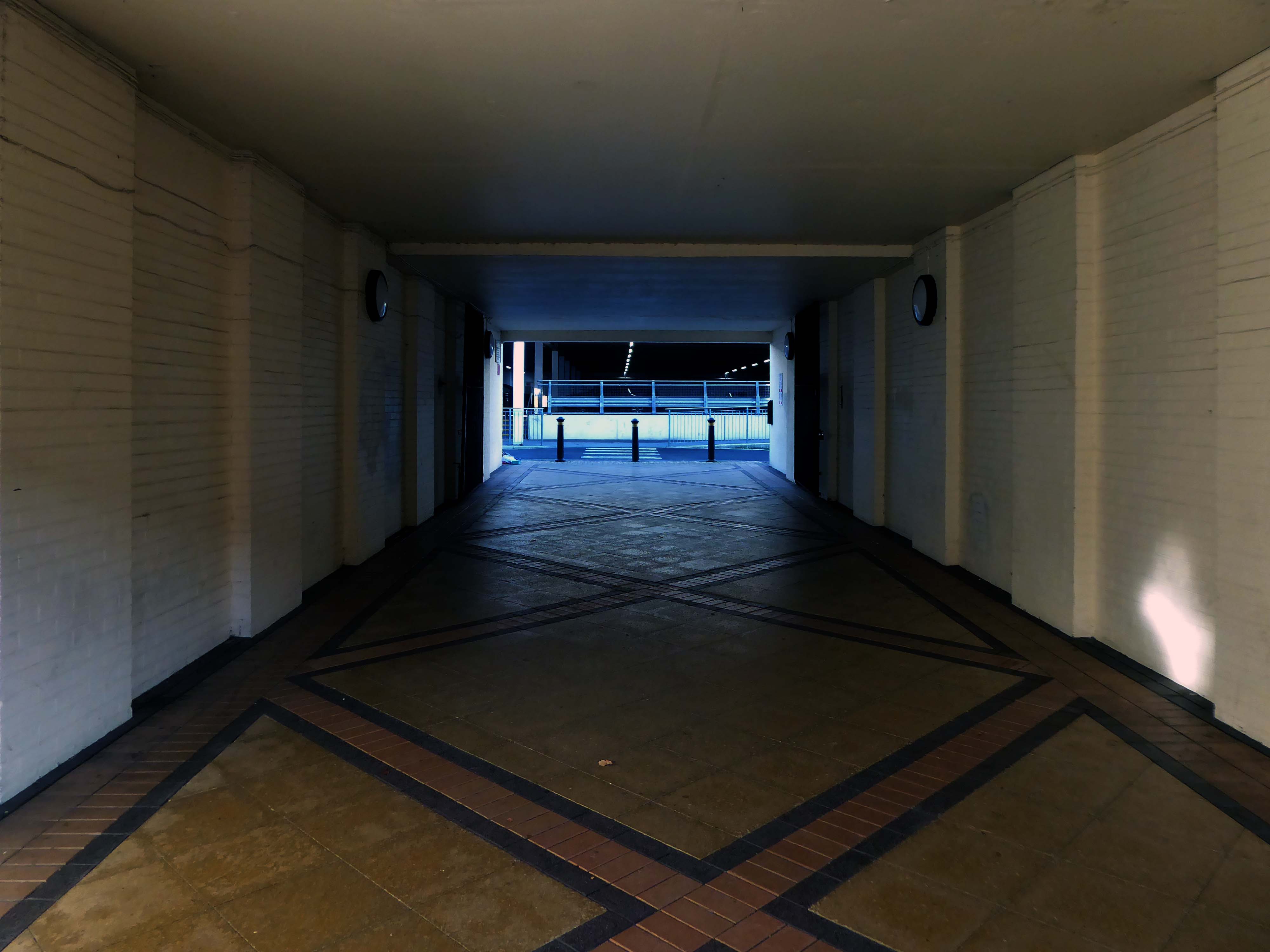
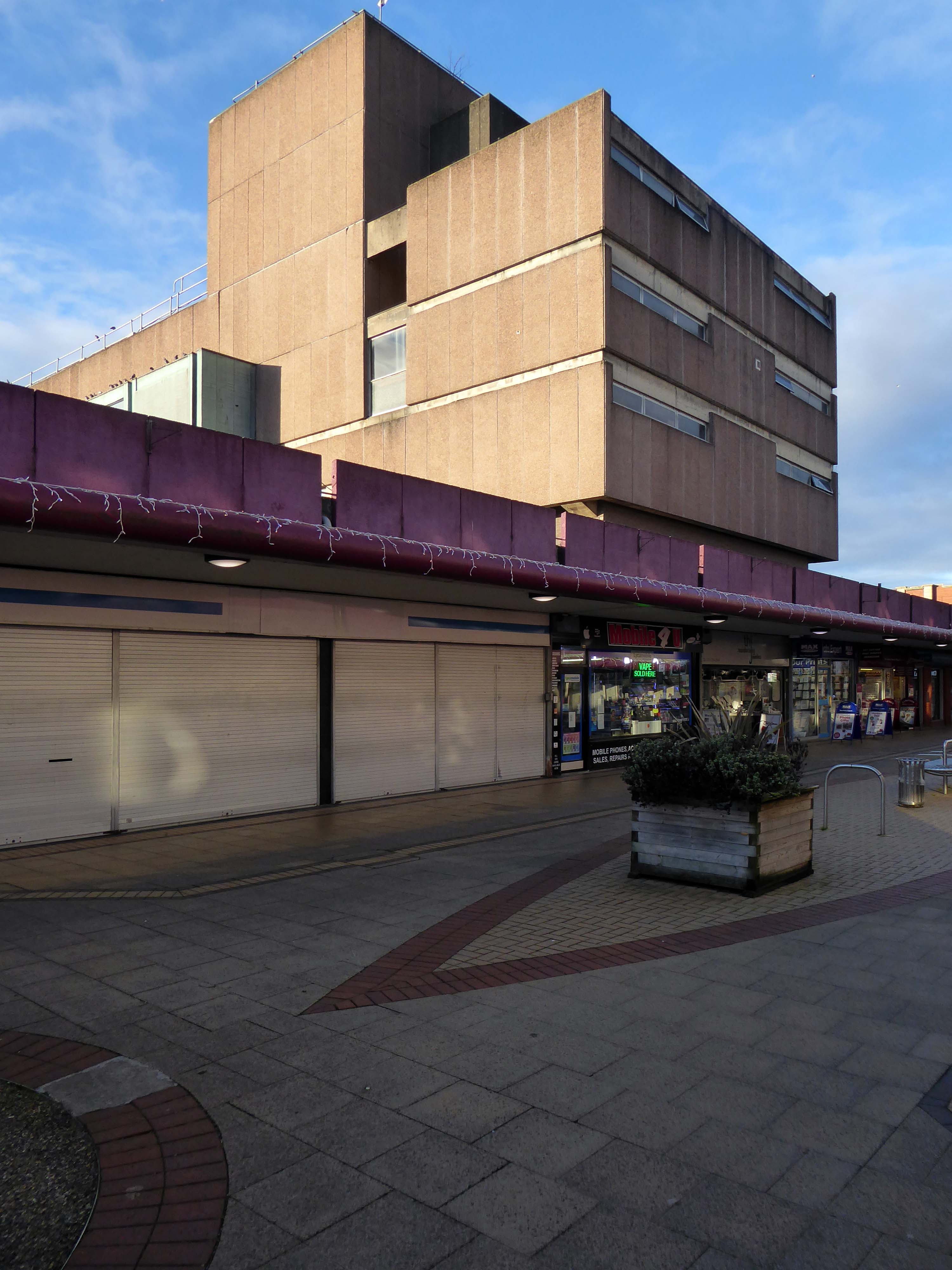
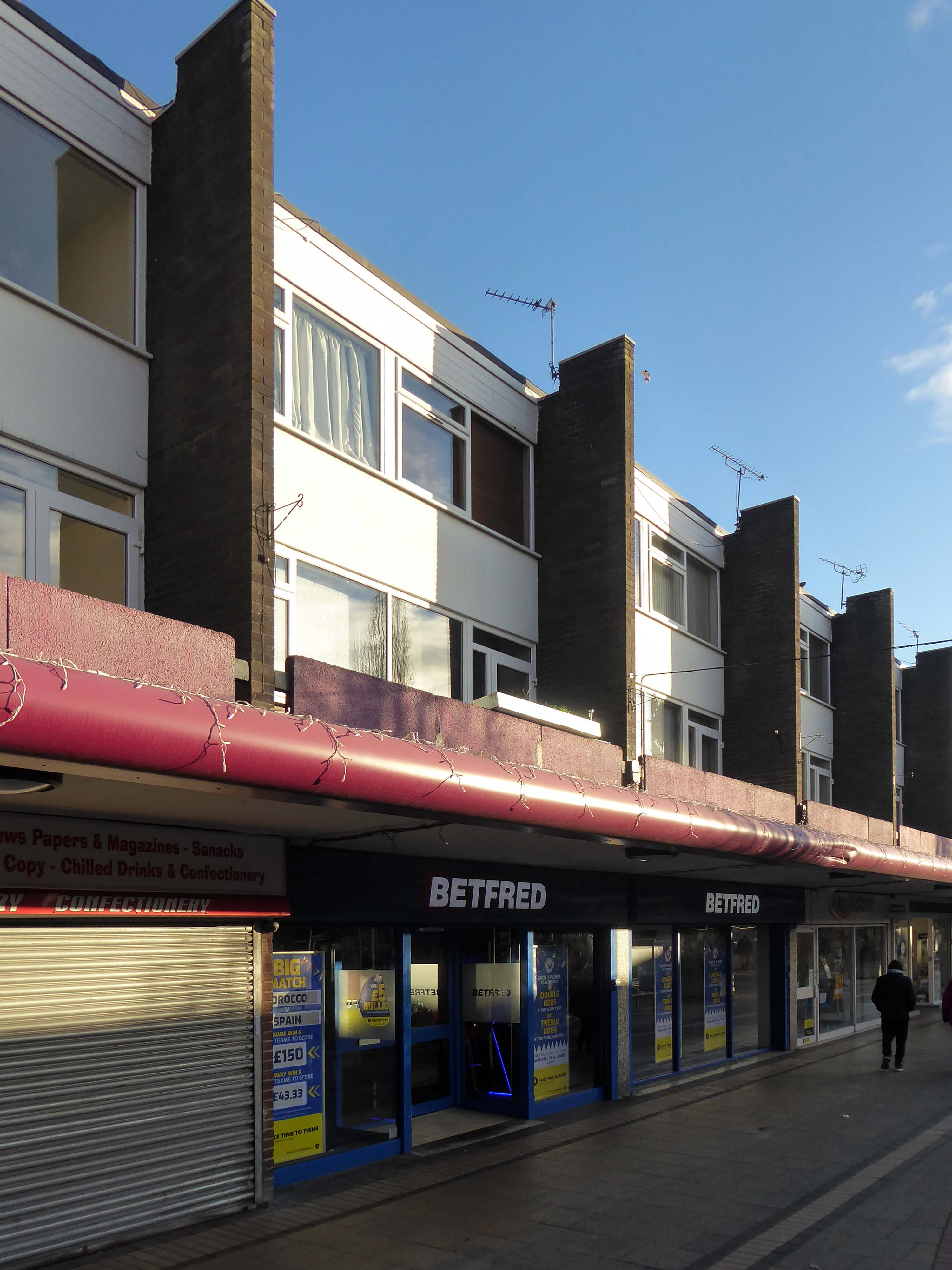
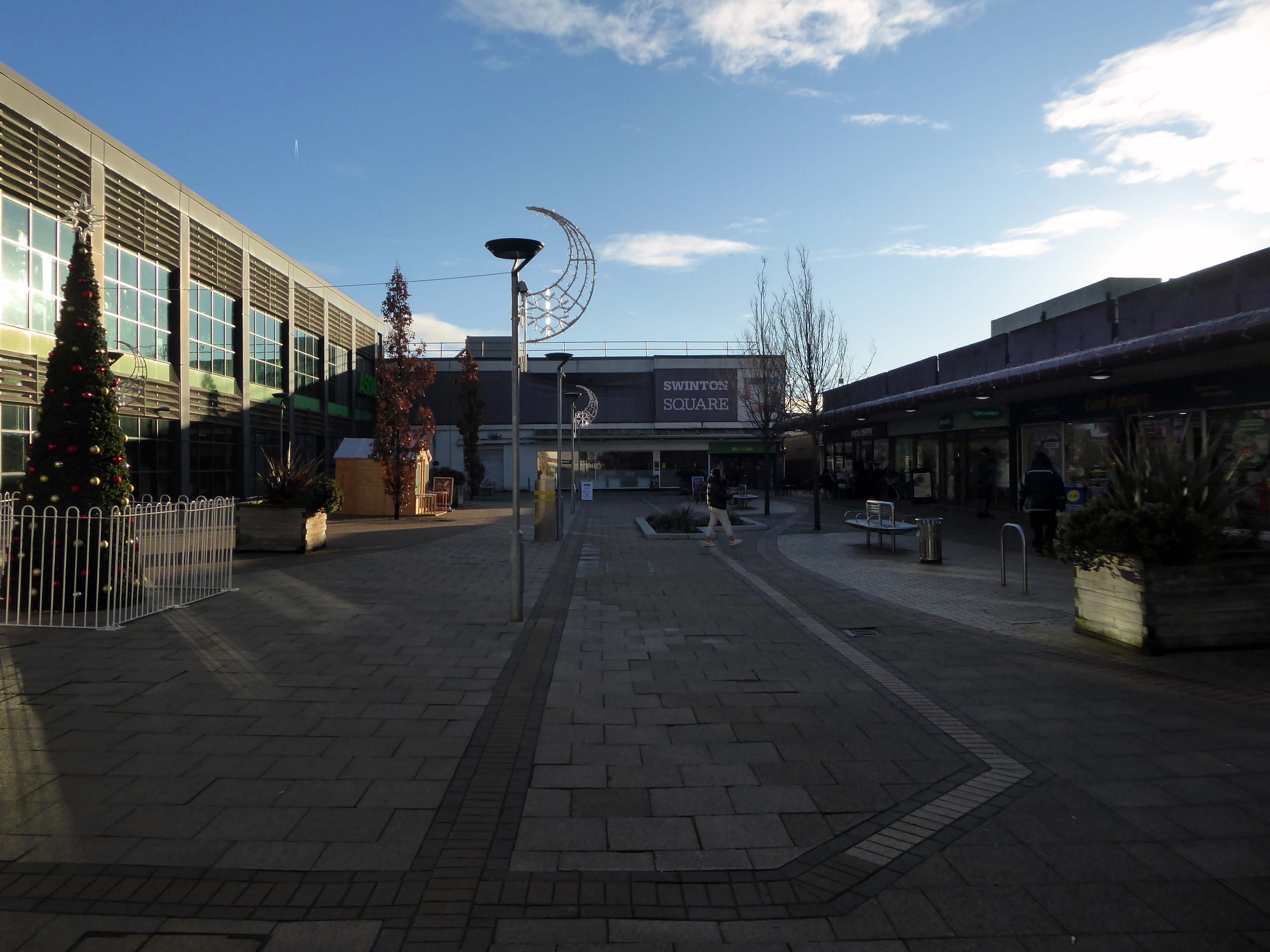
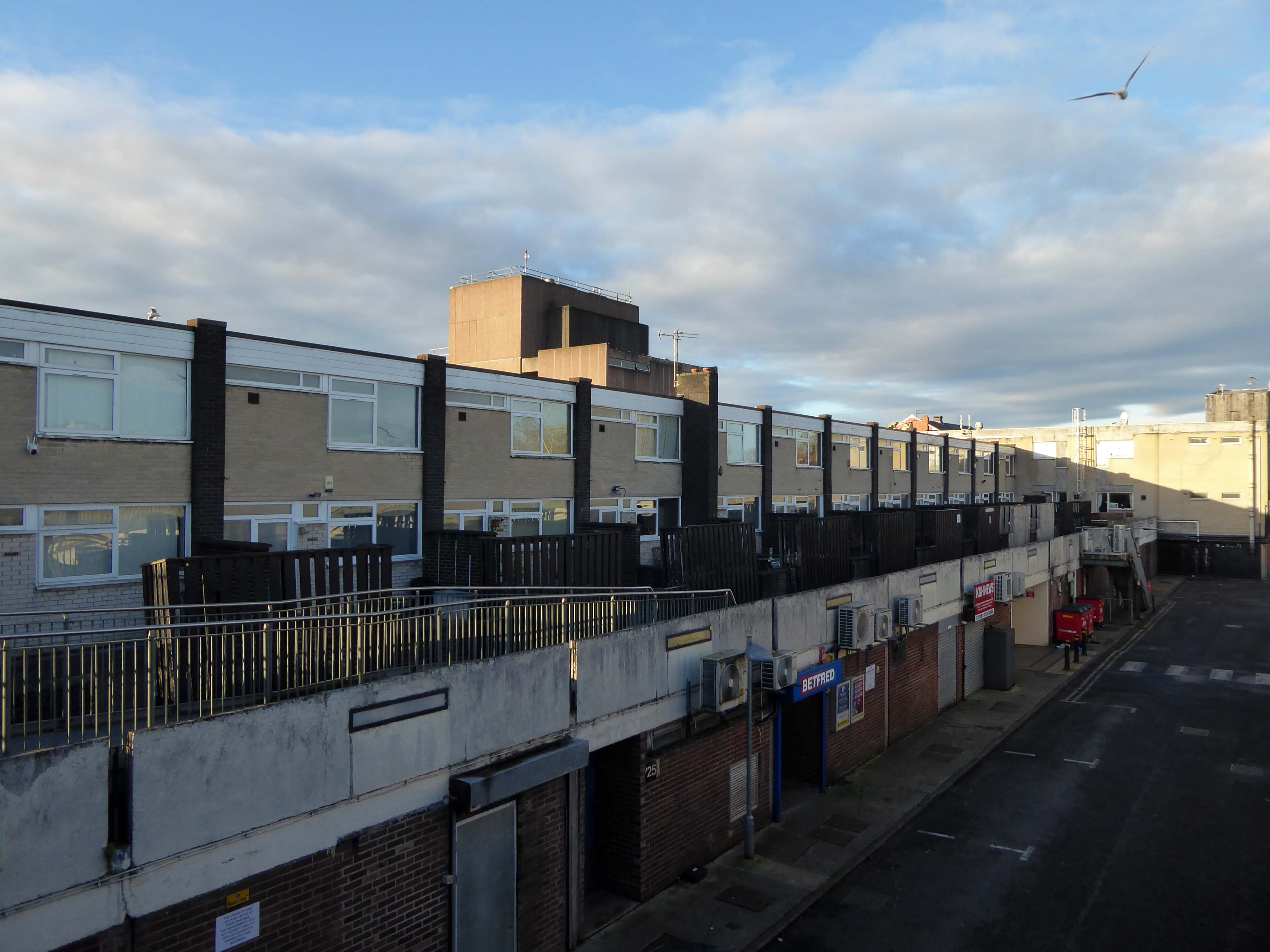
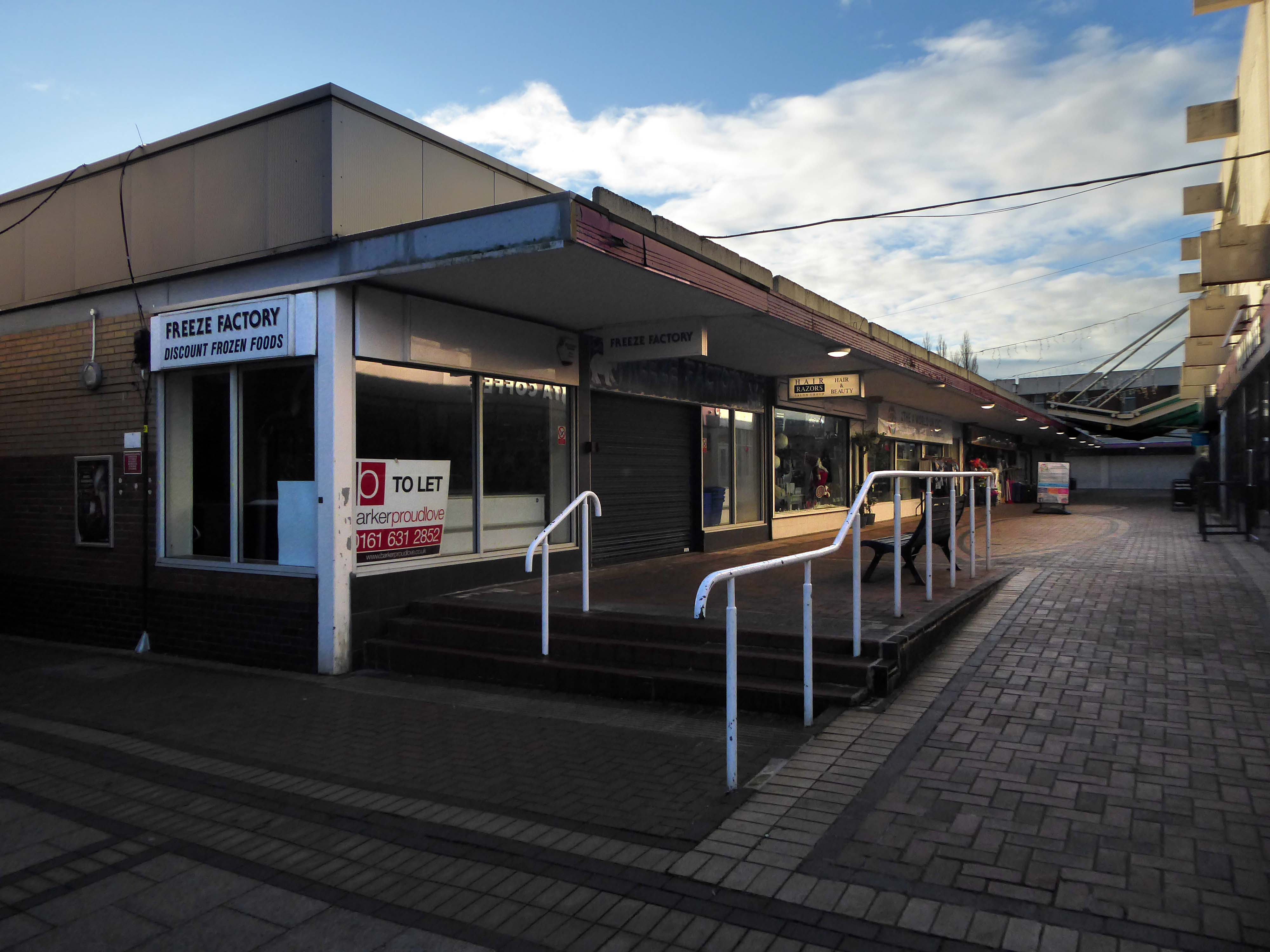
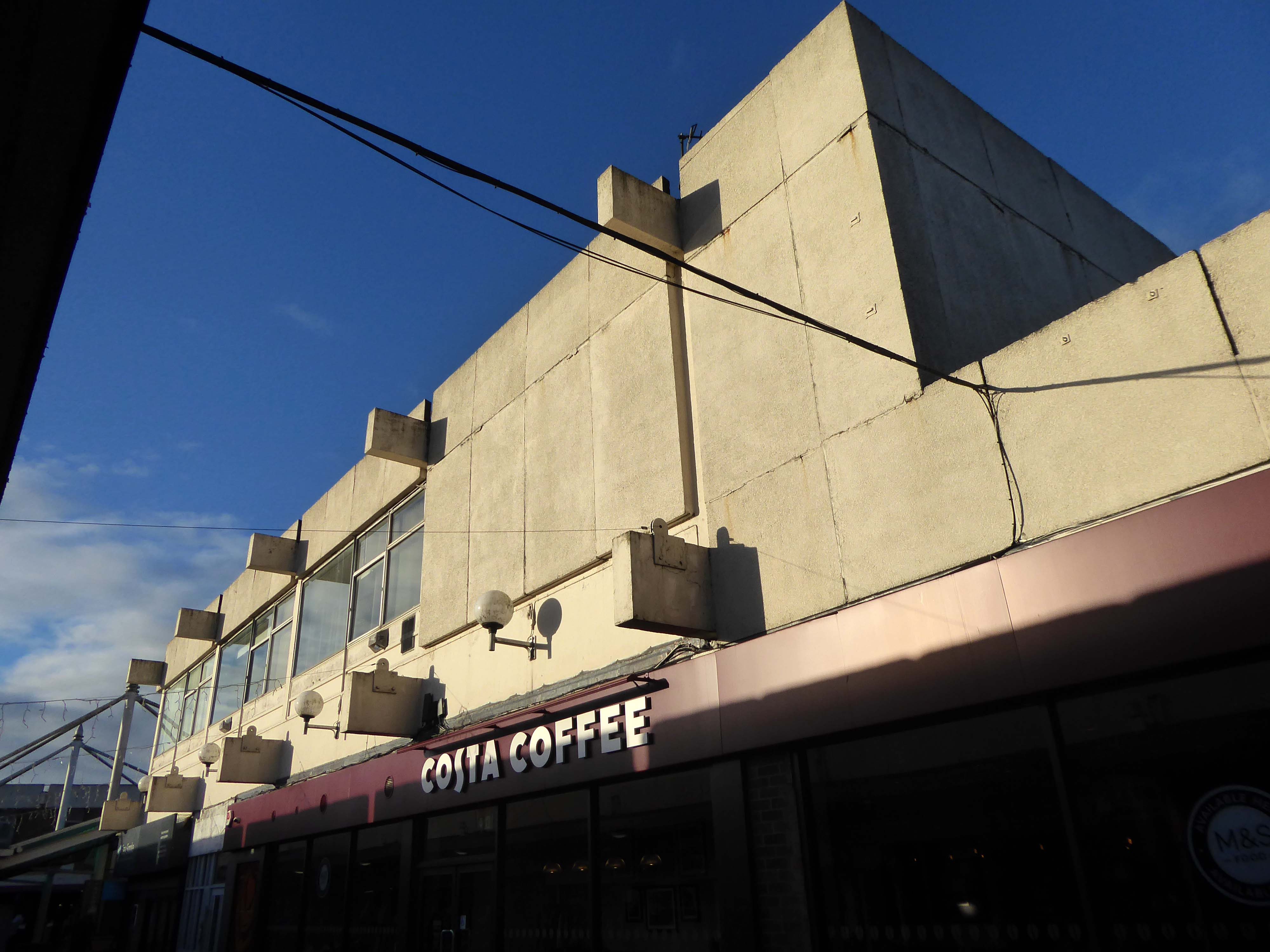
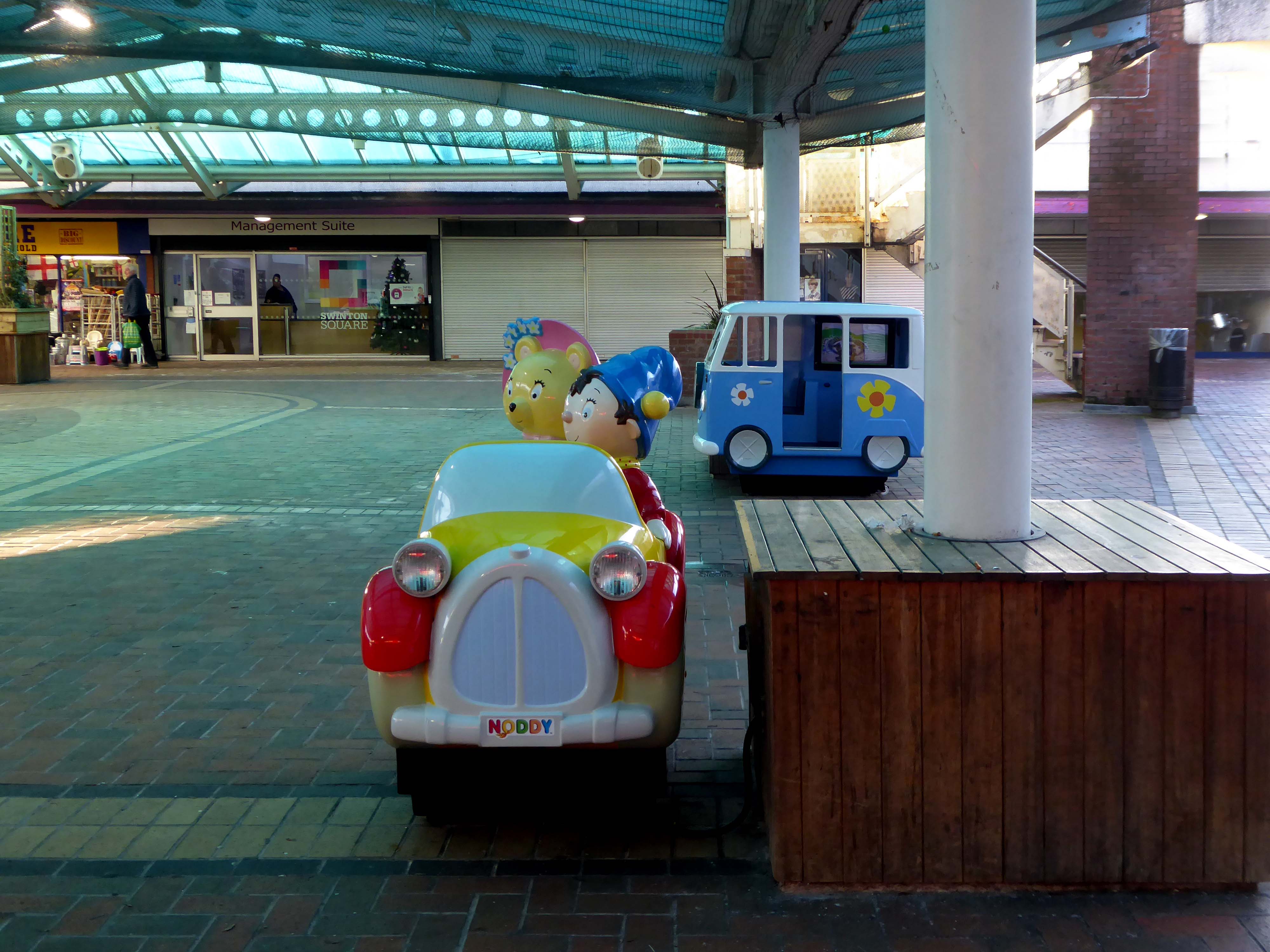
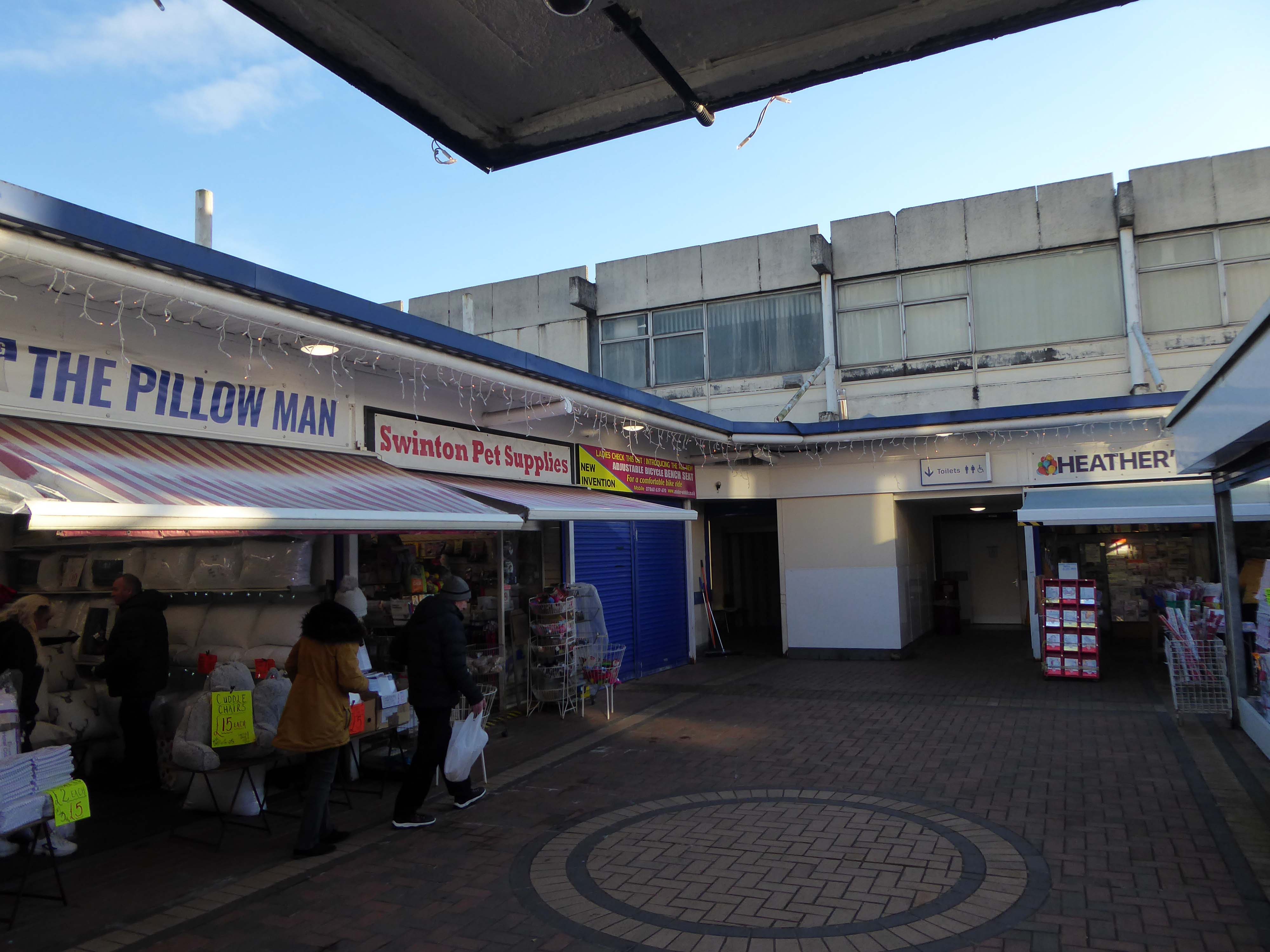
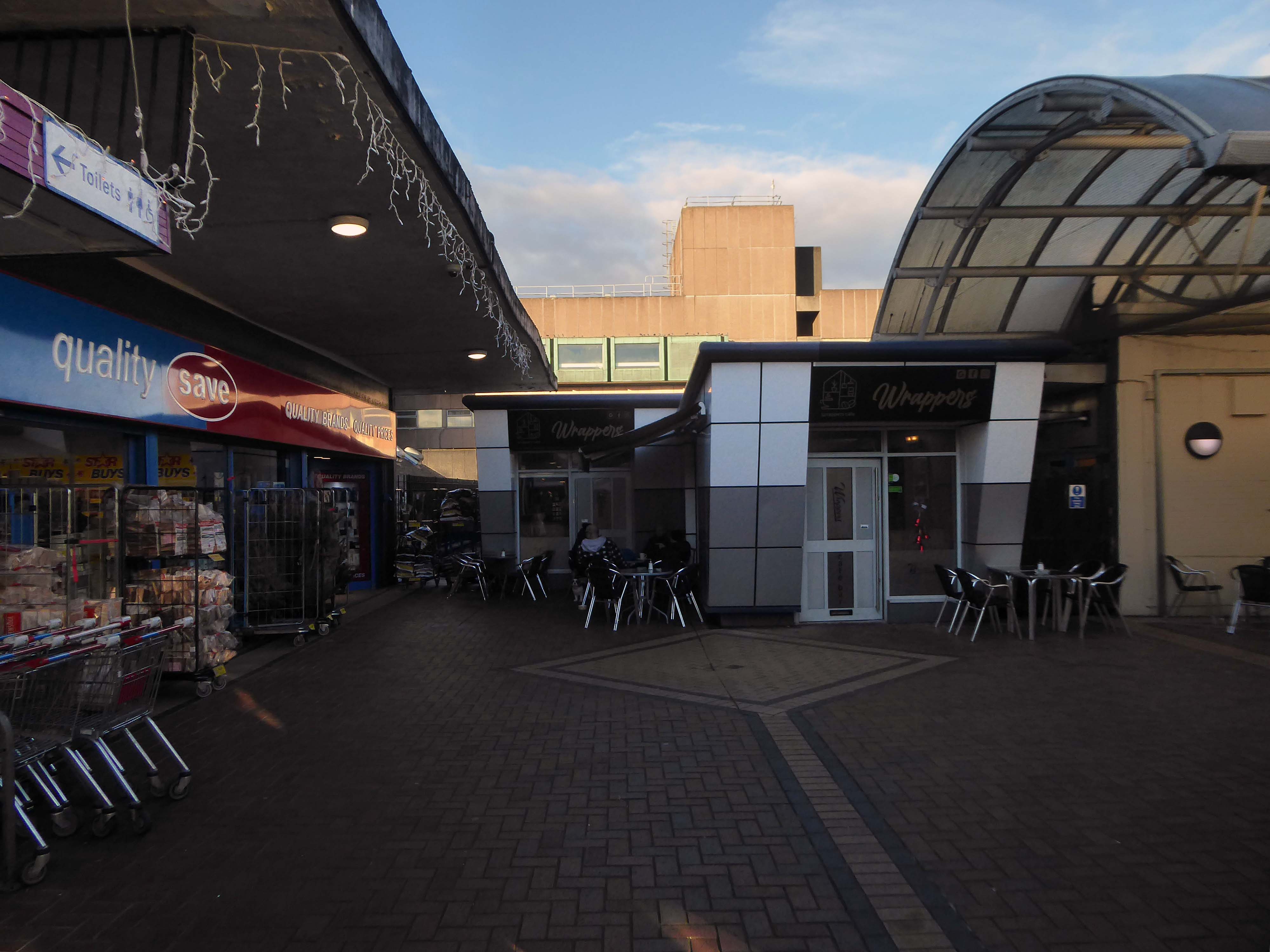
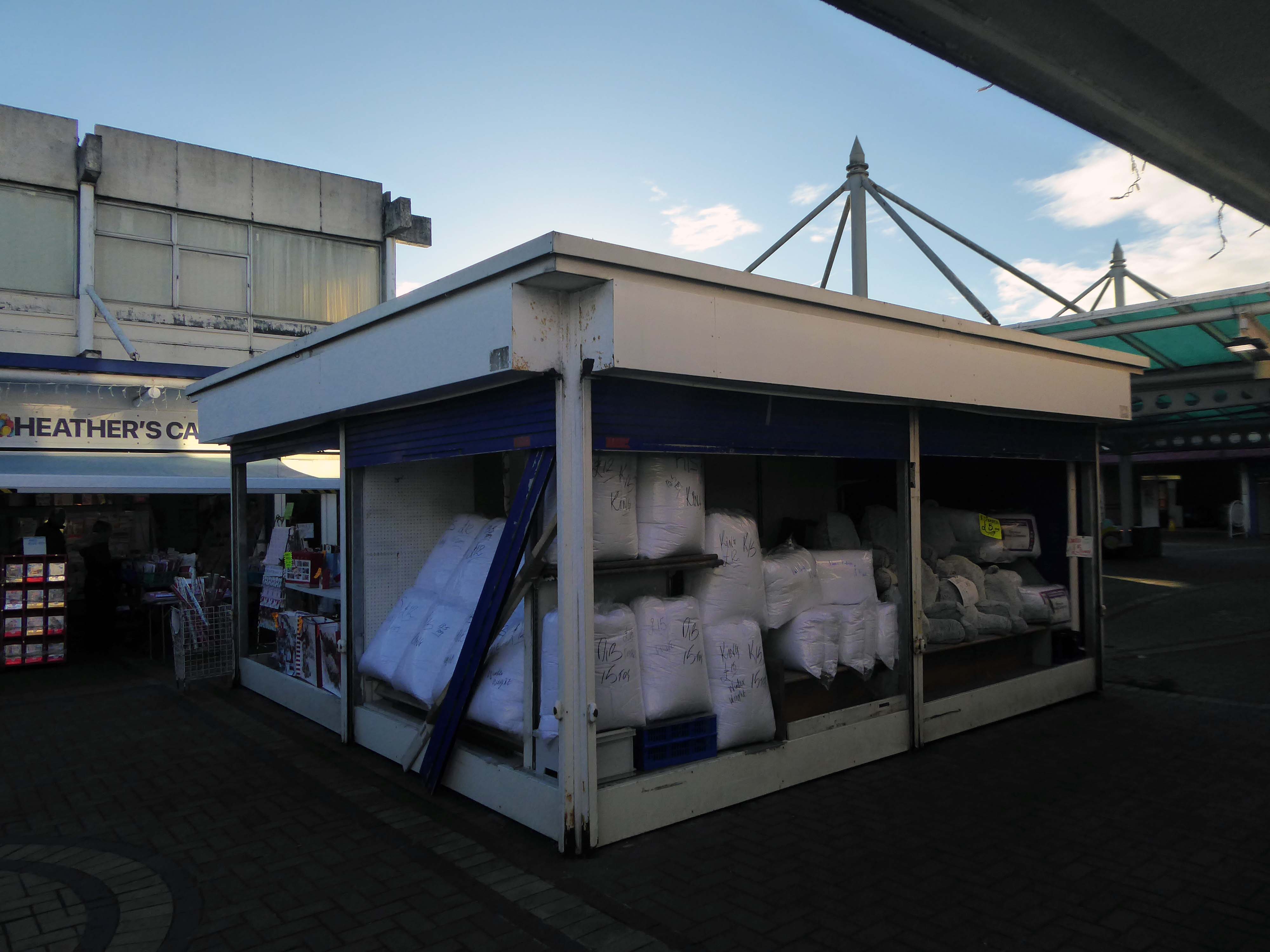
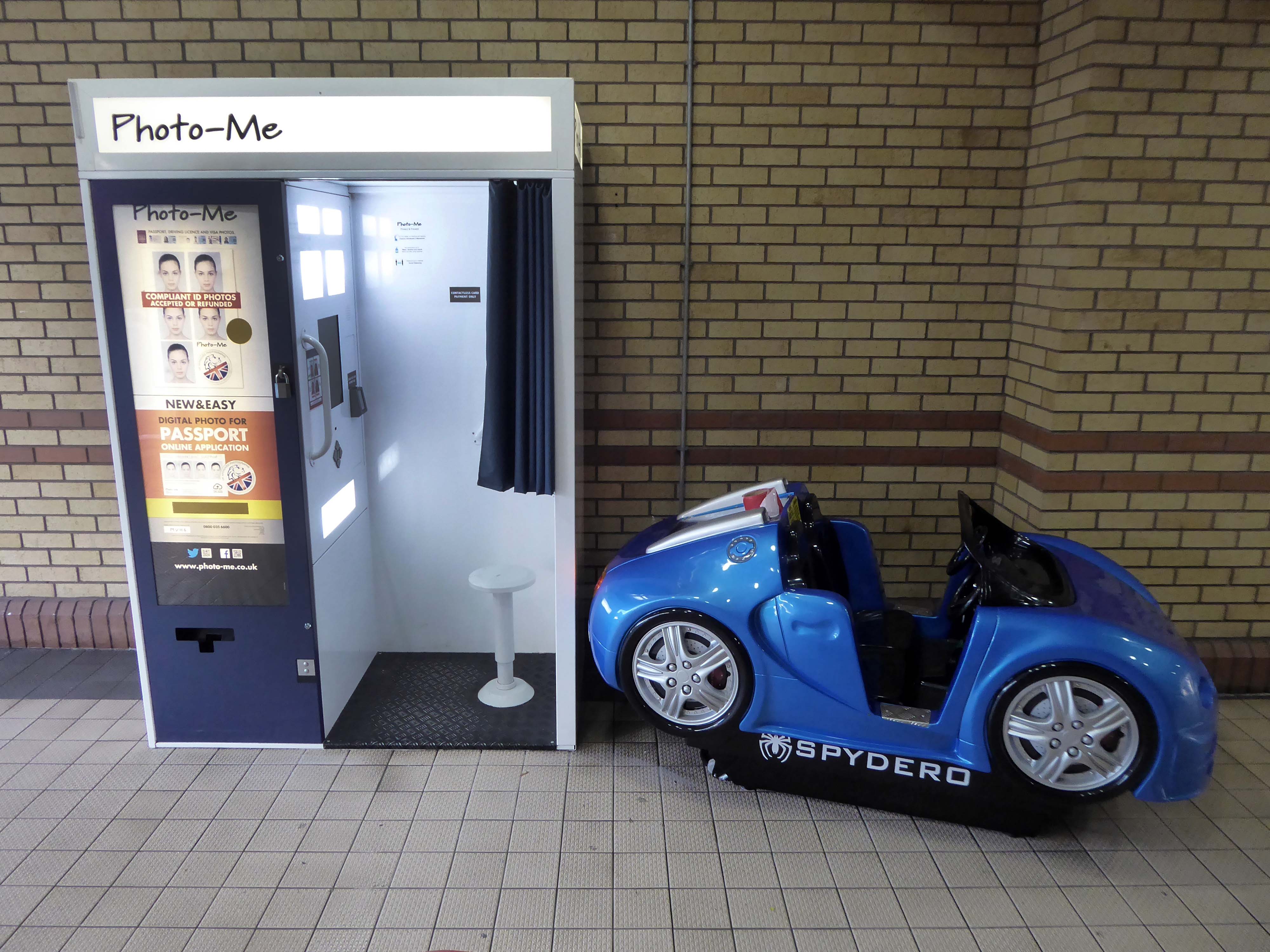
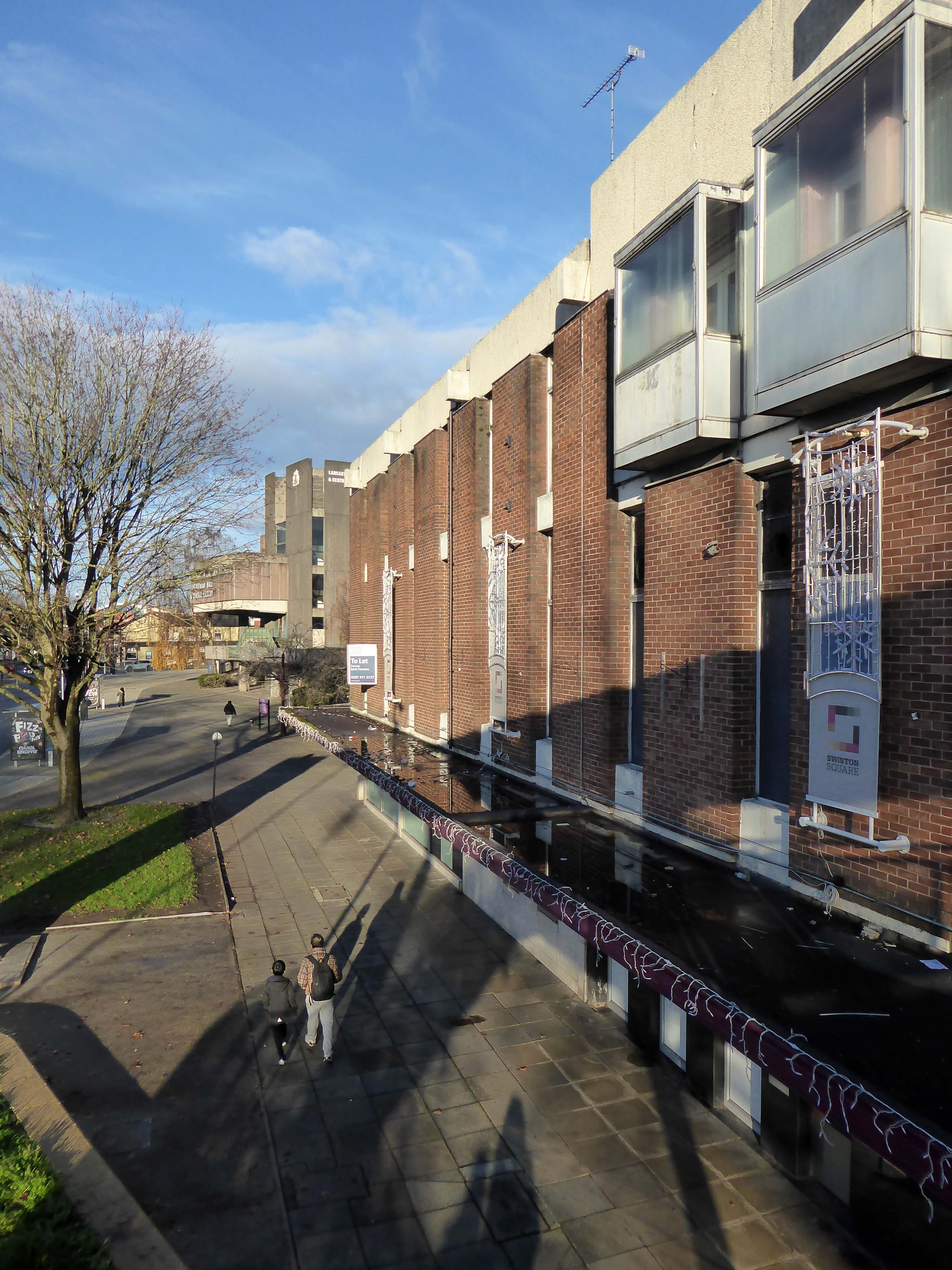
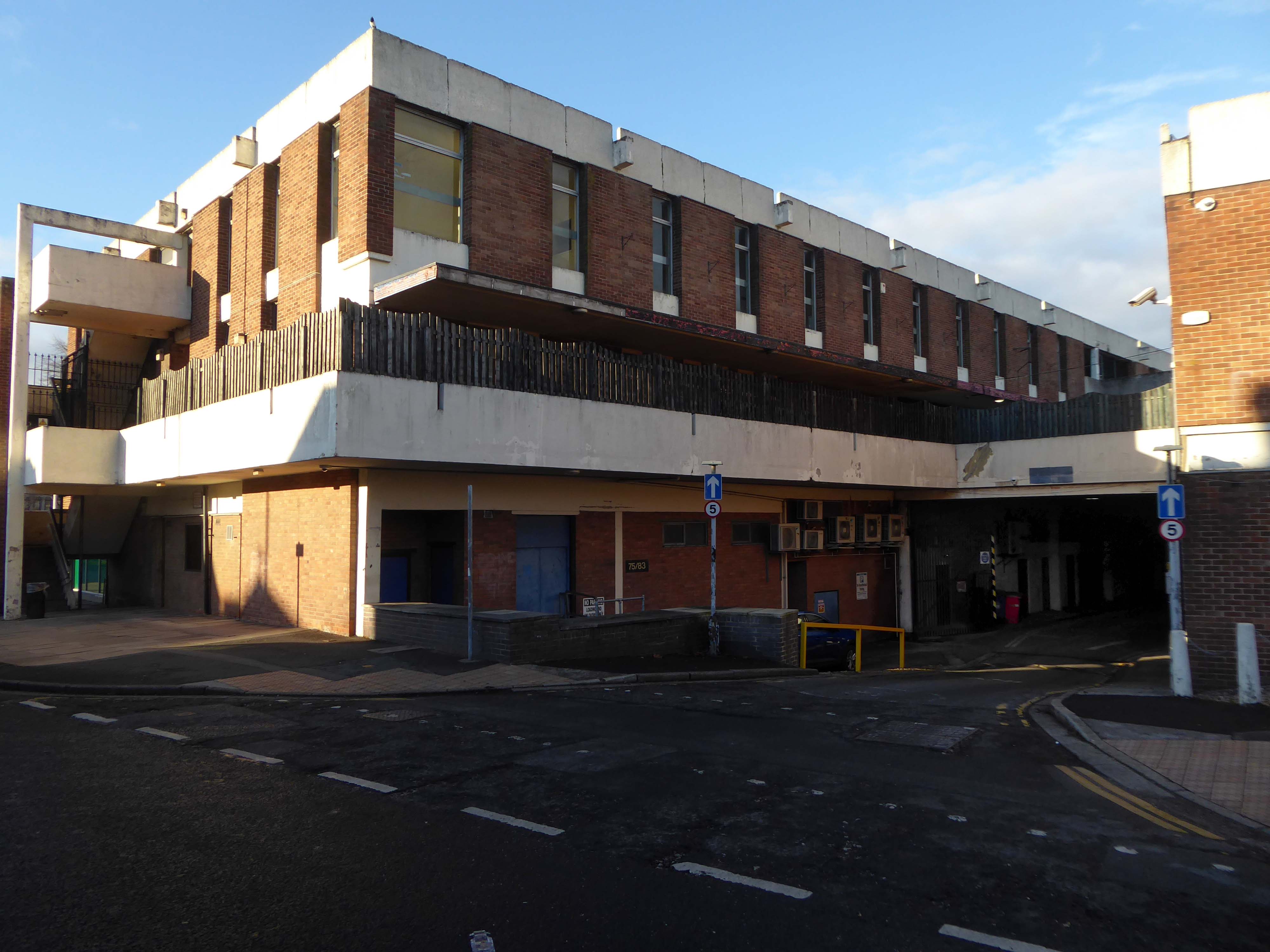
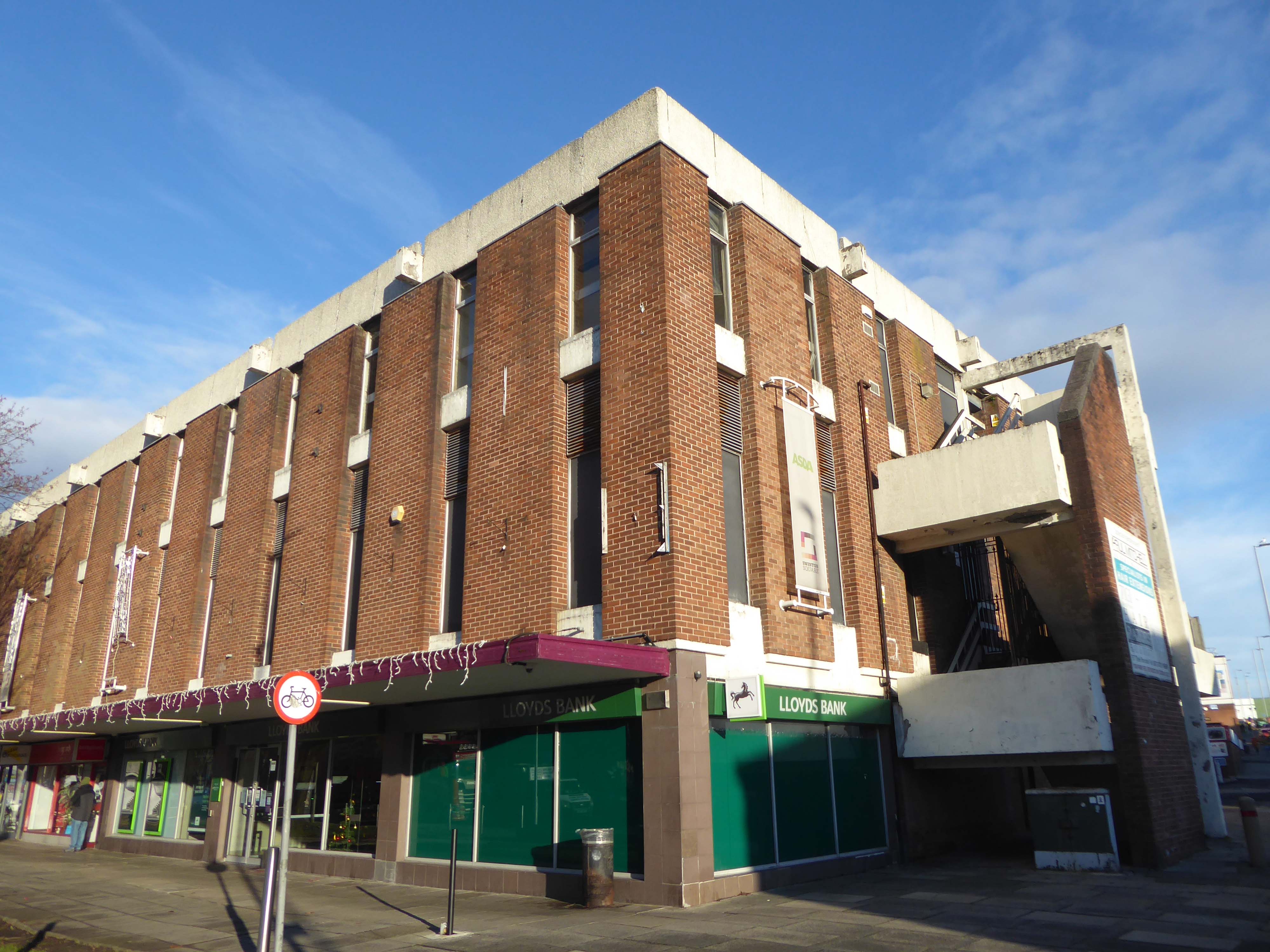
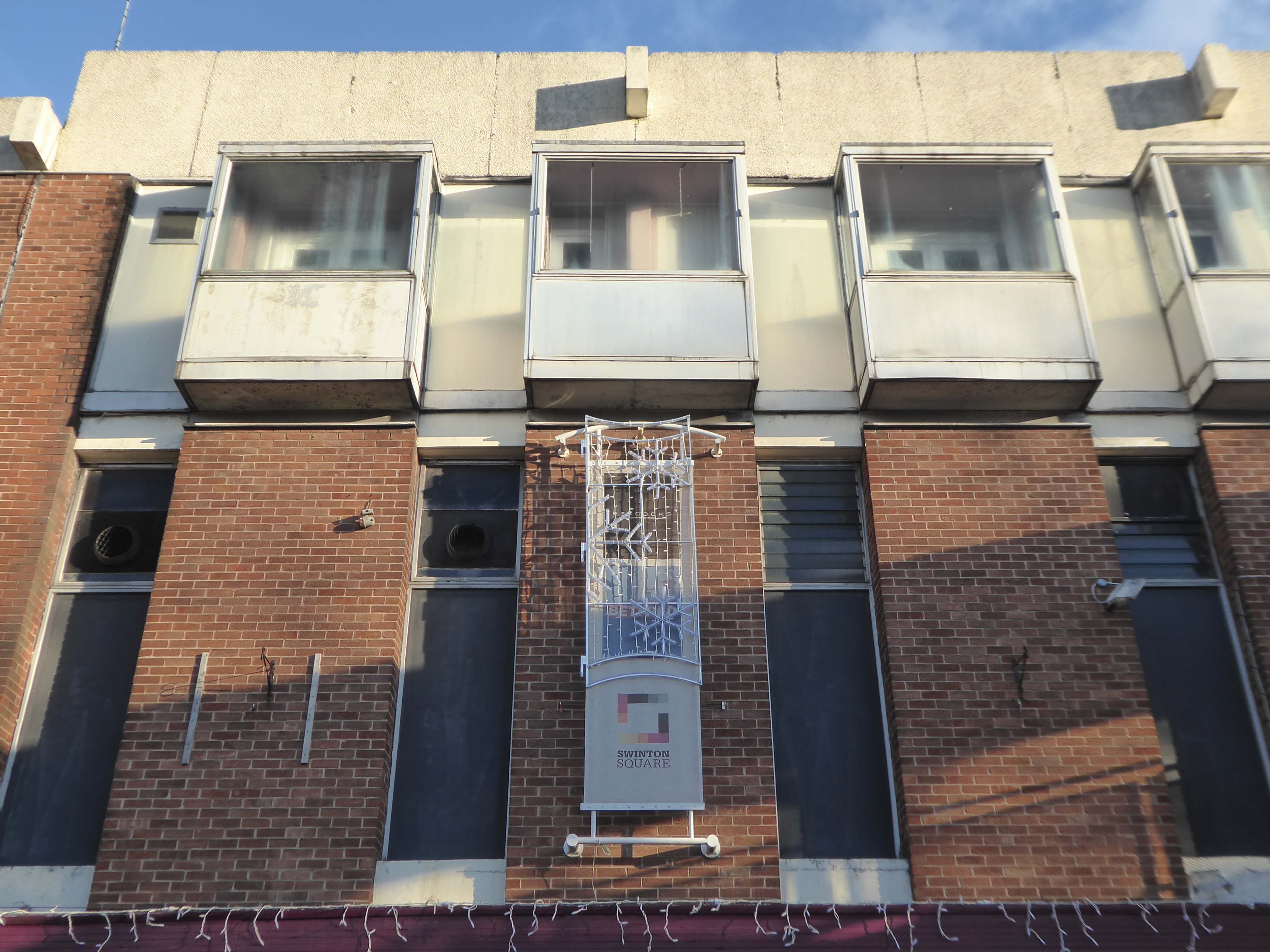
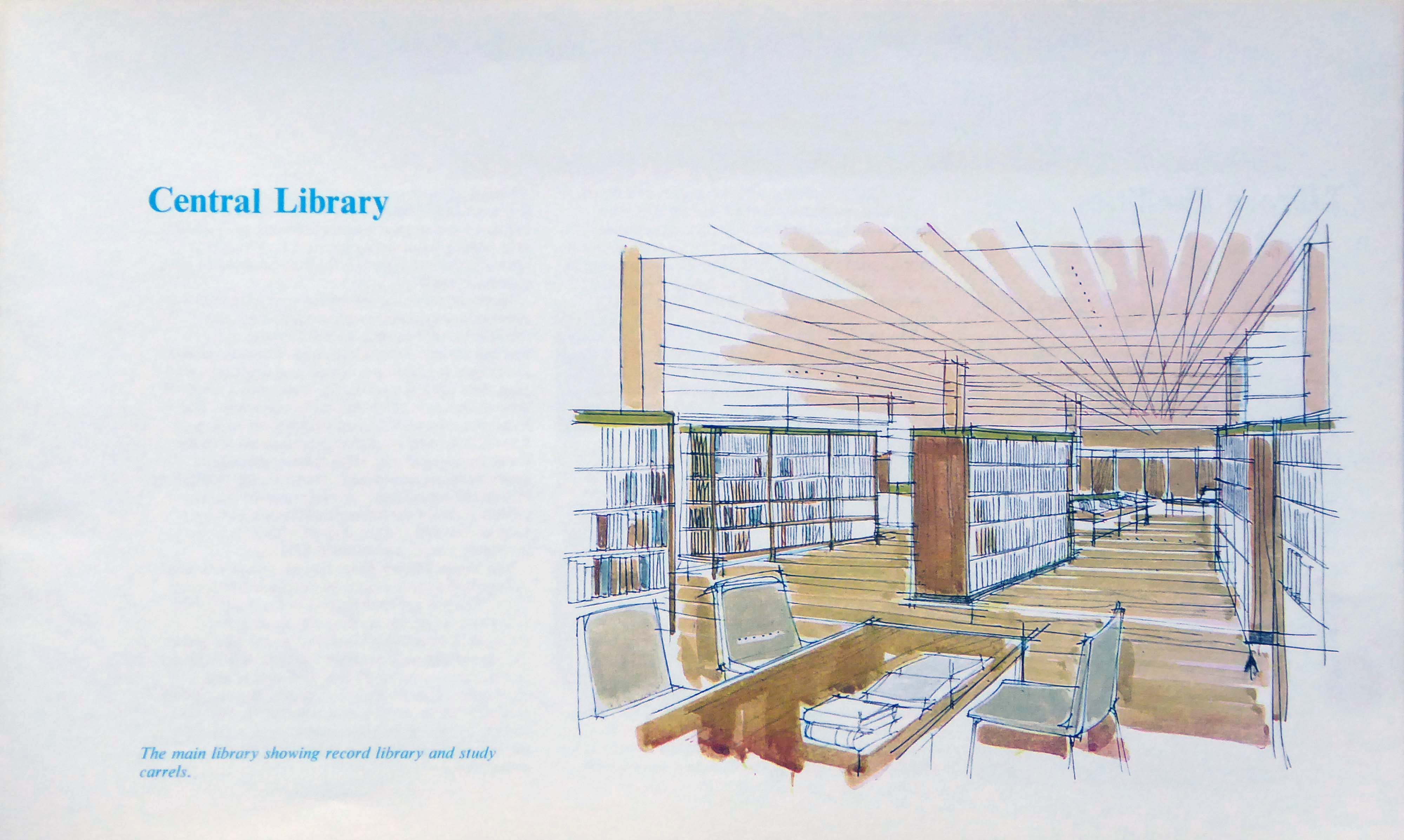
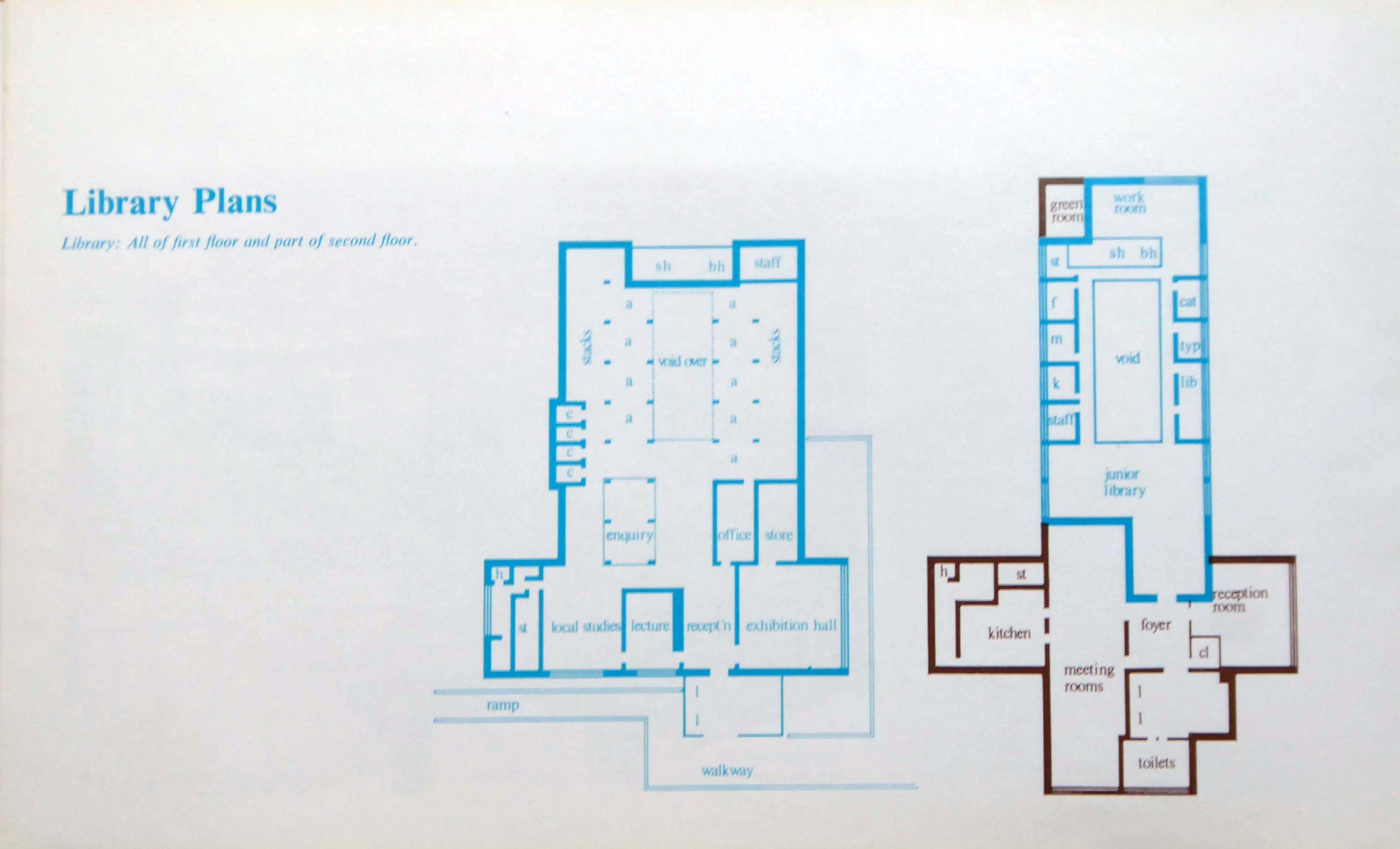
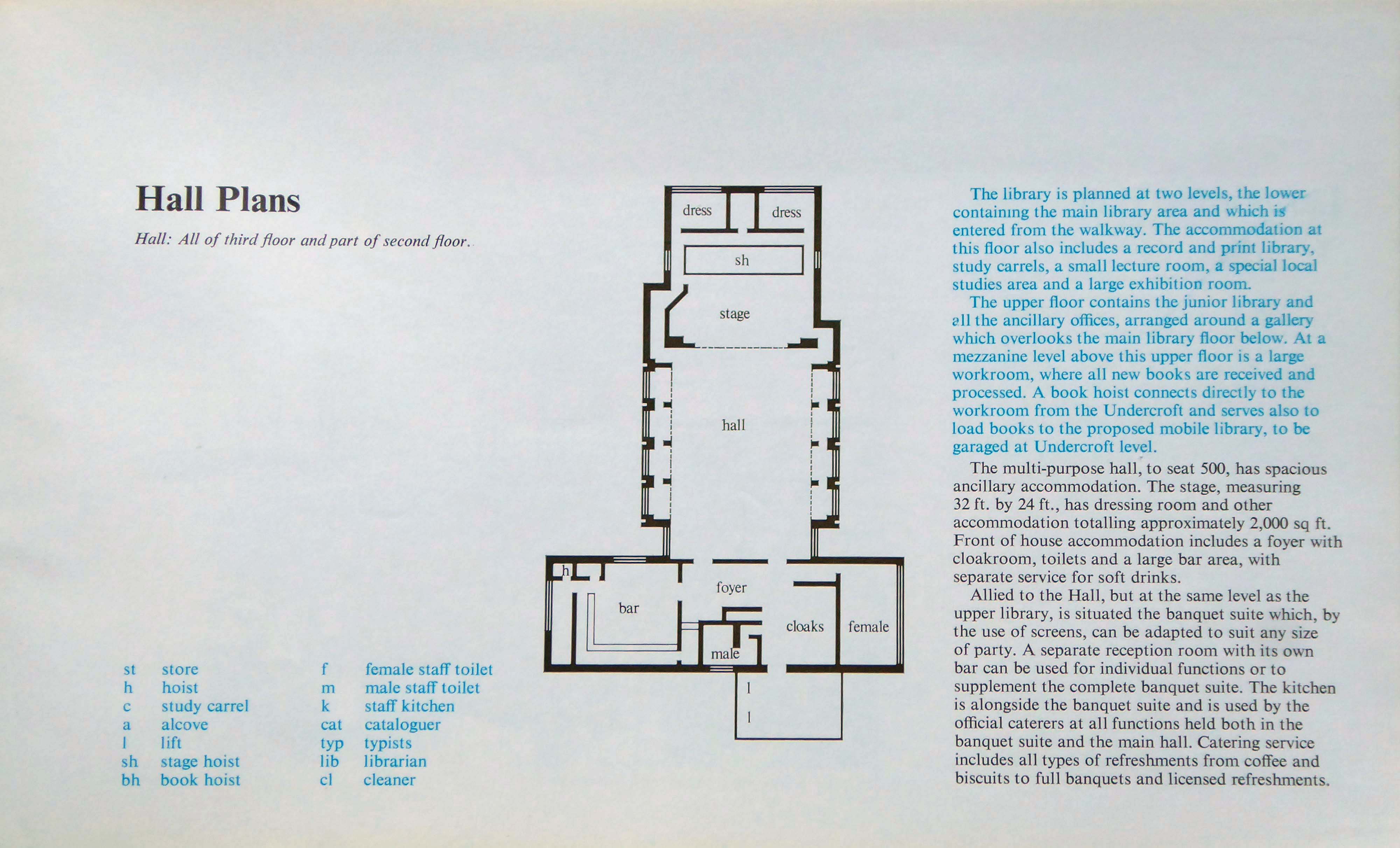
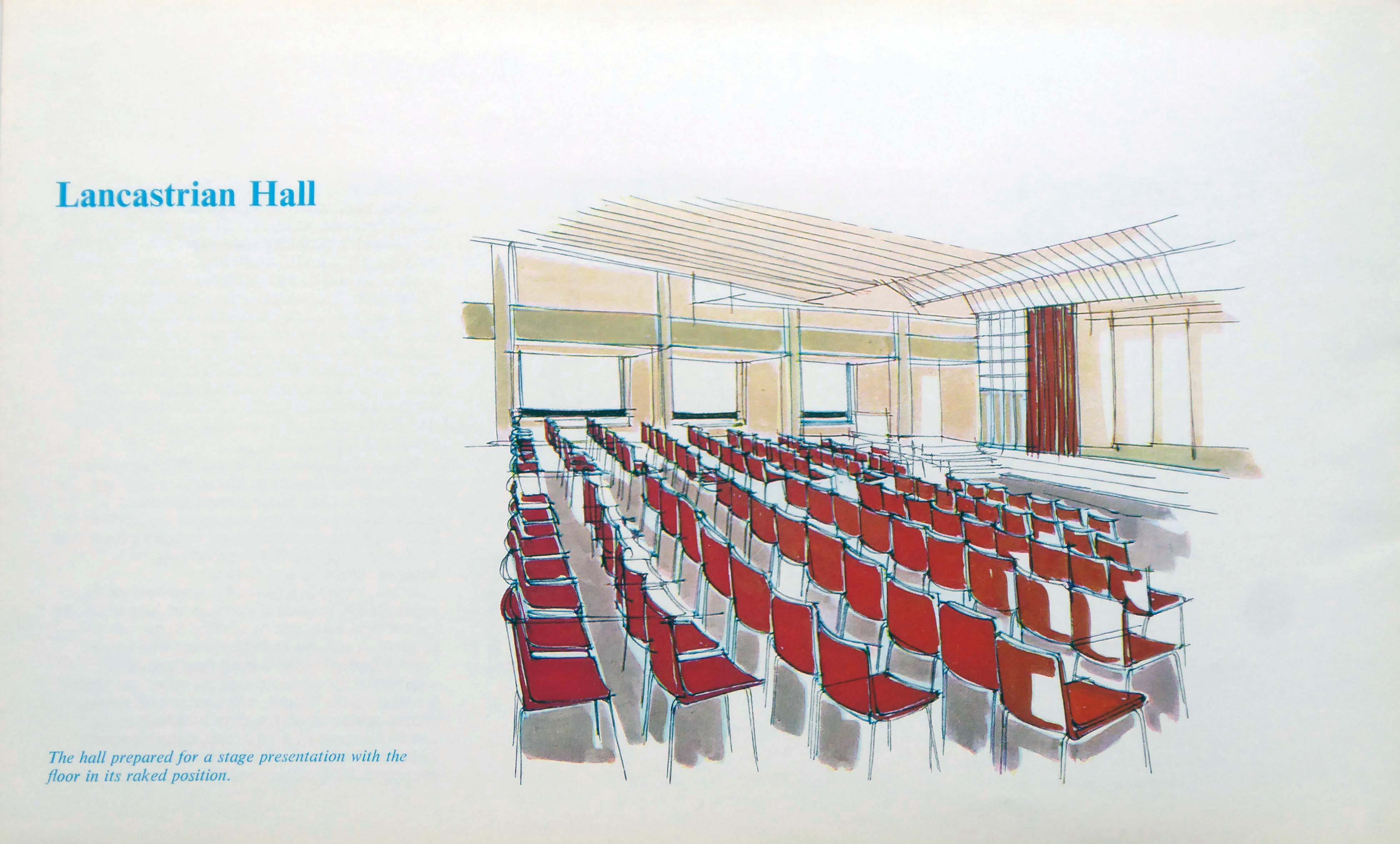
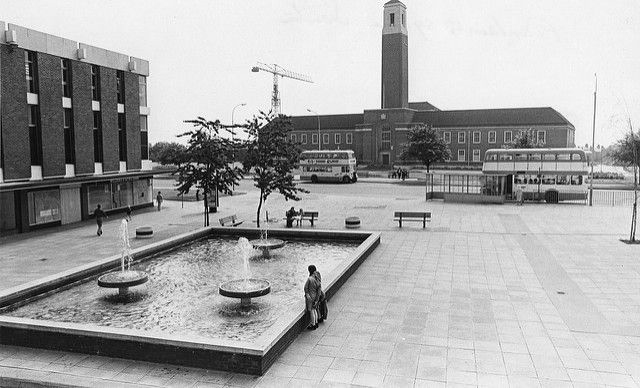
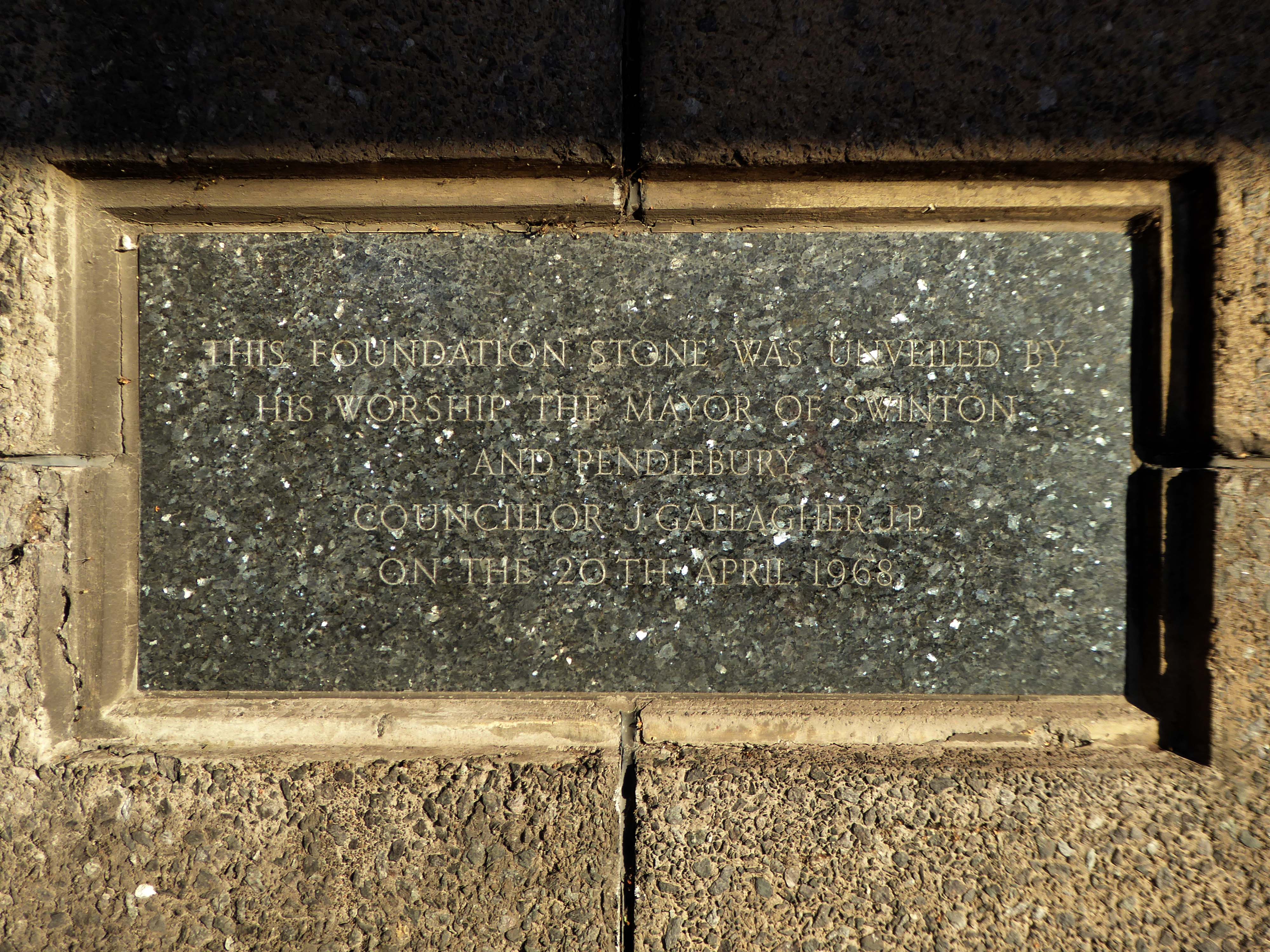
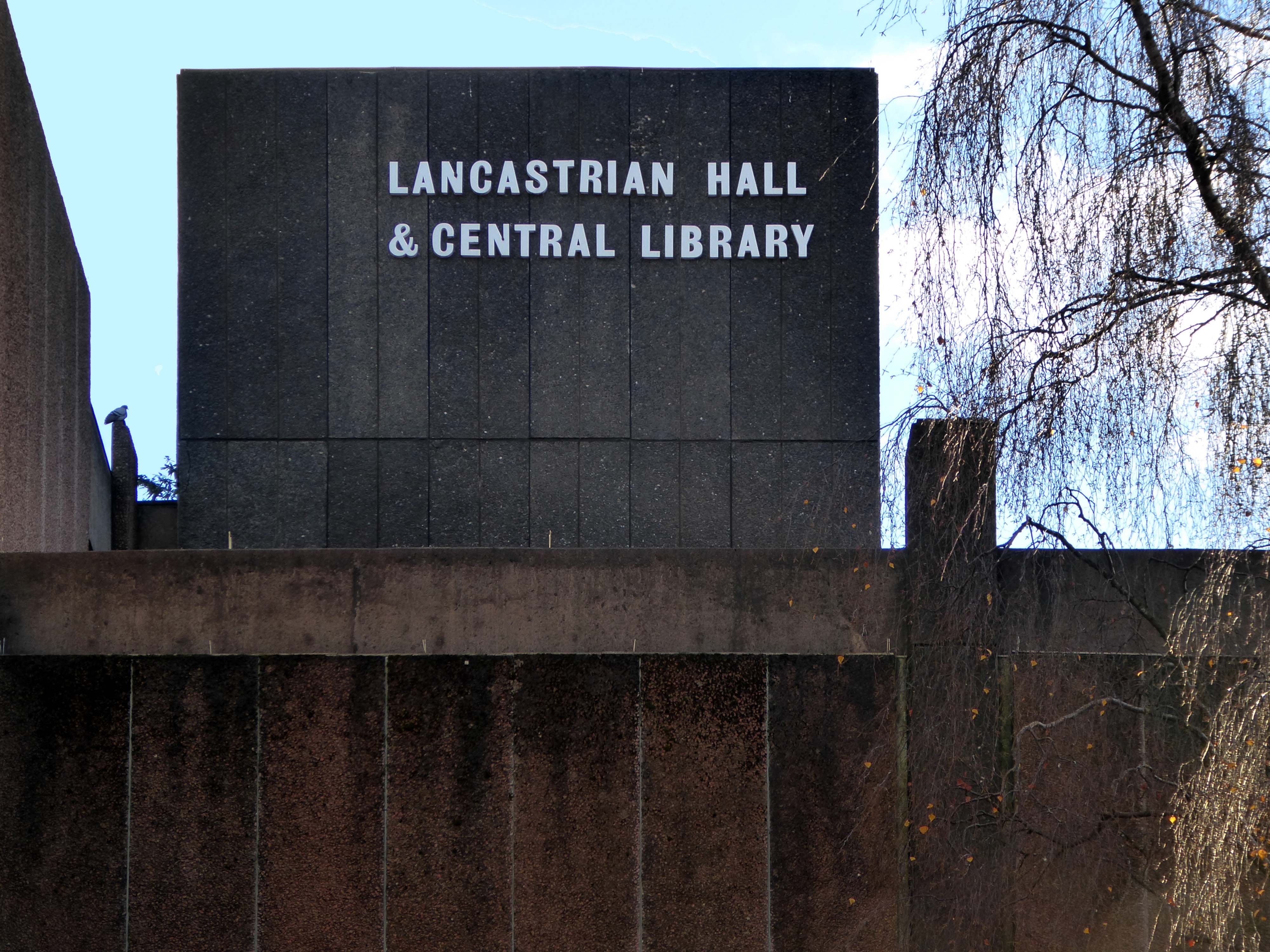
Opened in 1966 along with the slightly later Lancastrian Hall and Library, the Swinton Square shopping precinct provided an integrated modern setting for shopping, living, learning and entertainment.
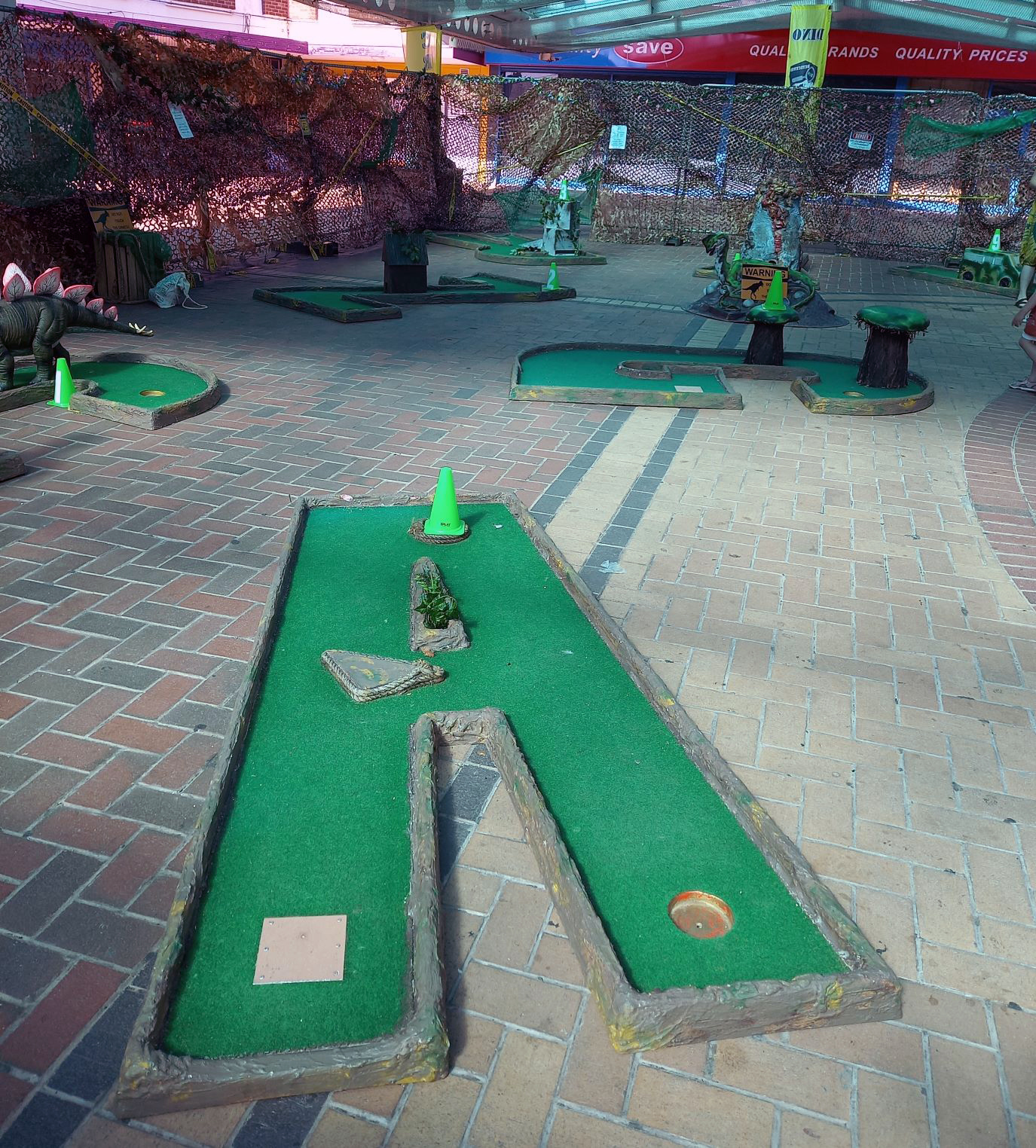
The late 60s and early 70s was a time of general prosperity – and the hard landscaping offered a soft option for the local folk.
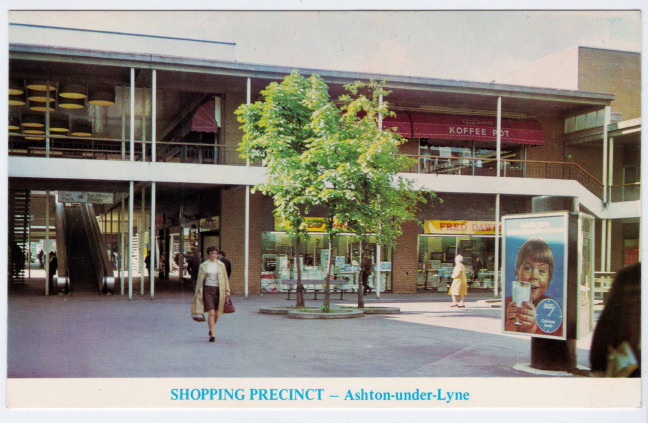
This was the age of the Precinct, celebrated nationally with postcard after postcard.
My local haunt in Ashton under Lyne.
Local traders and national chains rubbed shoulders.
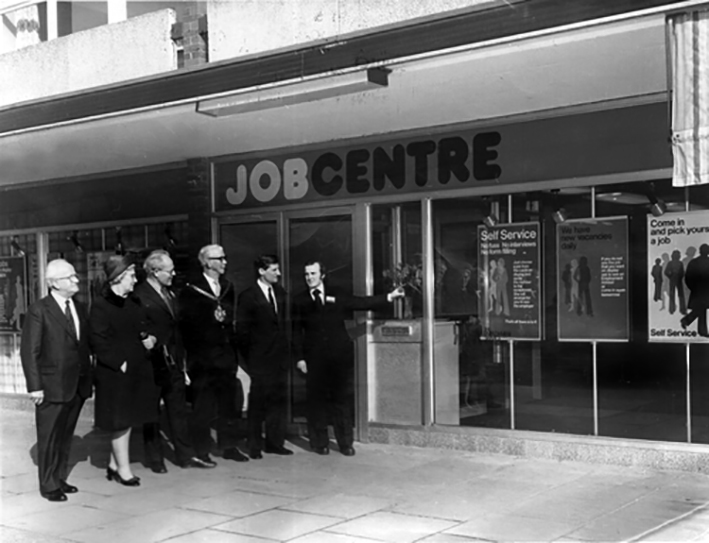
There was even a Job Centre opening- there was even a wide range of vacancies.
Following a challenging year, the letting reinforces Swinton Square as a pillar in the local community. Whilst retail has been heavily affected throughout the Covid-19 pandemic, footfall at the scheme has remained buoyant, with shoppers staying local, favouring the convenience and independent retailers of Swinton Square. Renovations began on the site of the new, temporary job centre at the beginning of the year and is due to be completed in May. The centre is expected to boost footfall and support for local, independent businesses.
Despite Swinton’s many strengths, it faces similar challenges to other towns. The shopping centre and other buildings in the town centre are dated and in need of investment. Demand for local housing has grown by 23% in the last five years, but there is a lack of high-quality family and affordable housing in the right locations in the area.
The vision is just the first step of the journey, the next is to appoint a developer partner who can take this vision and help shape it, through ongoing consultation and engagement with the community, into a framework and plan for Swinton that will guide future investment.
Councillors have approved a compulsory purchase order to complete the land assembly for the £300m Blackpool Central project but still hope to negotiate terms with property owners.
Blackpool Council’s executive unanimously agreed the recommendation towards enabling the Central Car Park to be transformed into a leisure destination boasting a flying theatre, virtual reality rides, a thrill and gaming zone, multi-media exhibition space and themed dining areas.
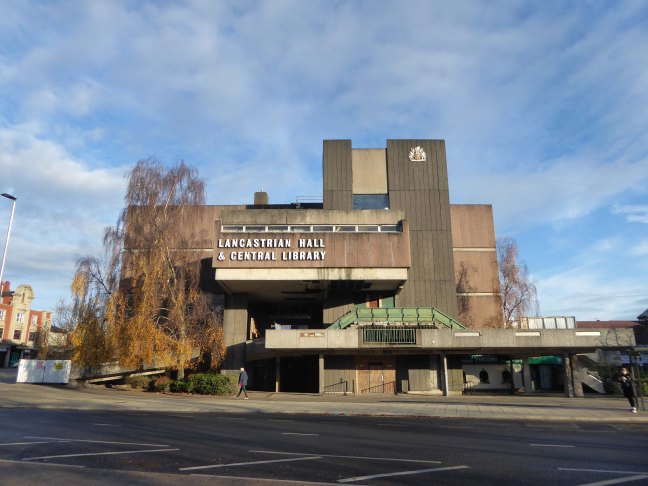
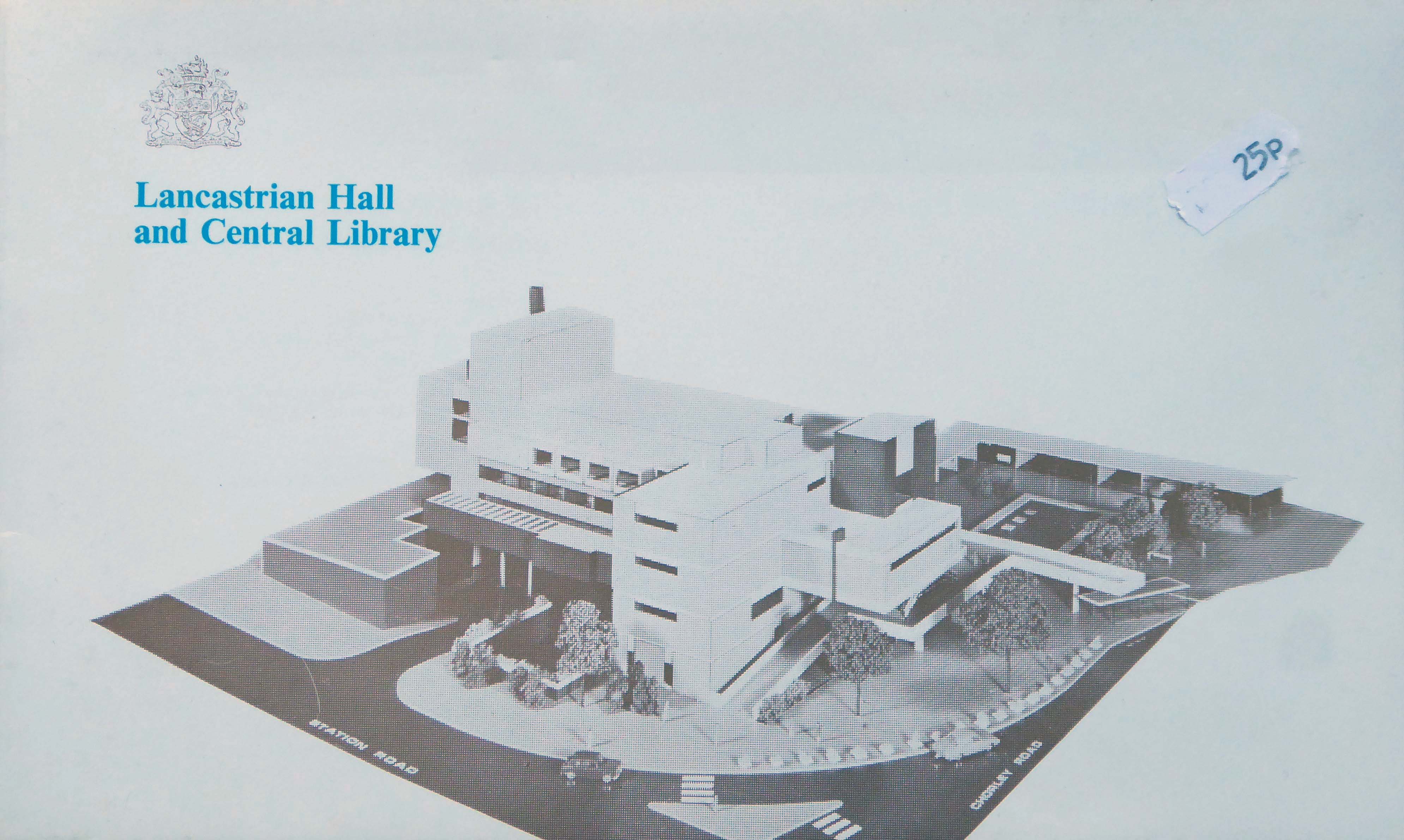
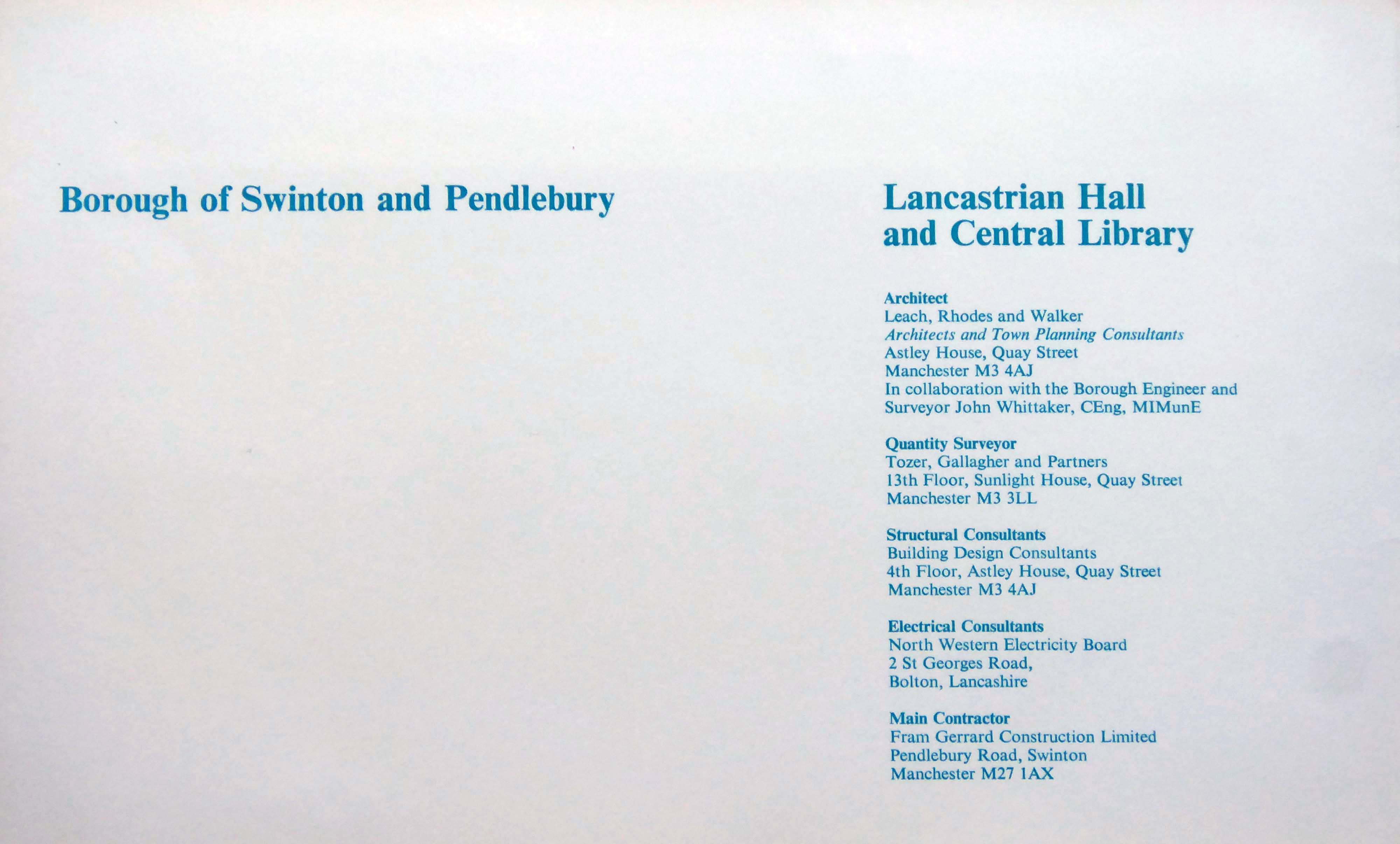
Completed in 1969 to designs by Leach Rhodes and Walker in collaboration with the Borough Engineer John Whittaker
Constructed at the tail end of the Sixties – the last gasp of Municipal Modernism in the Borough, providing education, edification and entertainment for the local population.
The fountain is gone, the building is closed – the party’s over.
The Fast Cars are history – well they were history, until I was told that they are still speeding along!
A council has spent £348,000 on a masterplan for a town centre that the public has never seen.
Consultants have been used to come up with ideas to regenerate Swinton in Salford.
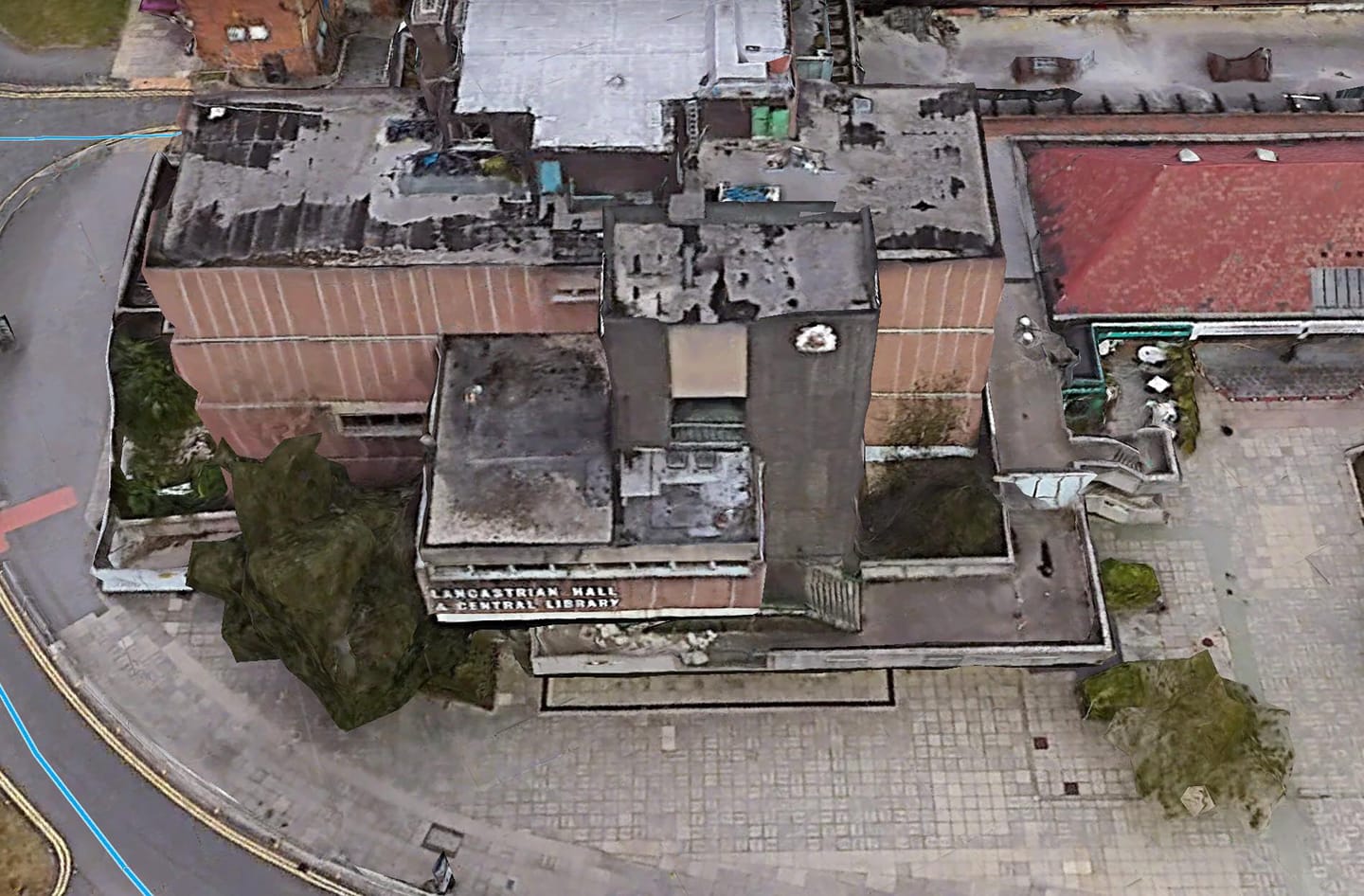
The town centre is dominated by the imposing Lancastrian Hall, opened in 1969, with an adjoining shopping mall.
The hall housed a council library and was used for civic and community meetings, wedding receptions and election counts.
But it has been closed since 2015 after the library moved to the new Gateway Building on the other side of Chorley Road.
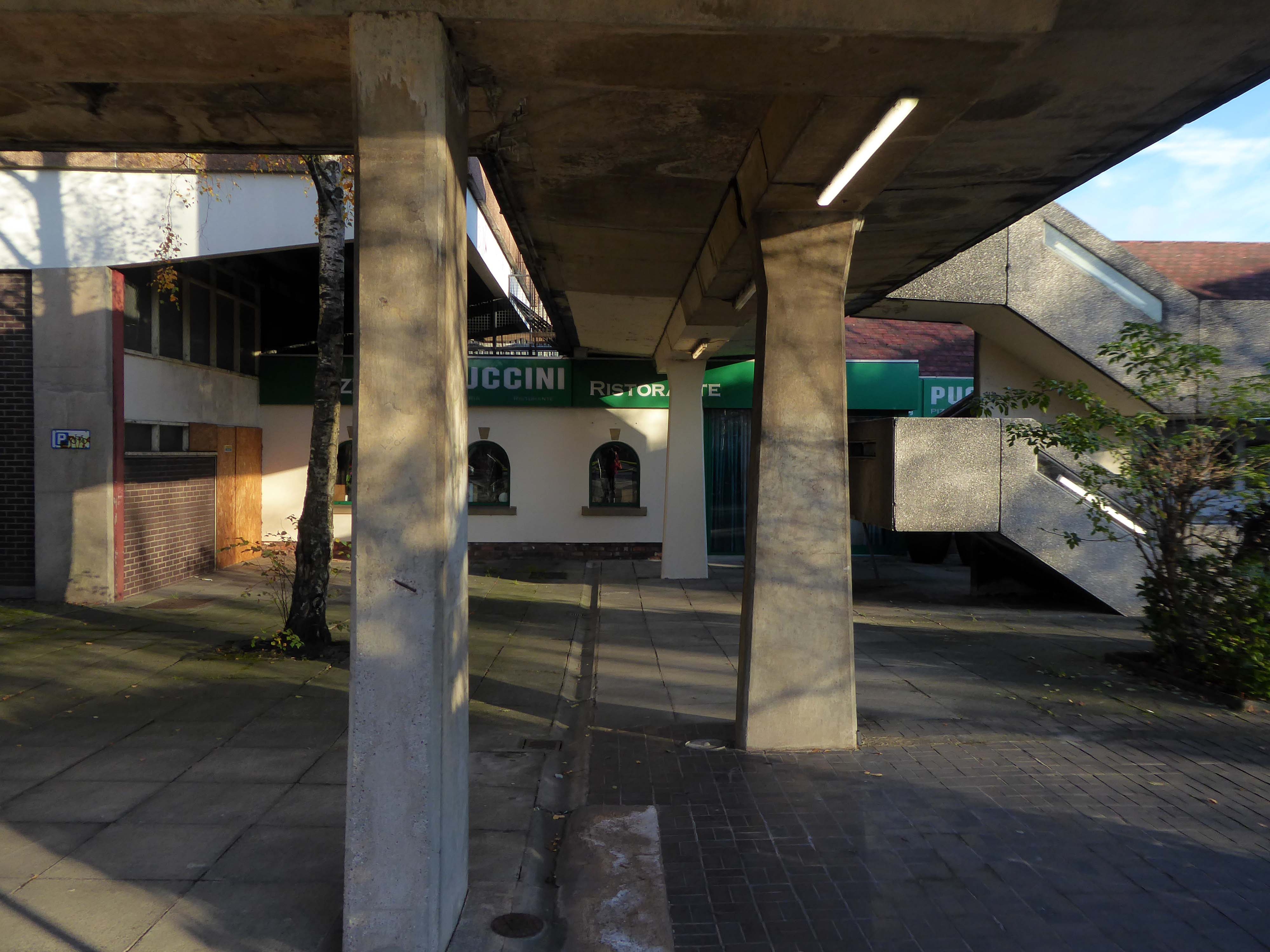
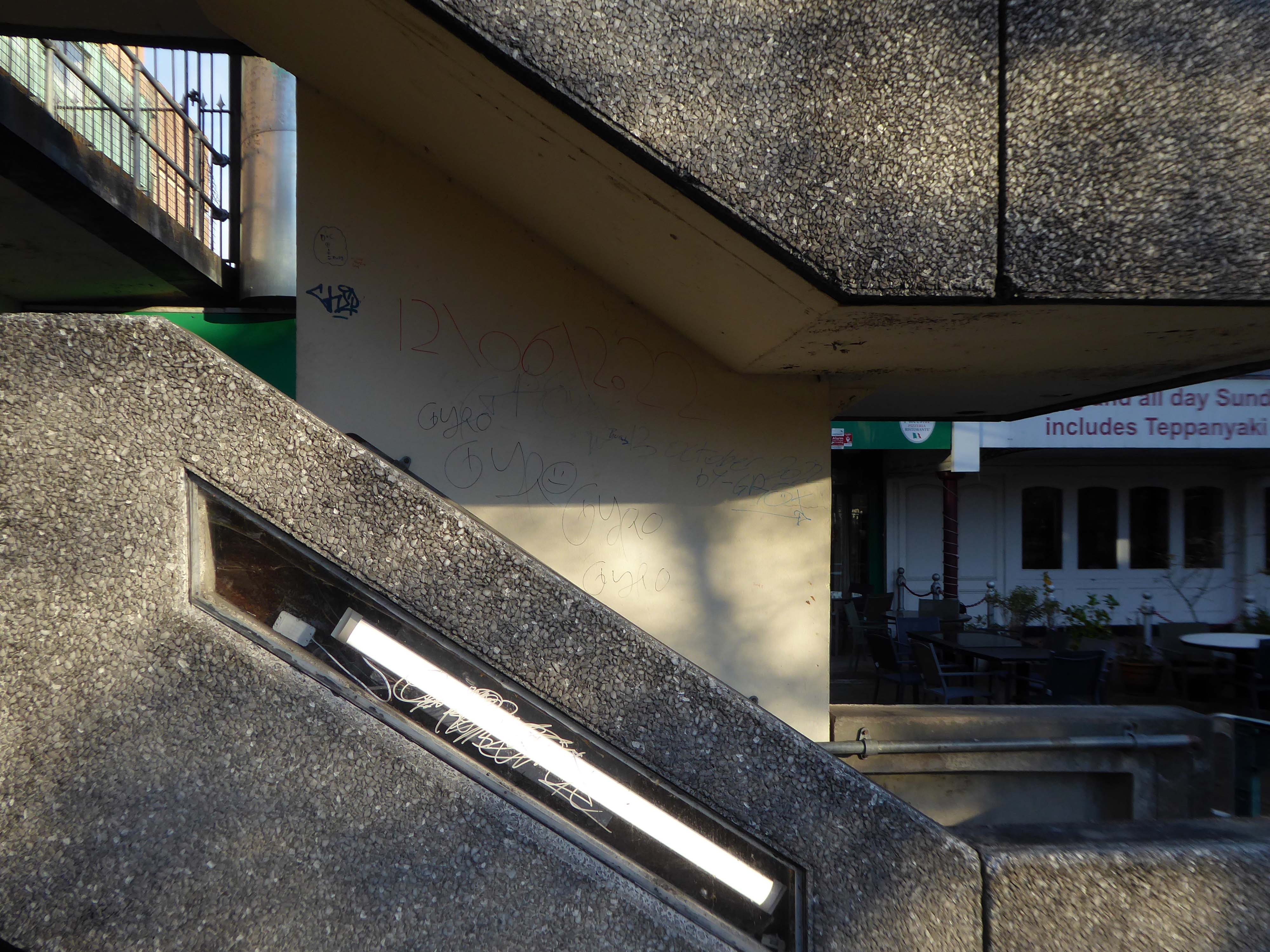
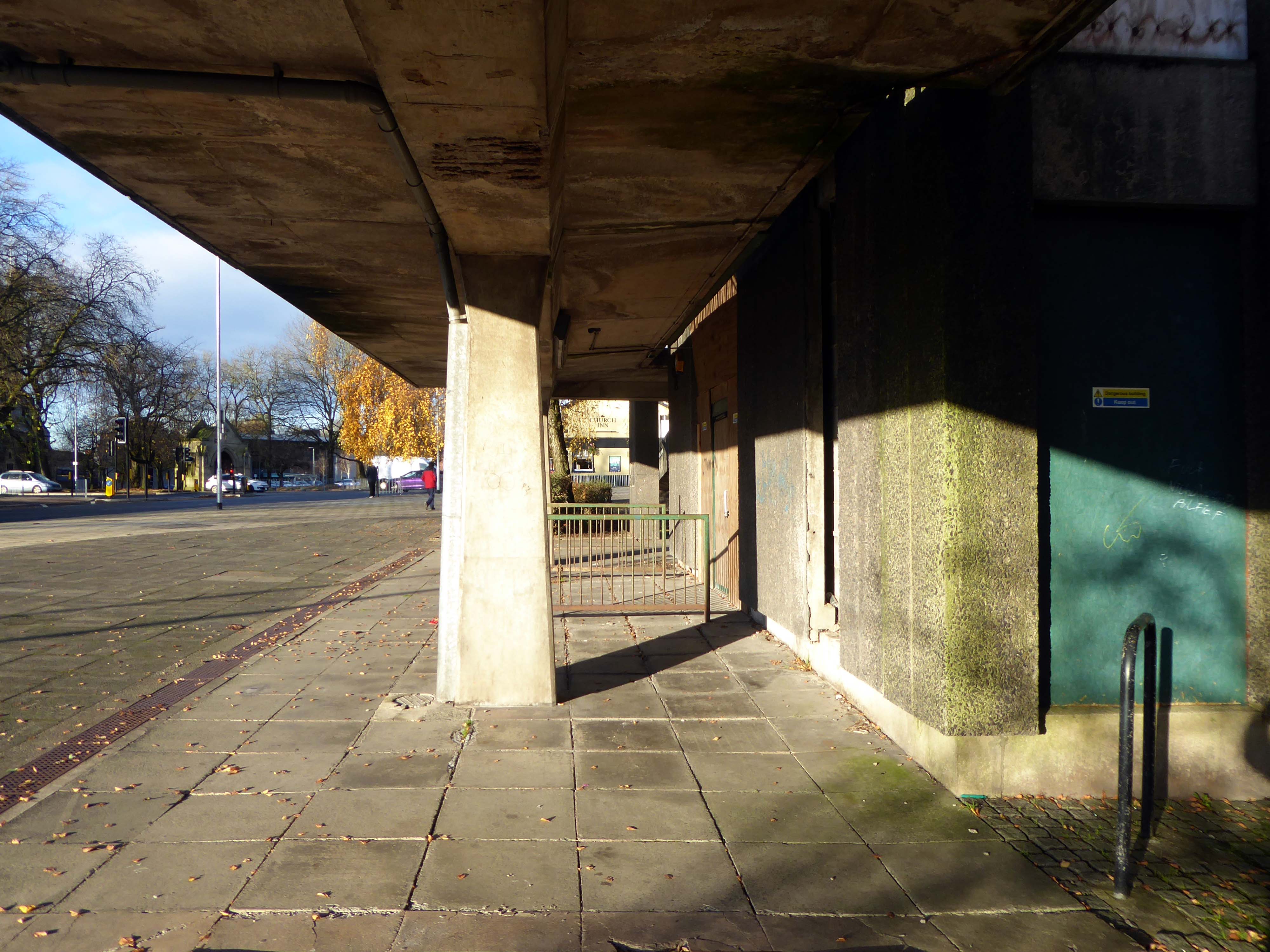
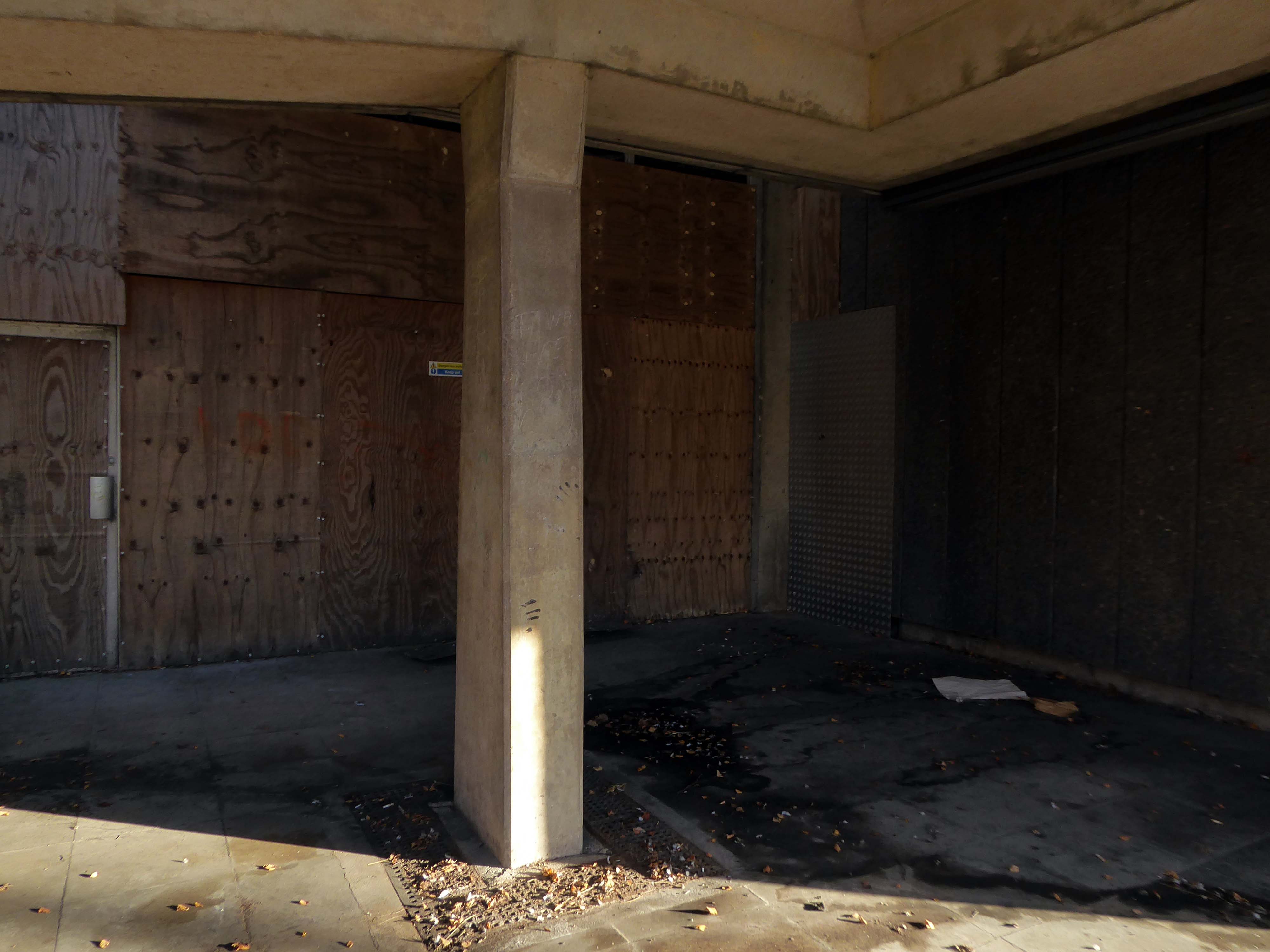
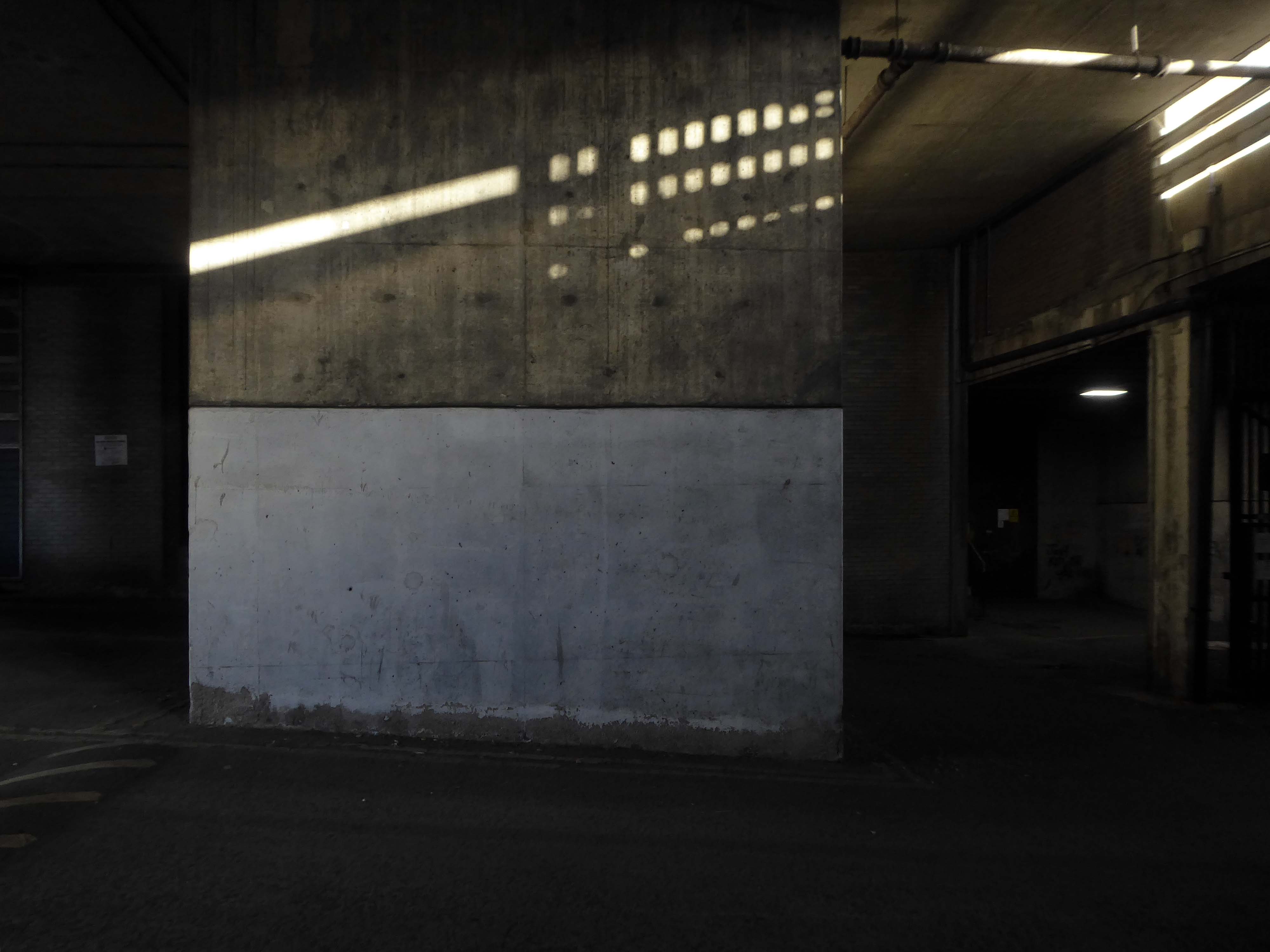
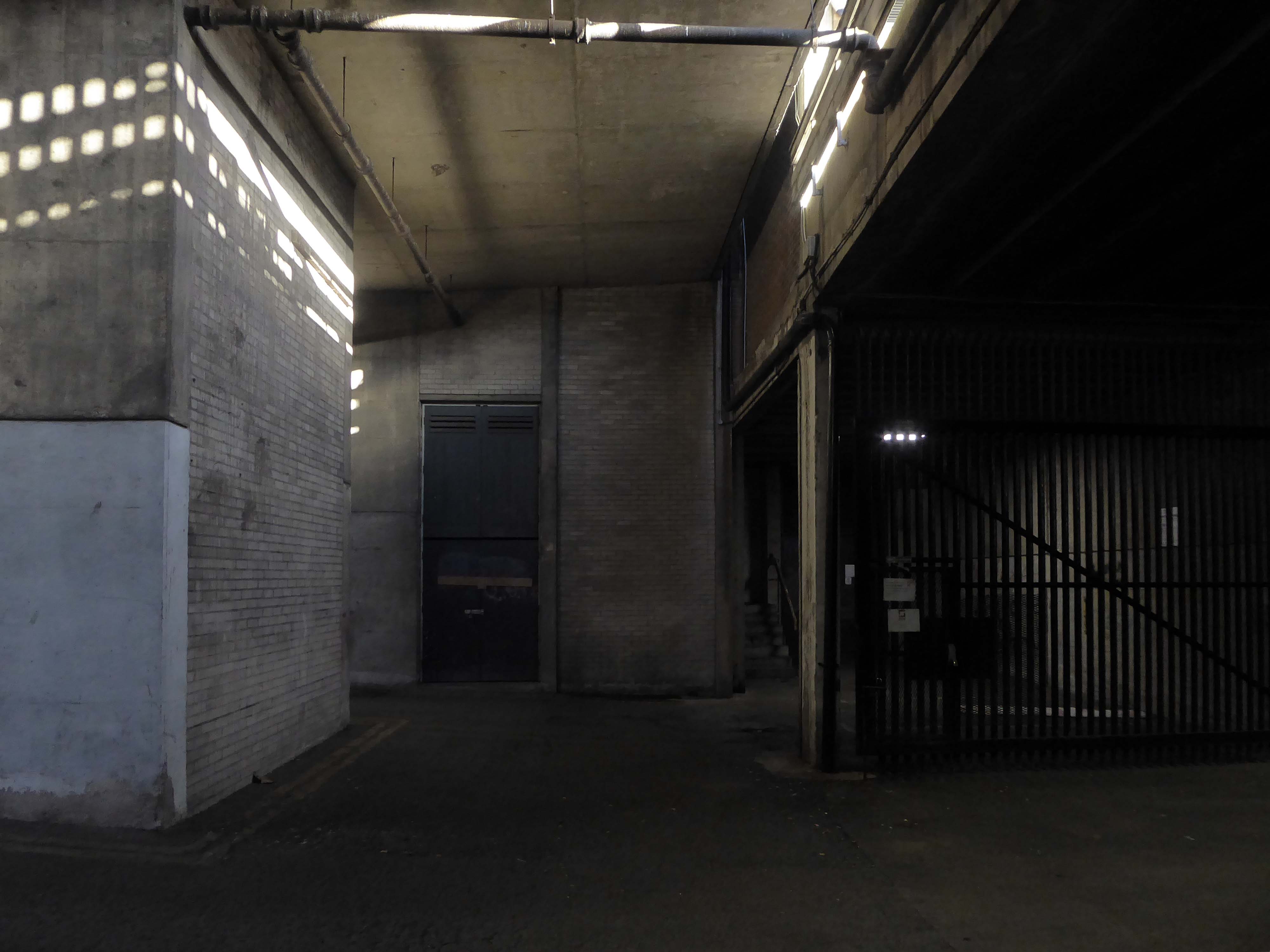
So this magical structure of stairways, undercrofts, elevated walks and majestic concrete clad volumes is under threat.
Swinton and the Lancastrian Hall deserve much better.
Over 550 people took part in the recent visioning work, and we are grateful for their time and valuable contributions.
An overwhelming majority of those who shared their views saw Swinton as a good place to live and bring up a family – somewhere friendly, with a strong sense of community.
People valued their local green spaces, but strongly felt that there needed to be more investment in the town centre, and a plan to tackle empty buildings and shops.
Overall, people felt that Swinton needed to be a more vibrant place, with more going on – and more reasons for people to visit and spend their leisure time there.
This is an opportunity to create tomorrow’s local centre, but that does rely on removing the Lancastrian Hall, rethinking the shopping centre, and repurposing the Civic Centre and the spaces around it.
Curiously brick-ish, for work largely concerning concrete.
Did they not know the Madcap Syd wrote See Emily Play down the road at the now demolished Leeds College of Technology?
A fact I discovered whilst researching my Leeds Walk.
Myself I would have gone with – Borrow Somebody’s Dreams ’til Tomorrow.
For here we have an exposition of the architecture of three Universities, exploring the possibilities of a new age.
An age typified by the expansion of minds and opportunities in higher education, rendered corporeal in glass, steel and concrete – with some concession to the use of brick.
I was minded of the political context to these campuses, radicalised by the events of the late Sixties and early Seventies.
Myself a student at Portsmouth Polytechnic during these heady days, where several Maoist, Marxist-Leninist, Stalinist and Trotskyite factions played out ideological debate and display, against these Modernist backdrops.
On the day of my visit to the Leeds campus, I saw three students stood behind a hardboard paste table, selling the Socialist Worker.
Along with staff building support for the following day’s UCU strike.
So to the exhibition – Another Brick In The Wall at the Stan and Audrey Burton Gallery until Saturday 25th March.
Photographer Simon Phipps shines a contemporary light on the innovative designs of this period. He has produced new work of a variety of campuses, including the University of Leeds, exclusively for the exhibition.
Alongside these contemporary photographs, the exhibition displays archival material from the Universities of Leeds, Sussex and East Anglia.
Rarely seen material from the Arup archive is also exhibited.
Let’s take a look at a topic from a bygone age that seems to come of age – there’s never been a better time to be Brutal!
Go and take a look, we really do need education – and exhibitions.
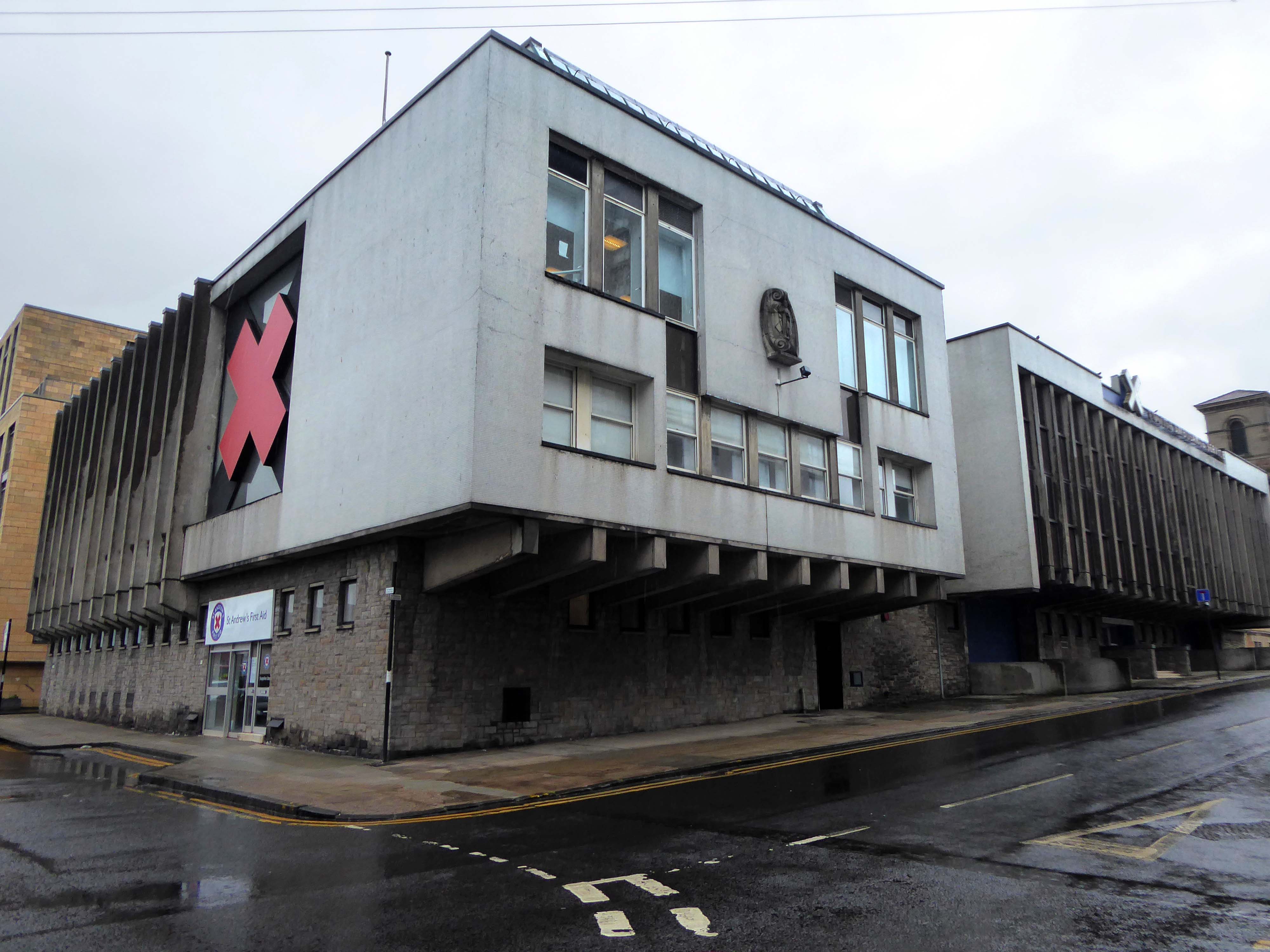
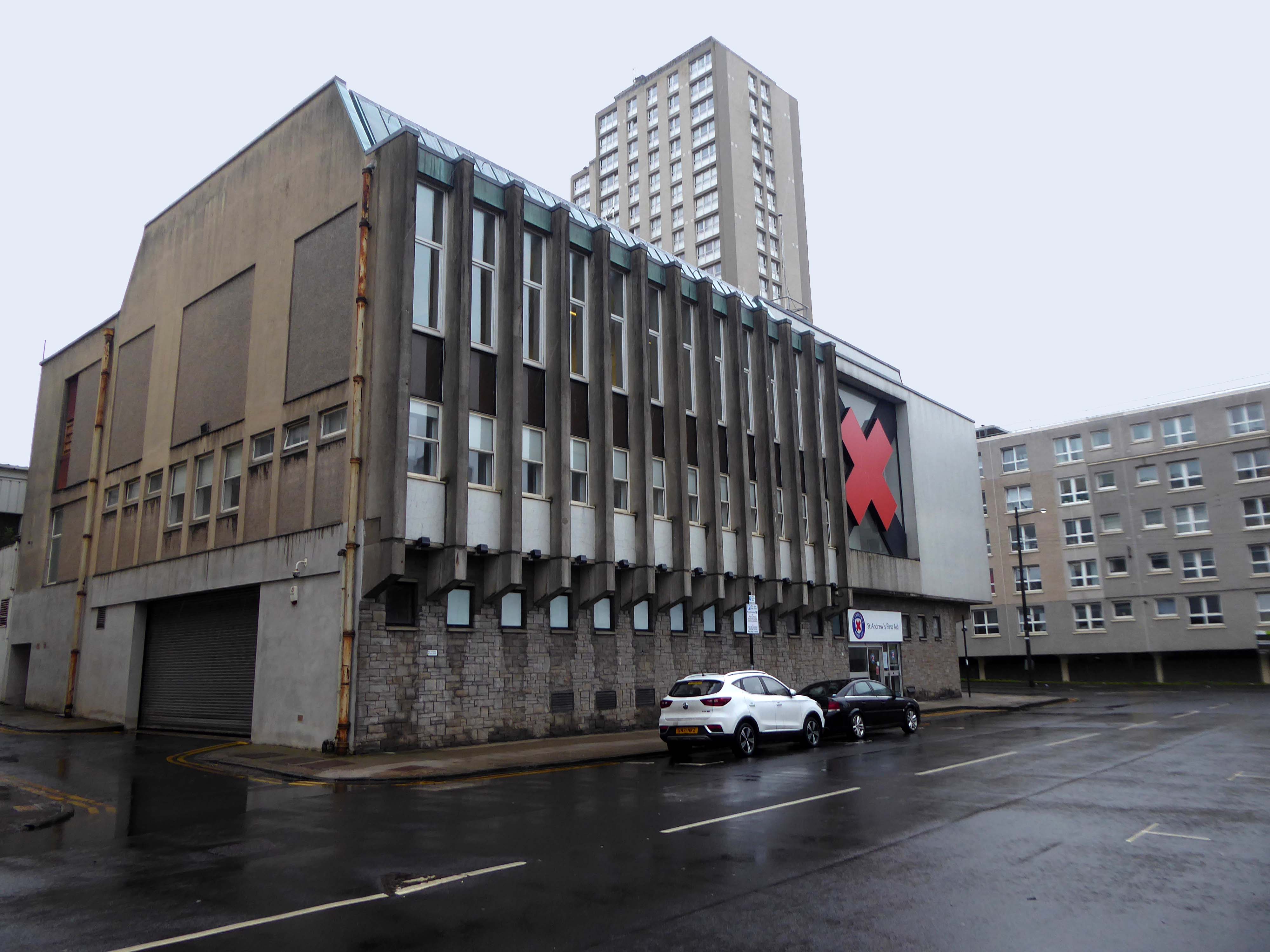
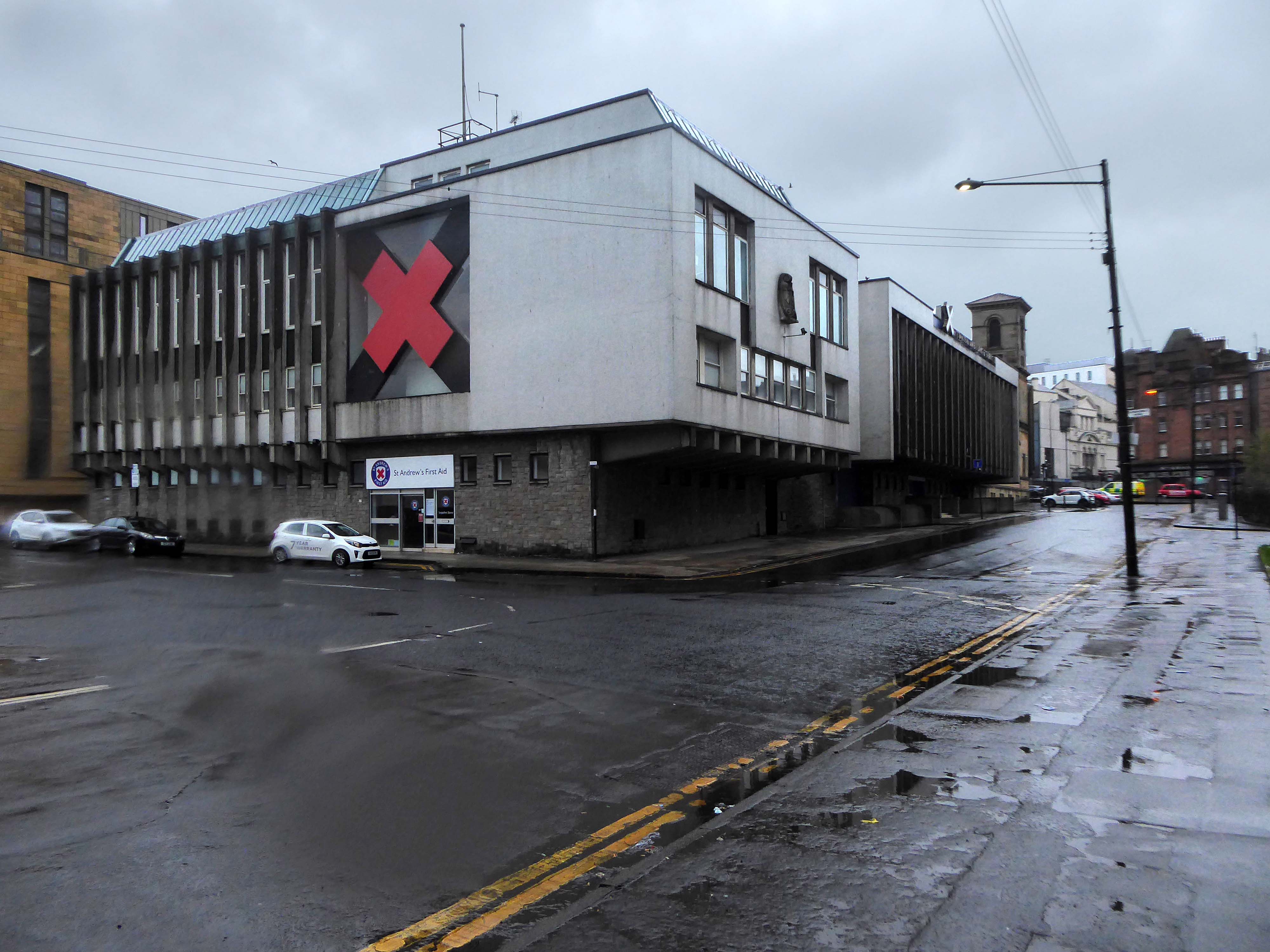
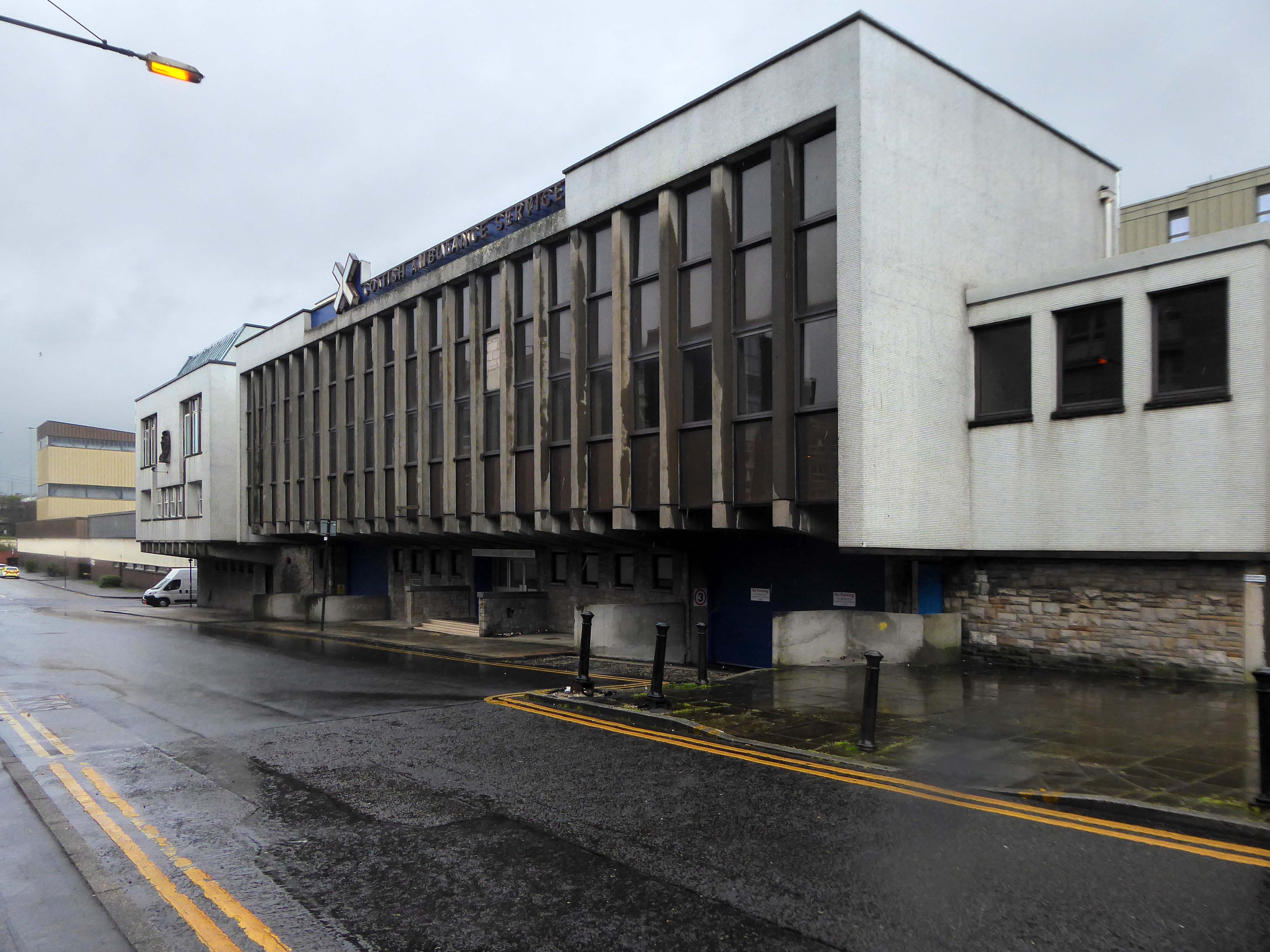
48 Milton Street and Maitland Street Glasgow G4 0LR
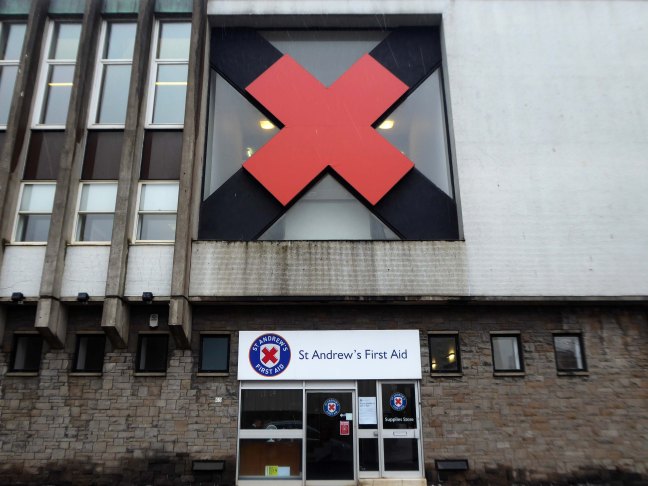
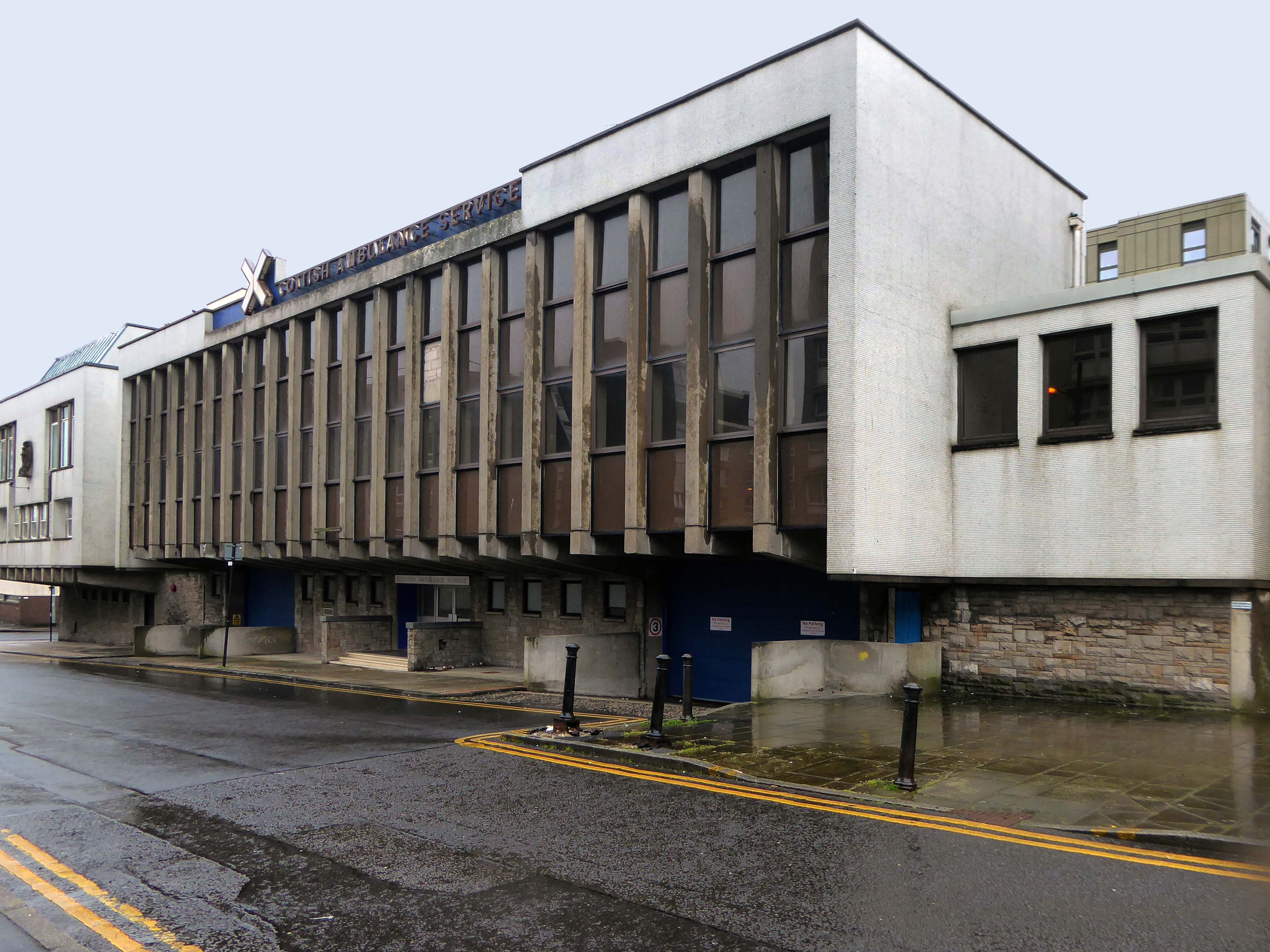
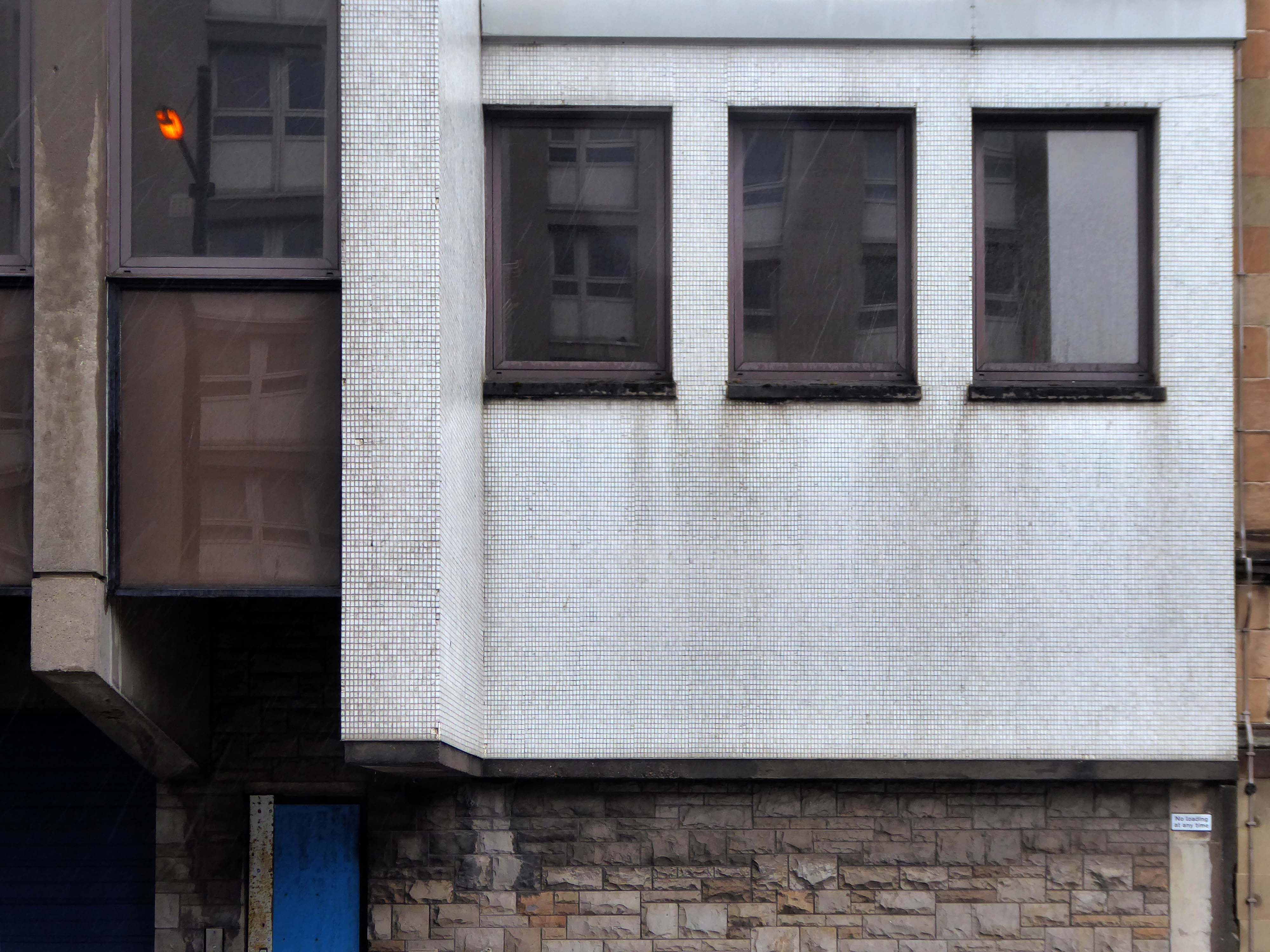
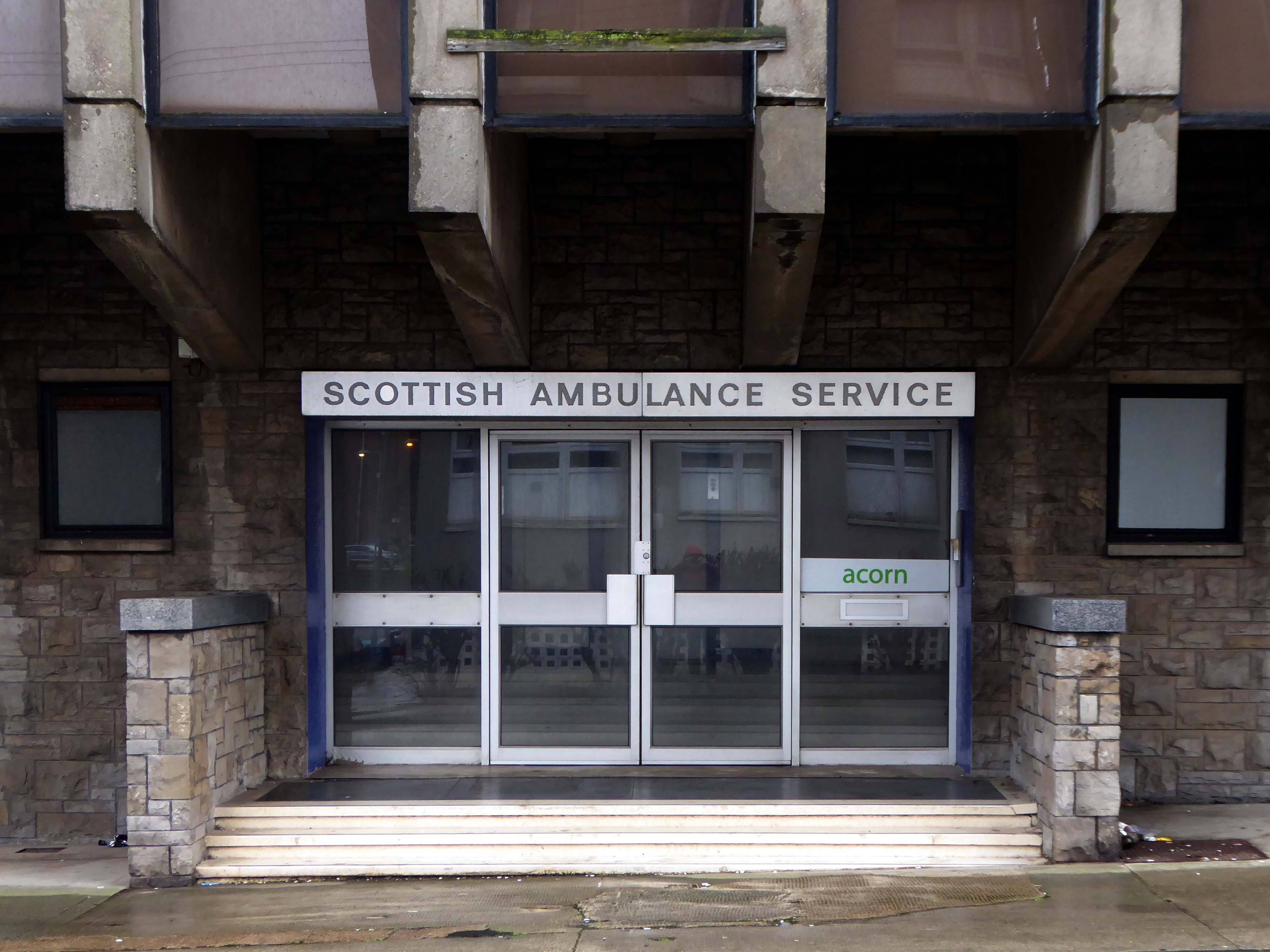
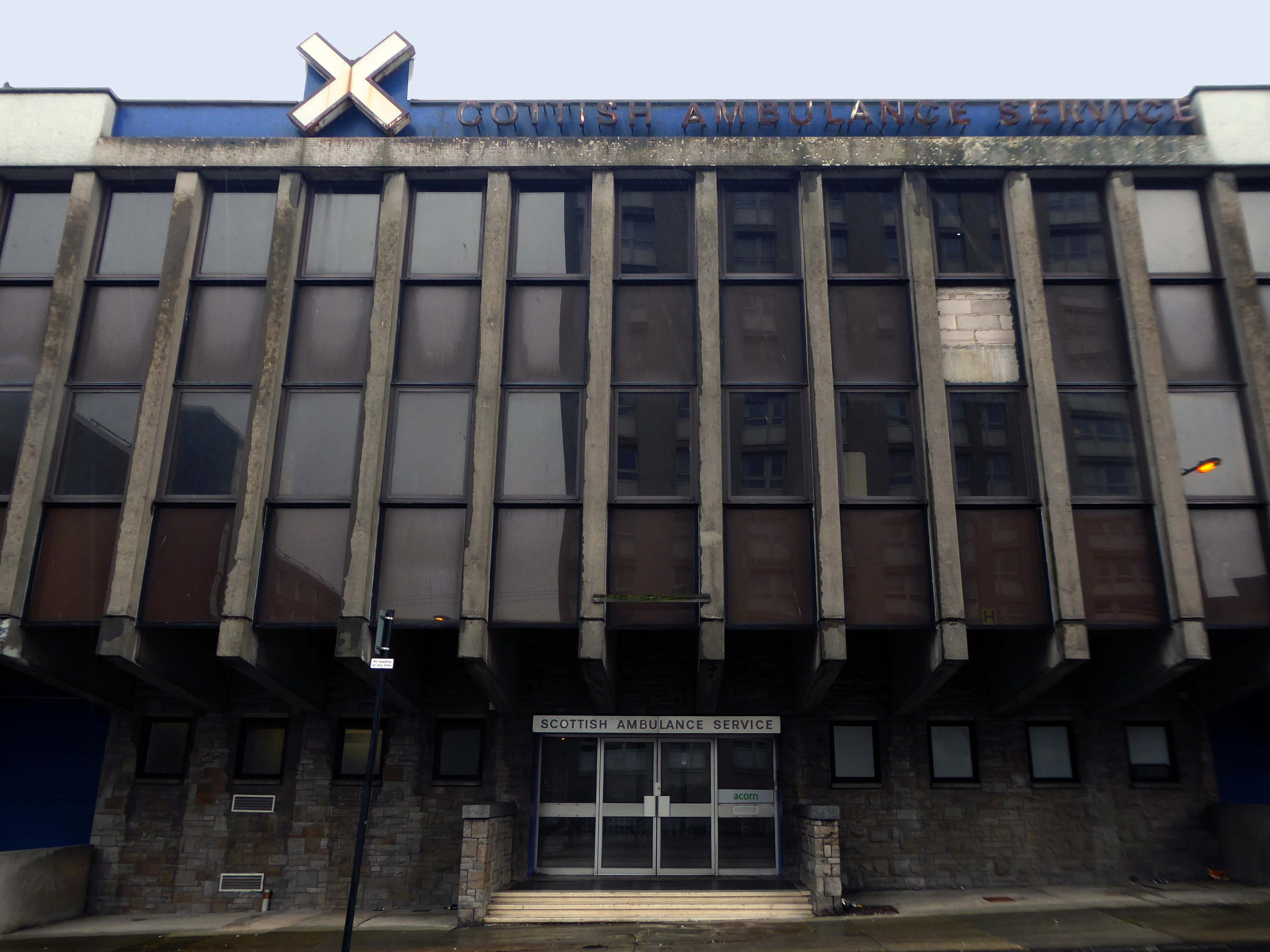
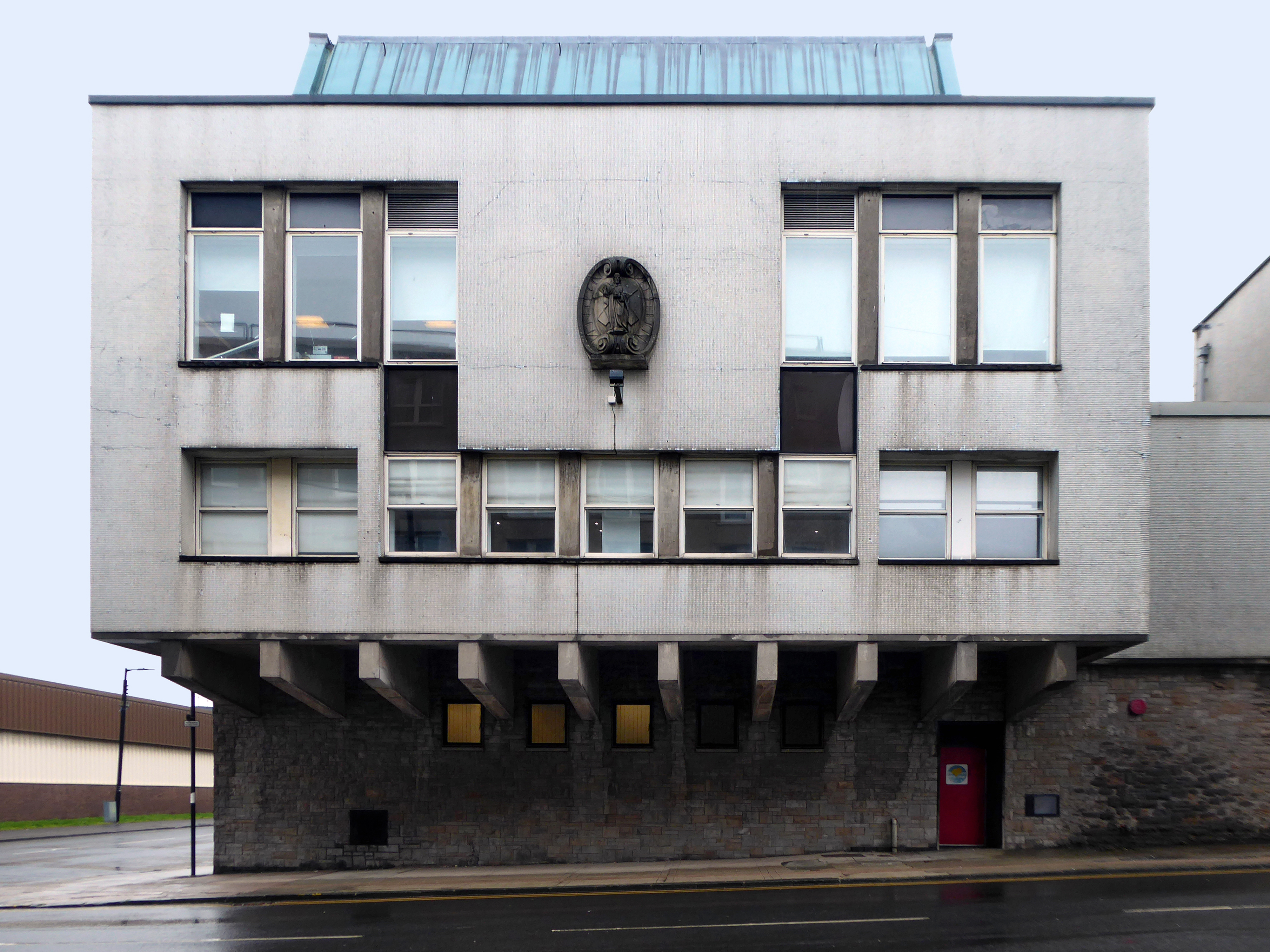
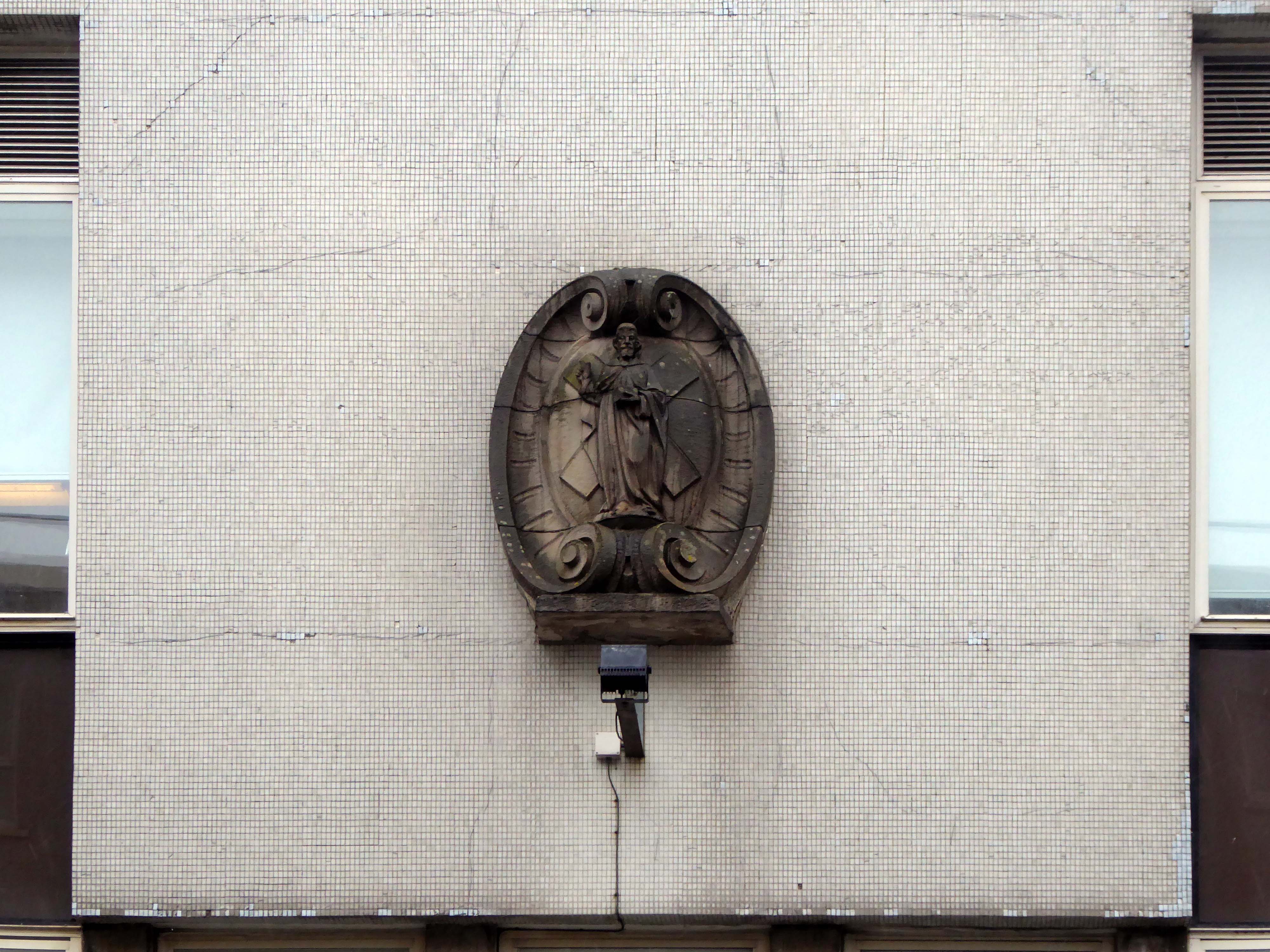
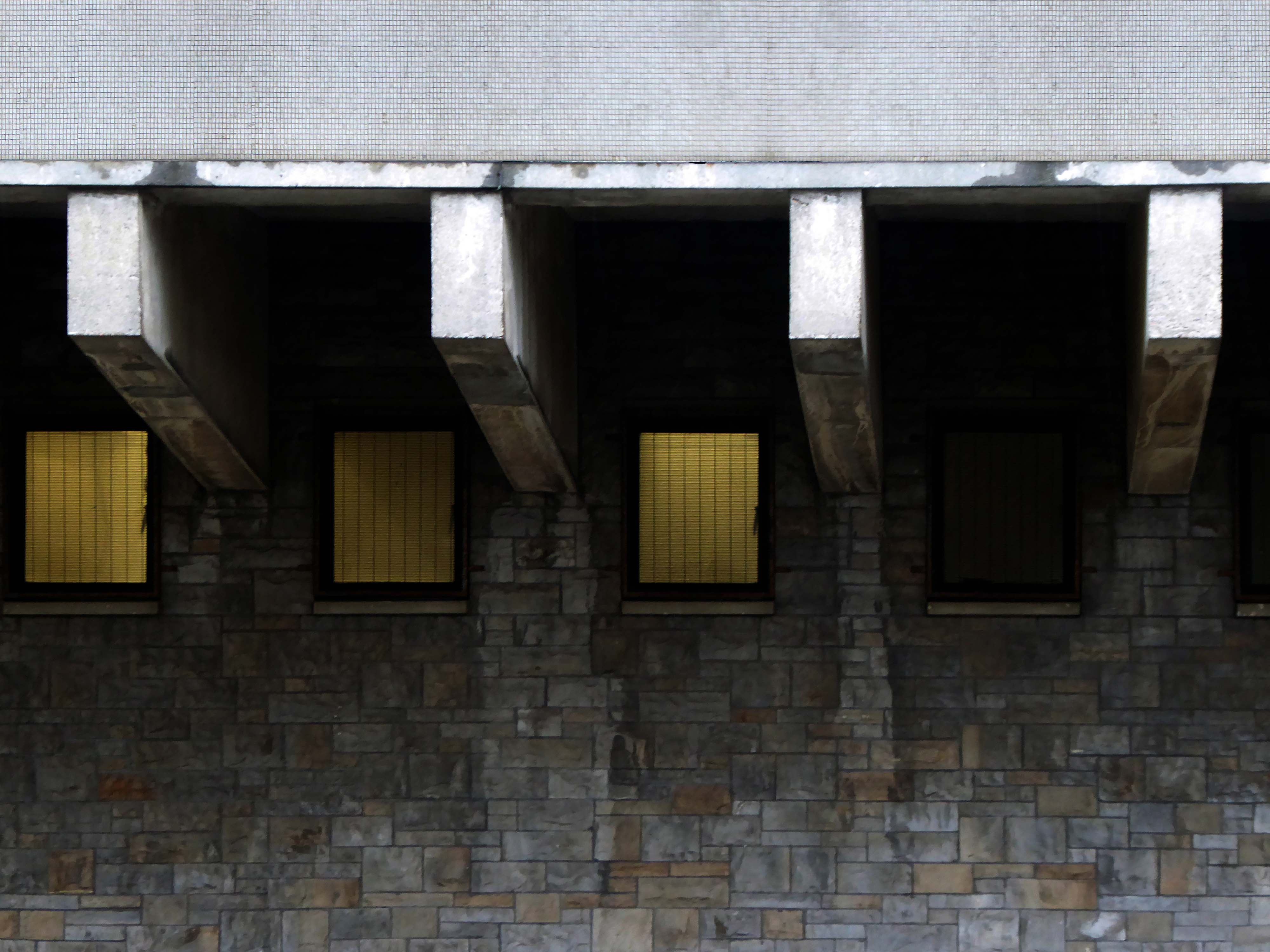
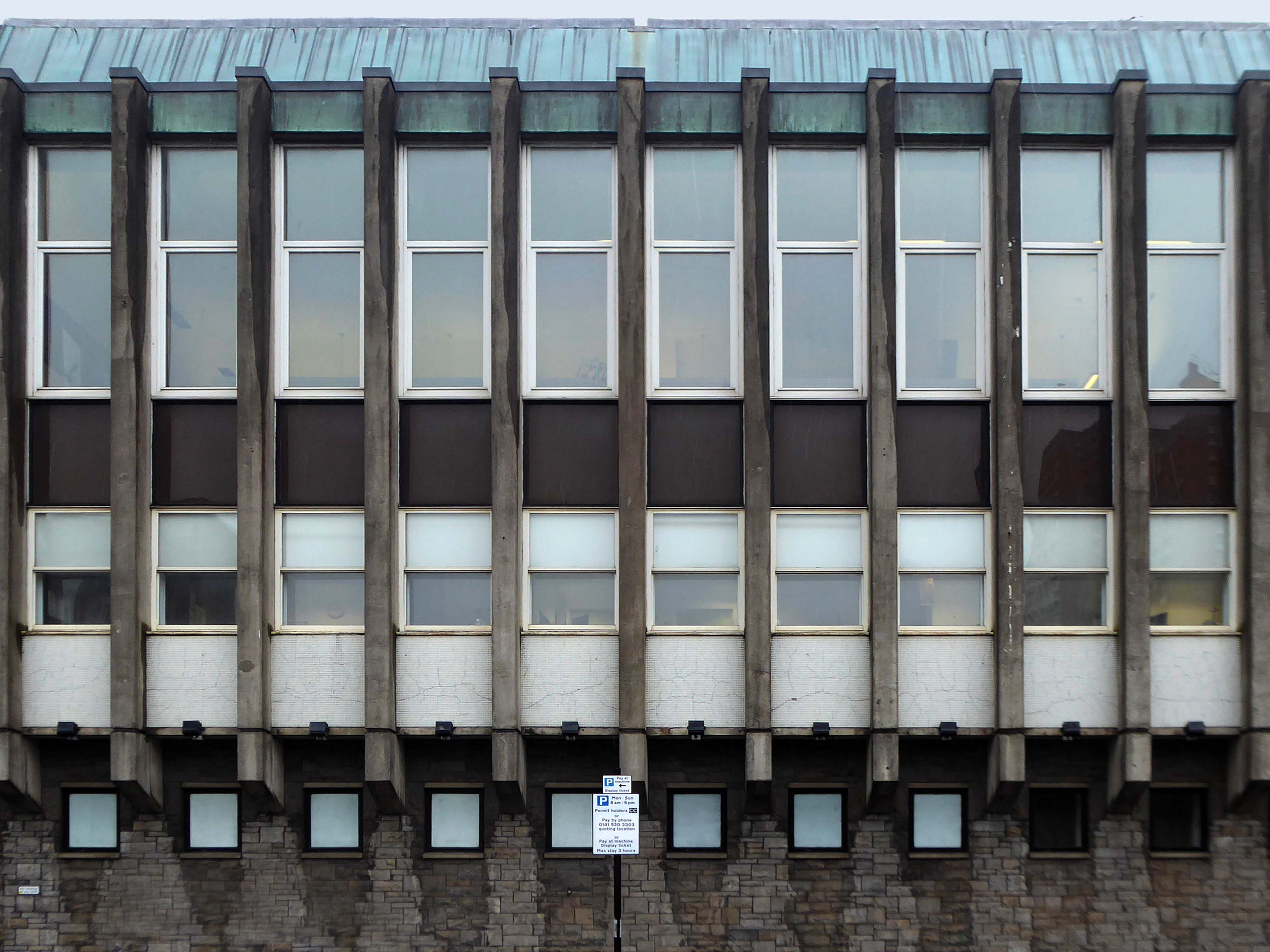
Scottish Ambulance Headquarters on Maitland Street and the adjoining St Andrew’s House with it’s entrance on 48 Milton Street. Designed by Skinner, Bailey & Lubetkin in the late 1960s. Originally two linked buildings, they now act independently with St Andrew’s House occupied by St Andrew’s first aid and the Headquarters next door currently lying vacant April 2011.
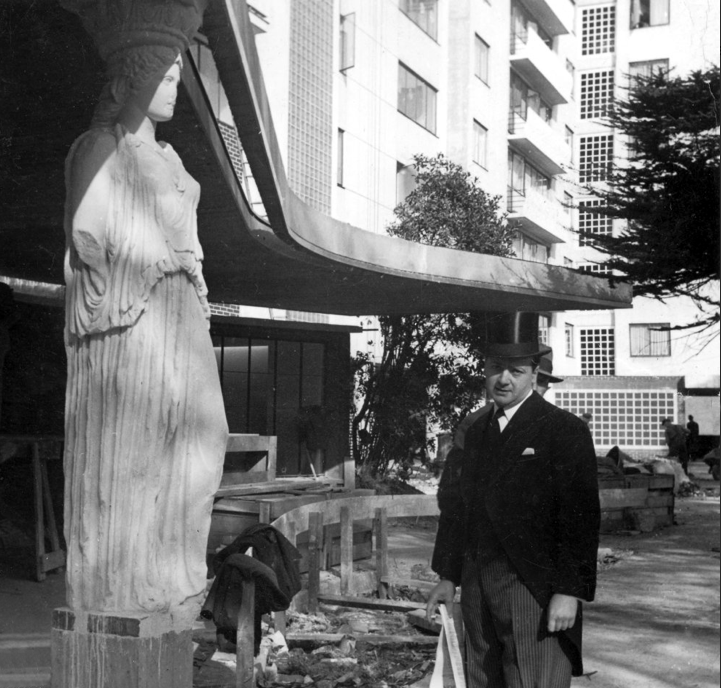
Berthold Lubetkin in top hat beside caryatid at the entrance to Highpoint Two – North Hill Highgate London.
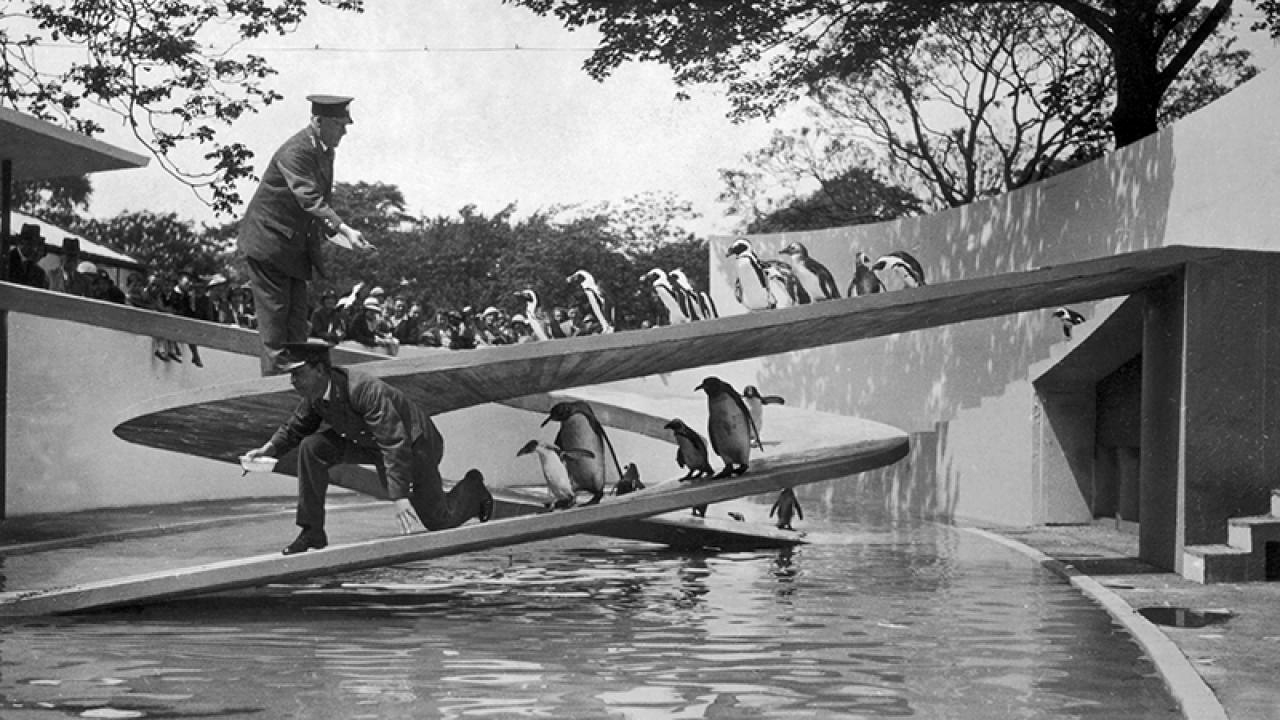
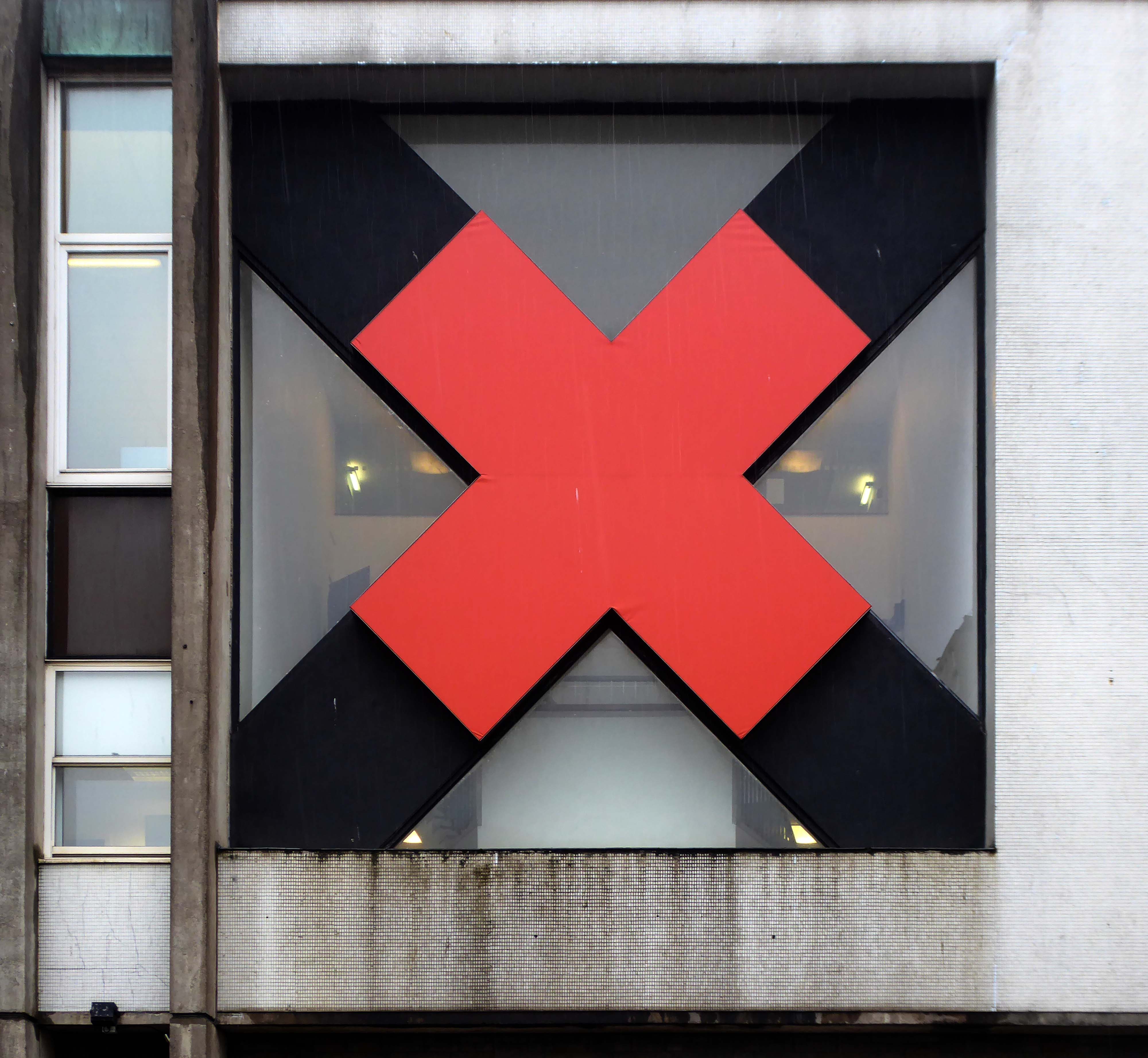
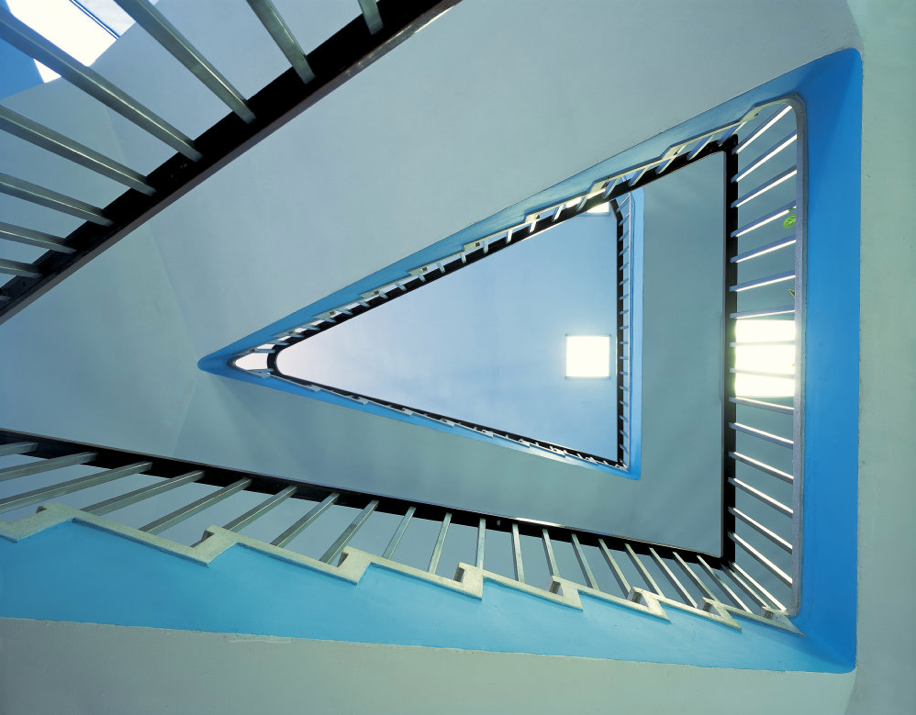
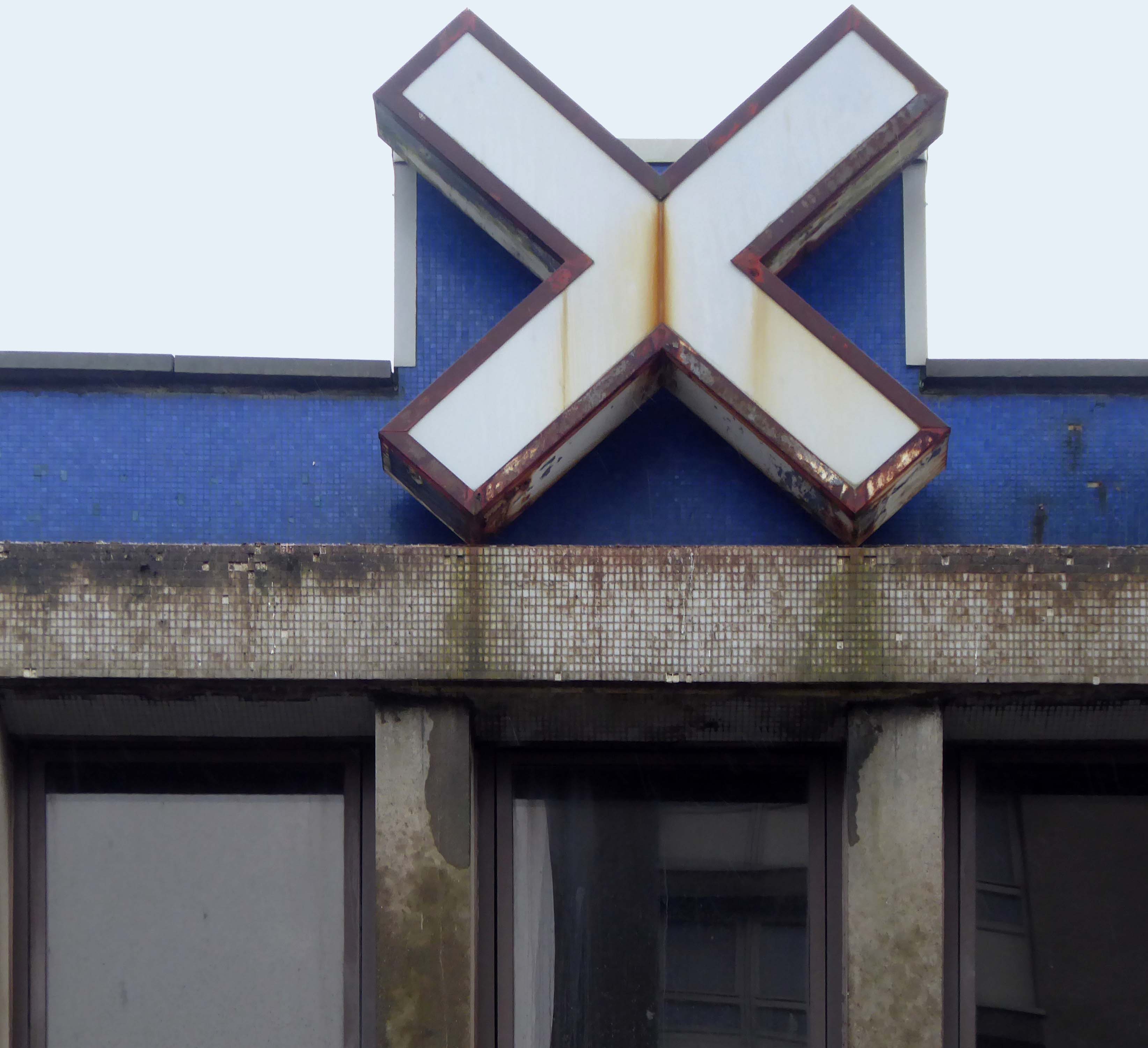
One of the only two buildings in Scotland designed by this architectural practice with Lubetkin acting as a consultant. Lubetkin is one of the outstanding figures of pre-war British architecture – penguin pool, London zoo & Highpoint Flats, London. Lubetkin designed the main cross of the north elevation and the main staircase, Bailey was the lead architect on this project. Both buildings are A listed.
By the mid 1960s, Lubetkin was based at his farm in Gloucestershire, Skinner in London and Bailey in Glasgow. Bailey asked Lubetkin to work out the design of the main staircase and parts of the principal elevation, notably the large cross. Lubetkin’s staircases are particularly spectacular and the St Andrew’s one is no exception. Allan notes that the Lubetkin leitmotif was the controlled collision of straight and curved geometry and this would appear to be exemplified here in the triangular plan geometric staircase which ends in a gentle curve at the ground floor. It is possible that Lubetkin may have influenced the vertical timber panelling in the boardroom. While that in the main hall is smooth and varnished, the boardroom has been sandblasted to present a weathered appearance. At Highpoint Two Lubetkin designed the interior and furniture for the penthouse flat with walls of vertical roughened sand-blasted pine panelling.
This is a walk around the street view of the building during my first visit to Glasgow in April 2022 – there was no evidence of any redevelopment work taking place.
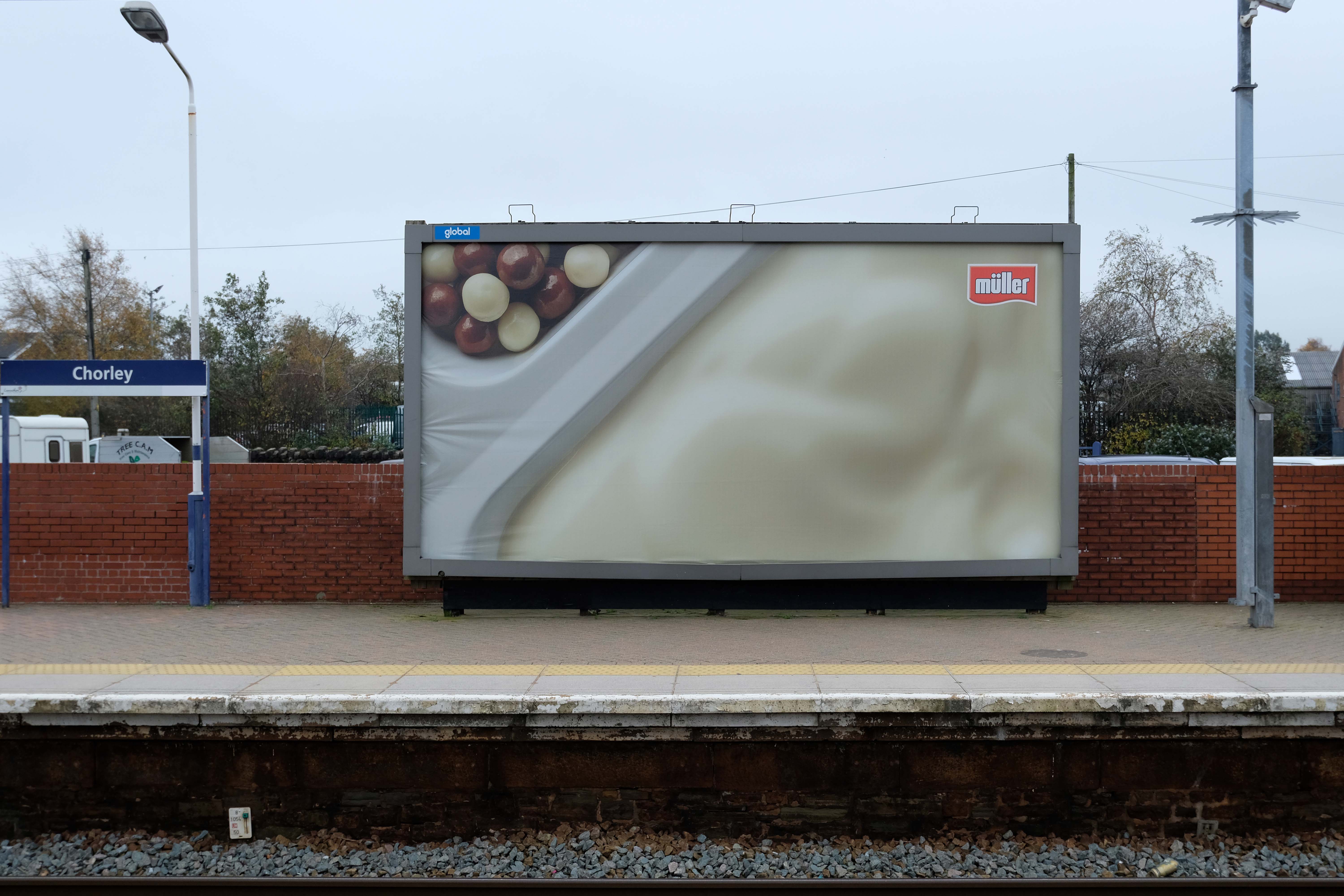
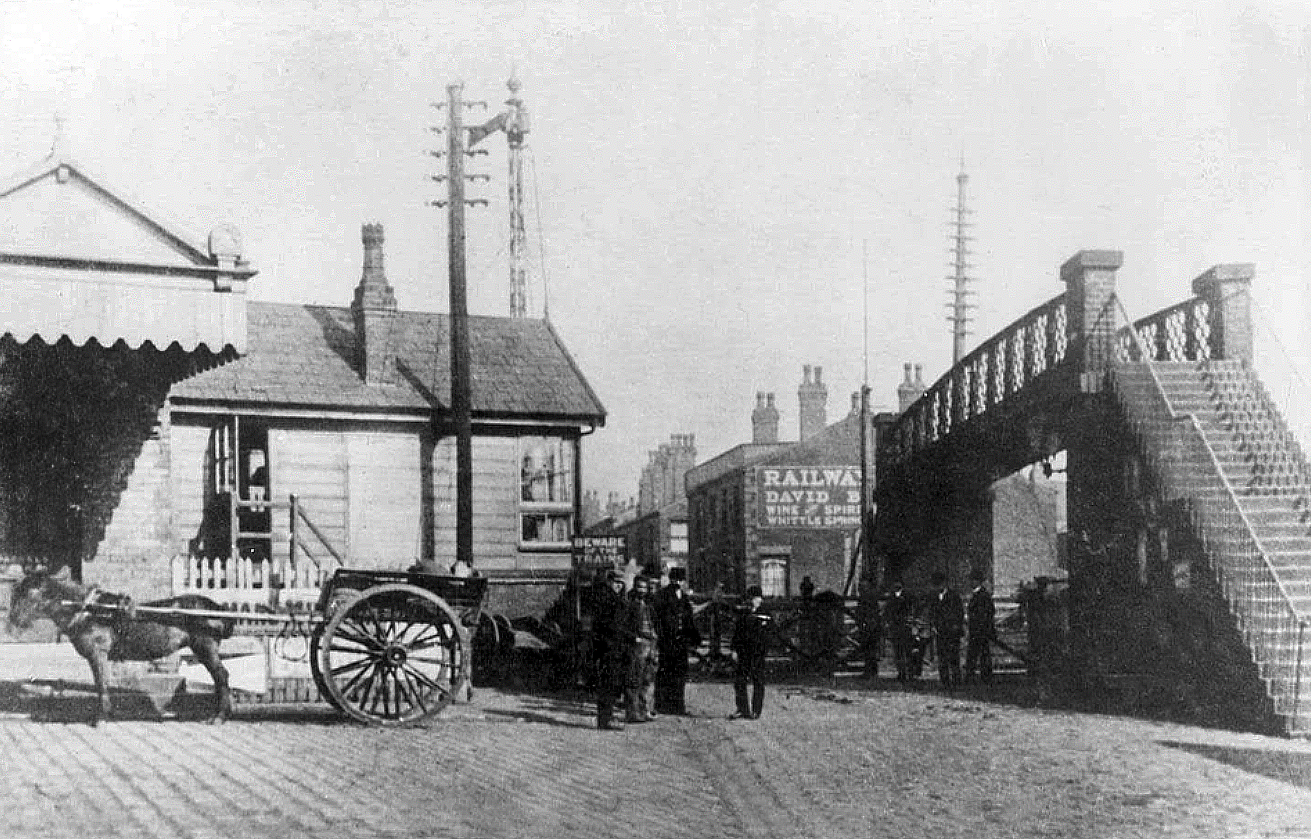
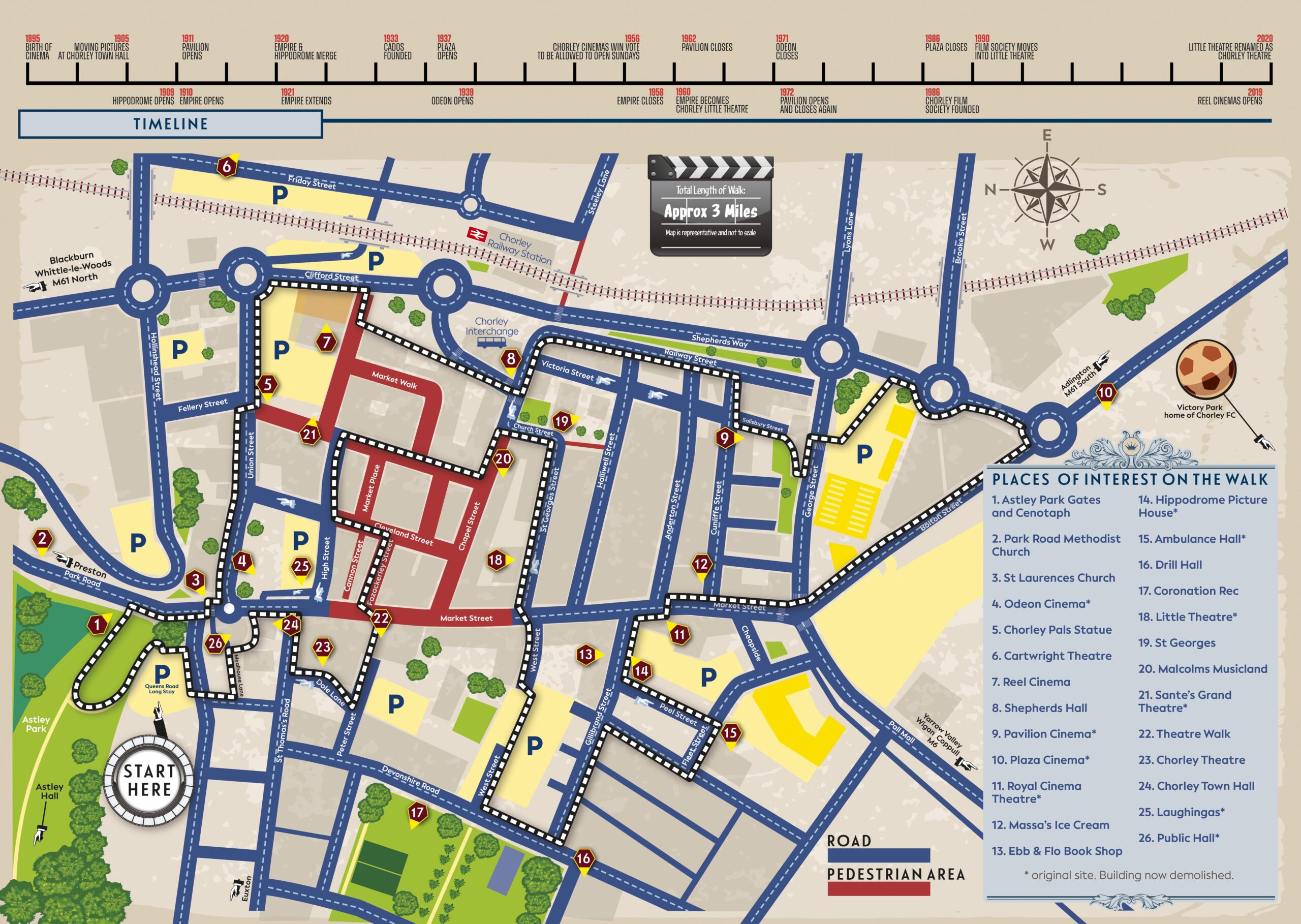
The current railway station is a modern version from the 1980s that was built on top of the original station. The level of the old platforms can be seen under the existing station’s two platforms which are connected by underpass. The initial station was opened on 22 December 1841 by the Bolton and Preston Railway – which later became part of the Lancashire and Yorkshire Railway and was subsequently served by the Lancashire Union Railway between St Helens, Wigan North Western and Blackburn from 1869.
Passenger trains over this route between Blackburn & Wigan were however withdrawn in January 1960. Further work was done in 2016 and 2017 in connection with the electrification of the line between Euxton Junction and Manchester.
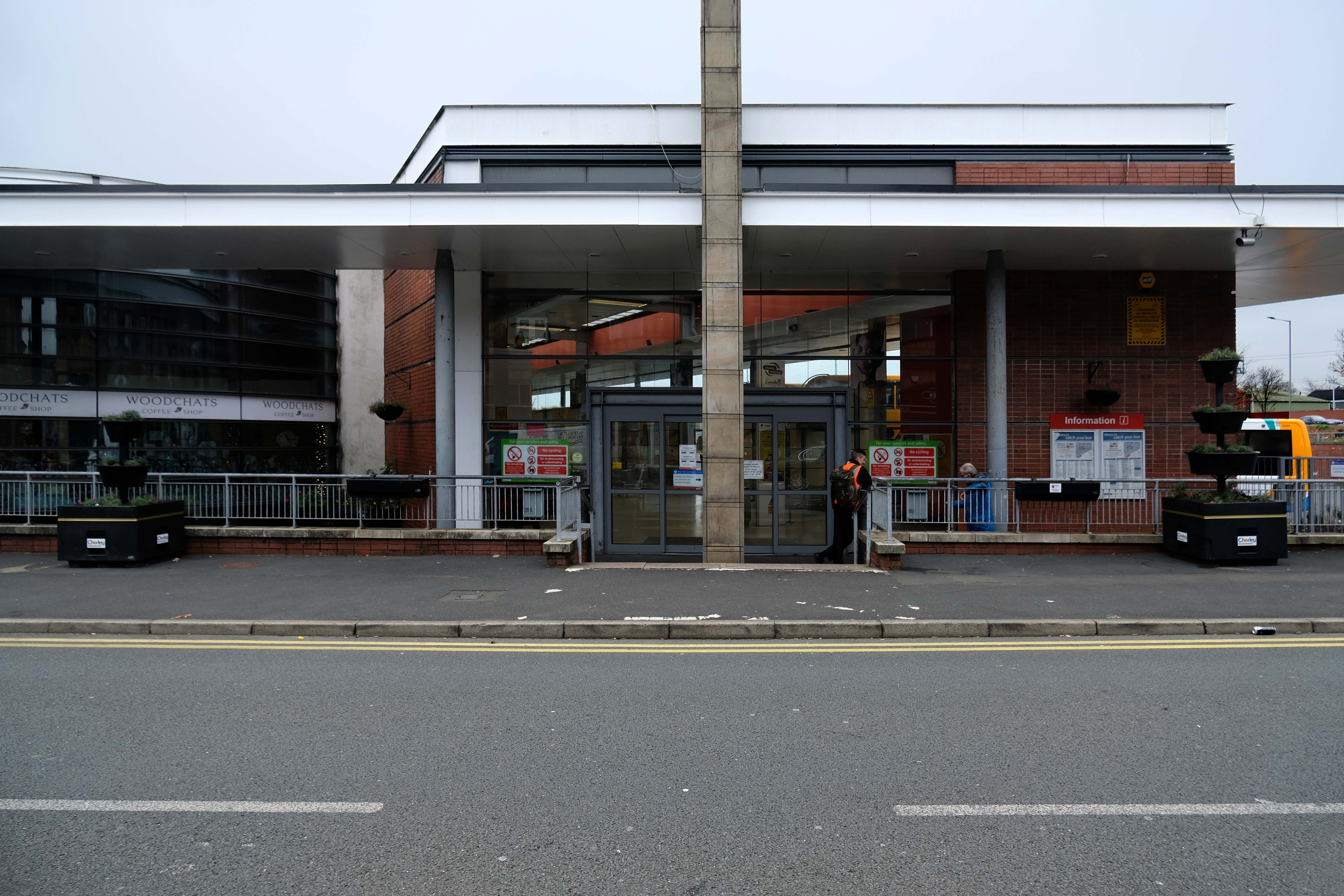
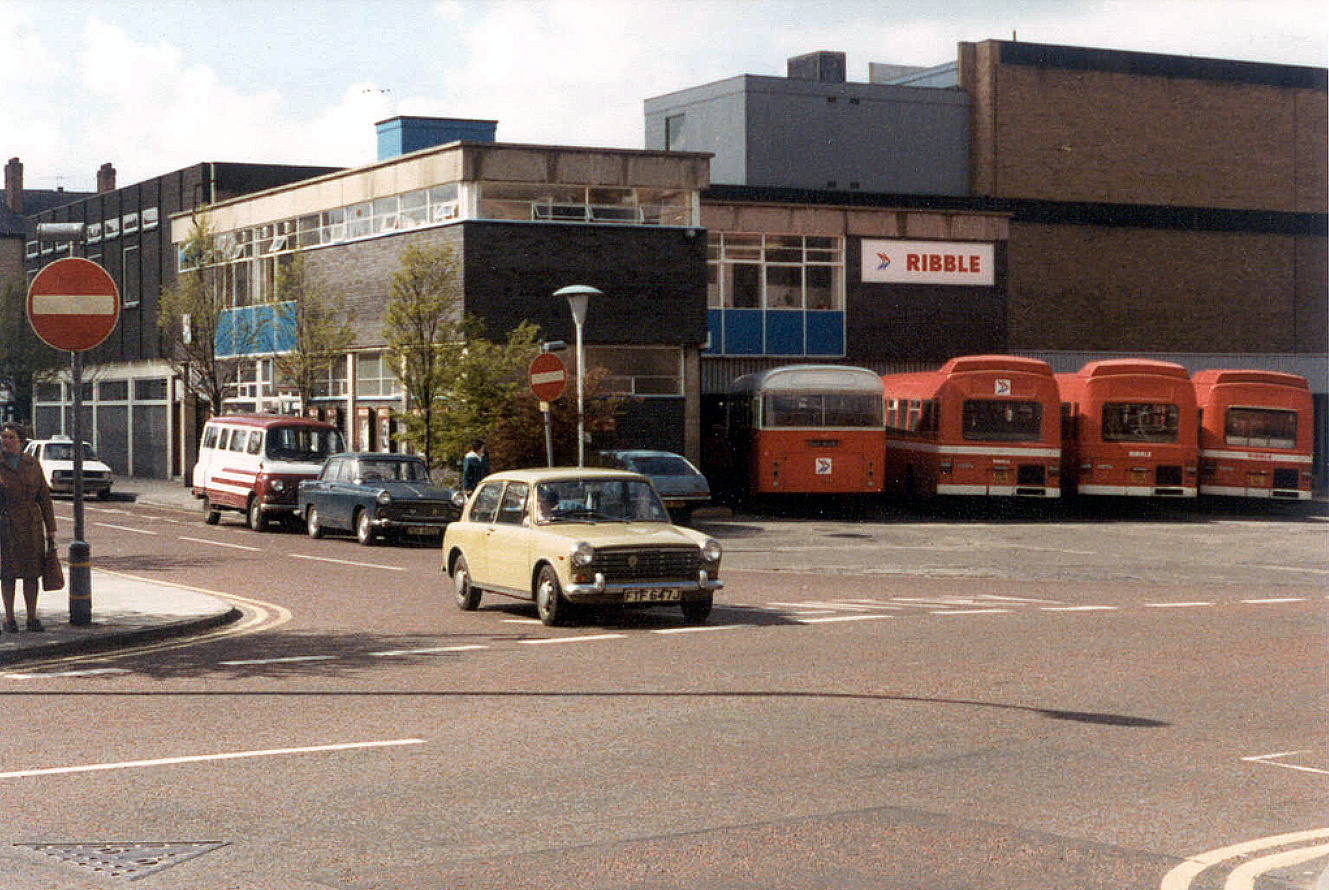
Crossed over to the Interchange – which was formerly a humble bus station, opened in February 2003 replacing the previous structure.
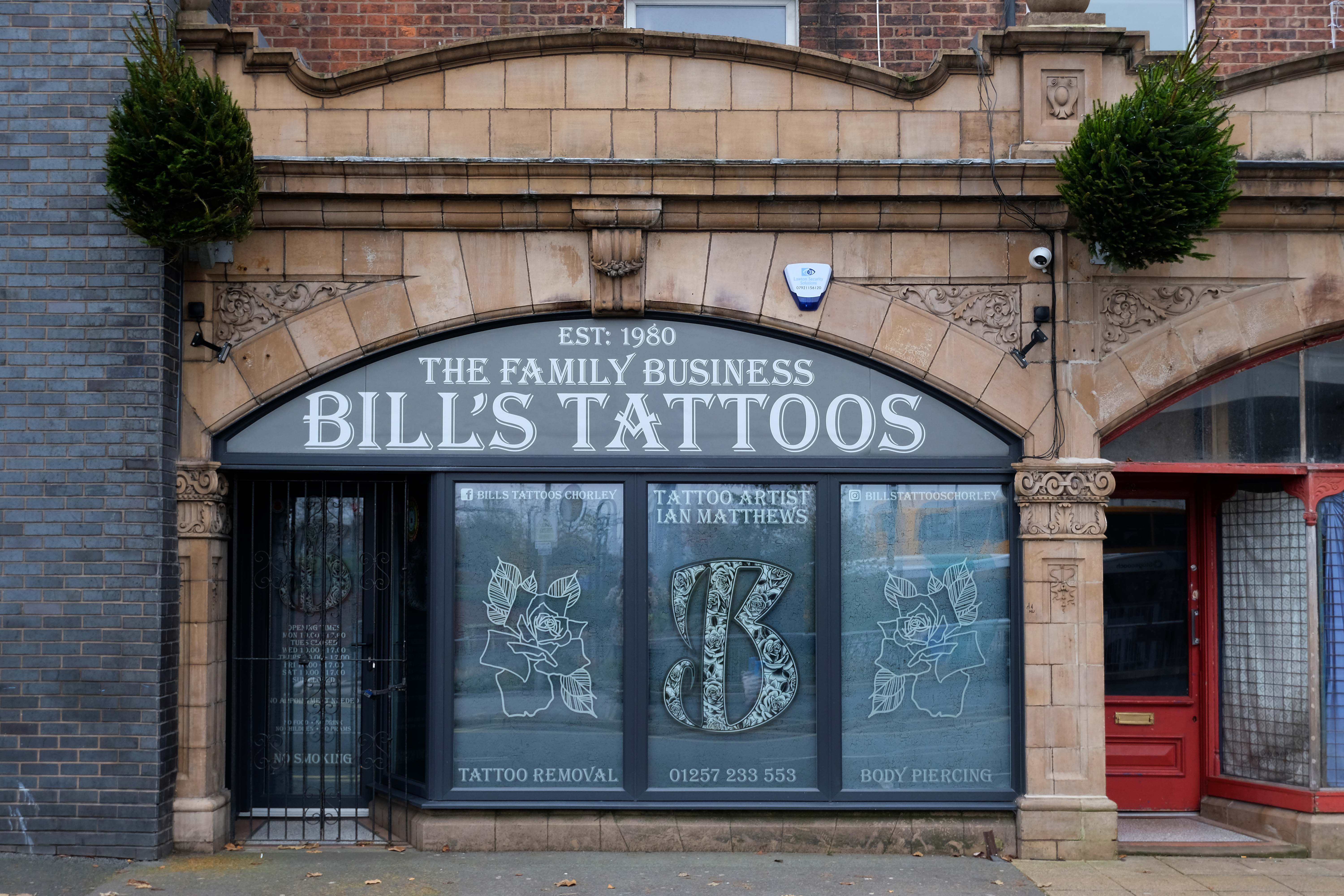
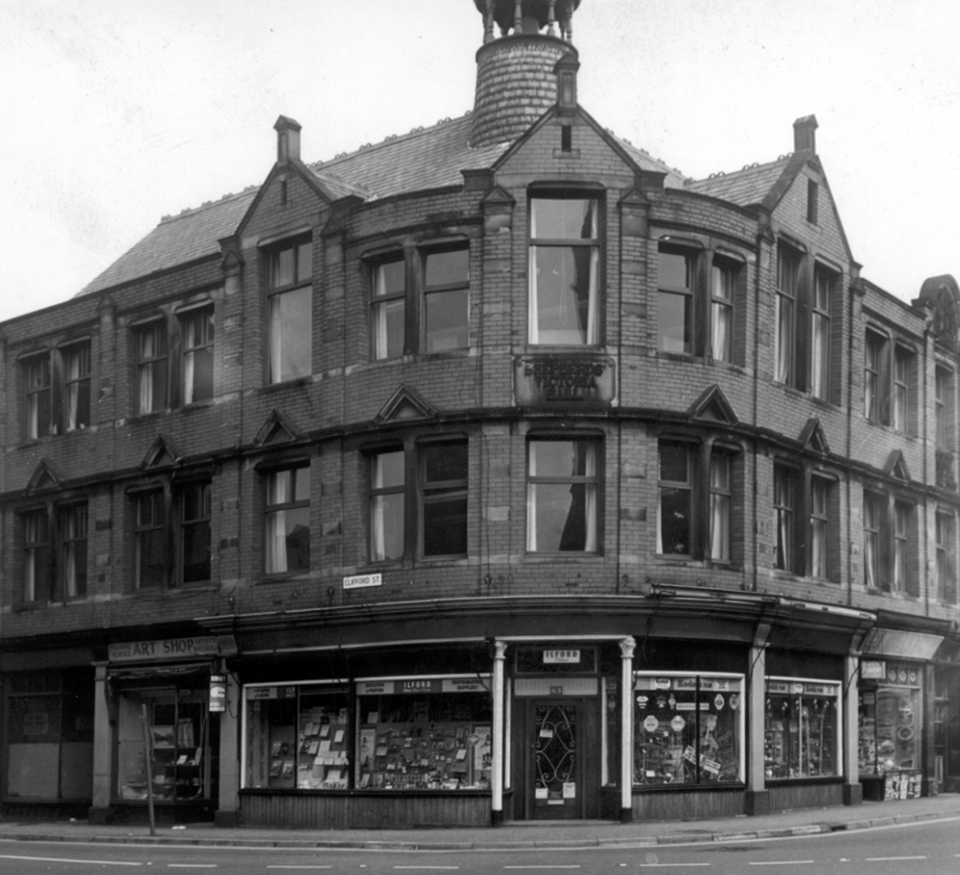
Across the way a stand of shops with distinctive faience fascias.
Further along the Shepherds’ Victoria Hall – once home to the Jubilee of the Ancient Order of Shepherds’ Friendly Society which was quite prominent in Chorley in the late 1800’s and early 1900’s
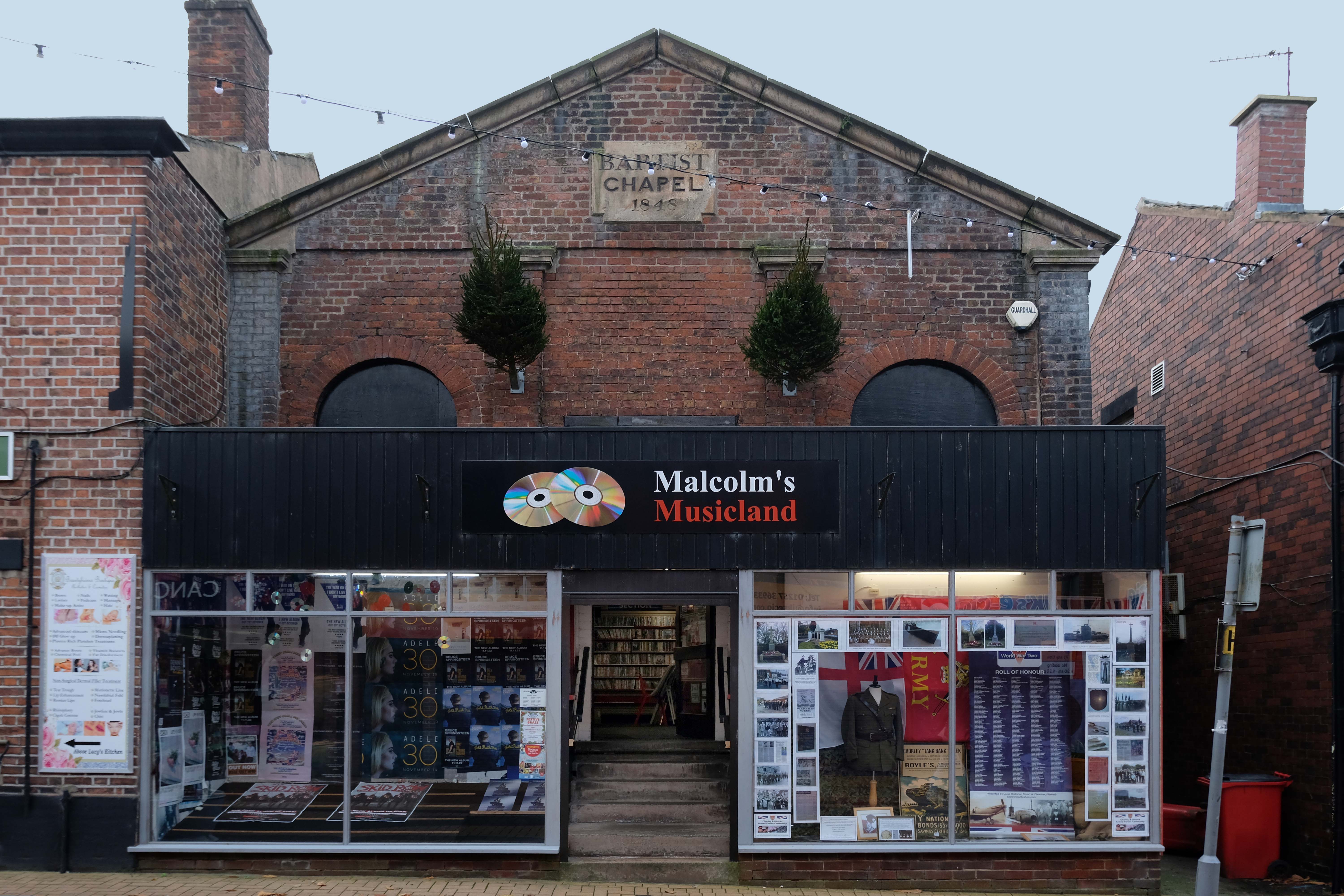
Down the way a ways a Baptist Chapel of 1845 on Chapel Street – currently trading as Malcolm’s Musicland.
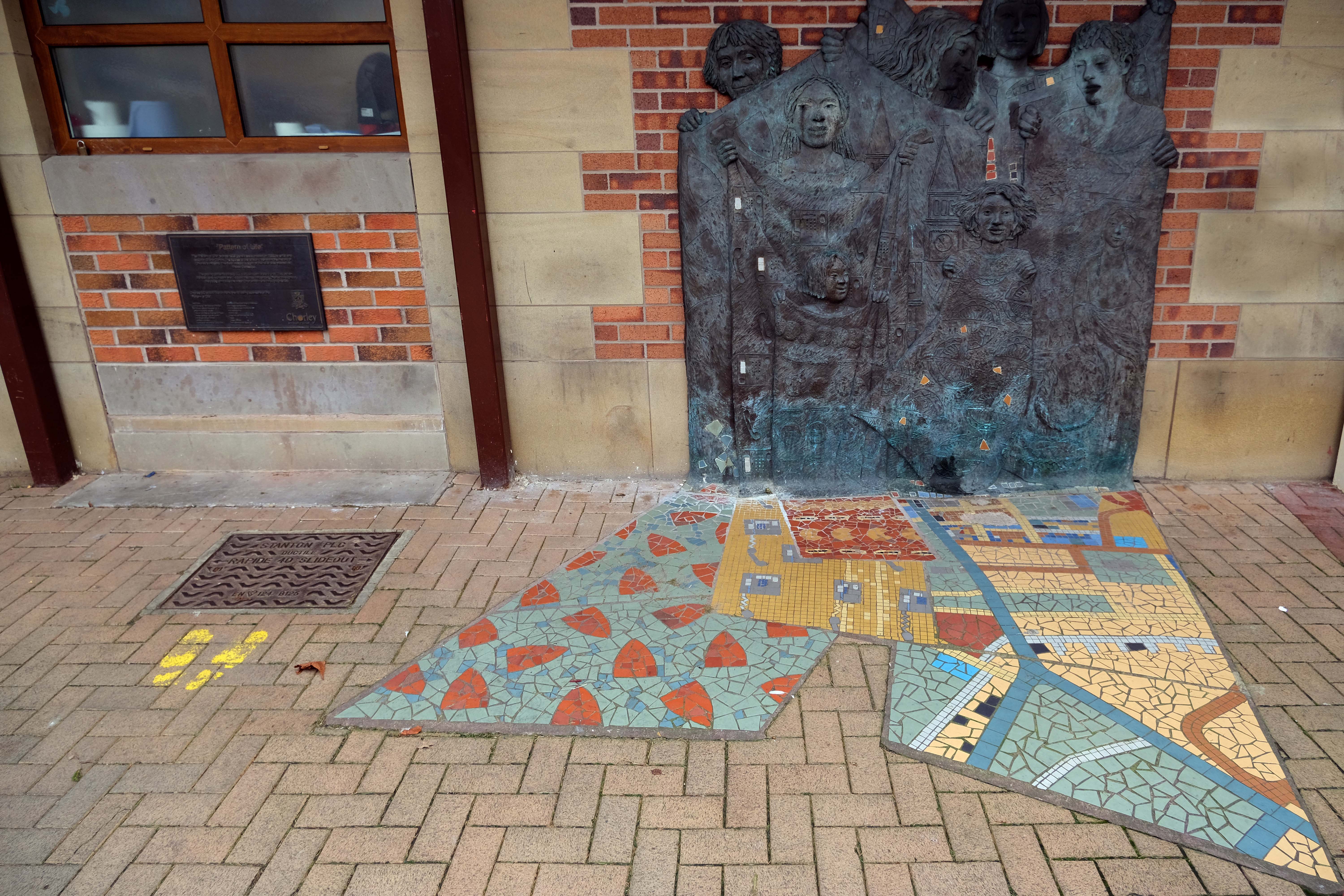
Hang a sharp right to the Market – where there is this newish piece of public art Pattern of Life a bronze relief by Diane Gorvin and mosaic work by Tracey Cartledge
This piece involves an innovative combination of cast bronze and ceramic mosaic. Two bronze relief panels display female figures holding out rolls of fabric, each decorated with patterns and images that are particular to the town of Chorley. Payphones, for example were invented and manufactured in Chorley, the crested newt is protected here and you might also notice the famous Chorley Cakes. As the fabrics tumble down, the designs are translated from bronze relief on the wall surface into 2D mosaic in the pavement.
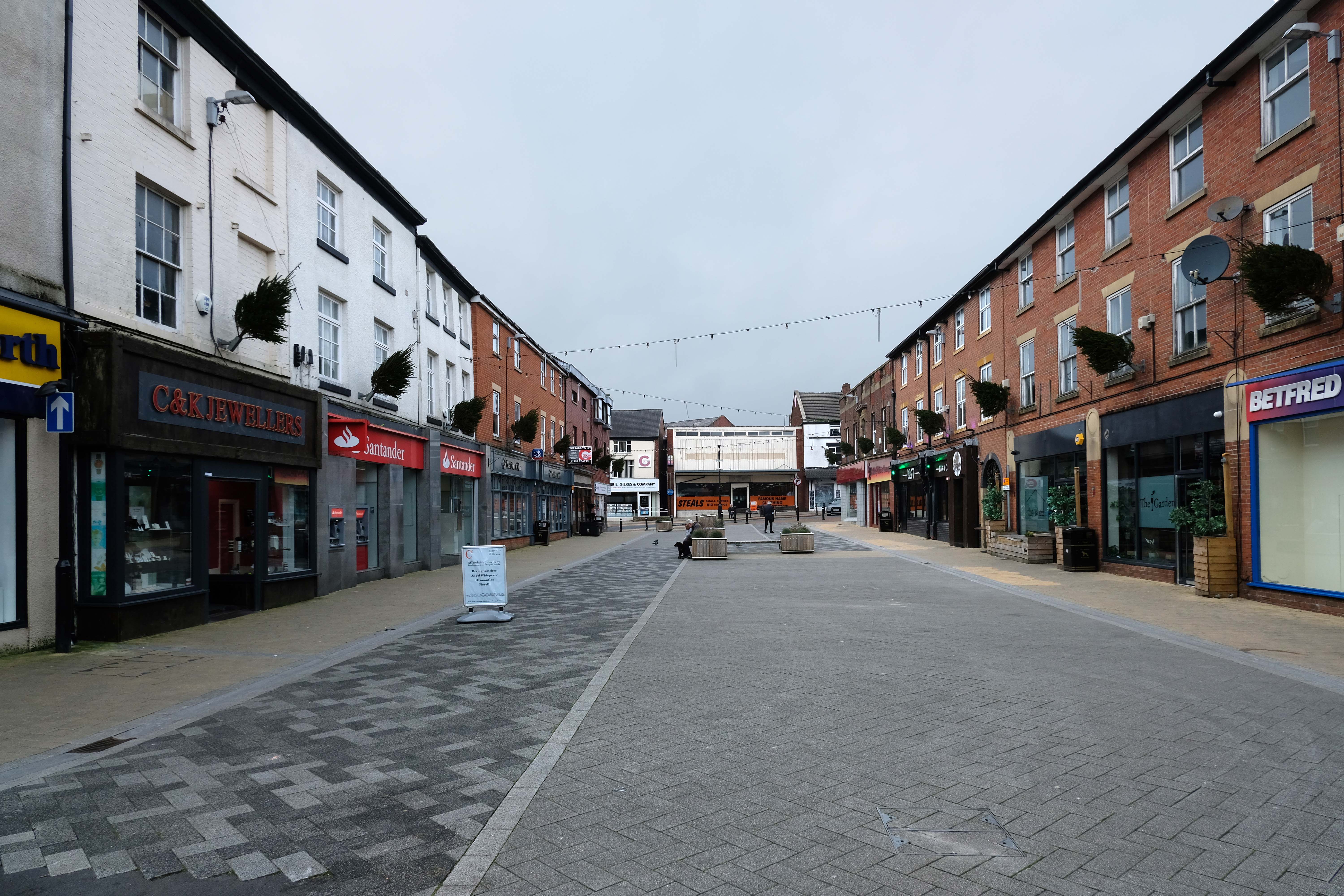
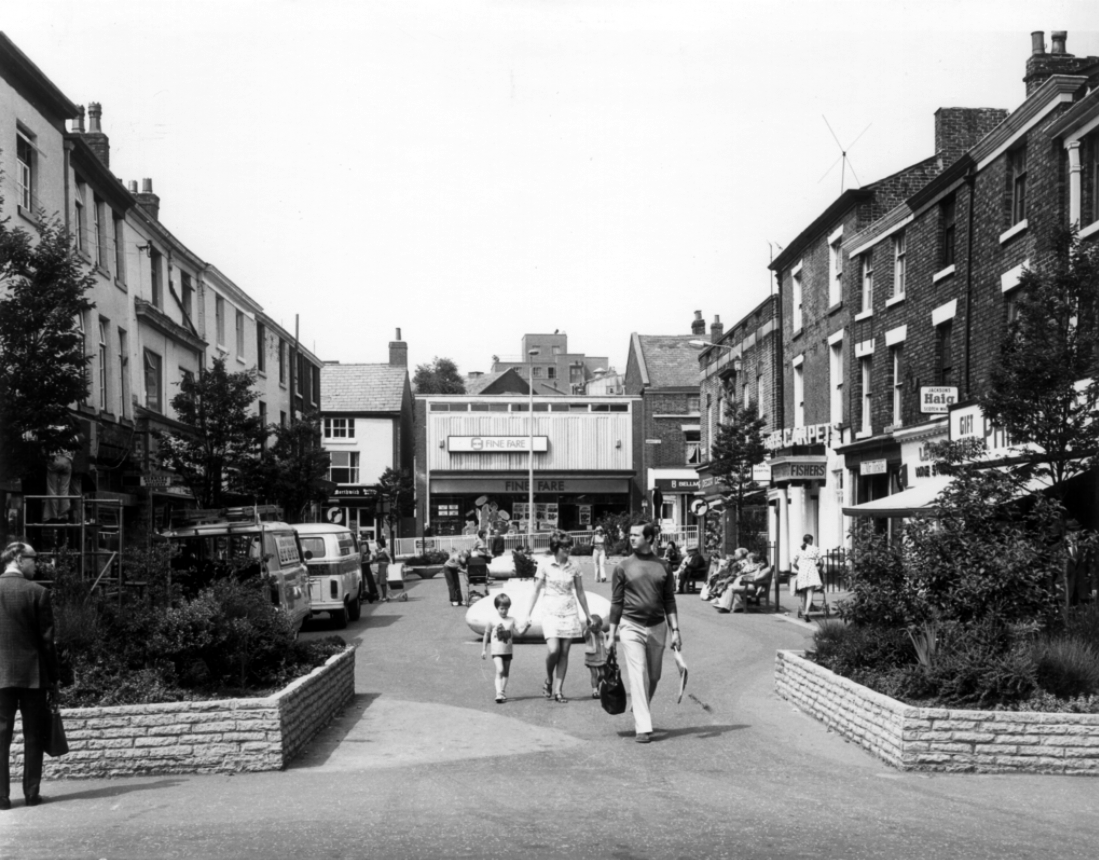
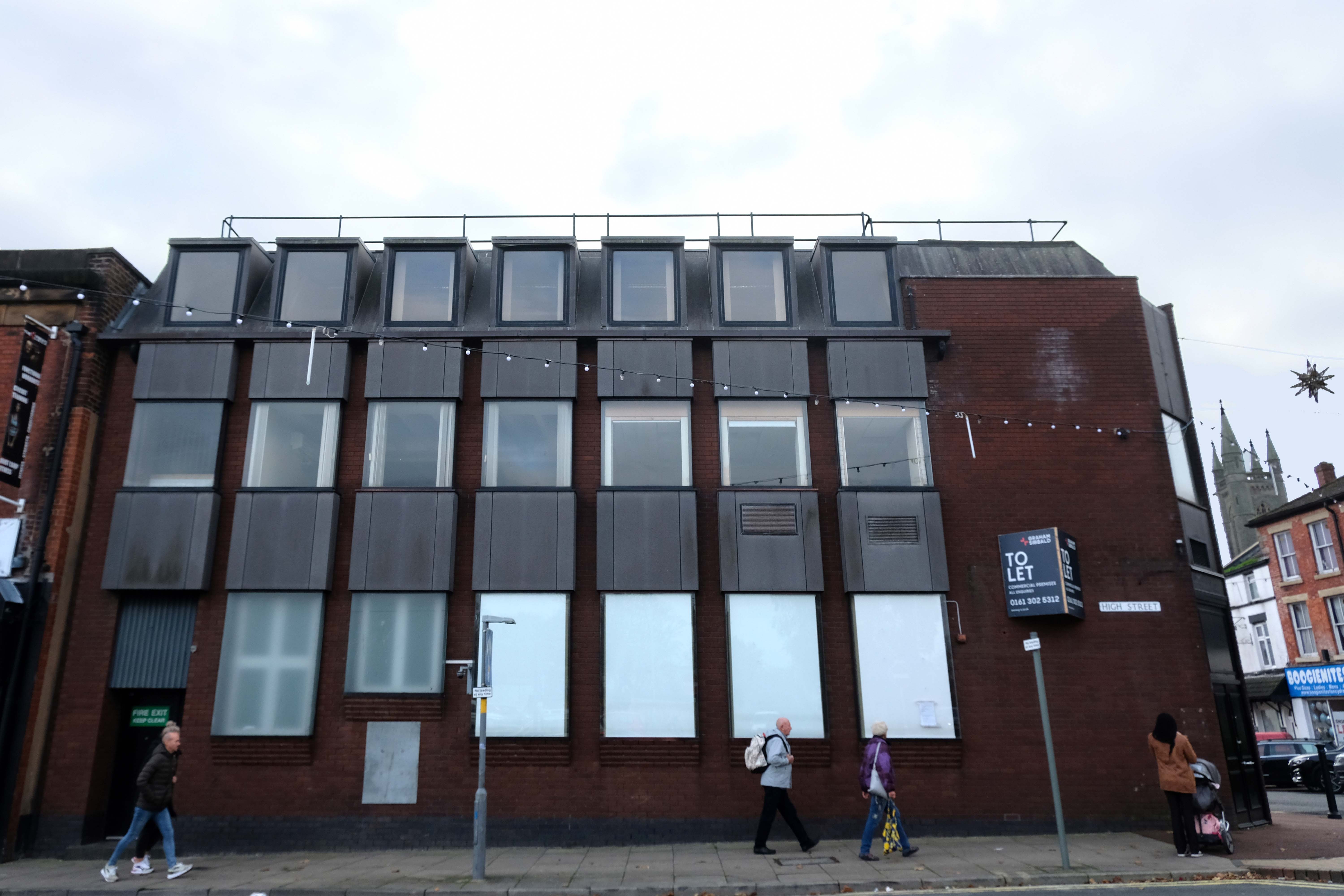
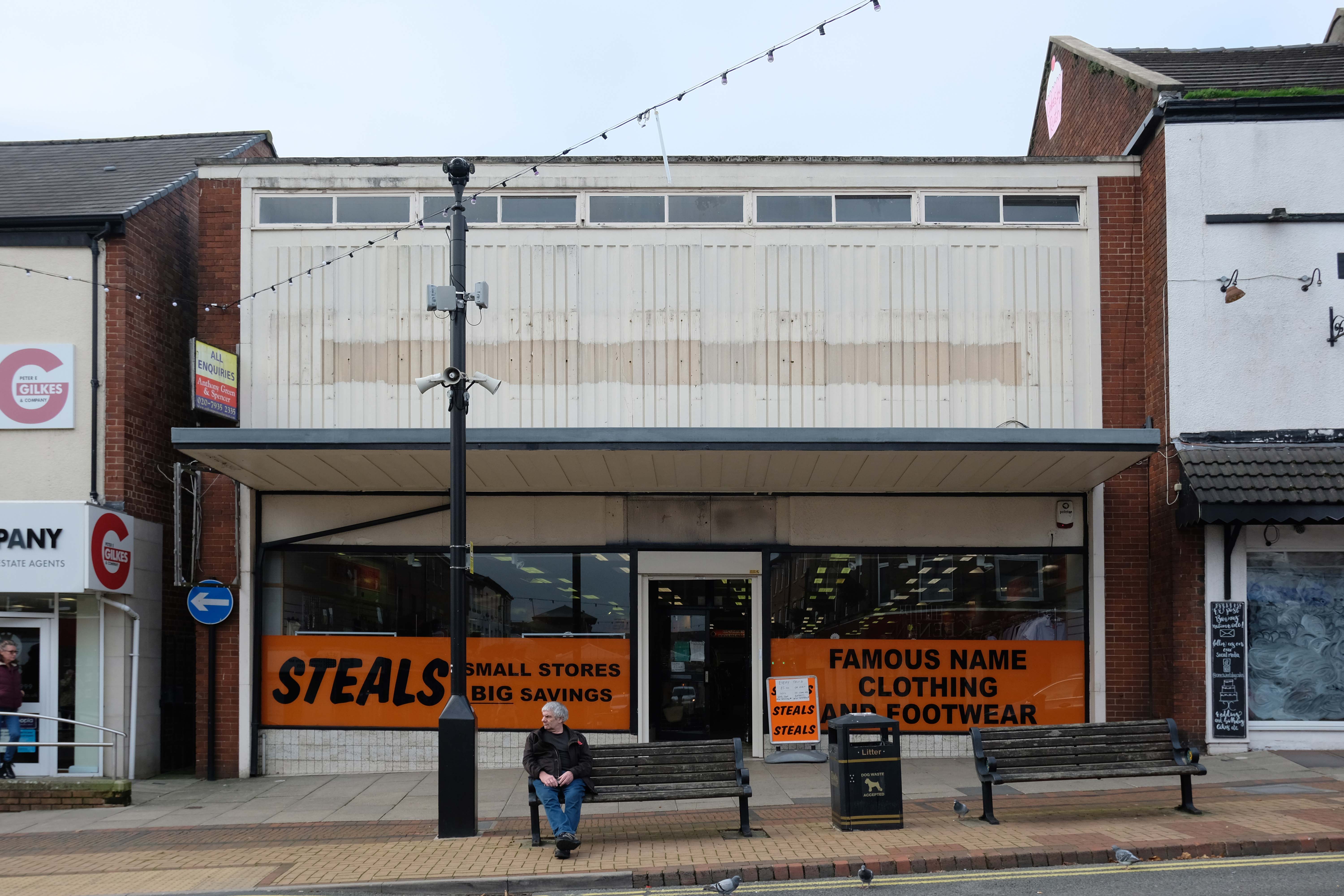
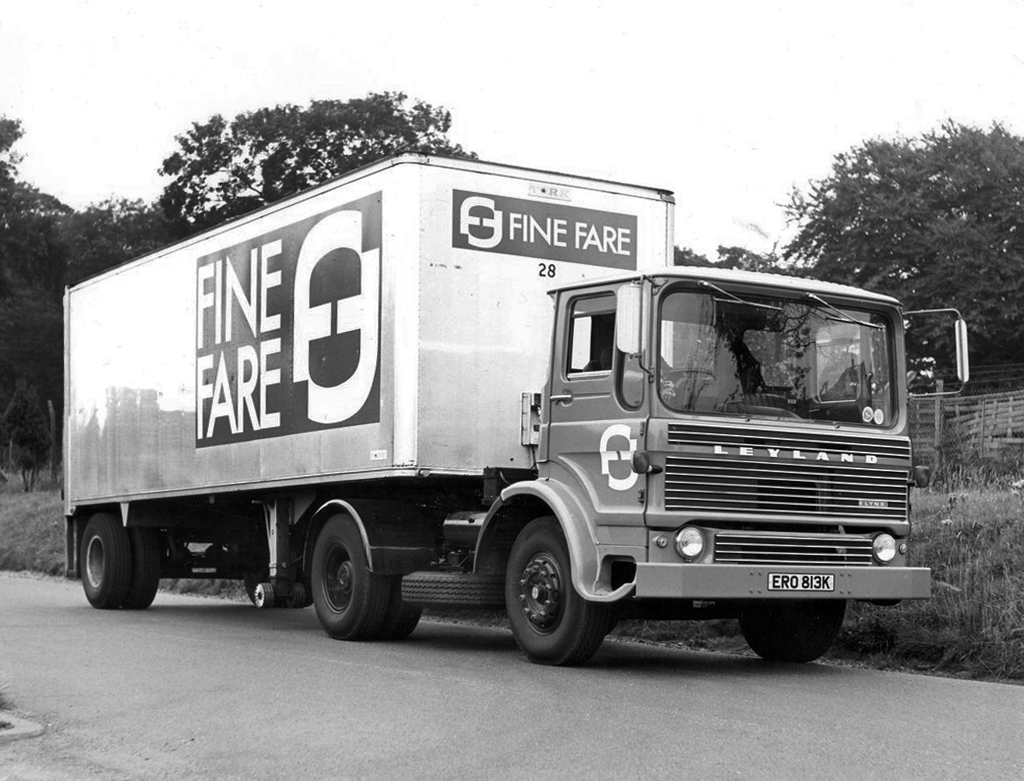
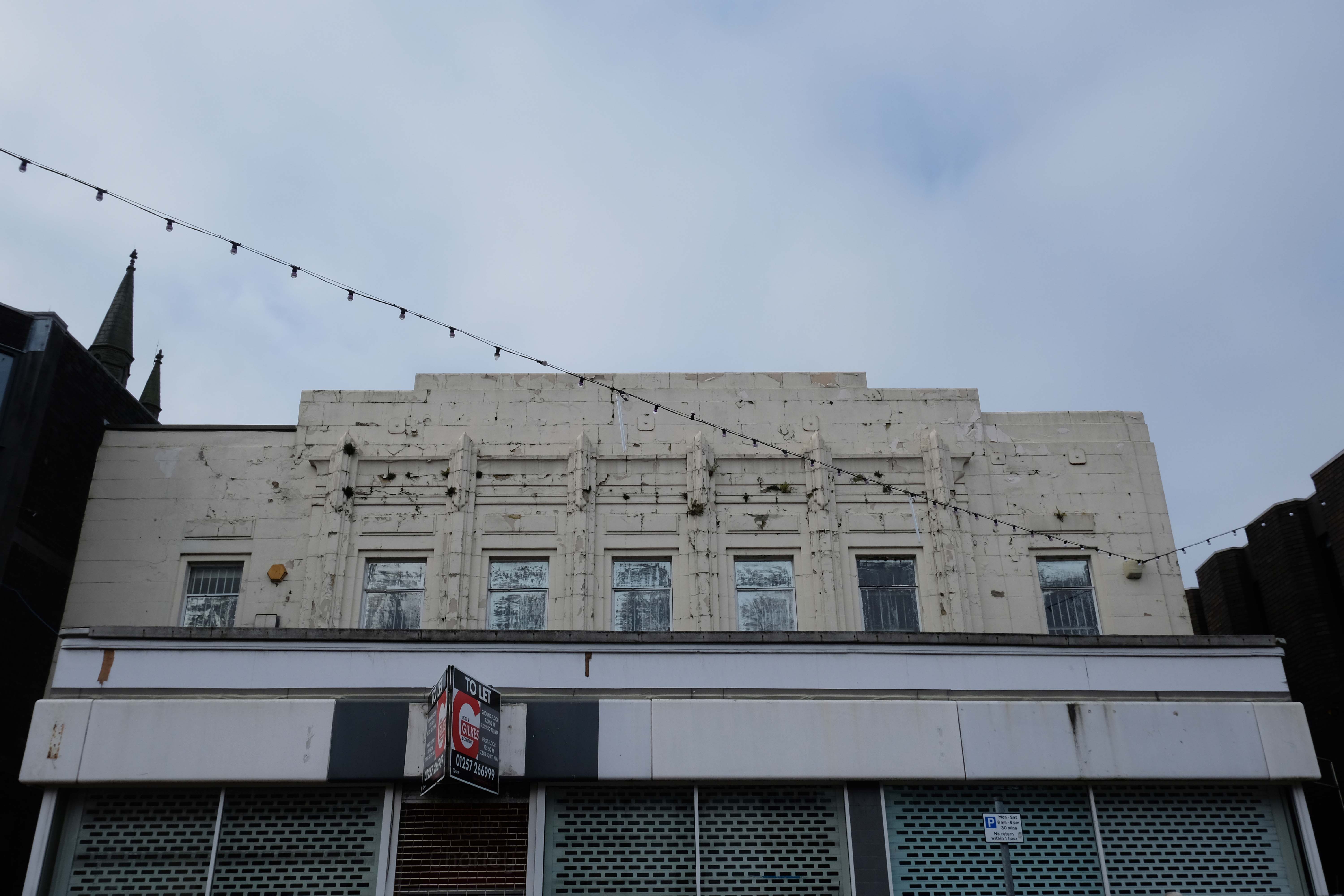
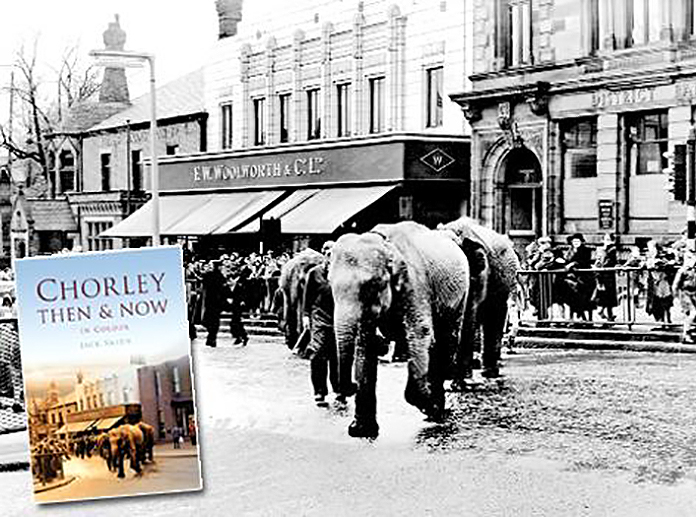
Looking down Fazakerley Street to where Fine Fare once was.
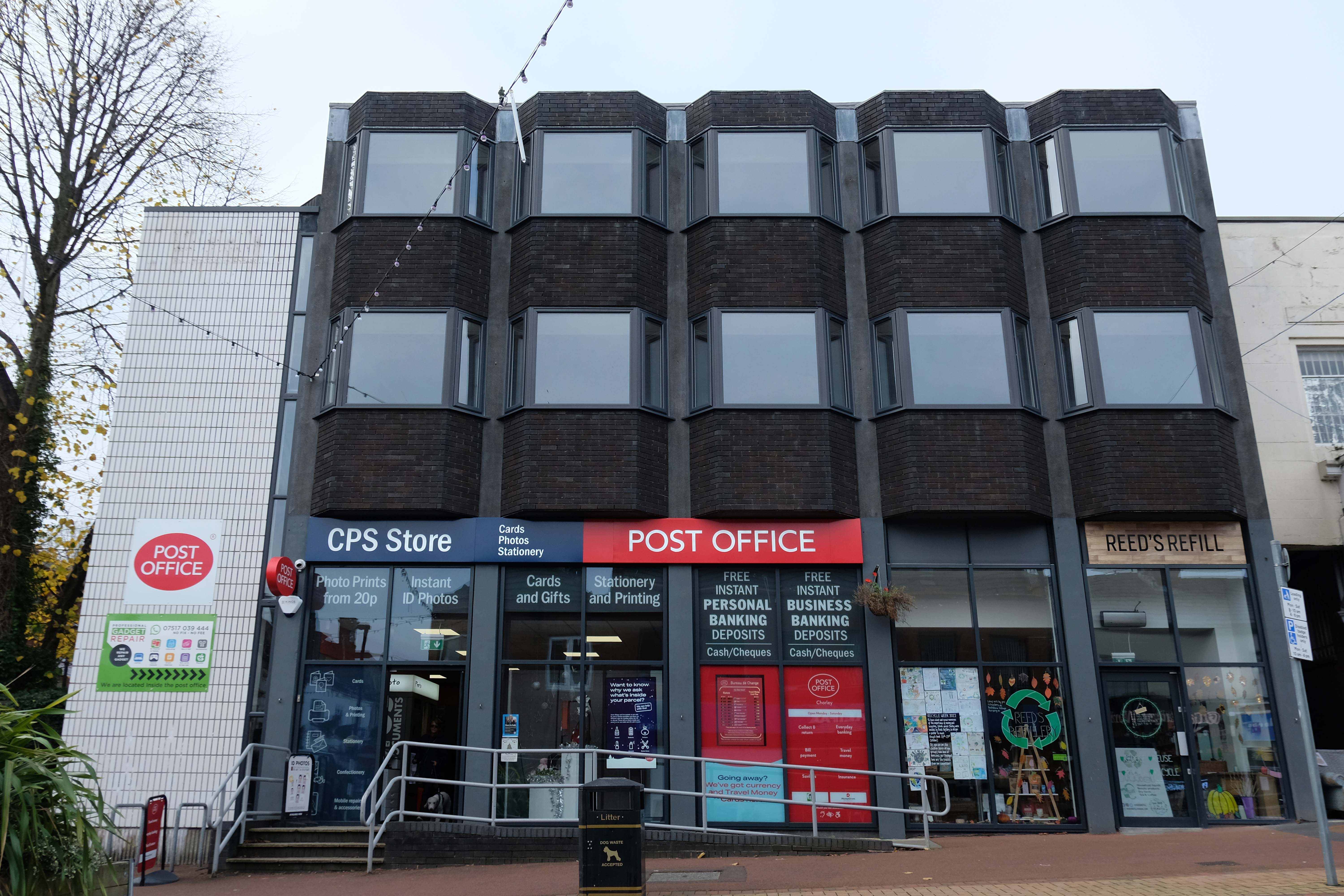
We’ll return to such matters in a moment – we have to get to the Post Office – which is no longer a Post Office.
It was a Post Office in 1935 – it also has a later extension.
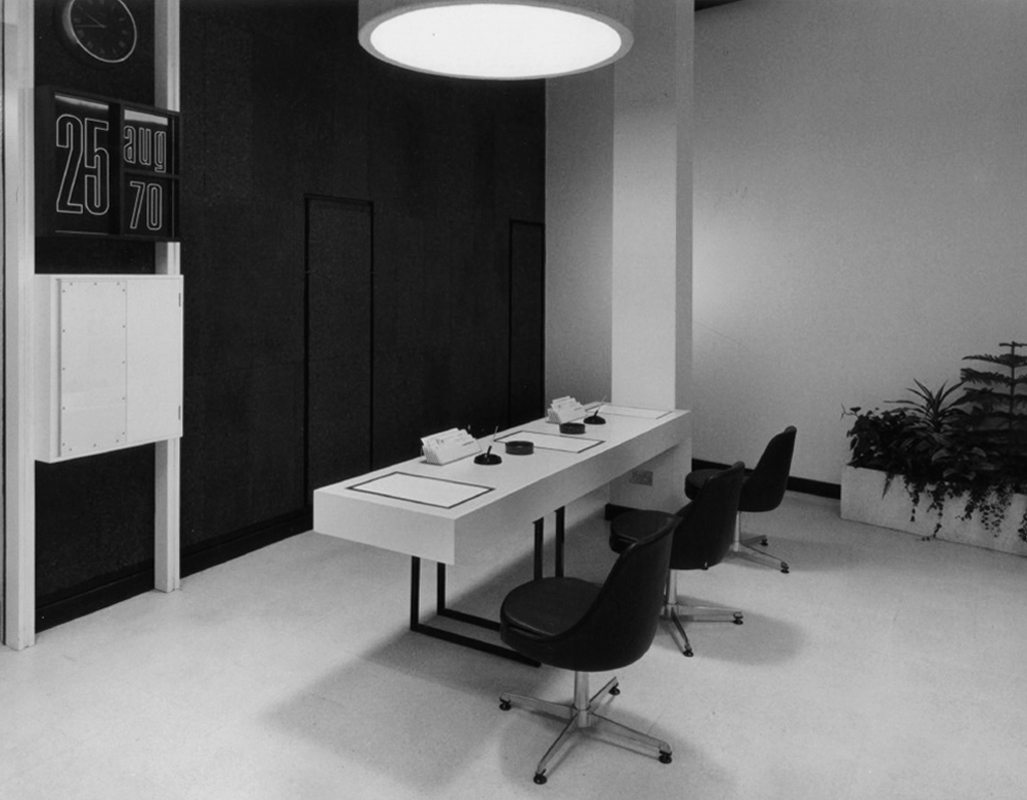
The local list declares that the post office dates from 1935. This is almost certainly erroneous since the contract documents date from 1924, and from contract to completion the average construction and fitting-out time was about 18 months.
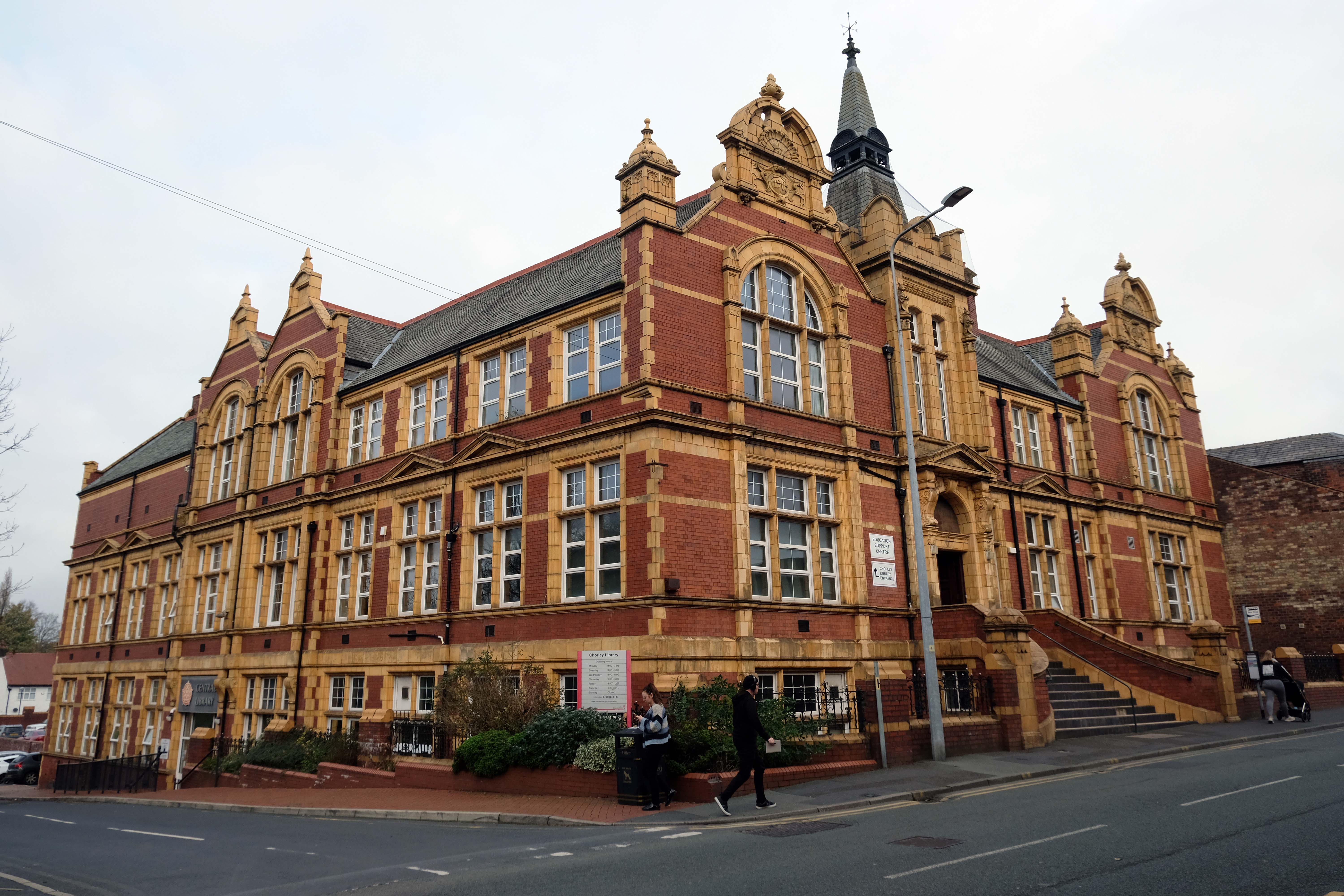
Plans supplied by the Architects Messrs. Cheers & Smith of Blackburn which were approved by the Education Committee on the 18th August 1904 – design proposals for the new Technical School entitled Light and Air.
The considerable task of erecting the school was given to the local builder Mr. William Hampson of Pall Mall.
Surely the envy of his trade, the total contract was worth a mouth- watering £10,041 15s. 9d. – approx. £720,000 today.
The building was officially opened by the 16th Earl of Derby on September 24th 1906.
Over the road the town’s newest retail development Market Walk – the work of AEW Architects.
Chorley Council bought the shopping centre from Orchard Street Investments for £23m in 2013 and commenced a large-scale regeneration scheme in 2018 involving a £15m, 79,000 sq ft retail and leisure extension led by main contractor Eric Wright Group and designed by AEW Architects. Here, Conrad Heald of Chorley Council tells his interviewer, AEW director Phil Hepworth, how the scheme came to fruition and has rejuvenated the town centre.
The memorial re-sited in 2018 commemorates the Chorley Pals.
In less than 20 minutes, 235 of the 720 men from the 11th East Lancs. were killed. Another 350 were wounded, of which 17 would eventually succumb to their wounds. Many of the Battalion died where they fell, in No Man’s Land.
As a result of the attack on the morning of the 1st July, the Chorley Pals – Y Company, had 31 men killed and three died within a month of their wounds received on that day. 21 have no known graves and their names are transcribed on the Thiepval memorial to the Missing on the Somme battlefield. A further 59 were wounded, making a total of 93 casualties out of approximately 175 men from Chorley who went over the top that morning.
Reversing now to the former Barclays Bank – which closed earlier in 2022.
We return now to the former Fine Fare.
The company began as one single supermarket in Welwyn Garden City in 1951, as an offshoot of the Welwyn Department Store, owned by Howardsgate Holdings, the company of Ebenezer Howard, the founder of the garden city movement.
Now here’s a thing a bank which is a bank NatWest not gone west.
Next to the former Woolworths, opened in Chorley in 1930 on Market Street, with its pale Deco faience fascia.
They traded from this building for sixty five years, before closing in March 1995 in order to move to a new store on Market Walk – it became an Argos, then it didn’t.
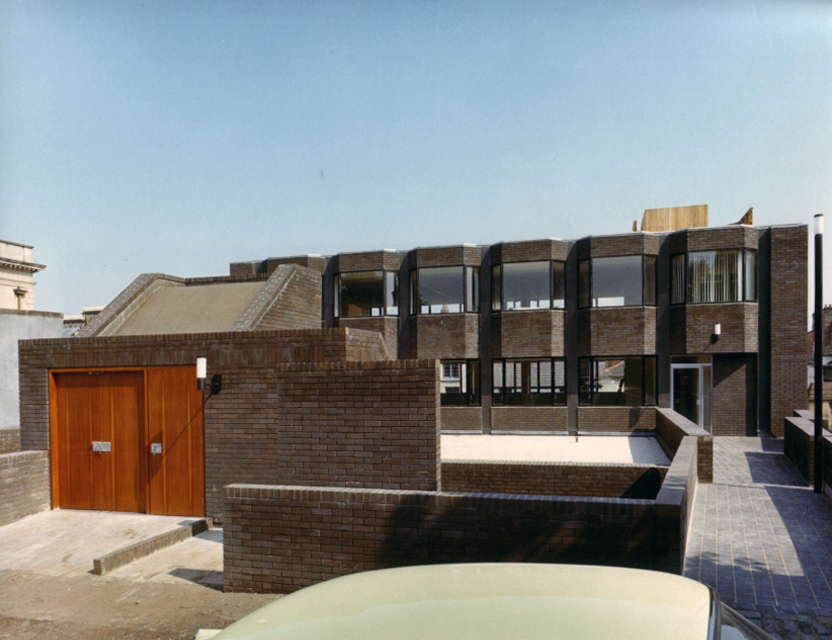
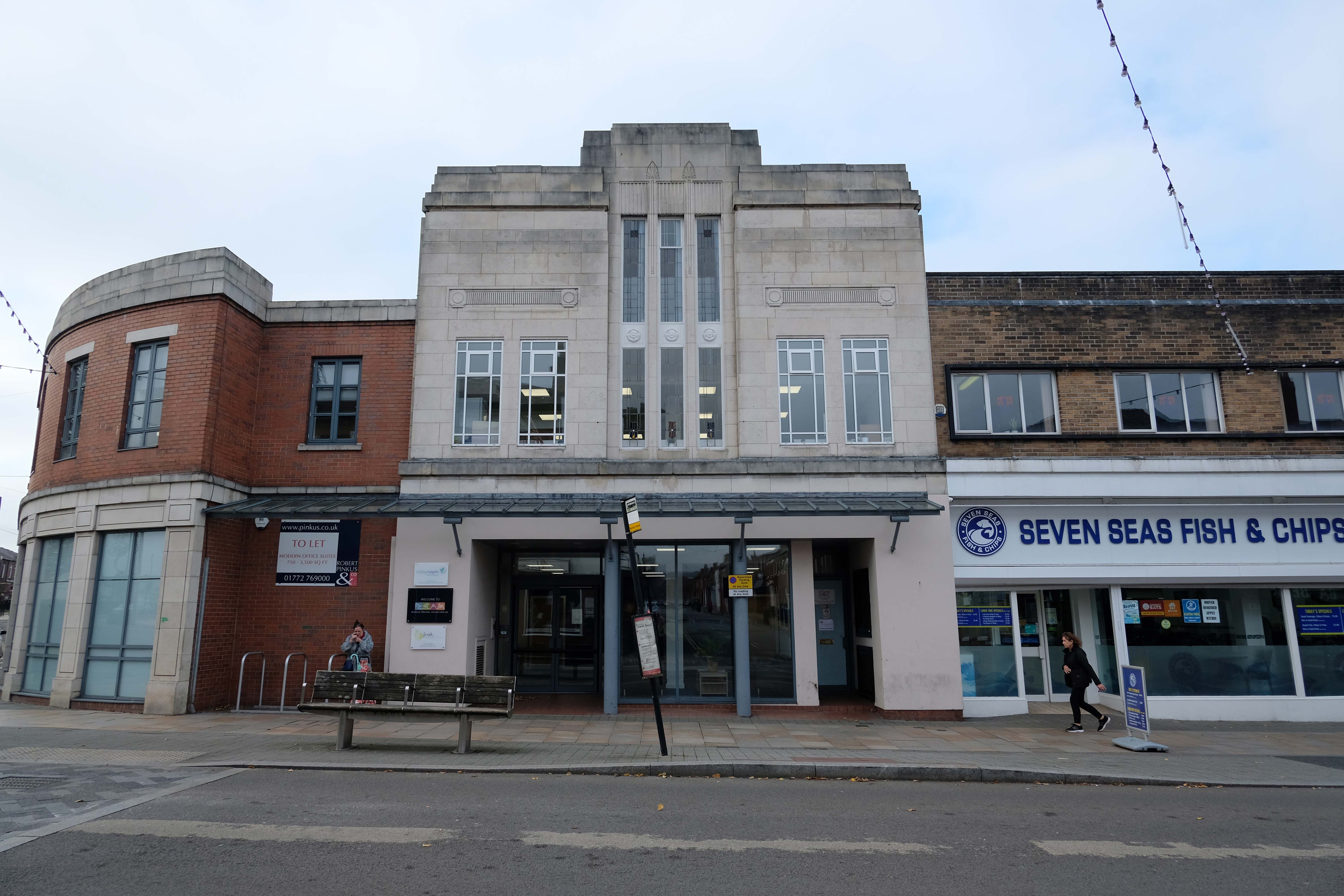
Here we are now at a Post Office that is a Post Office but was an RBS Bank.
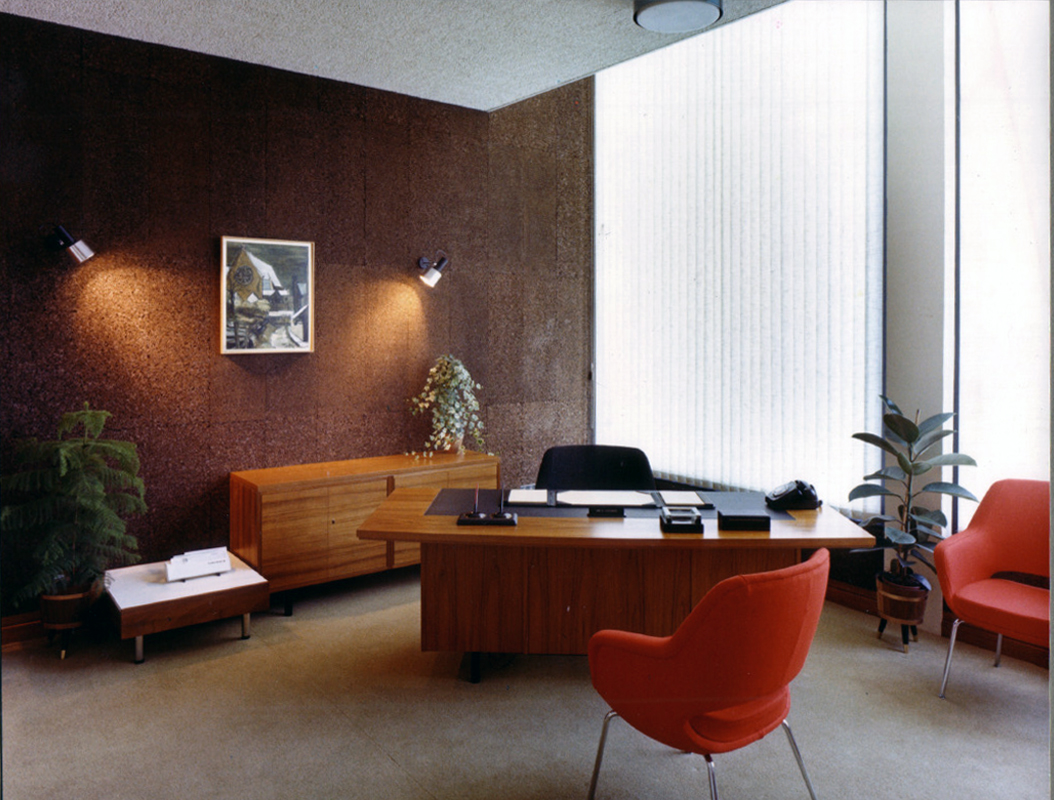
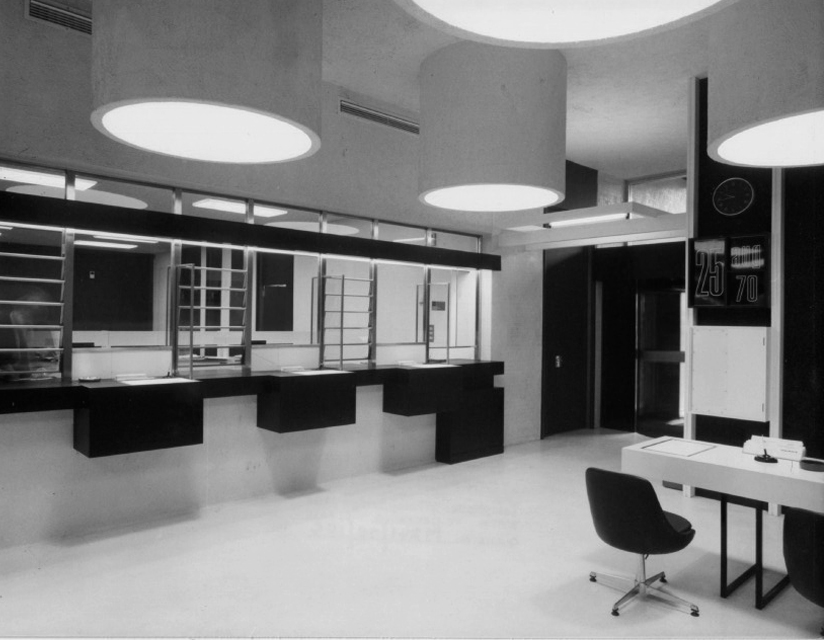
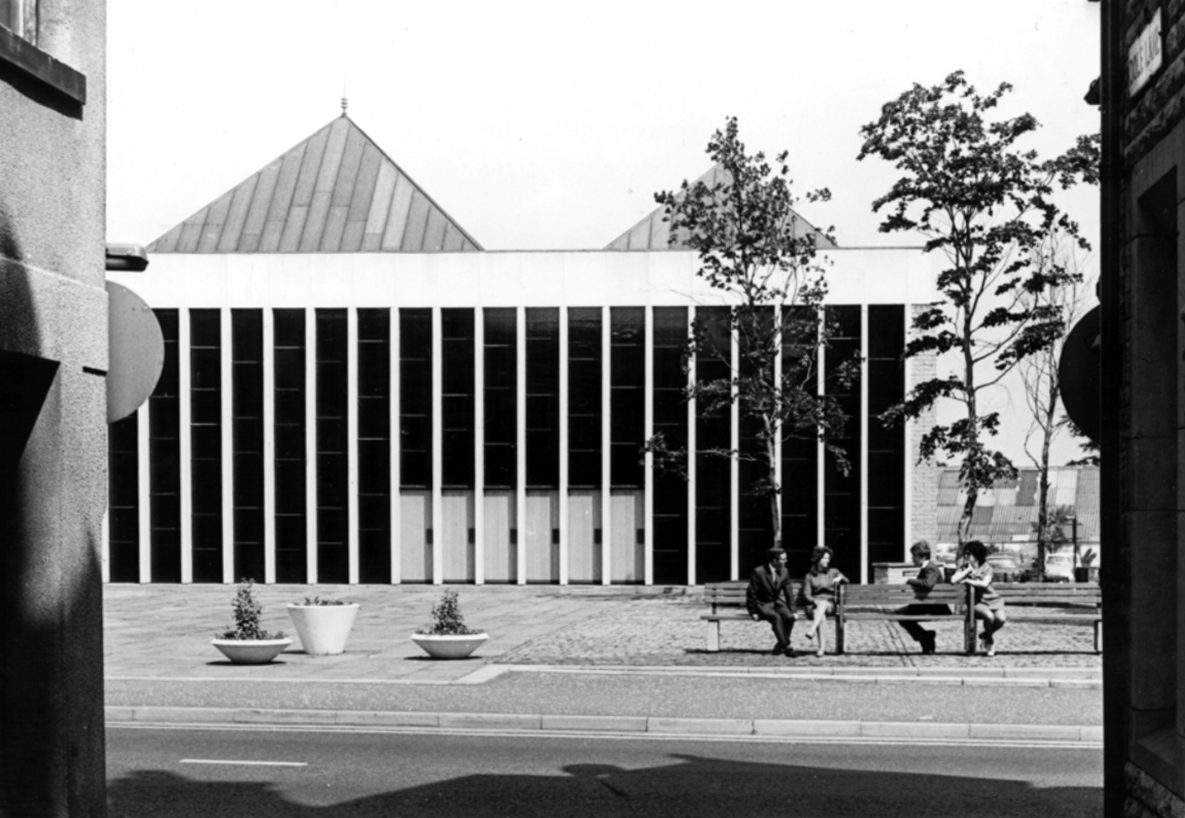
the Bank was the work of Cruickshank & Seward – thanks to Mainstream Modern for these archive images.
The new location is at the former Royal Bank of Scotland on Market Street in the town centre.
Since the Post Office that was based at WH Smith on New Market Street came to an end, when that store closed in January, it relocated to a temporary unit in Market Walk until a permanent solution could be found.
The unit, which had been provided by the postmaster from Burscough Bridge Post Office, closed on Tuesday.
Kenny Lamont, Post Office Network Provision Manager, said a Post Office is important to a community.
This had been a Methodist Church – then, it became the HQ of the Lancashire Electric Power Company.
The Lancashire Electric Power Company was one of the largest private electricity companies in the UK. It was established in 1900 and generated and supplied electricity to 1,200 squares miles of Lancashire from 1905 until its abolition under nationalisation in 1948.
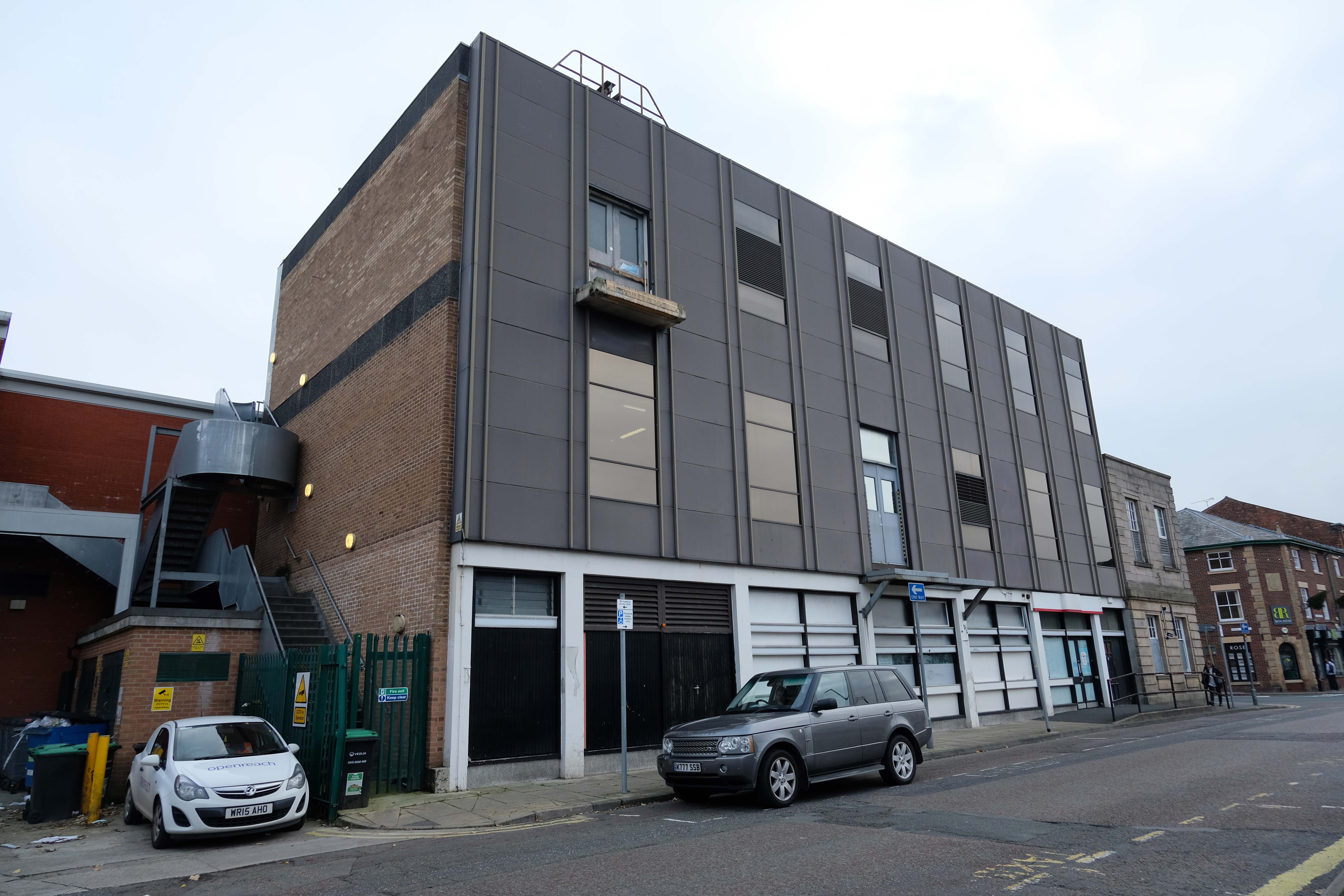
Time to back track to the Cop Shop – the work of County Architect Roger Booth and crew.
The Magistrates’ Courts are closed and up for sale.
Next door the White Hart once upon a time the Snooty Fox, a pub with an up and down trajectory – currently open and described online as plush.
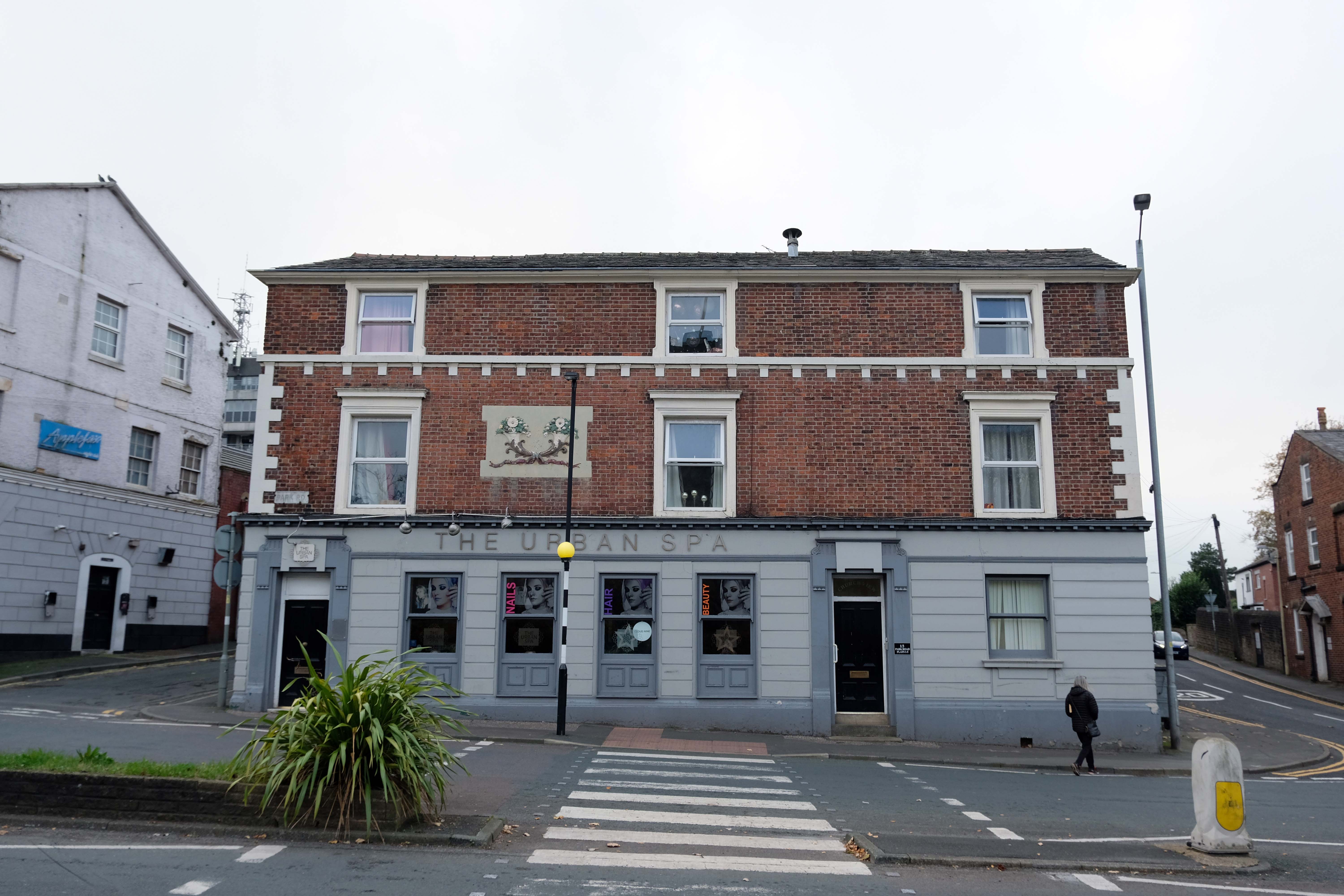
Down the road a pub no longer a pub but an Urban Spa.
We offer you a full range of professional treatments tailored to your own personal needs. We treat every client as an individual and offer an extensive range of treatments and professional products making your visit one to remember.
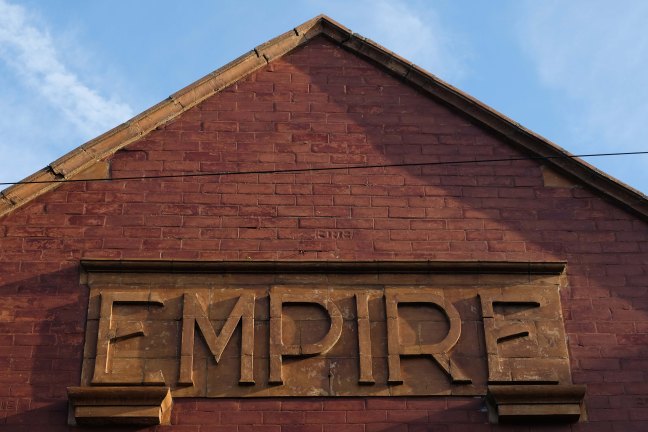
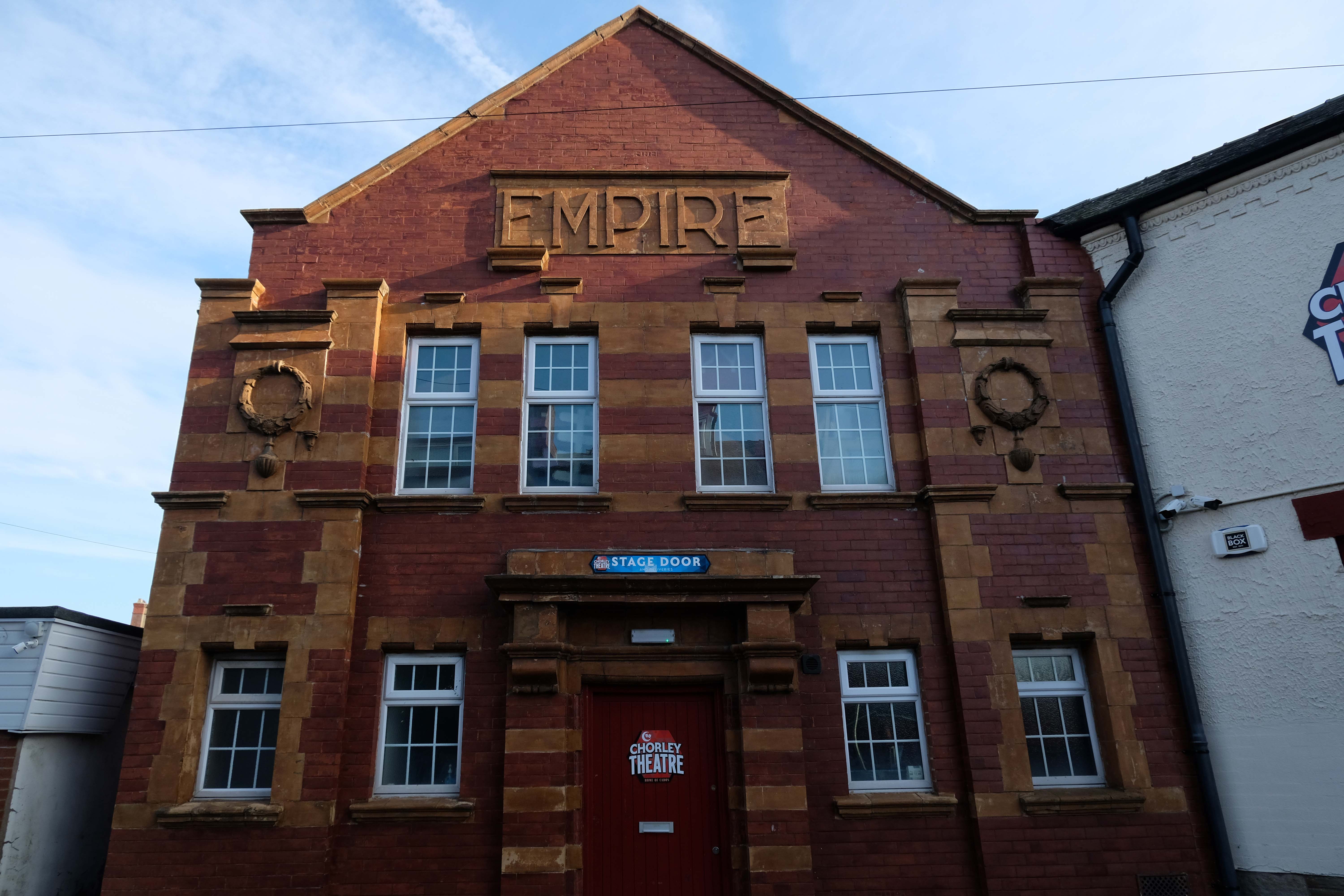
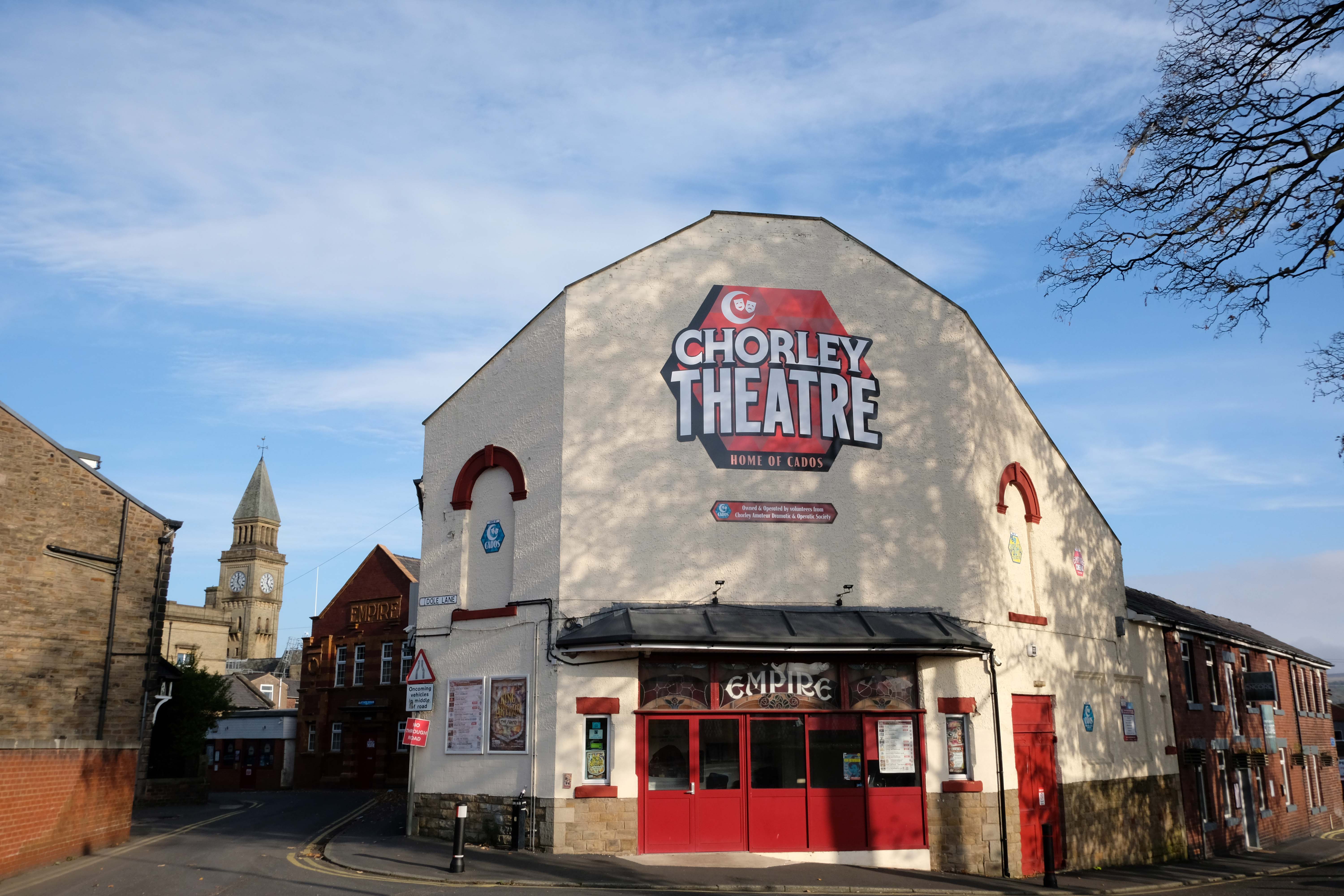
Let’s go to the theatre – The Empire tucked away at the back of town.
The Empire Electric Theatre opened, as the town’s first purpose-built cinema, on 3rd September 1910. In 1912 Archie Hooley began his connection with the cinema business at the Empire Electric Theatre. By 1927 it had been re-named Empire Cinema and by 1930 it was equipped with a Western Electricsound system and was operated by the Perfecto Filmograph Co. Ltd. By 1939 it was operated by the Snape & Ward chain. According to the Kine Year Books, in 1940 the seating was for 800, while by 1952 it had been reduced to 679 – still a far cry from today’s 236 seats. 3D films were shown in the early-1950’s. Archie had died in 1944; his son Selwyn closed the cinema in 1957, apparently “because of the taxes”.
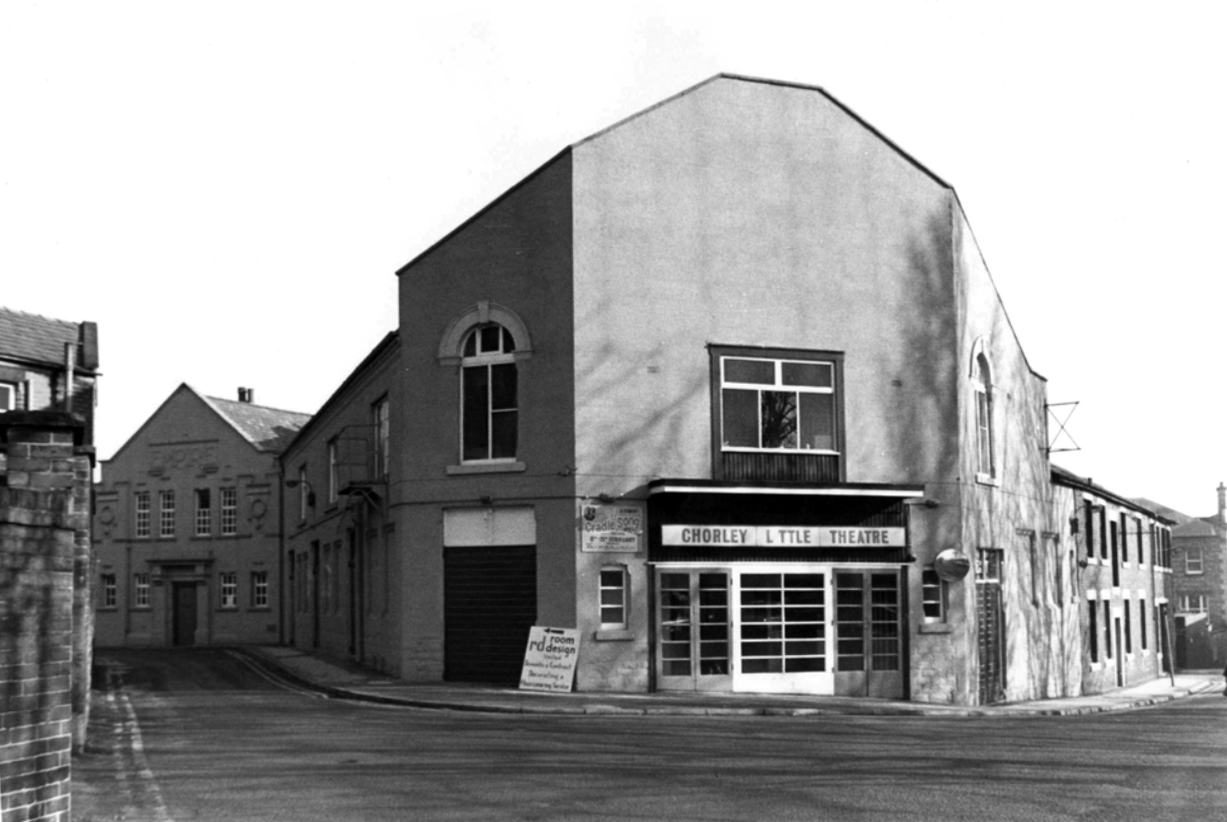
1959
Wrestling took over for a while before Chorley Amateur Dramatic and Operatic Society – CADOS acquired the building and renamed it the Chorley Little Theatre. Since 1960 CADOS have been putting on high-quality productions, presenting at least six productions per season – from September to July. It is also the home of the award-winning Chorley Youth Theatre who meet every Saturday, putting on shows throughout the year; and Chorley Empire Community Cinema who present the cinema experience on their 21ft wide screen with 8-Speaker Surround Sound. Run entirely by volunteers the theatre has state-of-the-art sound systems and a full range of lighting equipment. There are two spacious dressing rooms, space for costumes and props and the Empire Bar. The building has disabled access throughout the public area, including a toilet, and the auditorium is fitted with a hearing loop. There are three spaces for wheelchairs in the auditorium. It was re-named Chorley Empire Cinema at Chorley Theatre in October 2019 and films are still part of the programming.
The Odeon Market Street was built for and operated by Oscar Deutsch’s Odeon Theatres Ltd. chain, it opened on 21st February 1938 with Jack Buchanan in The Sky’s the Limit.
Architect Harry Weedon was assisted by PJ Price.
It was closed by the Rank Organisation on 6th February 1971 with George Lazenby in “On Her Majesty’s Secret Service”. After laying closed and un-used for over two years it was sold to an independent bingo operator and re-opened on 9th August 1973 as a Tudor Bingo Club. It later became a Gala Bingo Club which was renamed Buzz Bingo Club in June 2018. It was closed on March 21, 2020 due to the Covid-19 Pandemic. On 15th July 2020 it was announced that the closure would be permanent.
The building was handed over to Chorley Council who decided that asbestos removal would be too costly and the building was demolished in August 2021.
Located on Salisbury Street, off Cunliffe Street, built in 1888 as a military warehouse, it was converted into a roller skating rink around 1909. It opened as the Pavilion Picture Palace on 14th September 1911, operated by George Testo Sante, a music hall strong man, who also operated the Grand Theatre as a cinema. By 1915, music hall acts were also part of the programme. After the end of World War I, the flat floor of the cinema was raked, allowing for better viewing of the screen. The proscenium was 30ft wide, the stage was 16 feet deep and there were two dressing rooms.
The Pavilion Cinema was the first in town to screen ‘talkies, when an Electrochord sound system was installed in 1929. It was taken over by the J.F. Emery Circuit in 1932 and they operated it until the end of 1933. The sound system was upgraded to a British Talking Pictures sound system. In 1954 it was the first cinema in town to be fitted with CinemaScope and the proscenium was widened to 36 feet.
The Pavilion Cinema was closed by 1962 and converted into a bingo club. In 1972 it was re-opened as a cinema again, but due to Star Cinemas chain barring it from showing first run features – they operated the Plaza Cinema, it was closed after 5 months of operation. It was later demolished and the area was redeveloped for housing.
No trace of The Hippodrome Theatre on Gillibrand Street, which was built and opened in 1909, or the Theatre Royal, opened on 30th September 1911, It was demolished in 1959.
A supermarket was built on the site which later became a McDonalds, which is now a Pizza Hut.
Last but not least – located on the Flat Iron Parade, aka Cattle Market, The Grand Theatre was a wooden building built in 1885, which presented melodramas and plays. In June 1909 it was taken over by George Testo Santo, who had been a music hall strongman, and his family. It went over to operating as a Picture Palace for a short season.
By 1914 it was operating as a full time cinema, but was destroyed by fire in 1914.