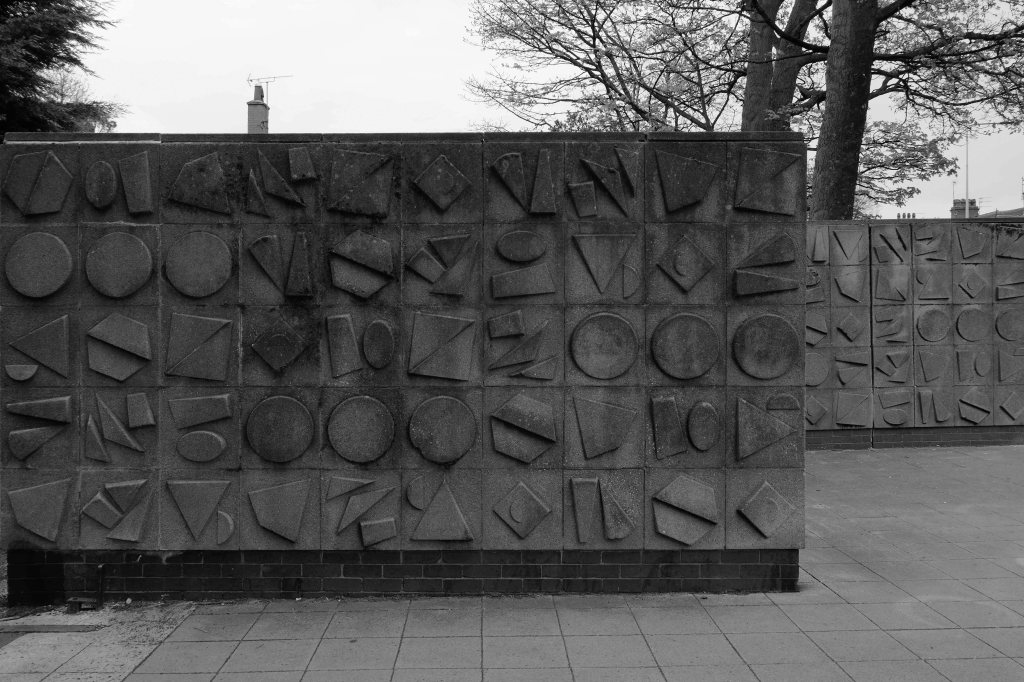
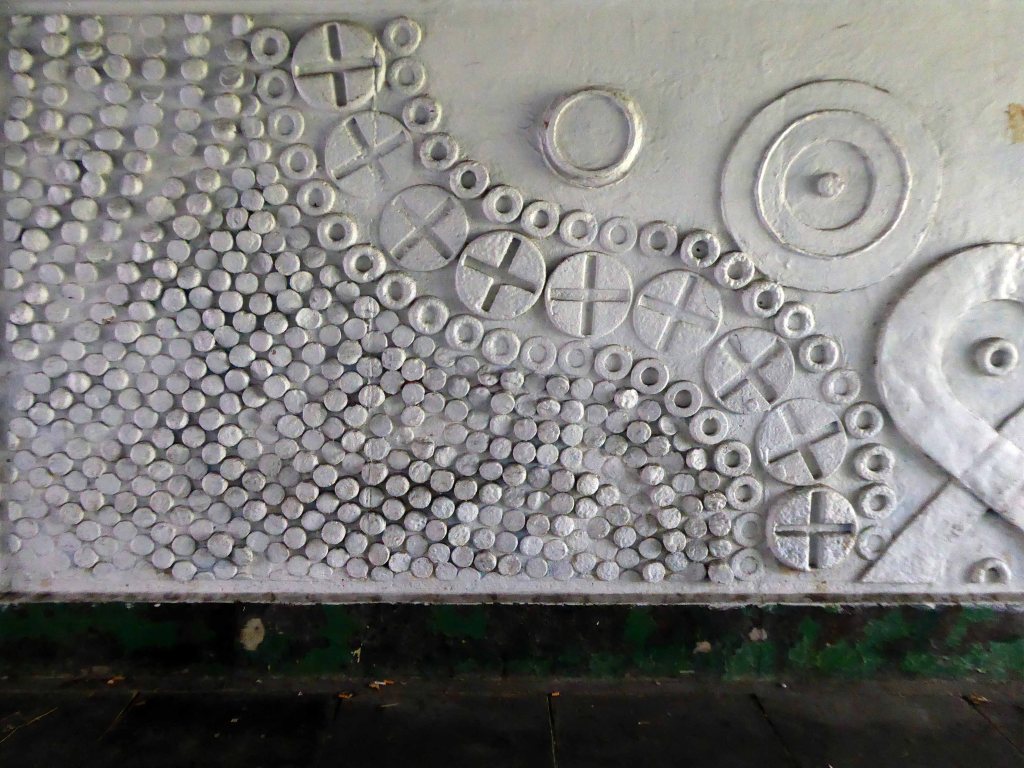
At the entrance to the park on Holderness Road are eight concrete walls.
They are covered in square, cast concrete modular panels.
Said to be the work of the City Architect in 1964.
Municipal Dreams lists the City Architect at that time to be JV Wall, having replaced David Jenkin in that same year.
My money’s on Wall – well it makes sense don’t it?
I had taken the bus from Hull Interchange on a chill April morning.
The driver obligingly giving me a shout at the appropriate stop – right outside the gates.
They are not universally loved:
A further testament to the concrete pourer’s art is to be found adorning the entrance to East Park. They are so horrible that I could find nothing on the net to indicate who designed them, shame is a powerful motive for reticence. So here they stand to welcome the visitor; after this the actual park couldn’t be any worse.
The rising cost of repairs, combined with ‘a desire to progress’ with the regeneration of Droylsden town centre and the inaccessibility of the library’s T shape, three-floor configuration means that a ‘solution for the future of the library’ is now needed, according to the town hall.
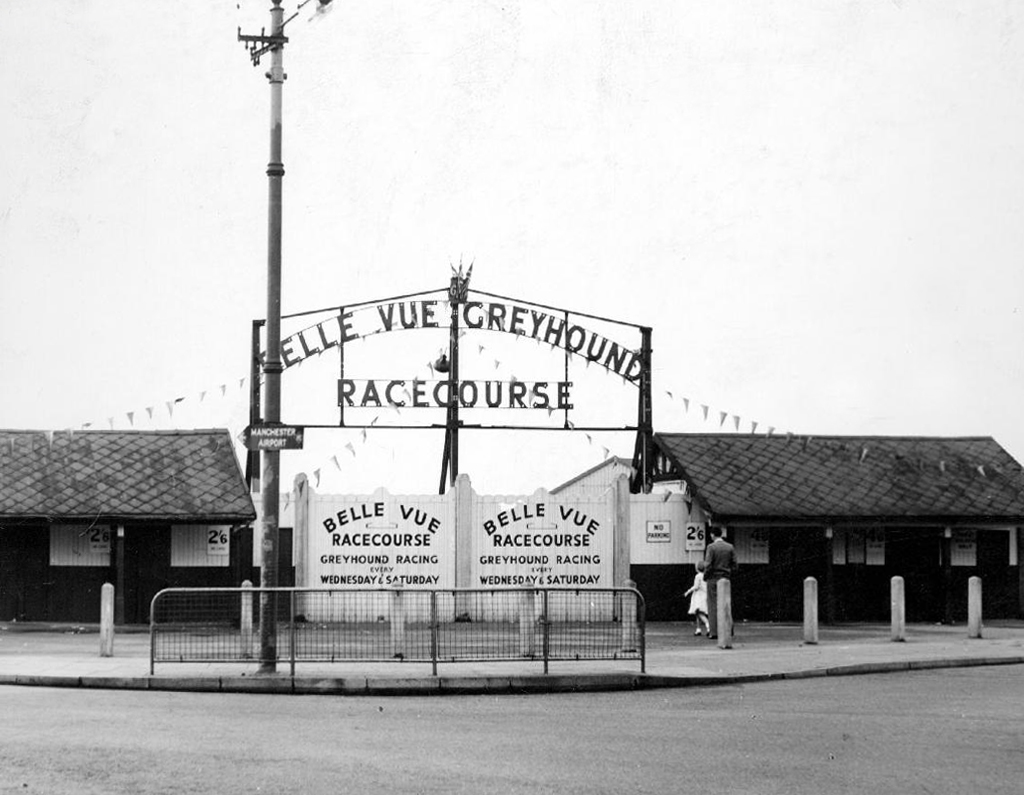
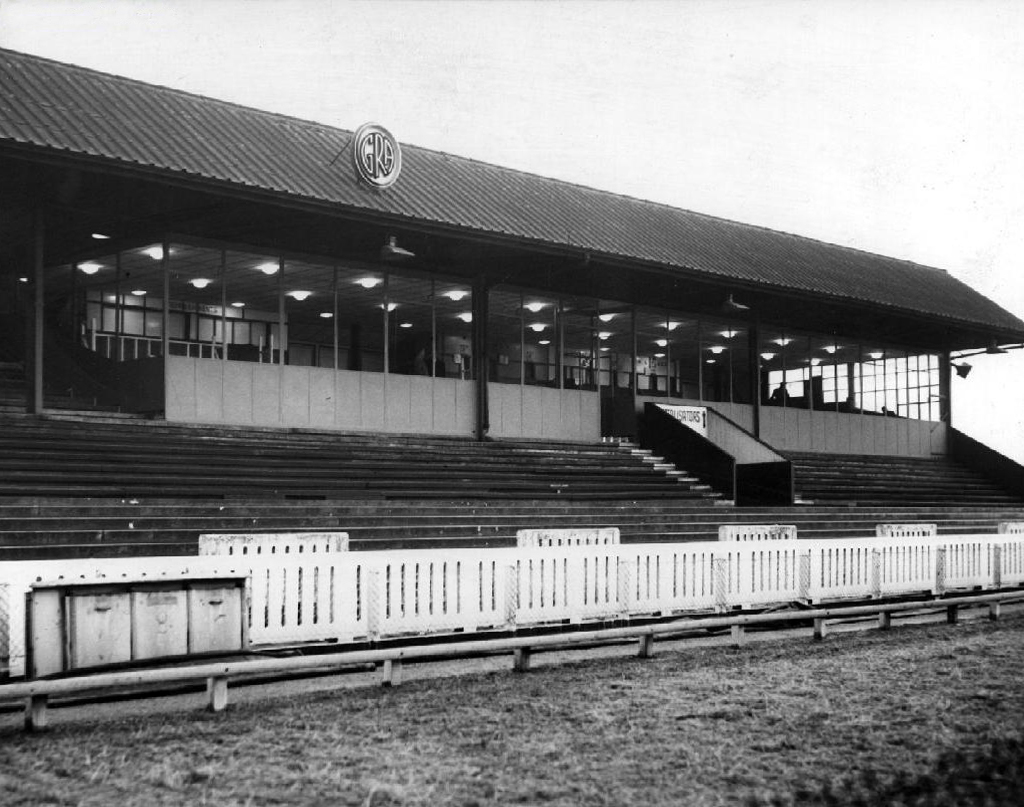
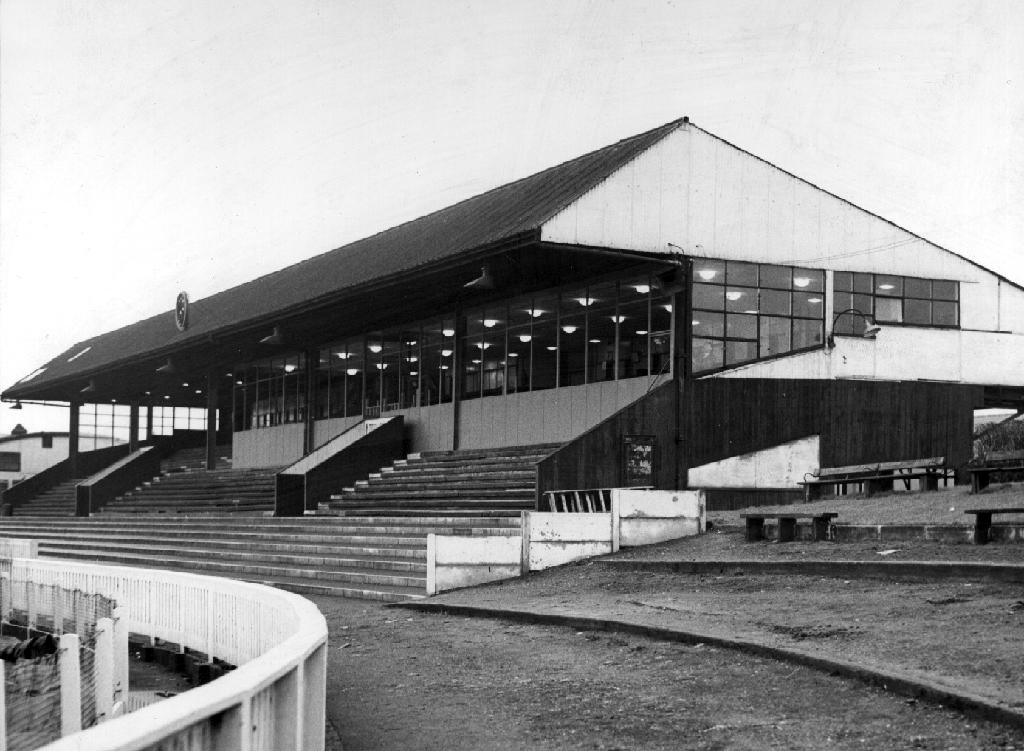
The stadium opened on July 24th 1926 – 7.30 prompt.
In 1925, Charles A. Munn, an American businessman, made a deal with Smith and Sawyer for the rights to promote the greyhound racing in Britain.
Smith and Sawyer met Brigadier-General Alfred Critchley, who in turn introduced them to Sir William Gentle JP. Between them they raised £22,000 and formed the Greyhound Racing Association Ltd. When deciding where to situate their new stadium, Manchester was considered to be the ideal place because of its sporting and gambling links. Close to the city centre, the consortium erected the first custom-built greyhound stadium and called it Belle Vue. The name of the stadium came from the nearby Belle Vue Zoological Gardens that had been built in 1836 and the land on which the stadium was to stand had been an area of farmland known as Higher Catsknowl and Lower Catsknowl.
By June 1927, the stadium was attracting almost 70,000 visitors a week.
1958
In October 2019 GRA Acquisition sold the lease to the Arena Racing Company and just two months later on 19 December housing planning permission was passed resulting in a probable closure in 2020.
The imminent closure came following an announcement on 1 August 2020, with the last race being run on 6 June, won by Rockmount Buster – trained by Gary Griffiths.
Going to the dogs was an institution for many, whole families enjoying the spectacle, possibly having a bet, bite and a pint.
Time changes everything social habits, views on animal welfare and gambling.
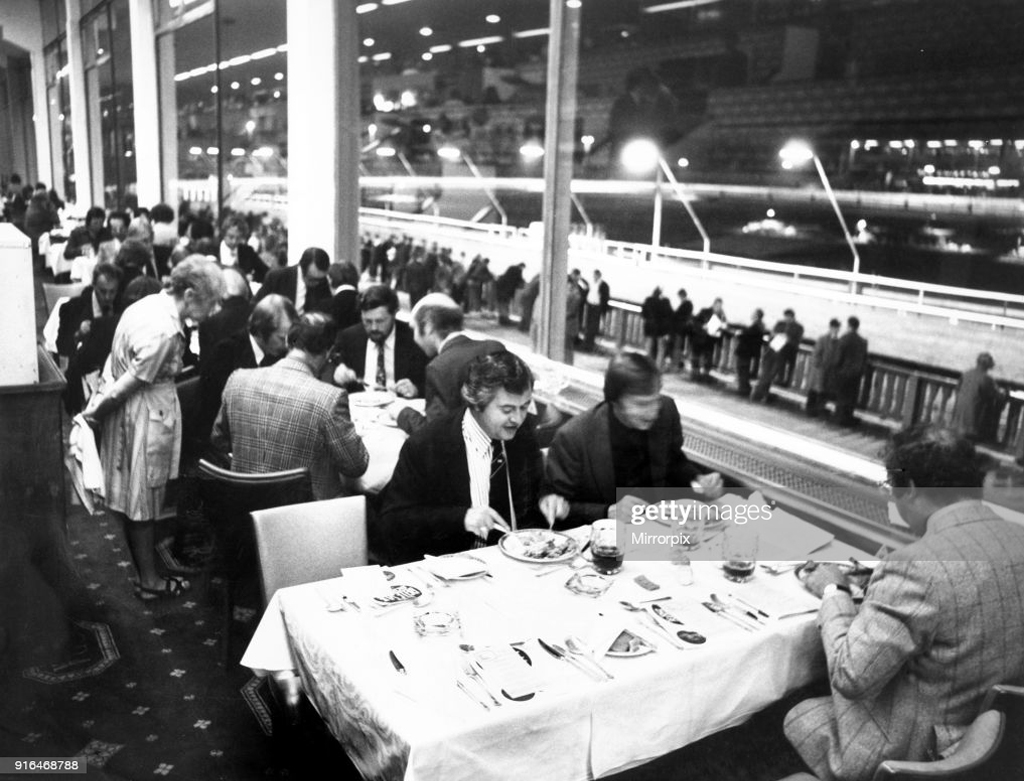
Diners enjoying their meal at Belle Vue Greyhound stadium while punters line trails outside waiting for the next race, 23rd September 1976.
The hare no longer courses electronically around the oval track, the traps no longer flap and the Tote has taken the last of your change, for the very last time.
Drink up and go home.
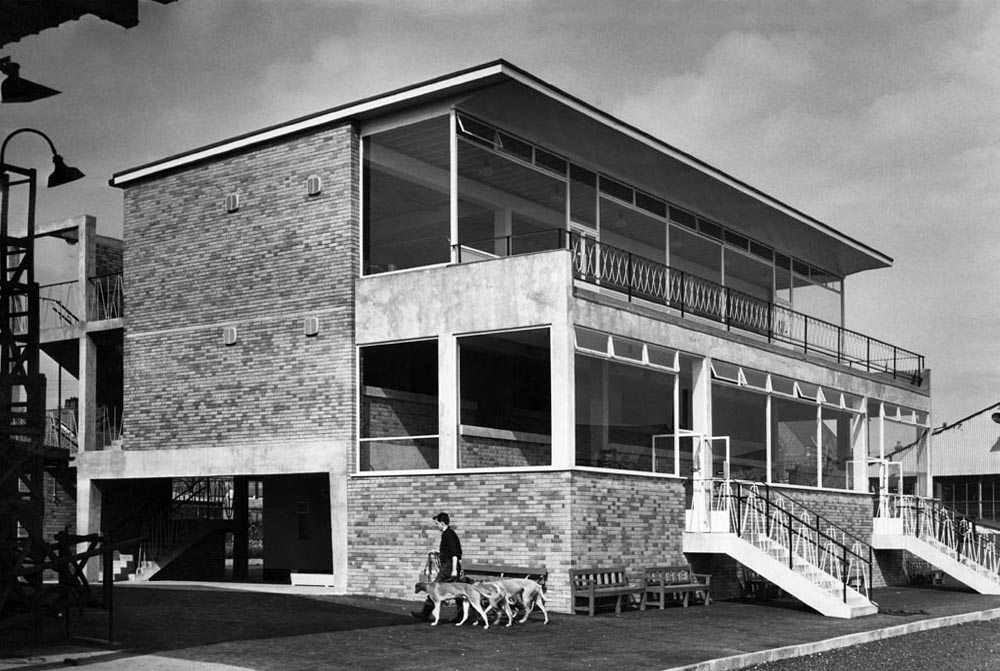
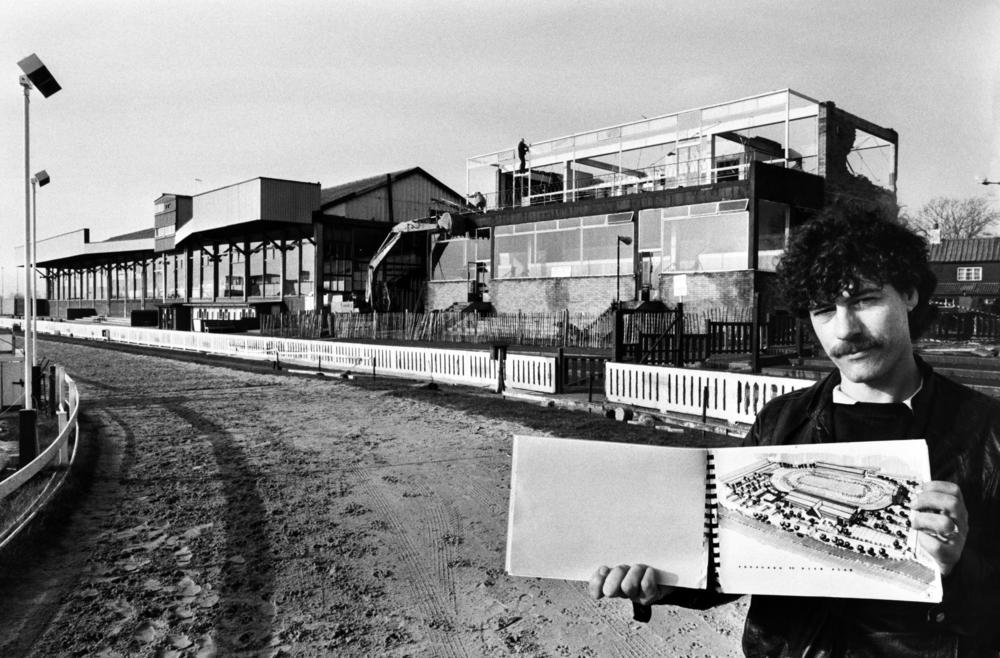
The new £30,000 stand that has just been completed 29th April 1960.The track’s Assistant General Manager Colin Delaney with the plans for the new stadium complex. 1989.
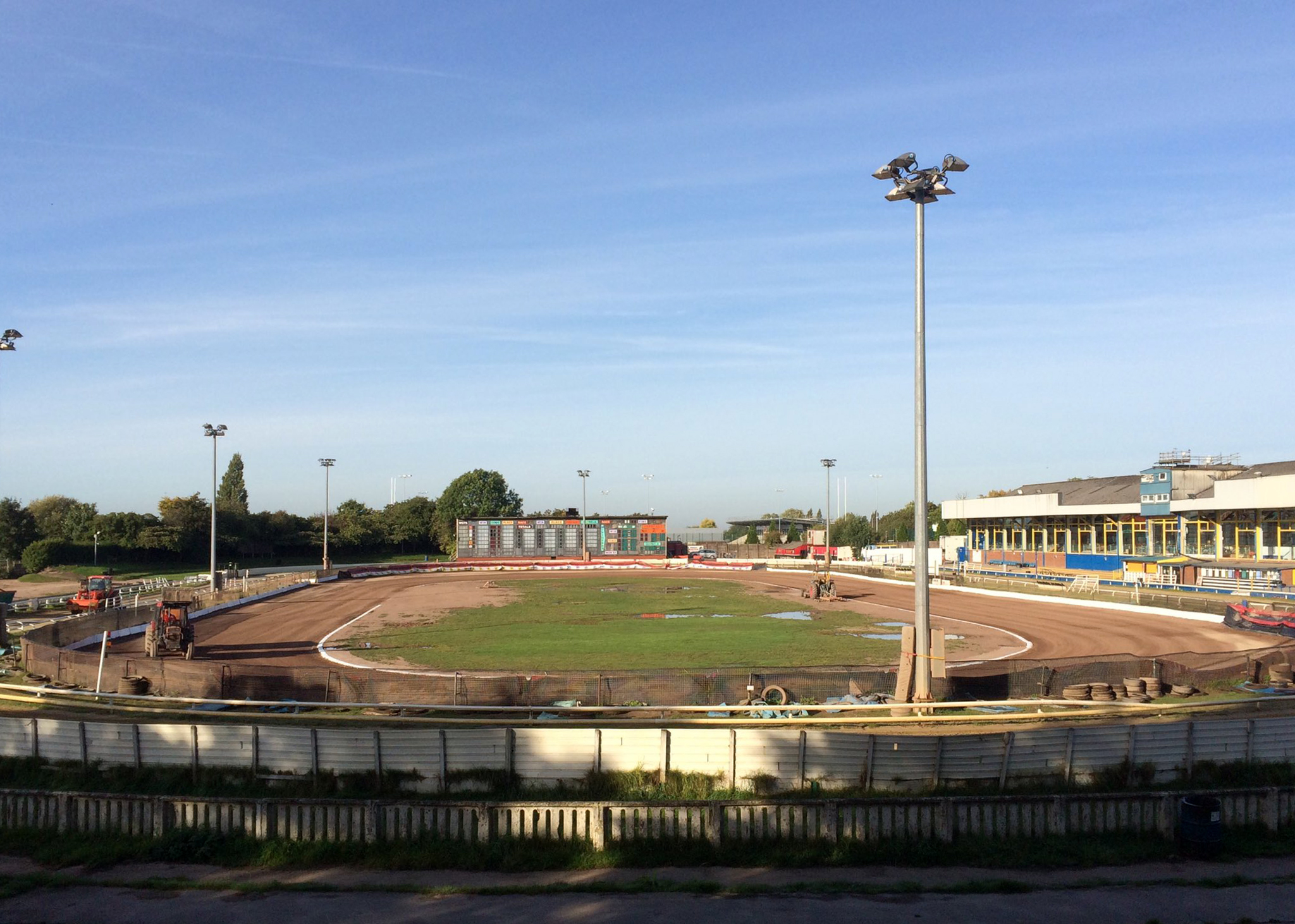
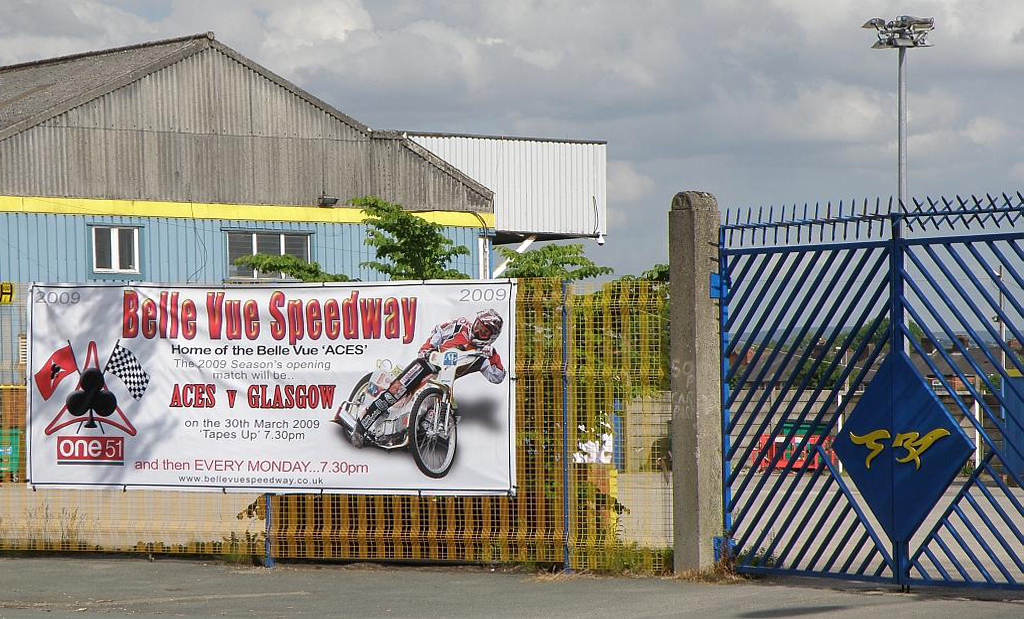
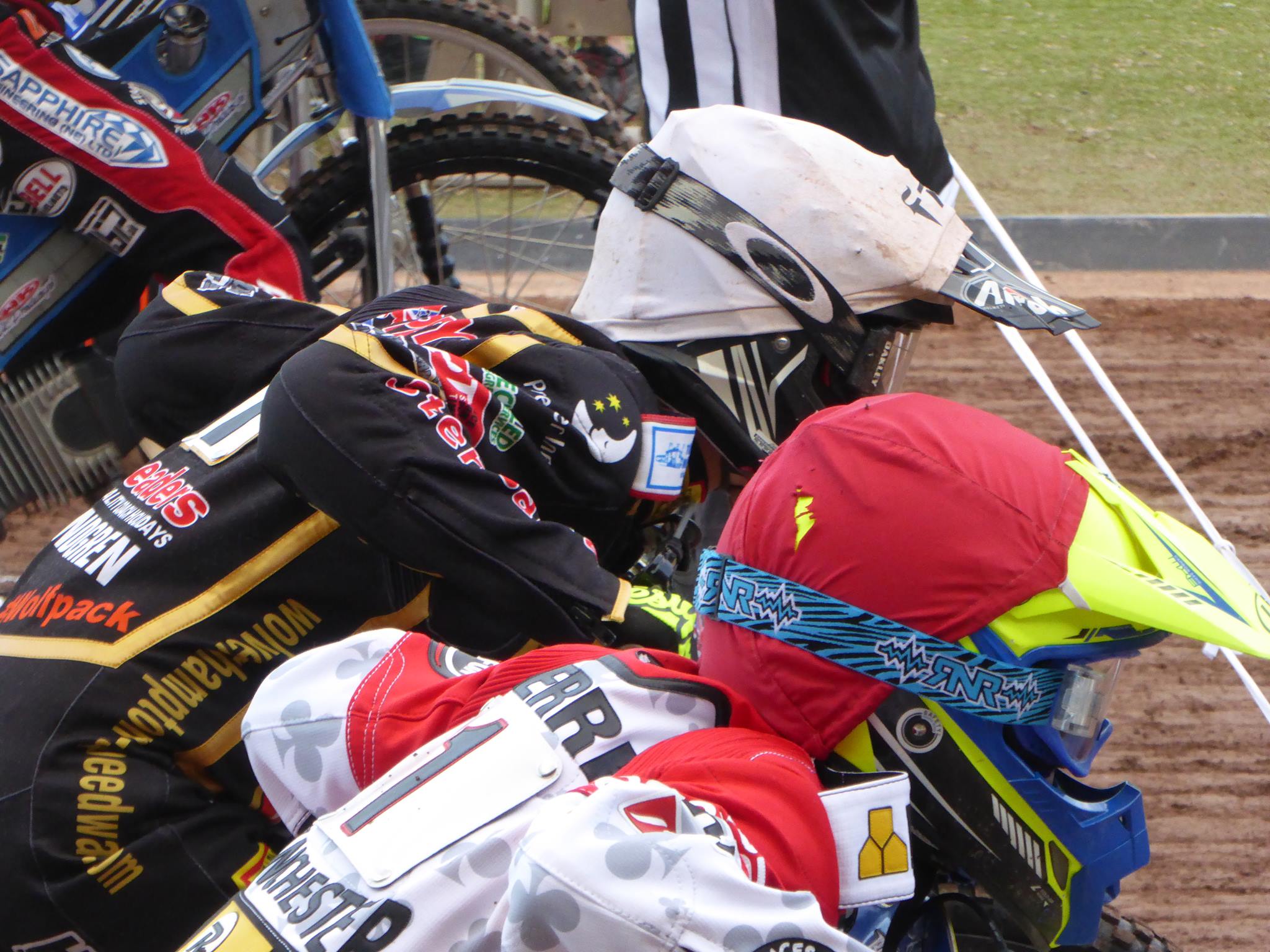
Speedway was first held at the stadium during 1928 but was not held again until 1 April 1988, when the Belle Vue Aces returned to the stadium. The team departed Kirkmanshulme Lane at the end of the 2015 season, prior to moving to the new National Speedway Stadium for the 2016 campaign.
The shale speedway track was 285 metres in length.
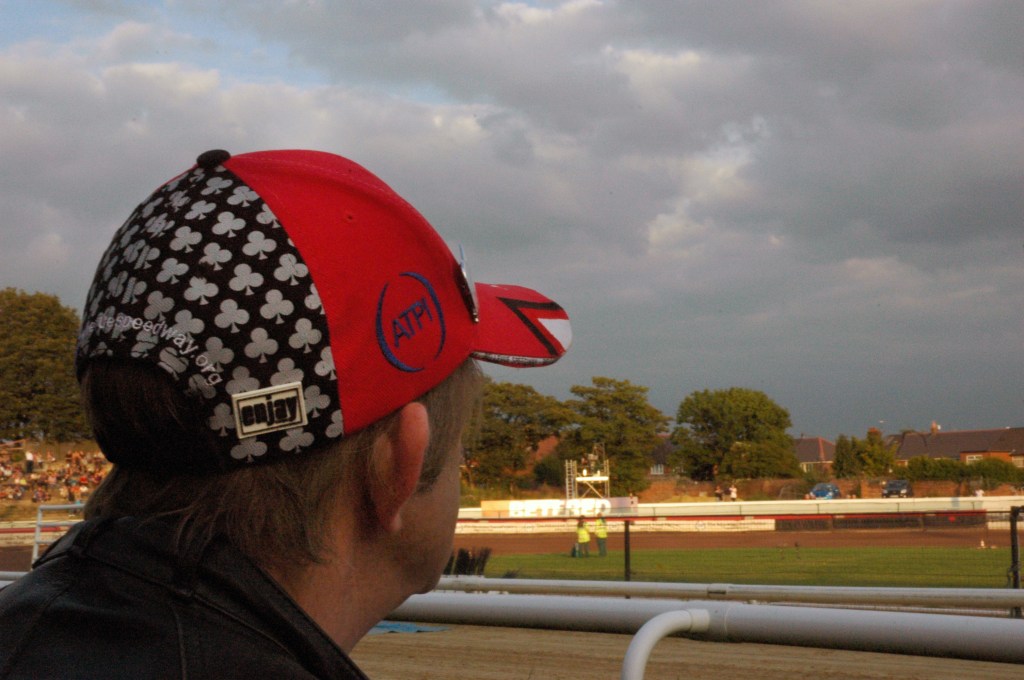
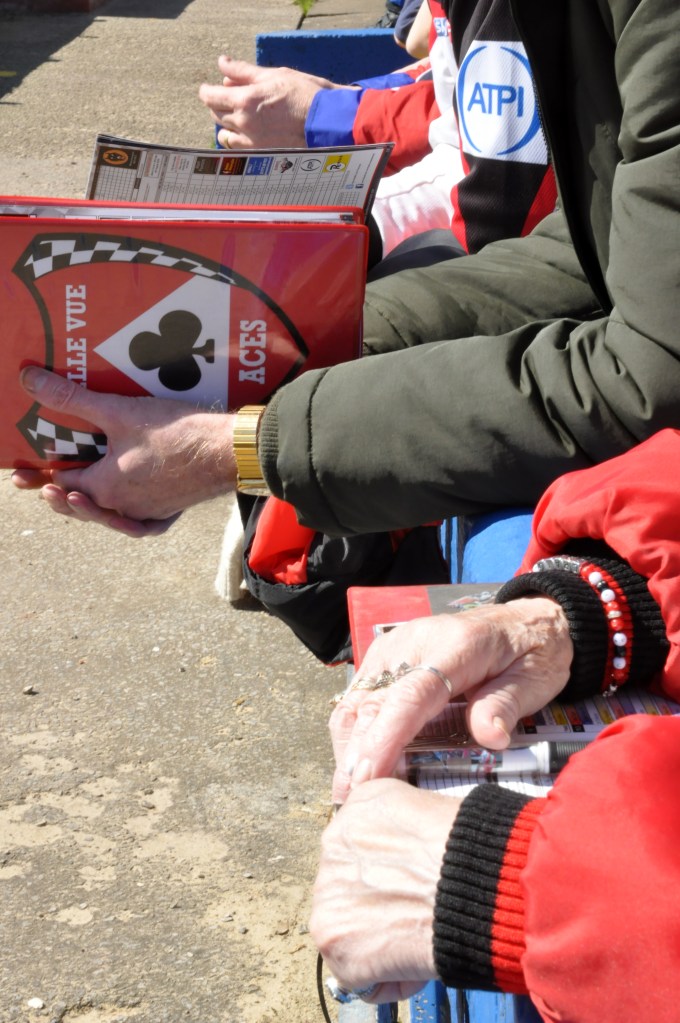
I was a regular of a Monday evening cheering on The Aces.
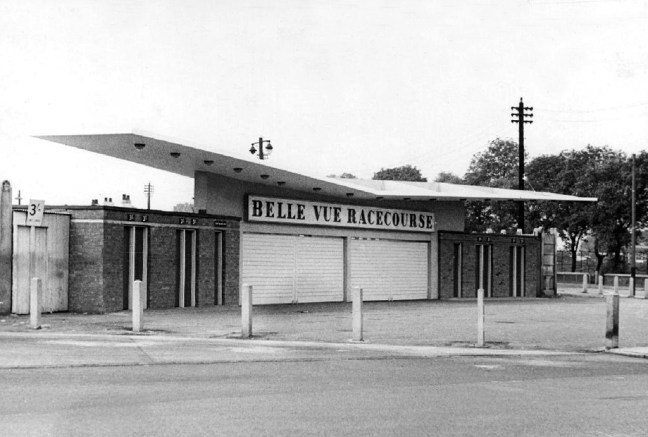
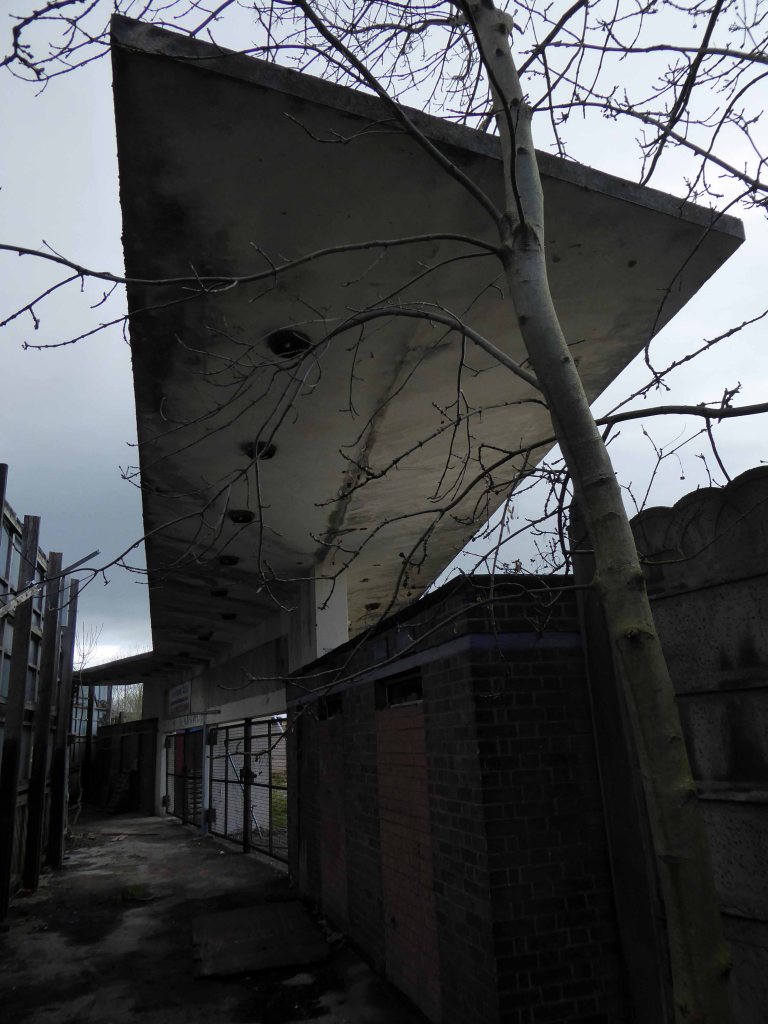
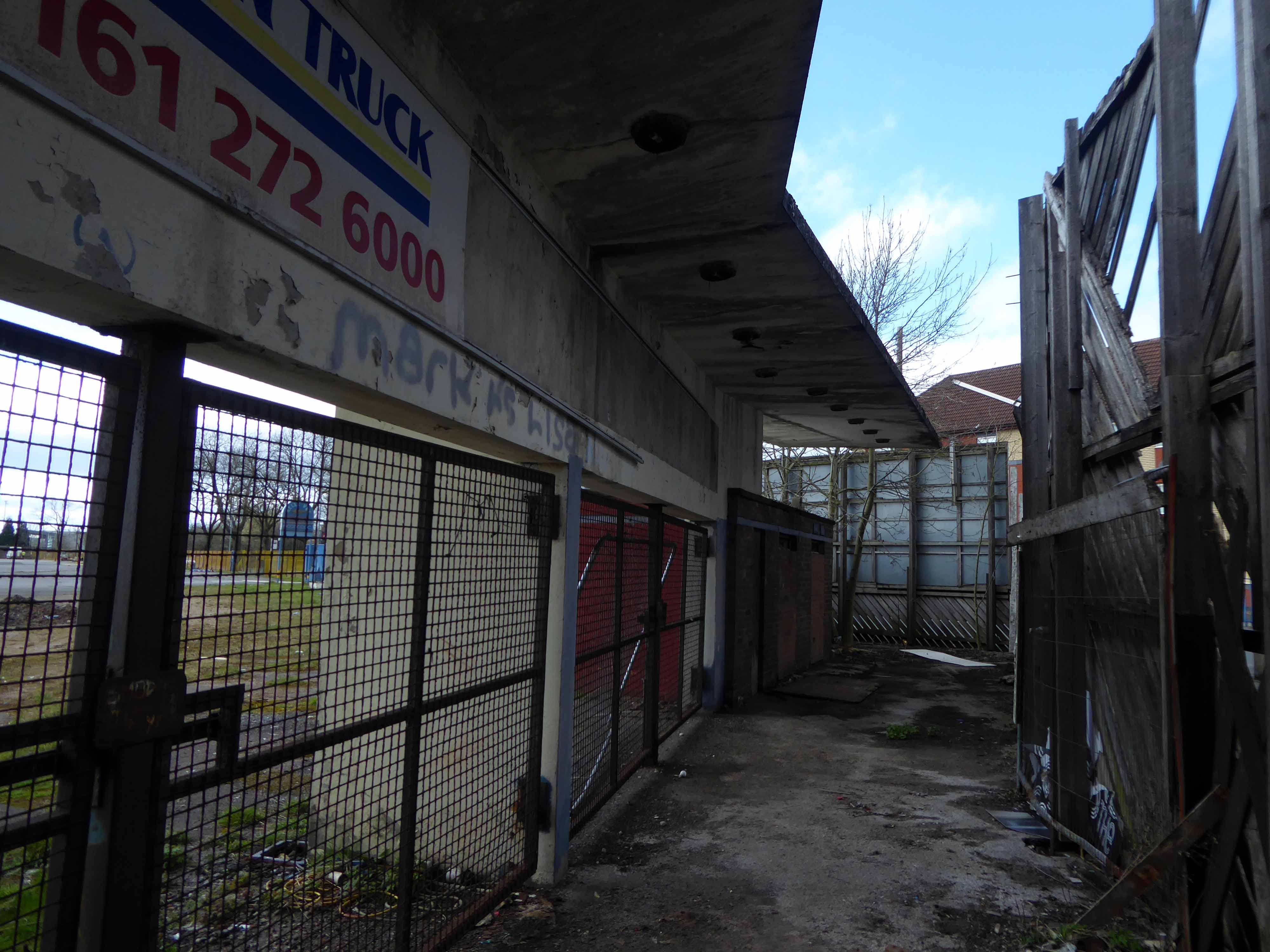
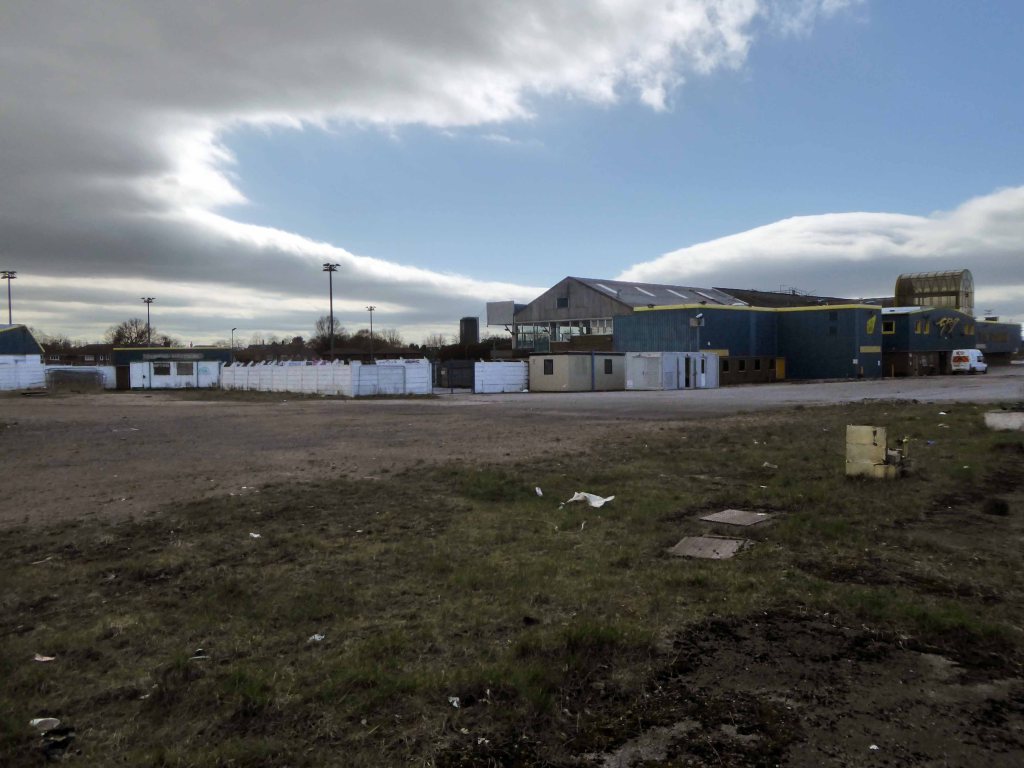
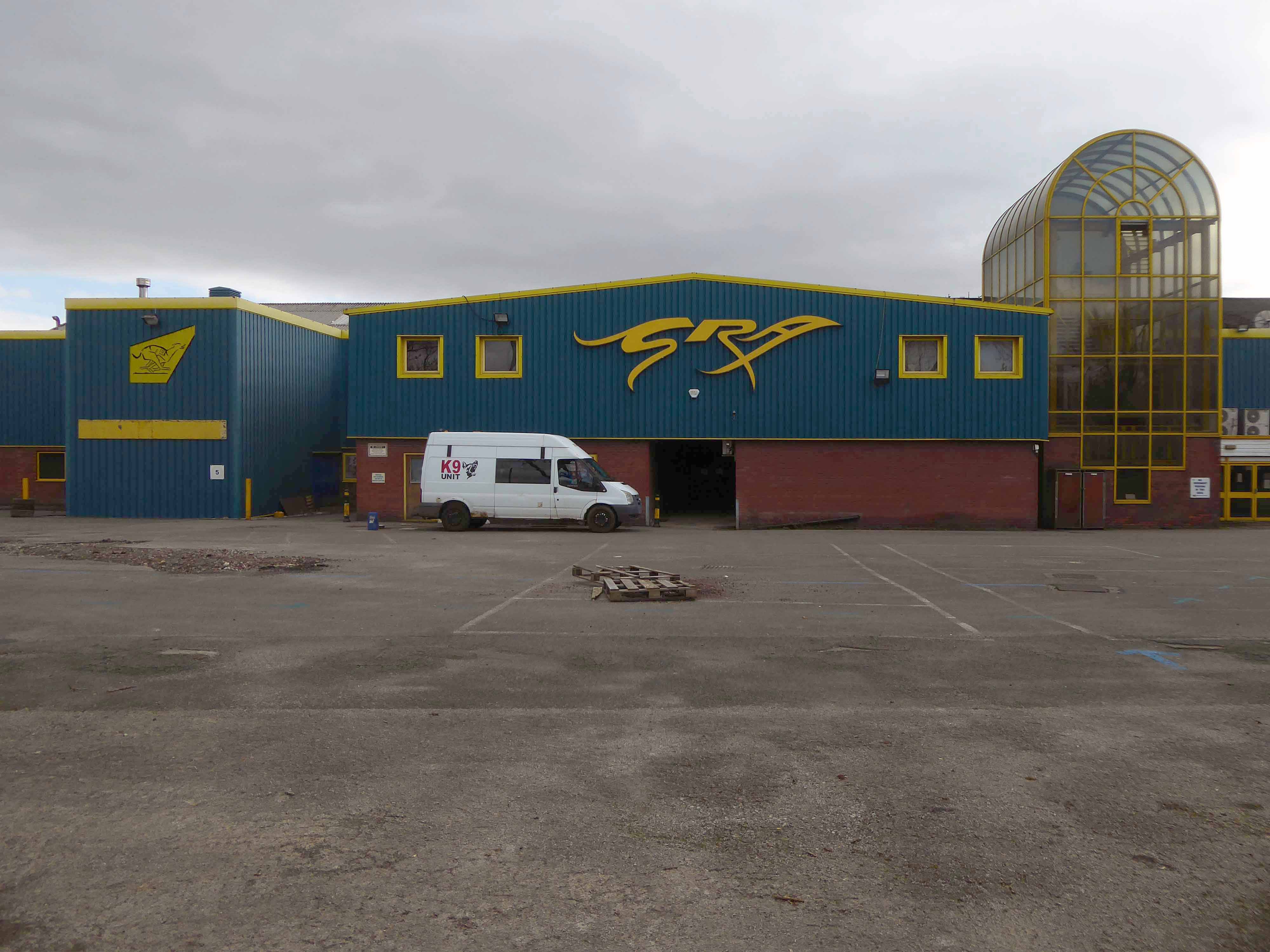
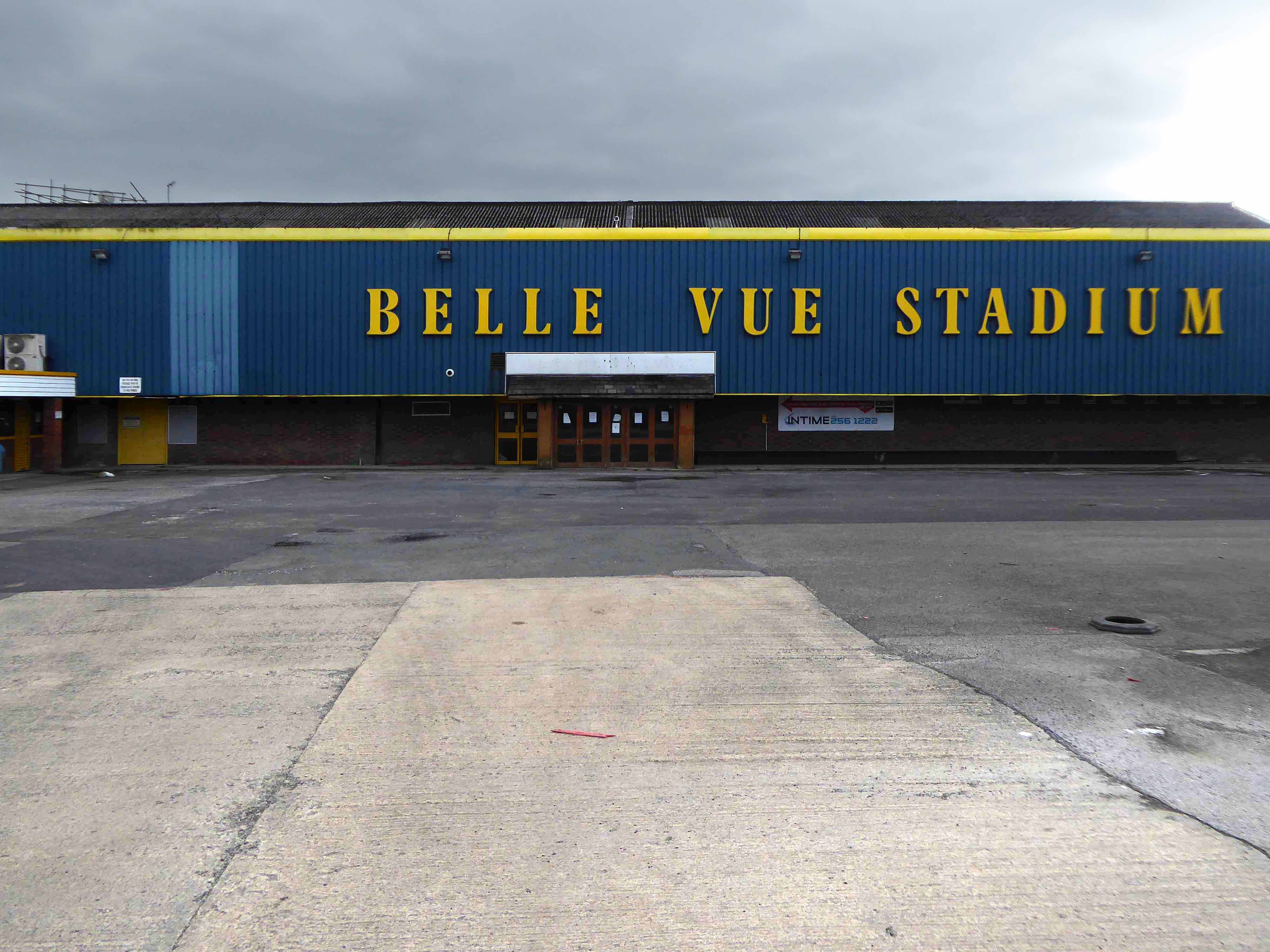
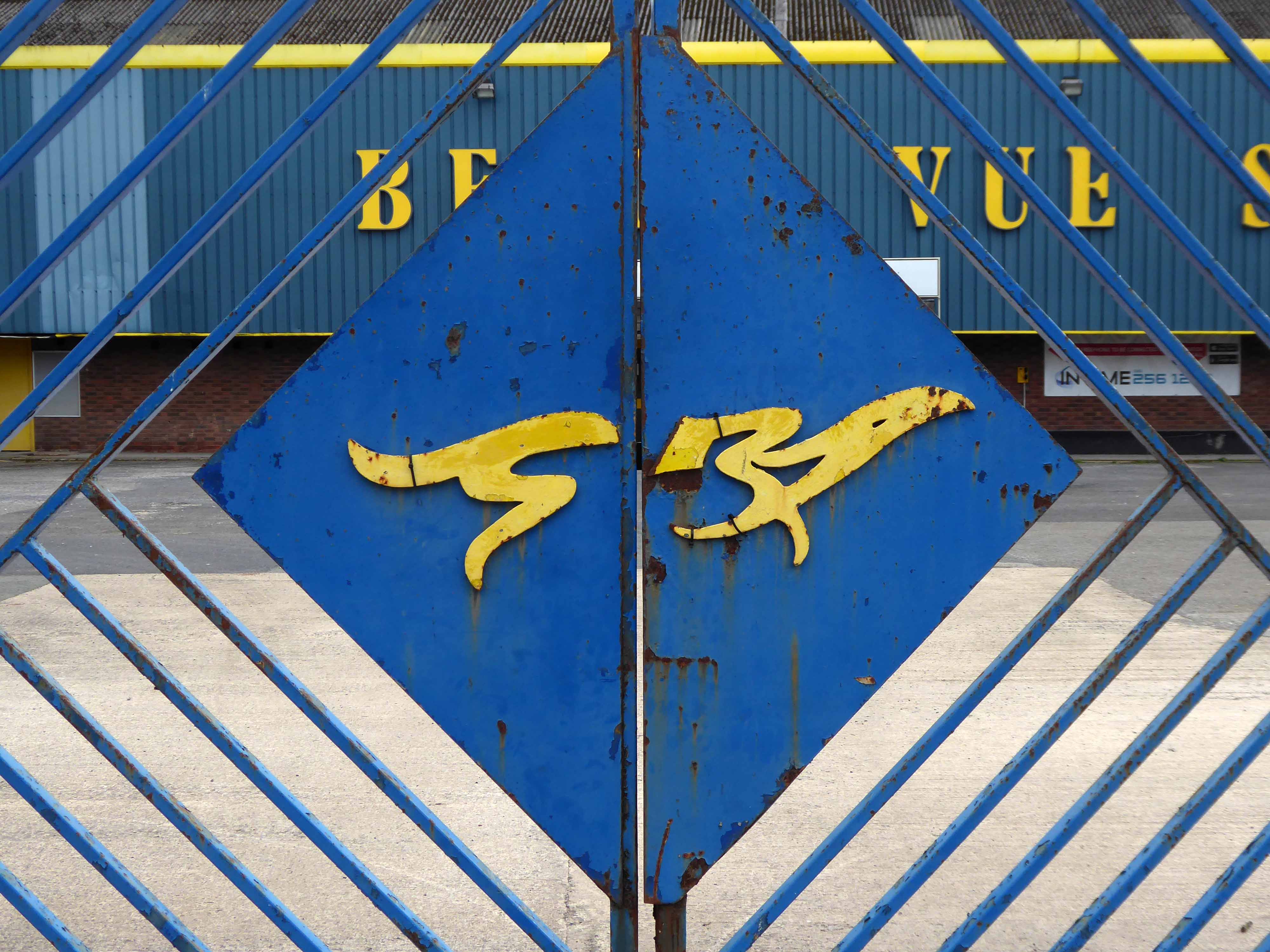
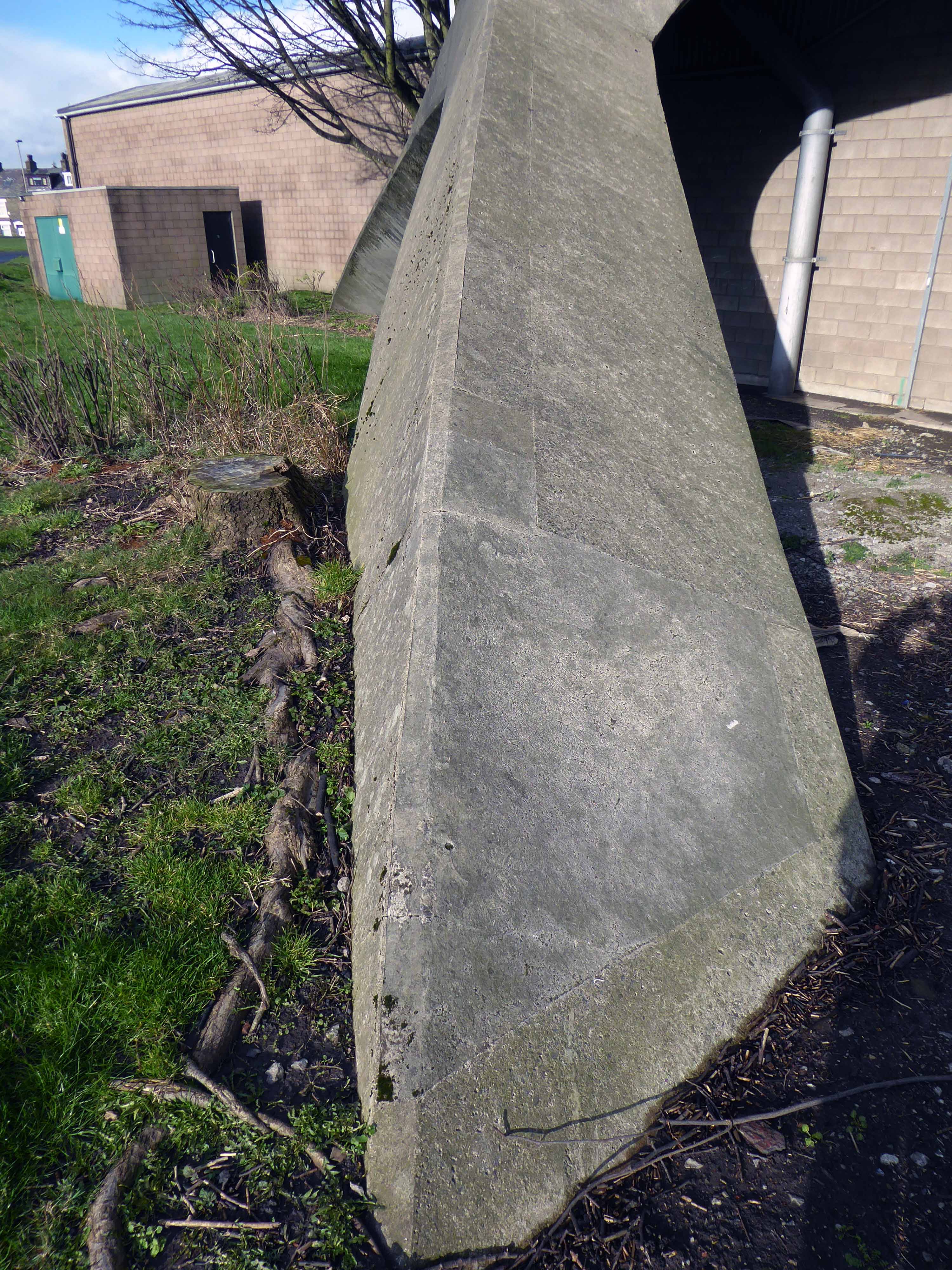
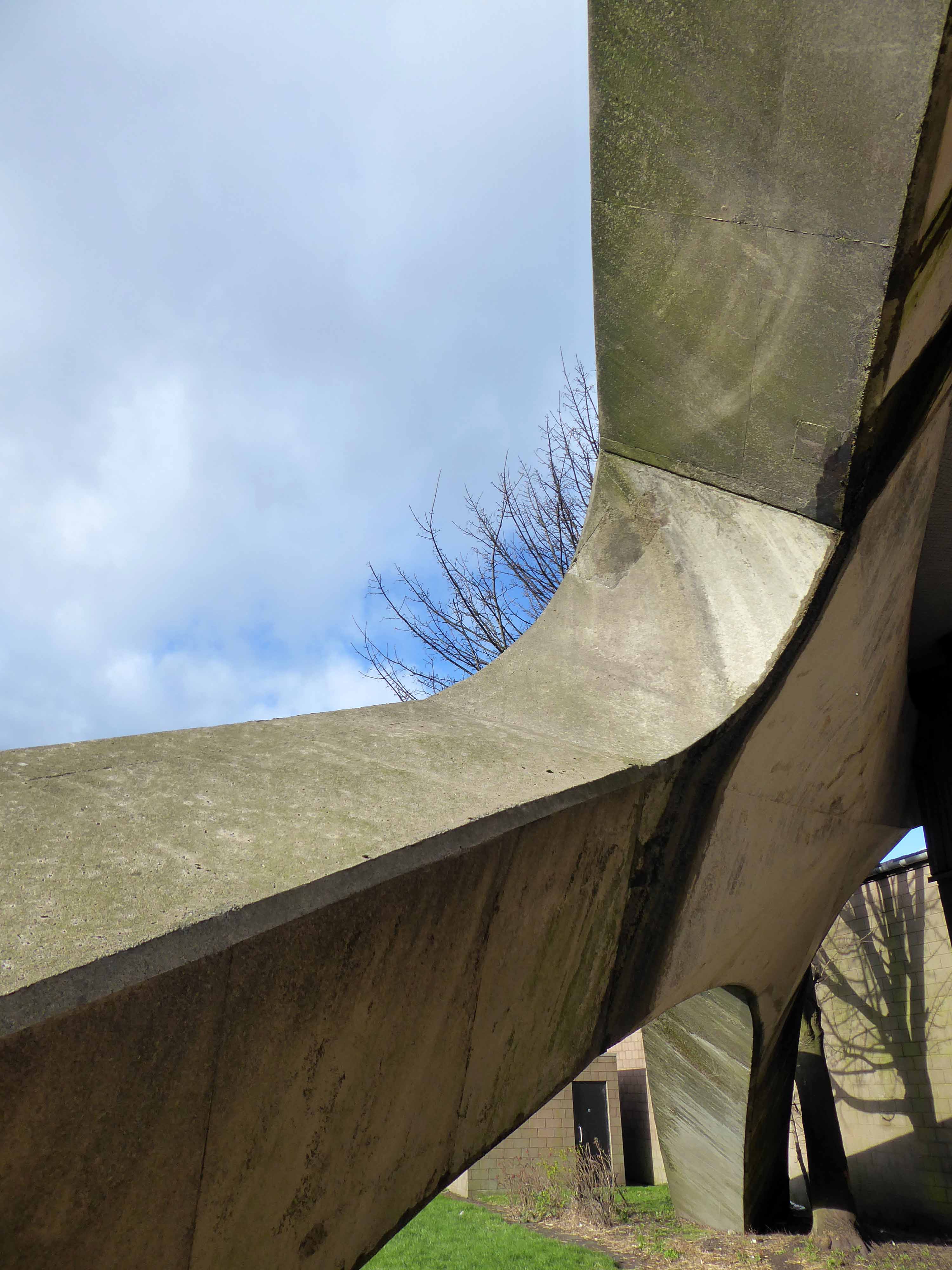
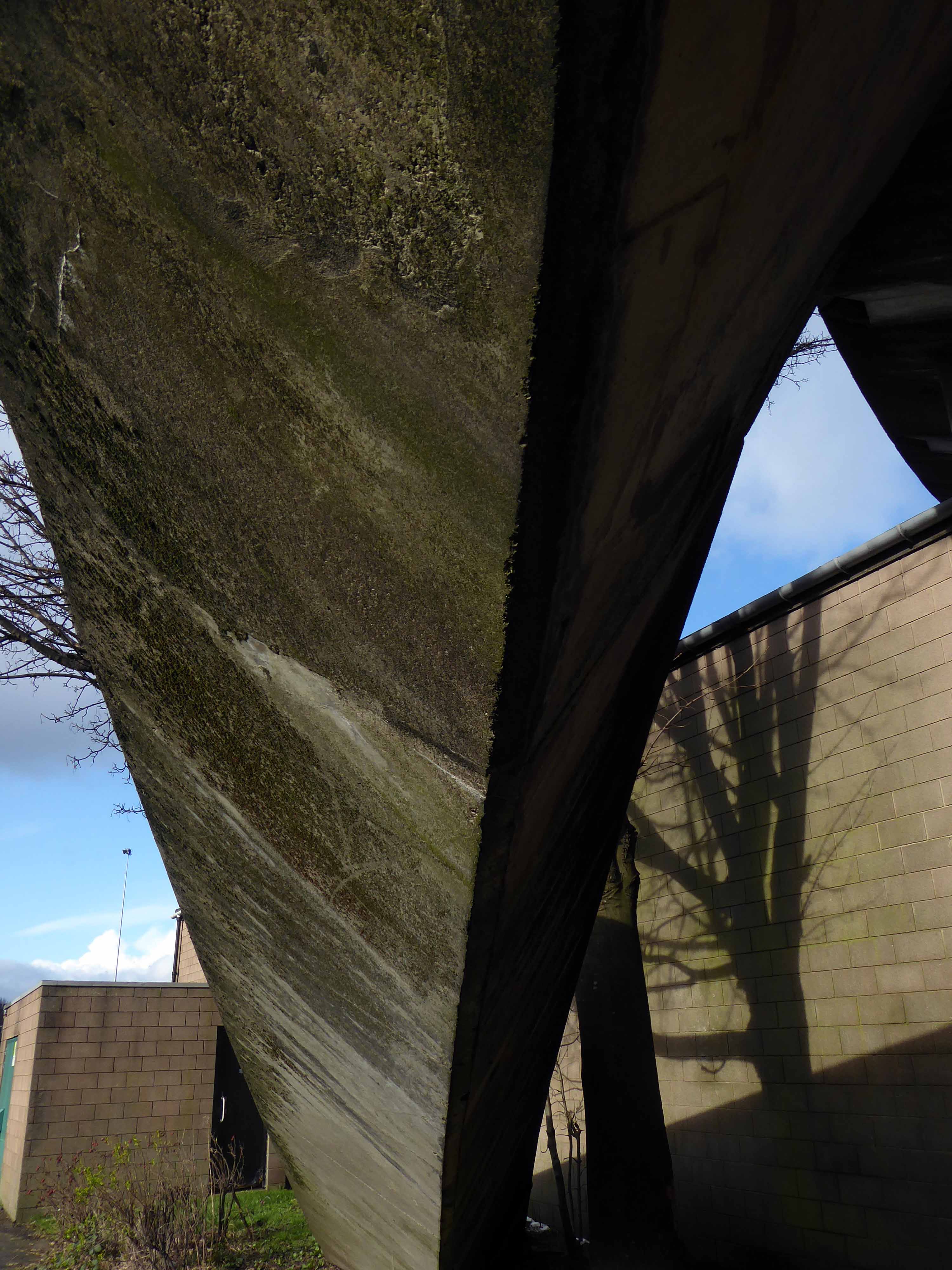
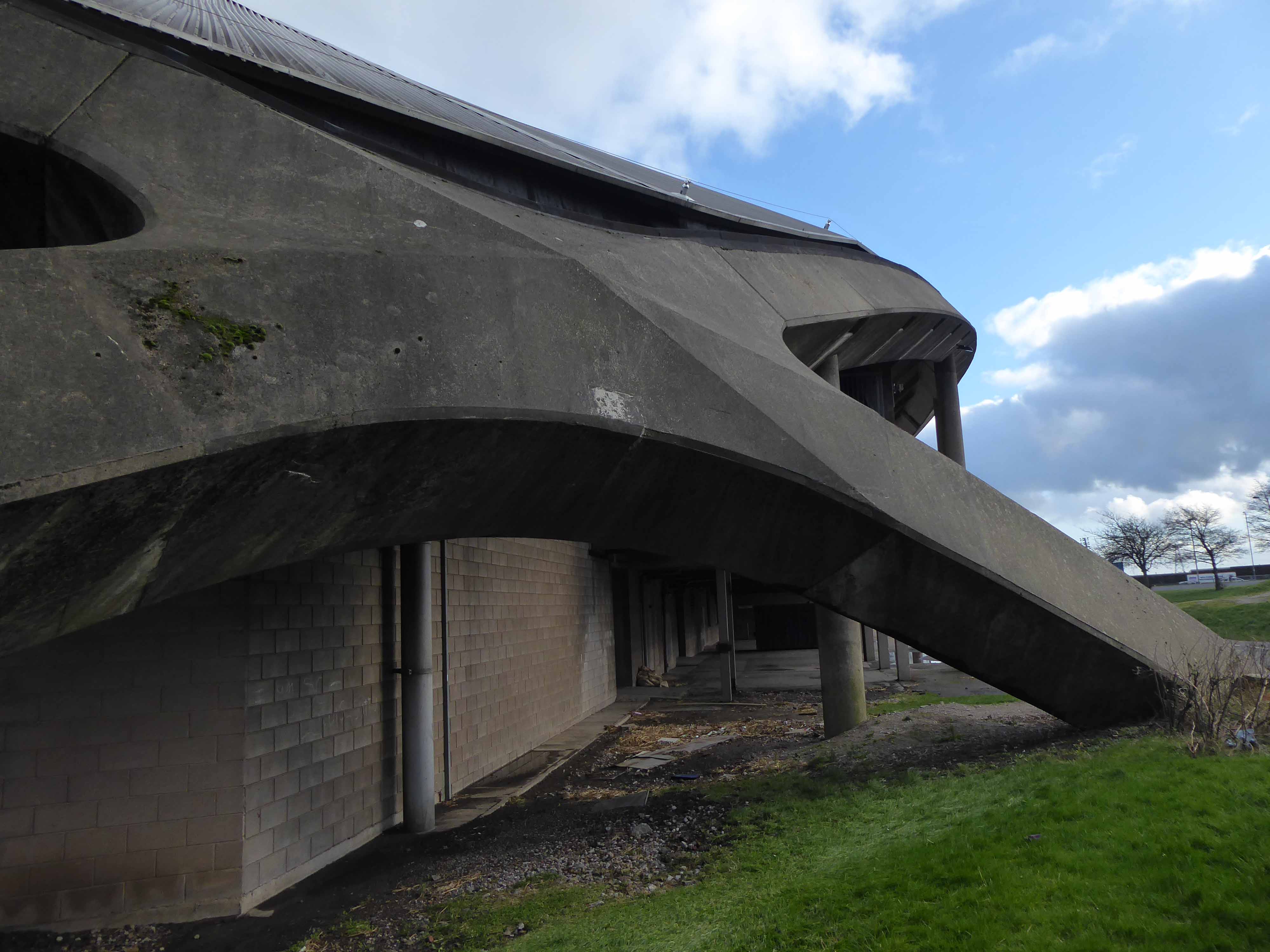
When I cycled by in 2015 the stadium was already looking tired – the dramatic concrete cantilevered gull-wing turnstiles a neglected storage area.
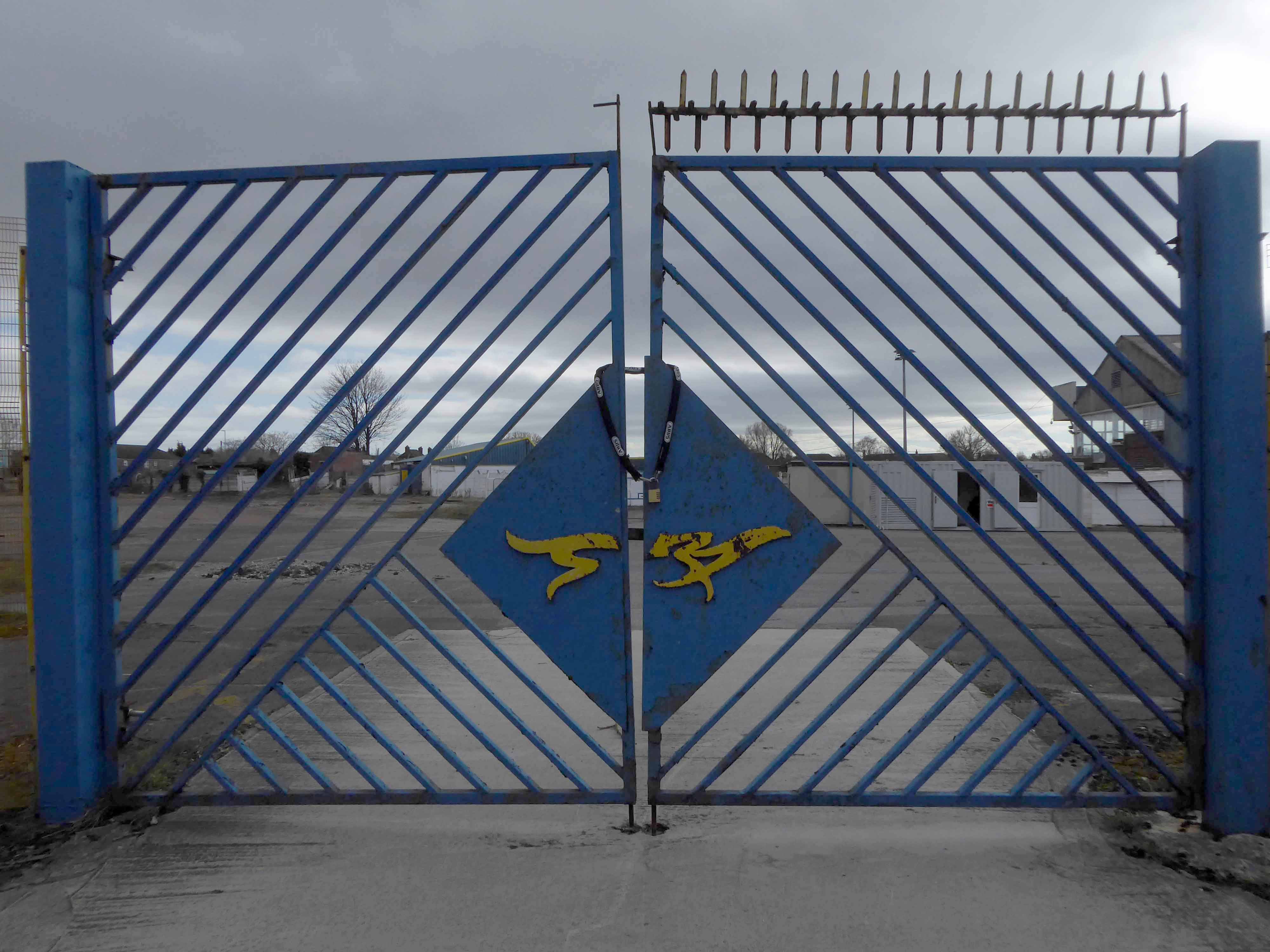
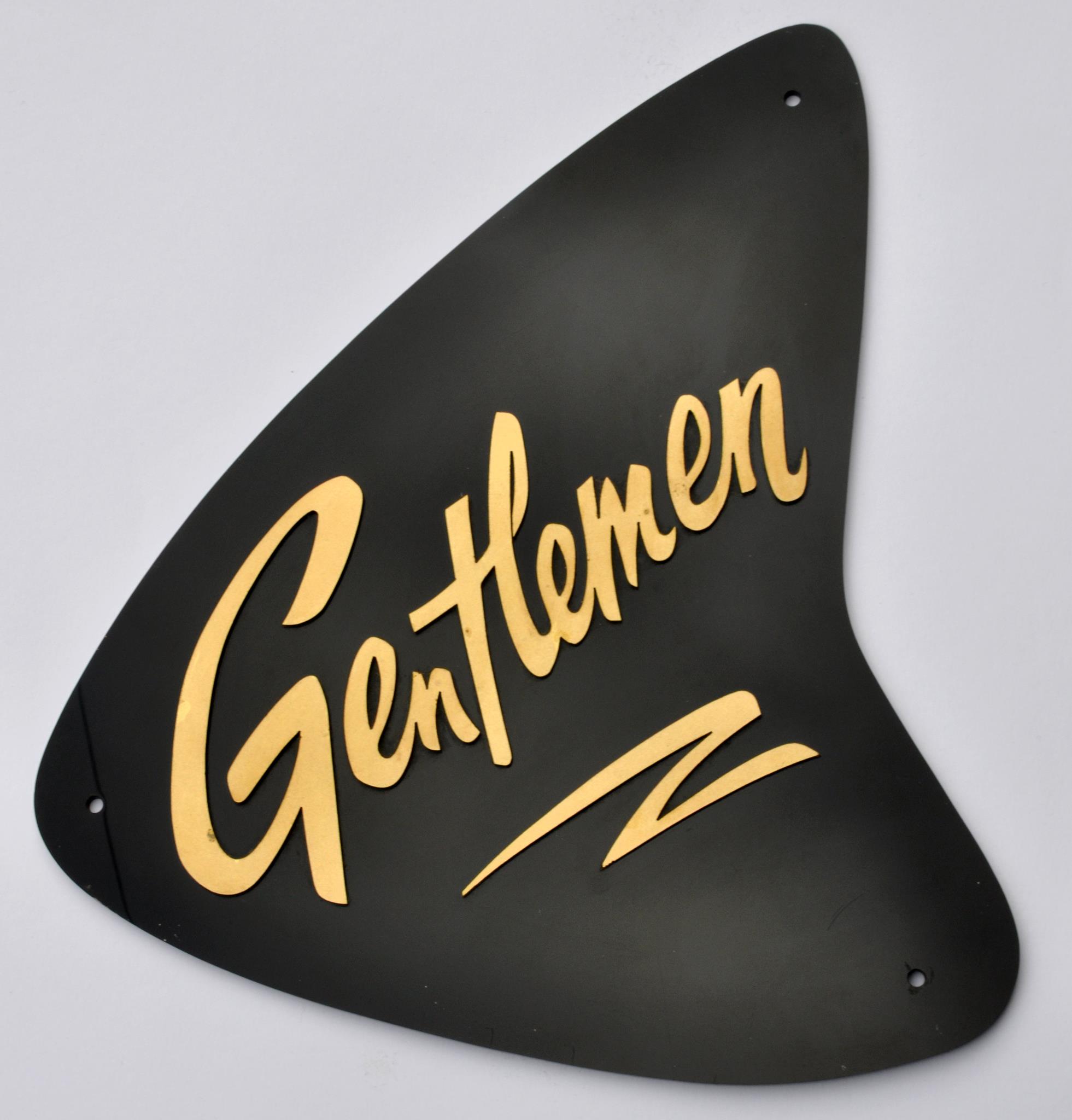
Last week I had to dodge behind the hoardings to take some snaps.The site is secured and demolition imminent.The stadium will soon be gone – as a footnote I have at home a 50s sign, appropriated on a work’s night out and later gifted to me by my dear departed pal – Dave Ballans.
I’ll always treasure the perspex shark’s fin, Dave’s memory and going to the dogs.
So what of the future?
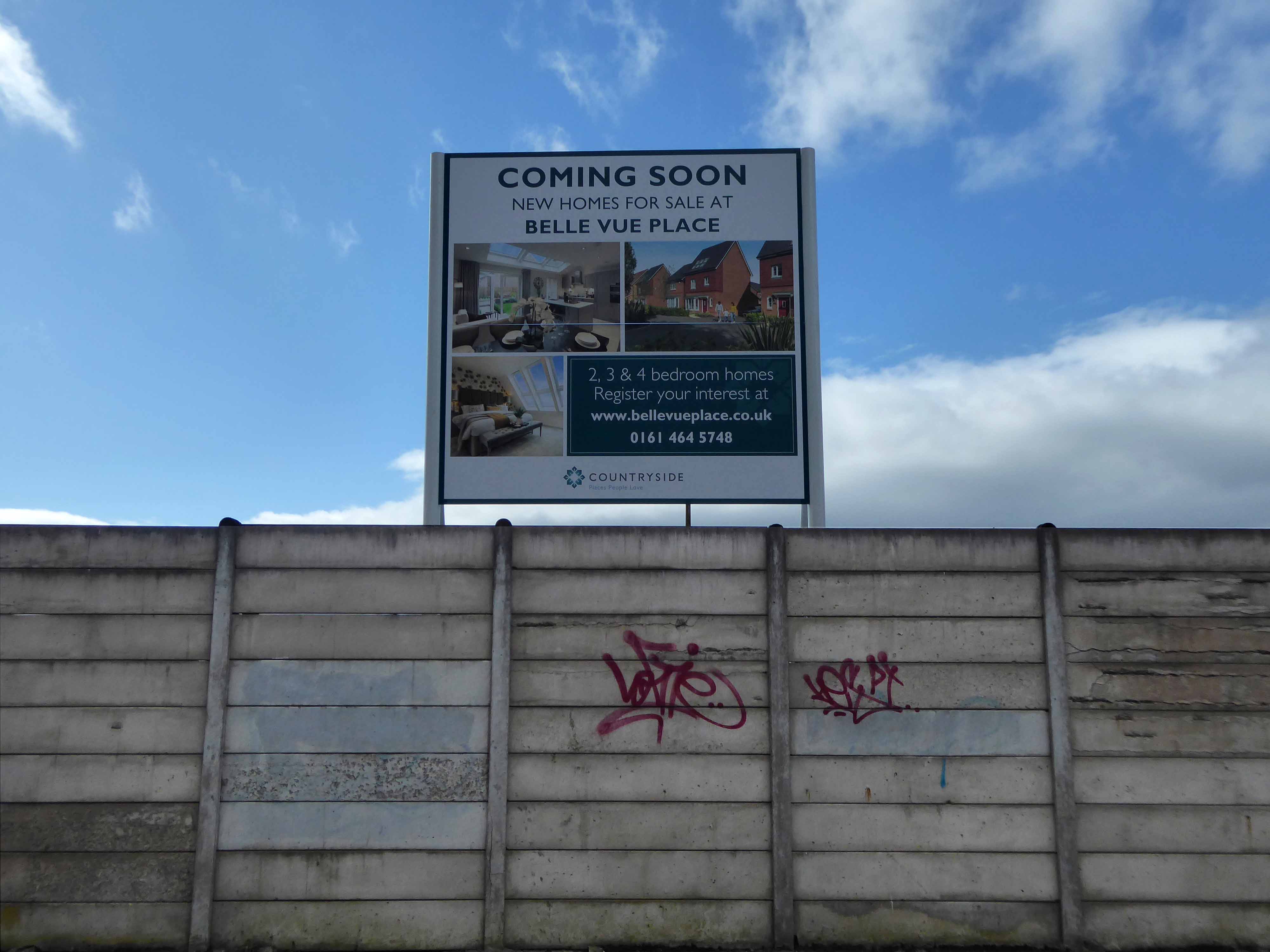
Belle Vue Place – the name lingers on long after the fun has gone.
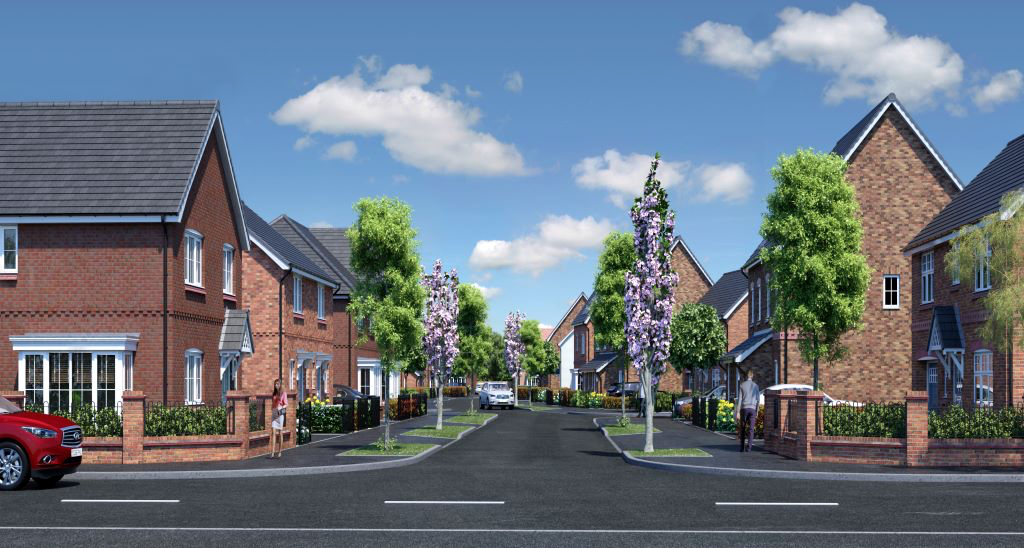
Countryside are proud to showcase our stunning collection of 114 new homes at Belle Vue Place, featuring a choice of stunning 3 & 4 bedroom homes all designed and finished to the highest standard.
And very handy for the speedway just up the road on Kirky Lane!
It’s addictive passing the no access signs, onwards into the abyss.
He hated all this, and somehow he couldn’t get away.
Joseph Conrad – Heart of Darkness
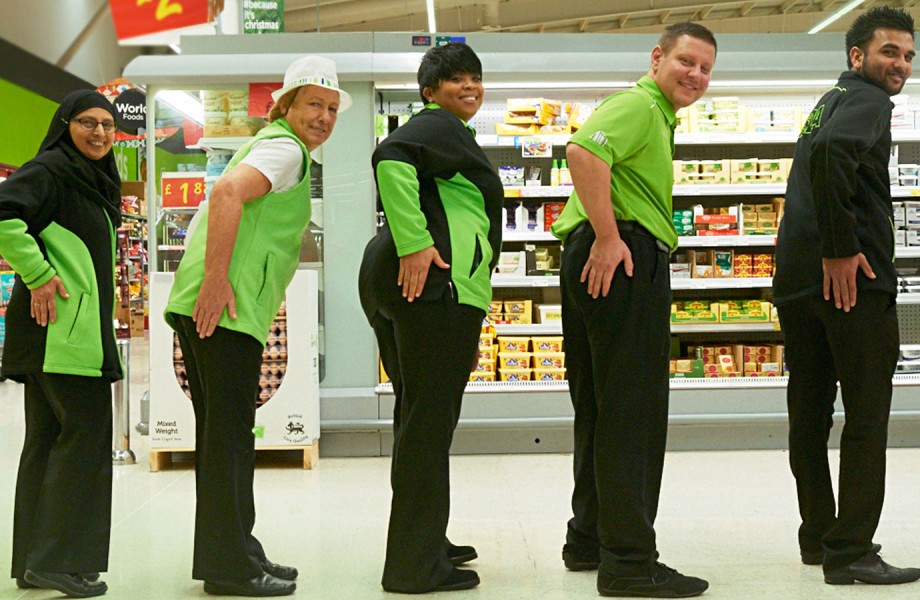
Asda Stores Ltd is a British supermarket chain. It is headquartered in Leeds. The company was founded in 1949 when the Asquith family merged their retail business with the Associated Dairies company of Yorkshire.
It was listed on the London Stock Exchange until 1999 when it was acquired by Walmart for £6.7 billion.
In February 2021, EG Group – led by the Issa brothers and TDR Capital, acquired Asda.
The company was fined £850,000 in 2006 for offering 340 staff at a Dartford depot a pay rise in return for giving up a union collective bargaining agreement. Poor relations continued as Asda management attempted to introduce new rights and working practices shortly thereafter at another centre in Washington, Tyne and Wear.
Let’s hope that the new owners having been ruled against in an equal pay dispute, attempt to forge better labour relations.
In March 2021 the employees won a Supreme Court ruling upholding an earlier court ruling permitting the action, and enabling employment tribunal action to decide equal value claims.
Asda stated: This ruling relates to one stage of a complex case that is likely to take several years to reach a conclusion.
The claim could lead to about £500 million of compensation to lower paid employees.
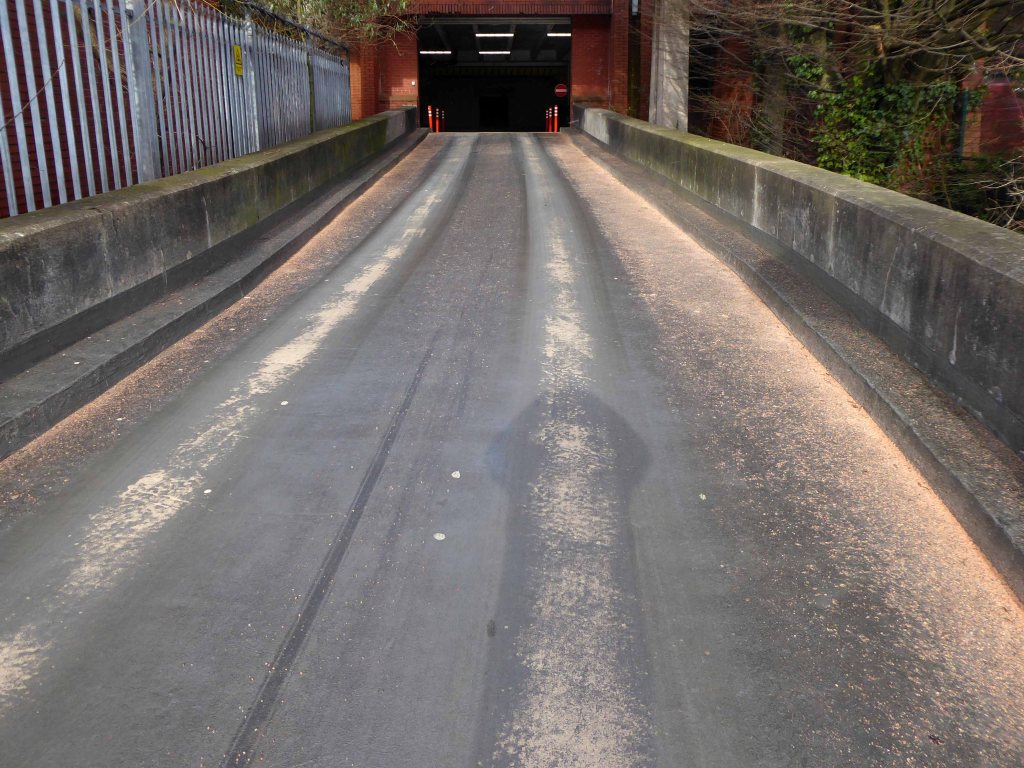
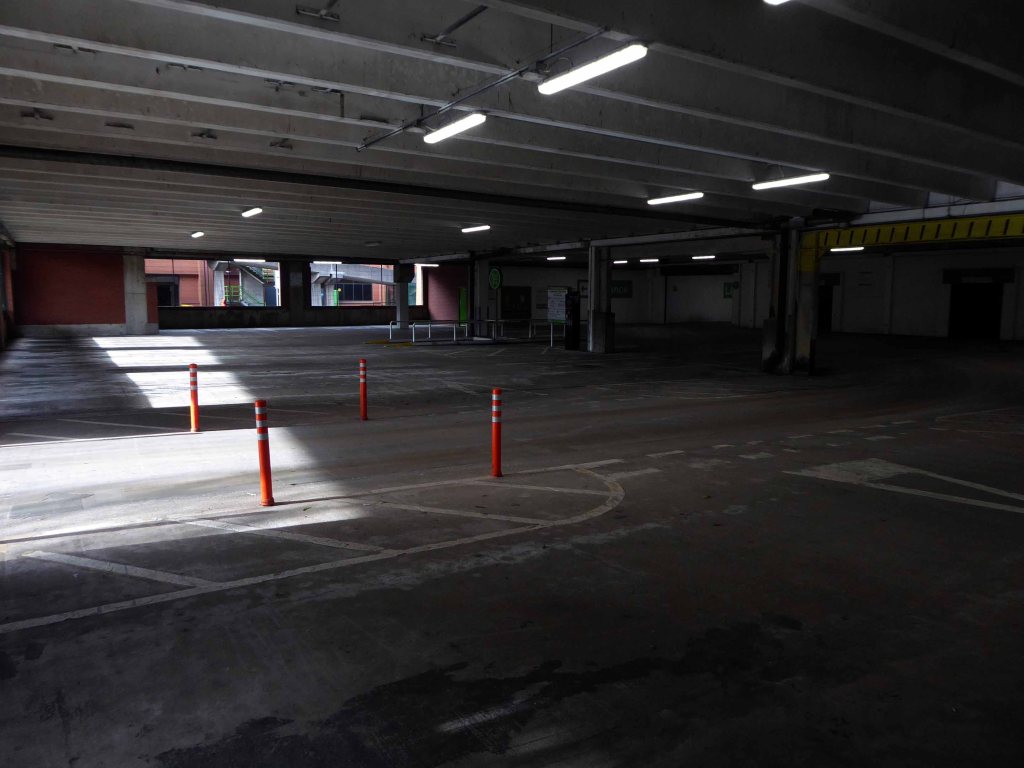
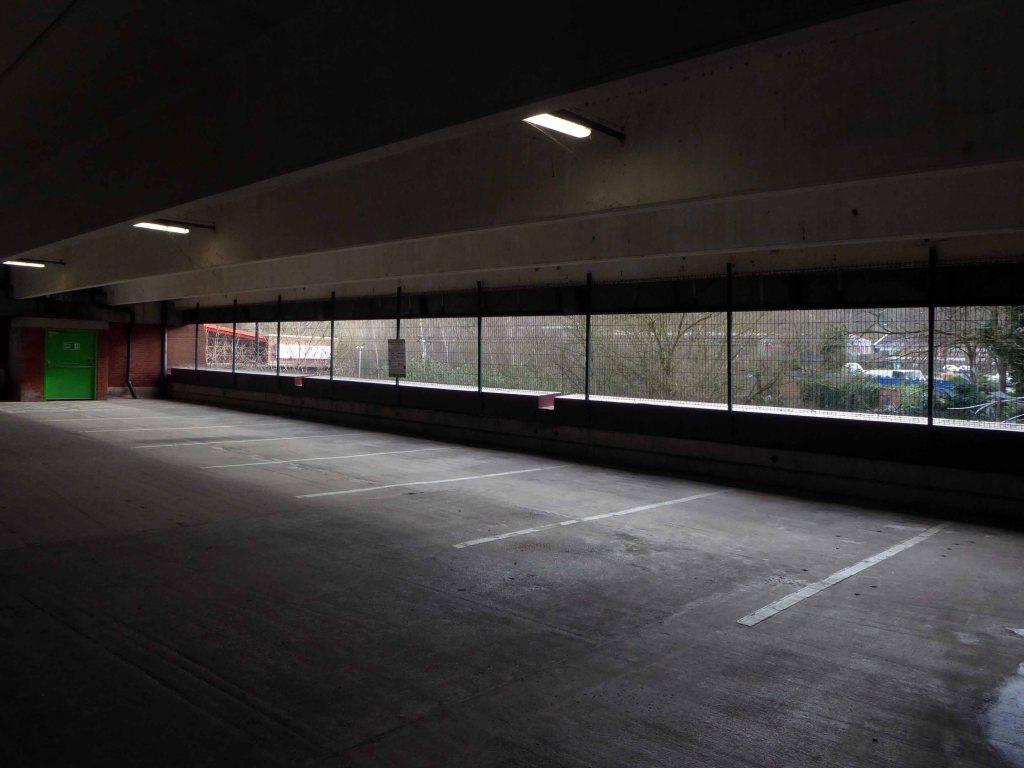
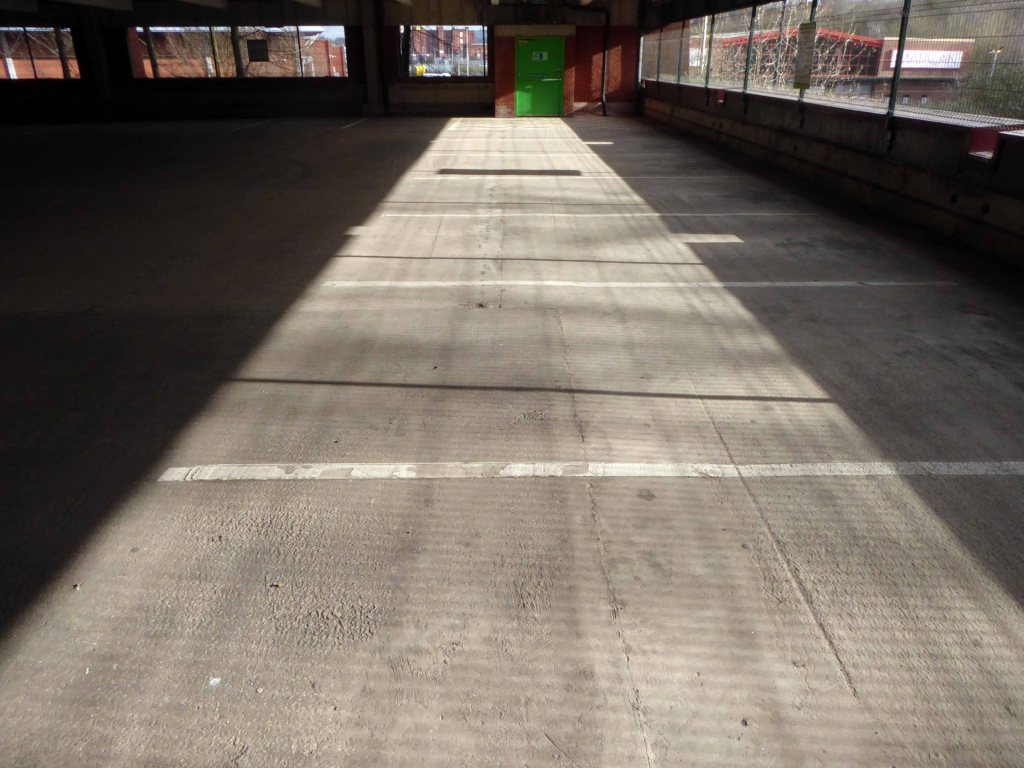
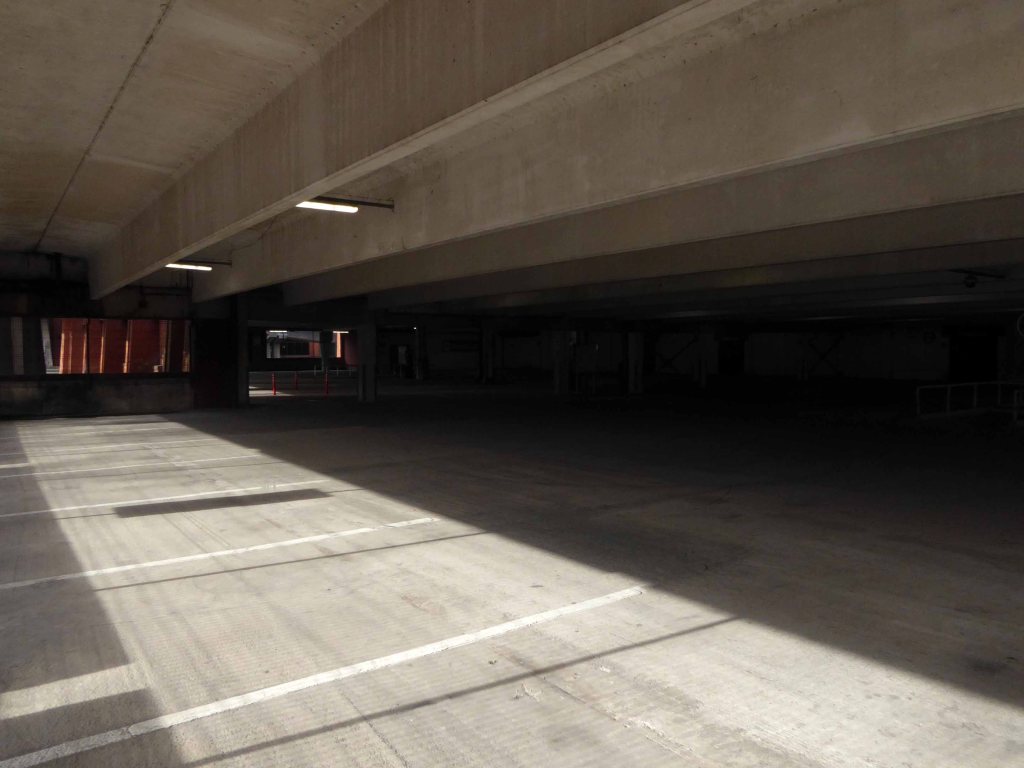
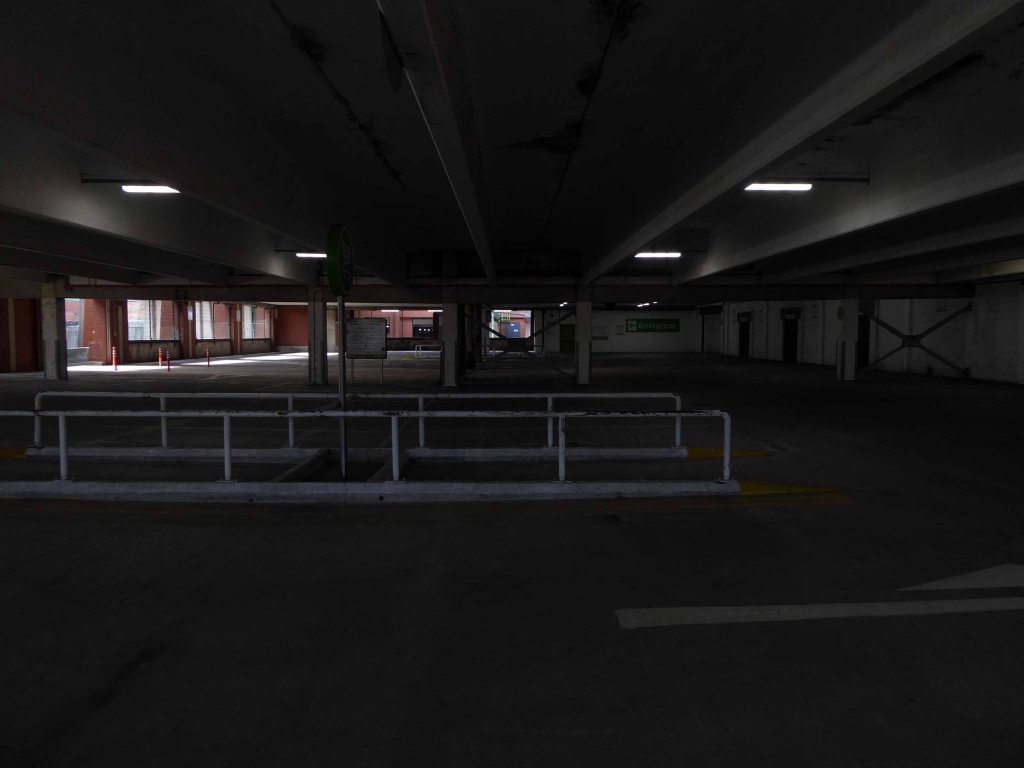
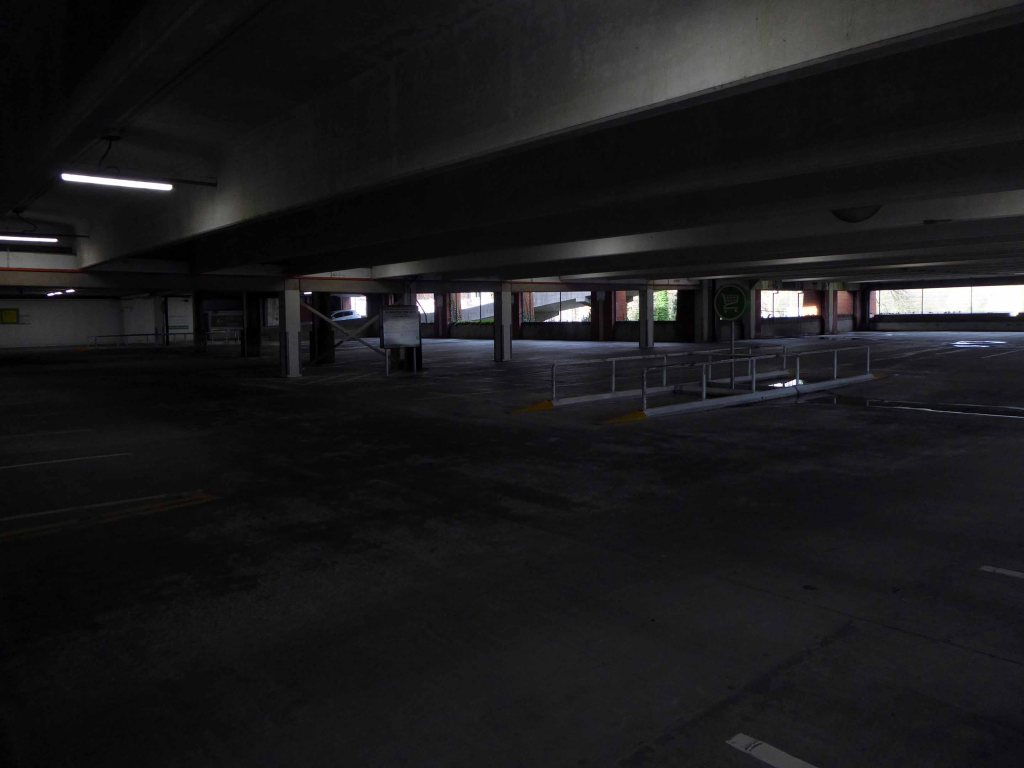
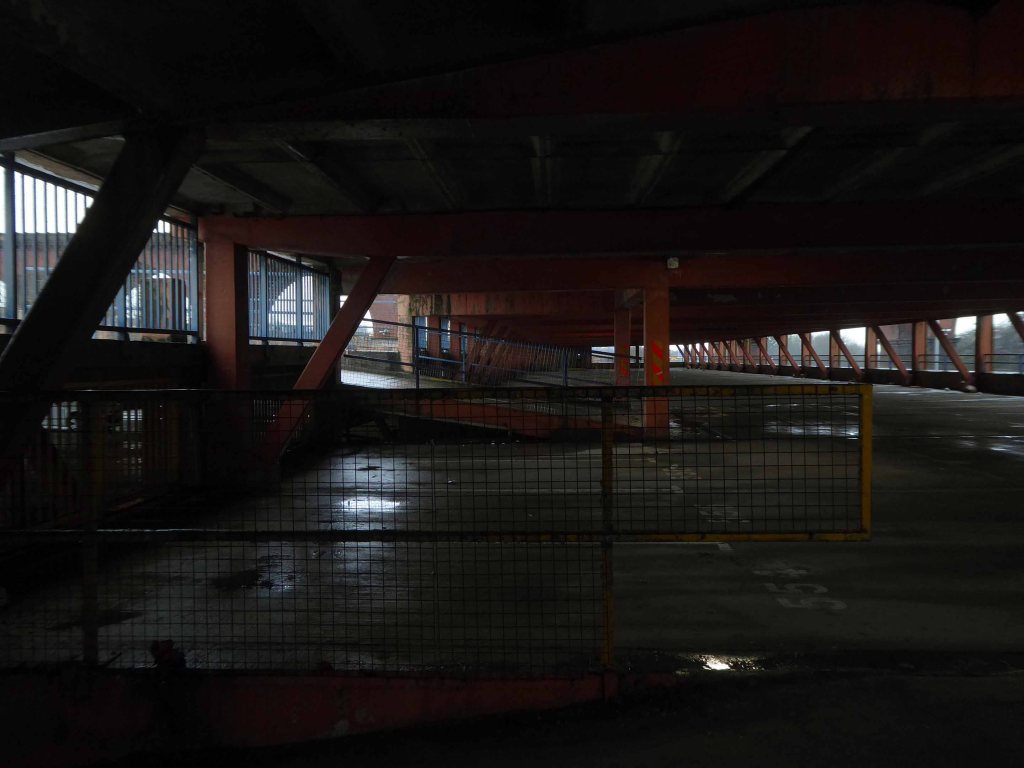
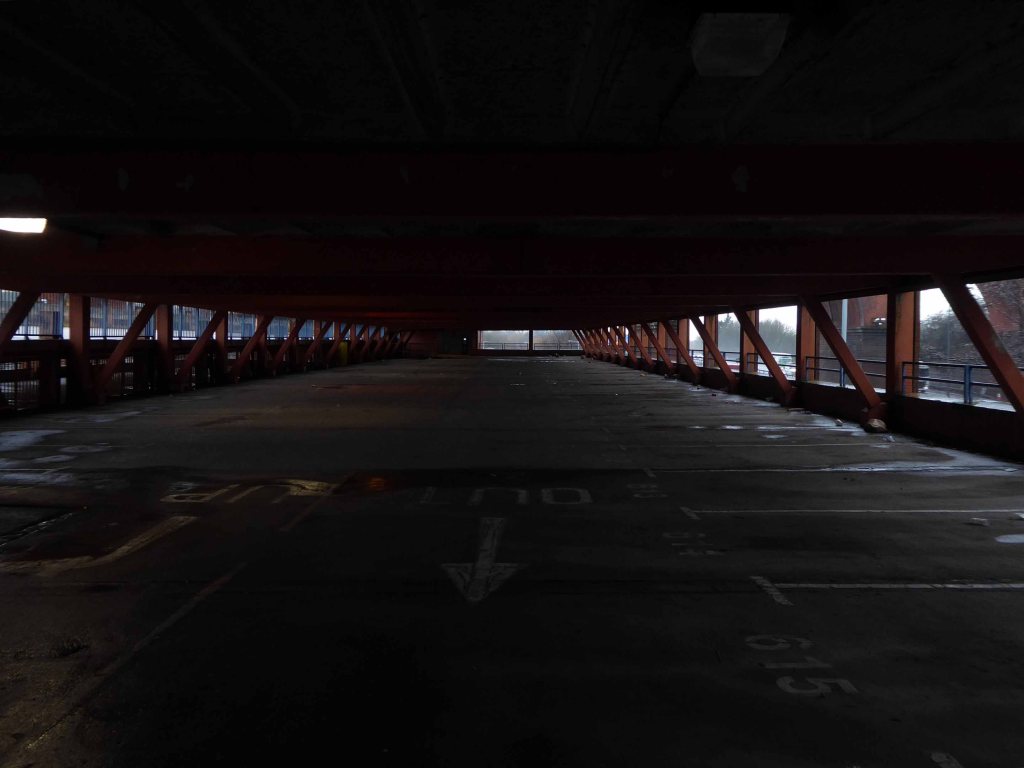
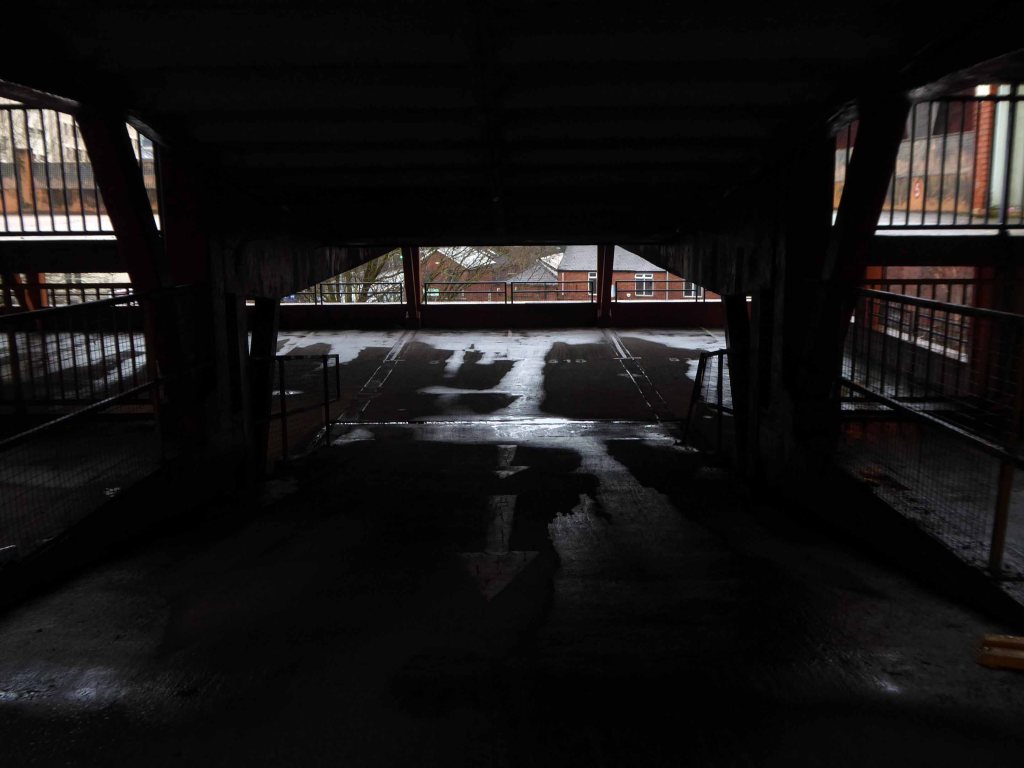
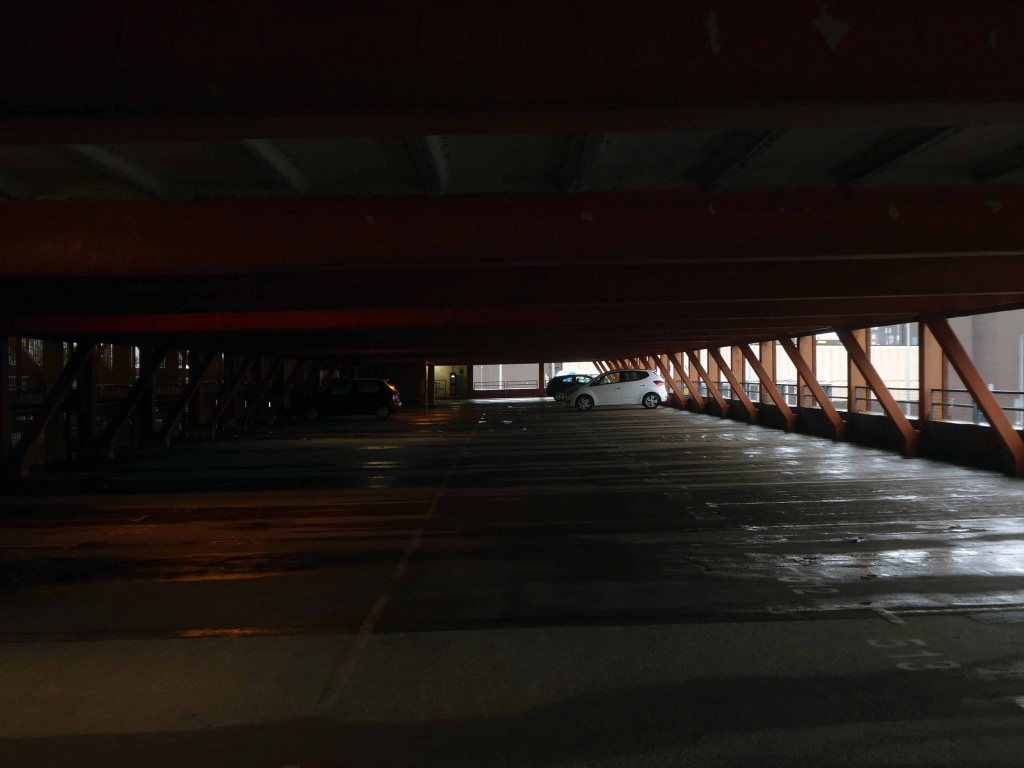
All that aside, let’s have a look at what the car park is like.
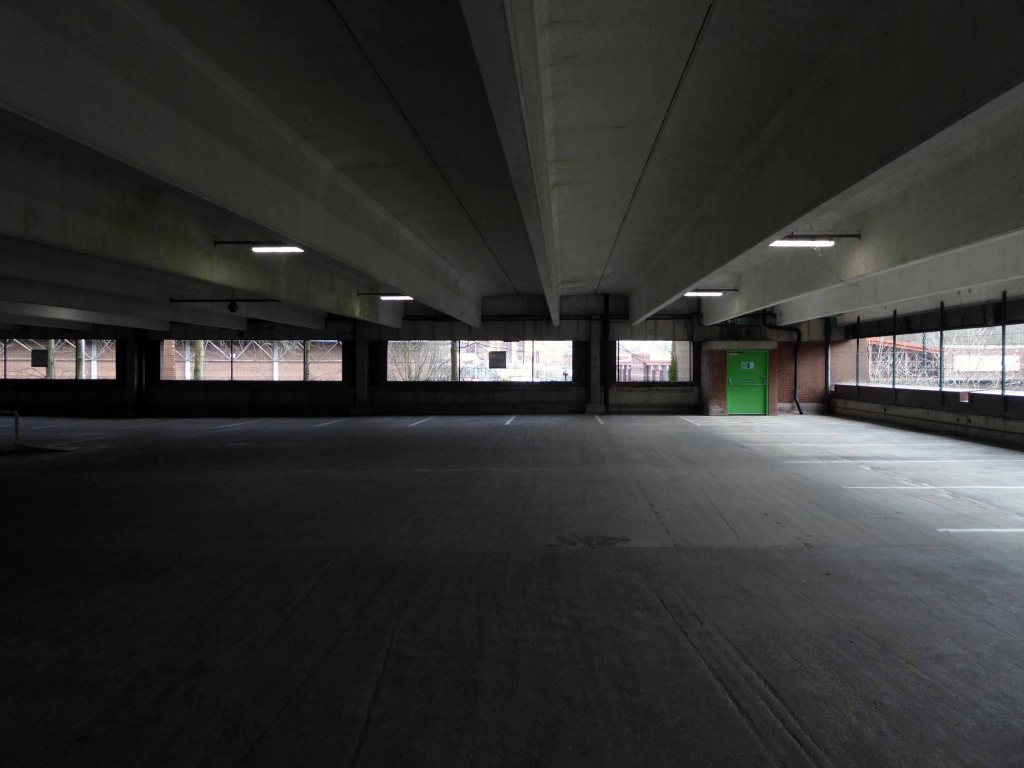
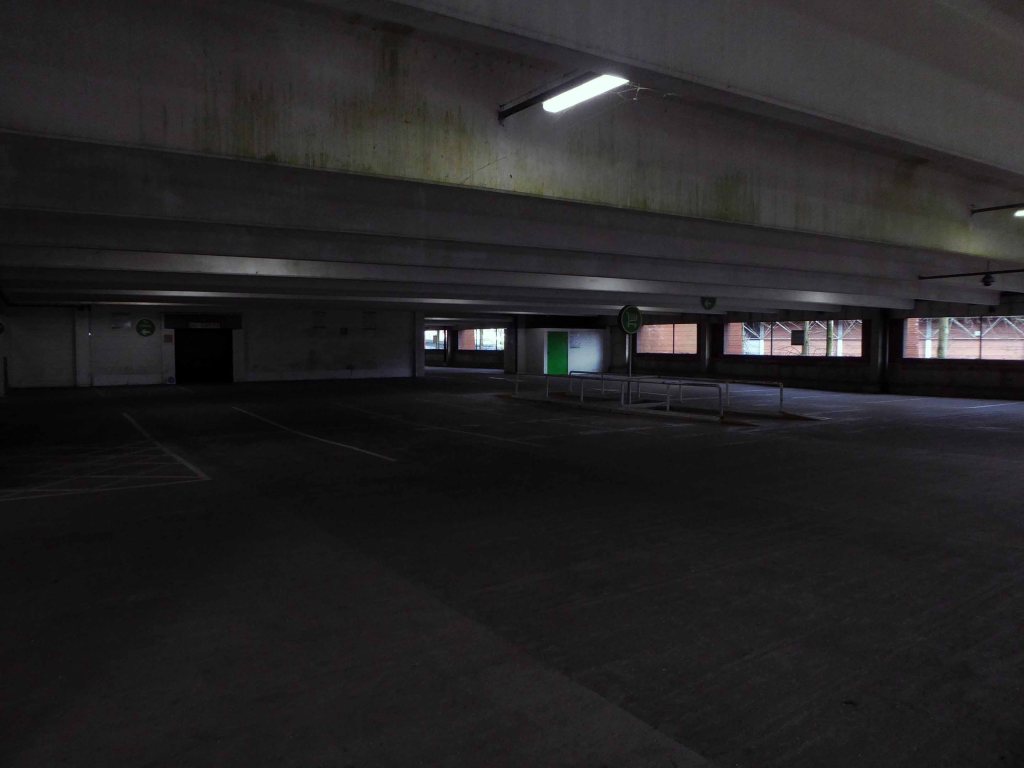
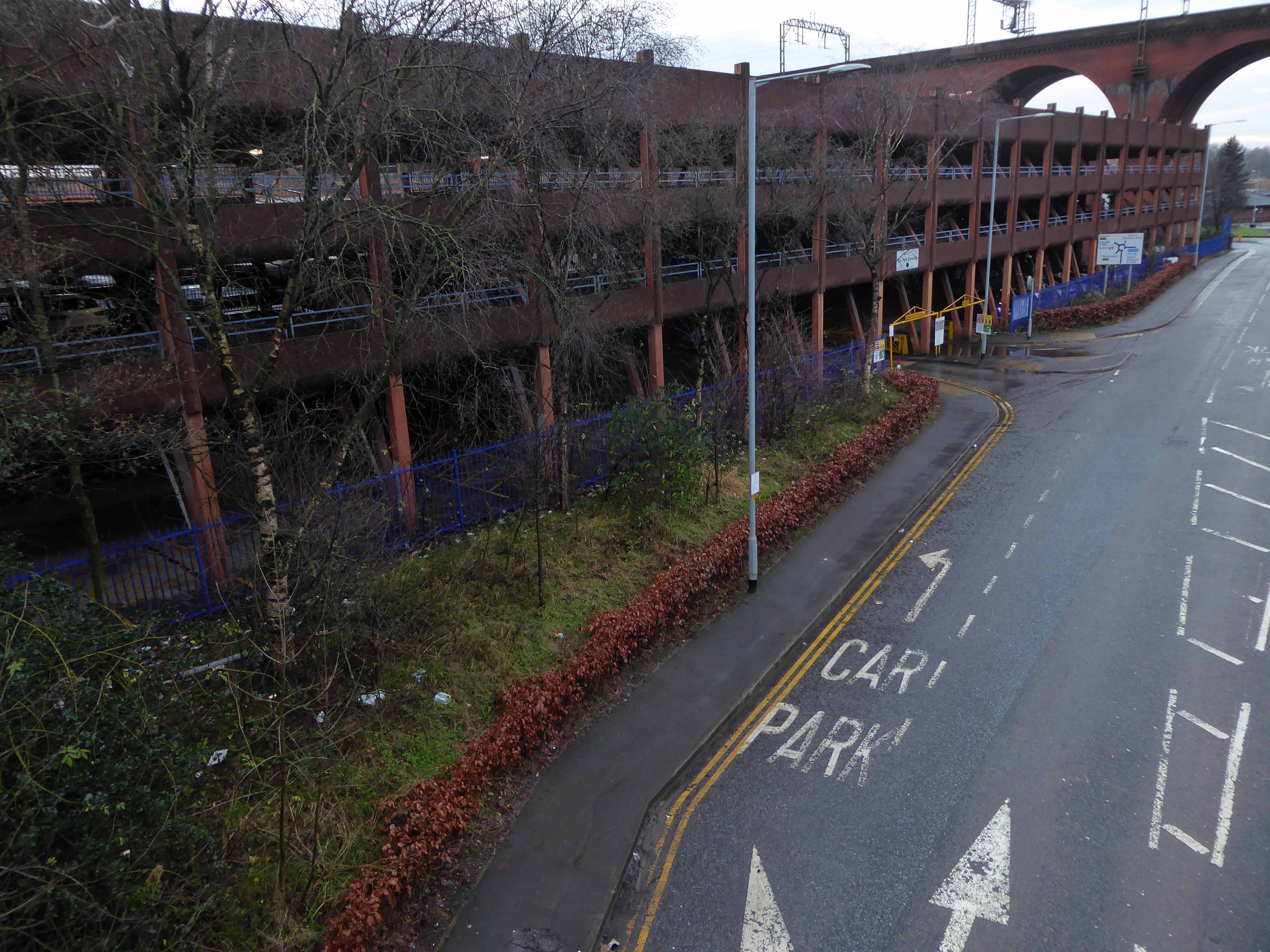
Walking the stairwells, ramps and interlocking tiers, the curious pedestrian becomes aware of the ambition and complexity of the scheme. Often identified on local social media groups as an anachronistic eyesore, I feel that it is a thing of rare and precious beauty.
Knock most of the precinct down, free the river, but keep this wall and what is within.
Anon
Some are slaughtering imaginary white elephants, whilst others are riding white swans.
Currently under the ownership of Stockport Borough Council, changes are afoot.
Work to redevelop Adlington Walk in Stockport starts this week, as the first stage in the regeneration of the 55-year-old Merseyway shopping centre.
As of today work is still in Covid induced abeyance, it is still possible to walk the old revamped Adlington Walk. The future of retail in particular and town centres in general is in the balance, the best of the past and the finest of the new should be the watchword.
The scheme and car park redevelopment, is managed by CBRE of Manchester.
The future shopper is looking for more than just a simple buying transaction, they want an experience, entertainment and excitement.
This is where Merseyway Shopping Centre’s future lies.
CBRE Group Inc. is an American commercial real estate services and investment firm. The abbreviation CBRE stands for Coldwell Banker Richard Ellis. It is the largest commercial real estate services company in the world.
Their net worth as of January 28th 2021 is $21.18 Billion.
It is to be hoped that these dreams of entertainment and excitement, may be realised in the not too distant future.
In the meanest of mean times, in the mean time let’s have a look around.
The future moocher is looking for more than just a simple buying transaction, they want an experience, entertainment and excitement.
One of the great glories of cinema is that it has the power to take the mundane and make it magical. To most of us, car parks signify a world of pain, where fearsome red-and-white crash barriers dictate our fate and where finding a space is often like finding meaning in the collective works of Martin Lawrence. To others, they meant lost Saturday afternoons spent waiting for your mum to finally come out of Woolworths so you could rush home to catch Terrahawks.
Either way, car parks are grey and dull. In the movies, however, they are fantastic places, filled with high-level espionage, and high-octane chases.
I beg to differ, the cinema and TV has helped to define our perception and misconception of the car park.
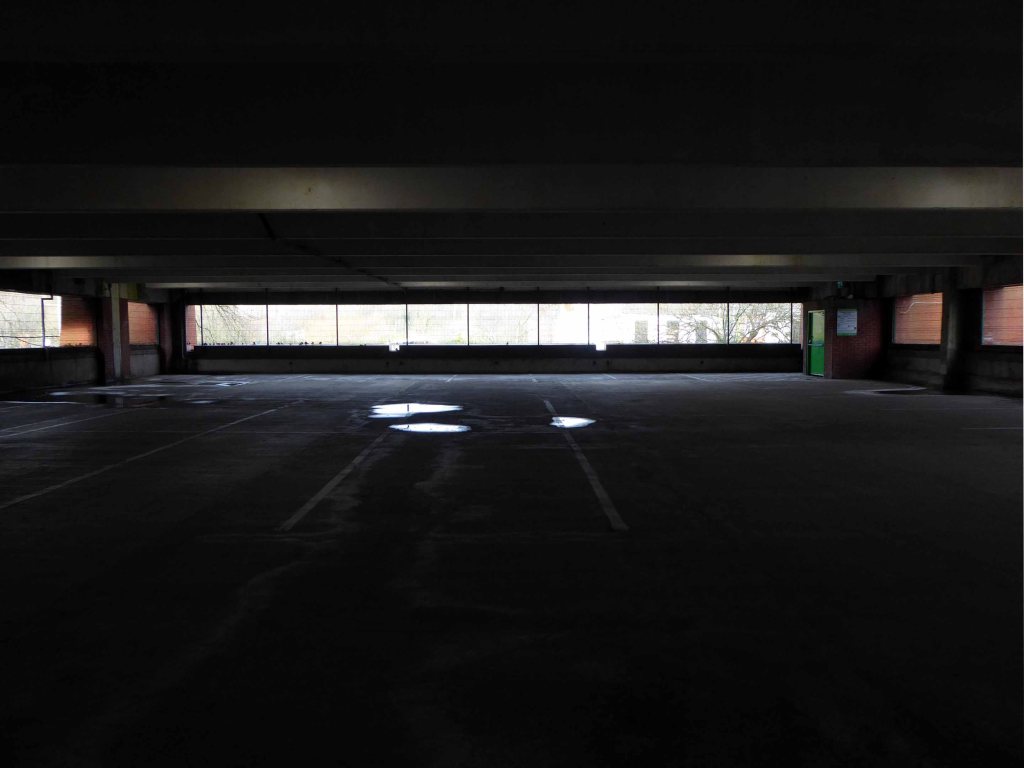
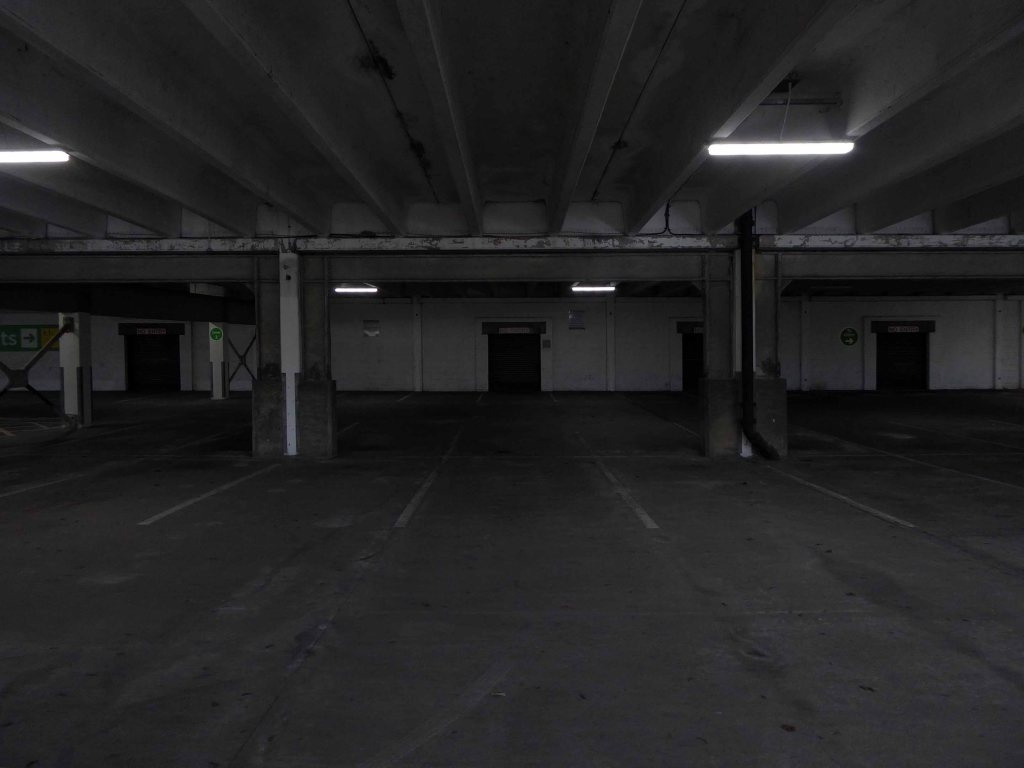
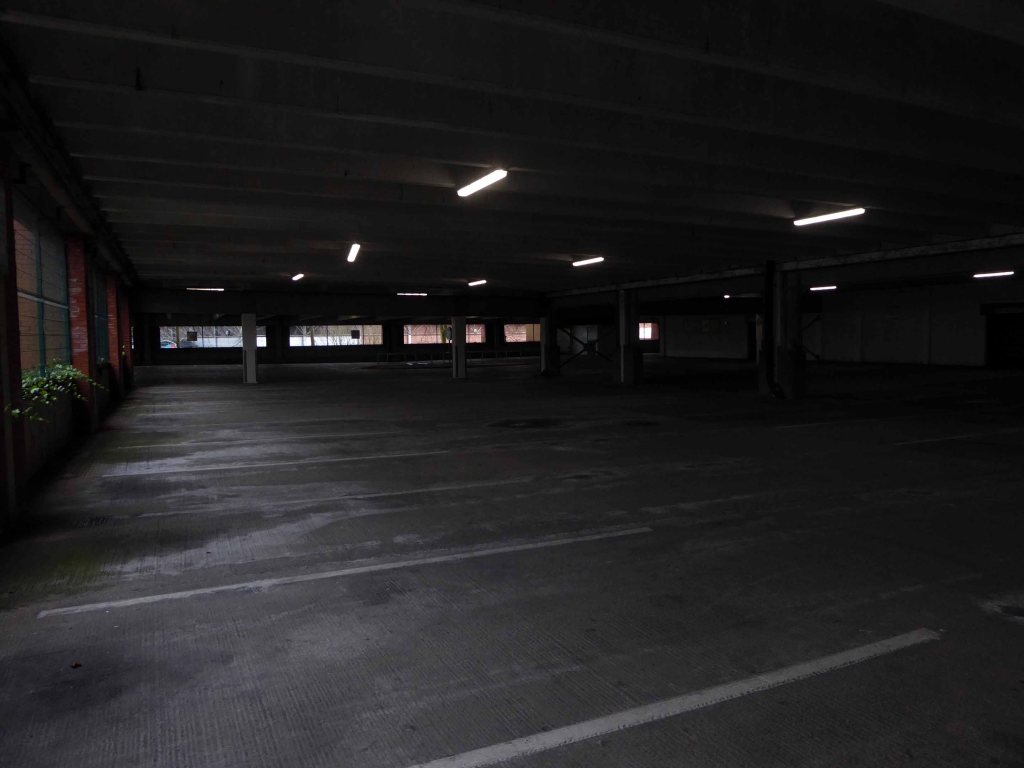
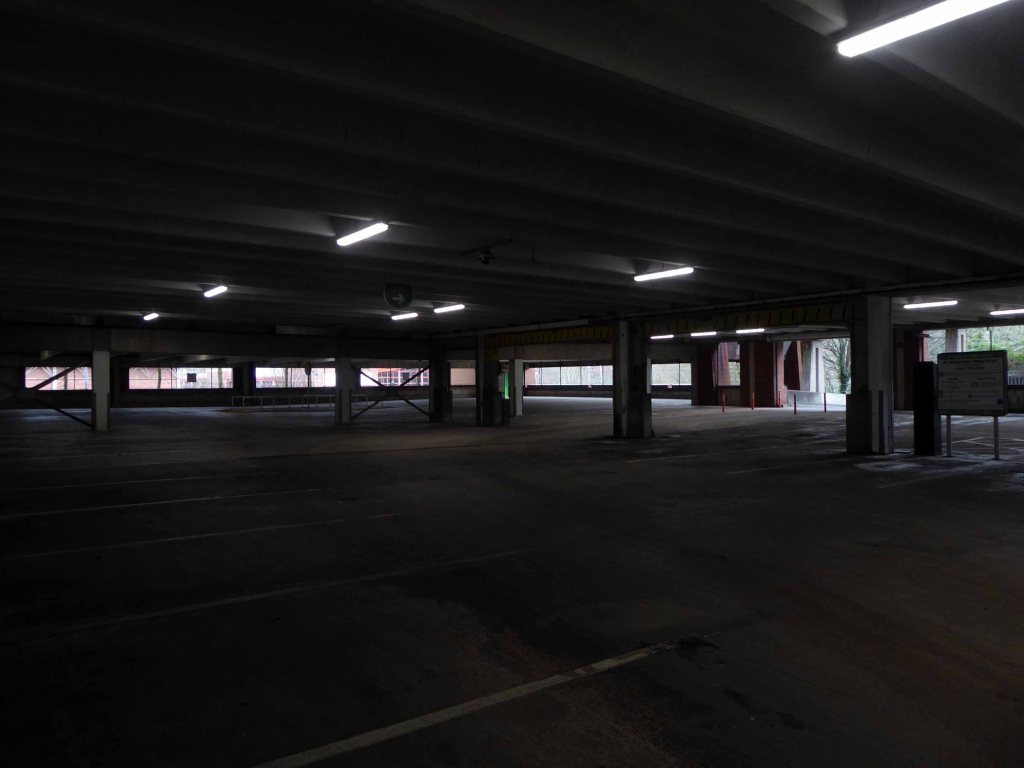
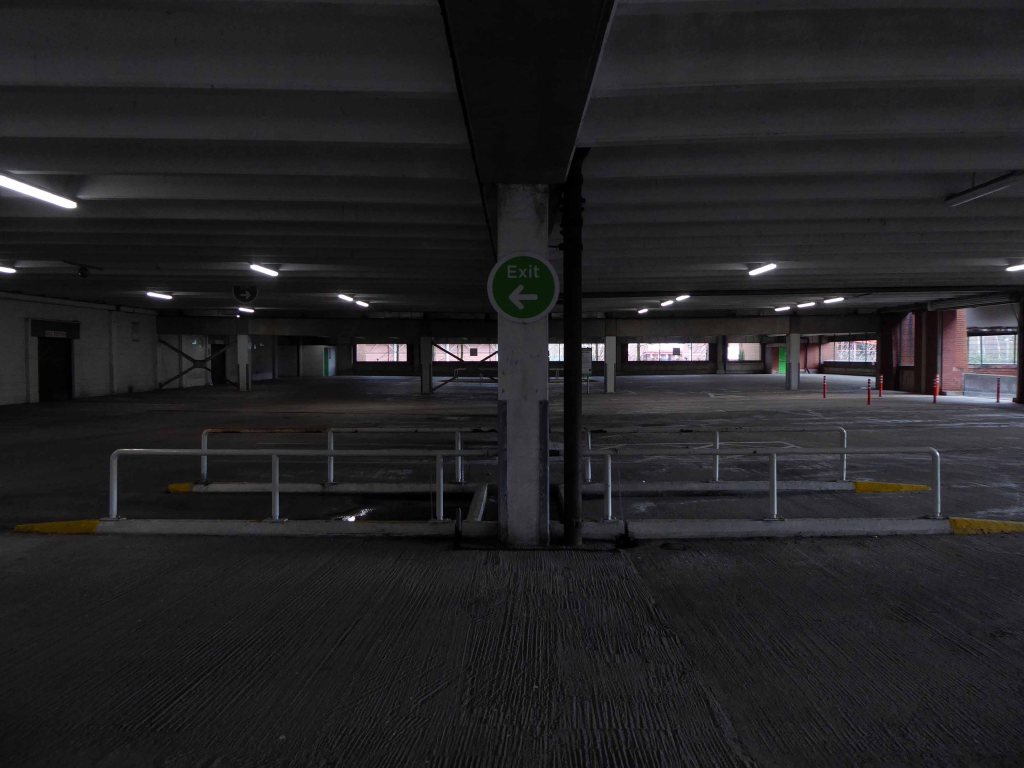
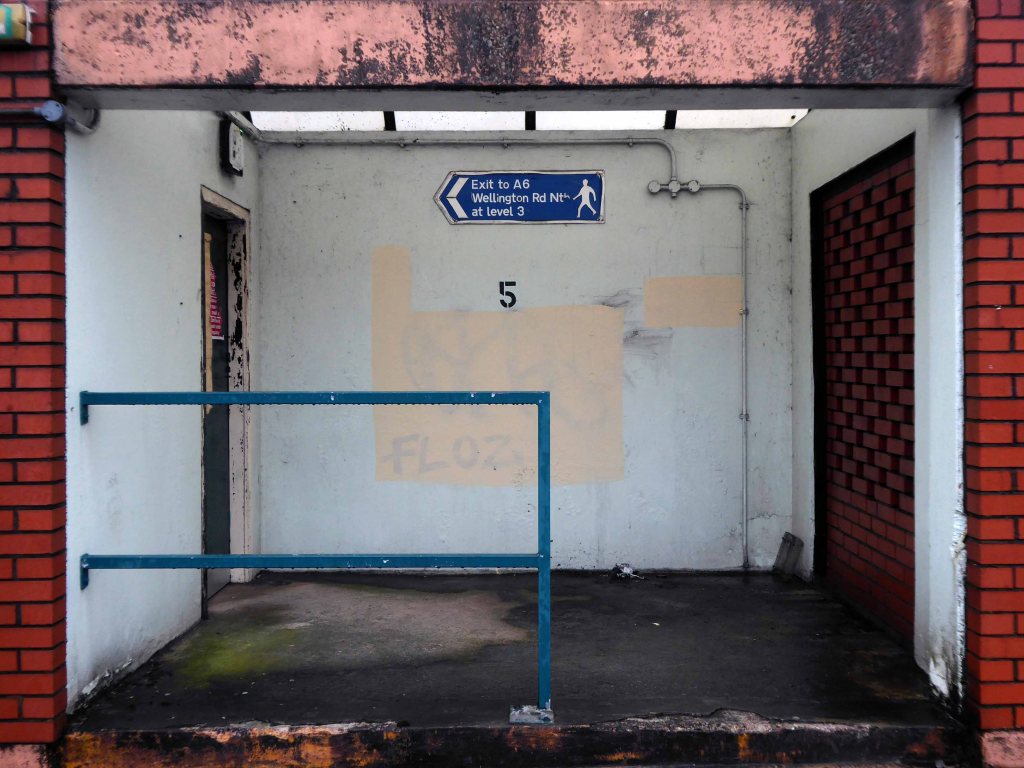
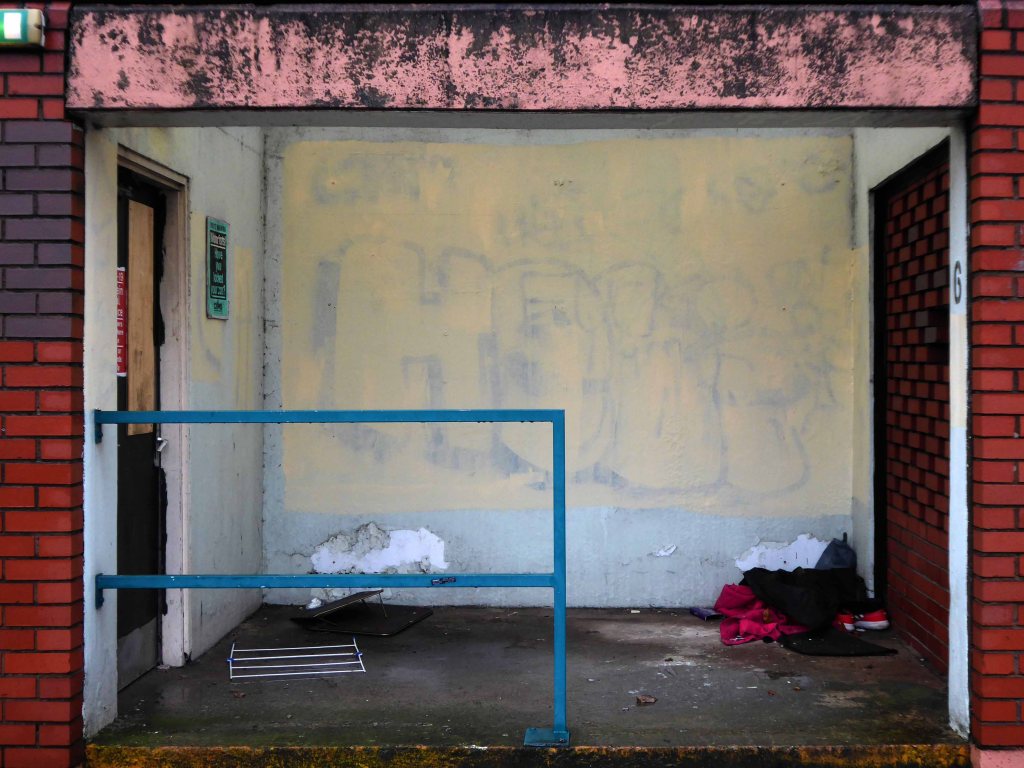
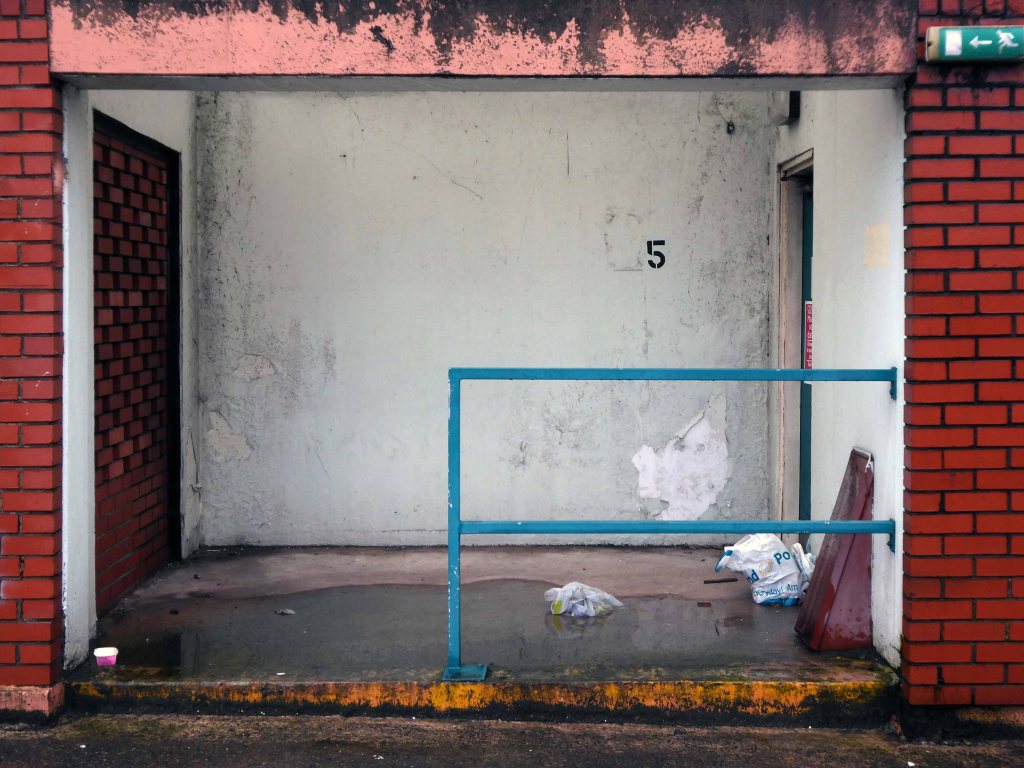
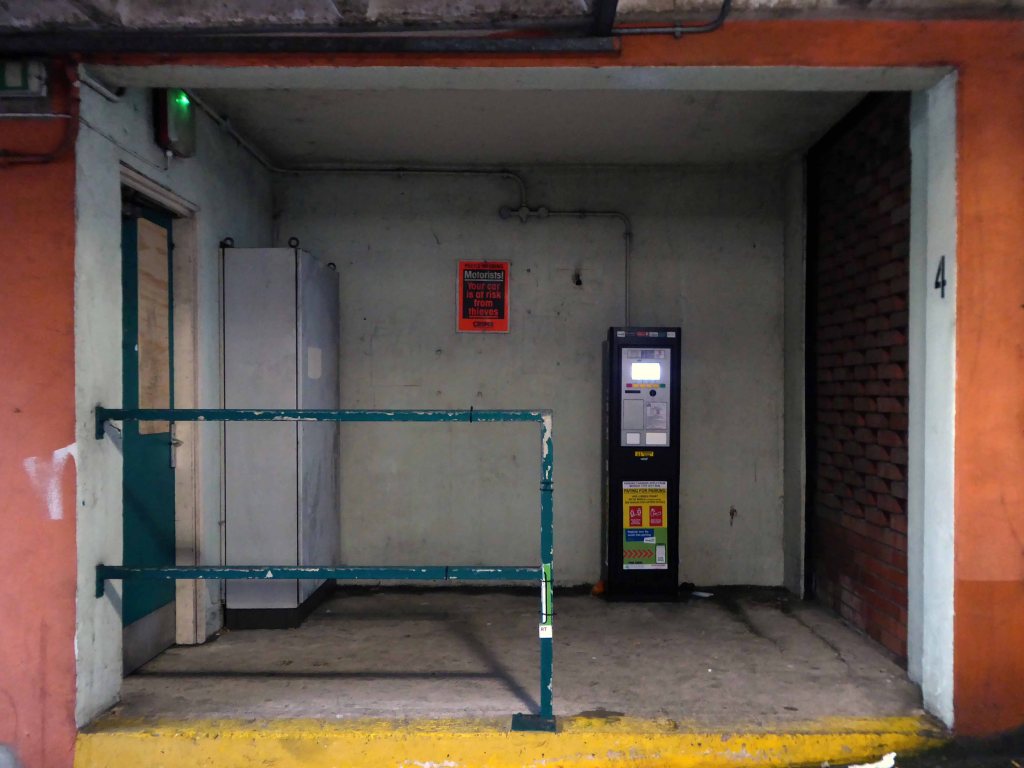
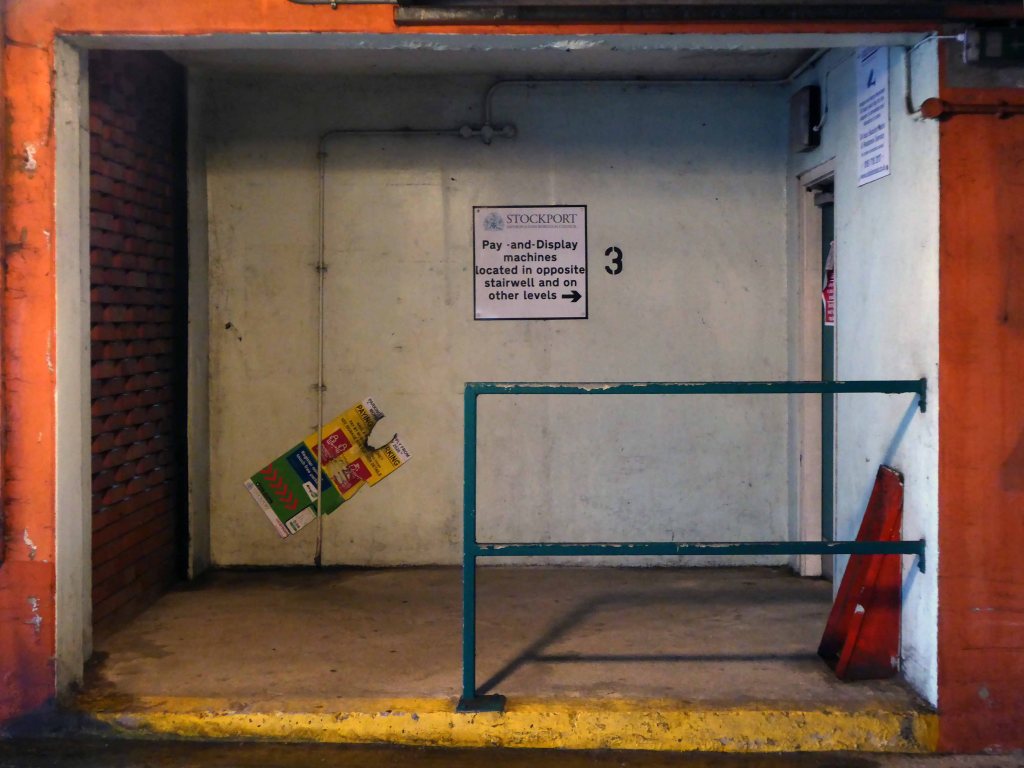
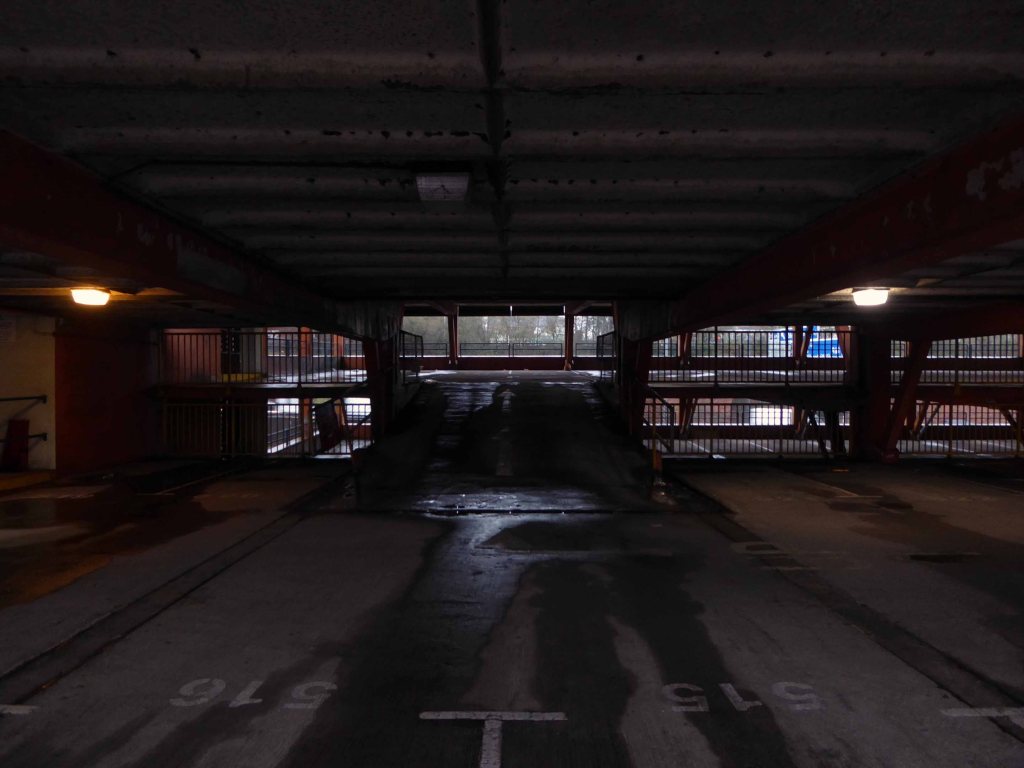
The modern day pedestrian may reclaim, redefine and realise, that far from mundane each actual exemplar is different, in so many ways. The time of day, weather, light, usage, abusage, condition, personal demeanour and mood all shape our experience of this particular, modern urban space.
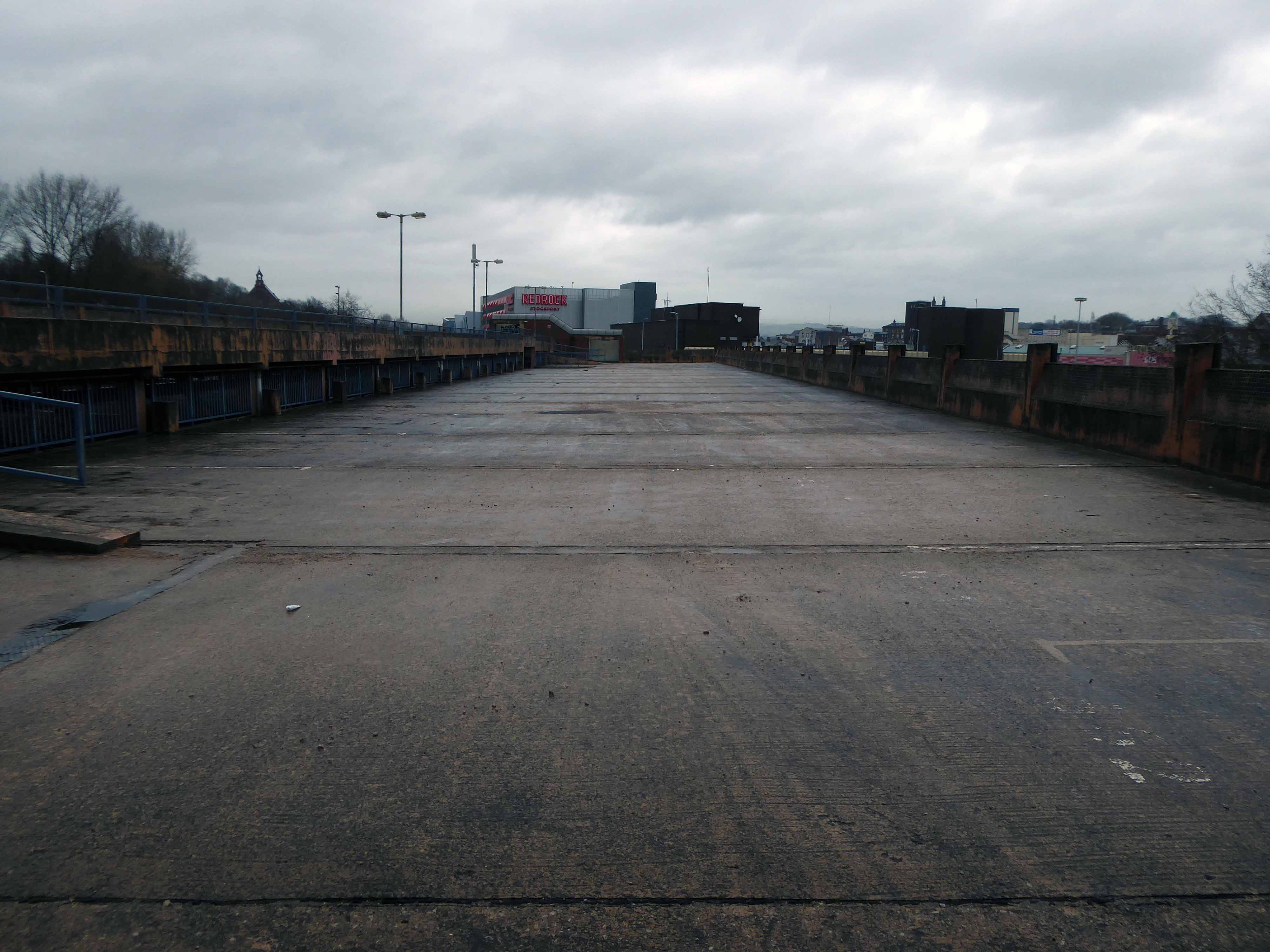
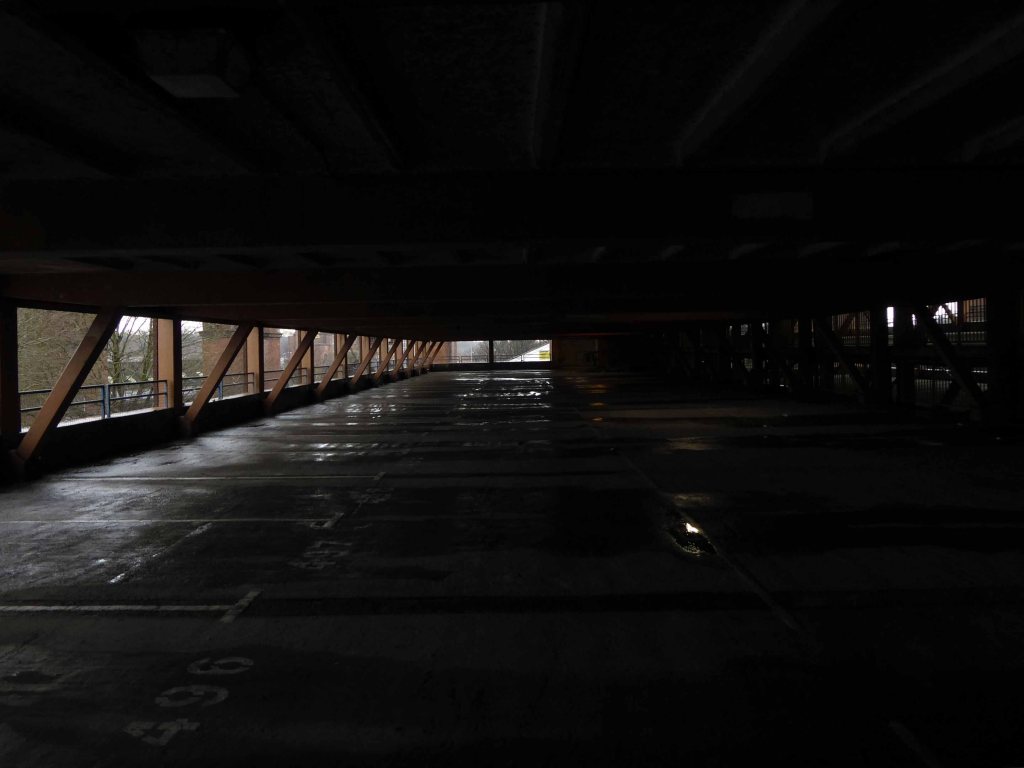
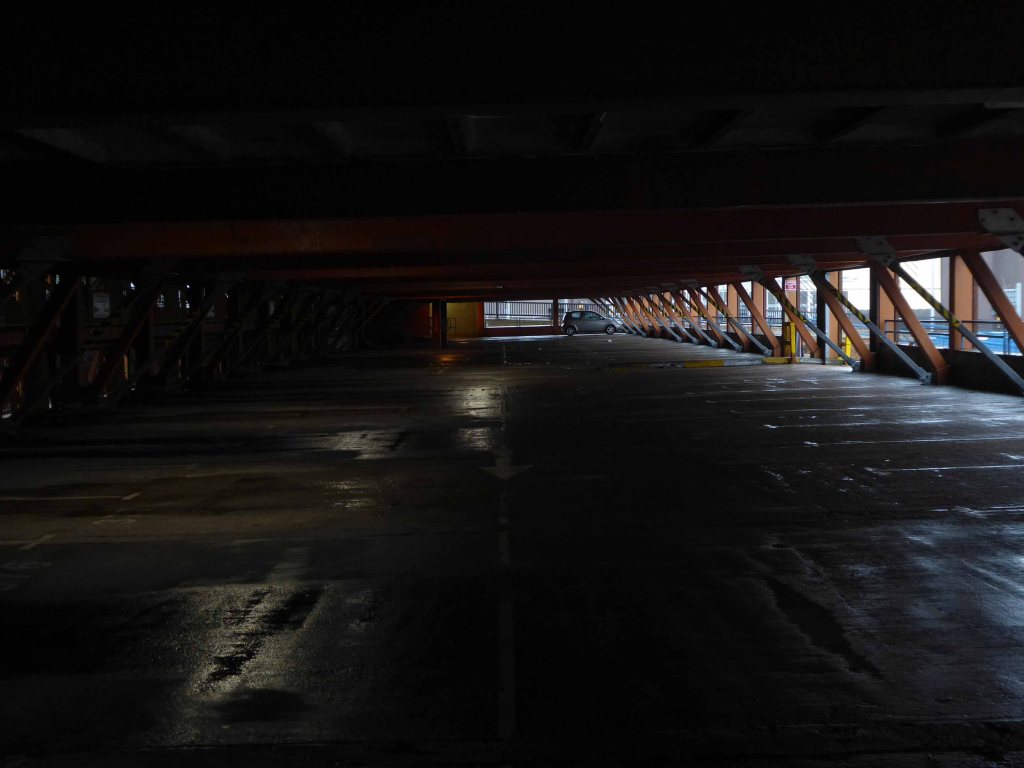
To walk the wide open spaces of the upper tier, almost touching the sky.
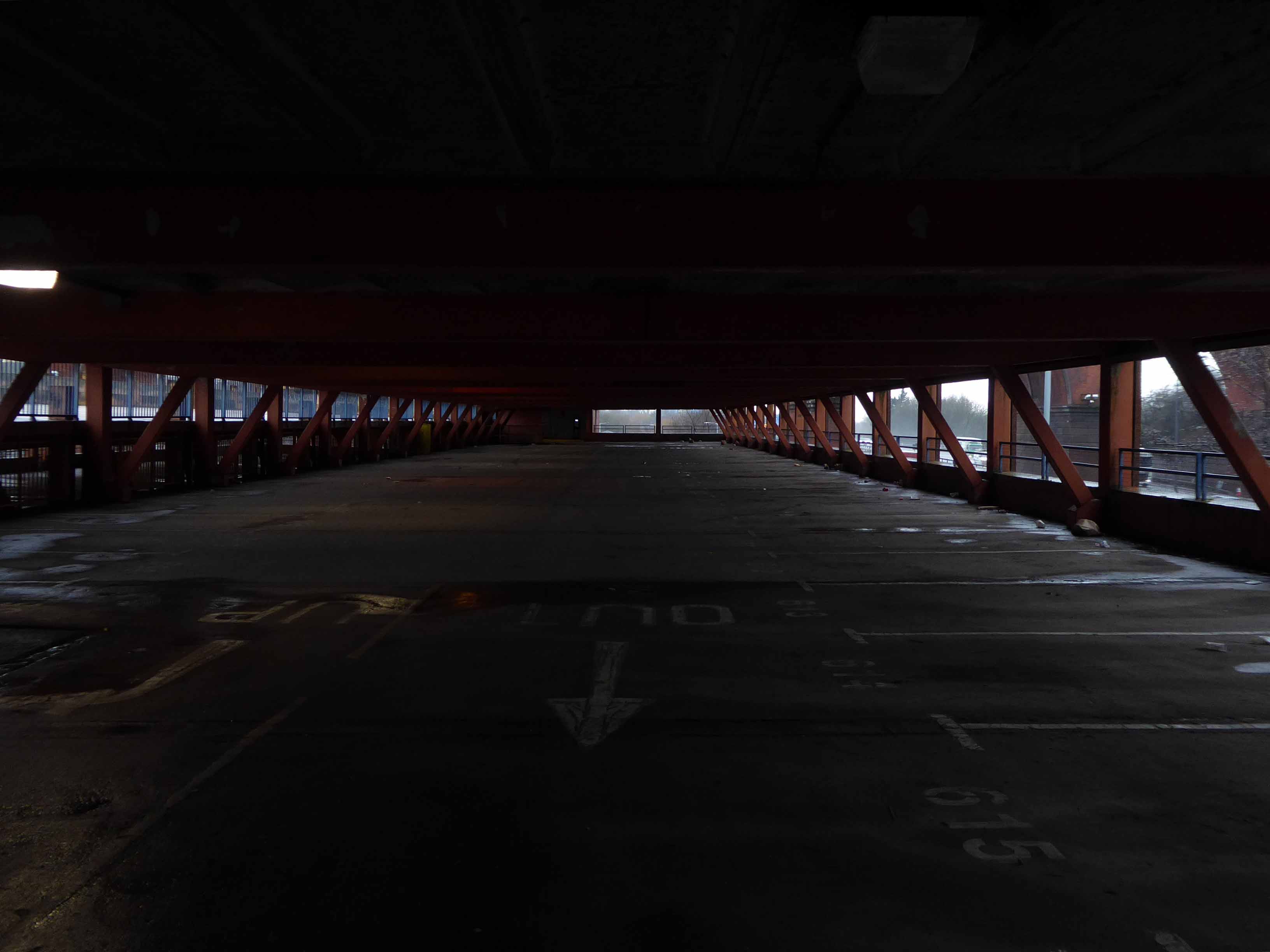
Is a far cry from the constrained space of the lower levels.
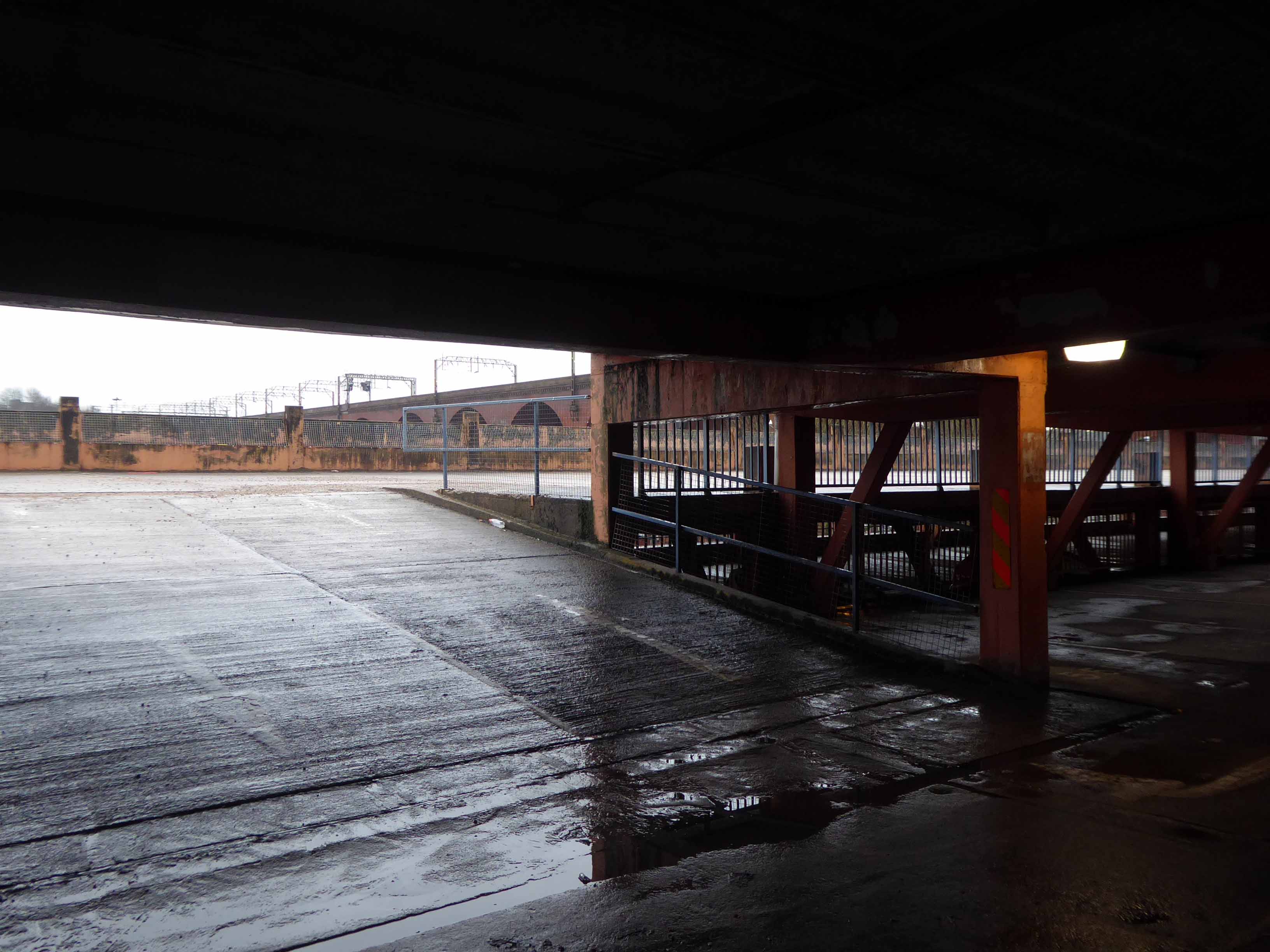
To walk the ramps with a degree of trepidation, visceral and fun.
This is an inversion of the car-centric culture, walking the concrete kingdom with a carbon-free footprint.
I was inspired by a recent viewing of All The Presidents Men to revisit my local multi-storey on Heaton Lane Stockport.
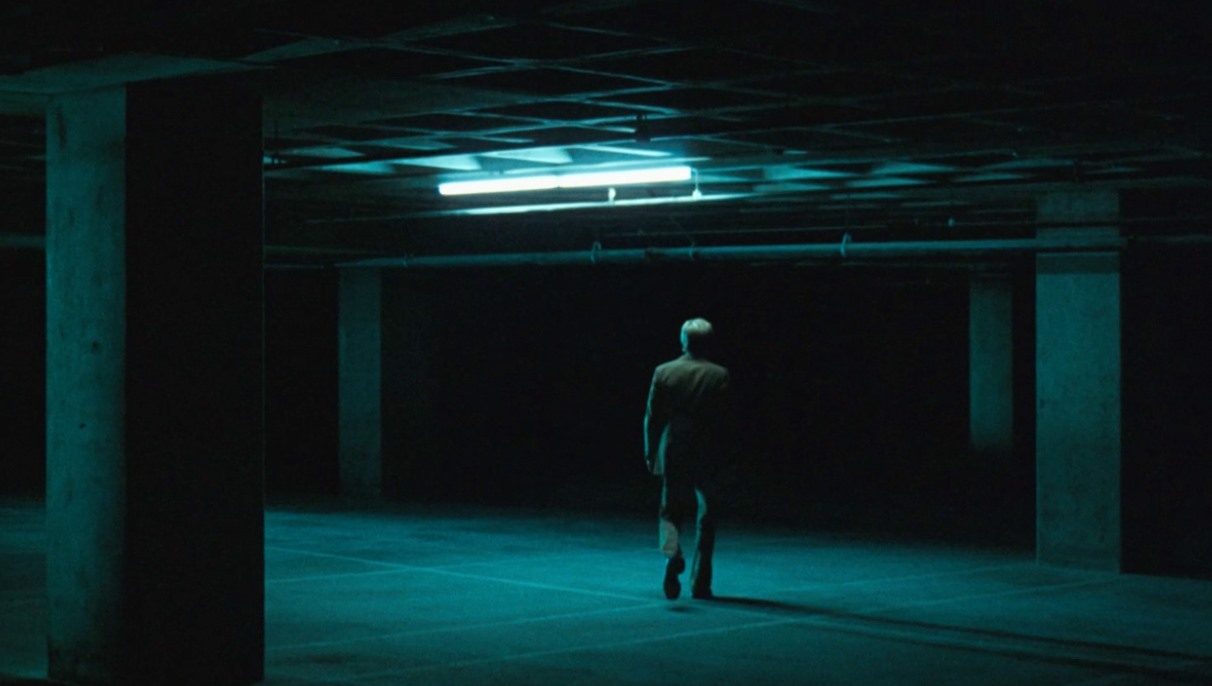
Cinematographer Gordon Hugh Willis Jr constructs a shadow world where informer and informed meet to exchange deep secrets, ever watchful, moving in and out of artificial light, tense and alert.
Look over your shoulder- there’s nobody there, and they’re watching you.
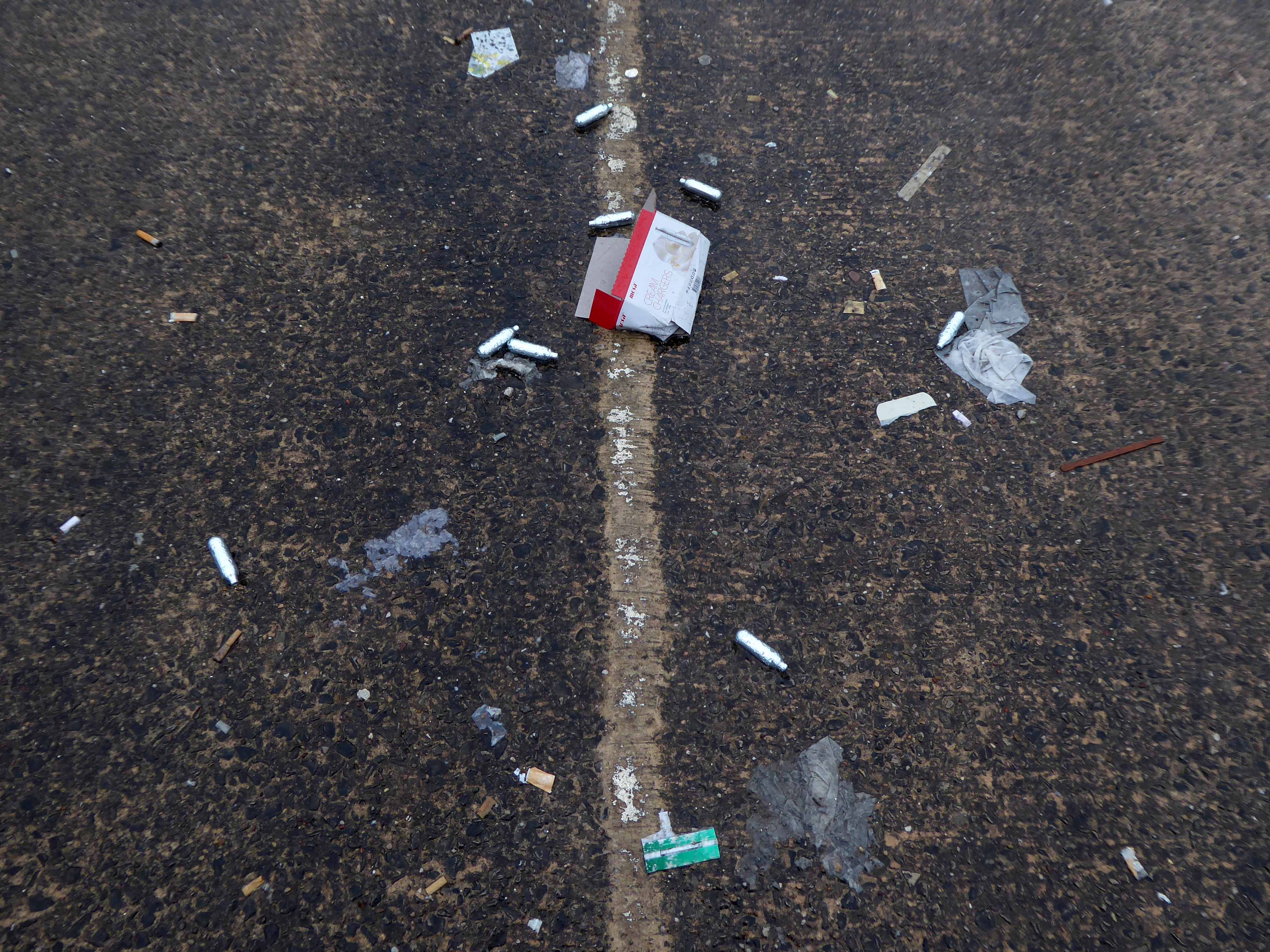
But they have been here.
To party.
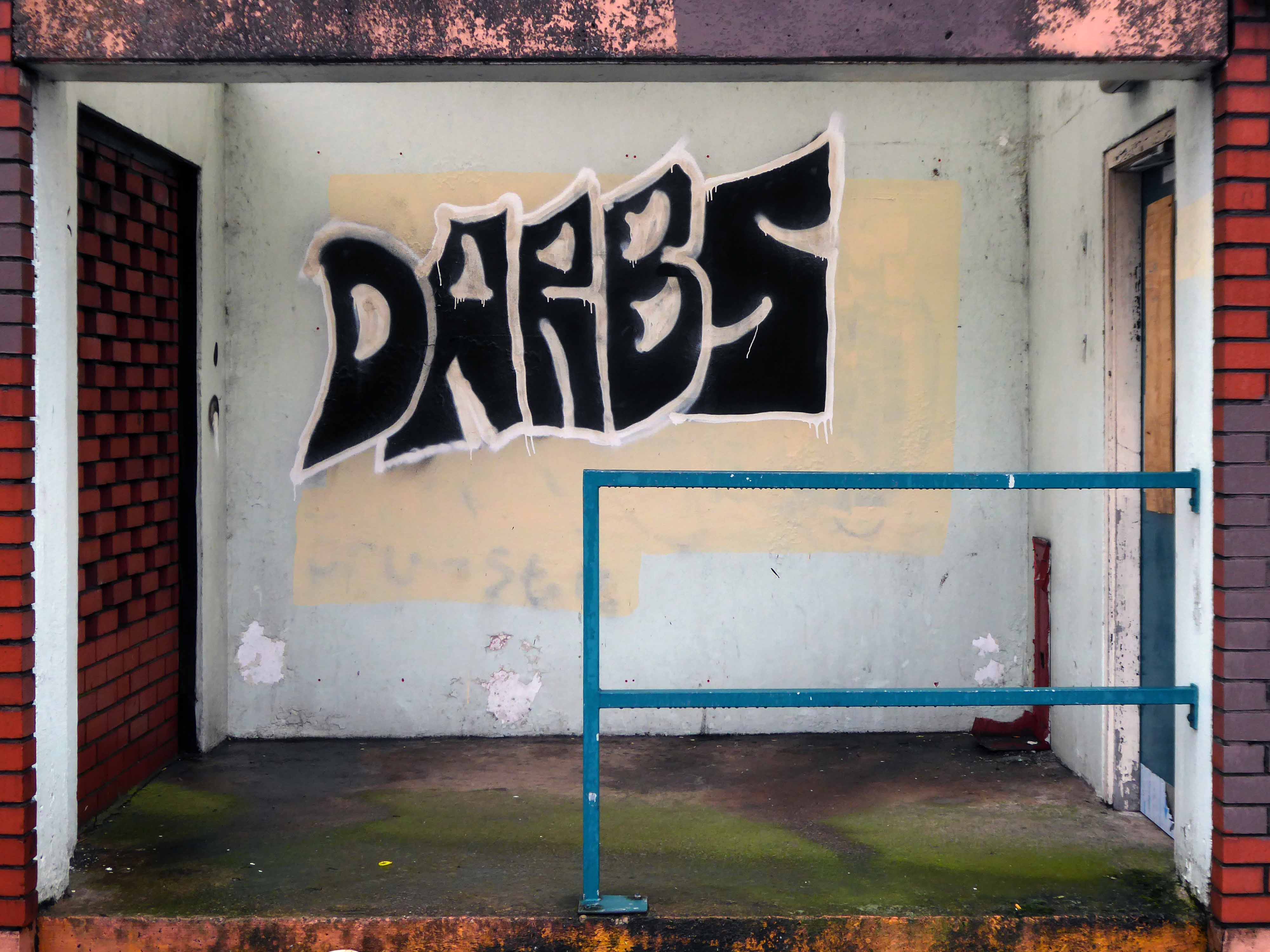
To tag.
To live.
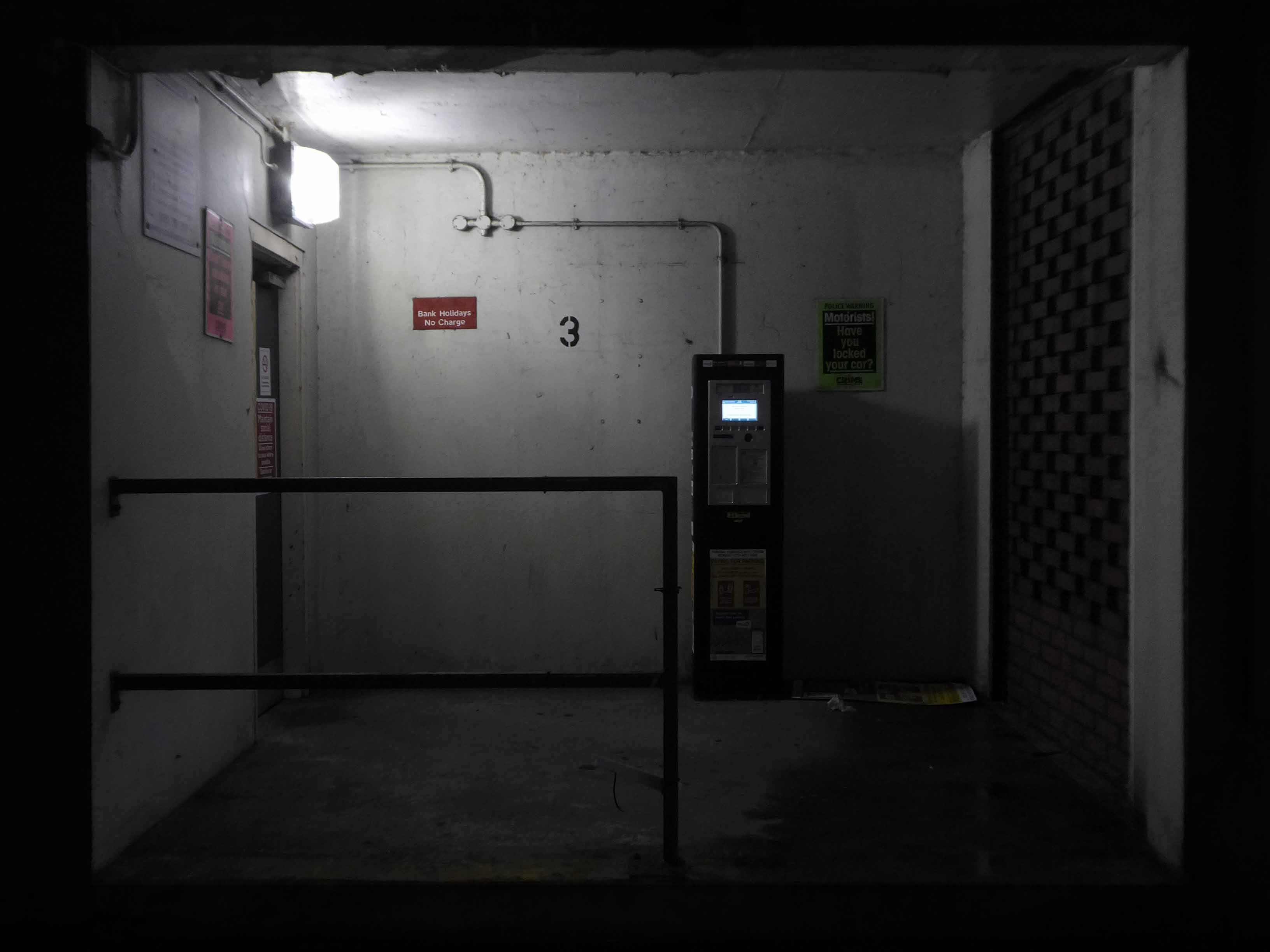
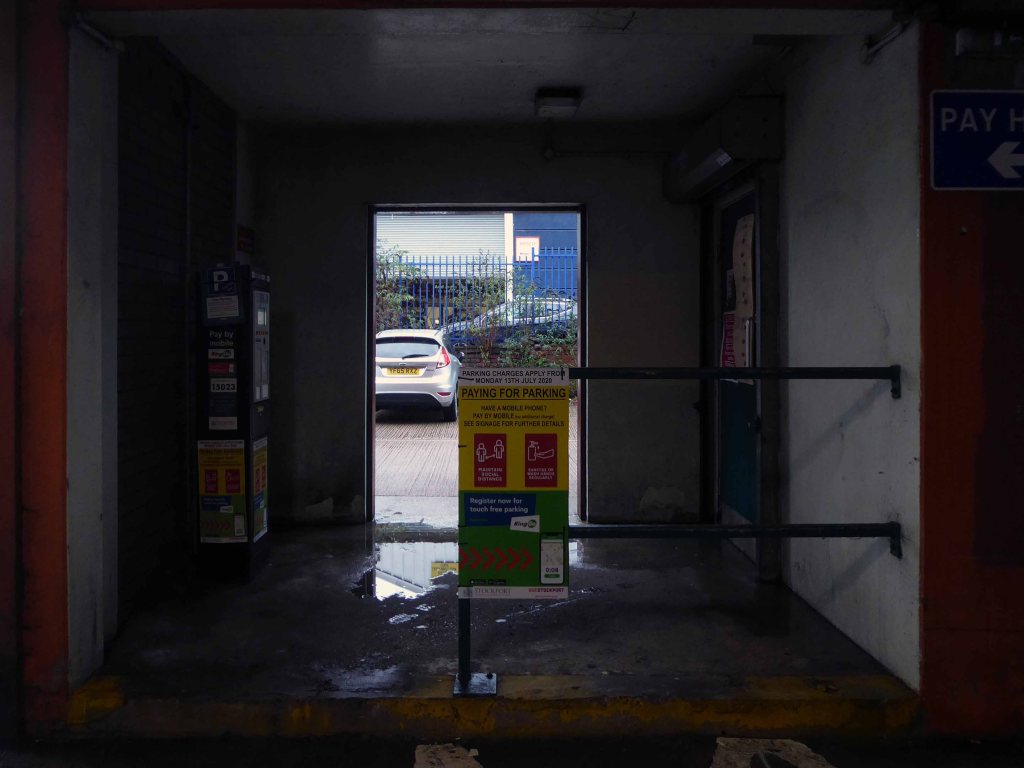
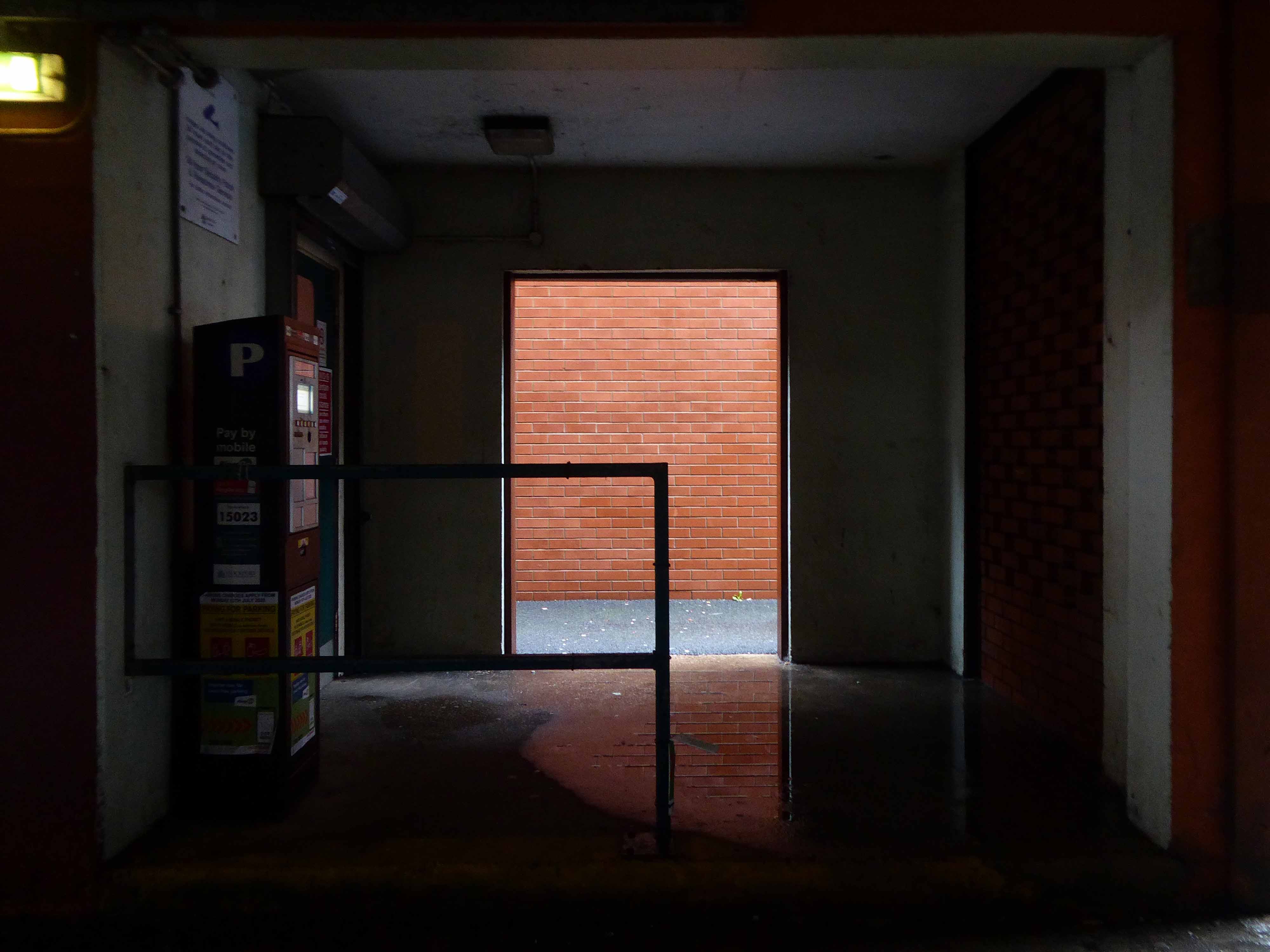
Pay here, your time is time limited, your presence measured.
Let’s explore this demimonde together, wet underfoot, lit laterally by limited daylight, walking through the interspersed pools of glacial artificial glow.
Time’s up, check out and move on – tomorrow is another day, another car park; in a different town.
Cinema and car parks wedded forever in the collective popular cultural unconscious.
The BT Hunters – They came in search of paradise and found BT.
Many thanks to my partner in victimless crime – Mr Ryan Lloyd.
This is an atypical single storey building, with a raised central hall and butterfly roof, quite something.
Lots of utilitarian detail, mixing brick, glass and concrete, with pragmatic infrastructure grills and grids.
The upper glazed area an extended asymmetric, external delight.
To set the pulse racing a series of gorgeous Rose Carmine panels.
The angular porch displayed the BT Logo of 1991:
On 2 April 1991, the company unveiled a new trading name: BT accompanied by a new corporate identity designed by Wolff Olins and organisational structure focused on specific market sectors, reflecting the needs of different customers – the individual, the small business or the multinational corporation. The reorganisation was named ‘Project Sovereign’ to reflect the company’s commitment to meetings customers’ needs – ‘The Customer Is King’. Together with a succession of strategic alliances with telecommunications companies worldwide, these changes gave BT the ability to expand overseas.
Which prompted a brief yet uninformed discussion concerning the history of Telecom’s Corporate Identity.
So here’s a brief rundown logo lovers:
Previously the GPO was the umbrella grouping for both telephone and mail.
Sketch for the redesign of the GPO logo by MacDonald Gill in 1934 . The first approved version had two concentric circles but this was soon reduced to one. The annotations also mentions the typeface used as “Gill Sans” which had been created by MacDonald Gills’ brother Eric.
We are here are again – you Bonny Street bobbies, it seems, are not.
Departed for pastures new – to Marton near to the big Tesco.
As well as a front counter, the new headquarters provides a base for some of the local policing and immediate response teams, an investigations hub and 42 custody cells.
On my previous visit I was in fact apprehended by a uniformed officer, perturbed by my super-snappy happy behaviour. Following a protracted discussion, I convinced the eager young boy in blue, that my intentions were entirely honourable.
Themed bar and event restaurant concept with roller coaster service, hourly special effects shows and exploration tours.
The £300m Blackpool Central development will bring world-class visitor attractions to a landmark site on the famous Golden Mile. Along with new hotels, restaurants, food market, event square, residential apartments and multi-storey parking.
Chariots of the Gods inspires the masterplan for the long-awaited redevelopment. It’s the global publishing phenomenon, written by Swiss author Erich Von Däniken. Exploring alien encounters and unsolved mysteries of ancient civilisations.
Chariots Of The Gods will be the main theme for Blackpool Central. Including the anchor attraction – the UK’s first flying theatre.
A fully-immersive thrill ride that will create the incredible sensation of human flight.
Time it seems changes everything, stranger than fiction.
The Bonny Street Beast’s days are numbered – your local Brutalist pal is no more, wither Wilko’s?
Your piazza planters are waterlogged.
Your lower portals tinned up.
Your curious sculptural infrastructure sunken garden neglected and forlorn.
Your low lying out-rigger stares blankly yet ominously into space.
Likewise your tinted windows.
Your subterranean car park access aromatic and alienating.
So farewell old pal, who knows what fate awaits you, I only know you must be strong.
Not until we have taken a look into the future shall we be strong and bold enough to investigate our past honestly and impartially.
How often the pillars of our wisdom have crumbled into dust!
Here we are again, having posted a post way back when – on Seaside Moderne.
Where the whole tale is told – the tale of Borough Architect John Charles Robinson‘s inter-war Deco dream tempered by Municipal Classicism. A stretch of Pulhamite artificial rock cliffs 100ft high between the new gardens and the lower promenade constructed in 1923. The lower promenade at sea level was remodelled during 1923–5 with a colonnaded middle walk.
So here we are again September 2020, a country in Covid crisis bereft of crowds.
I took a short walk along its length – to the lift and back.
The Cabin Lift is designated at Grade II for the following principal reasons: * It is a nationally rare type of seaside structure that is of interest as part of the history and development of certain seaside resorts * It is of a well-executed design and uses good-quality material to good effect that can be particularly appreciated from the upper promenade * It is a conspicuous and eye-catching structure especially when viewed to maximum effect from the lower promenade * The Cabin Lift’s architectural merit contributes significantly to Blackpool’s importance as a holiday resort of national and international renown.
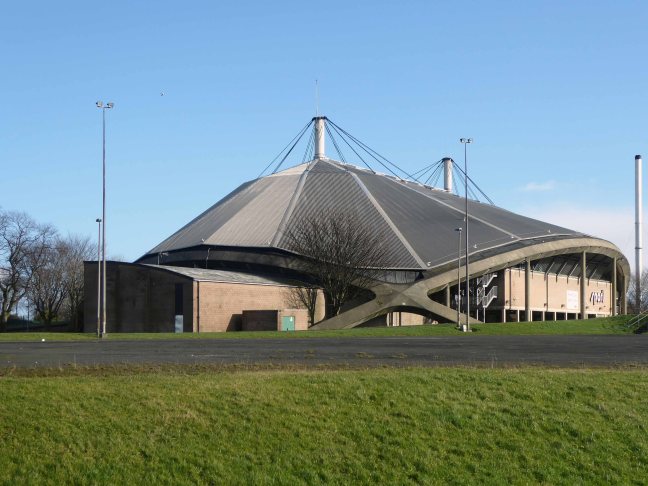
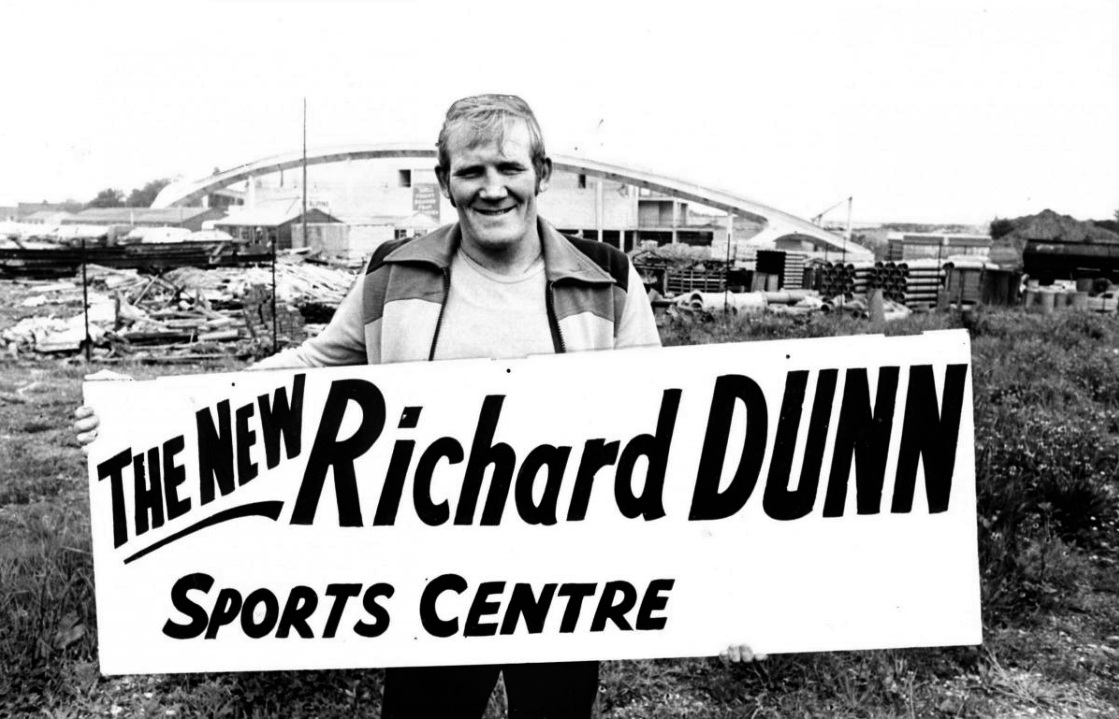
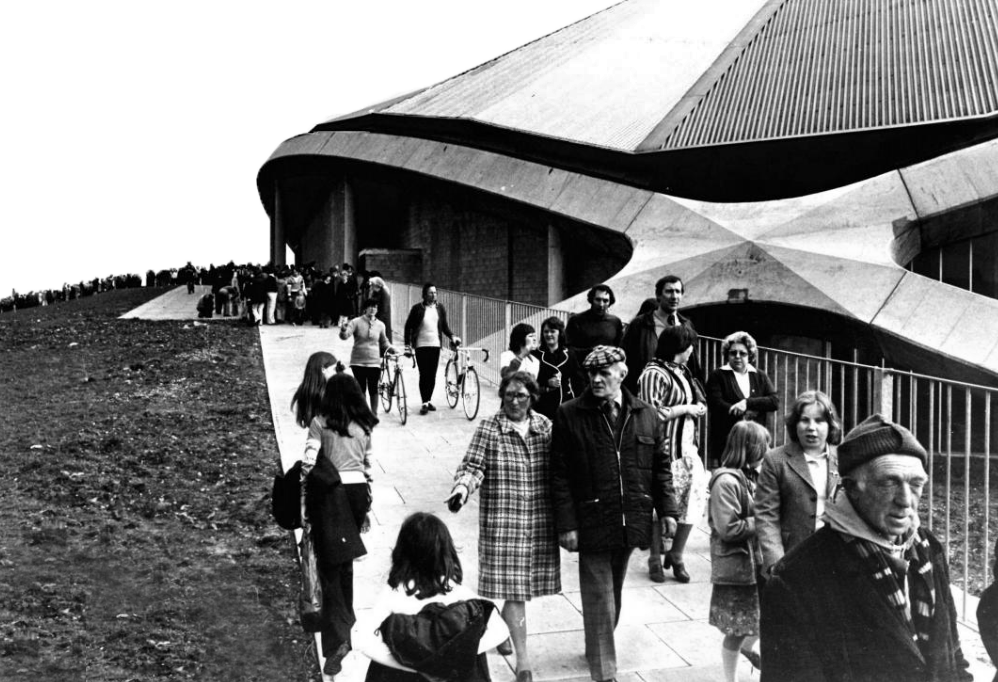
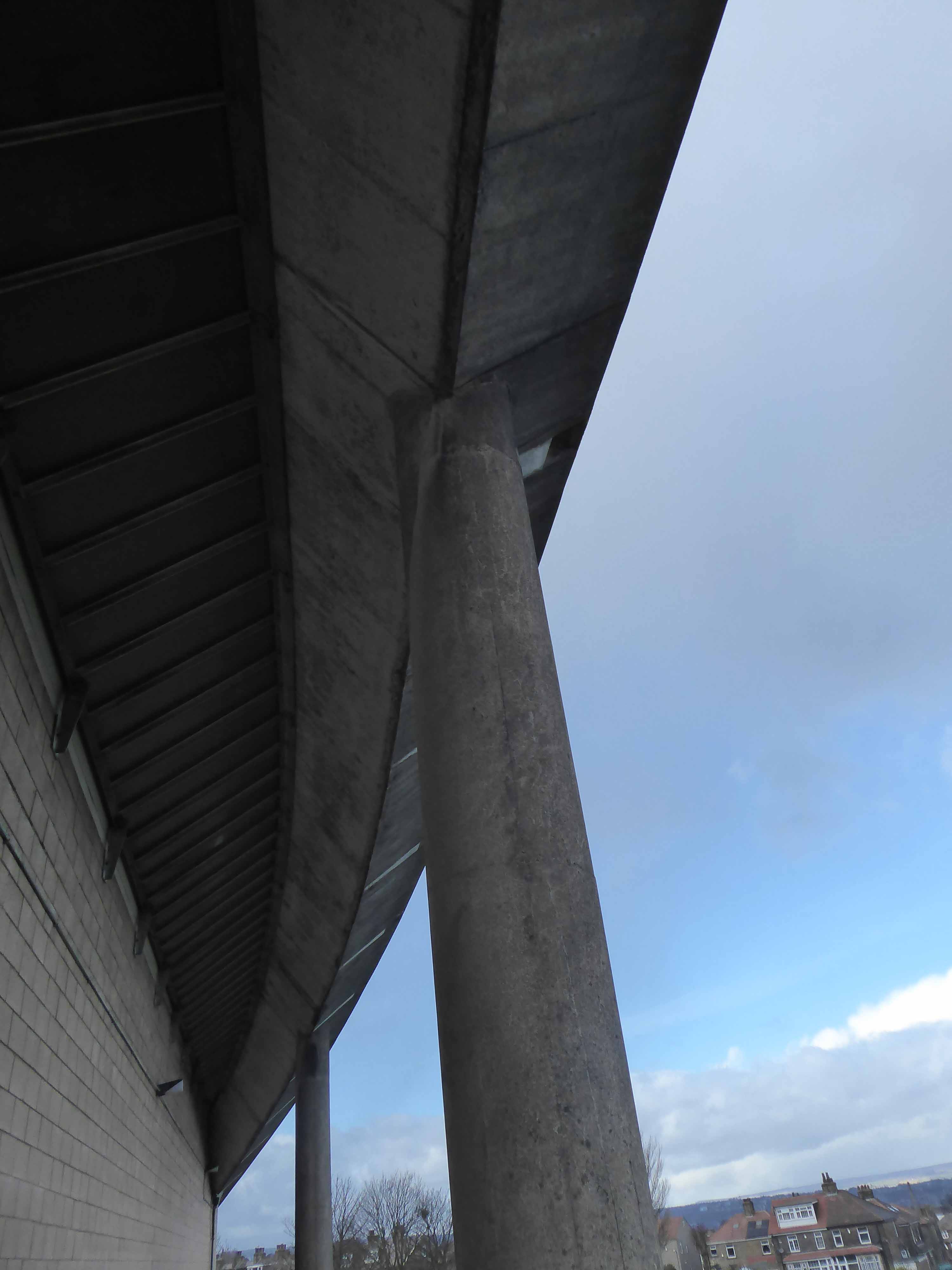
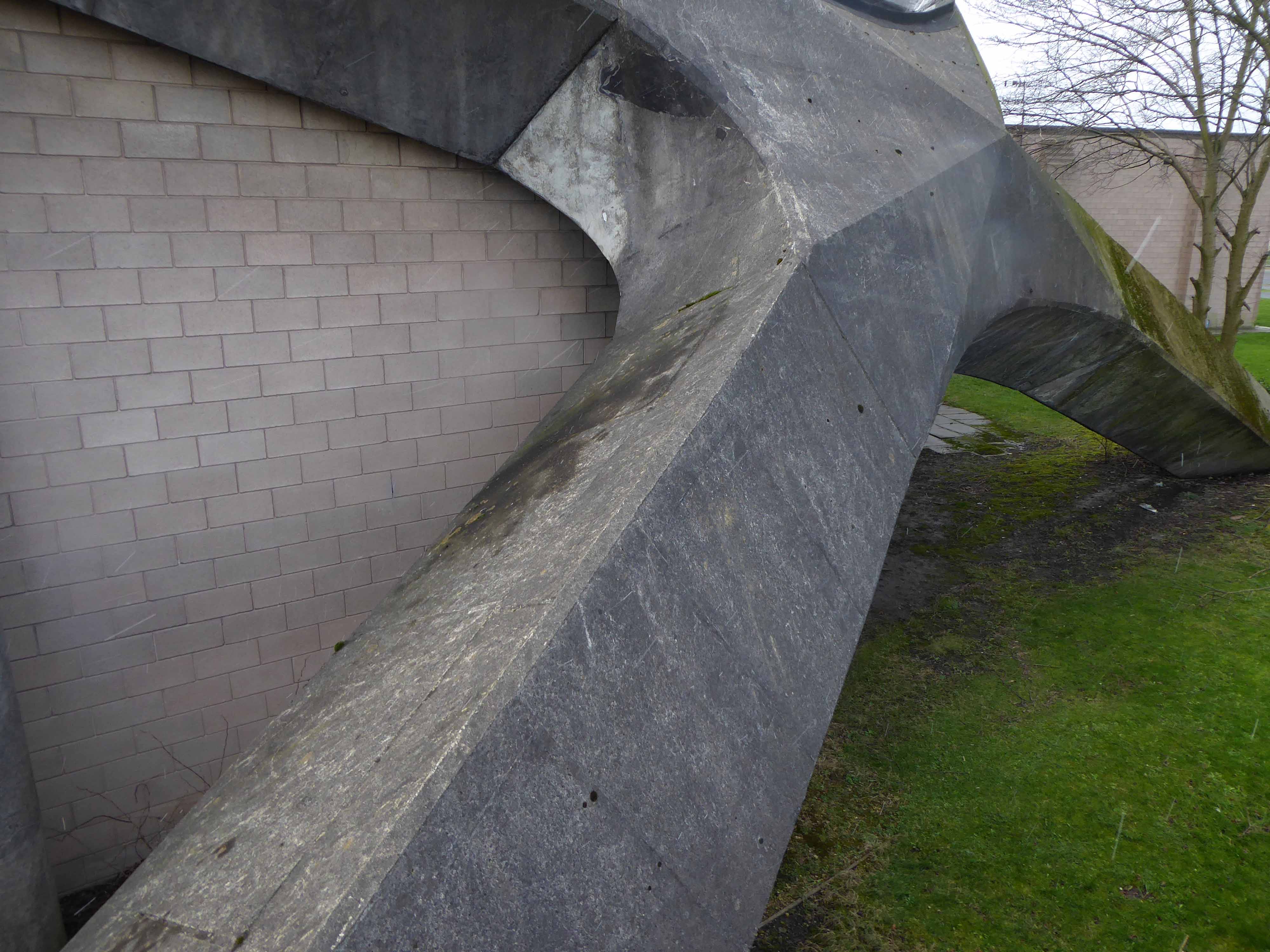
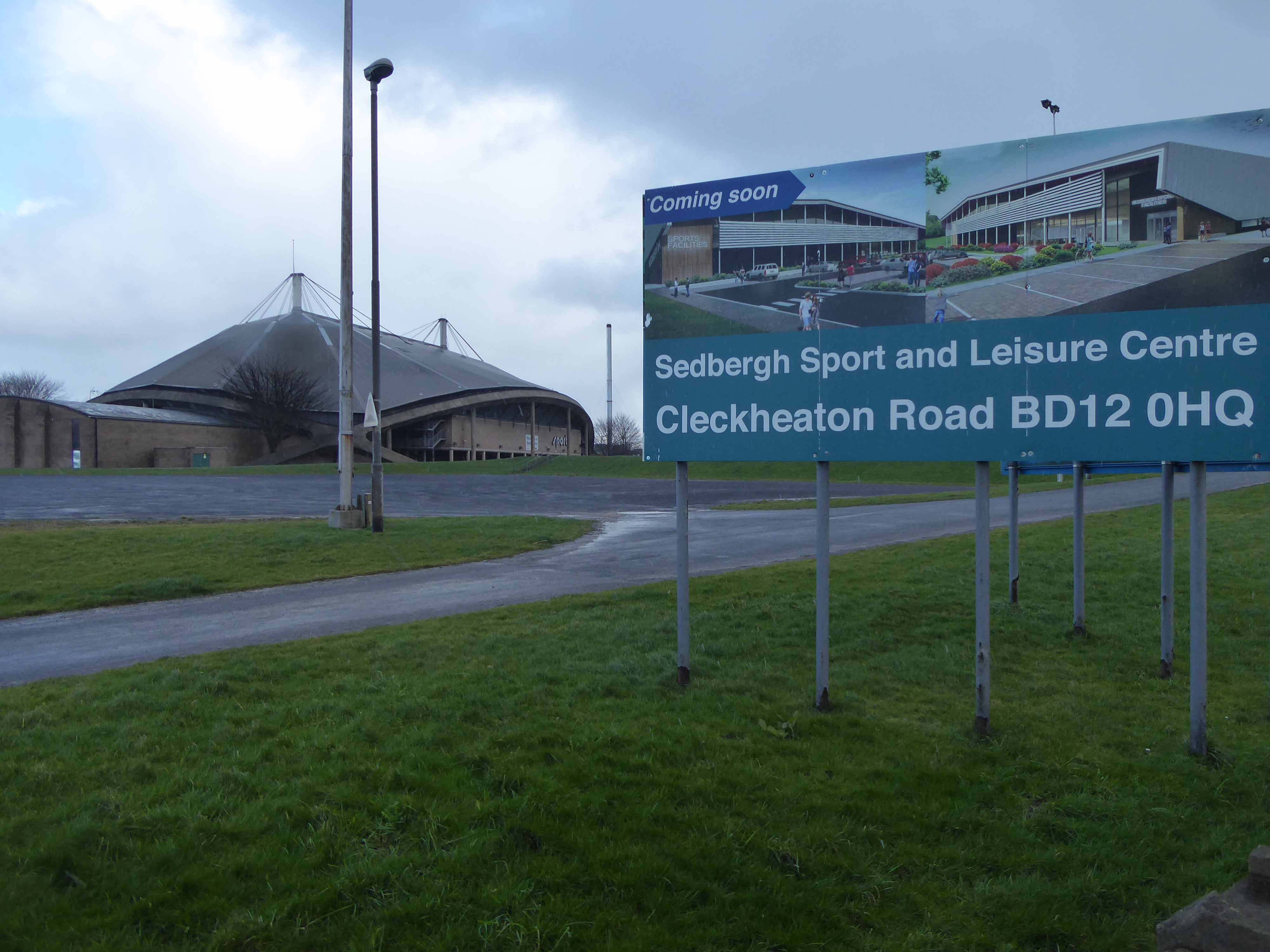
Named for local lad pugilist Richard Dunn, the ambitious imagining of architect Gordon Elliott – the sports centre opened in 1978.
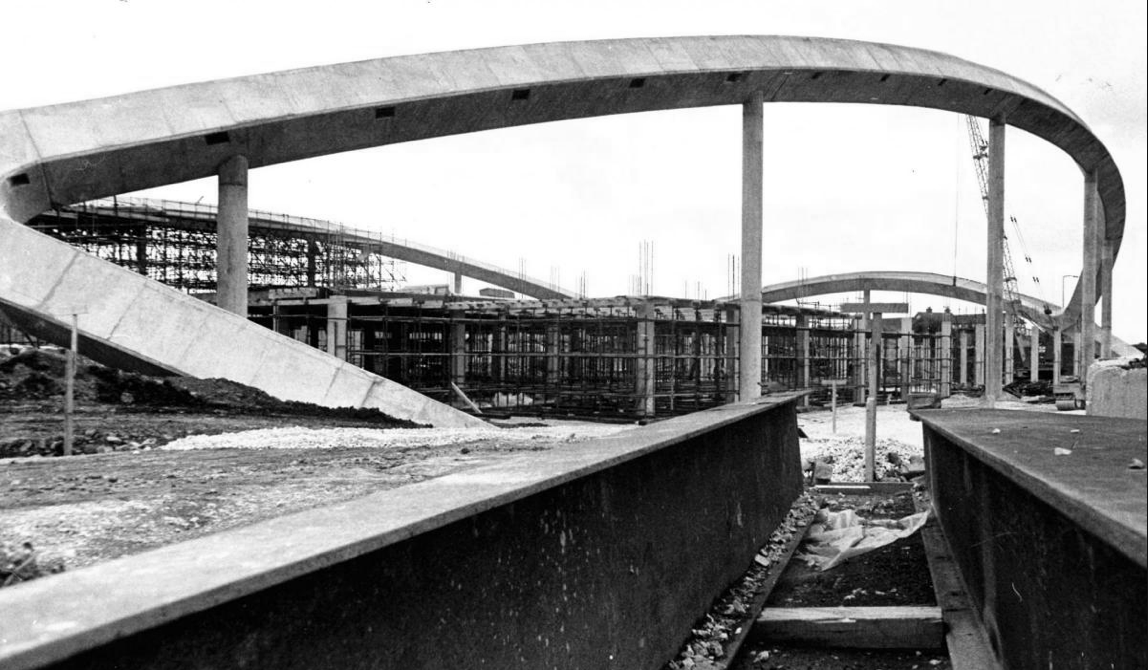
The Richard Dunn Sports Centre, originally Odsal Sports Centre, was designed by myself Trevor Skempton, as part of a team in the office of Owen Perry, Bradford City Architect until 1974.
Gordon Elliot then took over; as Chief Architect for the Met District, after the construction contract had been let.
Comprising pools, sports hall, dance studio, sauna, gym and ancillary facilities the centre was certainly state of the art.
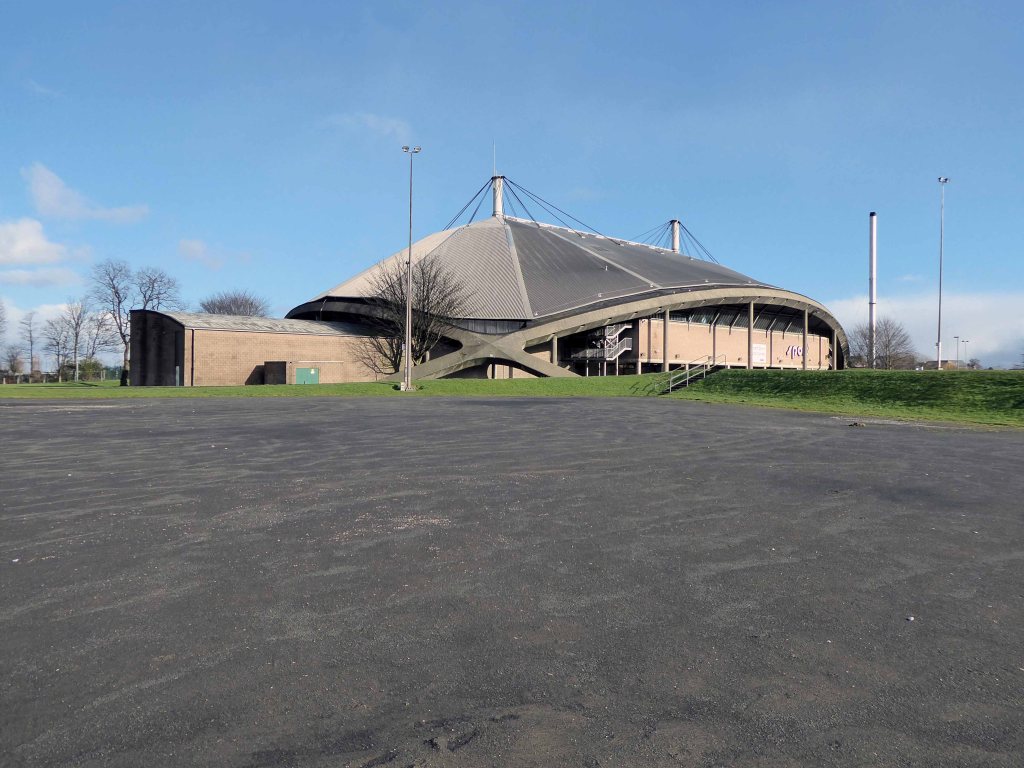
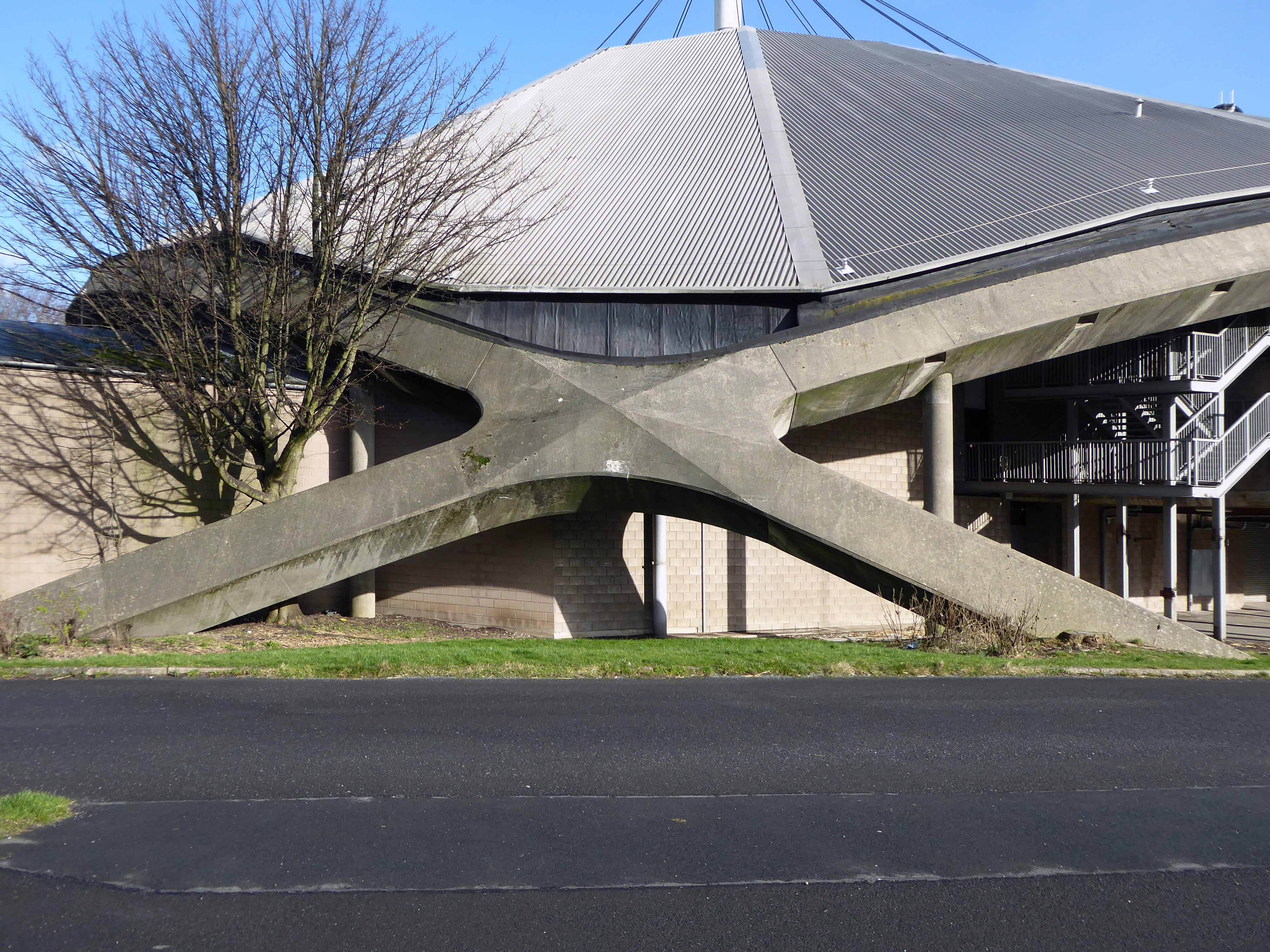
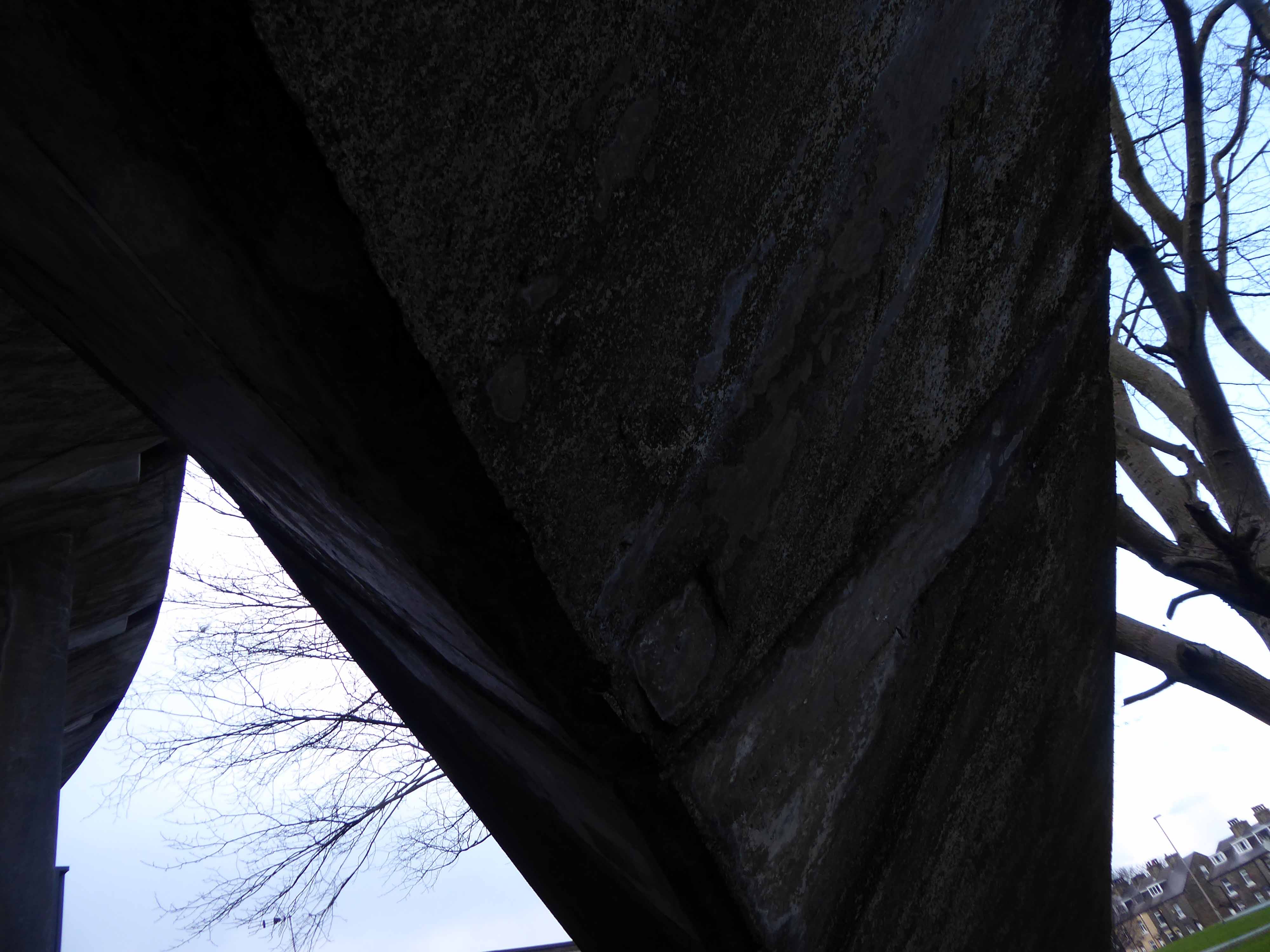
Sweeping interlocking arcs of concrete, were at the heart of the structure.
Topped out with a suspended canopy.
Attracting huge crowds on the occasion of its opening.
It’s remarkable – here are my photographs from February 2020.
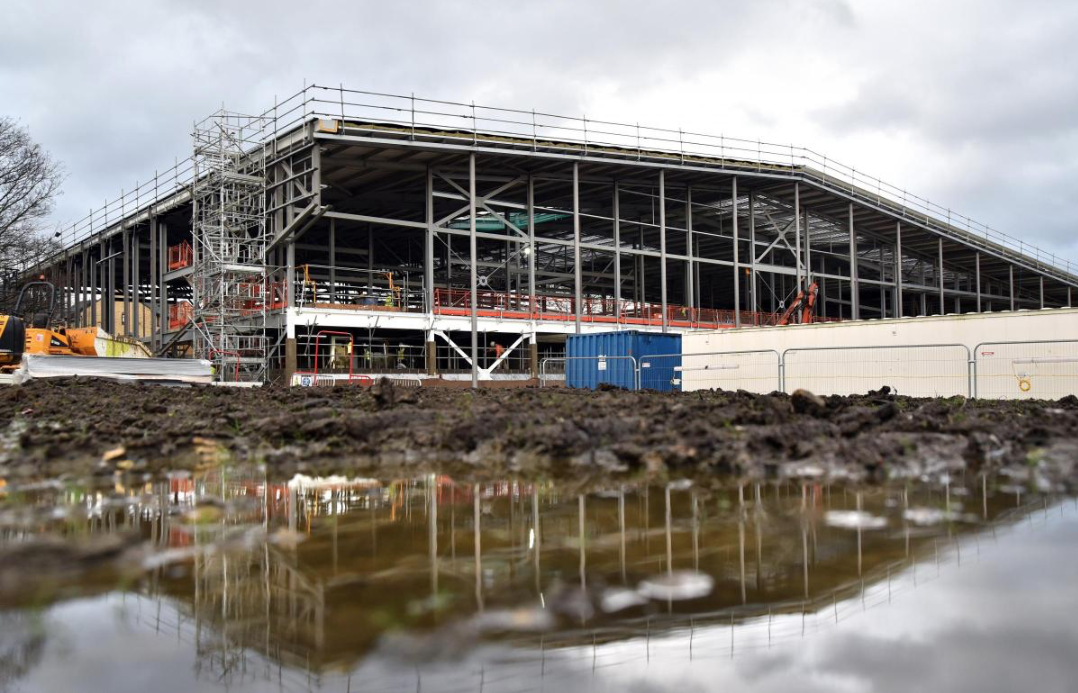
I advise you to get along and take a look, just as soon as humanly possible.
Recently John Mann was granted permission to snap the deserted interior.
The ghostly gasps of the exercising public exorcised forever.
Eileen Ayres, who has worked at Richard Dunns from before it even opened to the public said:
When I came here this place was super, super modern – state of the art. Now we’re moving to Sedbergh it is great to be in a state of the art facility again. The younger staff are so excited about the move to a new, modern sports centre.
I have a lot of memories of here, a lot of staff I’ve met and become friends with over the years. We’ve had a lot of events here, international events that have taken place here over the years. When Richard Dunn was new a lot of people wanted to hold these events here. Now we have a new leisure centre I hope some of these events come back to Bradford.
I started at 23, I said I was just coming for a year. Here we are 41 years later.
When asked if she thinks it is right to be closing down Richard Dunn she said:
In my heart no, but realistically it has to go. It is run down – it would be way too expensive to run or refurbish. You can’t keep putting money into old things.
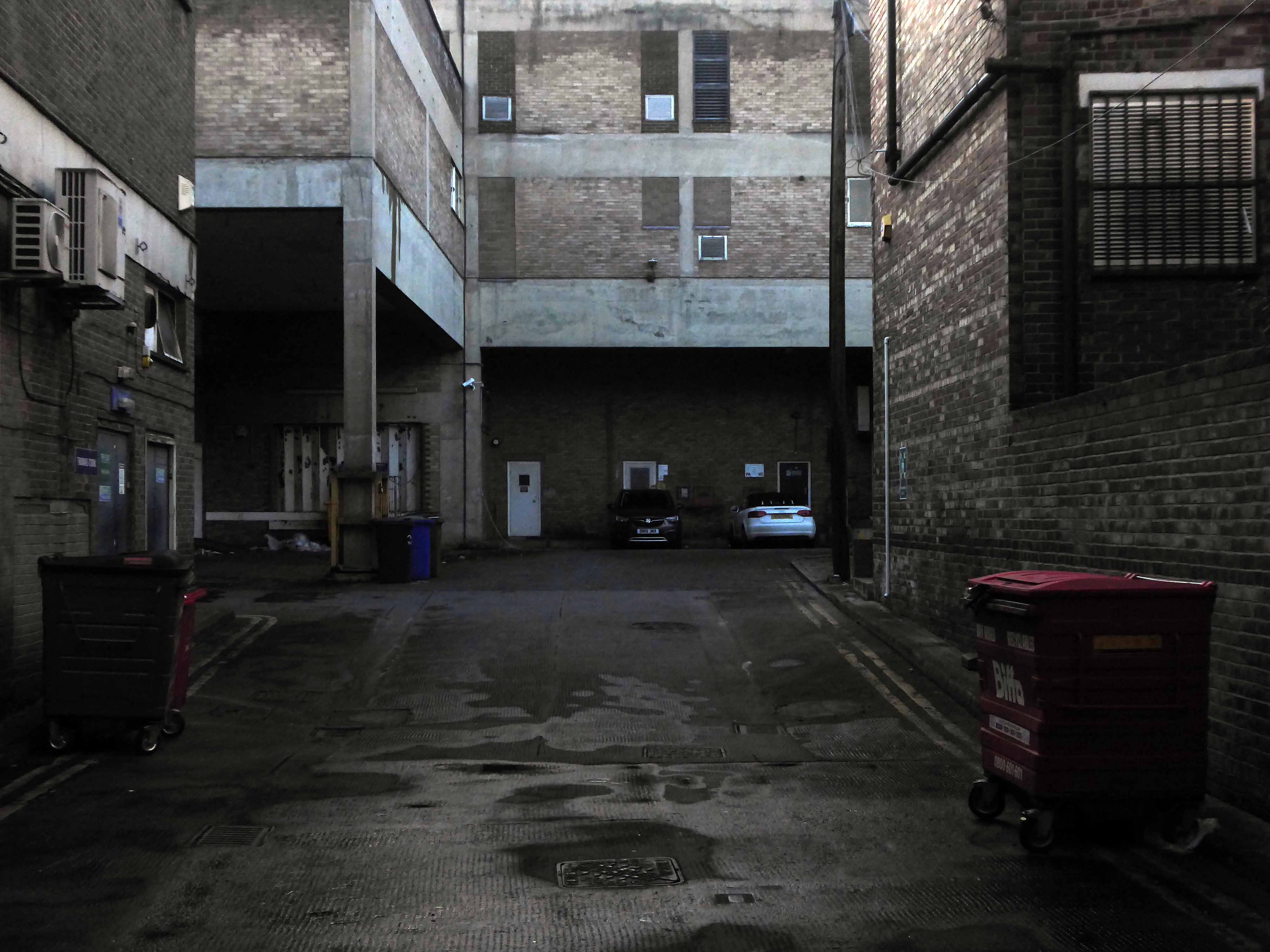
There comes a time in very life when you finally go where you have never been before – even though you have walked by that very same place almost every day.
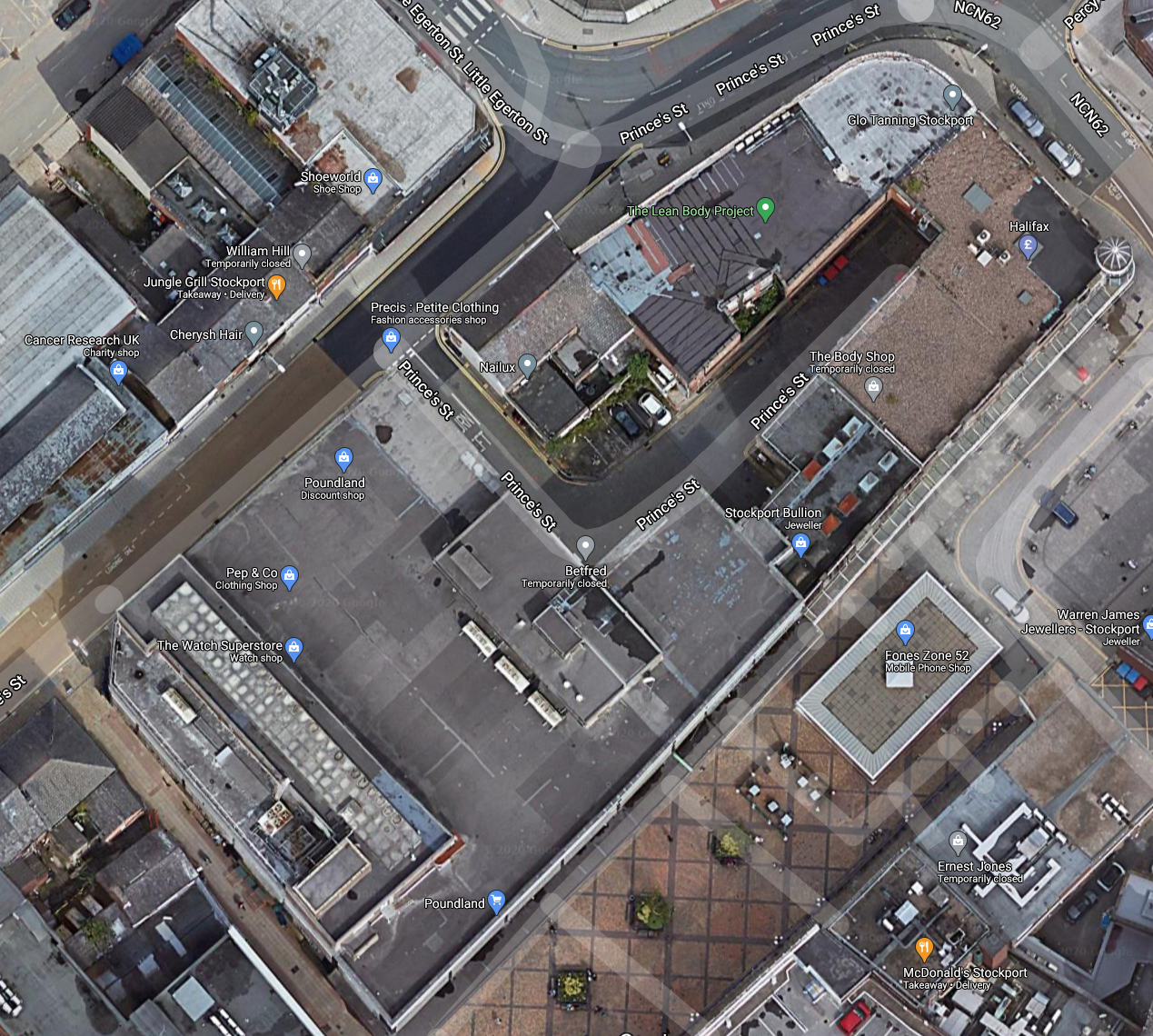
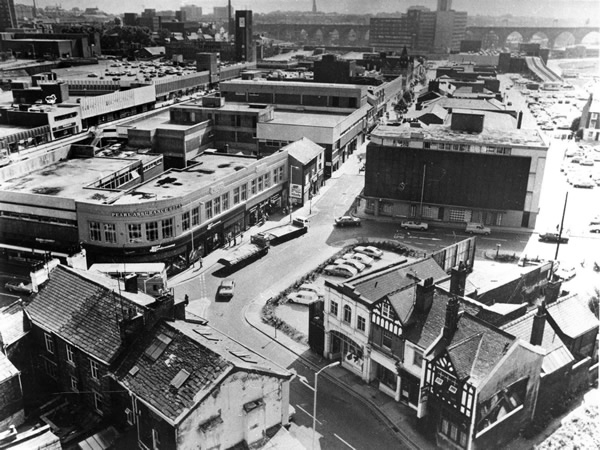
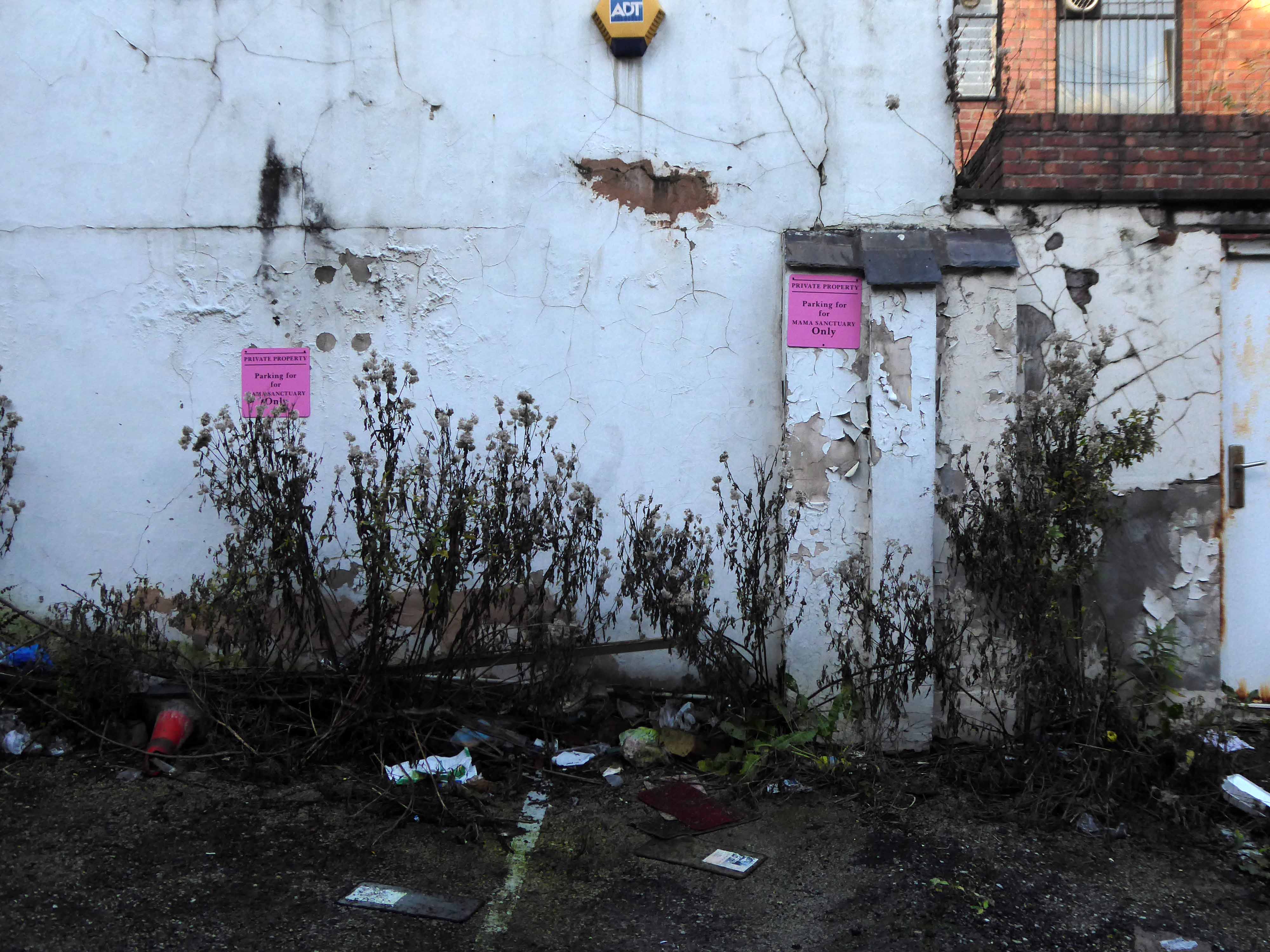
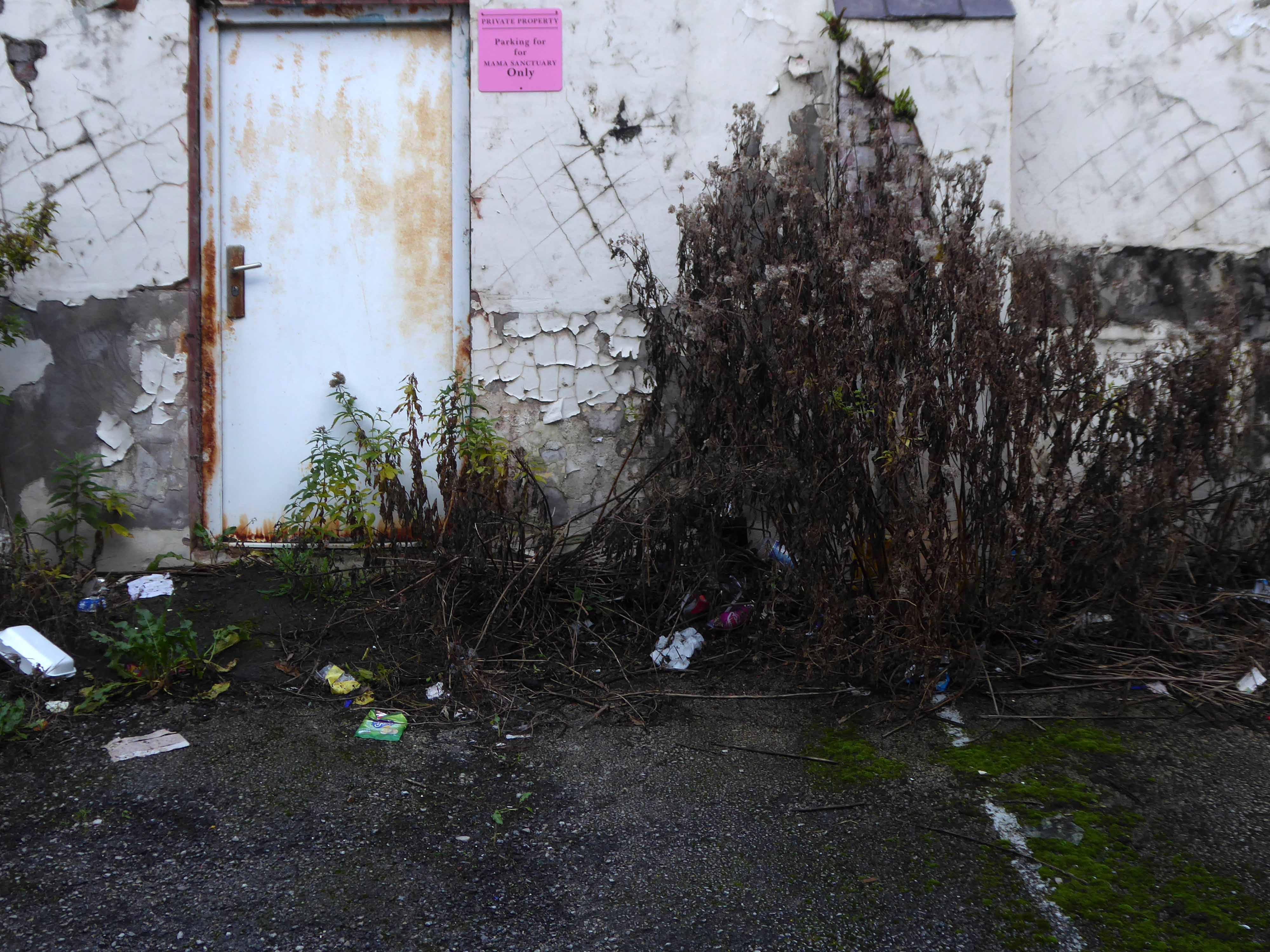
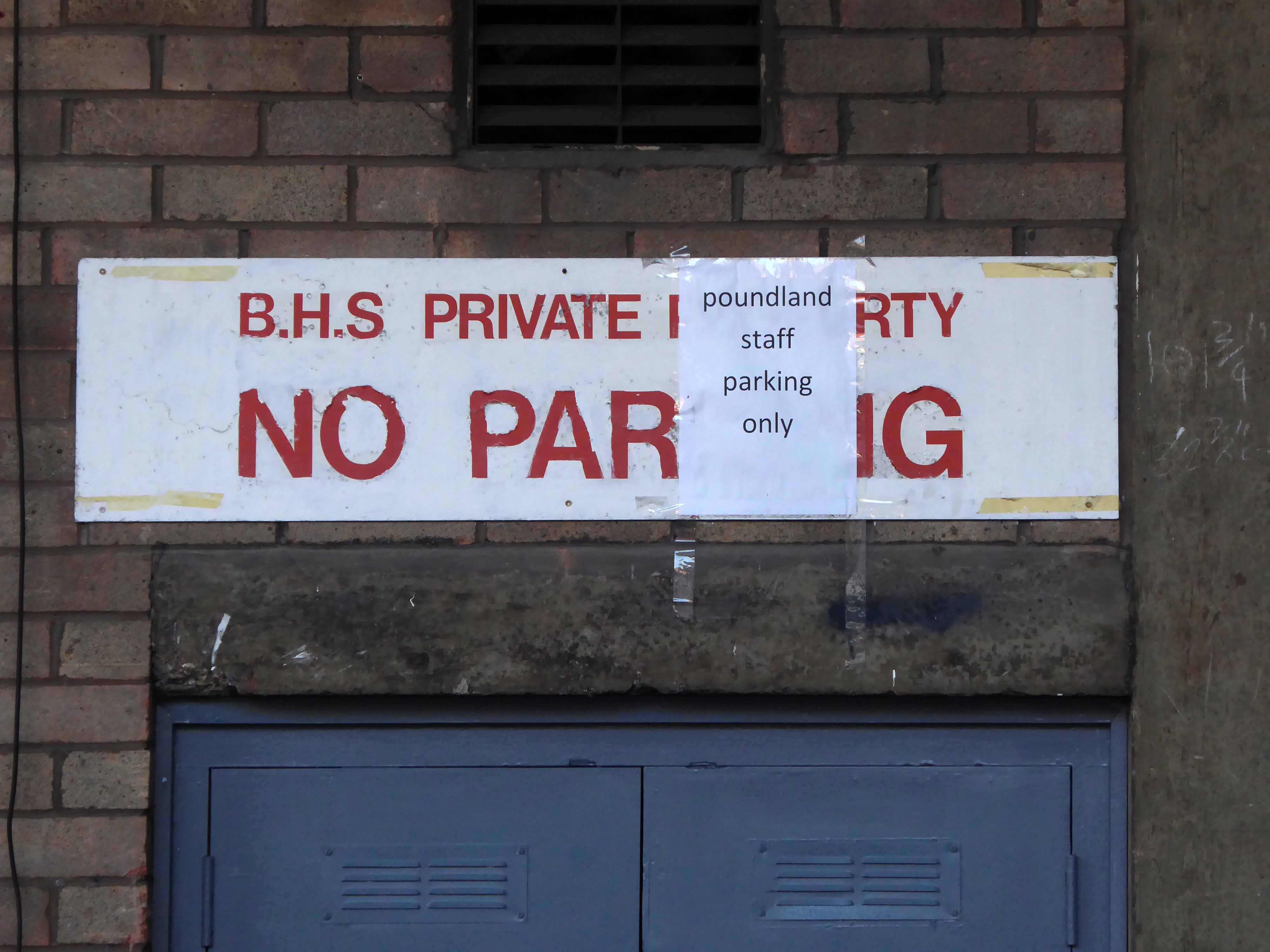
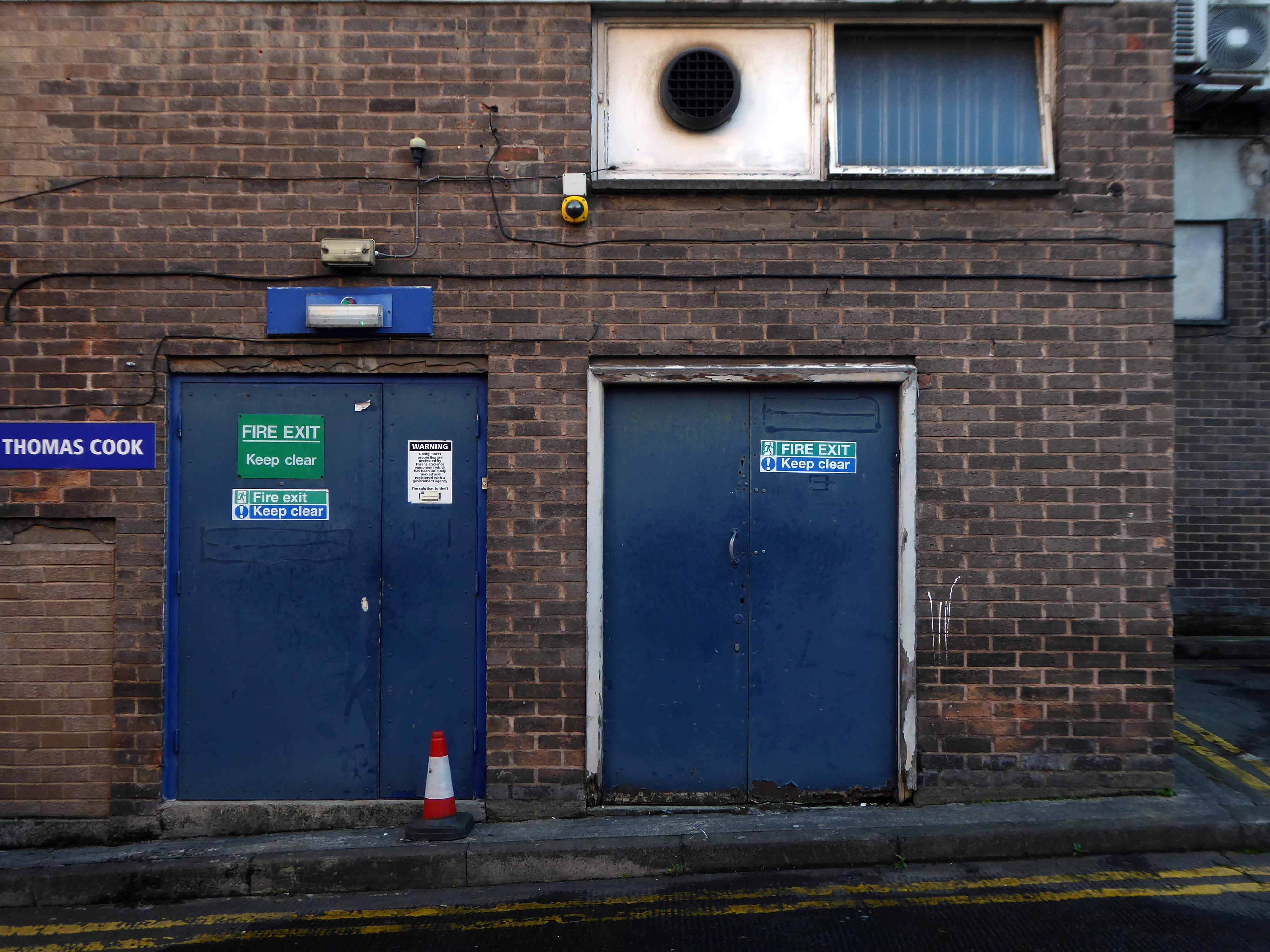
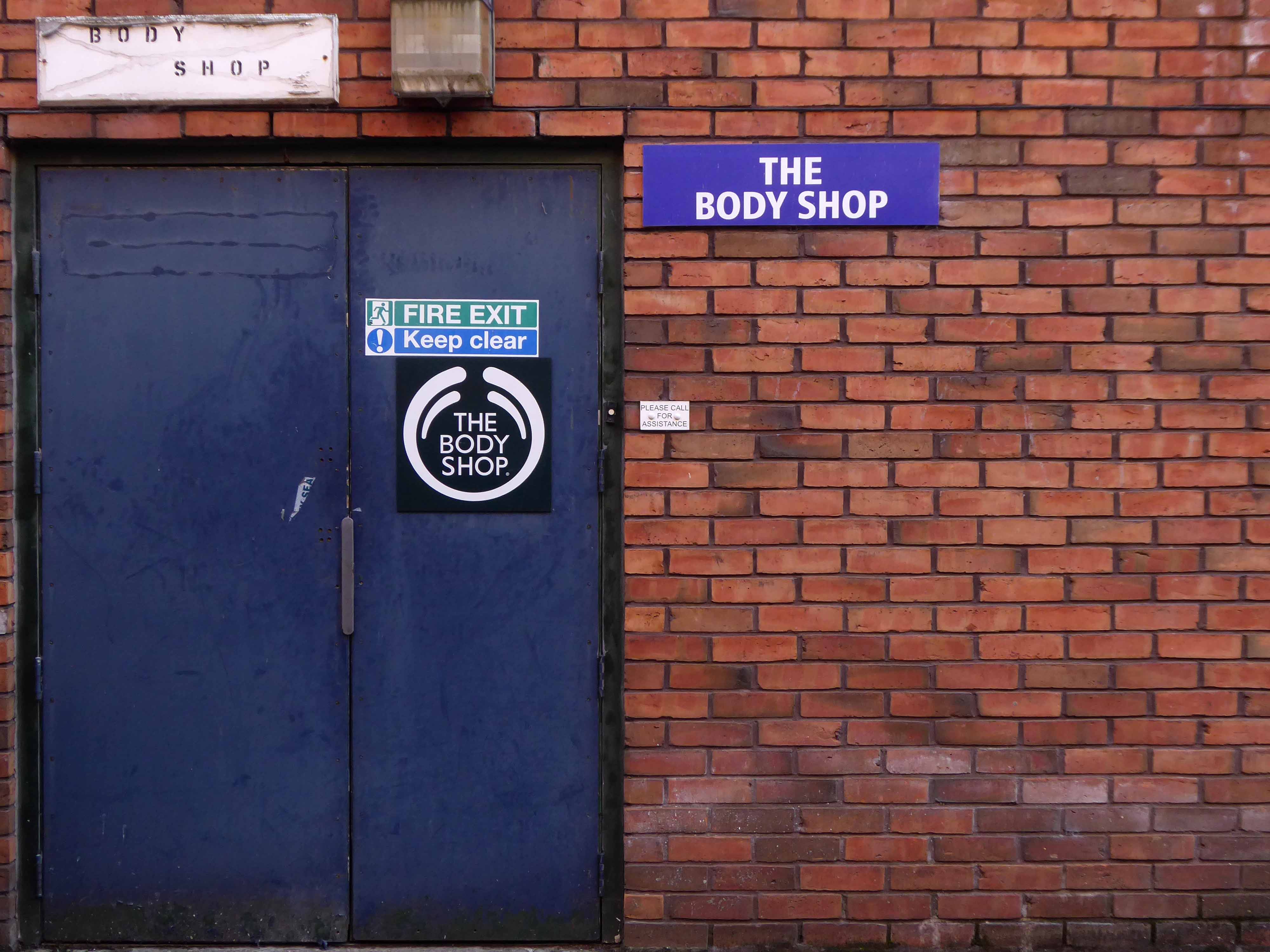
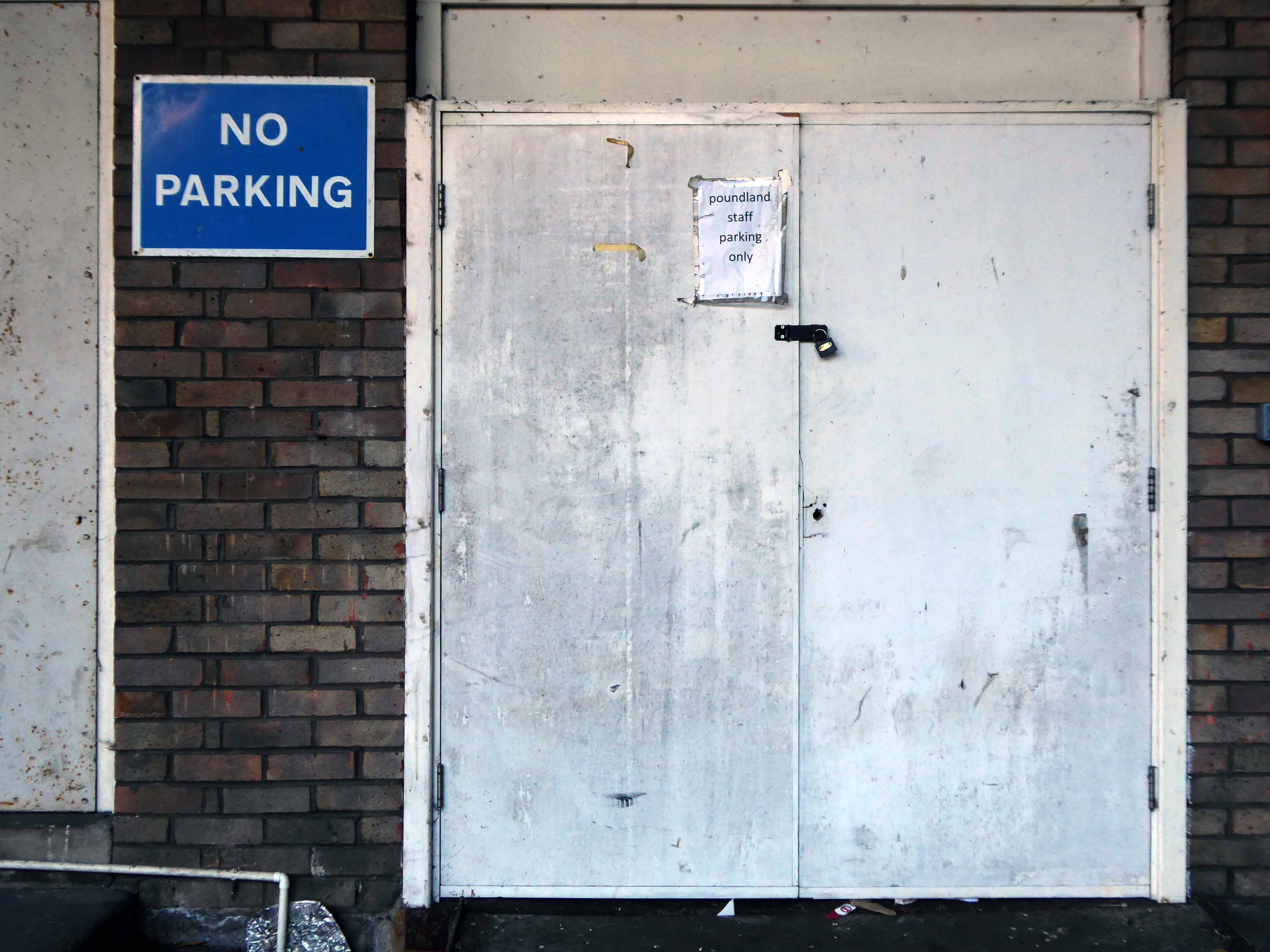
It is bounded by the former Burton’s store, the long gone BHS now home to Poundland, a later extension to the precinct and a Nineteenth century building. Illustrating the mongrel nature of many English towns, the result of world wars, speculative development and town planning.
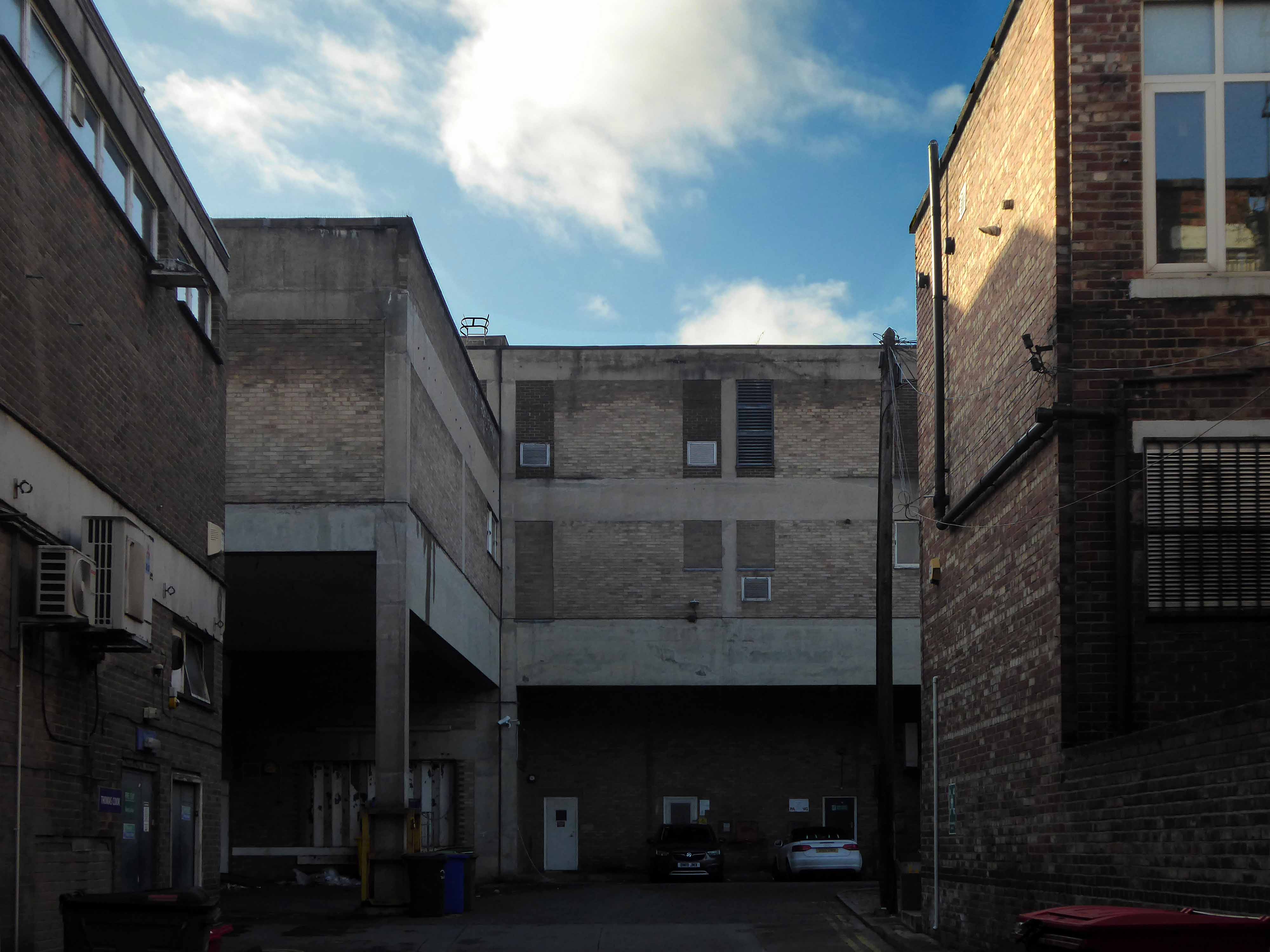
It’s a self contained world of loading, unloading unloved and overused.
Home to the pirate parker, carelessly avoiding the imposition of the municipal surcharges.
Shops and goods come and go part of the merry retail gavotte.
The trams once clang, clang, clanged along and the Picture House opened 2nd June 1913, later The Palladium, finally closing in 1956 – now occupied by a huge Charity Shop – Highway Hope.
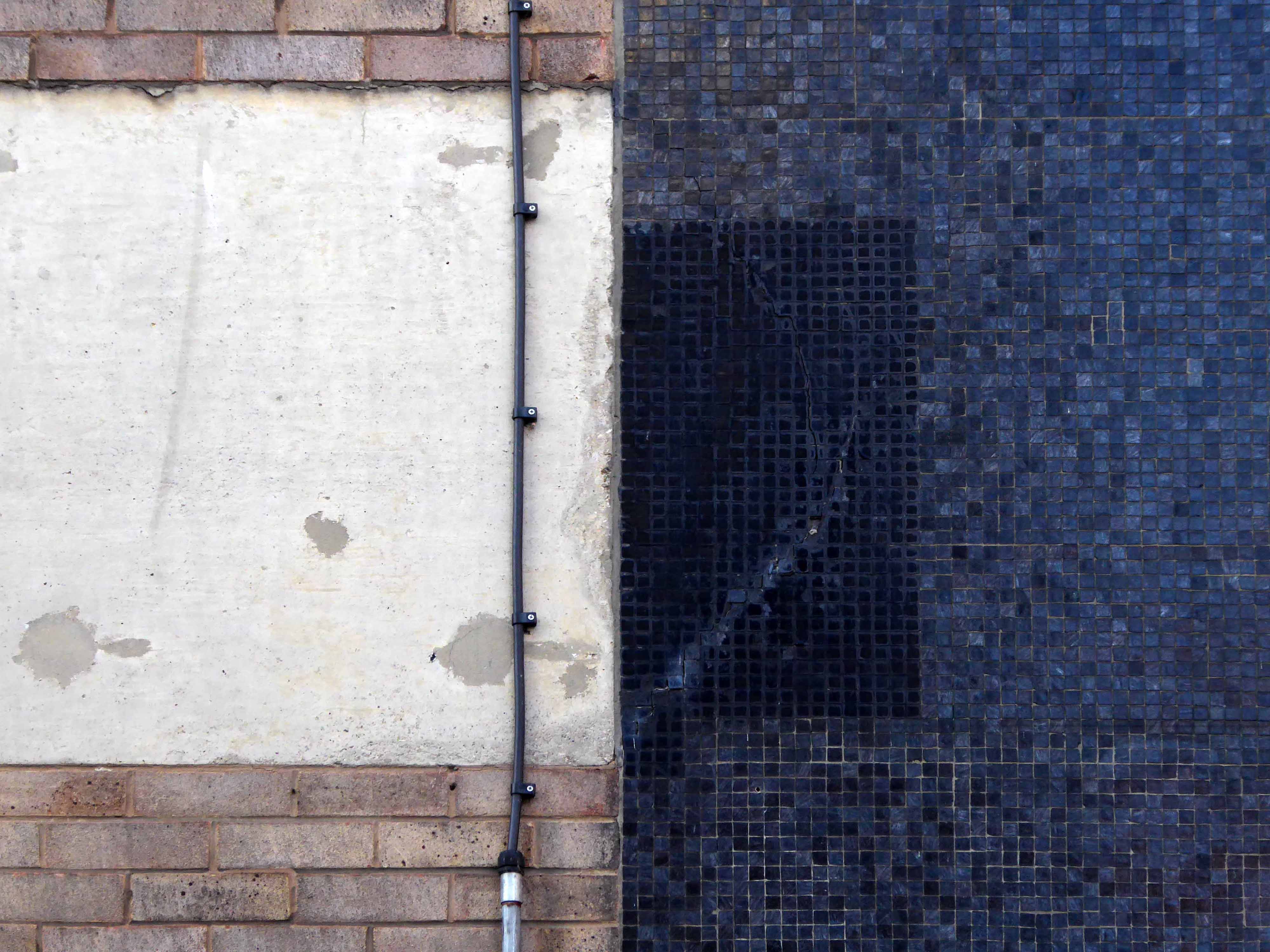
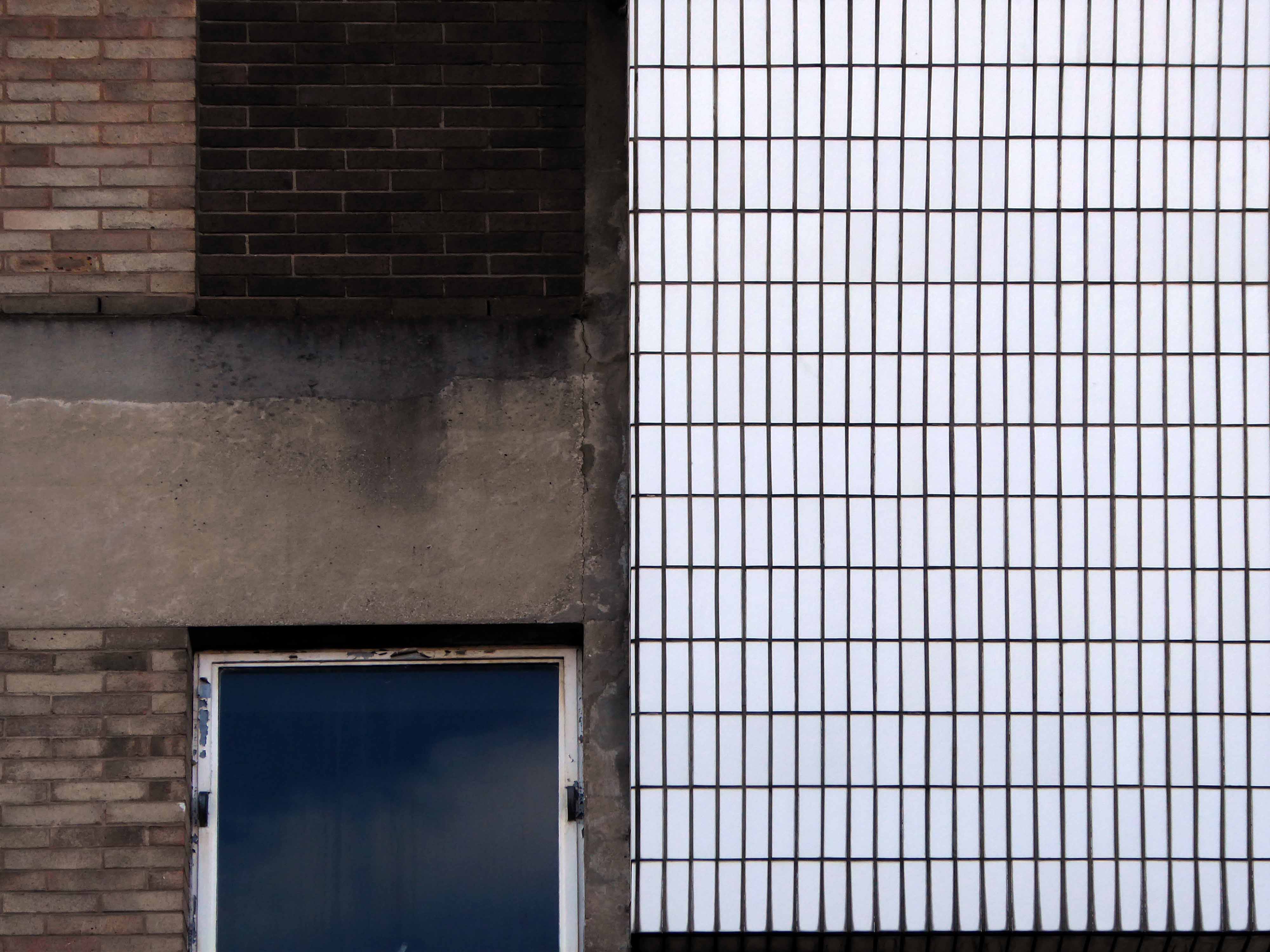
The Merseyway construction is a modern amalgam of mosaic, brick and cast concrete.
The older brick building now almost rendered and coated in off white exterior emulsion.
There are signs of life and former lives.
This is a nether world that never really was a world at all.
The place where the sun almost doesn’t shine.
And the blue sky seems like an unwelcome intrusion.
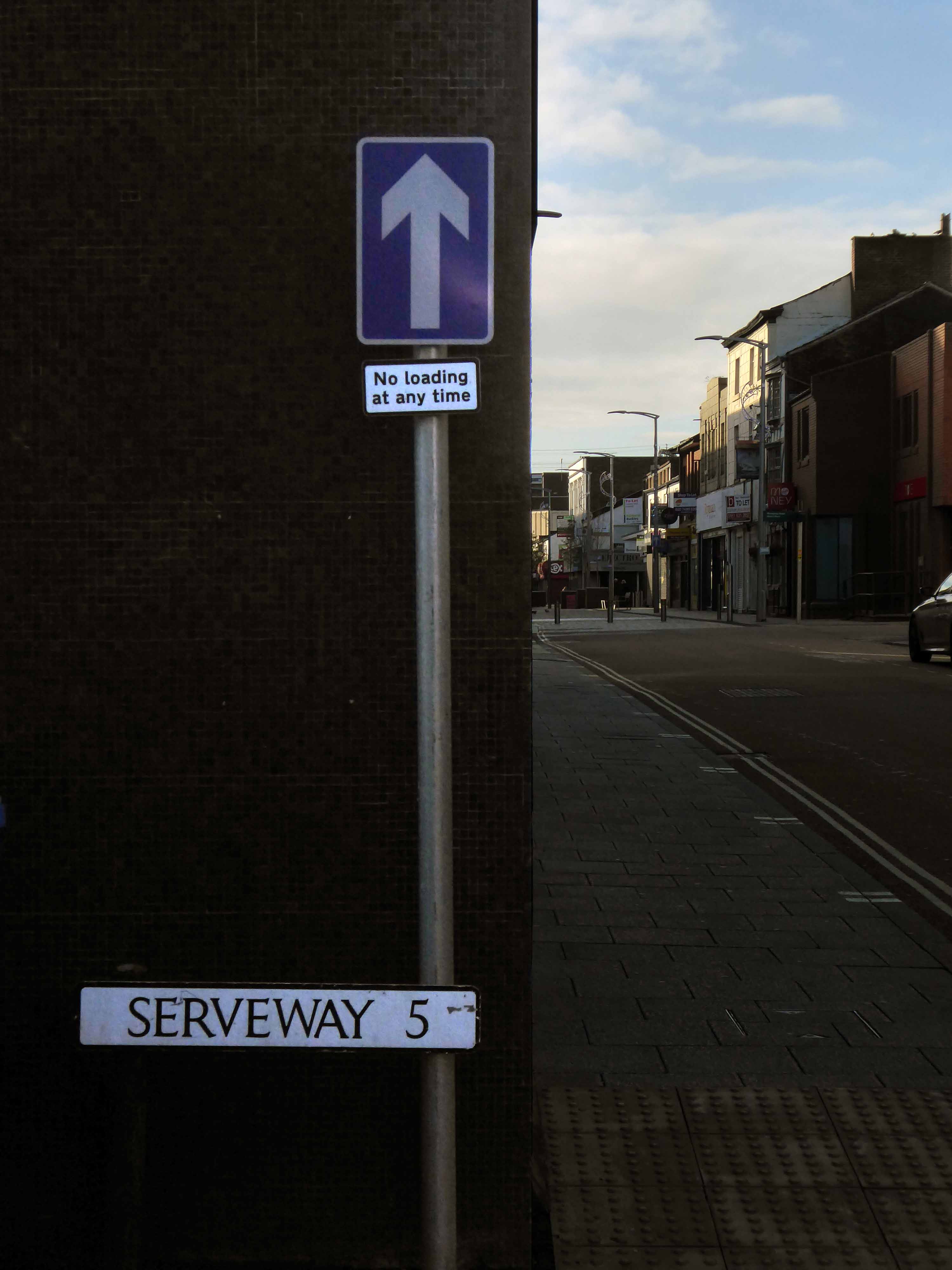
So as the retail sector contracts and the virus remains viral – wither Serveway Five?
The Council purchased the development at no cost to taxpayers via the current income stream. The rationale for purchase was to create a sustainable future for the centre via a series of targeted redevelopments. Key aspirations for the centre will be to fully integrate it into the town centre. We also want it to complement our exciting ownerships such as Debenhams, Redrock and Market Place and Underbanks.
The investment will seek to change perceptions of not only the retail offer but also Stockport as a whole. It will ultimately create a town centre that will benefit the local business community and Stockport residents.
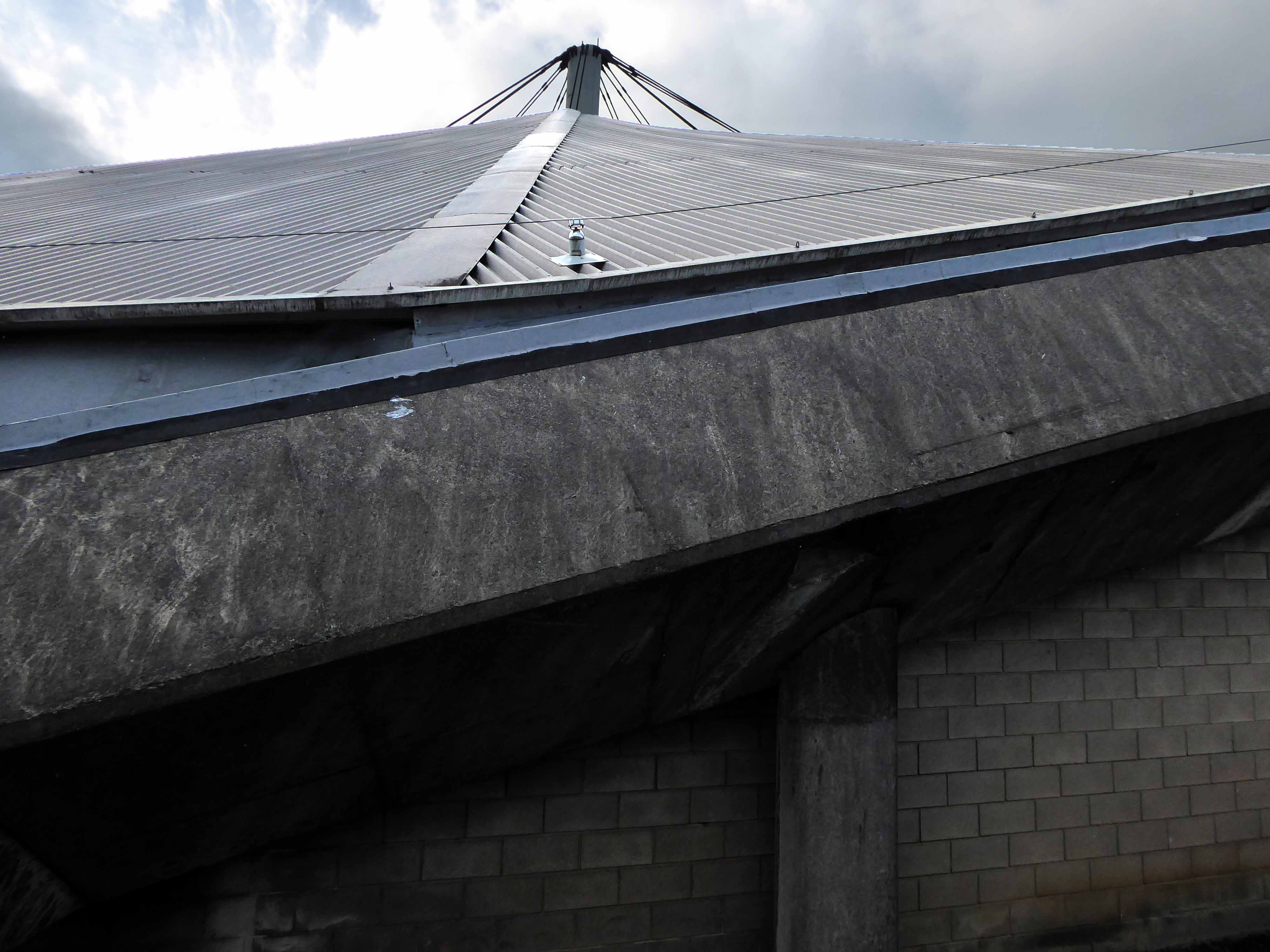
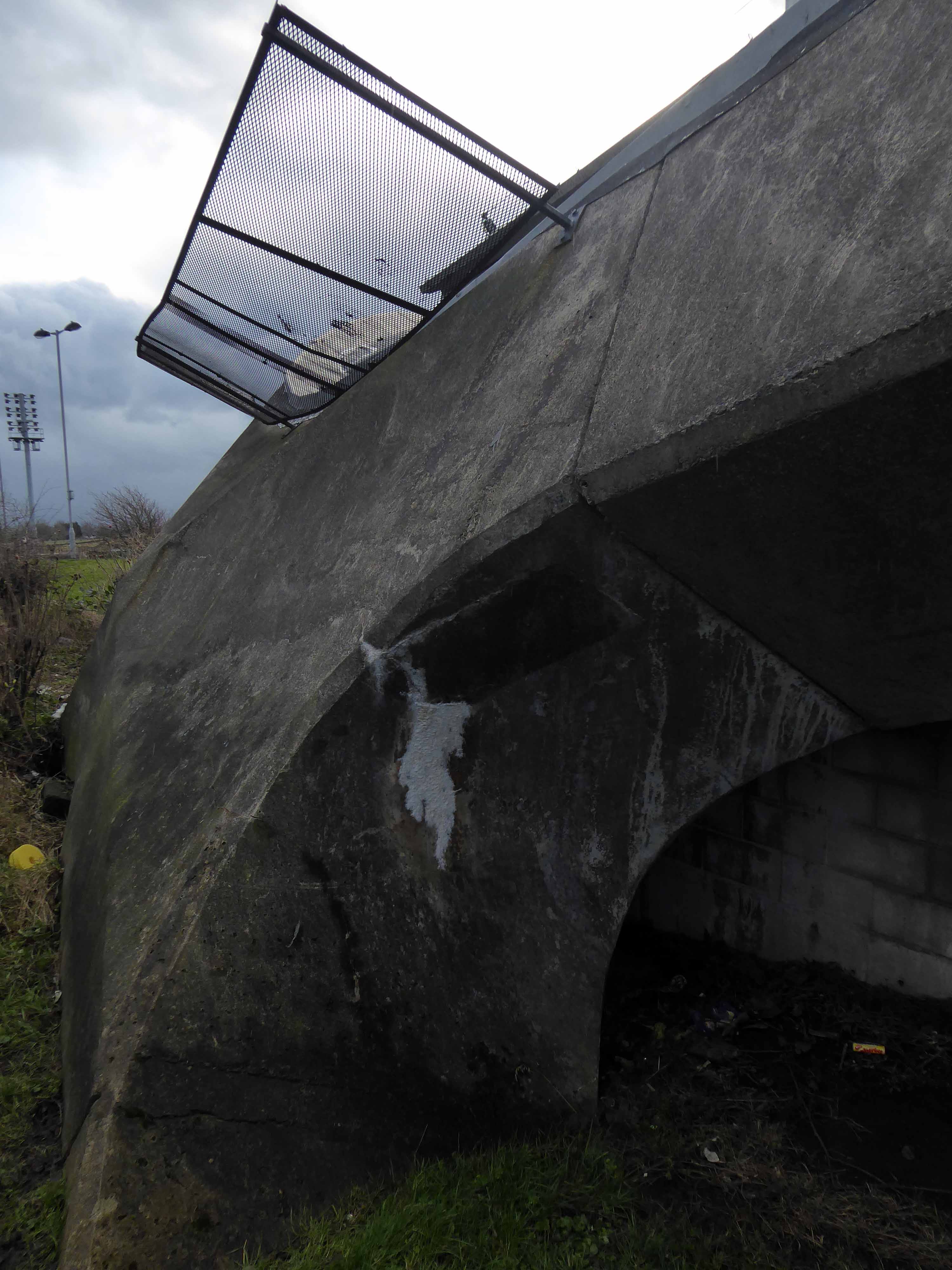
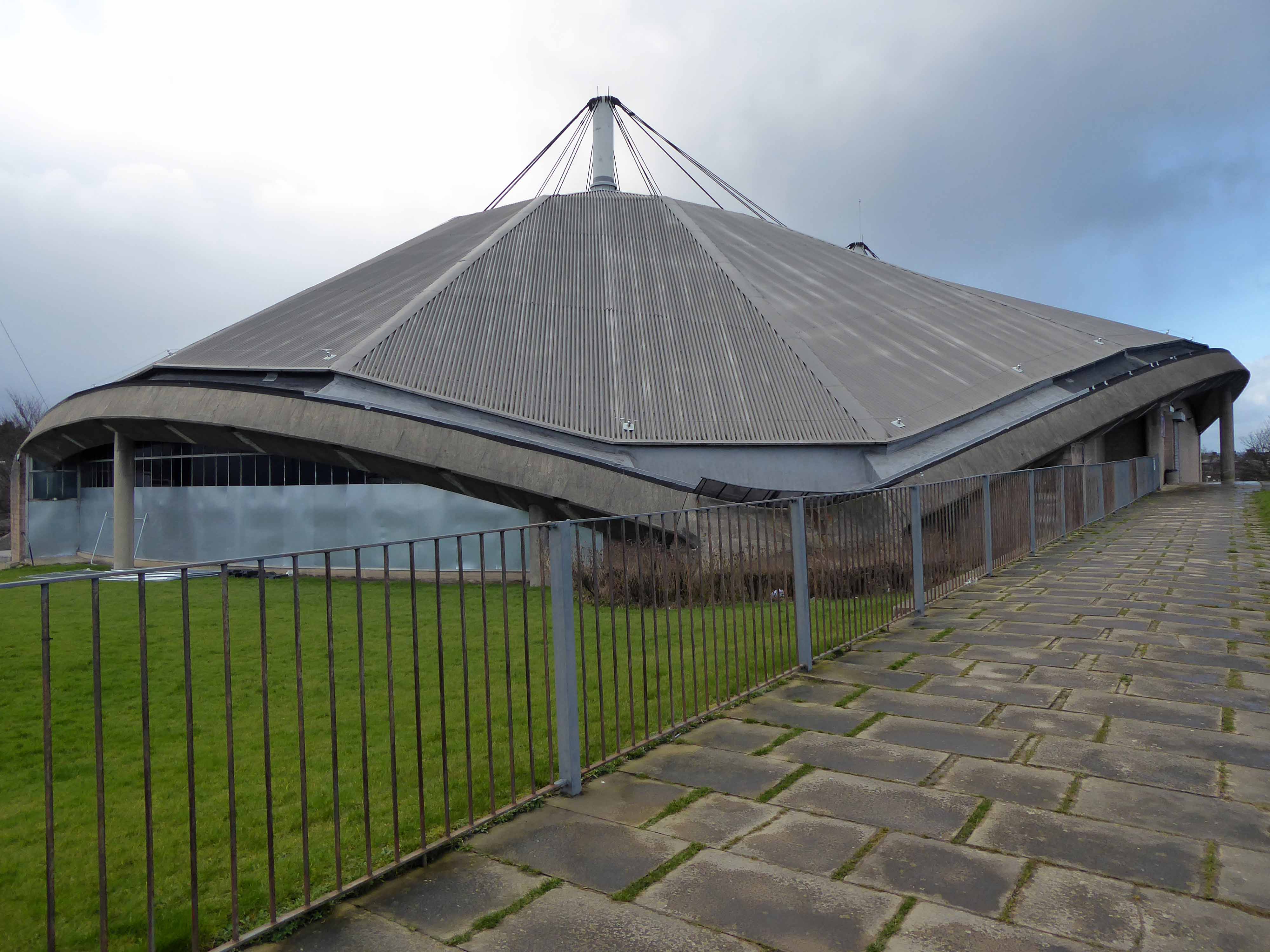
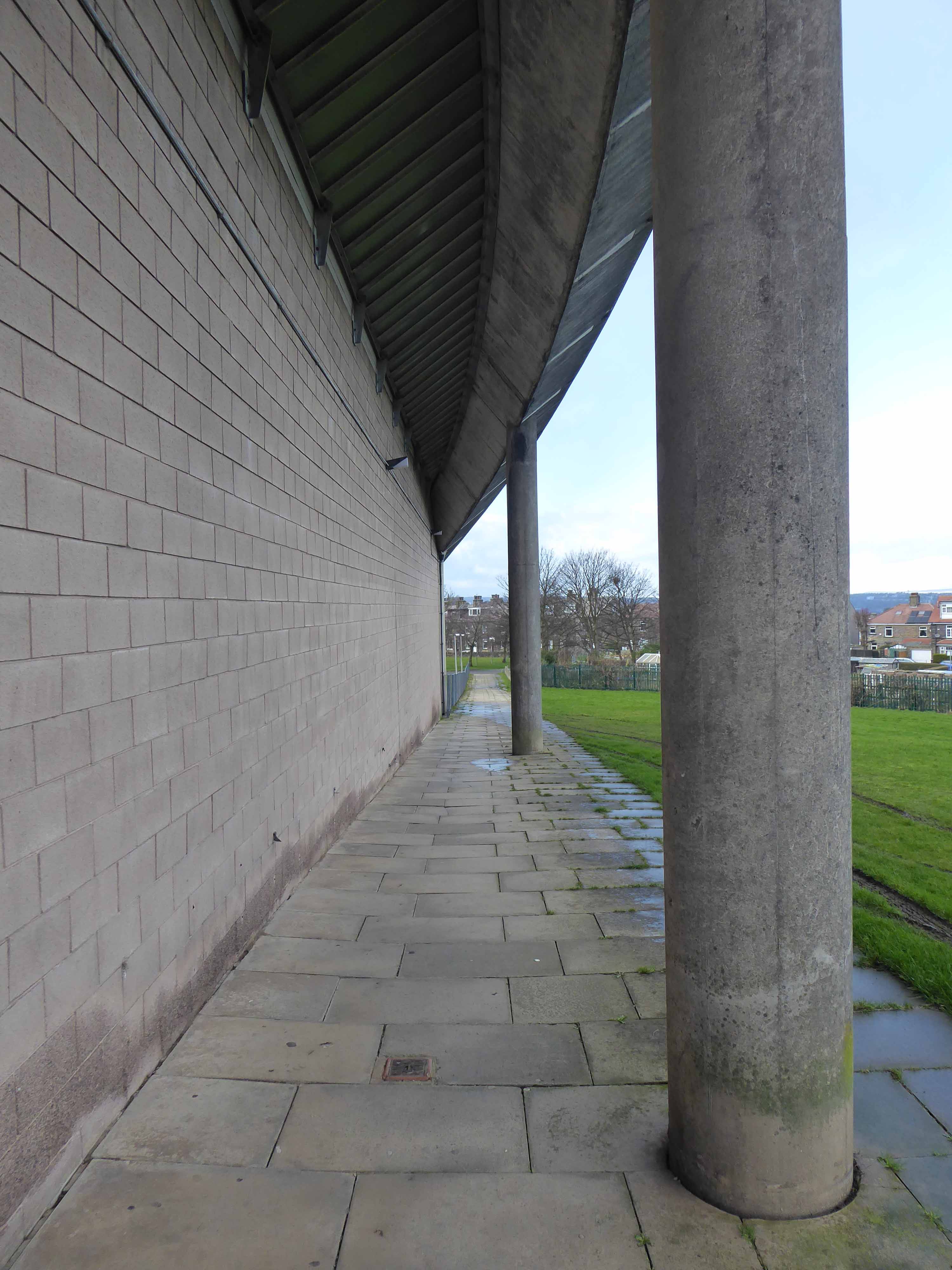
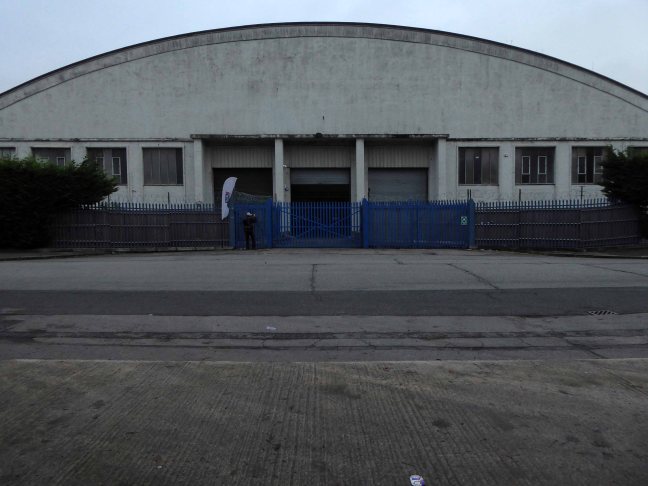
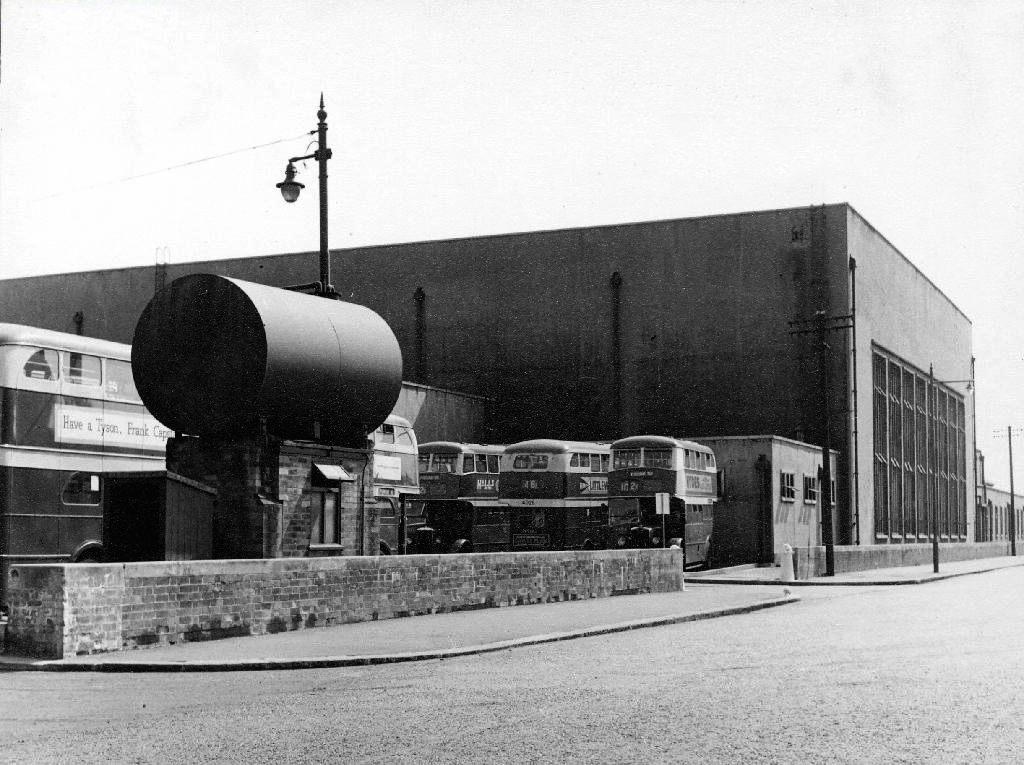
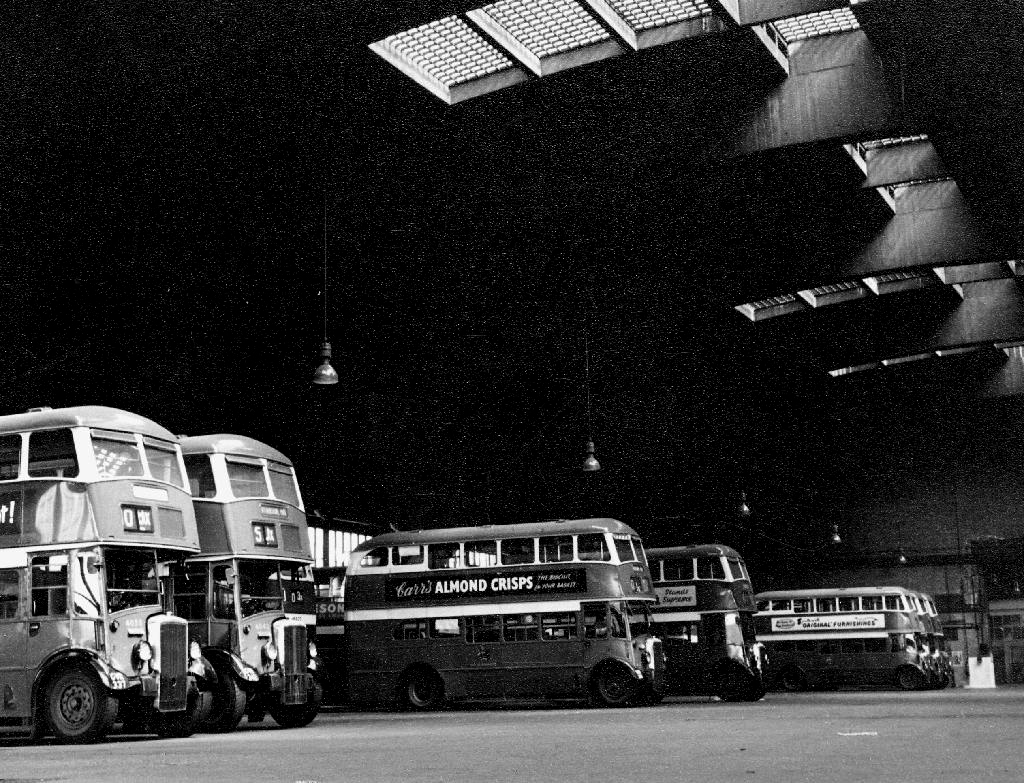
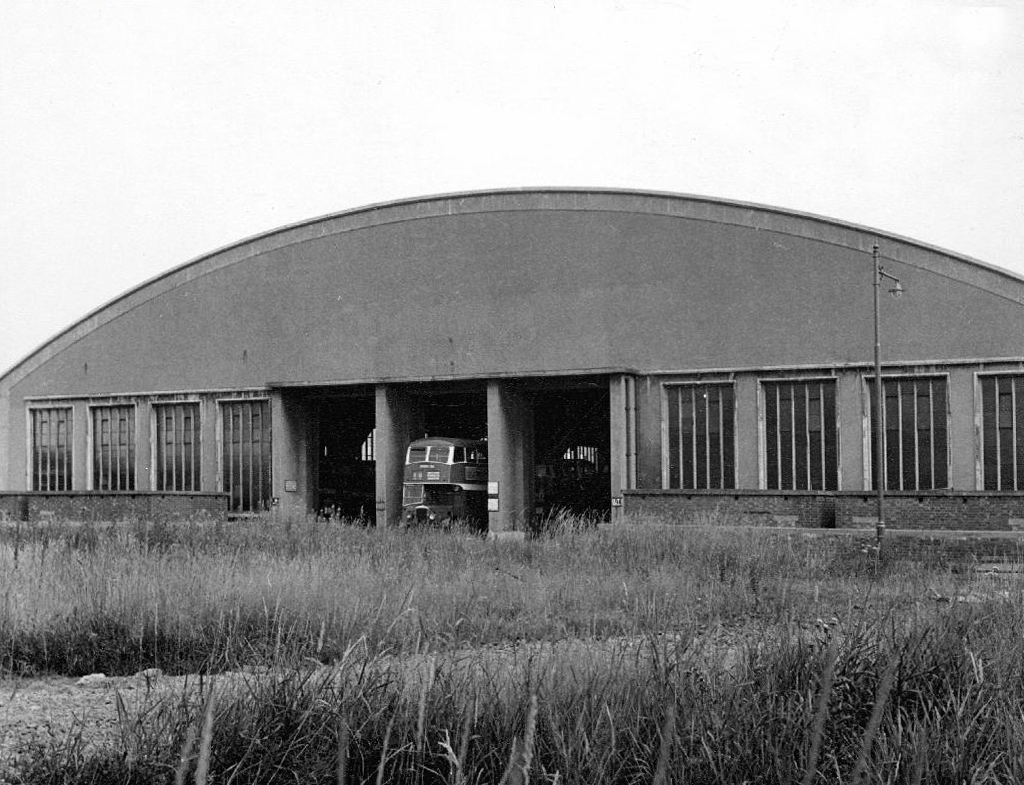
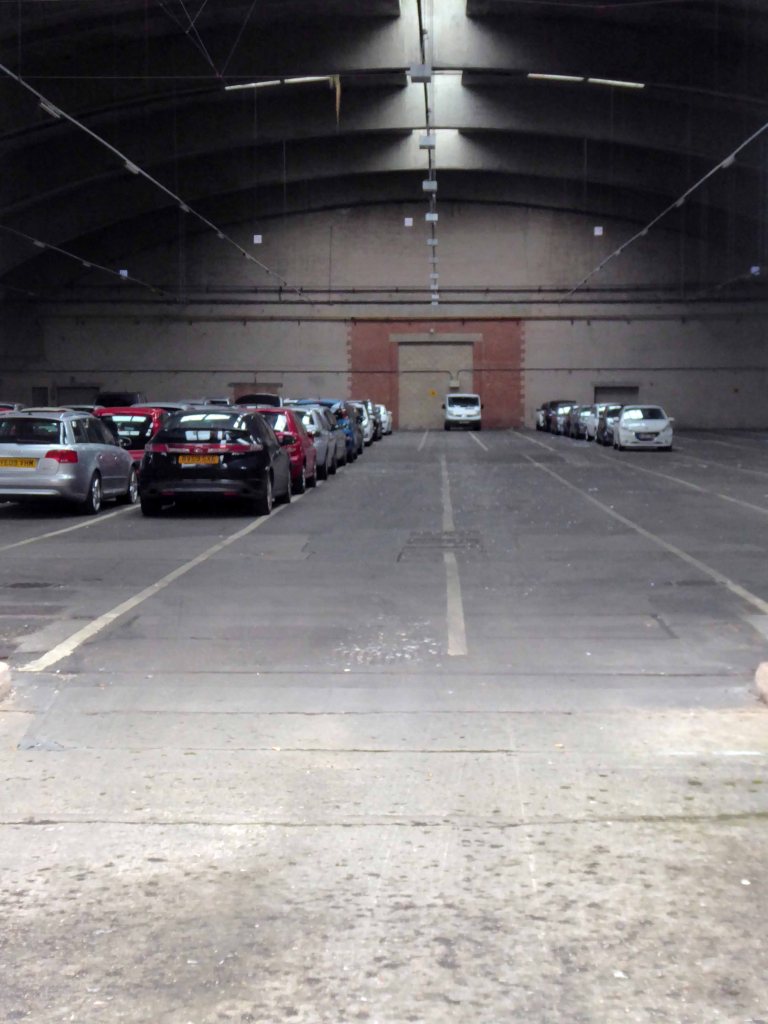
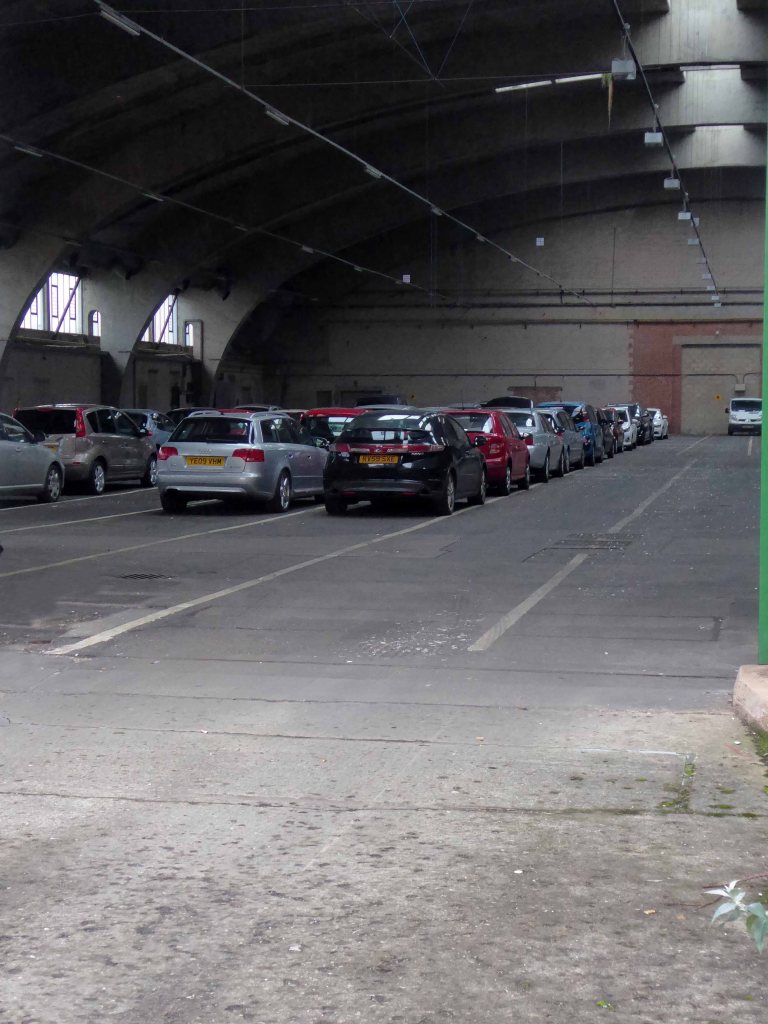
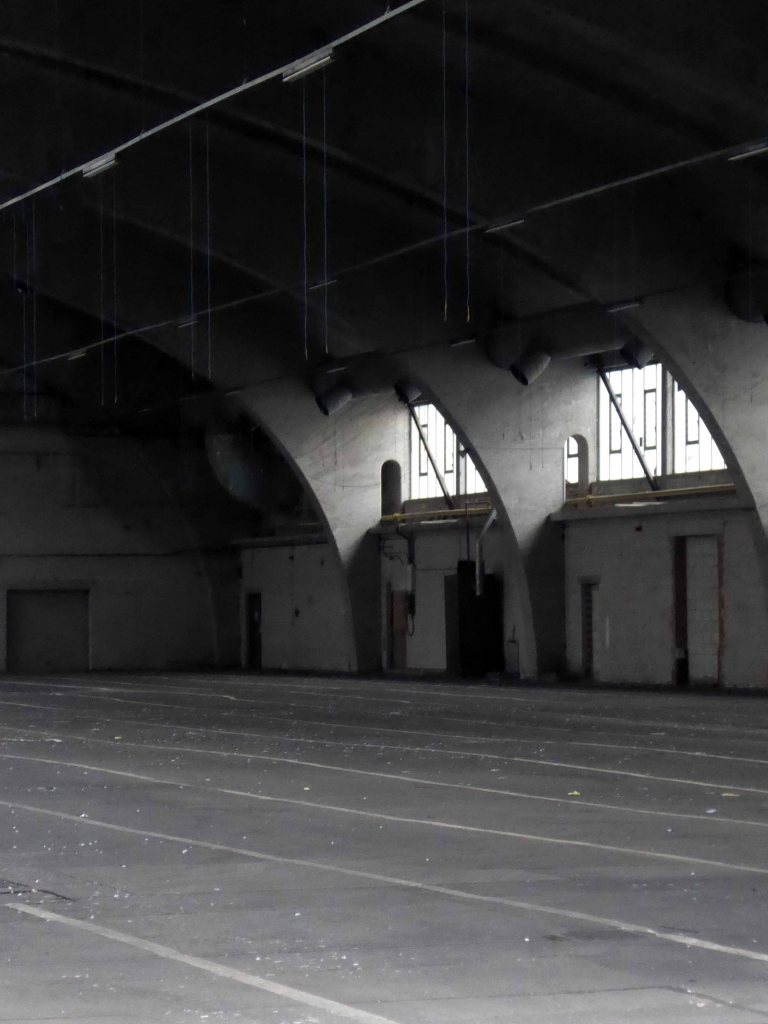
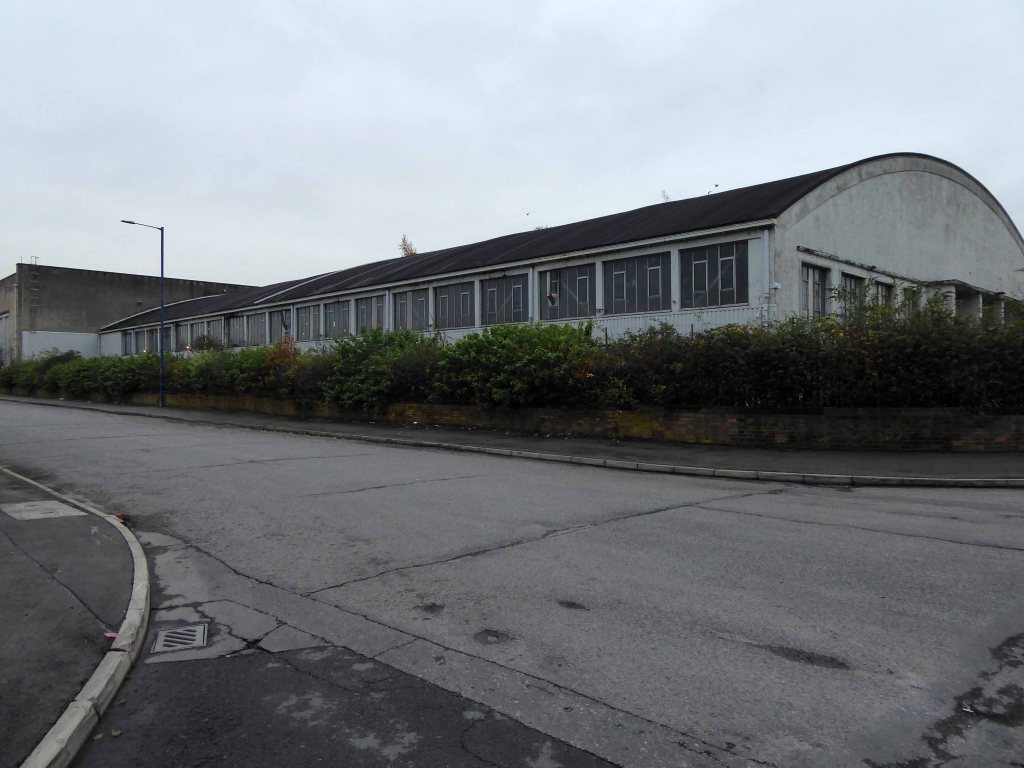
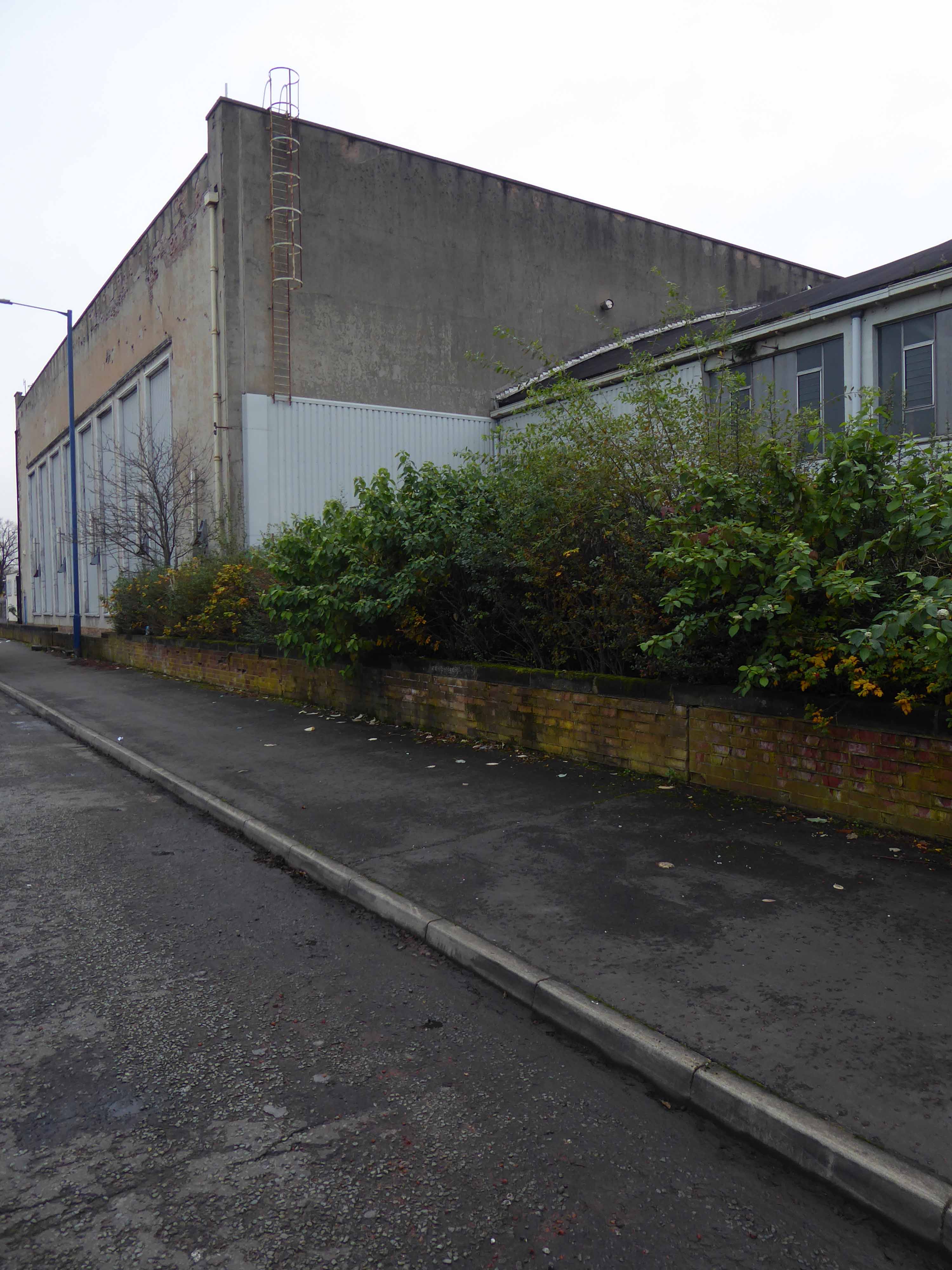
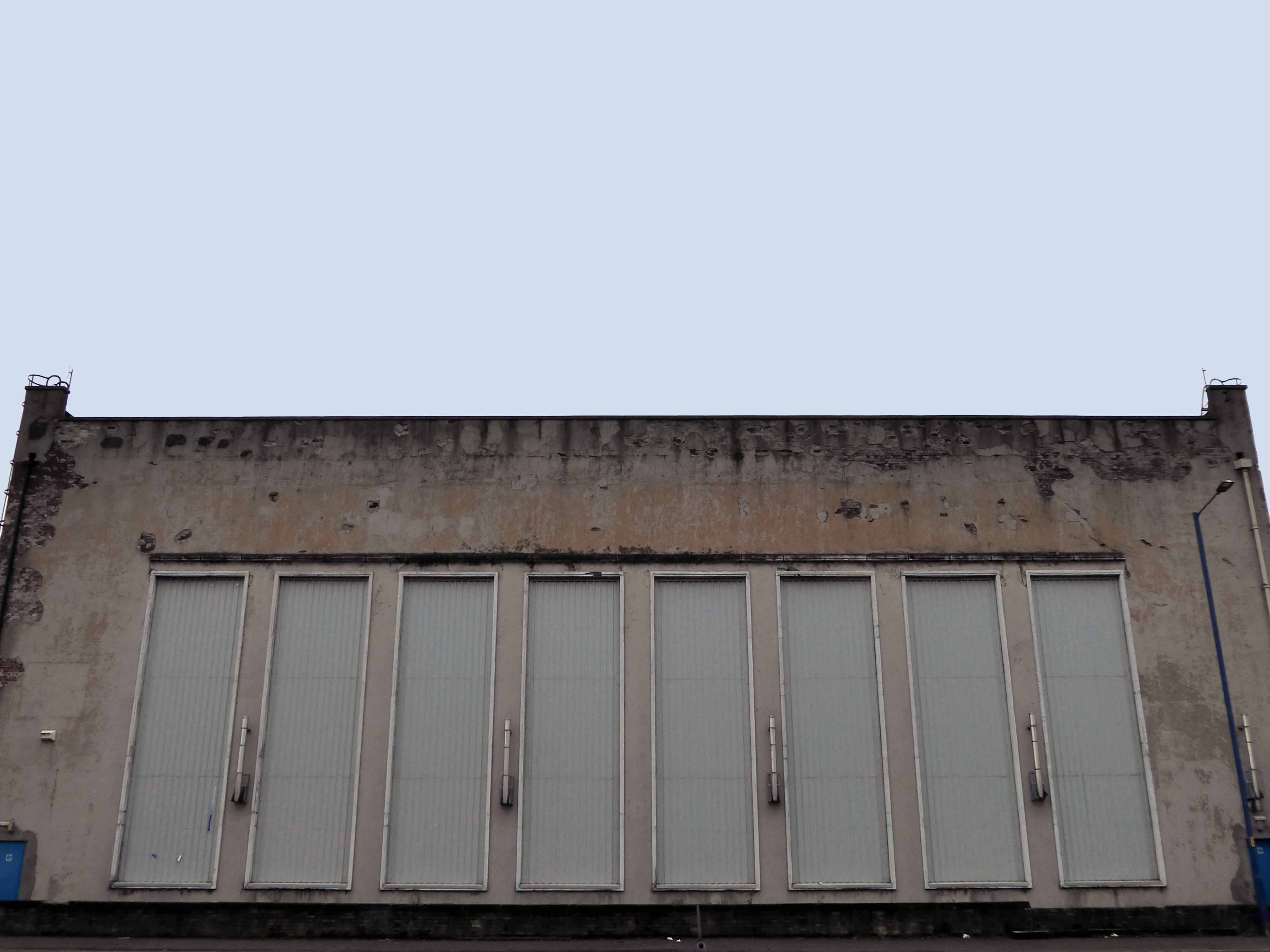
This building formed part of the later phasing of the proposed Garden Suburb of Wythenshawe. It was intended to house up to 100 double-decker buses but was put to use as a factory for components for Lancaster bombers during the war. It is included here for the functionalist qualities of the building and the acknowledgement of the daring of the City Architects Department. Academic papers, as late as 1952, cited this simple structure as exemplar of its type; Elaine Harwood notes, ‘this was the pioneering example of the means of construction, and the model for larger shells at Bournemouth and Stockwell’. The arches that support the shell have a span of over fifty metres and are spaced at twelve metre intervals. The concrete shell roof is of the short-barrel type commonly used on single span buildings such as hangars, it is uniformly around seventy millimetres thick. The only single span structure larger than this was indeed an aircraft hangar, at Doncaster Airport, demolished around 1990. This building is now in the ownership of an airport parking company that utilise it as vehicle storage; close to its original function.
Walking from our house to Sharston, this was the furthest point west – I kept on walking towards the security gates, they opened – I snapped, they closed.
This is now the home of Manchester Airport Parking – no place for a pedestrian, I walked away, slowly circumnavigating this uplifting, uplifted behemoth.
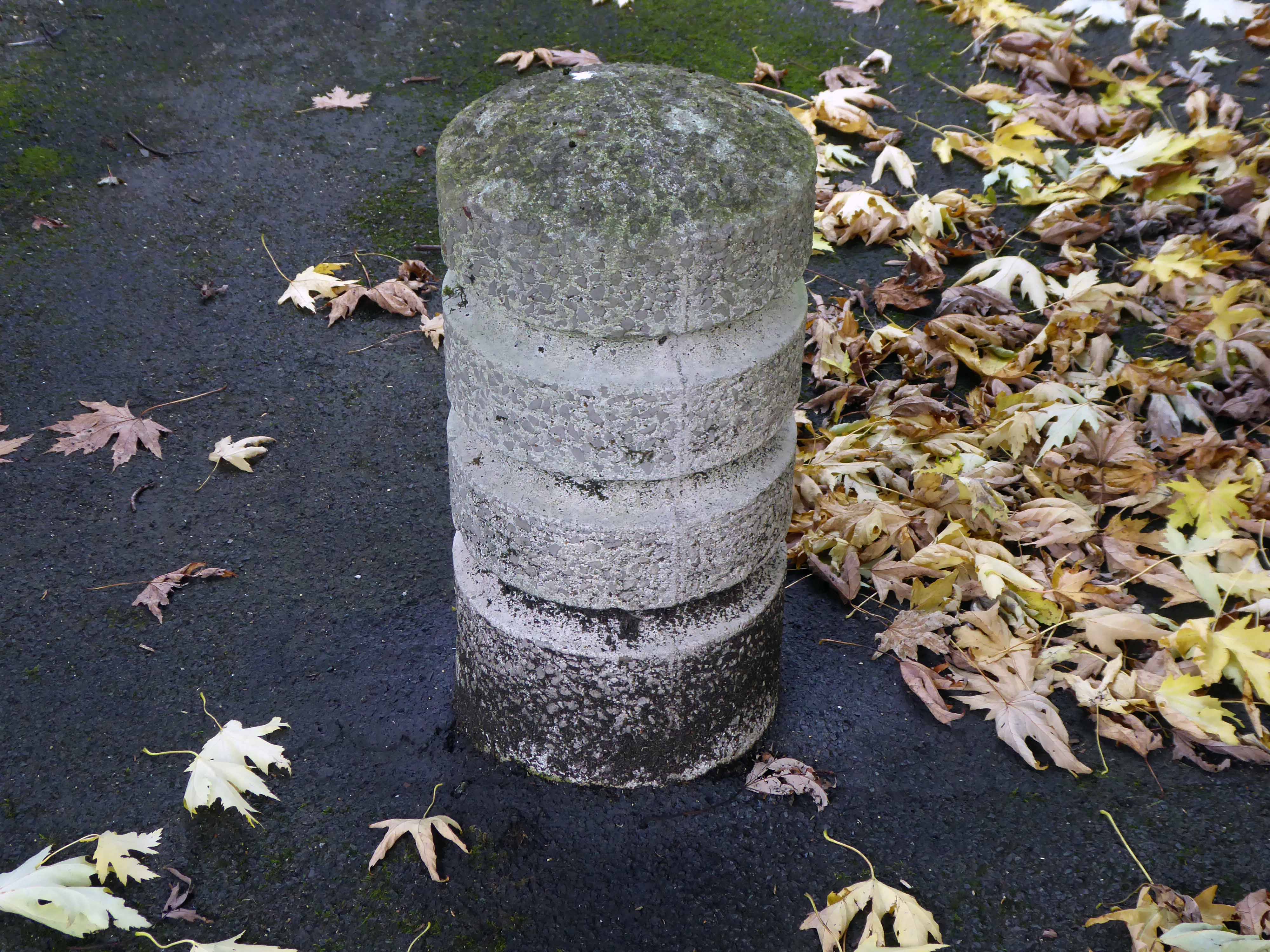
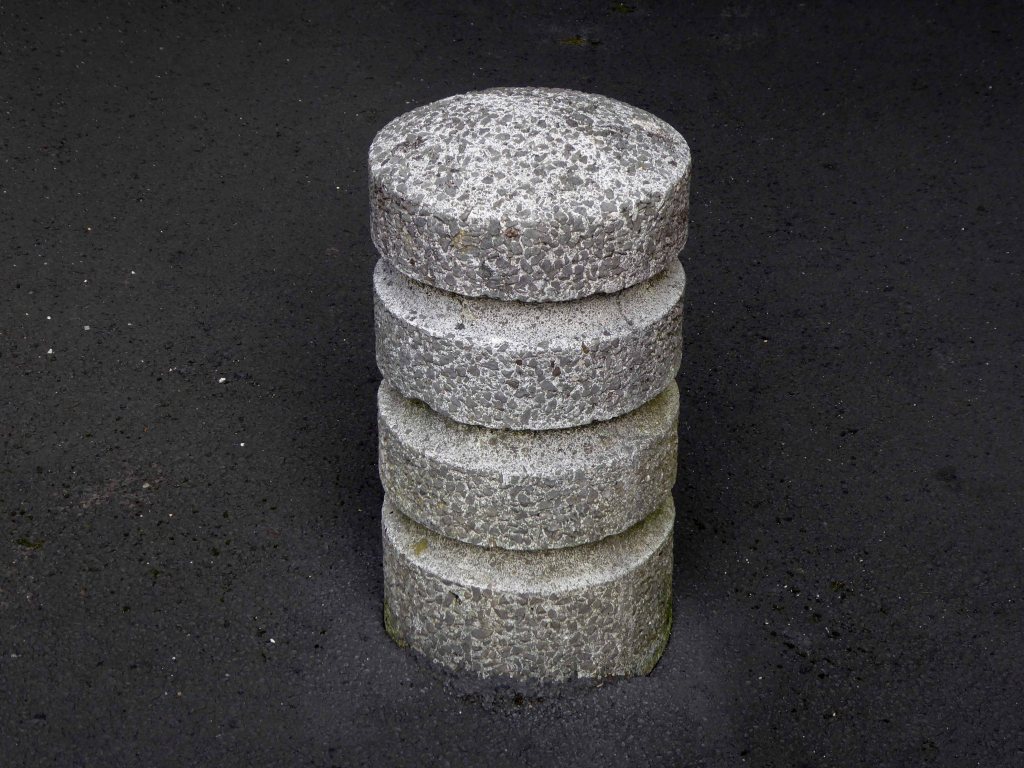
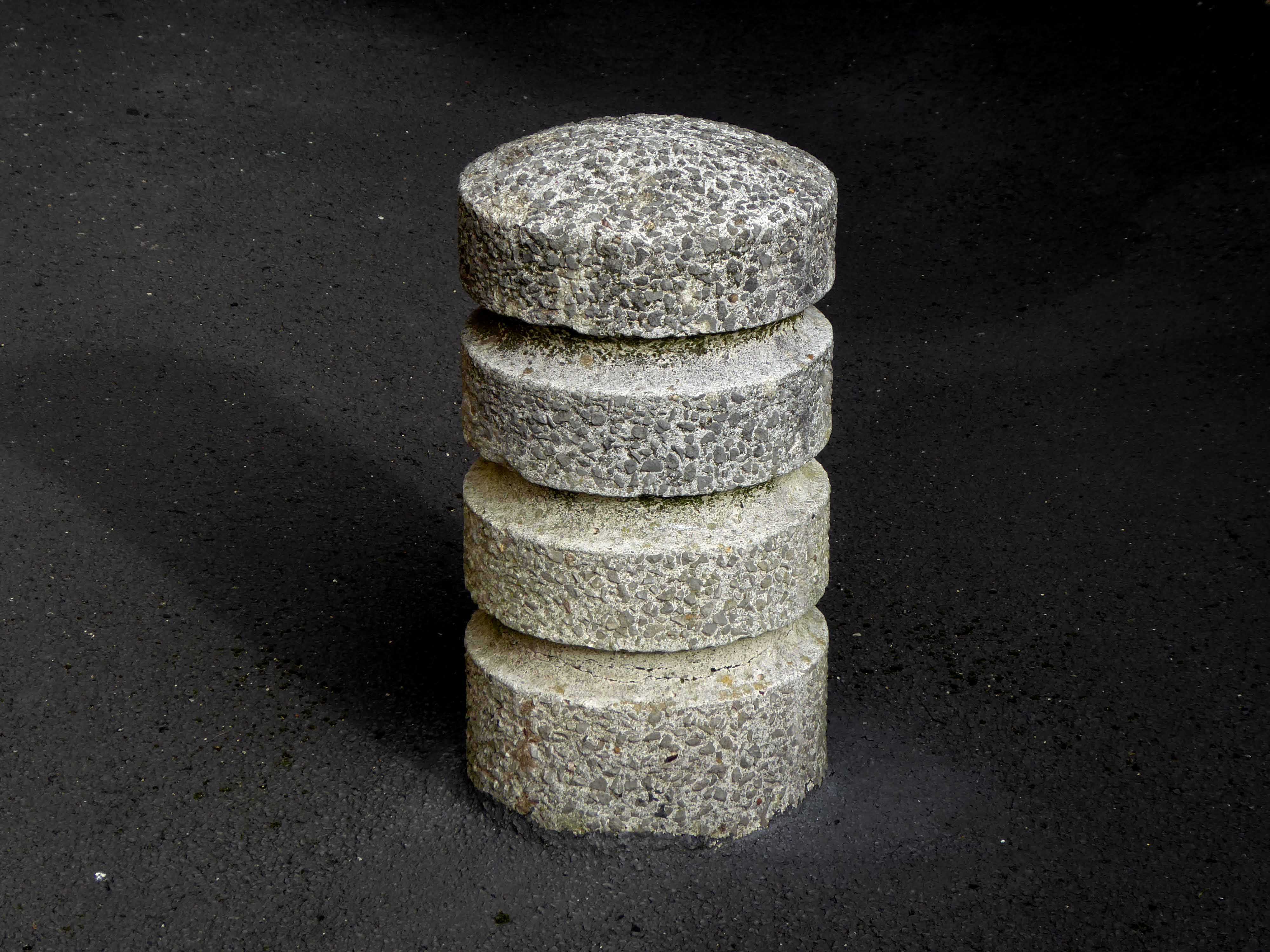
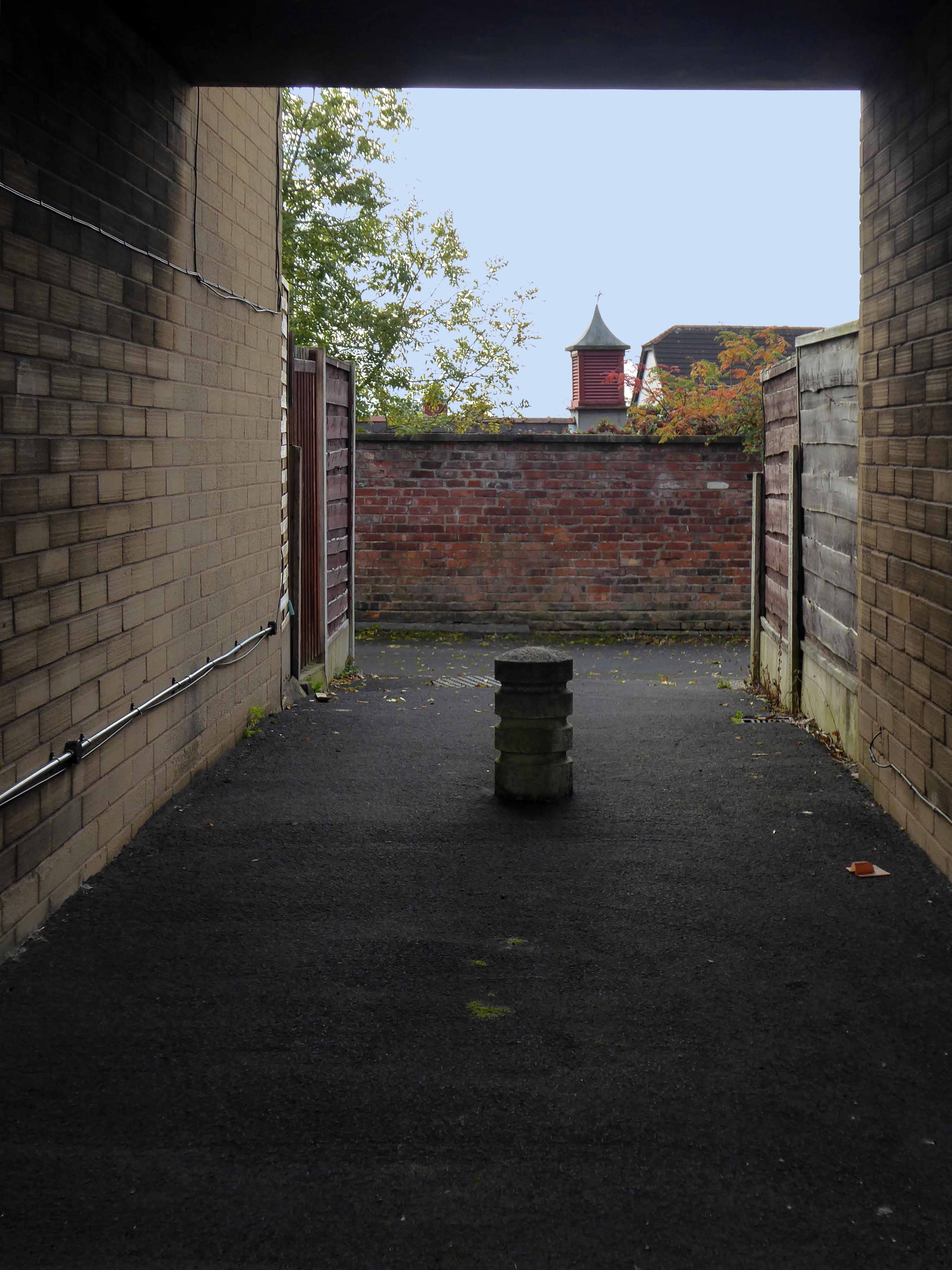
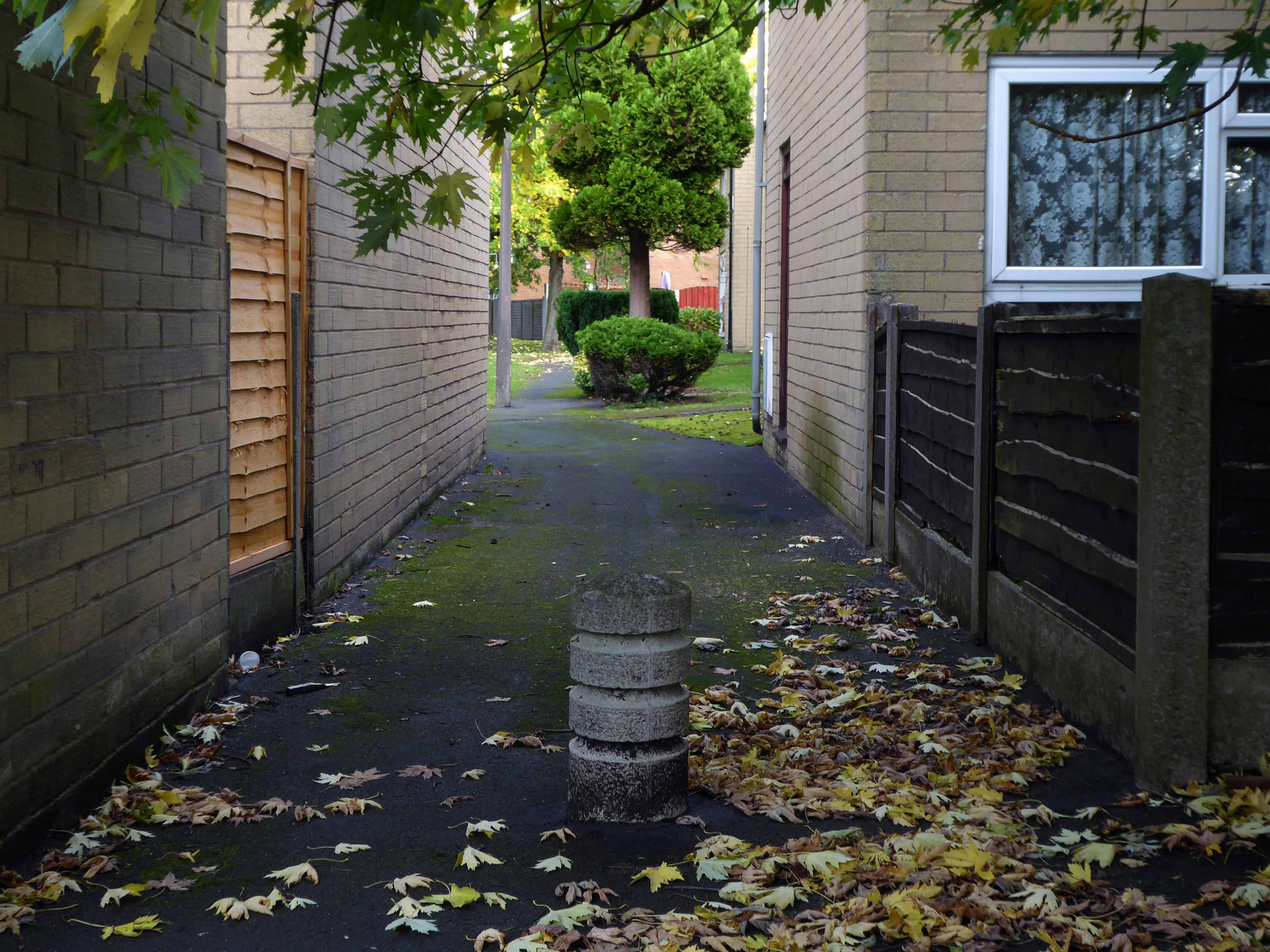
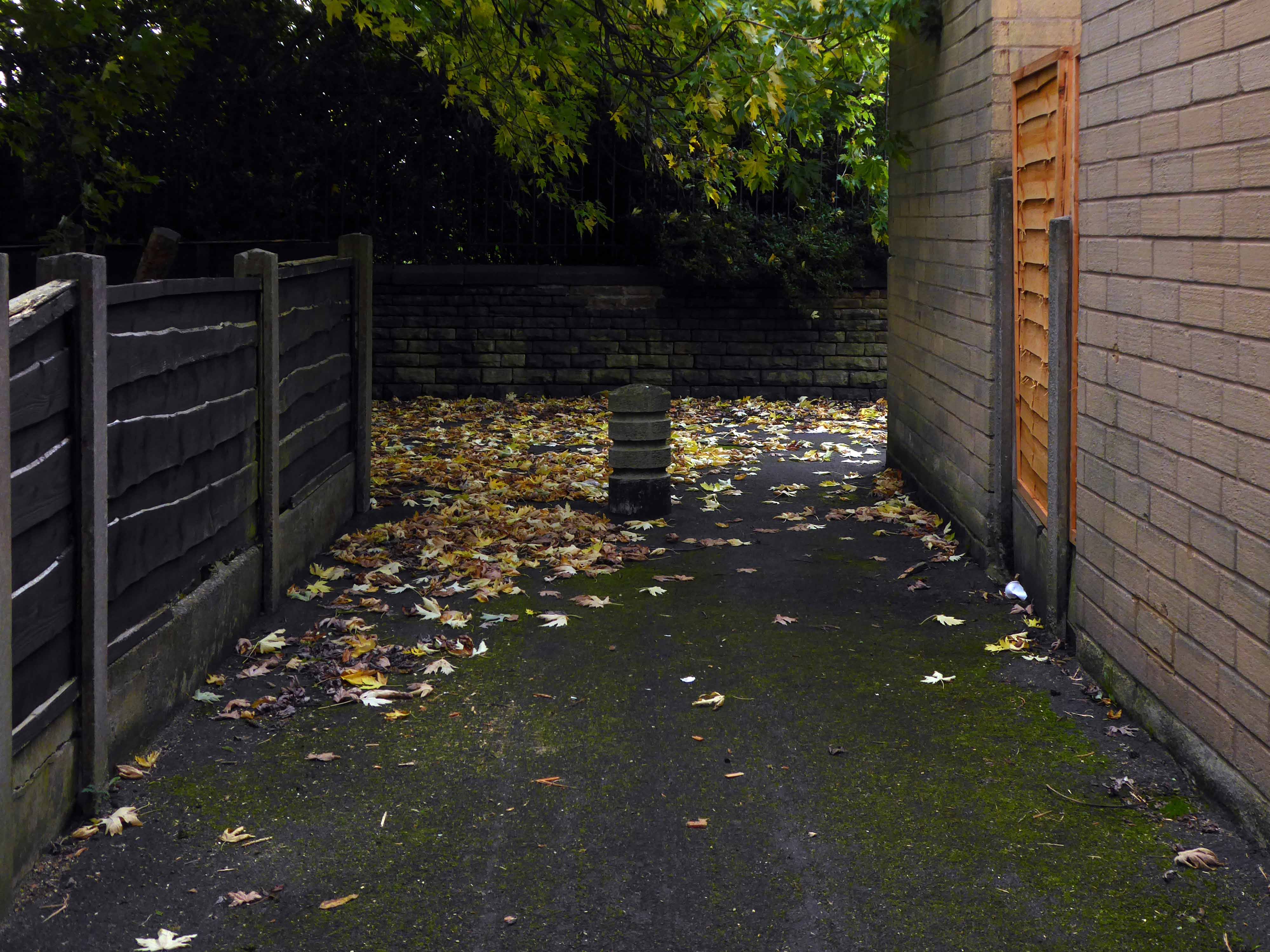
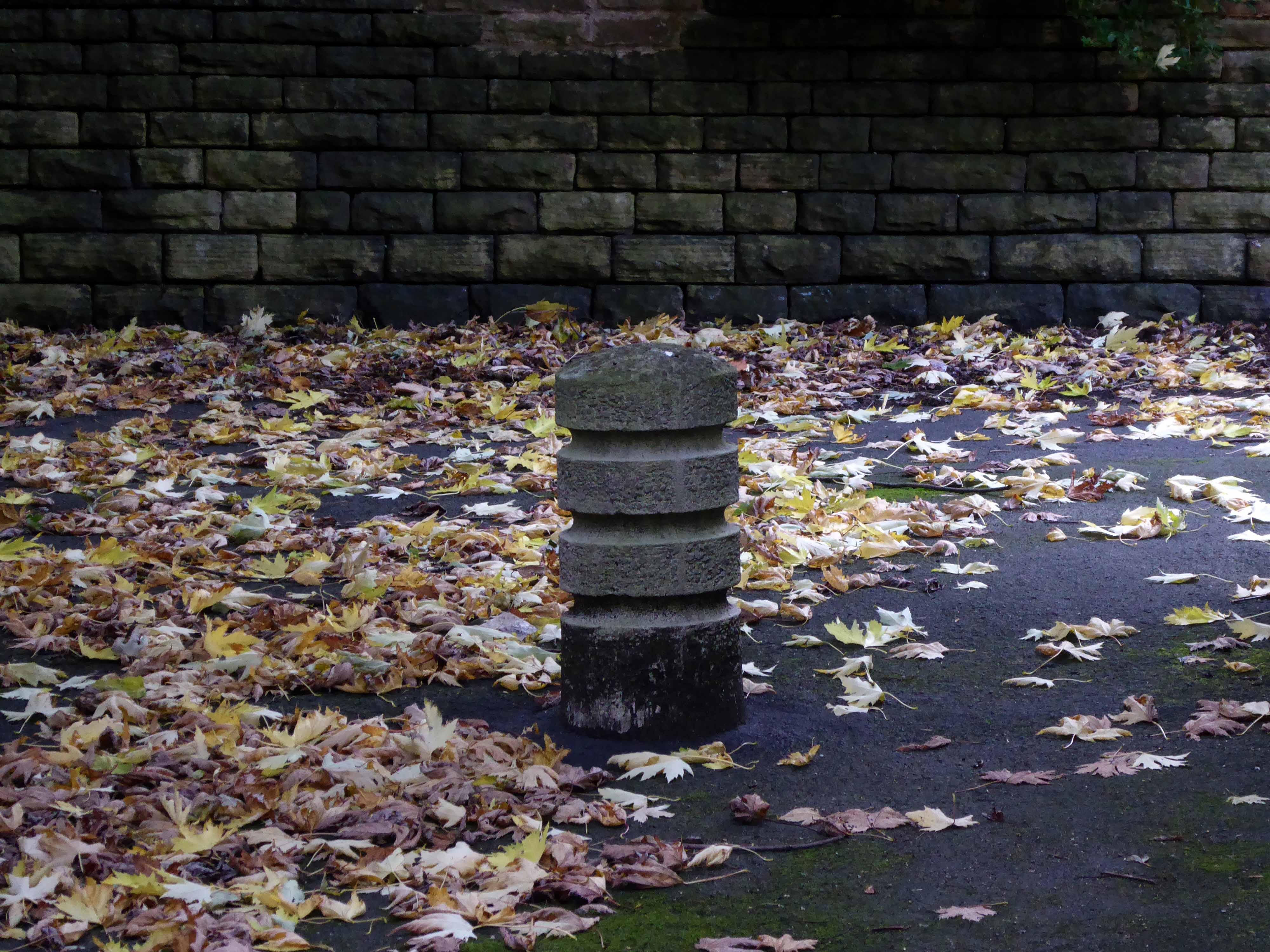
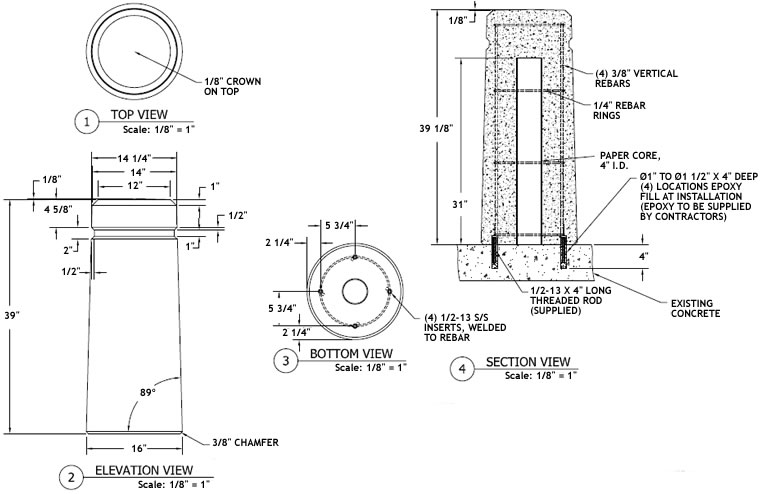
As I was out walking on the corner one day, I spied an old bollard in the alley he lay.
To paraphrase popular protest troubadour Bob Dylan.
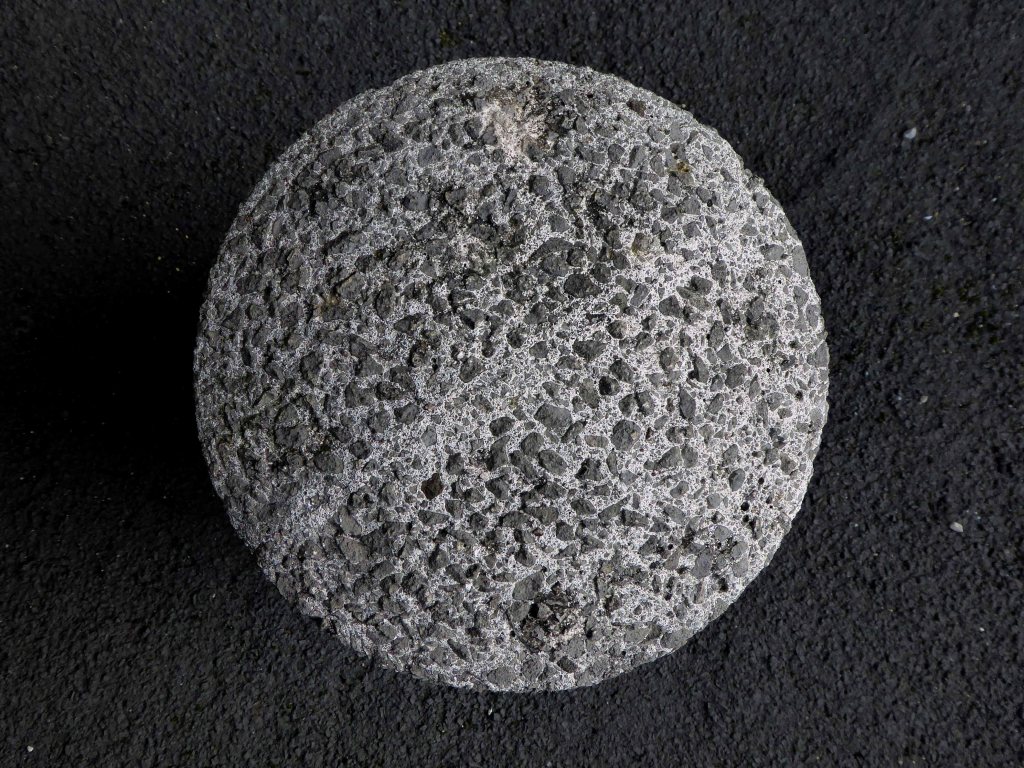
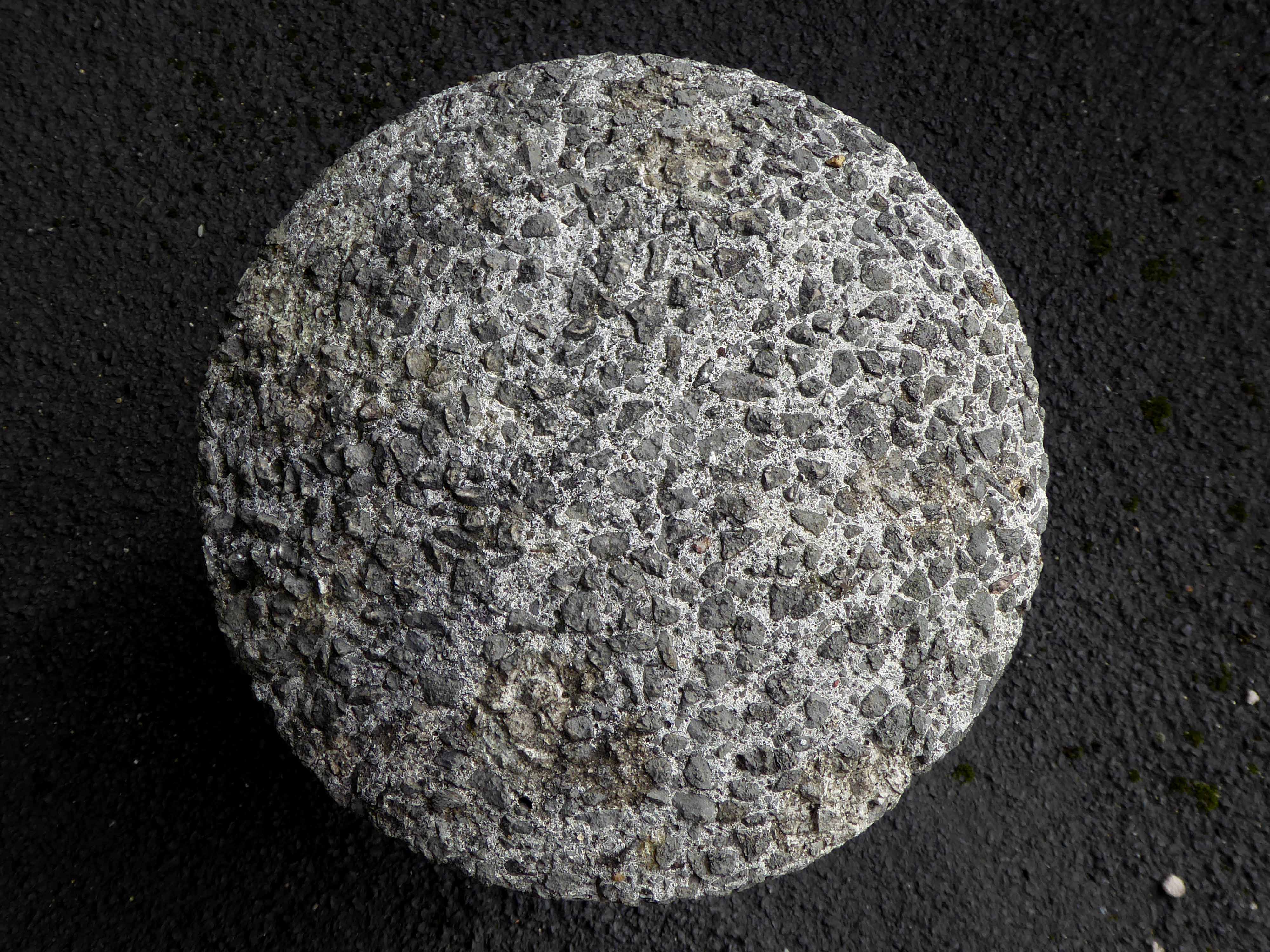
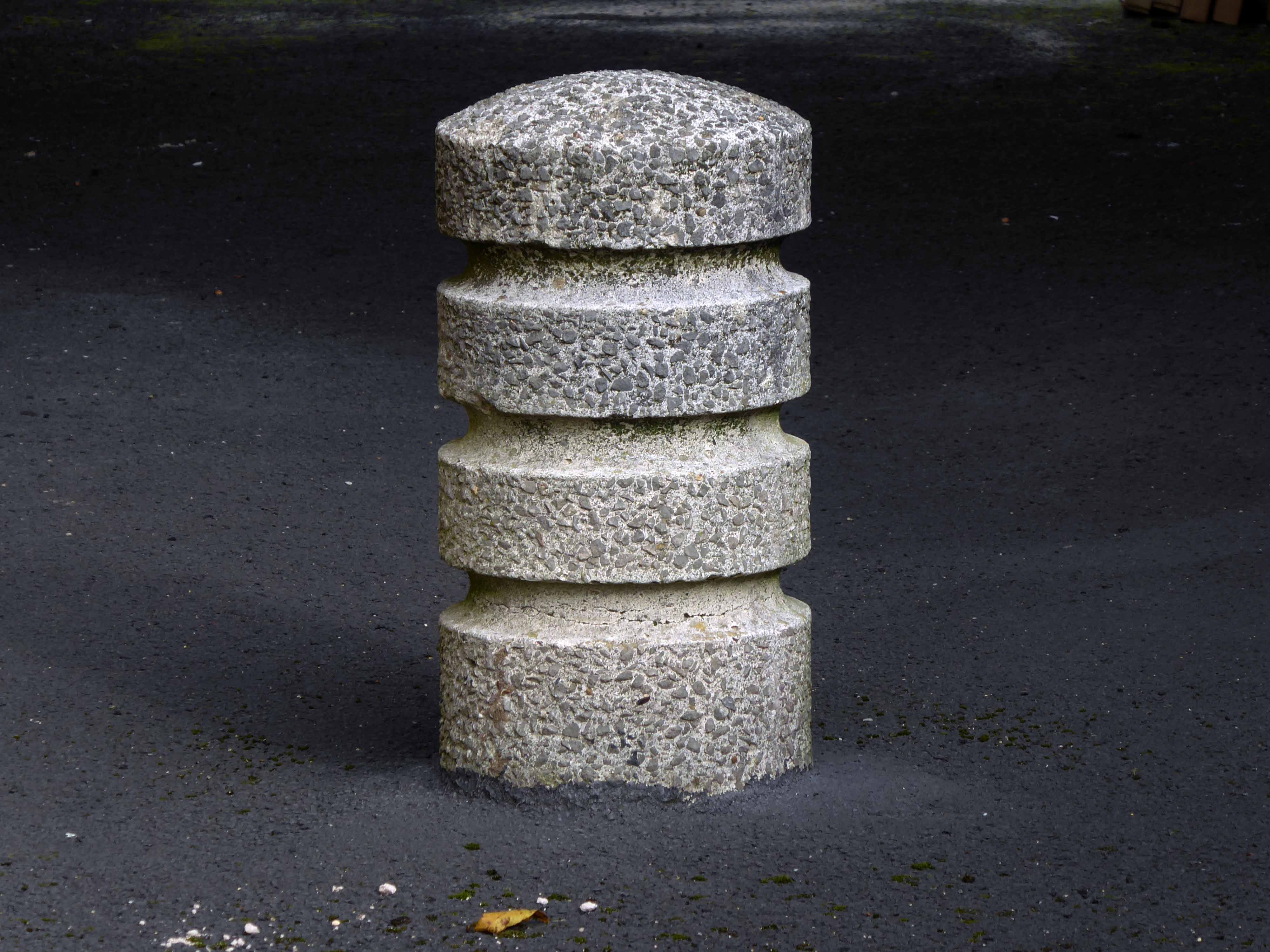
I was struck by the elegant symmetry and rough patinated grey aggregate.
To look up on the world from a hole in the ground, To wait for your future like a horse that’s gone lame, To lie in the gutter and die with no name?
I mused briefly on the very word bollards, suitable perhaps for a provincial wine bar, Regency period drama, or family run drapers – but mostly.
A bollard is a sturdy, short, vertical post. The term originally referred to a post on a ship or quay used principally for mooring boats, but is now also used to refer to posts installed to control road traffic and posts designed to prevent ram-raiding and vehicle-ramming attacks.
The term is probably related to bole, meaning a tree trunk.
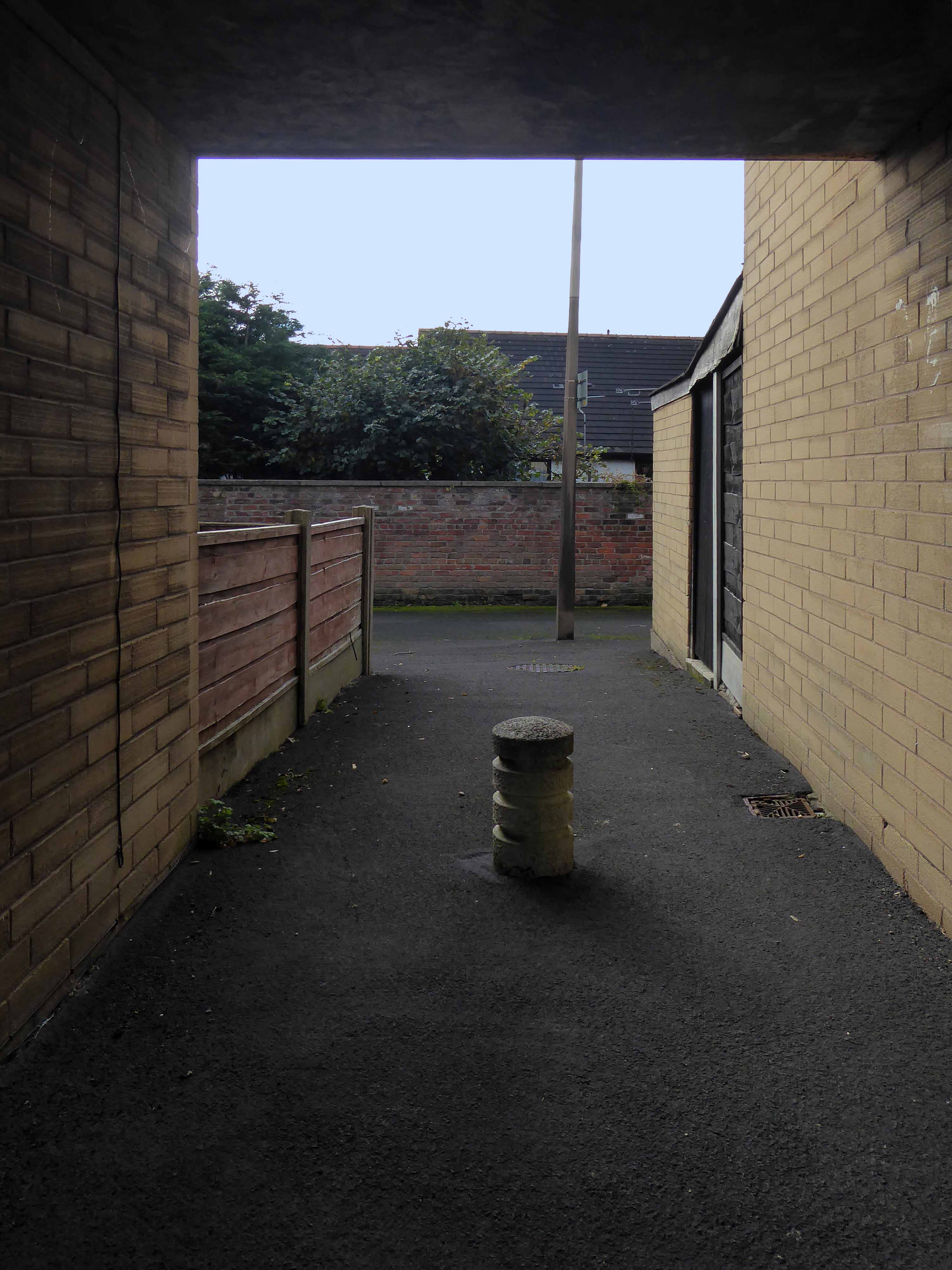
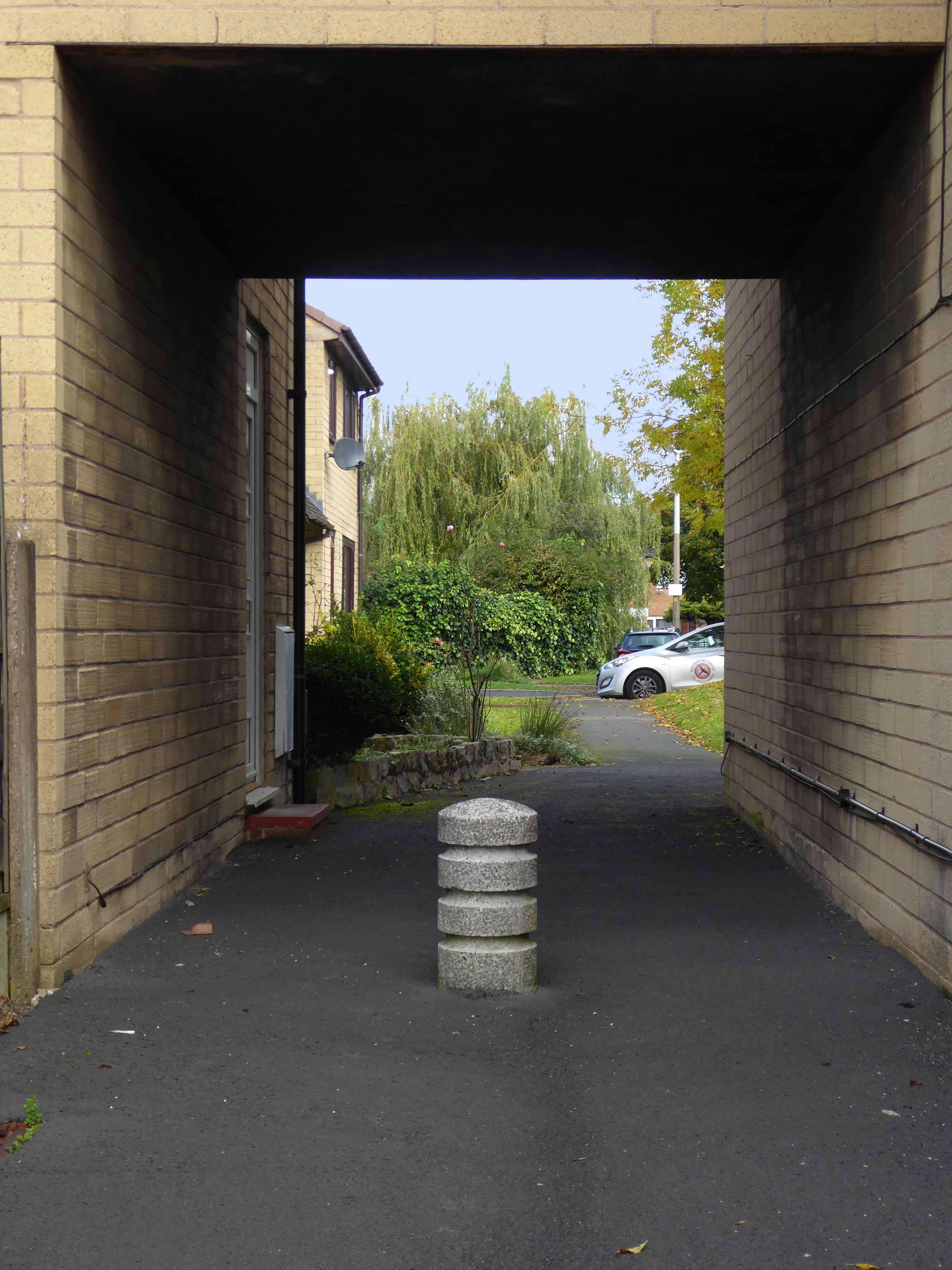
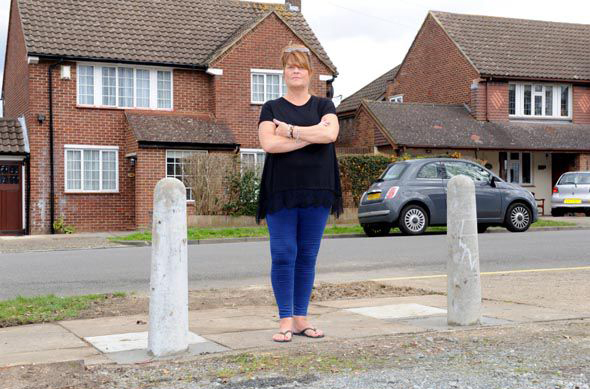
Having so mused I began to wander a tight little island of alleys and homes, discovering three of the little fellas, each linked by typology and common ancestry, steadfastly impeding the ingress of the motor car.
Yet also presenting themselves as mini works of utilitarian art – if that’s not a contradiction in terms.
Having returned home I began another short journey into the world of bollards, where do they come from?
PAS 68 approved protection for your people and property combining security, natural materials and style.
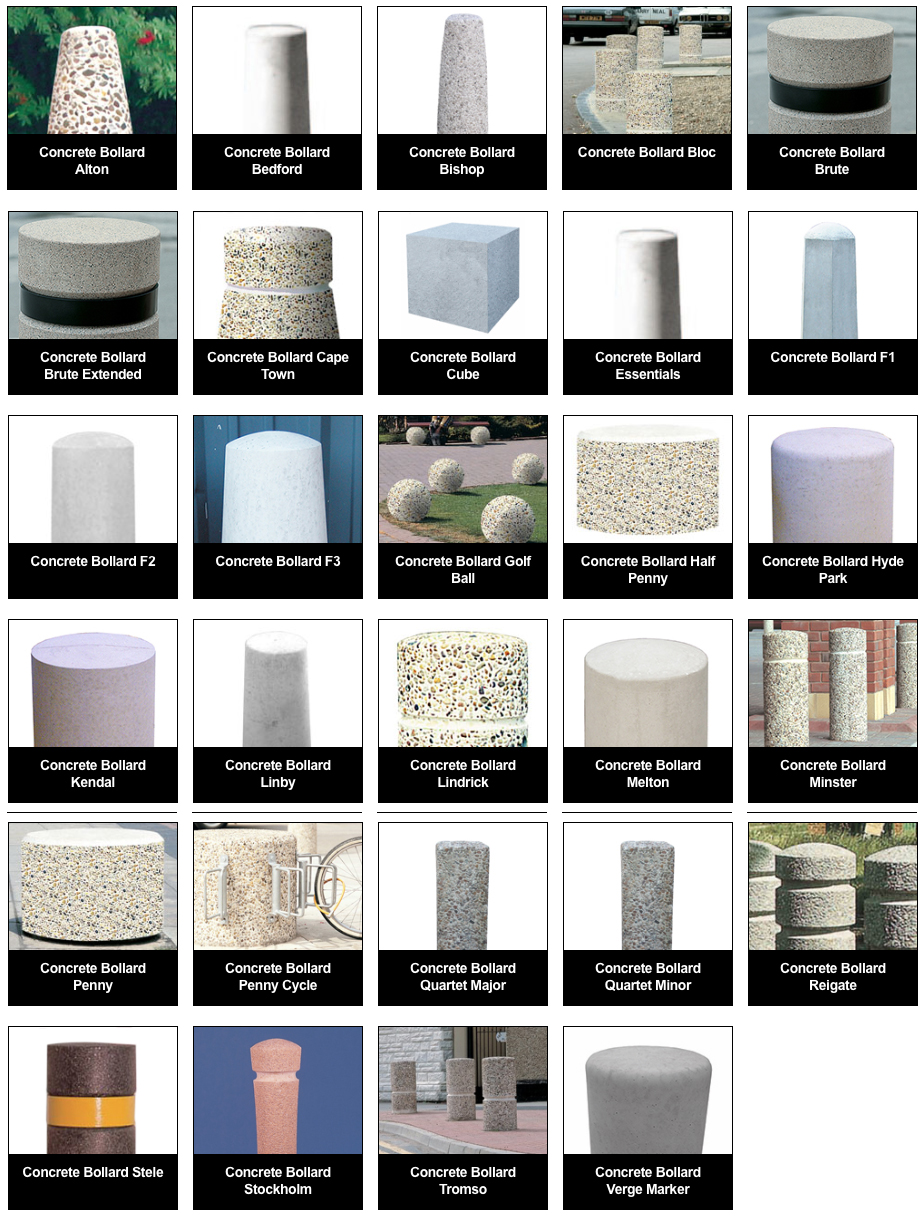
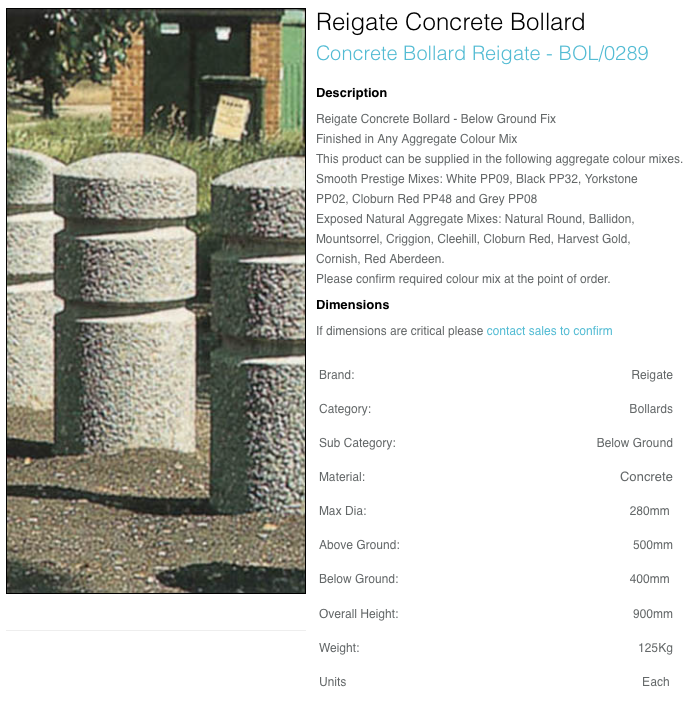
My new pals seem to be closely related to the Reigate.
Available in a mind boggling range of finishes.
Bollards can be our friends, an expression of personal freedom and security.
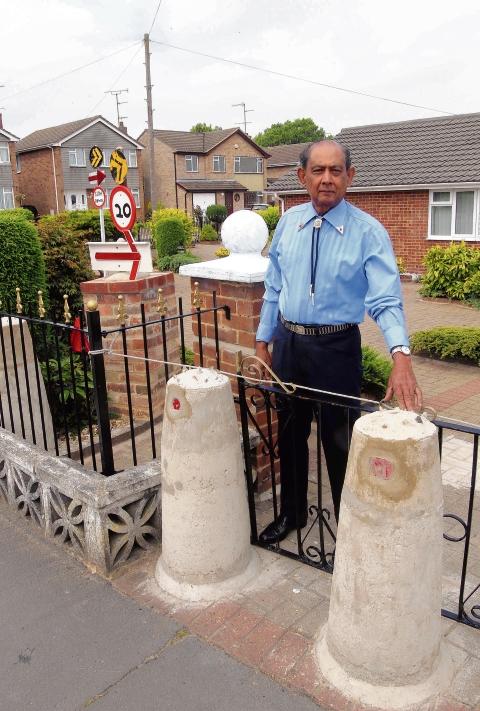
A pensioner says he will go to court if necessary after putting up concrete bollards in a last-ditch attempt to protect his home.
Owen Allan, 74, of Beaufort Gardens, Braintree, claims motorists treat the housing estate like a race track, driving well in excess of the 20mph speed limit, and that the railings in front of his home have regularly been damaged by vehicles leaving the road.
He was worried it would only be a matter of time before a car came careering off Marlborough Road and flying through the wall of his bungalow.
I have cause to thank the humble concrete bollard, having suffered an assault on our front wall from a passing pantechnicon, I subsequently petitioned the council, requiring them to erect a substantial bollard barrier.
Which was subsequently hit by a passing pantechnicon.
They are our modernist friends, little gems of public art and should treated with due respect – think on.
Walking the wet walkway of Bridlington’s south shore, I was pleasantly surprised by this semi-distant concrete construction.
Which cleverly accommodates a convenient public convenience.
The pumping station is the most immediately obvious aspect of the scheme , situated as it is on the promenade.
Hanson UK supplied the concrete, with a range of complex mixes required.
You’re trying to make concrete with as little water in it as possible, but it still has to move to be placed into position. The only way to achieve this is with powerful admixtures, which deflocculate the cement despite the lack of water in it to lubricate it.
This difficulty also applied to almost all the concrete above ground level for durability reasons – anything that could come into contact with seawater had to be able to withstand it.
The final major complication was the aesthetic requirements from the local council. All the visible concrete had to match an older Victorian Spa, located a little way up the beach, which had previously been refurbished using Hanson concrete.
We were asked to match the colour, shading and texture of the new concrete to the spa.
The team was forced to use white cement, which had been used in the spa, but because of durability requirements they needed to use a cement replacement to improve the overall chemical resistance of the product. They used ground granulated blast furnace slag to replace 55 per cent of the white cement, which is white in colour itself. This had the added sustainability benefit of replacing imported white cement with a local waste byproduct.
All this to house the Yorkshire Water treatment plan and allow Bridlington to regain its Blue Flag status.
The extended pipework carrying the waste water far far away.
At the Headworks the Arup design concept was to extend the pumping station using pre-cast concrete panels that are sensitive to the existing facade. The development of 2015 succeeds in integrating a Brutalist aesthetic, into a largely Victorian setting. Incorporating several levels of seating and associated street furniture, affording some shelter and clear sight lines with transparent panels.
The artwork in front of the huts on Bridlington Promenade by Rachel Welford looks fantastic. The huts built by our contractors Morgan Sindall Grontmij (MGJV) were completed in August and they’re available for hire through the East Riding of Yorkshire Council. The beach huts are larger than the other beach huts on the Promenade and include disabled access and are especially suitable for family groups. Complementary artwork, also designed by Rachel Welford has been incorporated in the glass balustrade in front of the huts.
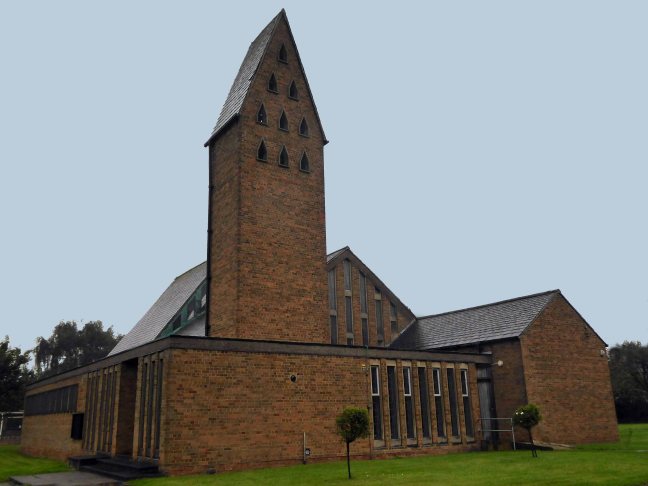
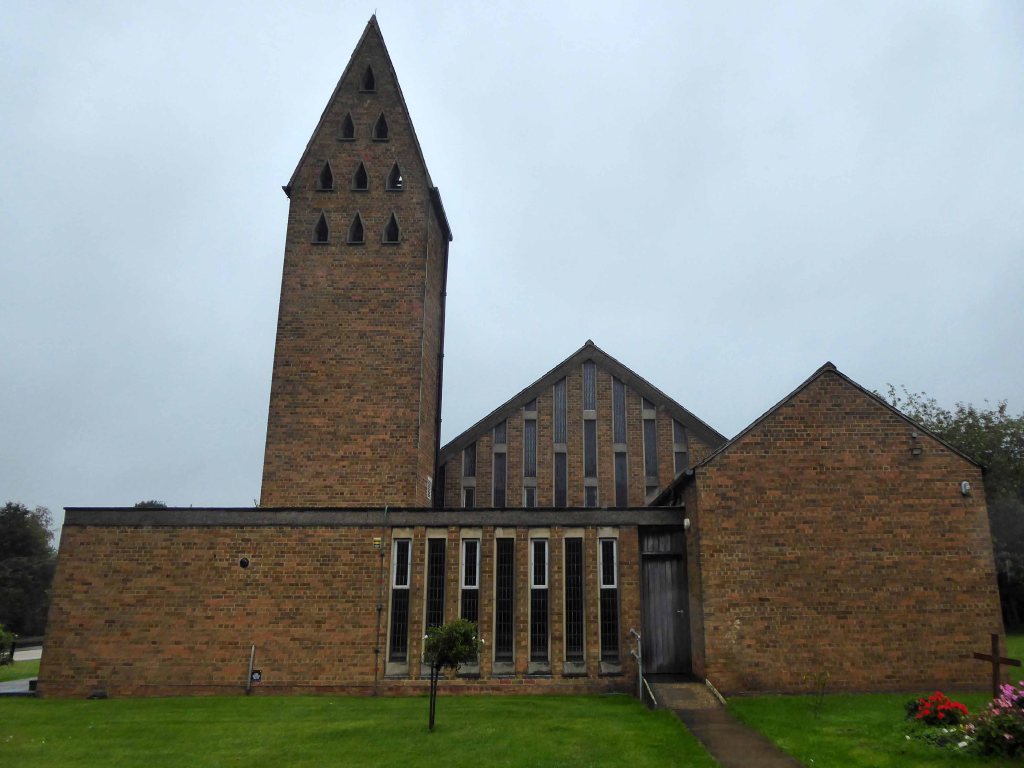
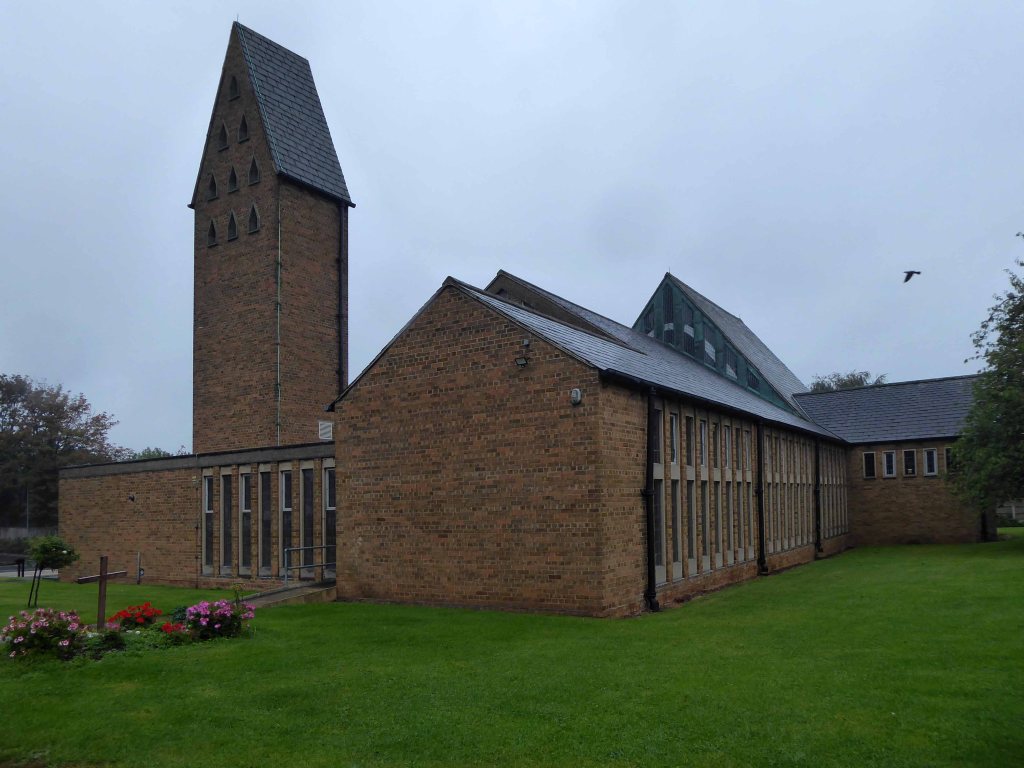
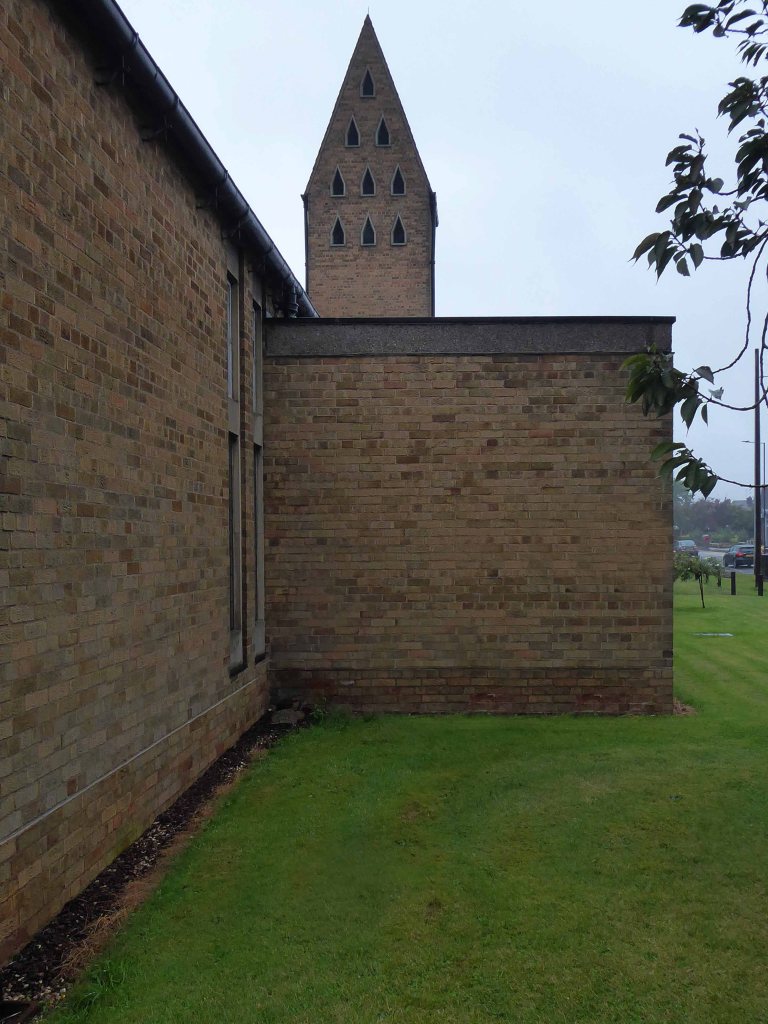
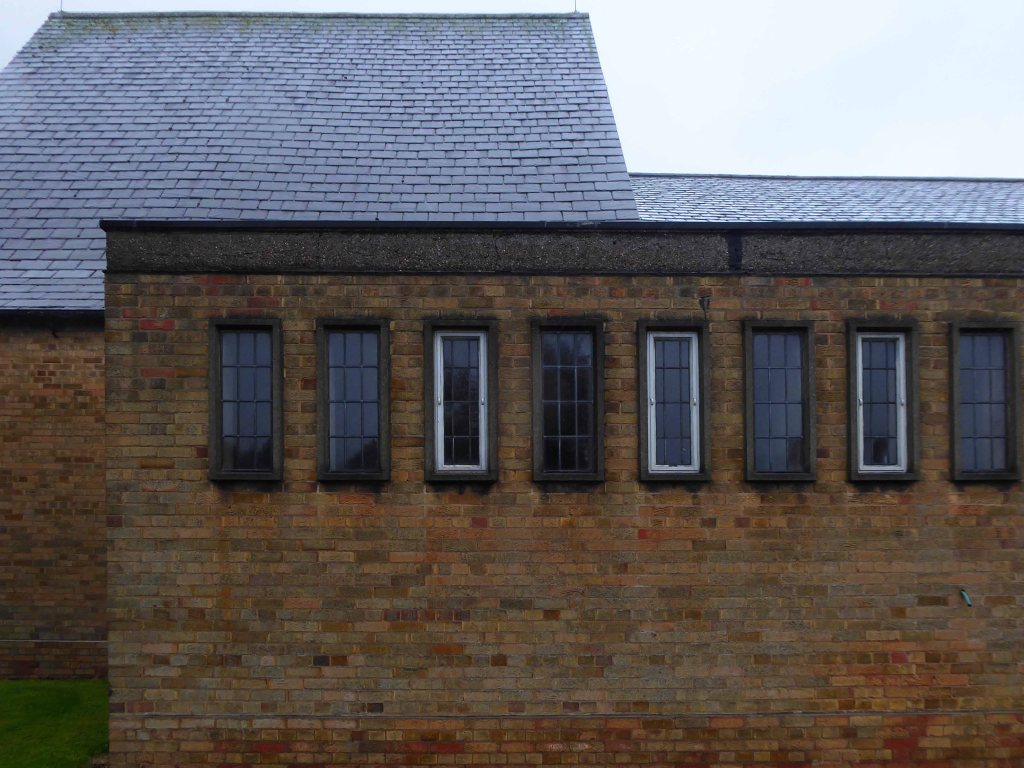
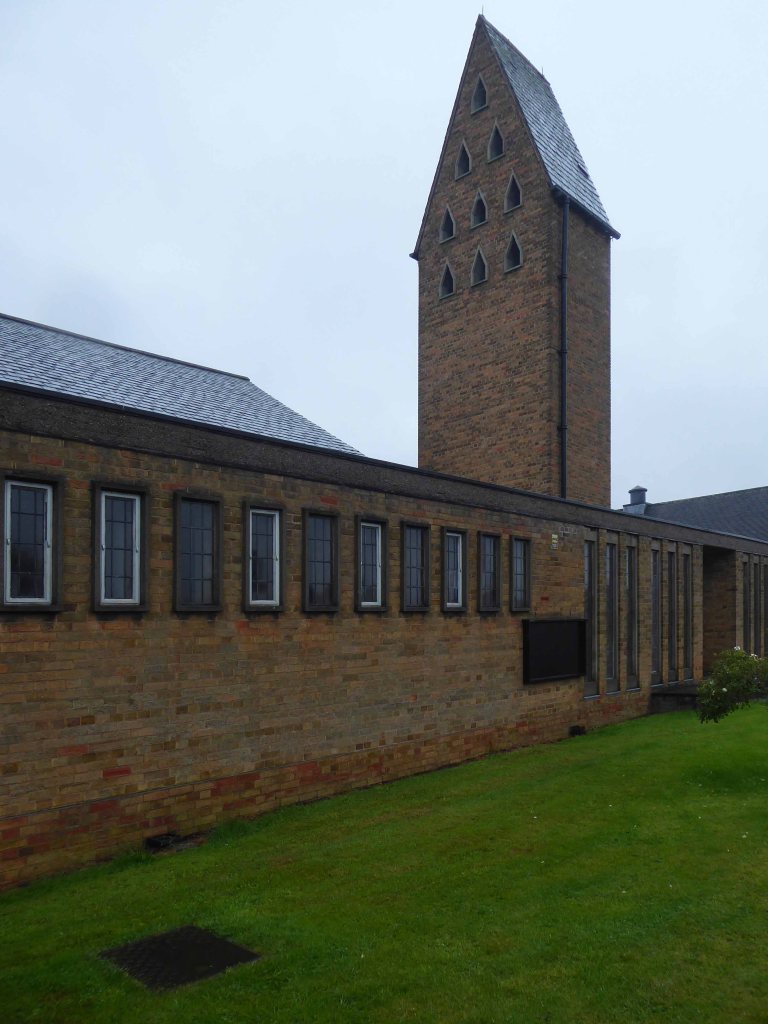
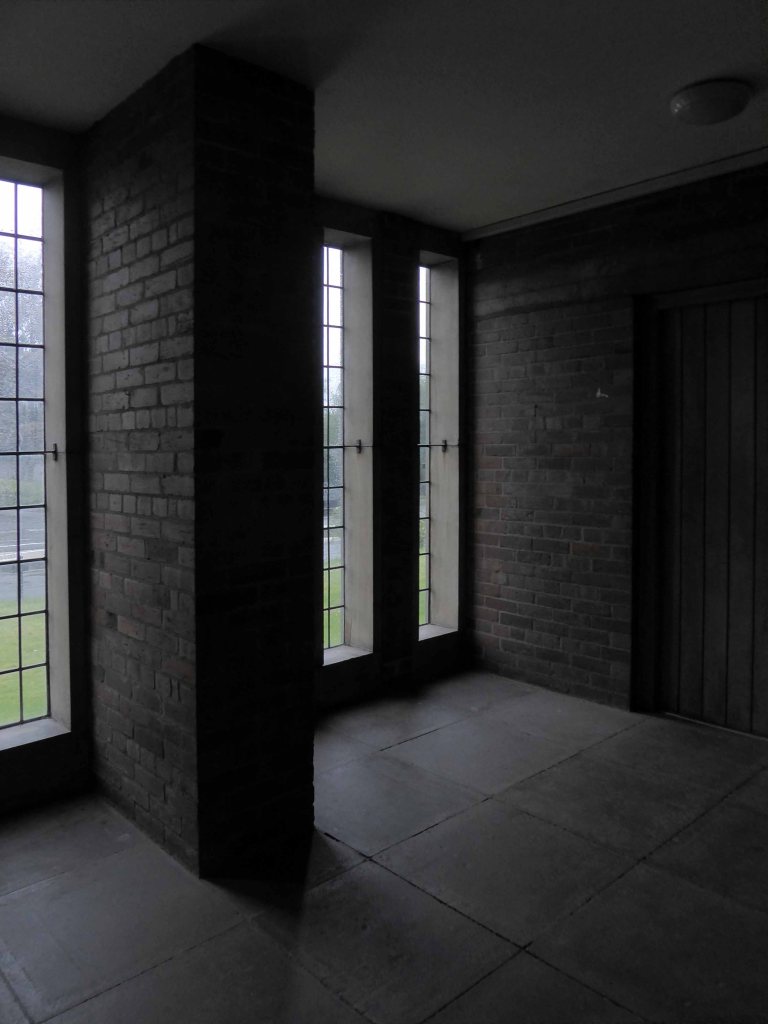
They are all built in his distinctive manner, brick and concrete, steel, wood and glass. Often working within tight budgets, respectful of the Christian Church’s early heritage, expressing mass and volume with simple geometry.
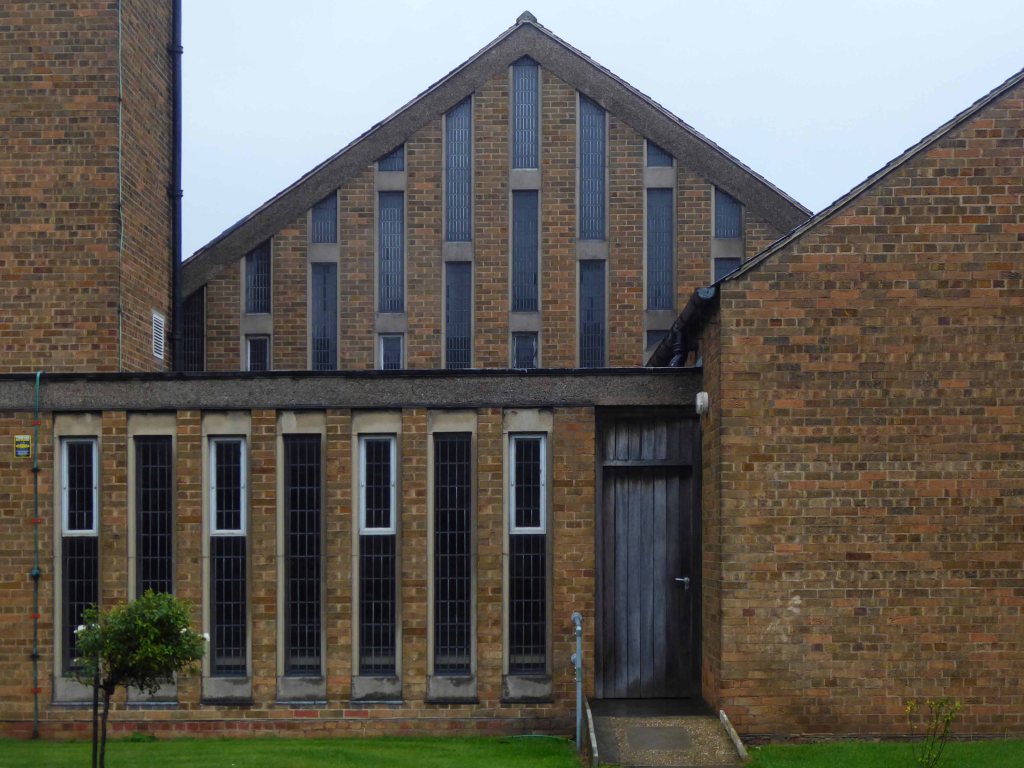
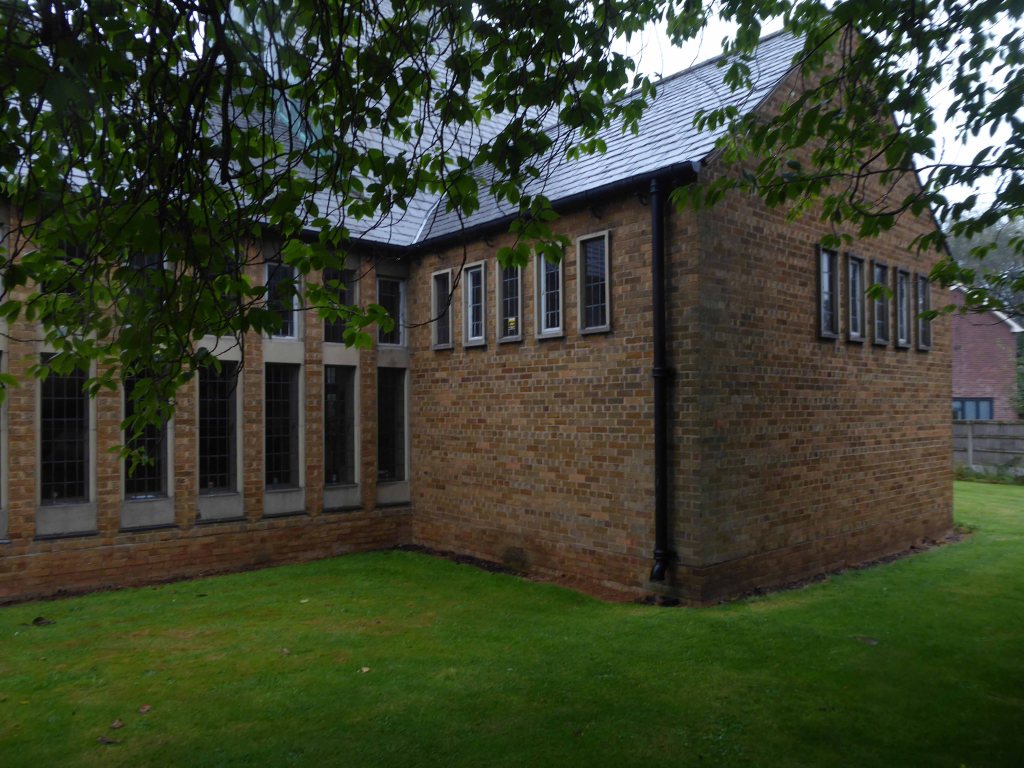
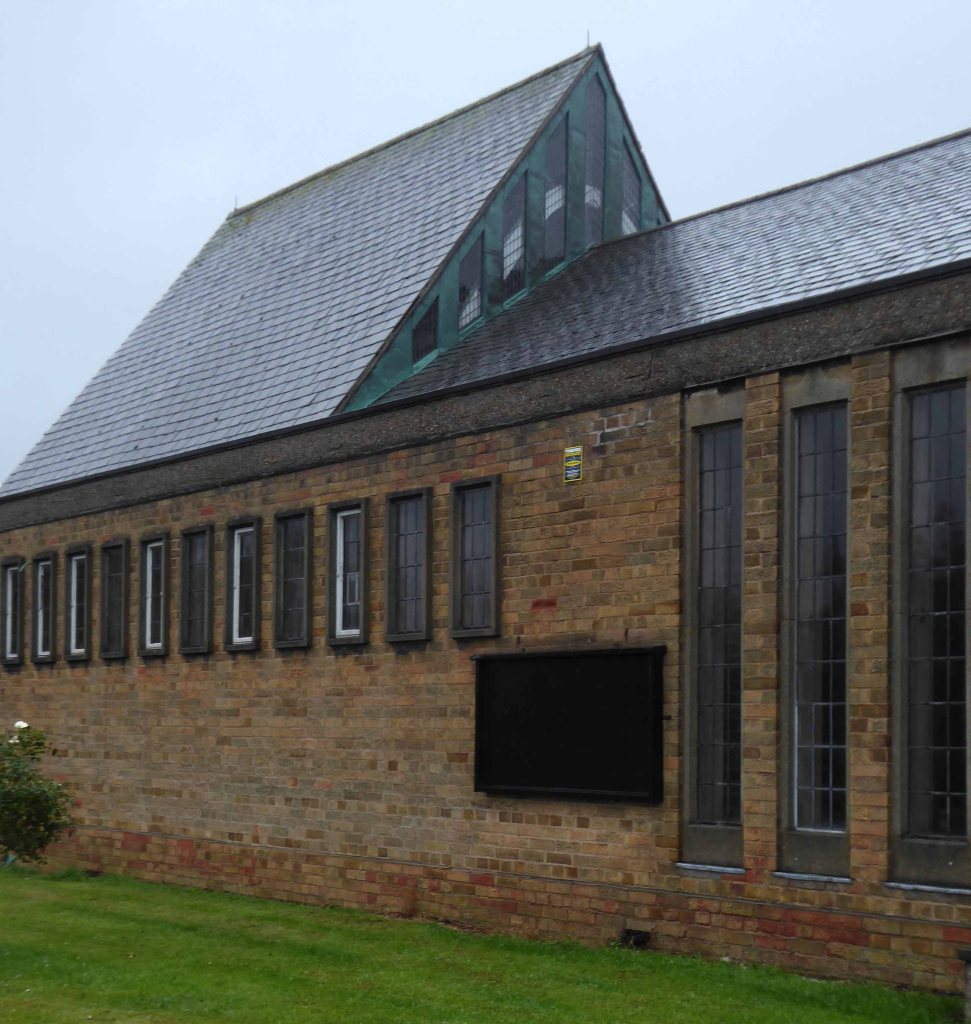
The exterior skin pierced by multiple rectangular windows, the interior revealing an elegant calm space with attendant simple decorative elements and fittings.
The body of the church has two asymmetric orthogonal outriders and a tall bell tower.
The transept chapel
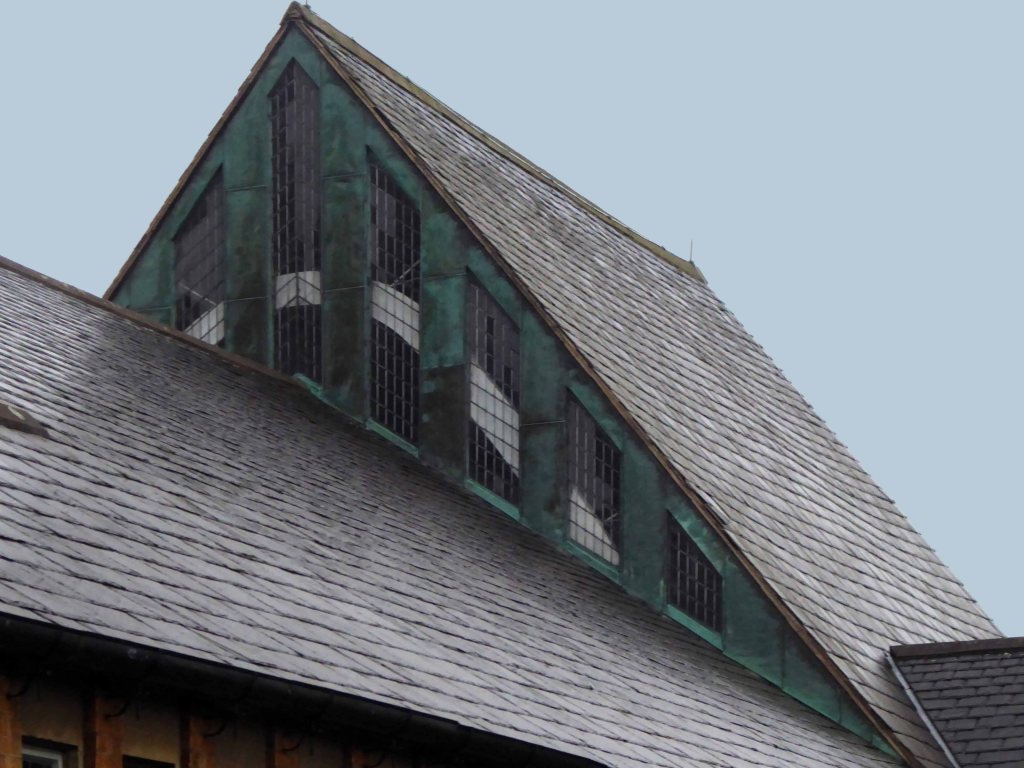
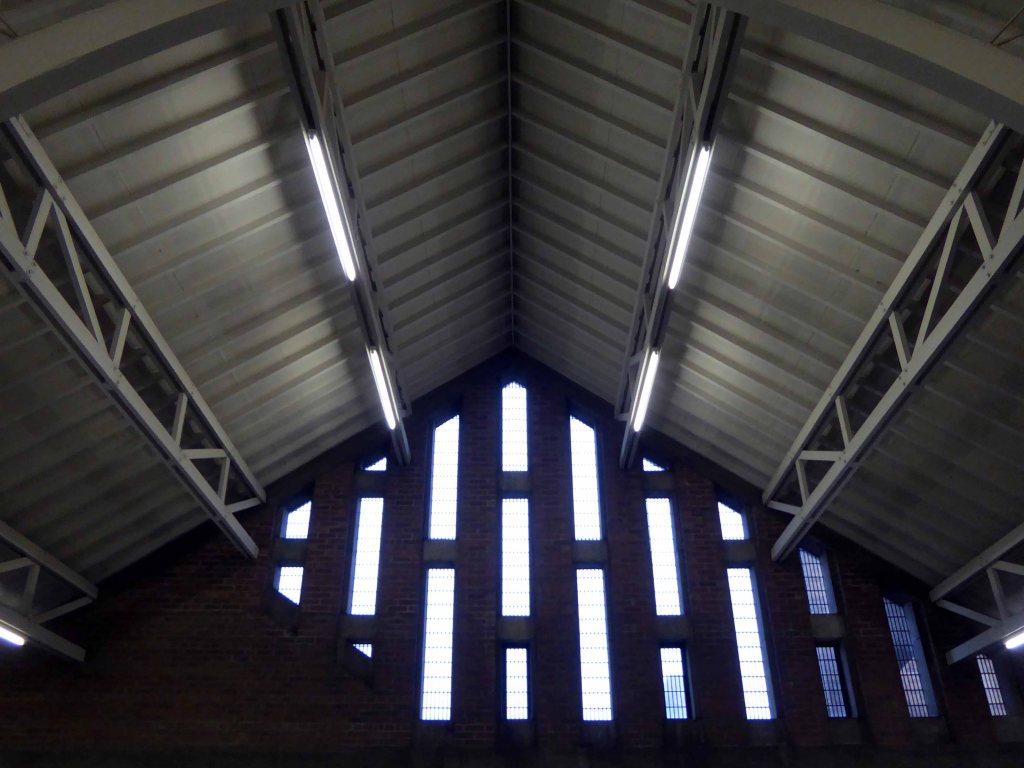
The chancel and apse has a raised roof with a glazed face.
Let’s literally take an anti-clockwise look around the outside.
I was warmly welcomed by The Revd David D’Silva, Curate-in-Charge and kindly given free access to the church’s interior.
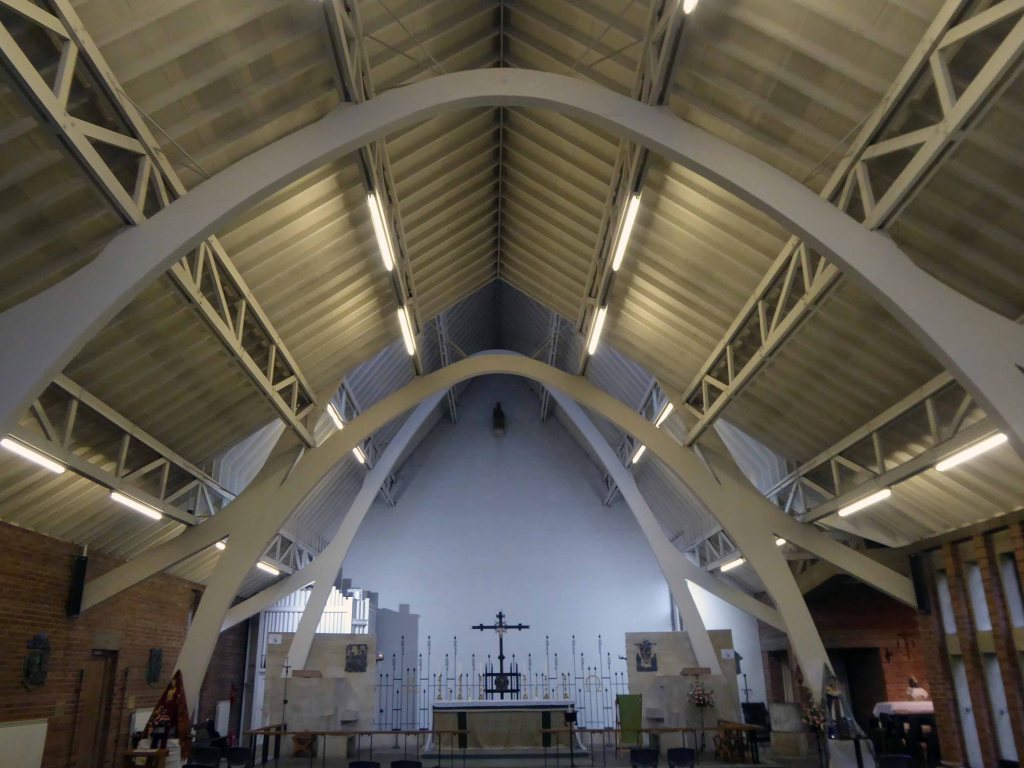
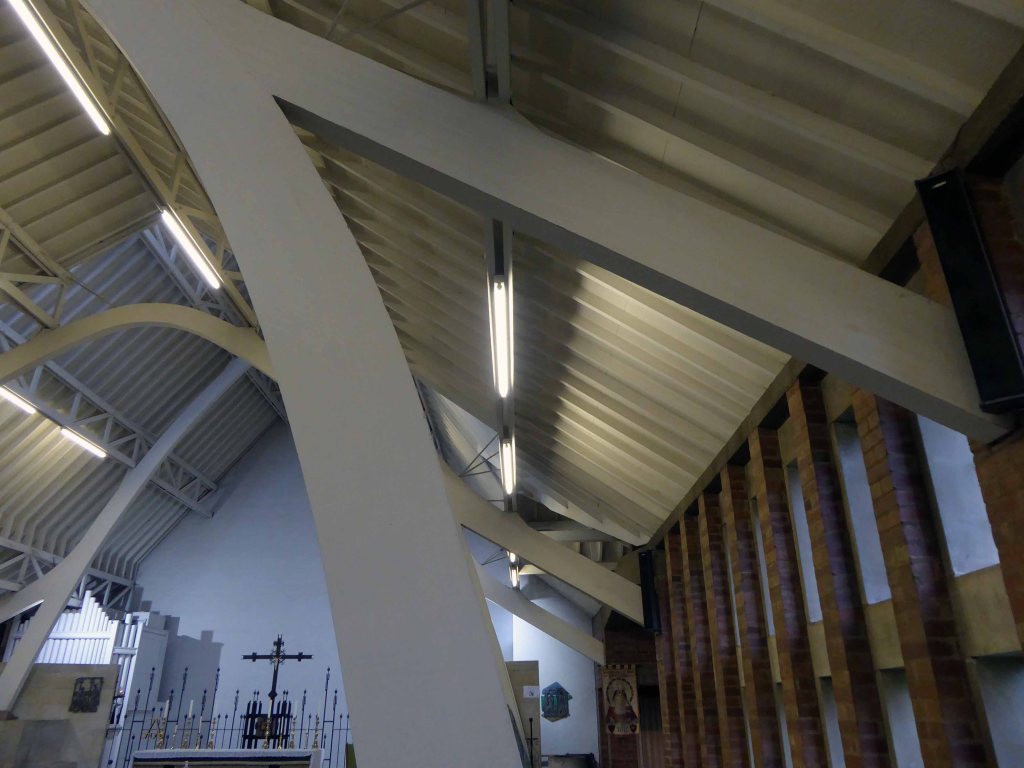
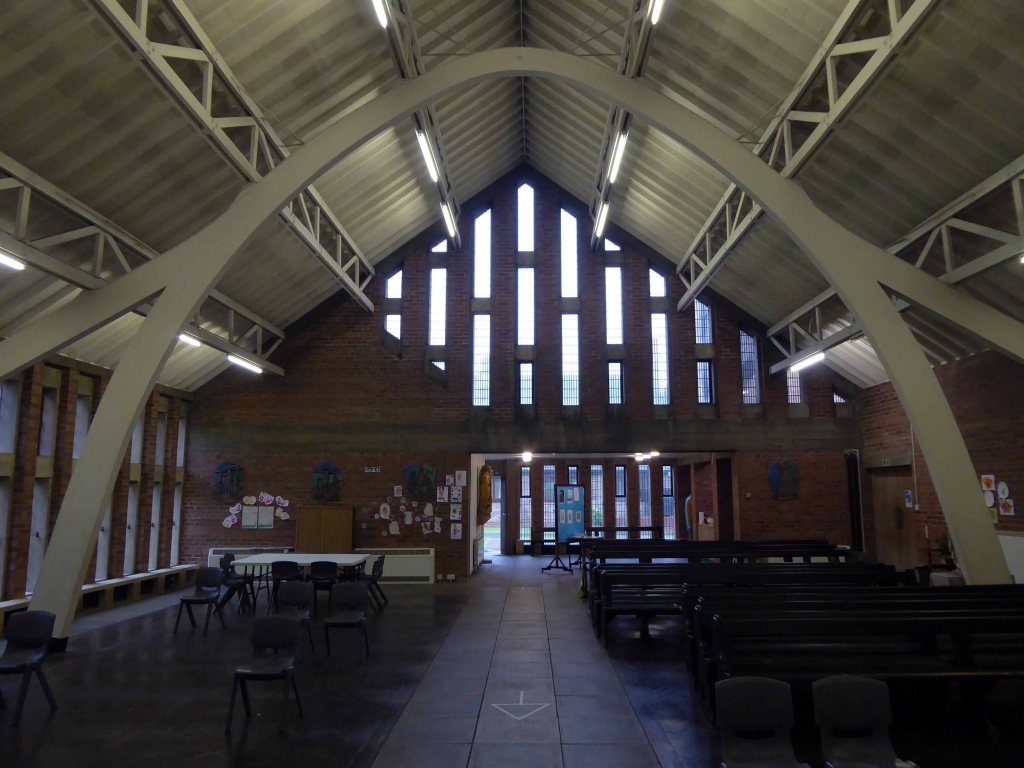
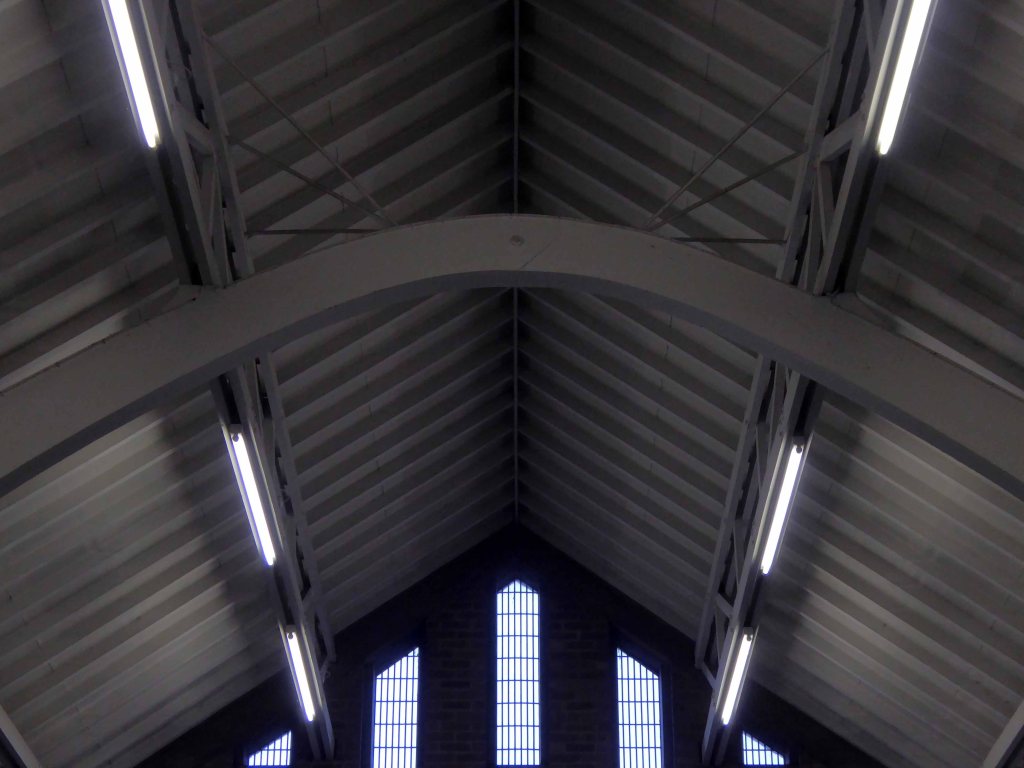
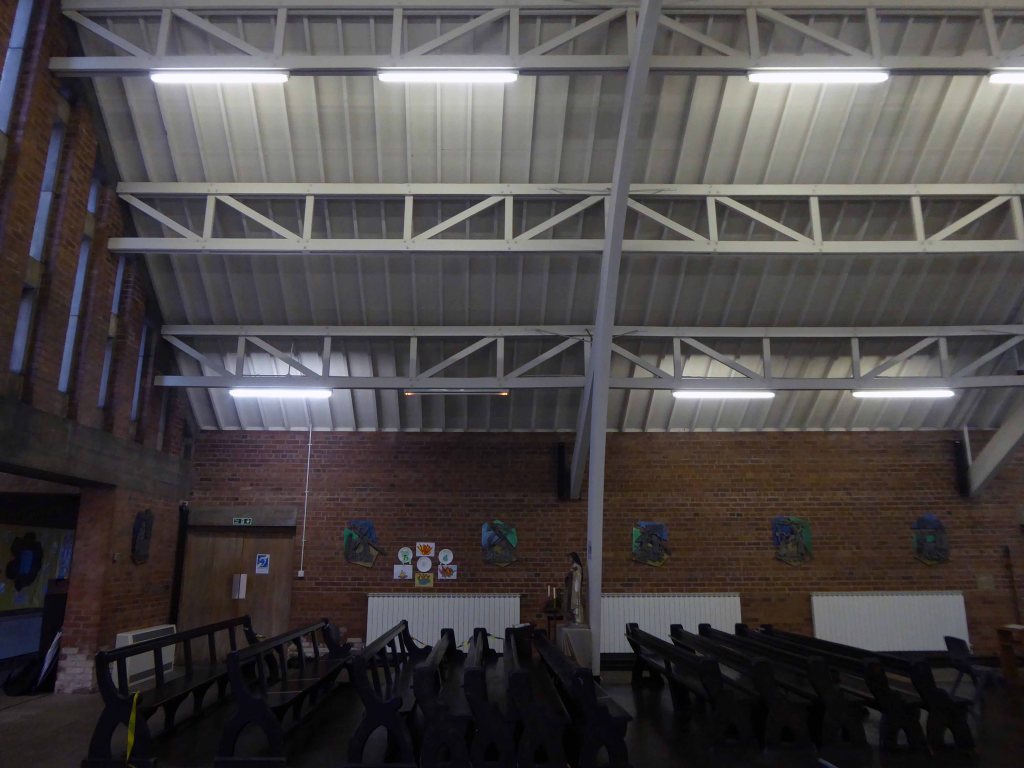
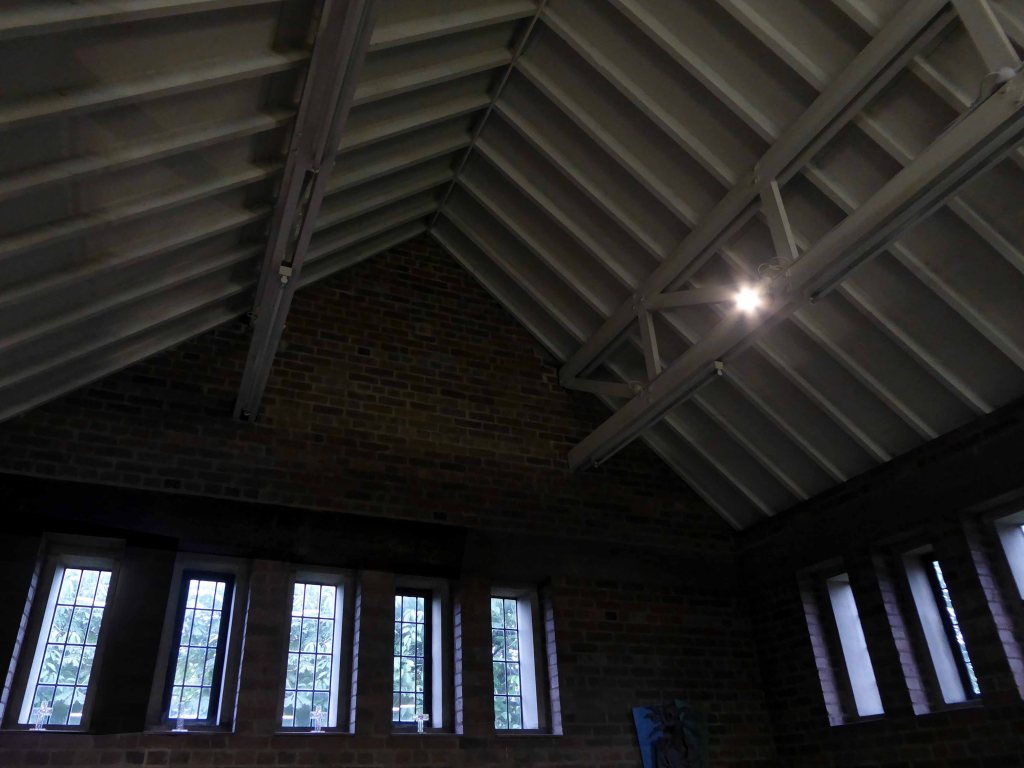
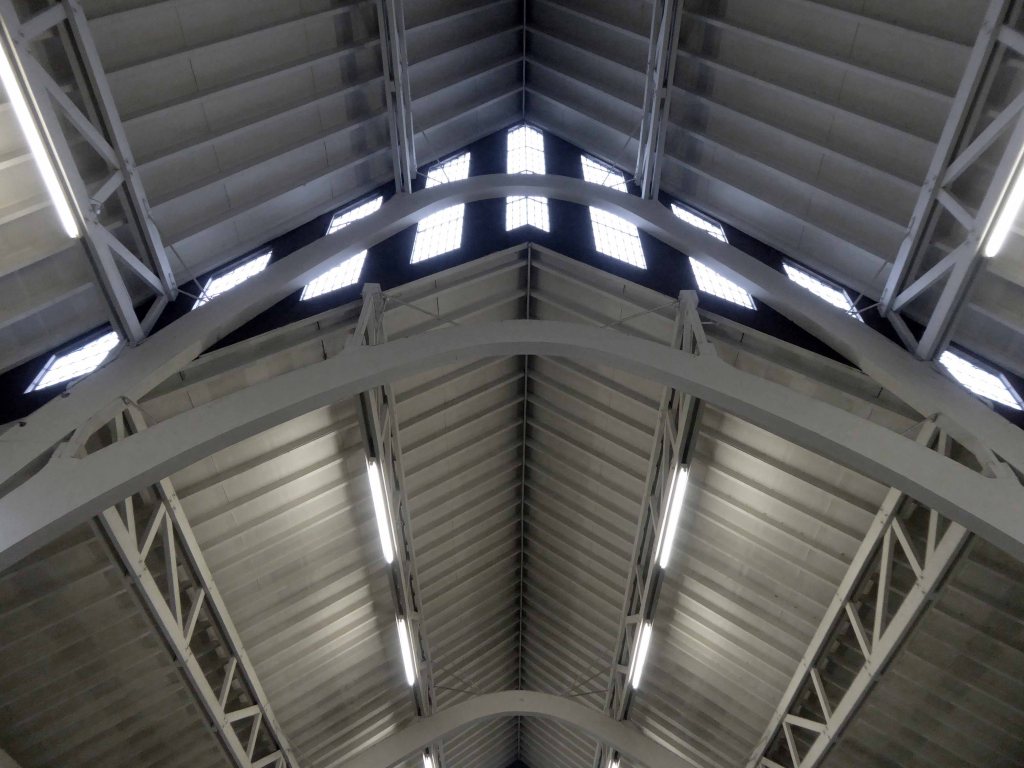
The wooden framed roof supported by huge parabolic arches of laminated timber.
There are retrieved pews, temporarily reordered to accommodate Covid requirements.
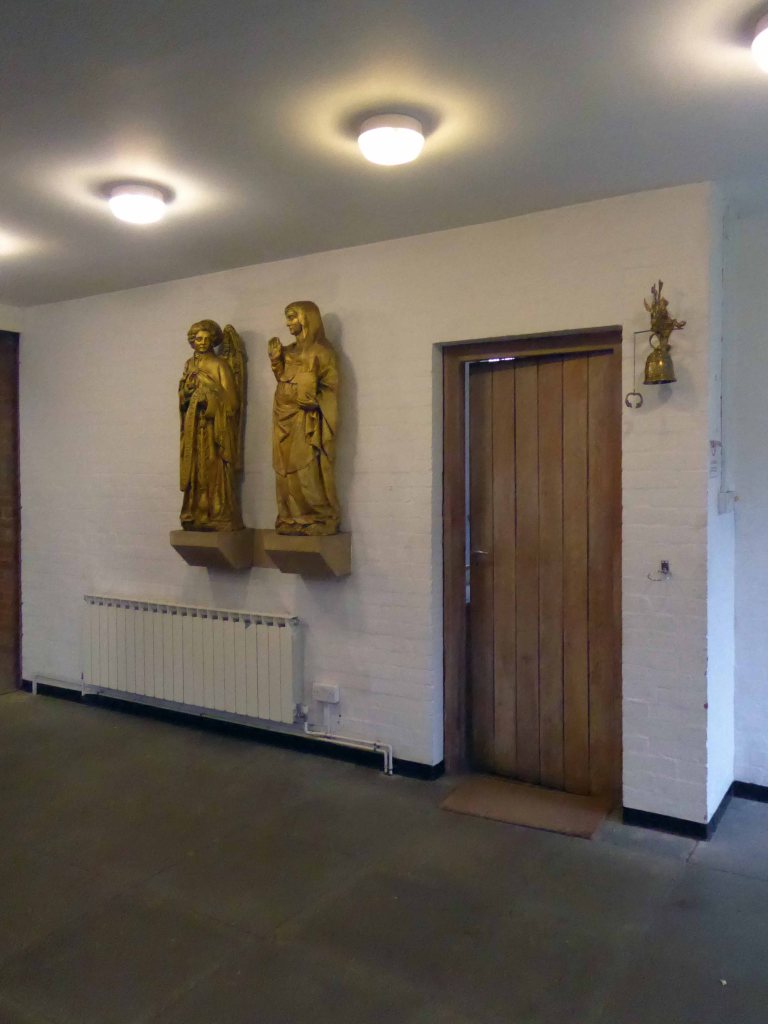
Pugin statuary.
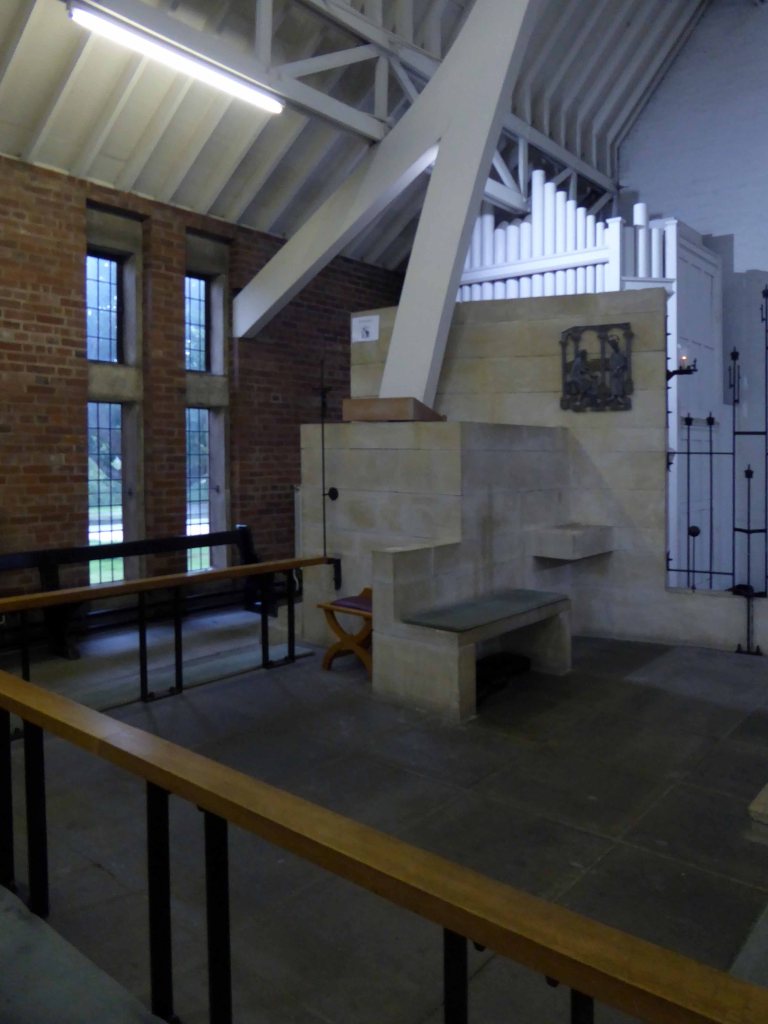
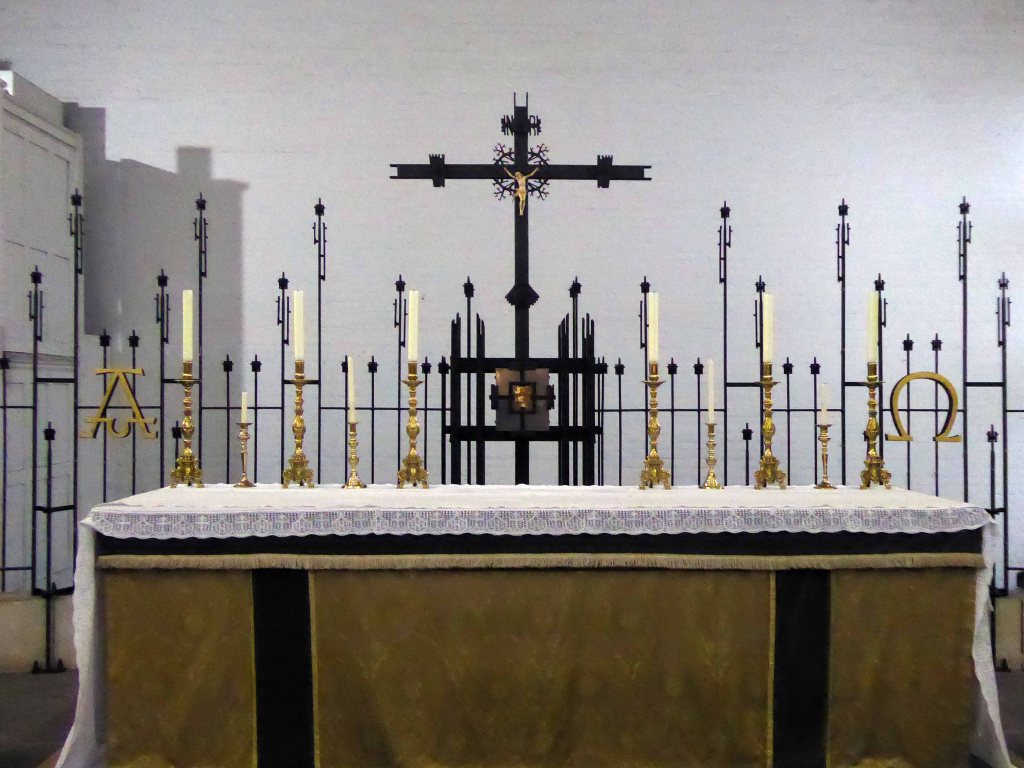
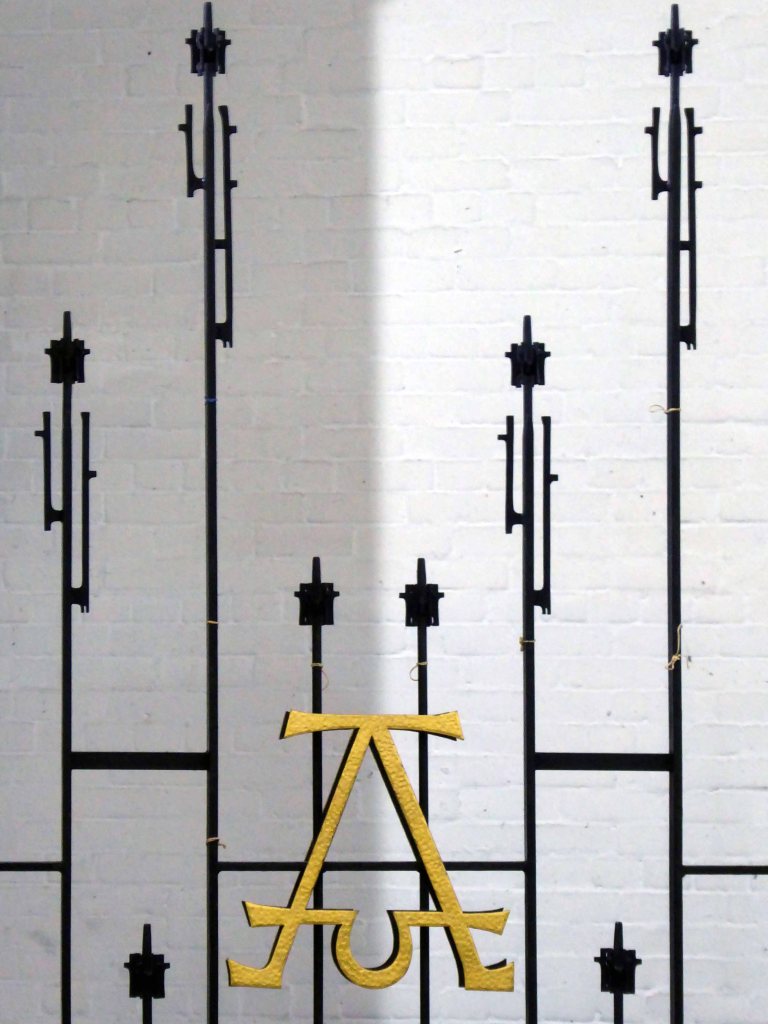
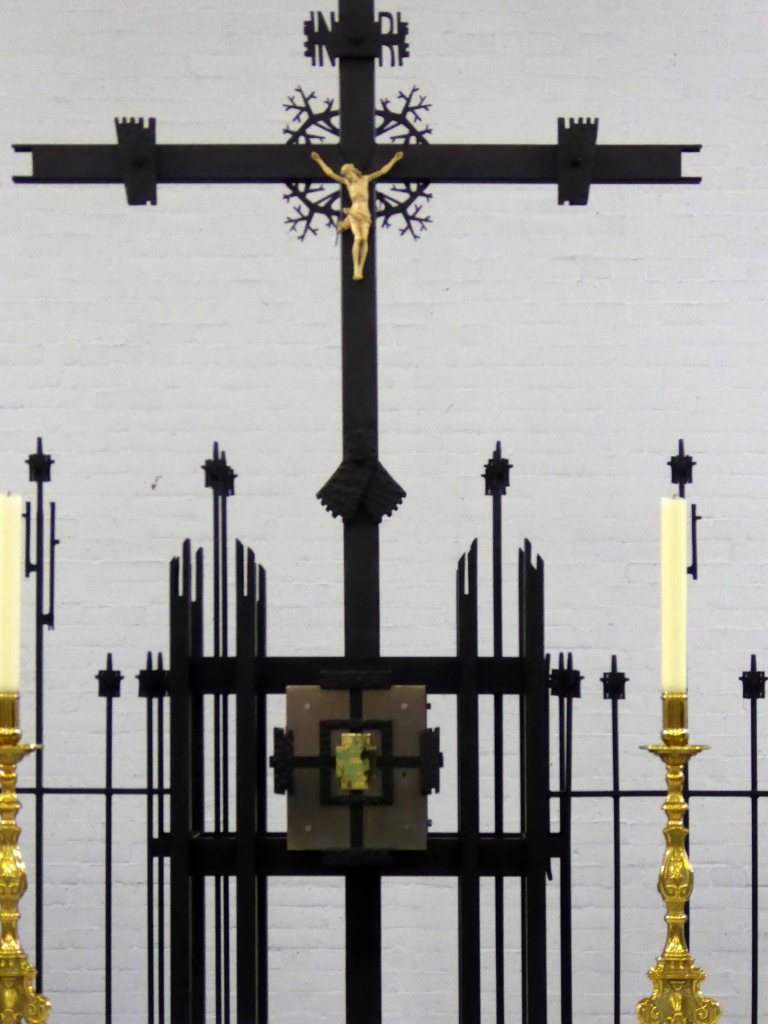
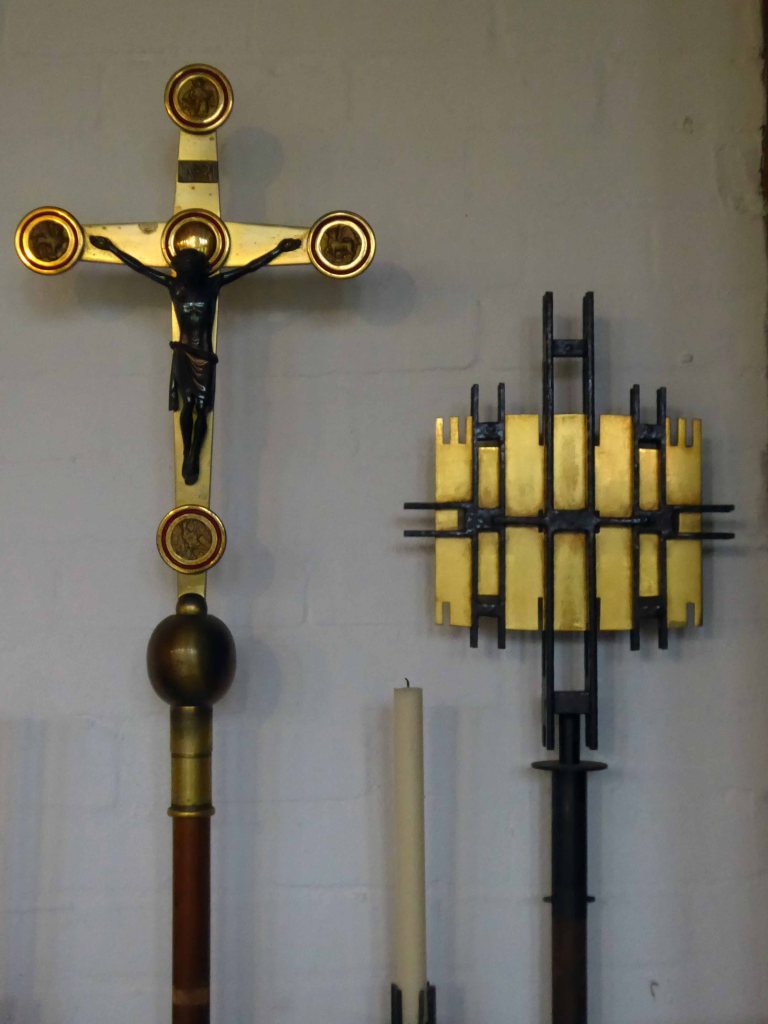
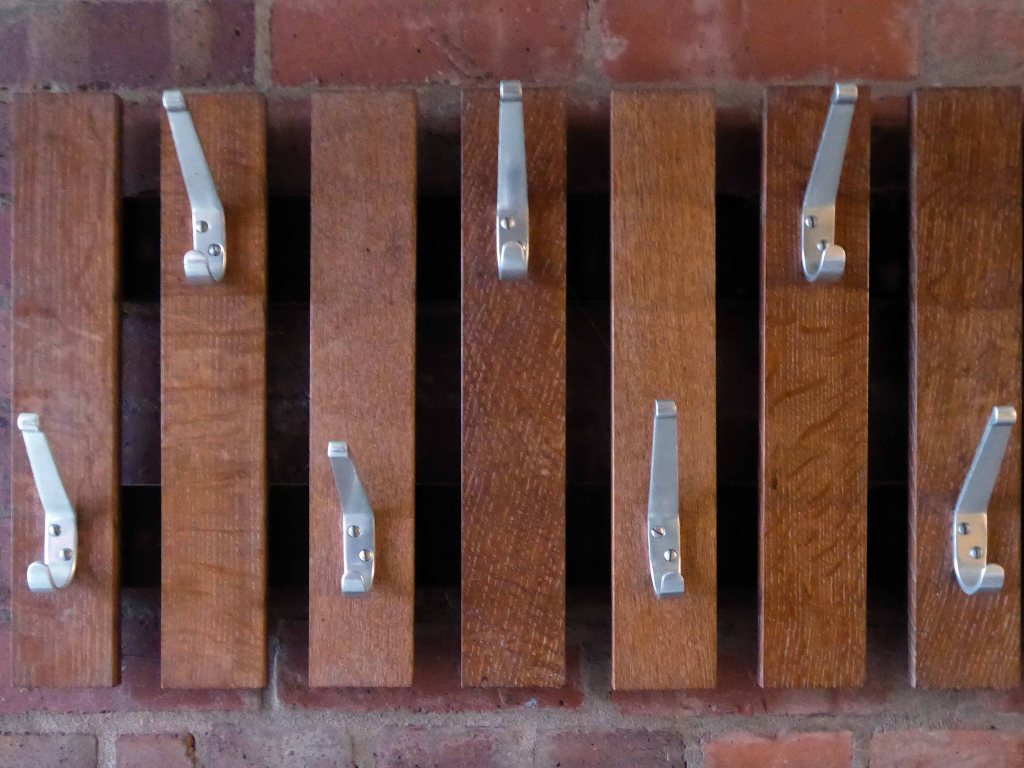
Pace’s own detailed design work in the altar screen and crucifix.
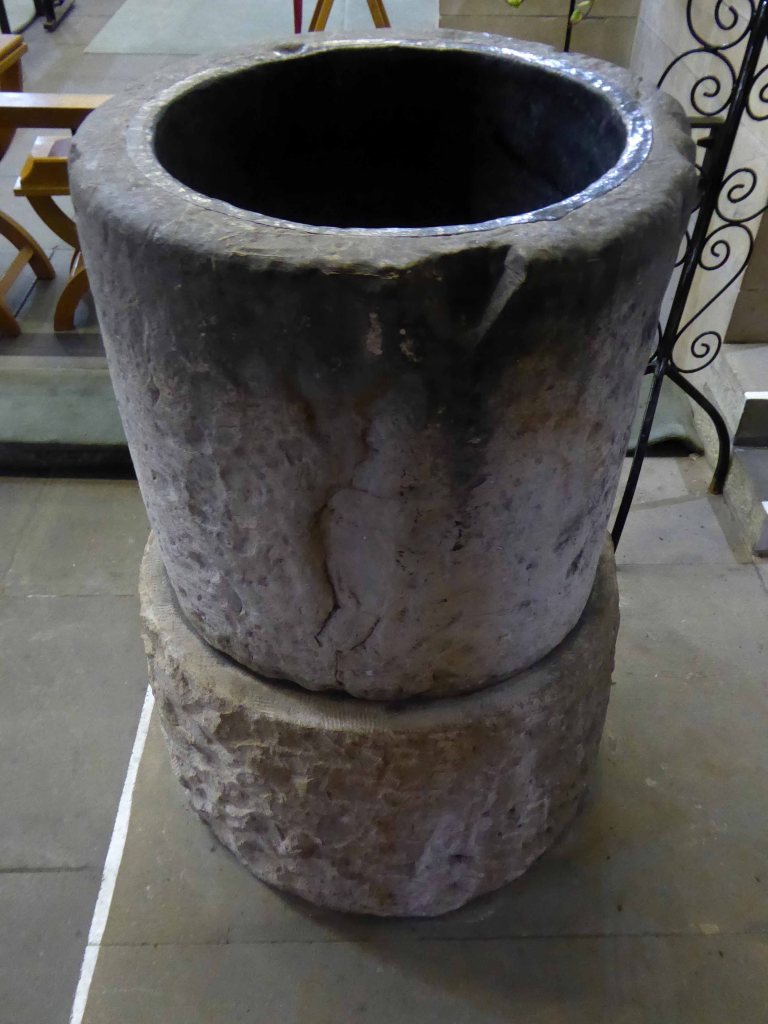
A Mediaeval font.
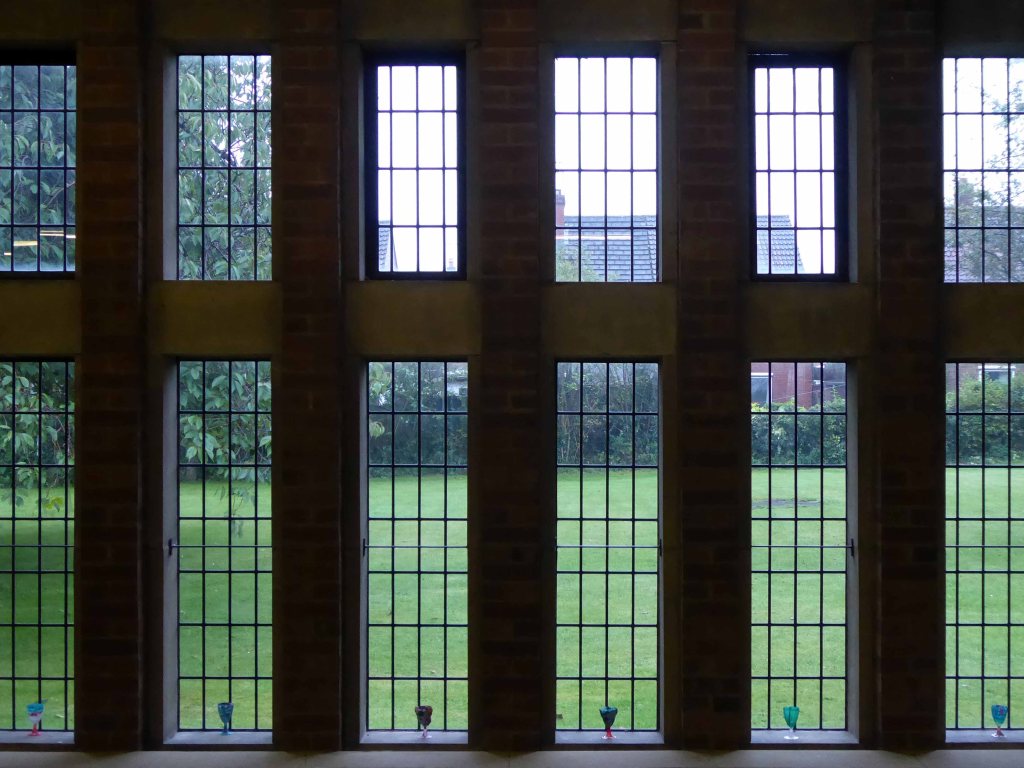
Light enters from several sources on three elevations.
And through the glazed area of the raised gable.
A delightful morning’s work visiting this well used and cared for church.
The world is inherently unstable, along comes a train a resort appears, along comes a ‘plane a resort disappears, along comes a virus and people disappear.
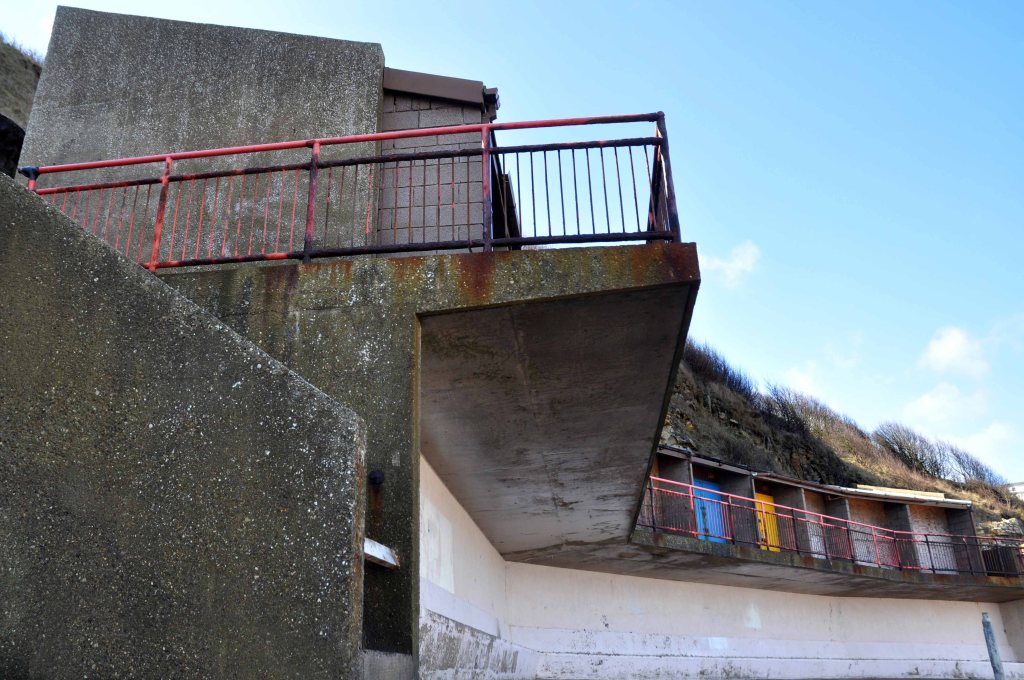
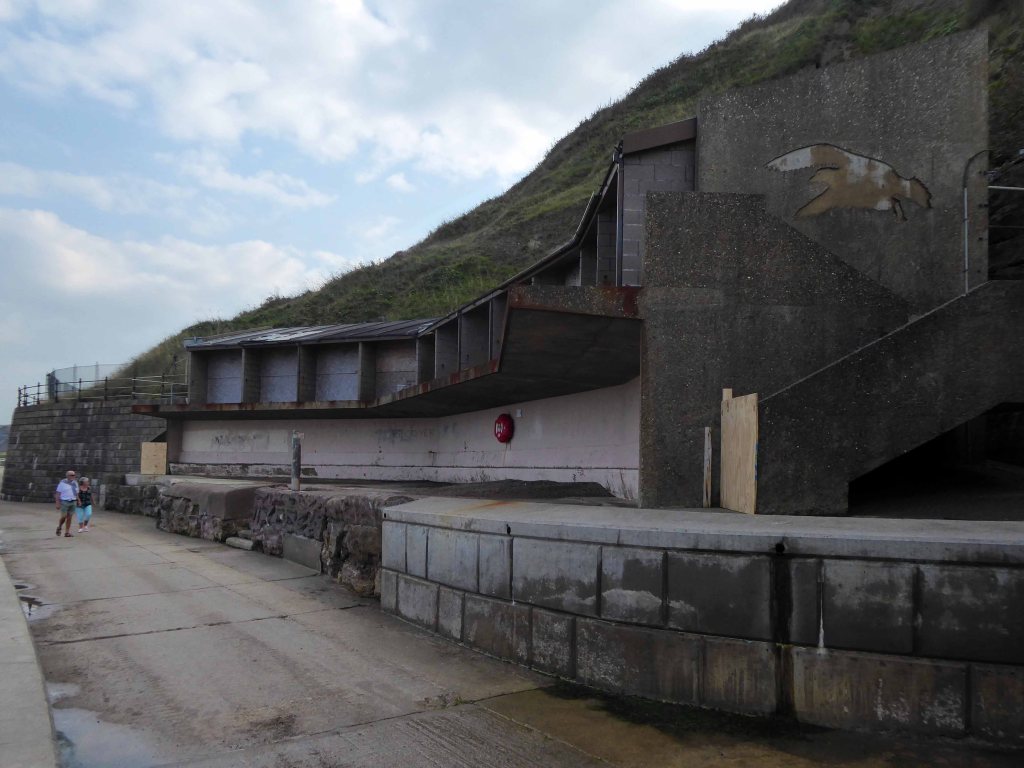
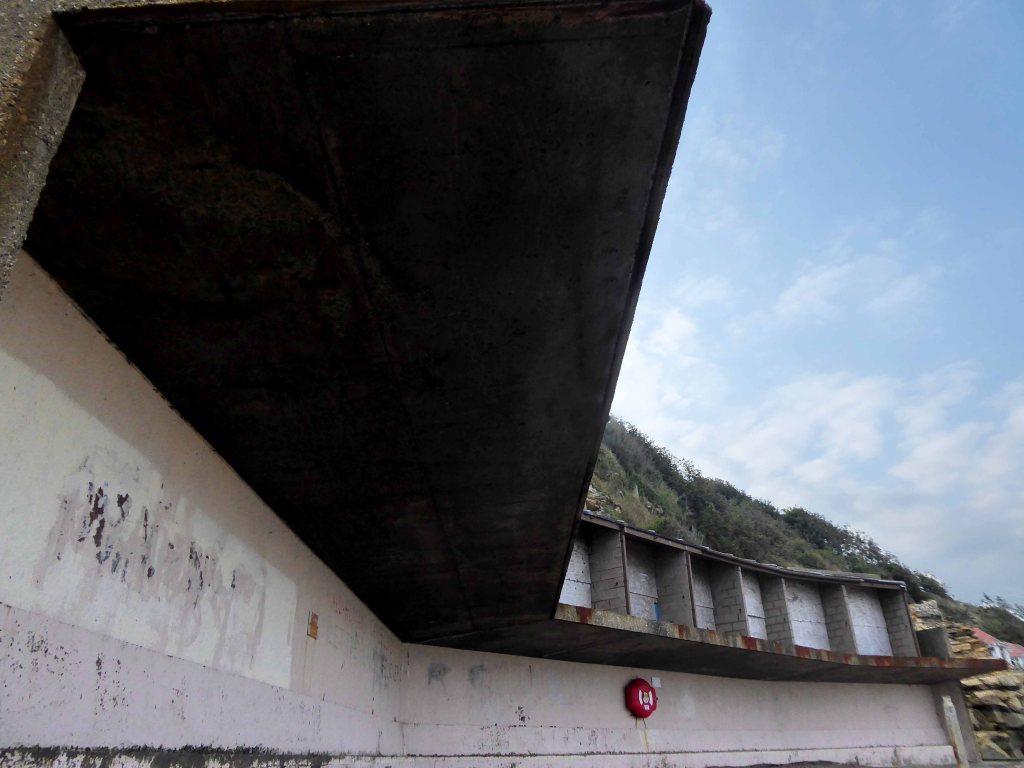
Some of the oldest sun bathing chalets almost became an Arts Hub.
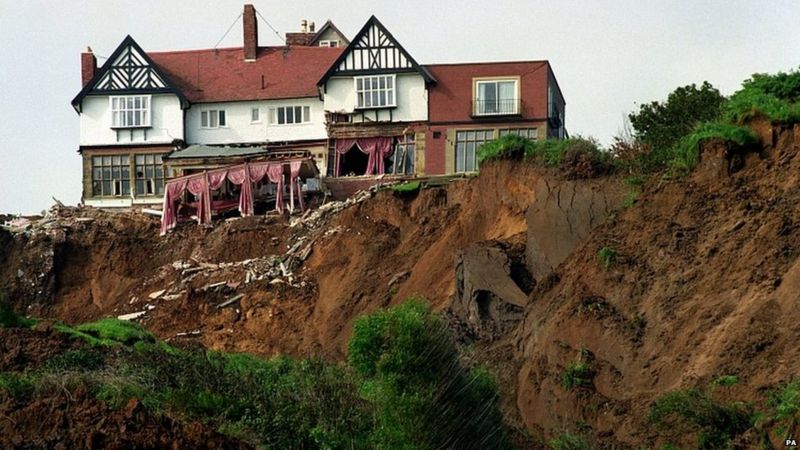
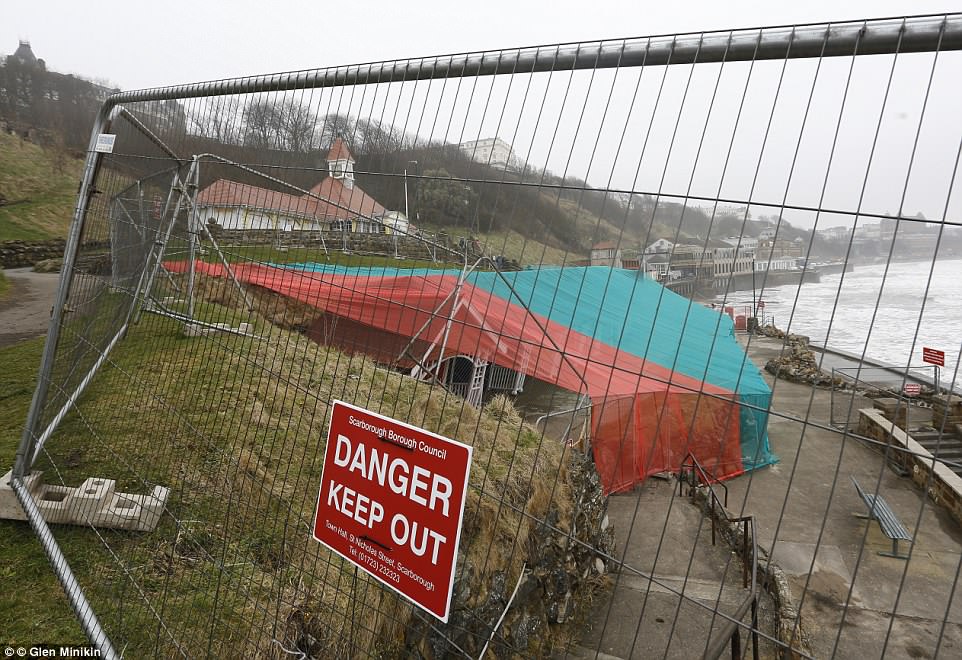
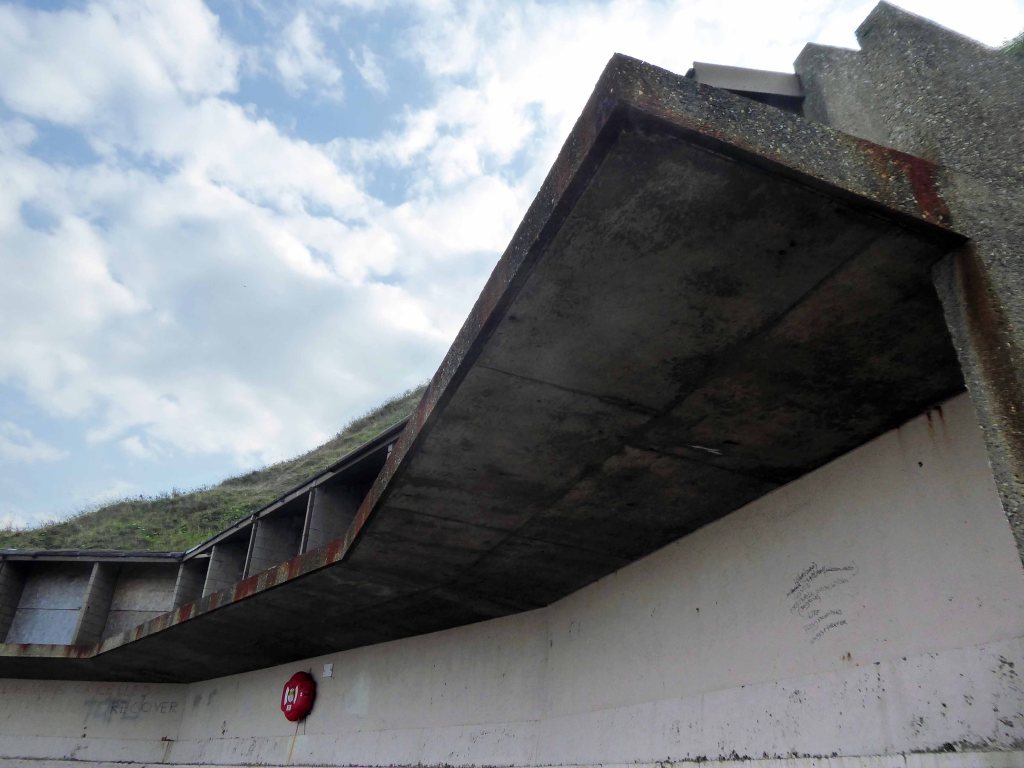
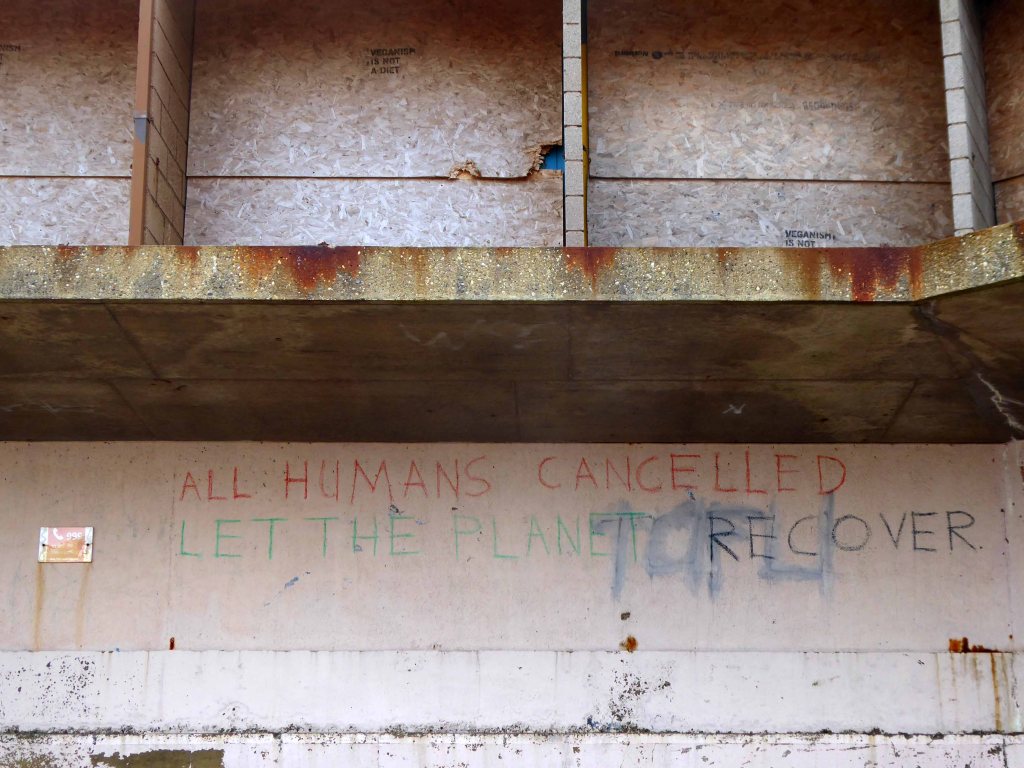
Seaside chalets were under threat, with the cause believed to be the failure of a retaining wall.
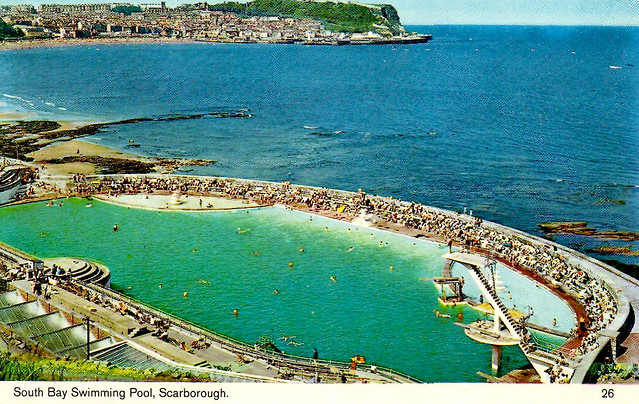
The swimming pool has been and gone, only an empty shell remains.
There are speculative plans and piecemeal repairs, but these are difficult times, and attracting substantial finance and flocks of tourists to revitalise the town, is no simple matter.
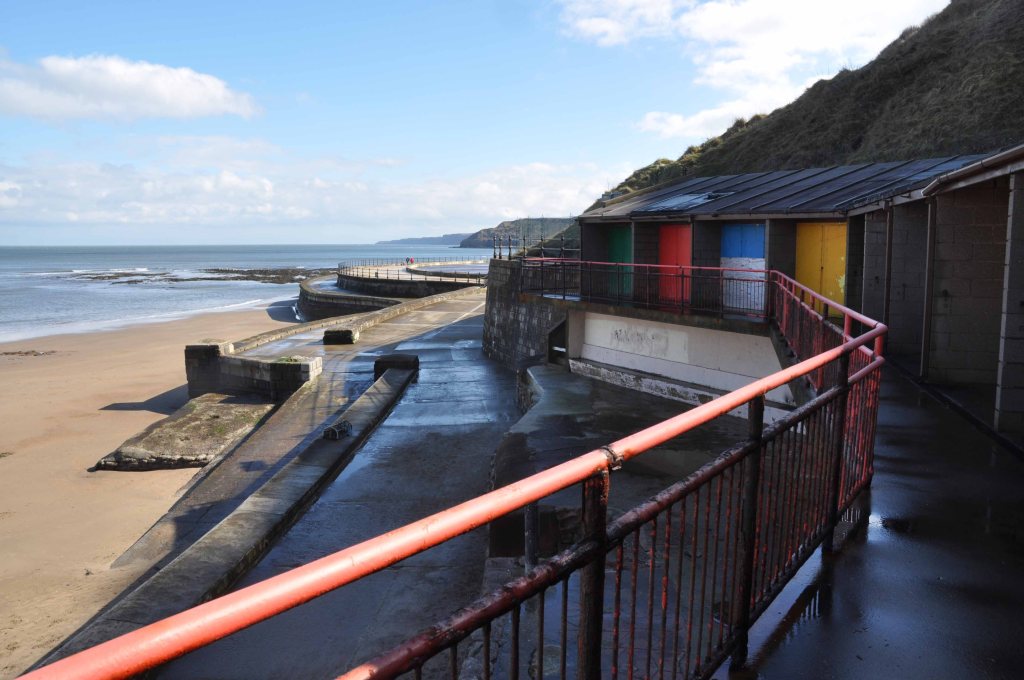
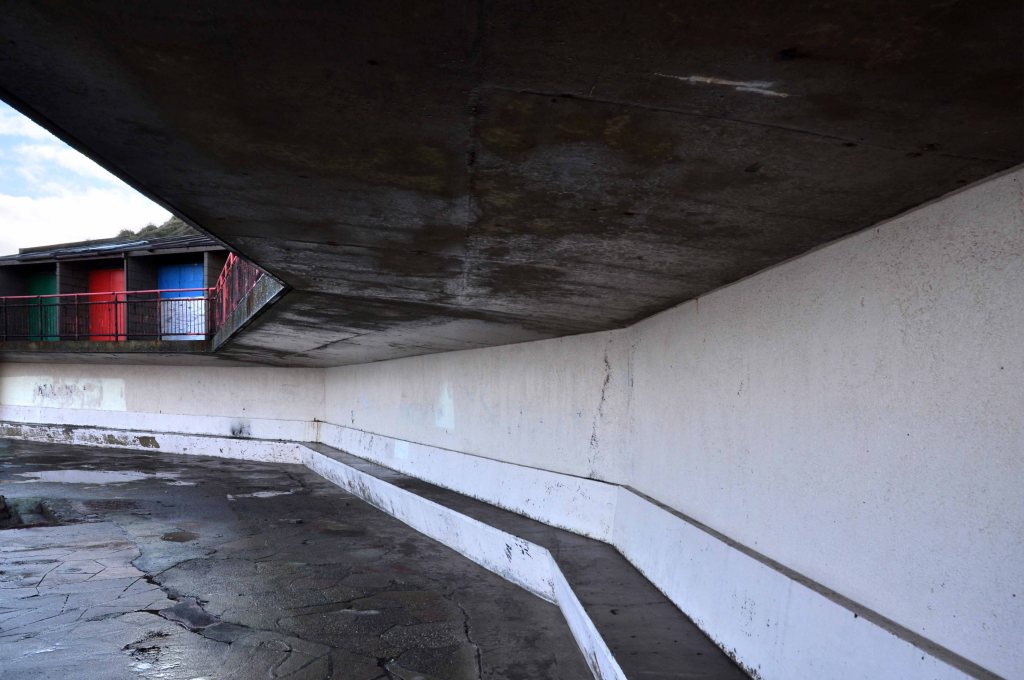
From 2011 I have visited South Bay, intrigued by all the above, but there’s a special place in my heart for these concrete chalets.
They never get a mention.
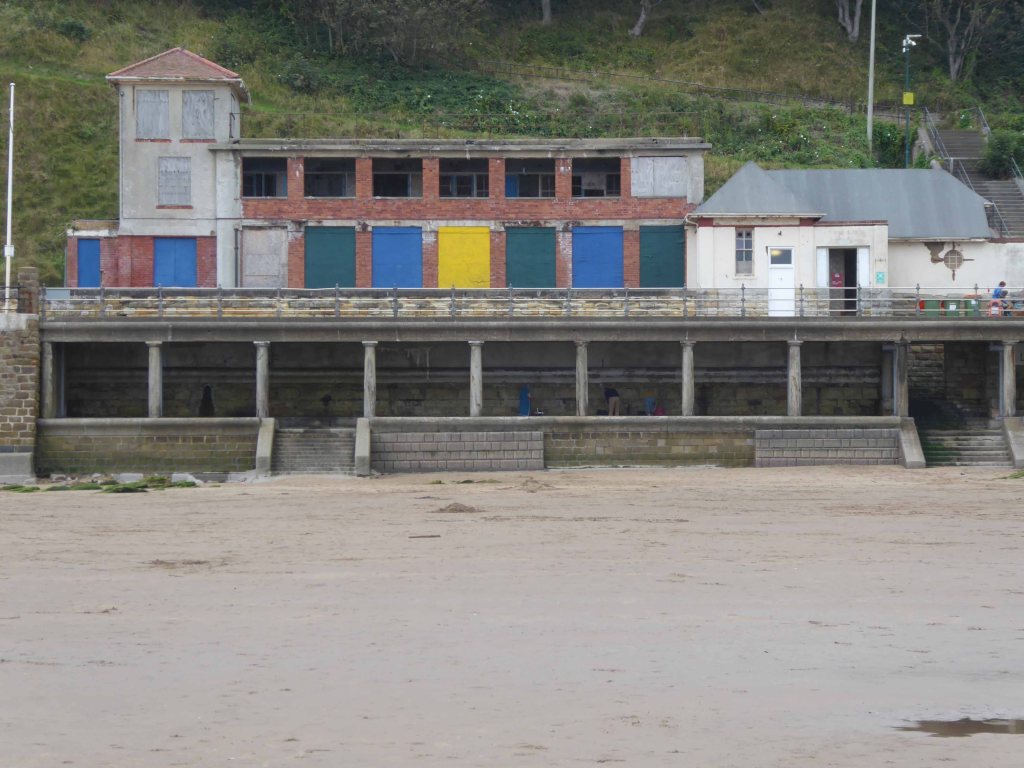
Here they are some years ago.
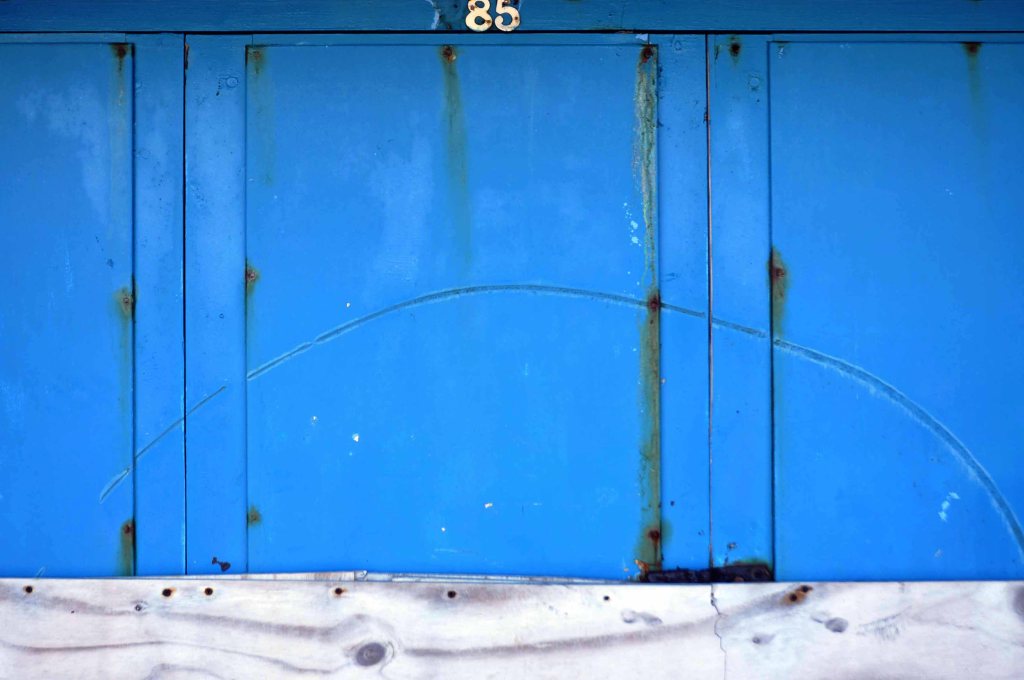
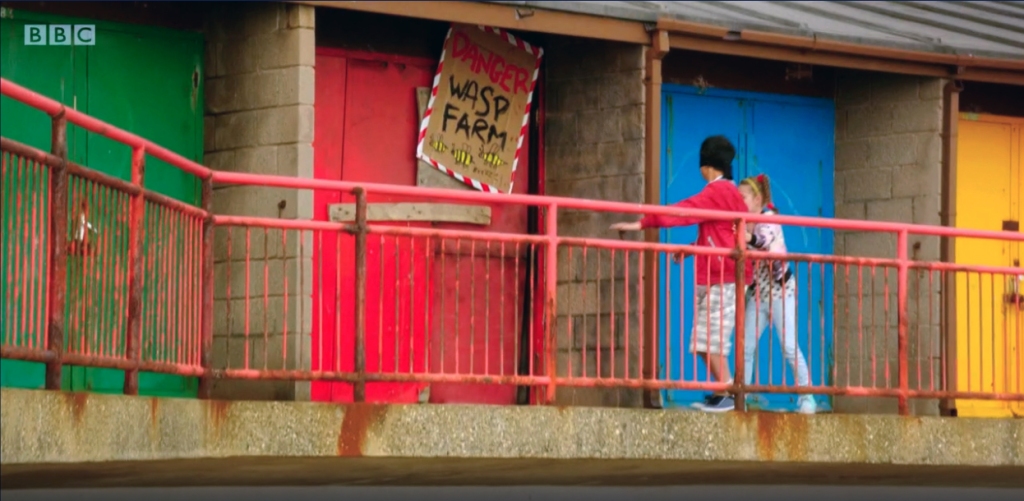
The primary coloured paint almost still fresh on their well locked doors.
They stand forlorn on the concrete shore overlooking an indifferent North Sea, hoping for a future in an uncertain age.
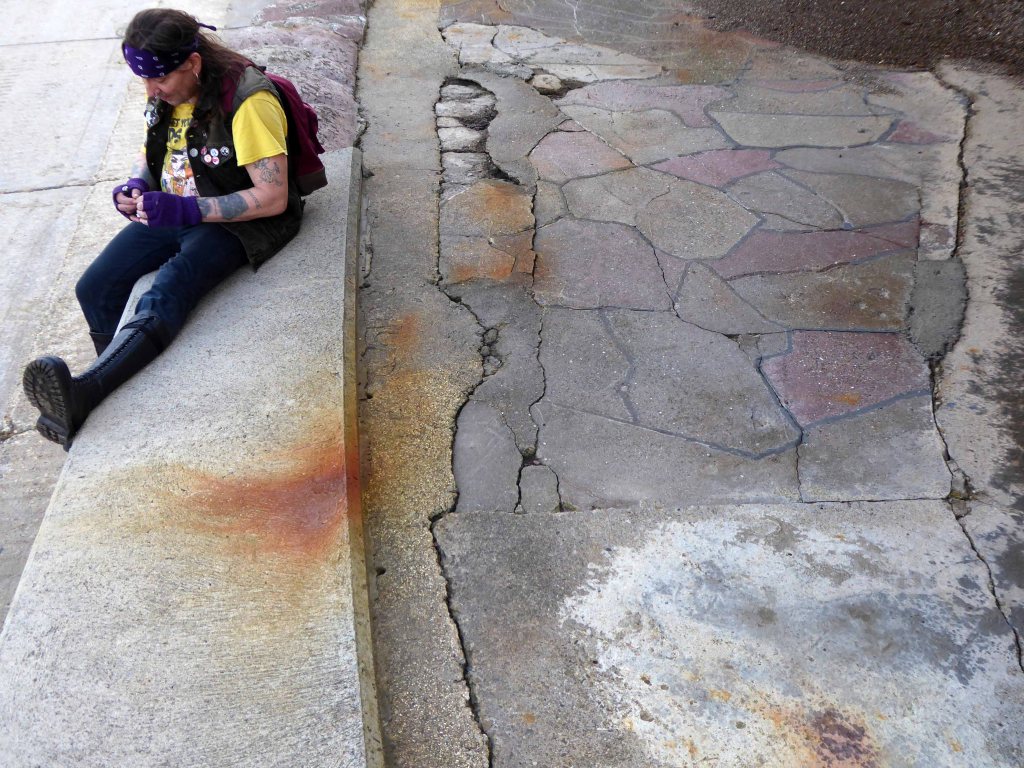
As I snapped I chatted to a local ANTIFA Anarcho Punk – ex Mansfield Miner and political activist, he feared that they would be swamped by some tidal wave of gentrification.
If so when, not soon.
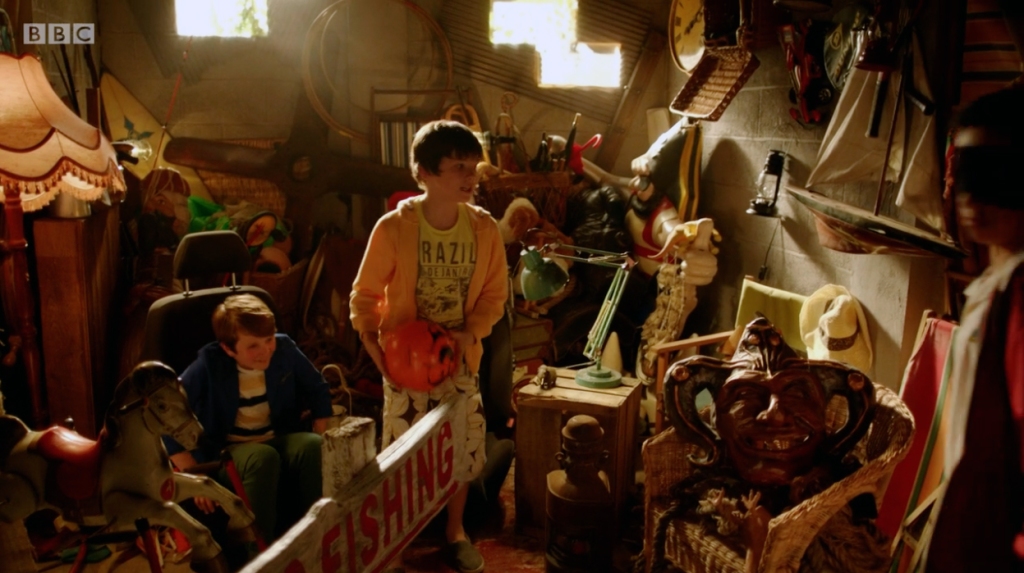
As a post script I have been informed that the site was used as a kid’s den in the CBBC TV series All at Sea!
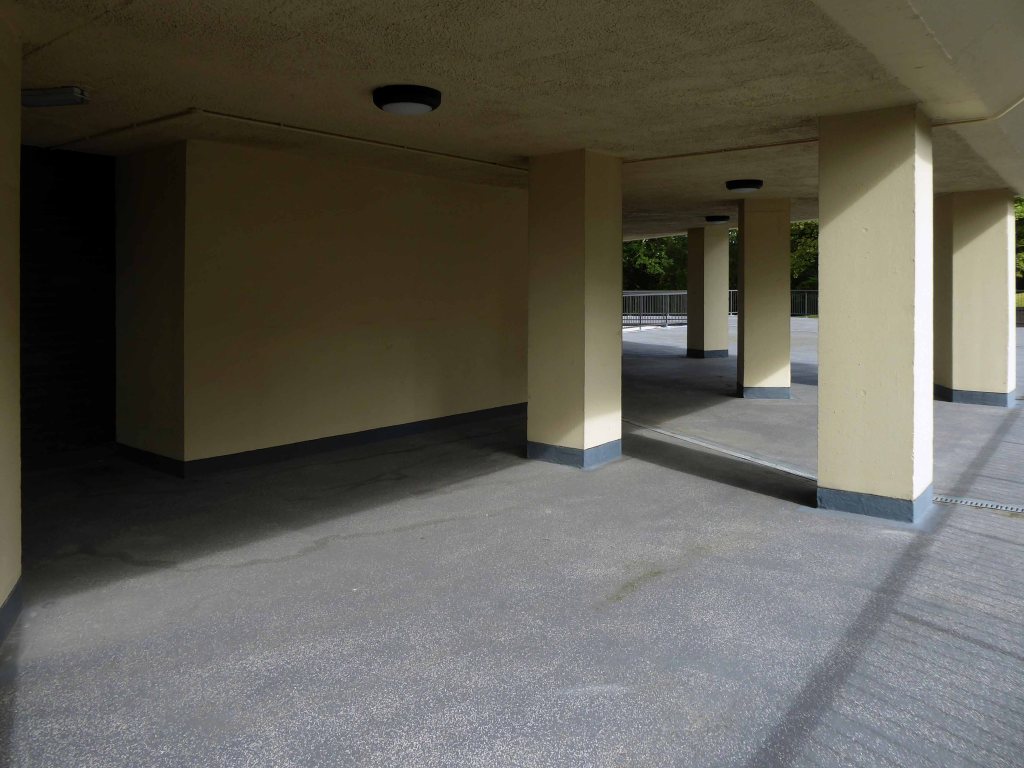
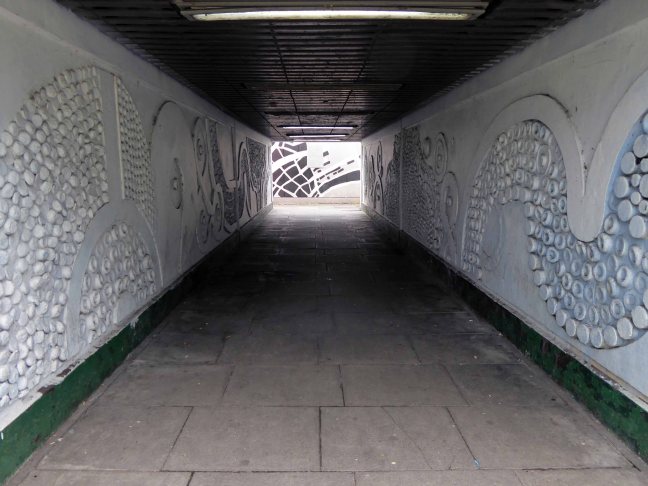
First there was the first, then secondly the second – this is the third and last underpass.
A fitting finish to the series as we pass through the final subterranean frontier out into the clear light of the South Yorkshire day.
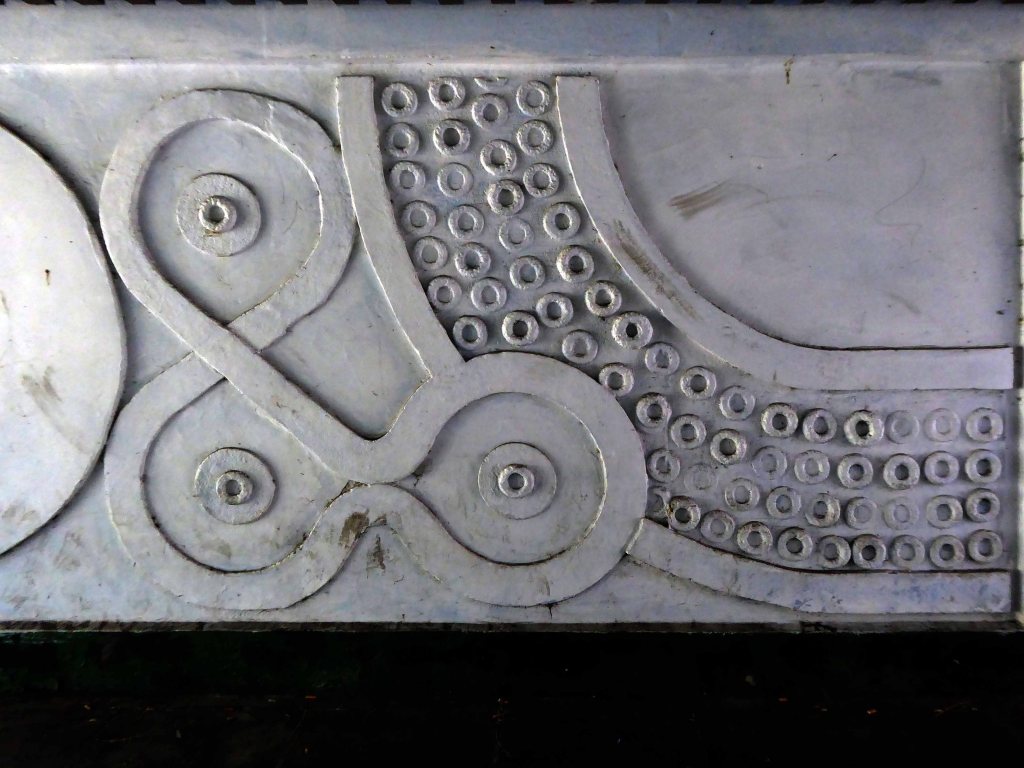
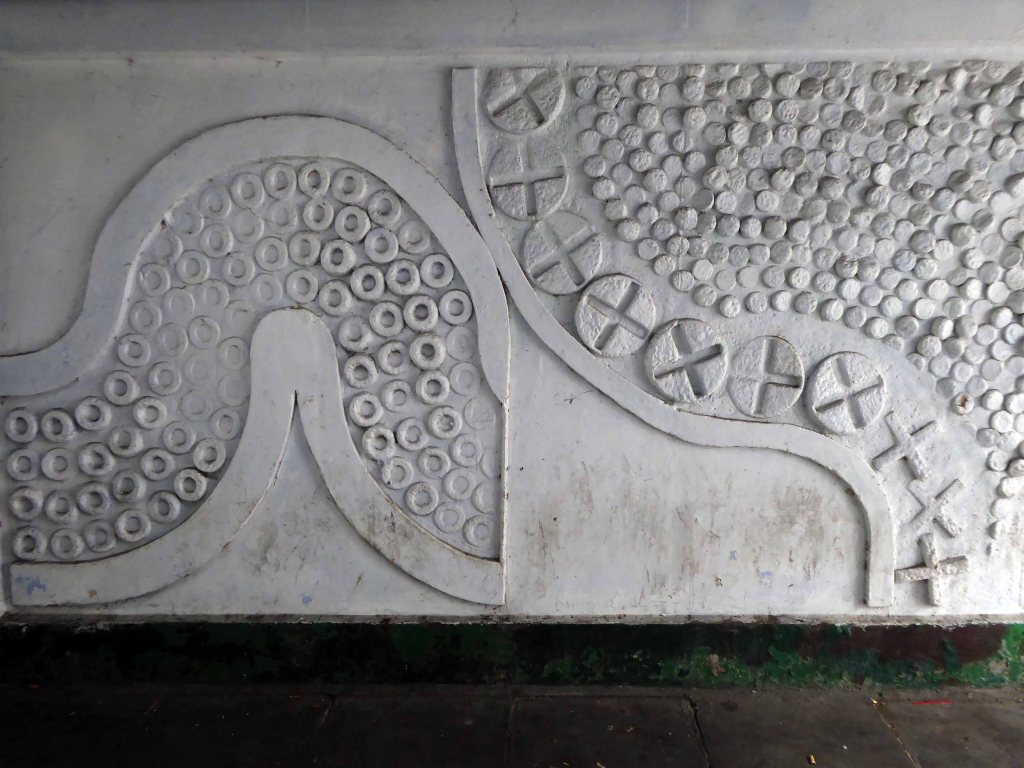
Each one is a neglected gem of municipal modernism, the underpass a feature under threat, the pedestrian often subsumed by the drive to accommodate the motor car.
As of last Wednesday, we all seem to have tenuously hung on in there.
Oh we’ll hear the thunder roar, feel the lightning strike. At a point we’ll both decide to meet at the same time tonight.

















































 Modern Mooch