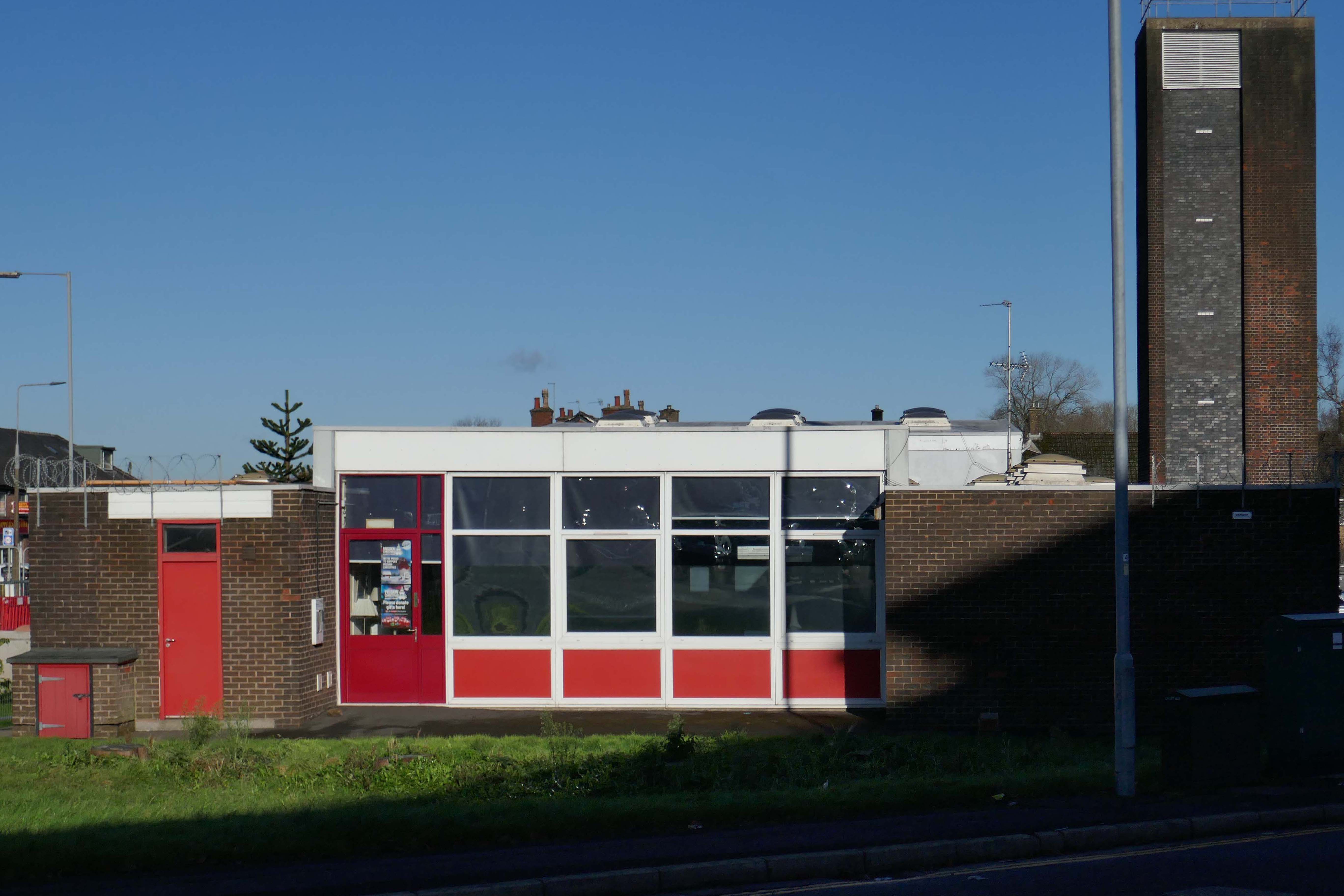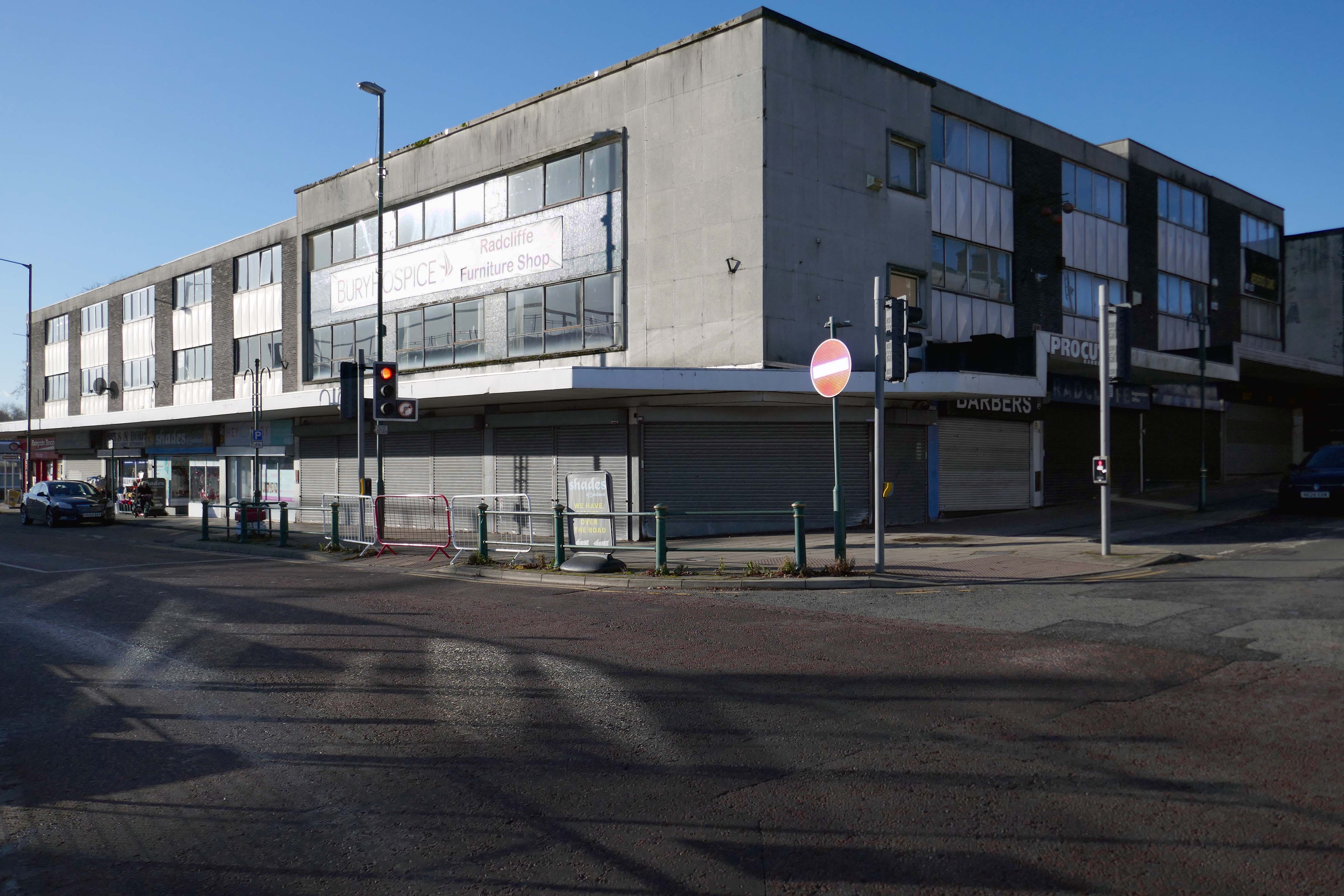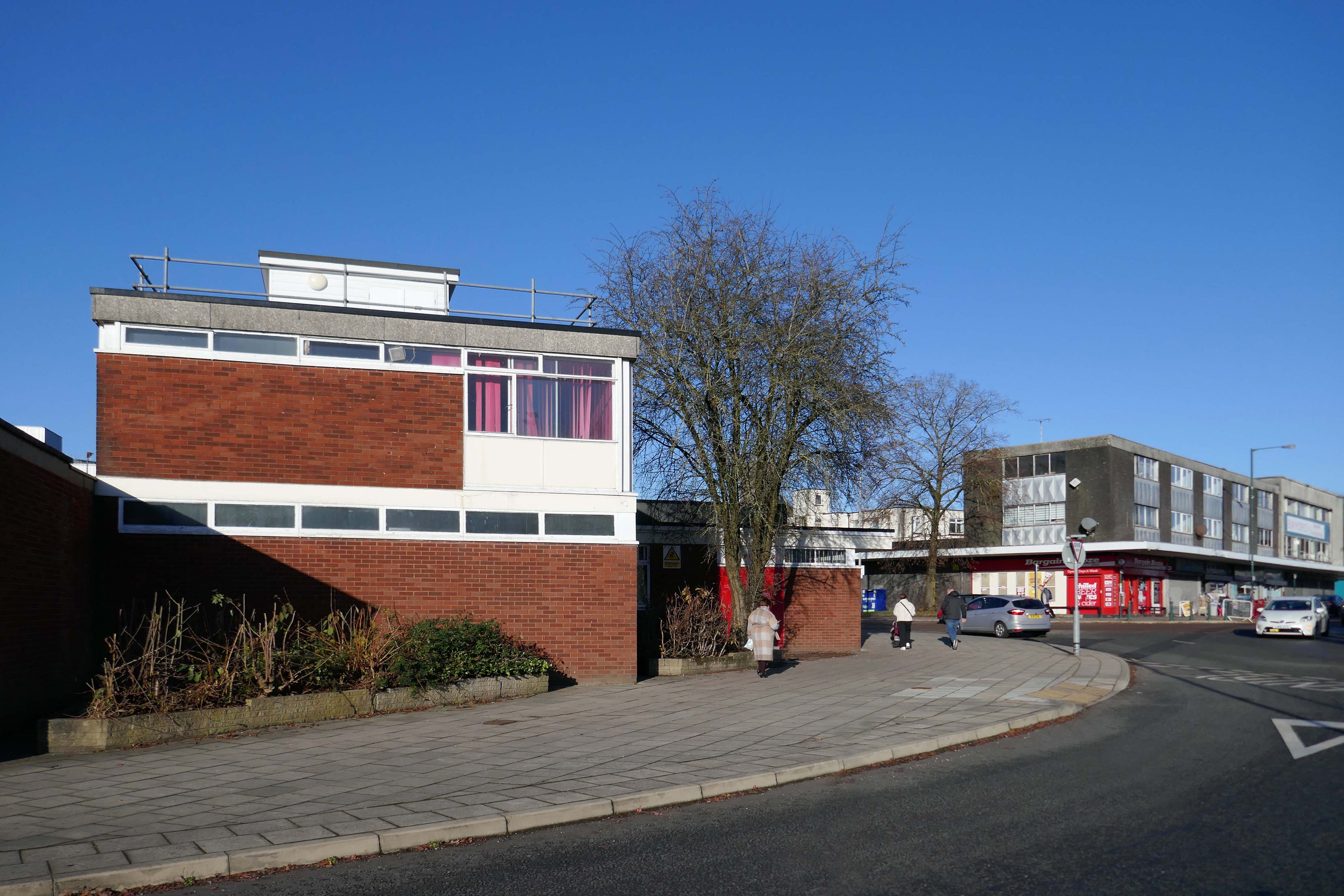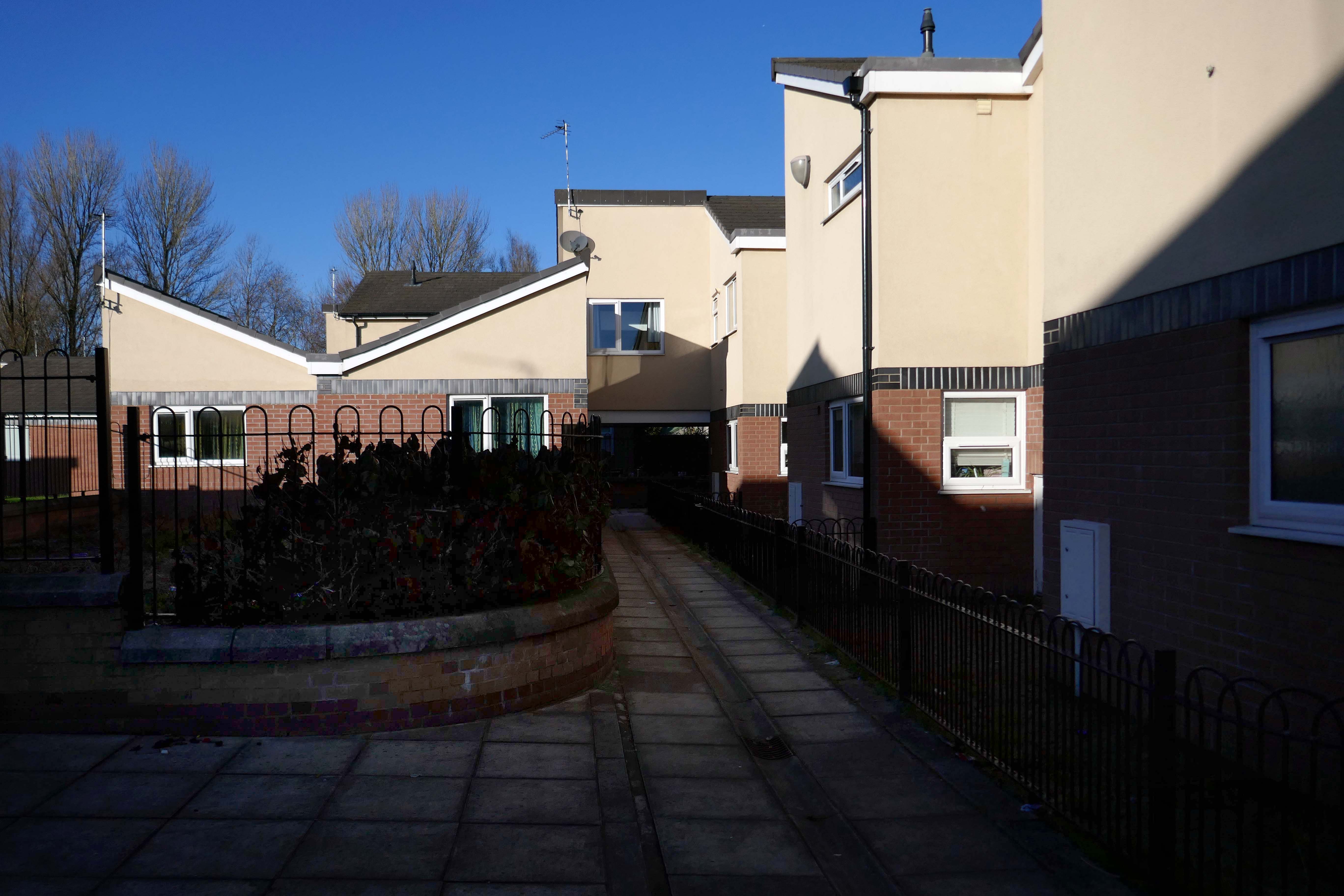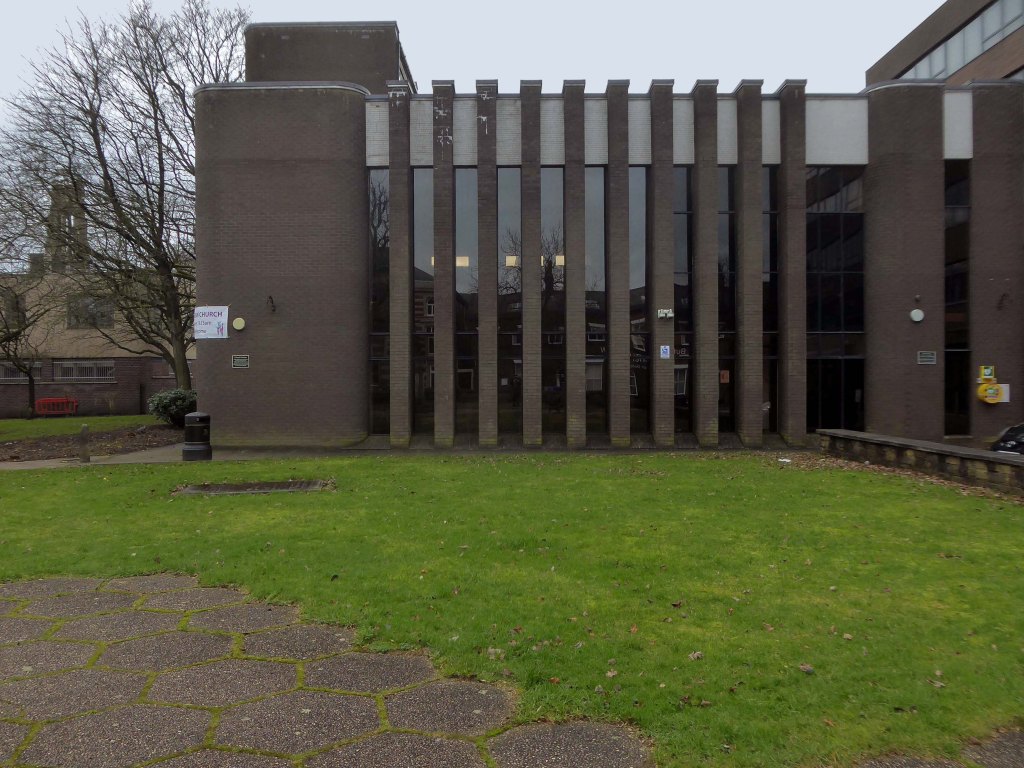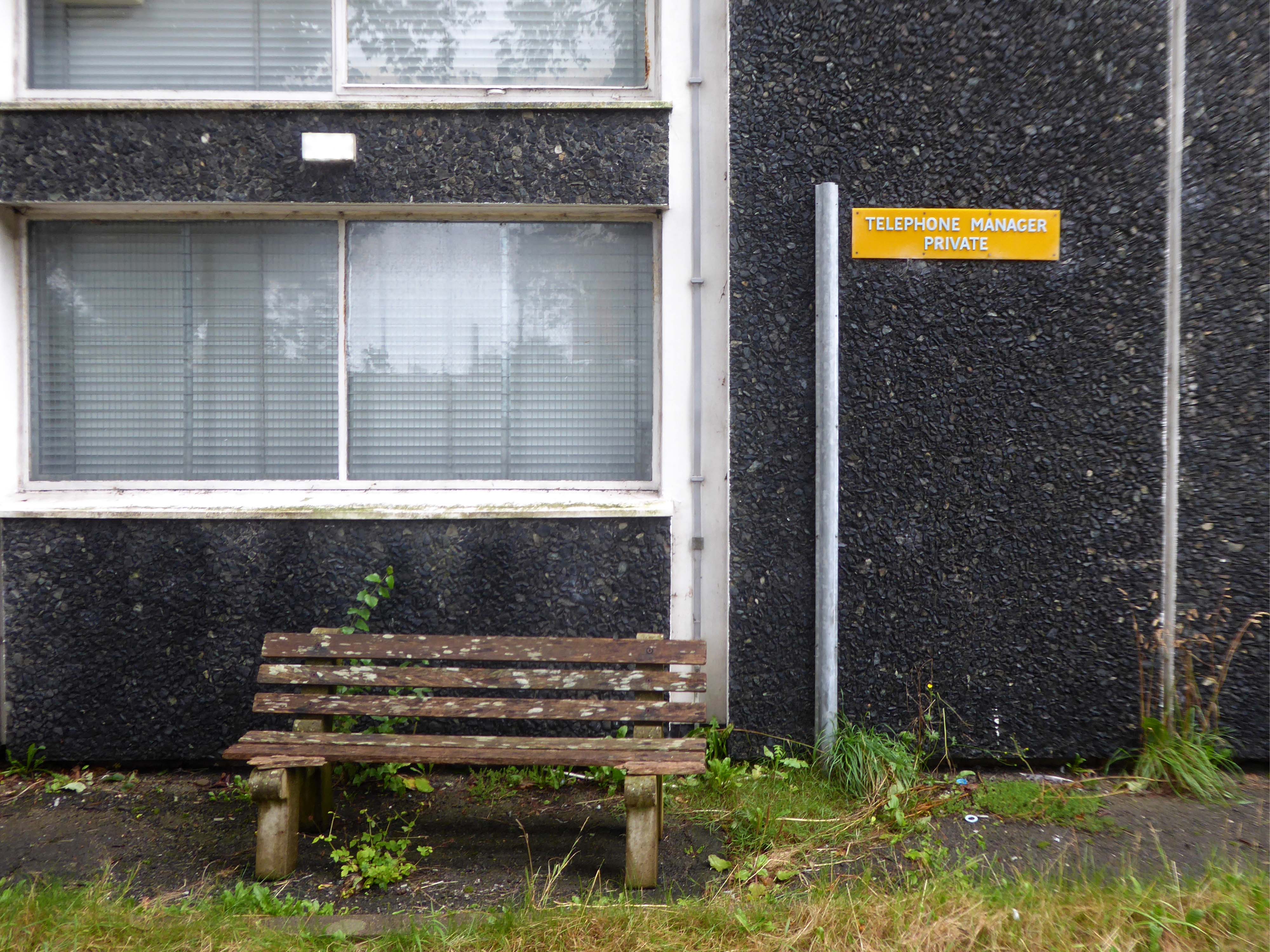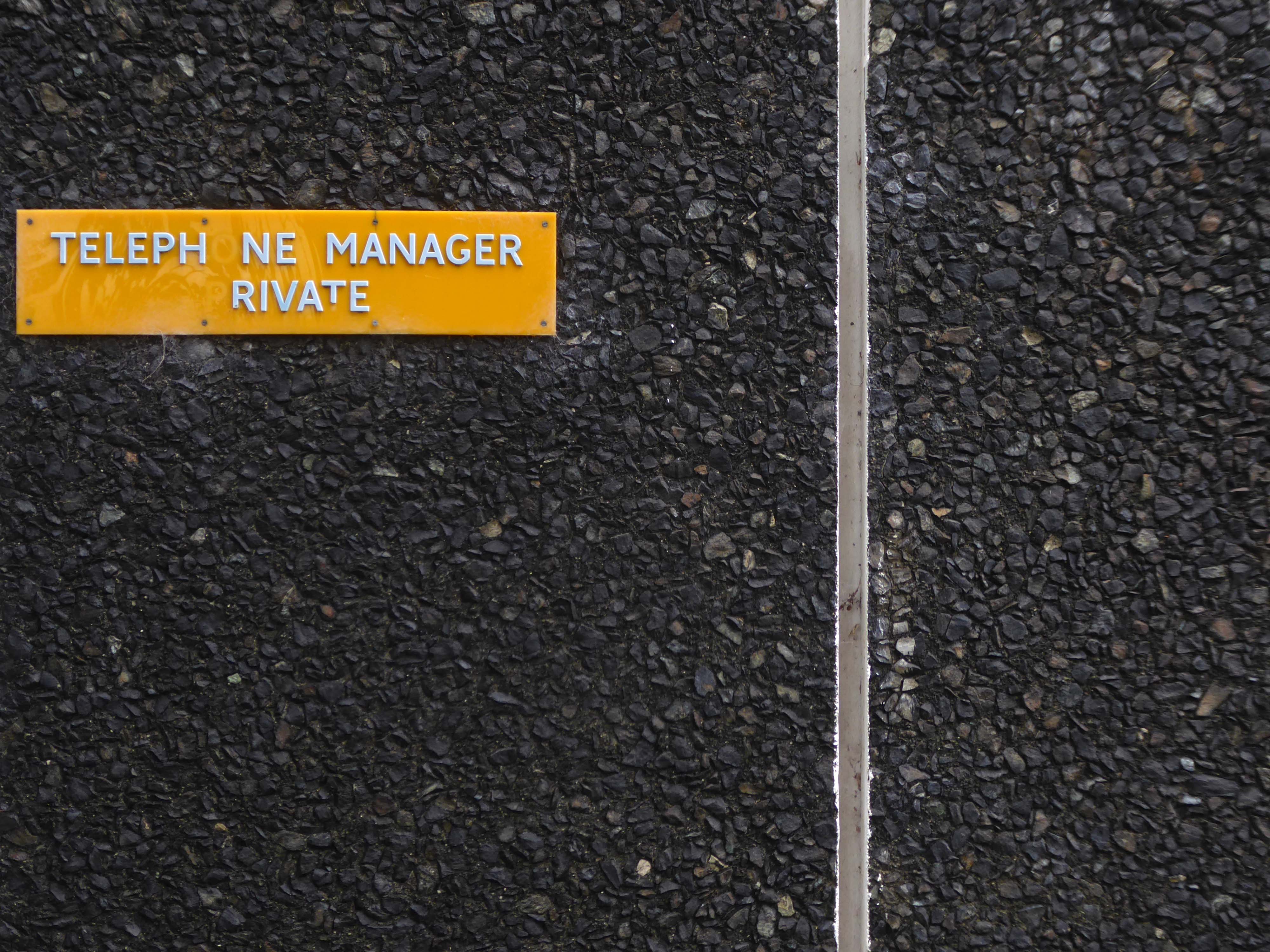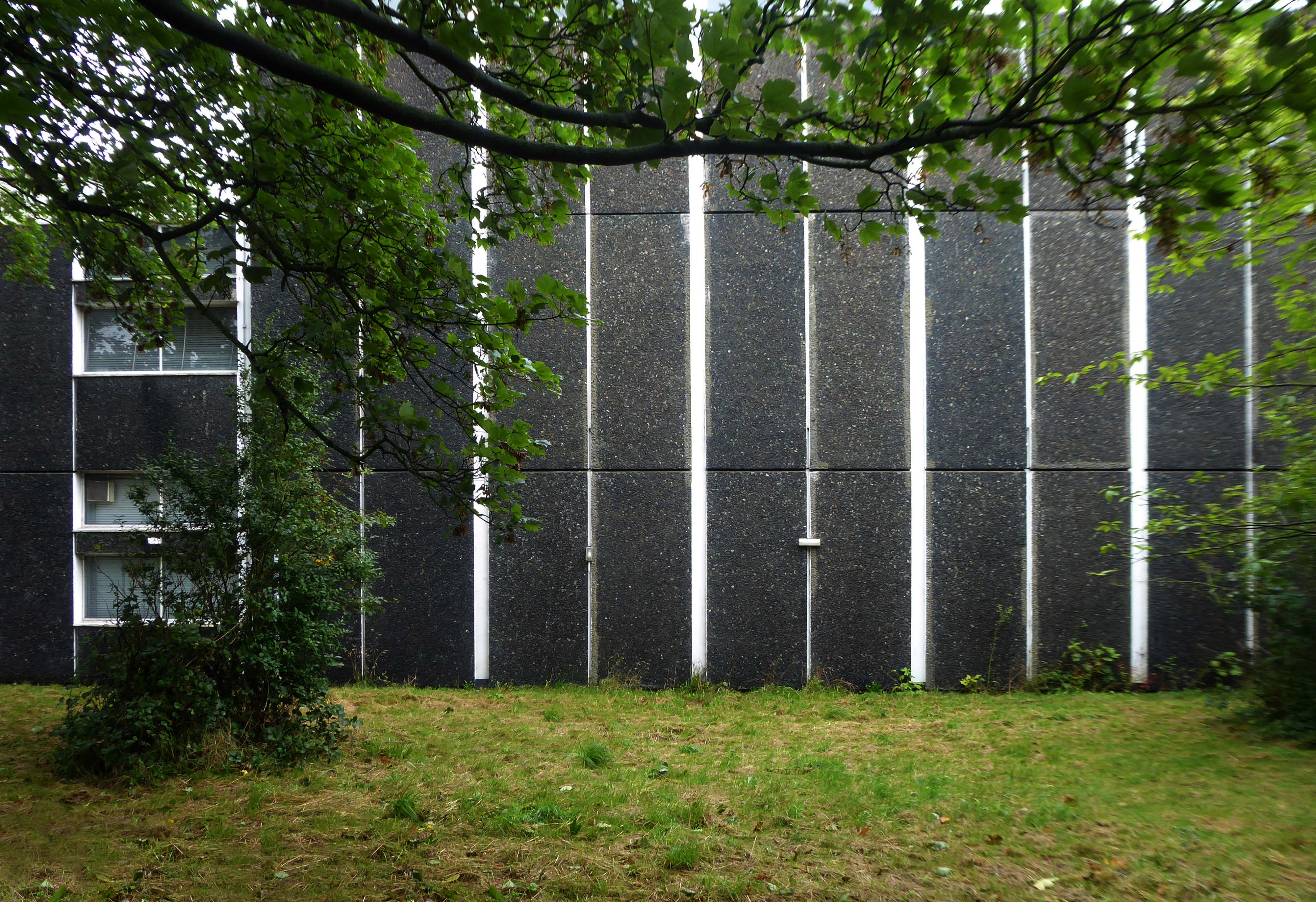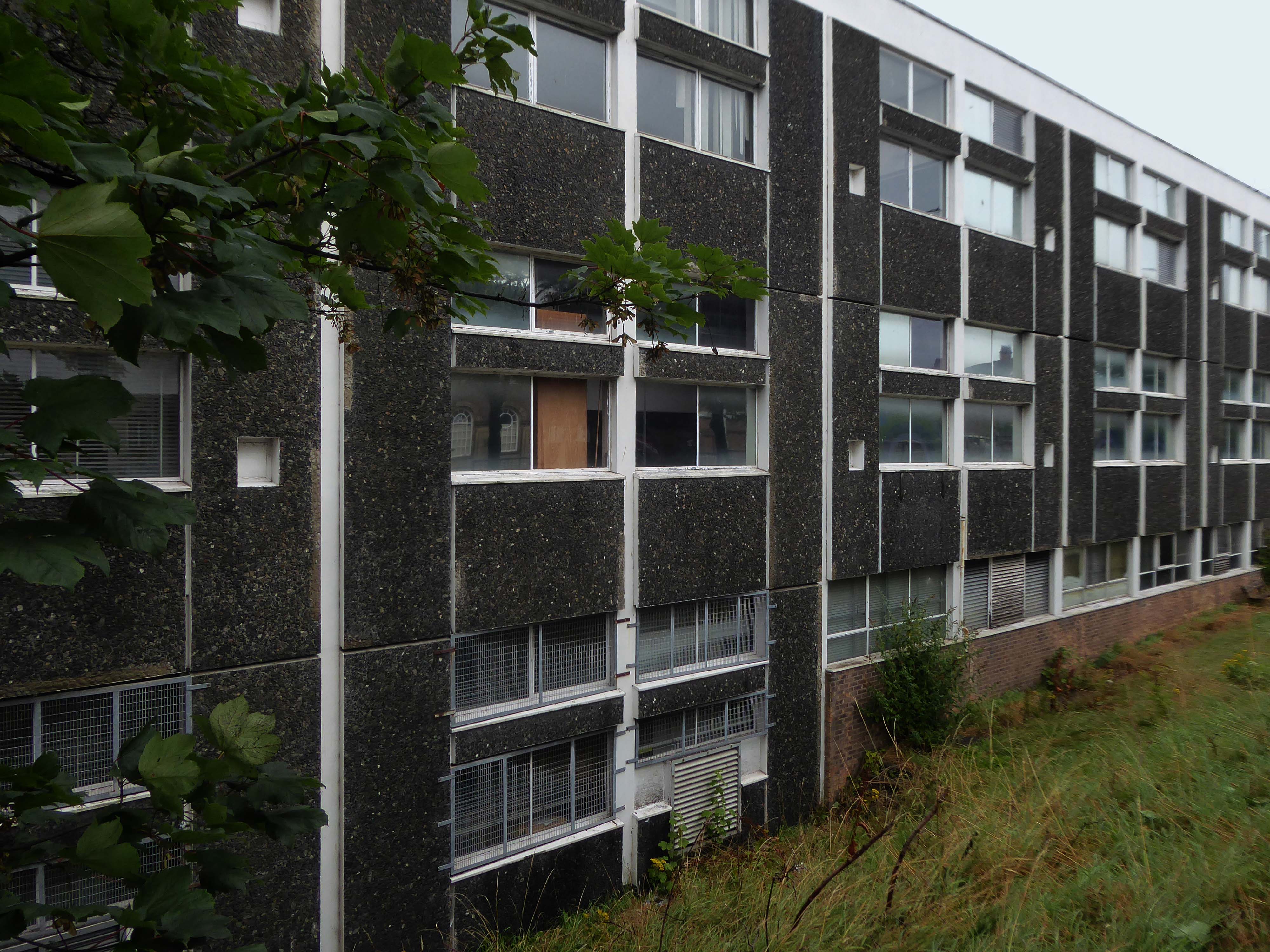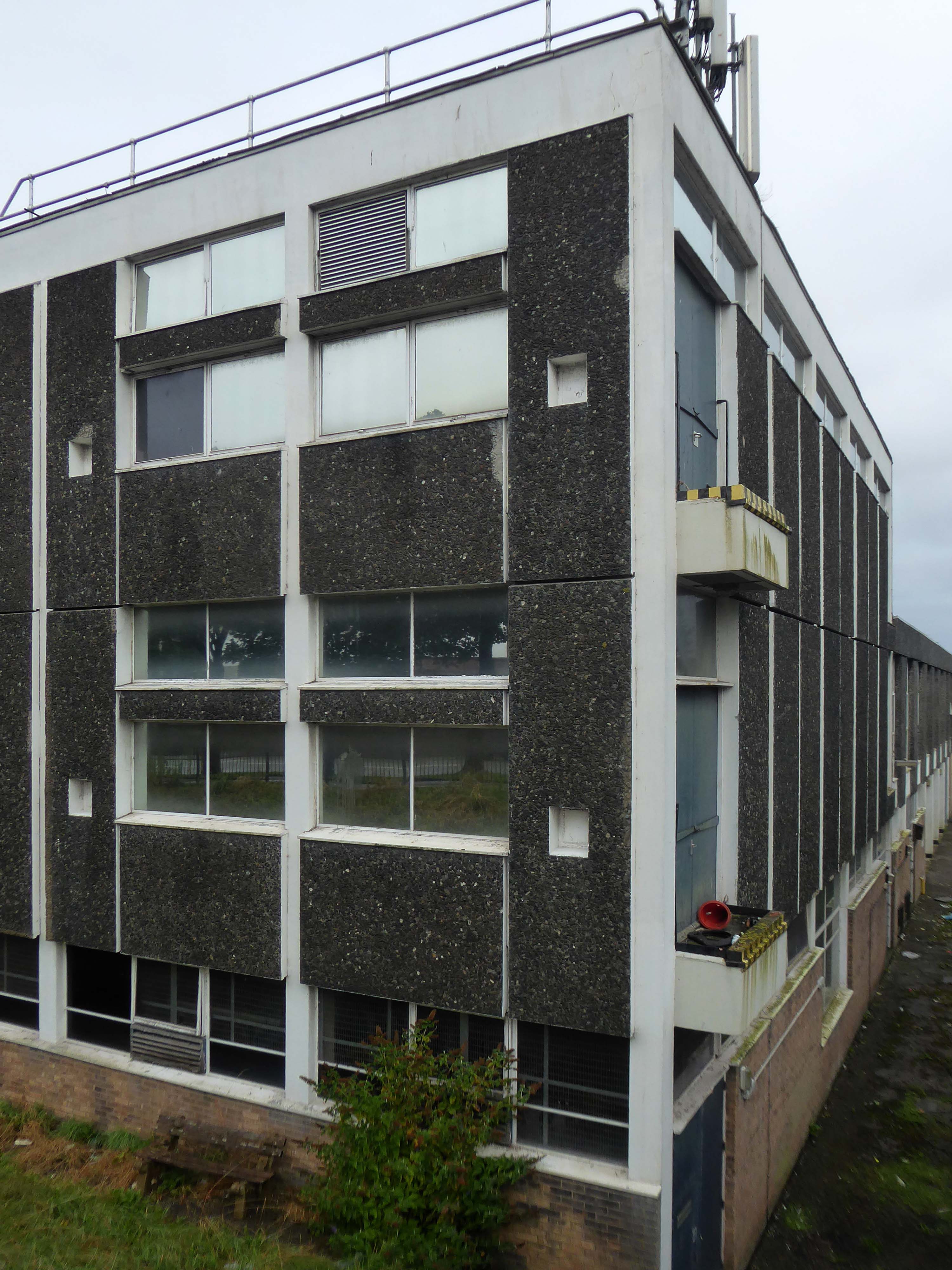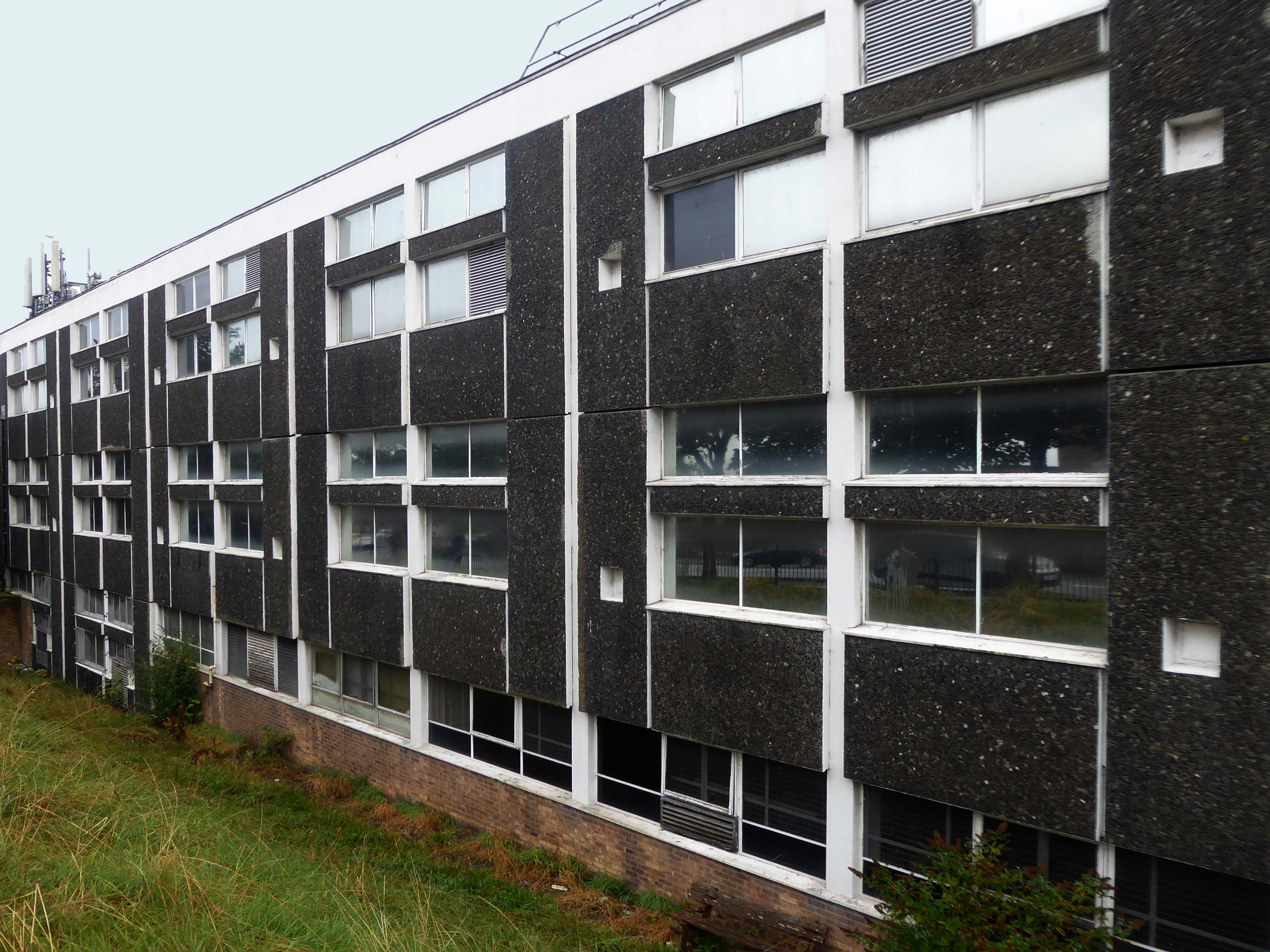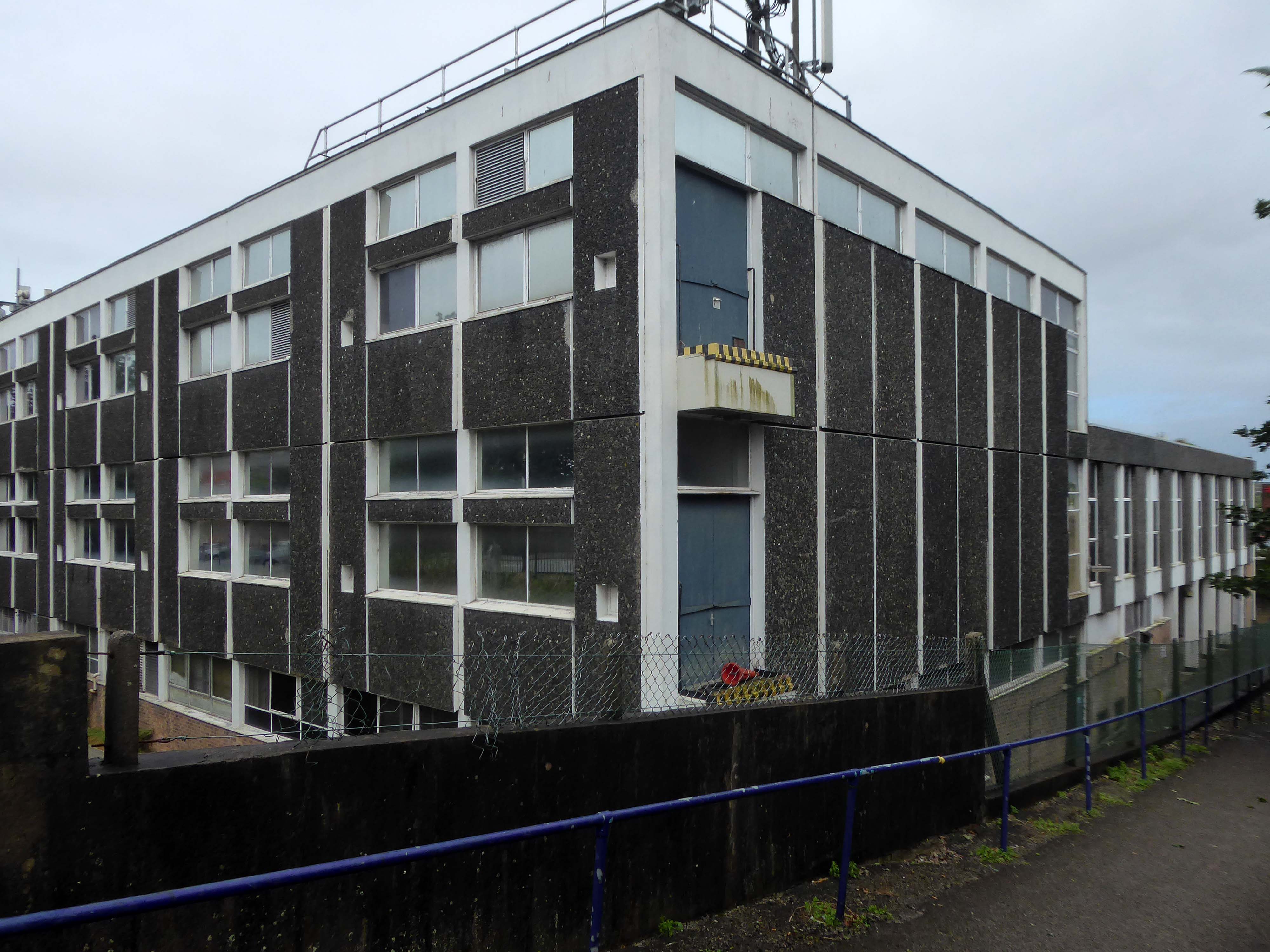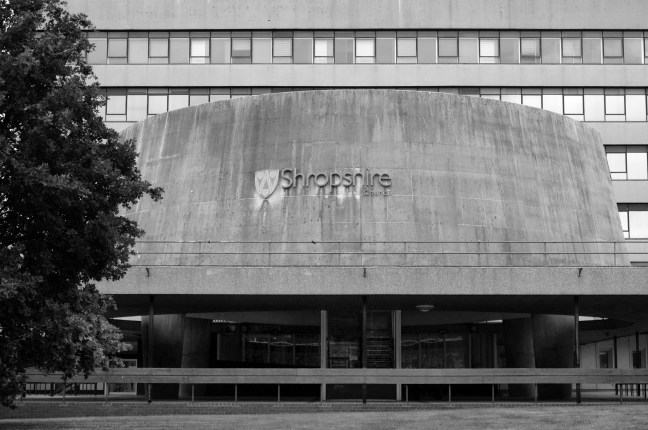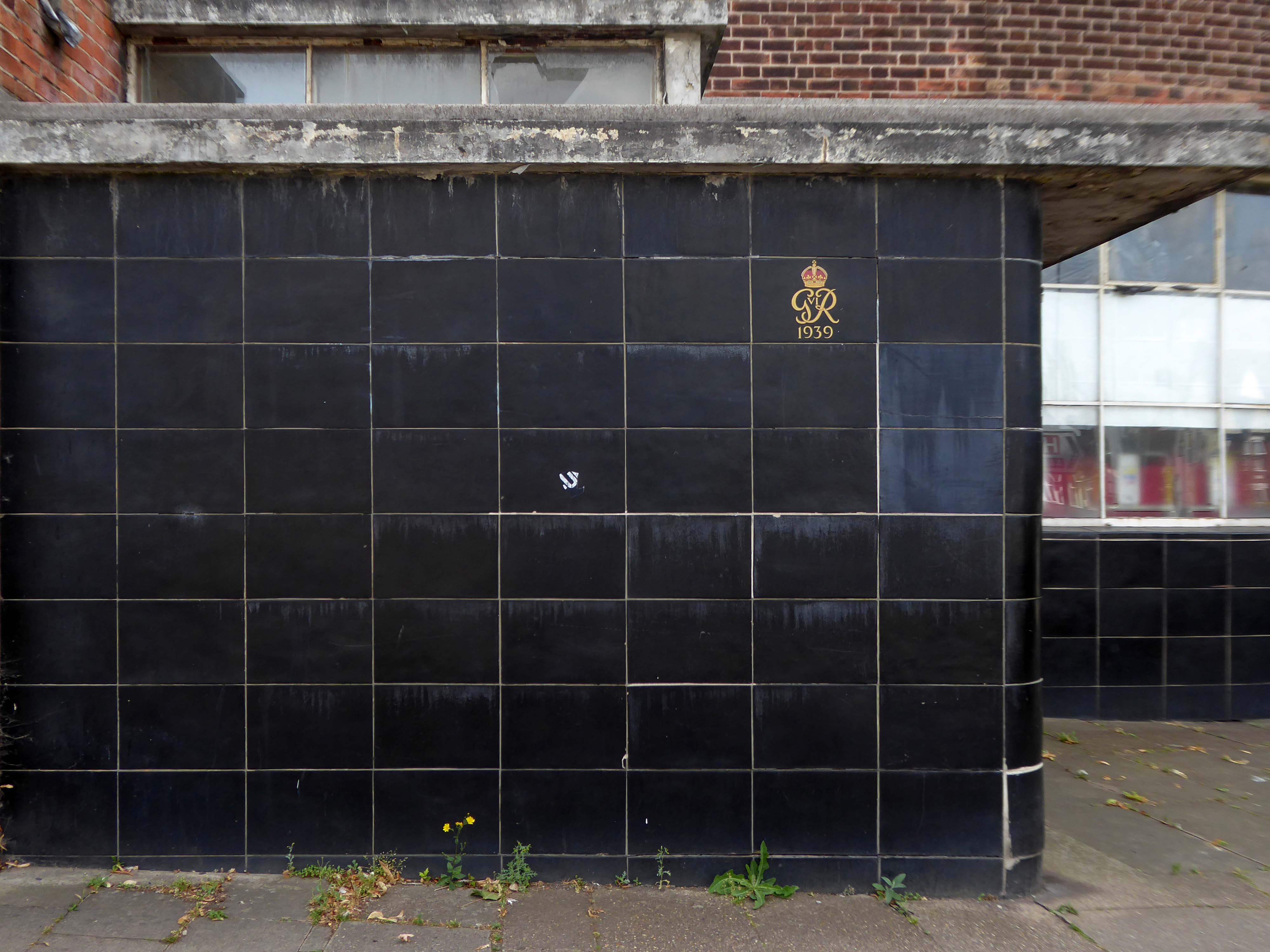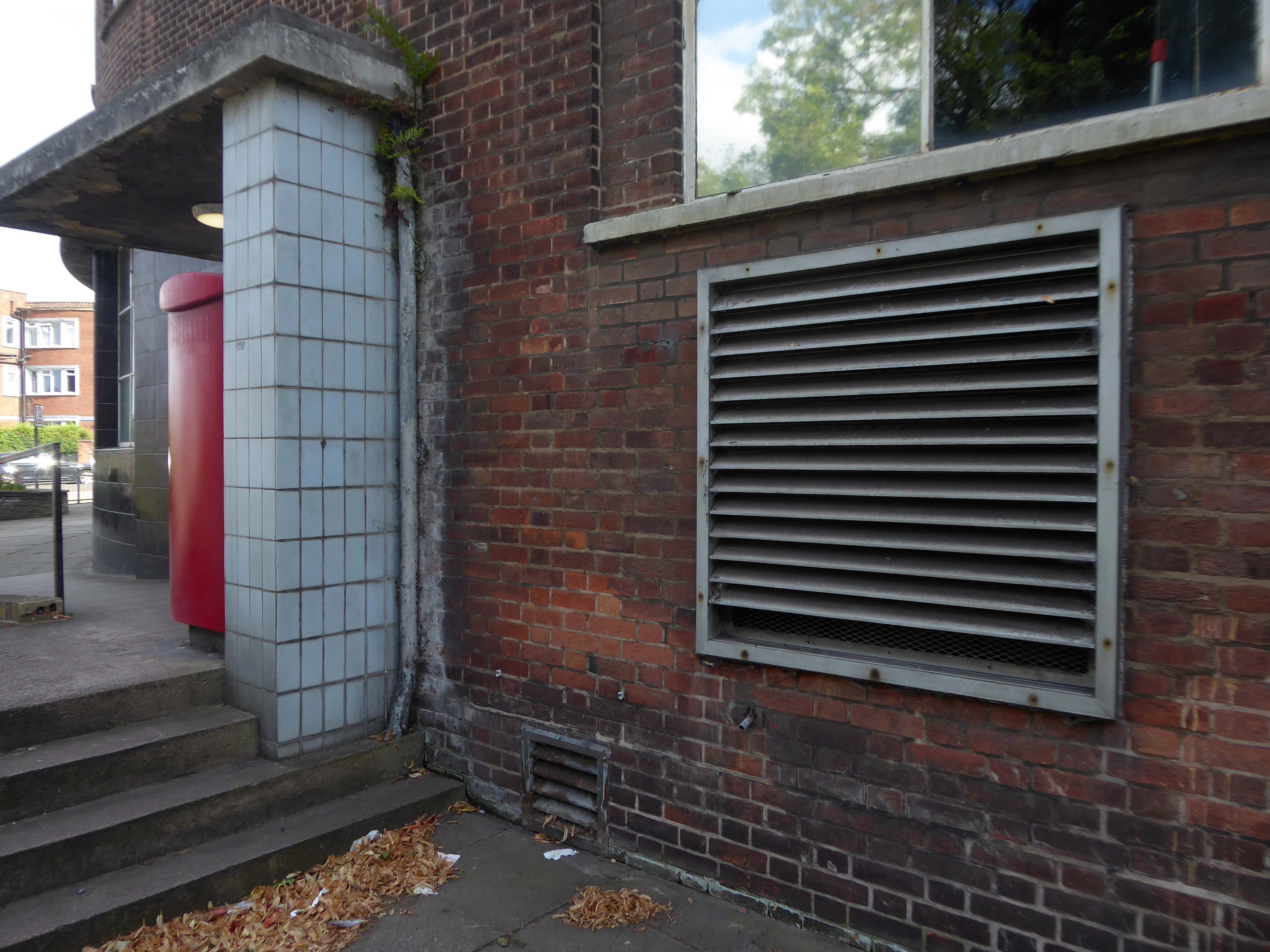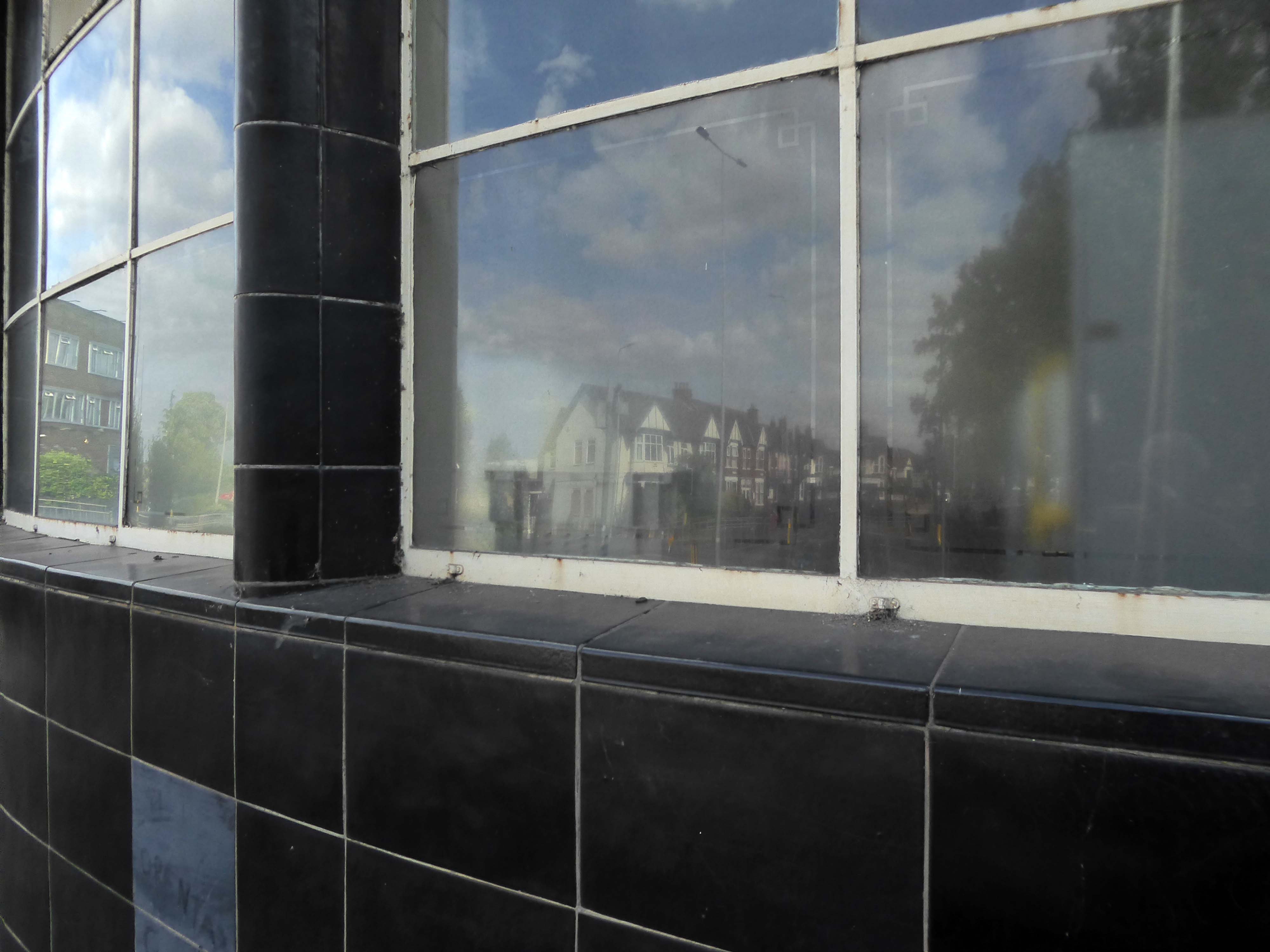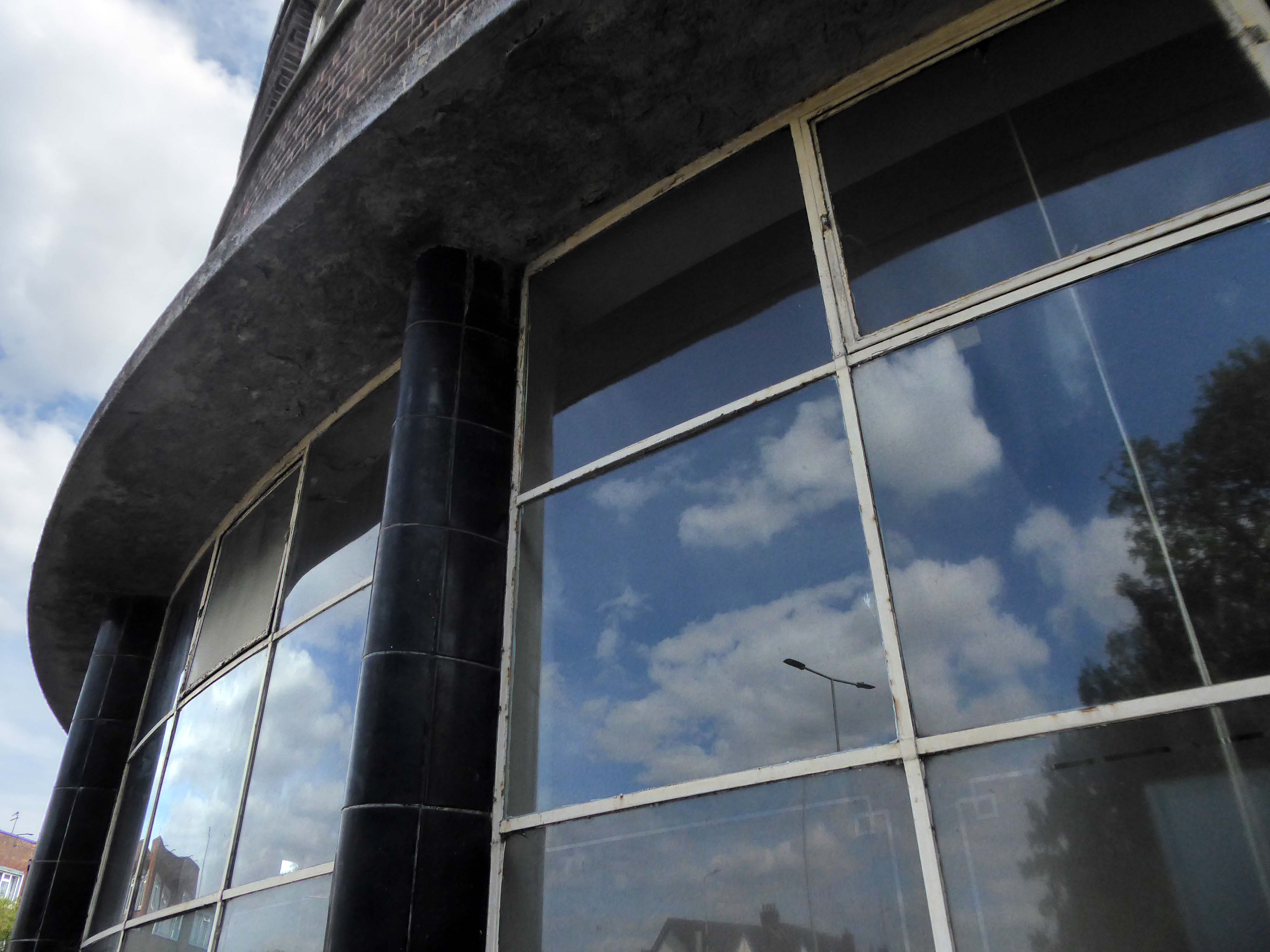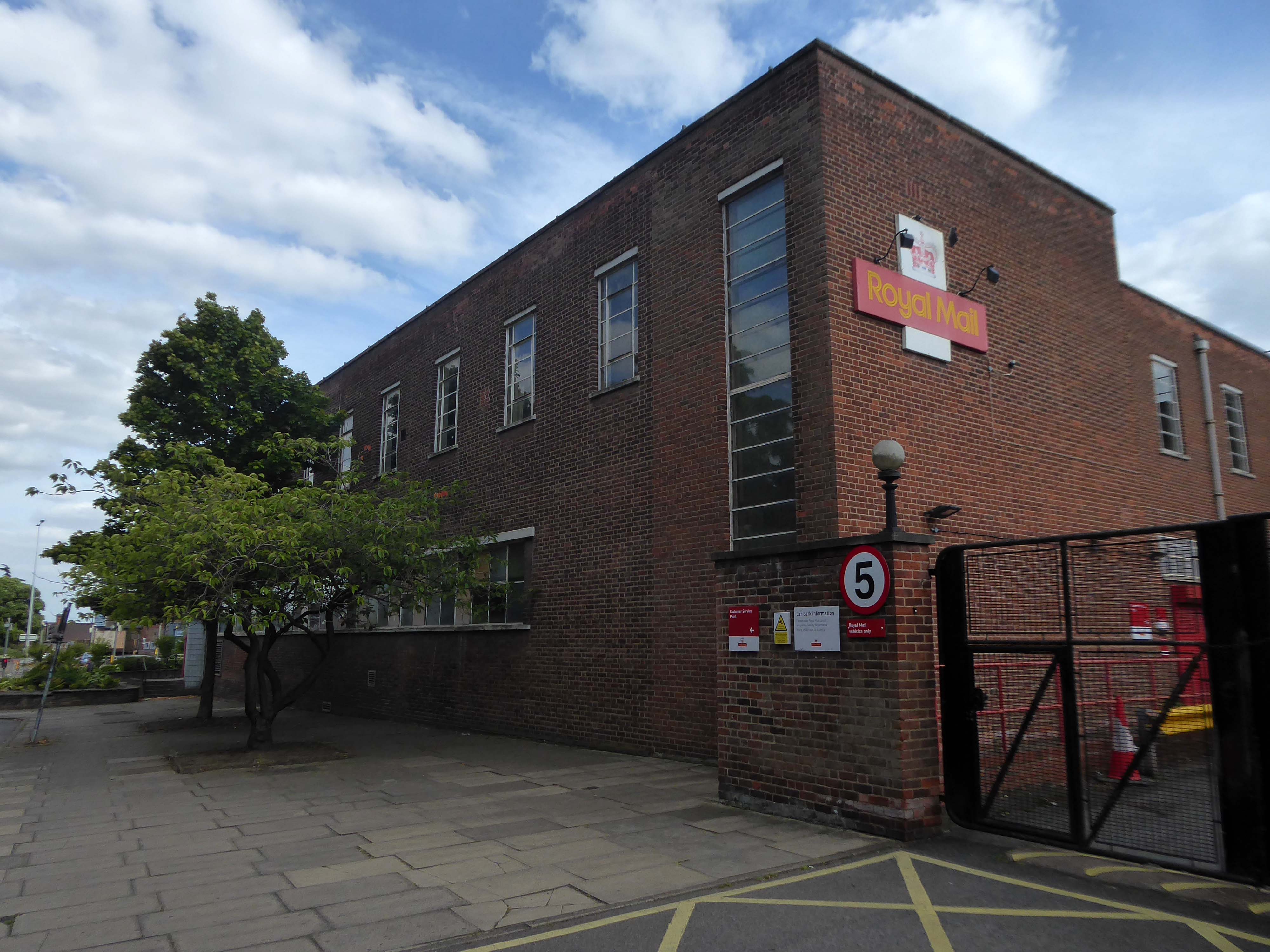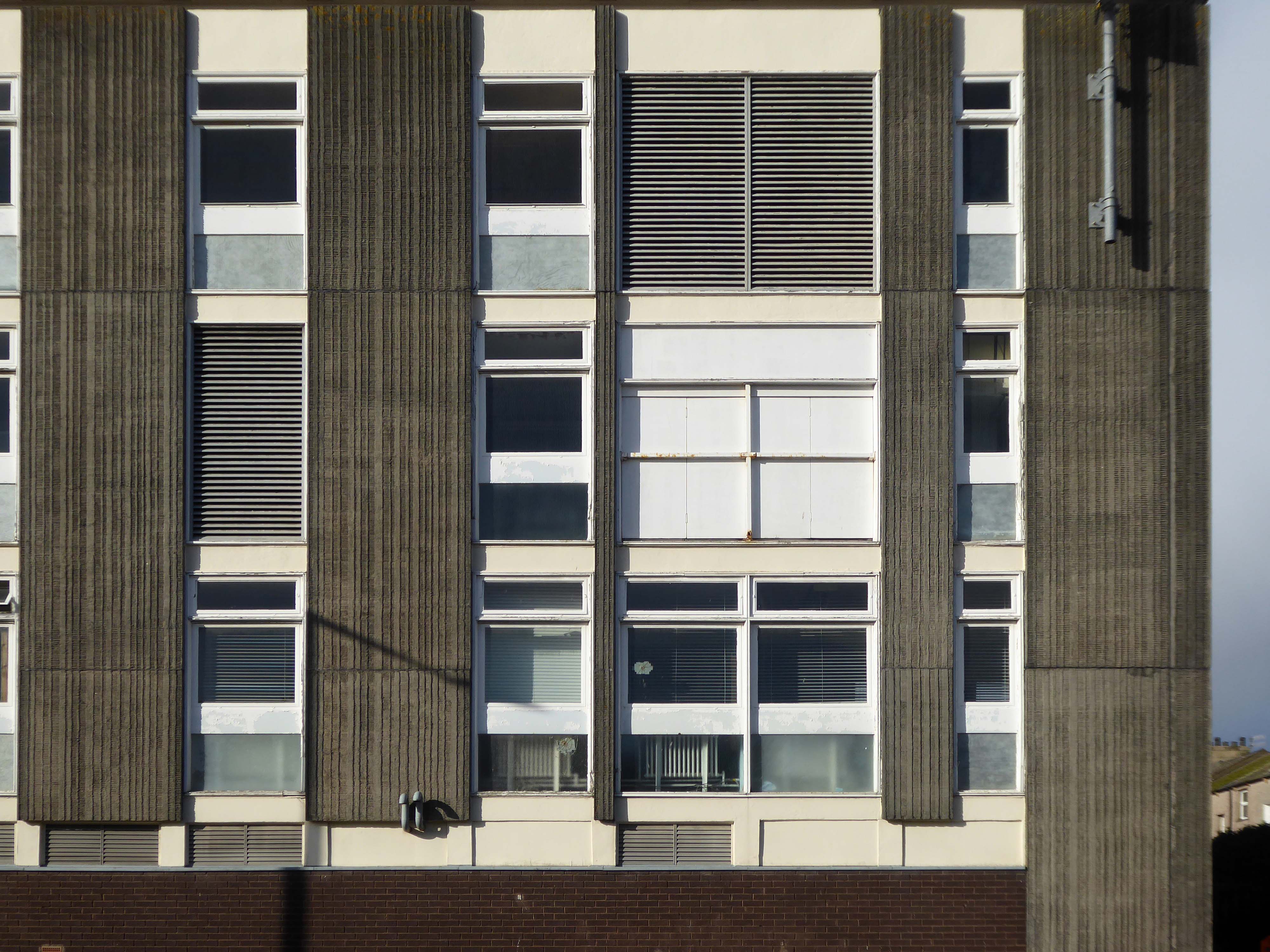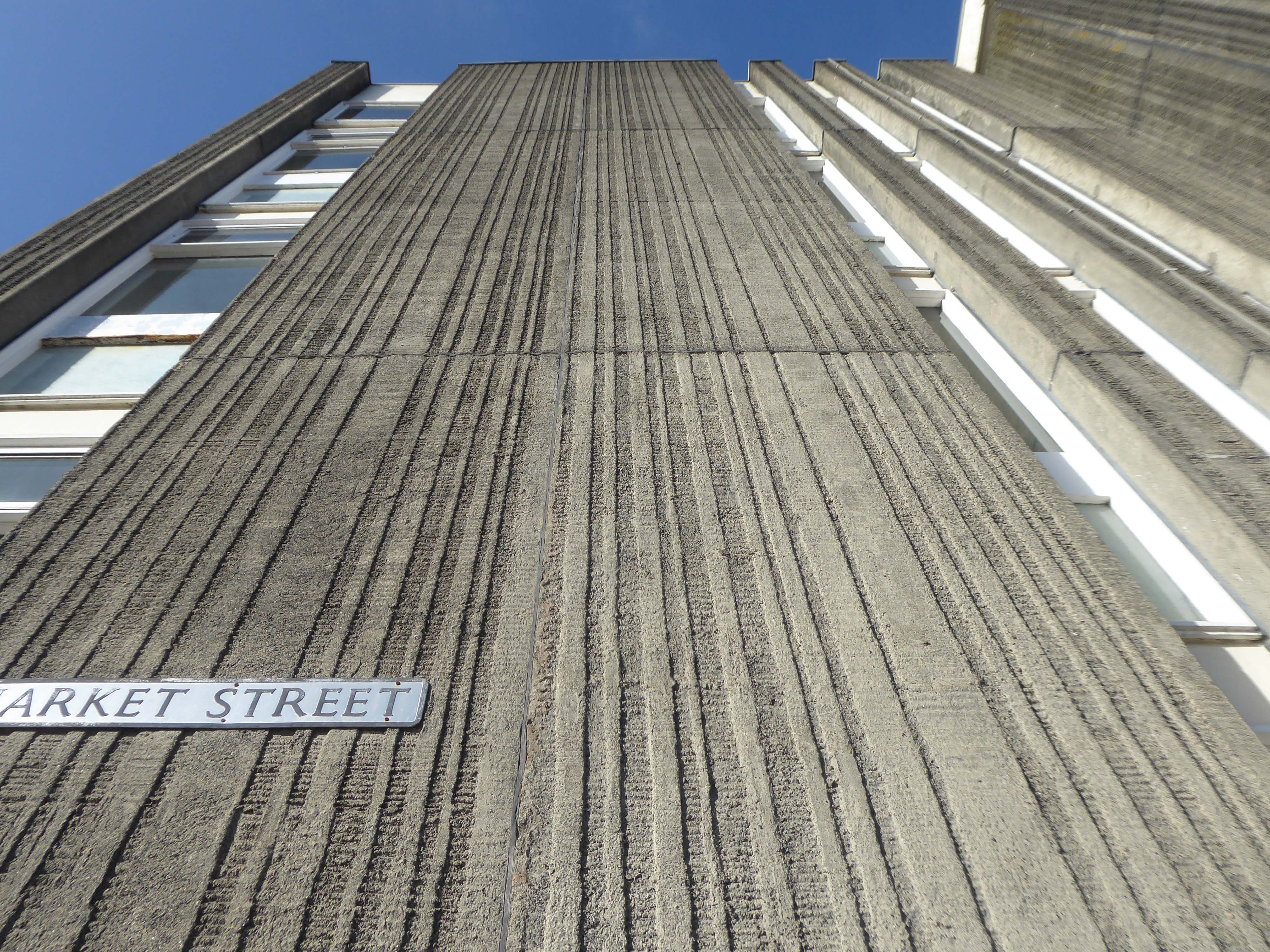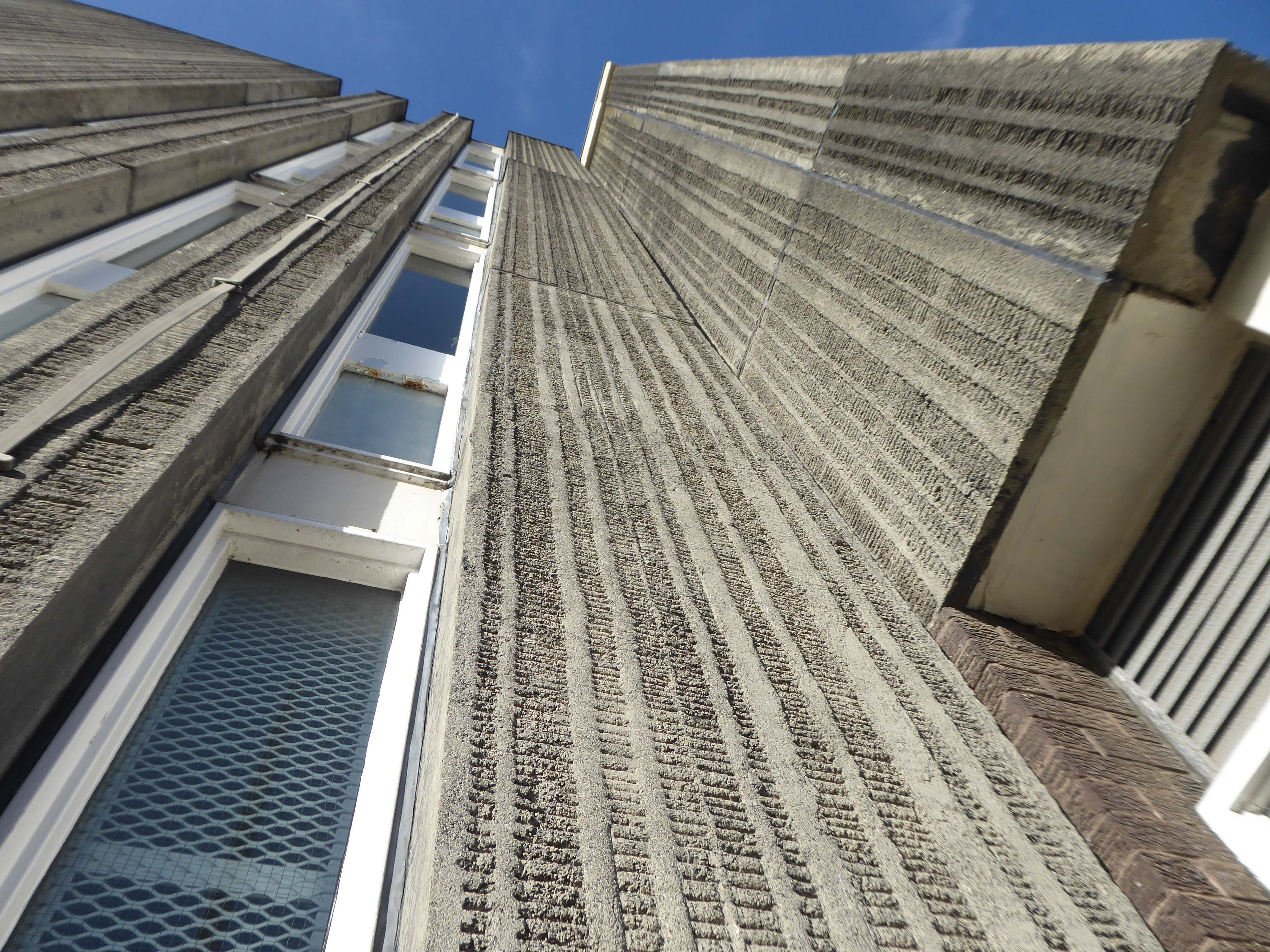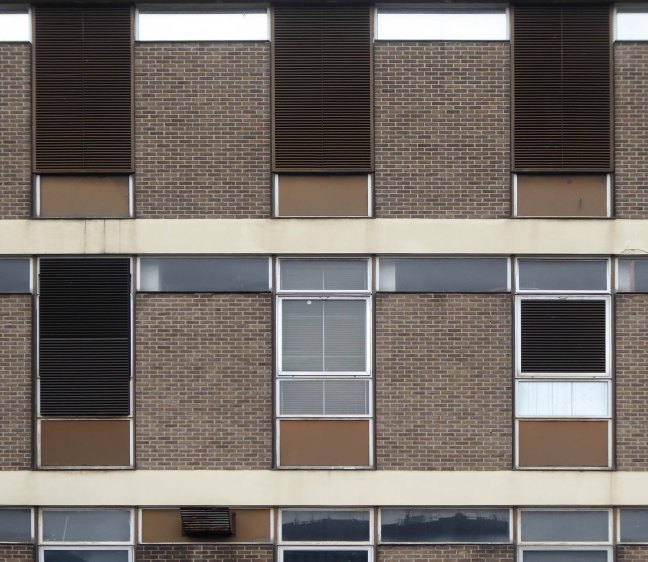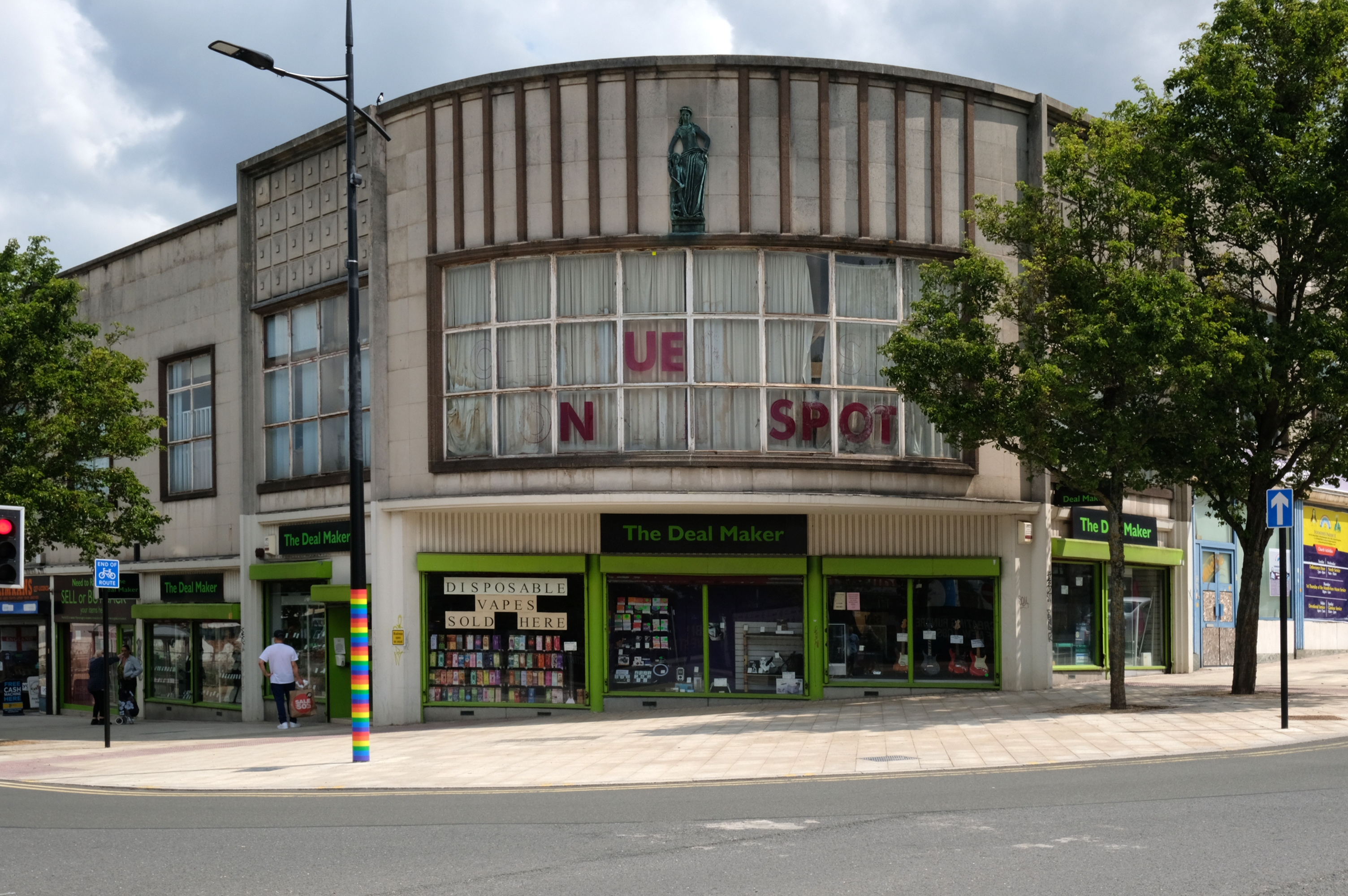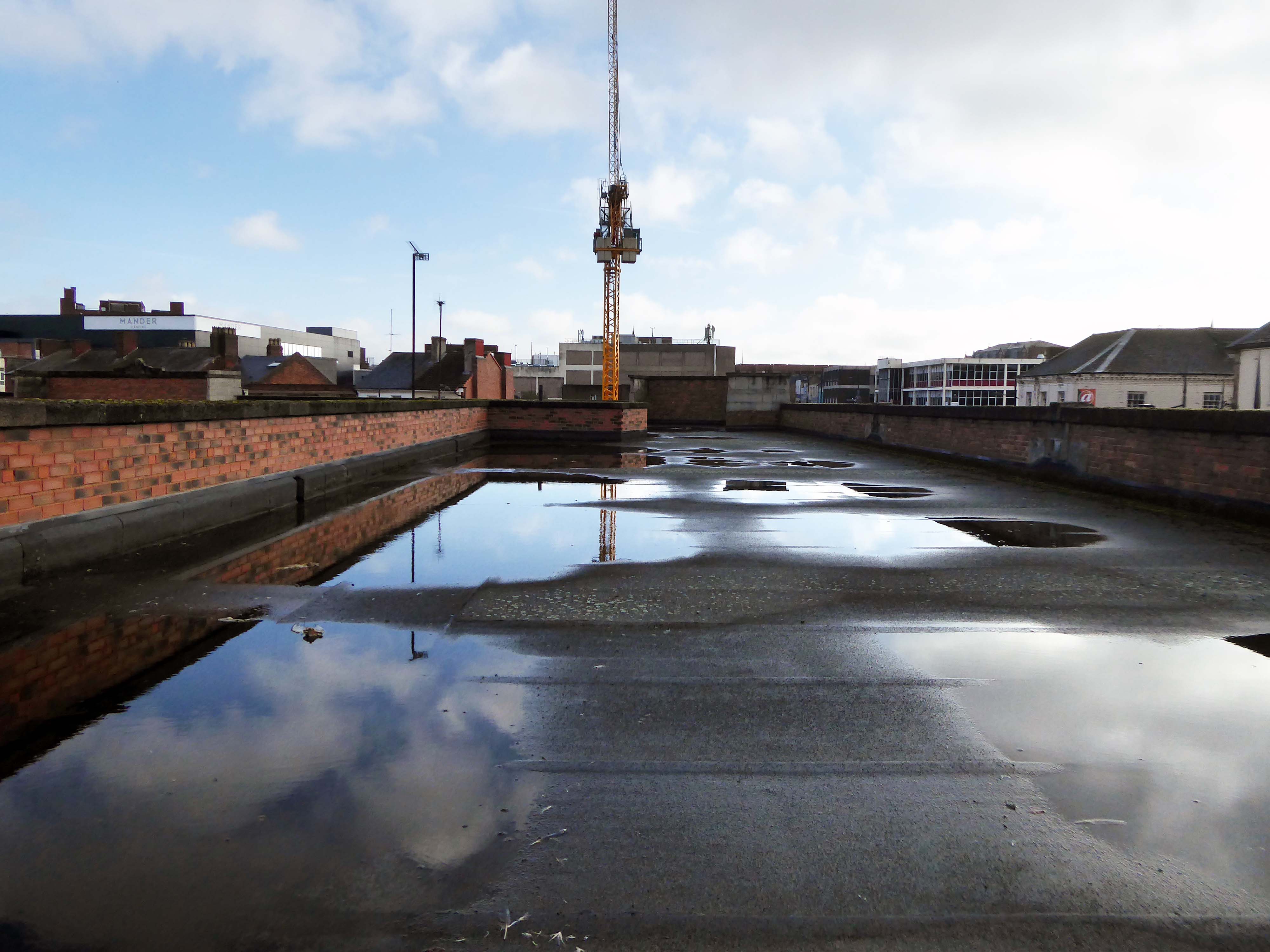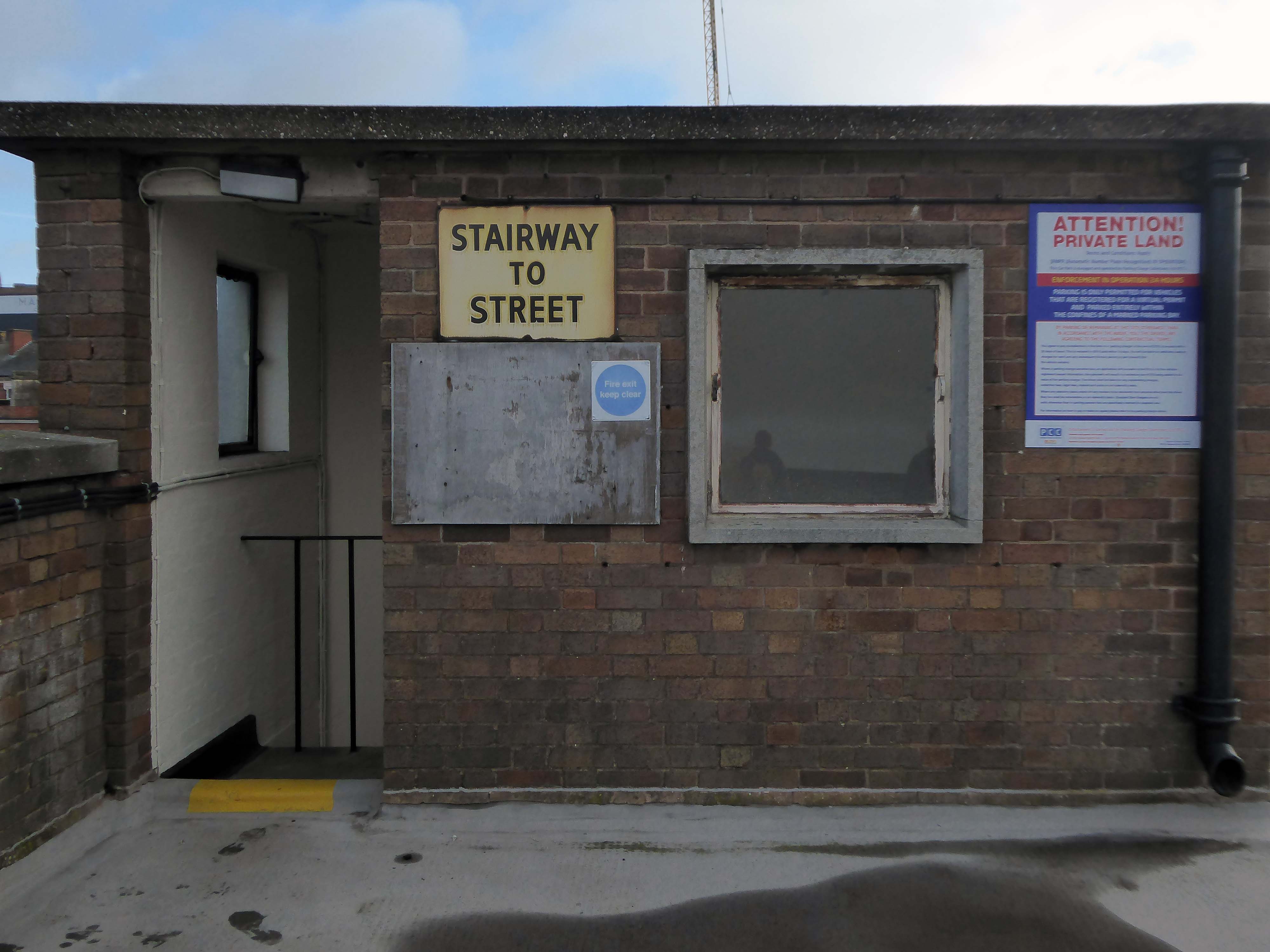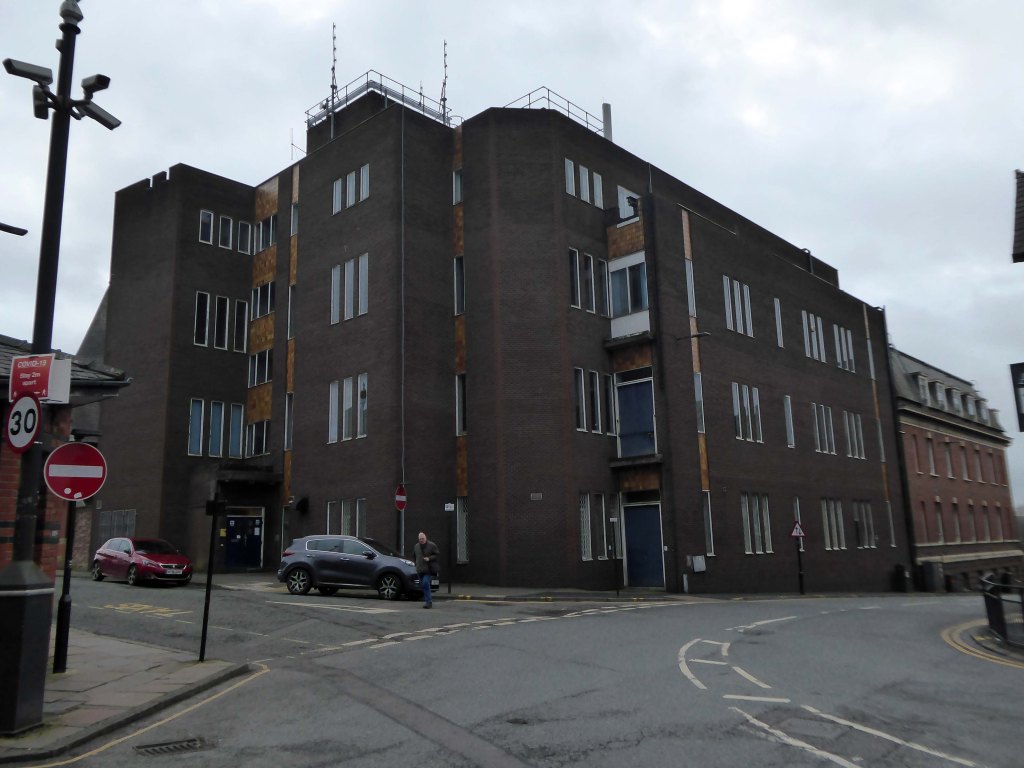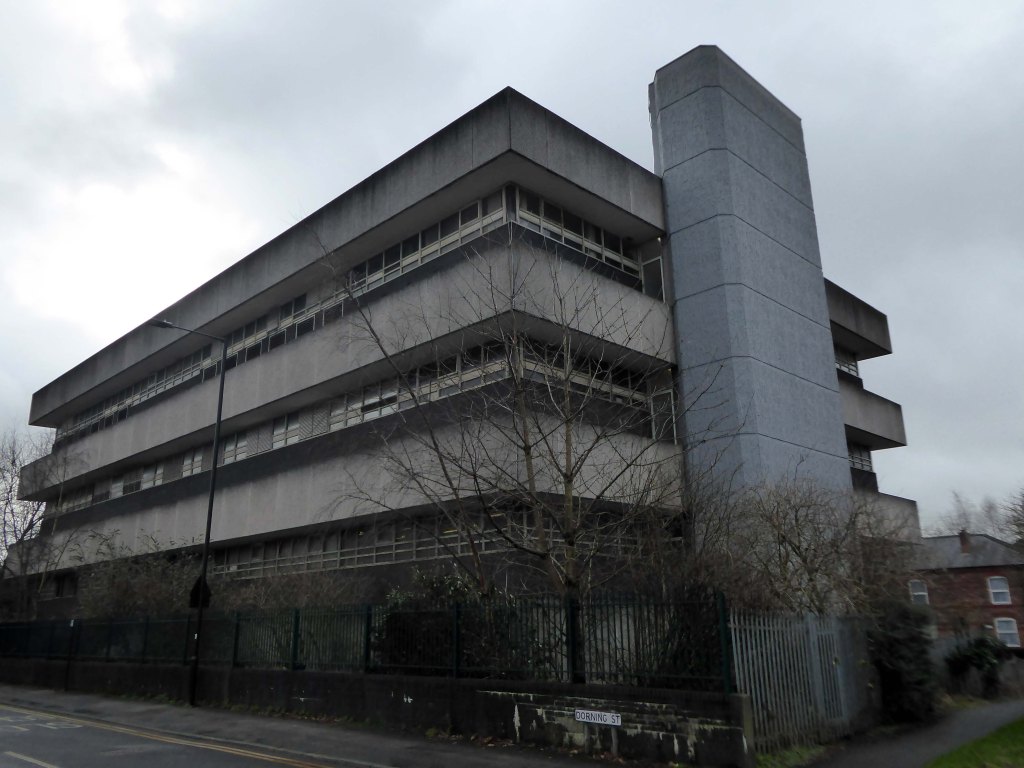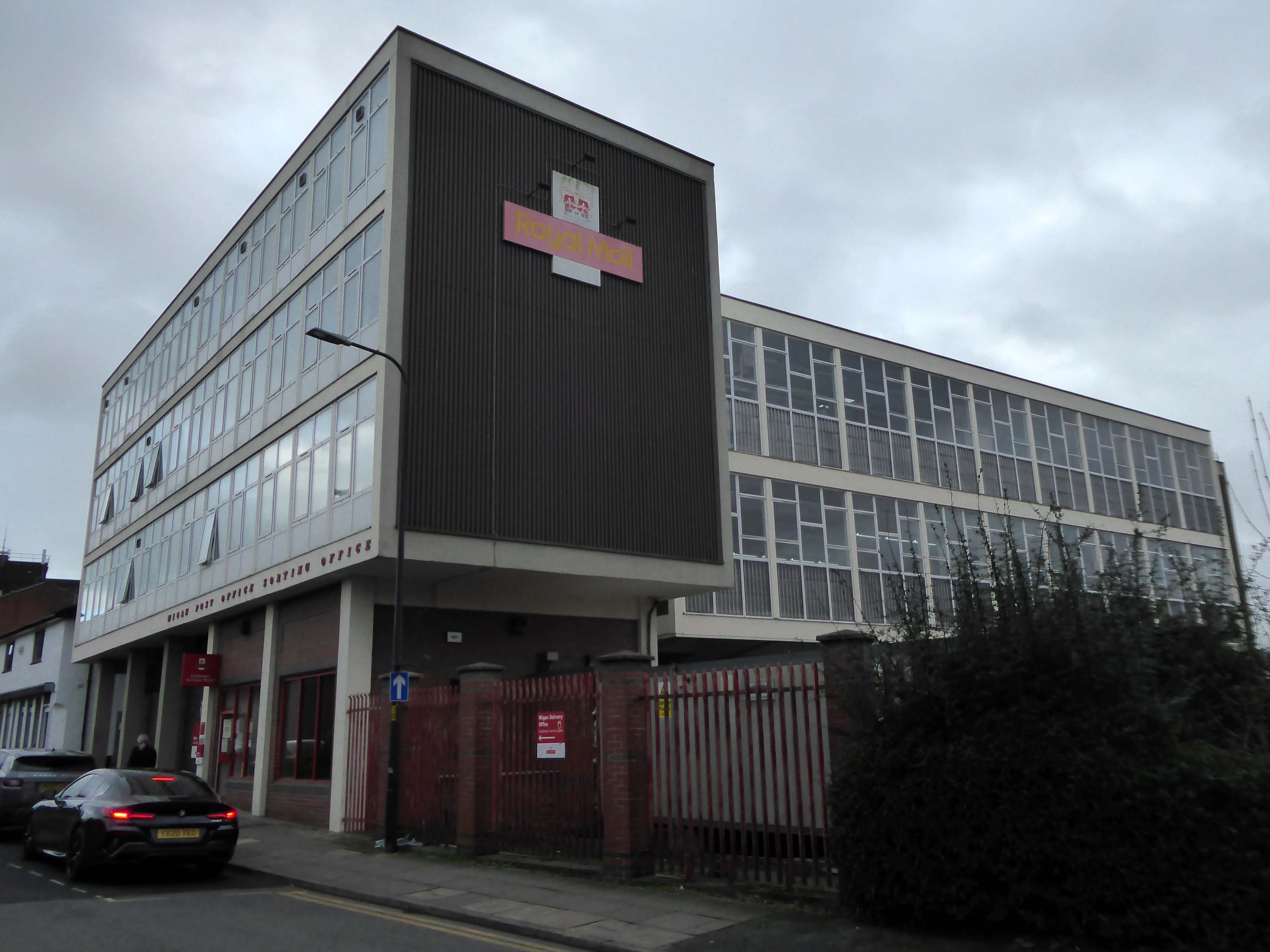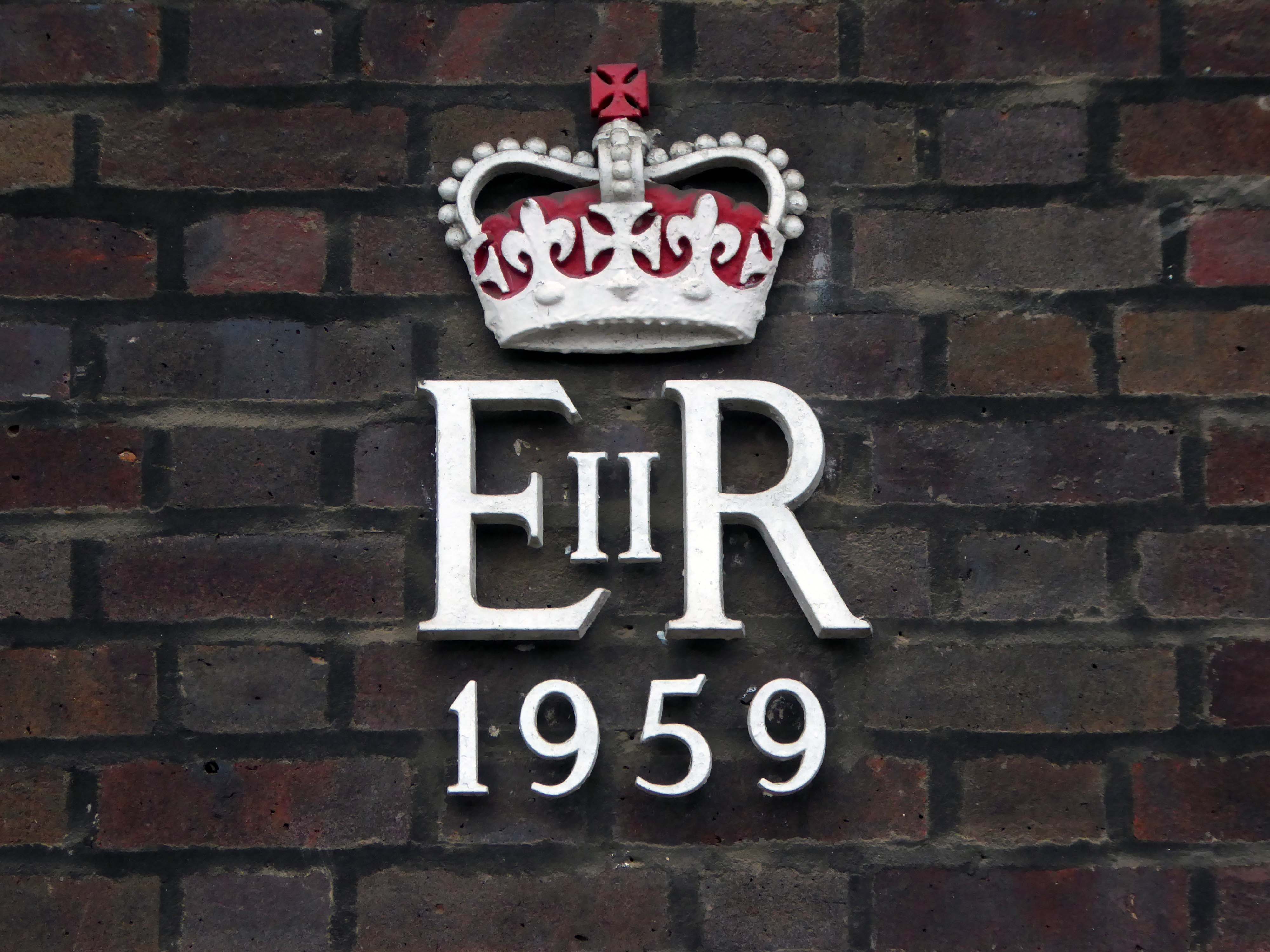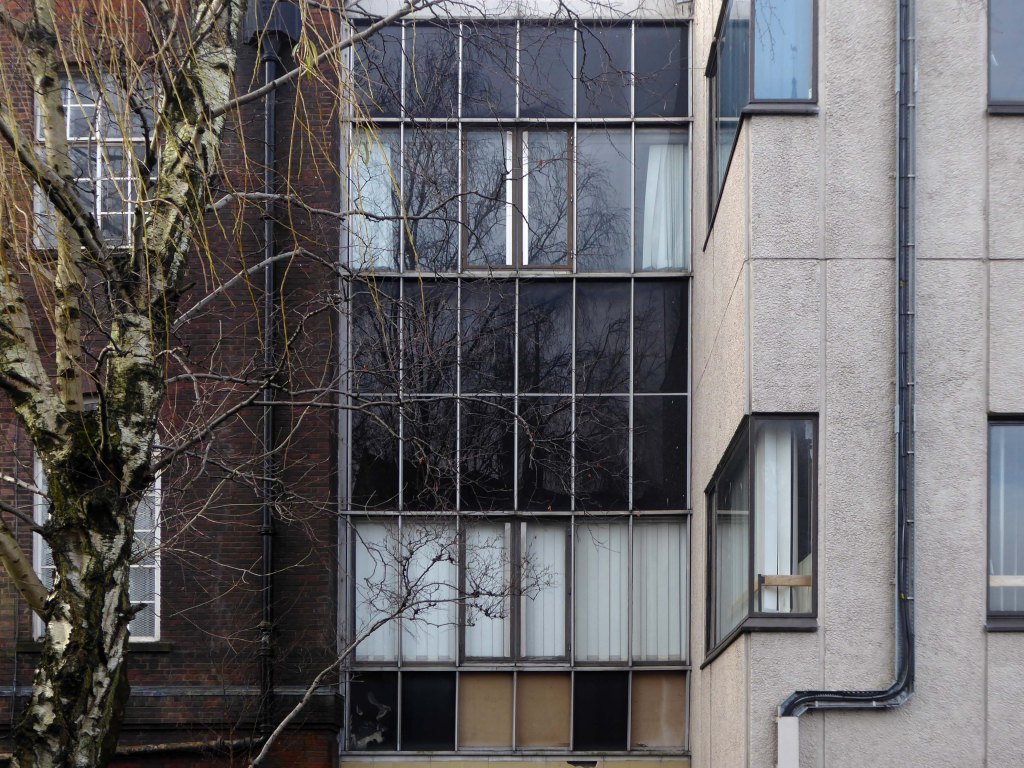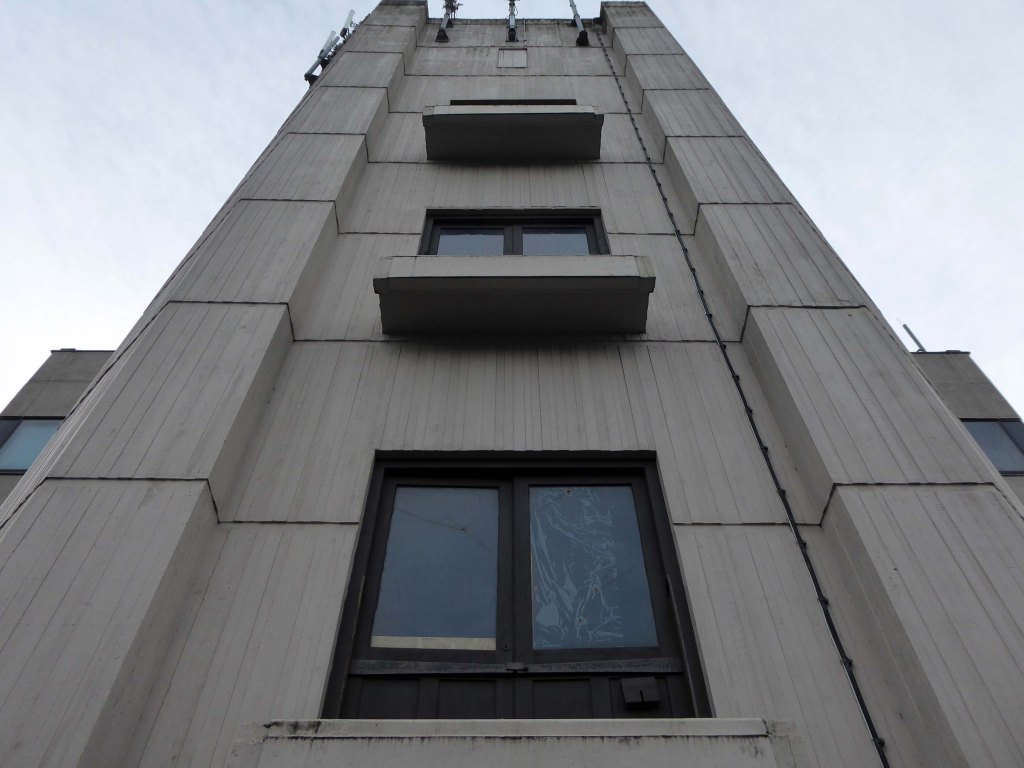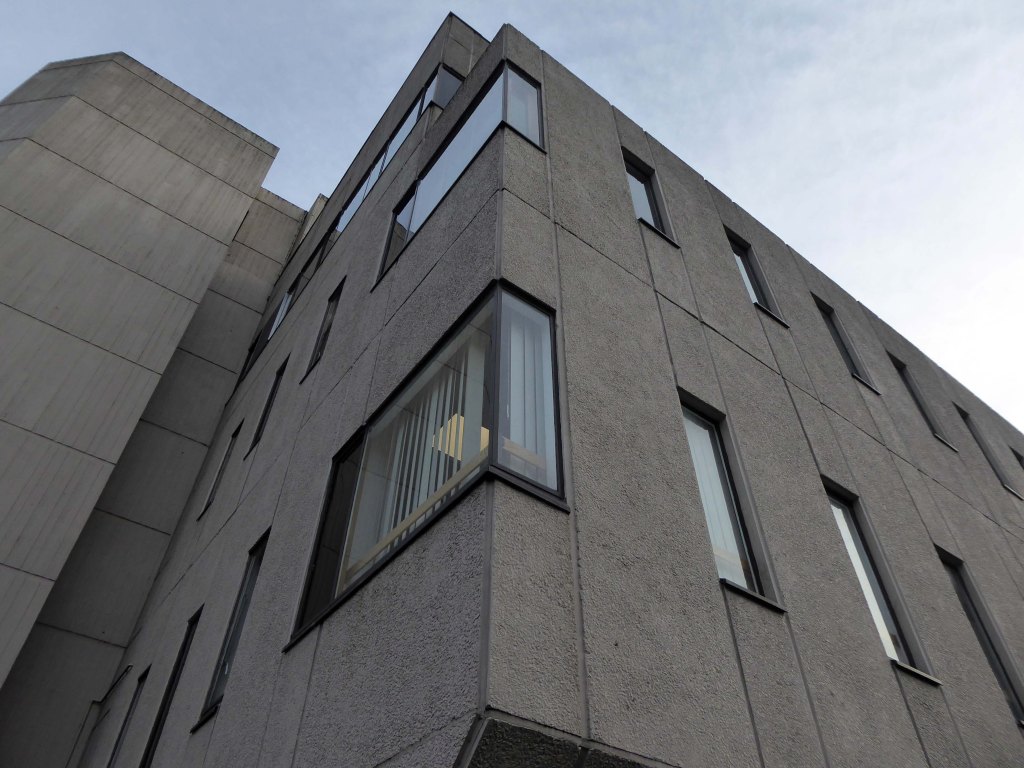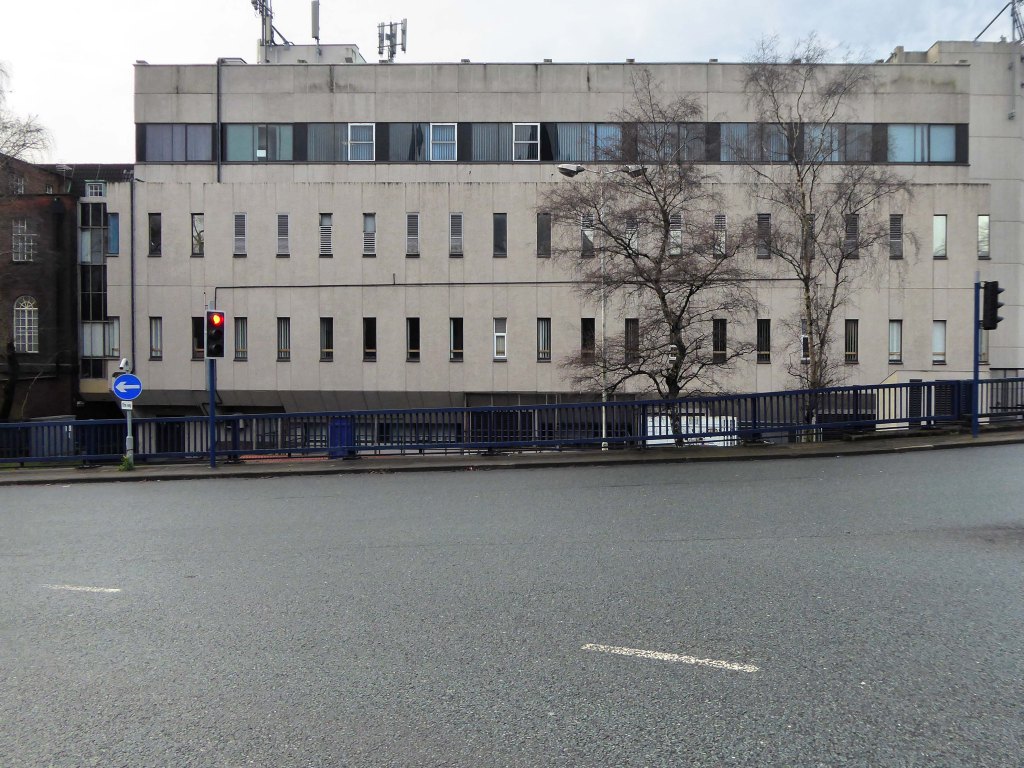
Stafford Walk

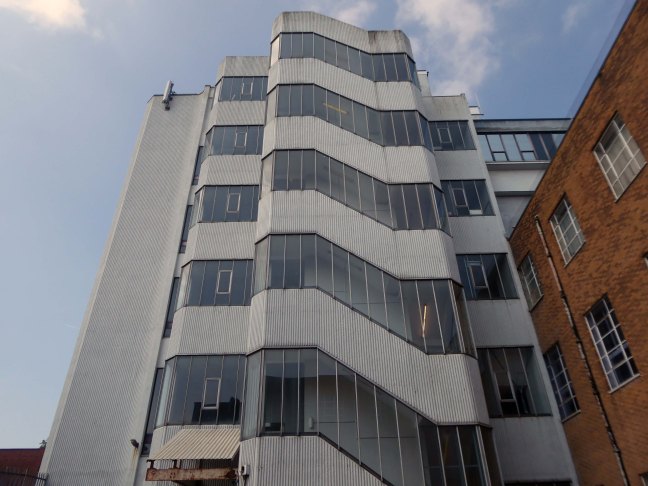
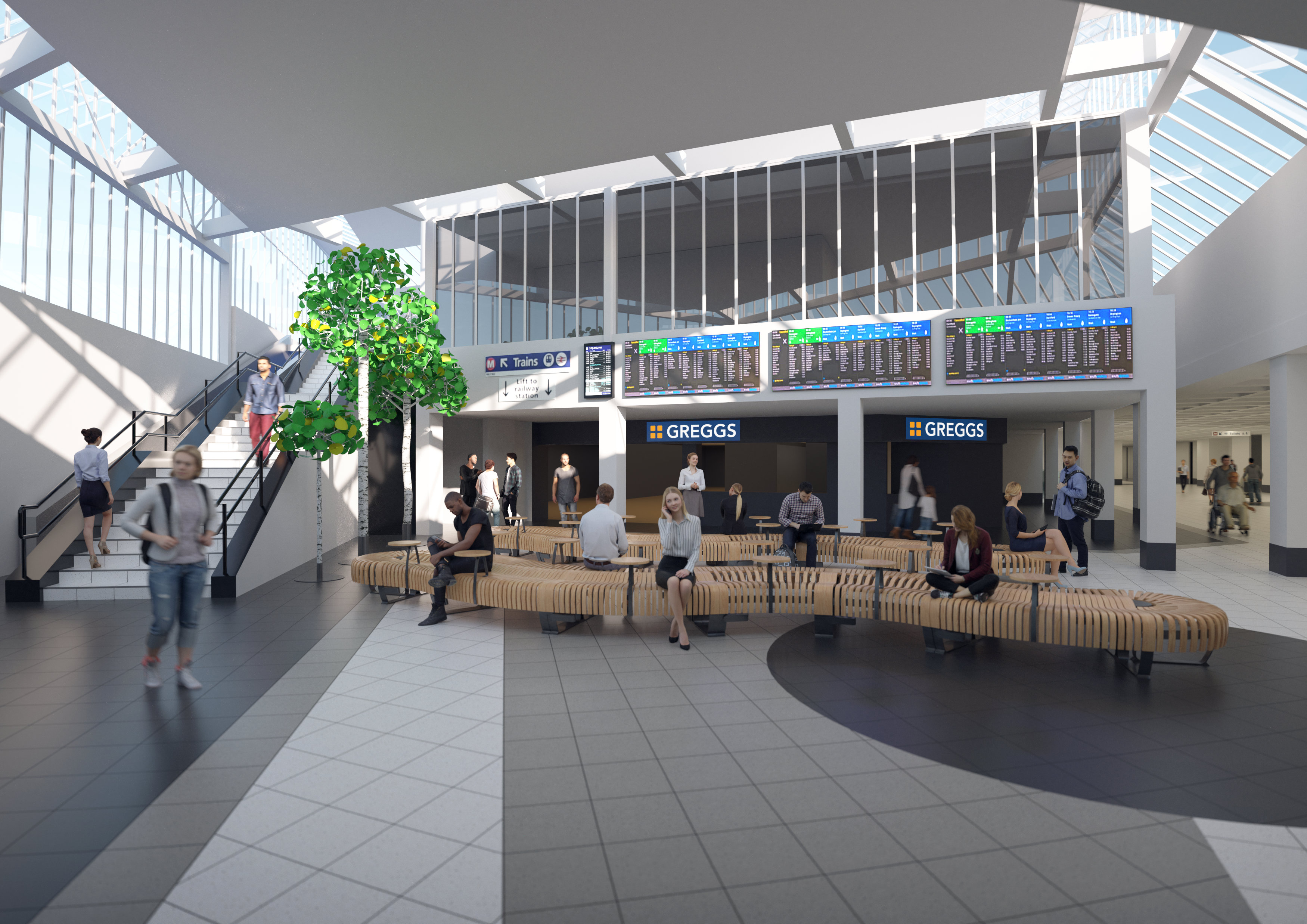
To begin at the beginning – we arrive at Stafford Railway Station.
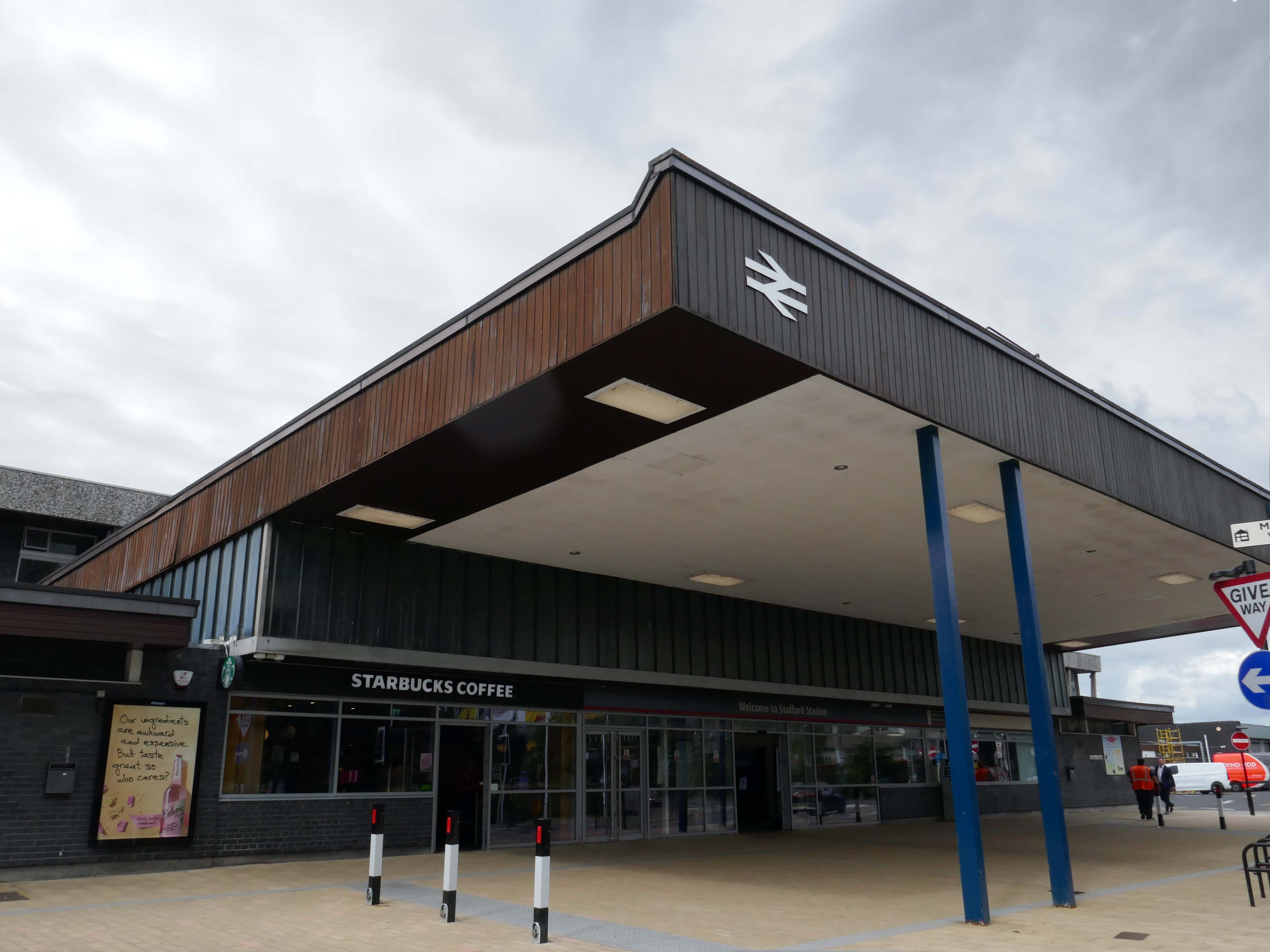
The current station was built in 1962, by the architect William Robert Headley, as part of the modernisation programme which saw the electrification of the West Coast Main Line.
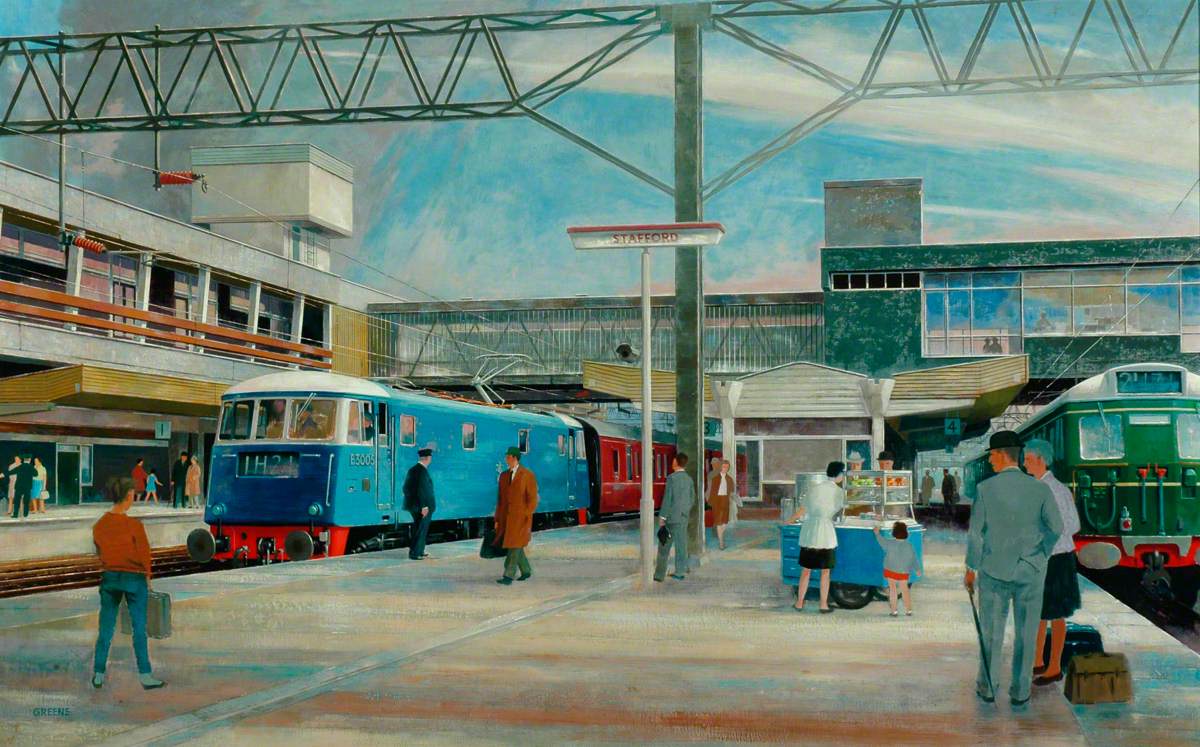
Illustration: John Greene

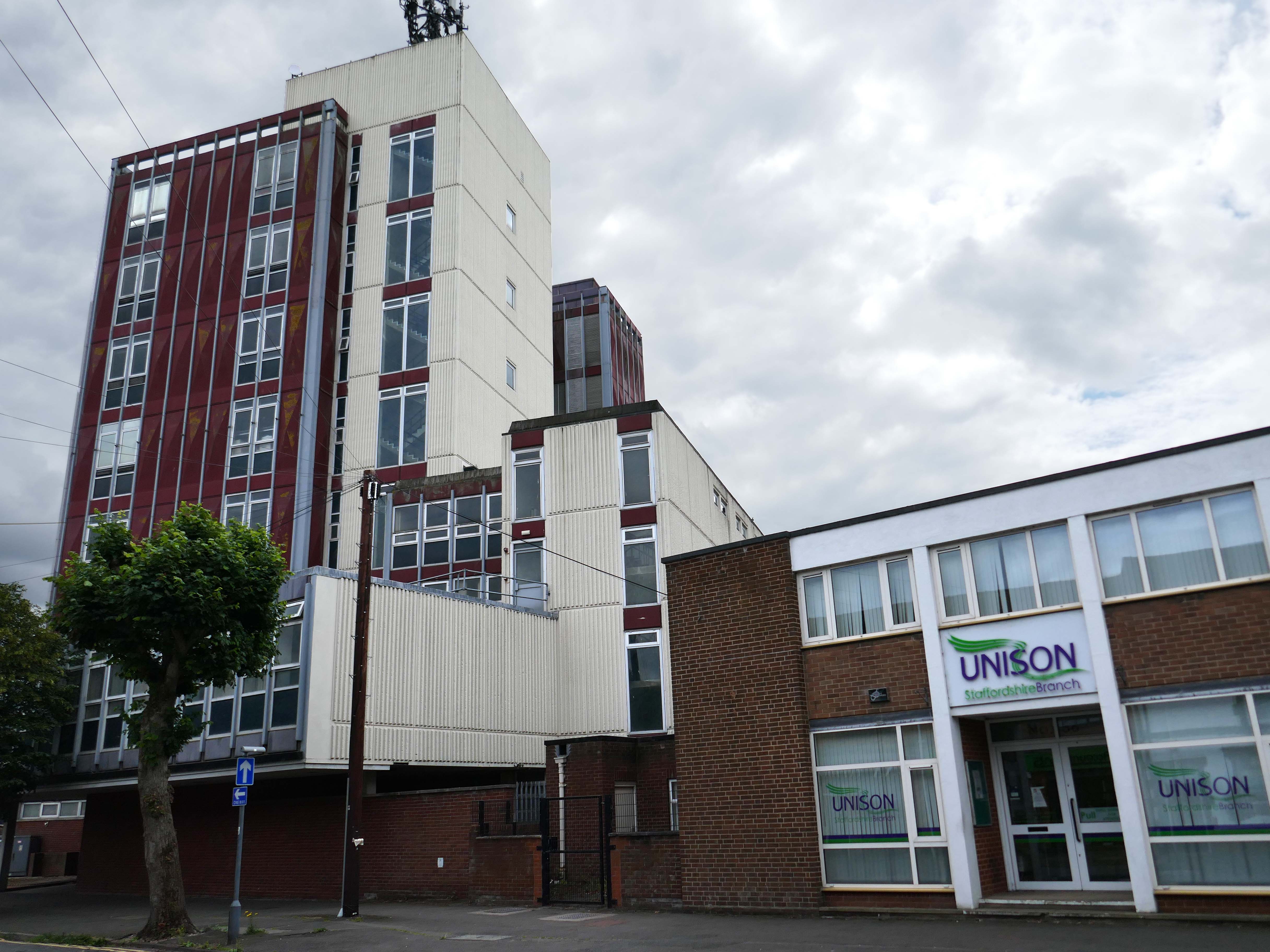
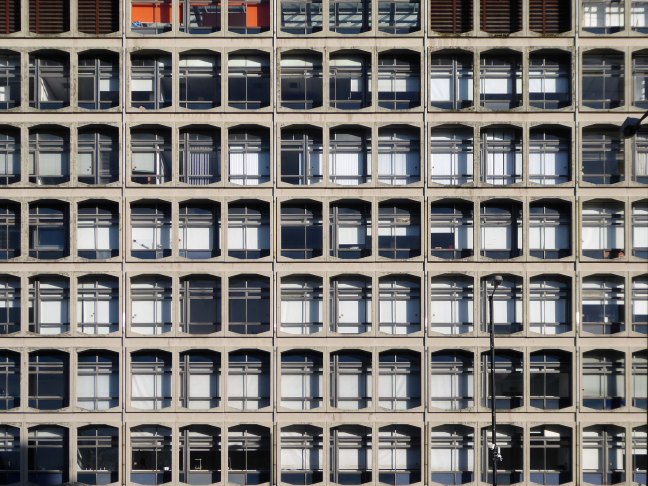
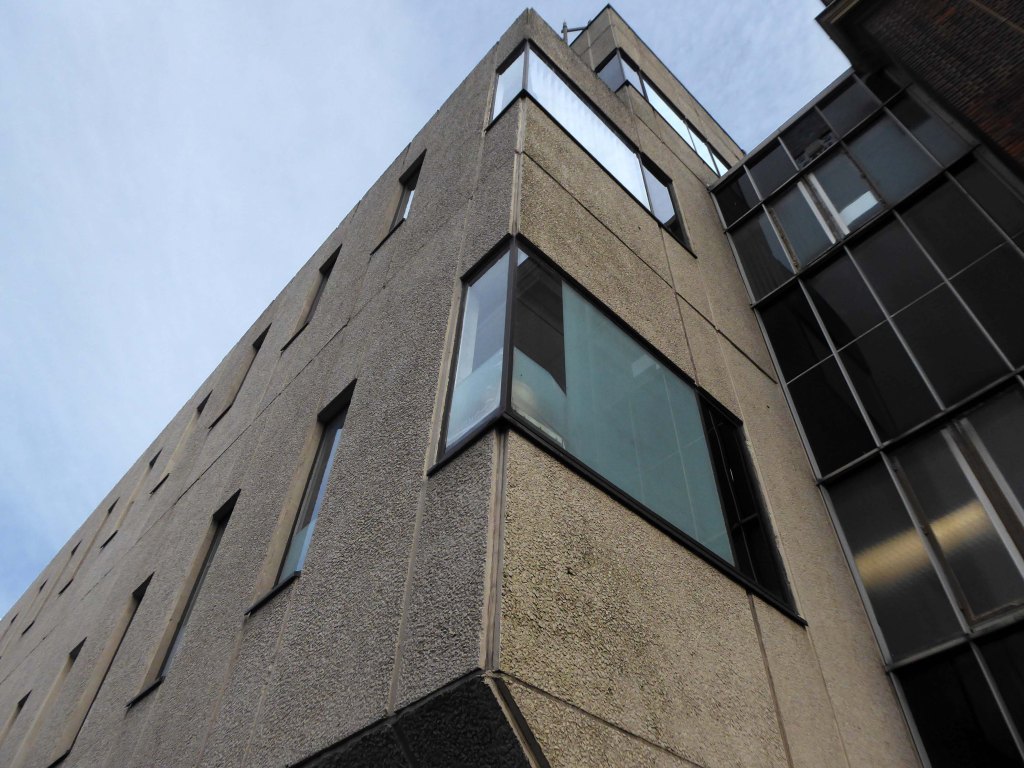
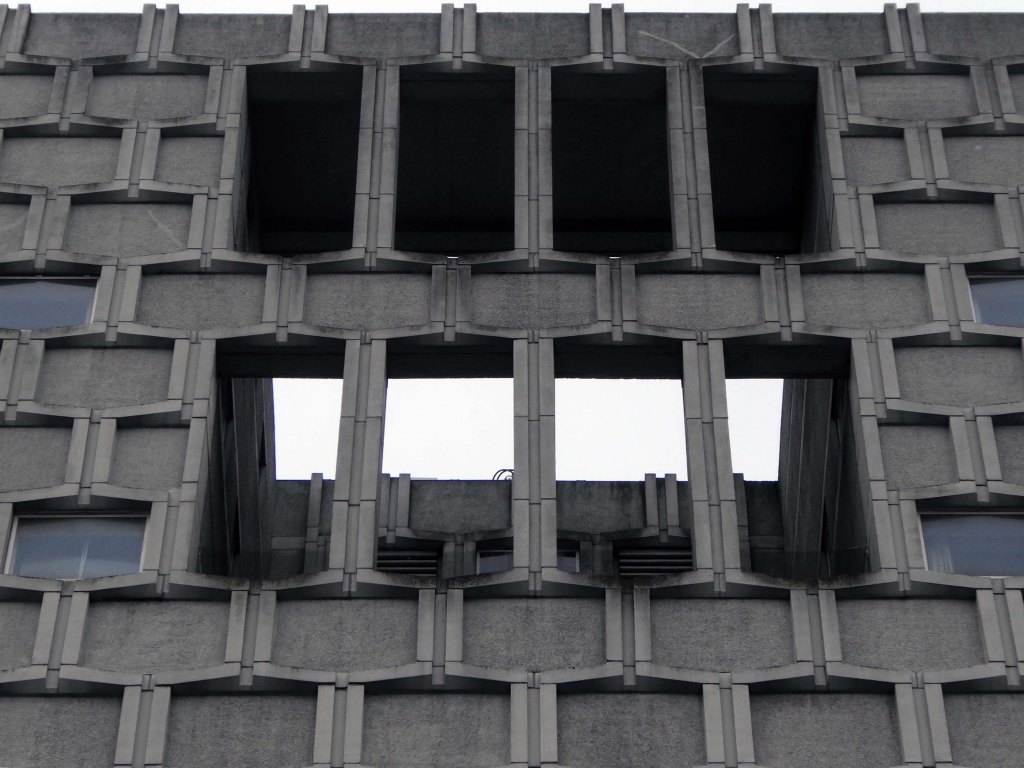
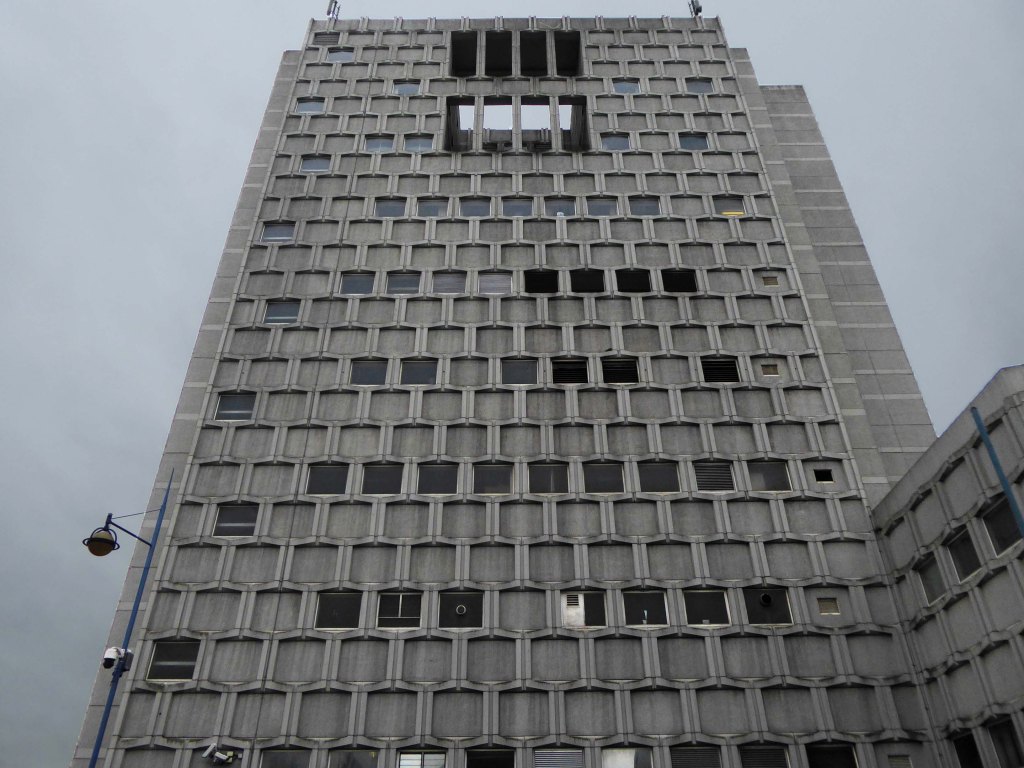
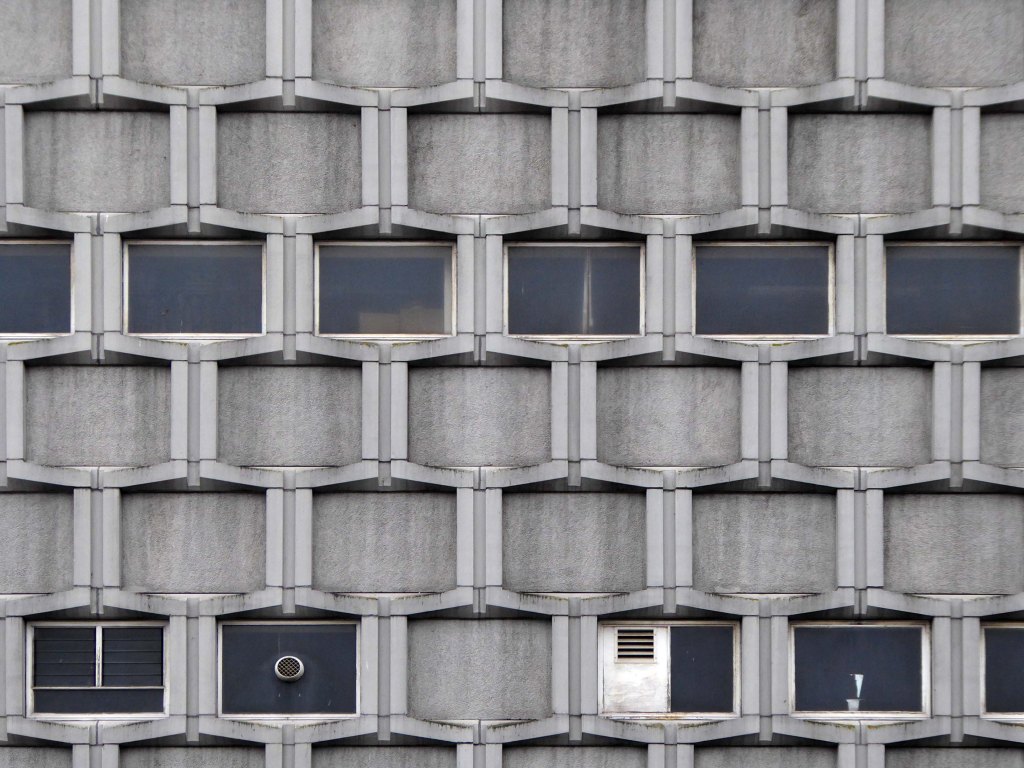
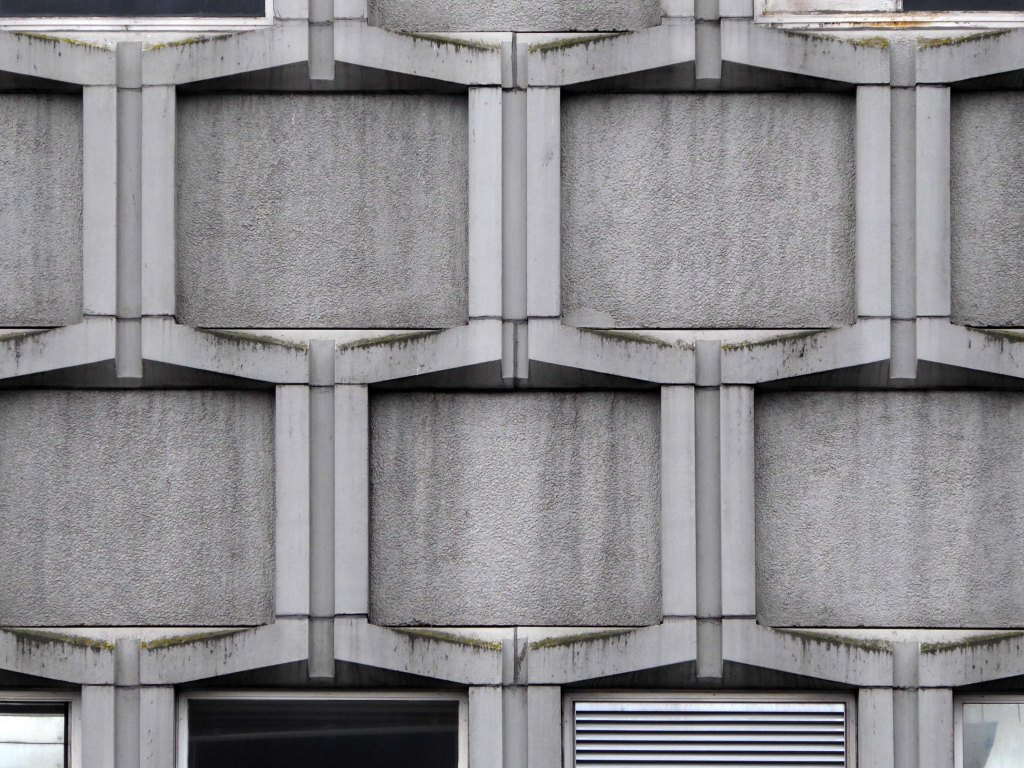
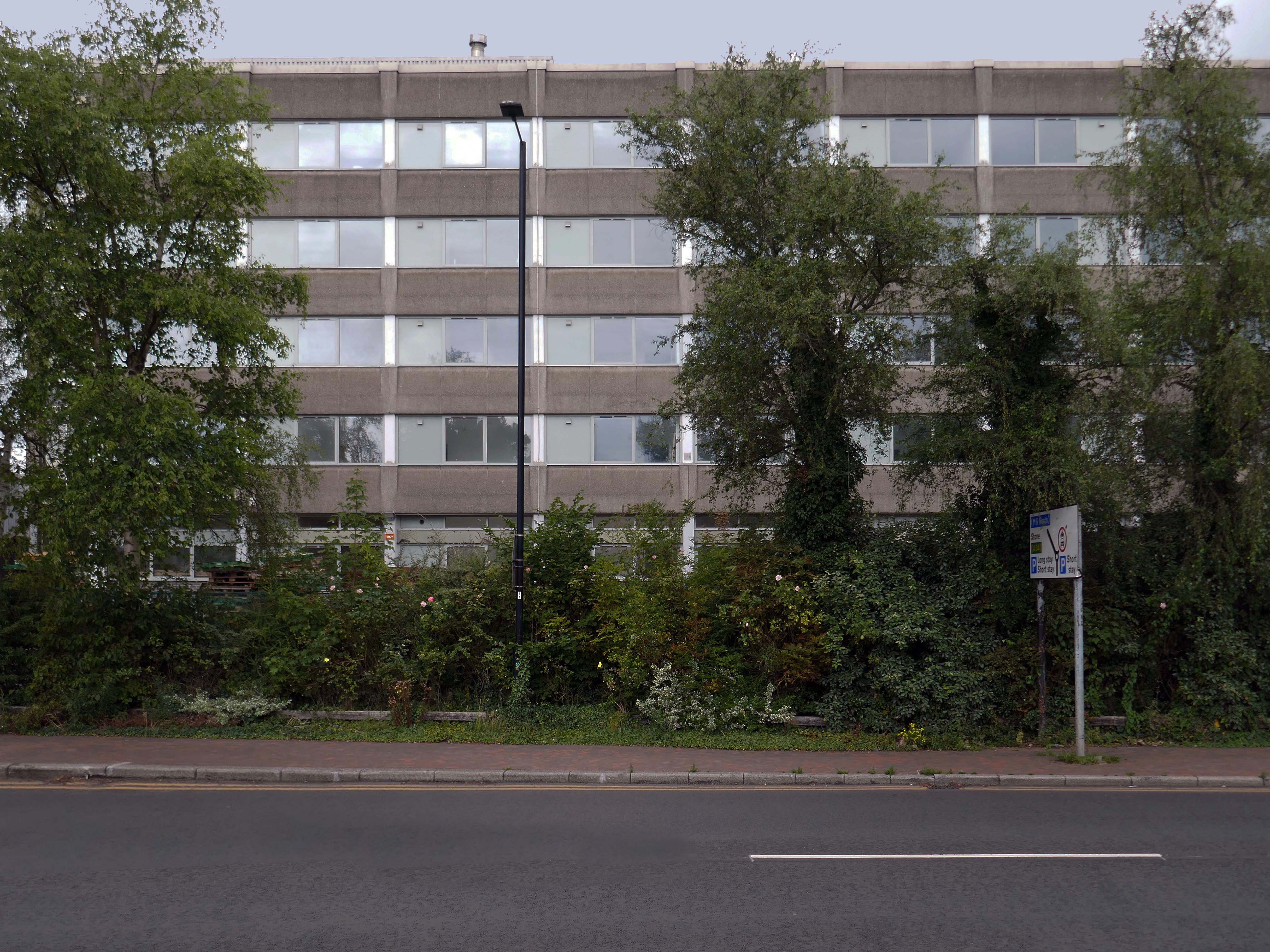
On leaving the station there is an as yet partially un-let Sixties office block to let – Victoria Park House.
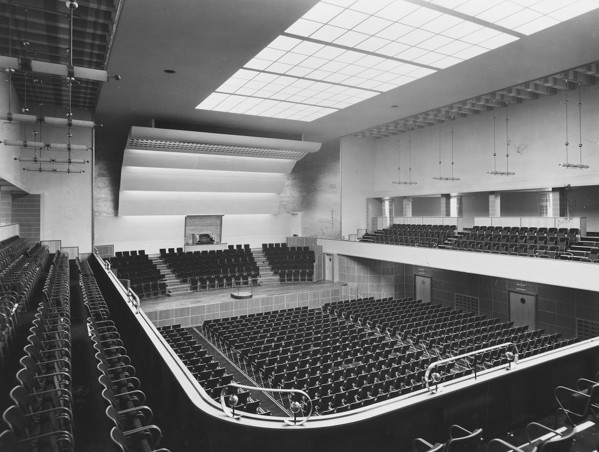
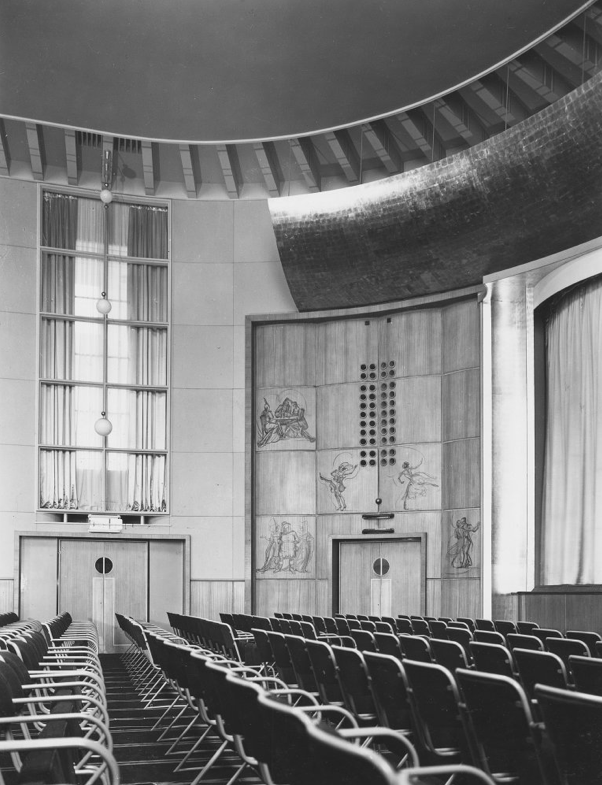
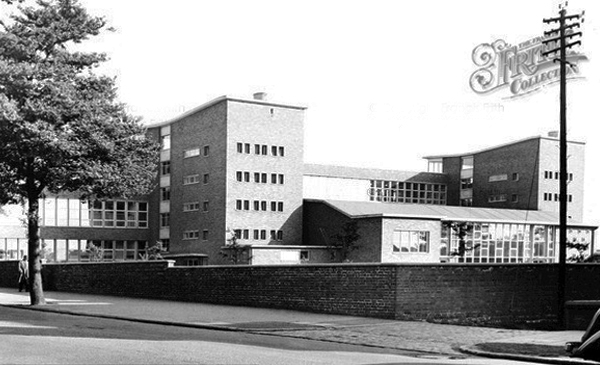
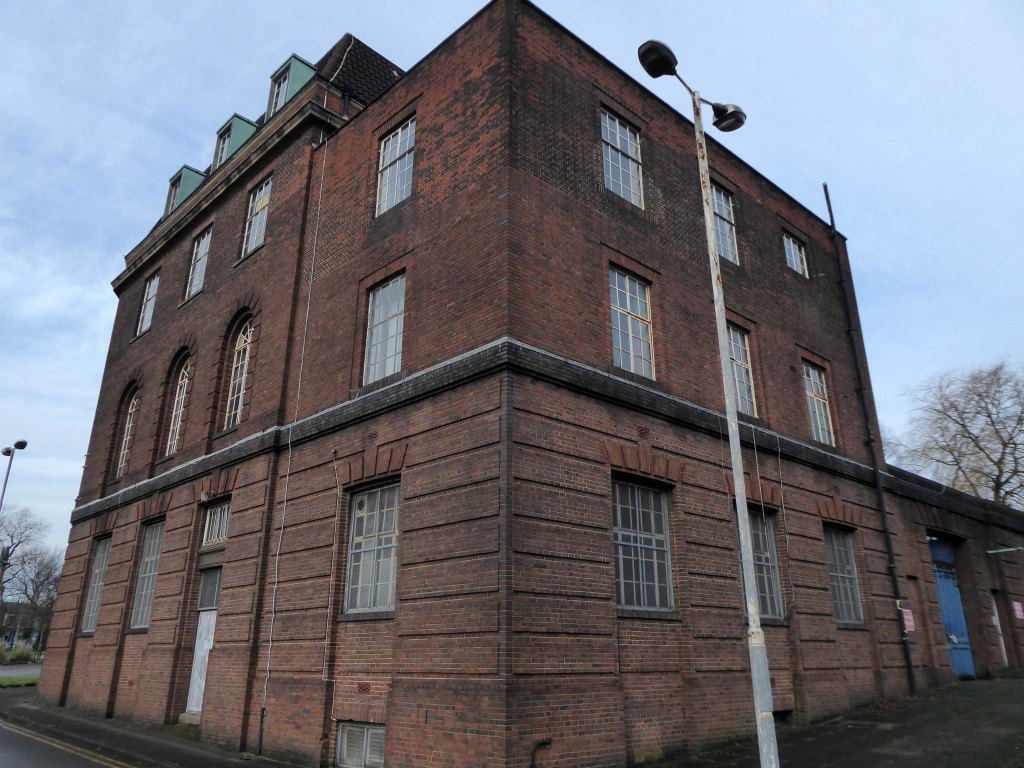
Onward to the County Technical College 1937 Grade II Listed – interior completed 1946.

The shell of the building was completed in 1937, after which it was used as an American army hospital during the war, then completed afterwards. 
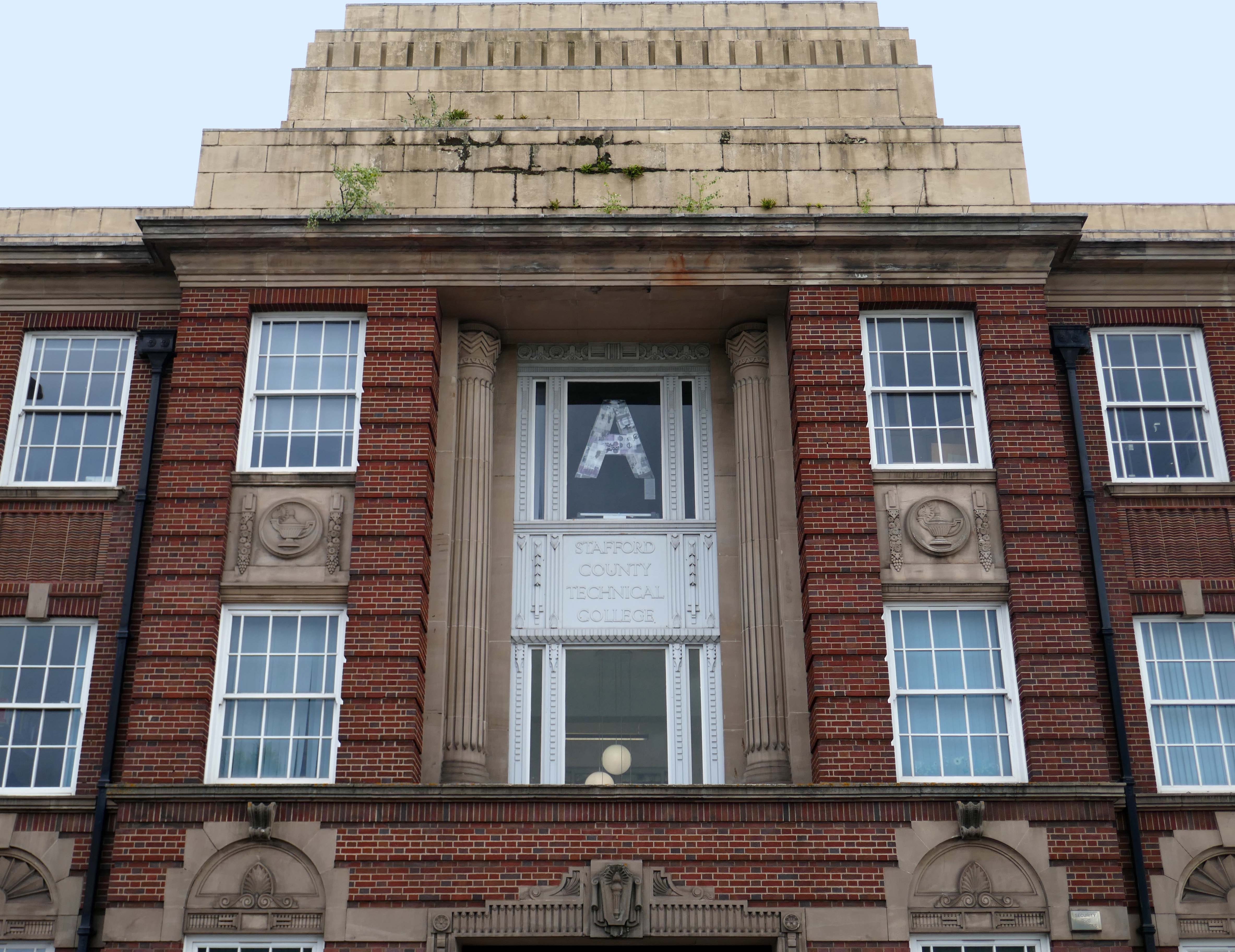
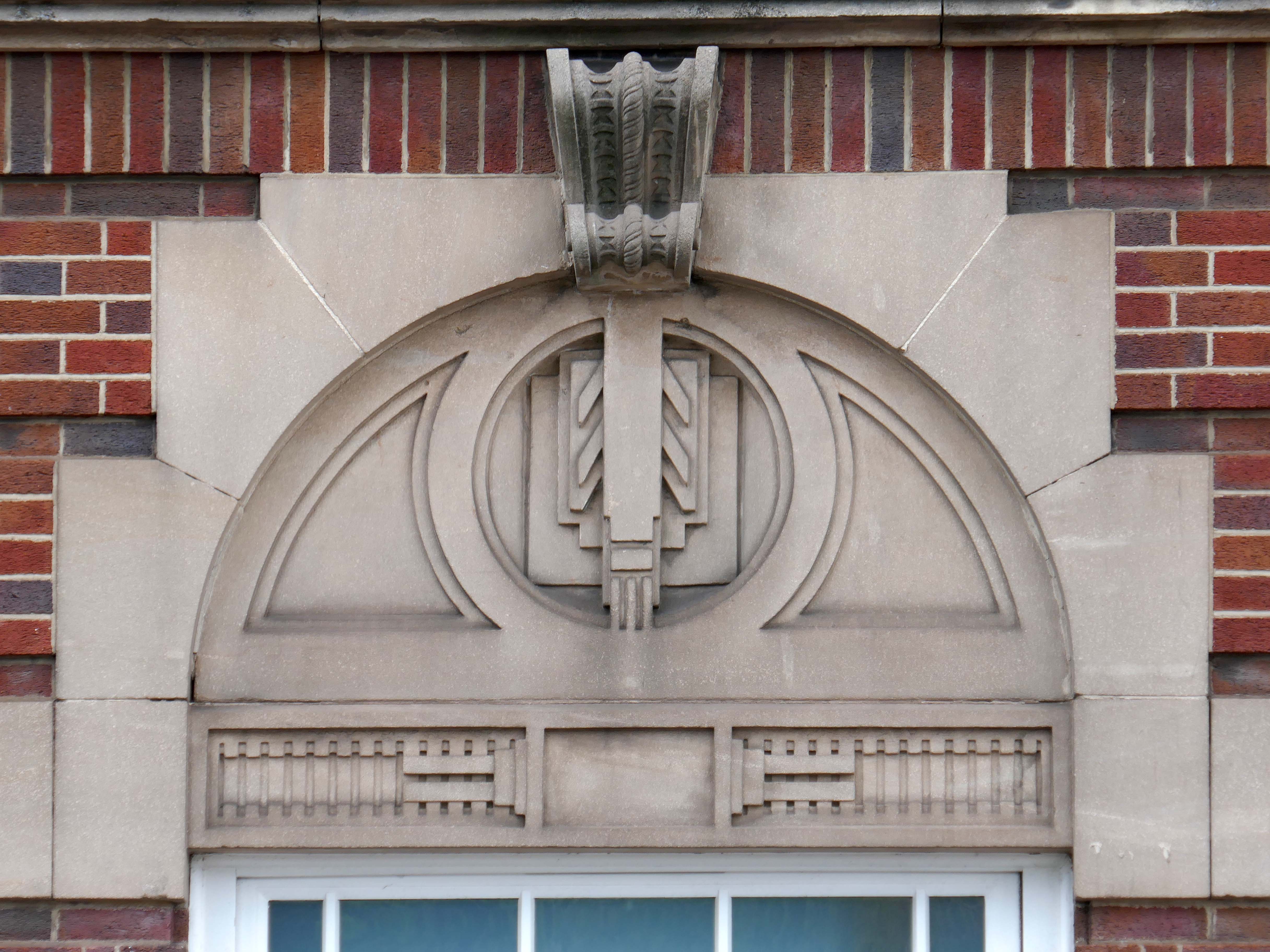
Heavily loaded with Art Deco details.
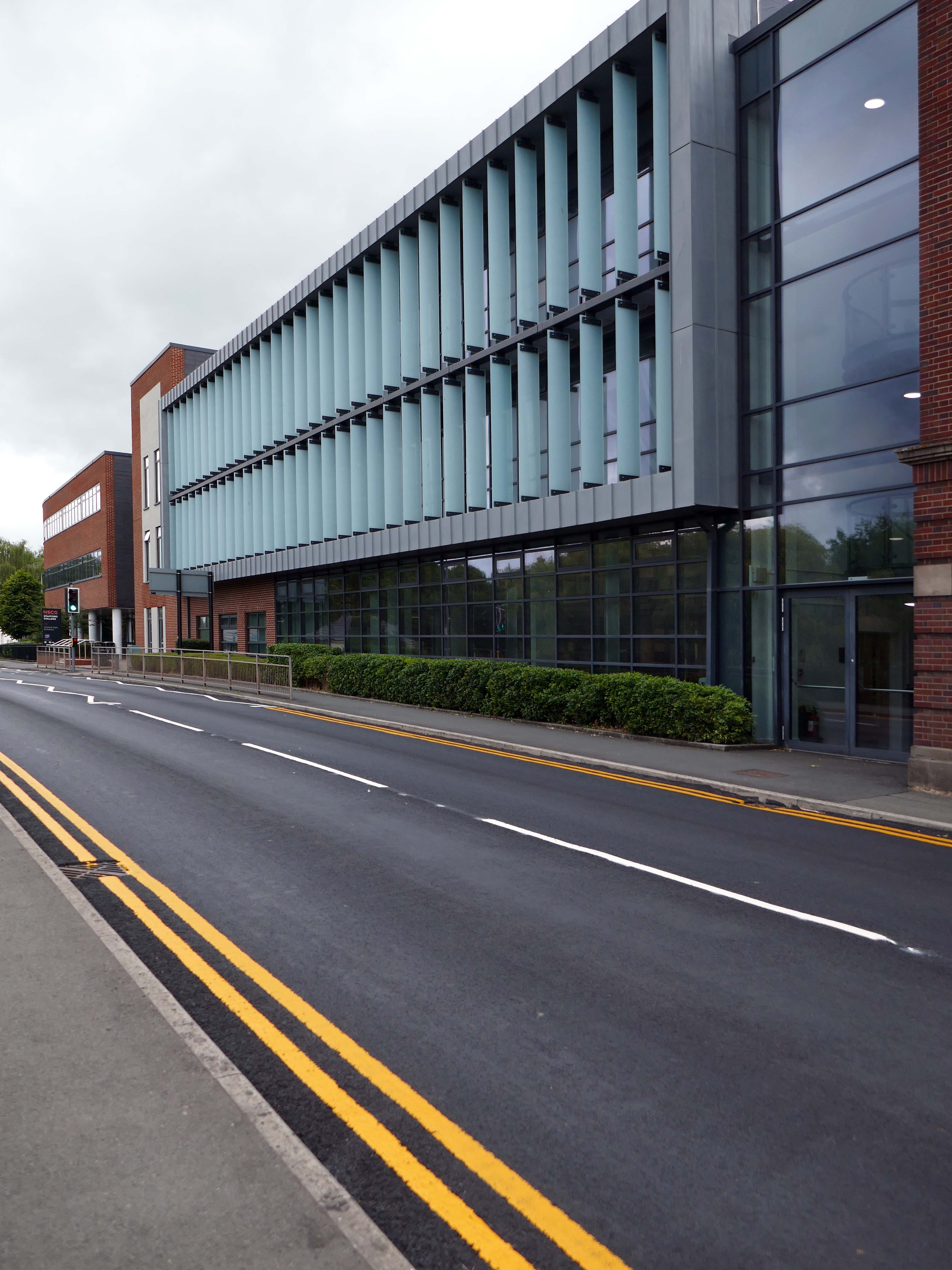
The new £28m three-storey Skills & Innovation Centre at Stafford College, completed in August 2023, was one of the first further education college schemes to be delivered under the DfE framework and a pathfinder scheme for delivery in accordance with the Further Education Output Specification. The new Centre is equipped with cutting-edge equipment and state-of-the-art facilities for construction, engineering and hybrid / electric vehicle maintenance facilities, as well as IT rich seminar suites and open learning break-out spaces along with a 4-court sports hall, a fully-equipped gym and a flexible 300-seat auditorium.
Ellis Williams

A 1970’s block was demolished to make way for the new development.
Almost everywhere we go we find a PoMo Crown Courts 1991 – architects: Associated Architects of Birmingham, cost of £10.4 million.

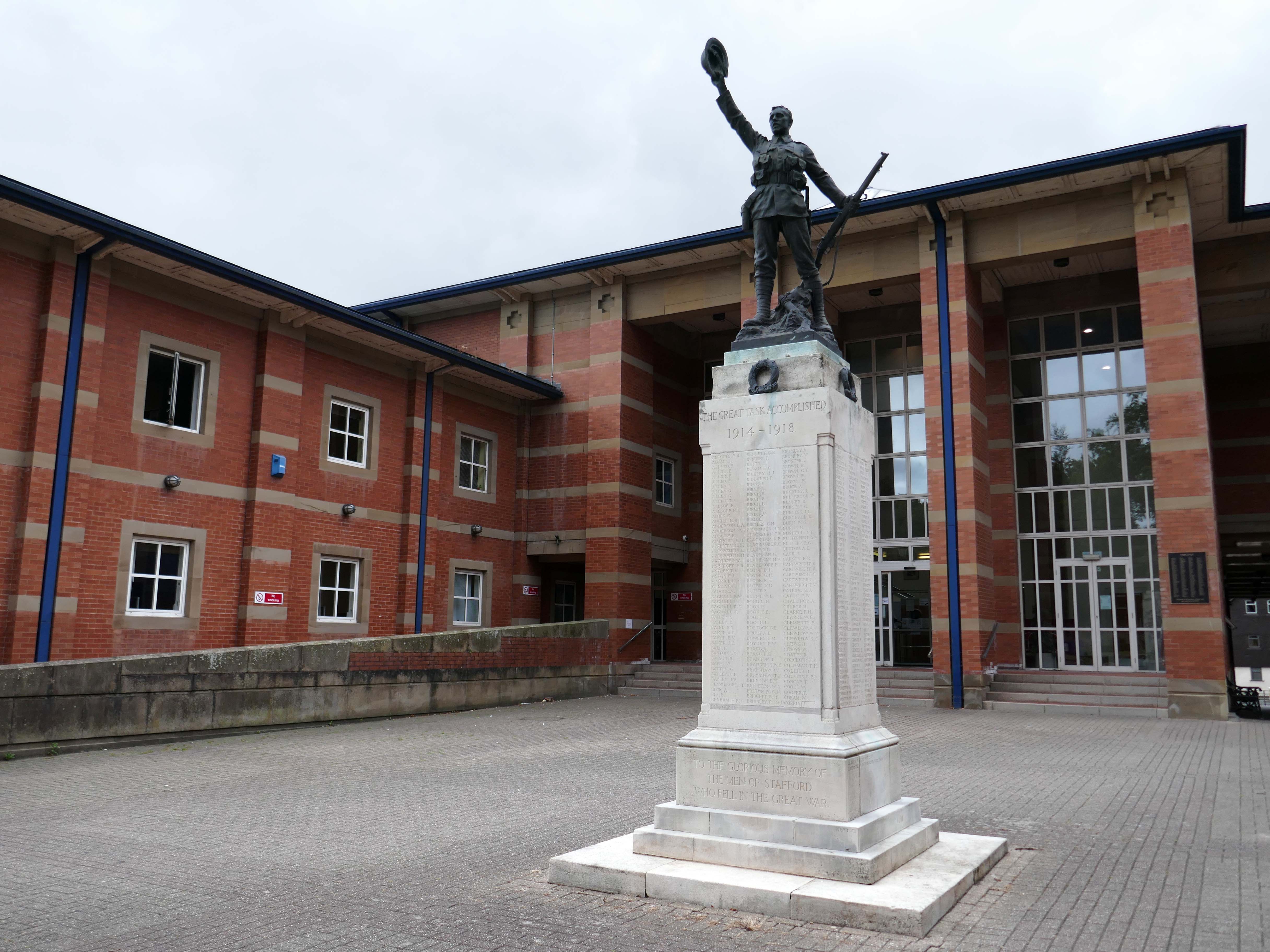
The war memorial of 1922 is by Joseph James Whitehead.
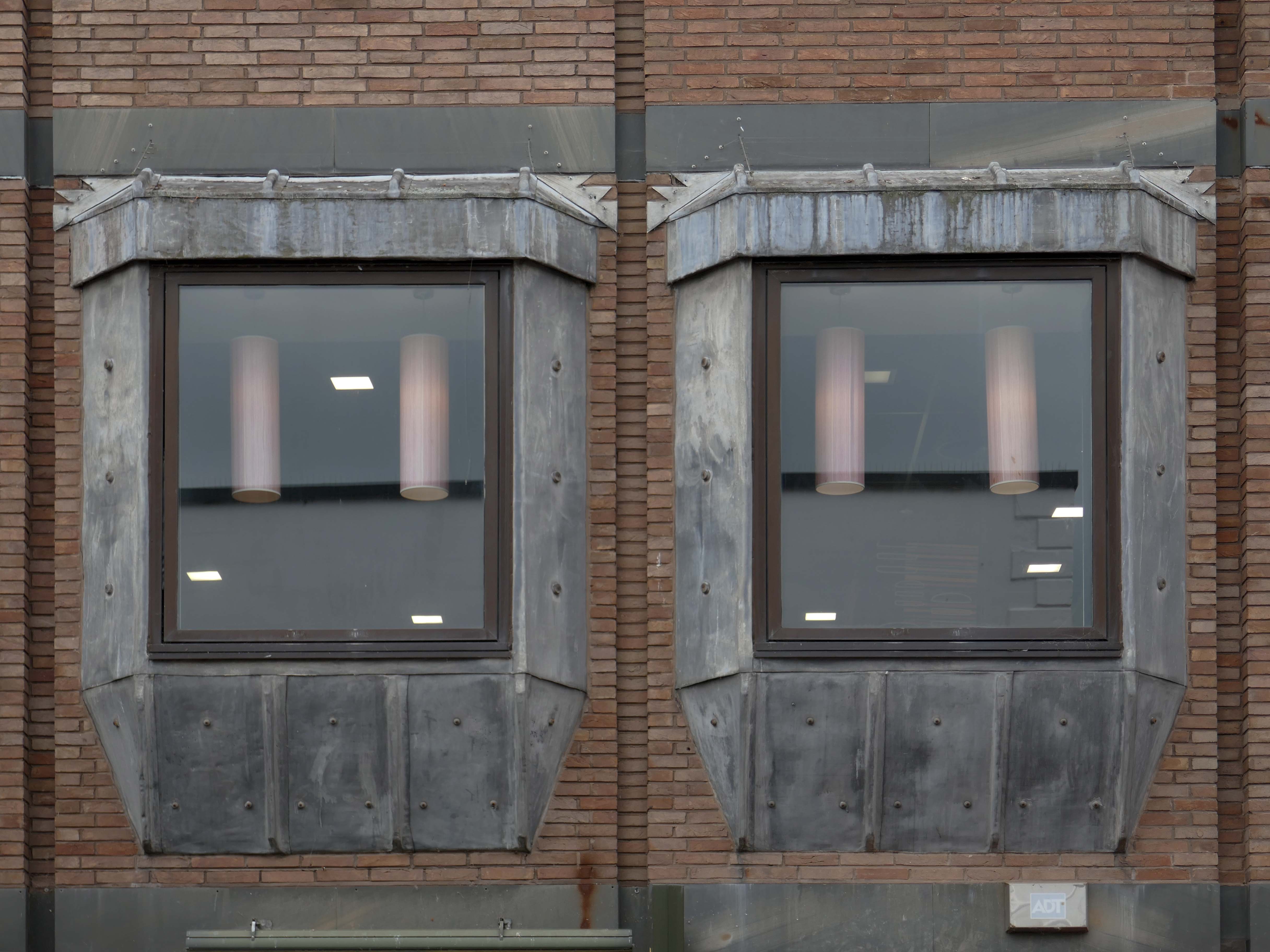
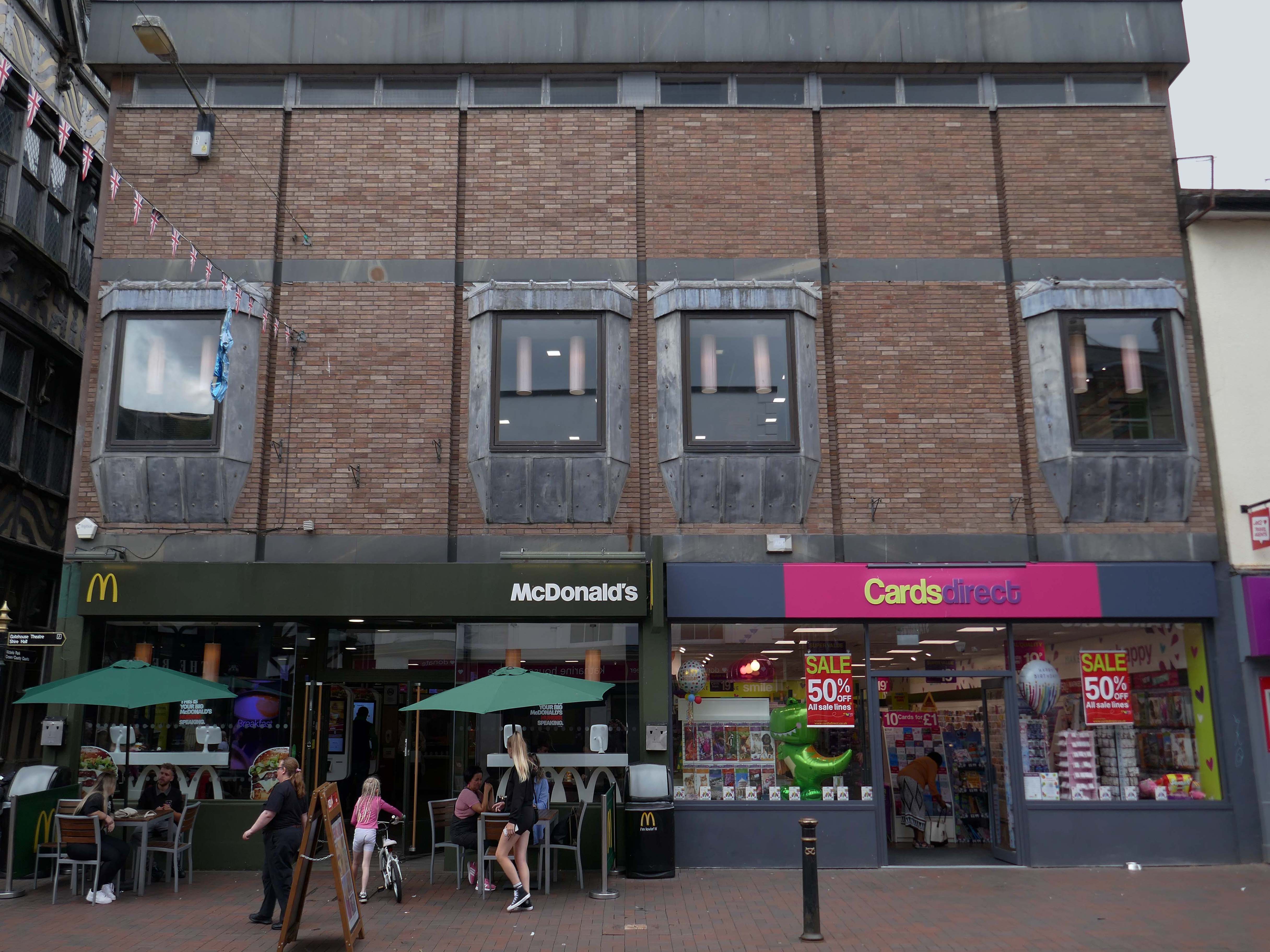
Sneaking through the alley to and before the McDonalds – one many more recent buildings with jetted lead clad bays.

Keeping the town Tudor one bay at a time..
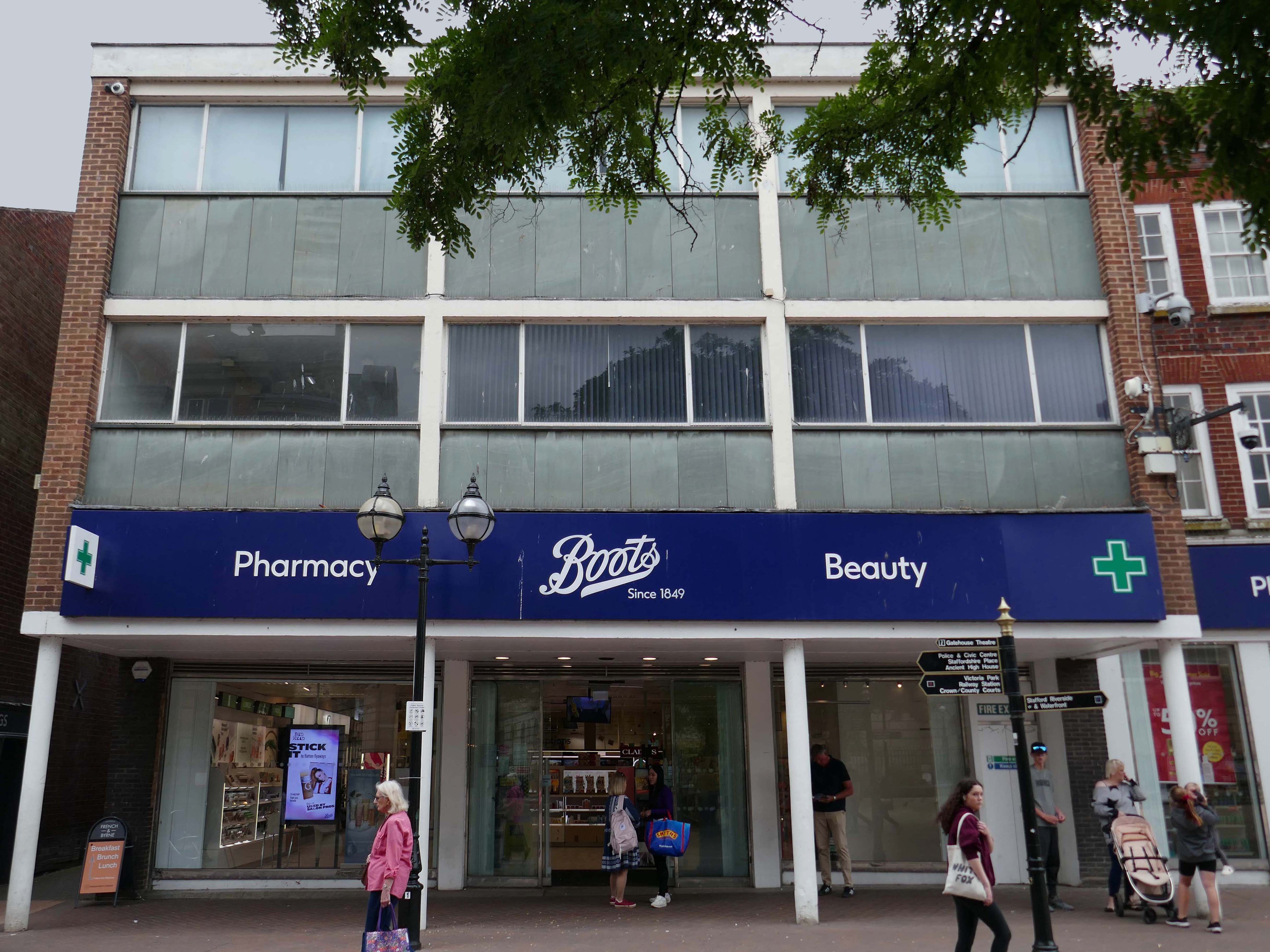
Further along a Sixties Boots.
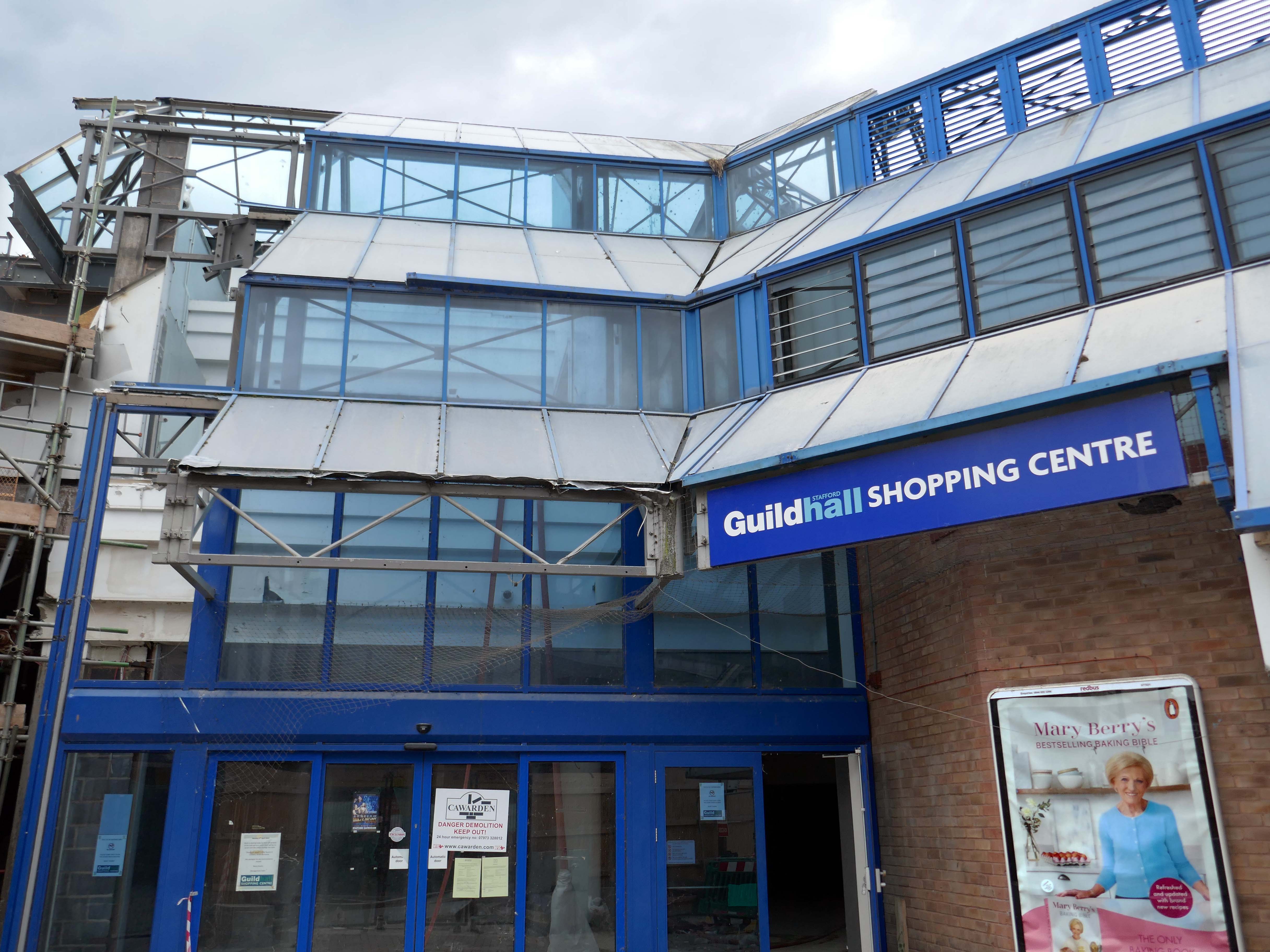
The Classical stone frontage of the Guildhall Shopping Centre.
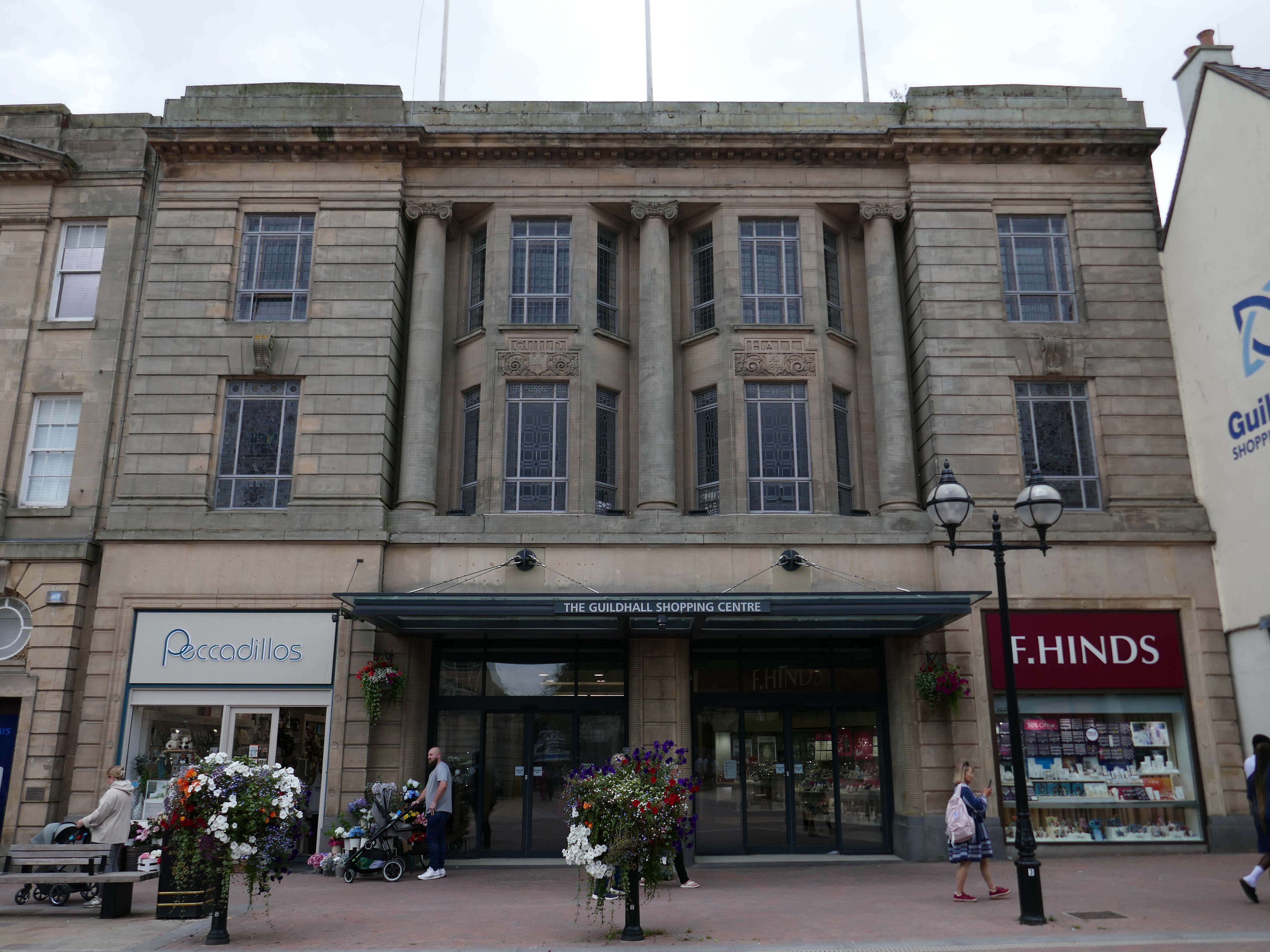
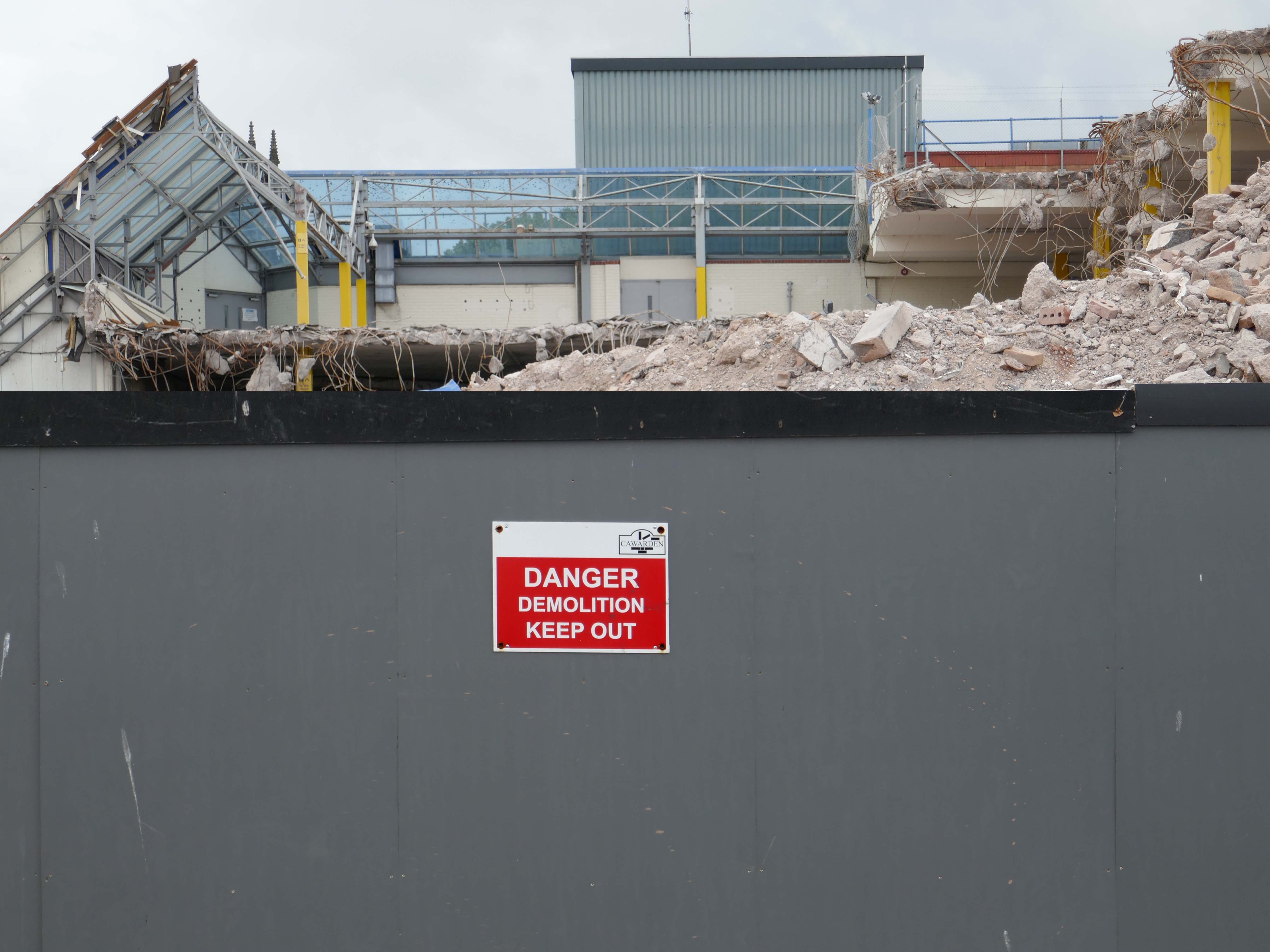
Working with Mercia Real Estate, Glancy Nicholls Architects have designed a contextual mixed-use scheme in the heart of Stafford Town Centre, within the footprint of a disused shopping centre. This includes the regeneration of the 1930’s Guildhall building that serves as the main entrance to the shopping centre and the listed Market Square building. 
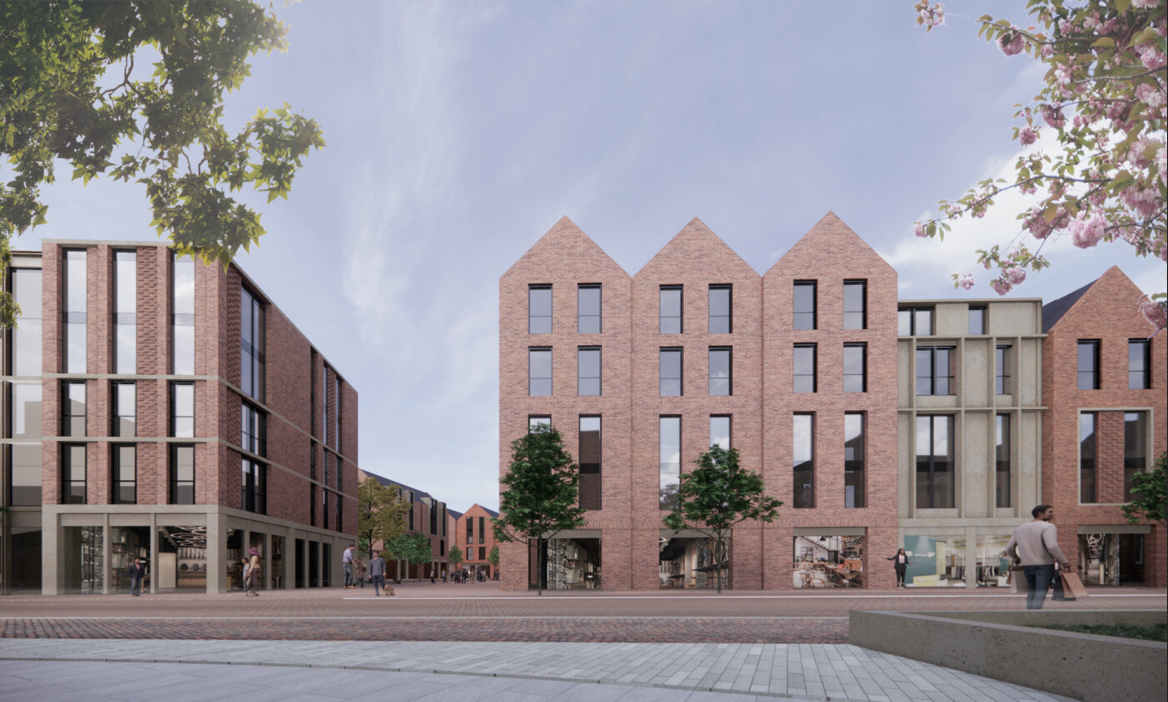
Glancy Nicholls

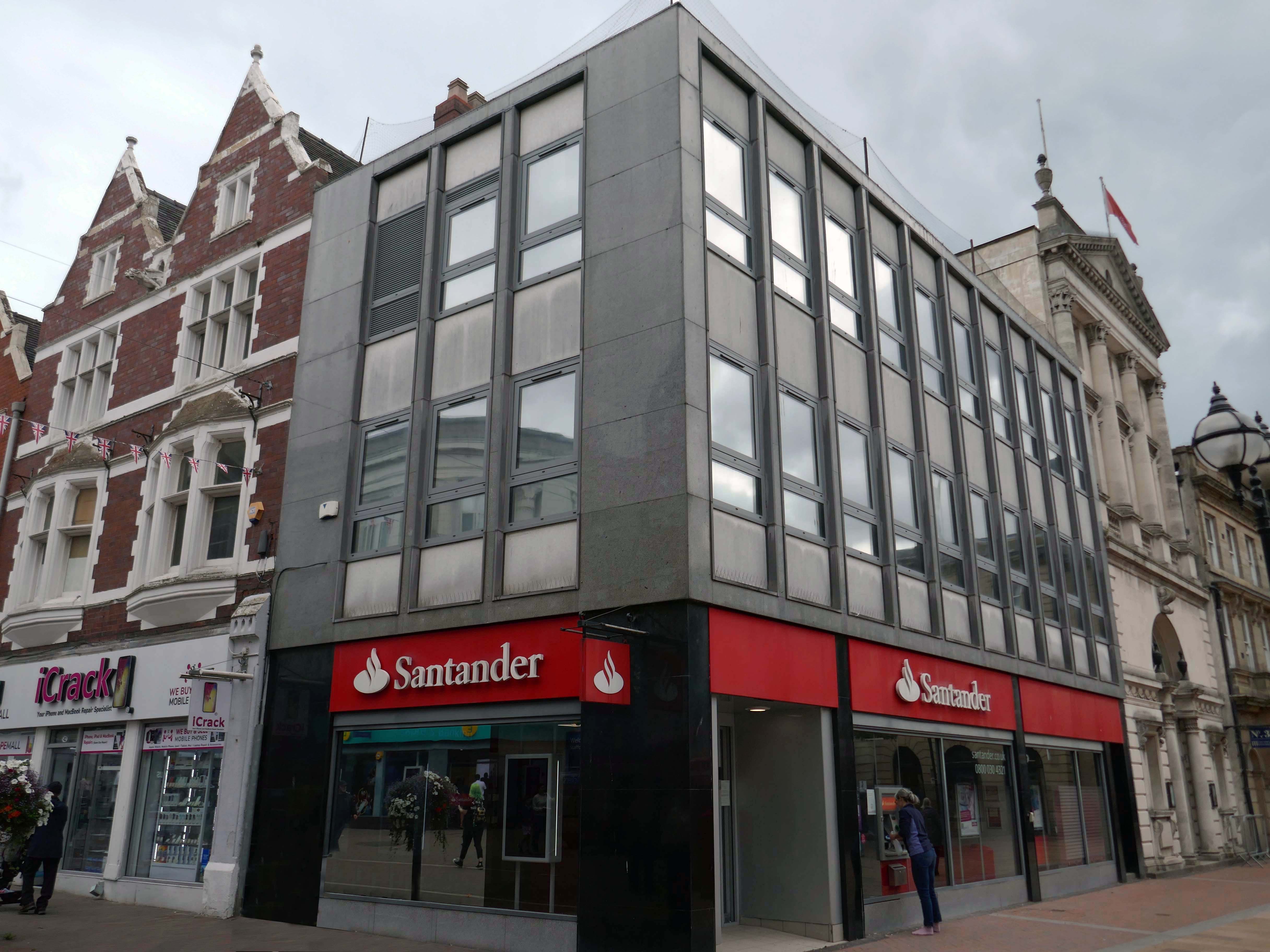
On the corner a Santander Bank

Across the way an understated Burton’s.
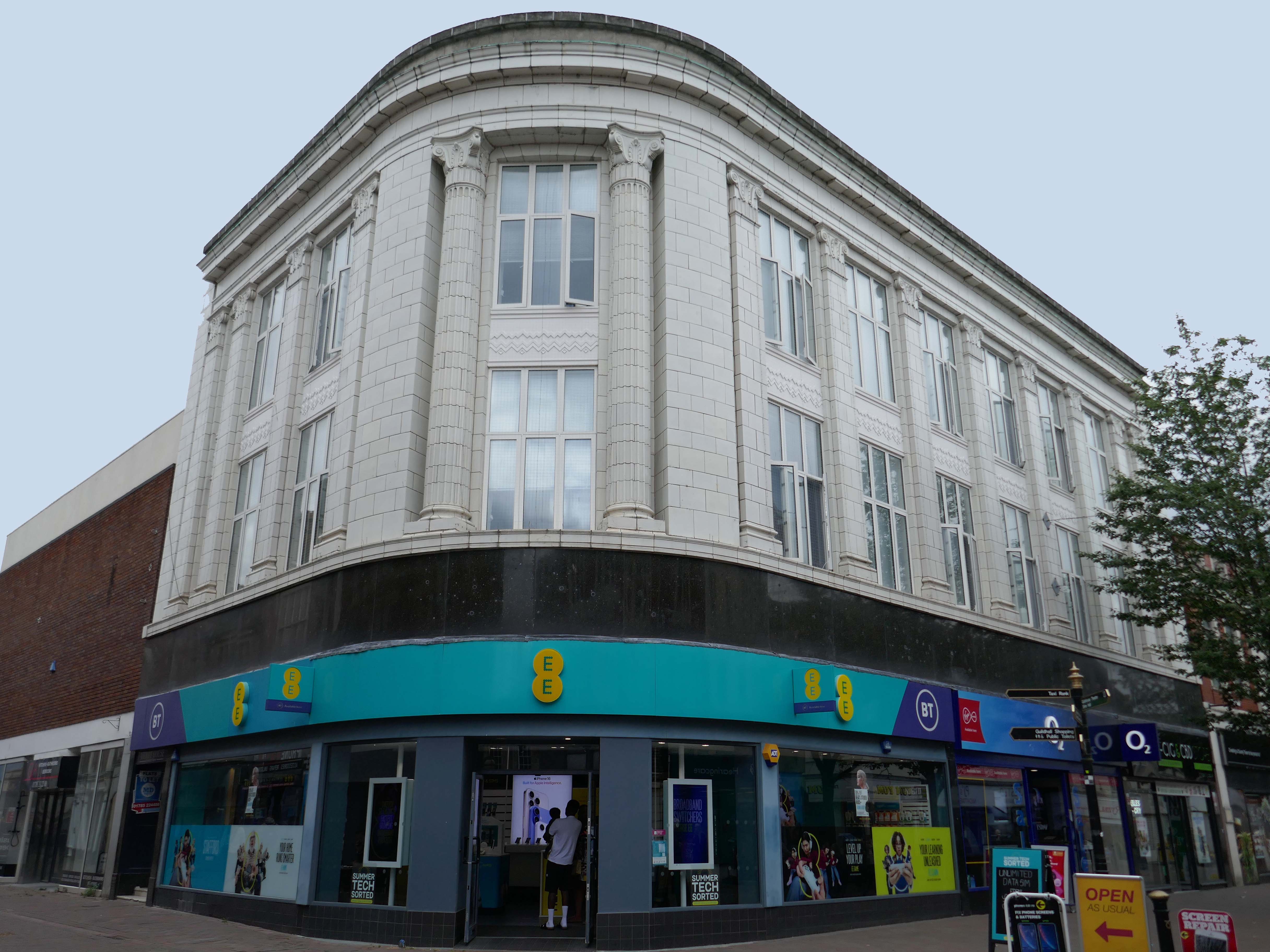
Around the corner a somewhat neglected retail development.
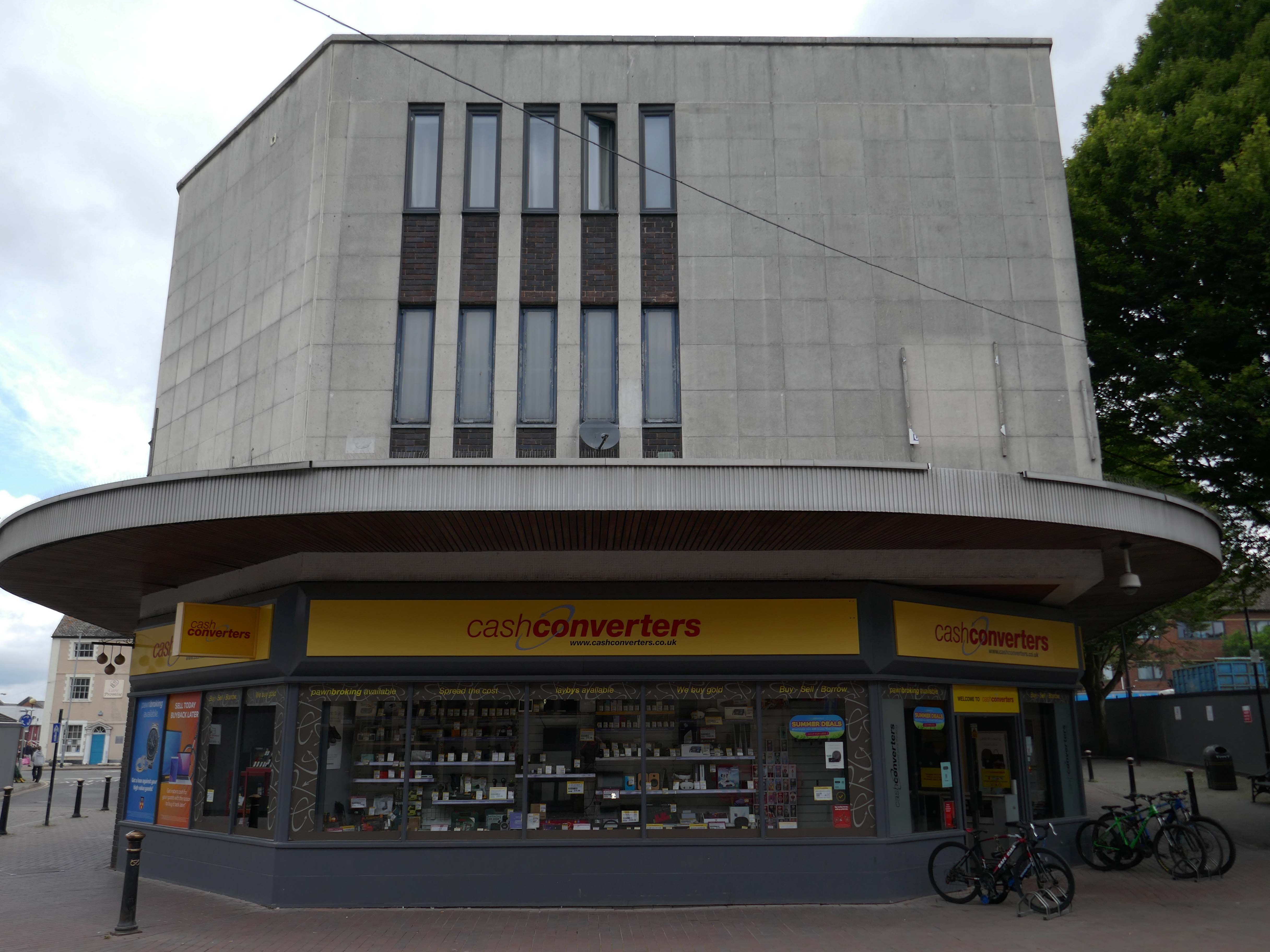
And a long lost Wilko.
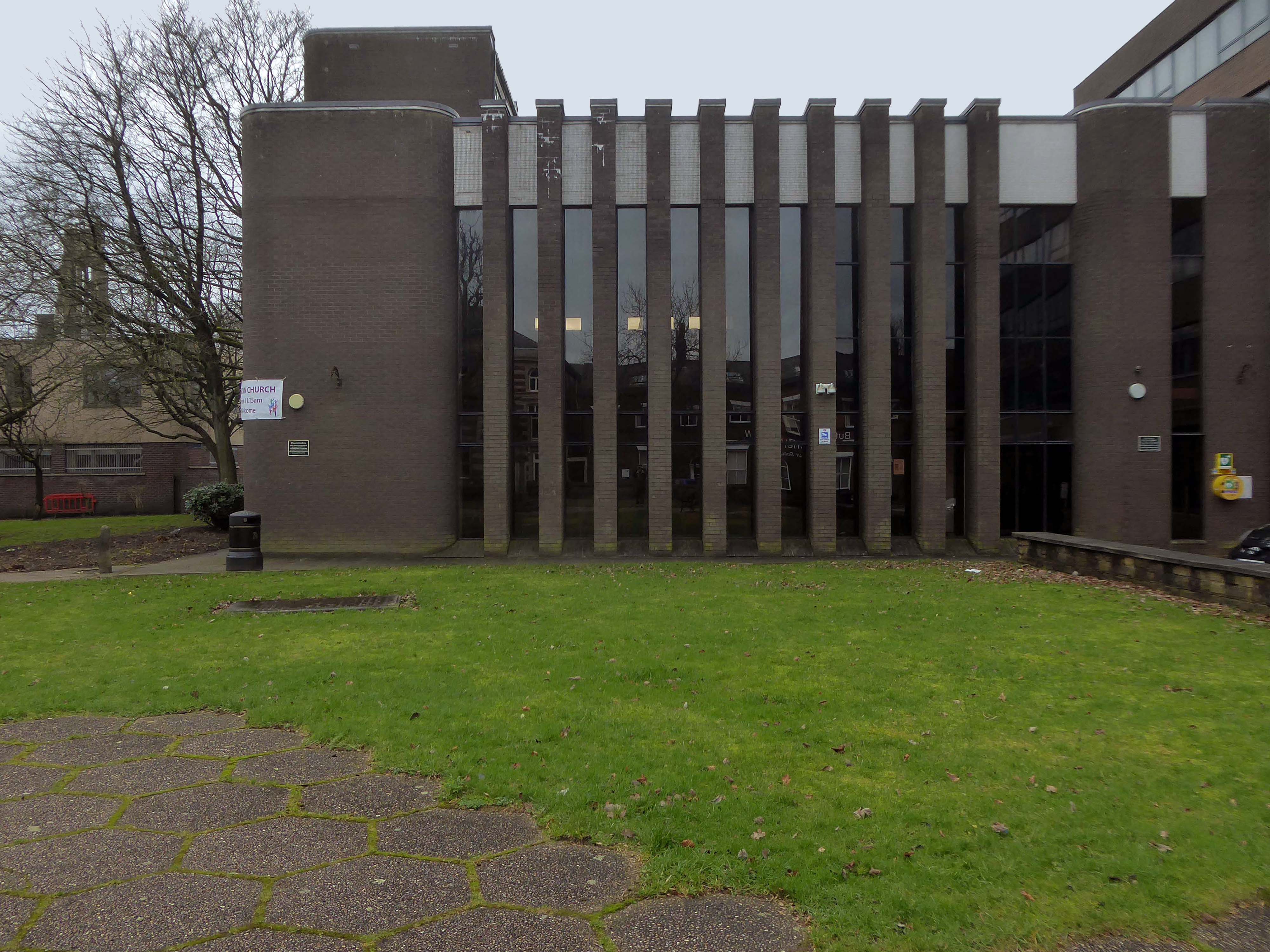
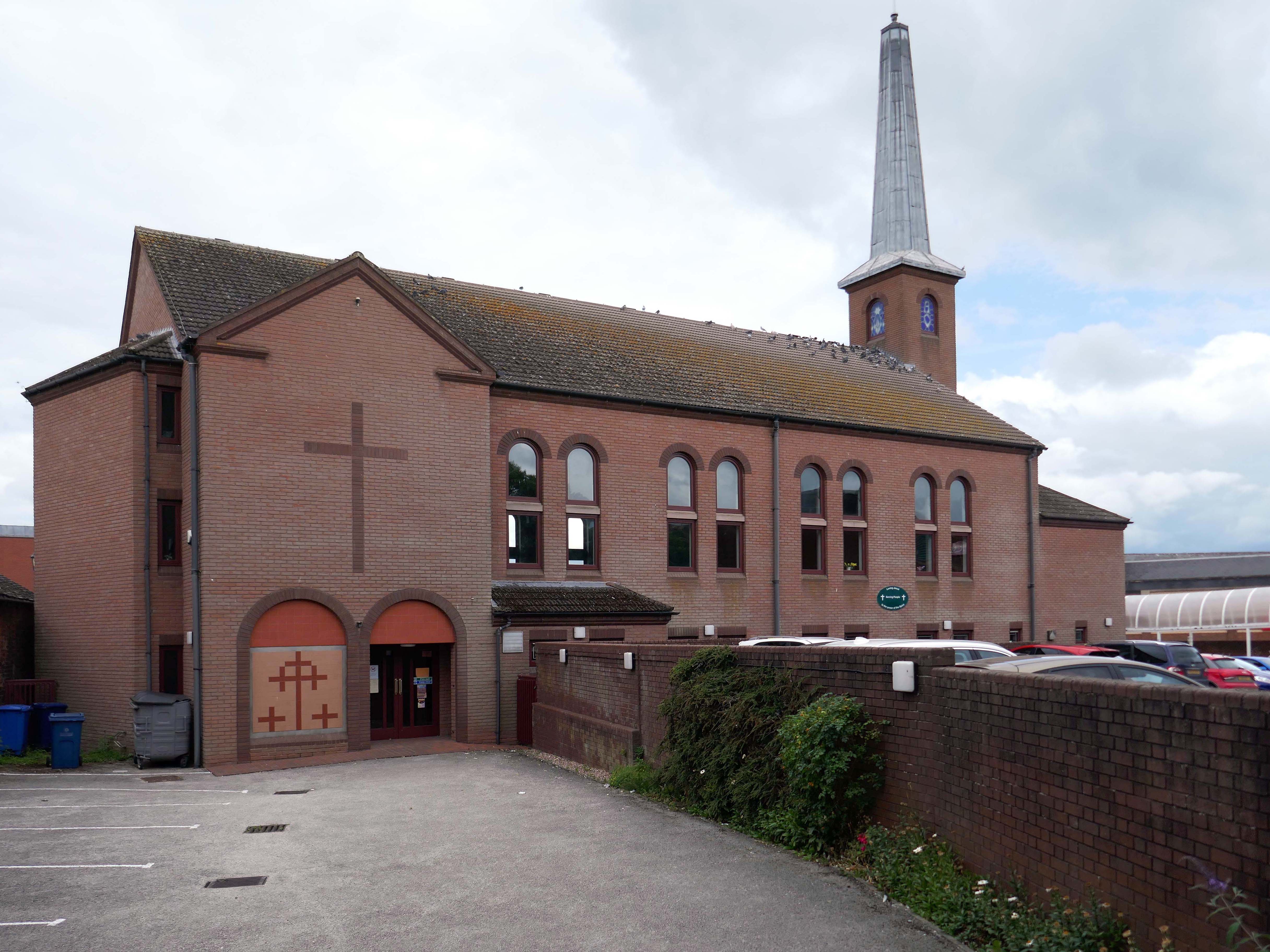
Amidst it all the curious time warp that is Trinity Church 1988.

It is used by Methodist and United Reformed Church congregations.
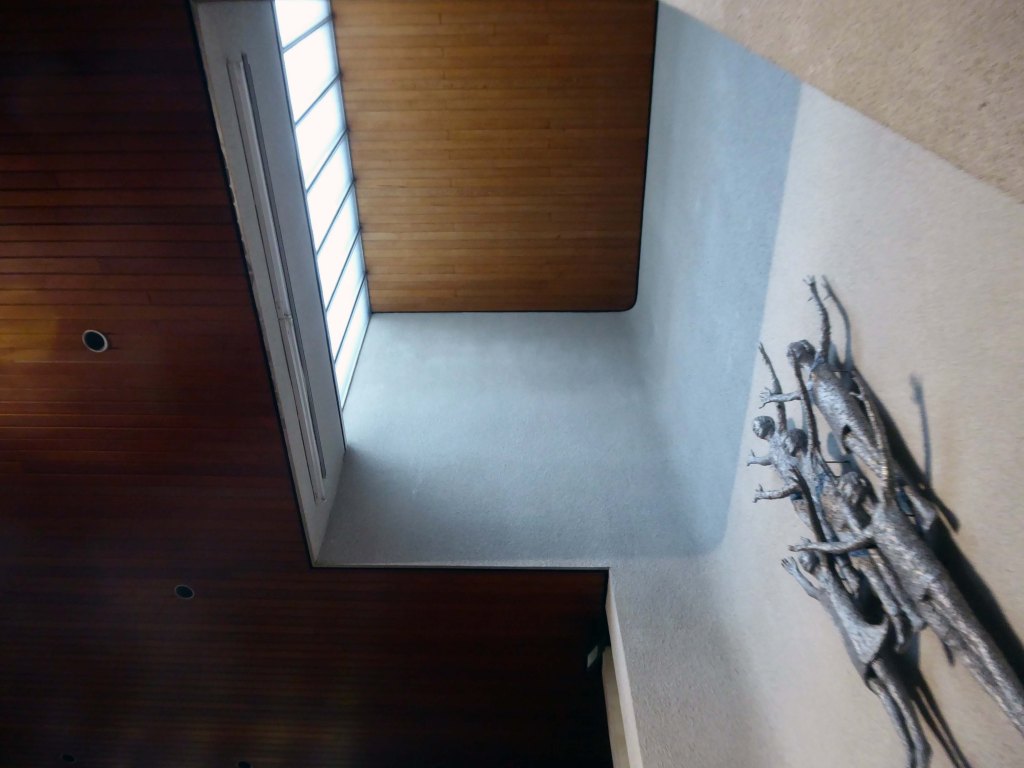
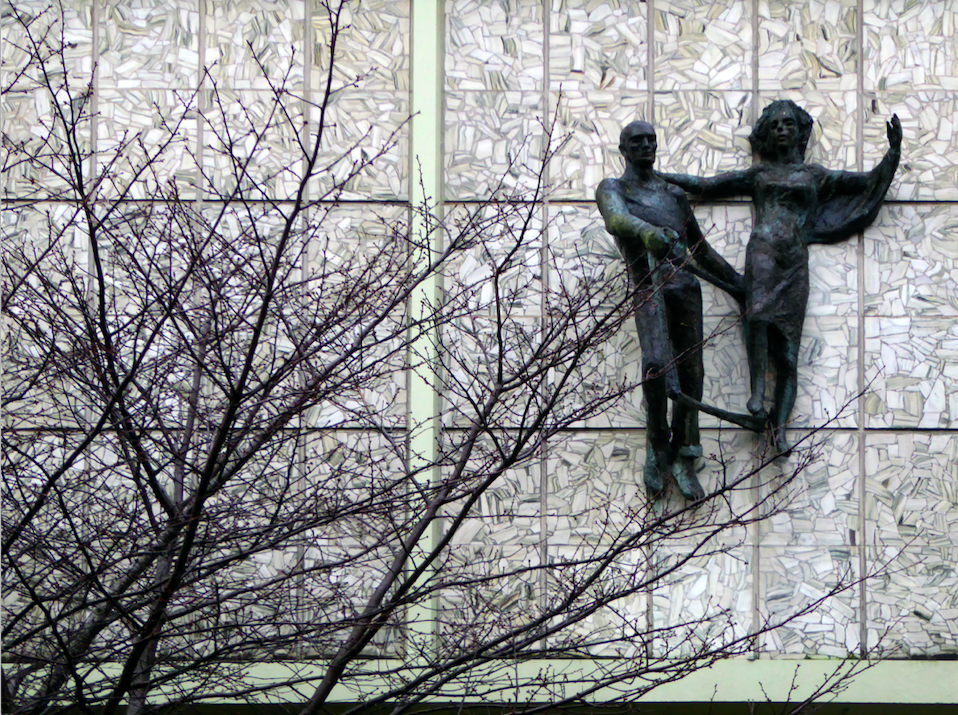
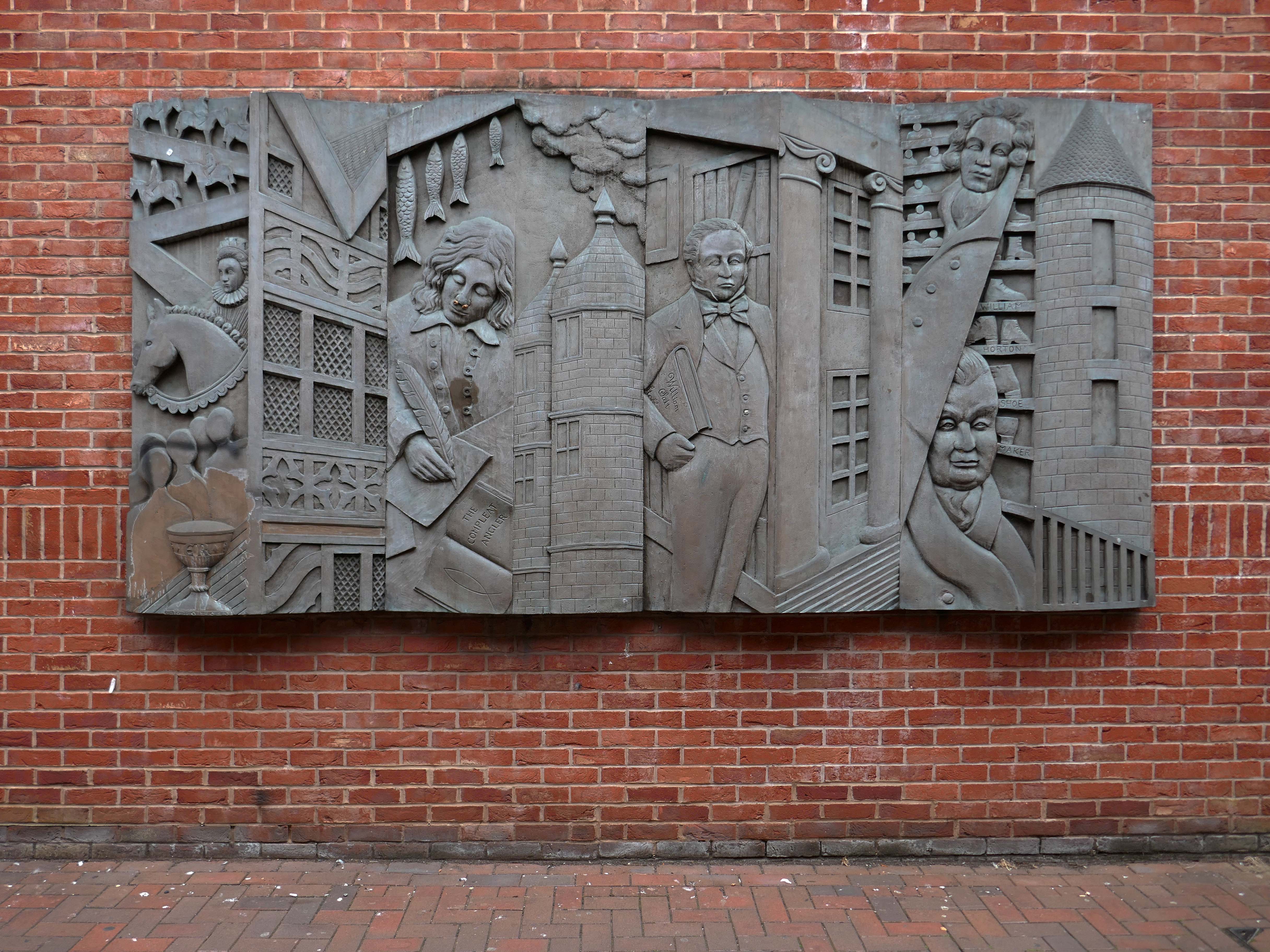
Tucked away in a minor maze of retail a piece of figurative commemorative public art by Glynis Owen Jones, entitled Stafford Faces.
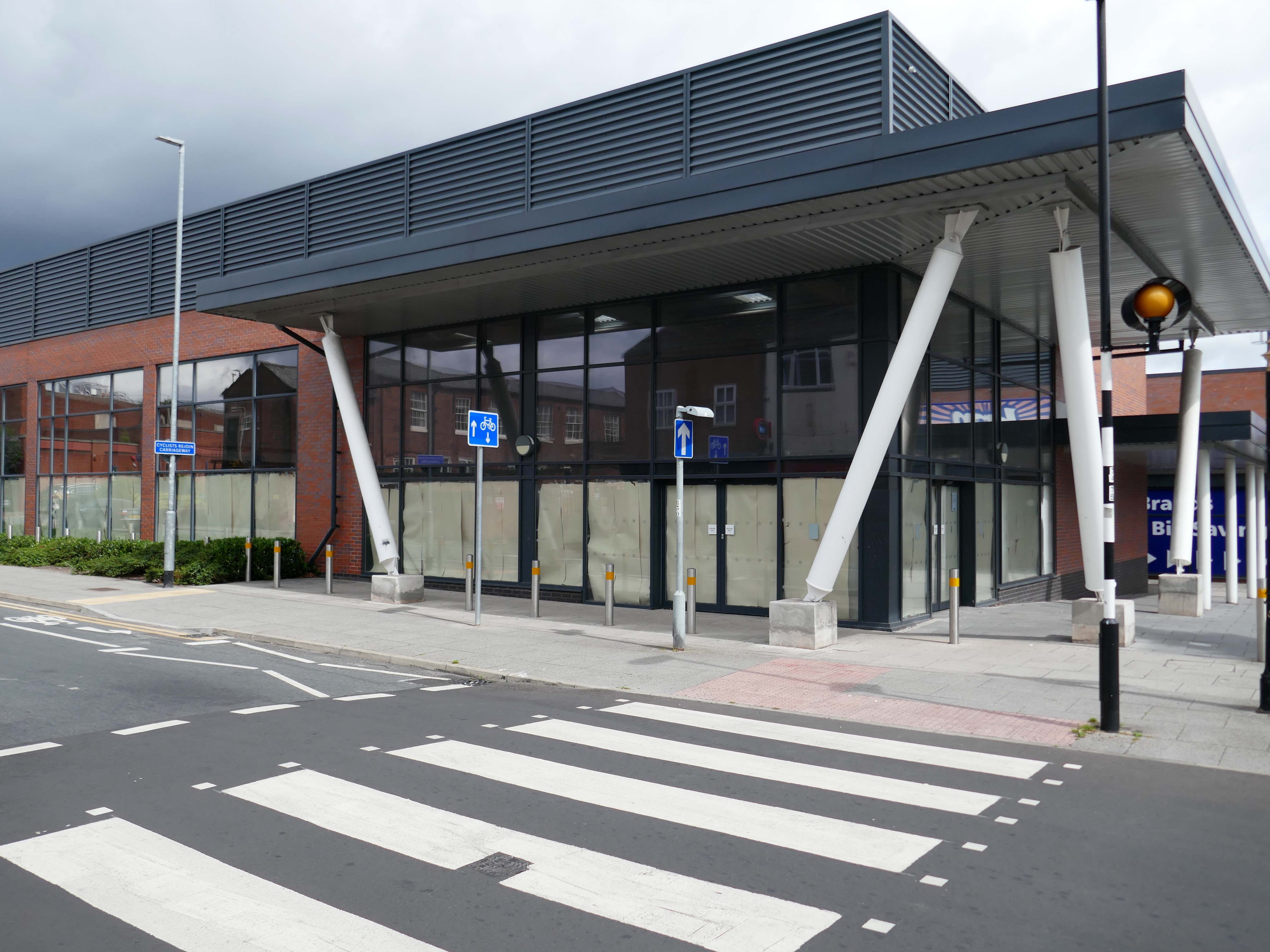
Around the corner a big B&M.
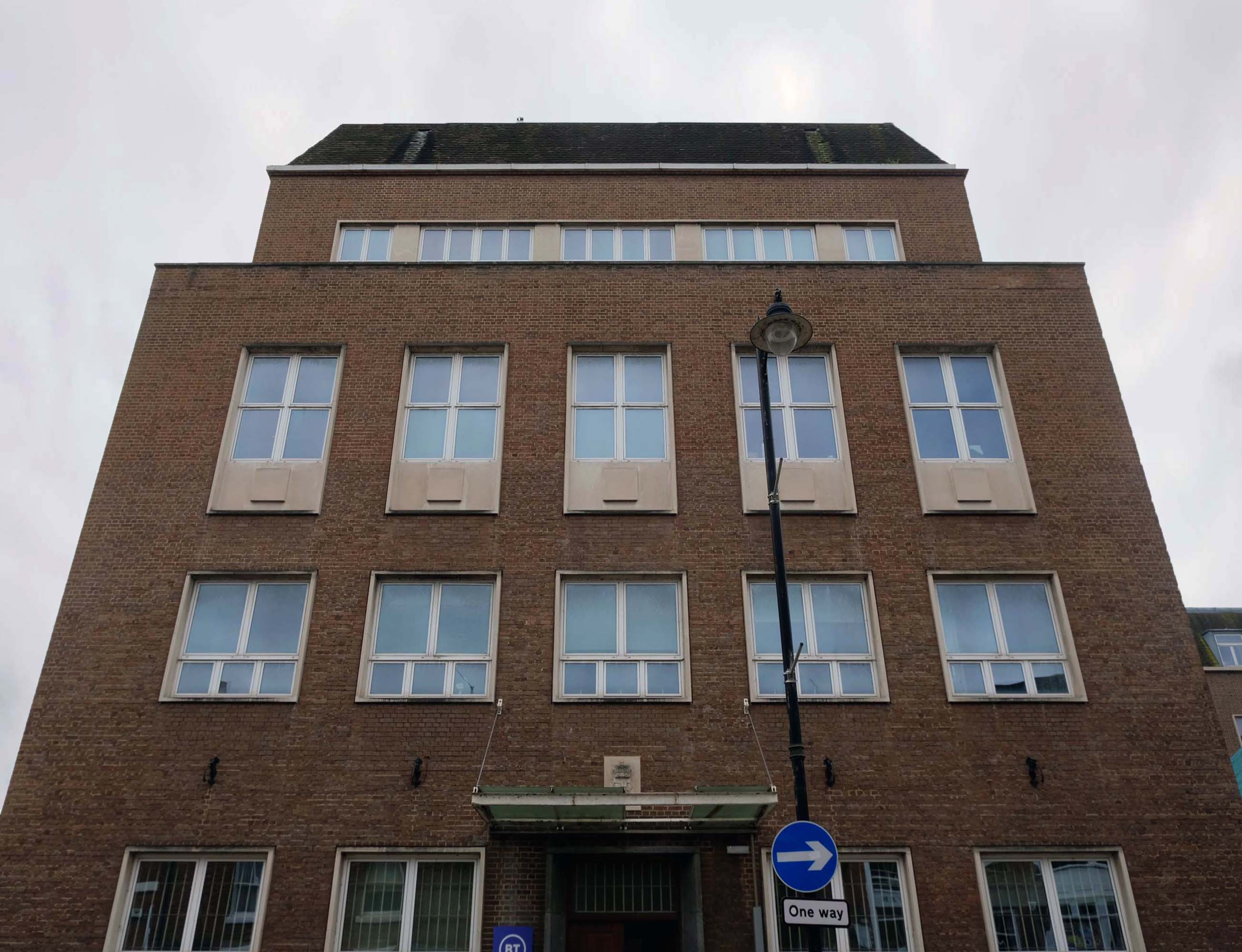
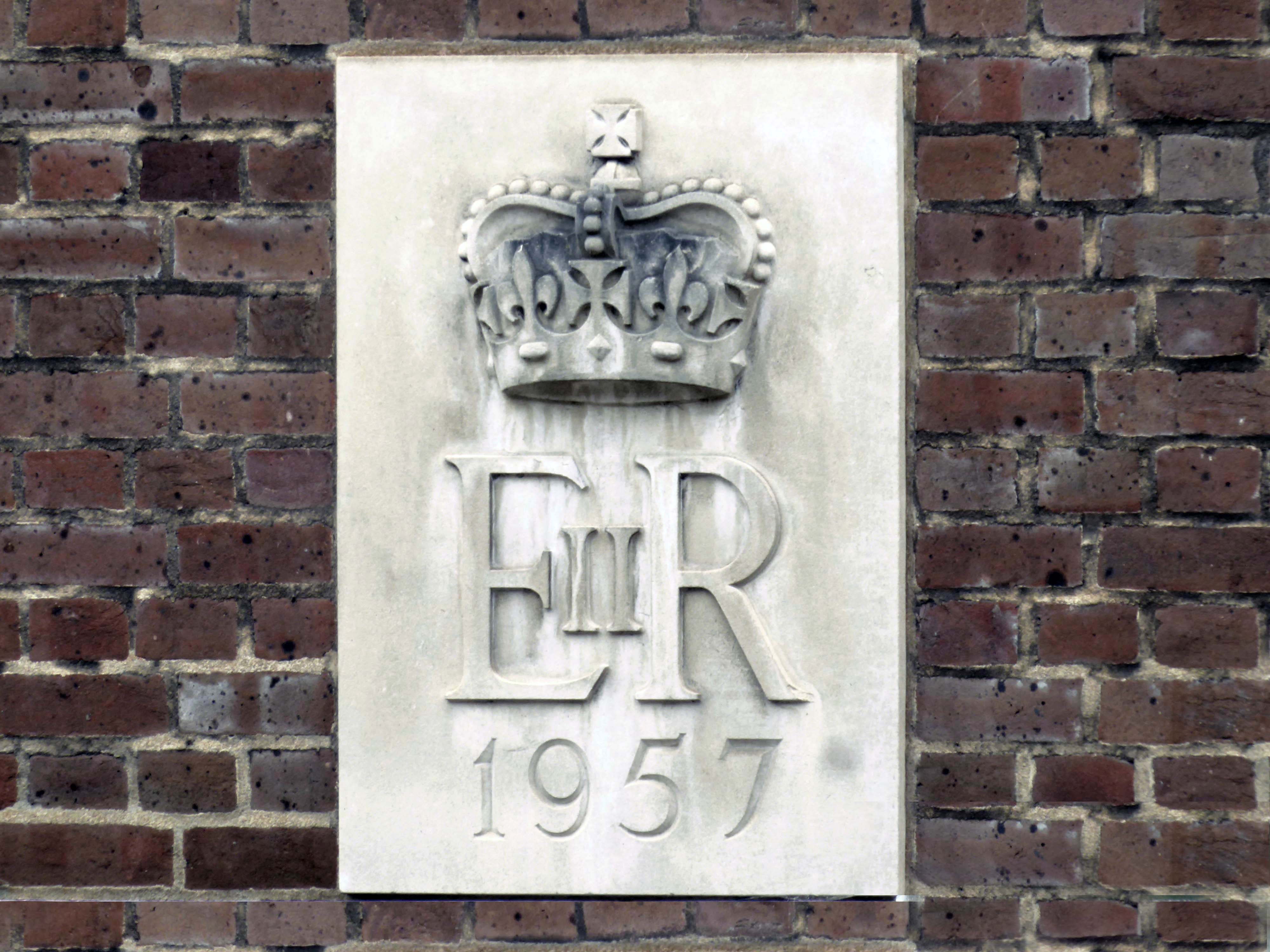
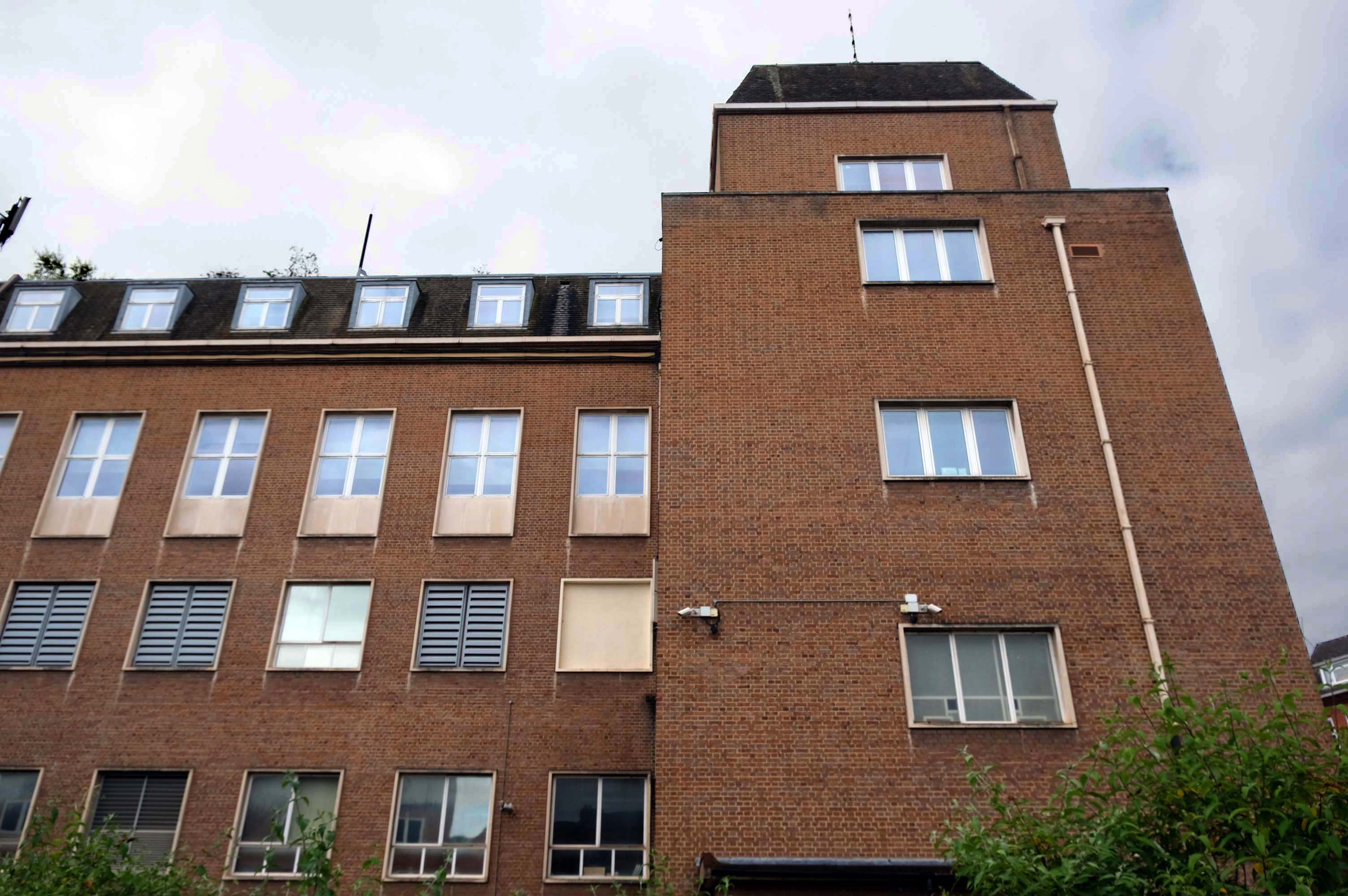
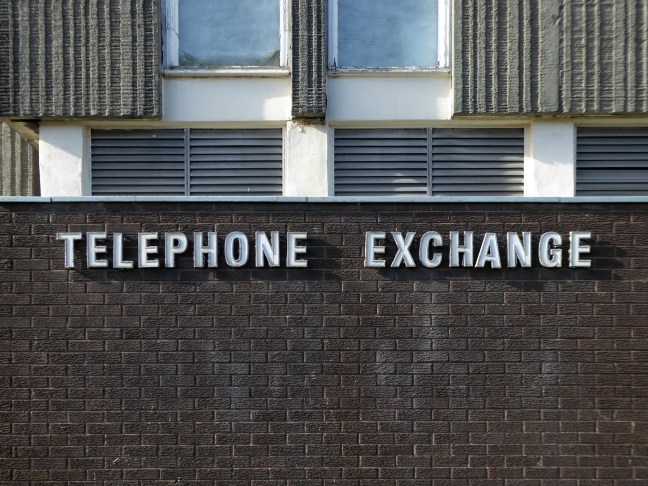
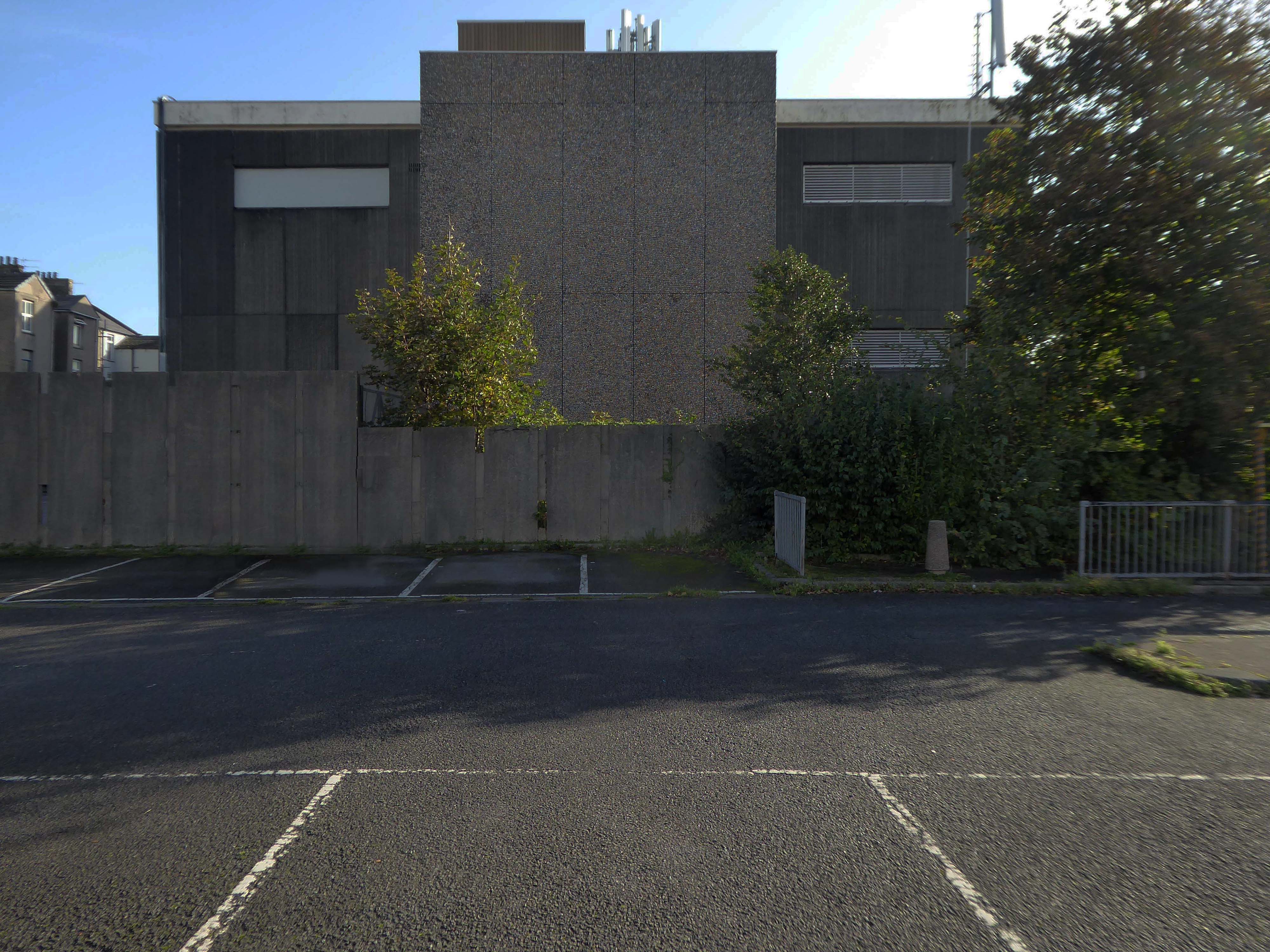
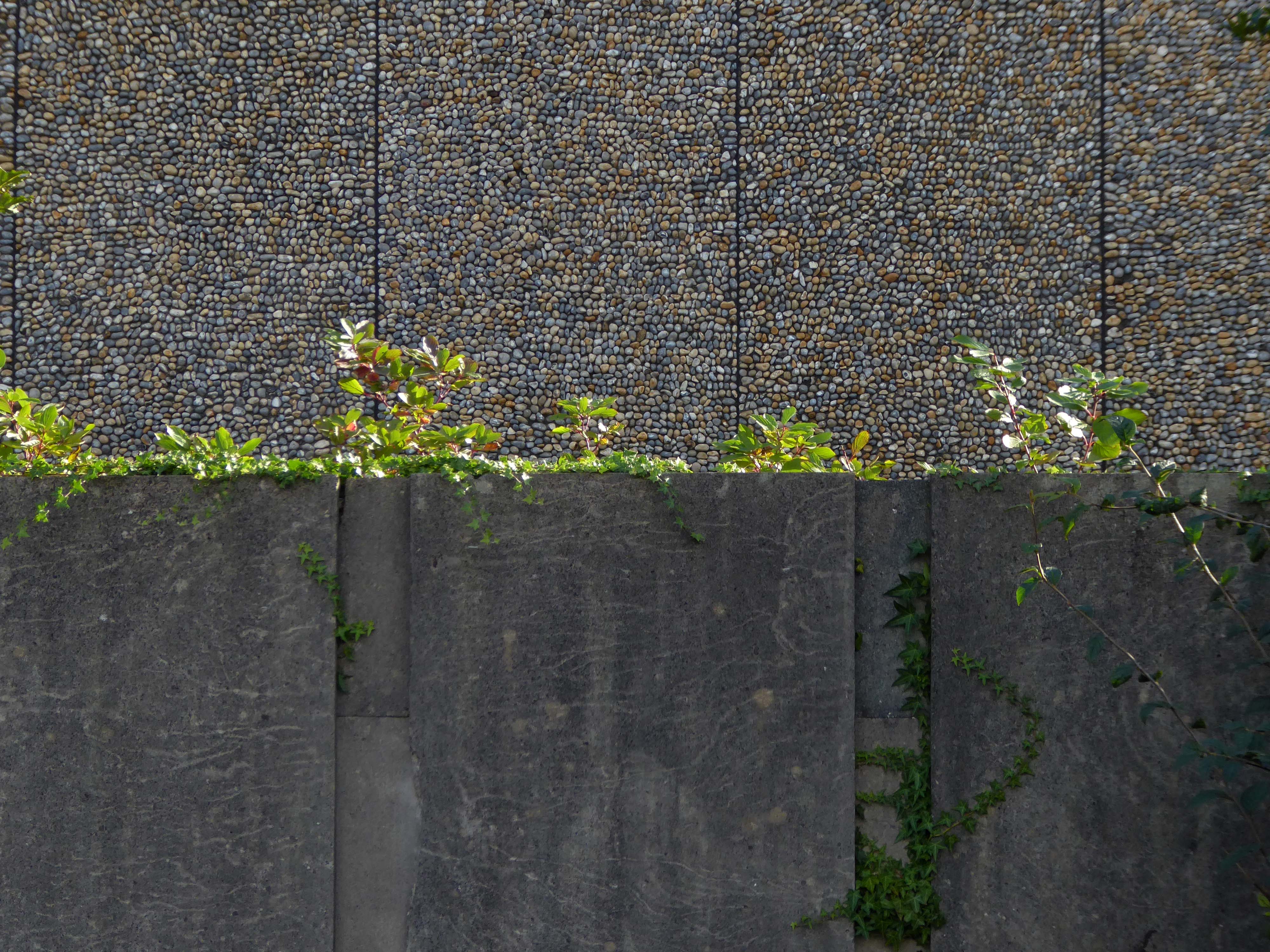
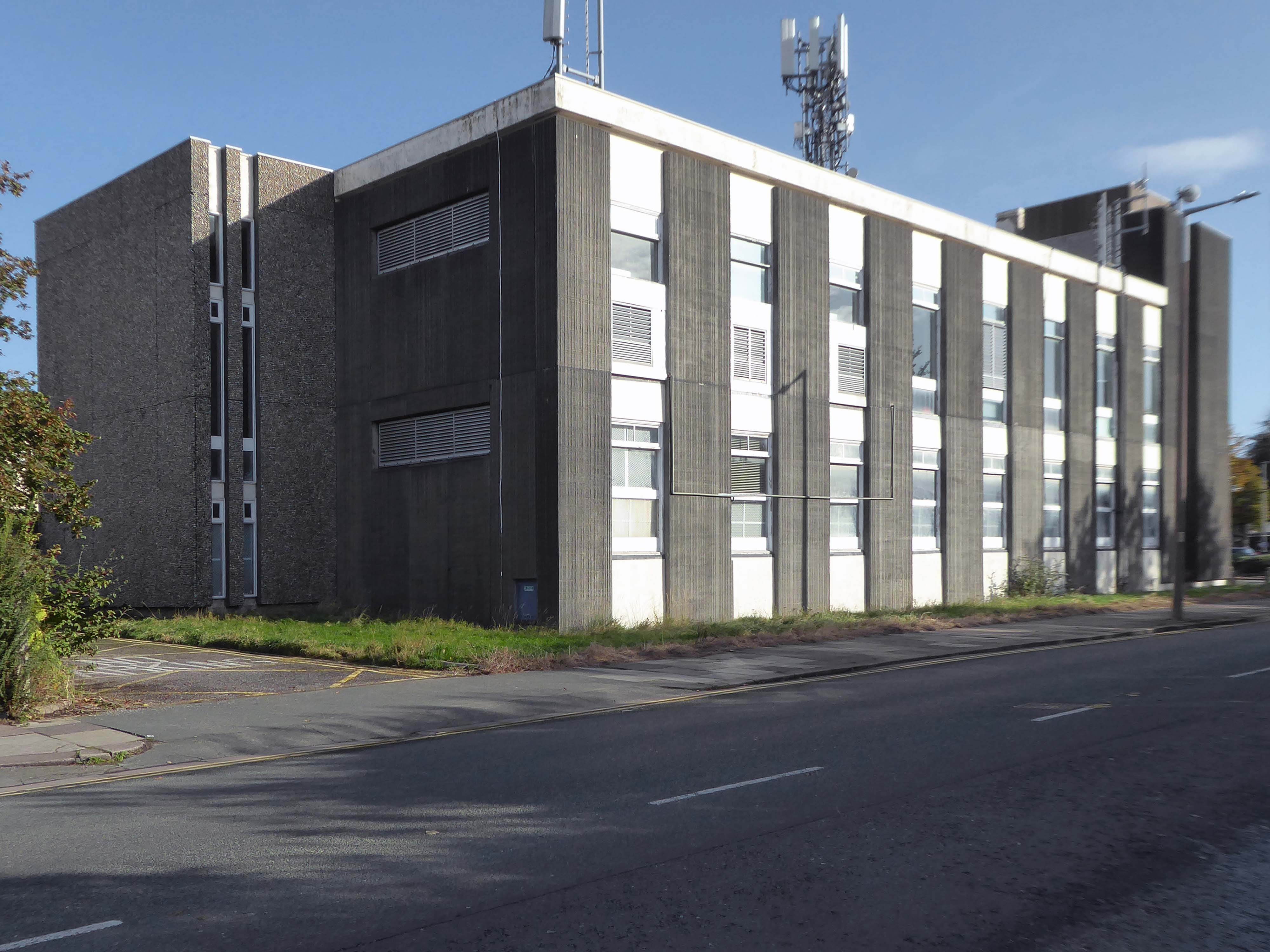
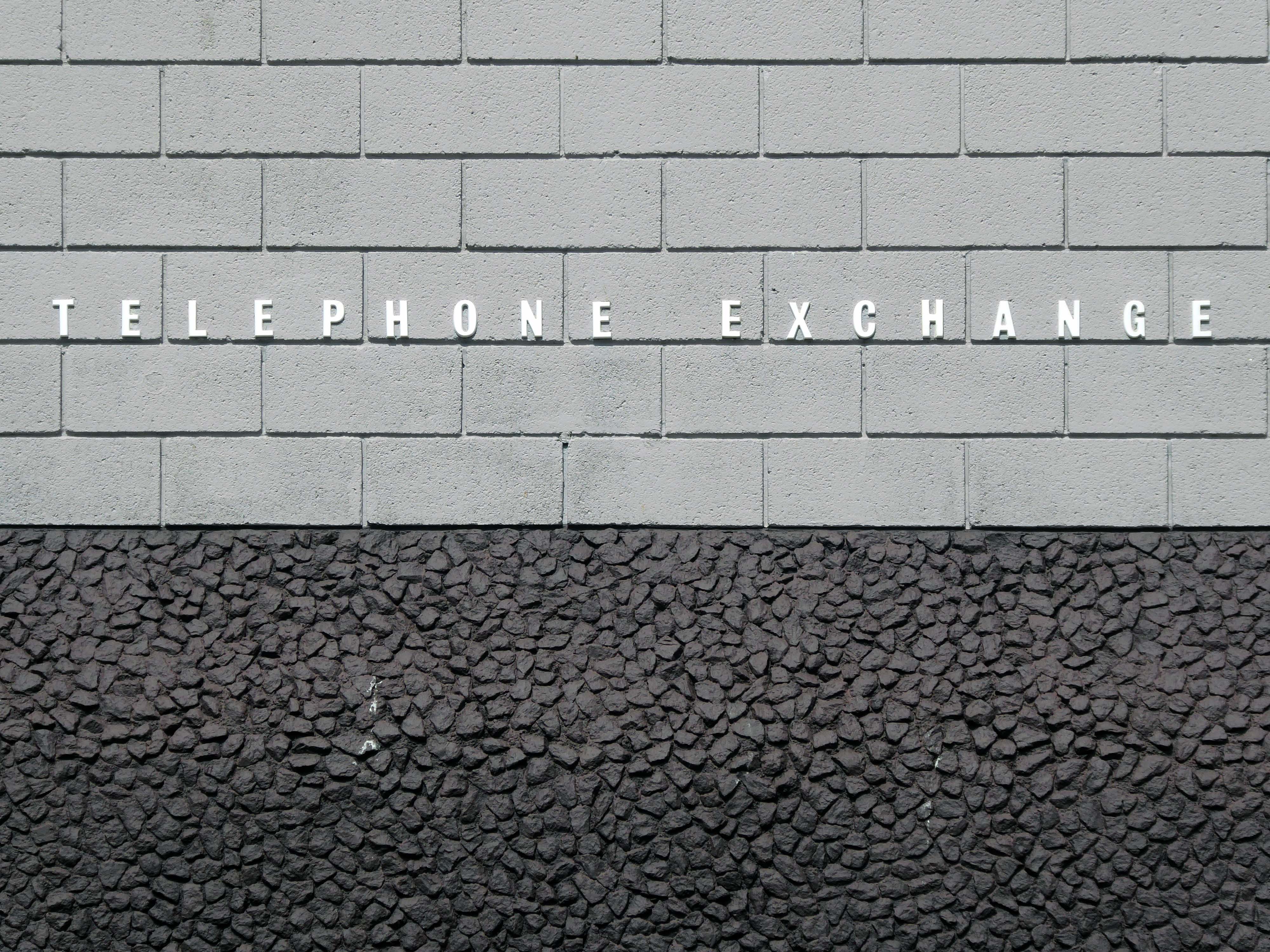
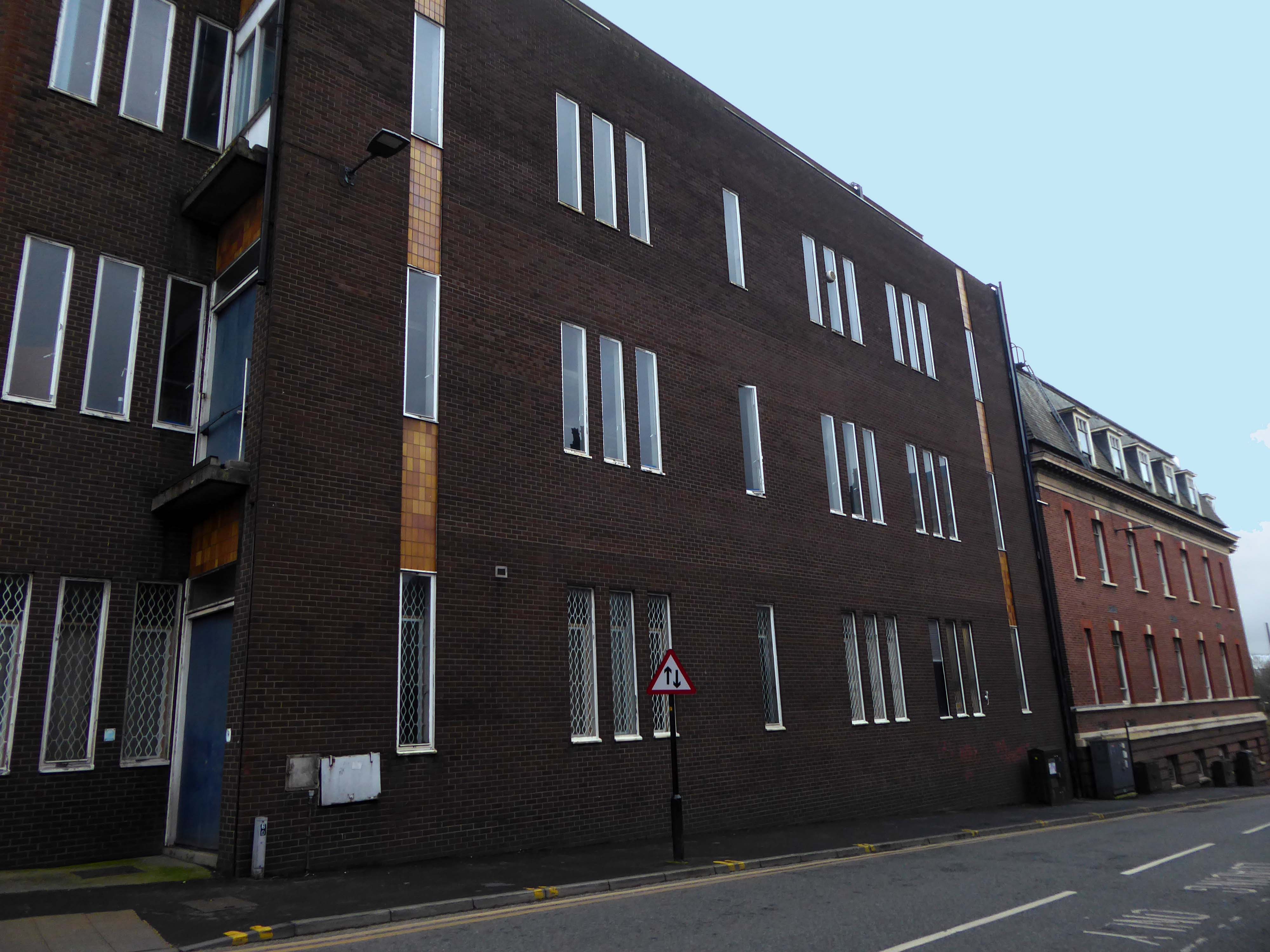
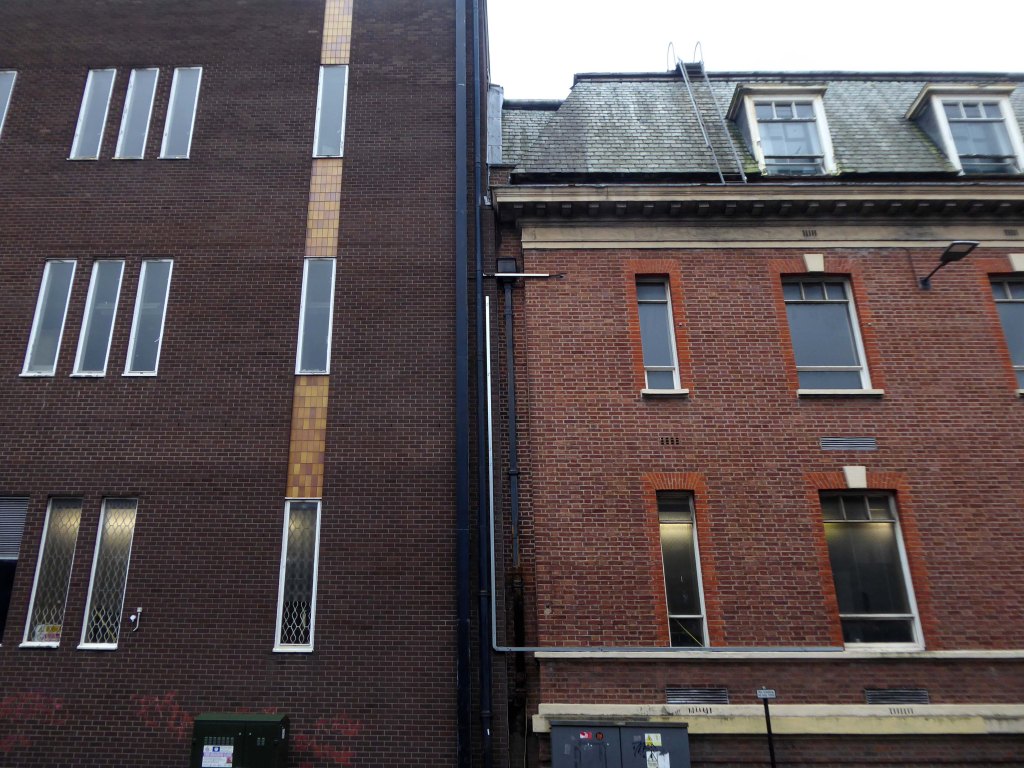
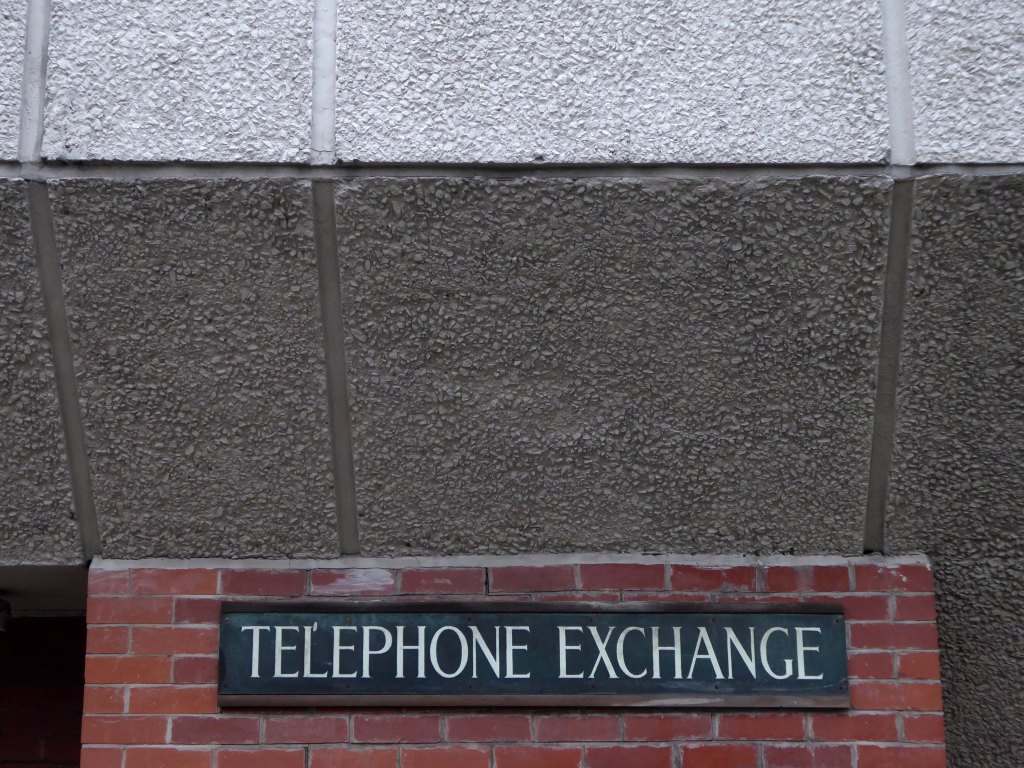
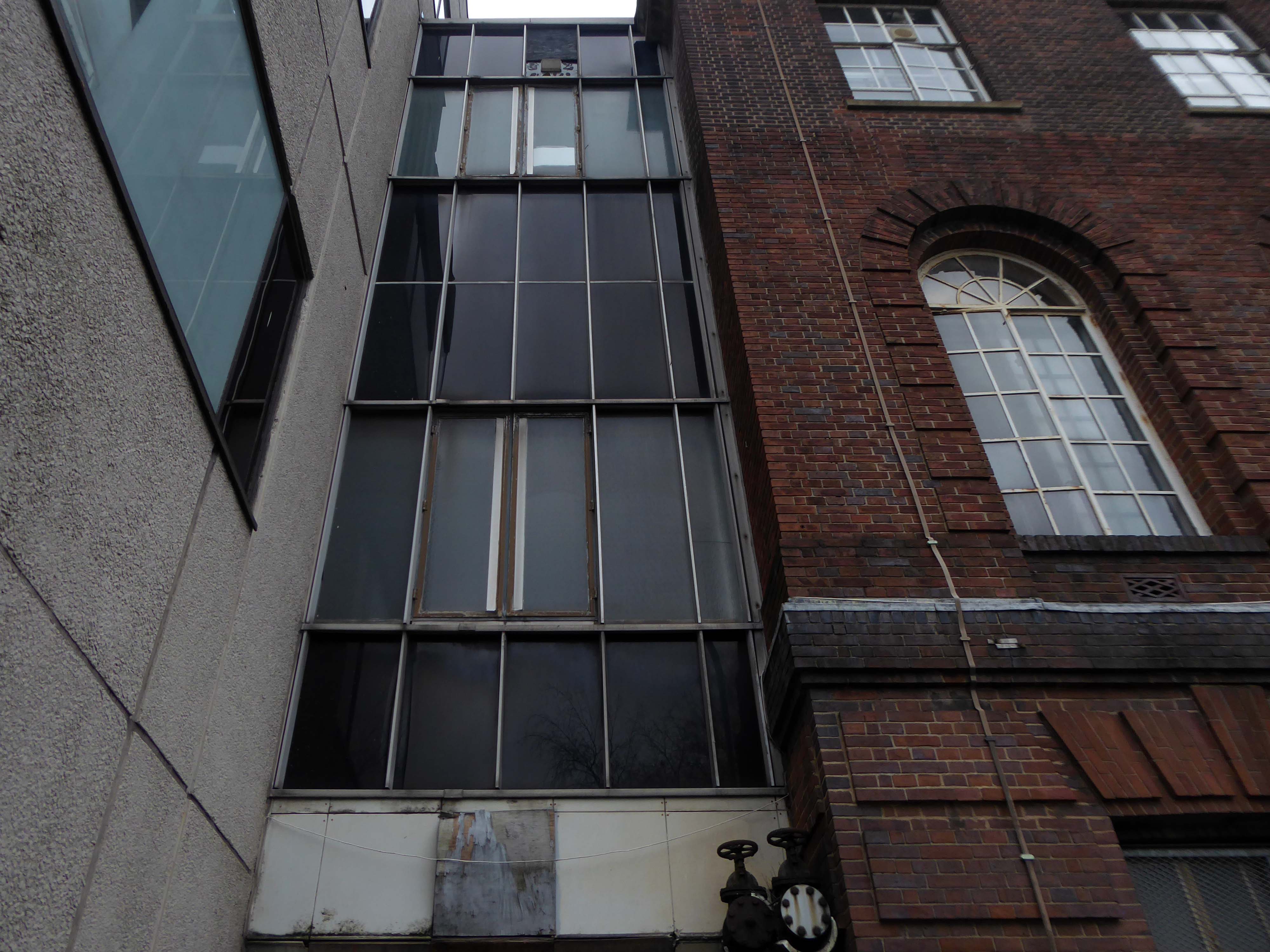
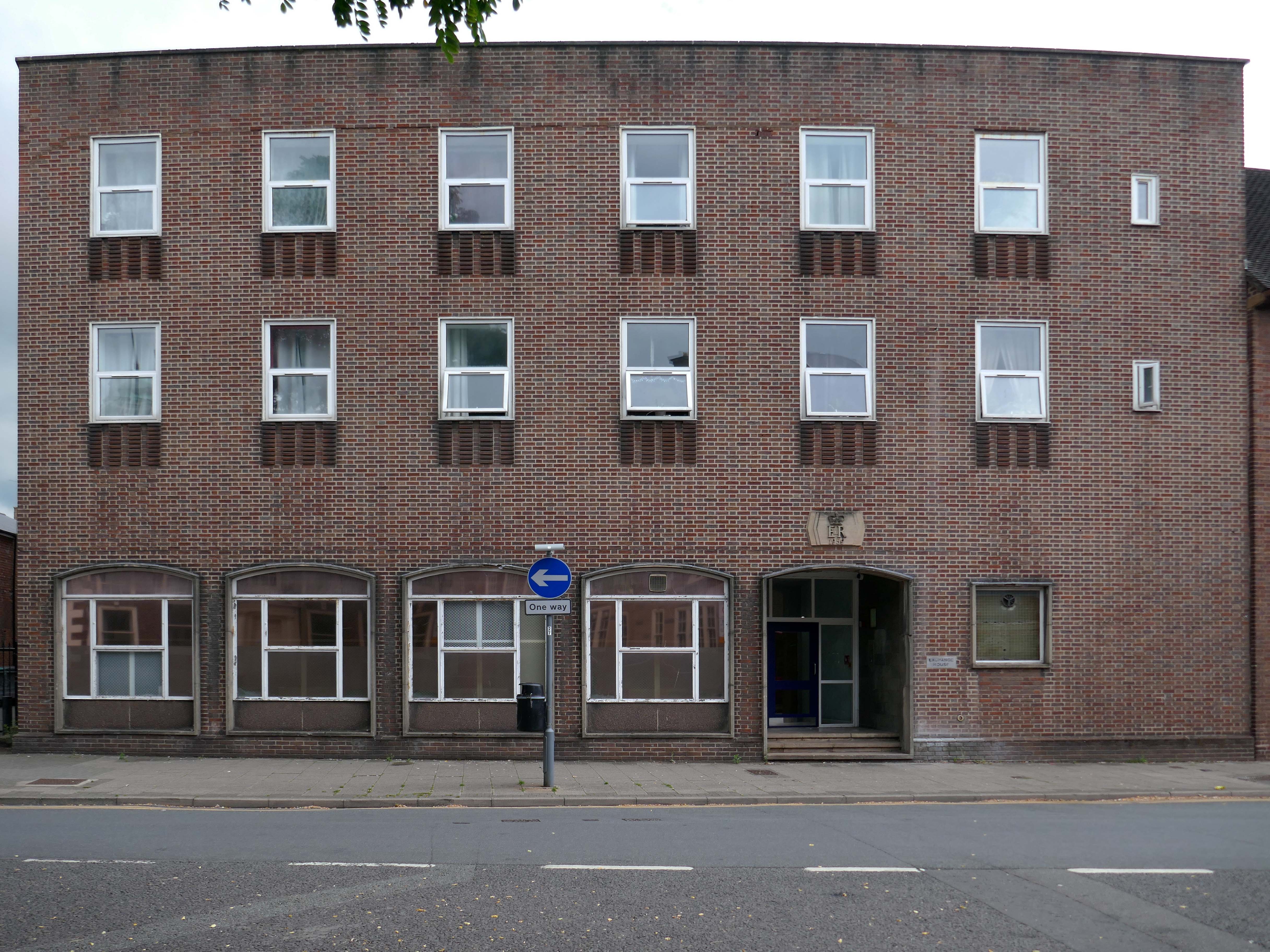
Further along a brick FoB Telephone Exchange of 1959.
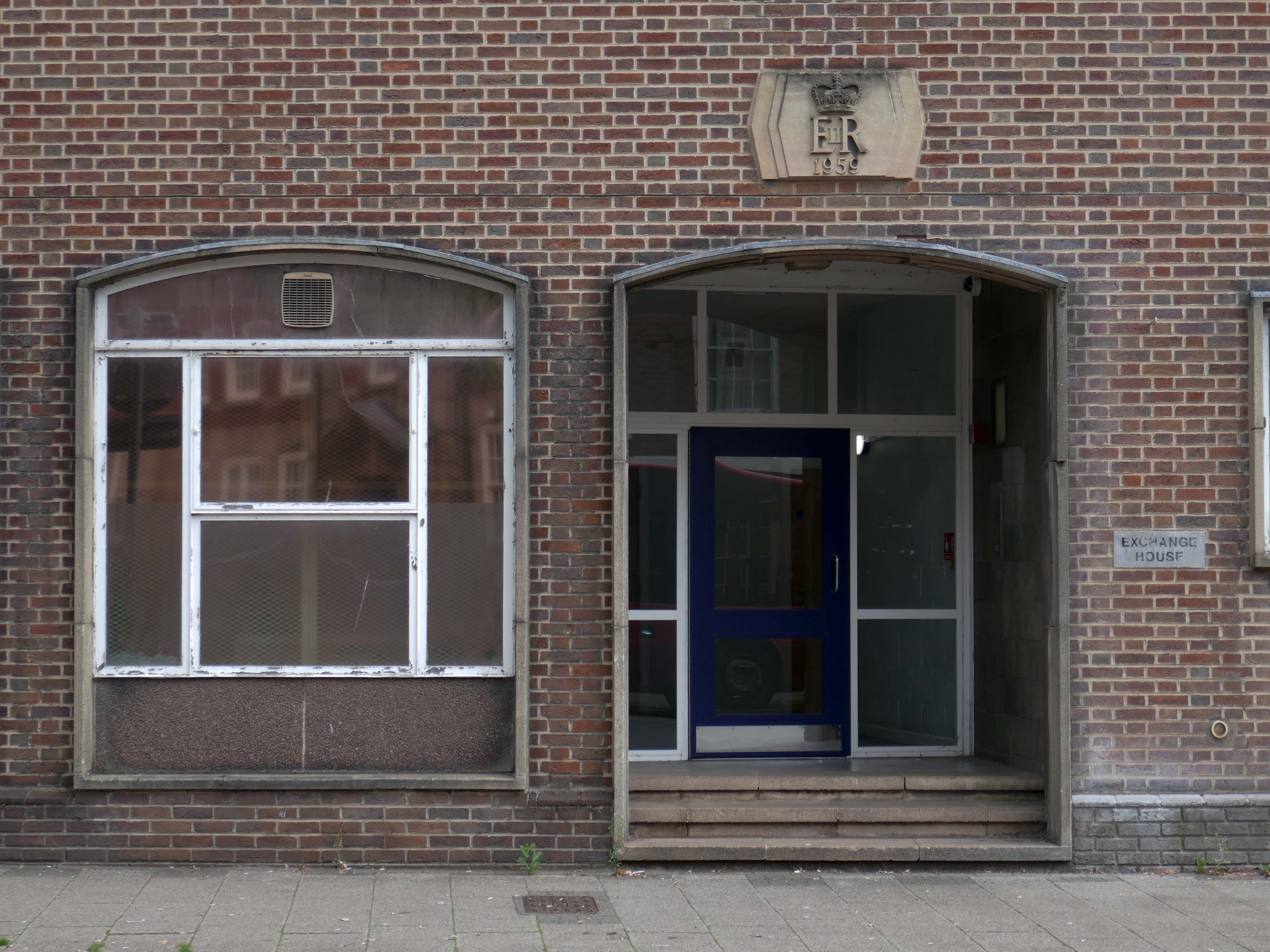
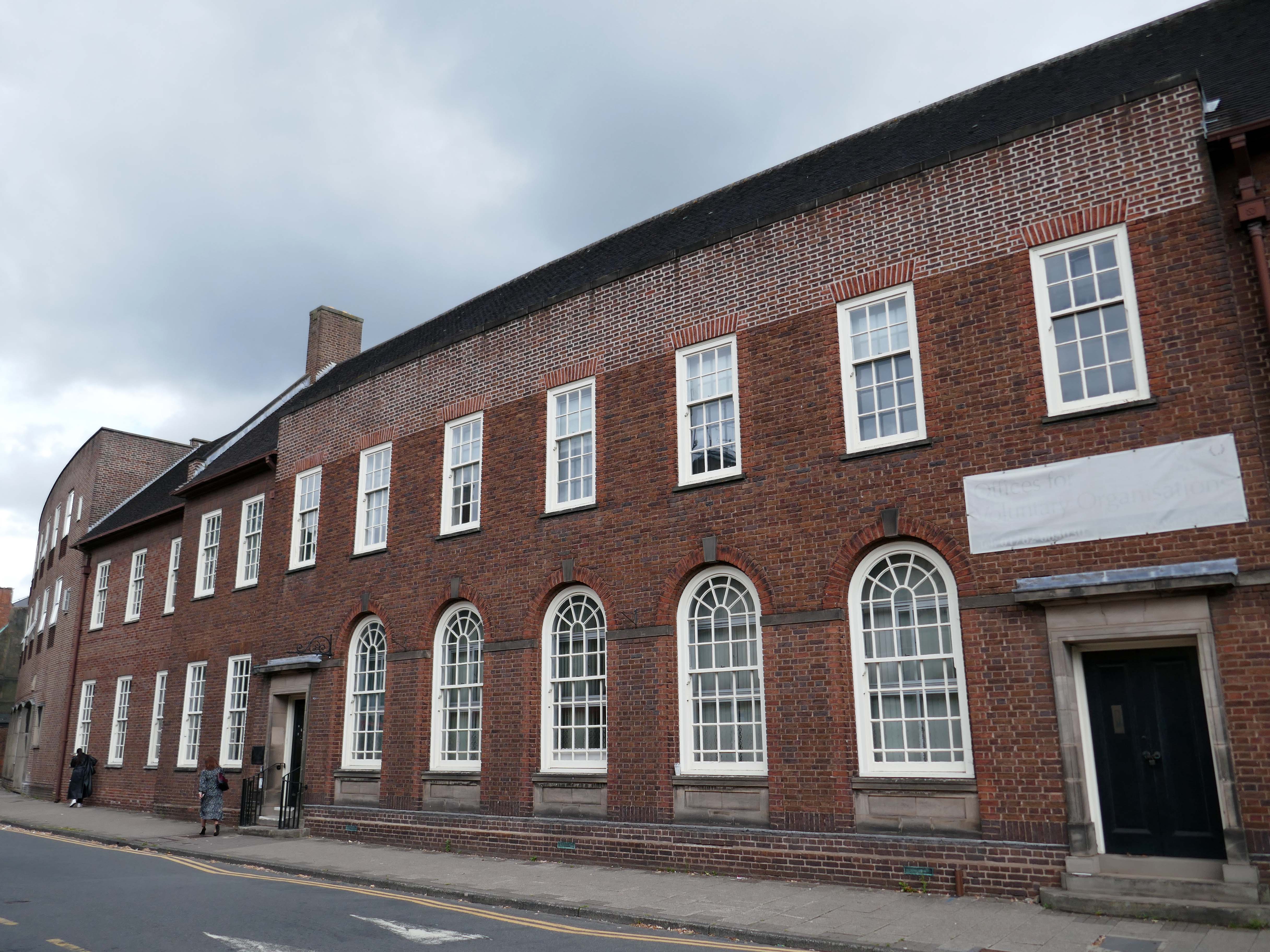
Adjoined by the County Records building.

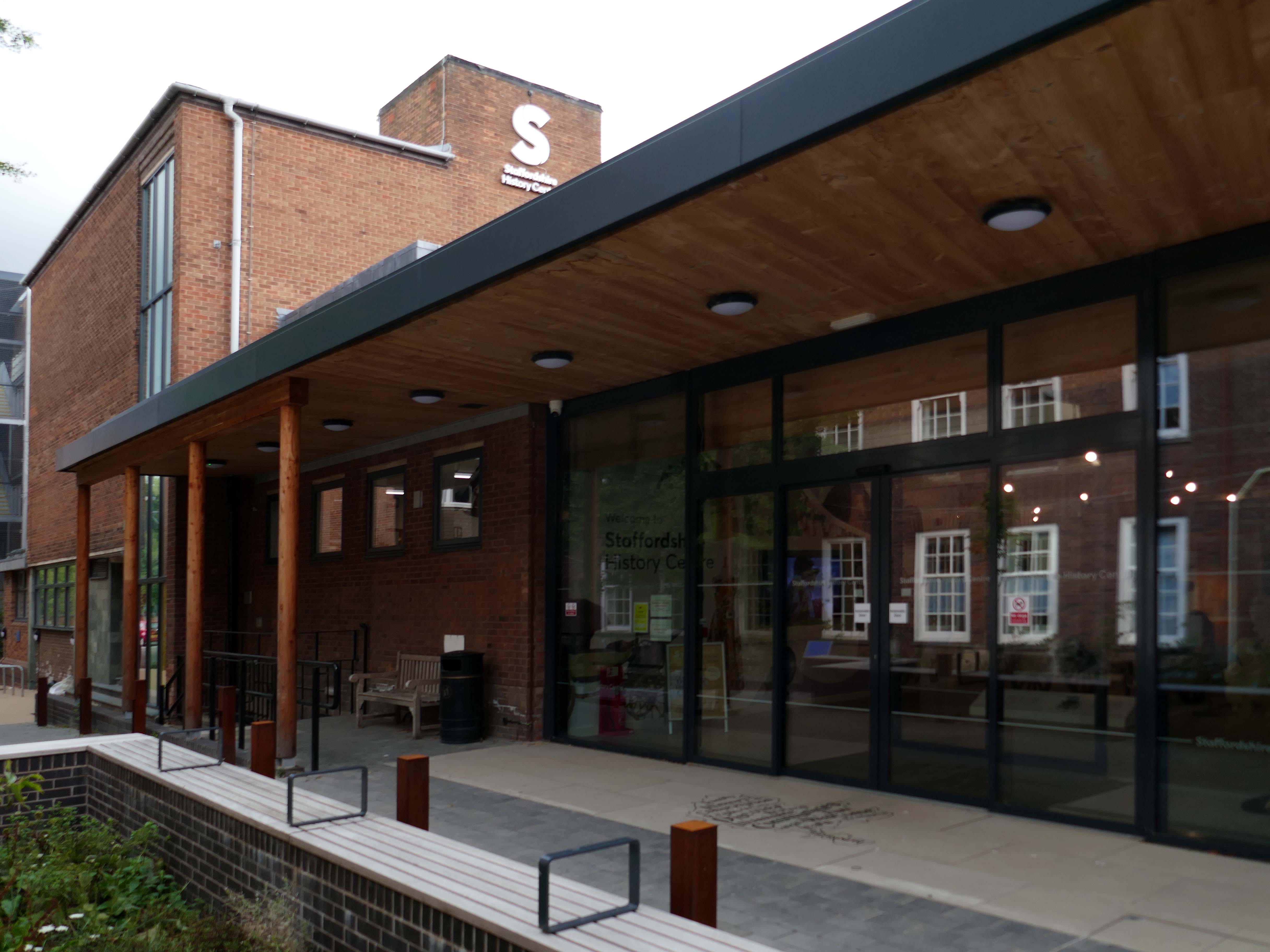
Pringle Richards Sharratt Architects have been appointed by Staffordshire County Council to create a new History Centre for Staffordshire and Stoke on Trent.

The new £4m centre will be located on Eastgate Street in Stafford and will hold historical records and collections up to 1,000 years old.

The scheme will help to provide a rejuvenated service combining the existing Records Office building and William Salt Library, in Stafford and provide a welcoming destination for all of those with an interest in local history. This will include bringing on to the Stafford site the Lichfield Records Office and aspects of the County museum.
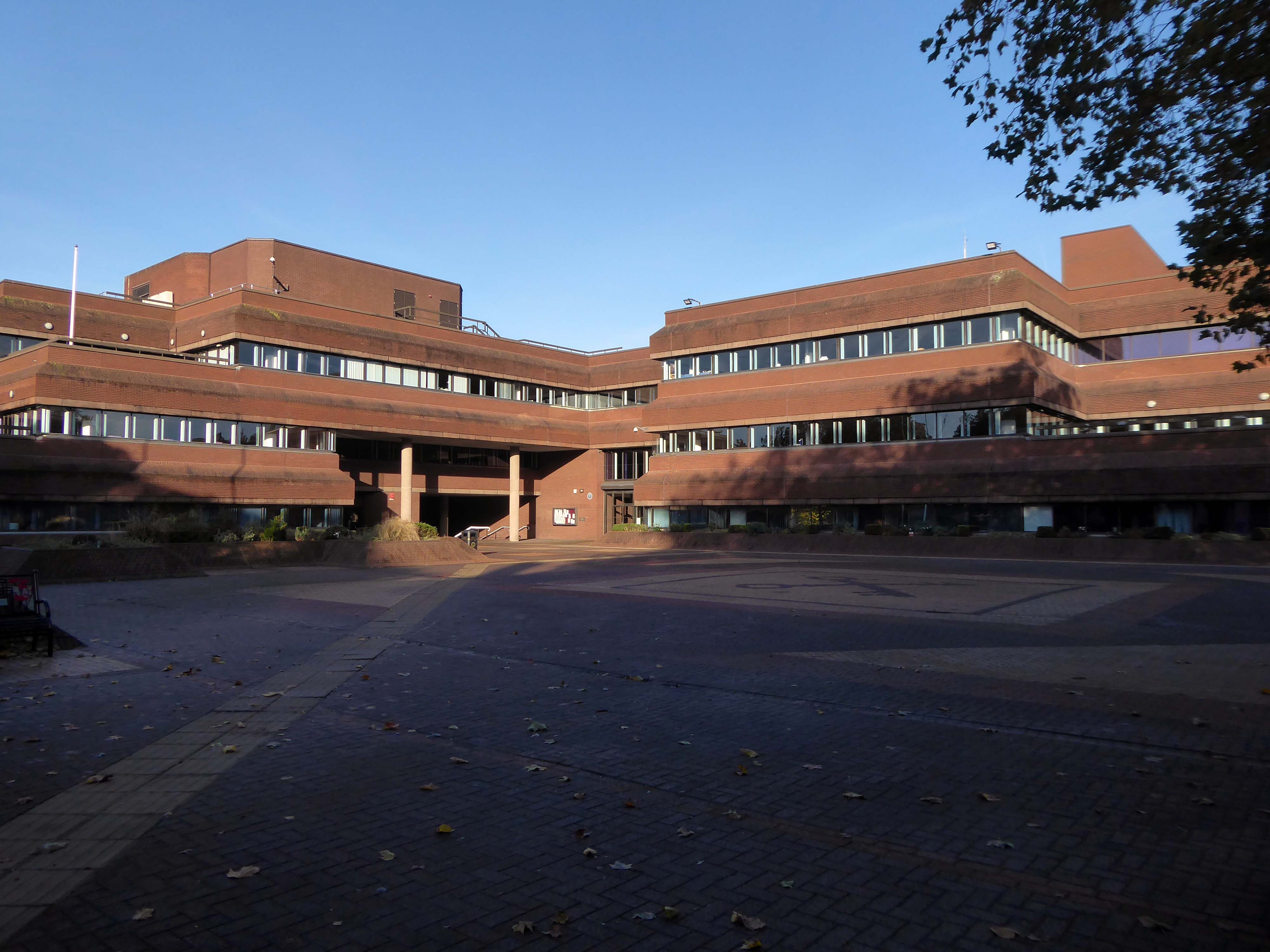
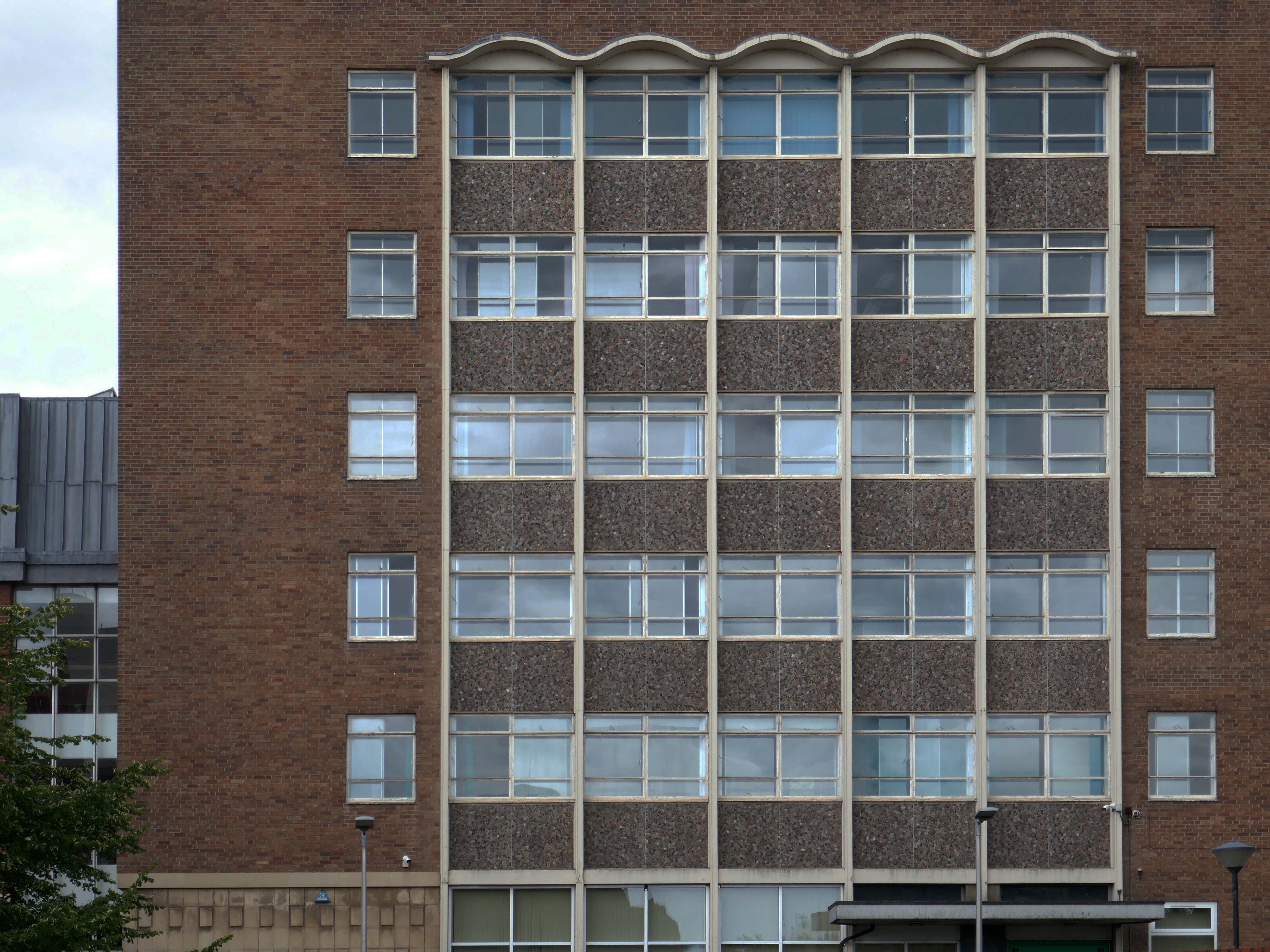
Further FoB in the Civic Building.
Close by the Staffordshire Place a civic and retail mixed use development.

Our scheme delivers 135,000 ft2 of high quality contemporary office space across two buildings linked by a new town square. The ground floor incorporates a mix of retail and leisure uses around
a sequence of smaller public spaces to maximise the amount of visible active frontage and create a natural extension to the town centre.

Sustainability issues fundamentally informed the design approach, from mitigating energy consumption to ‘future proofing’ the finished building. The building achieves a BREEAM ‘Excellent’ rating and a European Energy Performance of Buildings Directive Rating ‘A’.
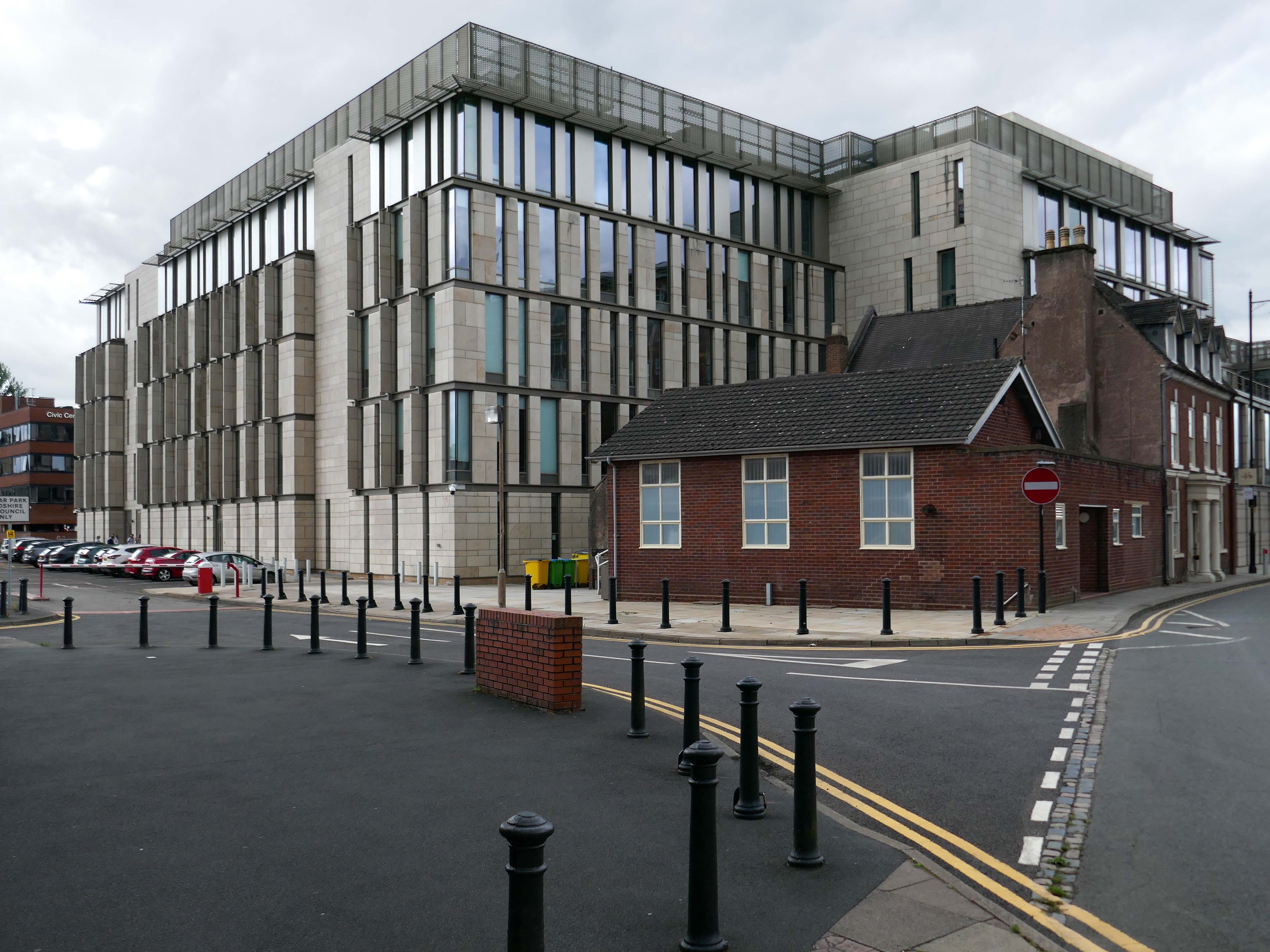
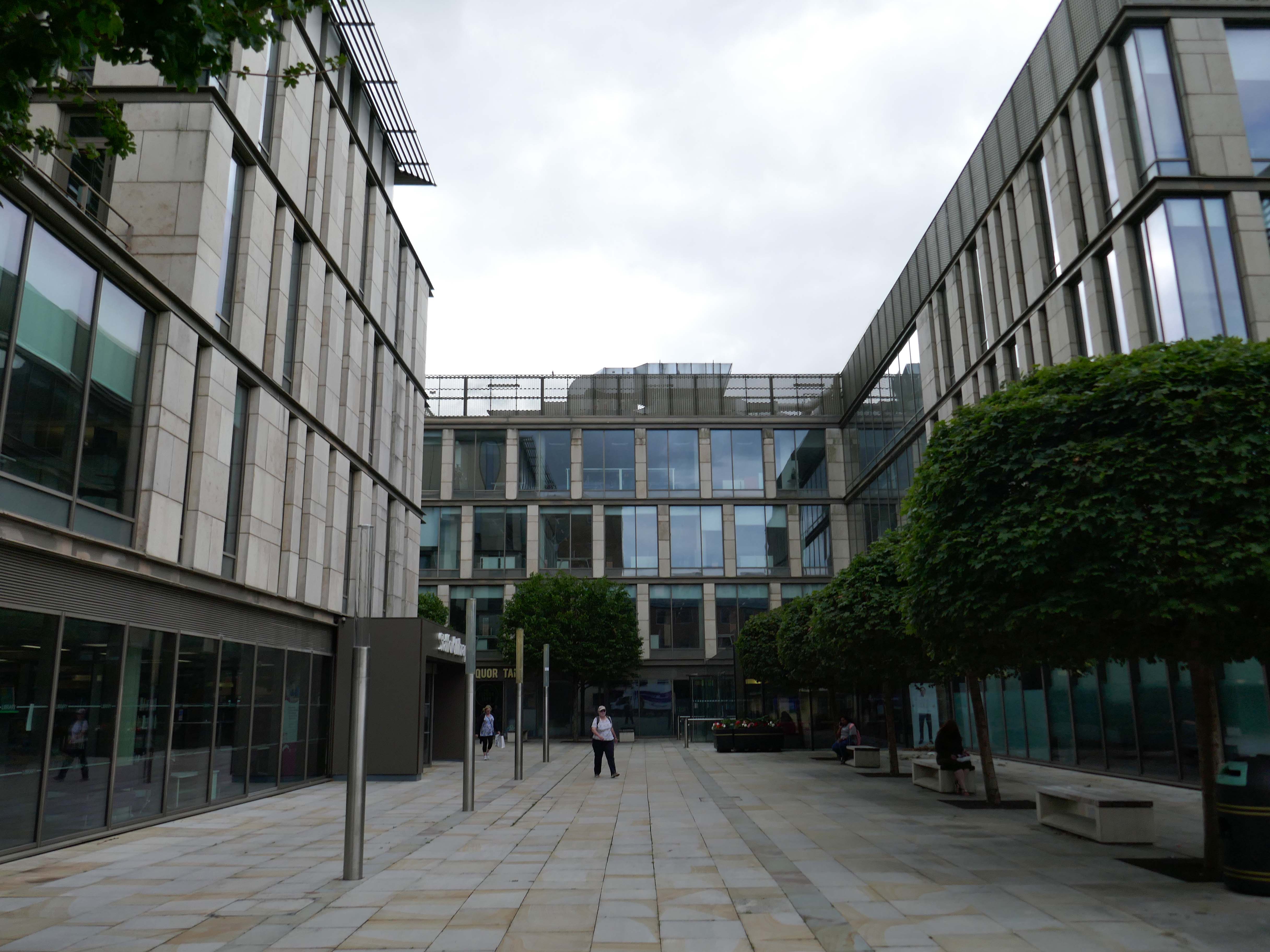
3D Reid

Surprise surprise another retail development Riverside.

£70m riverside town centre retail and leisure development in the heart of Stafford. The 230,000 sq. ft. scheme anchored by M&S will deliver 18 retail units arranged over ground and first floors, five leisure units and a six-screen cinema to complement and strengthen the town centre economy and create new businesses and jobs.
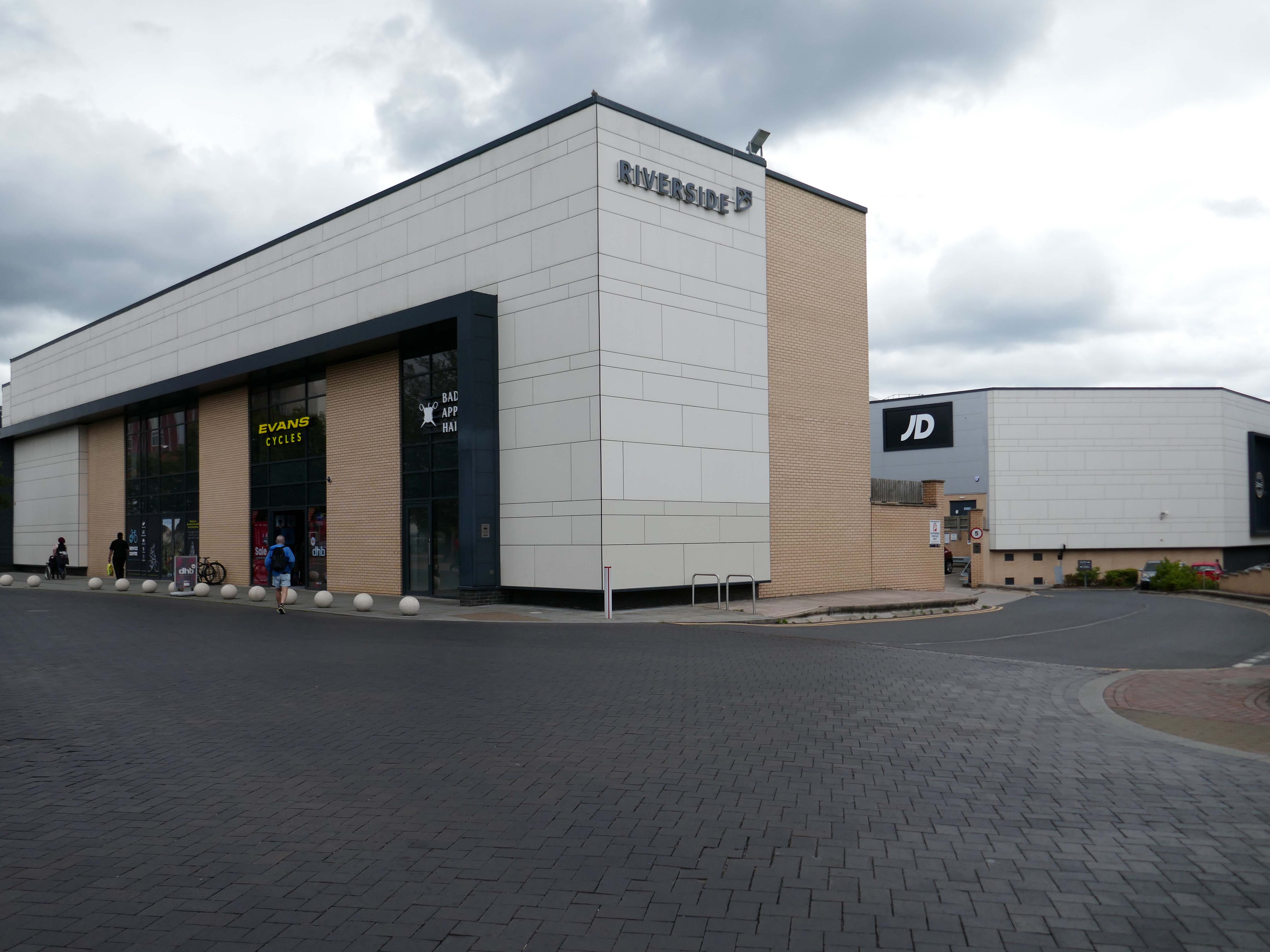
Harris Partnership

Stafford’s £100 million Riverside development was officially launching today with two high street chains open for business on August 4th 2016.

None of this can detract from the monolithic complex Telephone Exchange.
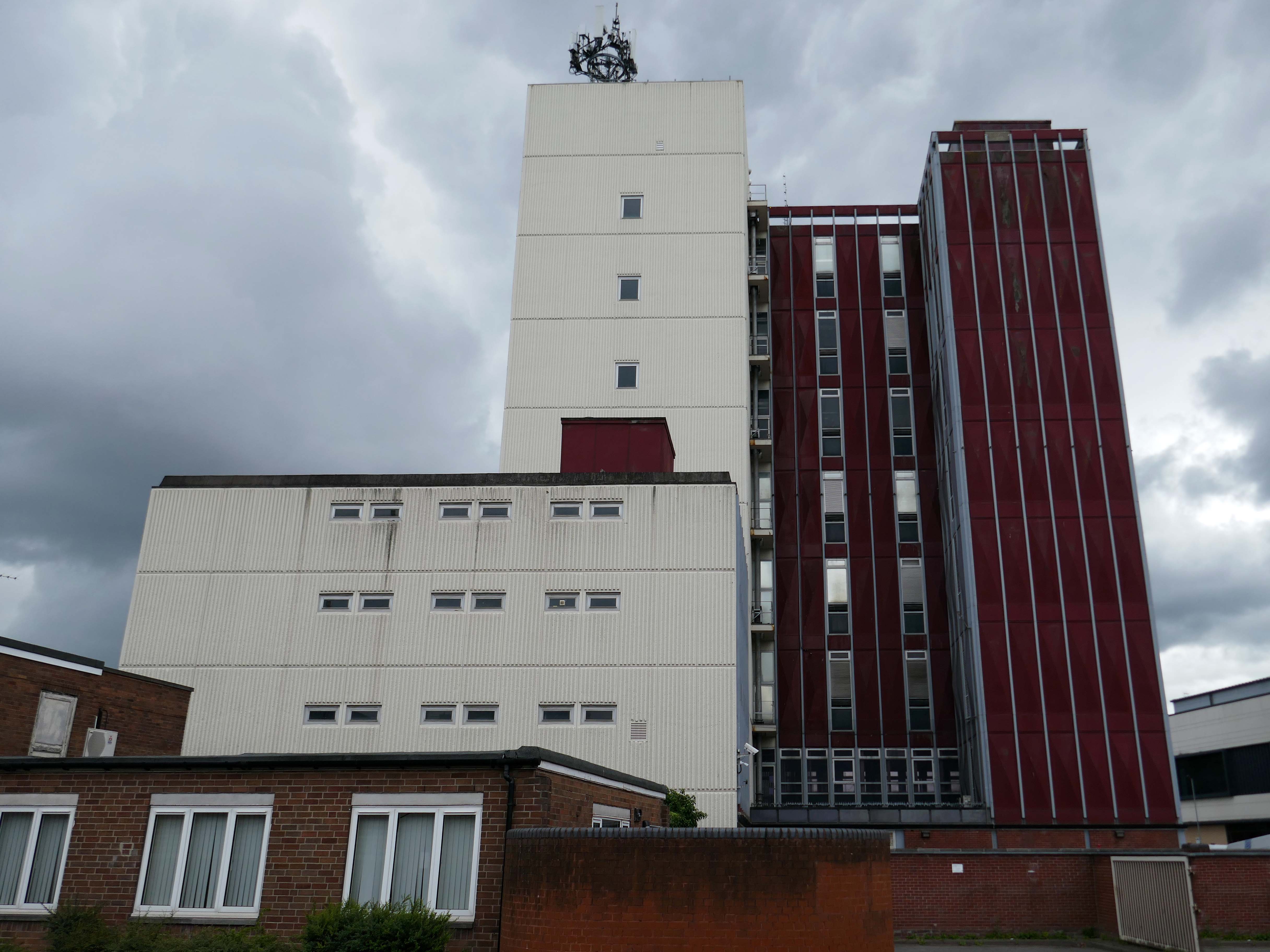
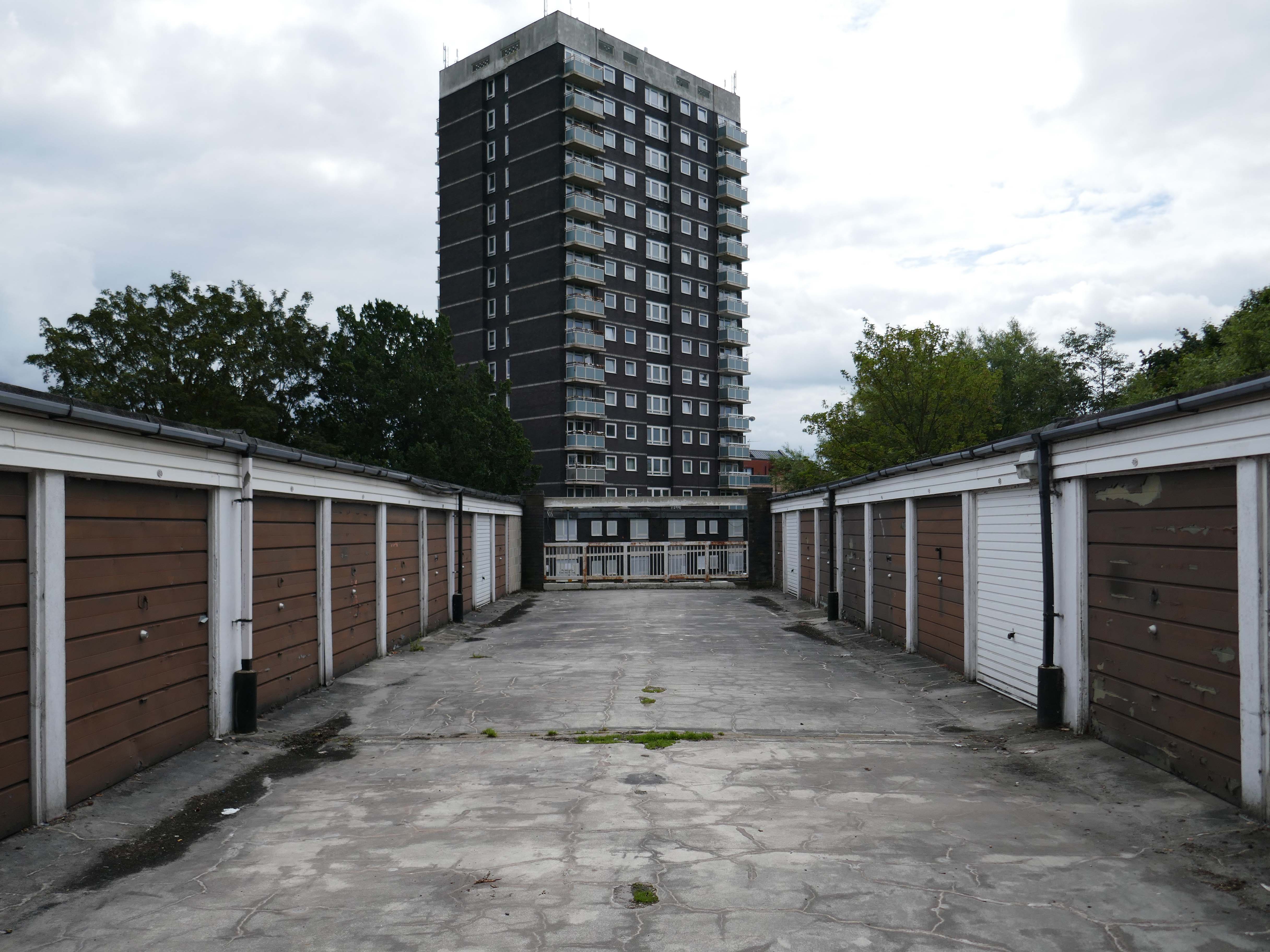
Onwards across the main road past the Asda and up the road to Pennycrofts Court.
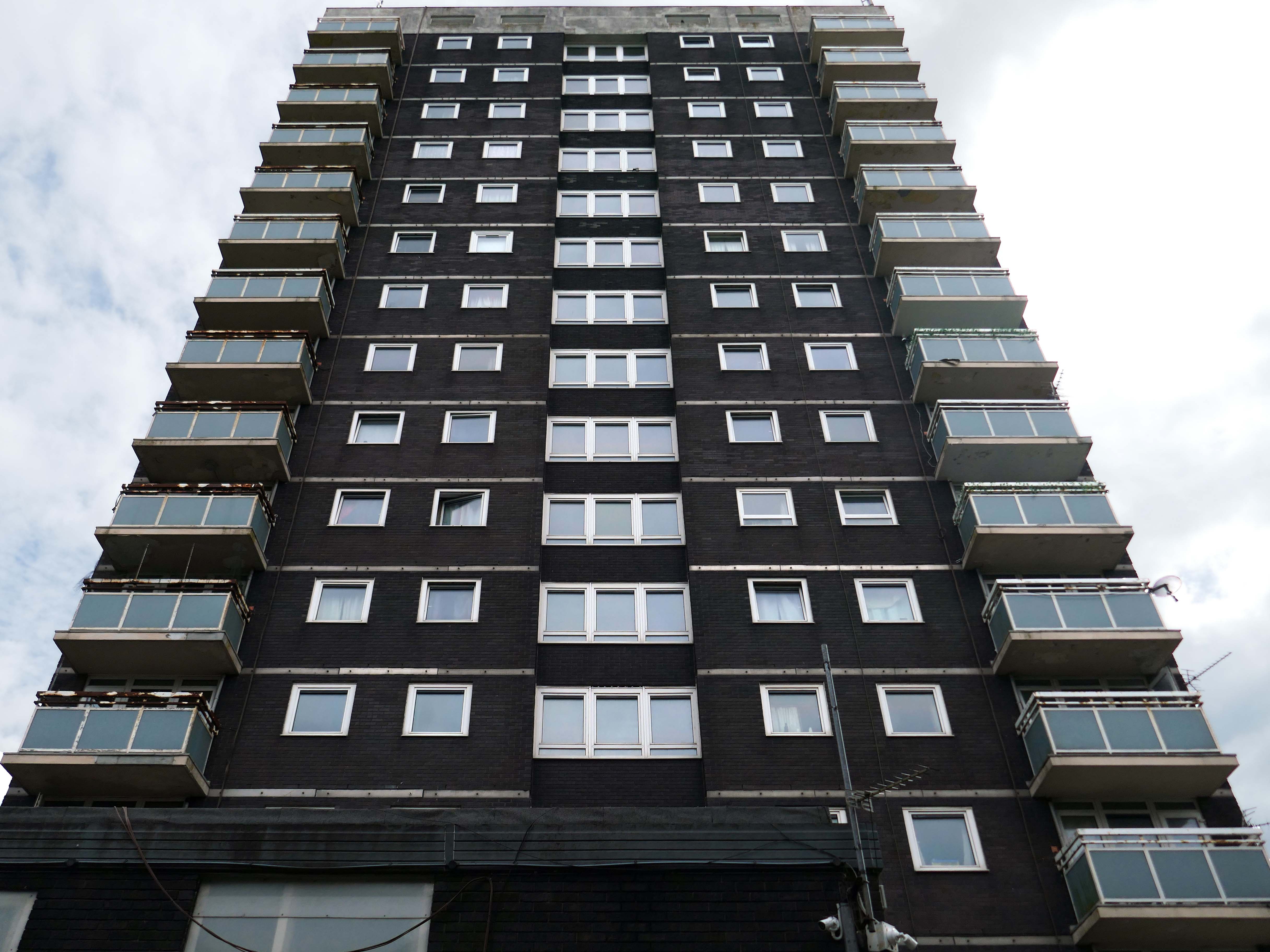
Featuring a split level garage facility.
The just around the corner this little corner of Vienna in Stafford – Corporation Street Flats.
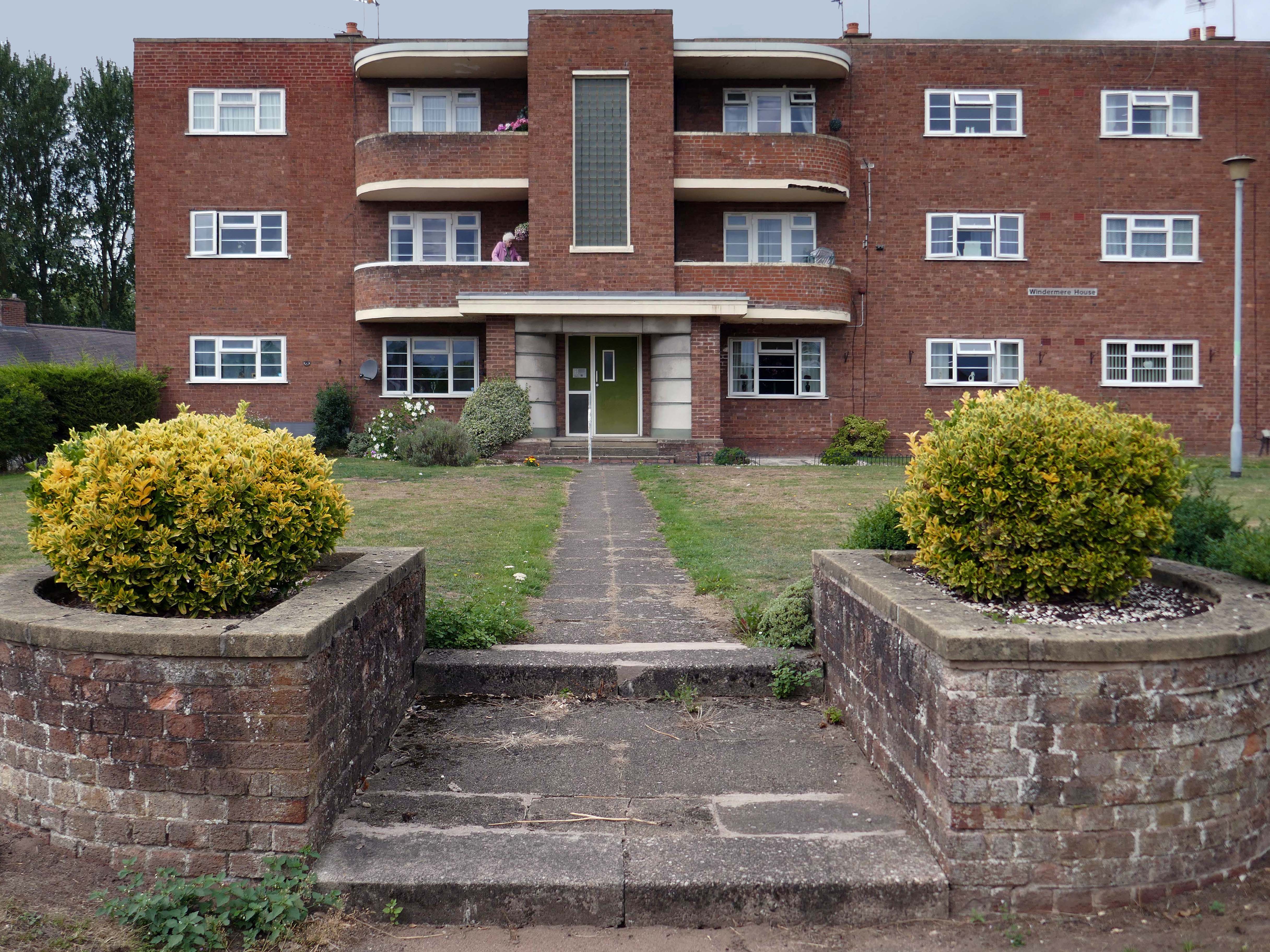
Coniston, Windemere and Rydal were among the first council homes to be built in Stafford, between 1951-52, under the direction of County Architect CM Coombes.

The flats were built as a result of The Housing – Financial and Miscellaneous Provisions Act 1946, which gave subsidies to local authorities to provide social housing. The expansion of the Borough Council’s civic duties included the employment of County Architects, in this case CM Coombes FRIBA, to whom these flats are attributed. 

54 flats were built in total, to a distinctly Modernist design, and their appearance and setting are very well preserved.

Let’s head back into the town centre – to the Grade II Listed Picture House 1914

Architectural alterations made by: Captain Fred Campbell in 1930.
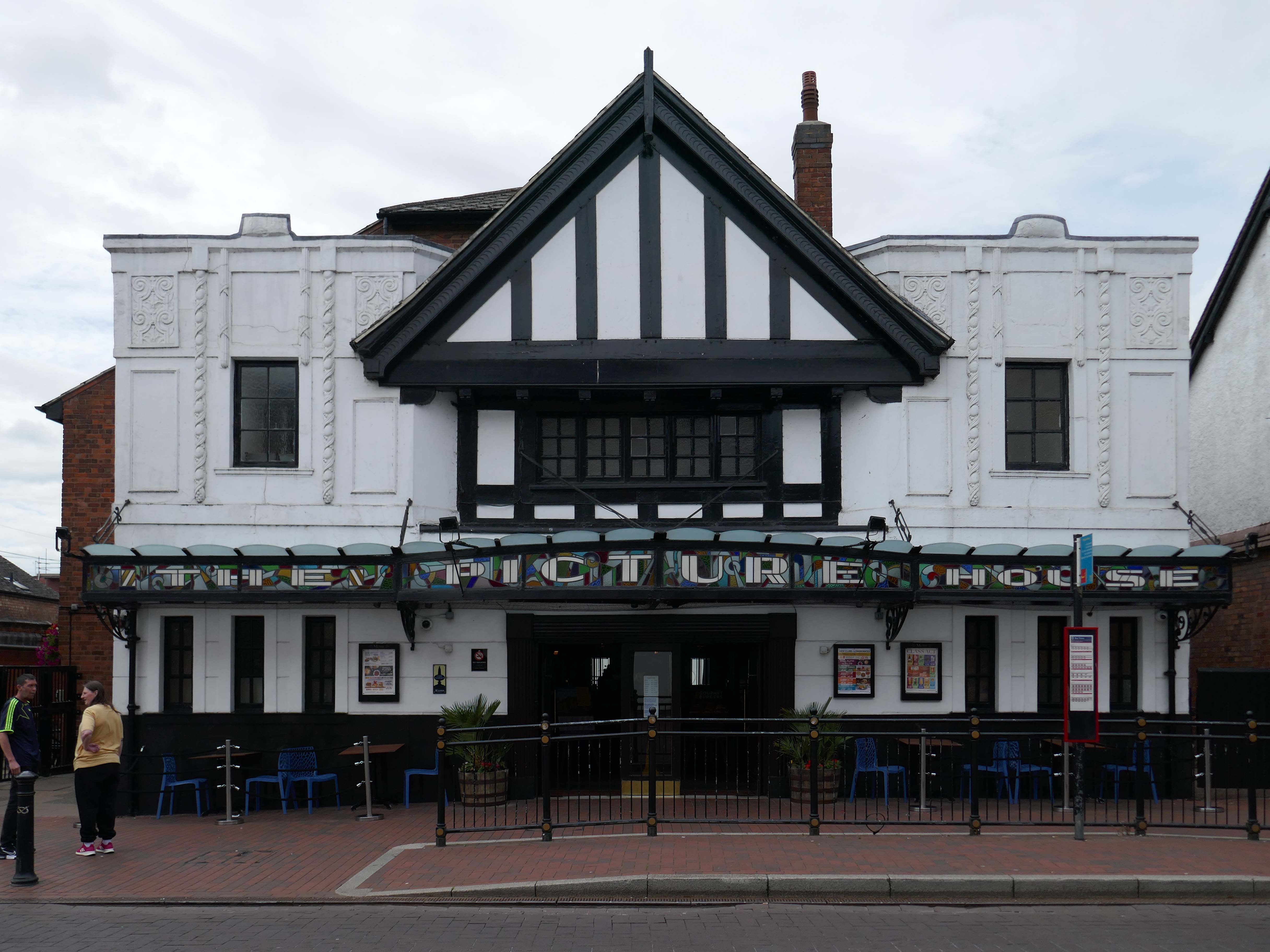
The Picture House was closed on 30th March 1995 after a three week run of Disclosure starring Michael Douglas, there were seventy eight attending the final performance.

Cinema Treasures.

Close by the former Odeon

Architects: Roland Satchwell 1936
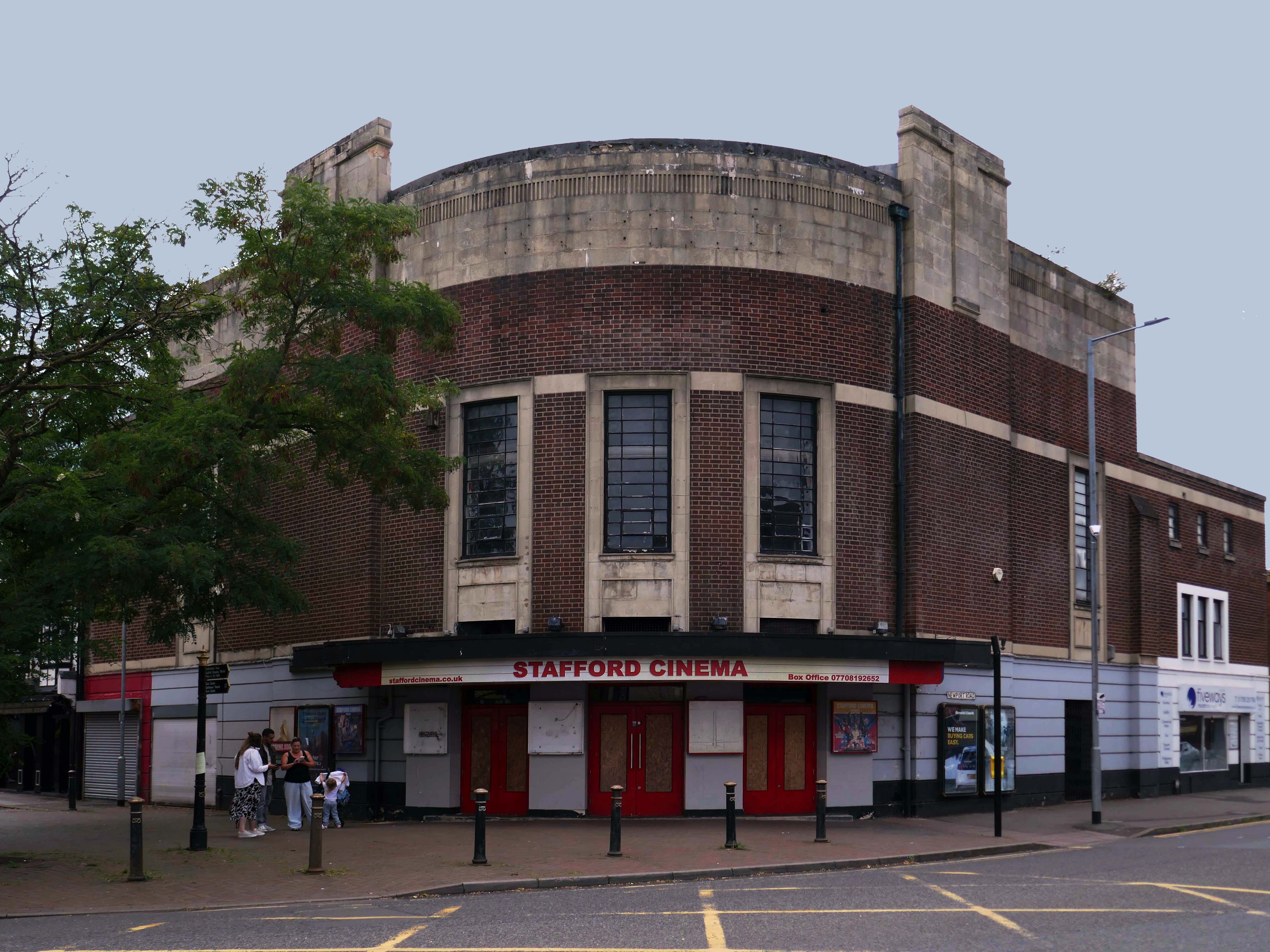
It was disposed of by the Rank Organisation in July 1981 and was taken over by the Hutchinson Leisure Group who re-named it Astra Cinema. In December 1981 it was tripled with 435 seats in the former stalls and two mini cinemas in the former circle seating 170 and 168.

In 1988 it was taken over by Apollo Cinemas and re-named Apollo Cinema. The downstairs cinema was closed and became a bingo club for a couple of years, during which time the two mini cinemas in the former circle remained open. The bingo operation gave way to films again in 1990 and all three screens were again open, with seating for 305, 170 and 164. In January 2014 it was taken over by the Curzon Cinemas chain and renamed Stafford Cinema.

It was closed on 18th December 2017 with Star Wars:The Last Jedi.
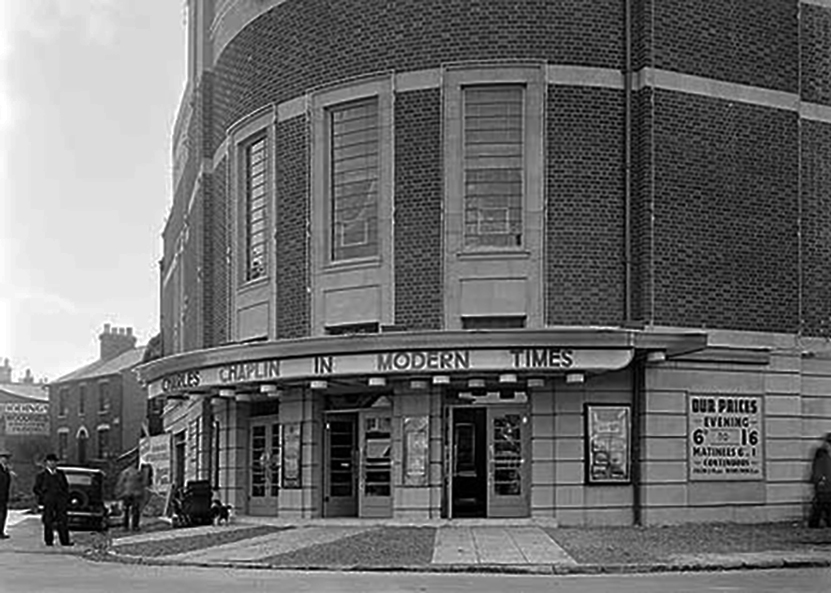
Cinema Treasures

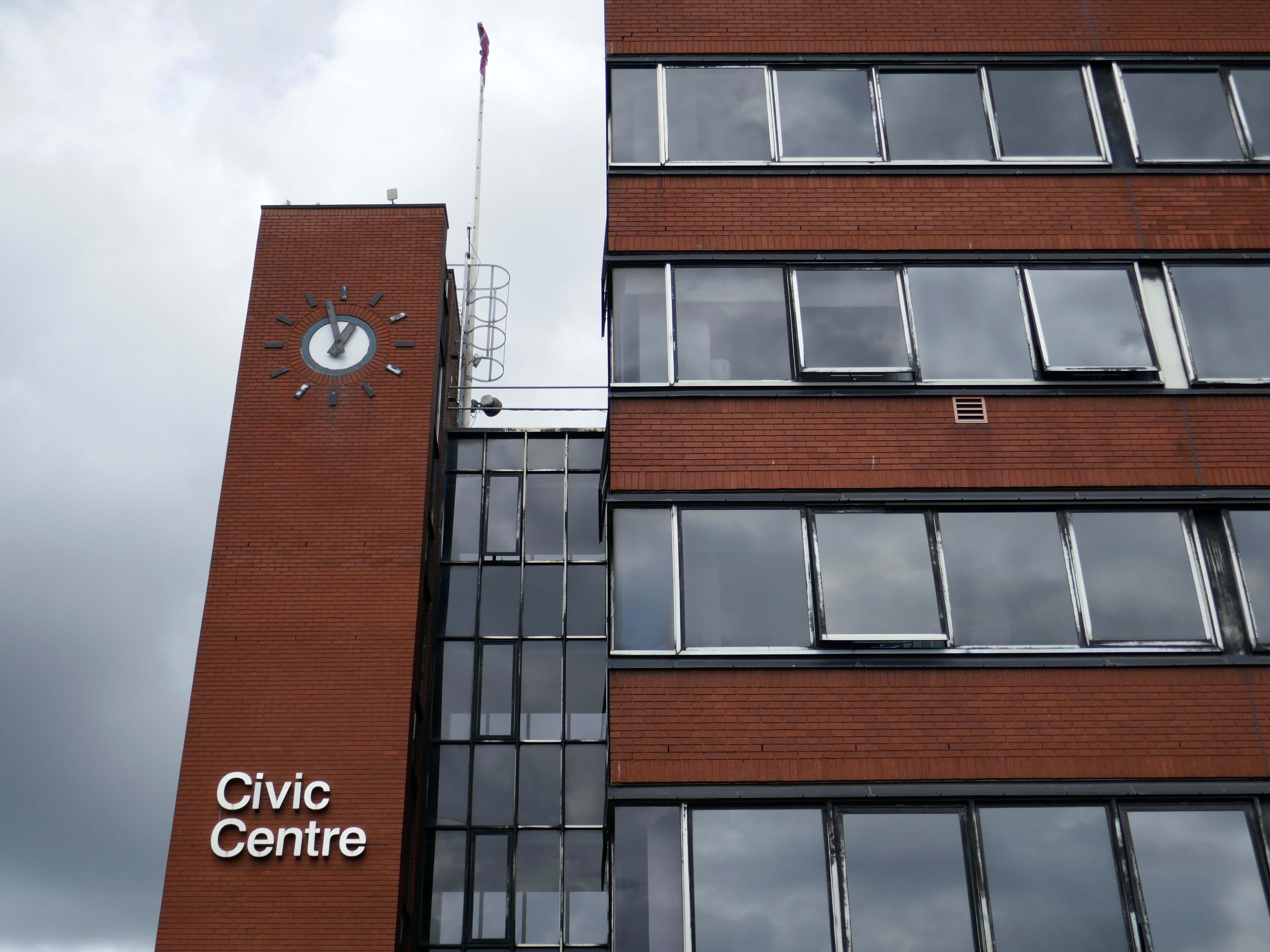
Onwards but backwards to the Civic Centre.
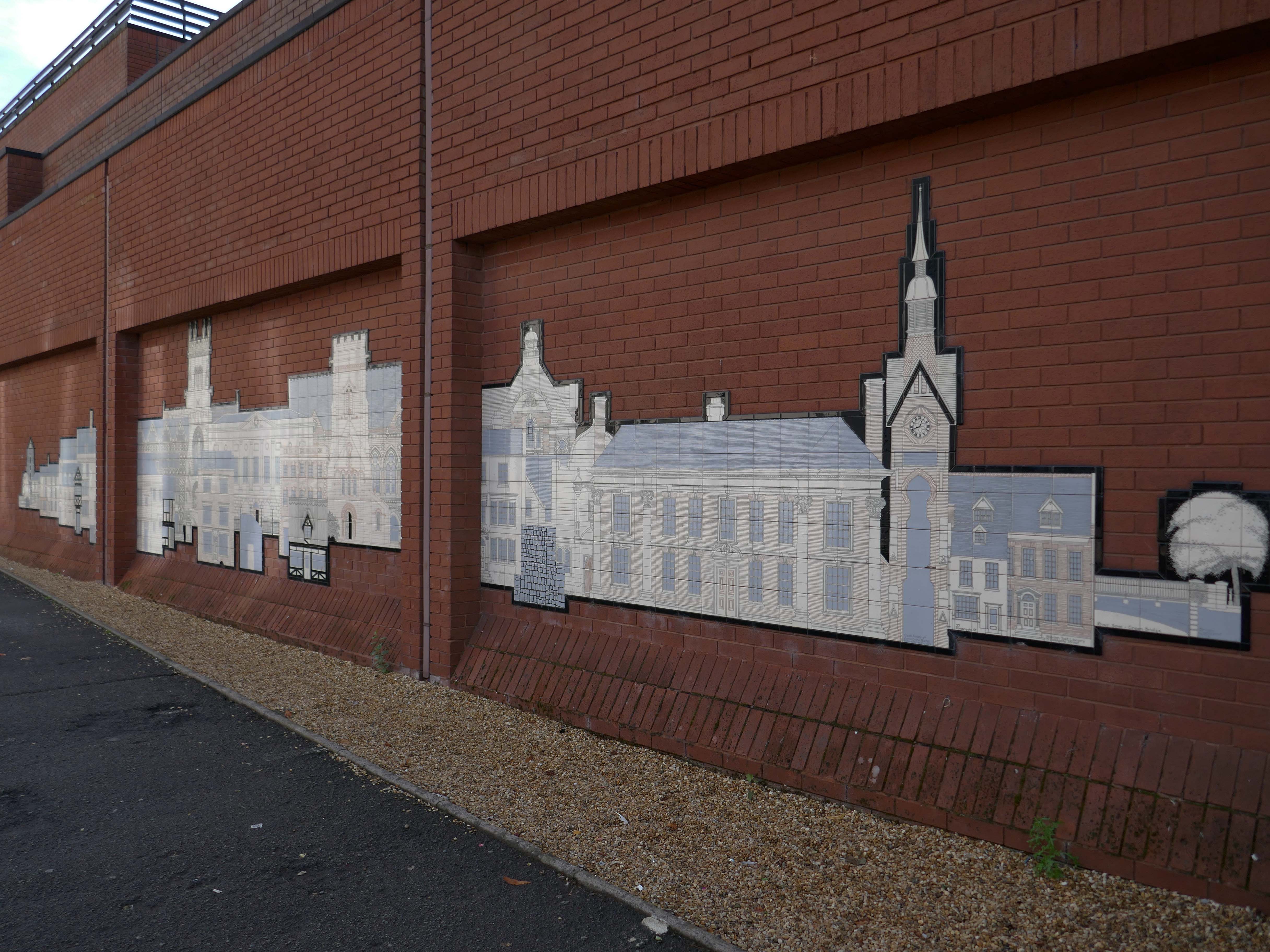
Tiled mural by Brian Lambert 1979
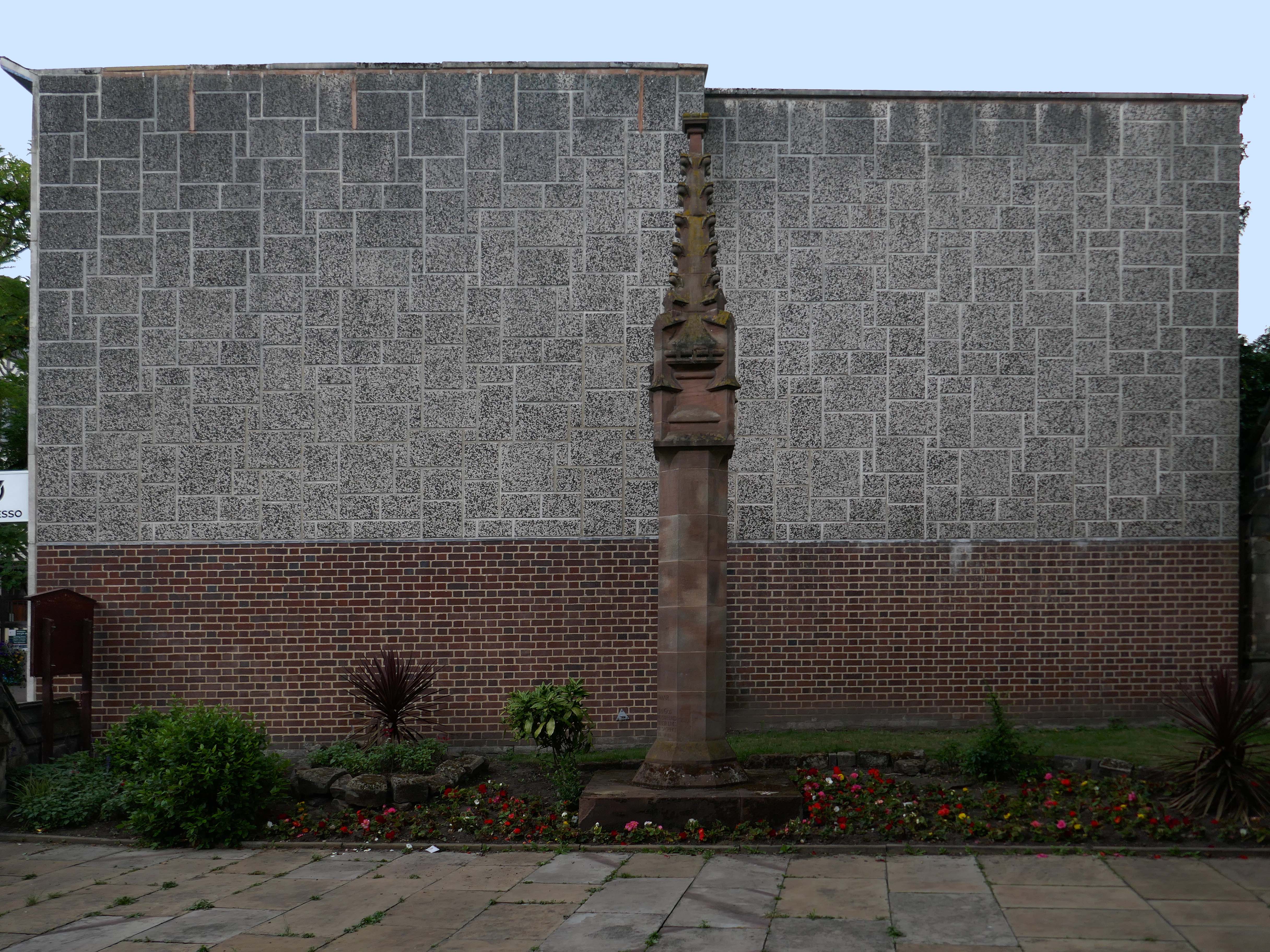
Finally arriving at this lively aggregate gable.
Blackburn Walk

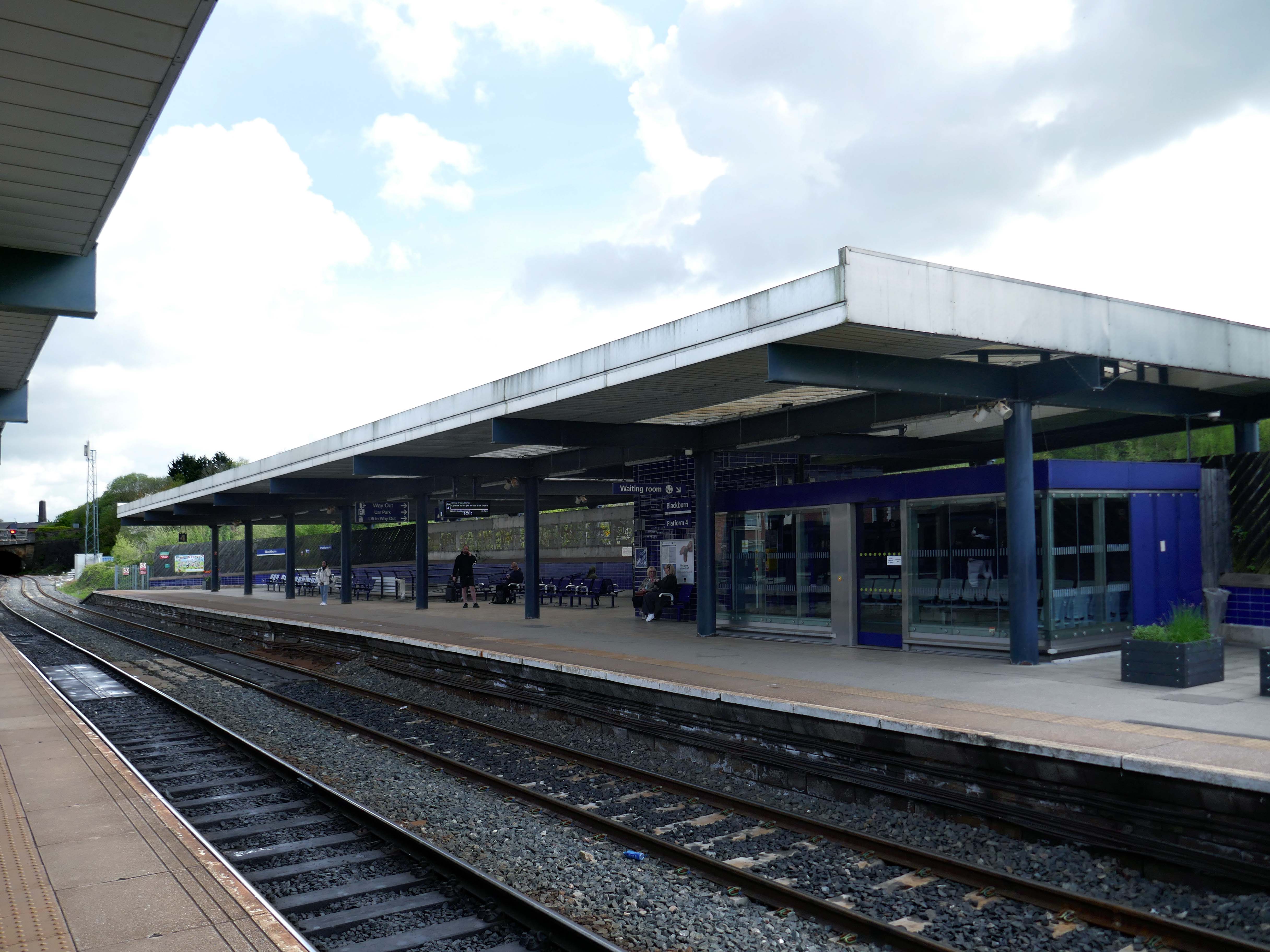
Arriving at the Railway Station

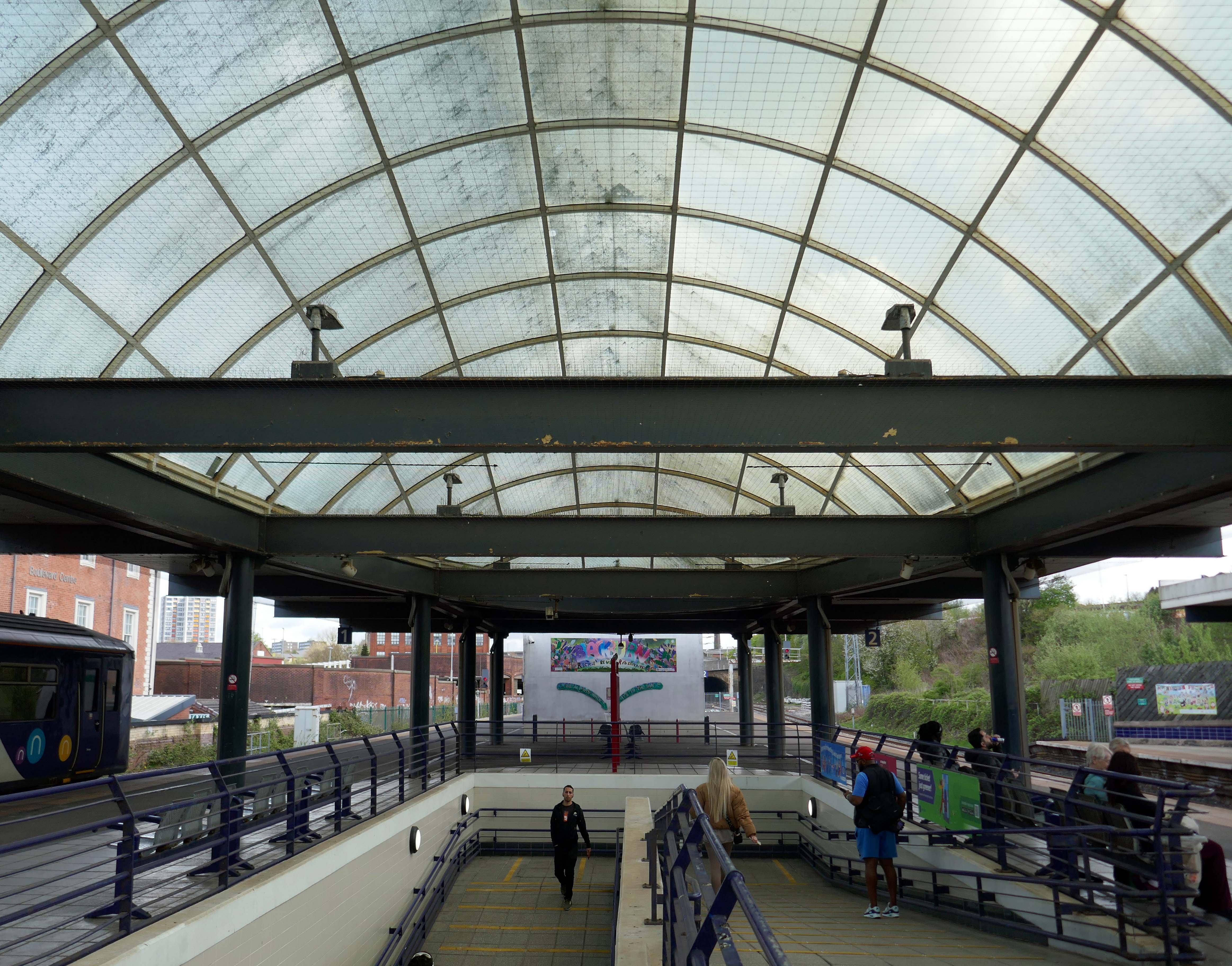
The station was covered by twin train sheds, an architecturally detailed canopy that covered all platforms. In 2000, due to its decaying state, it was removed, changing the nature of the station in a £35 million regeneration project. A new building was built on the main island platform. The Grade II listed original entrance built in the 1880s,including the station buffet and former booking hall, was retained and refurbished.

Wikipedia

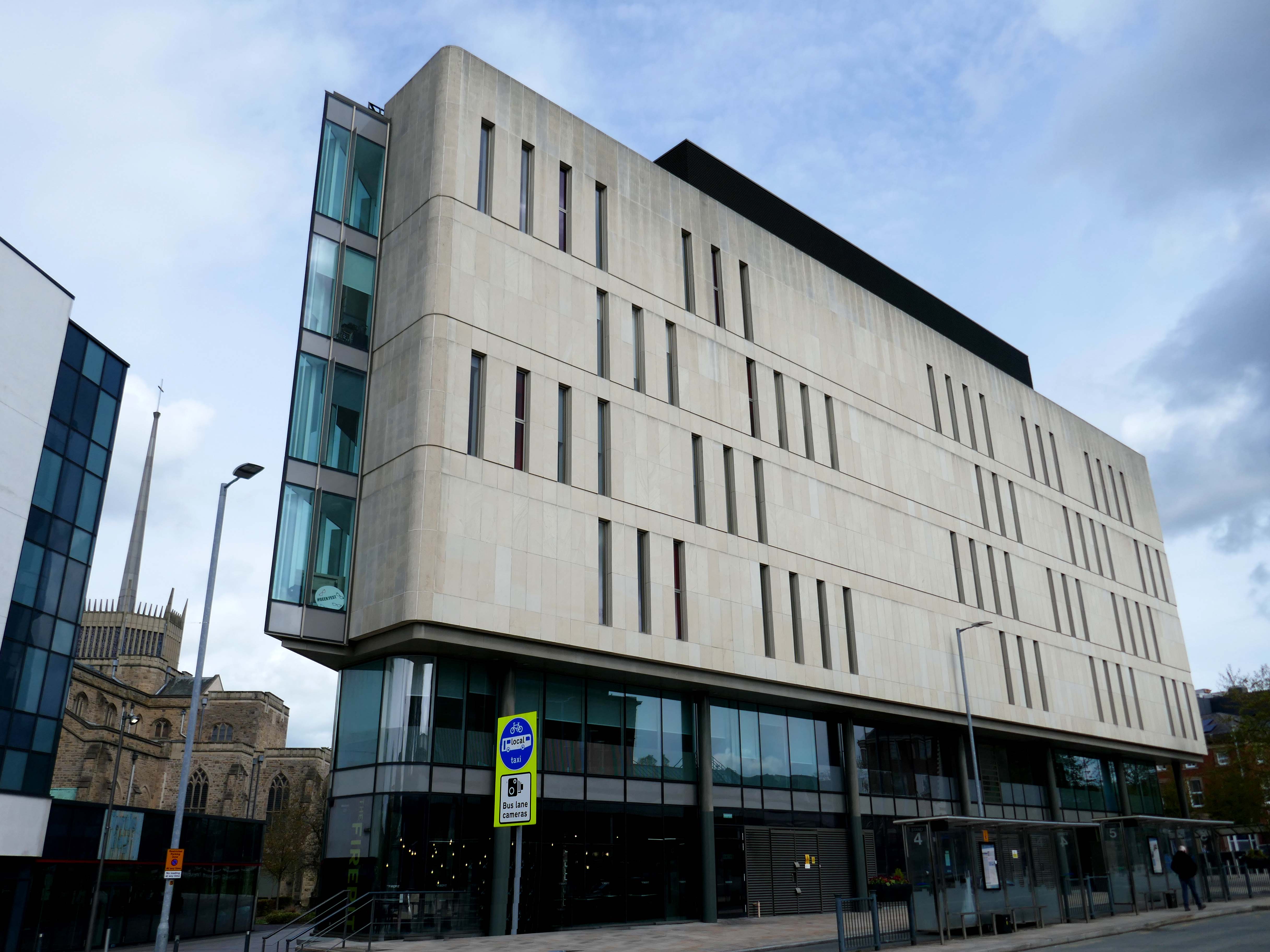
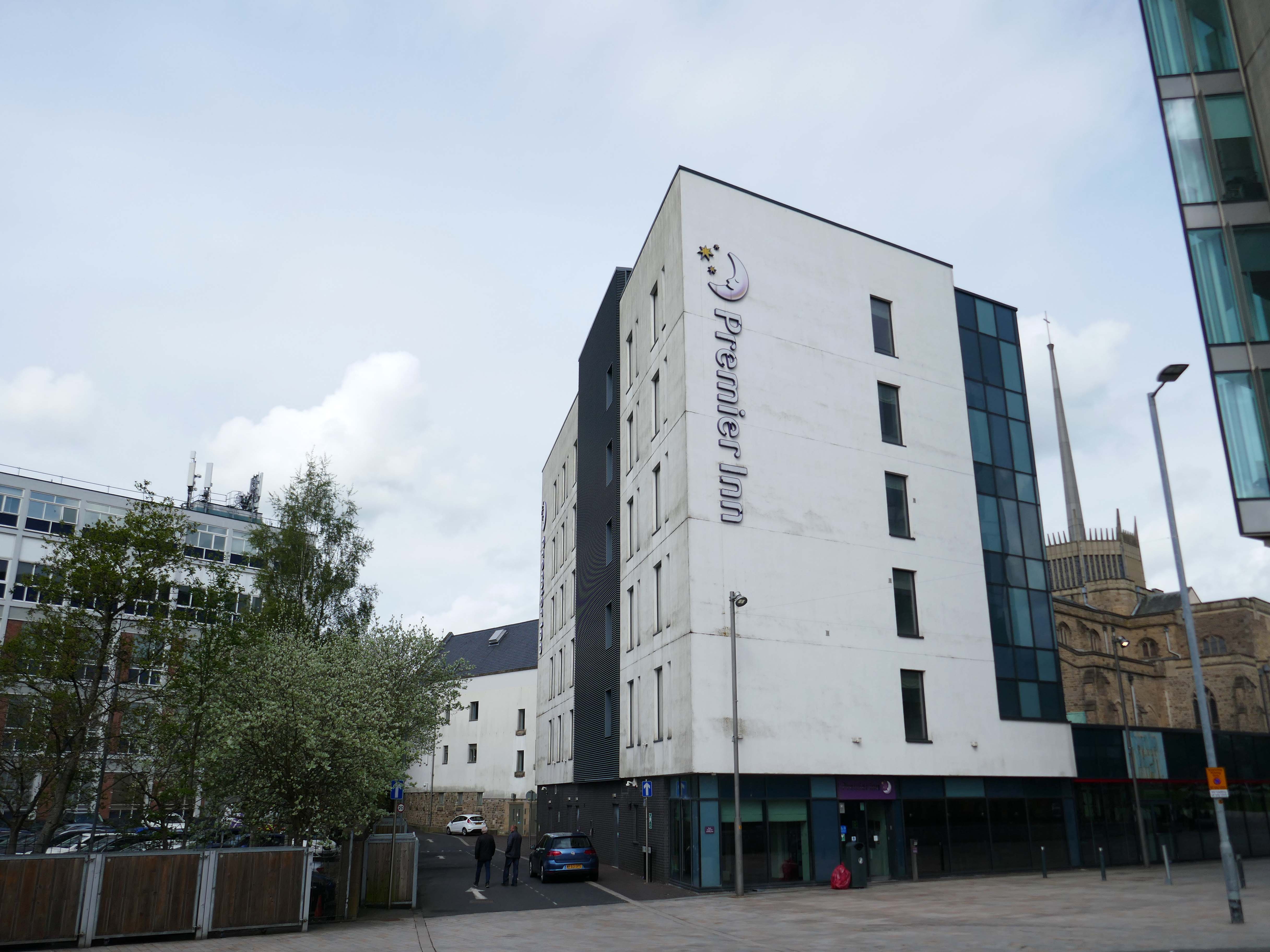
Facing the station the 2015 development of hotel and office space.

Arriving by train into Blackburn Rail Station, visitors get the full impact of this carefully planned but ambitious regeneration project. Maple Grove’s aspiration was to offer something befitting of a city centre in one of the region’s largest towns.  Cathedral Square comprises a six storey BREEAM Excellent office building, designed by BDP, a Premier Inn Hotel, restaurants and cafes positioned around a new public square that acts as a link between the rail station, cathedral and beyond to the shopping centre.

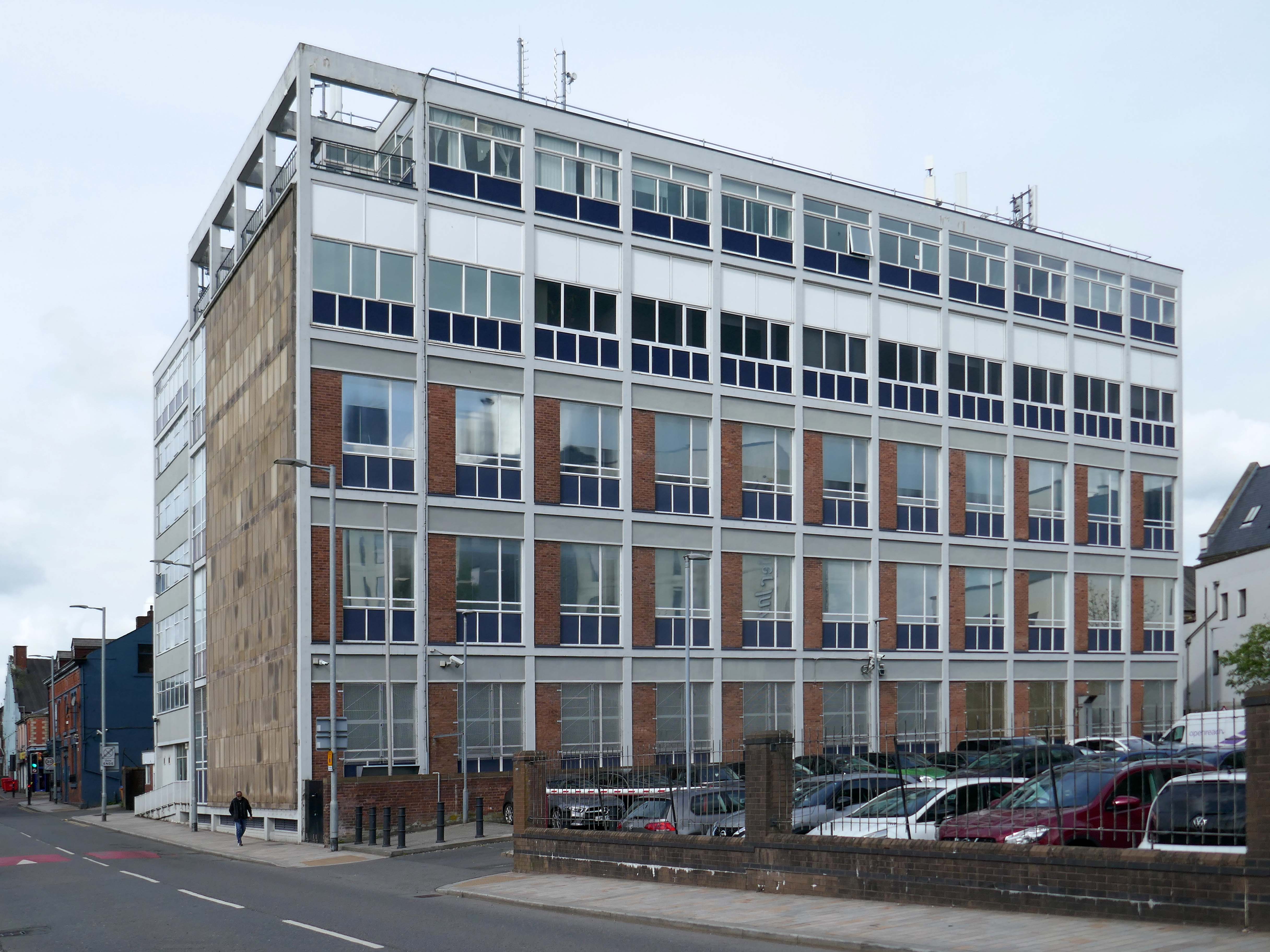
Left onto Jubilee Street where we find the Telephone Exchange.

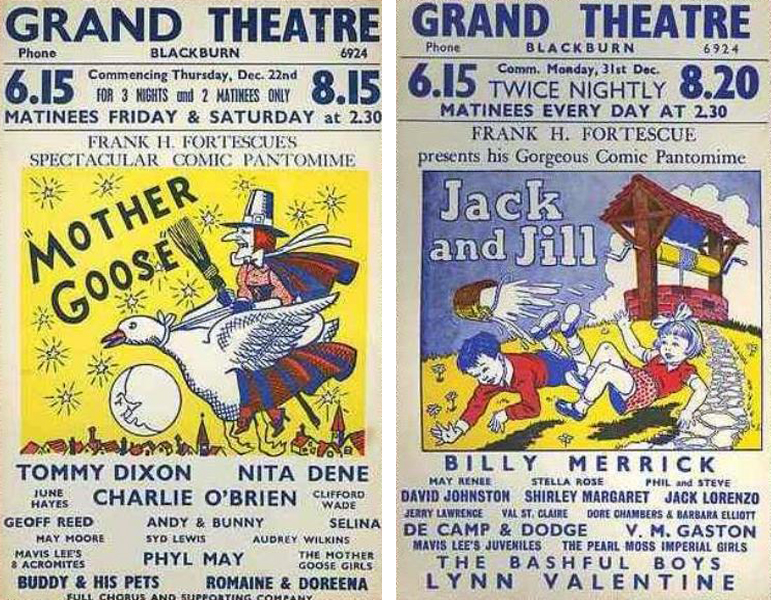
The site was formerly occupied by the Grand Theatre – in the 1950’s, Blackburn had no fewer than fourteen cinemas.  The Grand carried on being a live venue until its closure in 1956, before finally being demolished in 1958.

Blackburn Past

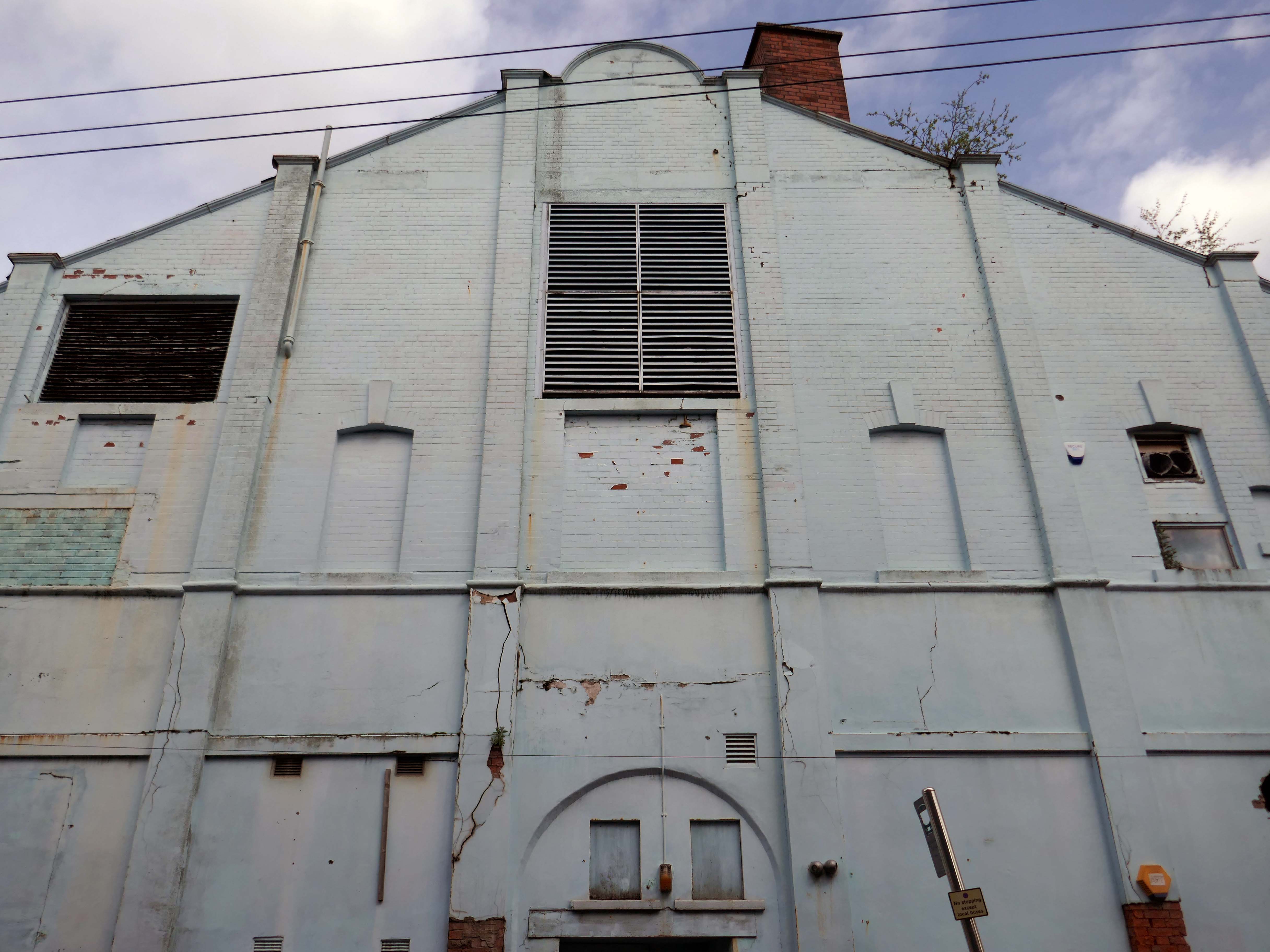
Further down the road the rear of another former cinema – The Olympia

The Olympia was opened on 19th May 1909 as a roller skating rink. It was a short lived venture and closed in November 1911. It was converted into the Olympia Theatre, presenting music hall/variety, opening on 12th December 1911. Seating was provided for 2,000, many on long wooden benches. The proscenium was 32 feet wide and the stage 50 feet deep. It was soon screening films as part of the programme.

It was converted into a full time cinema in 1921, although there were still some variety acts on the programme. All the original wooden benches used for seating in the theatre were removed and replaced by regular tip-up seats, reducing the seating capacity to 1,360. During the 1940’s, the Olympia Cinema boasted a café for the convenience of its patrons and it was operated by Jacksons’ Amusements, Ltd.

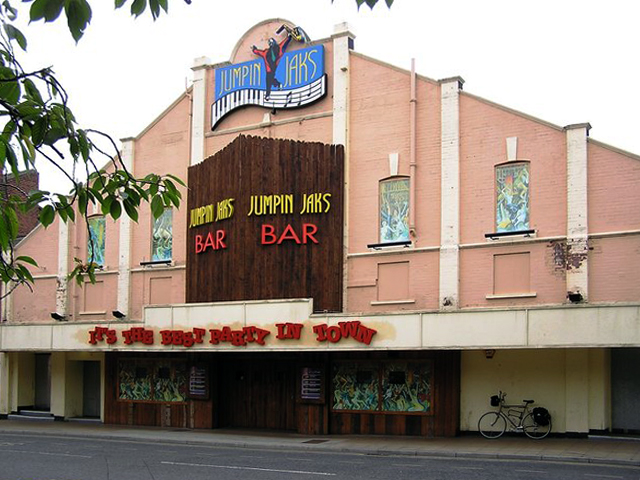
The Olympia Cinema was mainly independently operated, and closed in 1957. It stood empty for two years, then in 1959, it was taken over by Mecca Ltd, and converted into the Locarno Ballroom, later becoming a Mecca Bingo Club. It later became the Golden Palms Nightclub, Jumpin’ Jax, and since 2009 it operated as a trendy nightclub named Liquid & Envy.

Cinema Treasures

By July 2018 it was known as Switch.

Across the way The Central Hall.

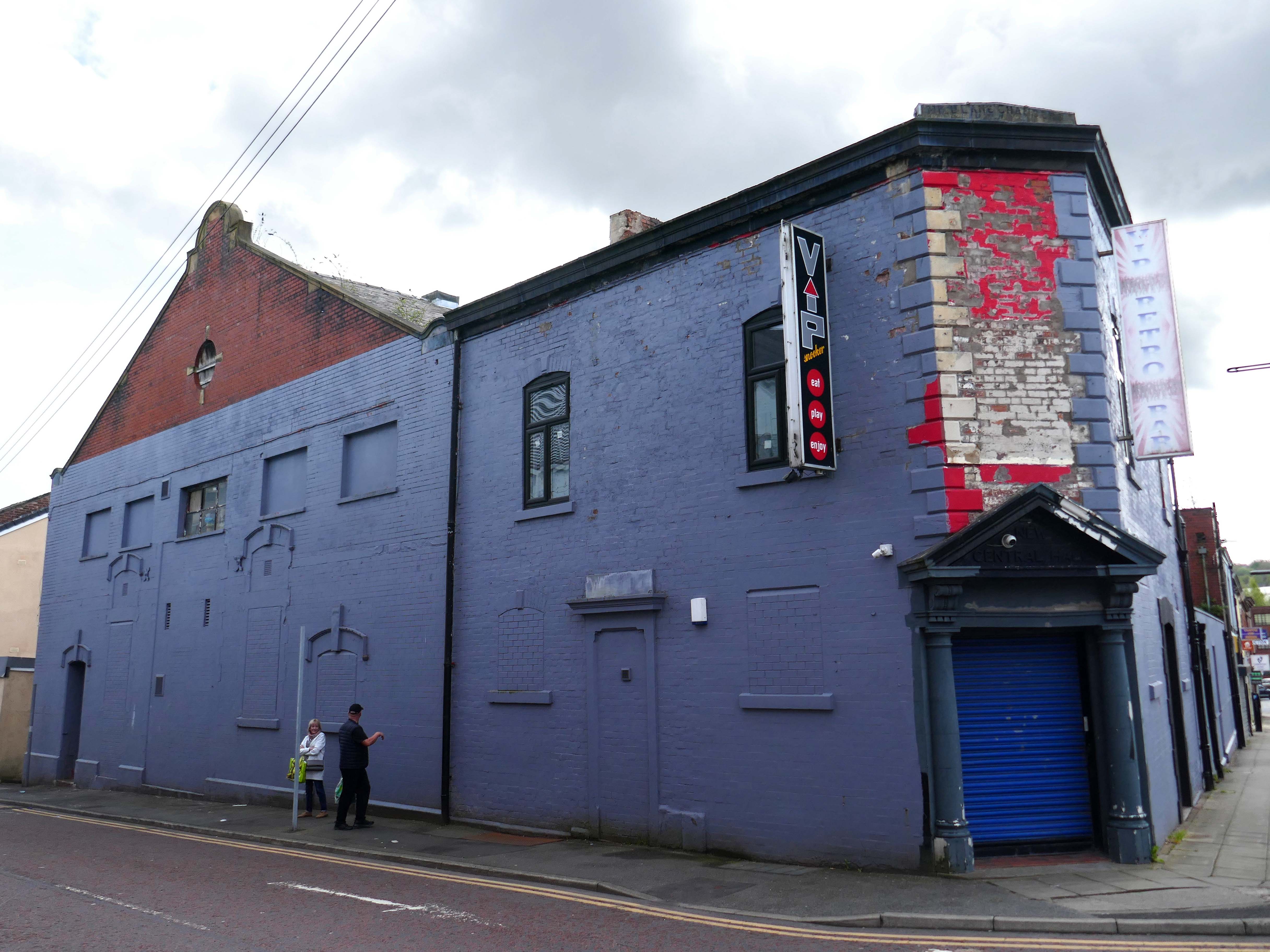
Previous to 1900 the site at the corner of Mincing Lane and Mill Lane had housed a temporary circus, known as Ohmy’s Circus. The New Central Hall was built and opened in April 1900, and was used as a roller skating rink until November 1909, when it was converted into the 1,000-seat Central Hall Cinema.

Altered and enlarged to 1,372 seats in 1923, it was re-named New Central Hall Cinema. The proscenium was 20 feet wide, later enlarged to 22 feet.

The Central Cinema was closed in January 1957. Then in 1974, it was renovated and was converted into a Walkers Bingo Club, which remained open until at least 1995. It recently operated as a Riley’s American Pool and Snooker Club until early 2009. In November 2009 after a refurbishment, it re-opened as the VIP Snooker Club.

Cinema Treasures

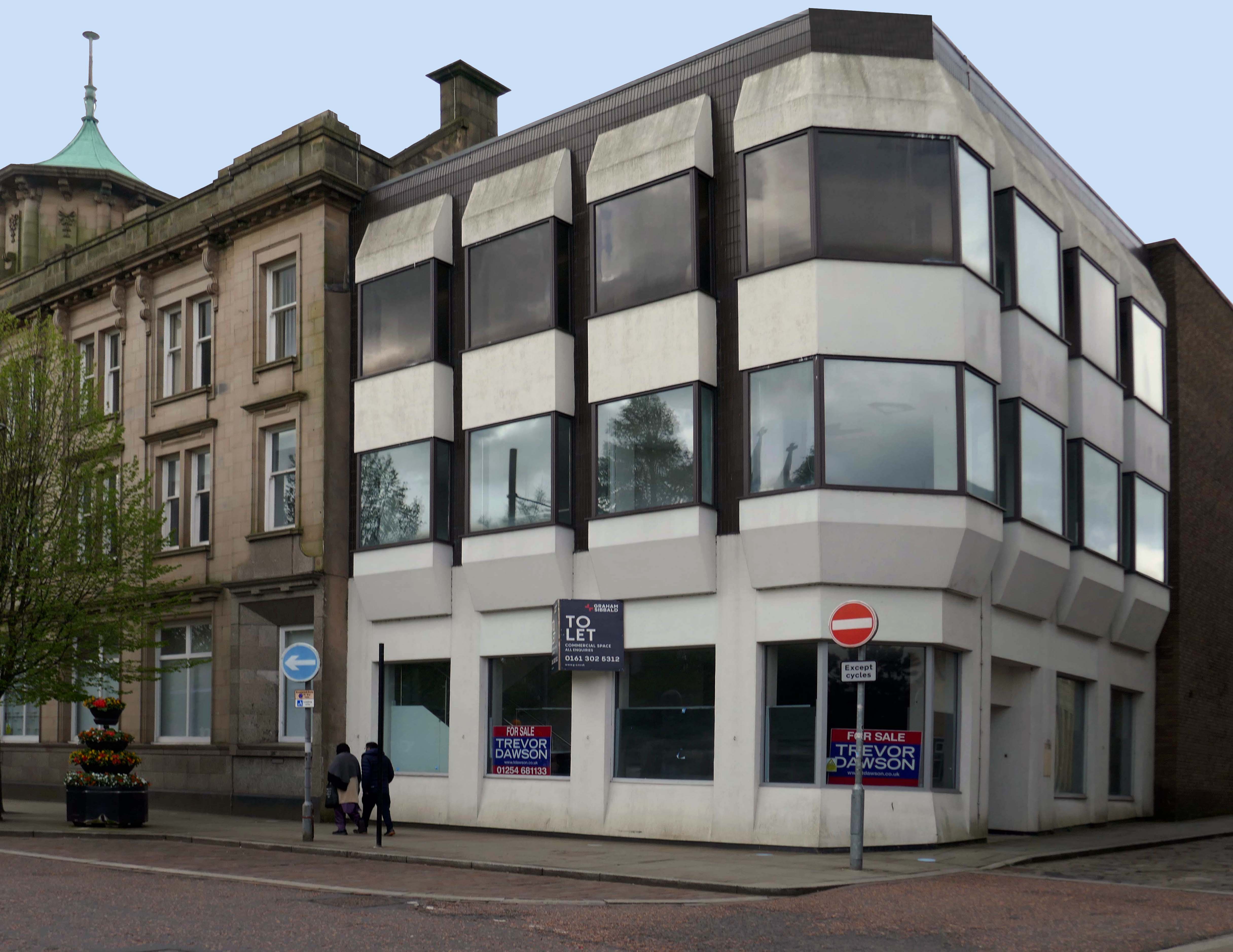
Turn right into Darwen Street along to the former Barclays Bank.

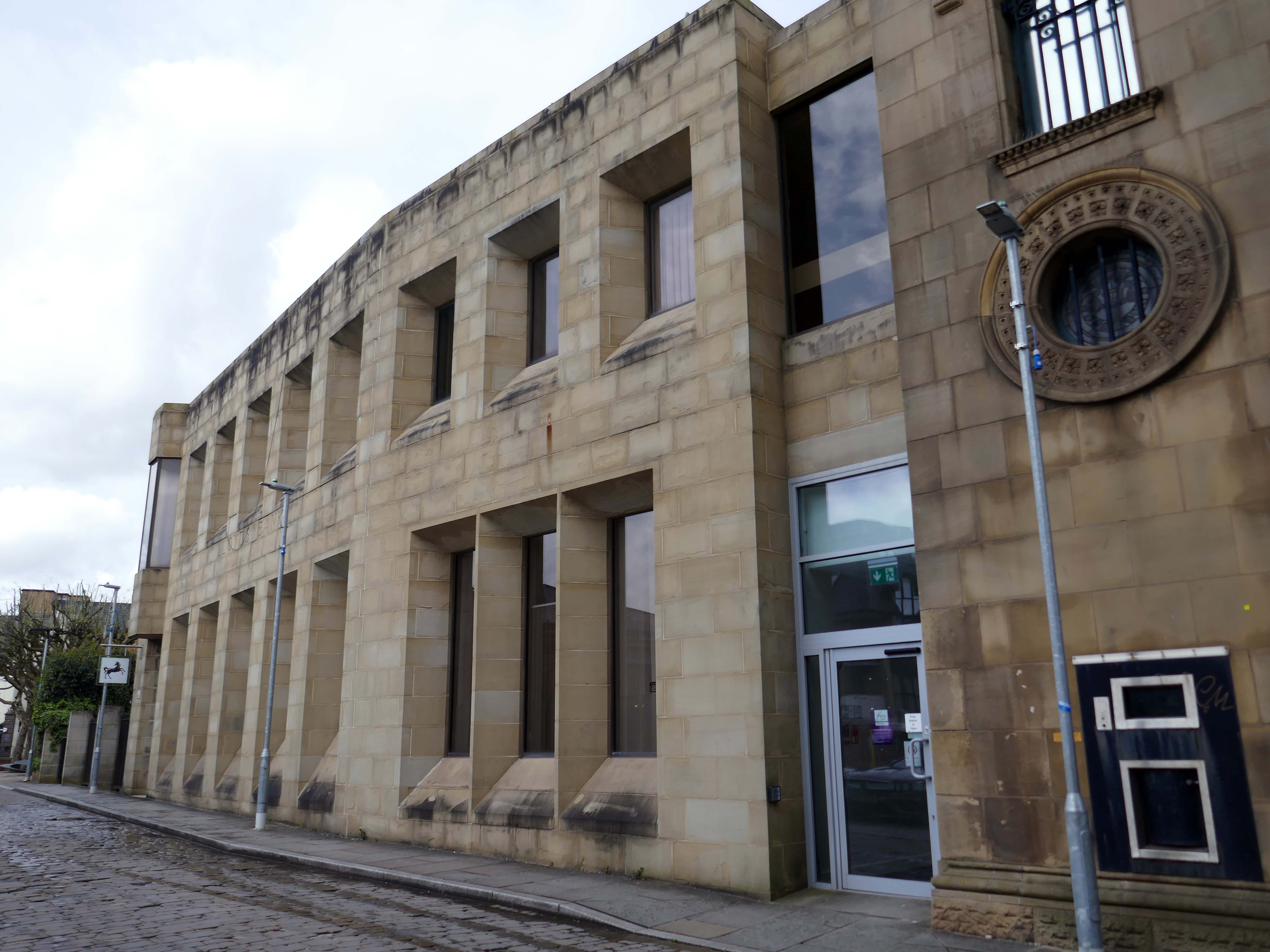
Next door Lloyd’s Bank extension.

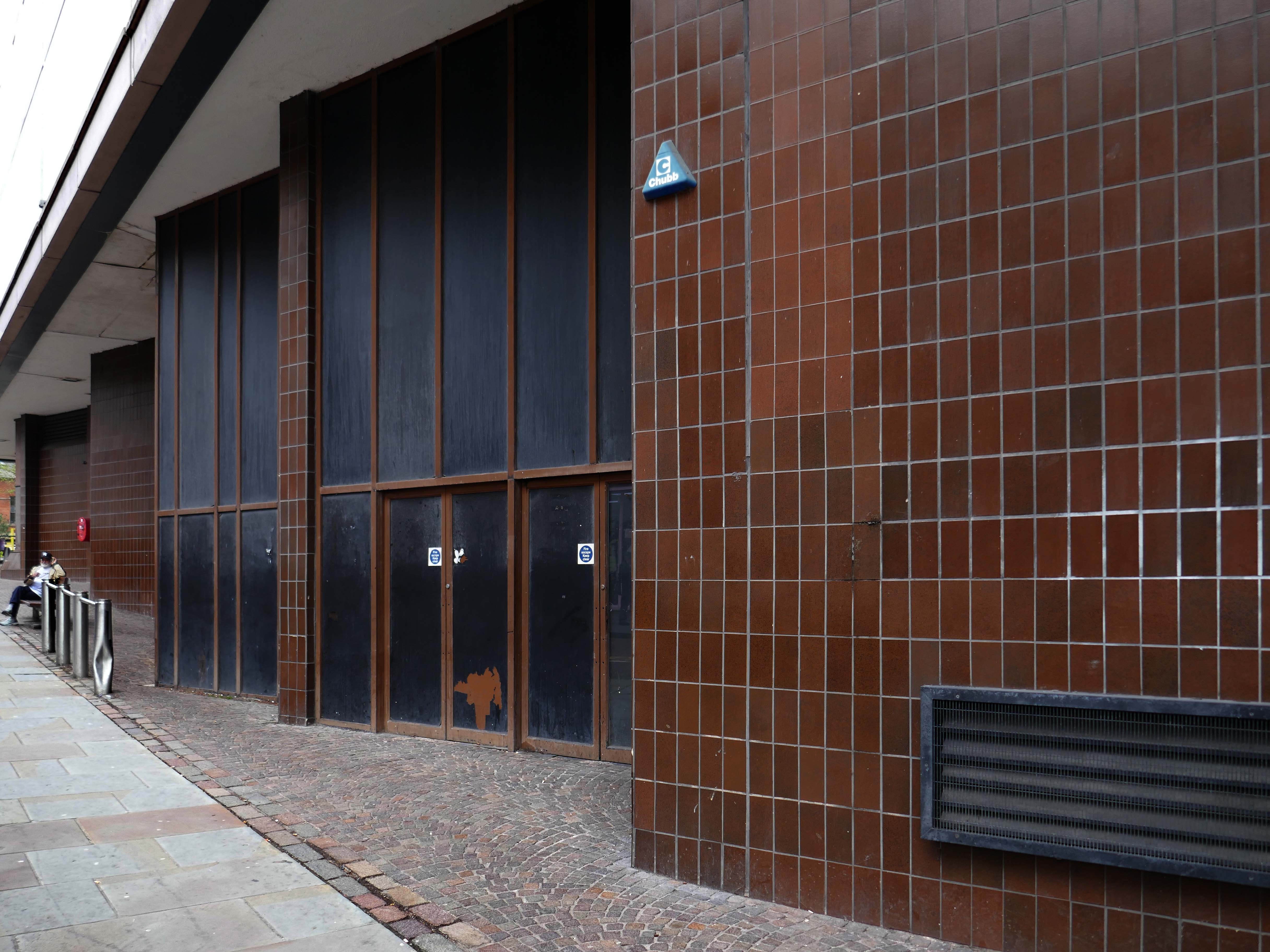
On Astley Gate the brown tiled remains of the Shopping Centre now known as The Mall.

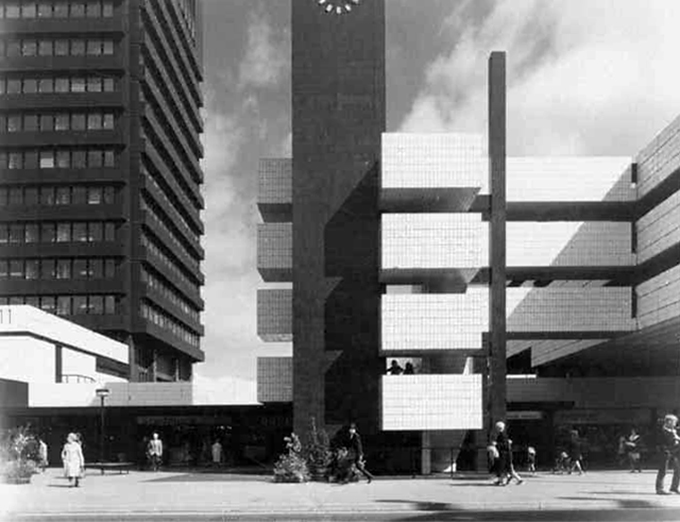
The shopping centre was built in three phases, with the final phase opening in 1979. The centre was refurbished in 1995, during which the lower floor of the former Co-Operative Department Store was transformed into the Ainsworth Mall.

The centre was bought by Standard Life in 1993 and its name was subsequently changed to Blackburn Shopping Centre. Standard Life sold the centre in 2003 to Reit Asset Management.

In 2004, Reit Asset Management sold the centre to The Mall Fund. The centre was sold again in 2022 to the Adhan Group from The Mall Fund for £40 million.

Wikipedia

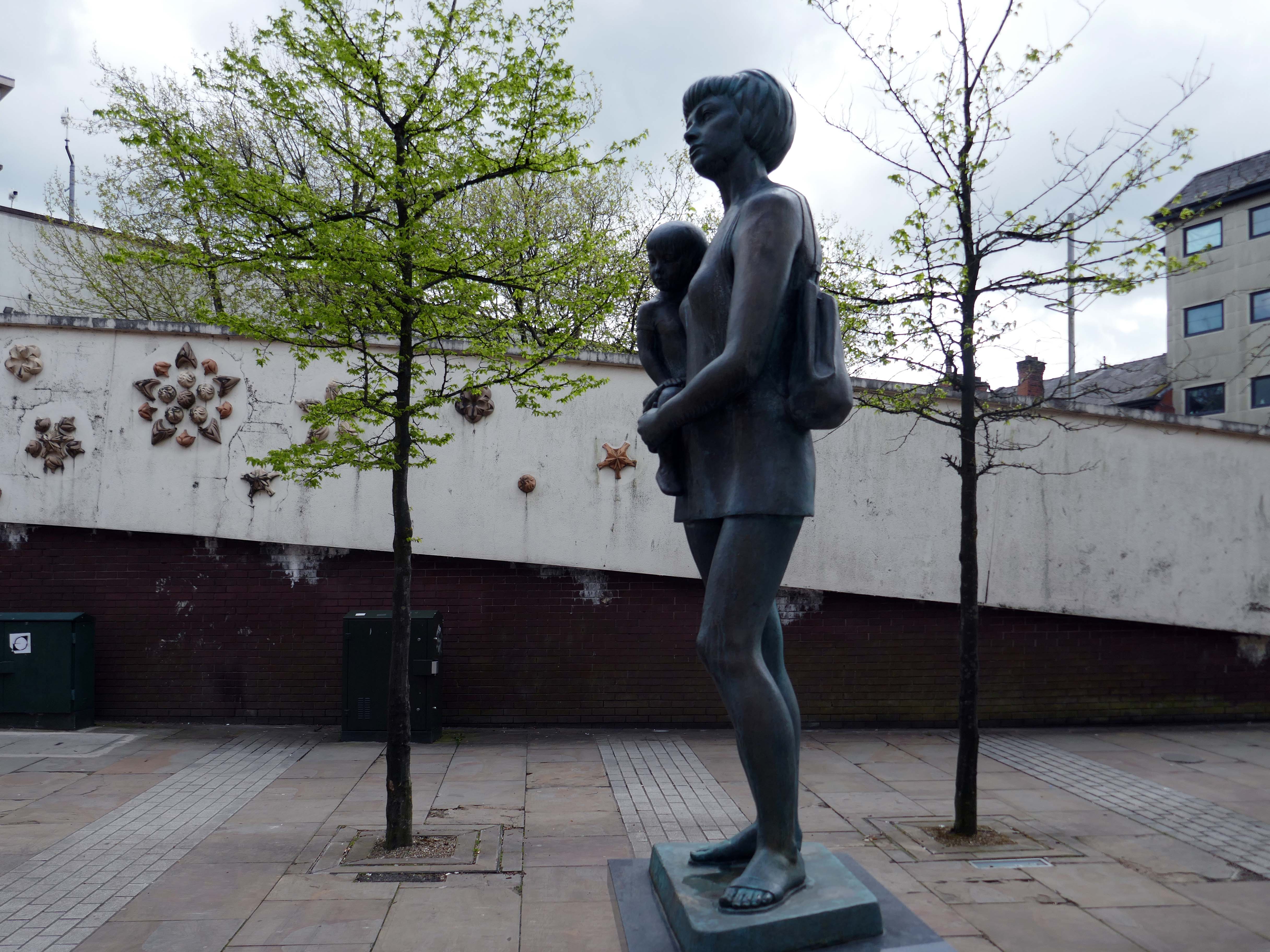
Around the corner the Mother and Child monument, created by Welsh sculptor Robert Thomas in 1974, who used his wife and child as models.

In 1974 the statue was placed in Lord Square, removed in 2007 and placed in storage, it was placed in Cardwell Place in 2012.

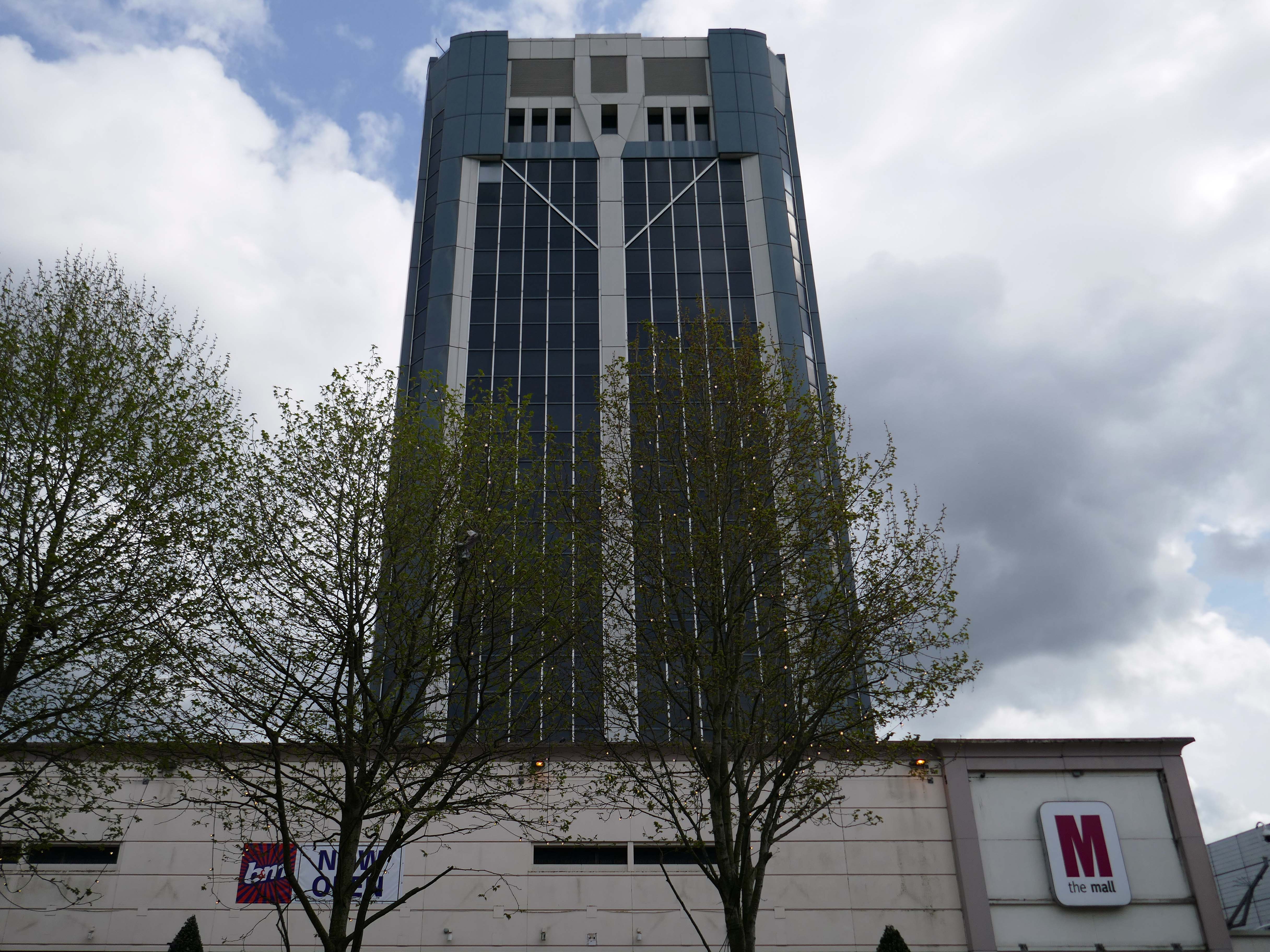
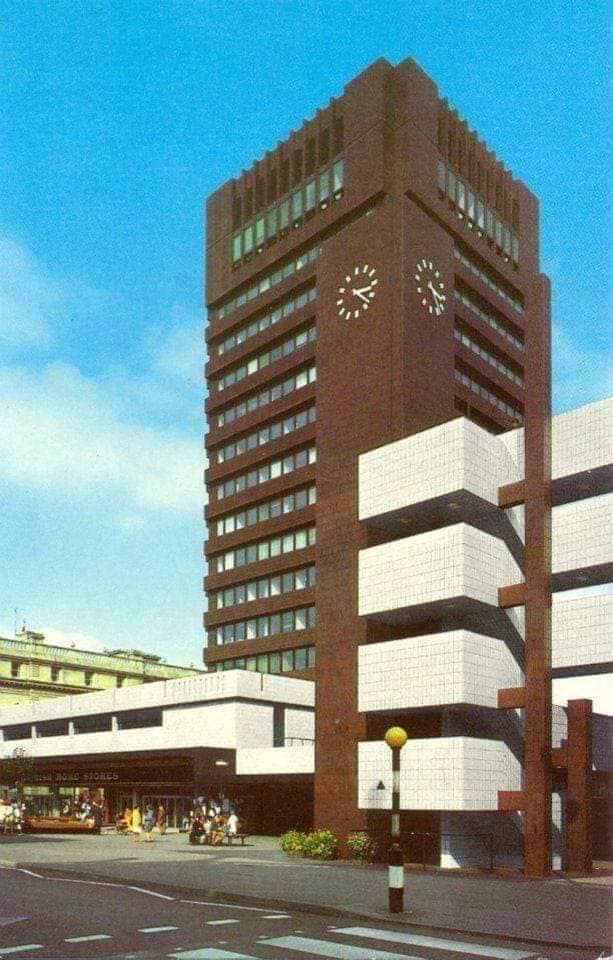
The Mall has been significantly remodelled, along with the adjacent Tower Block.

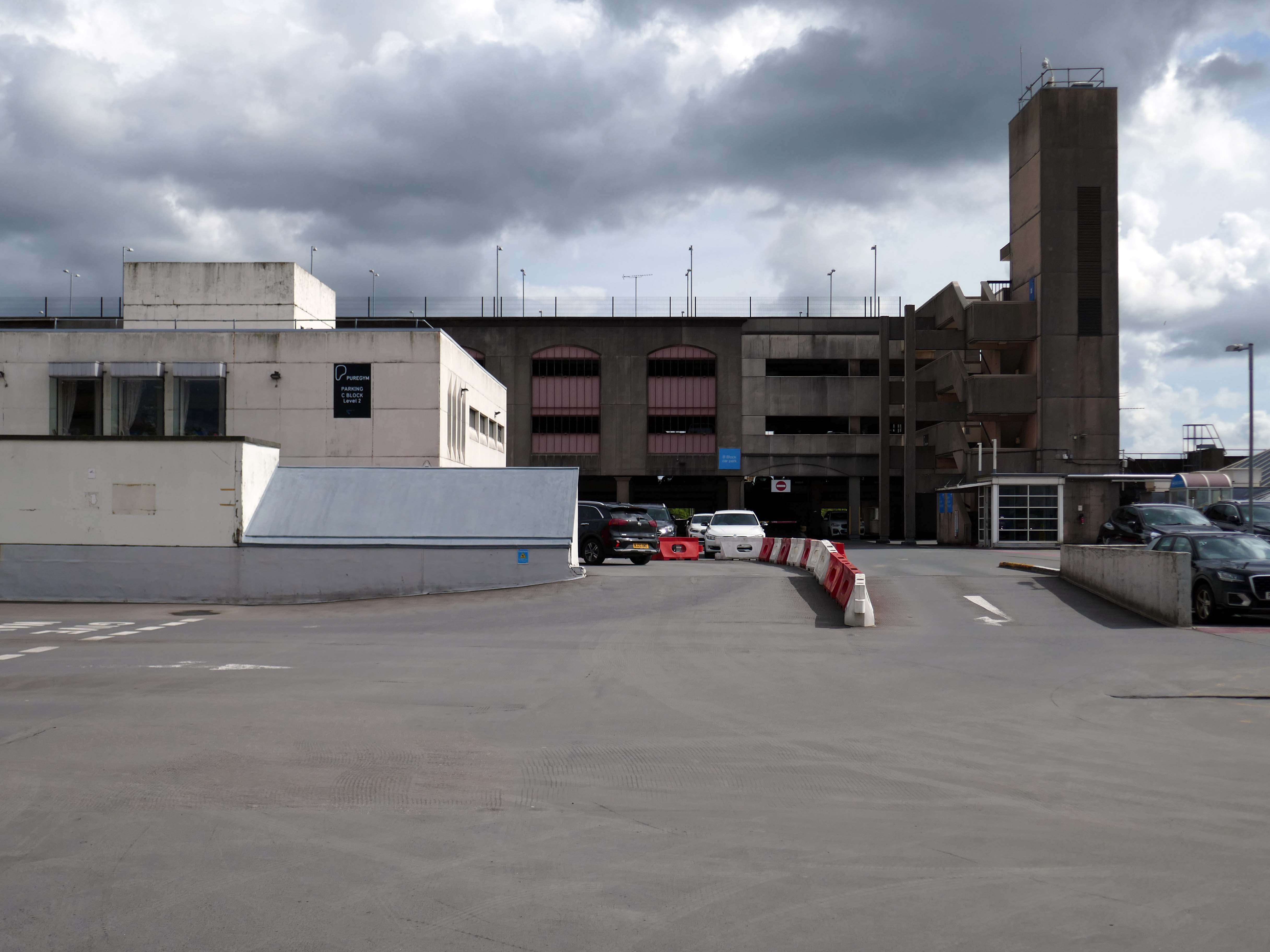
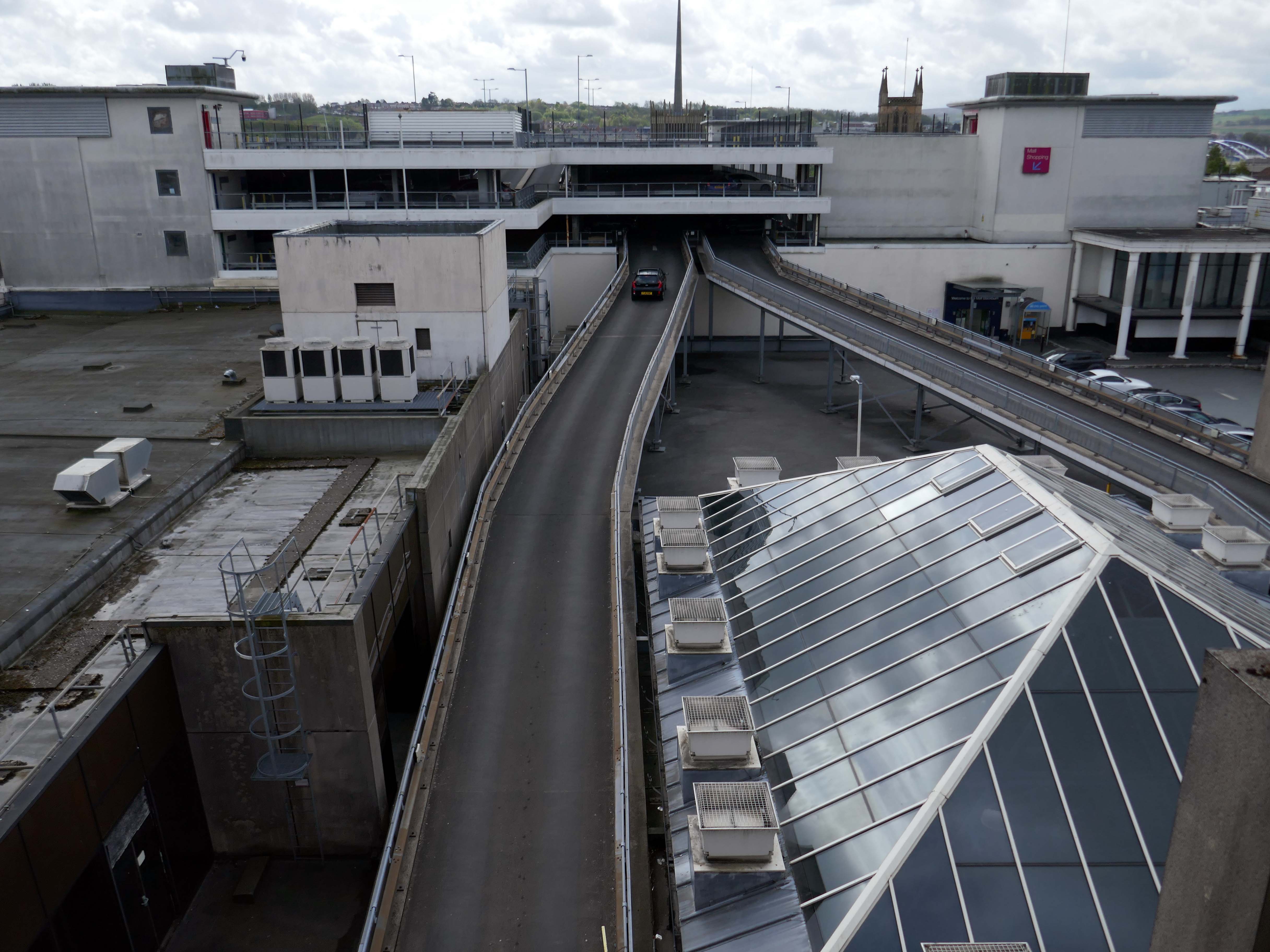
Above the Mall is a dizzying array of multi storey car parks – reflecting the various stages of development.

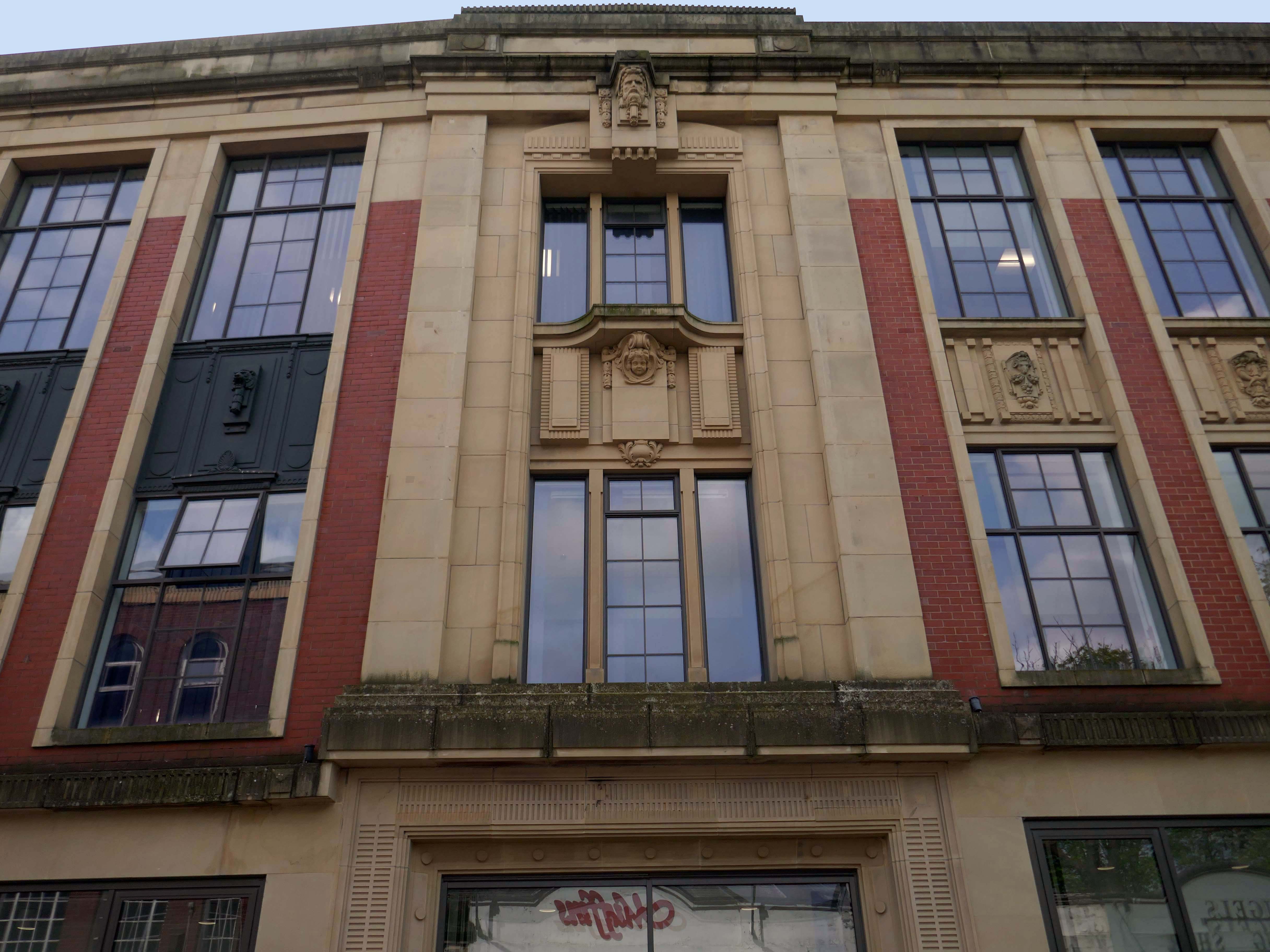
Next to the Central Library, the former Co-op Emporium by Walter Stirrup in Town Hall Street, opened in 1930, was converted into a £1m library by BDP, it opened on September 1st 1975.

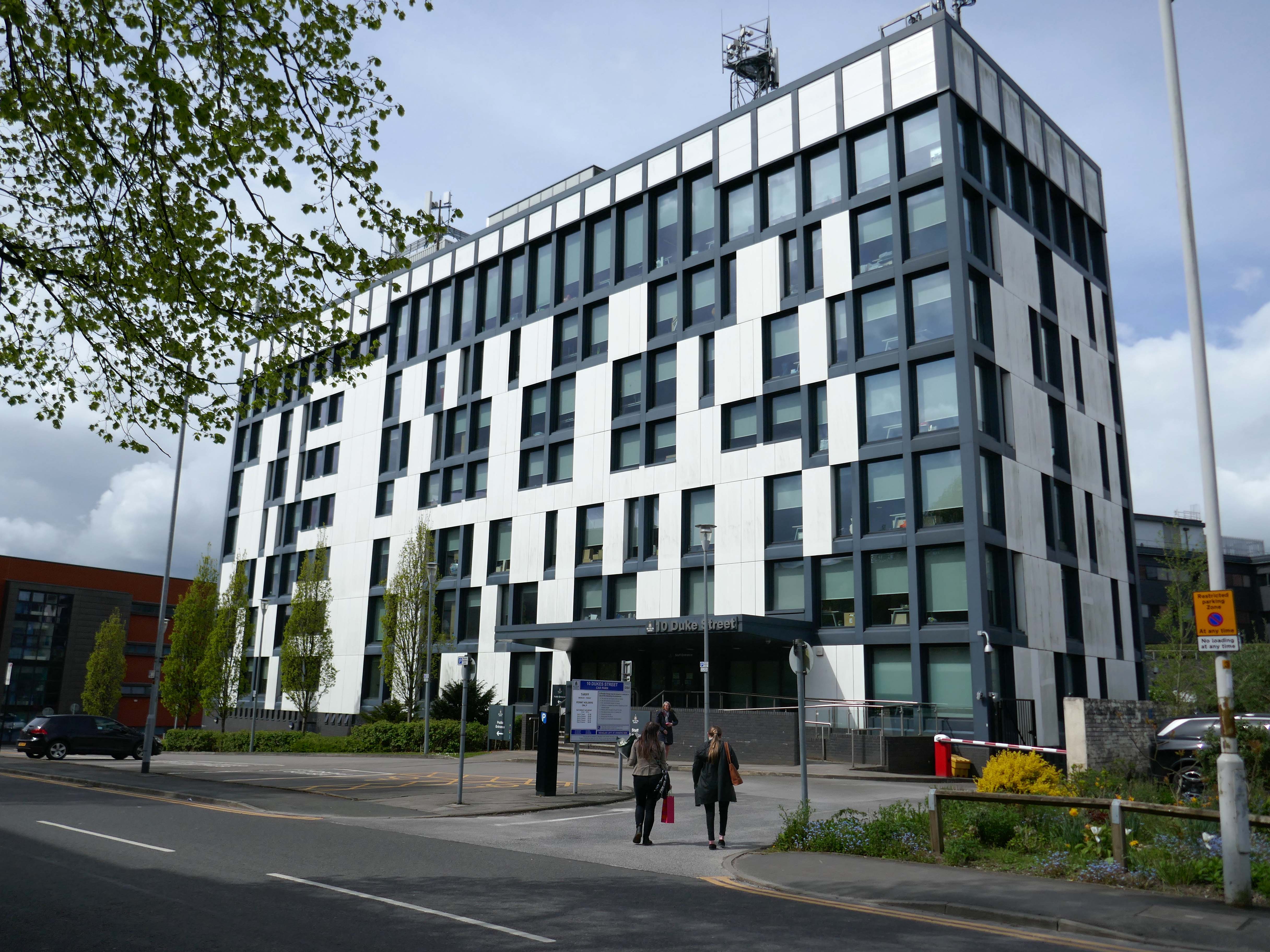
Onward to 10 Duke Street – home to council offices and the NHS, the Tower Block is now no longer in use.

Blackburn’s former town hall tower block has over the years become one of our most recognisable buildings.  Sadly it is now starting to be given derogatory names, such as the ‘Big Empty’ and ‘Mothballed Monolith’.  But compared to how it looked some years ago, before being reclad in today’s design, it still impresses many visitors to our town.  Wouldn’t it be great if Blackburn’s ‘Big Empty’ could become full again.

Roving Mick

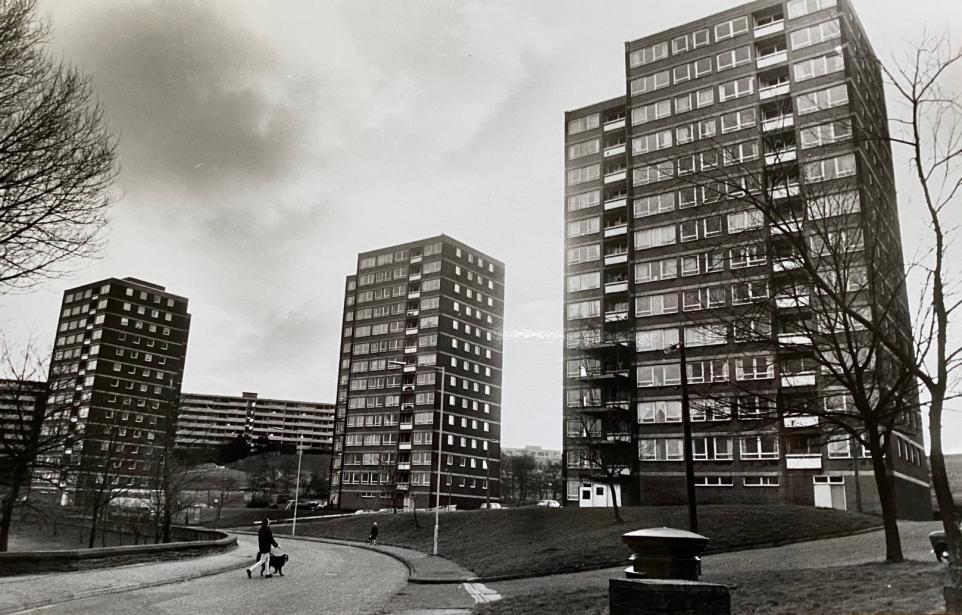
These tower blocks were the flats at Queens Park and in the background you can see the co-called ‘deck-access’ flats at Shadsworth.

Bowland House was one of three tower blocks built in 1963 and the only one still standing after the others, Ribble and Pendle, were torn down in 2001 to be replaced by homes.

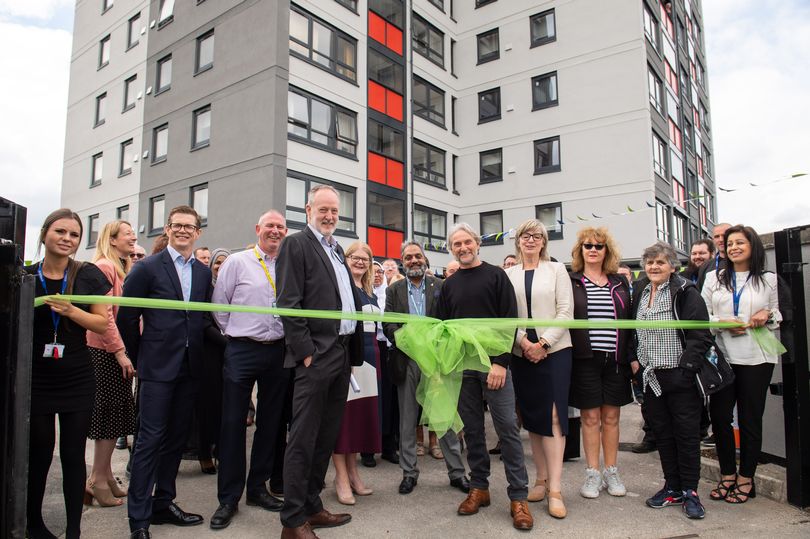
In 2022 Bowland House was refurbished.

Former four-time World Superbike champion Carl Fogarty was the guest of honour as Great Places’ Bowland House in Blackburn was officially unveiled.

Lancs Live

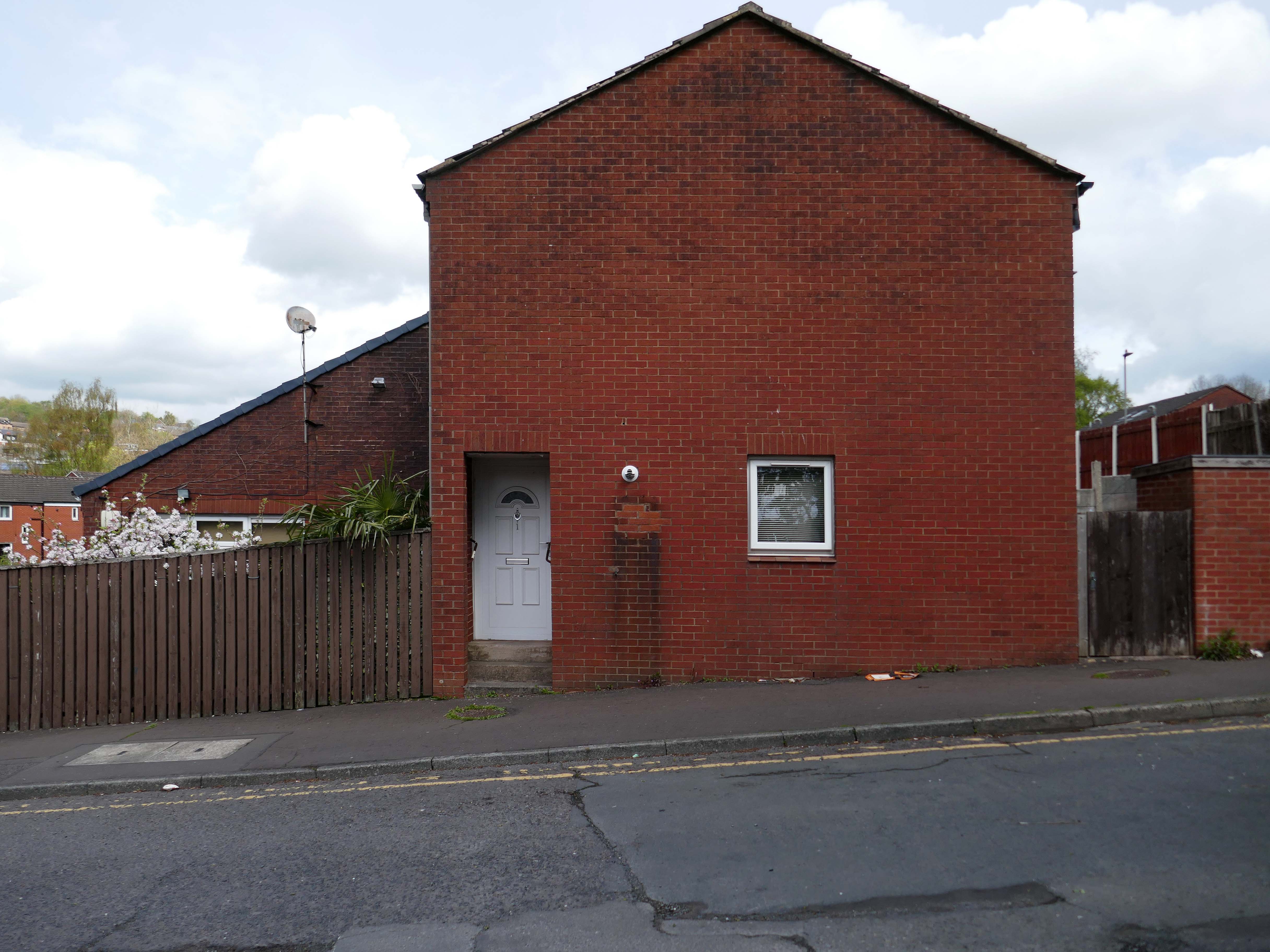
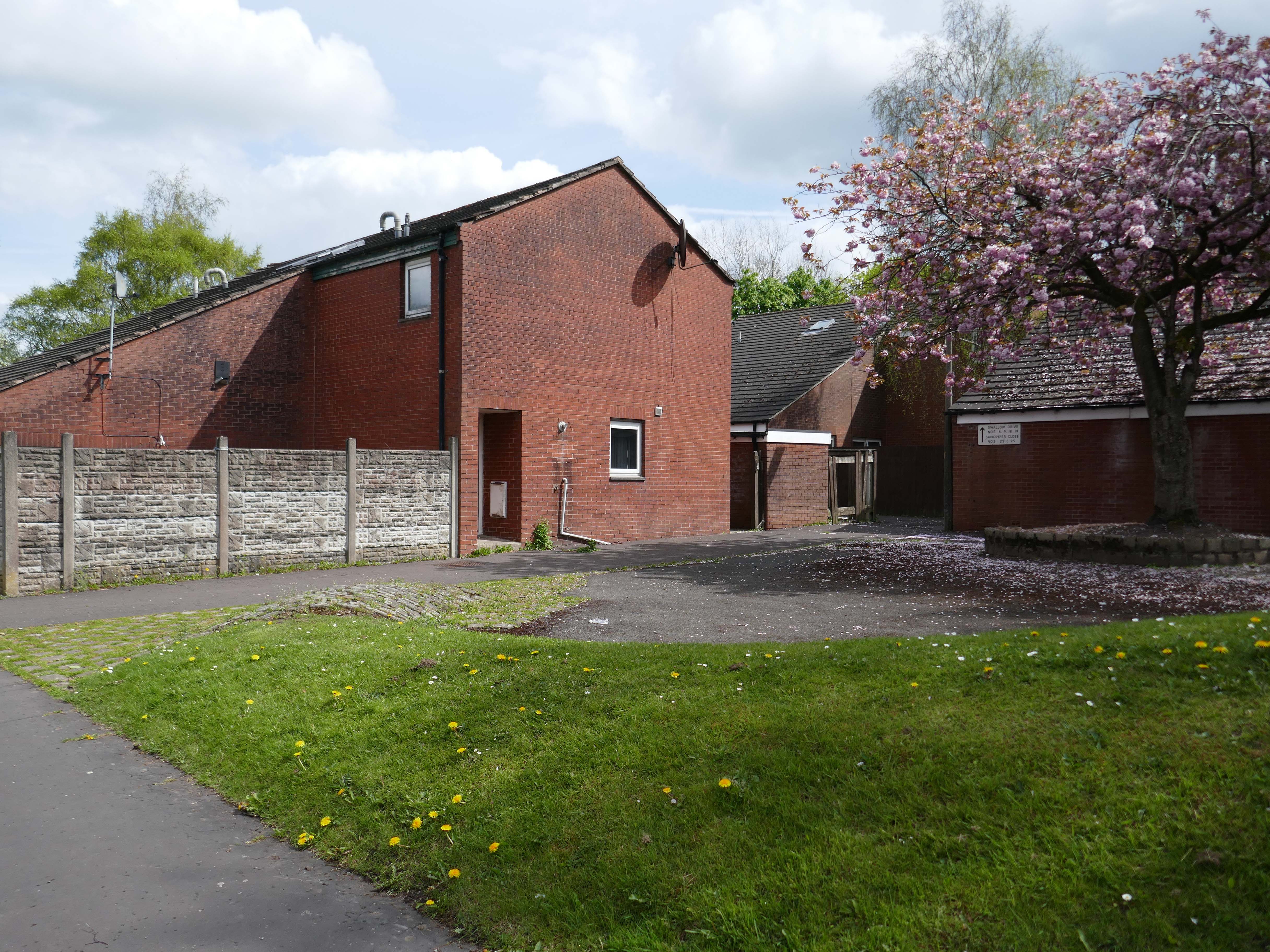
On the approach to Birley Street we walk through a mixed development of low rise housing, set in grassed and pedestrianised areas.

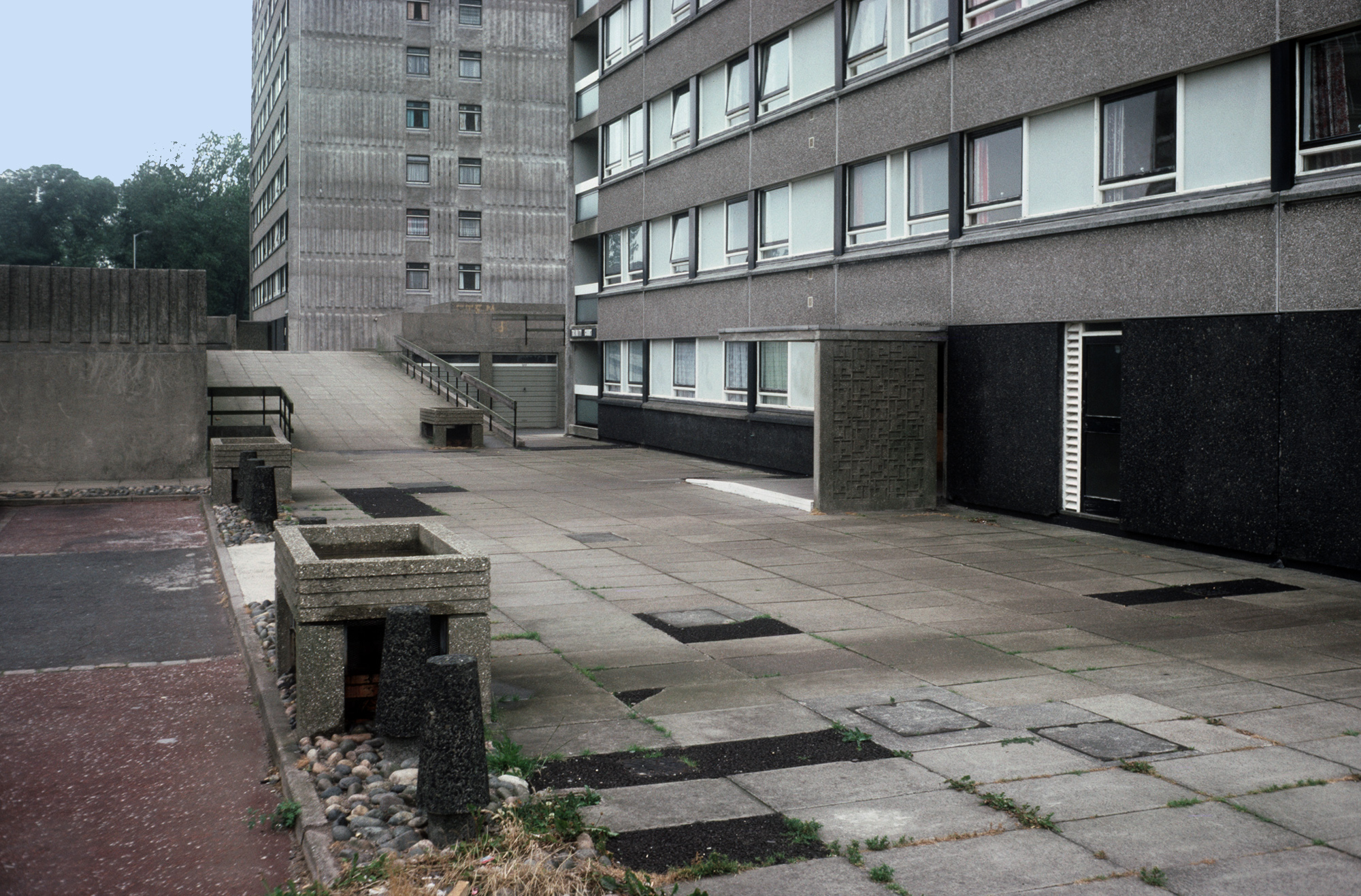
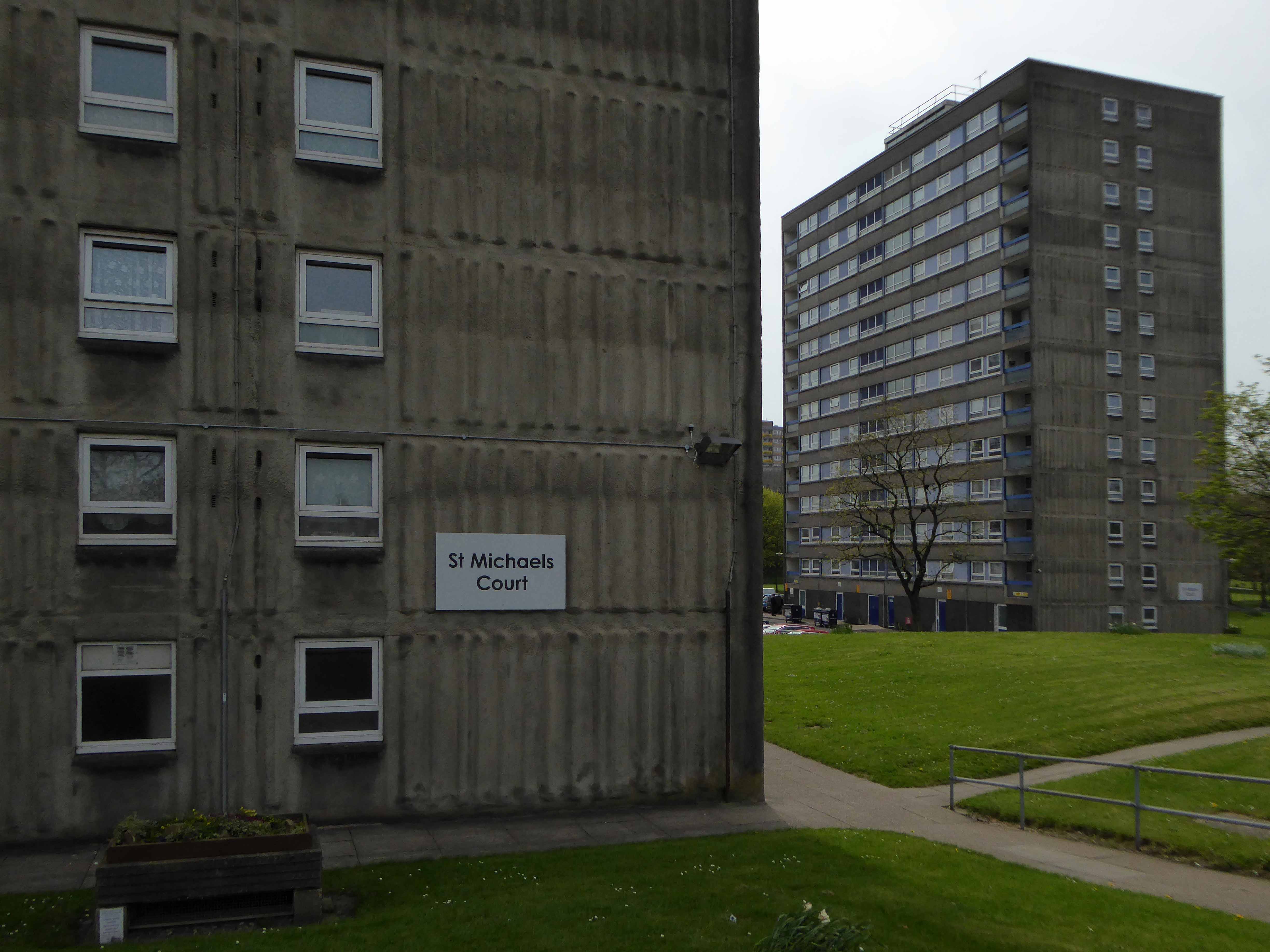
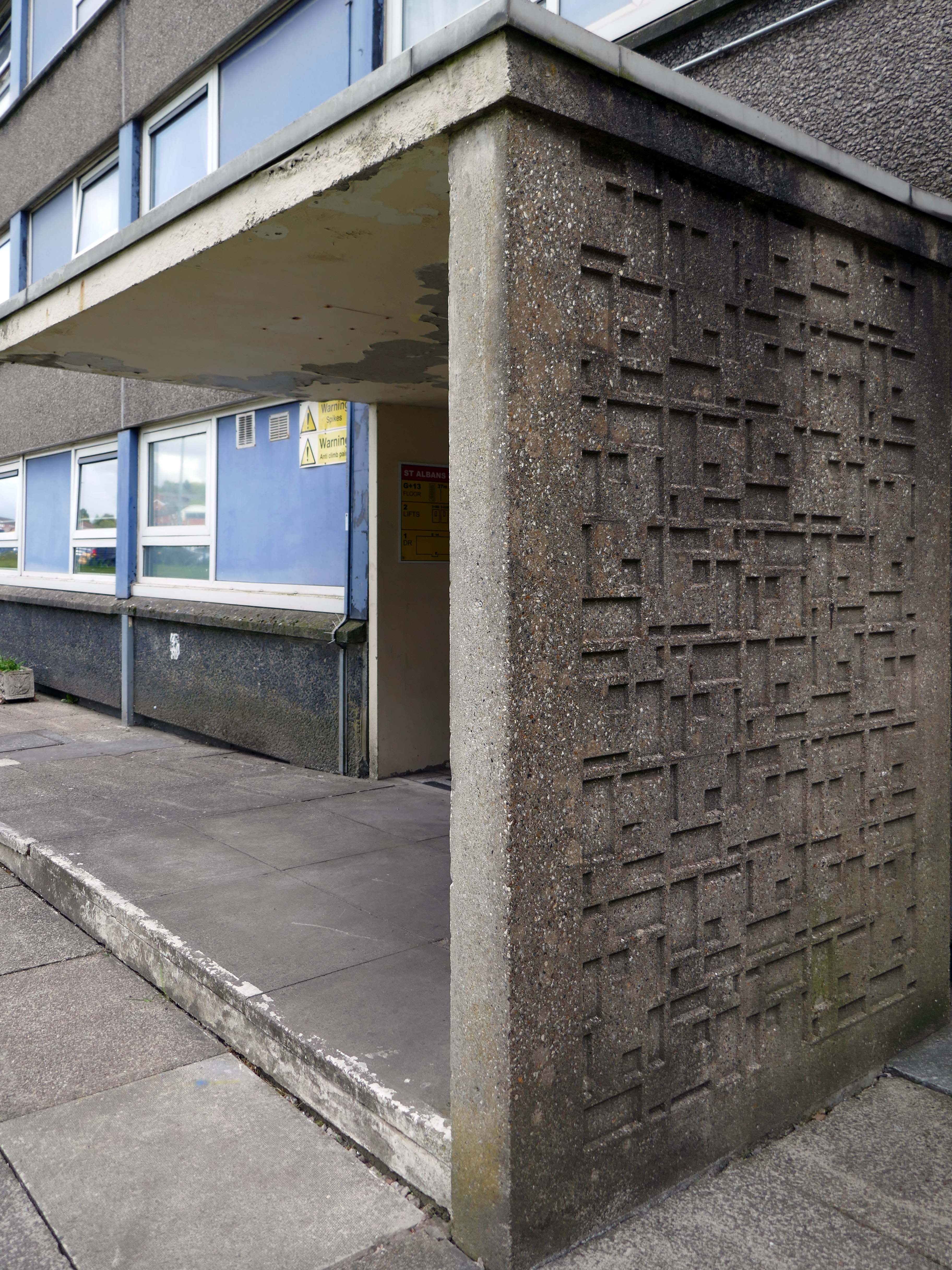
Birley Street Tower Blocks

Three thirteen-storey slab blocks built as public housing using the Sectra industrialised building system. The blocks contain 183 dwellings in total, consisting of 72 one-bedroom flats and 111 two-bedroom flats. The blocks are of storiform construction clad with precast concrete panels. The panels are faced with exposed white Cornish aggregate. Spandrel panels set with black Shap granite aggregate are used under the gable kitchen windows. The blocks were designed by the Borough architect in association with Sydney Greenwood. Construction was approved by committee in 1966.

Pastscape

1987 view of Birley Street development, with Trinity Court in the foreground: Tower Block

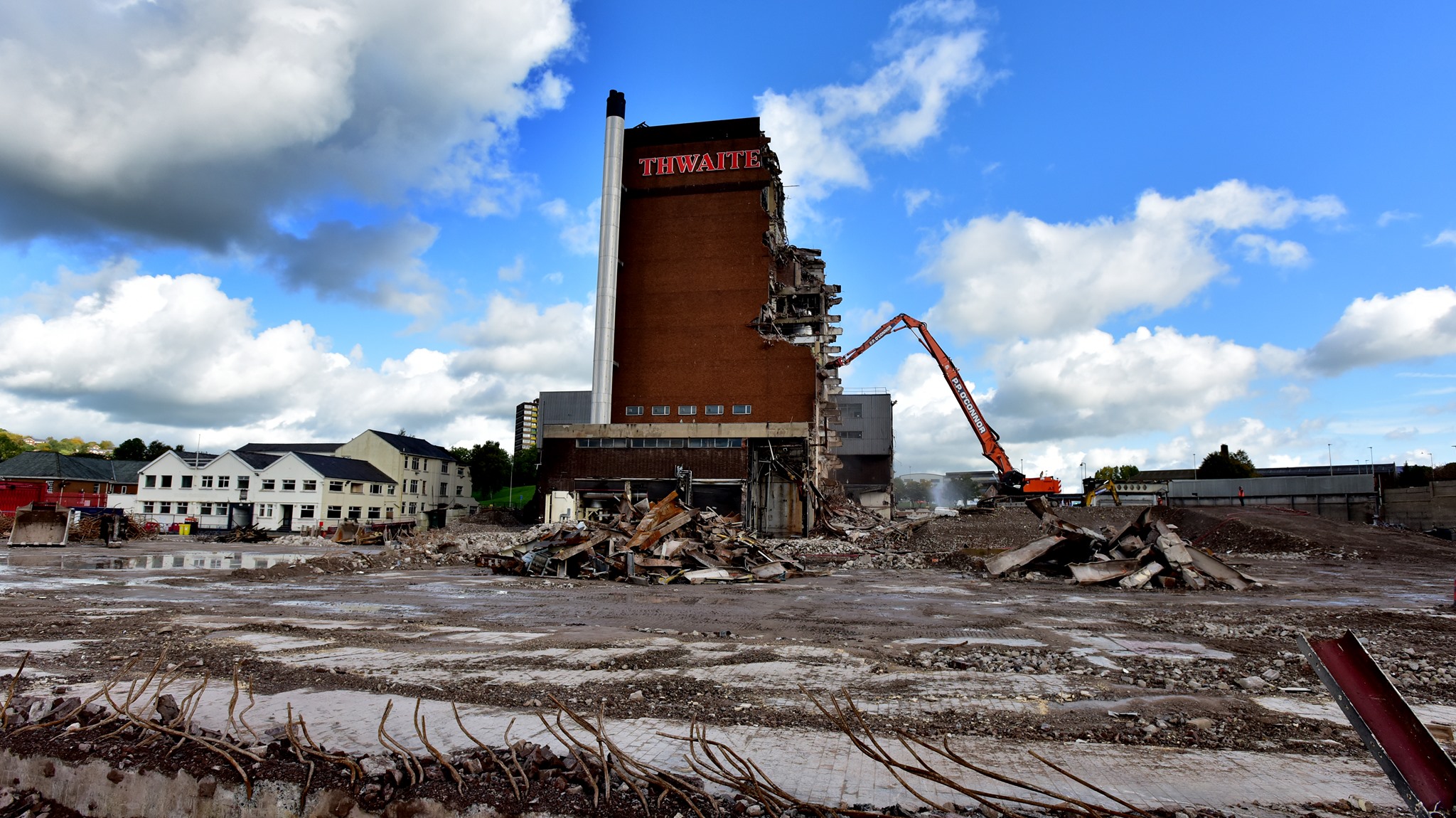
Back now into the centre – passing the now empty site of Thwaites Brewery, demolished in 2019.

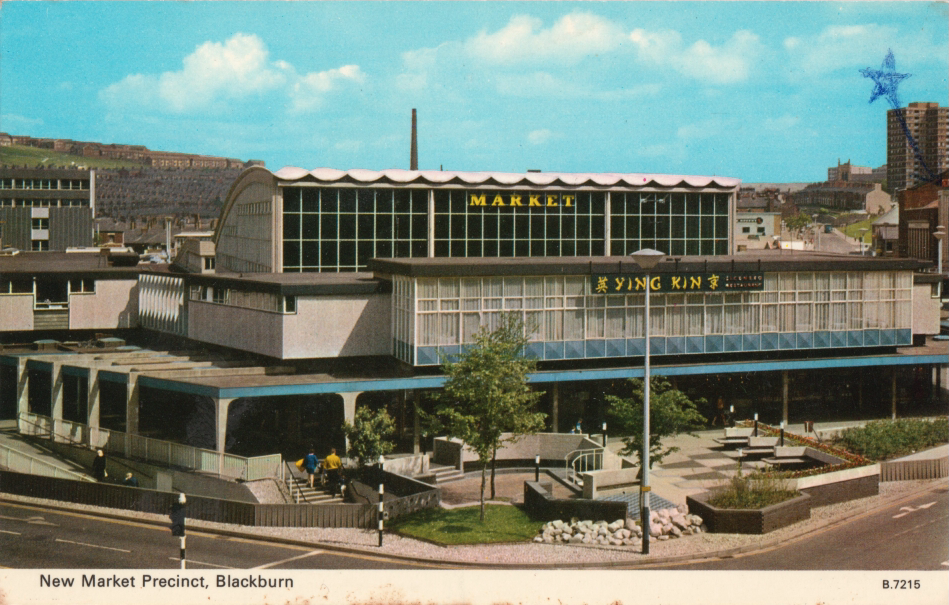
Also missing in action is the 1960’s Market Hall – architect Tom Brennan.

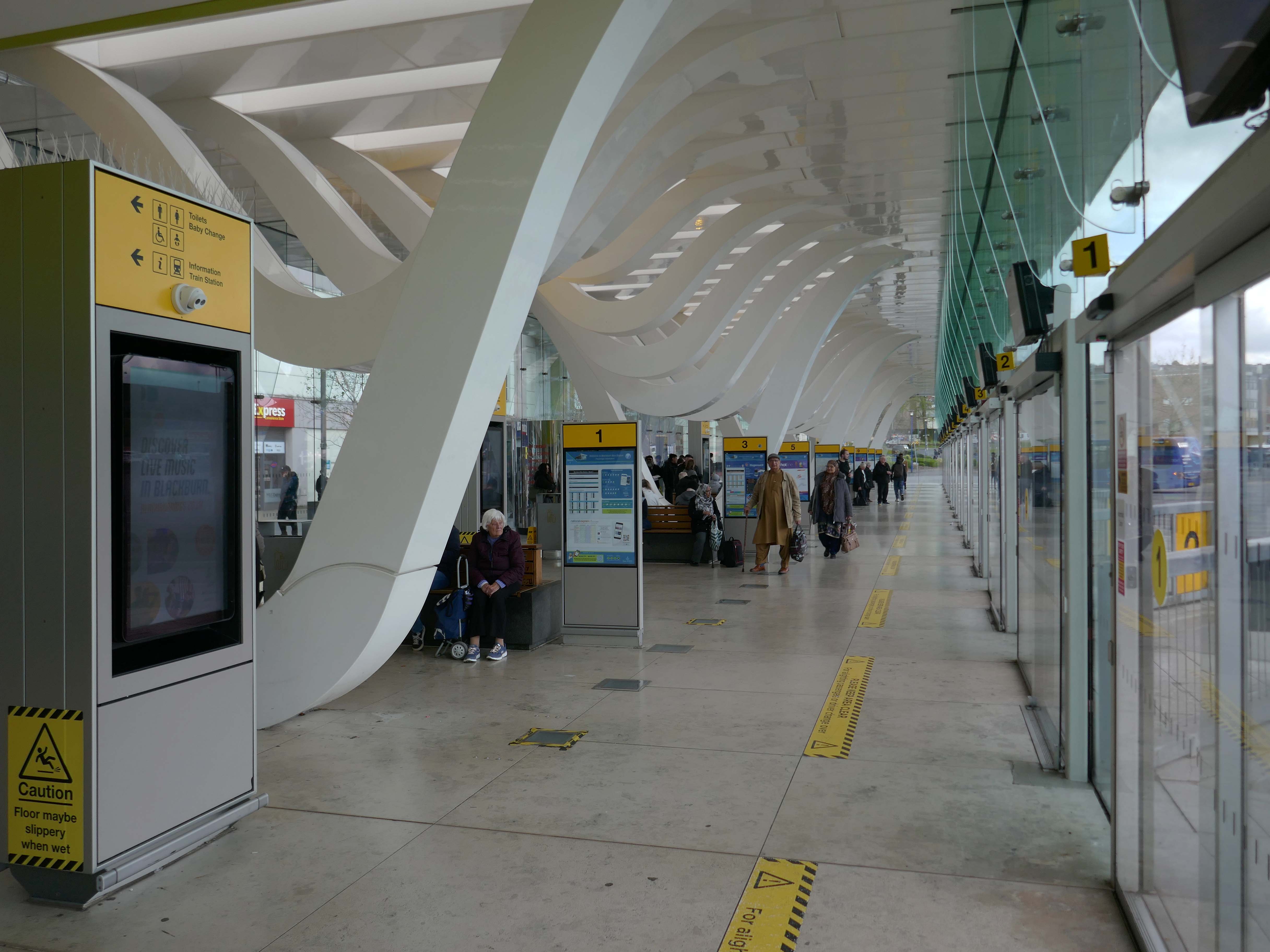
The new Bus Station designed by Capita Symonds – replacing the old bus station.

The outward facing elements of the building are flat and orthogonal. In contrast, the underside of the canopy is free flowing and consists of a number of glazed slots cut in the canopy to allow daylight to penetrate onto the concourse area. Directly below each of the slots is a hanging loop which appears to be pulled down from the canopy to reveal a glazed opening. The composition of these draws inspiration from the cotton weaving looms, and drying cotton bundles, a reference to the town’s industrial past.

There are four loop types (A, B, C & D) which are arranged to alter the scale of the concourse and create a rhythm of peaks and troughs along its length. Loop A is designed to provide support to the whole canopy allowing the canopy to appear as one floating unified element.

Archello

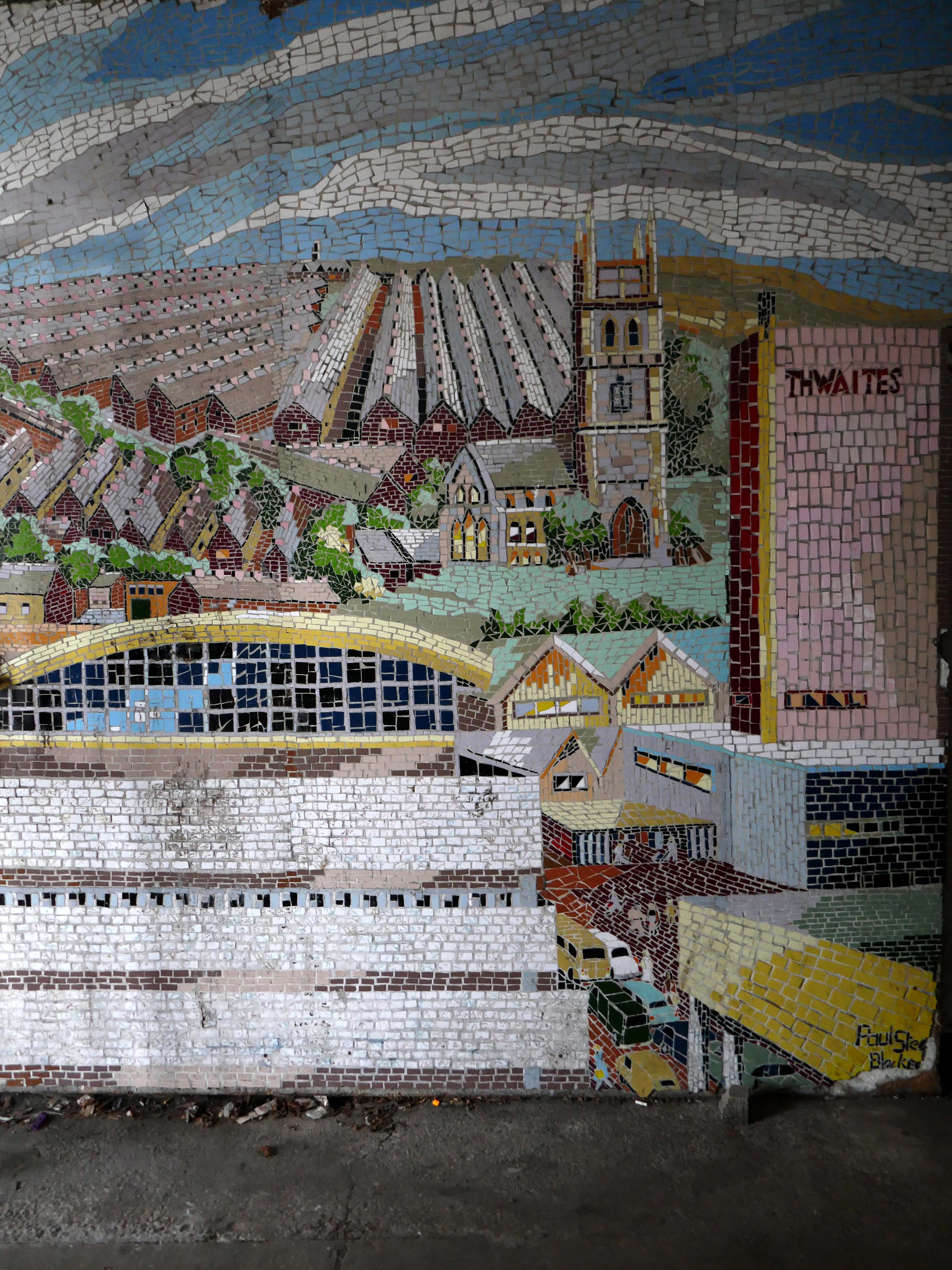
Tucked away this mosaic panorama of the town.

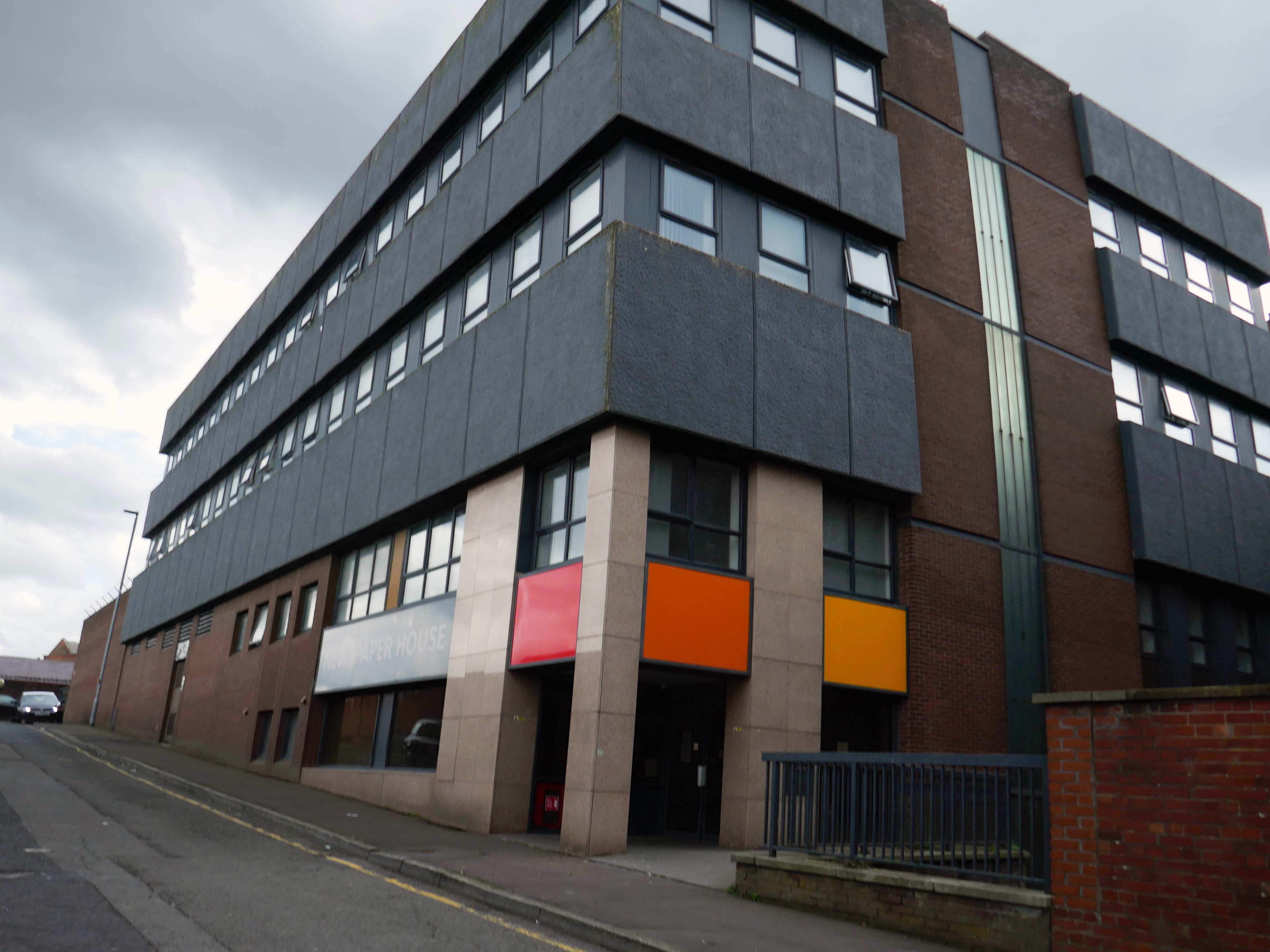
Newspaper House – once the home to the Lancashire Telegraph, converted to apartments in 2017.

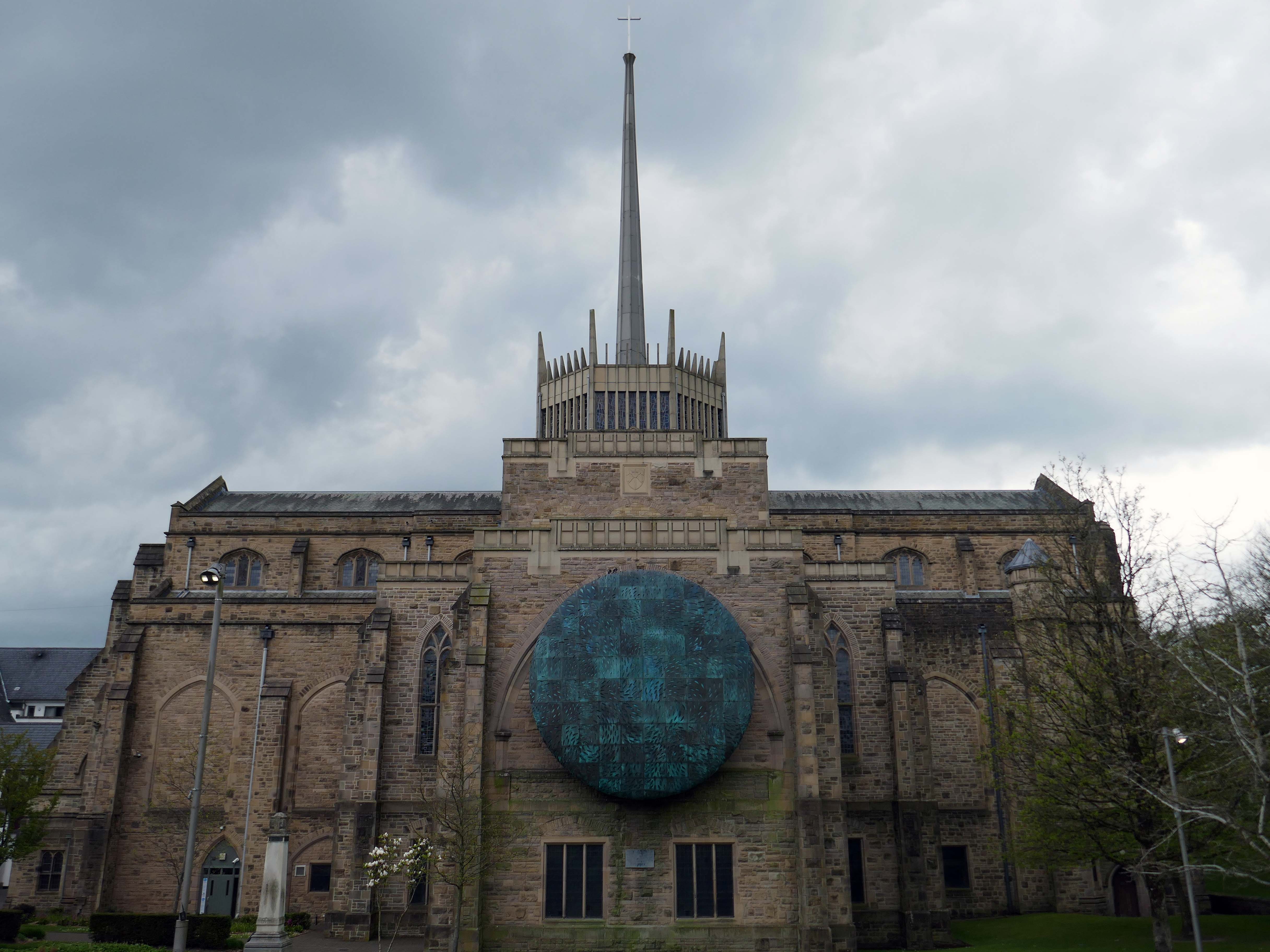
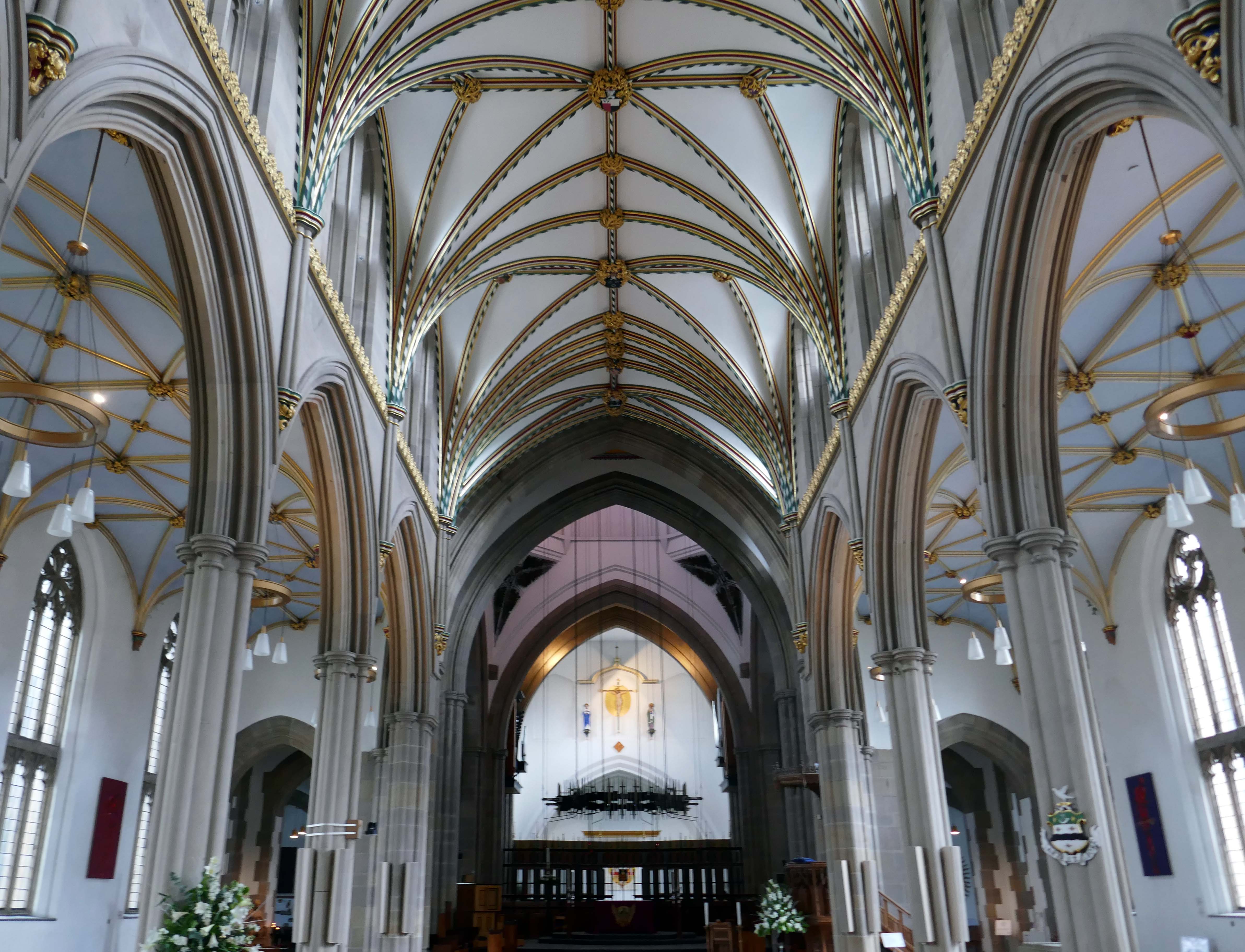
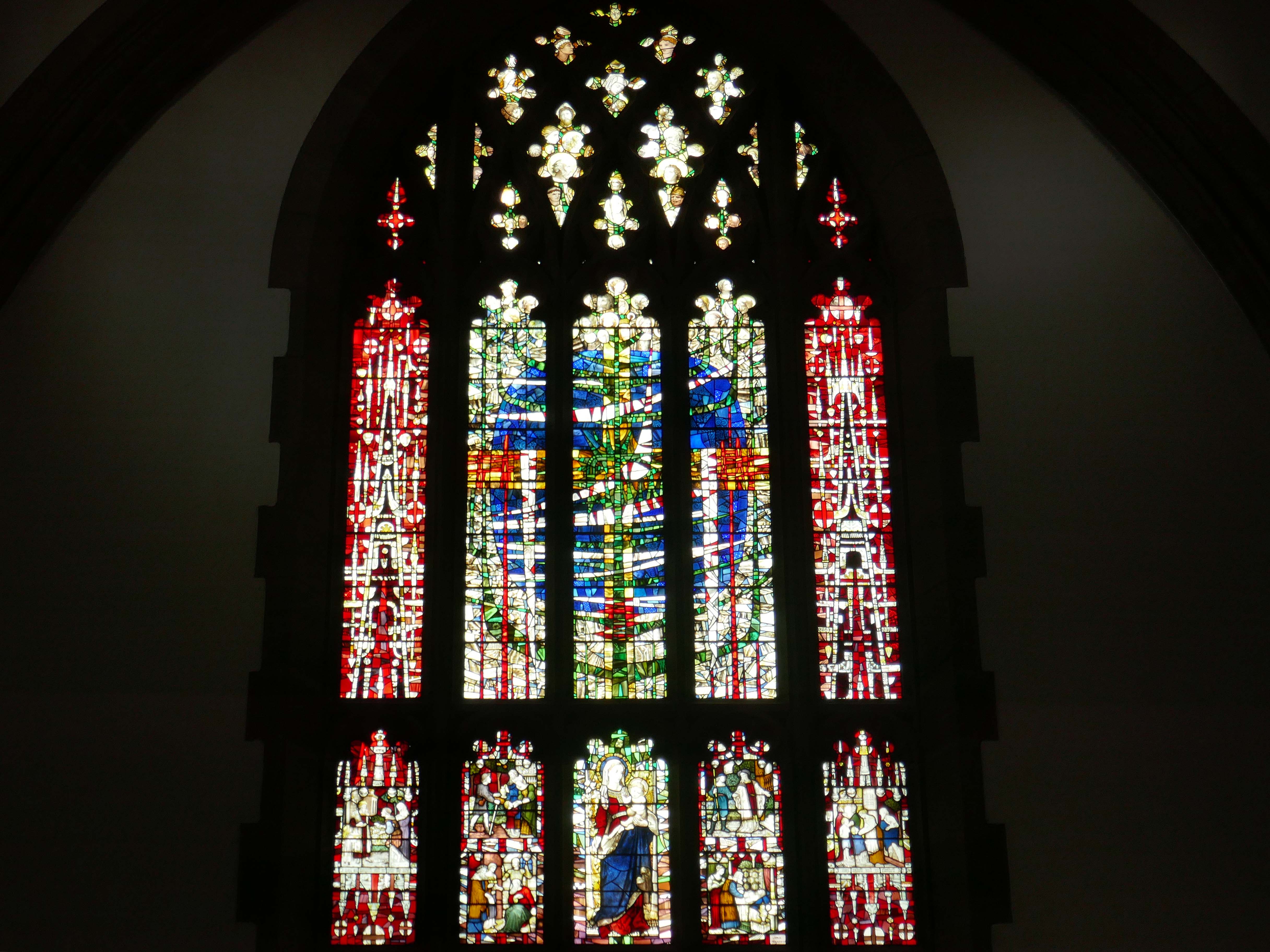
Finally to the Garde II* listed Blackburn Cathedral church – since 1926, formerly parish church, 1820-6 by John Palmer of Manchester.

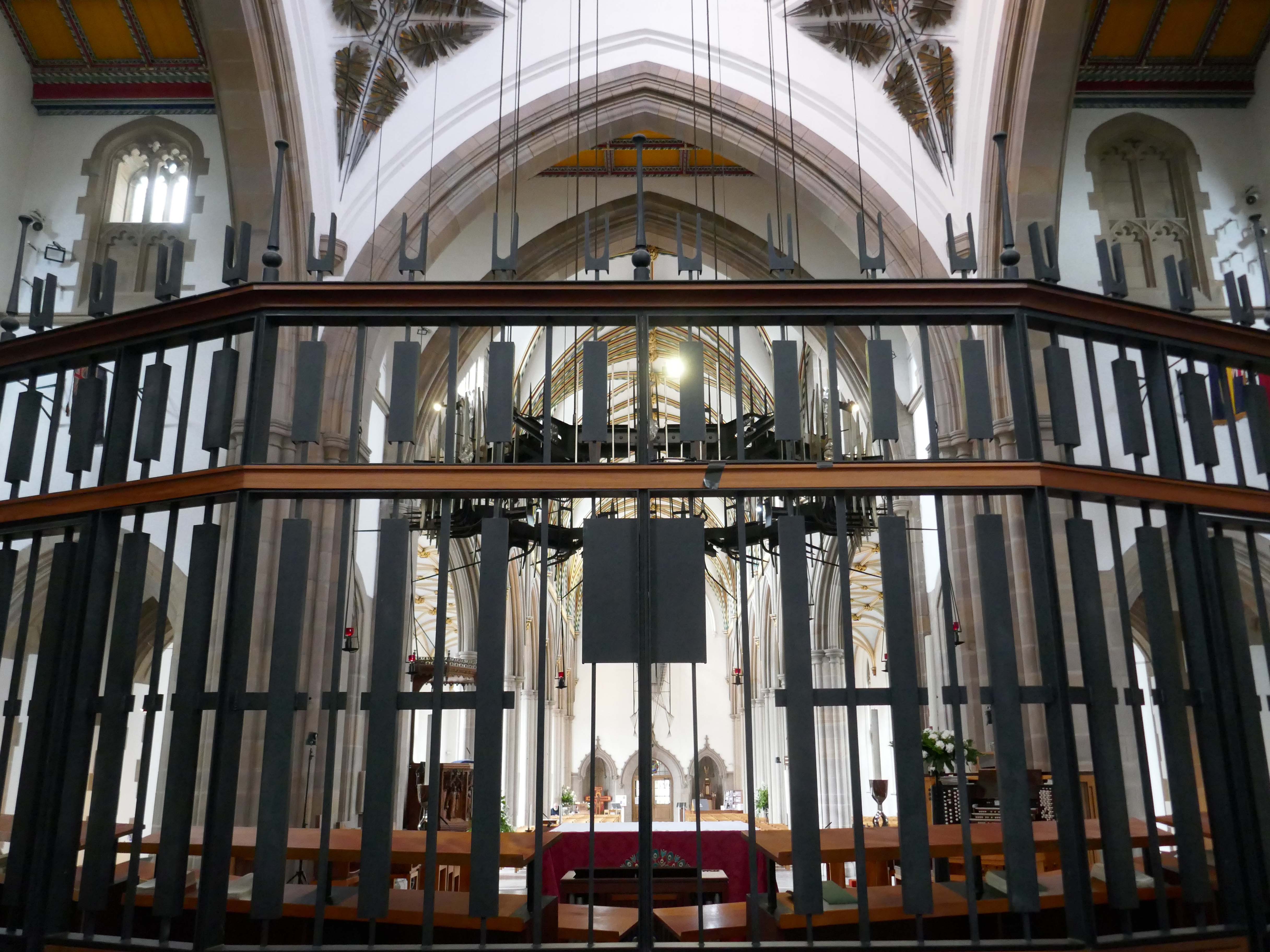
Central concrete corona by Lawrence King 1961 – it was rebuilt in stone by Brian Lowe in 1998.

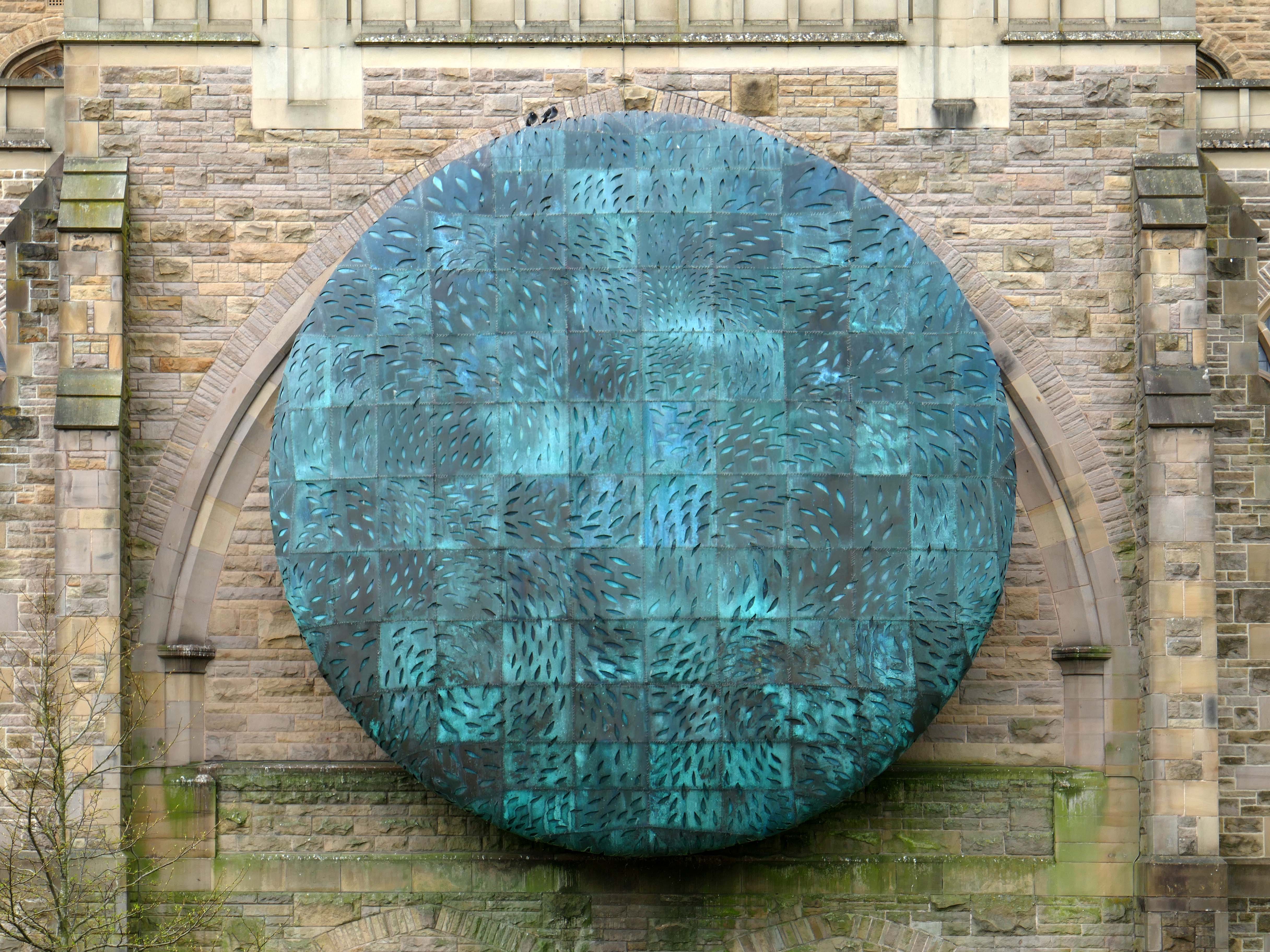
The Healing of Nations in steel and copper by Mark Jalland 2001.

It is a reflection on the opening of chapter 22 of the book of Revelation, new Jerusalem, and ‘the leaves of the tree are for the healing of the nations’.

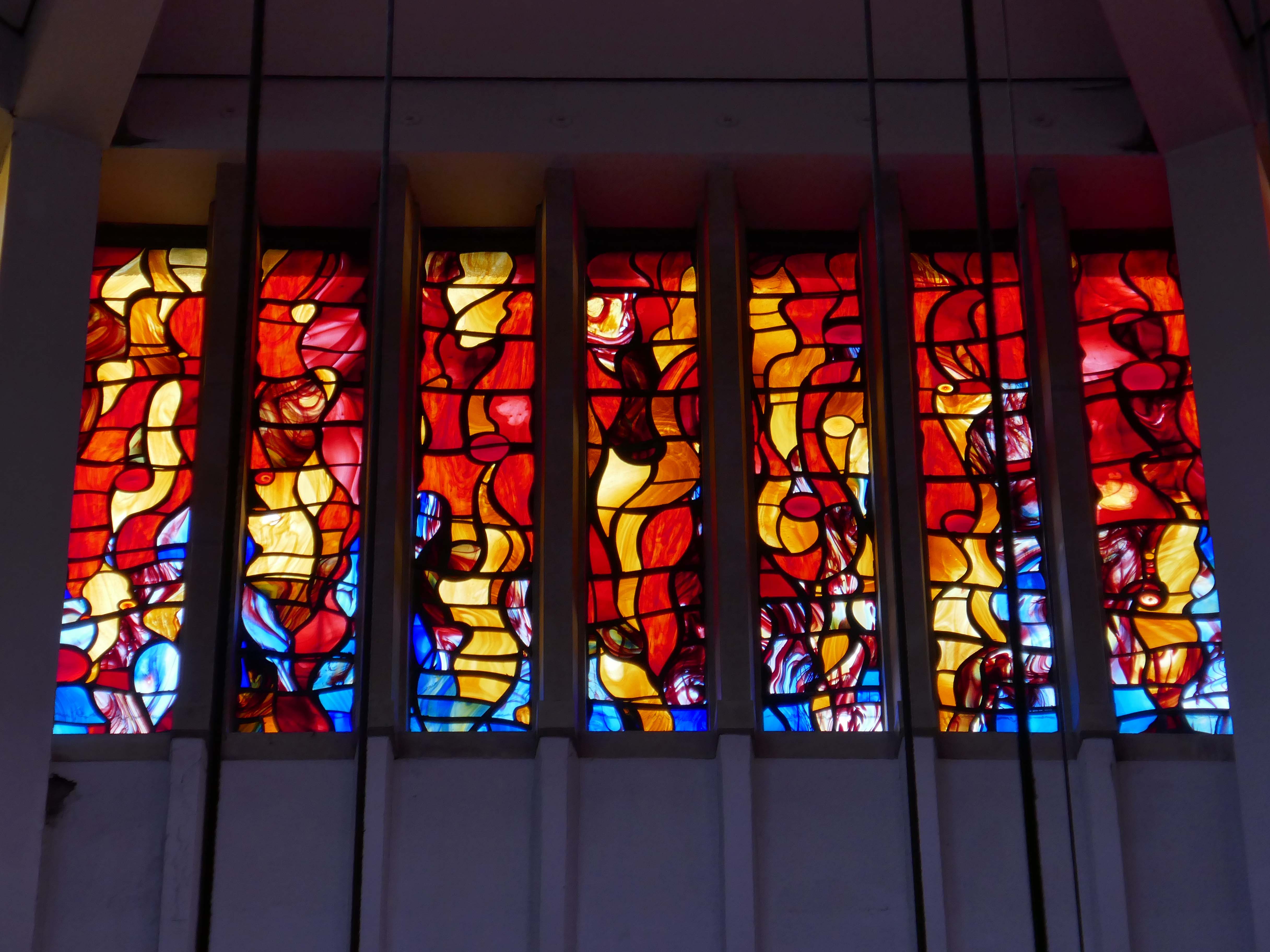
Traditionally a stained-glass window at the east end of a cathedral would reflect a spectrum of light into the building but this sculpture projects the light out in a kaleidoscope of colour reminding us of Jesus the light of the world and the hope that we have in him. 

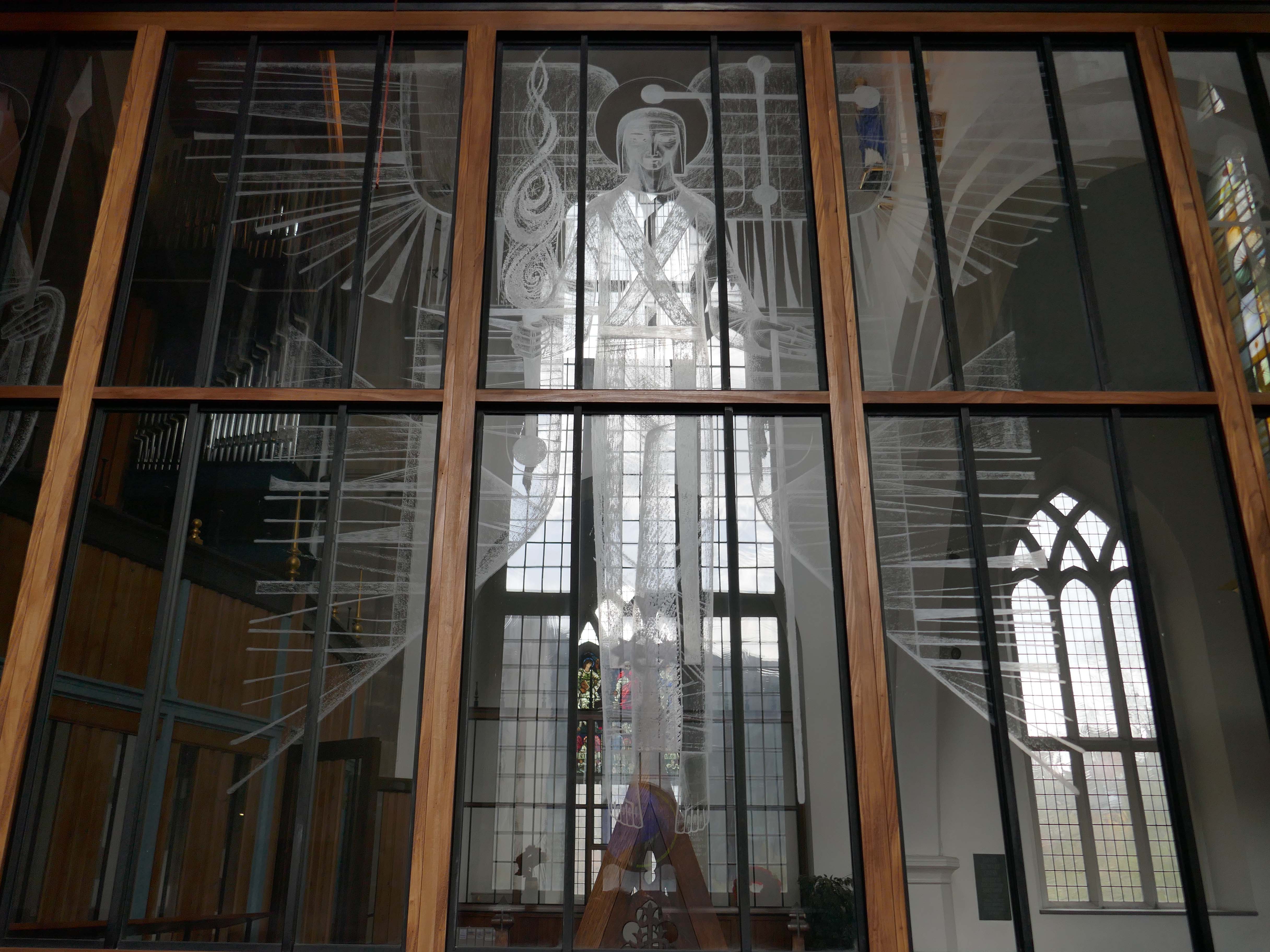
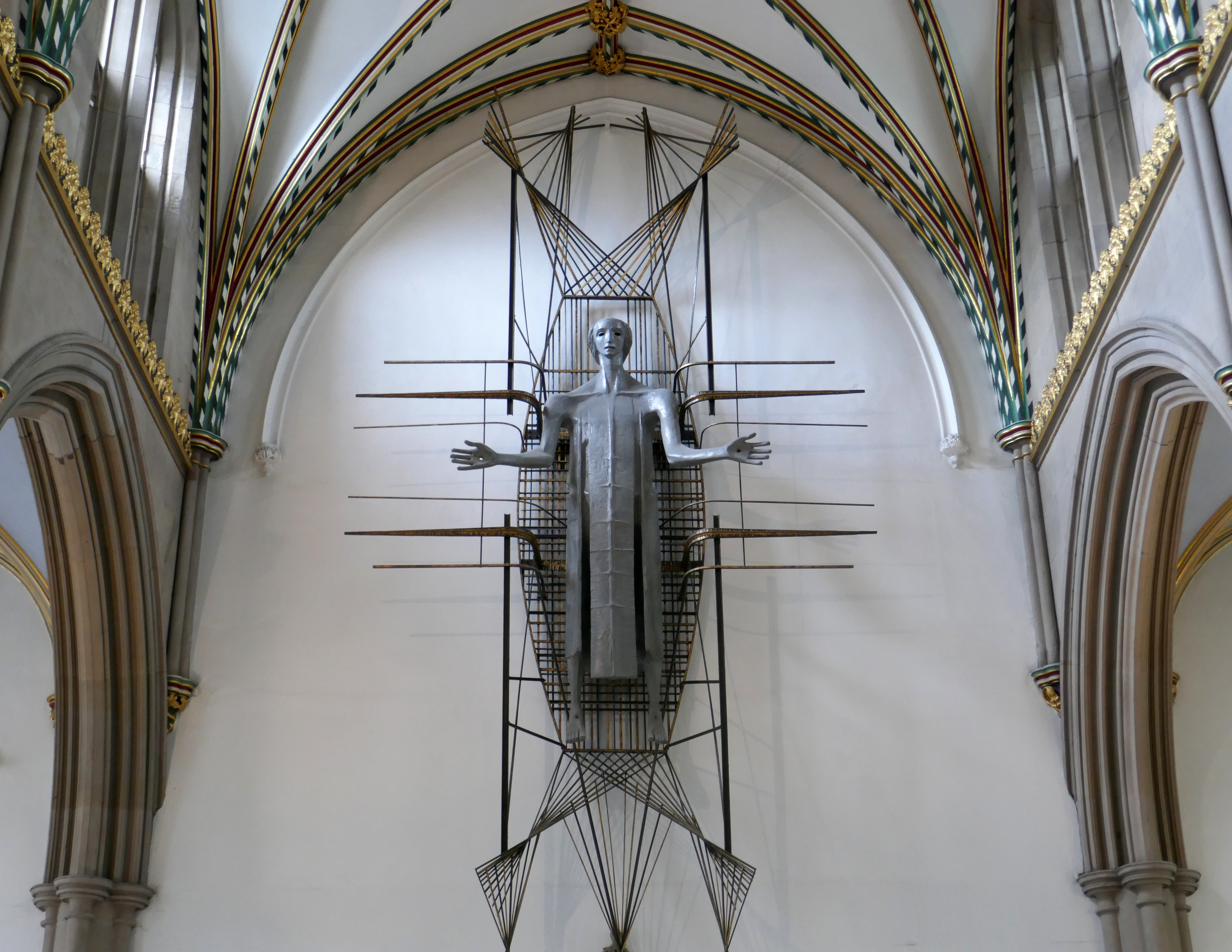
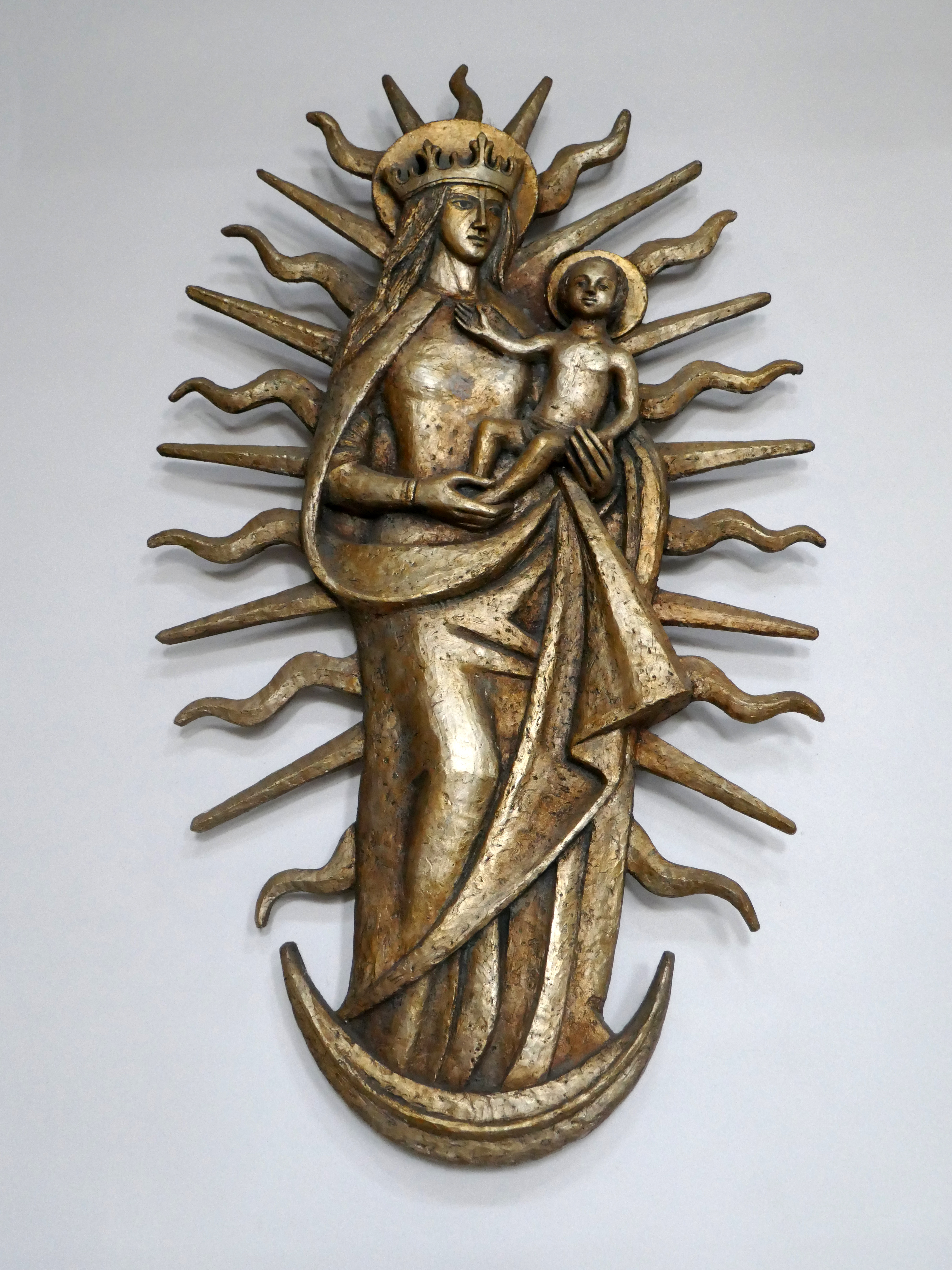
Annunciation and Christ in Majesty sculptures by Siegfried Pietsch 1965.

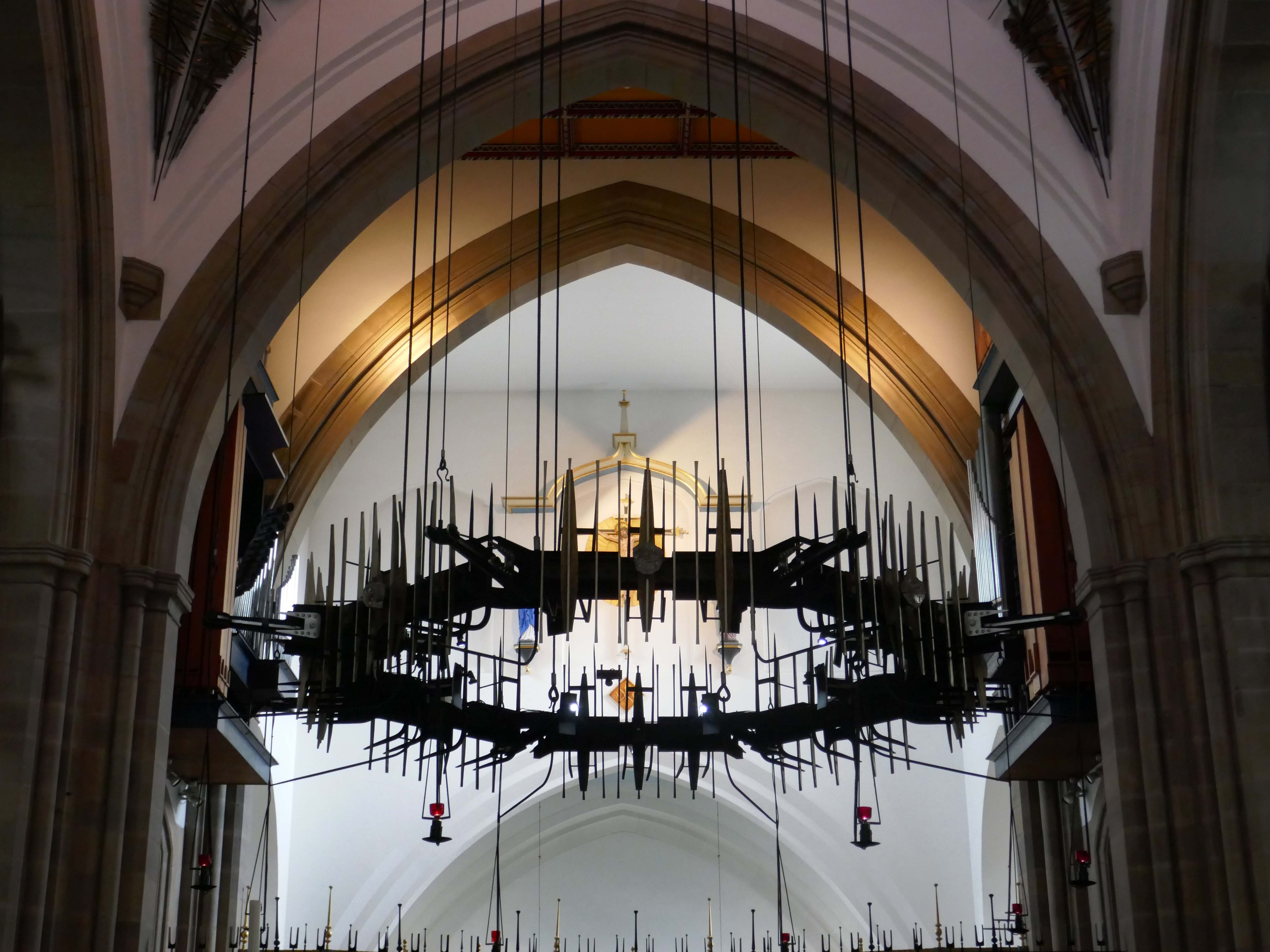
Crown of Thorns by John Hayward.

Lantern stained glass 1999 by Linda Hadfield, formerly Walton.

Further work by John Hayward.

Josefina de Vasconcellos

Tram Trip To Bury

I was cordially requested to produce tram based walk, by the good folk at the modernist – travelling from Victoria Station to Bury. Alighting at each stop and seeing what could be seen, by way of modern buildings along the byways.

By the way, I do have previous experience, having undertaken a similar task travelling to Ashton.

So I set off as instructed, clutching my GMPTE senior concessionary travel pass.

Queens Road

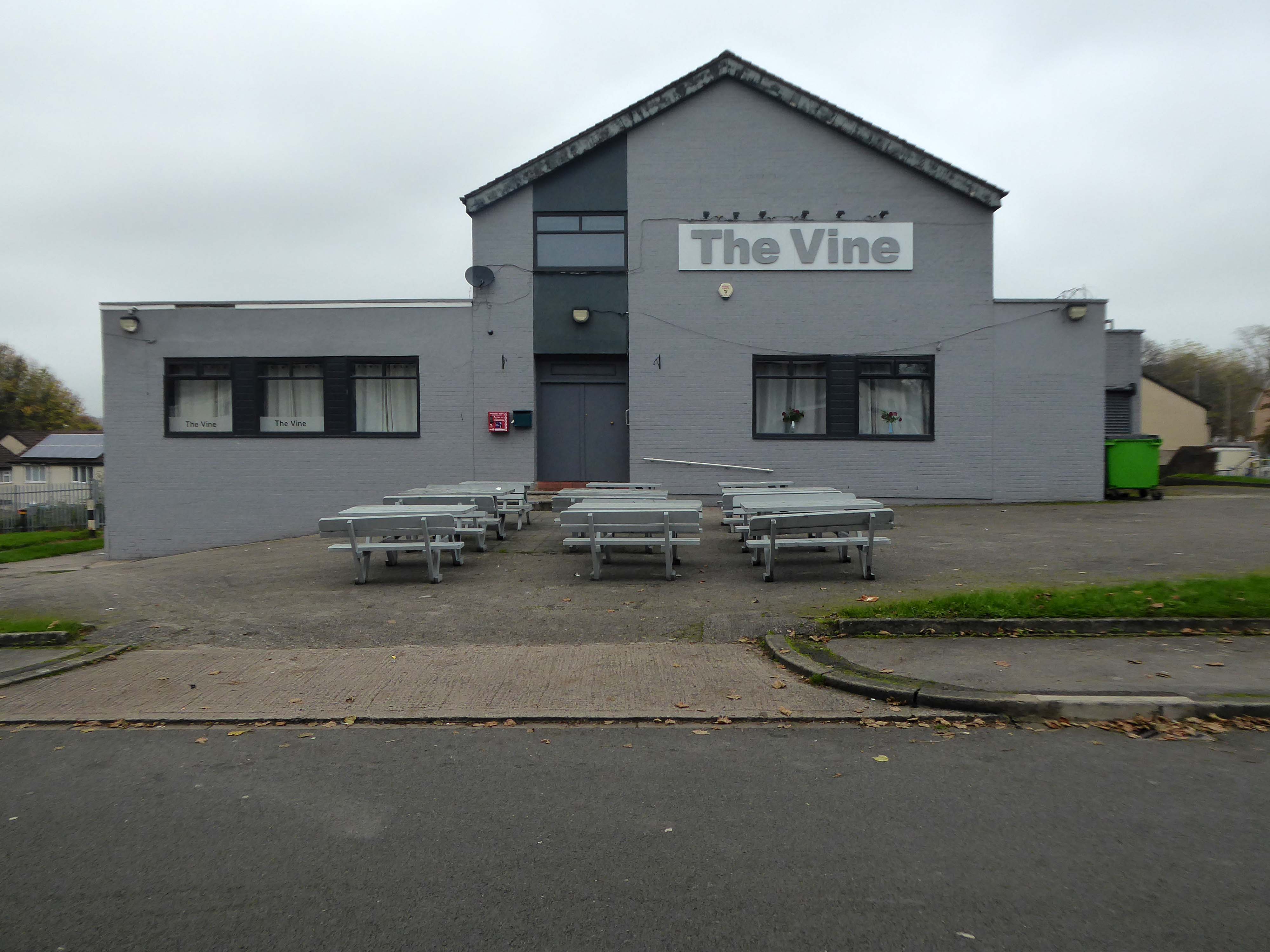
Turn right on leaving the station, right then left – you have reached The Vine.

Glendower Dr, Manchester, Greater Manchester M40 7TD.

Head for Rochdale Road and turn right back toward the city centre, you have reached Eastford Square.

Manchester M40 7QT

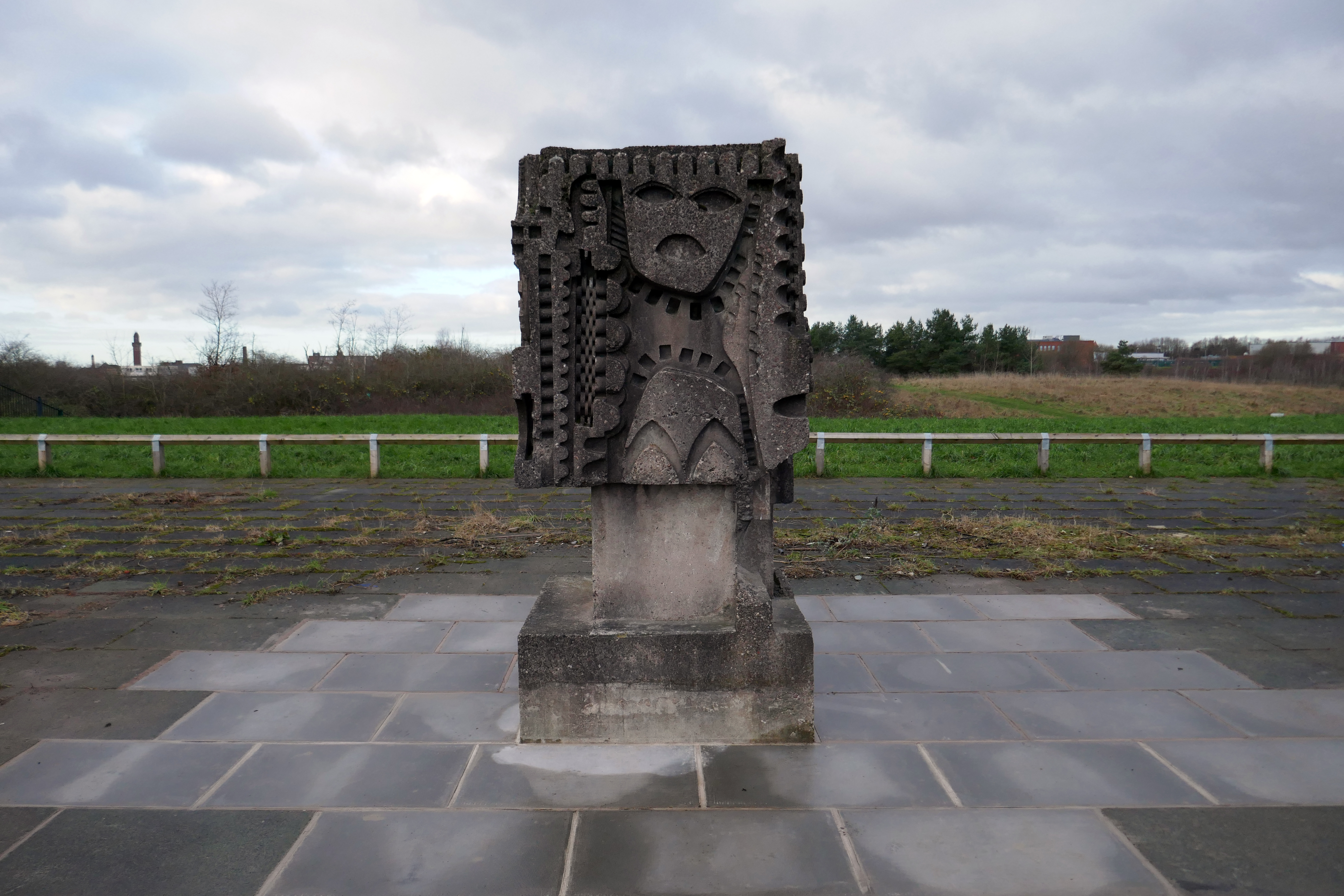
Formerly home to homes and shops – currently home to the William Mitchell Totem.

Abraham Moss

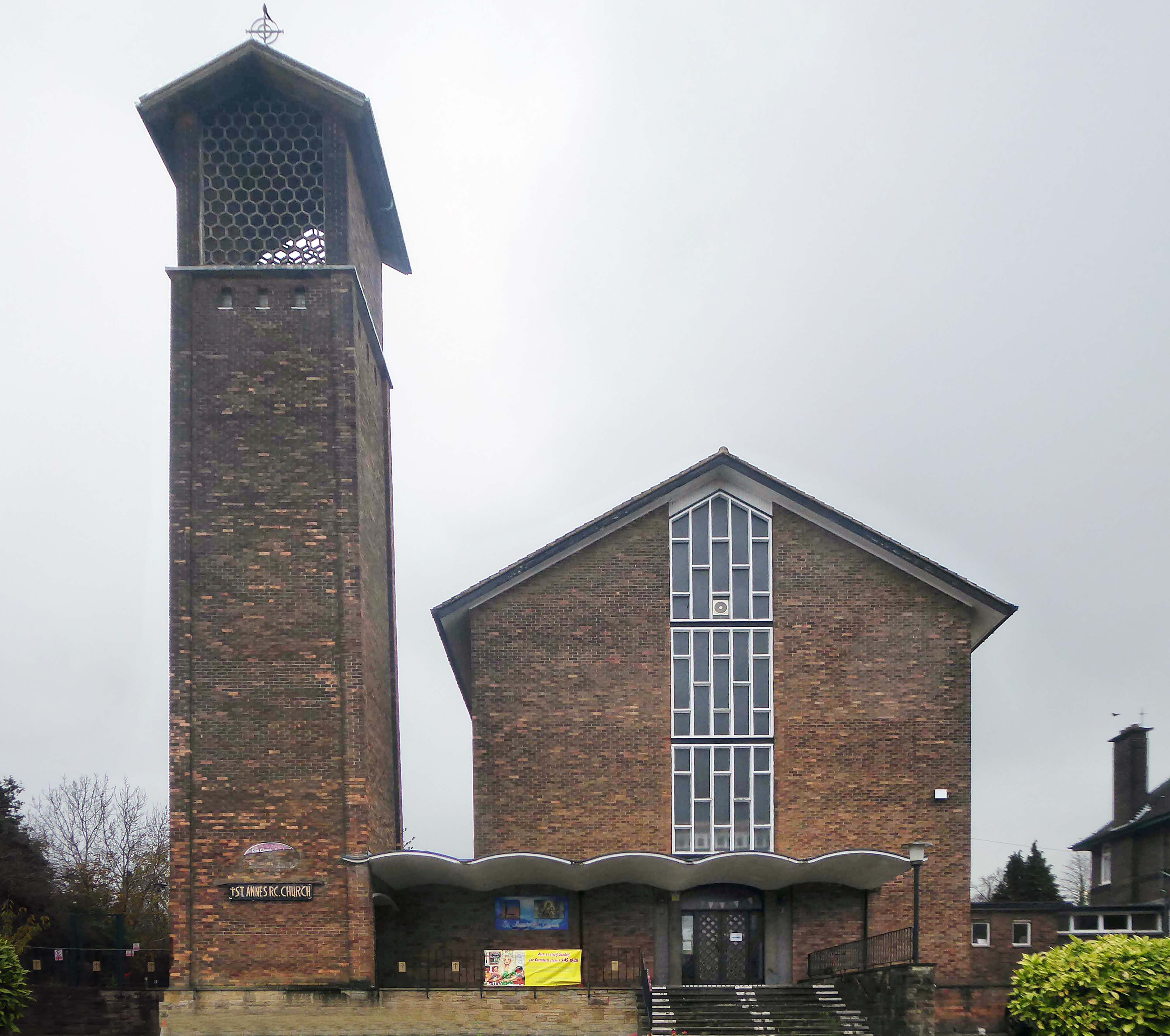
Head toward where you will find St Annes RC Church – Architect: Greenhalgh & Williams 1958

Crescent Rd, Crumpsall, Manchester M8 5UE

Crumpsall

Turn right out of the station onto Crumpsall Lane

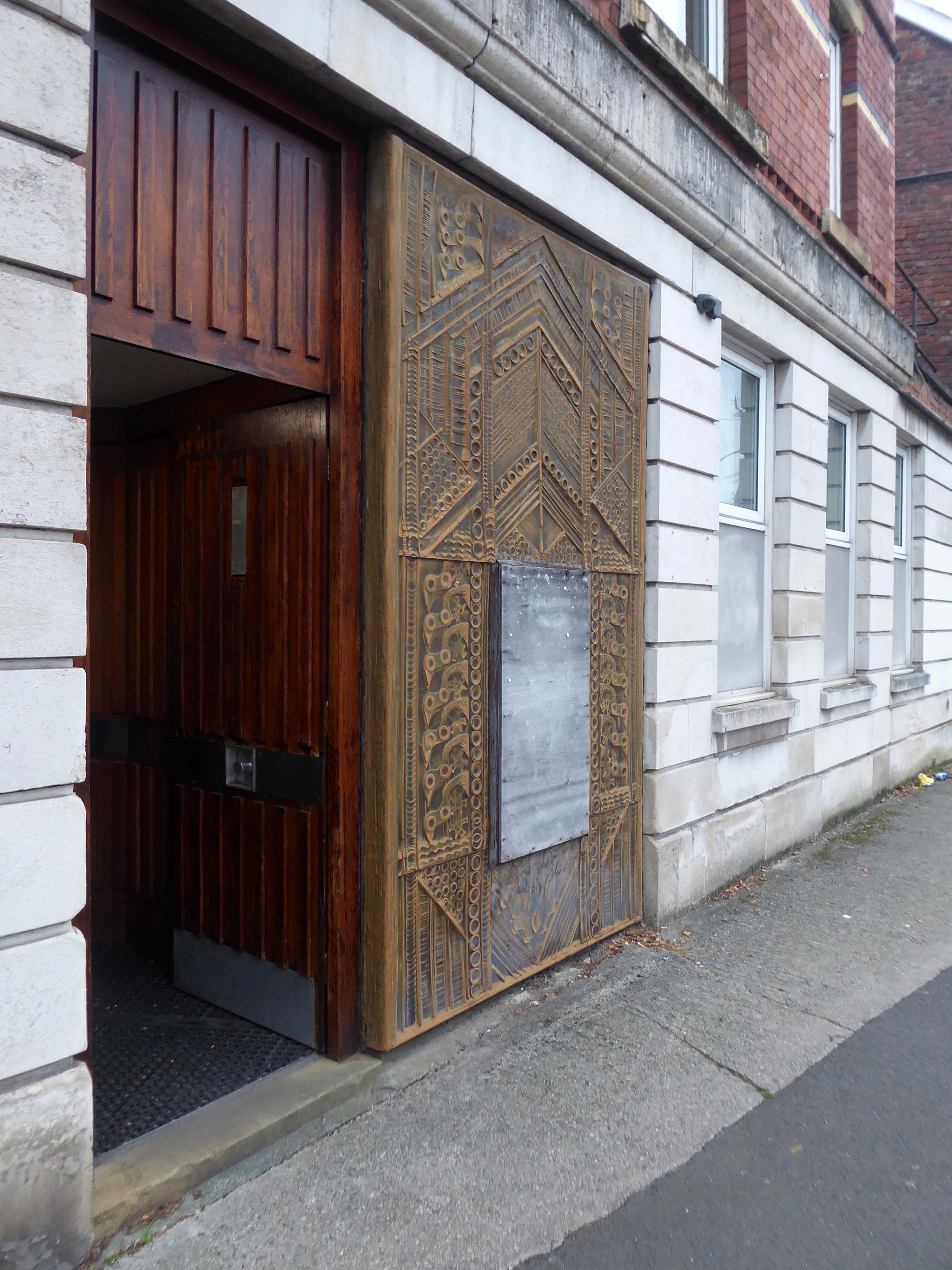
Former District Bank latterly Nat West – decorative relief and door.

Currently Greater Manchester Immigration Aid Unit

1 Delaunays Rd, Crumpsall, Manchester M8 4QS

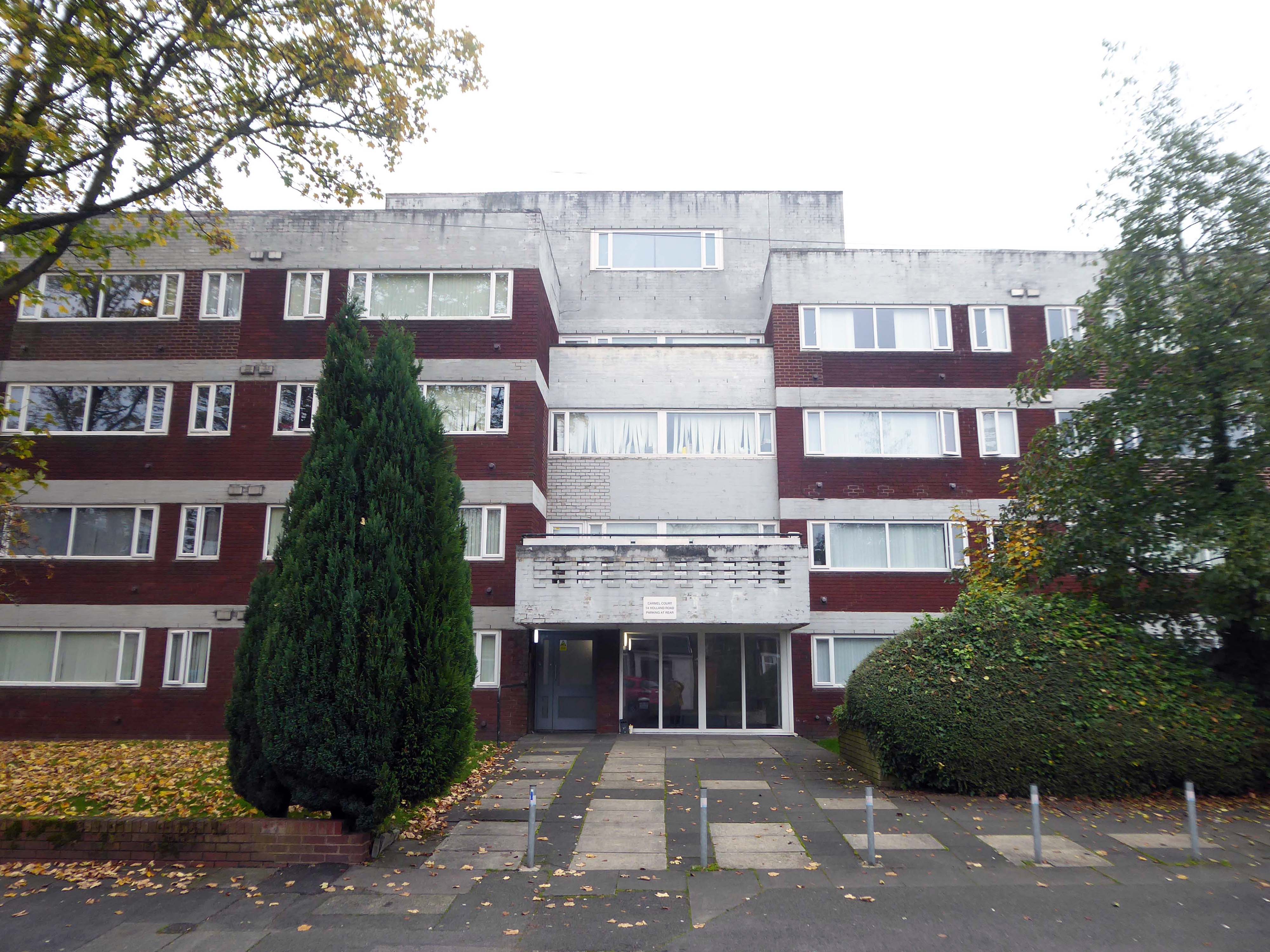
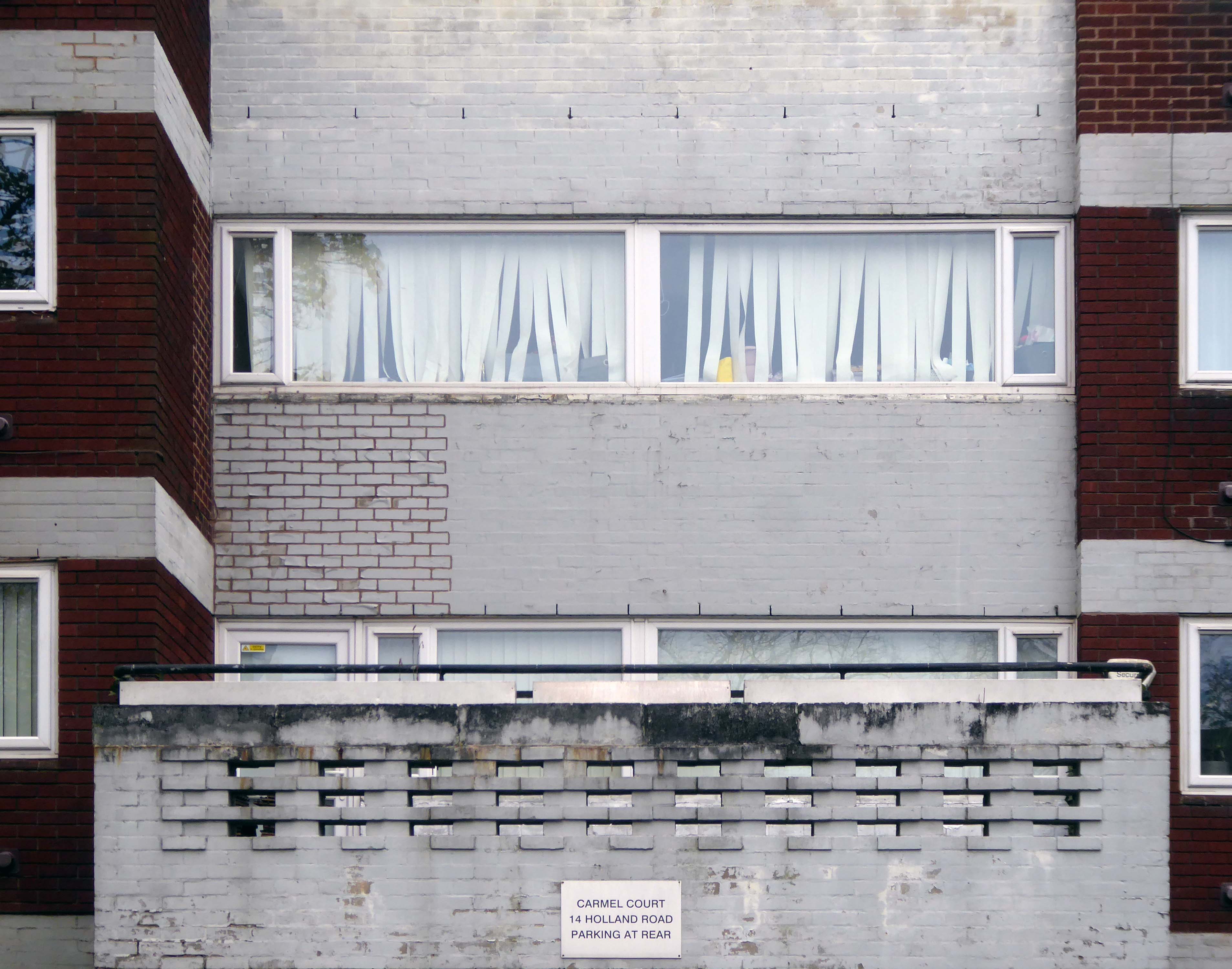
Carmel Court

Turn back along Crumpsall Lane past the station until you reach Holland Road on your right.

14 Holland Rd, Crumpsall, Manchester M8 4NP

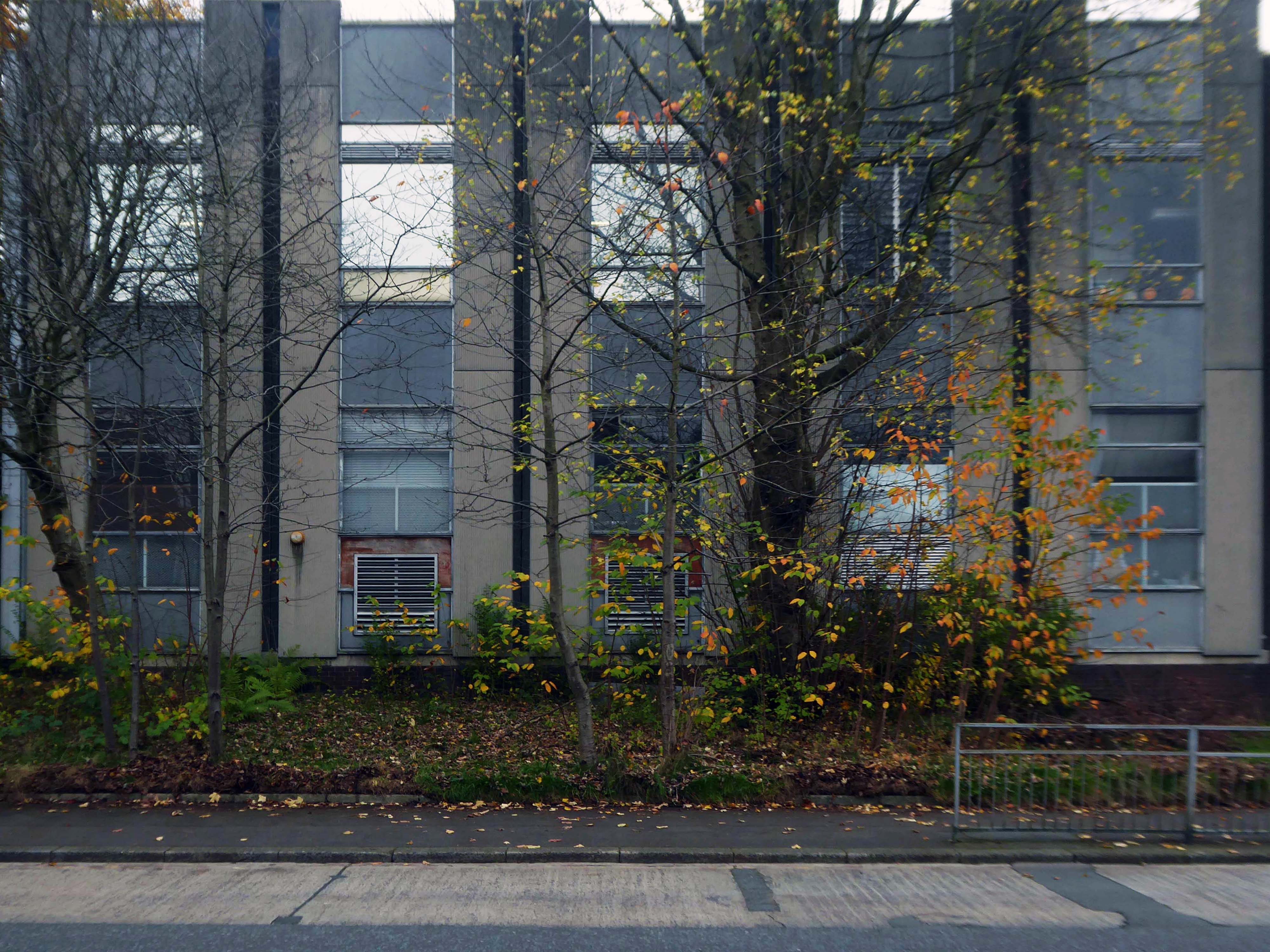
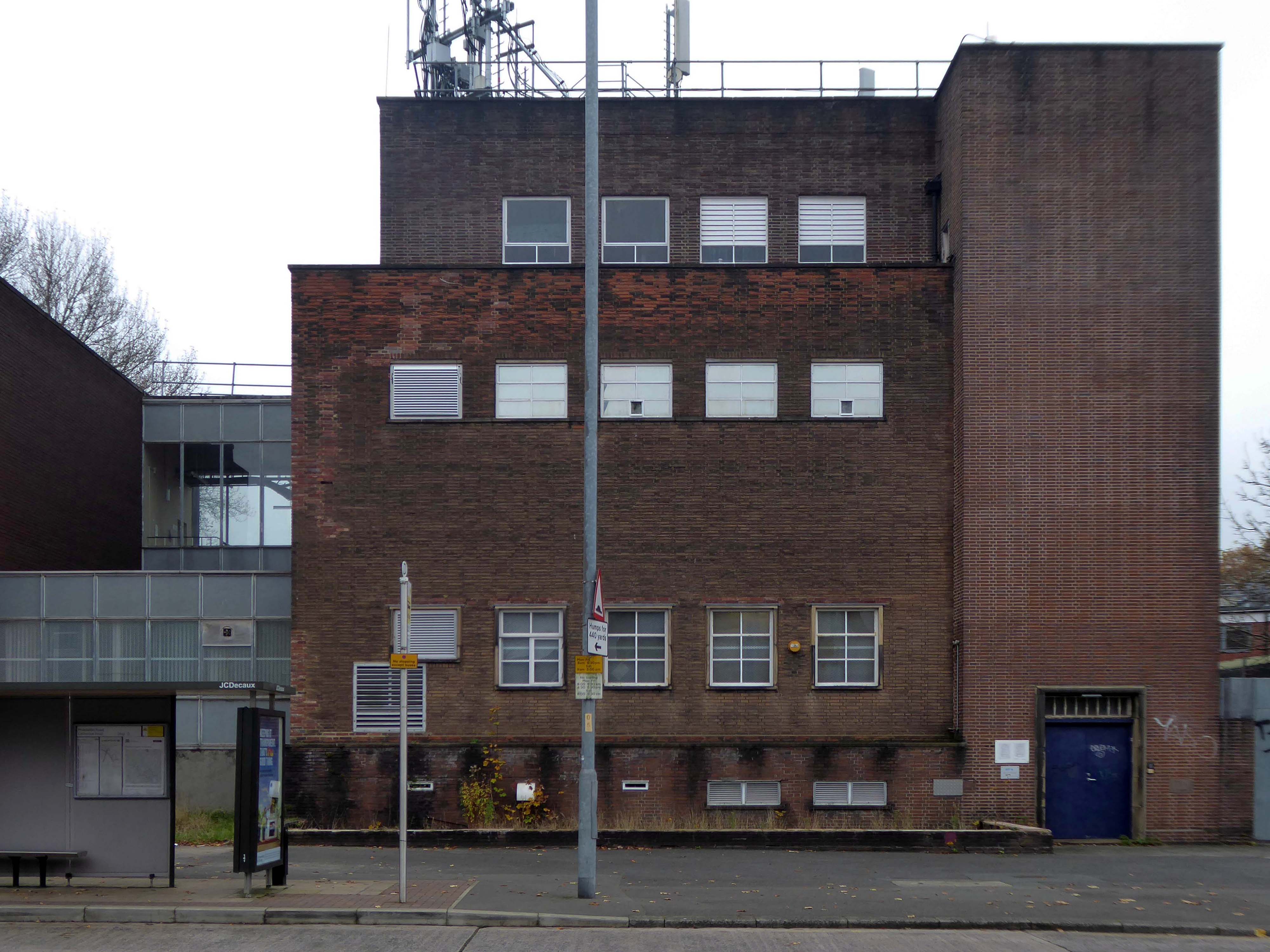
Onto Middleton Road and turn left where you will find the Telephone Exchange.

Middleton Road, Manchester. M8 5DS

Back track along Middleton Road toward Bowker Vale station.

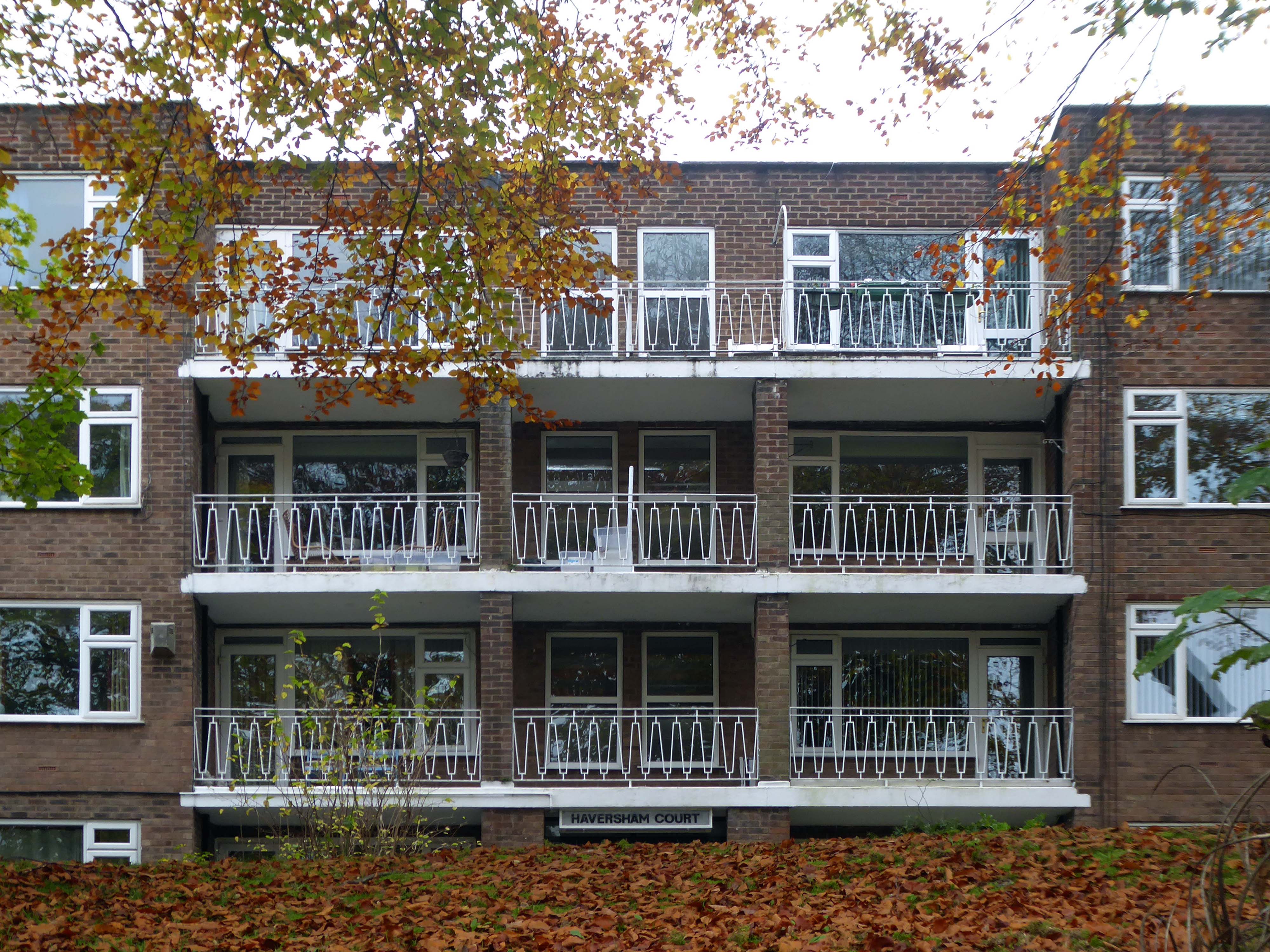
There are several post-war residential low rise block along the route.

Haversham Court

Middleton Rd, Crumpsall, Manchester M8 4JY

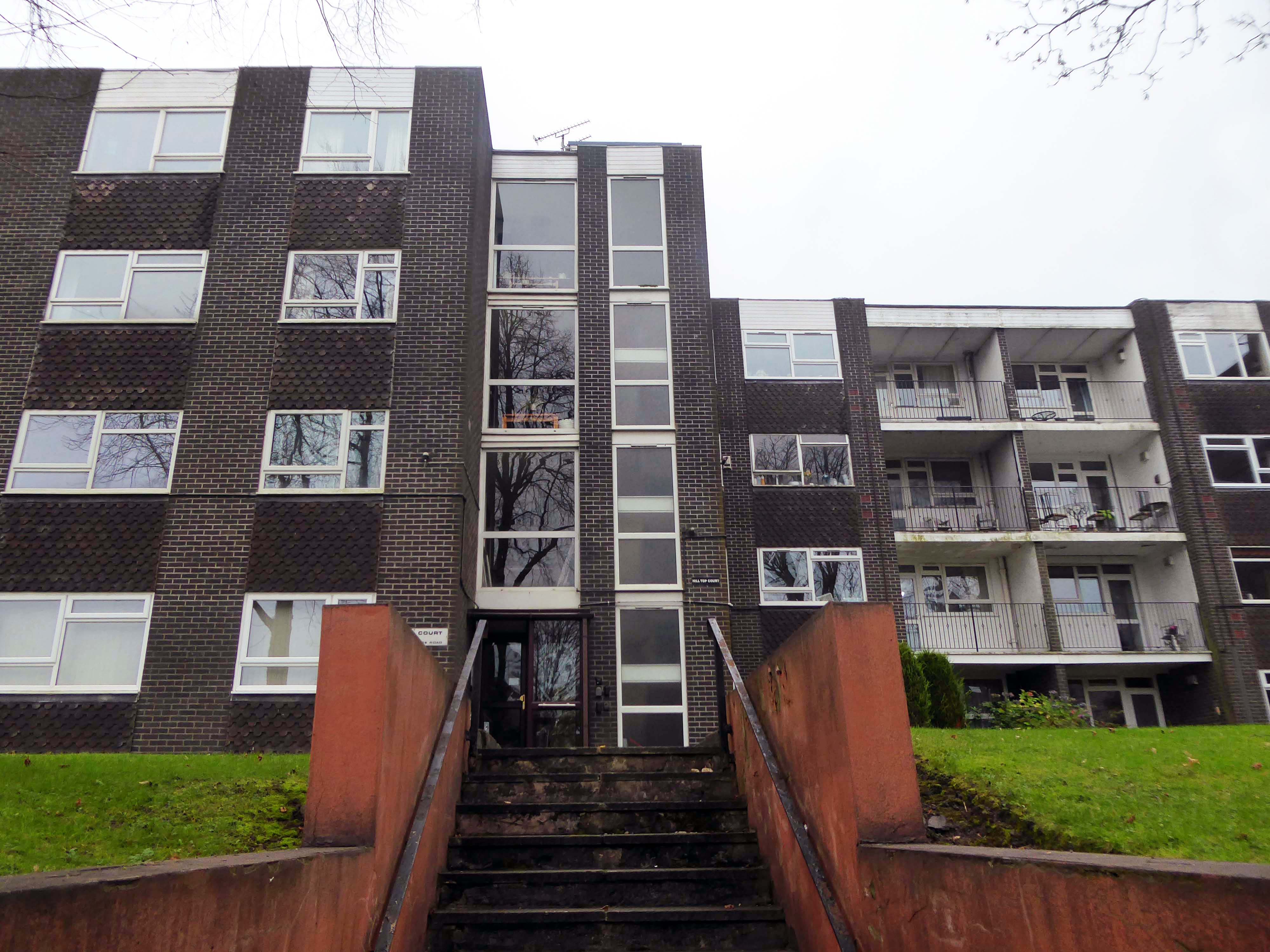
Hilltop Court – just off to the left of Middleton Road.

Brooklands Road, Crumpsall, Manchester M8 4JH

Bowker Vale

Heaton Park

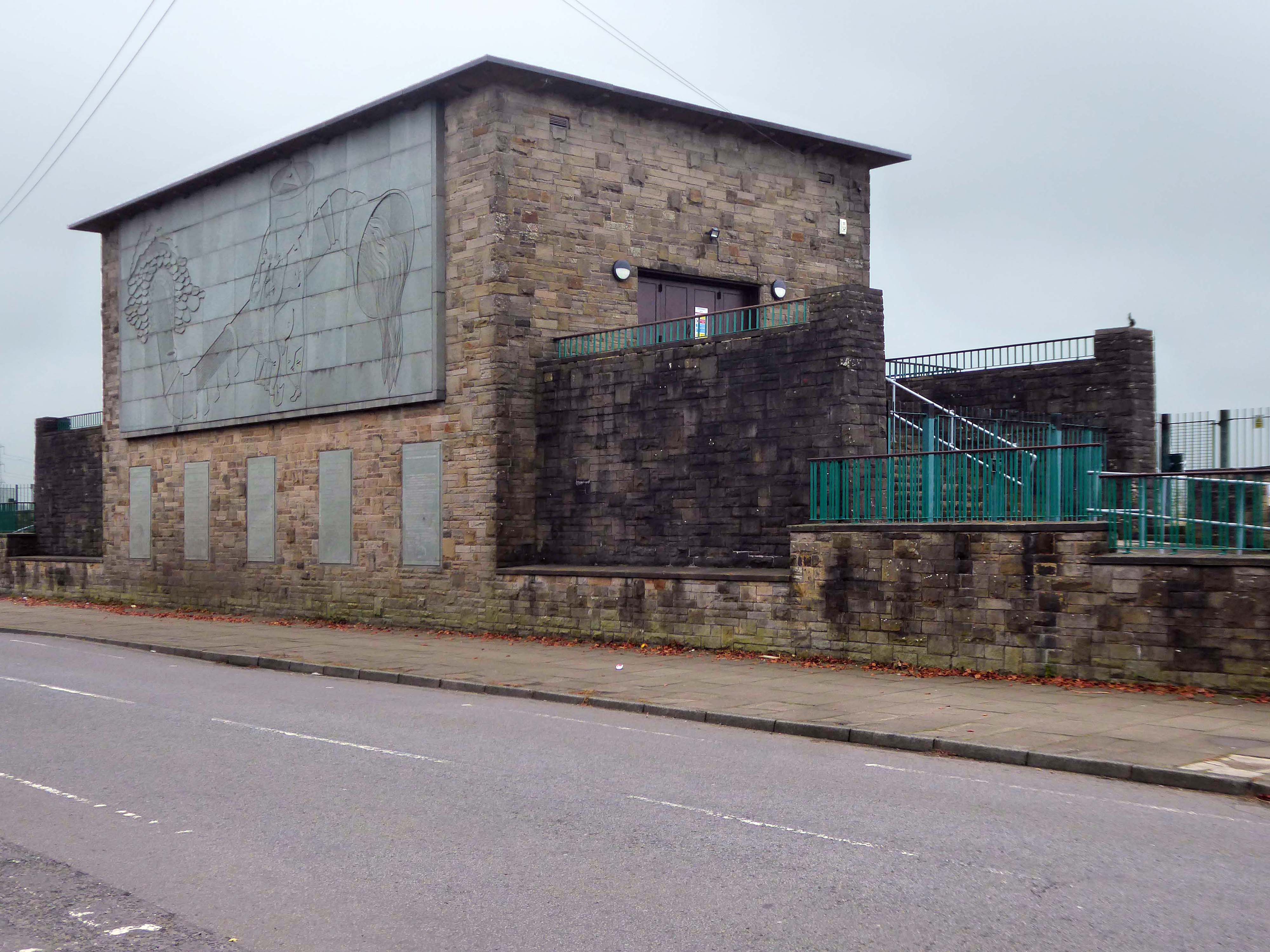
A good twenty minute walk from the station to Heaton Park Pumping Station.

Turn left from the station along Bury Old Road until you reach Heywood Road on your right.

Heywood Road, Prestwich, Manchester M25 2GT

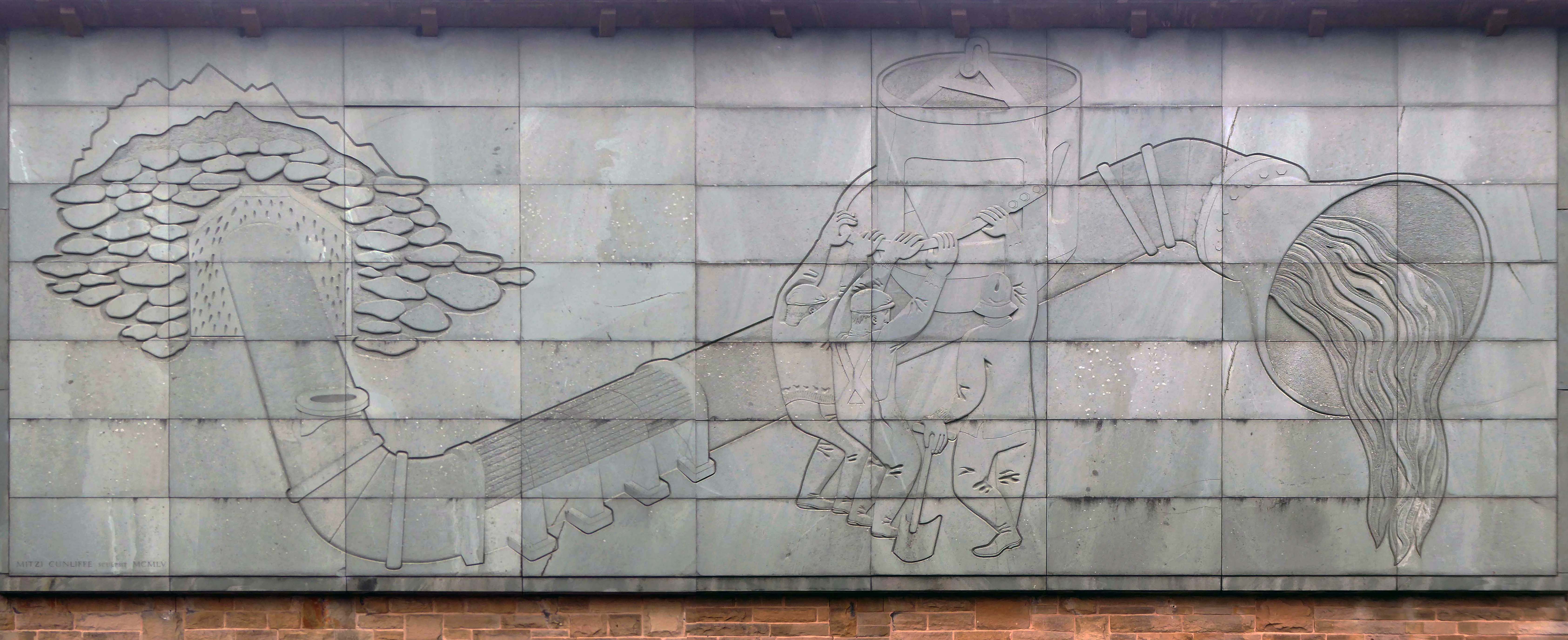
1954-5 by the Manchester City Architect’s Department, Chief Architect Leonard C Howitt, for the Manchester Corporation Waterworks. Alan Atkinson, engineer. Incorporates large relief by Mitzi Cunliffe, signed and dated 1955.

Prestwich

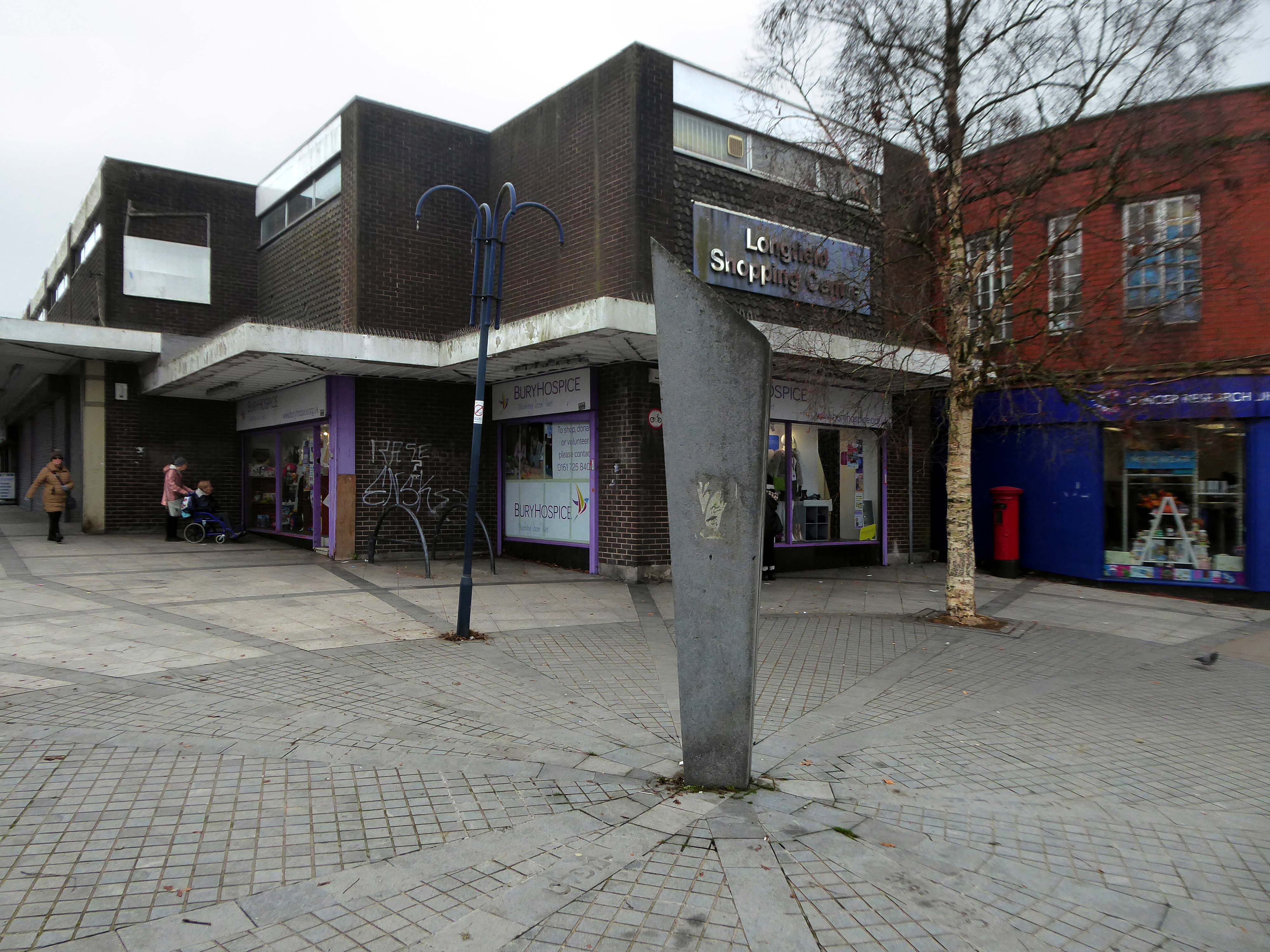
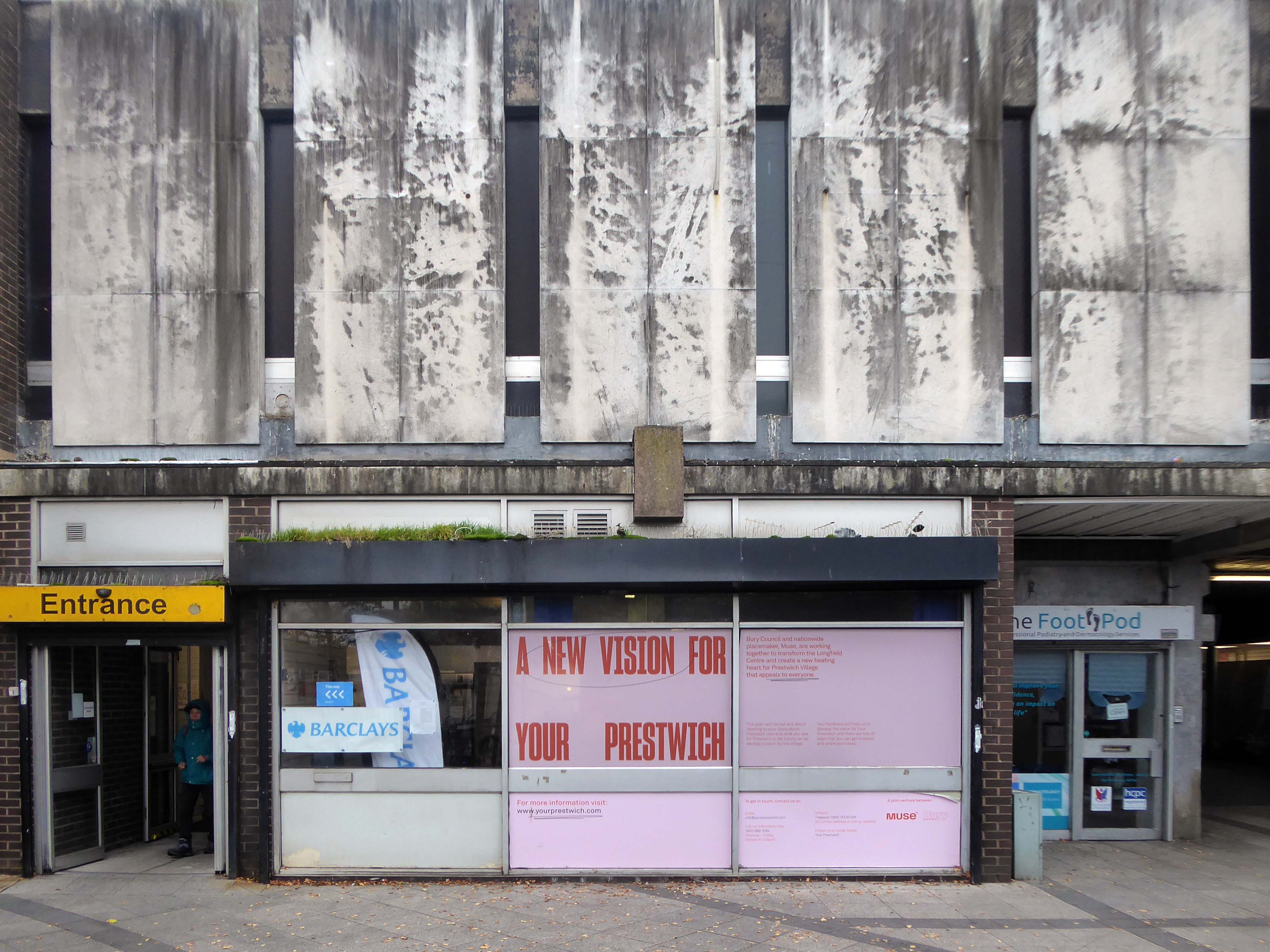
Development by architects Leach Rhodes Walker.

Longfield Shopping Centre

Prestwich Library

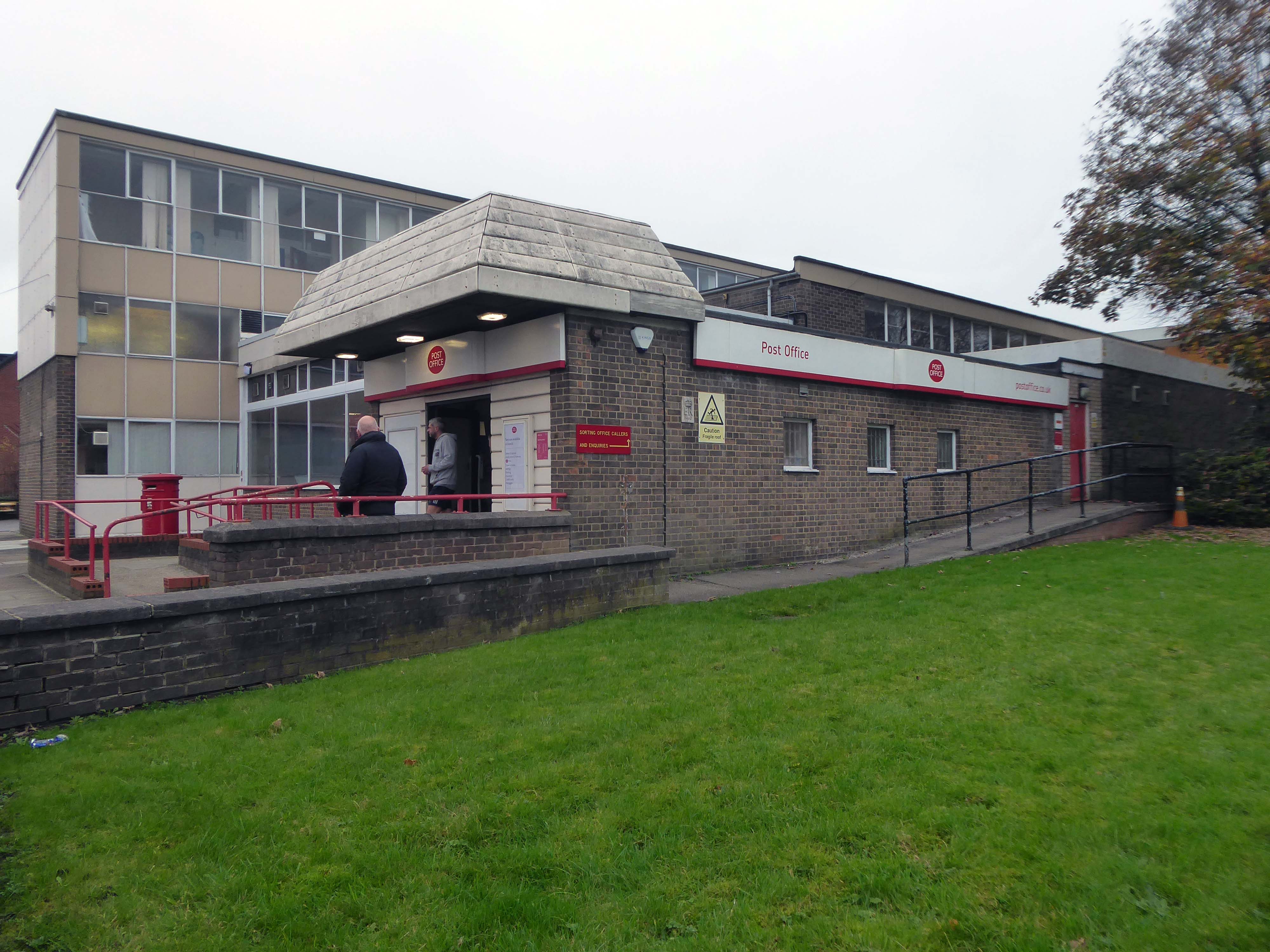
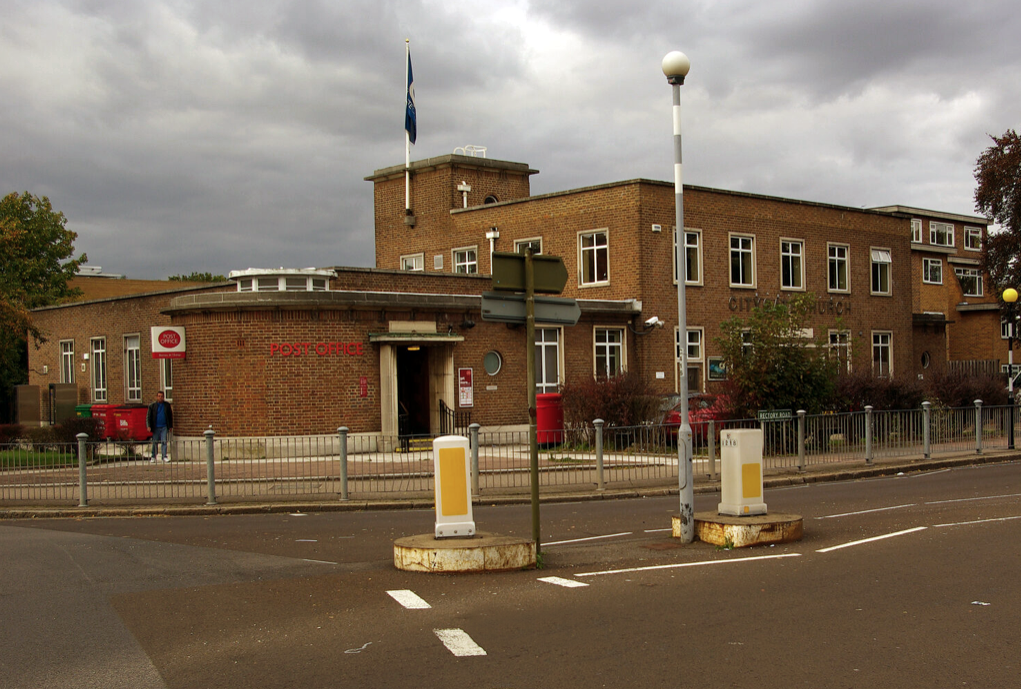
Post Office

After months of public consultation, the joint venture has firmed up its proposals for the redevelopment of the Longfield Centre and is aiming to be on site before the end of the year.

Muse and Bury Council have submitted a hybrid application to transform six acres of Prestwich town centre.

Place North West

Besses o’ th Barn

Whitefield

Almost directly facing the station along Bury New Road.

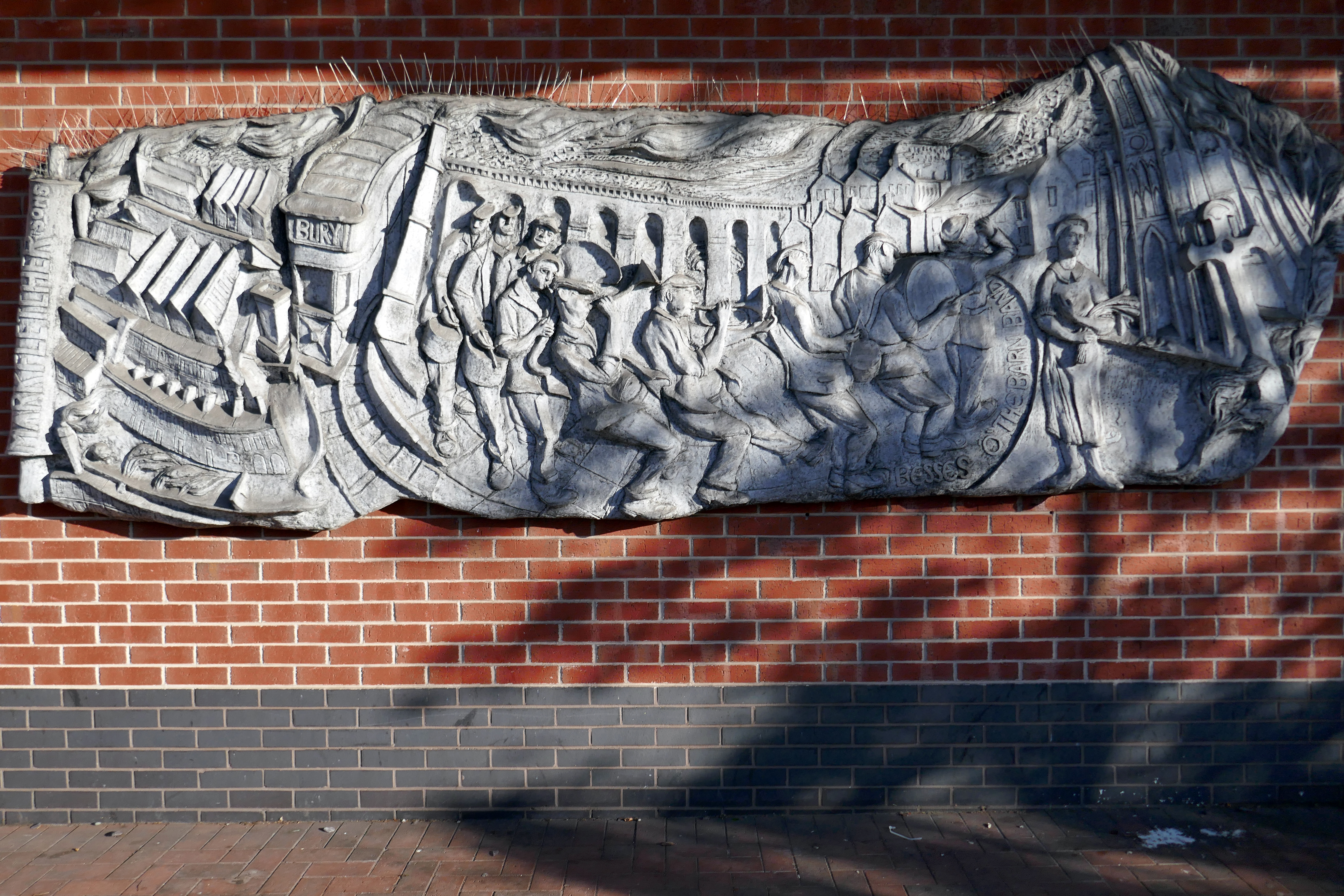
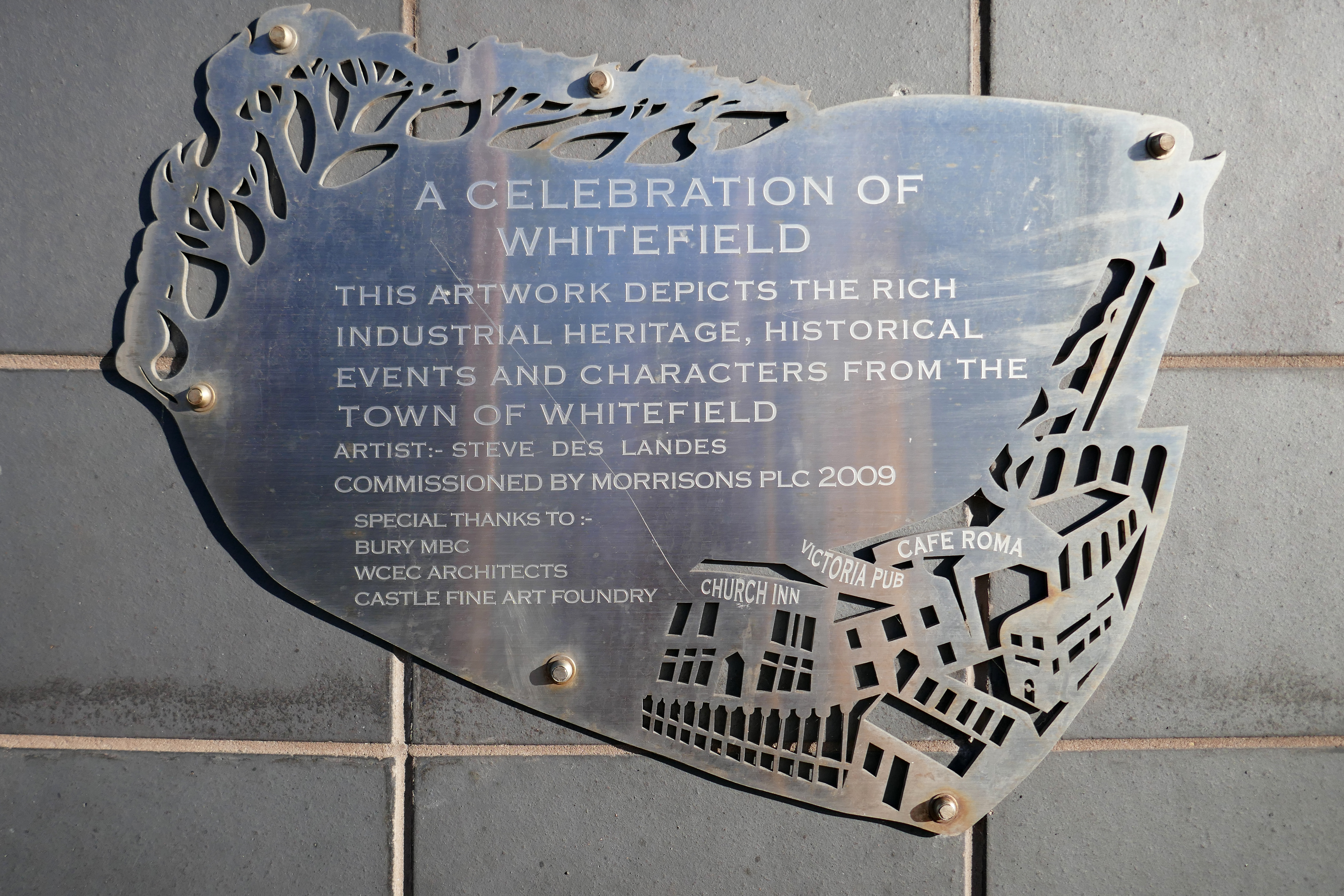
Morrison’s – a Celebration of Whitefield relief Steve des Landes 2009.

5 Stanley Road Whitefield Manchester M45 8QH

Community Fire Station

Bury New Rd, Unsworth, Manchester M45 7SY

Radcliffe

Turn left out of the station onto Church Street West turn right toward the town centre.

Shopping Block

Corner of Dale Street and Blackburn Street.

Former Post now Delivery Office

St Thomas Estate

By Wilson and Womersley 1968, the project architect was John Sheard.

New-towny, dense low-rise housing irregularly grouped around and over pedestrian access paths.

Pevsner 1996/2004

The Strategic Regeneration Framework is the guide that is shaping the direction of Radcliffe’s growth over the next 15 years with a series of realistic short, medium, and longer-term actions. It is also shaping the direction of future council investment, supporting bids for central governmental funding and providing certainty for third parties wanting to invest in town.

Work has begun on Strategic Regeneration Framework’s priority projects, these include:

  • A new civic hub in central Radcliffe, which will bring together a mix of functions at the heart of the town
  • Refurbishment of the market basement and the revamping of market chambers
  • New leisure facilities
  • A secondary school on the Coney Green site
  • A “whole town approach” to housing, bringing forward a comprehensive approach to residential development in Radcliffe
  • A transportation strategy, which will consider matters such as active travel and car parking

Bury Council

Bury

We undertook a Bury Walk for the first time in 2024

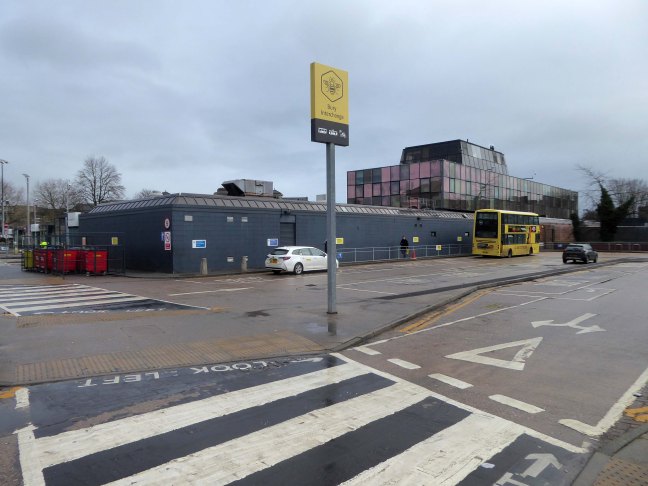
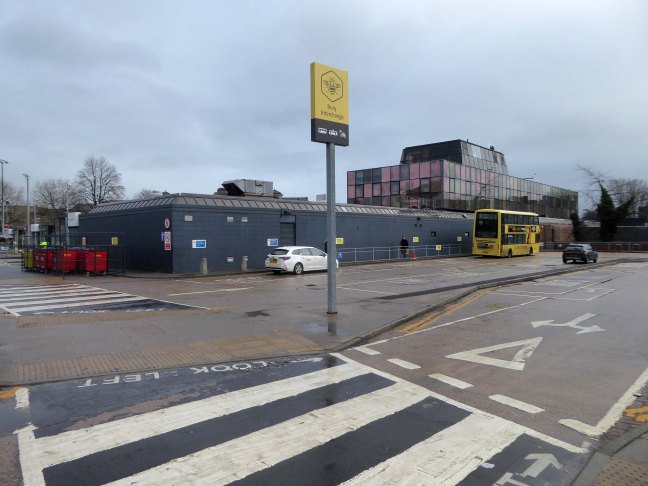
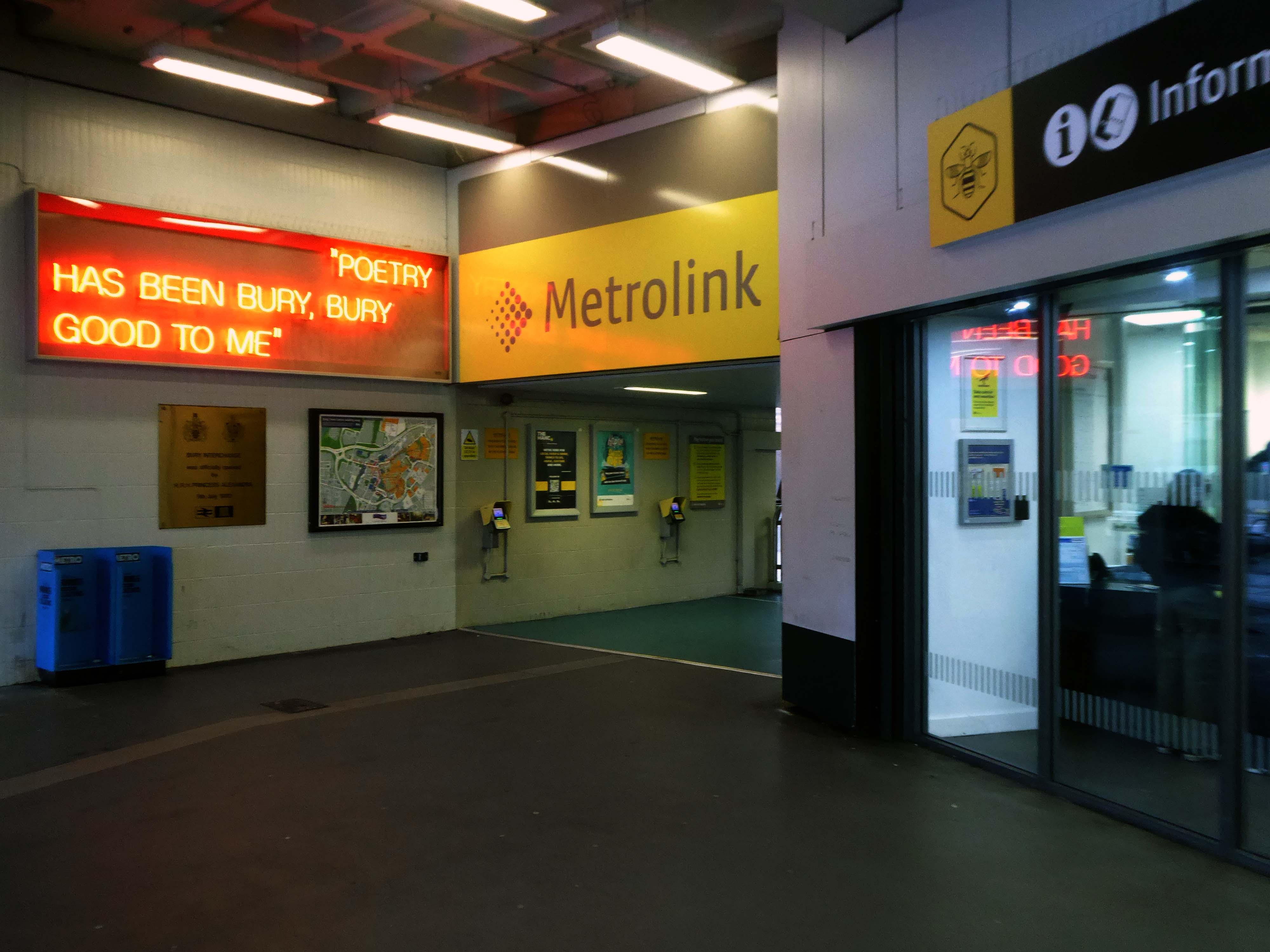
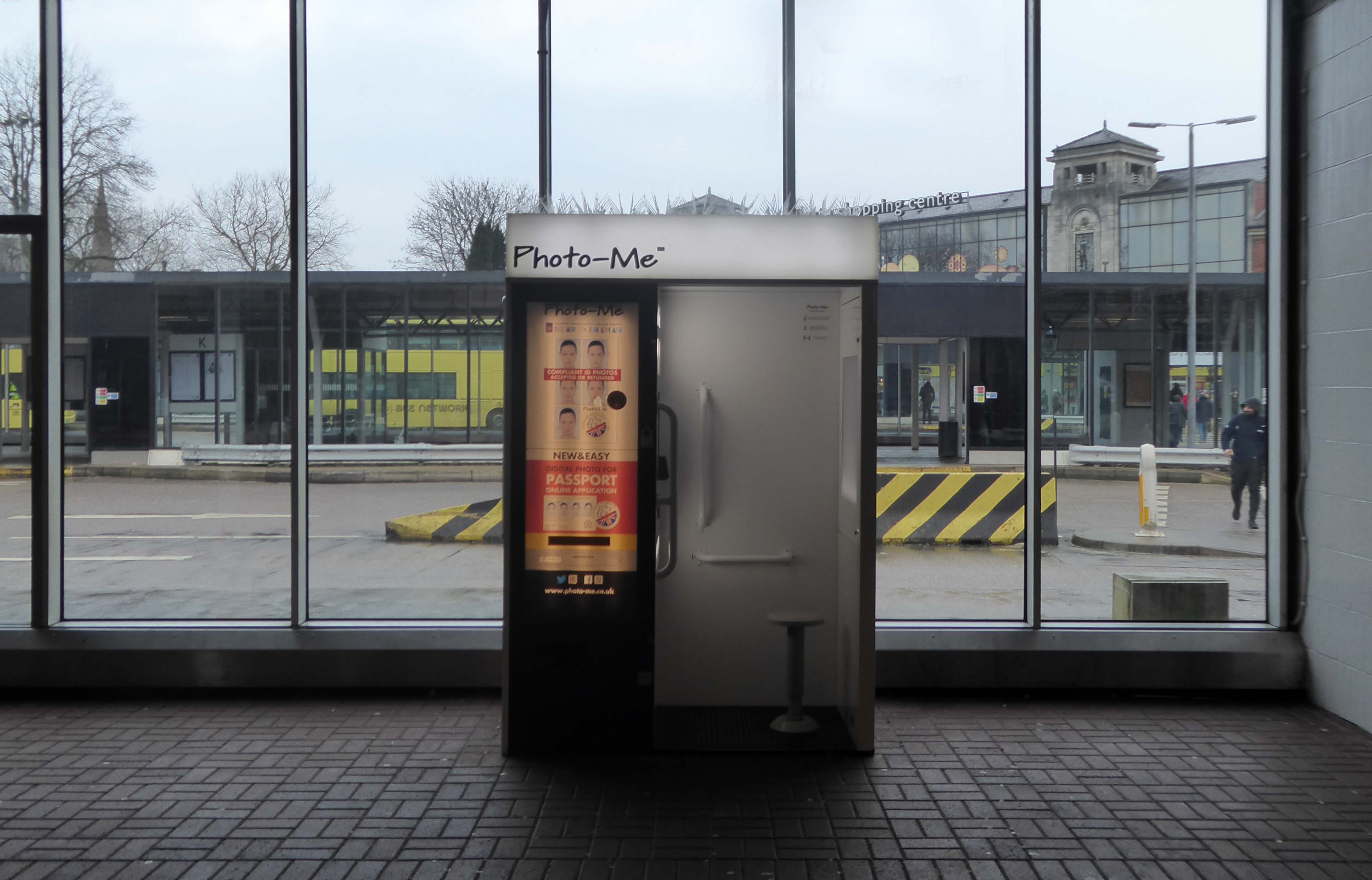
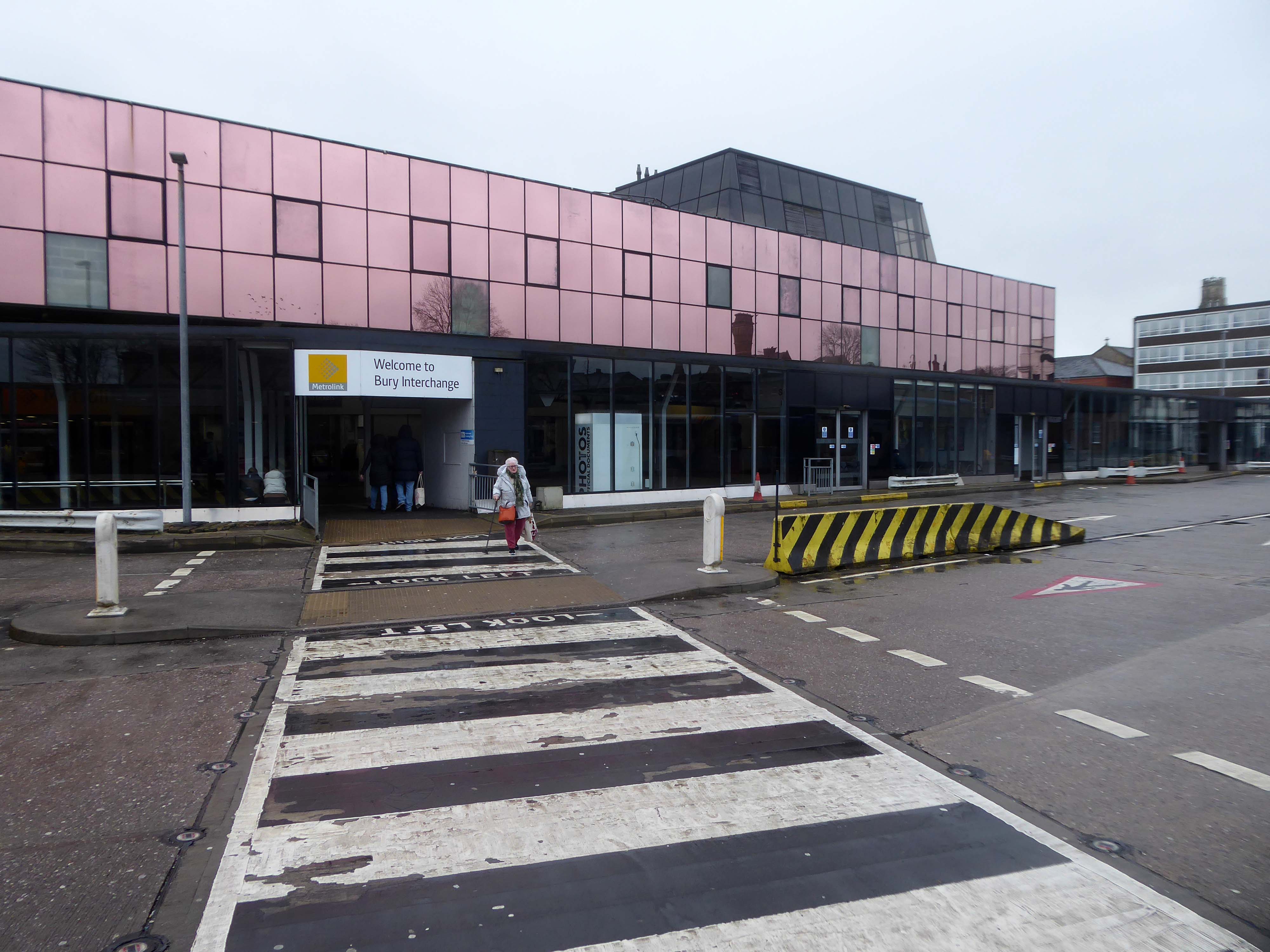
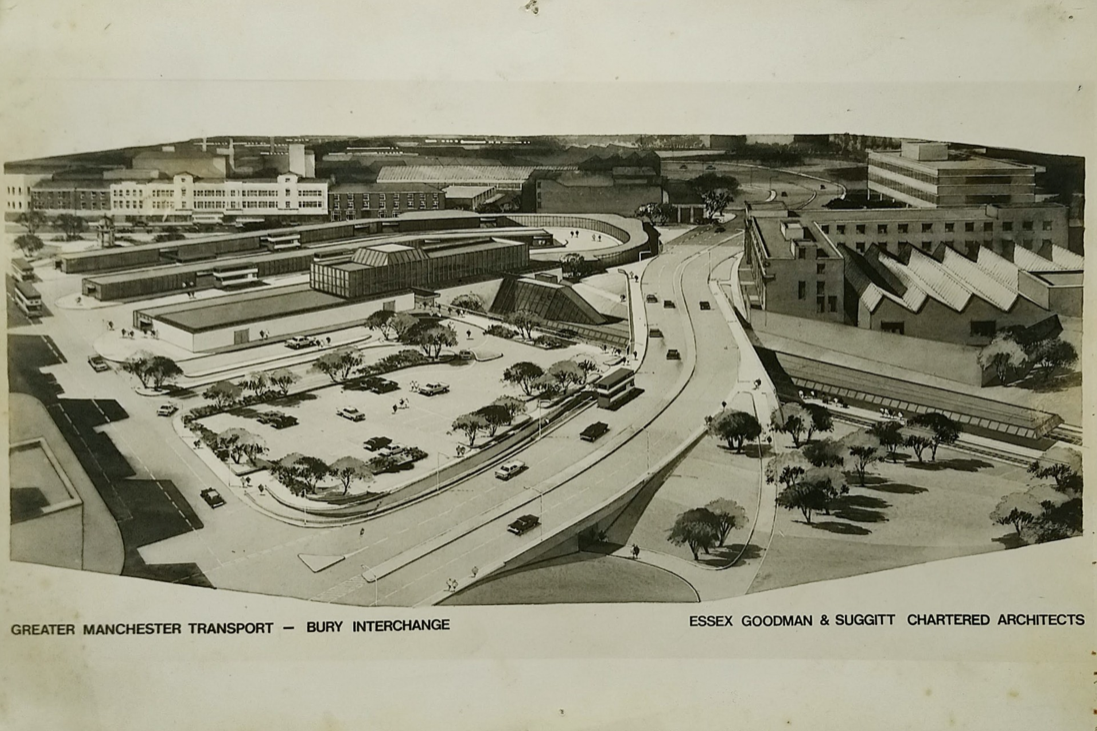
Arriving at and looking around the Interchange – 1980 architects: Essex Goodman & Suggitt

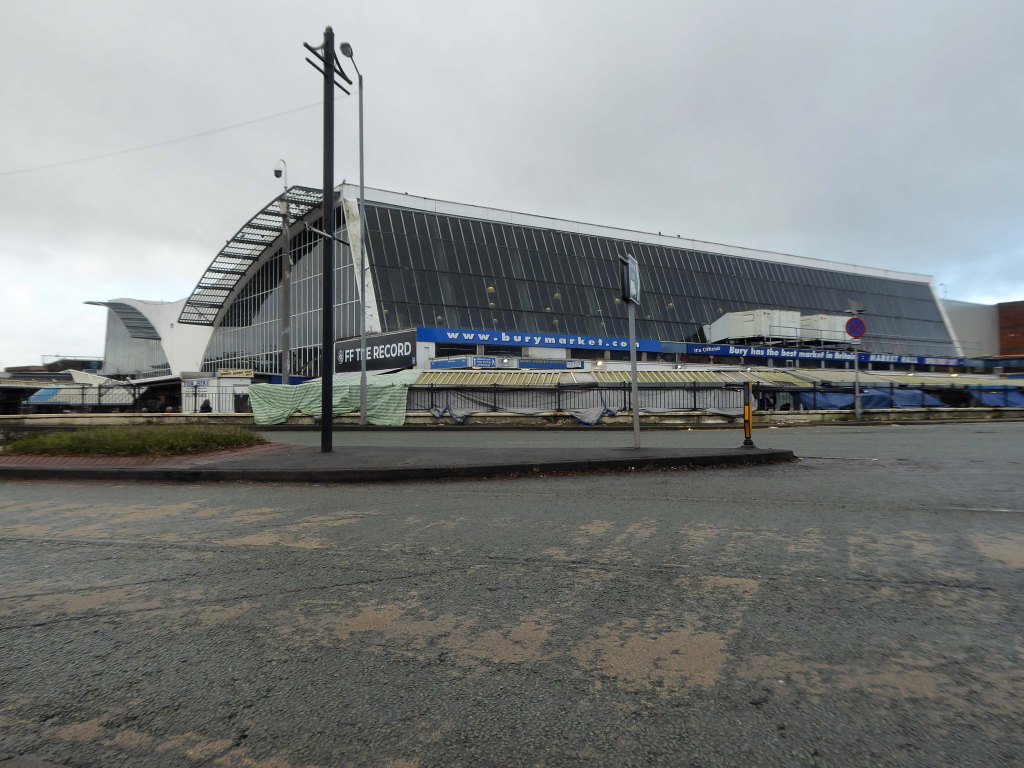
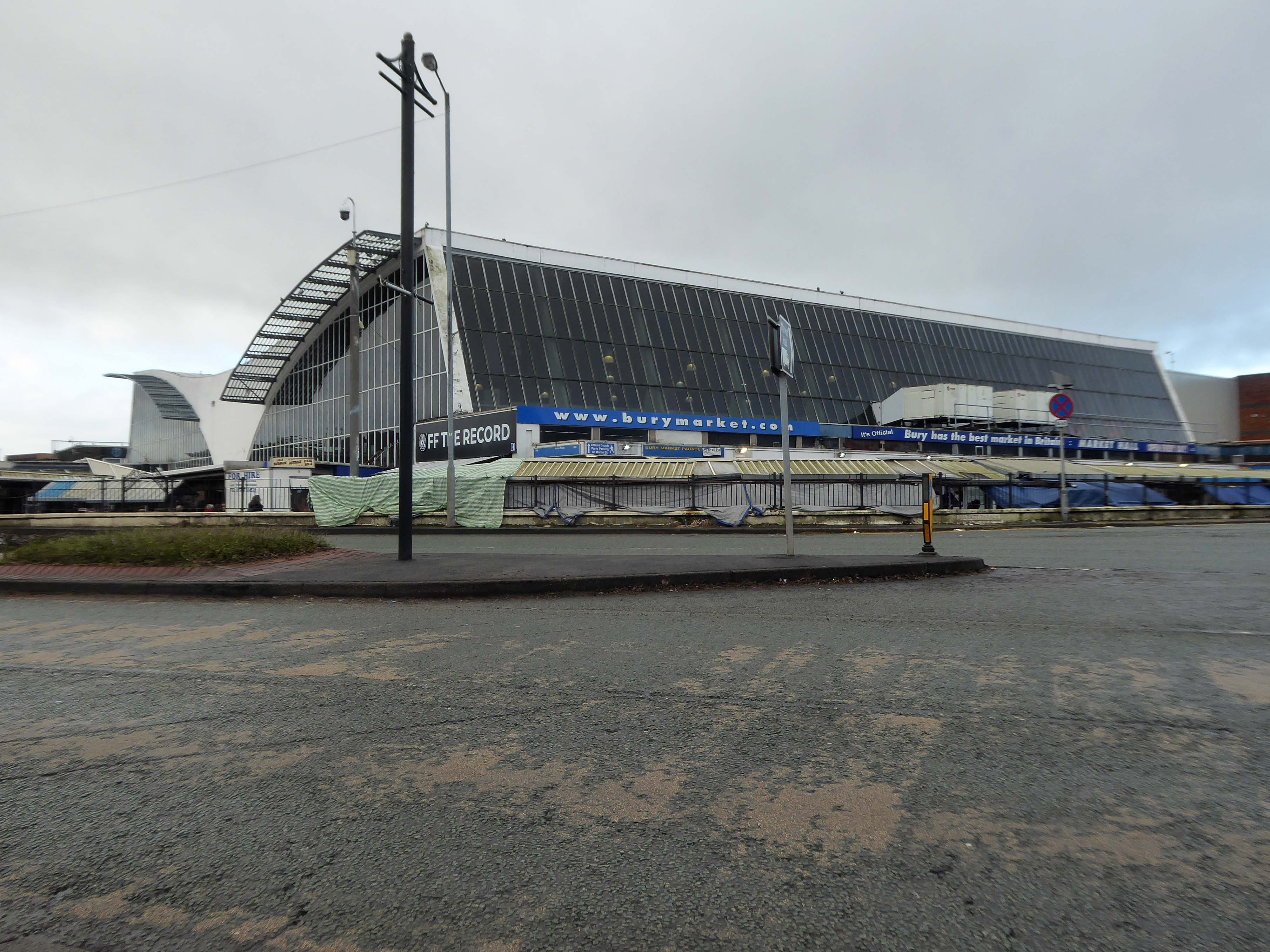
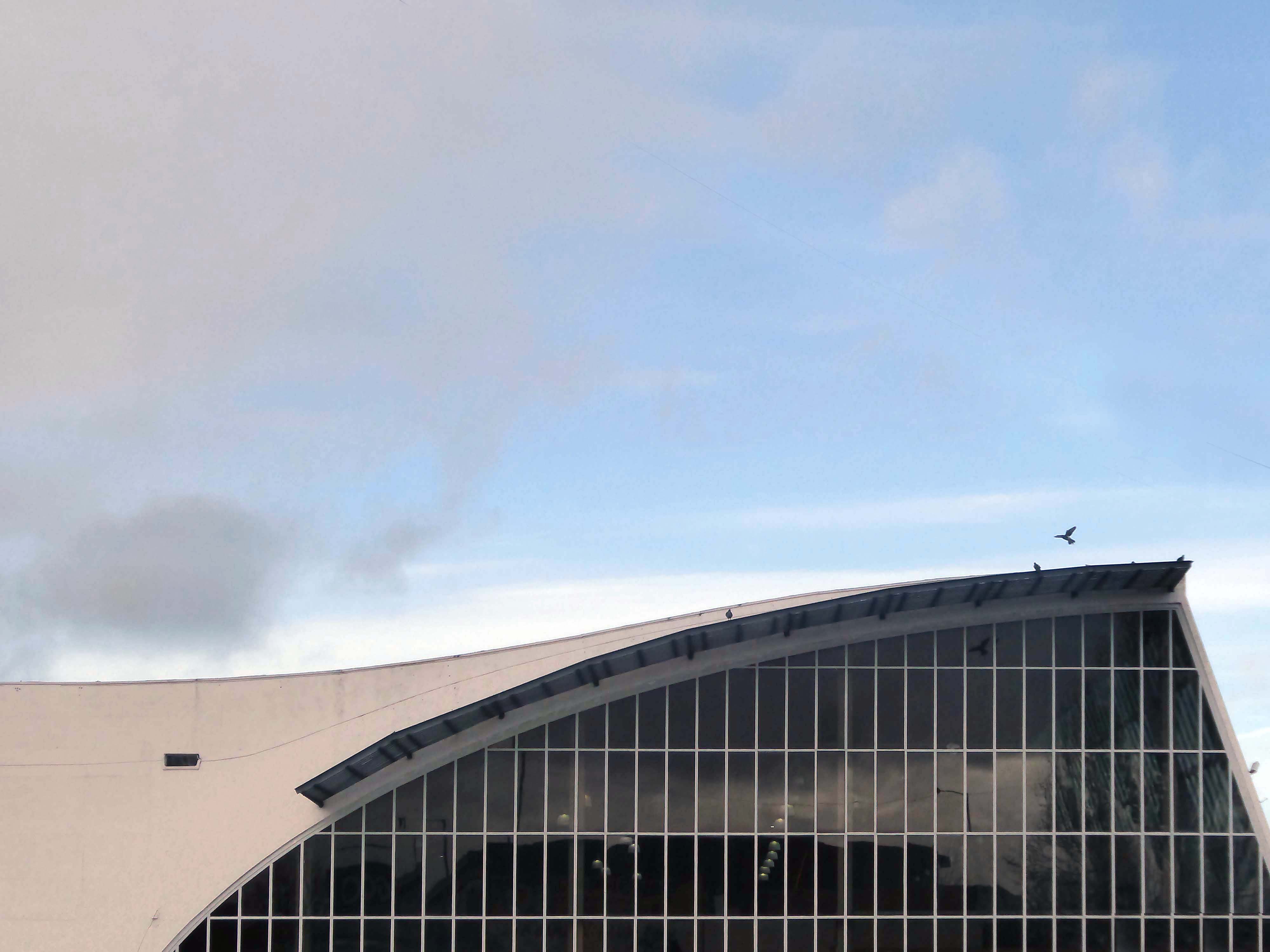
A view of the Market Hall 1971 – architects: Harry S Fairhurst.

Unitarian Church.

The new church was designed and constructed by local architects James T Ratcliffe.

That’s the end of the line.

Bury Walk

Arriving at and looking around the Interchange – 1980 architects: Essex Goodman & Suggitt

It is the northern terminus of the Manchester Metrolink’s Bury Line, which prior to 1992 was a heavy-rail line.

A new short spur line was constructed to connect the new station. The railway had originally run into Bury Bolton Street which was further away from the town centre, and was closed by British Rail on the same day that Bury Interchange opened.

It also incorporates a bus station.

Bury Interchange replaced the bus termini scattered around Bury town centre, notably around Kay Gardens.

Wikipedia

Image courtesy of Roy Banks

An £80m transformation is coming to the Bury Interchange, which will see step-free access at the Metrolink, a “vertical circulation core” to better connect the Metrolink with the bus facility, and an integrated travel hub with spaces for cycle storage.

The work is much-needed, explained Transport for Greater Manchester’s Alan Lowe, he said that the interchange was built in the 1980s and very much is of its time.

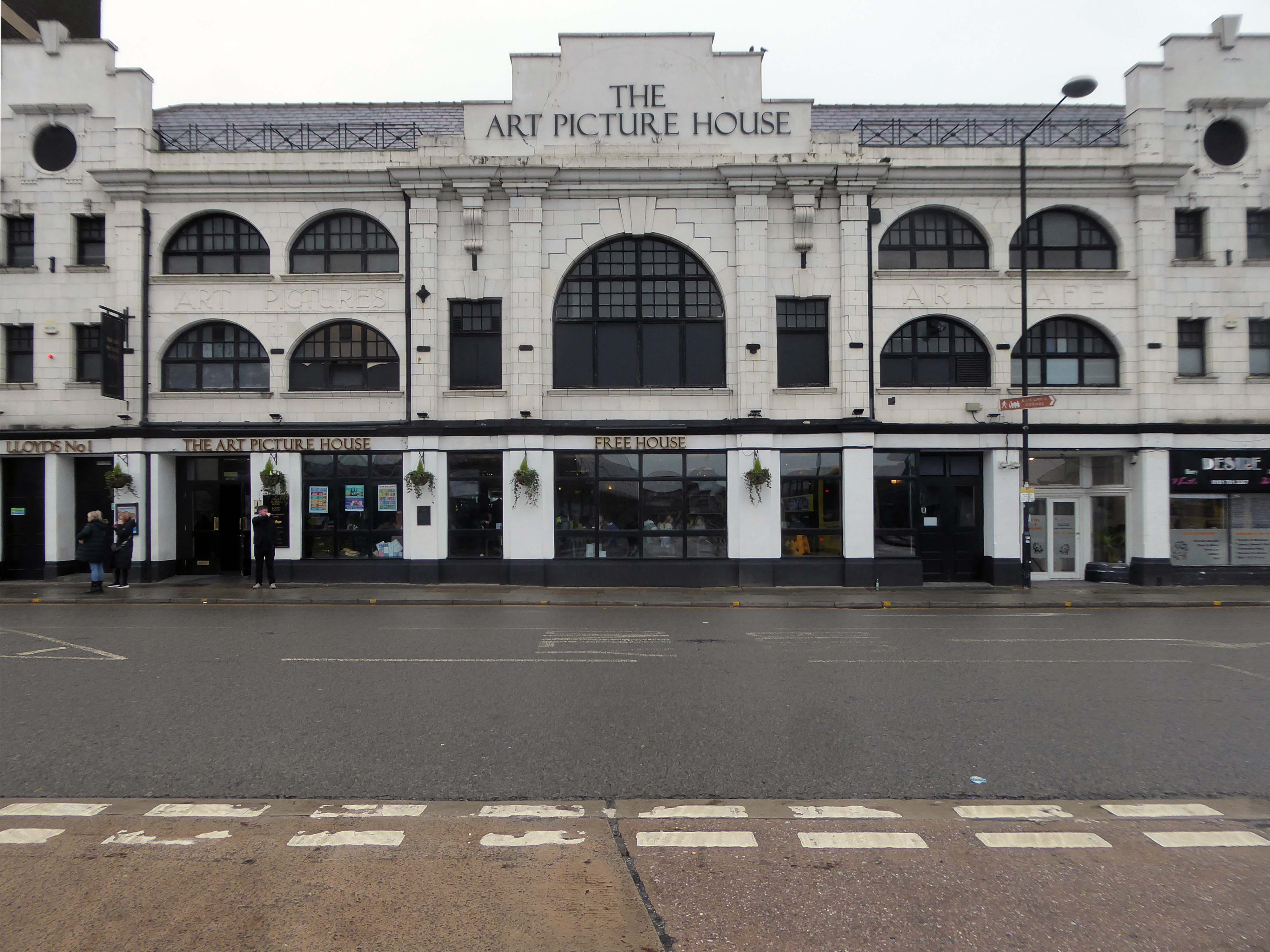
Onward to the Art Picture House which is Grade II Listed – currently operating as a Wetherspoons.

The Art Picture Palace was a 1923 rebuild of the earlier Art Picture Hall both designed by architect Albert Winstanley. The Art Picture Palace was opened on 26th January 1923. A remarkably complete survivor of a 1920’s cine-variety house executed in an elaborate style.

Films ceased in February 1965 and it became a bingo club. Later converted into a billiard hall until 19th May 1991 when it became a bingo club again, it later became a Chicago Rock Cafe.

Cinema Treasures

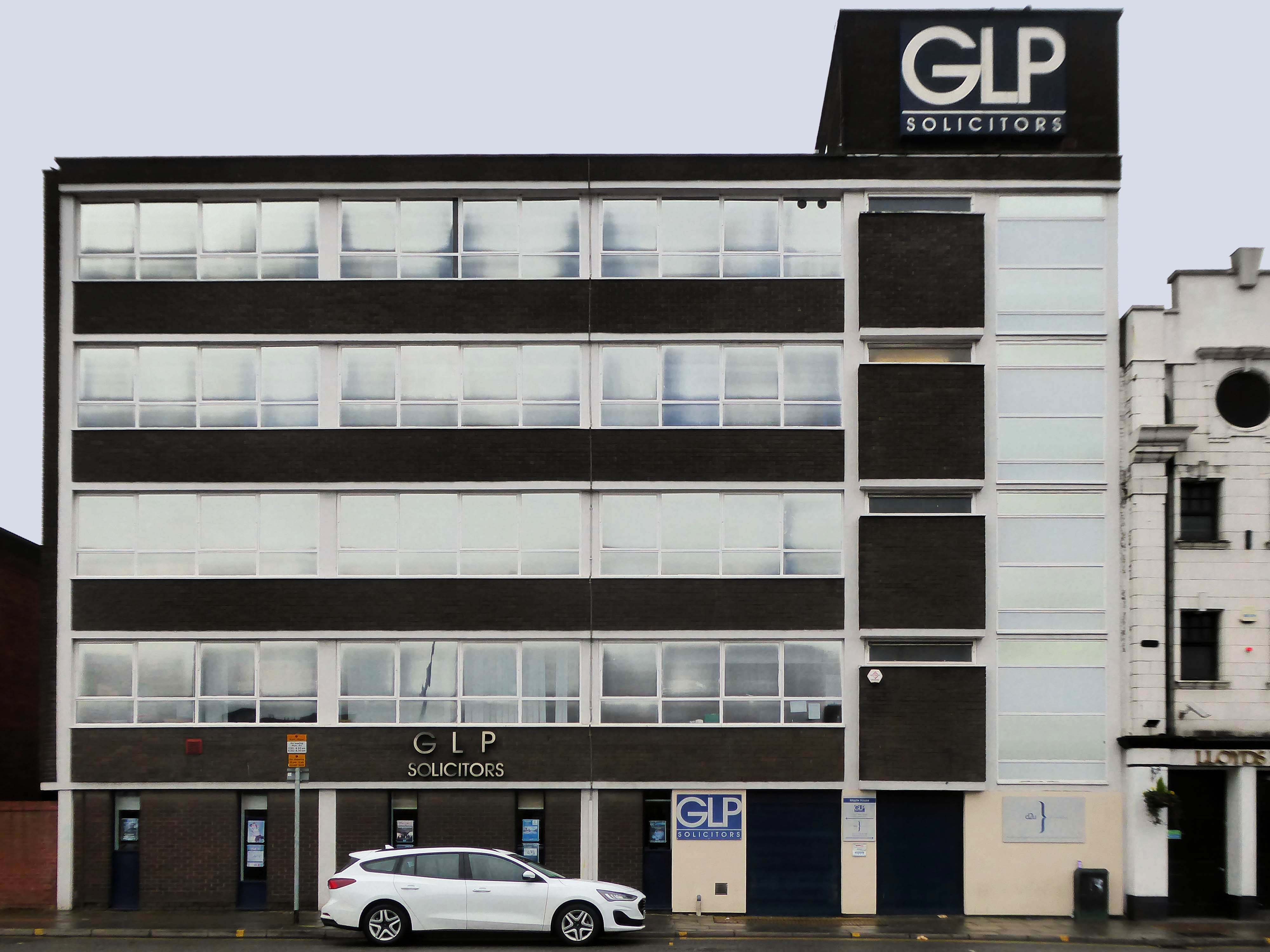
Next door a typical steel glass and brick banded office block Maple House.

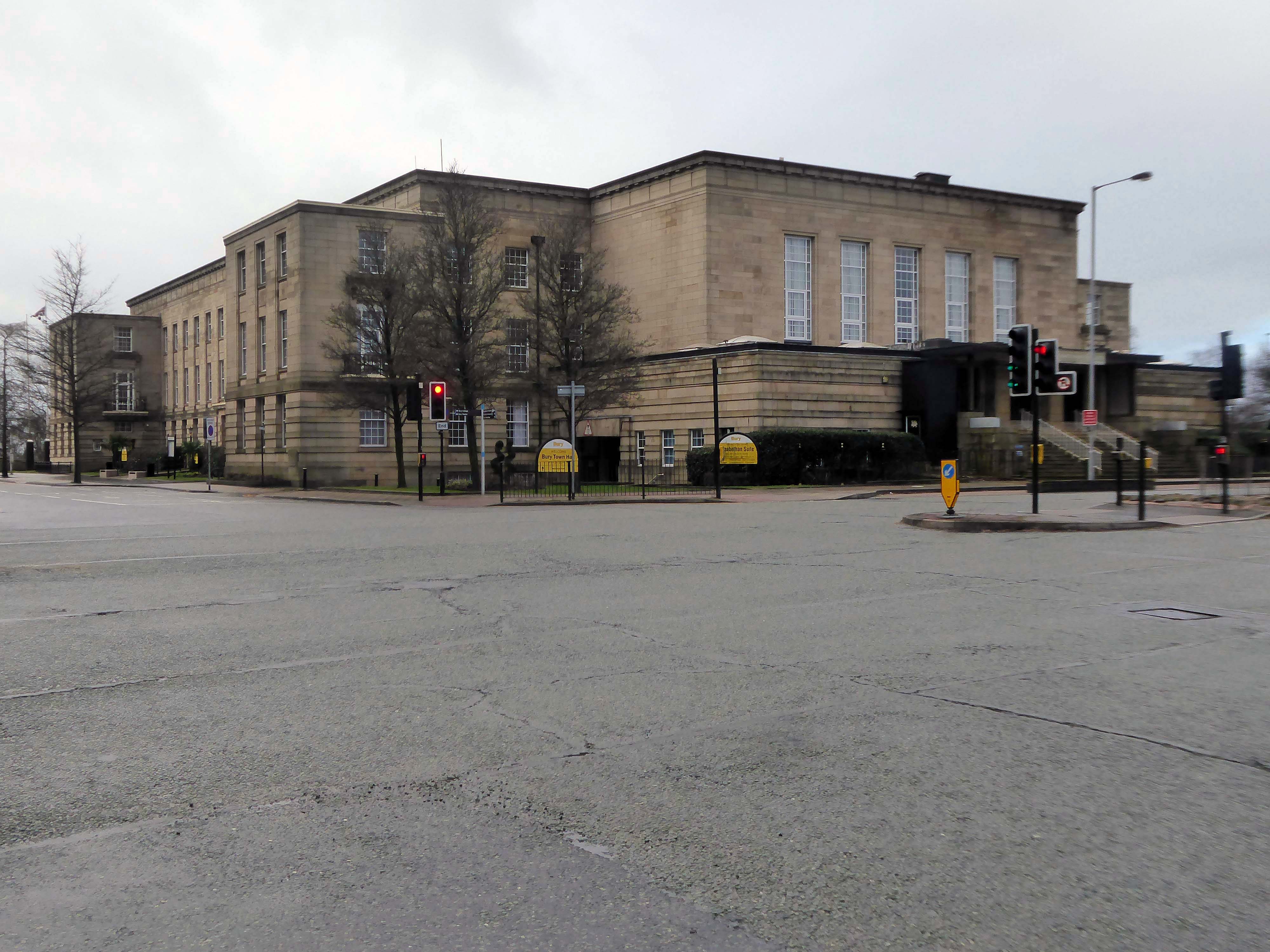
Around the corner and over the road to the Town Hall 1939-40 architects: Reginald Edmonds of Jackson & Edmonds then 1947-54.

Large and Dull – Niklaus Pevsner.

Back through the Interchange to the former Cooperative Store of the 1930’s.

The Portland Stone towers still visible – the elevation largely retro-clad in glass.

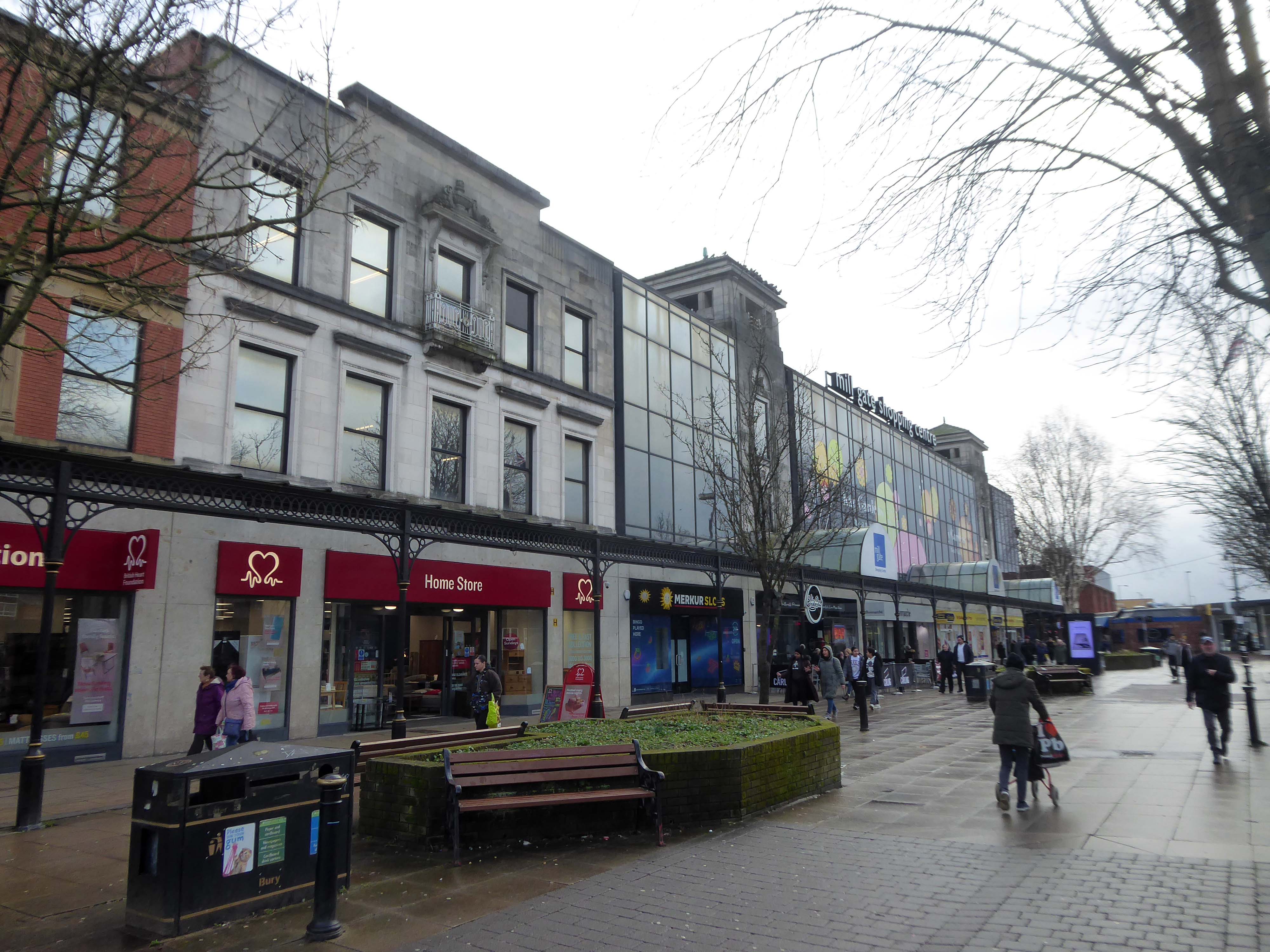
Passing through the Millgate Shopping Centre of the 1980’s.

Unambitious but successful, the floors cheerfully tiled – Niklaus Pevsner.

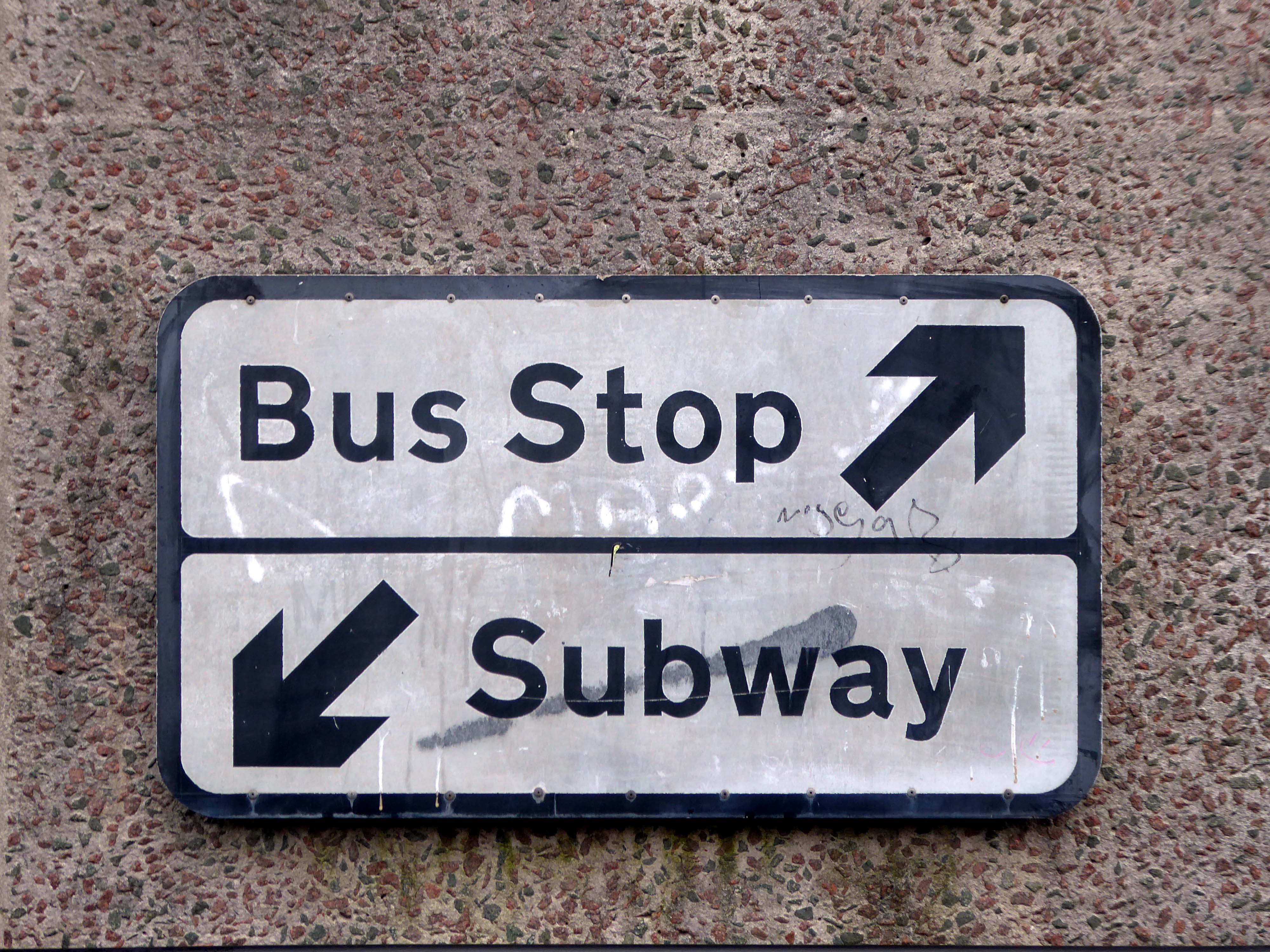
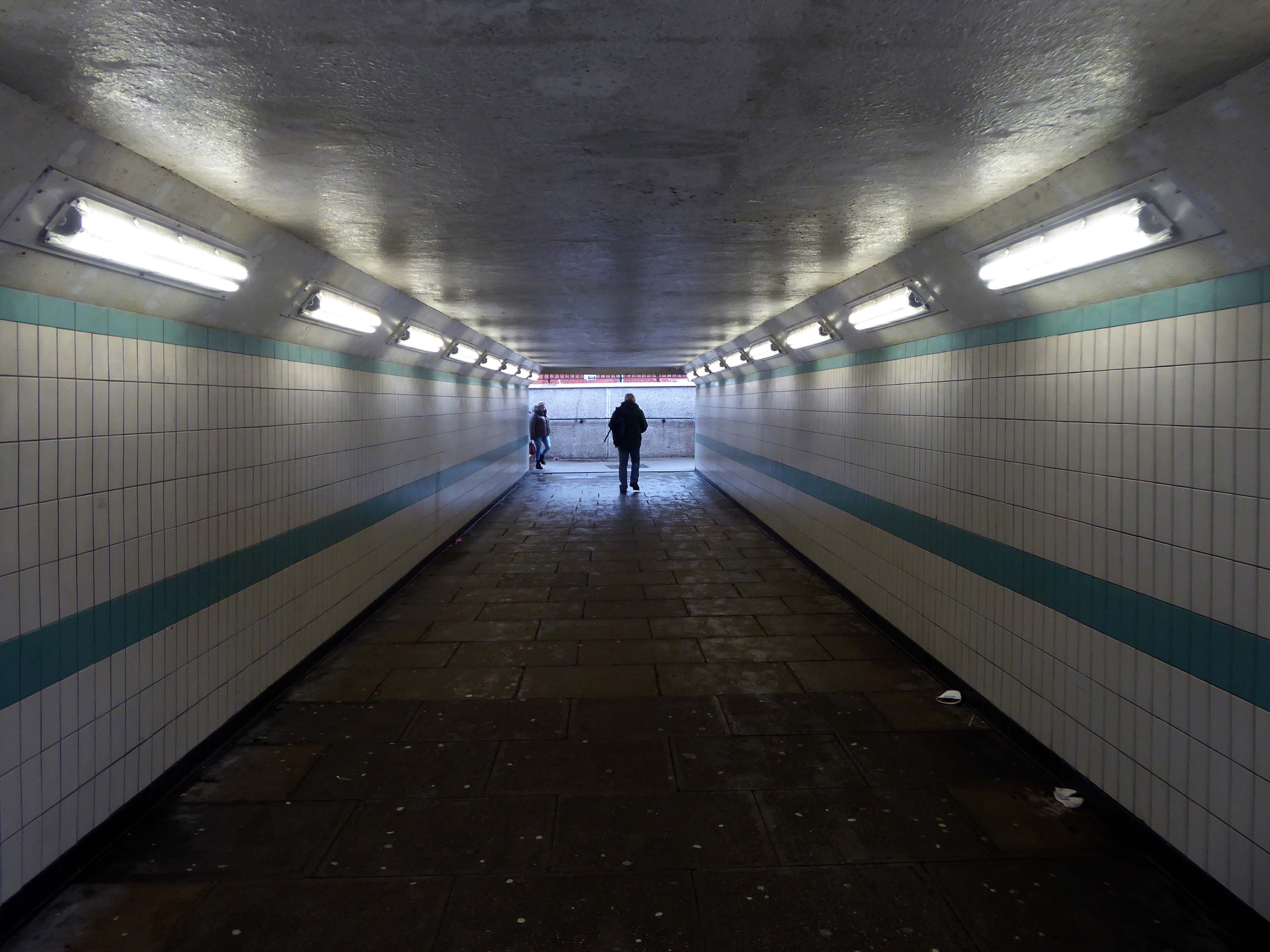
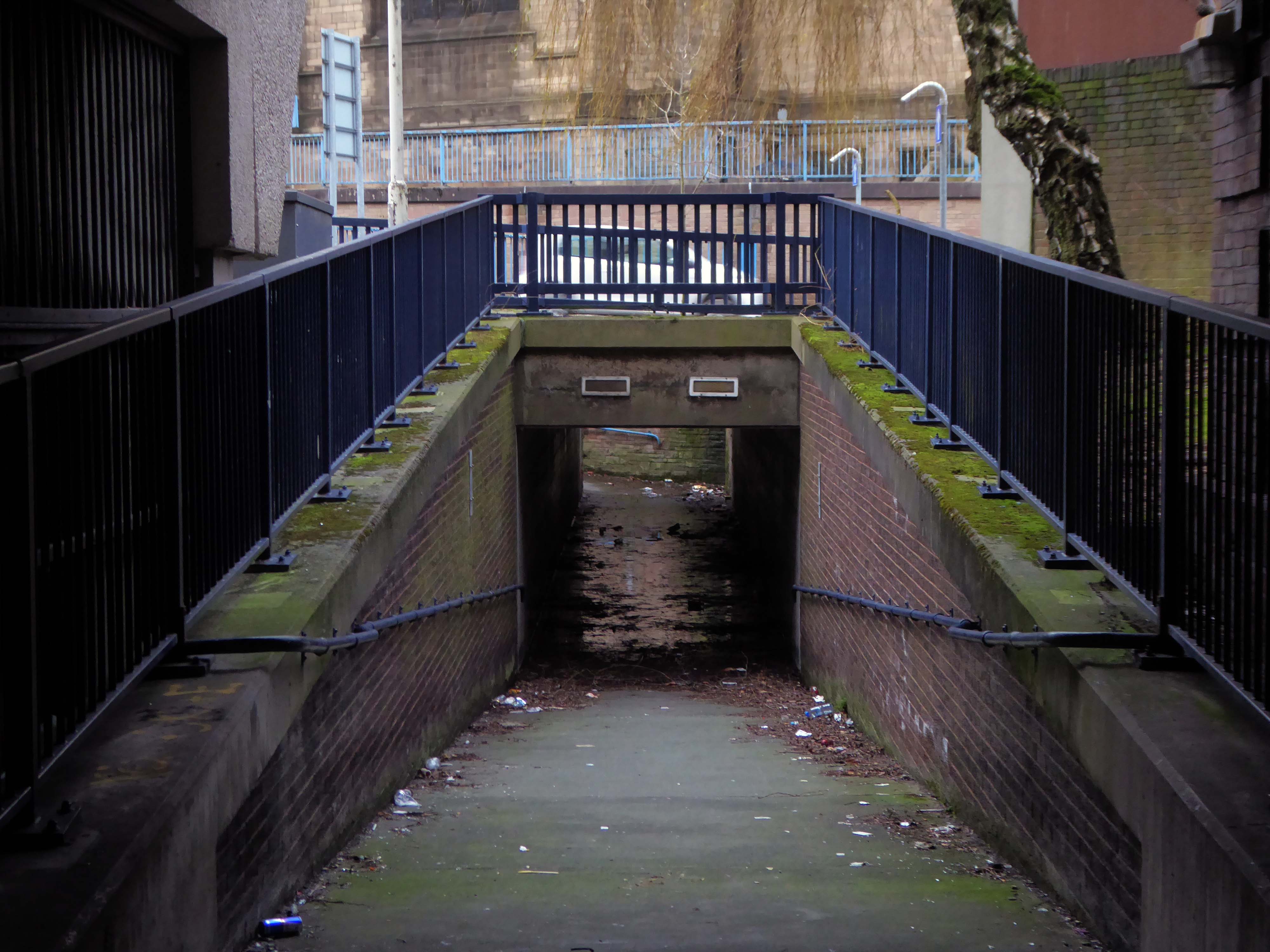
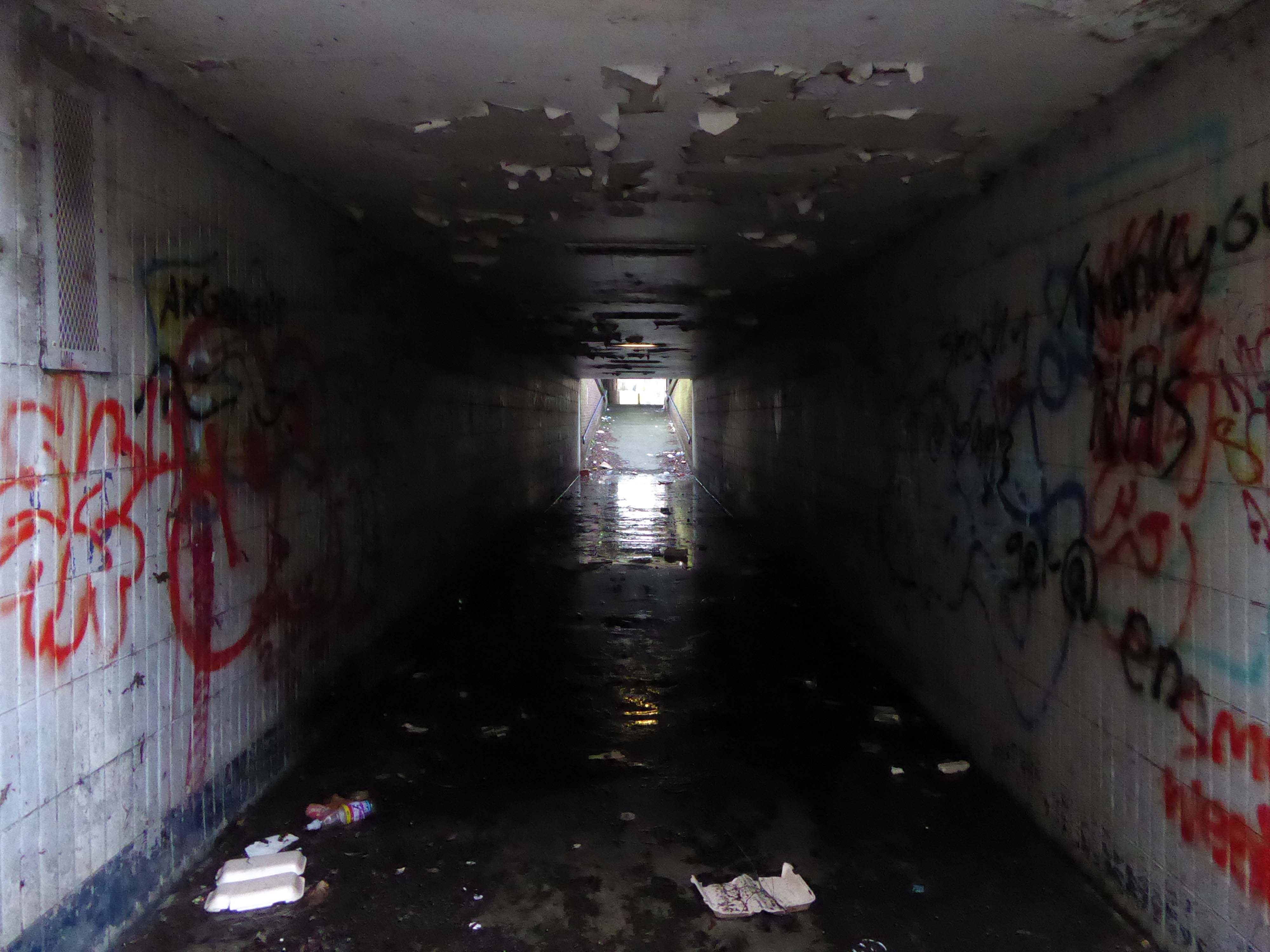
Down in the subway at midday.

The better to get a view of the Market Hall 1971 – architects: Harry S Fairhurst.

The Indoor Market Hall is currently closed due to the discovery of Reinforced Autoclaved Aerated Concrete – within the building structure. RAAC is a lightweight type of building material that was used between the 1950s and 1990s.

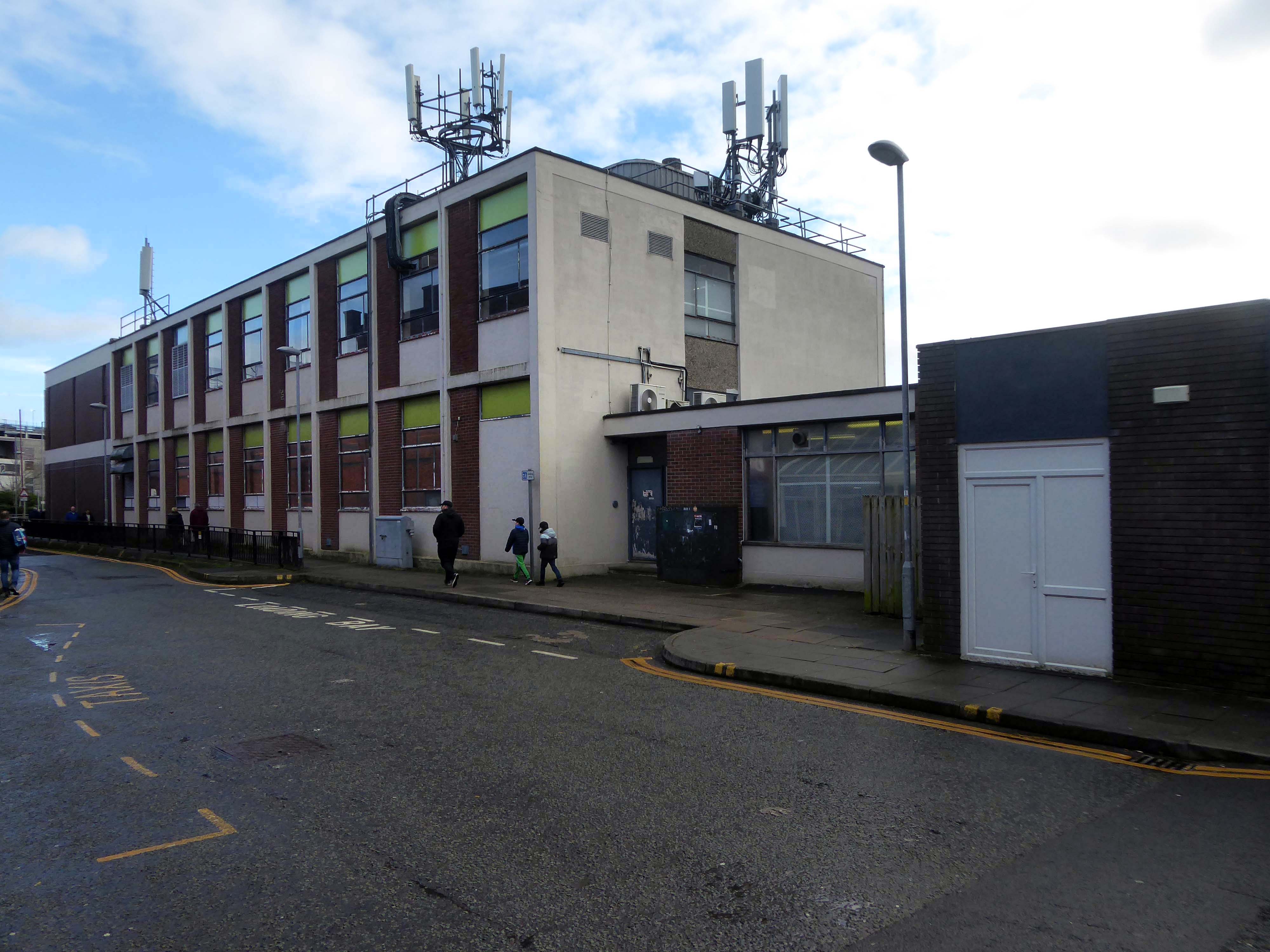
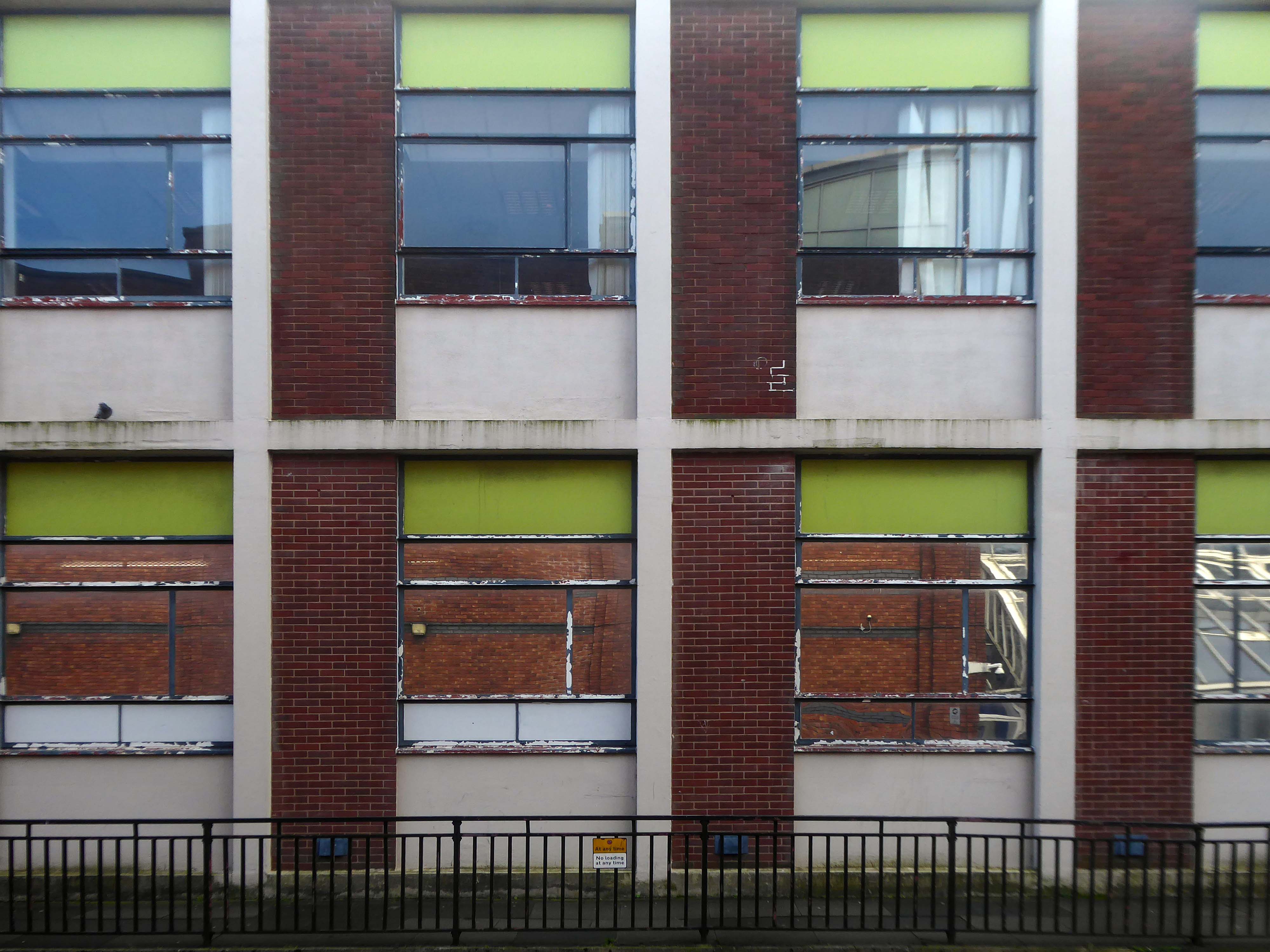
Back under the road – where we find a delightful Telephone Exchange.

With an adjacent Multi Story Car Park.

Around the bend to The Rock.

The Rock is a vibrant retail and leisure centre which is home to a range of high street fashion brands, independent retailers, tantalising eateries and fantastic entertainment – it’s the perfect place to visit any day of the week. 

It is the work of architects BDP – completed in 2010 at a cost of £350 million.

Our masterplan for The Rock took into account the historical street pattern and public realm context to give the scheme its own identity, and make visual connections to local landmarks.

The retail and leisure scheme brings many exciting brands to Bury for the first time.

New pedestrian streets rejuvenate and improve connections to adjacent areas stitching the town back together.

The development will also contain 408 one and two-bedroom apartments.

Back to basics at a former Burton’s hiding its faience facade.

Typical inter-war infill on our crazy mixed up mongrel high streets.

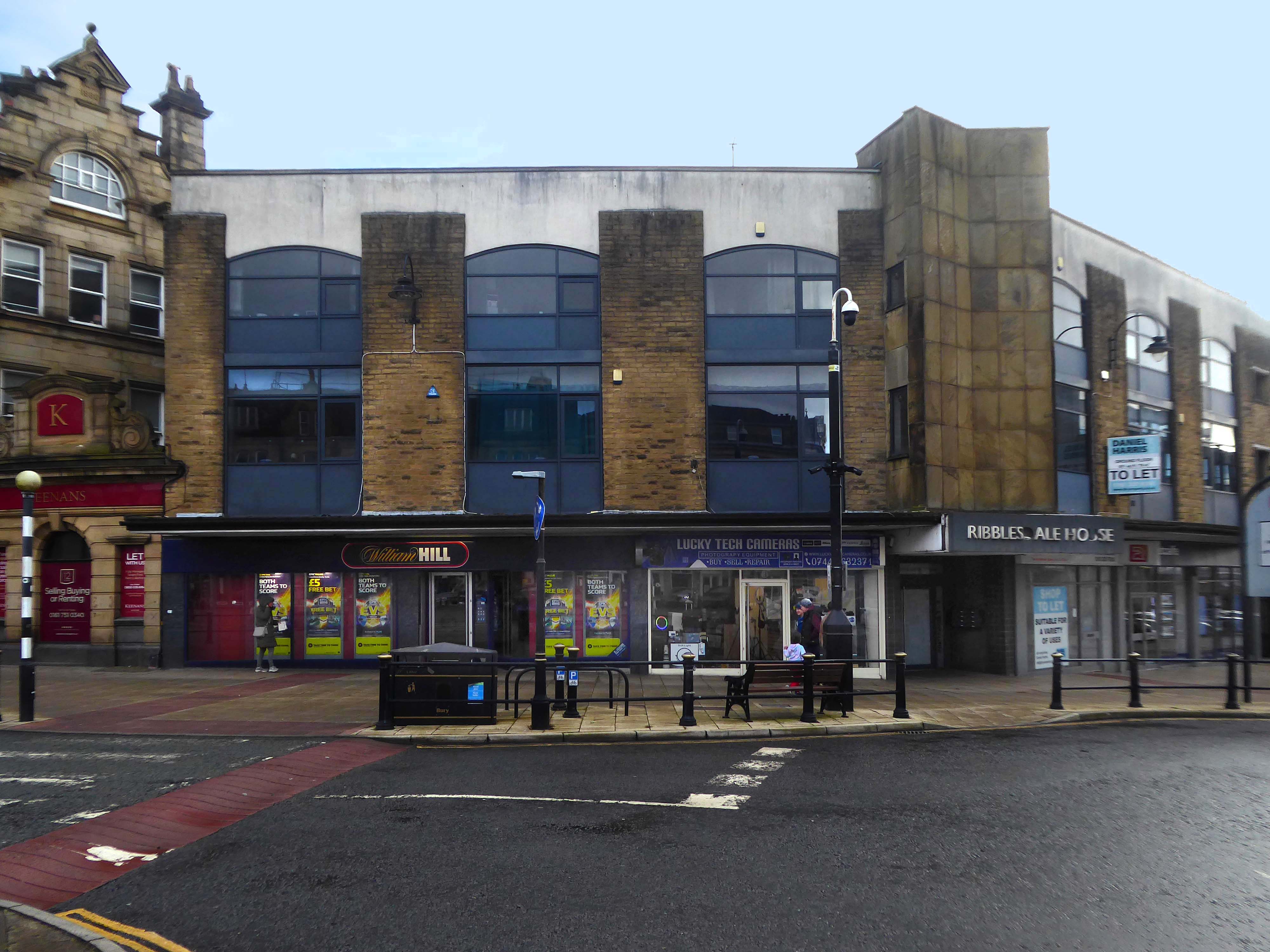
Ribblesdale House

Application by Shop and Store Developments Ltd submitted August 1965. Architect on application was Samuel Jackson and Son of Ocean Chambers in Bradford but during the application process this changed to John Brunton & Partners – Brunton was a partner in Jackson’s firm, at the same address. It had a restaurant and shops on the first floor.

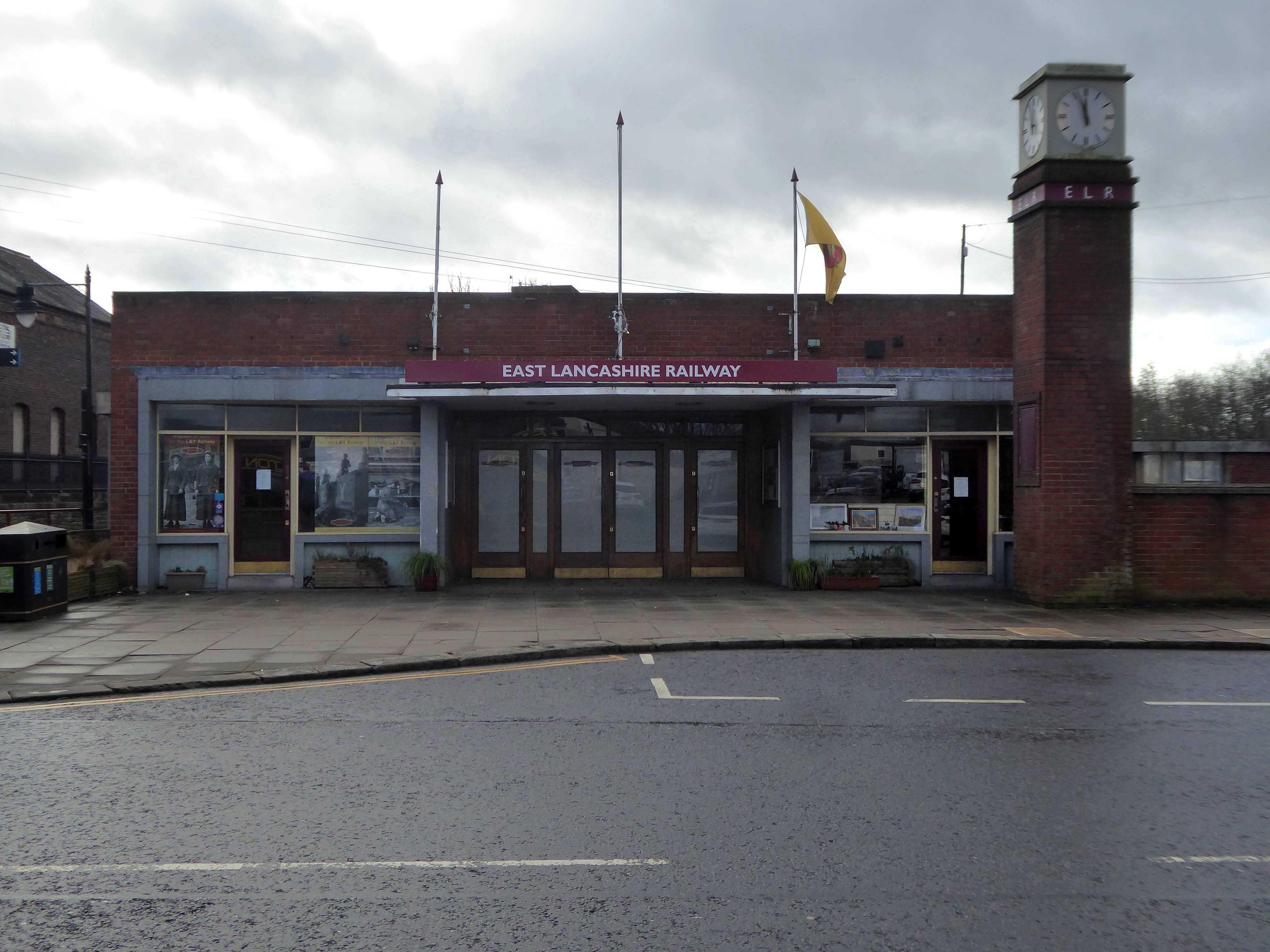
Off now to the Bury Bolton Street Station currently home to the East Lancashire Railway.

The street level buildings were destroyed by fire on 14 May 1947 and were replaced with a new brick and concrete entrance and footbridge in 1952. 

British Rail closed the station on 17 March 1980, when it was replaced by a new bus/rail interchange station further east into the town centre. Bury Interchange railway station served up until 1991 before the entire Bury Line was converted to light rail operation. It reopened in 1992 for Metrolink operation.

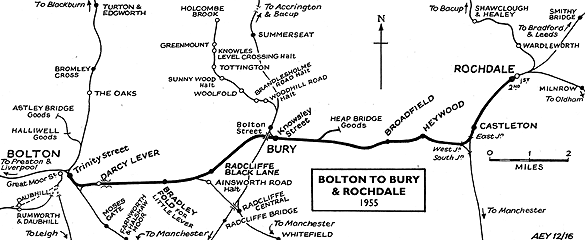
Bury was once the centre of multiple train links and the lost station of Knowsley Street.

Over the road the former Temperance Billiard Hall 1910 architect Norman Evans.

Down the side and up the steps to the Unitarian Church.

The new church was designed and constructed by local architects James T Ratcliffe.

The church was opened in 1974, with a service of dedication on Saturday, 9th March. The total cost, including furnishings, was £85,000.

The People Praising by Elizabeth Mulchinock is a 12 foot high original sculpture at the front of the church which represents the family of the church.

Her work can also be seen at Sainsbury’s in West Ealing and Reading.

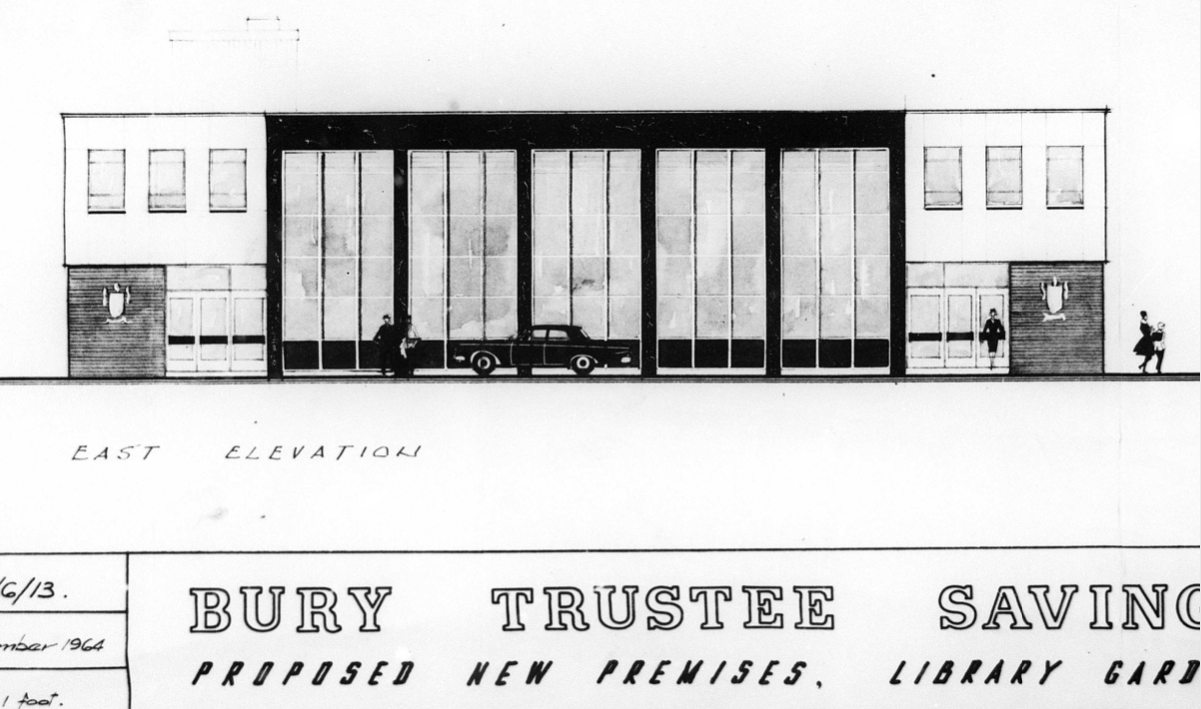
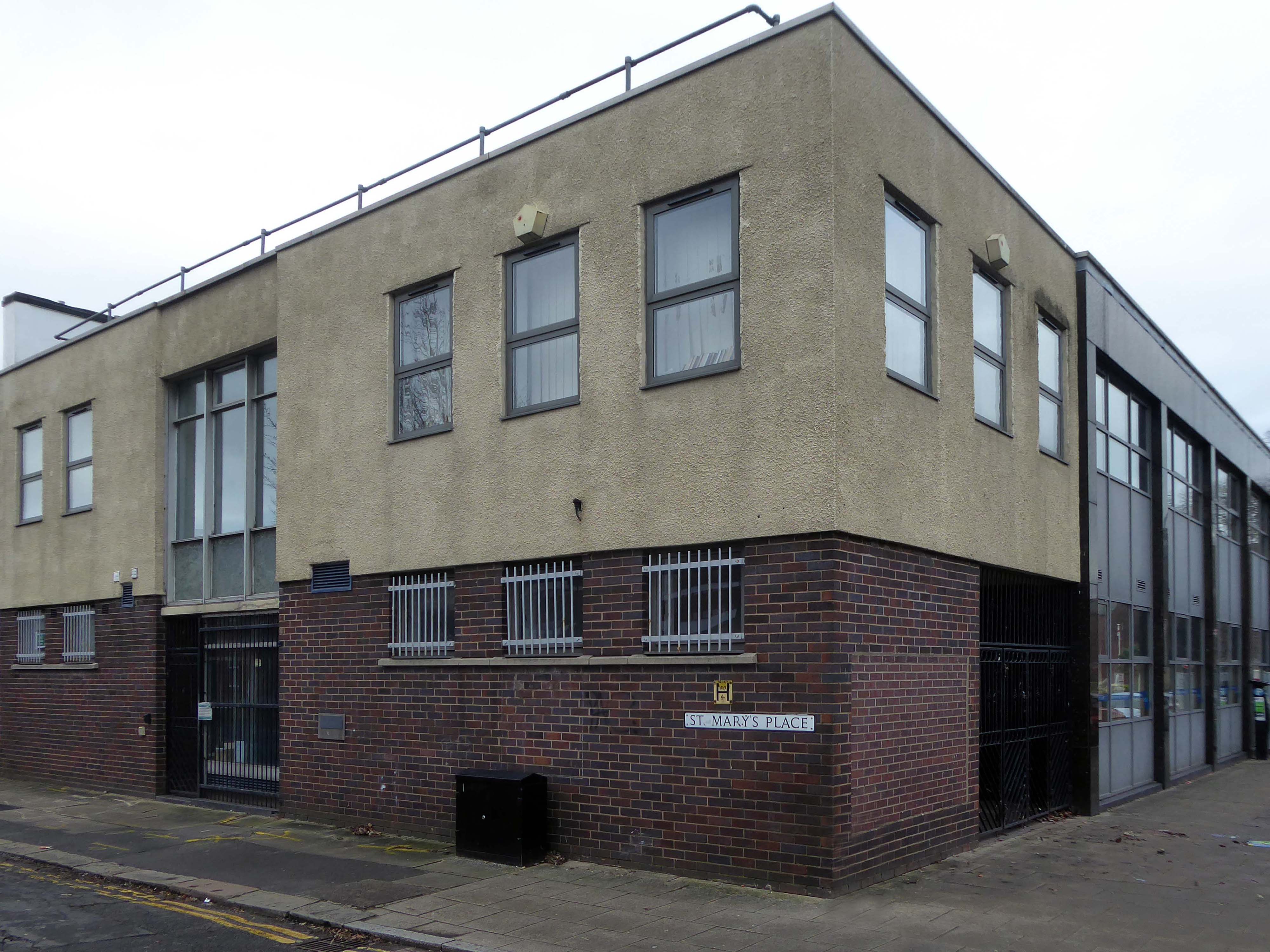
Next door is the former Trustee Saving Bank.

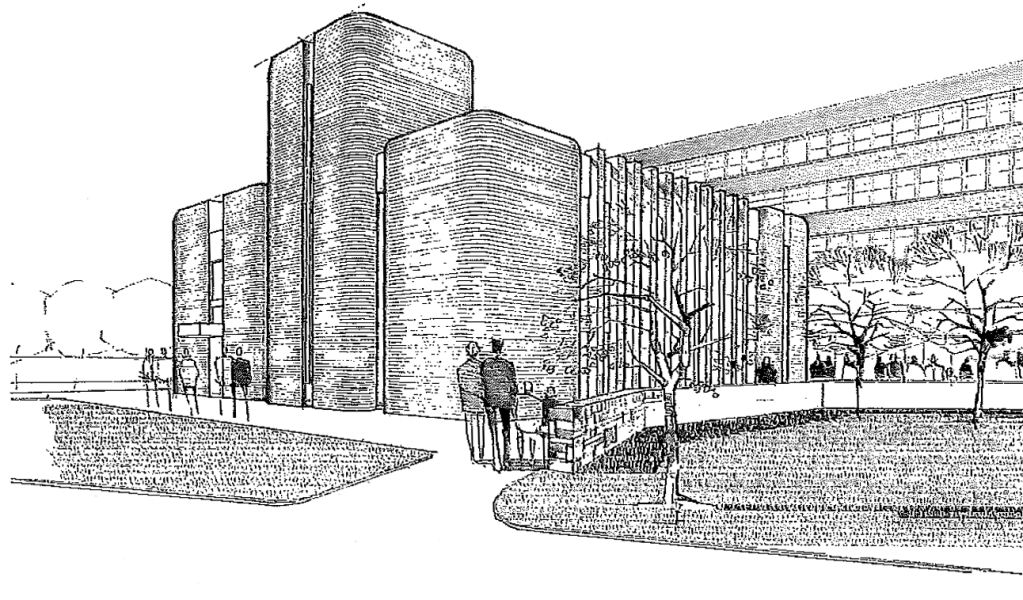
Planning application January 1965 – work started in June 1965. The architectural firm was Richard Byrom, Hill and partners. Richard Byrom was submitting building applications in the 1930s in Bury and locally.

The rendering on the building is original but the windows have been changed. The Job Centre took over the building in 1993. It is in a conservation area and the Civic Trust had some concerns!

Many thanks to David French for the above information.

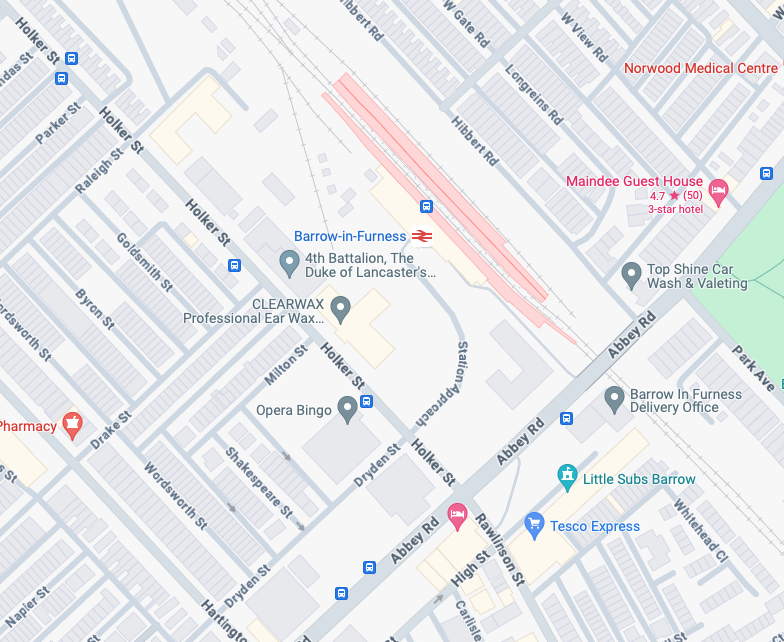
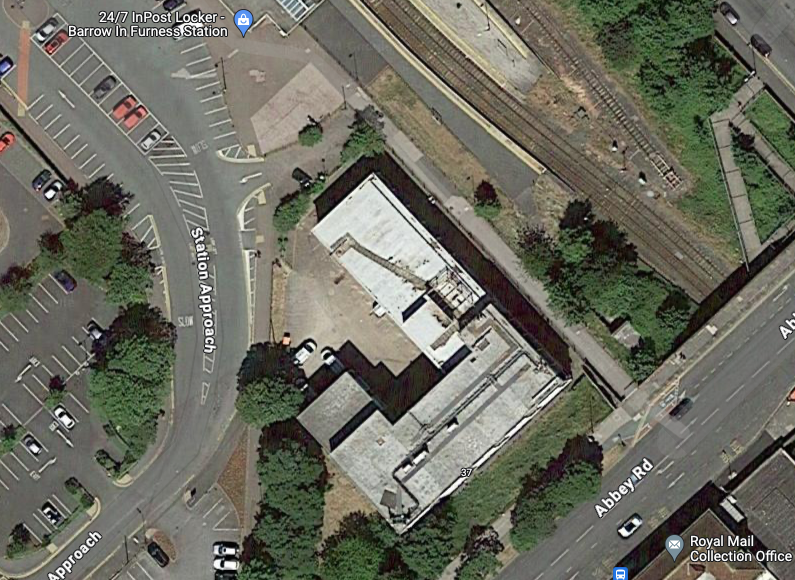
Telephone Exchange – Barrow in Furness

British Telecom Telephone Exchange Abbey Road Barrow in Furness LA14 5QZ

I took a train in the rain to Barrow in Furness.

I alighted, bathed in bright sunlight.

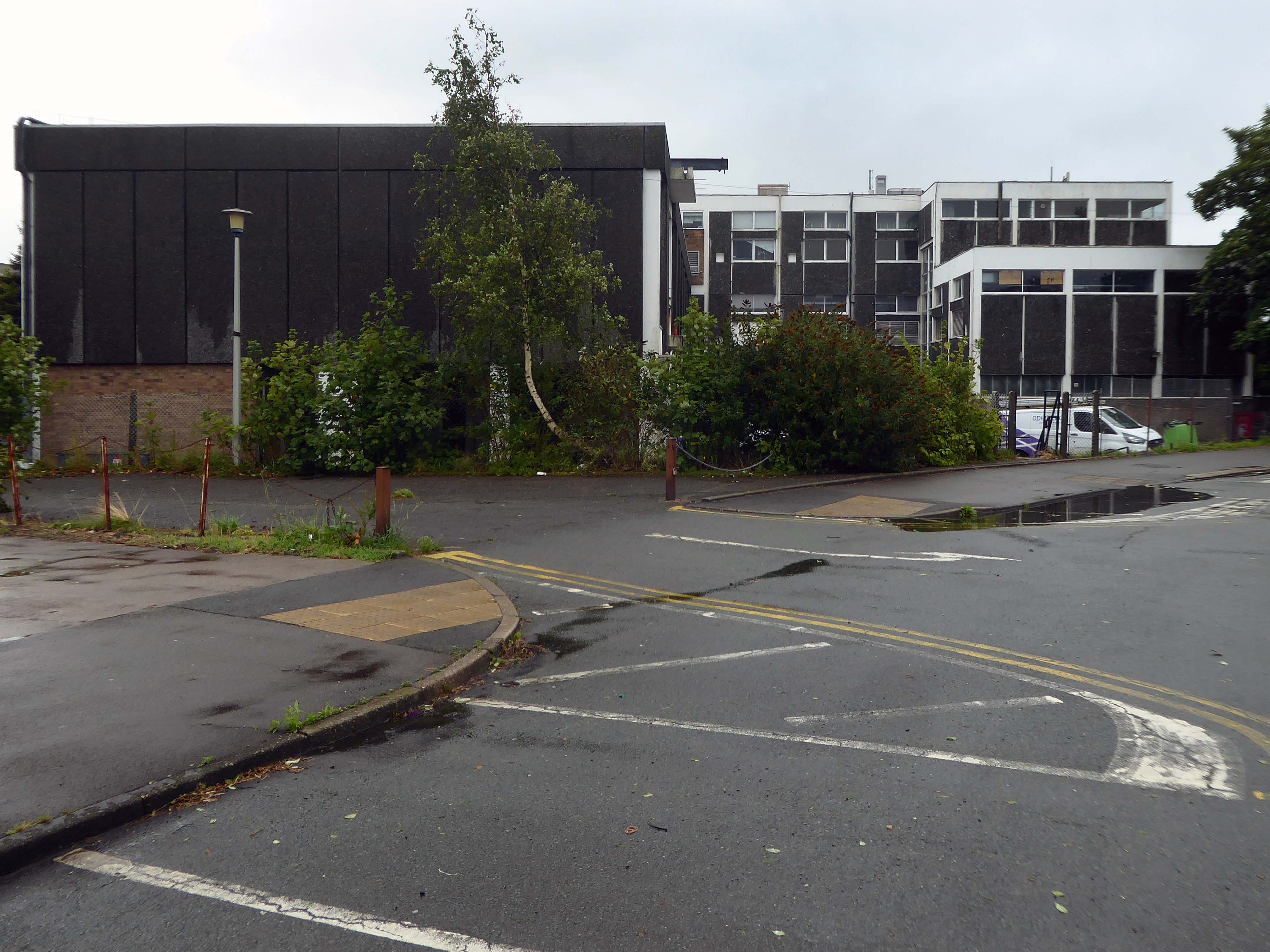
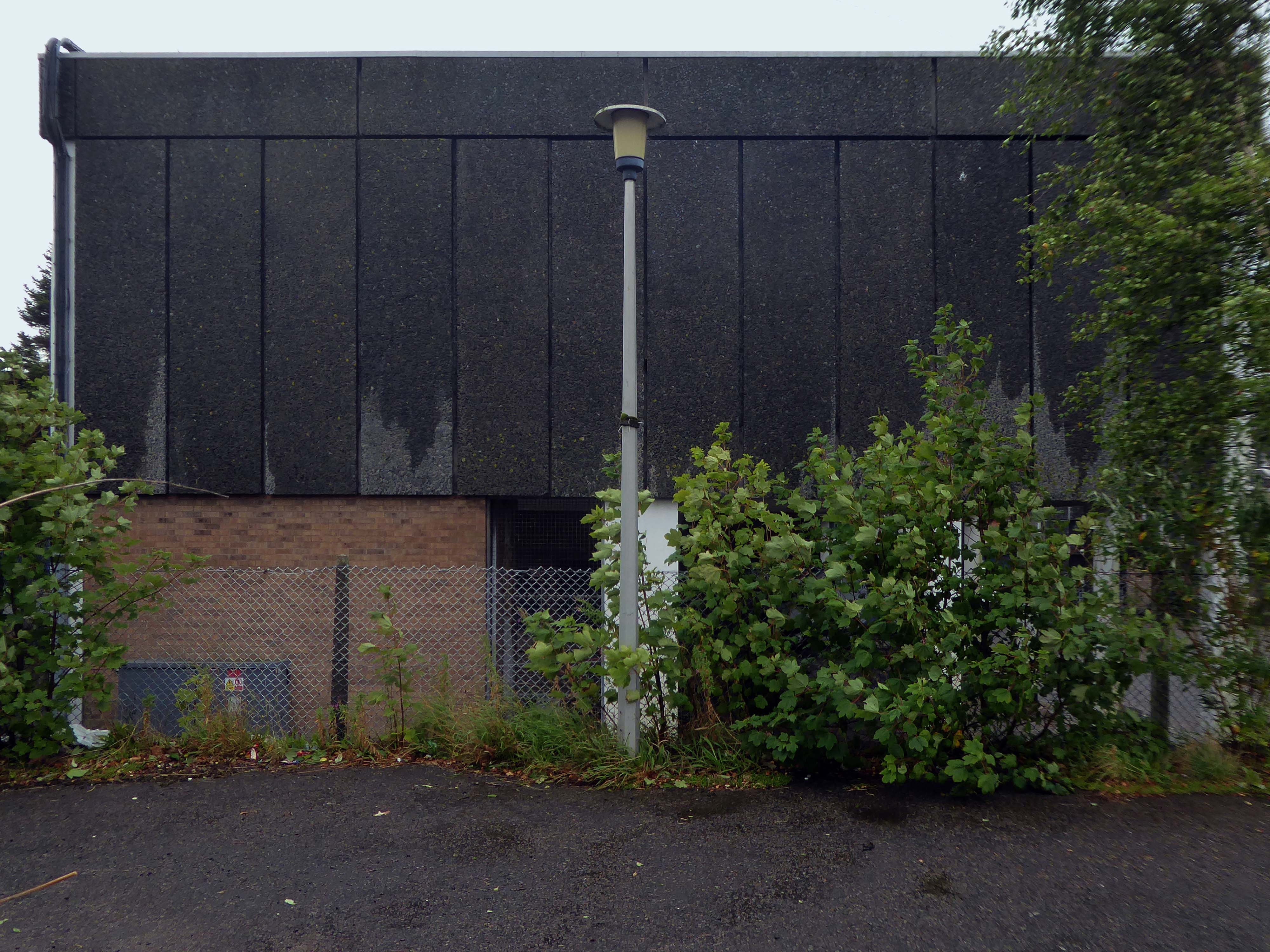
I espied a telephone Exchange.

The original building was designed by MOPBW senior architect M Williams and job architect P Chilton around 1966-67. Senior architect RN Dixon – of modernist talk fame, and job architect P Joyce were involved with some detailing around 1968, before Dixon designed an extension in 1972.

Thanks to Lisa at Telephone_Exchange for the facts!

So I took some time to look around, I politely suggest that you should too.

Shrewsbury Walk

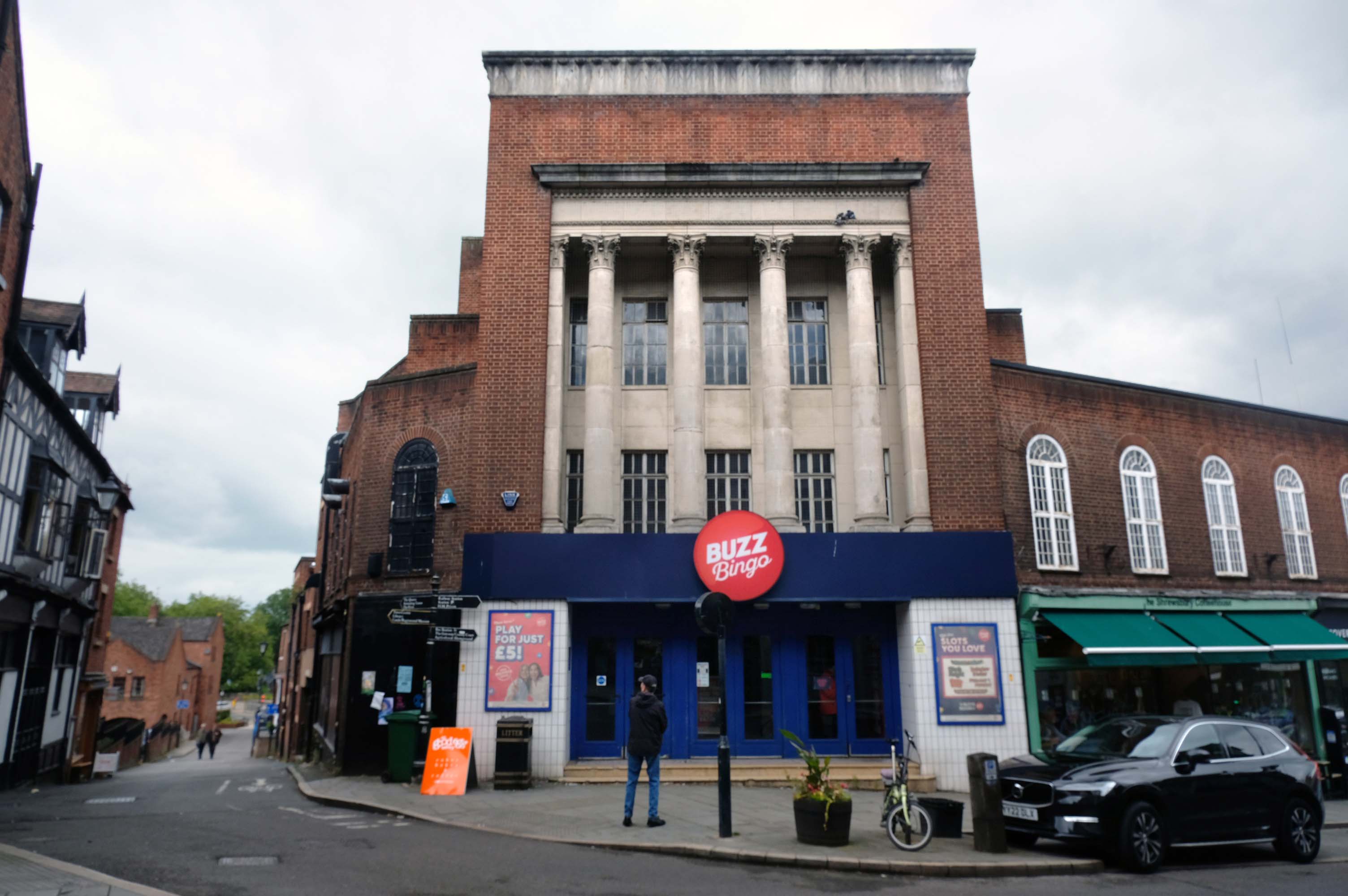
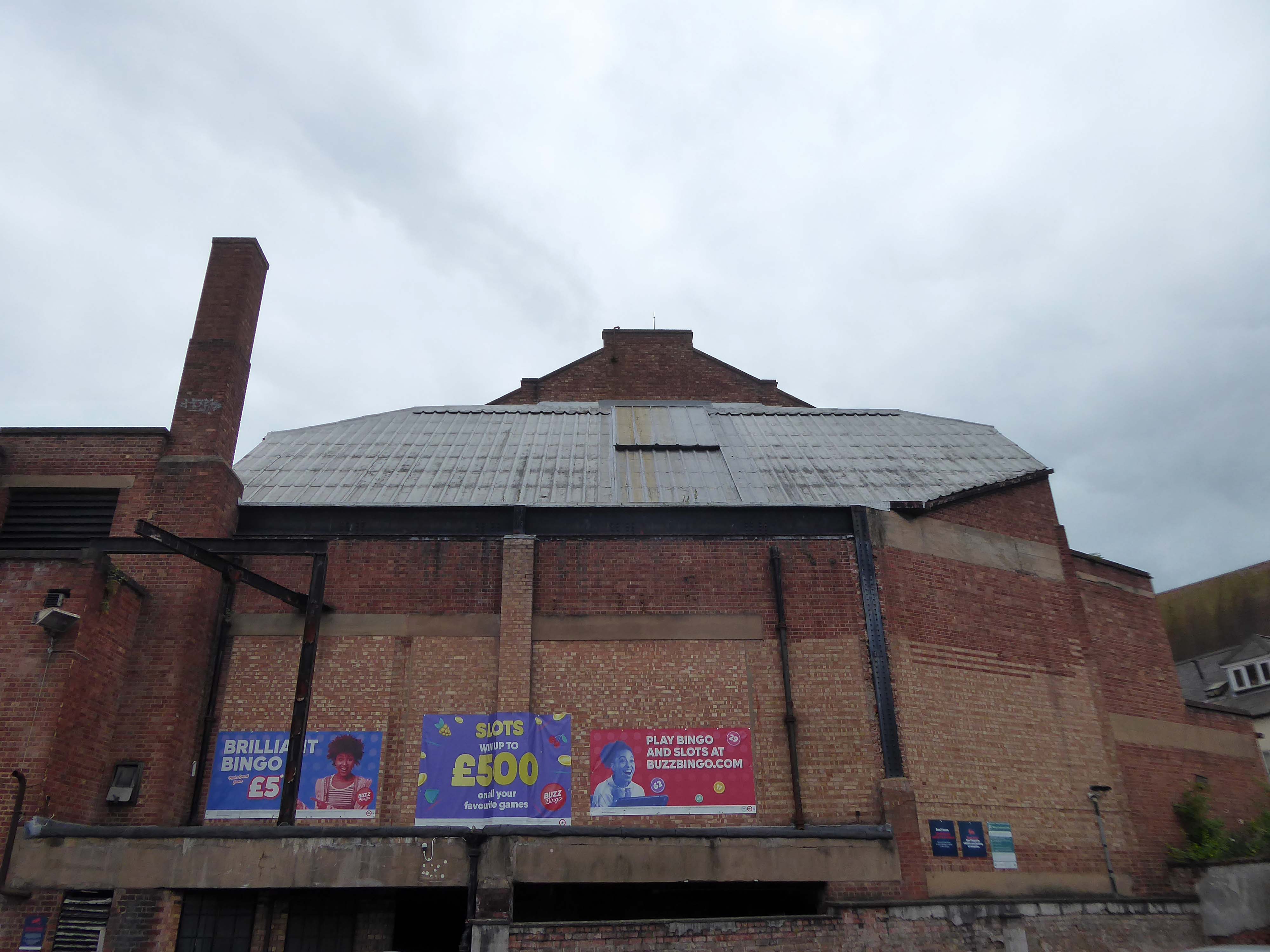
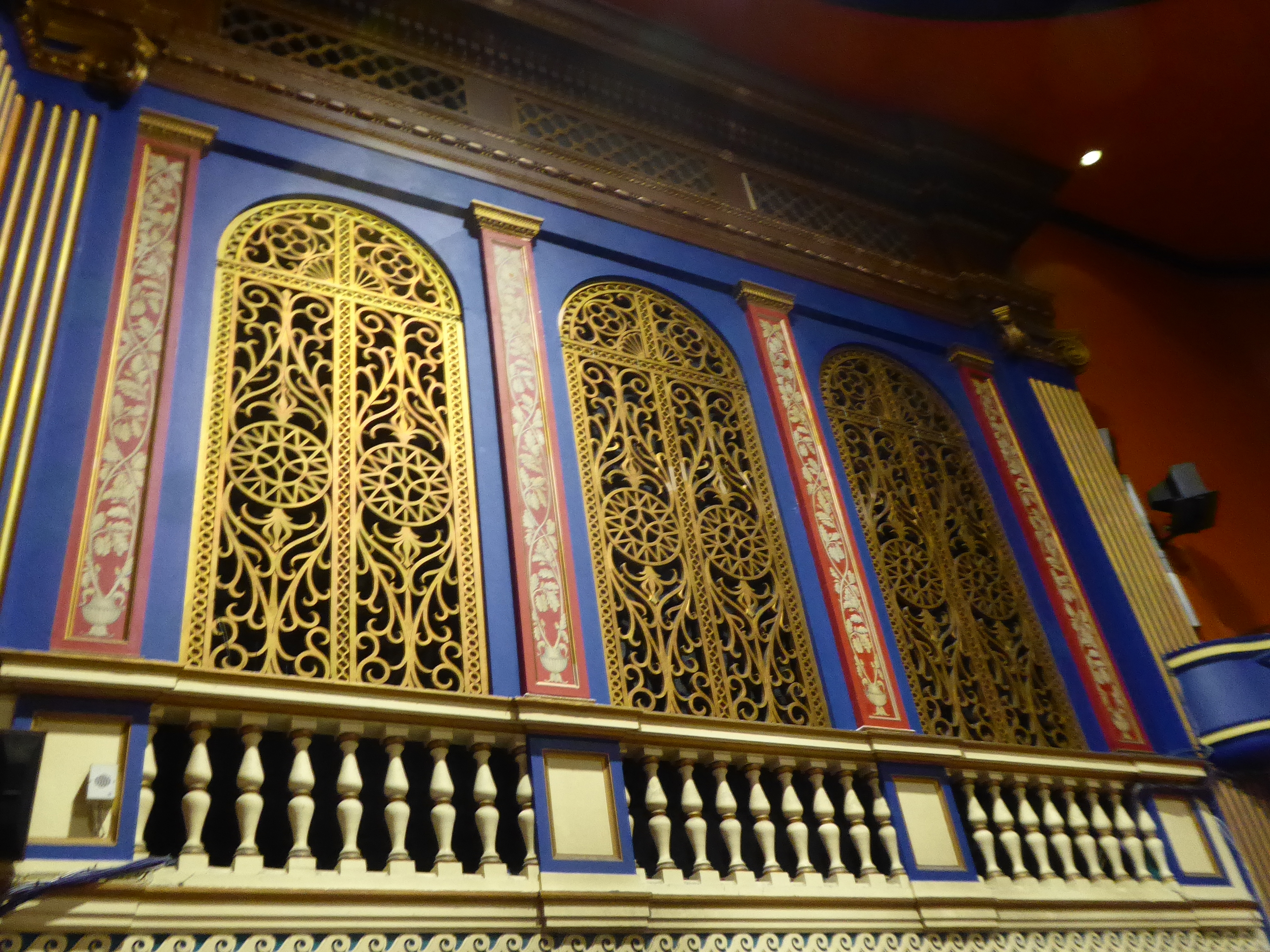
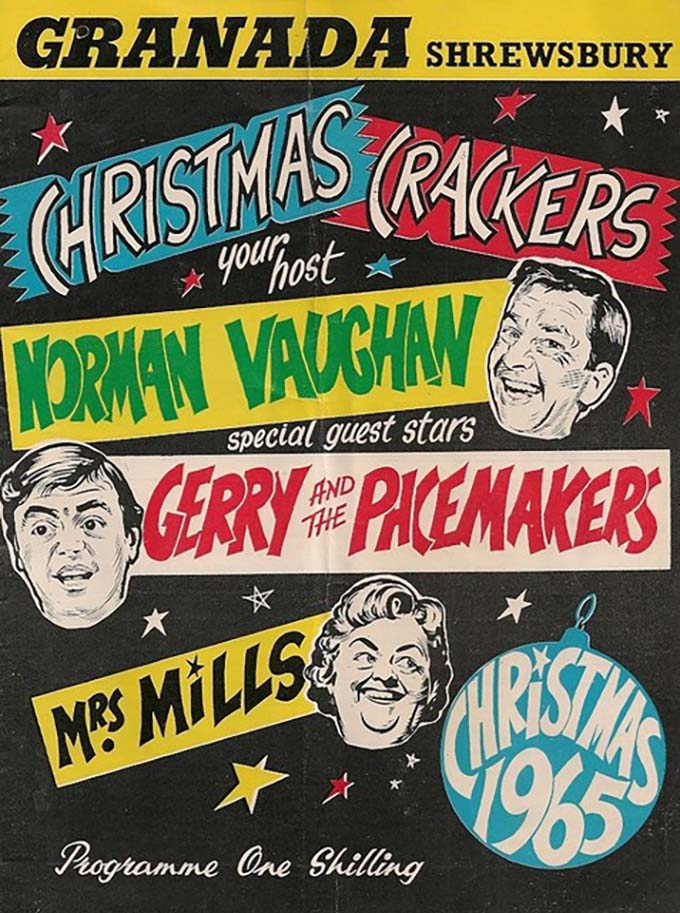
On leaving the front of the railway station – we see the former Granada Cinema.

Architects: Cecil Aubrey Masey

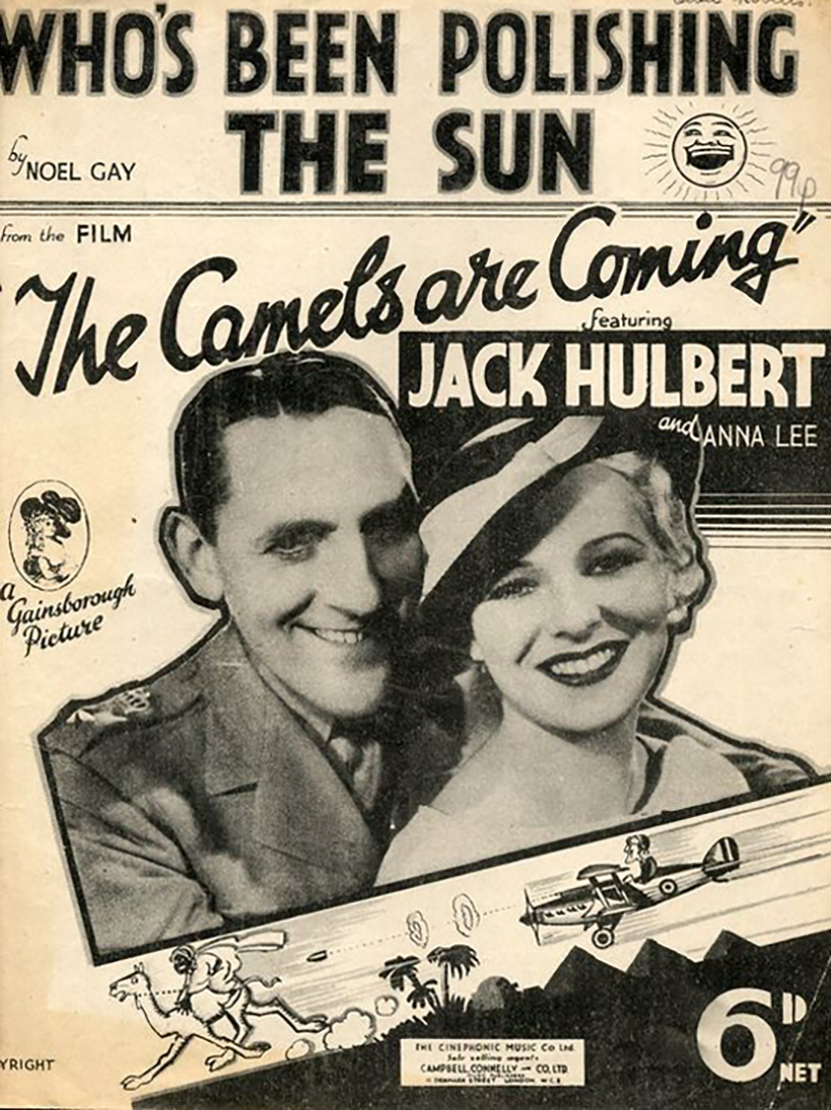
Built and operated by Shrewsbury Empires Ltd, the Granada Theatre opened on 14th November 1934 with Jack Hulbert in The Camels Are Coming.

It closed as a cinema on 31st March 1973 with Charles Bronson in The Valachi Papers and Anatomy of a Pin-Up.

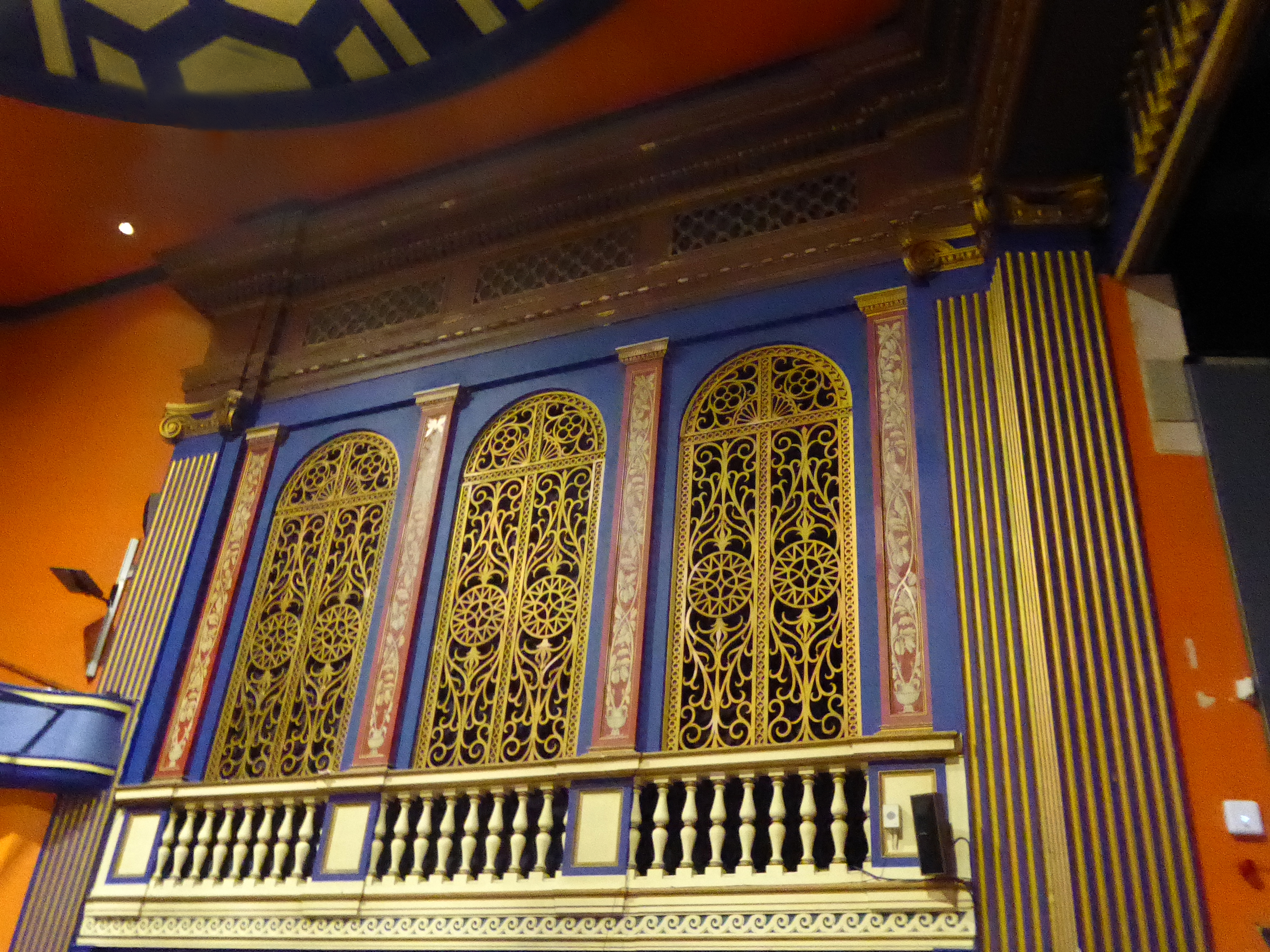
The Granada circuit was famous for its lavishly decorated interiors created by a Russian émigré called Theodore Komisarjevsky, the most famous examples of which are at Woolwich and Tooting – both now operate as bingo halls. The Shrewsbury Granada was by far the best cinema in the area, and in addition to Komisjarevsky, the scheme was designed by Cecil Massey, with some work being carried out by a local architect called Arthur Williams. The architecture of the Shrewsbury hall is often referred to as being a “standard” Granada, and the interior was very similar to the Granadas at Bedford now demolished and Maidstone which wasdestroyed by sub-division. There were less than 20 theatres built for the circuit, of which Shrewsbury was number five, although many existing cinemas were taken over and renamed, making the Granada Theatres an important group, although in numbers they were far behind Odeon and ABC.

Ian Grundy

On 17th November 1995, the Granada Theatre was designated a Grade II Listed building by English Heritage.

Many thanks to the staff of Buzz Bingo for allowing us access.

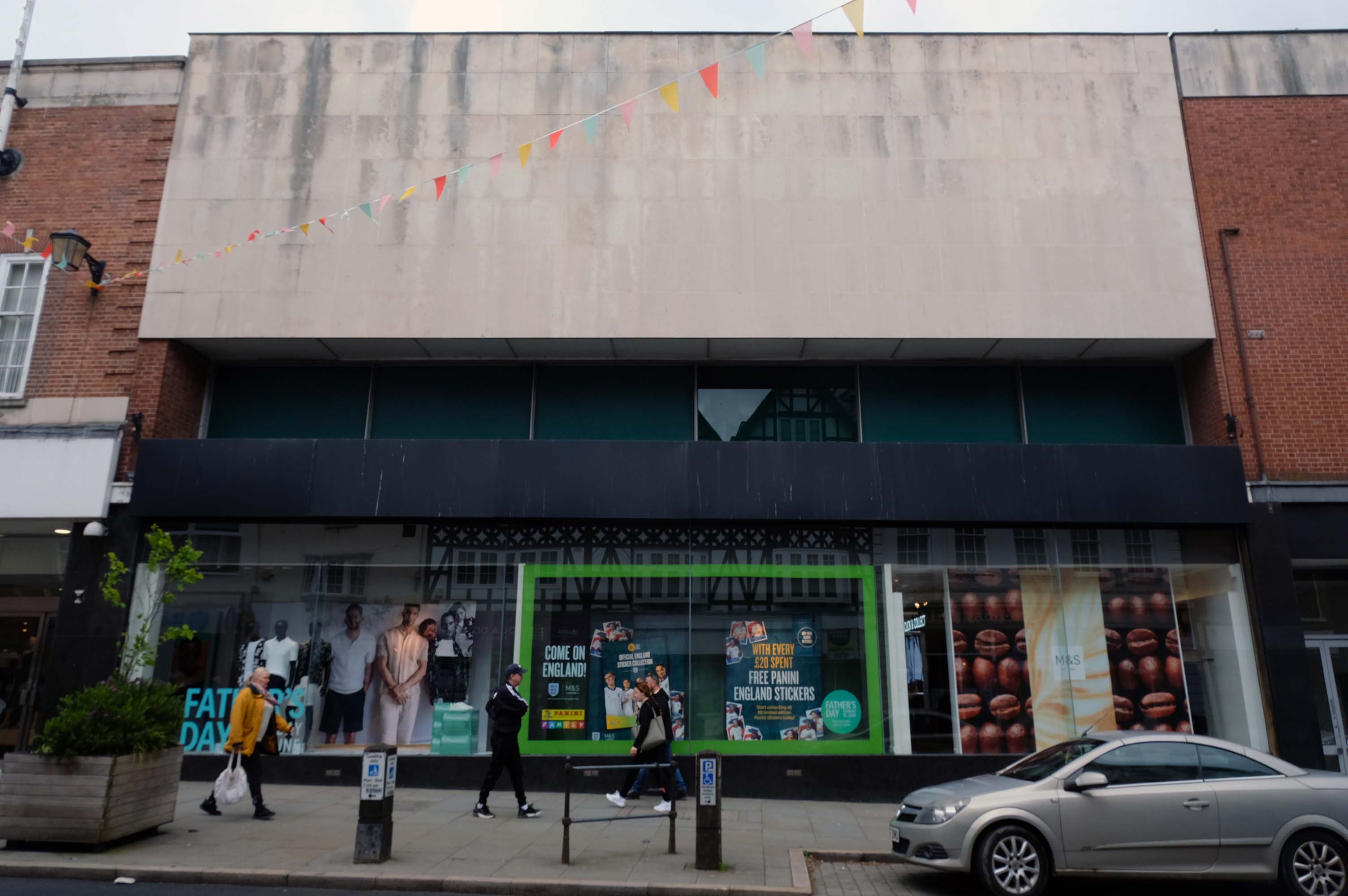
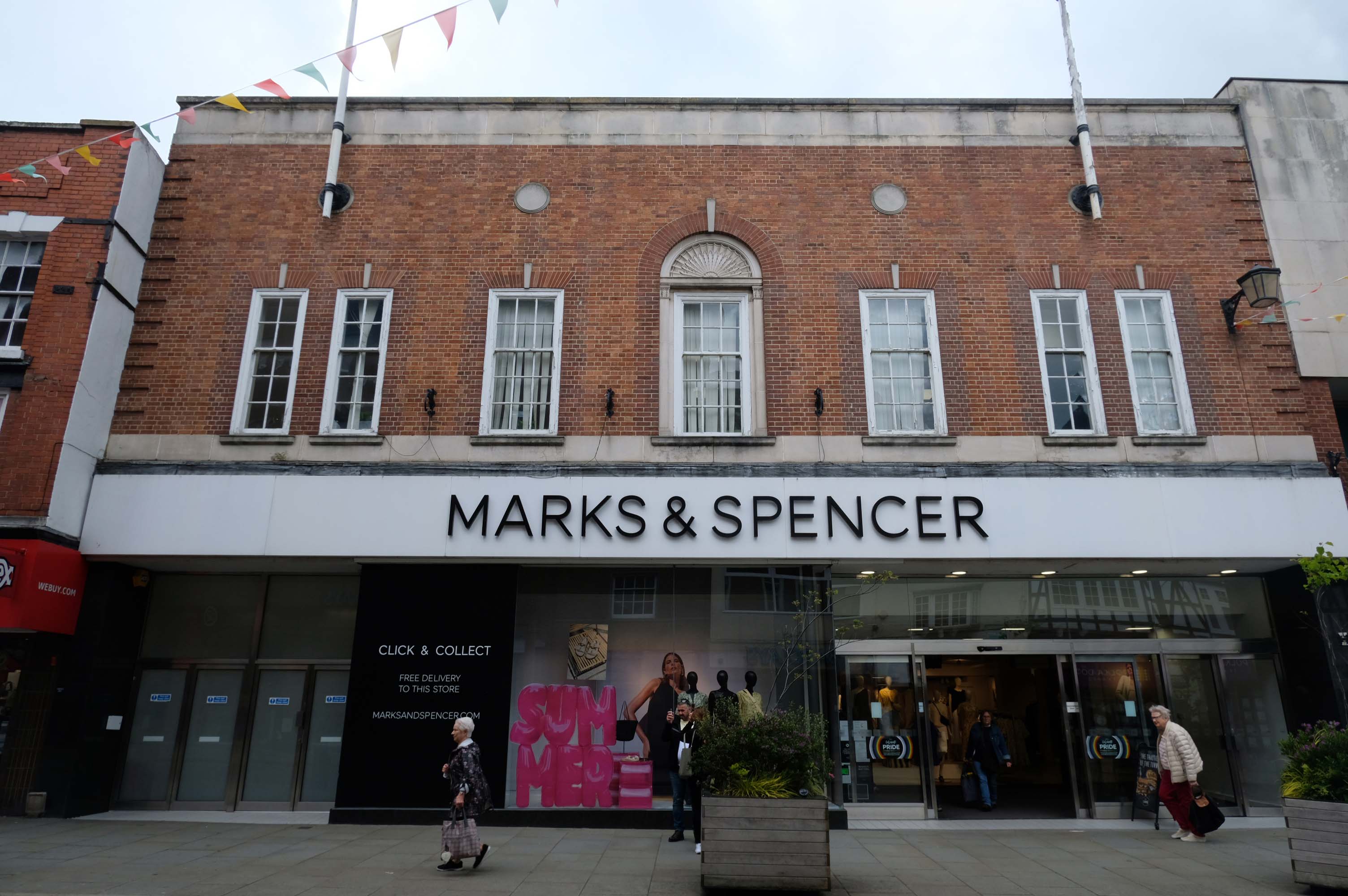
Next up is a Marks & Spencers store very much a shop of two halves – marrying post-war Brutalism with interwar Classicism, unified by a glazed ground floor.

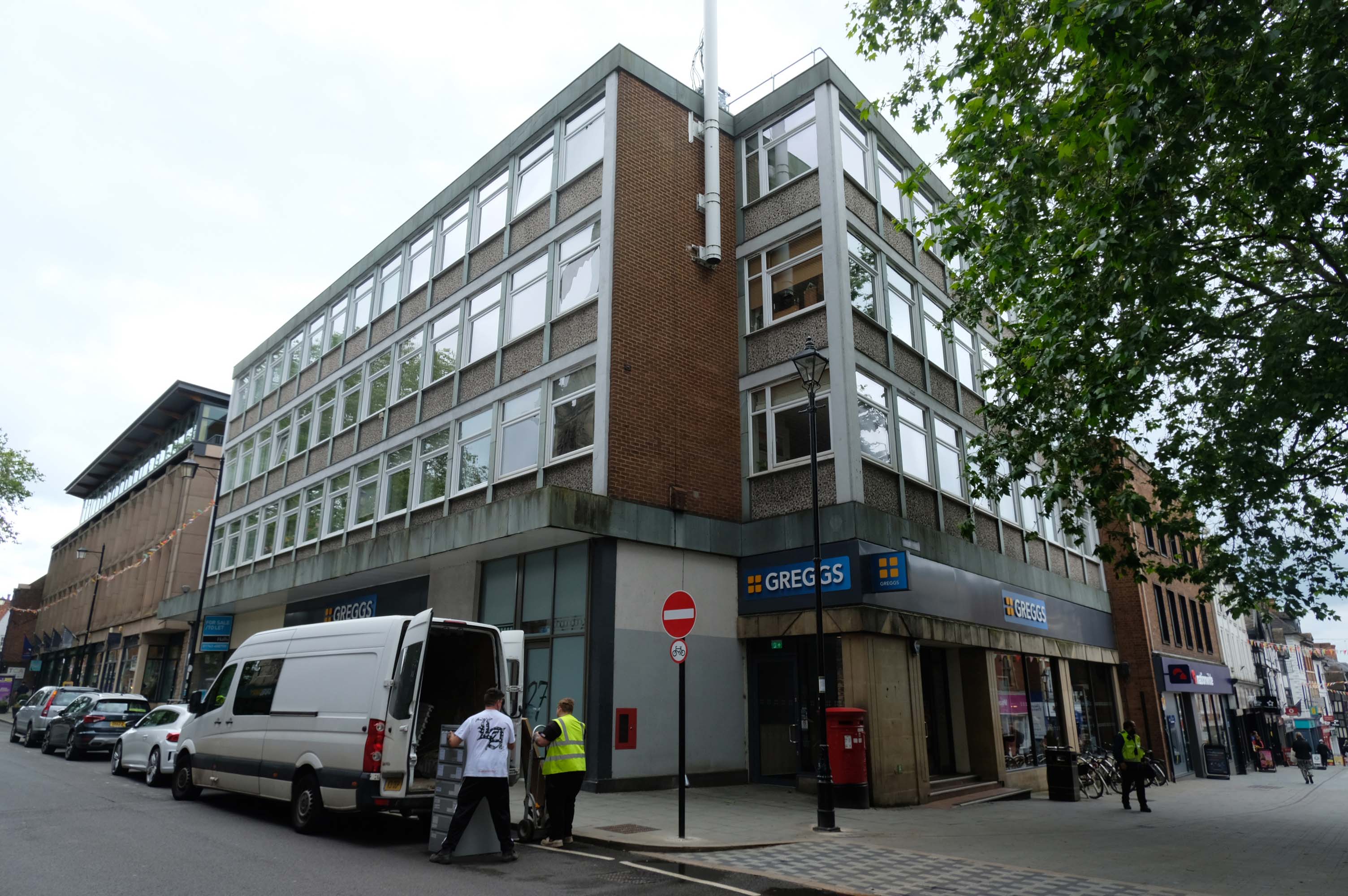
Across the way, a 60s corner site development, with a dual-entry Greggs.

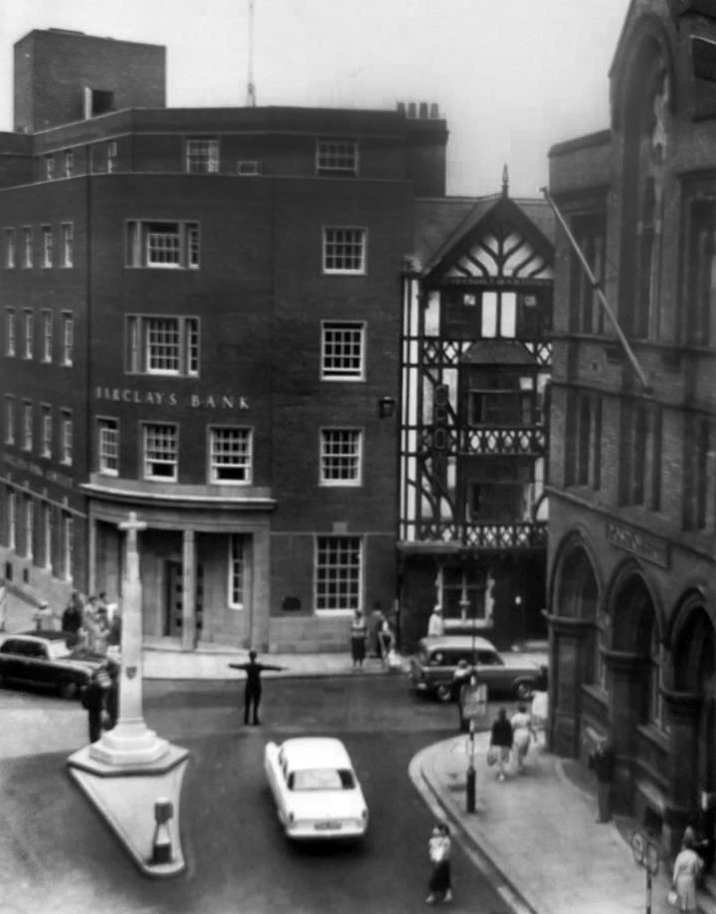
Formerly the site of the Post Office – demolished in 1959, and next to the Barclays bank the long gone Crown Hotel.

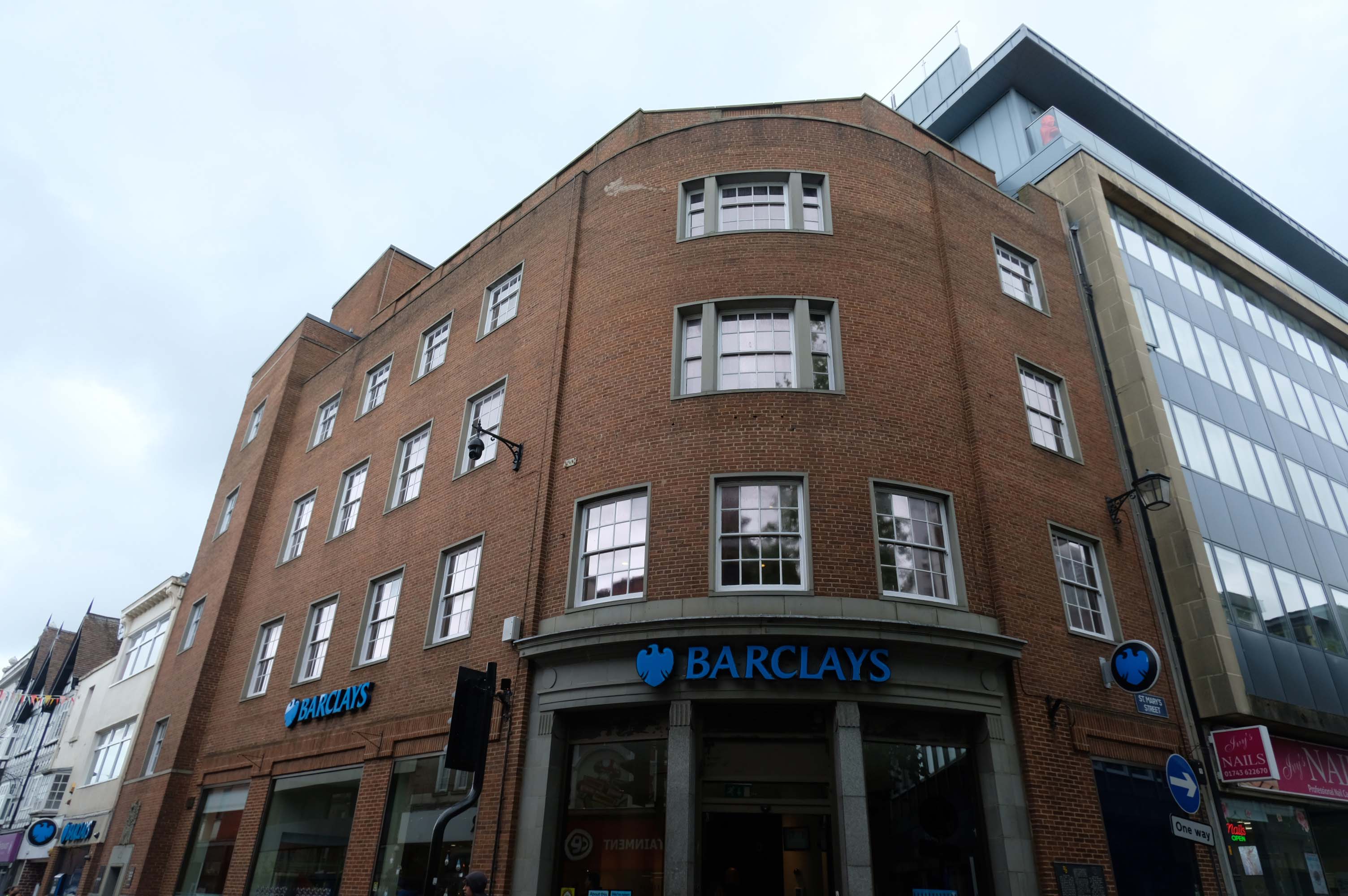
On the adjacent corner a curvaceous Barclays Bank, built in the post war Ministry of Works manner.

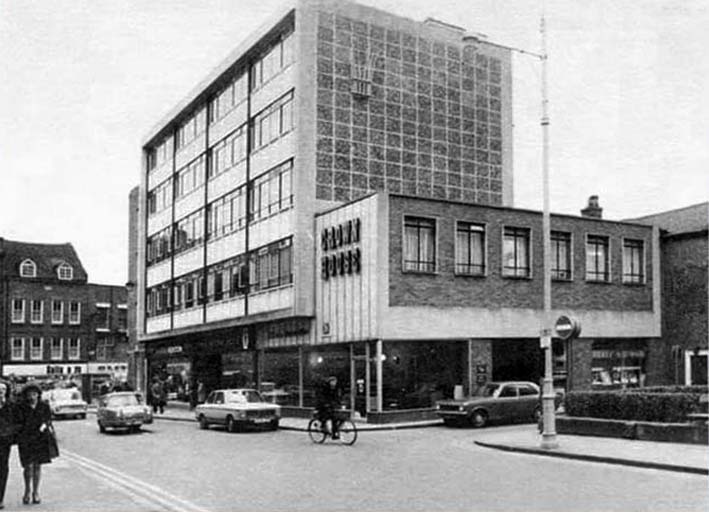
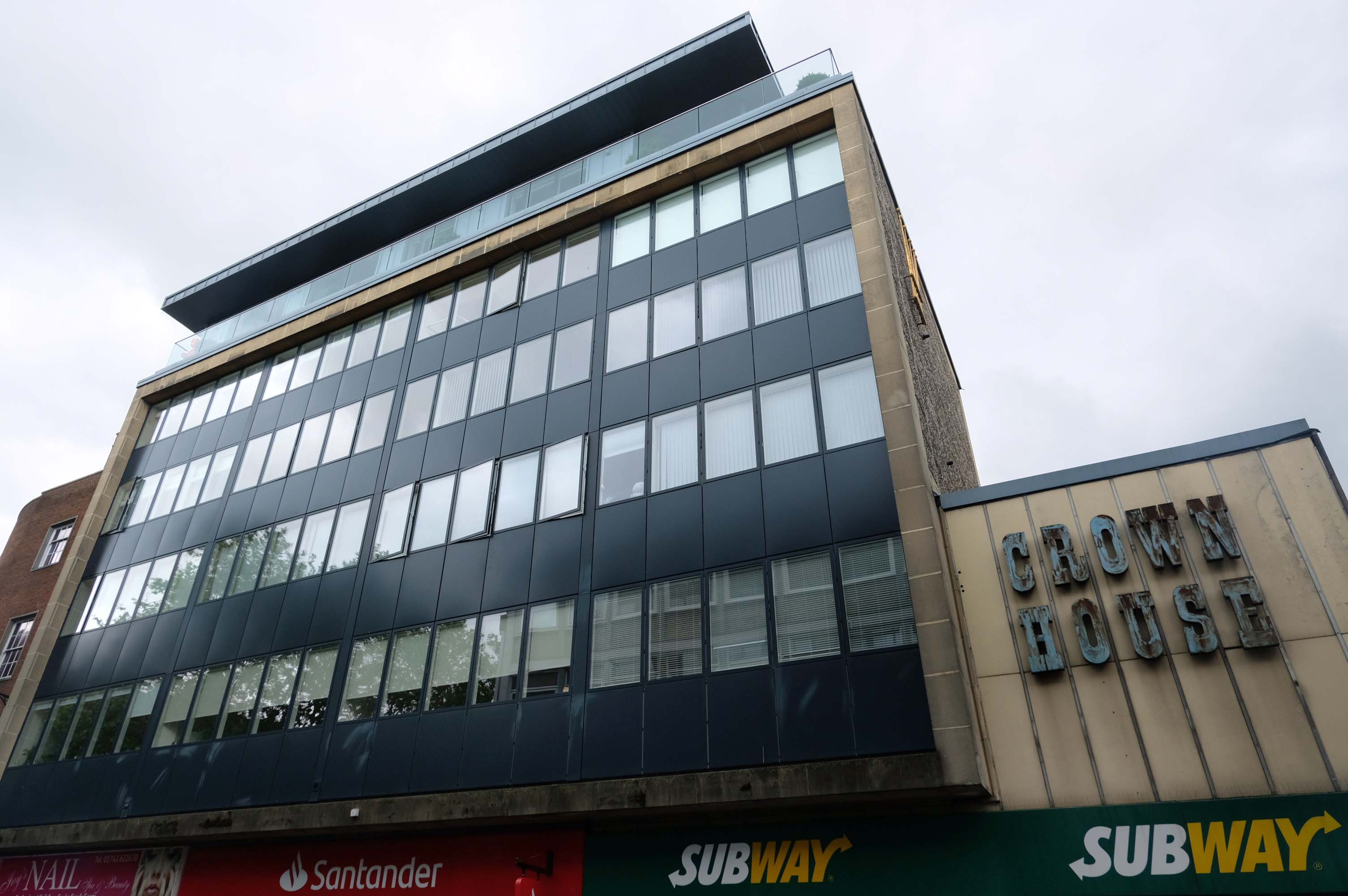
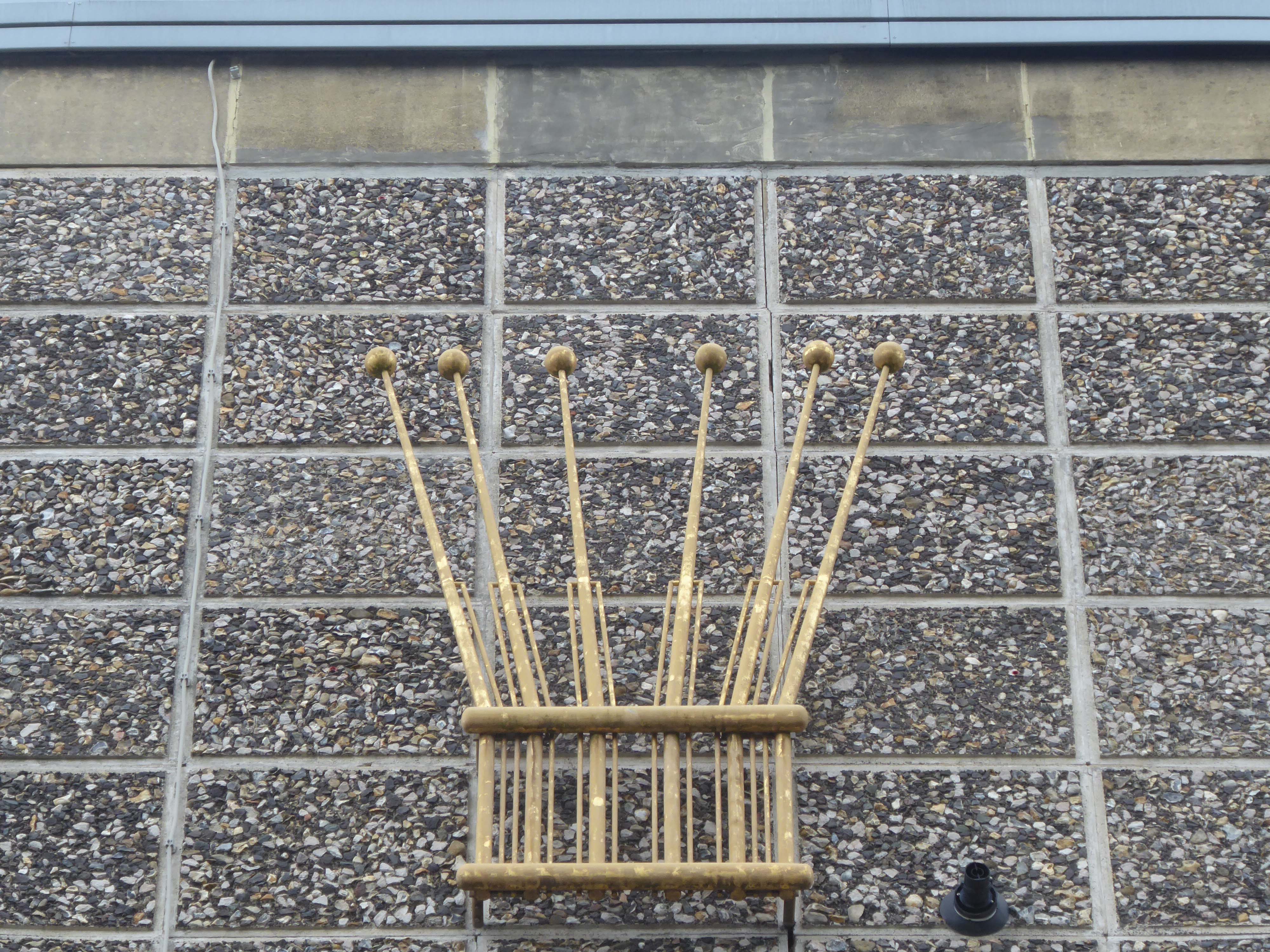
Next door is Crown House – refurbished but with it’s architectural type intact.

One of Marshall Structures’ biggest projects to date was the conversion of Crown House from a tired office block to a complex featuring 14 luxury apartments, providing a much-needed improvement to the site. The work involved in this project included large amounts of steel work and timber design.

The biggest challenge faced during the completion of this project was trying to fit an additional storey without loading quite an old existing structure. To do this, the new storey was designed out of a lightweight timber frame. By doing this, the client’s brief could be met while also ensuring that the existing 1950s building wasn’t overloaded in the process.

Marshall Structures

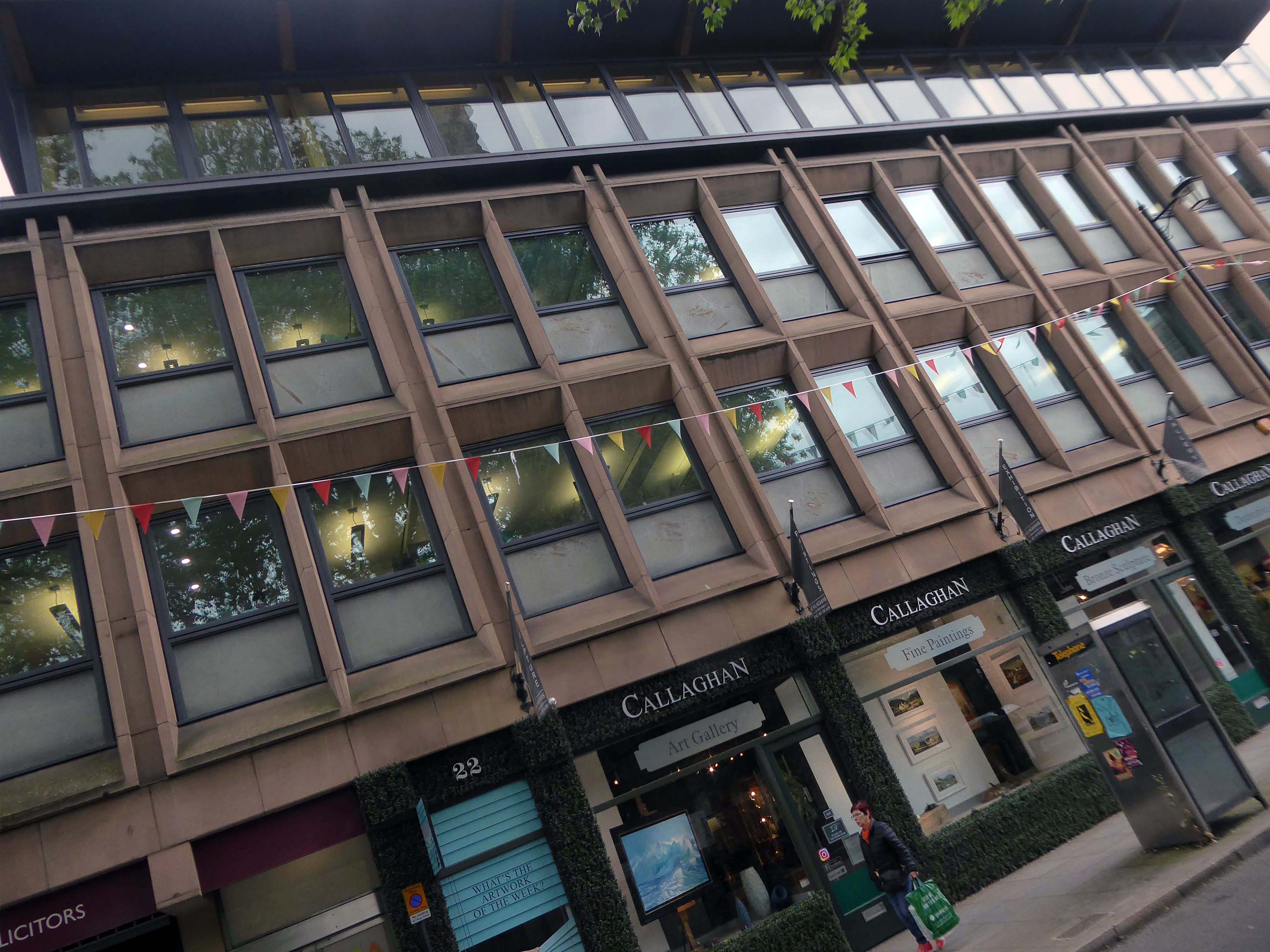
Directly across the road, this retail and office development.

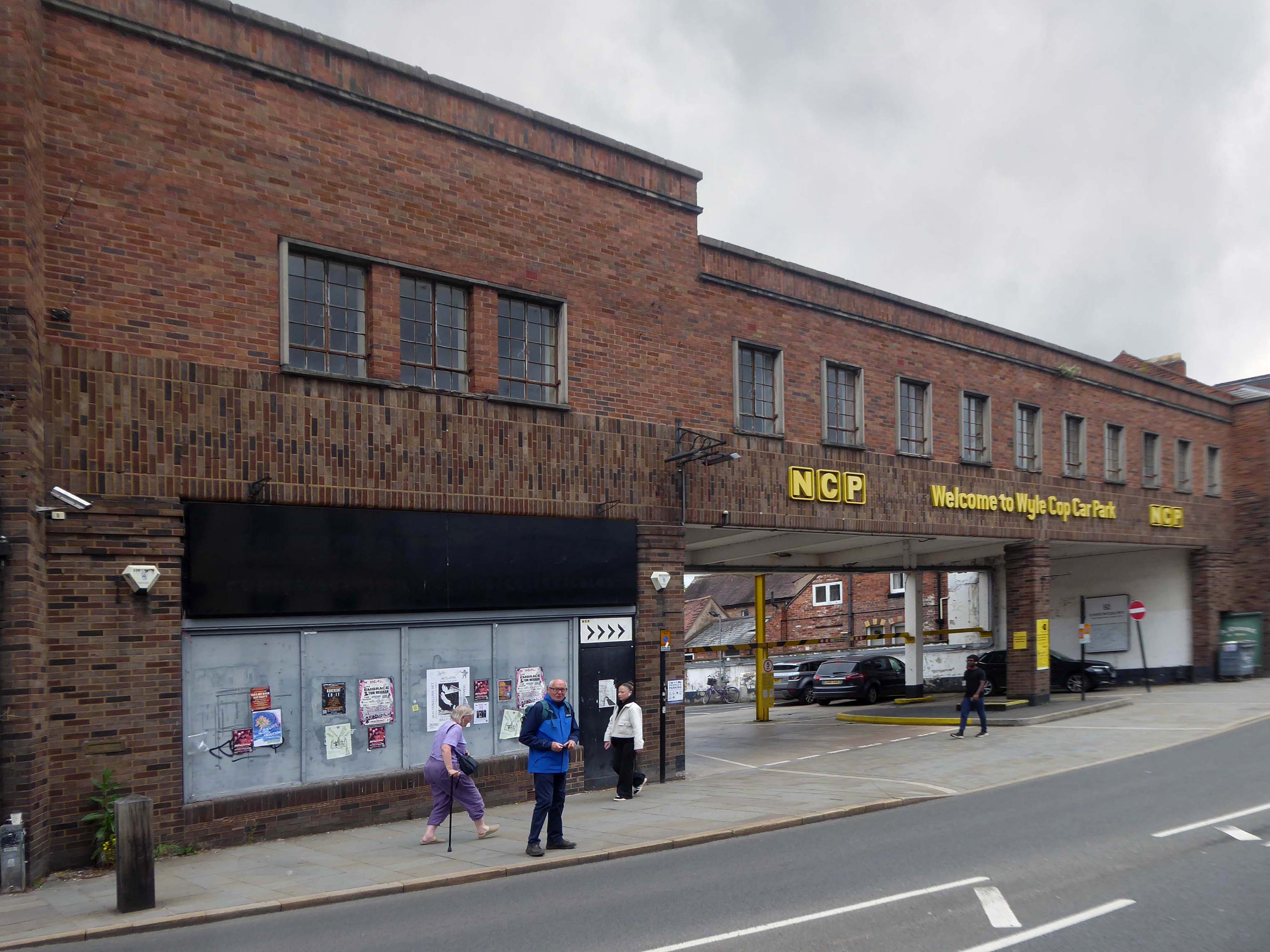
Next up some tricky brickwork on the Wyle Cop Car Park.

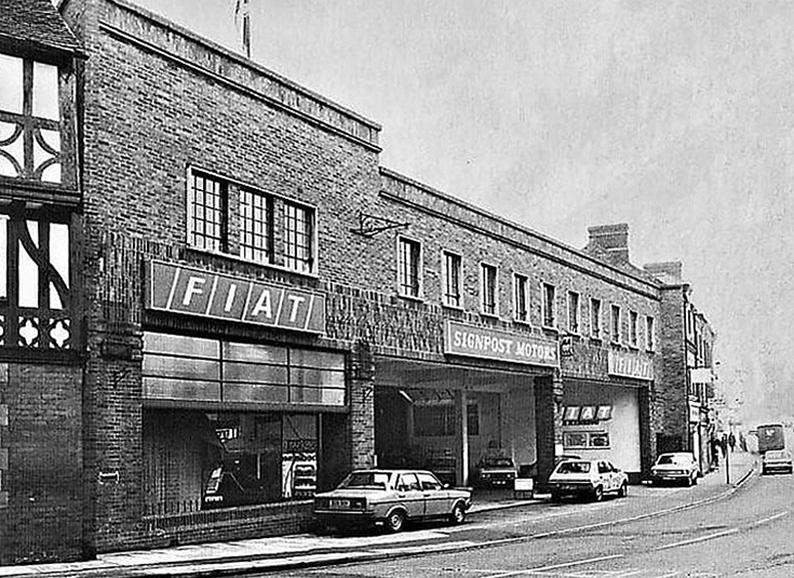
Formerly Kennings latterly Signpost Motors Fiat dealer.

Very badly run carpark, one machine broken, other not taking cards or cash.

Great place with a lot of parking space.

Onwards onwards across the river toward Shirehall.

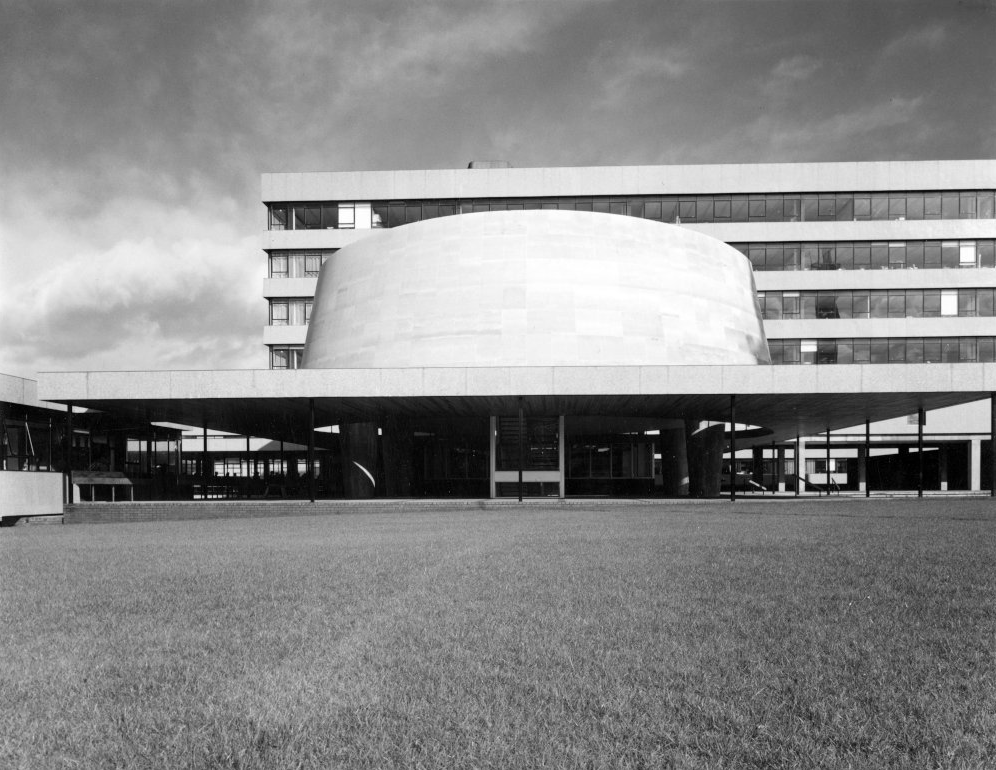
Architect: Ralph Vernon Crowe – 1966

Ribapix 1967

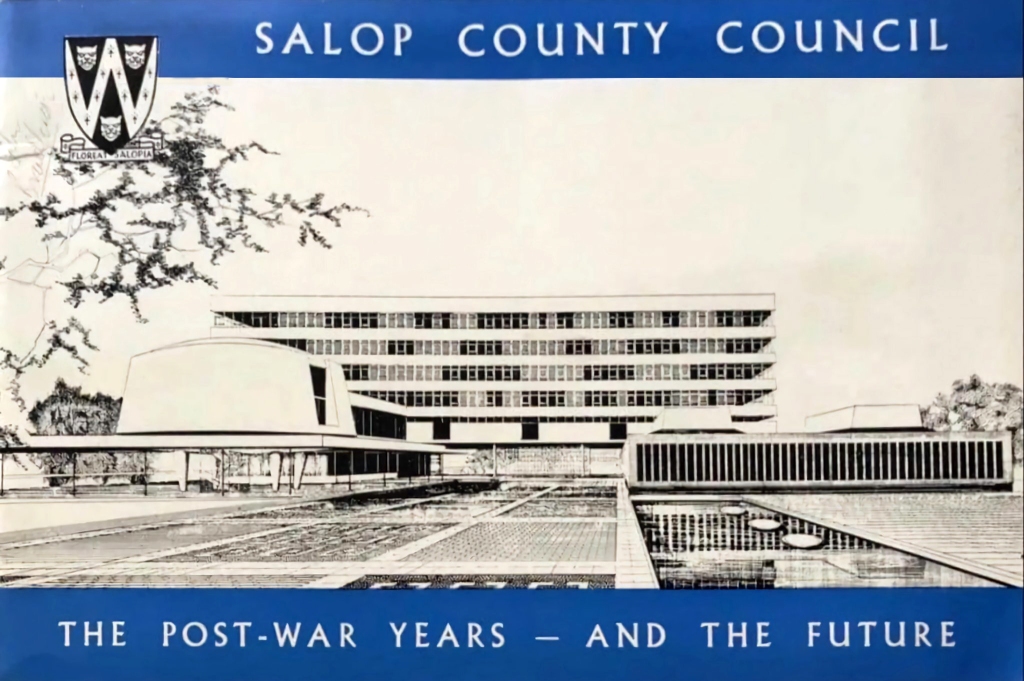
The foundation stone for the new building was laid by Sir Offley Wakeman, a former chairman of the county council, on 25 July 1964. It was designed by Ralph Crowe, the County Architect, in the Modernist style, built at a cost of £1.8 million and was completed in April 1966.

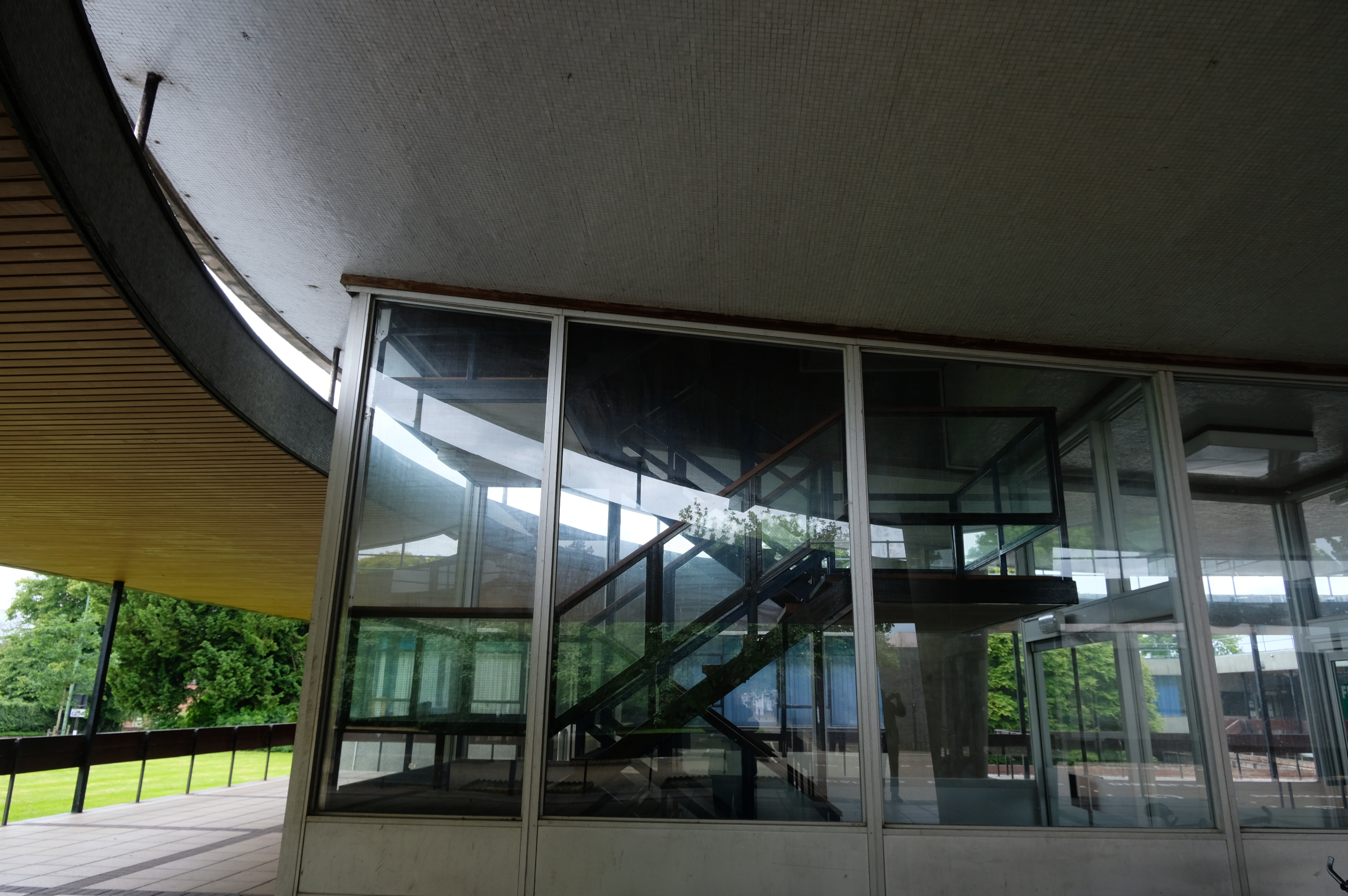
Pevsner described the building as – the major monument to post-war modernism in the county.

The Shrewsbury Civic Society is fighting hard to prevent the demolition.

There are archive photographs of the interior here.

Back into town to take a look at the Telephone Exchange.

Next to the Market Hall.

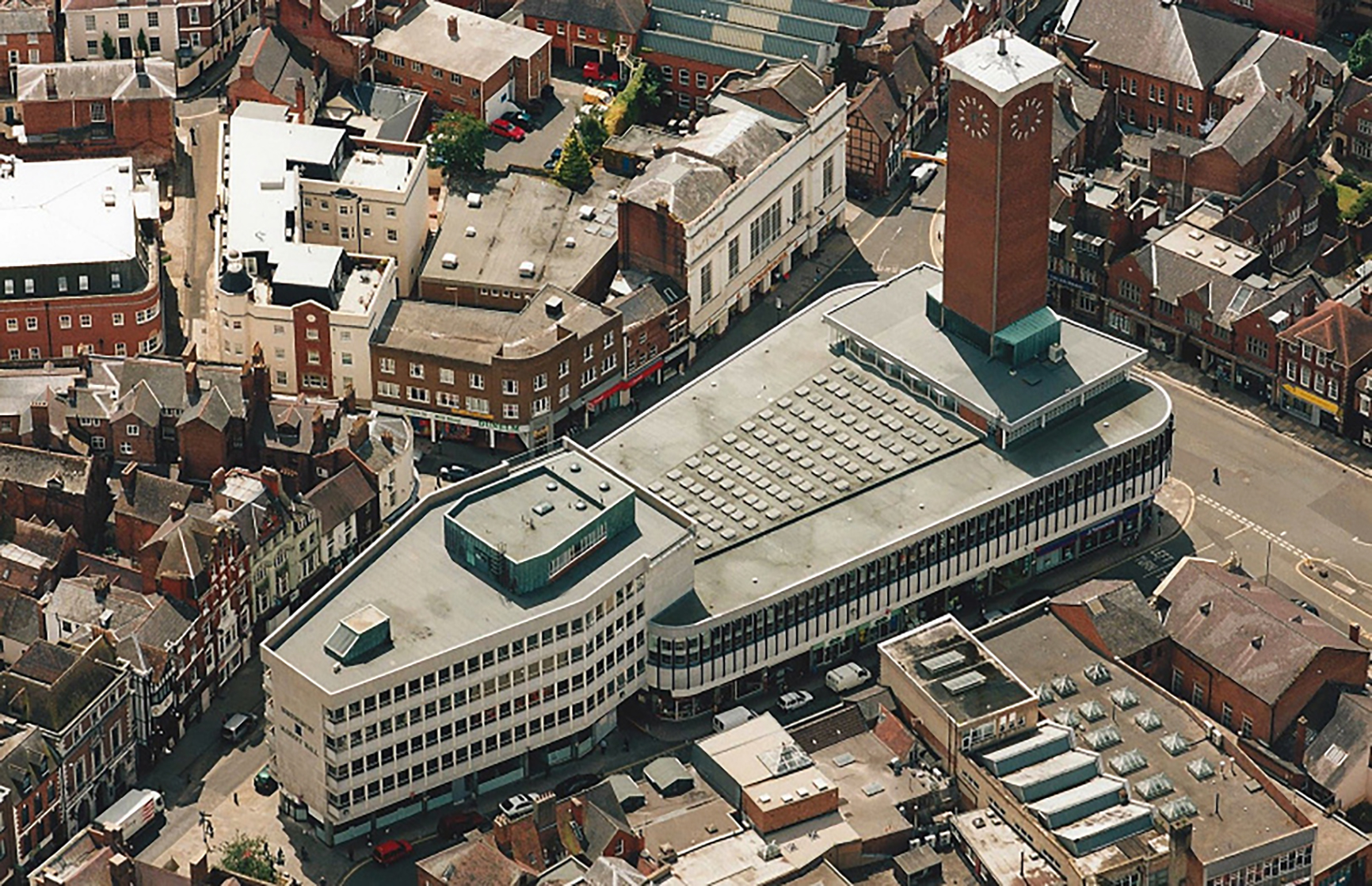
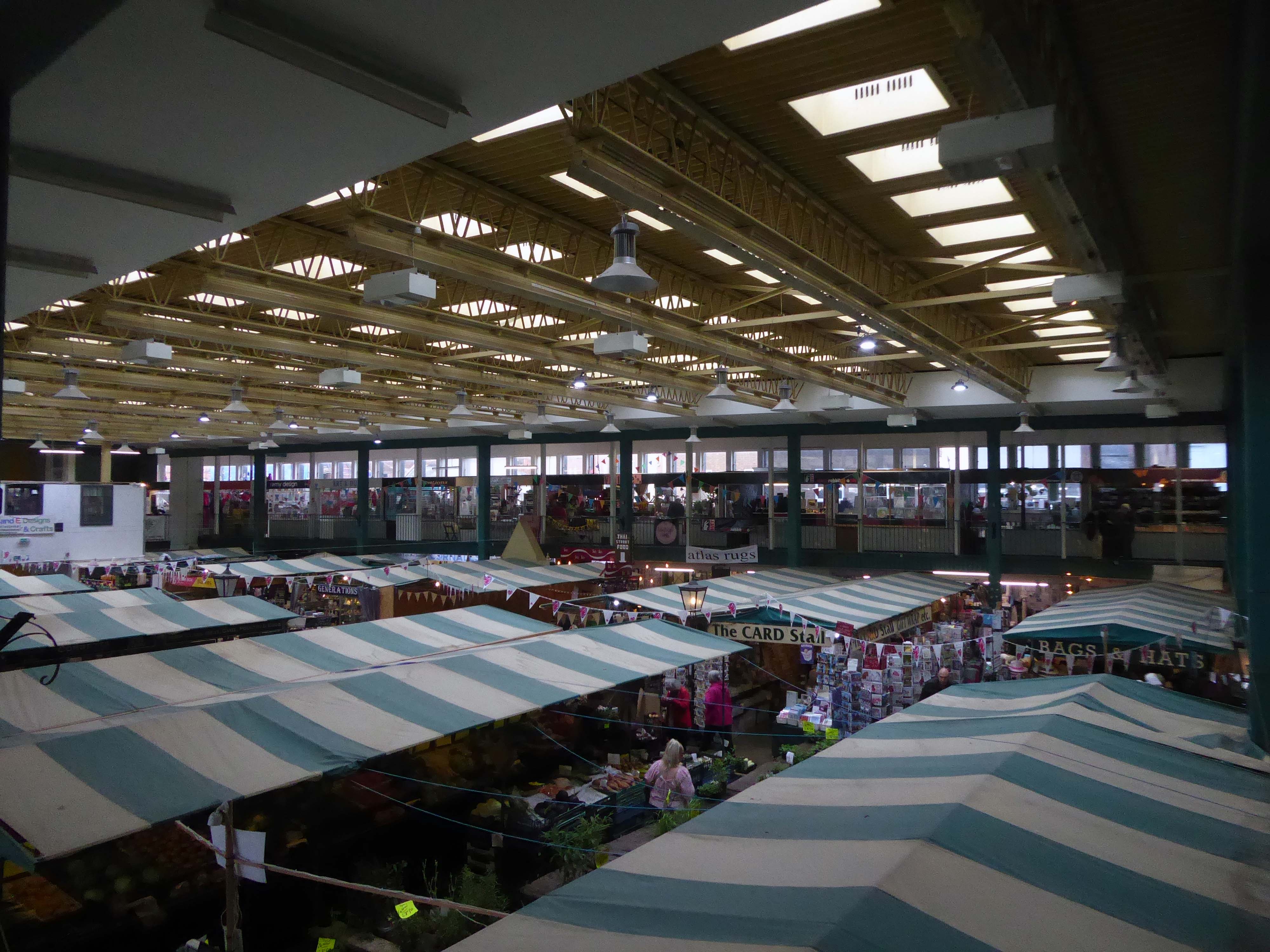
The Market Hall, which includes the town’s 240ft clock tower, an indoor market and a ground-floor shopping centre, was hailed the most modern building in Shropshire when it opened in September 1965.

Developed by the Second Covent Garden Property Company Ltd to replace an ailing Victorian market hall, it cost £1 million to build and was designed by award-winning architect David du Roi Aberdeen who also famously designed the Trade Union Congress headquarters, Congress House, in London, and the Swiss Centre in Leicester Square. 

Today the Market Hall’s 1960’s architecture might not be to everyone’s taste, but its indoor market is thriving with over 70 small businesses ranging from popular contemporary cafes and gift retailers to artisan producers and traditional market stalls selling fresh produce.

Shropshire Live

More of the Market Hall here.

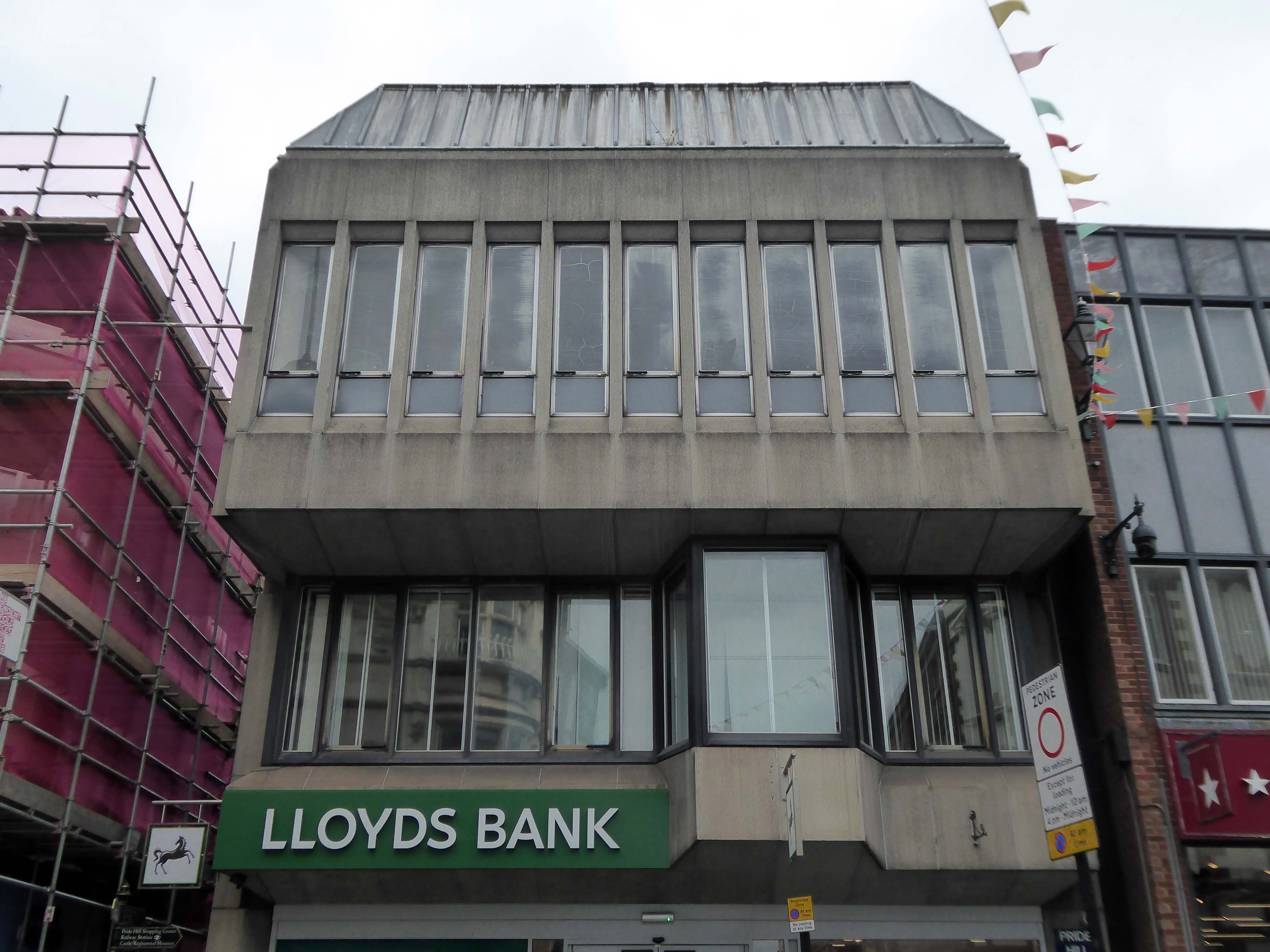
Bobbing toward the centre – a striking Lloyds Bank.

A conscious effort to reflect the nearby Tudor architecture of Ireland’s Mansion and Pride Hill. Lloyds Bank is considered a good example of Brutalist architecture, and proof that bold modern buildings can be successfully slotted into traditional historic streets.

Original Shrewsbury

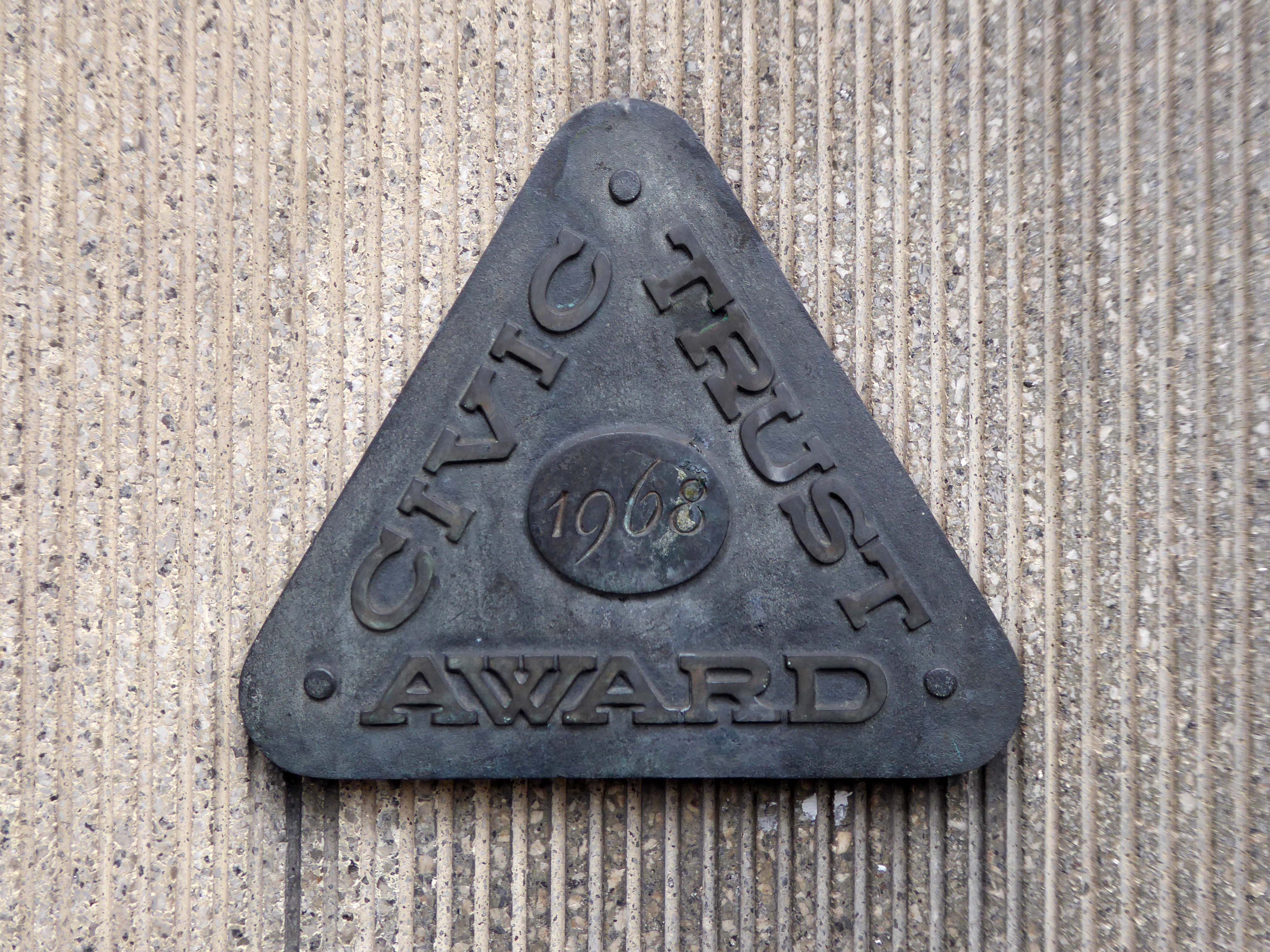
Possibly Shrewsbury’s finest post-war building, but of course it has its detractors. It was well received by critics of the period including the assessors for the Civic Trust who bestowed an award in 1968. They noted the quandary that the architects faced of building in such a historic setting and terminating the vista along one of the town centre’s main streets. In their opinion the architects ‘faced the problem squarely and their building, brave in its conception and immaculate in its detail’ and that it was ‘uncompromisingly of today but beautifully sympathetic to the great buildings it rests with’. Pevsner’s original assessment of it being the ‘boldest modern response to the town’s half-timbering’ was not shared by the authors who revised the Shropshire edition and viewed it as an ‘aggressive display of exposed and textured concrete’.

It was also shortlisted for the European Cement Association awards, one of only two British buildings to make the grade. Opting to draw on the Tudor traditions of the town, partner W Marsden, working with project architect W Allan Clark and assistants Malcolm Lovibond and Keith Maplestone, used cantilevered floors, vertical structural and sub-structural members, oriel windows and a black and white tonal palette deploying anodized aluminium window frames against finely ribbed concrete panels. The standing seam zinc roof adopted the town’s norm of pitched roofs without gables in order to blend with the street scene. Concrete Quarterly referred to it as ‘a skilful bridging of the centuries in a way that would not offend a purist’ . The main contractor was Henry Willcock and Company Limited.

Mainstream Modern

Nearby more modern infill sits alongside the historic half timbered heritage.

Next down Raven Meadows to the Raven Meadows Car Park, built by Truscon Ltd in 1969.

Which also houses the Bus Station.

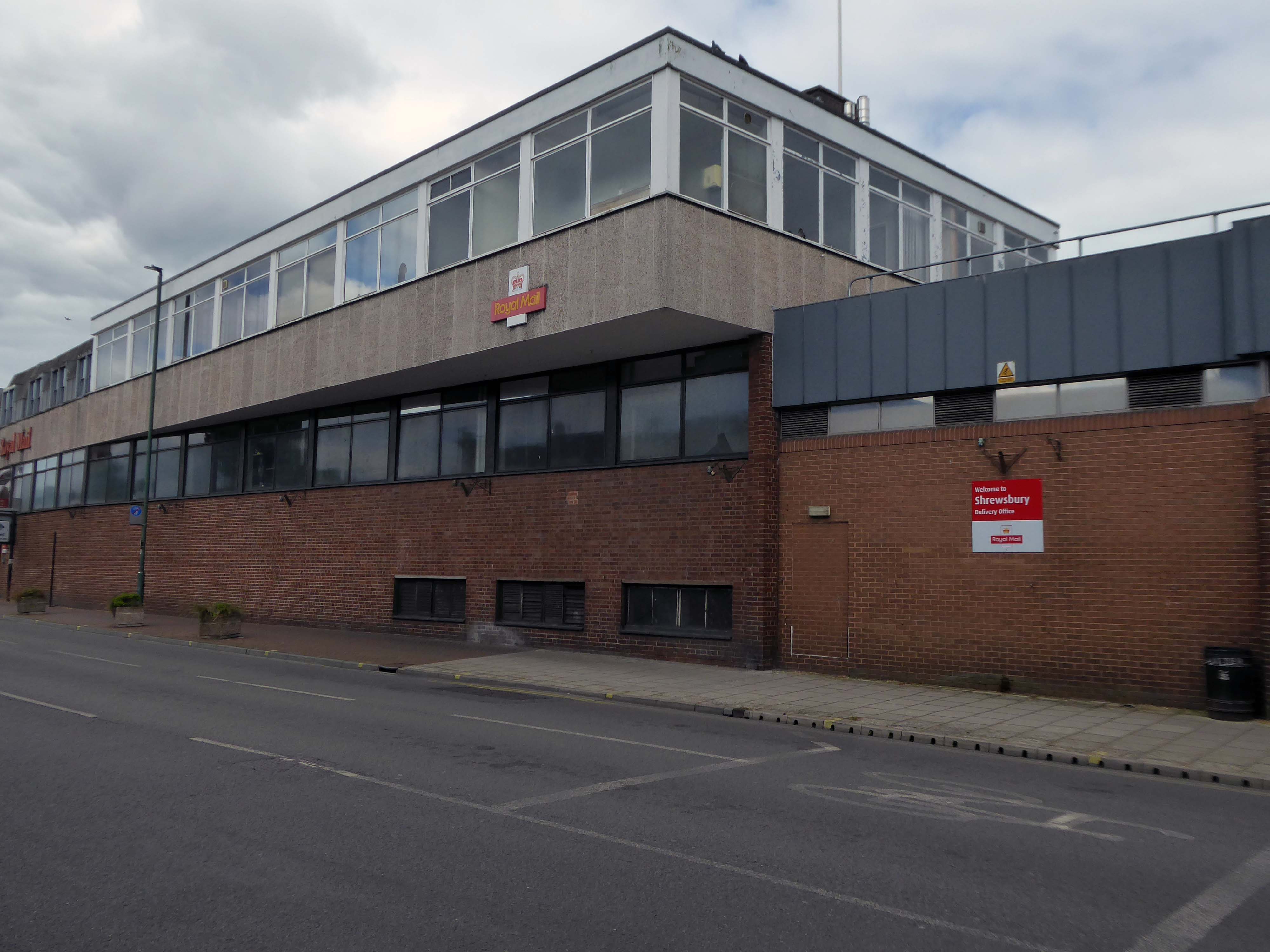
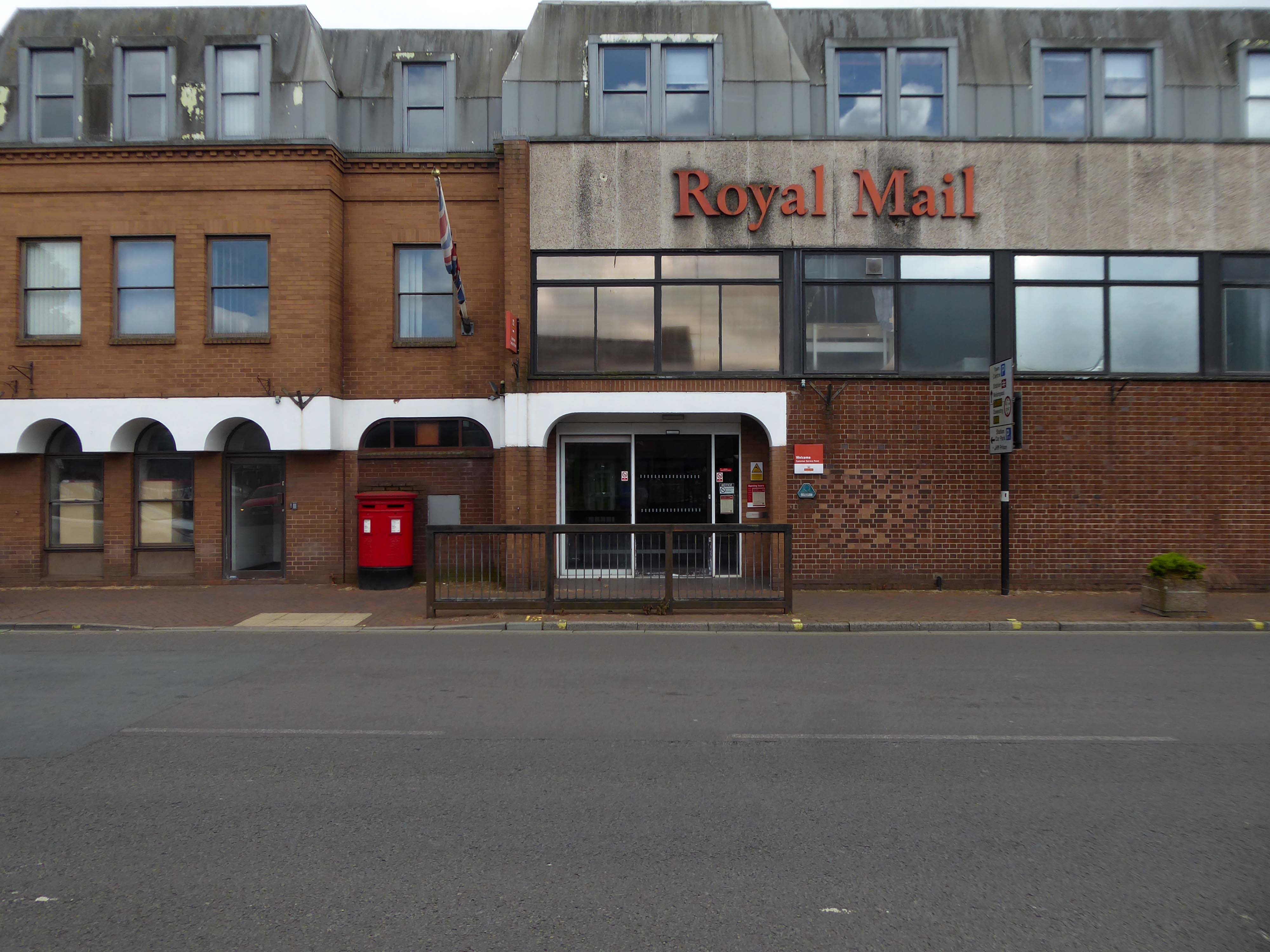
Back now toward the station under the railway to the Royal Mail.

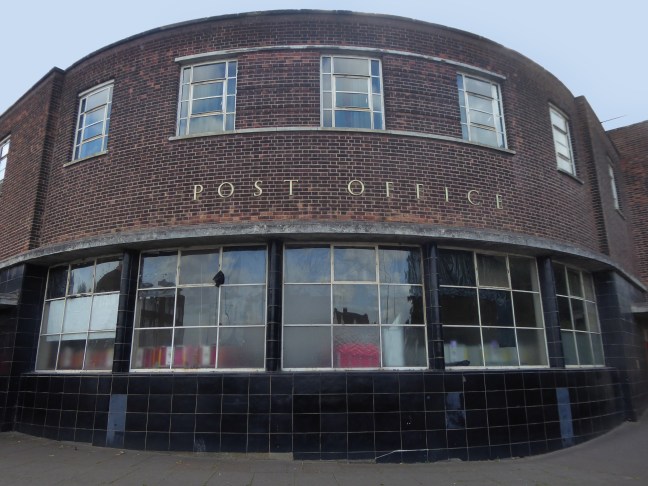
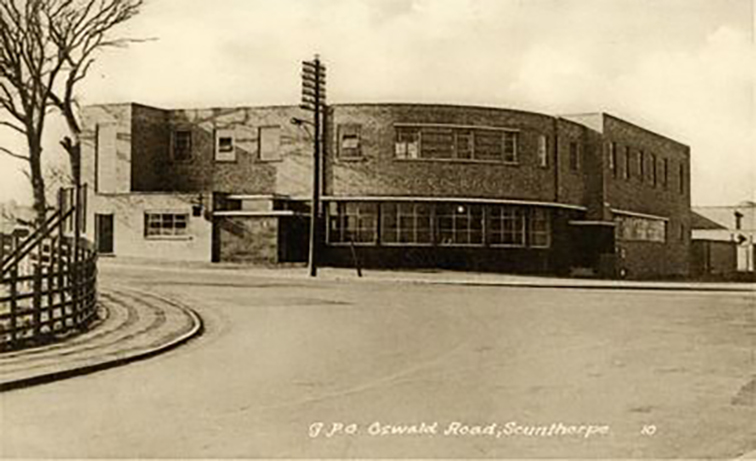
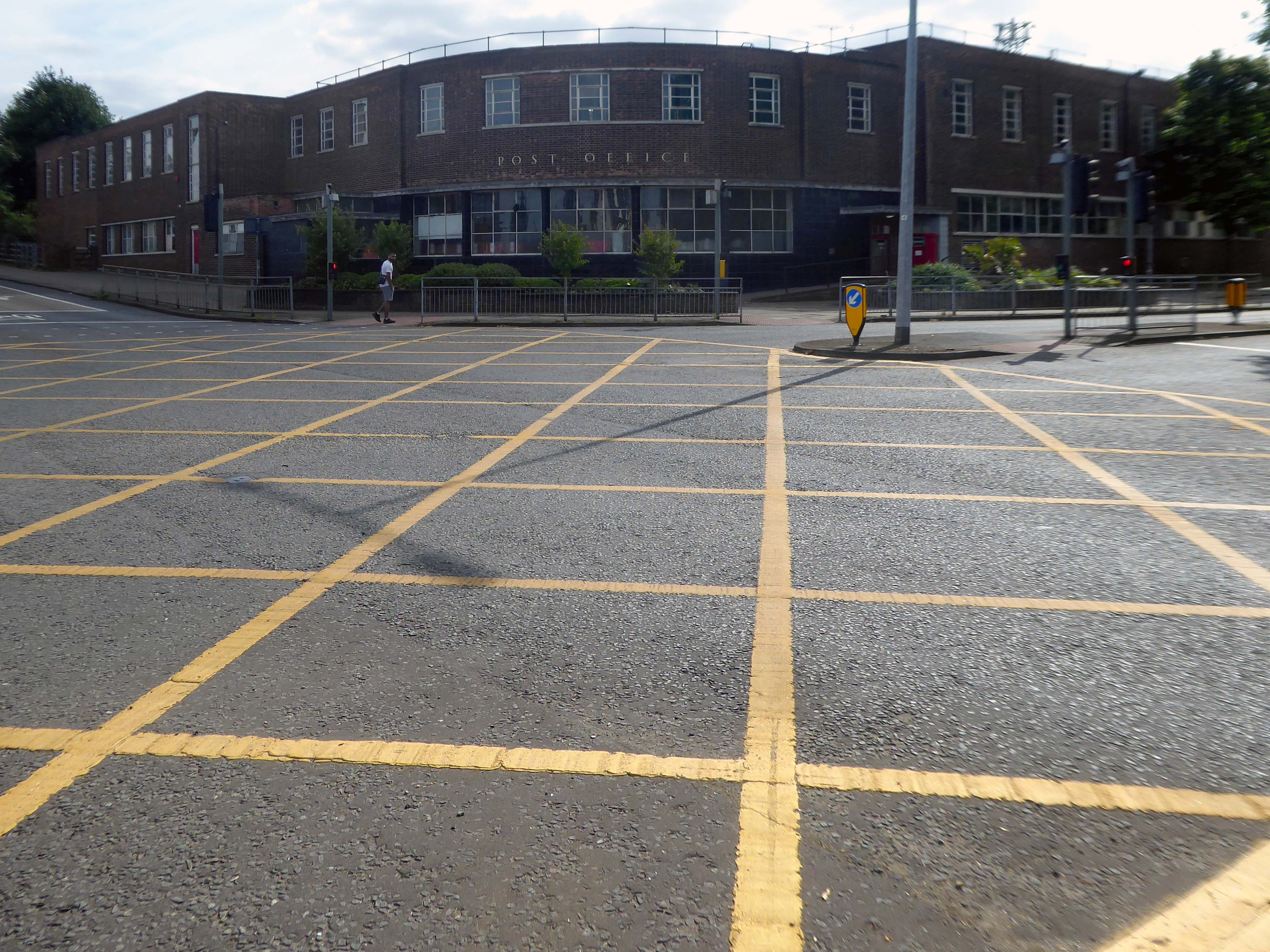
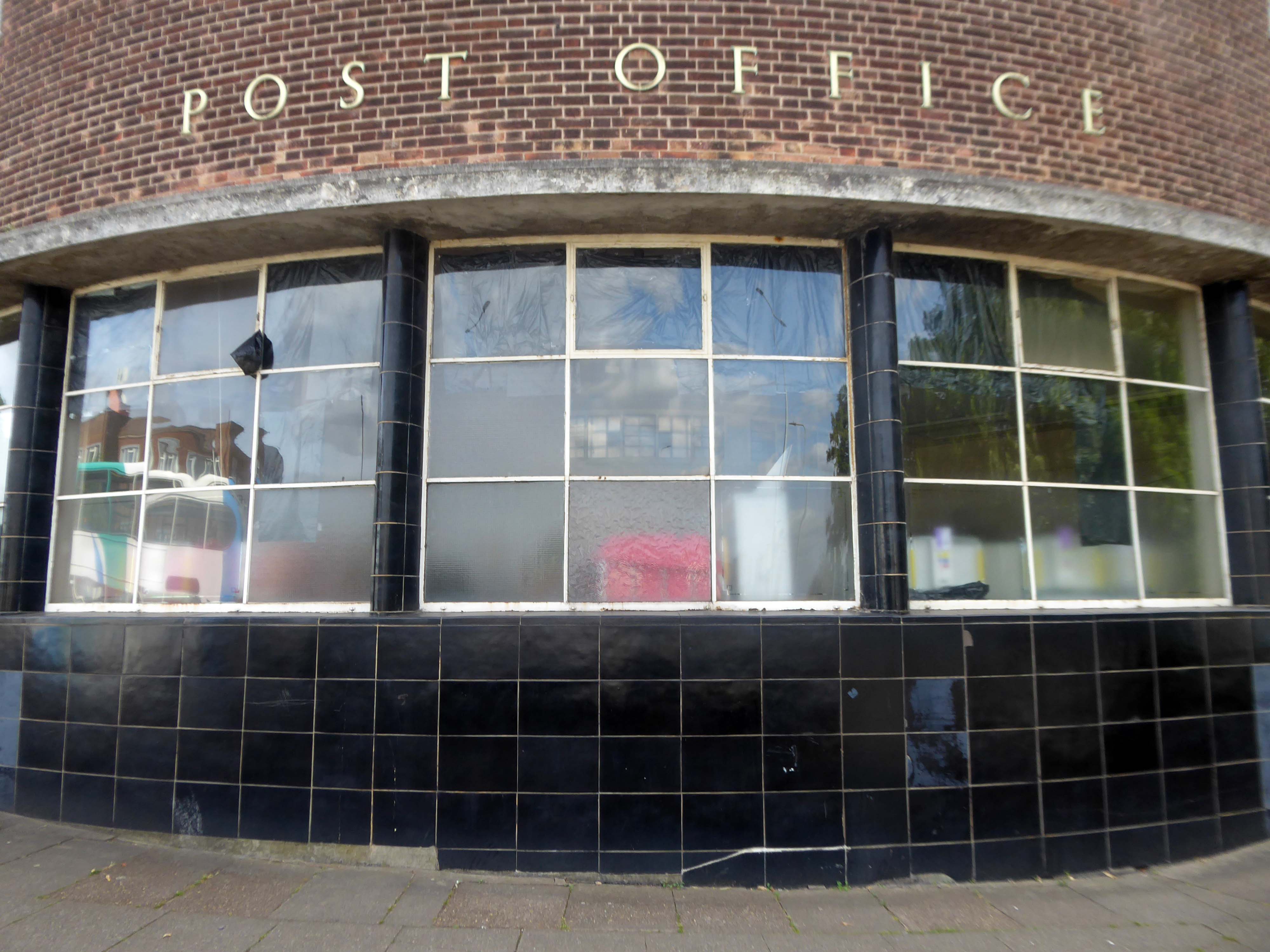
Scunthorpe Post Office and Telephone Exchange

Architect: John Haswell 1939

Opened on 2nd March 1939 and closed in 1992.

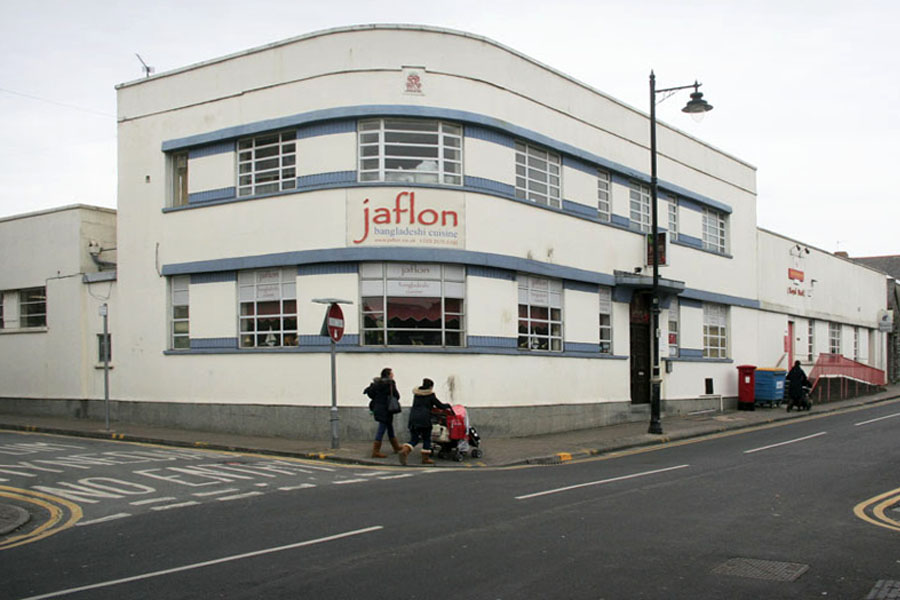
A rare excursion into modernism by the inter-war year’s Office of Works architects, as are both Beckenham and Penarth post offices.

British Post Office Architects.

Beckenham

Architect: Frederick Llewellyn 1939

Penarth

Architect Albert Myers 1936

Walking back to the train station, following a day out at the steel works, I espied the Post Office.

Next door is the sorting office.

And next for to the sorting office is the telephone exchange.

Doncaster Modernism – Revisited Again.

The third time by the banks of the Don – first time around in May 2019, subsequently in October 2020.

So much can change in so short a time, post-pandemic and every town is doing its level best to build back better.

The vision includes:

  • Ensuring the centre is a focus for business and enterprise.
  • Building on the success of the current markets and raising the aspirations and functions of the markets.
  • Recognising the city core as the heart of the economy and the borough and the place where the image of Doncaster is most clearly reflected. 
  • Enhancing green spaces and waterways to create a better setting for visitors, investments and city heritage.
  • Developing the civic and cultural quarter and reinforcing the retail and leisure core through better links and public space improvements.
  • Developing city-scale functions and assets, to become a stronger draw for business, workers, visitors and inward investment.
  • Developing and bidding for new city-wide cultural venues, a University and Research and Development facilities.
  • Rebranding Doncaster as a location of choice for regional businesses.

Masterplan

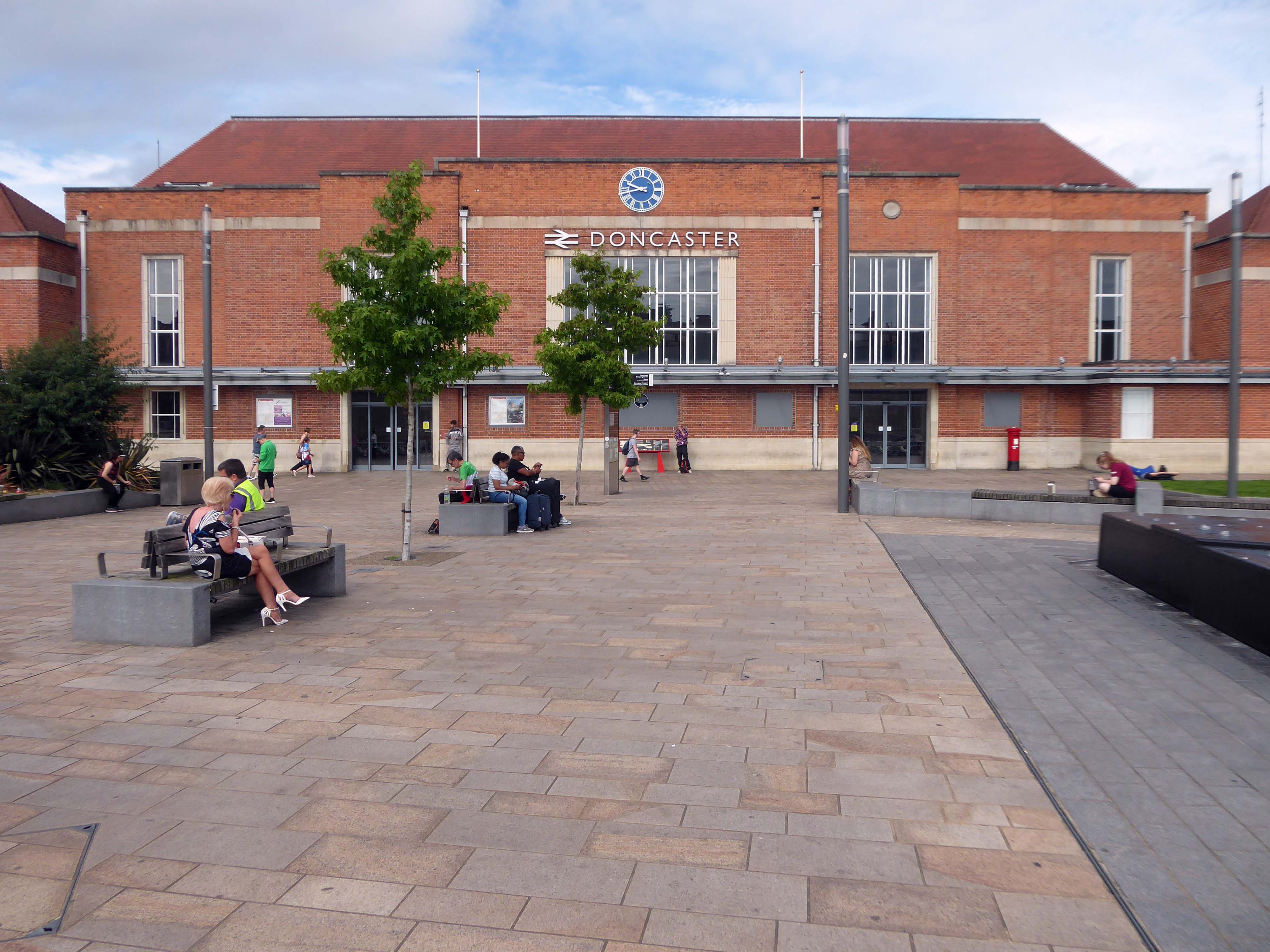
Arriving by train and ascending into the light – here’s the station lights.

The railway station has sharpened up its apron and facade.

We have transformed the station forecourt. It has become a quality gateway which delivers a great first impression for visitors arriving in Doncaster by train. This will help stimulate interest from investors and developers, helping to attract new investment and create jobs for the borough and wider region.

Doncaster.gov

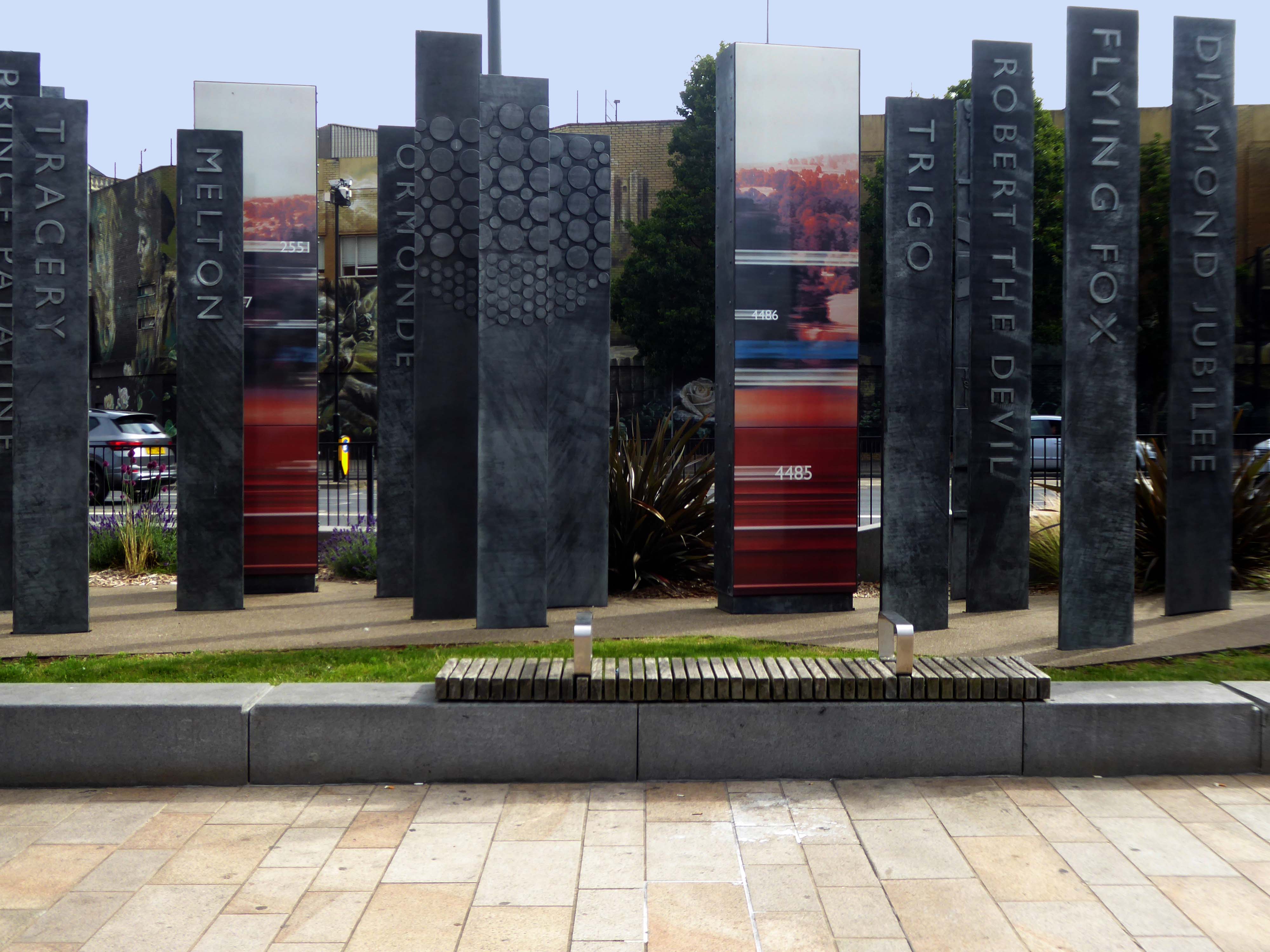
Celebrating engineering, speed and connectivity and stretching forty metres in length the public art at Doncaster Station consists of forty seven monoliths which are a nod to Doncaster’s past, present and future. With a fountain and three impressive water walls, the art takes centre stage in the new public space as you step out of the train station and head into the town centre.

The concept was devised by Doncaster Council and further developed by Chris Brammall.

CB Arts manufactured and installed the piece

Typically the high and low streets of Britain’s industrial towns and cities, are an amalgam of architectural style and fashion, spanning at least two or three centuries.

Faience fronted interwar developments abound.

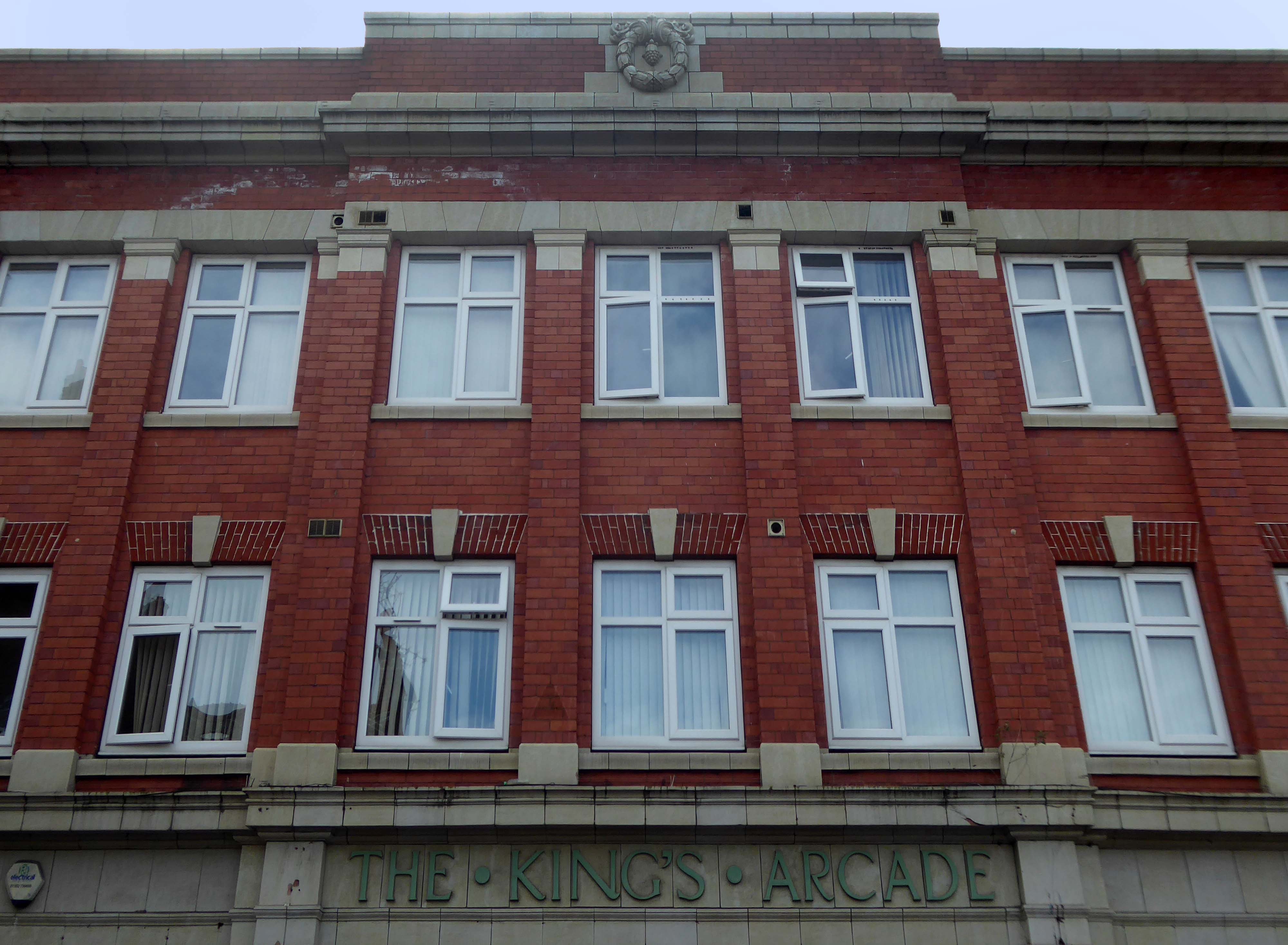
Neo-classical speculative shopping arcades.

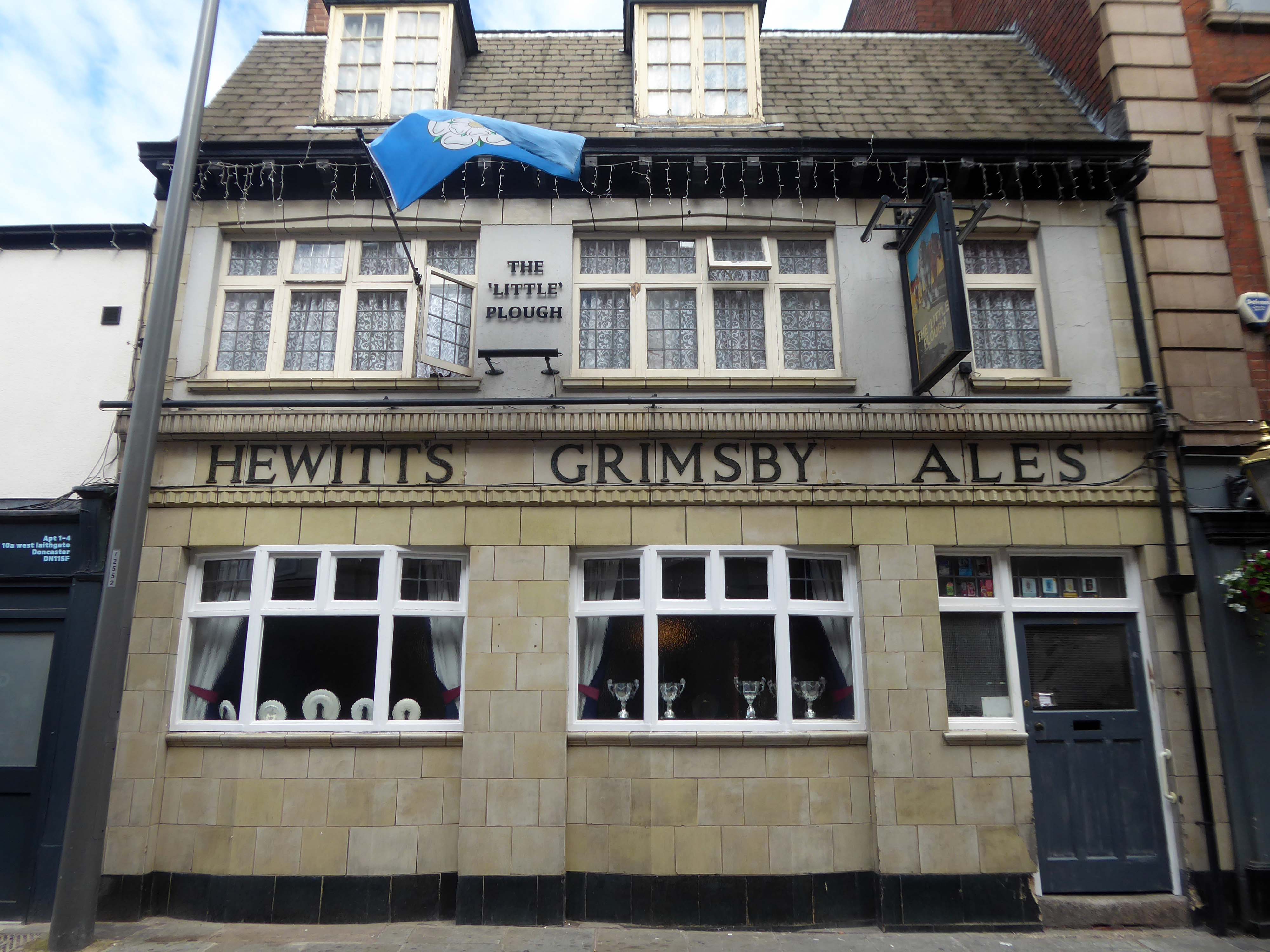
Revamped Victorian pub facades.

Behind the buff faience frontage is a lovely, small two-room pub with a well preserved interior created under plans of 1934. It was remodelled by the Grimsby brewers Hewitt Brothers Ltd who were Doncaster’s biggest pub owners for many years.

Pub Heritage

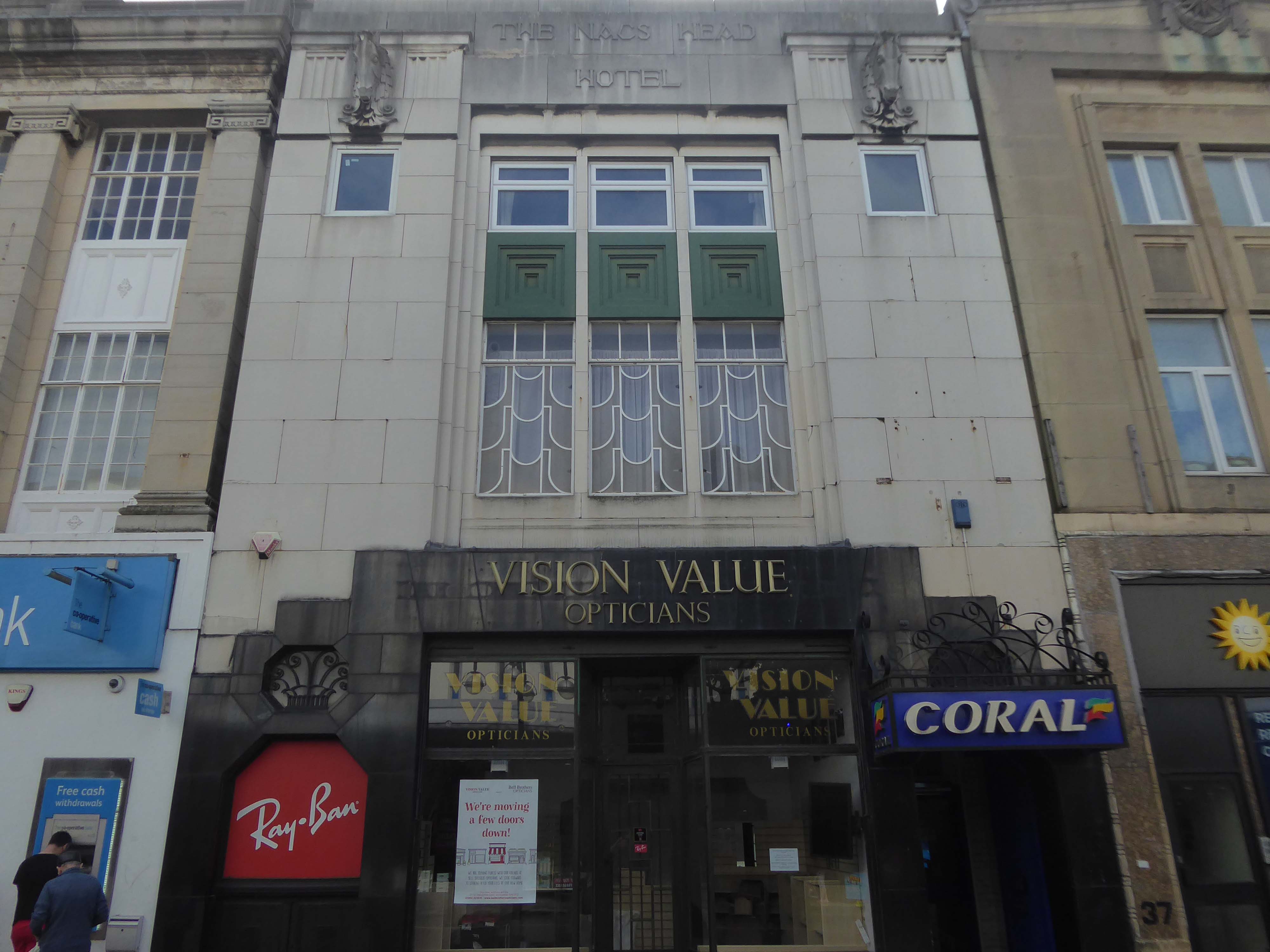
Originally a Gent’s Outfitters, this deco-gem was topped off with the Nags Head Hotel.

This grade II listed pub is now in retail use, though Vision Value, are it seems, on the move.

Lost pubs project.

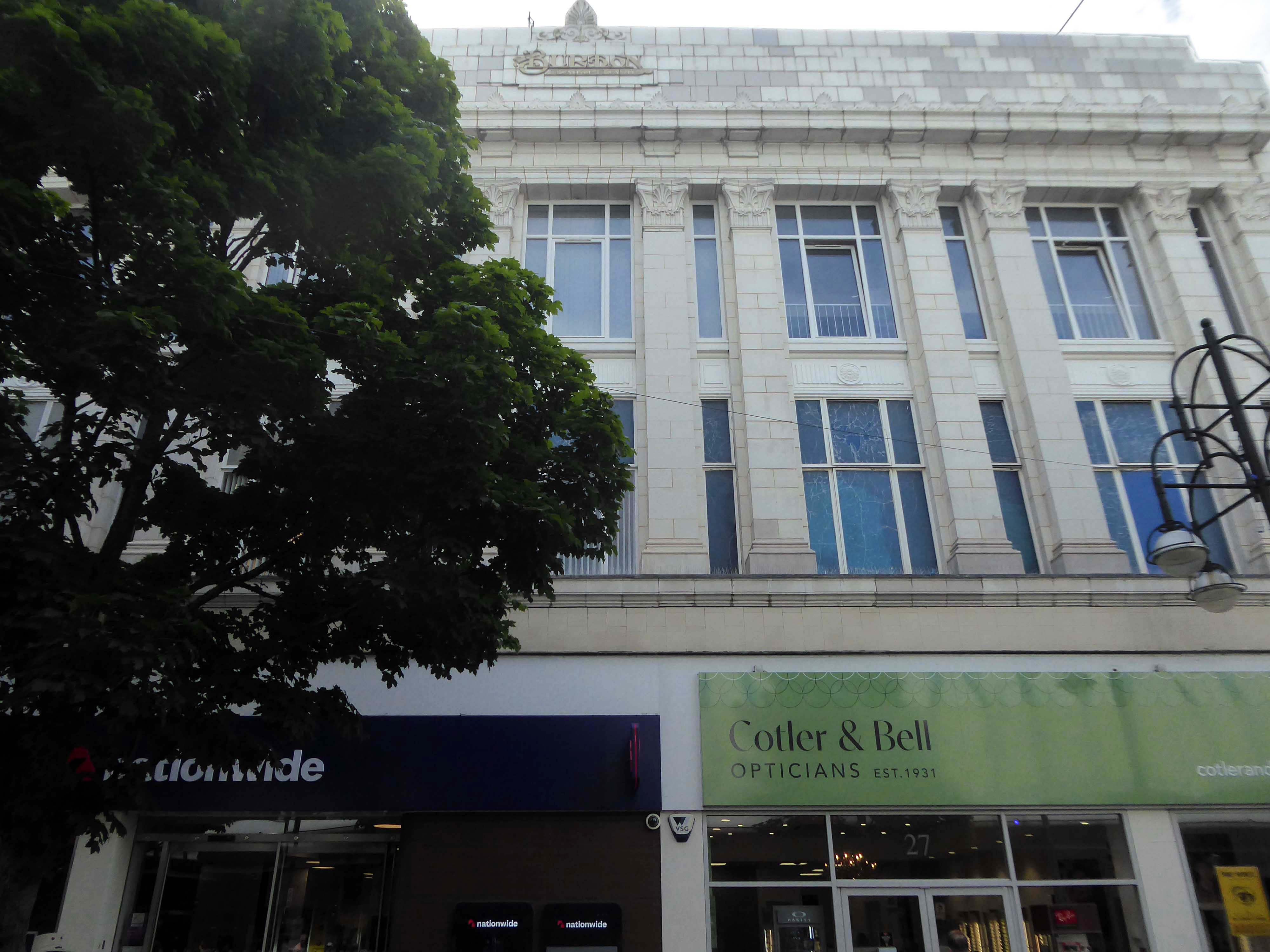
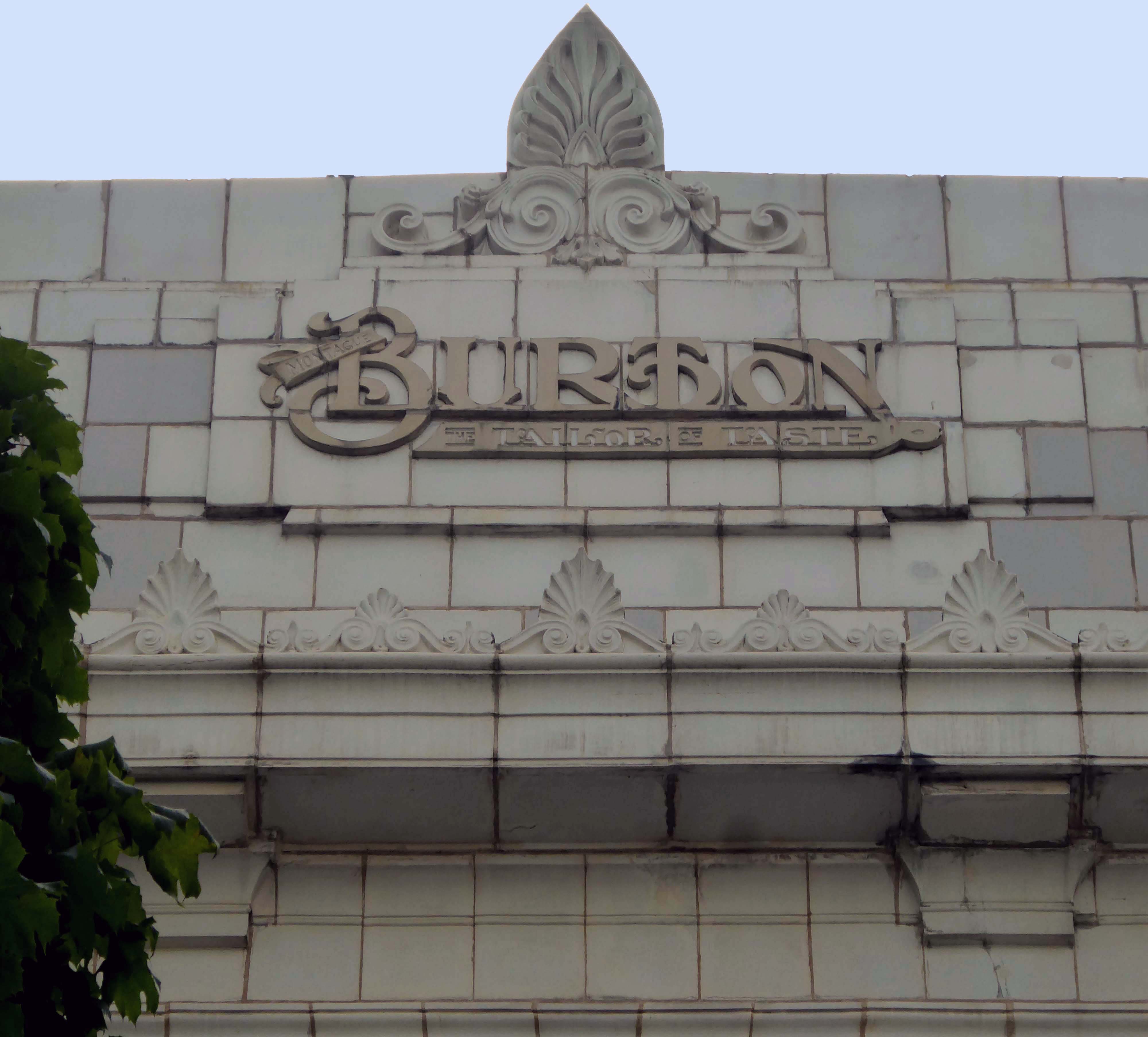
Of course, every town had a Burton’s – the tailor of taste.

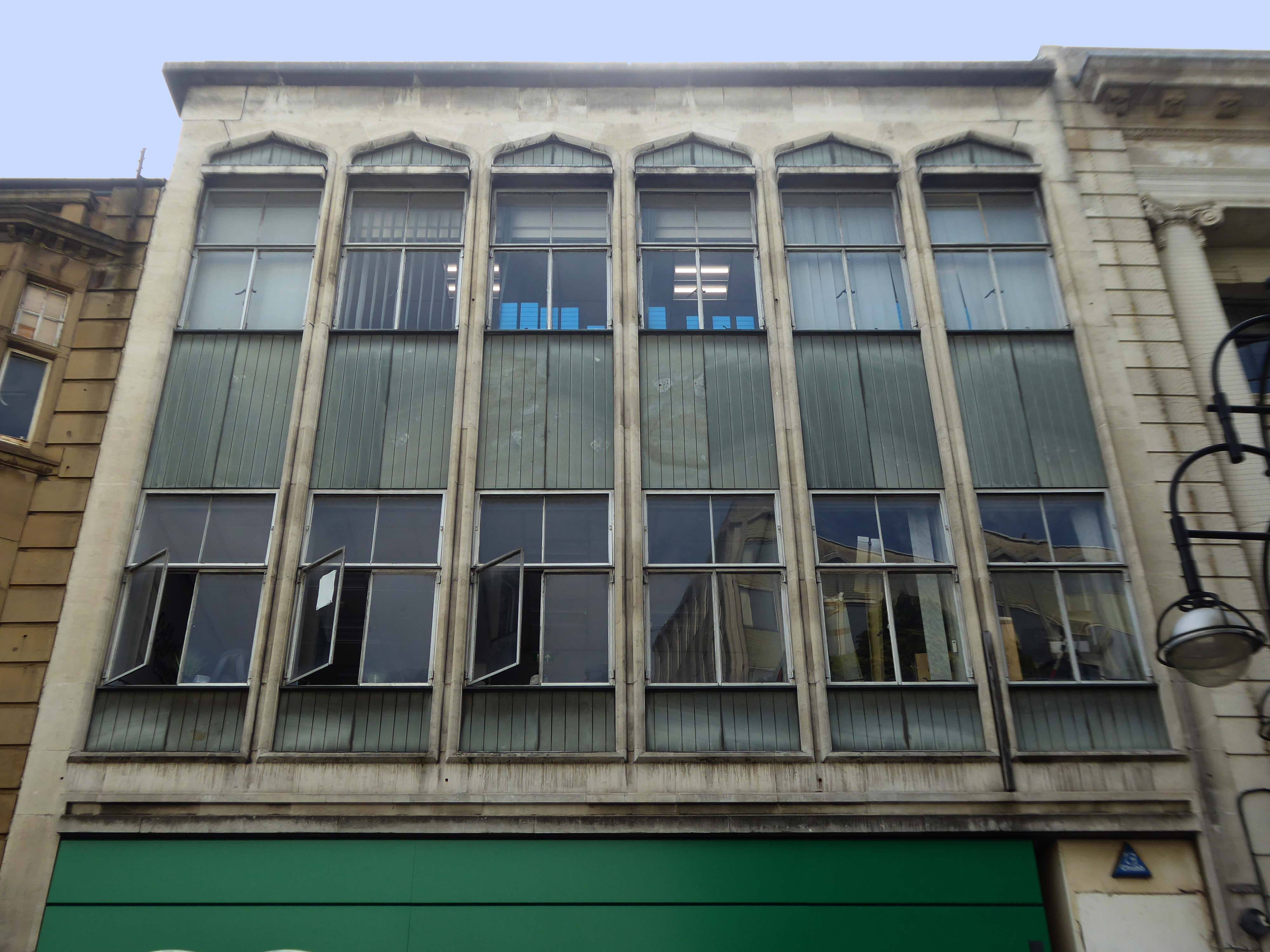
This post war infill has that distinctive Festival of Britain feel, original metal window frames, Portland stone and blueish slate like panels.

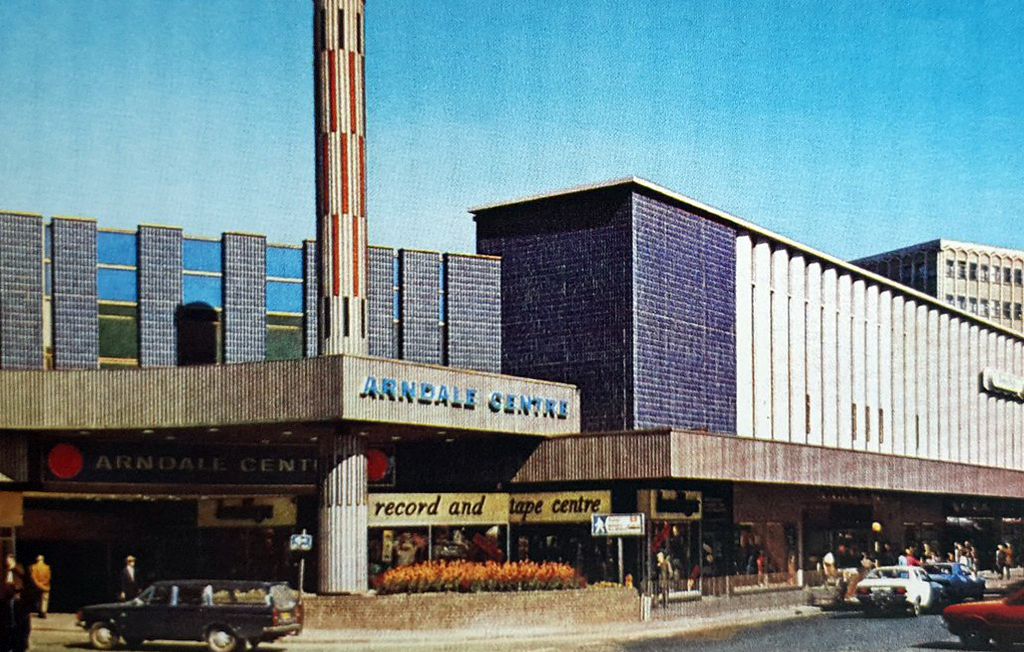
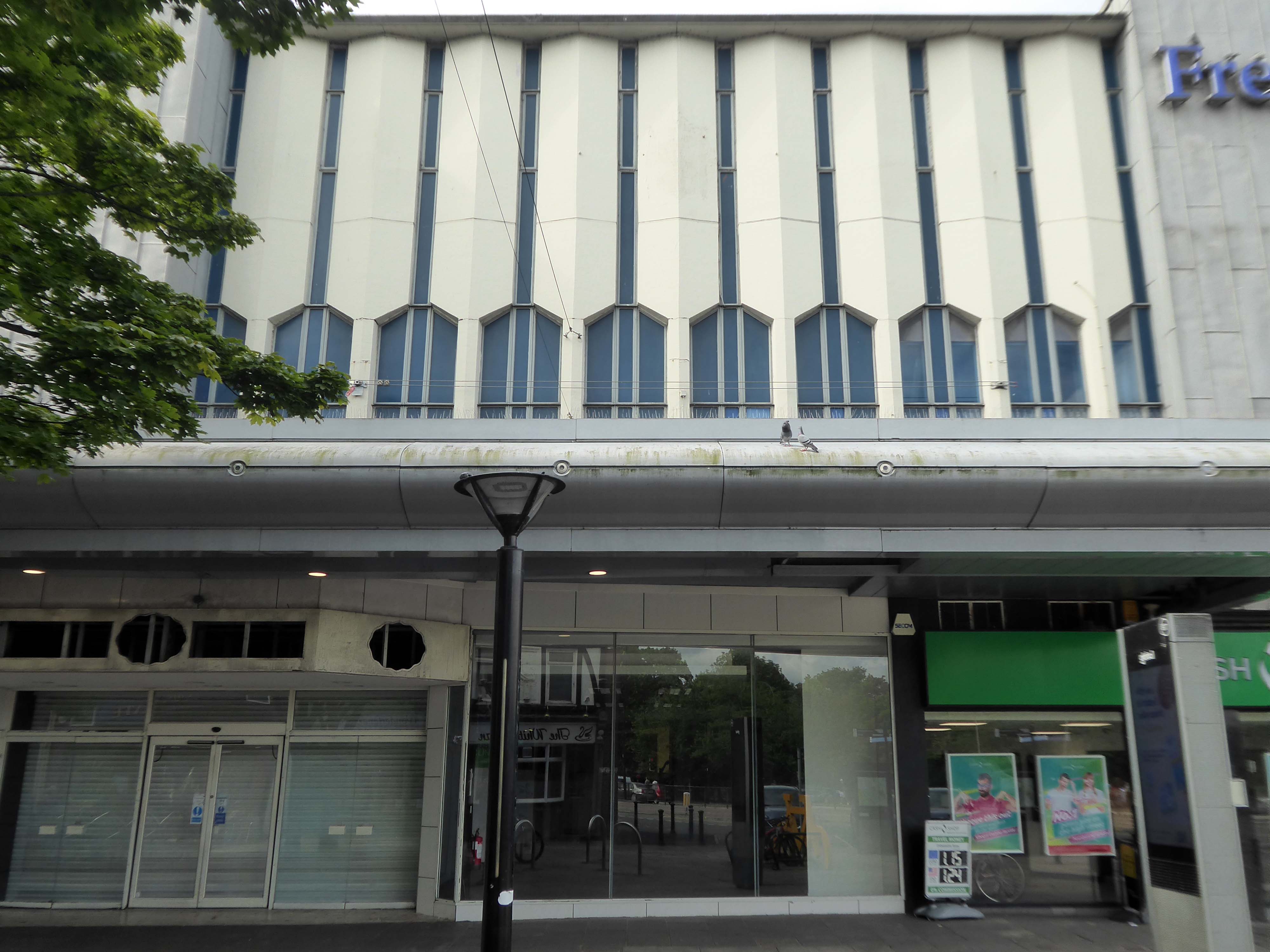
The revamped Frenchgate Shopping Centre, officially opened on October 4th 1968, has in places an upper tier, resistant to zinc over cladding.

The centre has been the heart of the city for over 40 years and was originally called the Arndale Centre because it was built, owned and managed by the Arndale Group. It was renamed in 1988 after a change of ownership, with the new name reflecting the name of the street which passes to the east of the centre and which is one of Doncaster’s main shopping streets.

The sale of the centre came just a year after Frenchgate had undergone a £200 million facelift to transform it into the country’s first shopping centre with integrated public transport and retail interchange.

Wikipedia

There are plans to rework the shopping centre.

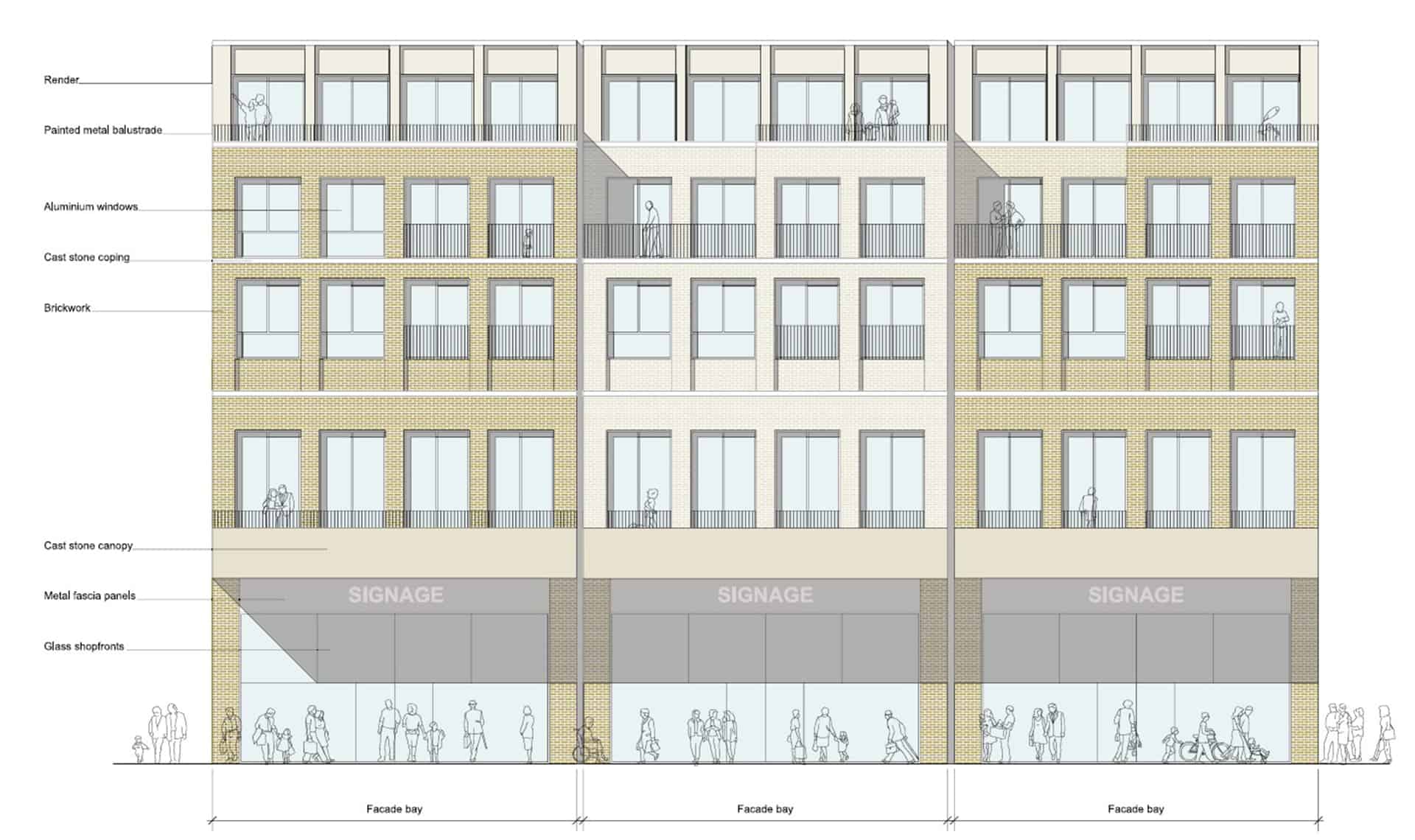
We propose this is fundamentally transformed though the addition of apartments that wrap along the back of the first-floor retail with a further 2.5 new storeys placed on top. We also feel additional height -up to seven or eight storeys, is justifiable to the corner of Frenchgate and Trafford Way.

TODD Architects

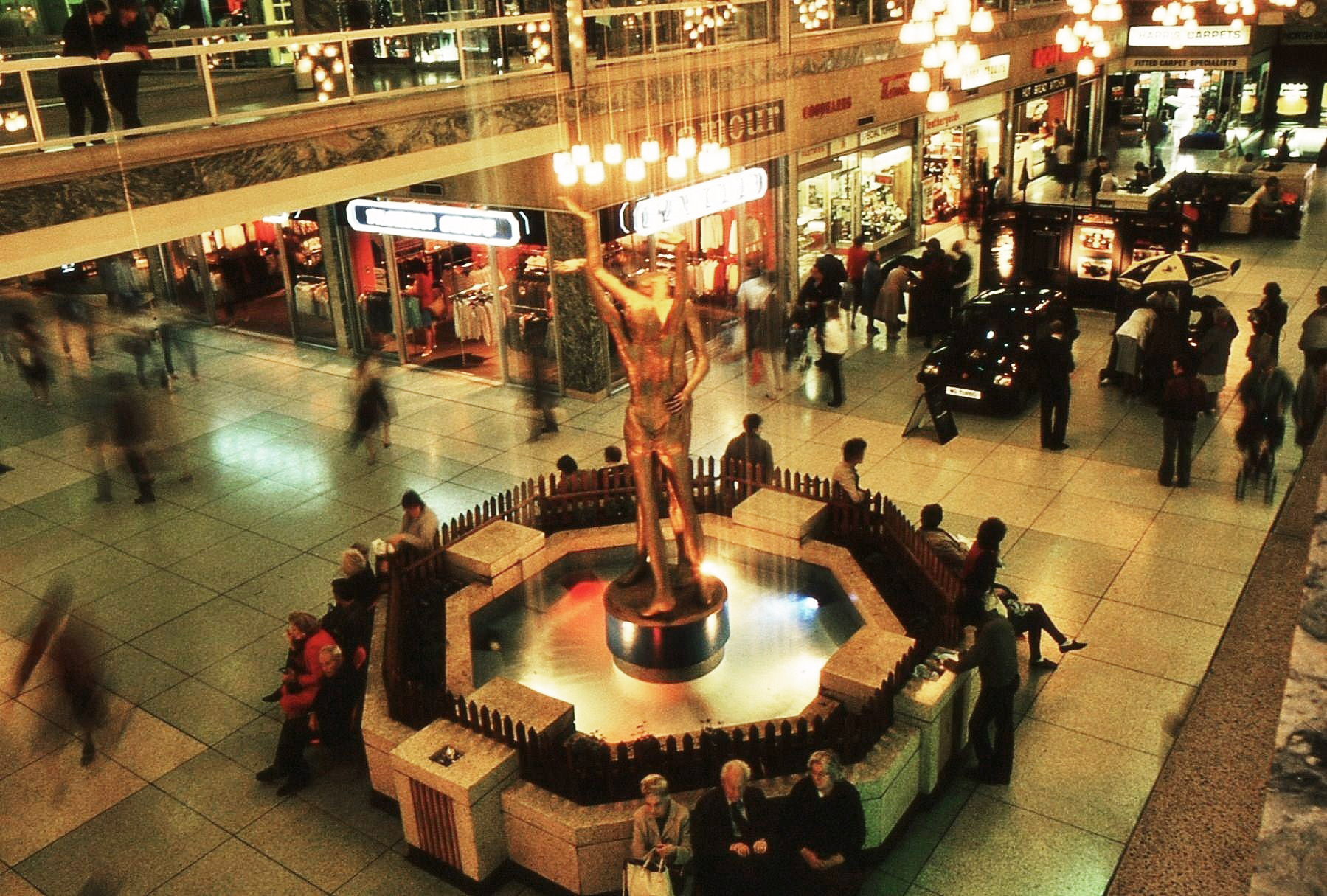
The Lovers were once located in the Arndale, removed to a local garden, unloved – then later reinstated in the Waterdale Centre, where we will embrace them a little later.

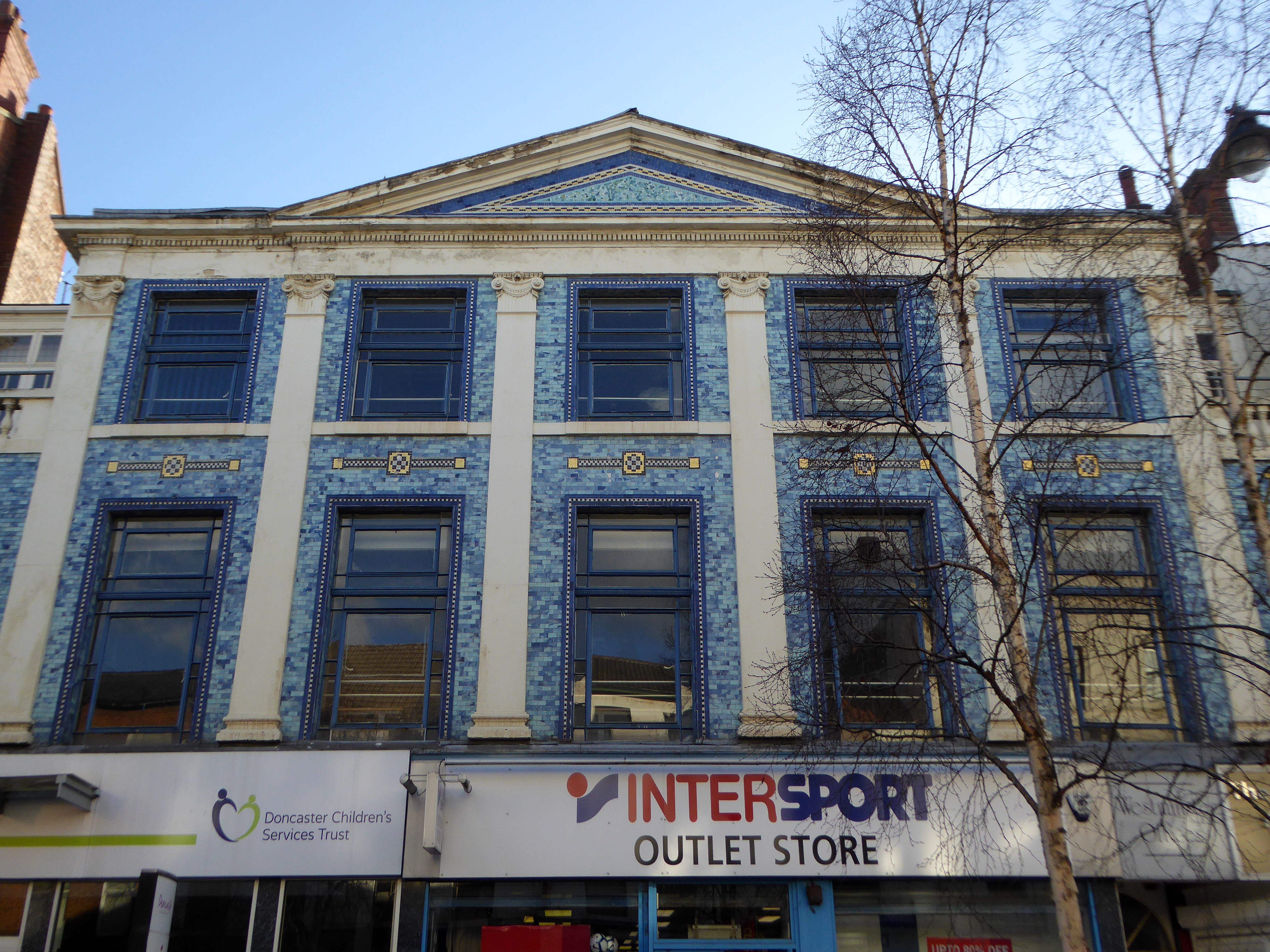
Turn right to take in the 1920s mosaic remake remodel of the Grade II listed Blue Building.

The Blue Building which used to be the Doncaster Design Centre and Tourist Information Centre was originally the home of John Whitaker, a wine merchant, and son of James Whitaker who was Mayor of Doncaster in 1758.

In 1925 the complete building was demolished apart from the facade which was retained and given a facing of decorative blue tiles. The intention was to build a shopping arcade from High Street to Printing Office Street. Only part of the arcade, known as the  Westminster Arcade was built. It had a number of shops, the largest being that of Woodhouse & Co Furnishers.

Doncaster Heritage Trail

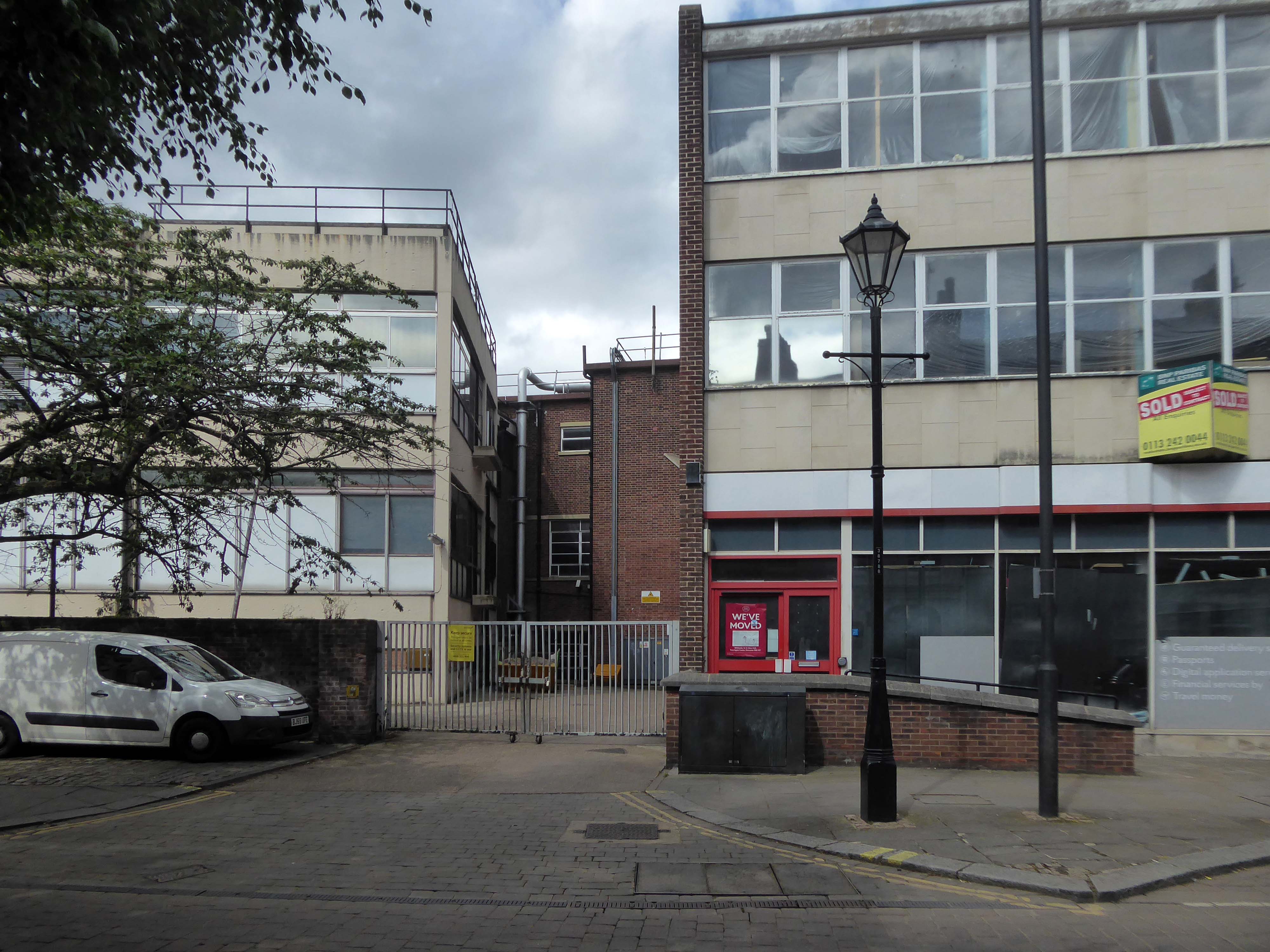
Two adjacent 60s extensions – to the right a redundant post office to the left an almost redundant telephone exchange, with the earlier brick built exchange in smack dab the middle.

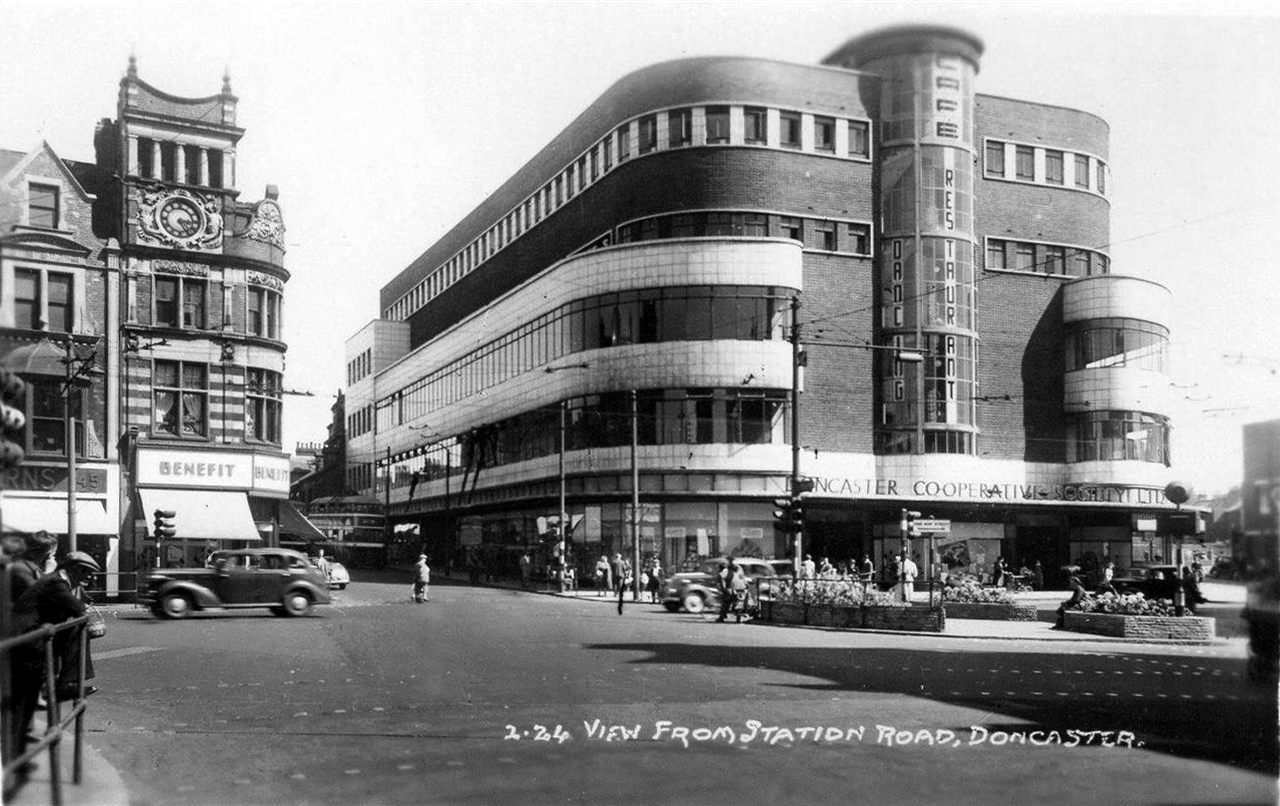
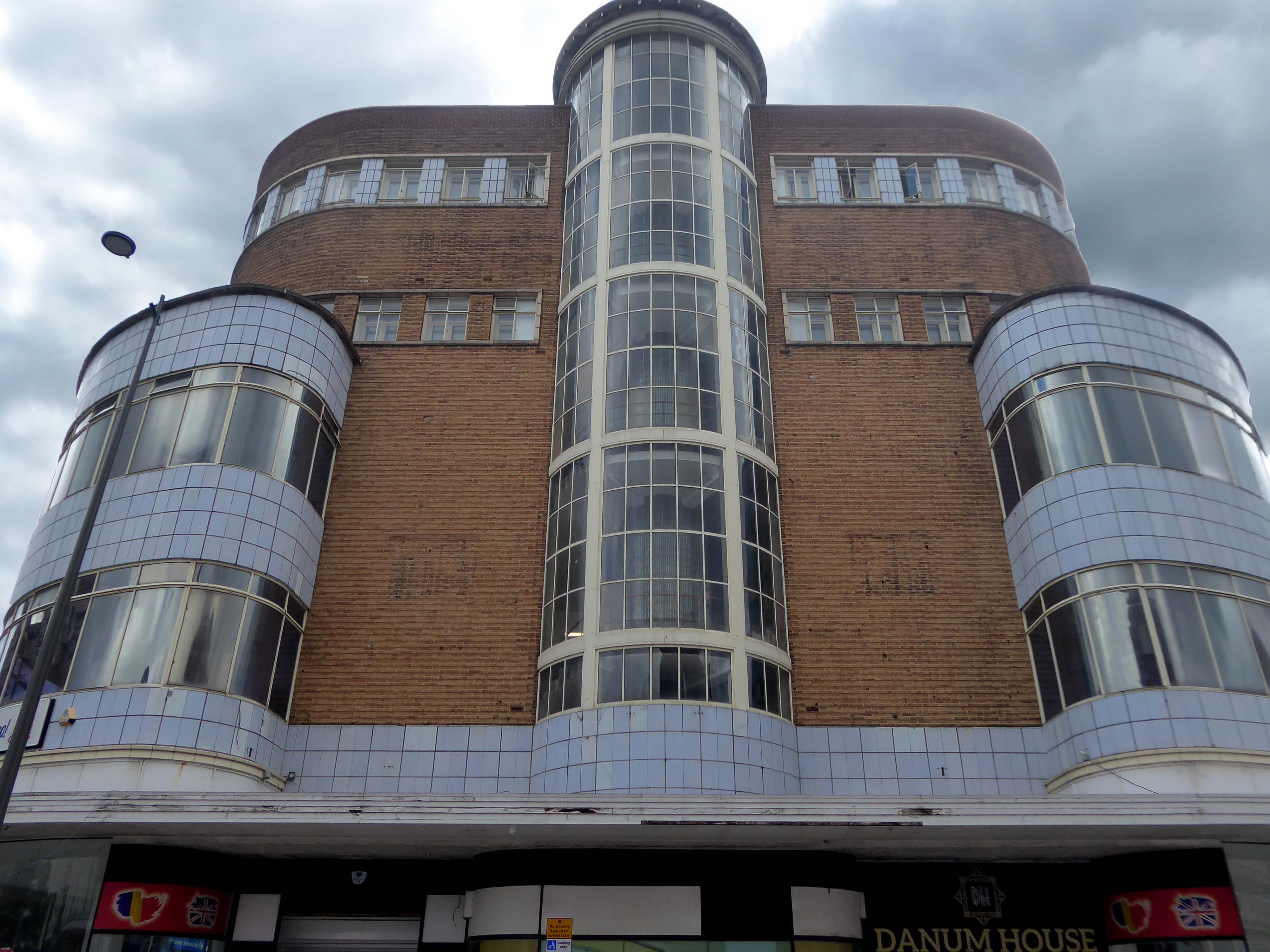
Turn another corner and it’s all at the Co-op now – the Grade II listed Danum Co-operativeBuilding, department store and offices: 1938-40 designed by T H Johnson & Son for the Doncaster Co-operative Society Ltd. 

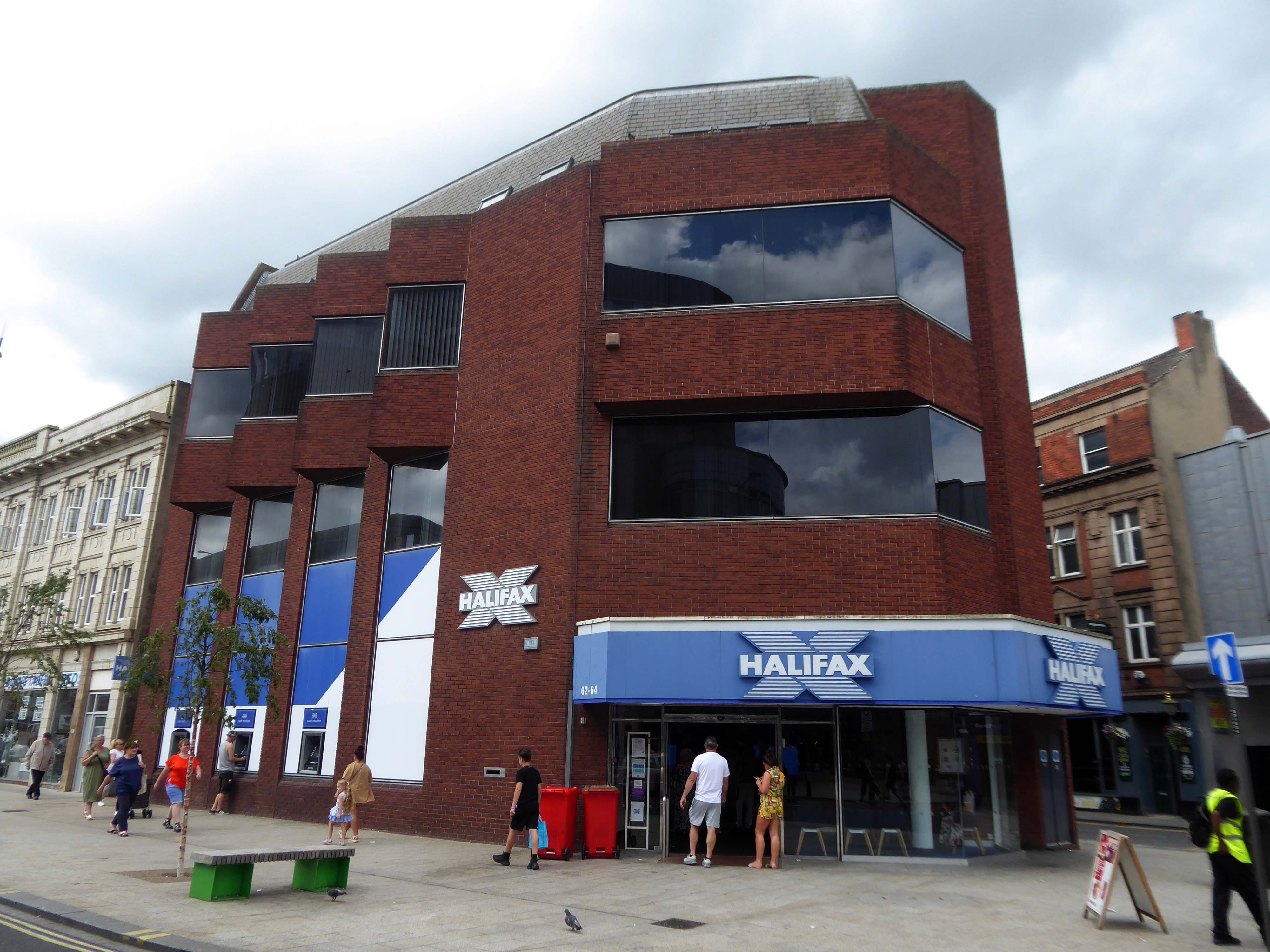
Over the road a zig-zag Halifax Building Society branch, tightly contorted by its corner footprint.

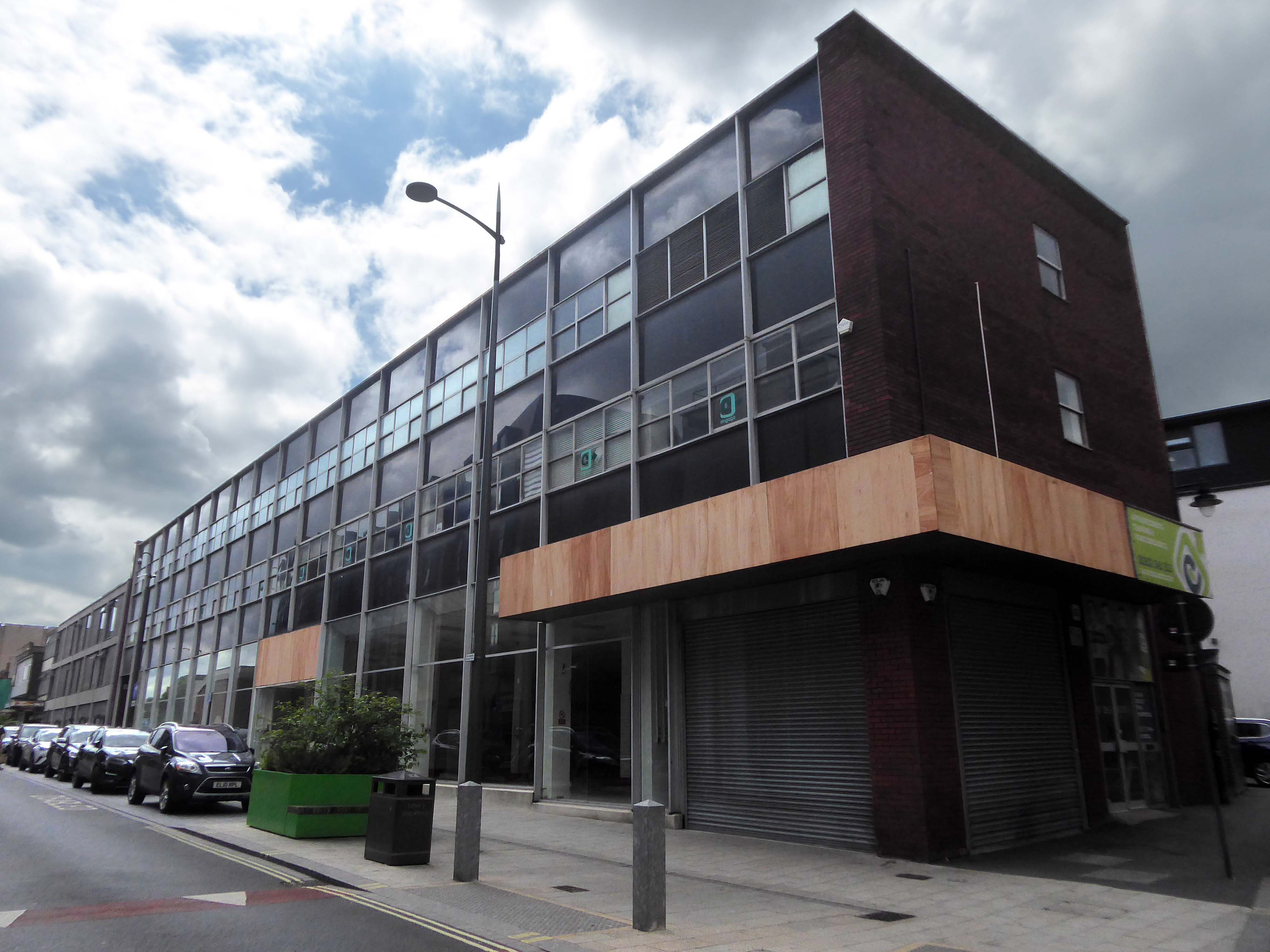
To the right of the Danum, this former Boyes store, having relocated to the Wilko site, the building is ripe for residential conversion.

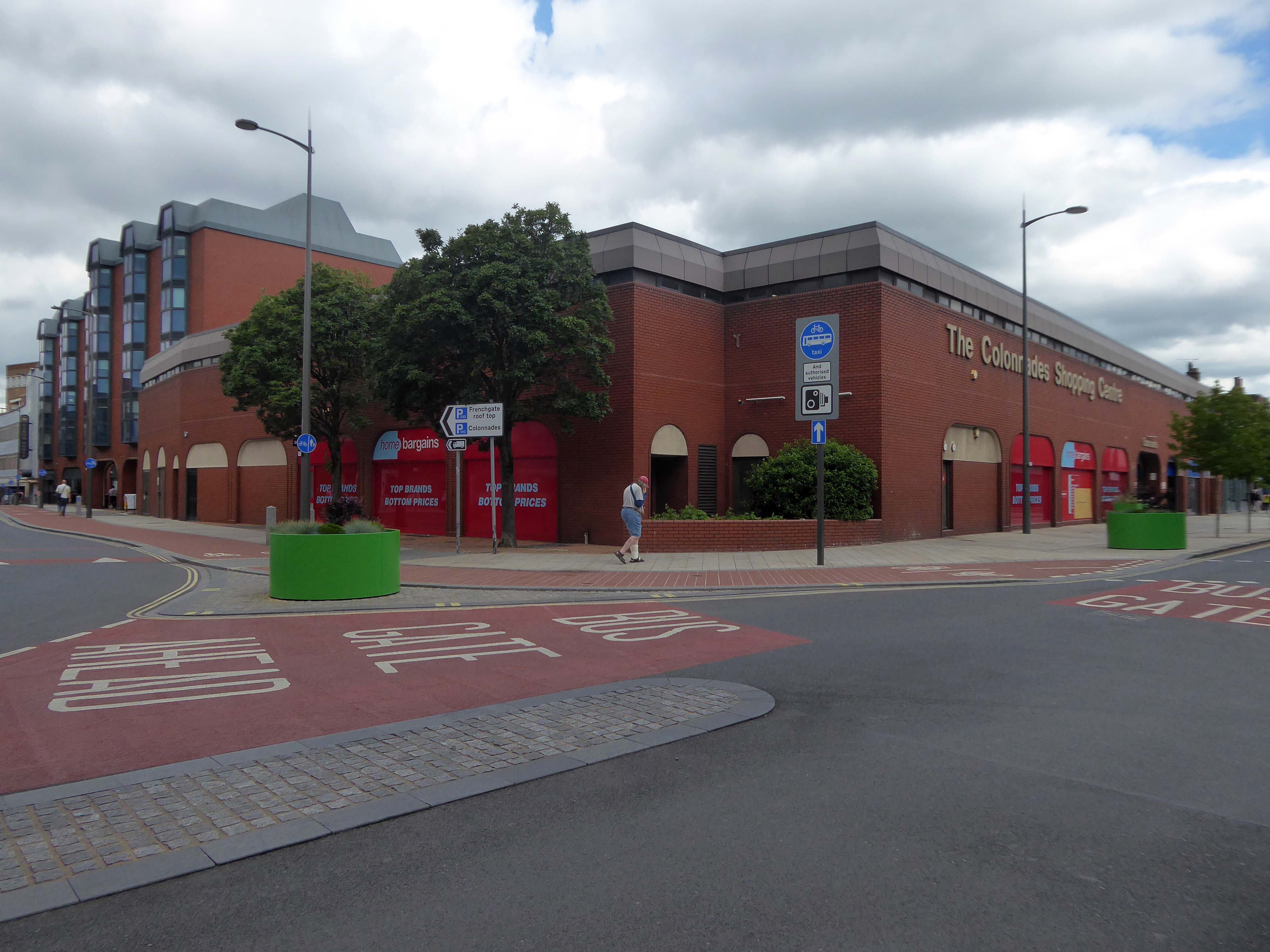
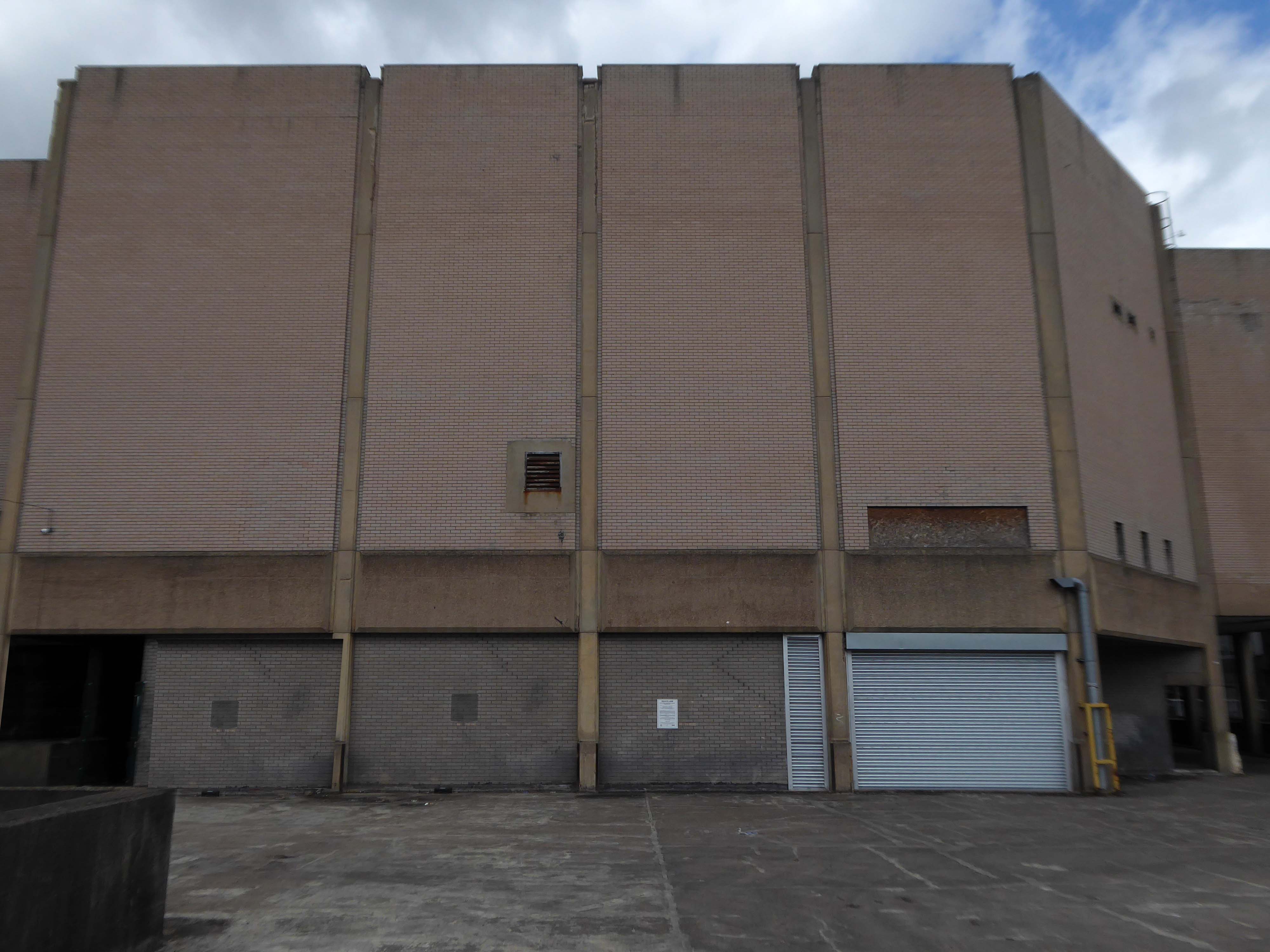
To the left the Colonnades Shopping Centre a fierce angular glass and brick bunker of mixed office and retail space – the sole occupant seeming to be Home Bargains.

A £3.3m makeover of the Colonnades shopping mall in Doncaster town centre was completed in 2019.

The scheme of works was co-ordinated by Doncaster Council and funded by the Sheffield City Region Local Growth Fund.

Built in the 1980s, the brick built building received a major overhaul. The investment saw the visual appearance enhanced inside and out. The five floors were transformed into the prime office space needed in the town centre and the enhancements to the retail area were also finished.

The shift in the town’s axis to the Frenchgate and Market areas, seems to have taken the wind out of its sails.

The former flicks now a redundant pale brick behemoth – no more and ABC.

Architects: C Jack Foster and Alan Morgan

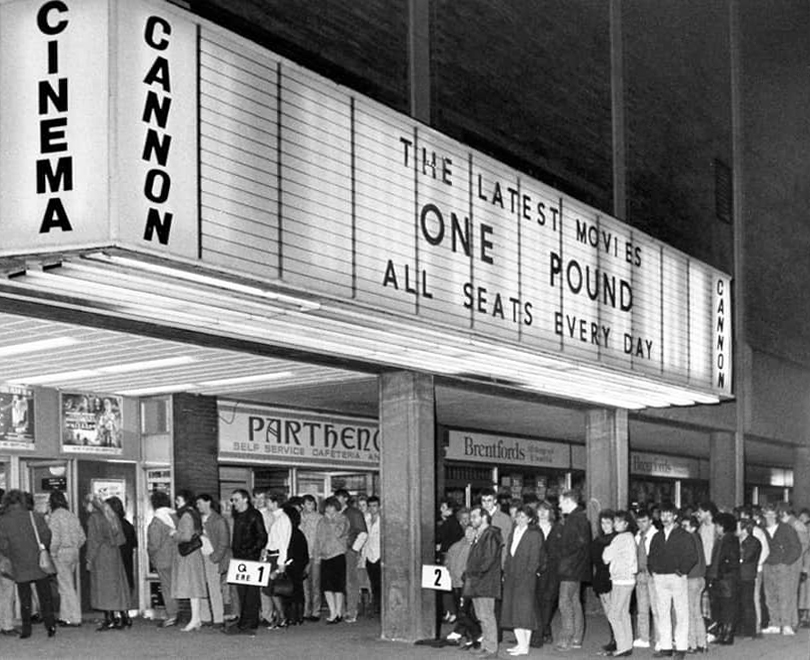
Doncaster’s new £250,000 ABC cinema, part of the Golden Acres development near the town centre, was opened on May 18th 1967.

Closed in January 1981 for conversion into a triple screen it re-opened on 9th April 1981 with seating in the three screens for 477, 201 and 135.

The Cannon Group took control in the mid-1980’s and it was re-named Cannon and it closed on 18th June 1992, screening its opening film Doctor Zhivago.

Cinema Treasures

The Golden Acres development seemed to have morphed into the Waterdale Centre.

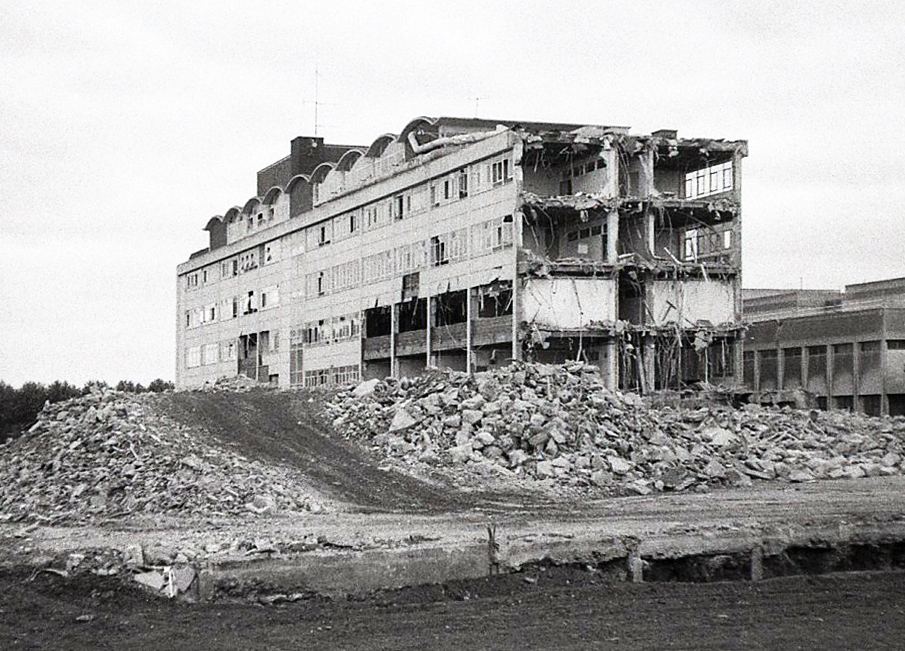
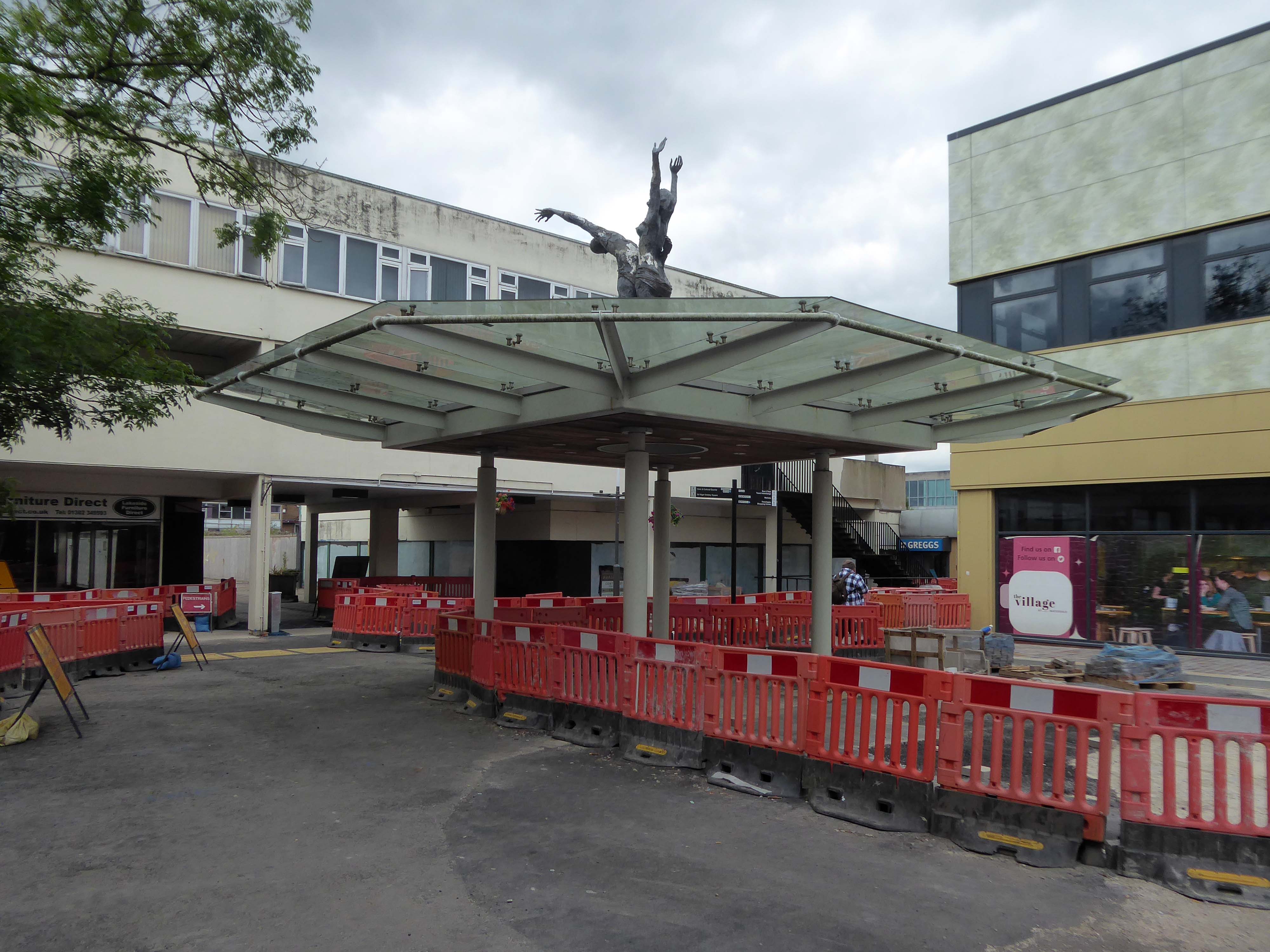
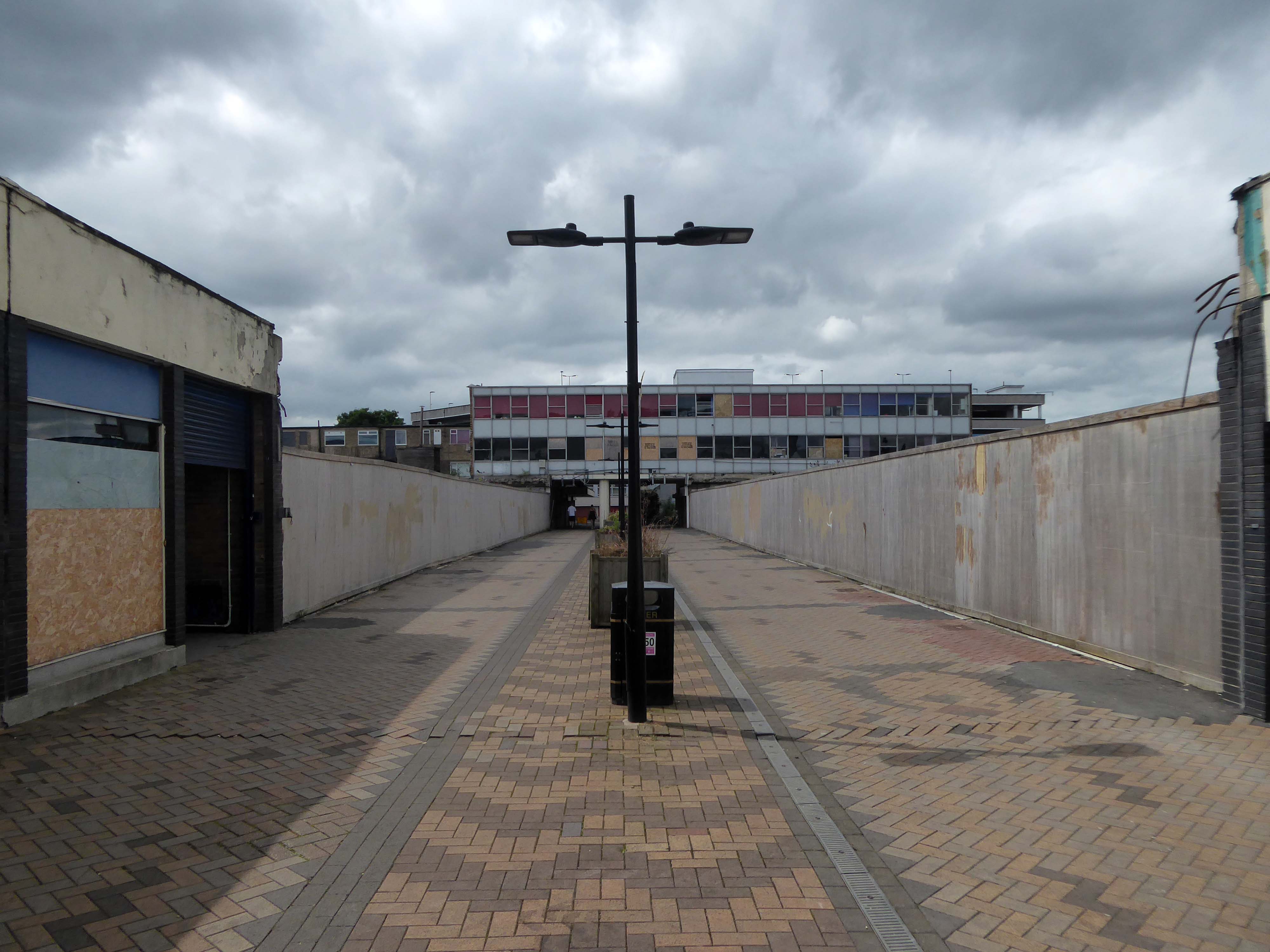
It is currently being reshaped to provide a line of desire twixt the Civic and Cultural areas, from the town centre. There are still the remnants of homes, shops and a pub amongst the demolition – almost inevitably there is new paving.

Waterdale is a well-known part of Doncaster’s town centre. During its heyday it was a bustling area with people flocking to shops and the like – it was a place you had to visit while you were in town. However, it had suffered a steady decline which continued when the southern bus station closed – Frenchgate Interchange opening, and Doncaster College moved to the Hub at the Waterfront. With limited public transport entering the area and no student population on its doorstep, less people had reason to pass through.

Demolition of the College.

The Civic and Cultural Quarter is transforming Waterdale reconnecting it to the town centre. The quality and content of the plans is raising the profile of this part of town to new levels. The carefully thought out layout and consistent building design is giving the area a clear identity. It is already becoming a big attraction that draws people in and encourages redevelopment in the neighbouring areas.

Doncaster Gov

The relocated Lovers are still in love.

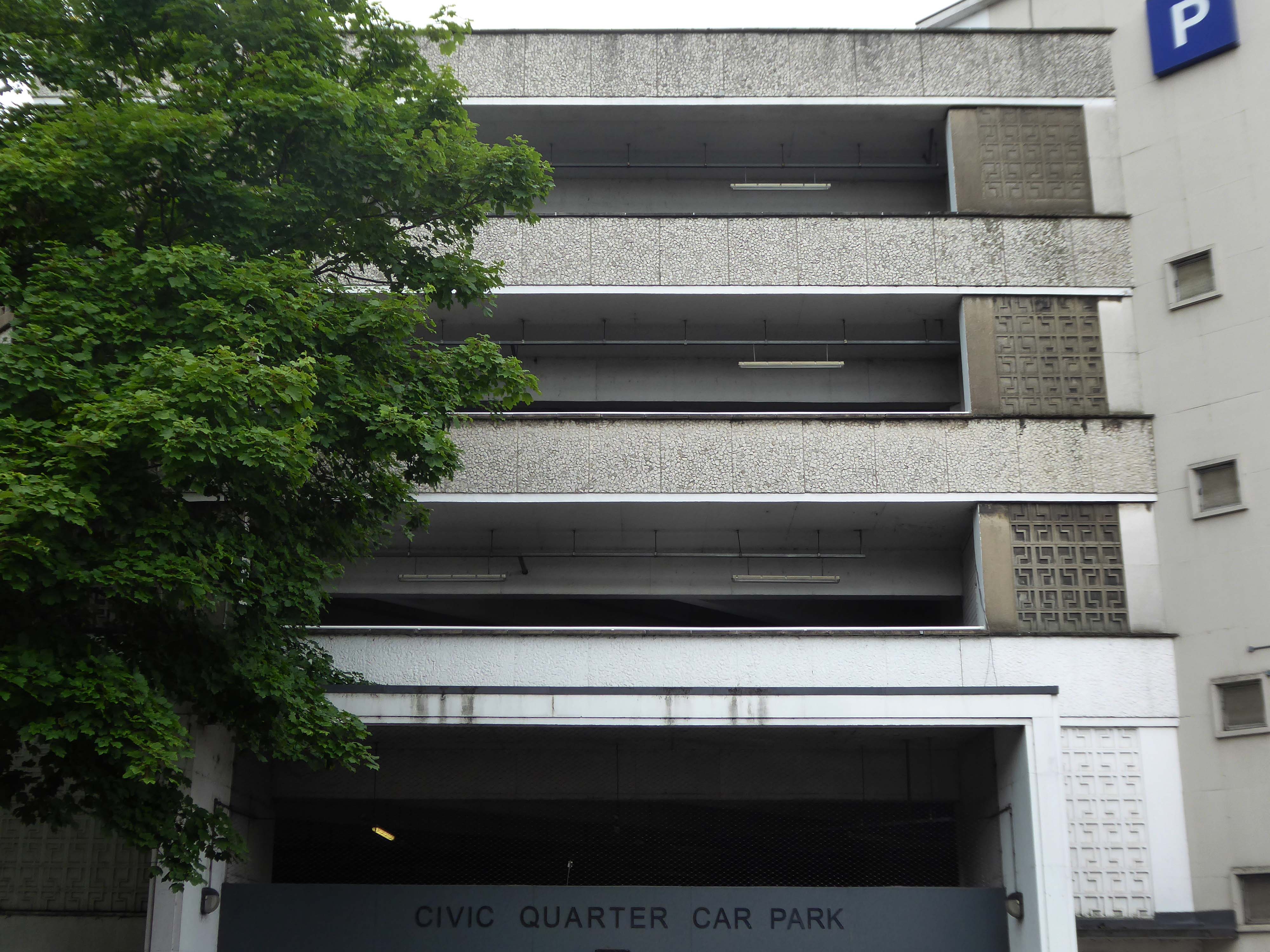
The weary walker is diverted toward the Civic Quarter Car Park.

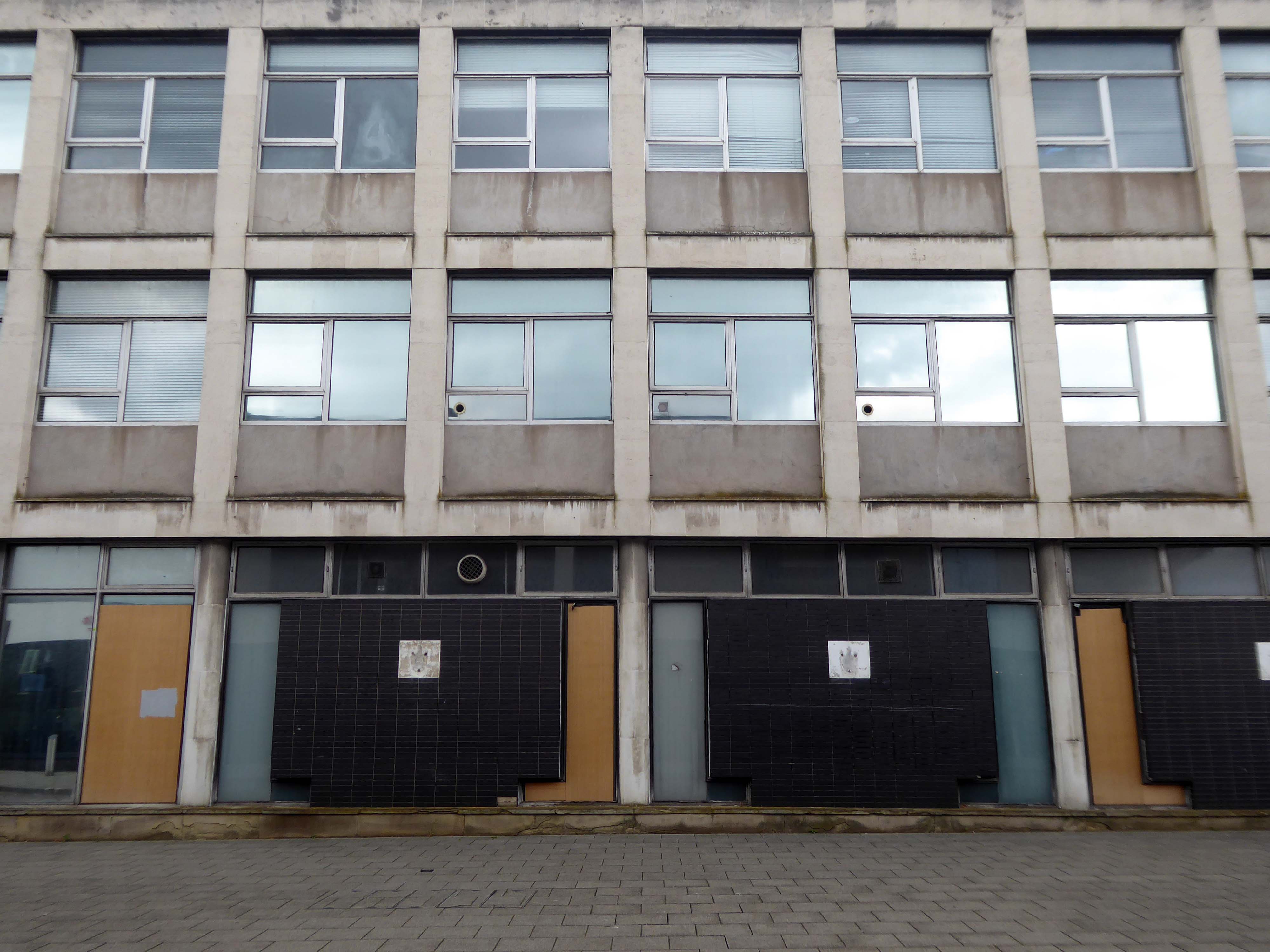
The former Civic Offices are to be demolished.

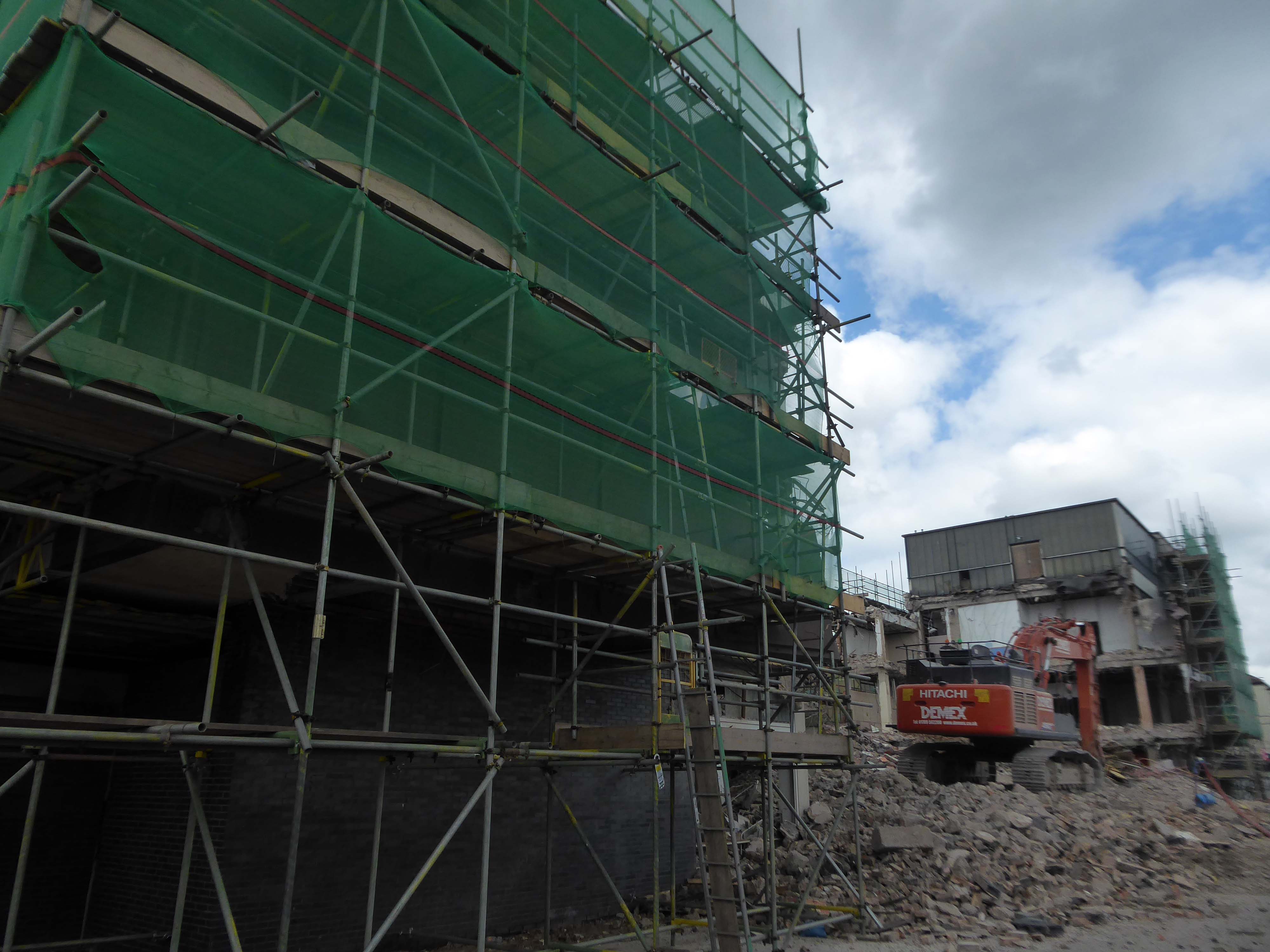
Demolition of the Central Library is well under way.

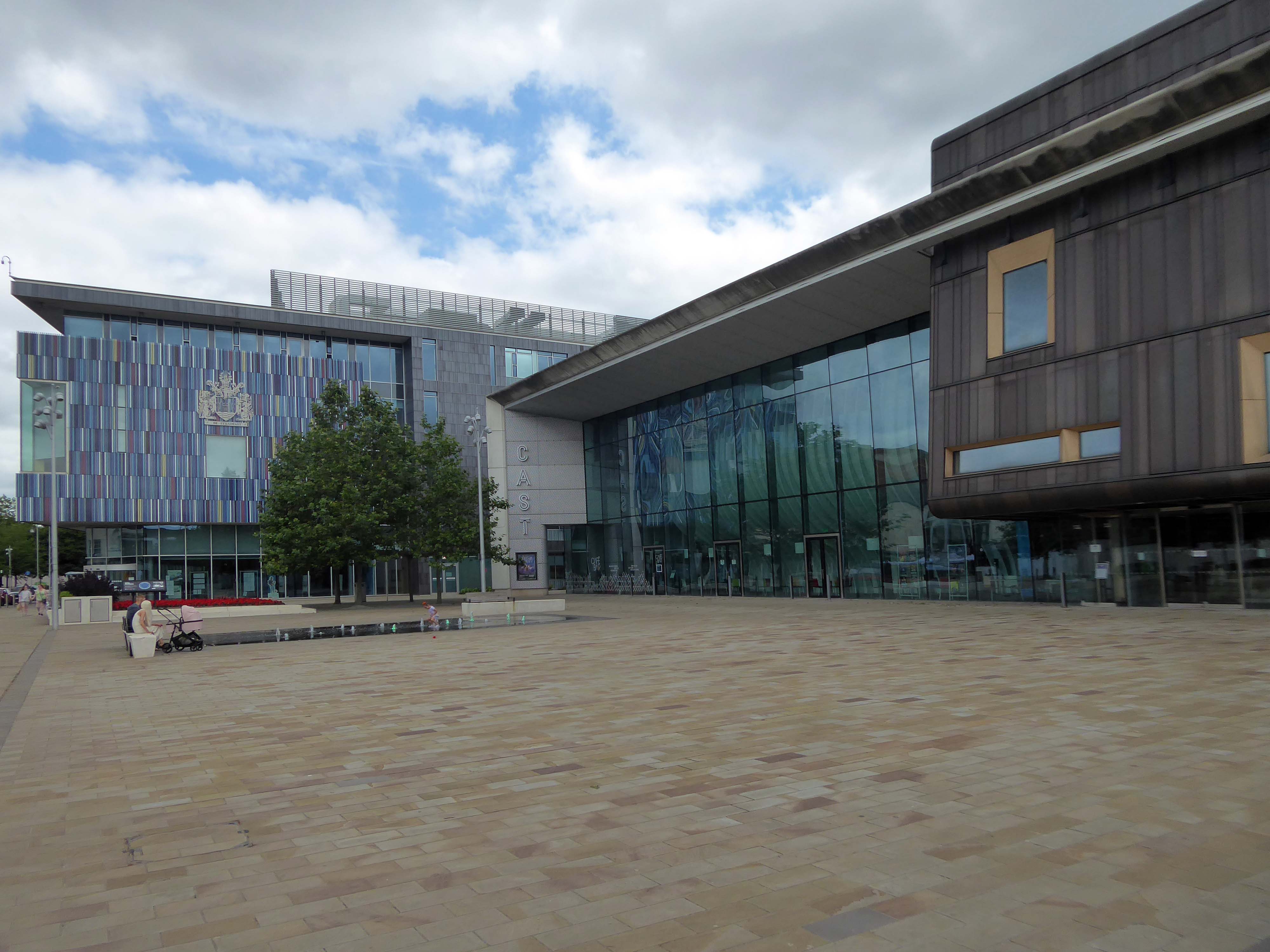
Facing the former library we find the CAST Theatre, Civic Buildings and Savoy Cinema, grouped around Sir Nigel Gresley Square.

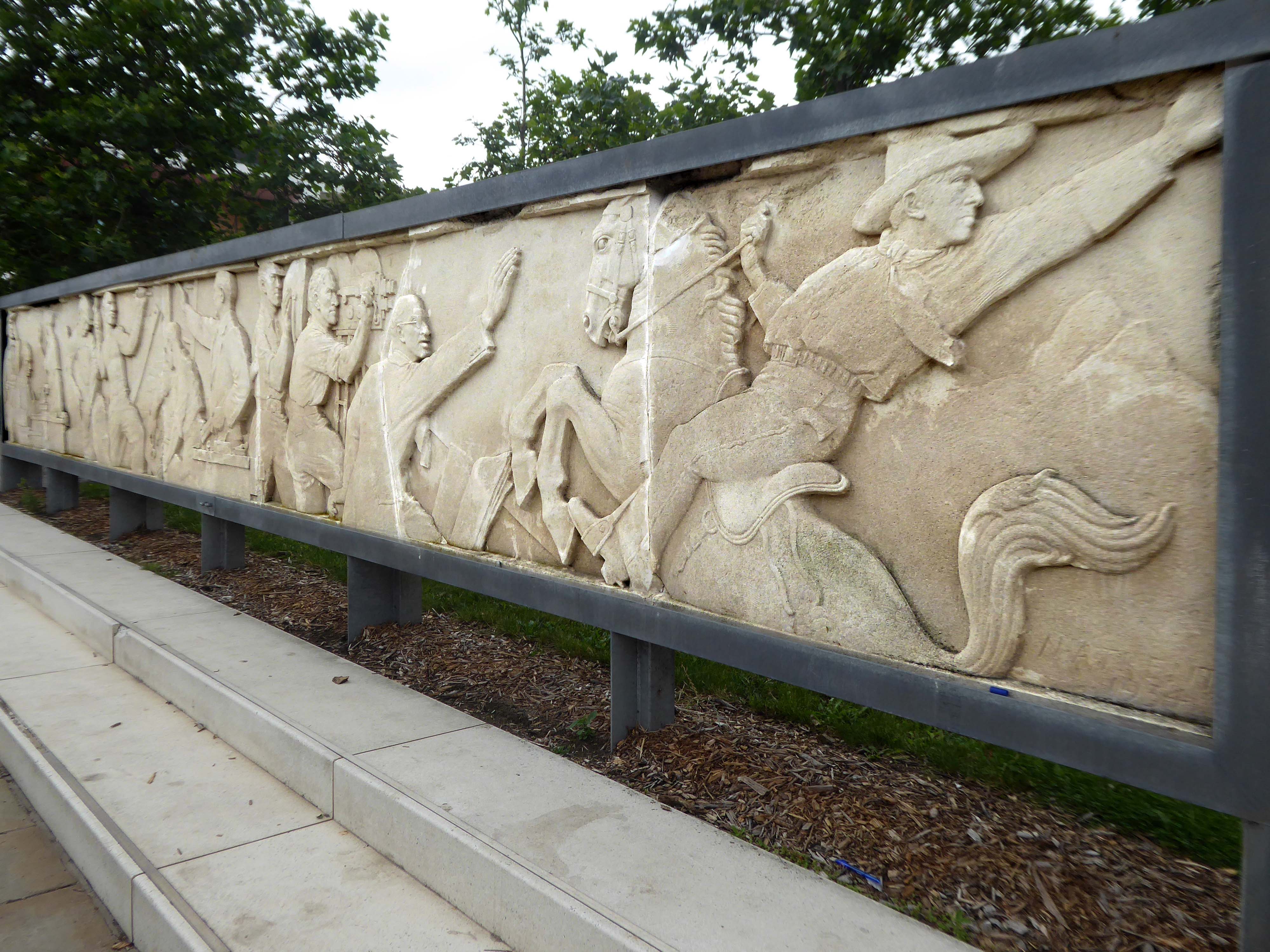
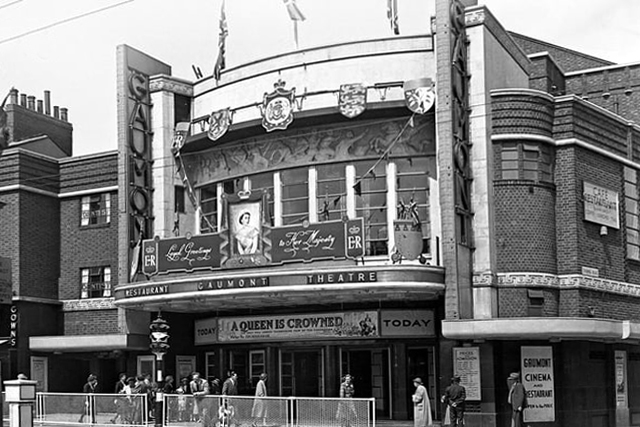
Within the square is a frieze, salvaged from the former Gaumont Cinema, the work of sculptor Newbury Abbot Trent.

The Gaumont Palace Theatre in Hall Gate at the corner of Thorne Road, Doncaster opened on 3rd September 1934 with Jesse Matthews in Evergreen.

It was designed by architects WE Trent and W Sydney Trent.

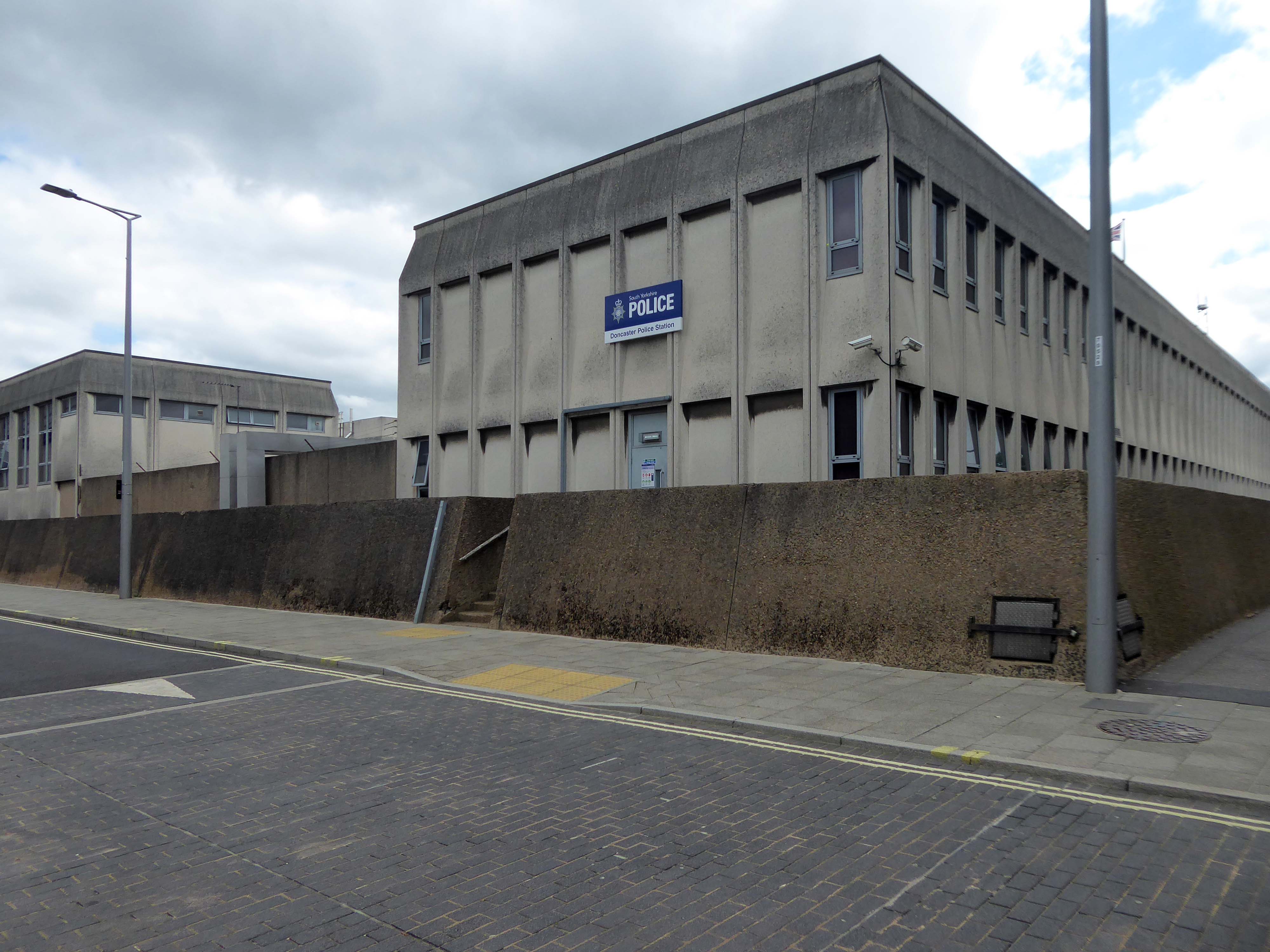
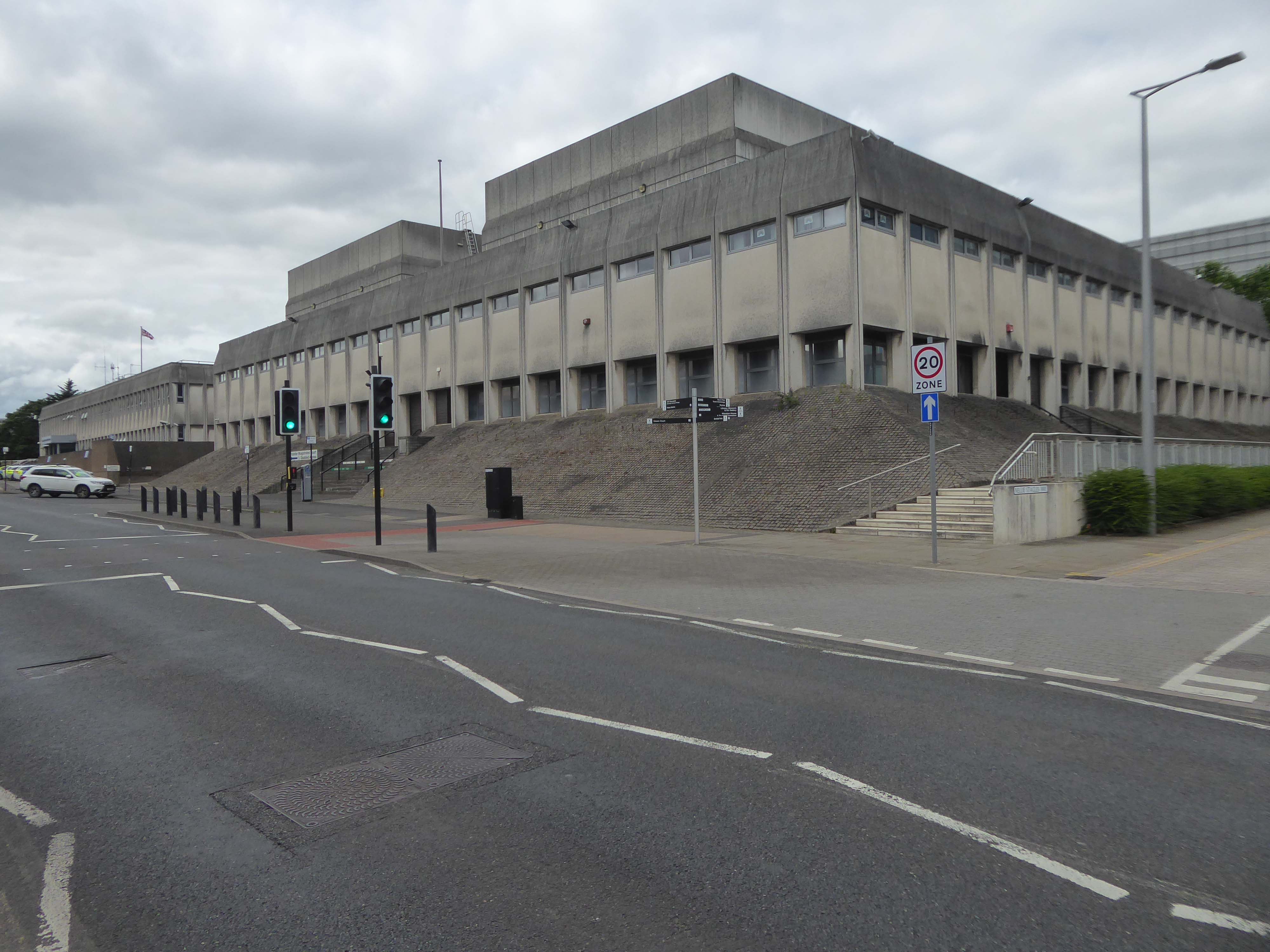
In 1949 WH Price the Borough Surveyor produced an outline plan for the area, with a green space at its heart, it was never realised. In 1955 Frederick Gibberd produced his plan to include a ten storey Town Hall, Art School, Technical College and Civic Theatre, revised and reduced in 1963 – eventually his Police Station and Law Courts were completed in 1969.

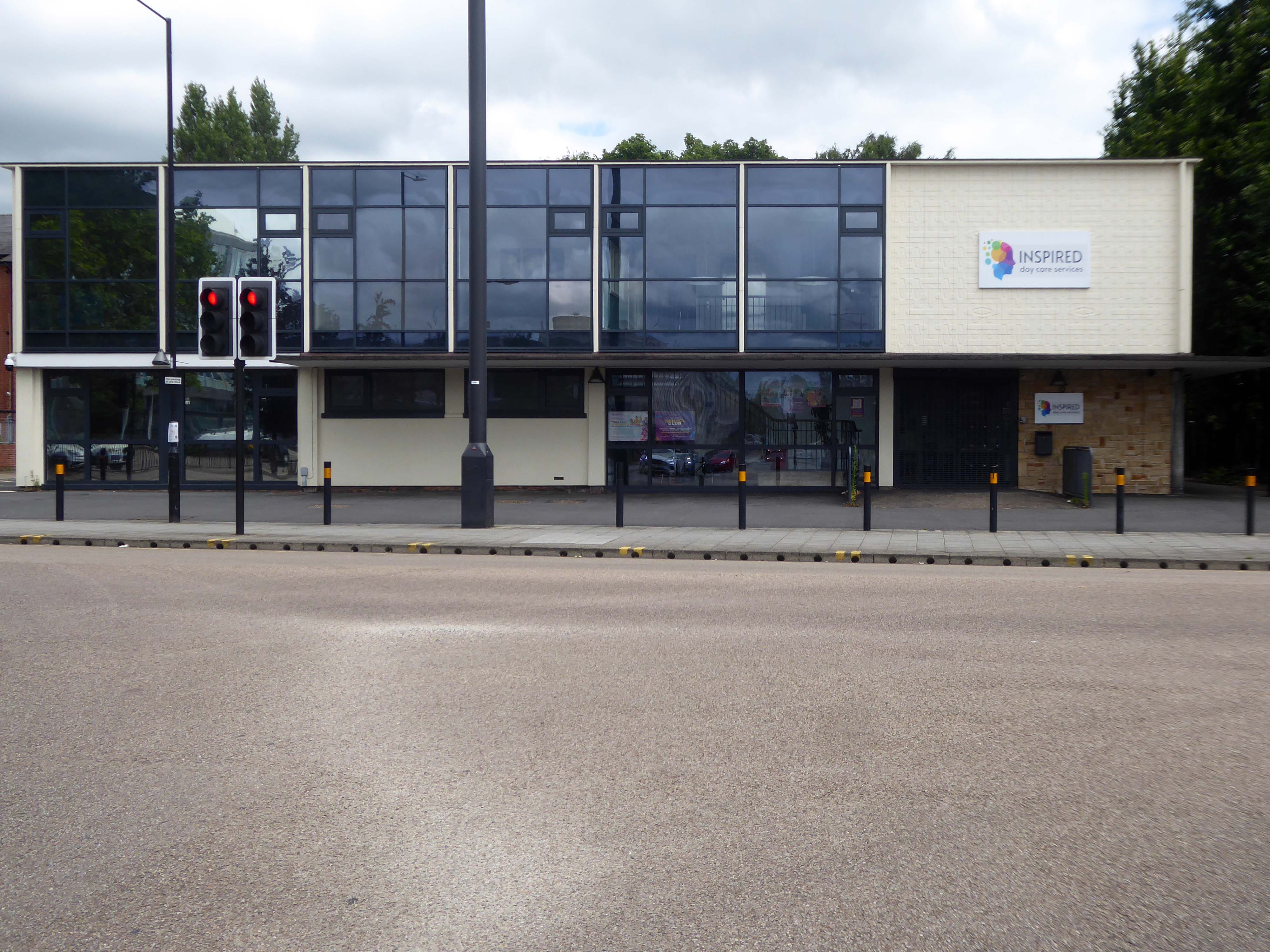
The former NHS Clinic at the ‘T Junction’ is transformed into a day care service.

The former Museum and Art Gallery now an archive and local studies centre.

The building was designed in the office of the Doncaster Borough Architect’s Department in a team led by borough architect Mr LJ Tucker. 

The ceramic designs were a later addition when it was discovered that the large open areas of glass overheated almost everything inside, the work was undertaken by LJ Tucker and family.

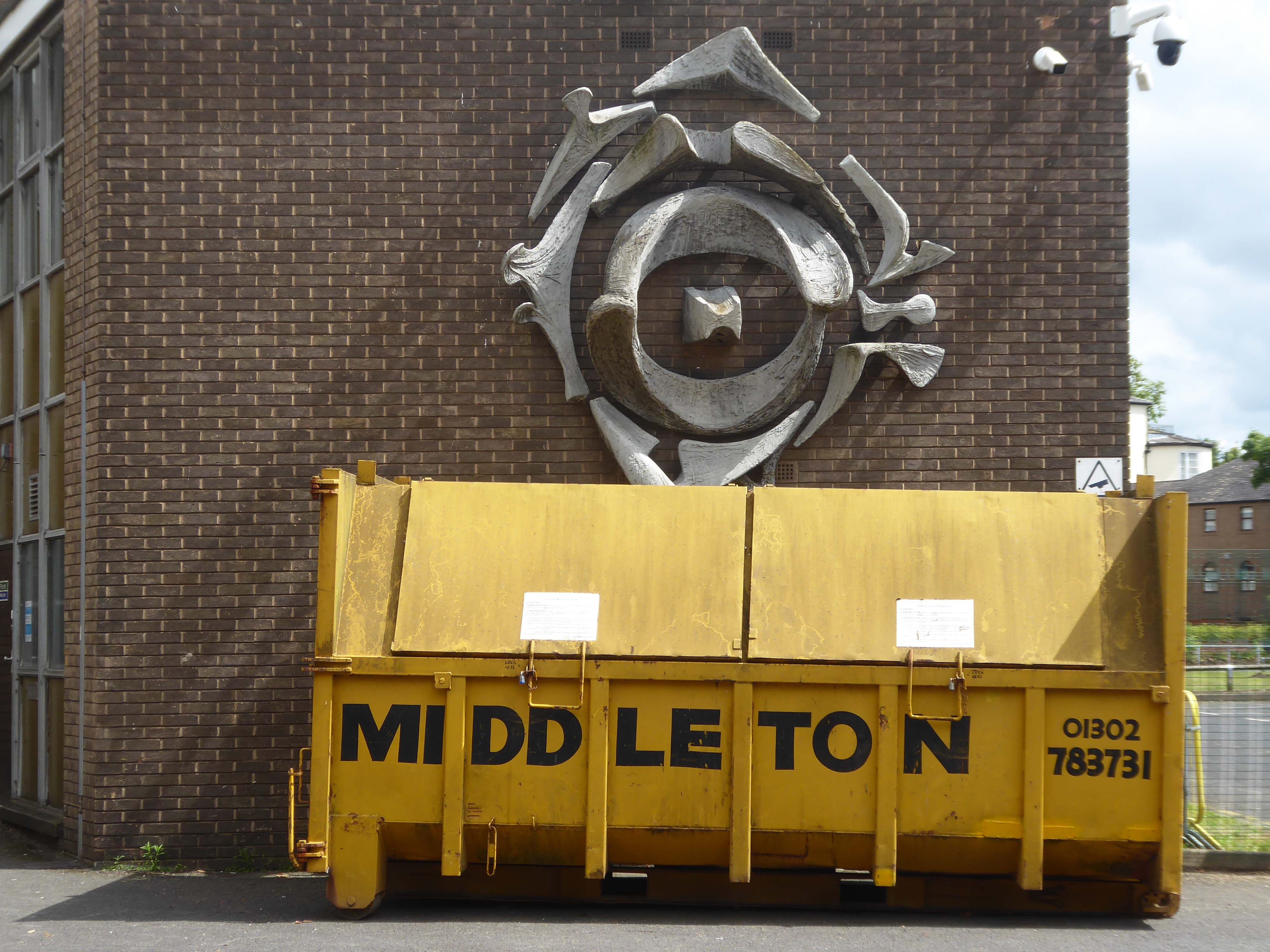
The sculptural work by Franta Belsky, now has a skip for company.

As a footnote the work by Fabio Barraclough reveals a murky past.

Barraclough was born in Madrid in 1923, to a Spanish mother and Yorkshire father who founded Madrid’s Chamber of Commerce. He moved to London with his family in the 1930s as a refugee from Francoist Spain. He taught fine art and sculpture at Rugby School, where colleagues considered him “highly entertaining, a most unorthodox and highly gifted” teacher. He established himself during the 1960s and early 1970s as an authority on sculpture, publishing in academic journals and becoming a member of the Royal British Society of Sculptors.

In 2000, it was revealed that Barraclough, while outwardly living the life of anti-apartheid activist since the 1970s, had been a paid informant of the South African state security police. The media was used to promote his image as a “brilliant, liberal artist with apparently impeccable credentials” in order to gain public trust, while he was funnelling money from anti-apartheid groups to the police. He died on 6th January 2019.

Wikipedia

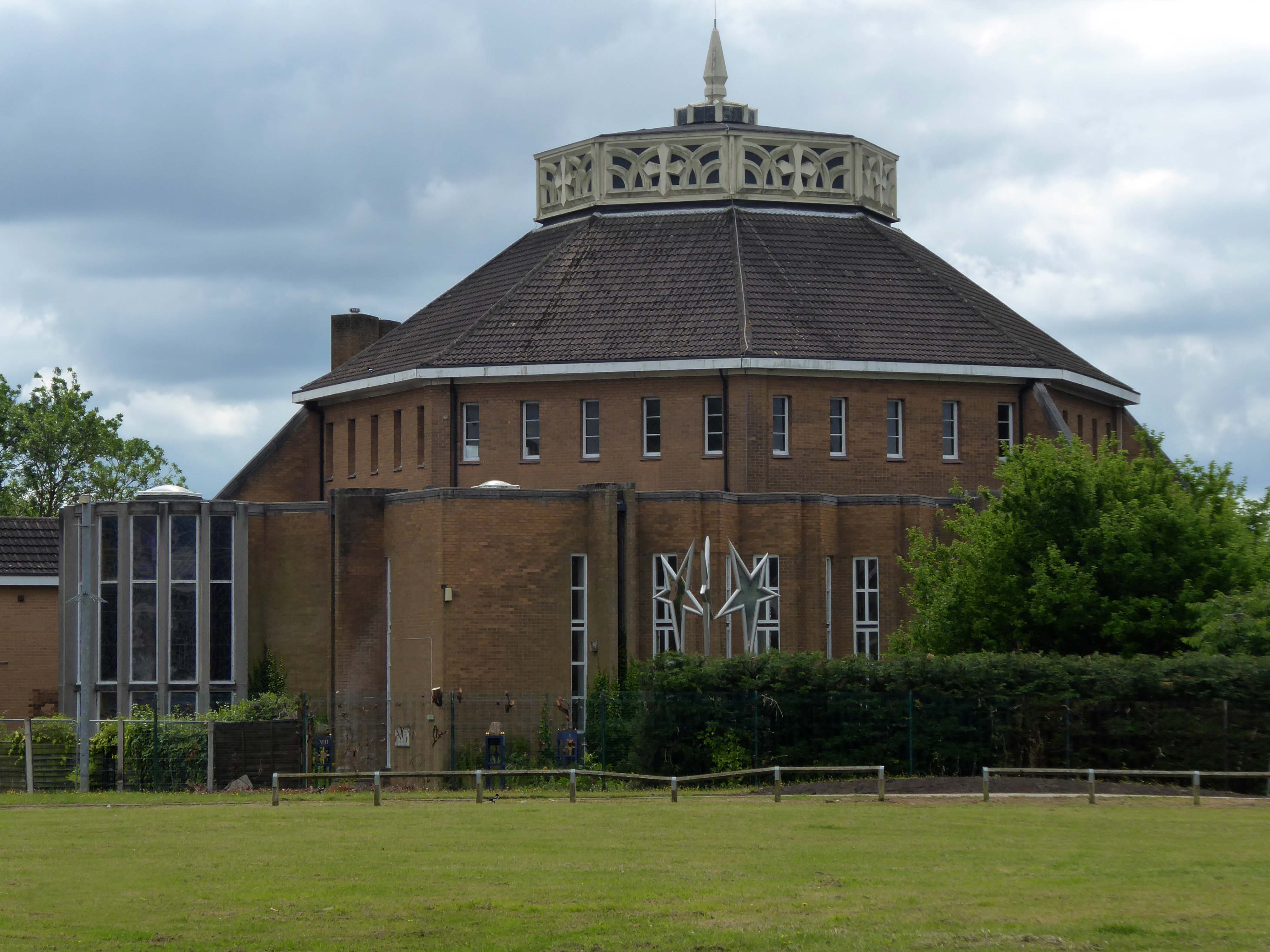
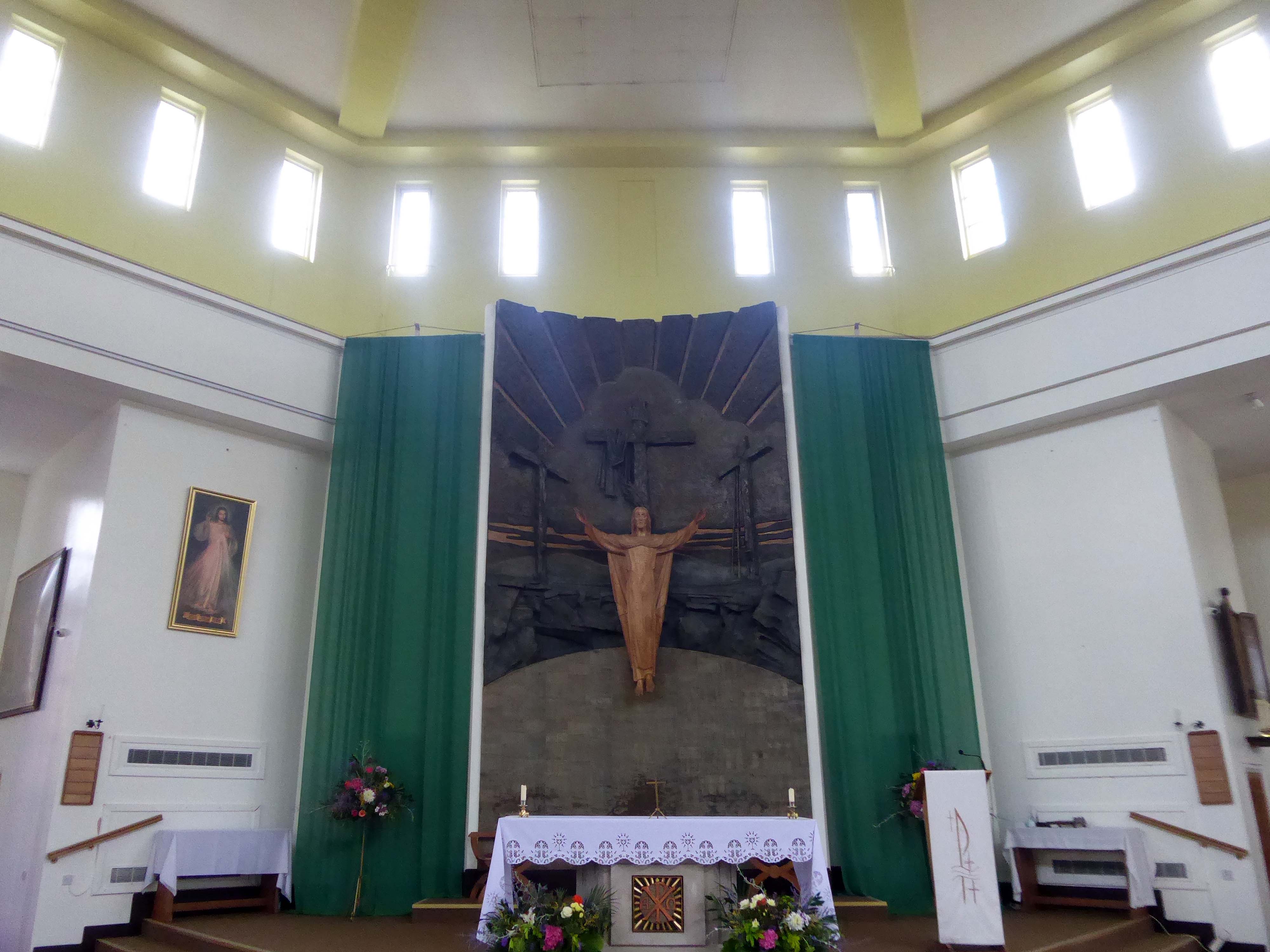
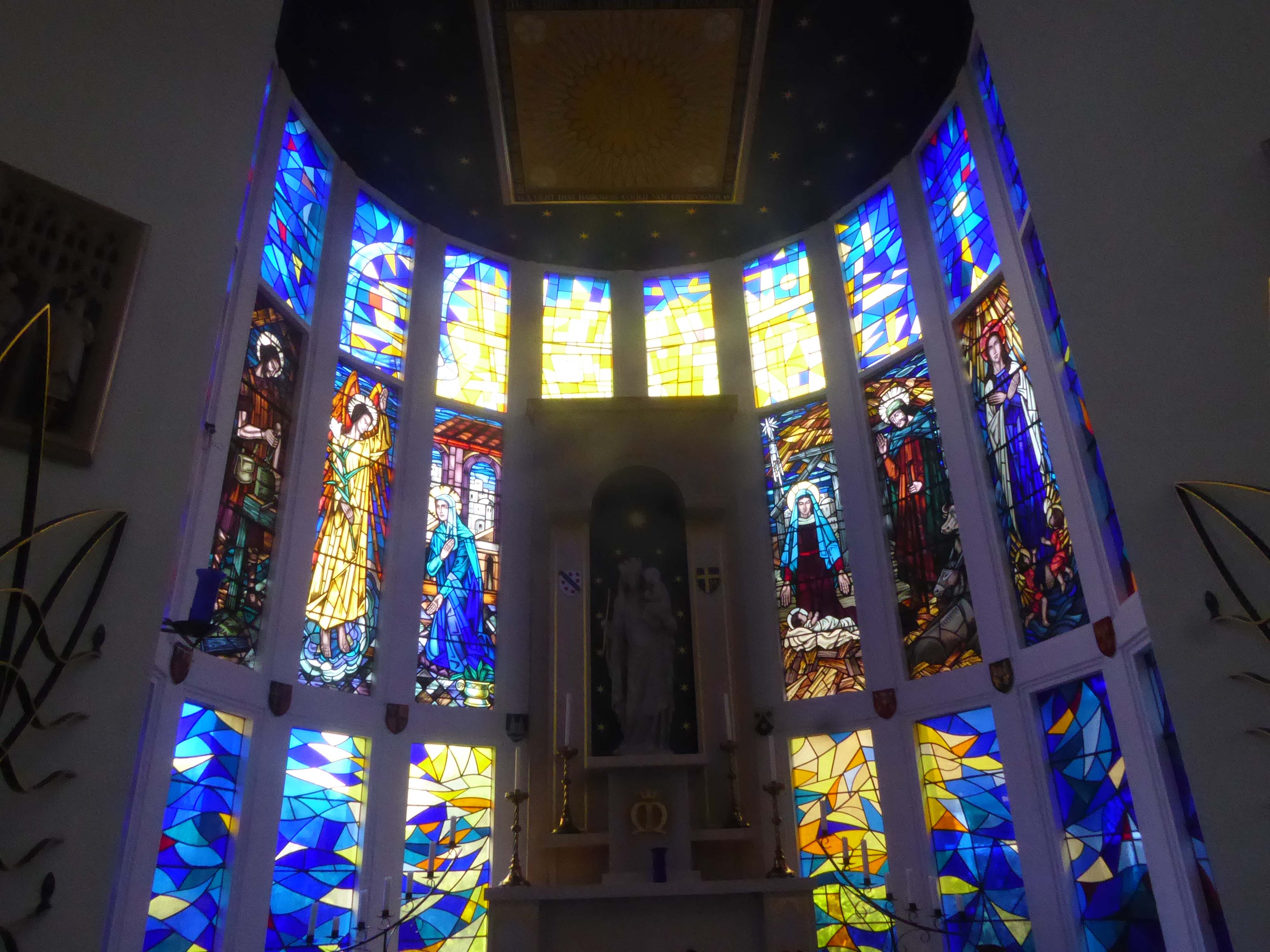
Over the way faros the green sward is St Peter in Chains RC – A large and striking design by JH Langtry-Langton, incorporating important furnishings by J F Bentley from the predecessor church, along with good furnishings of the 1970s. The churches houses the modern successor to the medieval shrine of Our Lady of Doncaster.

Figurative stained glass by Patrick Feeny for Hardman in 1973 and abstract glass fitted in 2000 as part of reordering and revival of the shrine.

Further information on Taking Stock.

A special mention for the Danum Cultural Hub

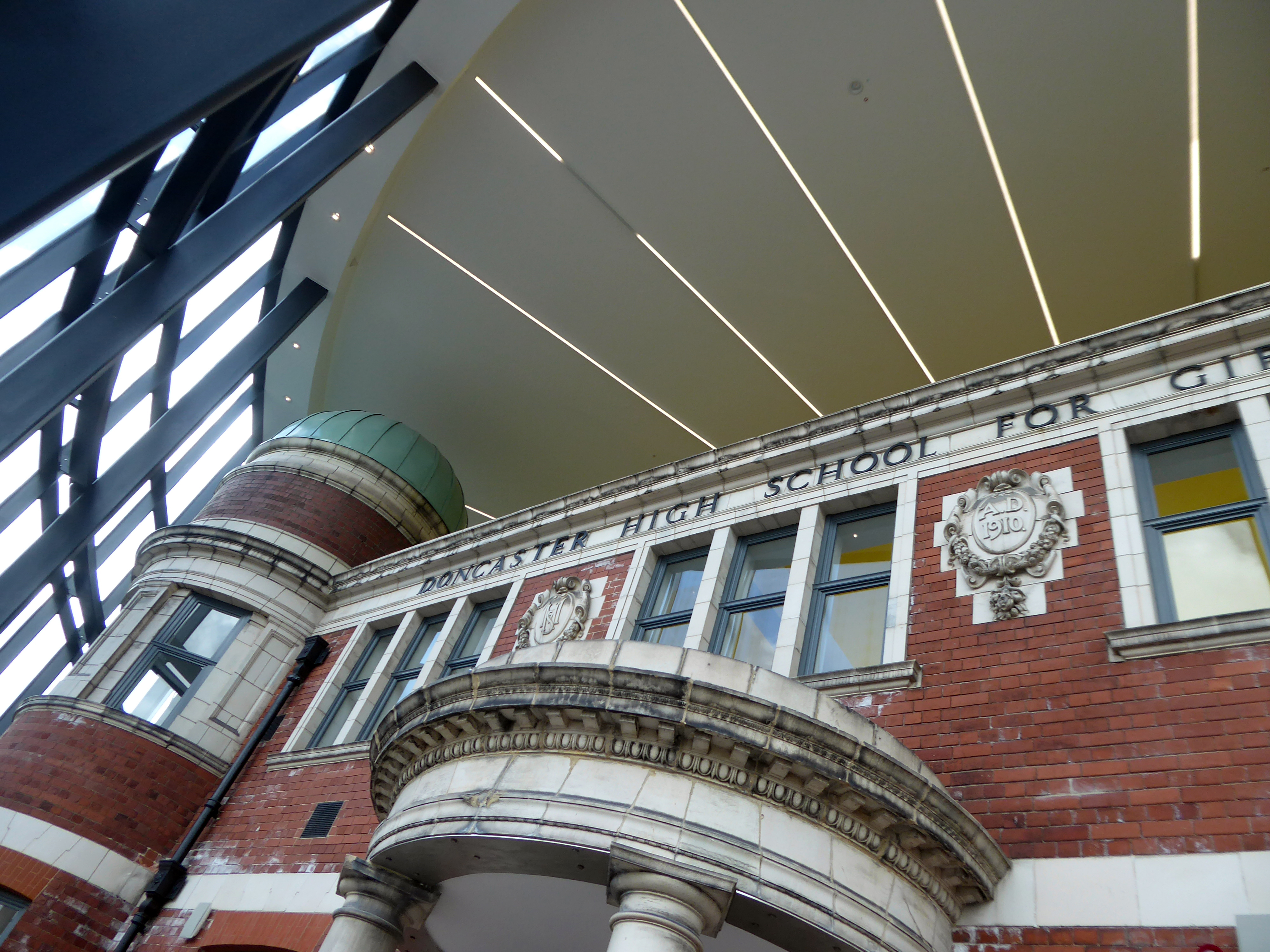
Designed by architects Bond Bryan and built by main contractor Willmott Dixon, the new cultural and learning hub has been created following the restoration of four existing buildings. 

A key focal point of the scheme is the restored frontage of the Edwardian former Doncaster High School for Girls, which has been framed by Senior’s slimline SF52 aluminium curtain wall and showcased within a new steel-frame building. The glazed facade, which was fabricated and installed by Senior’s supply chain partner Chemplas, also features Senior’s aluminium commercial doors.

RIBA Journal

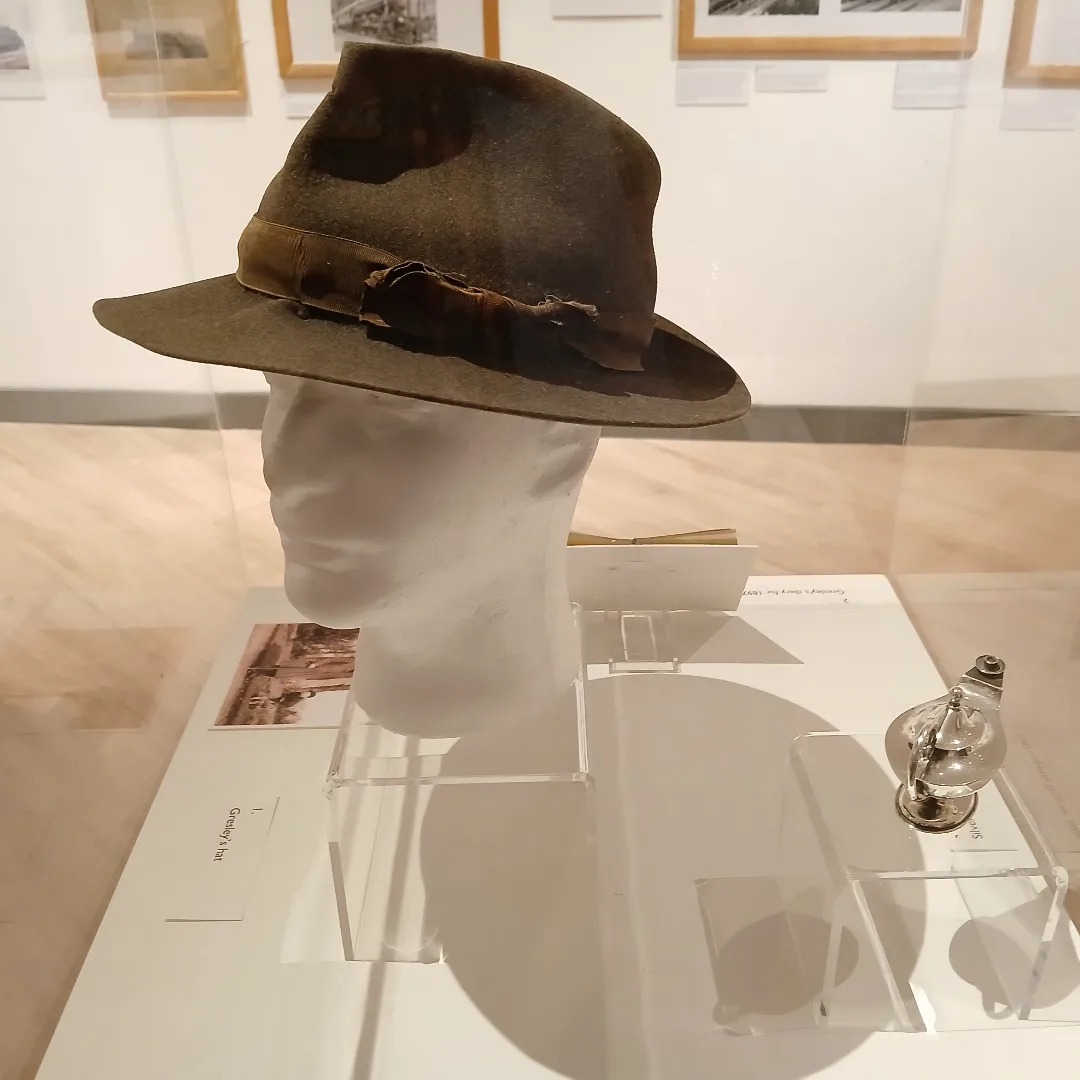
Where I was delighted to see Sir Nigel Gresley’s hat.

Bradford Revisited

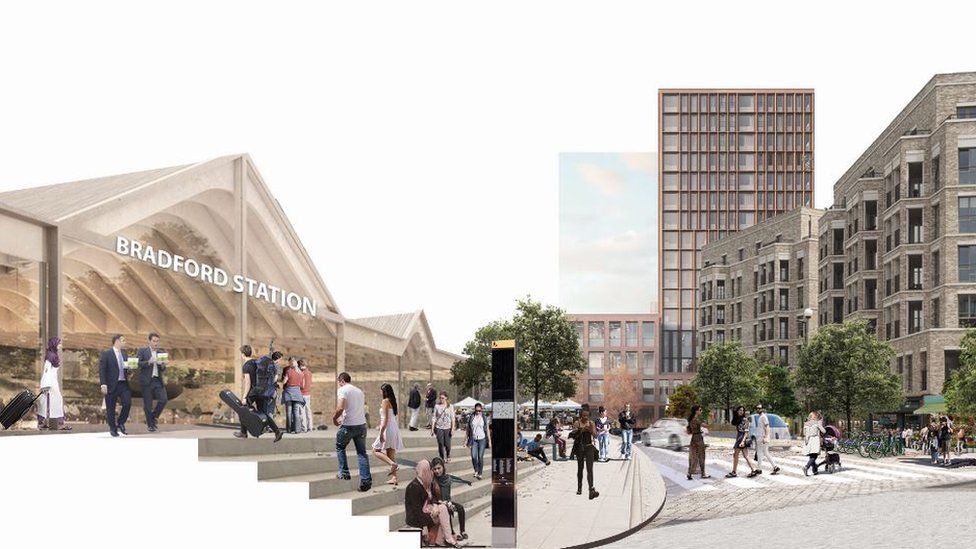
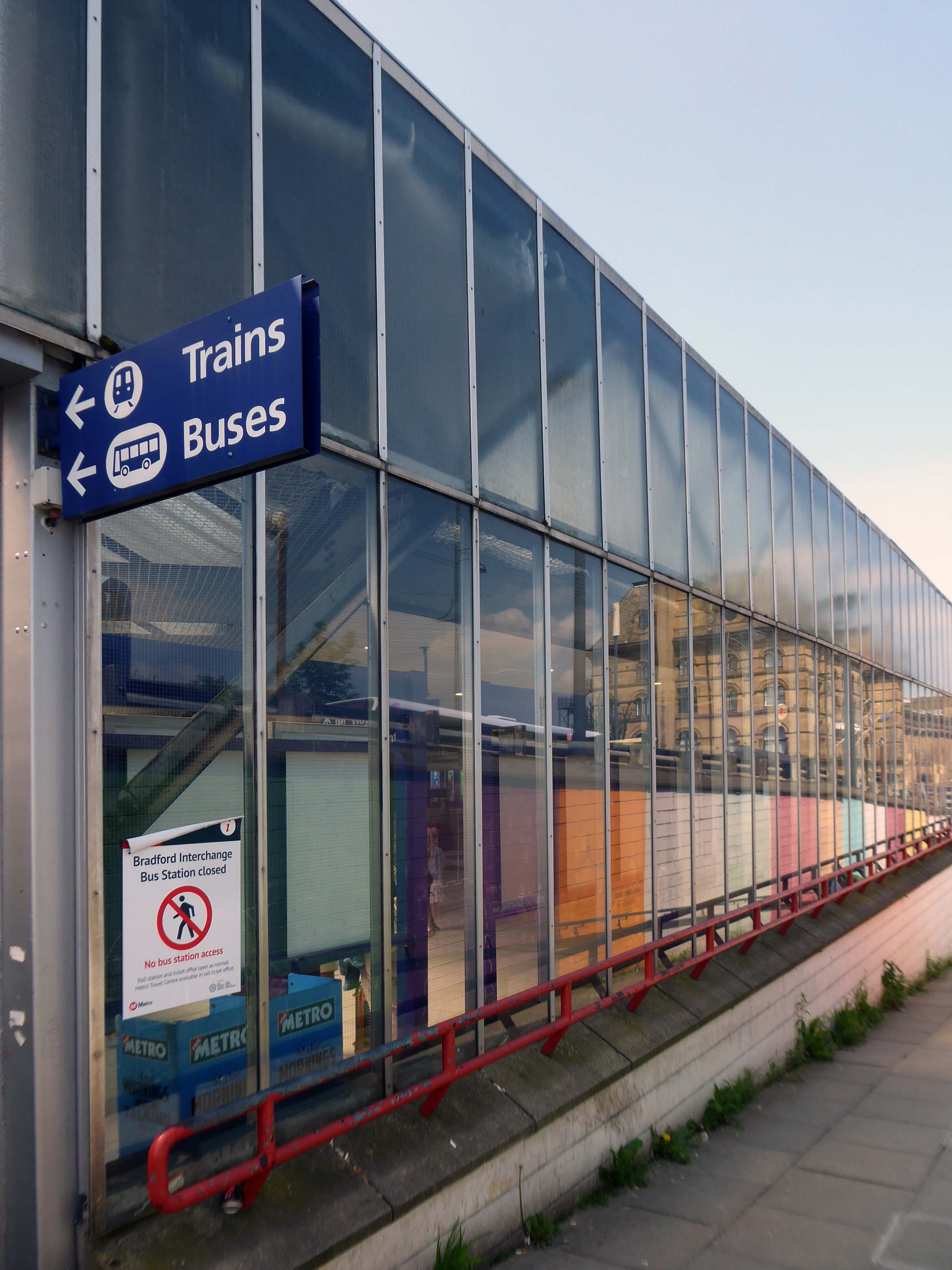
We arrive at and begin our journey at the Interchange – the bus station is closed, along with the station entrance.

Bradford accepts that it is a part of the Northern Supercity stretching from Coast to Coast – Liverpool to Hull. Every existing town and new settlement must be unique. People belong to their own hotspot as well as Coast to Coast. Bradford as a dispersed centre will give it individuality as well as becoming synonymous with the whole new city. Bradford is a mini version of the whole. It is composed of a series of mini hotspots which will each act as a focus for each square kilometre.

Bradford has the topography to allow every citizen to wake up to a view – both physical and mental. Their collective ambition can create a place of extraordinary difference.

Will Alsop

We have of course been here before.

Bradford Interchange will get a new entrance and other improvements to bring it up to standard, the city council said. 

The NCP car park on Hall Ings would be demolished to create a new pedestrianised entrance.

BBC

The Interchange opened in 1971 was the first of its kind in the country, designed by the BR regional team headed by RL Moorcroft and the City Architect.

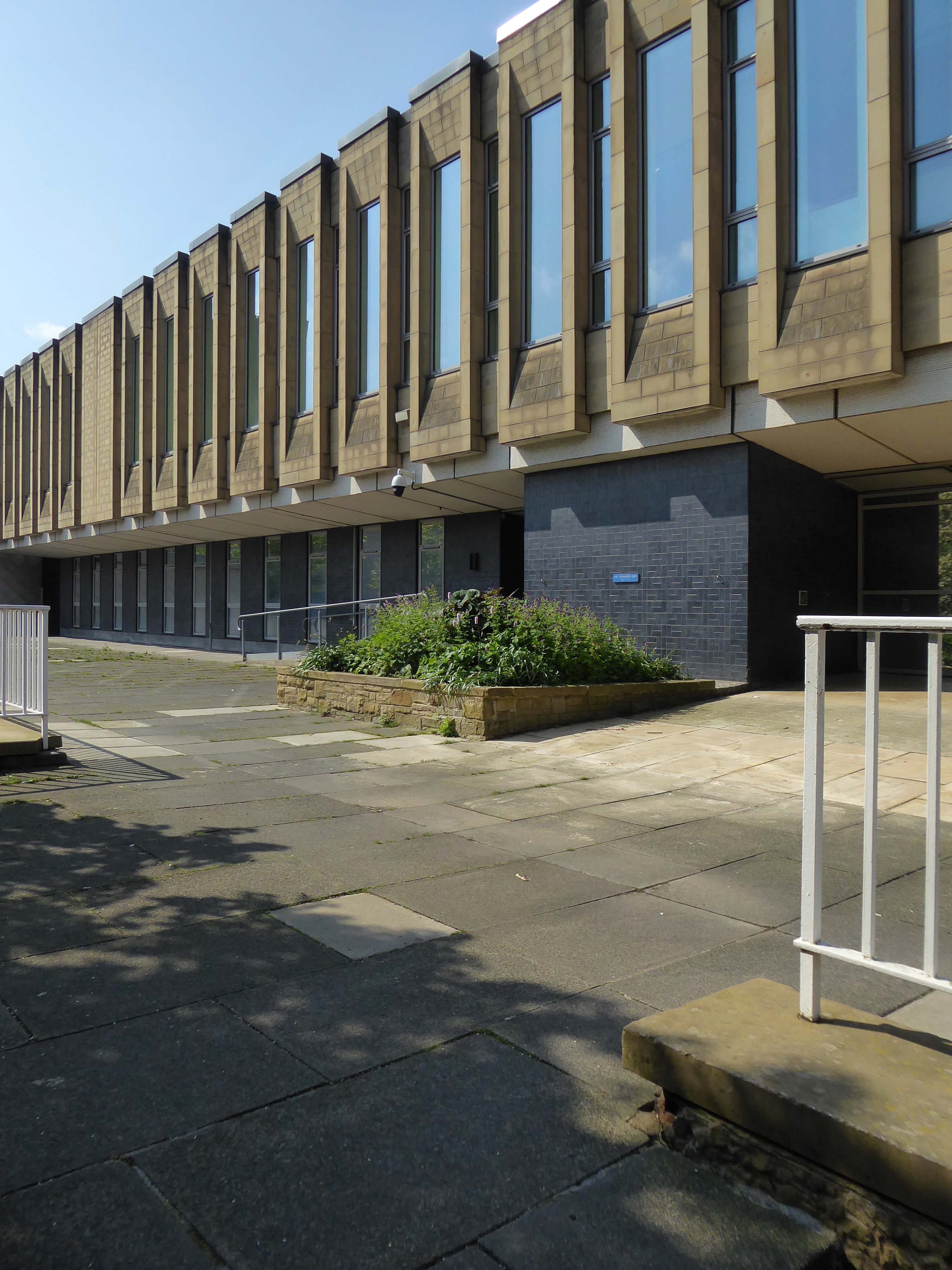
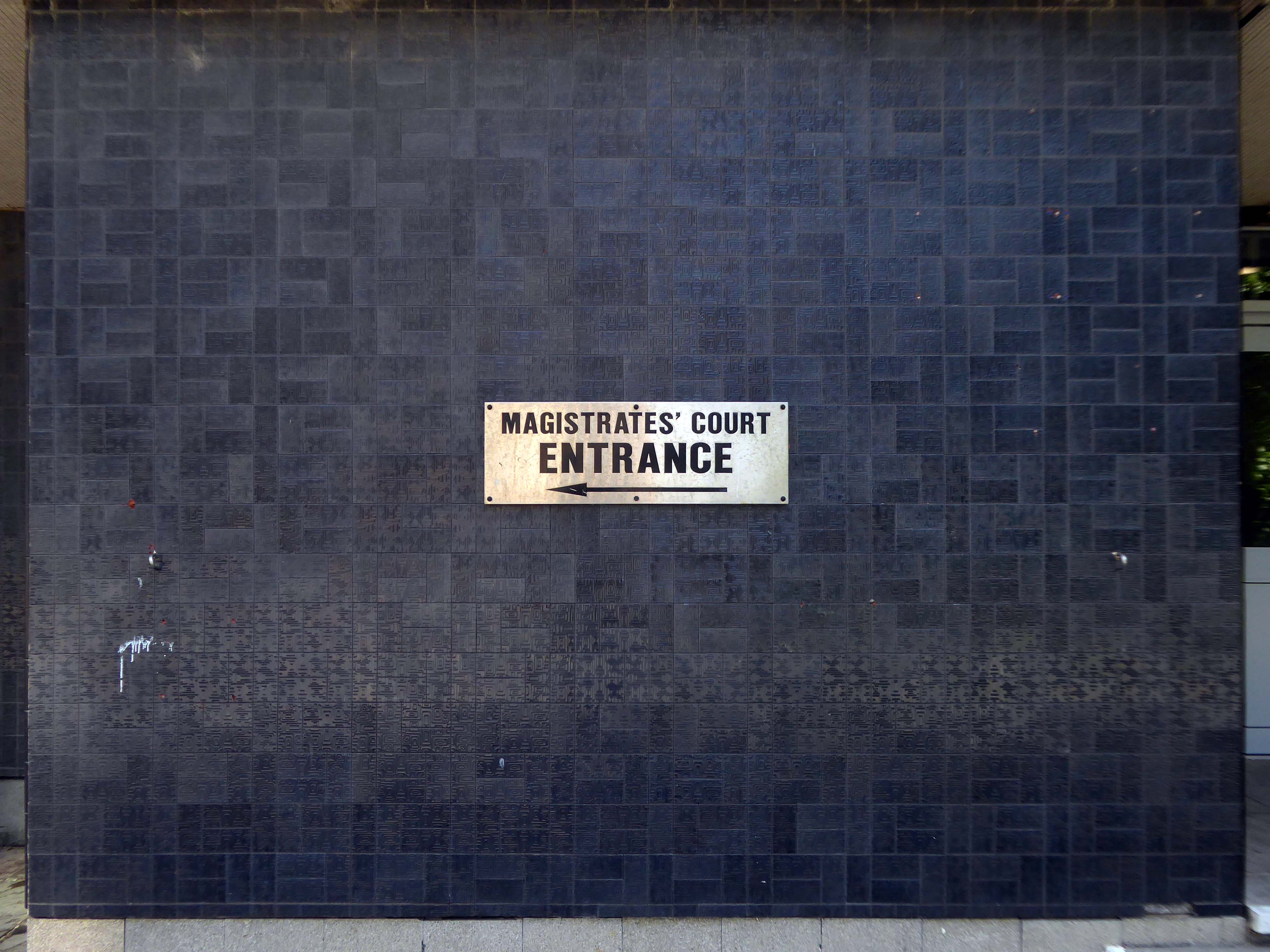
Onward to the Magistrates’ Courts designed by City Architect Clifford Brown in 1972.

Bradford is in the process of paving and puzzling pedestrians, as it becomes City of Culture in 2025.

So we wind our way over the inner ring road, advisedly avoiding the filled in underpasses.

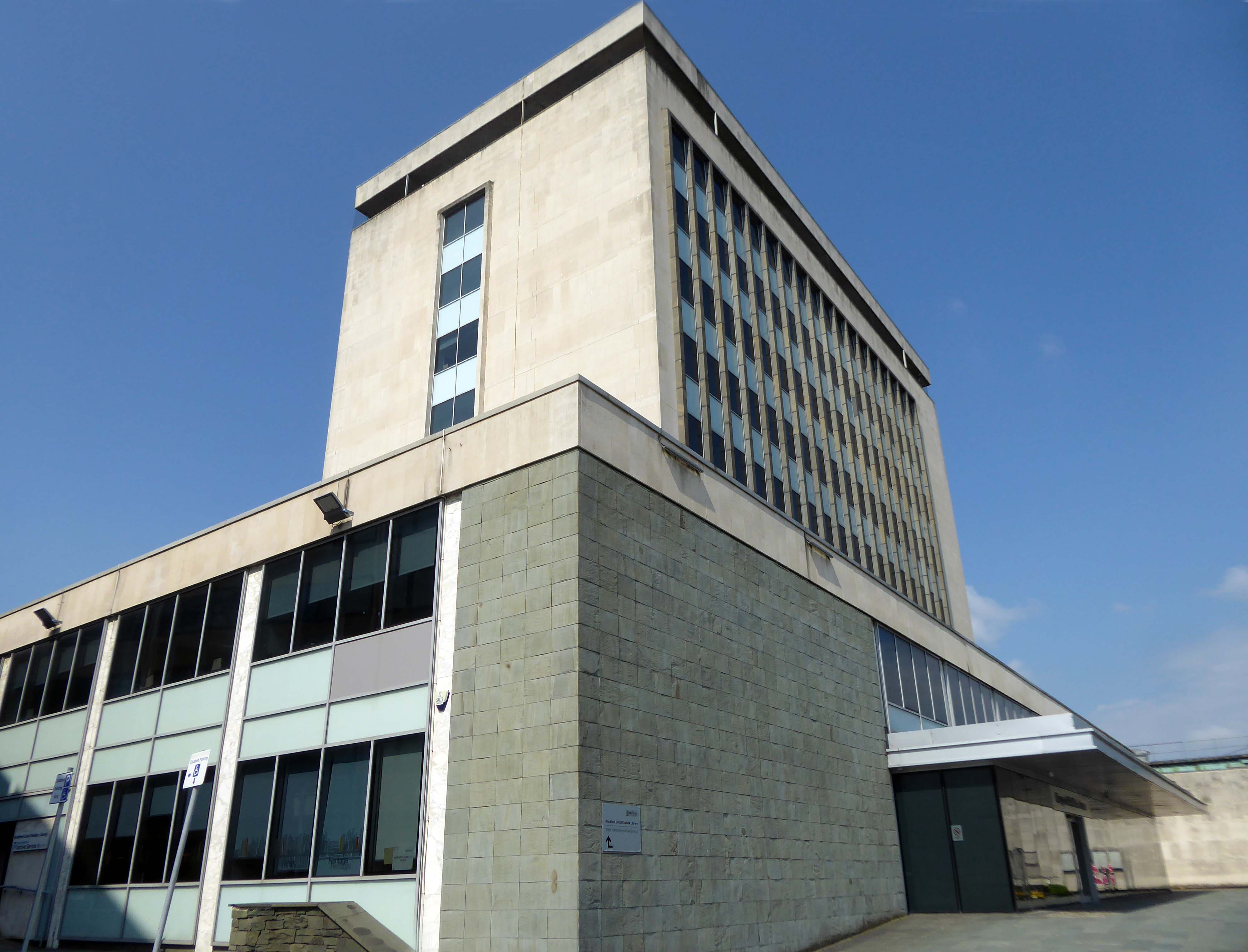
The former Central Library awaits us, designed in 1965 by Clifford Brown – a striking podium and tower, currently home to council offices.

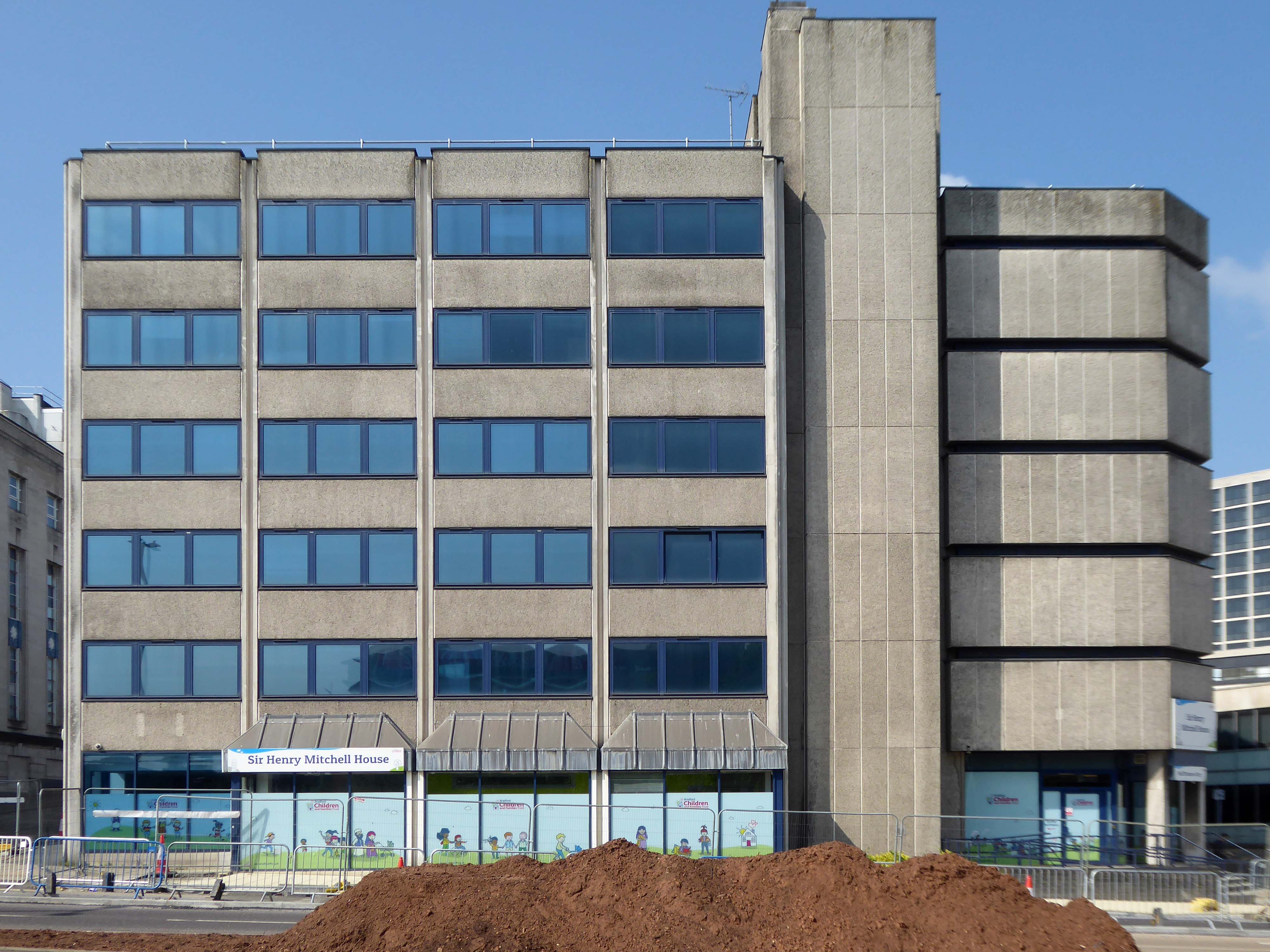
Next door the Sir Henry Mitchell House home to the Children’s Services.

Sir Henry Mitchell 1824 1898 was a mill owner and Mayor.

Moving further along the Telephone Exchange of 1936, design by architect FA Key.

Partner to the Telephone Exchange of 1976 by architect Trevor H Hanson for PSA

The gates were open and we were afforded a view of these delightful vents.

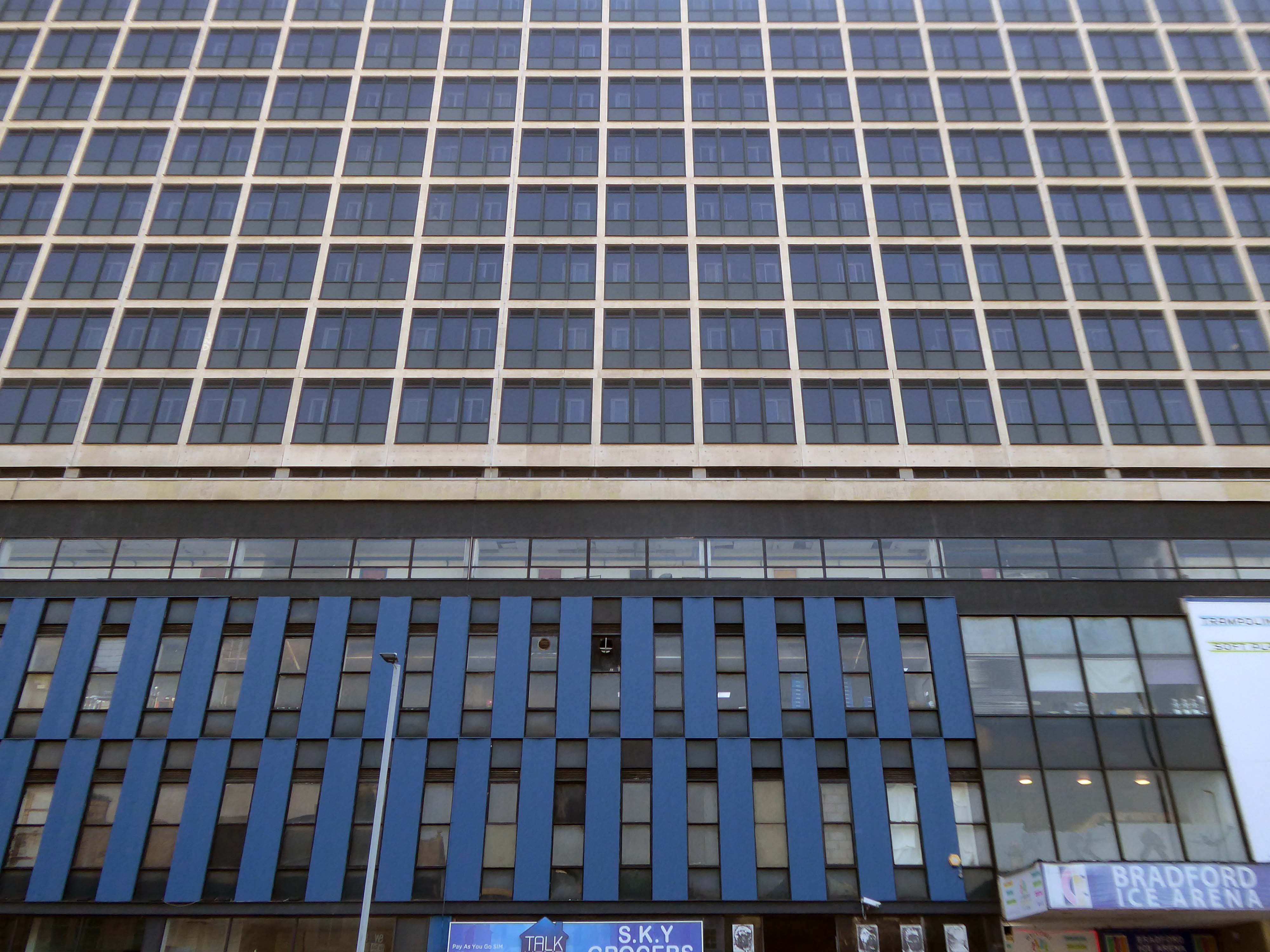
Next to the Ice Arena topped off with Wardley House – Sanctuary accommodation for key workers and students.

Wardley House is equipped with all the modern amenities you need for a comfortable and connected life as a key worker. The rent includes high-speed broadband and building-wide Wi-Fi, utility bills, and contents insurance. Our top-notch facilities comprise a large common room with a pool table, flat-screen TV, and live BT Sport – the perfect social space.

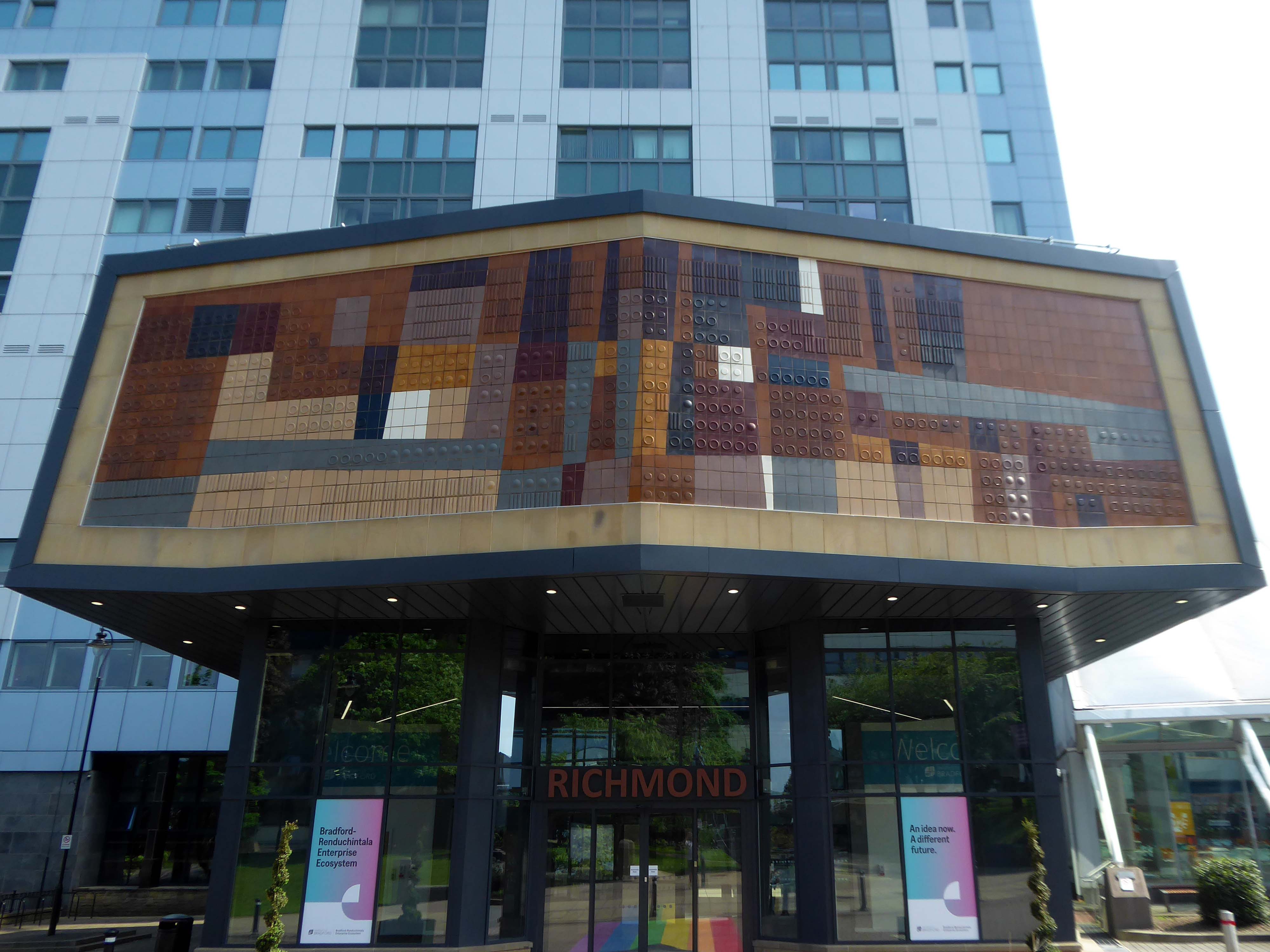
Up the hill and around the bend to the University of Bradford – the main Richmond Building fronted by Joe Mayo’s tiles.

At the University of Bradford our focus is on creating the conditions for social, cultural and economic impact. We will achieve this by using our proud heritage as a springboard and remaining steadfast in our commitment to equality, diversity and inclusion. We will harness our strengths in research, innovation, teaching and partnerships to extend our reputation, influence and impact. All of this will create a values-led culture that is inclusive and effective in enriching lives and benefitting society.

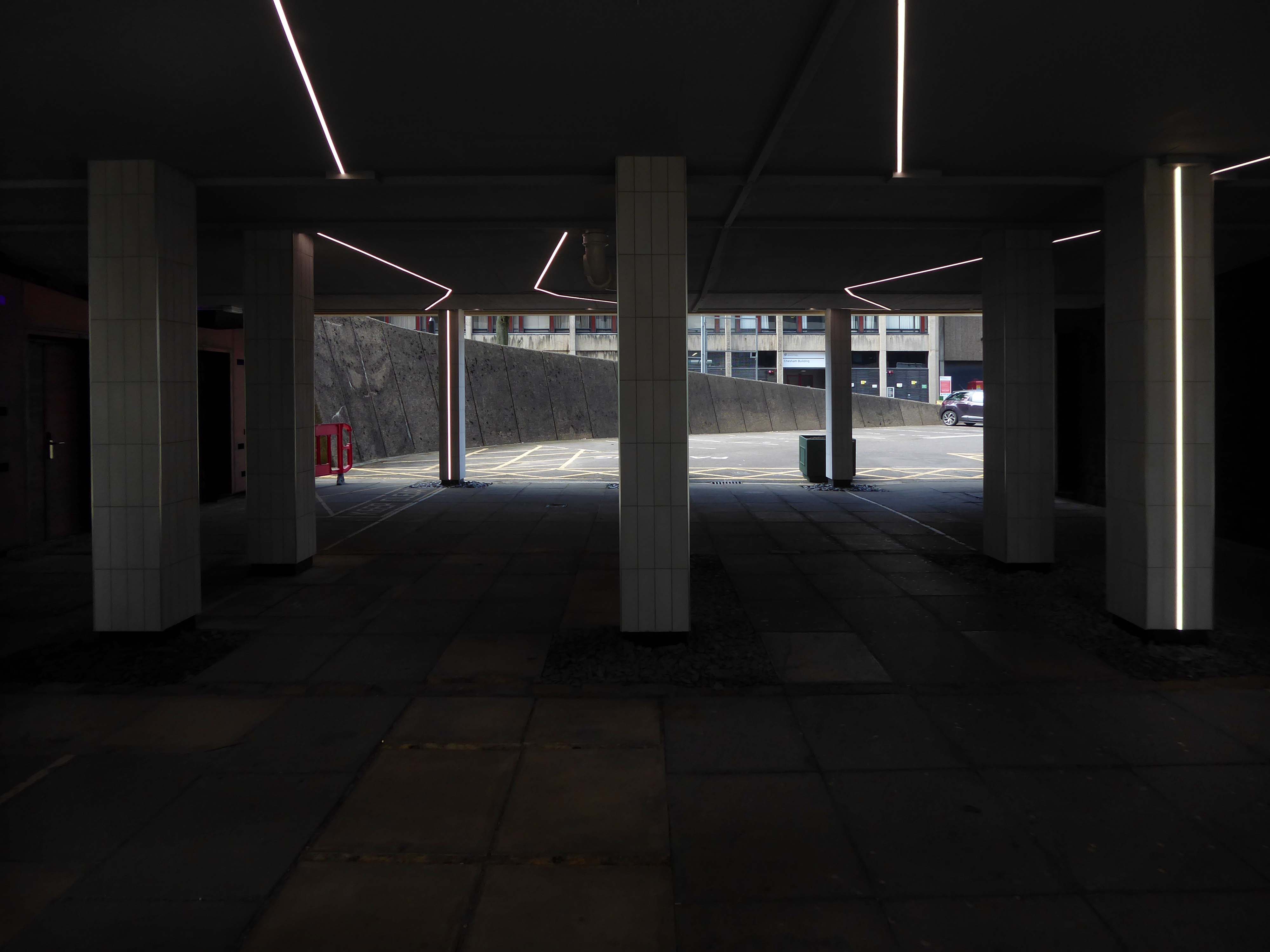
The undercroft has undergone a major refurb rethink – transformed into a Goth Disco.

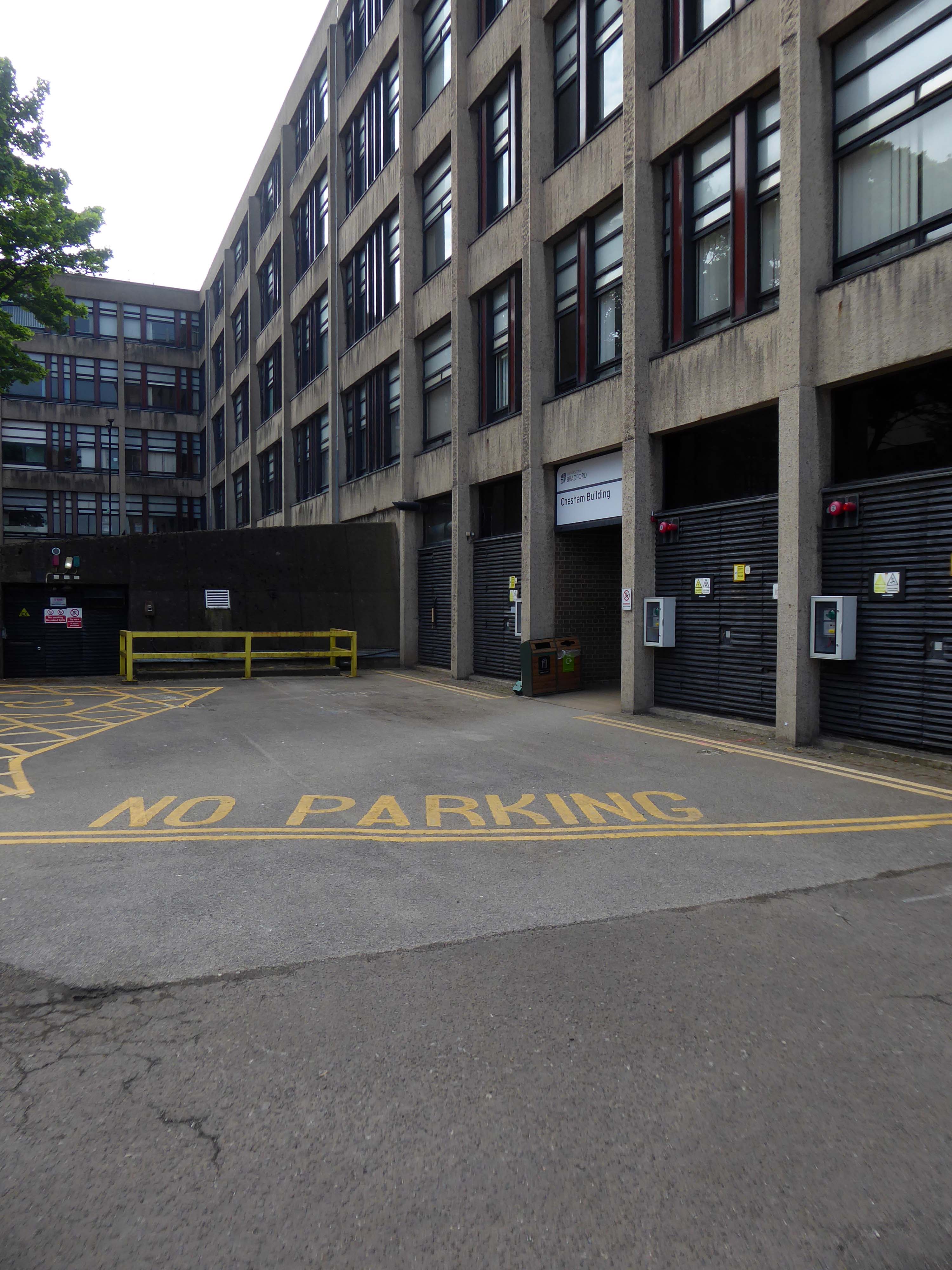
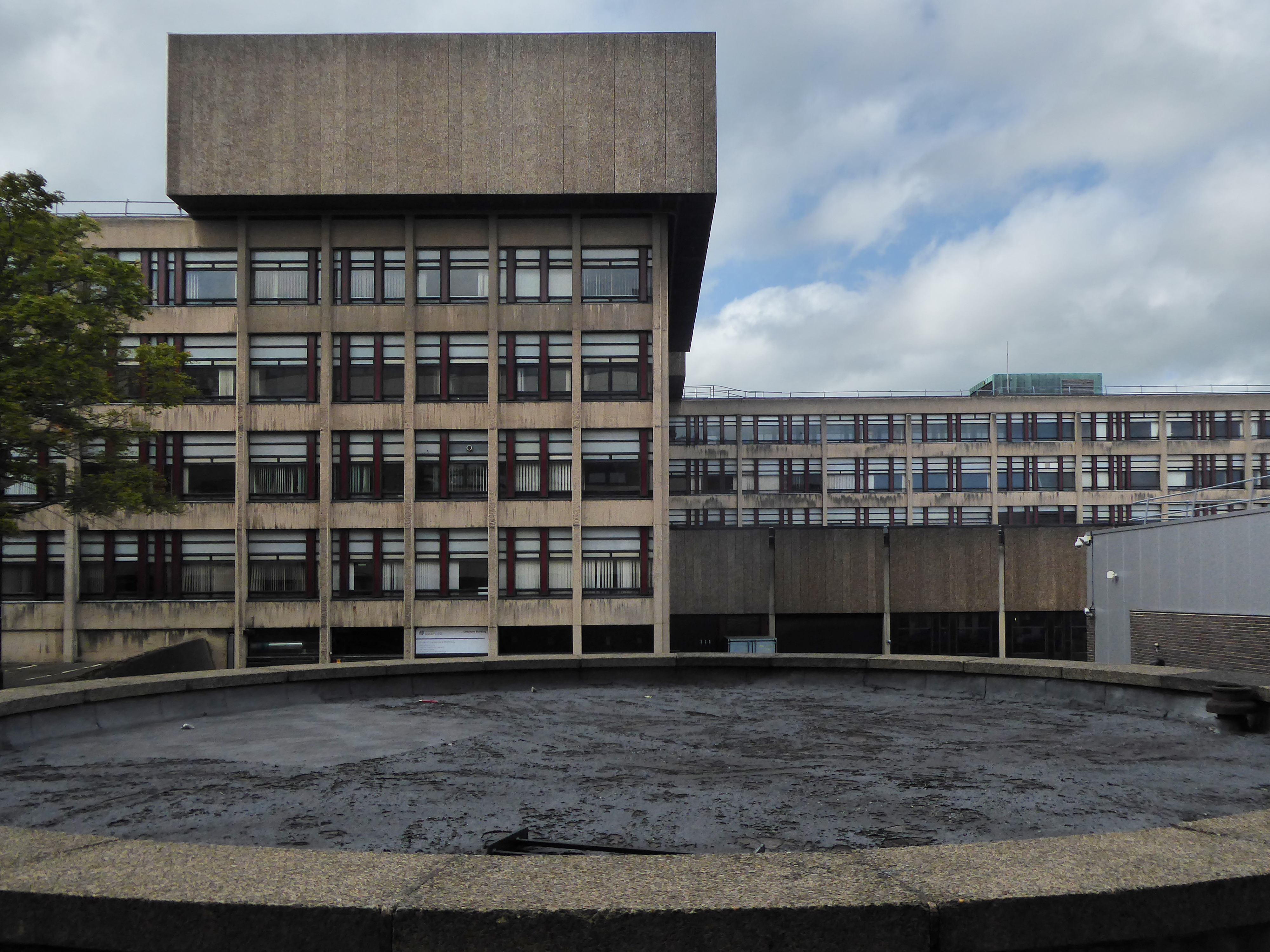
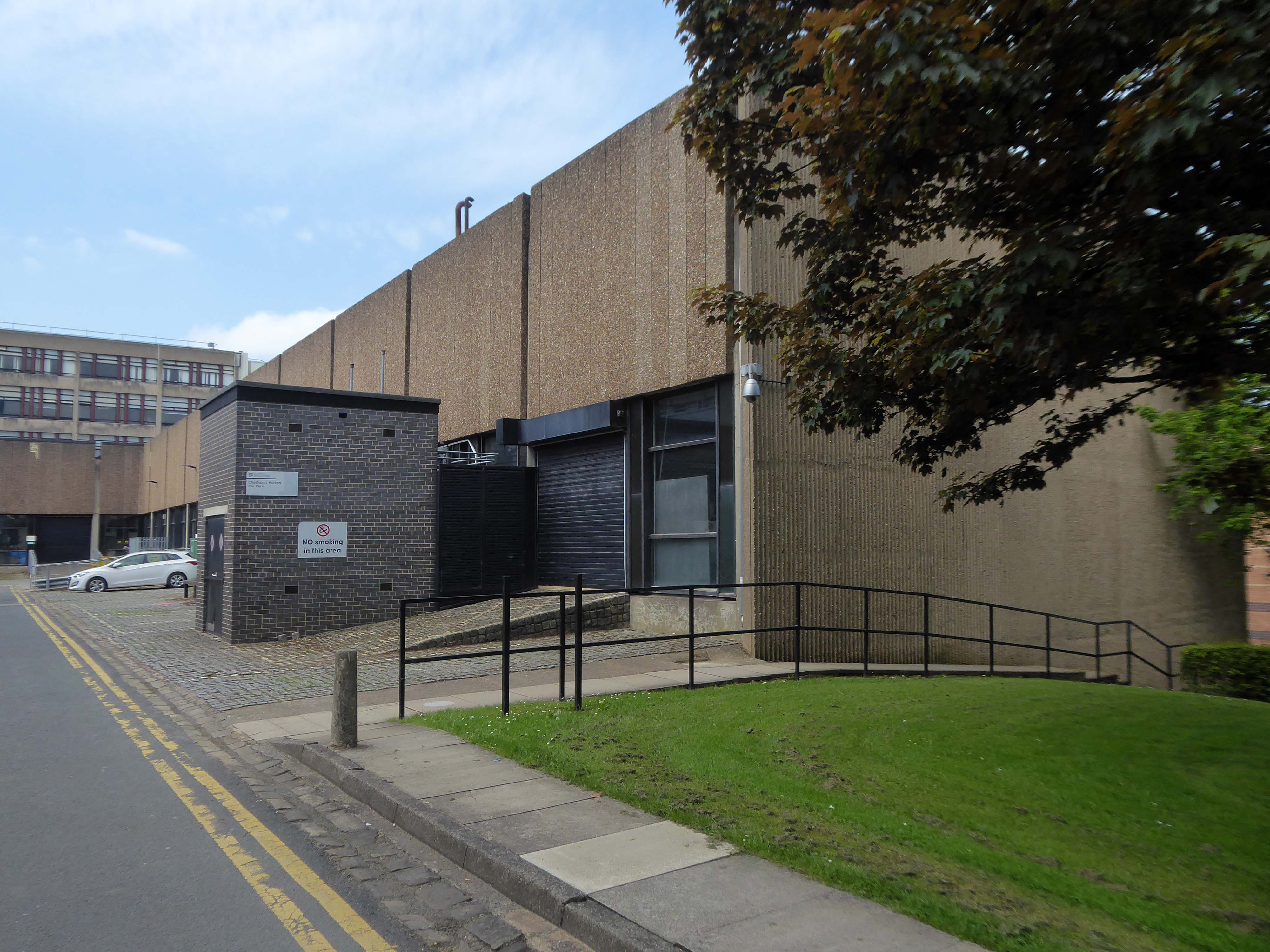
We emerge unscathed into the clear light of day and the BDP designed Chesham and Horton blocks.

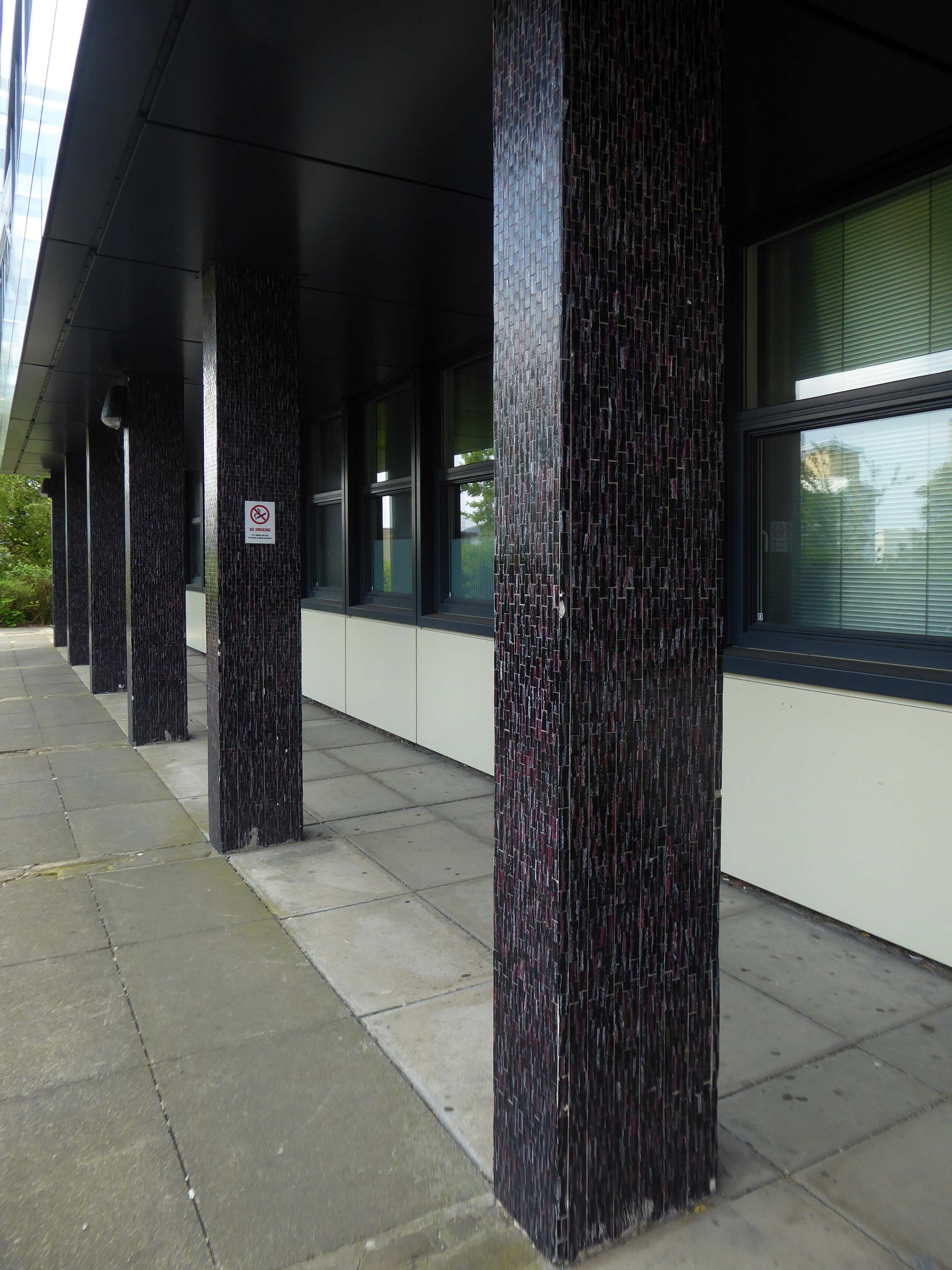
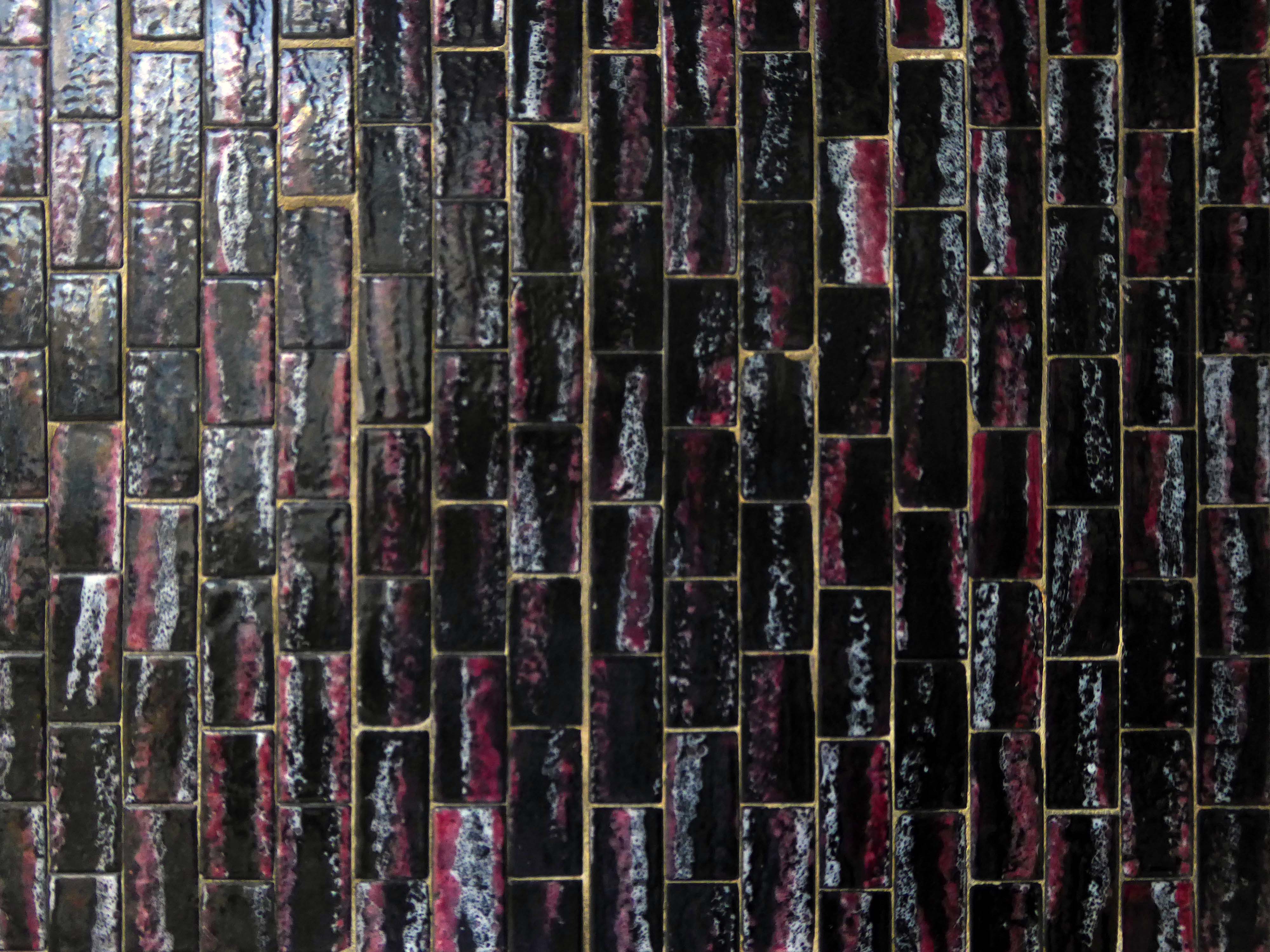
The mosaic covered columns remain unclad.

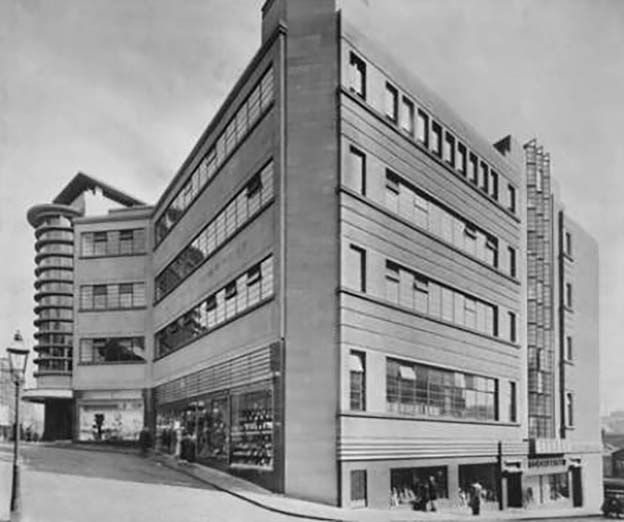
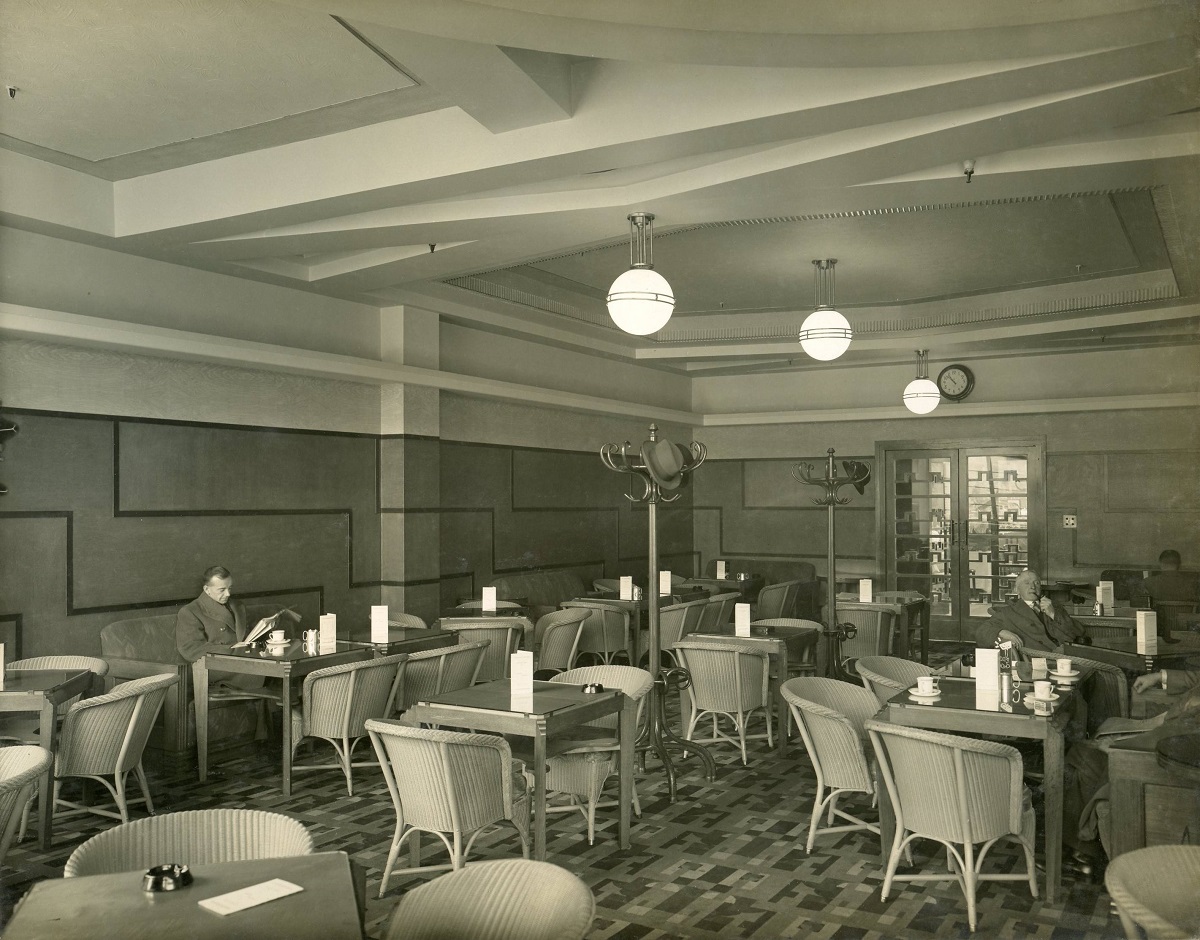
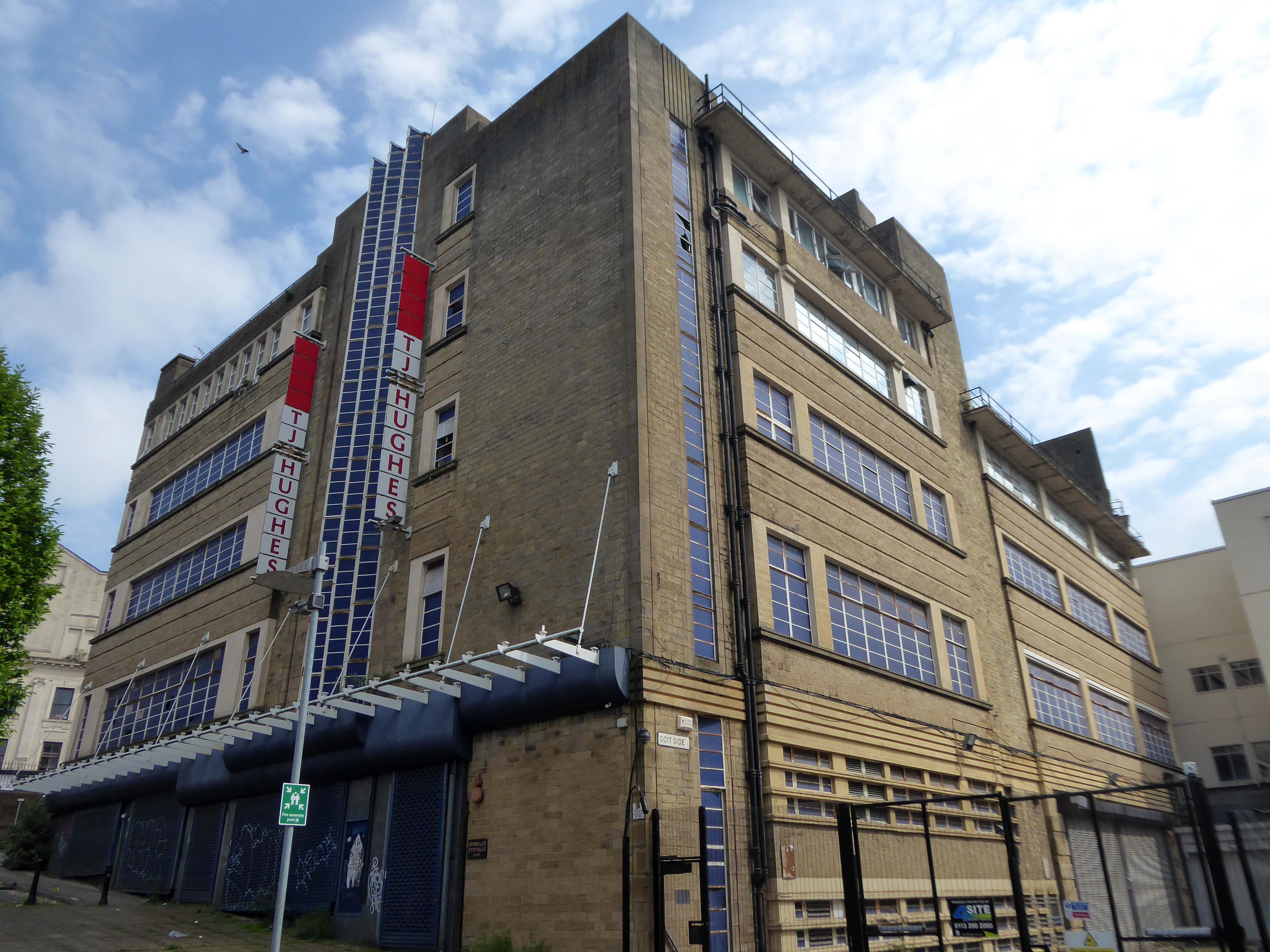
Let’s hop to the Grade II-listed Co-op designed by CWS in house architect WA Johnson and JW Cropper in 1935.

Architect W A Johnson worked for the Cooperative Wholesale Society from 1899 until 1950. He was heavily influenced by the German architect Erich Mendelsohn after 1930, evident in his embrace of the International Modernist style. Johnson travelled widely in Germany and Holland, and Mendelsohn’s Schocken store in Stuttgart 1928 is quoted as being a particular inspiration for the Bradford Co-op.

Demolished despite protests in 1960.

In 2019 the Architectural Heritage Fund announced a £5,000 Project Viability Grant to Freedom Studios Ltd.

The money funded a viability study to investigate the potential of building becoming a multi-use cultural hub.

As of May 2024, sadly there is no cultural hub.

Next we hot foot it to the Kirkgate Centre and Market – John Brunton and Partners 1975.

In 1979, the building won a European award from the International Council of Shopping Centres.

But the Historic England report described its design as mundane and repetitive.

Janice Ivory and Lisa Donison didn’t hold back in their criticism of the centre in its current state.

Thank God for that, was Janice’s reaction to the news the building was set to be bulldozed, although an exact date for its closure remains unknown.

It’s just a concrete monstrosity, she said of its design, which Historic England said was lacking architectural flair.

It’s just an ugly building, added Lisa.

Once dubbed Bradford’s space age retail destination, Kirkgate Shopping Centre will soon be no more. 

The city centre landmark, which opened for business as an Arndale in 1976, has been denied listed status by Historic England – paving the way for its demolition.

BBC

Geoffrey Cowley from Wibsey, who was in town for an eye appointment, said demolishing it:

Might be the right thing to do.

There are plans to remove and display the William Mitchell panels along with these other examples of his work.

In-situ at Highpoint.

In storage – removed from the Bradford And Bingley Building Society.

Artist Bernd Trasberger plans an artistic project, which involves repurposing Fritz Steller’s tile works.

As Ken Kesey so rightly said – Further!

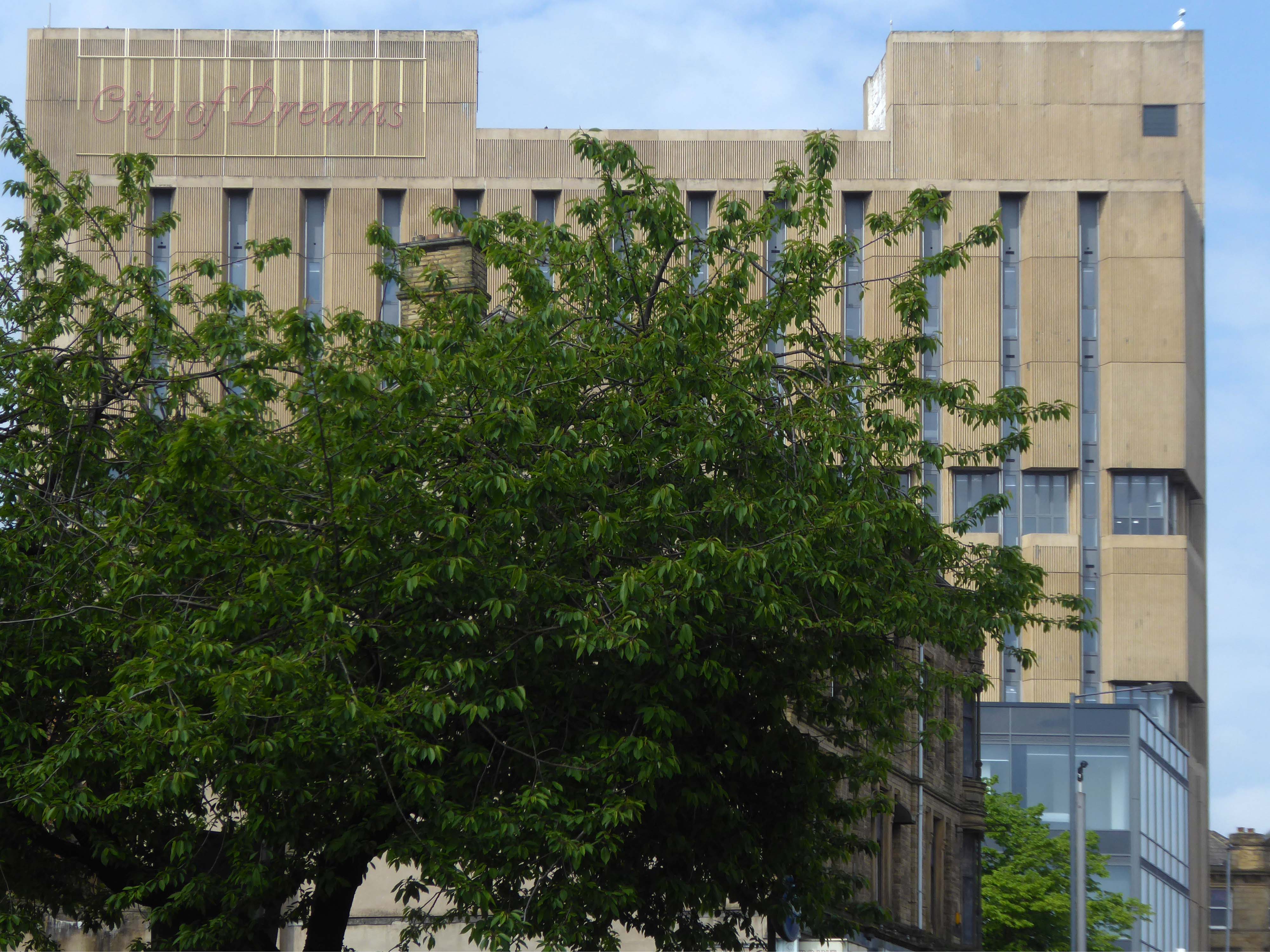
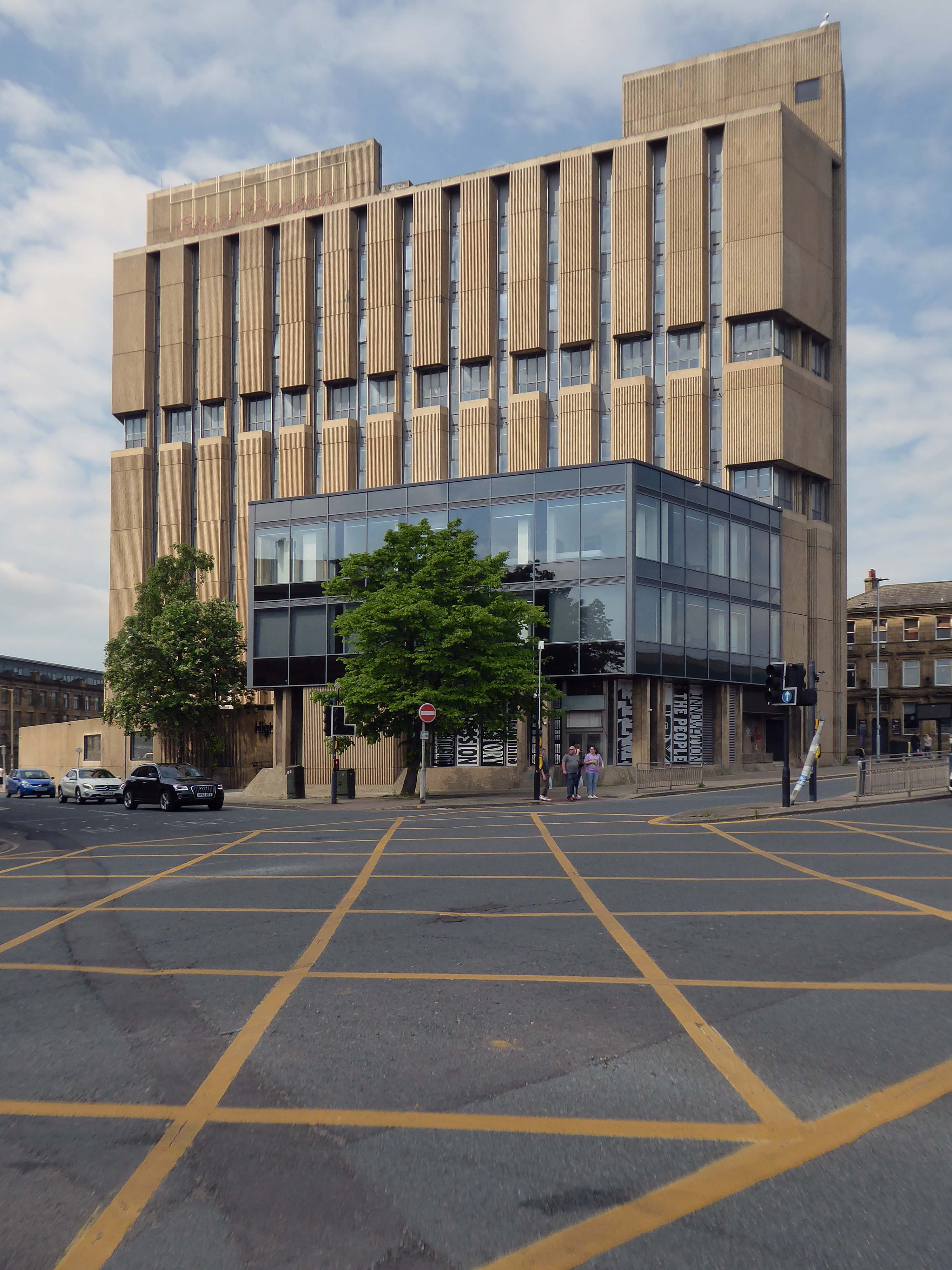
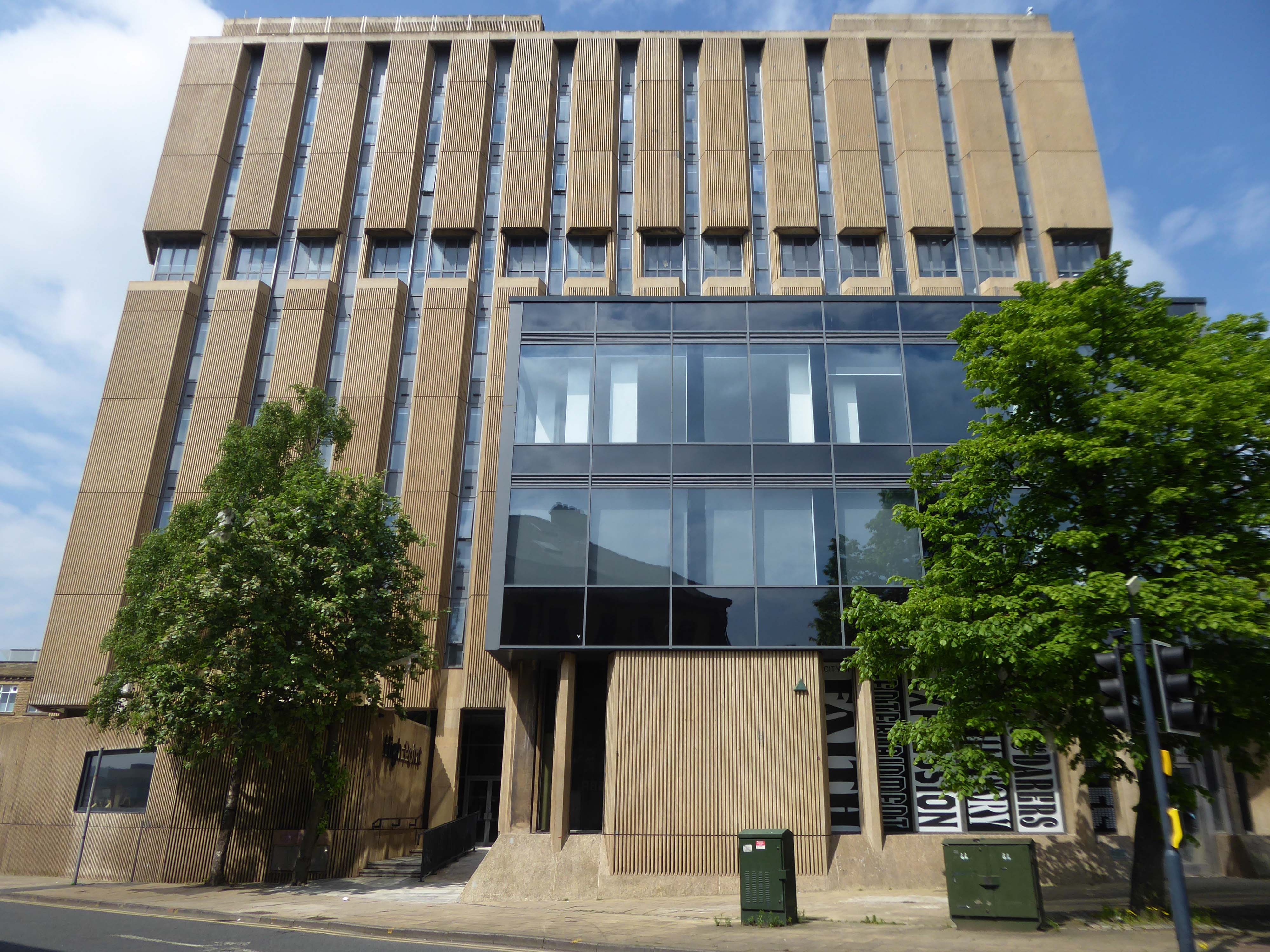
Up to Highpoint designed by John Brunton and Partners 1973.

The derelict former headquarters of Yorkshire Building Society, on one of the highest parts of the city centre, looms over the city centre, and to many people is the city’s ugliest building.

High Point is the perfect site for the first Radii development. Now perceived as an exemplar of the Brutalist style, this eight-storey titan, has languished derelict and in disrepair for many years in the heart of Bradford City Centre.

Our regeneration of High Point into an innovative residential apartment complex with a community at its heart, embraces ideas of sustainability, preservation, and rejuvenation that will bring a new lease of life to this abandoned landmark.

Sharp, chic and spacious apartments available. Furnished to the highest standards throughout and with the flex to provide you with office space if required – this is modern city living that’s easy on your eye and your pocket.
Radiiliving

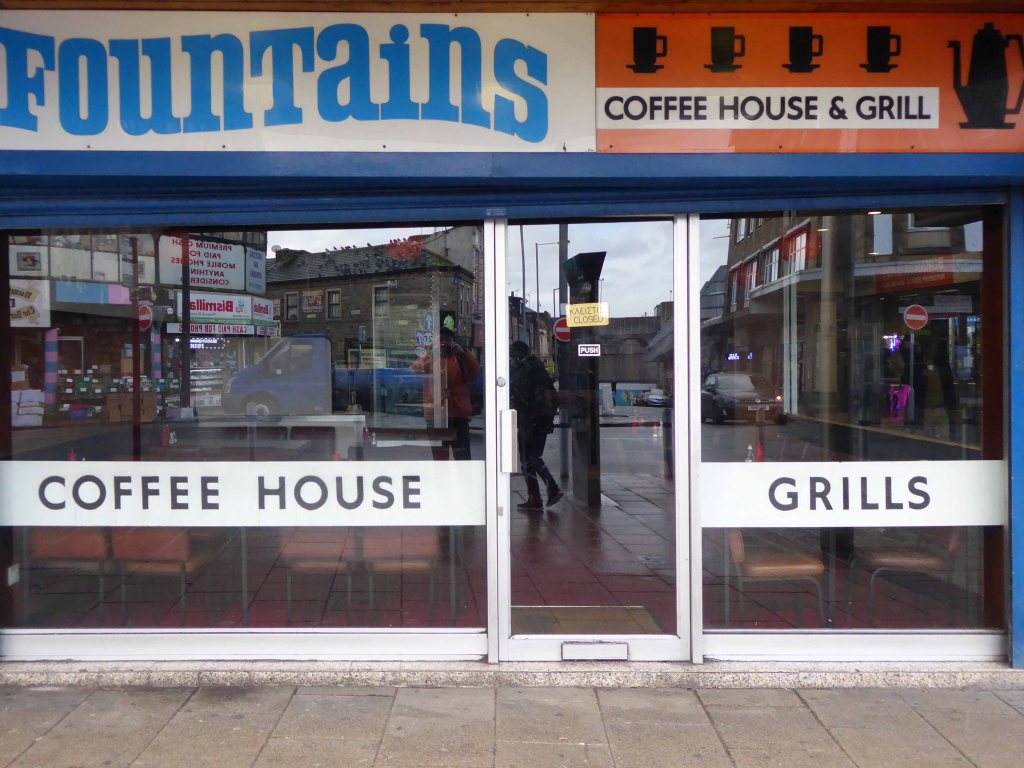
And finally the cafe that is not a cafe – Fountains, where the griddle no longer grills, the lights are always out and the shutters tightly shut, ain’t nobody home.

Wishing nothing but well for this West Riding gem – Bradford City of Culture and cultures and culture.

Telephone Exchange – Morecambe

First stop on the Morecambe Mooch and next door to the marvellous Library.

Sound the trumpets – it’s a Telephone Exchange!

Drawings of the original building are dated around 1937 and are simply signed by the Ministry of Works, Preston. Drawings of a small extension dated 1961 are signed by HG Swann at the Ministry of of Works. However – the drawings dated 1970 seem to be the ones of interest. I found elevations detailing the various textured cladding panels, signed by Senior Architect LC Stuart, Job Architect BJ Burroughs and drawn by RJW, Ministry of Public Building and Works at Prince Consort House, London.

The Telephone Exchange

Let’s take a good look around.

Telephone Exchange – Wolverhampton

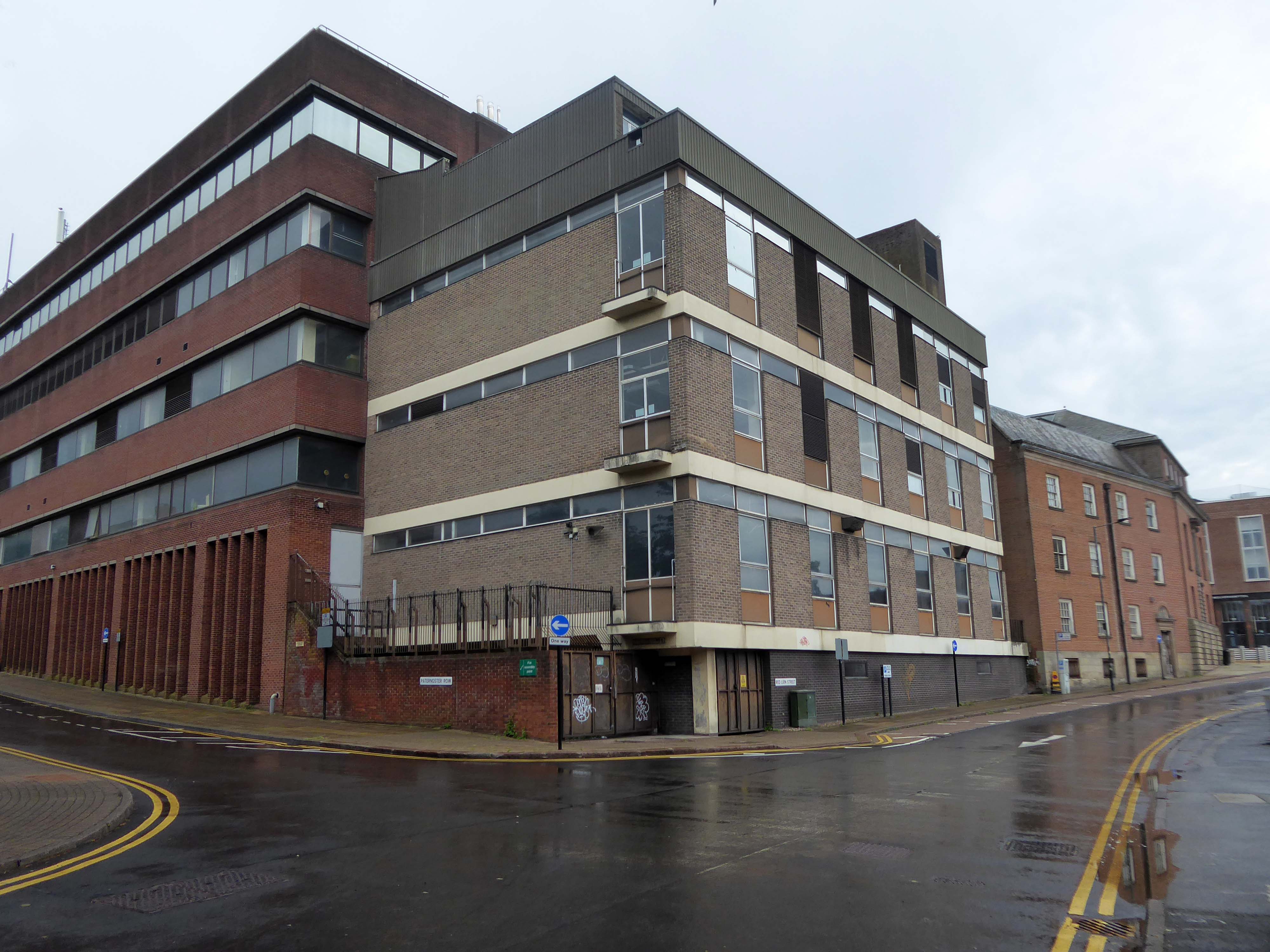
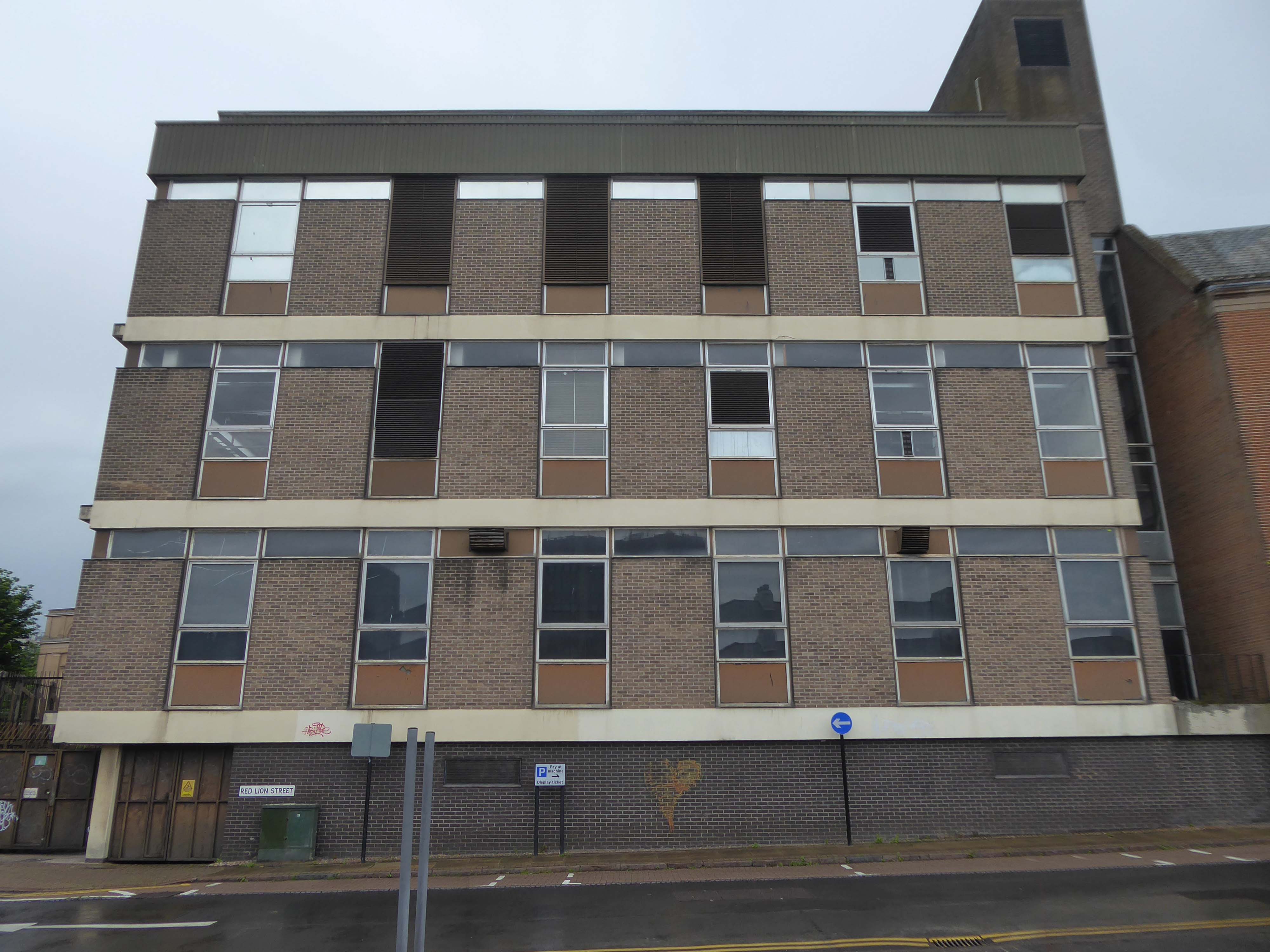
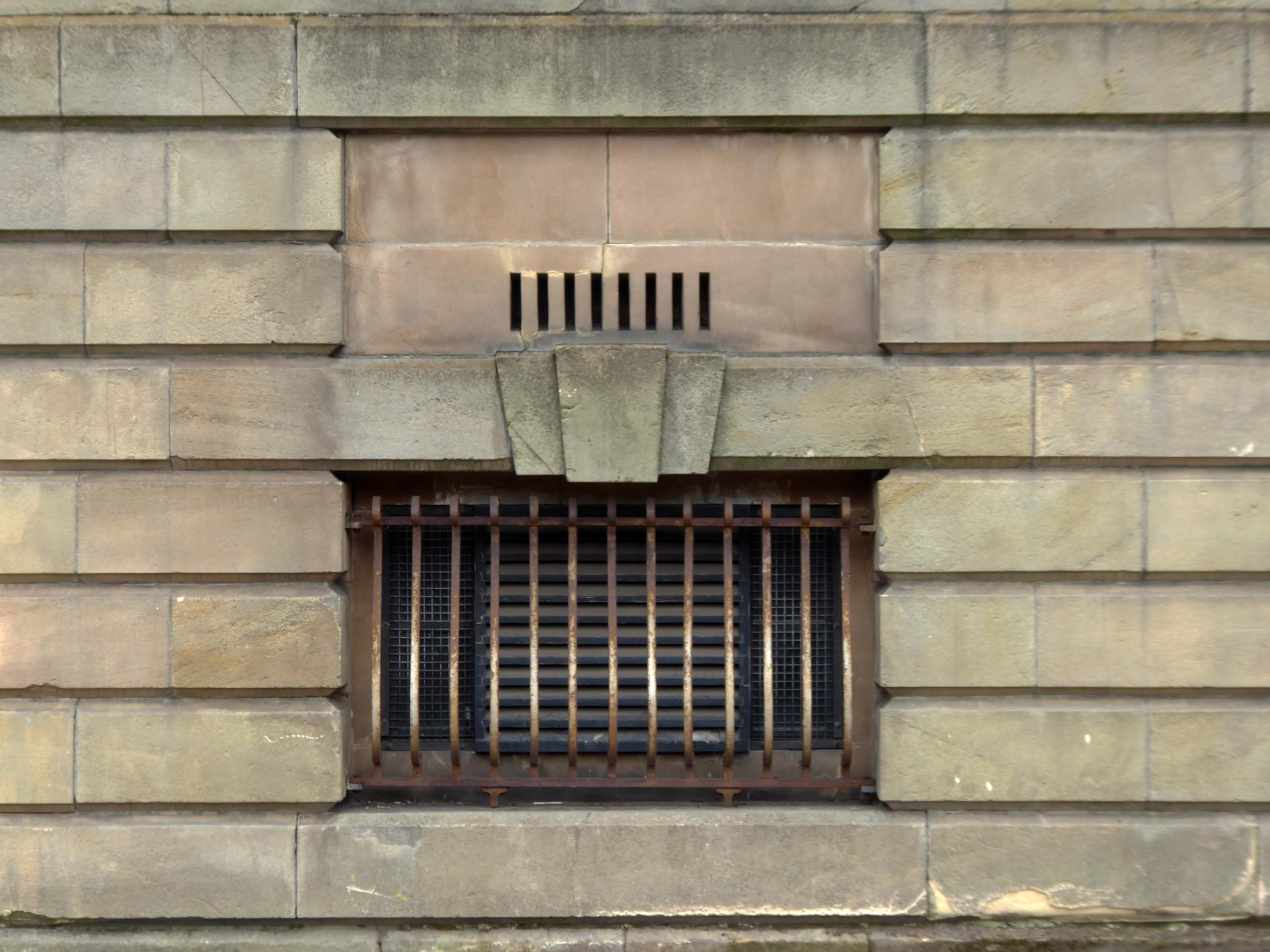
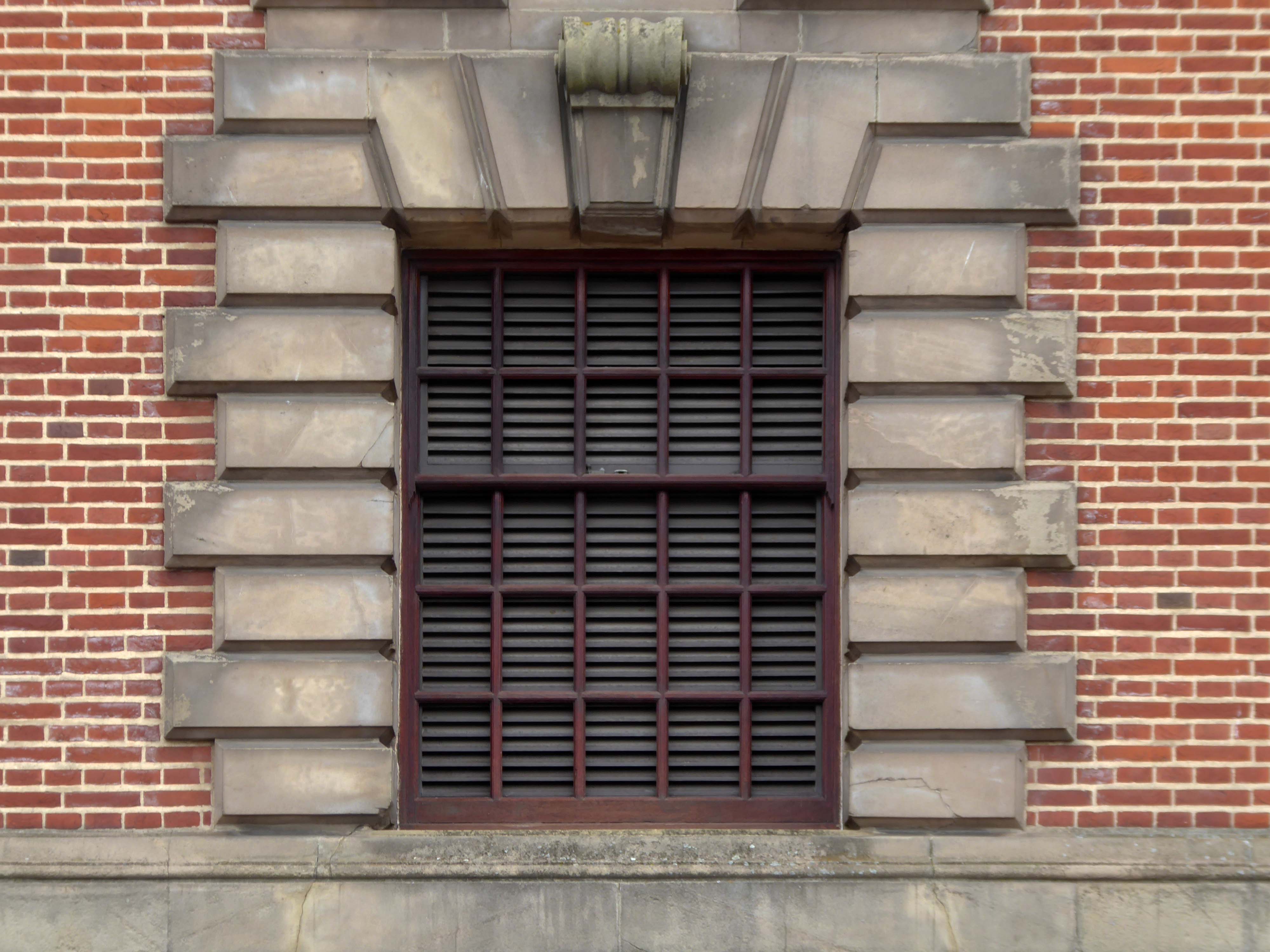
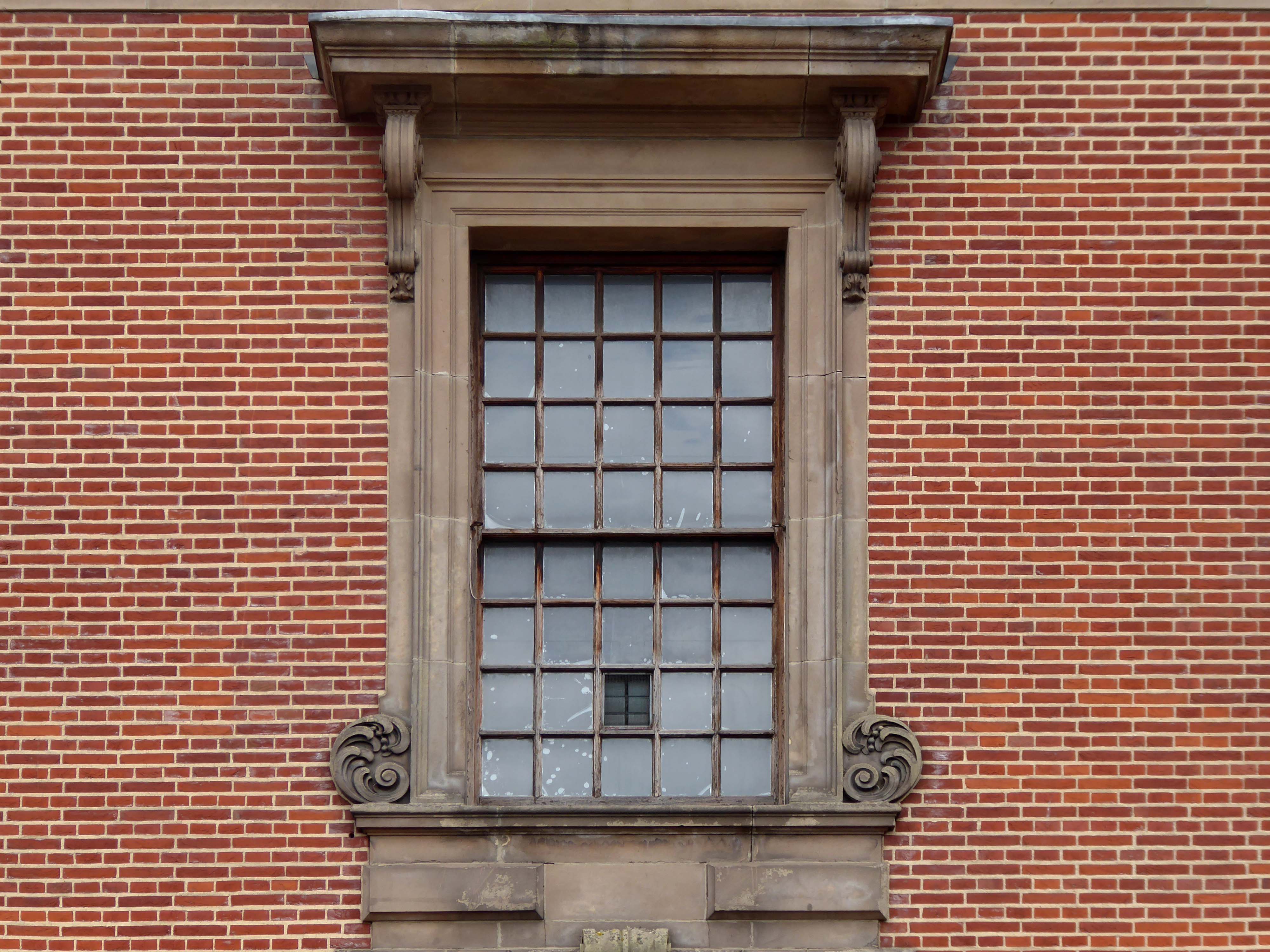
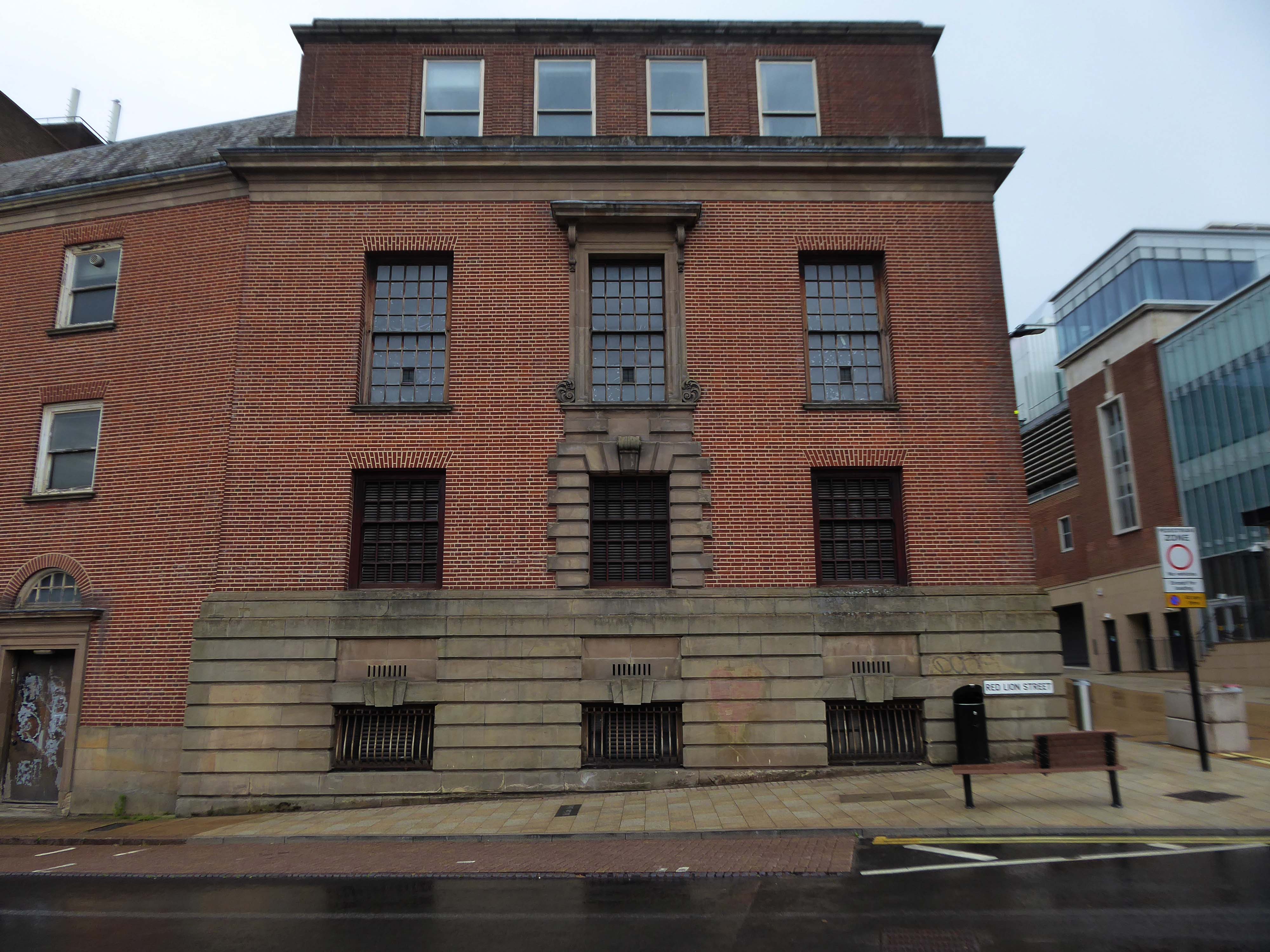
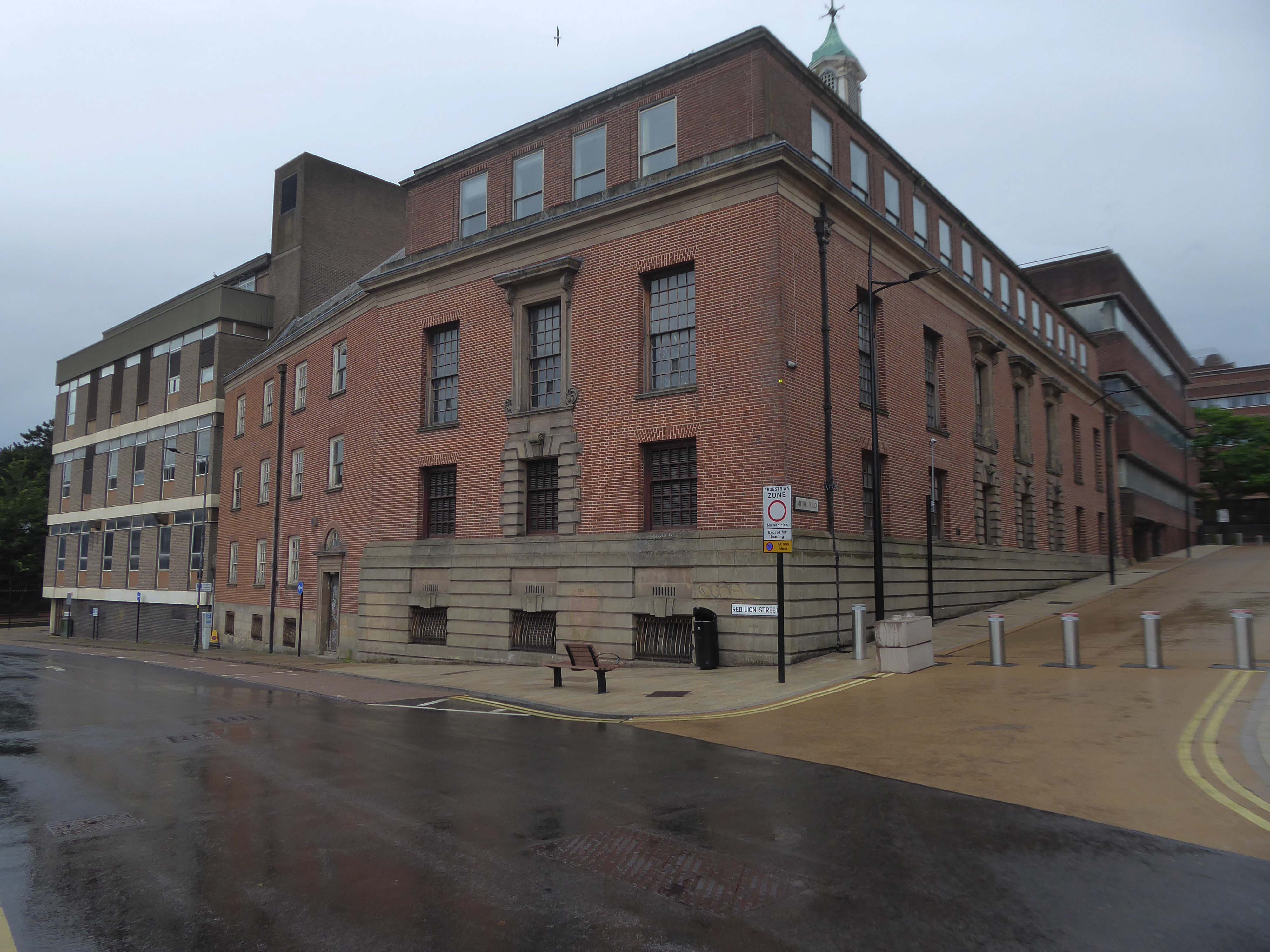
Red Lion Street Wolverhampton WV1 1SR

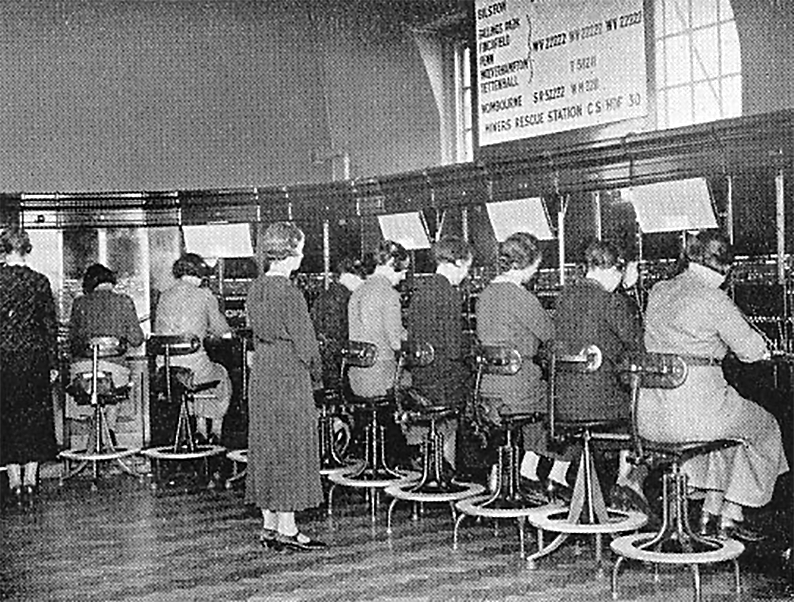
In the 19th century, telephones were mainly used by businesses and wealthy individuals. The first telephone exchange in Europe opened in August 1879, soon followed by another in Manchester, both operated by The Telephone Company Limited. Around the same time the Midland Telephone Company opened an exchange in Birmingham on the corner of New Street and Stephenson Place.

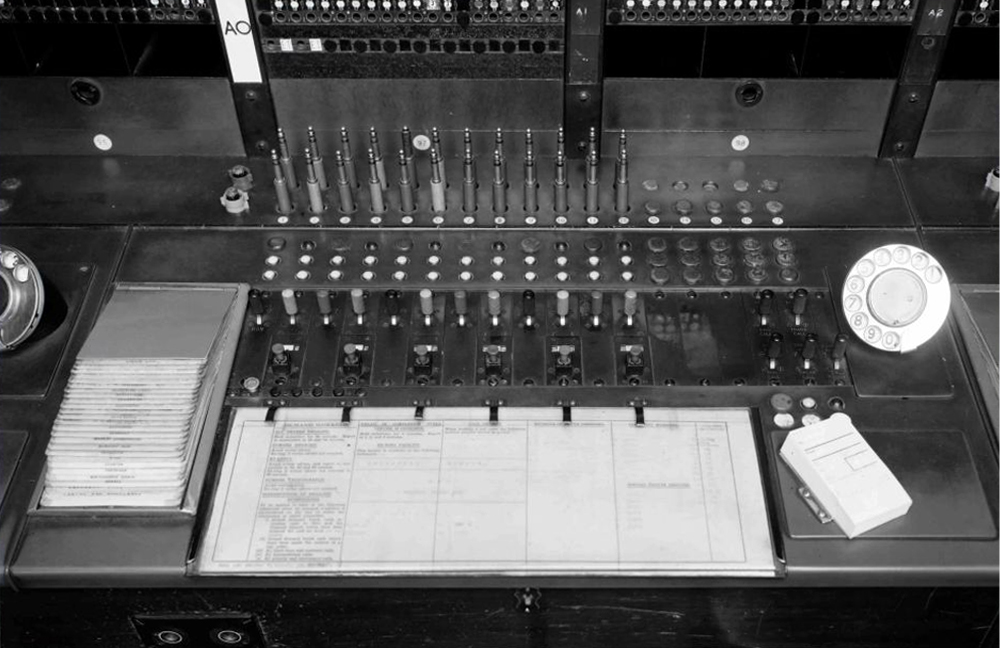
In July 1880 the company installed Wolverhampton’s first telephone exchange in a room in the Free Library in Garrick Street. Making a call was a long-winded affair. In order to connect the telephone to the exchange, a white button was pressed. The operator would ask if a telephone call was about to be made, and the user would tell the operator the name and number of the person to be contacted. After making the connection, the operator waited for the person at the other end to pick-up the earpiece, and then told the caller to proceed. When the telephone call had ended, the caller had to inform the operator, who would then remove the connection. Although this was time consuming, there were very few users, and so it worked adequately.

The first telephone line in Wolverhampton, about a mile long, was laid between Moses Ironmonger’s rope and twine factory at 272 Brickkiln Street, and the company’s office in High Street. Moses Ironmonger, the Chief Magistrate of Wolverhampton, and Mayor in 1857 to 58, and again in 1868 to 69, was also president of the Wolverhampton Chamber of Commerce in 1873 to 74, and a friend of Alexander Graham Bell, the telephone pioneer. The Ironmonger’s telephone line was tried out by some of the local councillors, who appear to have been impressed.

Before the end of July 1880 Monmore Green and Ettingshall were connected to the exchange. By October between fifty and sixty calls were made daily. Wolverhampton’s next exchange was set up in 1903 in a large house next to the Town Hall, where the Civic Centre is today. The house had previously been occupied by John Freer Proud, a surgeon. As the number of users increased, the old manual telephone exchanges could no longer cope and so automatic exchanges were developed.

Image – History Website

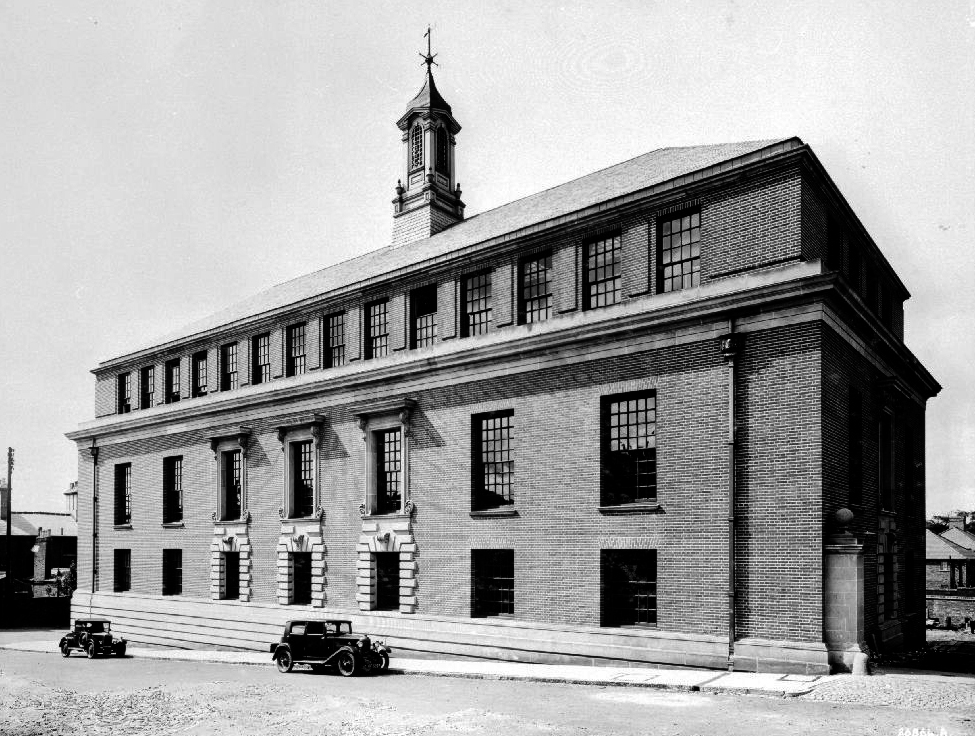
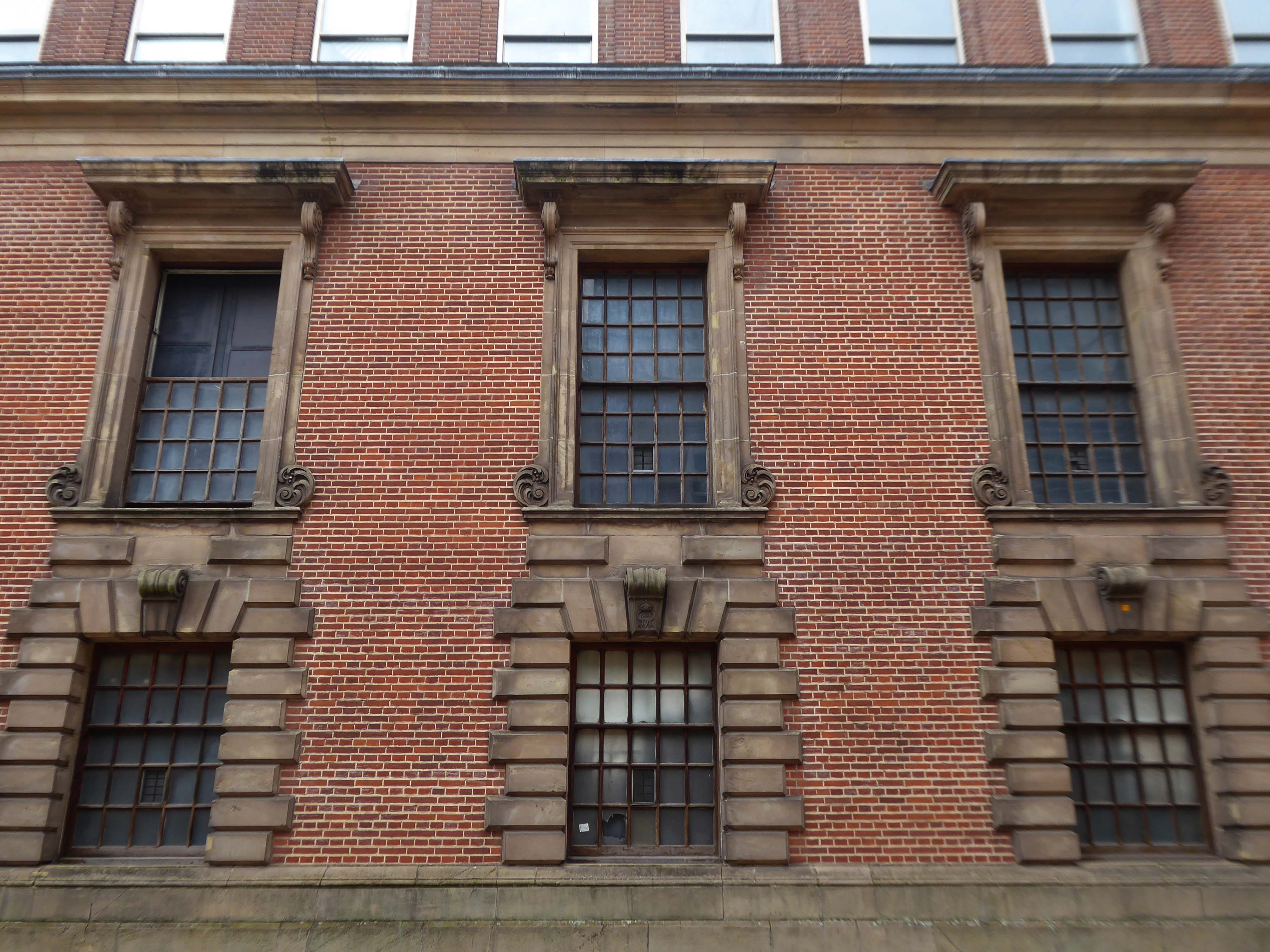
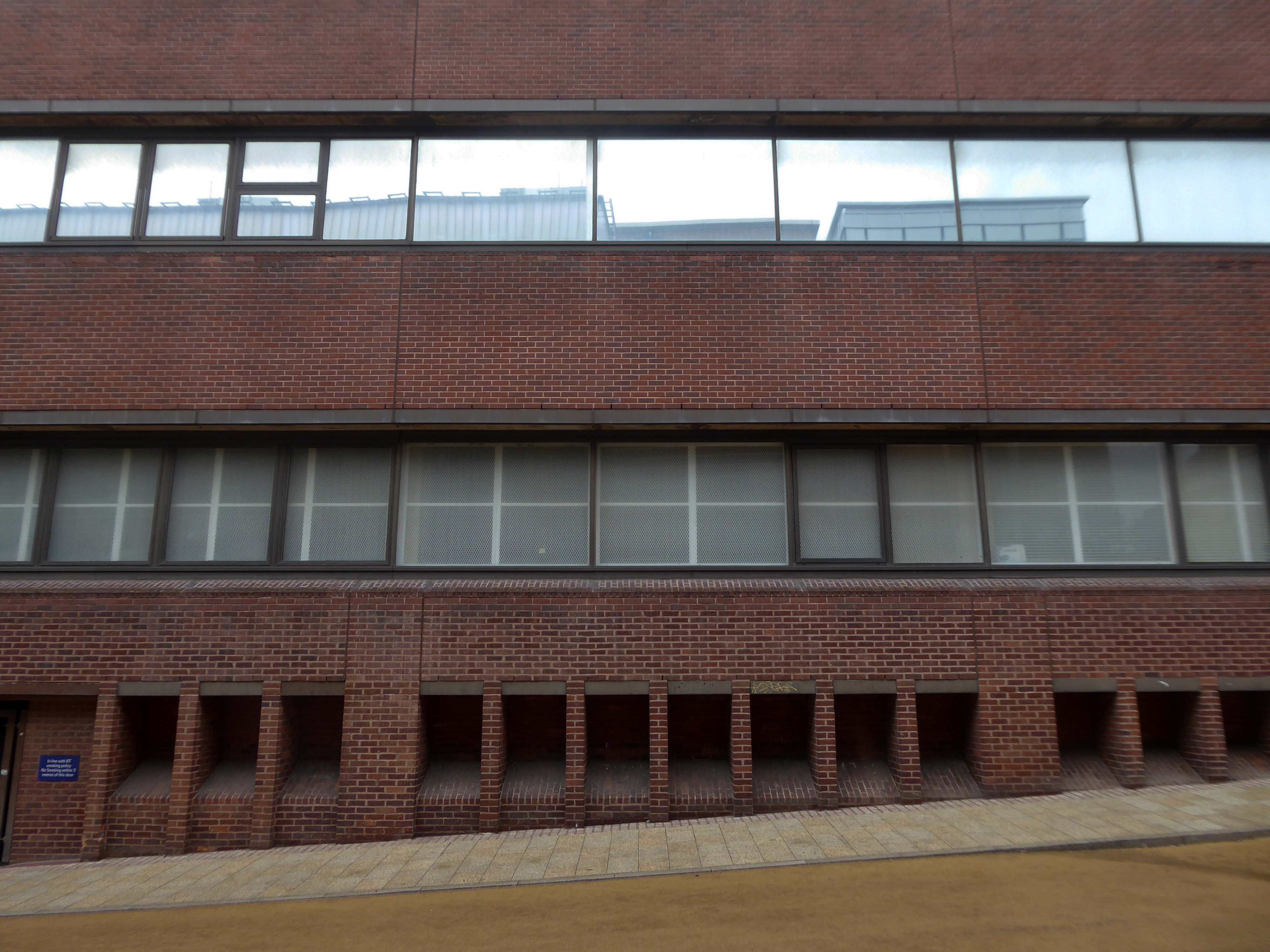
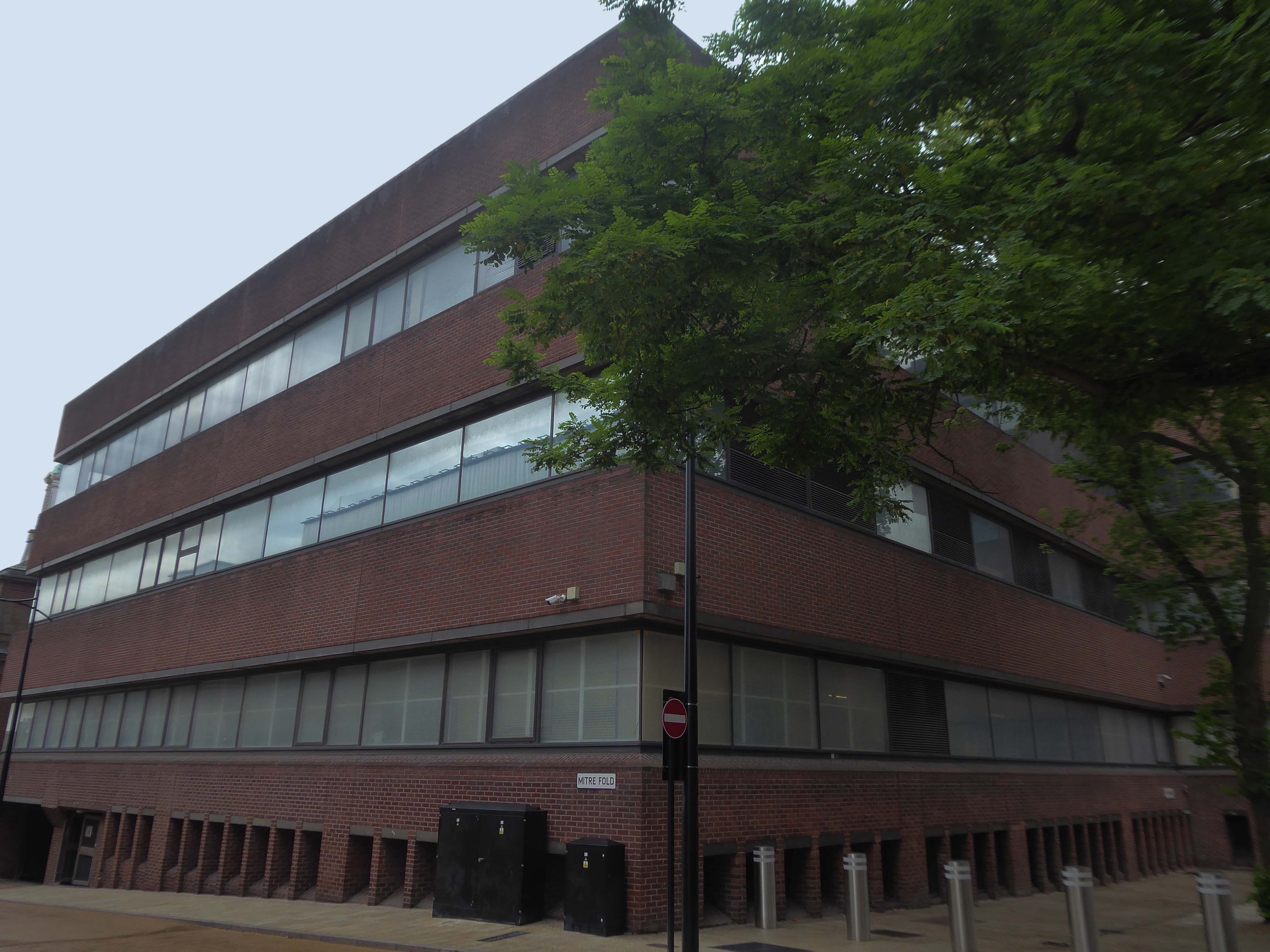
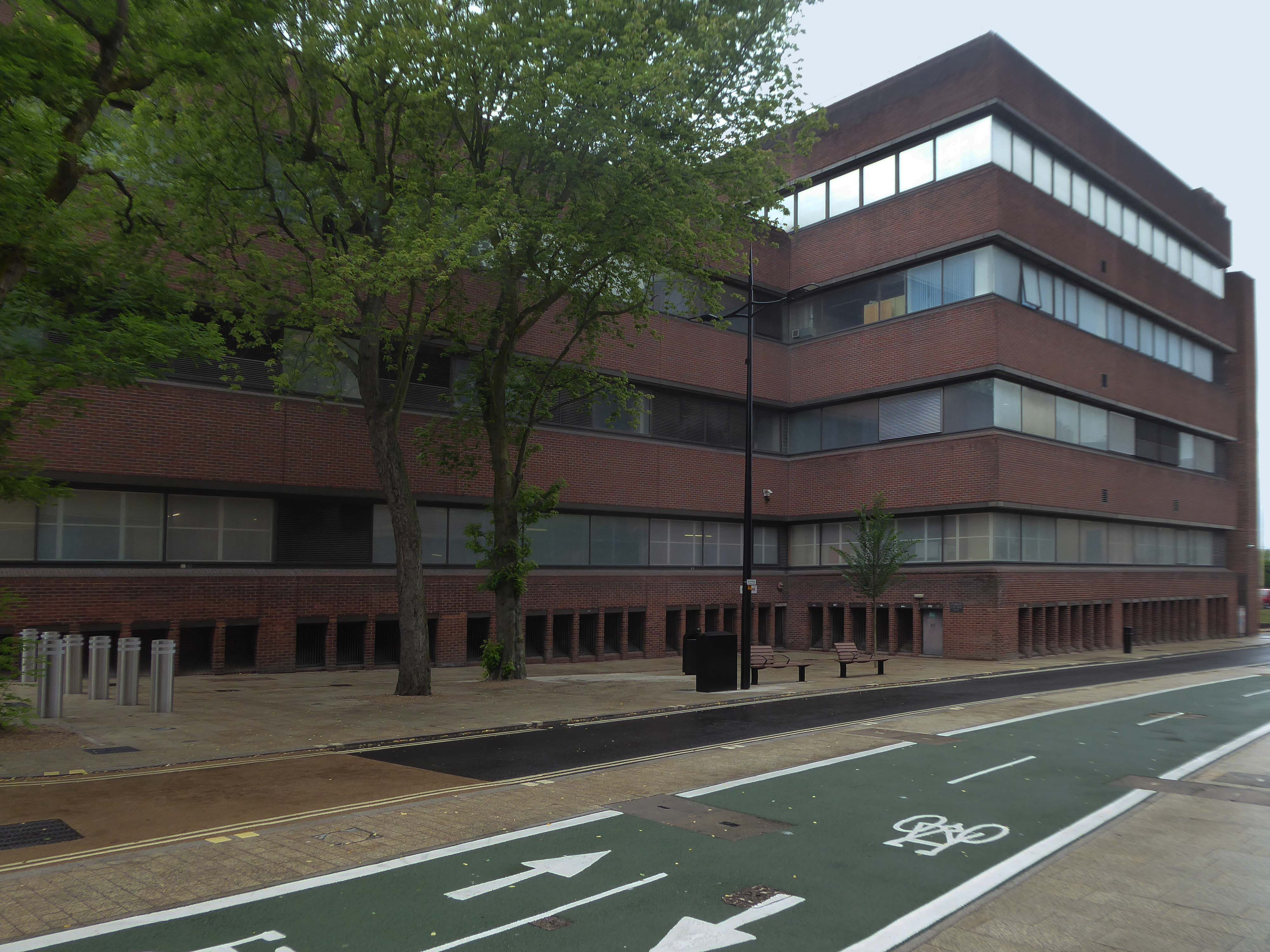
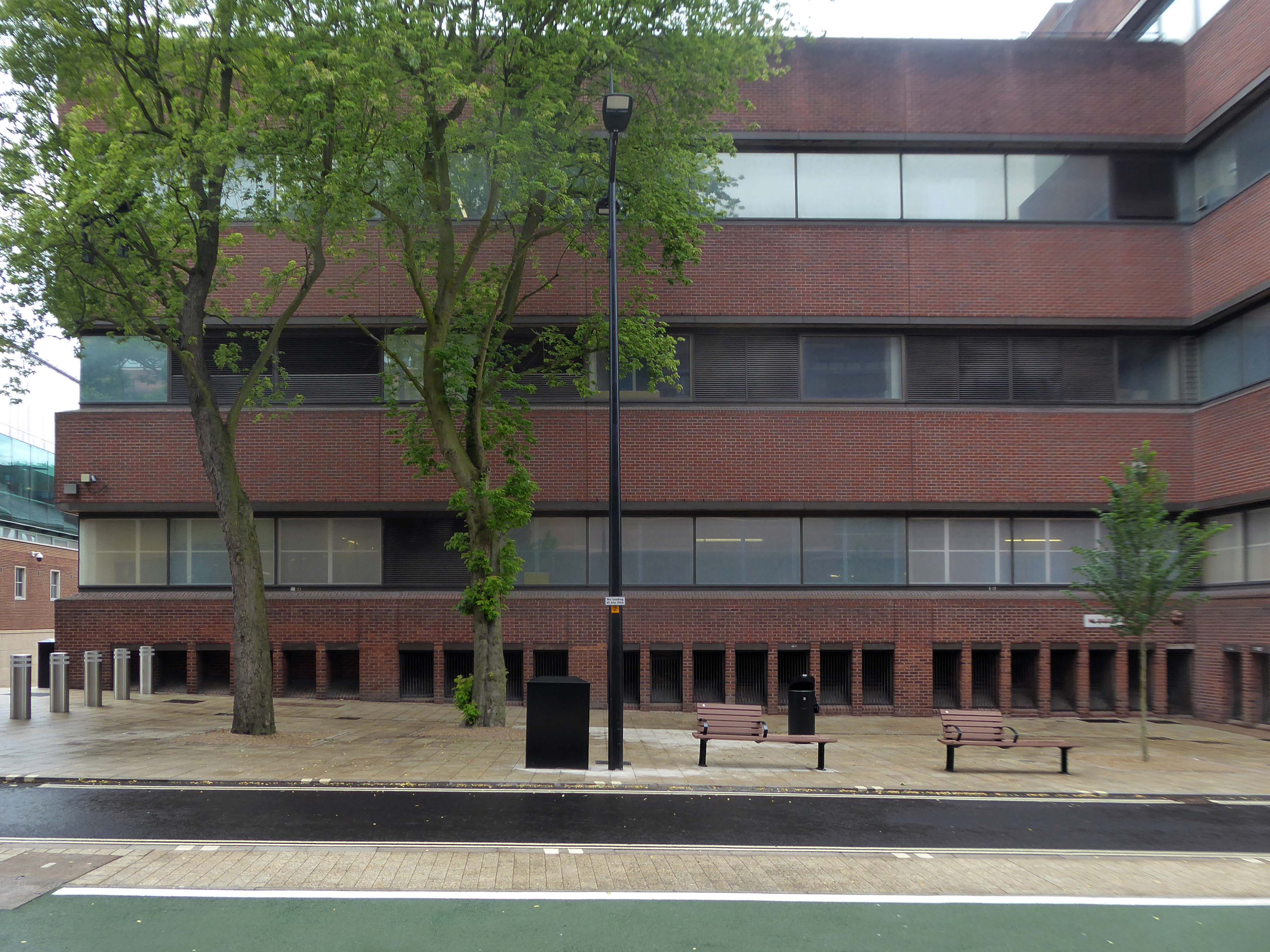
In Wolverhampton a large automatic exchange opened on the 29th September, 1932 in Red Lion Street, on the corner of Mitre Fold.

Telephone Exchanges

Image 1932 – BT Archive

We first encountered the exchange on our Wolverhampton Wander.

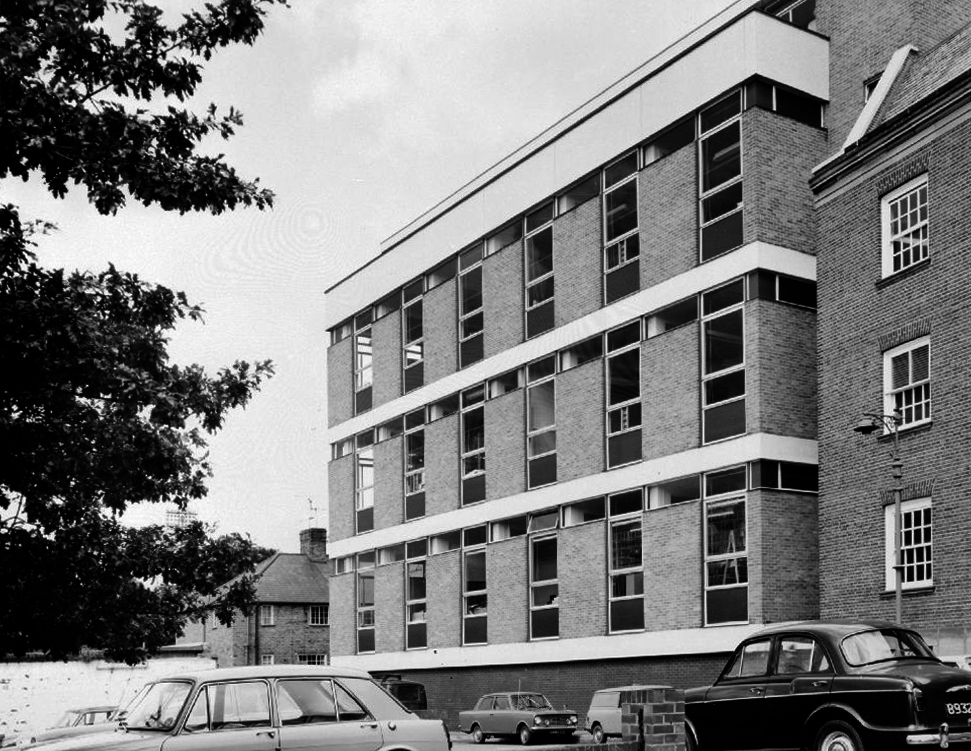
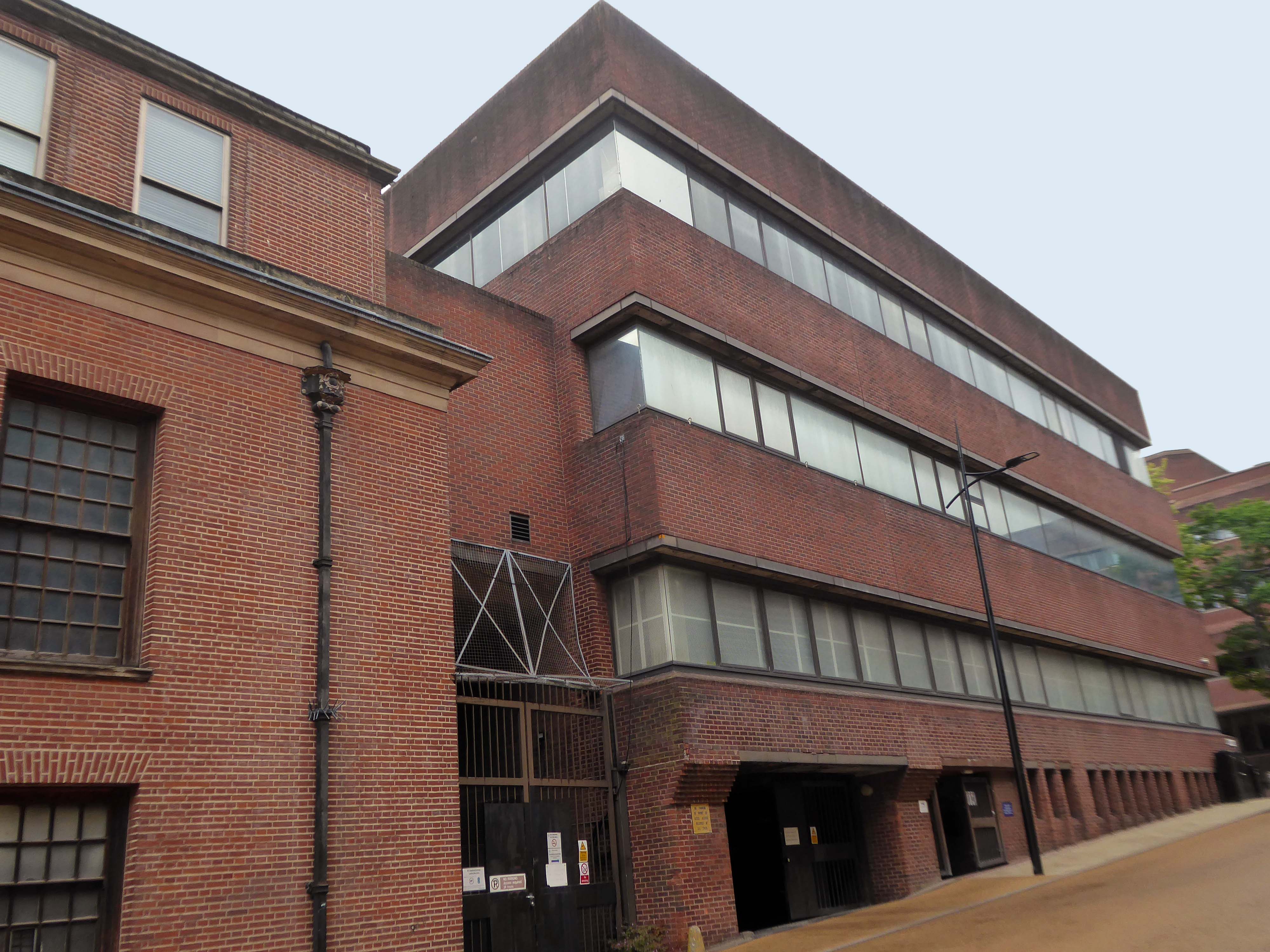
Architects: NHA Gallagher of the Ministry of Public Buildings and Works and Clifford Culpin & Partners job architect Leslie Parrett 1971.

Image 1965 – BT Archive

Morecambe Walk

To begin at the beginning – to begin at the Telephone Exchange.

A plethora of surface textures and a purposely restrained palette, well suited to the architecture of infrastructure.

Around the corner the Royal Mail Sorting Office.

Next door the Telephone Exchange, drawings of the building are dated around 1937 and are simply signed by the Ministry of Works, Preston.

Across the way this former Barclays Bank with its 70s extension, originally a branch of the Kendal Bank, Bank of Liverpool and also Martins.

The building of 1900 is Grade II listed.

Onwards along Central Drive to the Library.

The work of County Architect Roger Booth and his team, opened in 1967.

With thanks to the Library Staff.

Seen here in its original form, before the alterations were made.

Image – Red Rose Collections

Off down to the former Odeon Cinema 1937 architects – W Calder Robson and Harry W Weedon

Like many of the original Odeon Theatres built by Oscar Deutsch, the site chosen was a little out of the main town centre – where land prices were cheaper, and the Odeon Morecambe is a good example of this. It is located at the corner of Euston Road and Thornton Road in this Lancashire seaside town. The Odeon was opened on 2nd September 1937 with Sandy Powell in “It’s a Grand Old World”. It had seating provided for 1,084 in the stalls and 476 in the circle.
Taken over by the Classic Cinemas chain in December 1967, it was re-named Classic Cinema, and was closed on 28th February 1976 with Kenneth Williams in “Carry On Behind”.

The stunning Moderne style exterior much of which including the projectionists walkway is now much deteriorated.

Cinema Treasures

Next to the Police Station another Roger Booth building – recently seen on the small screen in The Bay.

Backtracking to take in the Crescent Café entrance.
Which became Hart’s Restaurant now trading as the Black Thai.
Into the town centre to look at the former Centenary House Co-op 1927.

Bought by the city council as part of the West-End Masterplan, the intention is to refurbish the building’s upper floors to provide affordable housing and accommodation for local arts businesses, retaining the Co-op late shop that occupies one-half of the ground floor.

Let’s take a look along the front – where we find a former Woolworths.

Along with other stores from the same period.

Alongside sits the former Littlewoods.

By 1939 there were 24 stores. A number of these were purpose-built for Littlewoods to designs by J S Quilter & Son. John Salmon Quilter – 1841-1907 was, in fact, long dead, but his architectural practice had been continued by his son Cecil Molyneux Quilter – 1879-1951. Quilter specialised in commercial architecture, notably public houses. He designed a new Blackpool store for Littlewoods, on the corner of Church Street and Corporation Street, which was faced in Empire stone. He also designed a store in Chester, and may have been responsible for the one in Morecambe. This faience-clad art deco building is the best surviving example of a pre-war Littlewoods store – indeed, it may be the best surviving Littlewoods of all time – even preserving diamond L motifs on the entrance lobby floors. These clearly copied Woolworth’s diamond W.
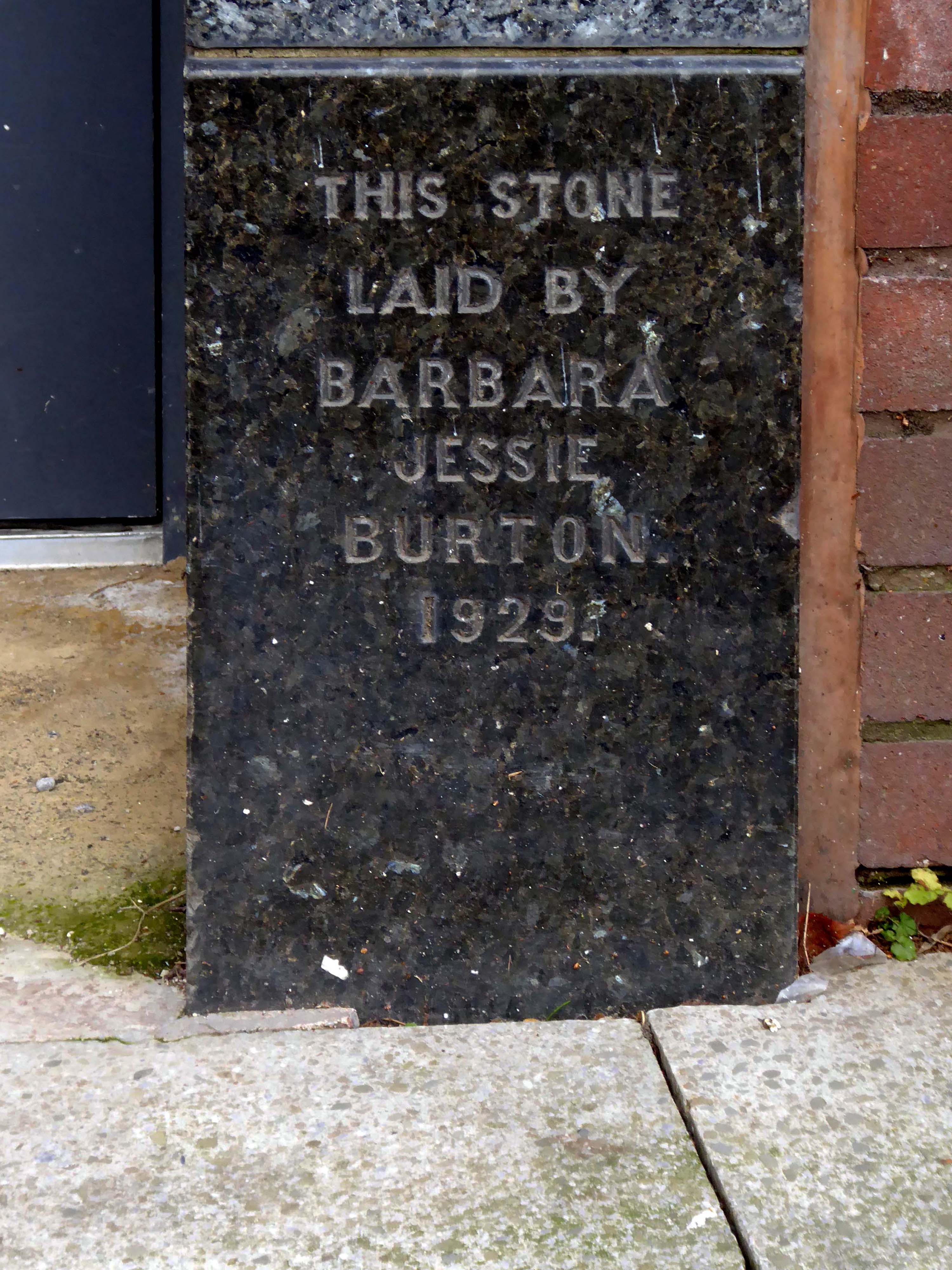
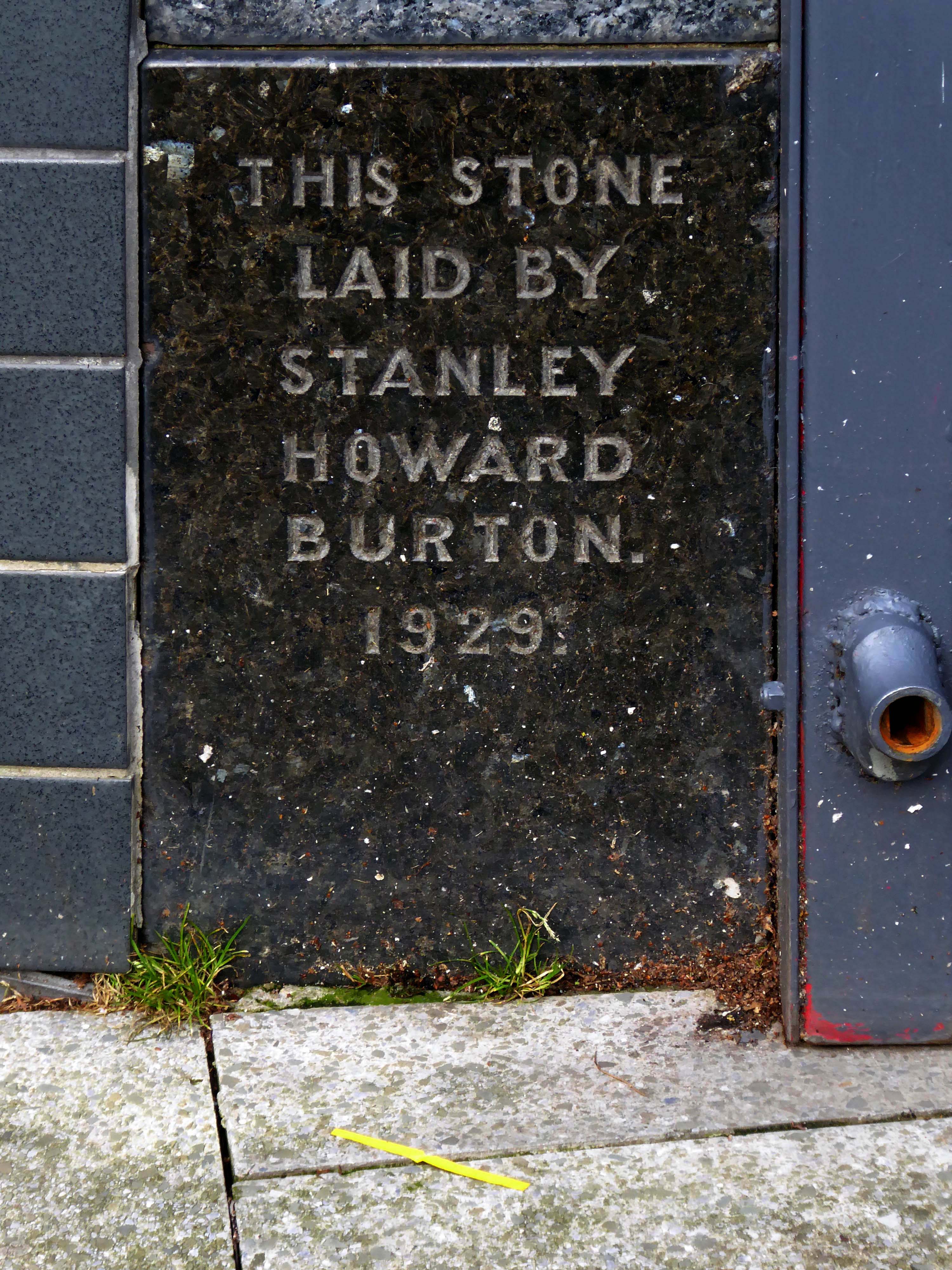
Building our past

Next to Brucianni’s, a gem of a coastal café and ice cream parlour – Grade II listed.

Finally to the Midland Hotel 1932-3 by Oliver Hill

Concrete and rendered brickwork, painted white. Curved plan, with convex side facing west towards the sea. Three storeys. Windows are steel-framed casements with rendered surrounds. Above each storey are projecting horizontal bands. The entrance front has a rounded left-hand corner, and a convex central staircase projection rising above roof level. This projection has a tall window of steel casements above the doorway, divided into three by mullions, both of which are capped by sea horses, painted red, which were carved by Eric Gill. Projecting at the right is a single-storey cafe of circular plan, now known as the Ravilious Restaurant. The west side has a single-storey projecting sun lounge, which is an addition, its windows replaced in PVC-coated steel. Between the solid centre and ends of the facade the 1st and 2nd floors have their walls recessed to form balconies.

Interior: above the cantilevered circular open-well staircase is a ceiling panel carved in low relief by Eric Gill and painted by Denis Tegetmeier. They were also responsible for the pictorial map of north-west England in what was originally the children’s room at the south end of the building. Also in this room is Eric Gill’s Portland stone panel, originally in the lounge, carved in low relief with a representation of Odysseus and Nausicaa. It was moved to its present position when internal walls were demolished during the 1970s. The cafe walls were originally painted with frescoes by Eric Ravilious, representing morning and evening in an idyllic seascape setting. These deteriorated rapidly because the plaster and paint used were incompatible and were obliterated within 2 years of completion, but were repainted in the late 1980s using photographic evidence.

Eric Gill

Tirzah Garwood and Eric Ravilious

Sadly we are no longer able to see the long gone Super Swimming Stadium.

Architect: Kenneth MB Cross and Cecil Sutton

The Super Swimming Stadium at Morecambe, Lancashire, was one of the grandest of the 1930s modernist seaside lidos. This massive structure measuring 396ft. by 110ft. was said to be the largest outdoor pool in Europe when it opened in 1936, accommodating some 1200 bathers and 3000 spectators. Unusually for an inter-war lido, it was designed not in-house by a Borough Engineer but by two architects, Kenneth MB Cross and Cecil Sutton, who styled it to harmonise with the Streamline Moderne of Oliver Hill’s adjacent Midland Hotel.

The stadium was closed down in 1975 on grounds of structural problems and demolished just a year later.

Wolverhampton Walk

Architects: Austin Smith Lord

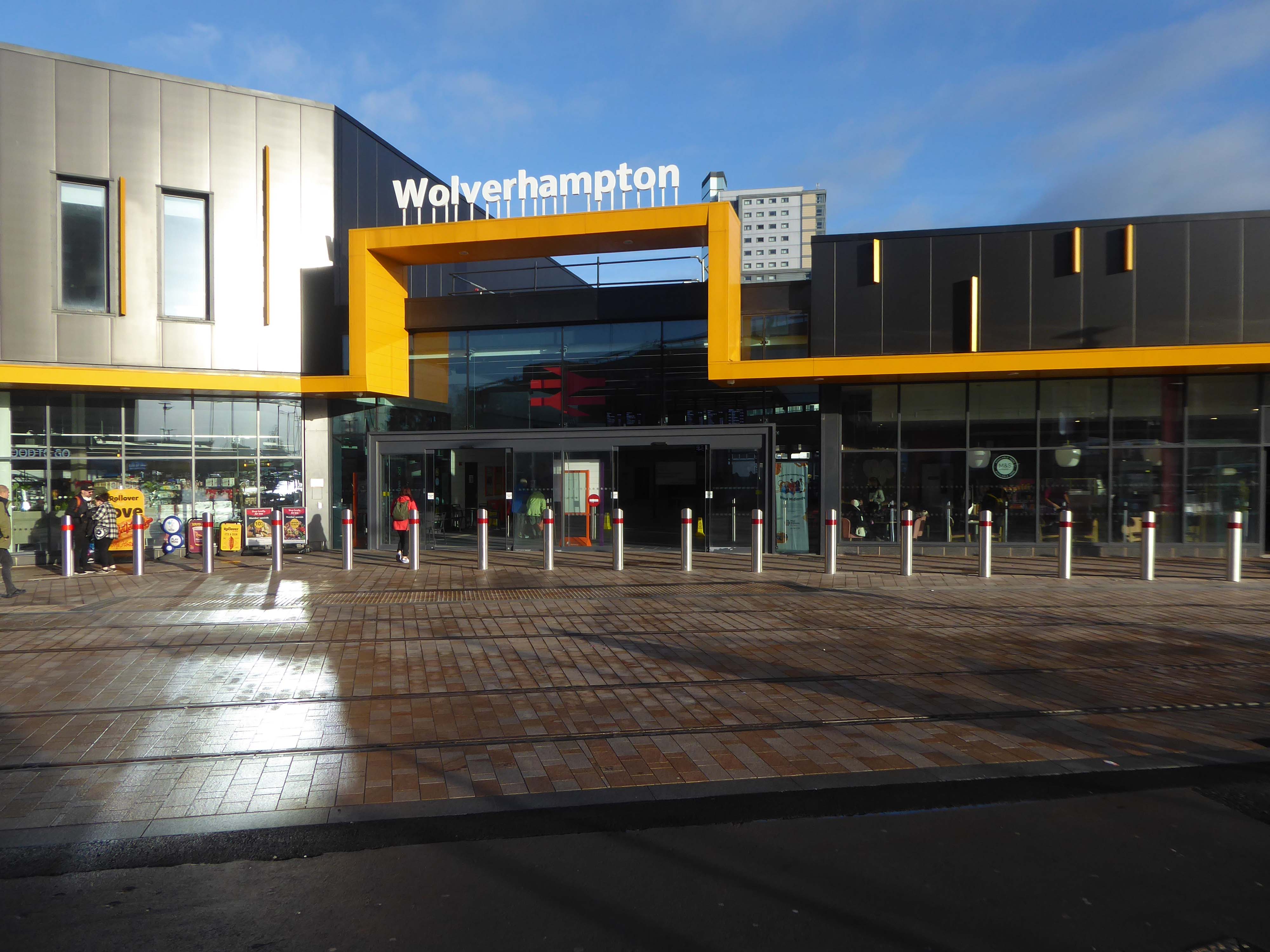
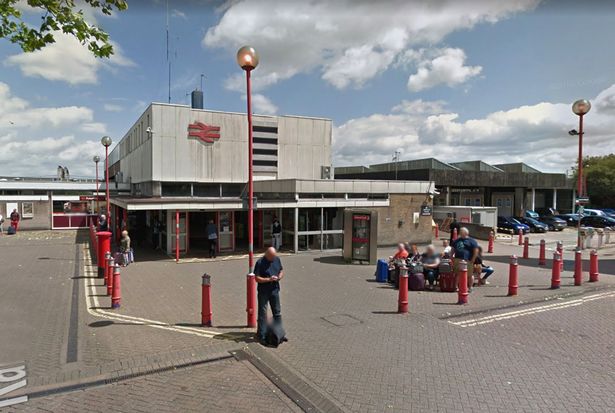
We begin at the Railway Station – recently refurbished, overwriting its 60s iteration – completely rebuilt by the architect Ray Moorcroft as part of the modernisation programme which saw the West Coast Main Line electrified.

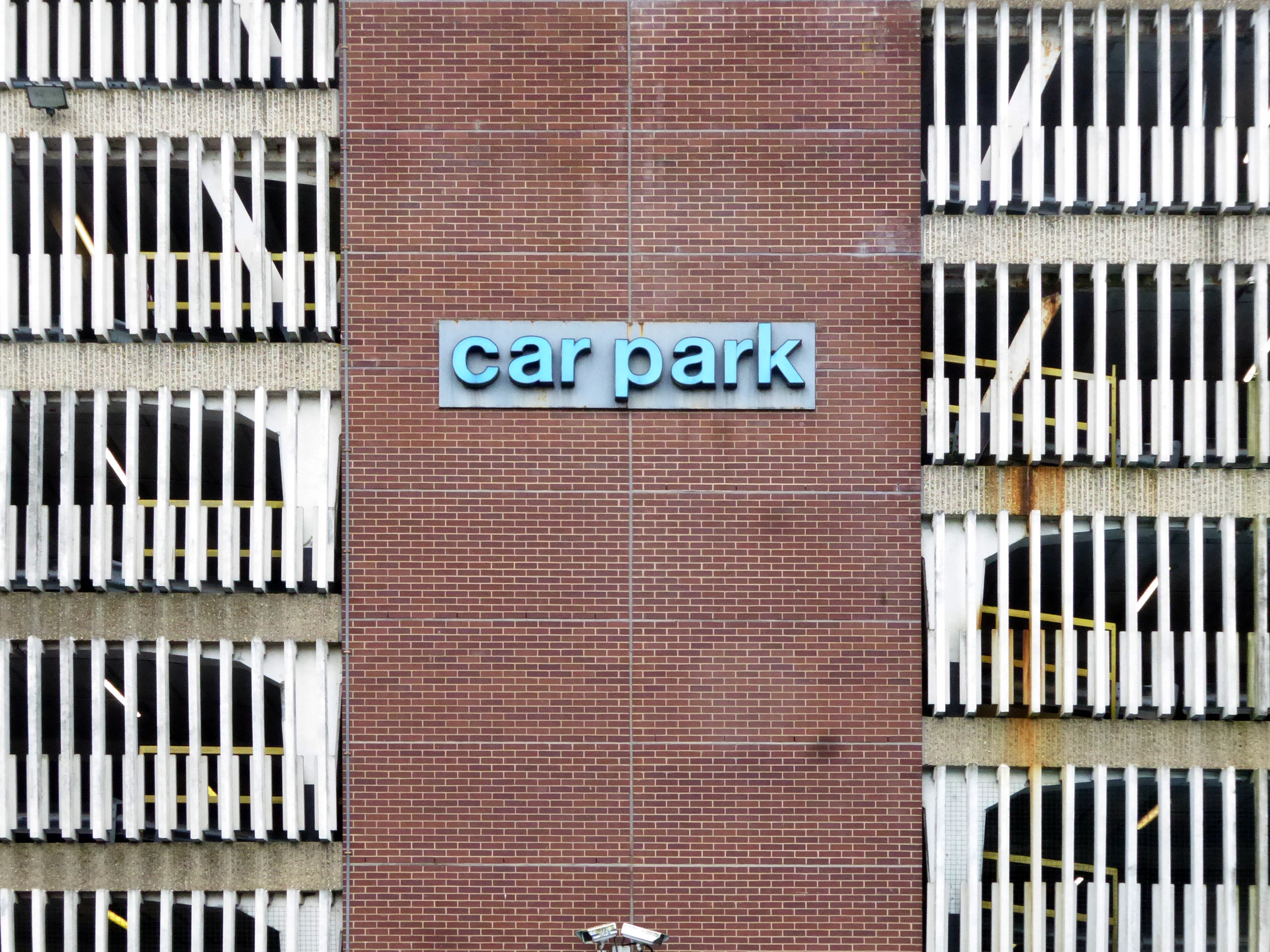
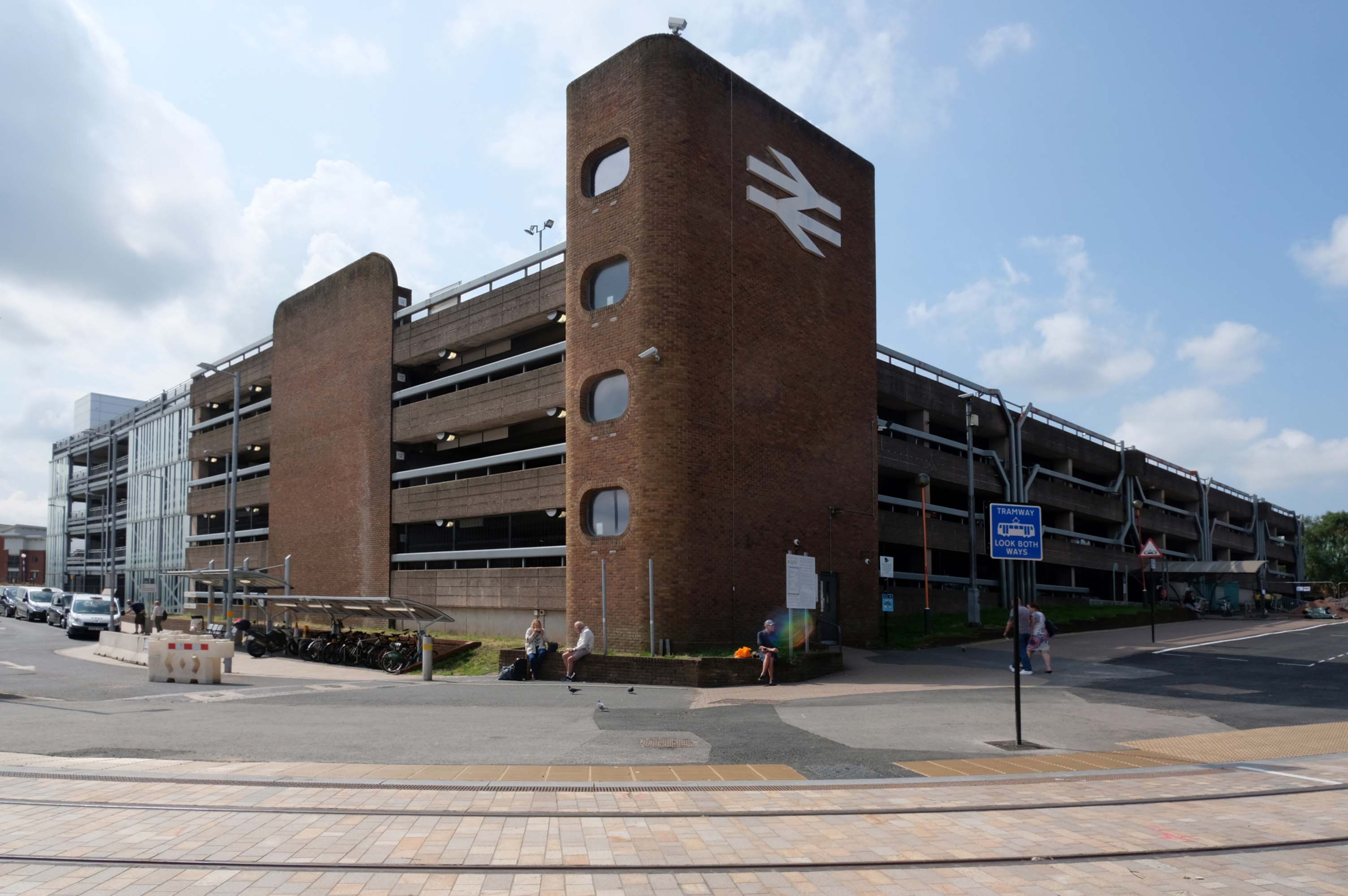
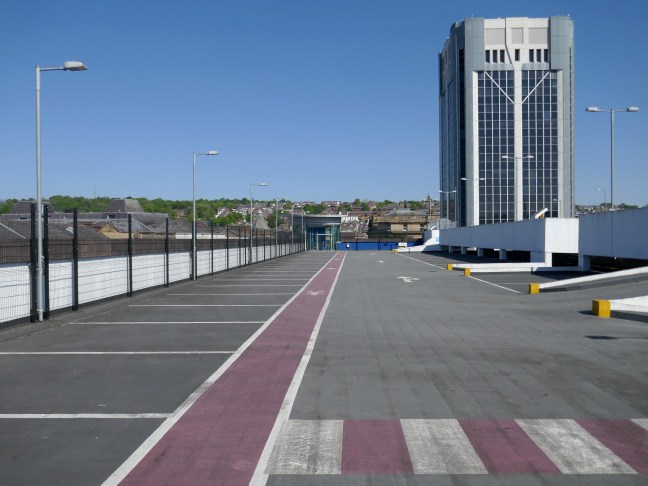
Across the way an enormous brick clad multi-storey car park – skirted by the lines for the tram, which travels to and from Birmingham.

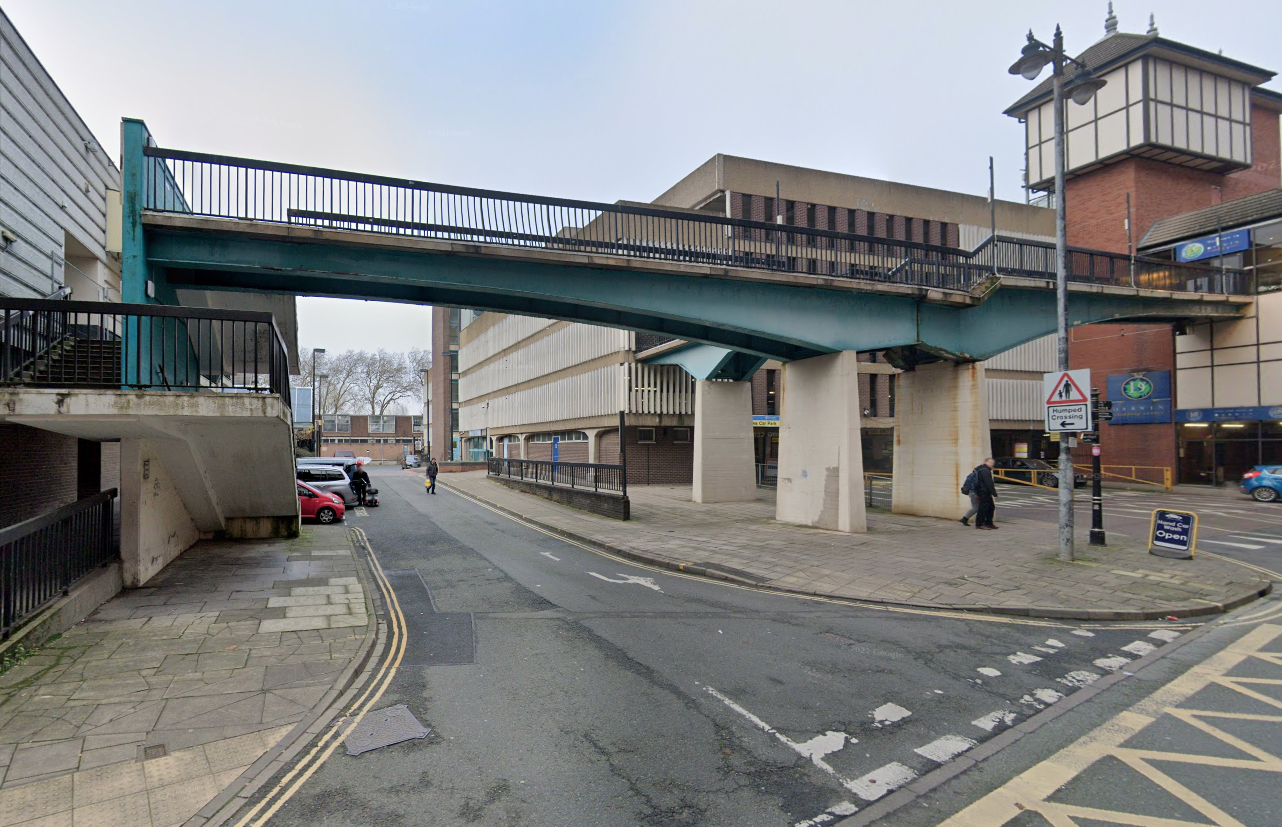
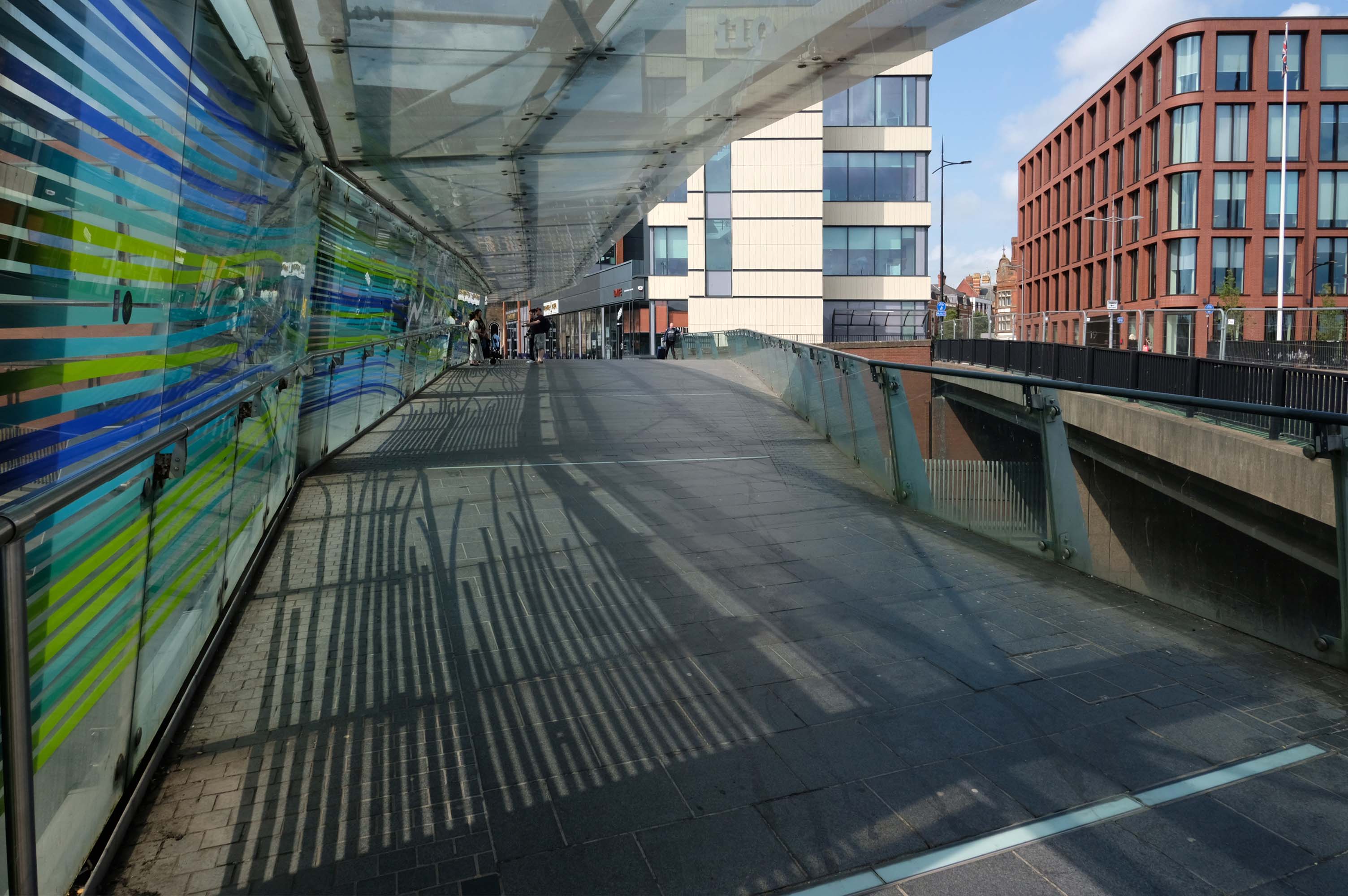
Walk across the brand new pedestrian footbridge over the ring road.

Architectural glass artist Kate Maestri was commissioned to produce the artwork design which features glass with blue and green strips of colour running through it.

BBC

Architects: Austin Smith Lord

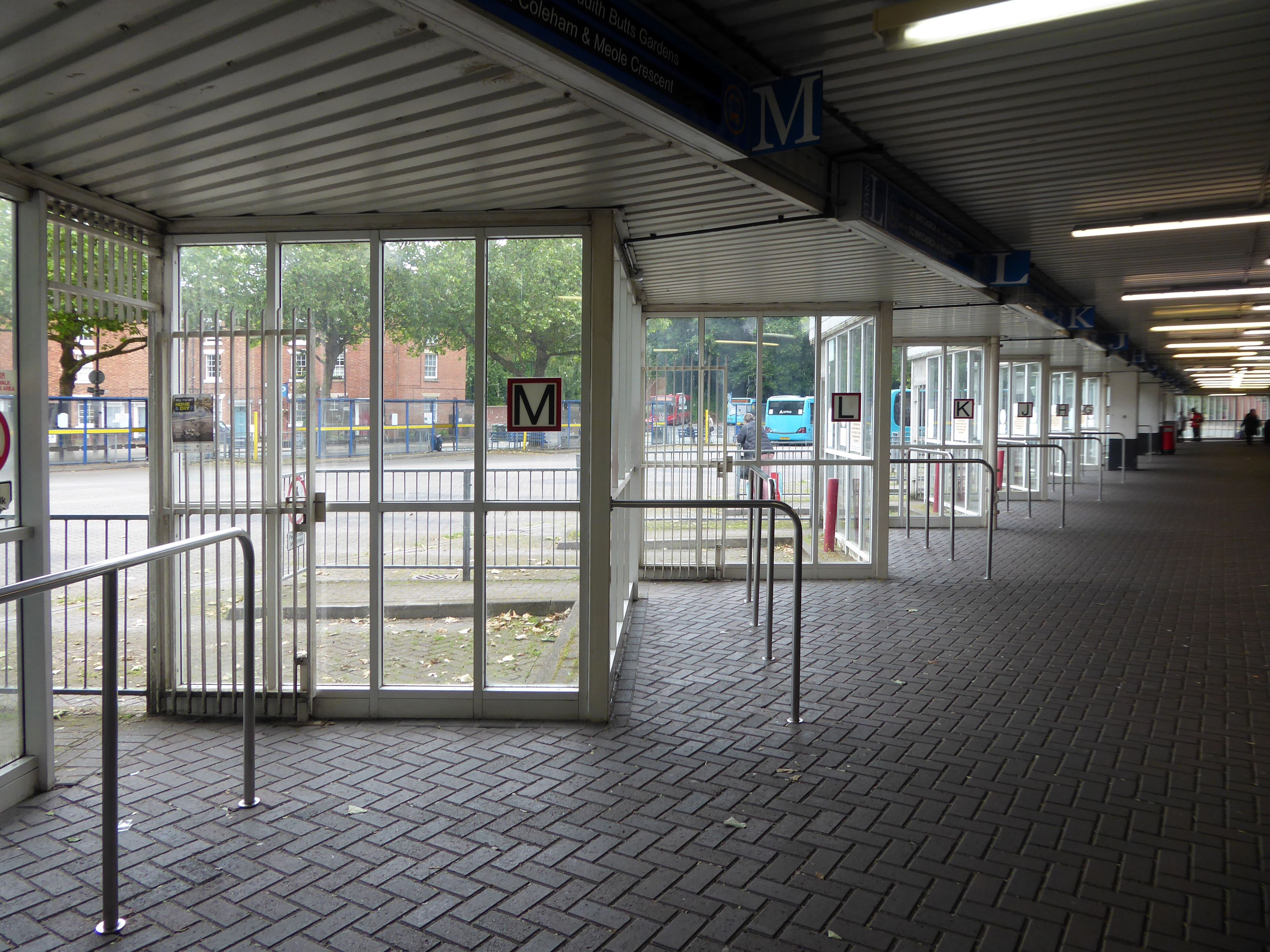
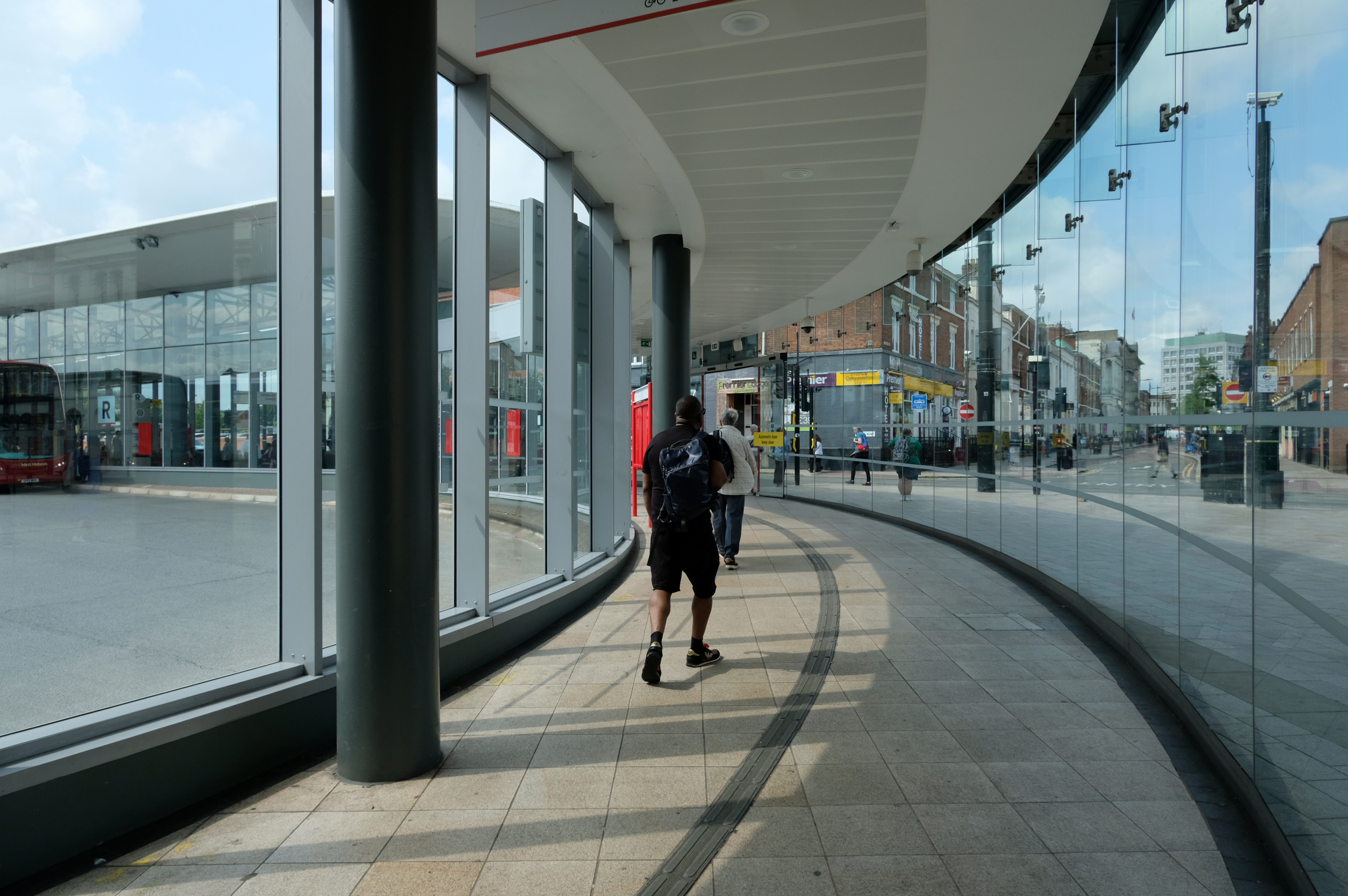
Linking the Rail Station with the brand new Bus Station.

The normal practice of the Wolverhampton Bus Service is to have dirty, smelly buses, that are cramped and extremely hot in the summer and freezing cold in winter. They offer no announcements apologizing for delays they know about and don’t appear to care how long passengers wait with no idea of how or when they’ll be getting a bus.

The best thing you can do is learn to drive as quickly as possible and get your own vehicle or car pool.

Sandra Anderson

Architects: Austin Smith Lord

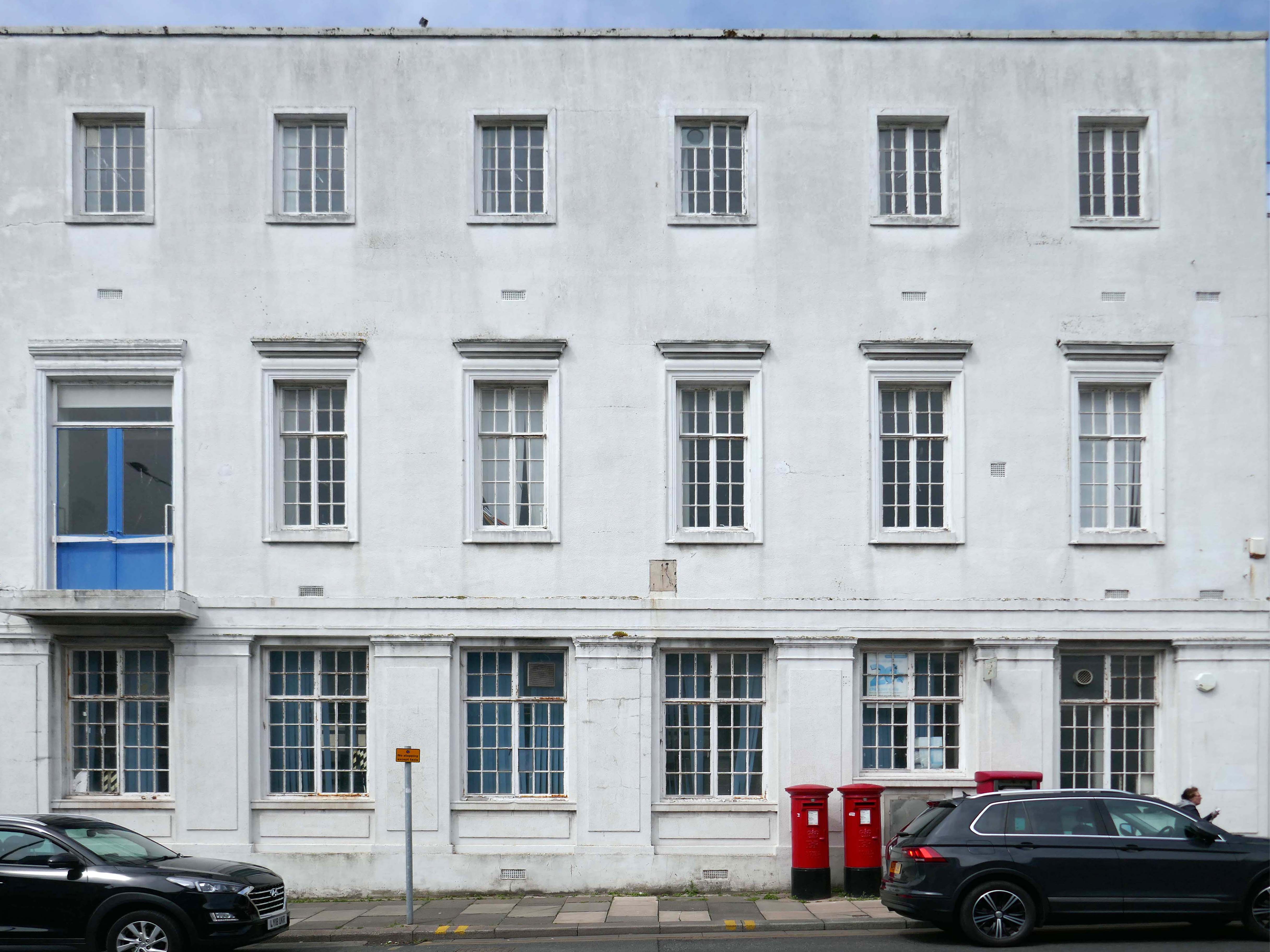
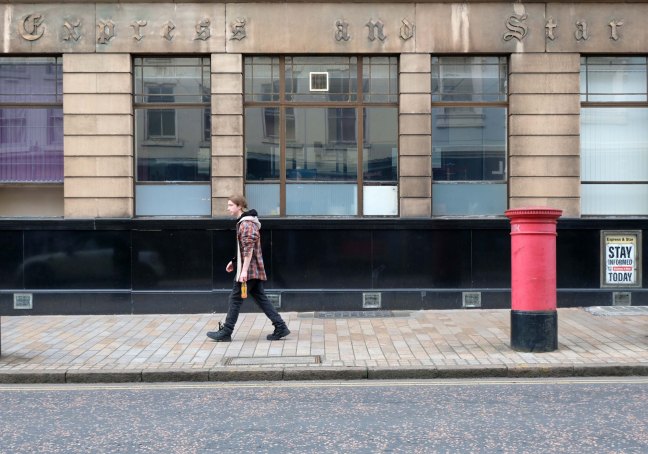
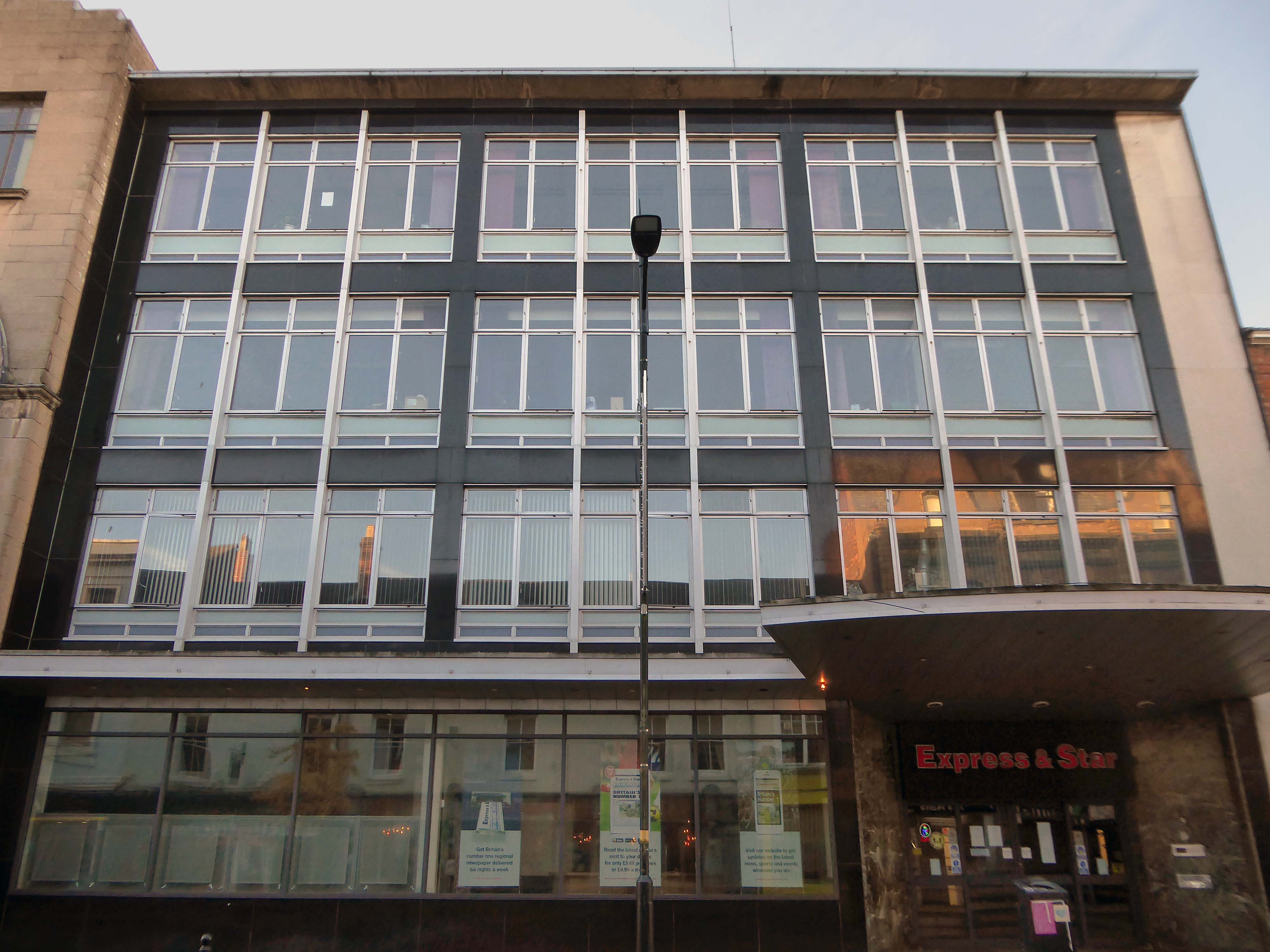
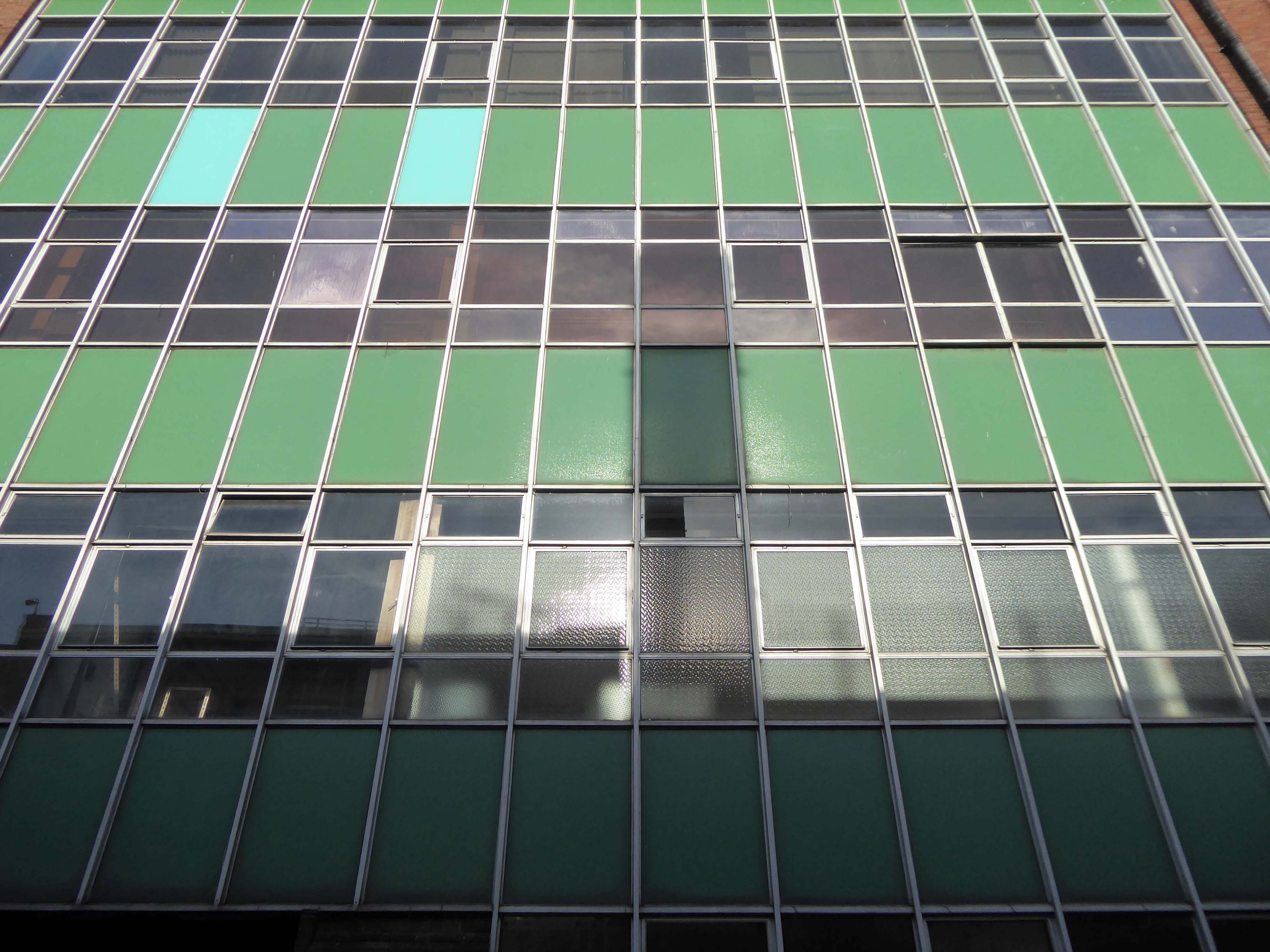
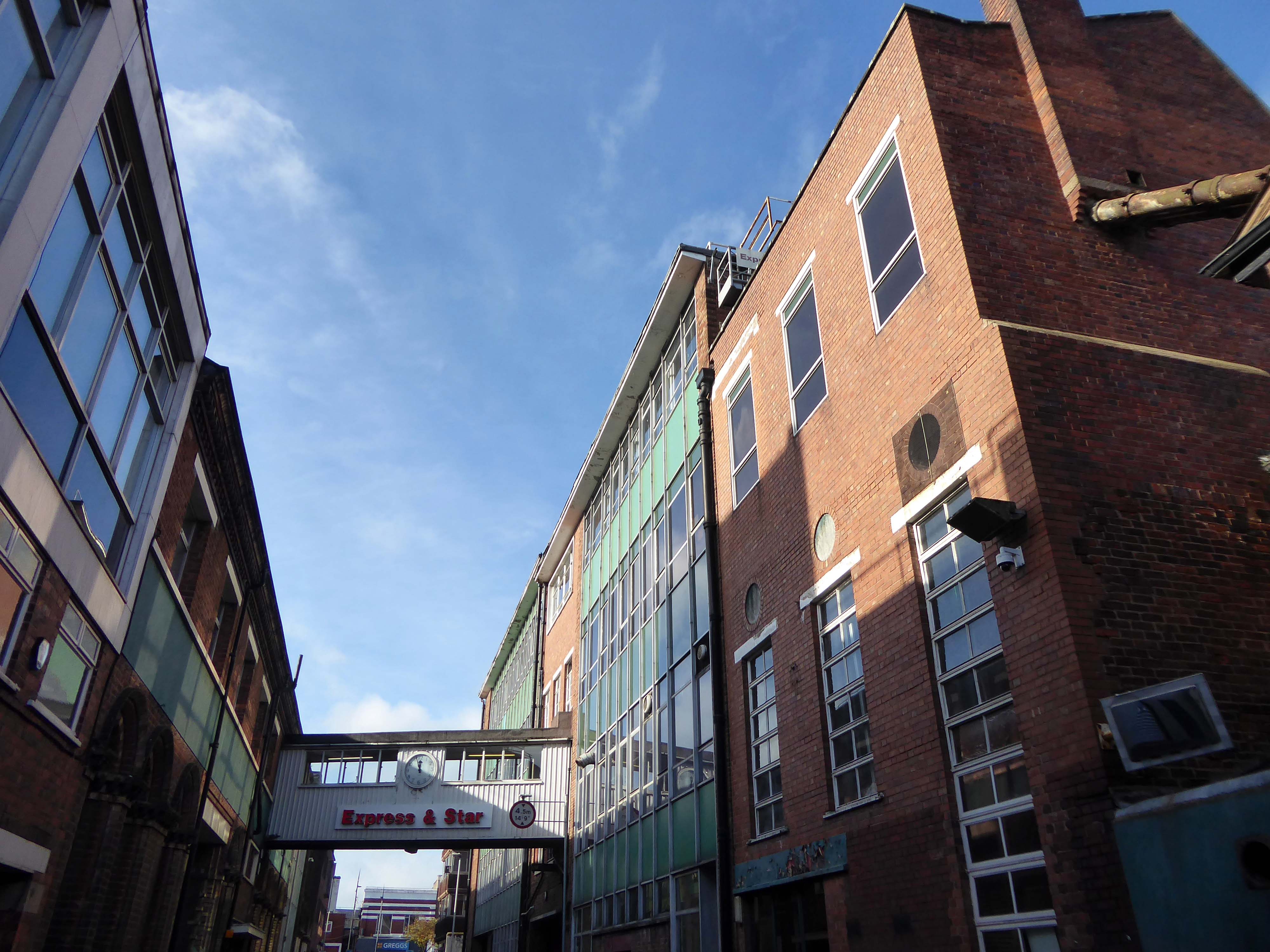
Onward now to the Express and Star Building – Grade II listed.

Architect: Marcus Brown 1934.

The building is faced in a reconstituted Hollington stone called Vinculum, produced by another local firm, Tarmac.

A plaque commemorates RJ Emerson, art teacher and sculptor who sculpted Mercury in 1932.

Wolverhampton History and Heritage Society

Midland News Association managing director Matt Ross confirmed the company is now looking at the building’s future.

For a number of years we have been exploring opportunities surrounding our historic Express & Star offices in the heart of Wolverhampton.

After removing the printing presses from the site and restructuring our departments we now have significant spare capacity available and so are looking at the various options available to us, be that redeveloping the current site or exiting the building altogether.

Hold the front page

Extension is by architects: H Marcus Brown & Lewis 1965

With further work at the rear.

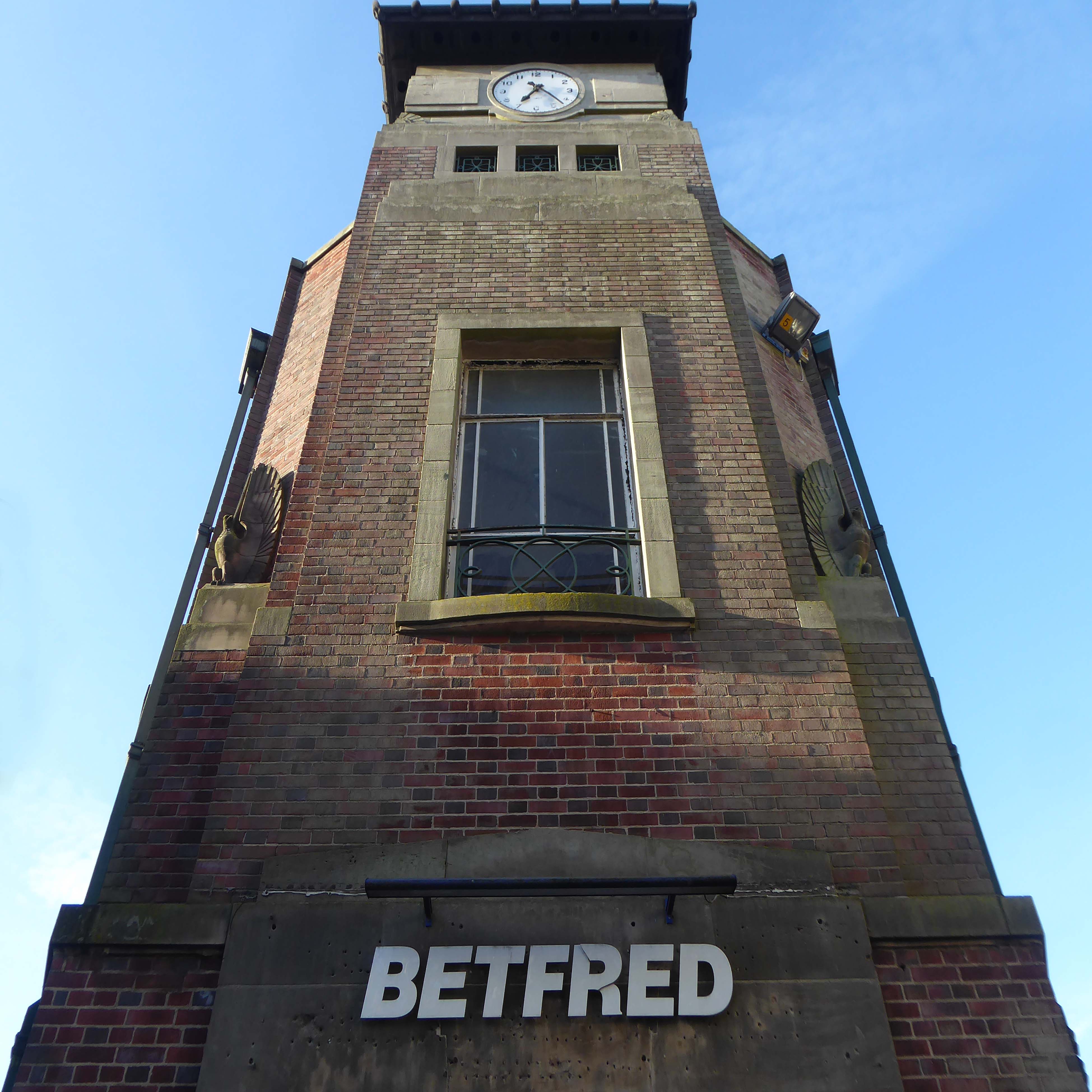
Along Princess Street this corner group, with an impressive clock tower – originally HQ for the South Staffordshire Building Society

Architects: George A Boswell of Glasgow 1932.

On to the Mander Centre – opened on 6th March 1968, refurbished 1987, 2003 and 2016-17.

The Mander Shopping Centre in the heart Wolverhampton is your one-stop shopping destination for all things fashion, home, beauty, food and technology.

Architects: James A Roberts principal architect Stanley Sellers.

Developed by Manders Holdings Plc, the paint, inks and property conglomerate, between 1968 and 1974. The site occupies four and a half acres comprising the old Georgian works and offices of the Mander family firm, founded in 1773, as well as the site of the former Queens Arcade.

Wikipedia

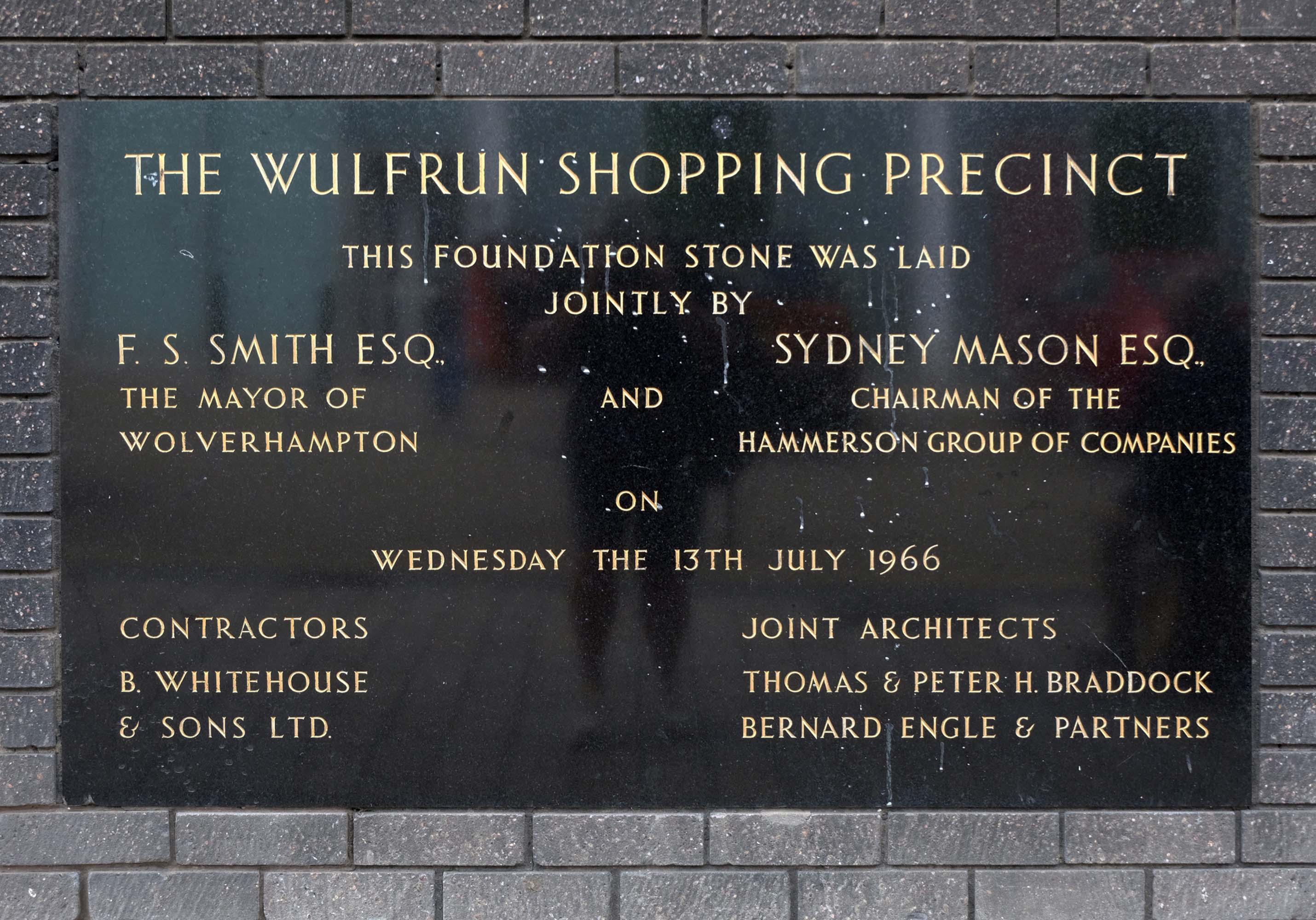
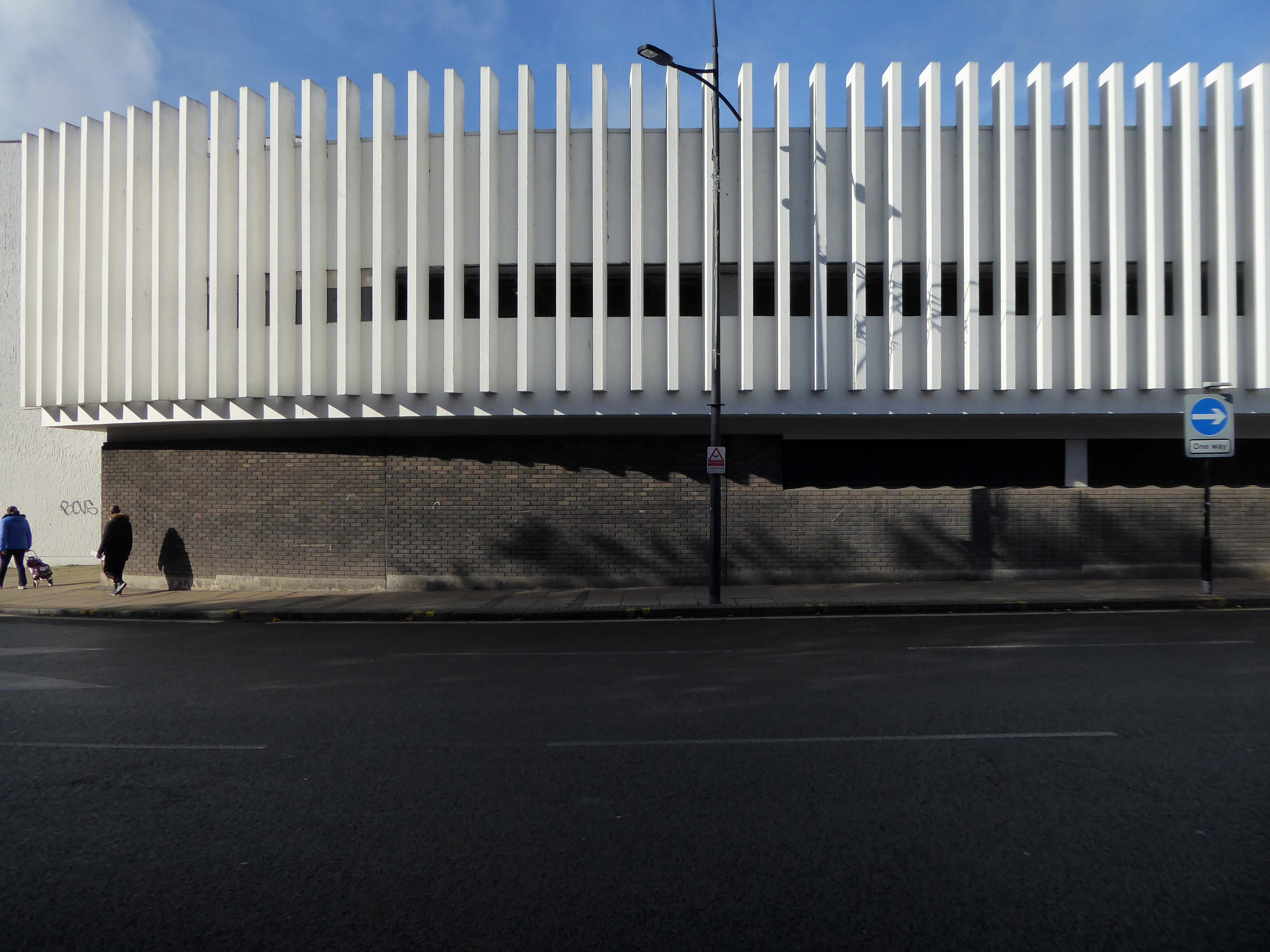
The Wulfrun Shopping Centre is an adjacent companion to the Manders development.

The Wulfrun Centre was built as a result of a joint project between Wolverhampton Council and the Hammerson Groupopen for business in October 1969.

History and Heritage Society

Piazza postcard 1970.

Architects: T & PH Braddock and also Bernard Engle & Partners.

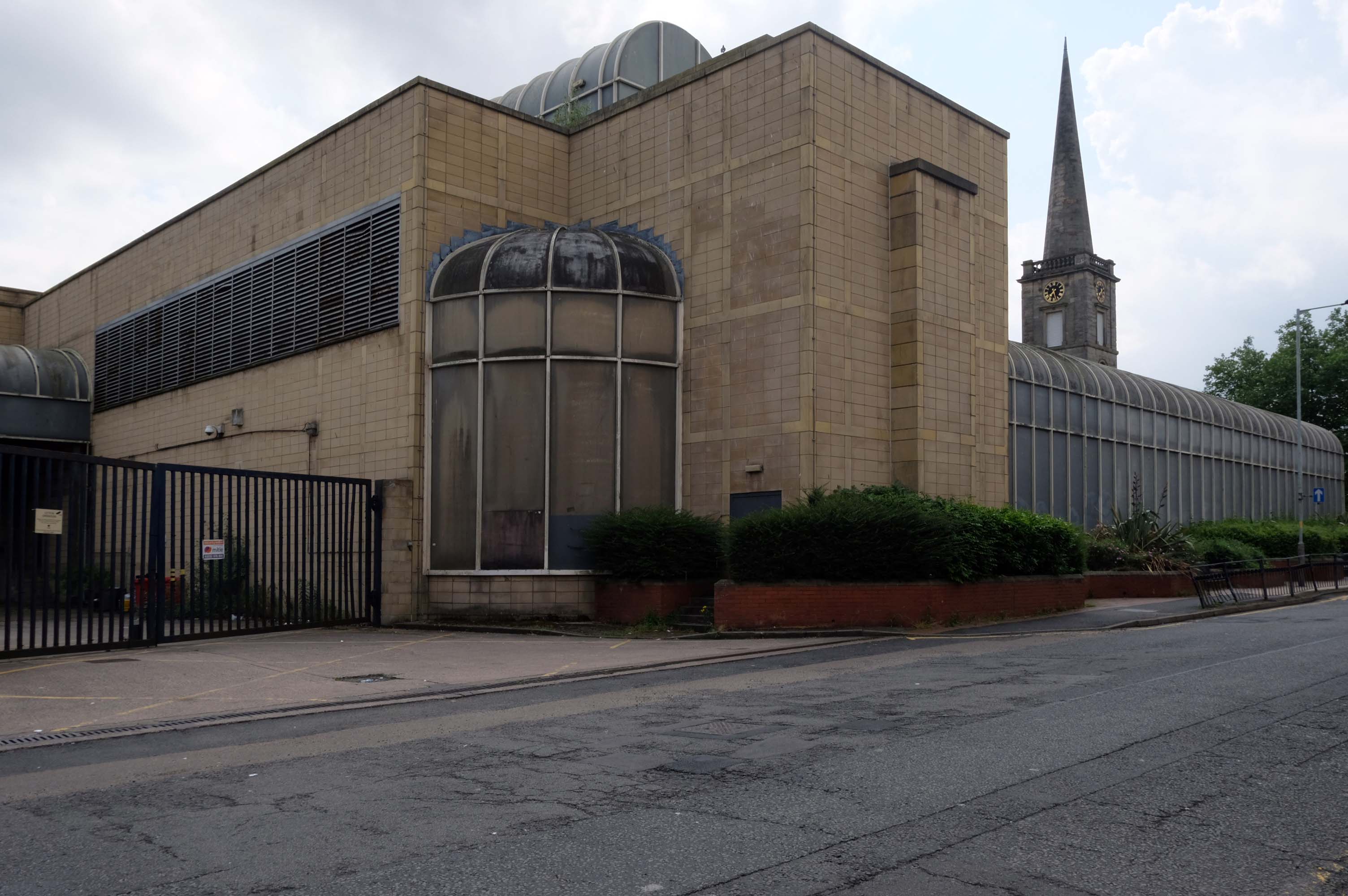
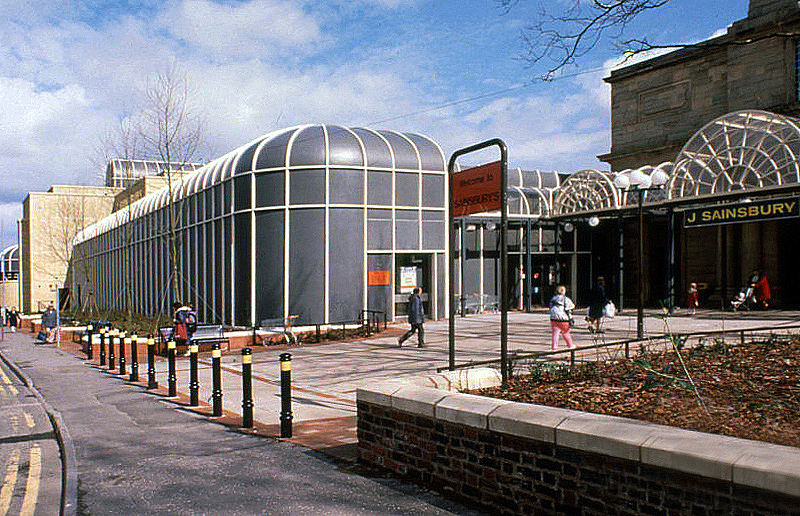
Along St Georges Parade, an abandoned Sainsbury’s church combo – store designed by J Sainsbury’s Architects Department opened 1988.

The church was built between 1828 and 1830 – architect: James Morgan, at a cost of £10,268. It was consecrated on Thursday 2 September 1830 by the Bishop of Lichfield, it was made redundant in 1978.

Sainsbury Archive

The site is currently under lease to Sainsbury’s for a further three years and will come forward on a phased basis subject to their lease concluding. The council is in active dialogue with prospective development partners on the redevelopment of this site and in wider consultation with Homes England.

Express & Star

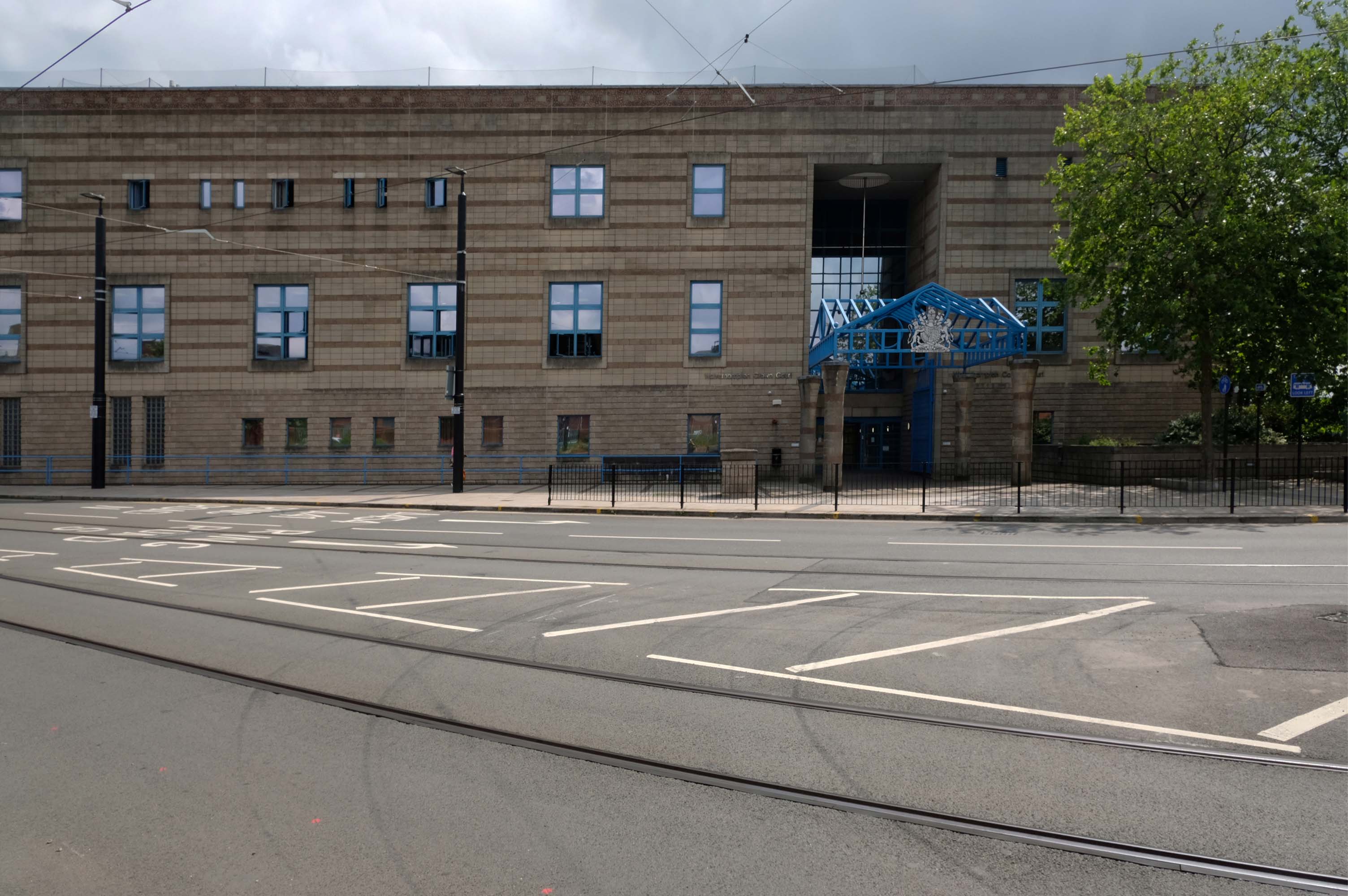
Back tracking to the Combined Court Centre.

Architects: Norman and Dawbarn 1990

Notable cases included trial and conviction of four members of The Stone Roses, in October 1990, for criminal damage to the offices of their former record company.

Wikipedia

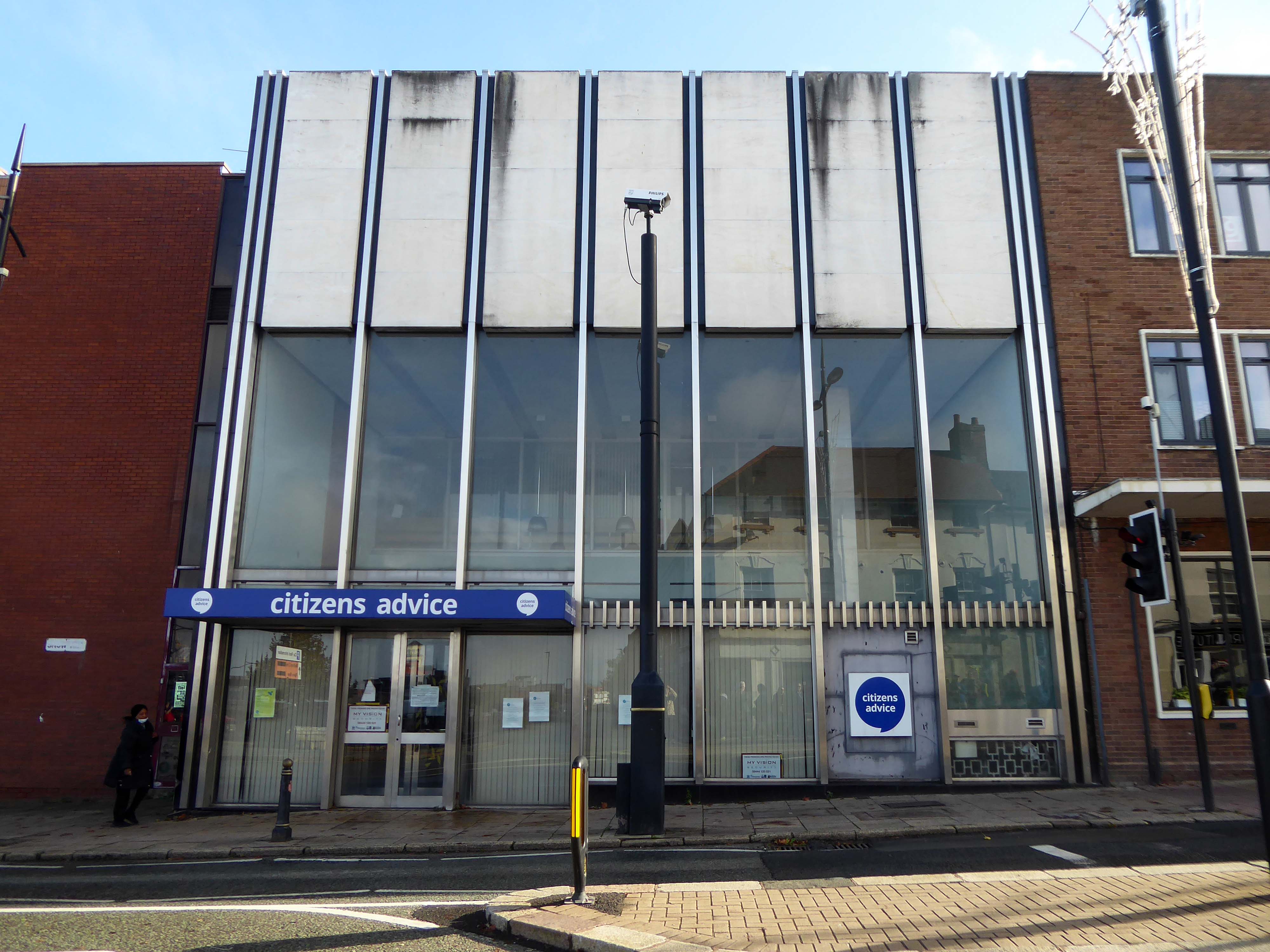
Thence up Snow Hill to the former Citizens Advice former Barclays Bank currently empty.

Architects: John HD Madin & Partners 1969

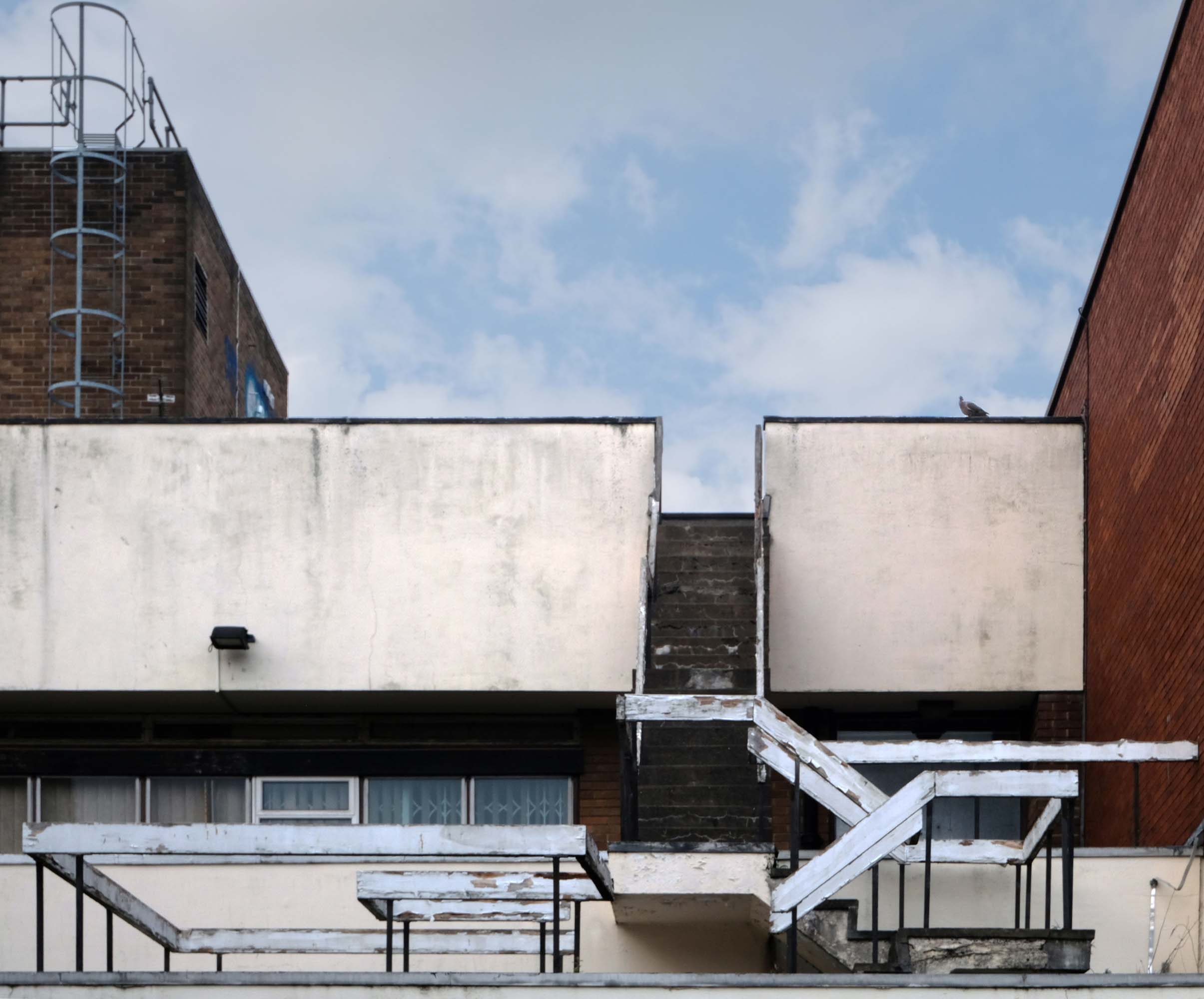
Take time to have a look around the back.

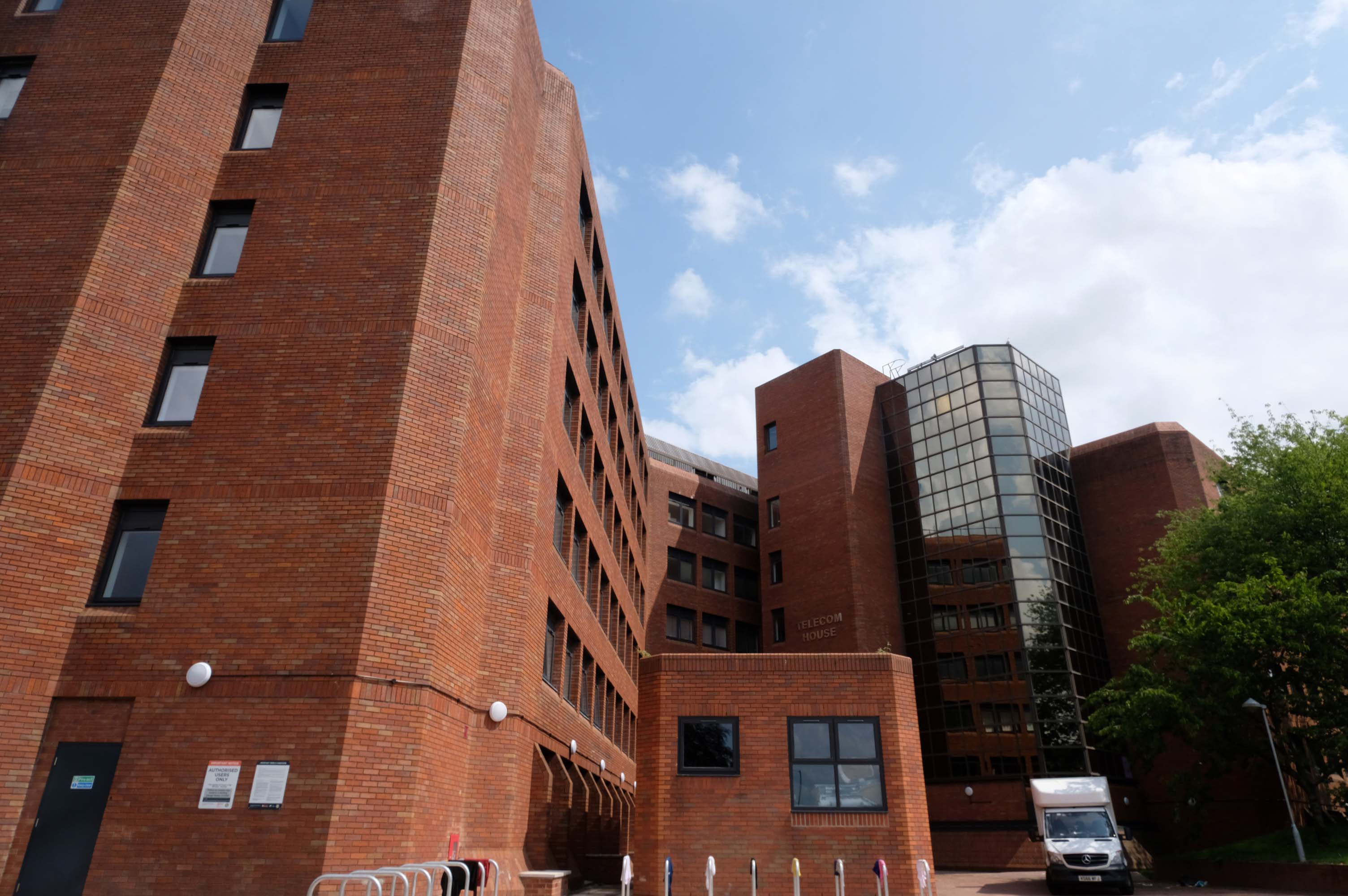
Off to Church Street and Telecom House

Sold for £4.25 million to Empire Property in 2022.

It had previously been sold for more than £3m in July 2018, also for use for apartments, to Inspired Asset Management which later went into receivership.

Express & Star

Located on a popular apartment block on Church street in the Wolverhampton centre, this 1 bedroom property has been newly renovated throughout and compromises an entrance hallway, open plan lounge/kitchen with in built appliances, shower room and double bedroom.

£650 PCM – Connells

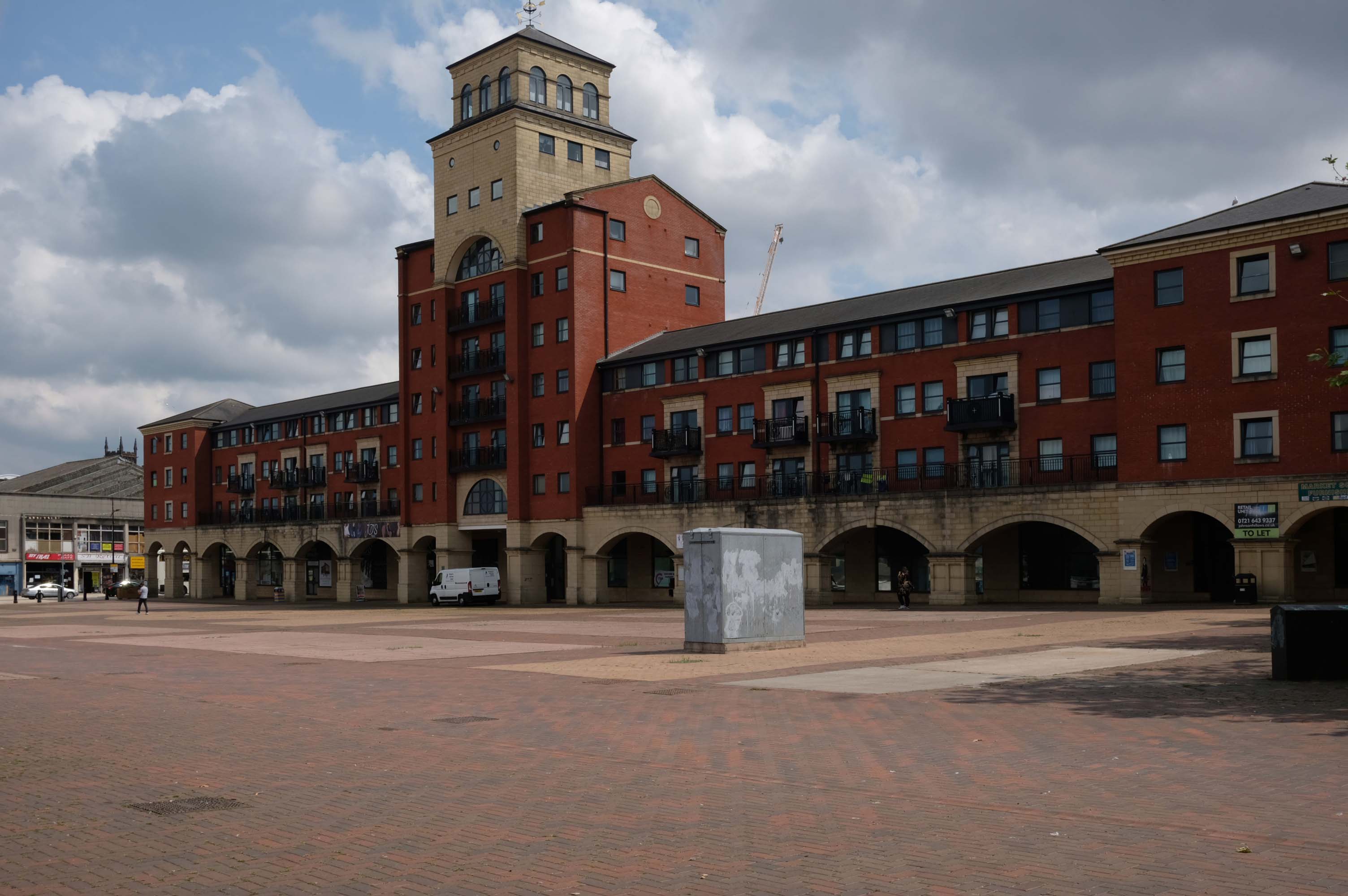
Next to this modern piazza New Market Square – Architects: Nicol Thomas from a concept by head of planning Costas Georghiou.

Formed from the former Market Square, a mix of flats and shops opened in 2004, in an Italianate version of the modish school of streaky bacon.

In 2021 the Coca-Cola Christmas Truck visit to the Midlands was cancelled.

It was meant to arrive at Market Square in Wolverhampton at 11am today but failed to show up.

One fan had waited since 7am this morning to see the Coca-Cola truck.

While schoolchildren were left gutted when the truck didn’t turn up – and one boy had been so excited his mother said he had been talking about the red truck all morning.

Birmingham Mail

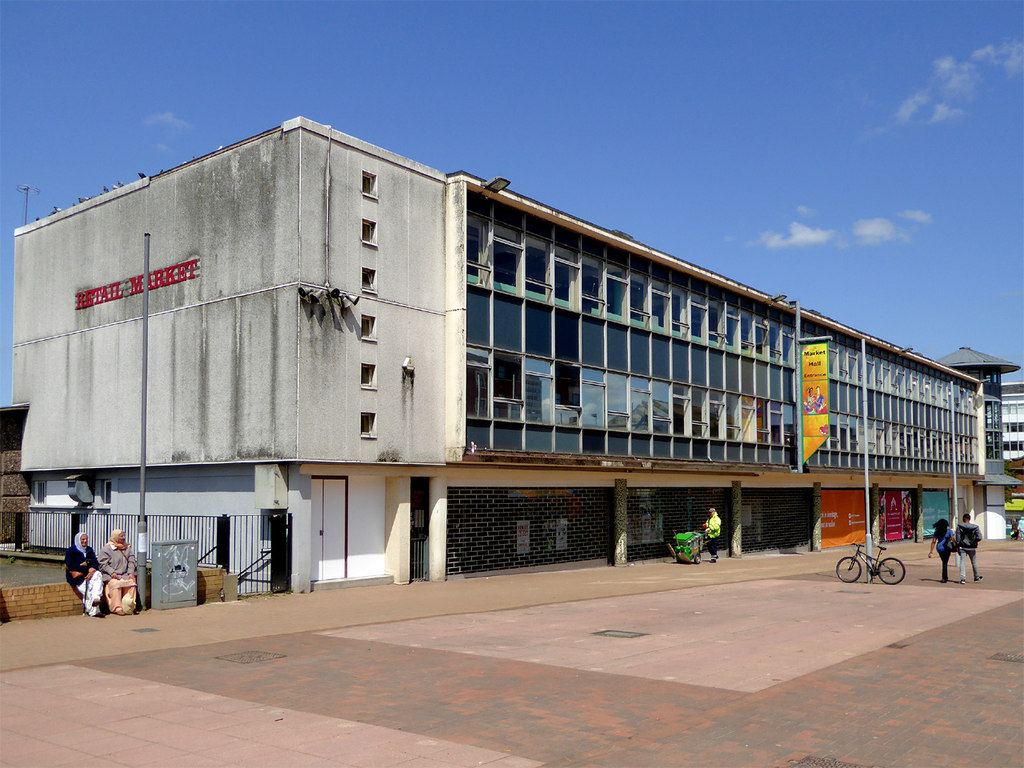
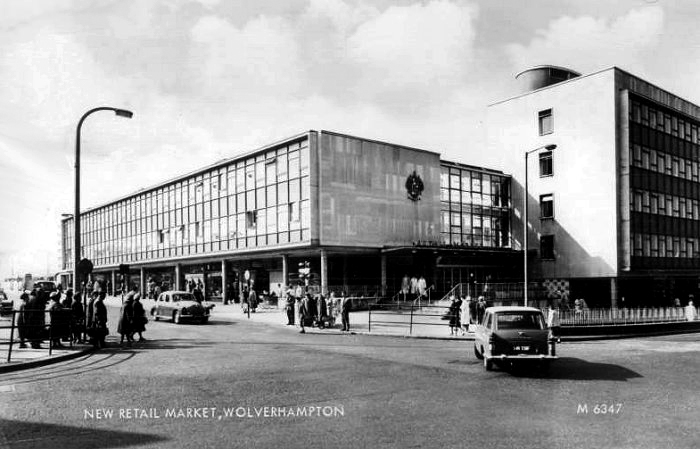
Retail Market – Late 1950s market hall and offices above. 

Architects: Borough Surveyor. 

Excellent example of the Festival of Britain style of architecture, won Civic Trust Award 1960.

Locally Listed March 2000.

demolished January 2017.

Photo: Roger Kidd

This development that wraps itself around Salop, Skinner and School Streets appears to be of a similar period to the Retail Market – and sports a Lady Wulfrun in relief.

There is access to its roof top car park.

And also an exit back to street level.

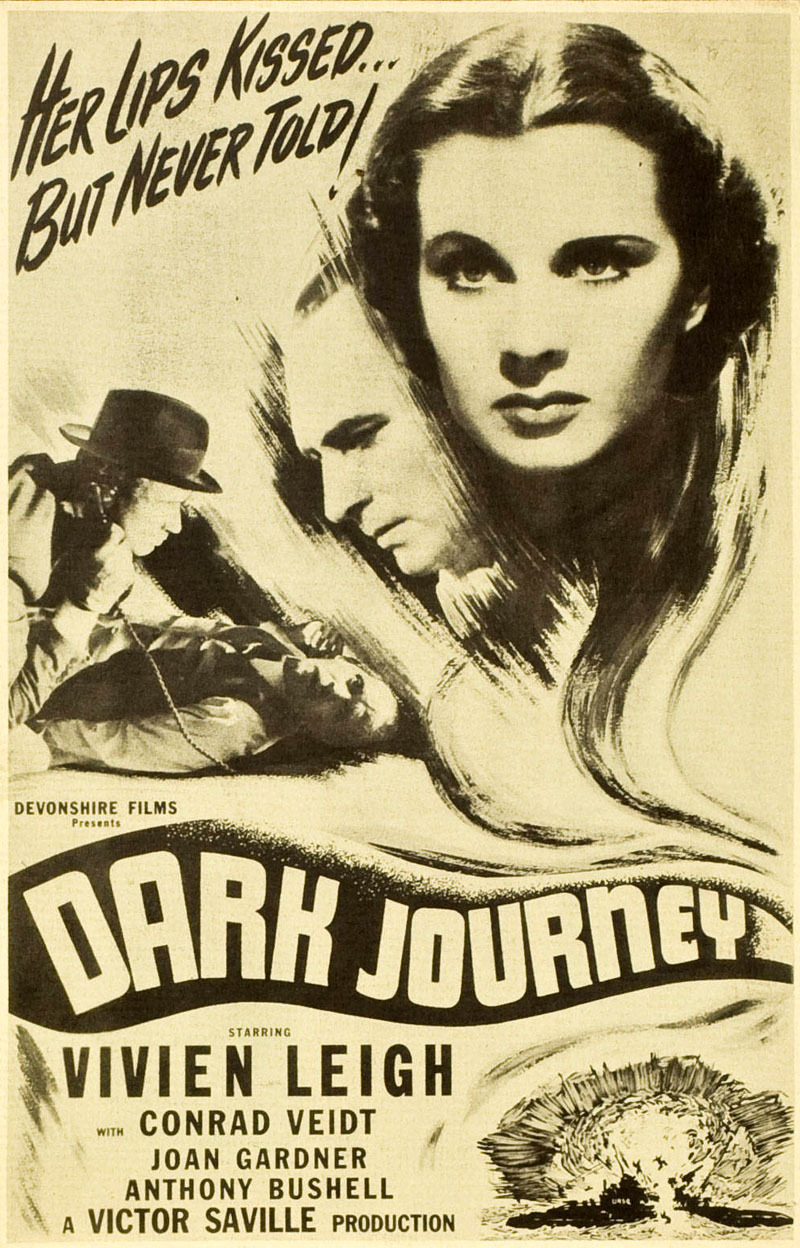
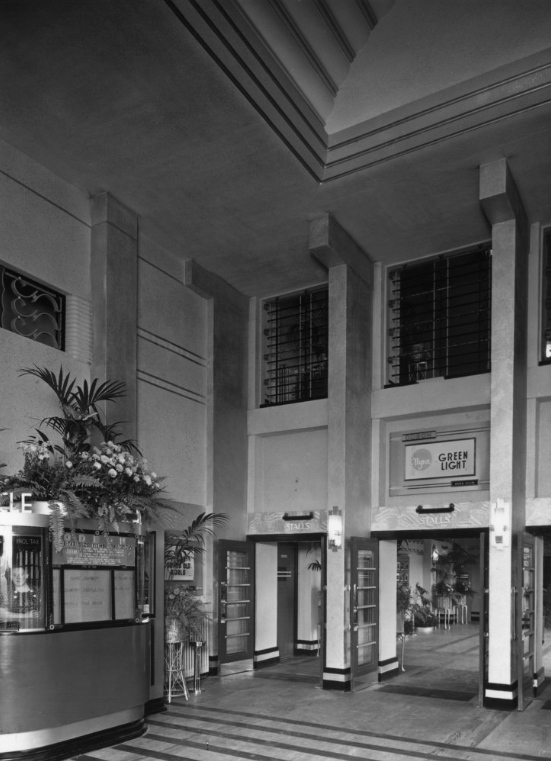
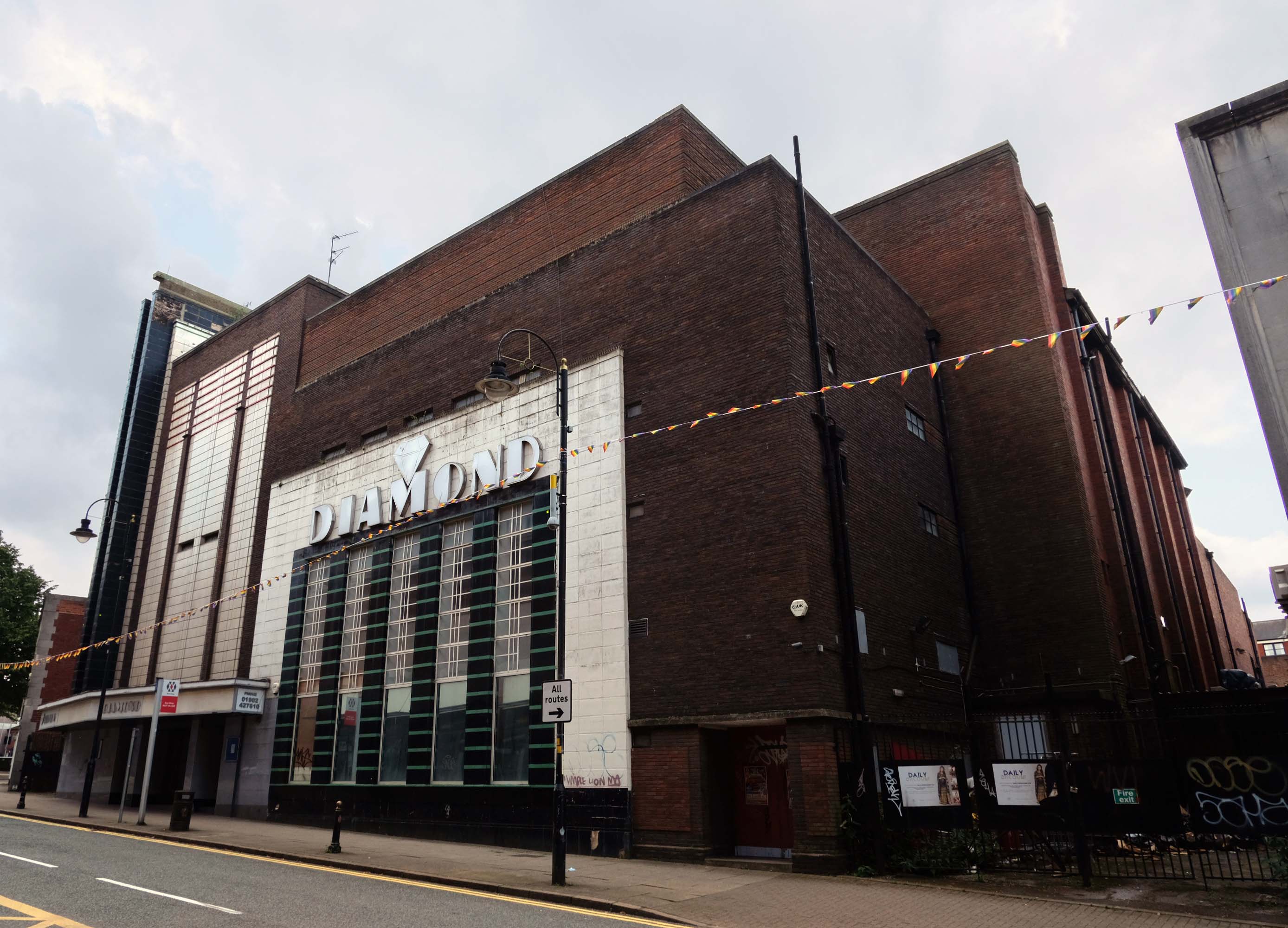
Where we find at street level the former Odeon Cinema, opened on 11th September 1937 with Conrad Veidt in Dark Journey.

Architects: PJ Price and Harry W Weedon.

In October 2000, the former Odeon was designated a Grade II Listed building by English Heritage.

RIBA pix

In recent years it was a Mecca Bingo Club, but this was closed in March 2007 In October 2009, it had been refurbished and re-opened as the Diamond Banqueting Suite. In April 2021 police raided the vacant building to discover an illegal cannabis farm operating in the building.

Four men were arrested.

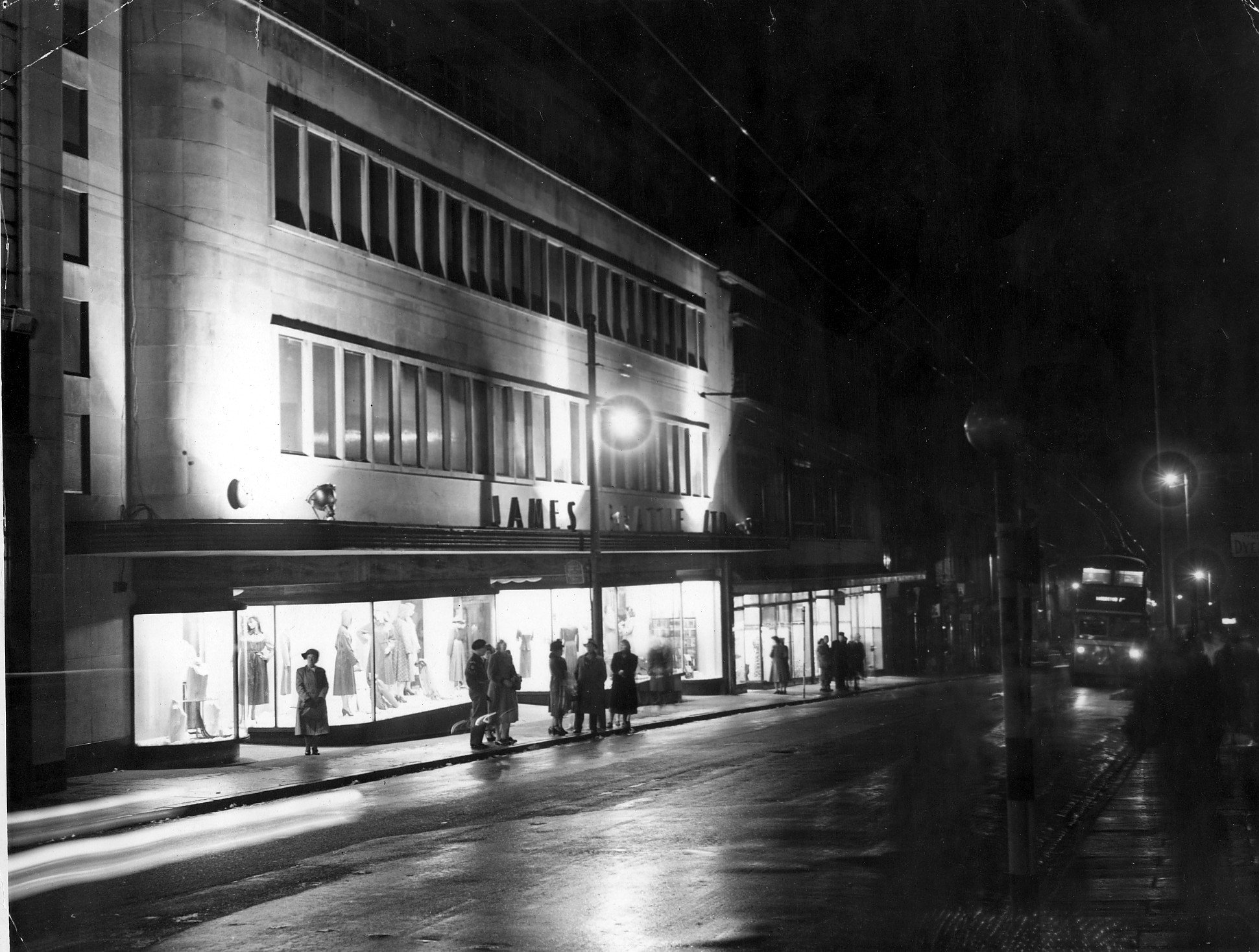
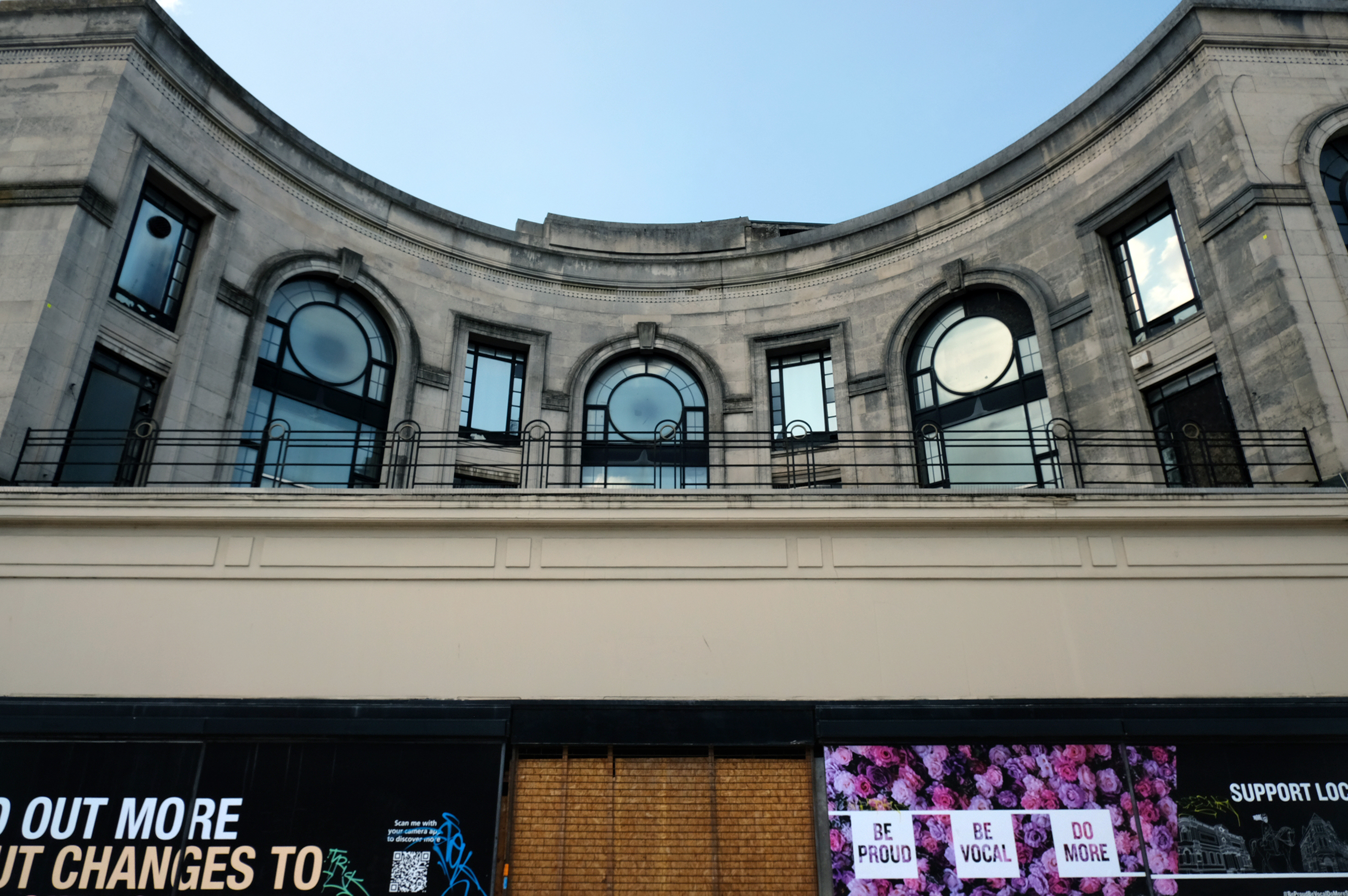
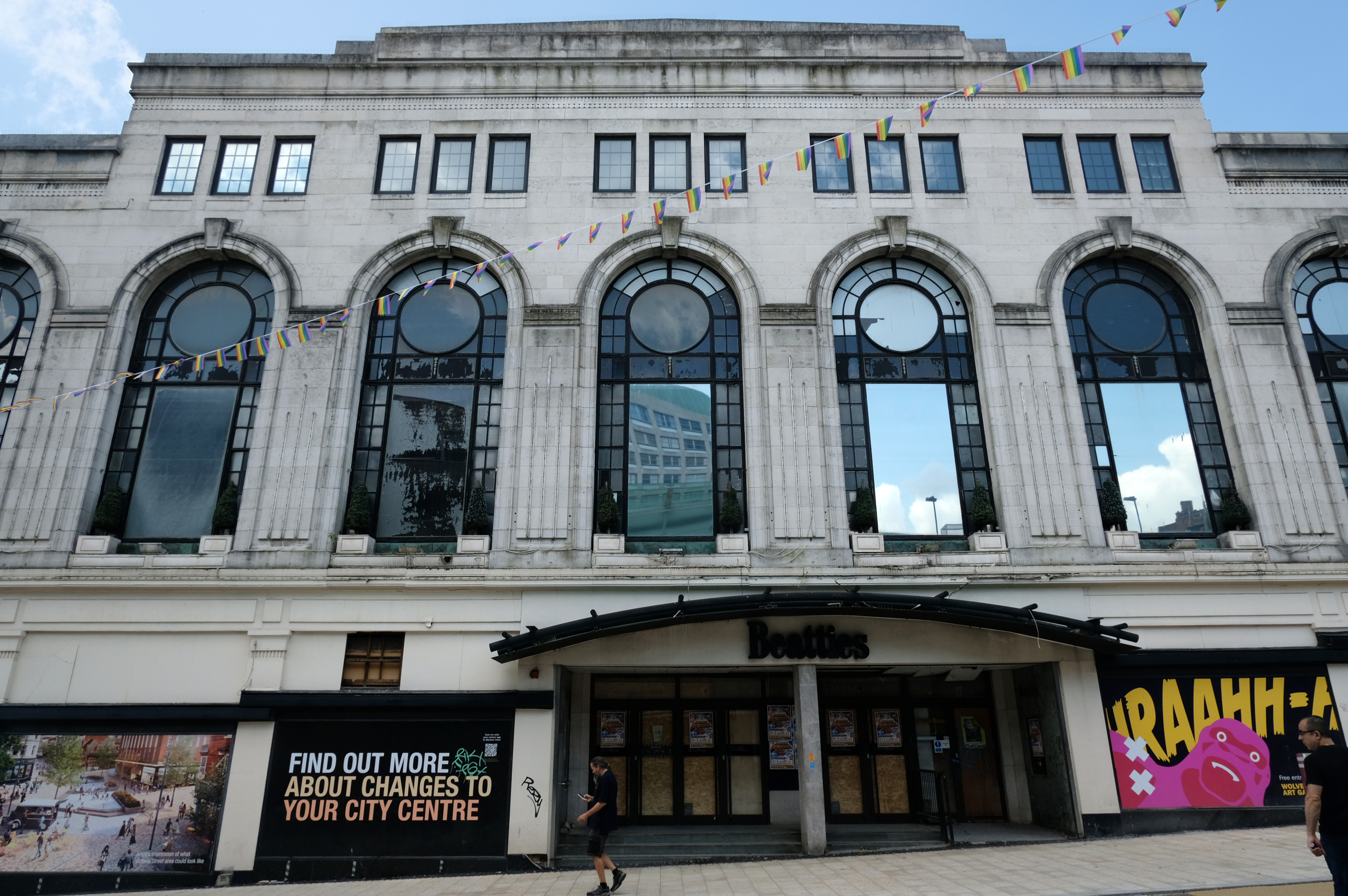
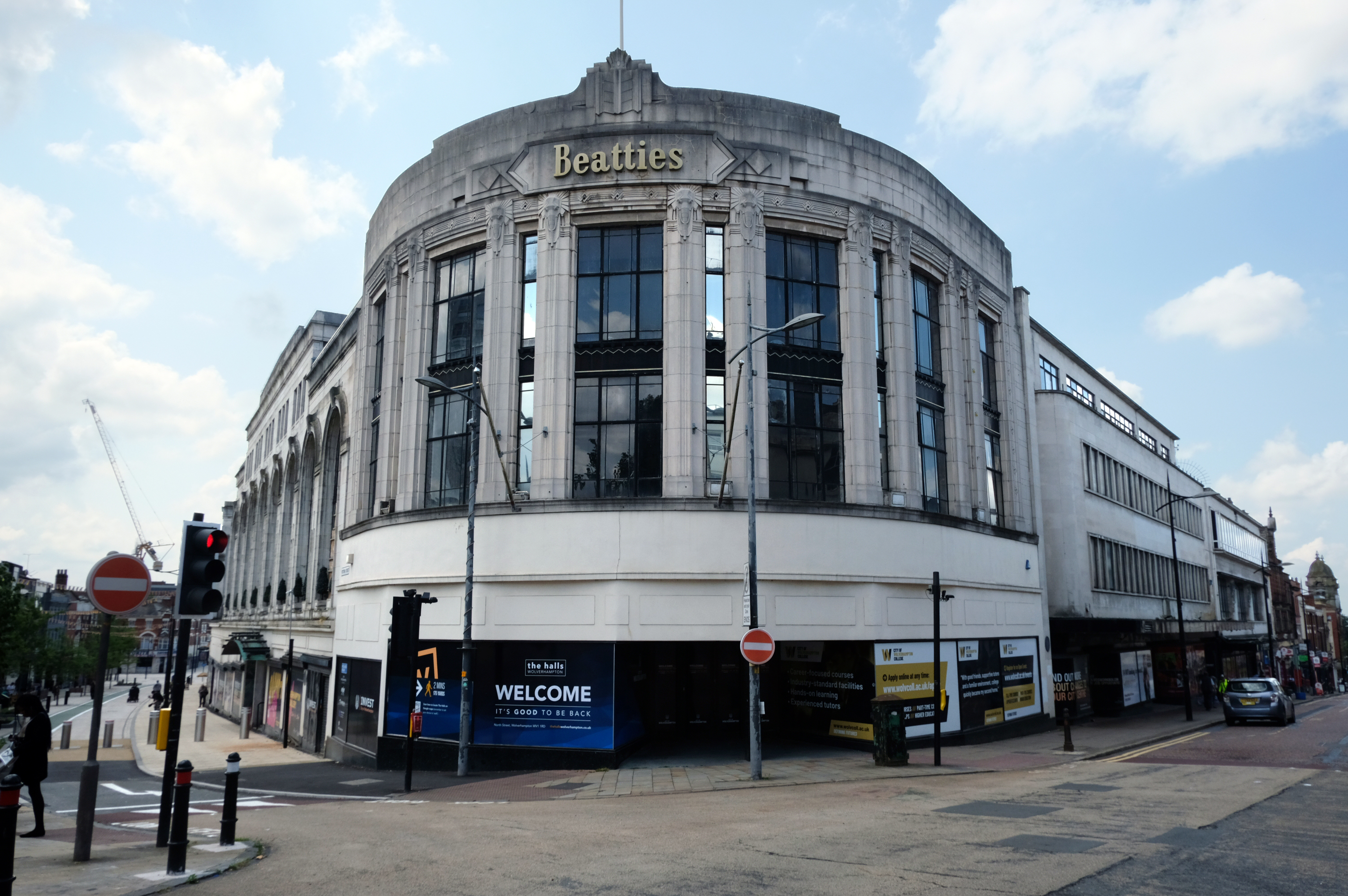
Let’s take a turn around the corner to Victoria Street where we find the complex of Beatties Buildings.

Architects: Lavender, Twentyman and Percy 1920’s – 30’s

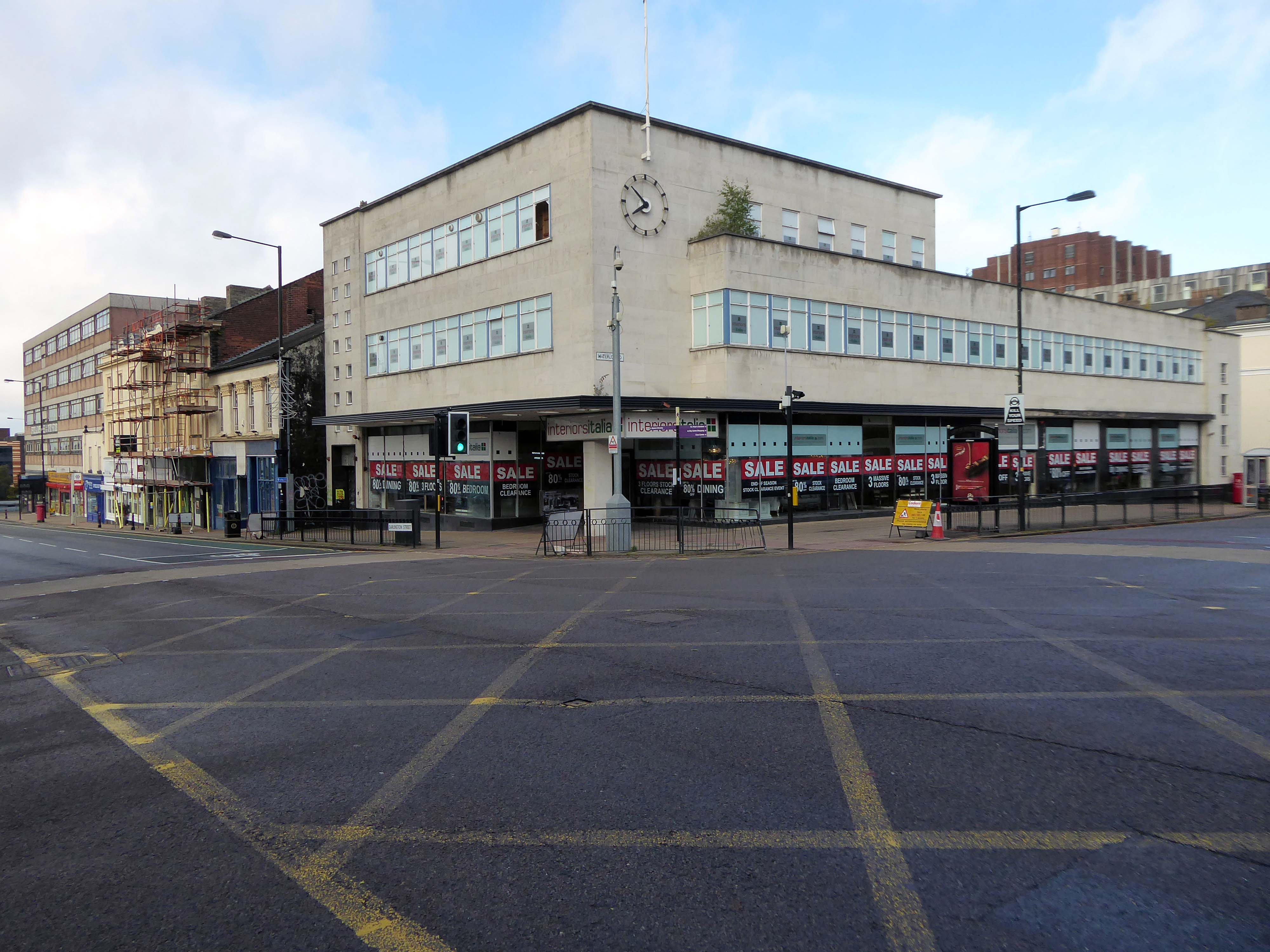
The C20 Beatties store is a multi-period site developed first in the 1920s-30s. A Burton’s men’s clothes shop was built on a curved corner site at Victoria St/Darlington St and Beatties themselves replaced their existing Victoria St store in the 1930s with a building by local architects Lavender, Twentyman and Percy. Beatties later acquired and incorporated the Burton’s shop into their store. These two buildings form the locally listed building to which were added a mid-C20 extension along Darlington St and a late-C20 development to the rear at Skinner St.

c20 Society

An imperious Portland stone clad mixed us block on Waterloo Road, with a delightful clock.

Formerly the Gas Showrooms then Sun Alliance & London Insurance offices – aka Clock Chambers

The showroom in Darlington Street was also the centre of a radio network that controlled a fleet of service vans. This enabled customers to receive service within minutes of making a telephone call. Demonstrations of cookery, washing and refrigeration were given by the Gas Board’s Home Service Advisers and a number of the company’s engineers, who specialised in designing gas equipment for industrial processes operated an advisory service for manufacturers. 

Architects: Richard Twentyman 1939.

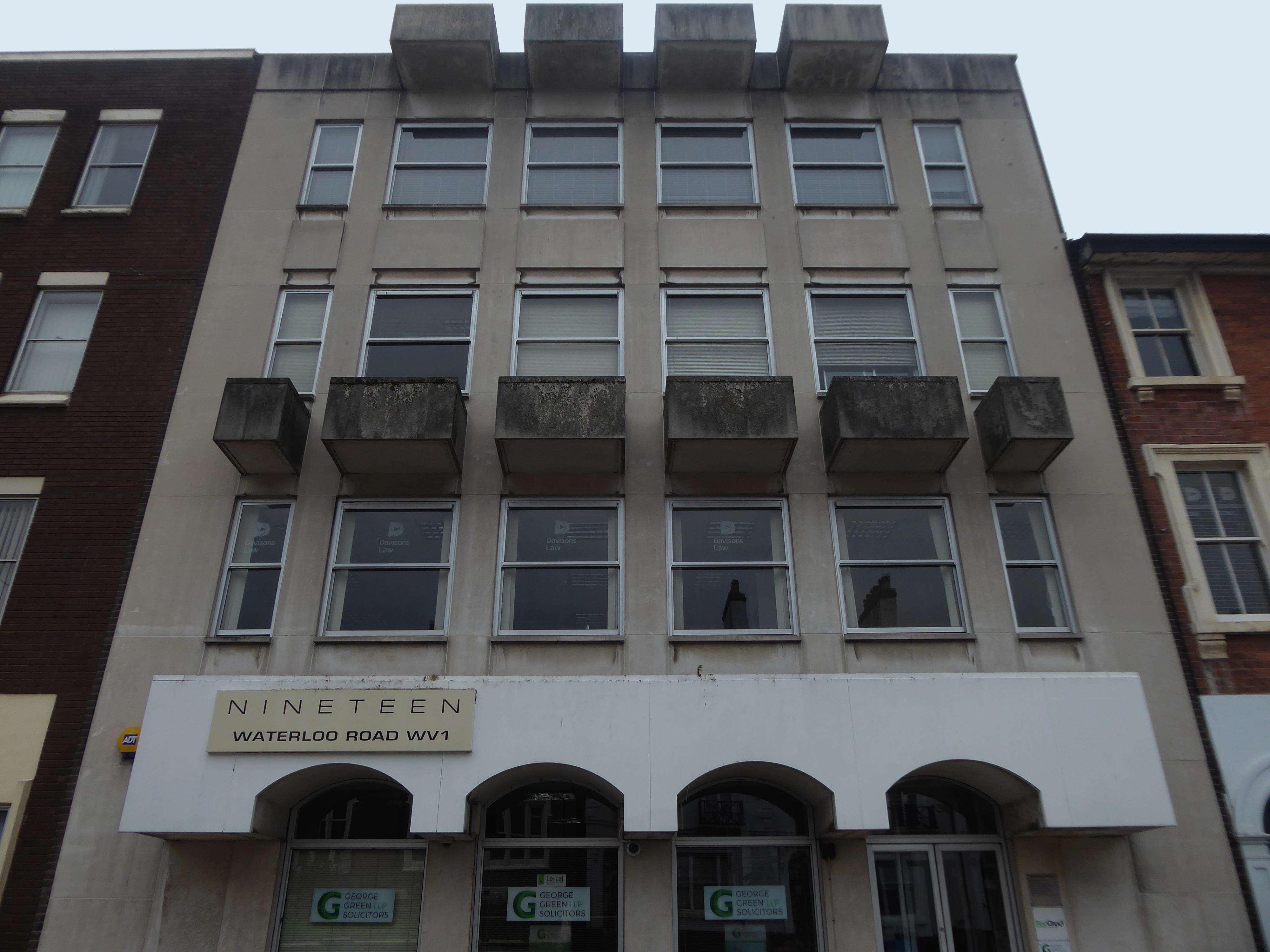
Nineteen Waterloo Road latterly First City House formerly home to Eagle Star Insurance 1970

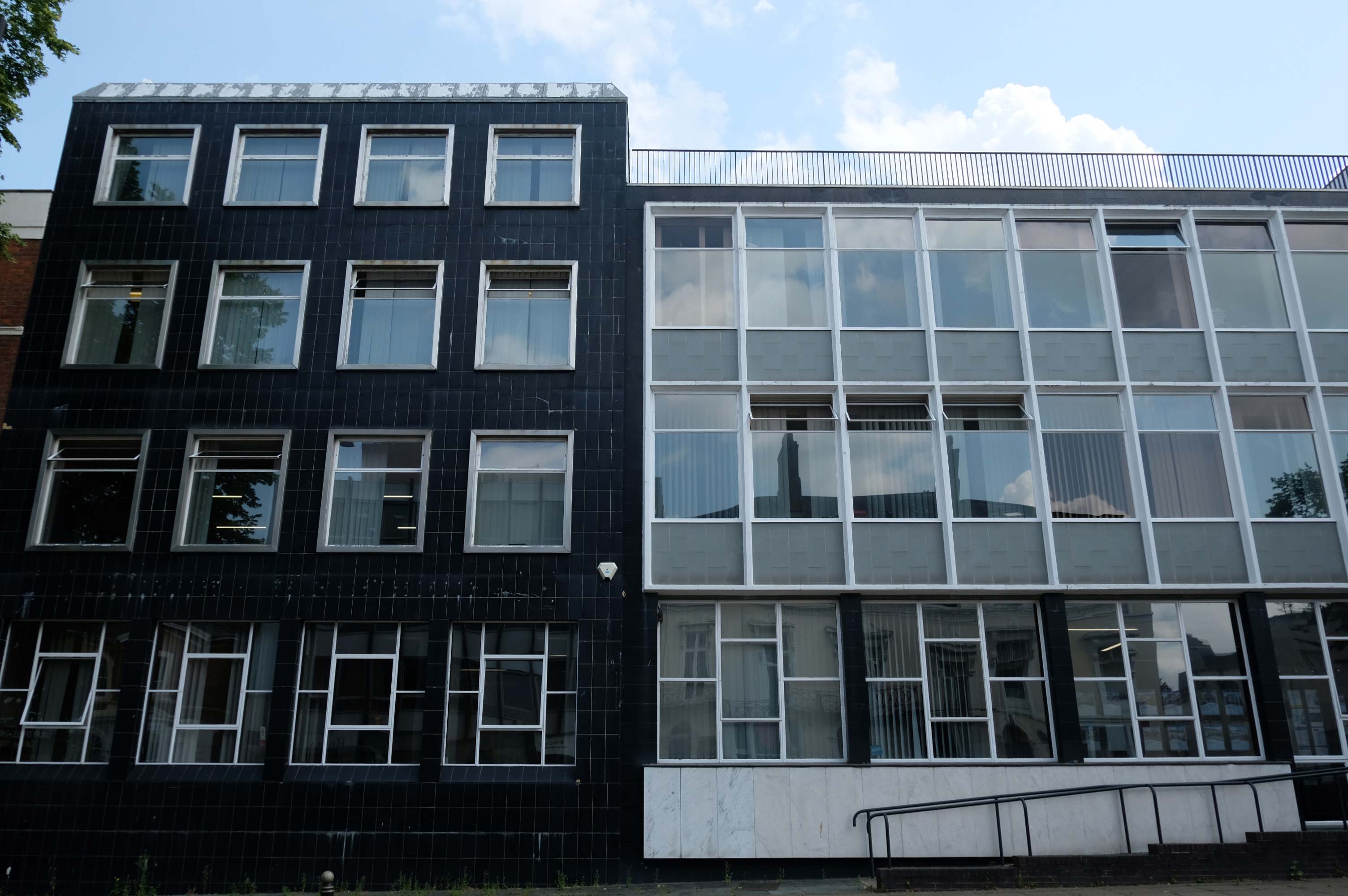
8-10 Waterloo Road architects: Richard Twentyman 1959 extended 1966.

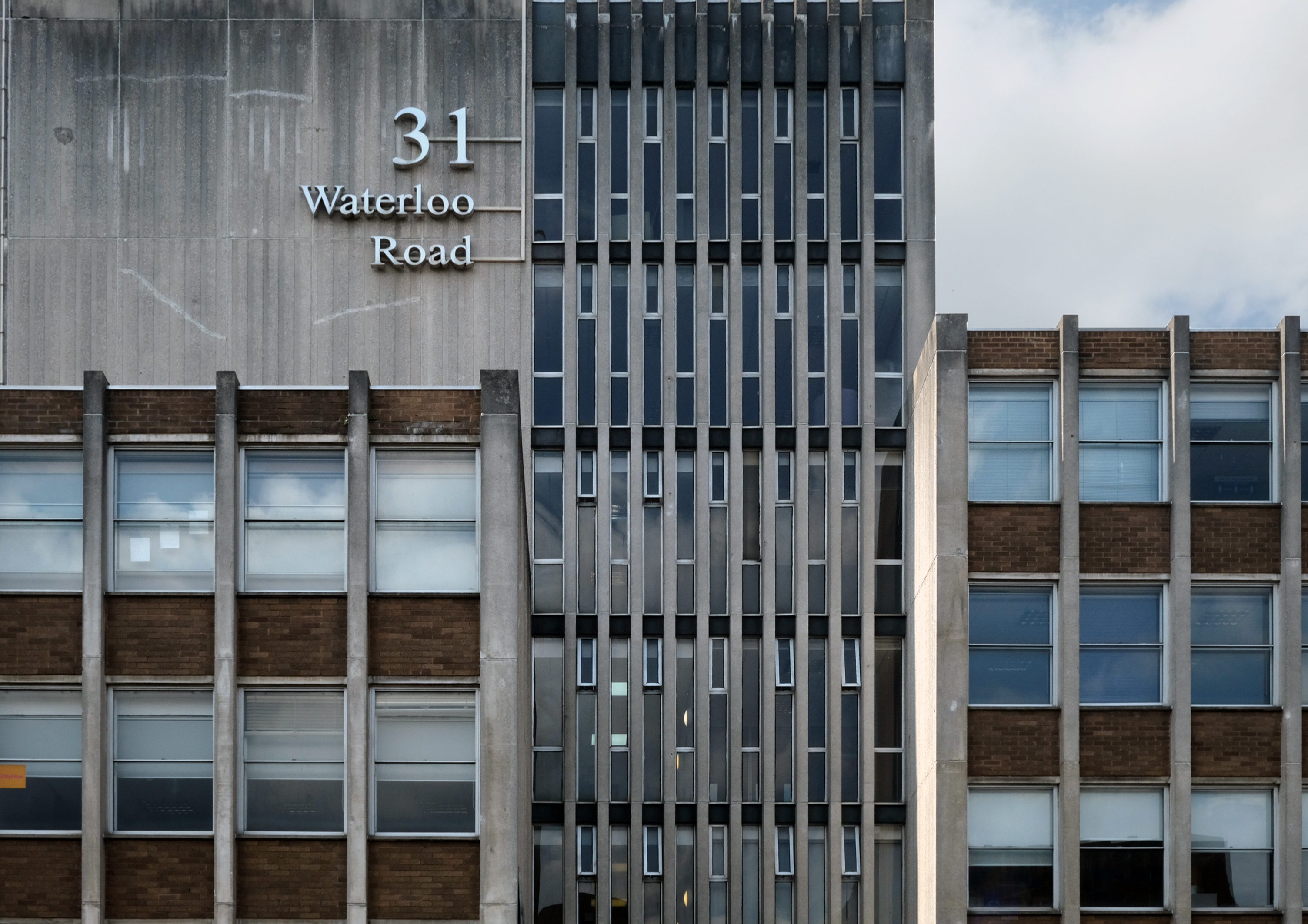
31 Waterloo Road – Waterloo Court architects: Kenneth Wakeford, Jerram & Harris 1972

Right turn to the Telephone Exchange

Architects: NHA Gallagher of the Ministry of Public Buildings and Works and Clifford Culpin & Partners job architect Leslie Parrett 1971.

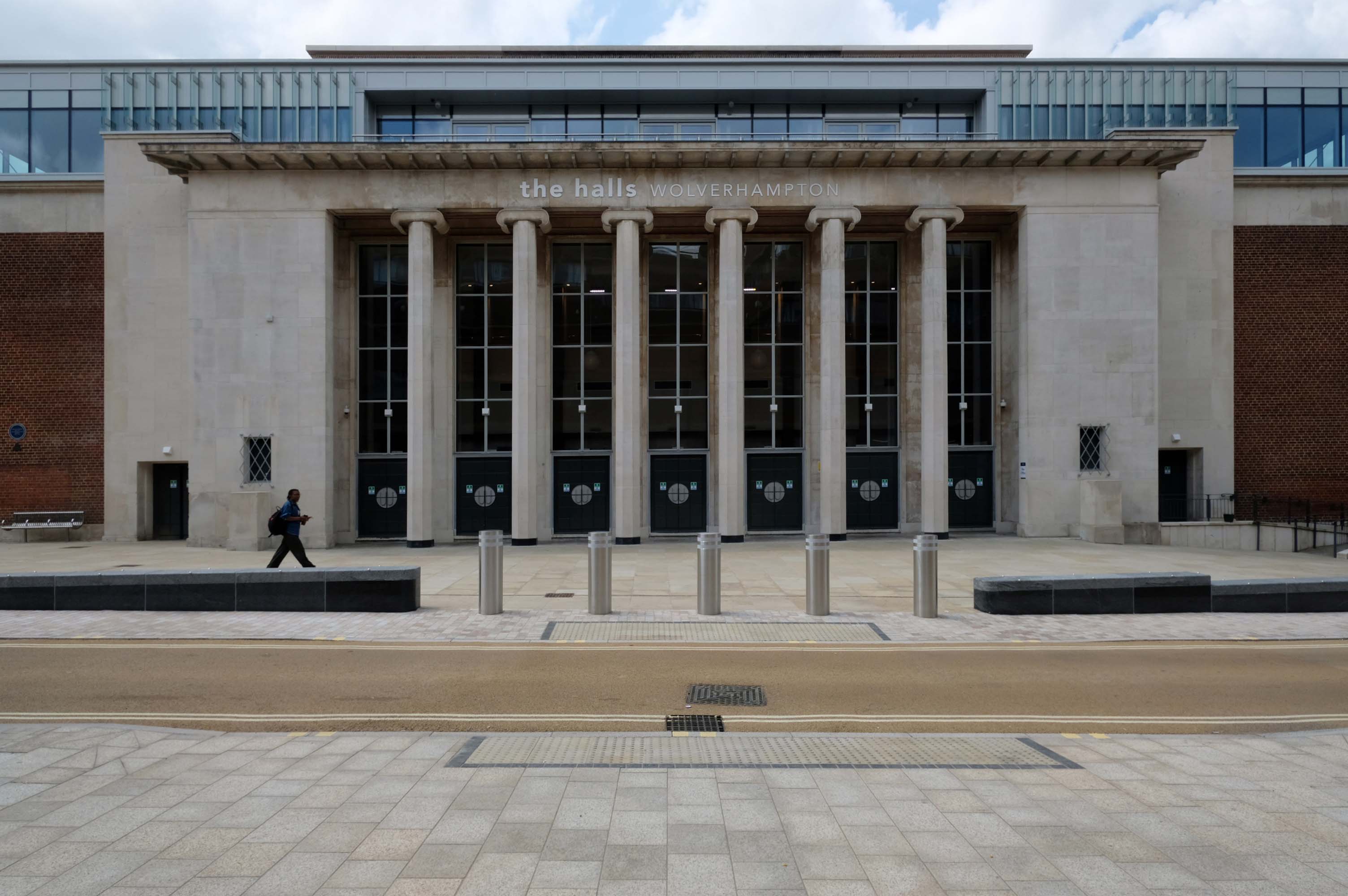
Around the bend to The Halls – once the Civic Halls.

Architects: Lyons and Israel 1936-38

Refurbished 2003 by Penoyre & Presad with more alterations in 2021 by Jacobs consulting engineers.

RIBA pix – 1939

Over the road to the Civic Centre.

Architects: Clifford Culpin & Partners 1974-79.

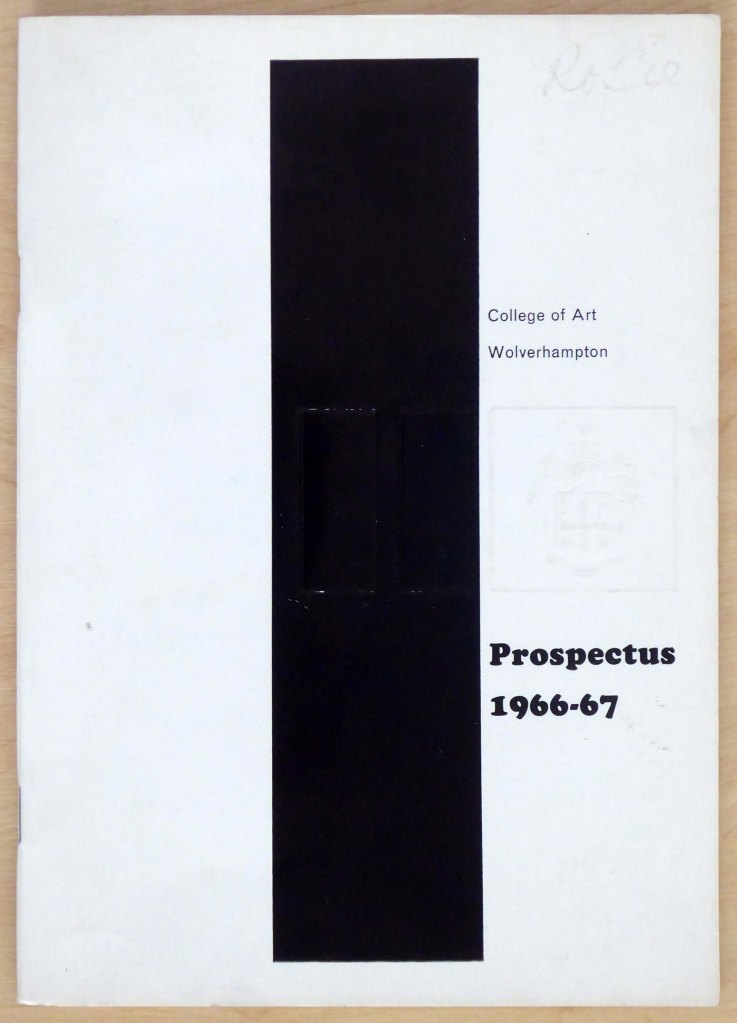
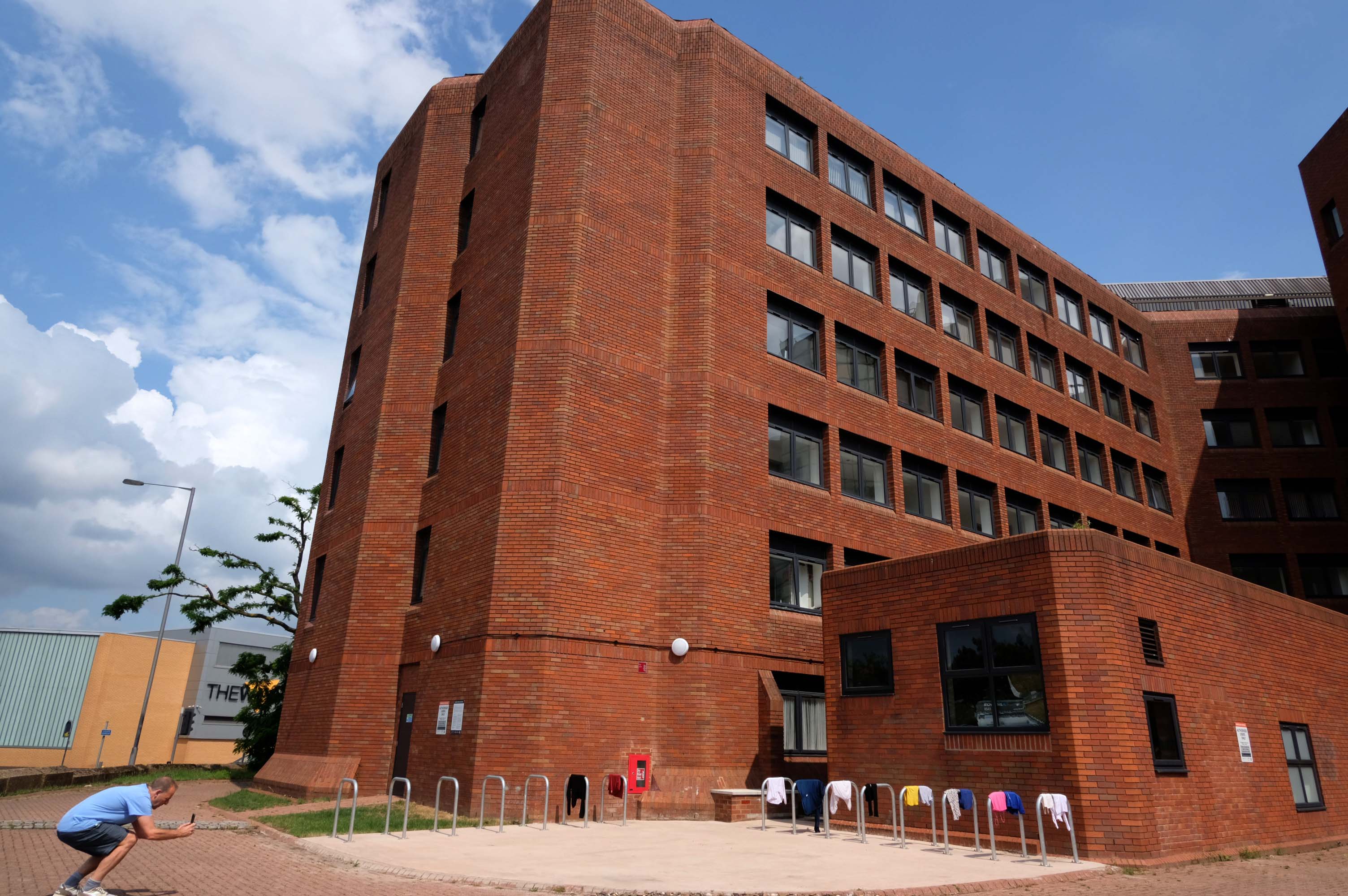
We end our Wolverhampton wander at the College of Art and Design

Architects: Diamond Redfern and Partners with A Chapman Borough Architect 1969

Huge thanks to Tom Hicks aka Black Country Type for his invaluable assistance.

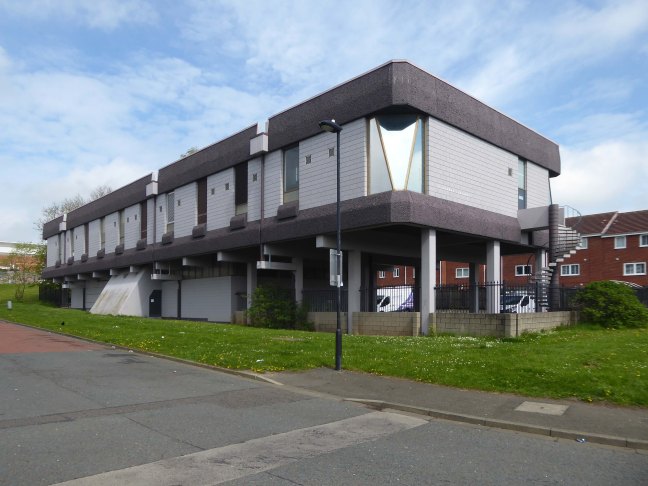
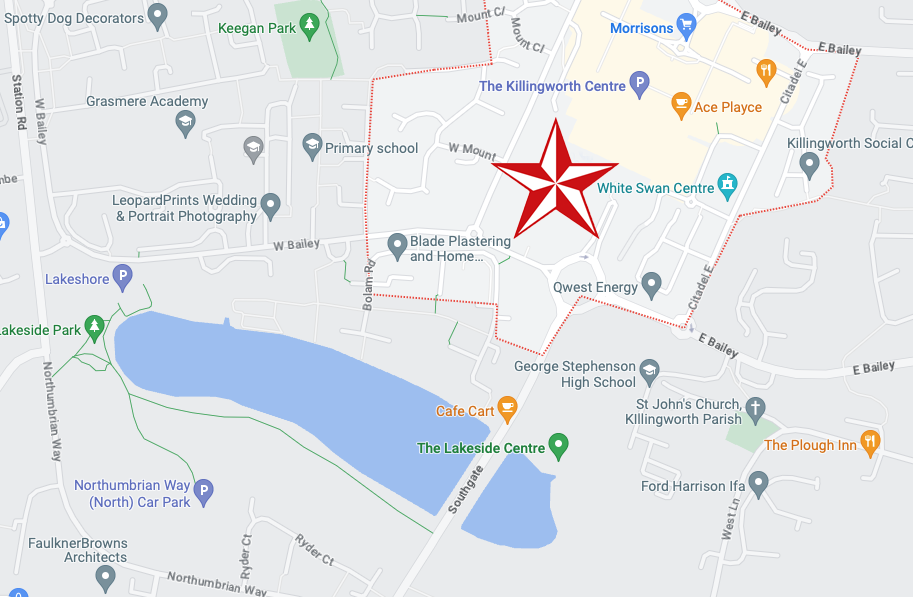
Telephone Exchange – Killingworth

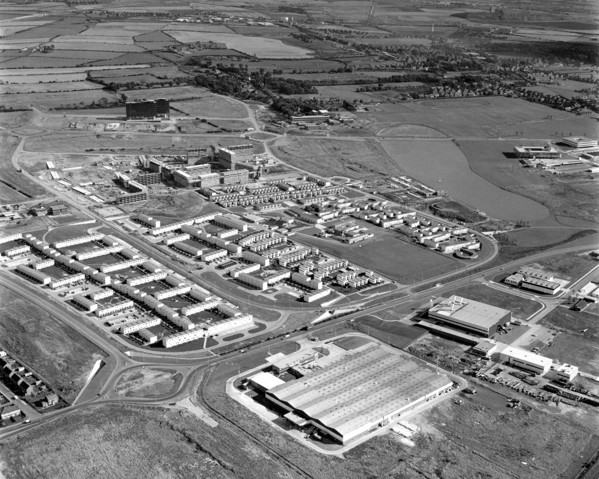
Killingworth Newcastle upon Tyne NE12 6UG

The building of Killingworth Township began in 1963, was undertaken by Northumberland County Council and was not sponsored by the Government.

RIBA pix

In 1987 the demolition of this three-tier housing estate of the township was undertaken by the Architects’ Department of the Metropolitan Borough of North Tyneside.

Photo: Philip Wolmuth

Once the wrecking ball arrives new town can begin to look like any old town.

Following Euan Lynn’s suggestion – I went to take a look around.

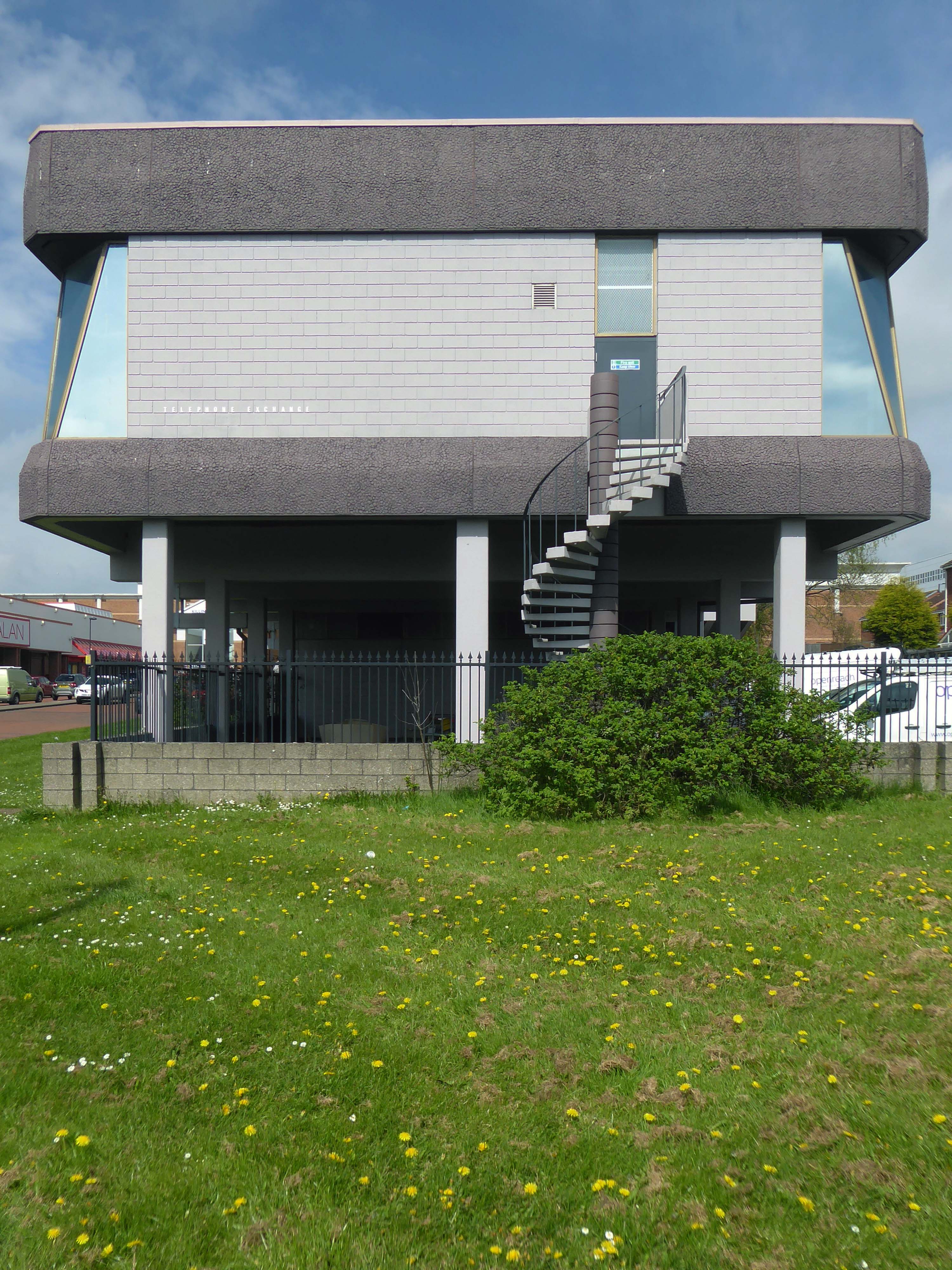
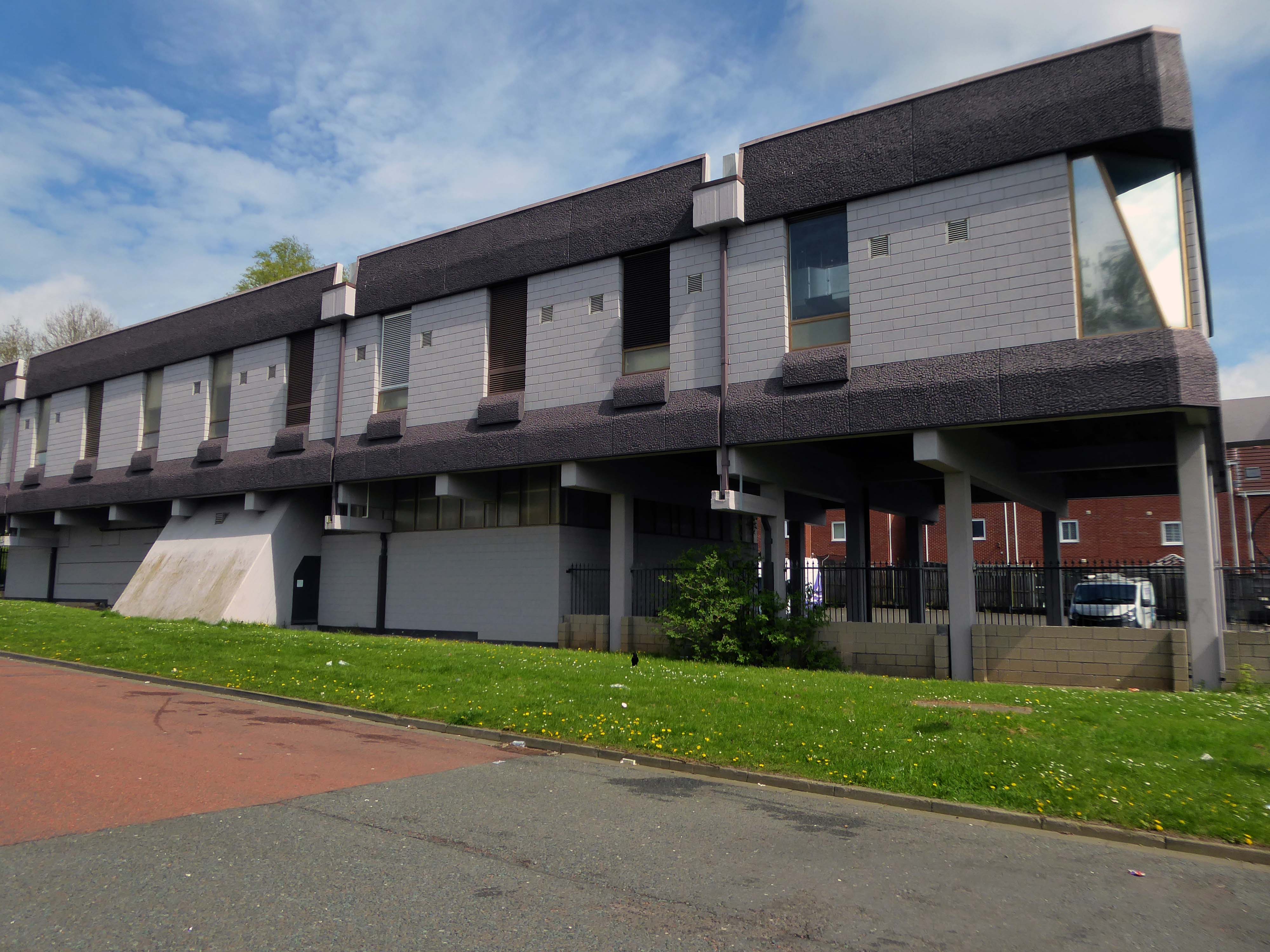
From the window of the 52 bus, I saw an enchanting Telephone Exchange.

A not too distant cousin of the Hadrian Exchange in Newcastle and their pal over the Tyne in Gateshead.

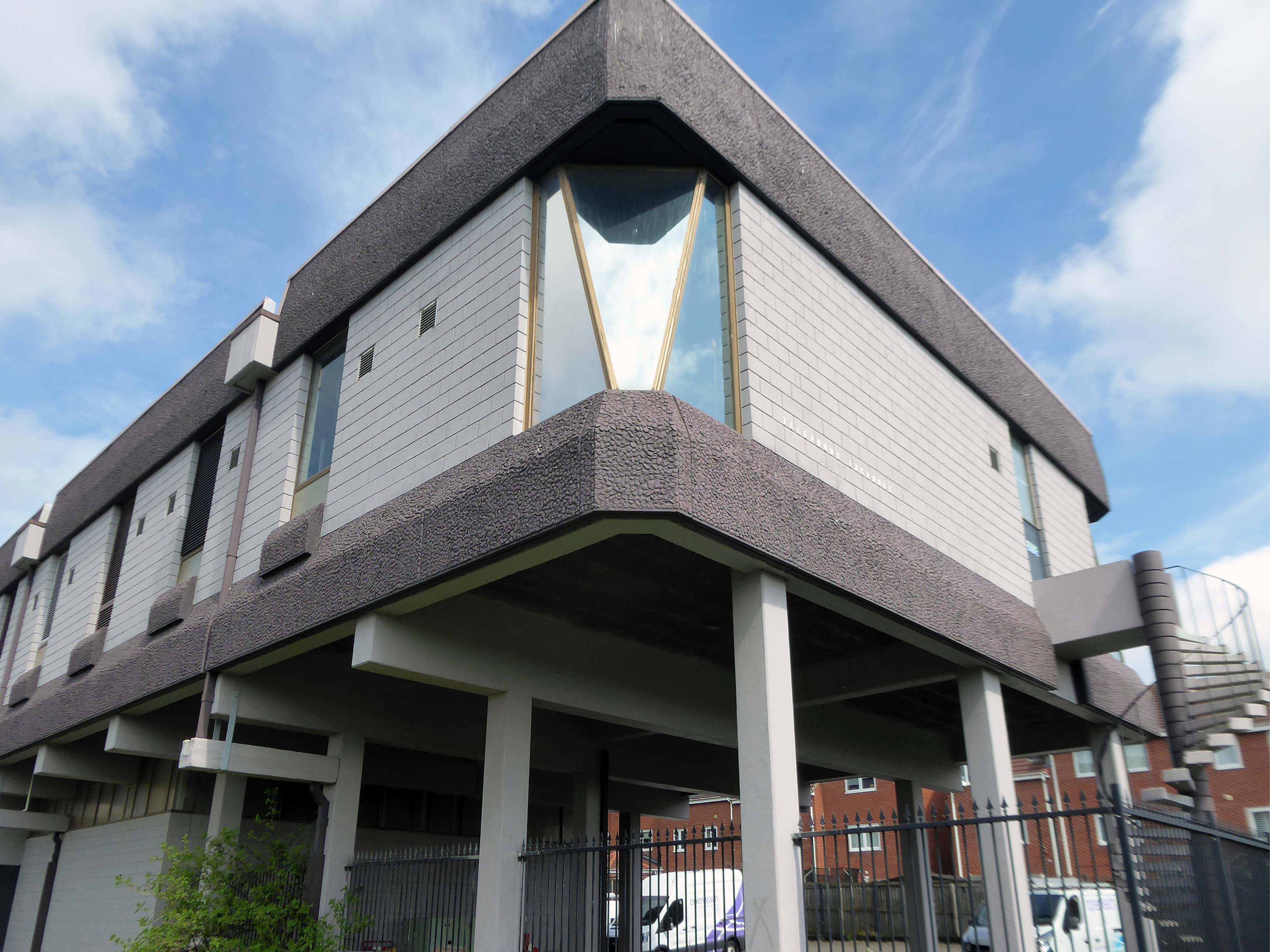
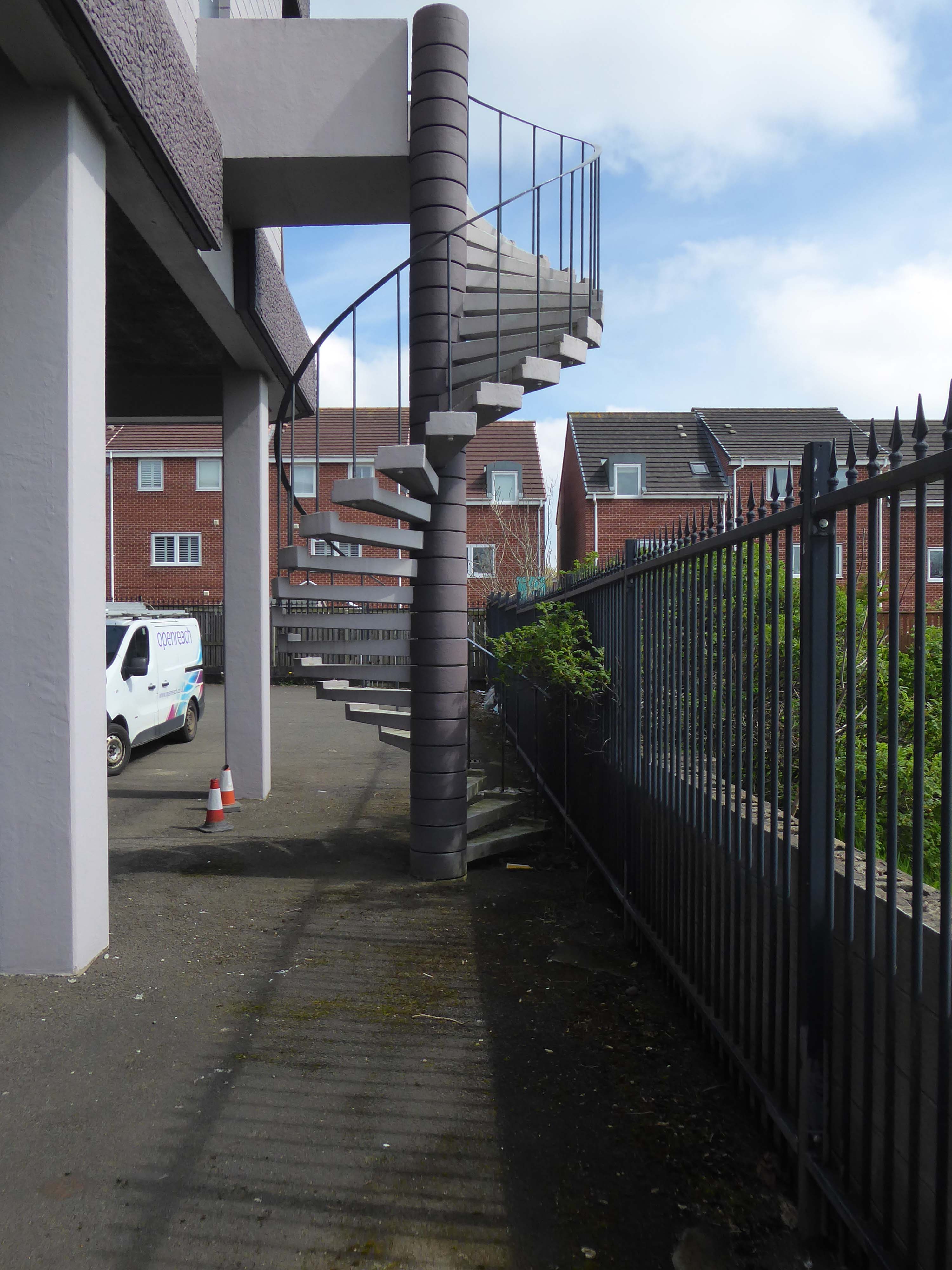
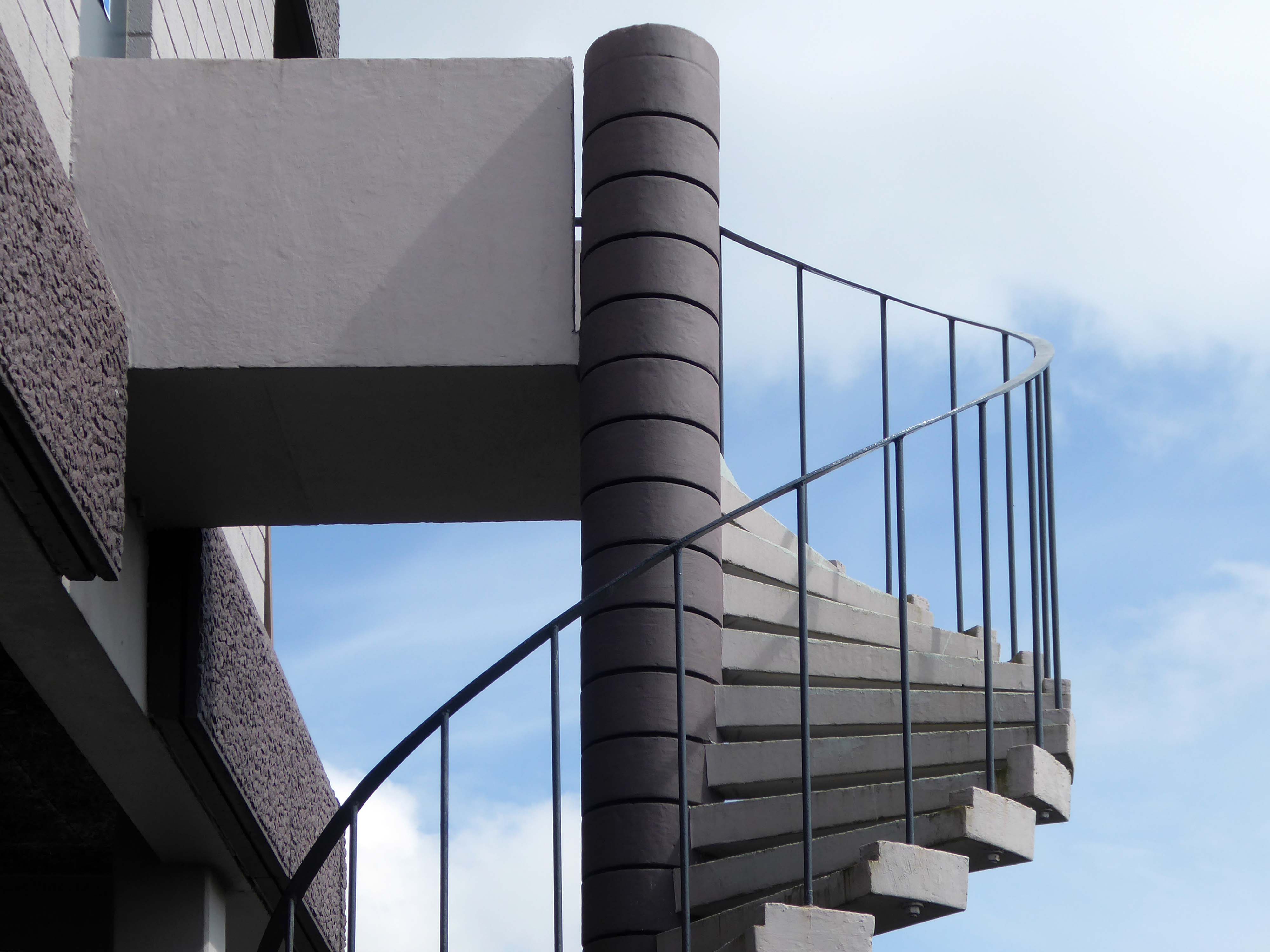
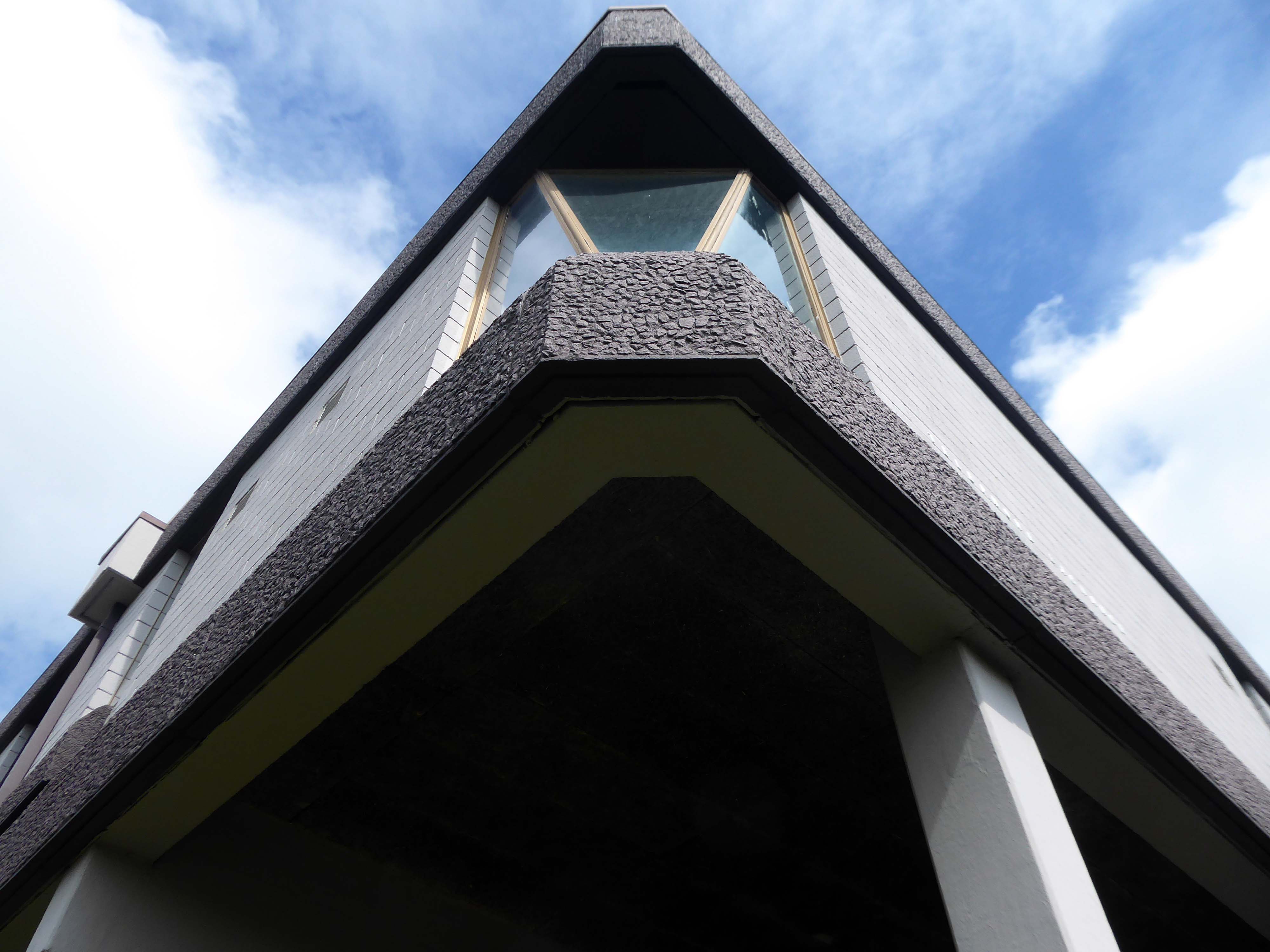
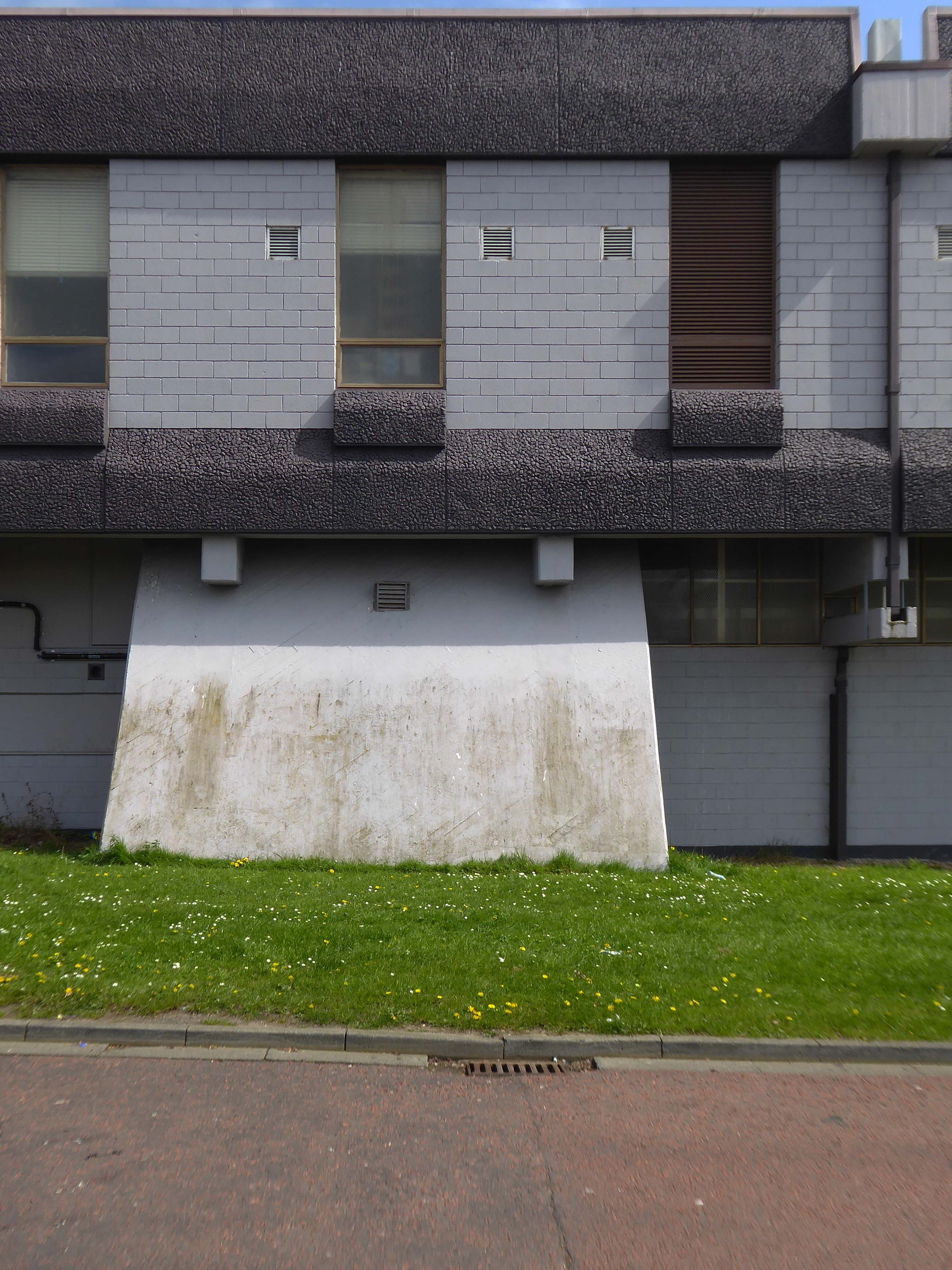
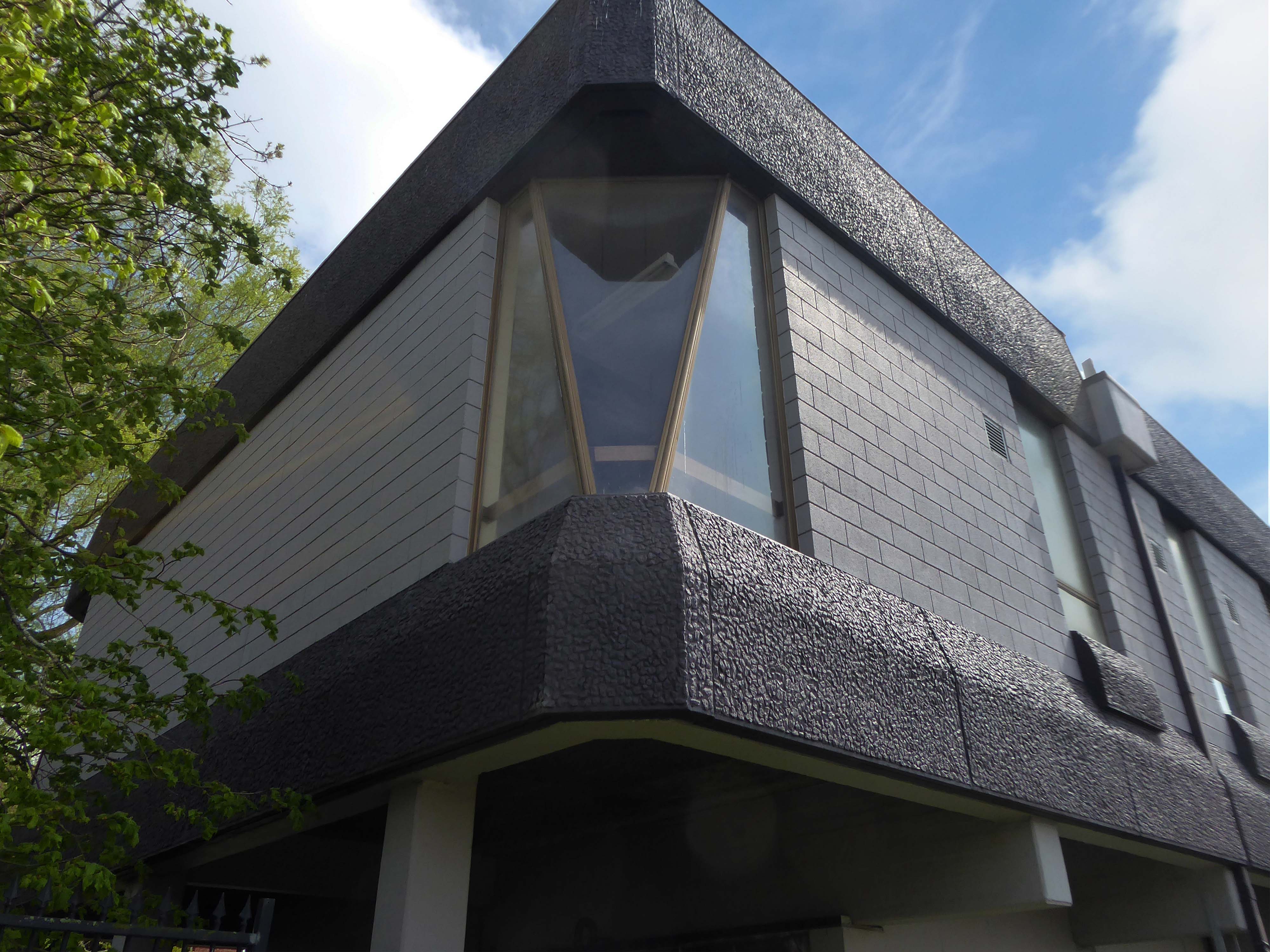
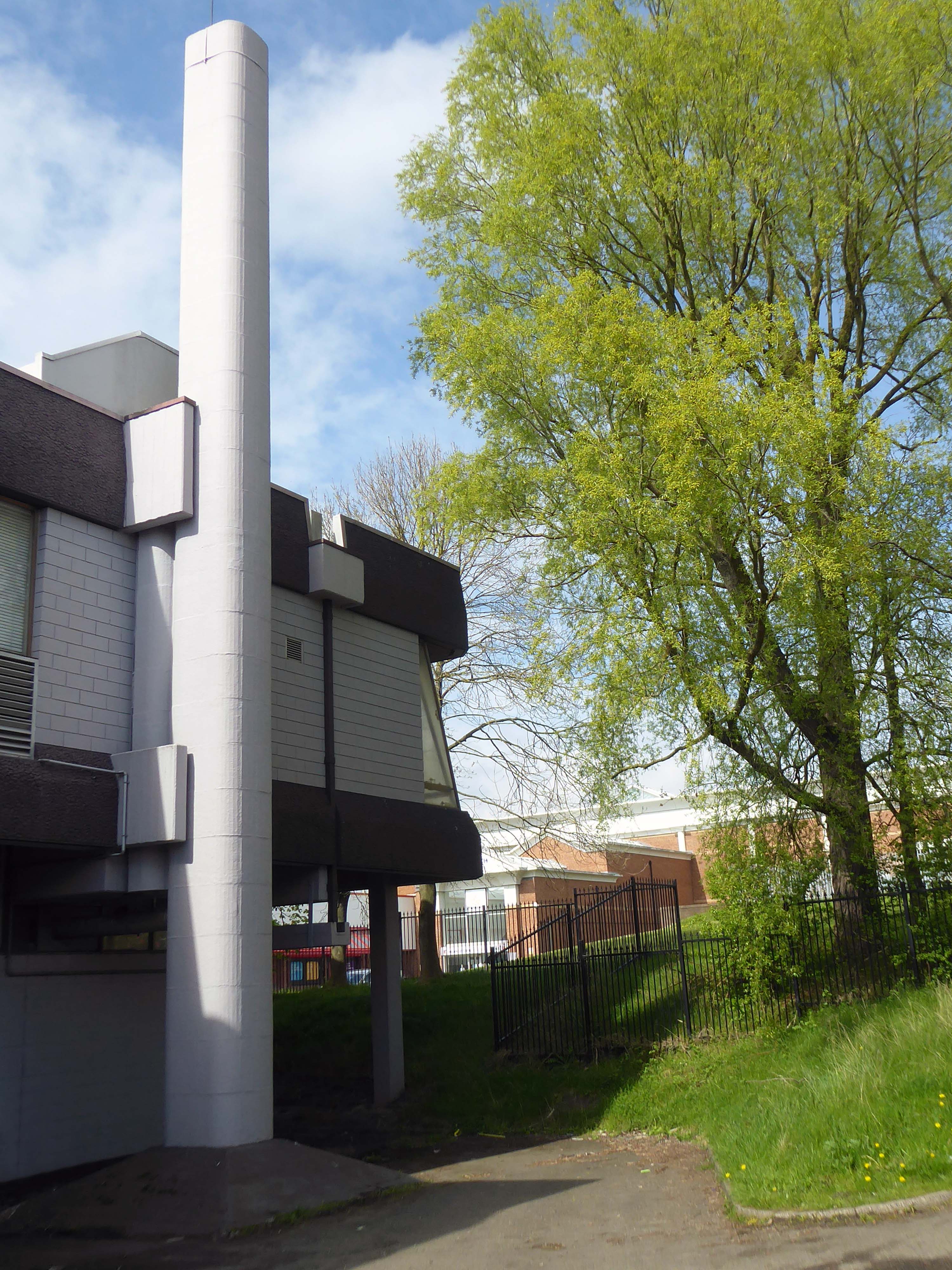
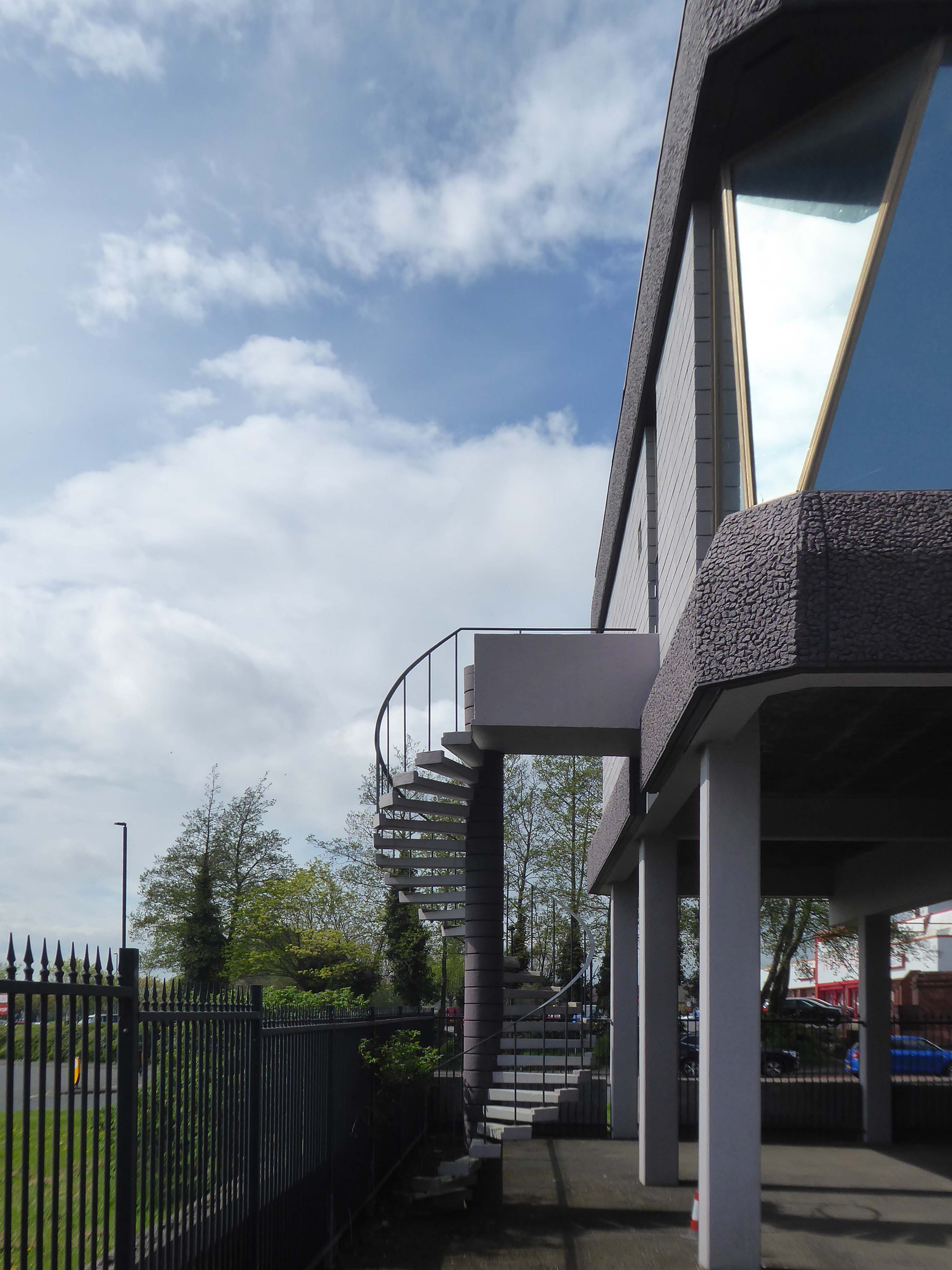
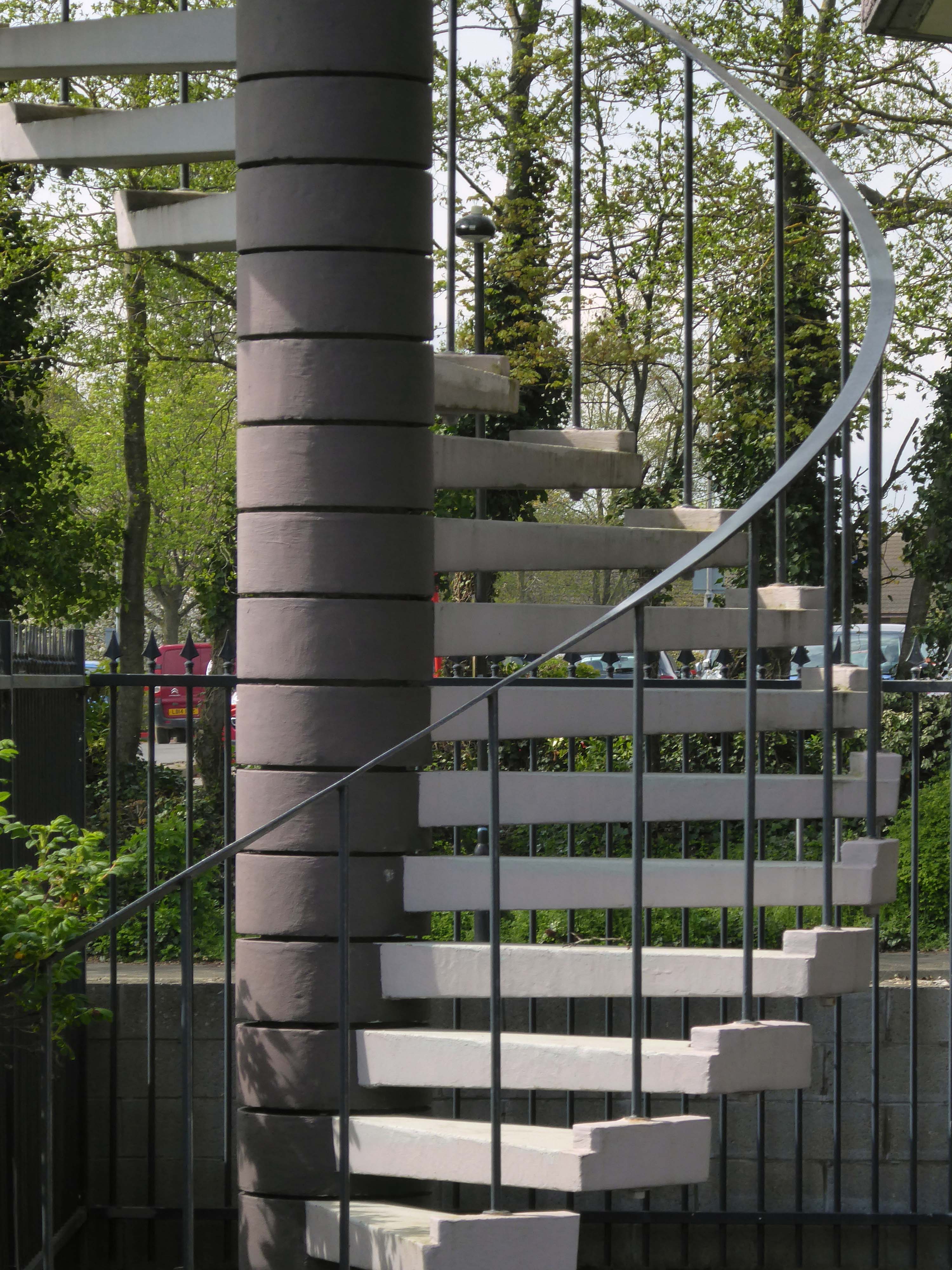
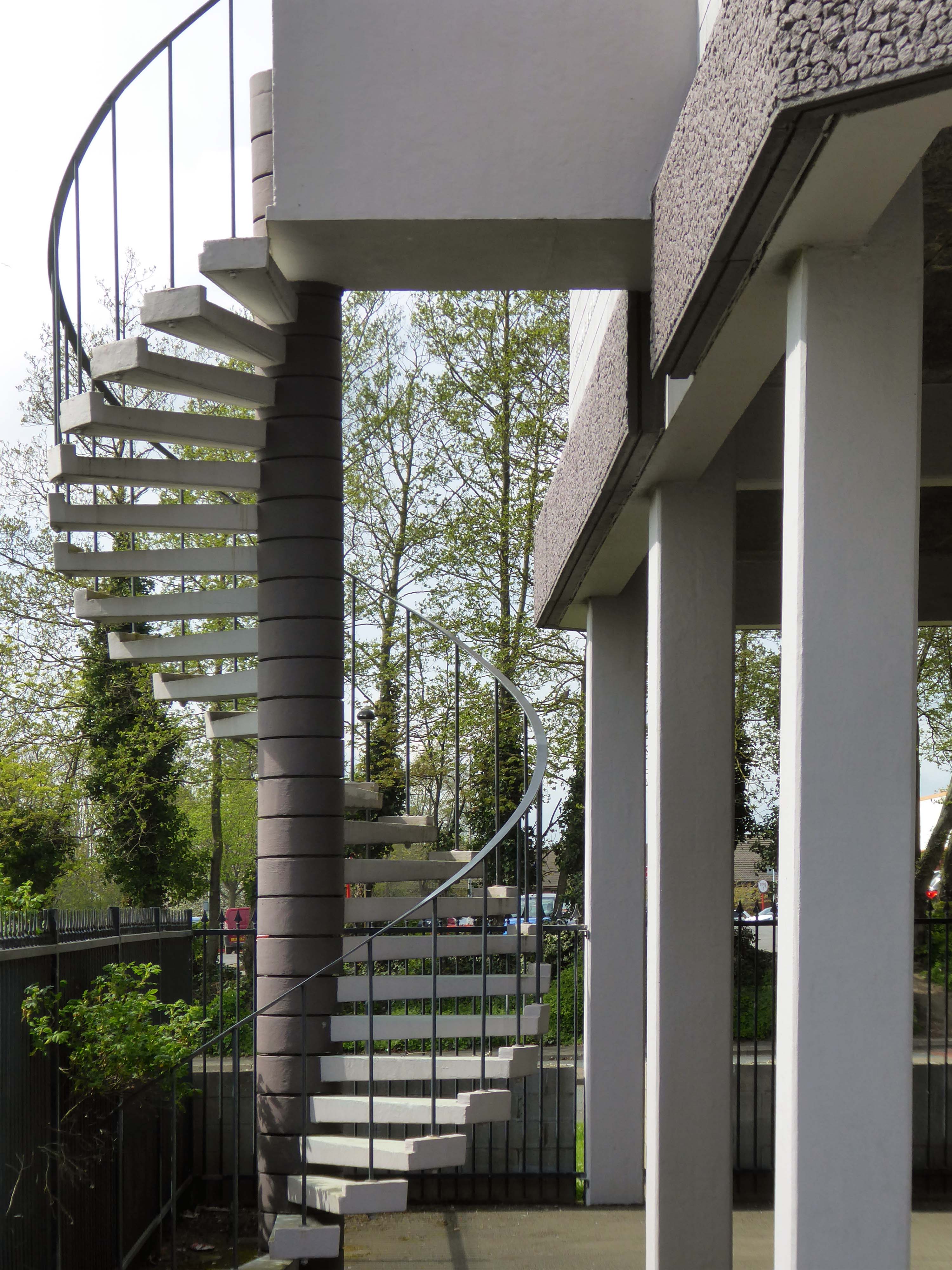
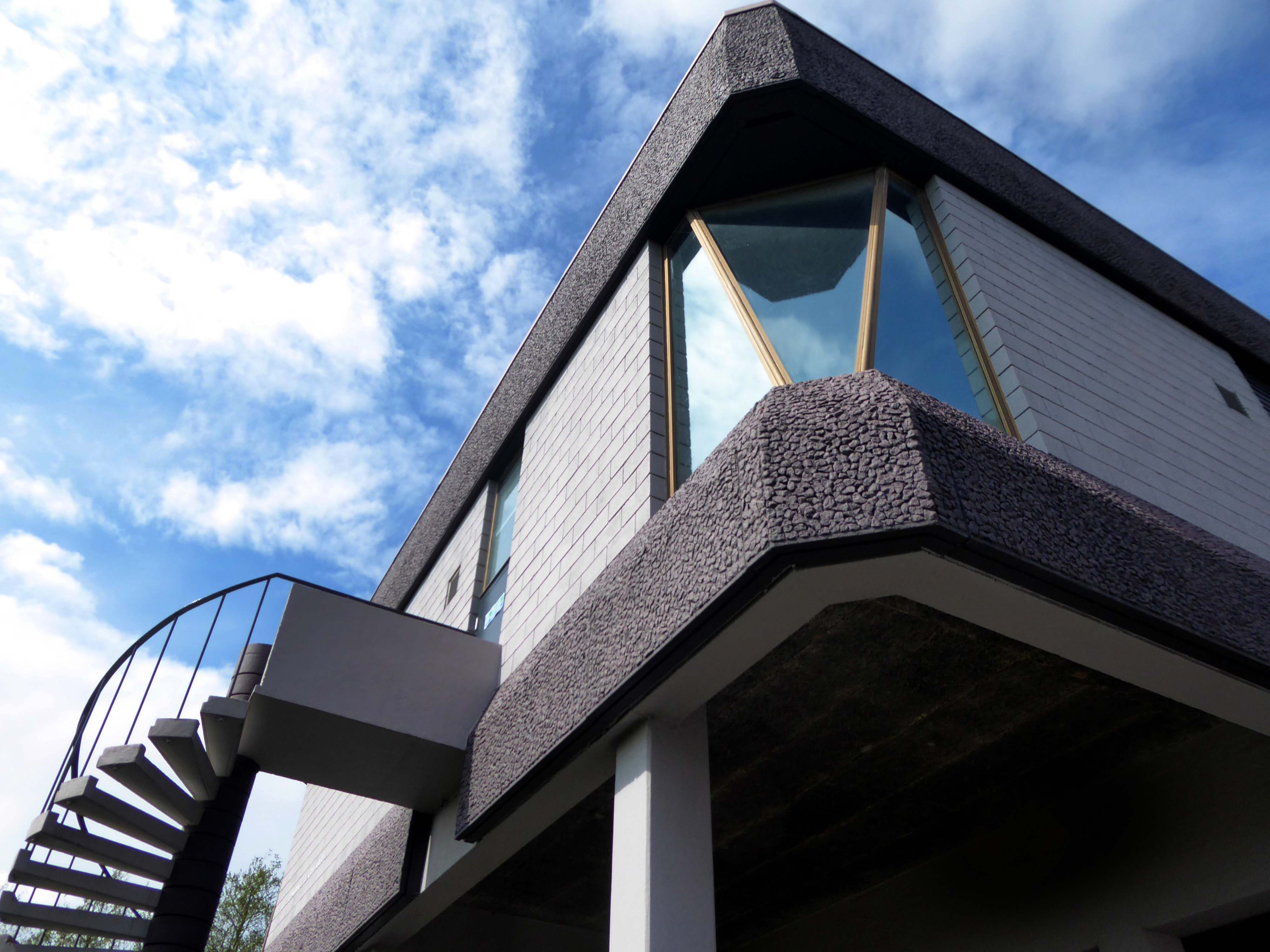
It is a real delight – an exceptional spiral staircase and futuristic chamfered windows angled at each of the four corners.

Architect: DOE Leeds

Detail design by Newcastle practice Douglass Wise & Partners.

Structural engineers: Cooper Higgins & Partners.

Main contractor: Brims & Co Ltd.

Let’s take a loving look around.

Wigan Walk

Arriving at Wigan Wallgate turn left and left and right.

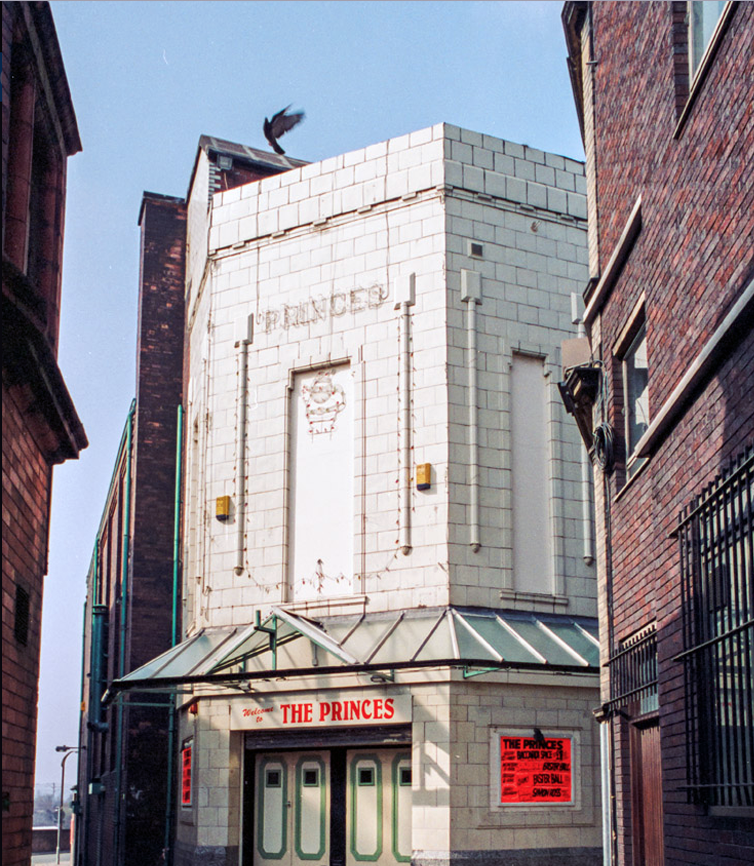
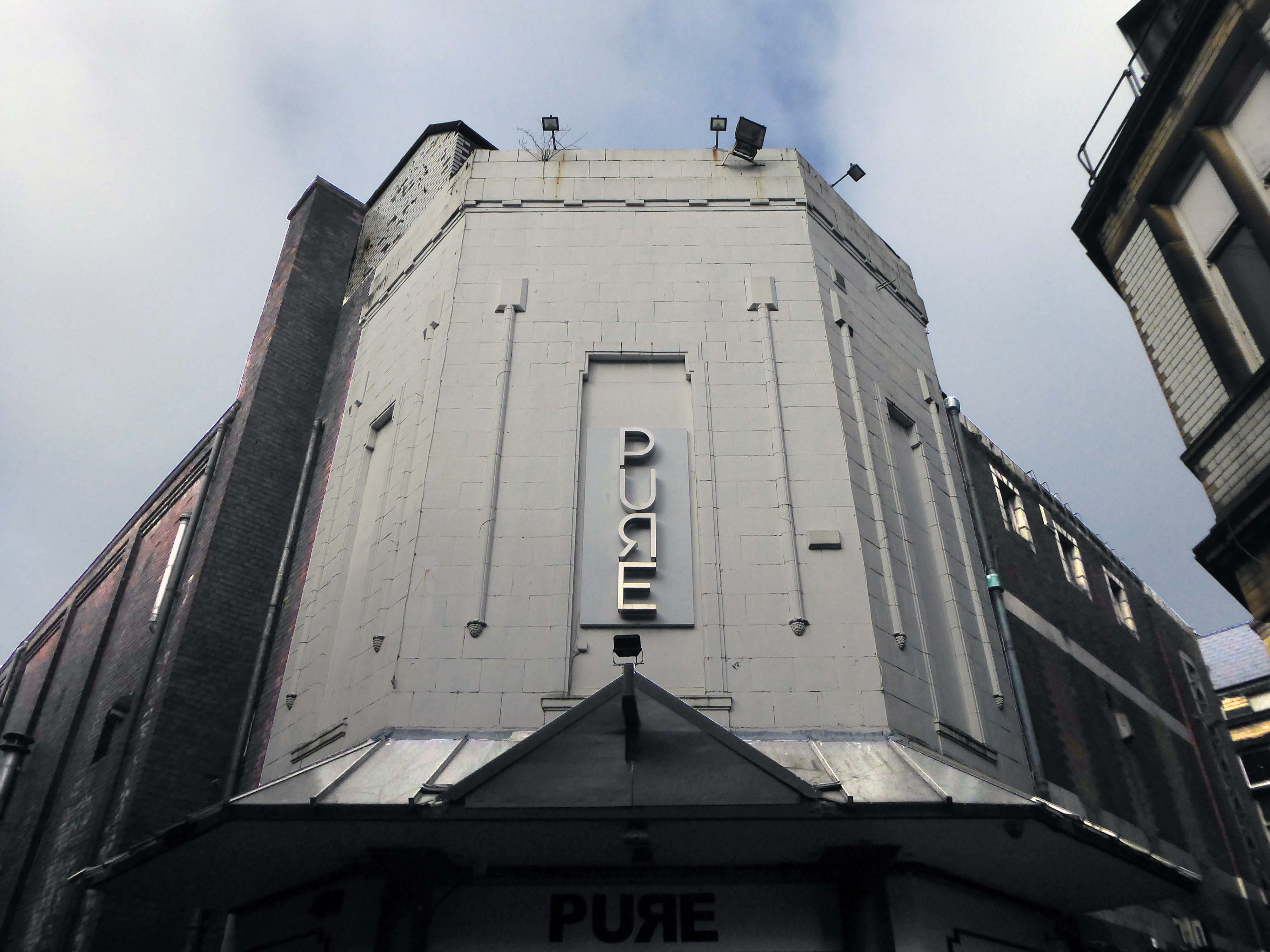
Tucked away along Clarence Yard is the former Princes Cinema.

Photo: Ian Grundy

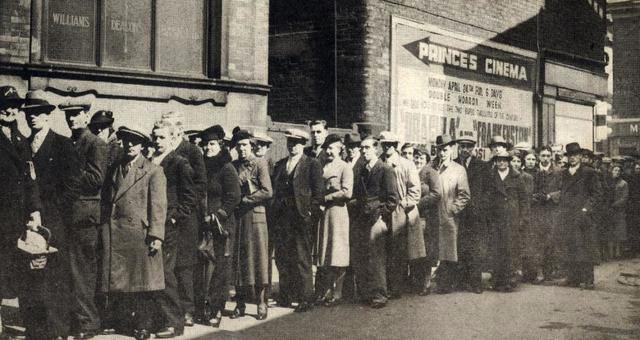
Where once upon a time the flat capped and hatted audience queued at length, for a glimpse of Dracula and Frankenstein.

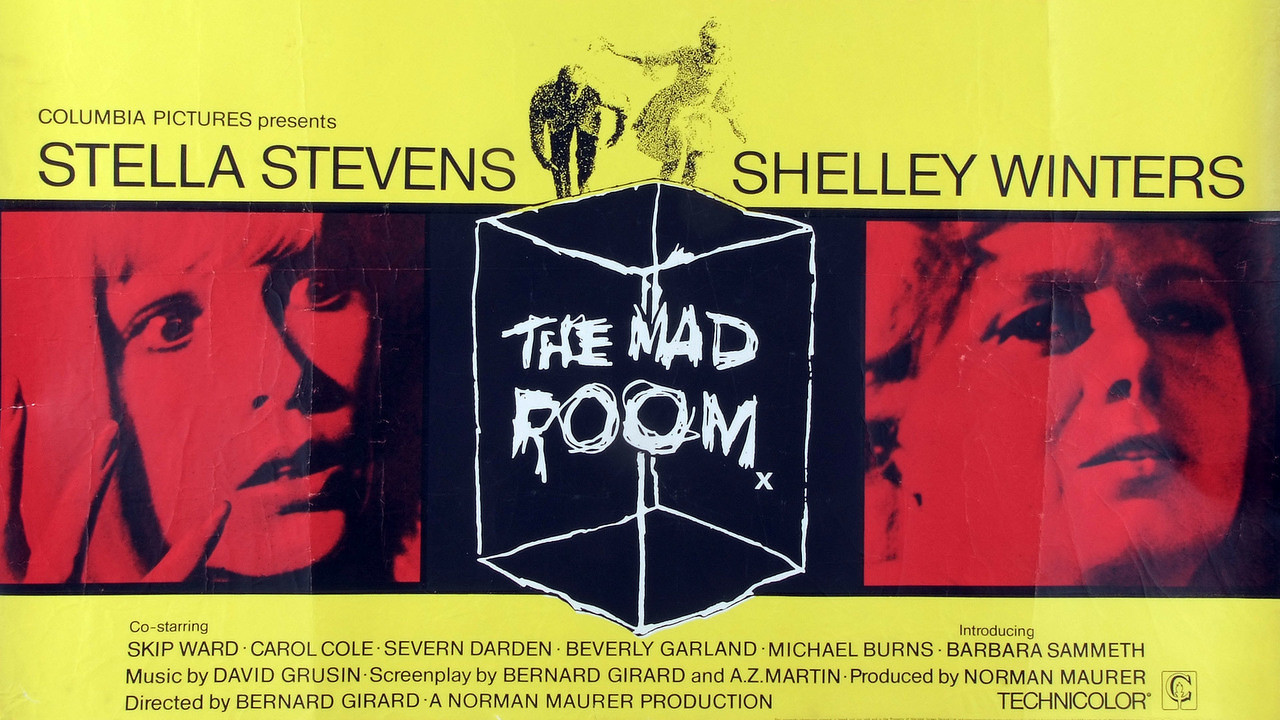
Opened in 1934 and closed on 10th January 1970 with a screening of The Mad Room.

Cinema Treasures

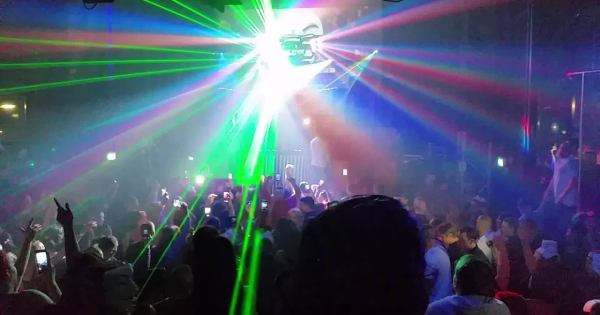
It has subsequently been in use as a nightclub.

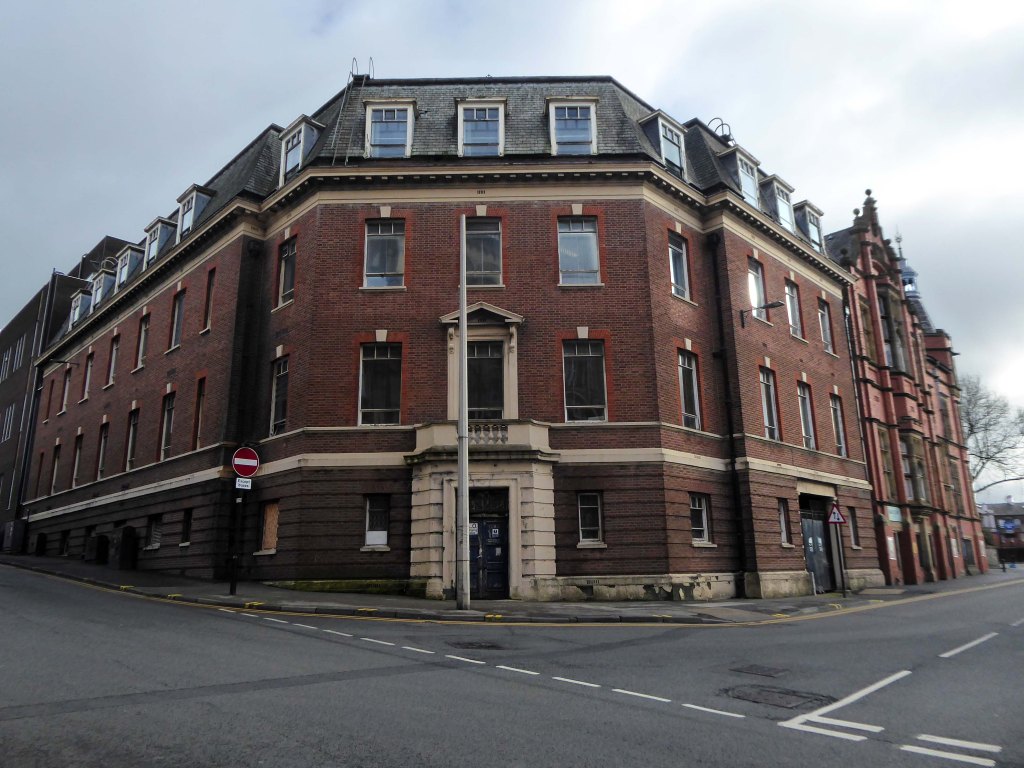
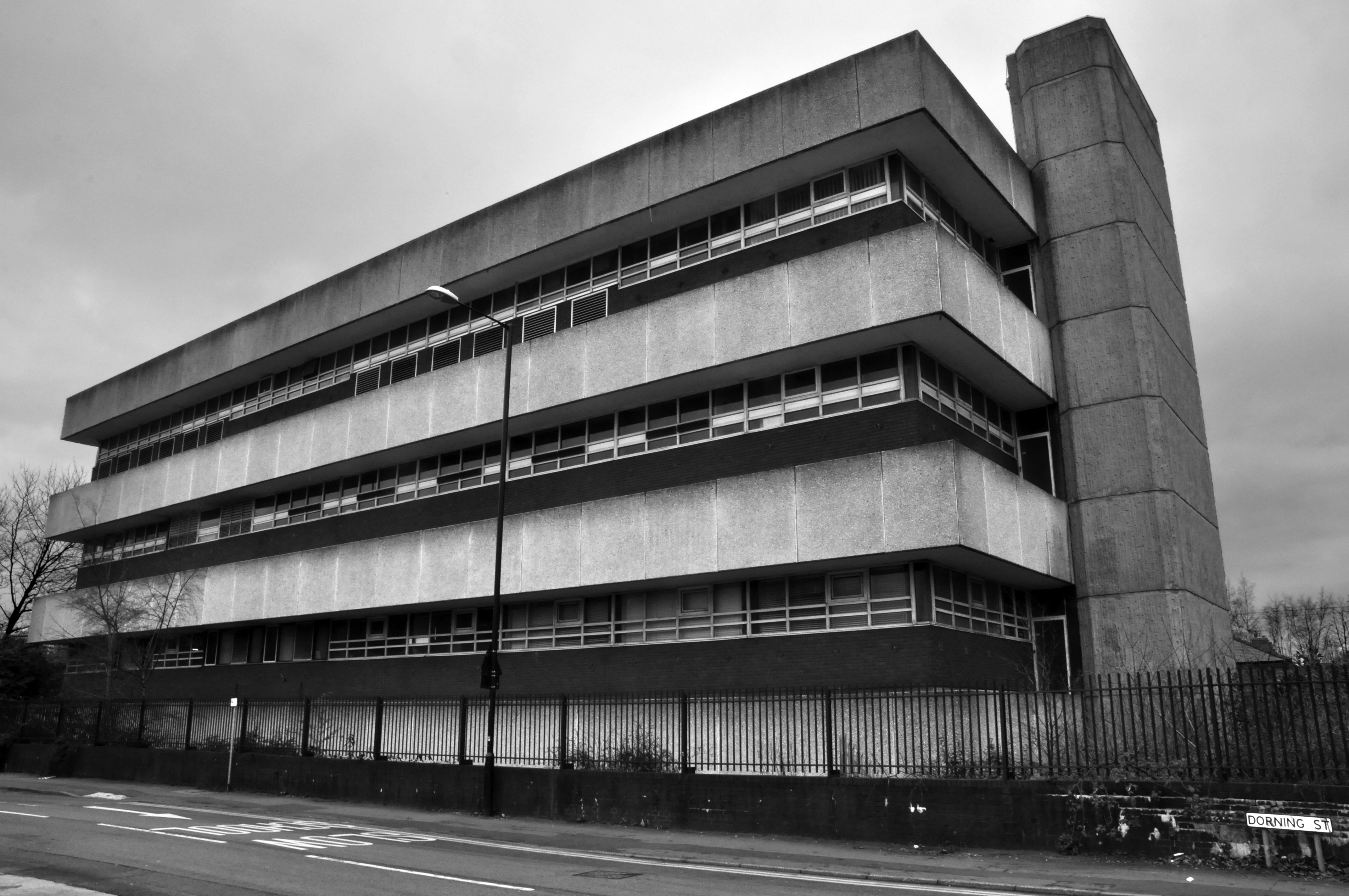
Back out onto Dorning Street in search of telephone exchanges, three telephone exchanges.

Inter-war

Sixties.

Seventies.

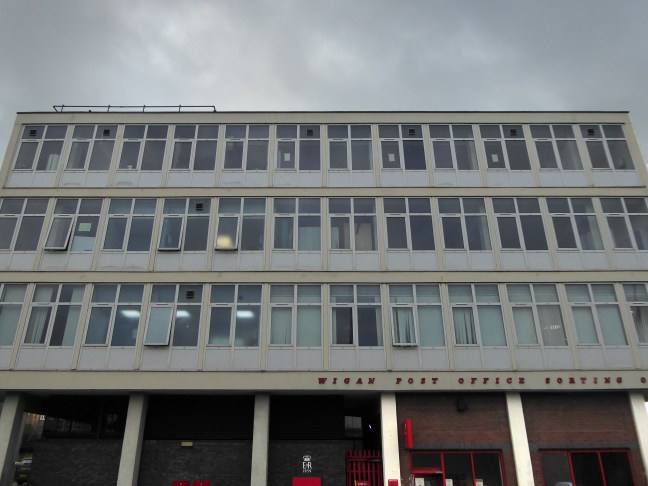
Just around the corner is an expansive GPO Sorting Office of 1959.

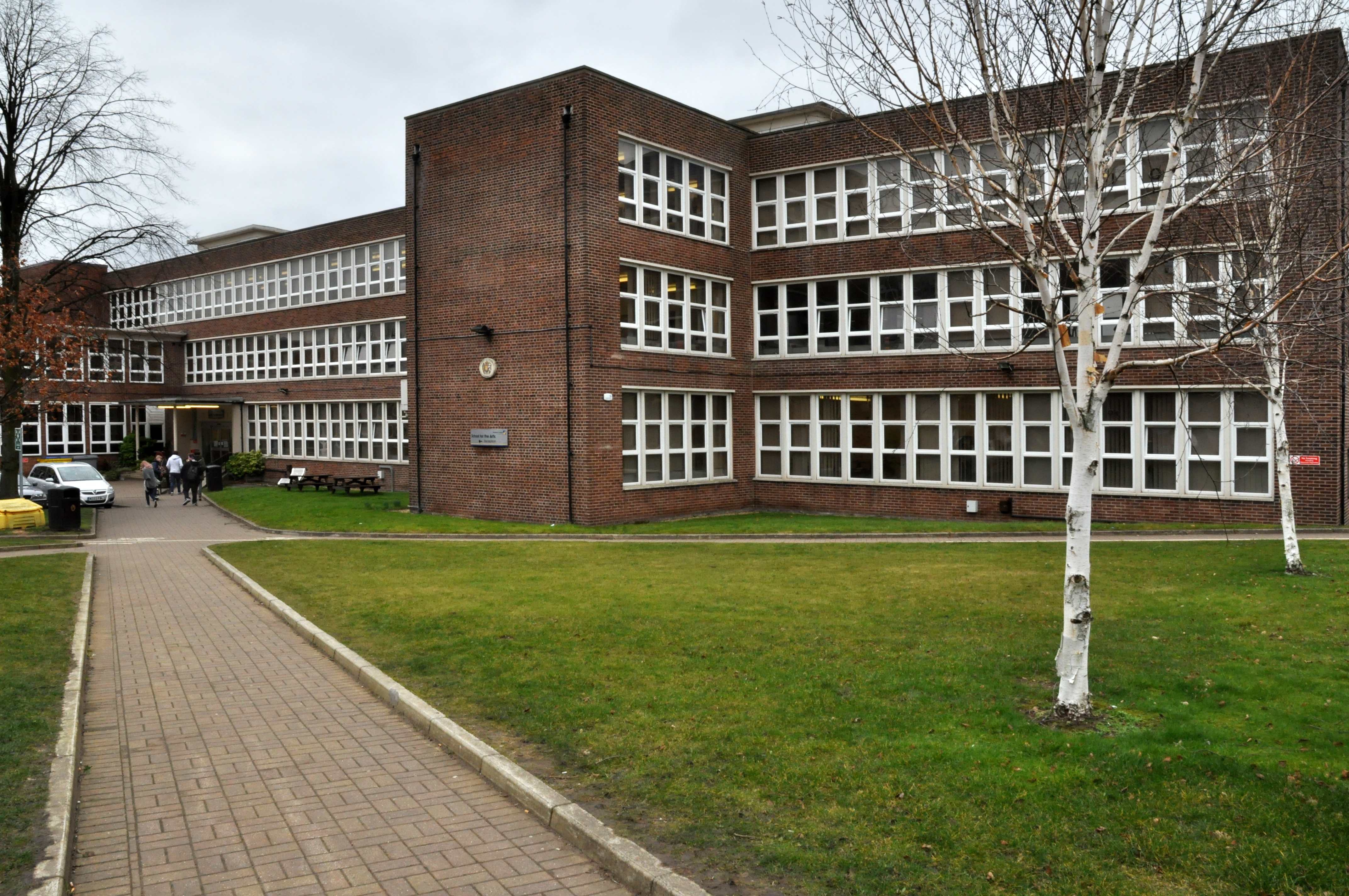
Across the way is the Technical College.

The foundations of Wigan & Leigh College date back to 1857, and the current institution was formed in April 1992 through the merger of Wigan College of Technology and Leigh College.

Partly formed from the Thomas Linacre Technical School.

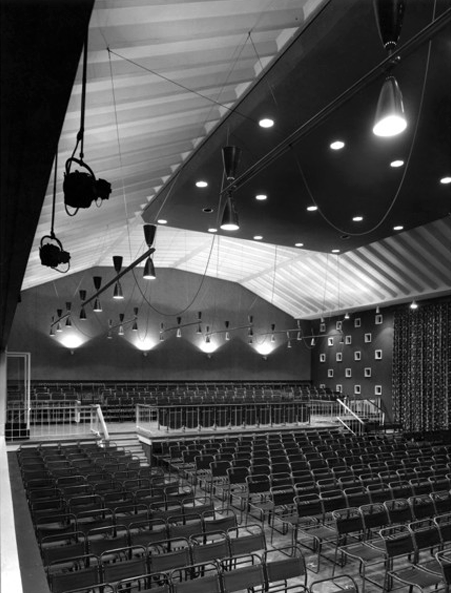
Architects: Howard V Lobb G Grenfell Bains & Hargreaves 1954

School Hall – RIBA Pix

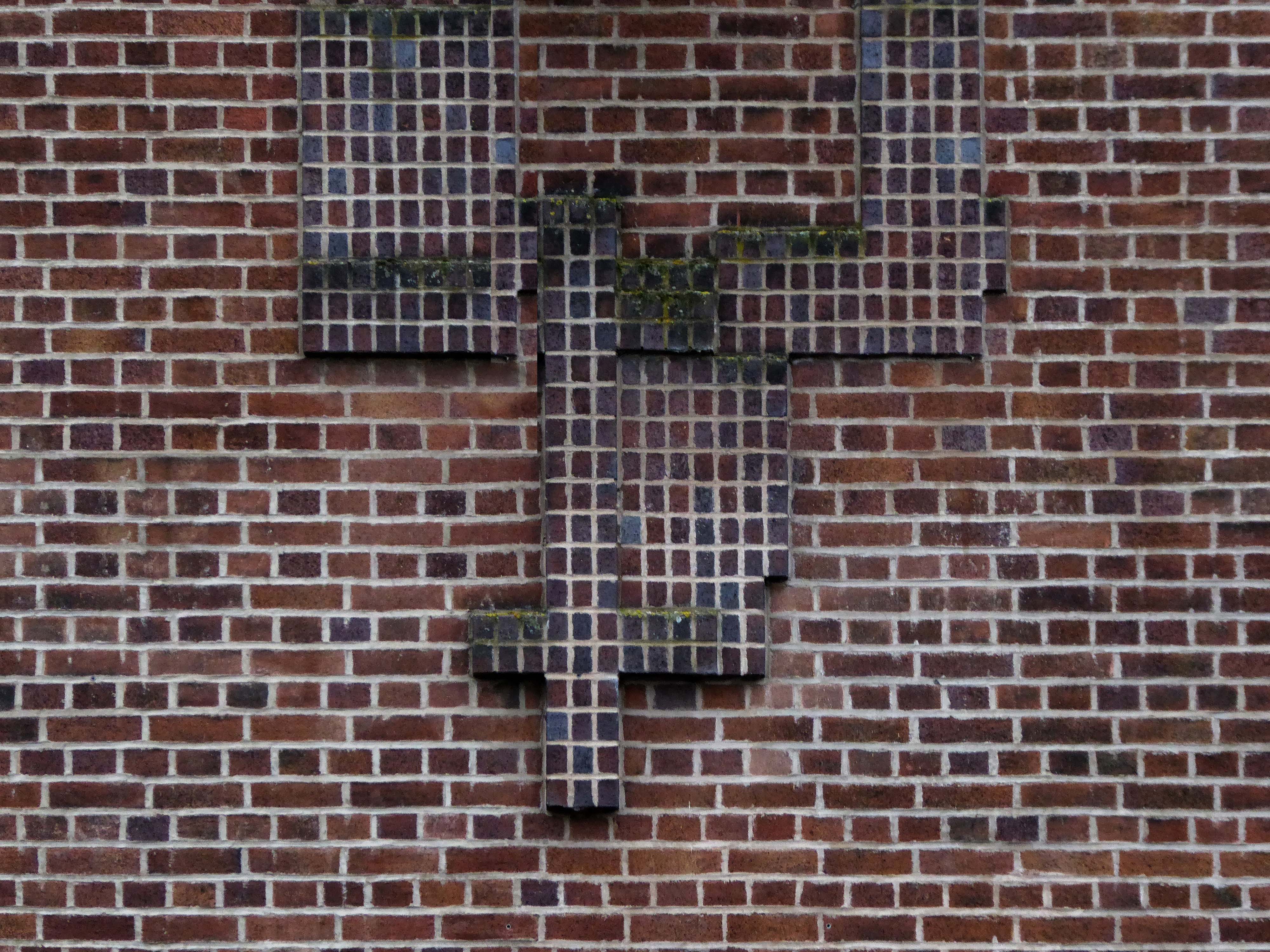
Curious decorative brick motif – a floor plan of the building.

My thanks to Mark Watson for his erudition and insight.

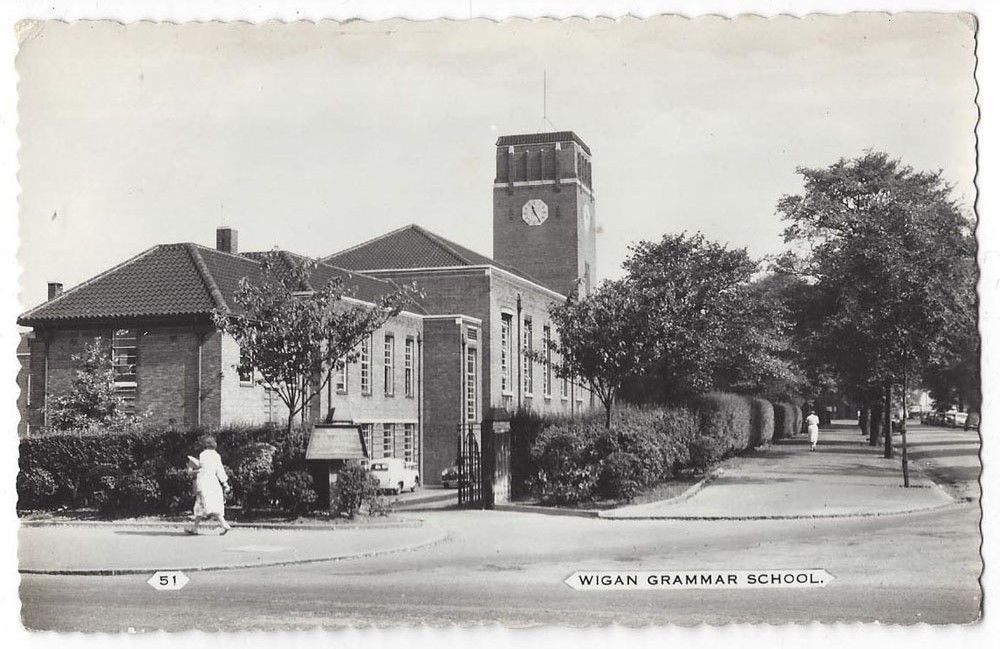
Across the road the former Grammar School now an NHS Centre.

Wigan Grammar School was founded in 1597 and closed in 1972 as part of the comprehensive education movement. it became Mesnes High School until 1989, and then the Mesnes Building of Wigan College.

It was designated a Grade II listed building in 1997.

Architect: A E Munby

Since 2003, it has been known as the Thomas Linacre Centre and is an out-patient department for the Wrightington Wigan and Leigh NHS Trust.

Let’s head back into town and along Standishgate.

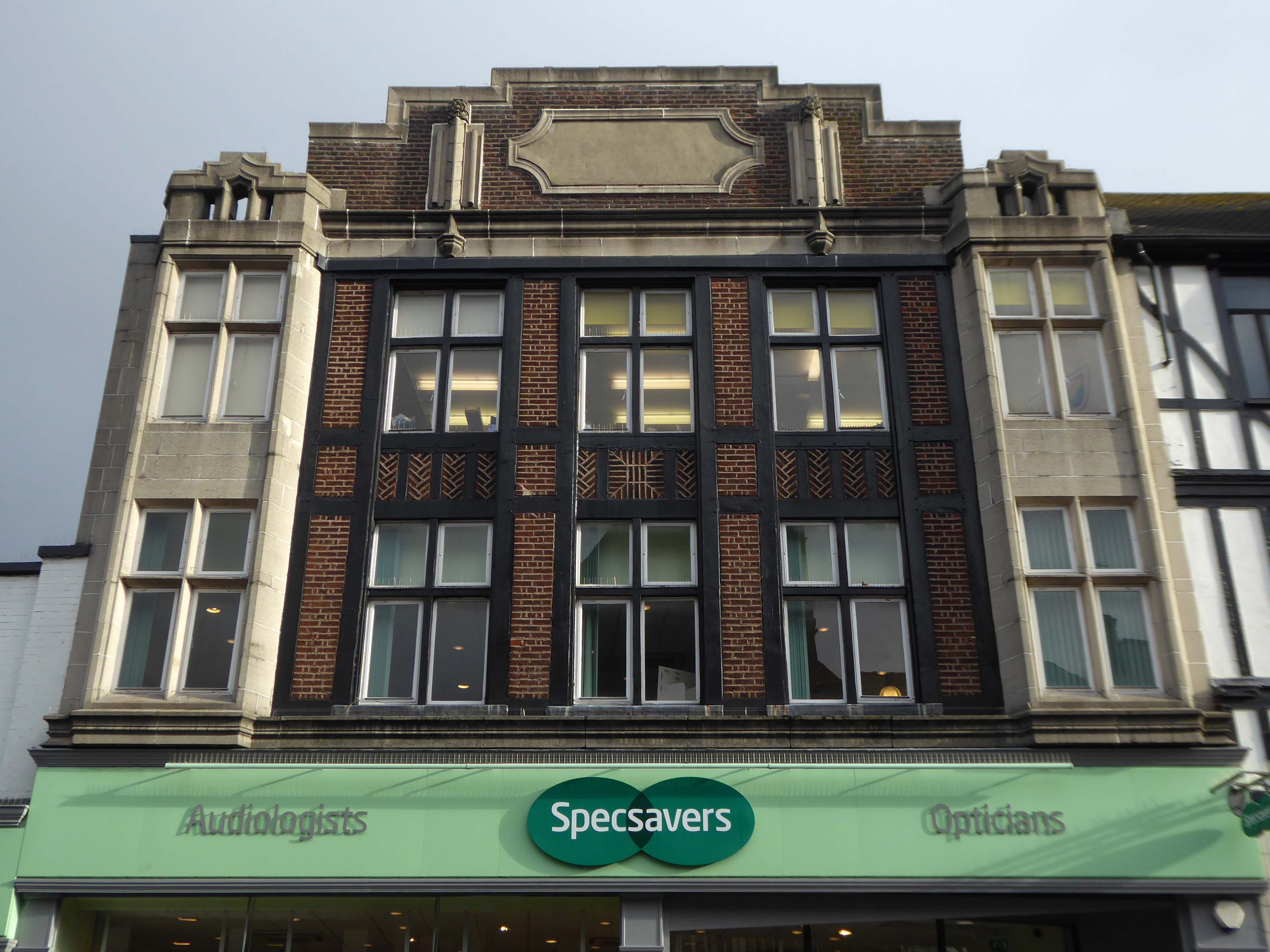
Former Burton Tailors – possibly.

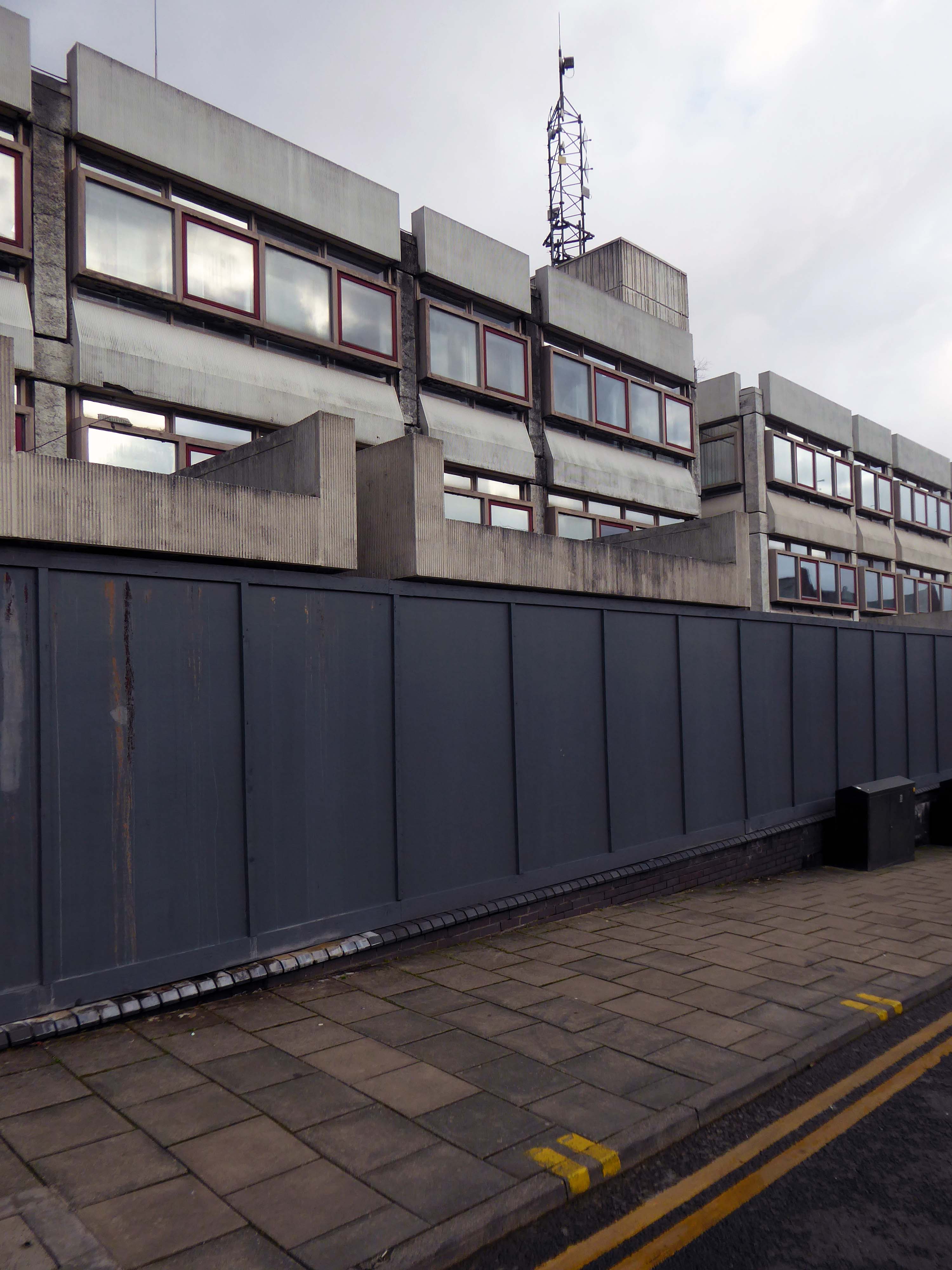
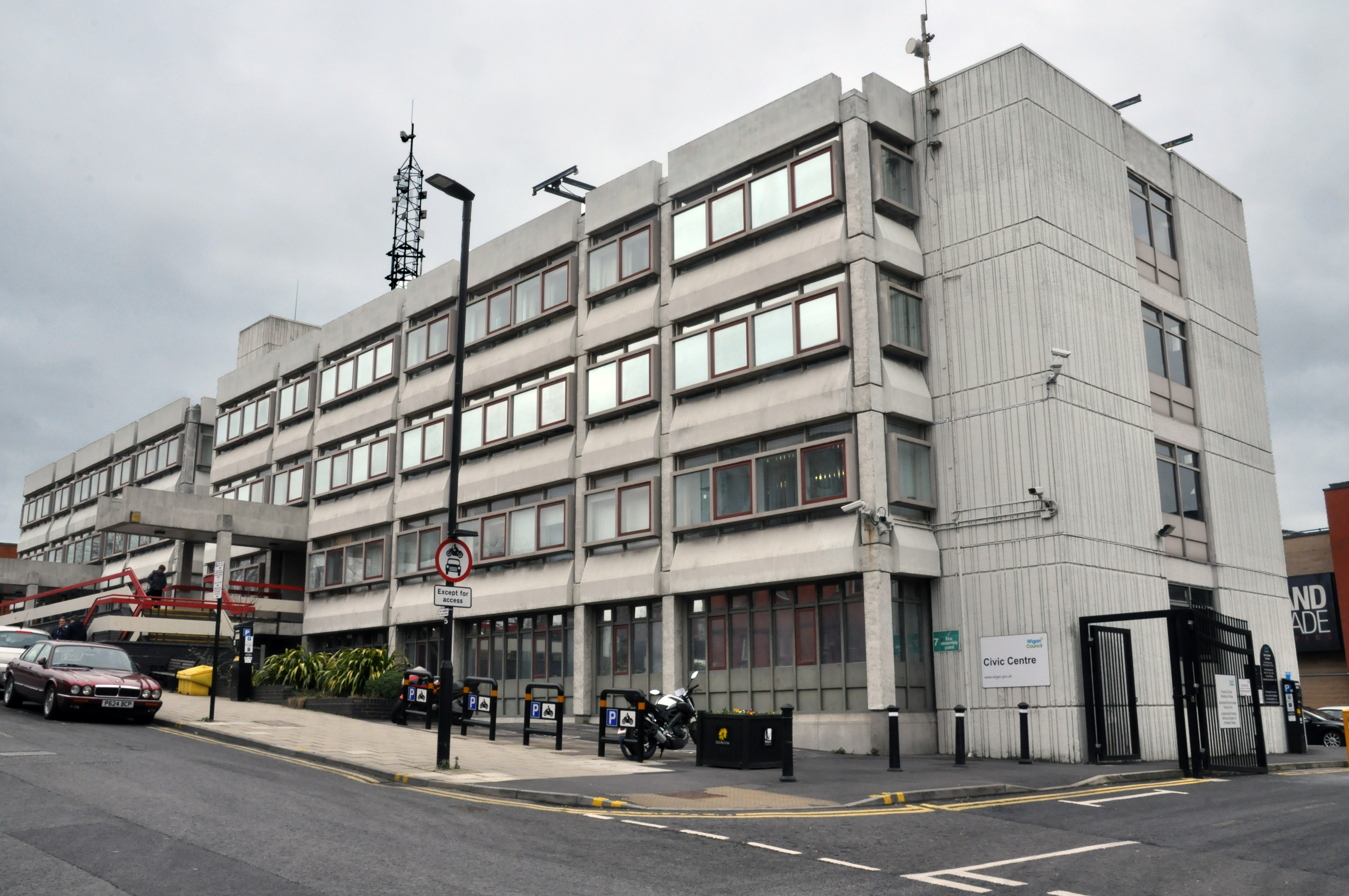
Turn left into Millgate to see the boarded up Civic Centre.

Formerly not boarded up Civic Centre.

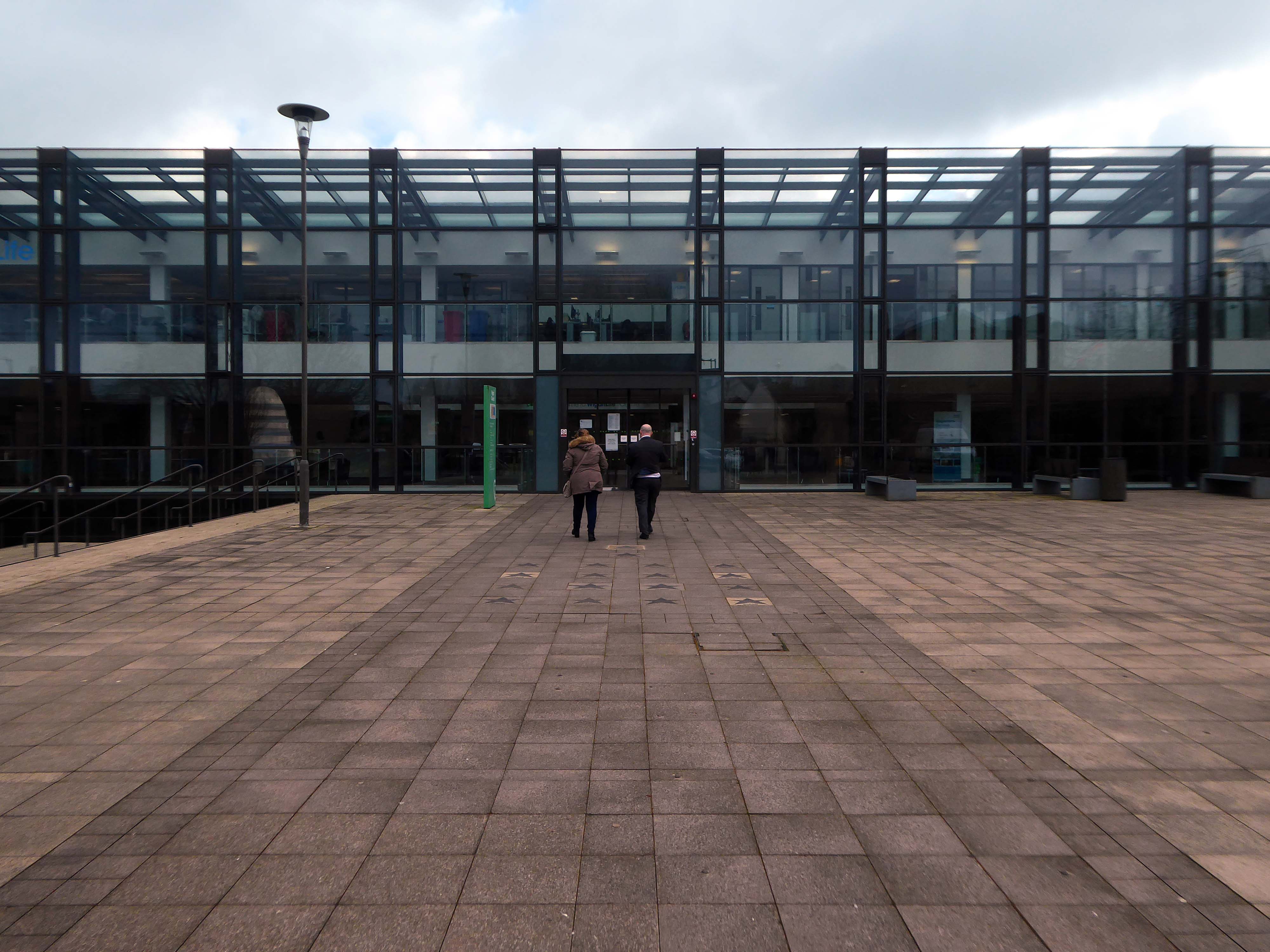
Across the way the new Library and Life Centre by Astudio and LCE Architects

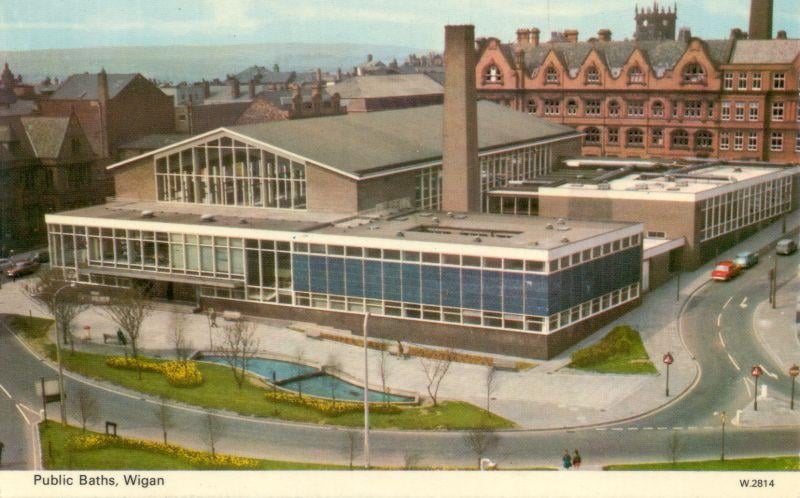
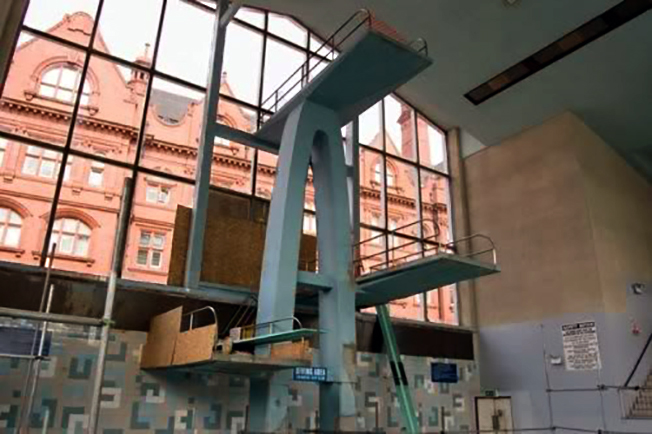
Down the road to where the International Swimming Pool was – opened 1968.

Demolished 2010

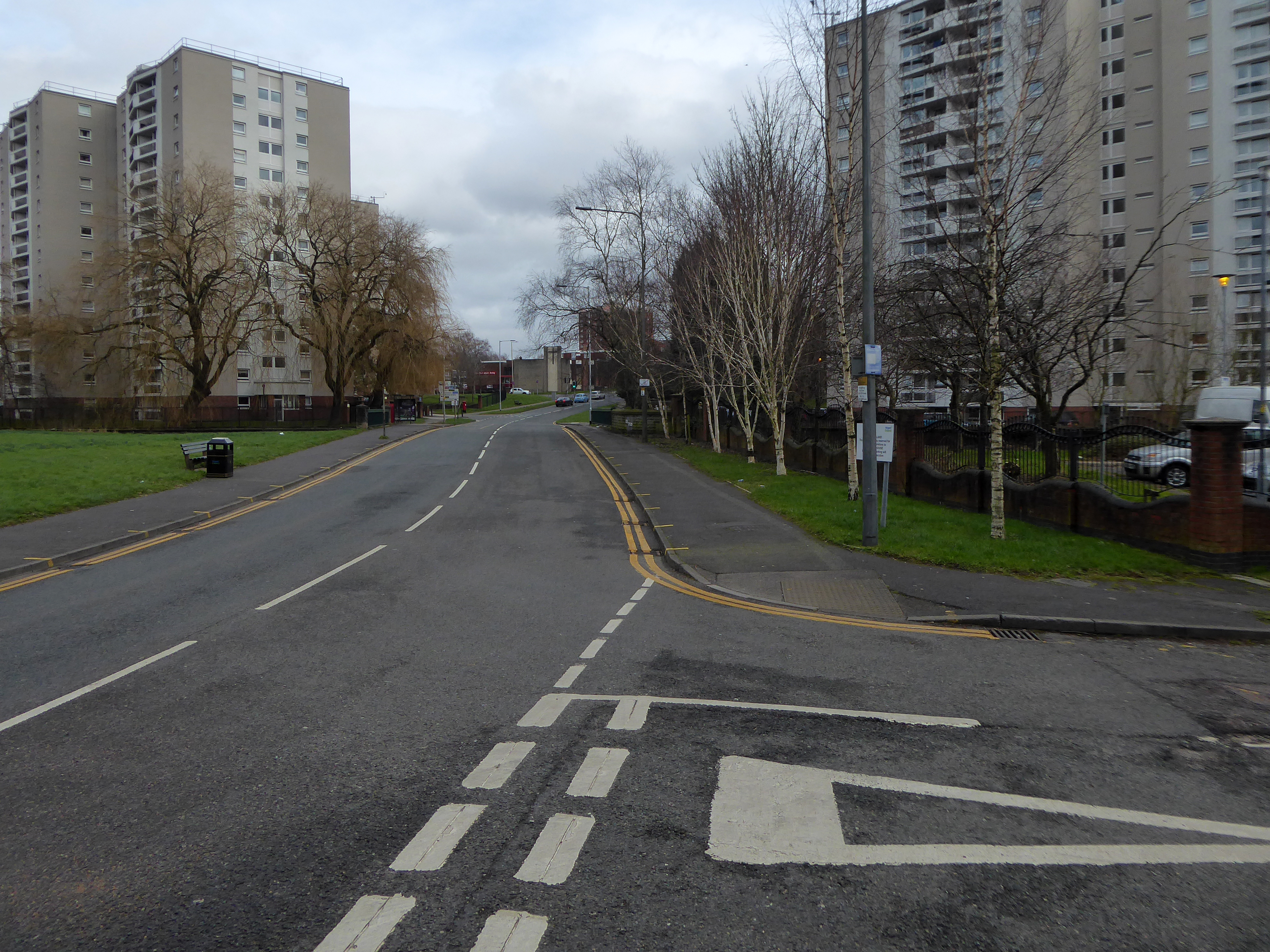
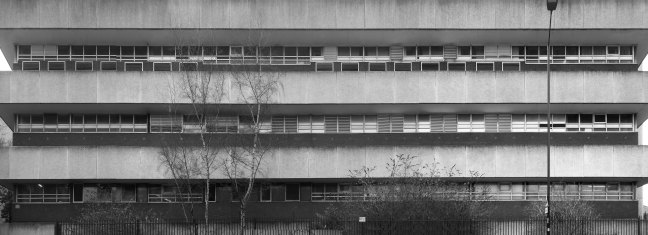
Scholes Comprehensive Development 1964 – five thirteen storey blocks.

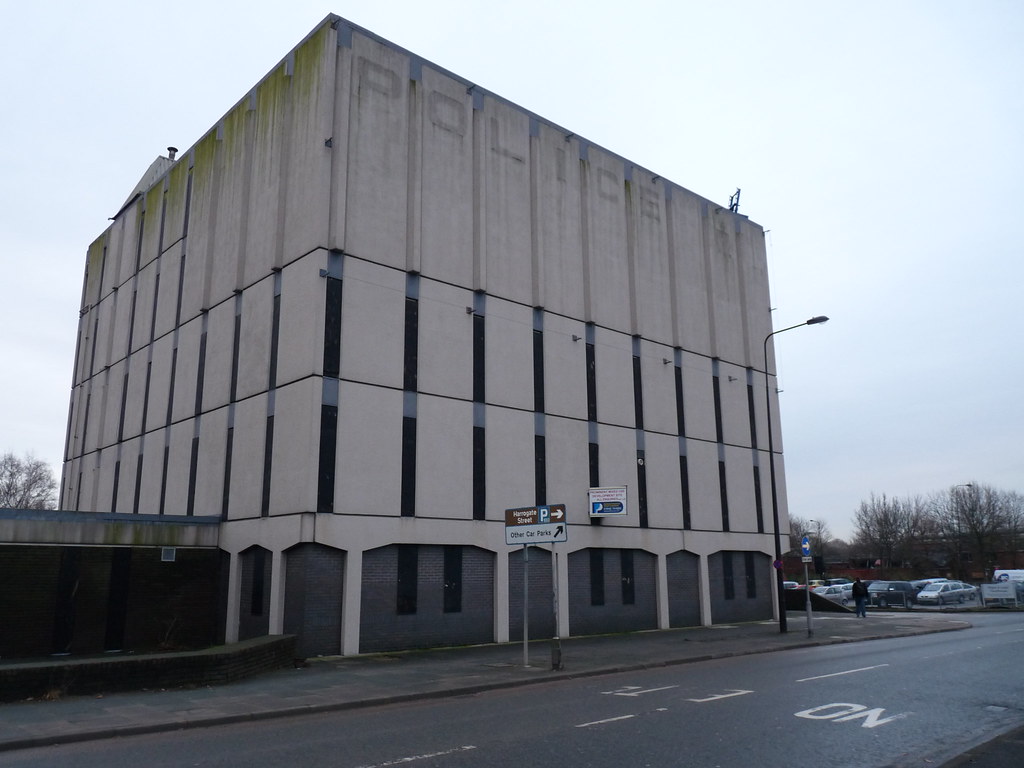
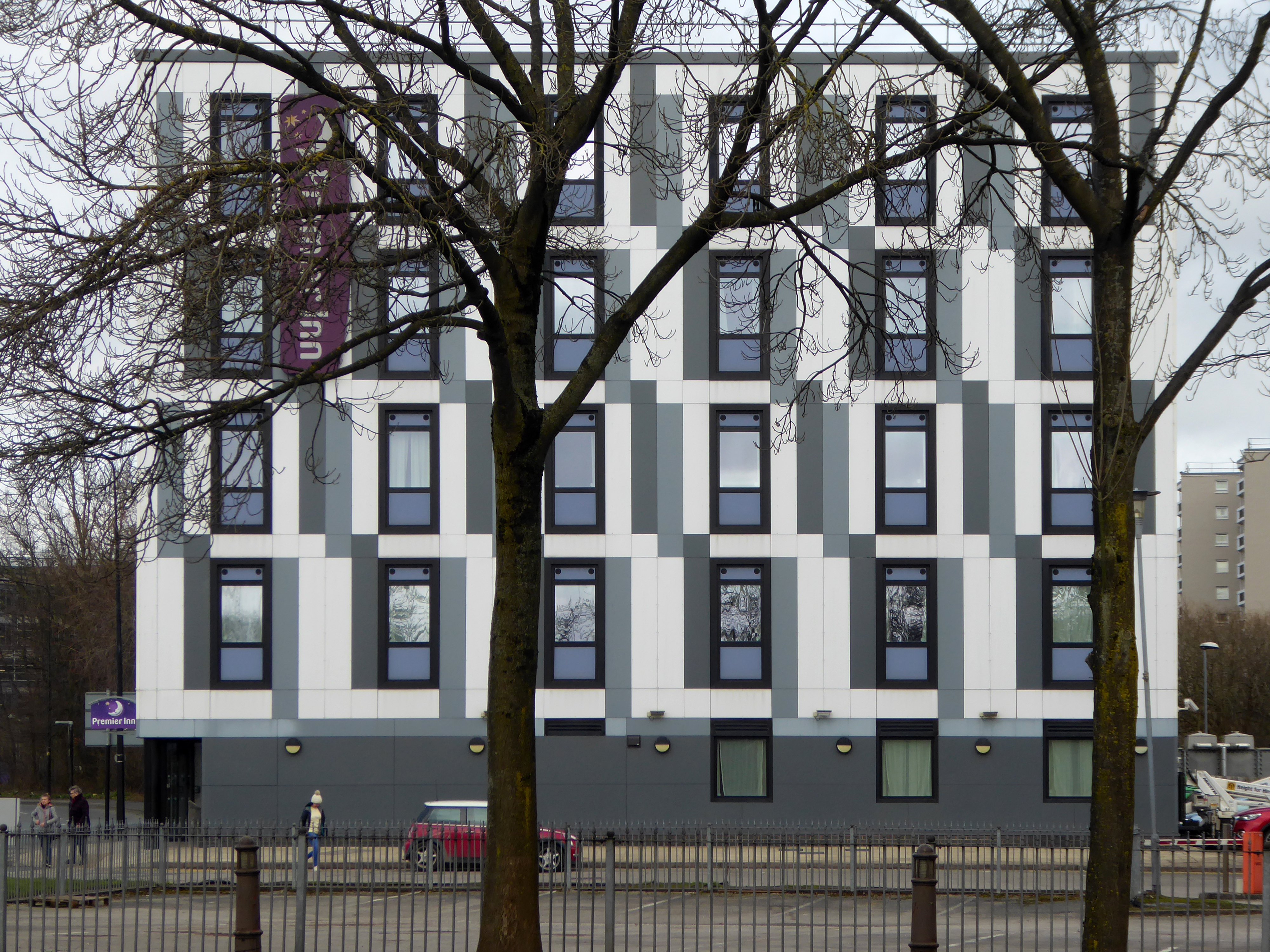
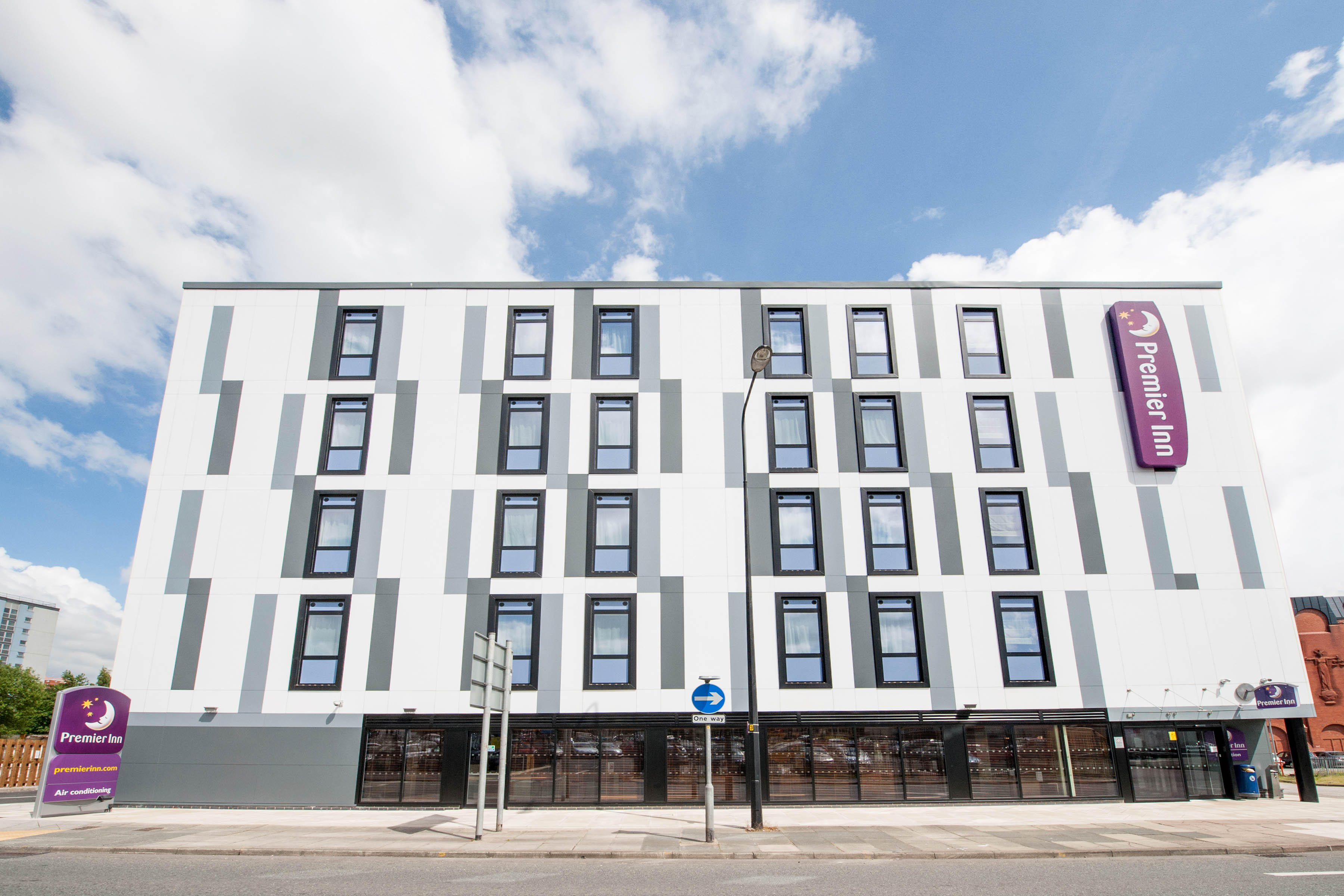
Moving down the street to the former Police Station now Premier Inn on Harrogate Street.

Lancashire County Architect: Roger Booth

Flickr

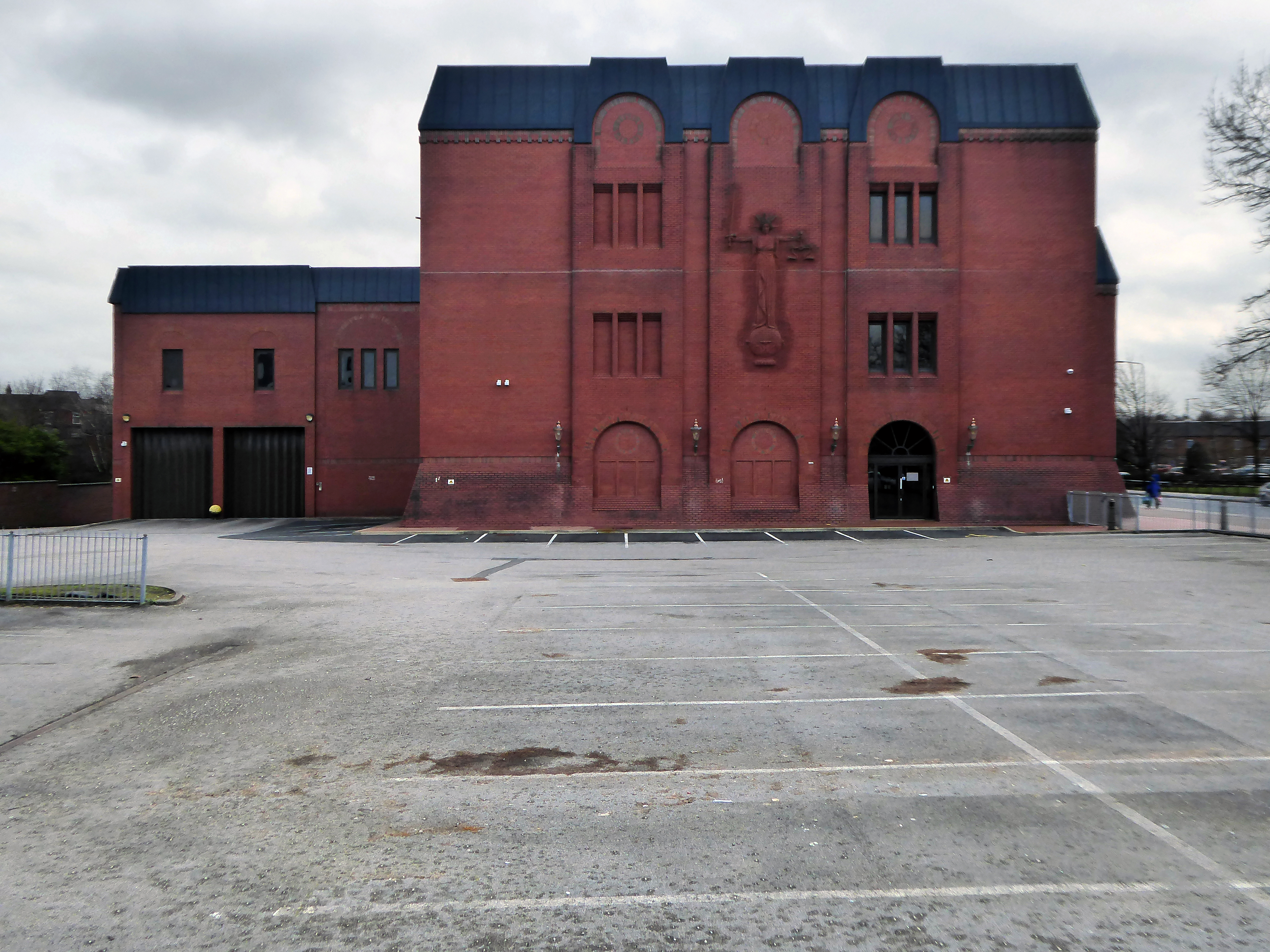
Next door the Post Modern brick monolith of the Wigan and Leigh Courthouse 1990.

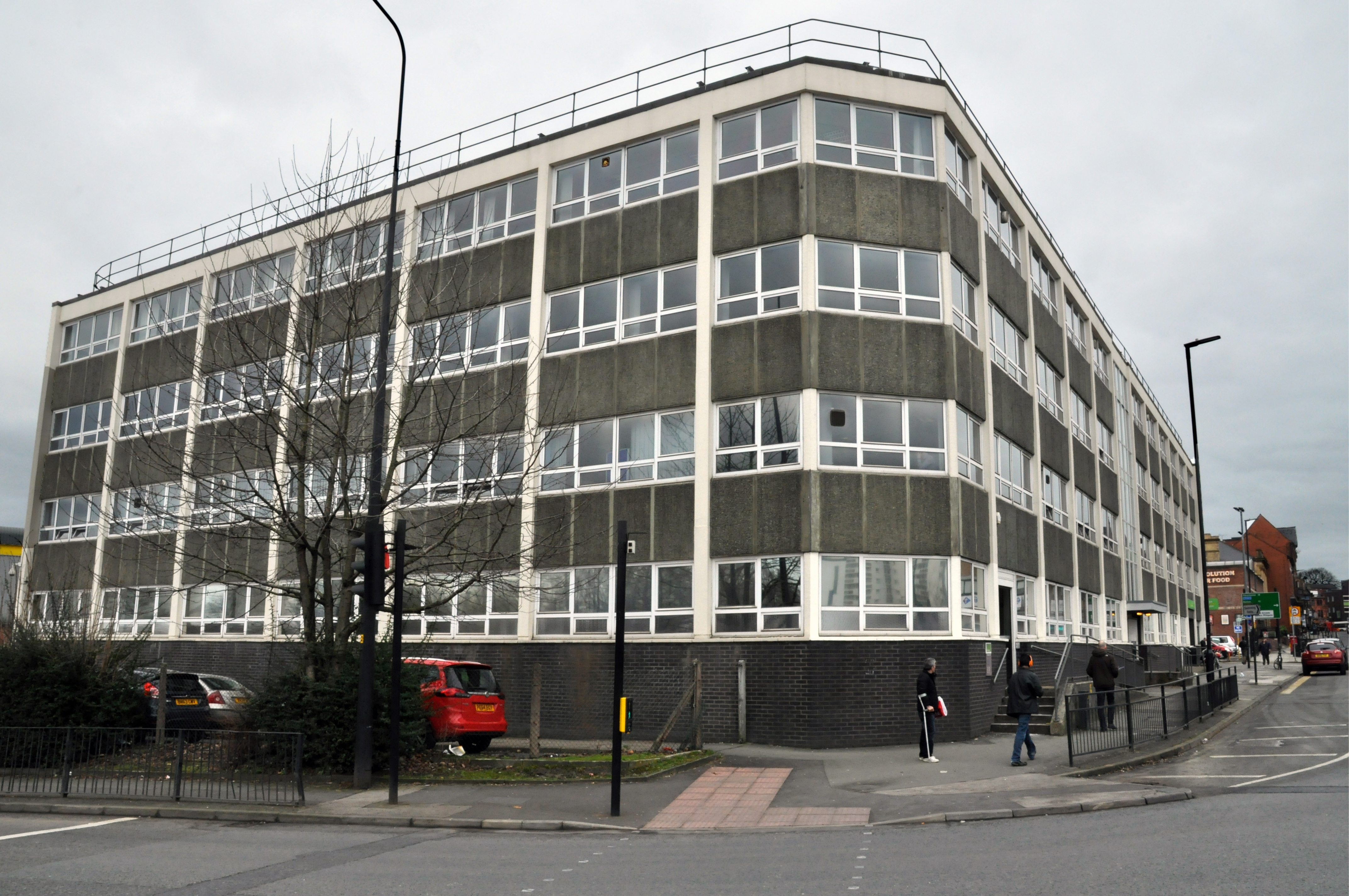
Then back up along King Street to visit the Job Centre.

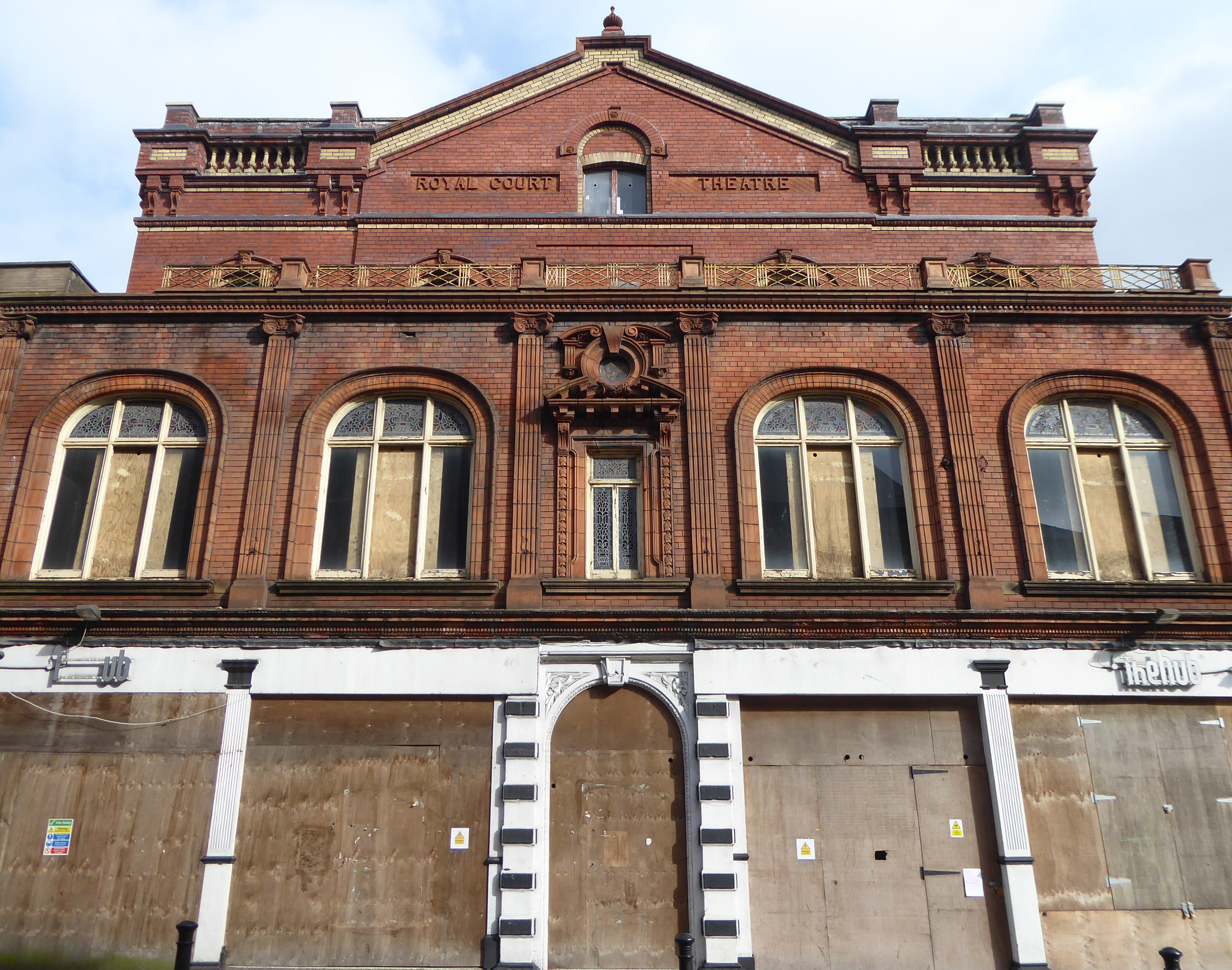
Take a look up at the Royal Court Theatre – 1886 Richard T Johnson

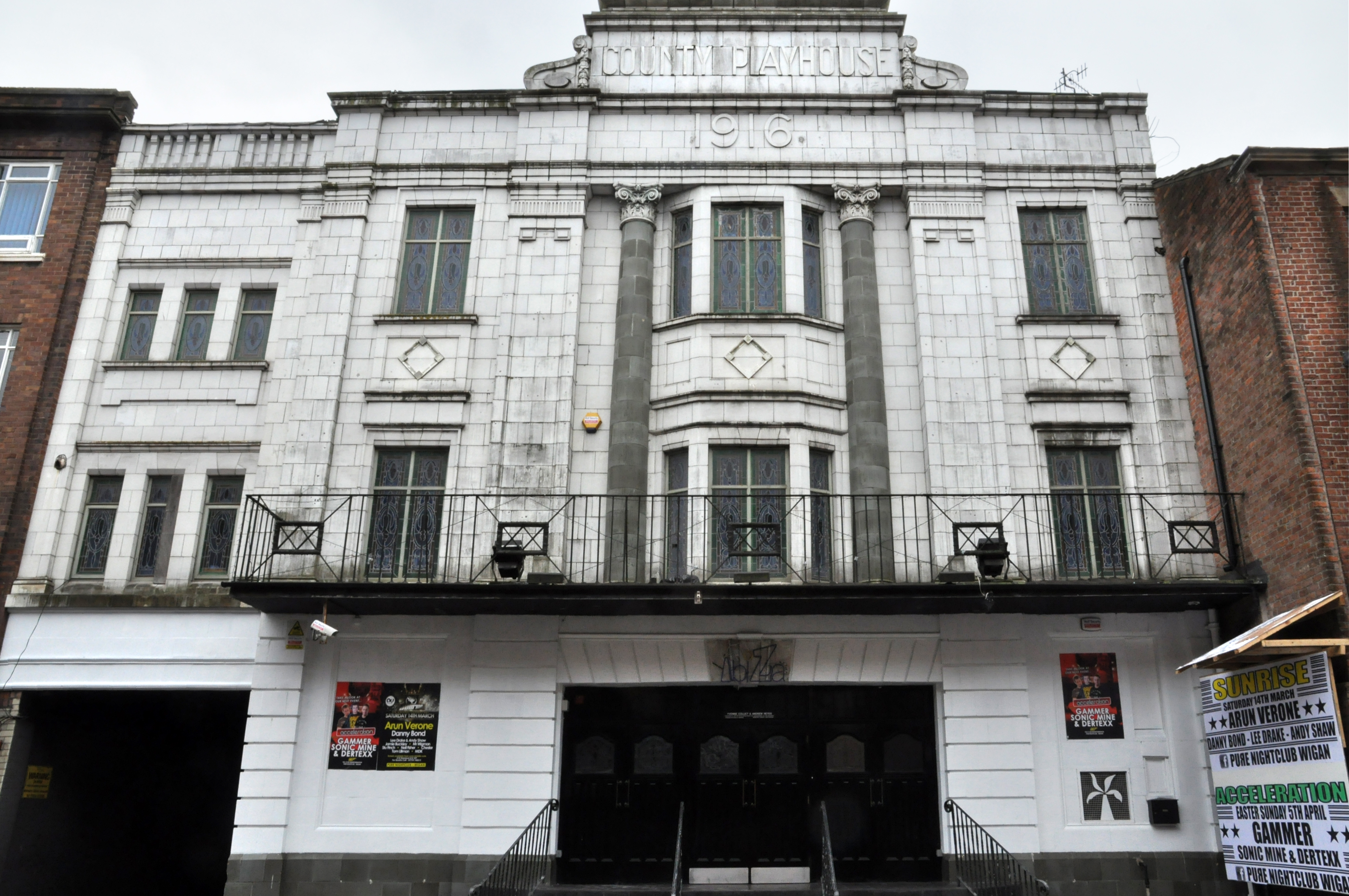
Then back up toward the centre to the County Playhouse.

Construction began on the County Playhouse in 1916. However, due to a shortage of materials and labour during World War I, it was not completed until 1919.

Finally opened on 22nd December 1919 with The Peril Within – starring Dorothy Gish.

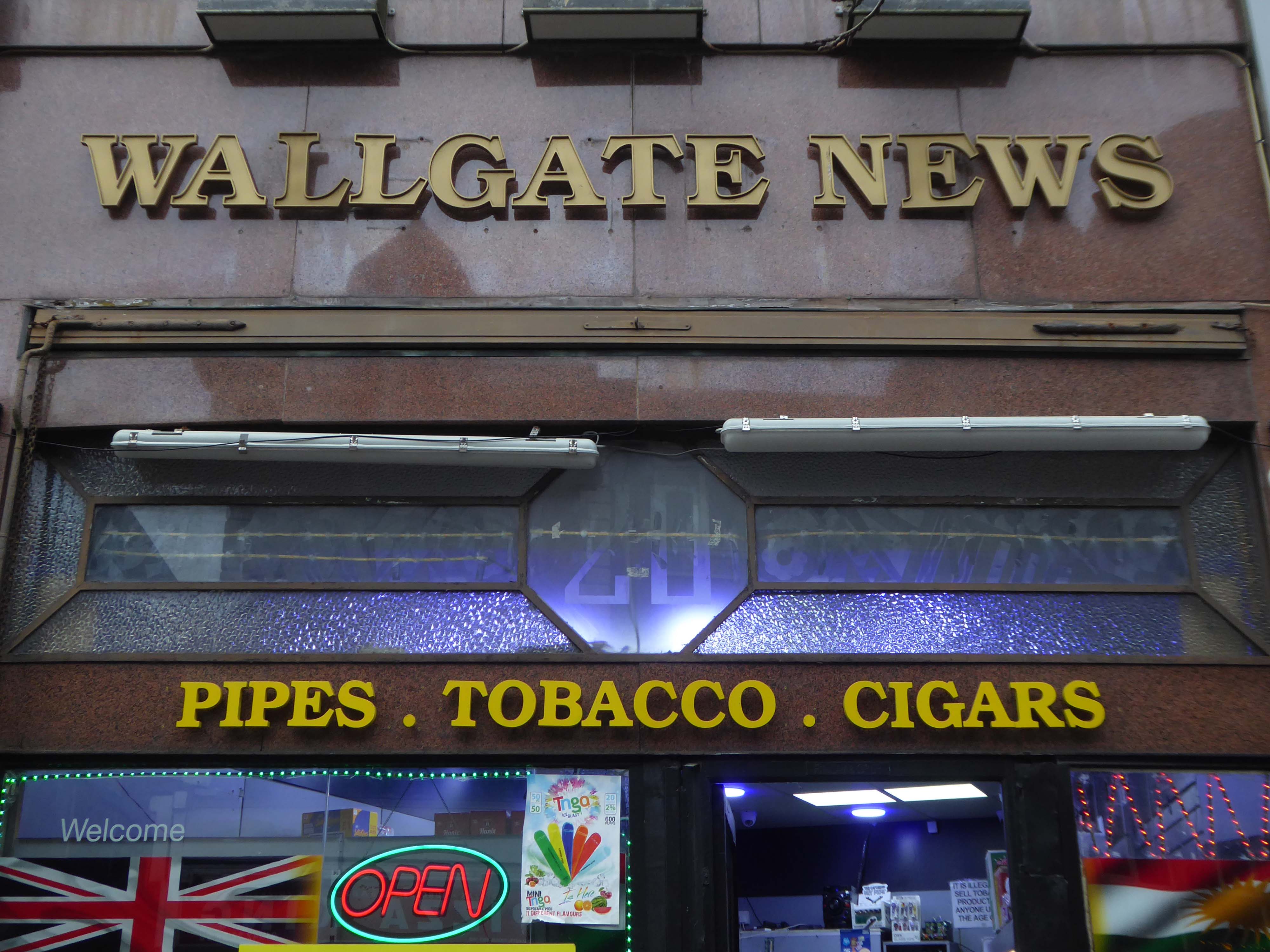
Onwards to the Wallgate News.

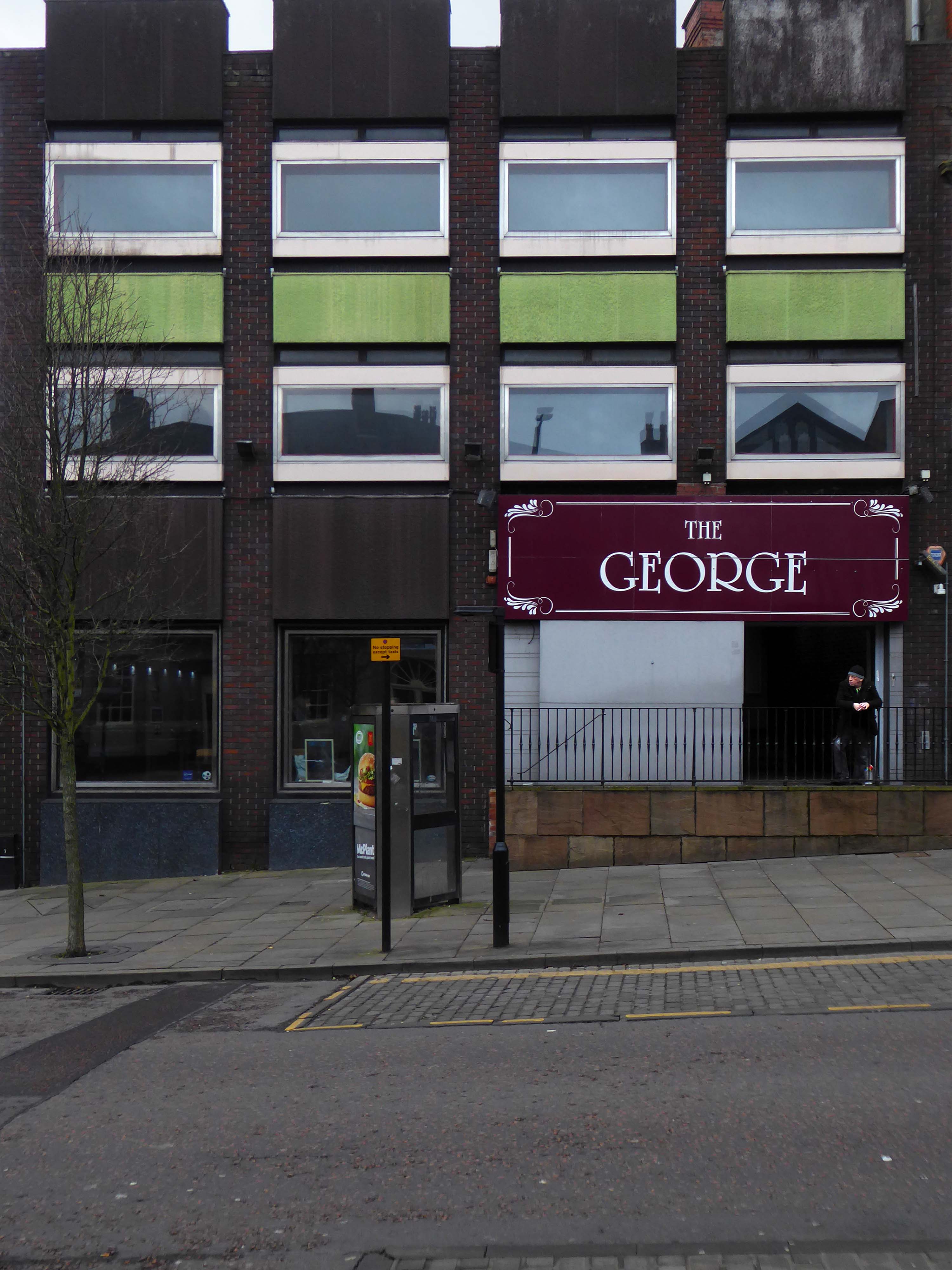
Finally to The George public house.

All ages, all different, all characters all like a bevvy.

The George is all you need.

Telephone Exchanges – Wigan

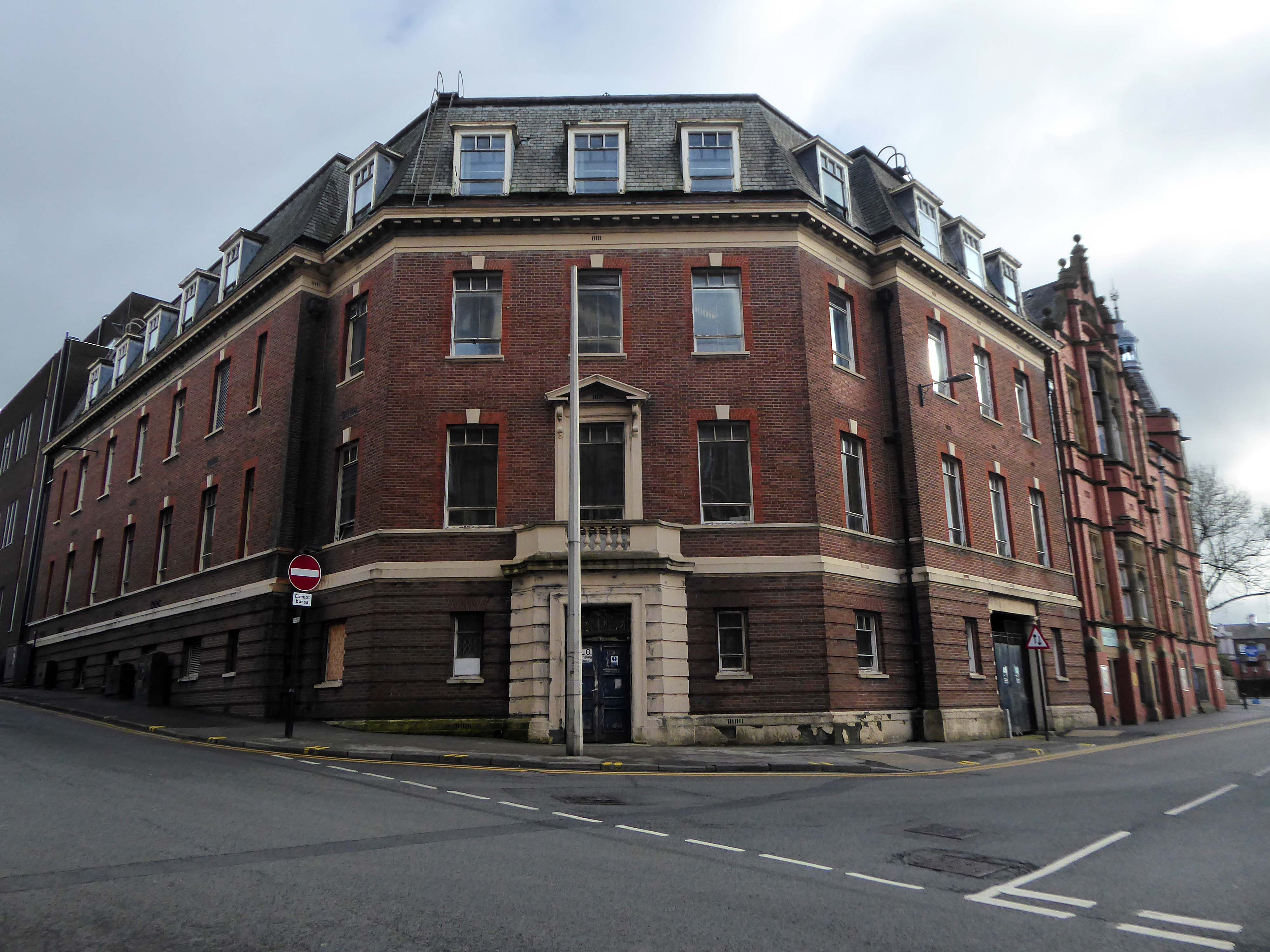
Wandering around Wigan left and then left out of Wigan Wallgate ending up on the corner of Dorning Street, there’s a big red brick building.

1882

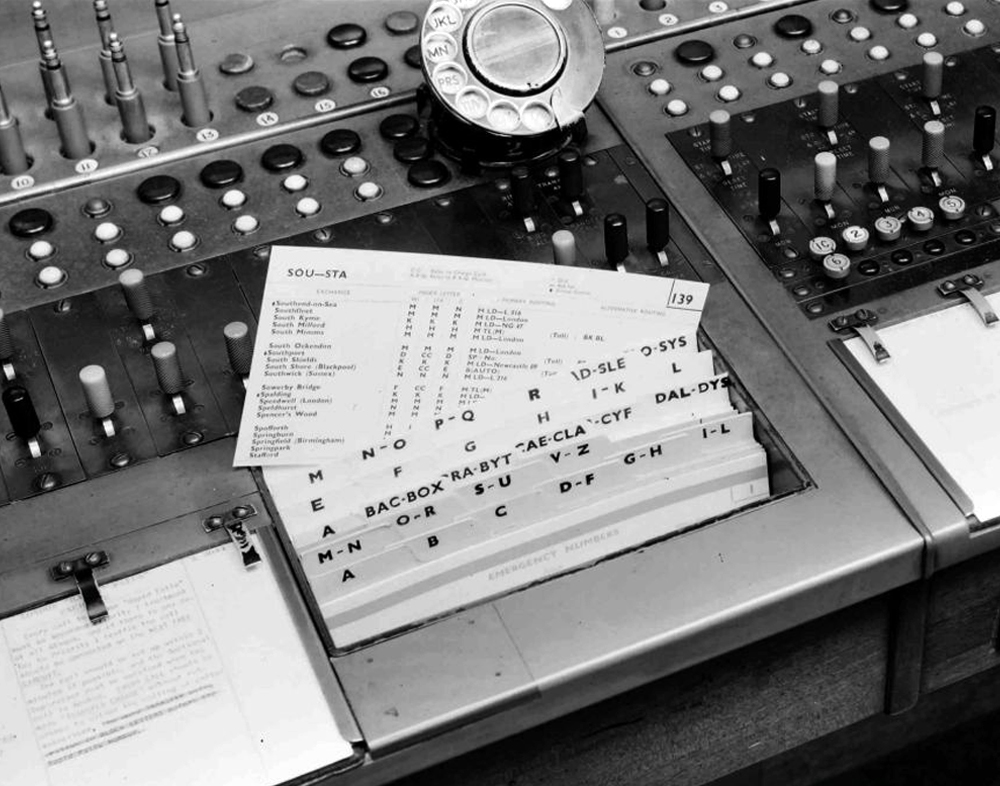
Where all this went on in 1946.

BT Archives

And all this went on too!

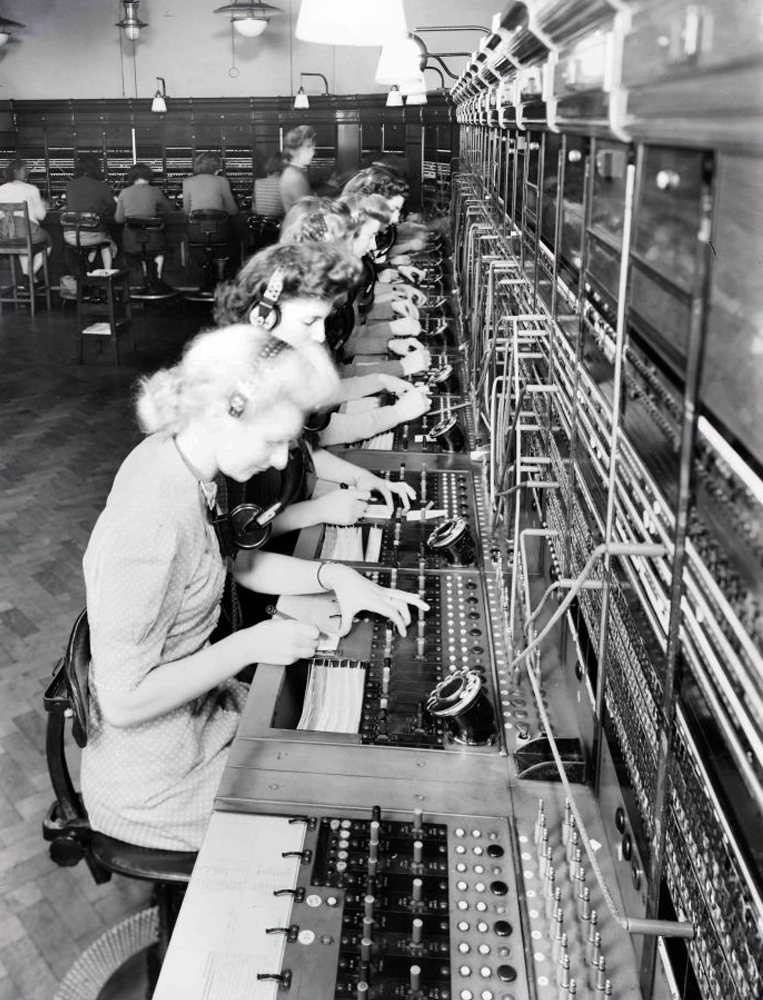
I only worked there very briefly in 1965, to do my Test Desk Training. It was a pleasant, if too hot, place to work: I remember being taken out for lunch at the Grand on my first day – very nice!

One peculiarity, which always stuck in my mind, was the canteen, upstairs, where the men all clung to one side, and the women to the other, never saw that anywhere else.

I was a telephonist 1961 -1968, I married a telephone engineer, you are right about the canteen or kitchen upstairs. When I first started after I’d finished my training I was sent down to the test desk for a long stand. Being a naive little thing I did as I was told, then sent out for some sky hooks and hen party hens, the girls I worked with were a great bunch we had ball best working years of my life, still friends with some of the telephonists I worked with – happy days.

Walking down Dorning Street one day going back to work and on the pavement outside the Grand there was a half crown. Tried to pick it up to howls of laughter. The lads in the telephone exchange opposite had welded a nail to it and pushed it in the ground between the paving flags. Very funny, and no I didn’t get it out.

Wigan World

hen you notice that there’s a Sixties’ neighbour.

With narrow windows and inset light and dark tan tiles.

Prior to the exchange of telecommunications’ messages, the site was preoccupied by the exchange of partisan residents with a predilection for particular political persuasions.

Let’s back track along Dorning Street and follow the aroma of Uncle Joe’s Mint Balls – to the Santus Works and beyond.

There stands a concrete behemoth.

Which has of late been beset with particular problems of its own.

Minefield of lager cans near Wigan school sparks worry Wigan councillors.

They are on a mission to stop the grounds of a derelict building, which lies just yards away from a school, being used as a drinking den.

Wigan Today

Though in fairness I was witness to neither a minefield or drinking den – just a telephone exchange.

BT Building – Stoke on Trent

Lytton Street Stoke on Trent Staffordshire

Almost not quite in the shadow of nearby neighbour the Hanley Tower, this little gem sits tucked away by the side of Queensway, minding its very own business.

The business of telecommunications.

Just a short walk from the railway station let’s take a look.

BT Telephone Exchange – Ashton under Lyne

BT Roundabout OL6 6QQ

In 1913 Ashton is already a crowded town, a cotton town.

The first telephone exchange arrives and sweeps away property at the junction of Scotland and Bedford Streets.

The second arrives along with the bypass and establishes a roundabout, an island of telecommunication.

Tameside Image Archive

There they sit betwixt St Michael’s Parish Church and Albion Congregational.

A marriage of inter-war brick Revivalism and post-war concrete Brutalism.

Ninety nine point nine percent of the passing parade pass by onto the bypass by car, I took time to circumnavigate the site on foot.

This is what I saw.

BT Hanley Tower

You’re nobody ’til somebody loves you,
You’re nobody ’til somebody cares.
You may be king, you may possess the world and it’s gold,
But gold won’t bring you happiness when you’re growing old.

Hanley GSC represents a major telecommunication facility for BT and is positioned within the City boundaries of Stoke-on-Trent, on a very congested site.

The building fabric was starting to degrade and in need of structural refurbishment.

Works comprised of cleaning down the externals by high pressure water jetting, carrying out concrete repairs, applying an anti-carbonation coating, anti-corrosion treatments, painting the windows and applying sealants to windows and various joints around the structure.

All work was carried out whilst the exchange was fully manned and operational.

Works were carried outover a 26 week period, utilising mast climbers around the structure, with a limited amount of scaffolding on the low level structures.

Contract value £580,000

Makers.

Derided locally as an eyesore, currently the tallest building in town following the demolition of Unity House.

It has an antecedent as an immediate neighbour.

Former telephone exchange and offices – circa 1900.

Brick and terracotta with plain tiled roof. Eclectic style, with main block of three storeys, and three 3 narrow bays with flanking towers, all vertical spaces elongated.

The Potteries

Let’s take a look at the young upstart.

Telephone Exchange Gateshead

Having formerly posted a post about the Hadrian TSC in Newcastle, it seemed only right to record it’s not too distant cousin across the Tyne.

Here we are at the confluence of main roads.

I wandered around circuitously, circumnavigating this fine building.

The attendant BT workers are as ever kind and helpful, many thanks.