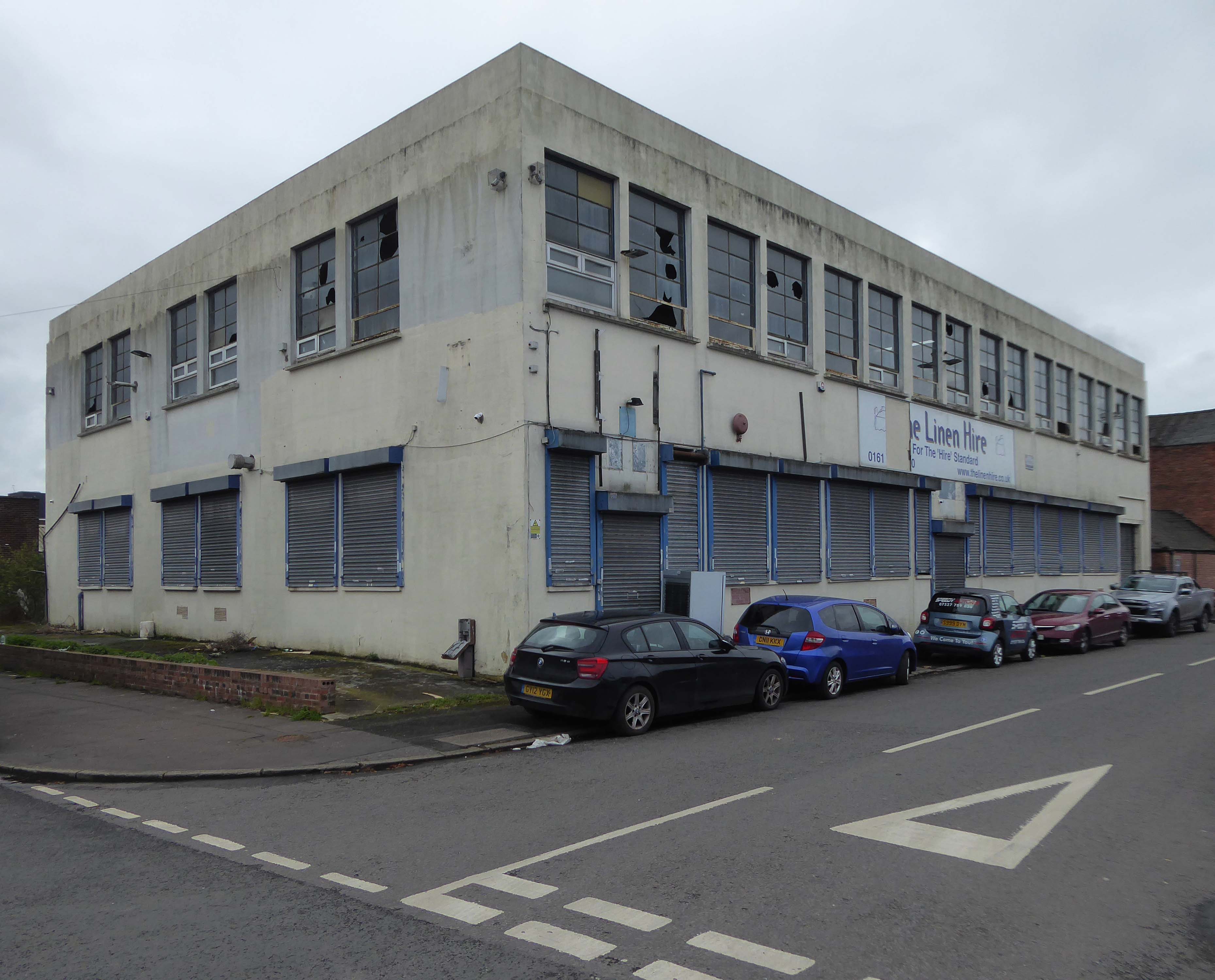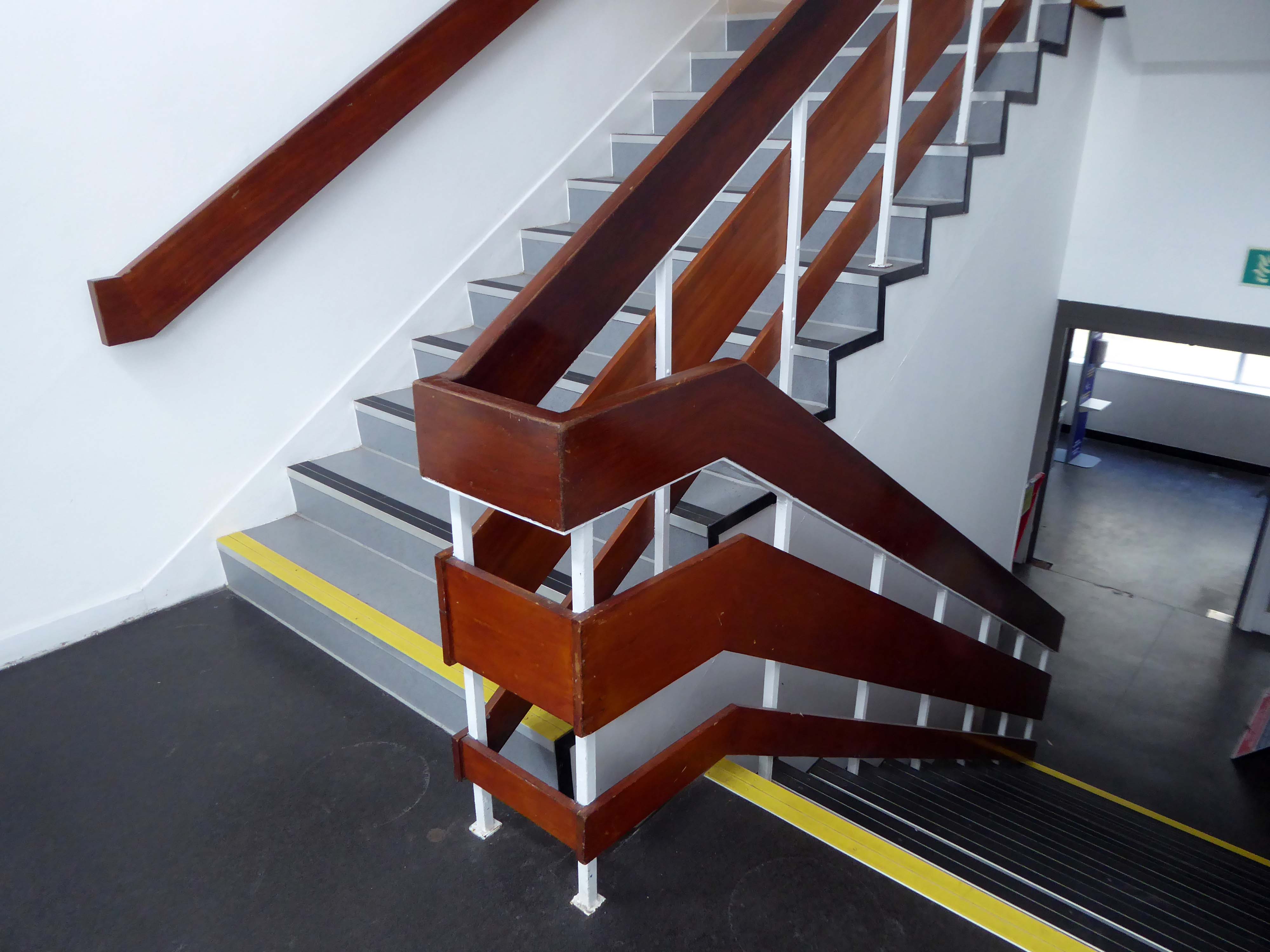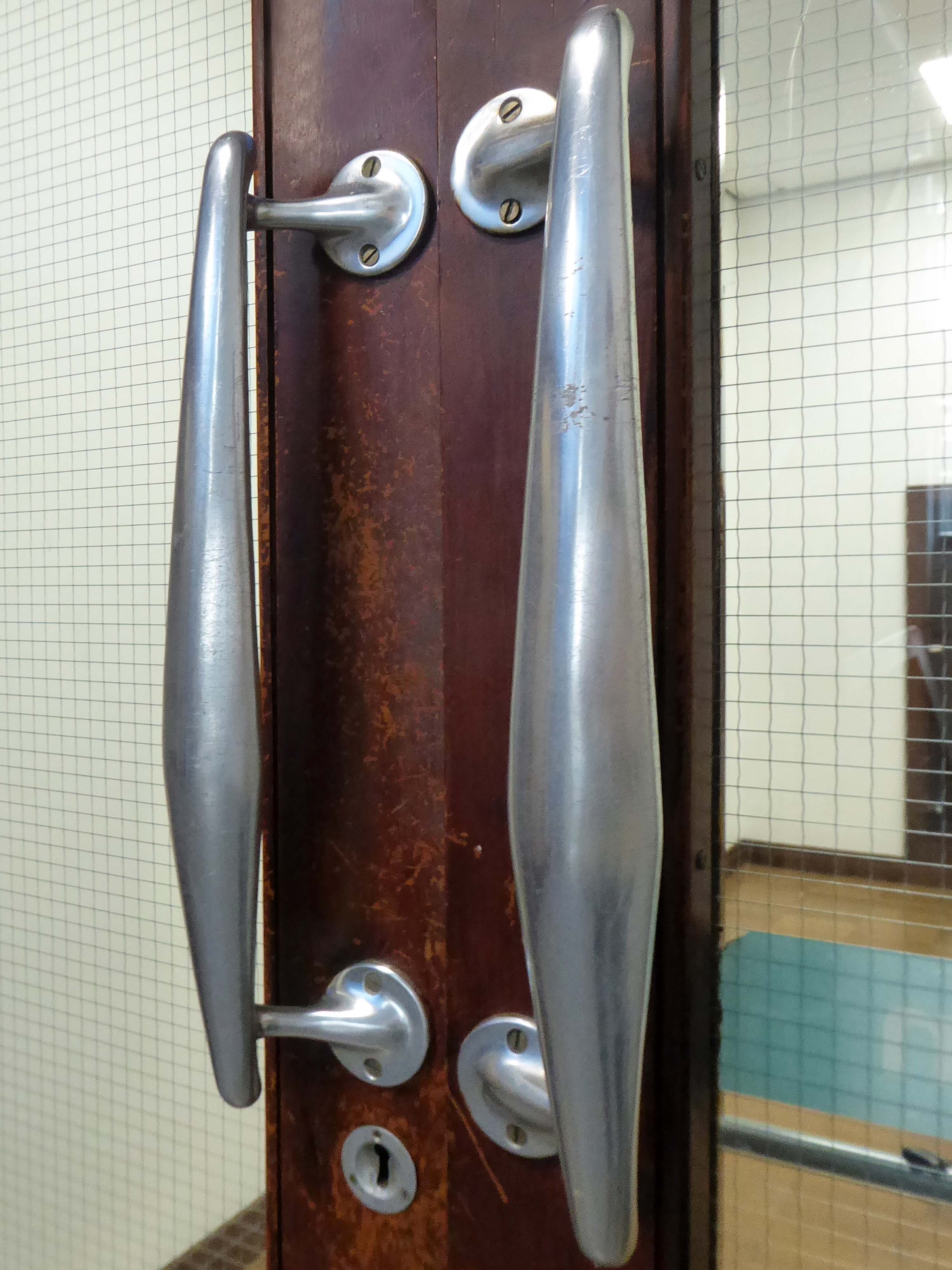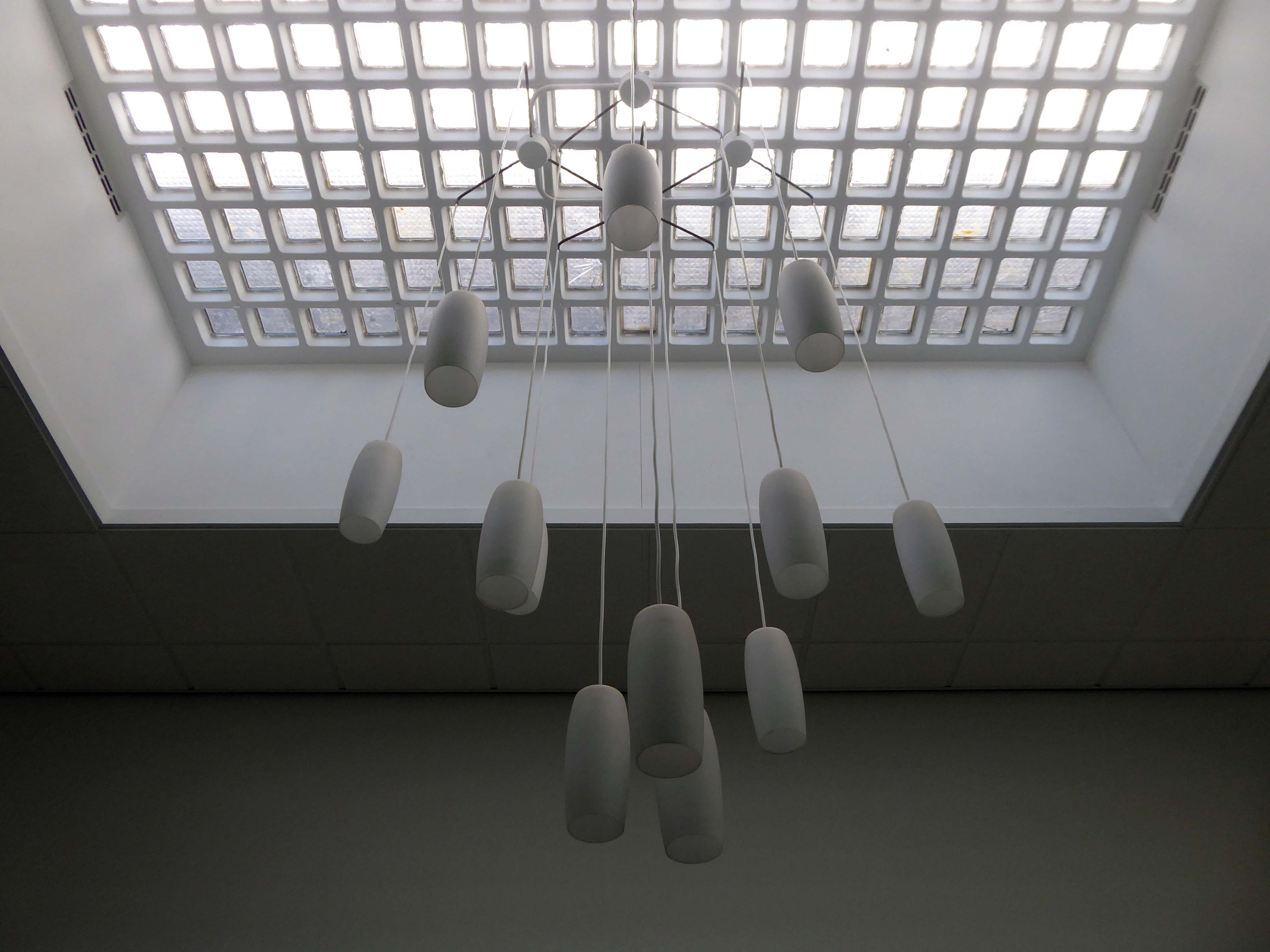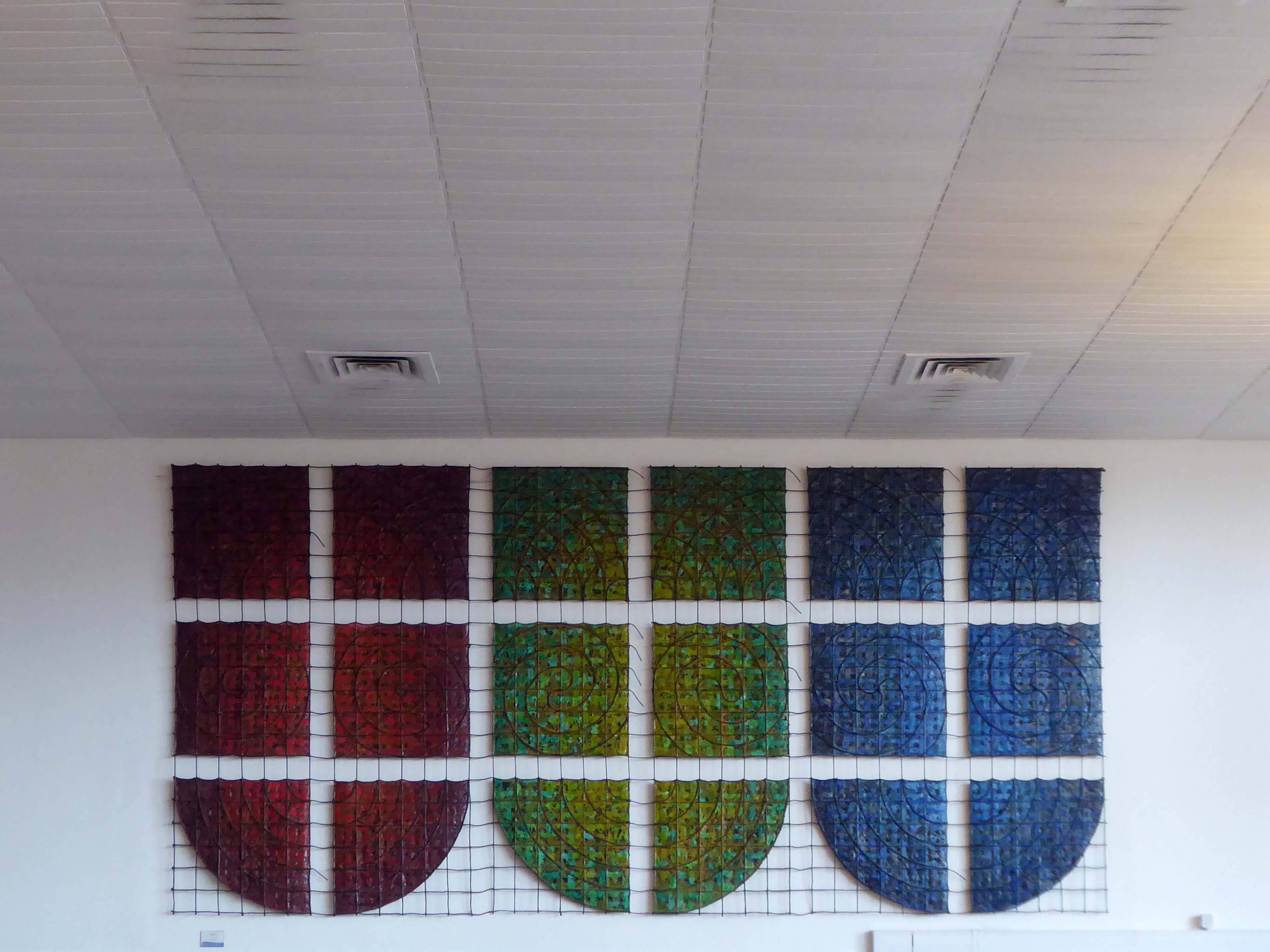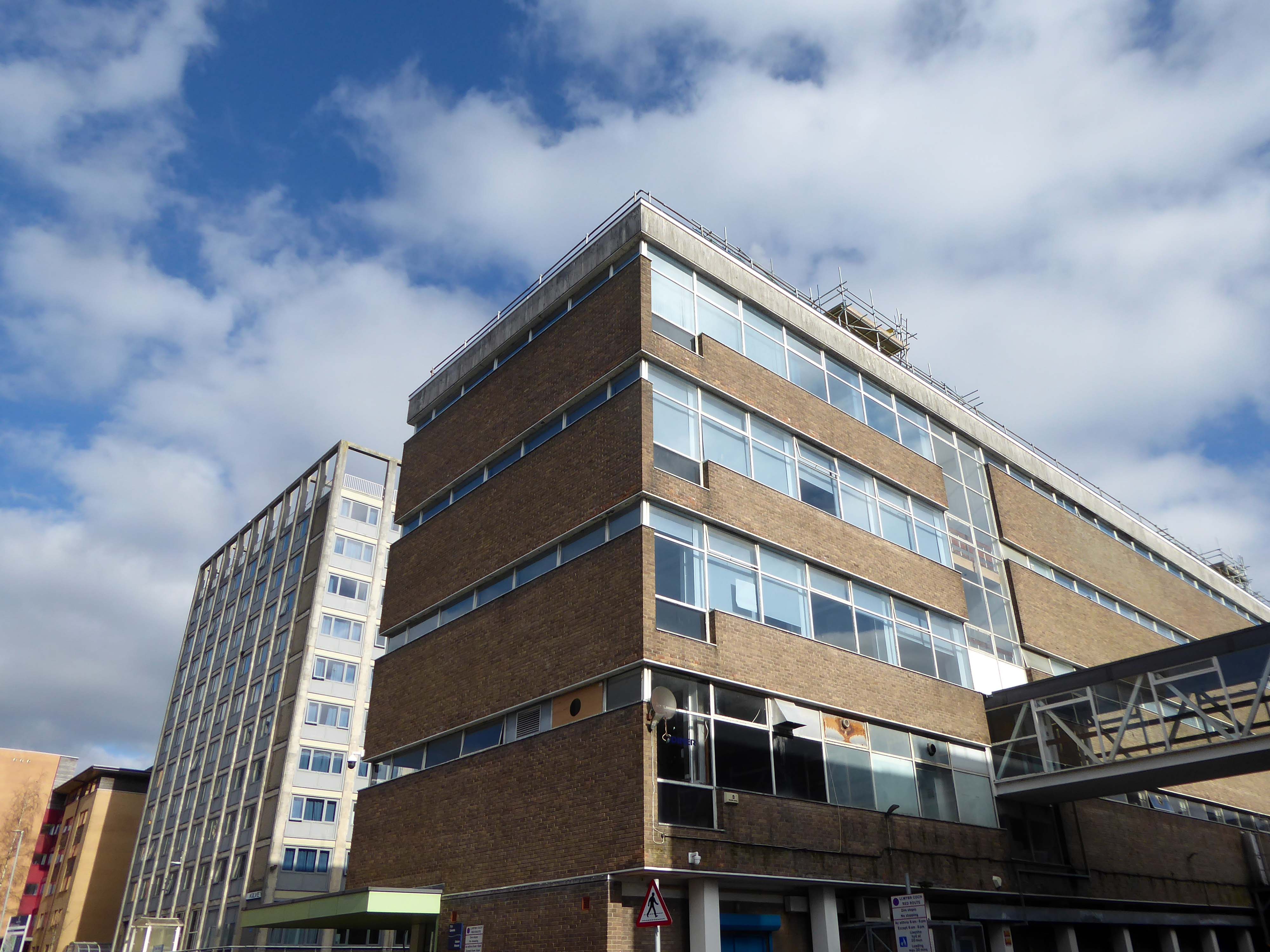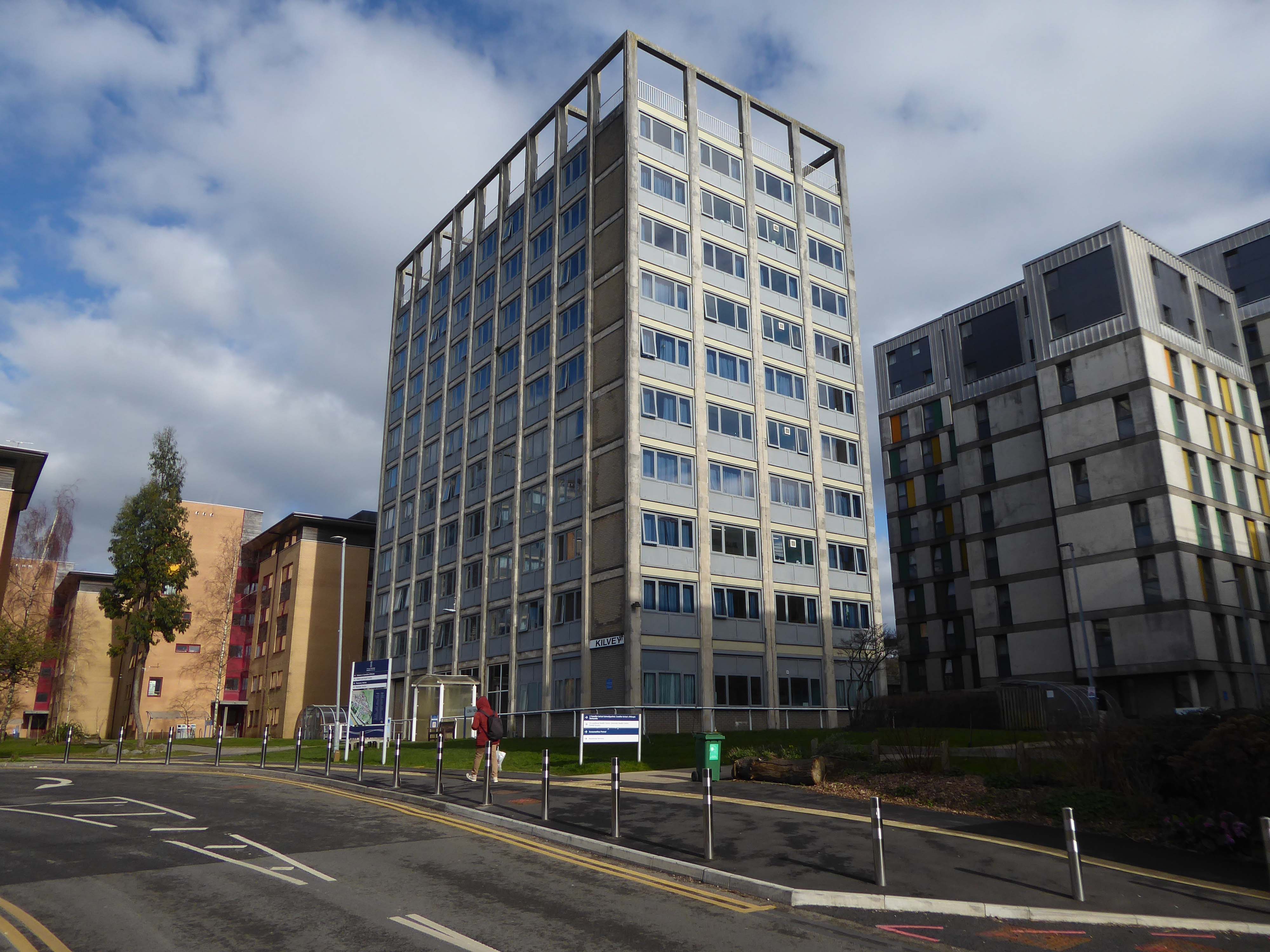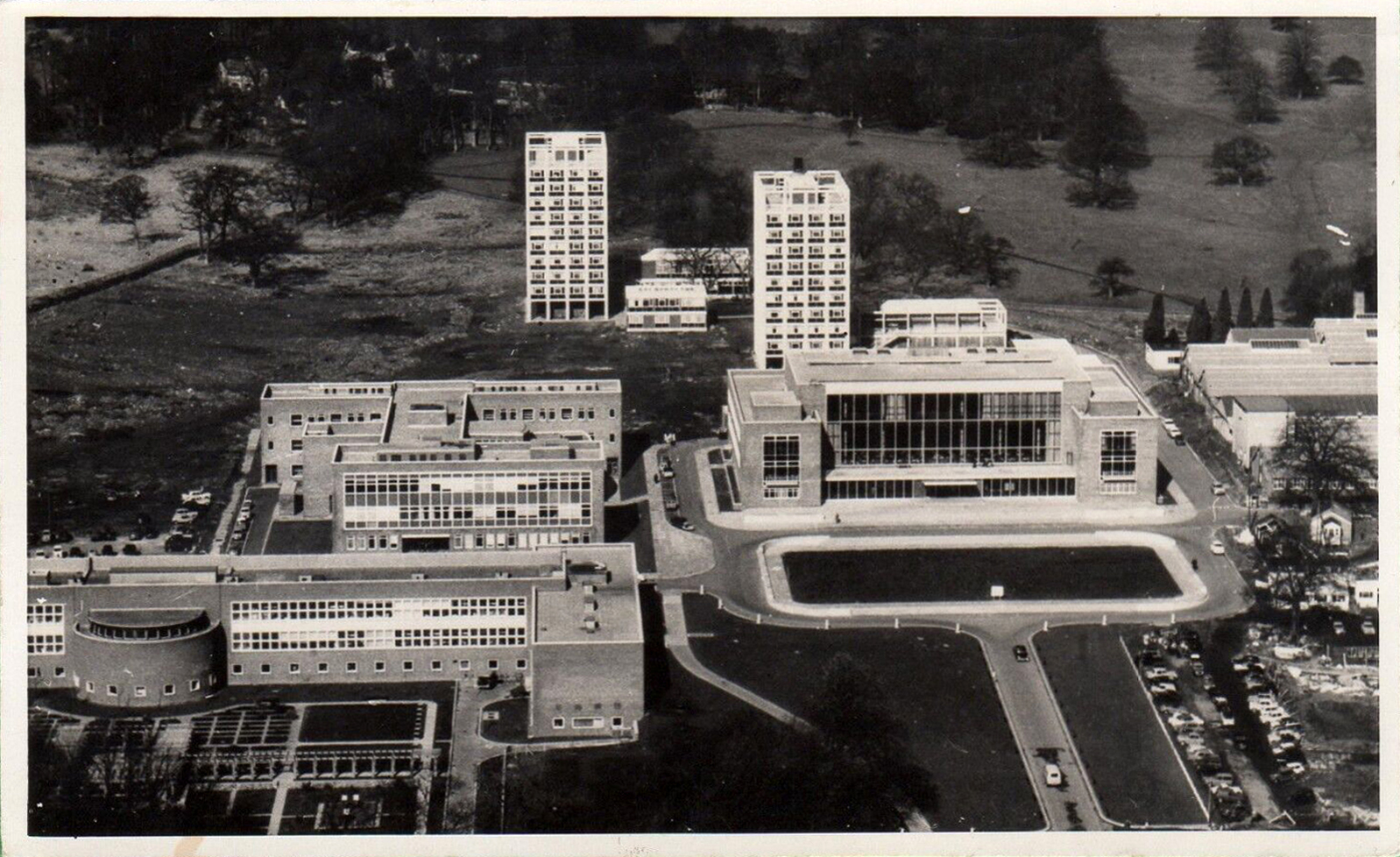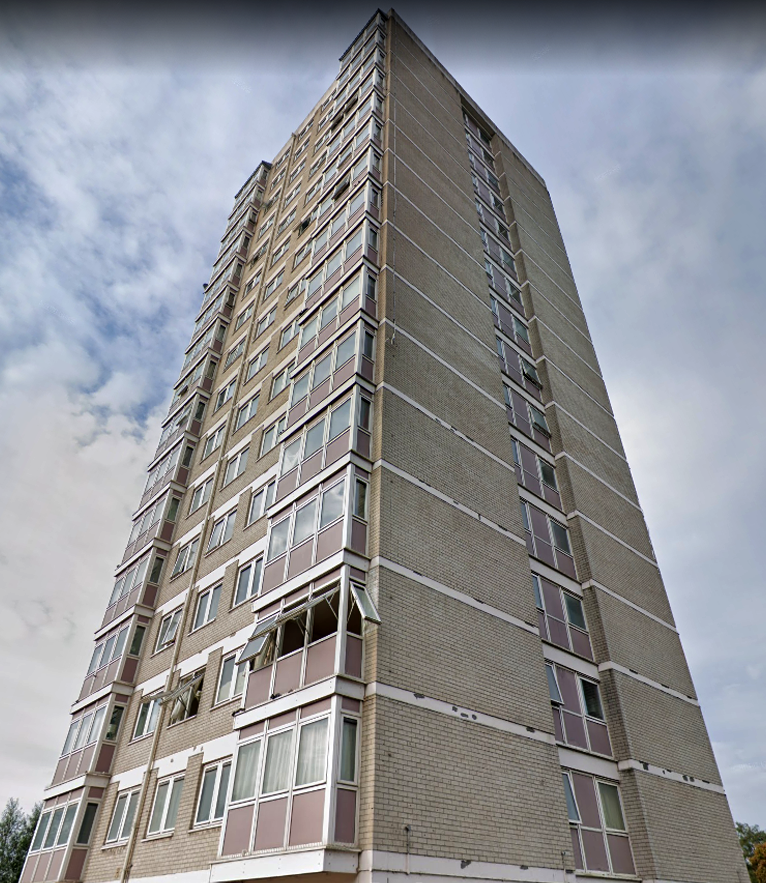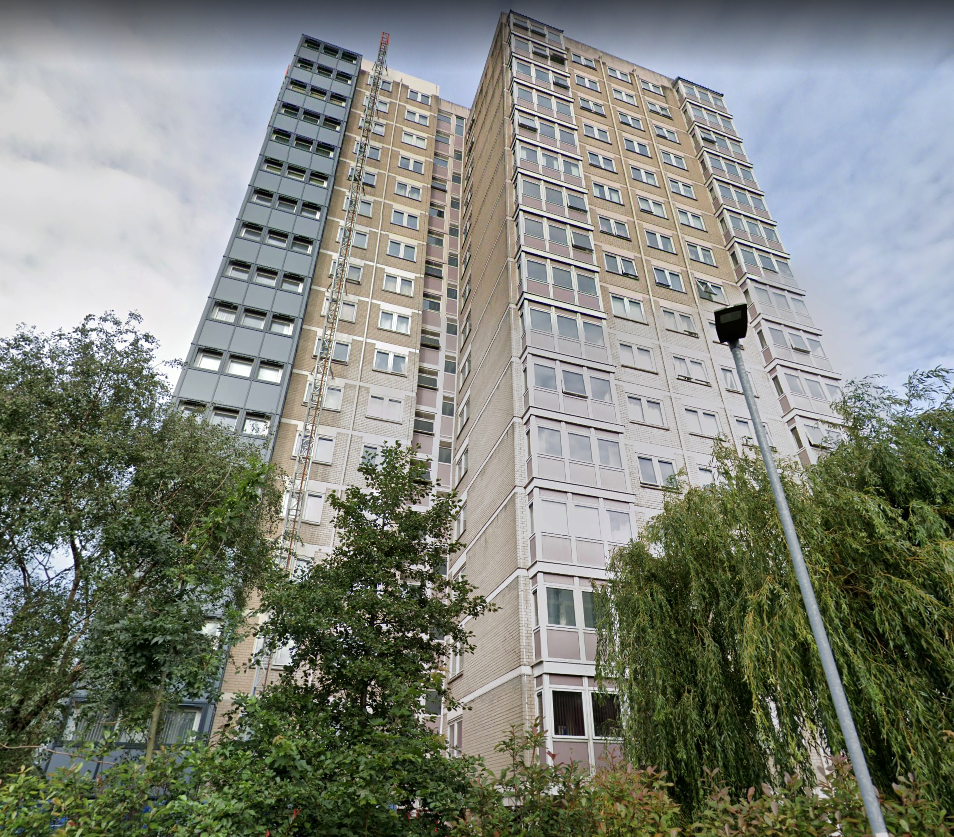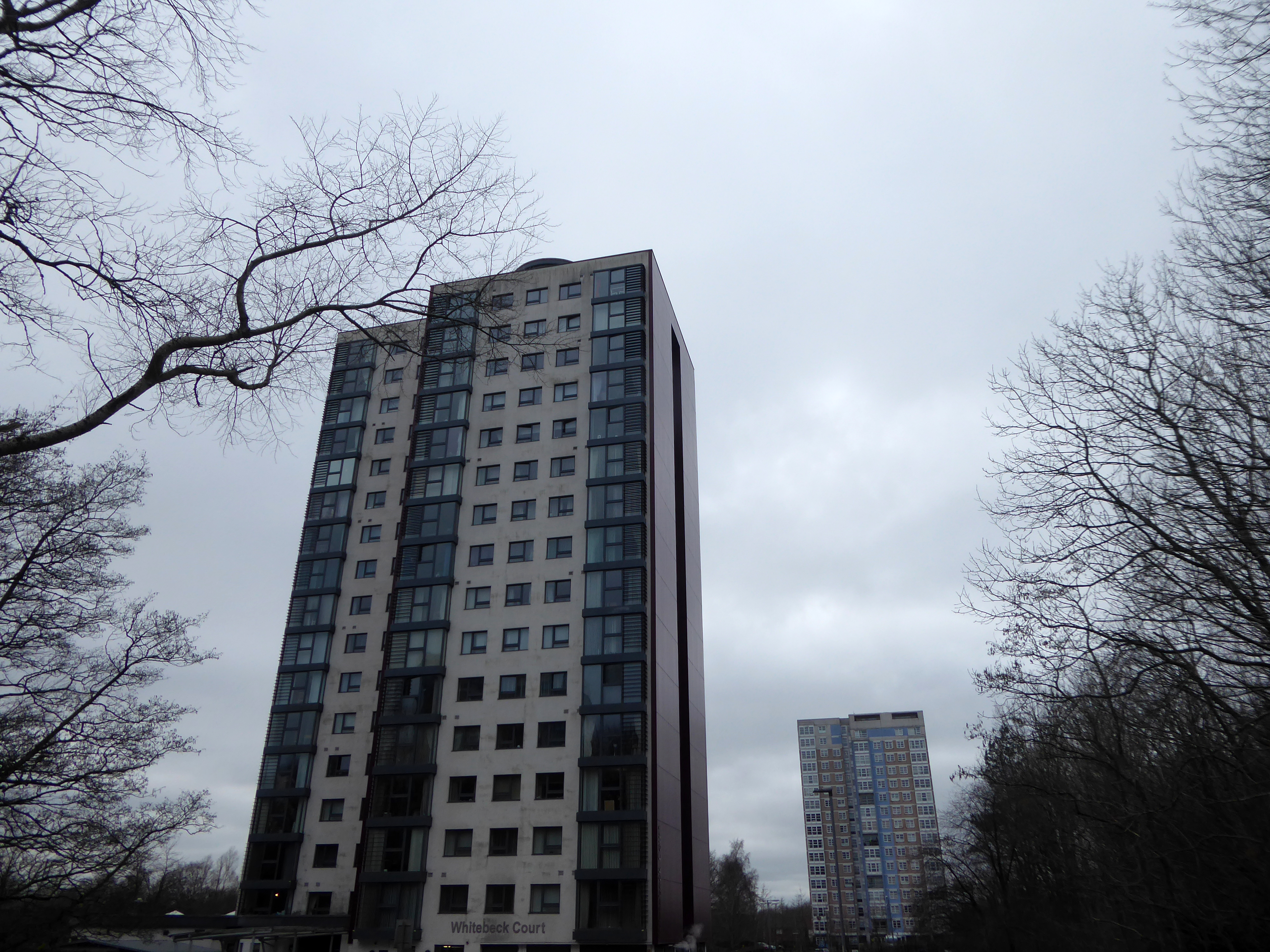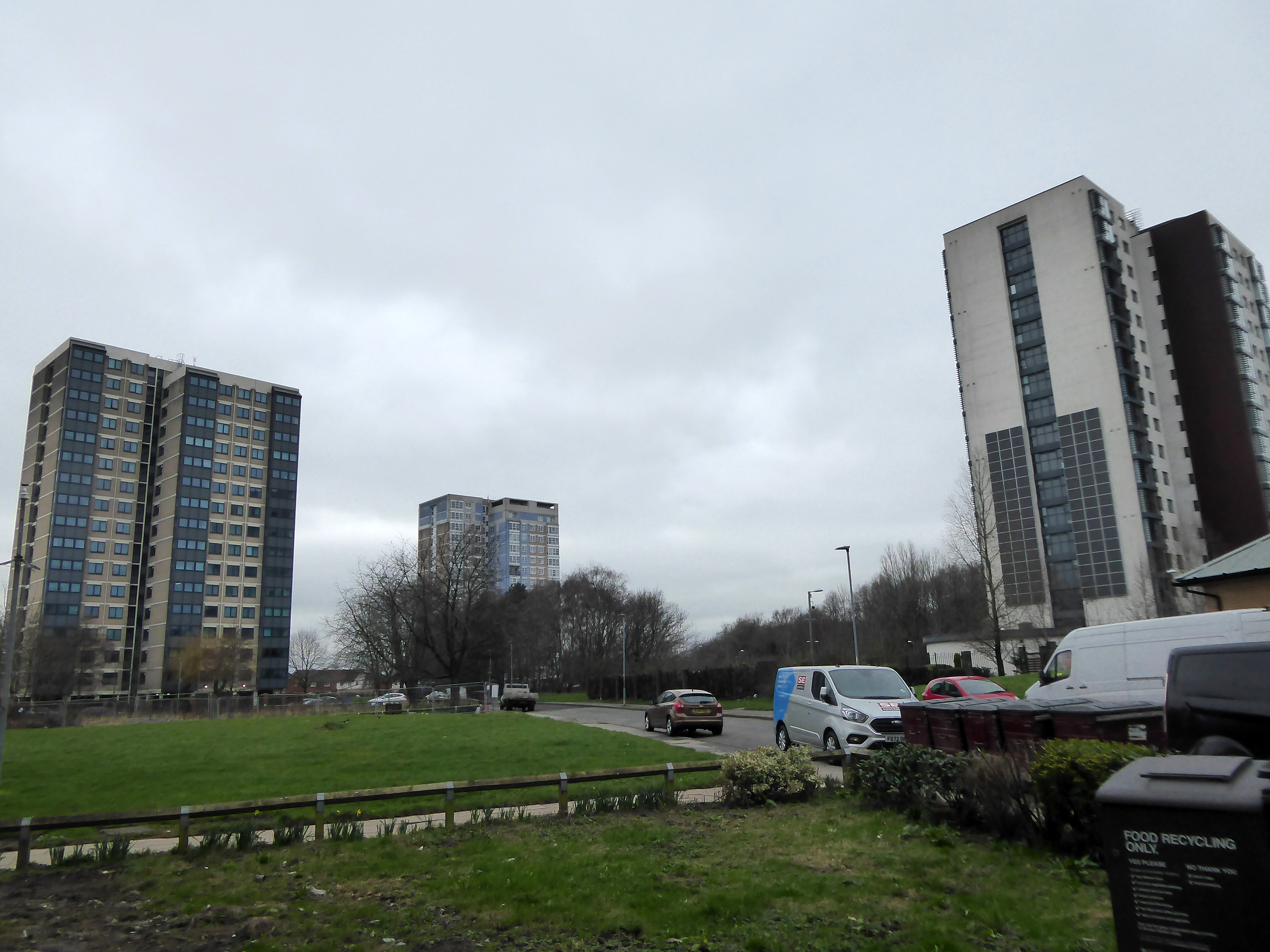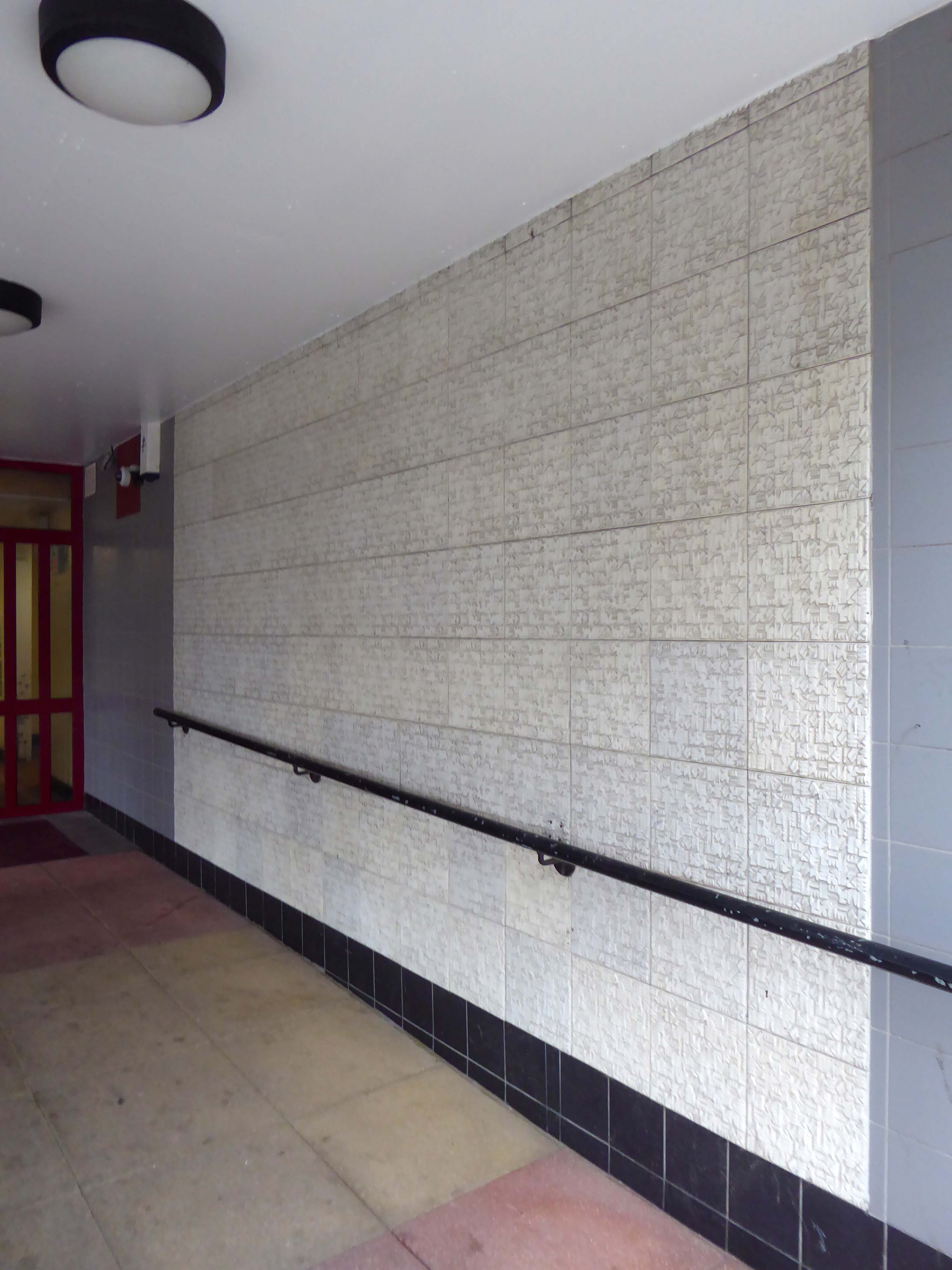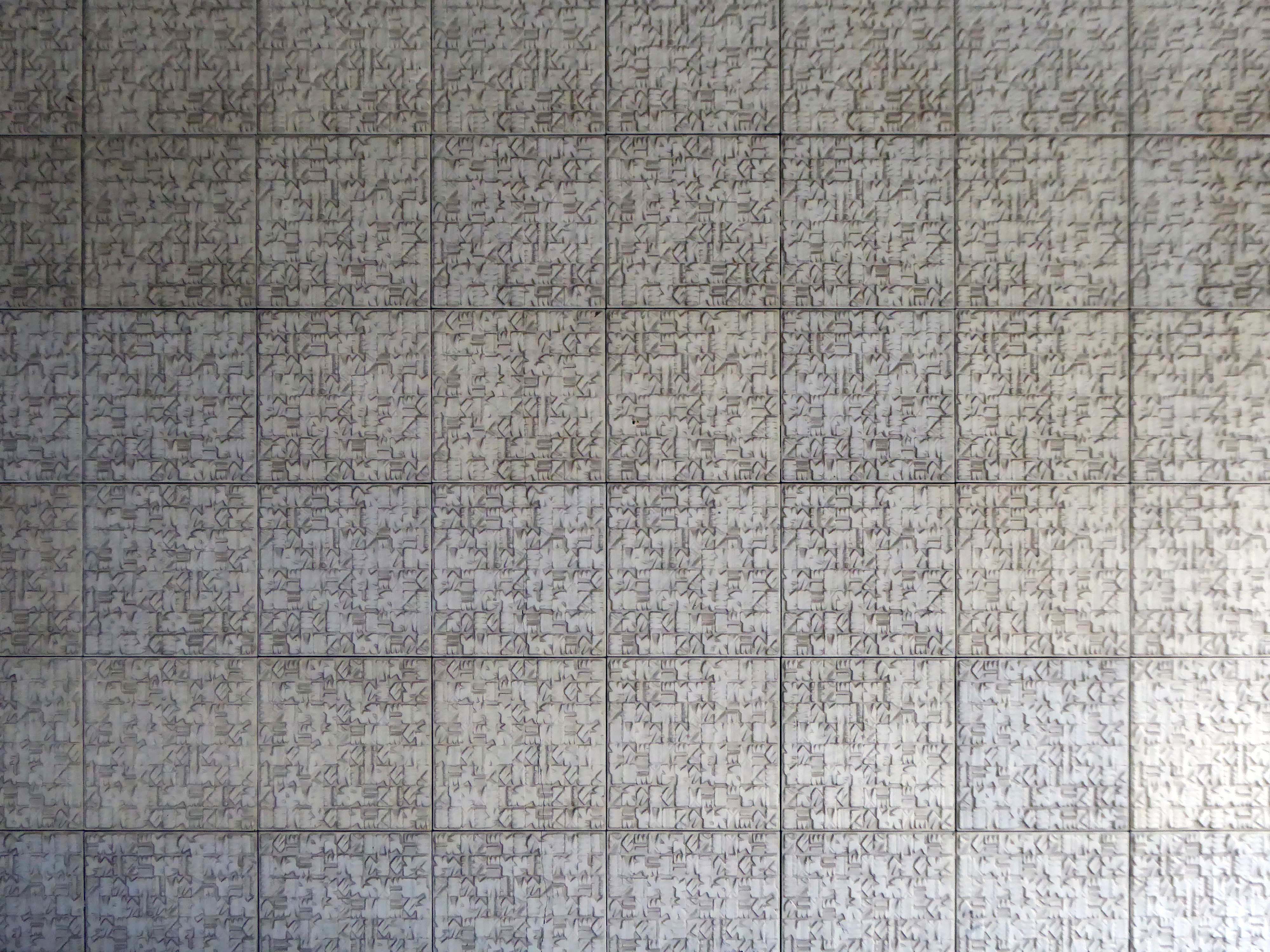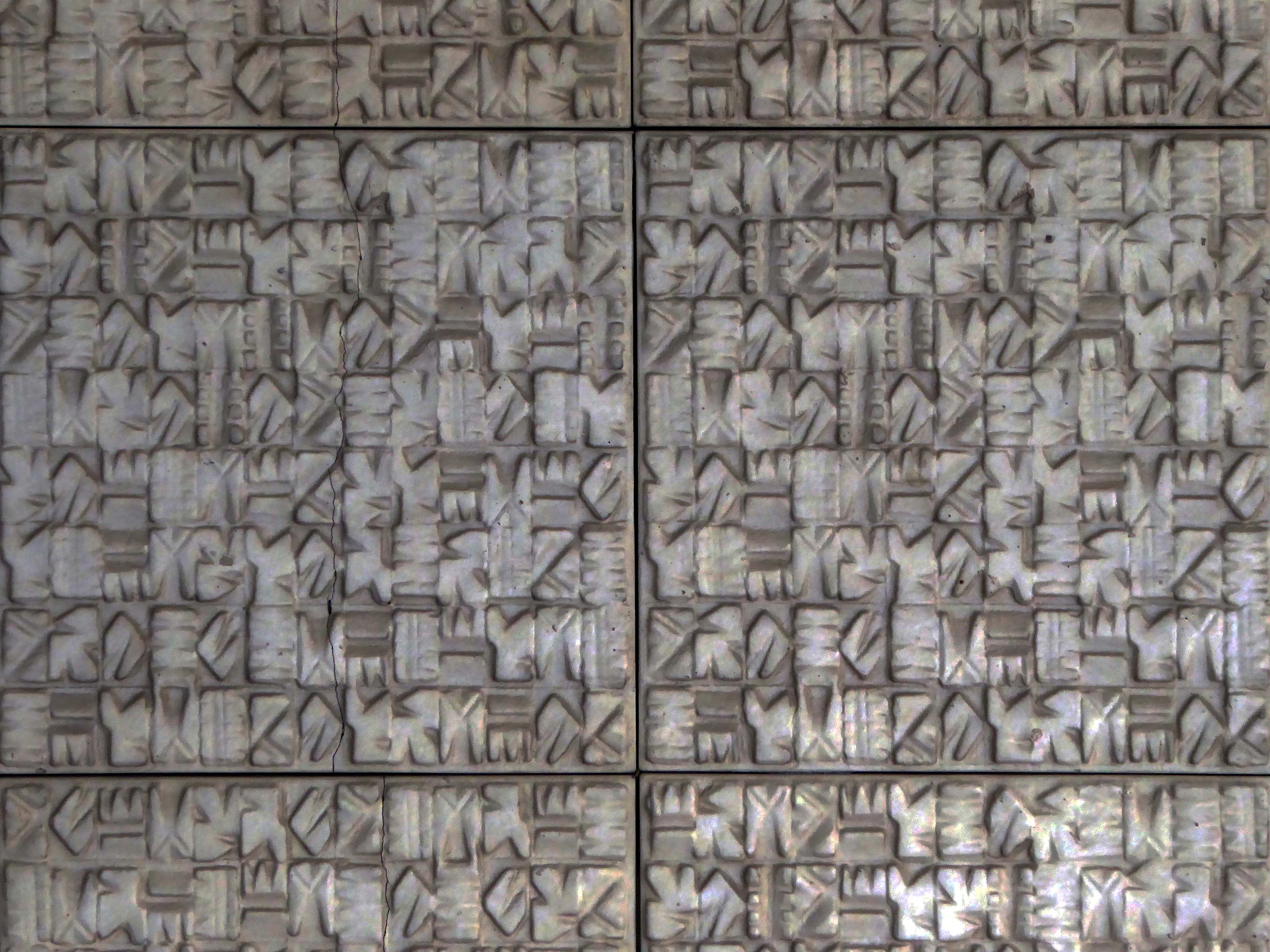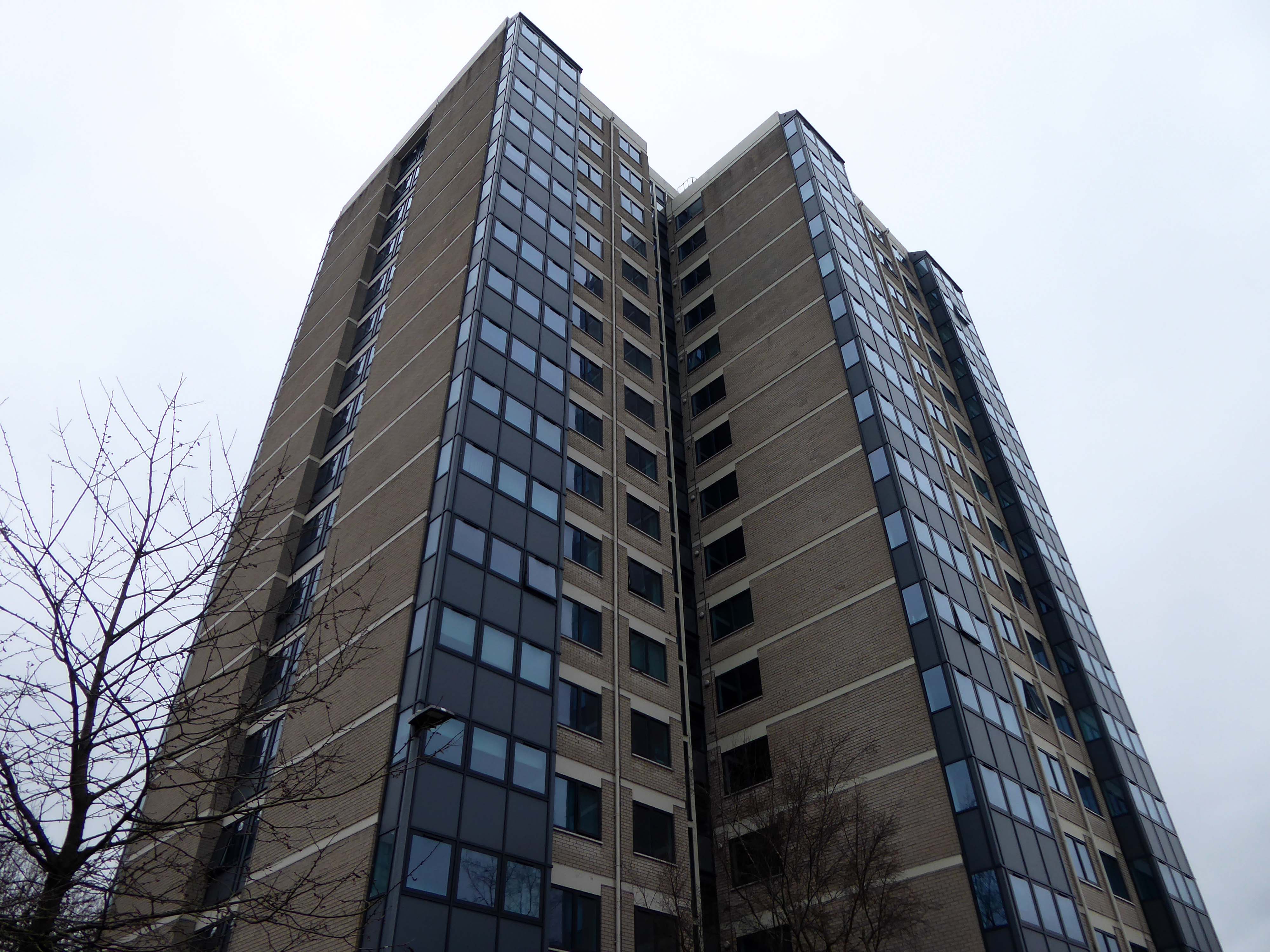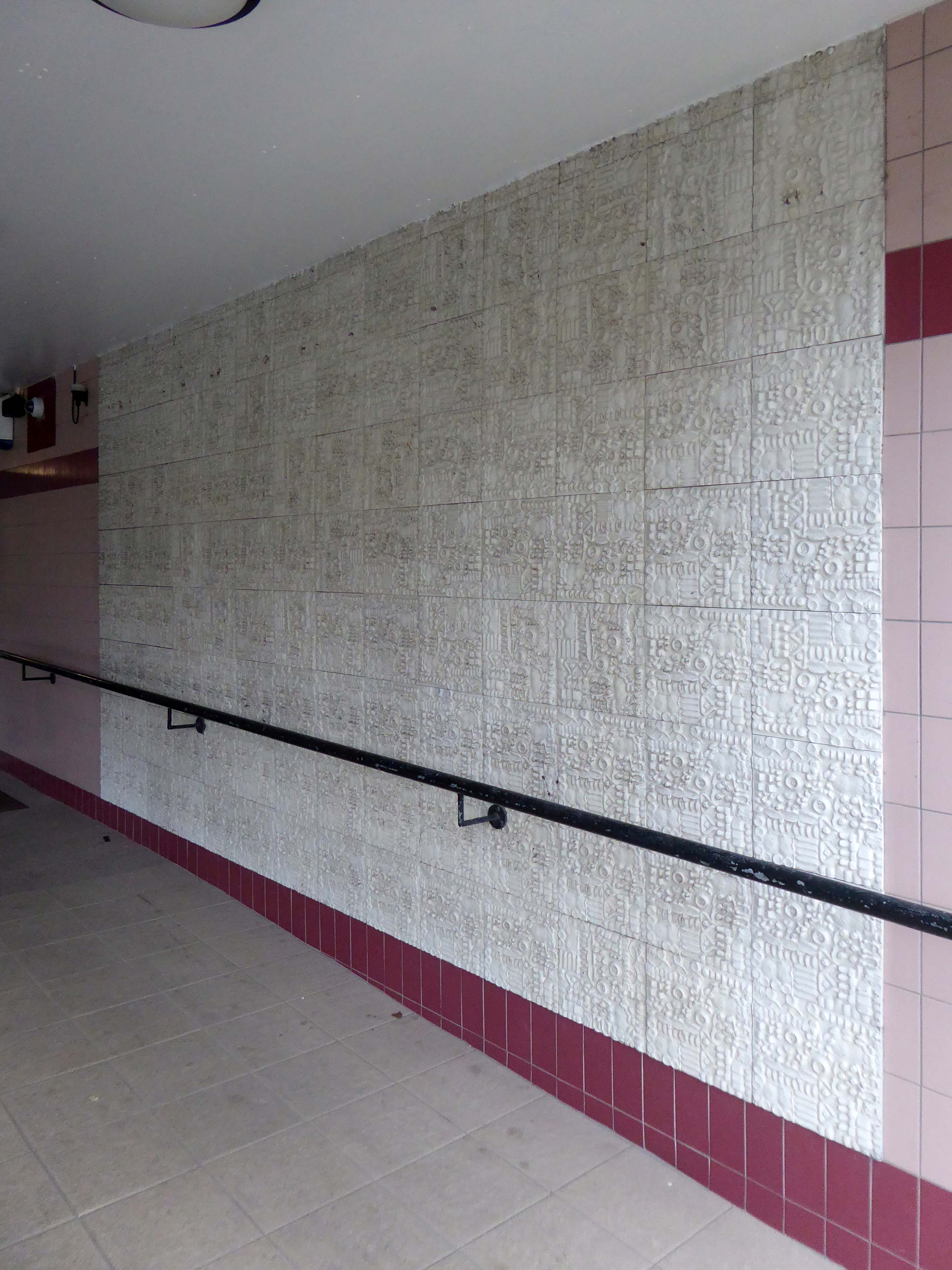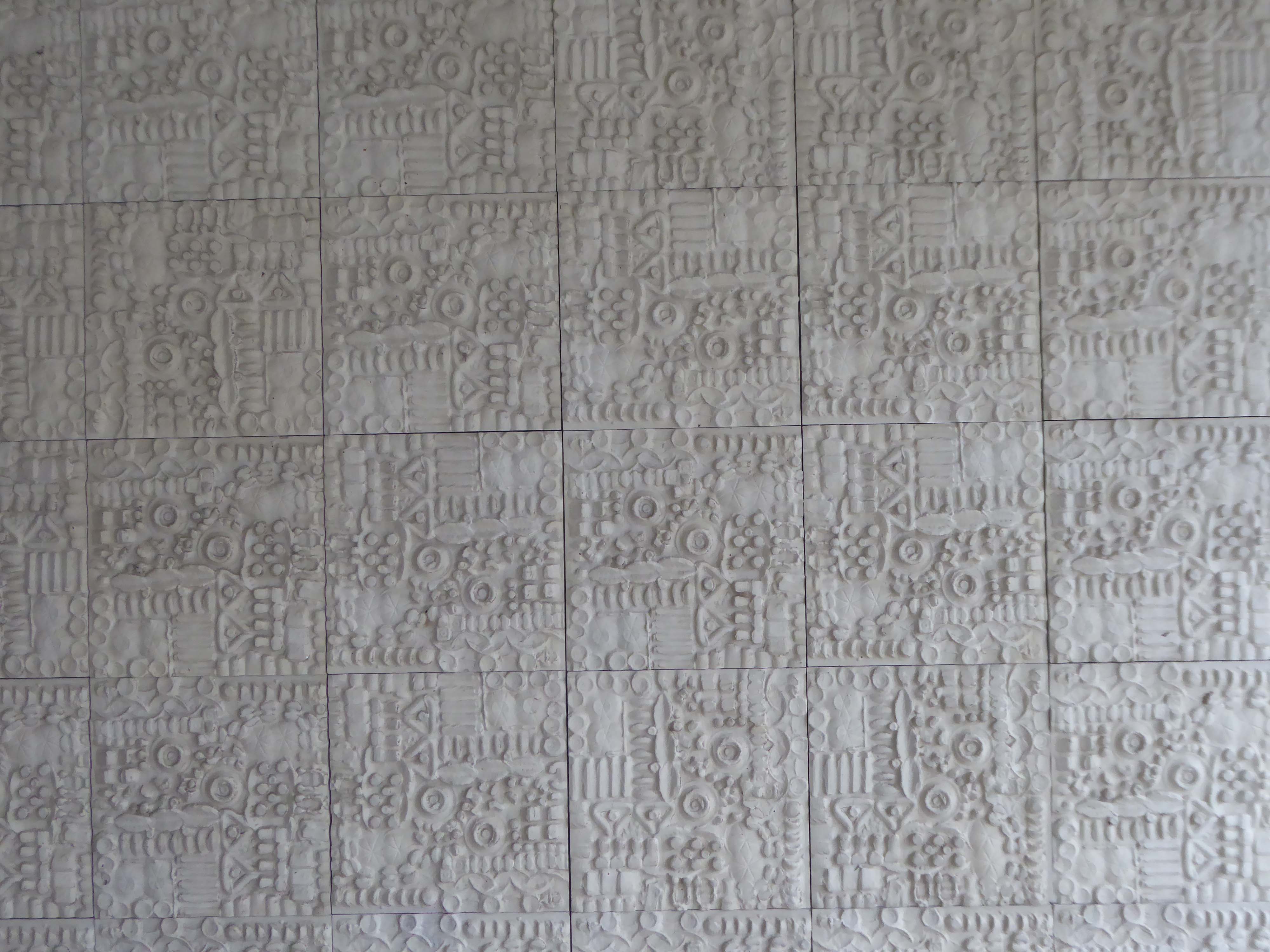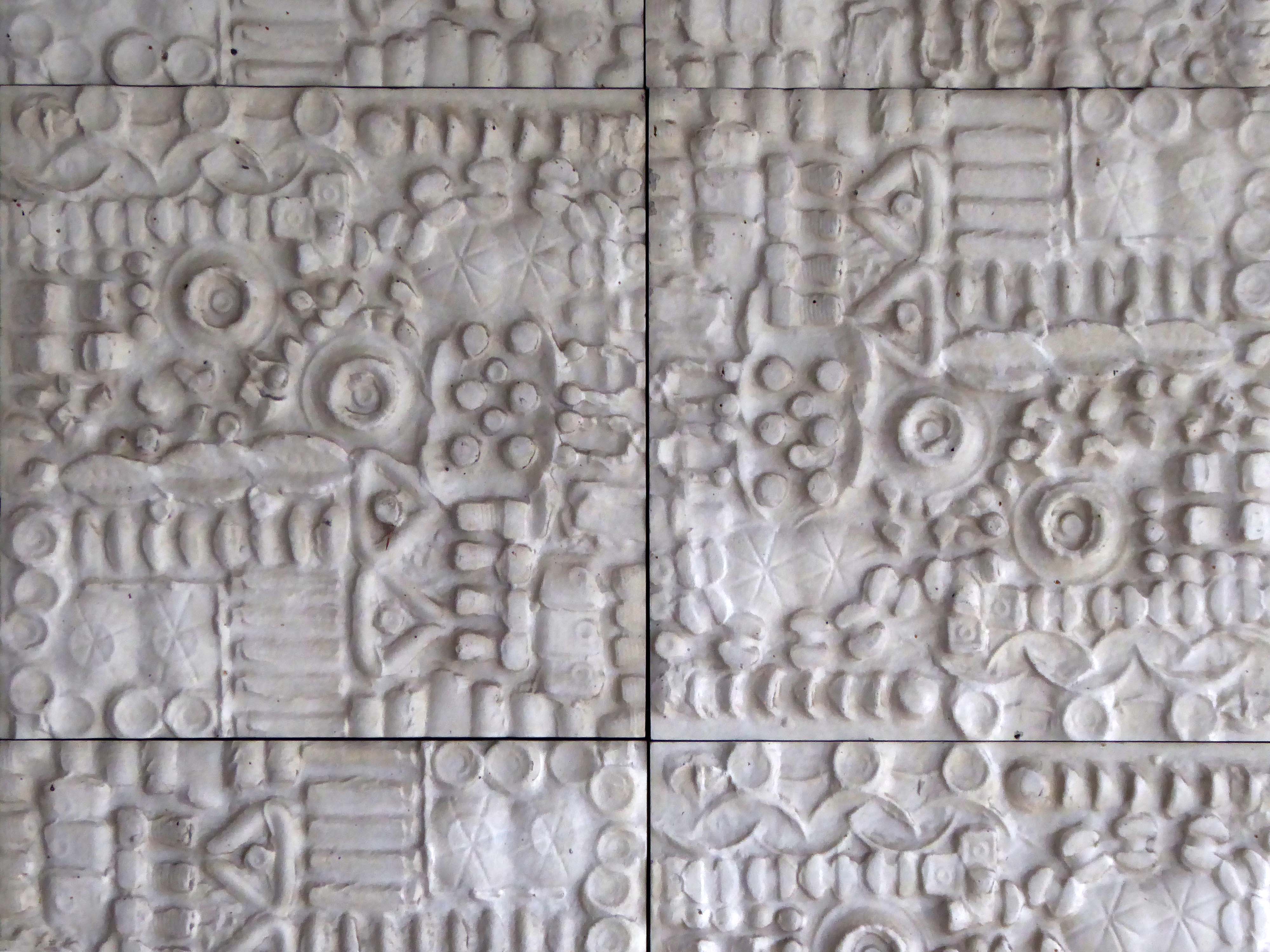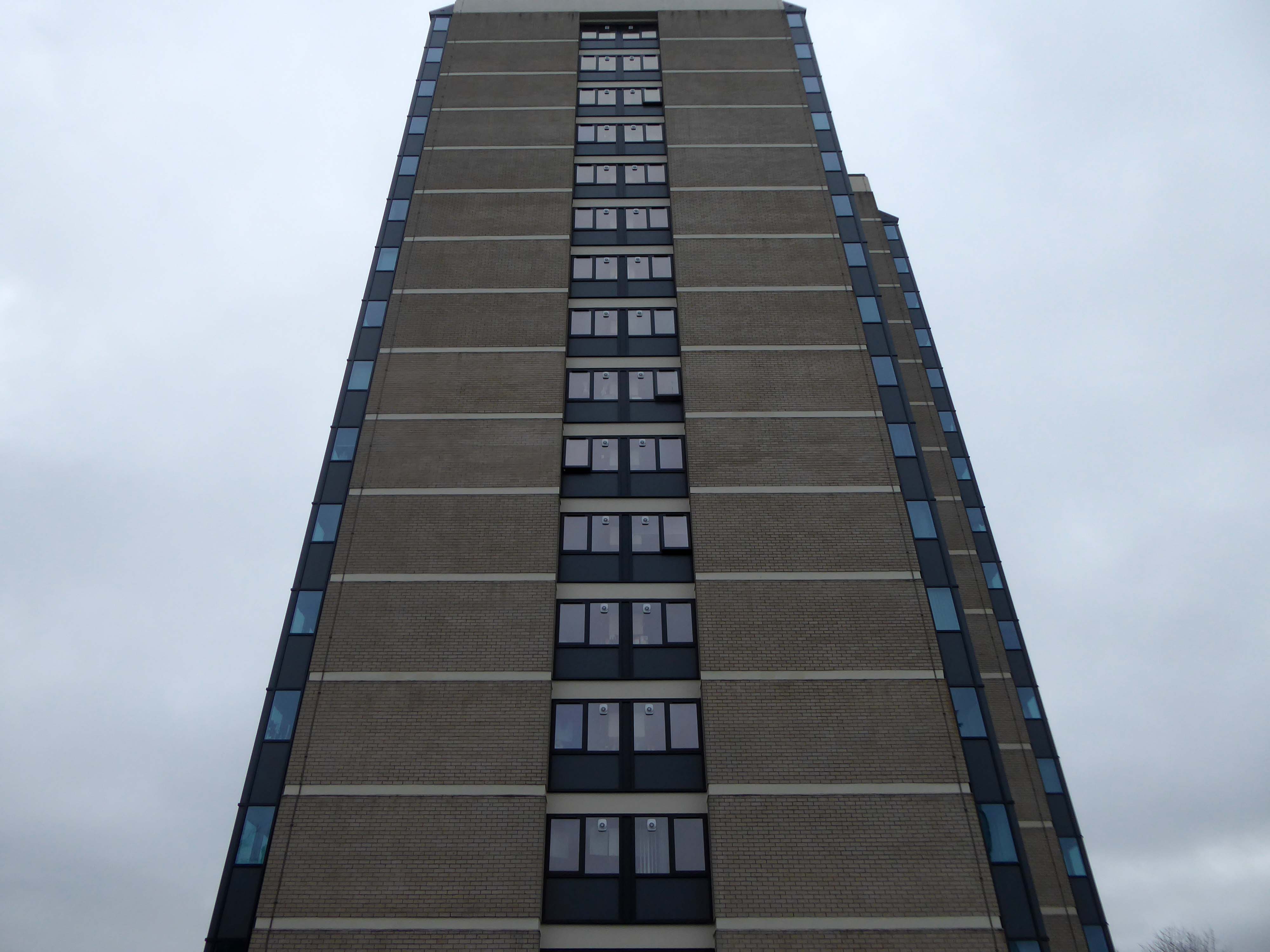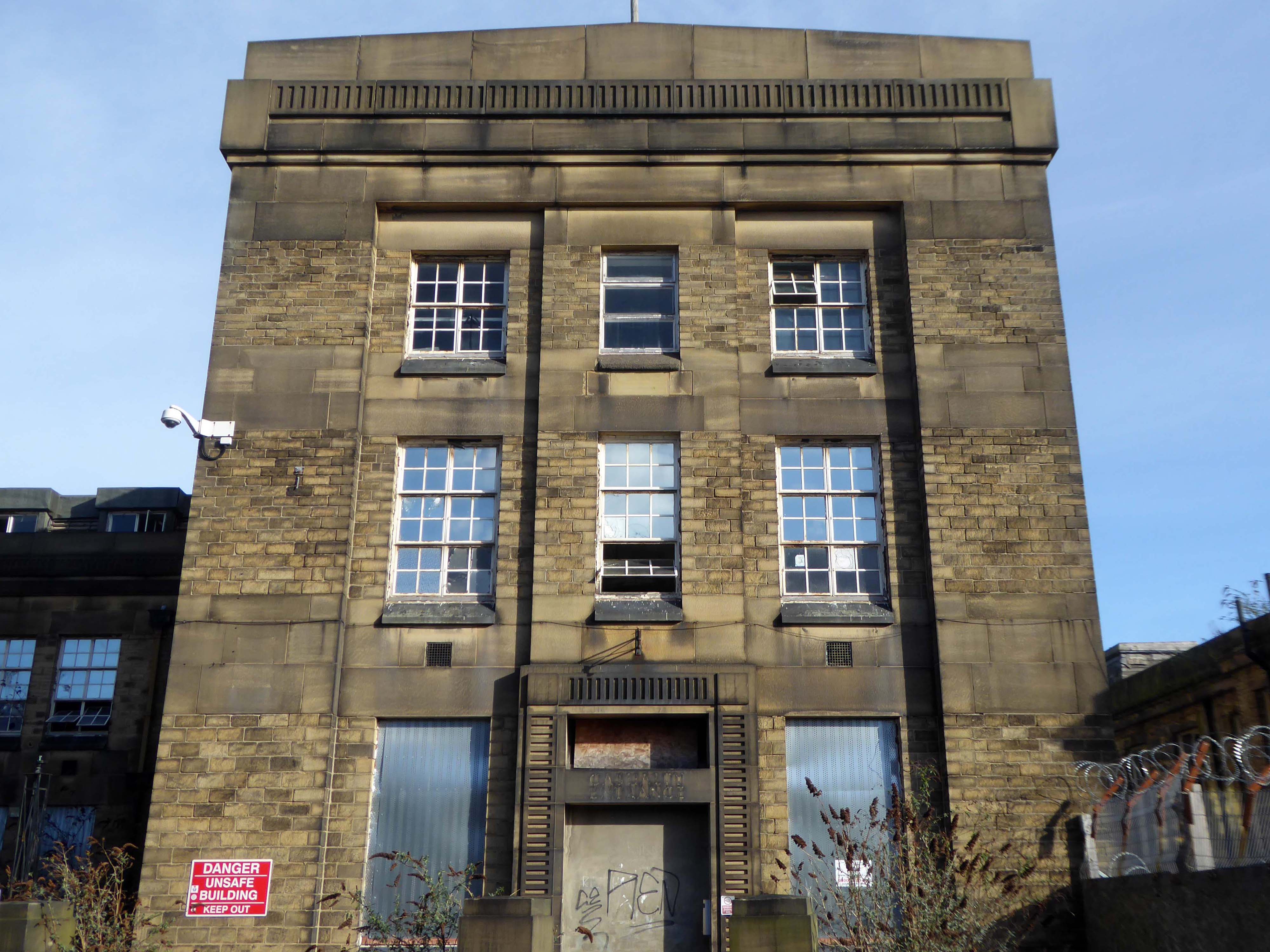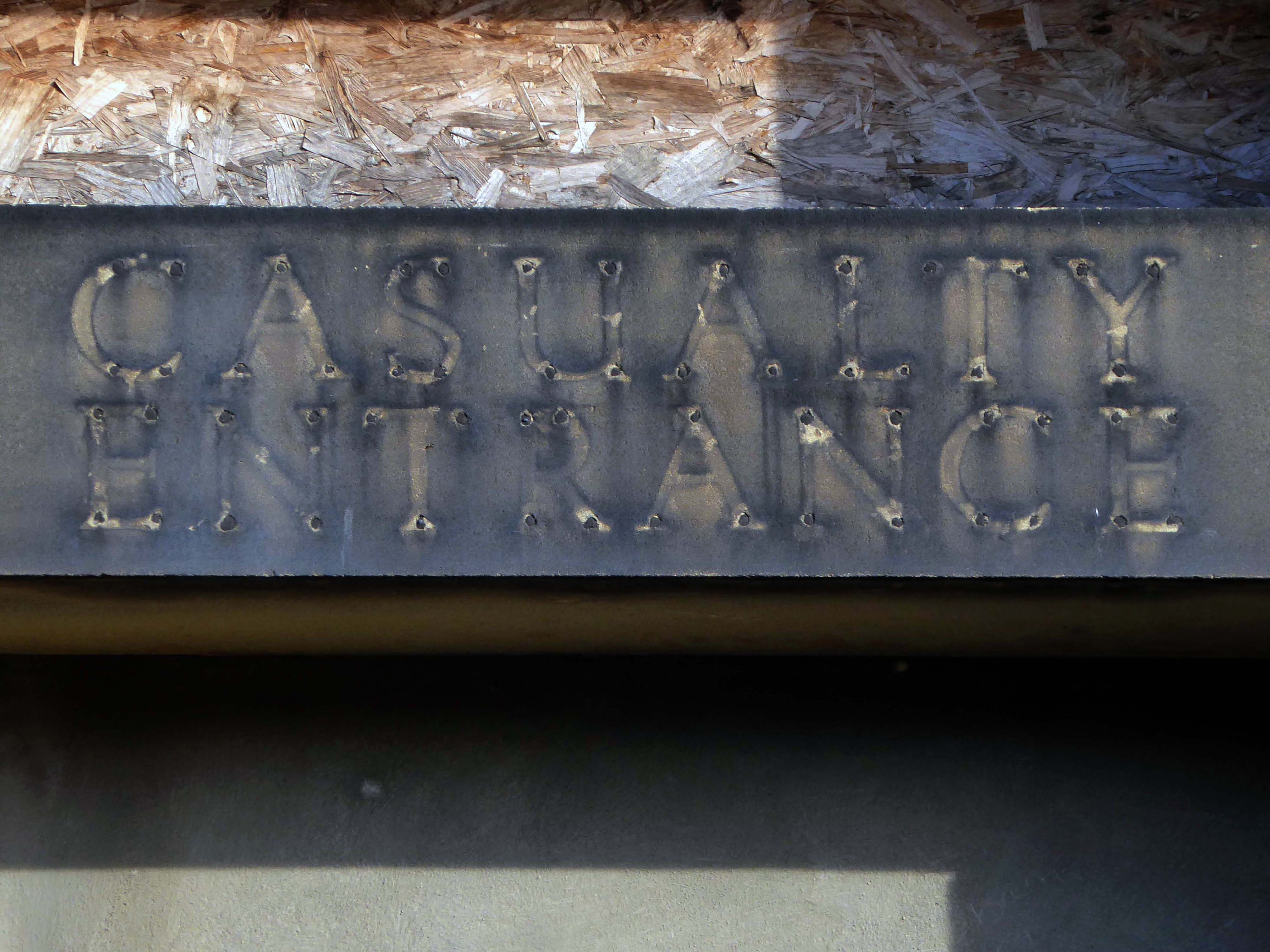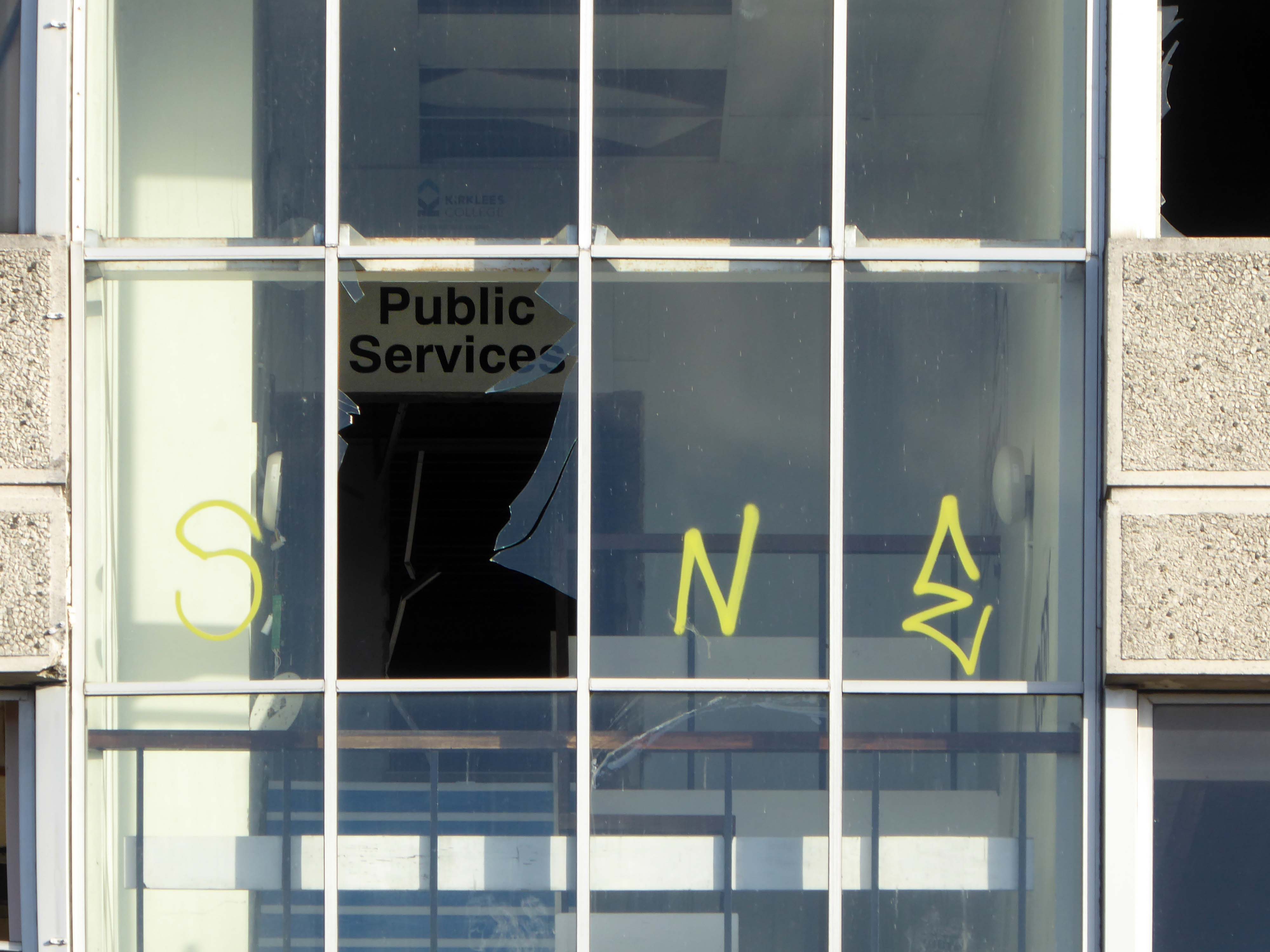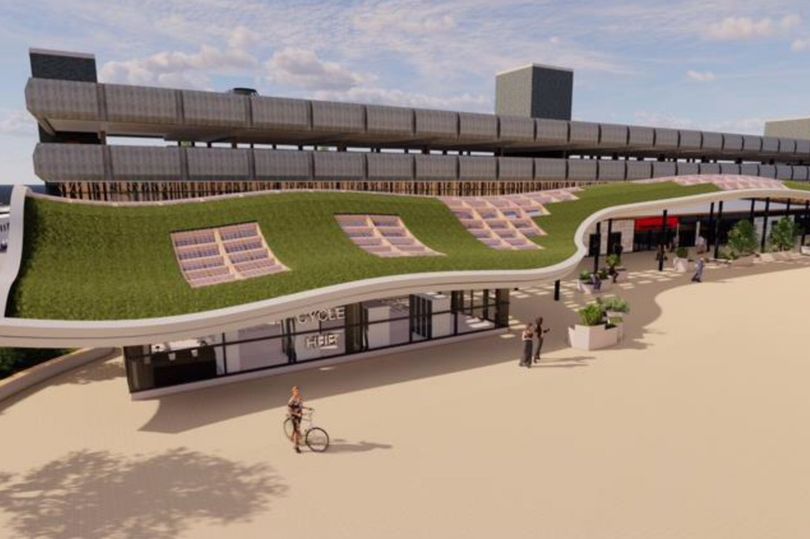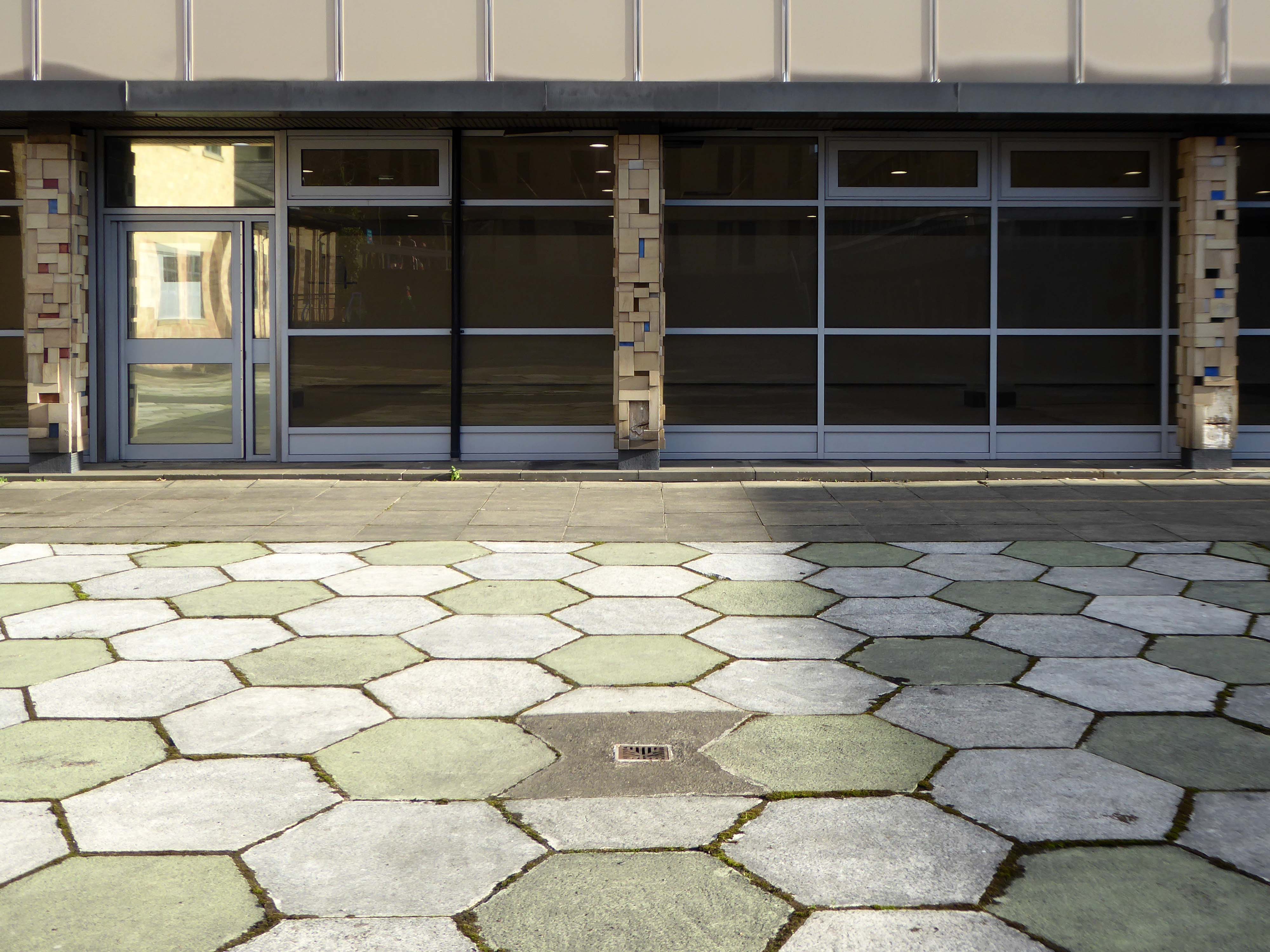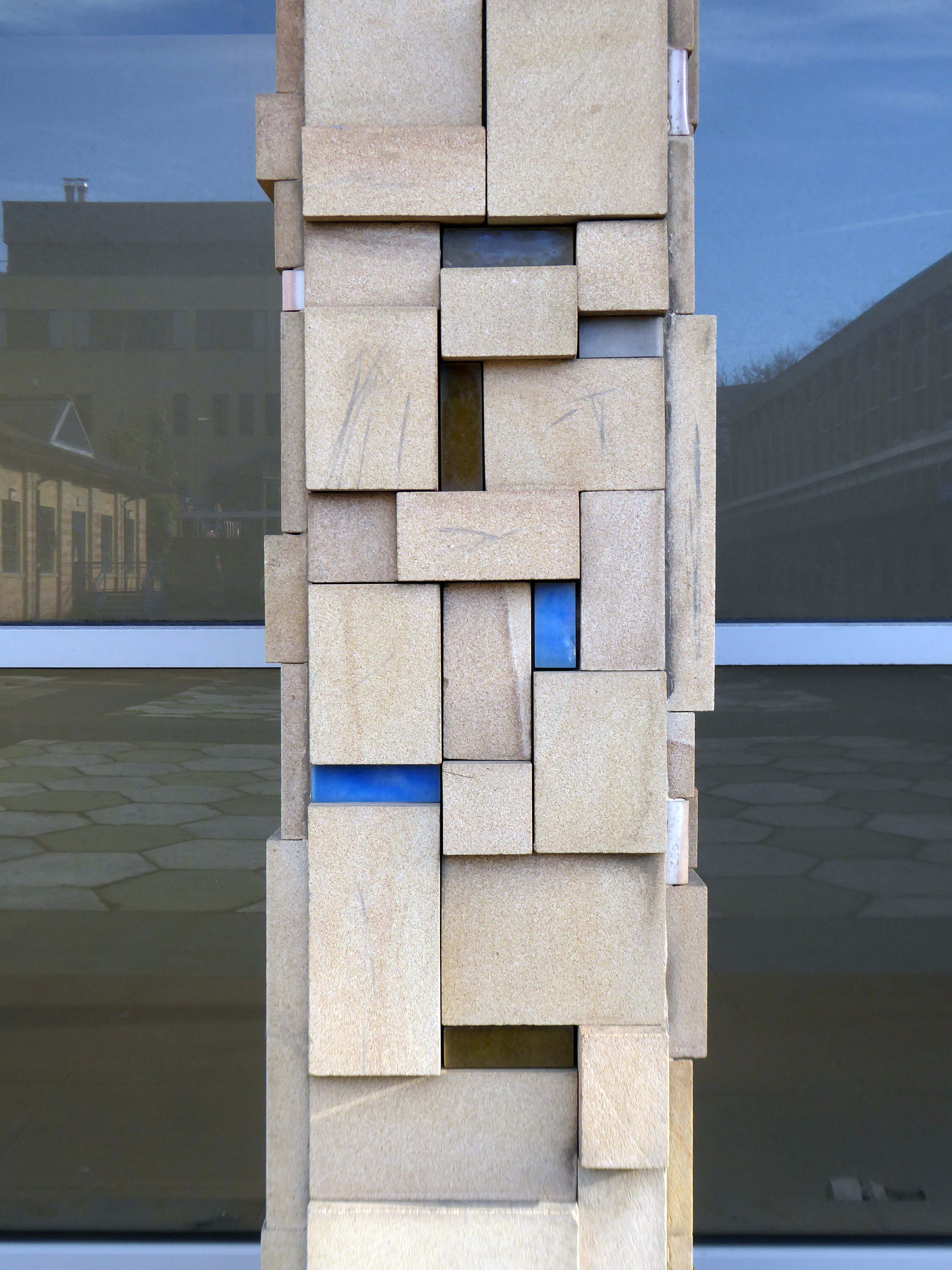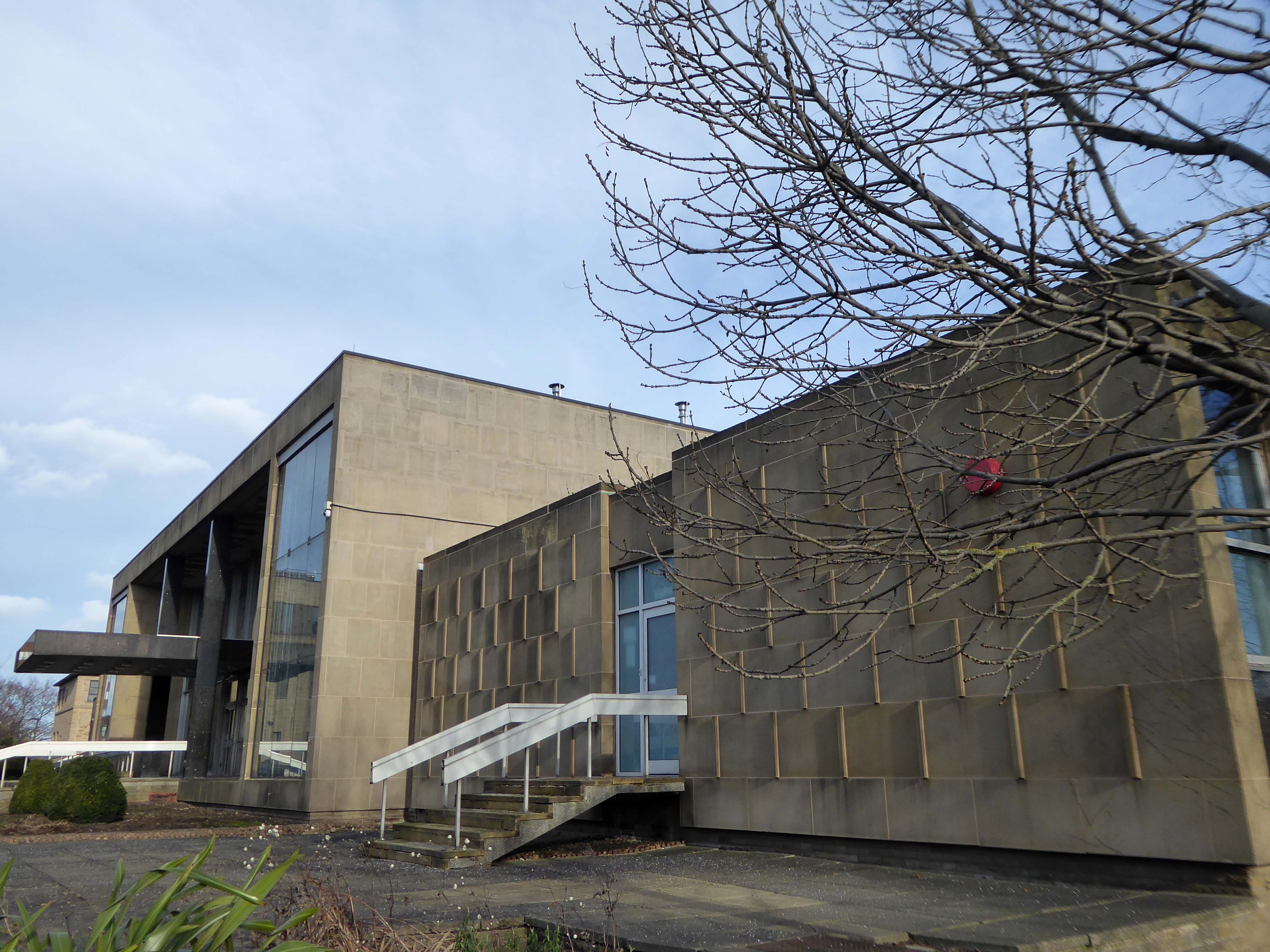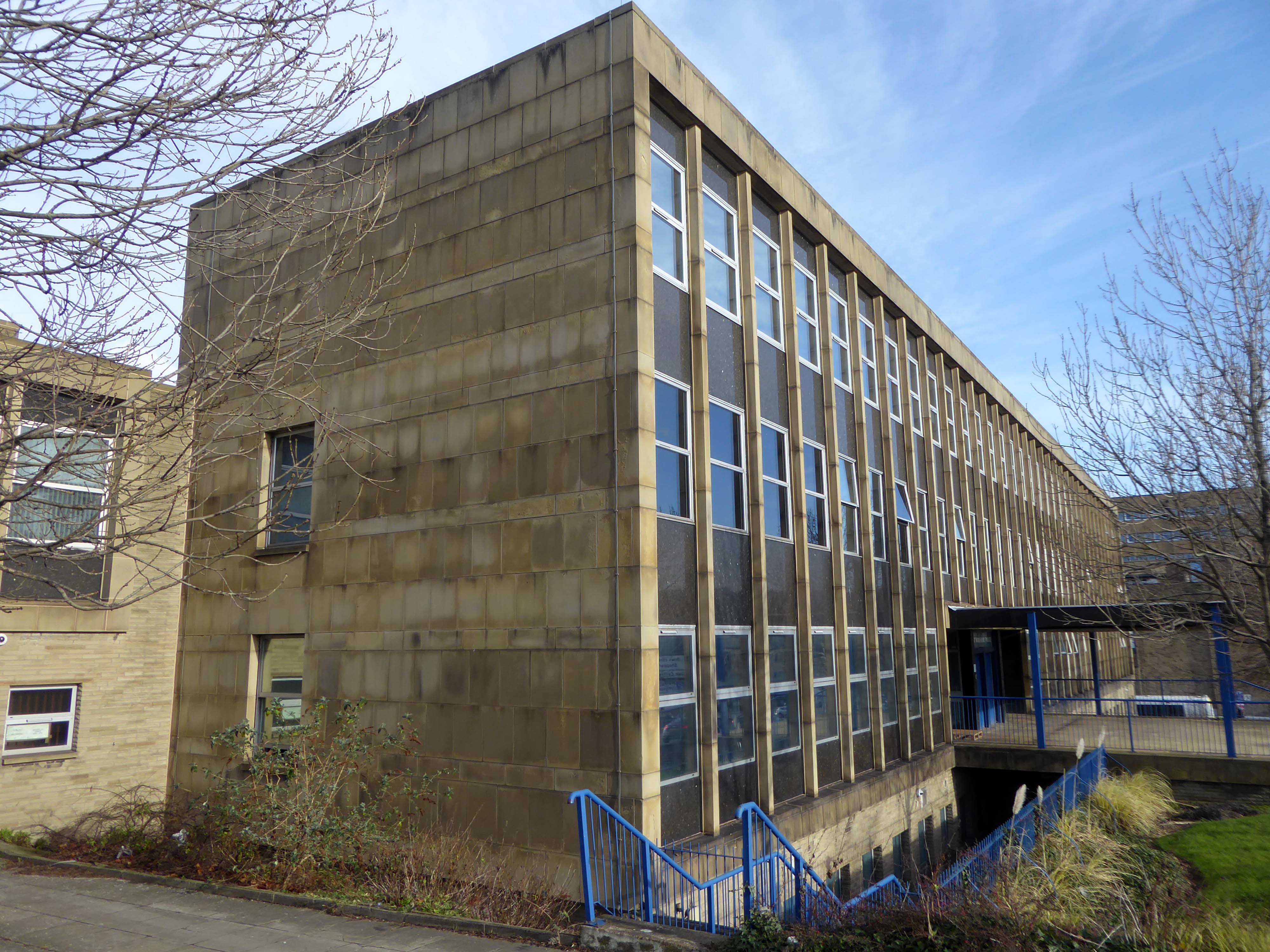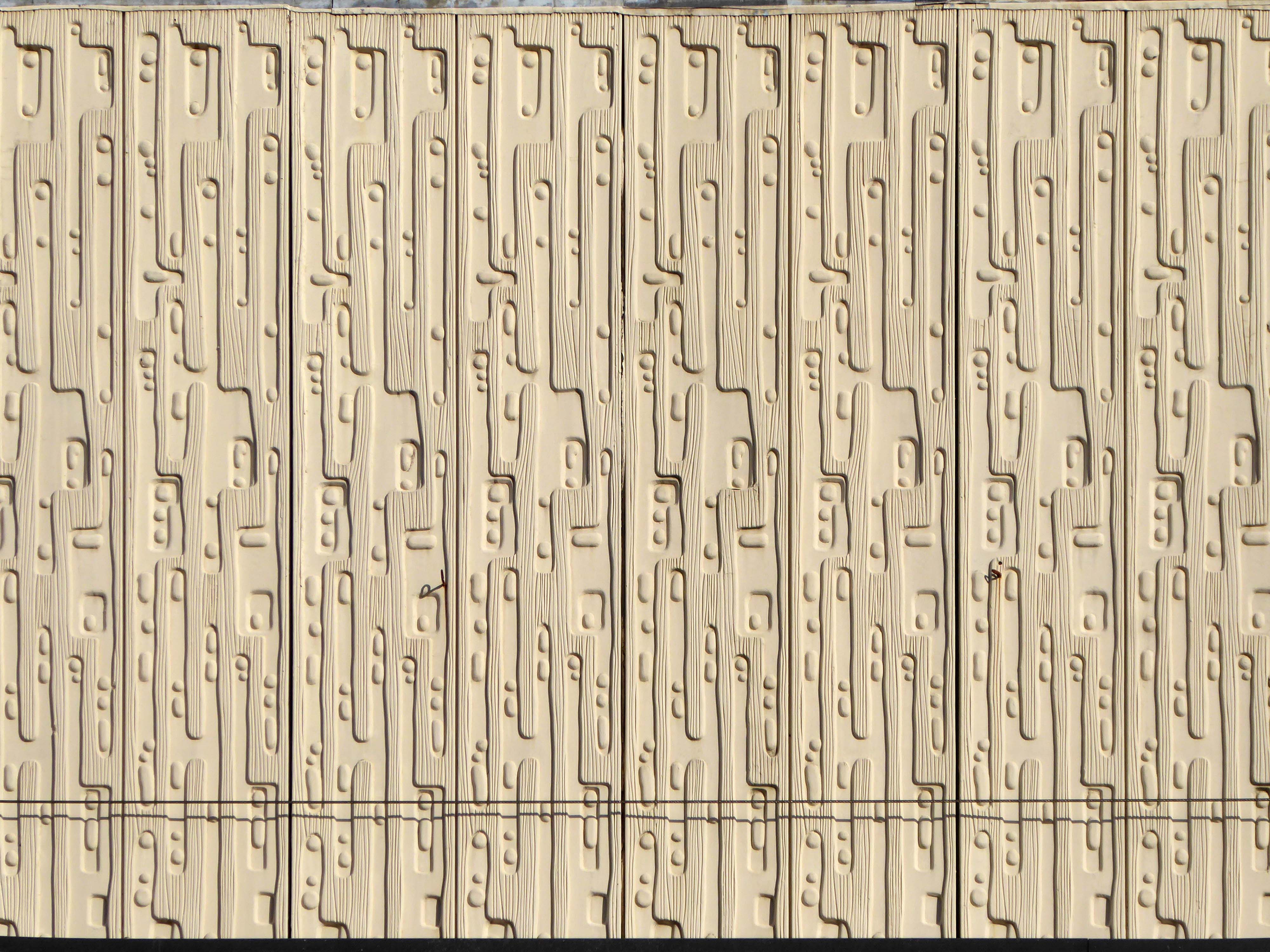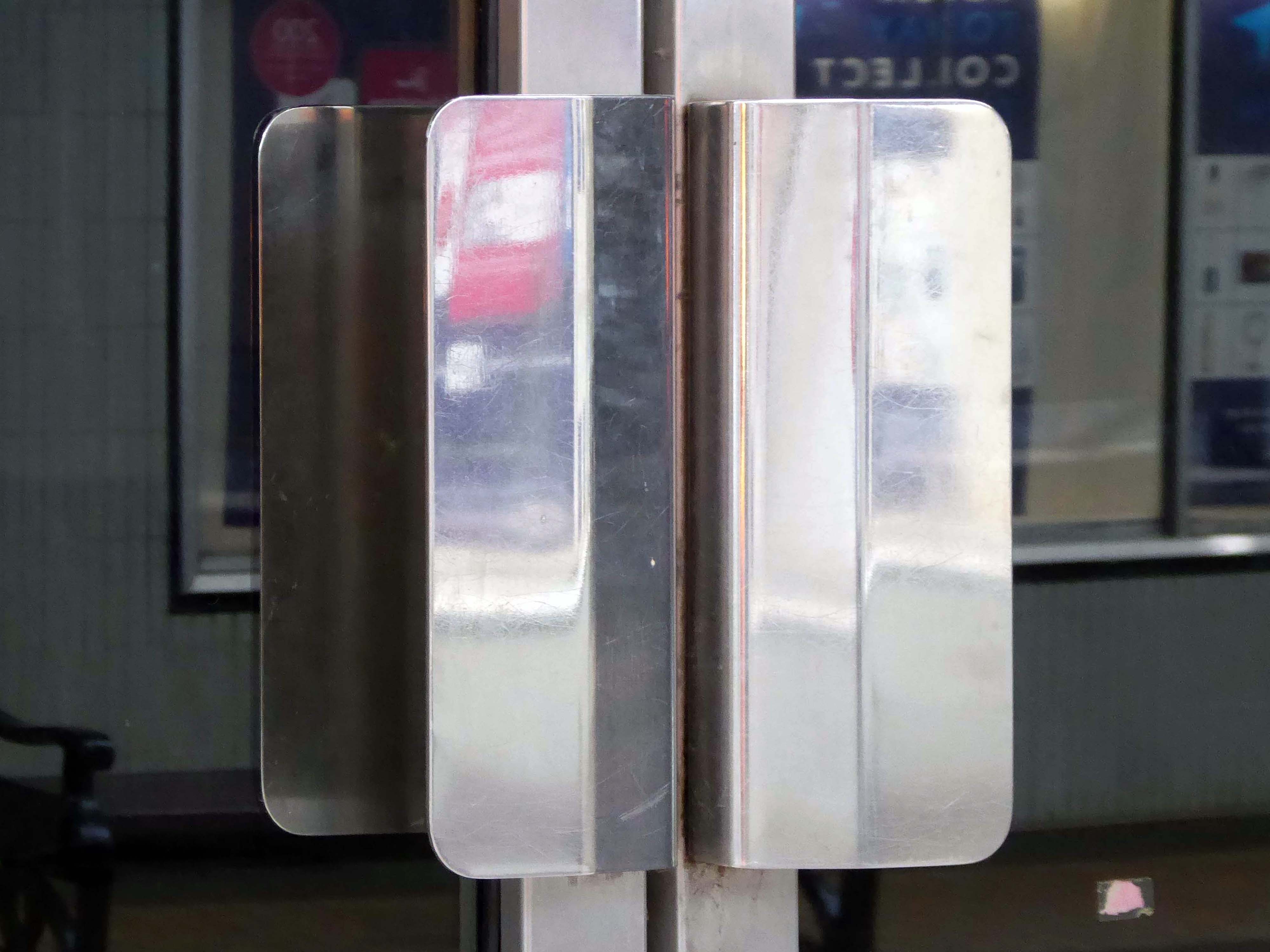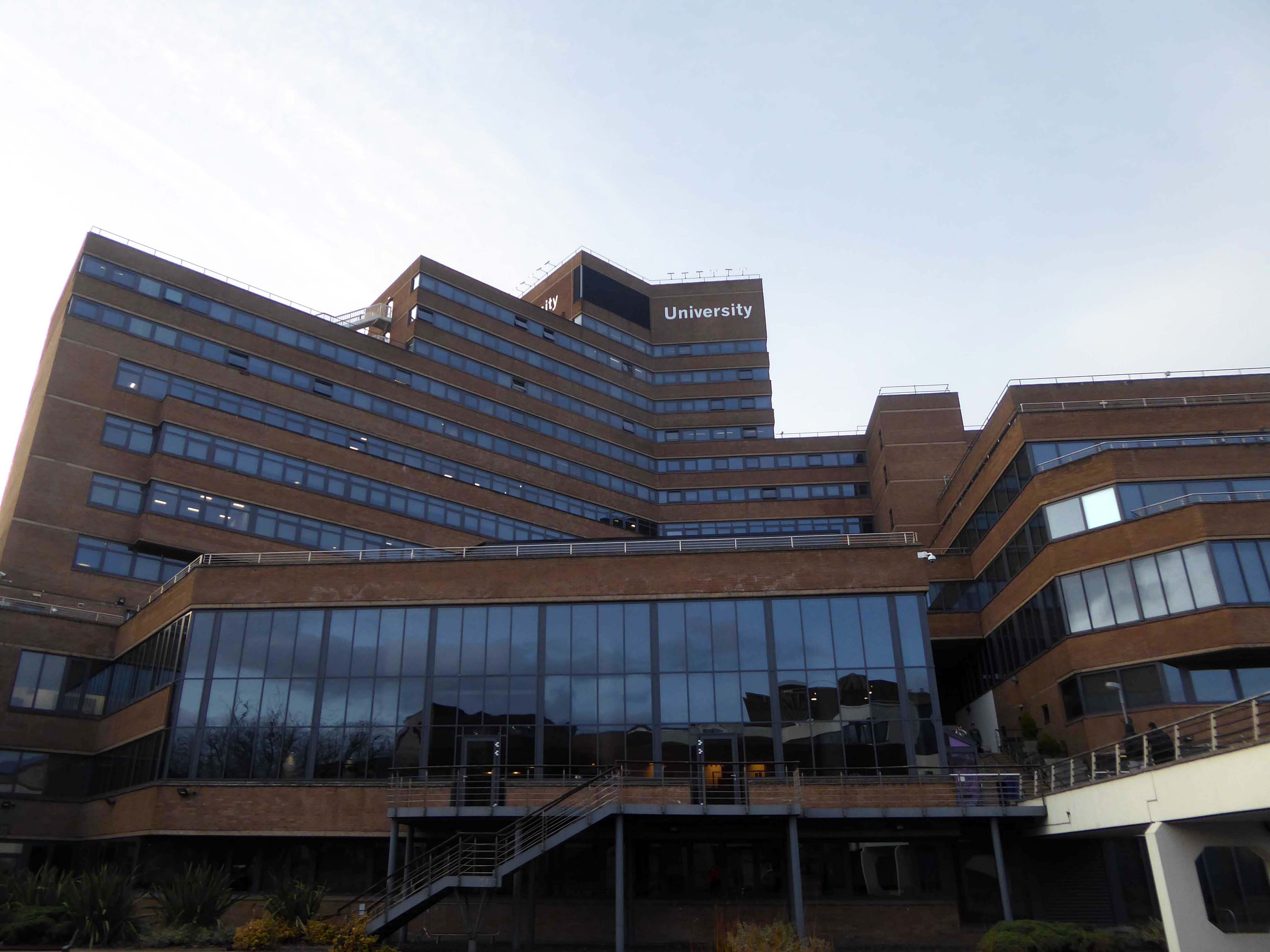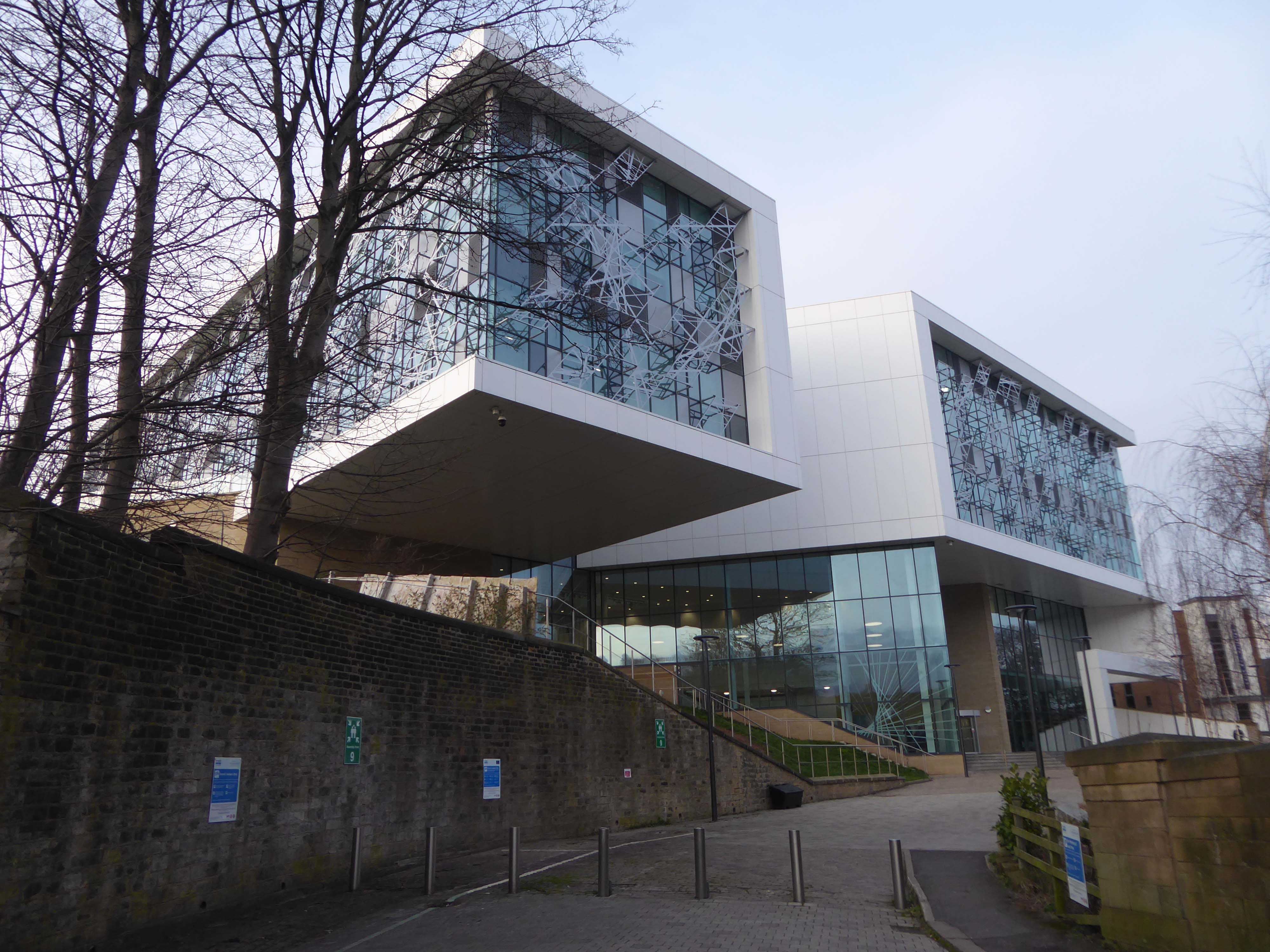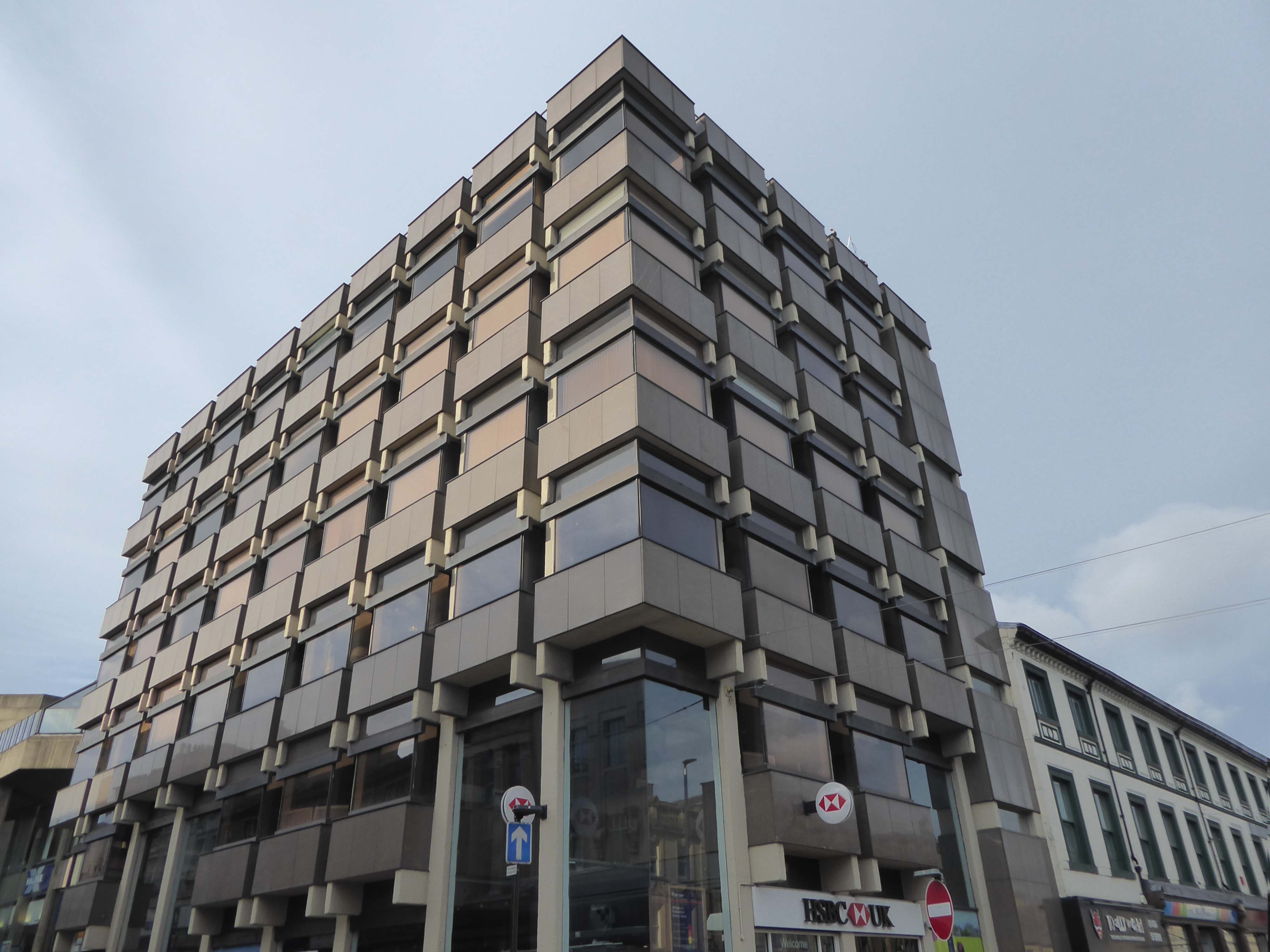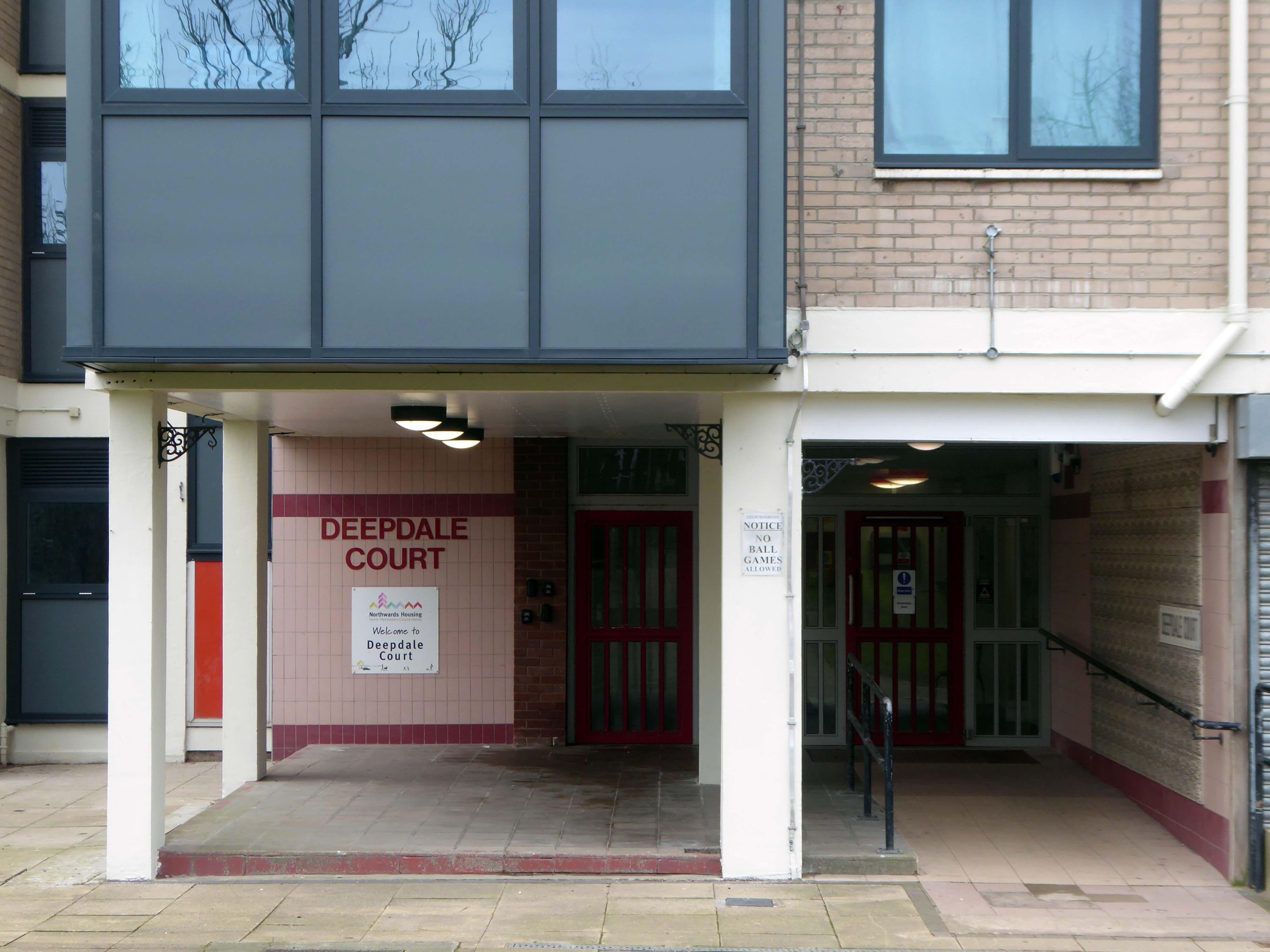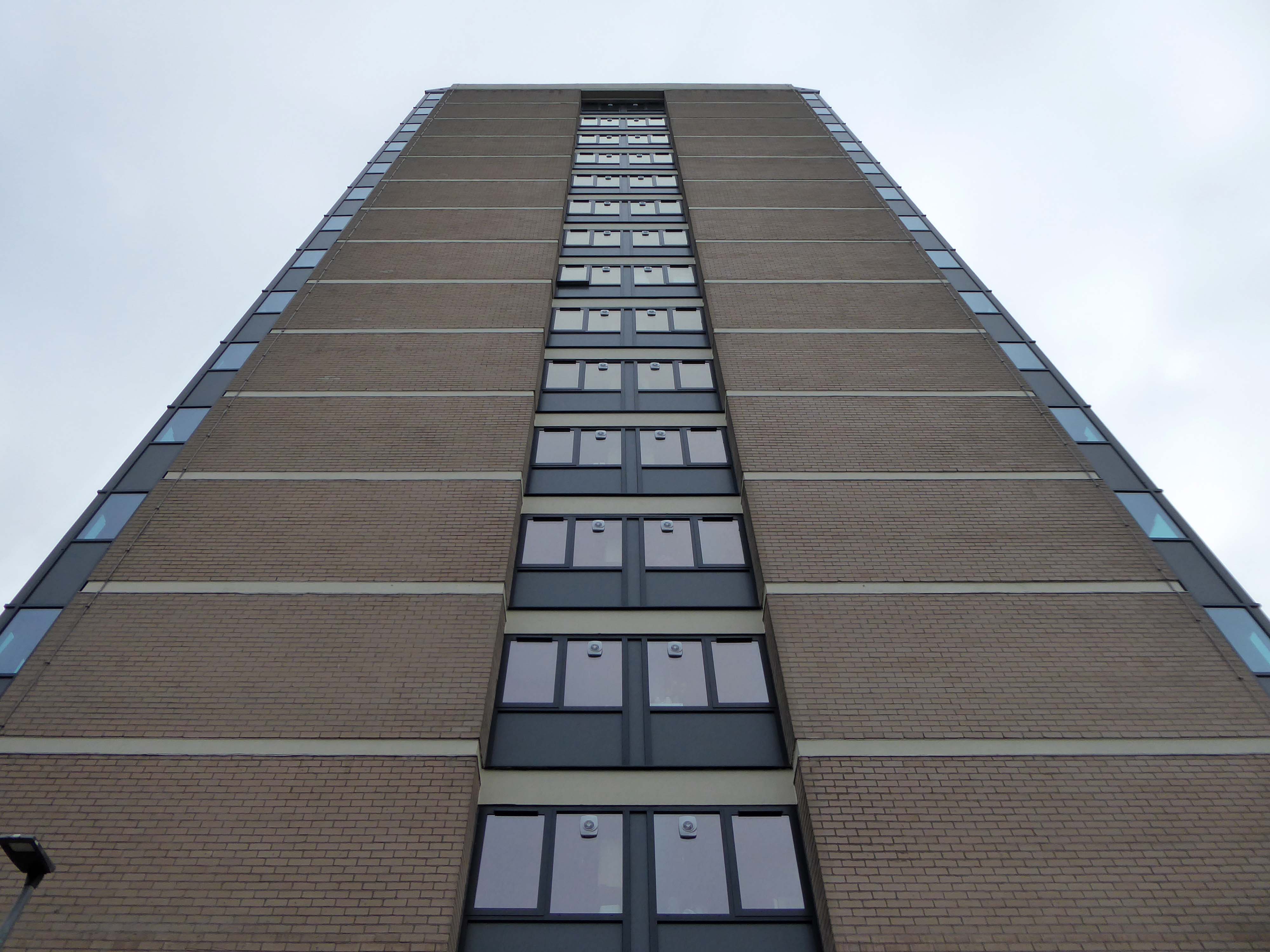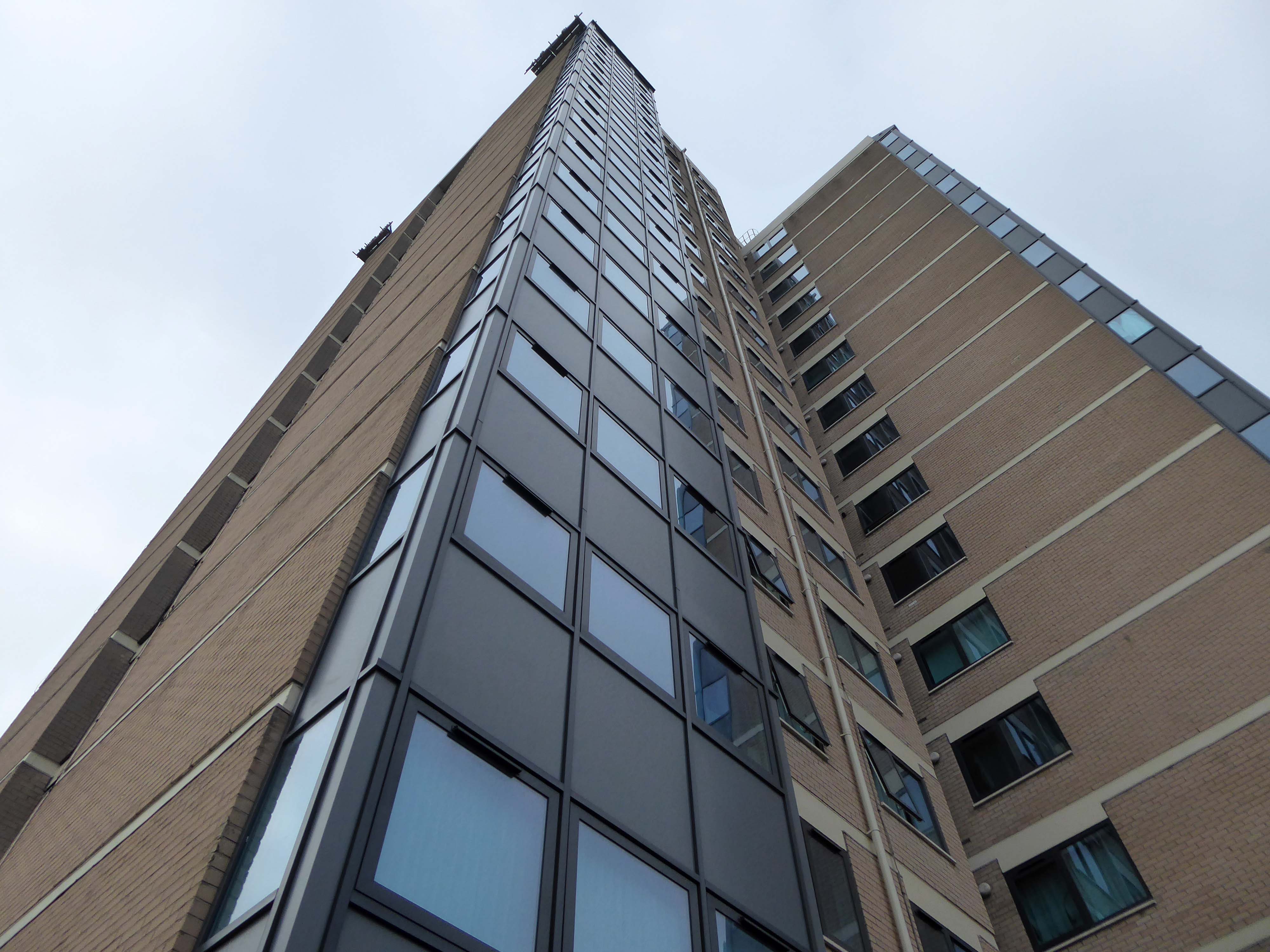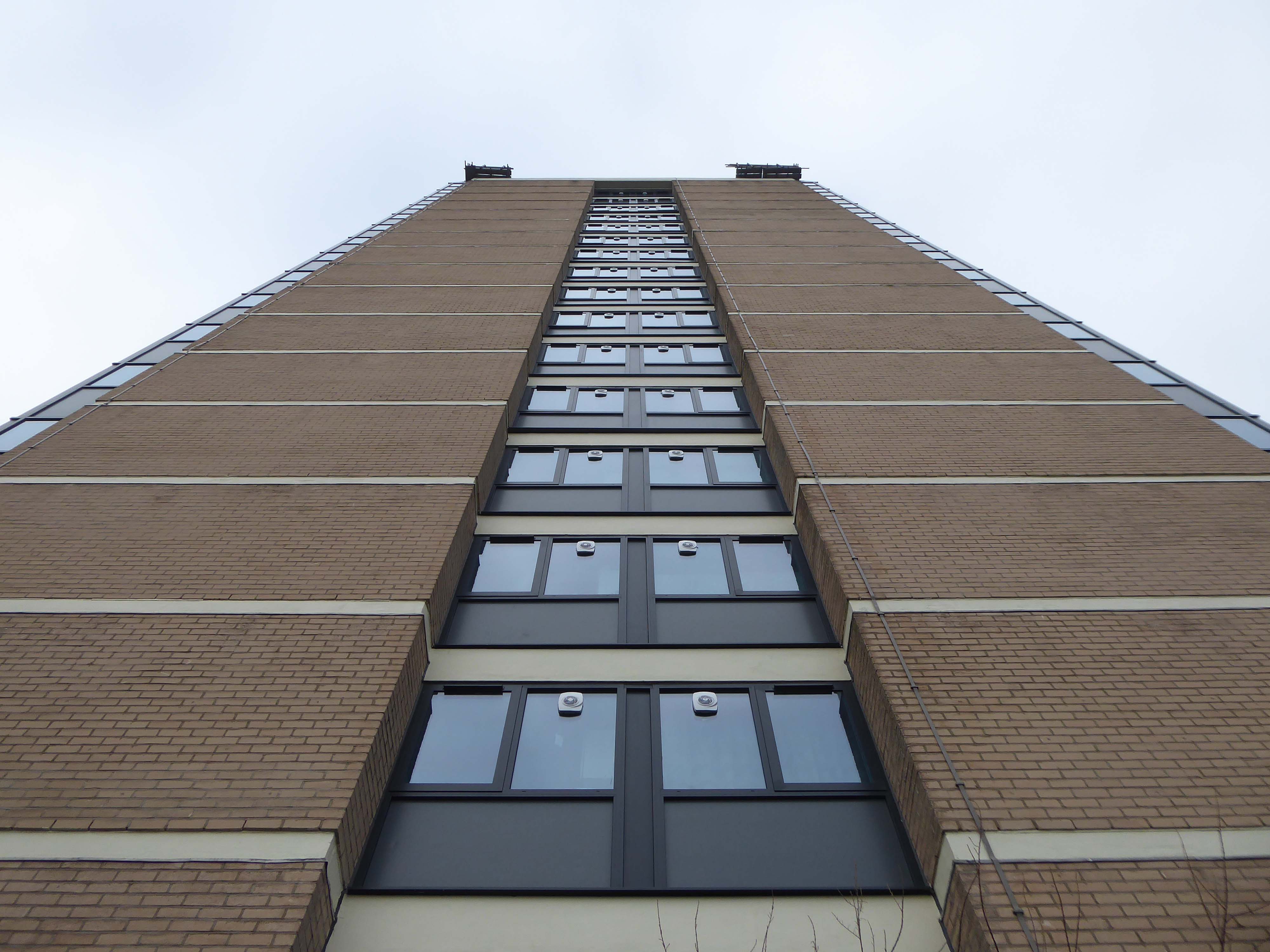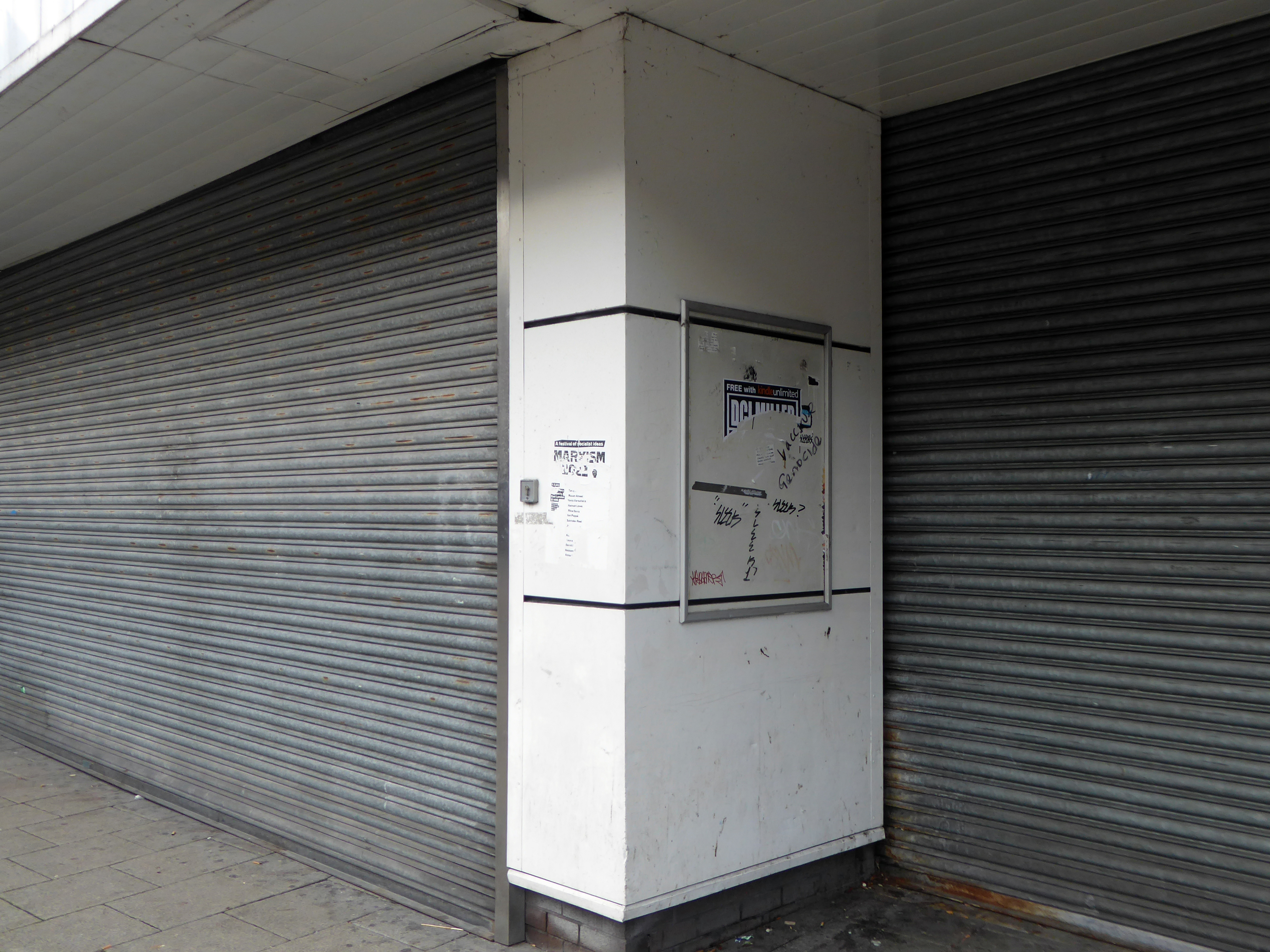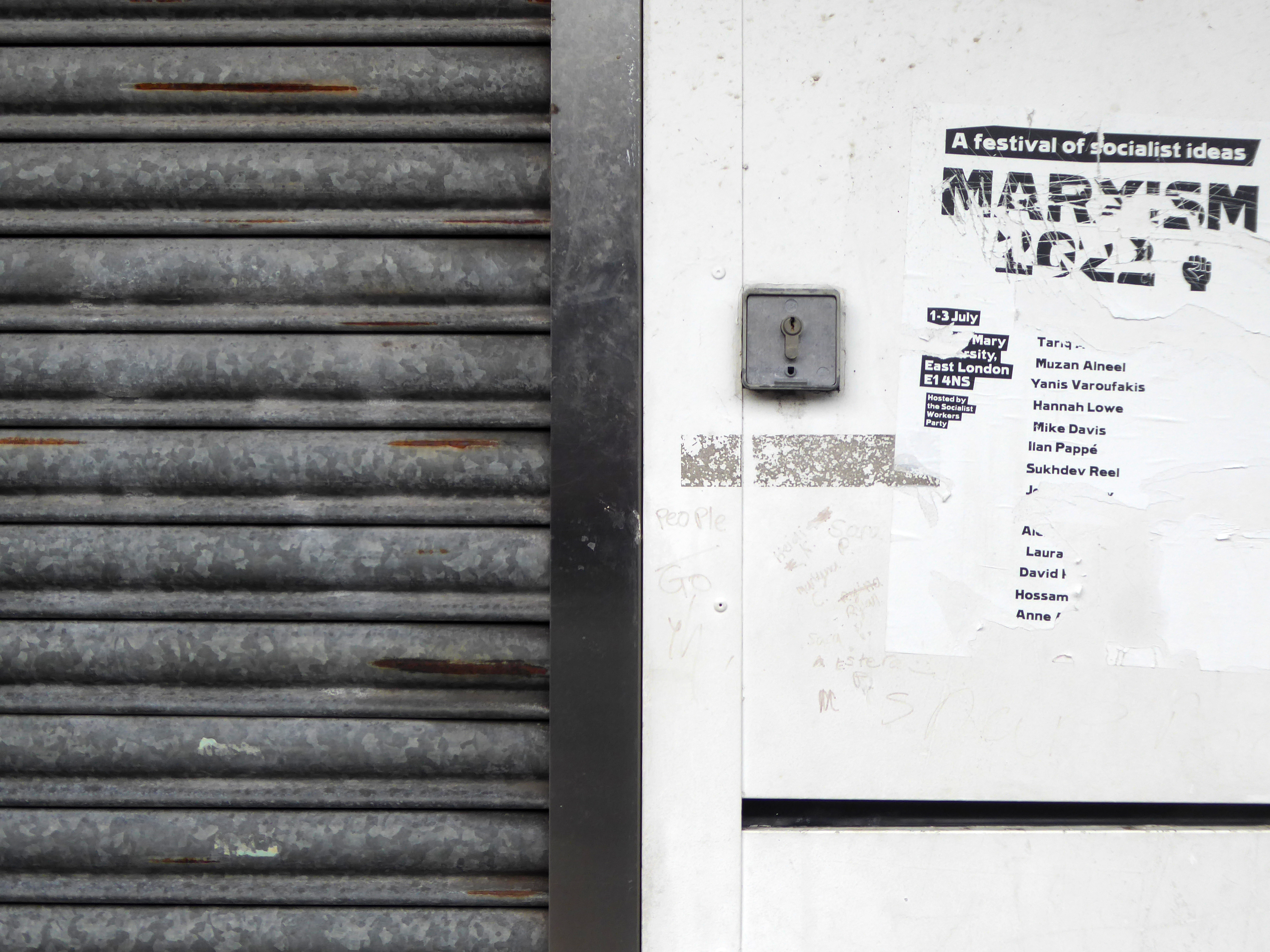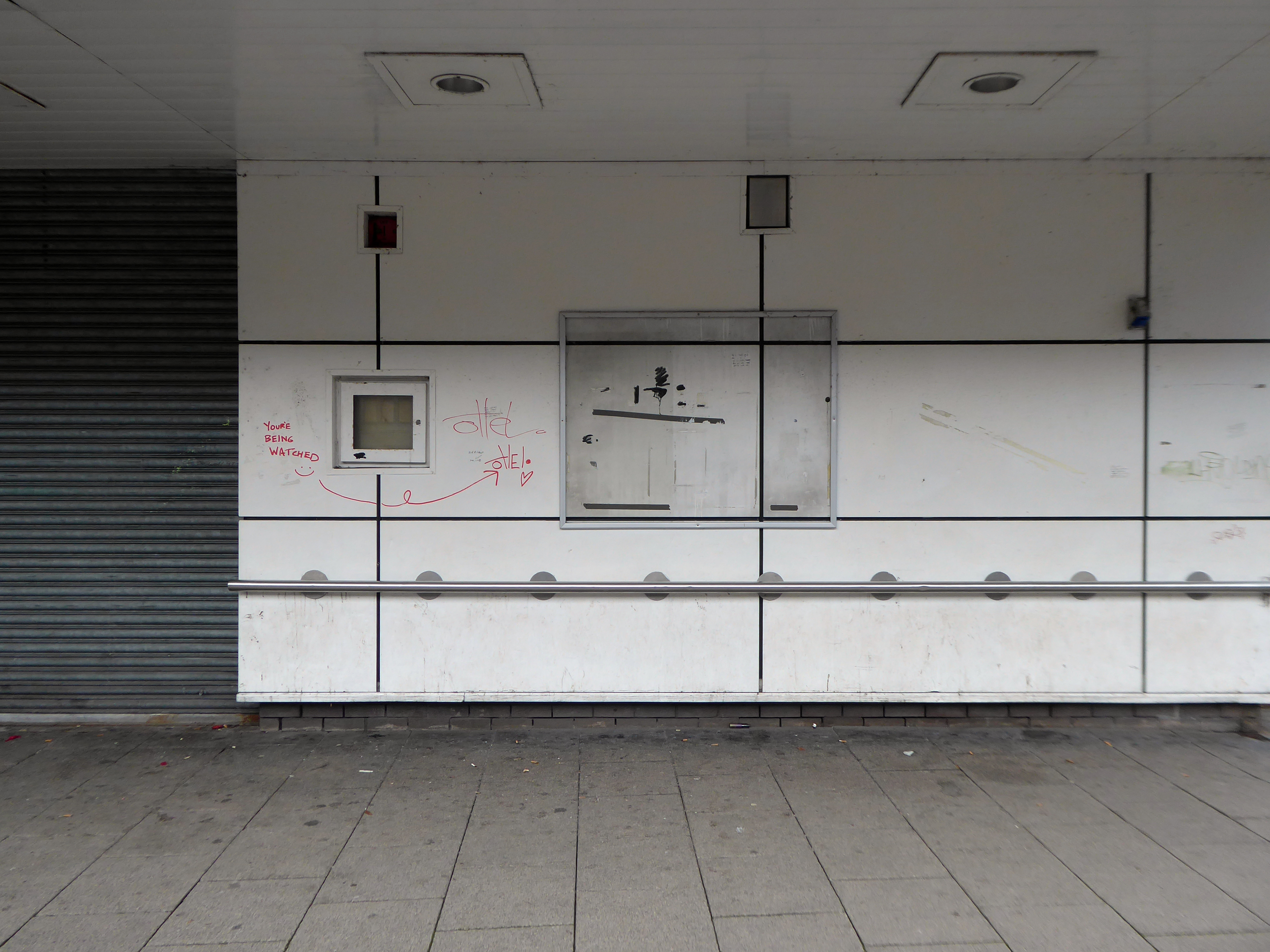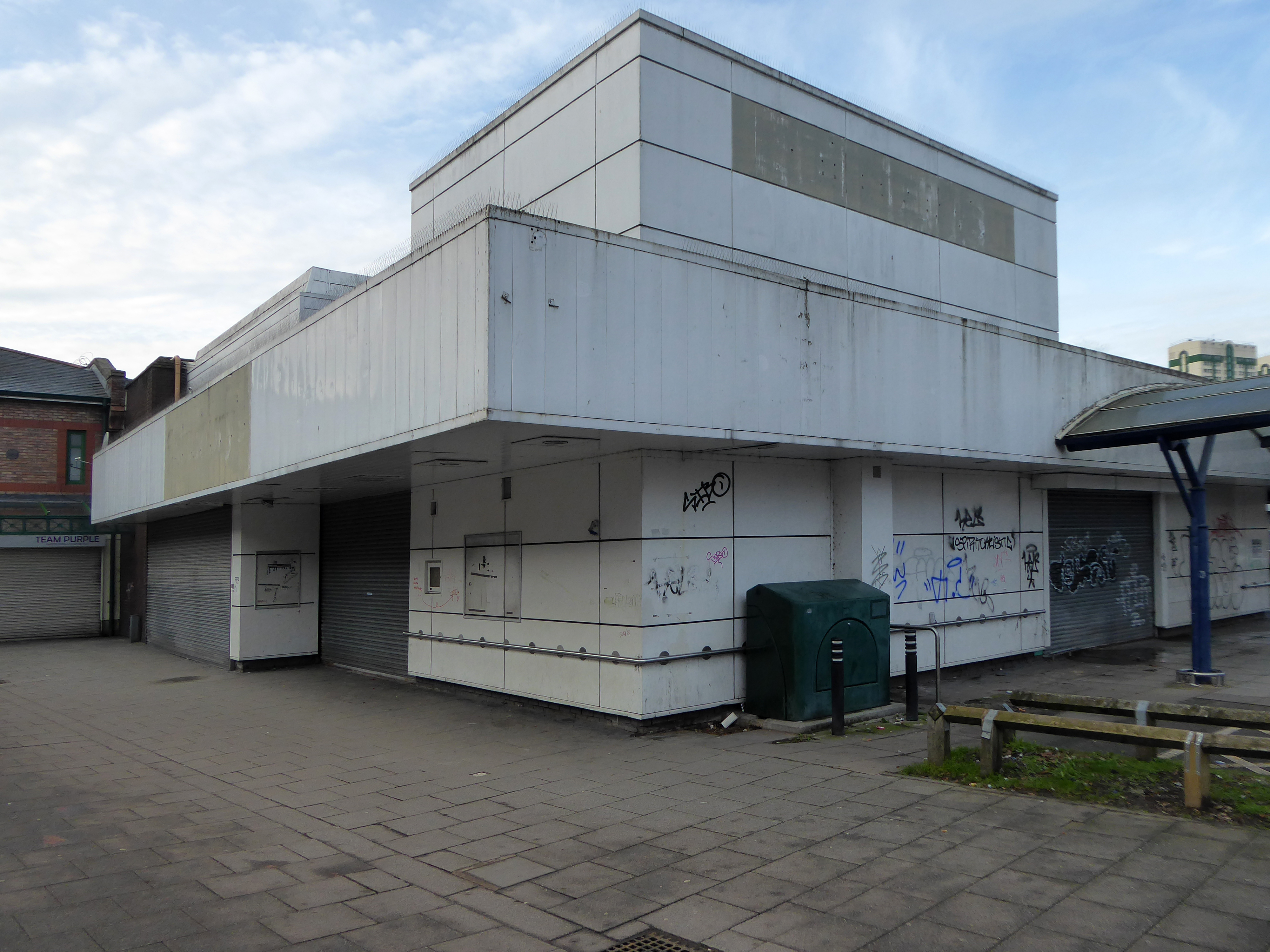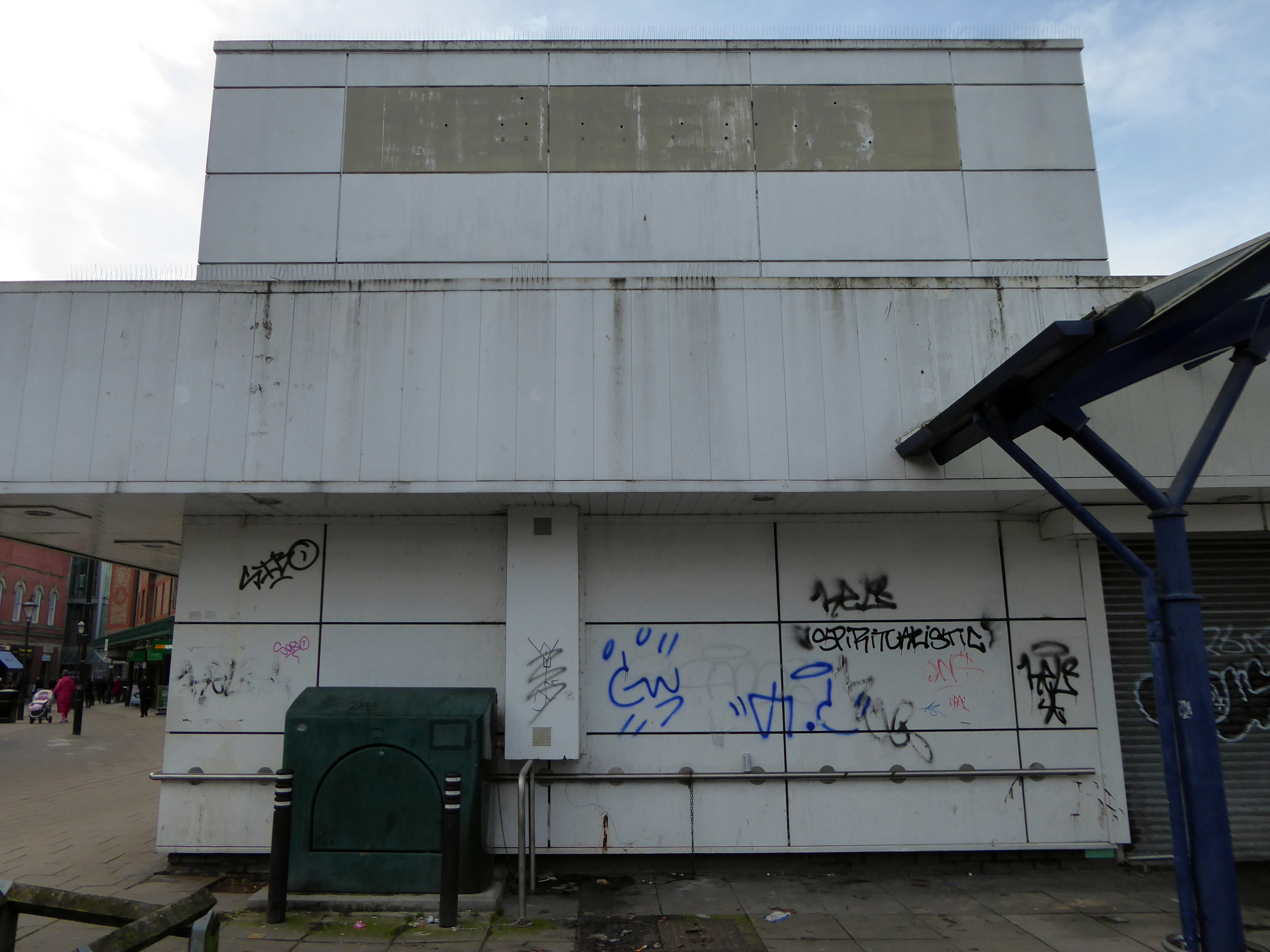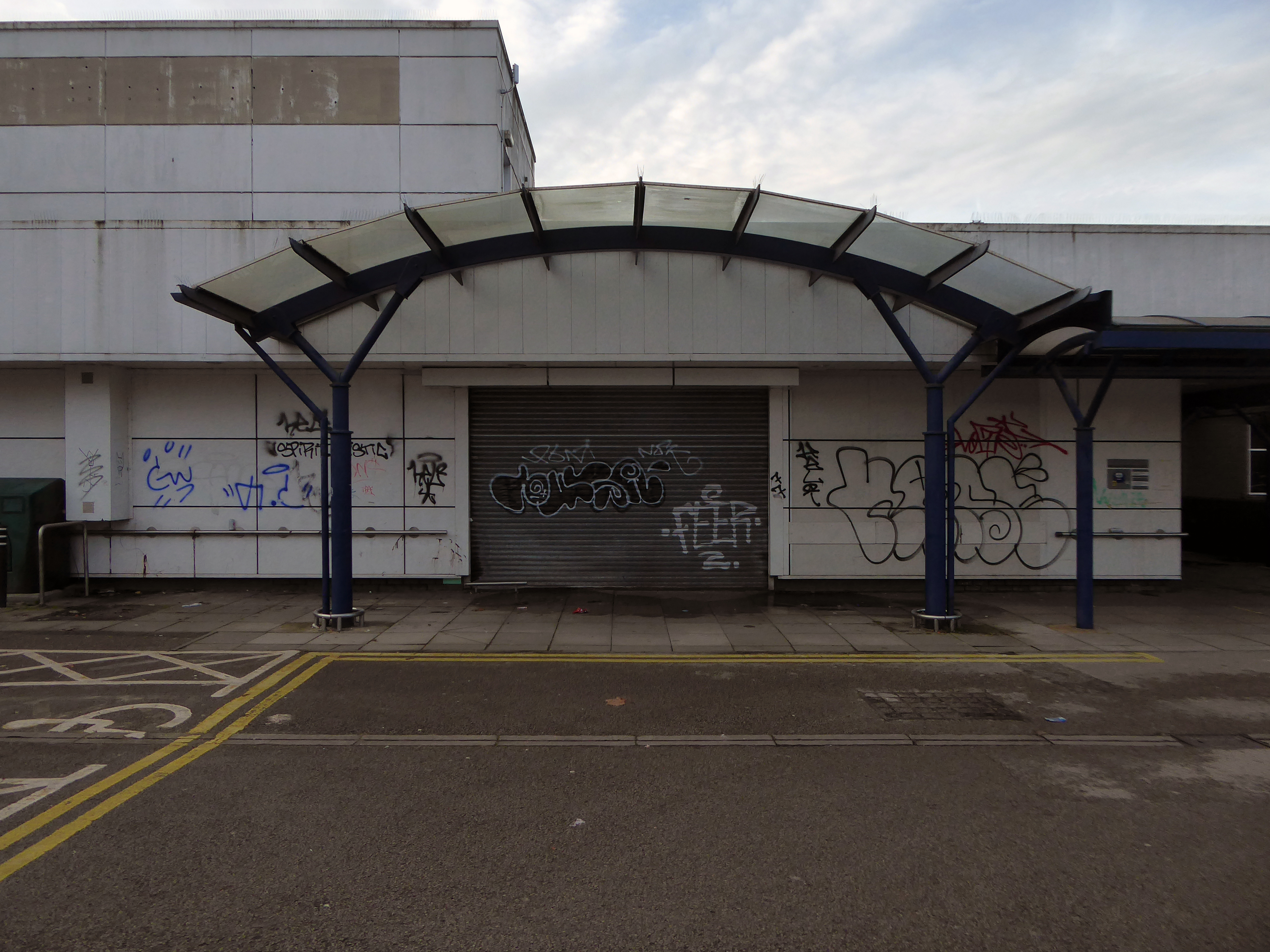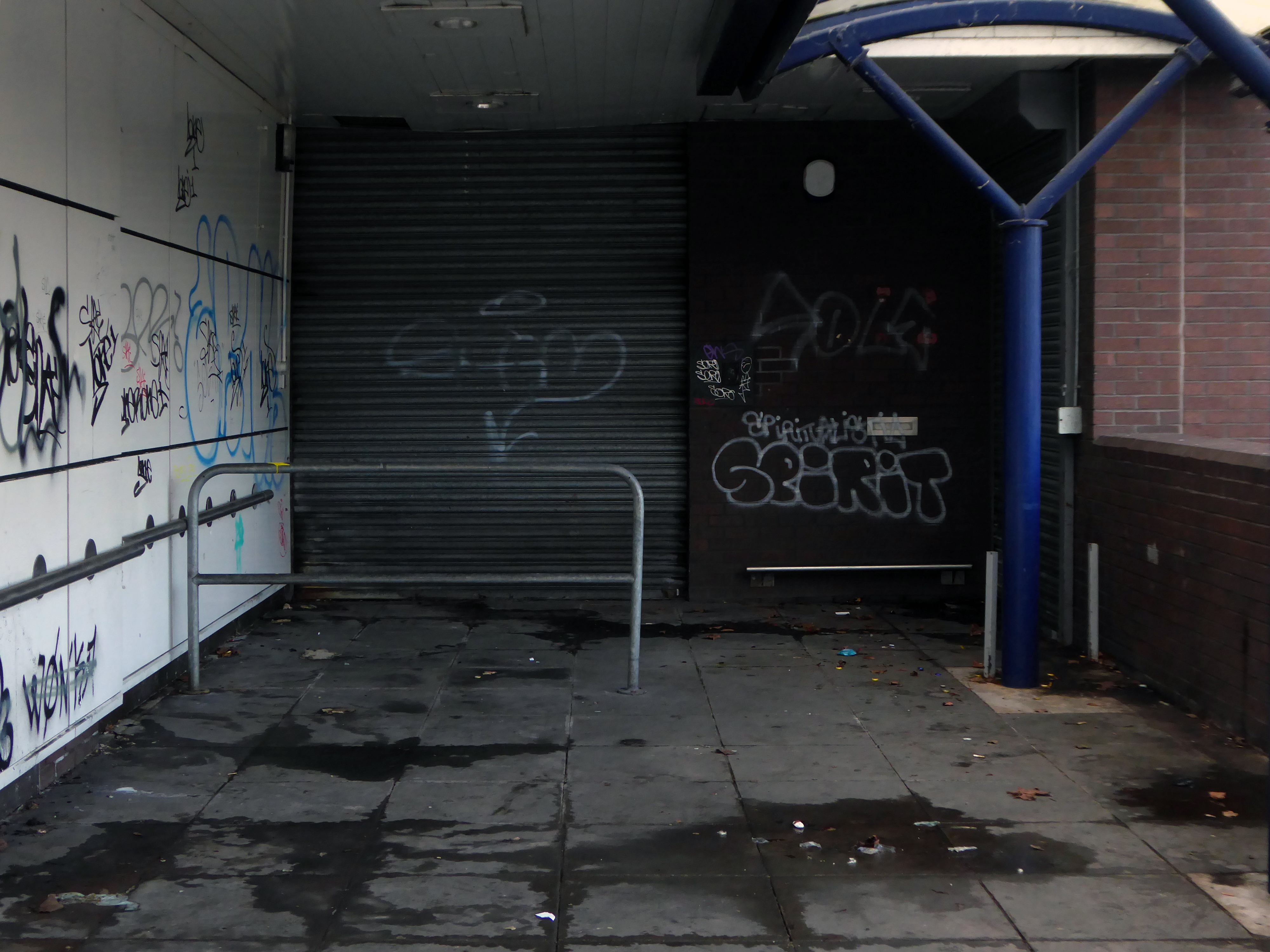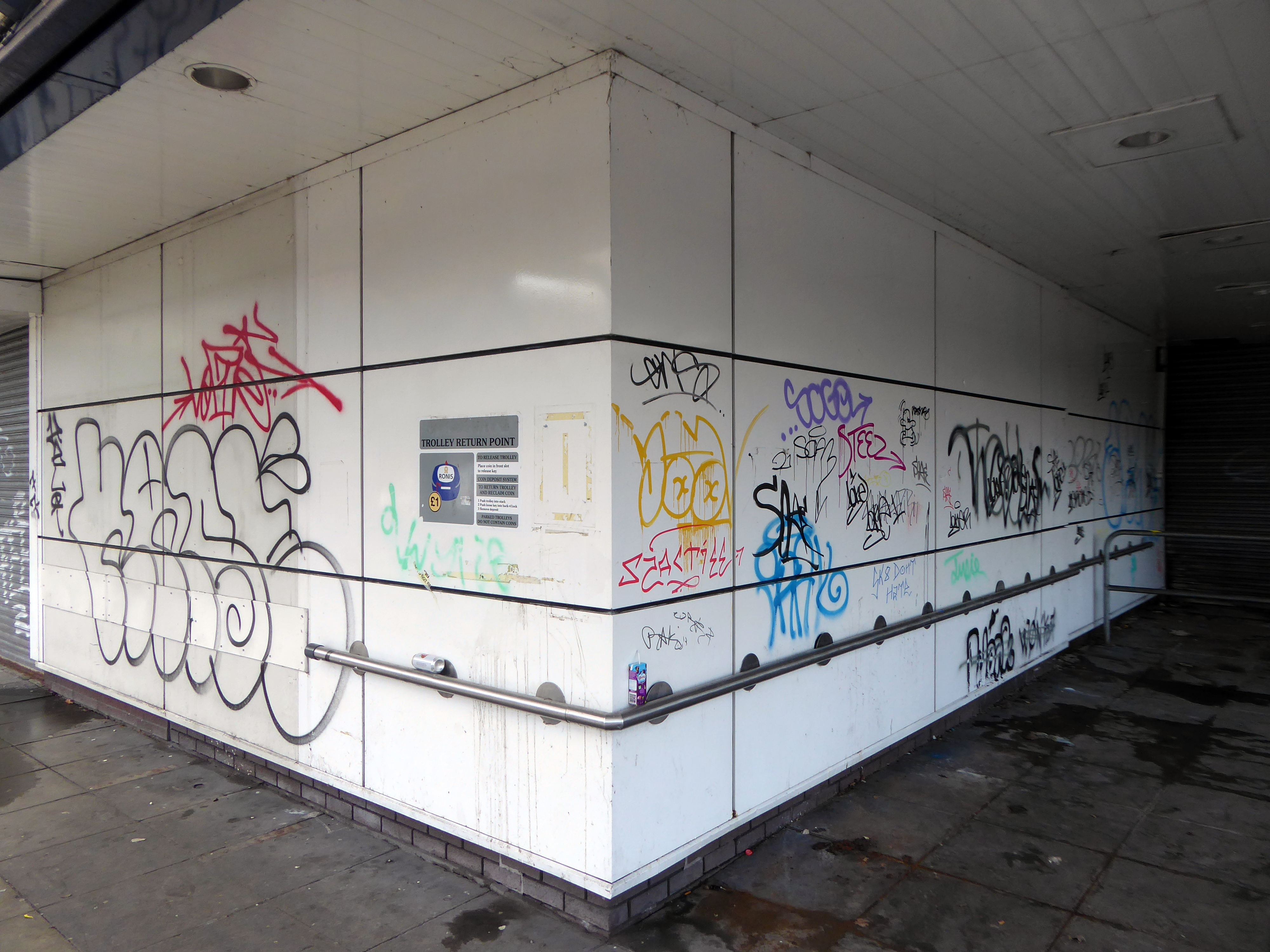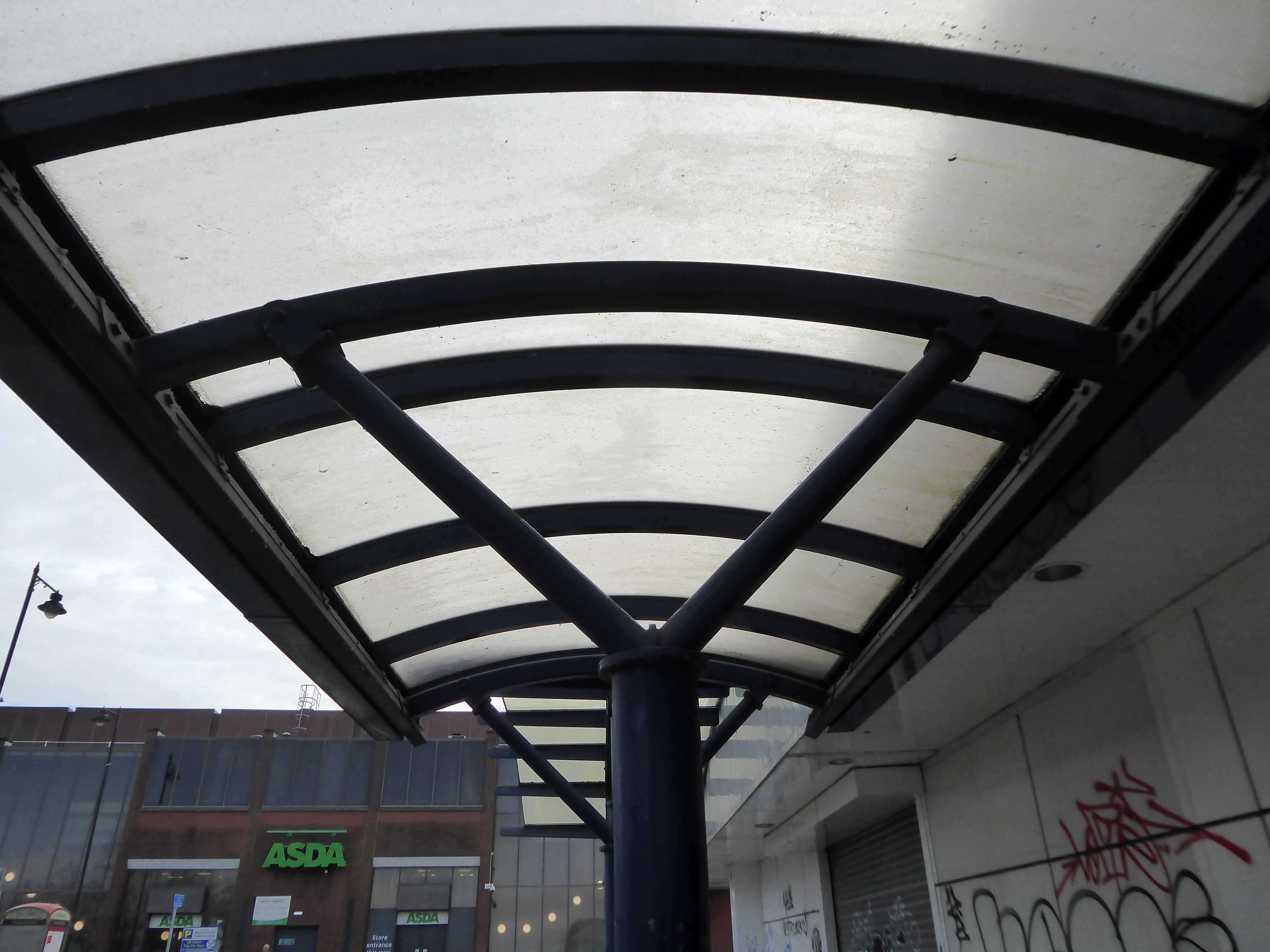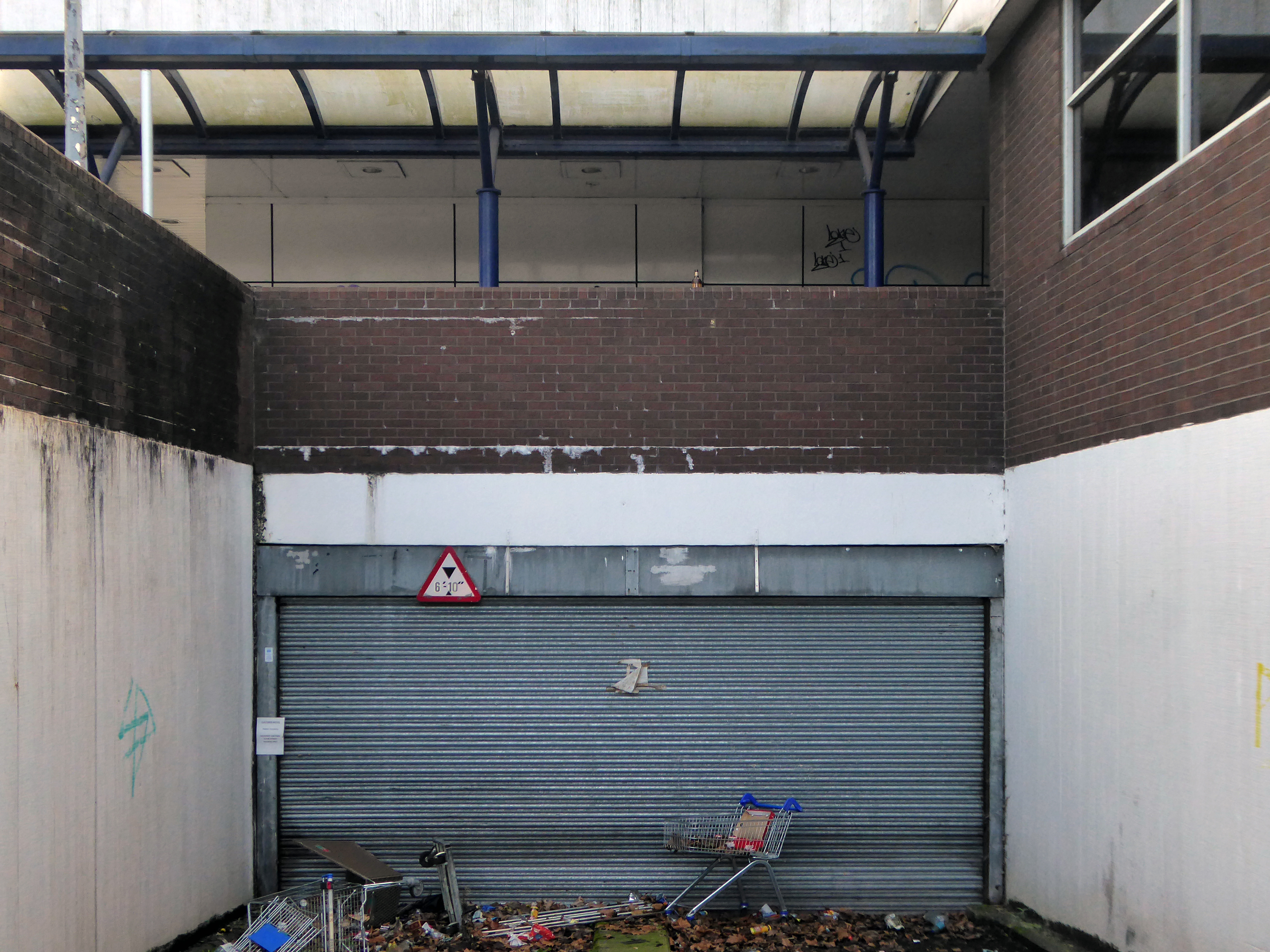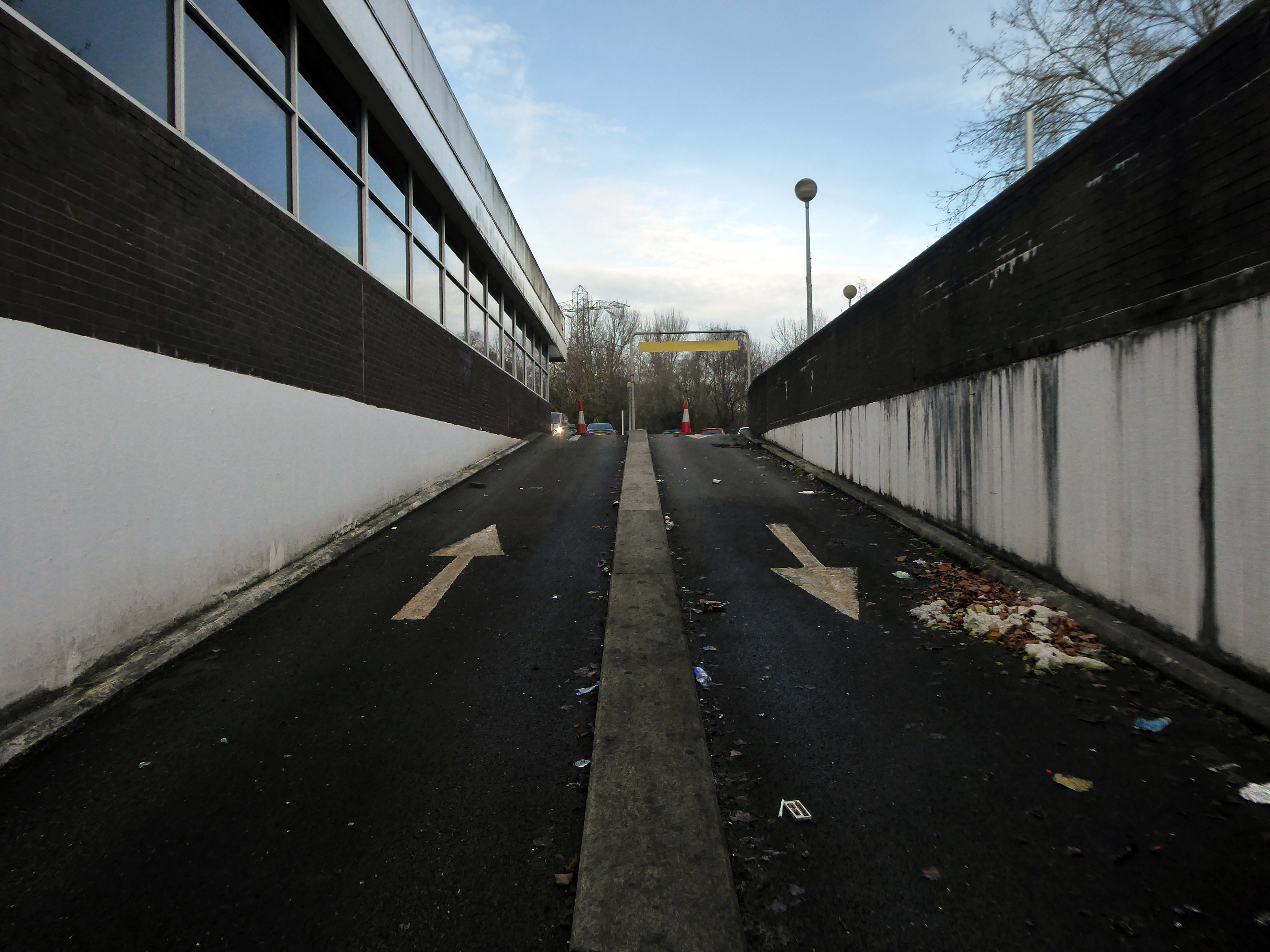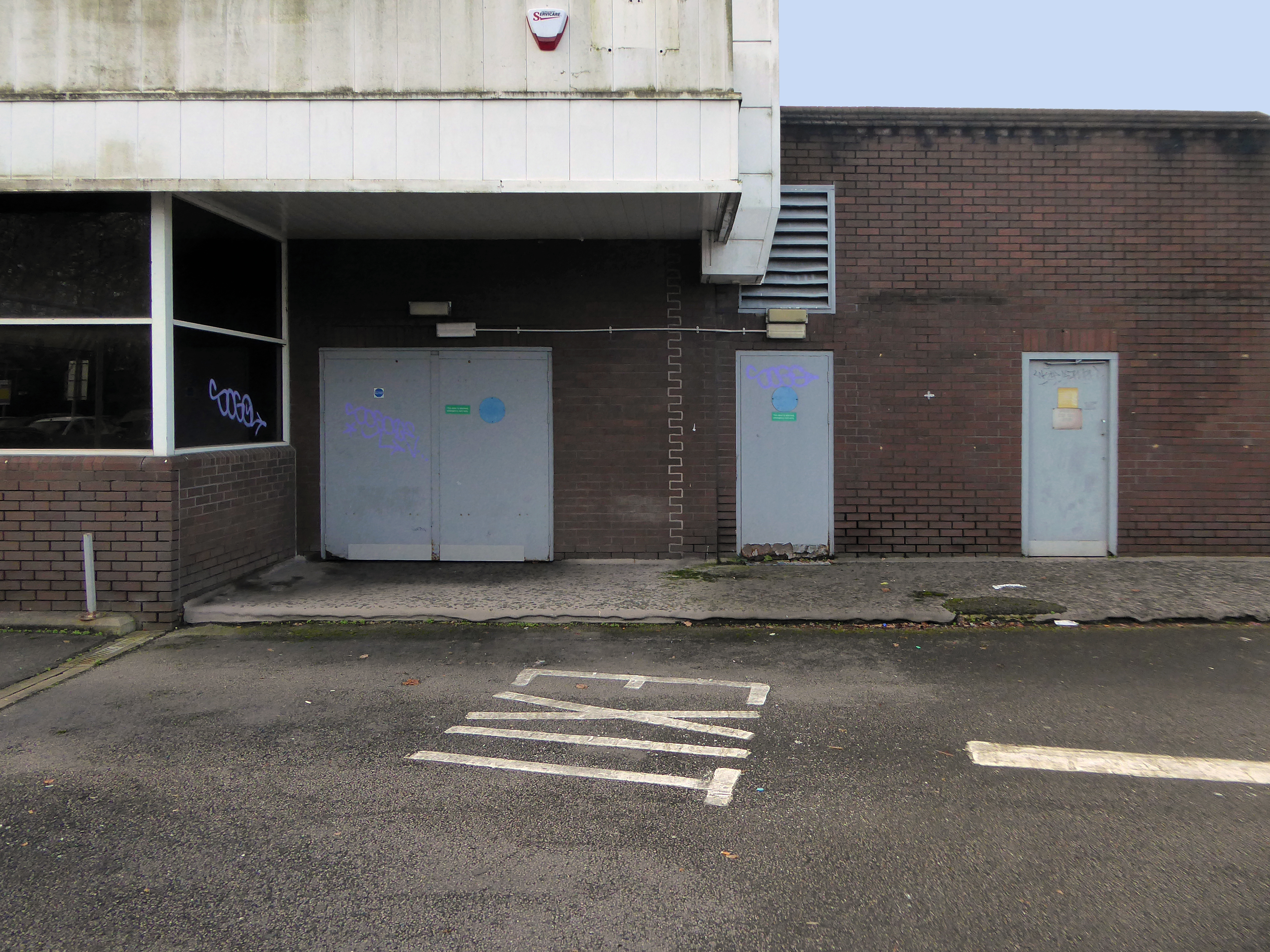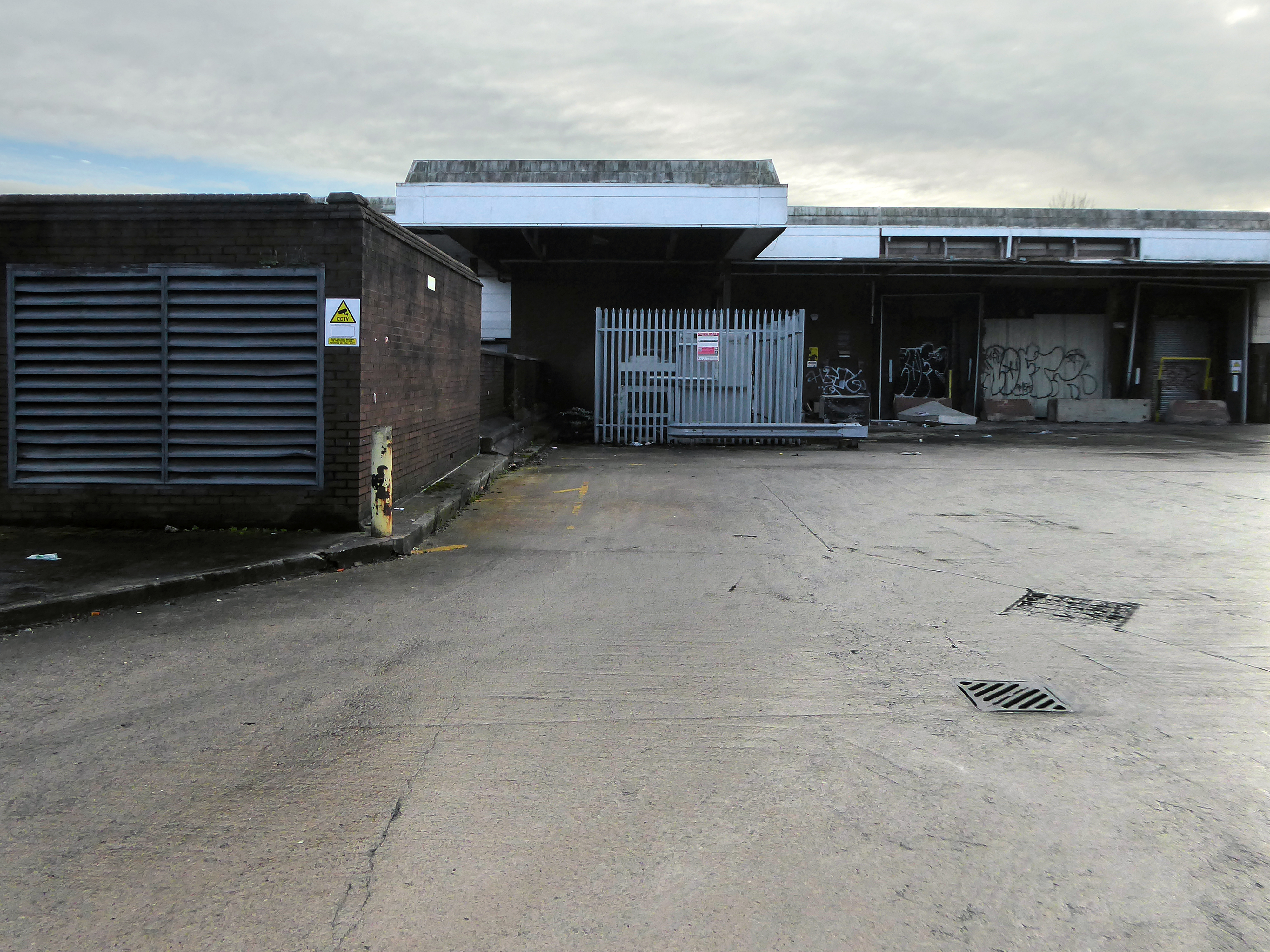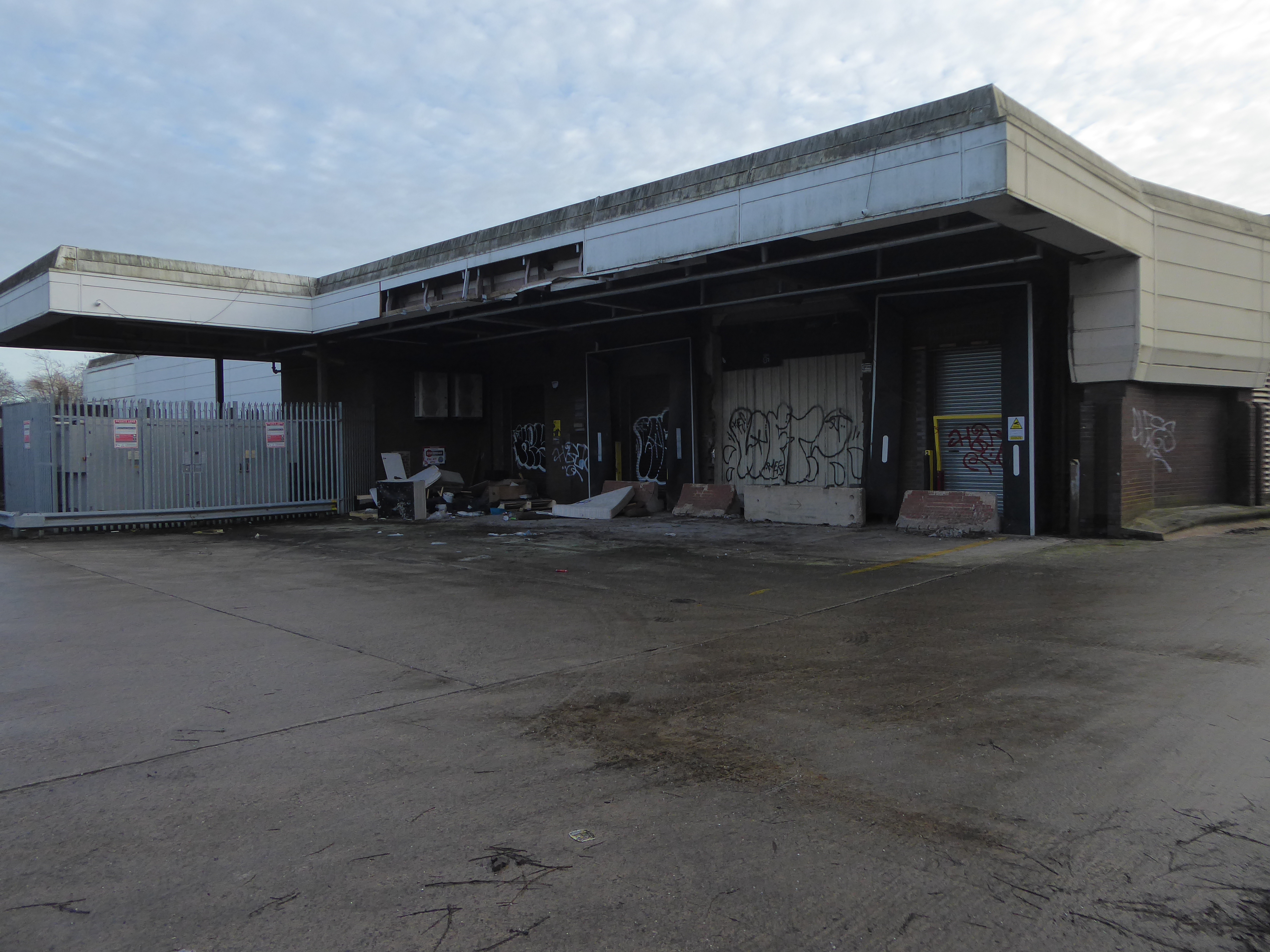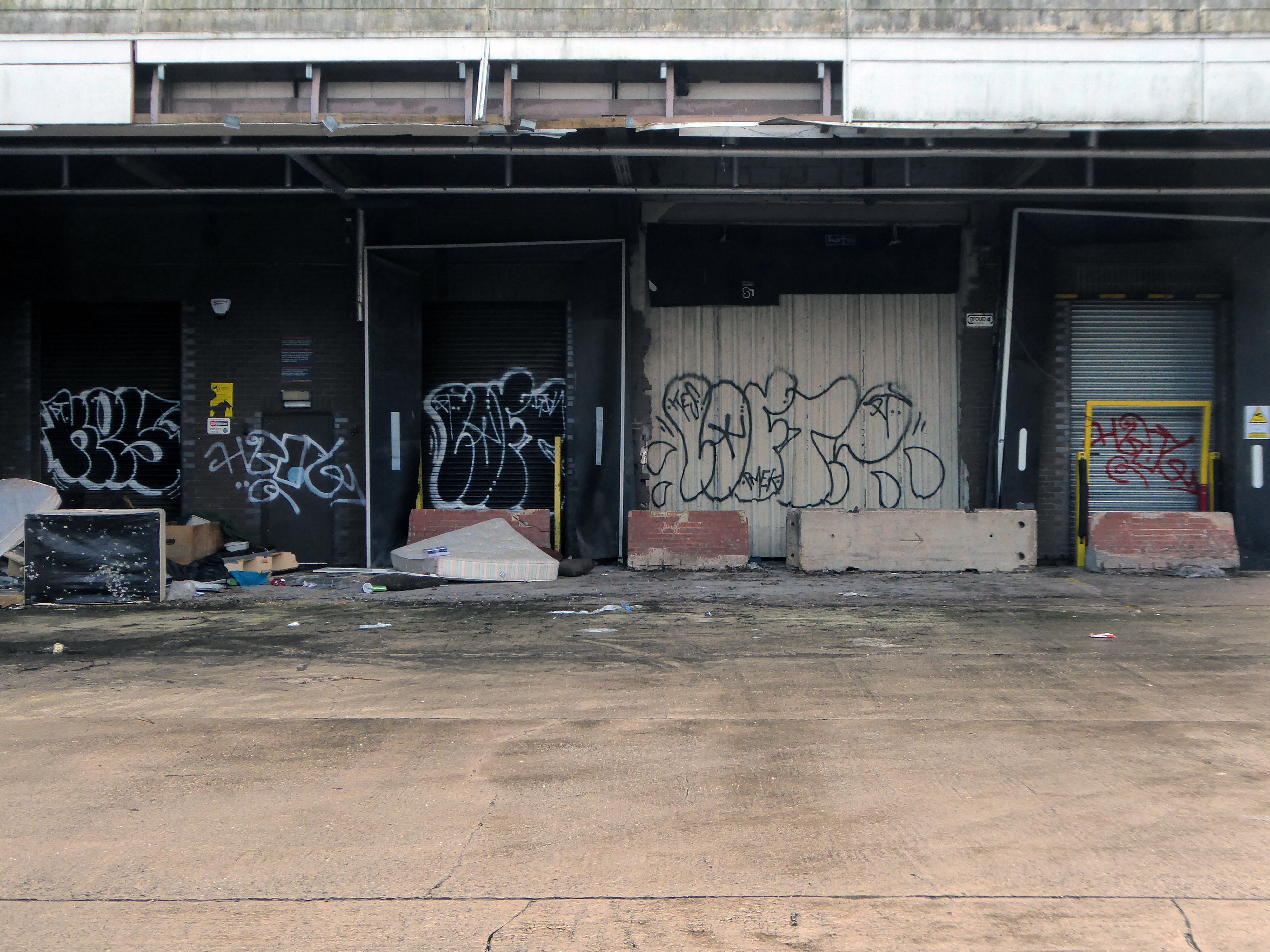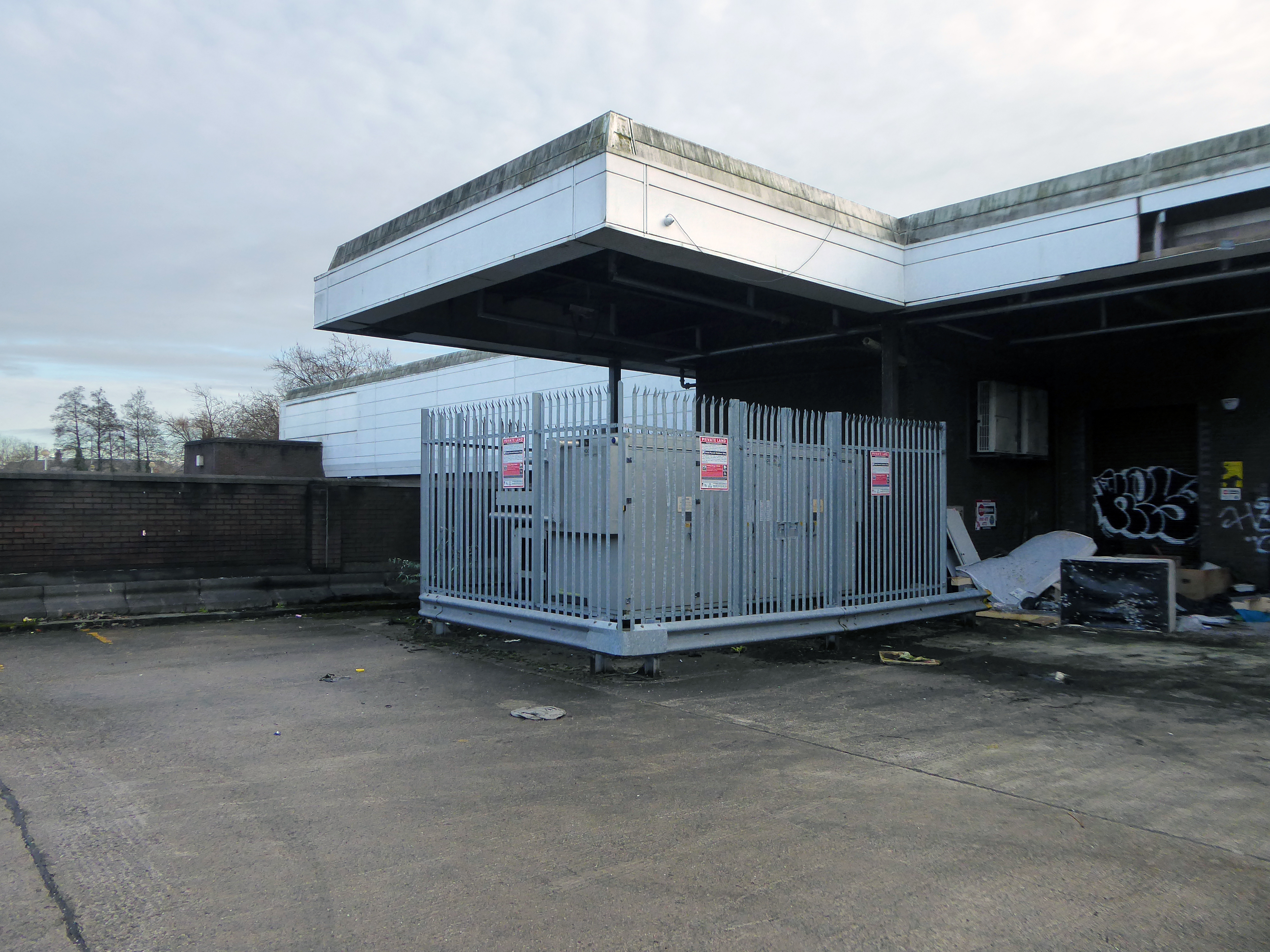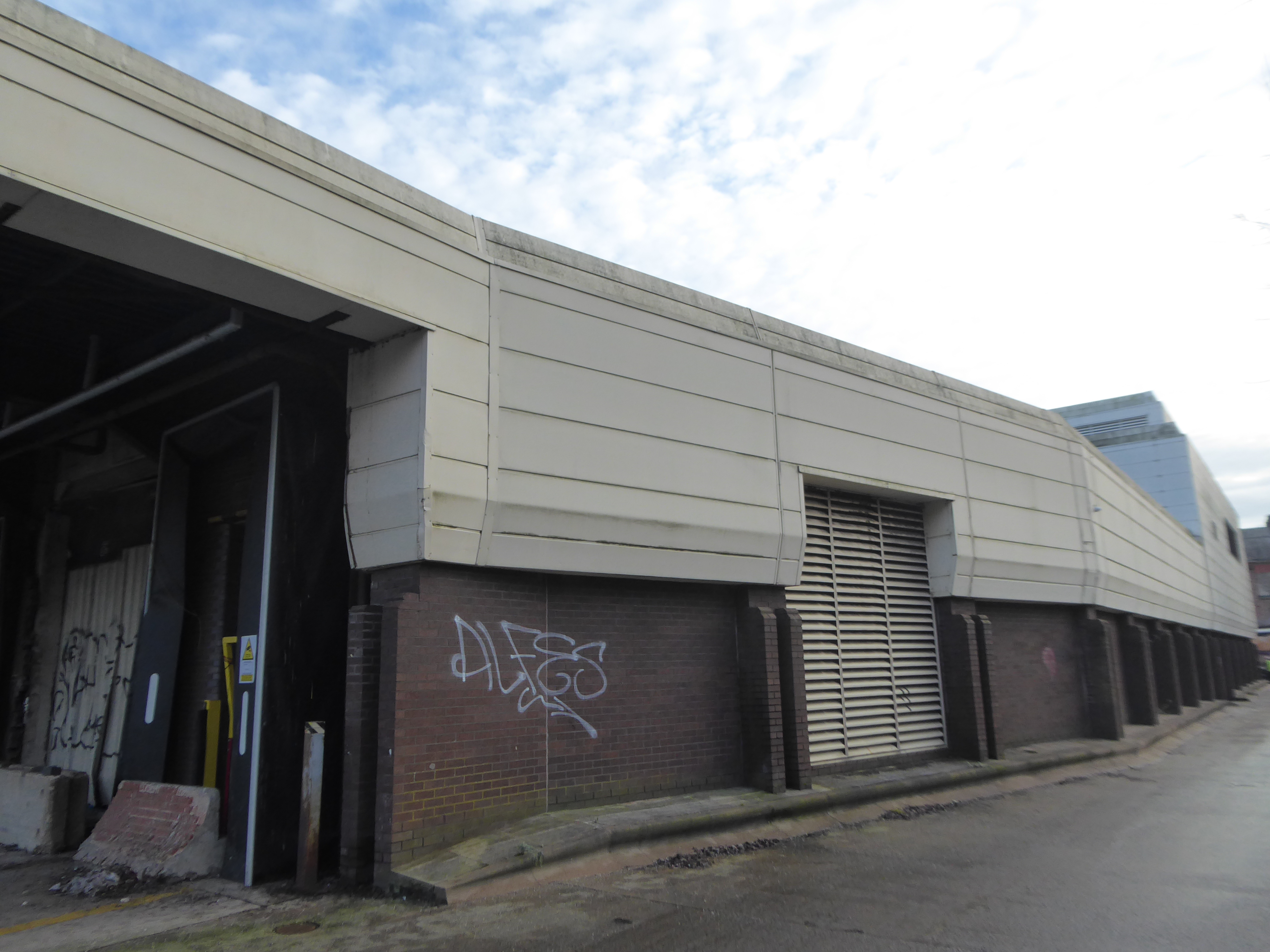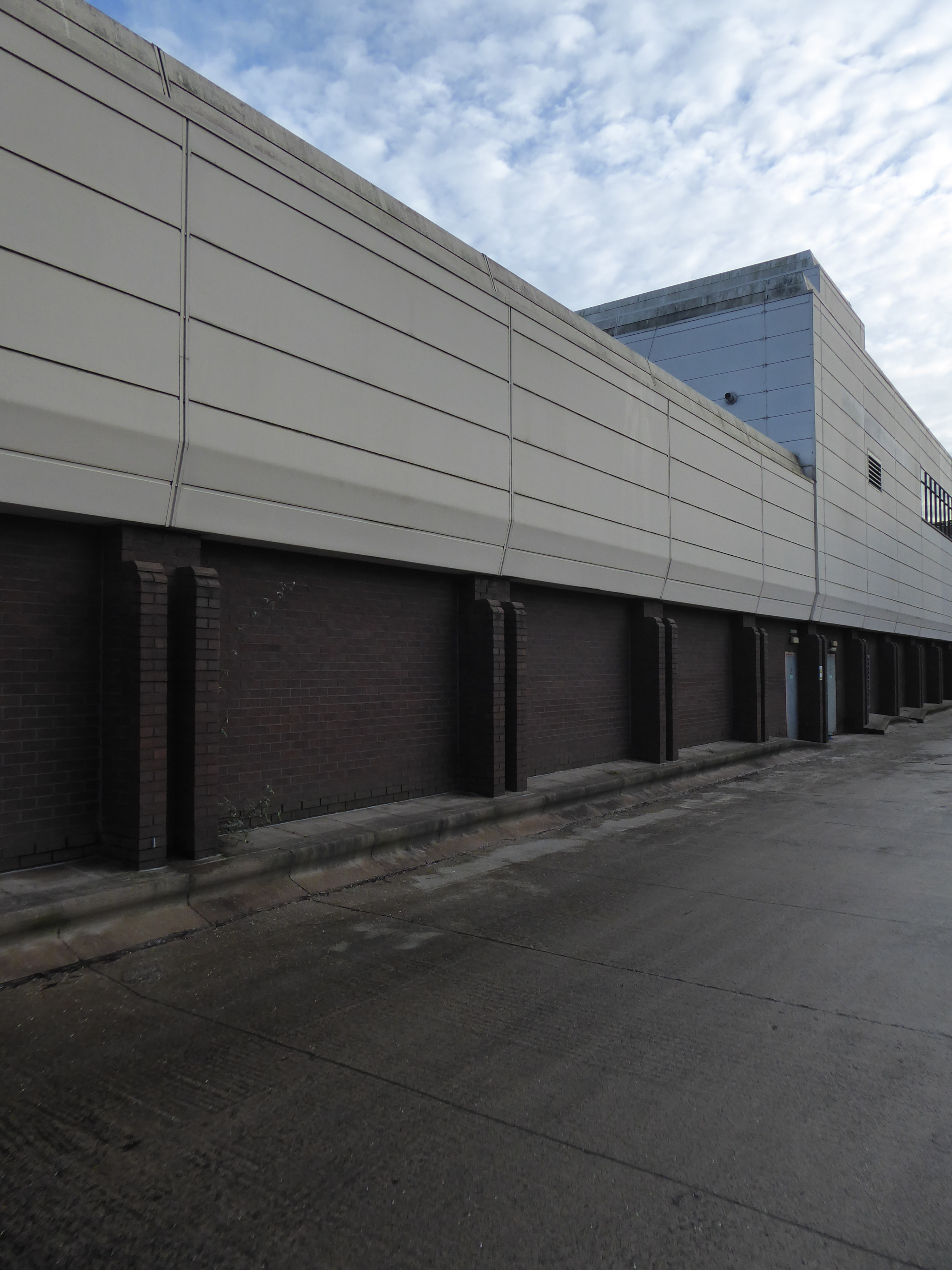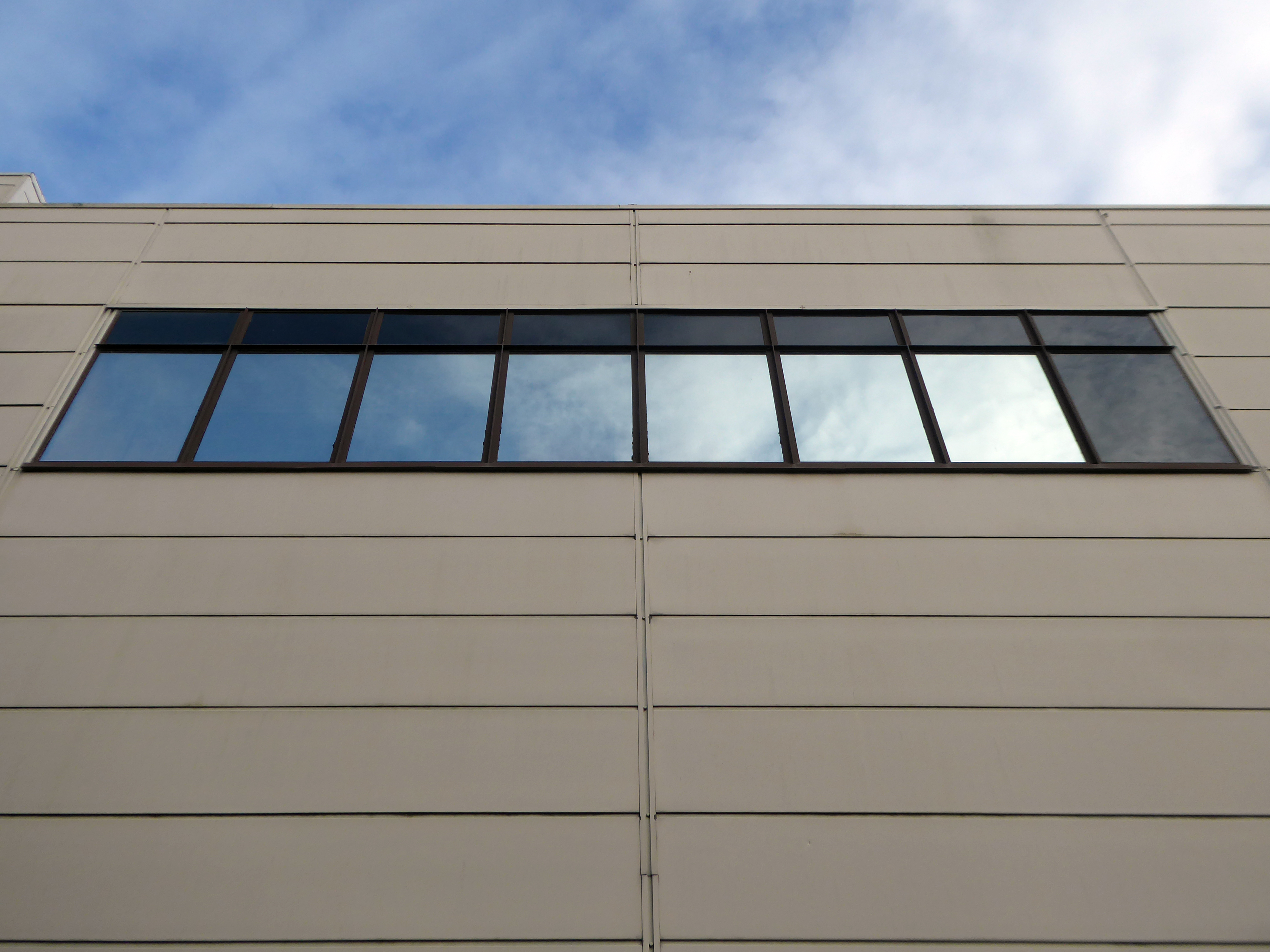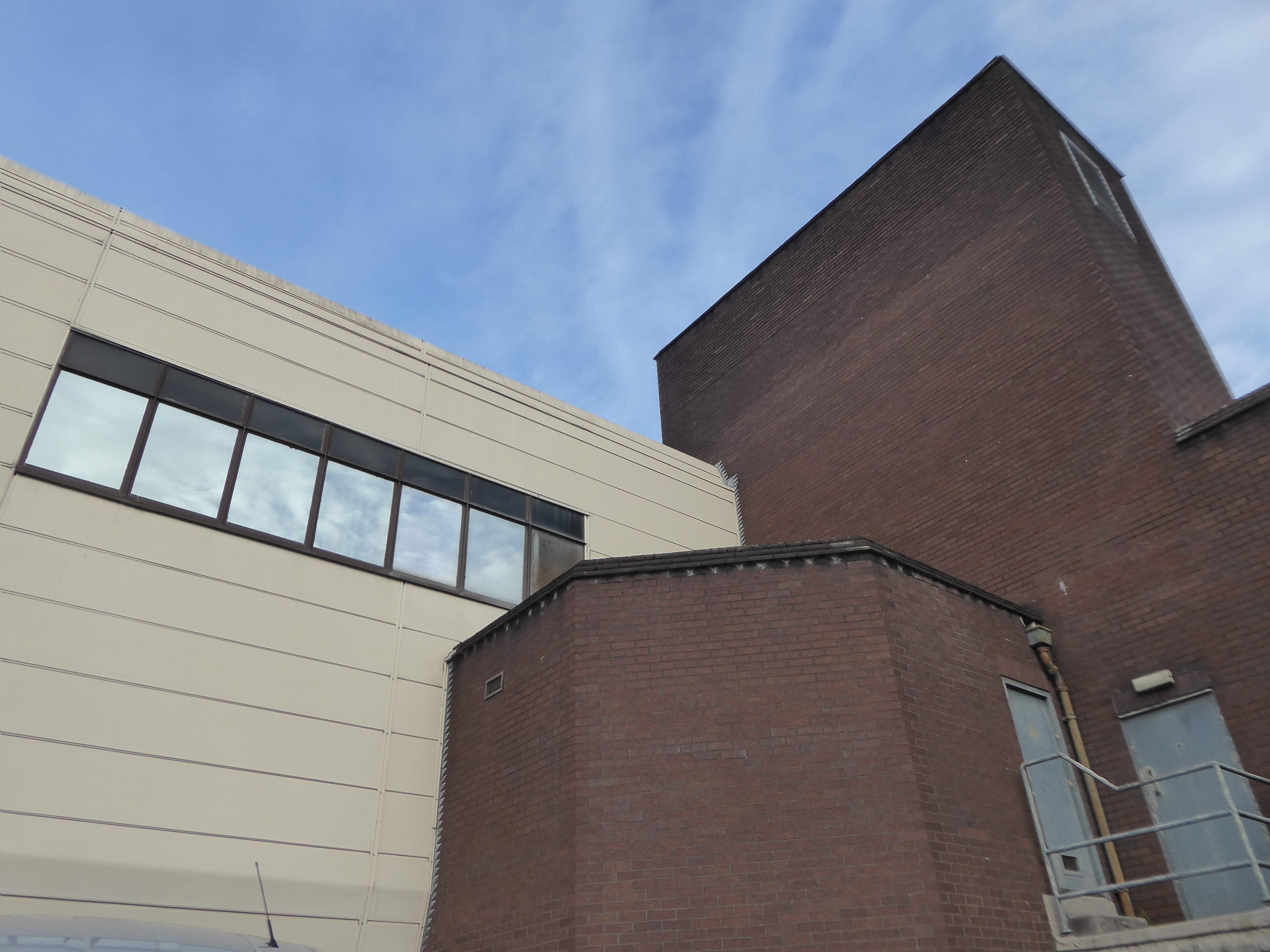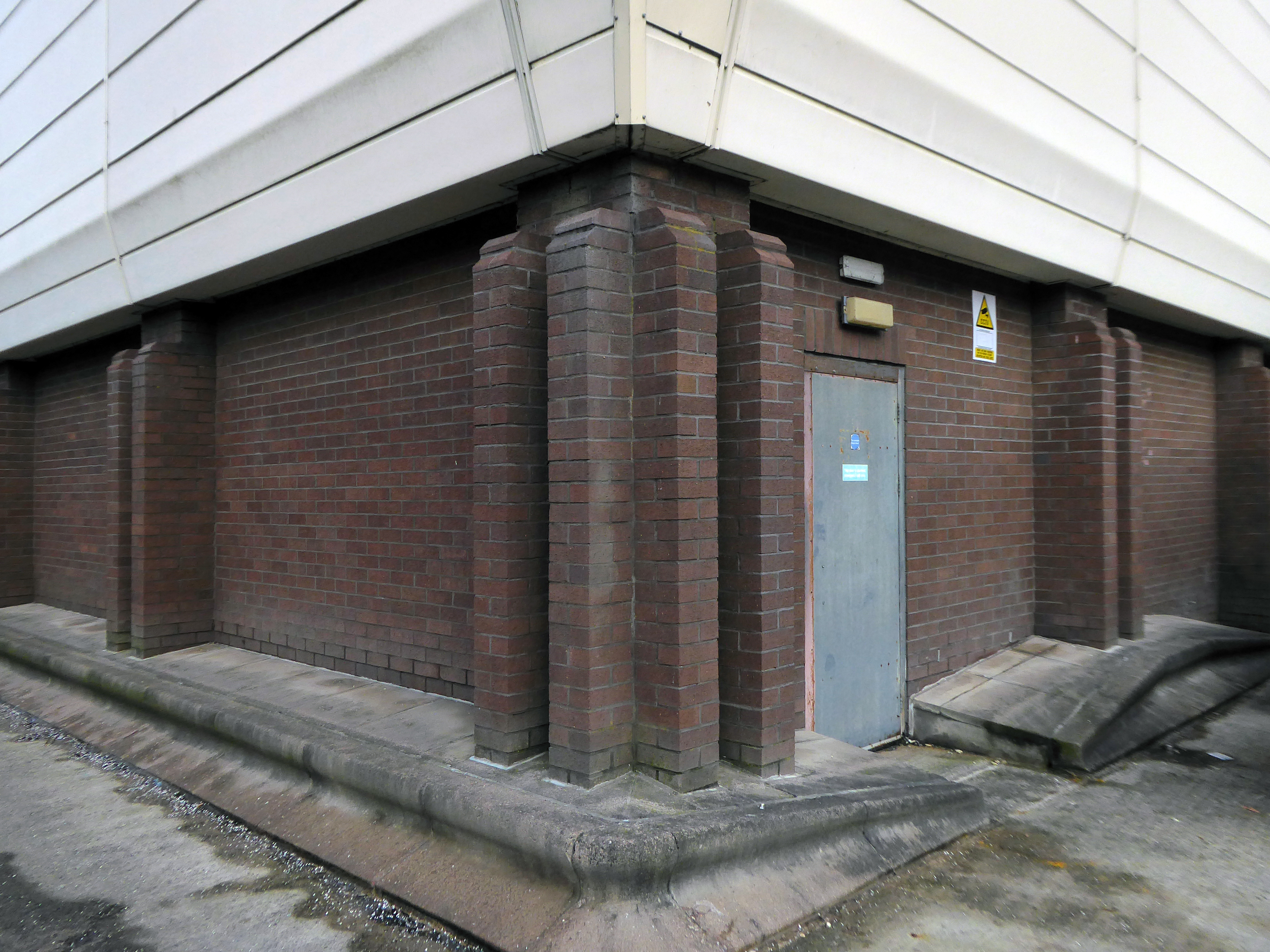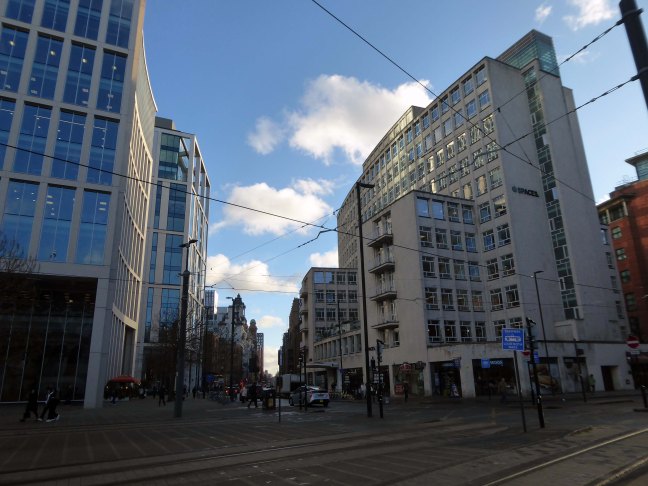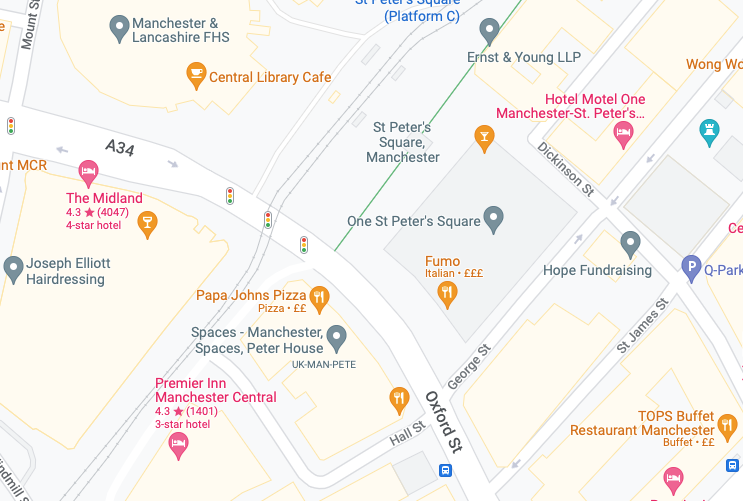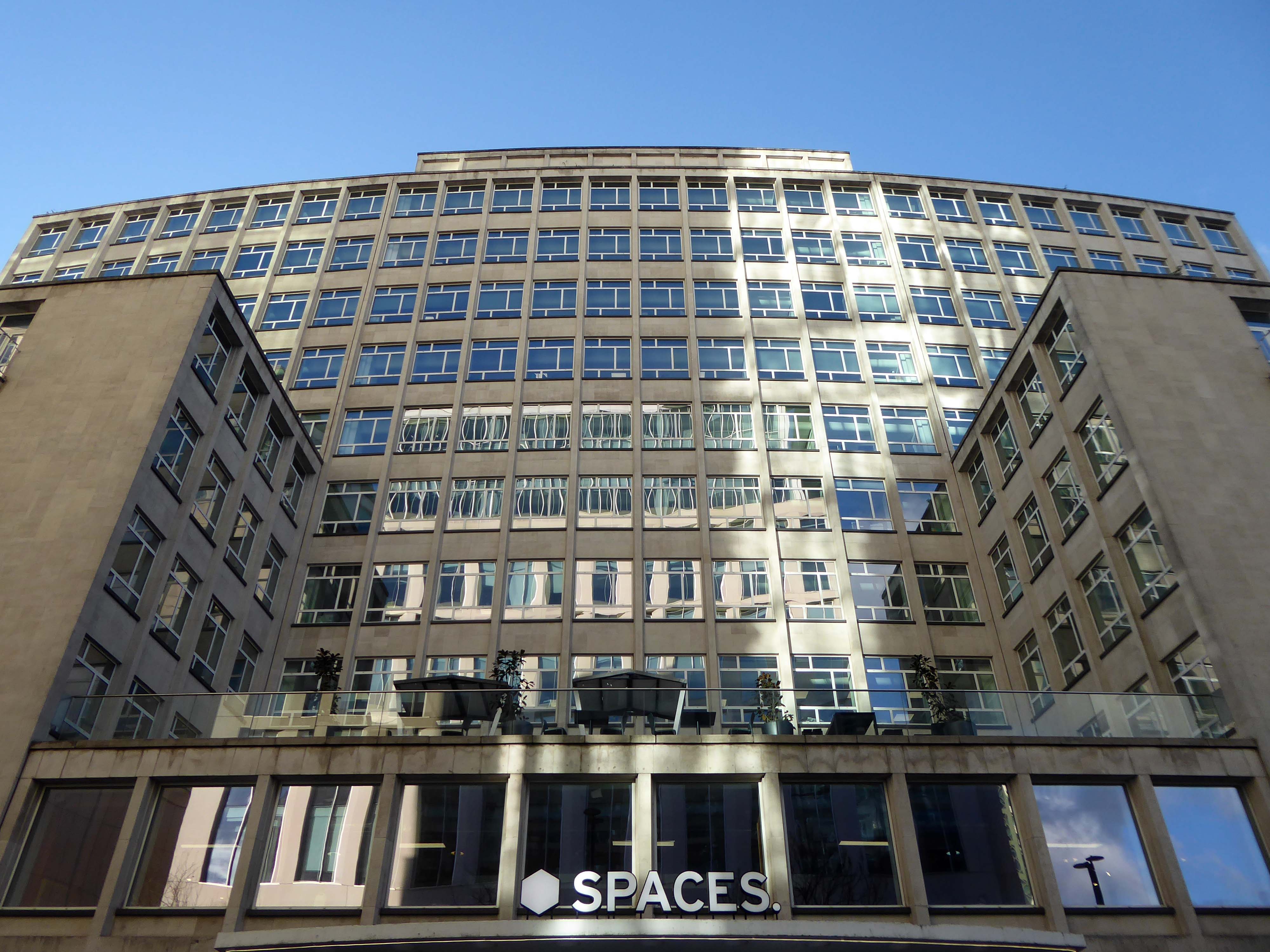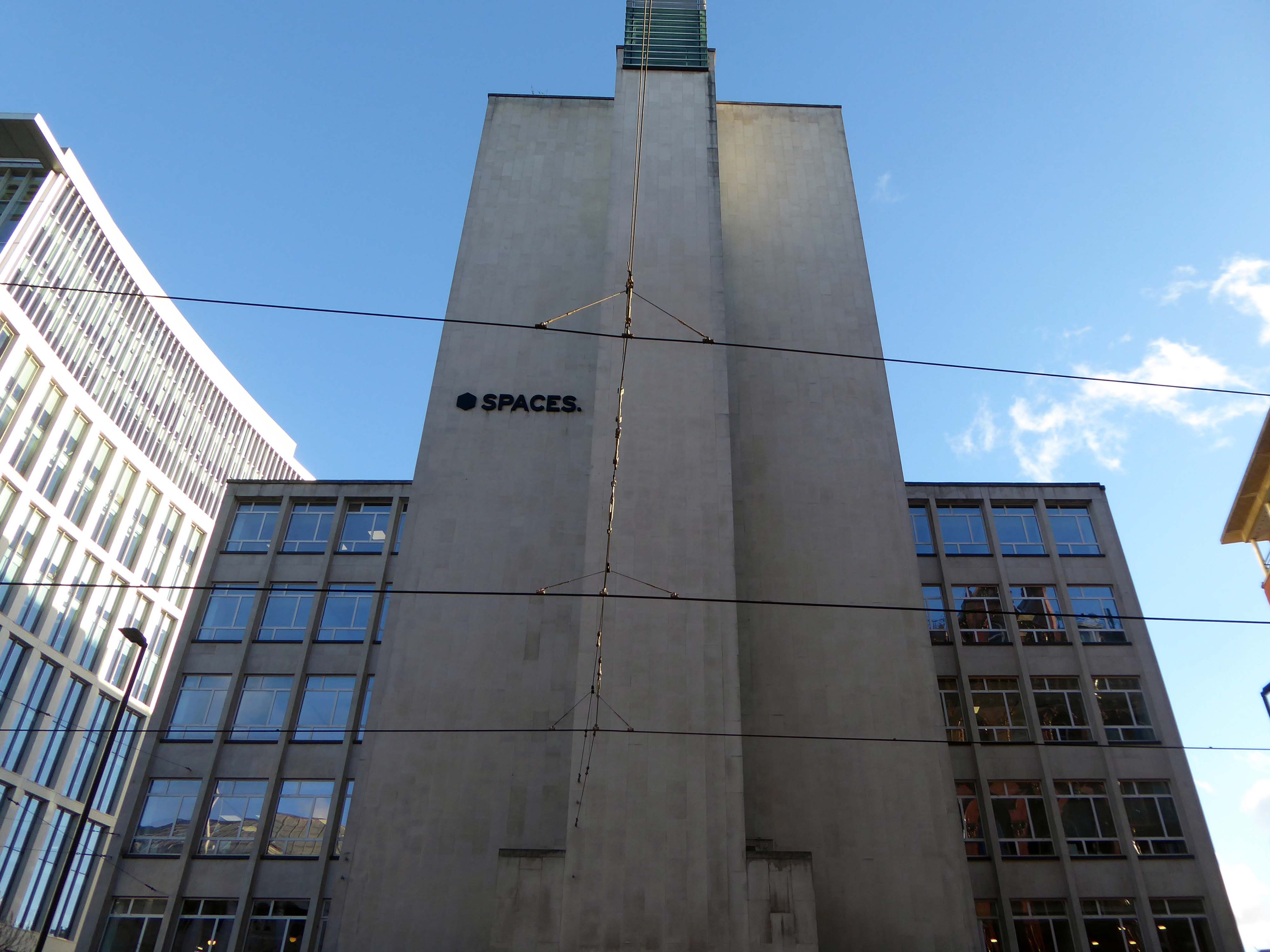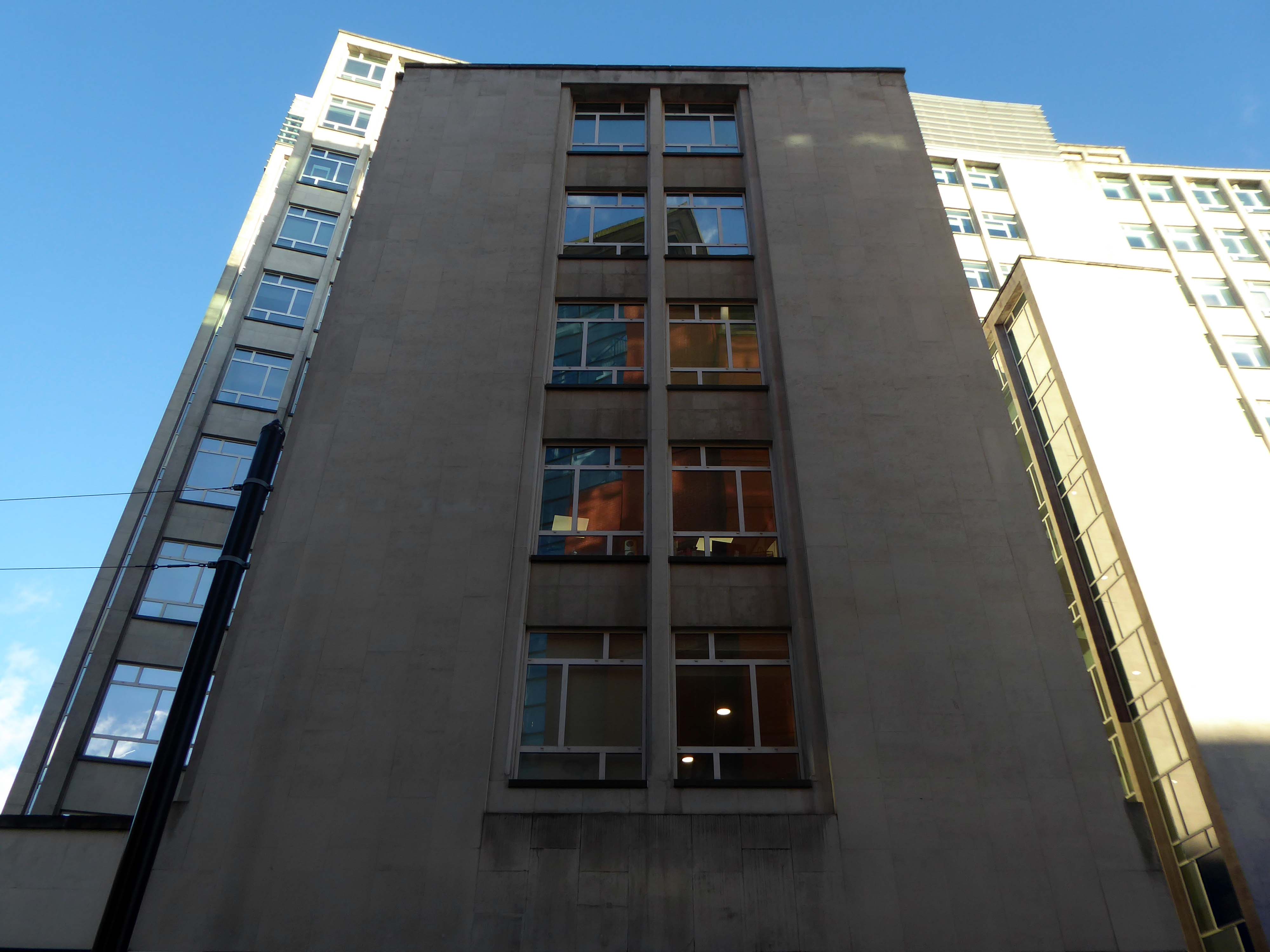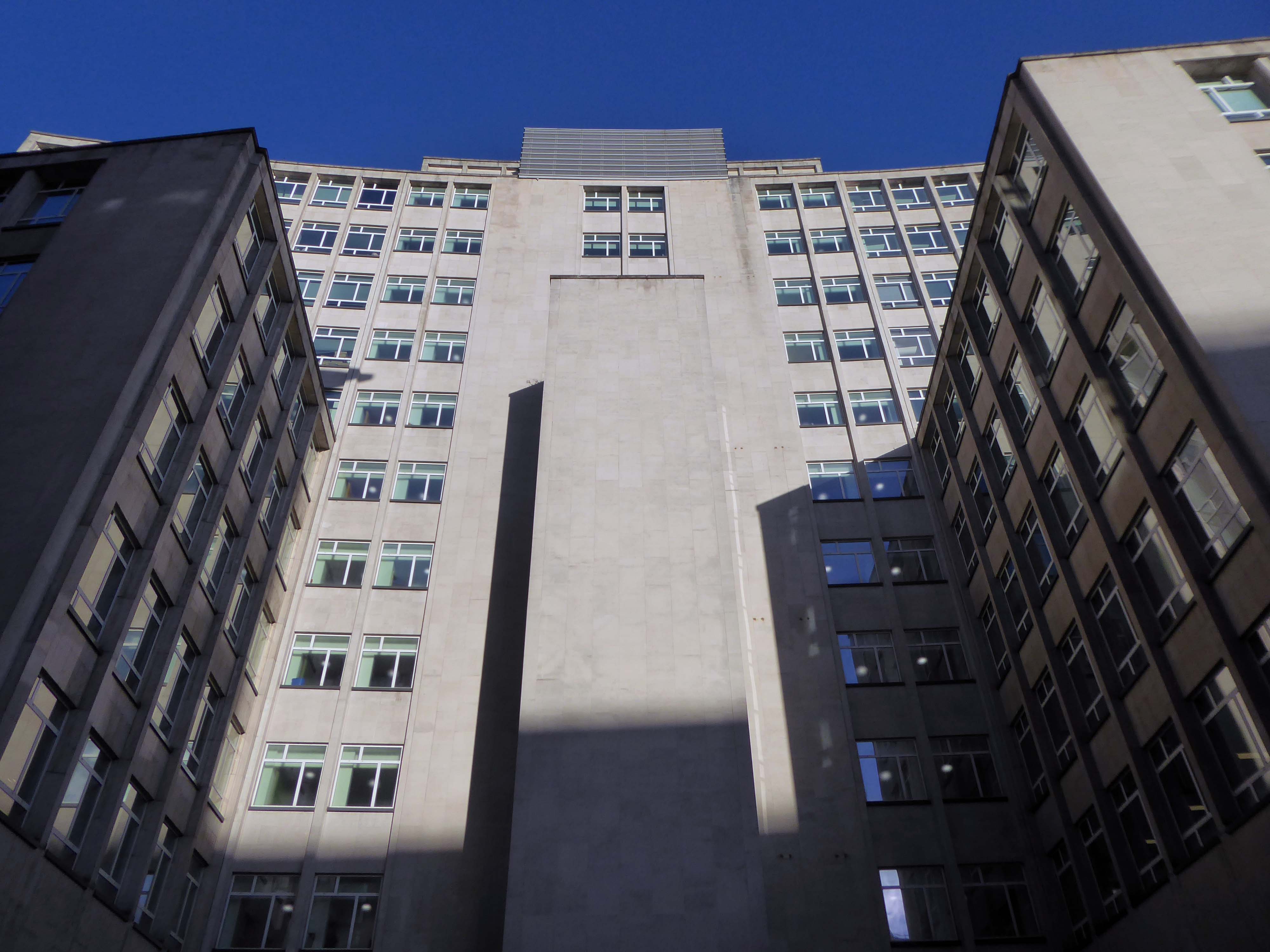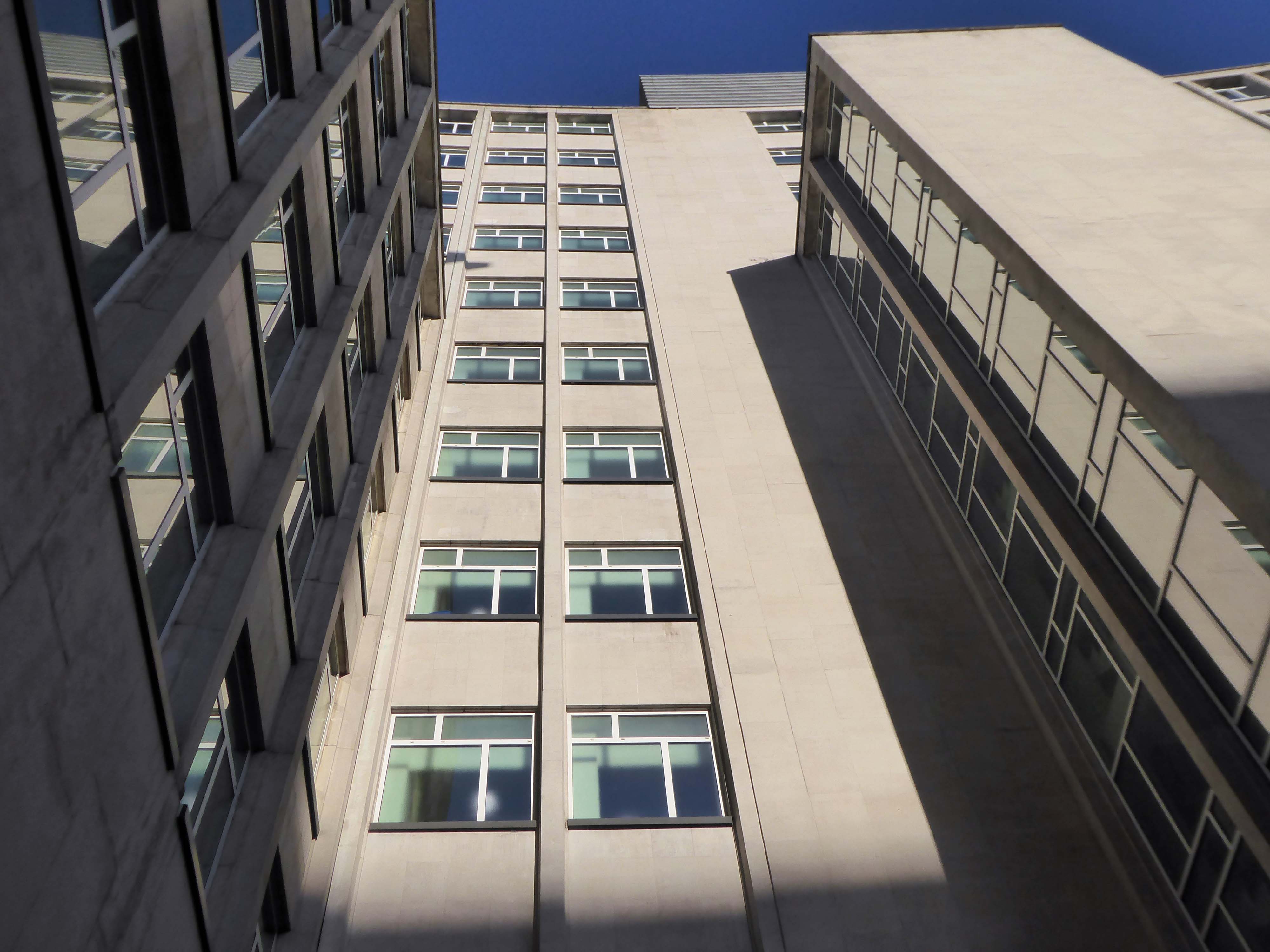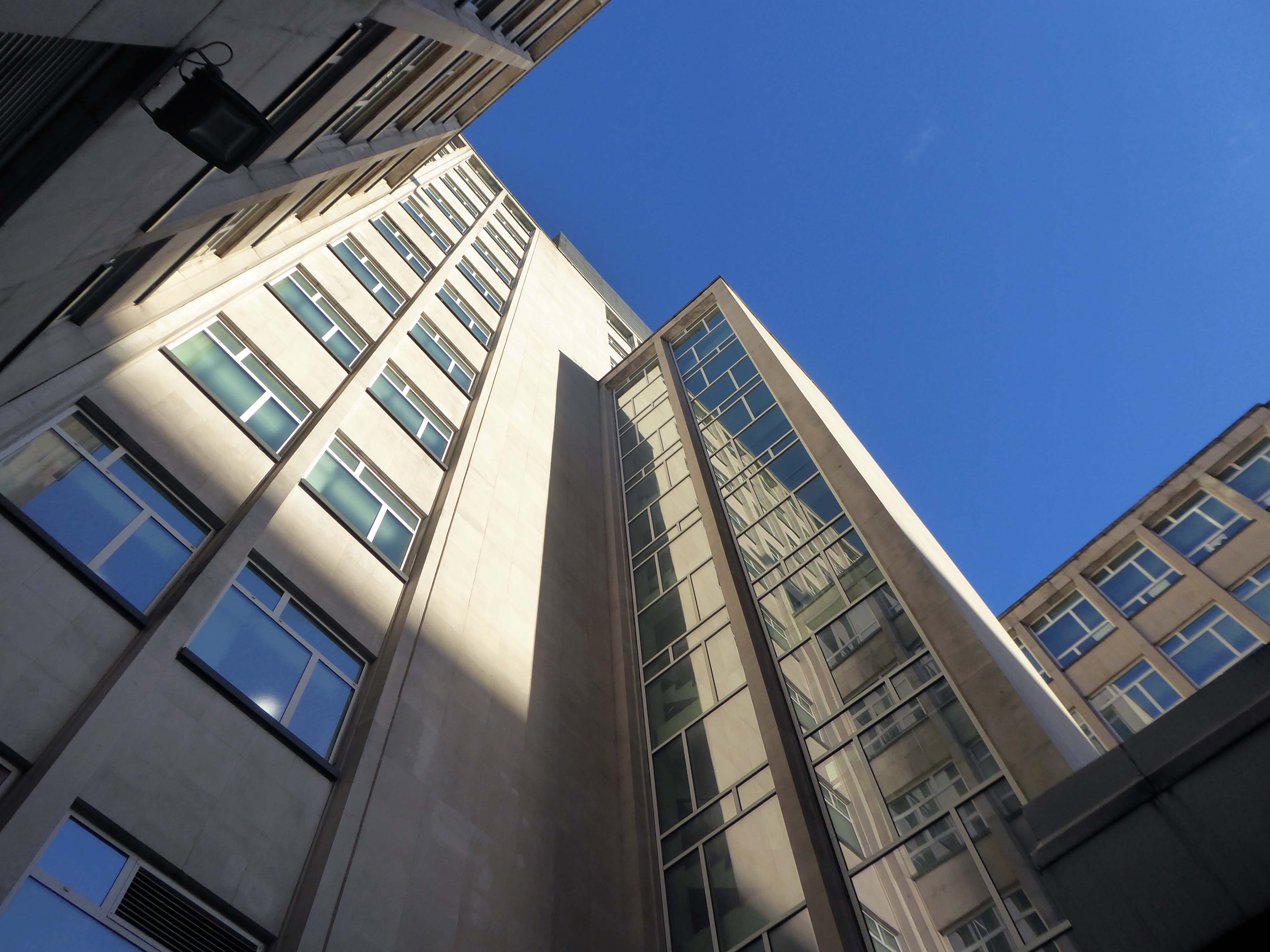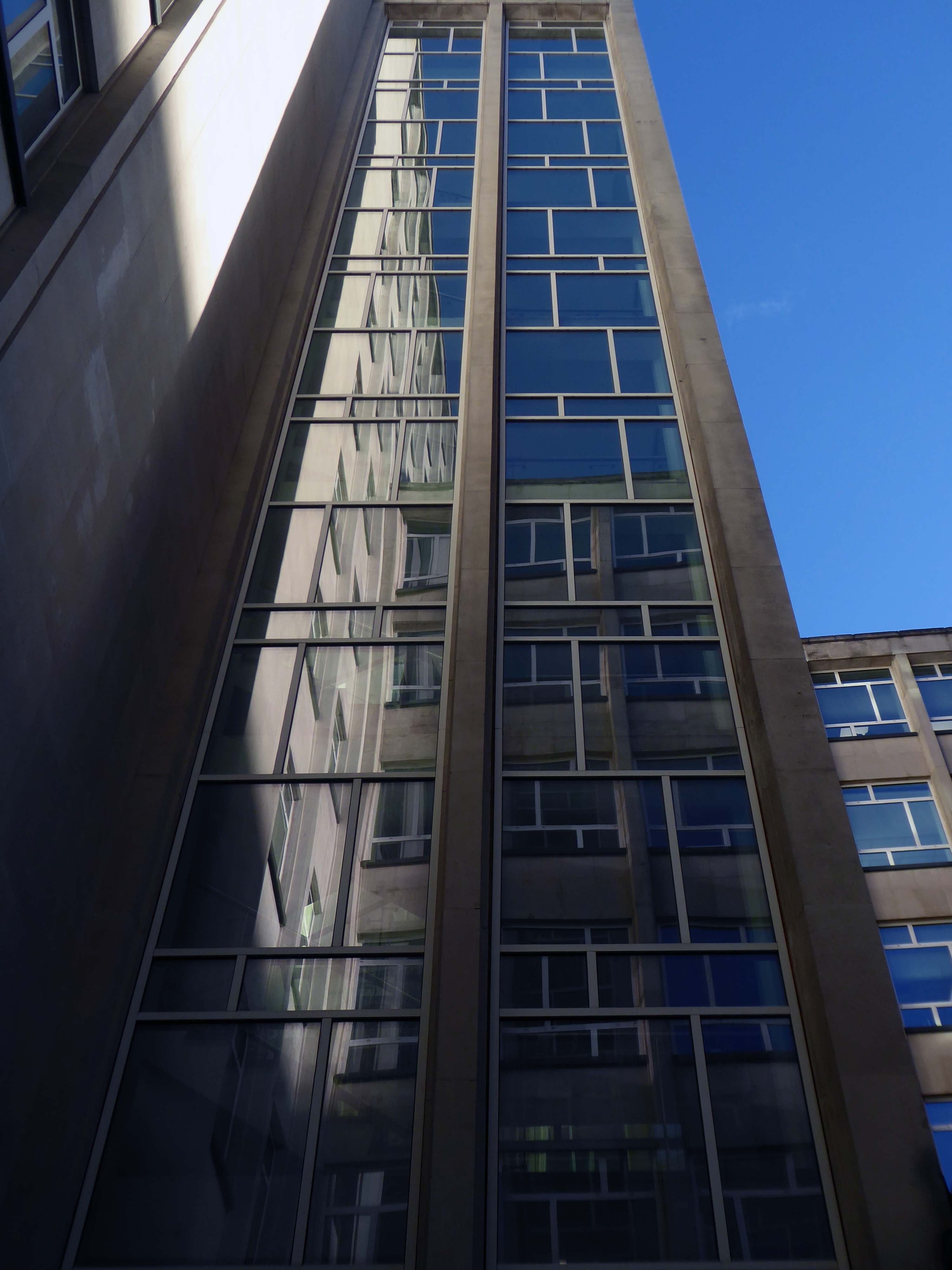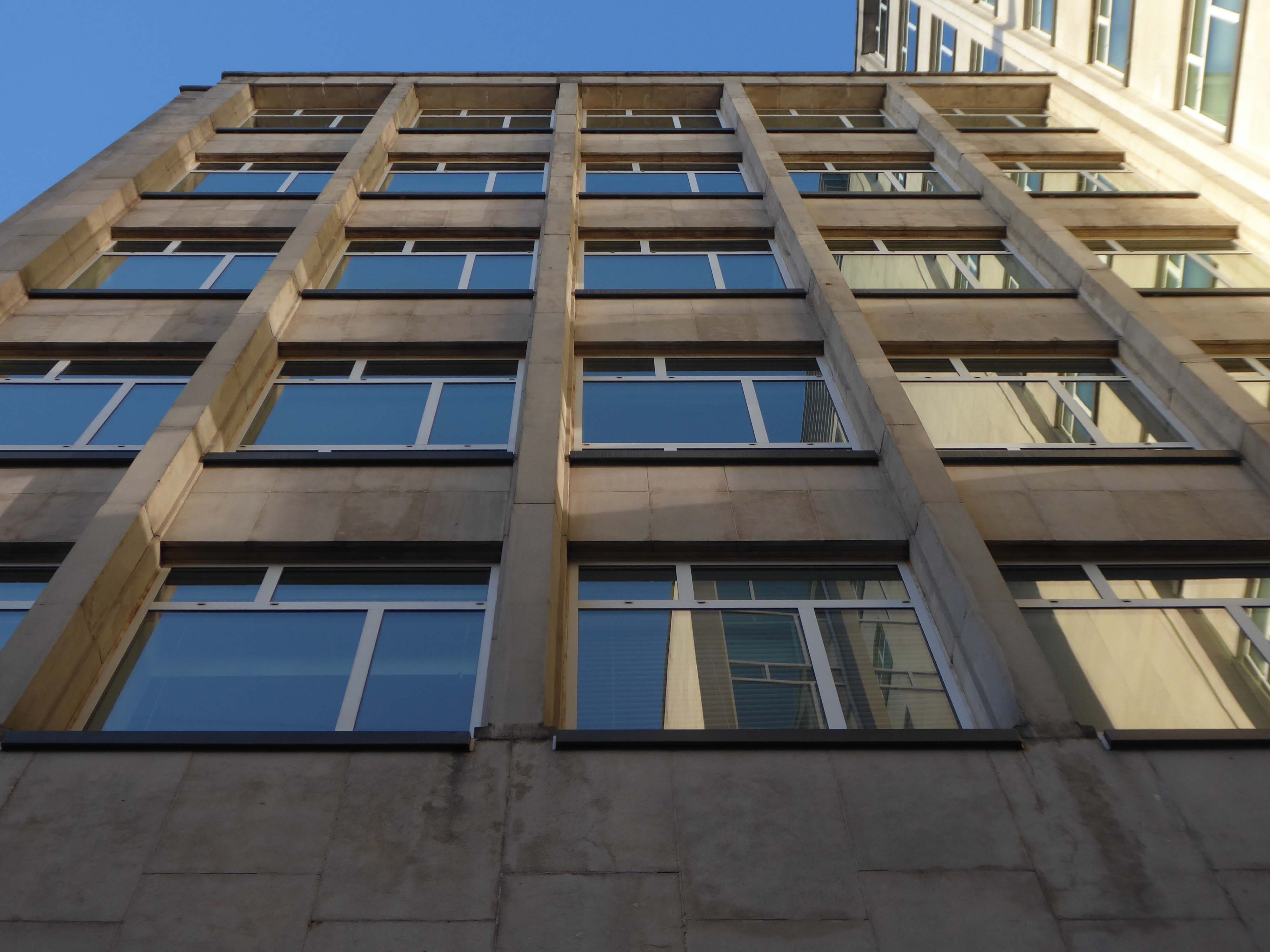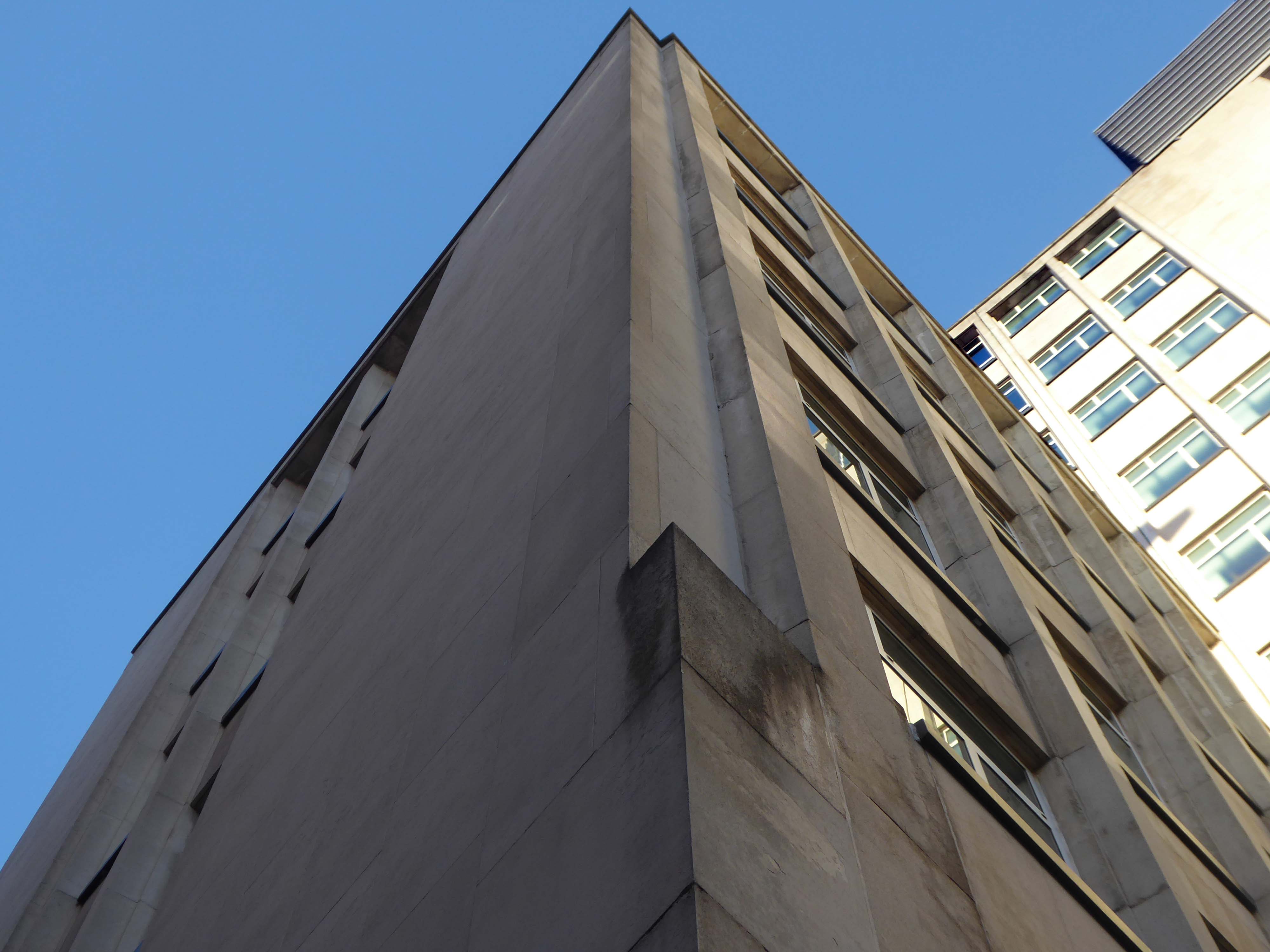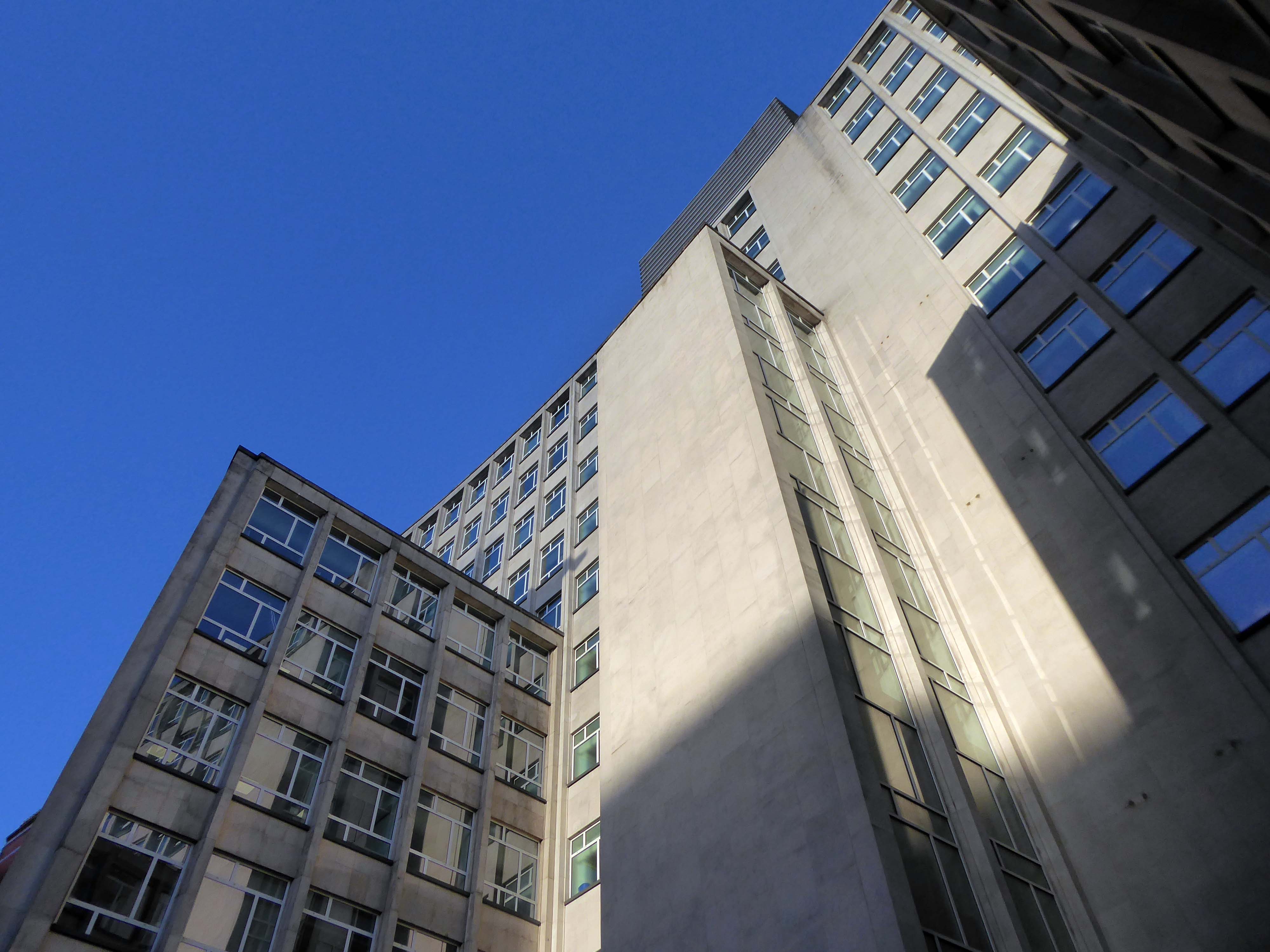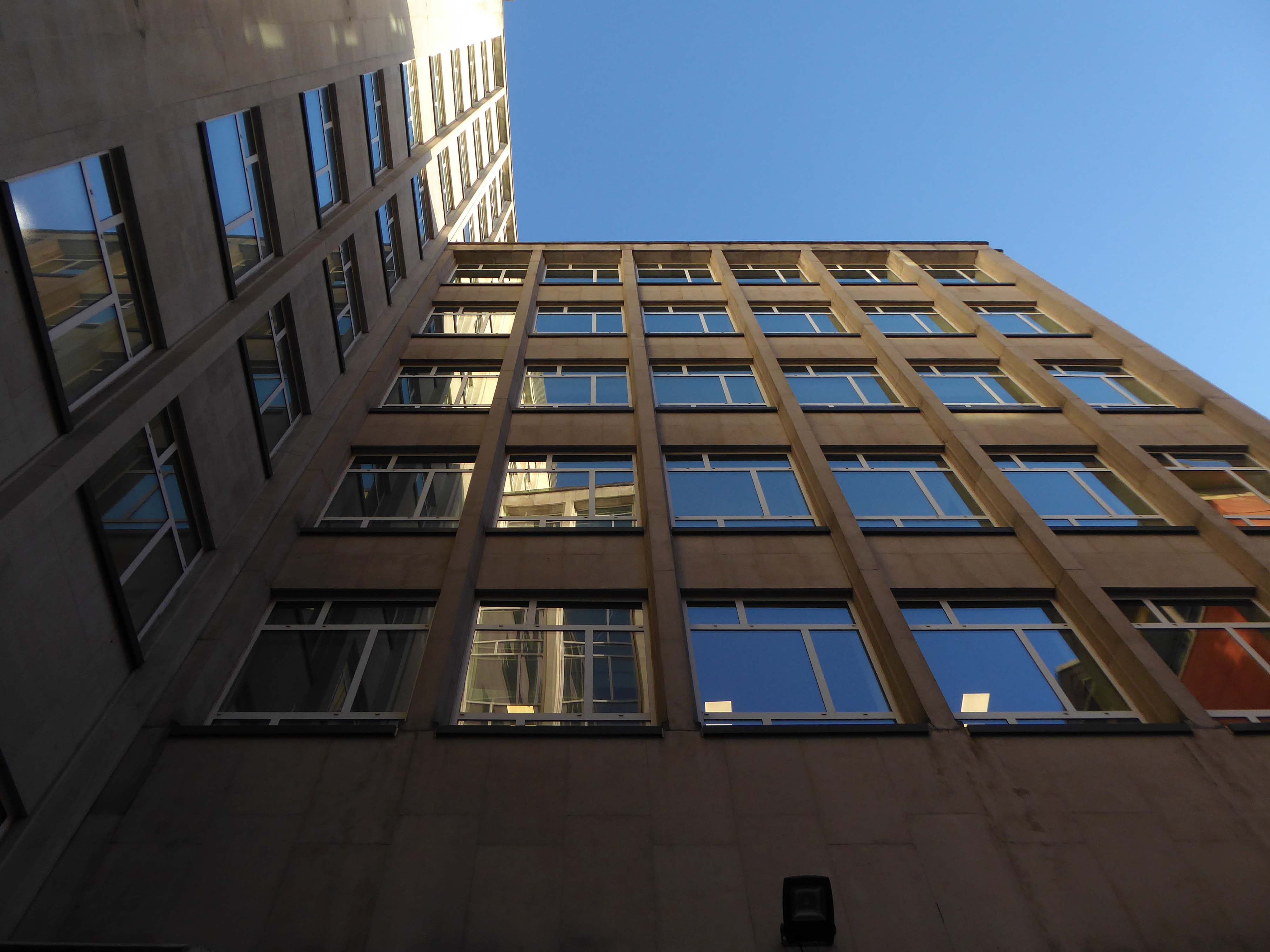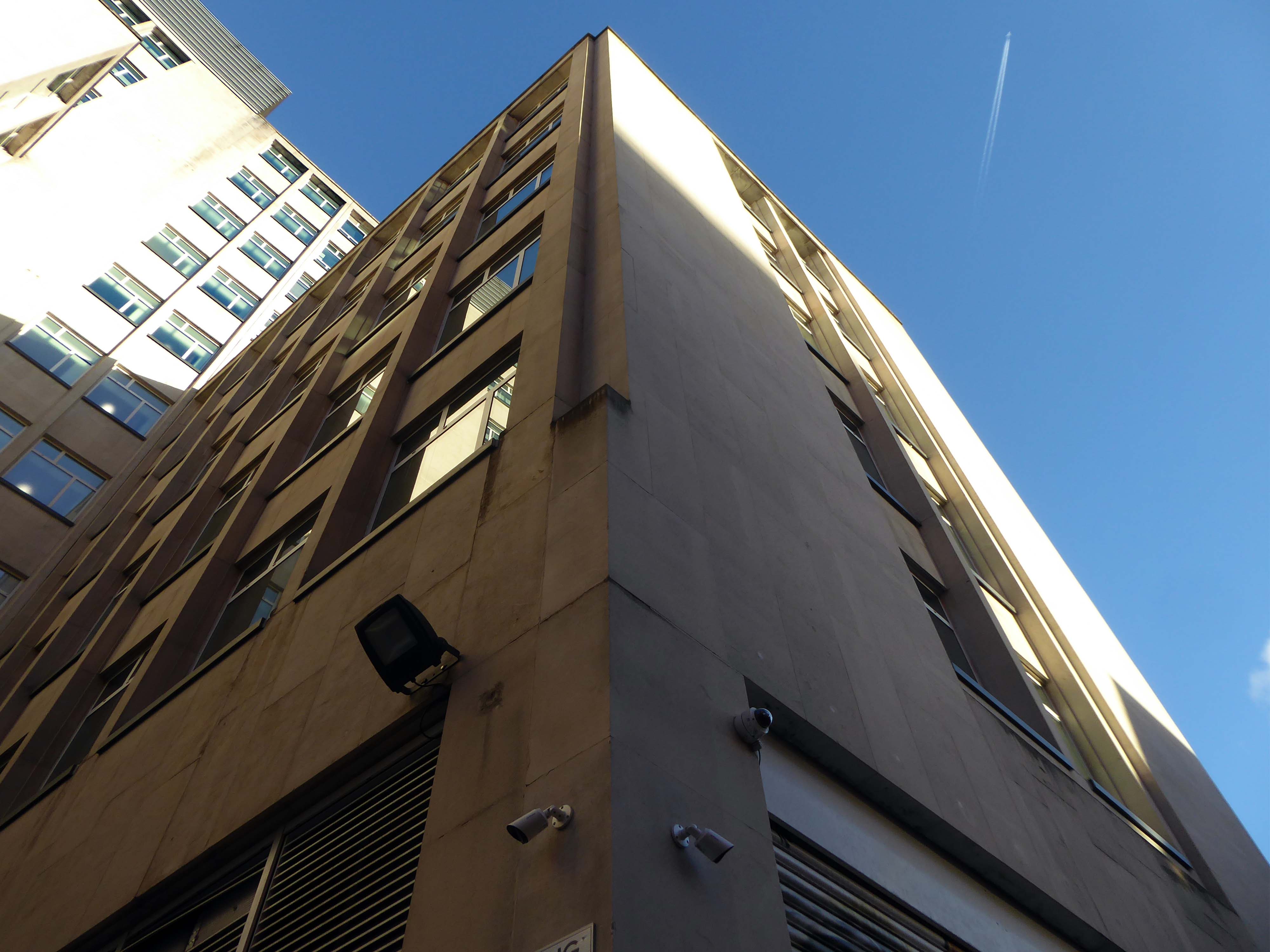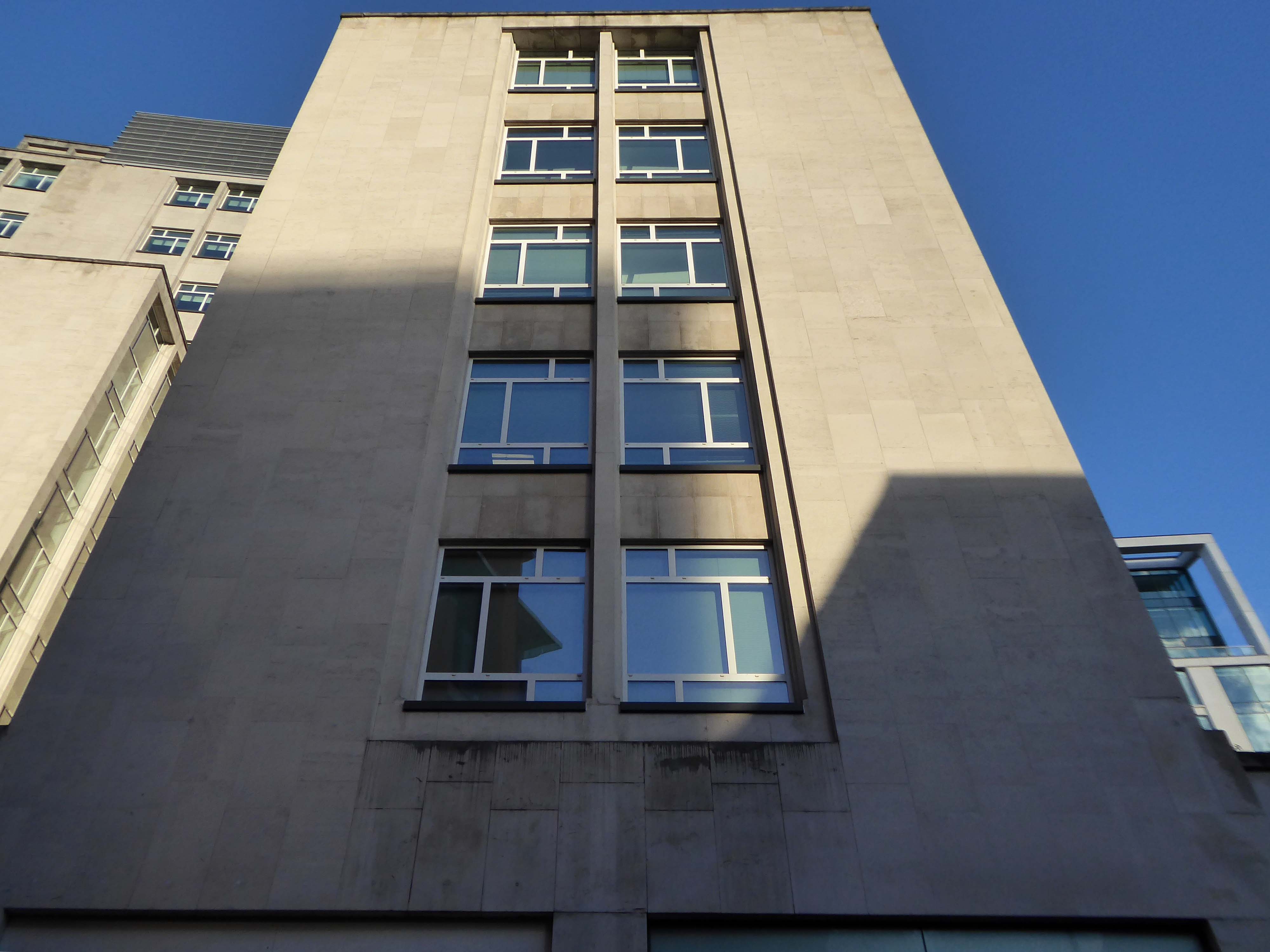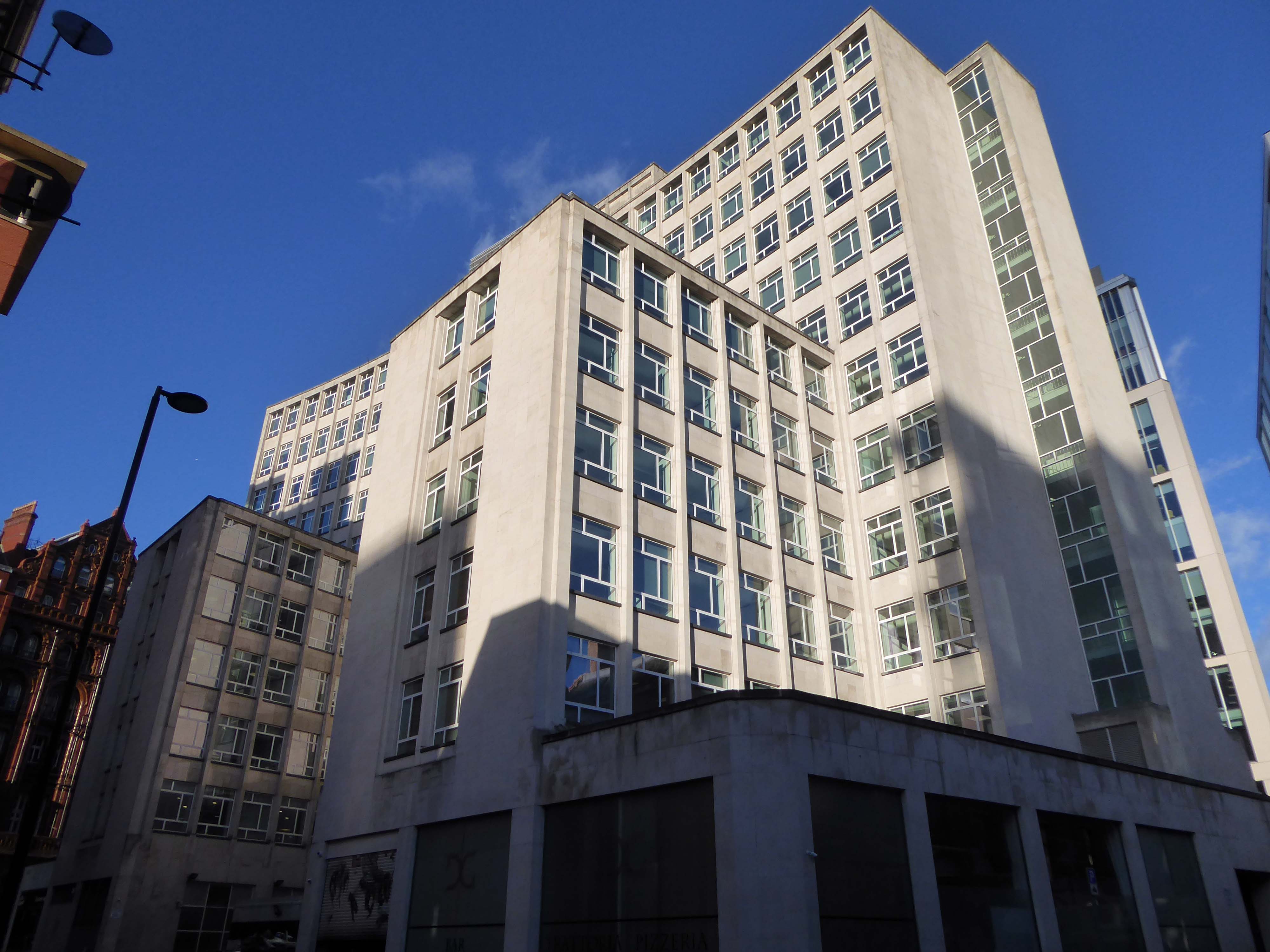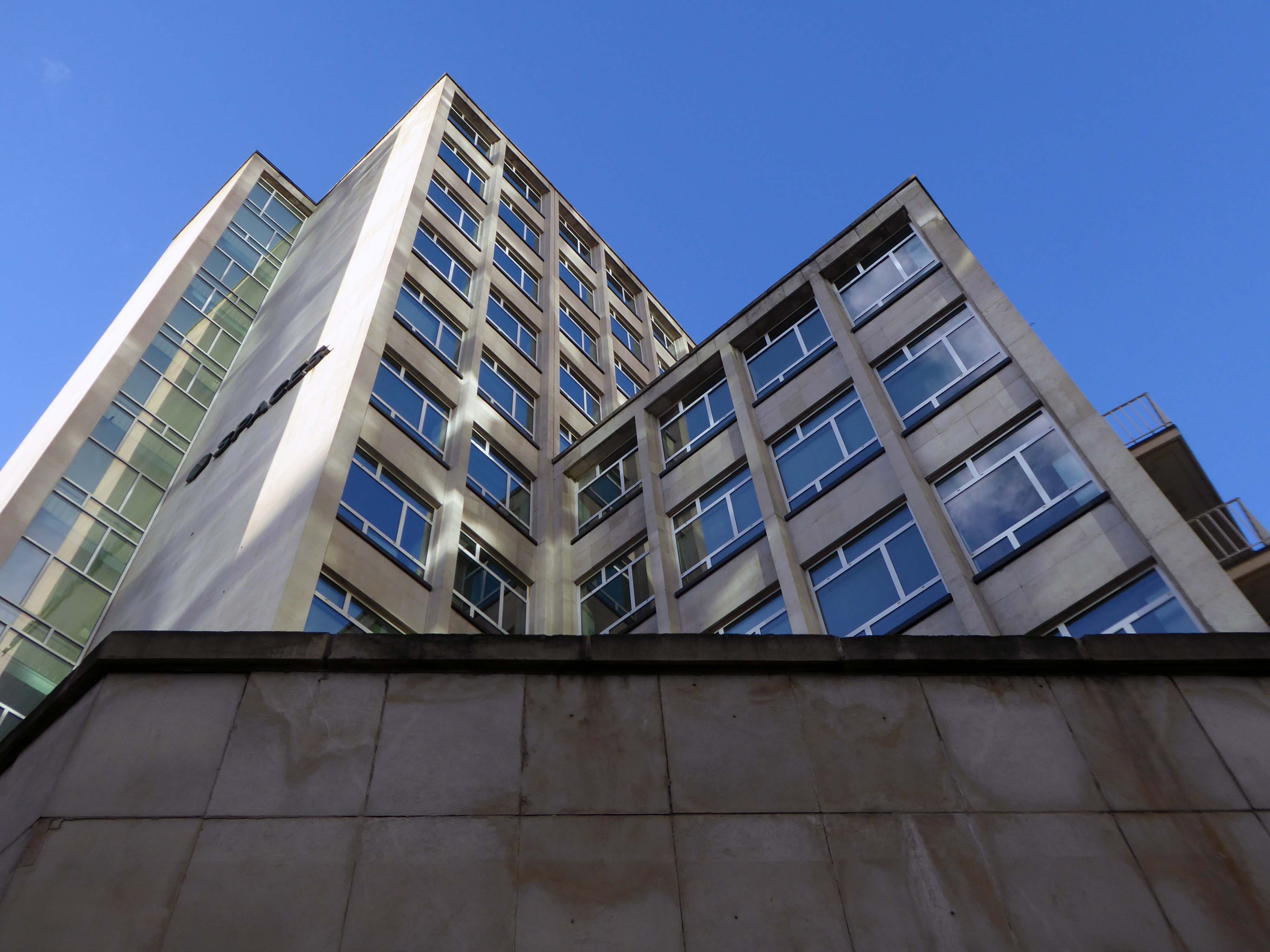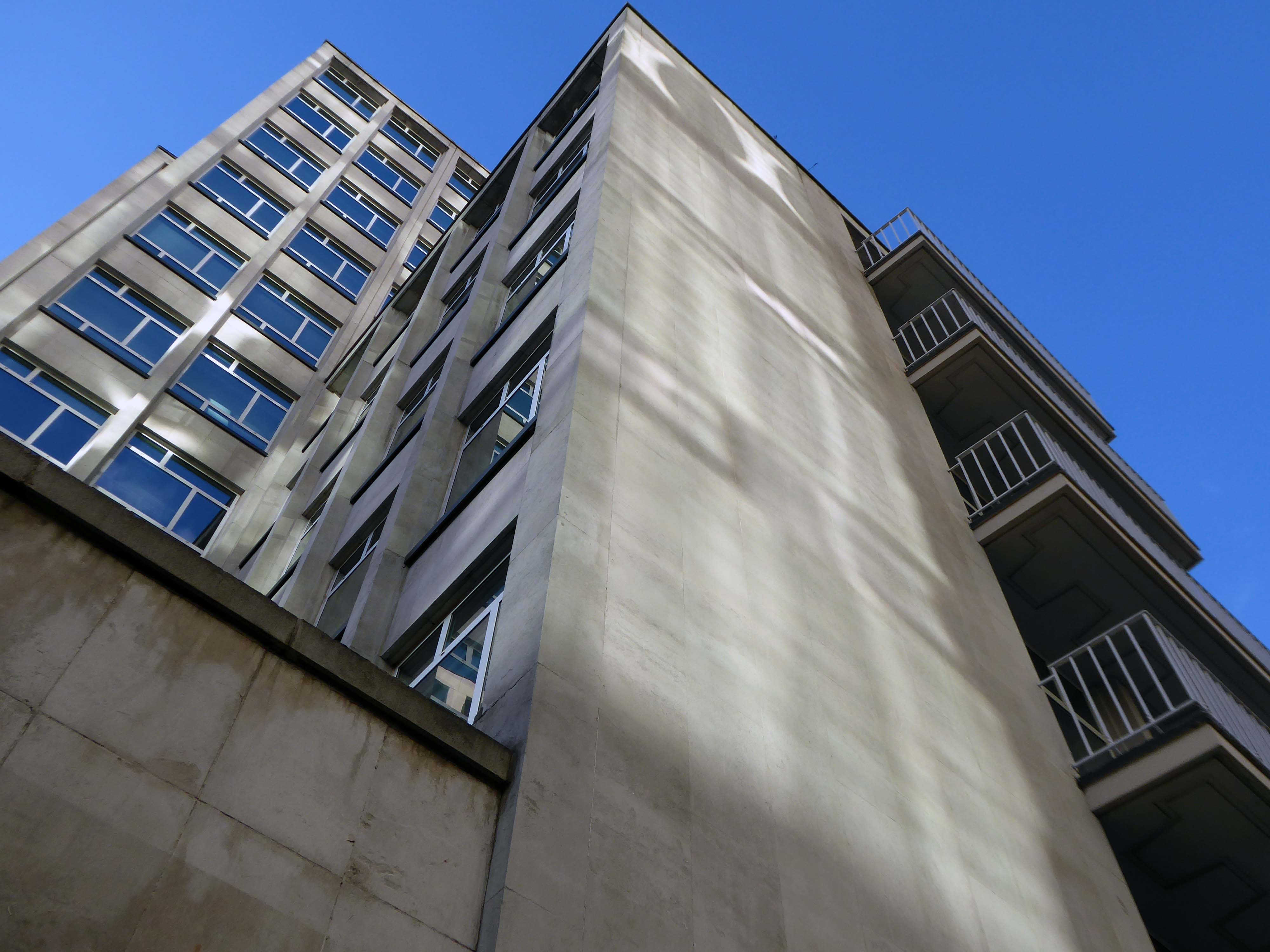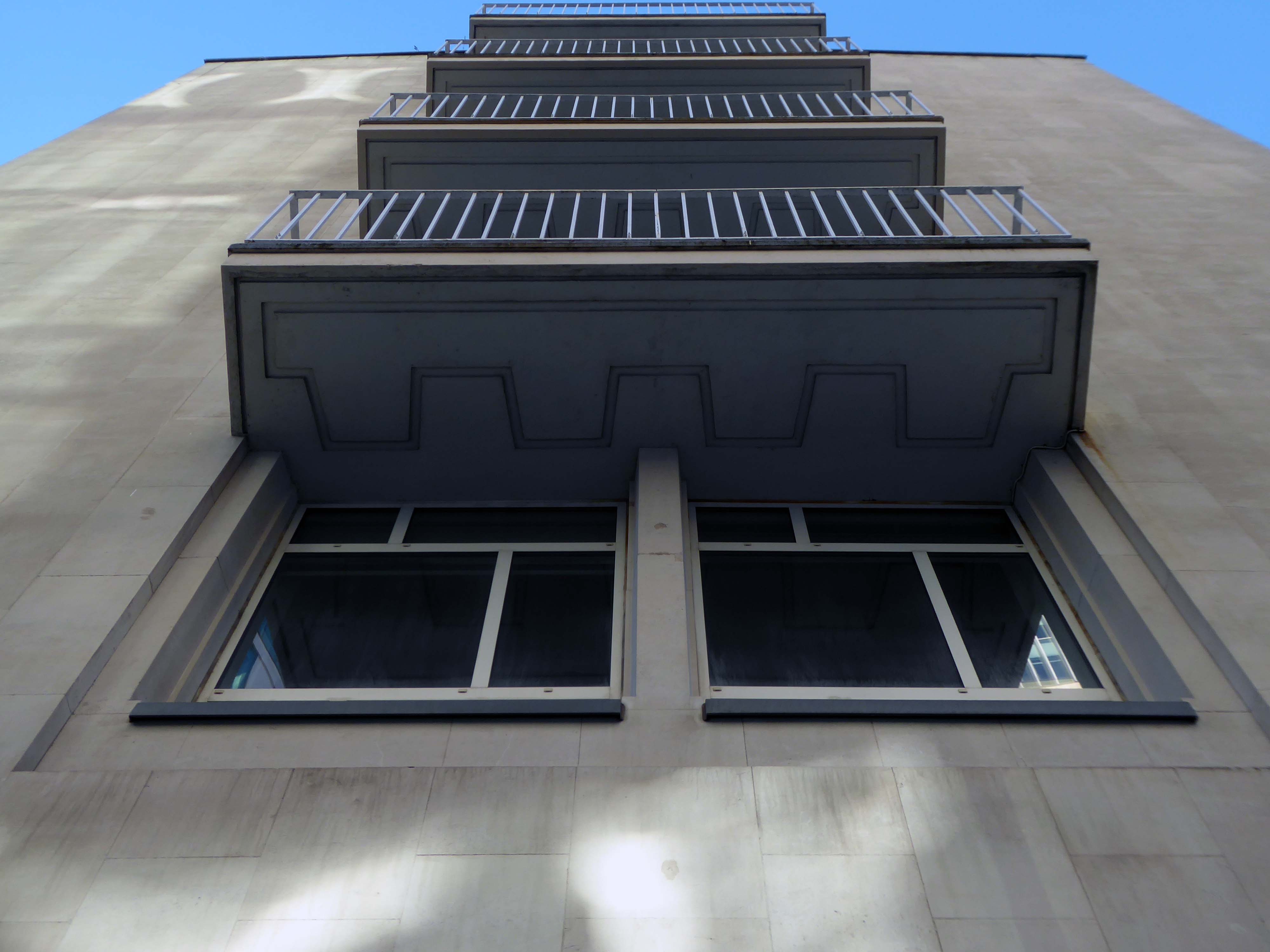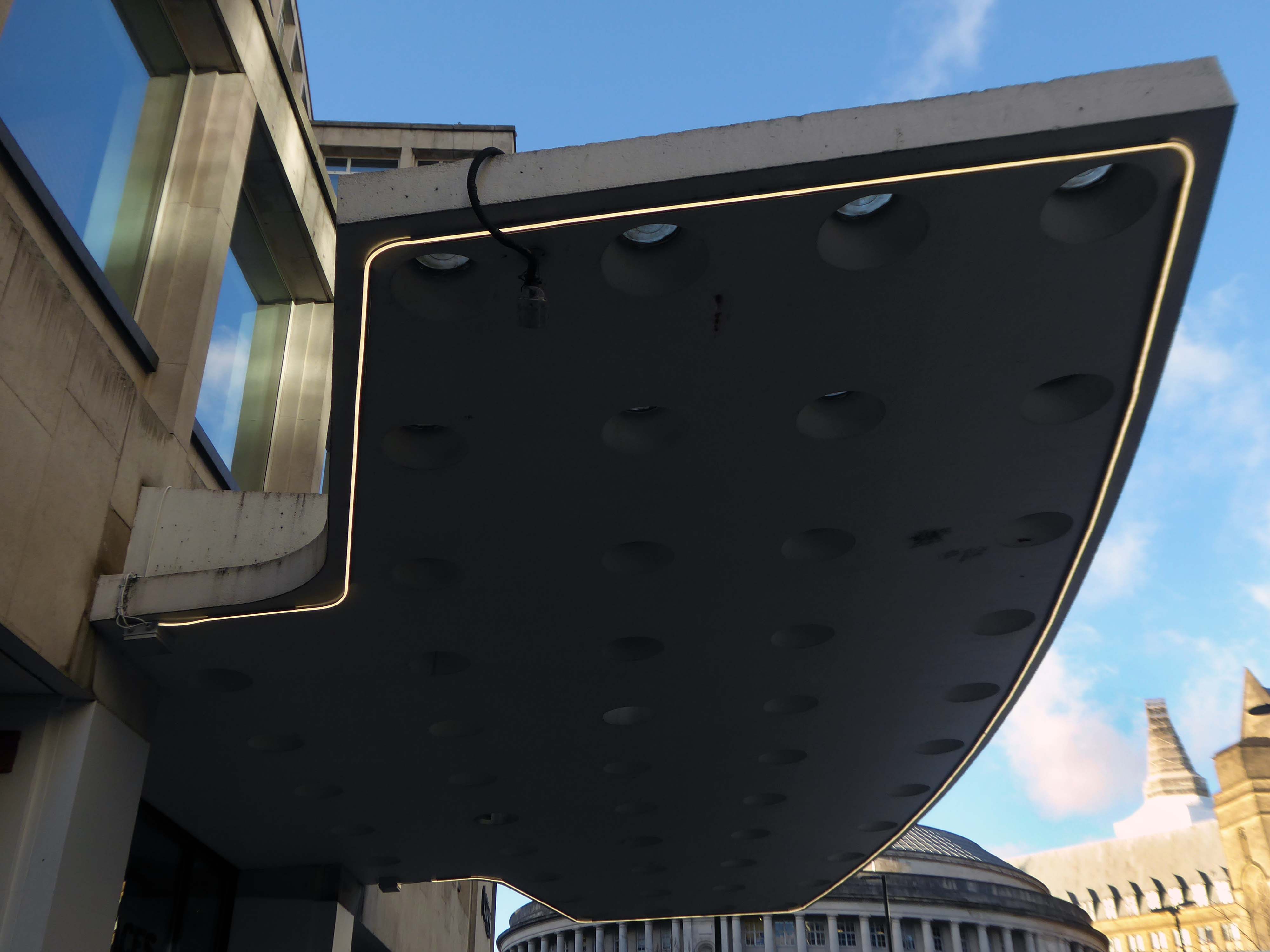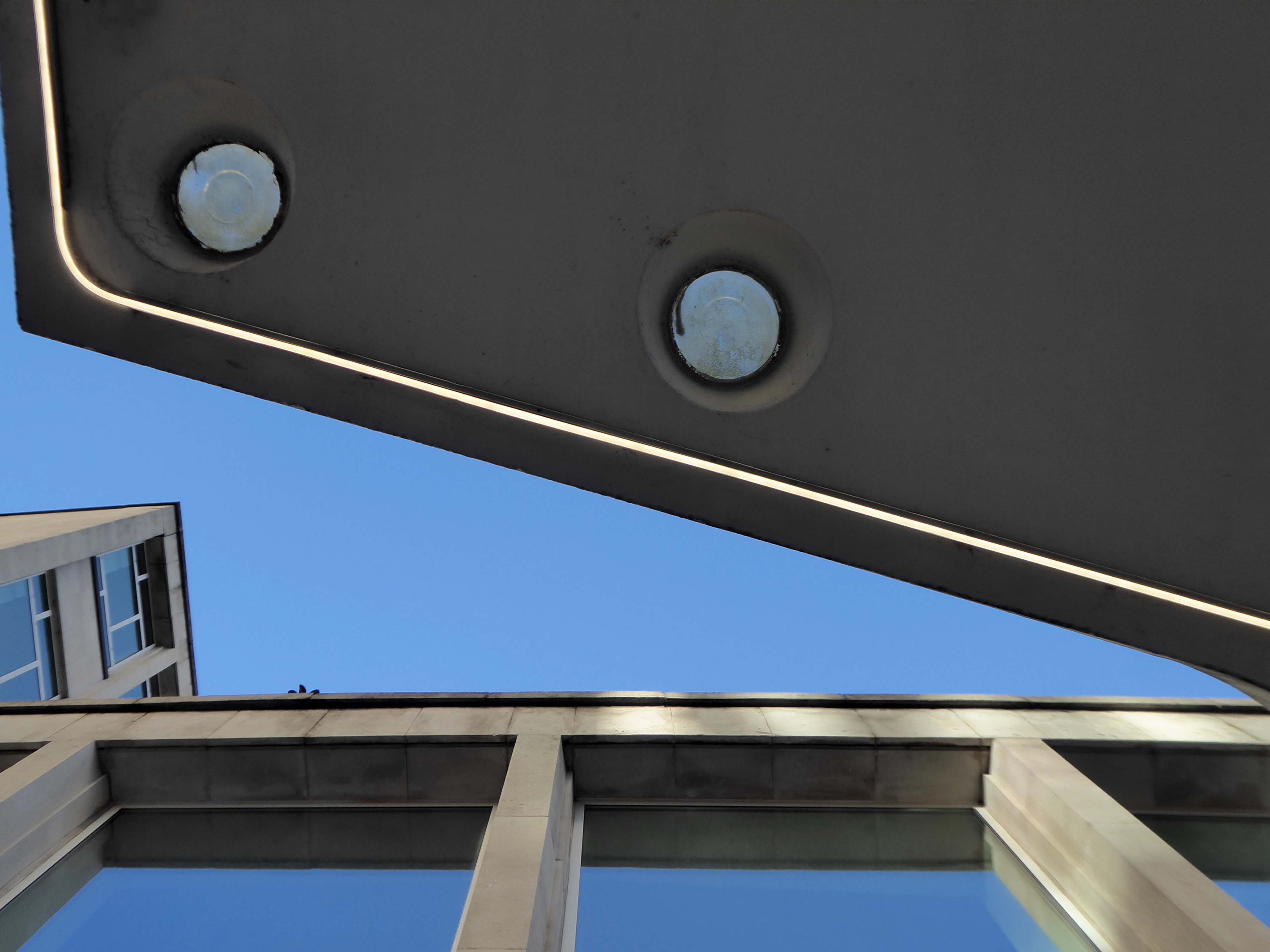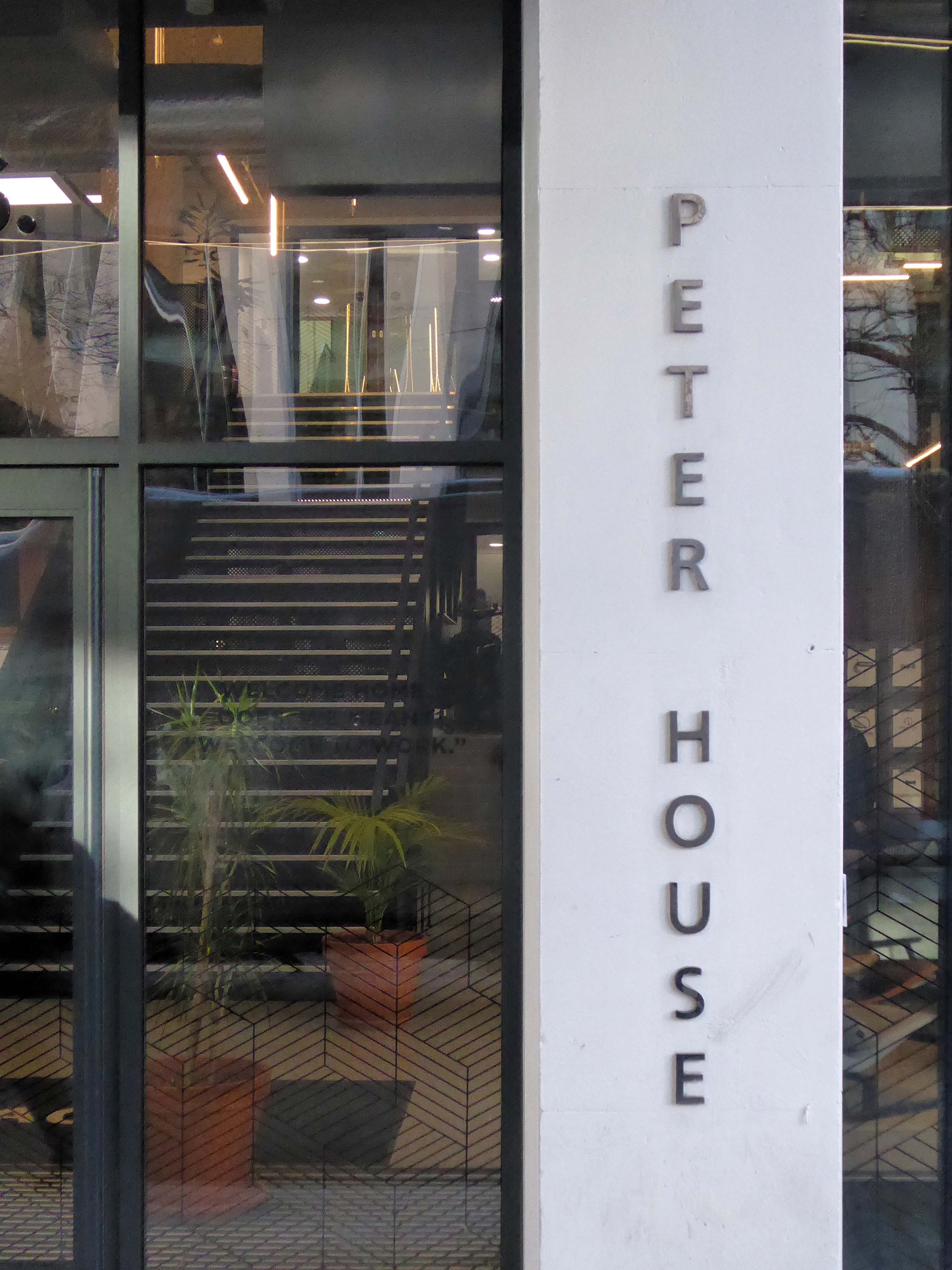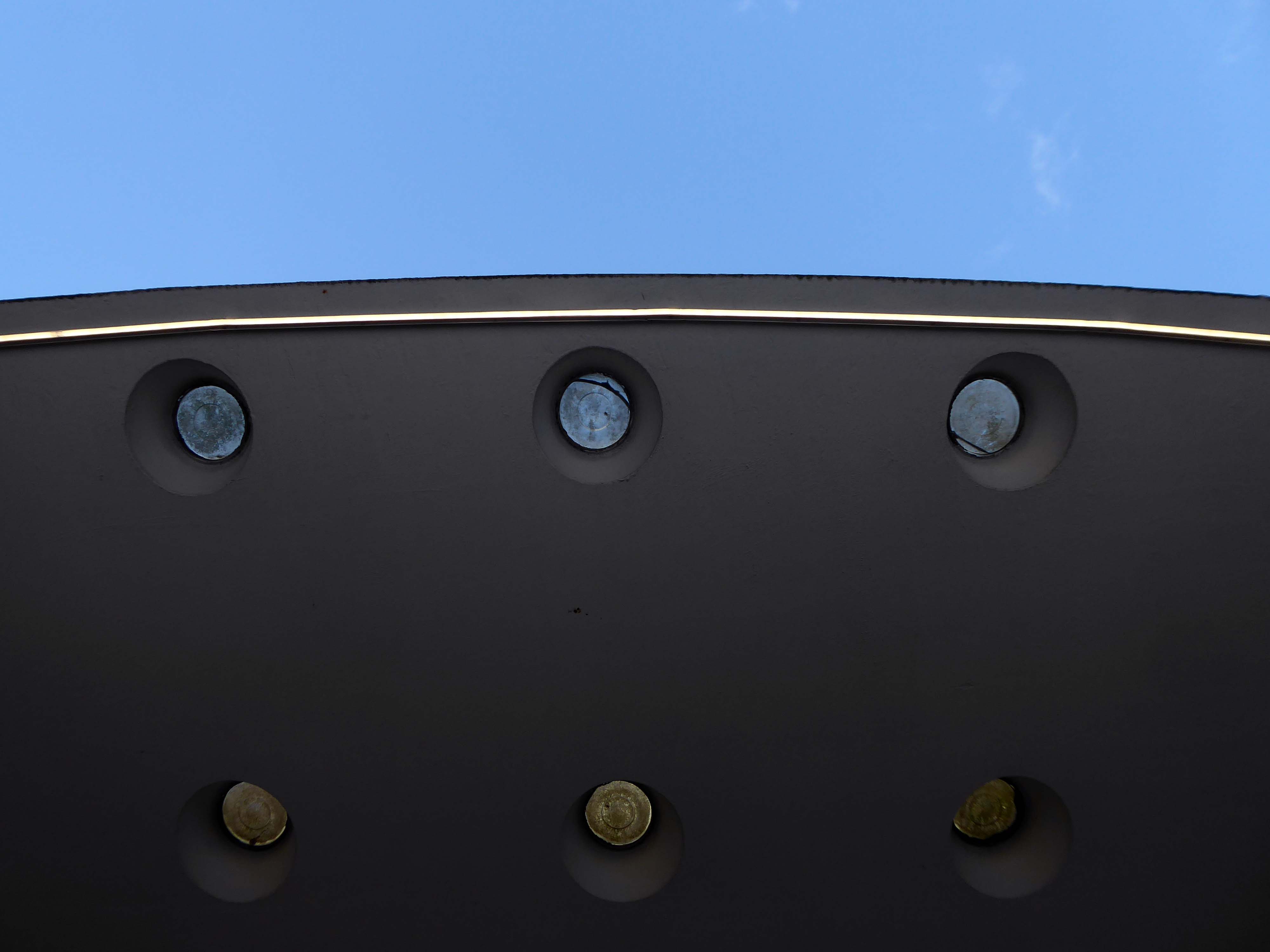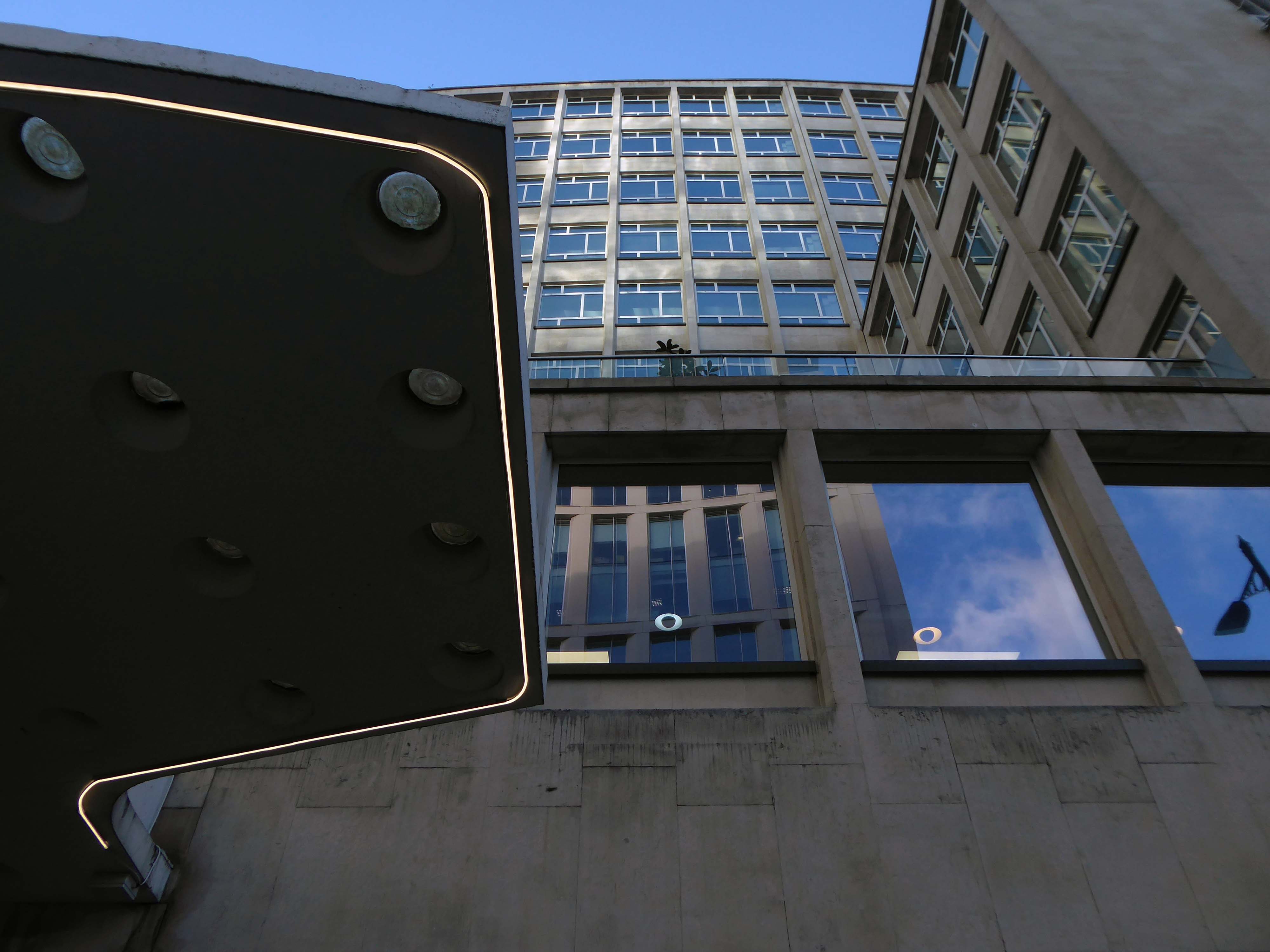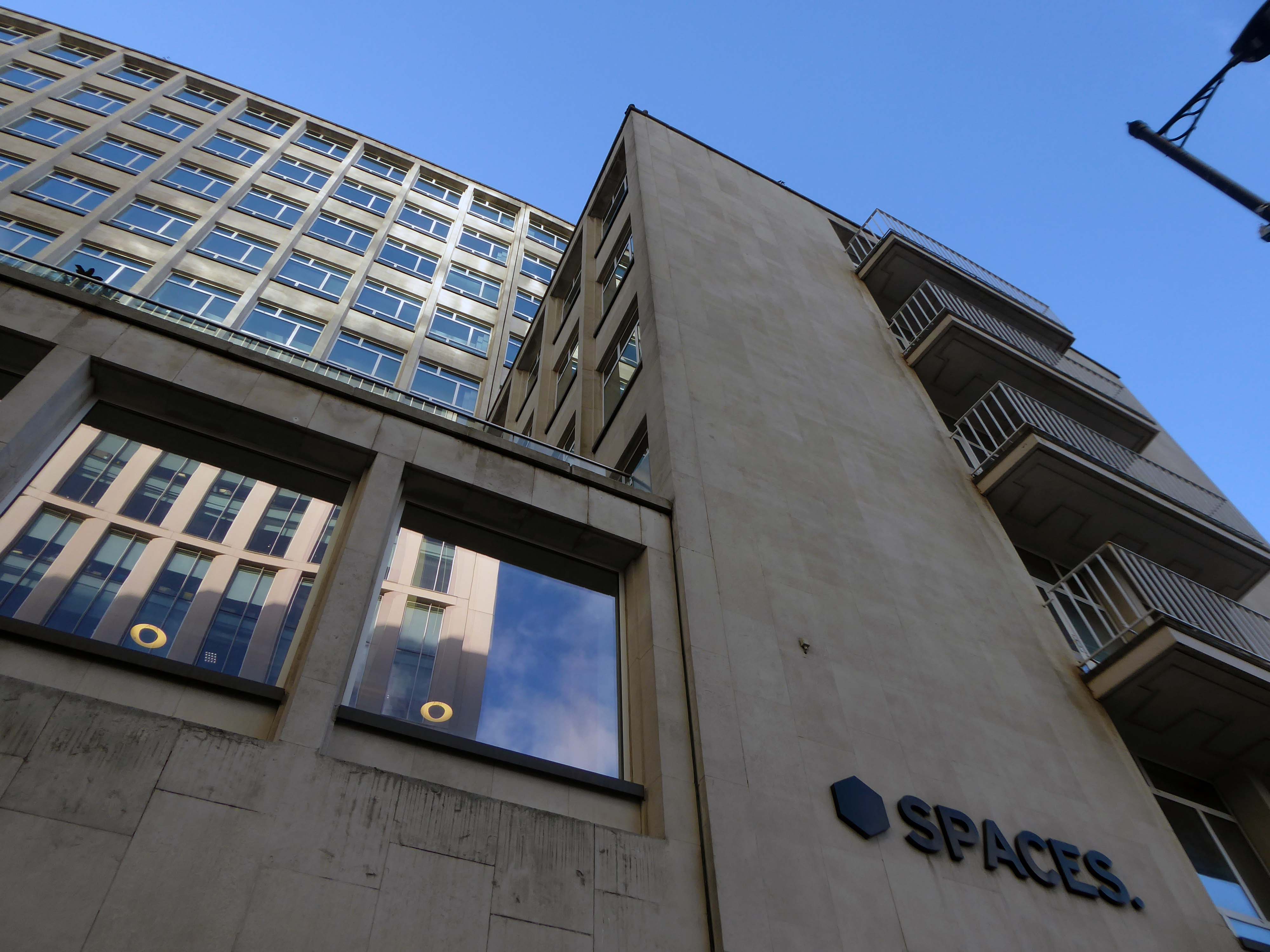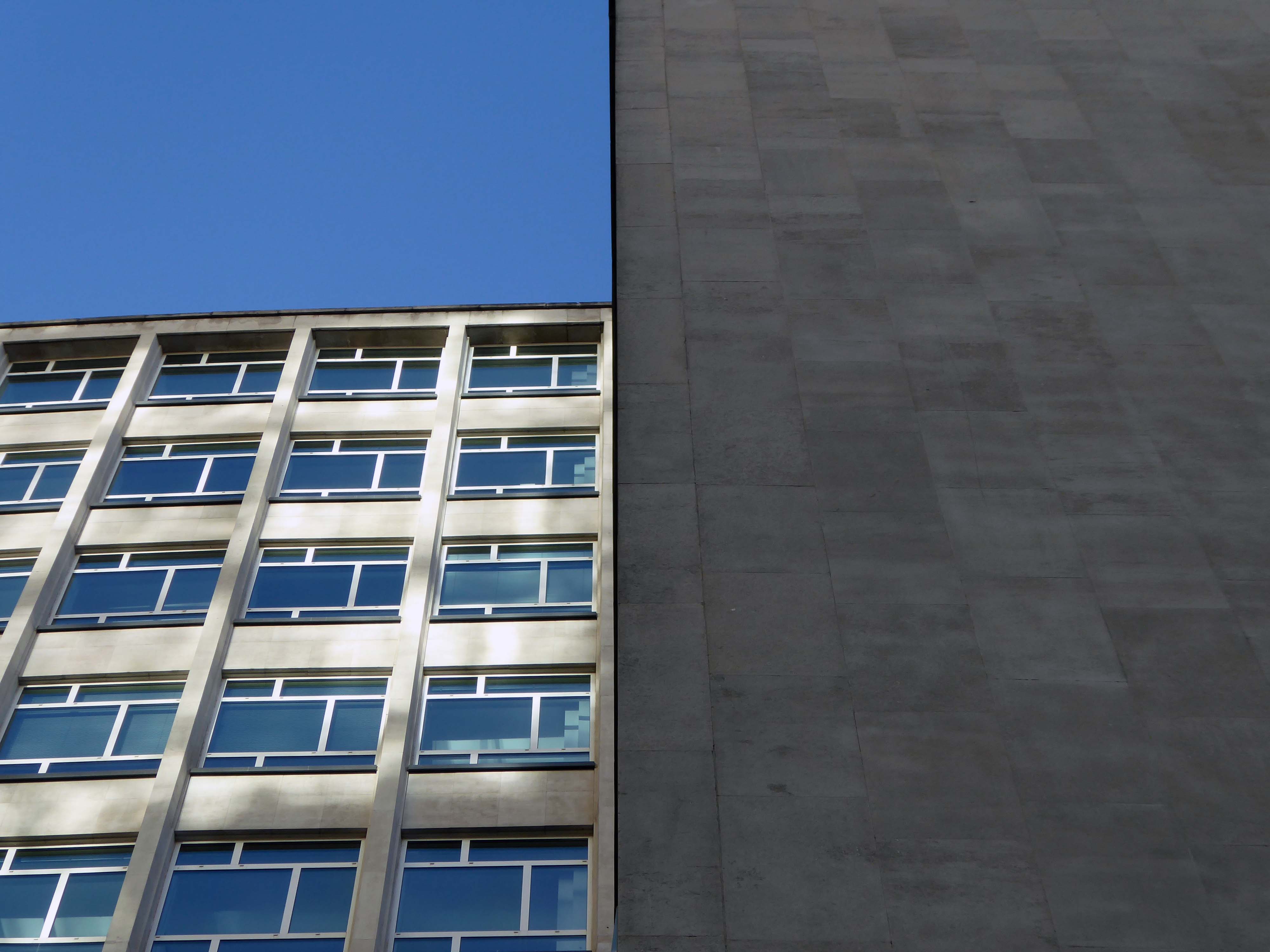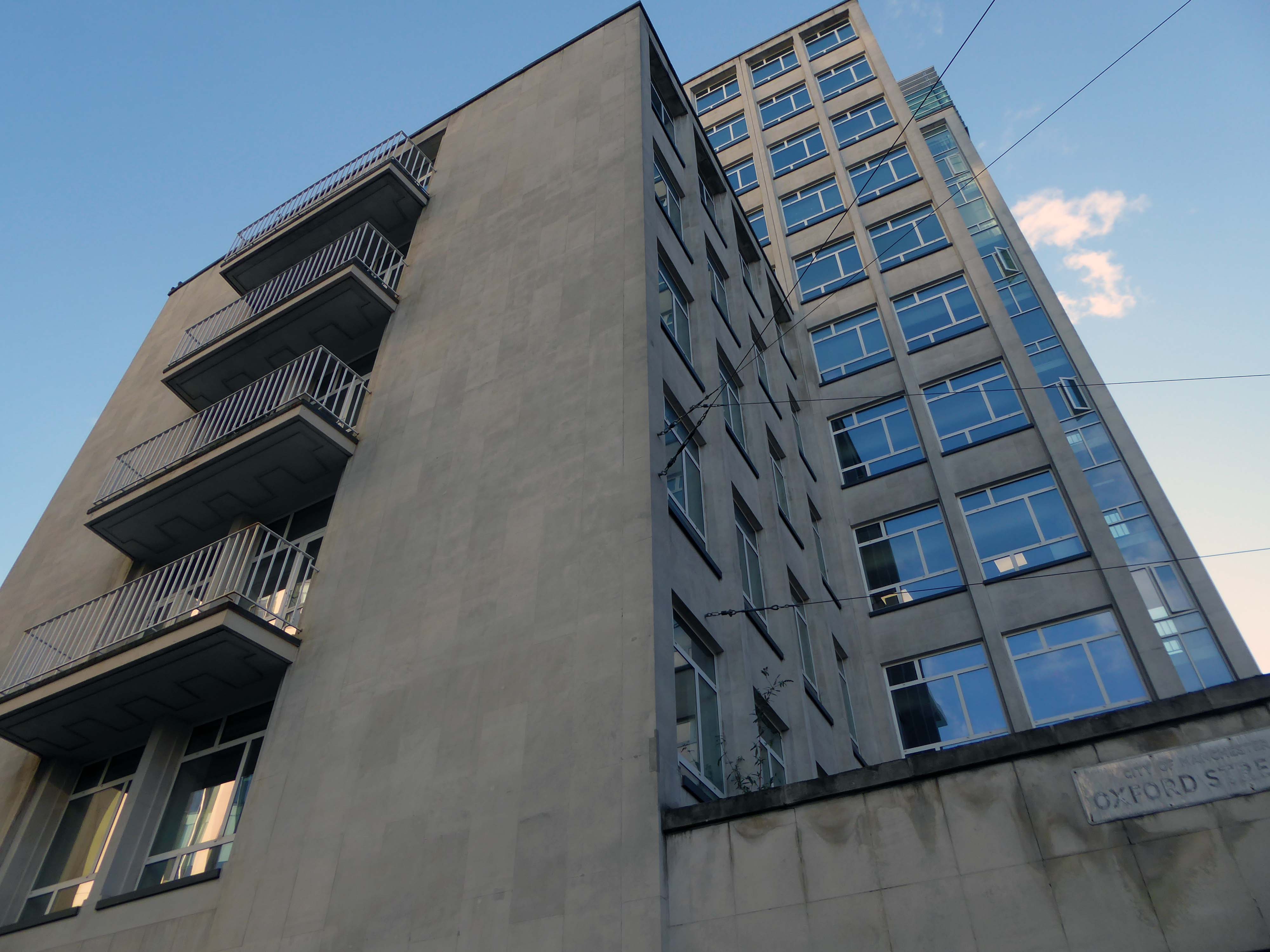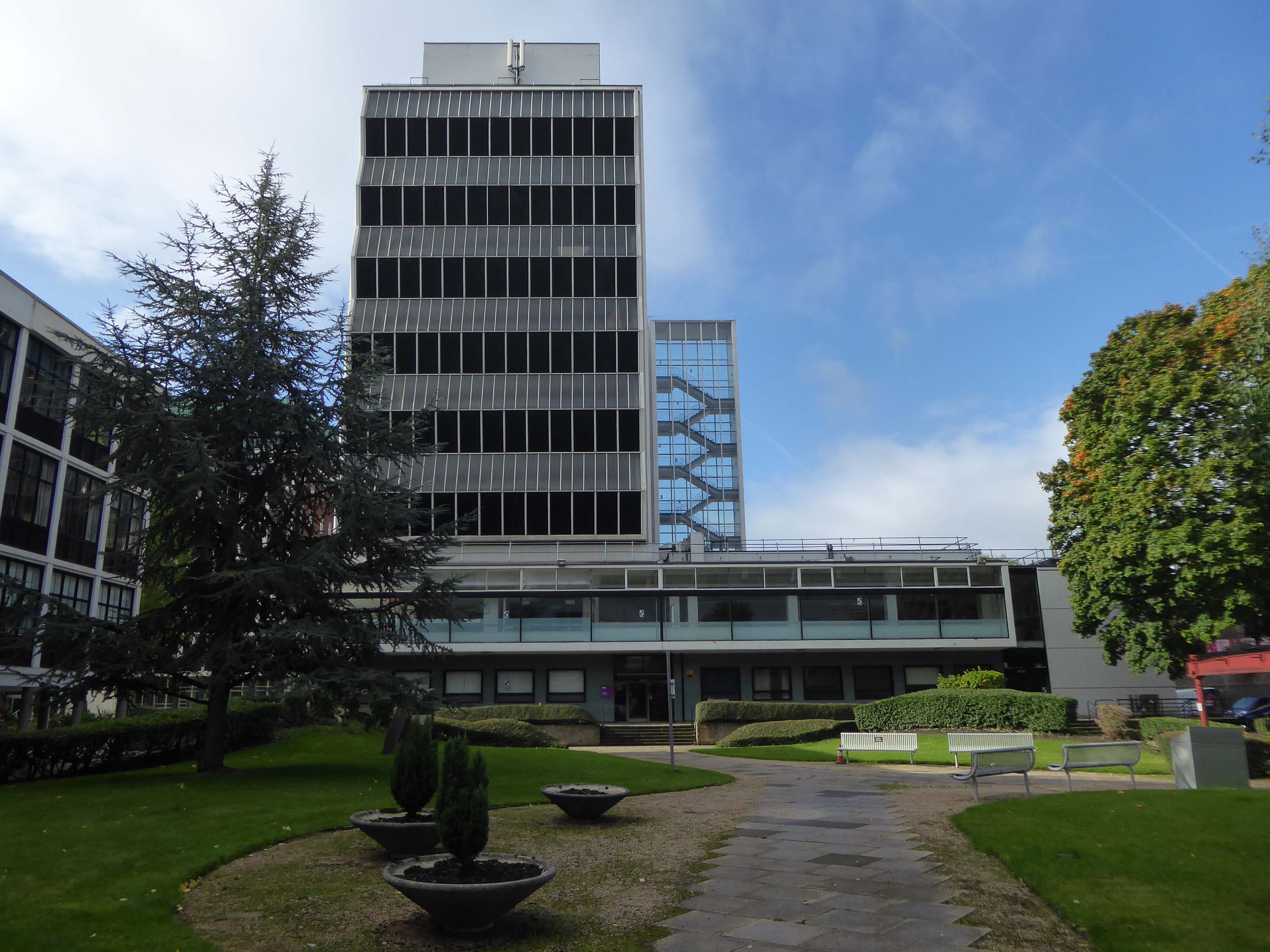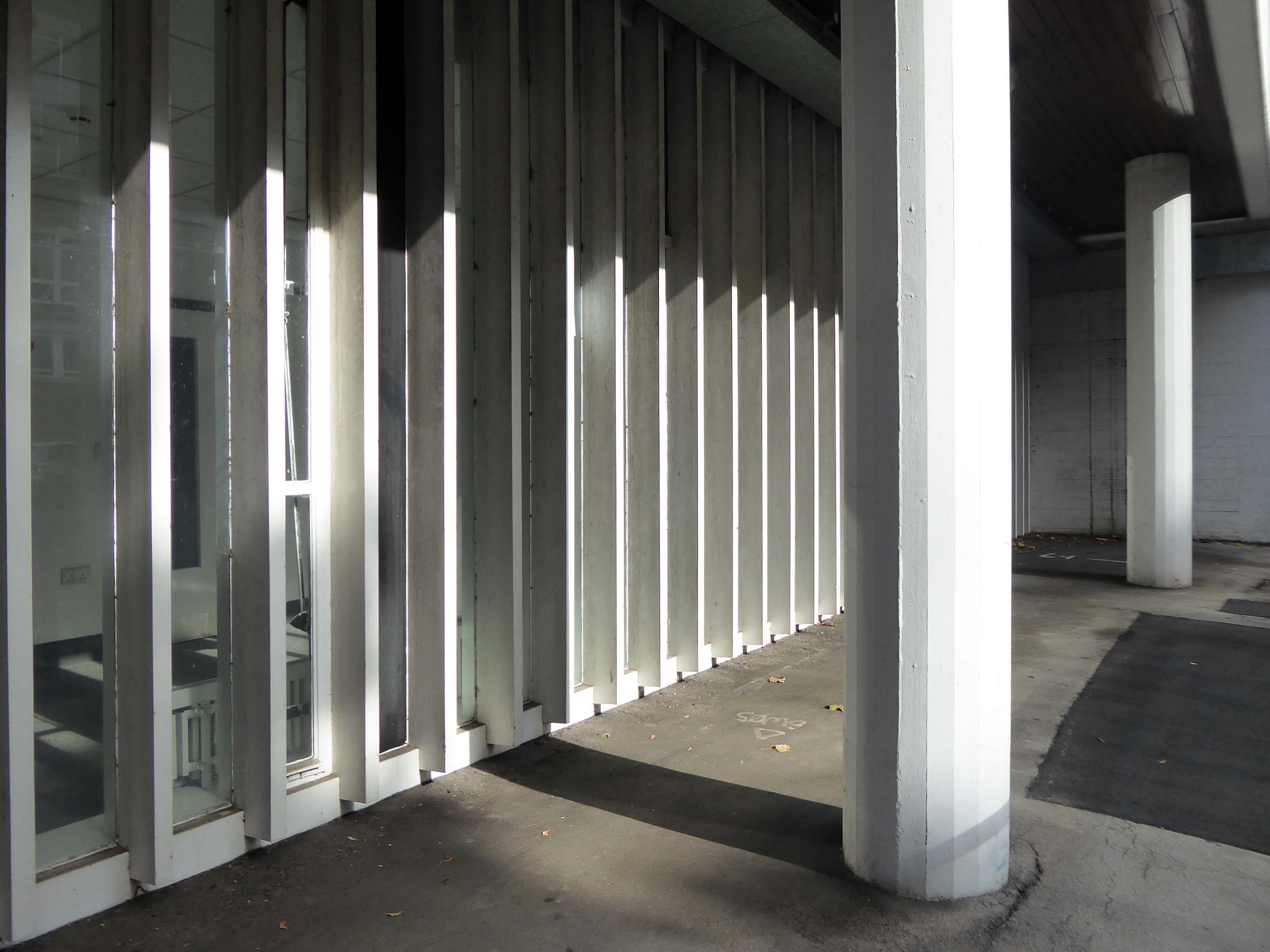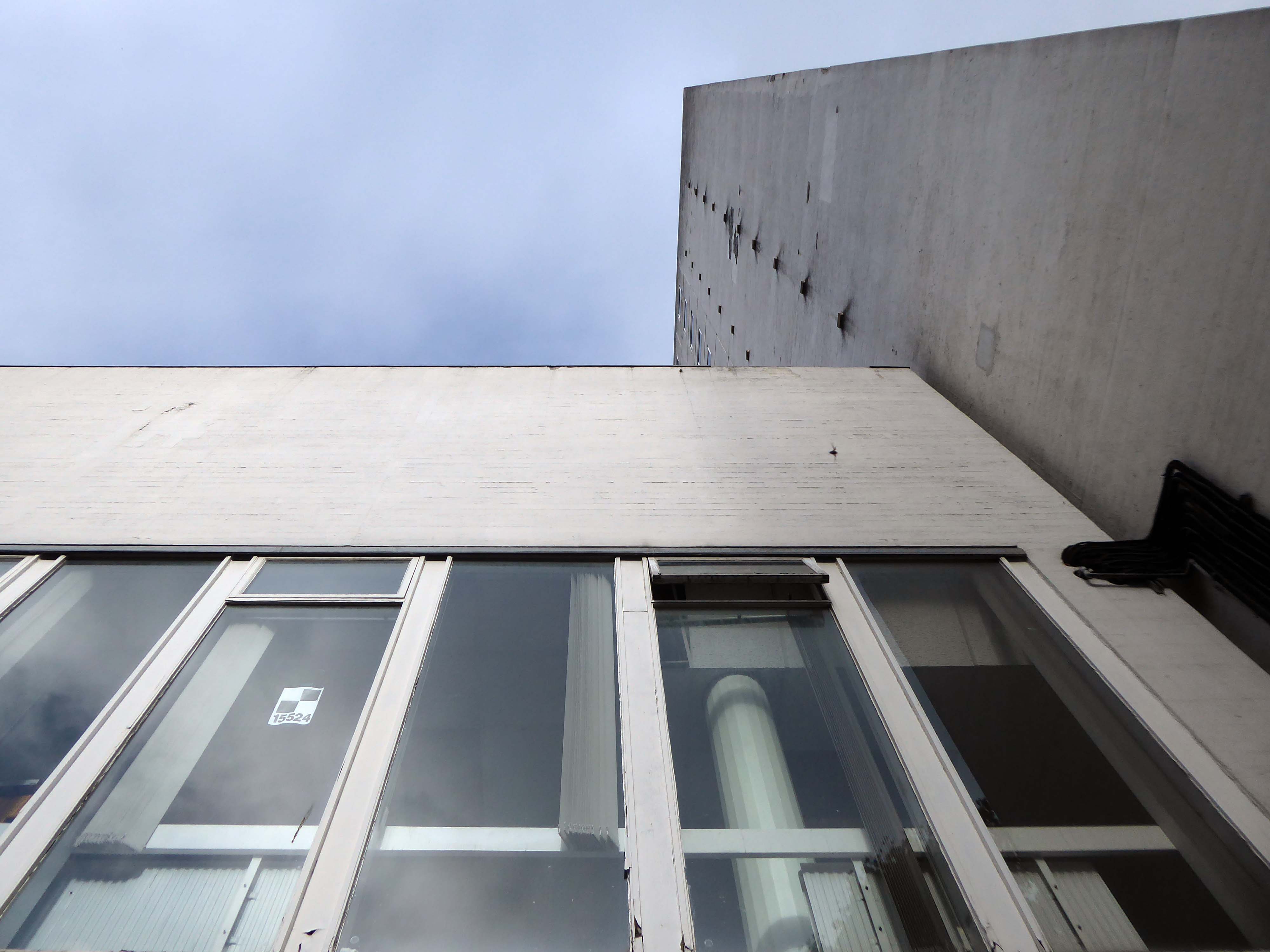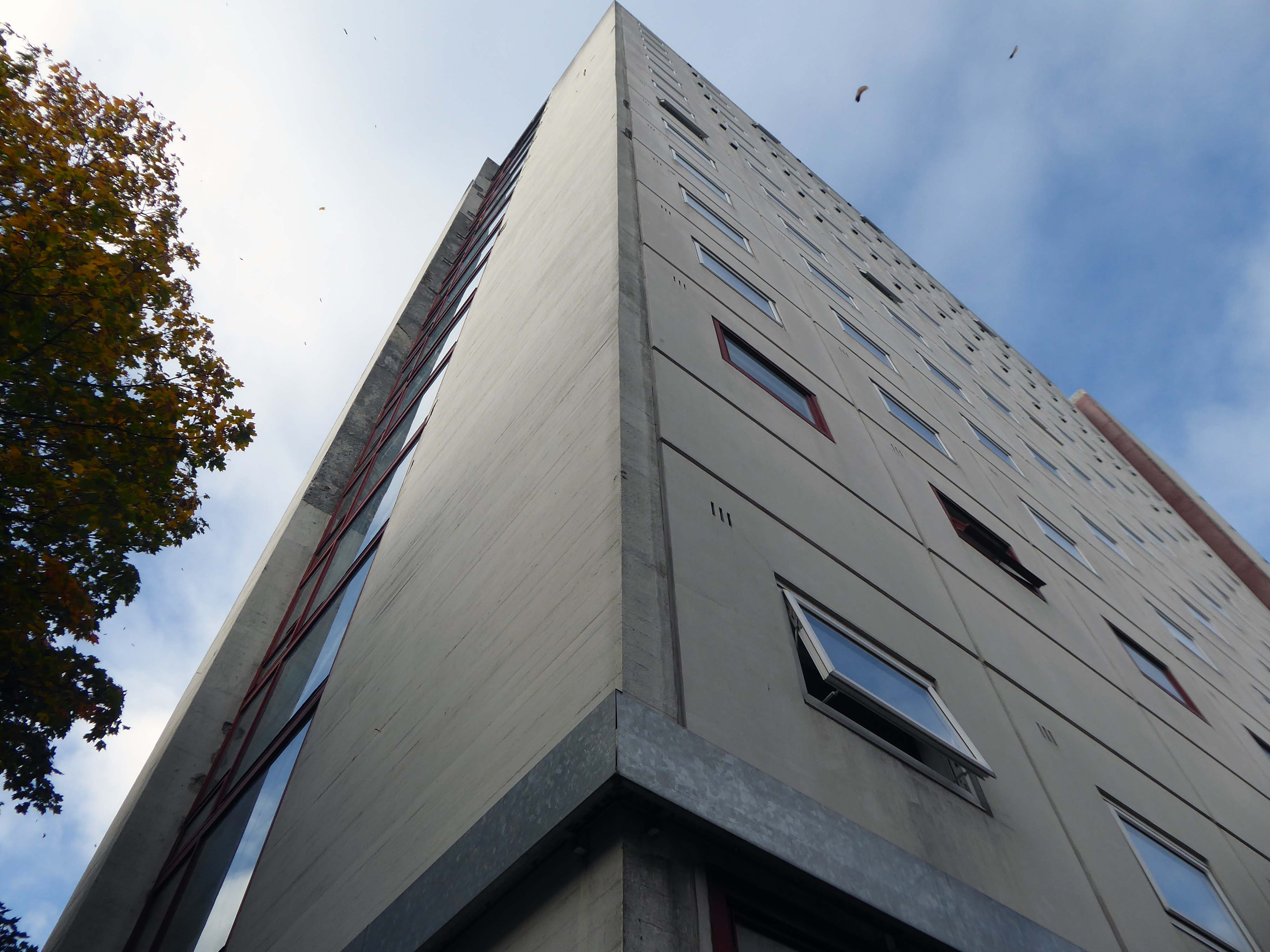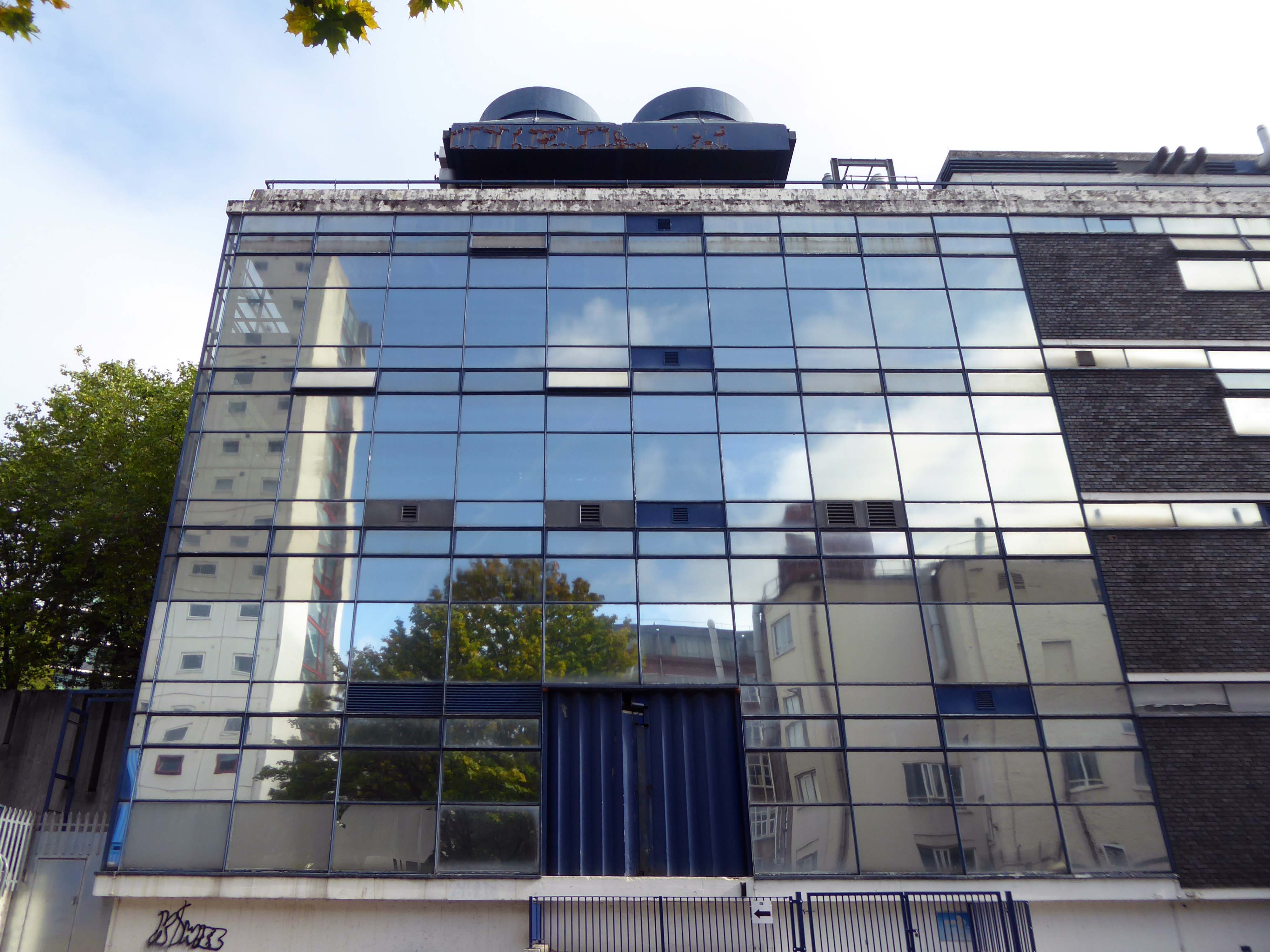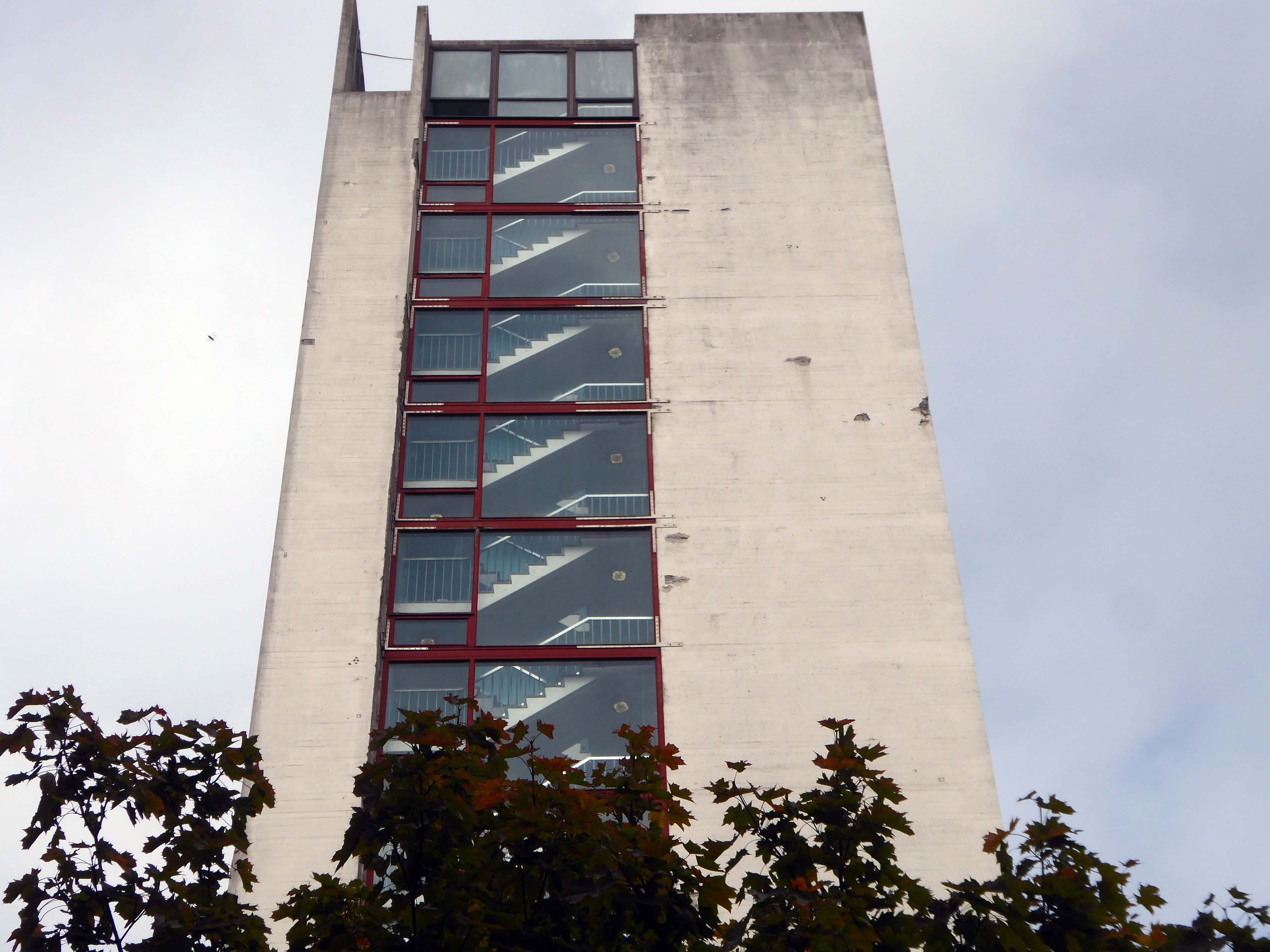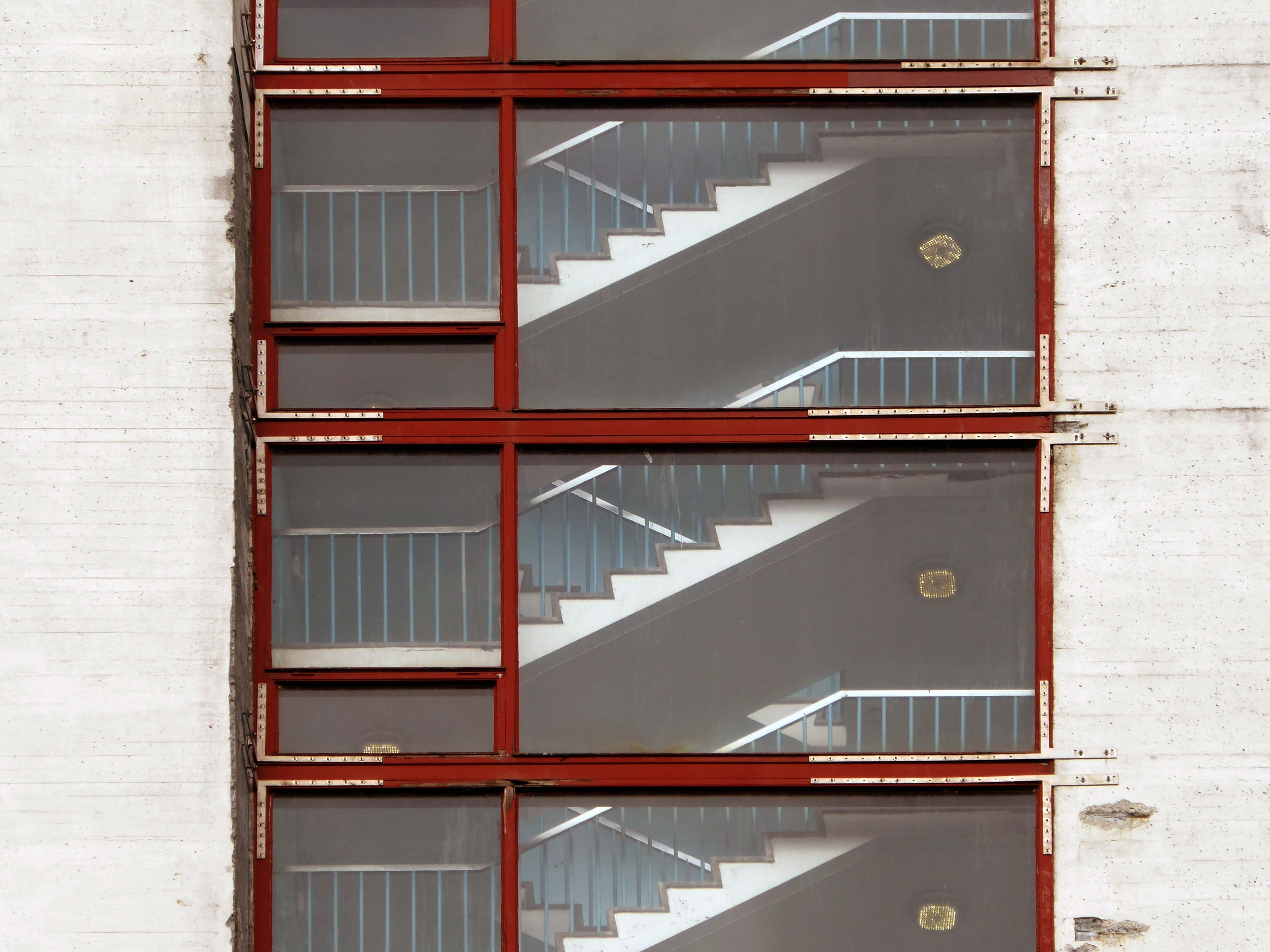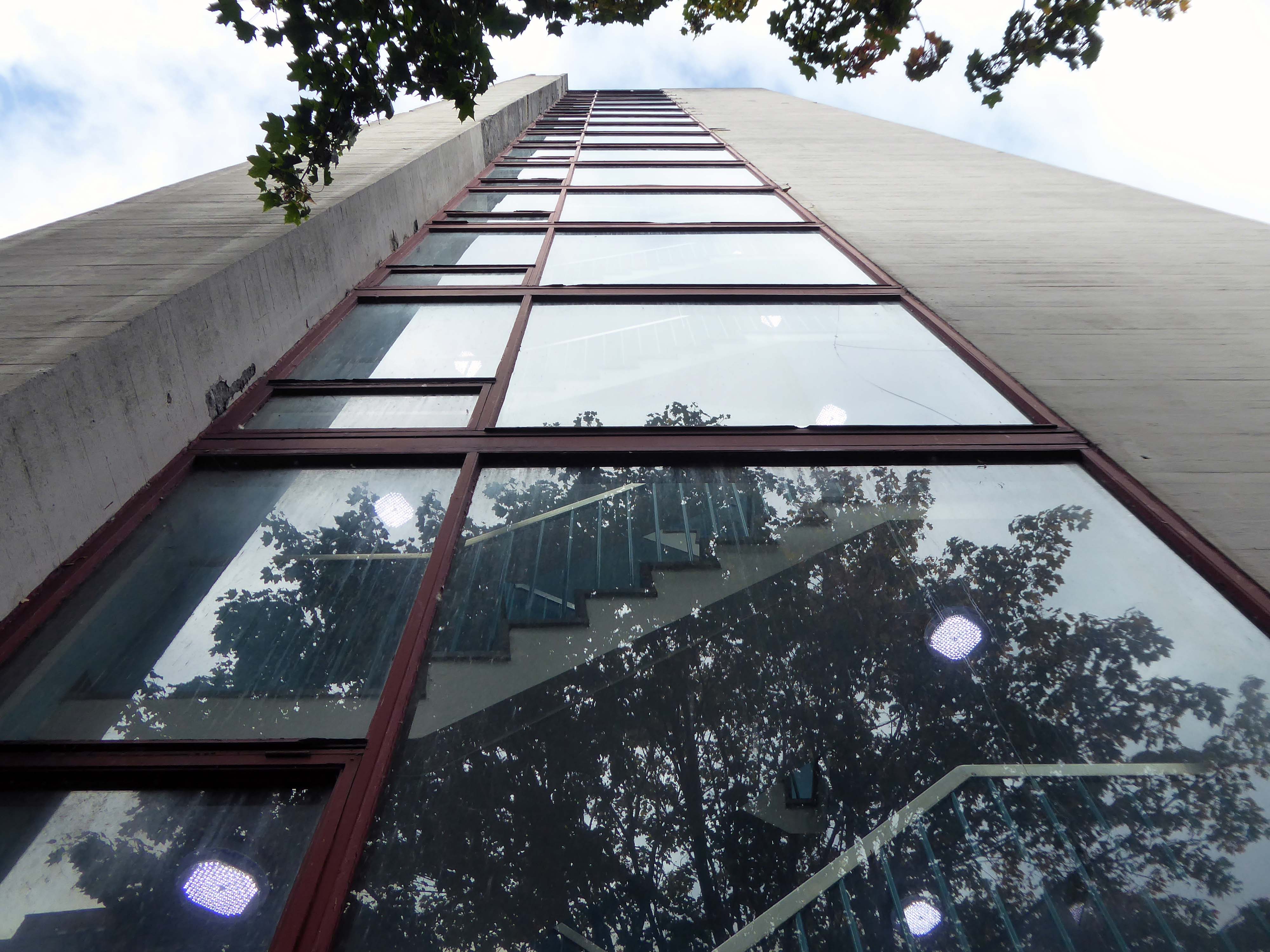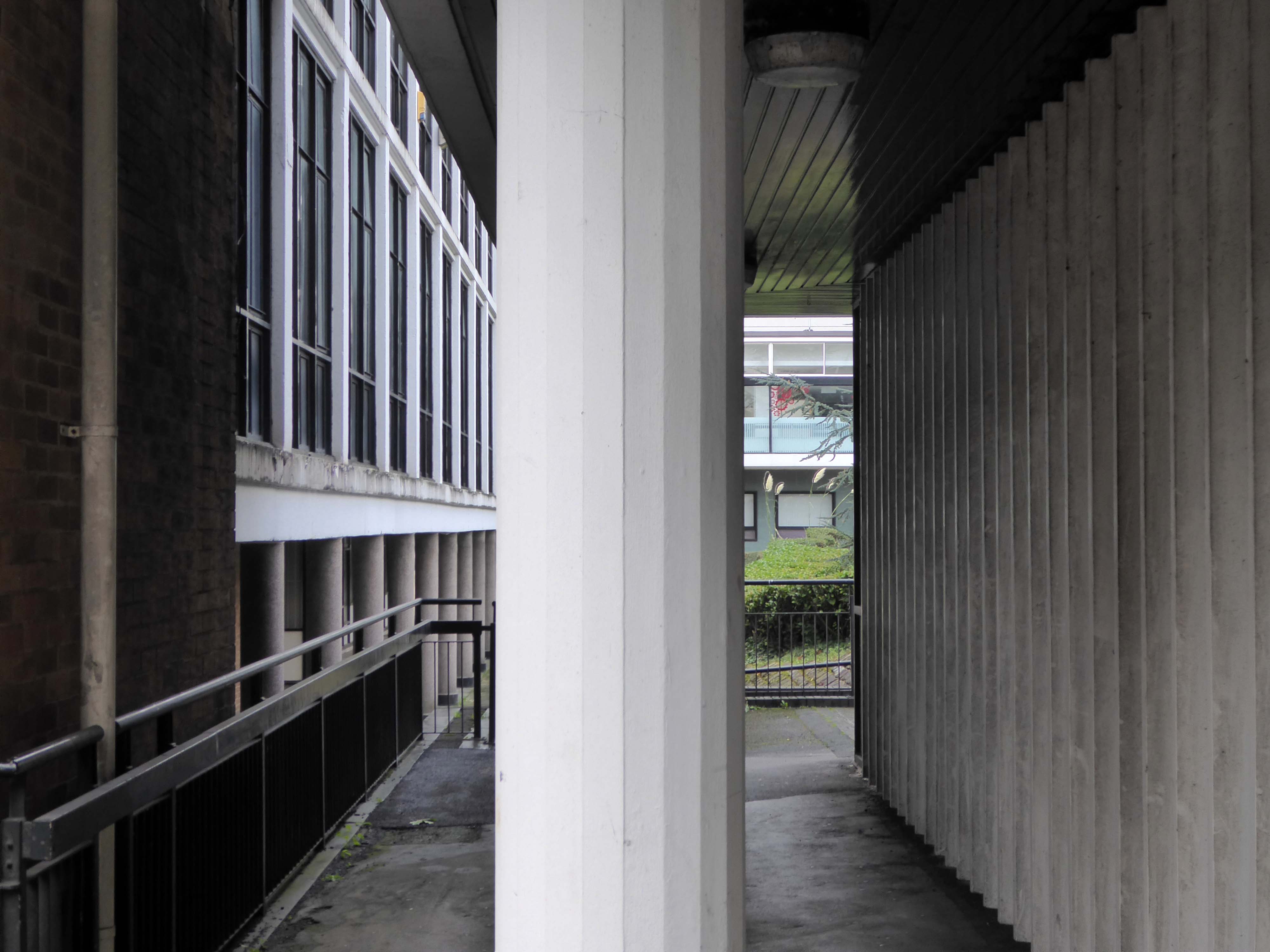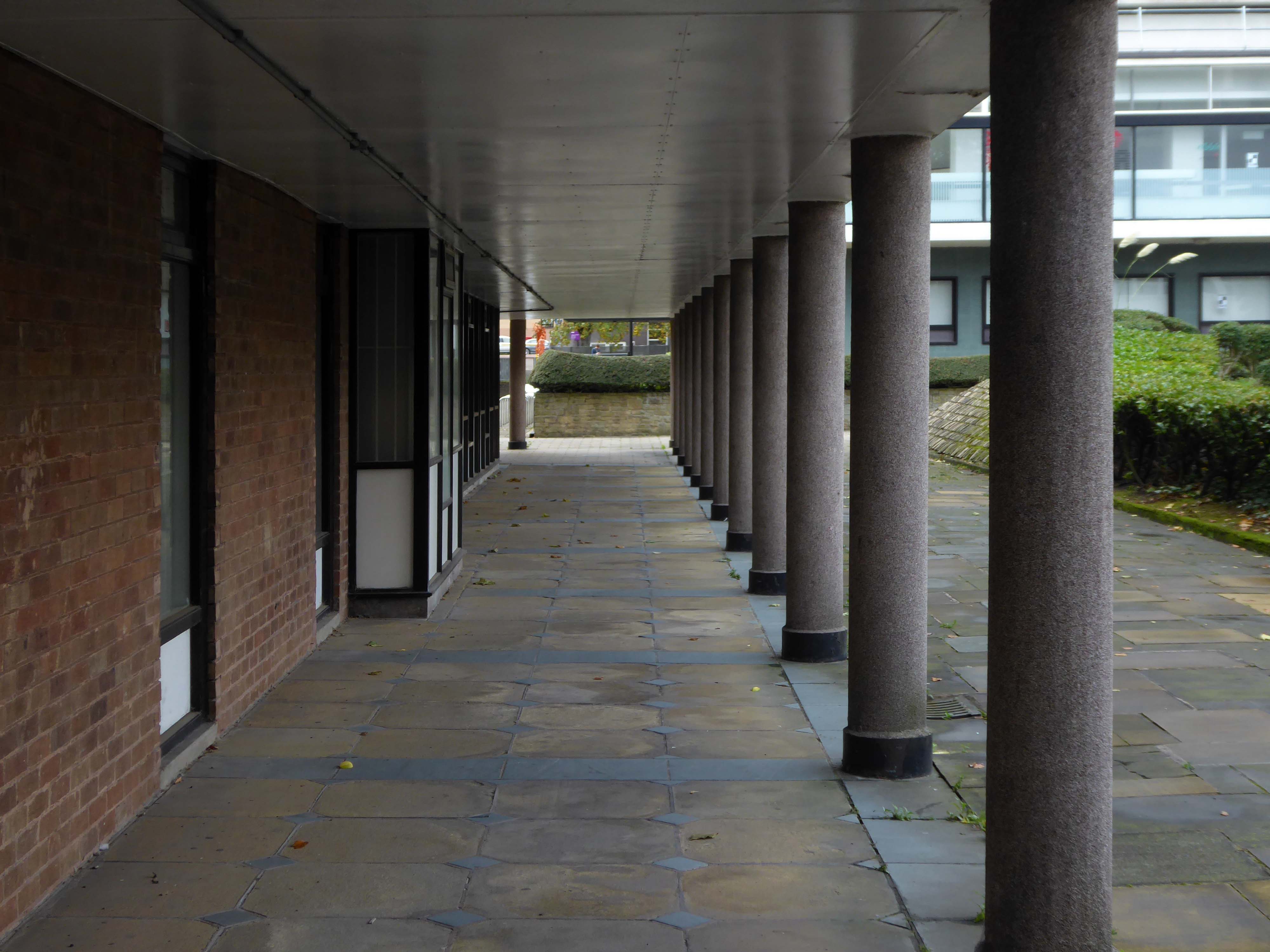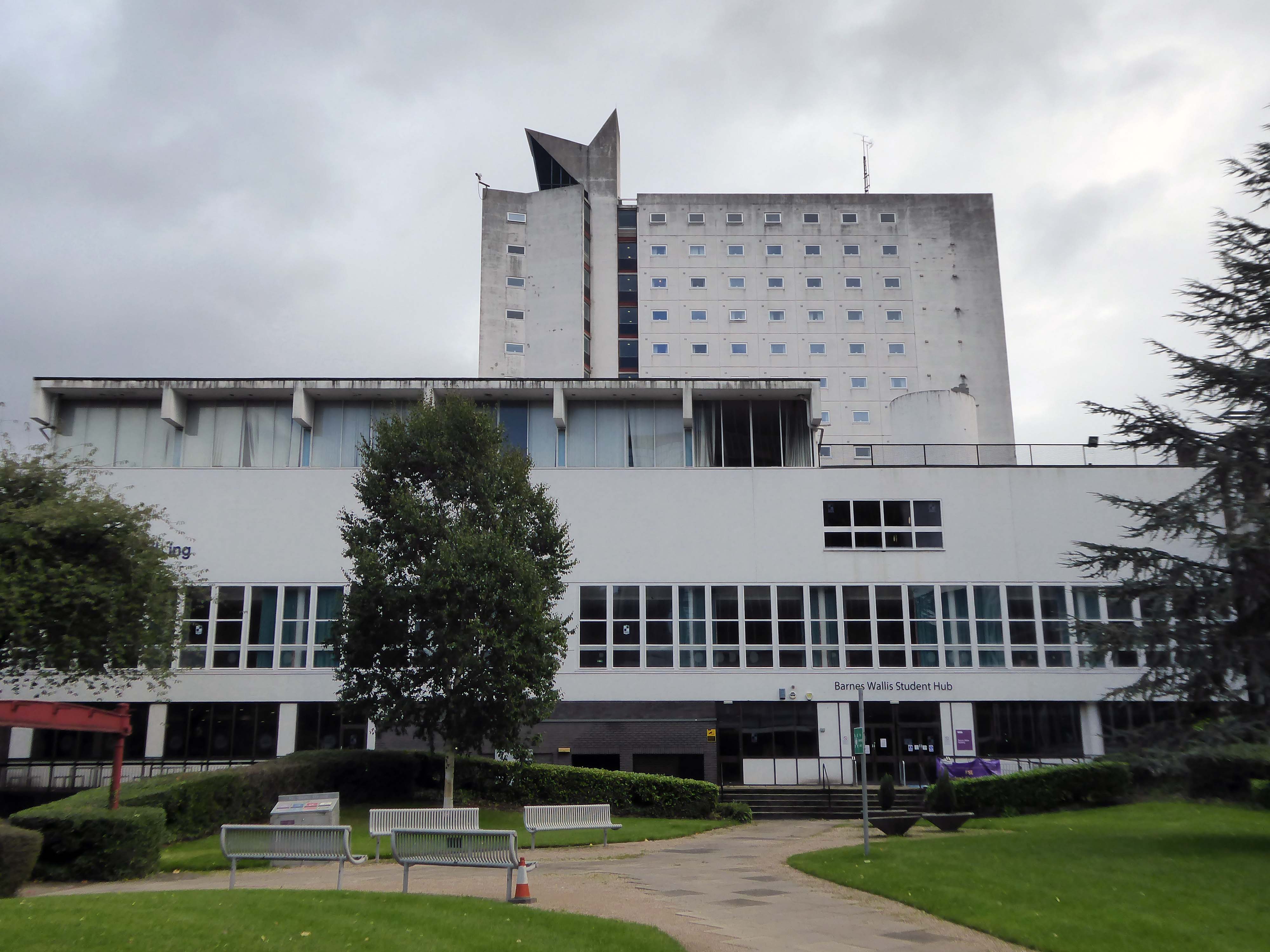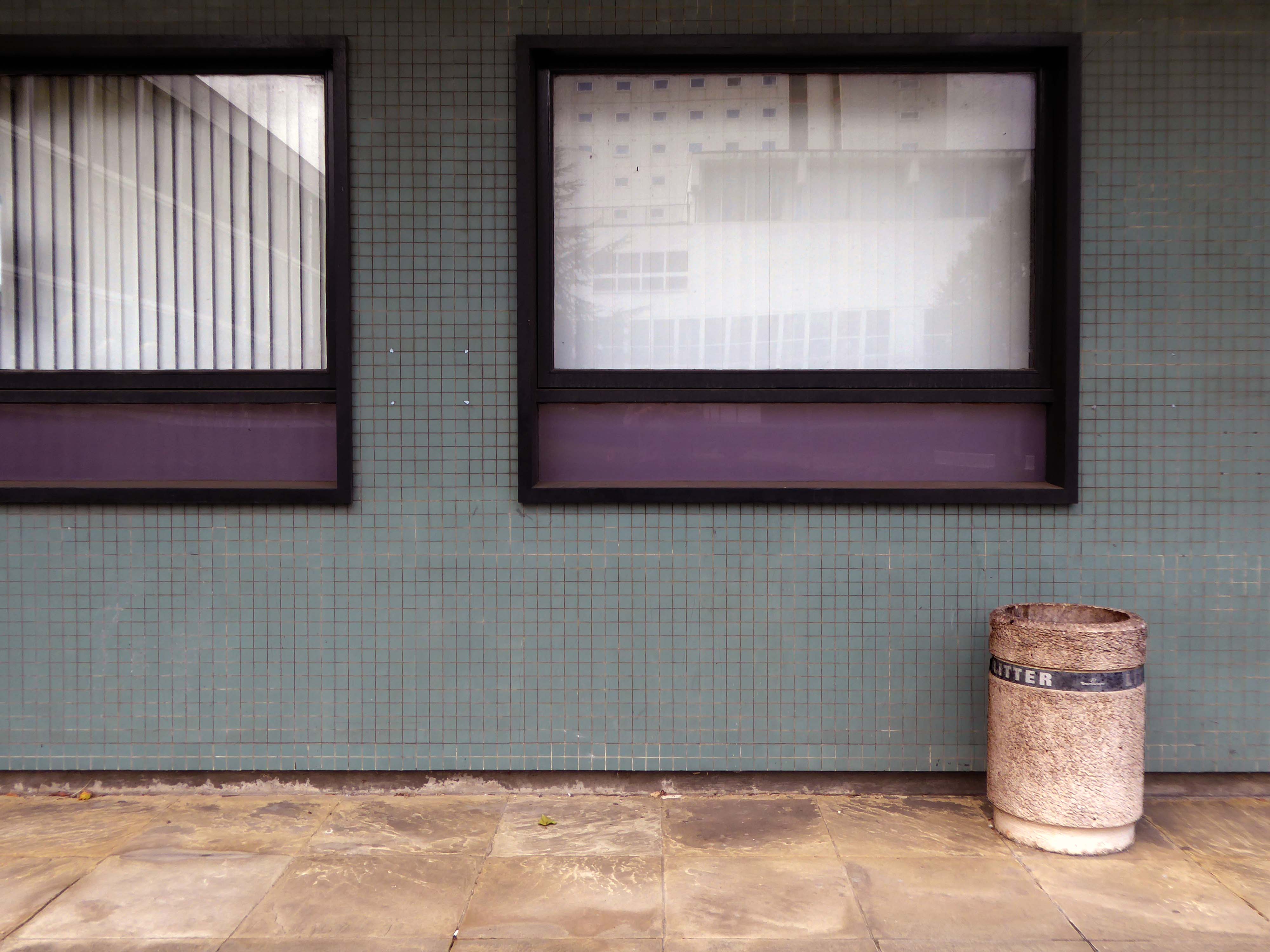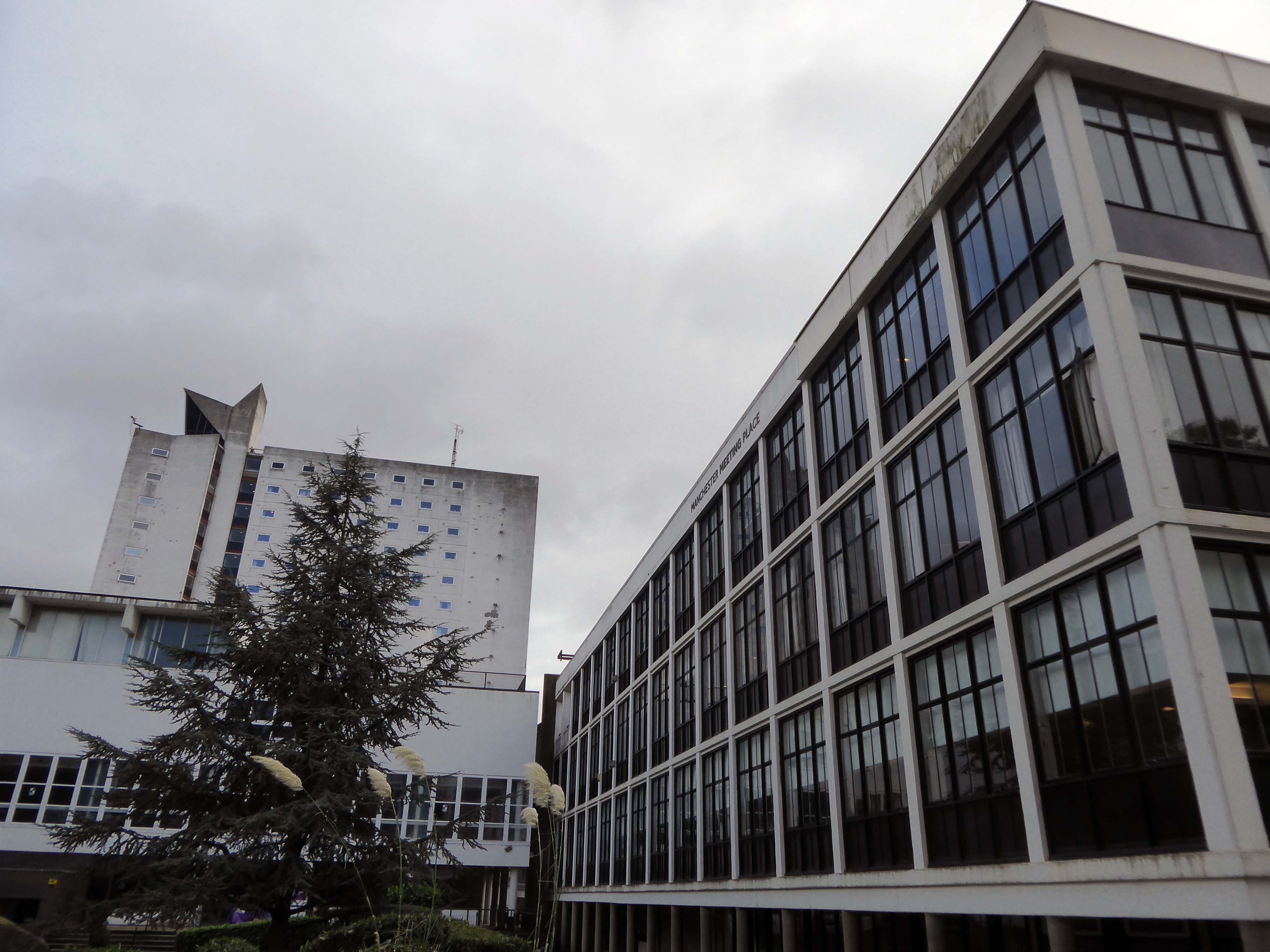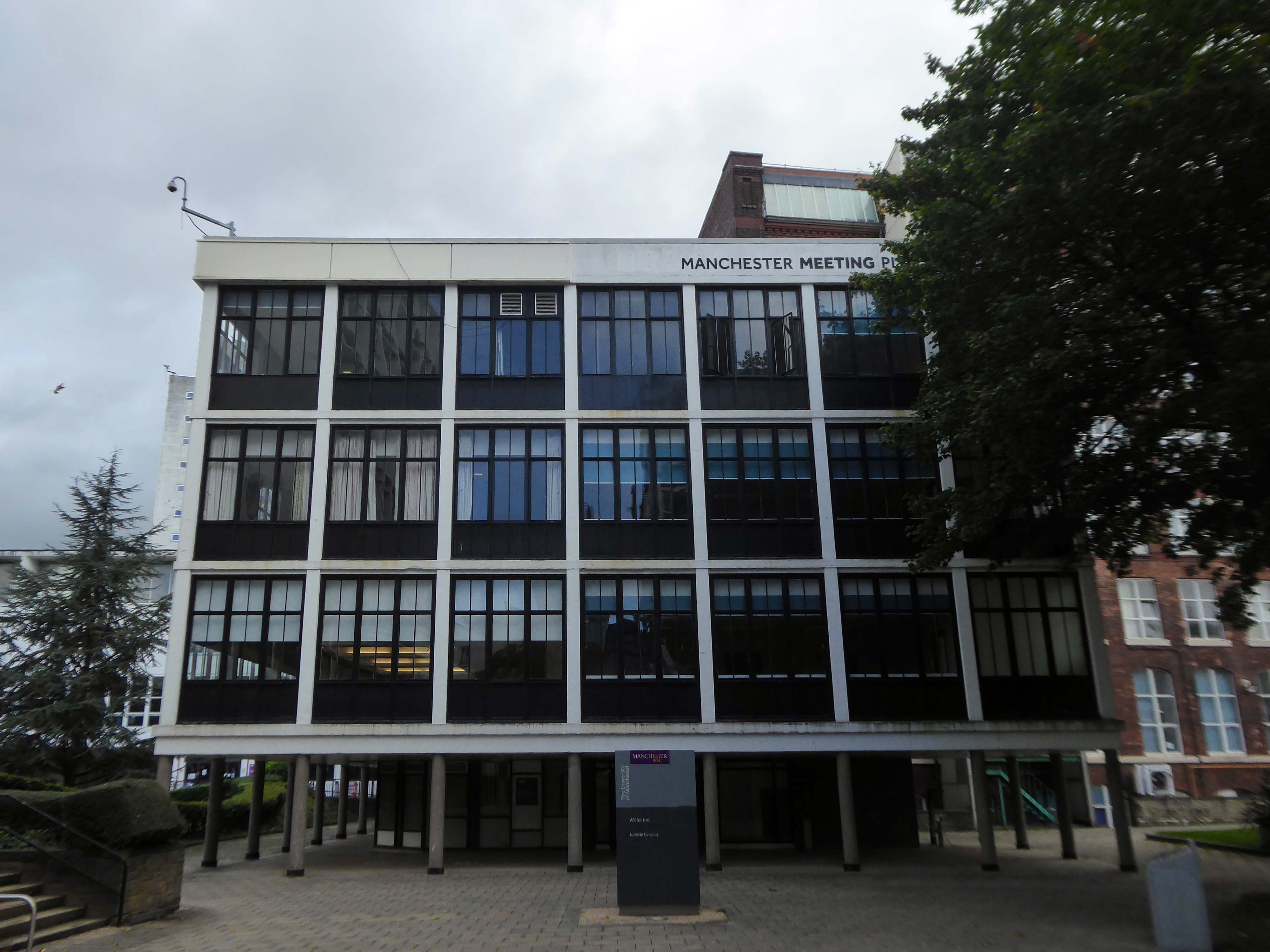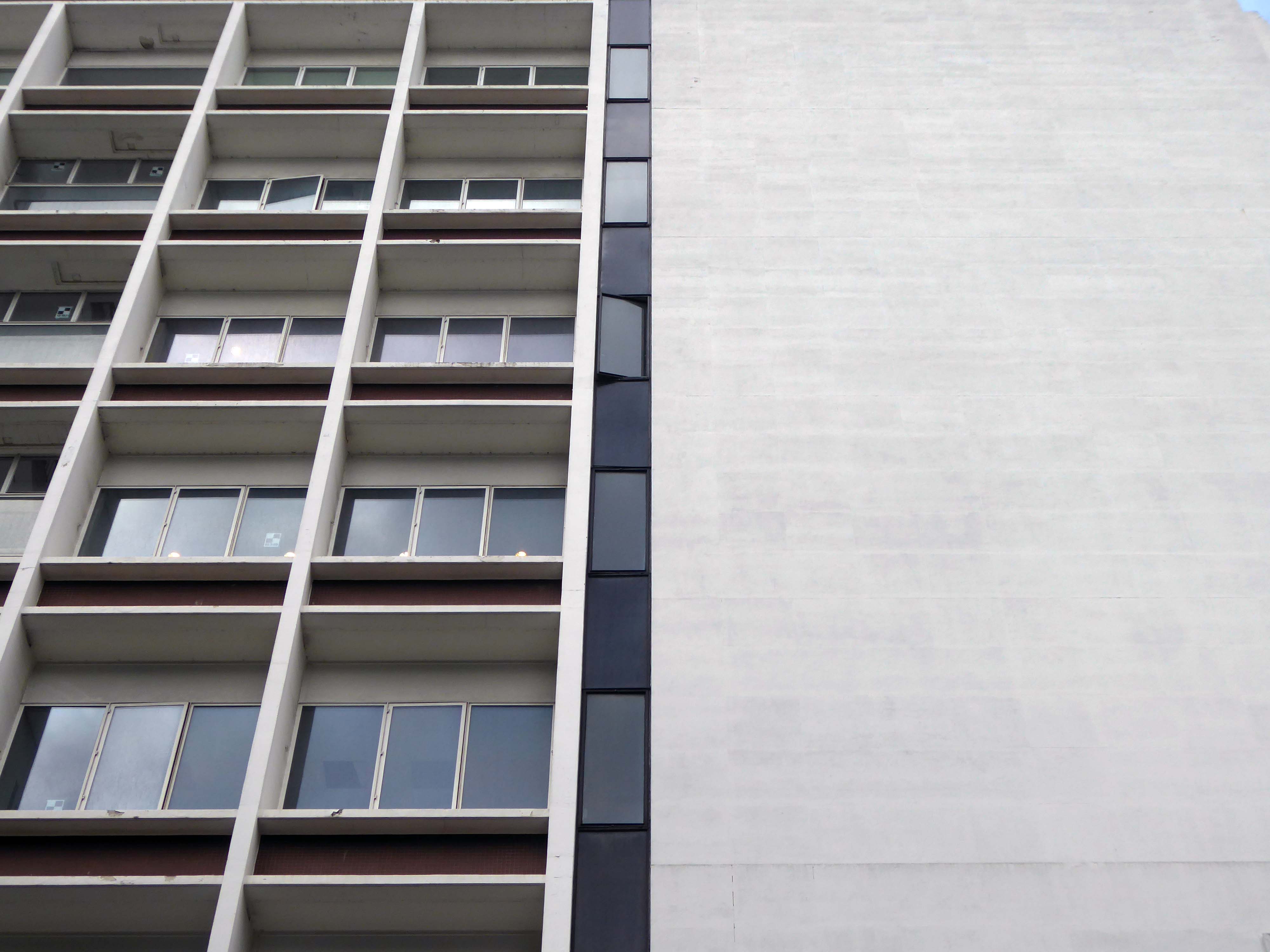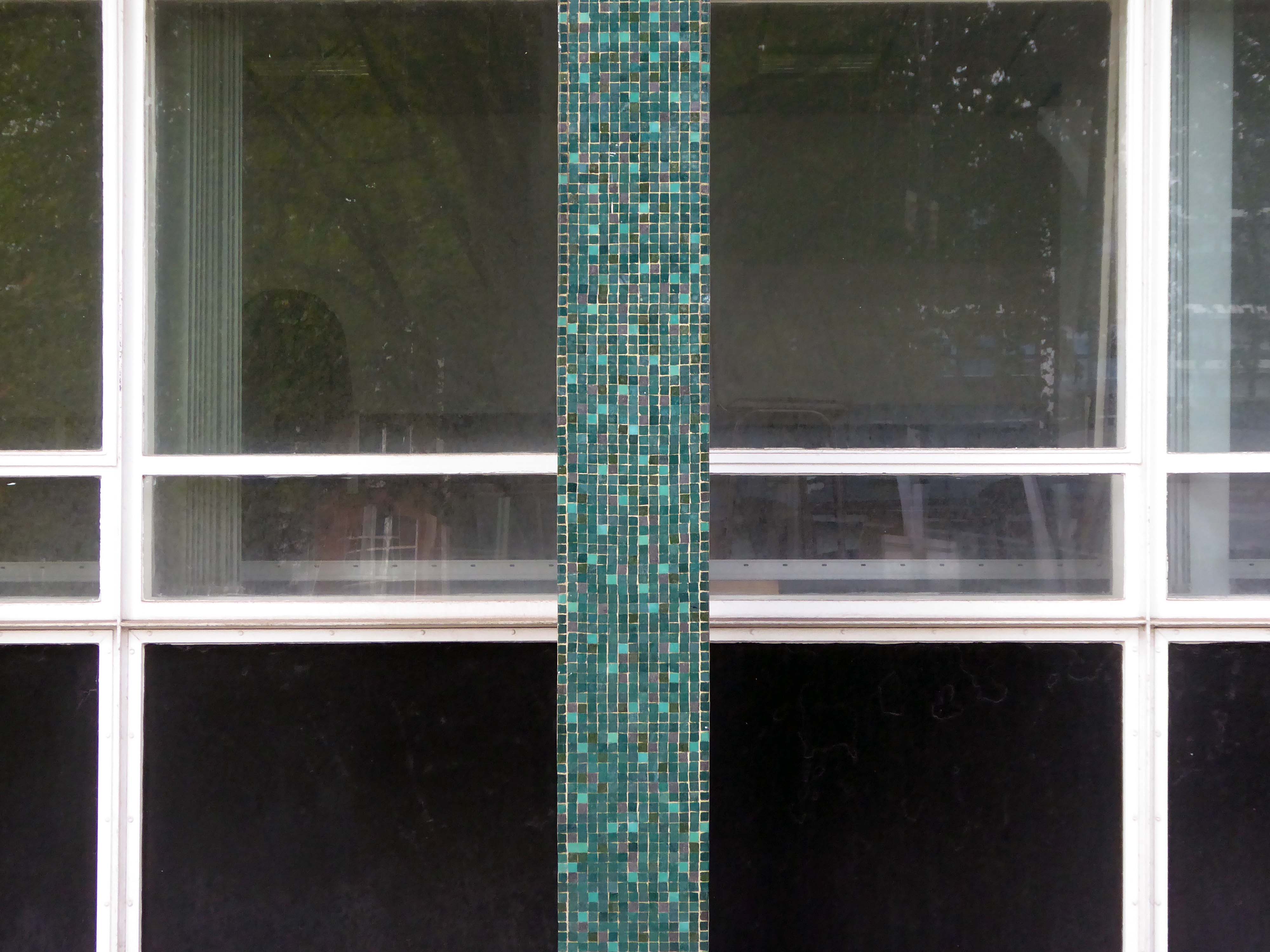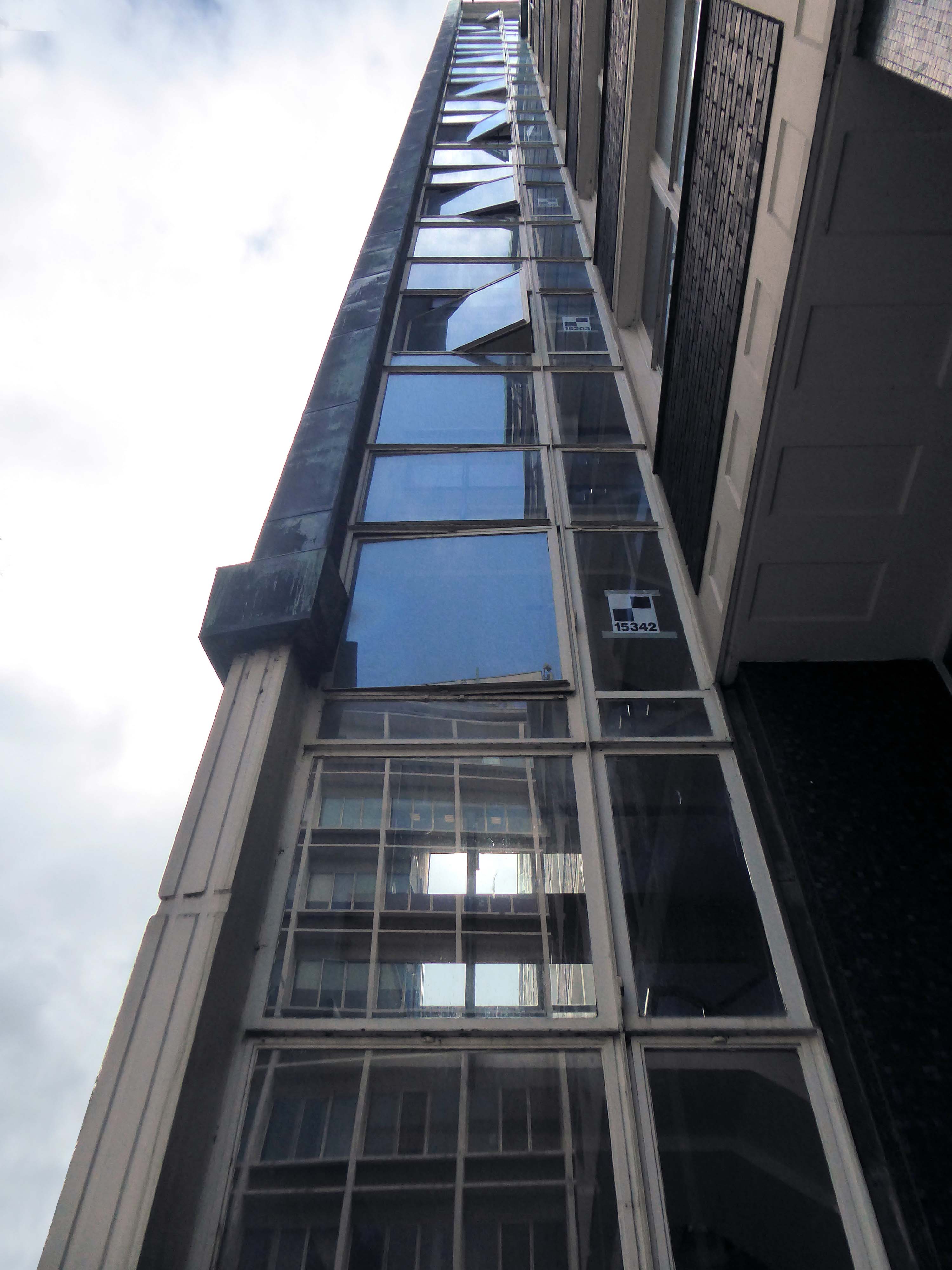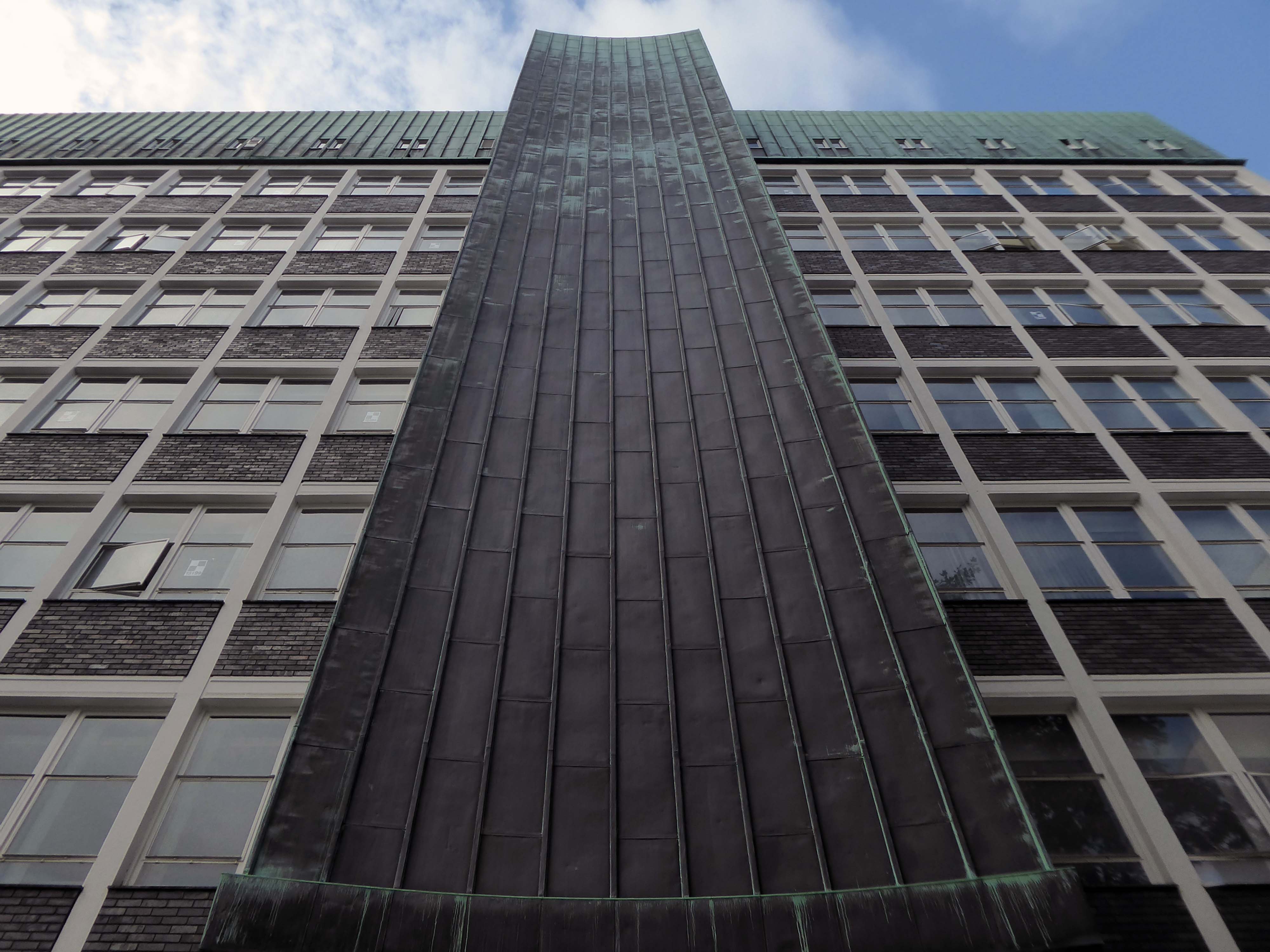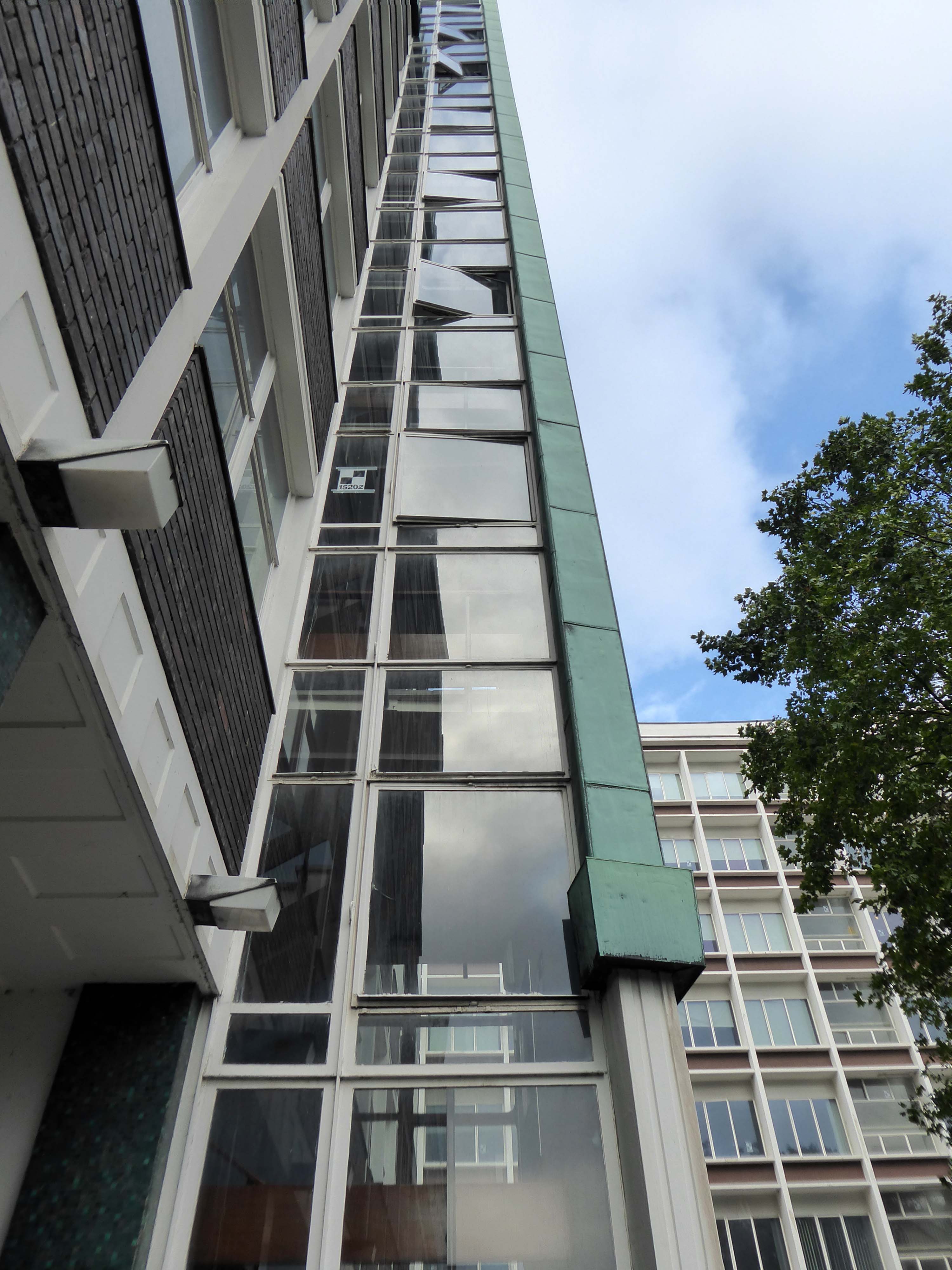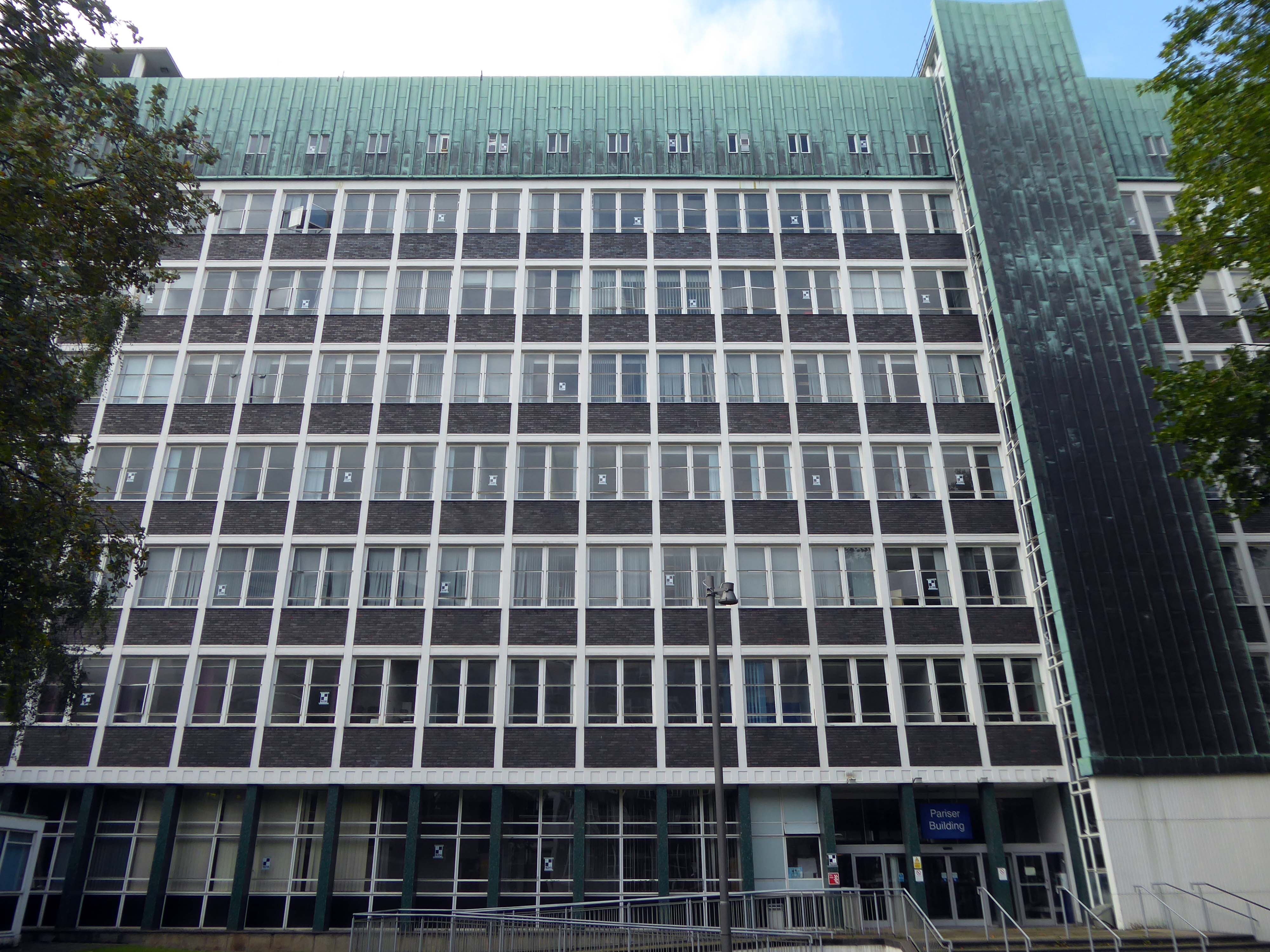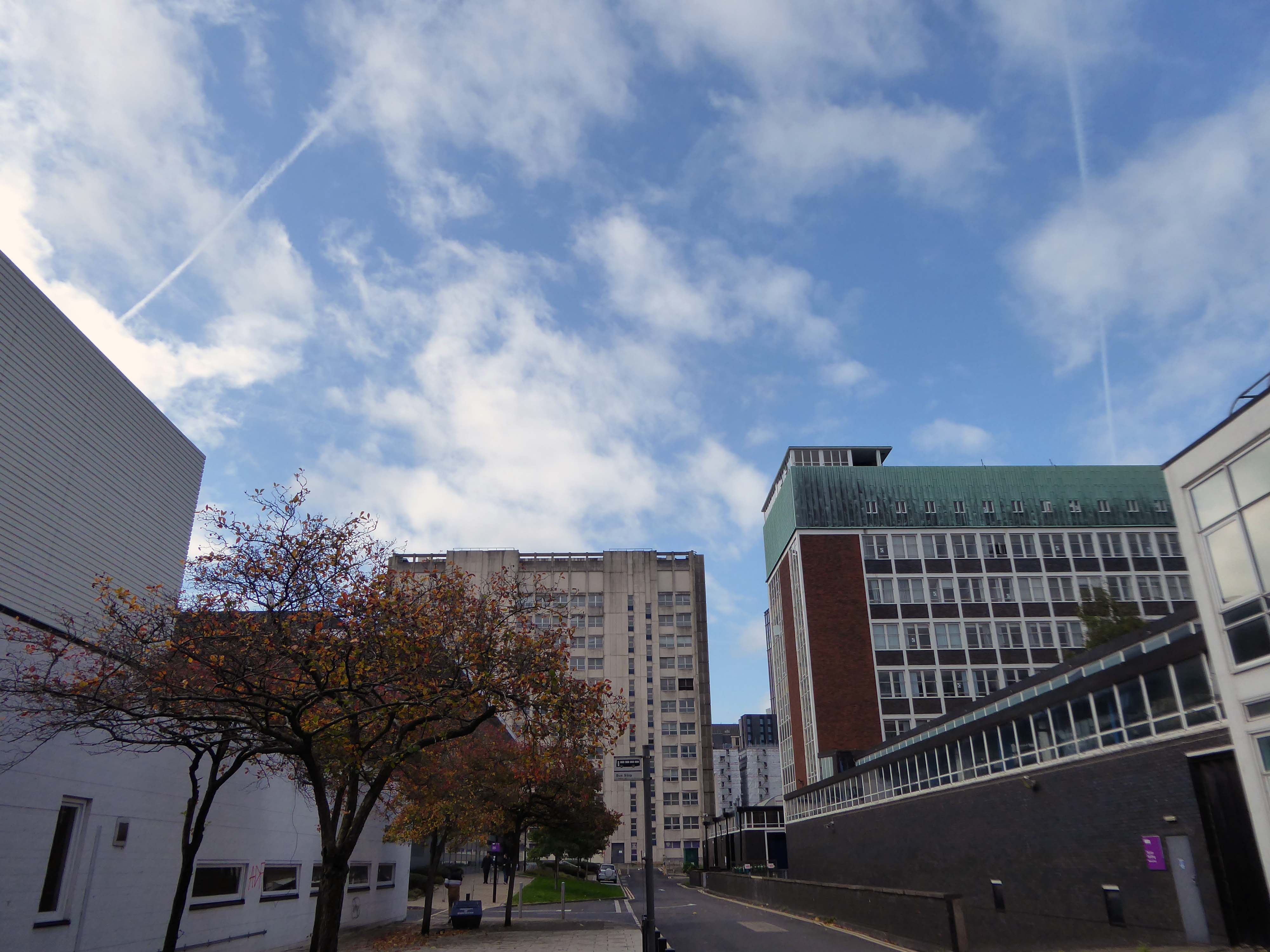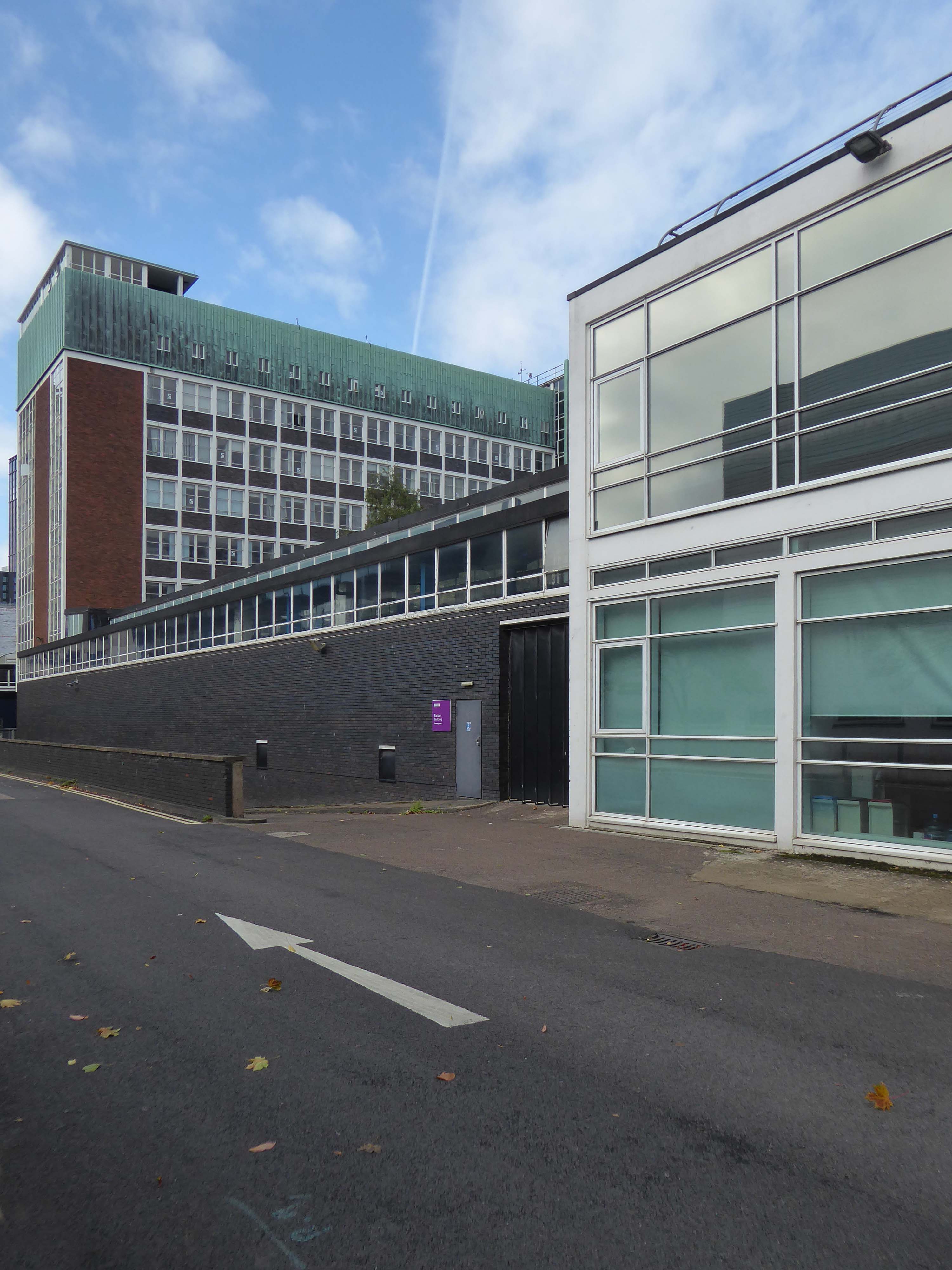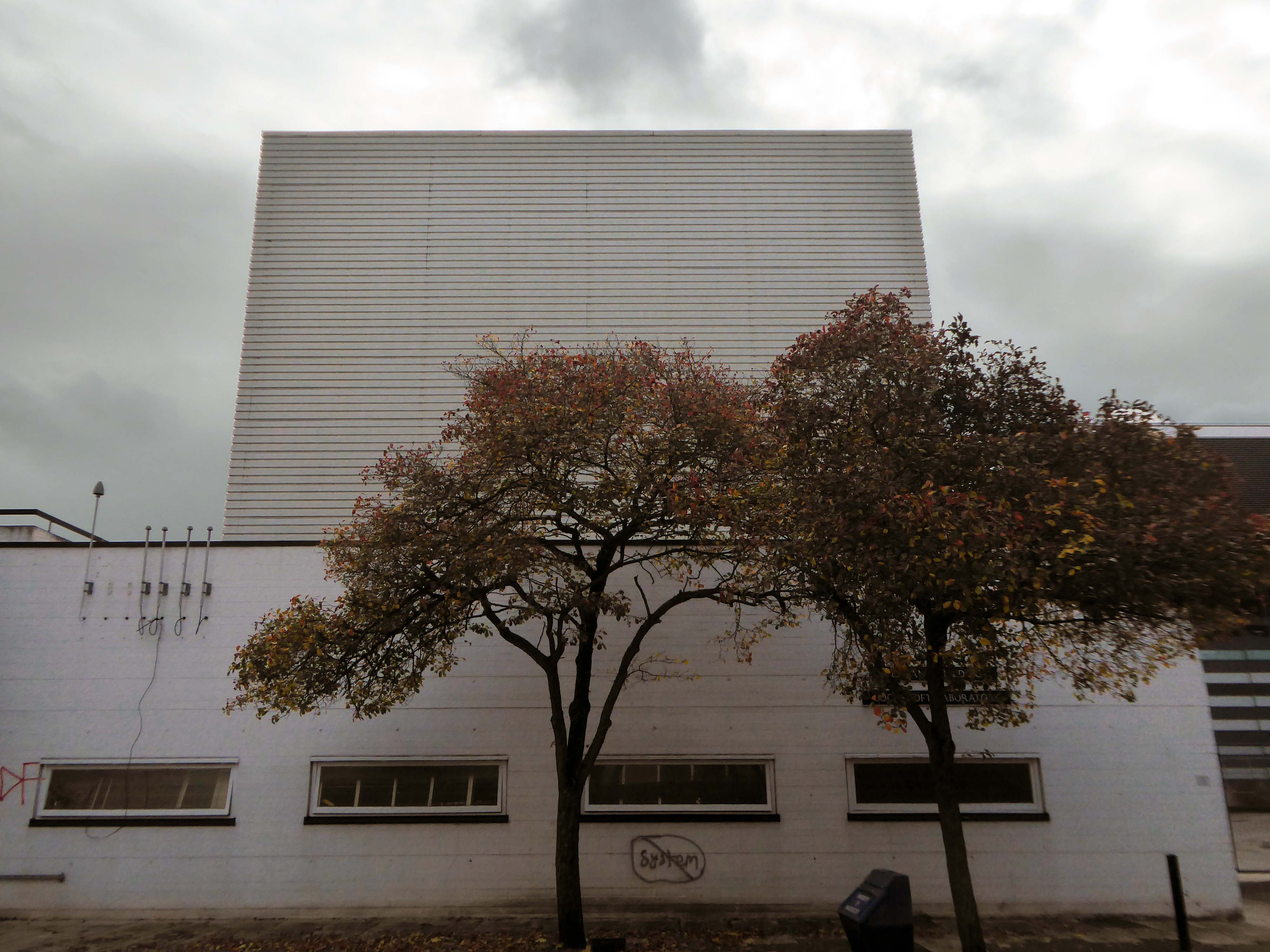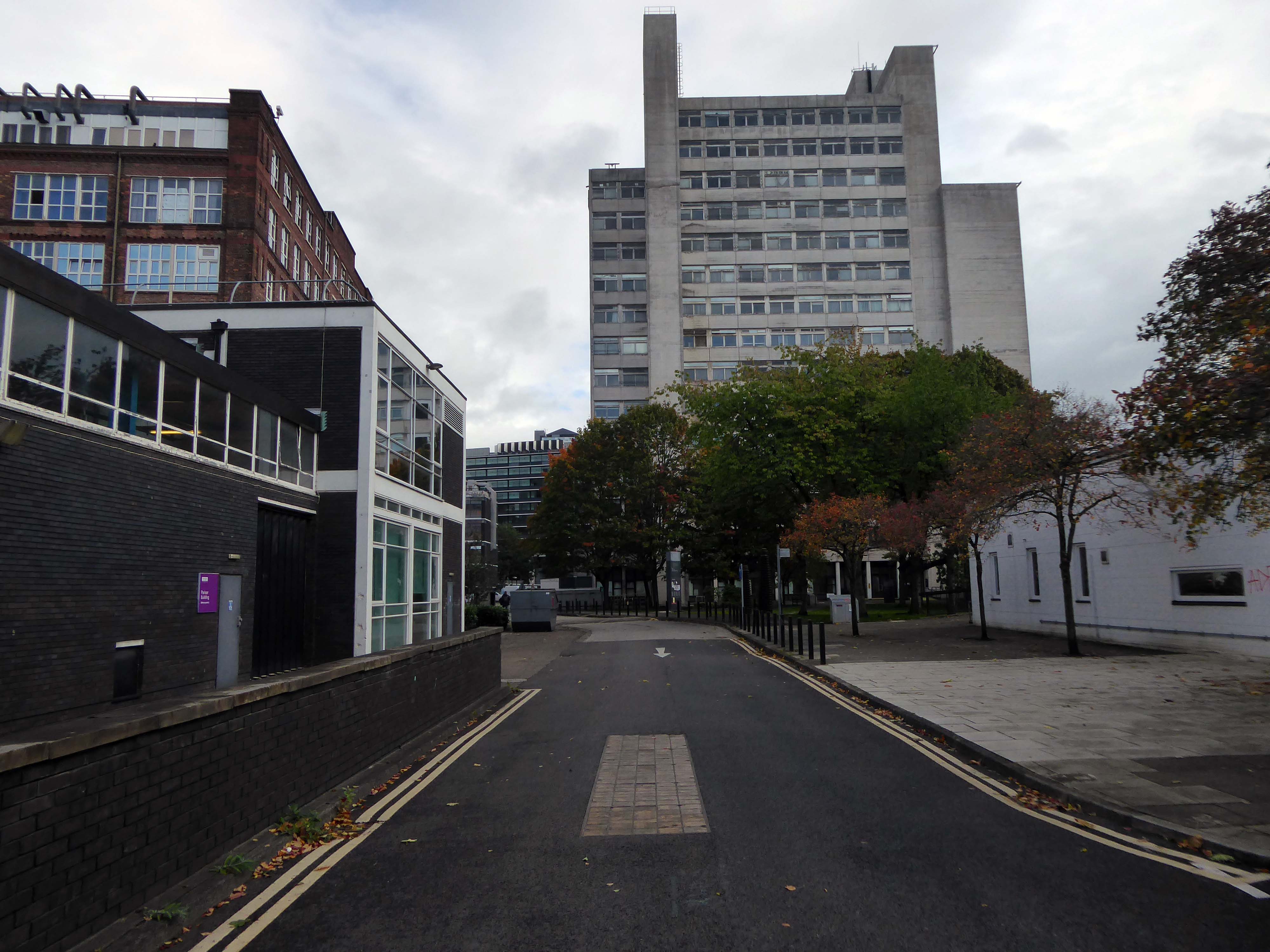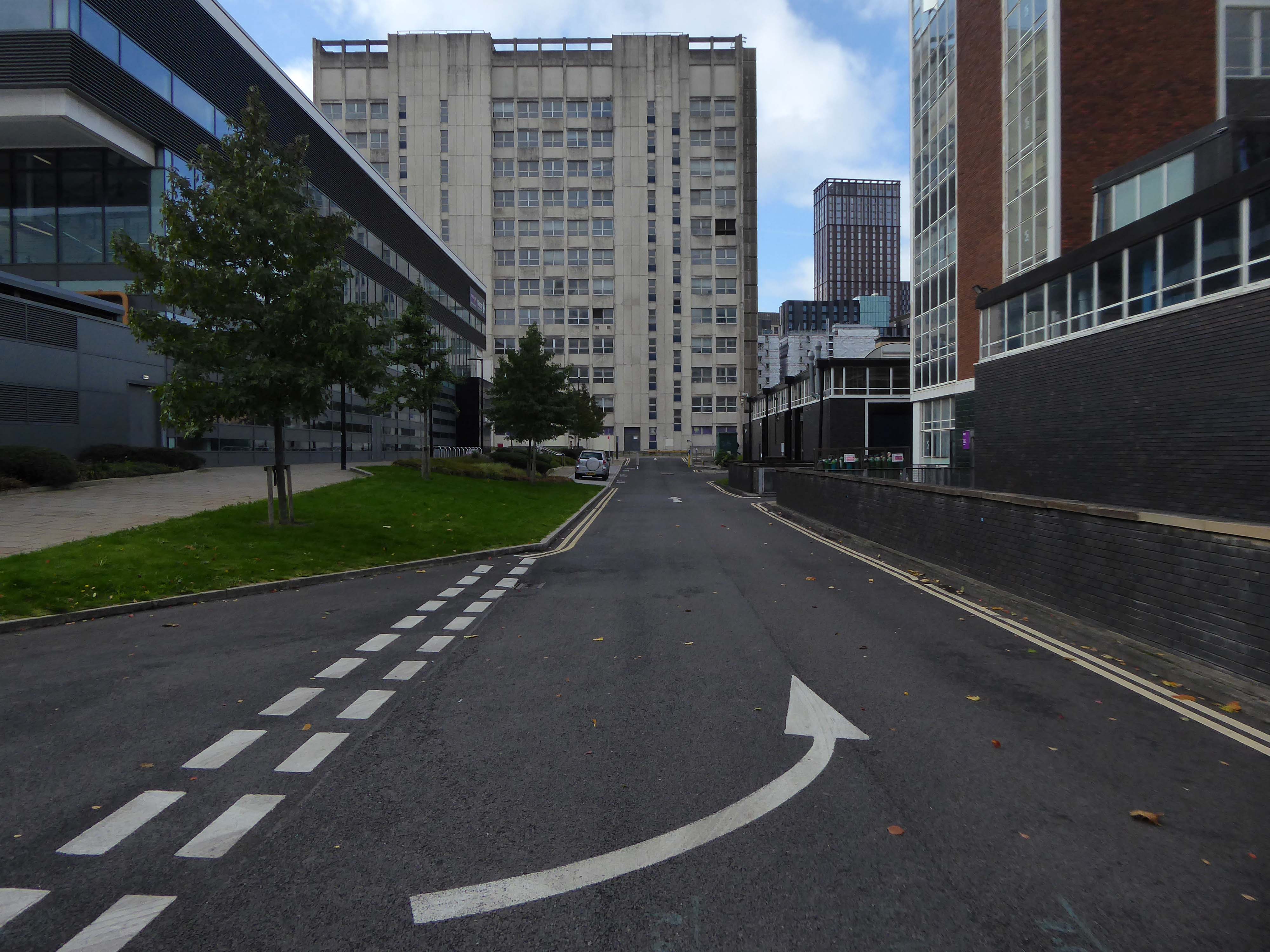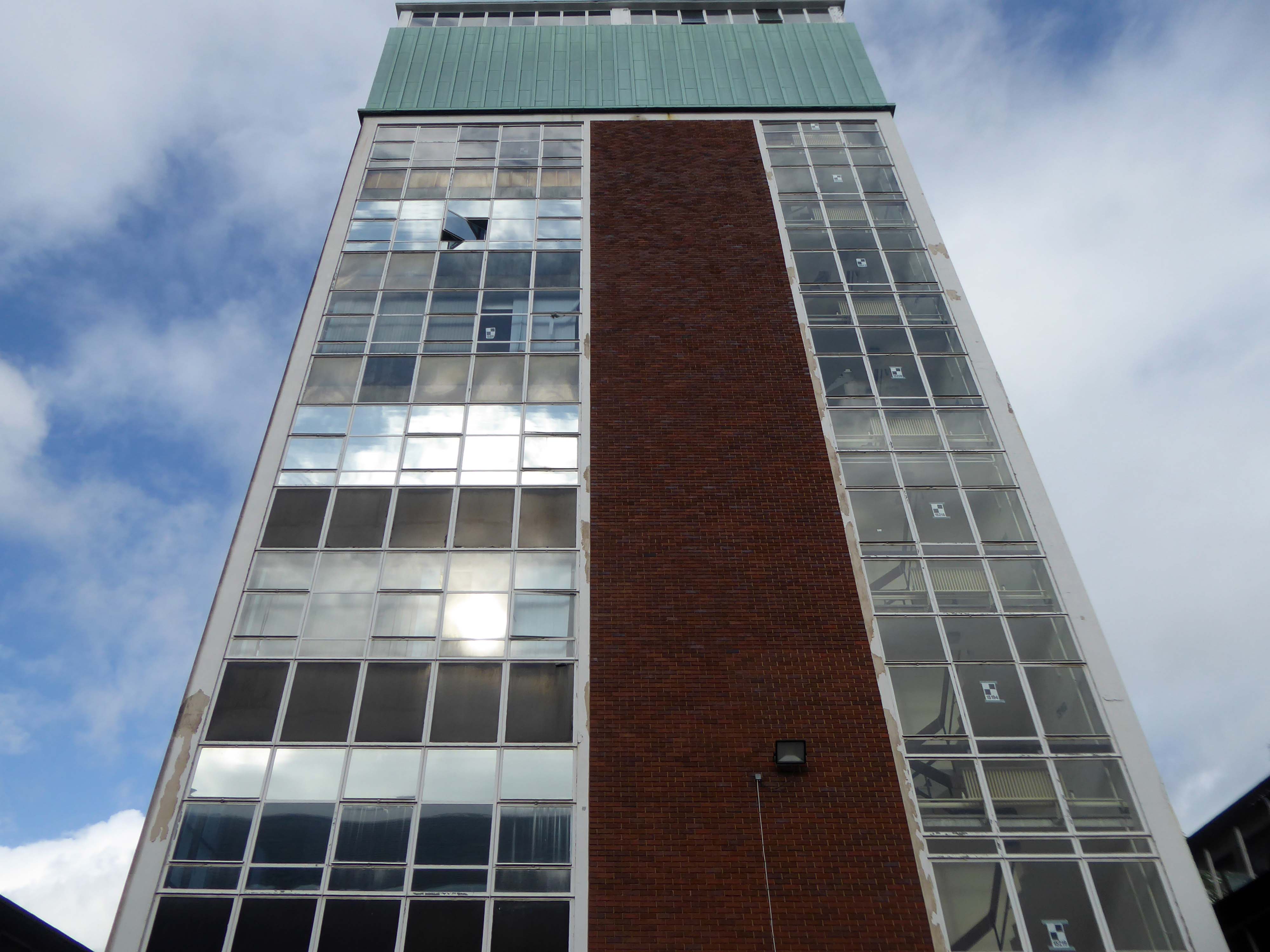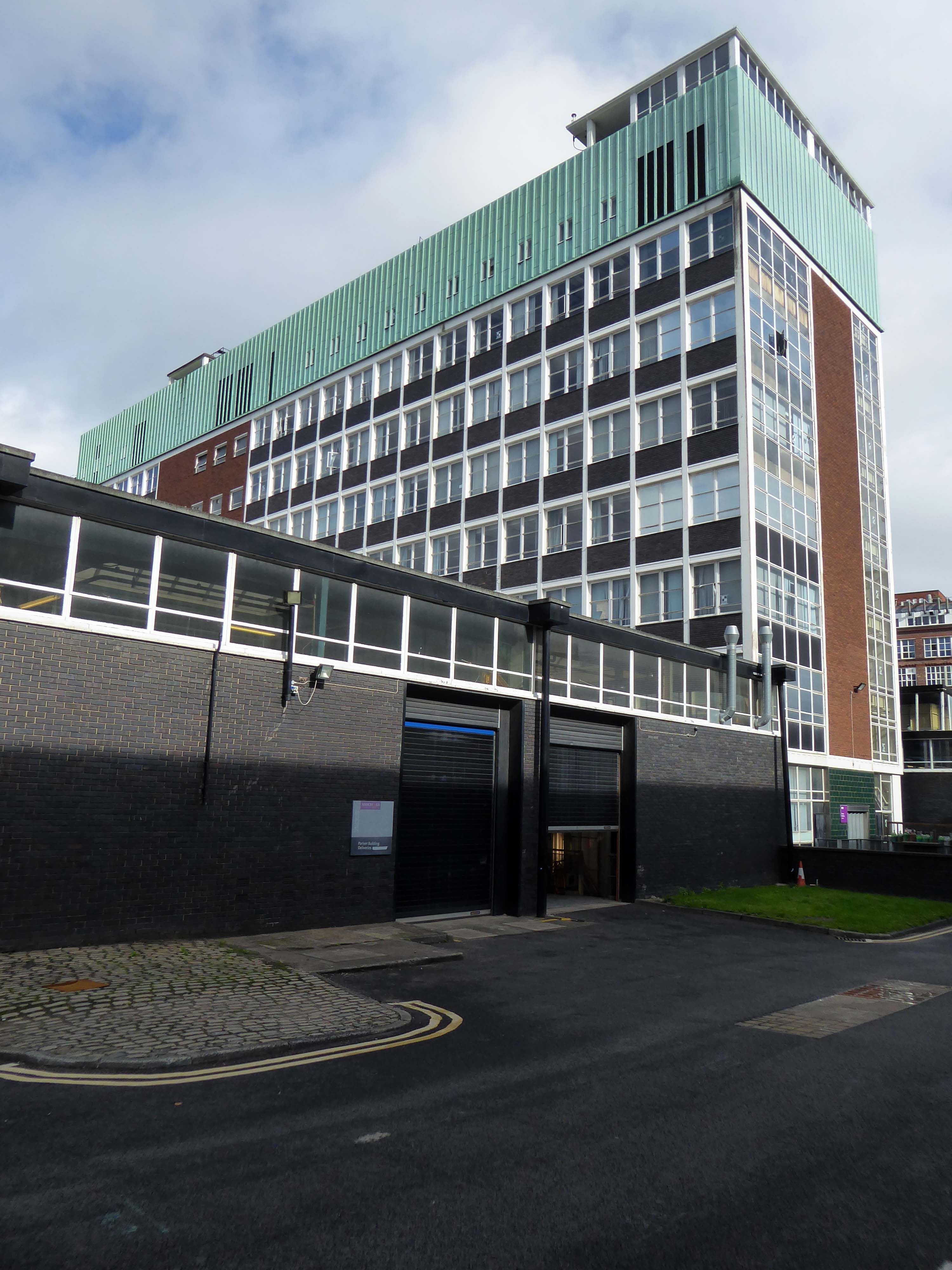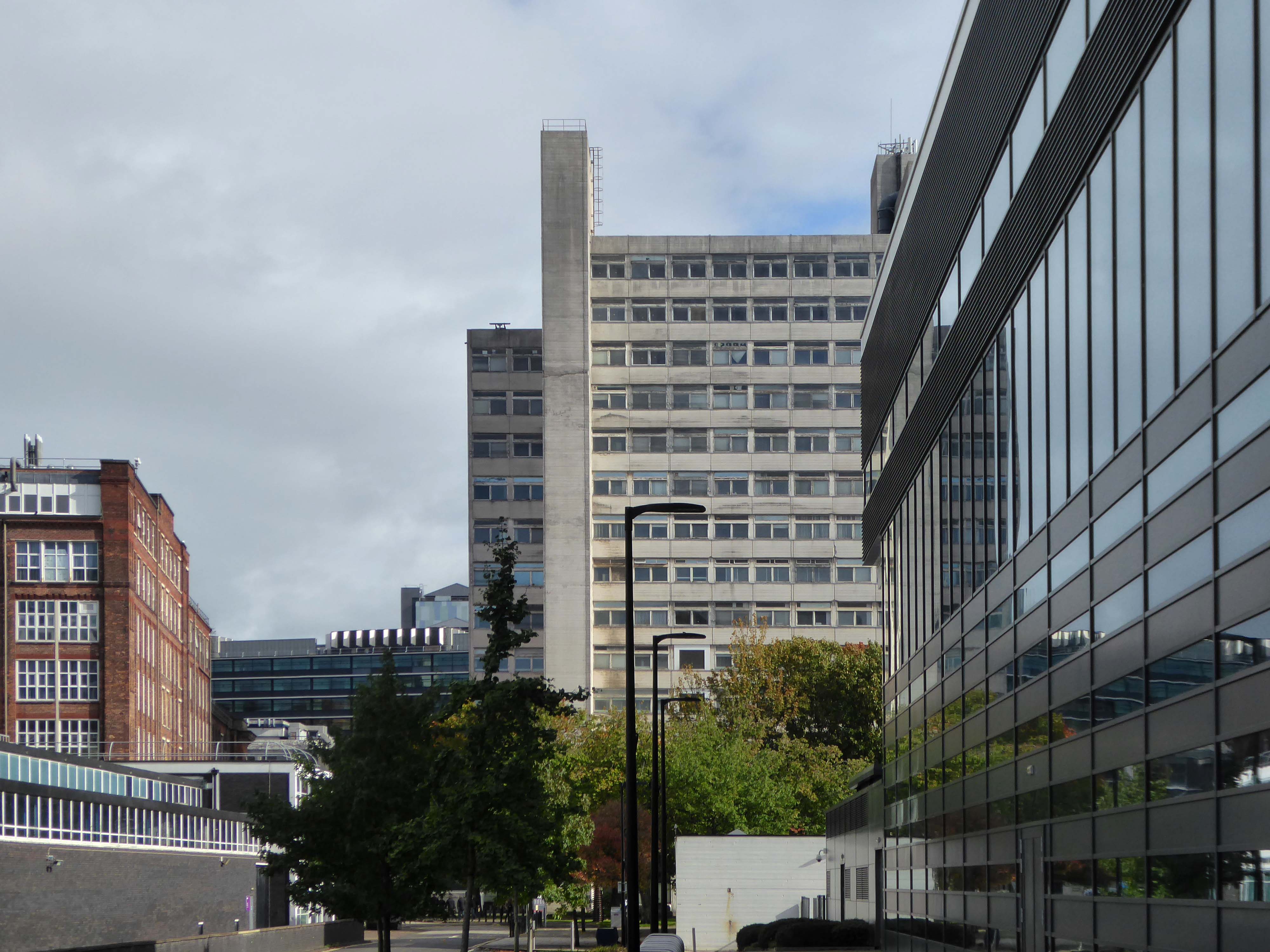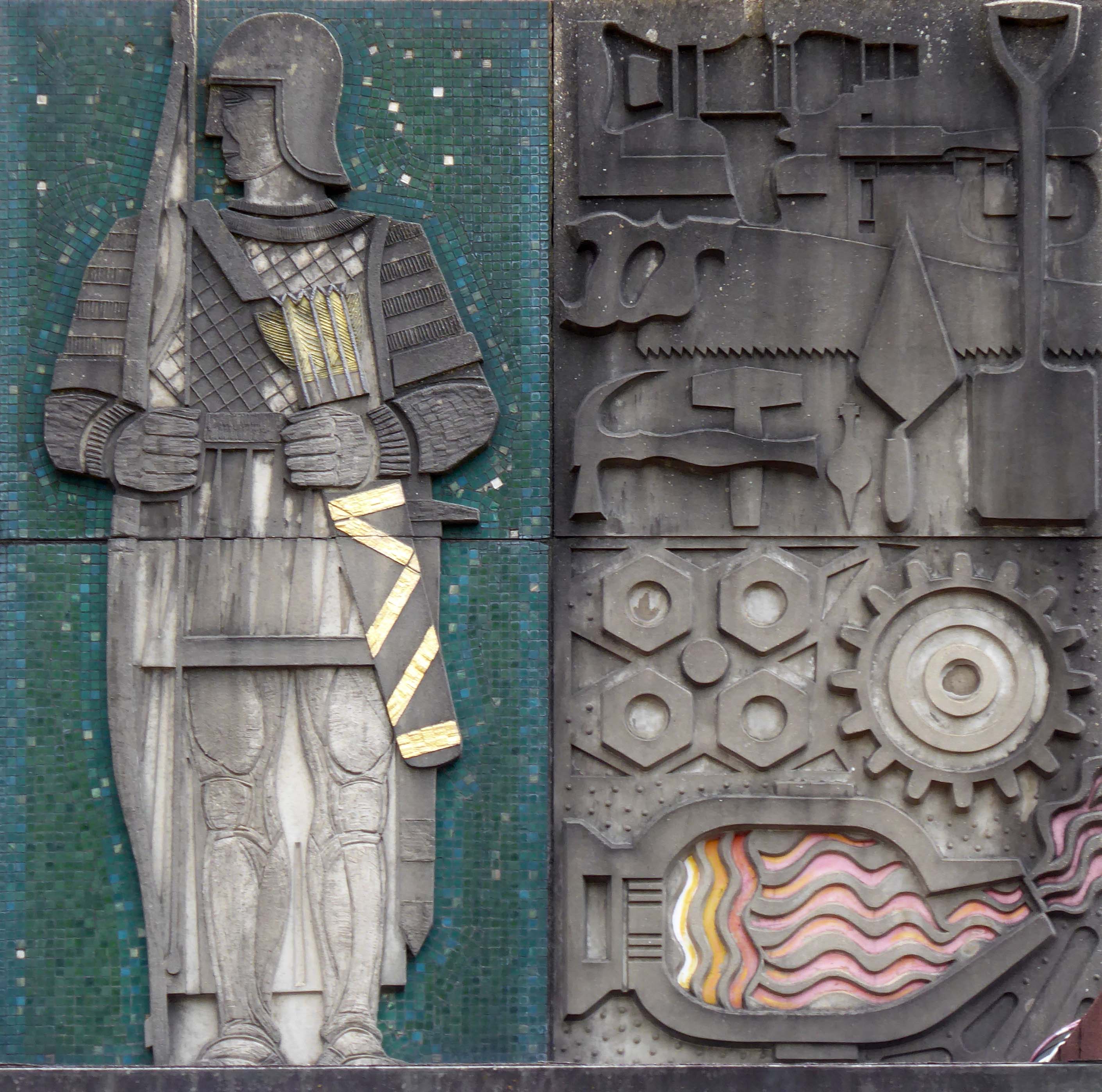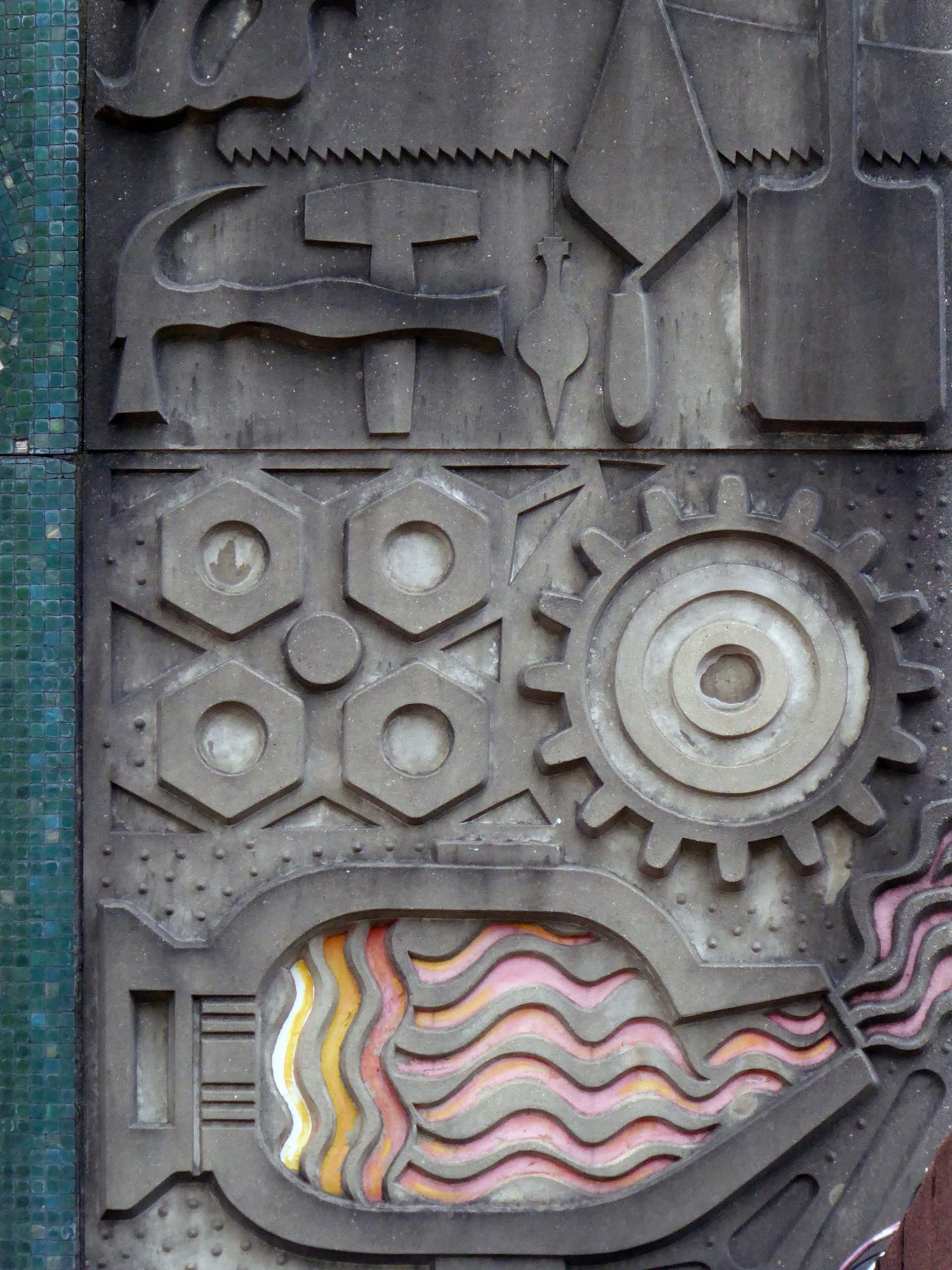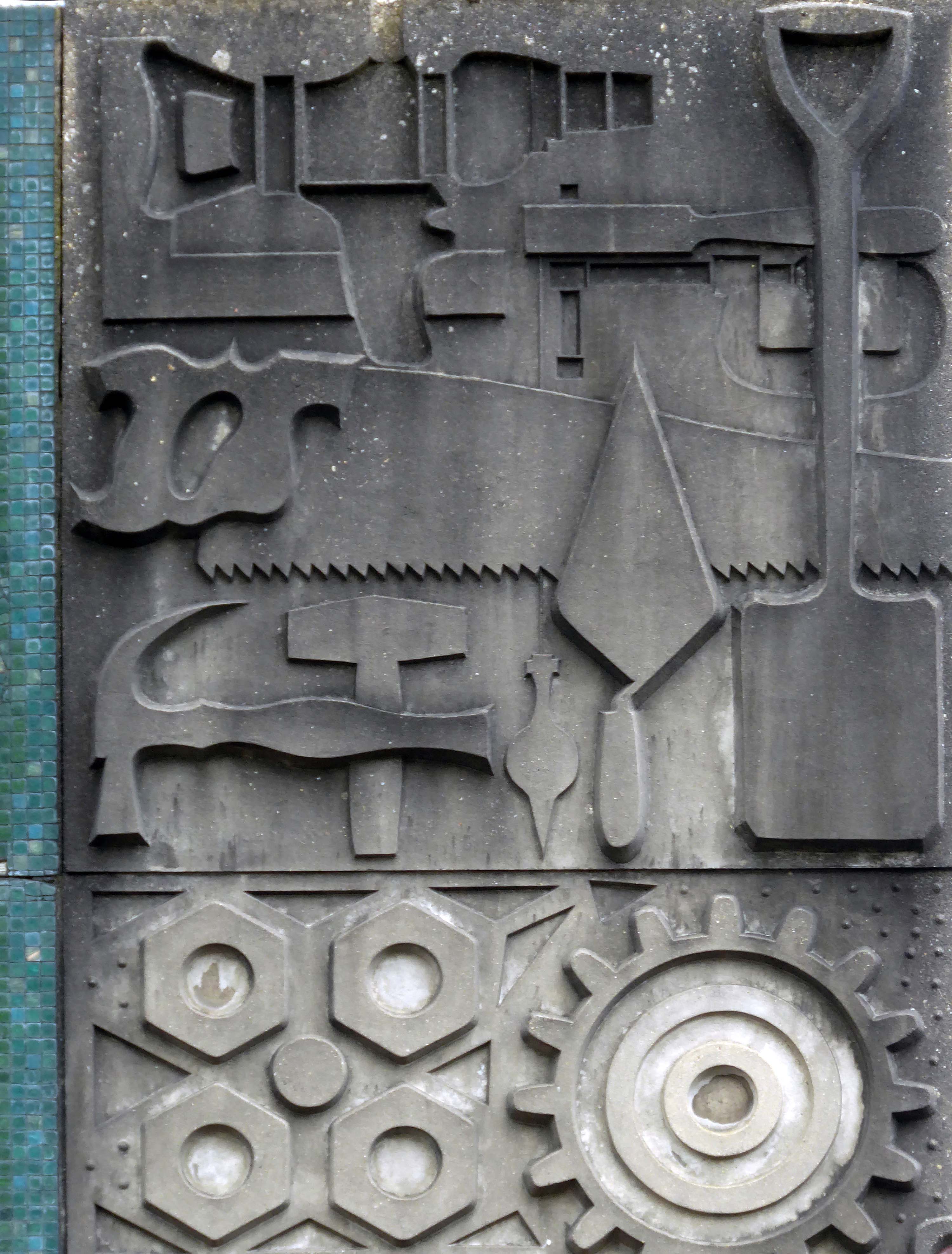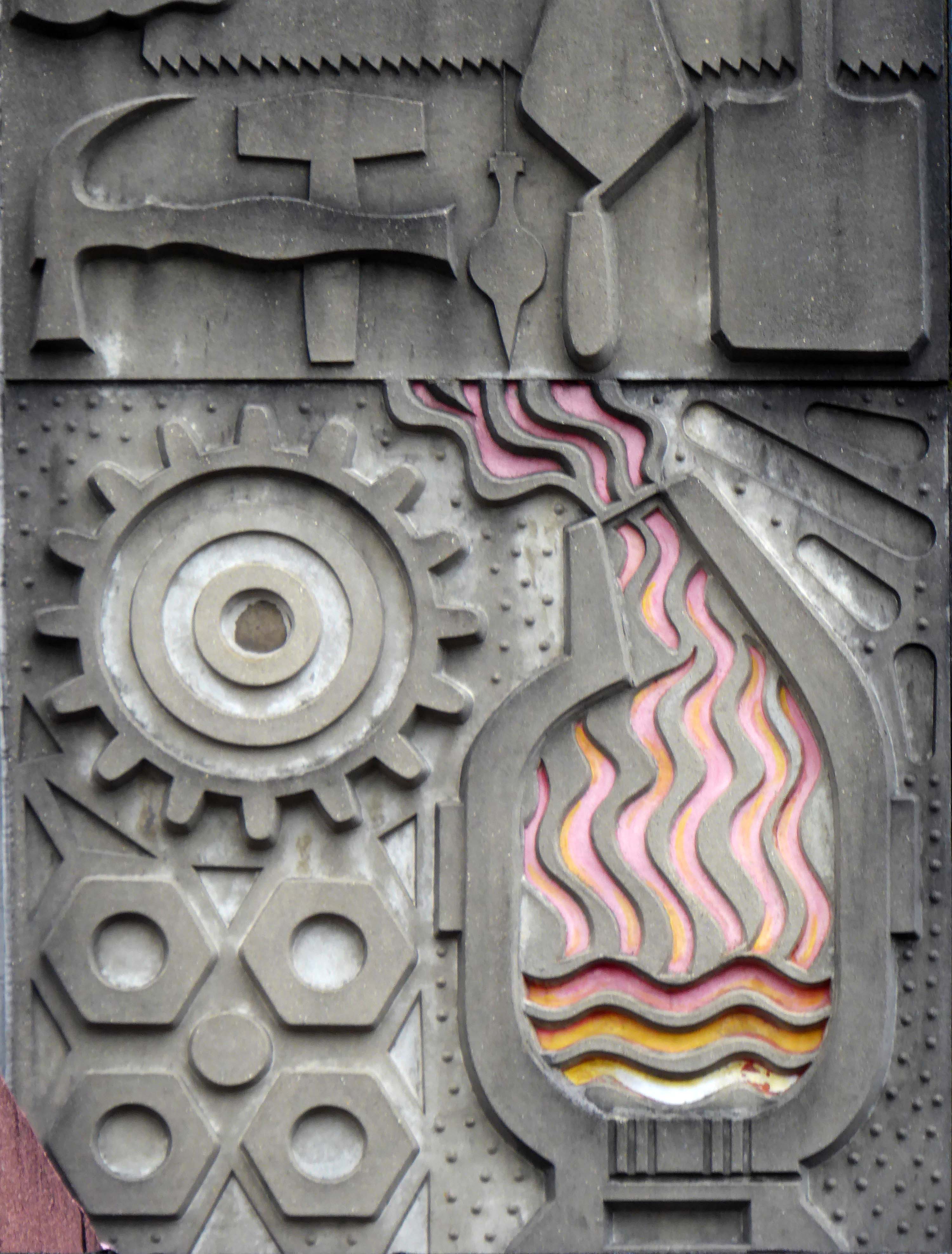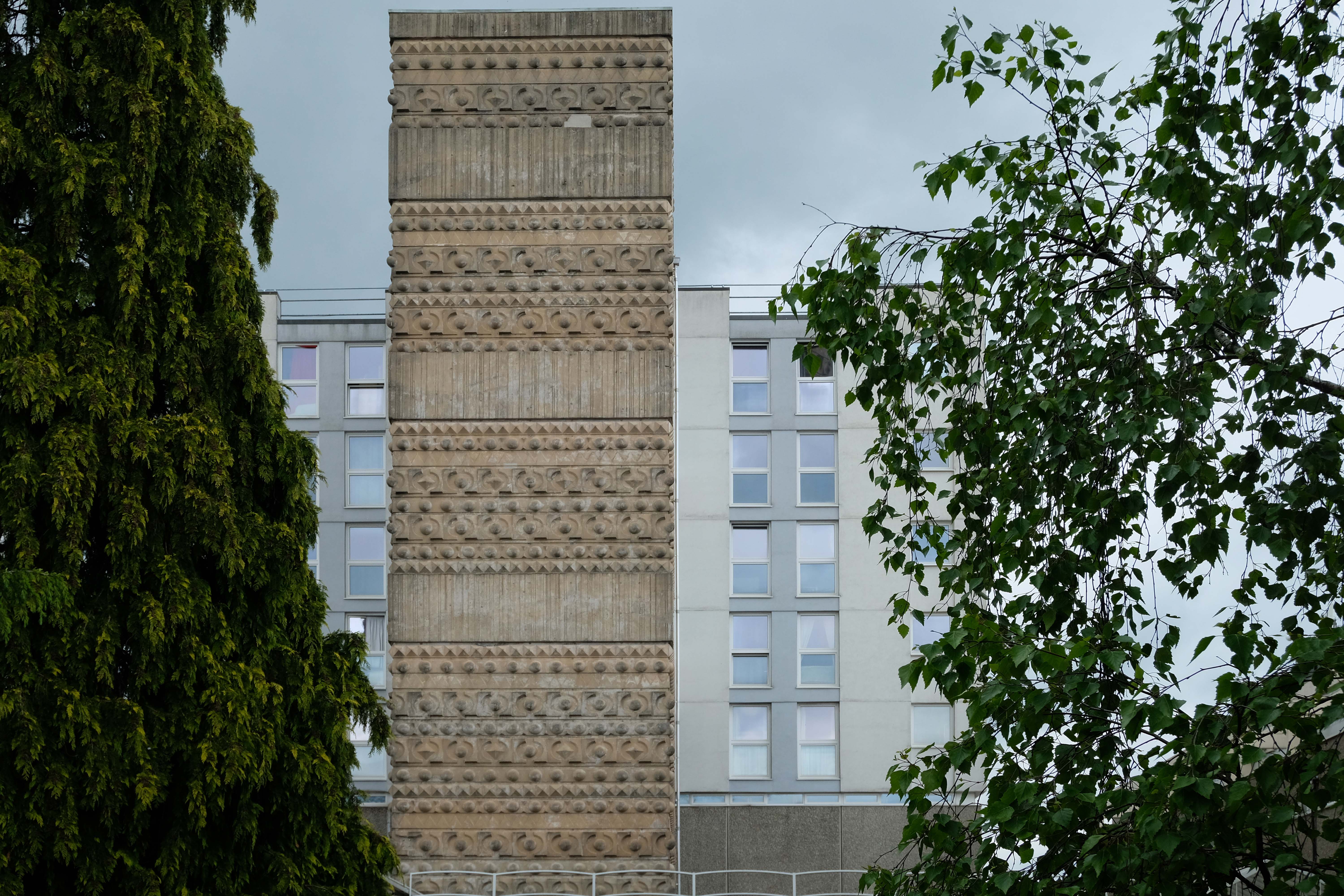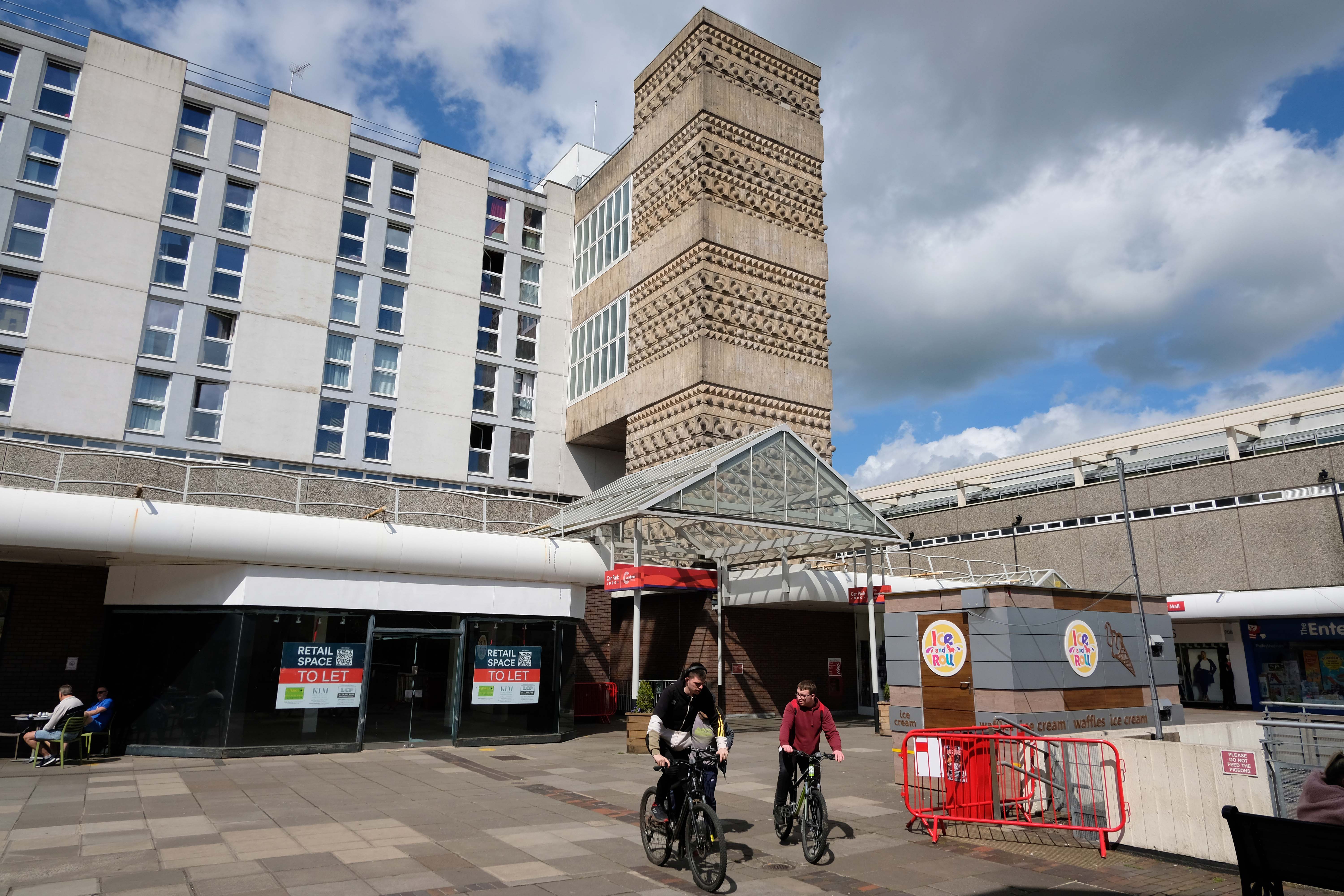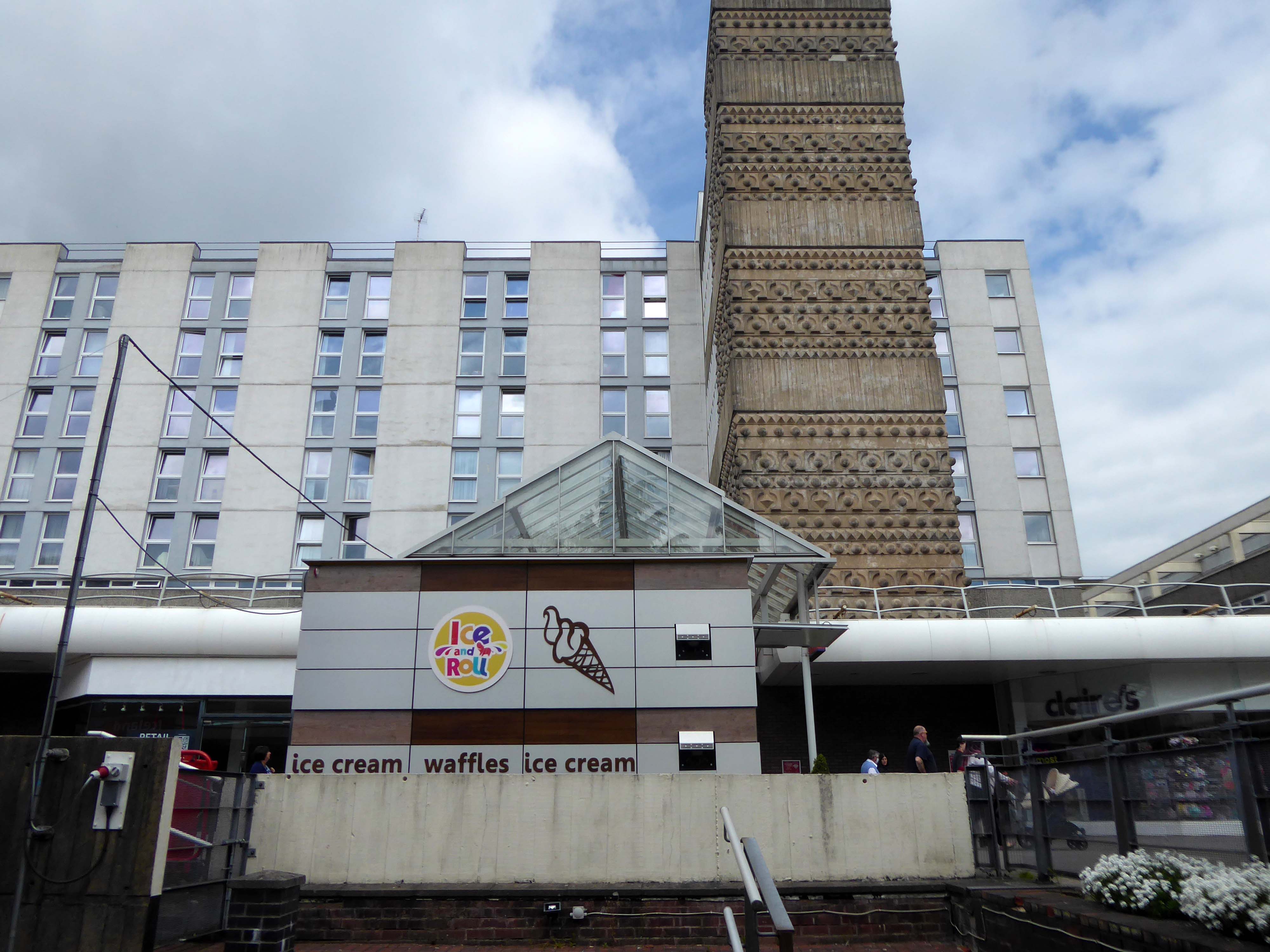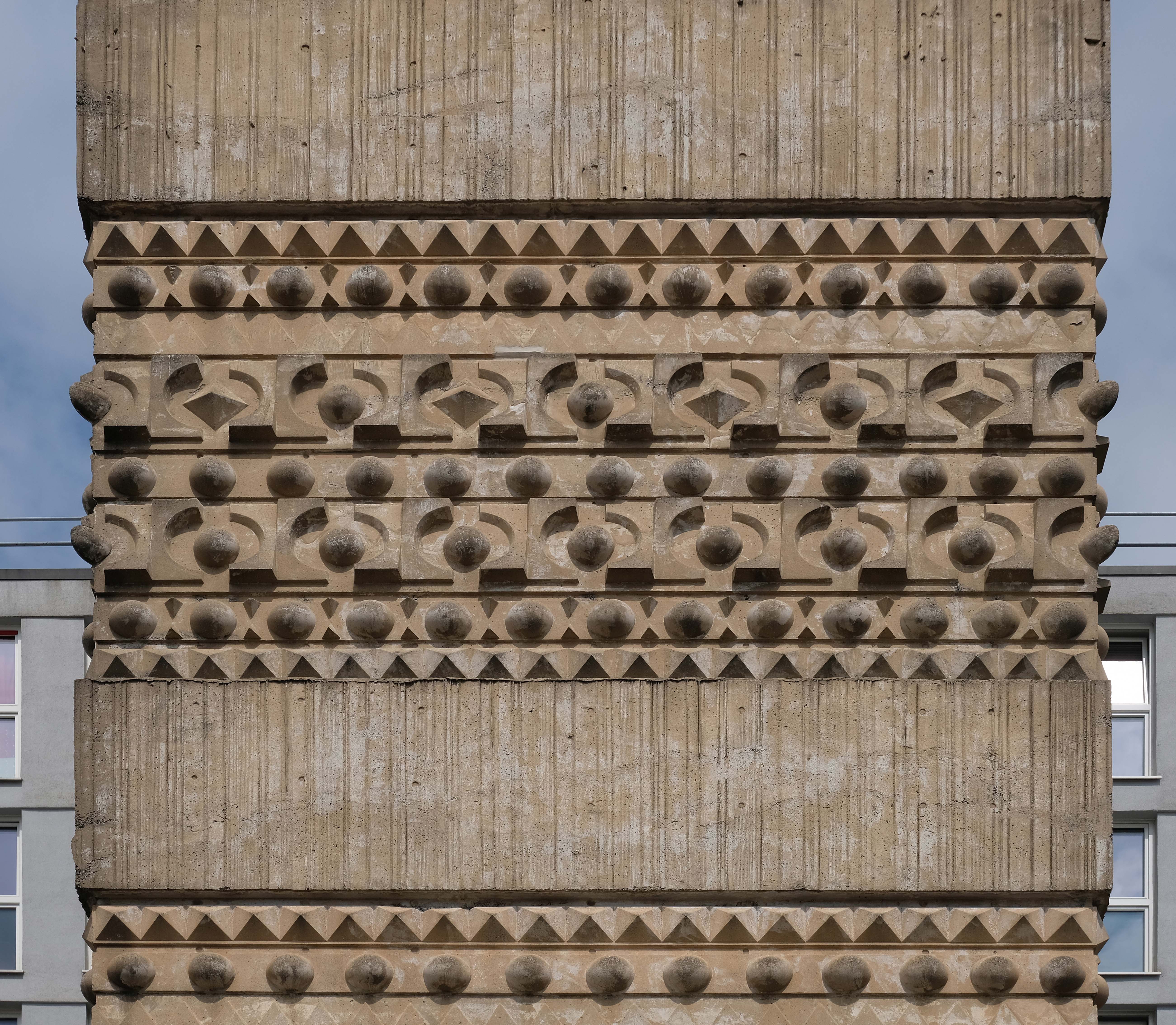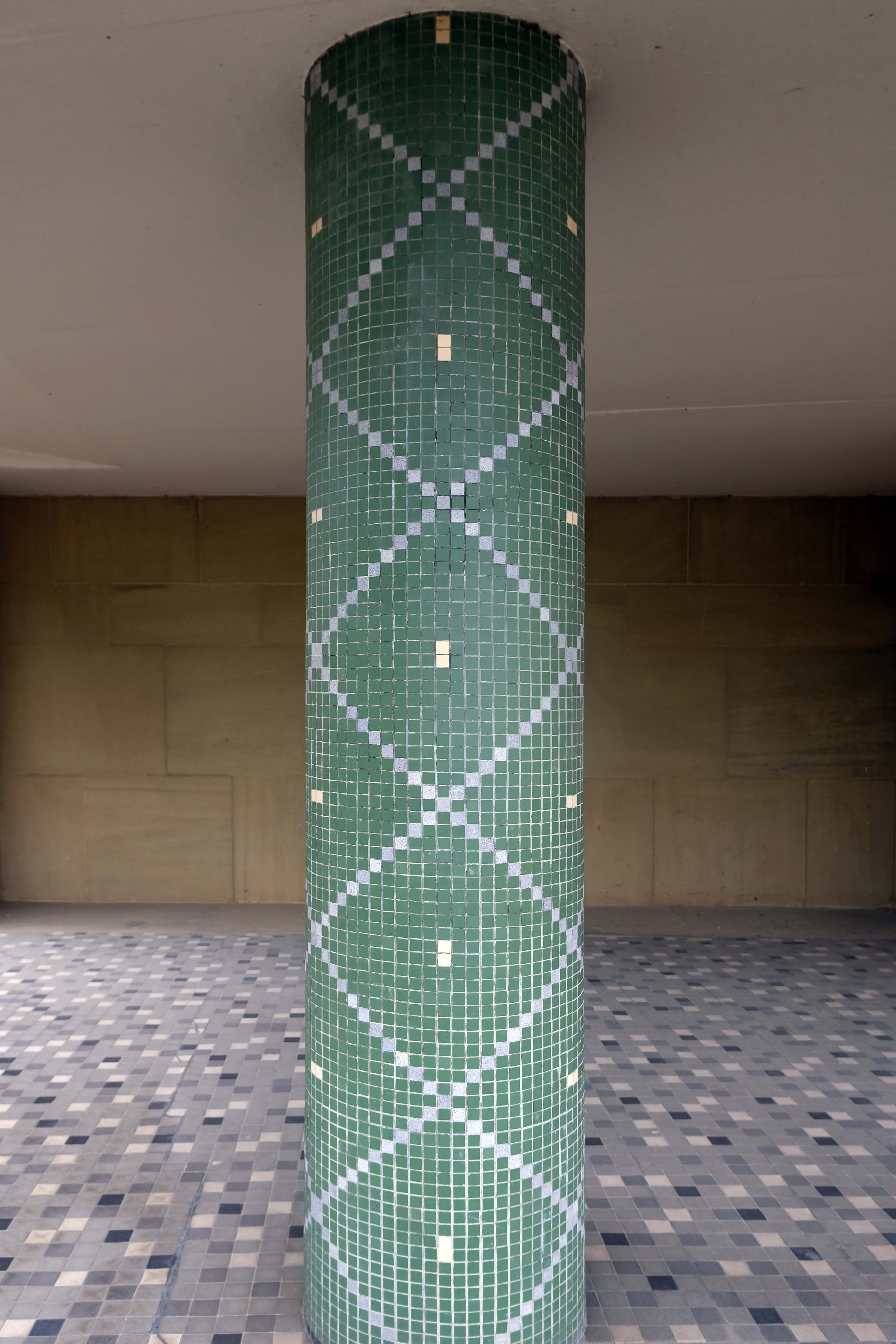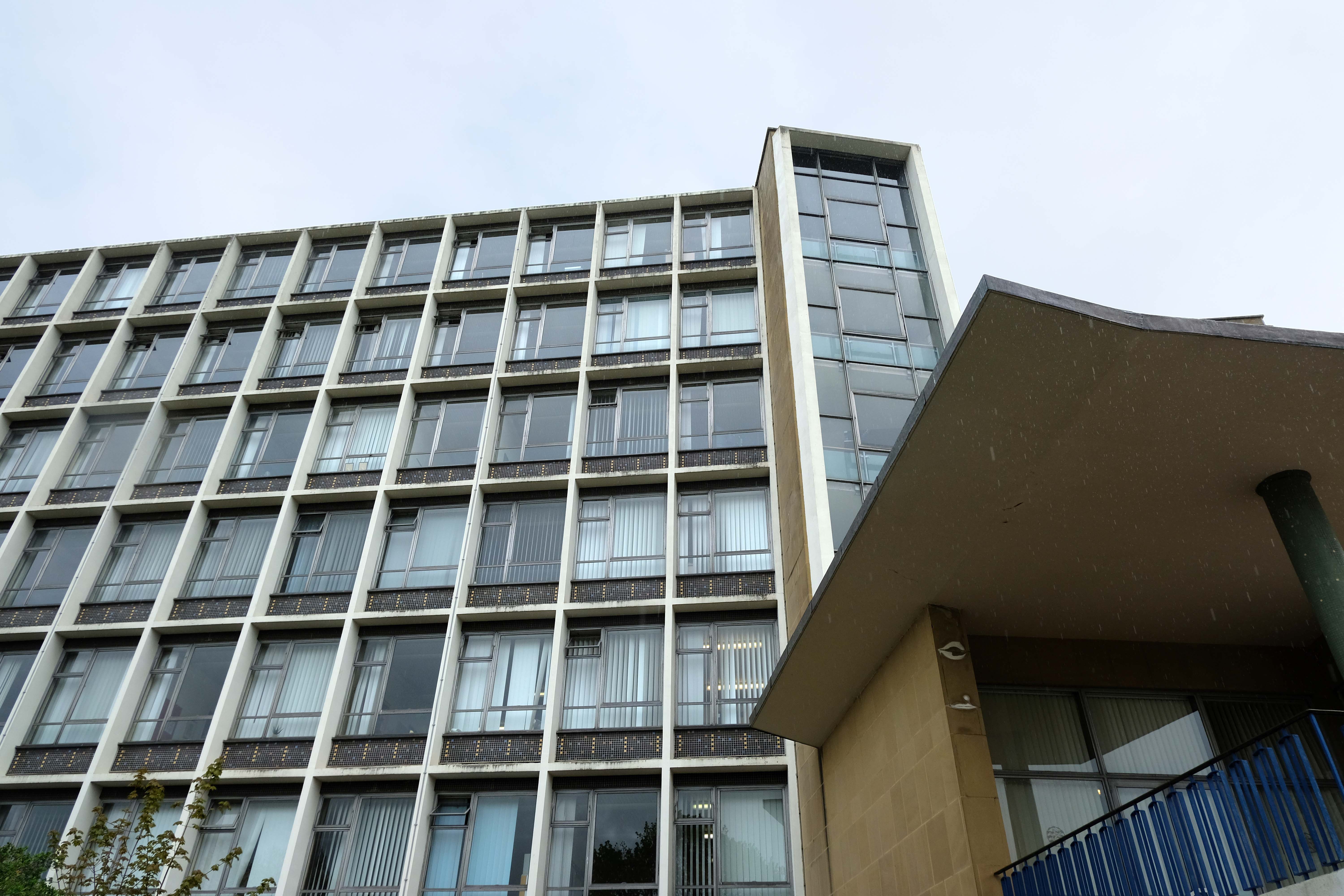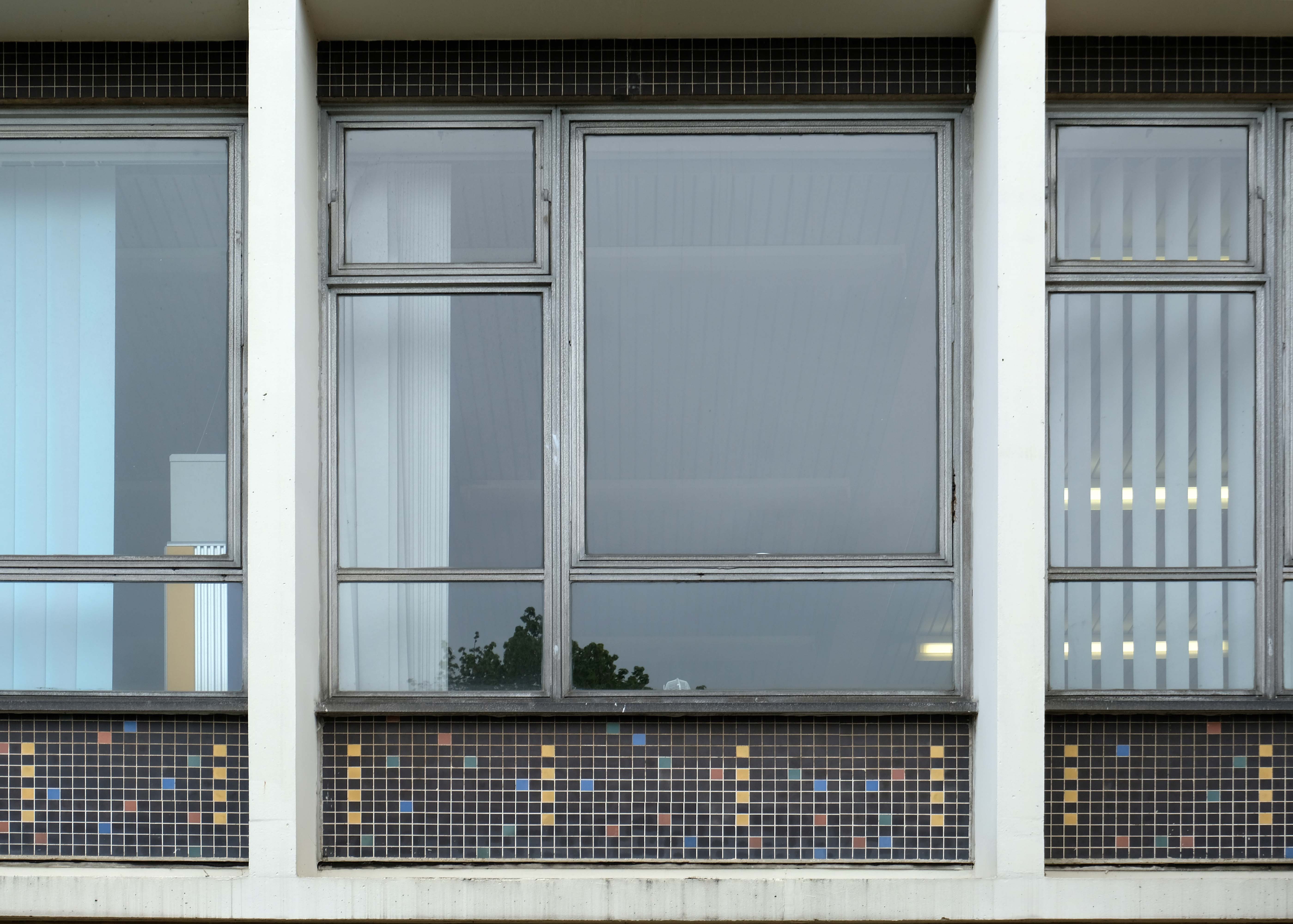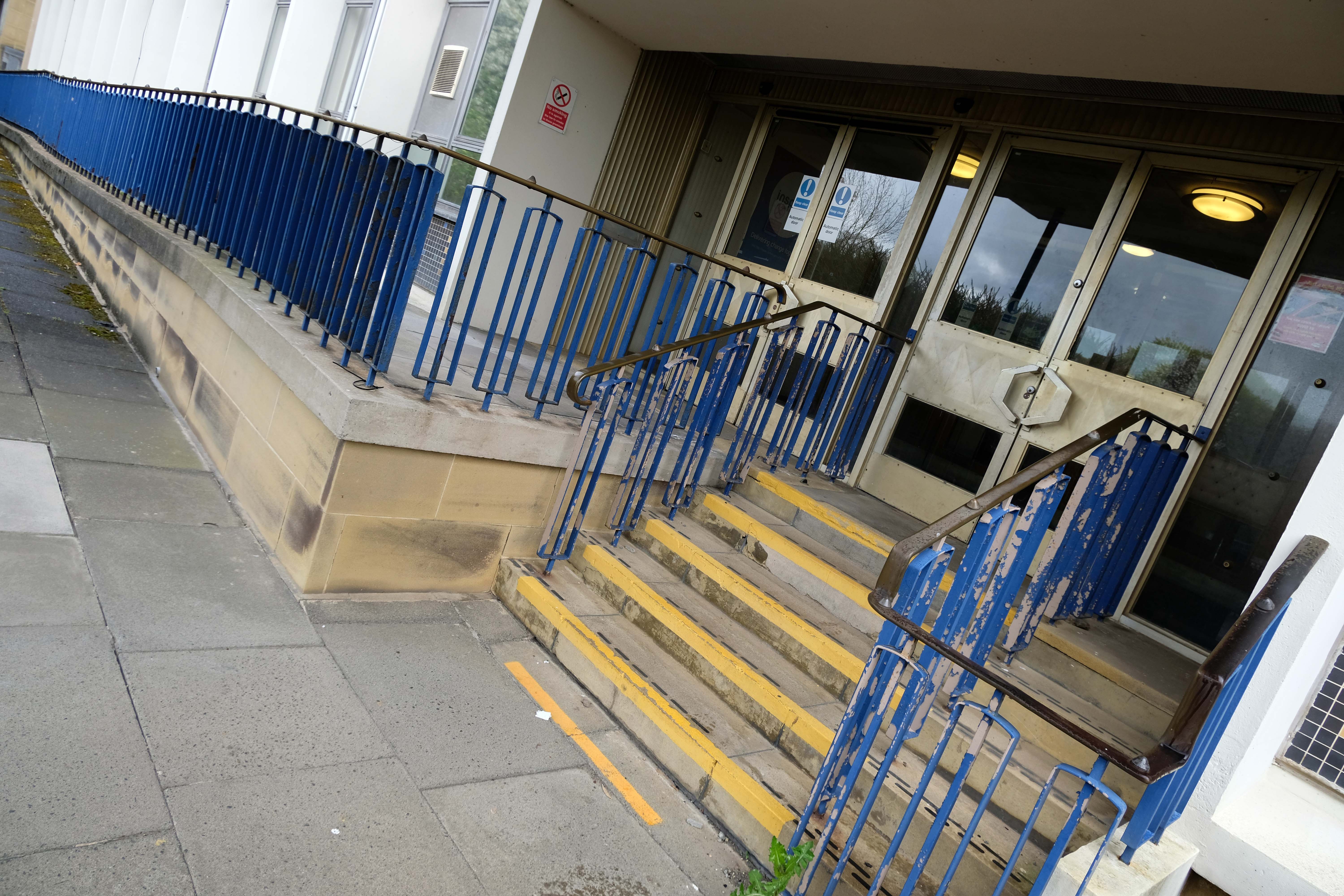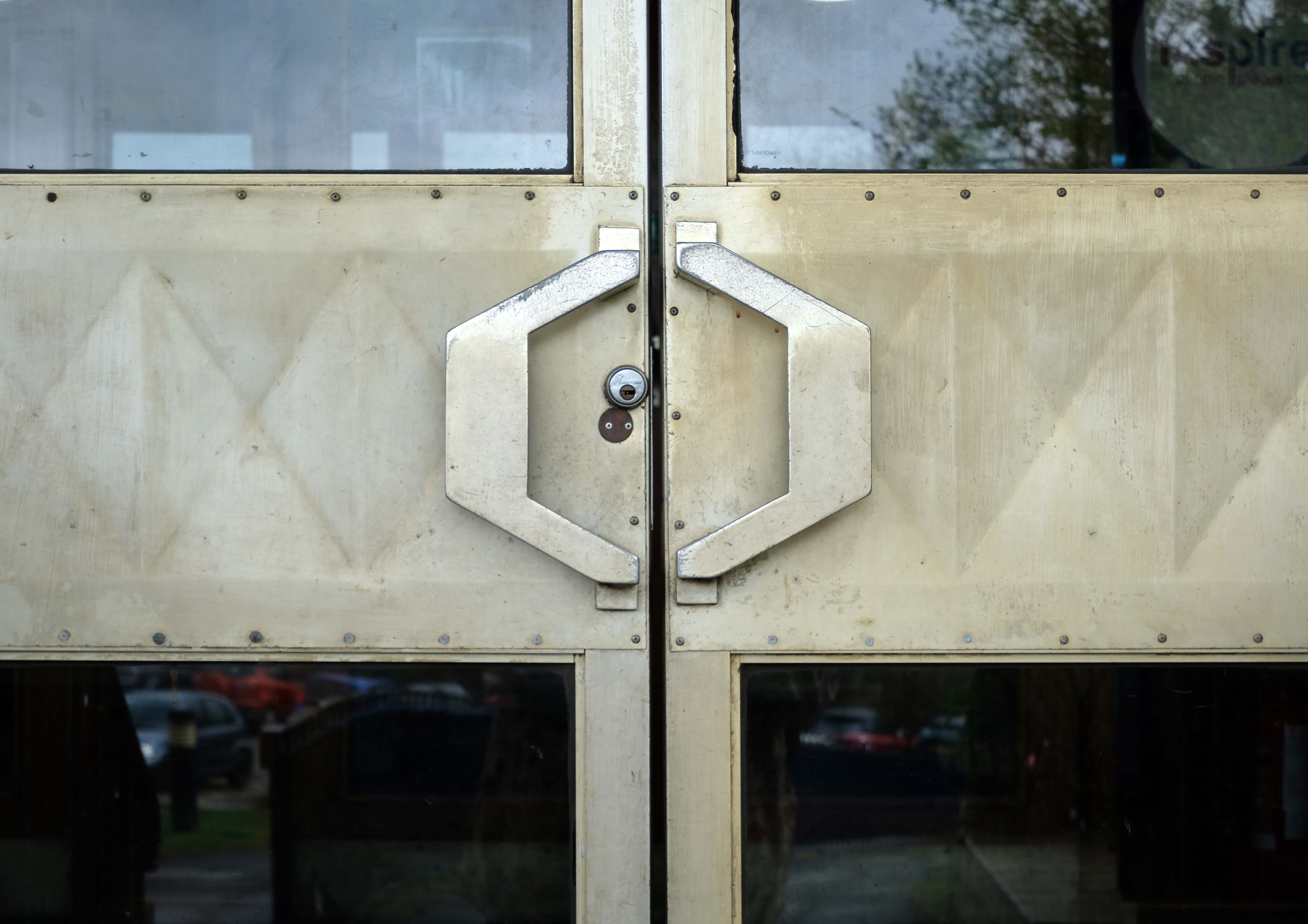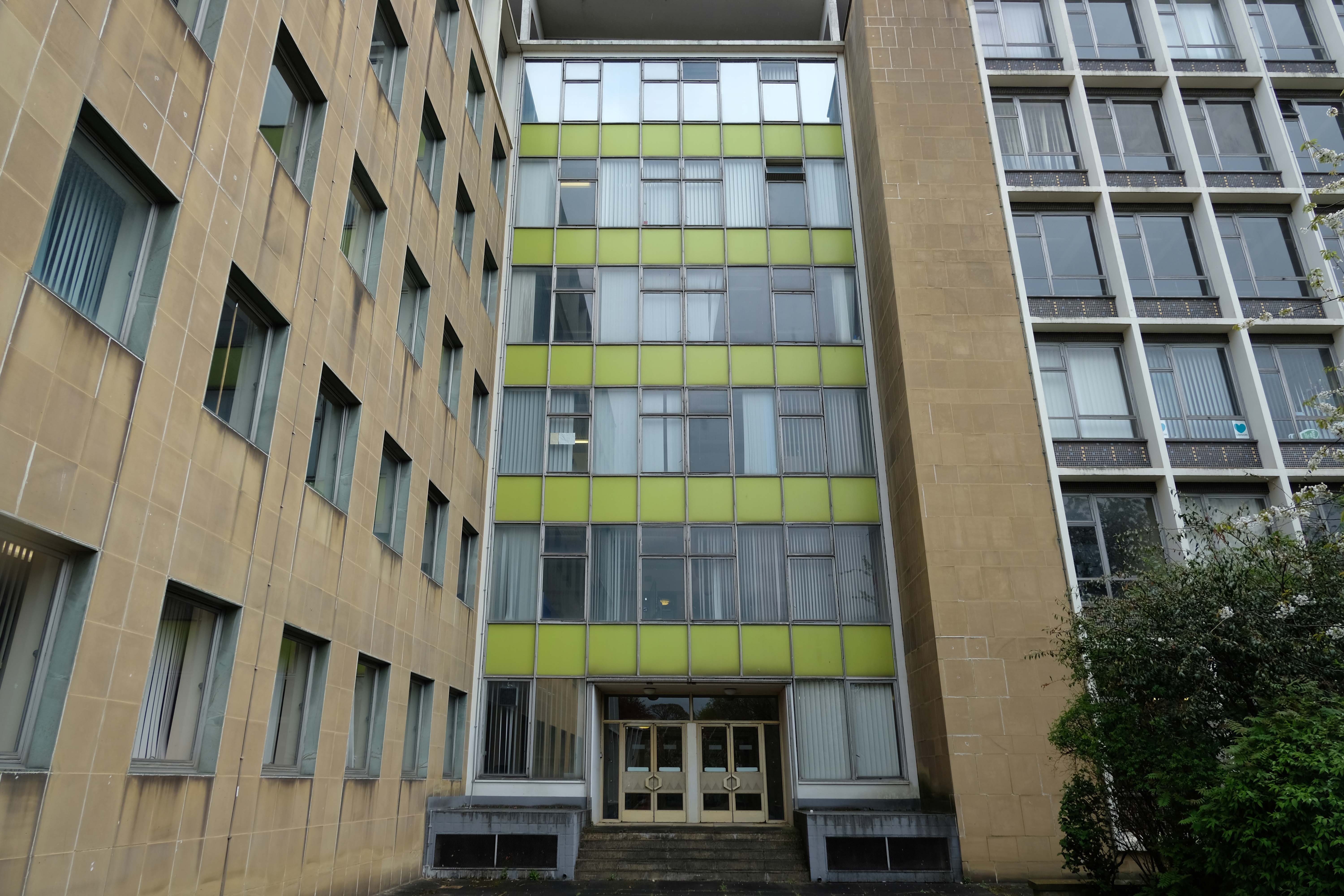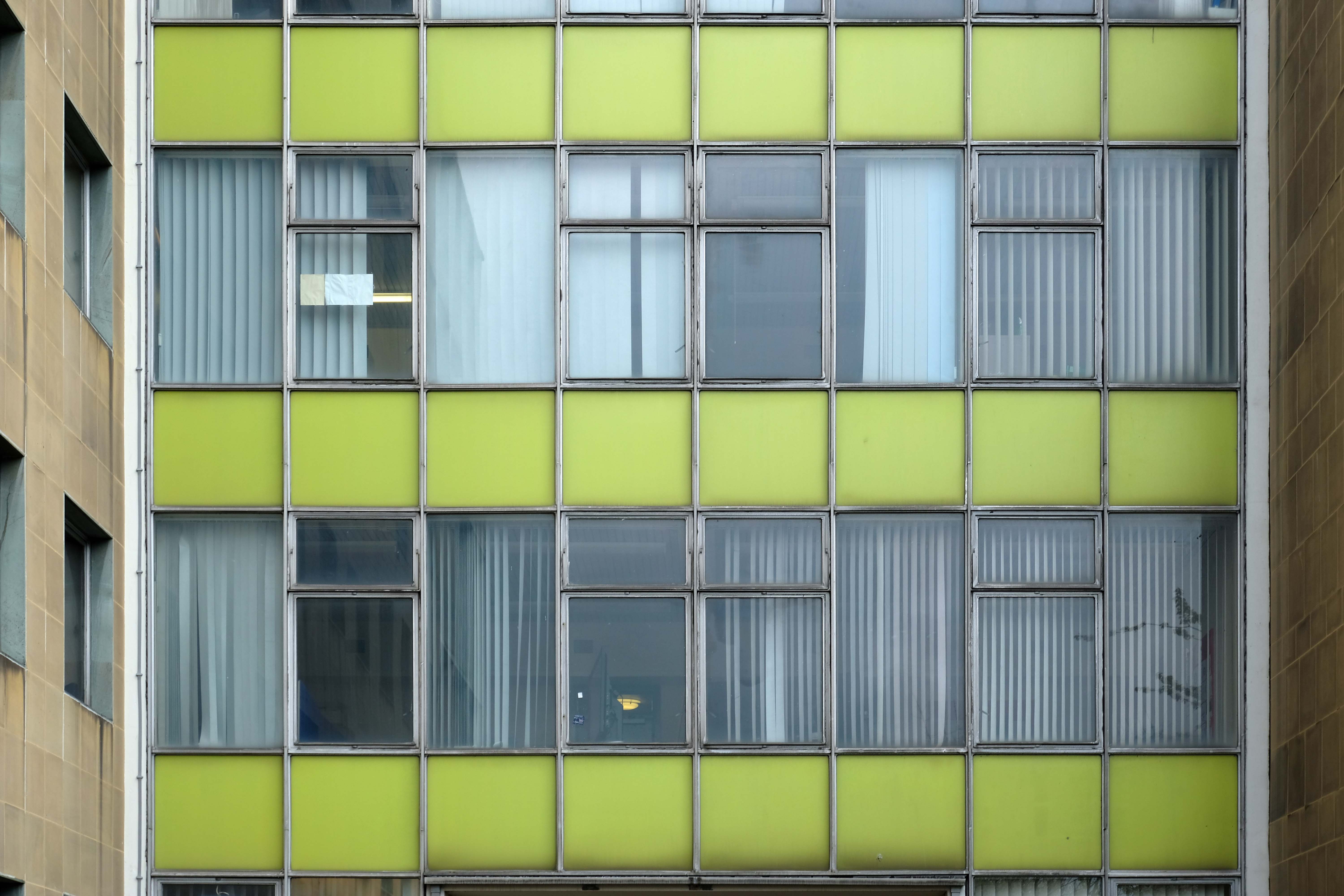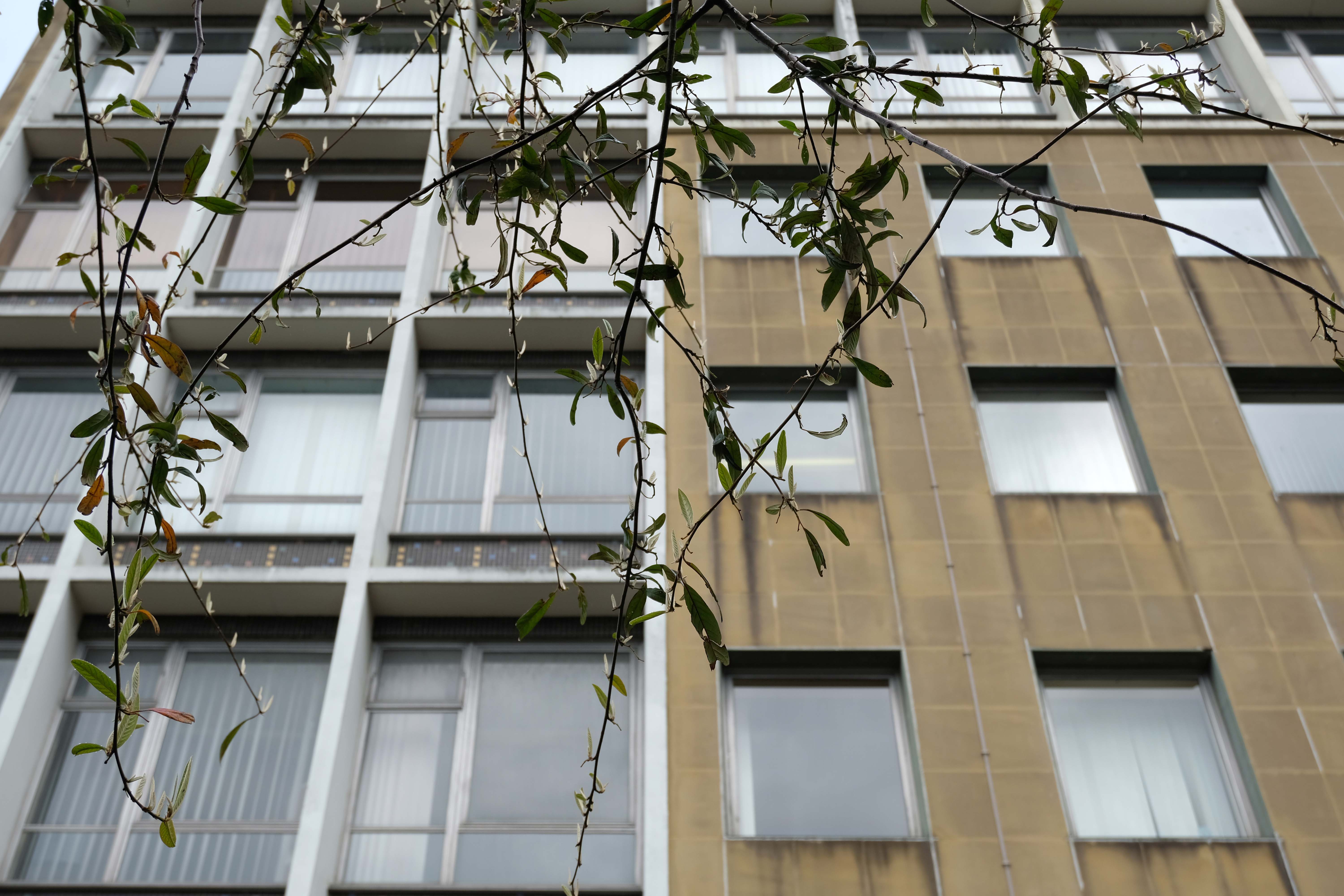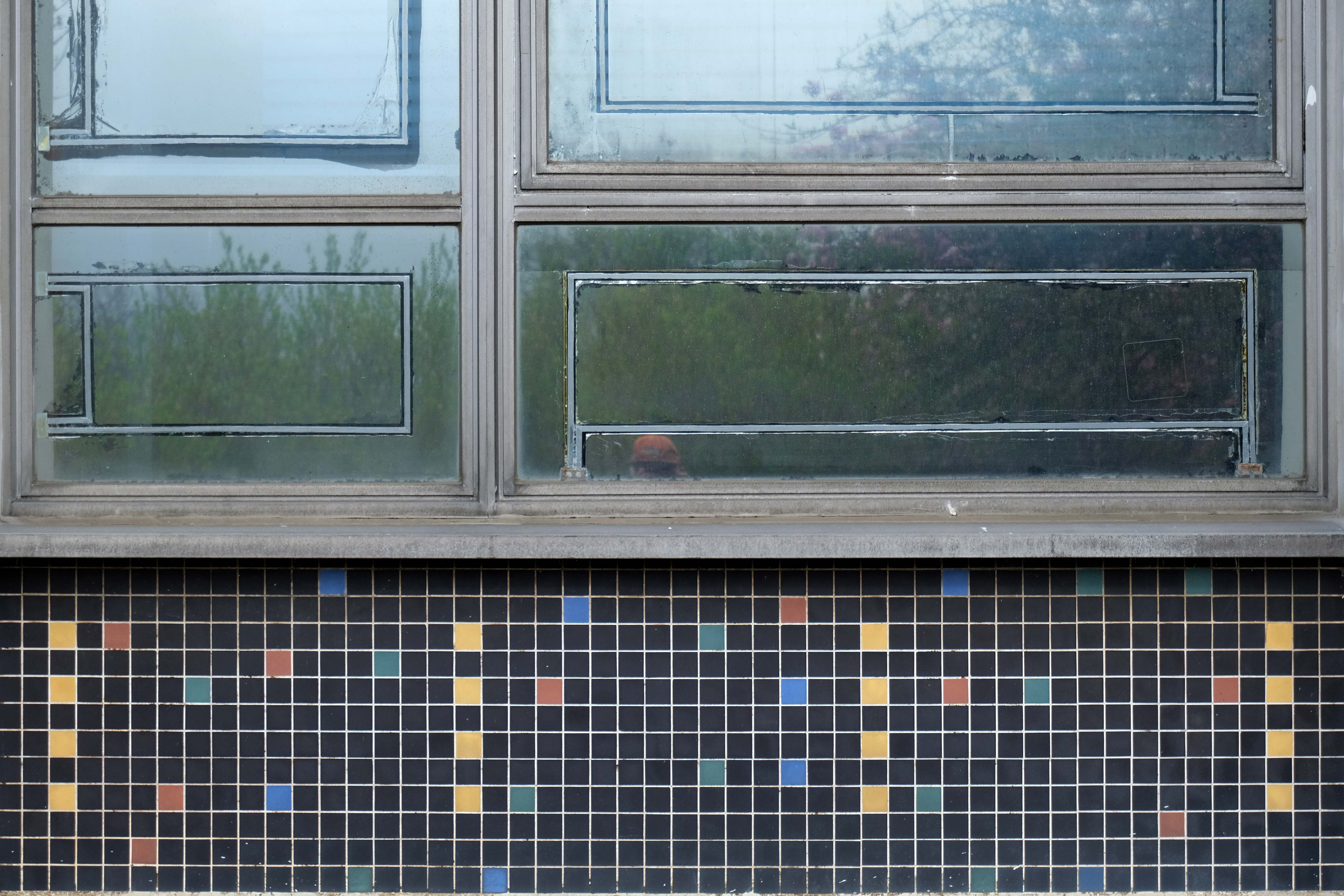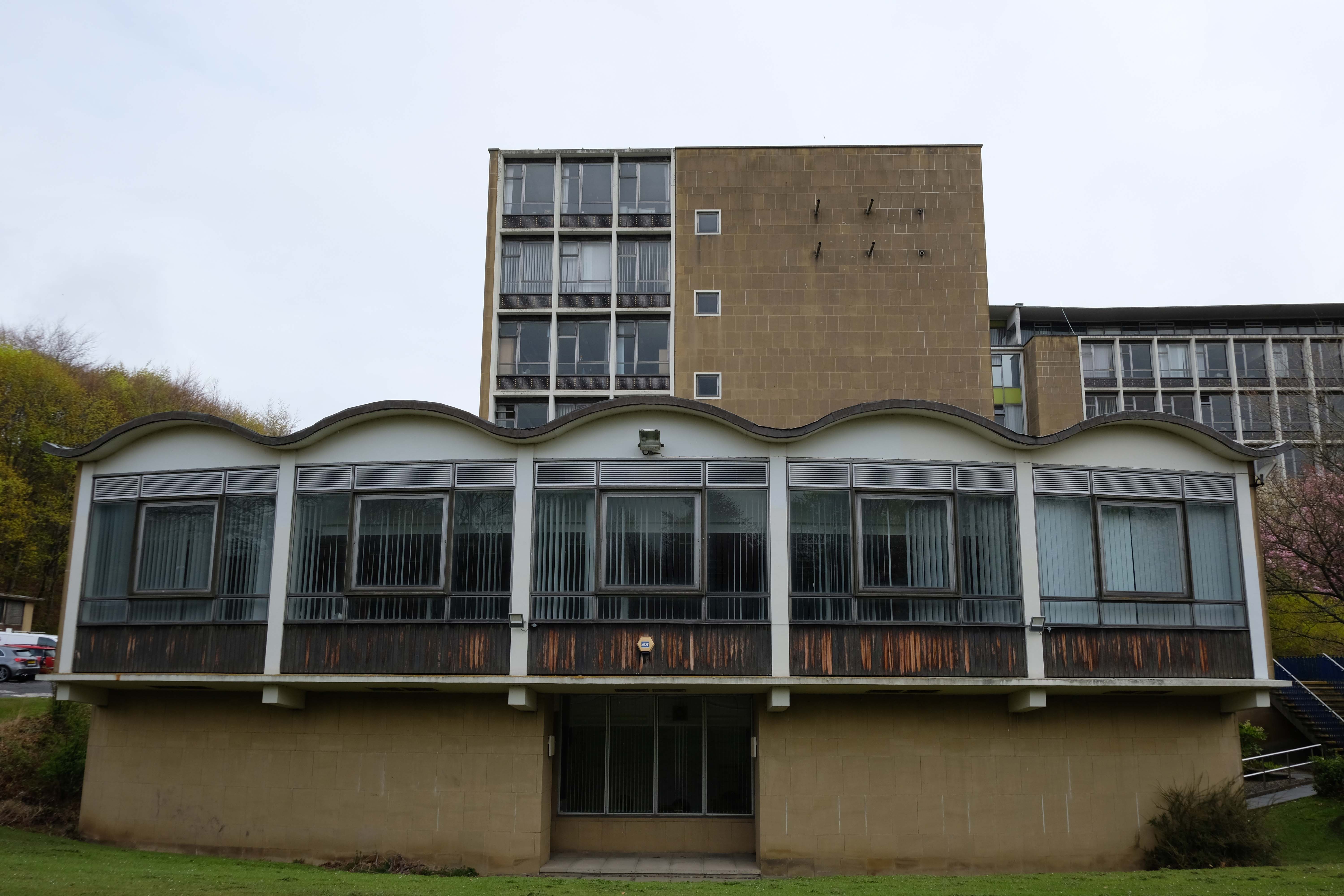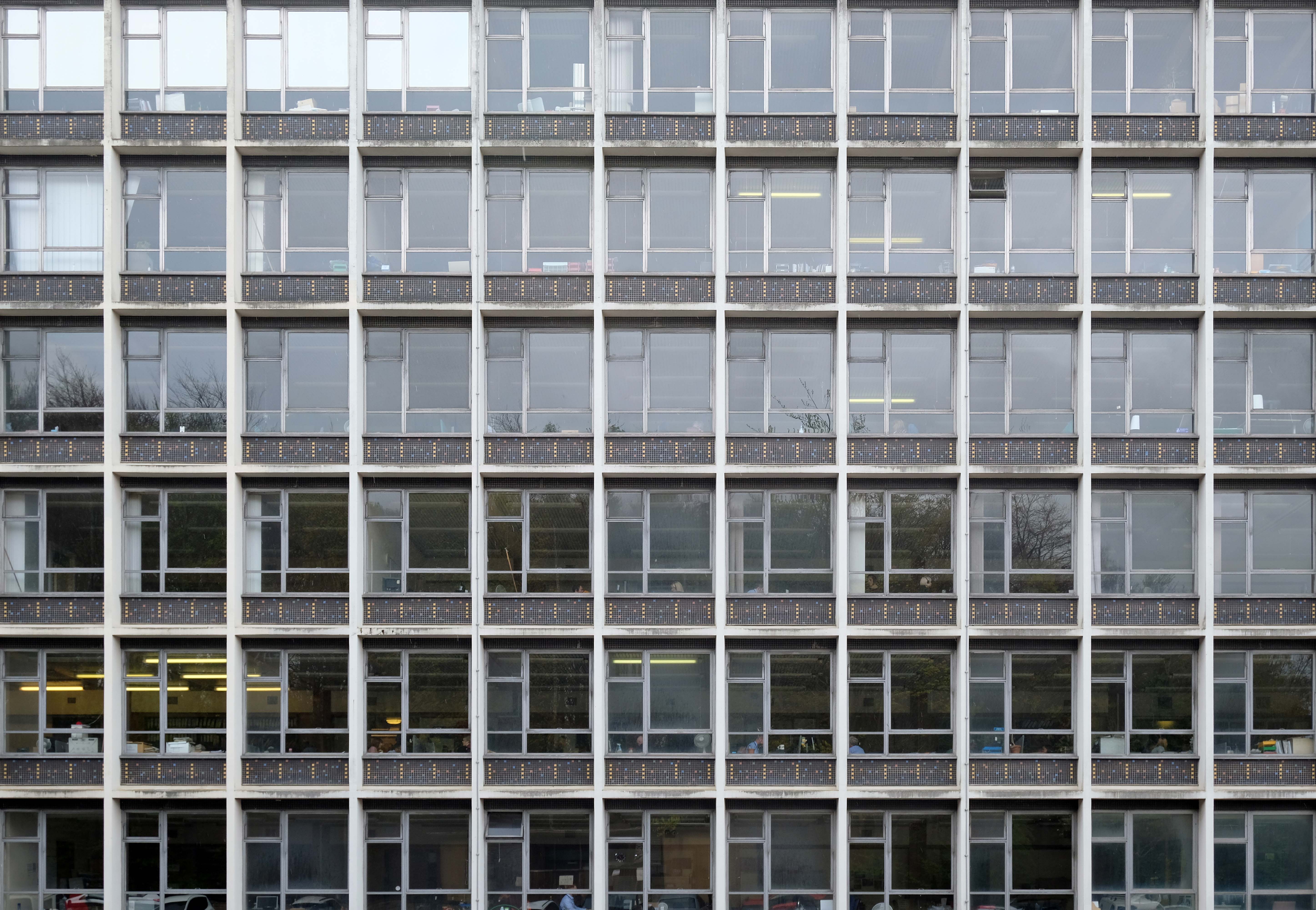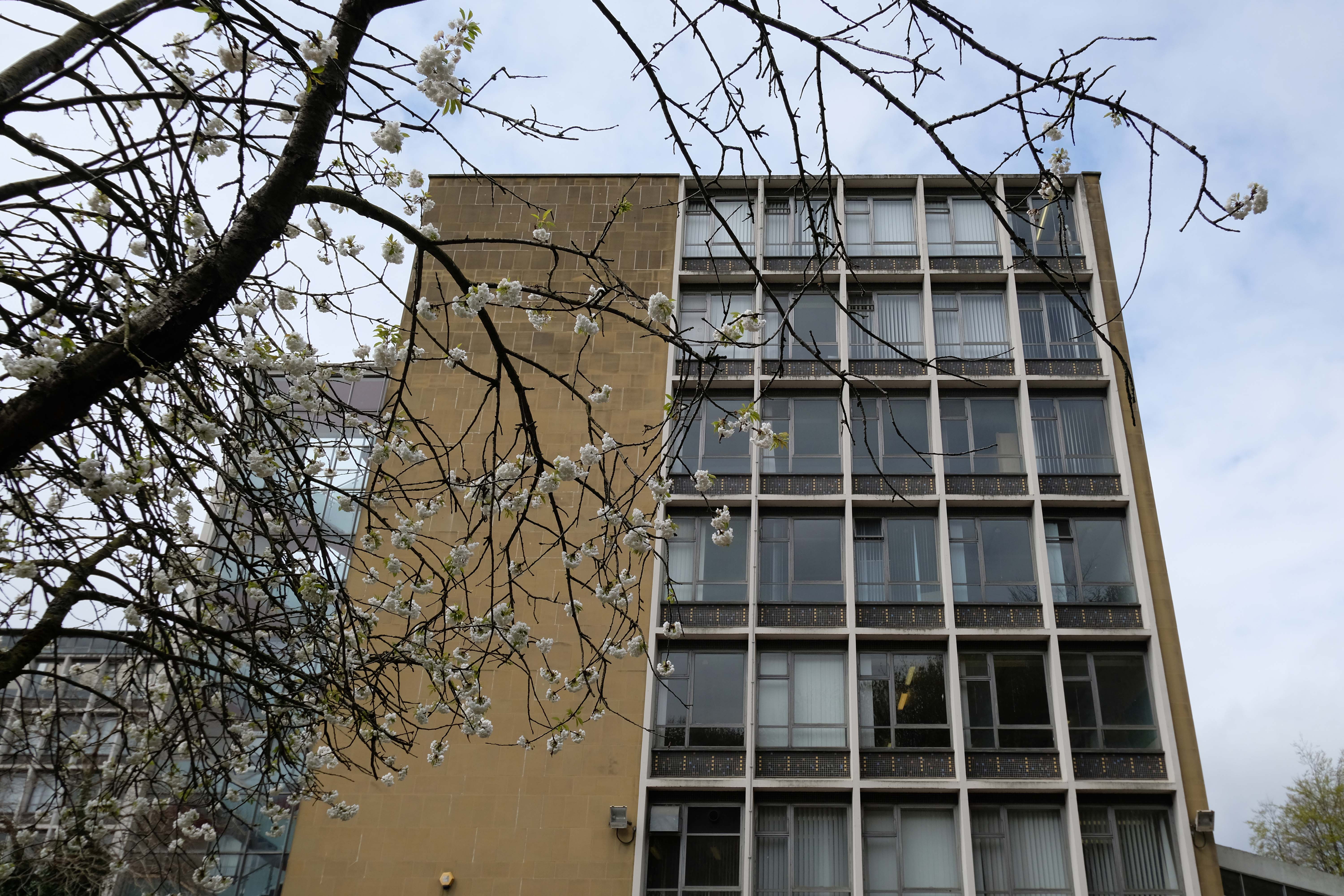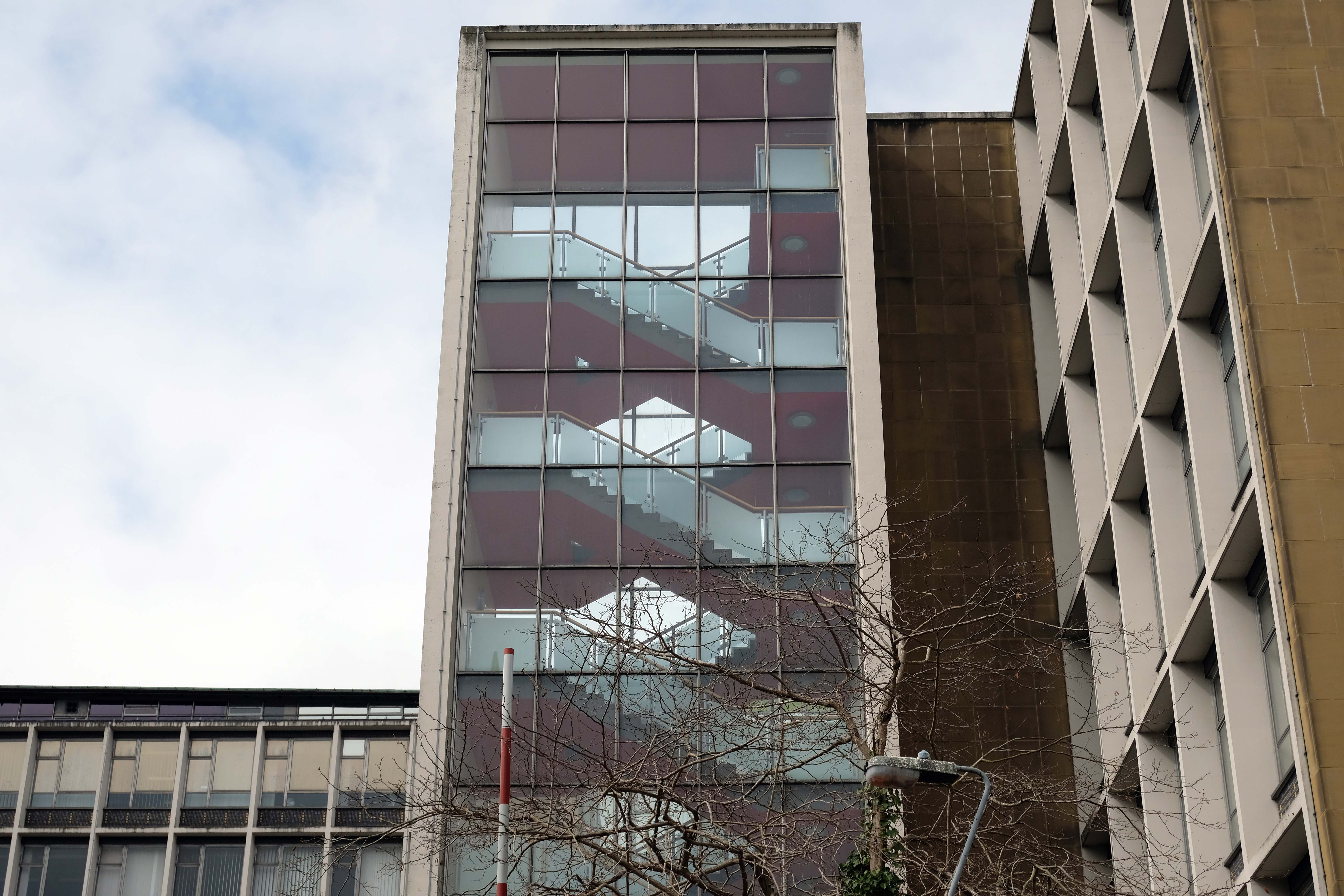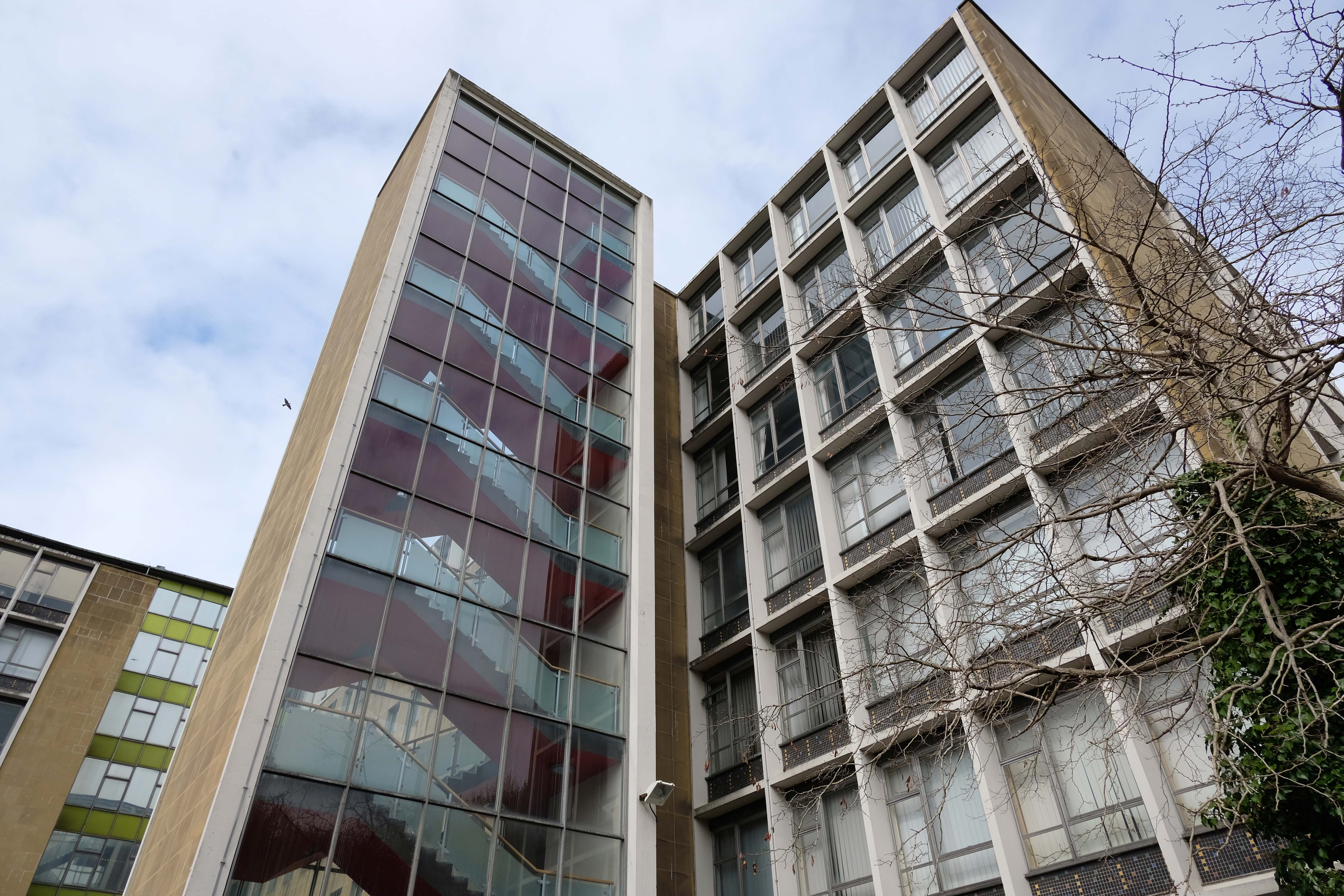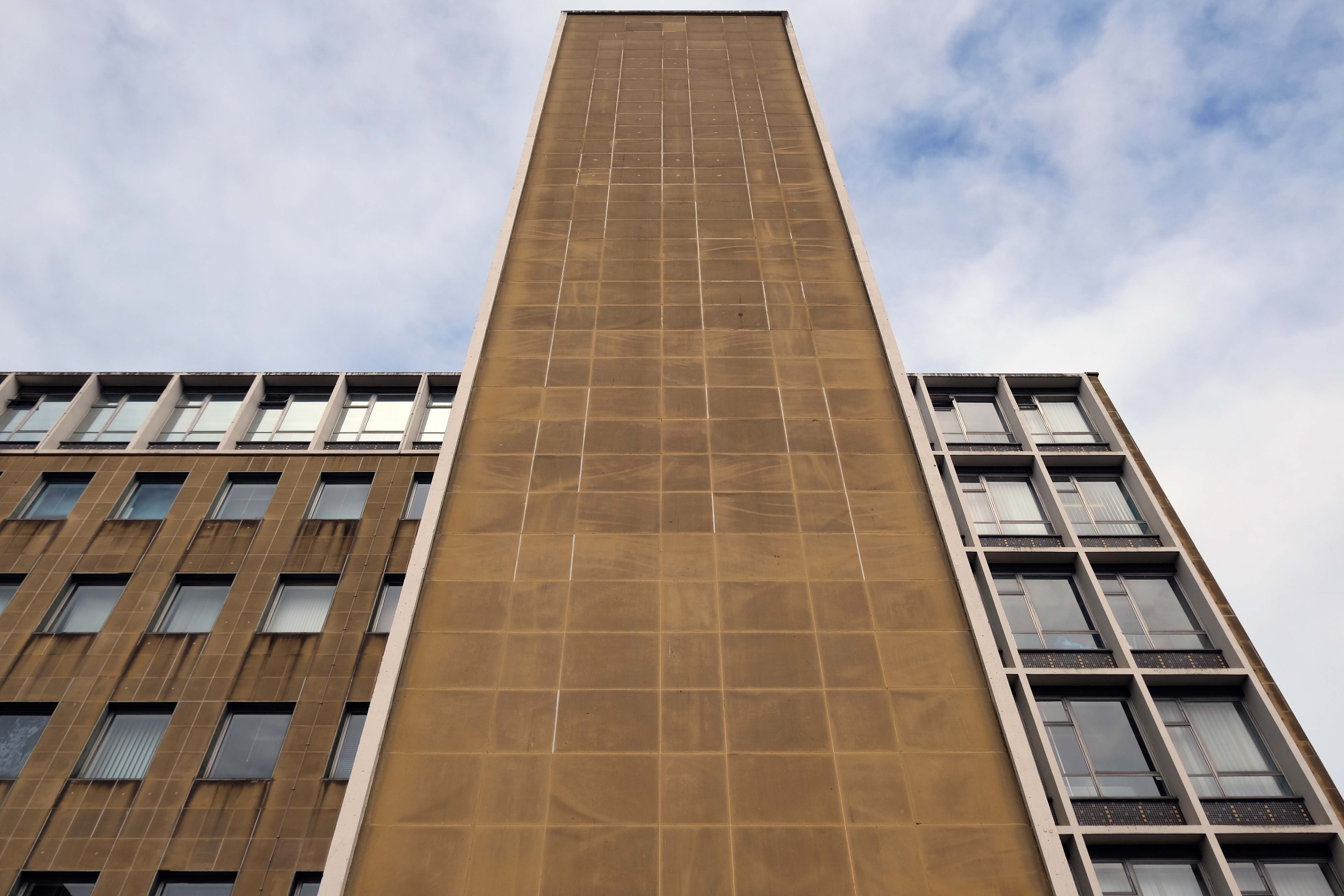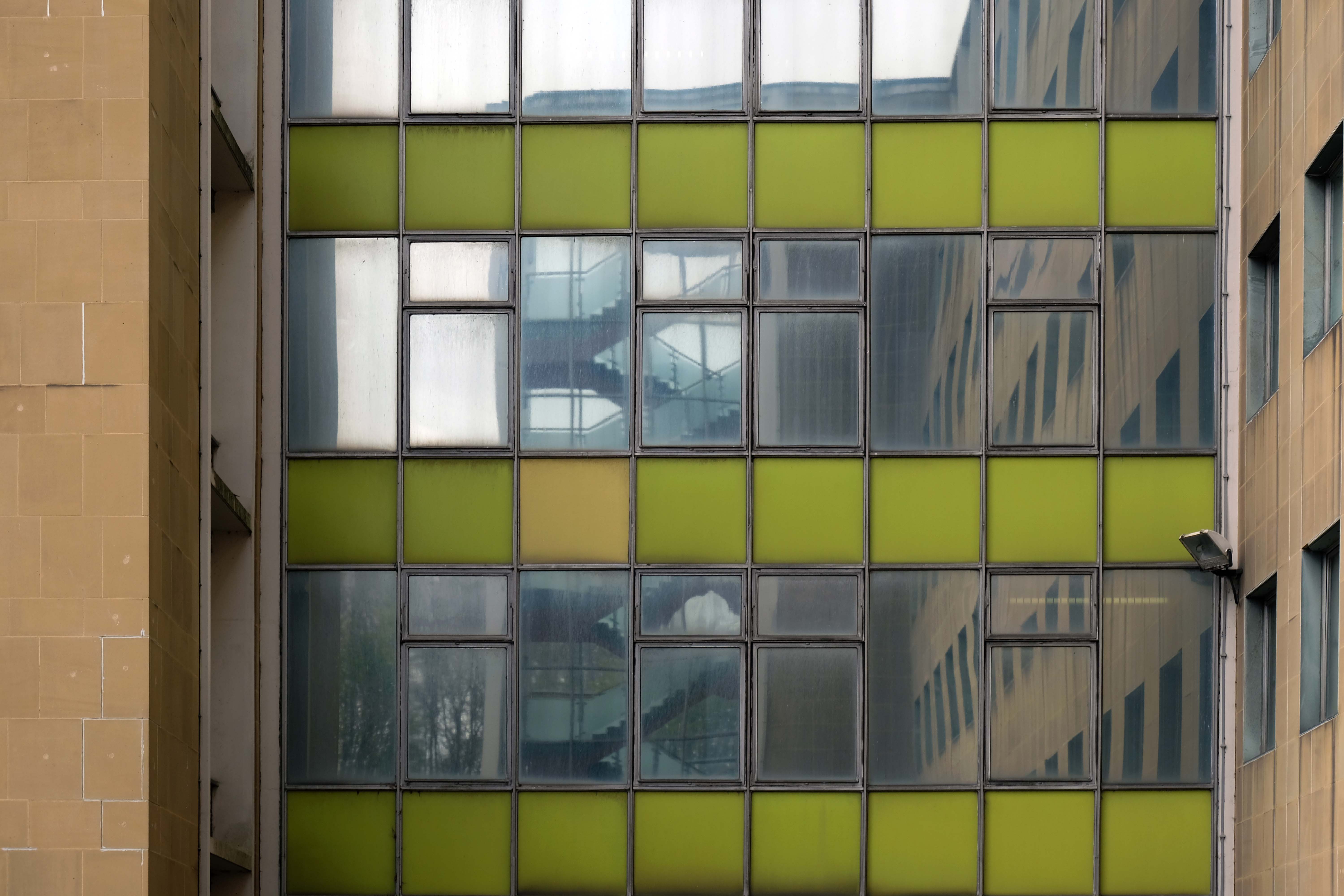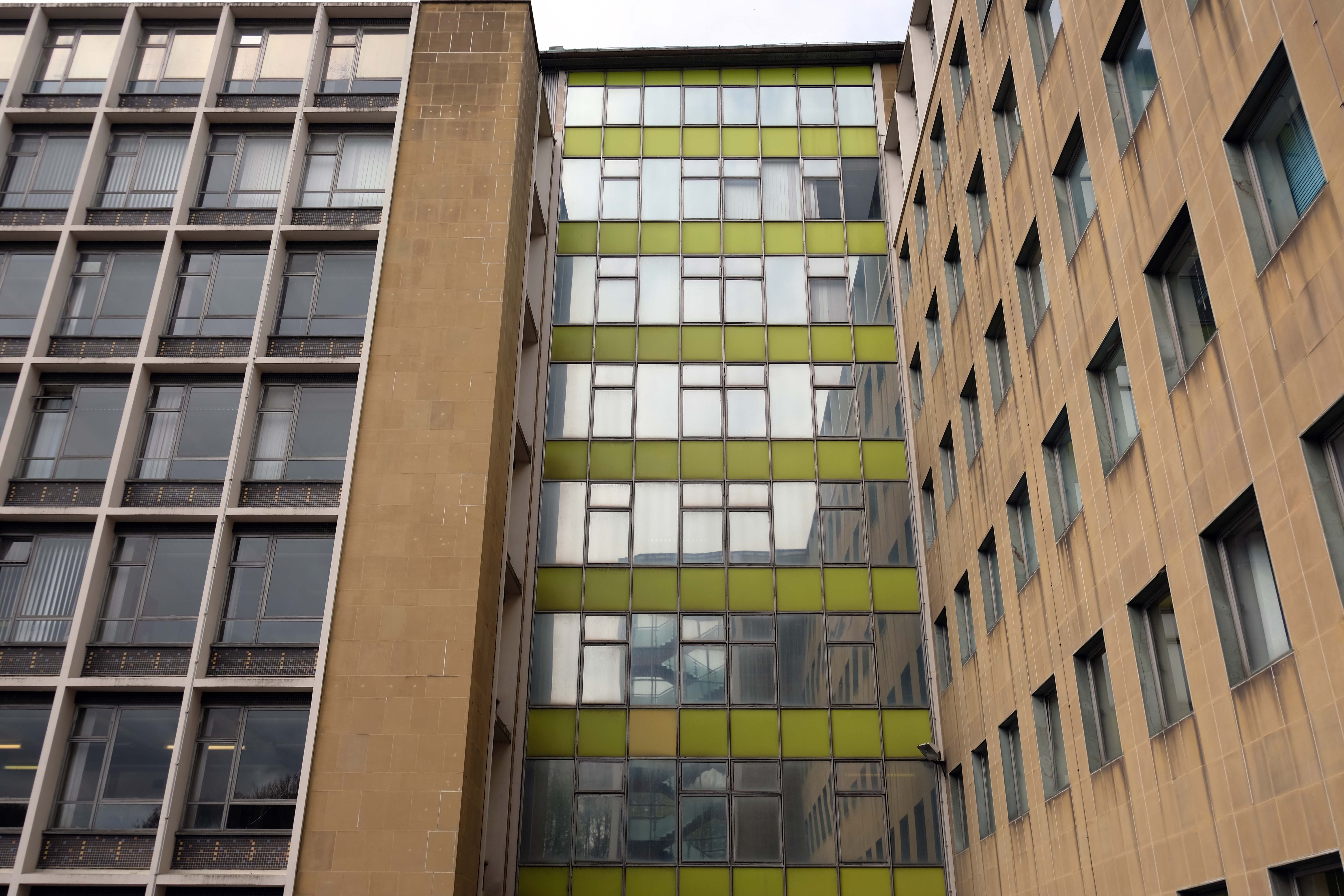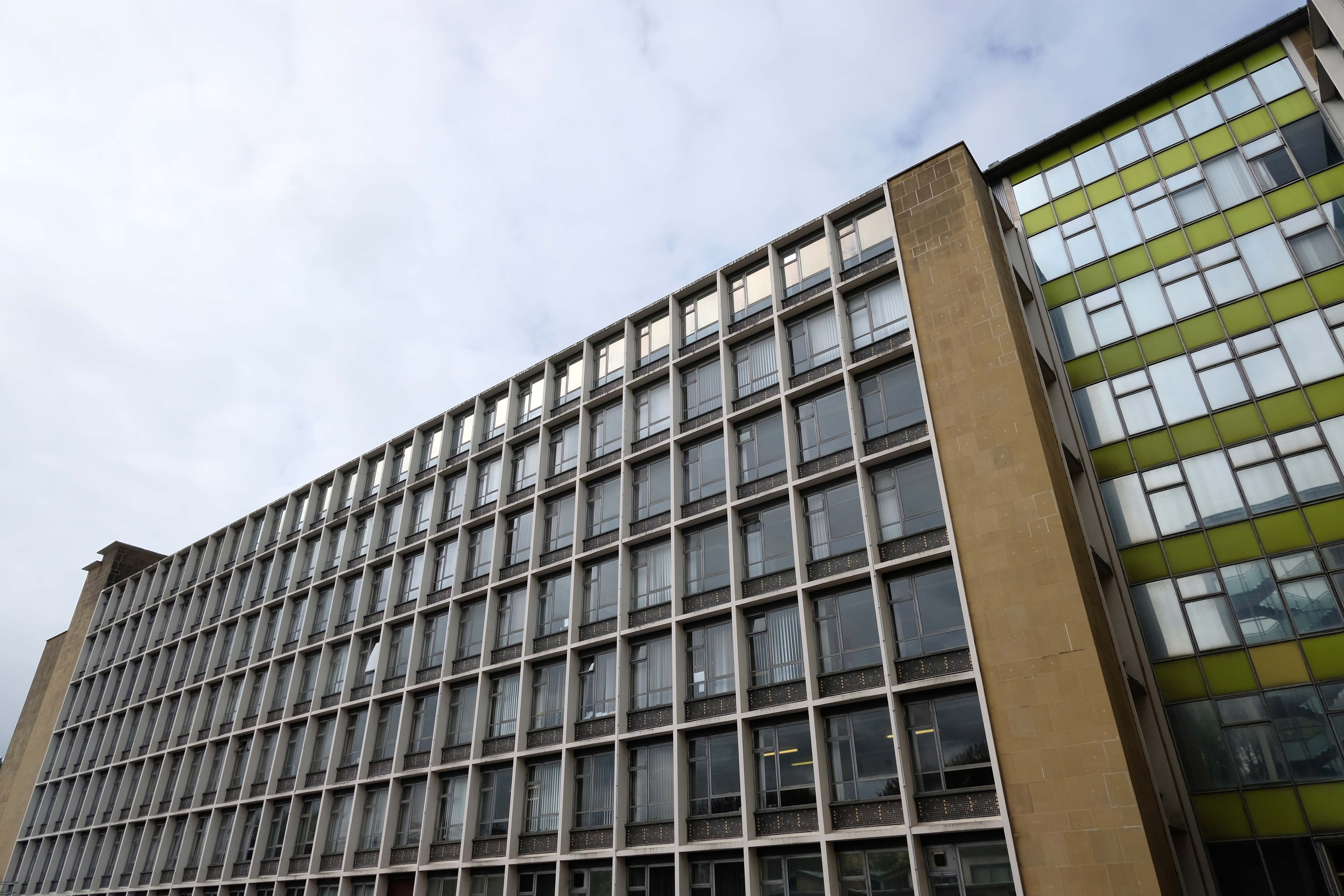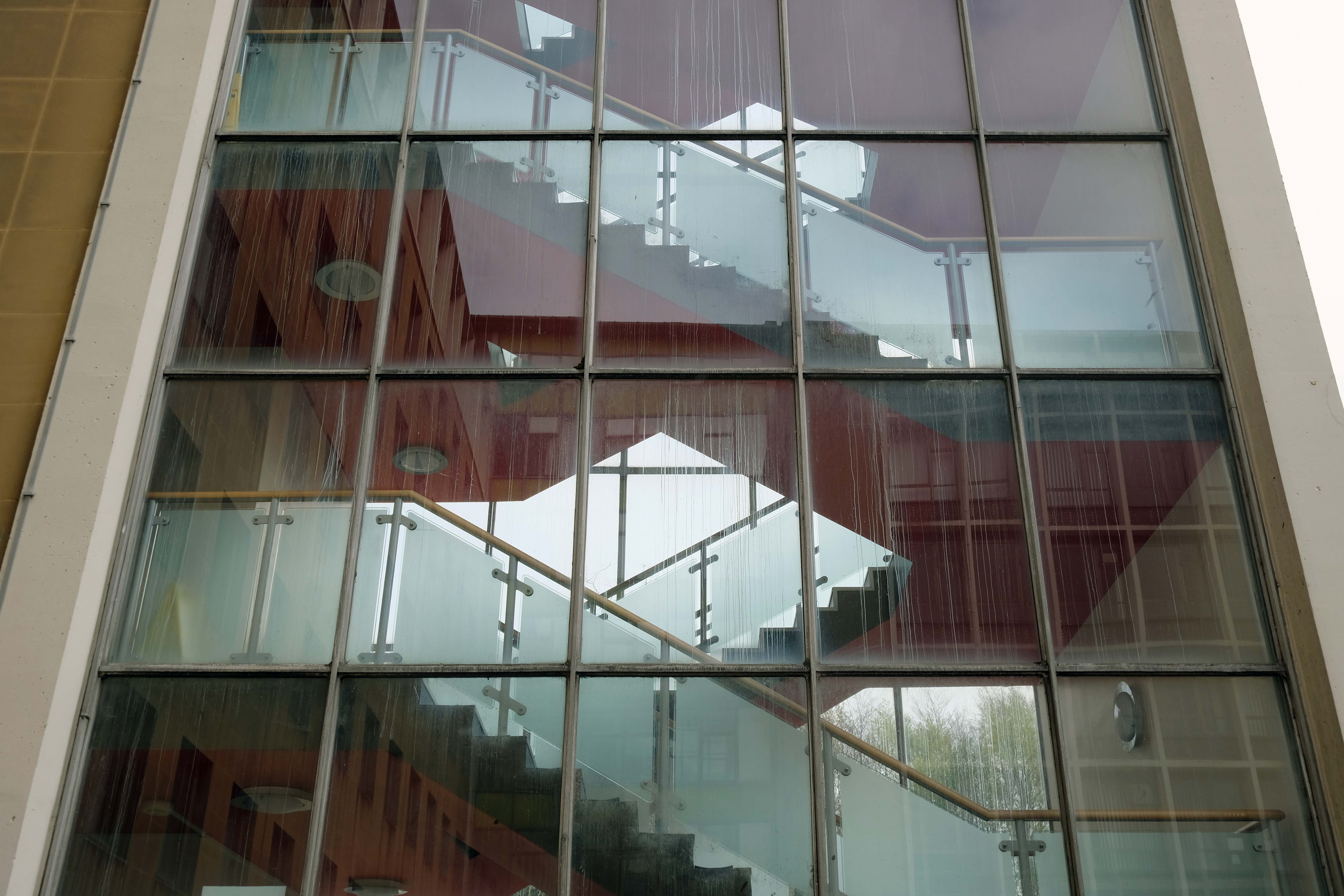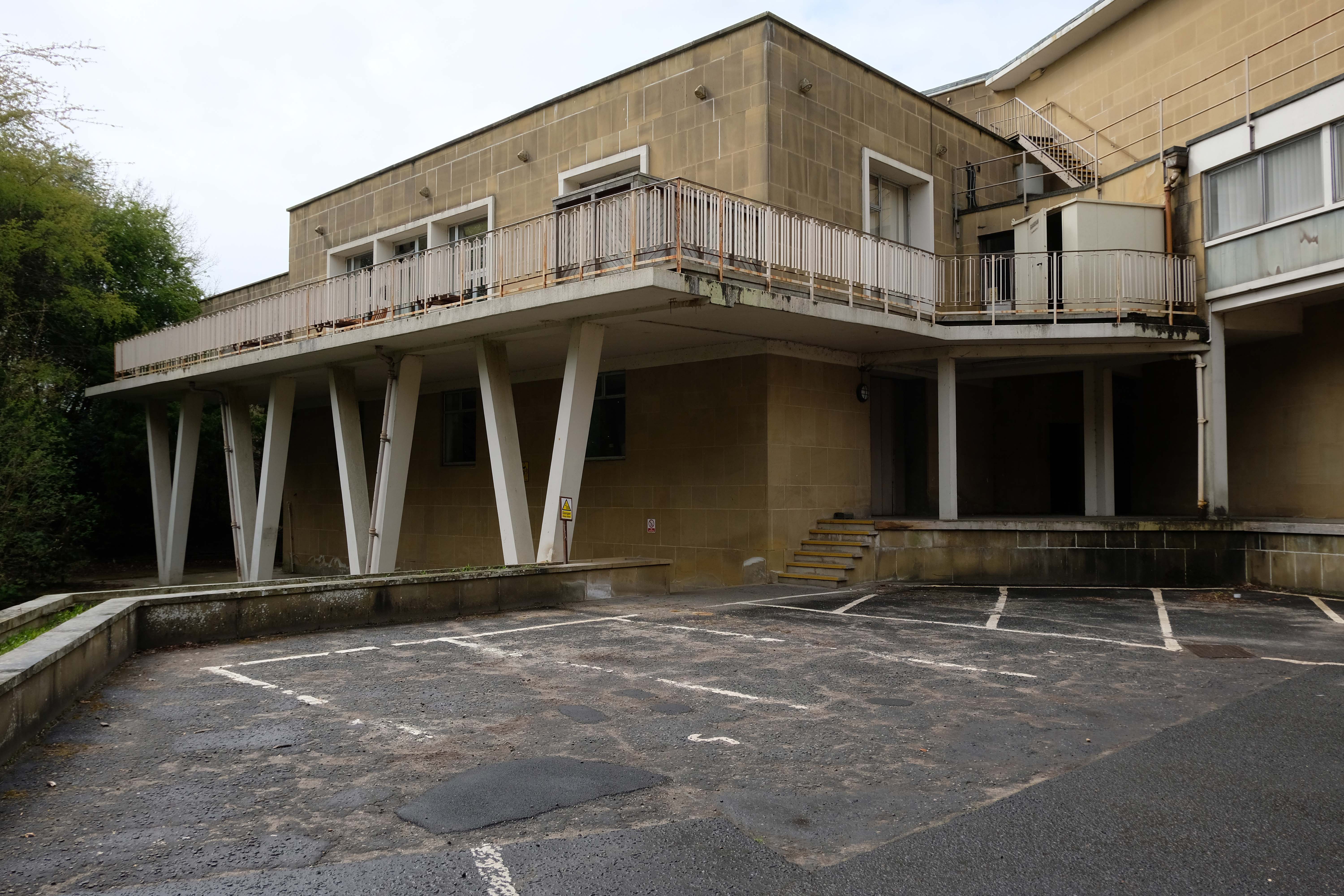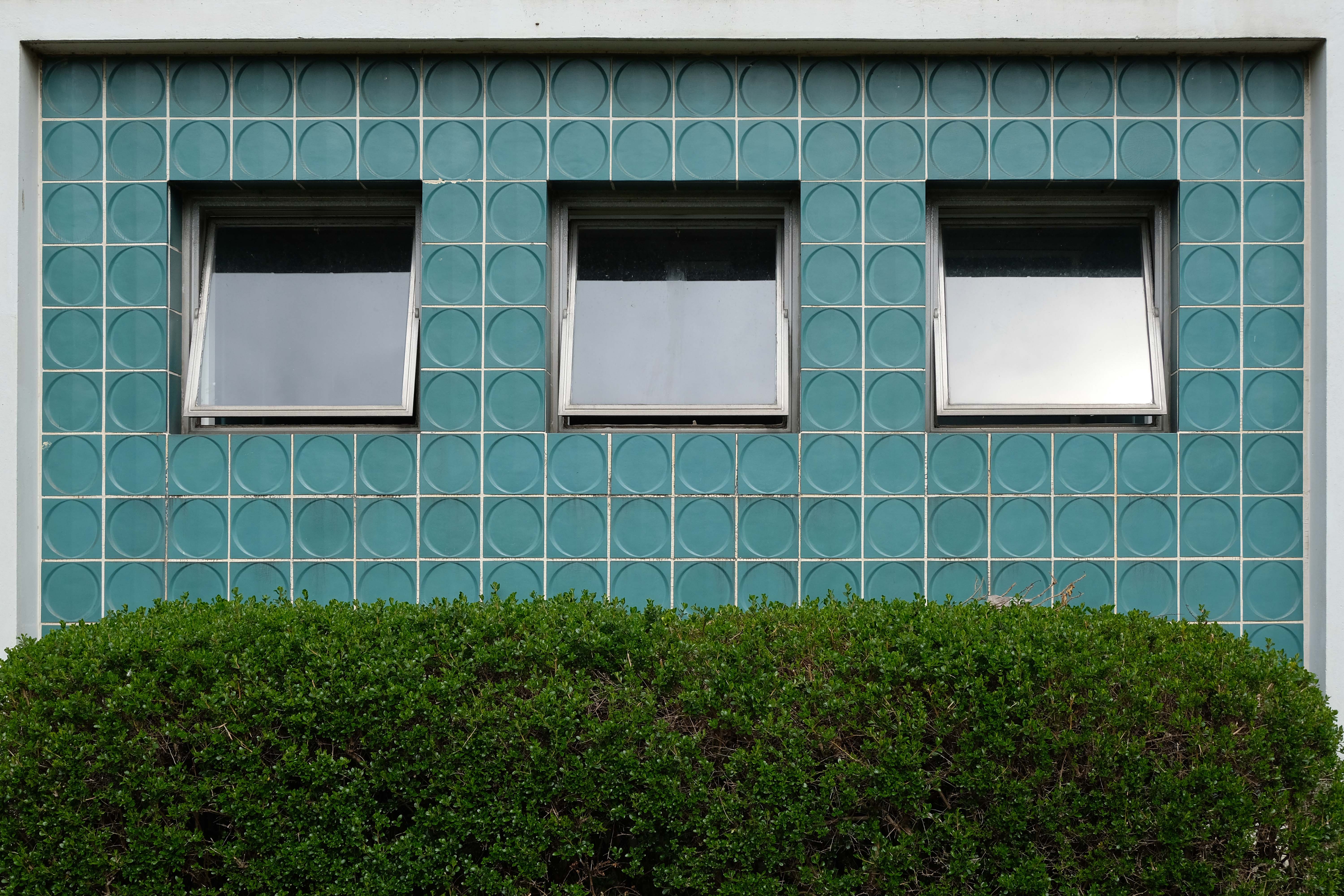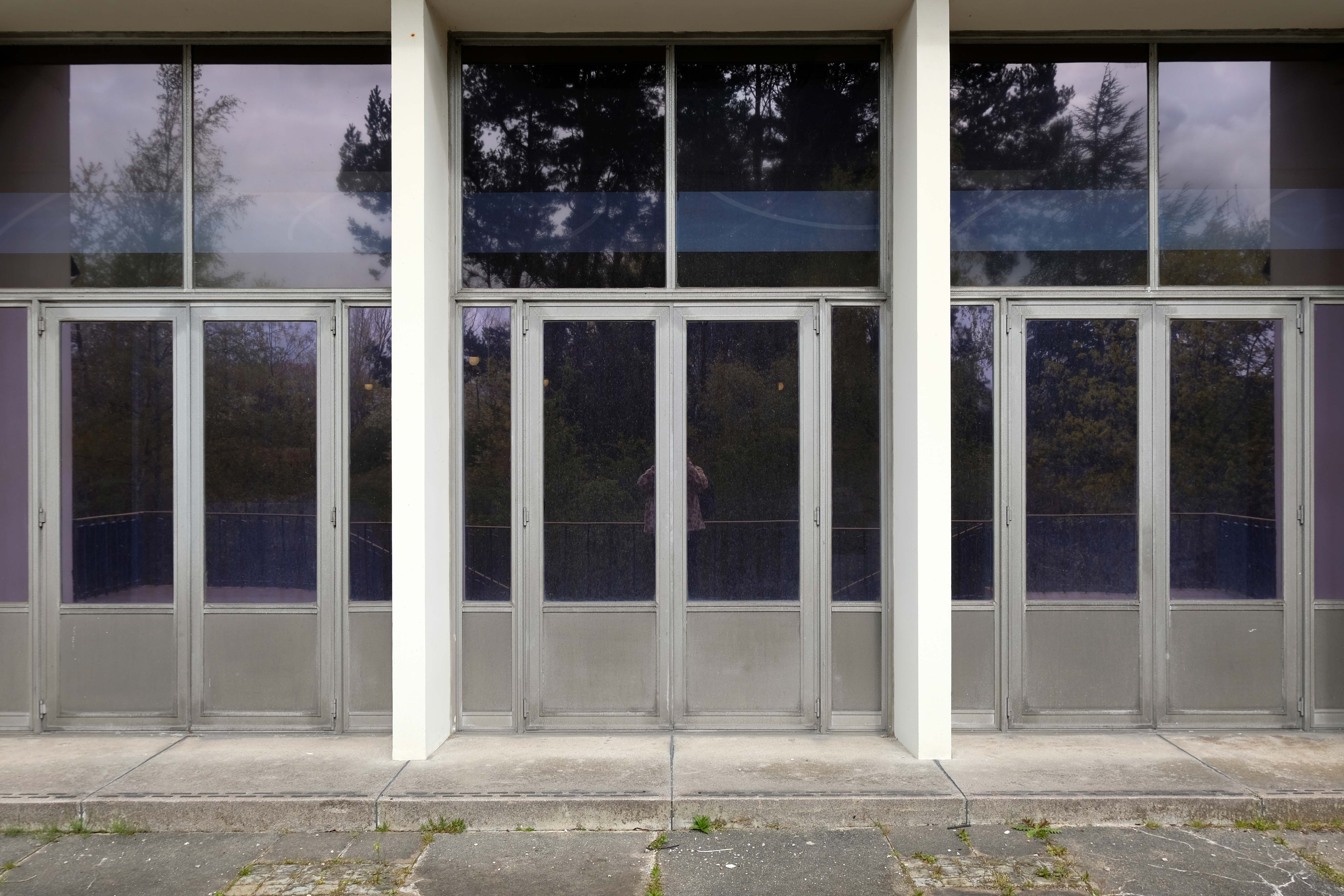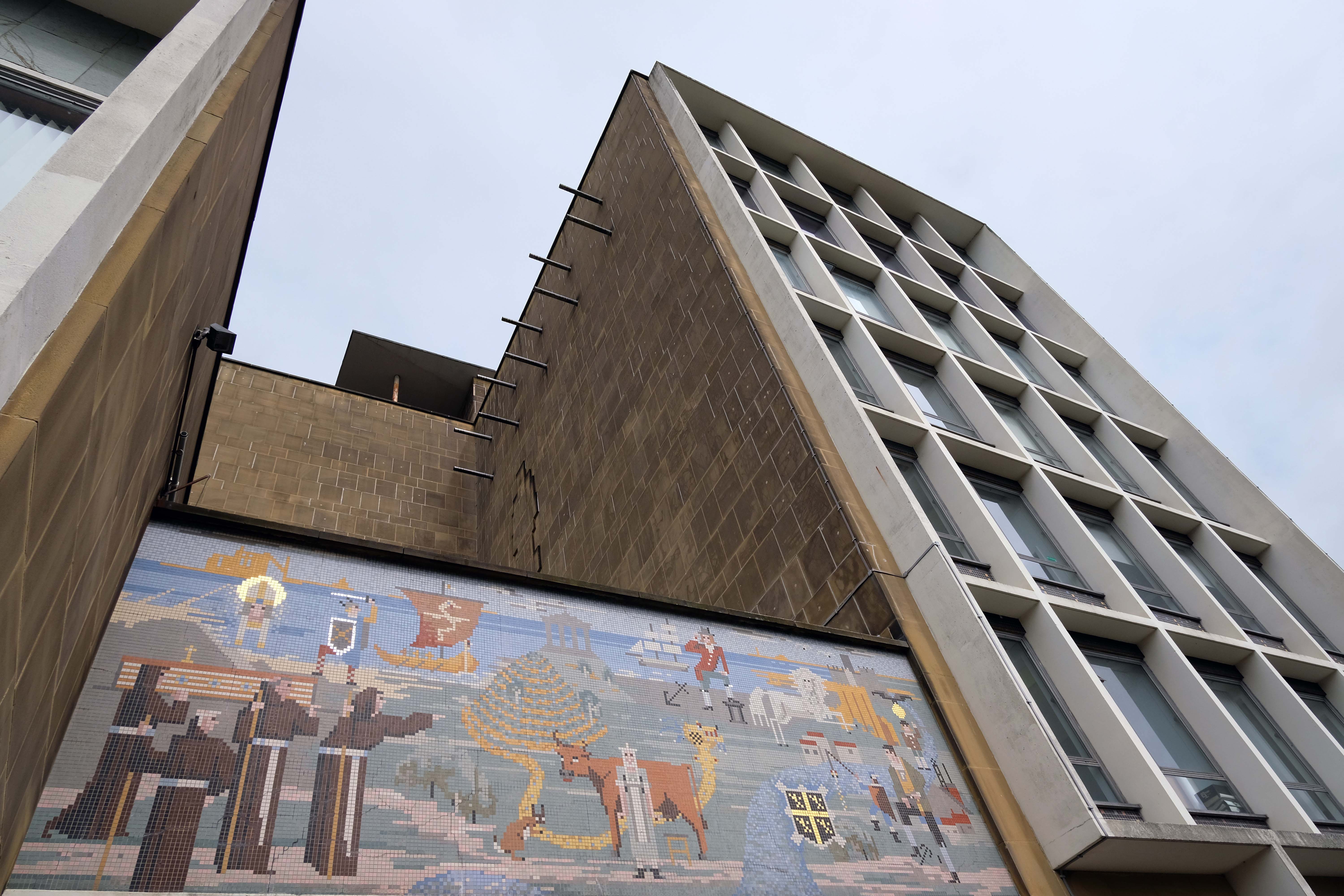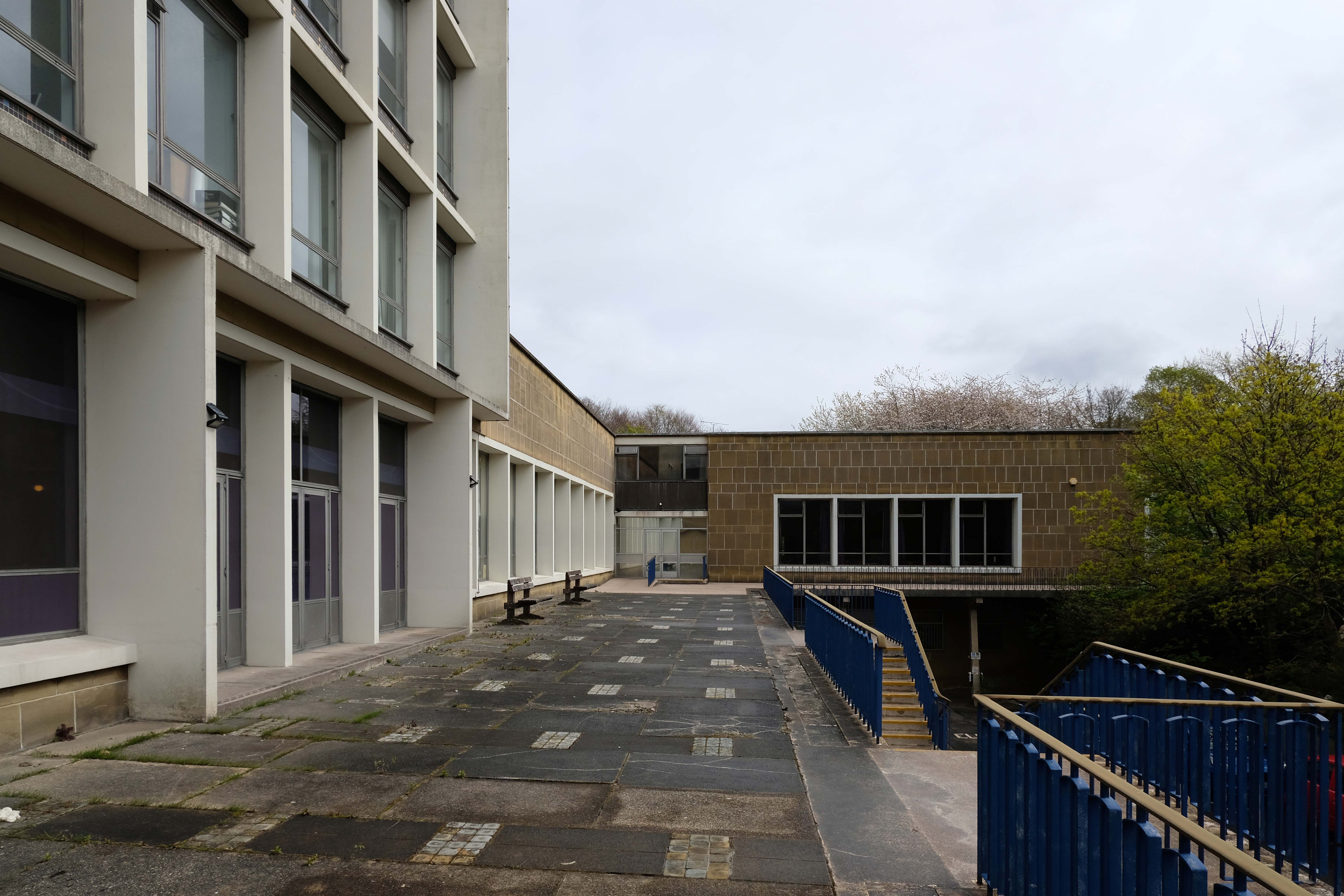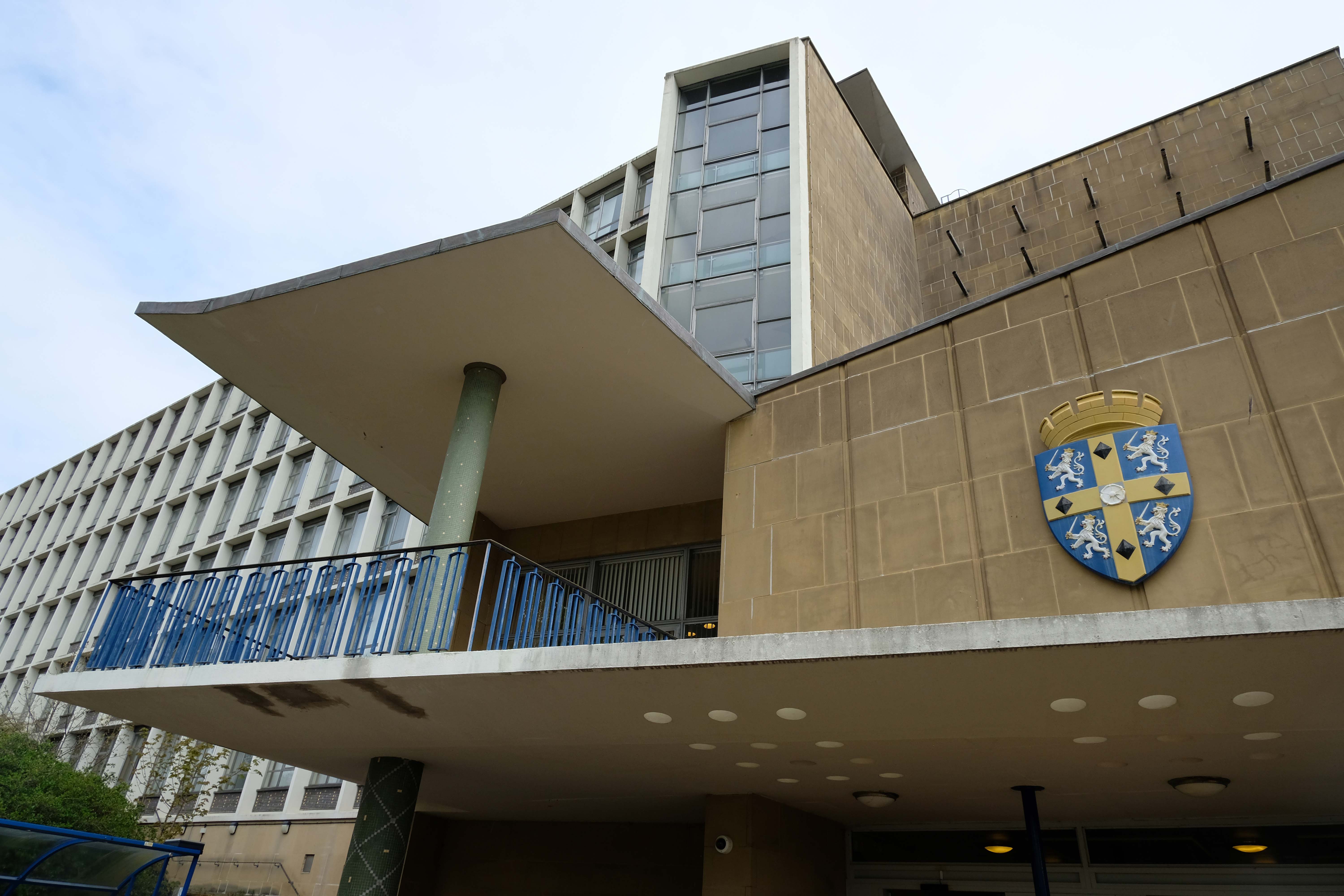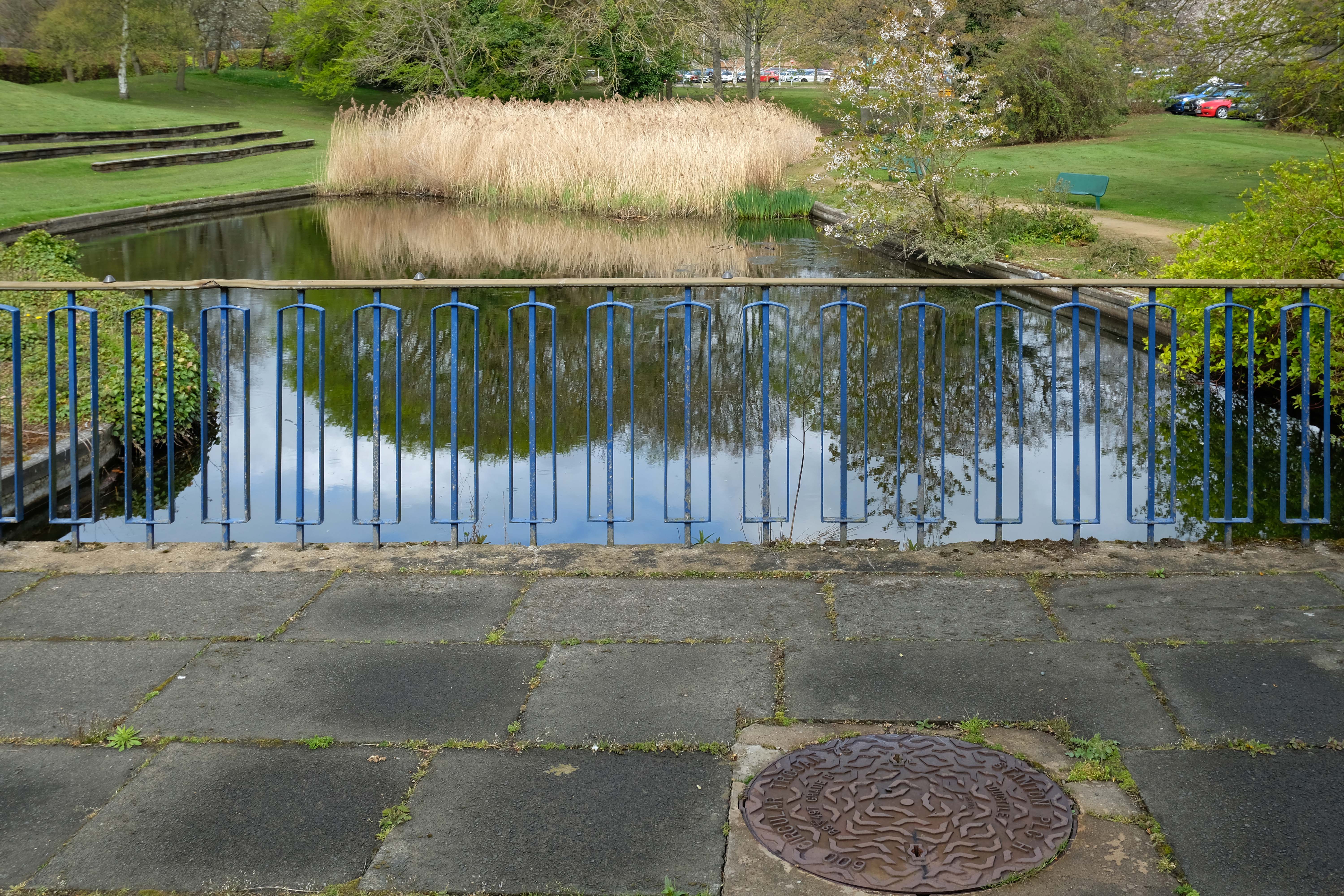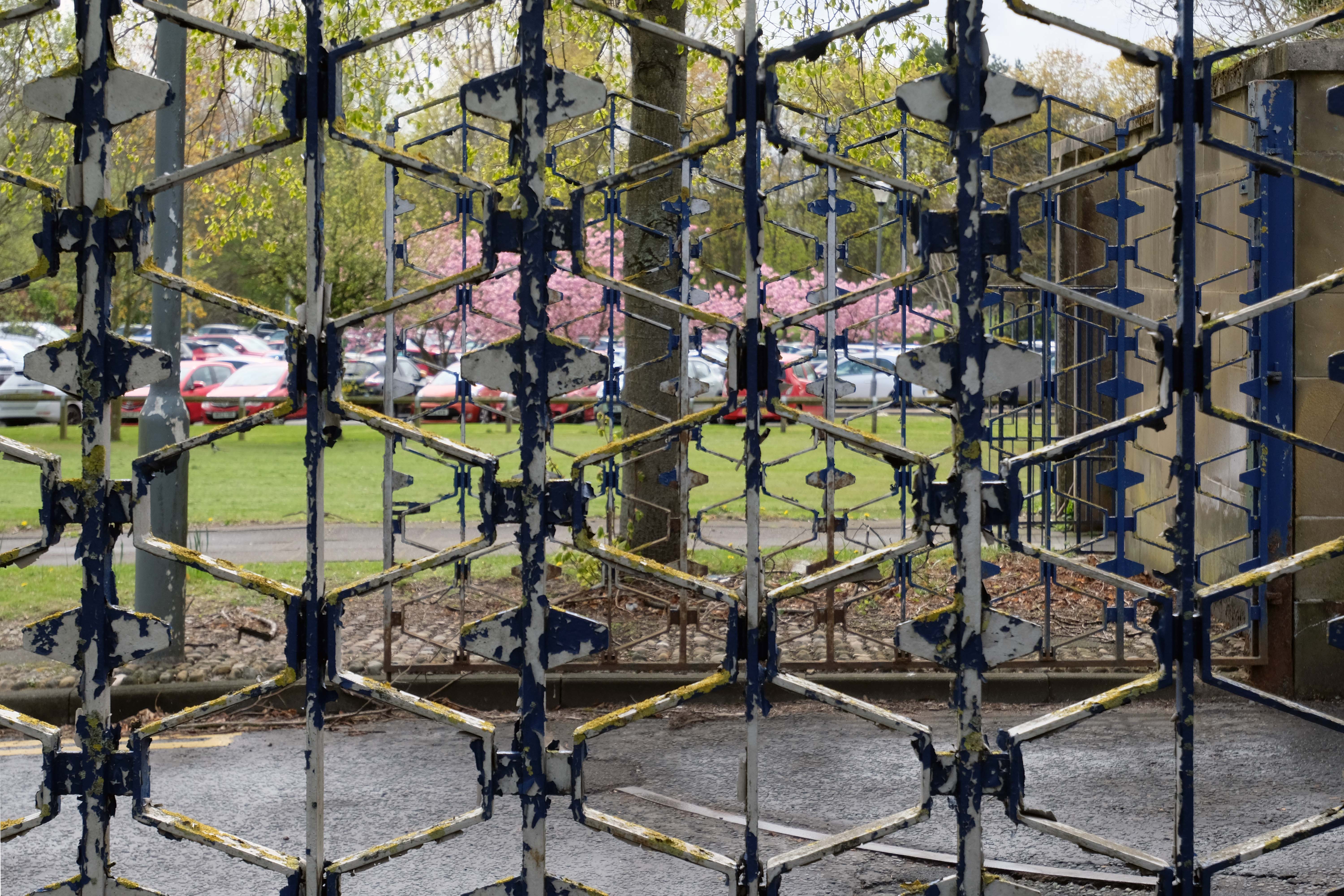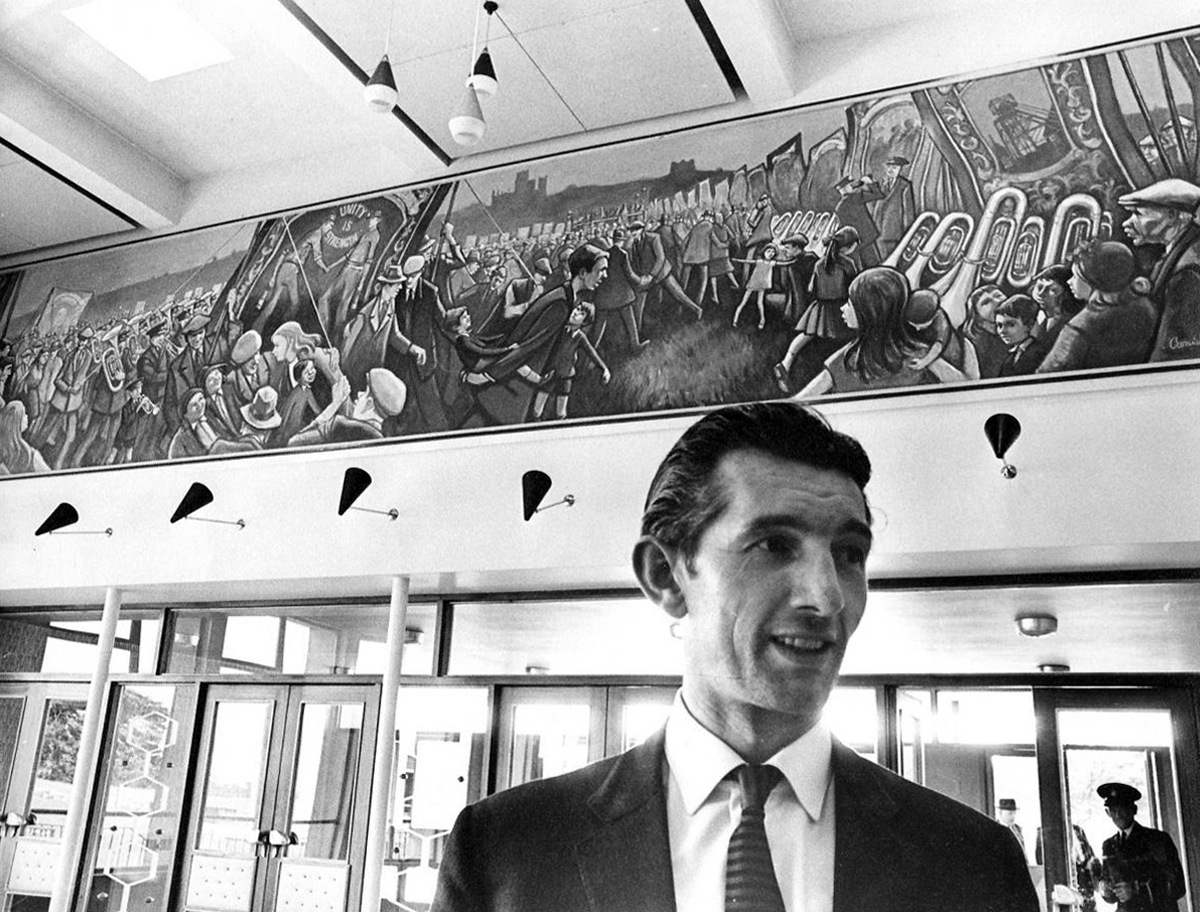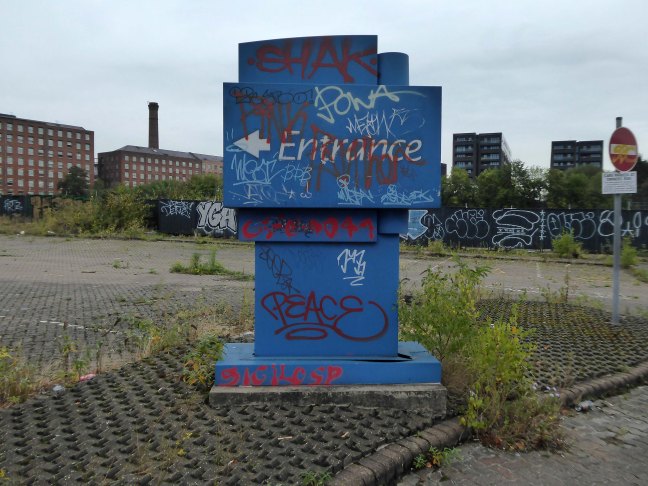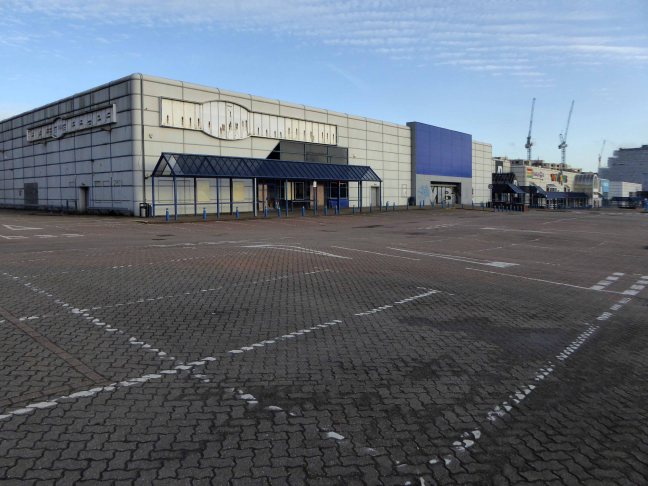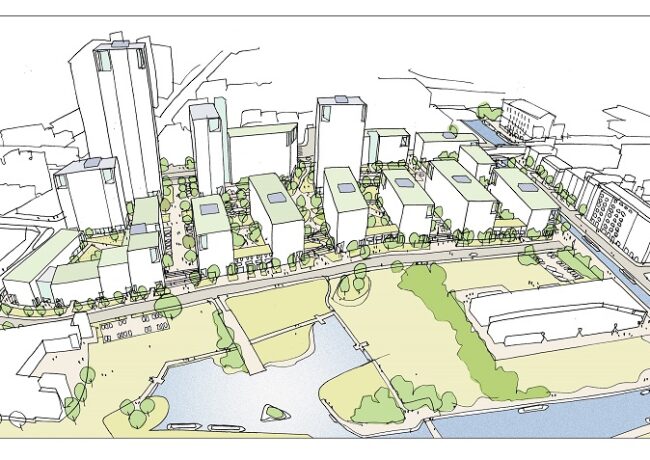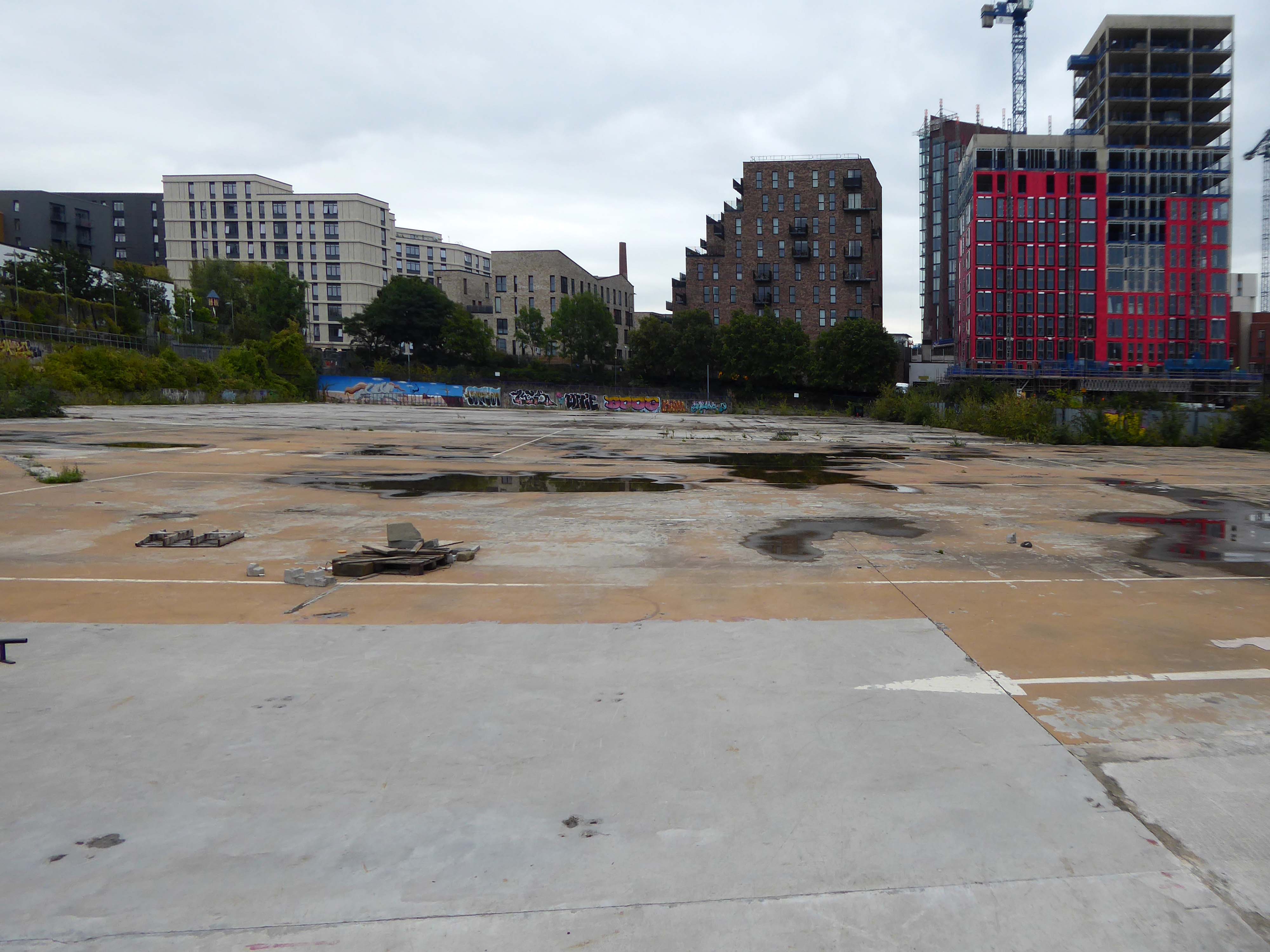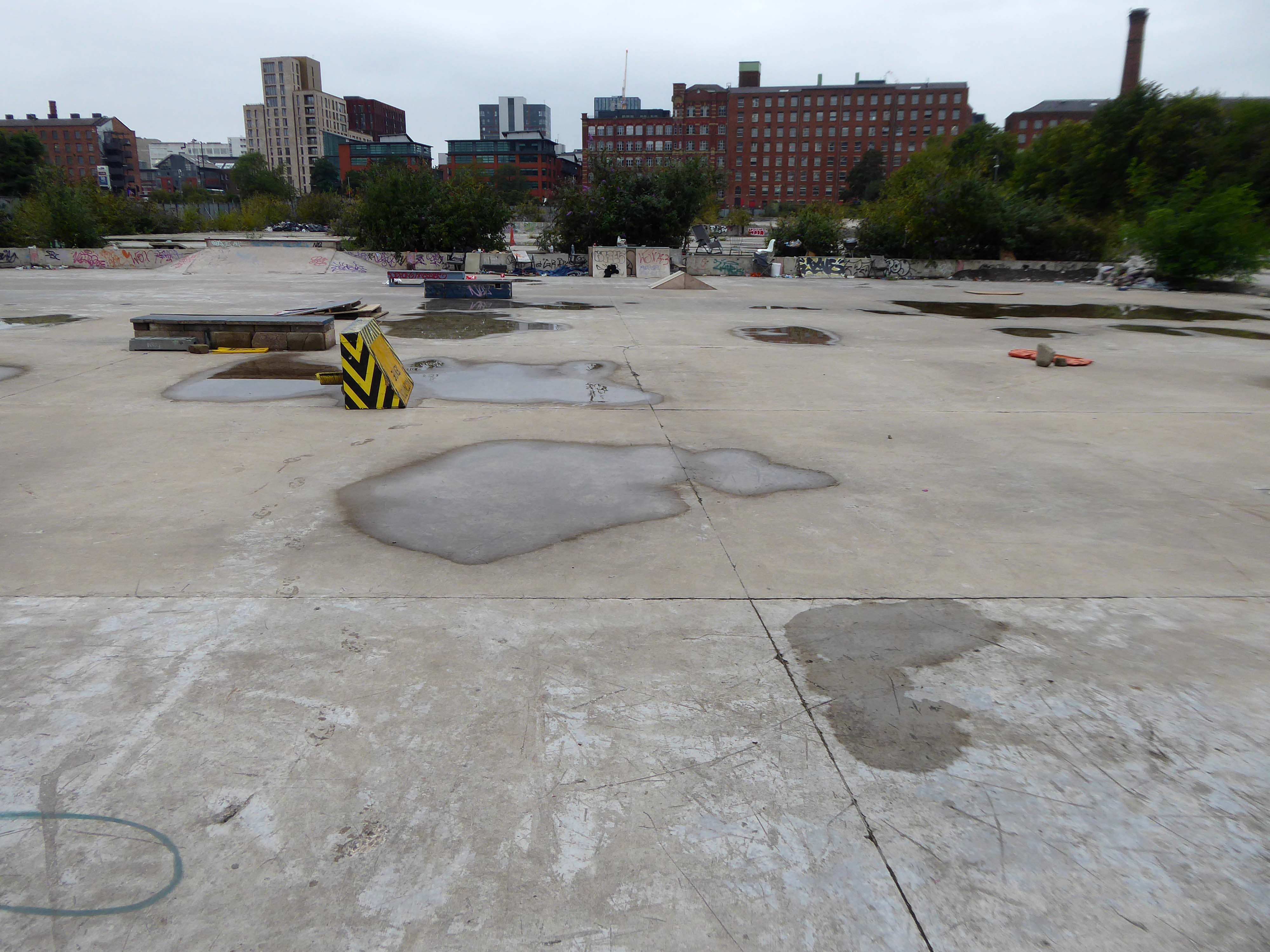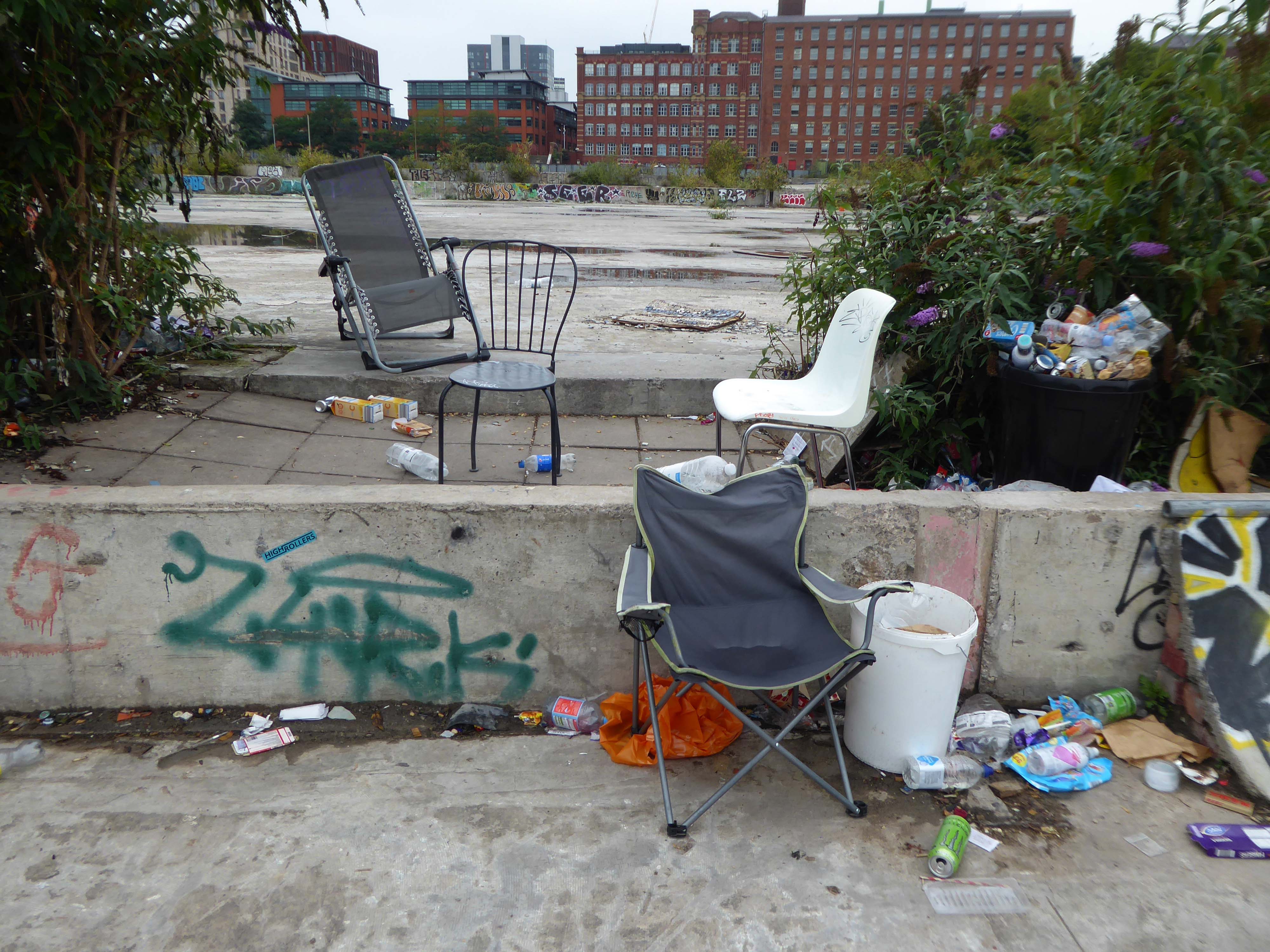
Peter House – Manchester

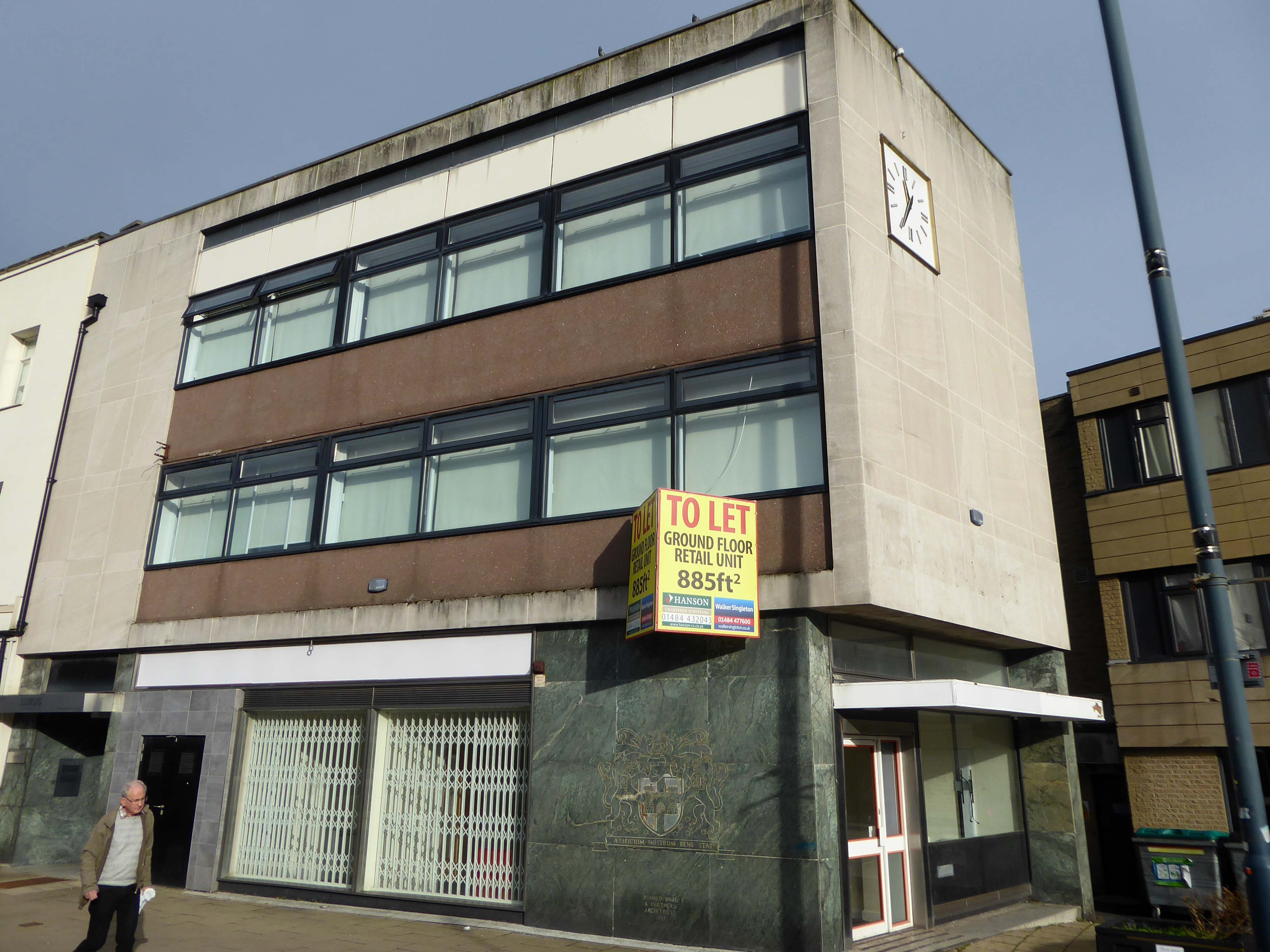
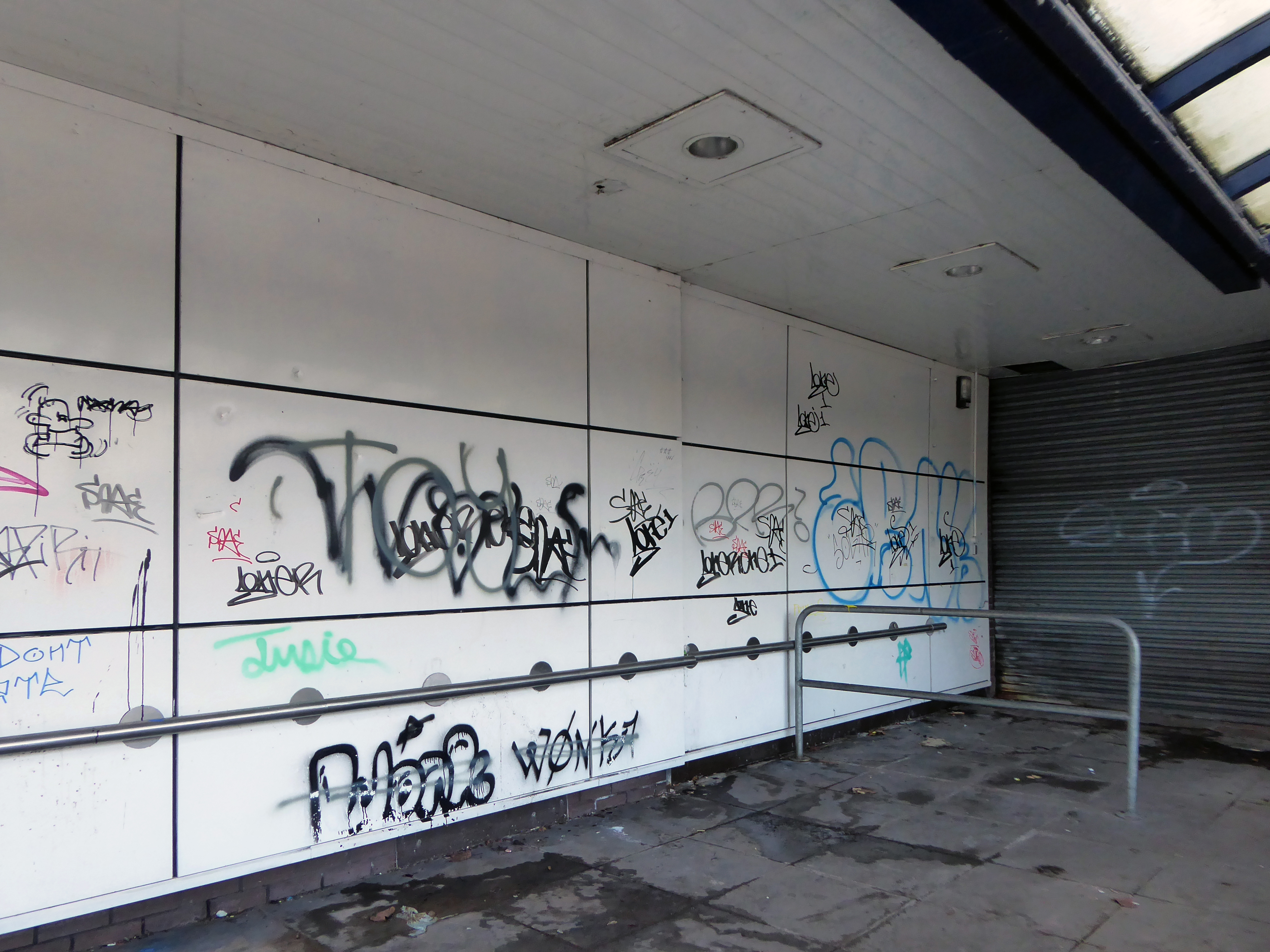
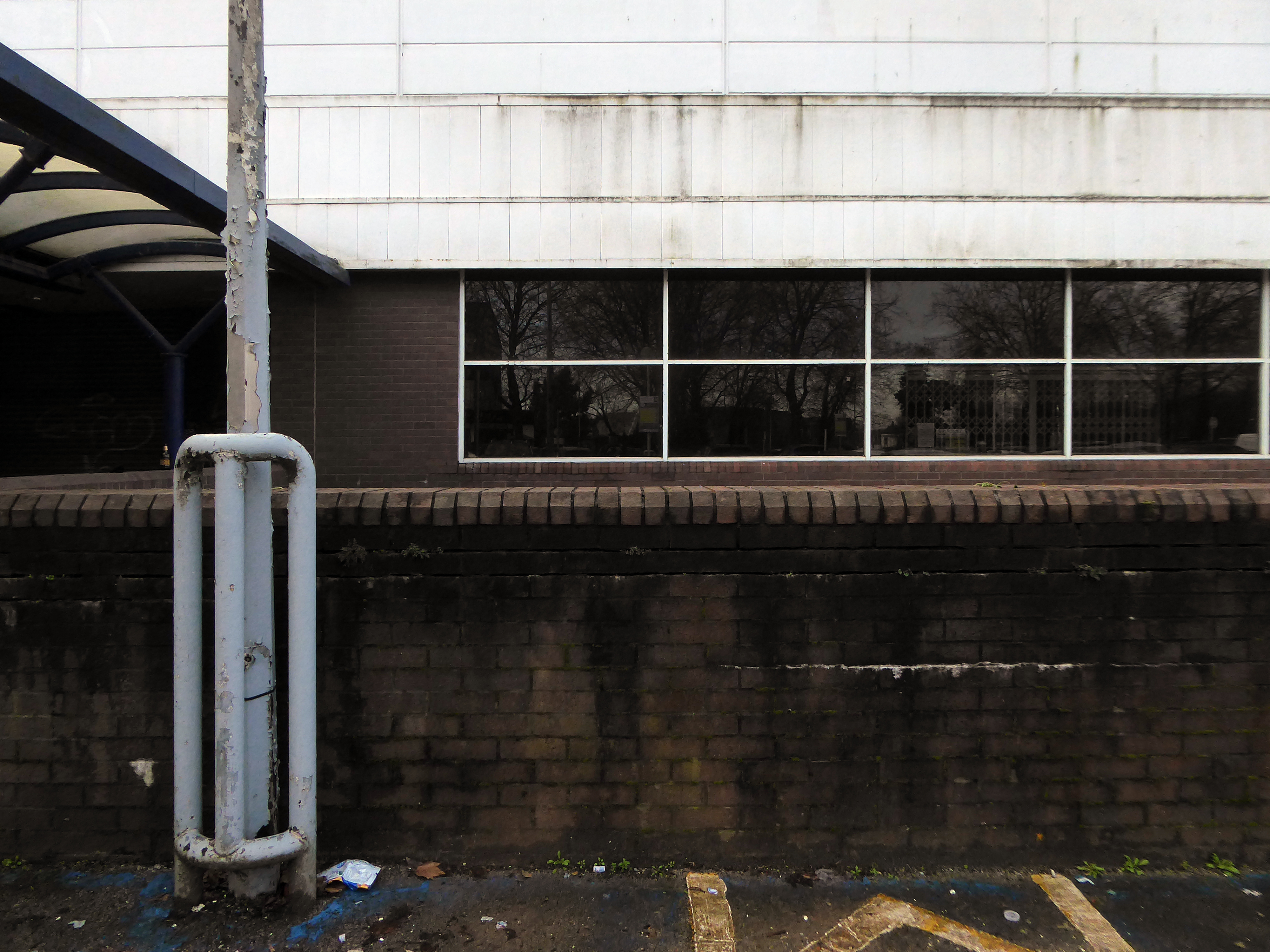
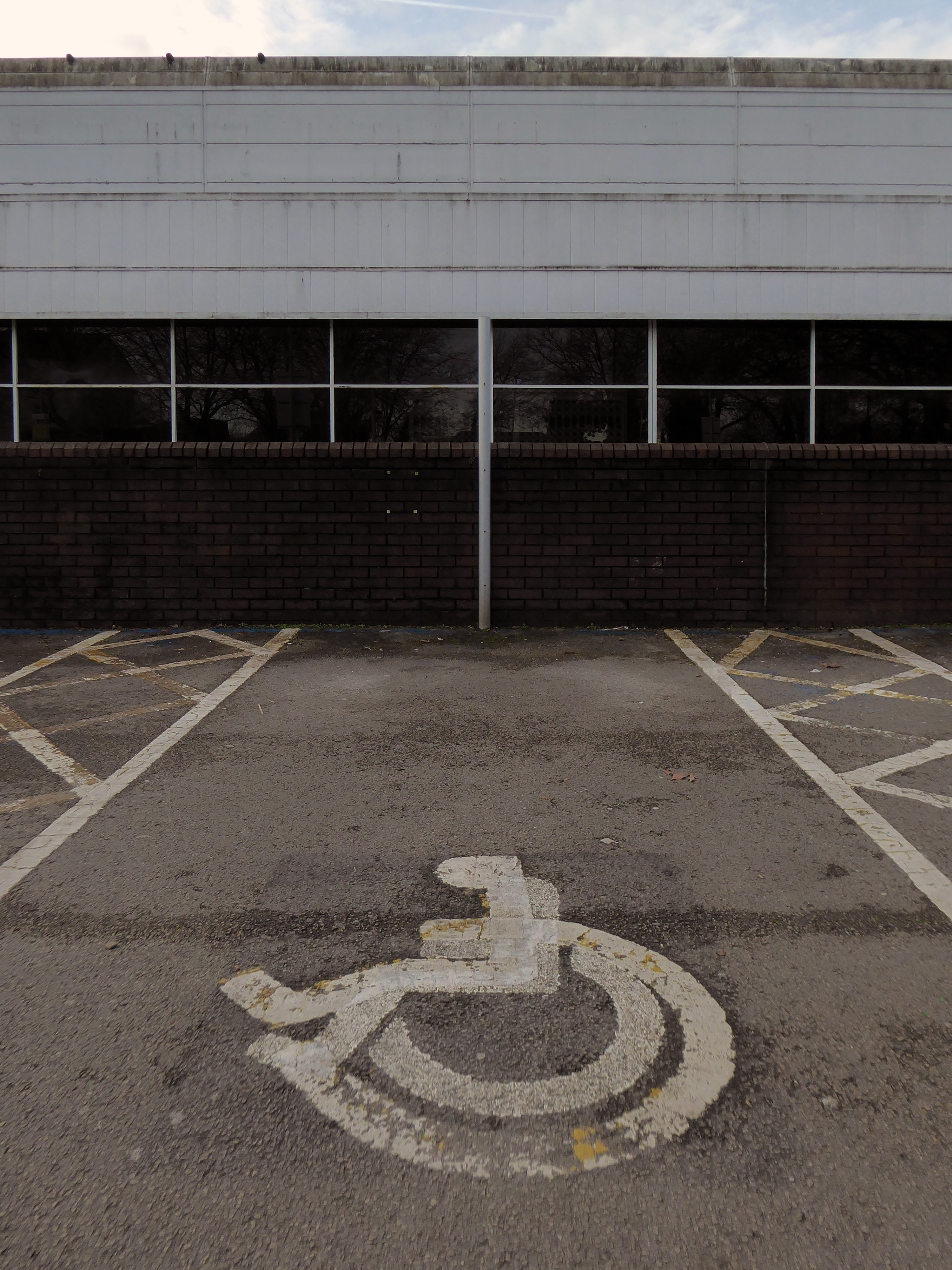
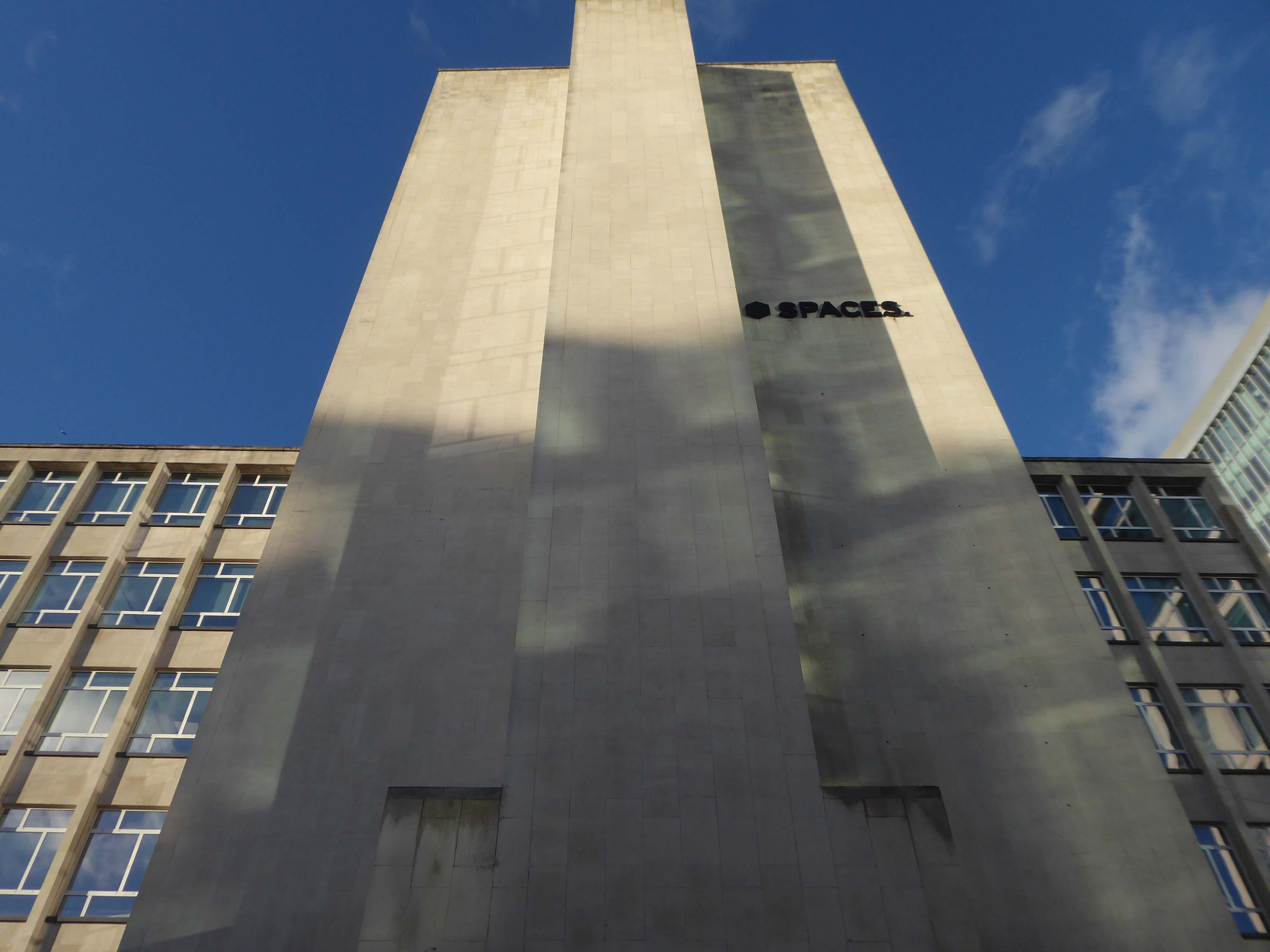
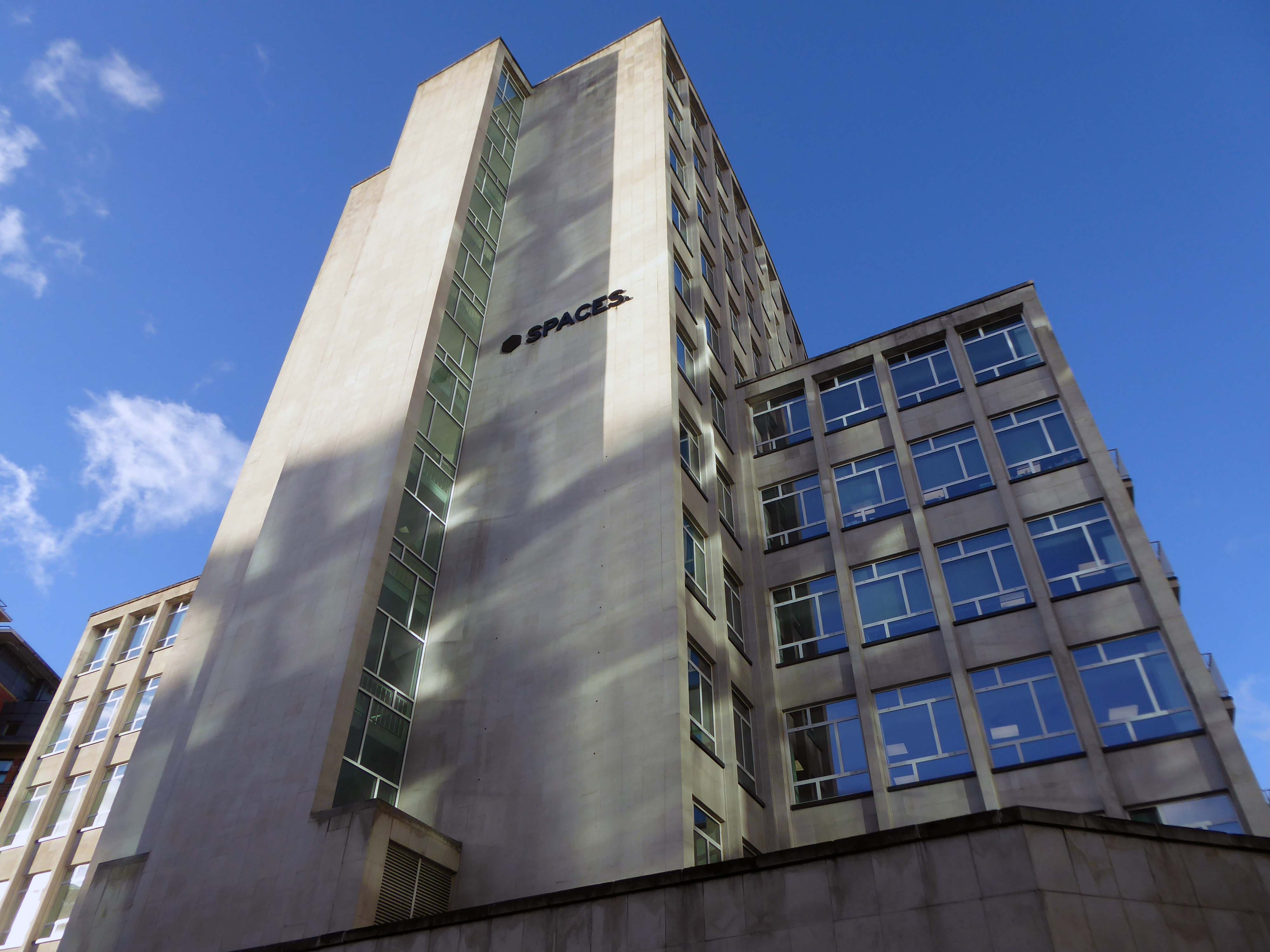
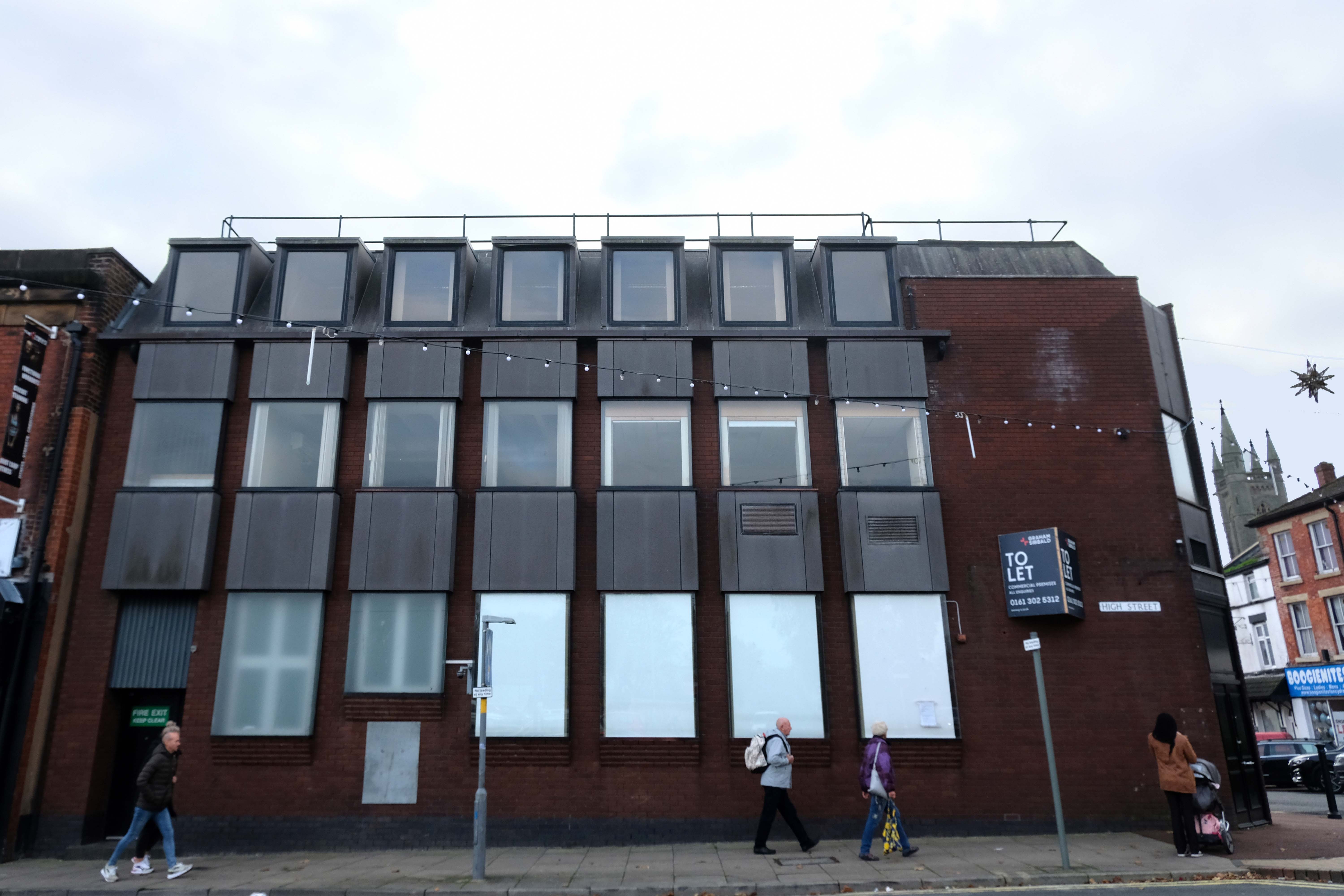
Currently trading as Spaces.

Take in all the best that Manchester’s creative scene has to offer and let your imagination go wild.

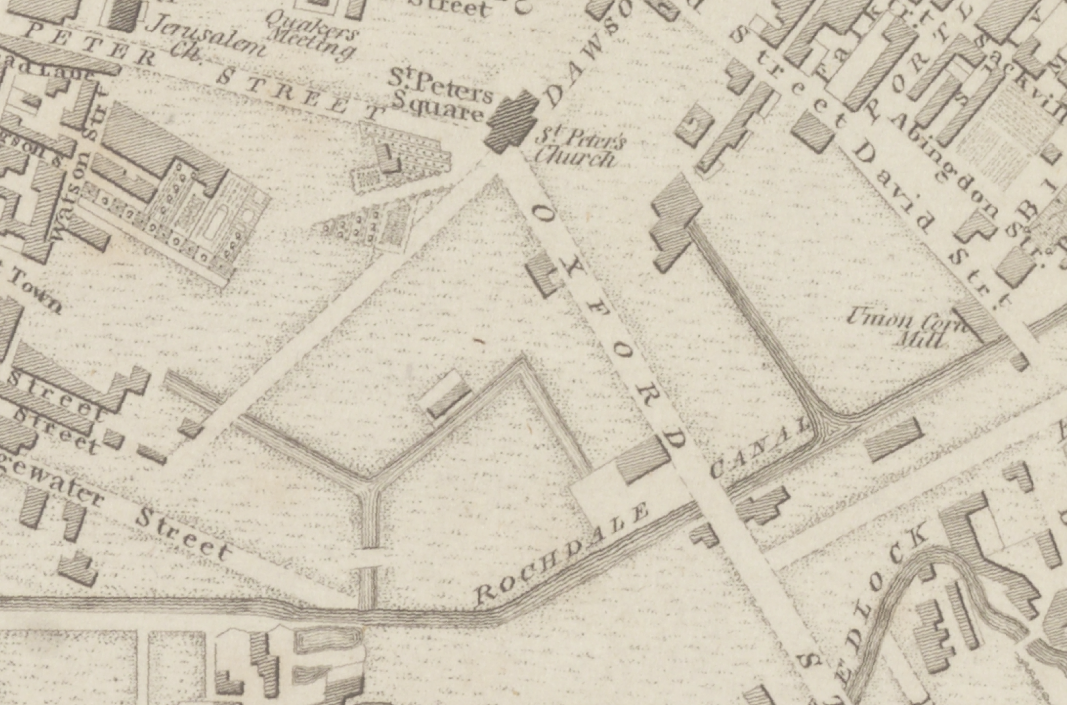
In 1807 you really had to use your imagination to discover the creative scene.

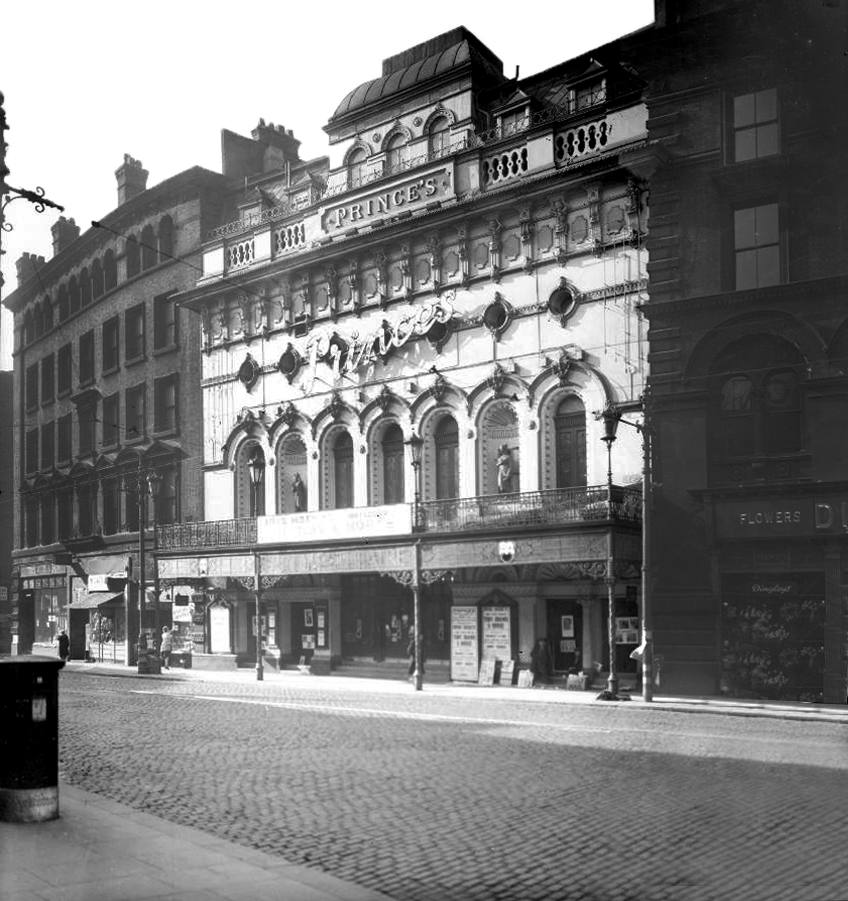
The site was home to the Prince’s Theatre:

Constructed by Metcalf and Waterson at a cost of £20,000, and designed by the architect Edward Salomons. The Theatre, which had seating for 1,590, opened with a production of Shakespeare’s ‘The Tempest’ on Saturday, October the 15th 1864, under the management of Charles Calvert.

Arthur Lloyd

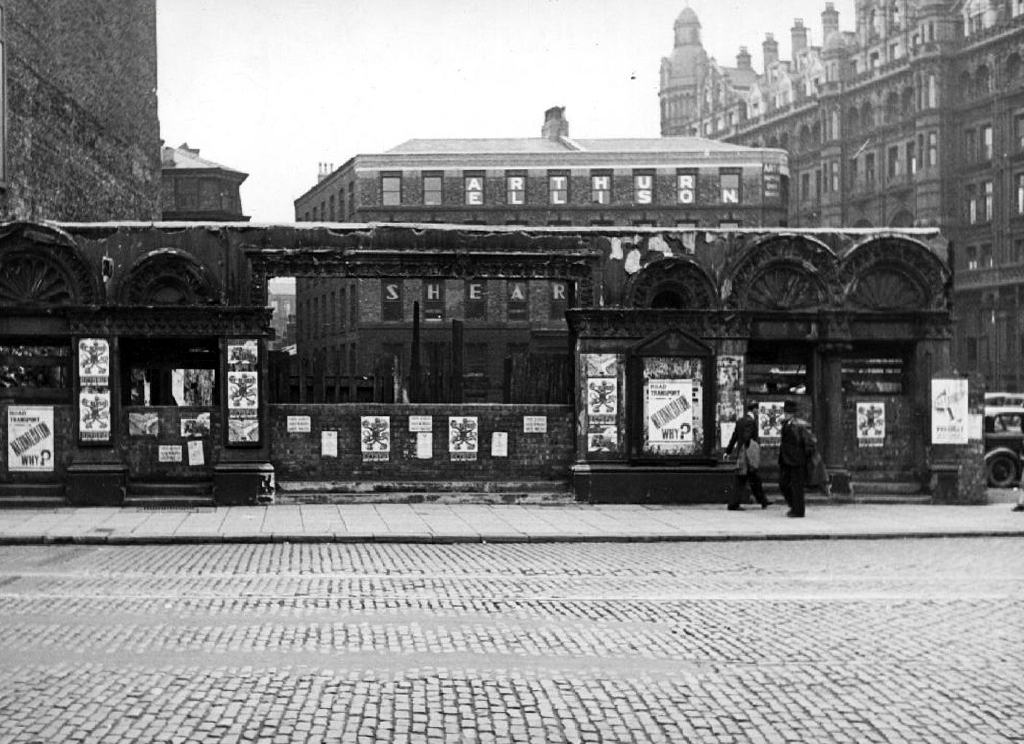
Sadly the Prince’s Theatre was closed in April 1940 when it was sold to ABC Cinemas who planned to build a new Cinema complex on the site, the Theatre was subsequently demolished but because of the war – the new Cinema was never built

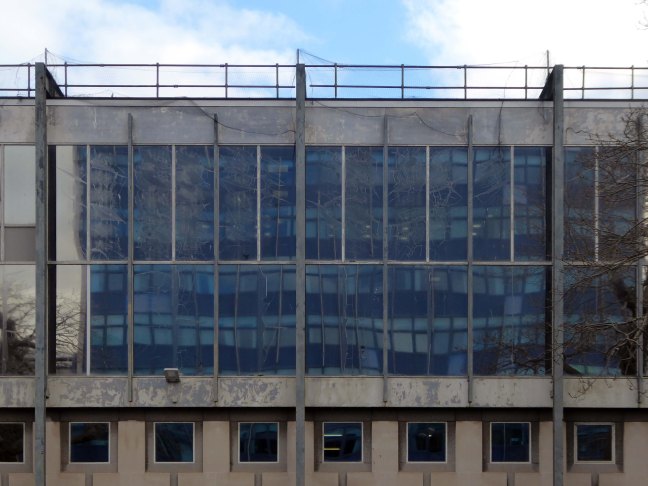
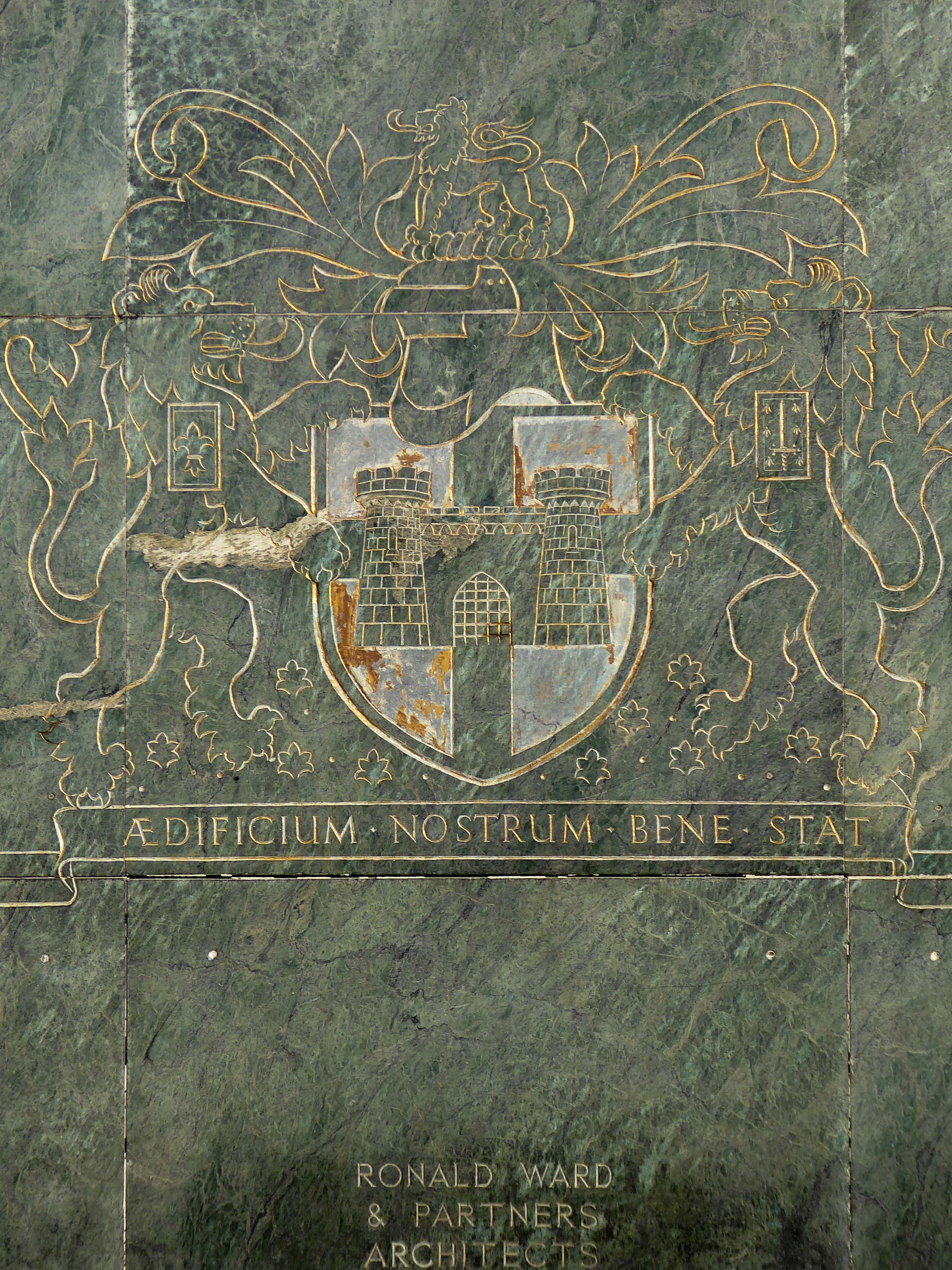
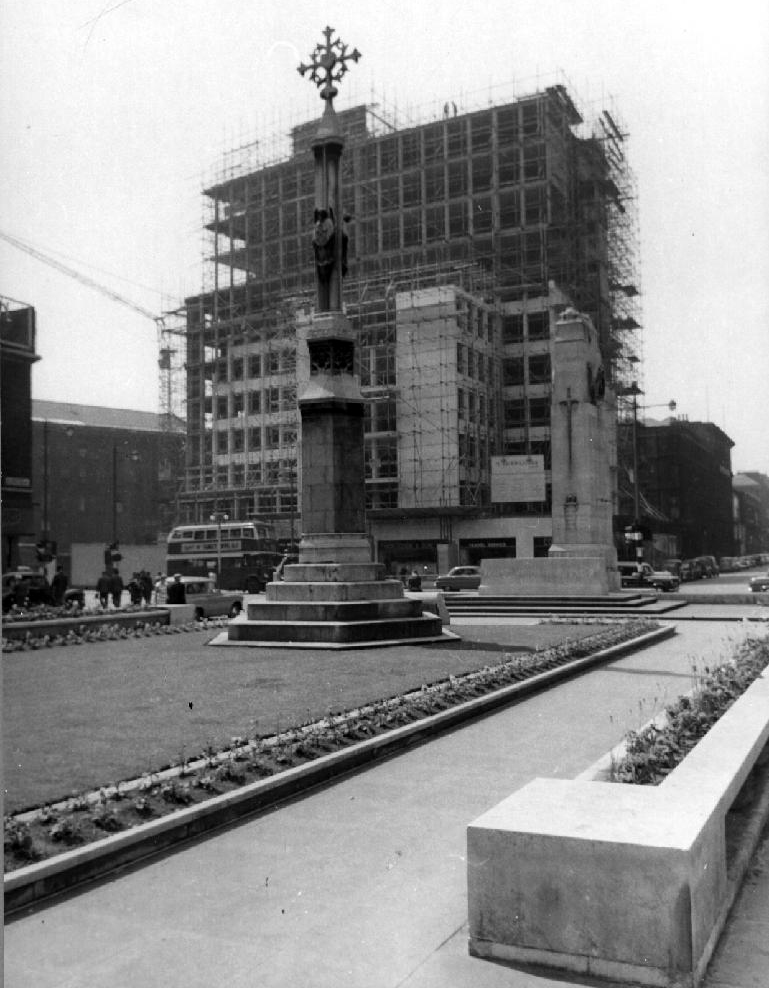
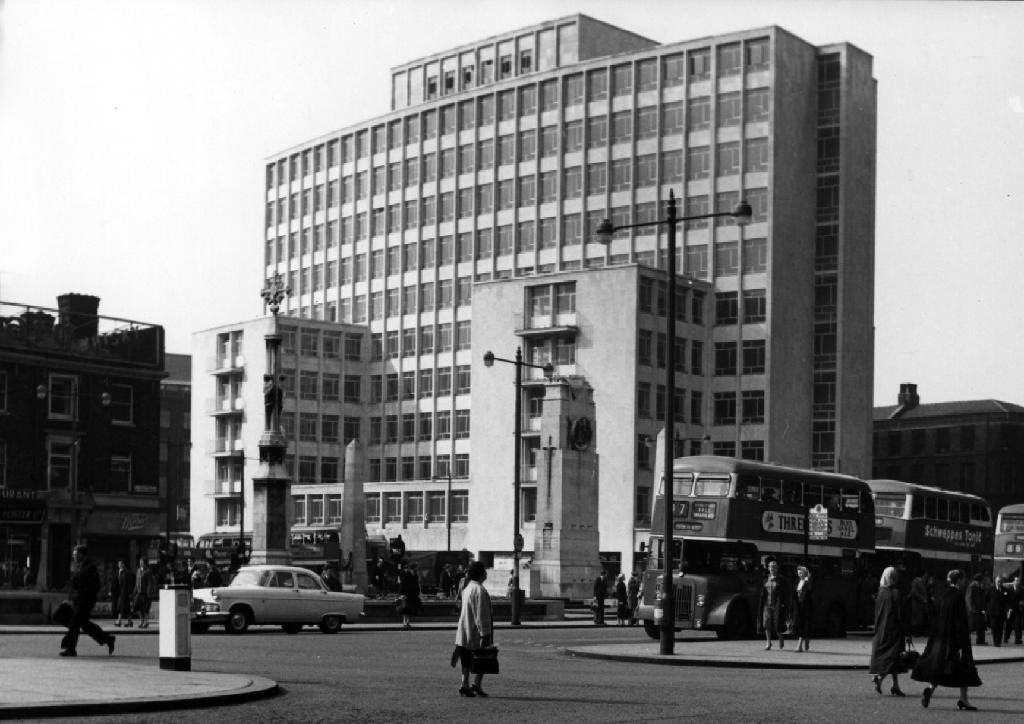
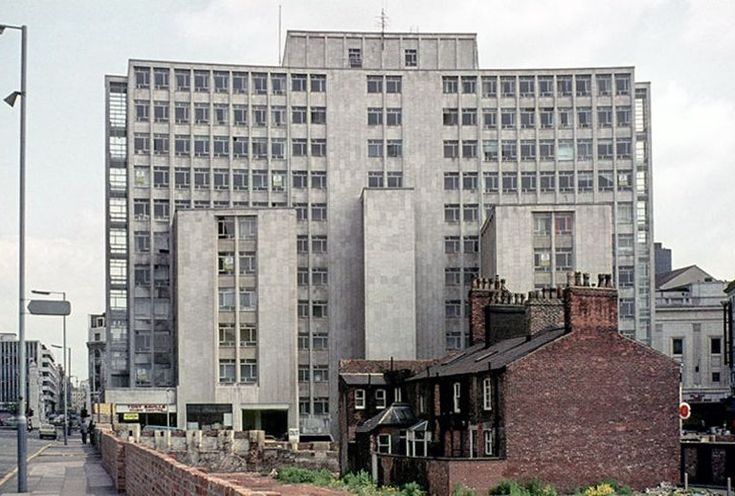
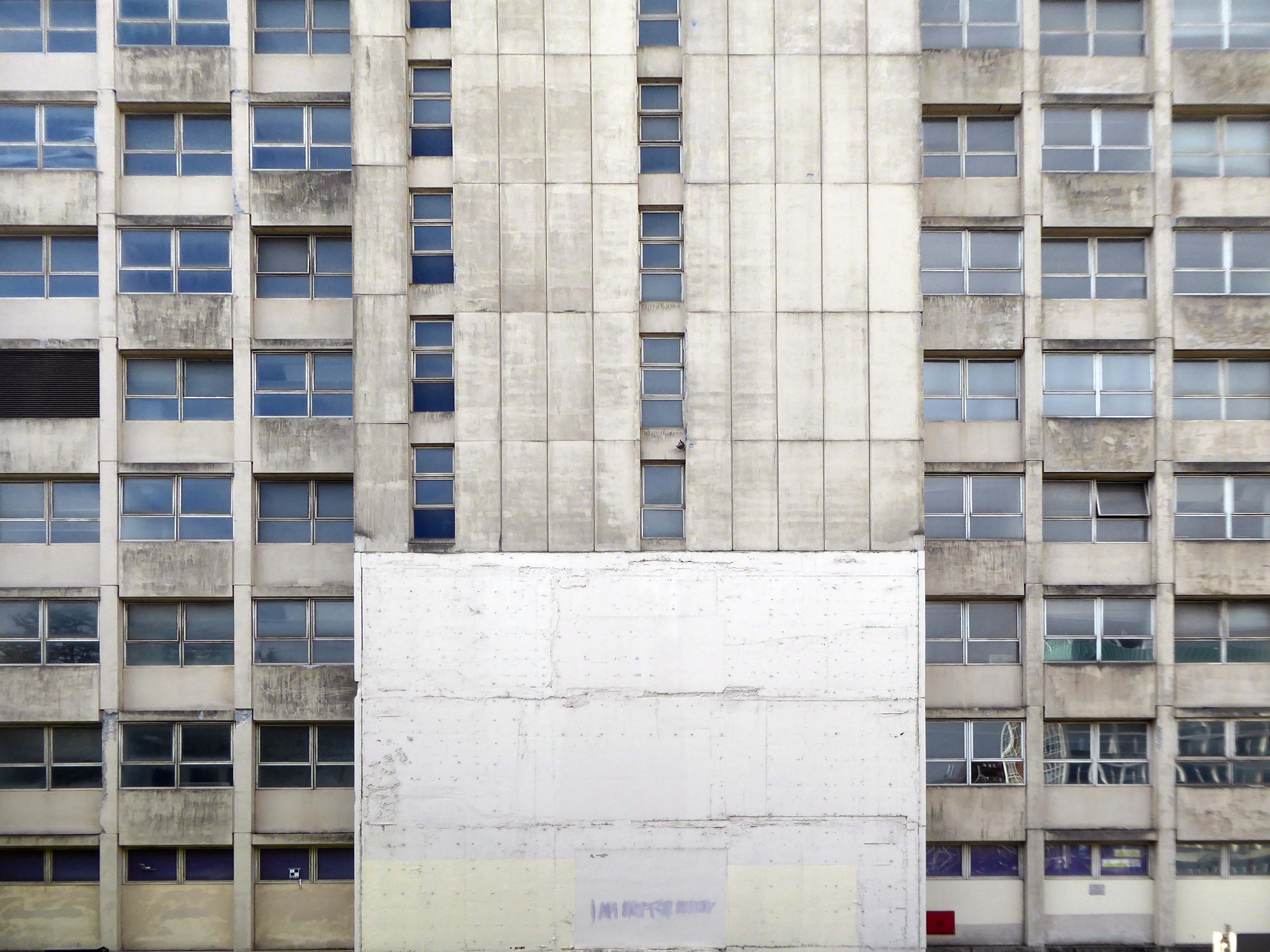
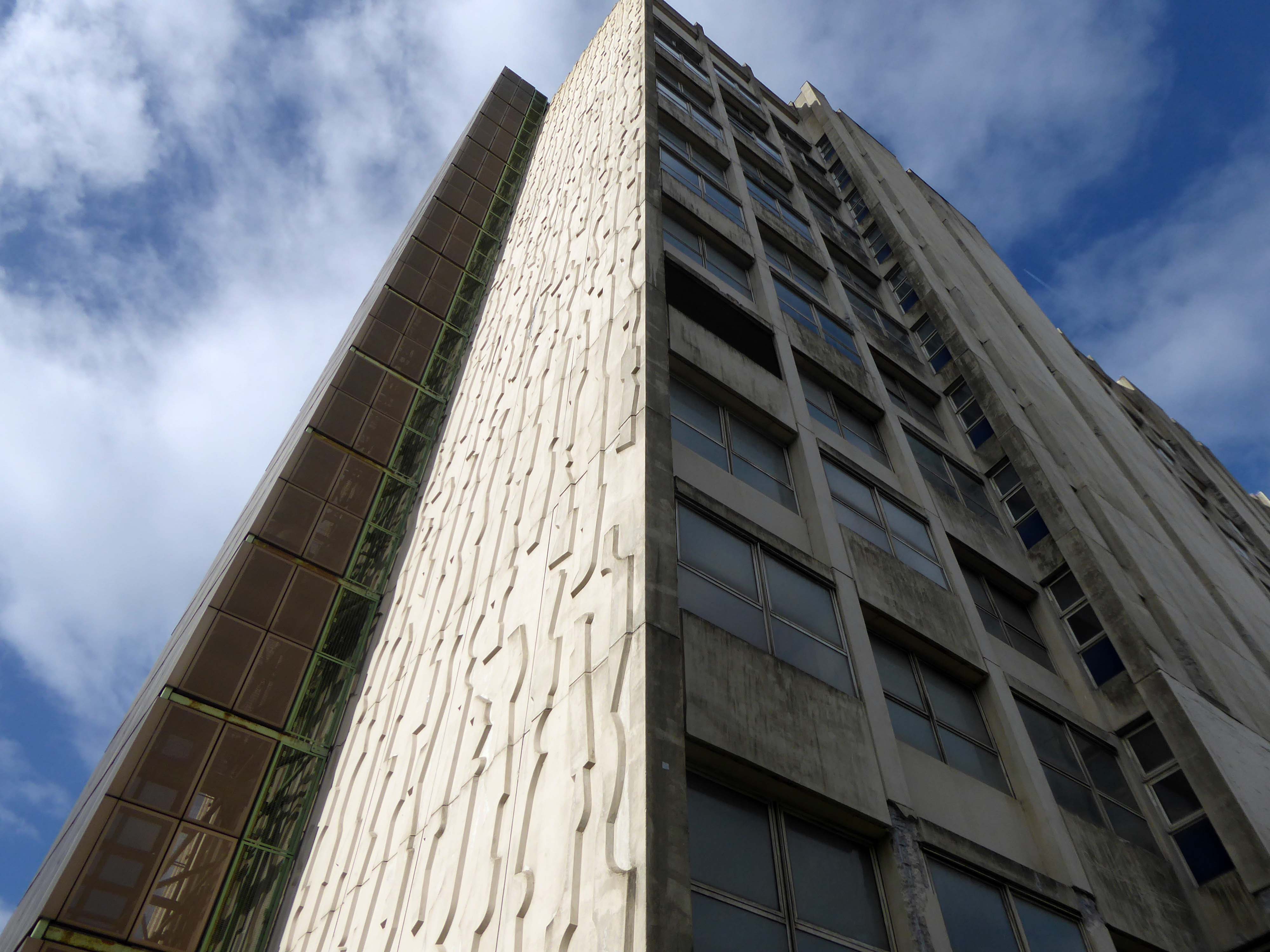
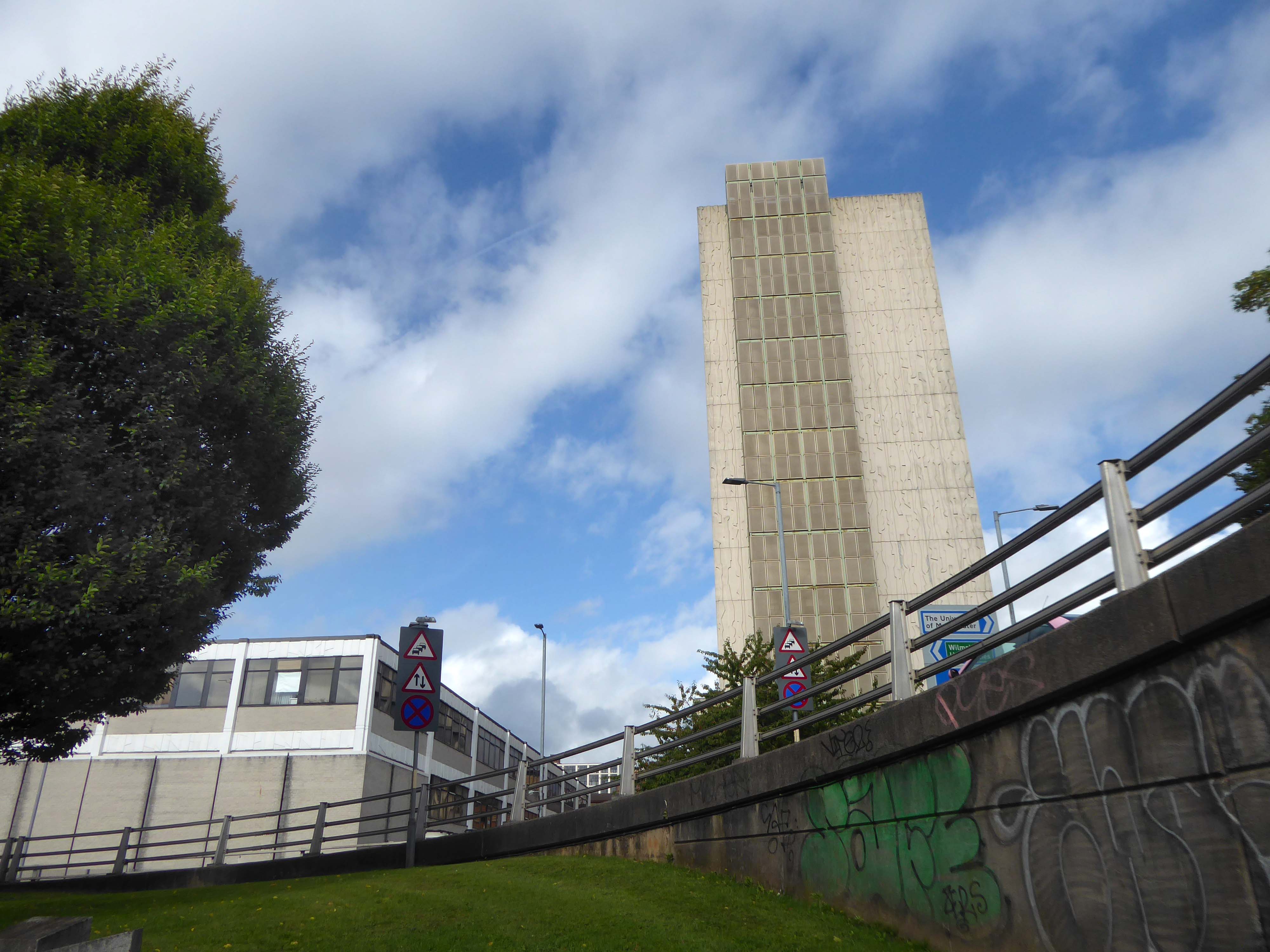
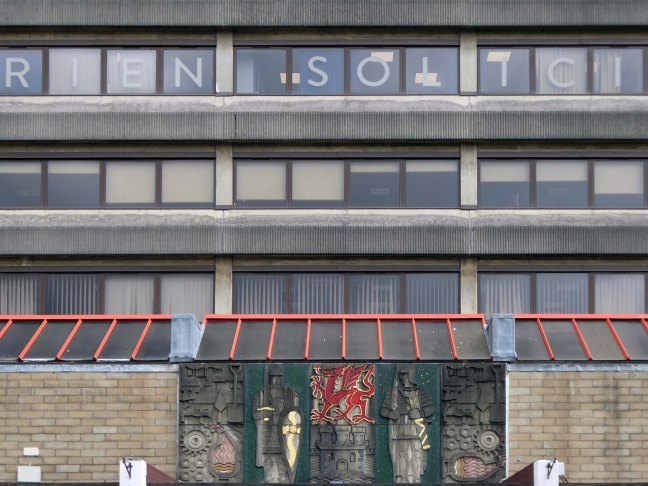
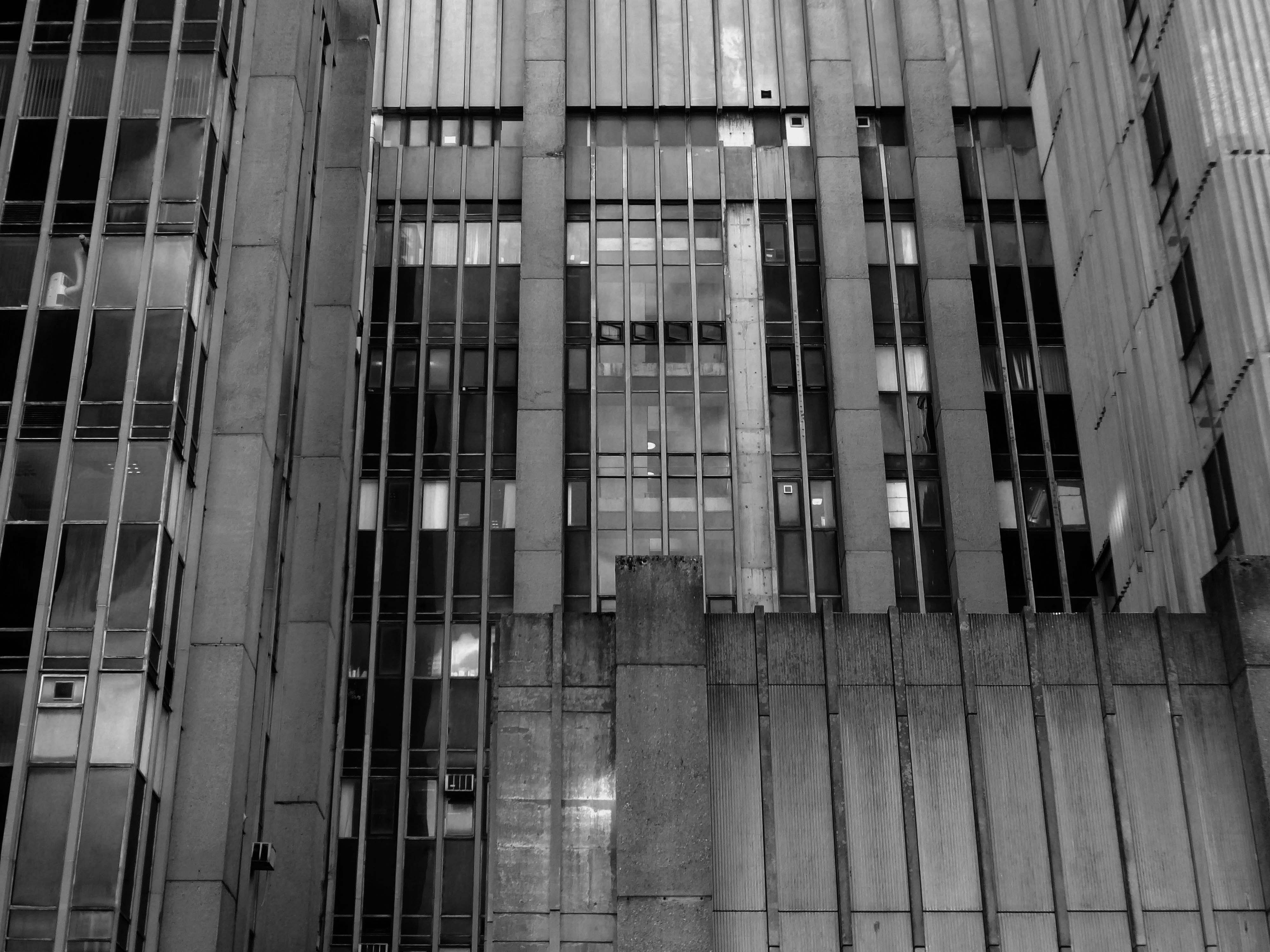
It was replaced by Rediffusion House – later Peter House architects Ansell & Bailey.

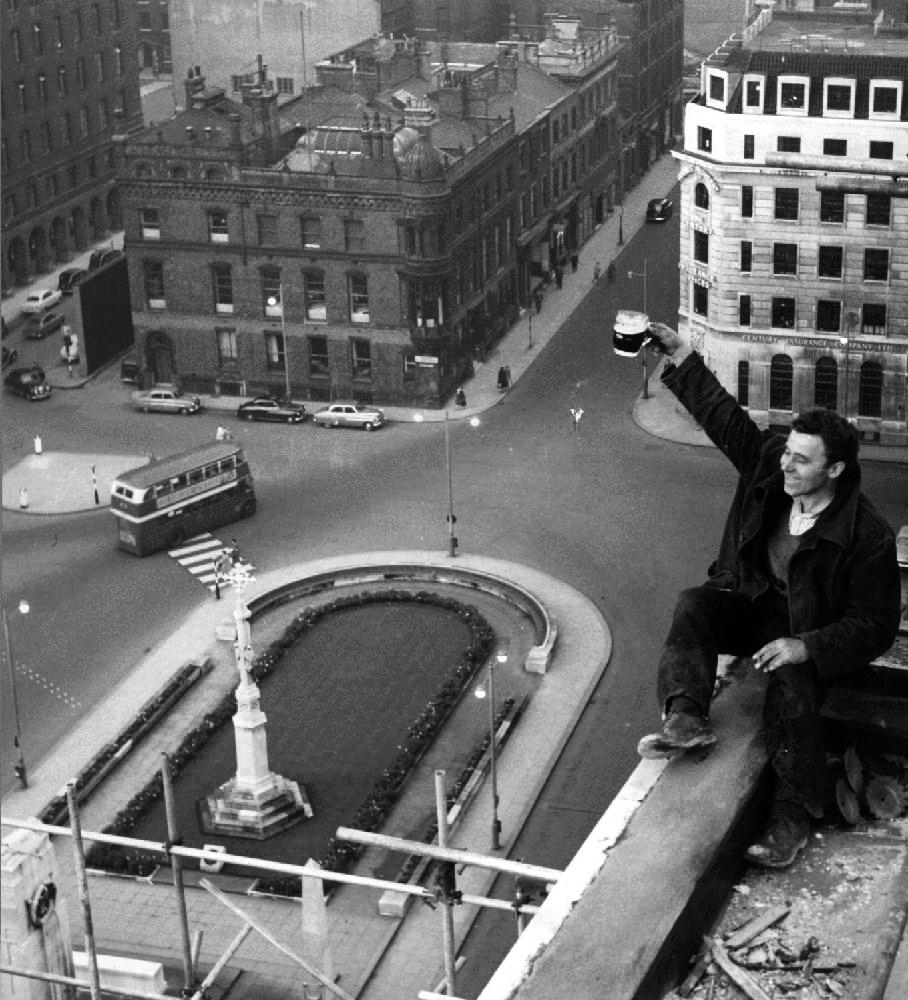
Topped out in 1957 with a pint of Chester’s Mild.

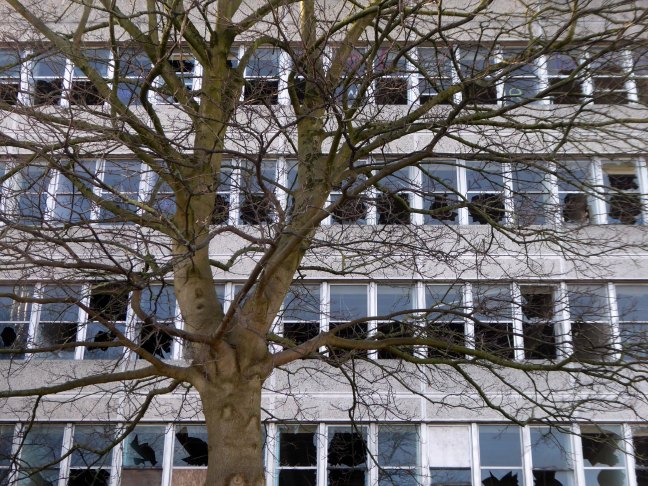
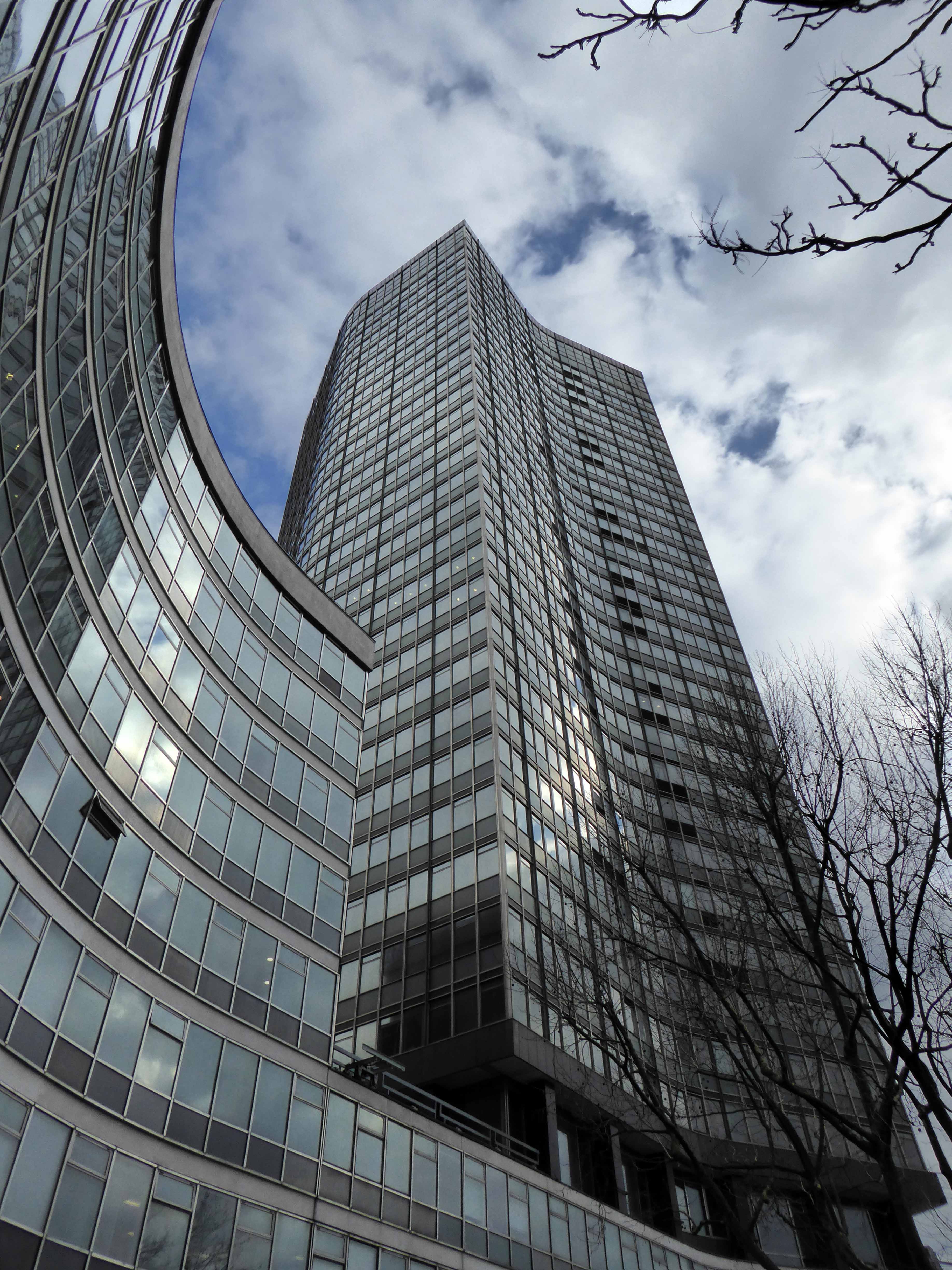
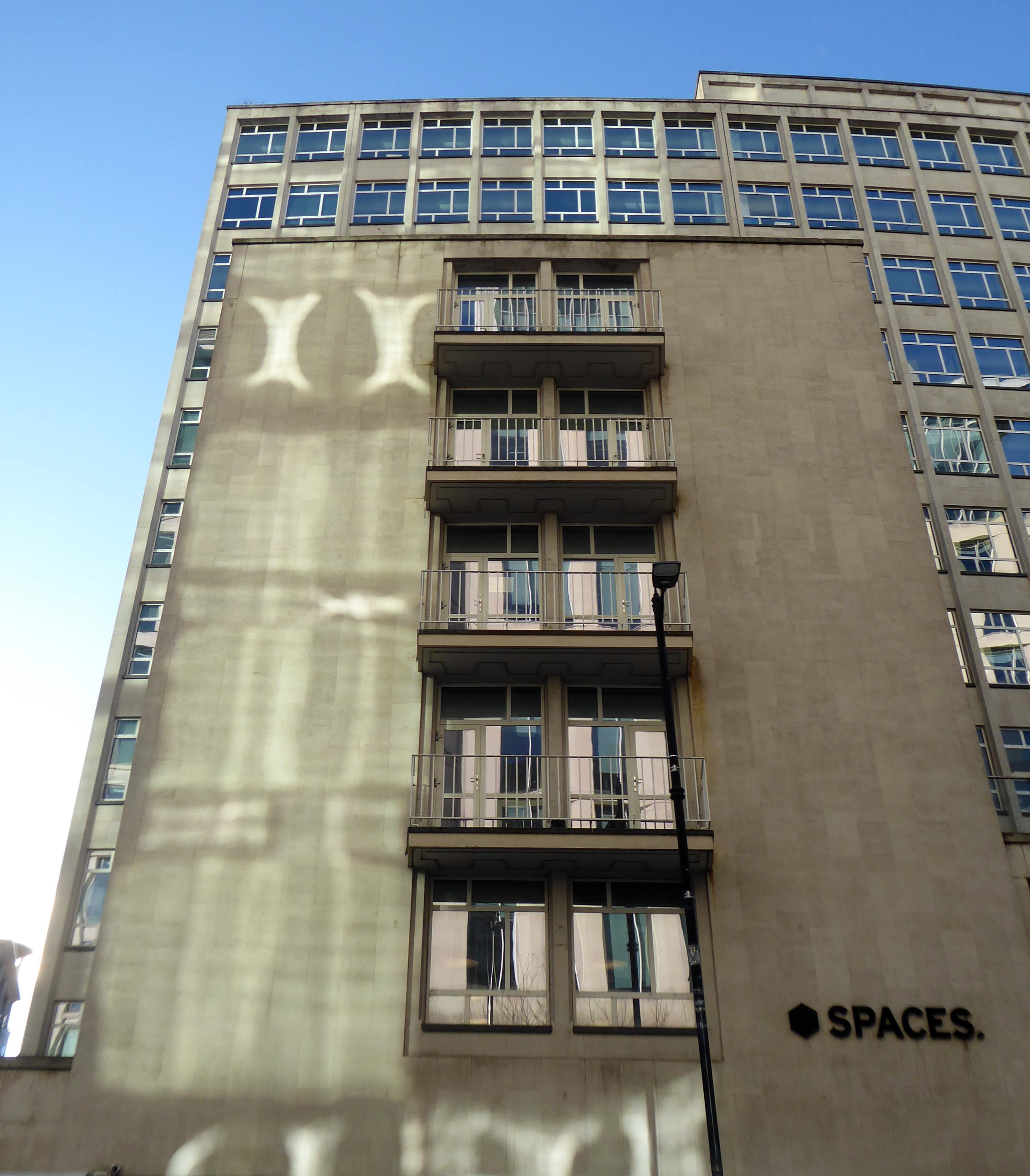
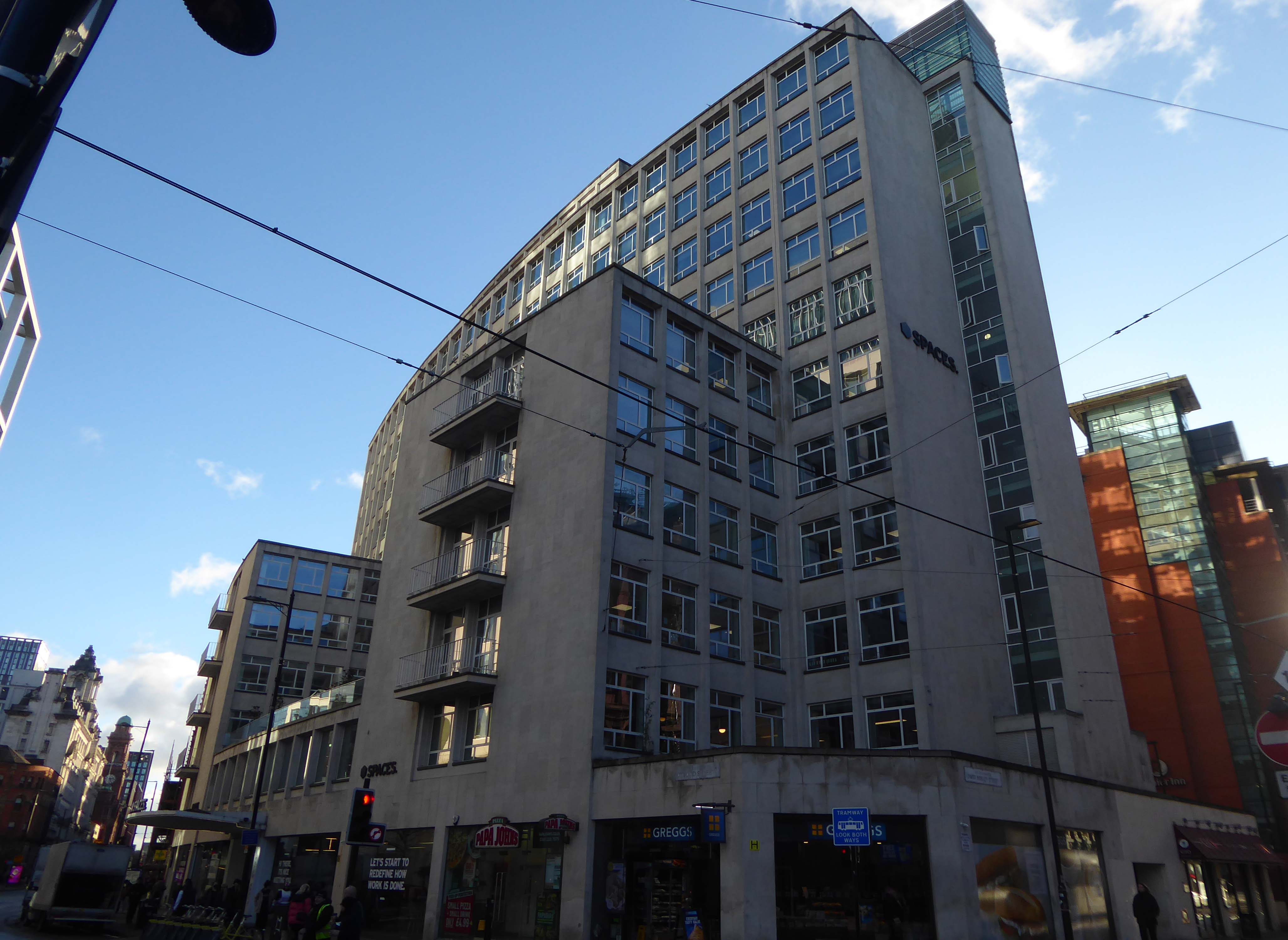
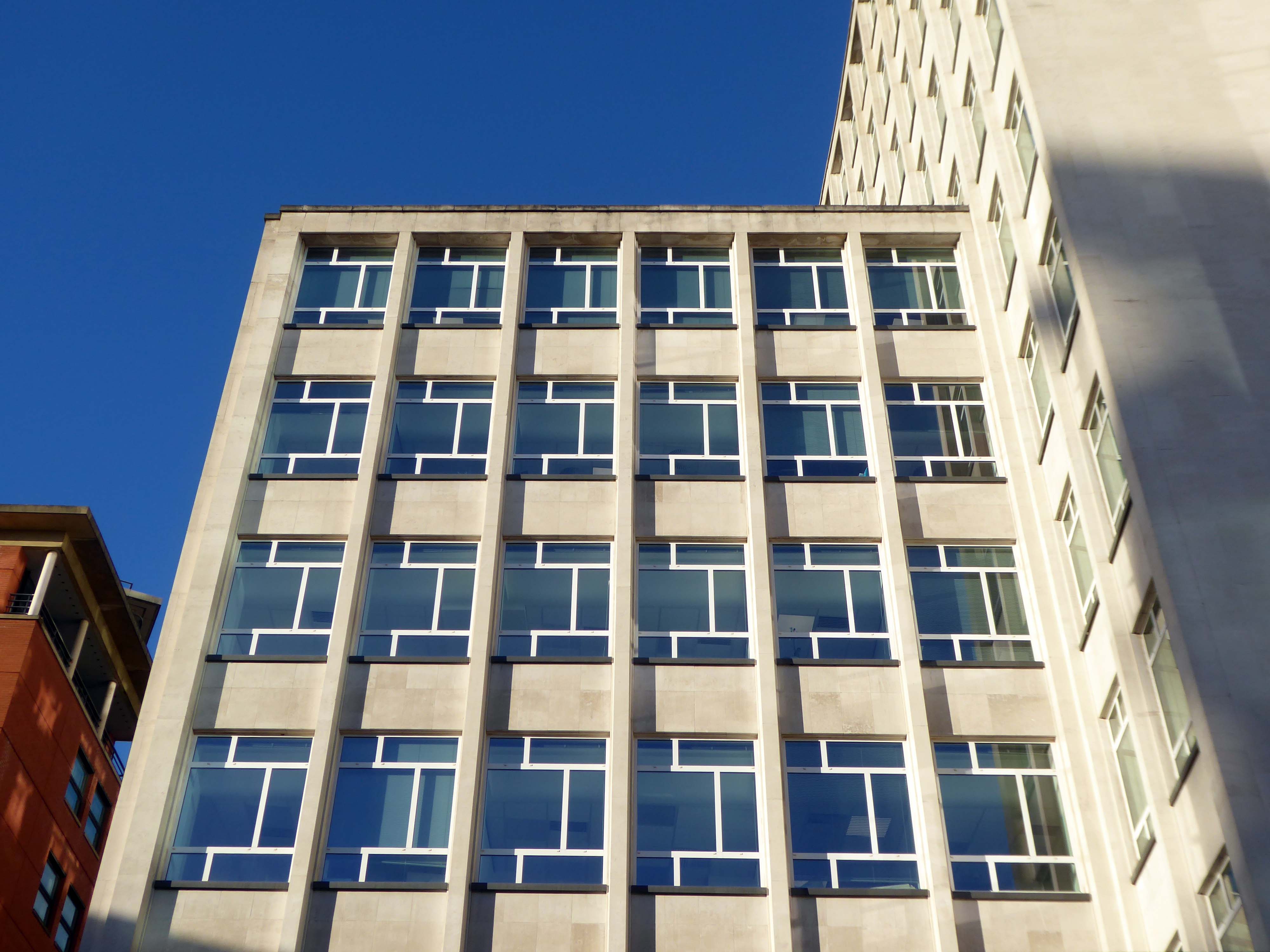
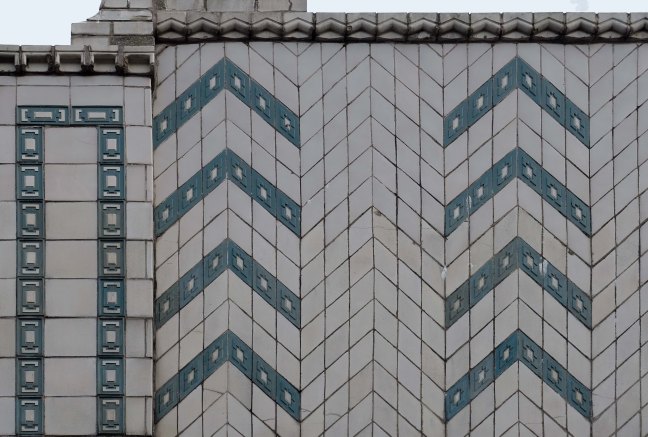
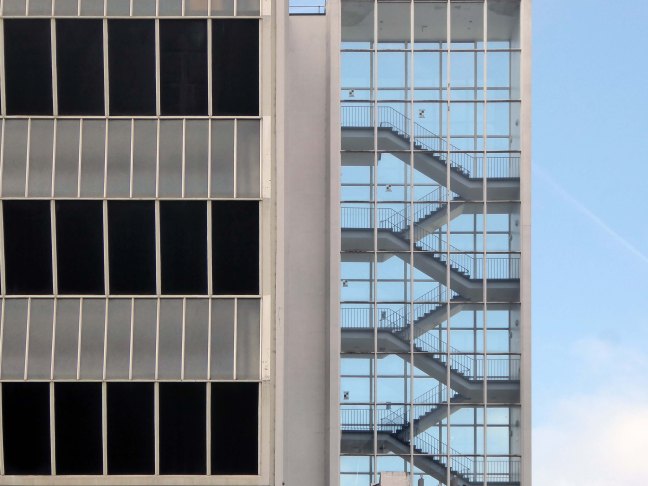
Peter House gracefully hugs the curve of Oxford Street as it leads into St. Peter’s Square. This was one of the earliest commercial buildings to be completed post-war, which demonstrates the slow economic recovery of the region. Built on a site that had been bombed, the Portland stone seemed to marry with the material narrative established by JW Beaumont and LC Howitt in their buildings of the 1950’s and following earlier interwar commercial buildings. This scheme has more panache than the rather serious facades of the Student Union building or the Law Courts though.

The stepped massing and the articulation of the wings of the building preclude the accepted commercial norm of developing to the edge of the site and instead promote a satisfying formal interplay between the six and eleven storey elements. The building has been sensitively modified despite a lack of any listed status and remains commercially viable as offices and as retail. The continued success may be attributed to the air of quality afforded by the stone, certainly it has ensured the longevity, particularly when one considers the fate that befell the easement hugging concrete of Elizabeth House – Cruickshank & Seward, 1971 across the road; it was demolished in 2012.

Mainstream Modern

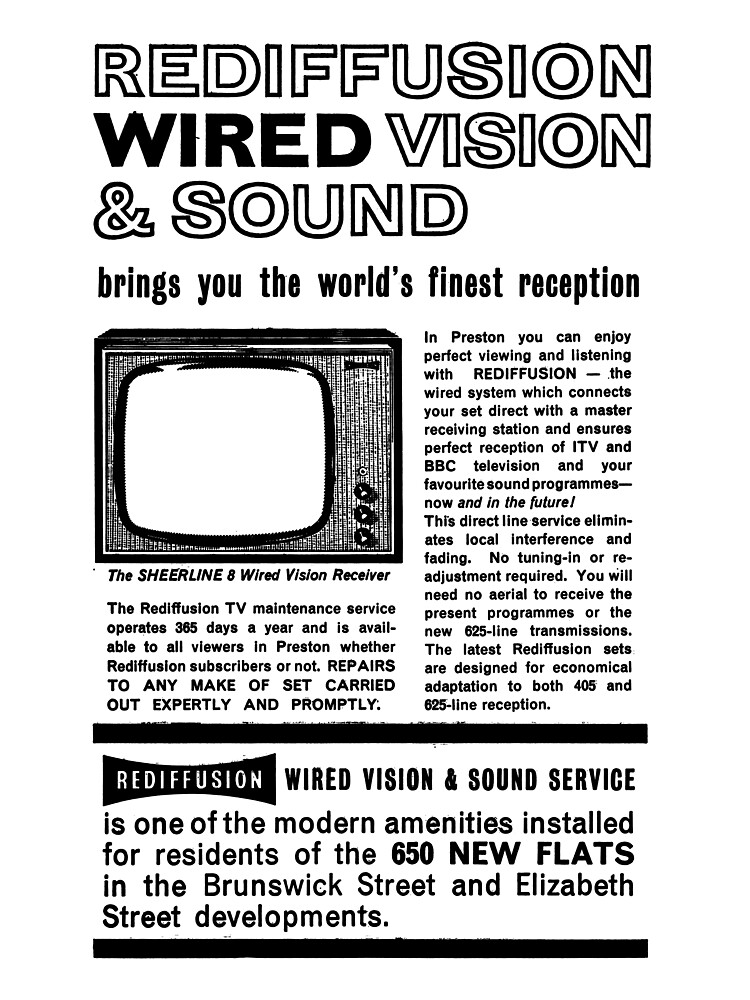
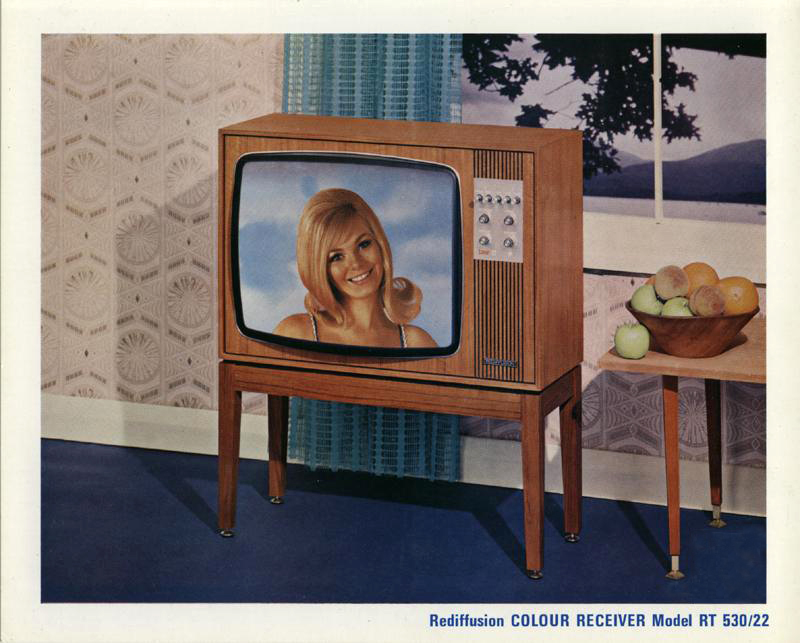
Rediffusion was the first independent commercial TV franchisee, in 1956 Associated-Rediffusion struck a very lucrative deal with Granada Television, the franchise holder for weekday broadcasts in the North of England.

The company offered a low-bandwidth cable TV and radio distribution system, provided in most United Kingdom towns. Selection of TV or radio station was by means of a rotary switch, usually mounted on a wall or window frame close to the point of entry of the cable into the home.

The Rediffusion retail chain, renting and servicing TVs, radios, VCRs and hi-fi systems, was common on high streets until it was bought by Granada Rentals in 1984.

The days of the monolithic mono-culture of the sole occupant are in decline – we live in the age of the co-working space and homes of multi-use creative scene.

Peter House prevails a pale white Portland Stone embodiment of different days and different ways.

Let’s take a walk around.

As a footnote – once in the shadow of Peter House, Tommy Ducks was demolished overnight.

Apparently, its supporters managed to arrange a preservation order for the building but, according to the excellent Pubs of Manchester website, that order expired at midnight on February 12, 1993, and the pub was literally reduced to rubble before anyone could seek a renewal on February 13th.

Portwood – 2023

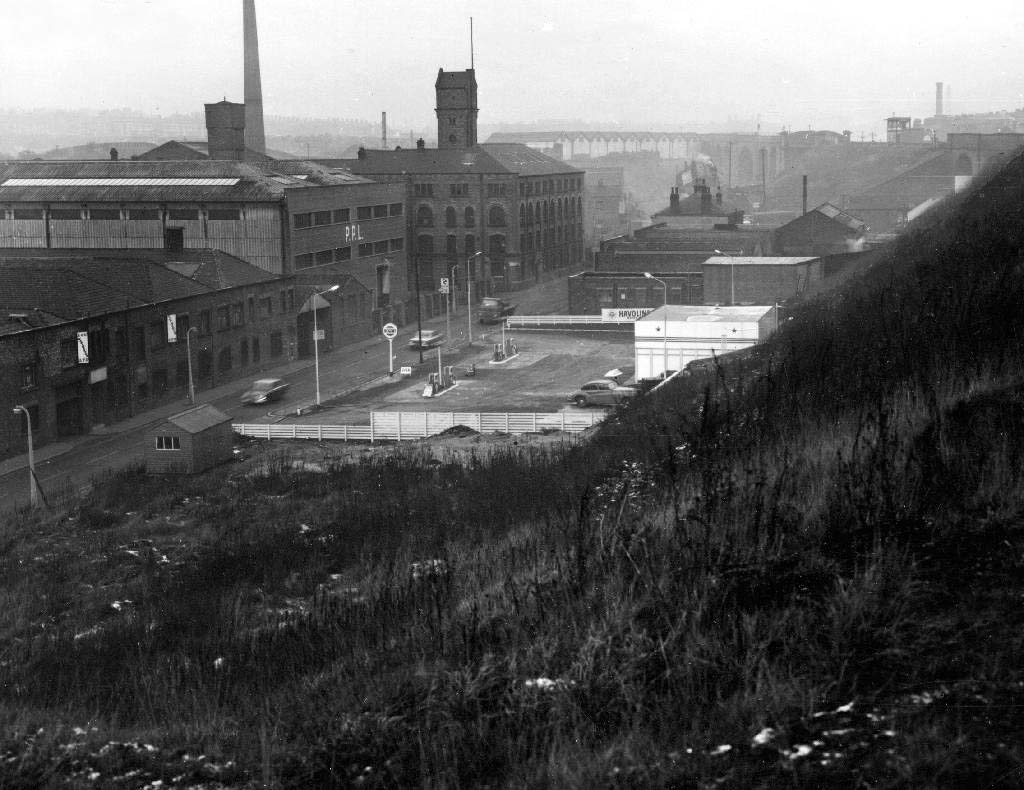
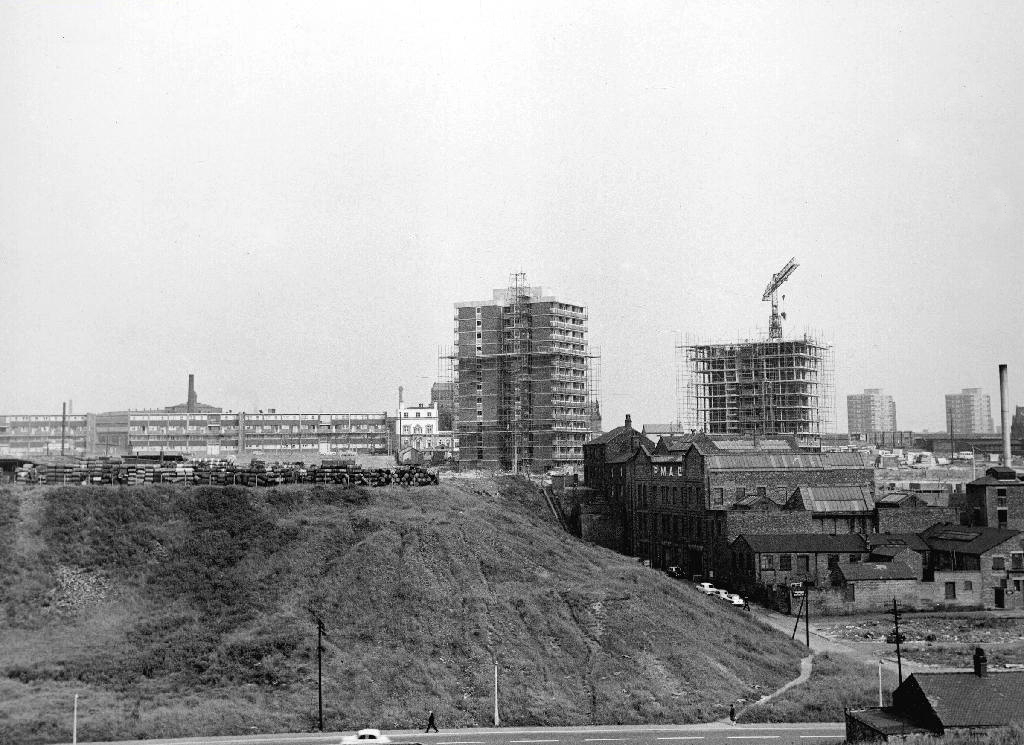
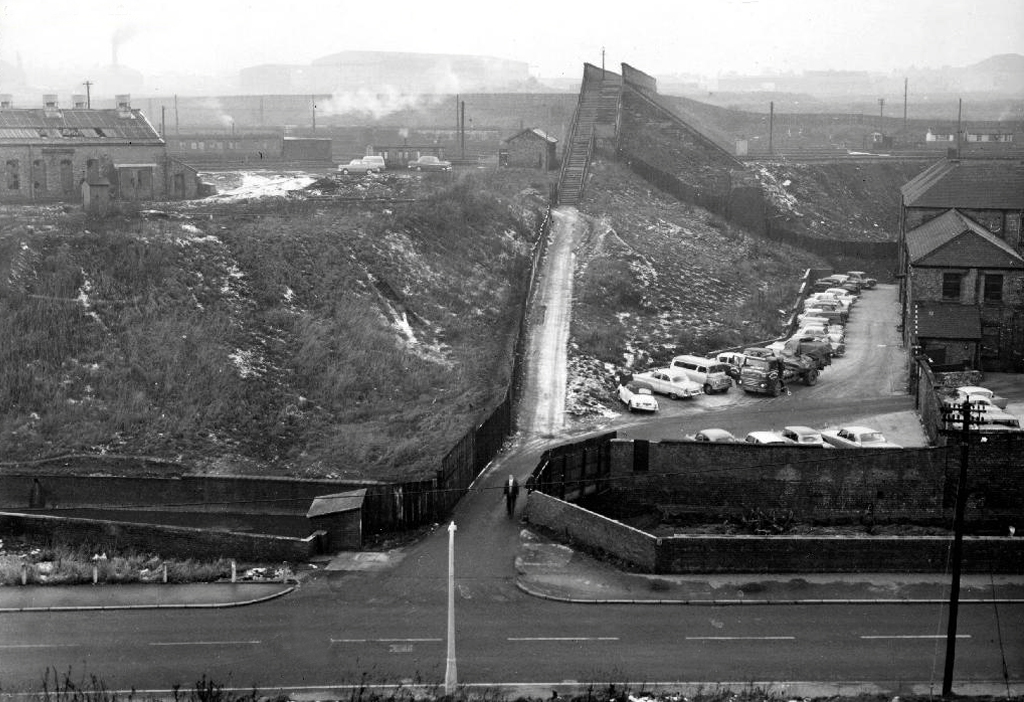
Where are we?

We once were lost, but are we saved?

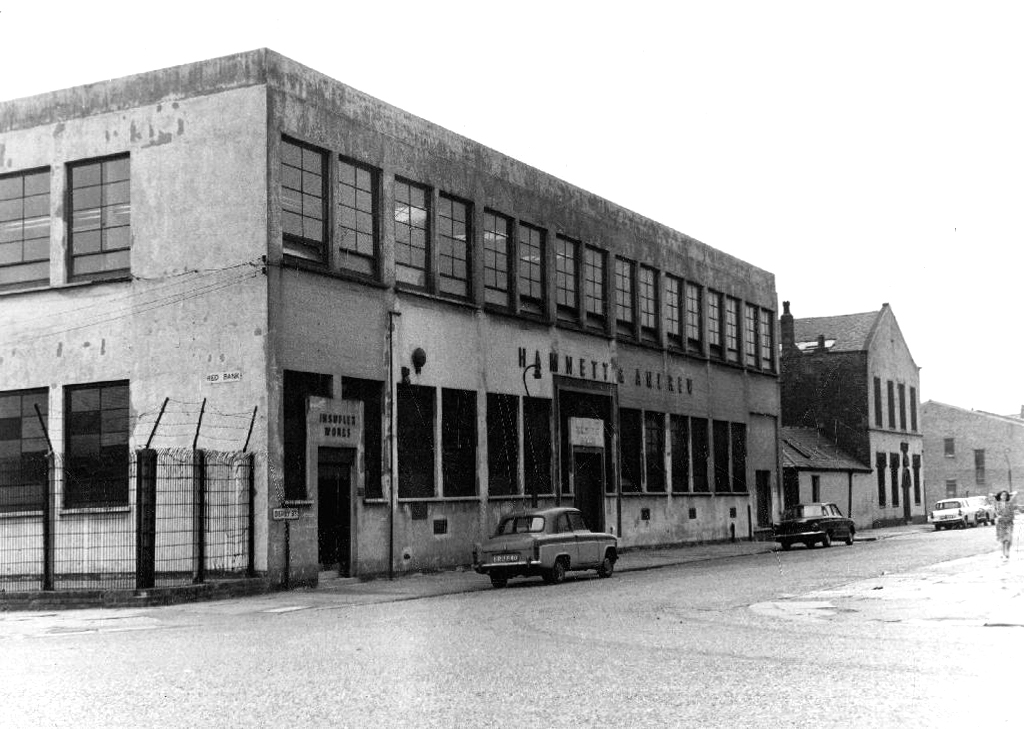
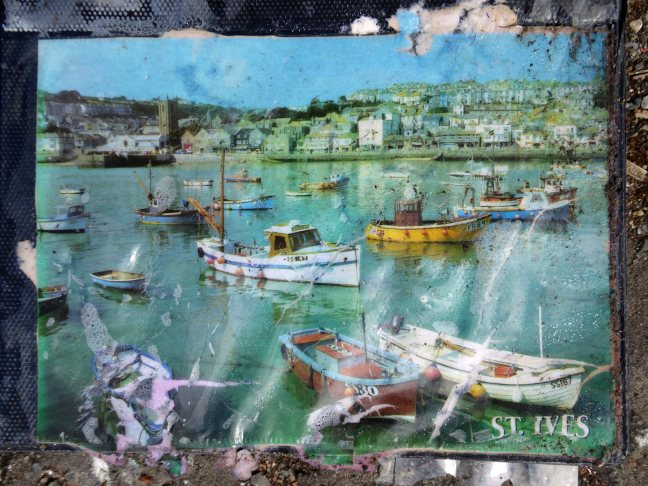
A remnant from a discarded photographic album locates us in Cornwall.

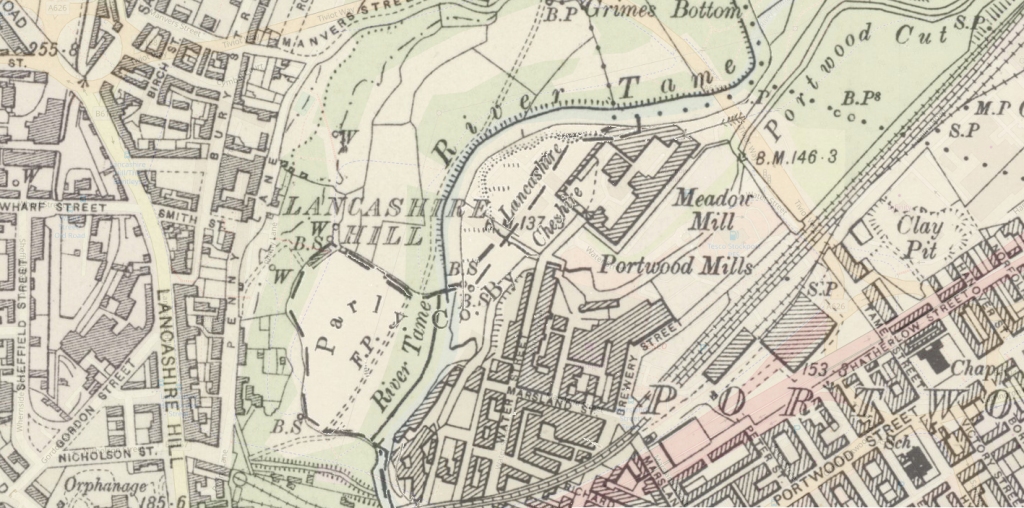
The Ordnance Survey places us at the heart of the Industrial Revolution.

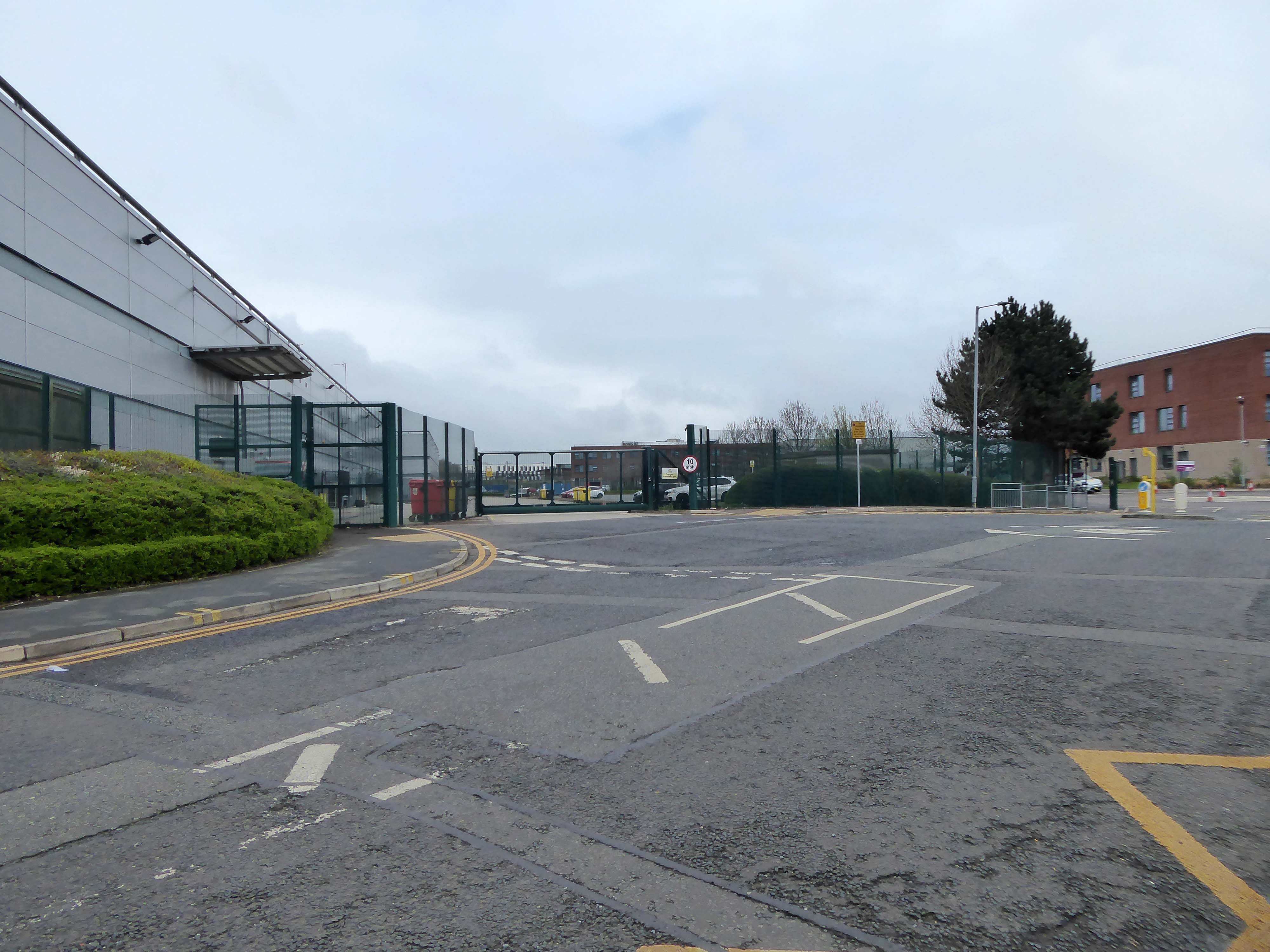
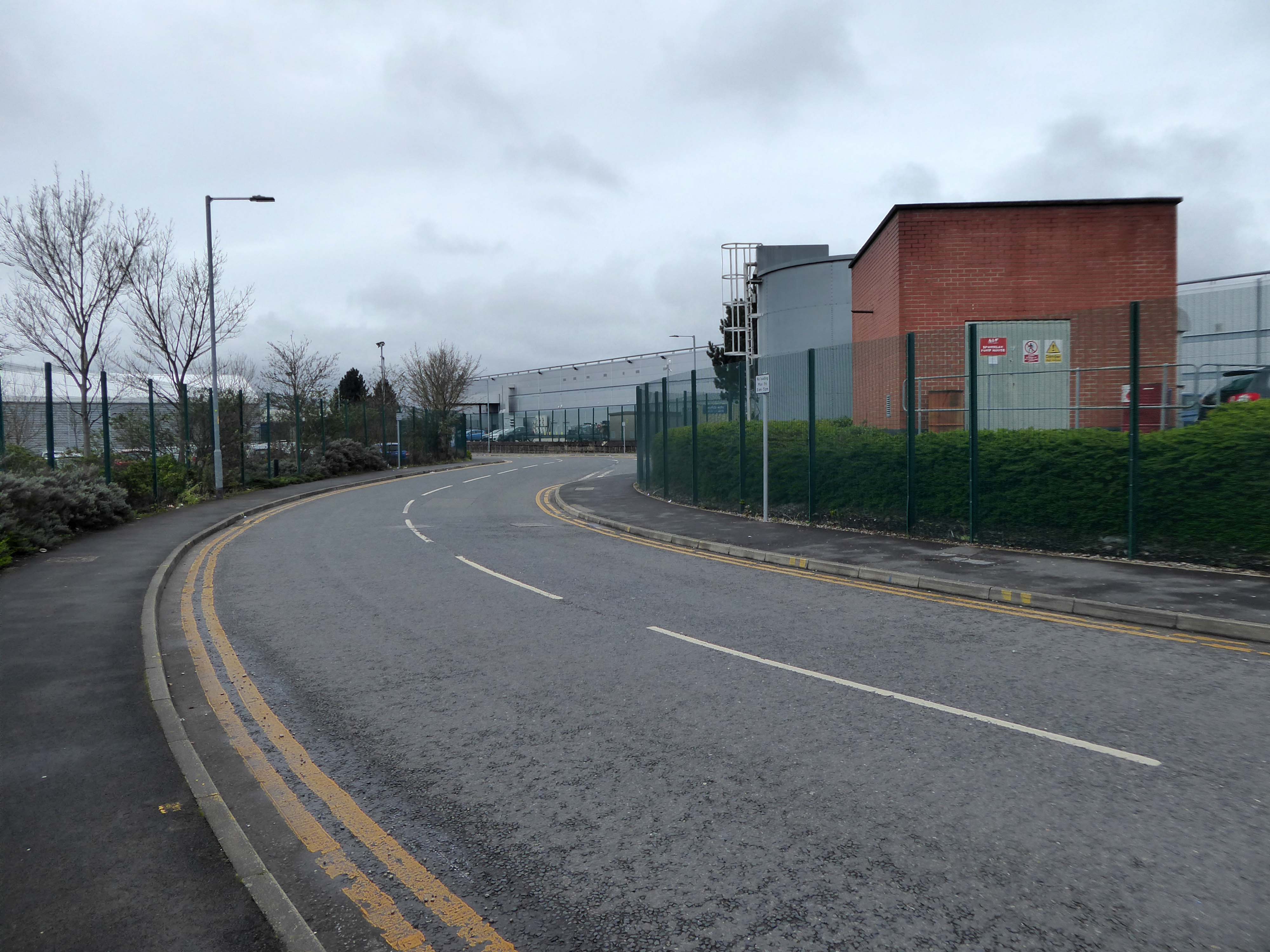
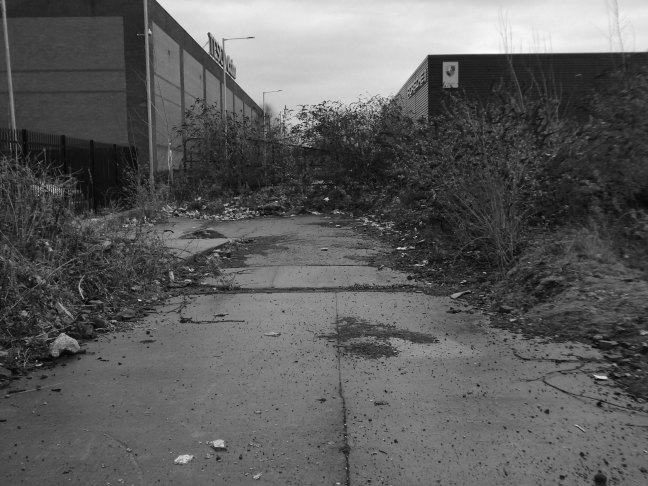
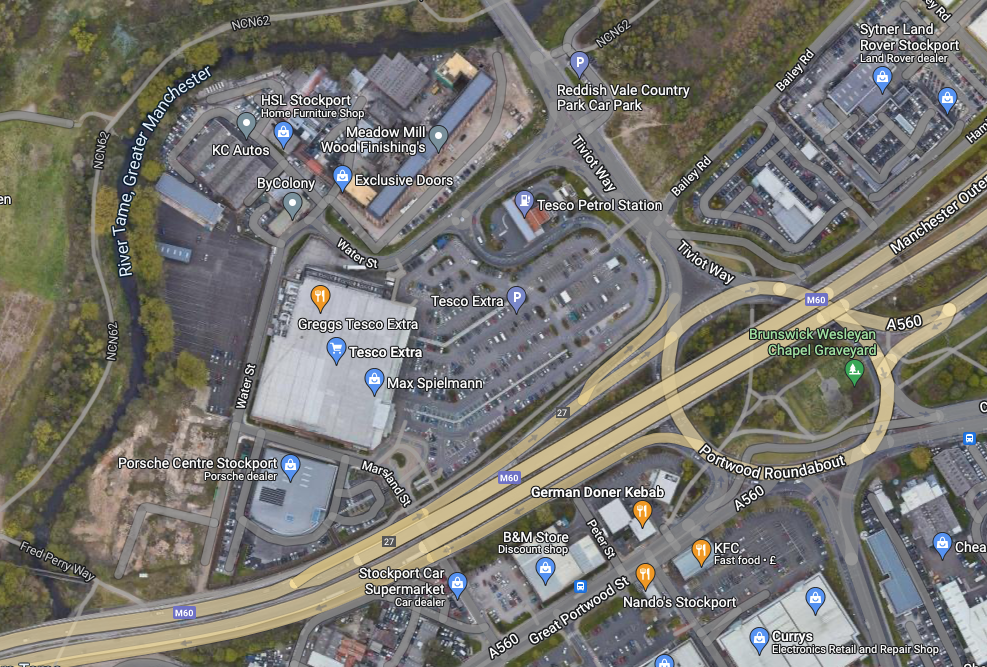
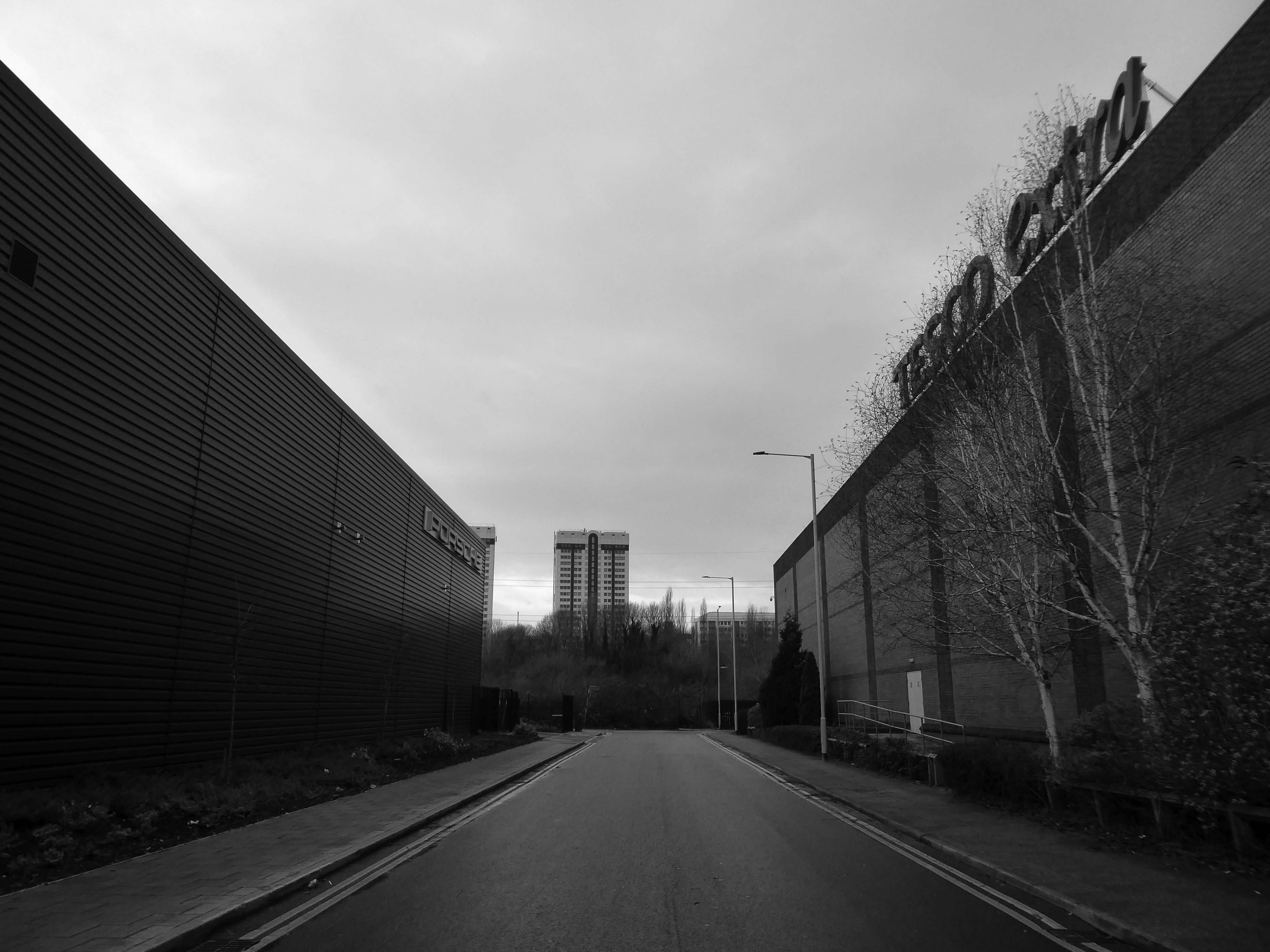
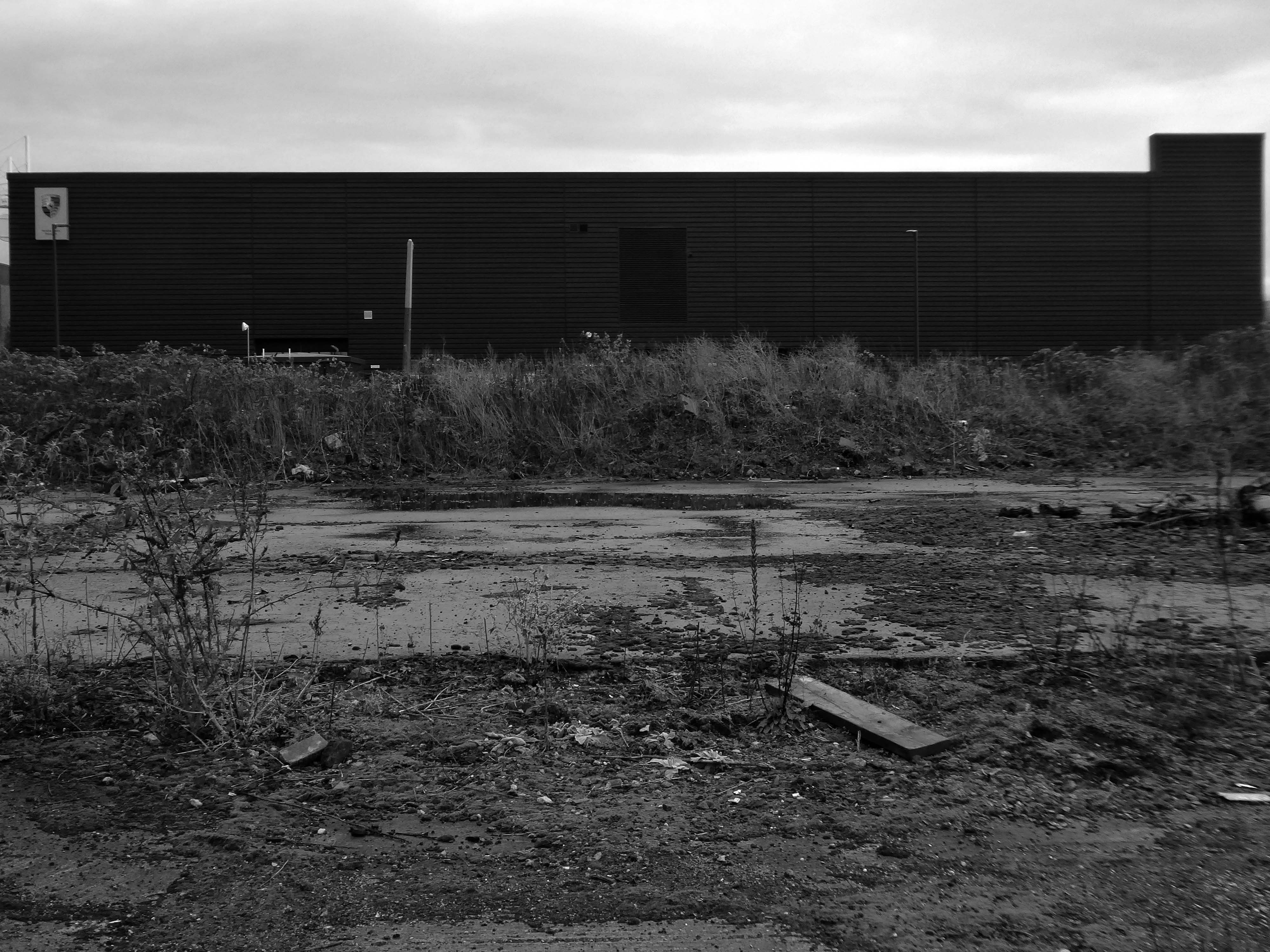
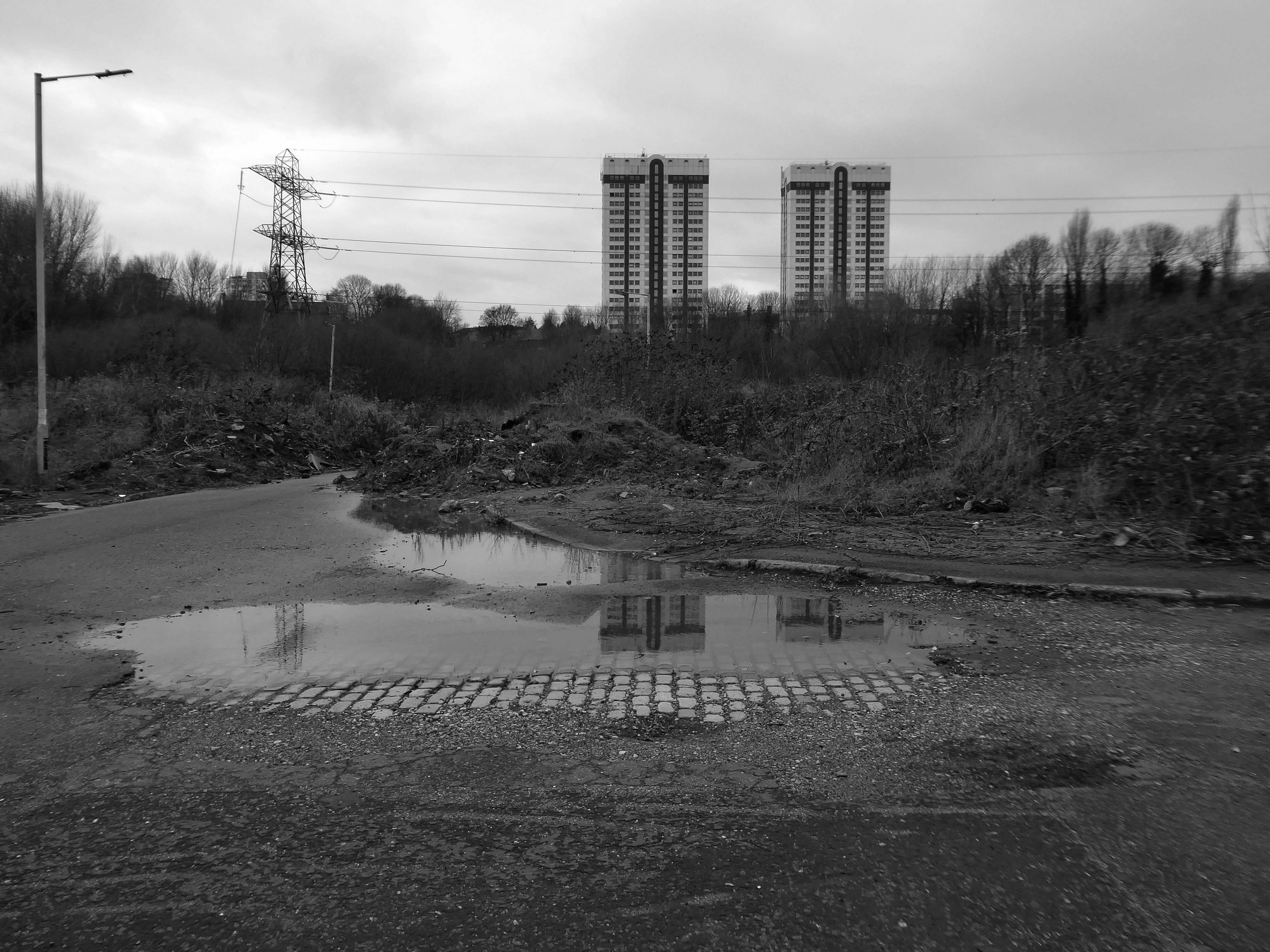
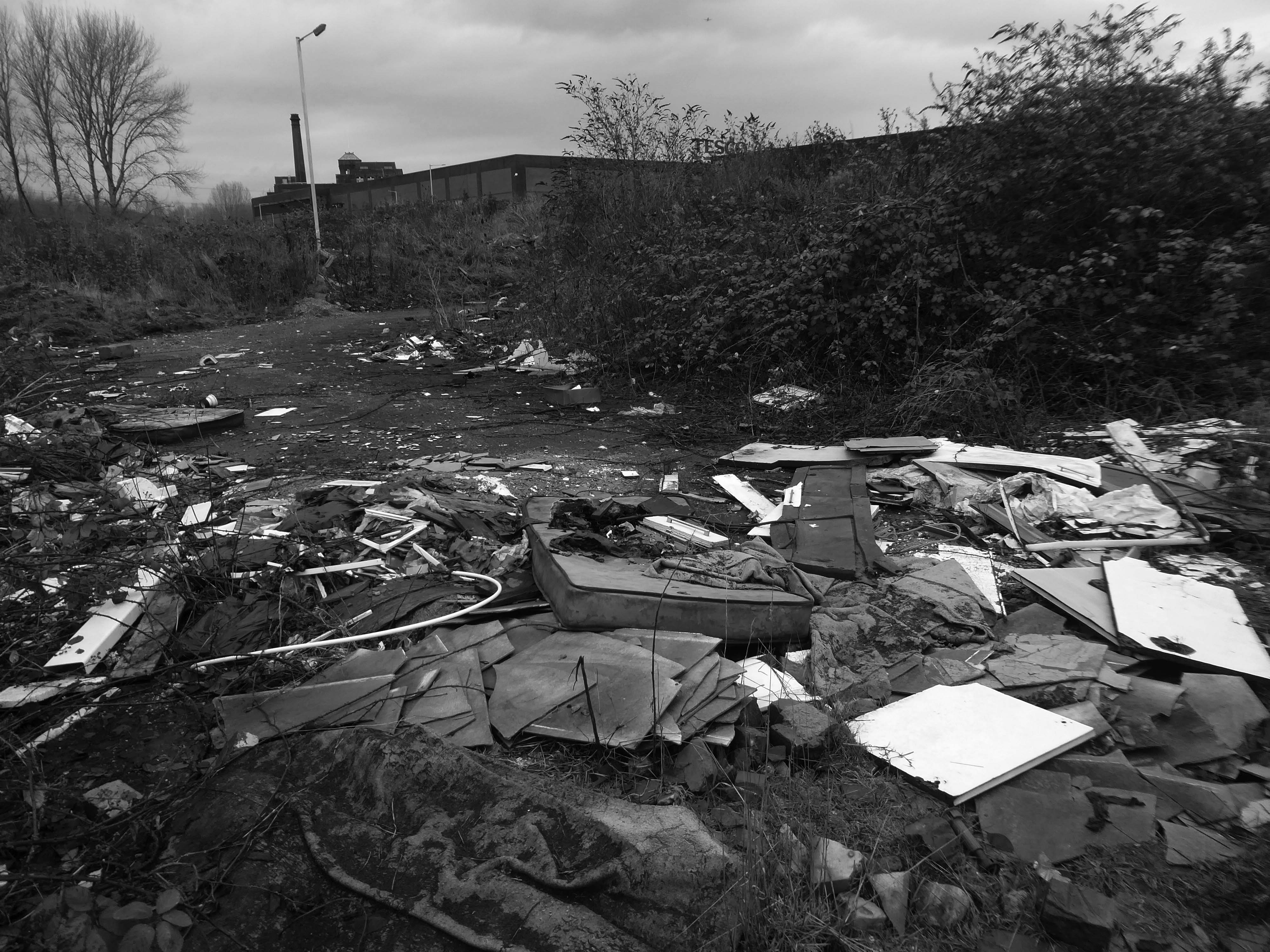
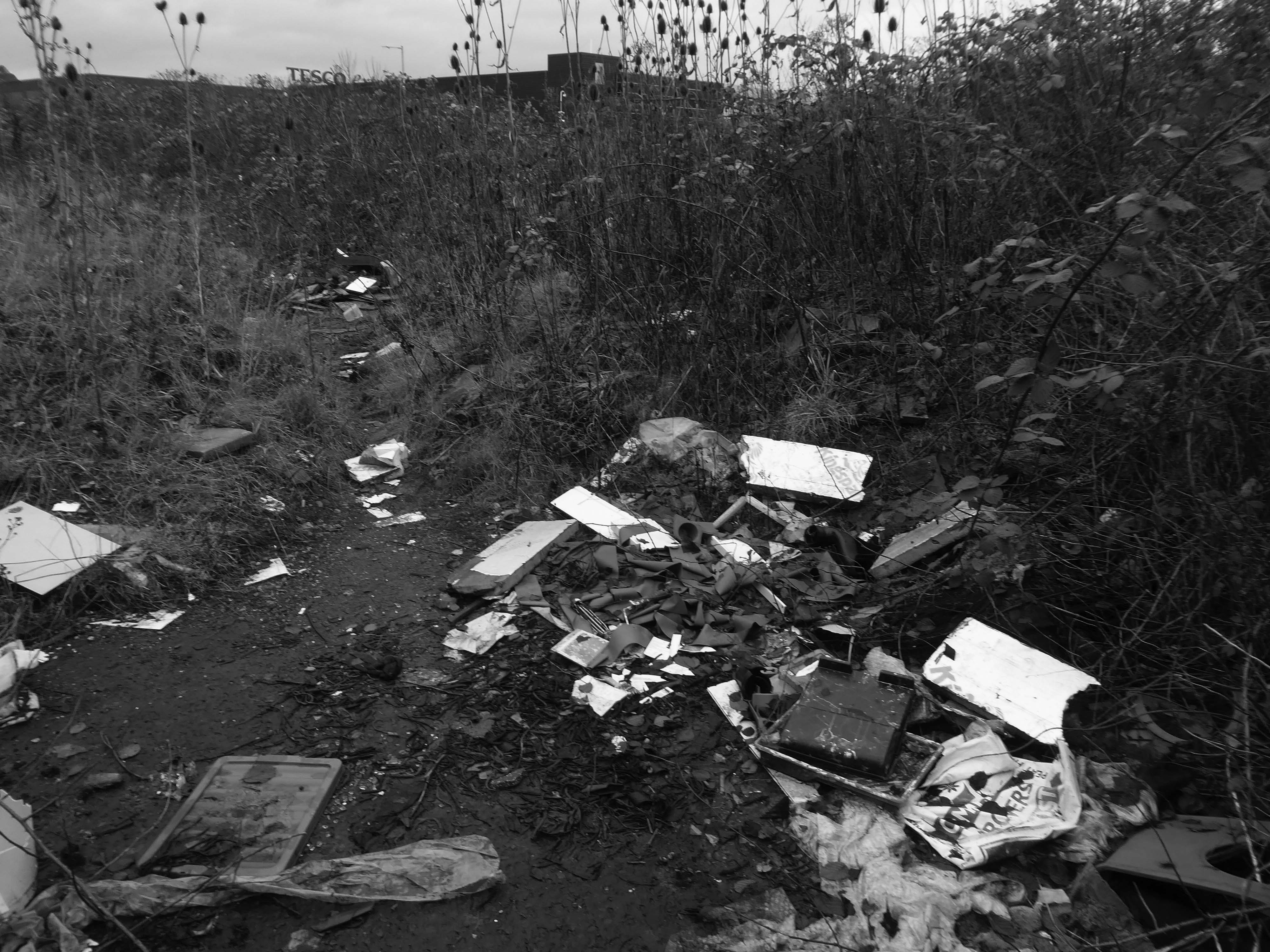
Now we are in the shadow of Tesco Extra and a recently opened Porsche dealership.

As of 2022, the supermarket chain had a brand value of roughly 9.91 billion US dollars.

Porsche Automobile Holding SE net worth as of January 2023 is 16.51 US dollars.

By the side of the River Tame and the M60 Motorway

The 19th-century industrial concentrations in the above-named urban areas resulted in the Tame being a much polluted waterway. As well as industrial pollution from the dyes and bleaches used in textile mills, effluent from specialised paper-making cigarette papers, engineering effluents, including base metal washings from battery manufacture, phenols from the huge coal-gas plant in Denton, rain-wash from roads and abandoned coal spoil heaps there was also the sewage effluent from the surrounding population. Up to two-thirds of the river’s flow at its confluence with the Goyt had passed through a sewage works. The anti-pollution efforts of the last thirty years of the 20th century have resulted in positive fauna distributions.

Wikipedia

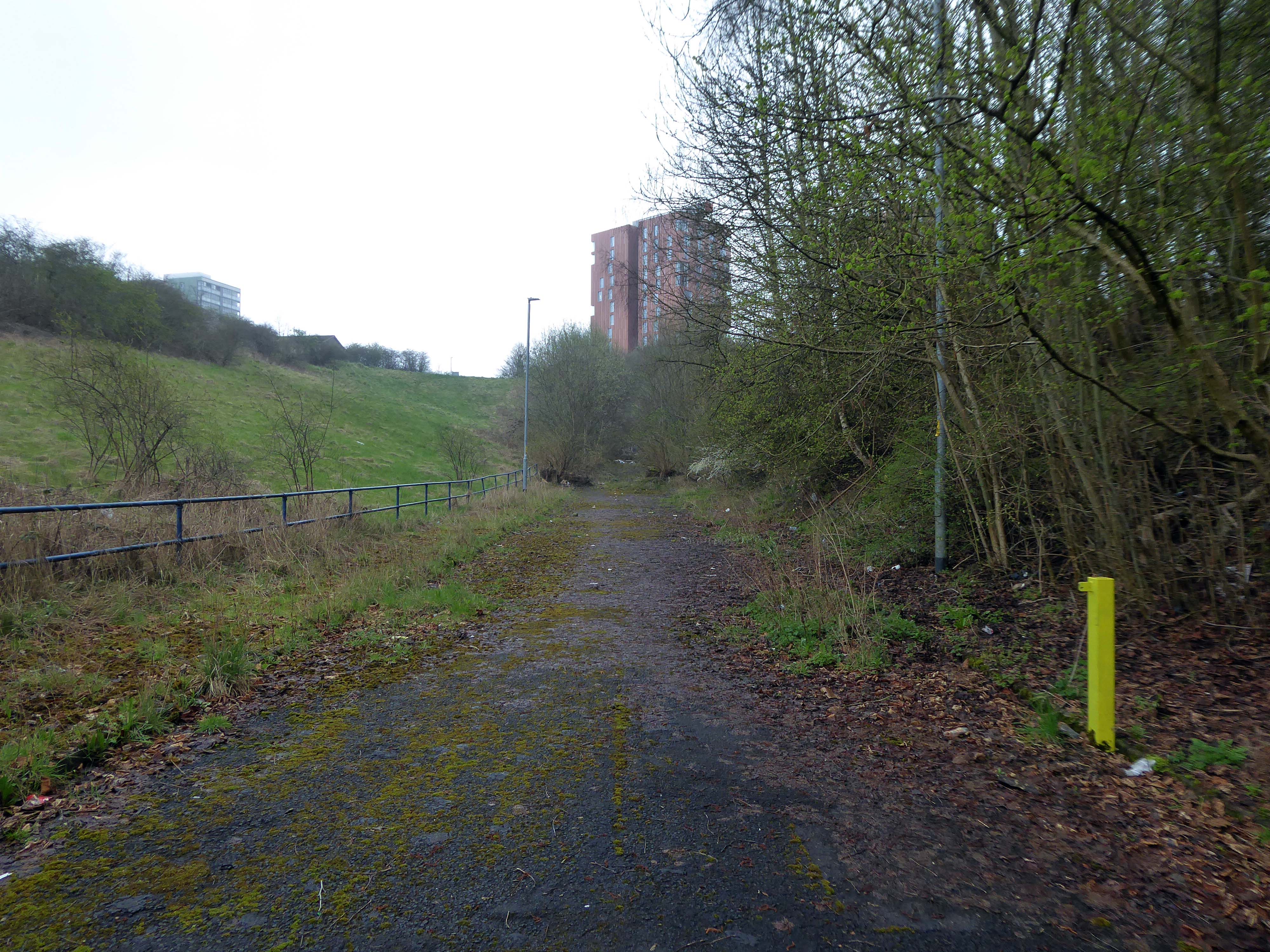
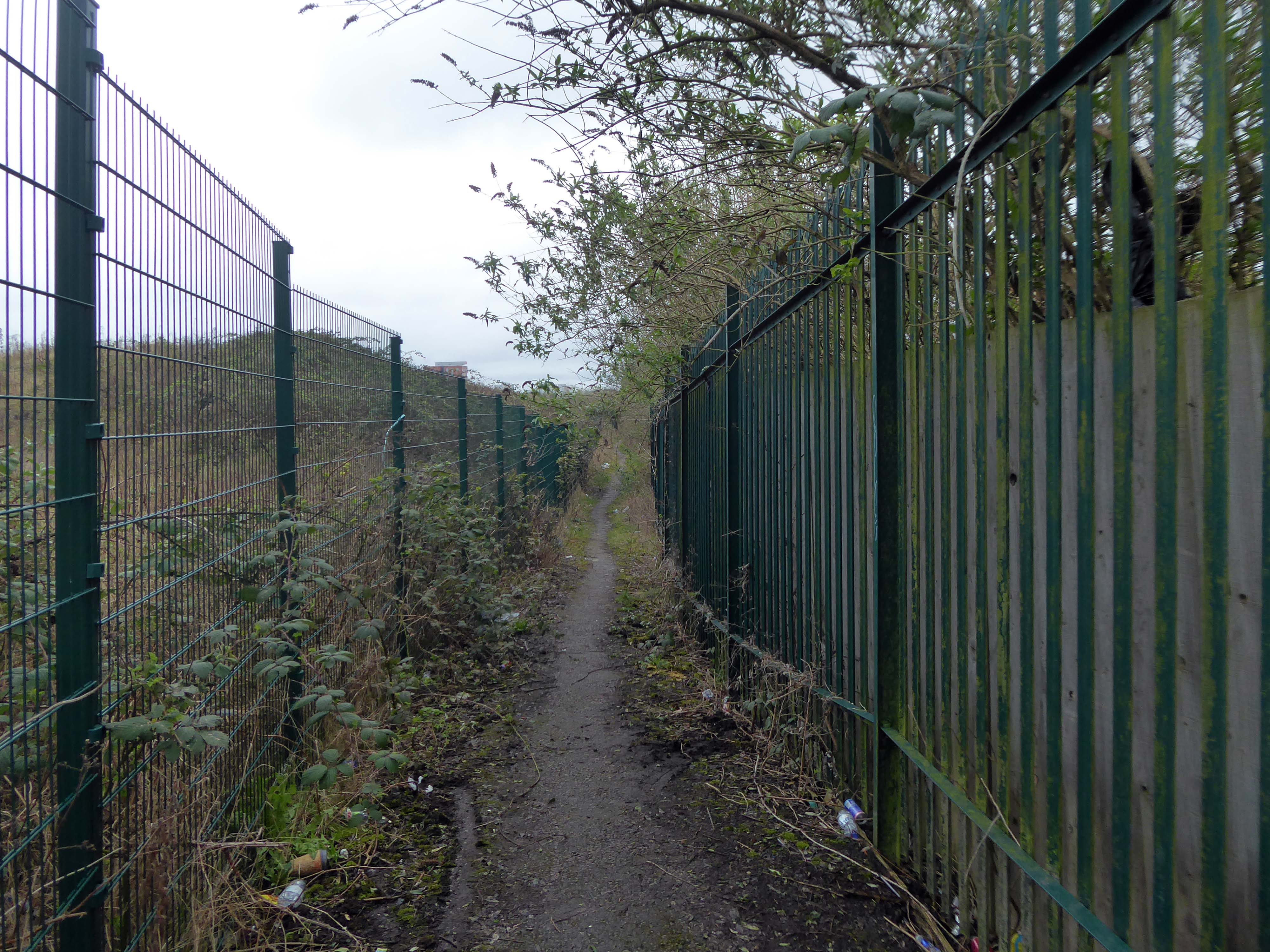
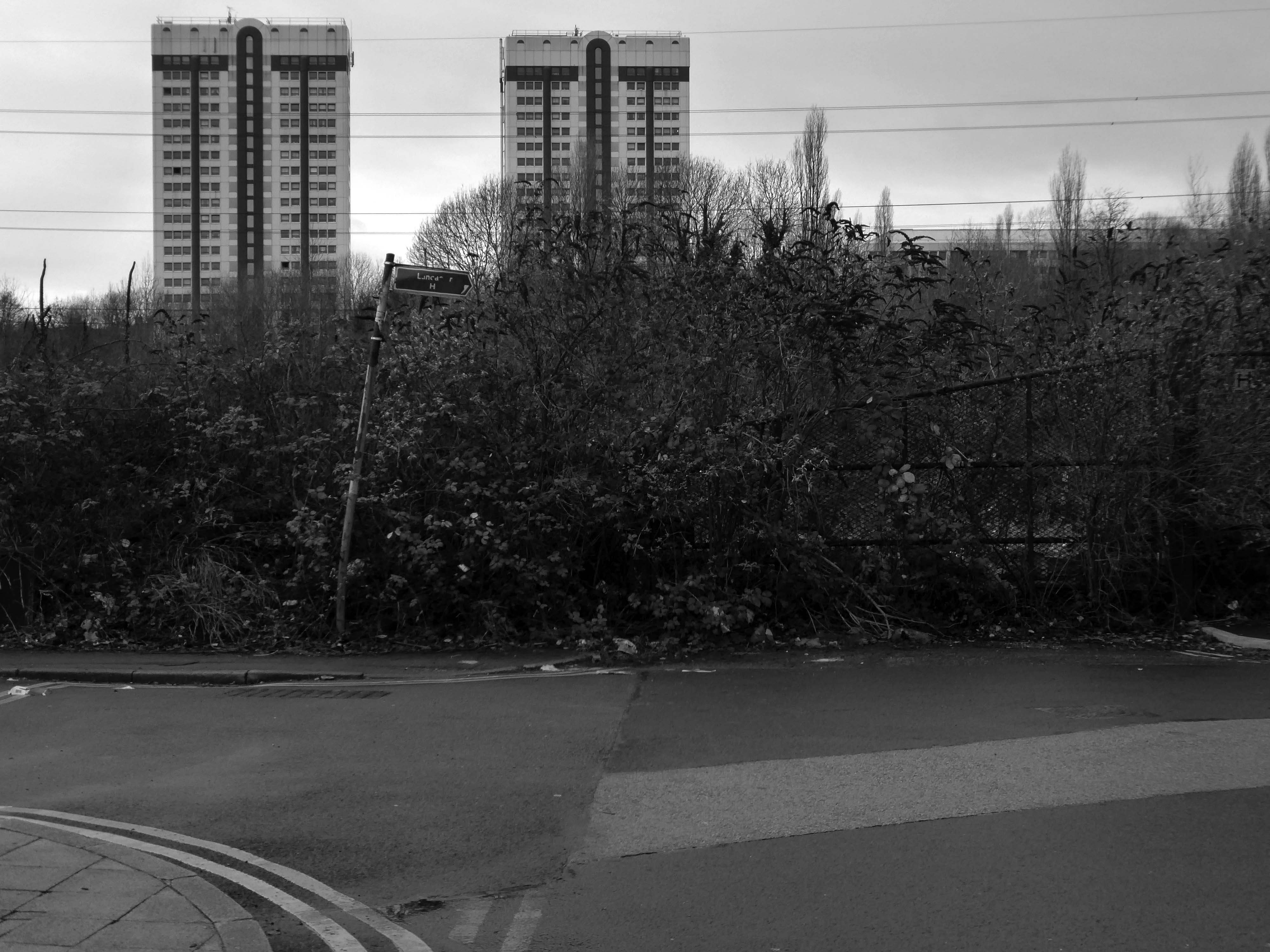
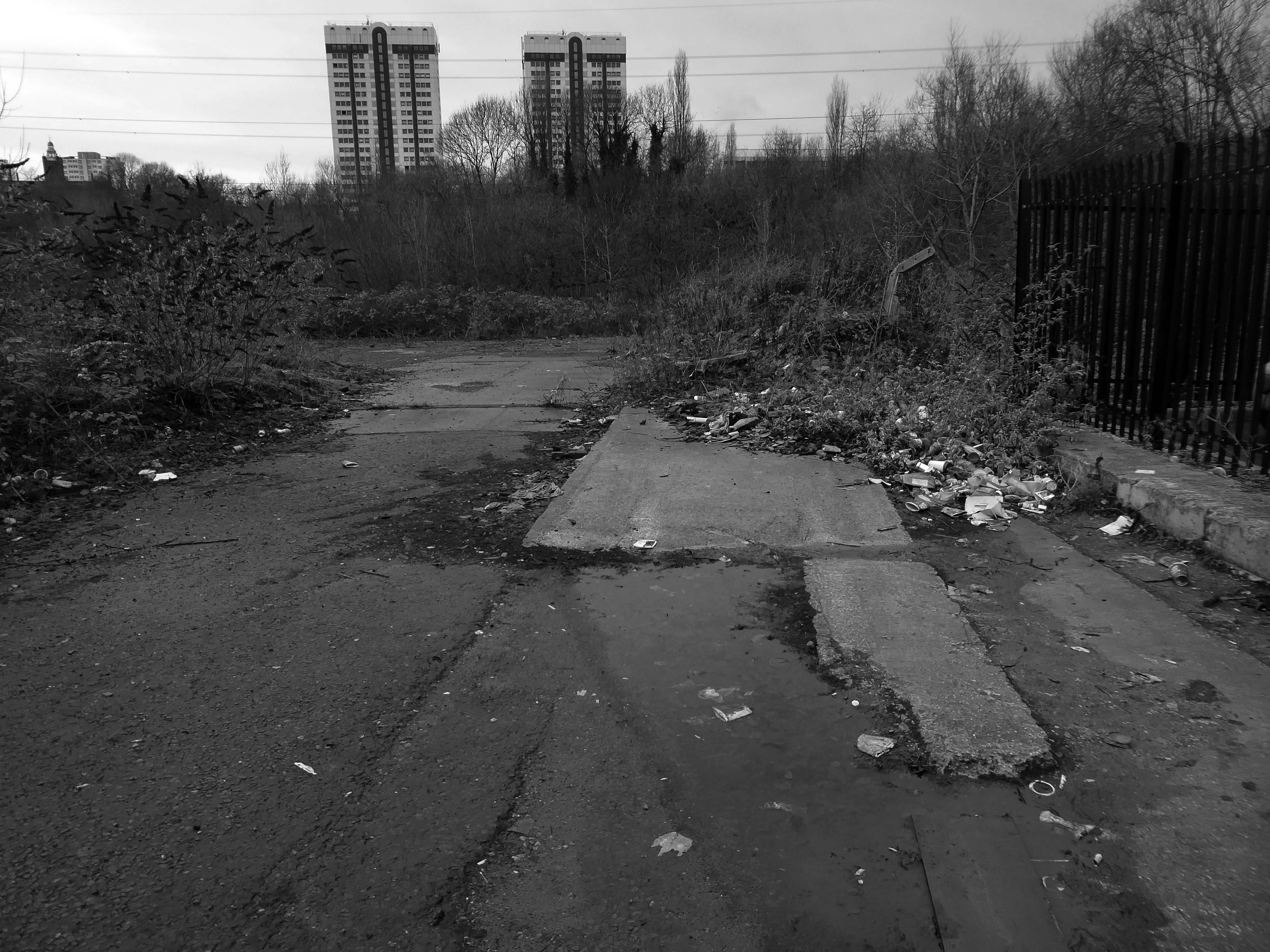
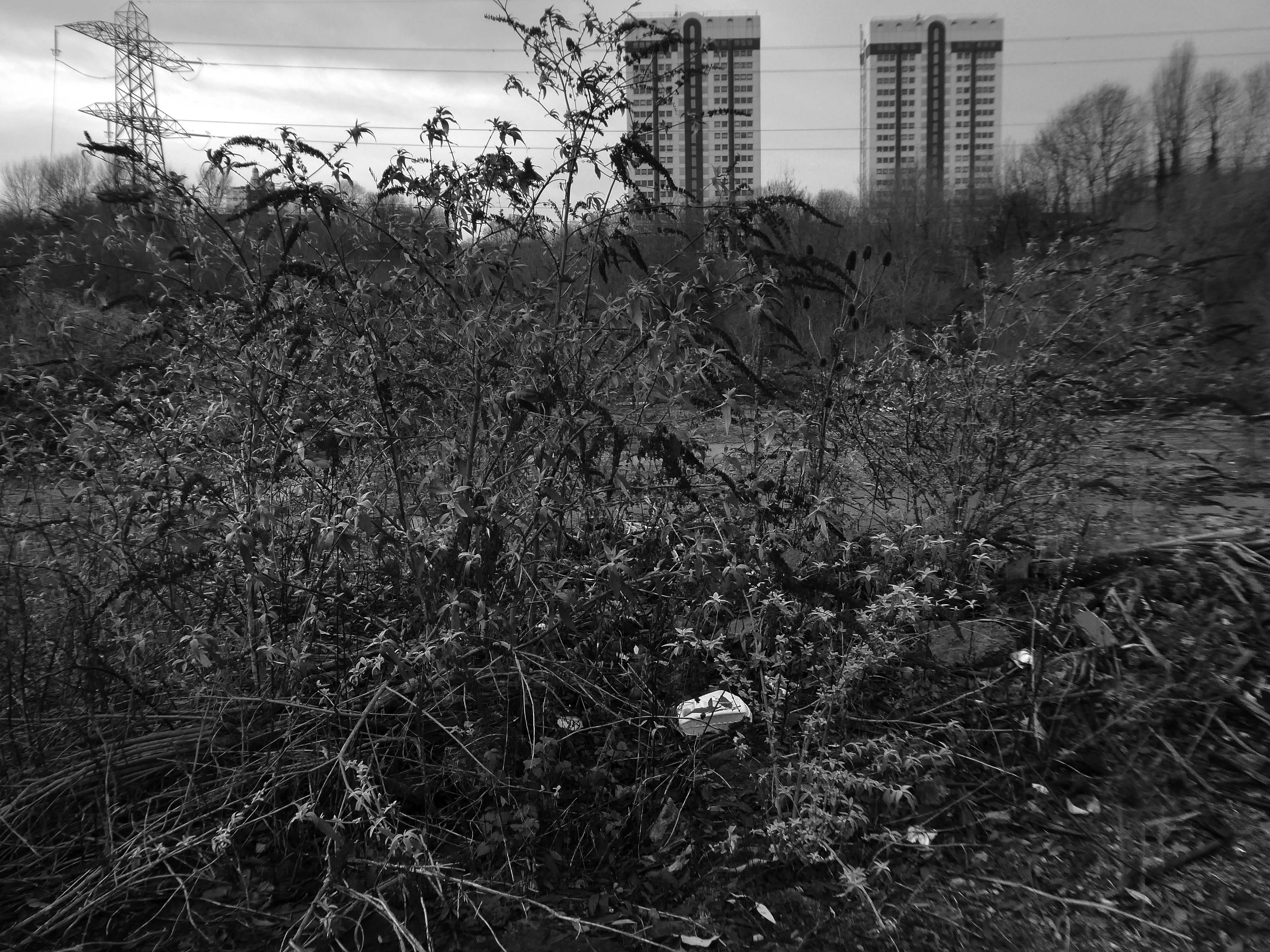
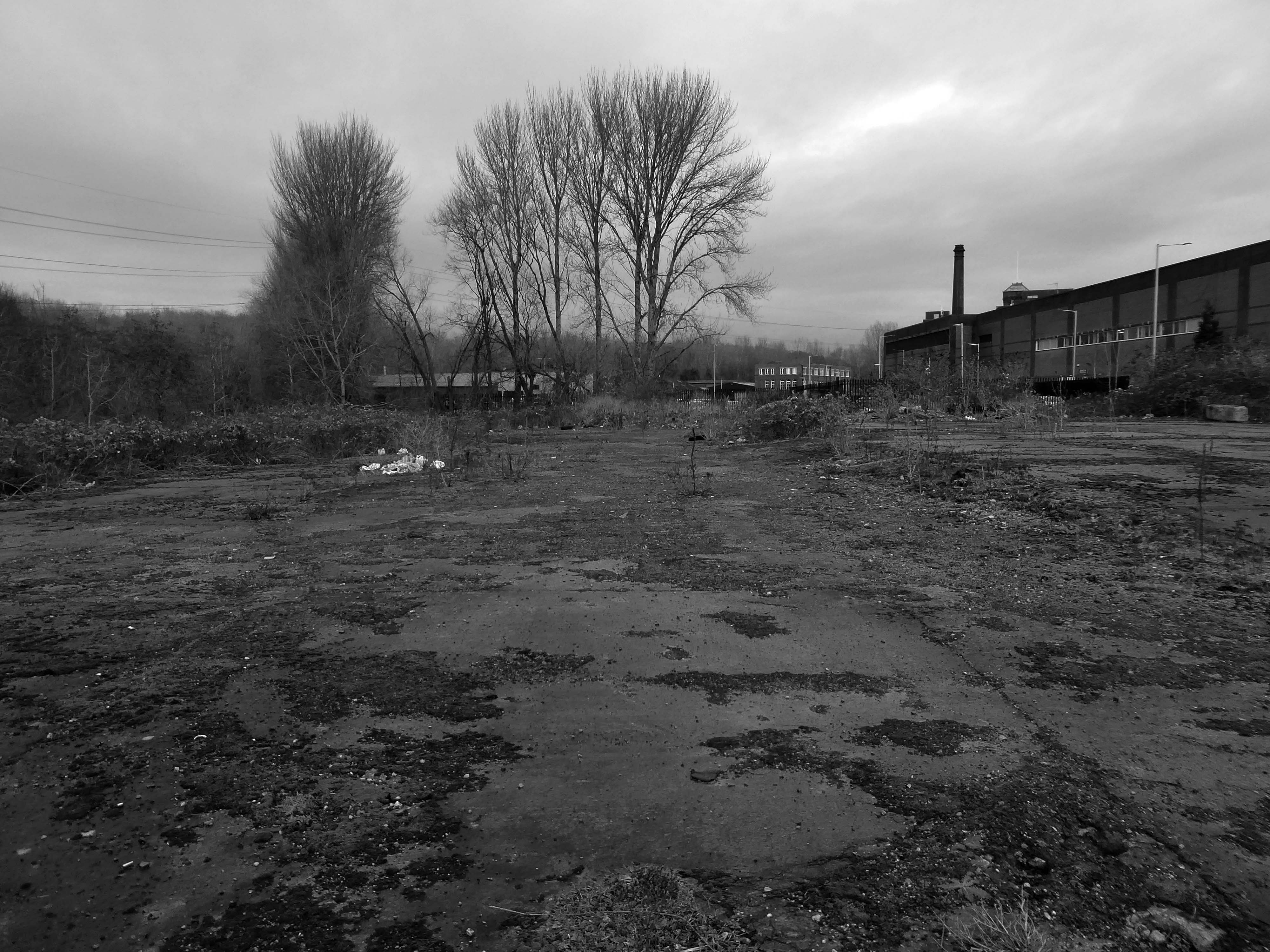
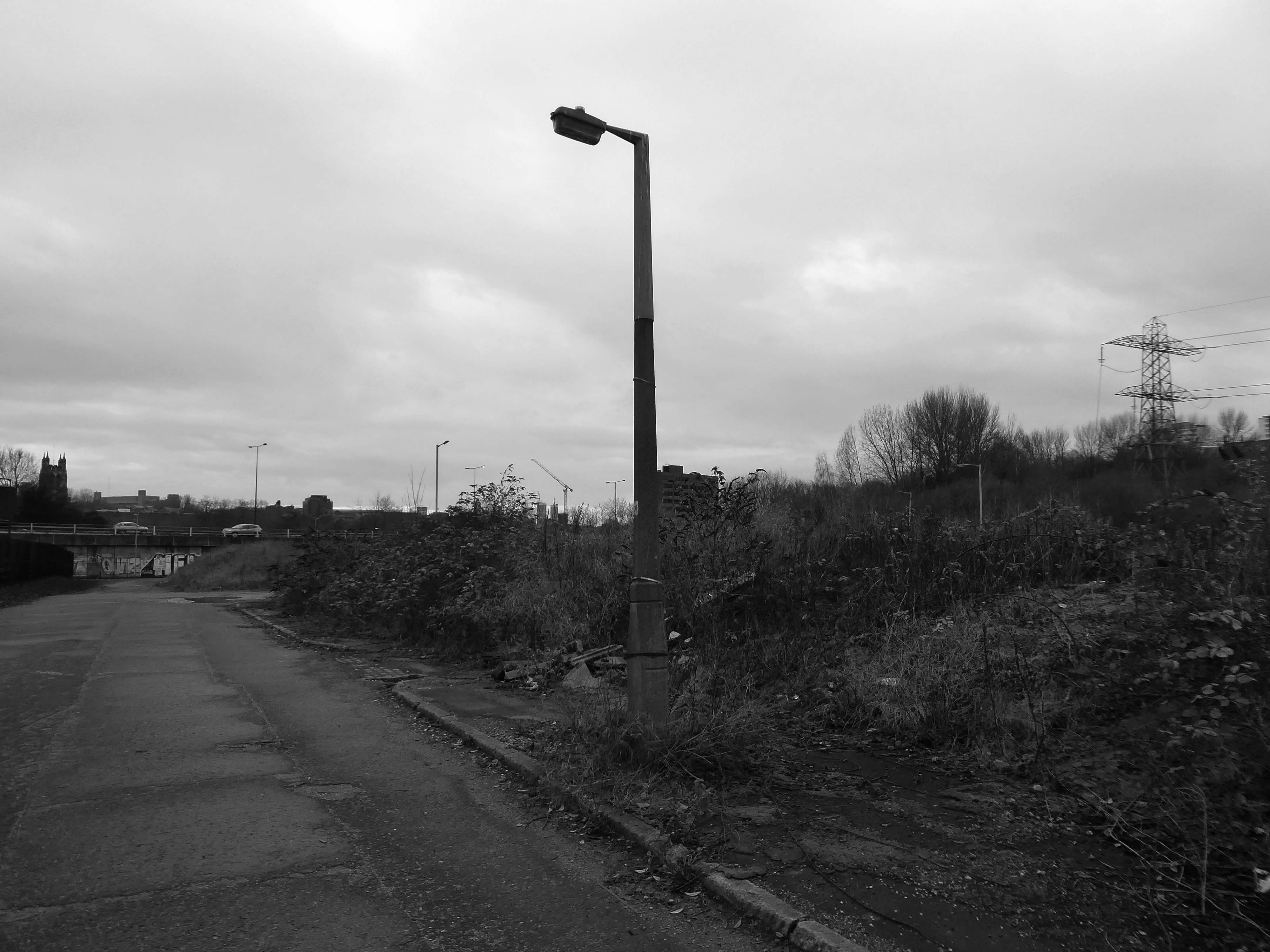
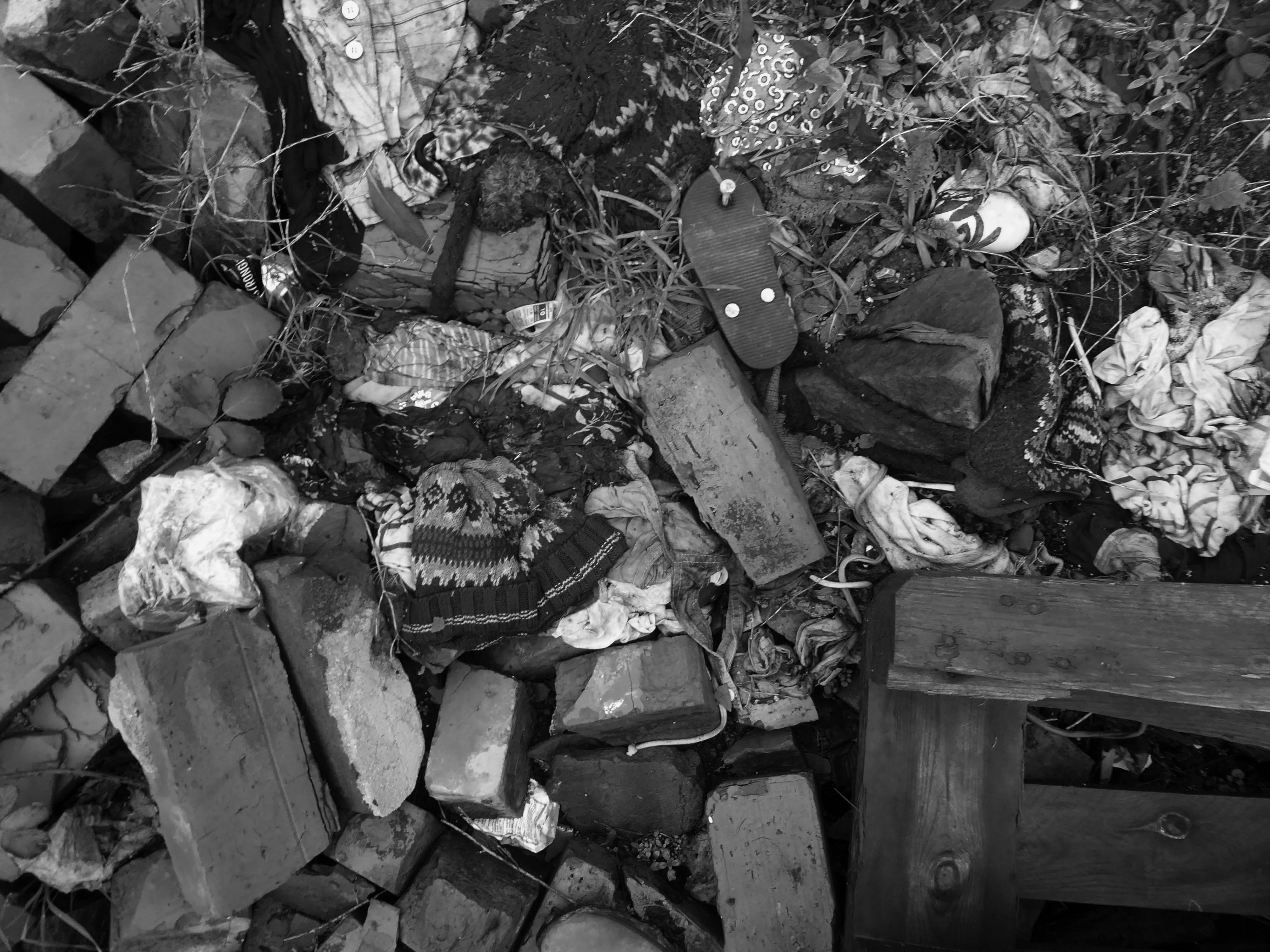
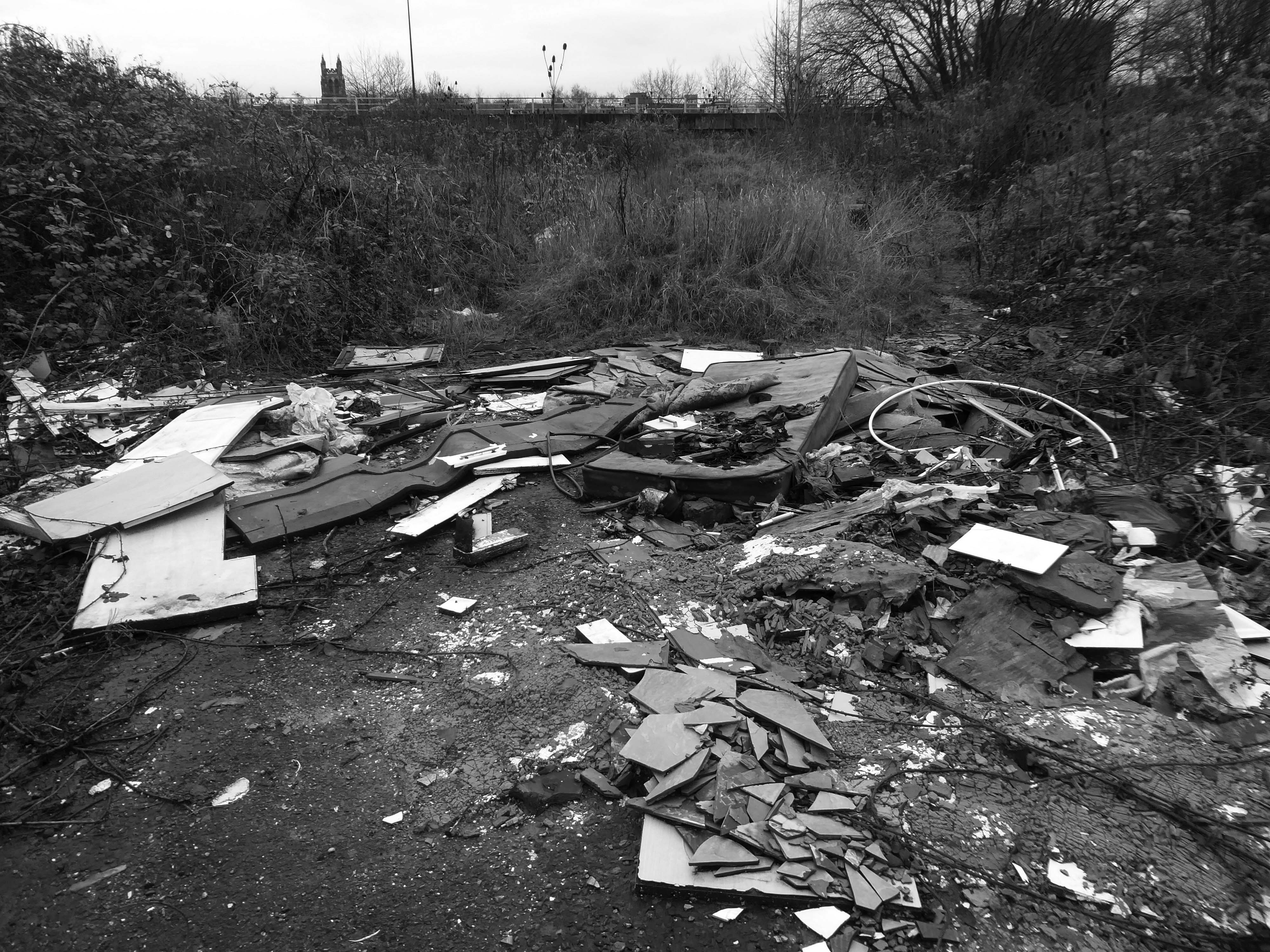
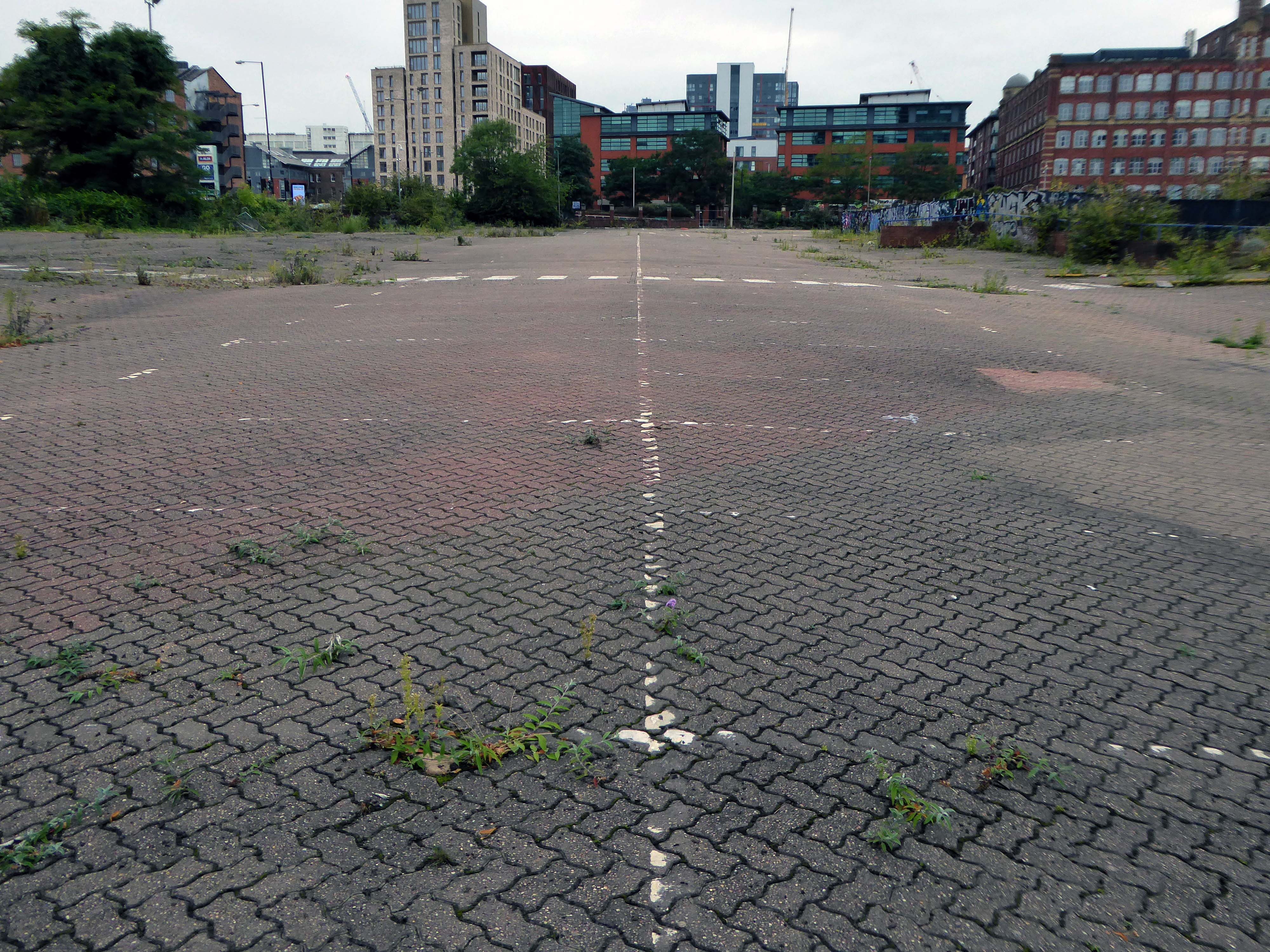
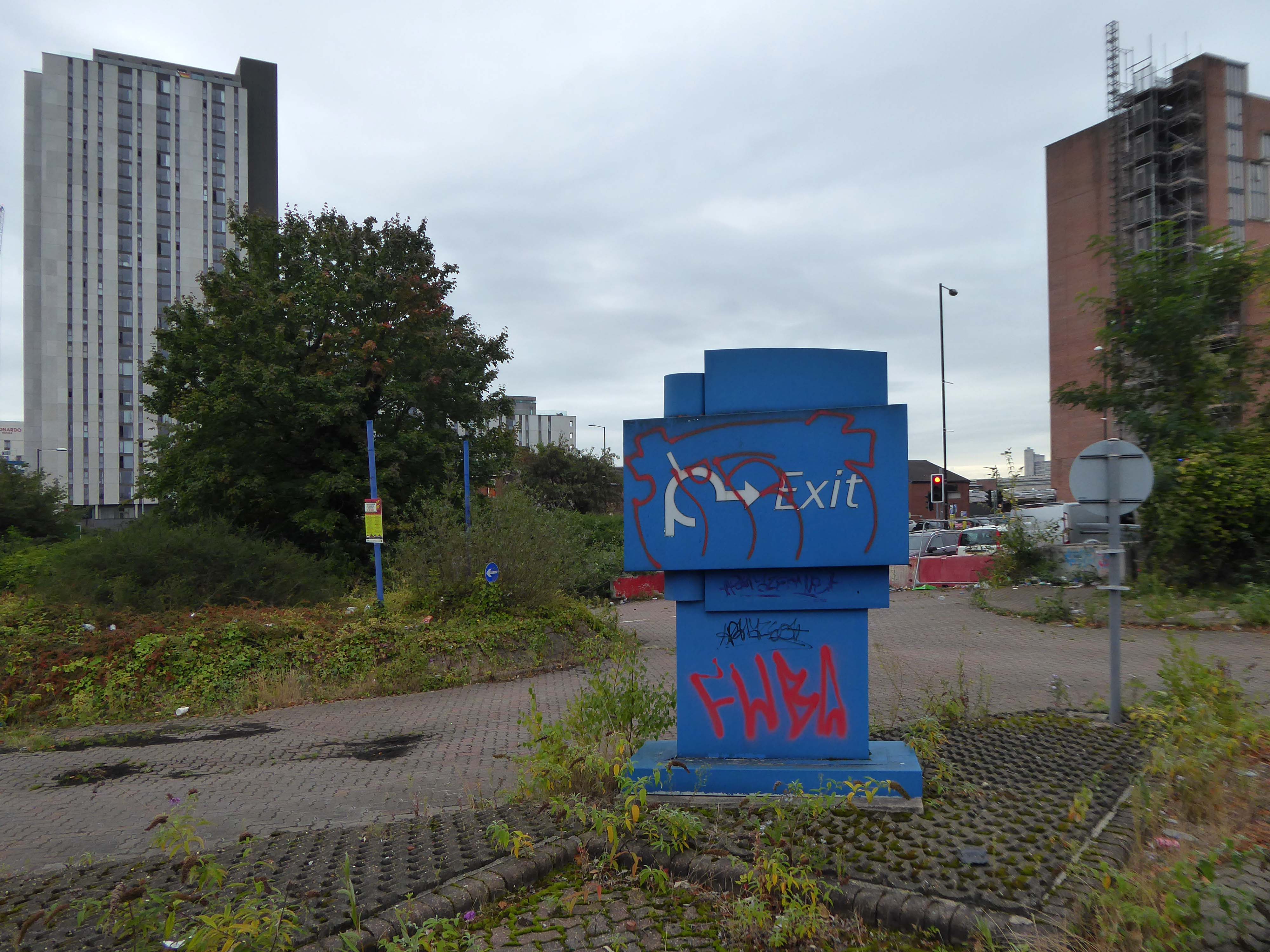
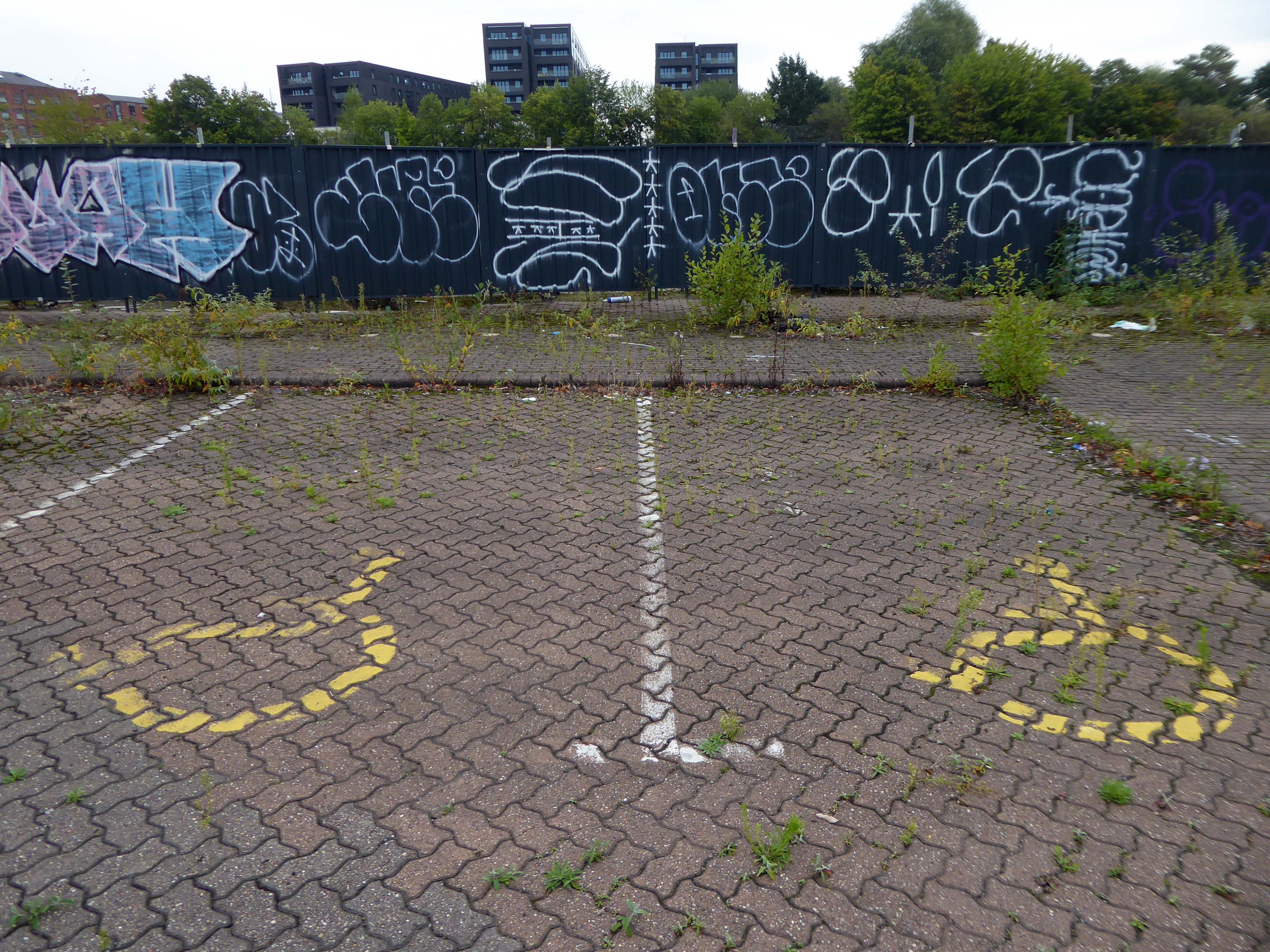
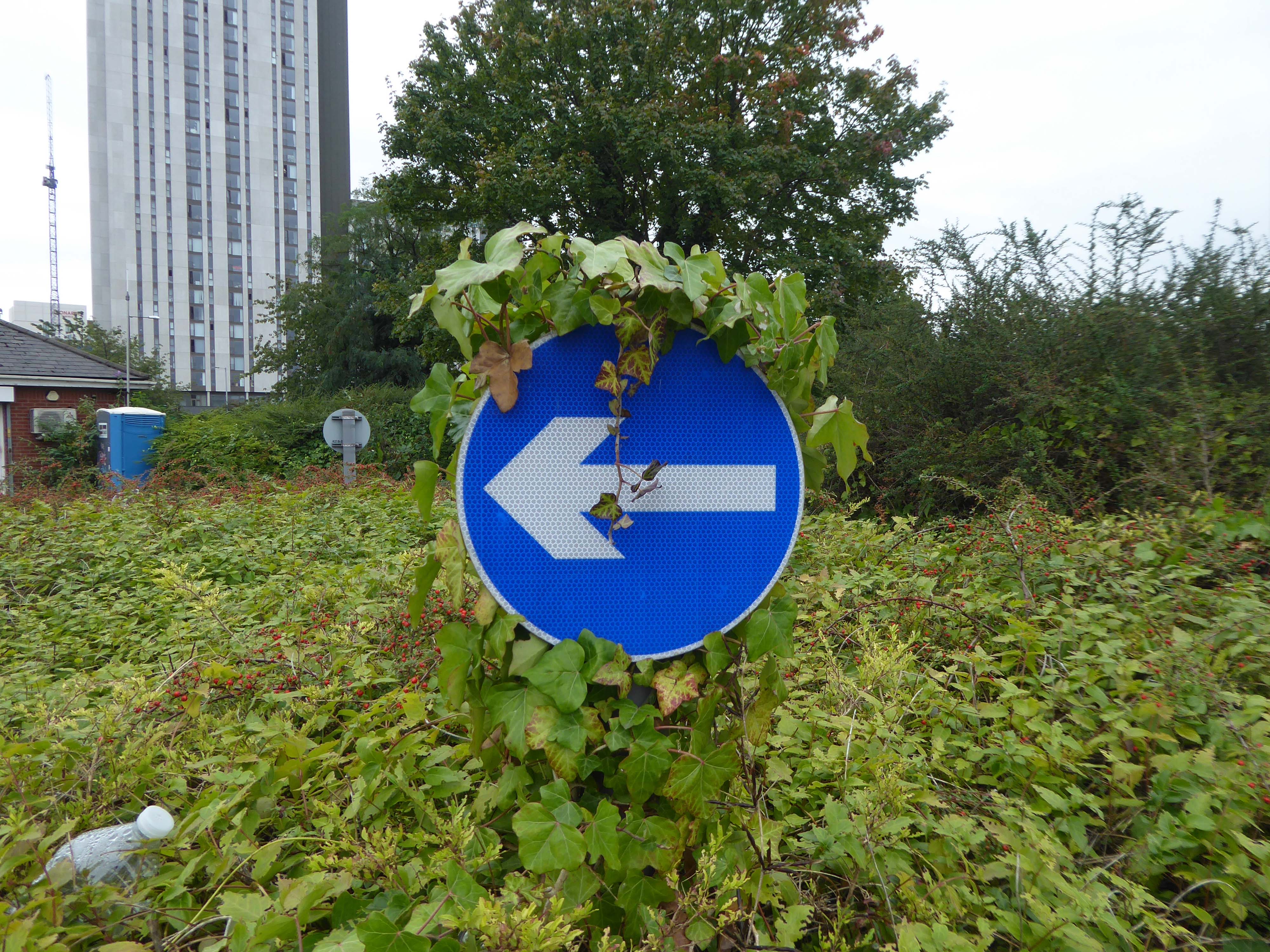
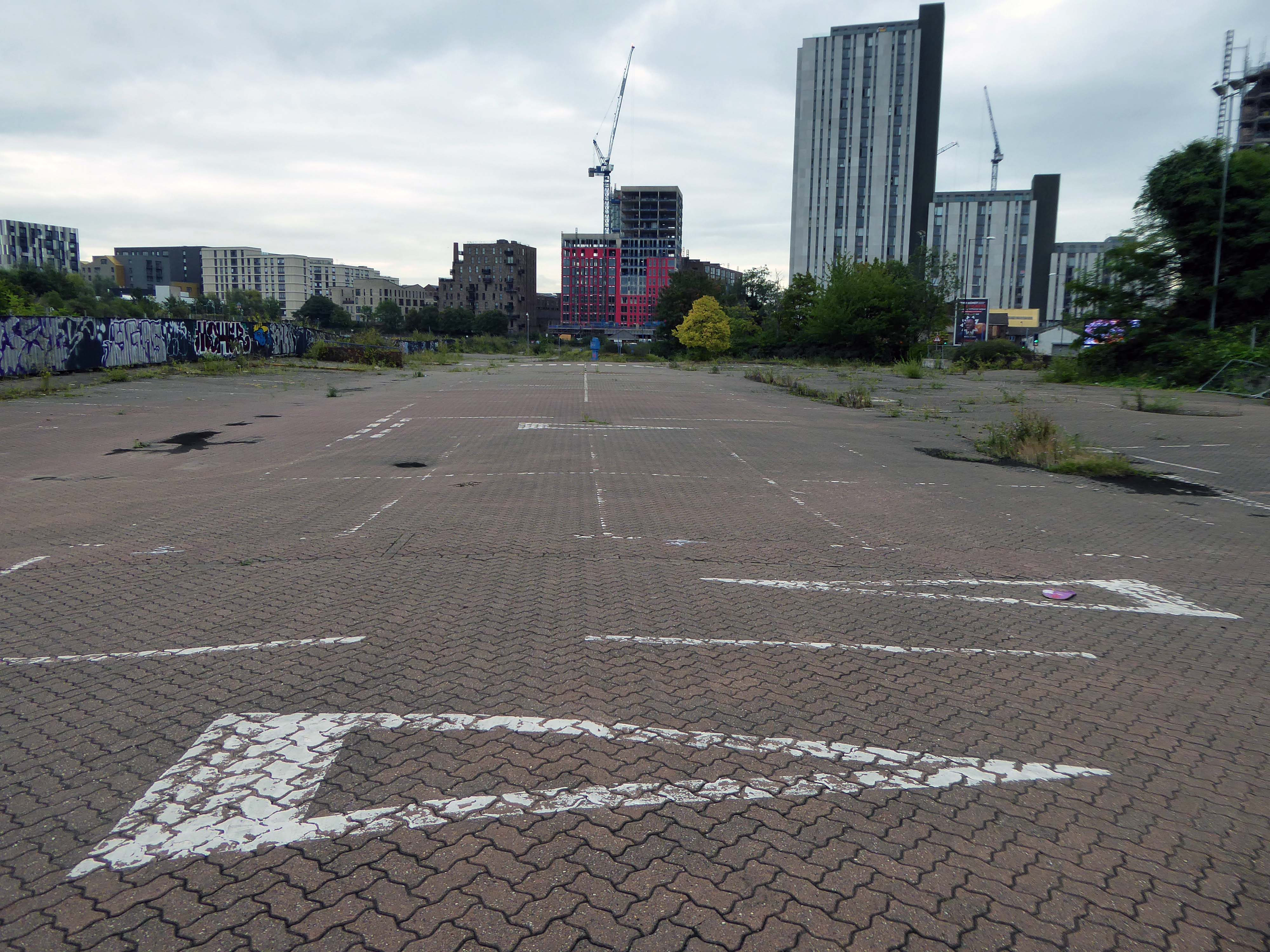
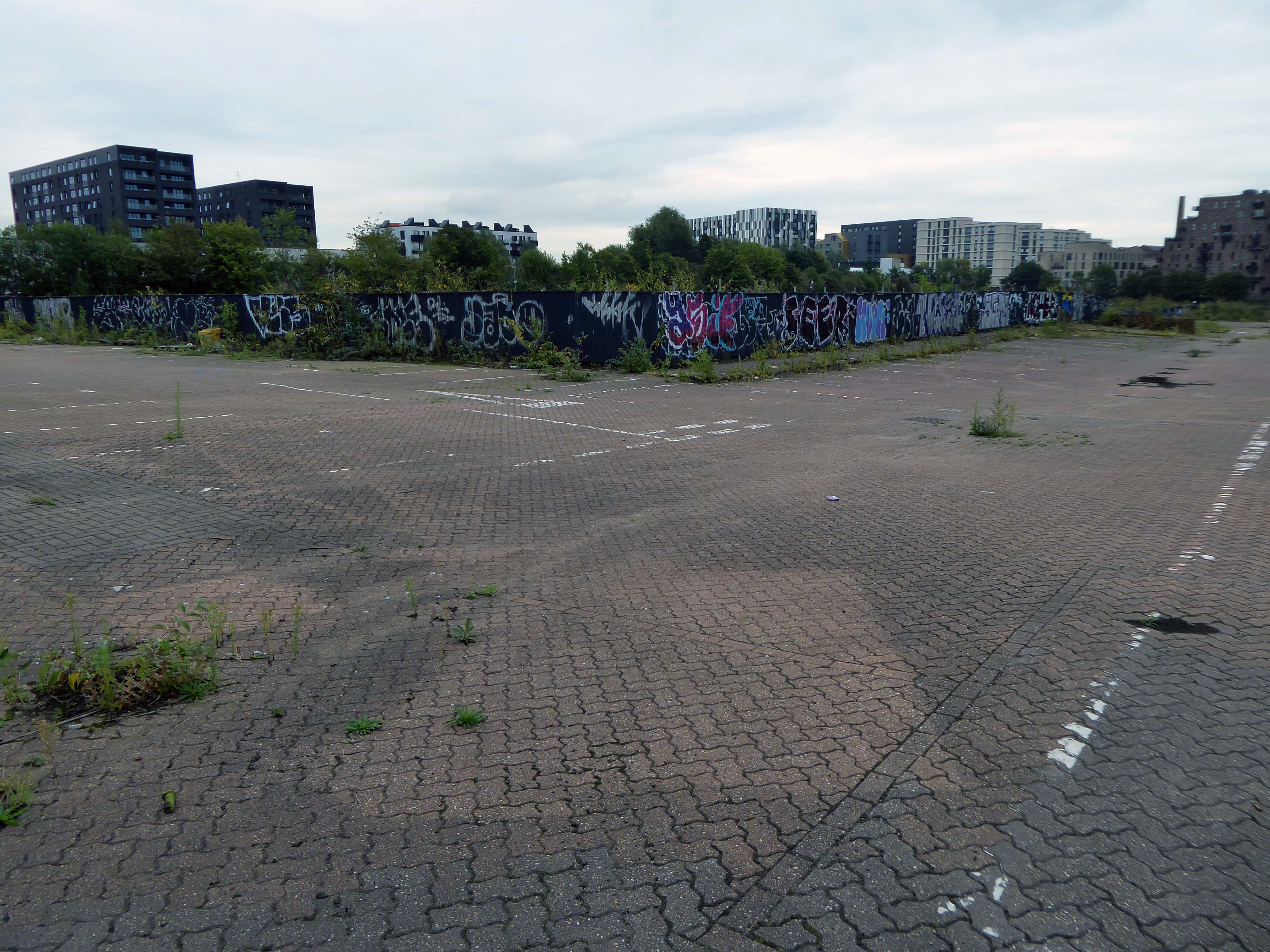
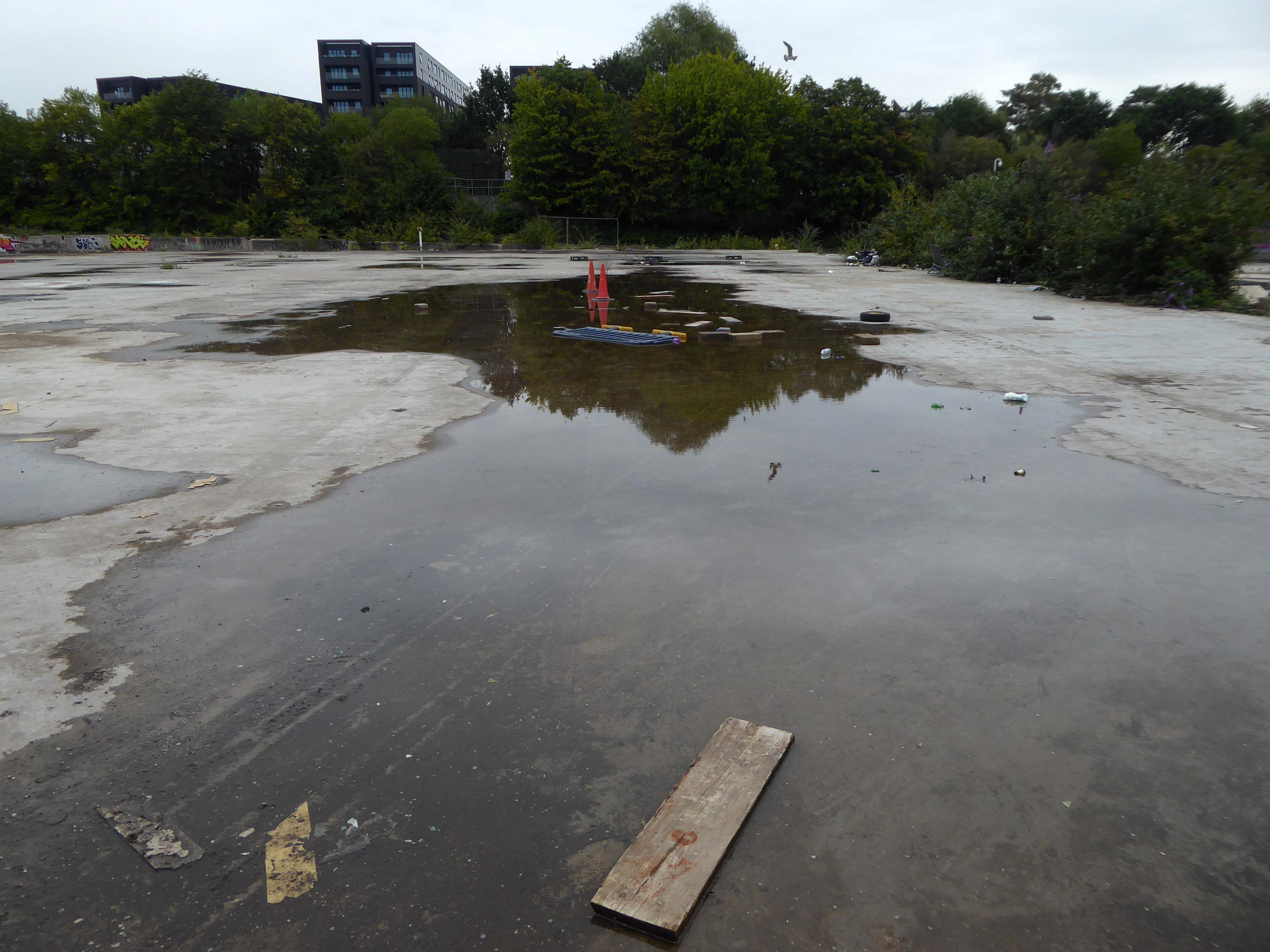
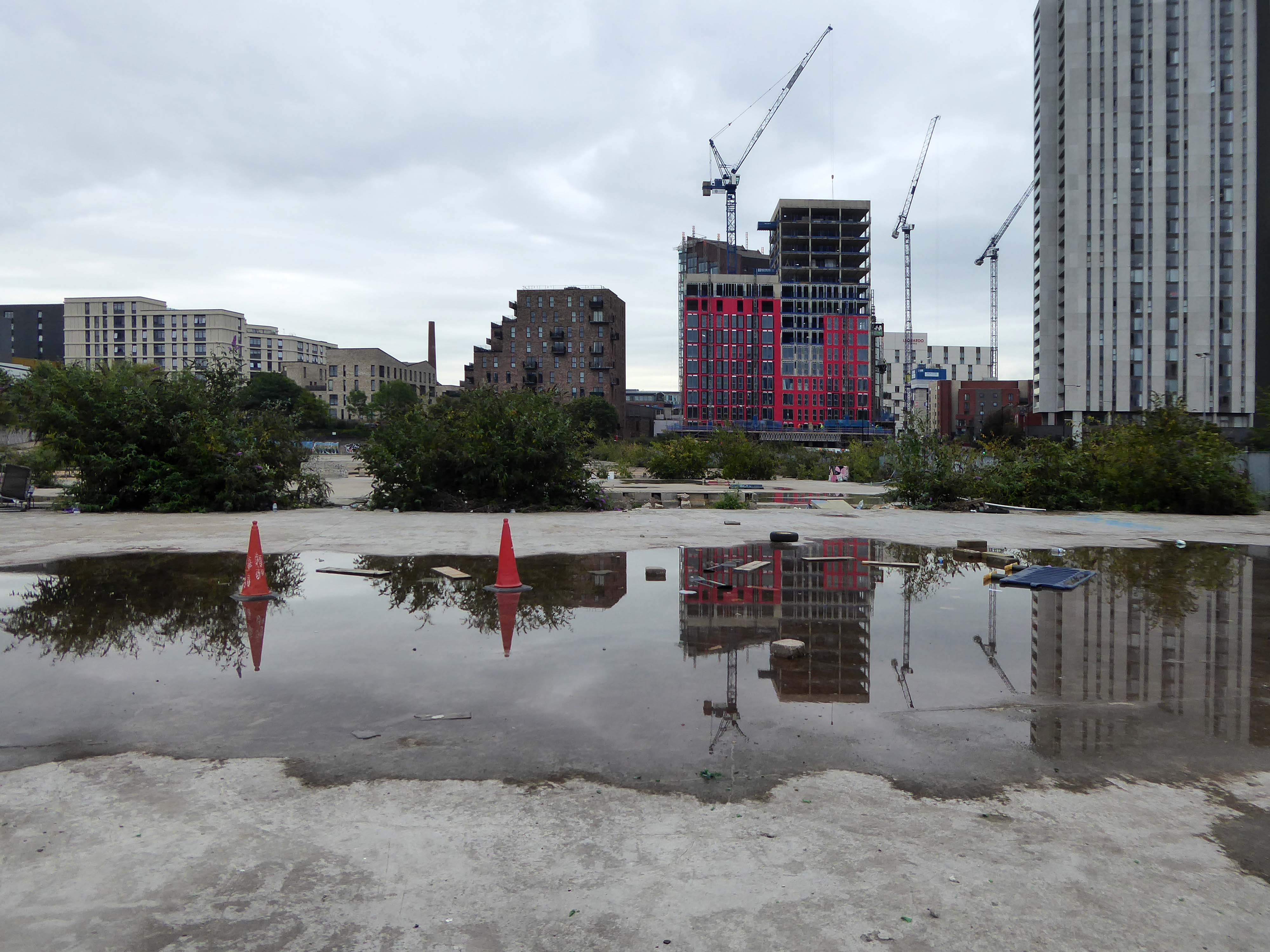
There is a plot of land to the left of Porsche which remains undeveloped, I often walk around this area, what would have once been for myself and others the place of childhood high jinx.

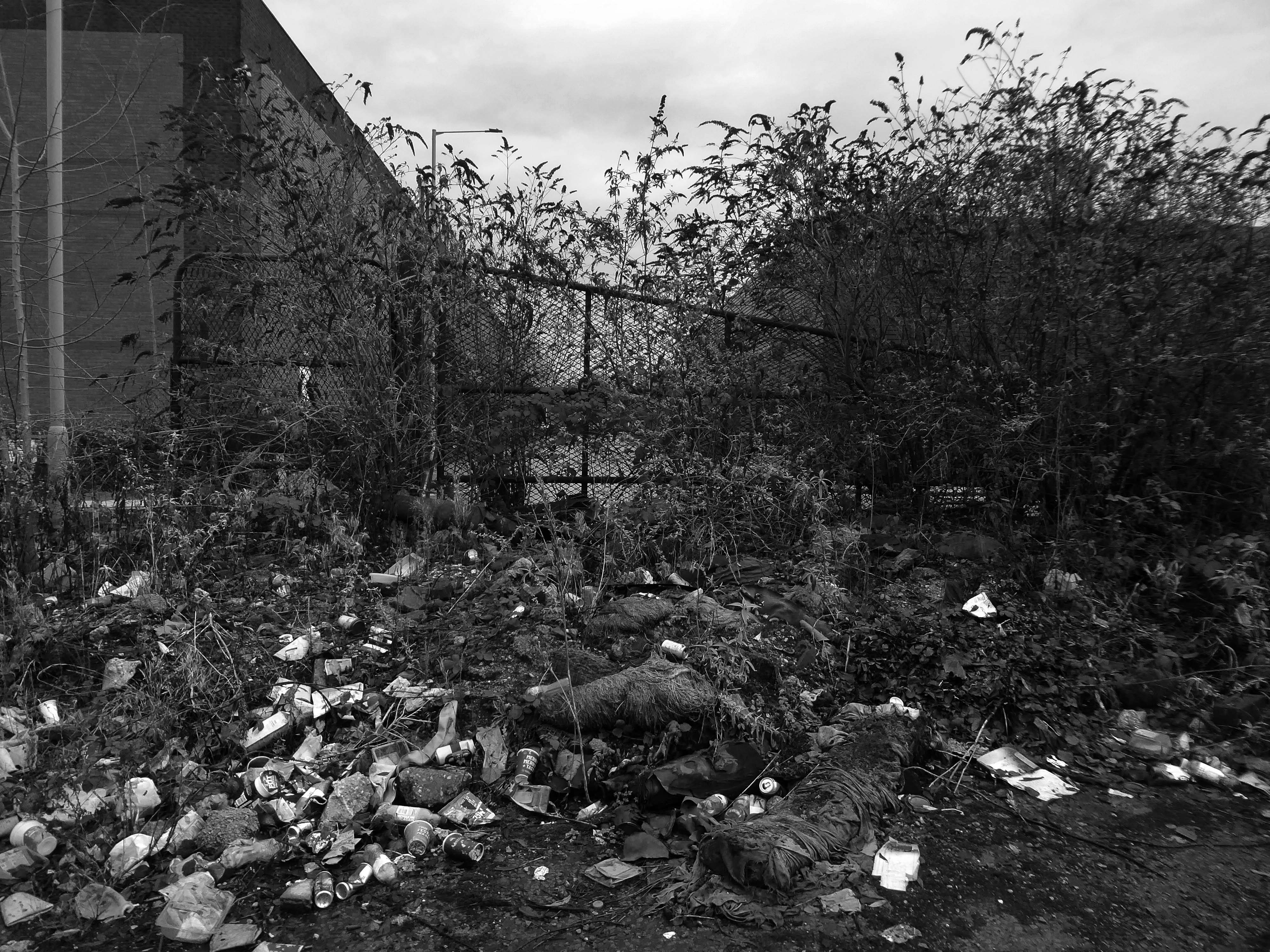
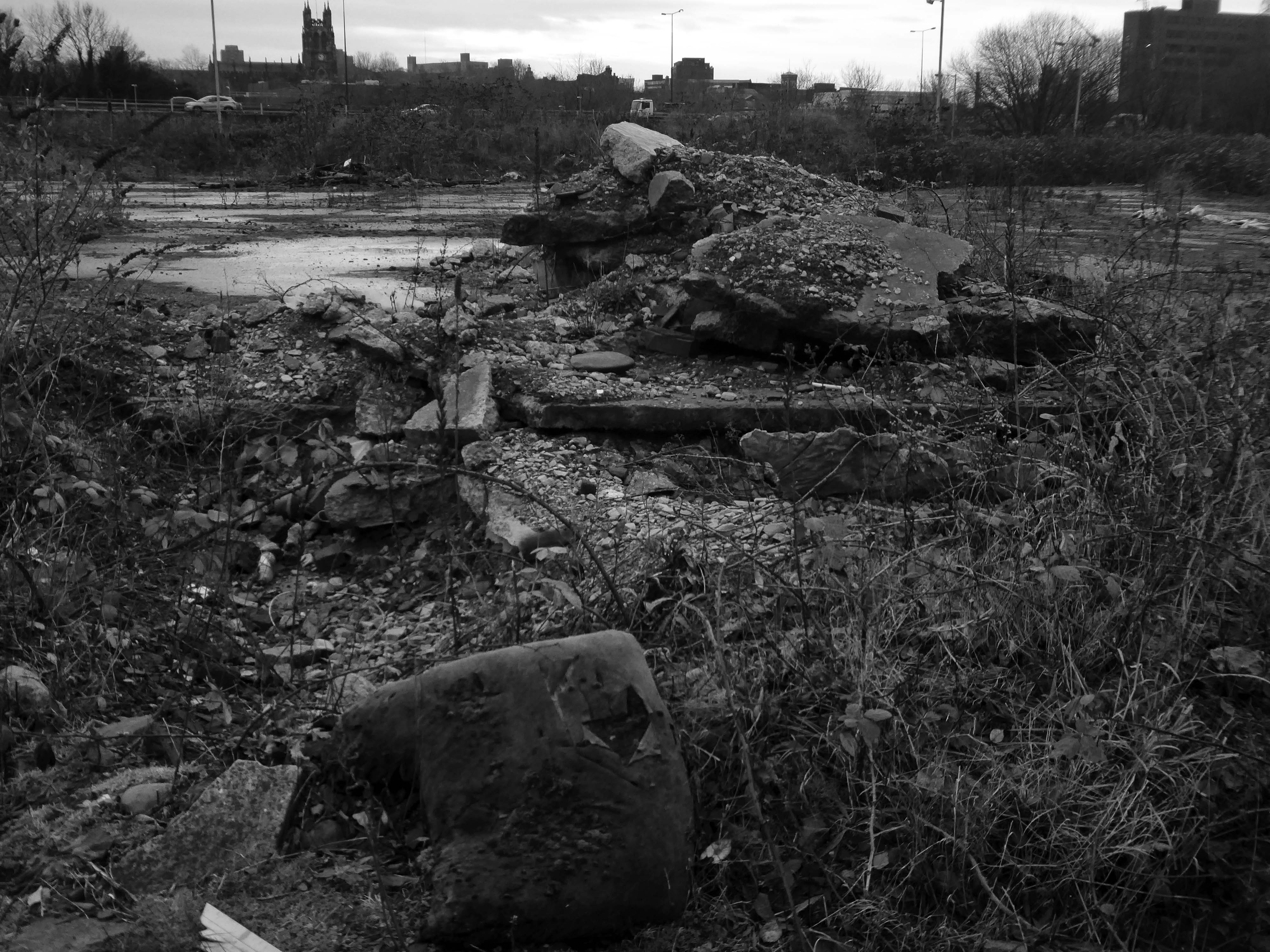
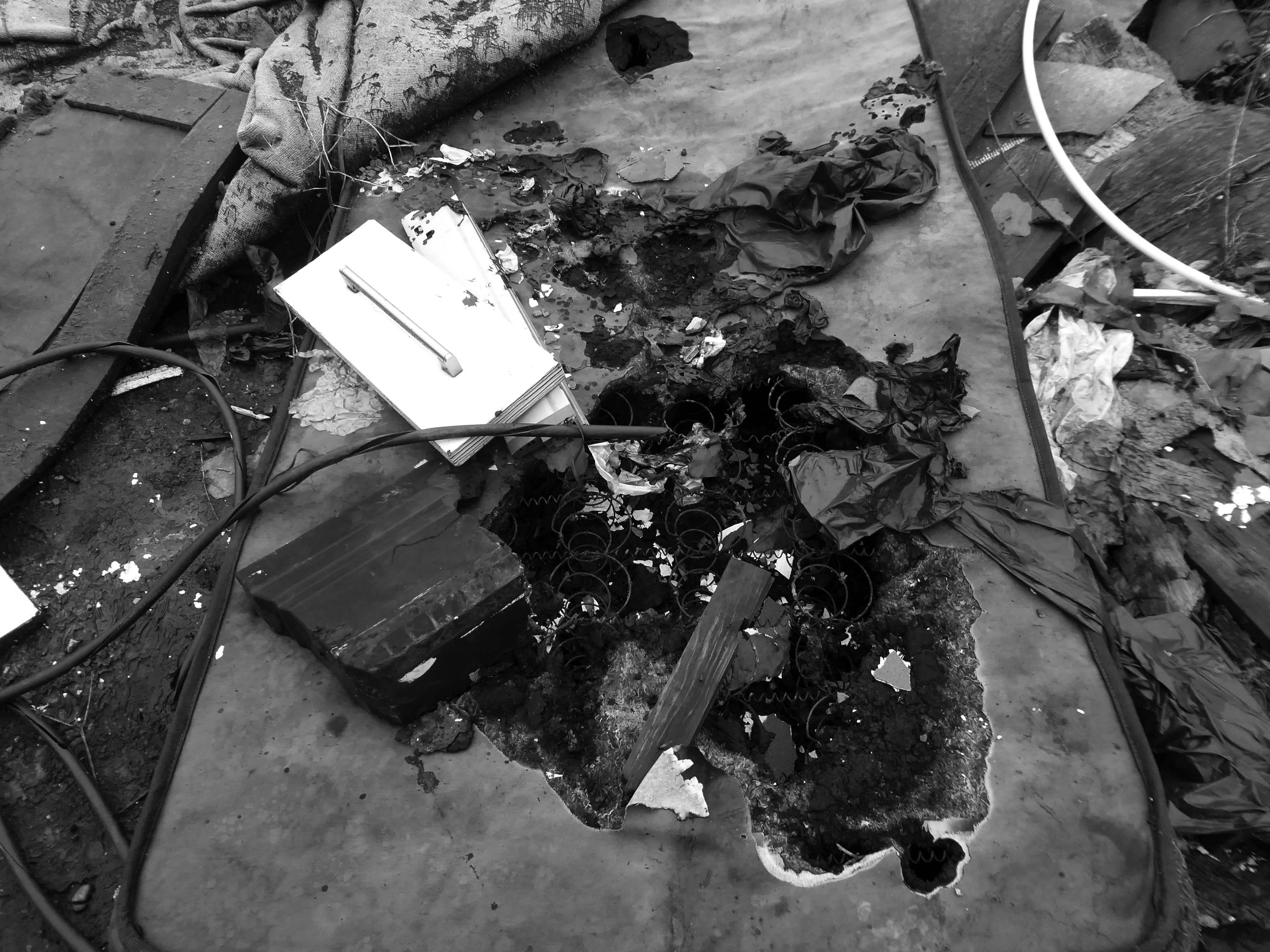
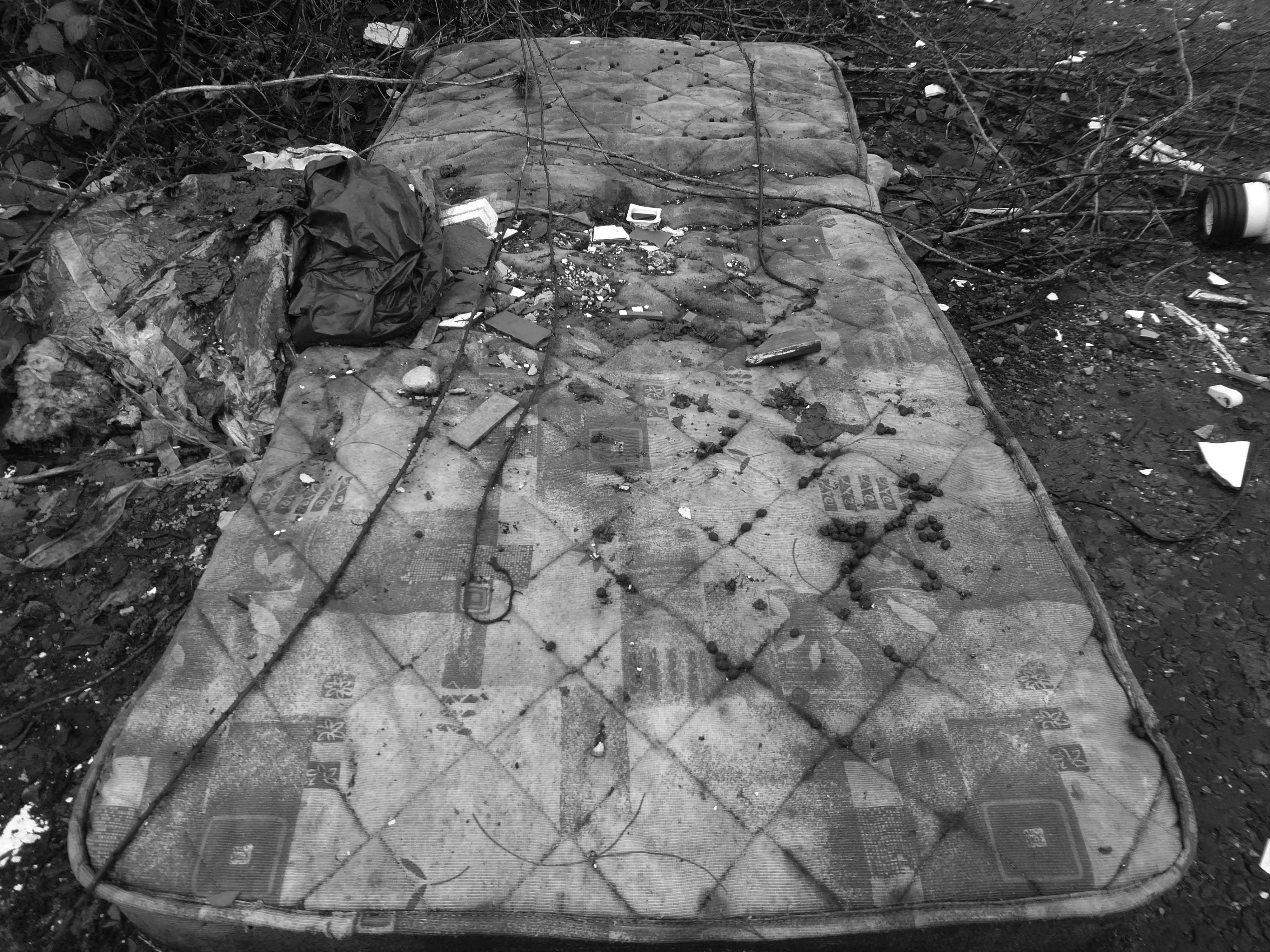
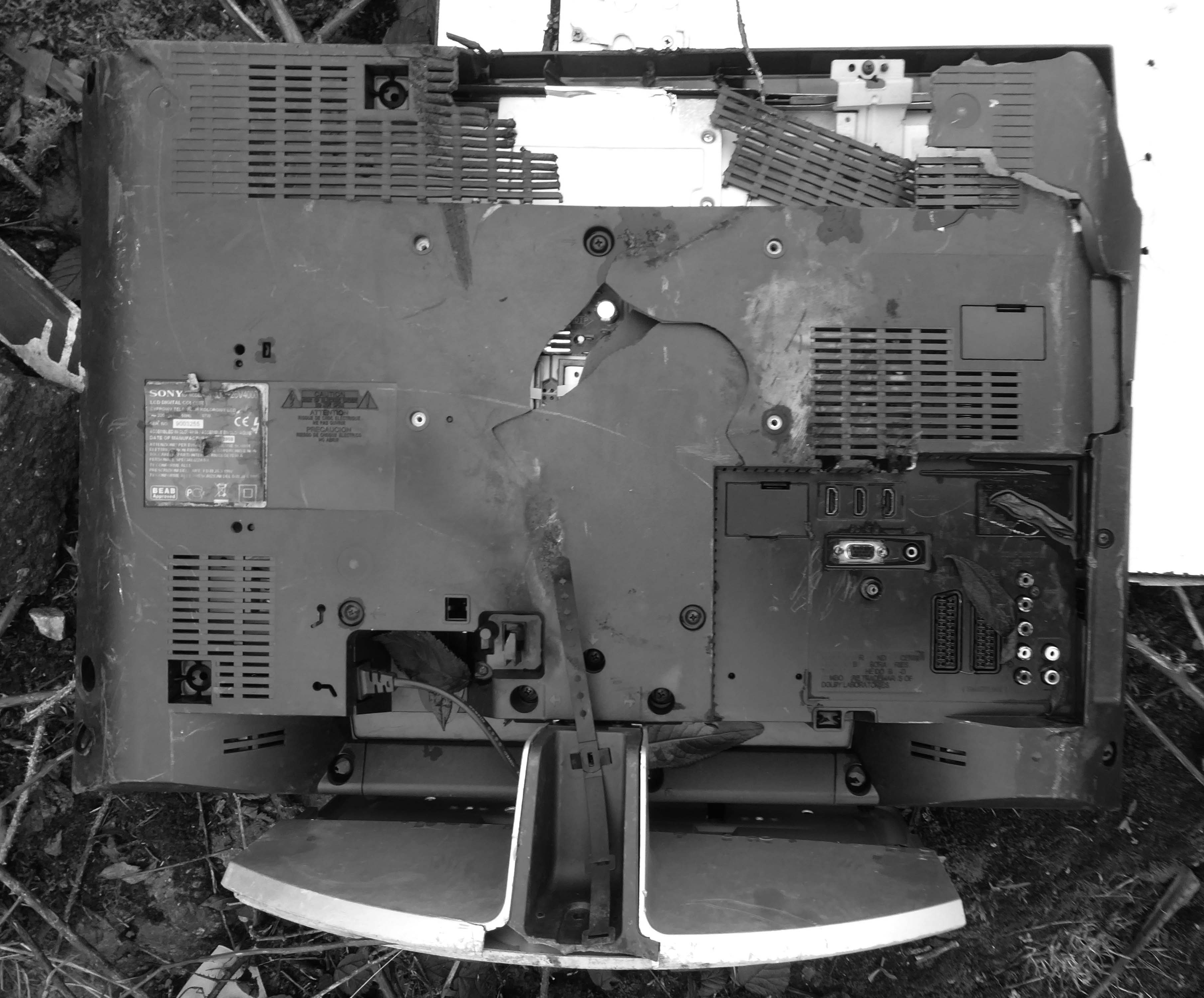
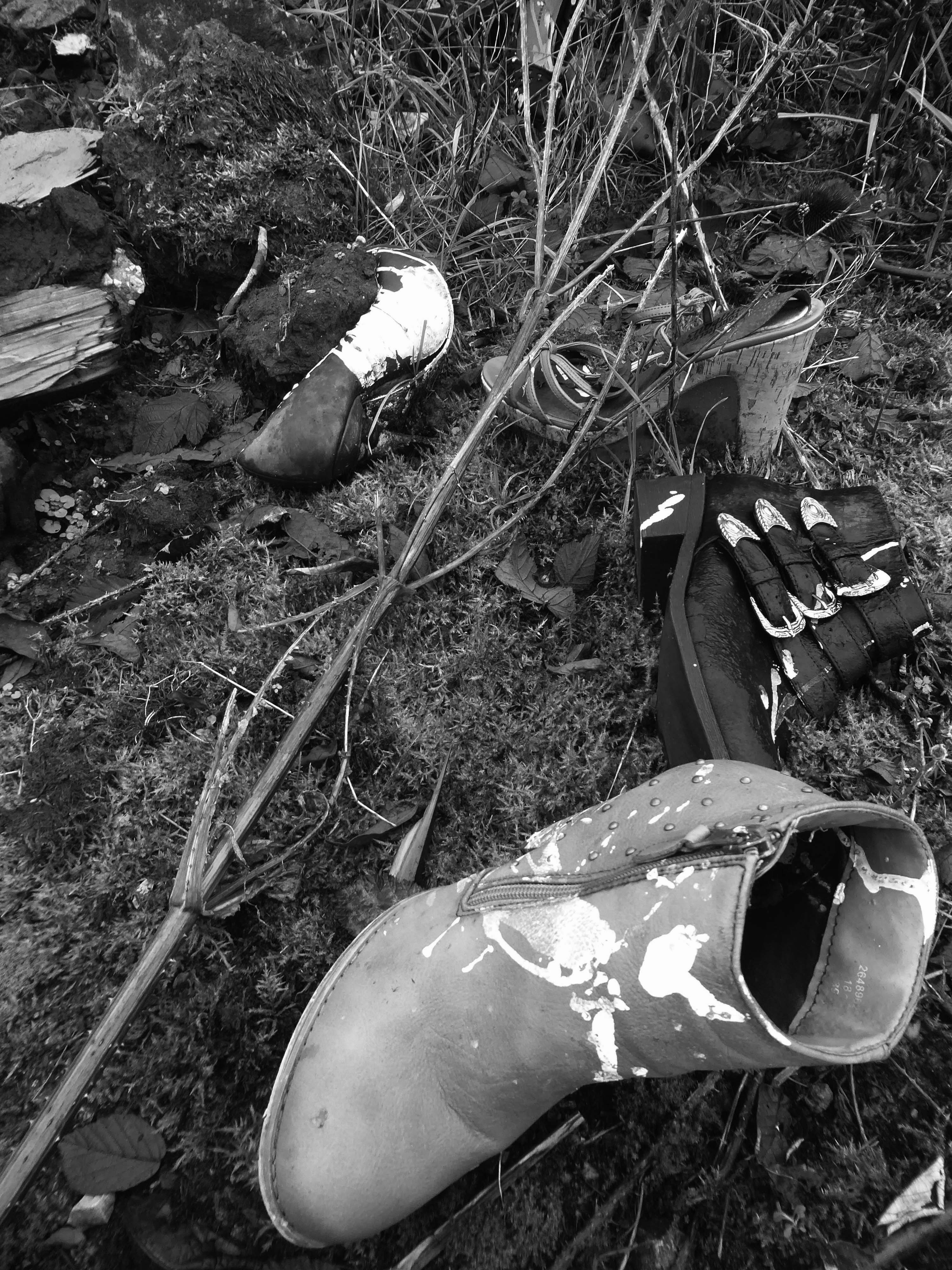
Now it is the domain of the fly-tipper, the home of the homeless, a war zone for a species which has declared war upon itself.

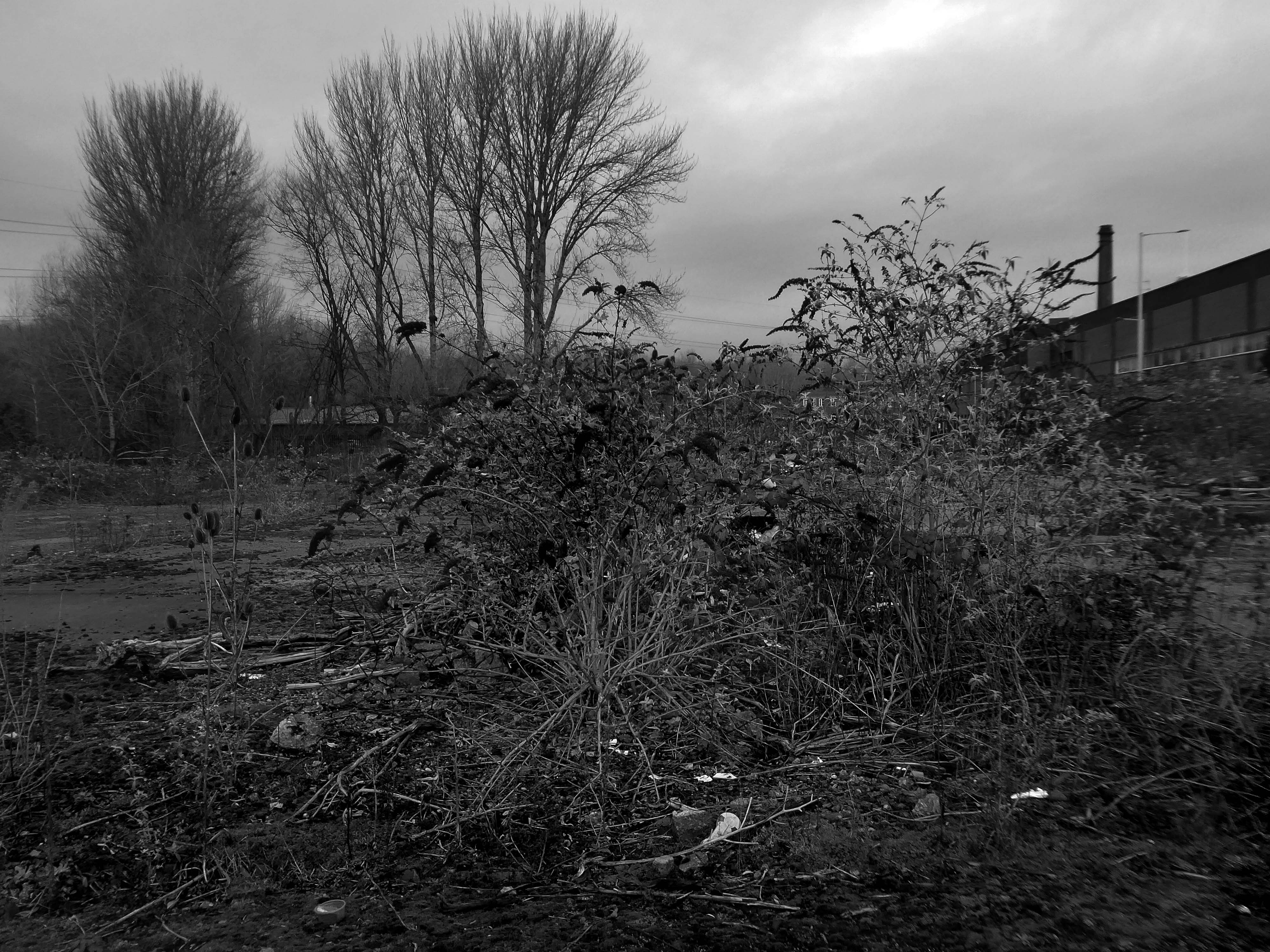
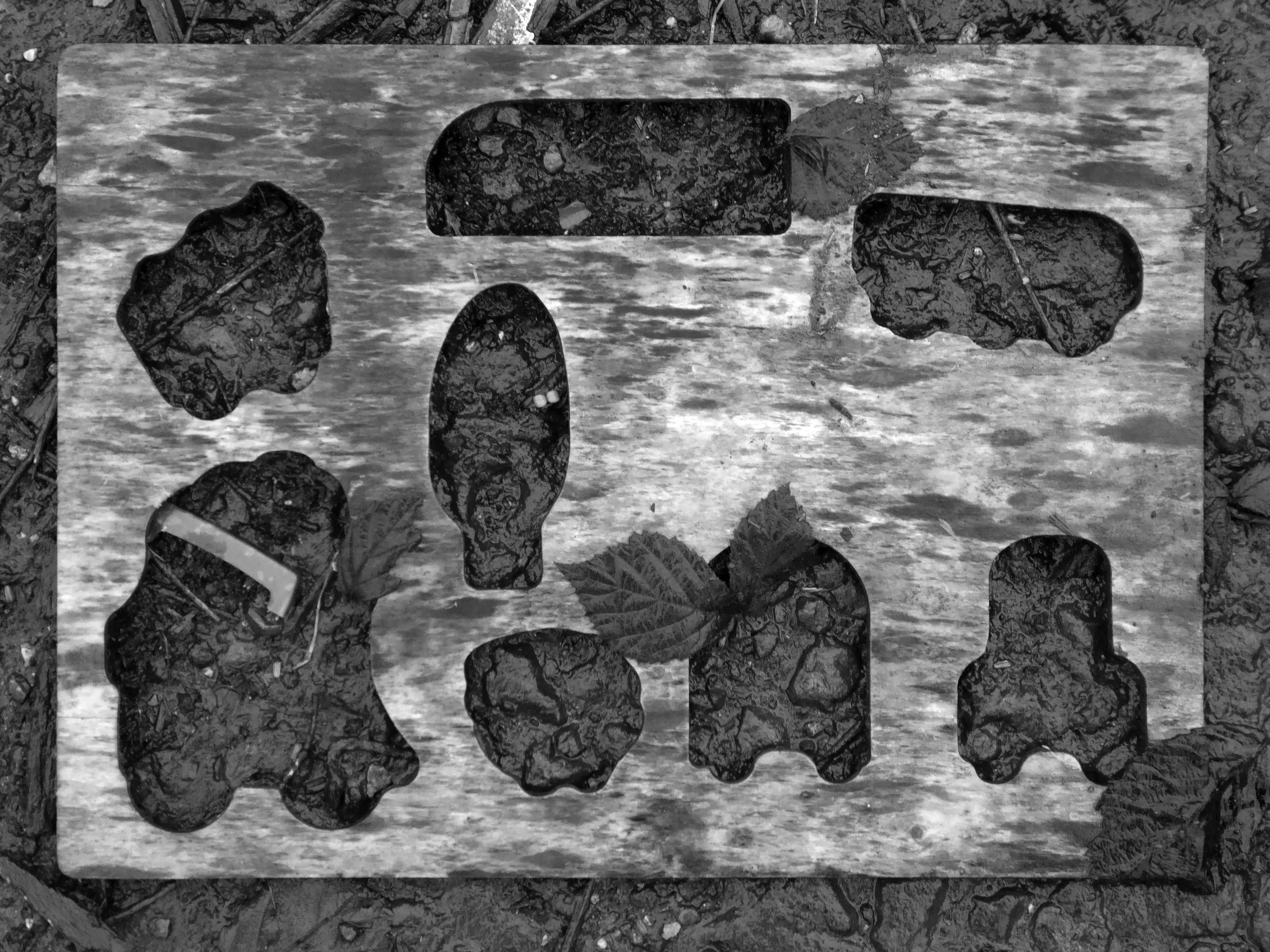
A desert of detritus, interpolated with tangles of brambles, seas of teasels and the ubiquitous buddleia.

This is the unofficial showroom for the unofficial Anthropocene Epoch – always crashing in a different car, during increasingly unseasonal weather, the superabundance of abundance.

It seems that the sun may set on us, before the sun finally sets.

Let’s take a peep at Portwood.

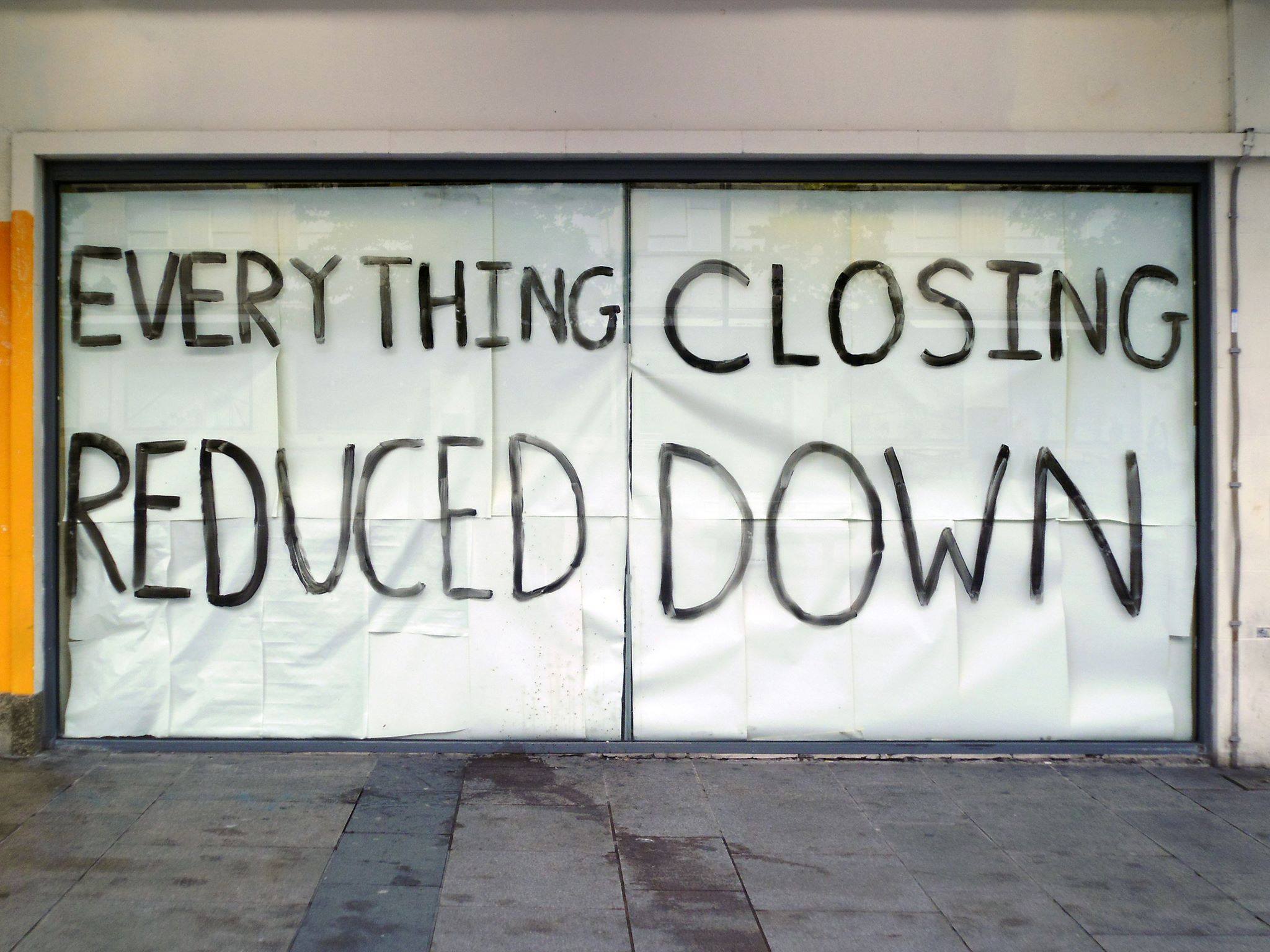
Game over.

Vehicle use affects our whole quality of local life. Traffic can be dangerous and intimidating, dividing communities and making street life unpleasant, whilst air pollution and traffic noise can make urban living uncomfortable.

Environmental Protection UK

The impacts of mass consumption are: Misuse of land and resources, exporting pollution and waste from rich countries to poor countries, obesity due to excessive consumption, a cycle of waste, disparities and poverty.

Global Issues

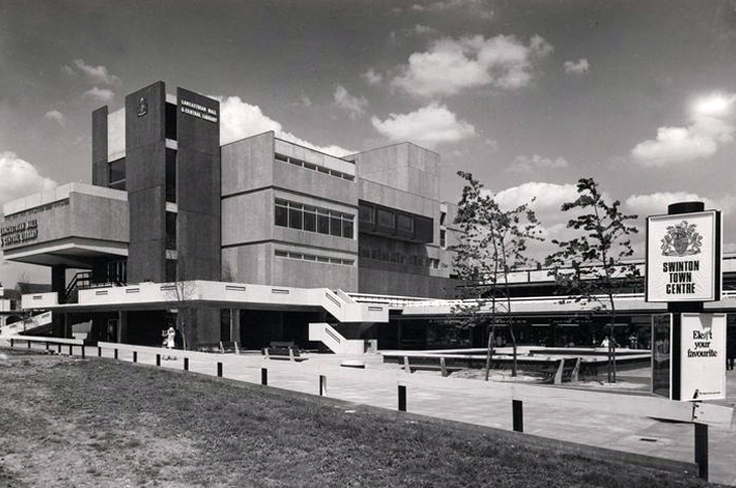
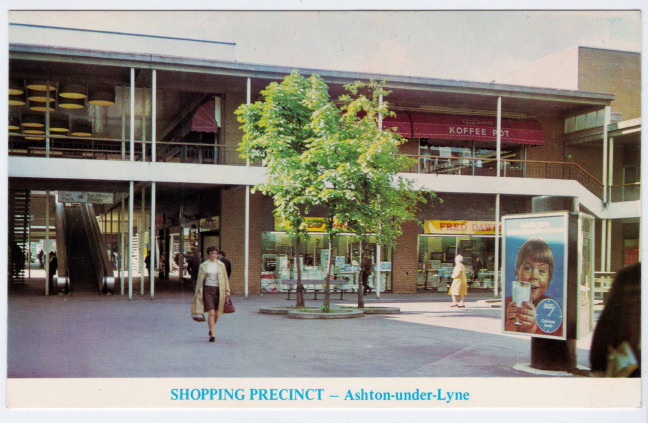
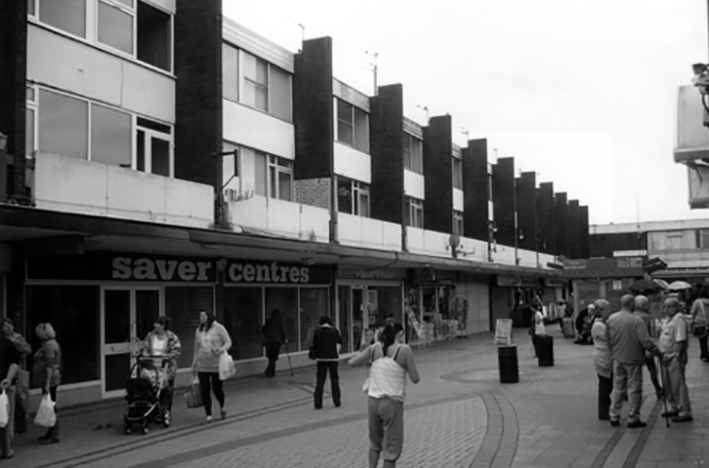
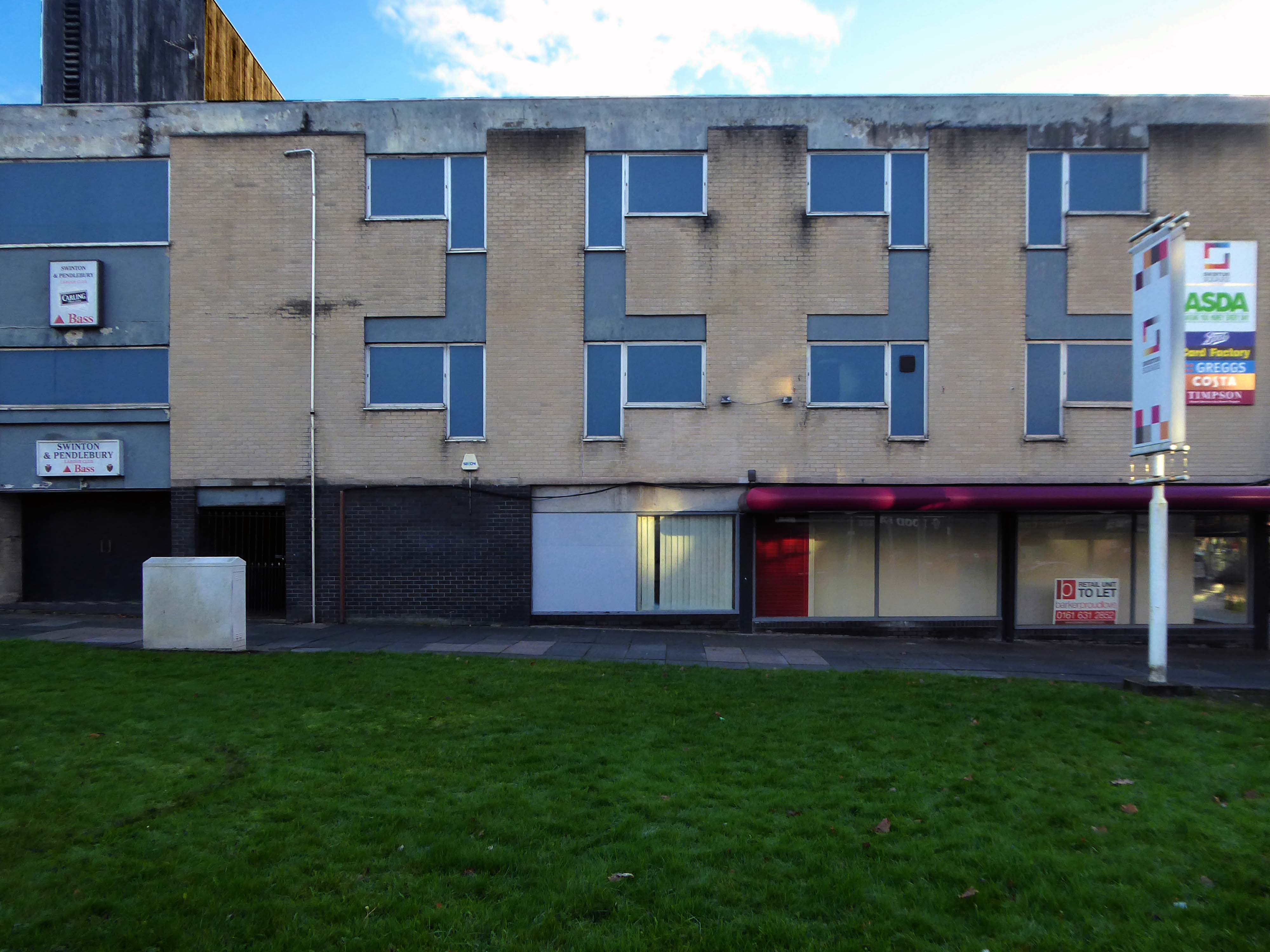
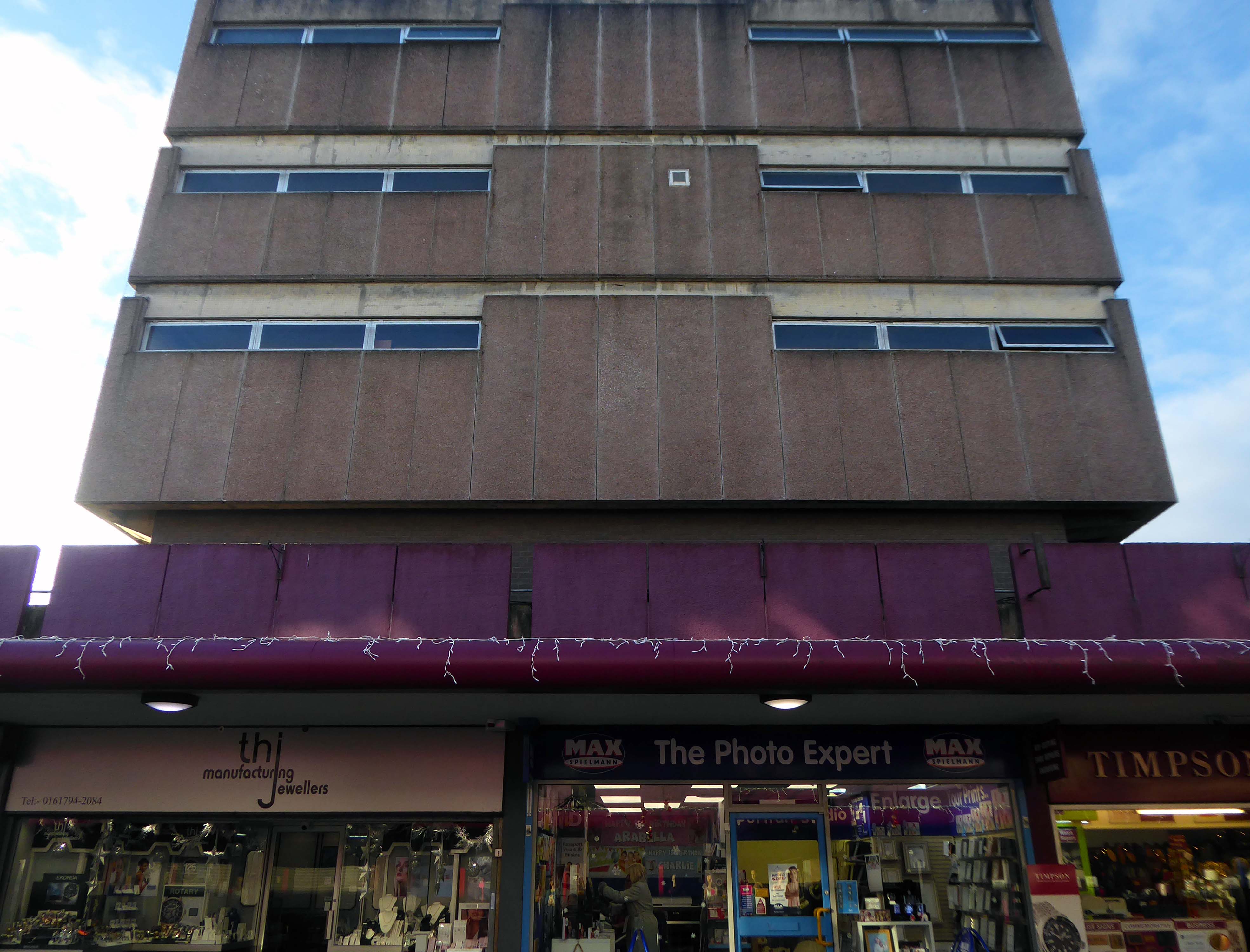
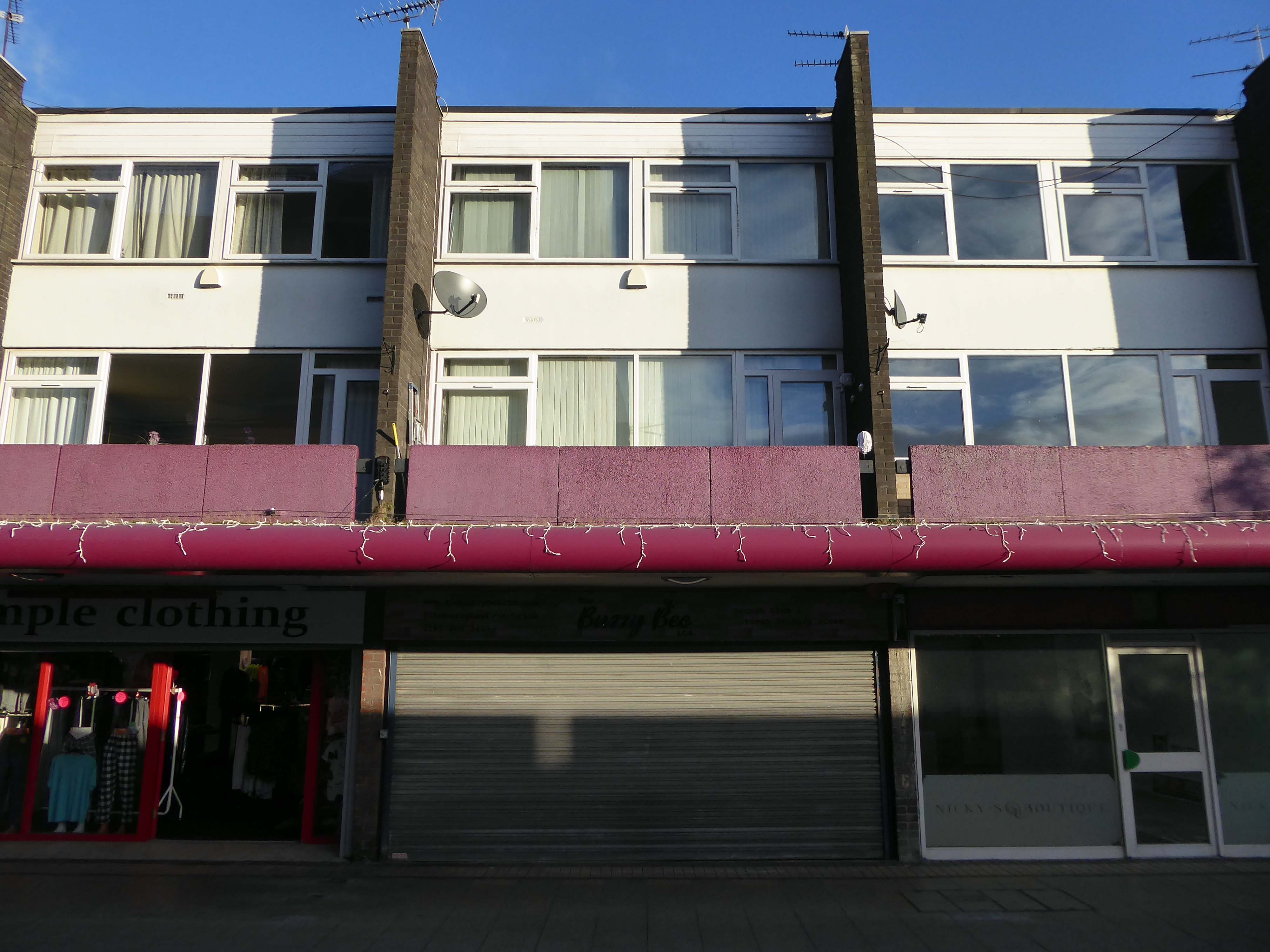
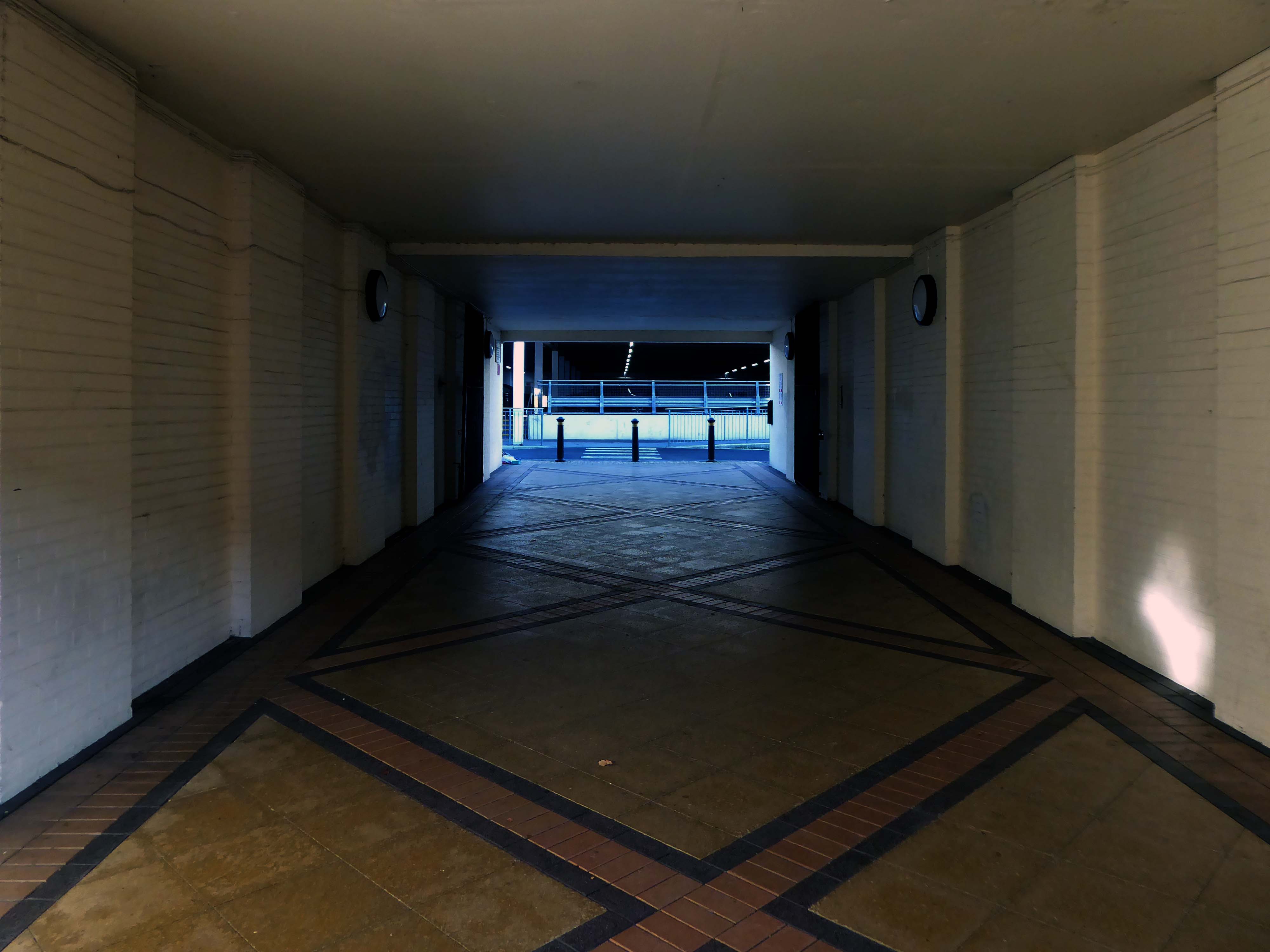
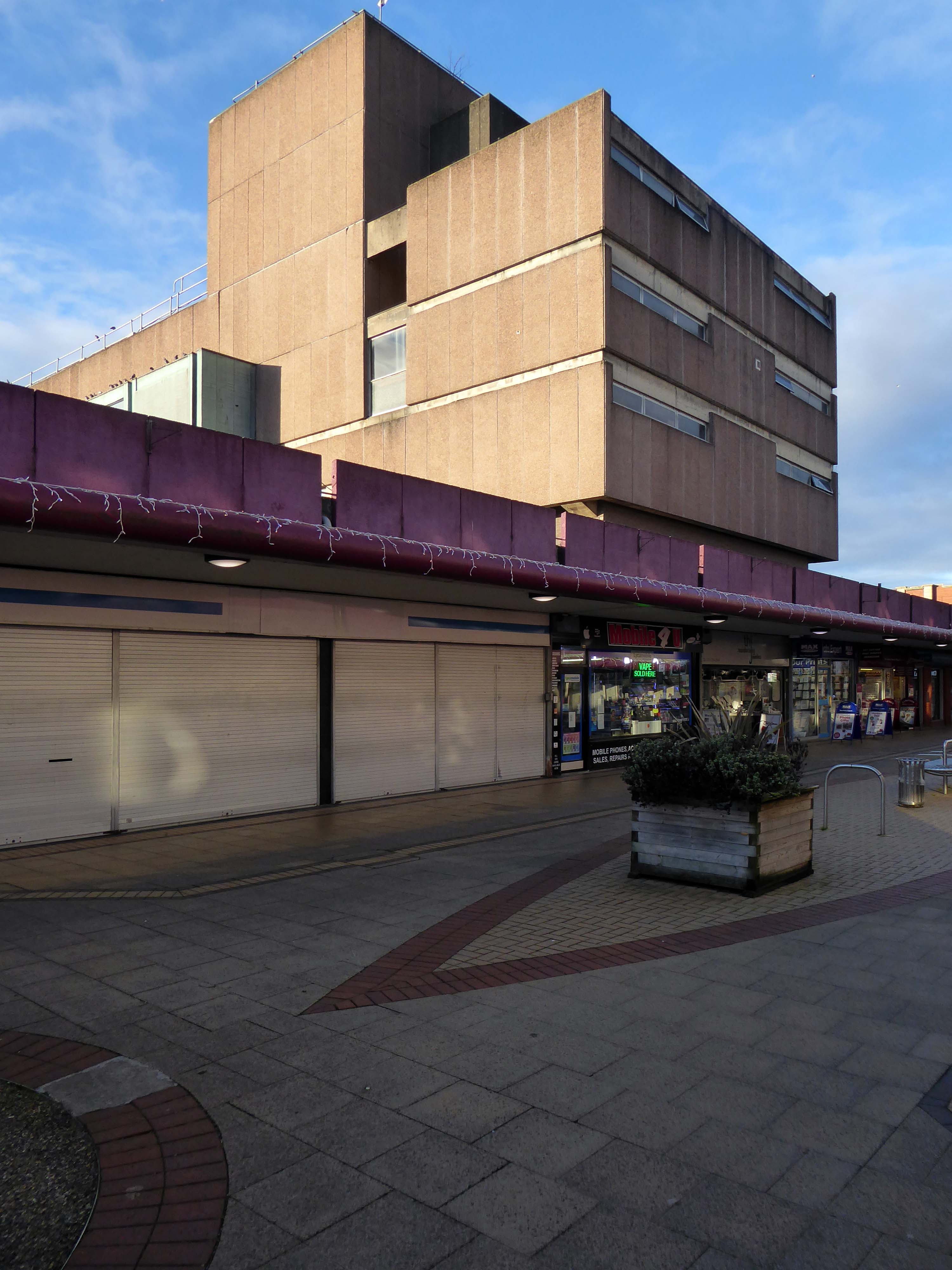
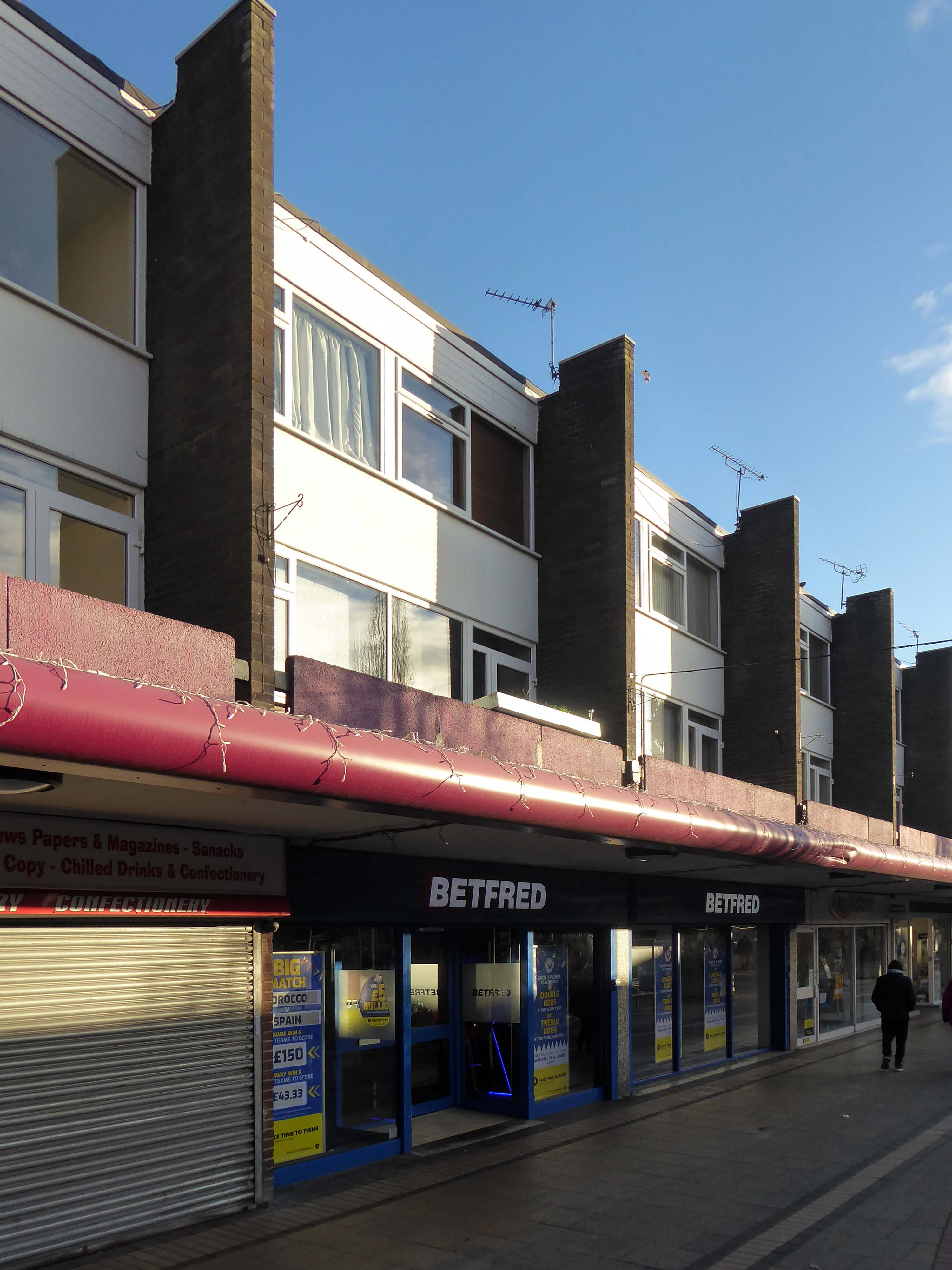
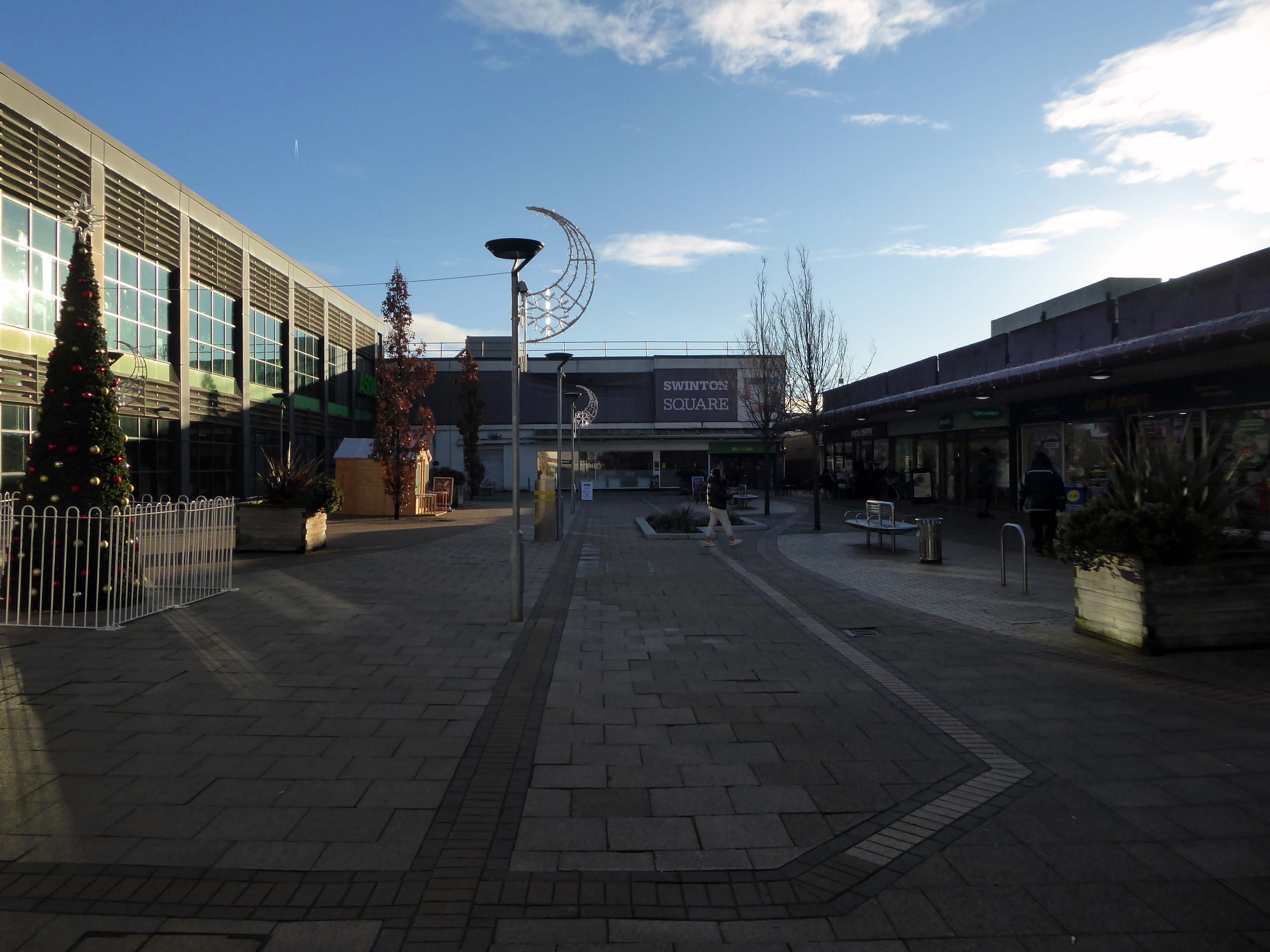
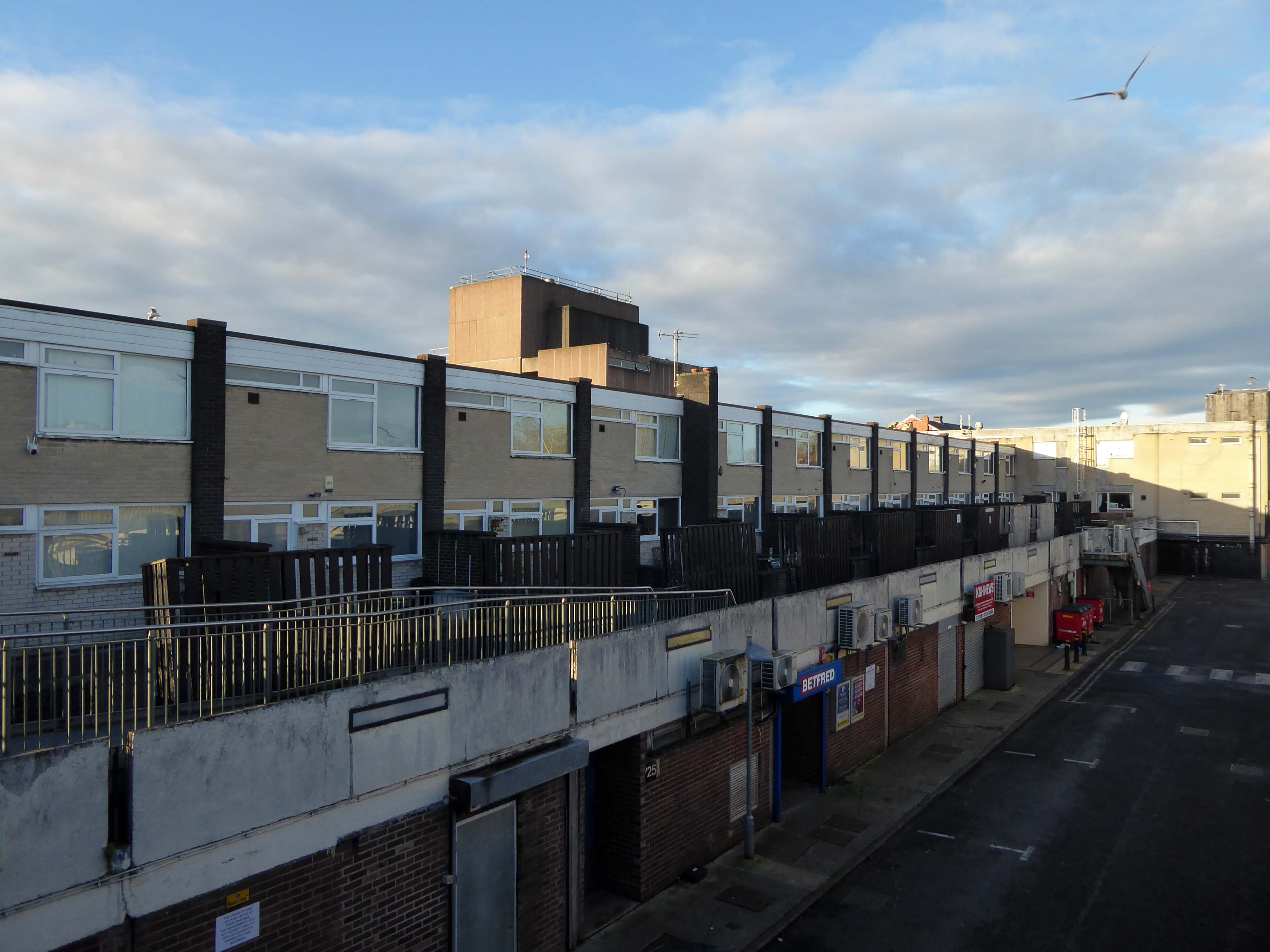
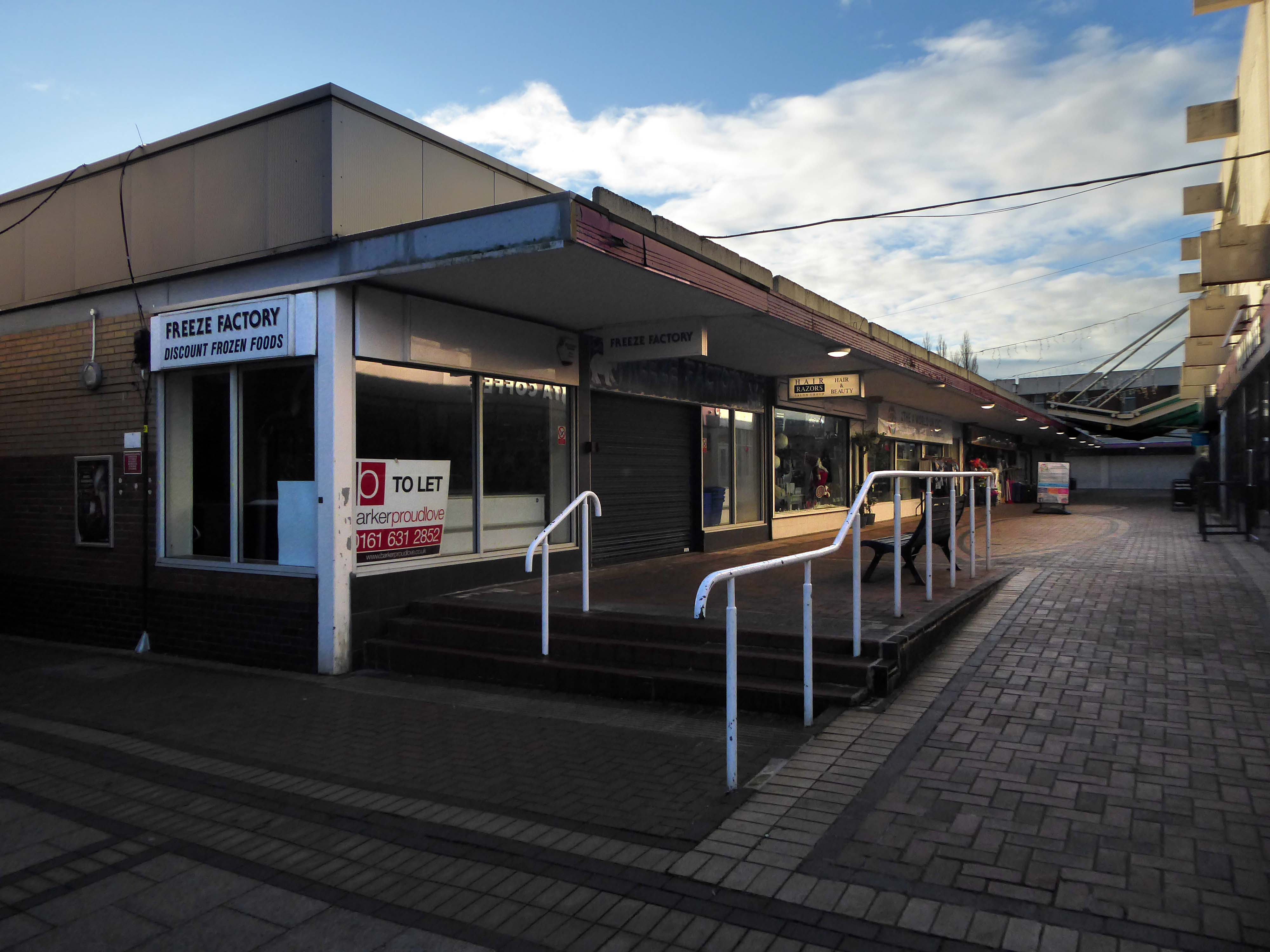
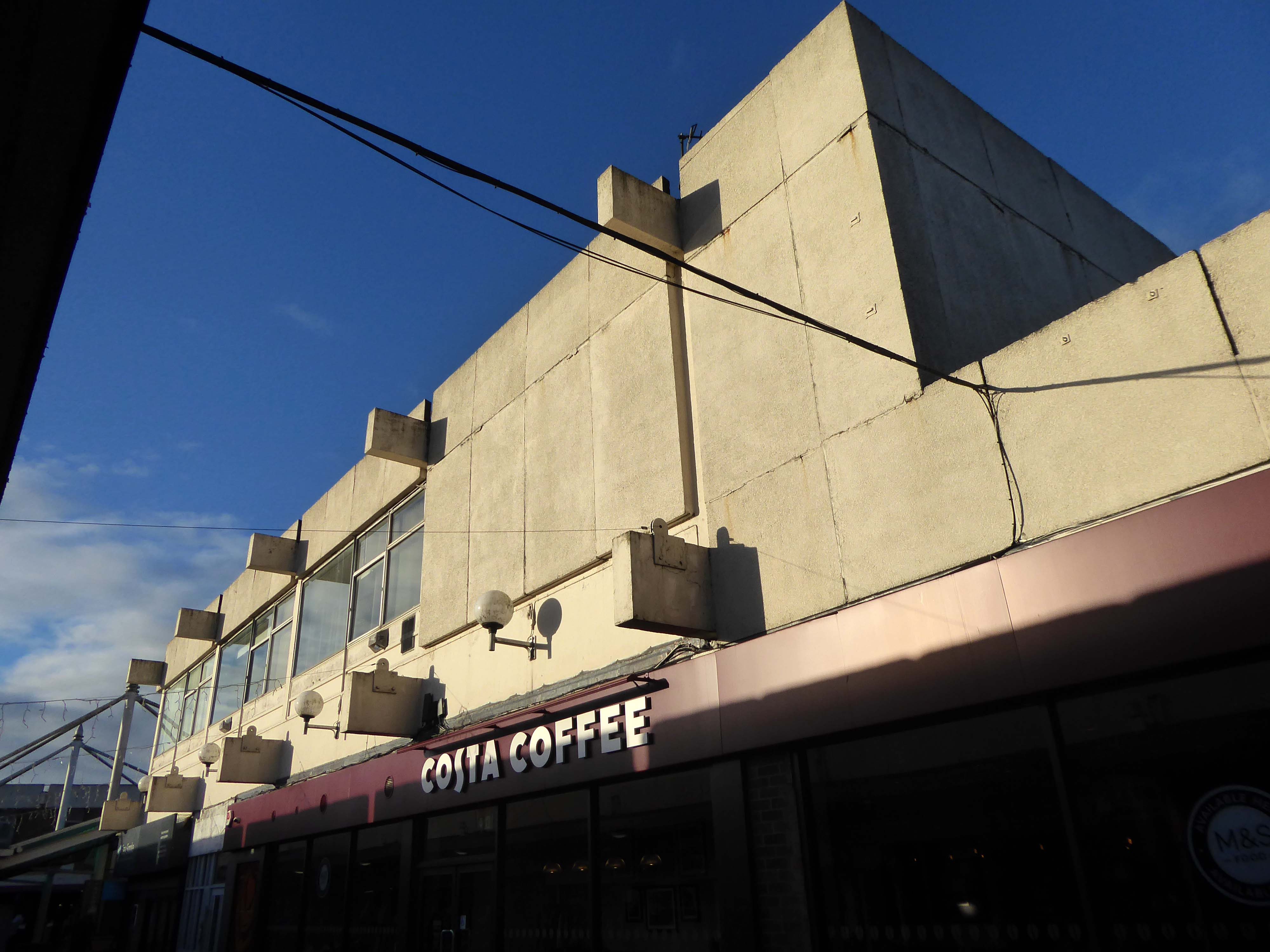
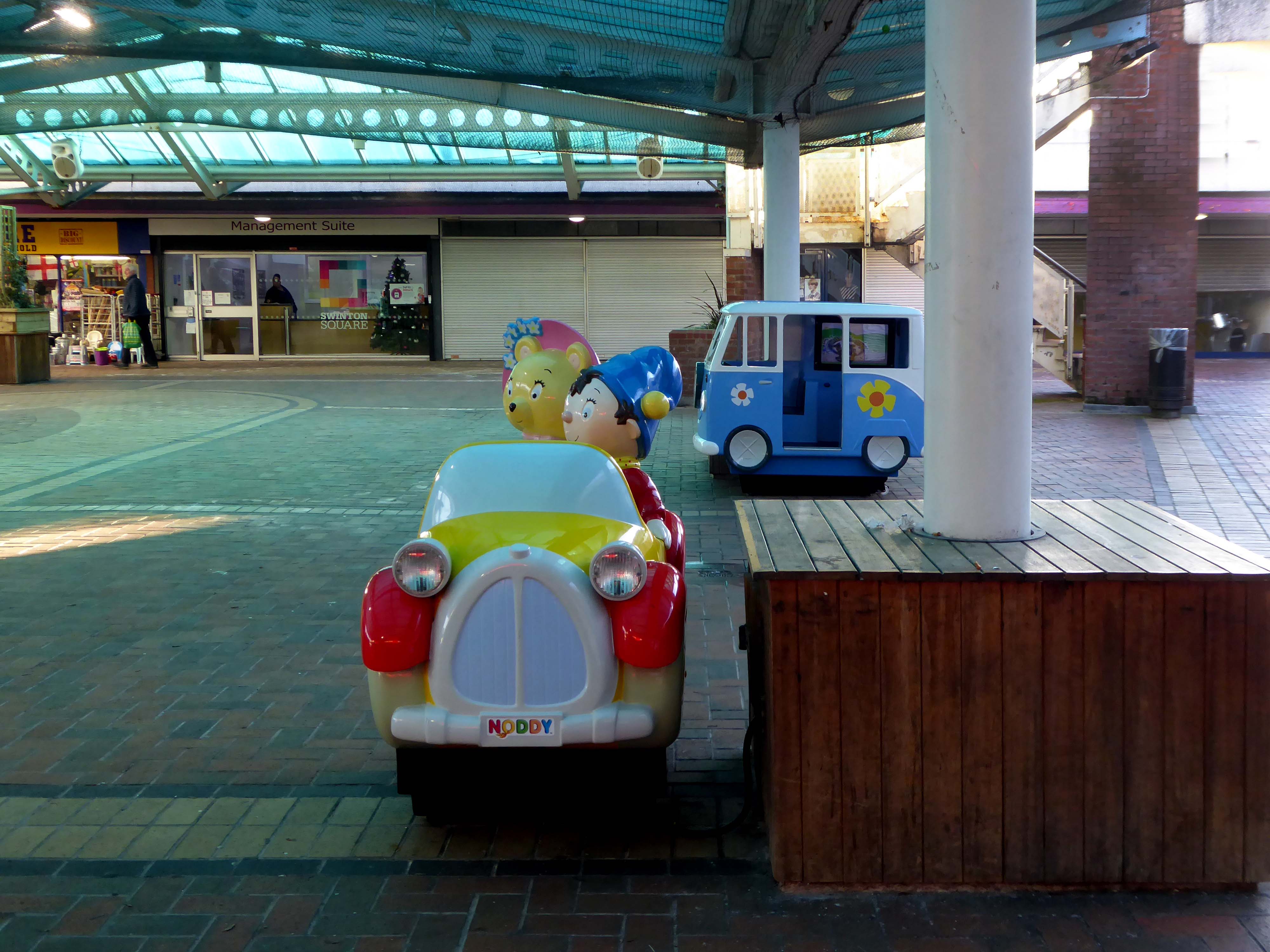
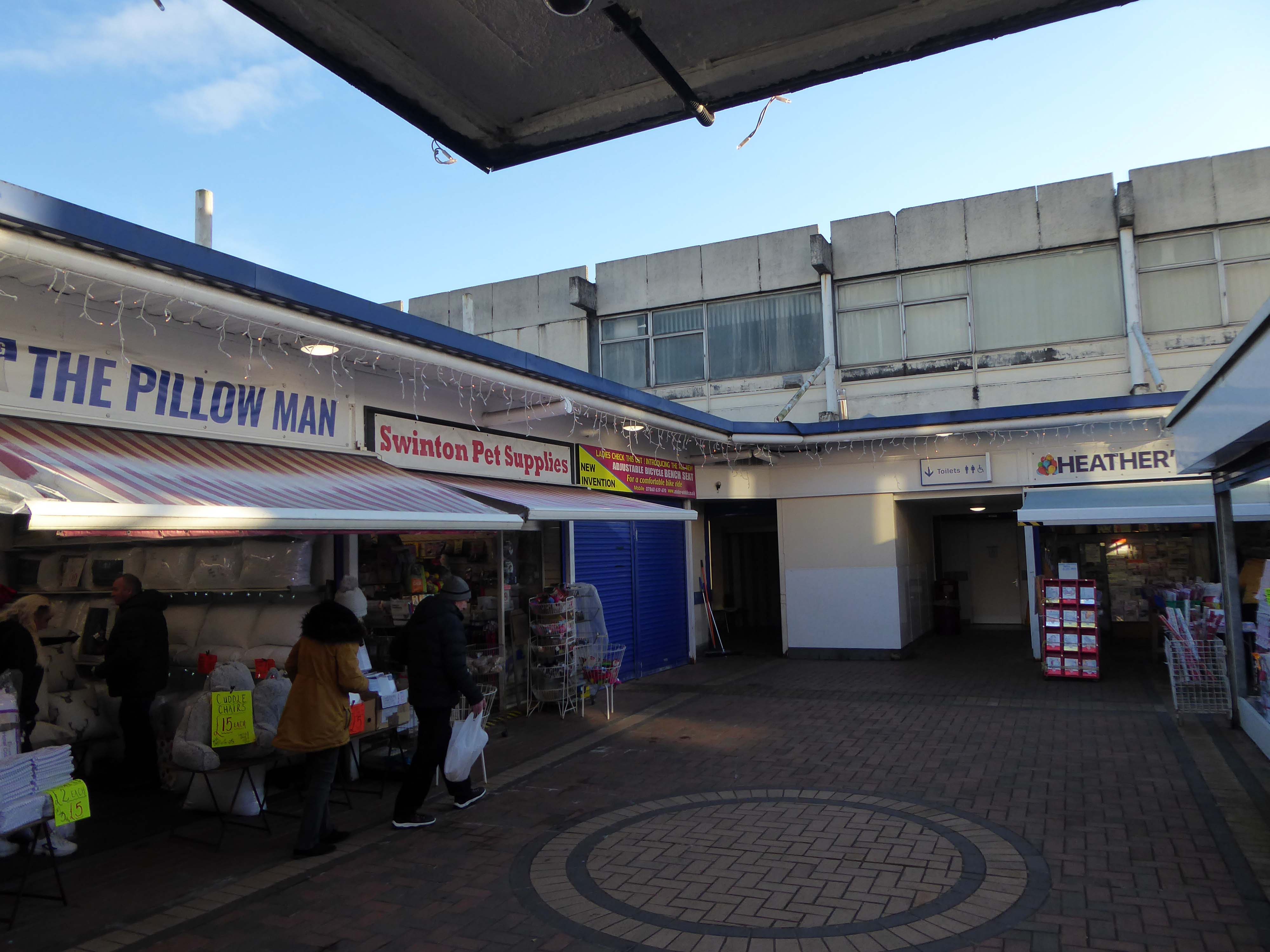
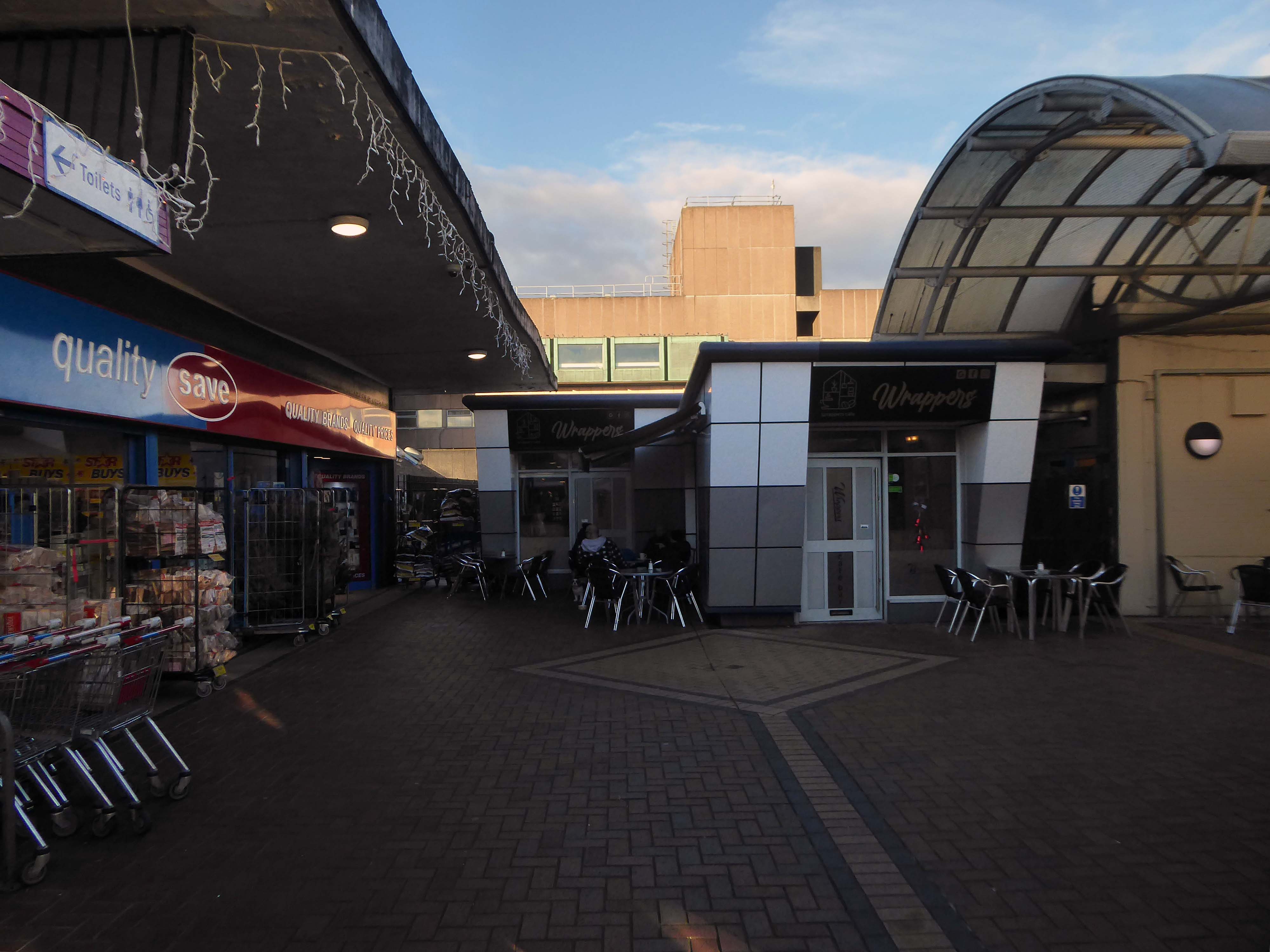
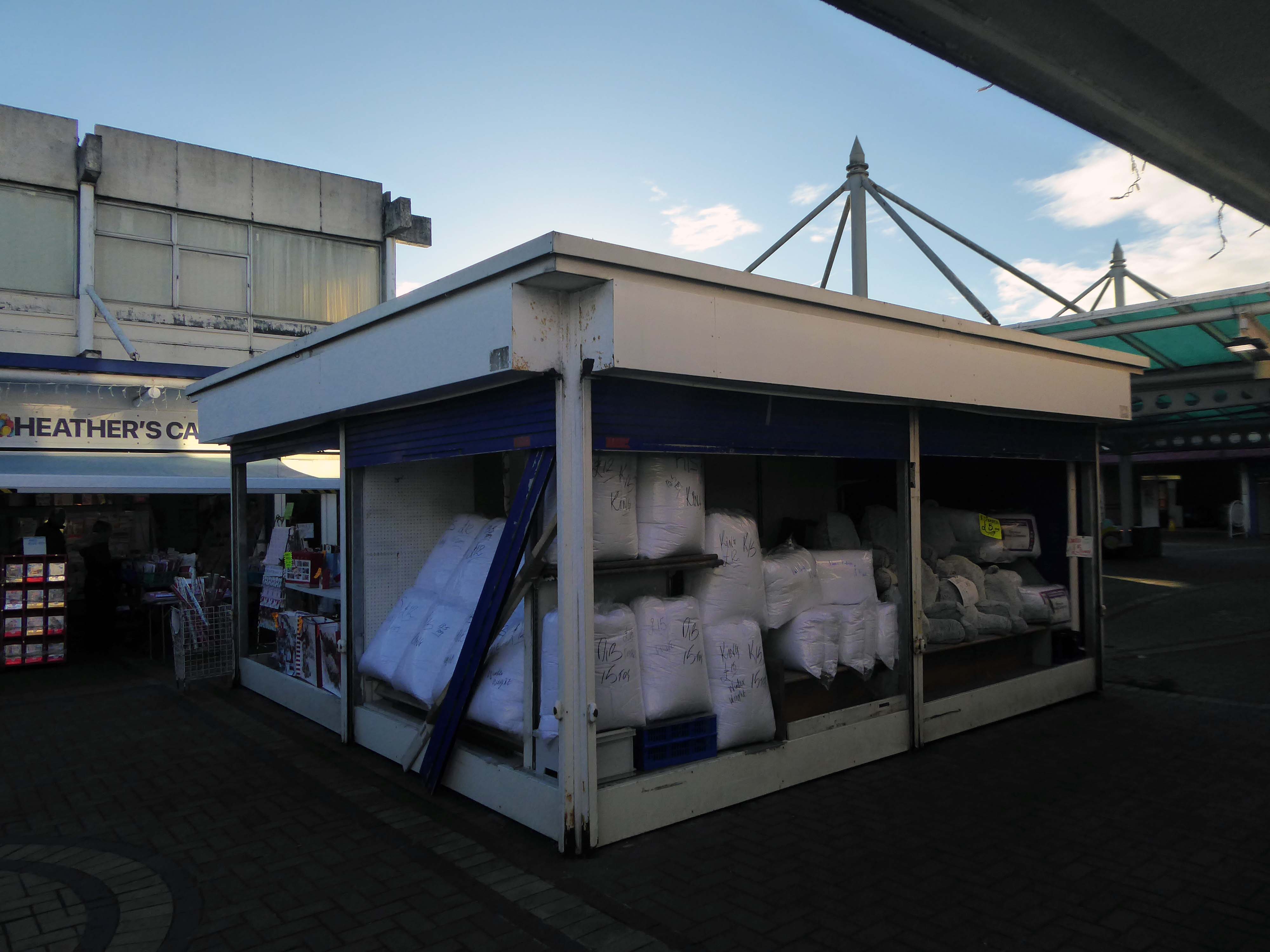
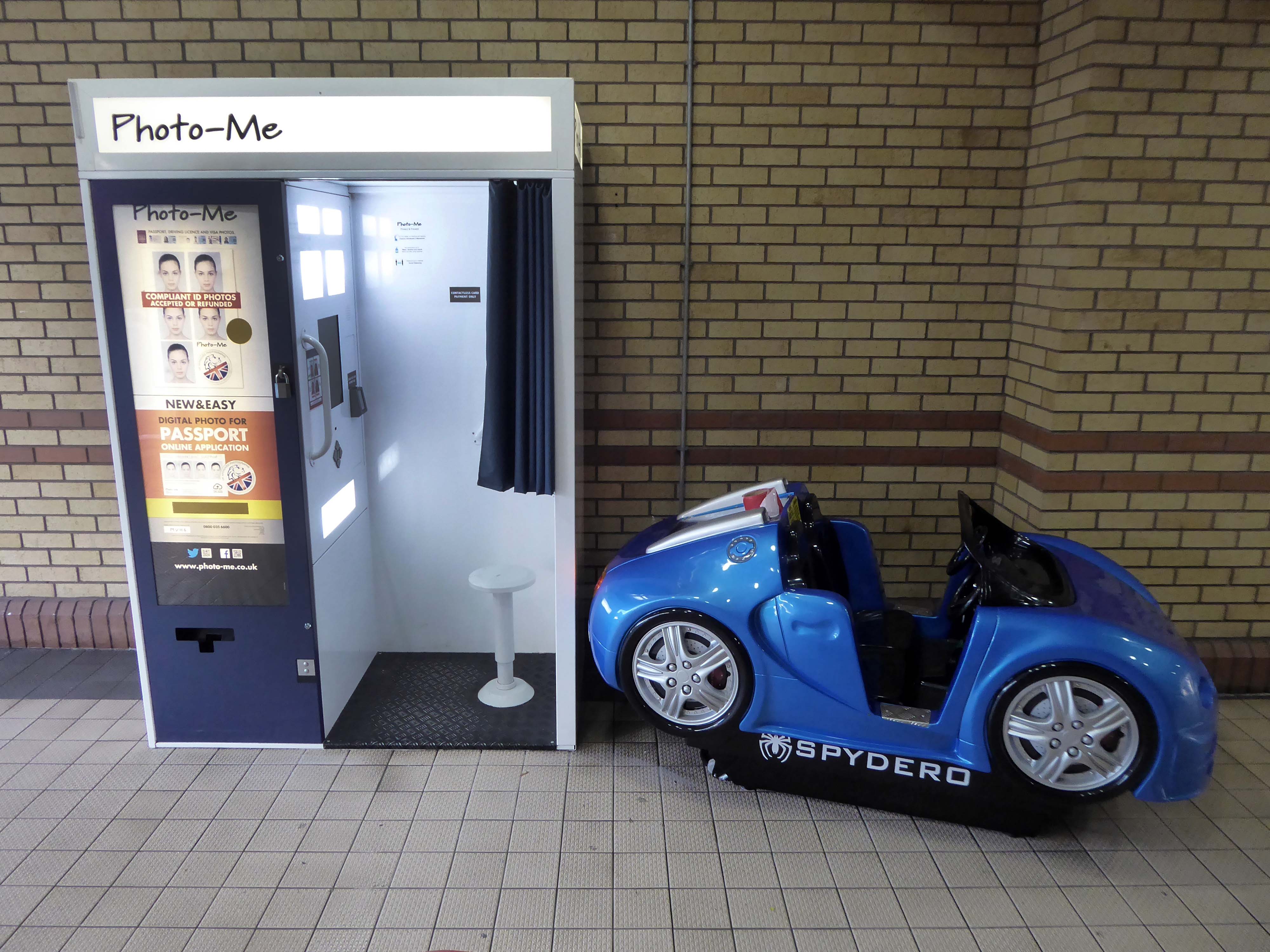
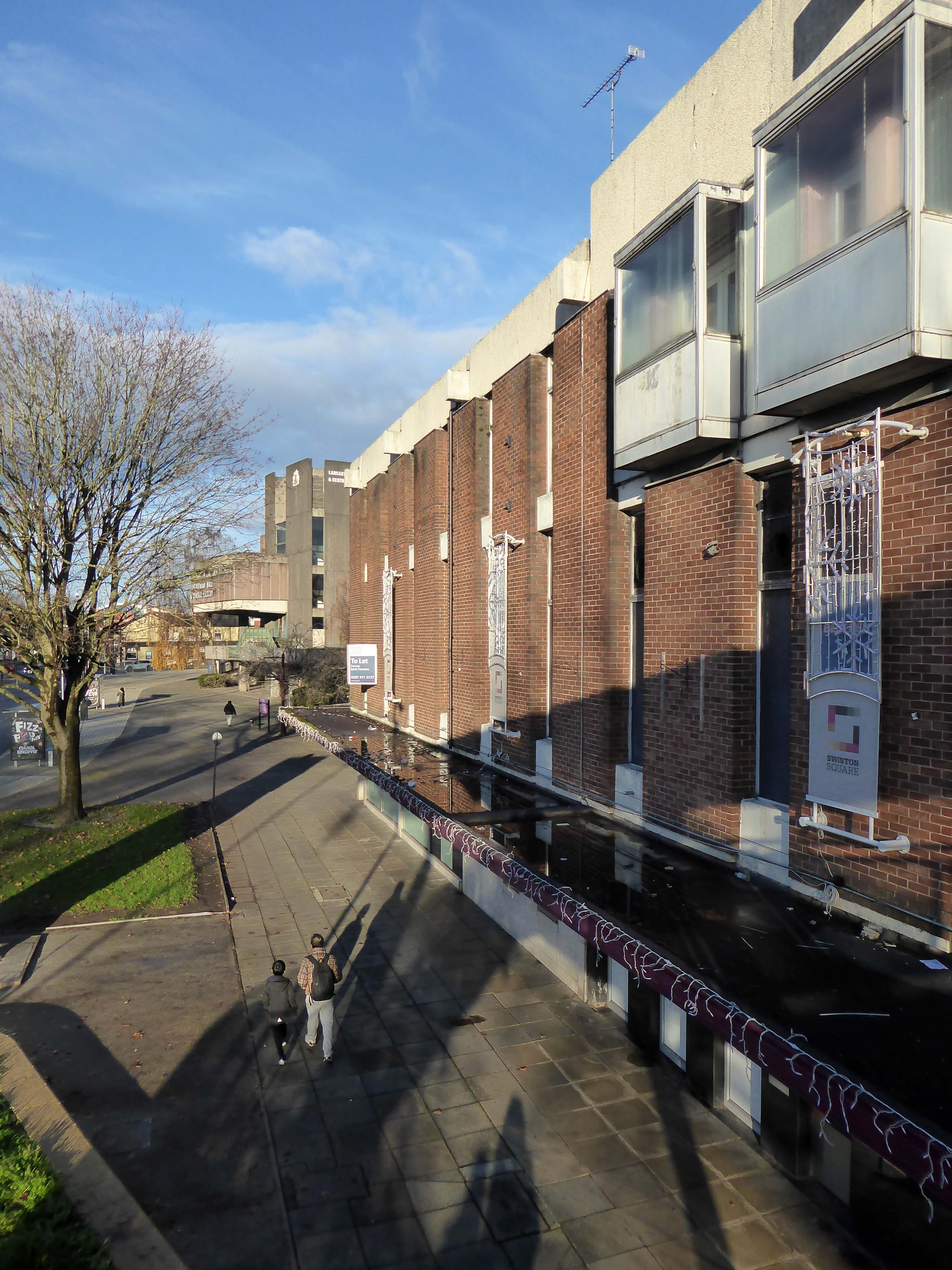
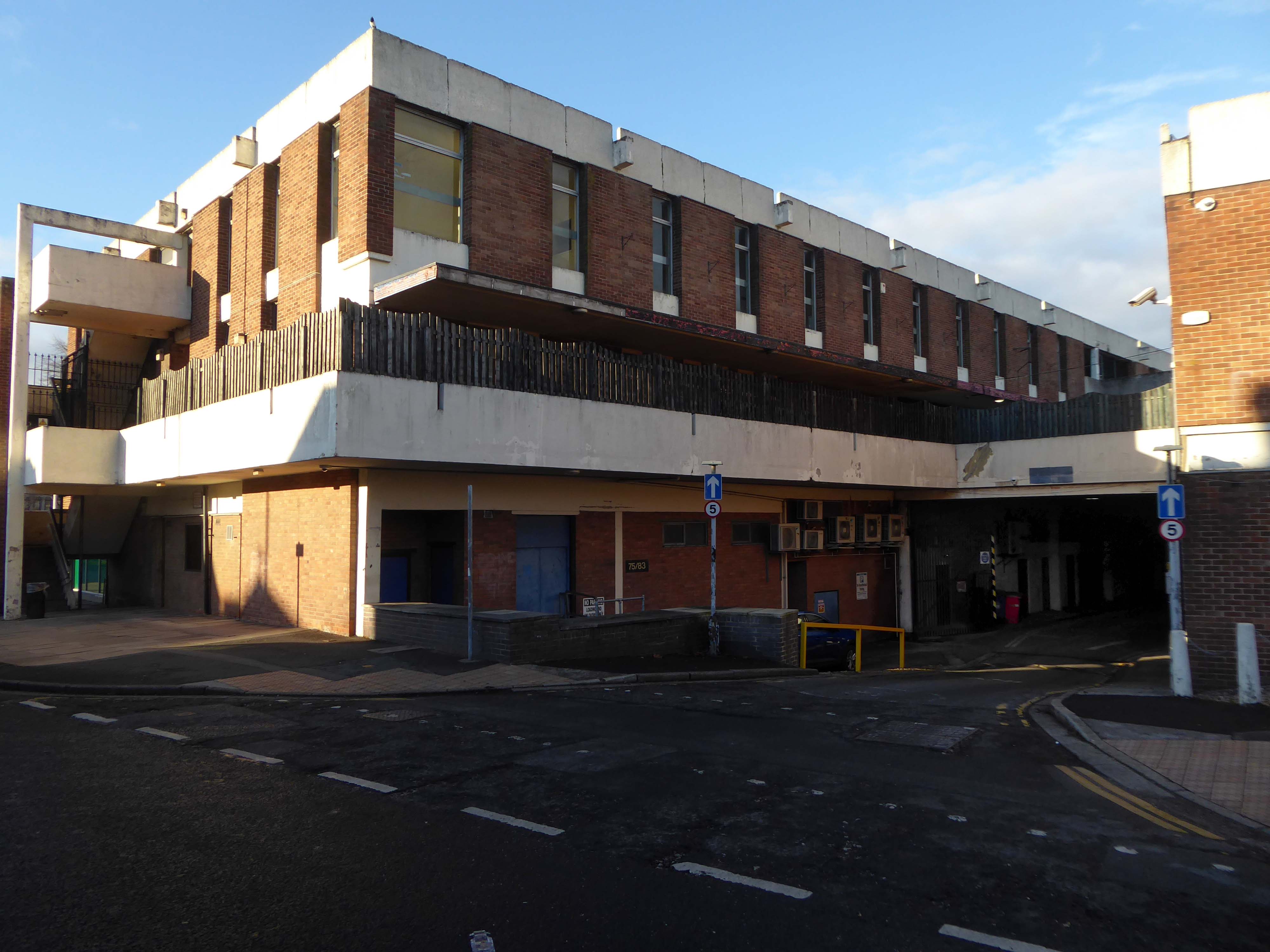
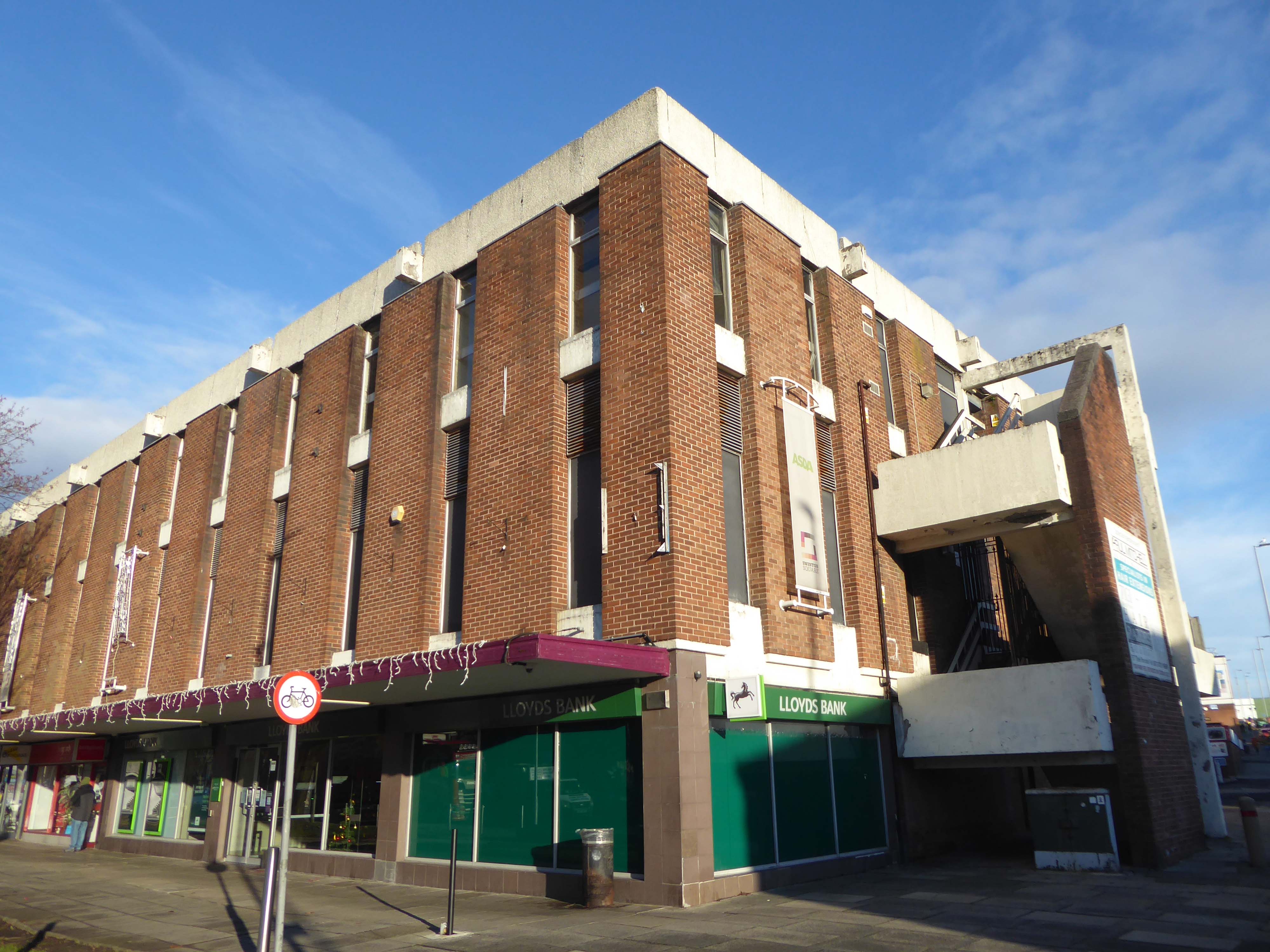
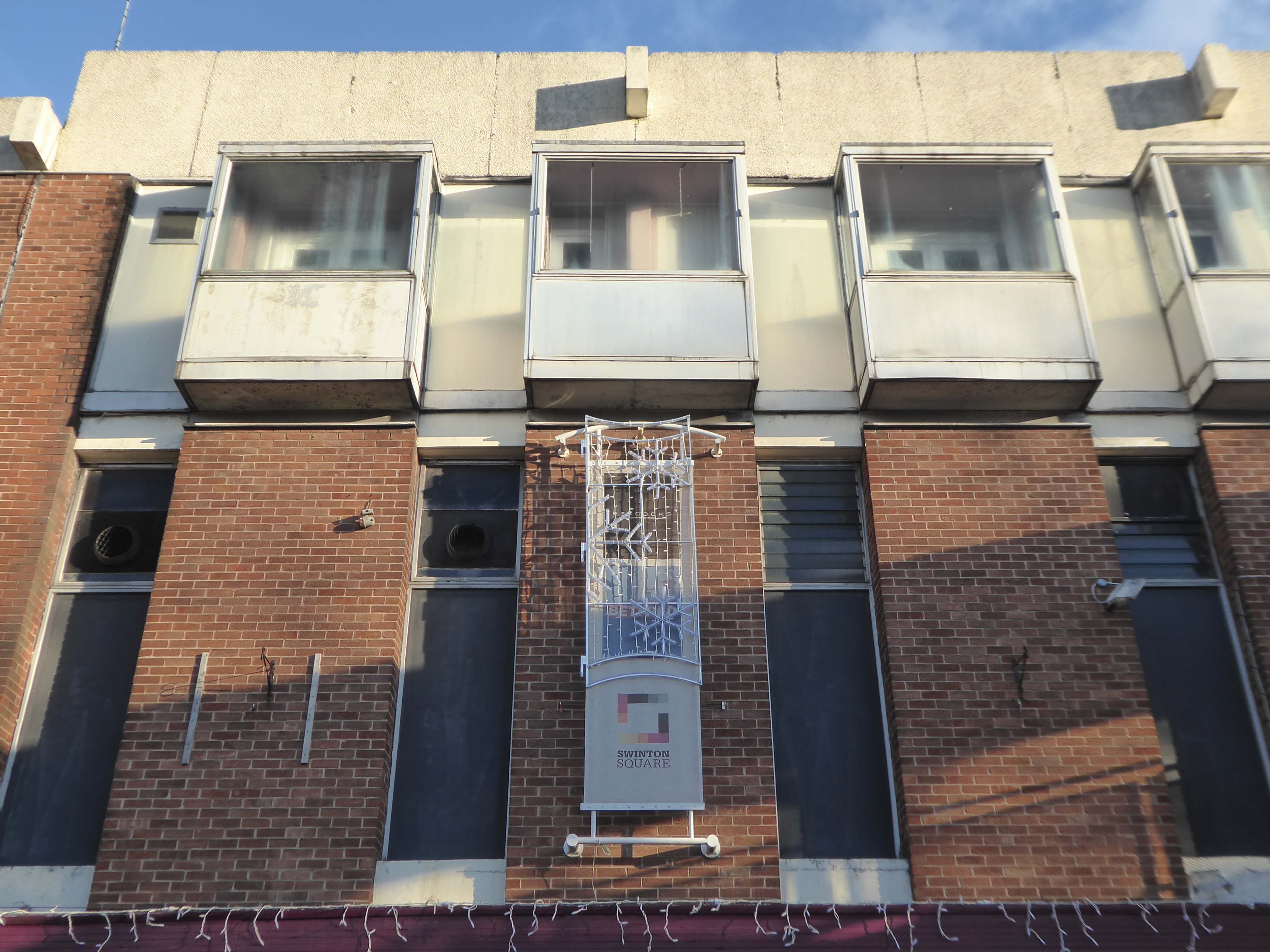
Swinton Square – Shopping Centre

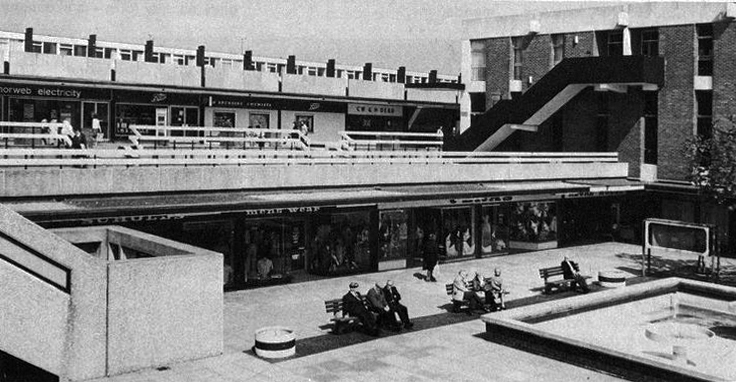
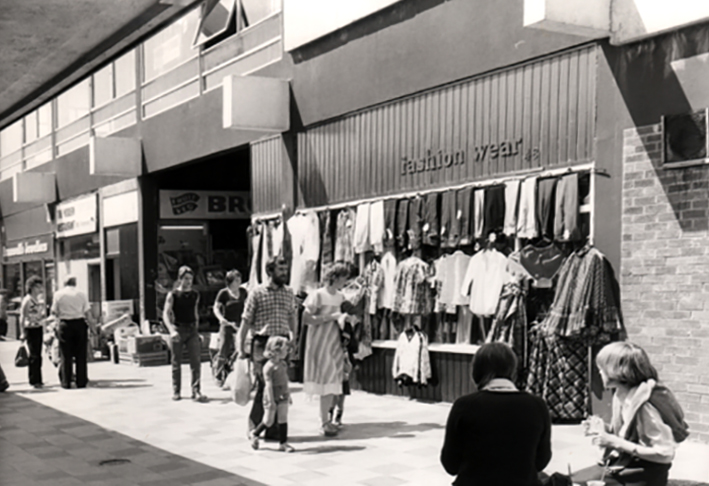
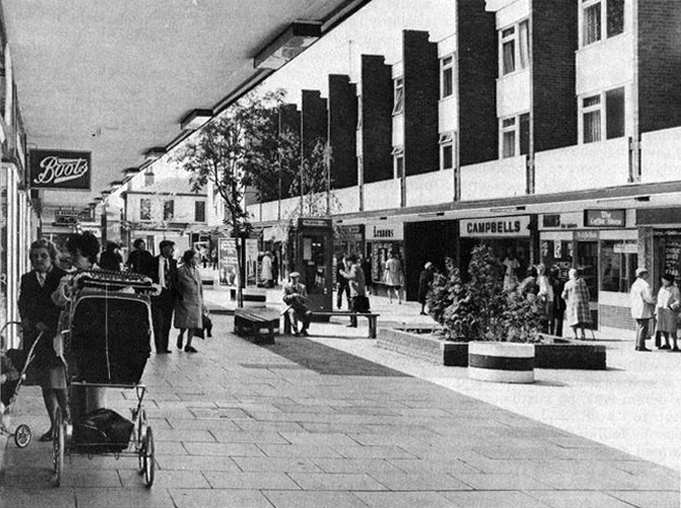
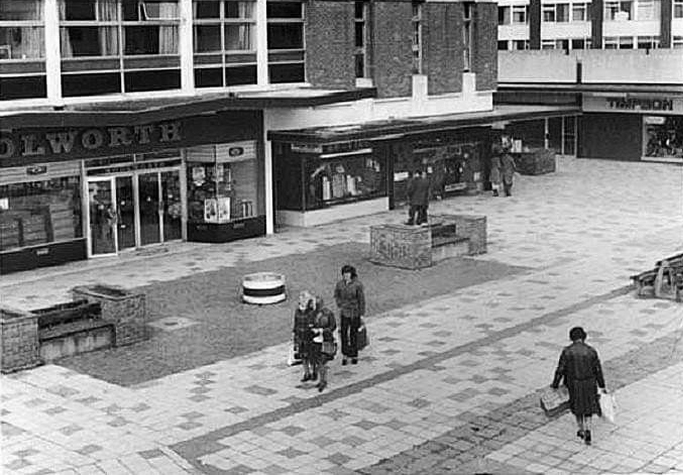
Opened in 1966 along with the slightly later Lancastrian Hall and Library, the Swinton Square shopping precinct provided an integrated modern setting for shopping, living, learning and entertainment.

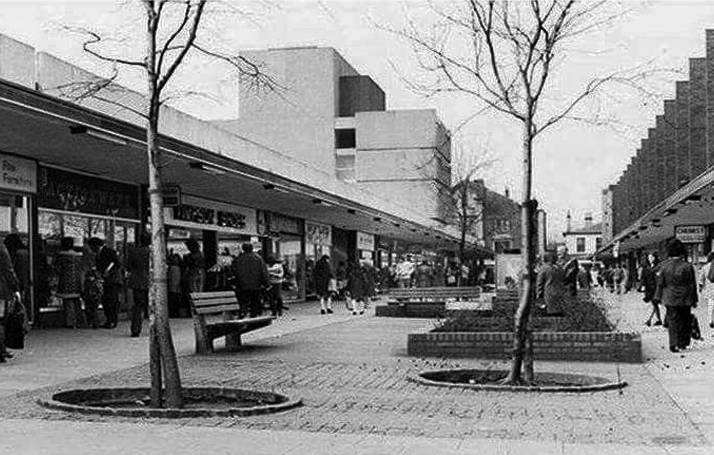
The late 60s and early 70s was a time of general prosperity – and the hard landscaping offered a soft option for the local folk.

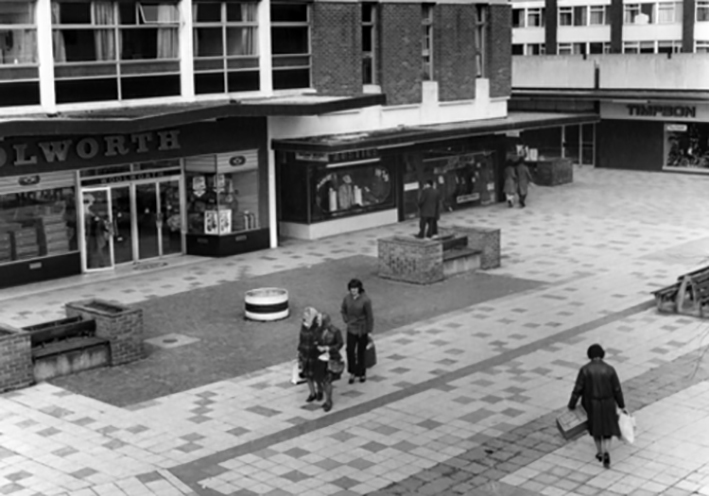
This was the age of the Precinct, celebrated nationally with postcard after postcard.

My local haunt in Ashton under Lyne.

Local traders and national chains rubbed shoulders.

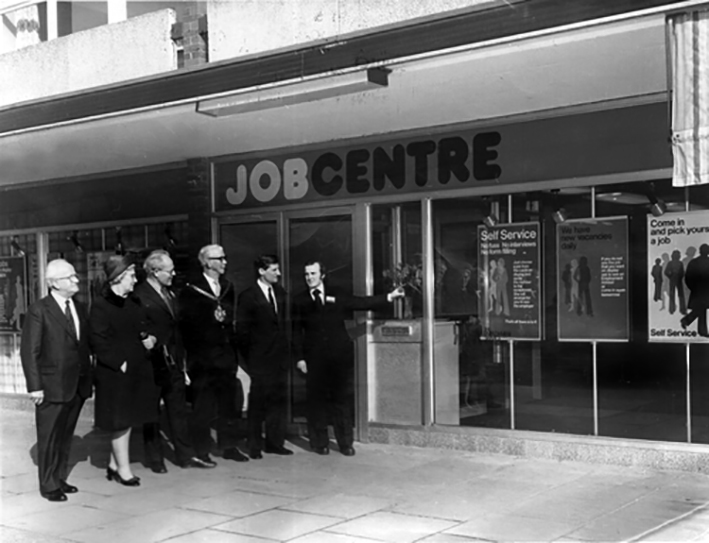
There was even a Job Centre opening- there was even a wide range of vacancies.

Following a challenging year, the letting reinforces Swinton Square as a pillar in the local community. Whilst retail has been heavily affected throughout the Covid-19 pandemic, footfall at the scheme has remained buoyant, with shoppers staying local, favouring the convenience and independent retailers of Swinton Square. Renovations began on the site of the new, temporary job centre at the beginning of the year and is due to be completed in May. The centre is expected to boost footfall and support for local, independent businesses.

Avison Young

Despite Swinton’s many strengths, it faces similar challenges to other towns. The shopping centre and other buildings in the town centre are dated and in need of investment. Demand for local housing has grown by 23% in the last five years, but there is a lack of high-quality family and affordable housing in the right locations in the area.

The vision is just the first step of the journey, the next is to appoint a developer partner who can take this vision and help shape it, through ongoing consultation and engagement with the community, into a framework and plan for Swinton that will guide future investment.  

Salford Gov UK

The road to Swinton is paved with good intentions – rather than gold.

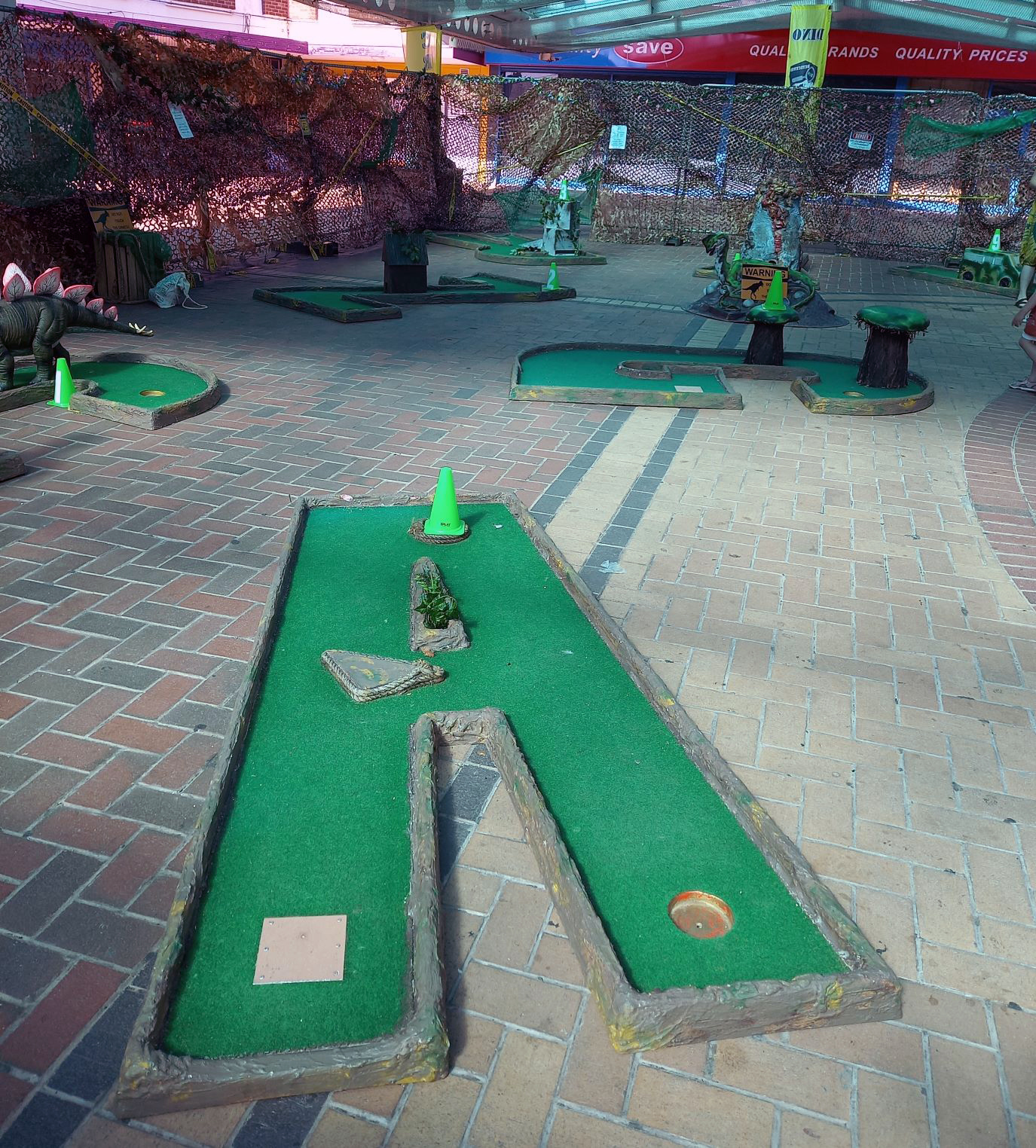
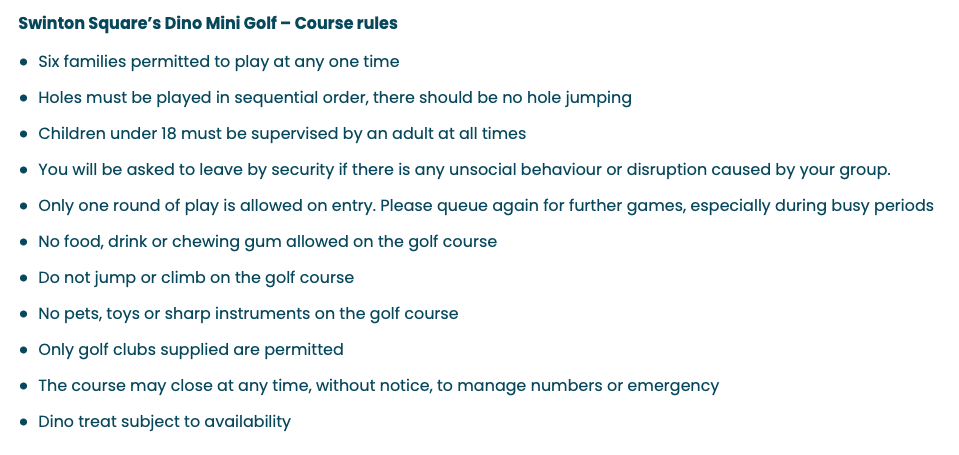
Sadly I was too late for August’s Dino Crazy Golf.

Bonny Street Police Station – Blackpool 2022

I have been outside several times in 2016 again in 2020 – never inside.

Let’s take a look:

Photos – Blackpool Gazette

So whilst in town for a stroll I strolled by once again, the main block now tagged and tinned up.

Whilst the Courts are still in use, until they make their move in 2025, stasis seems to be the order of the day.

There are no signs as yet of the proposed redevelopment of the site.

Some day maybe

Councillors have approved a compulsory purchase order to complete the land assembly for the £300m Blackpool Central project but still hope to negotiate terms with property owners.

Blackpool Council’s executive unanimously agreed the recommendation towards enabling the Central Car Park to be transformed into a leisure destination boasting a flying theatre, virtual reality rides, a thrill and gaming zone, multi-media exhibition space and themed dining areas.

Lancs Live

Let’s veer off the promenade and assess the situation.

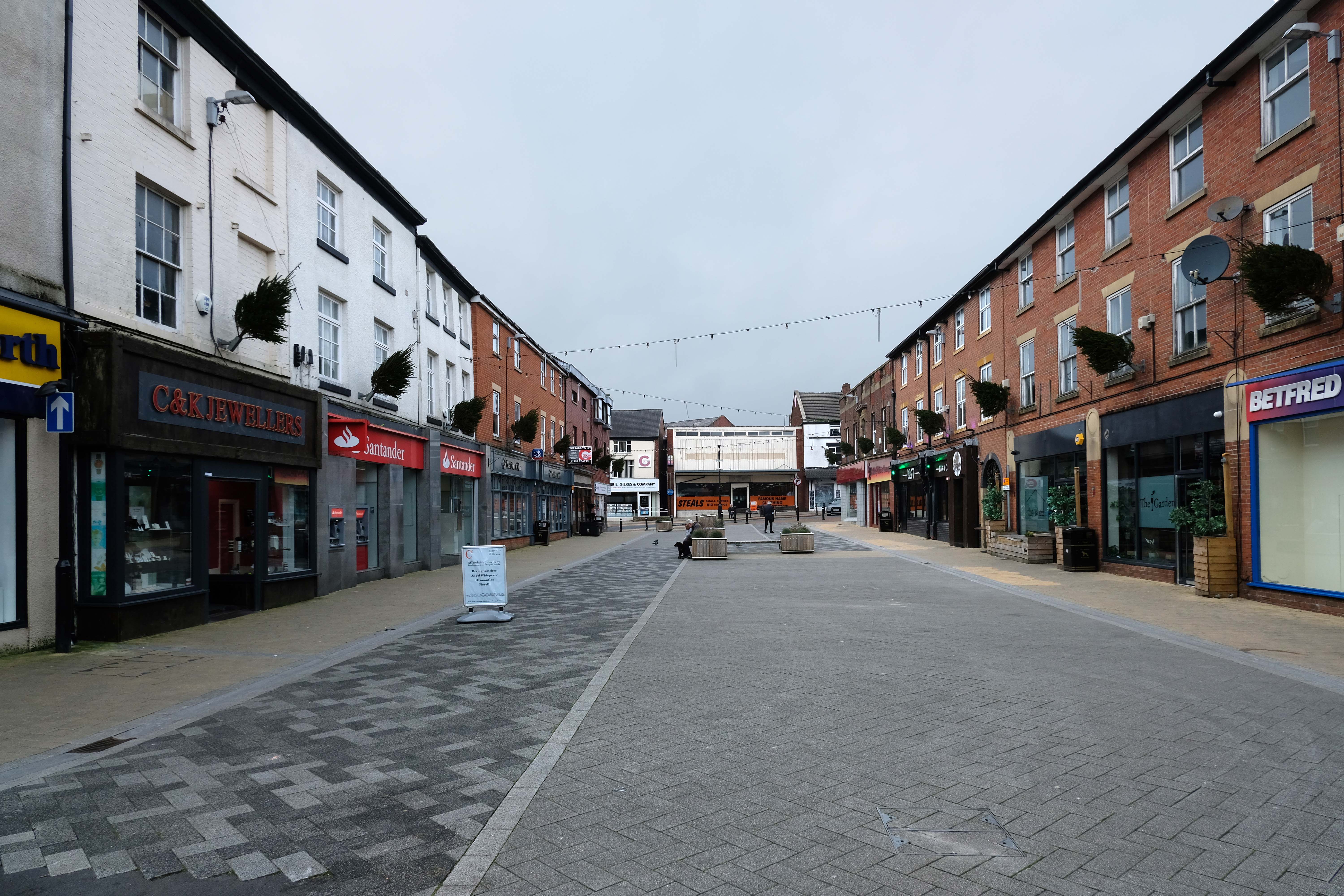
Chorley Walk

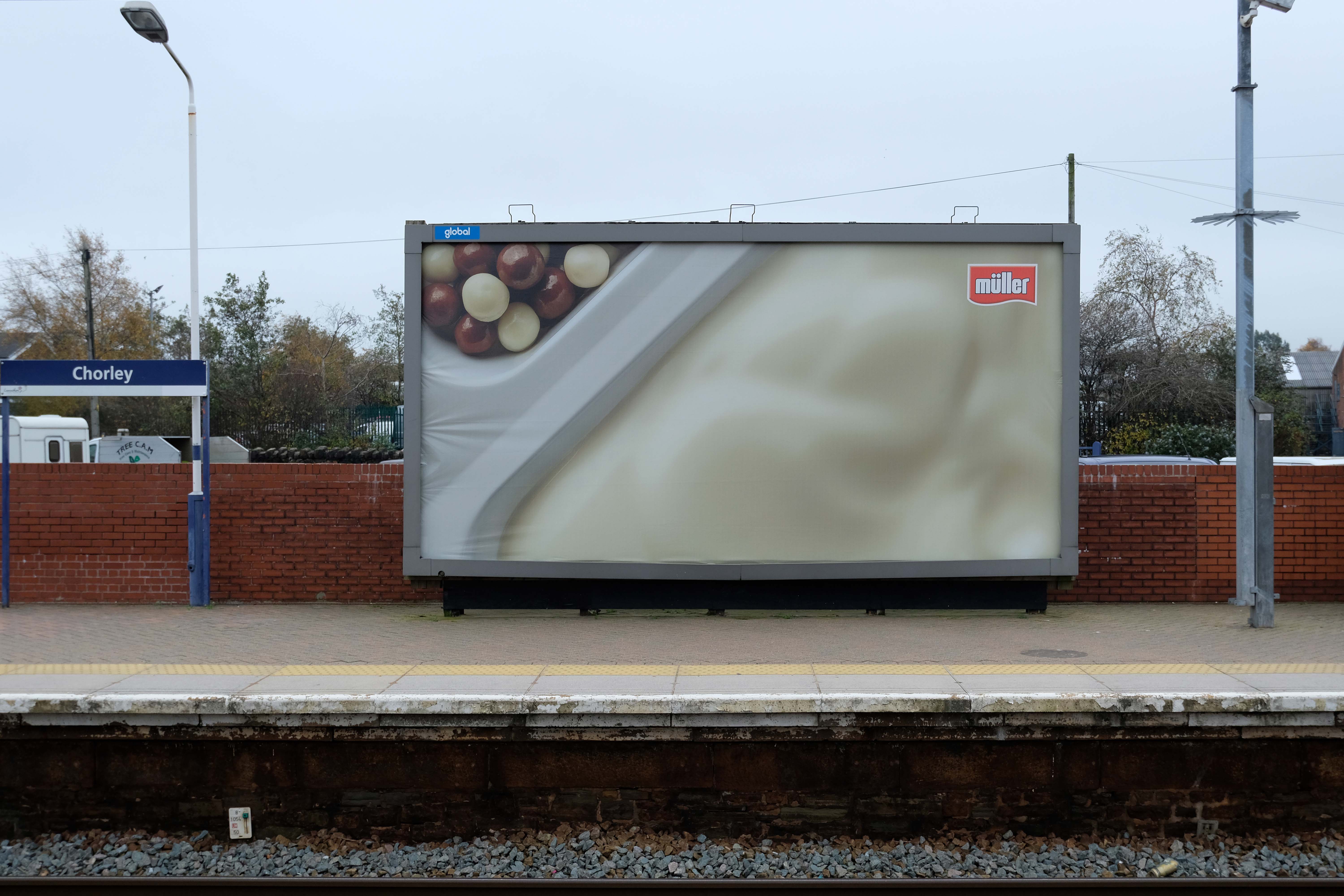
I arrived at Chorley Railway Station.

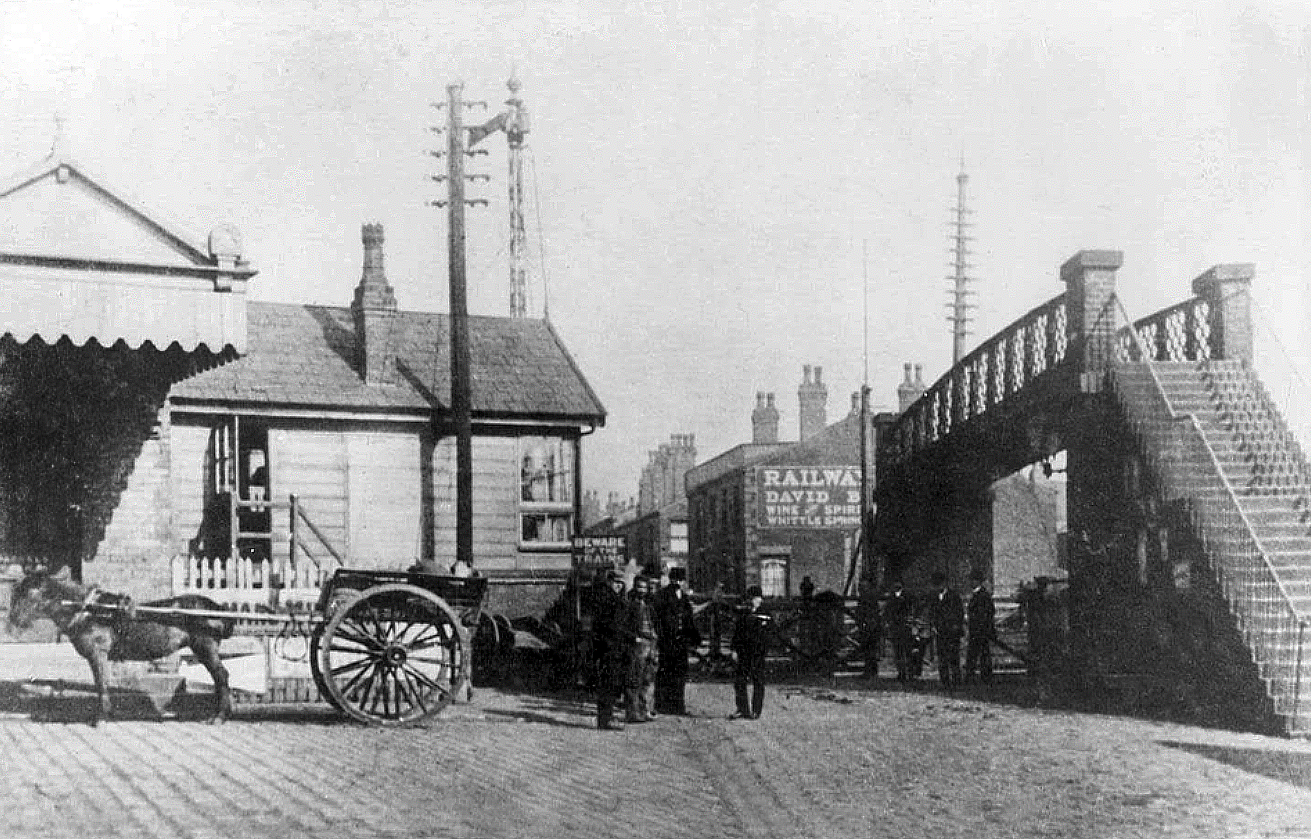
The current railway station is a modern version from the 1980s that was built on top of the original station. The level of the old platforms can be seen under the existing station’s two platforms which are connected by underpass. The initial station was opened on 22 December 1841 by the Bolton and Preston Railway – which later became part of the Lancashire and Yorkshire Railway and was subsequently served by the Lancashire Union Railway between St Helens, Wigan North Western and Blackburn from 1869.

Passenger trains over this route between Blackburn & Wigan were however withdrawn in January 1960. Further work was done in 2016 and 2017 in connection with the electrification of the line between Euxton Junction and Manchester.

Wikipedia

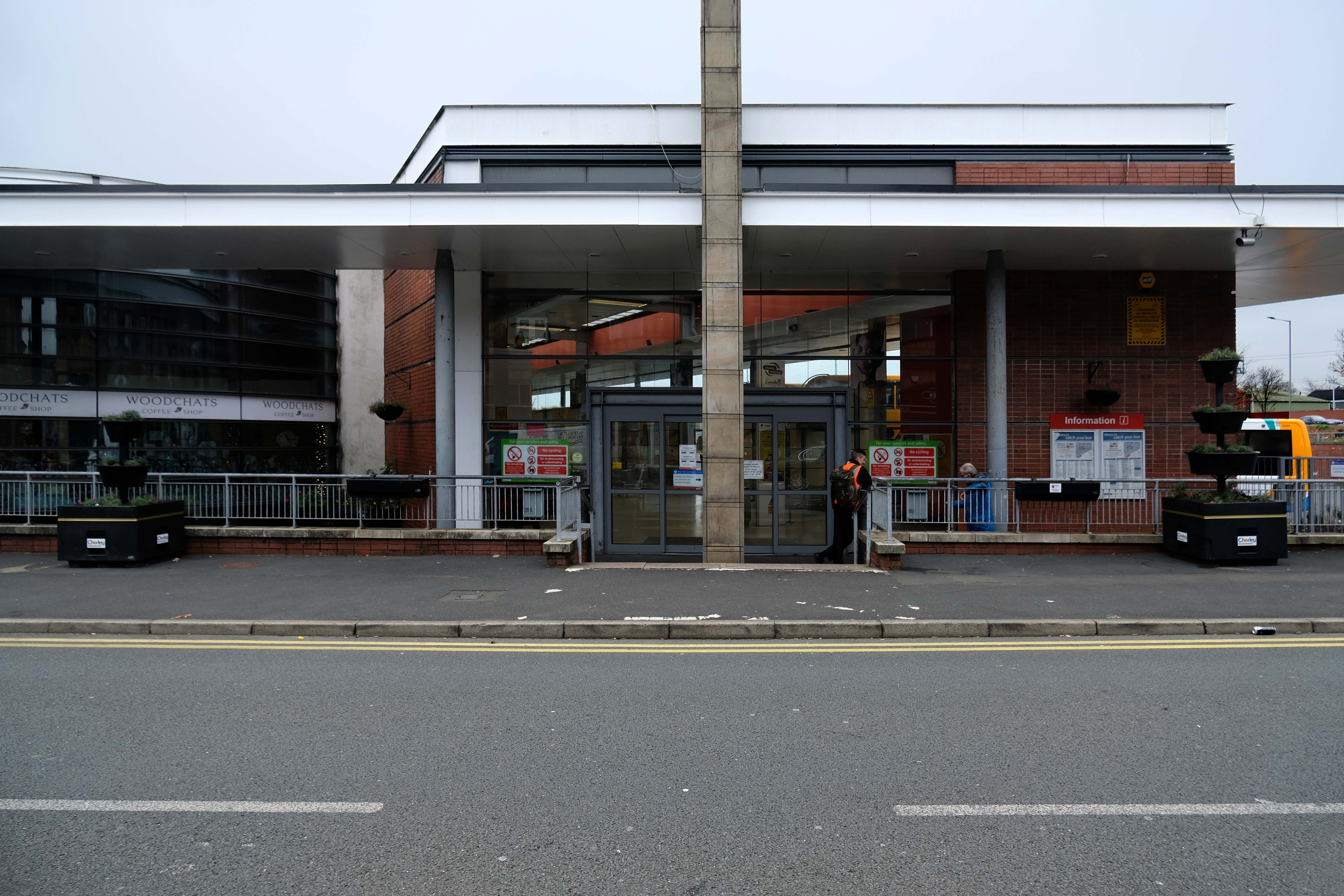
Crossed over to the Interchange – which was formerly a humble bus station, opened in February 2003 replacing the previous structure.

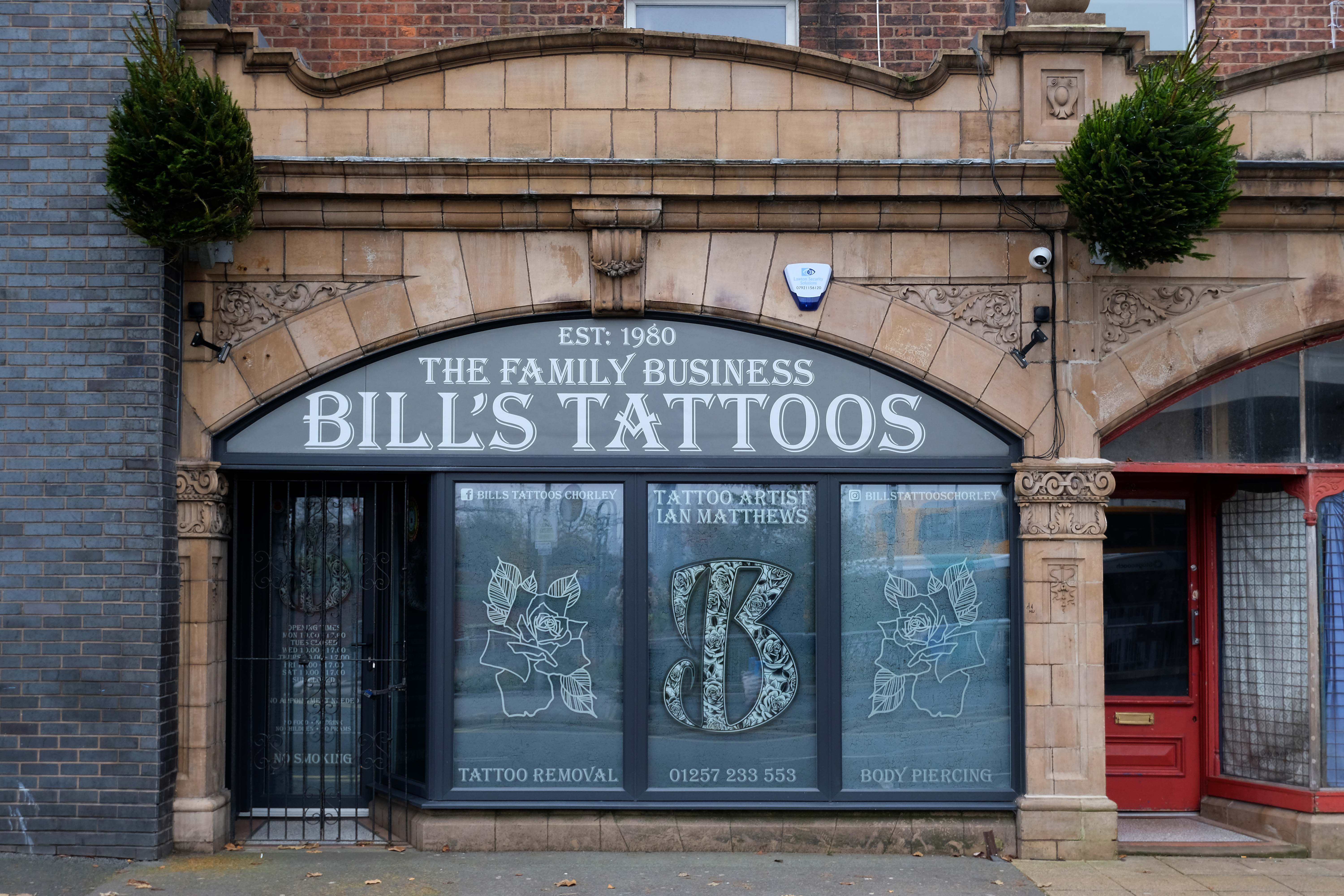
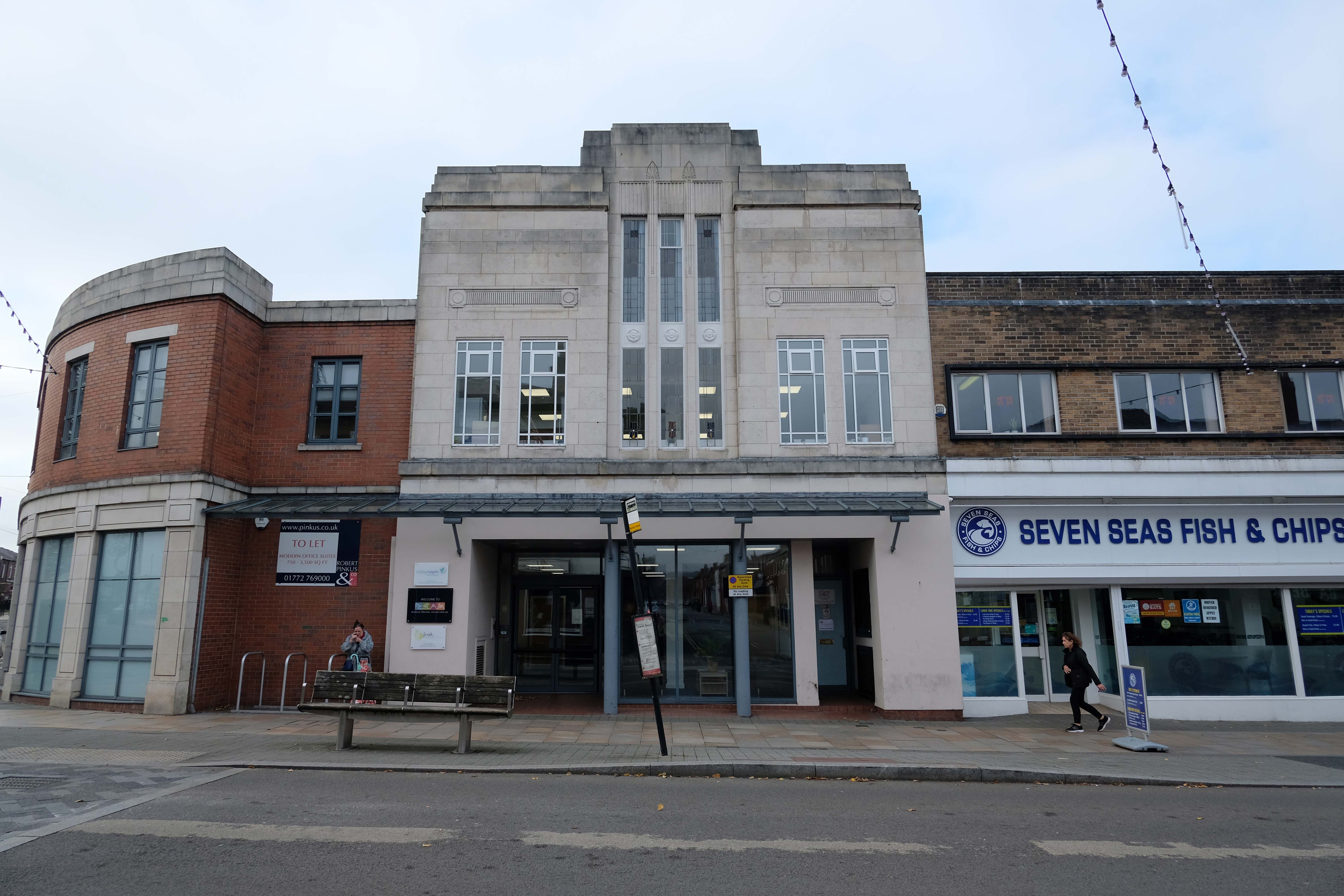
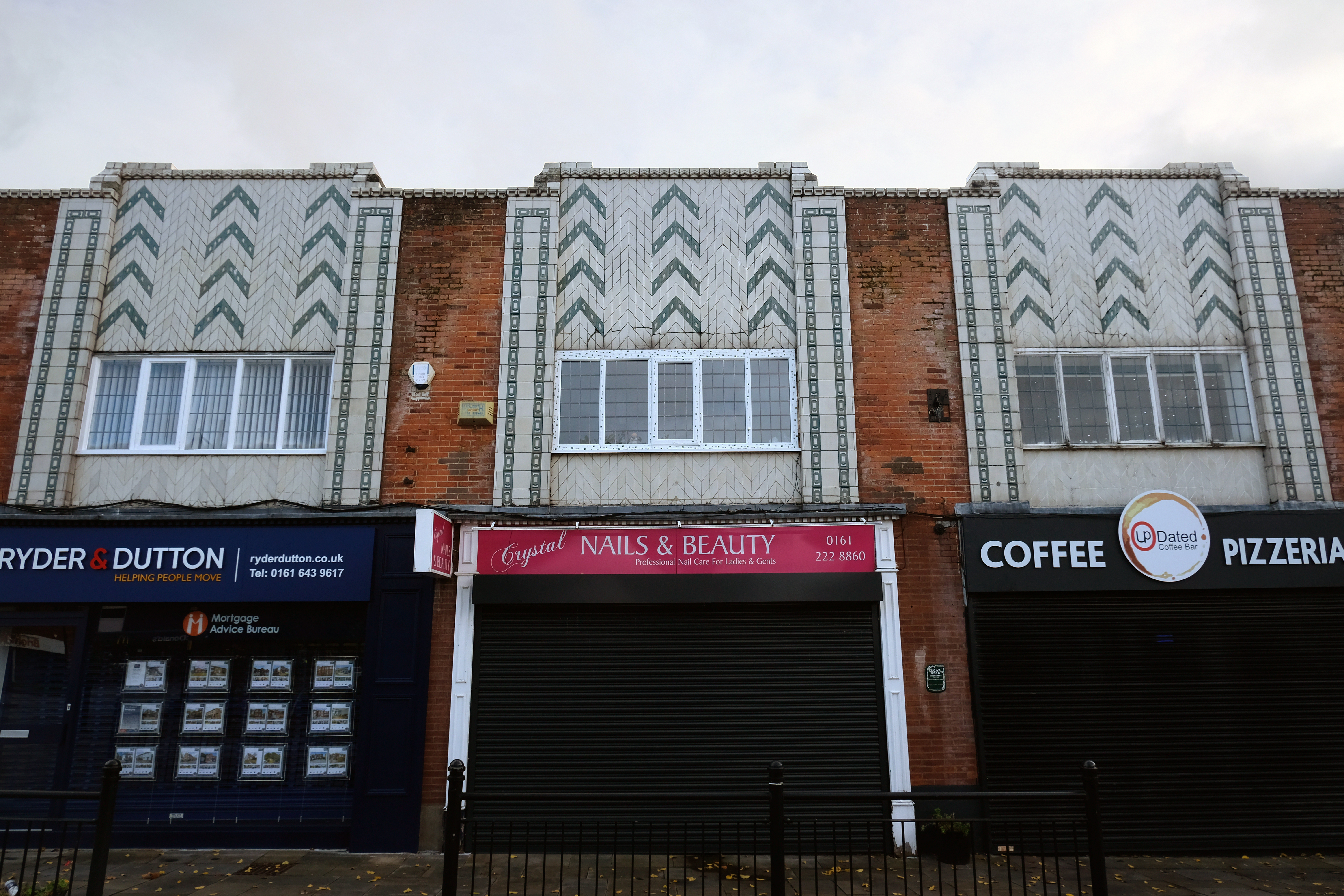
Across the way a stand of shops with distinctive faience fascias.

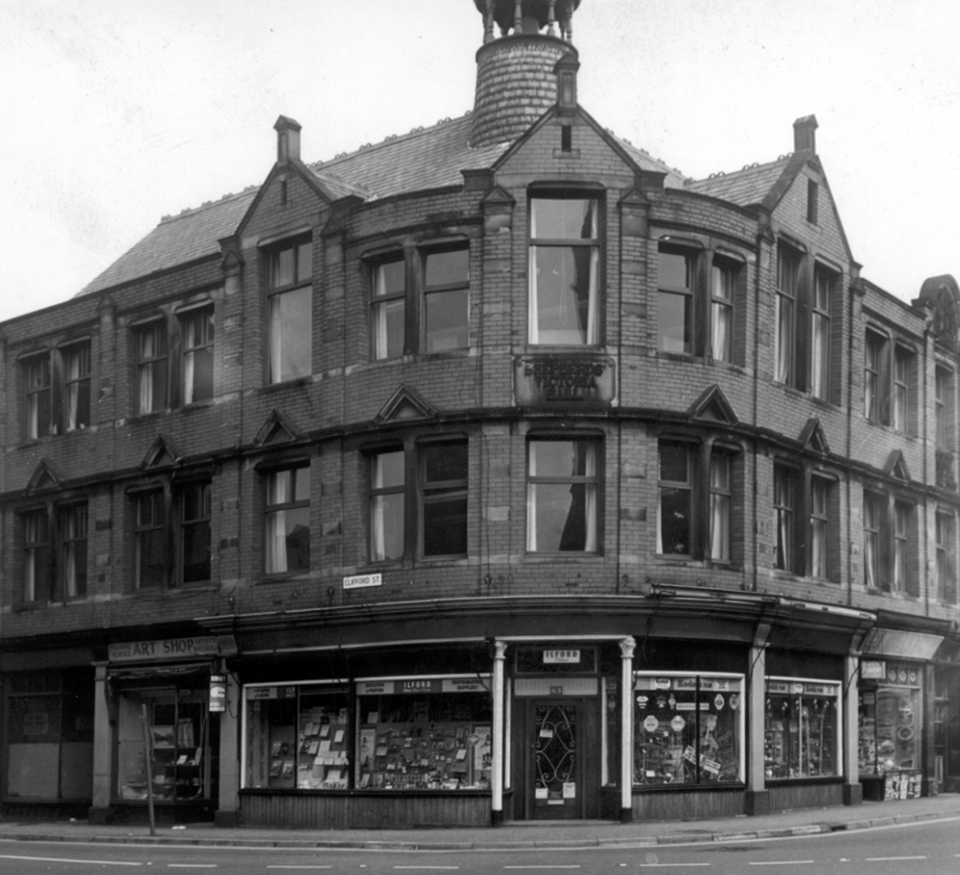
Further along the Shepherds’ Victoria Hall – once home to the Jubilee of the Ancient Order of Shepherds’ Friendly Society which was quite prominent in Chorley in the late 1800’s and early 1900’s

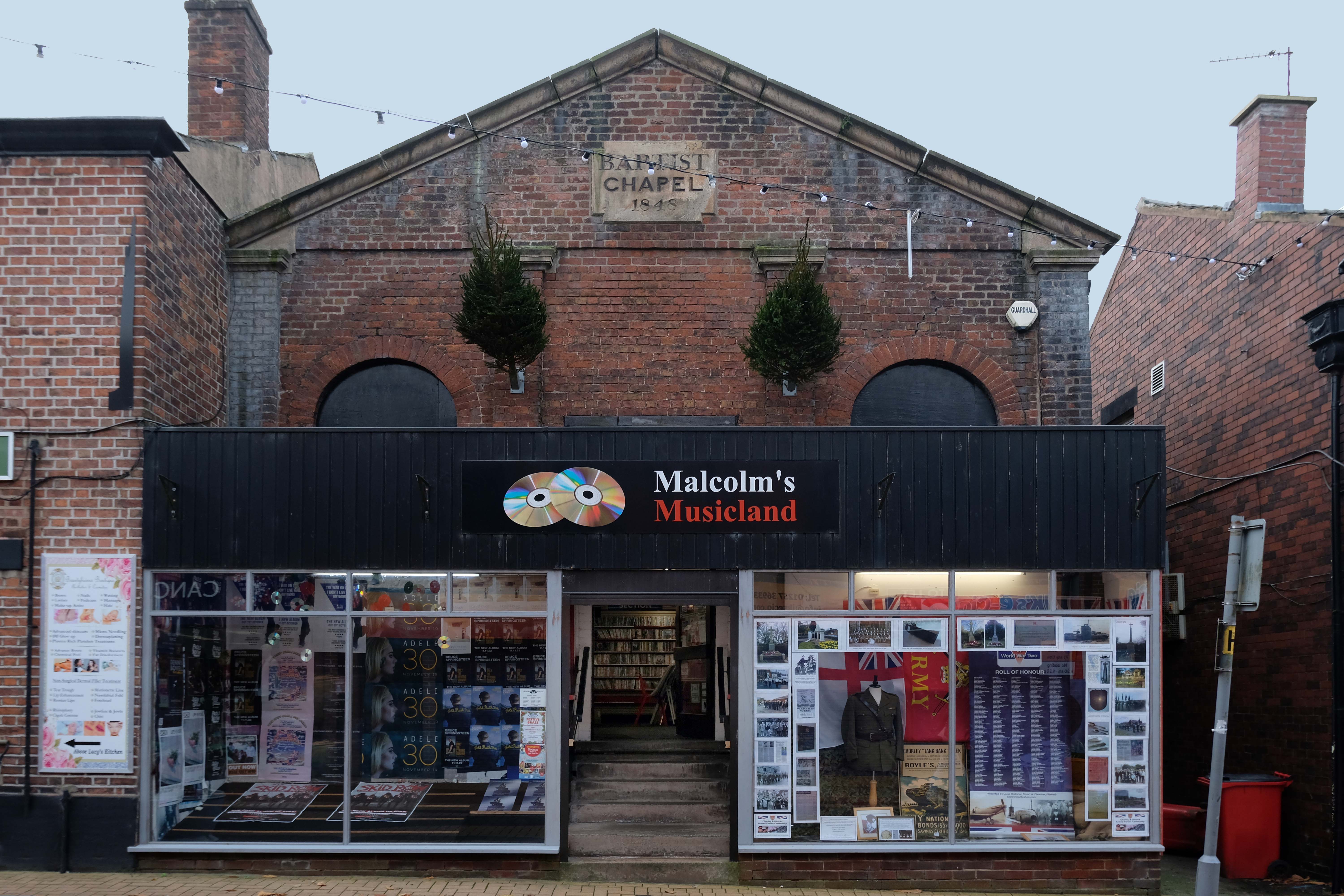
Down the way a ways a Baptist Chapel of 1845 on Chapel Street – currently trading as Malcolm’s Musicland.

Next door the Chorley Town Cafe with some excellent stained glass.

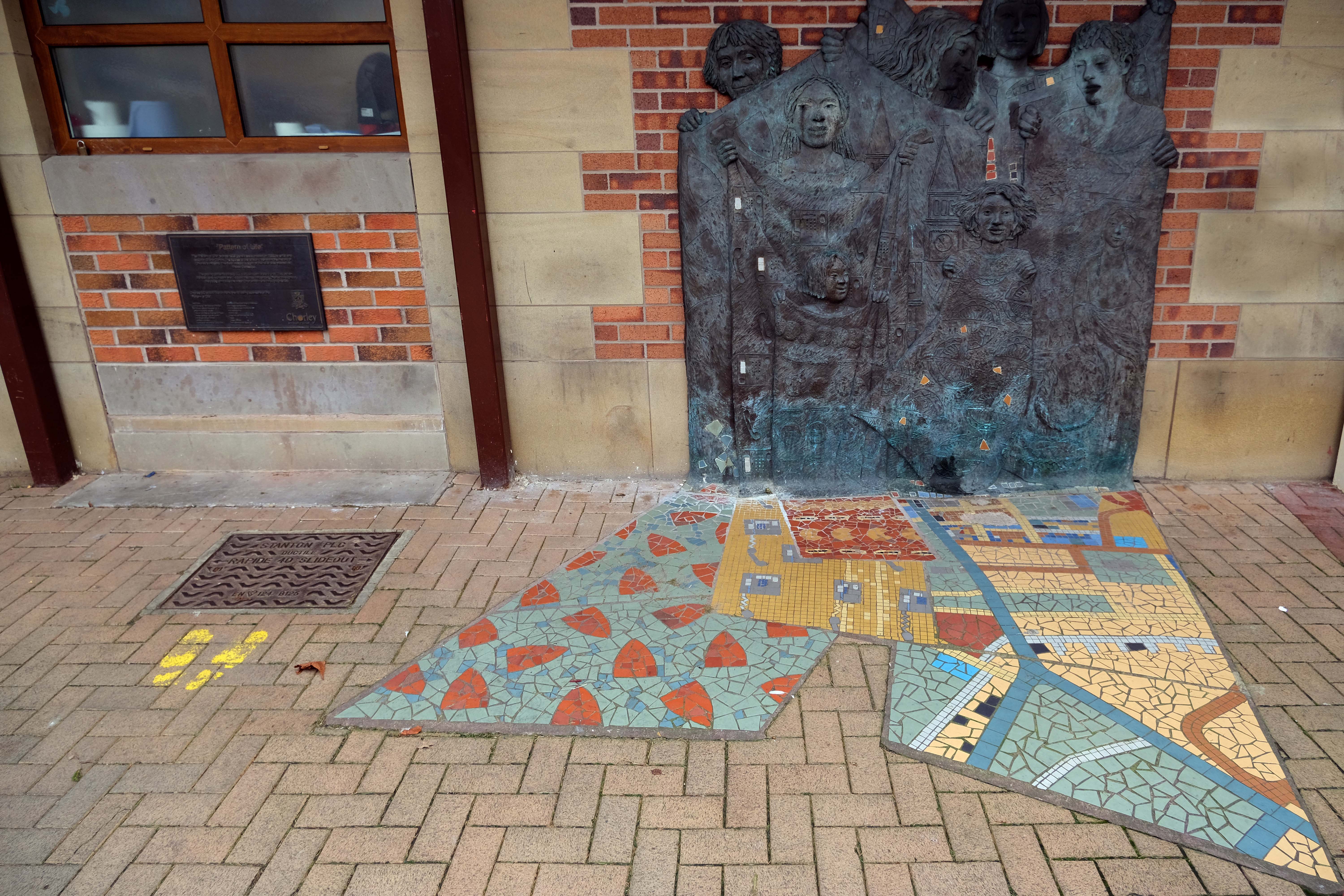
Hang a sharp right to the Market – where there is this newish piece of public art Pattern of Life a bronze relief by Diane Gorvin and mosaic work by Tracey Cartledge

This piece involves an innovative combination of cast bronze and ceramic mosaic. Two bronze relief panels display female figures holding out rolls of fabric, each decorated with patterns and images that are particular to the town of Chorley. Payphones, for example were invented and manufactured in Chorley, the crested newt is protected here and you might also notice the famous Chorley Cakes. As the fabrics tumble down, the designs are translated from bronze relief on the wall surface into 2D mosaic in the pavement.

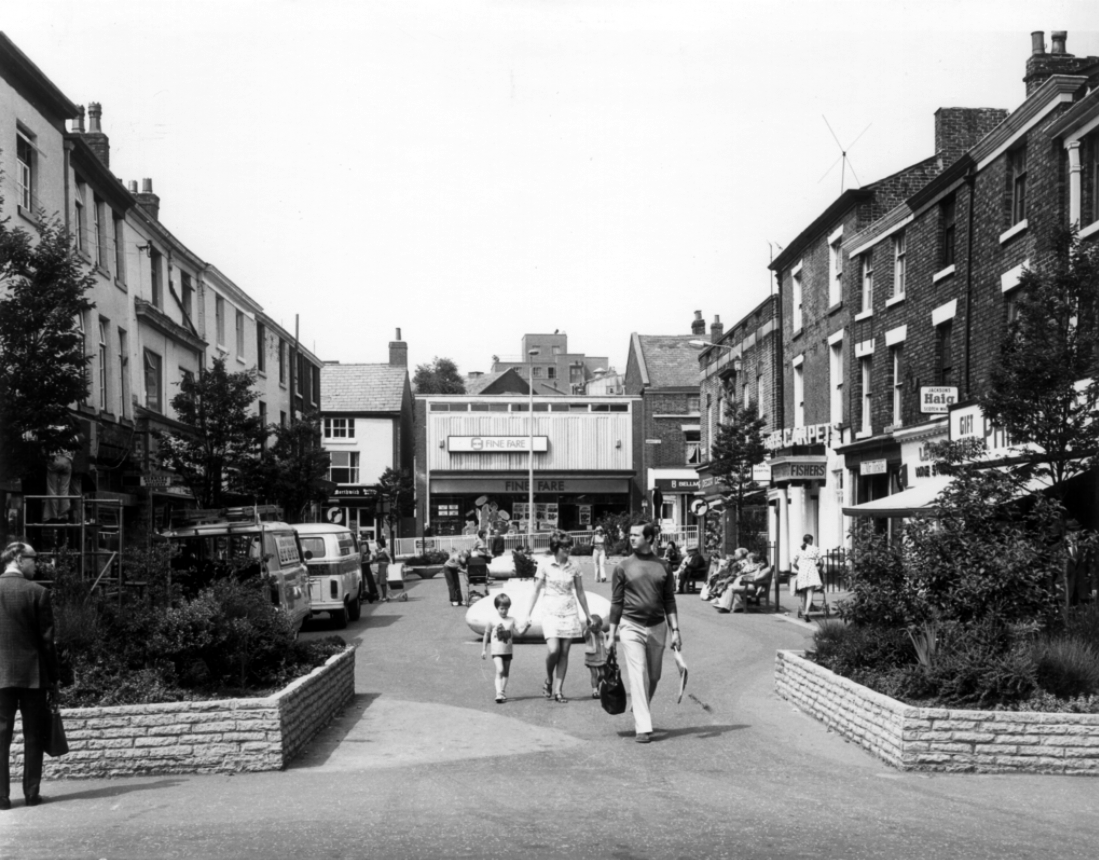
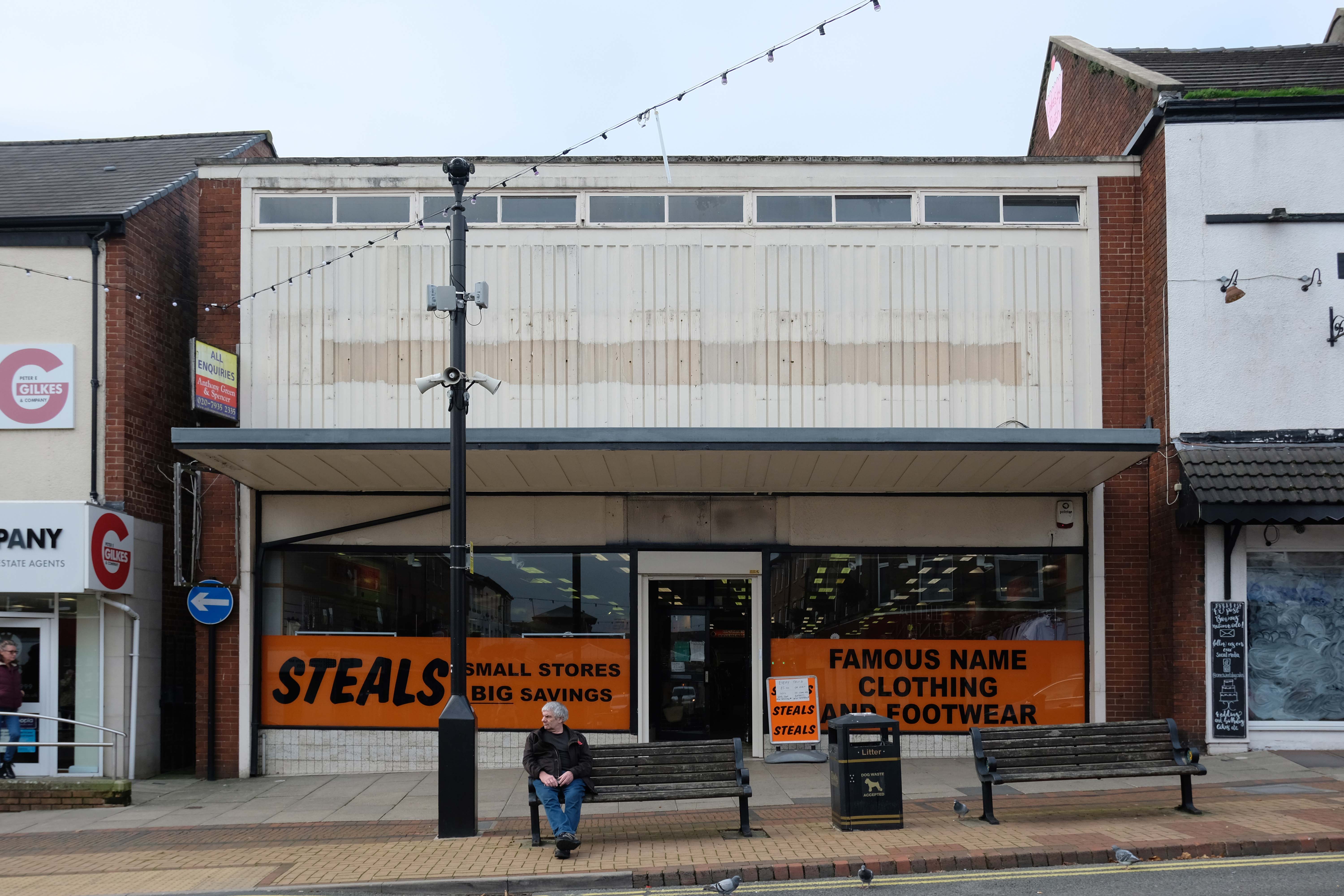
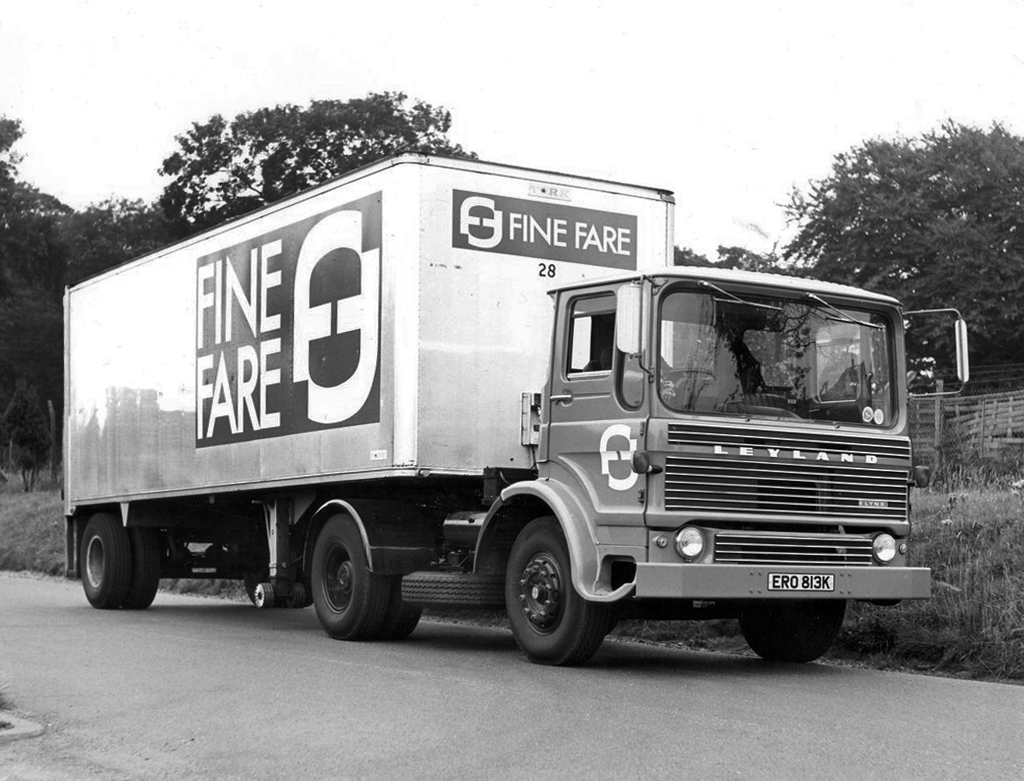
Looking down Fazakerley Street to where Fine Fare once was.

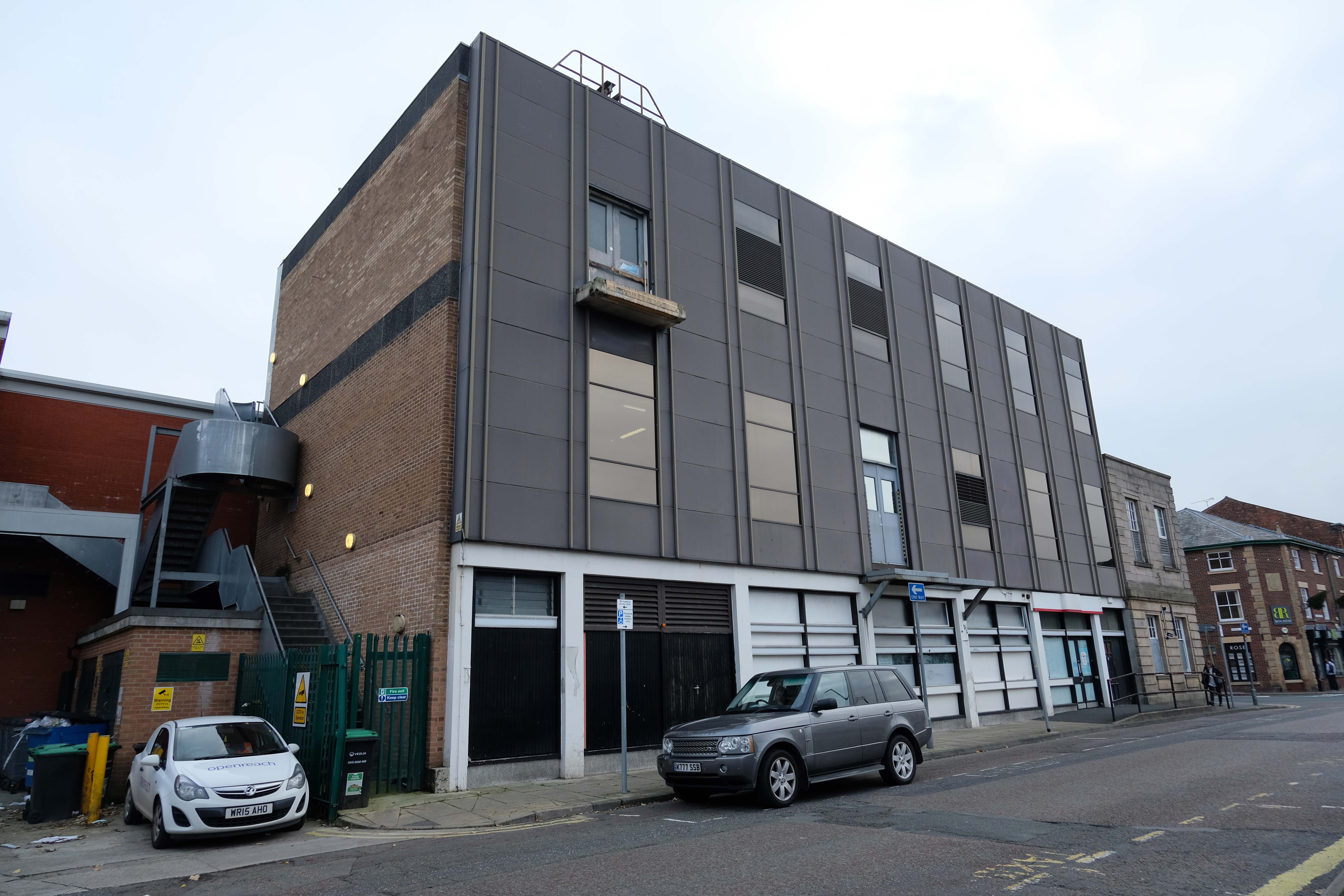
We’ll return to such matters in a moment – we have to get to the Post Office – which is no longer a Post Office.

Architect Charles Wilkinson.

It was a Post Office in 1935 – it also has a later extension.

The local list declares that the post office dates from 1935. This is almost certainly erroneous since the contract documents date from 1924, and from contract to completion the average construction and fitting-out time was about 18 months.

British Post Office Buildings

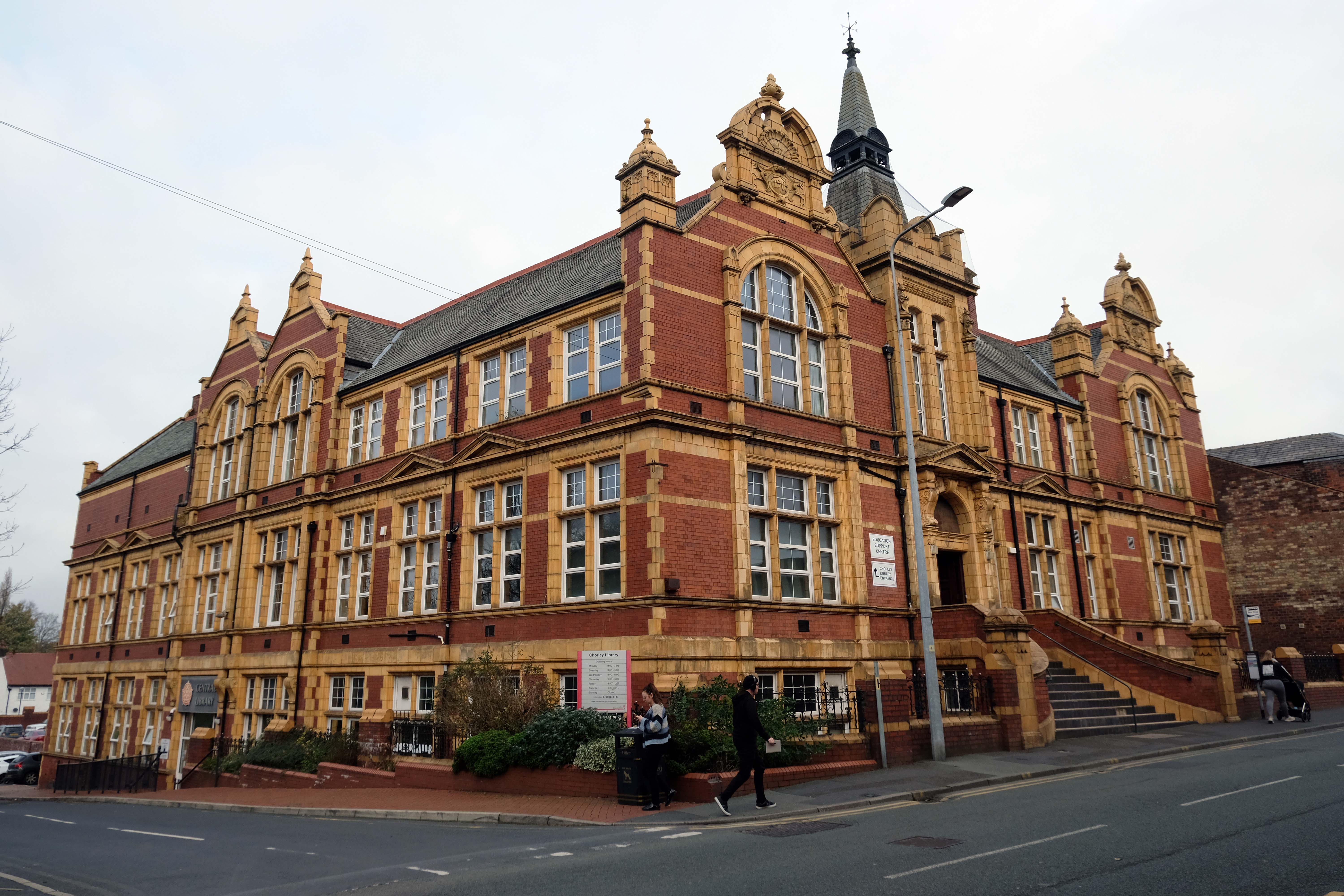
Happily, the Library is still a library.

Plans supplied by the Architects Messrs. Cheers & Smith of Blackburn which were approved by the Education Committee on the 18th August 1904design proposals for the new Technical School entitled Light and Air.

The considerable task of erecting the school was given to the local builder Mr. William Hampson of Pall Mall.

Surely the envy of his trade, the total contract was worth a mouth- watering £10,041 15s. 9d. – approx. £720,000 today.

The building was officially opened by the 16th Earl of Derby on September 24th 1906.

Chorley History Society

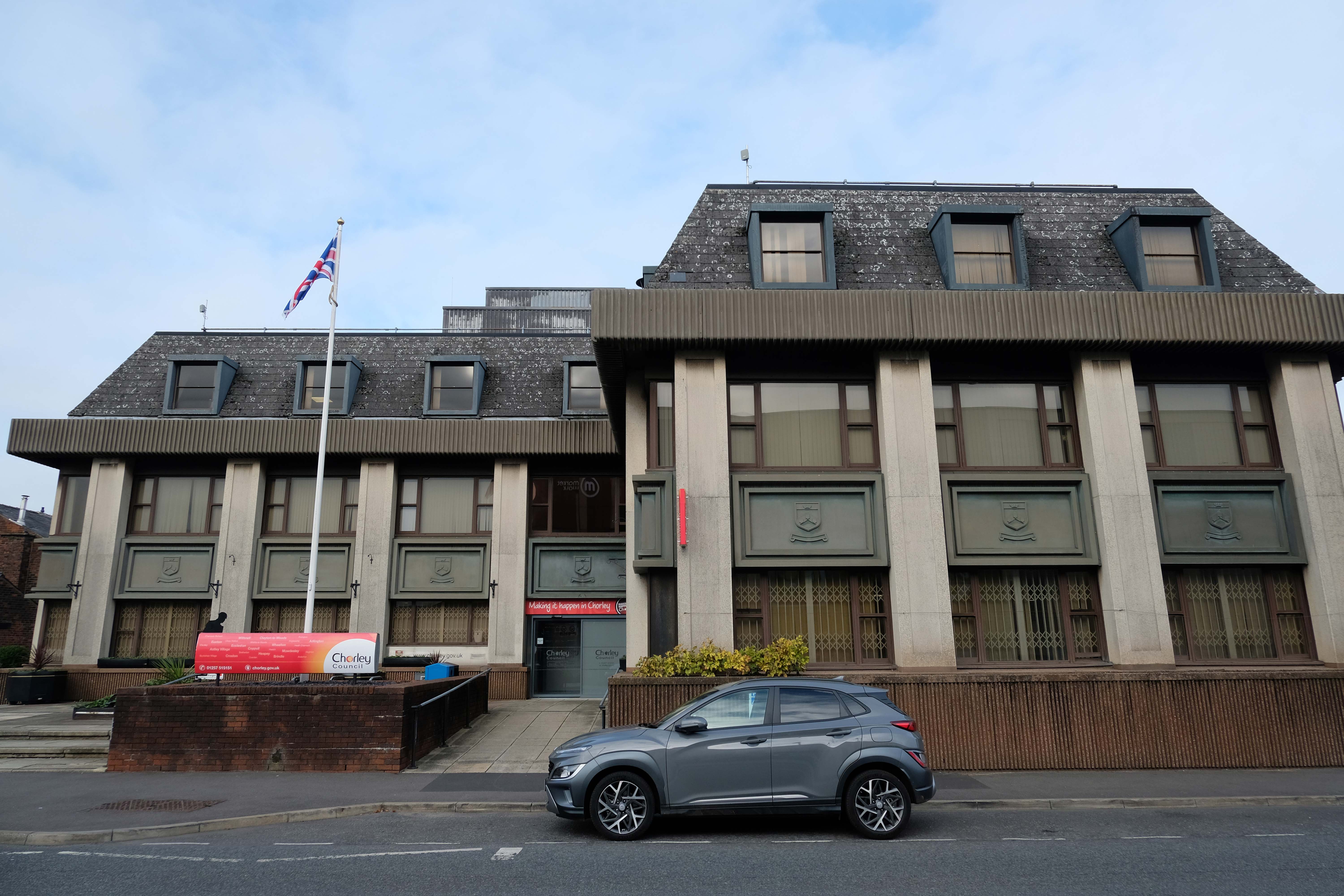
Heading to the Council Offices.

Over the road the town’s newest retail development Market Walk – the work of AEW Architects.

Chorley Council bought the shopping centre from Orchard Street Investments for £23m in 2013 and commenced a large-scale regeneration scheme in 2018 involving a £15m, 79,000 sq ft retail and leisure extension led by main contractor Eric Wright Group and designed by AEW Architects. Here, Conrad Heald of Chorley Council tells his interviewer, AEW director Phil Hepworth, how the scheme came to fruition and has rejuvenated the town centre.

Place North West

The memorial re-sited in 2018 commemorates the Chorley Pals.

In less than 20 minutes, 235 of the 720 men from the 11th East Lancs. were killed. Another 350 were wounded, of which 17 would eventually succumb to their wounds. Many of the Battalion died where they fell, in No Man’s Land.

As a result of the attack on the morning of the 1st July, the Chorley Pals – Y Company, had 31 men killed and three died within a month of their wounds received on that day. 21 have no known graves and their names are transcribed on the Thiepval memorial to the Missing on the Somme battlefield. A further 59 were wounded, making a total of 93 casualties out of approximately 175 men from Chorley who went over the top that morning.

Landscaping of the public realm by CW Studio.

Reversing now to the former Barclays Bank – which closed earlier in 2022.

We return now to the former Fine Fare.

The company began as one single supermarket in Welwyn Garden City in 1951, as an offshoot of the Welwyn Department Store, owned by Howardsgate Holdings, the company of Ebenezer Howard, the founder of the garden city movement.

Wikipedia

Now here’s a thing a bank which is a bank NatWest not gone west.

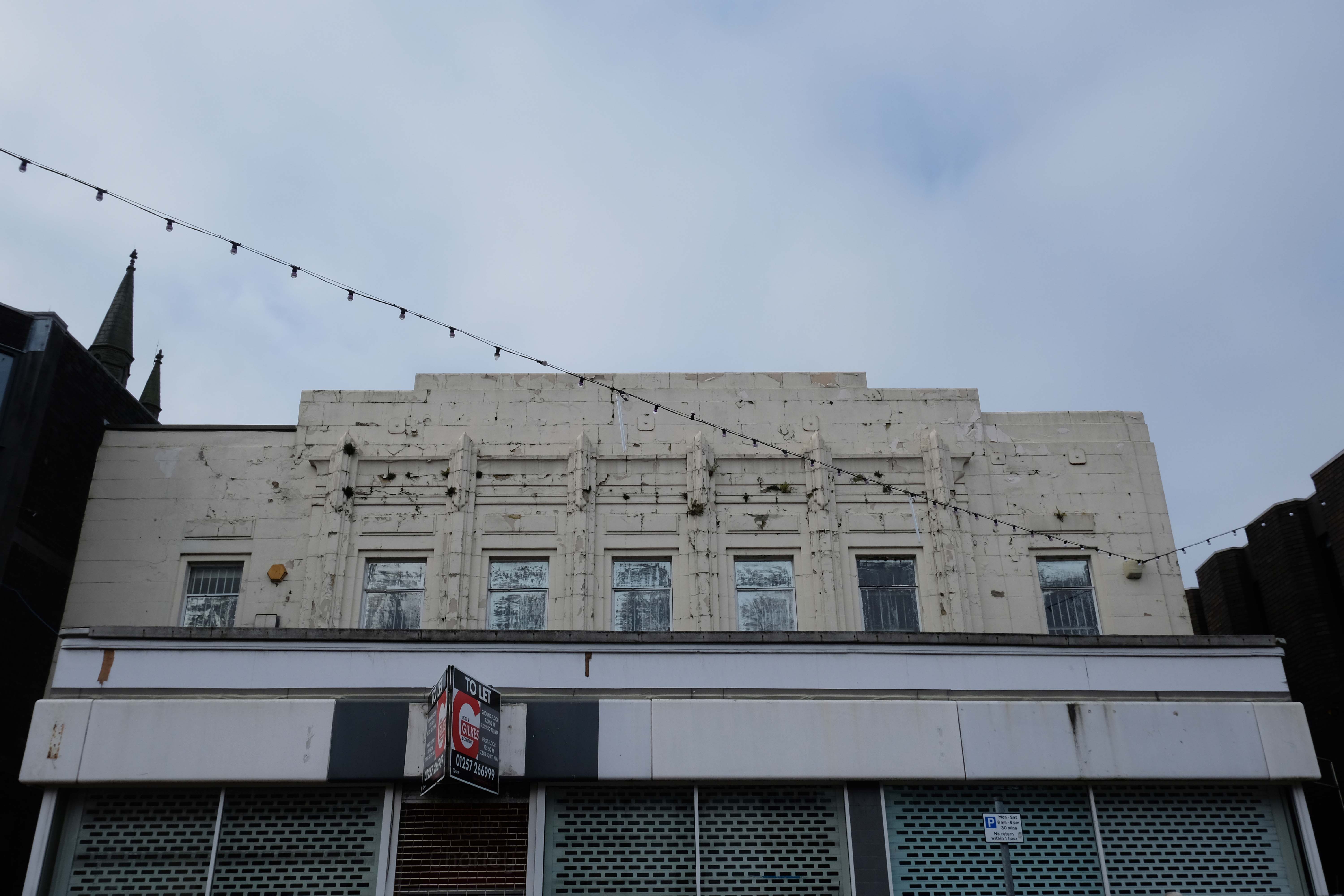
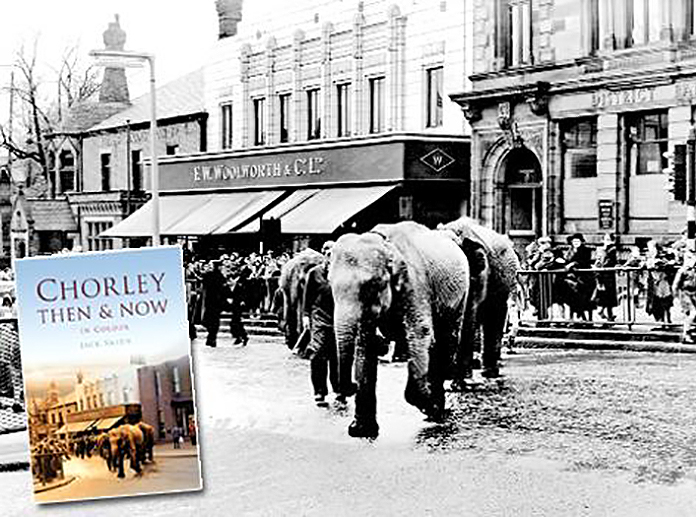
Next to the former Woolworths, opened in Chorley in 1930 on Market Street, with its pale Deco faience fascia.

They traded from this building for sixty five years, before closing in March 1995 in order to move to a new store on Market Walk – it became an Argos, then it didn’t.

Woolies Buildings

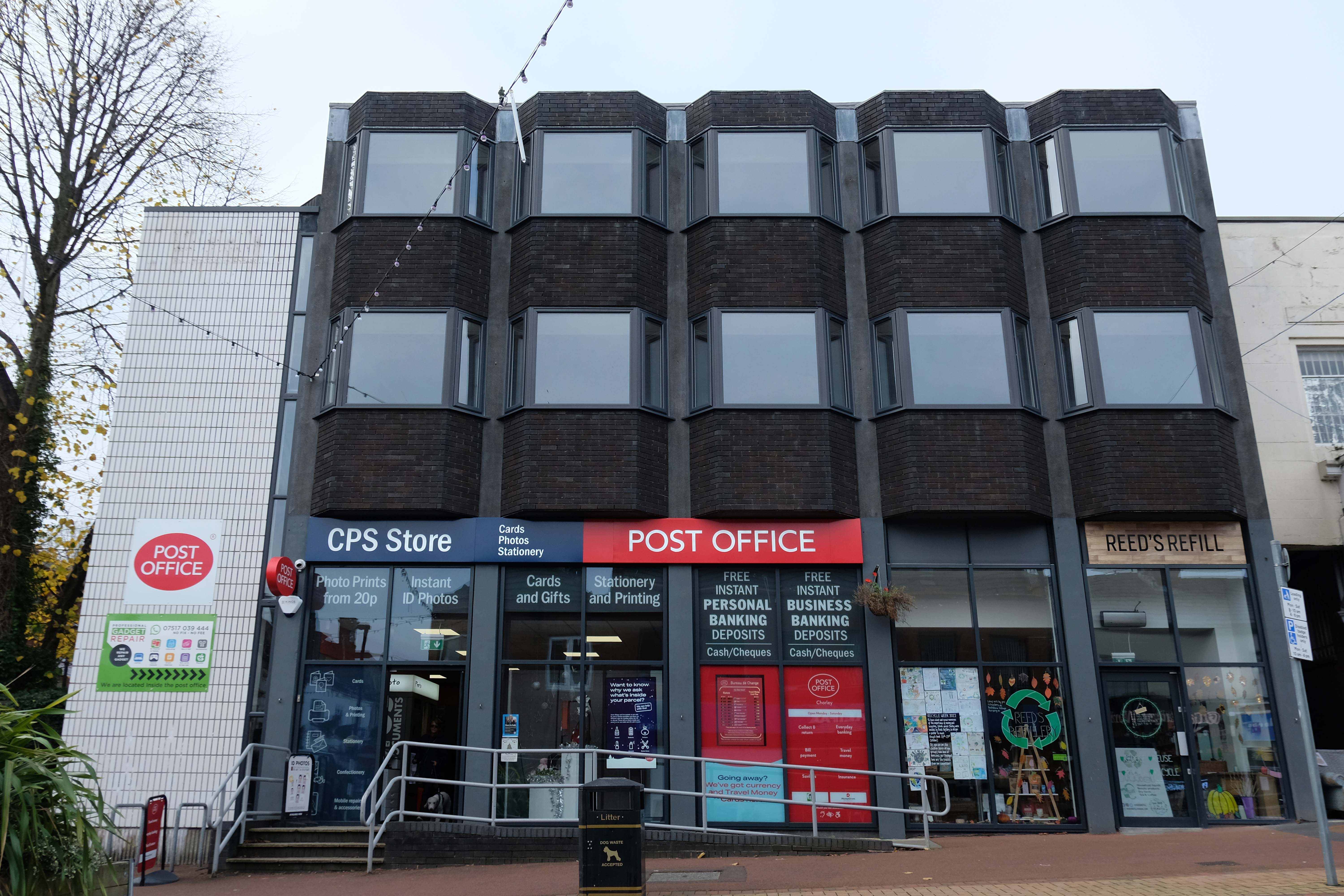
Here we are now at a Post Office that is a Post Office but was an RBS Bank.

The new location is at the former Royal Bank of Scotland on Market Street in the town centre.

Since the Post Office that was based at WH Smith on New Market Street came to an end, when that store closed in January, it relocated to a temporary unit in Market Walk until a permanent solution could be found.

The unit, which had been provided by the postmaster from Burscough Bridge Post Office, closed on Tuesday.

Kenny Lamont, Post Office Network Provision Manager, said a Post Office is important to a community.

Lancashire Post

This had been a Methodist Church – then, it became the HQ of the Lancashire Electric Power Company.

The Lancashire Electric Power Company was one of the largest private electricity companies in the UK. It was established in 1900 and generated and supplied electricity to 1,200 squares miles of Lancashire from 1905 until its abolition under nationalisation in 1948.

Wikipedia

Time to back track to the Cop Shop – the work of County Architect Roger Booth and crew.

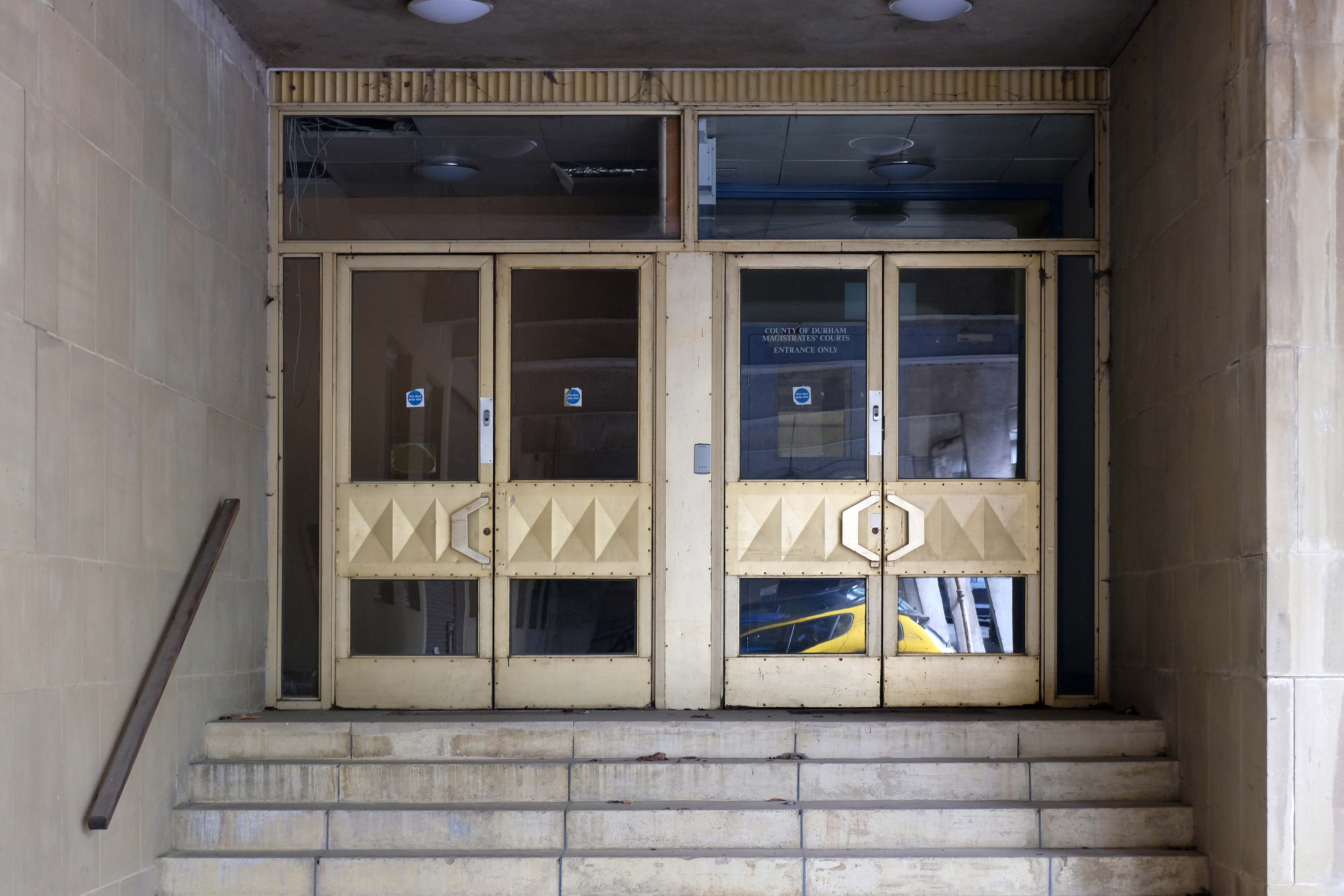
The Magistrates’ Courts are closed and up for sale.

Next door the White Hart once upon a time the Snooty Fox, a pub with an up and down trajectory – currently open and described online as plush.

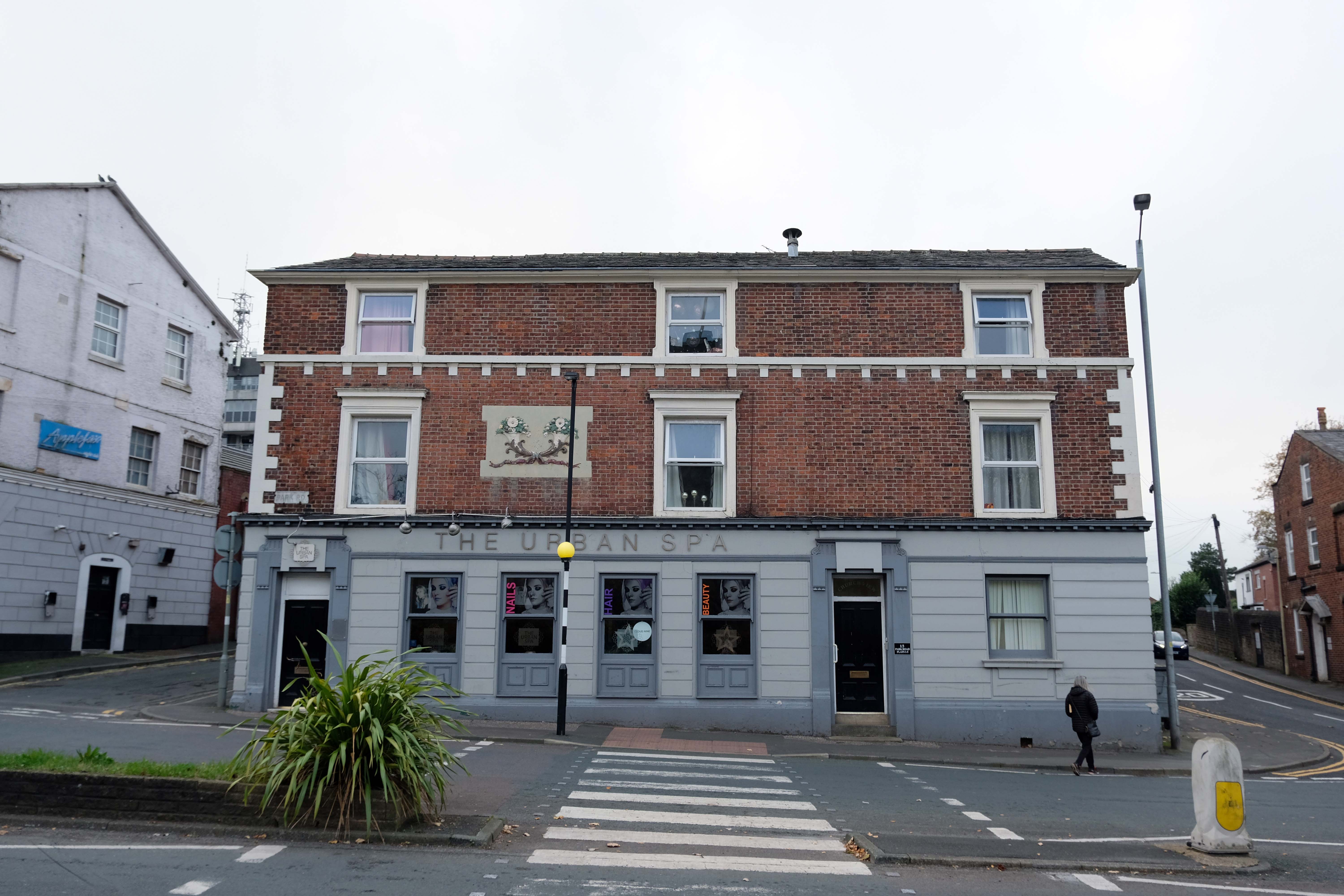
Down the road a pub no longer a pub but an Urban Spa.

We offer you a full range of professional treatments tailored to your own personal needs. We treat every client as an individual and offer an extensive range of treatments and professional products making your visit one to remember.

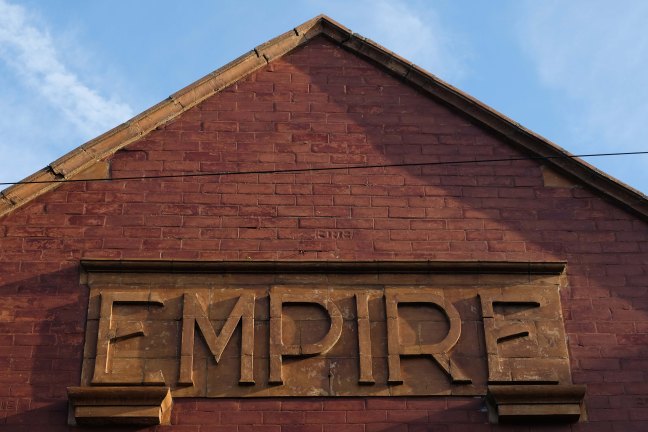
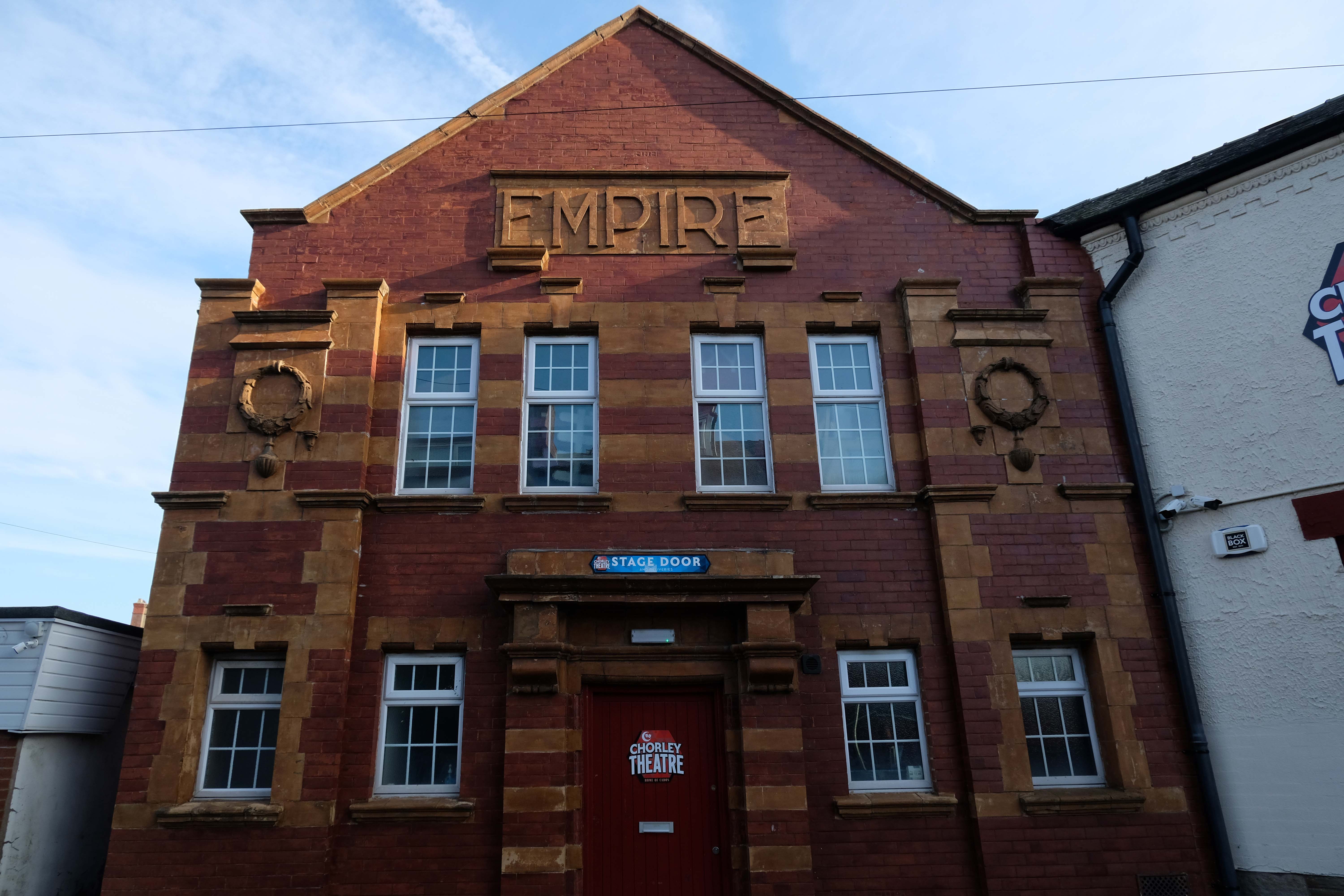
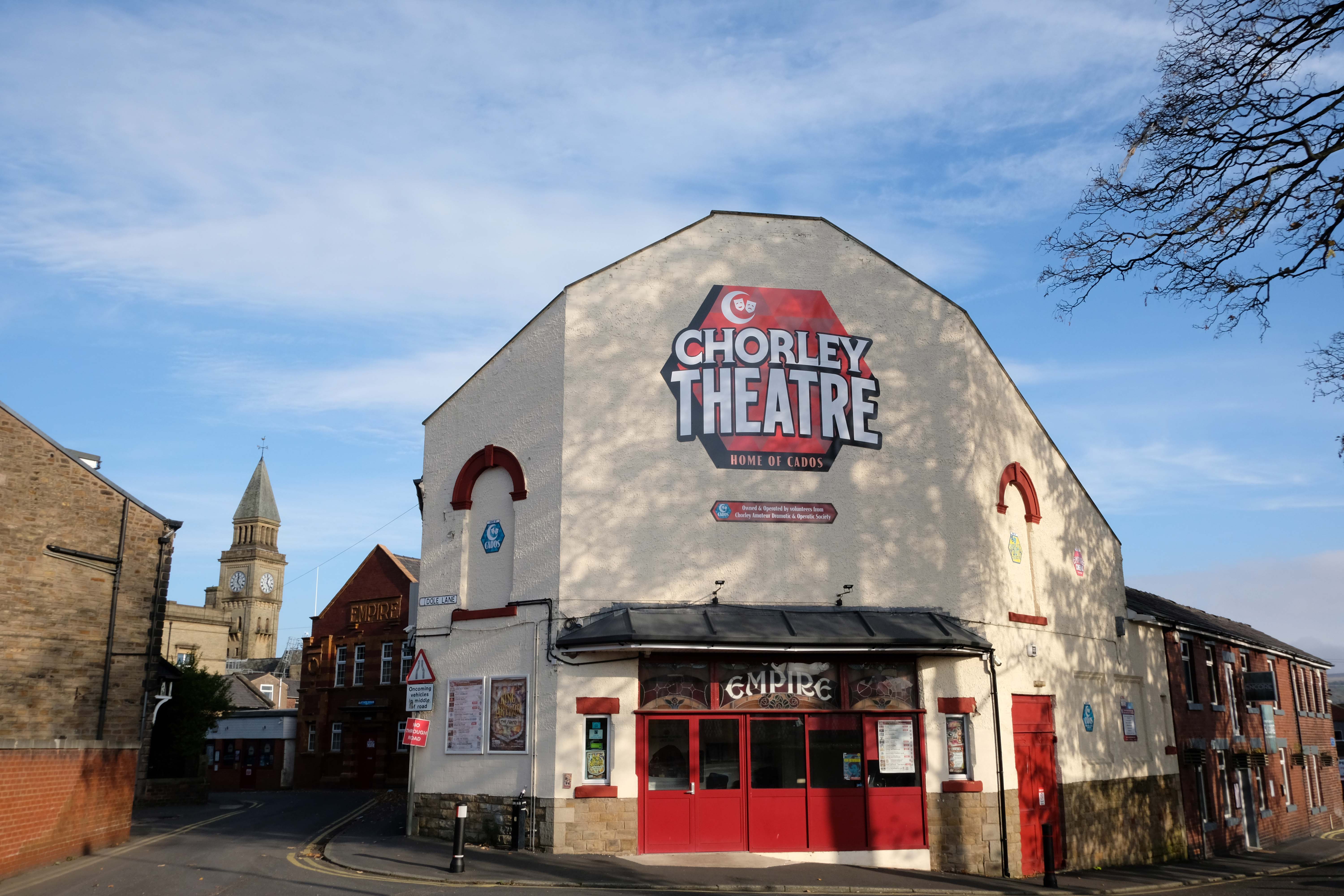
Let’s go to the theatre – The Empire tucked away at the back of town.

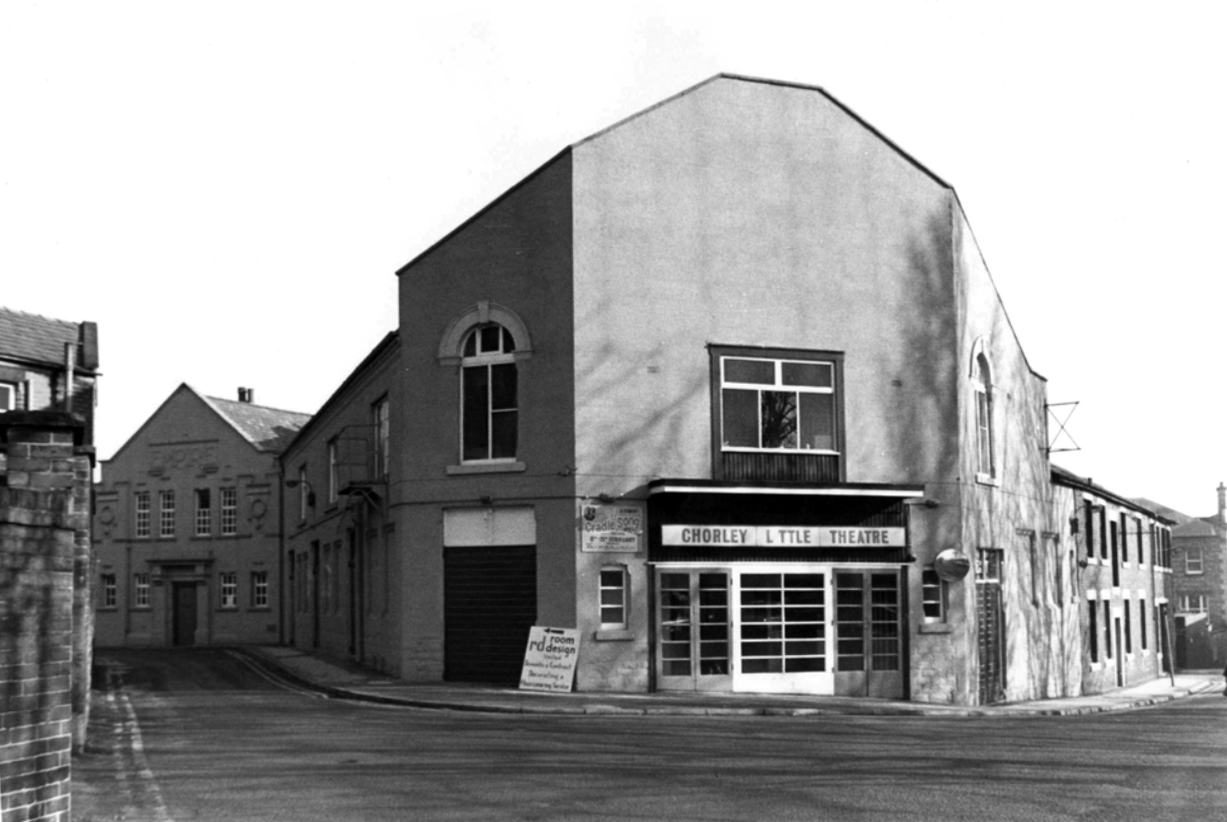
The Empire Electric Theatre opened, as the town’s first purpose-built cinema, on 3rd September 1910. In 1912 Archie Hooley began his connection with the cinema business at the Empire Electric Theatre. By 1927 it had been re-named Empire Cinema and by 1930 it was equipped with a Western Electricsound system and was operated by the Perfecto Filmograph Co. Ltd. By 1939 it was operated by the Snape & Ward chain. According to the Kine Year Books, in 1940 the seating was for 800, while by 1952 it had been reduced to 679 – still a far cry from today’s 236 seats. 3D films were shown in the early-1950’s. Archie had died in 1944; his son Selwyn closed the cinema in 1957, apparently “because of the taxes”.

1959

Wrestling took over for a while before Chorley Amateur Dramatic and Operatic Society – CADOS acquired the building and renamed it the Chorley Little Theatre. Since 1960 CADOS have been putting on high-quality productions, presenting at least six productions per season – from September to July. It is also the home of the award-winning Chorley Youth Theatre who meet every Saturday, putting on shows throughout the year; and Chorley Empire Community Cinema who present the cinema experience on their 21ft wide screen with 8-Speaker Surround Sound. Run entirely by volunteers the theatre has state-of-the-art sound systems and a full range of lighting equipment. There are two spacious dressing rooms, space for costumes and props and the Empire Bar. The building has disabled access throughout the public area, including a toilet, and the auditorium is fitted with a hearing loop. There are three spaces for wheelchairs in the auditorium. It was re-named Chorley Empire Cinema at Chorley Theatre in October 2019 and films are still part of the programming.

Cinema Treasures

Spare a thought for the town’s lost cinemas:

The Odeon Market Street was built for and operated by Oscar Deutsch’s Odeon Theatres Ltd. chain, it opened on 21st February 1938 with Jack Buchanan in The Sky’s the Limit.

Architect Harry Weedon was assisted by PJ Price.

It was closed by the Rank Organisation on 6th February 1971 with George Lazenby in “On Her Majesty’s Secret Service”. After laying closed and un-used for over two years it was sold to an independent bingo operator and re-opened on 9th August 1973 as a Tudor Bingo Club. It later became a Gala Bingo Club which was renamed Buzz Bingo Club in June 2018. It was closed on March 21, 2020 due to the Covid-19 Pandemic. On 15th July 2020 it was announced that the closure would be permanent.

The building was handed over to Chorley Council who decided that asbestos removal would be too costly and the building was demolished in August 2021.

Located on Salisbury Street, off Cunliffe Street, built in 1888 as a military warehouse, it was converted into a roller skating rink around 1909. It opened as the Pavilion Picture Palace on 14th September 1911, operated by George Testo Sante, a music hall strong man, who also operated the Grand Theatre as a cinema. By 1915, music hall acts were also part of the programme. After the end of World War I, the flat floor of the cinema was raked, allowing for better viewing of the screen. The proscenium was 30ft wide, the stage was 16 feet deep and there were two dressing rooms.

The Pavilion Cinema was the first in town to screen ‘talkies, when an Electrochord sound system was installed in 1929. It was taken over by the J.F. Emery Circuit in 1932 and they operated it until the end of 1933. The sound system was upgraded to a British Talking Pictures sound system. In 1954 it was the first cinema in town to be fitted with CinemaScope and the proscenium was widened to 36 feet.

The Pavilion Cinema was closed by 1962 and converted into a bingo club. In 1972 it was re-opened as a cinema again, but due to Star Cinemas chain barring it from showing first run features – they operated the Plaza Cinema, it was closed after 5 months of operation. It was later demolished and the area was redeveloped for housing.

Cinema Treasures

No trace of The Hippodrome Theatre on Gillibrand Street, which was built and opened in 1909, or the Theatre Royal, opened on 30th September 1911, It was demolished in 1959.

A supermarket was built on the site which later became a McDonalds, which is now a Pizza Hut.

Last but not least – located on the Flat Iron Parade, aka Cattle Market, The Grand Theatre was a wooden building built in 1885, which presented melodramas and plays. In June 1909 it was taken over by George Testo Santo, who had been a music hall strongman, and his family. It went over to operating as a Picture Palace for a short season.

By 1914 it was operating as a full time cinema, but was destroyed by fire in 1914.

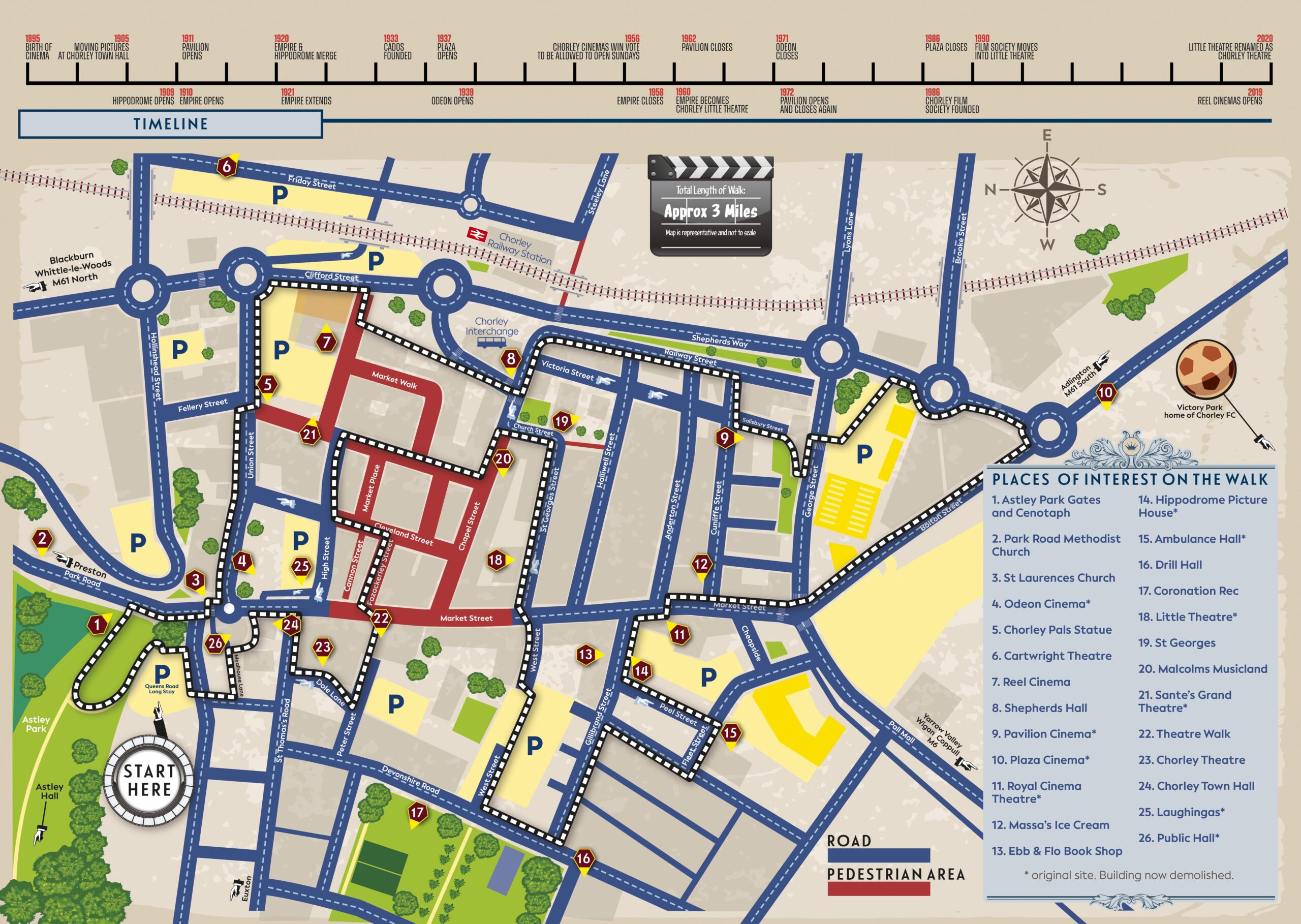
Chorley Theatre Cinema History Map

This was a splendid day out – there is much more to see, these have been some of the less obvious landmarks.

Go see for y’self!

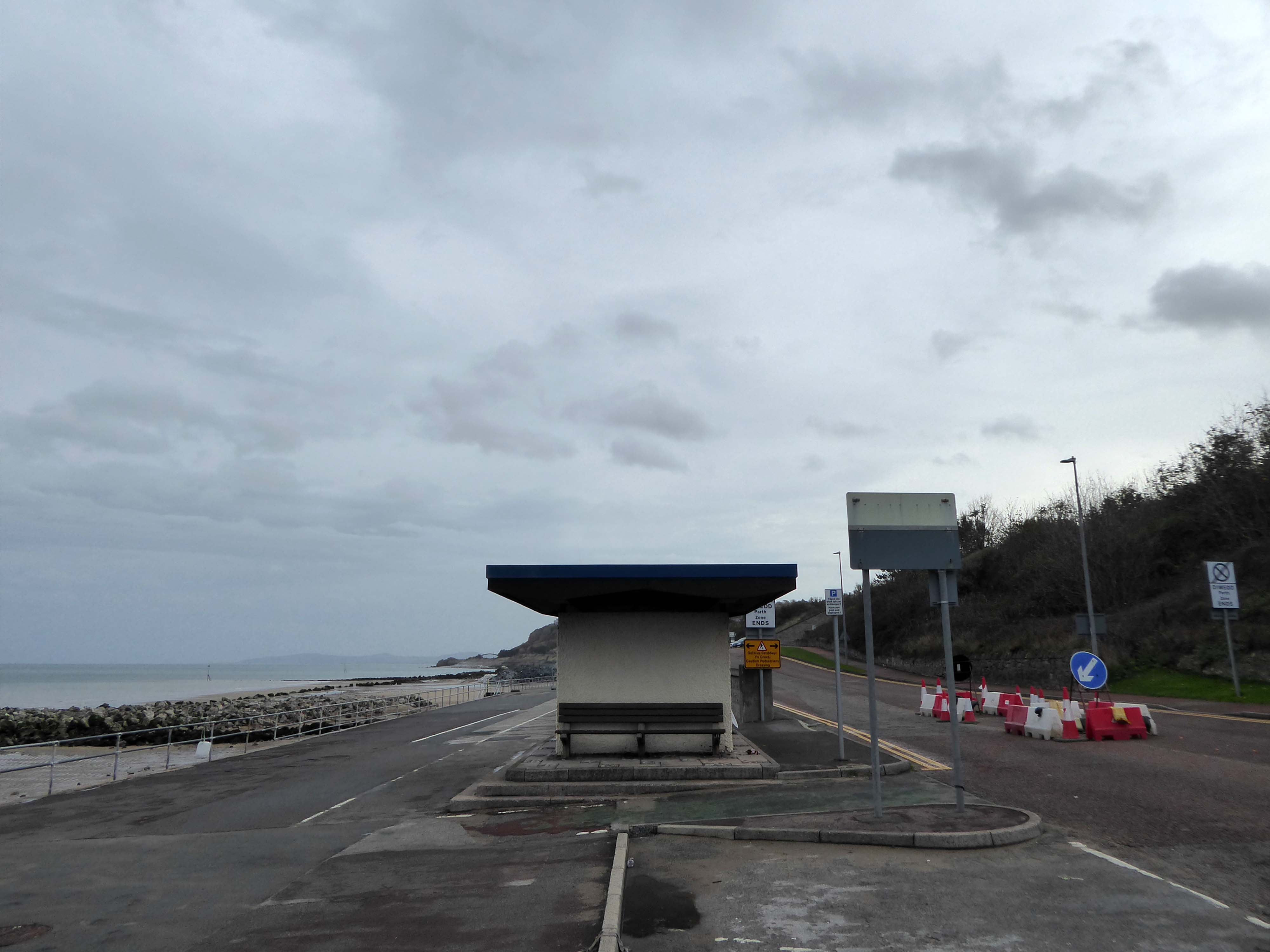
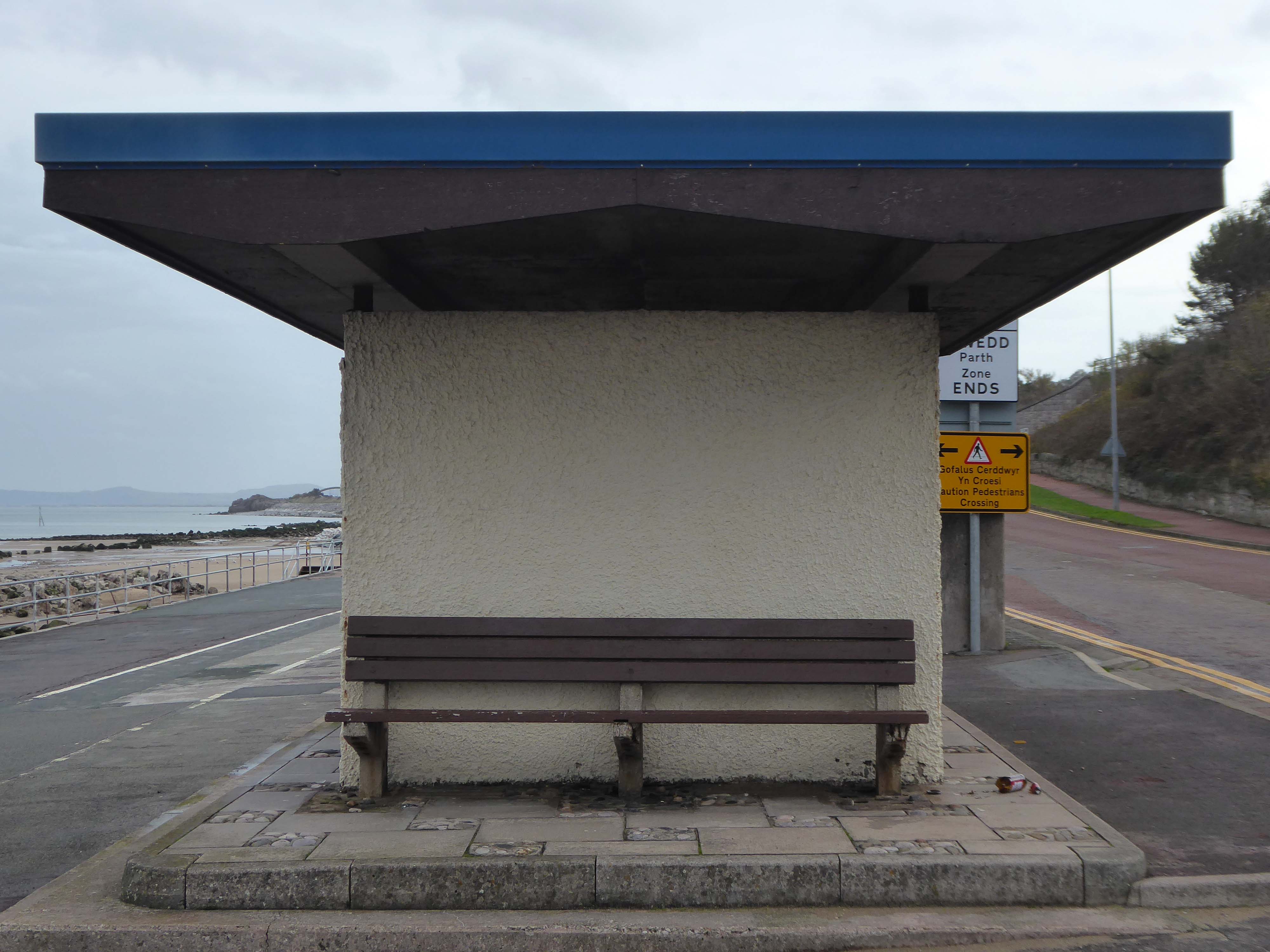
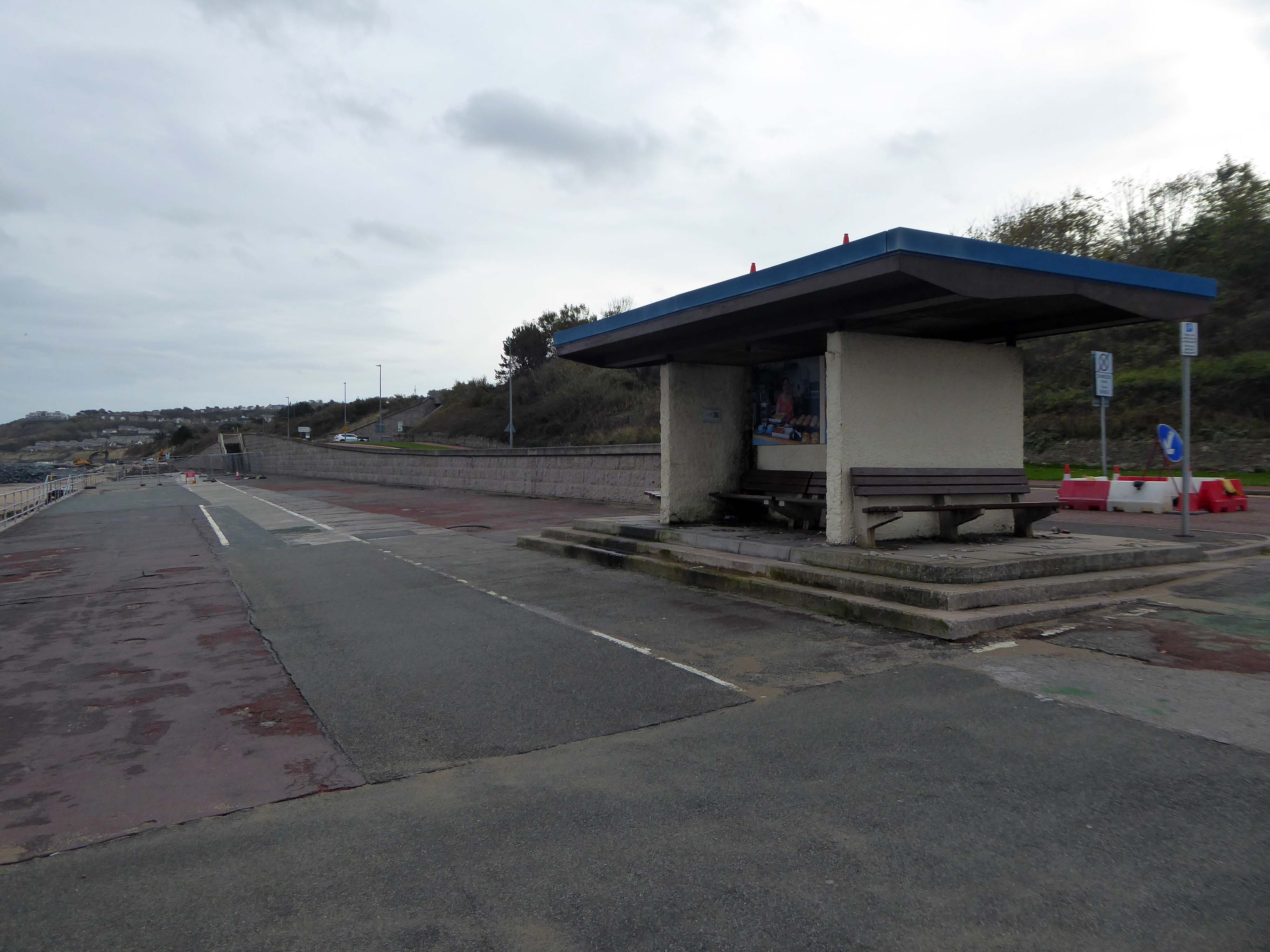
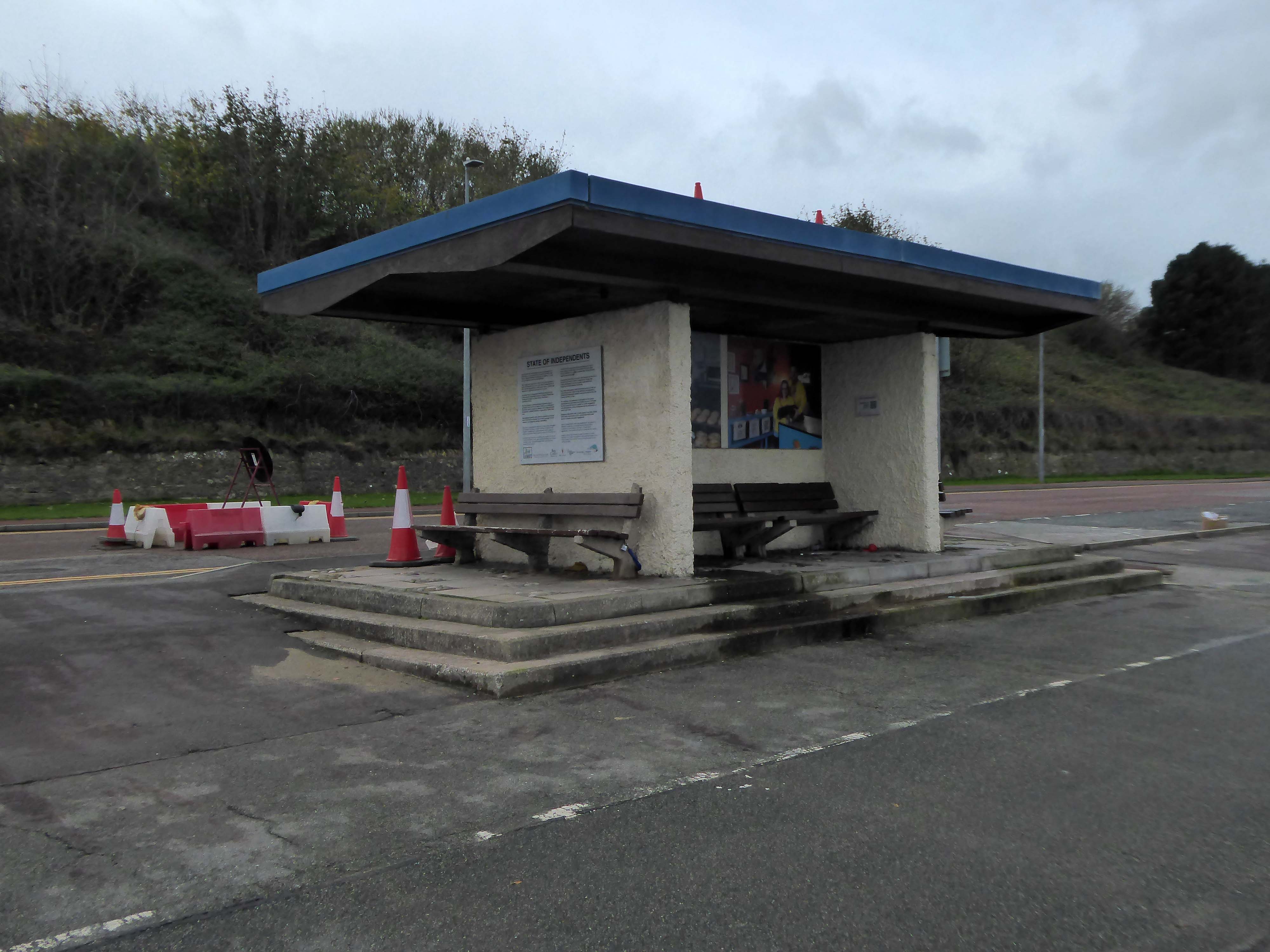
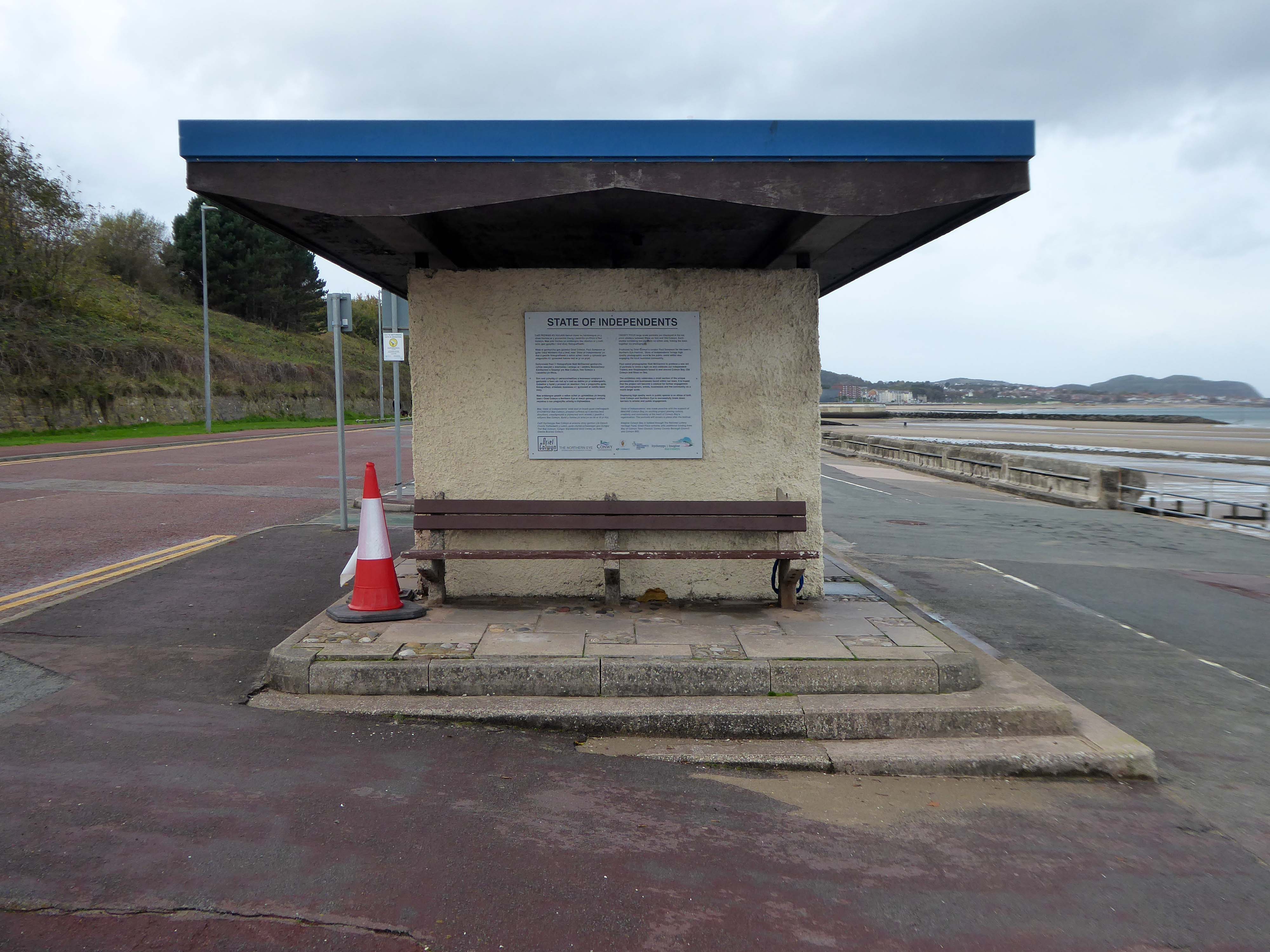
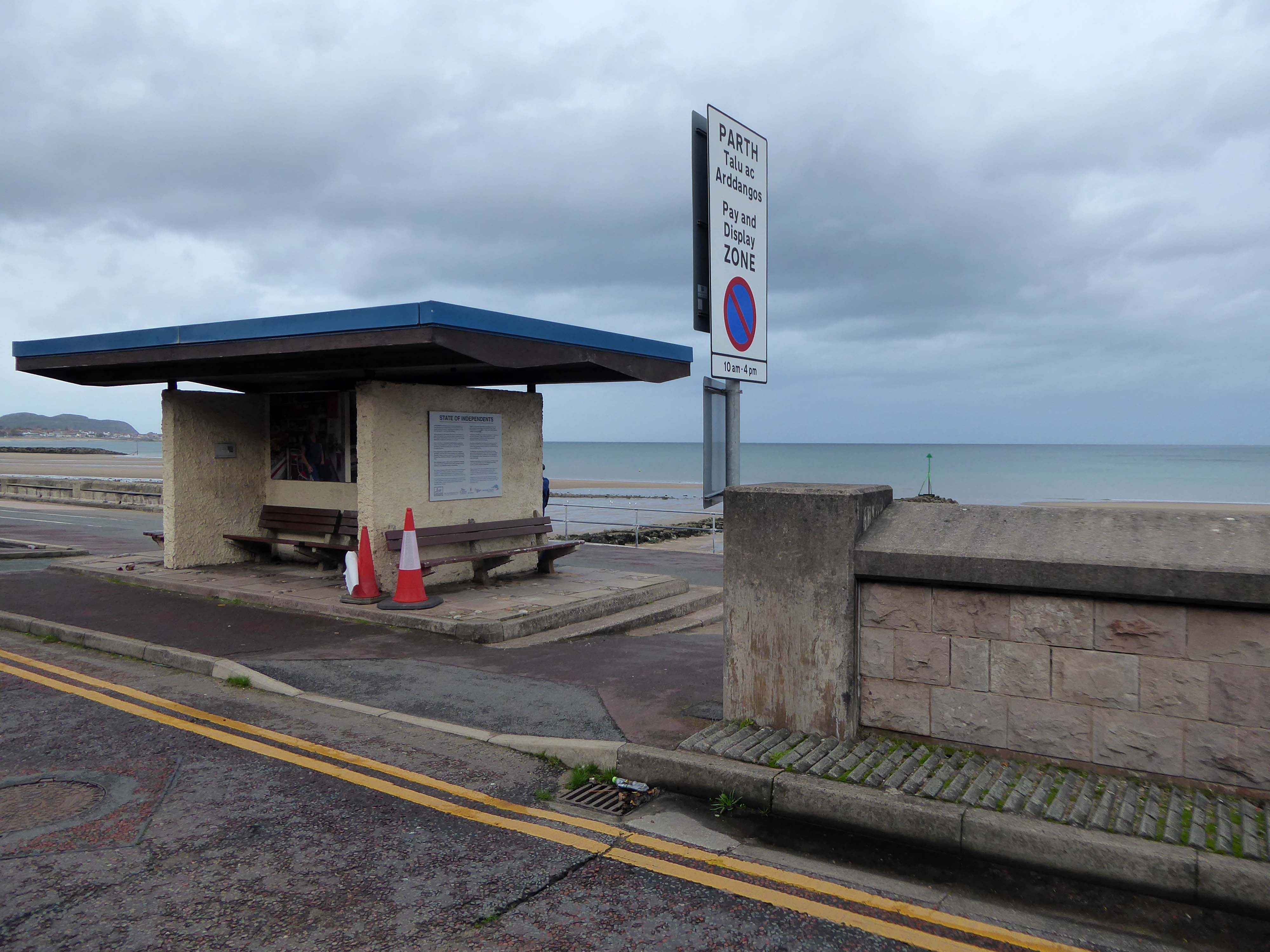
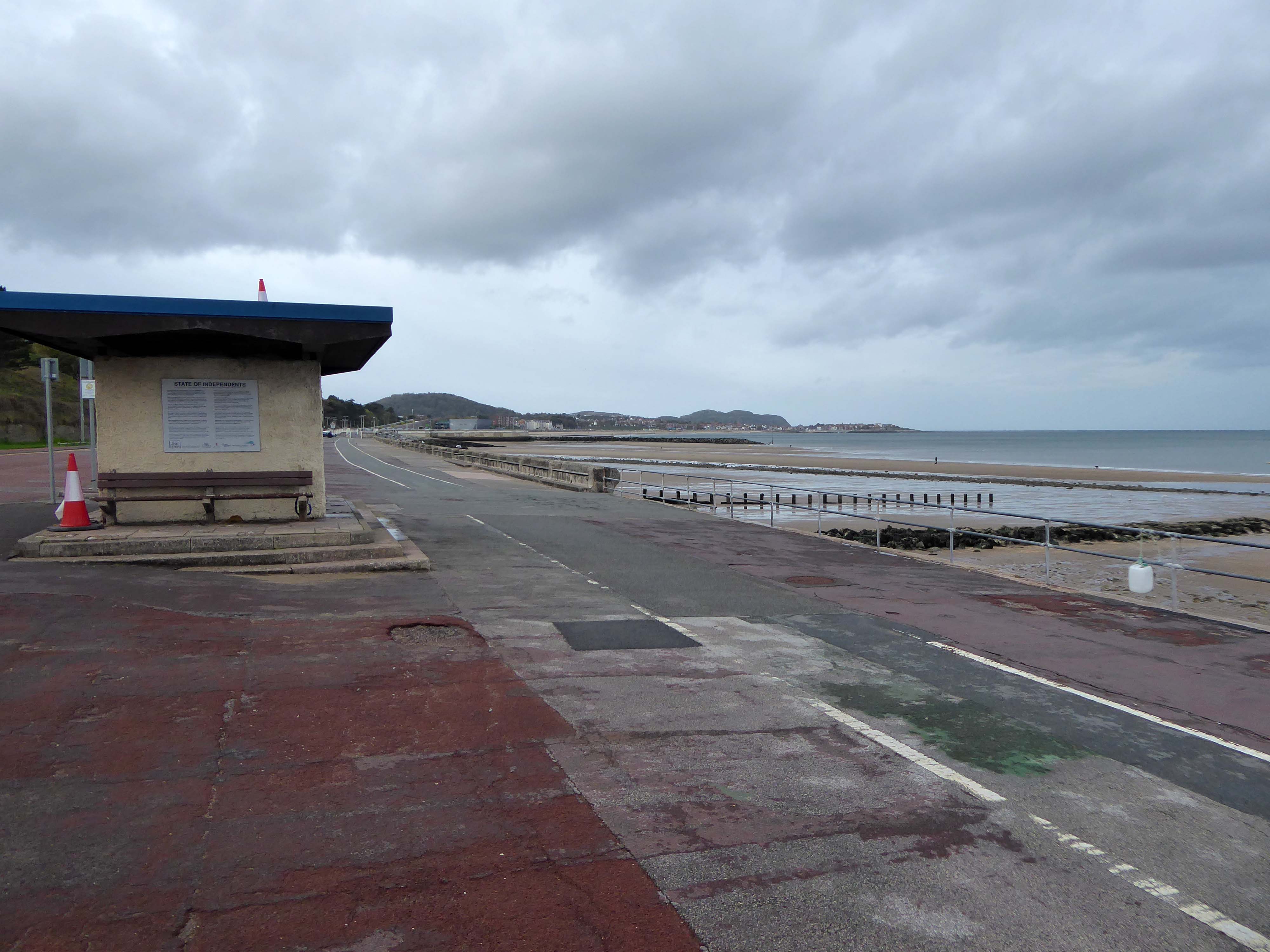
Seaside Shelters – Colwyn Bay

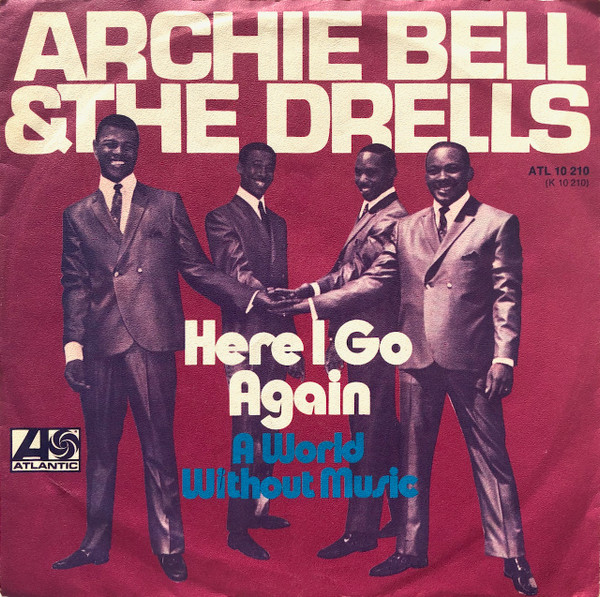
Here I go again – just like Archie Bell minus the Drells.

Here I go again, thinking with my heart

But every time I see ya, I keep running back for more

April and October 2019 walking from Rhos to Colwyn.

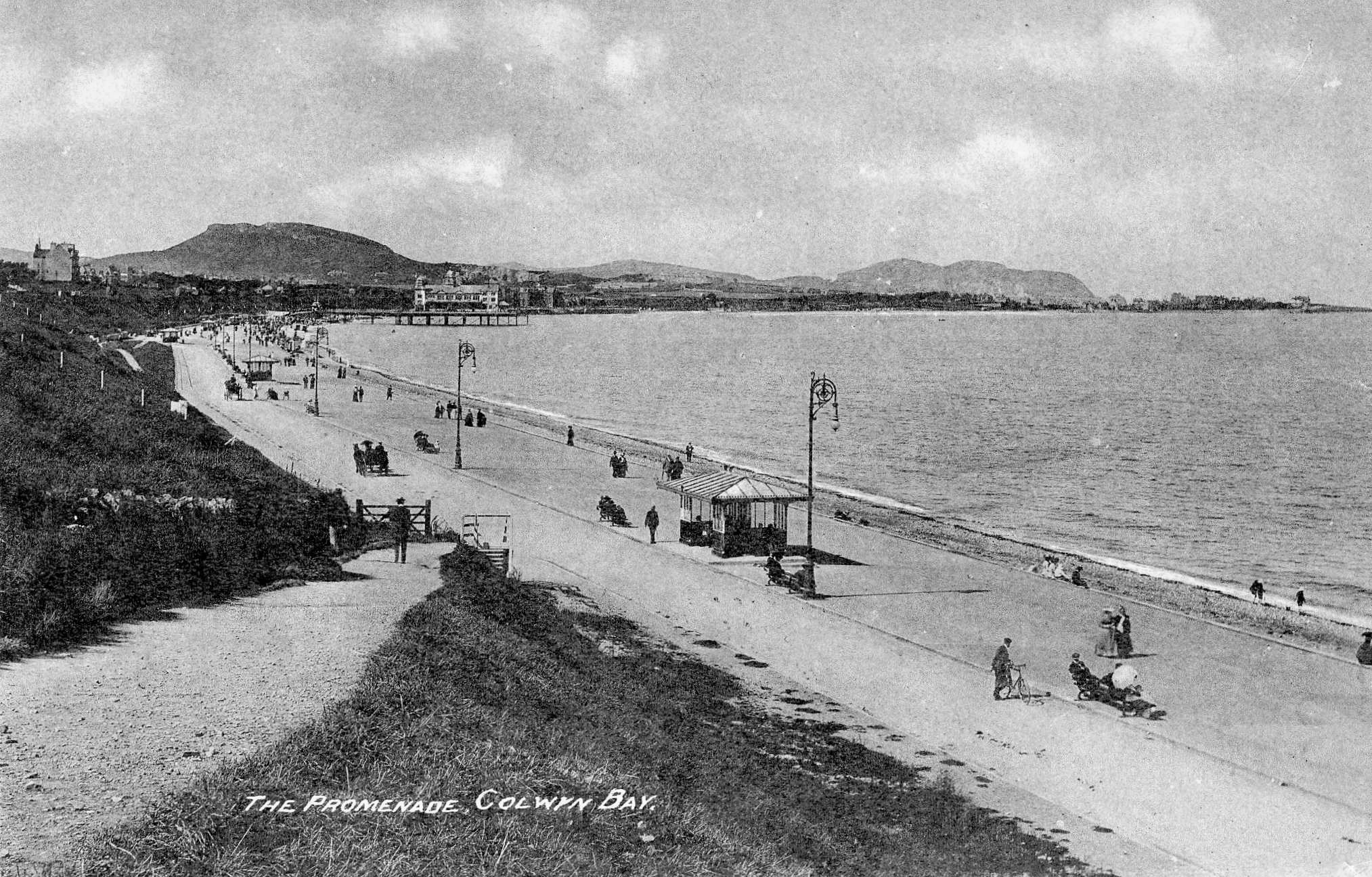
Pandemics come and almost go – as do seaside shelters it seems.

The shelters of 1860 are quite literally a thing of the past.

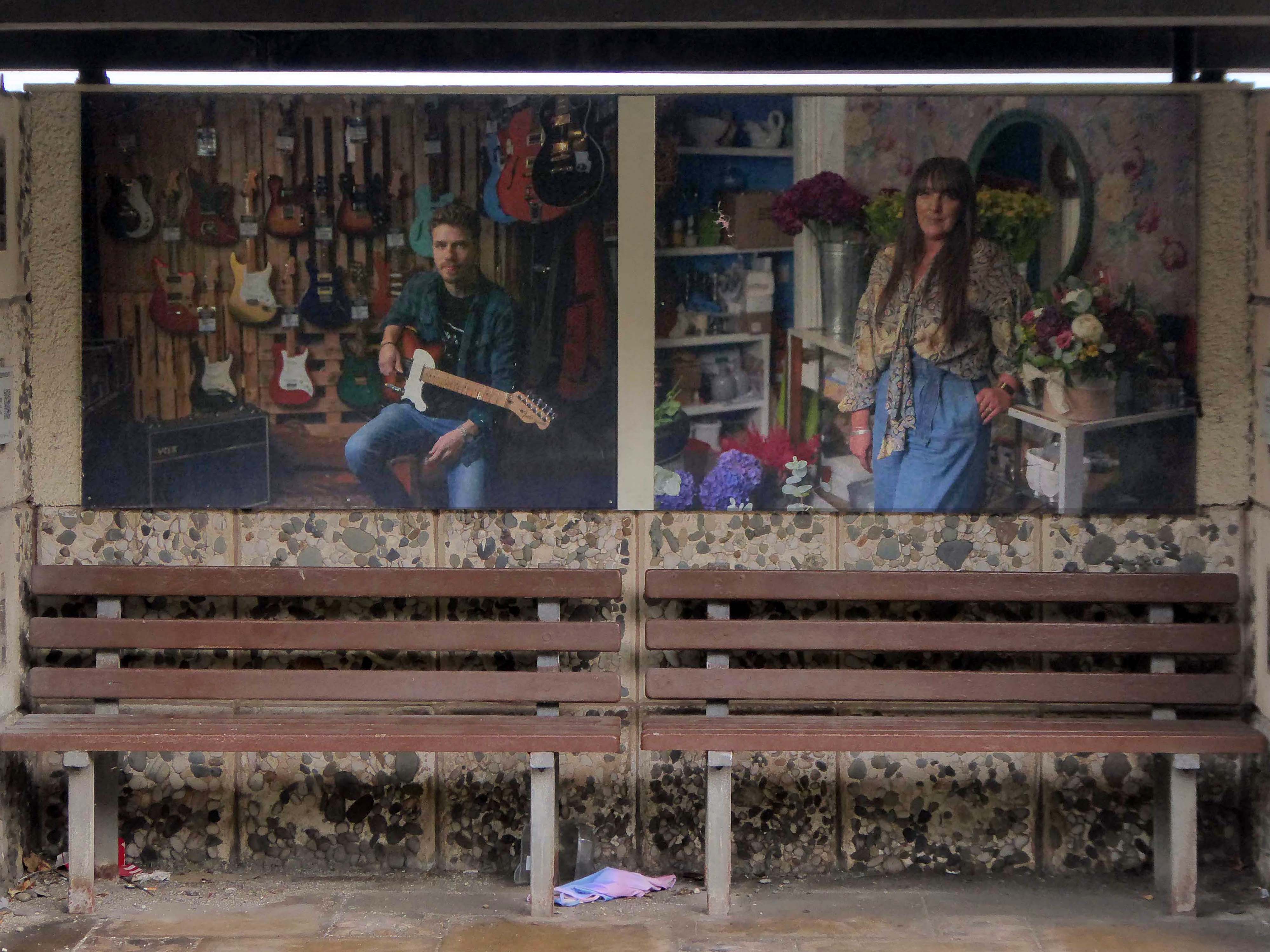
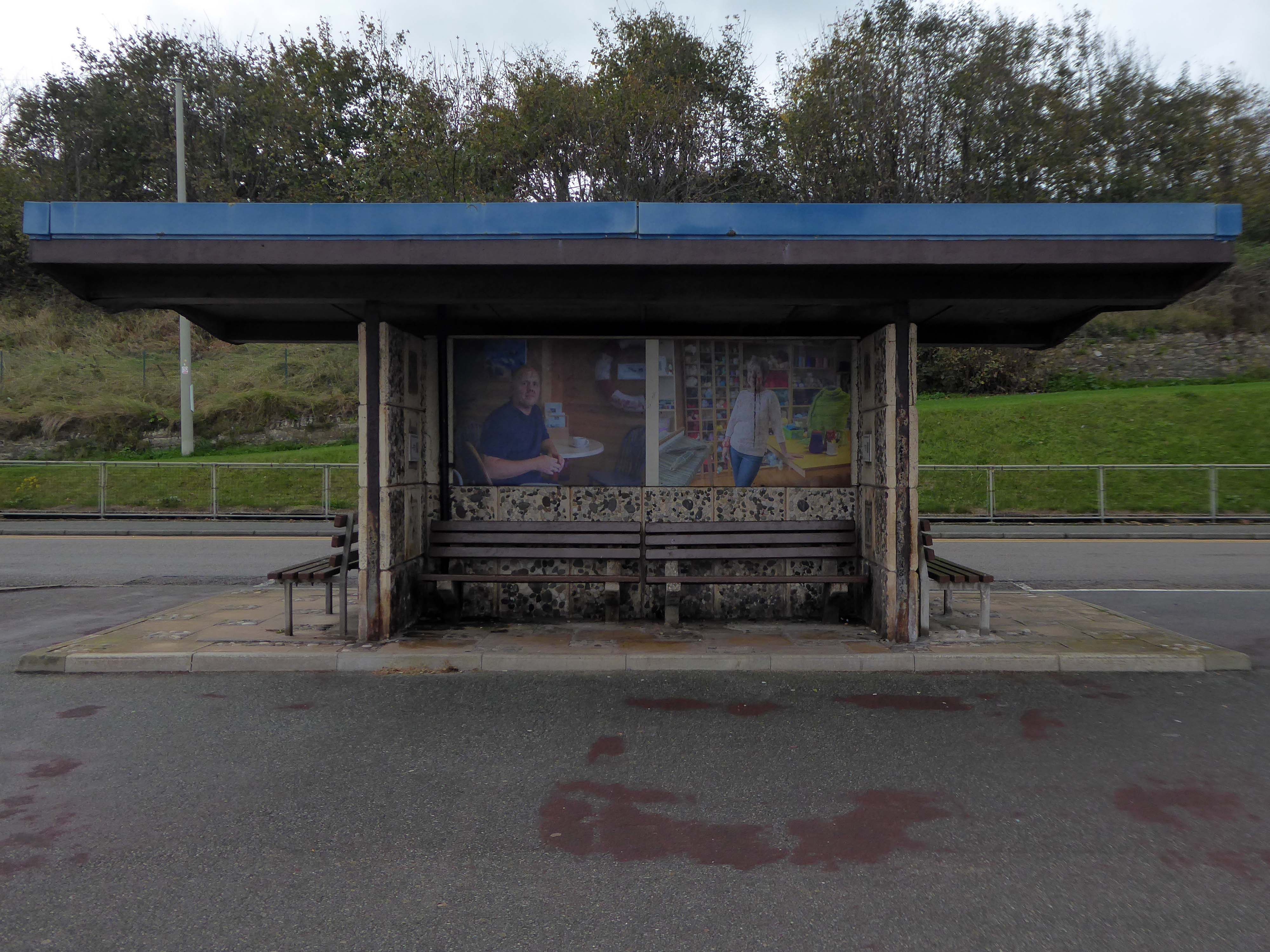
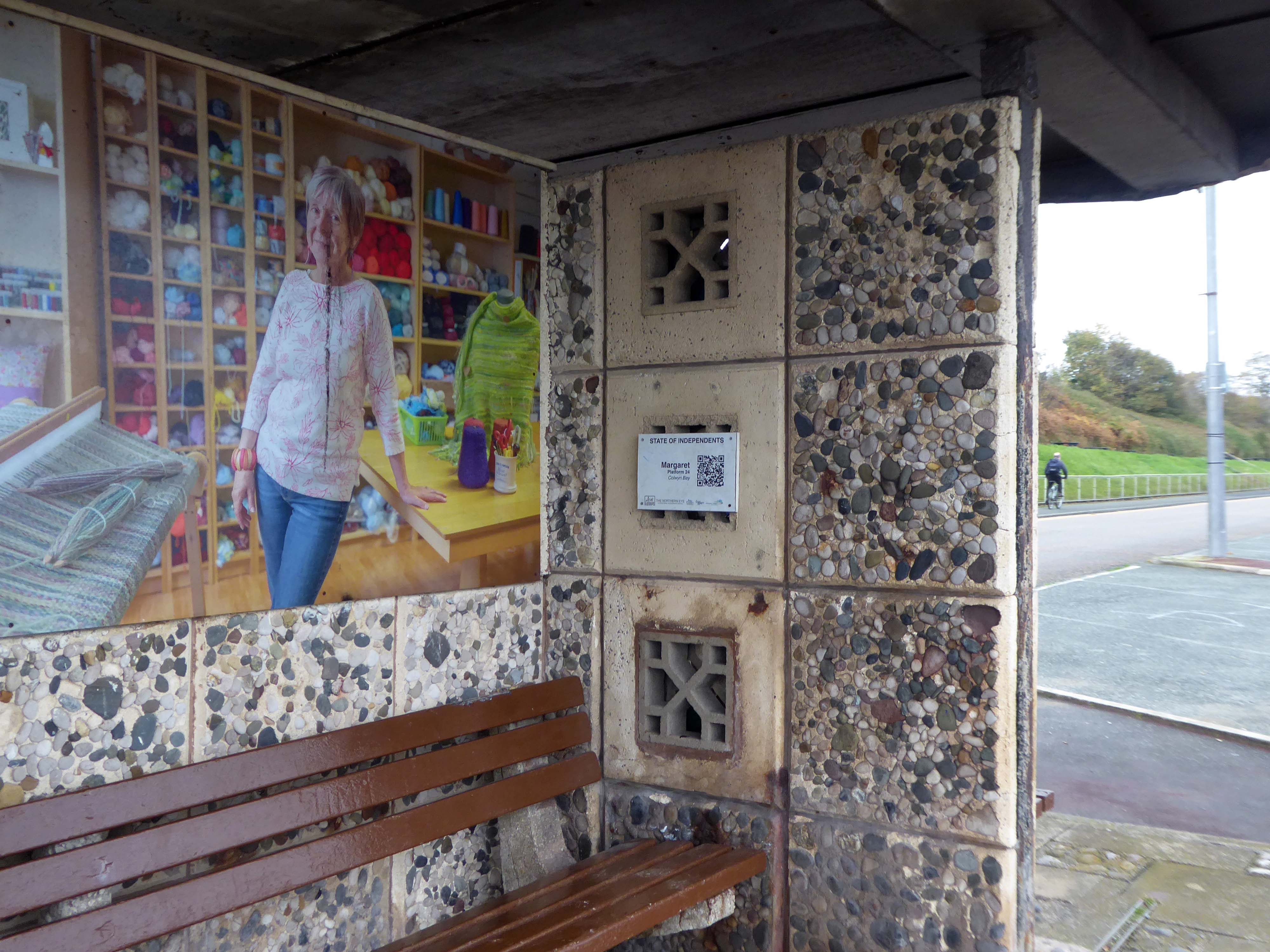
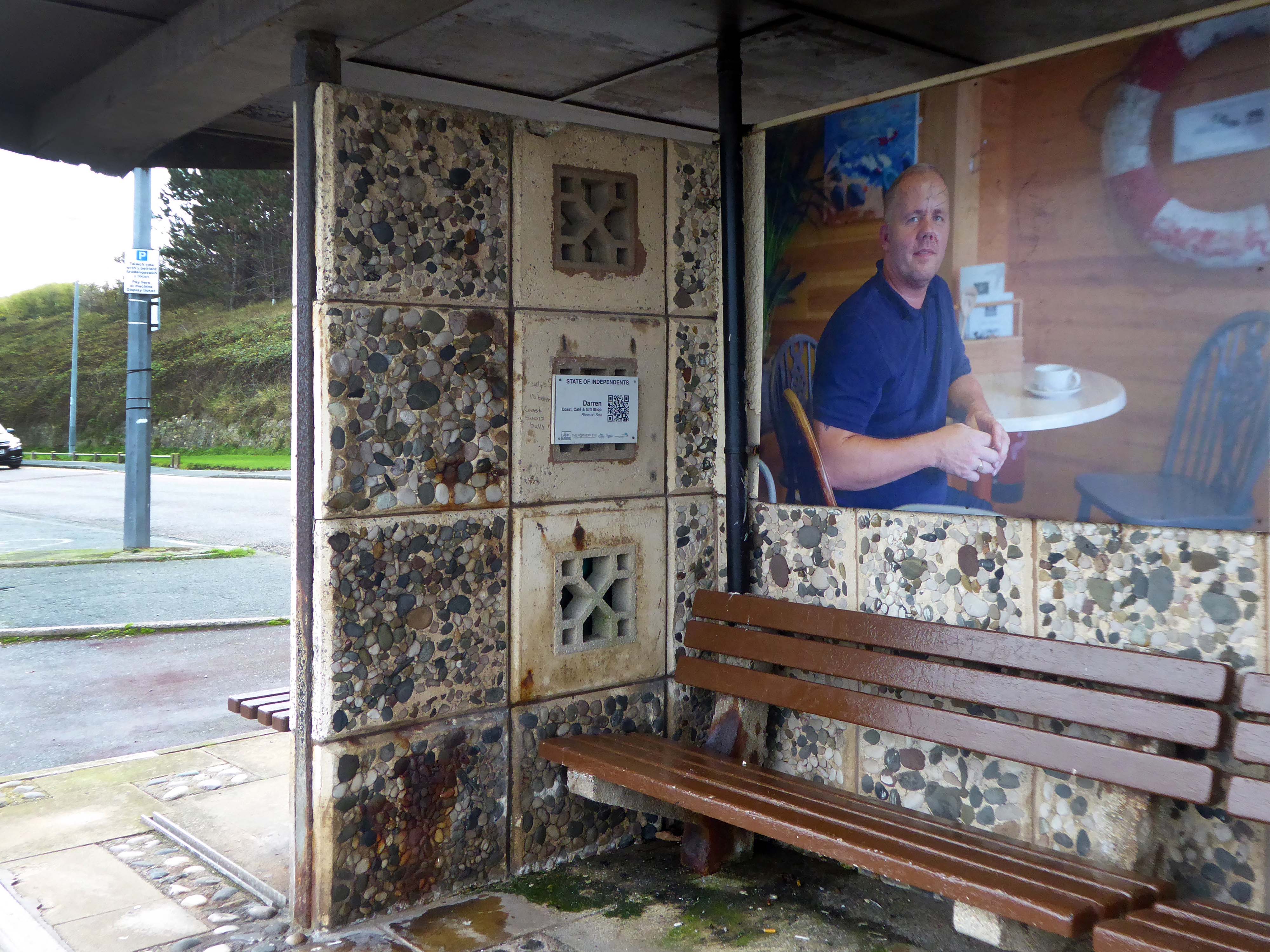
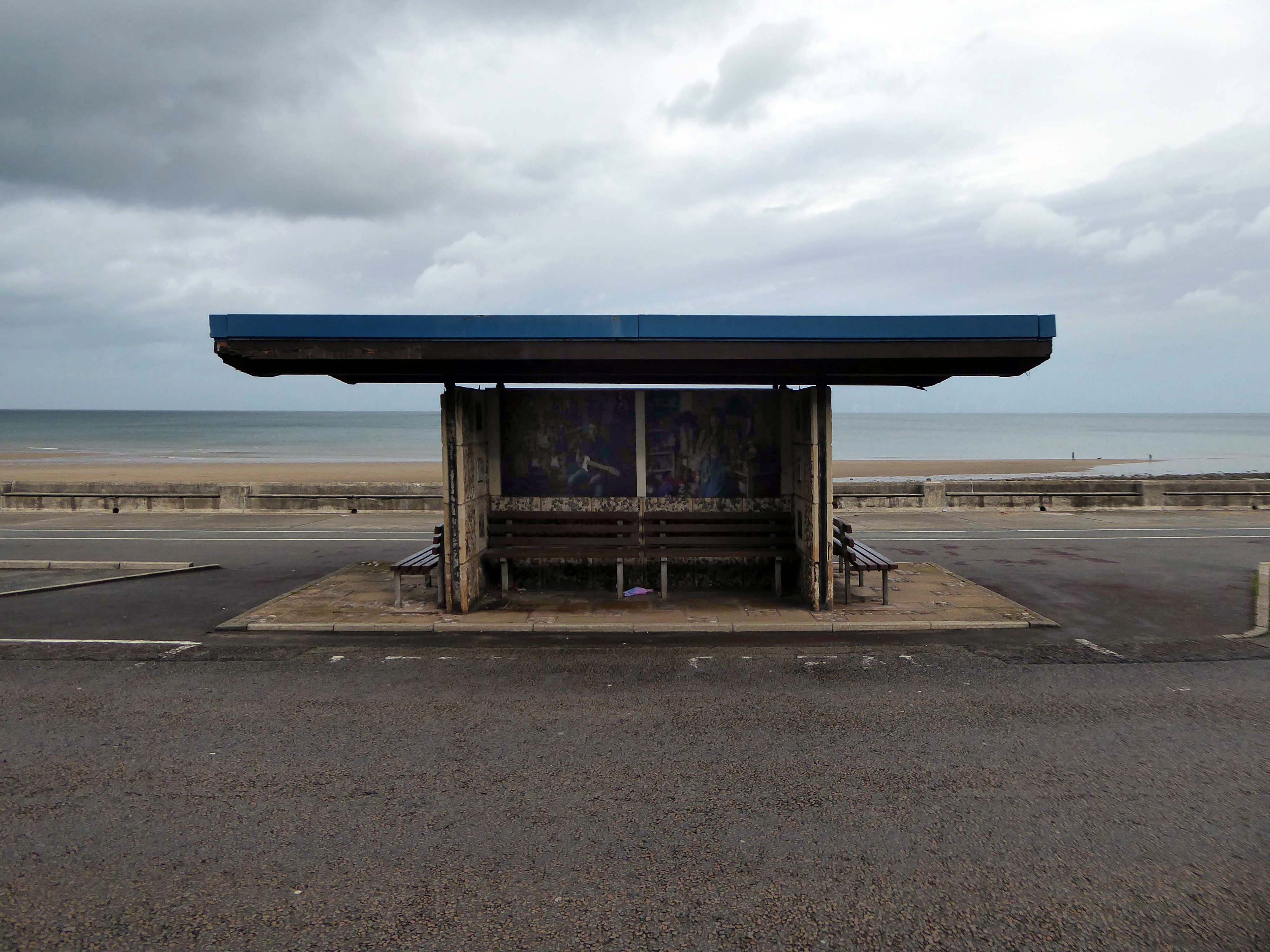
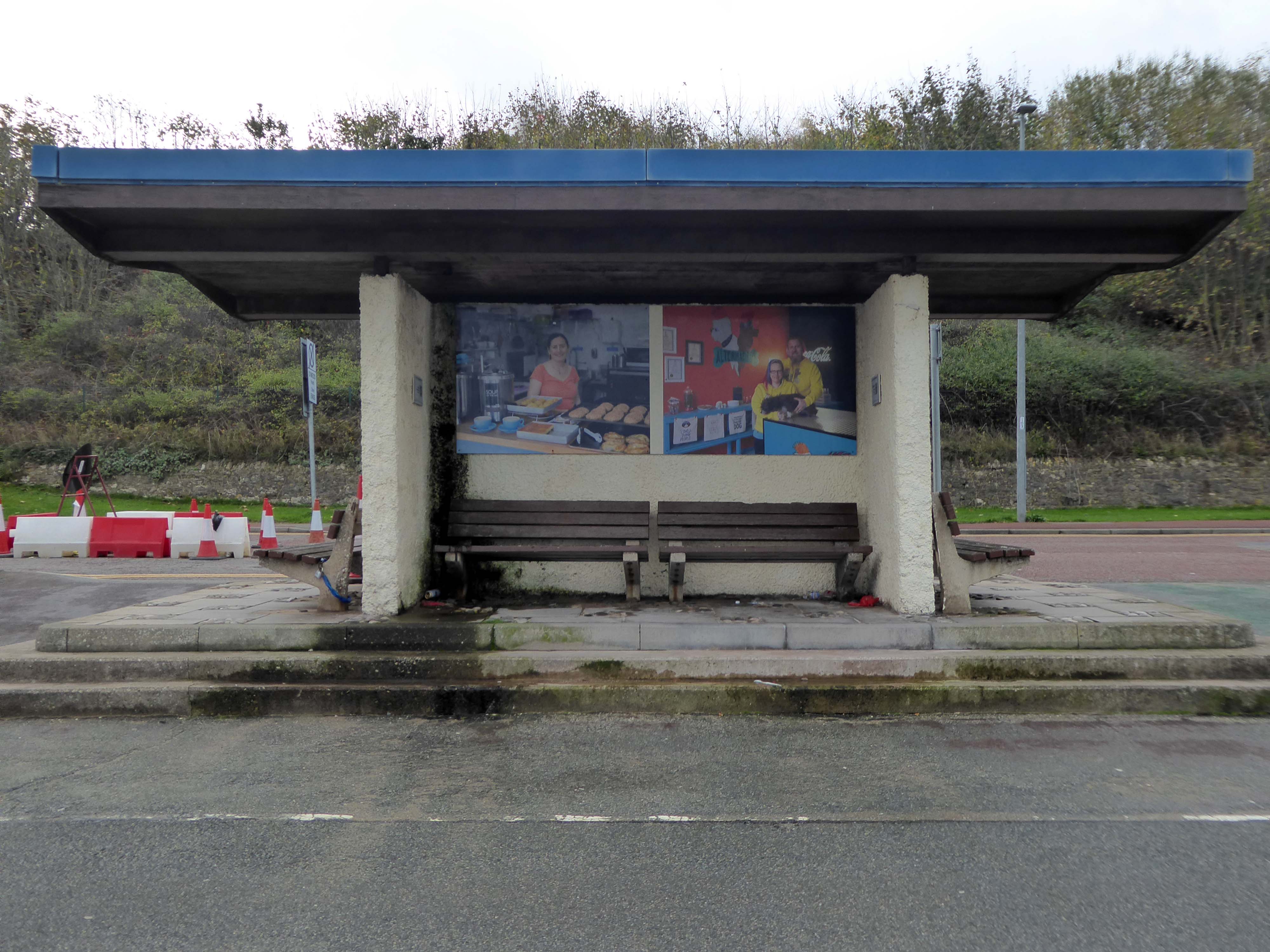
Thye have become host to Niall McDiarmid‘s snaps of local business folk – the project developed when local residents raised concerns about the appearance of the shelters on the promenade.

Cllr Roger Parry said

The shelters are nearing the end of their lifespan and these sections of the prom will be upgraded as part of the waterfront project.

In the meantime, State of Independents will make great use of the shelters; celebrating our hardworking local businesses and hopefully encouraging footfall from the promenade to our high streets.

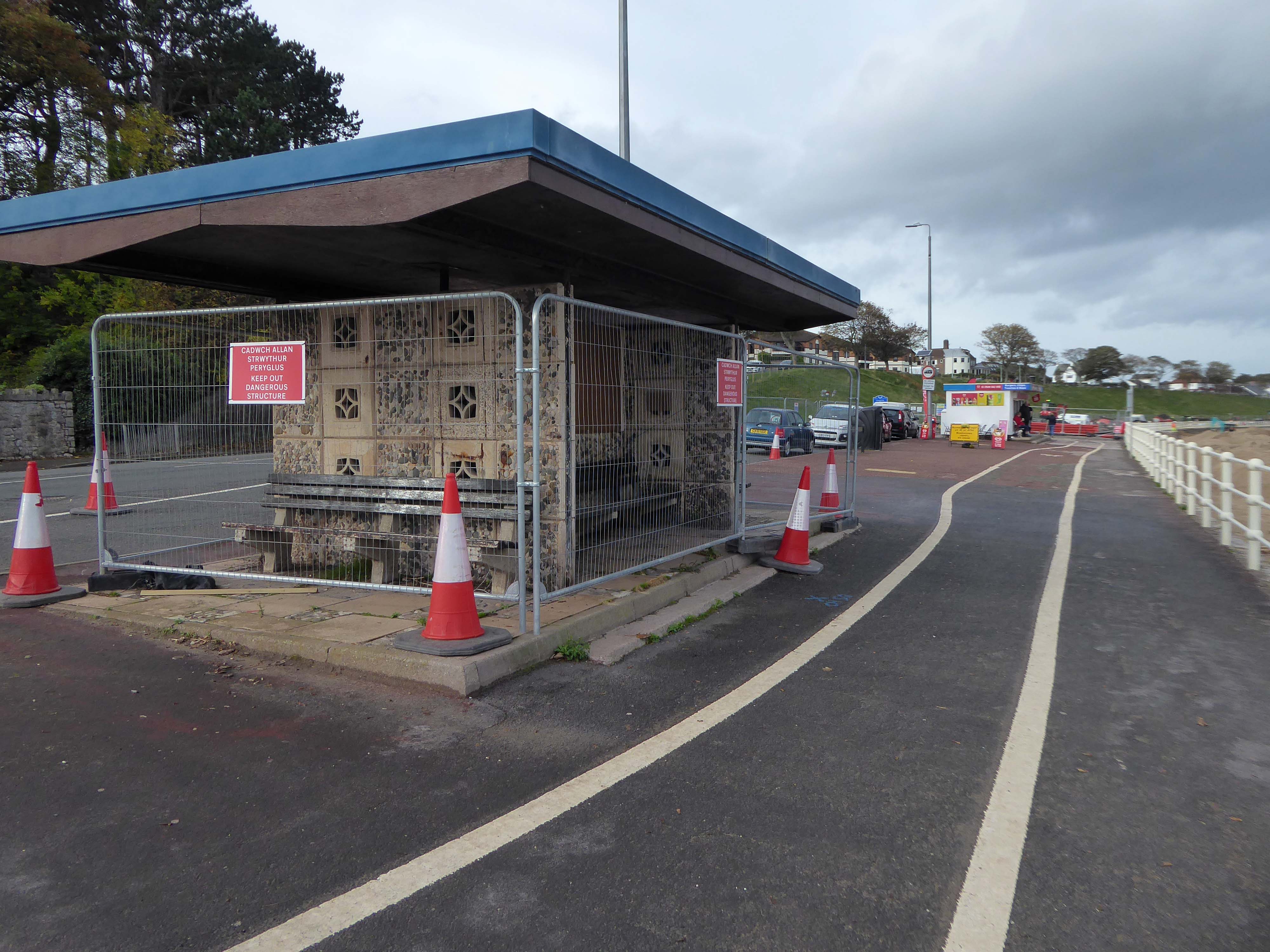
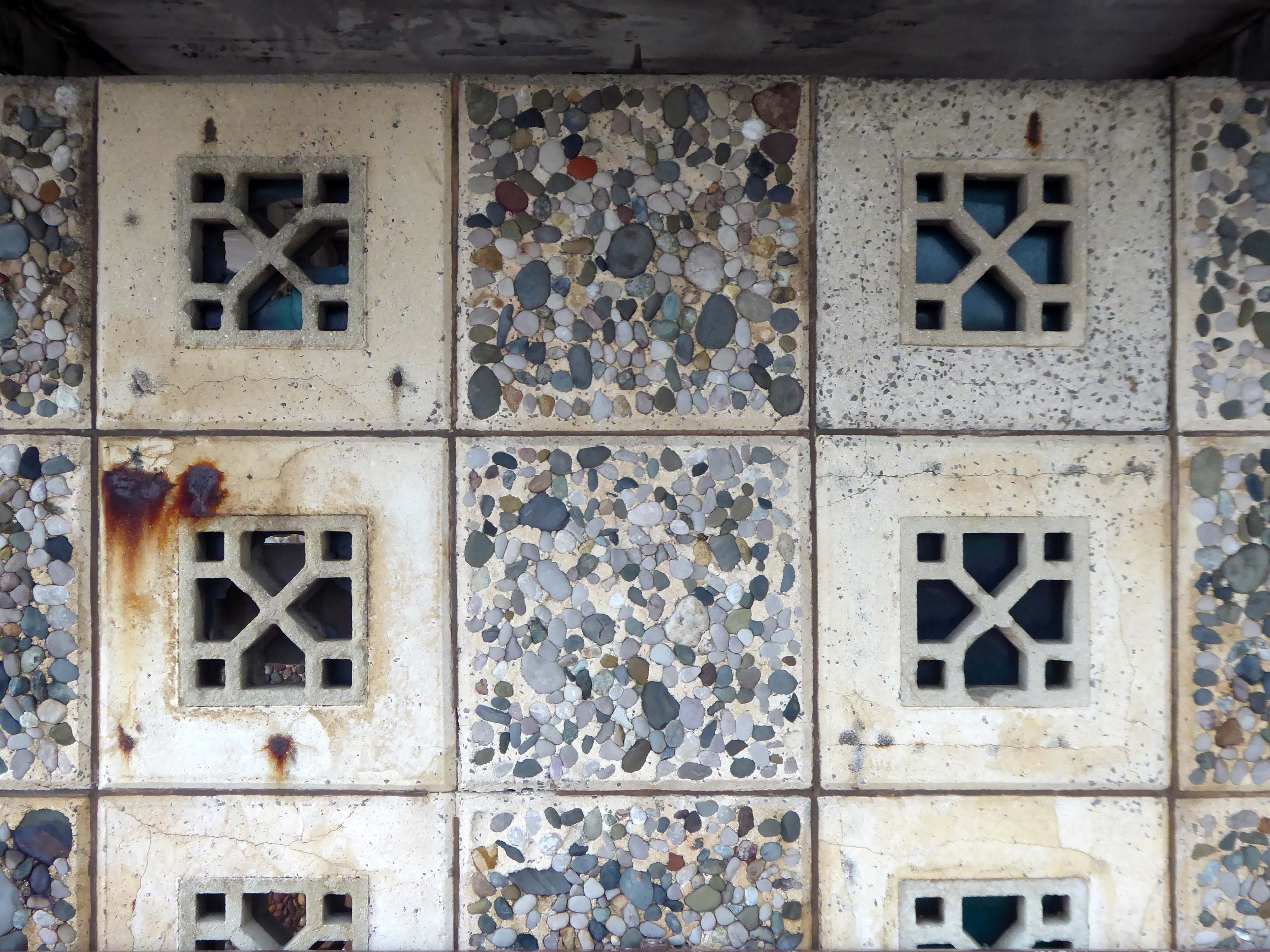
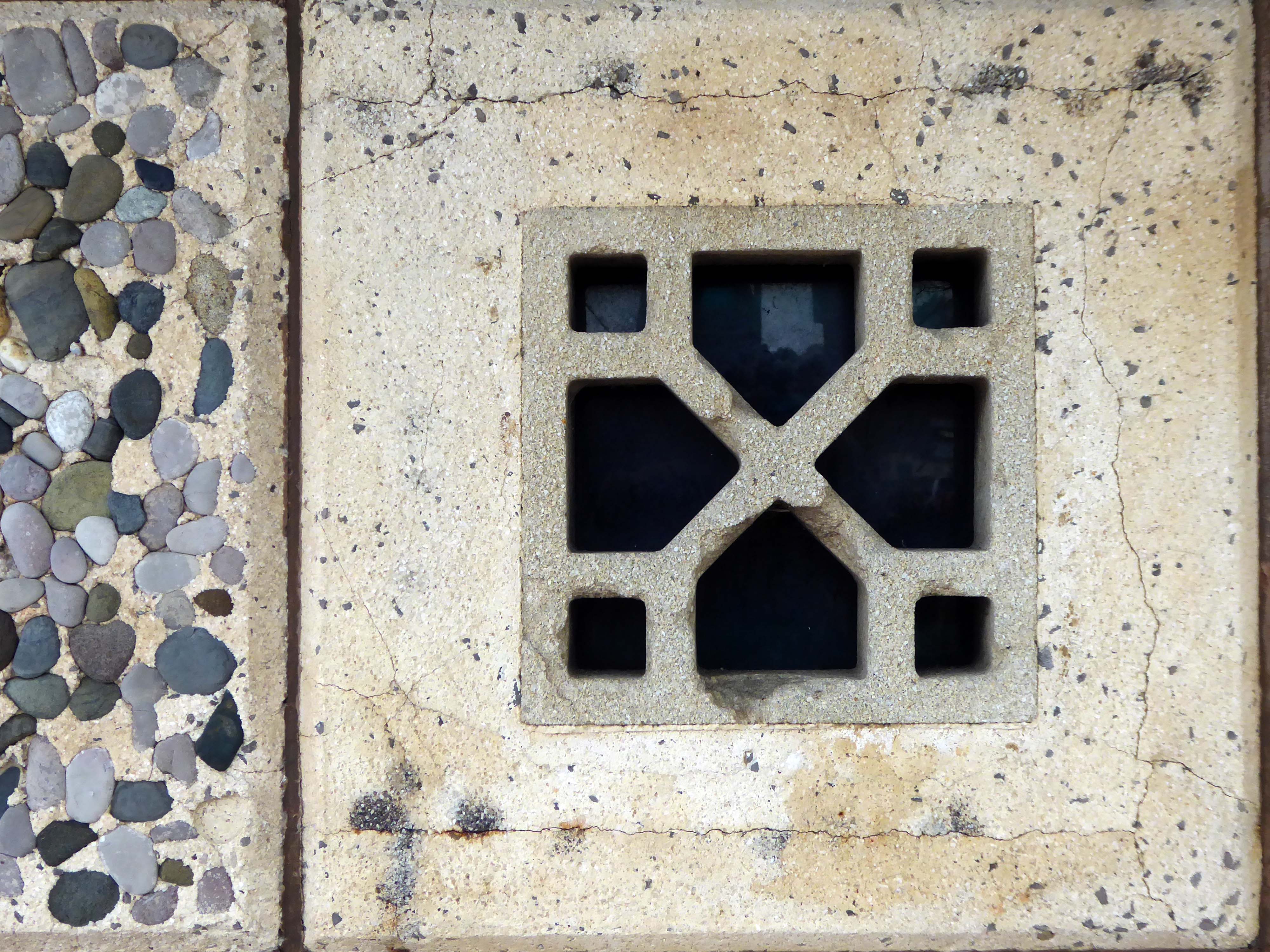
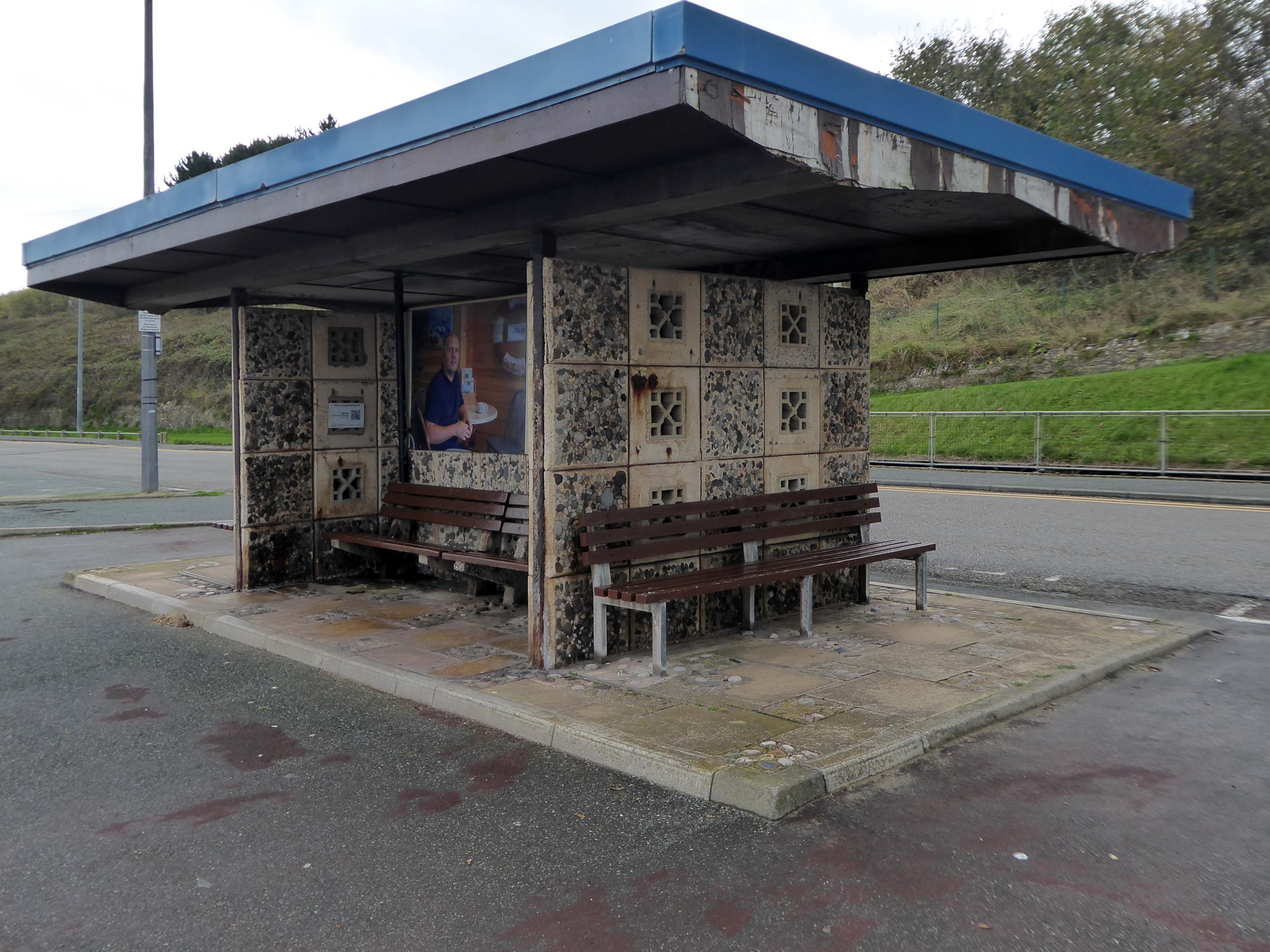
The last of the Rhos on Sea shelters is a dangerous customer suitably secured.

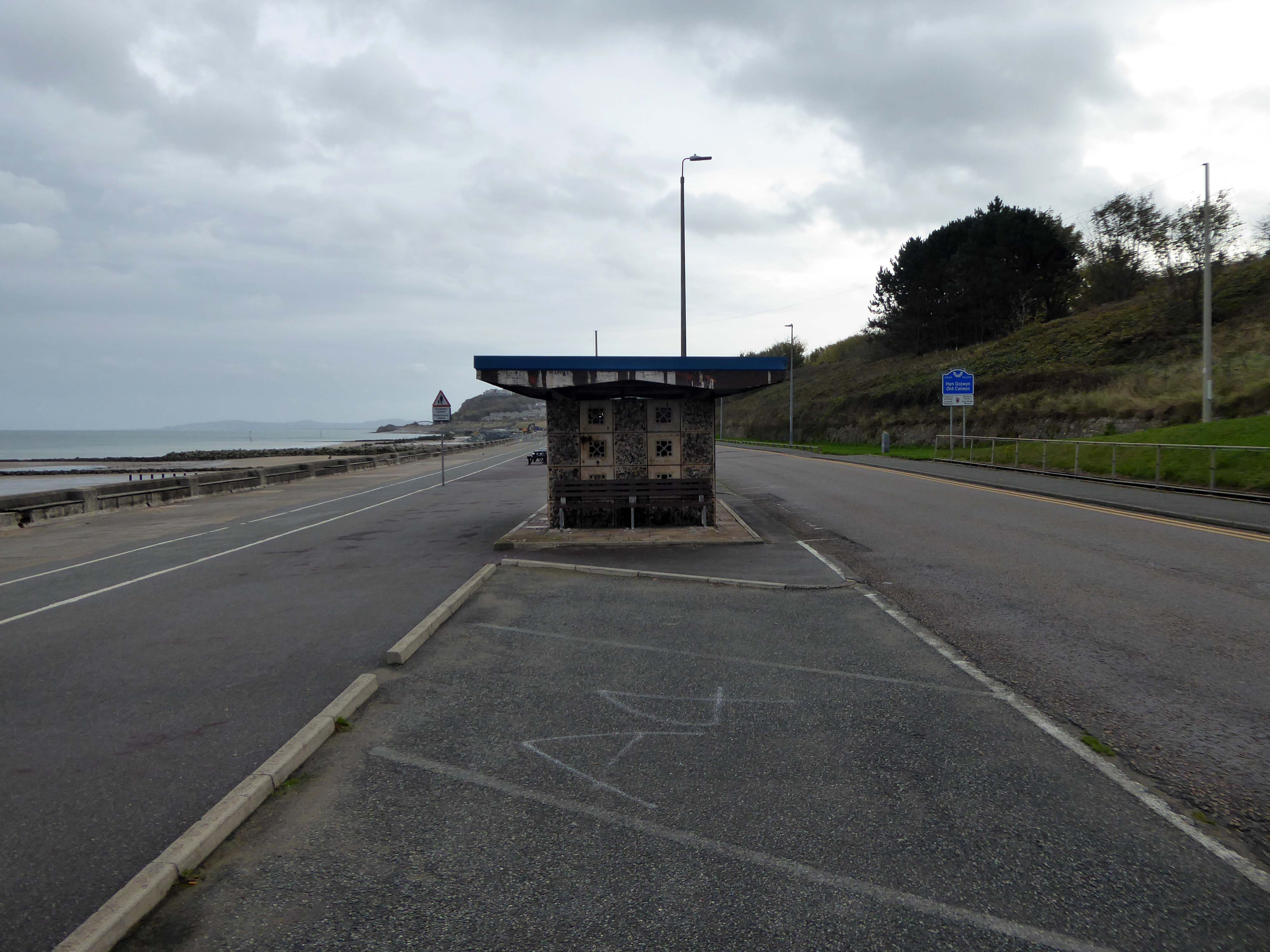
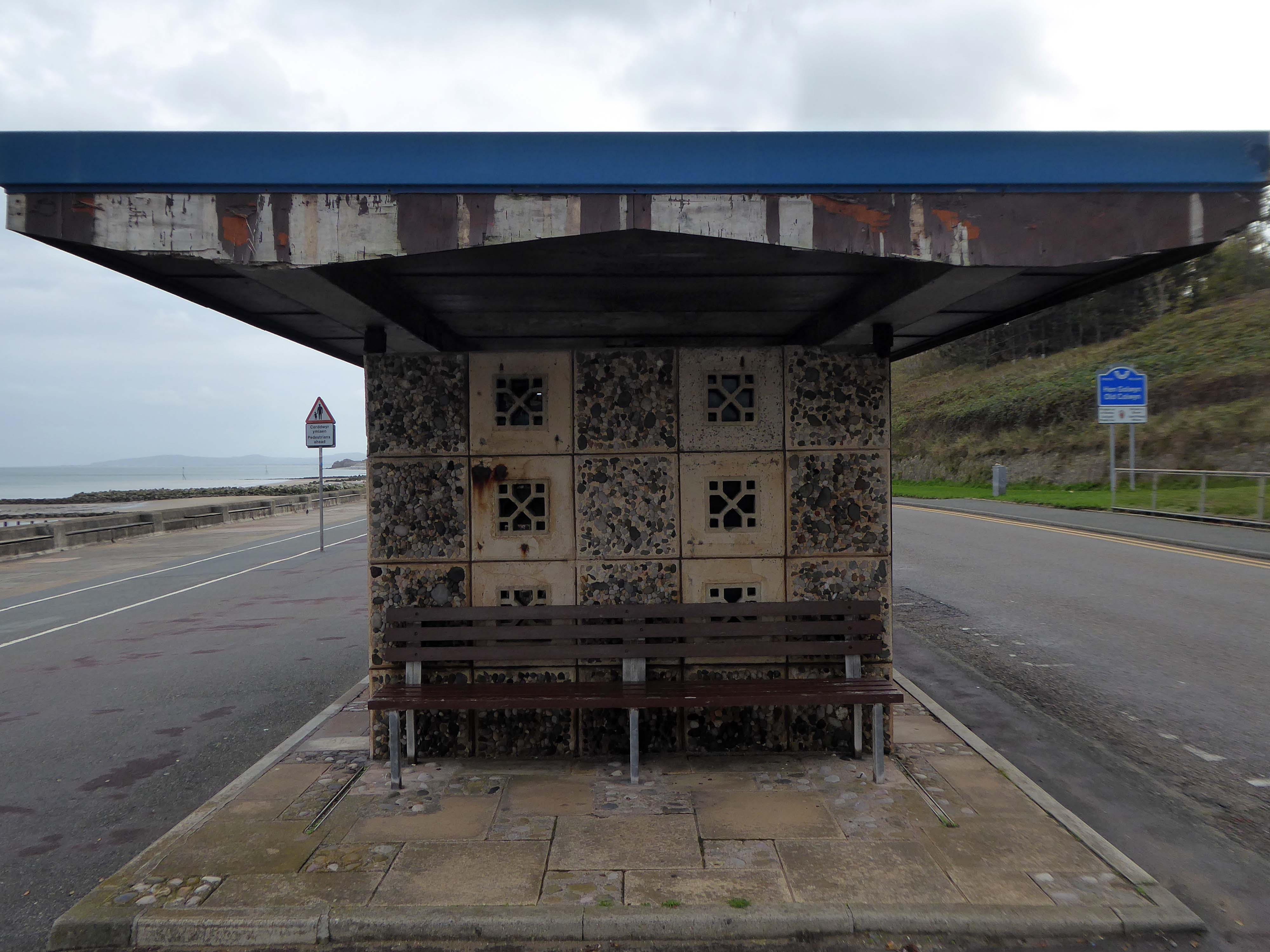
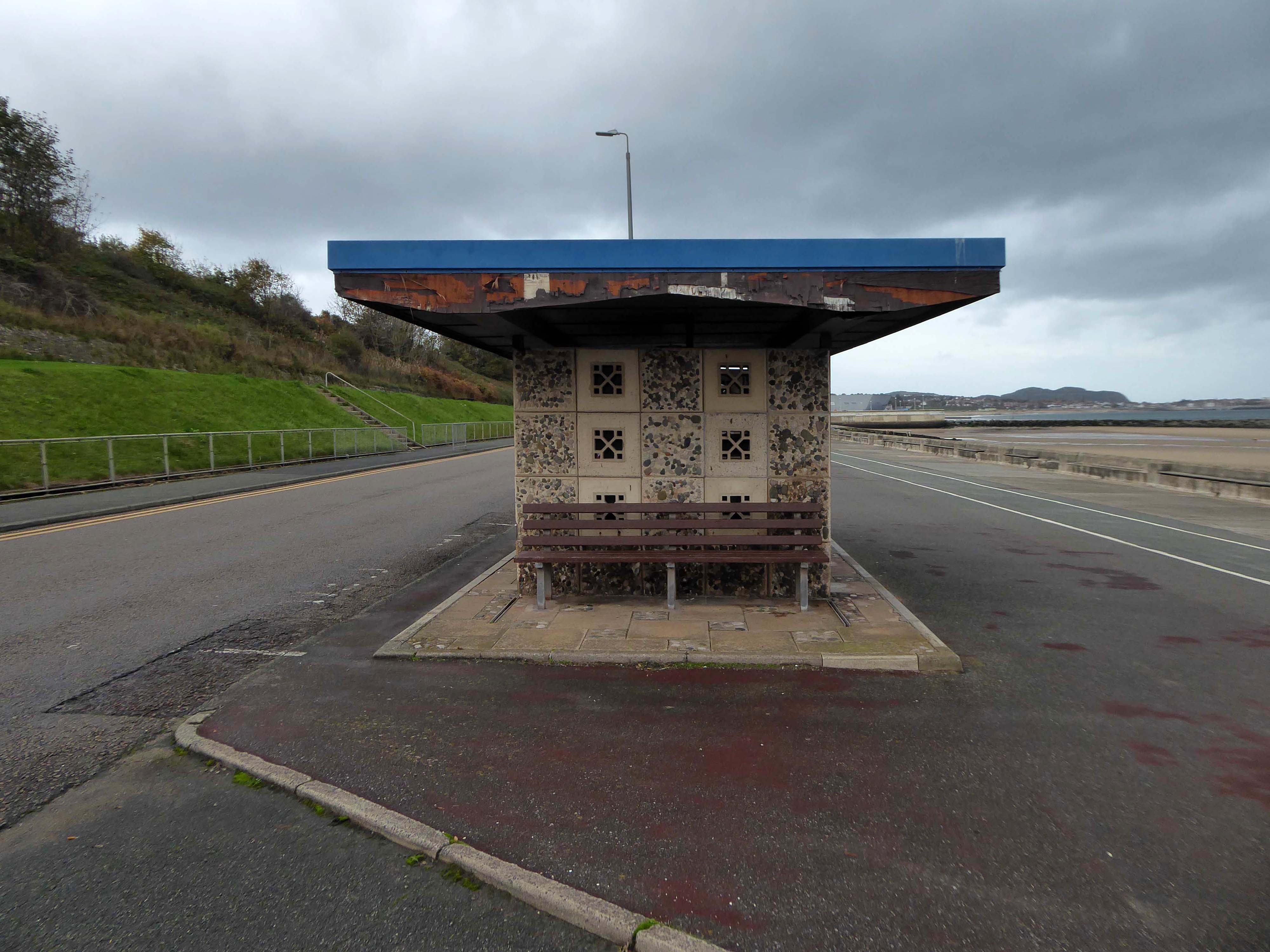
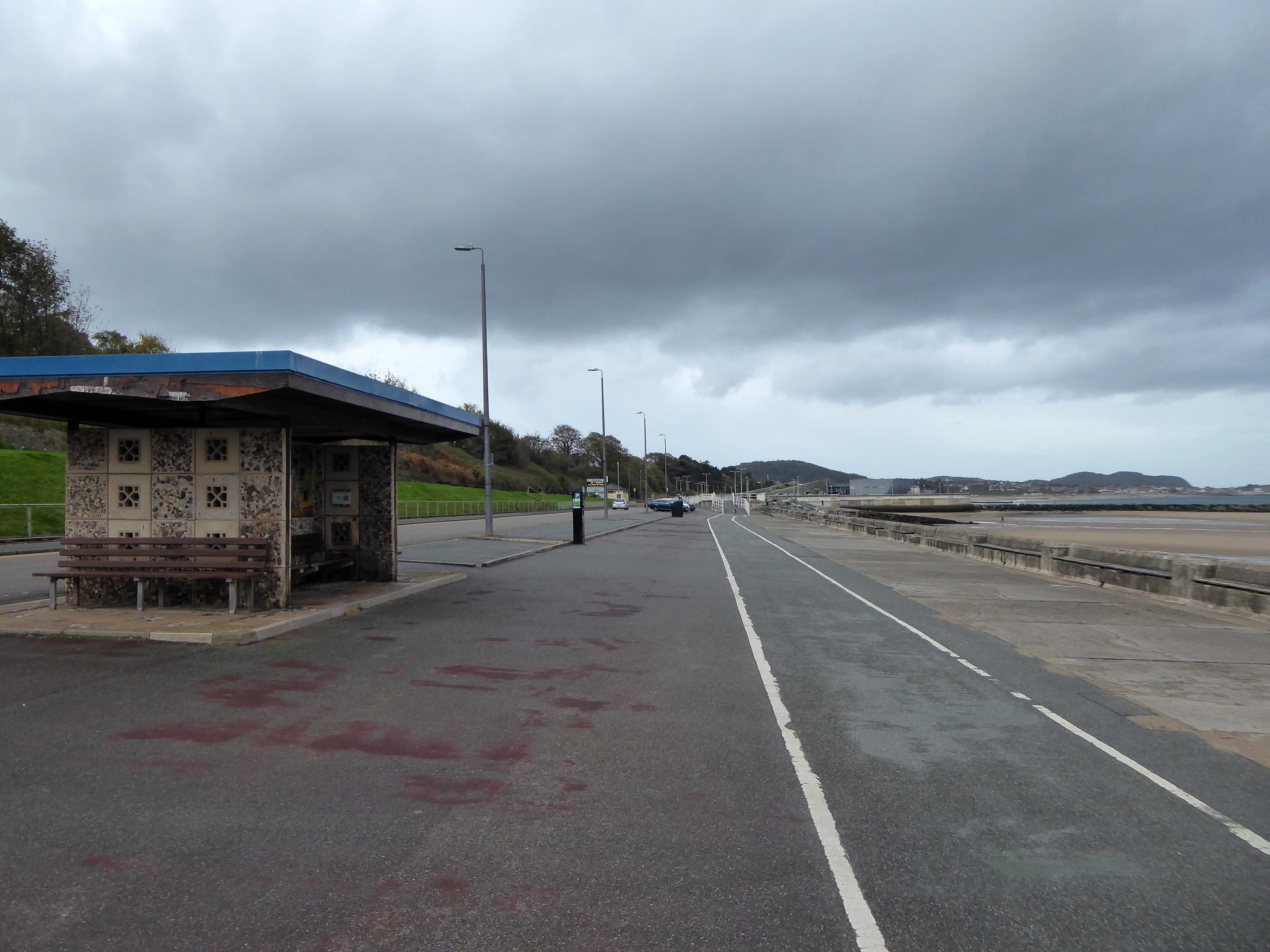
There remains two exemplars of the typology located at the Colwyn end of the bay.

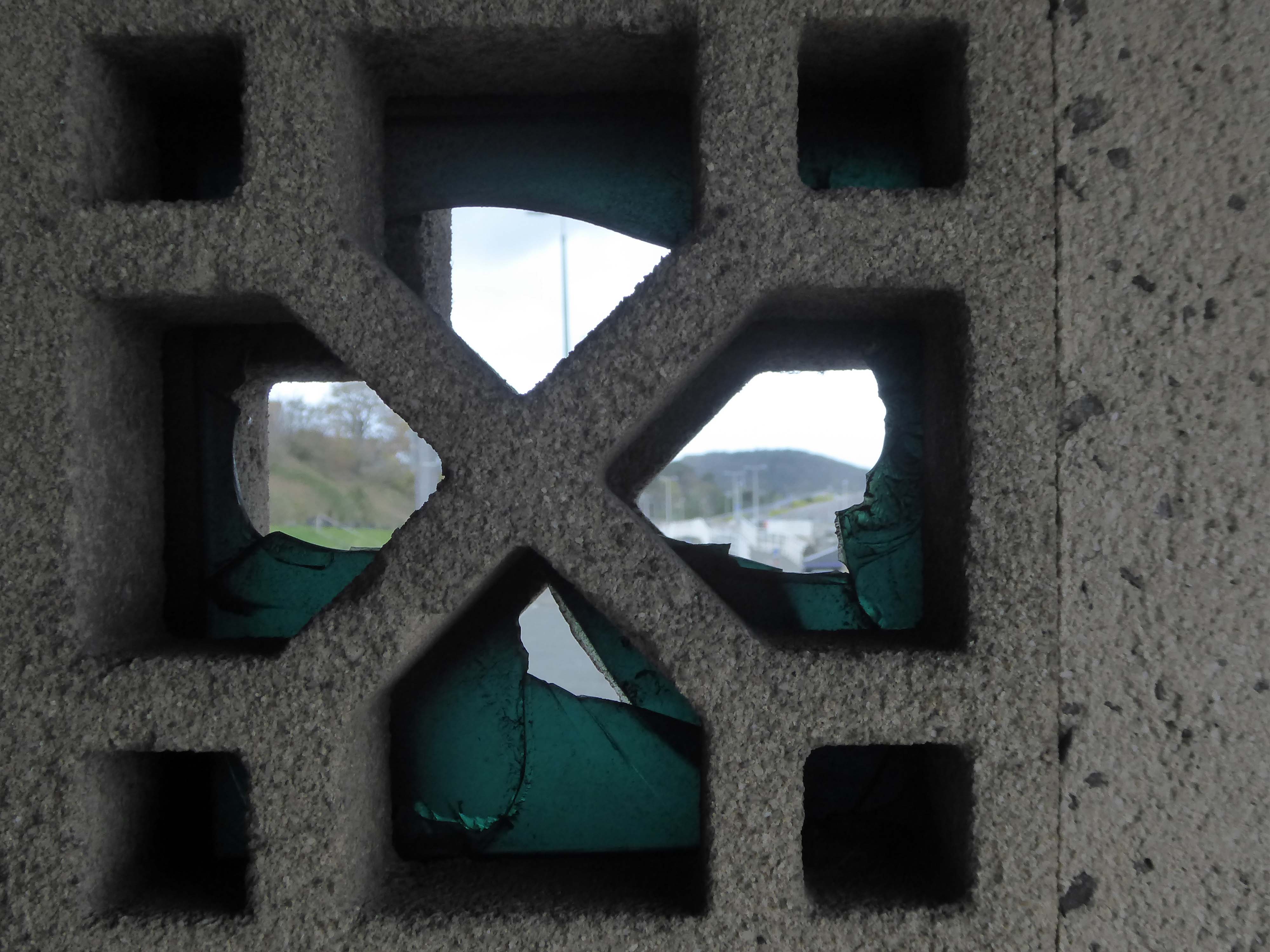
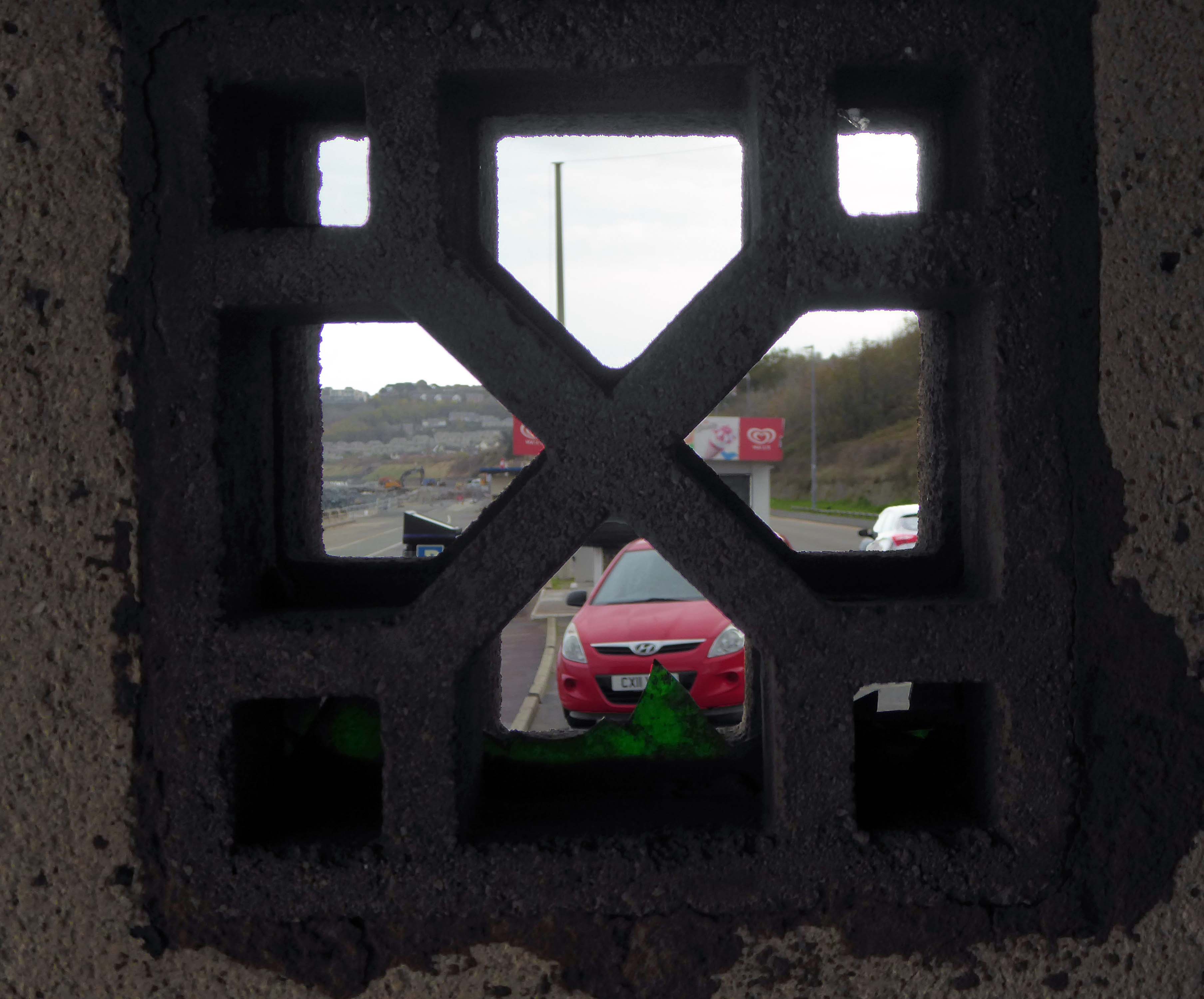
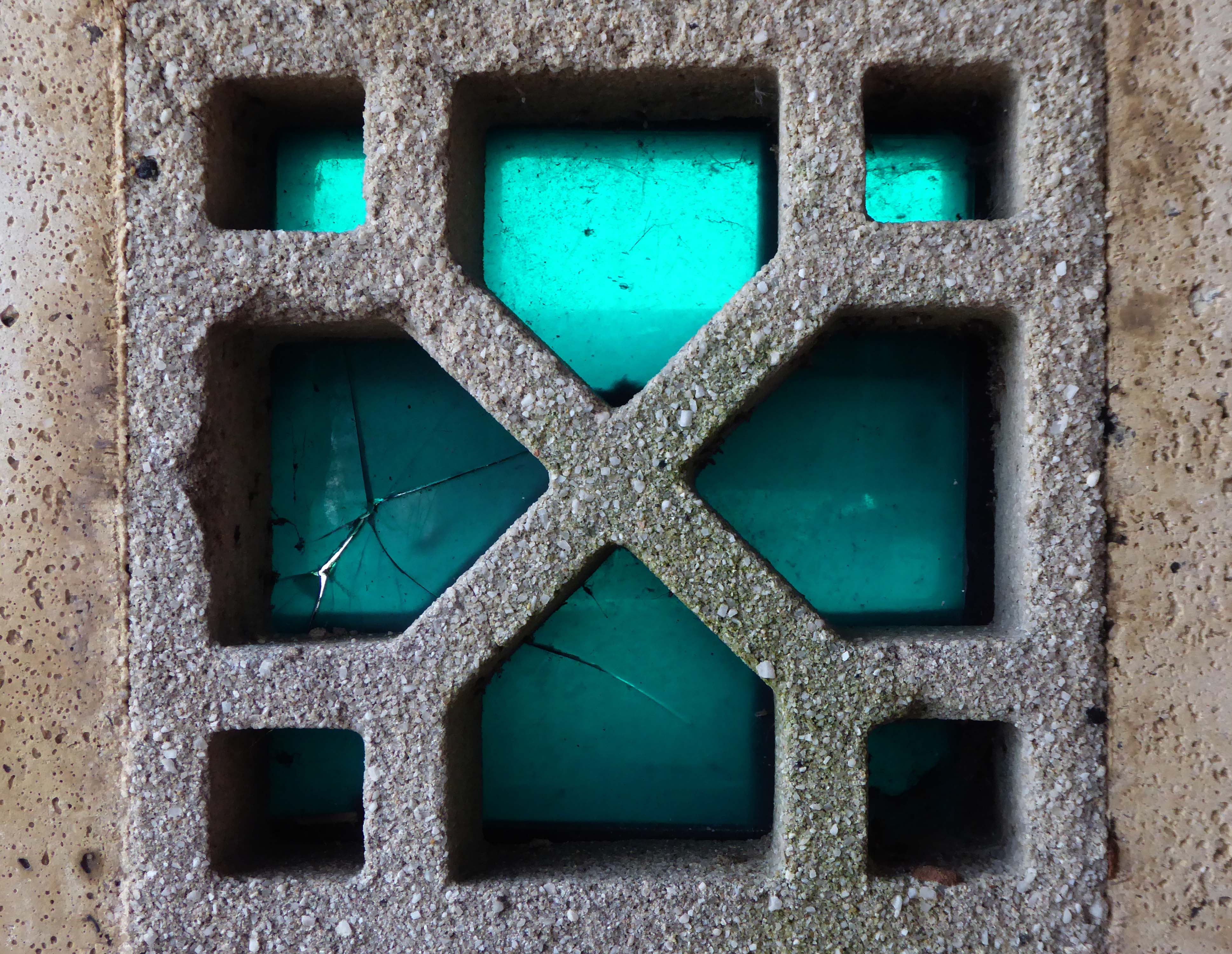
The second shelter lacks the pierced concrete blocks.

So work progresses on the coastal defences, the promenade is refashioned after a fashion in the fashion of the day.

There is no longer a place for these unique exemplars of Municipal Modernism.

Before the work began, the promenade was a tired, uninviting and underused public space. Poorly lit and often host to anti-social behaviour, the uneven surfacing and crumbling shelters were the results of years of patchwork repairs.

The project has transformed the area into a public space which the local community can take pride in and make use of all year round.

ice.org.uk

Desolate yet all undaunted, on this desert land enchanted

On this home by horror haunted – tell me truly, I implore

Is there, is there balm in Gilead?

Tell me, tell me, I implore

Quoth the Raven “Nevermore.”

Middleton Walk

Middleton has not the gloom of so many South Lancashire towns its size. It benefits from its position close to the hills, but it has also the advantage of a large medieval church on a hill and of a number of buildings by one of England’s most original architects of the period around 1900.

Nikolaus Pevsner – The Buildings of England

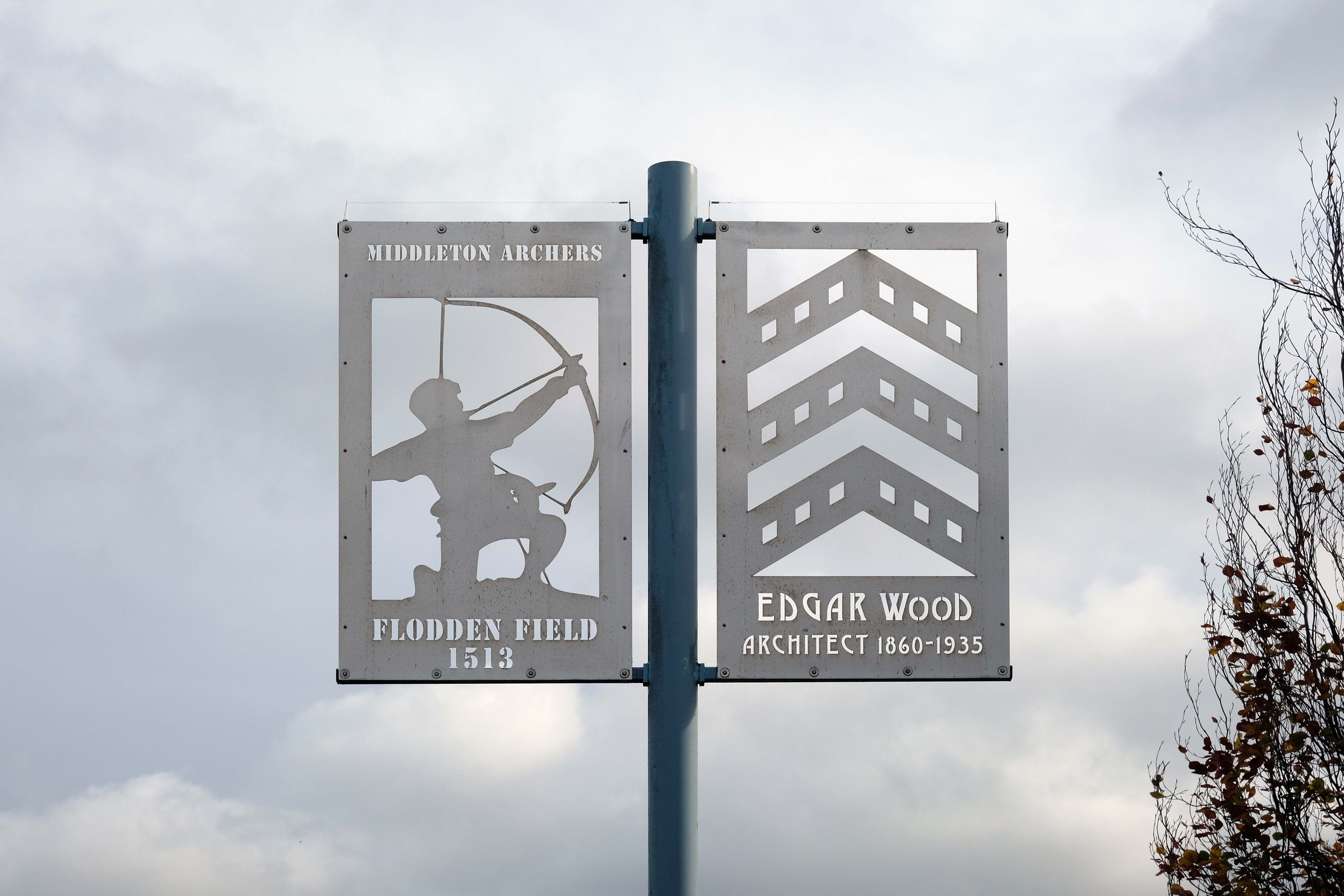
He refers to Edgar Wood 1860-1935

He was the most advanced English architect of his generation, stylistically moving through through art nouveau, vernacular, expressionist and finally art deco phases a decade or more before other designers. He became England’s uncontested pioneer of flat roofed modern buildings. He worked more like an artist than an architect, designing buildings, furniture, stained glass, sculpture, metal and plaster work.  His buildings are mostly clustered in the towns of Middleton, Rochdale, Oldham, Huddersfield and Hale.  Influenced by the writings of William Morris, he saw himself as an artisan serving the people of these localities.

We begin our tour at the Queen’s Jubilee Free Library of 1889 located on Long Street.

Sixty-seven sets of designs for the proposed free library at Middleton were received by the Corporation of that borough in response to their advertisement; and a joint committee comprising of six members of the Corporation and six non-members has awarded the premium to Mr Lawrence Booth, architect of this city.

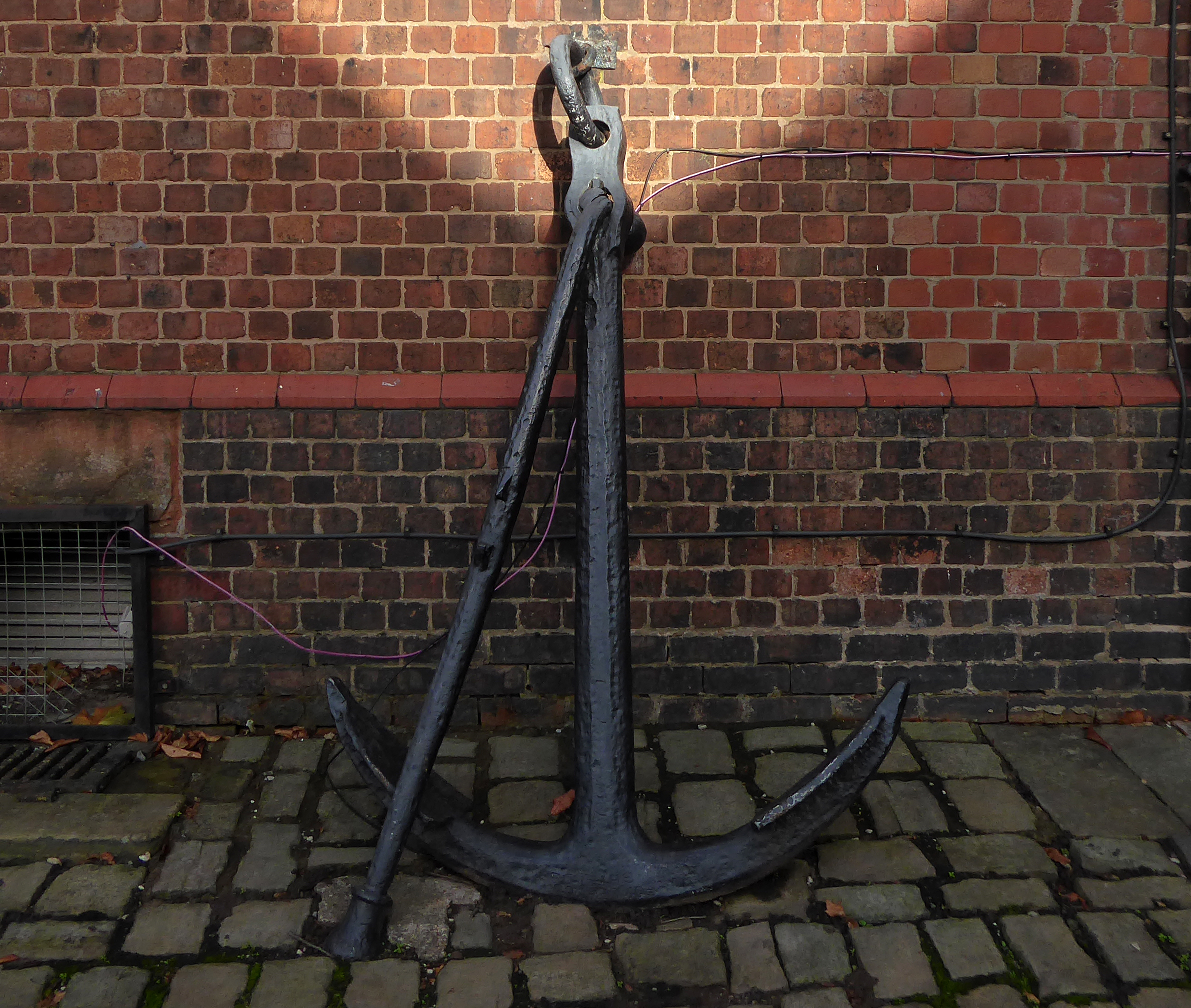
Curiously, we encounter an anchor.

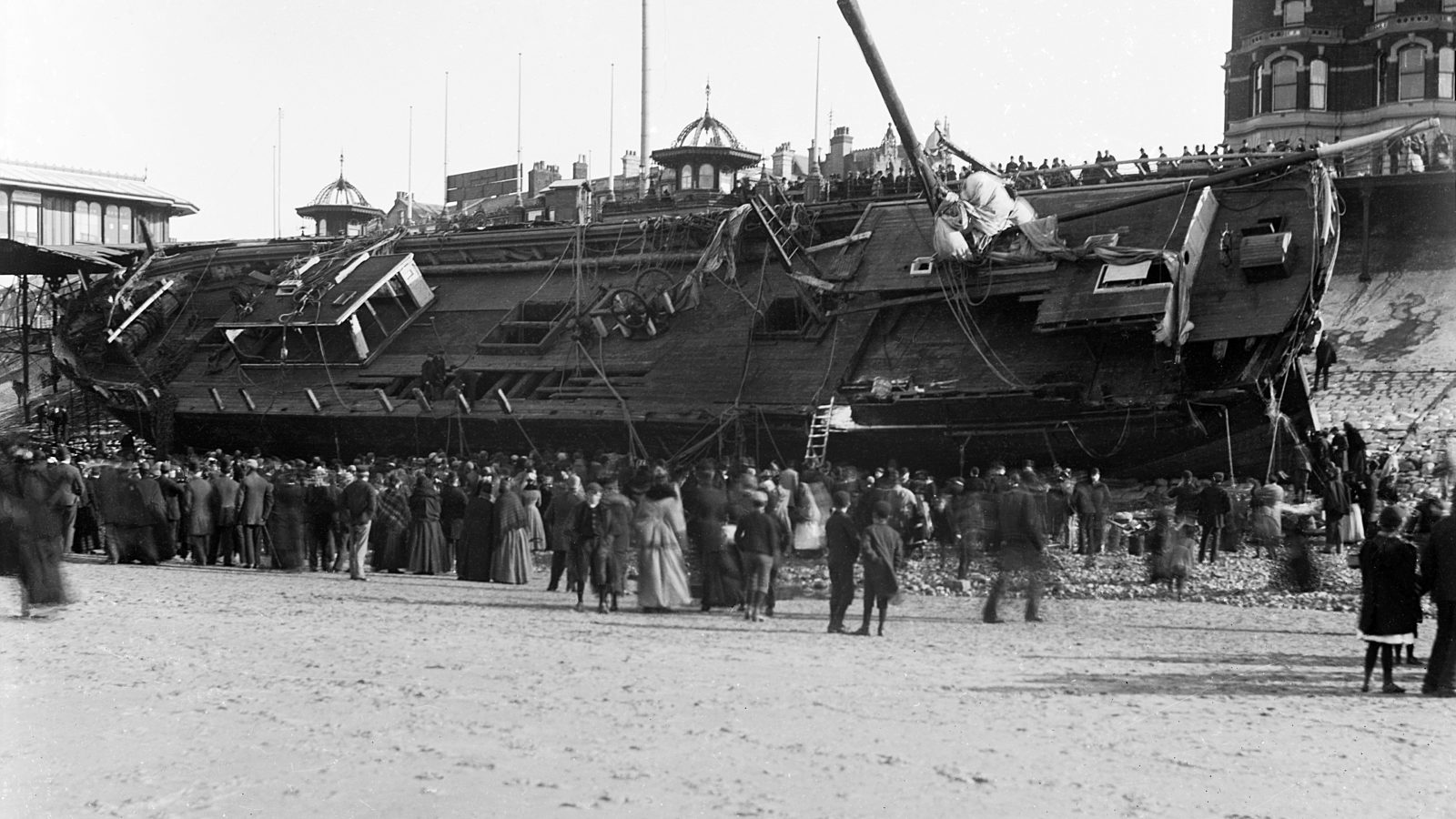
Around 10pm that evening when weather conditions deteriorated to near hurricane-force gales, with the Sirene making little headway despite tacking.

Losing her helm, her sails in tatters and within sight of the Great Orme, the gales drove her back through the night towards the Lancashire coast. Eventually, and with great difficulty, Captain Gjertsen and his crew managed to manoeuvre the stricken vessel between the Central and North Piers. Becoming increasingly unmanageable, and swept in by the rushing tide and gale force winds, the Sirene looked a doomed vessel. She was helpless in the close shore currents, and unable to drop anchor she was at the mercy of the waves. She was carried alongside the North Pier, tearing off a section of the pier superstructure and part of her own keel.

Thousands of people lined the Promenade to witness the spectacle as she came in on the south side of the pier; many more stood on the pier itself, but there was a mad rush for safety when the ship collided against the structure.

Heritage Blackpool

The captain and crew survived, including the ship’s cat, many offers were made for the cat, but the captain refused them.

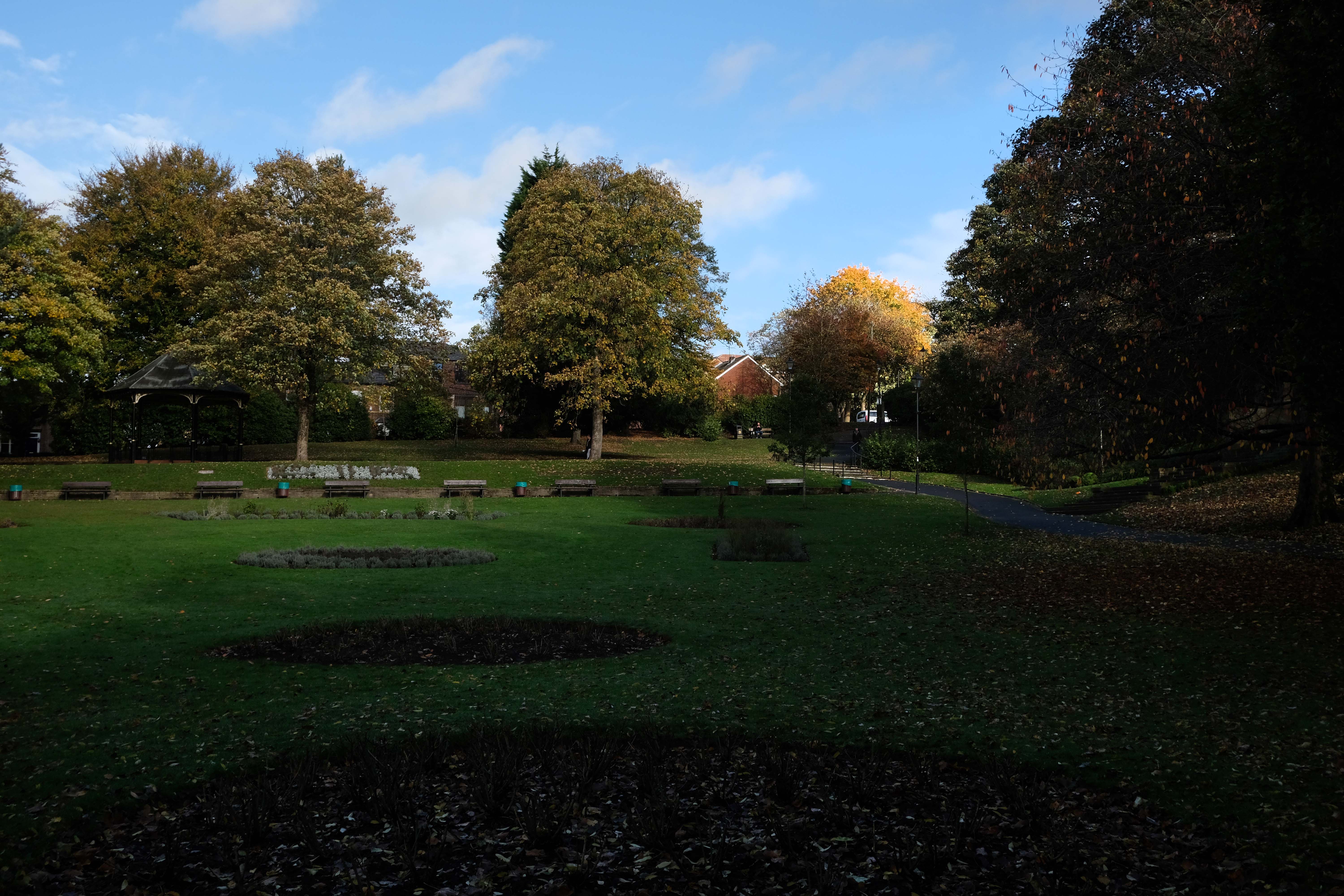
Onwards through Jubilee Park opened in 1889 to commemorate the Golden Jubilee of Queen Victoria.

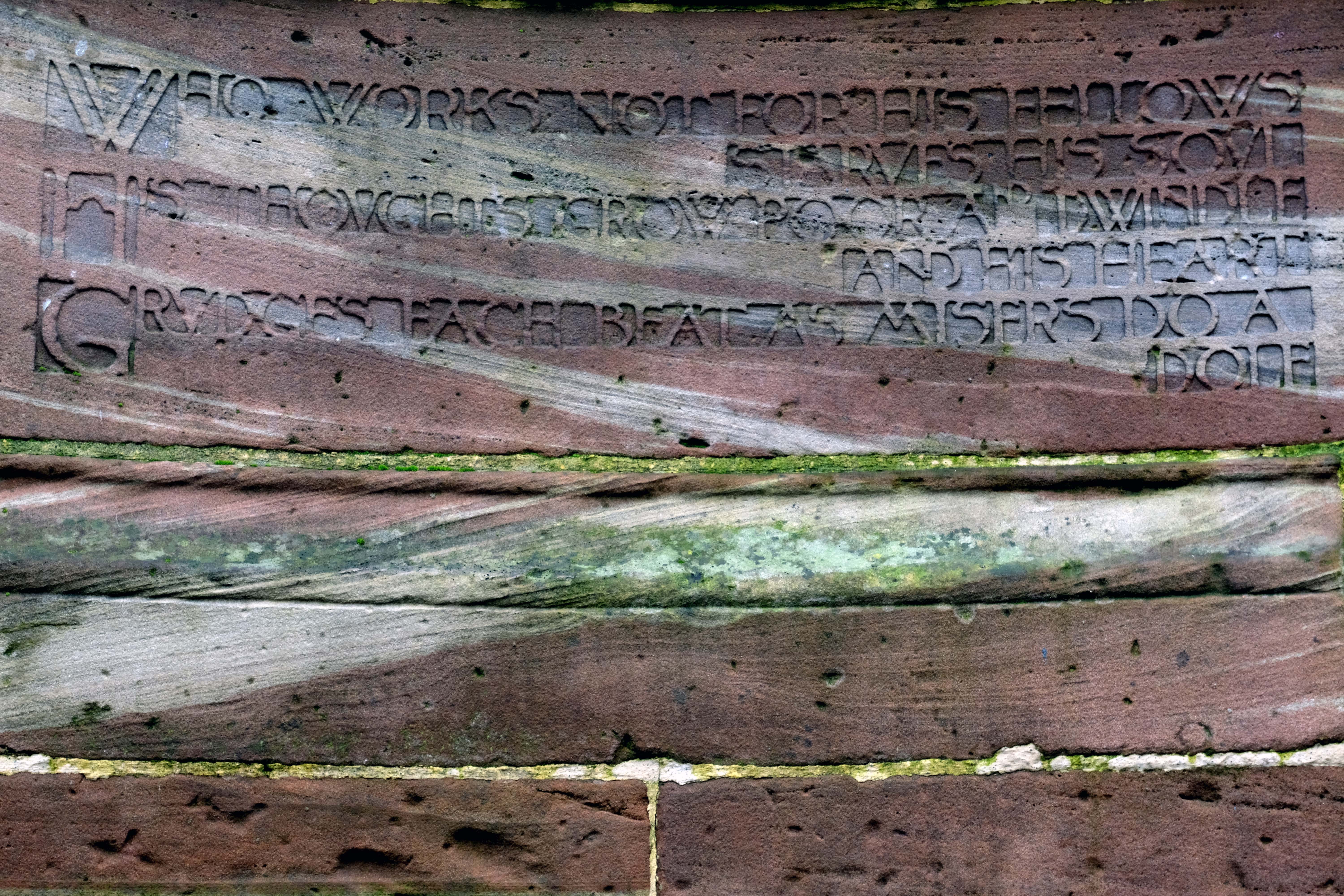
In 1906 Alderman Thomas Broadbent Wood commissioned his son, Edgar, to design a flight of steps to lead up to a contemplation spot in the park – the inscription reads:

Who works not for his fellows starves his soul.

His thoughts grow poor and dwindle and his heart grudges each beat, as misers do a dole.

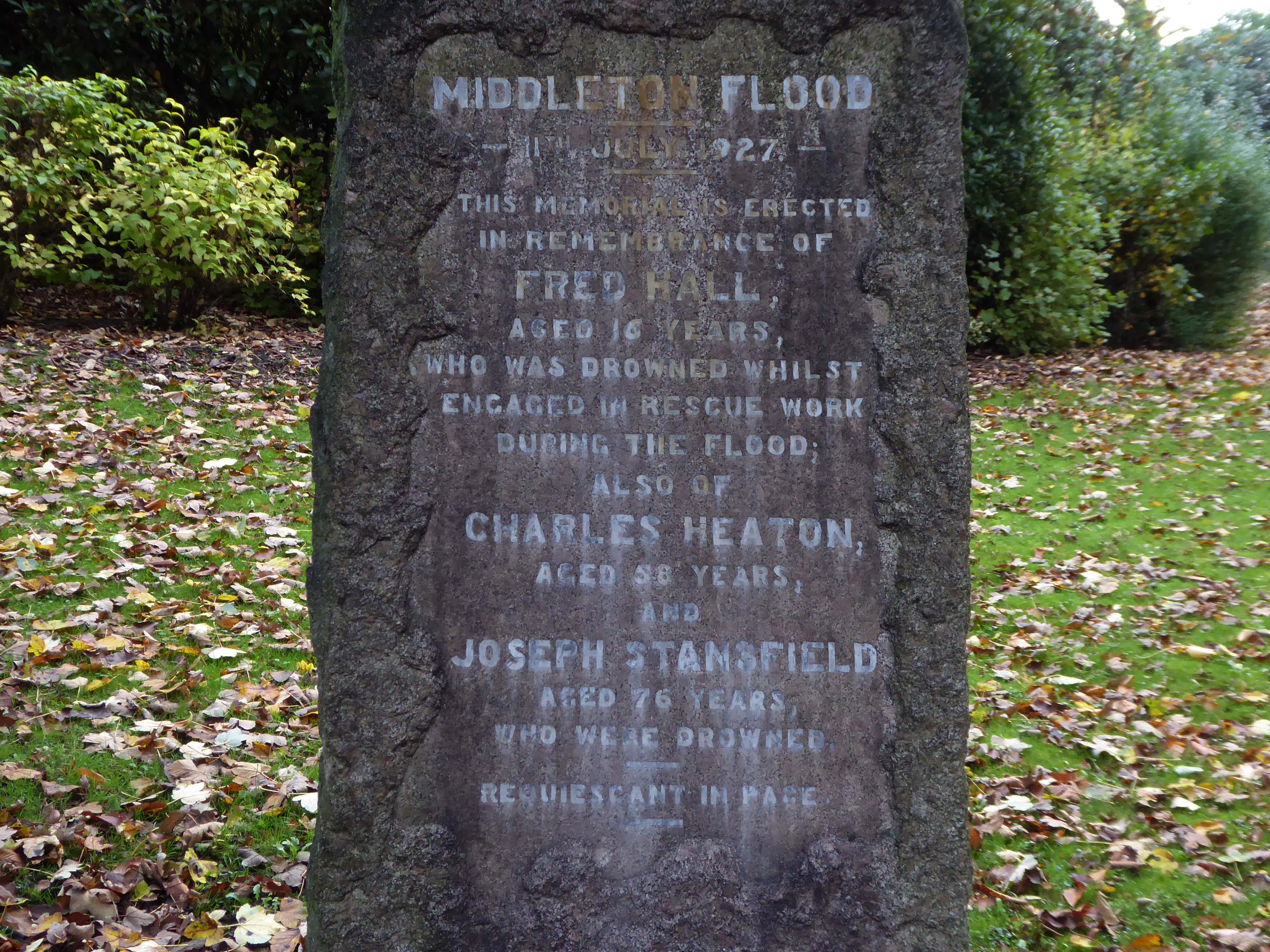
Nearby we find a memorial to the Middleton Flood – following torrential rain, the canal embankment at Mills Hill broke, flooding the already swollen River Irk, subsequently deluging the town.

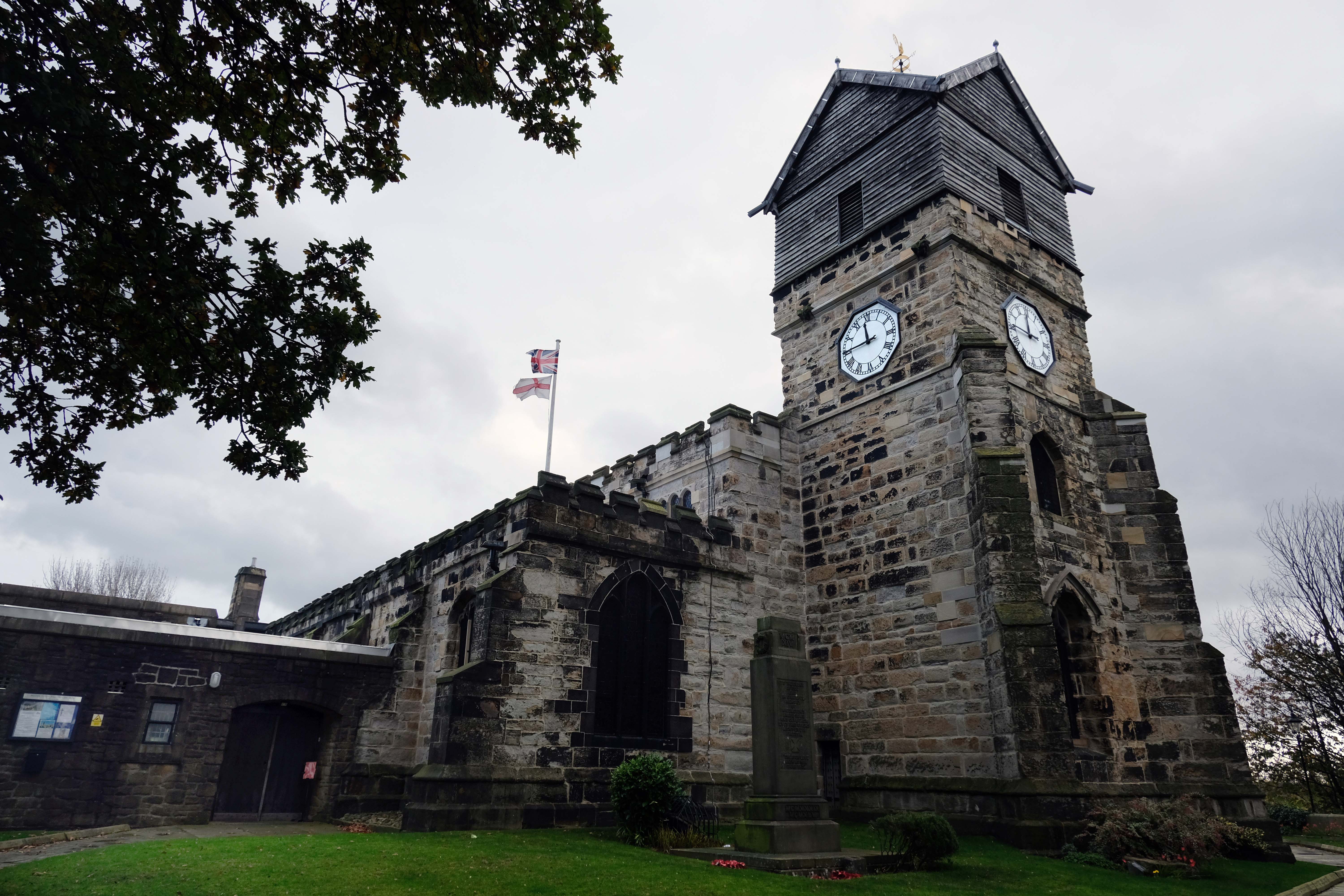
Up the hill to Grade 1 Listed Parish Church of St Leonard.

Much of the present building was erected in 1412 by Thomas Langley – born in Middleton in 1363, who was Bishop of Durham and Lord Chancellor of England. He re-used the Norman doorway from an earlier structure to create the tower arch. Also distinctive in this region is the weather-boarded top stage to the tower.

The church of St Leonard was enlarged in 1524 by Sir Richard Assheton, in celebration of the knighthood granted to him by Henry VIII of England for his part in the Battle of Flodden in 1513. The Flodden Window, in the sanctuary, is thought to be the oldest war memorial in the UK. It commemorates on it the names of the Middleton archers who fought at Flodden. The church also has one of the finest collections of monumental brasses in the north of England, including the only brass in the UK depicting an English Civil War officer in full armour, Major-General Ralph Assheton.  

George Pace designed a war memorial and, in 1958, added a choir vestry and installed new lighting.

Wikipedia

This image has an empty alt attribute; its file name is dscf3808.jpg

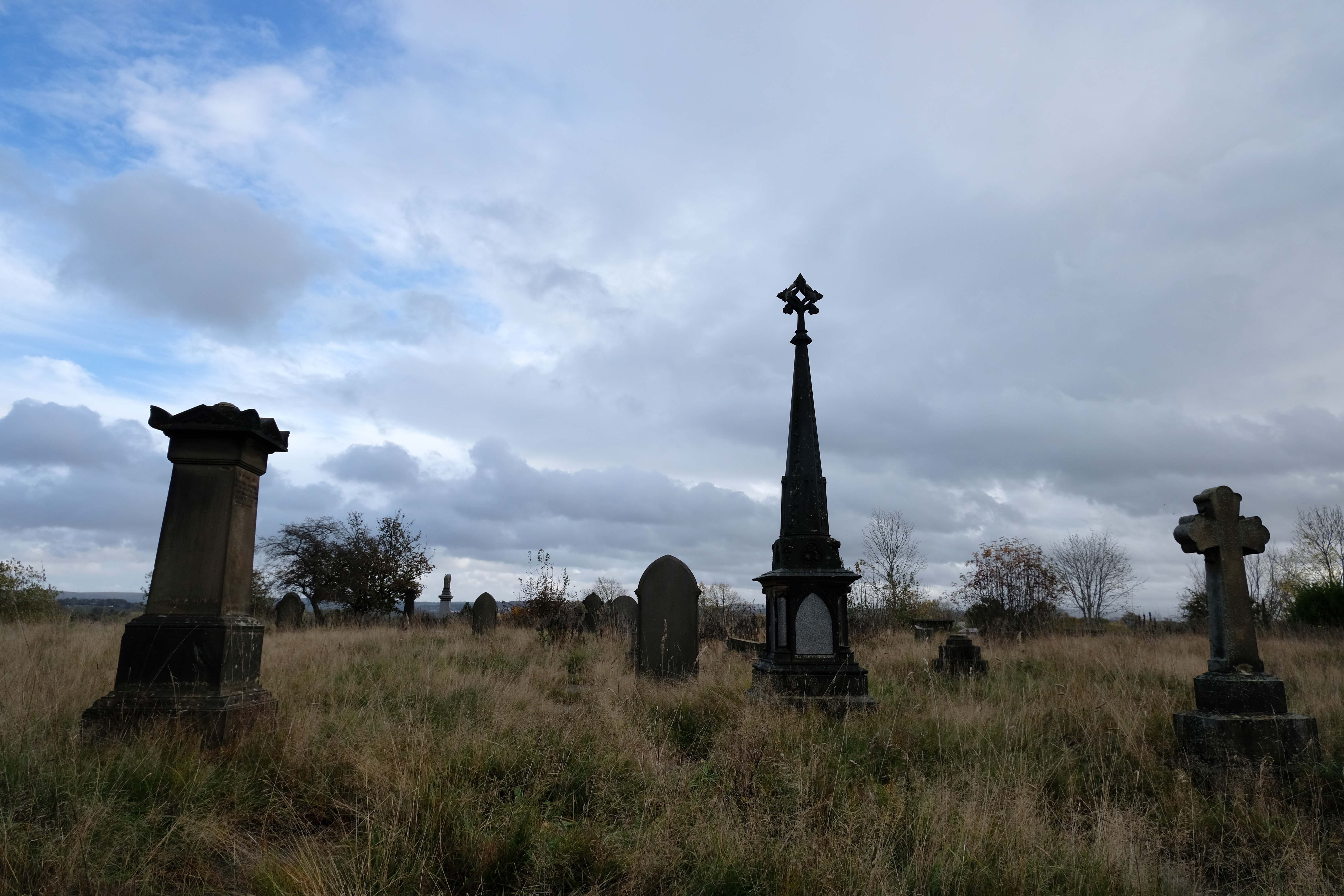
Middleton Old Cemetery once the Thornham and Middleton Burial Ground, which became the local authority cemetery in 1862.

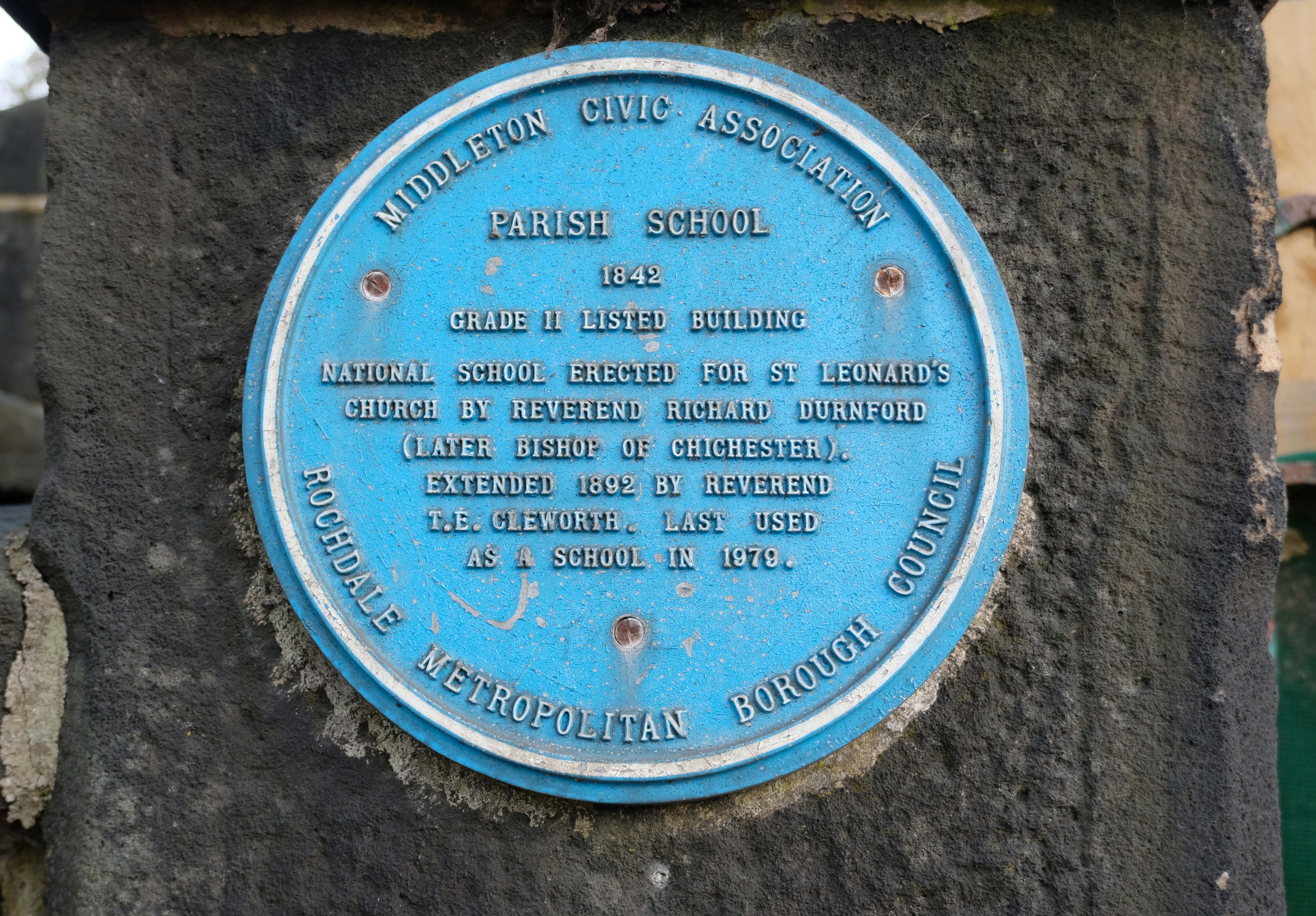
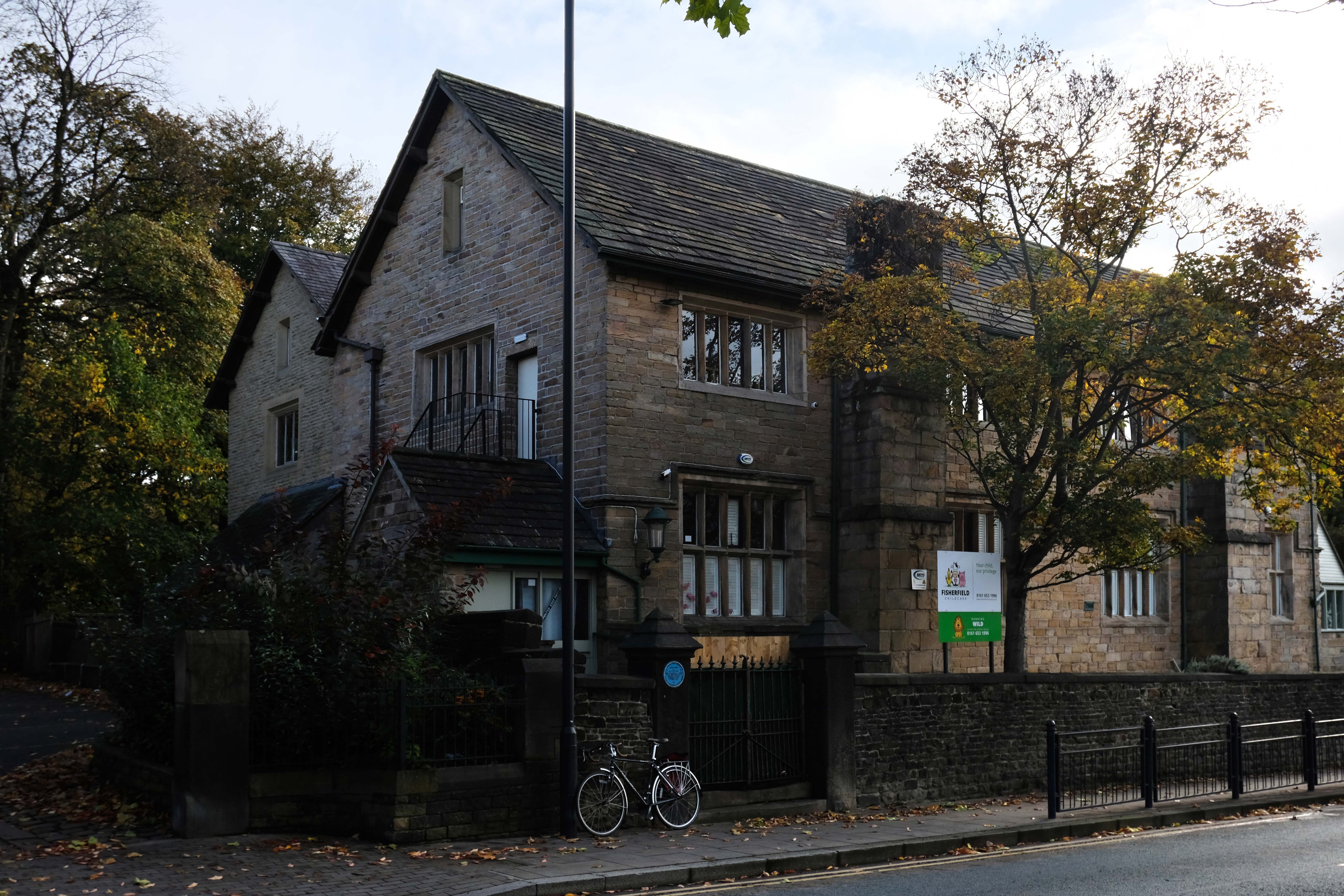
Retrace to the Library – adjacent is the Parish School 1842

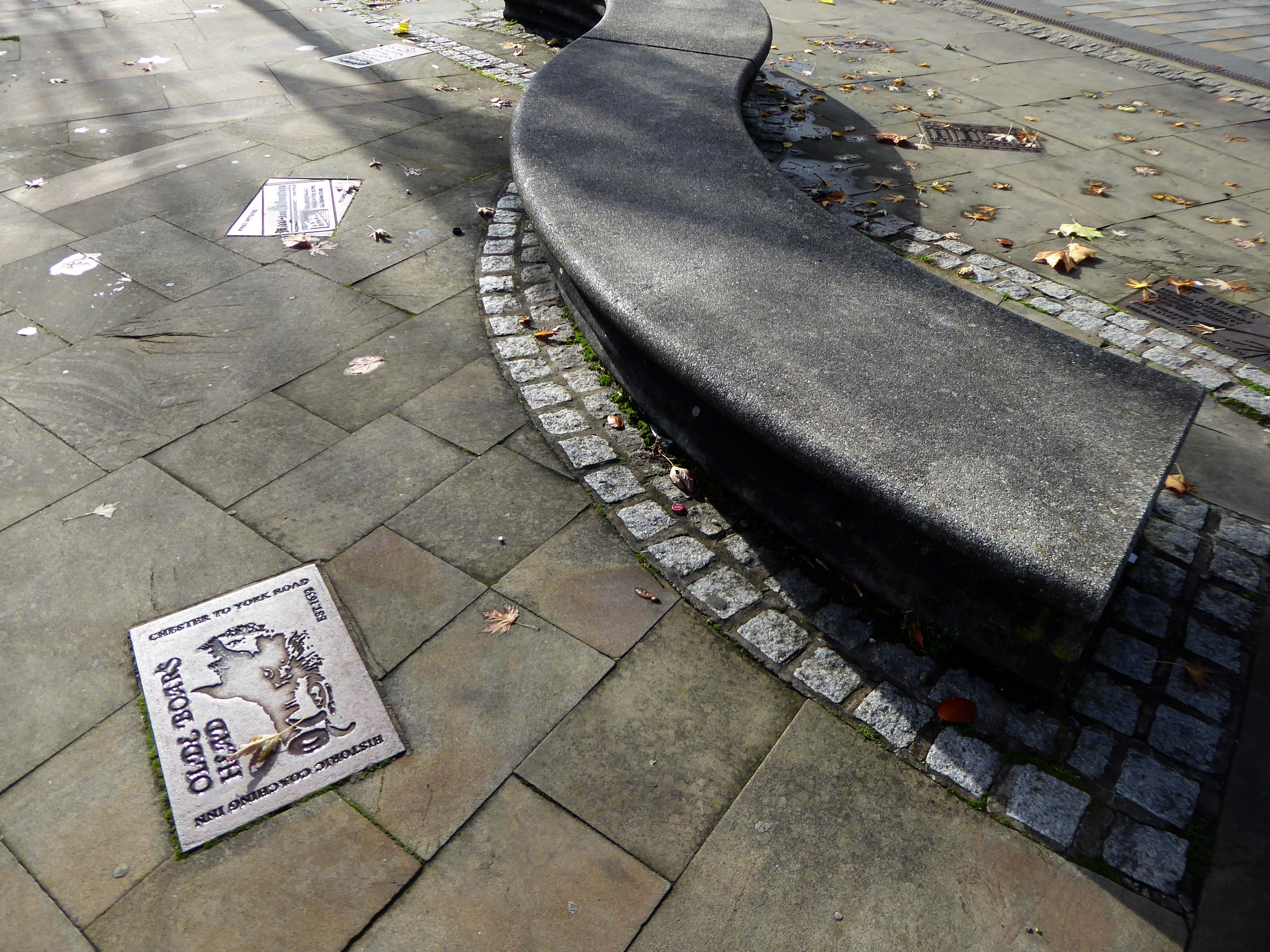
Across the road the Old Boar’s Head

Part of the timber framing to the right of the front door has recently been tree-ring dated and confirms a building date of 1622. The first tenant was Isaac Walkden, son of Middleton schoolmaster, Robert Walkden. Isaac died during a typhus epidemic in the summer of 1623. His will, preserved at Lancashire Archives, includes an inventory of all his possessions listed on a room by room basis. There were a total of 9 beds and 20 chairs or stools in the 6 rooms. This, together with barrels, brewing vessels, pots, glasses, etc, strongly suggest the building was an inn. The Walkden family went on to run the Boar’s Head until the end of the 17th century. They also farmed nearby land including what is now Jubilee library and park.

In 1888, the fledgling Middleton Corporation purchased the building from the church with the intention of demolishing it to build a town hall. Discussions were held in 1914 but, thankfully, the plan was abandoned due to an outcry from the public spearheaded by architect Edgar Wood.

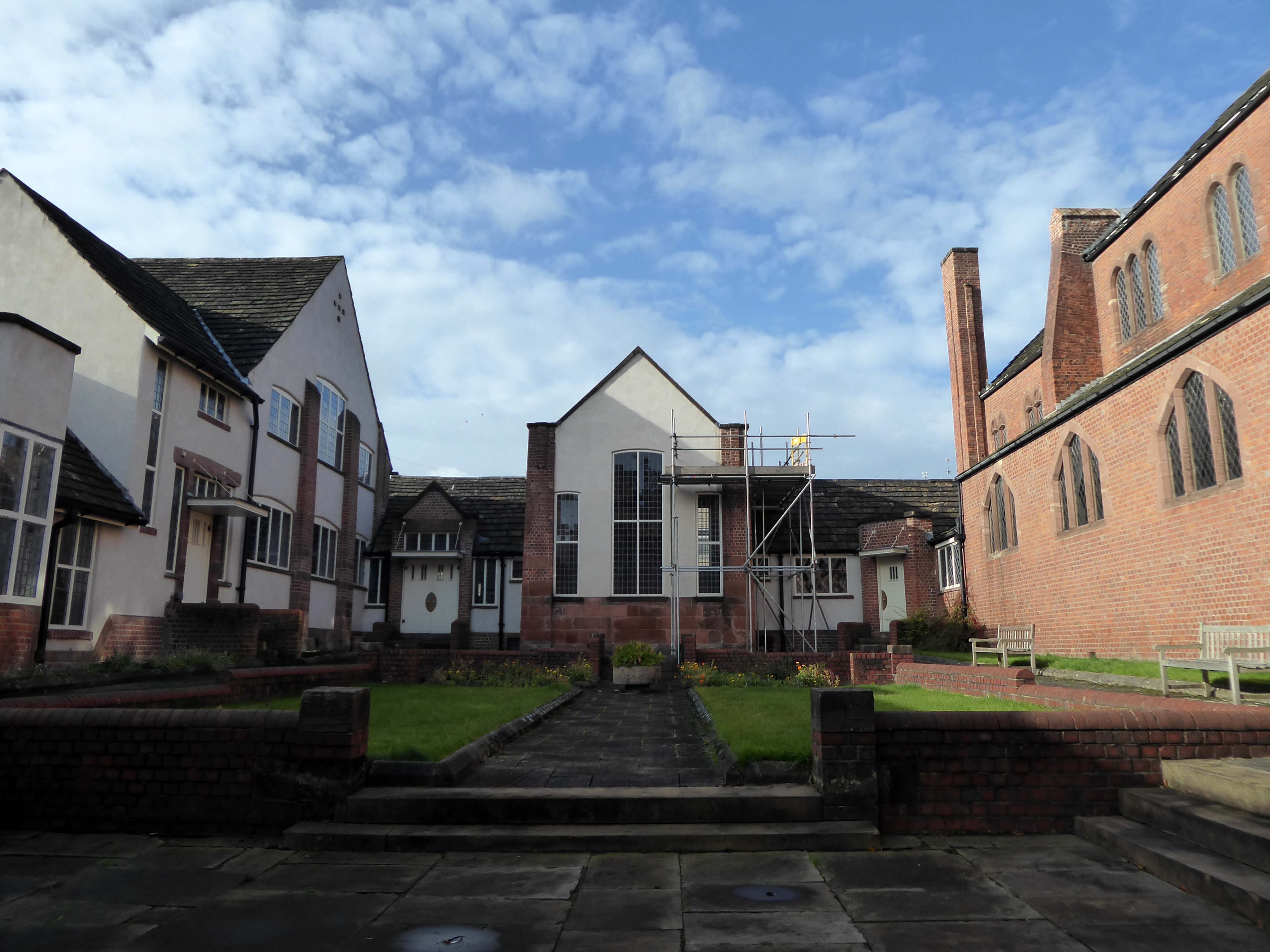
Down the road is Wood’s Methodist Church and School Rooms 1897.

Tucked away is the Durnford Street Clinic.

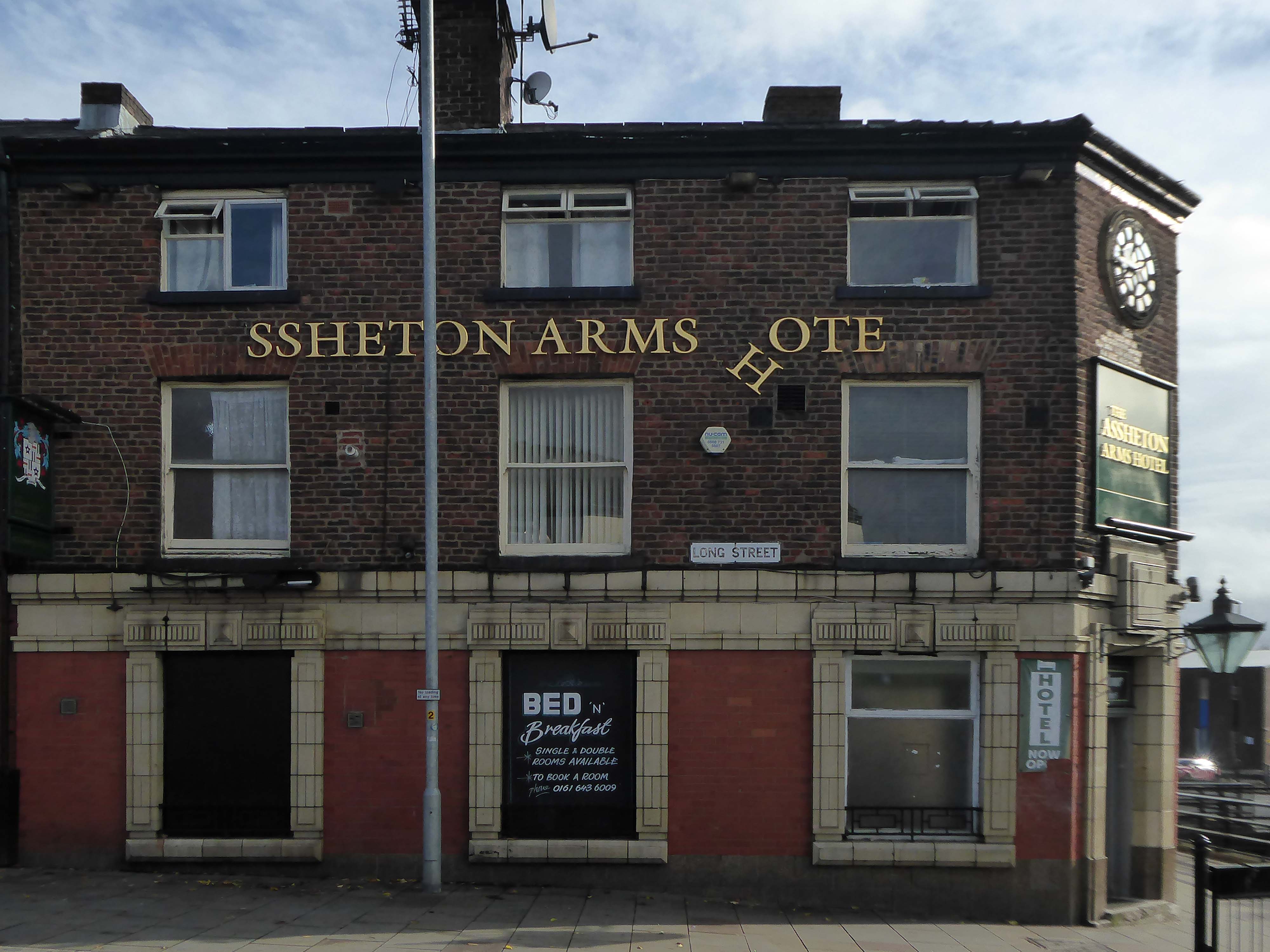
Further down Long Street to the Assheton Arms Hotel.

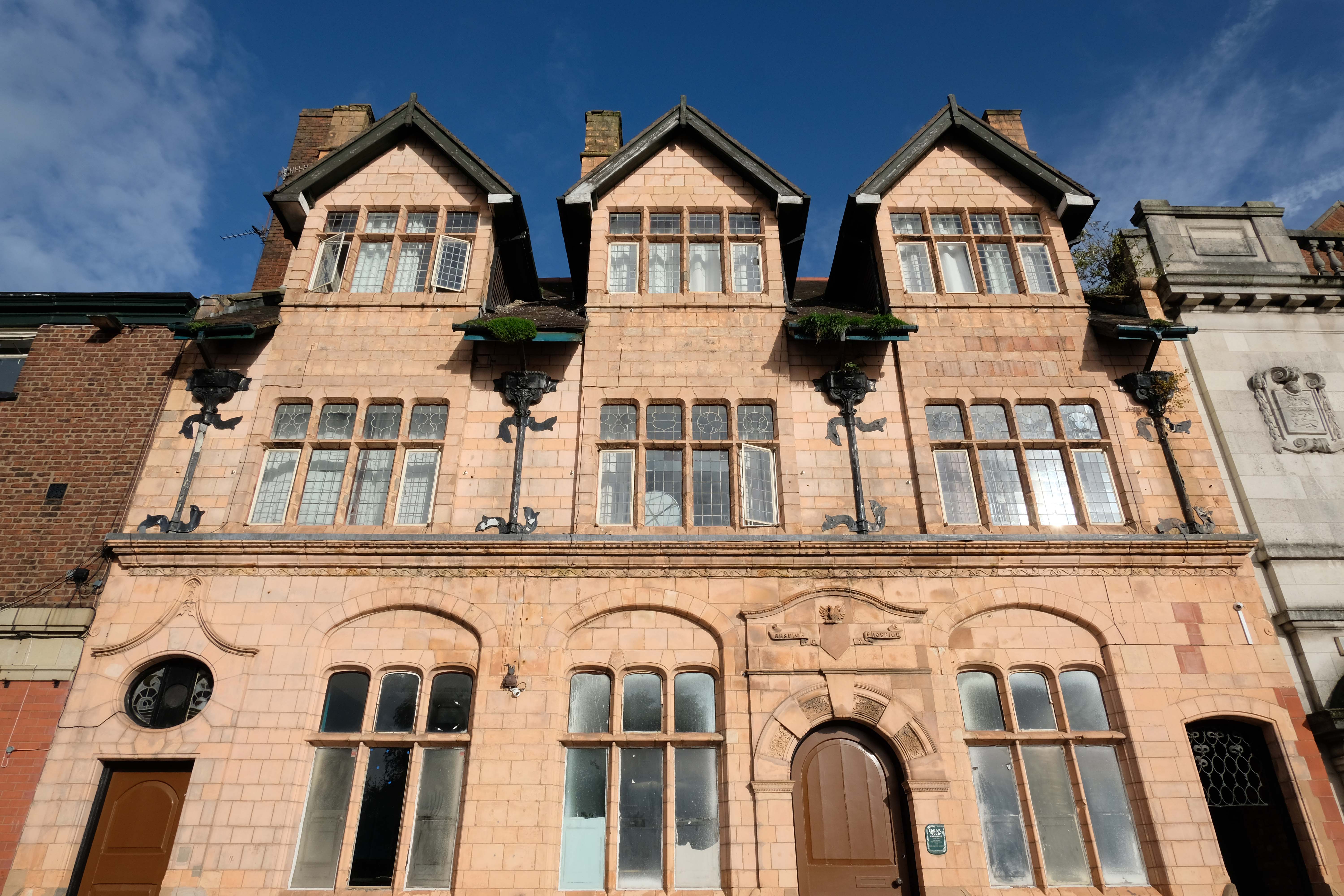
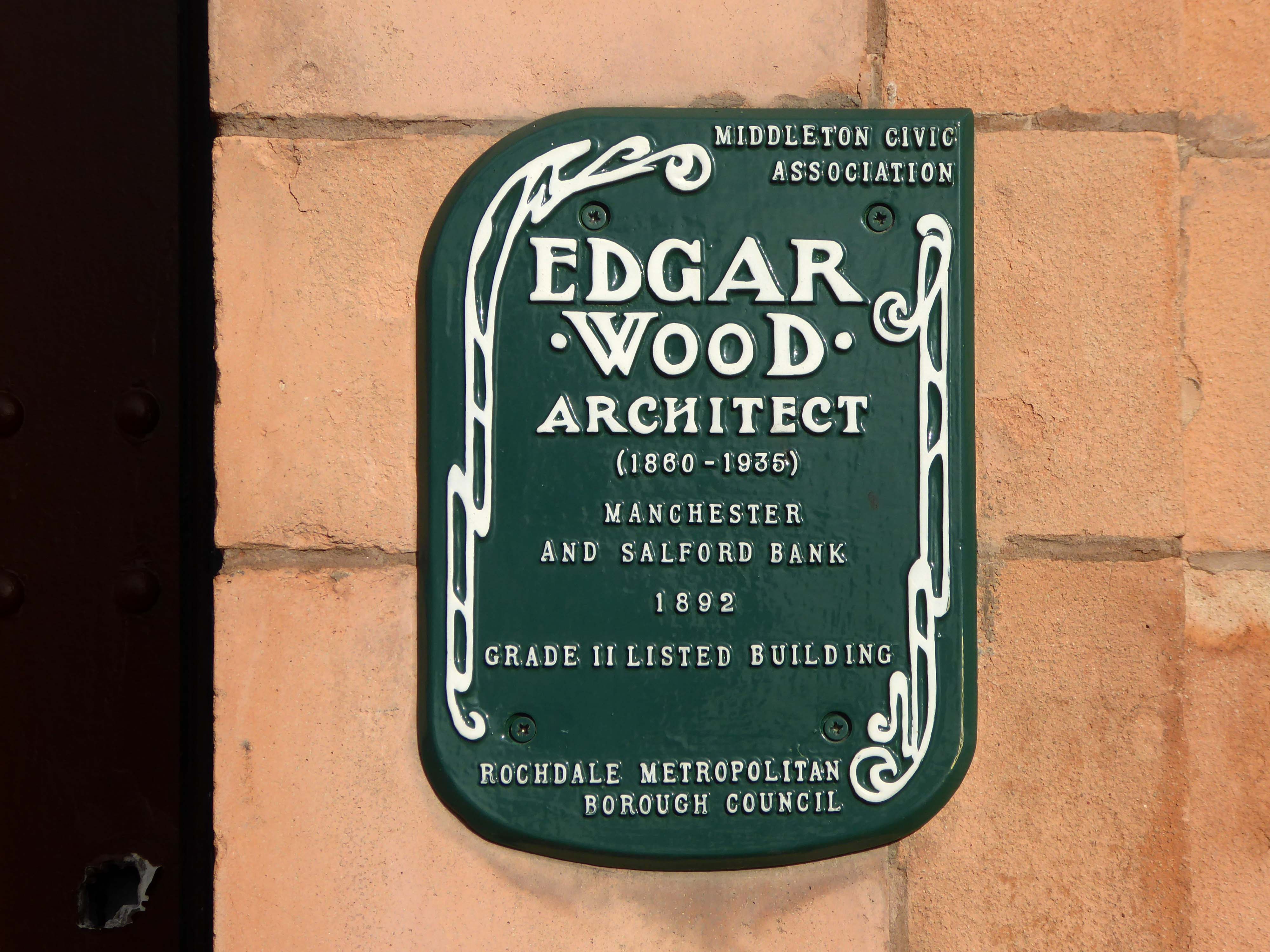
Then around the corner to the Manchester & Salford Bank again by Edgar Wood

Next door the former Market Place Bank latterly RBS.

Plans to convert a long-vacant town centre bank into a nightclub have been revived despite previously being rejected over anti-social behaviour concerns.

An application to change the use of the former Royal Bank of Scotland, in Middleton, was refused by Rochdale council’s planning committee eighteen months ago, with members citing a history of alcohol-fuelled trouble in the area.

Rochdale Online

Further up Market Place the faience fronted Bricklayers Arms formerly a Bents and Gartsides boozer – delicensed in 2012 and Converted to a takeaway.

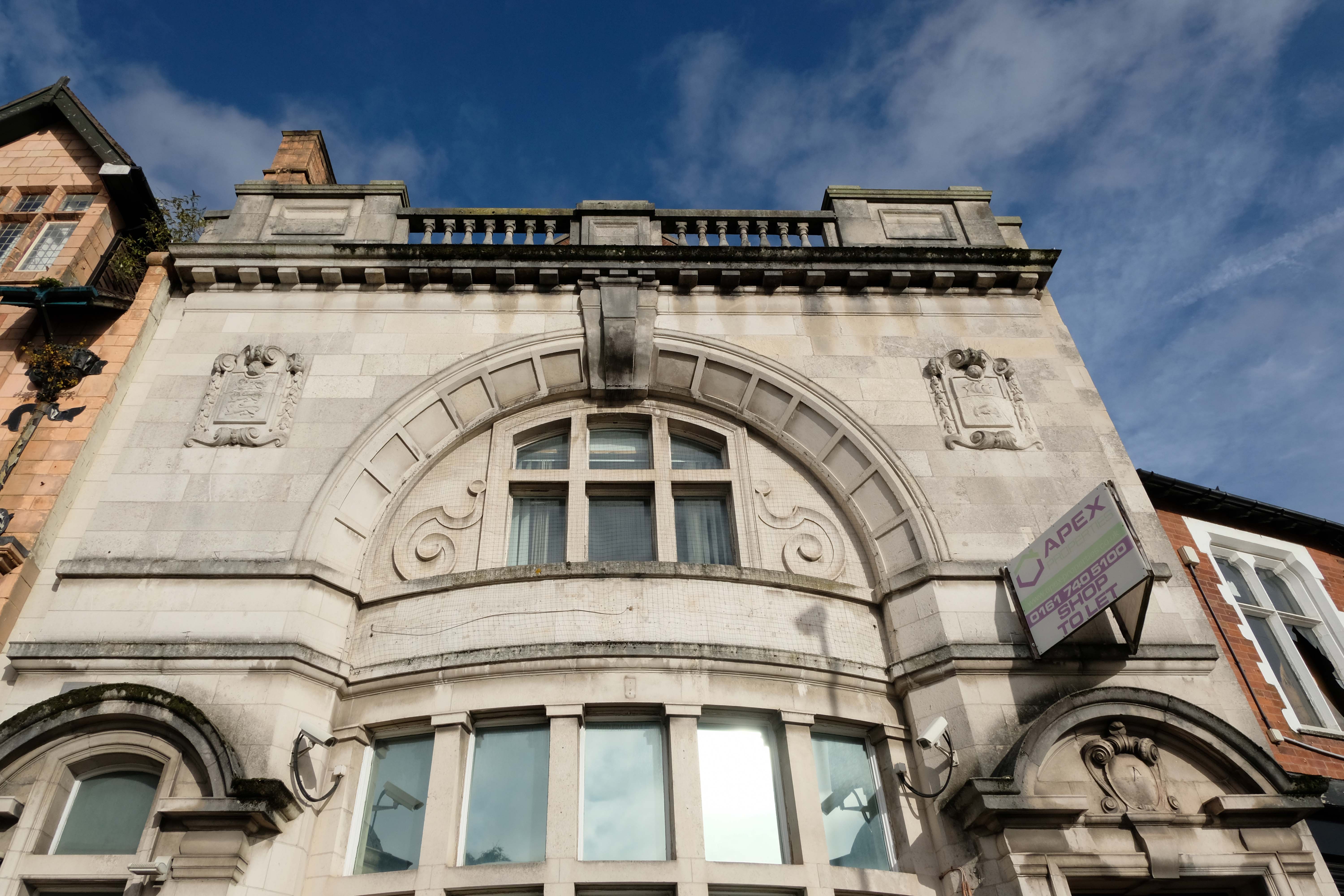
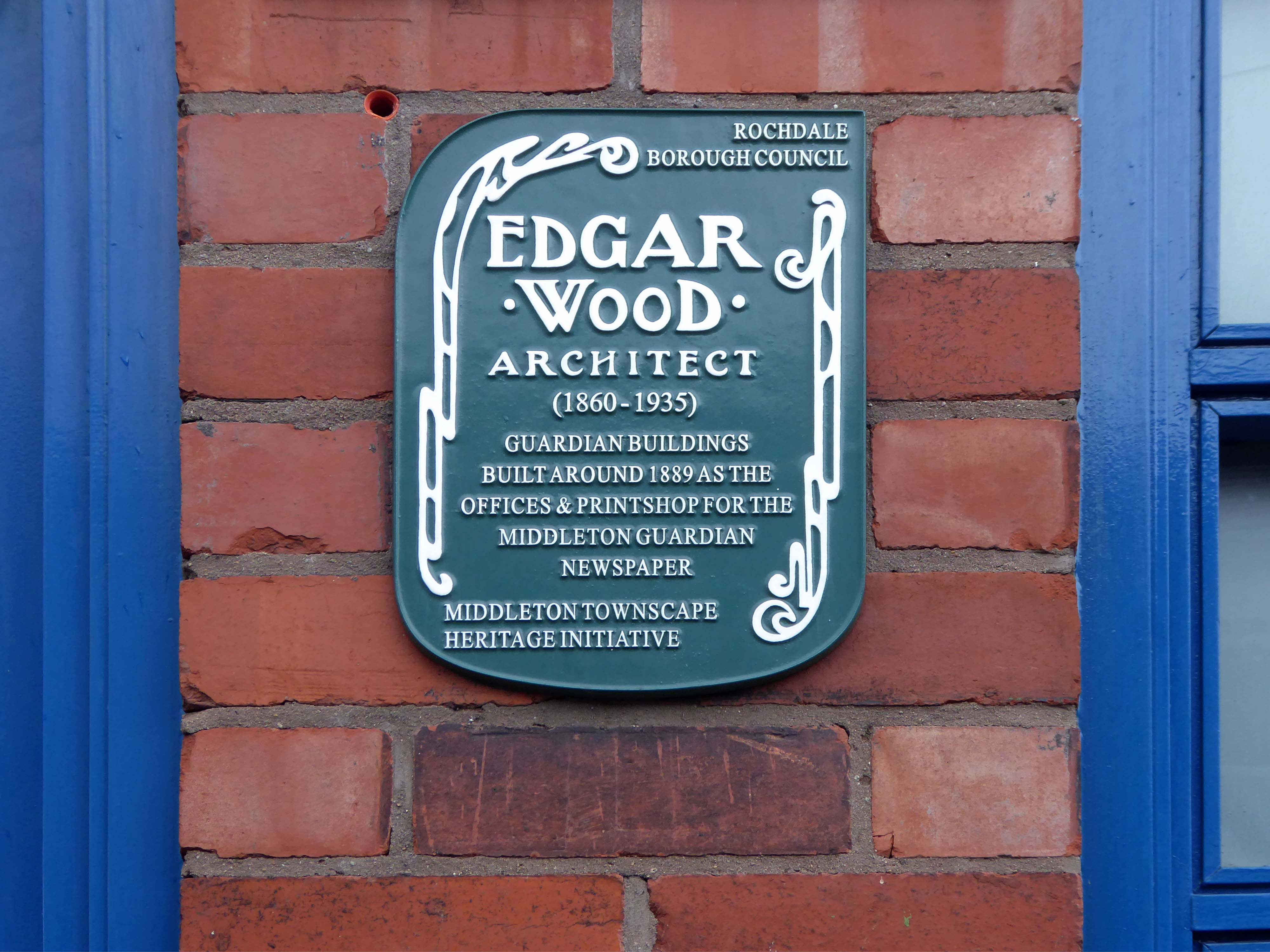
Moving along Wood’s much altered Guardian Buildings 1889.

The Guardian Buildings, were commissioned by Fred Bagot, the proprietor of the Middleton Guardian newspaper and a man with a reputation at the time for keeping a tight control of finances. In consequence, Guardian Buildings were one of Edgar Wood’s low budget buildings, of which there are several in and around Middleton. The building housed the operations of the newspaper with the cellar containing the printing machines and the tall ground floor housing a shop, office and more machines. The whole of the first floor, with its pair of oriel windows, was taken up by the composing room.

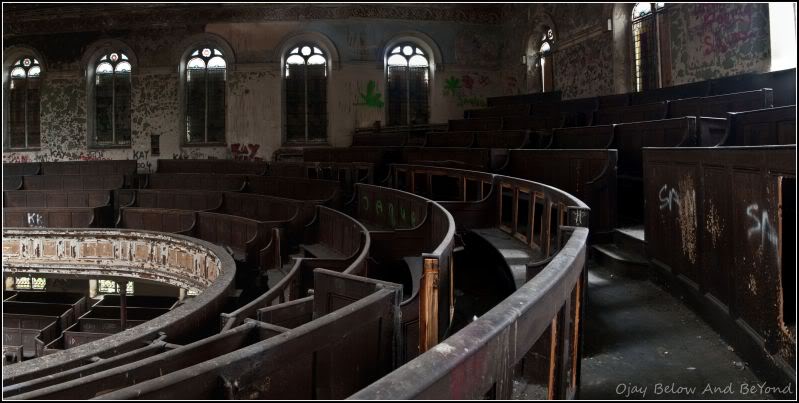
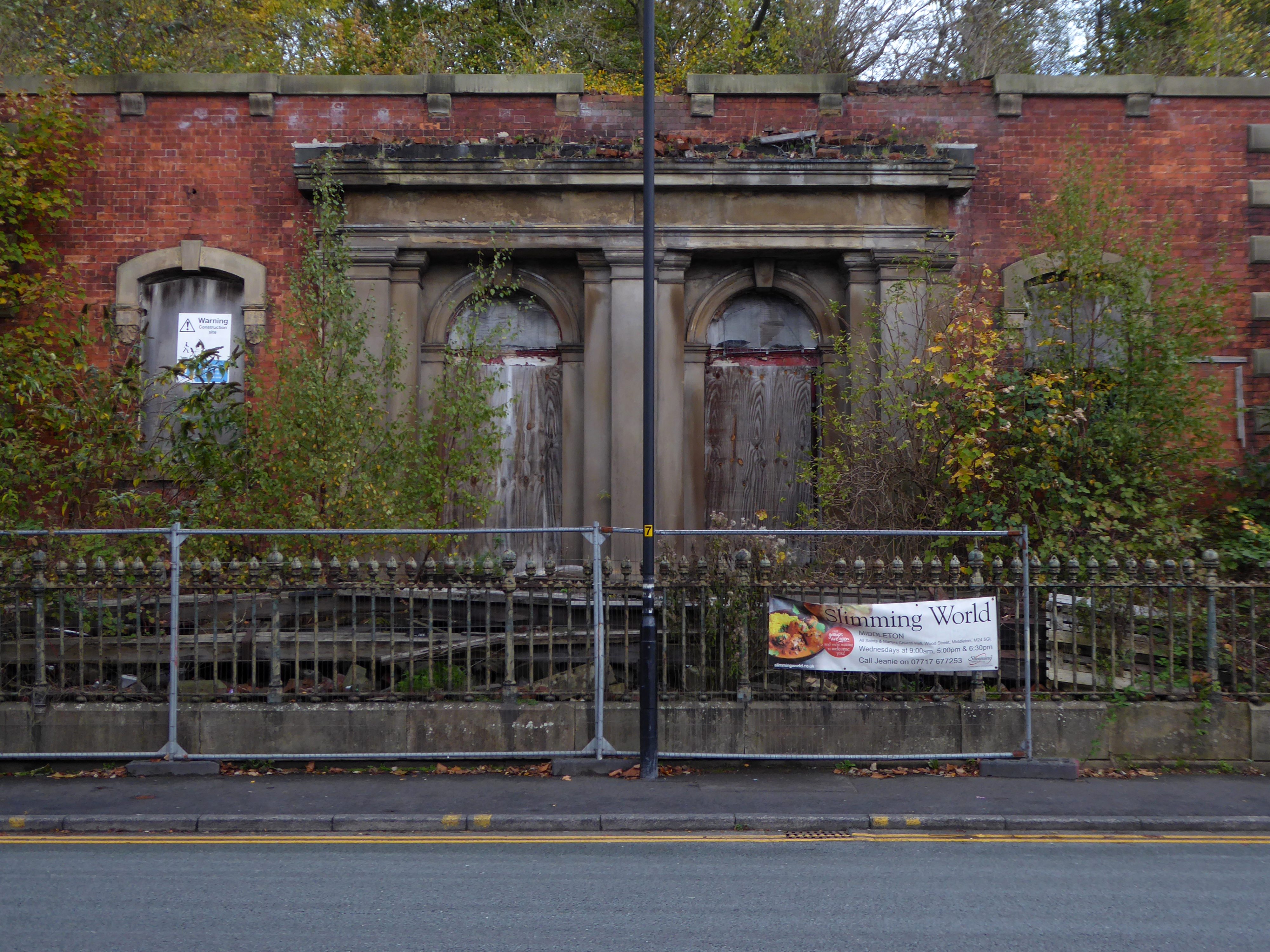
Time has not been kind to the Grade II Listed United Reformed Church 1860.

28 Days Later

It fell into disrepair after the church moved to smaller premises in Alkrington in the 1960s.

The building collapsed in July 2012, when it was hit by a fire.

On Townley Street Lodge Mill built in1839 beside the River Irk battling on despite recent setbacks.

In August 2019, Martin Cove and Paula Hickey opened a small ice cream shop on the ground floor of the mill – named the Ice Cream Shop at Lodge – selling locally-made ice cream from Birch Farm, Heywood.

Across the way the magnificent Sub Station and Electrical Department Offices.

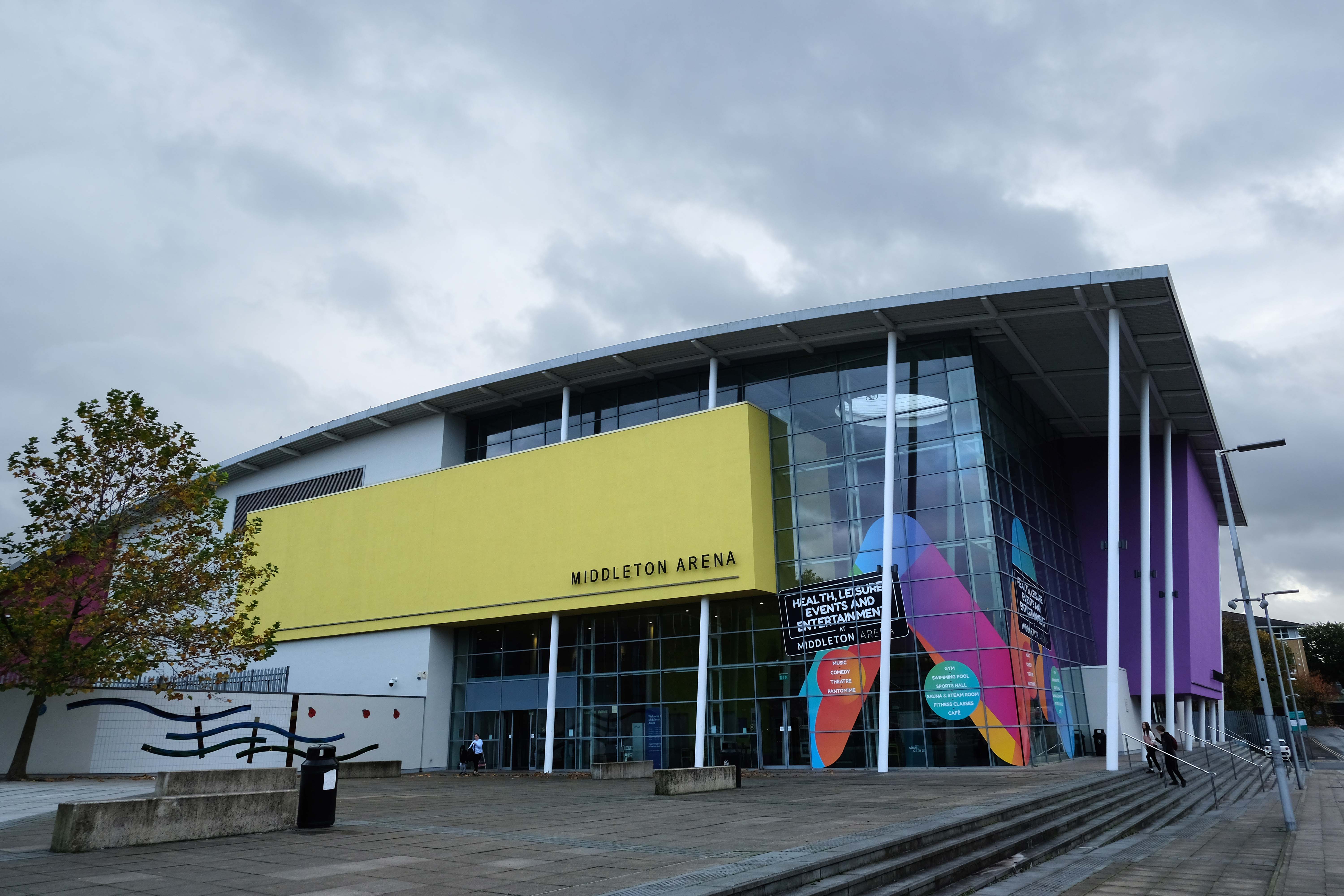
Then taking a turn around the banks of the Irk down Sharp Street onto Lance Corporal Joel Halliwell VC Way, where we find the Middleton ArenaBDP 2009

Then over the road to Oldham Road and Grade II Listed Warwick Mill 1907 G. Stott of J. Stott and Sons.

The mill recently changed ownership and new owner, Kam Lei Fong (UK) Ltd, has been working with Rochdale Borough Council over the past nine months on proposals to redevelop the site.

The plans will form the cornerstone of a new masterplan for Middleton town centre focusing on delivering new homes, business space, highway and environmental improvements, new walking and cycle routes to pave the way for the planned extension of the Metrolink into Middleton Town Centre.

The Business Desk

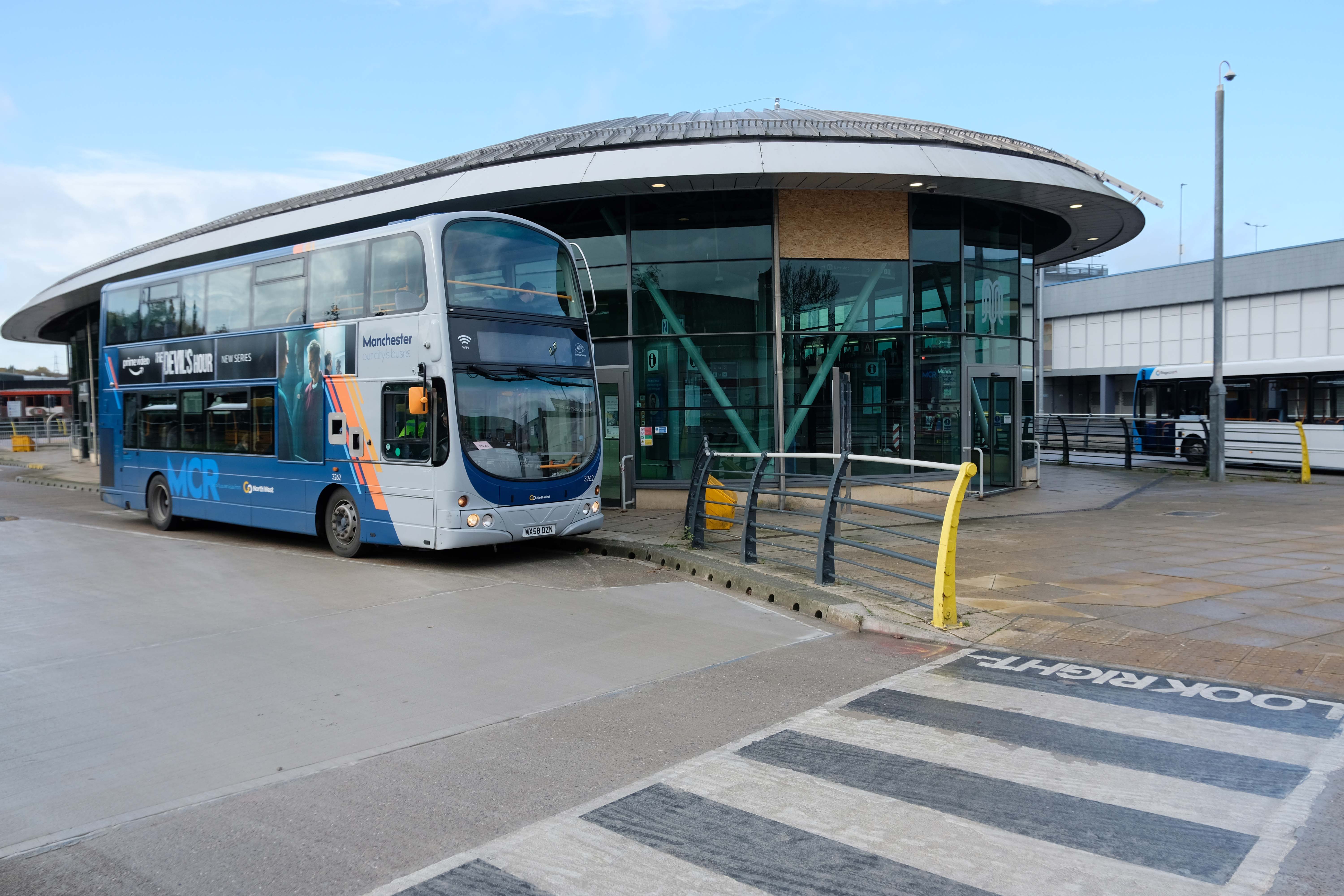
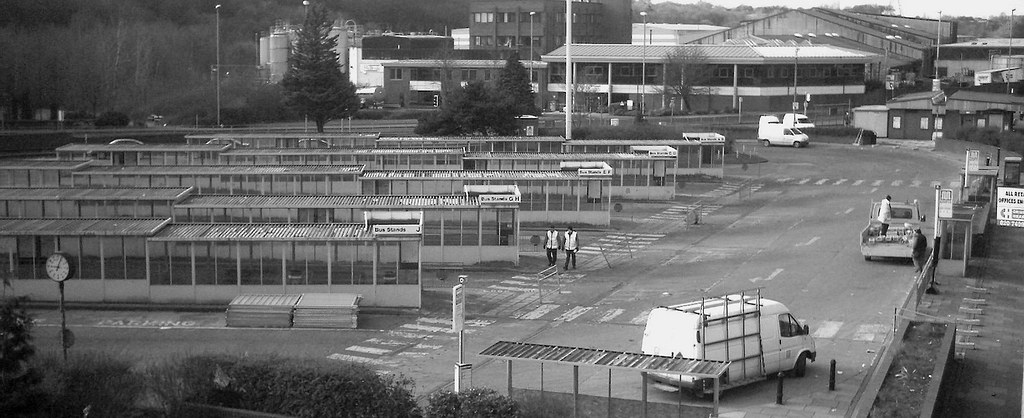
In 2005, the new Middleton Bus Station was opened – Jefferson Sheard Architects.

The station, with 13 stands, cost £4.5 million and replaced the previous station which dated to the 1970s.

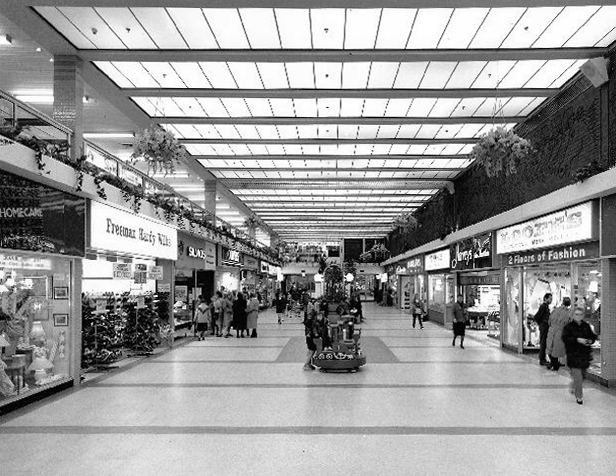
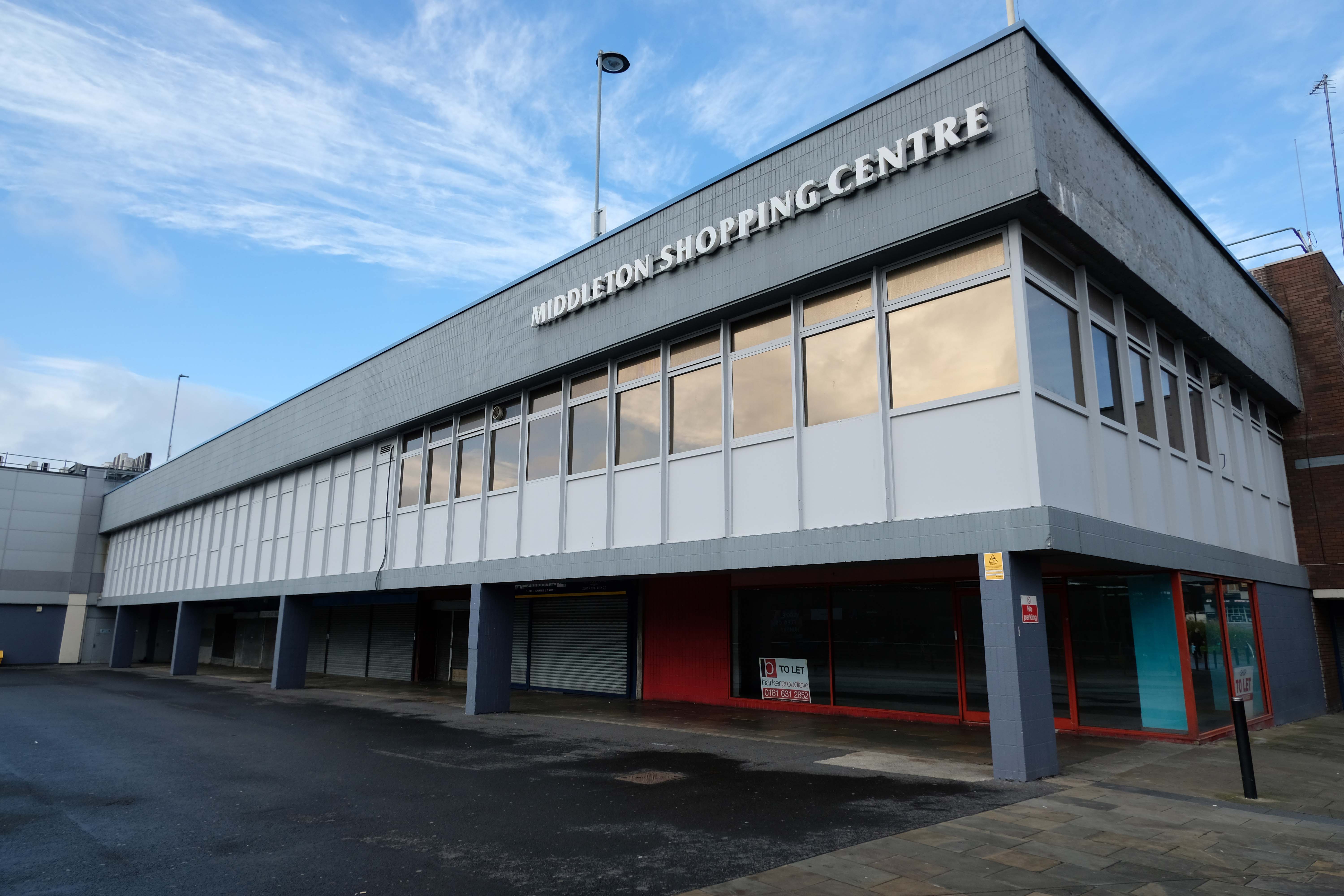
The Middleton Arndale Centre commenced trading in 1971, although it was officially opened by Her Royal Highness the Duchess of Kent in March 1972.

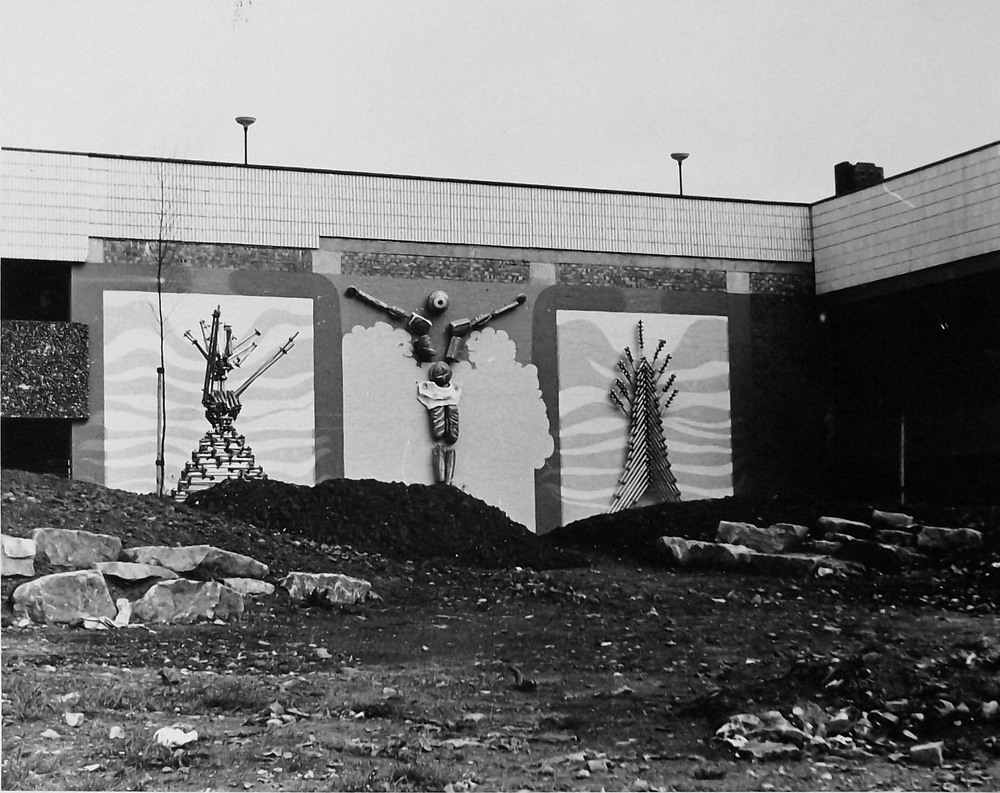
Once home to The Breadman designed by Rochdale’s town artist of the time, Michael Dames.

Photo: Local Image Collection – Touchstones
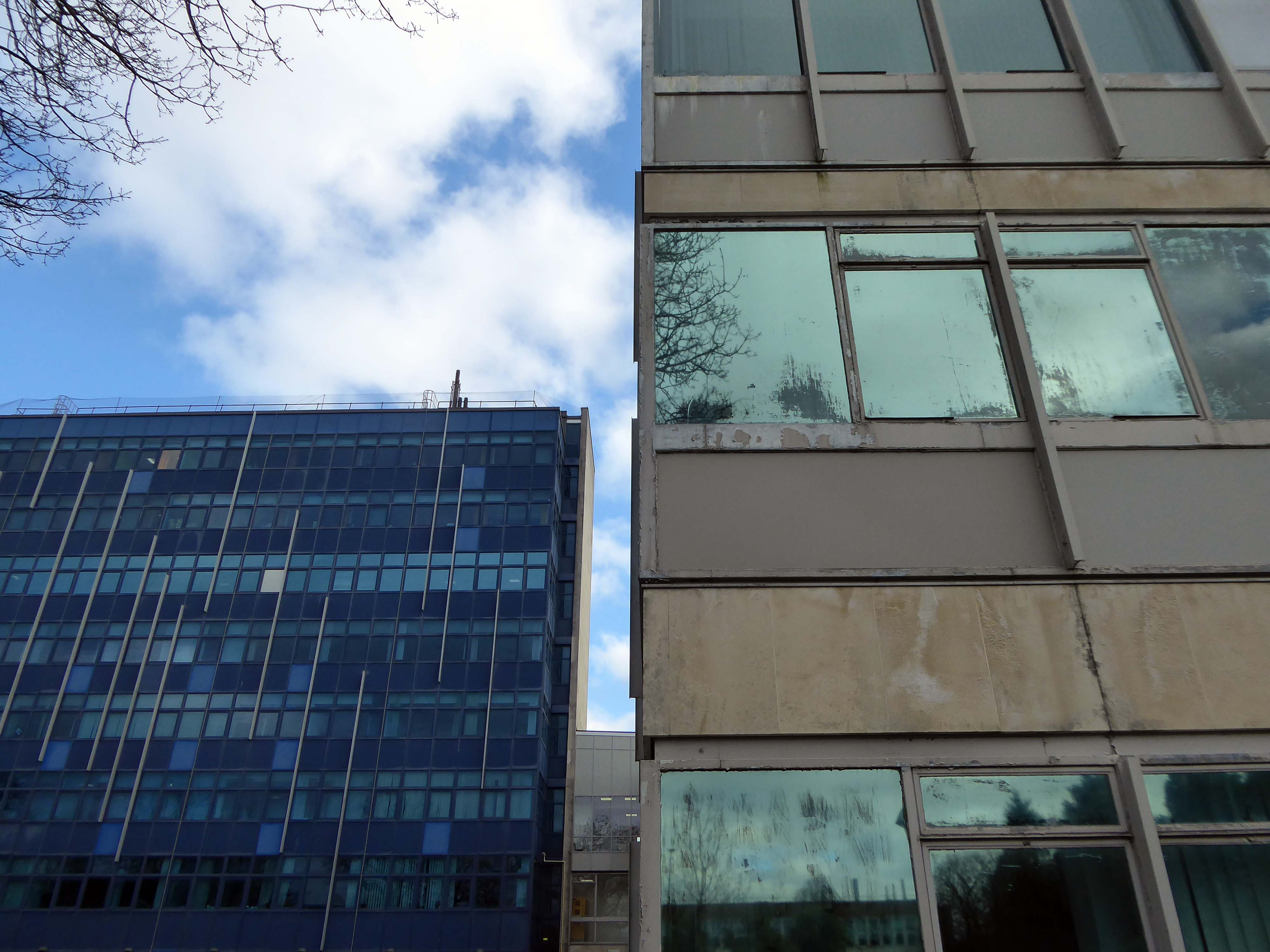
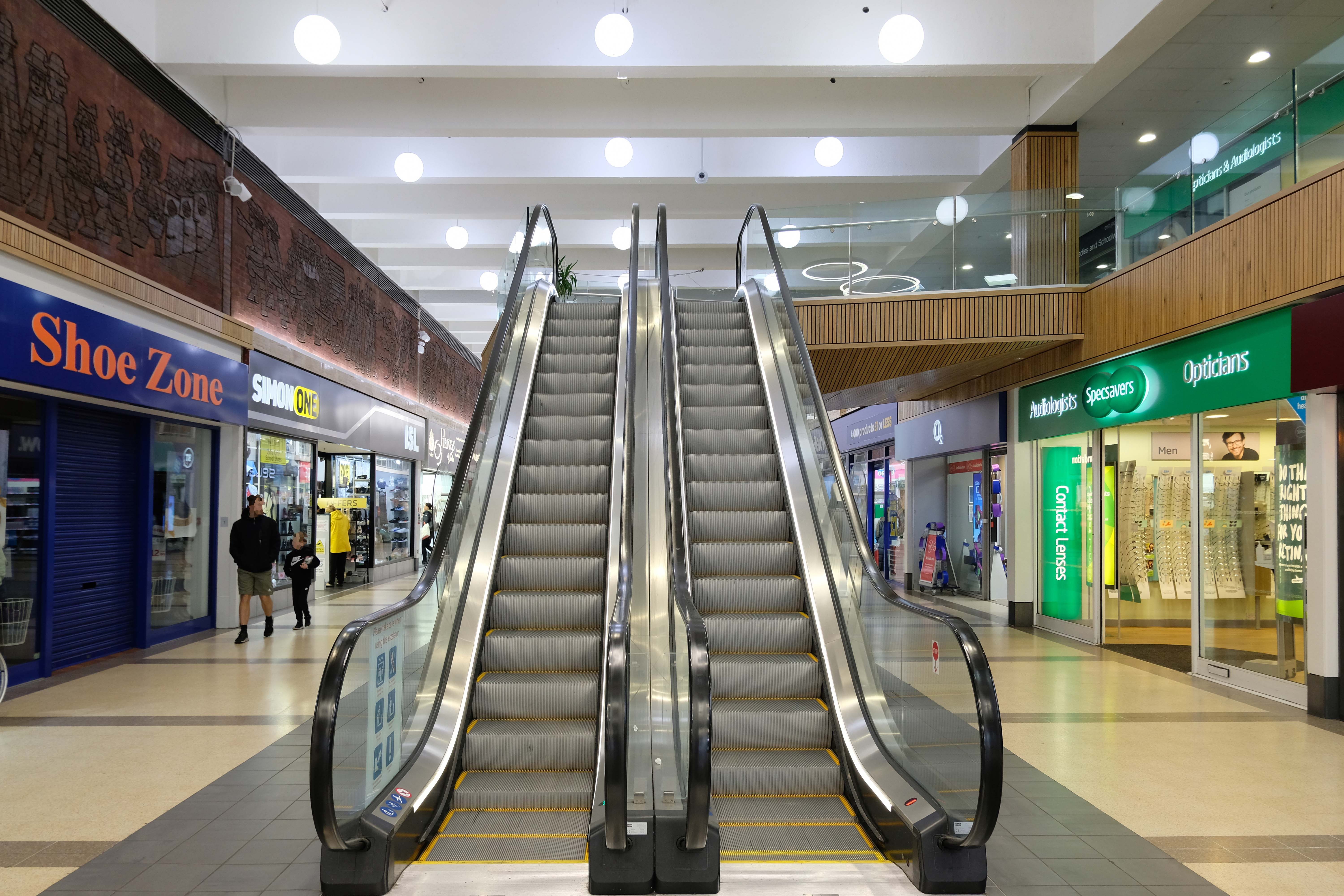
Now trading as the Middleton Shopping Centre

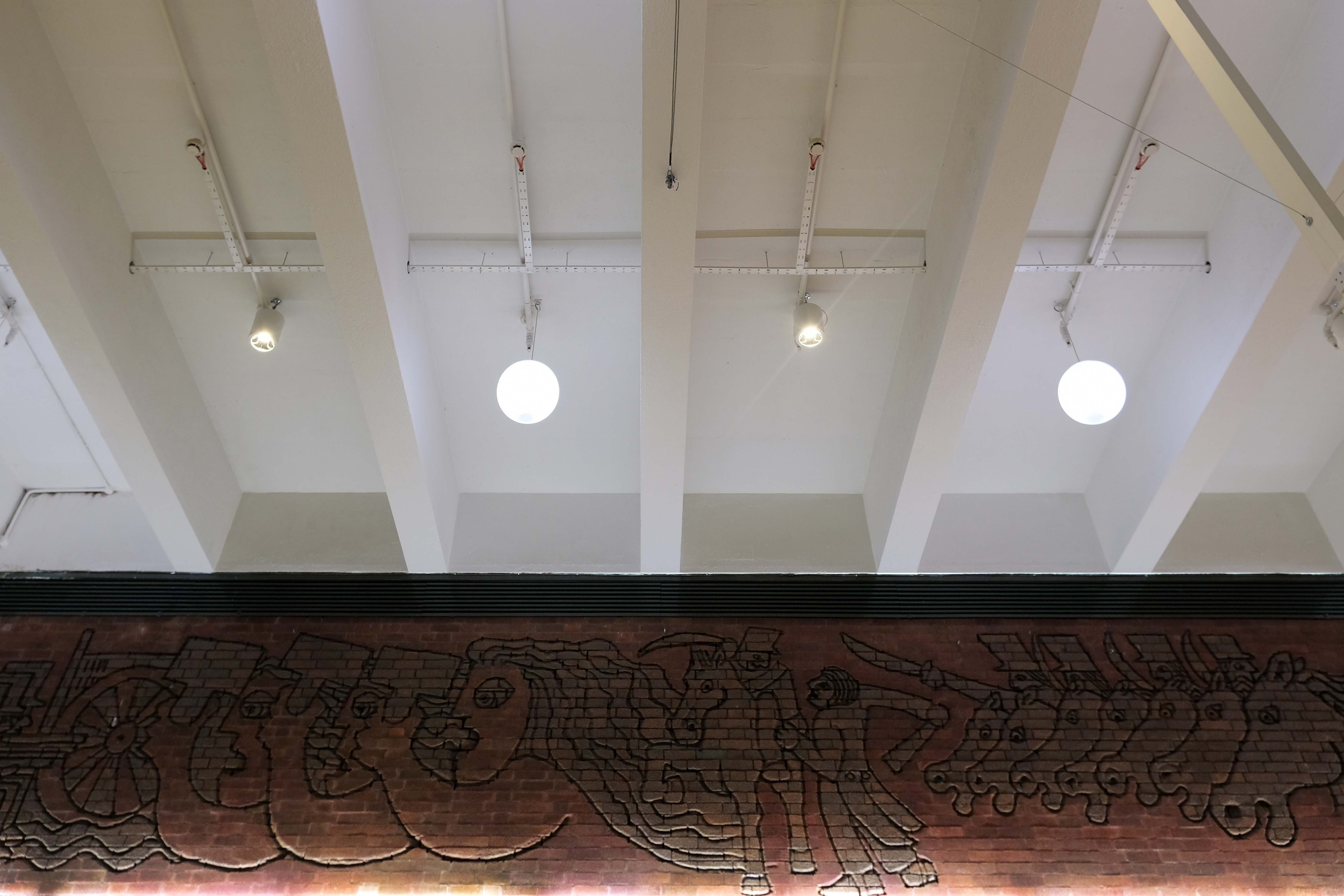
The brick reliefs illustrating the town’s history are by Fred Evans of Dunstable, who completed the work in one week during May 1972 using a high powered sandblasting blaster.

Thanks to Phil Machen for the top tip.

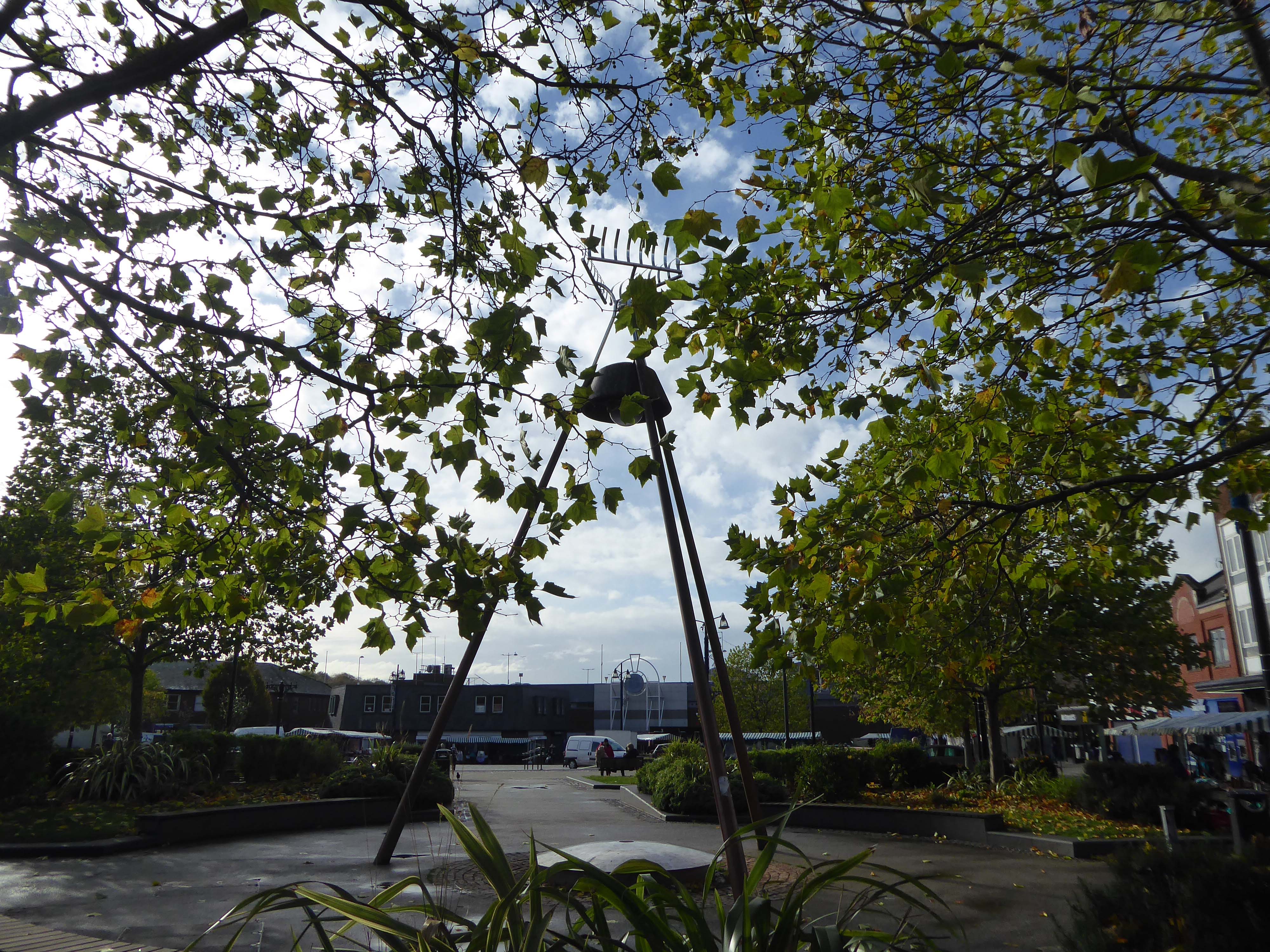
At the centre of the public domain the Middleton Moonraker 2001 by Terry Eaton

According to folklore, the legend has several different interpretations. One version is that a traveller came upon a drunken yokel trying to rake a reflection of the moon in a village pond, convinced it was cheese.

This version conveys the notion that the men were drunk and acting foolishly.

However, an alternative narrative – and perceived to be the most reliable version – tells a different story and dates back to the time when smuggling was a significant industry in rural England.

It appears that many residents wish to rid themselves of the Moon Raker moniker and presumably become Middletonians.

There’s so much more to Middleton’s history than the Moonraker. Why did they spend all that money on a fairytale?

There were 3,000 Lancaster bombers built in Middleton during World War Two, a magnificent contribution to the effort to beat Hitler.

The bulbs inside the moon which light it up at night haven’t worked for five years.

Bernard Wynne

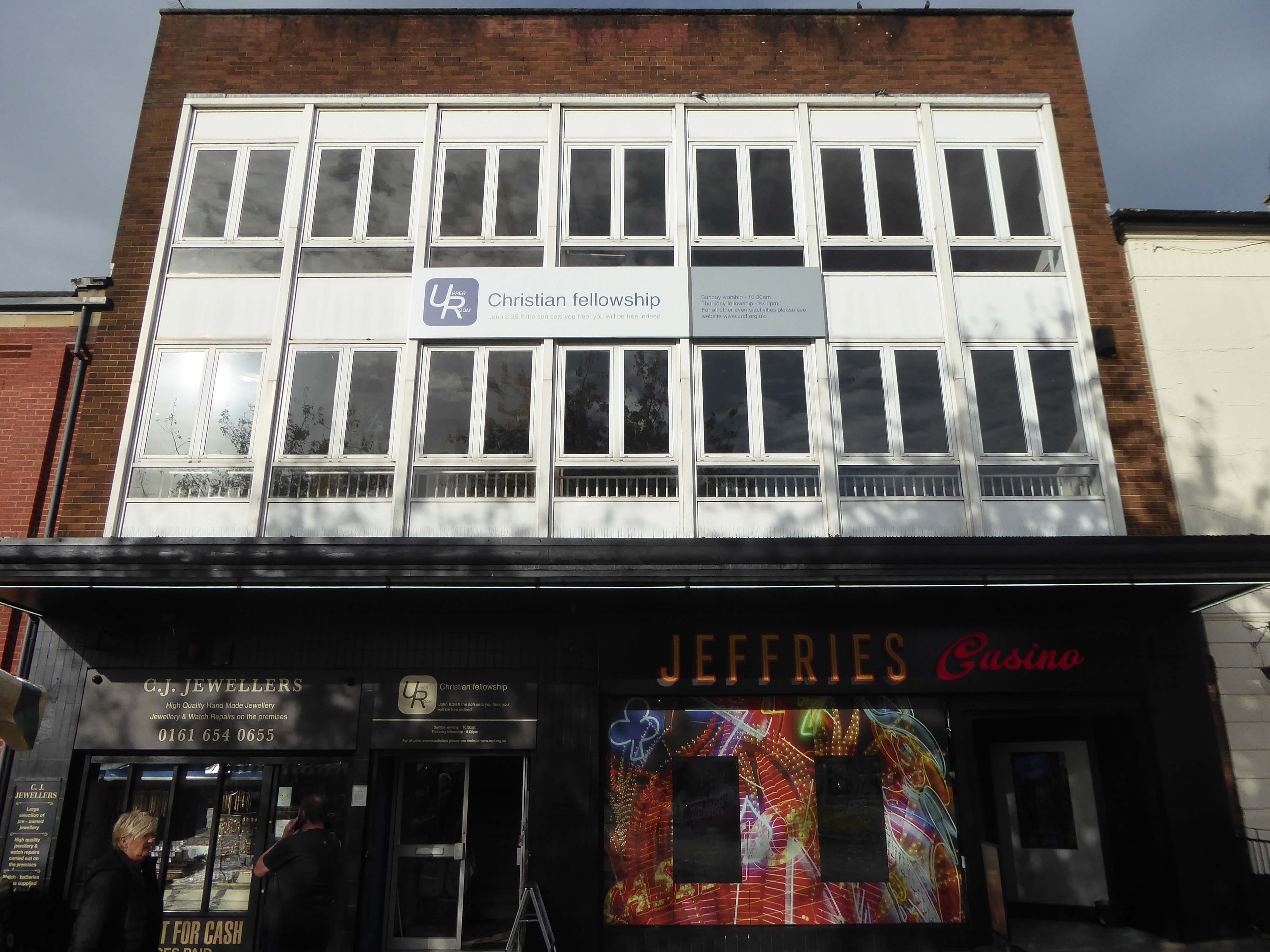
Along Long Street the Cooperative store what was – next door the long gone Palace Cinema demolished in 2001.

More Edgar Wood – three shops 1908.

Tim RushtonMiddleton Gateway

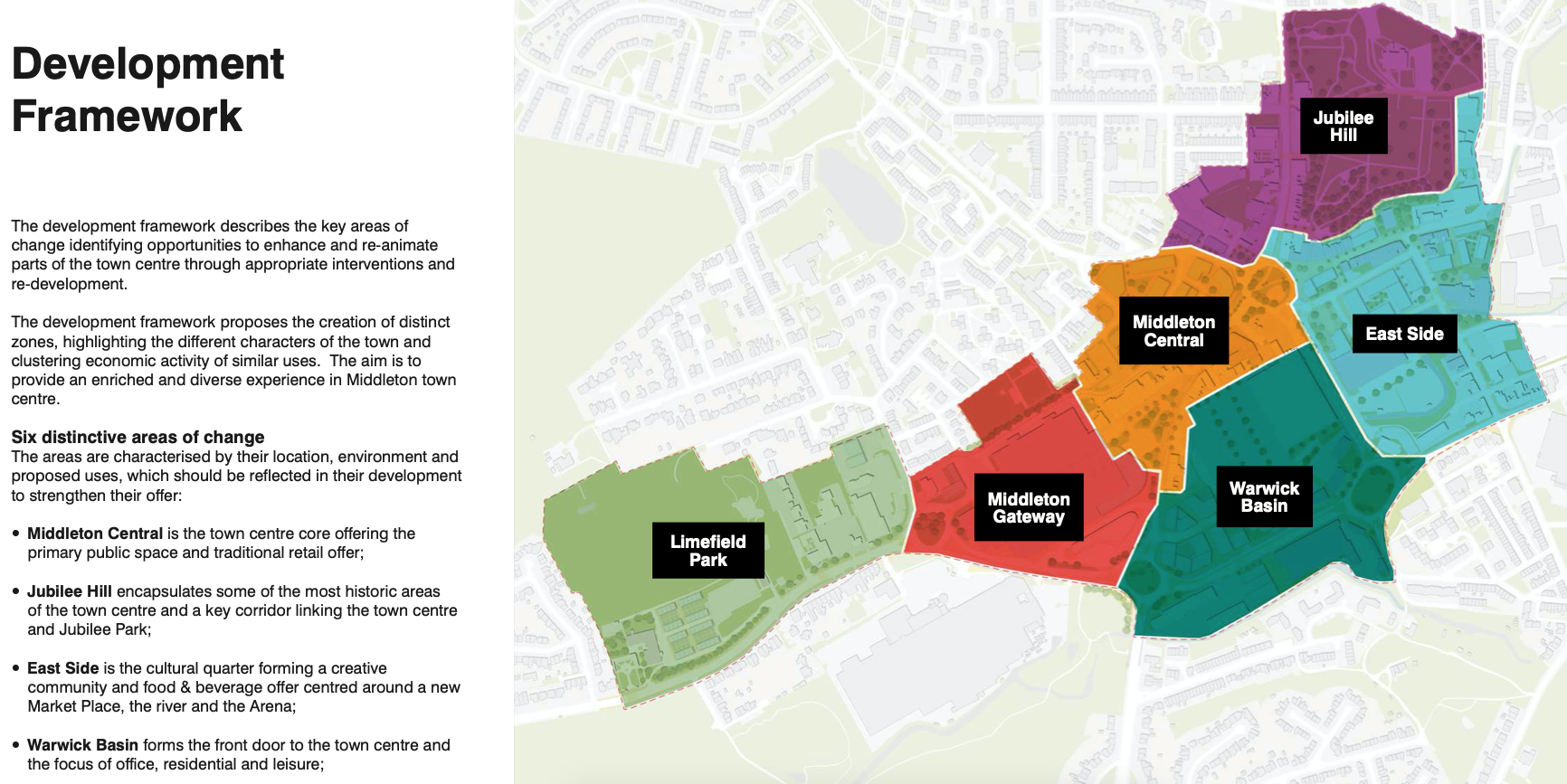
Middleton celebrates its history and rightly so – now is the time to take stock and plan for the future.

More green space, public transport, pedestrians and cyclists prioritised to meet the Green Agenda.

Mixed development for housing, retail and leisure in the town centre.

Take some time to explore and dream.

View the Masterplan click here

For more information on Edgar Wood click here

UMIST Missed

Whilst Oxford Road echoes to the sound of Freshers fleet of foot.

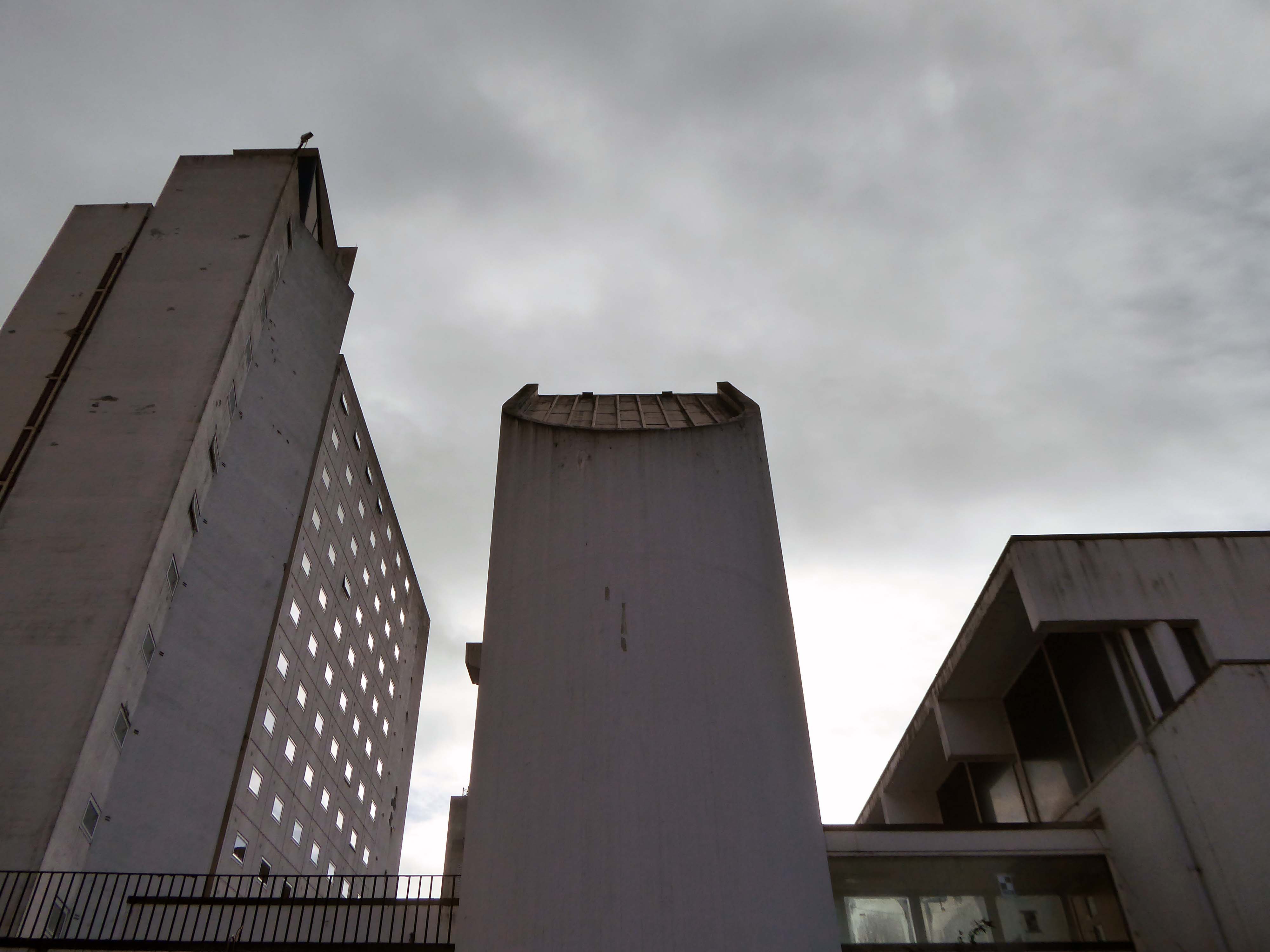
UMIST is only home to fallen leaves and a palpable air of melancholia.

The last of the students have left and a crew of hi-vis workers are busy stripping the remains of days long gone.

We have all walked on by before and will again – though with heavier heart, into an all too uncertain future – for only the Holloway Wall is listed.

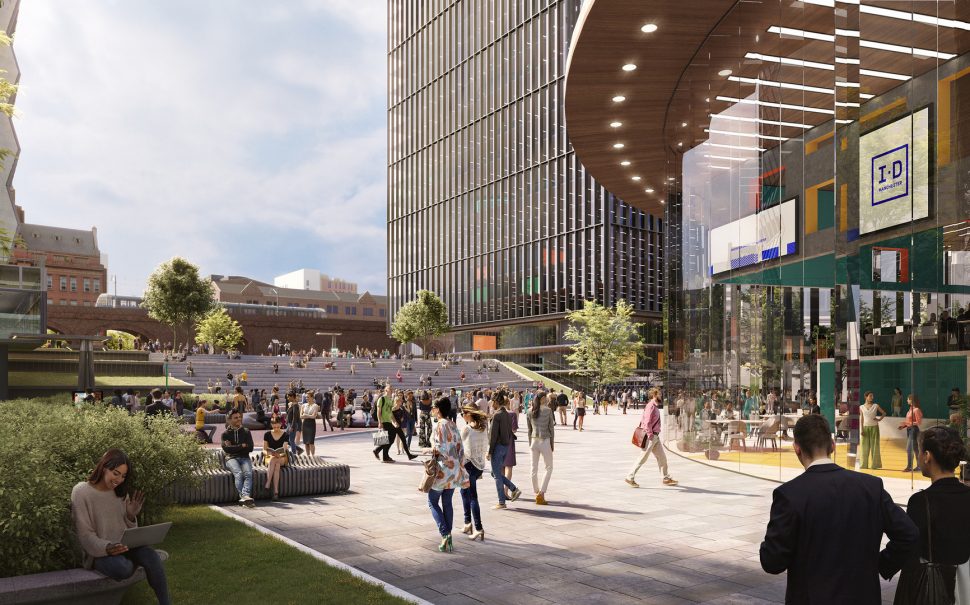
Now a grand redevelopment project has been unveiled to tend to that. According to the developer’s website, the plan promises to accelerate growth, partnership and collaboration.

Christened ID Manchester, the plans could see the area hacked into a glass maze of ultra-modern offices, apartments and hotels. 

Mancunian Matters 2021

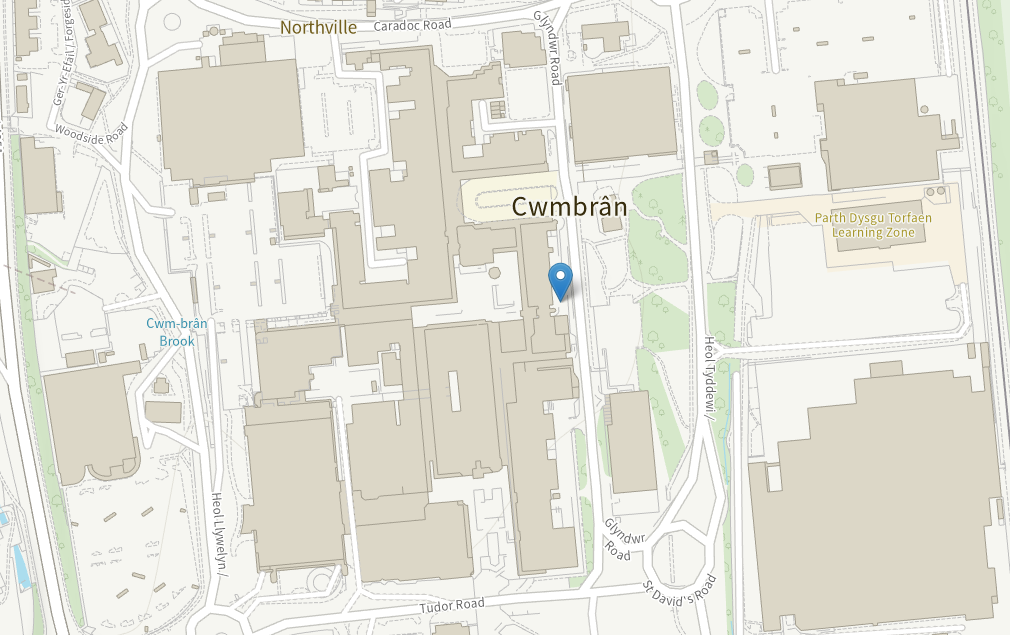
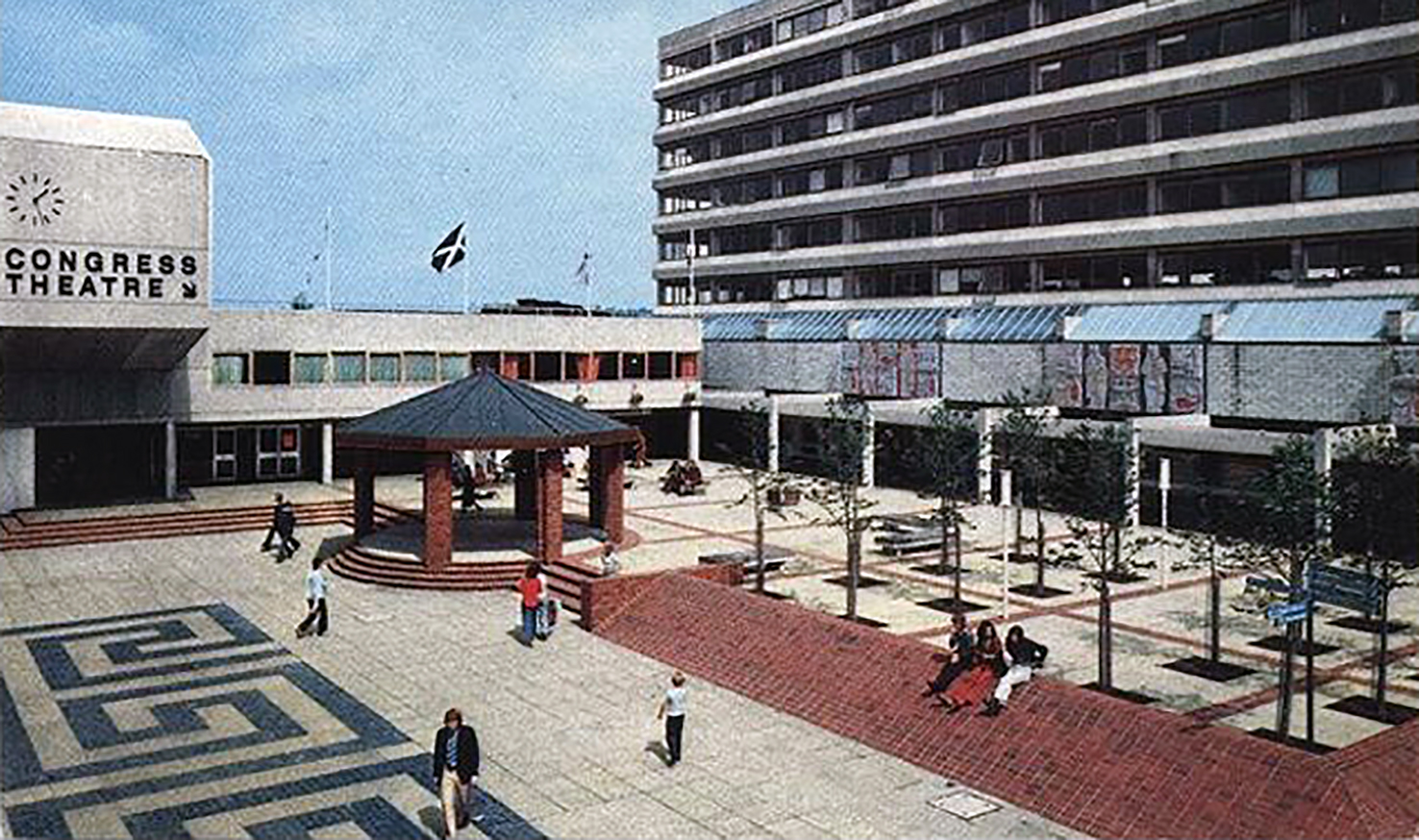
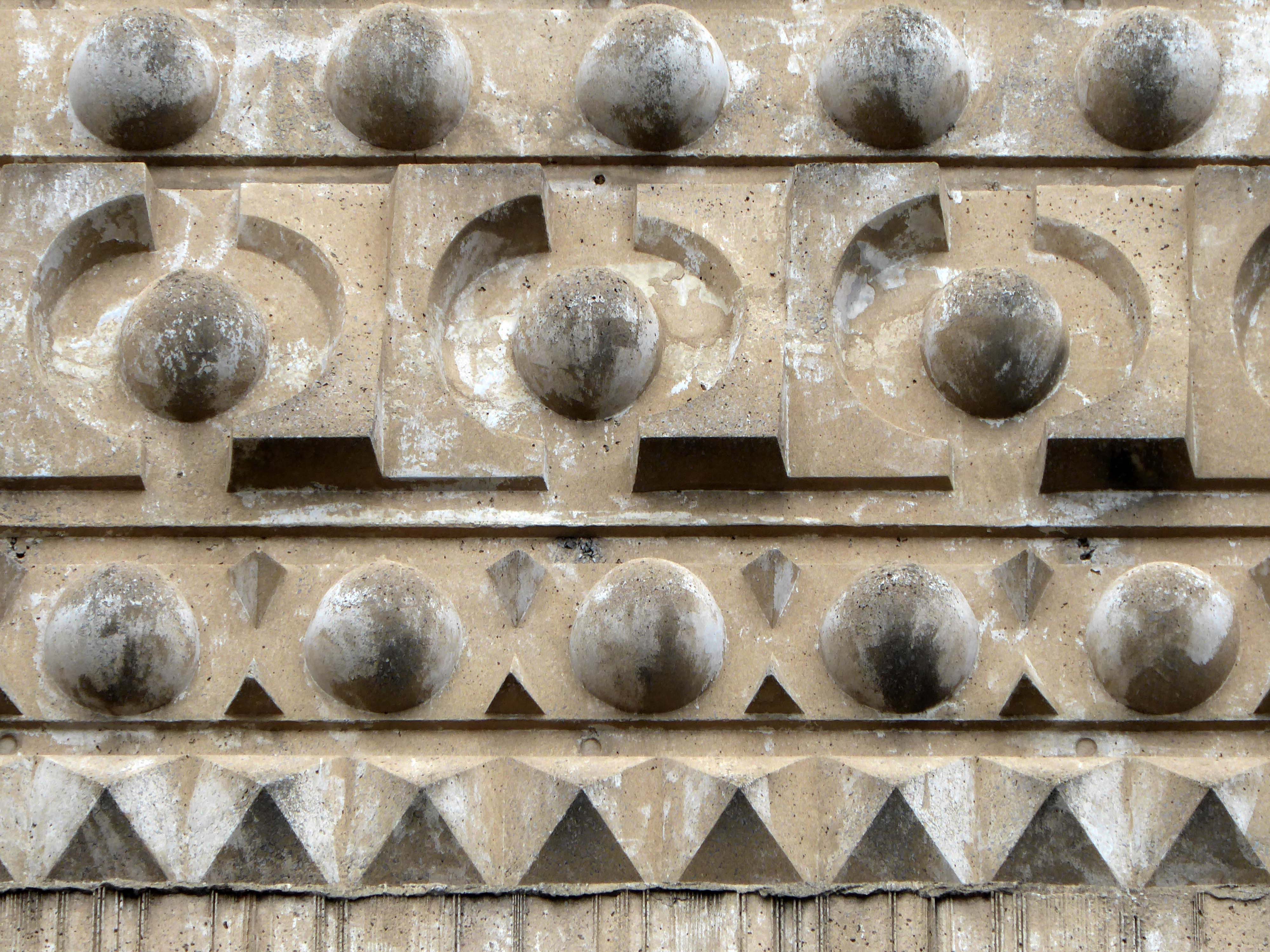
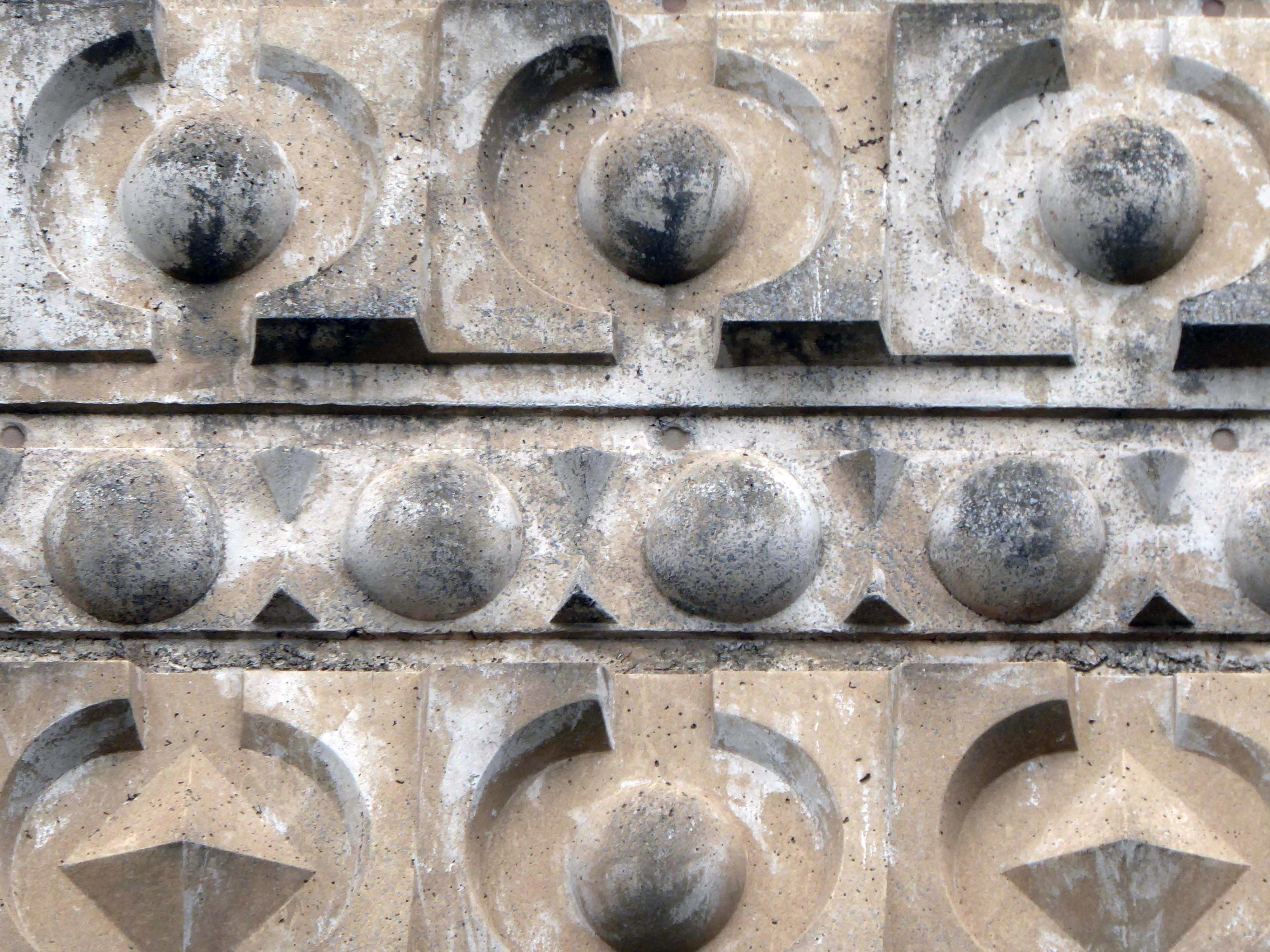
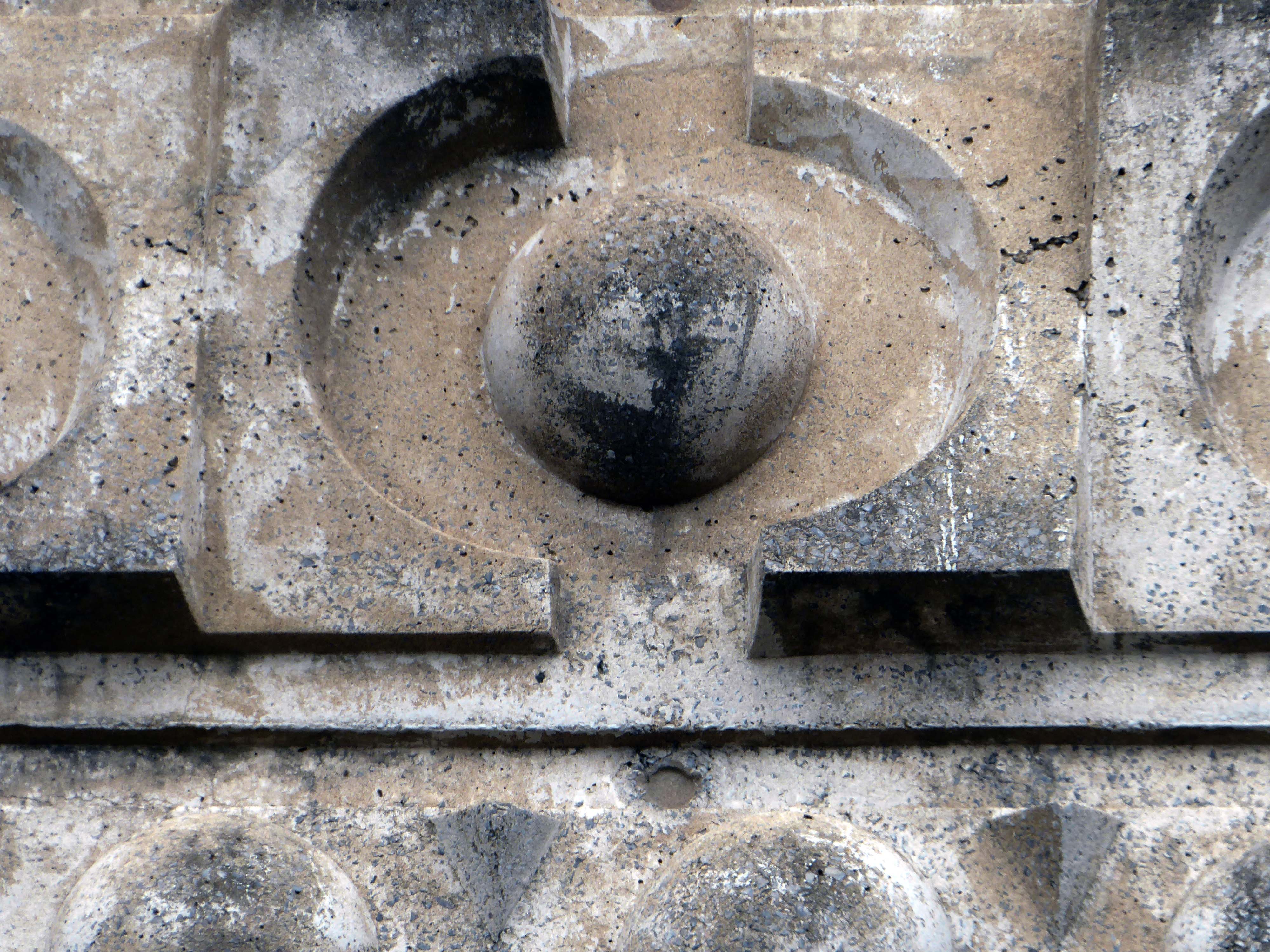
Joyce Pallot and Henry Collins – Gwent House Cwmbran

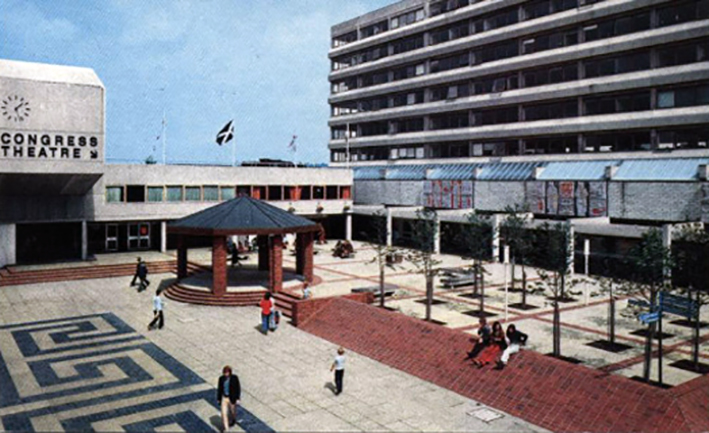
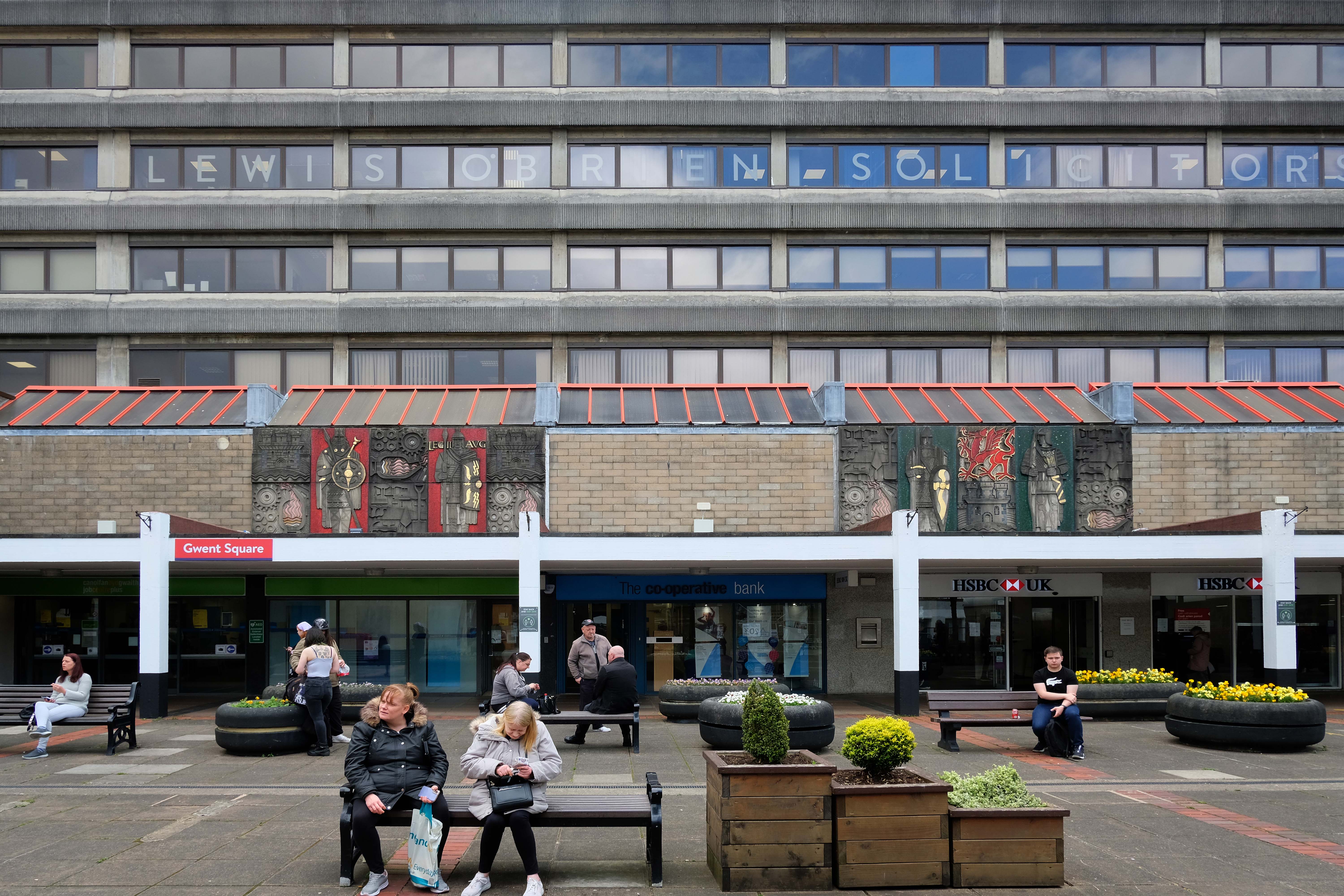
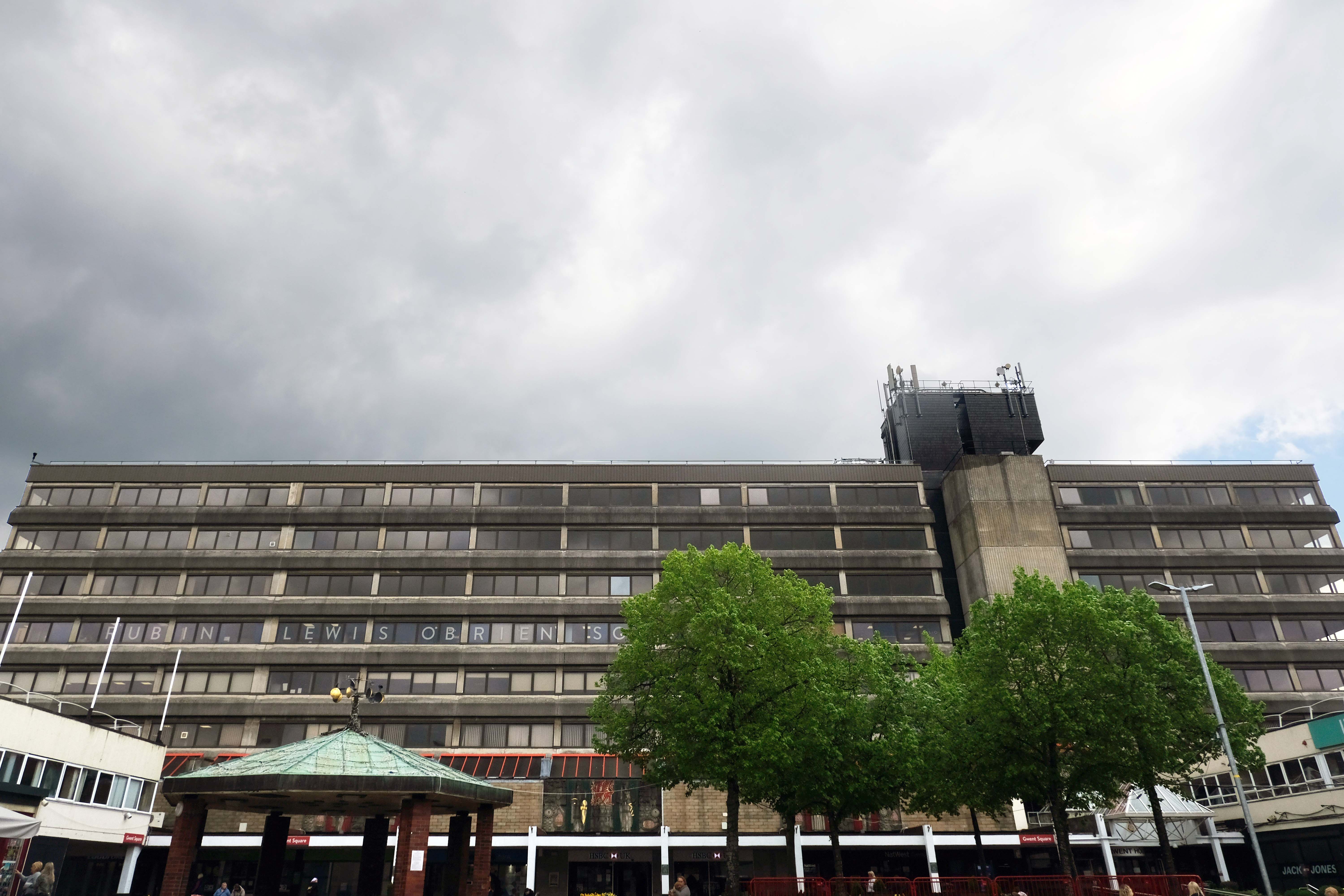
Gwent House is the home of the District Council Offices for Torfaen and the Public Library. Used by HM Courts Service and HCMS – South East Wales, the building is a seven story structure with retail space on the ground floor and open plan office space above. Built during the 1970s as a local government building, it is constructed with a steel and concrete frame with wall to wall double glazed windows and a flat roof.

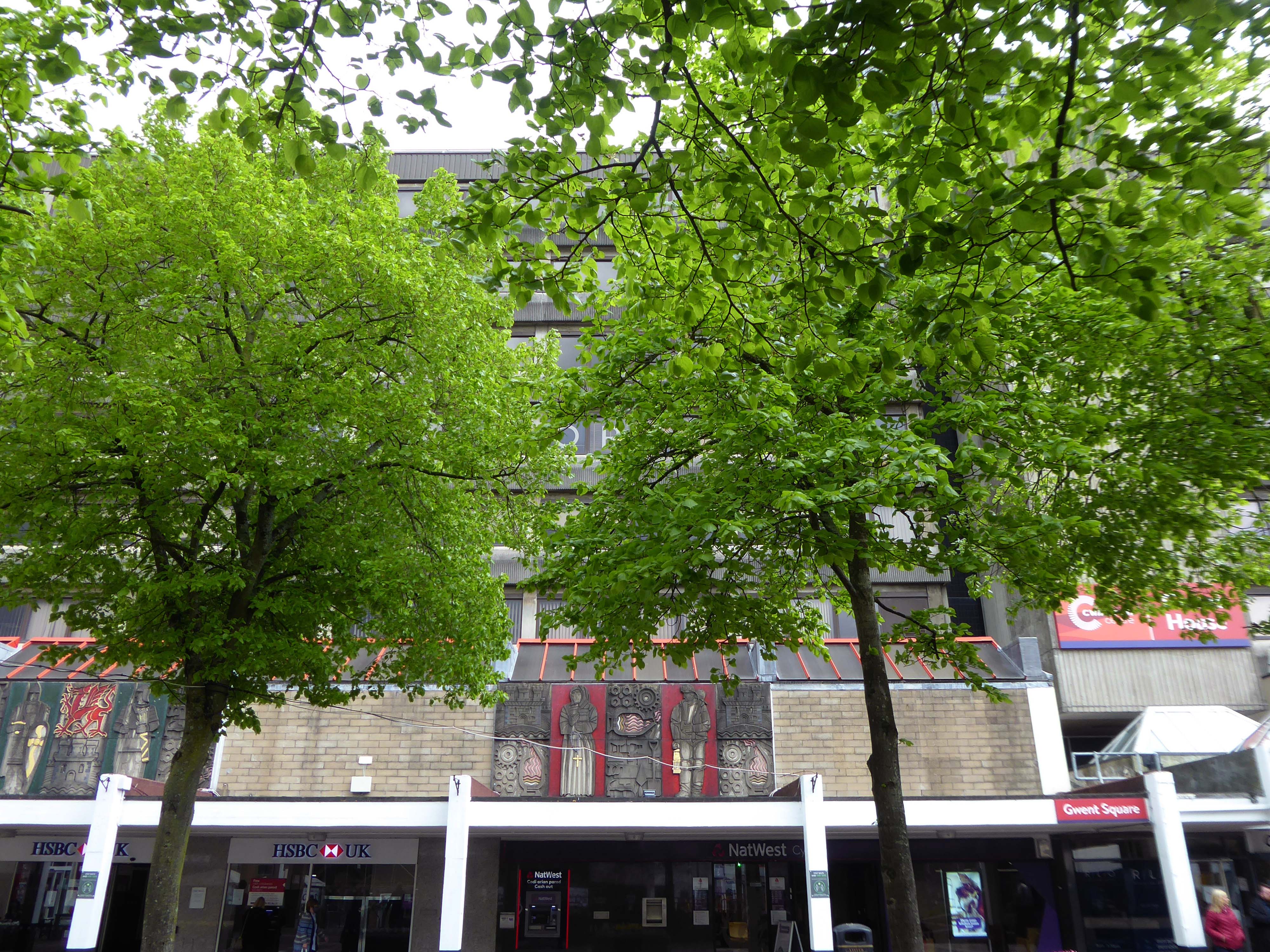
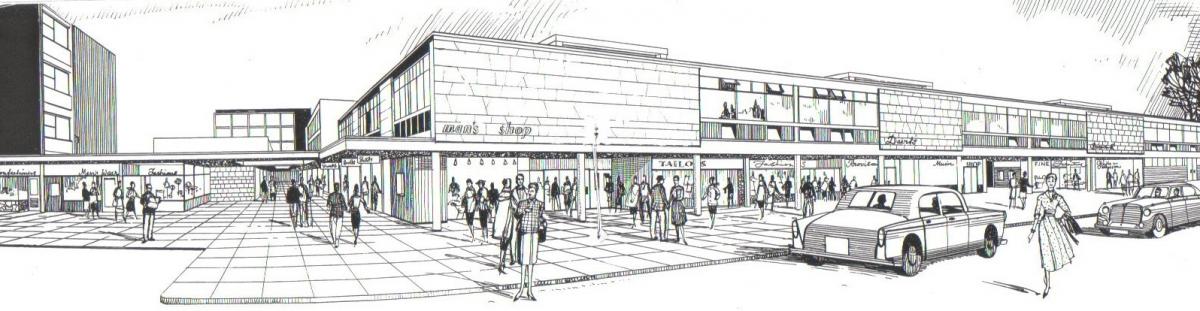
Gwent House sits on the east side of Gwent Square at the heart of Cwmbran New Town’s centre. The ‘Central Building’ as it was known during development was conceived by the Cwmbran Development Corporation, as a mixed development of leisure (including a club, dance hall and hotel) and office accommodation with retail to the ground floor. this was to expand the function of the town centre beyond purely a shopping centre, and to address the perceived lack of ‘professional’ office jobs. In the event, the offices proved difficult to let and were occupied by the CDC and Cwmbran Urban District Council. 

The building was designed by Sheppard, Robson & Partners and opened on the 18th January 1973. The eight-storey, concrete framed block included a job centre, the library, a conference and exhibition hall, and three restaurants catering for different tastes and age ranges, including the ‘Sign of the Steer’. 

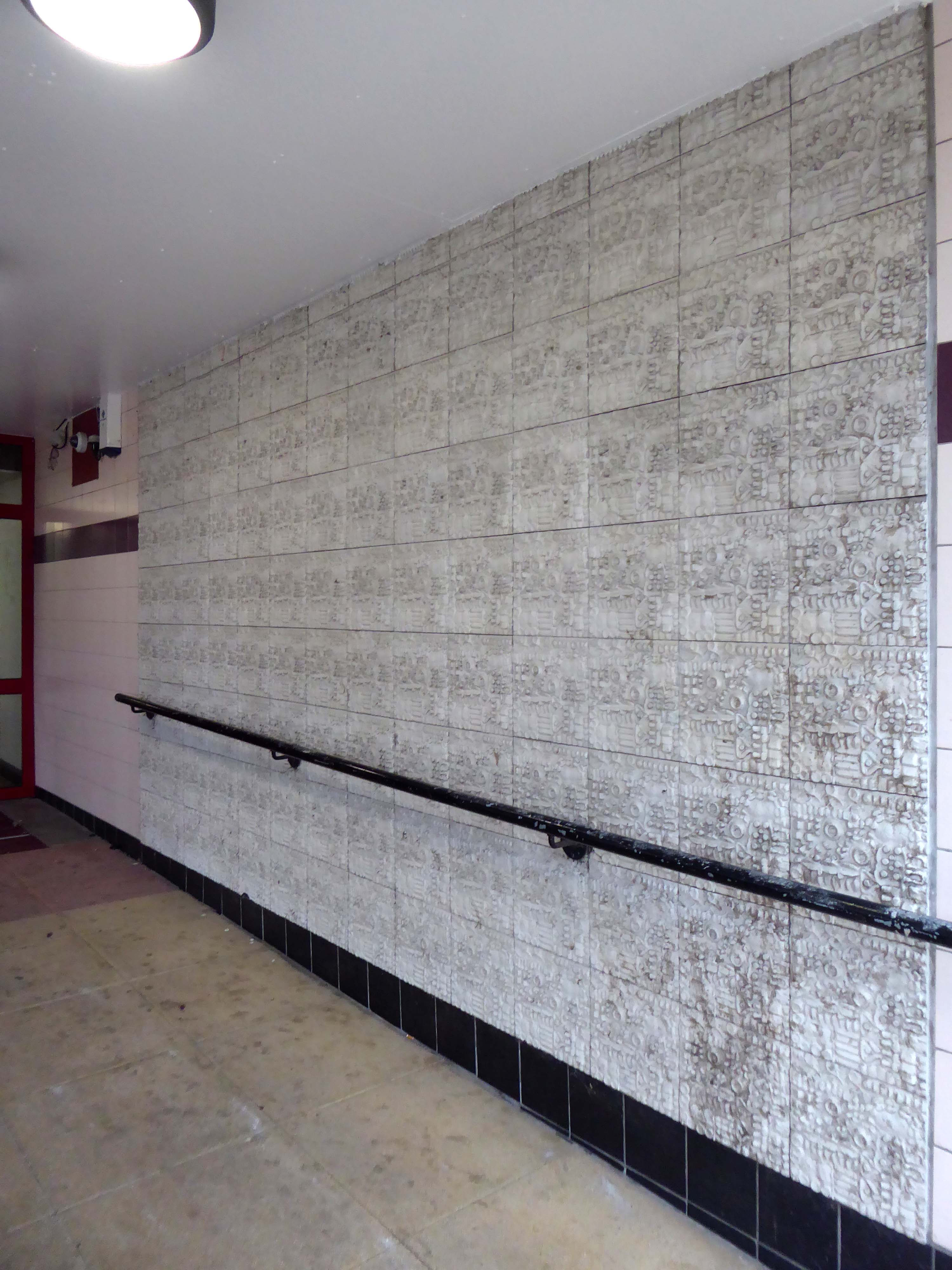
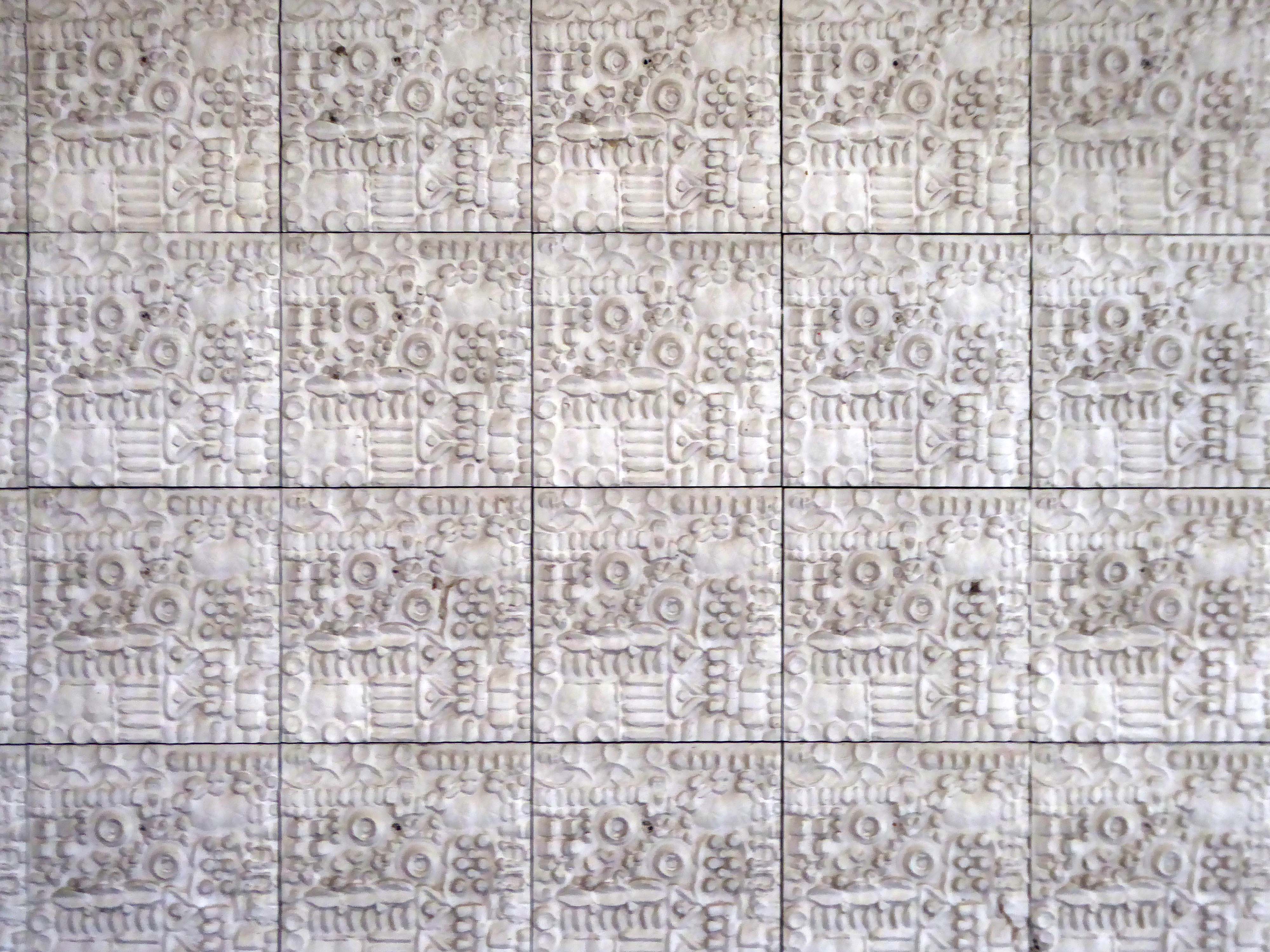
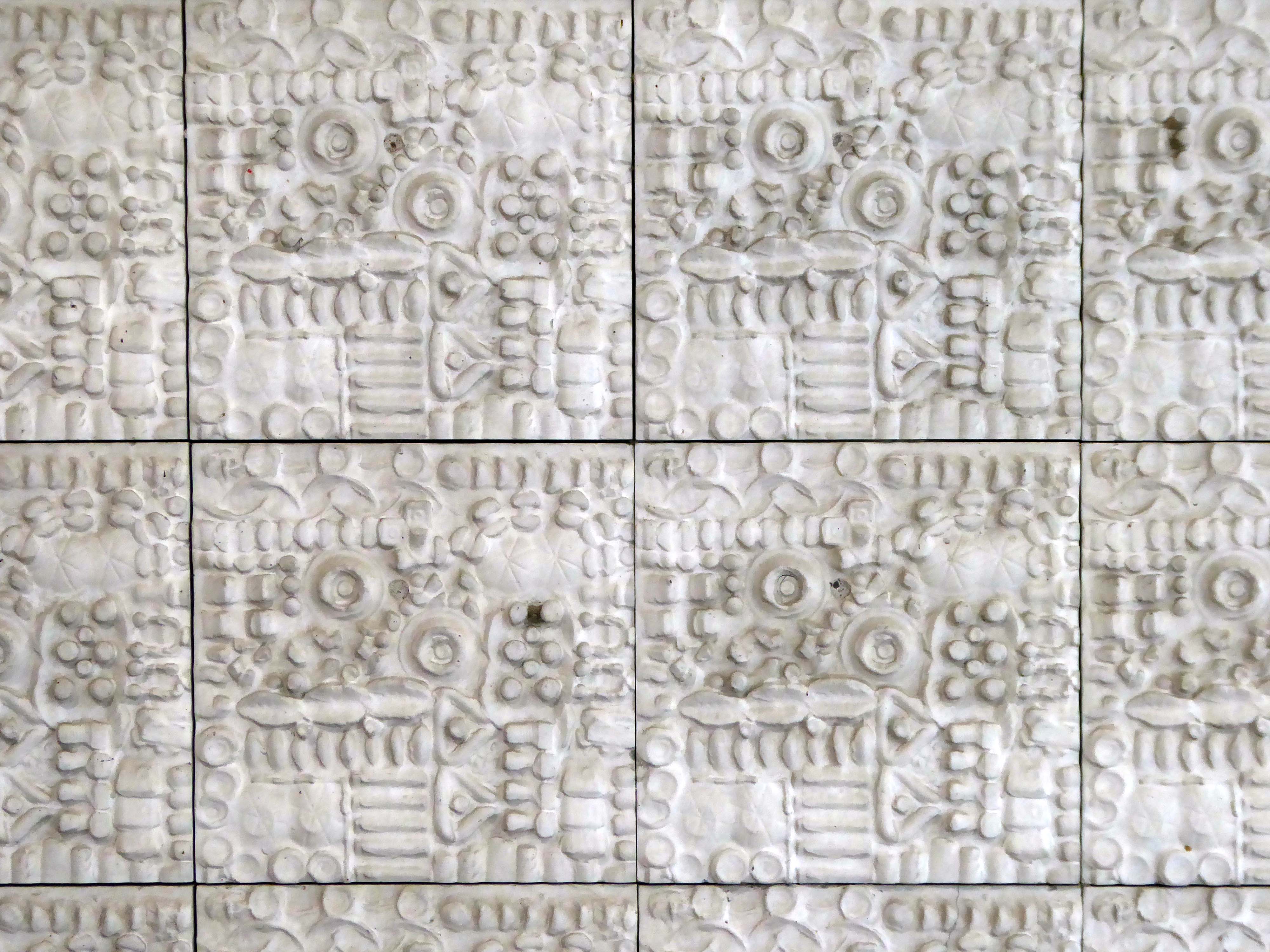
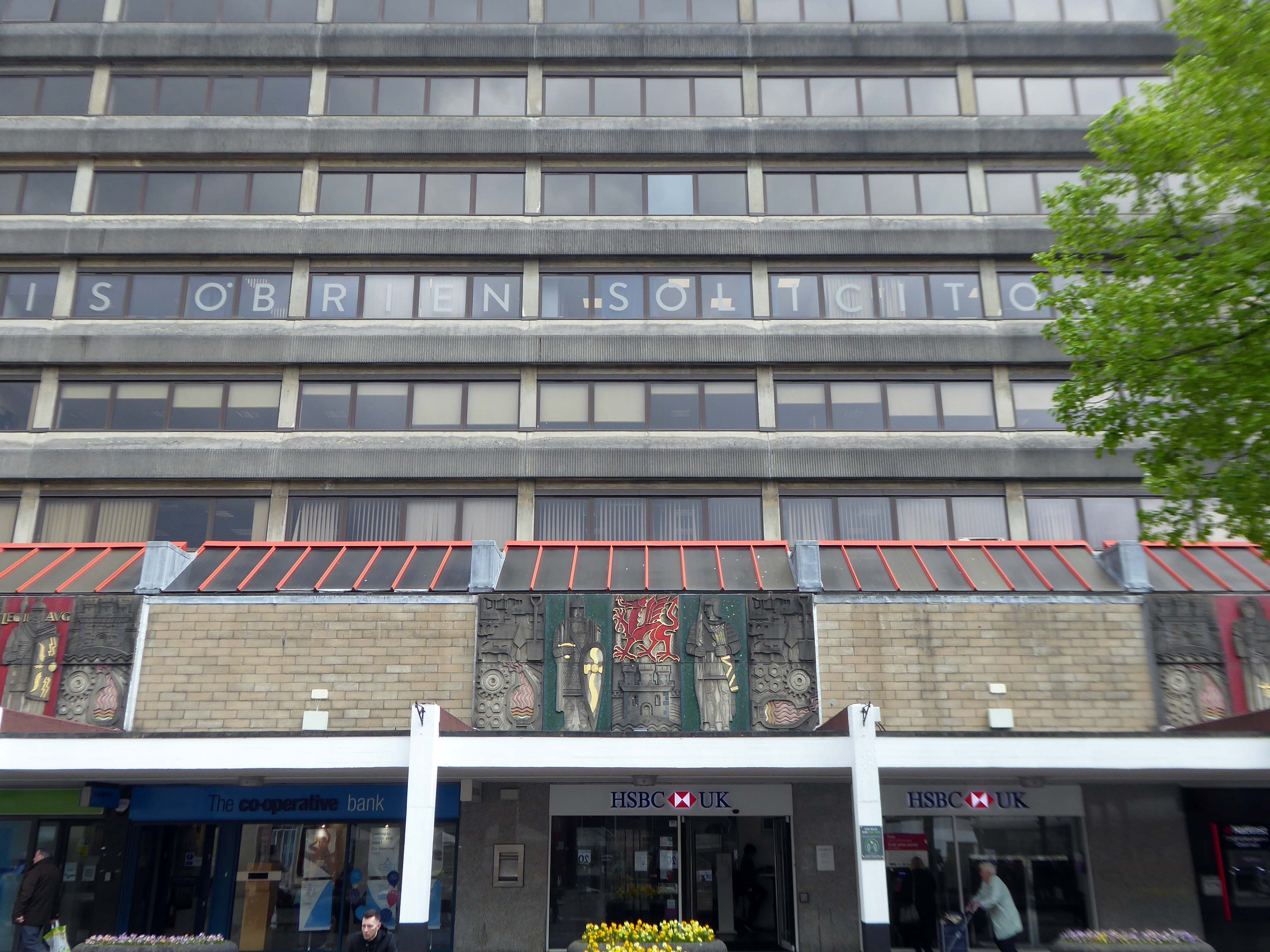
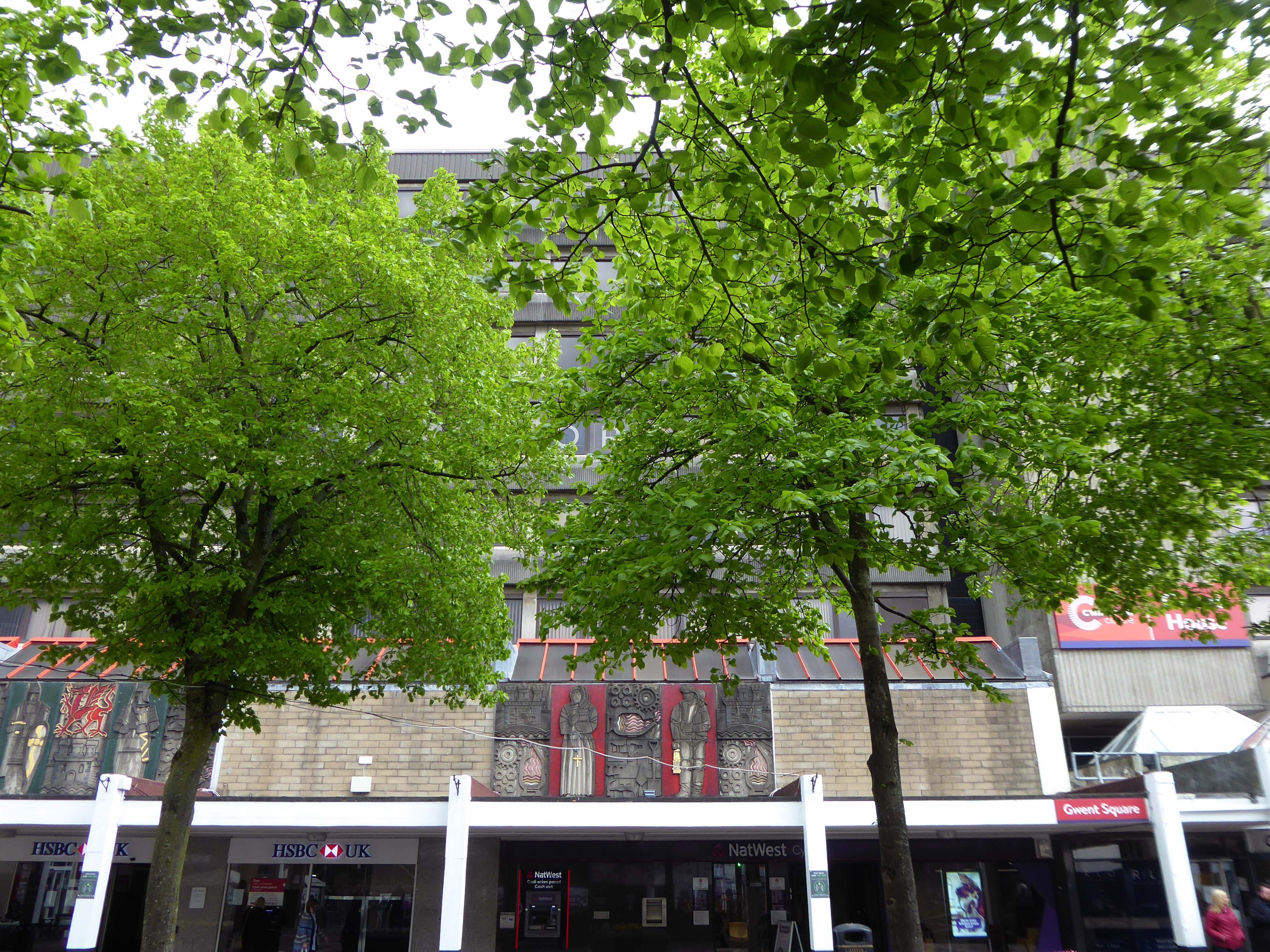
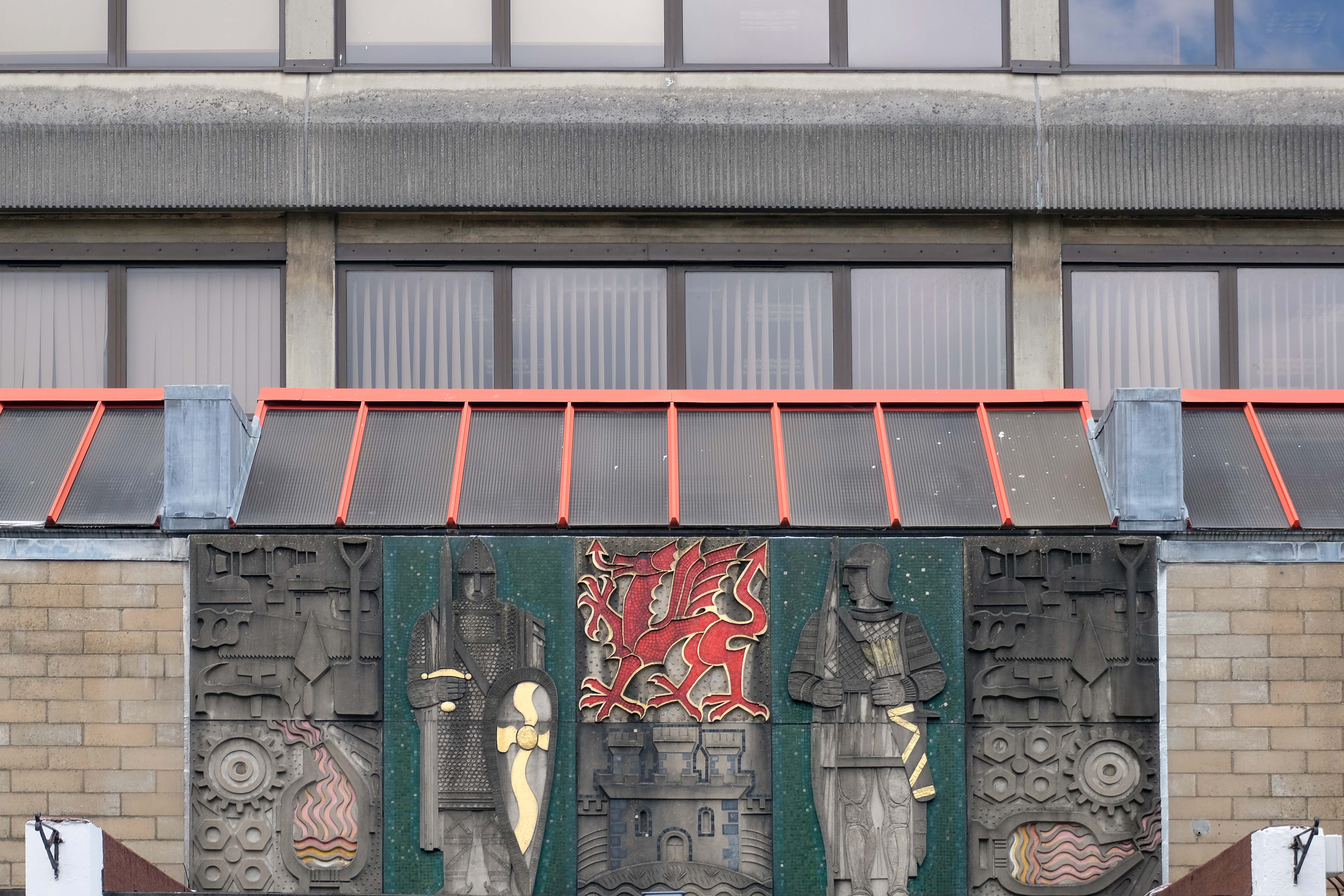
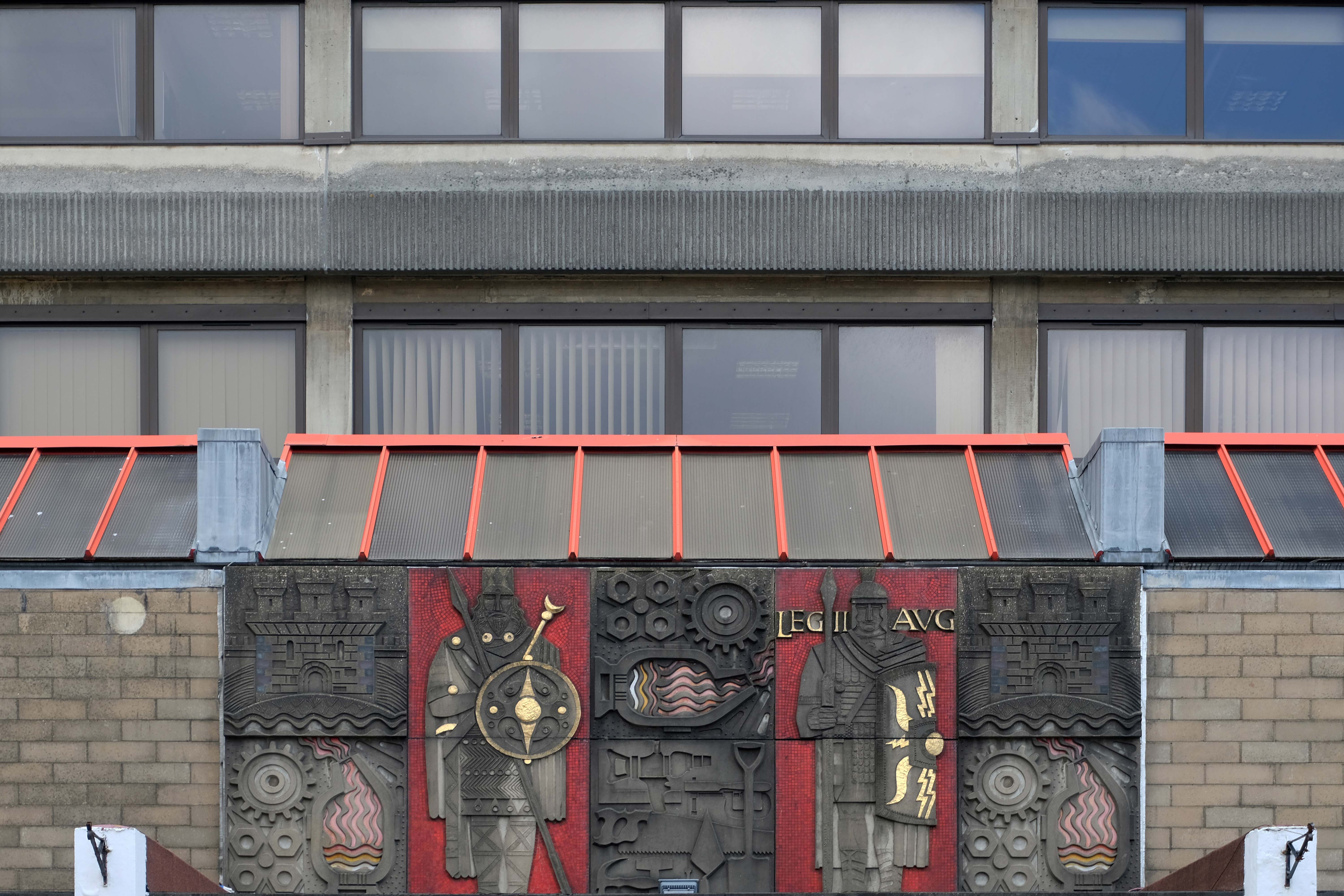
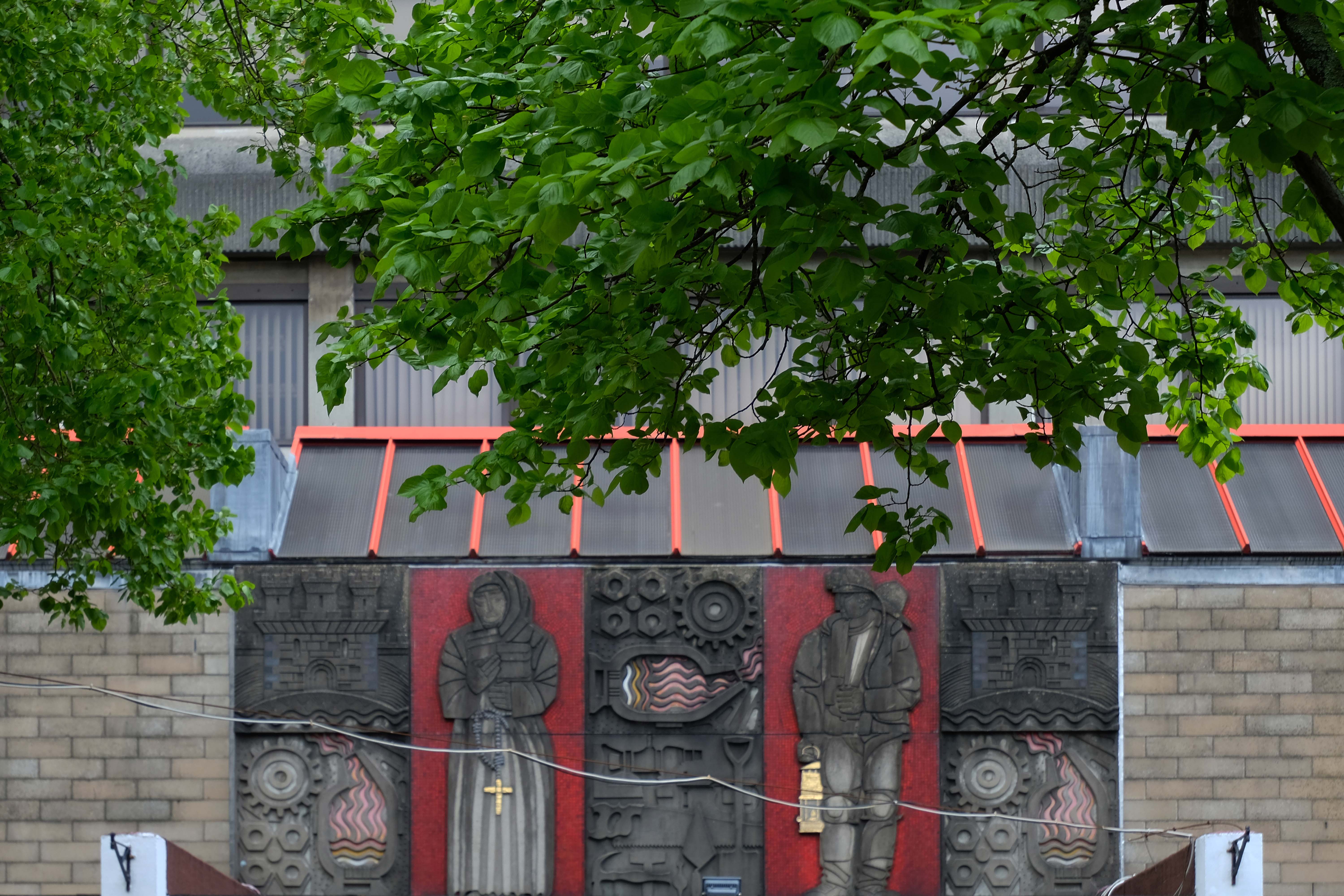
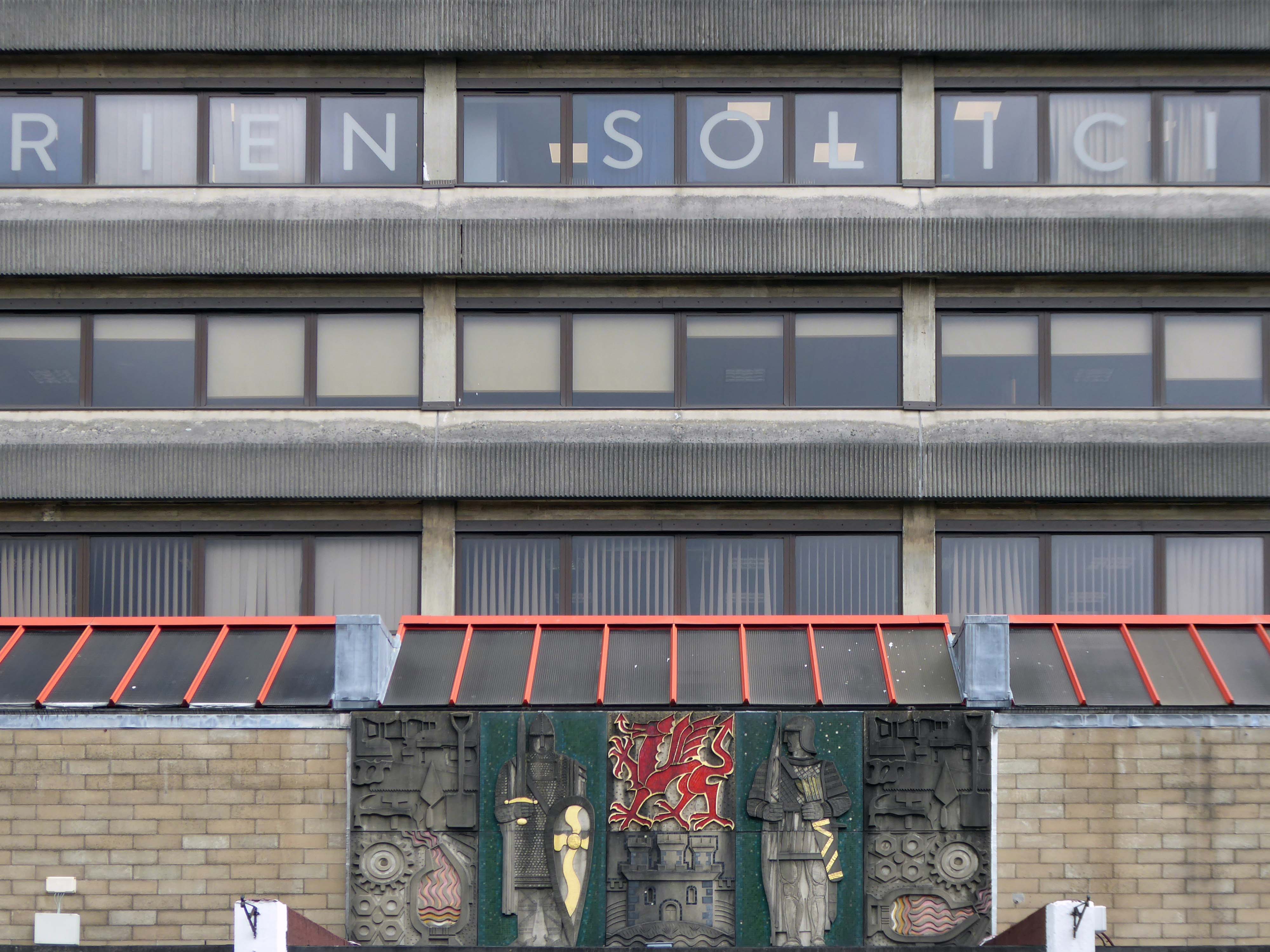
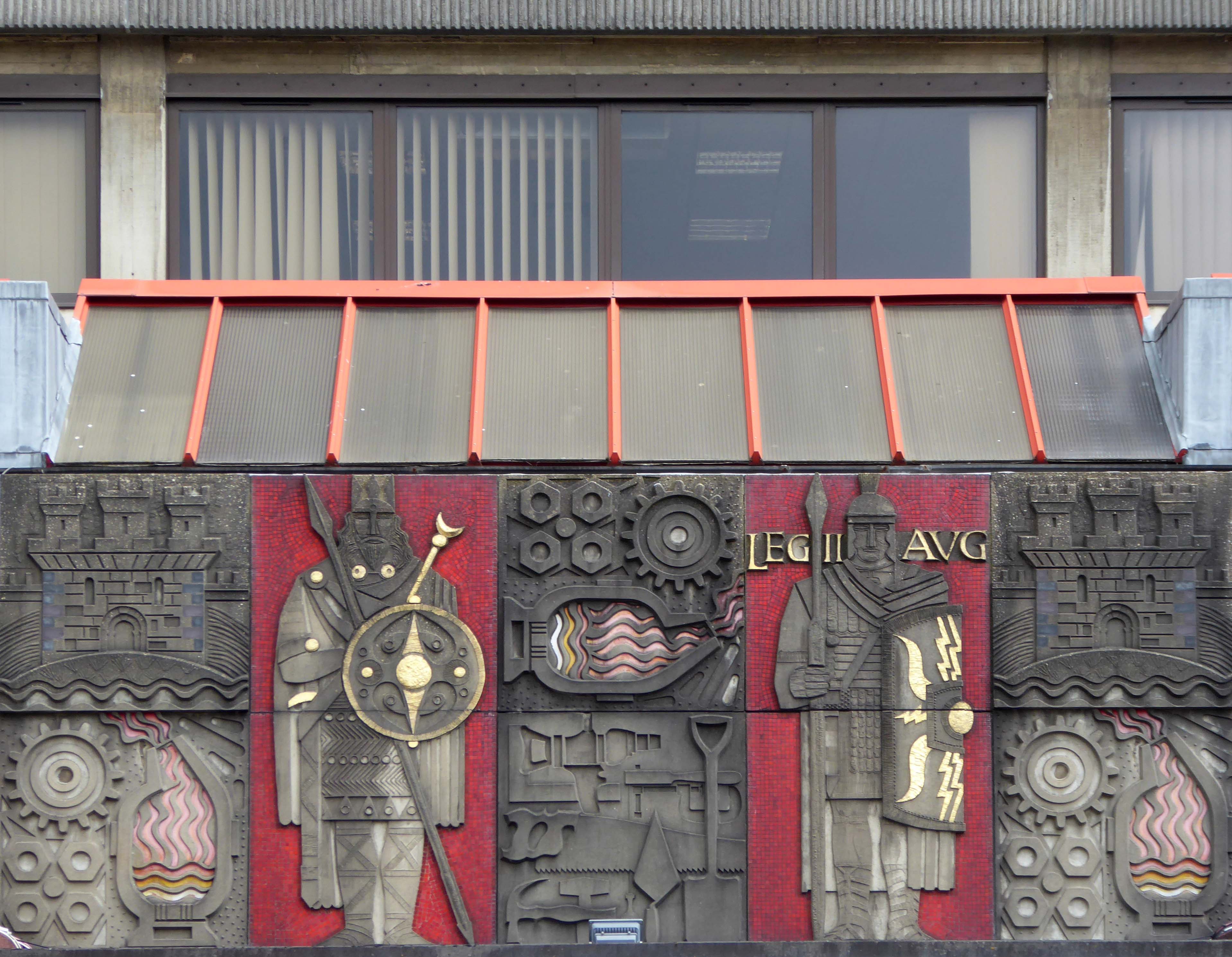
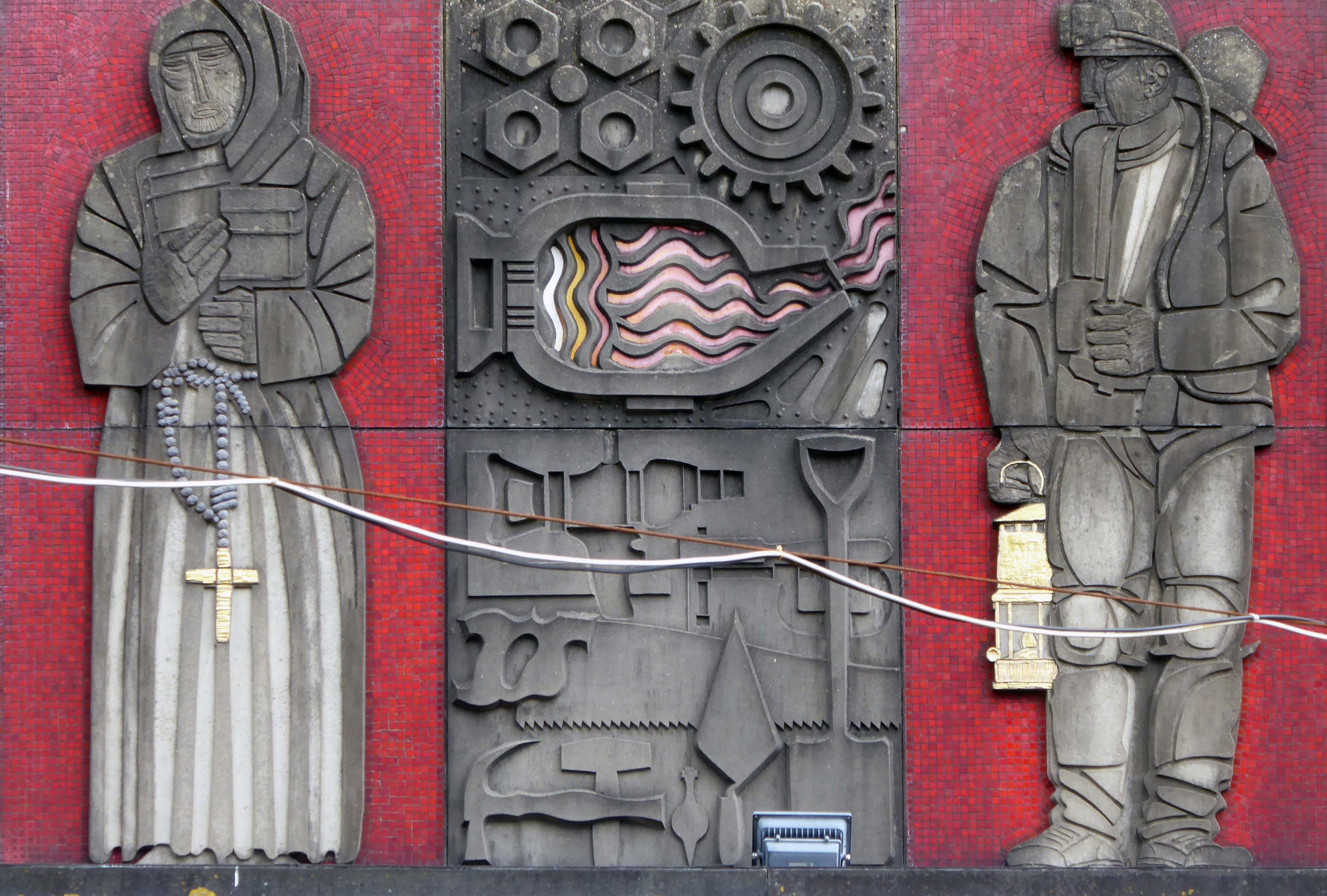
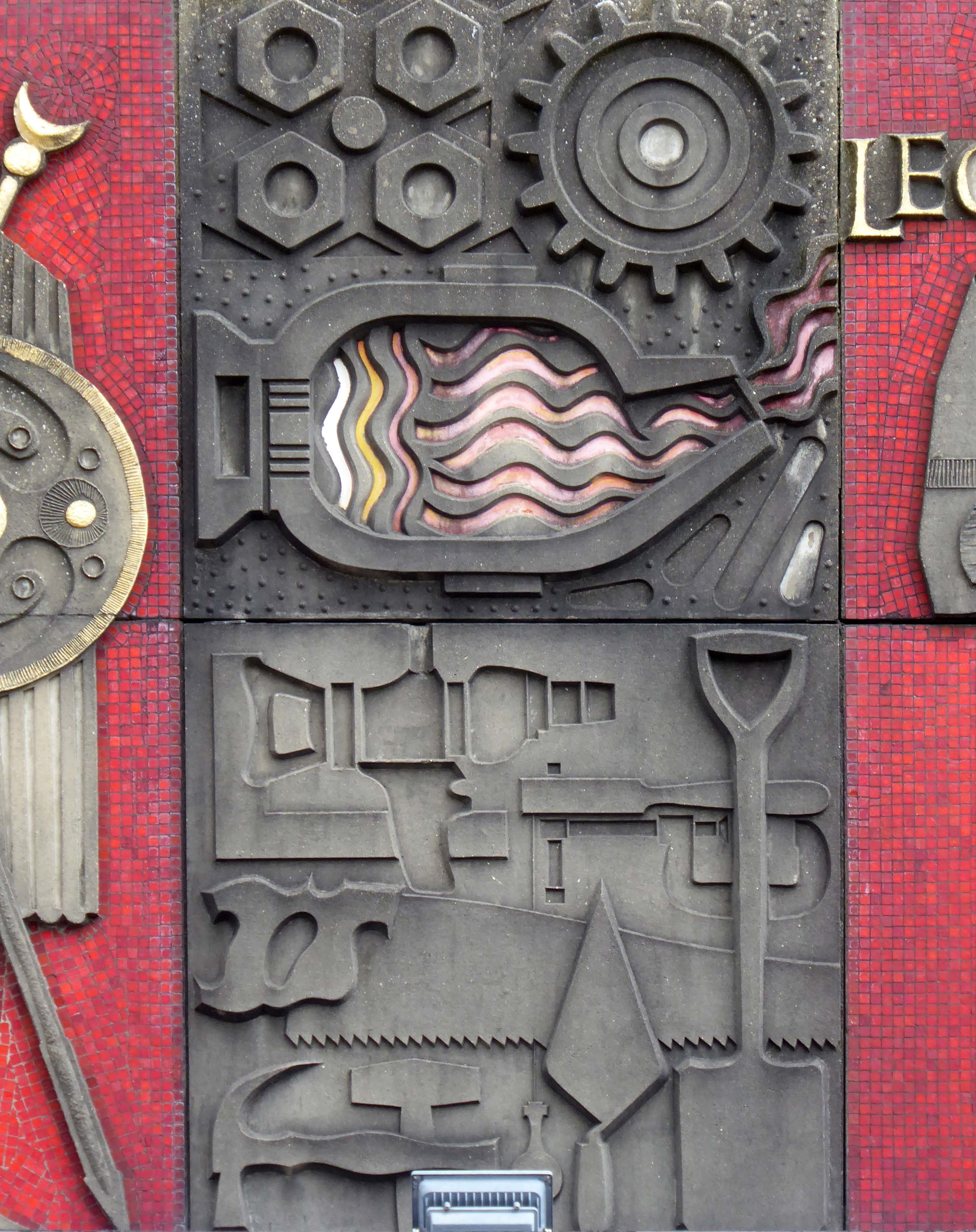
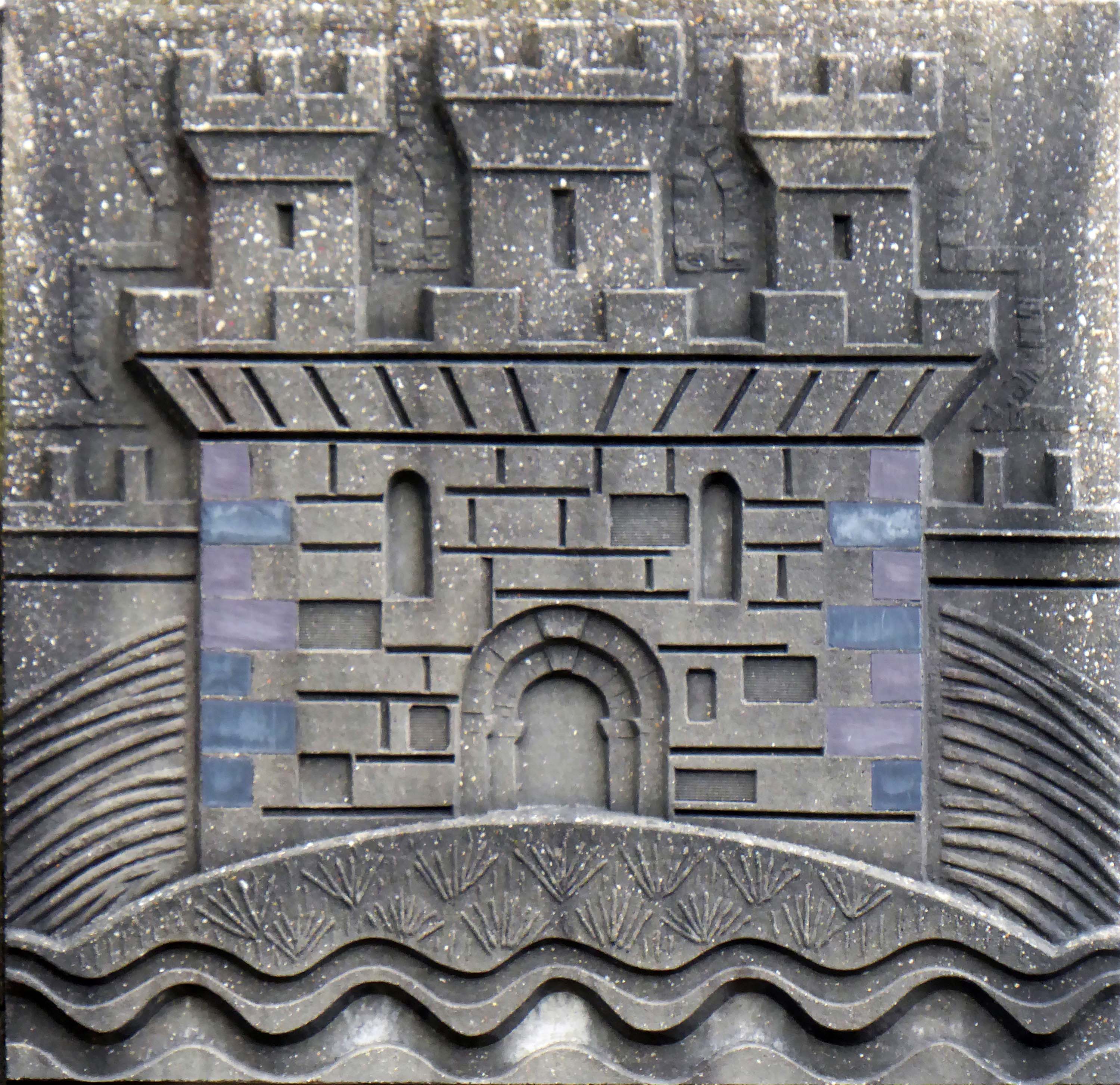
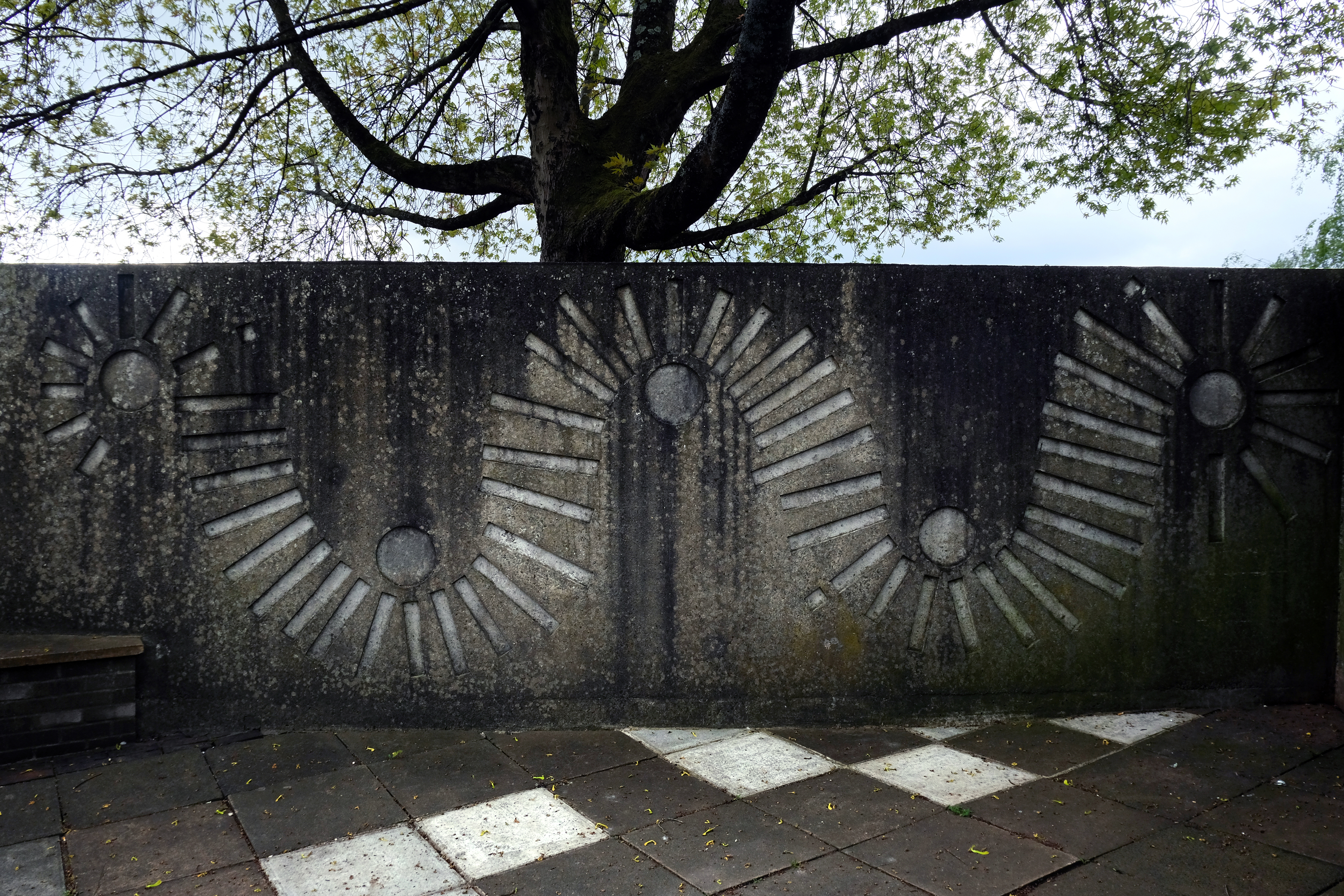
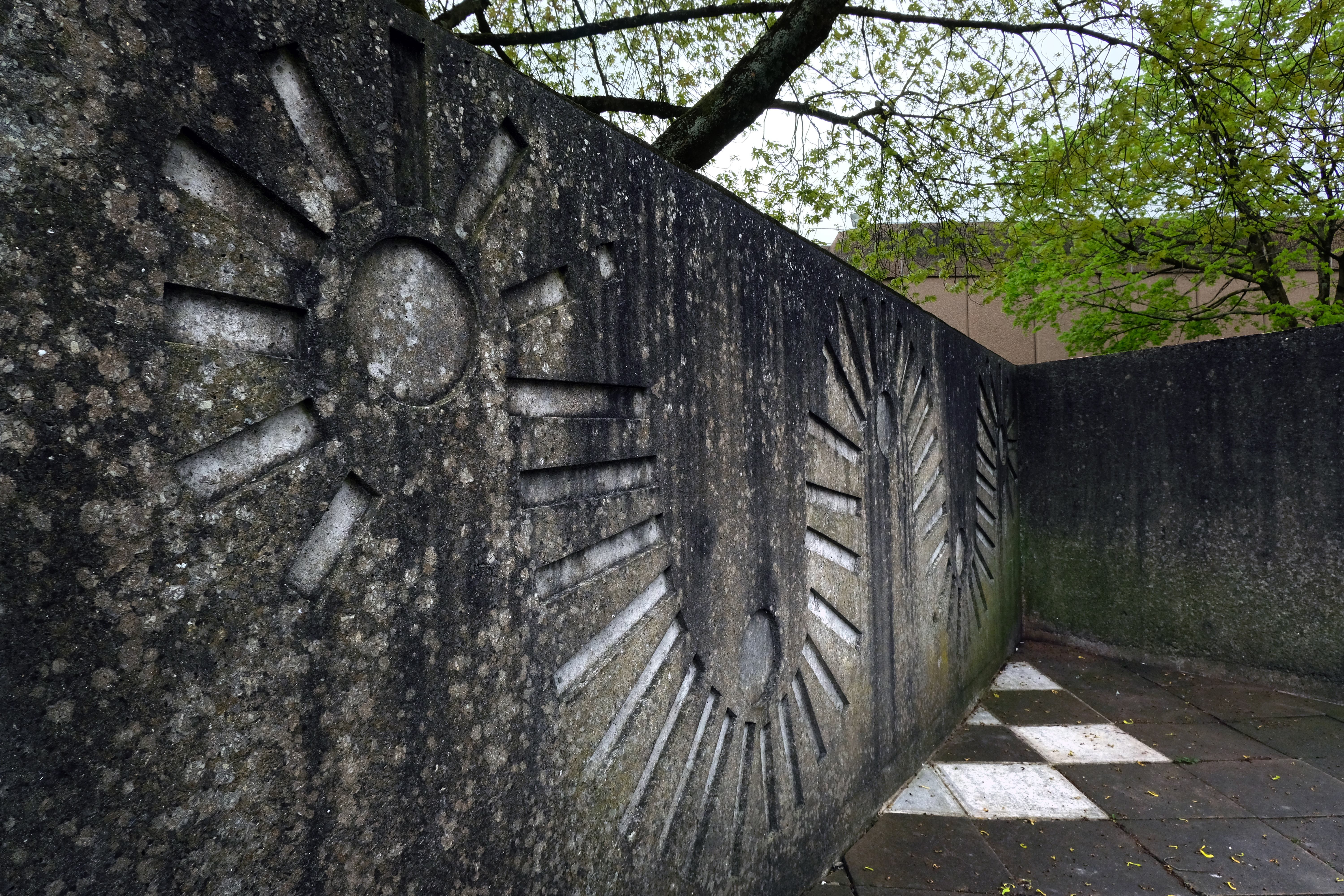
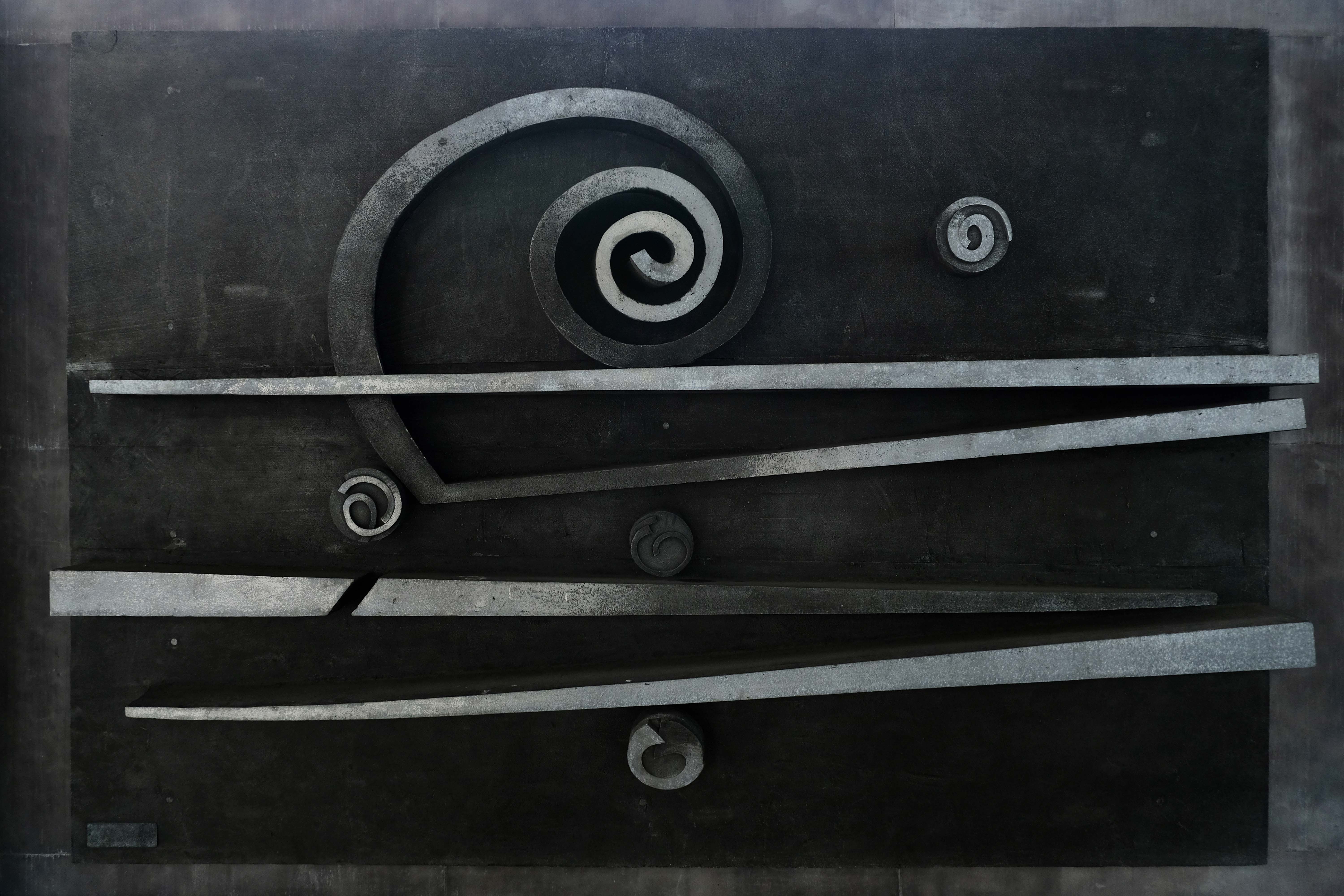
On the west side of the building are a series of three moulded concrete relief panels designed by Joyce Pallot and Henry Collins for the MEPC, the Cwmbran Development Corporation and the Cwmbran Arts Trust in 1974. The panels depict scenes representing different phases of the history of Gwent: Iron Age and Roman, Medieval and Industrial.

Coflein

The work of Joyce and Henry is well known here at the modern mooch having visited Newcastle, Bexhill and of course Stockport. There are also examples in their hometown Colchester, Gloucester and Southampton.

Joyce Pallot 1912-2004 and Henry Collins 1910-1994 – two artist/designers, who along with John Nash, established the Colchester Art Society, during the 1930s.

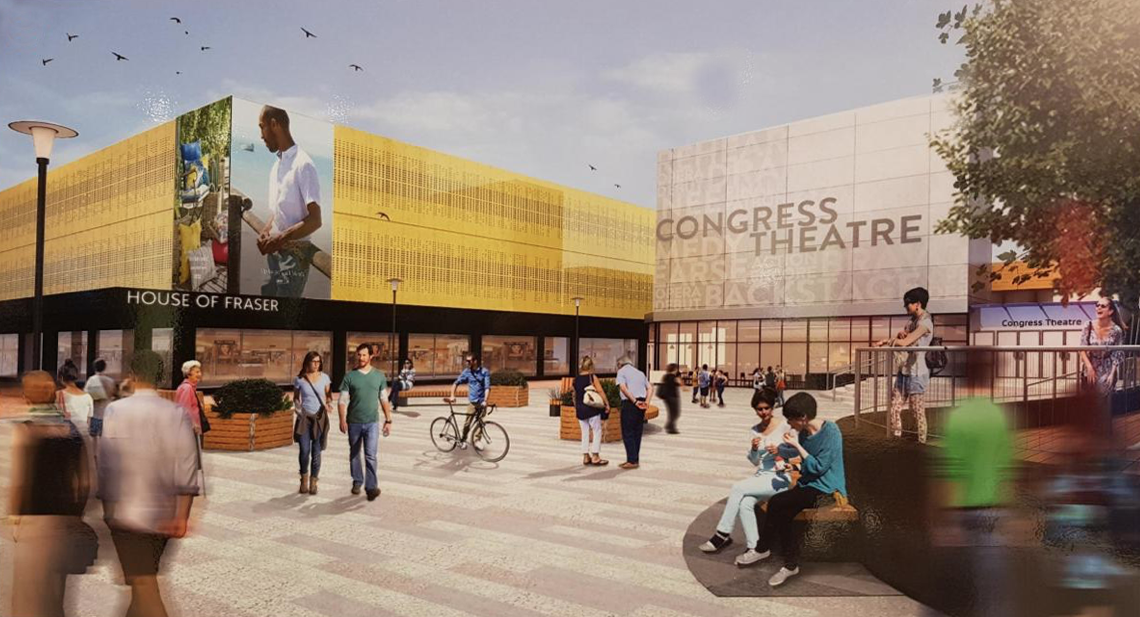
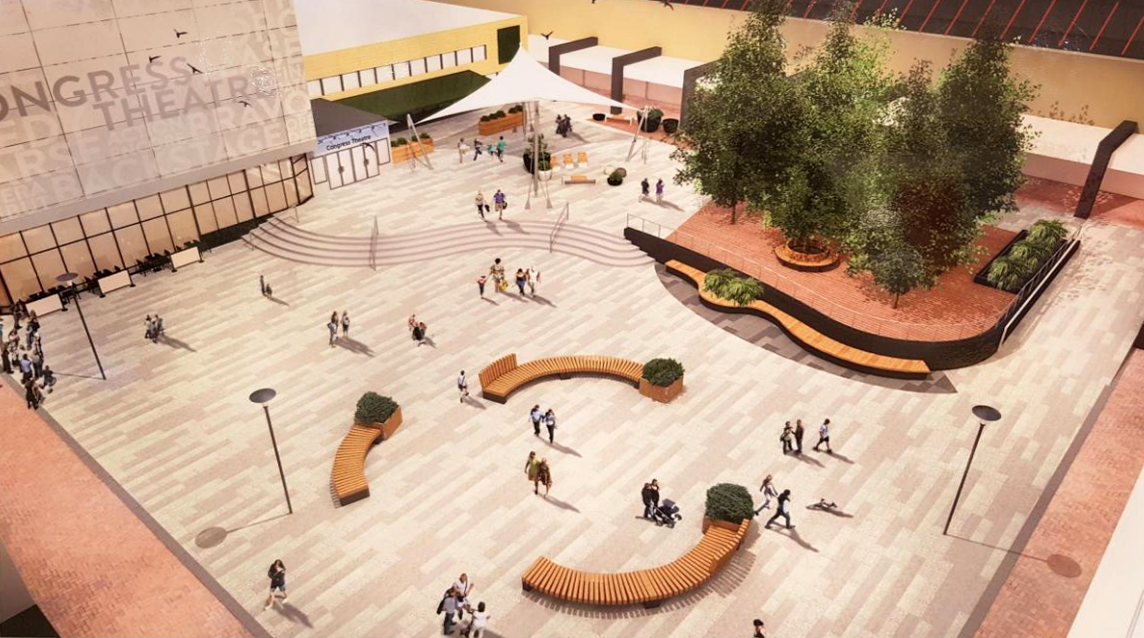
The square it seems is due to be revamped as part of the broader regeneration plans.

Literature displayed at the public consultation said improvements in Monmouth Square aim to -introduce colour into what is a lacklustre space.

South Wales Argus 2017

One hopes that these important public arts work survive the transformation.

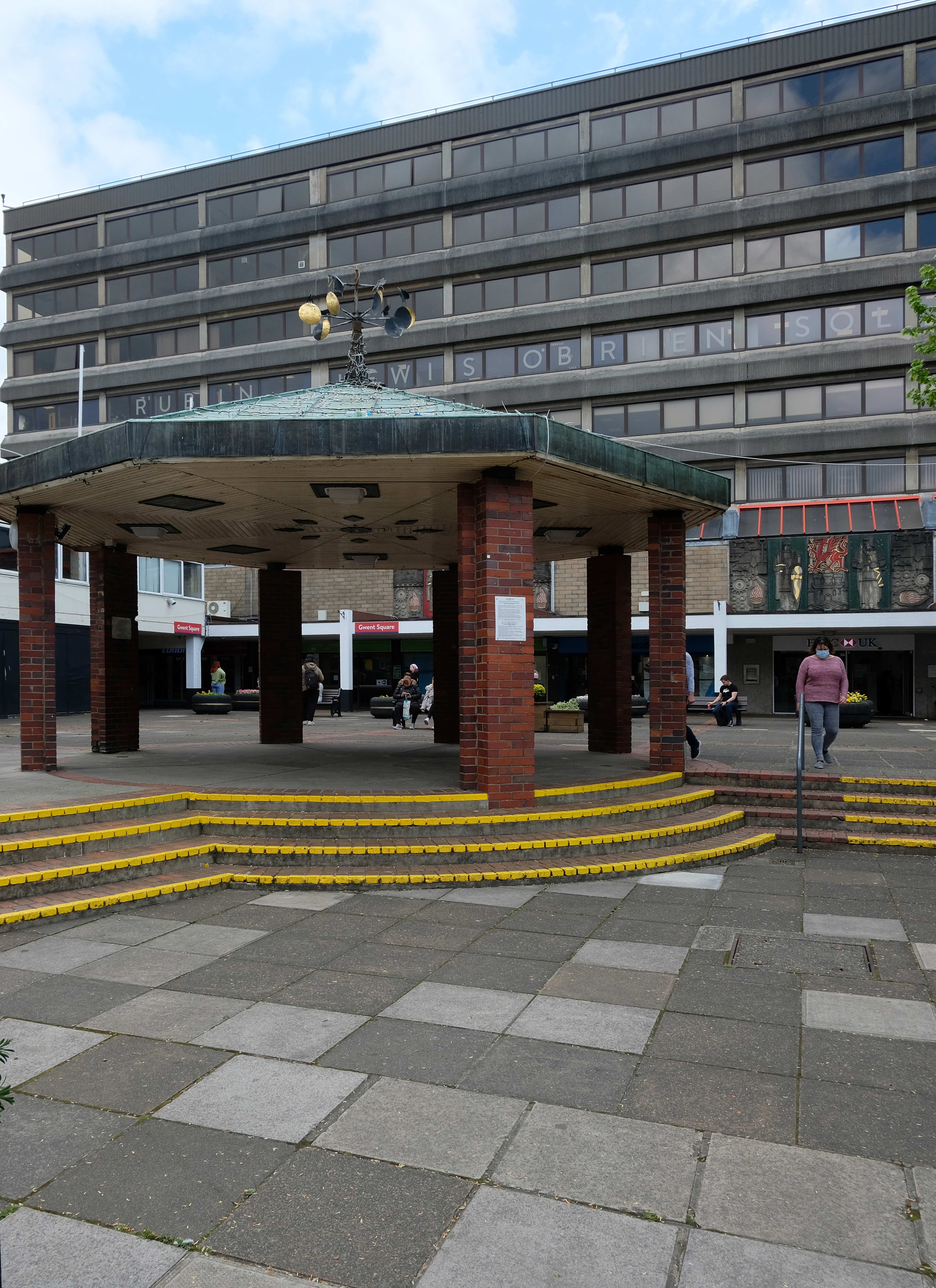
September 2022 the bandstand was demolished.

Photo: Rhiannon Jones

Lia Jones said:

The bandstand was a well-known centre point for the area. I really wish it had been kept in the design for the area, they should have relocated it instead of getting rid of it all together.

South Wales Argus 2022

William Mitchell – Cwmbran

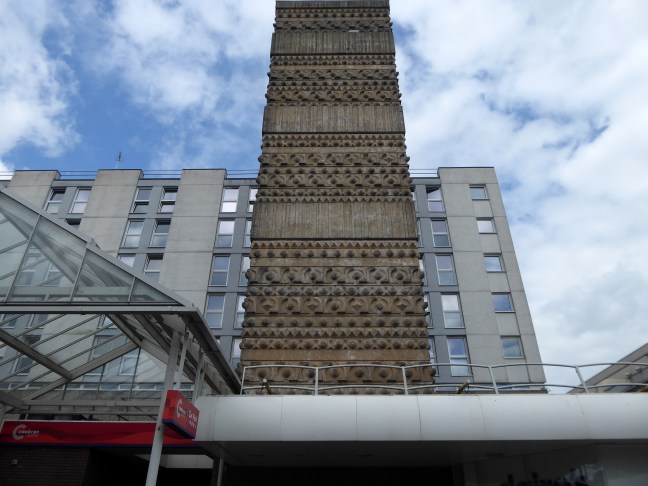
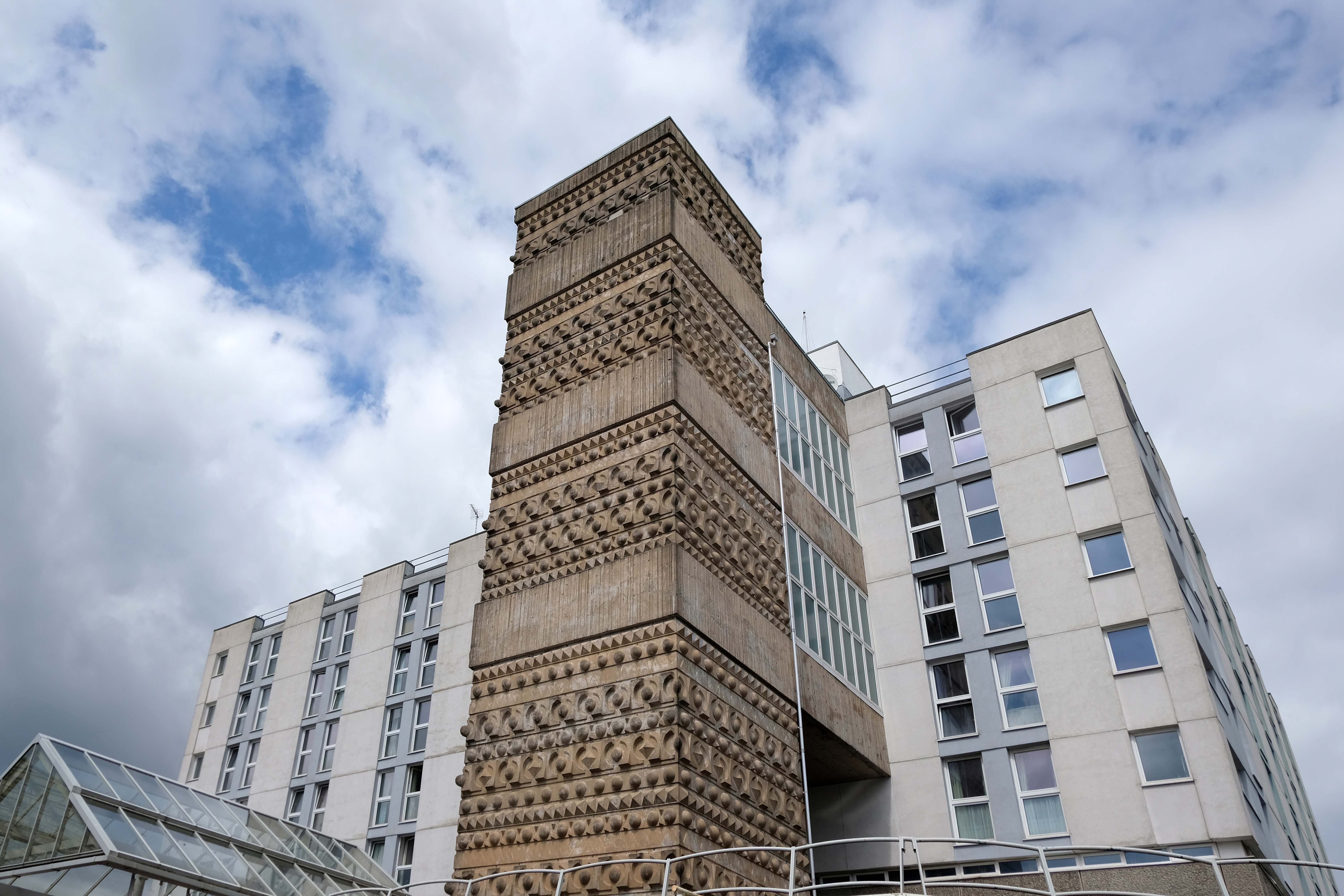
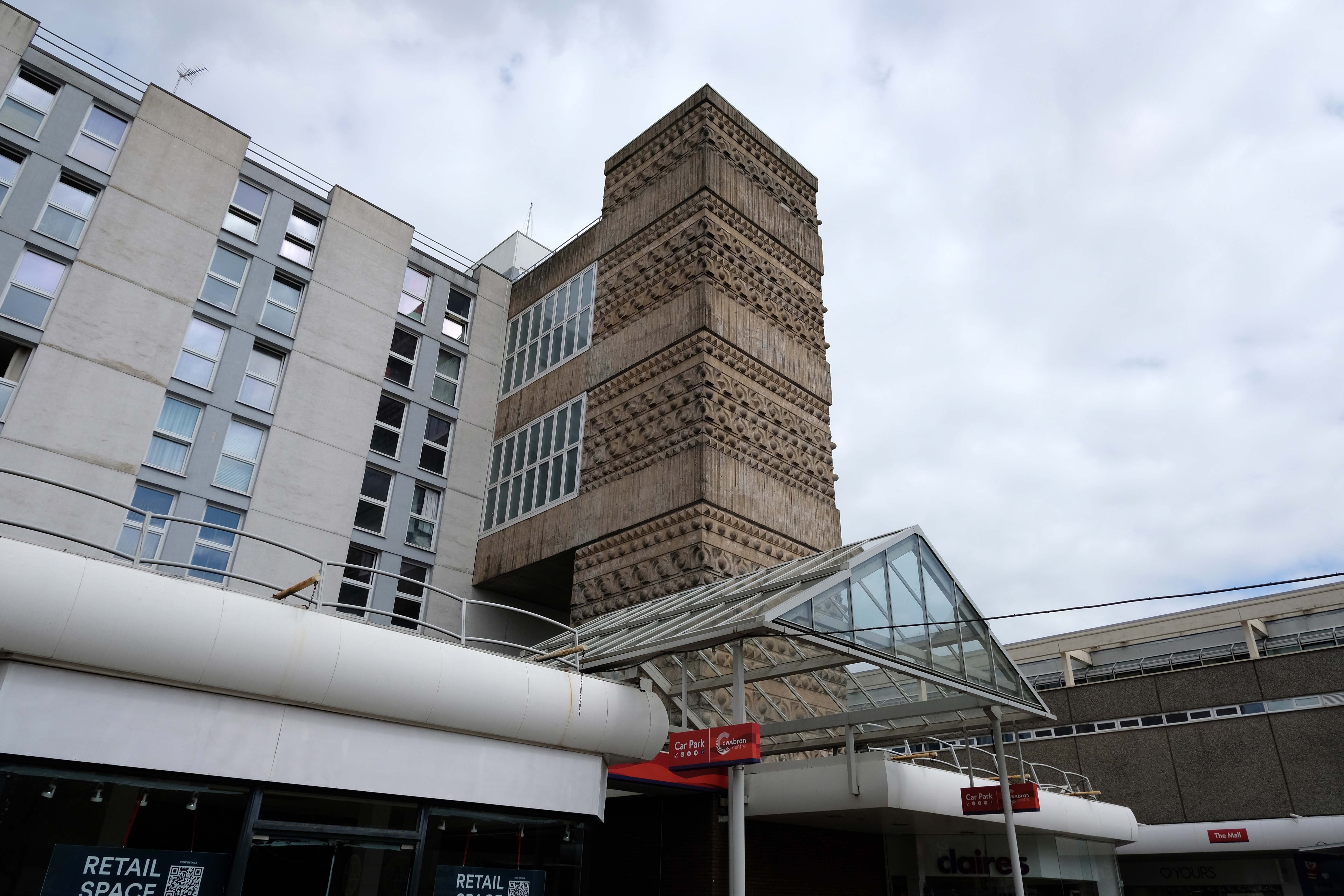
Monmouth House Cwmbran 1967 by Gordon Redfern

Cladding to lift tower by William Mitchell

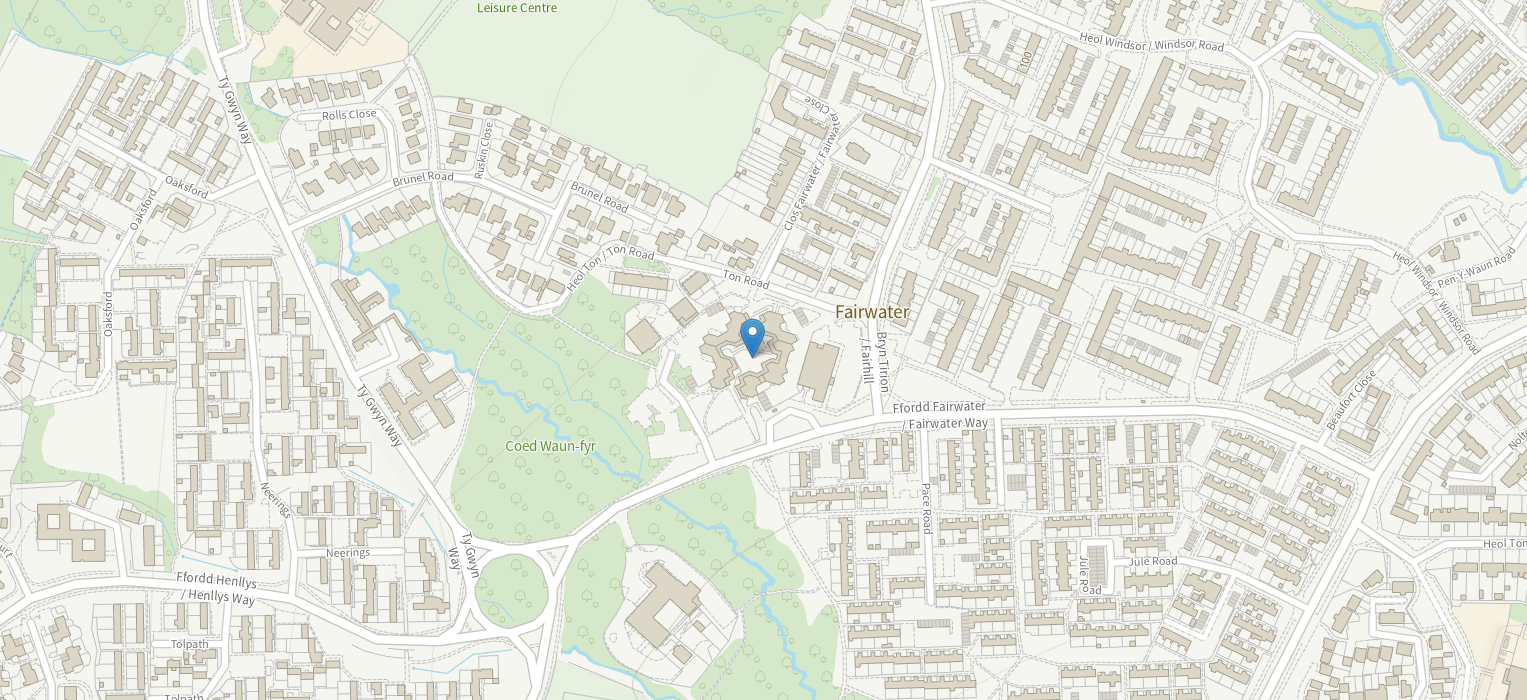
Situated in the Fairwater Shopping Centre:

Built between 1963 and 1967, the centre comprised 18 shops, a childrens playground, public toilets, a health and dental centre, and a combined public house and community centre. The unit centre was designed by Chief Architect of the CDC, Gordon Redfern, and was architecturally the most innovative and ambitious unit centre within Cwmbran New Town. To combat the exposed nature of the site together with the ‘high rainfall, mists and variable winds’ prevalent in the area, Gordon Redfern designed an enclosed, high-sided space that would physically and mentally shield shoppers during their visits. This protective environment extended to creating a central play area that could be viewed from the shops, allowing a more enjoyable experience for children. Four different shops types were provided on increasing floor footage for facilities ranging from barbers to grocery shop, all with storage to the first floor and eight, on the south-west side, with a two-bedroom maisonette above. To enhance the architectural impact of the scheme, Redfern created each unit on an hexagonal plan despite the inefficiences in floor space usage and additional costs in creating the fixtures and fittings. The CDC also fitted out each of the uits to a customised requirement – for example the Post Office unit was pre-fitted with a telephone booth, posting box, stamp machine and half-glazed panel for advertising services.

The structural engineers were Ove Arup & Partners, the builders were Gee, Walker & Slater. Construction costs for the scheme were estimated at £214,106. The unit centre was opened 12 September 1967, shared with the opening of Monmouth House, both undertaken by Rt. Hon. James Callaghan, M.P. A scathing article written the following month by architectural critic Ian Nairn dismissed the design as a ‘kind of in-turned medieval village … an oasis of picturesqueness in a desert of statistical units’ designed for, rather than with, the inhabitants and therefore destined for commercial failure.

Coflein

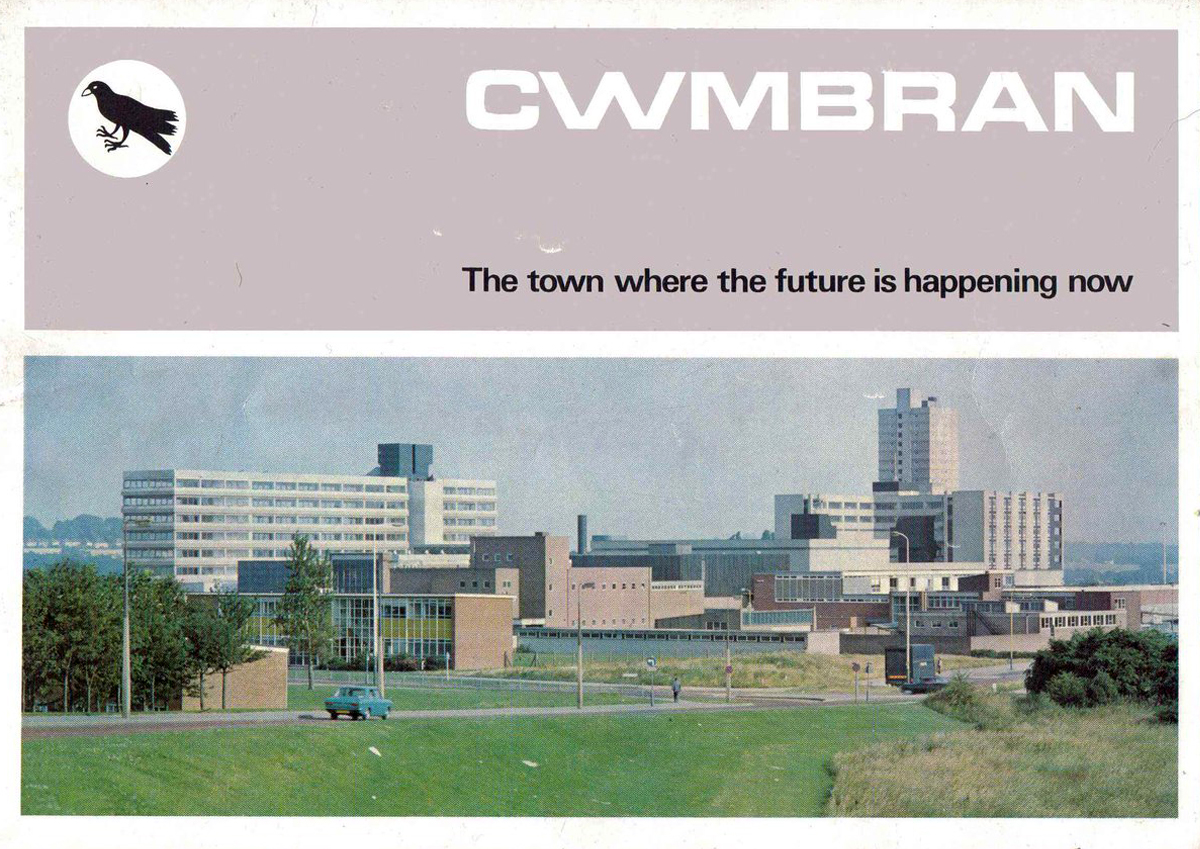
In 1949, the then Minister for Town and Country Planning, John Silken, designated an area of 31,000 acres surrounding the village of Cwmbran to be the first new town in Wales. Unlike the first generation new towns, the aim of Cwmbran was to provide housing and a range of facilities for those employed in existing industry but who lived in poor housing in the neighbouring valleys.

A master plan was implemented to achieve the objective for the town. However, as the town developed, the projected size of the town had to increase and many of the plans ideals were diluted as the Southwest expansion area was approved in 1977.

In fact, due to the planned nature of Cwmbran, there now exists few opportunities for new development within the town. This has meant intense development pressure on the outskirts of Cwmbran from house builders and developers.

Torfaen

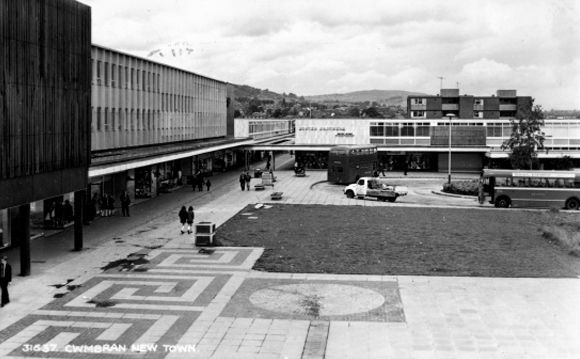
On the day of my visit the centre was busy with happy shoppers happily shopping – there were major works underway in line with the town’s new plans.

Cwmbran has also prospered from having a vibrant retail core. The Shopping Centre has a fully pedestrianised, multi purpose centre with covered shopping malls. There are over 170 retail outlets covering a total area of 700.000 sq. ft, including a number of popular high street retailers, restaurants, a theatre and cinema. Accordingly, the town is now considered to be a sub regional centre, and the intention is that this retail focus will be increased by regeneration of the eastern side of the town.

Now 50 years on parts of the town are in need of renovation. Through various public and private partnerships the aim of the Cwmbran Project Team is to set out a 15 year strategy for the regeneration and development of the new town, and begin its implementation.

My primary interest concerned the public art in Monmouth SquareWilliam Mitchell’s concrete clad lift shaft.

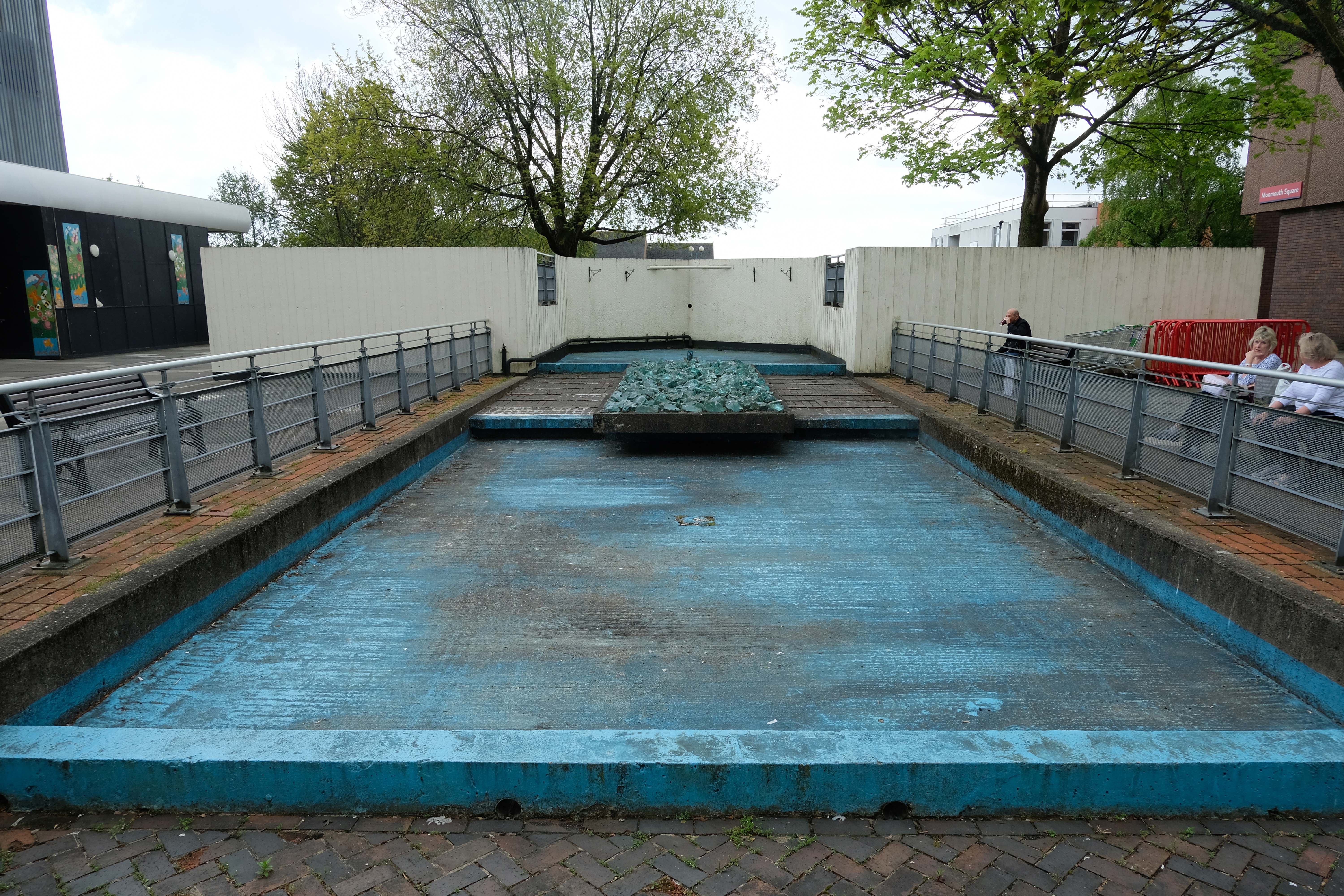
There is a water feature currently off limits and without the water that would elevate the feature to a fully functioning feature.

Plans proposed in 2018 could may herald the demise of this important public work of art.

Plans to level the water gardens in Monmouth Square at the Cwmbran Centre will be reviewed by Torfaen council’s planning committee.

The proposal also includes a modern café with a glazed front, the development of an events space to house farmers markets and street theatre and a green area.

Rebecca McAndrew, Torfaen council’s principal planning officer, said in the report that the water feature would be filled in and flattened as part of “an ongoing renovation programme”.

The application states that the area has a ‘weary and dated appearance’ and do not meet disability access requirements.

According to the report, the water gardens last flowed 13 years ago and its demolition would lead to further improvements at Wales’ second largest shopping centre.

Free Press

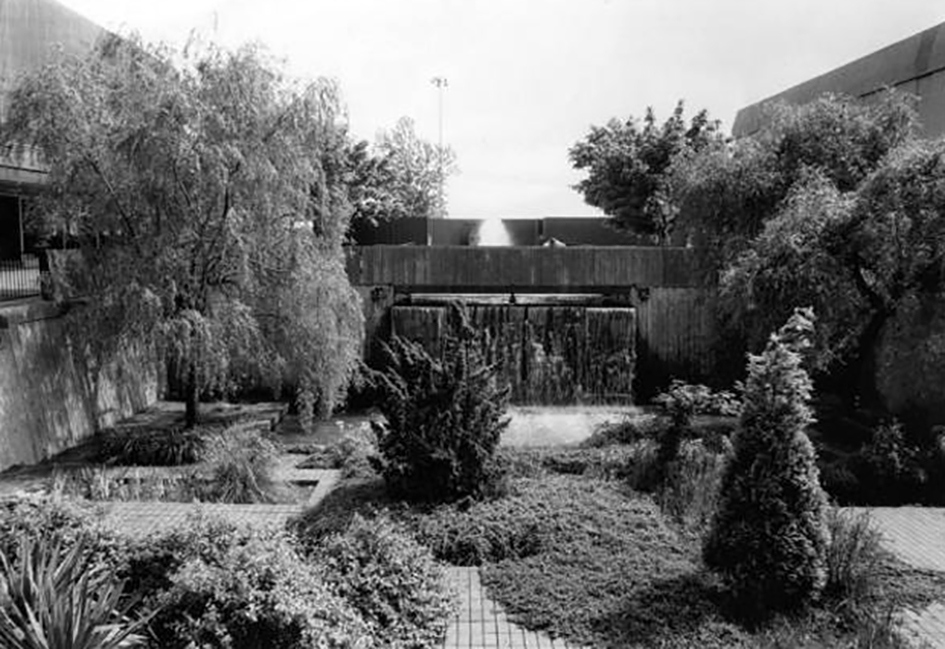
The Water Gardens were designed by the CDC Chief Architect Gordon Redfern as a key visual and recreational element of the Town Centre. His focus was on combining different textures in the form of hard landscaping and planting, with the sense of movement and sound created by running water. At the upper end a pool, containing an artwork created from Pilkington Glass, was fed by a horizontal water jet which was in turn led by a small ‘canal’ to the lower, sunken garden. With water cascading down the southern retaining wall, consisted of moulded concrete sporting abstract geometric form, and variety of trees and shrubs, this formed an area for busy shoppers and families to relax and socialise.

RCAHMW

Close by, by way of light relief is a concrete screen wall with an almost watery wavy relief!

Here’s hoping that this cavalcade of concrete delights survives the planners’ and developers’ dreams.

Royal Liverpool Hospital

Prescot St Liverpool L7 8XP

Holford Associates designed in 1963-5 and completed in 1978

The old Royal building opened in 1978 and has served the city ever since – despite ongoing infrastructure problems. Looking at the crumbling, unsightly building, it is clear why Liverpool is desperate for its sparkling new facility to finally open.

When the new build plans were first announced, the Trust stated: “Once the new hospital is constructed, our existing hospital will be demolished. In its place, there are plans to develop a world-class health campus, as well as landscaping green space, roughly the size of Chavasse Park.”

In January 2020, two years after Carillion’s collapse, a report from the National Audit Office, projected the overall costs of the new Royal could tip over the £1.1 billion mark. It also commented on the plans for the old building, stating: “Further work to demolish the old hospital and create a new underground car park and public plaza, was not included in the PFI project and is currently unfunded. The cost of this was not included in the PFI project and is currently estimated at £38 million.”

Liverpool Echo

The Royal Liverpool – it’s amazing that people are supposed to get better there. Then again, what motivation it must be to get yourself back home! No wonder it’s being replaced.

J Carter, Aigburth

In 2011 the Echo’s readers voted it the ugliest building in town.

Unloved and due for demolition just as soon as the money can be found – though it may be around for some time to come – go and have a look.

Liverpool – Cathedral to Cathedral

Beginning at Frederick Gibberd’sMetropolitan Cathedral of Christ the King.

Walking toward Giles Gilbert Scott’sAnglican Cathedral via the University Campus.

We are greeted by William Mitchell’s sliding door panels.

Let’s take a look inside.

Above is the tower with large areas of stained glass designed by John Piper and Patrick Reyntiens in three colours – yellow, blue and red, representing the Trinity. 

On the altar, the candlesticks are by RY Goodden and the bronze crucifix is by Elisabeth Frink. Above the altar is a baldachino designed by Gibberd as a crown-like structure composed of aluminium rods, which incorporates loudspeakers and lights. Around the interior are metal Stations of the Cross, designed by Sean Rice. Rice also designed the lectern, which includes two entwined eagles. In the Chapel of Reconciliation, the stained glass was designed by Margaret Traherne. Stephen Foster designed, carved and painted the panelling in the Chapel of St. Joseph. The Lady Chapel contains a statue of the Virgin and Child by Robert Brumby and stained glass by Margaret Traherne. In the Blessed Sacrament Chapel is a reredos and stained glass by Ceri Richards and a small statue of the Risen Christ by Arthur Dooley. In the Chapel of Unity is a bronze stoup by Virginio Ciminaghi, and a mosaic of the Pentecost by Hungarian artist Georg Mayer-Marton which was moved from the Church of the Holy Ghost, Netherton, when it was demolished in 1989. The gates of the Baptistry were designed by David Atkins.

On now to the University.

Vine & Chestnut Houses by Gerald Beech 1967-70

Computing Services Electrical Engineering & Electronics by Yorke, Rosenberg & Mardall 1962-74

Harold Cohen Library 1938 – Harold A Dod of Willink & Dod

Learning by Eric Kennington 1938

Sherrington Buildings 1951-57 – Weightman & Bullen.

These days of peace foster learning

Let There be light!

Dental Hospital 1965-69 Anthony Clark Partnership

Royal Liverpool Hospital 1978 Holford Associates.

Designed by NBBJ and HKS – The Royal Hospital is one of the national infrastructure schemes being delivered under a Government PFI contract, with work having started in 2014 led by now-collapsed contractor Carillion.

After Carillion went into administration, further issues were uncovered during a structural review by Arup in 2018, including that the cladding on the building was unsafe and the project had to be reviewed and re-costed as a result. The targeted completion date is now five years later than planned.

Place Northwest

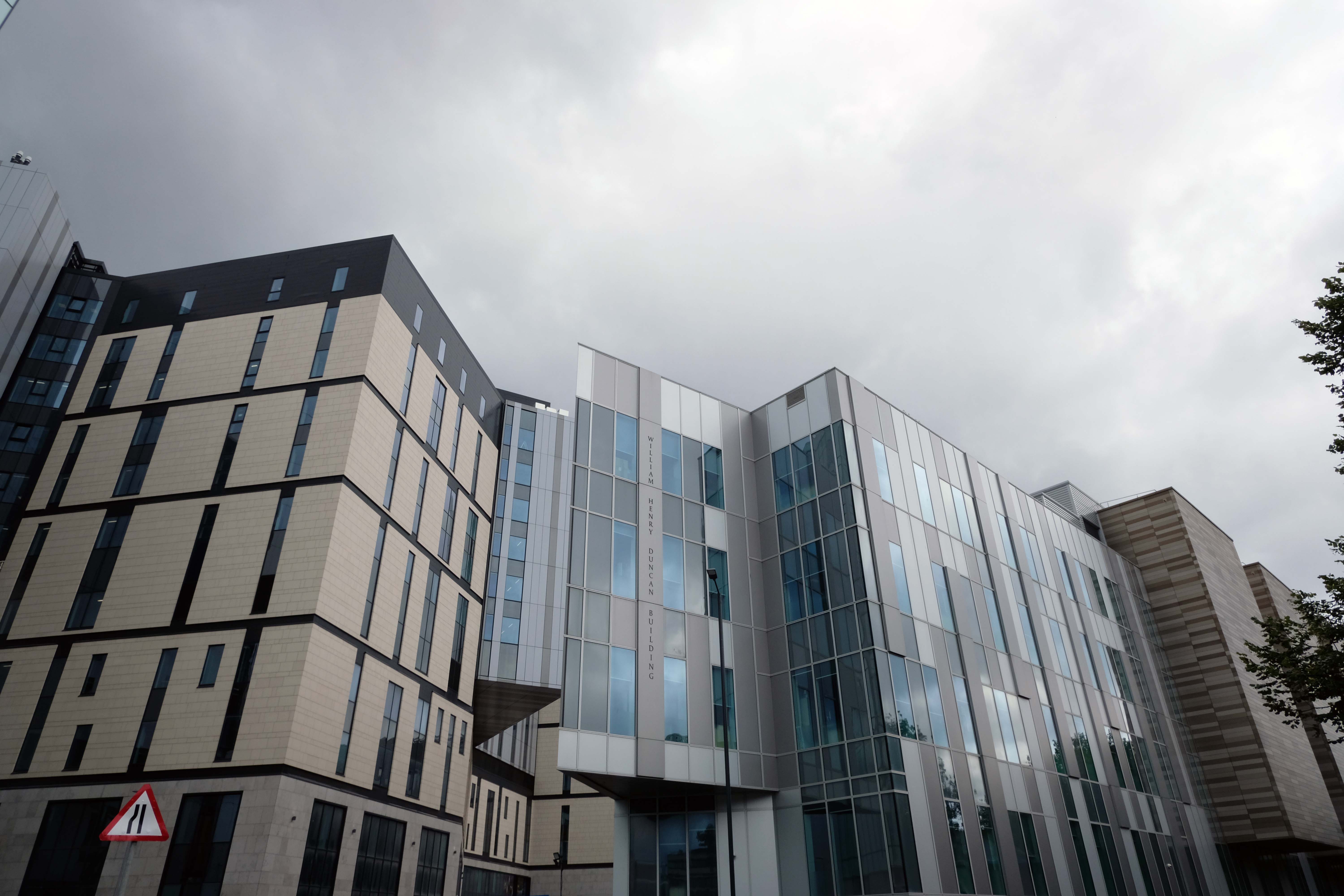
William Henry Duncan Building 2017 by AHR Architects

Life Sciences Building

Mathematics and Oceanography Building 1961 by Bryan & Norman Westwood & Partners

Metal screen 1961 by John McCarthy also responsible for the Concrete Wall at the New Century Hall Manchester.

The History and Essence of Mathematics 1961 terrossa ferrata panes by John McCarthy.

Central Teaching Hub by Robert Gardner-Medwin in association with Saunders Boston and Brock 1965-67

Abstract Reliefs by David Le Marchant Brock in collaboration with Frederick Bushe.

Big Bird 1964 by Sir Frank Rowling

Square with Two Circles by Barbara Hepworth 1964

Re-sited from its original setting.

Just around the corner a Relief by Hubert Dalwood aka Nibs

Senate House by Tom Mellor & Partners 1966-68

Chadwick Building by Sir Basil Spence 1963-68

Abstract mosaic Geoffrey Clarke.

Three Uprights by Hubert Dalwood 1960

Materials Innovation Factory by Fairhursts Design Group 2016

Muspratt Lecture Theatre

Bubble Chamber Tracks by Geoffrey Clarke 1968

Donnan and Robert Robinson Building

Oliver Lodge Building by Tom Mellor & Partners 1966-68

Sports Centre by Denys Lasdun 1963-66

Bedford House by Gerald Beech 1965-66

Gordon Stephenson Building by Gordon Stephenson 1950-51

Door handles by Mitzi Solomon-Cunliffe.

Rendall Building by Bryan & Norman Westwood, Piet & Partners 1964-6

Between the concrete is glass by Gillian Rees-Thomas – she was also responsible for the side chapel windows at St Mark’s Broomhill Sheffield.

Within the courtyard site Mitzi Solomon Cunliffe’sQuickening 1951

Roxby Building by Bryan & Norman Westwood, Piet & Partners 1961-66

South Teaching Hub by Bryan & Norman Westwood, Piet & Partners 1961-66

Sydney Jones Library by Sir Basil Spence

Further Reading: Liverpool Campus Built Heritage

Onward now taking in some sites along the way.

Philharmonic Hall by Herbert J Rowse 1936-69

Federation House by Gilling Dod and Partners 1965-66

Relief Decoration by William Mitchell

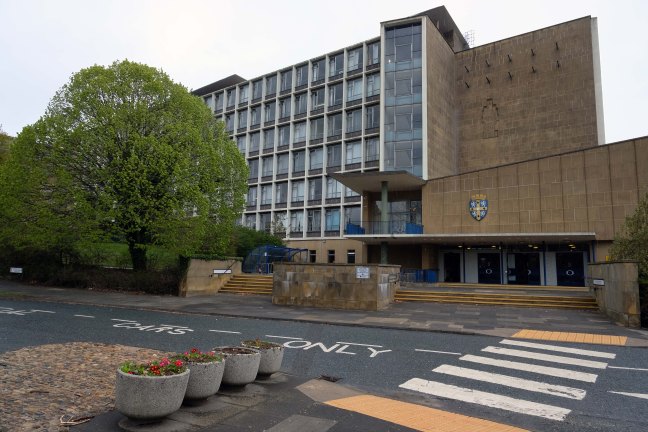
County Hall Durham

Work on the new building began in 1960: it was designed by Sir Basil Spence and was built by John Laing & Son at a cost of £2.75 million and was officially opened by the Duke of Edinburgh on 14 October 1963. 

The design for the seven-storey building involved continuous bands of glazing with exposed concrete beams above and below.

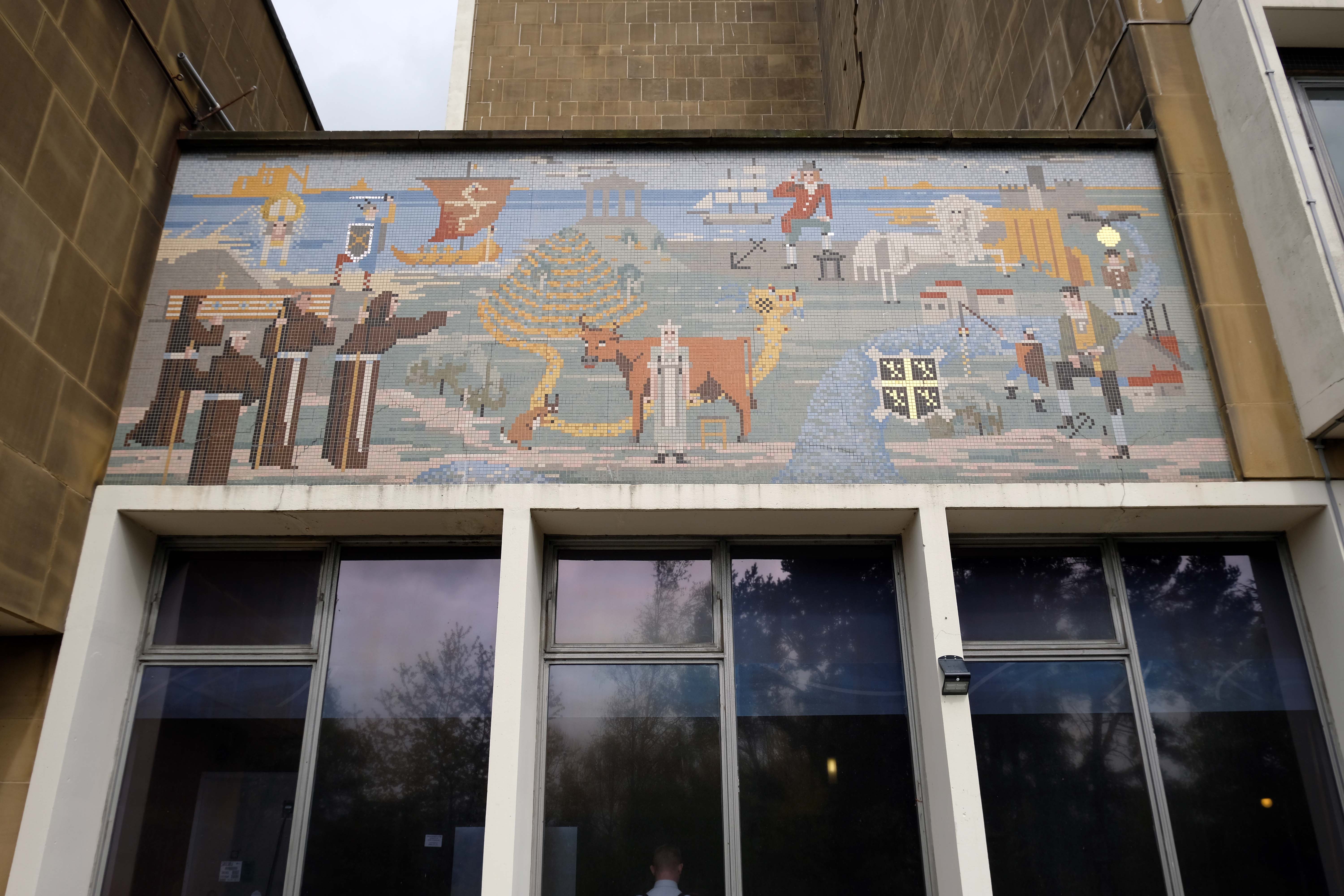
A large mosaic mural depicting local scenes was designed by Clayton and Gelson and installed on the face of the building.

In March 2019, the County Council approved a proposal to move to a smaller new-build facility on the Sands car park at Freeman’s Place in the centre of Durham. Of around 1,850 staff currently based in County Hall, 1,000 will be based at the new HQ and approximately 850 will relocate to four council office sites being developed across the county in Crook, Meadowfield, Seaham and Spennymoor. The building works, which are being carried out by Kier Group at a cost of £50 million, are scheduled to be completed in late 2021. Richard Holden, Conservative member of parliament for North-West Durham, has described the new council headquarters as a ‘vanity project’, questioning the suitability of the location as well as tax increases and cuts to services used to pay for the development.

Wikipedia

In April 2022 the council sold their new HQ to Durham University – yet demolition will still go ahead. This unlisted gem in the grand Festival of Britain style deserves much, much better.

Nearby Neighbours Newcastle have had the good sense to list and retain their Civic Centre.

The administration now plans a three-pronged approach to:

  • Construct another new modest-sized civic building and conference centre for businesses at Aykley Heads.
  • Occupy other council-owned offices already being built at Aykley Heads.
  • Refurbish and reuse the former customer access point on Front Street, Stanley, a large, run-down Grade II listed building which the council has been unable to sell.

The Northern Echo

Online, there is no evidence of any will or pressure to save this glorious building – the site will eventually become that most modern mix of business park, retail, and leisure facilities.

The proposal, led by Durham County Council, forms part of an overall masterplan to knock down the municipal building in Aykley Heads and redevelop the wider site to provide retail, financial and professional space, food and drink units, space for leisure use and a multi-storey car park.

Insider Media 2020

Go see it whilst you are still able.

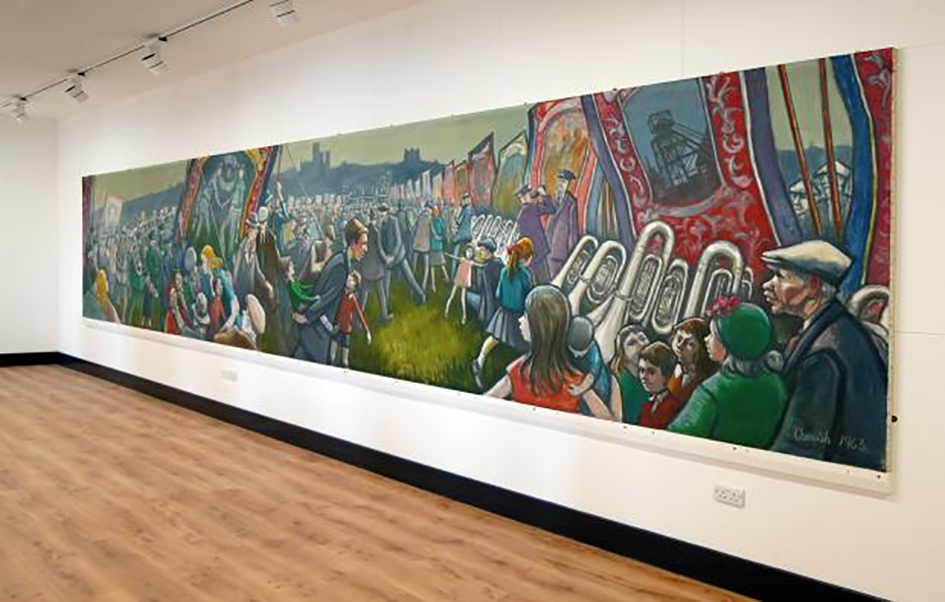
A mural by a beloved pitman painter, commissioned by Durham County Council to mark the opening of County Hall in 1963, has been successfully moved to its new home in Bishop Auckland.

The painting by Norman Cornish, one of the most respected and much-loved artists to emerge from the North-East, depicts the arrival of the banners at Durham Miners’ Gala.

After being commissioned by the council, Cornish was granted 12 months unpaid leave from Mainsforth Colliery in Ferryhill to complete the painting, with most of the work being completed during the coldest winter in 40 years.

Although it arrived at County Hall in 1963 rolled up in the back of a carpet van, the mural’s removal was an incredibly intricate process, involving several experts.  

Northern Echo

Norman Cornish

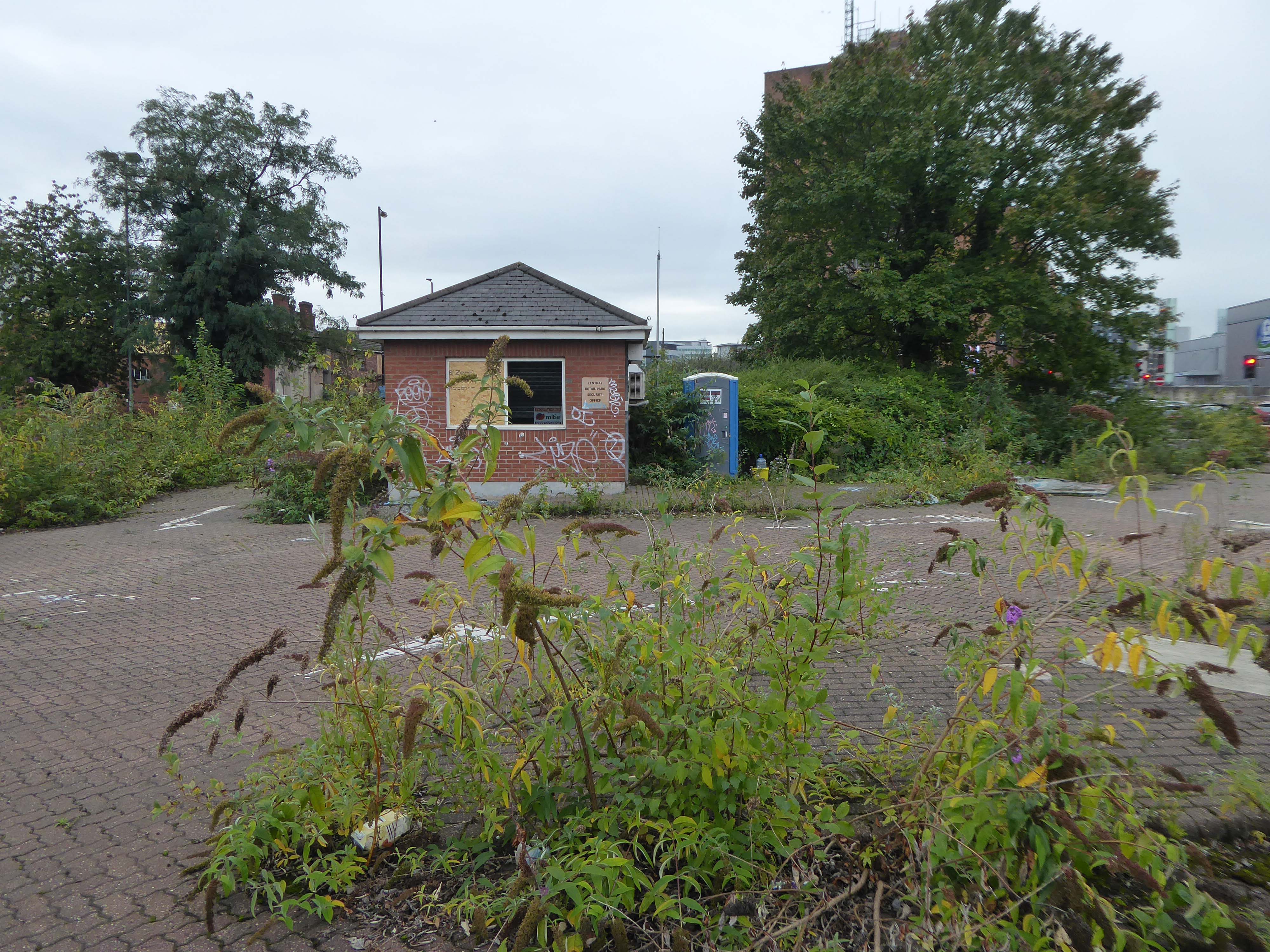
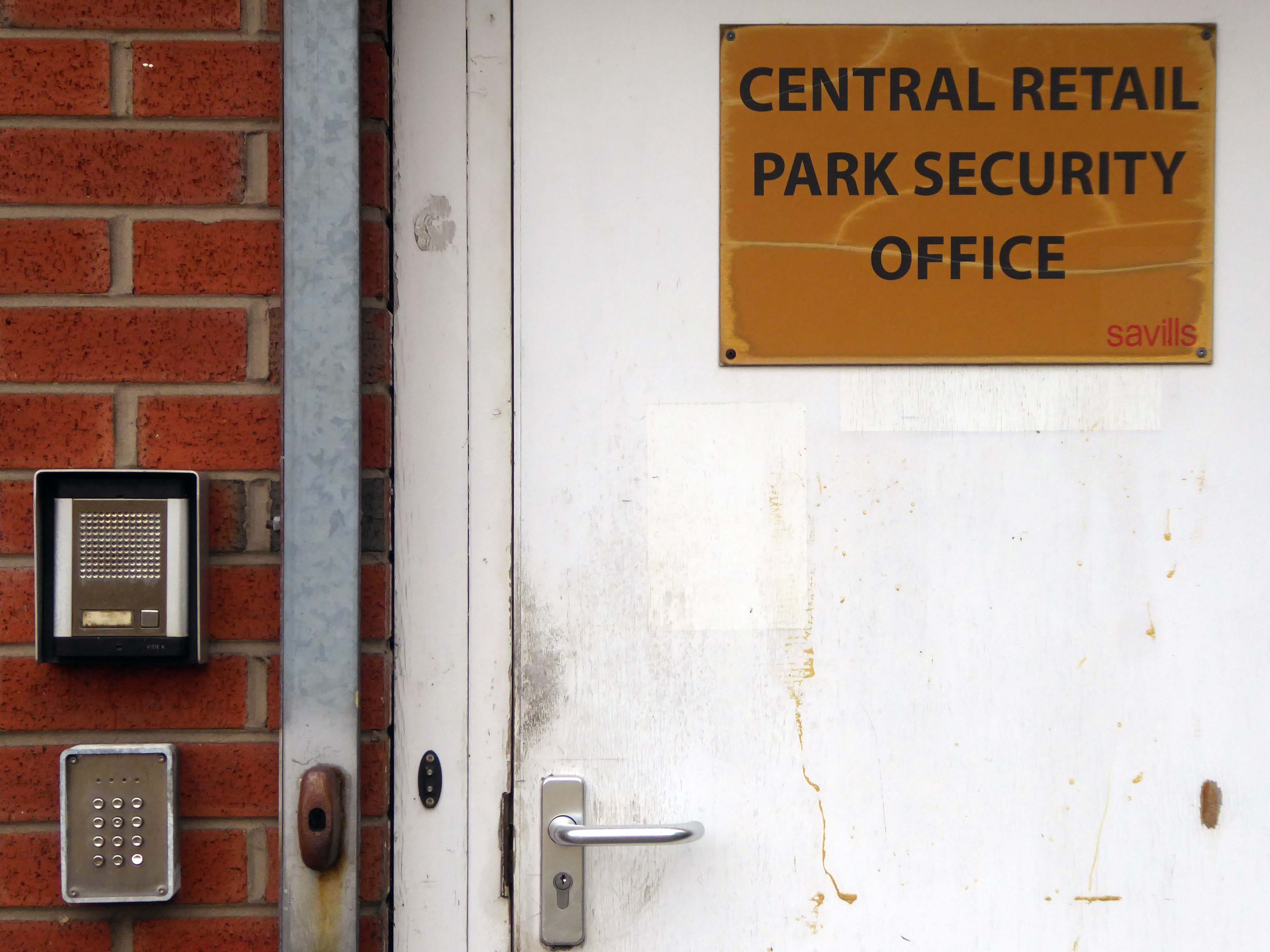
Central Retail Park – Ancoats Manchester

We have been here before – before the wrecking ball.

Subsequently, the tills have long since ceased to ring.

The road to redevelopment is paved with good intentions, and so far a profound lack or realisation.

The local folk objected to the planned luxury offices.

Tomorrow Manchester City Council’s Executive is set to approve the development framework for the former Central Retail Park that will see it turned into a zero carbon office district. But, according to a public consultation carried out by grassroots campaigners, an overwhelming majority of locals want public spaces on the 10.5 acre site in Ancoats rather than luxury offices.

The Meteor October 2020

As of April 2022 Trees Not Cars have sought the views of local representatives following the decision not to go ahead with the building of a multi-storey car park

What we need are councillors who will stand up for us and push for as much green space as possible at Central Retail Park development.

It’s council owned, it would link in well with Cotton Field Park and will give the capacity for locals to enjoy the outdoors – without driving, once New Islington Green has been developed into offices.

Trees Not Cars April 2022

There is a perennial plea for affordable homes and green space, along with perennial structural and institutional barriers to their financing and building.

Place North West 2019

The circle between the developers, landowners, local authority and central government stubbornly refuses to be squared.

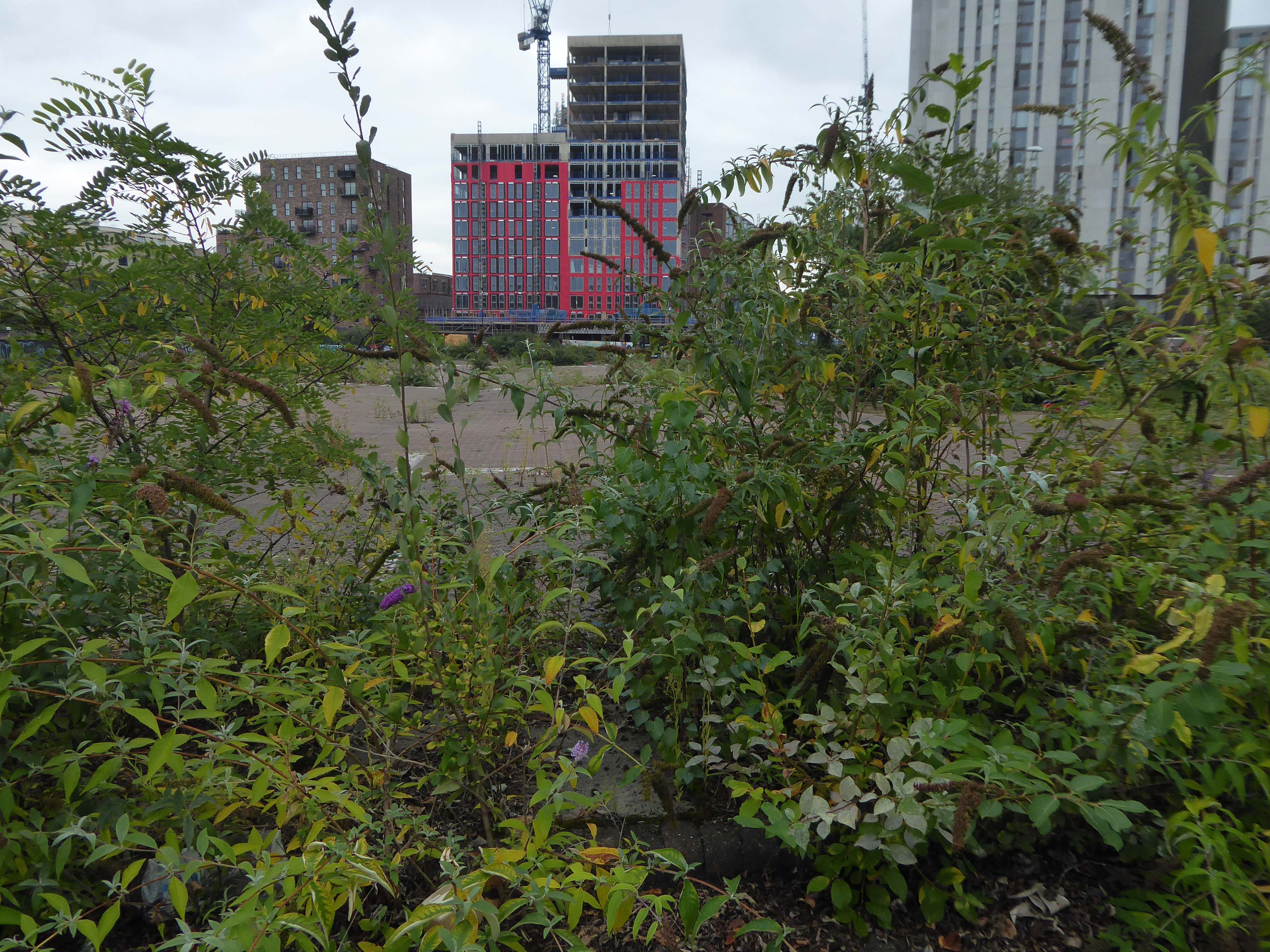
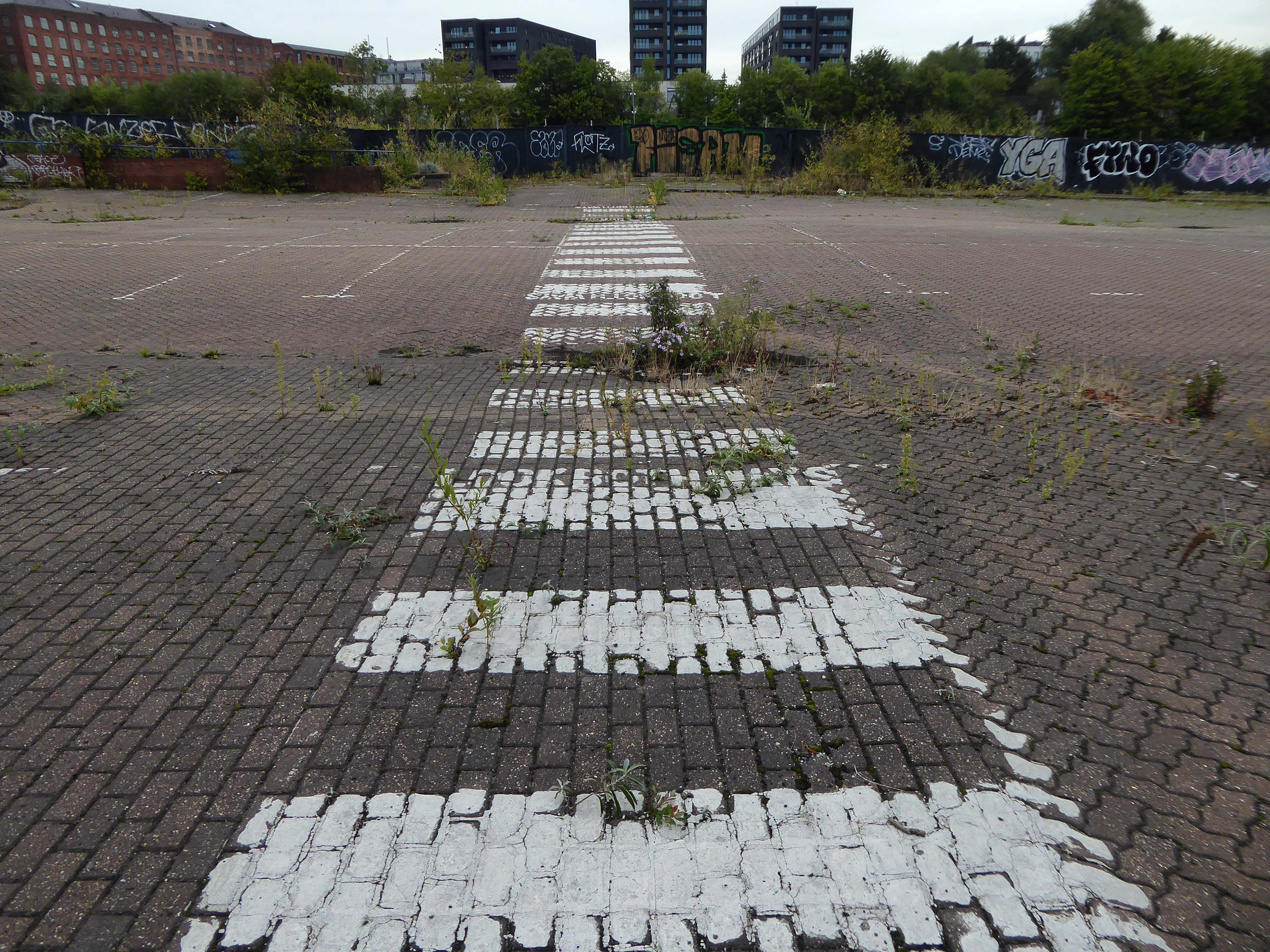
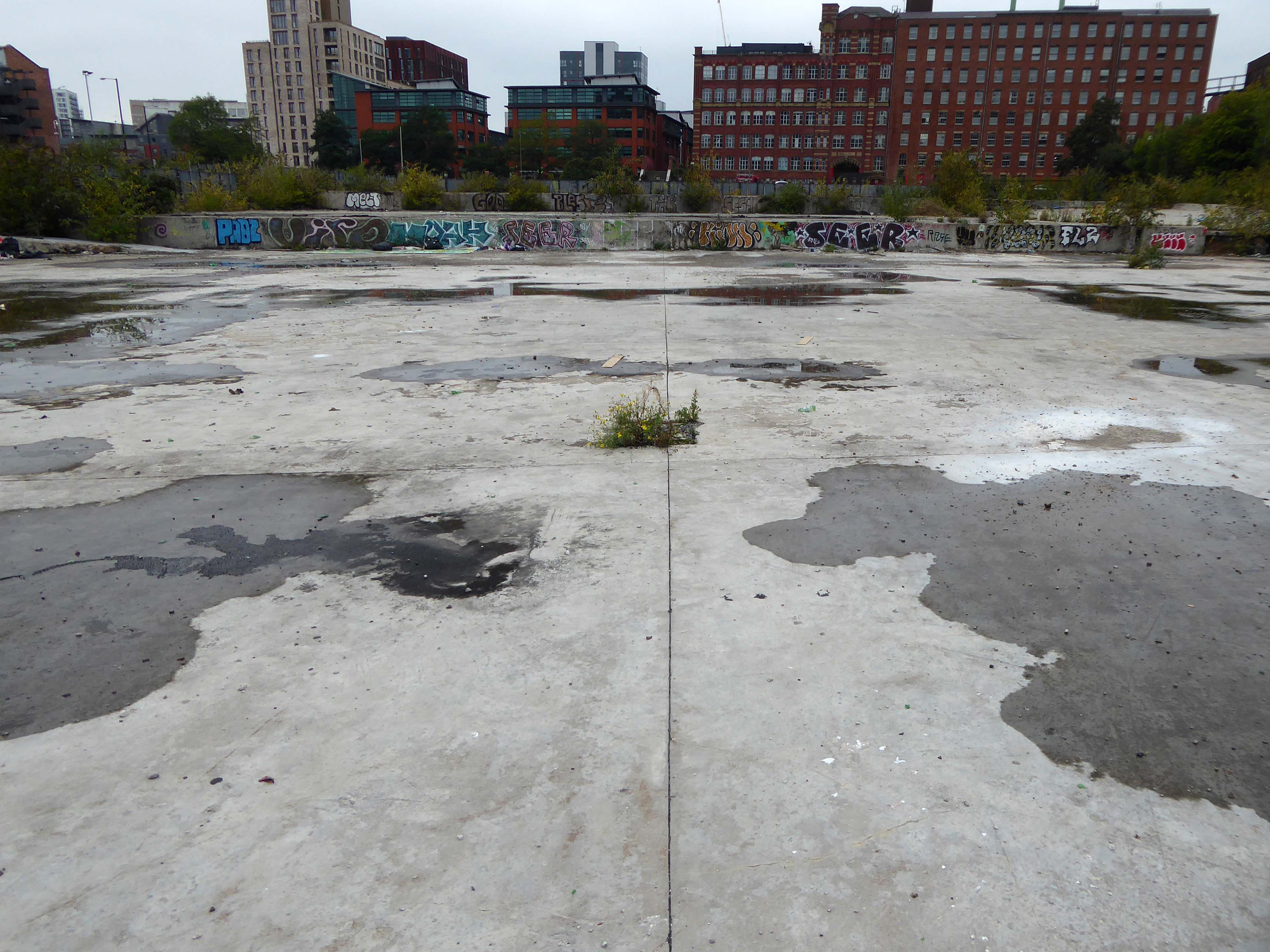
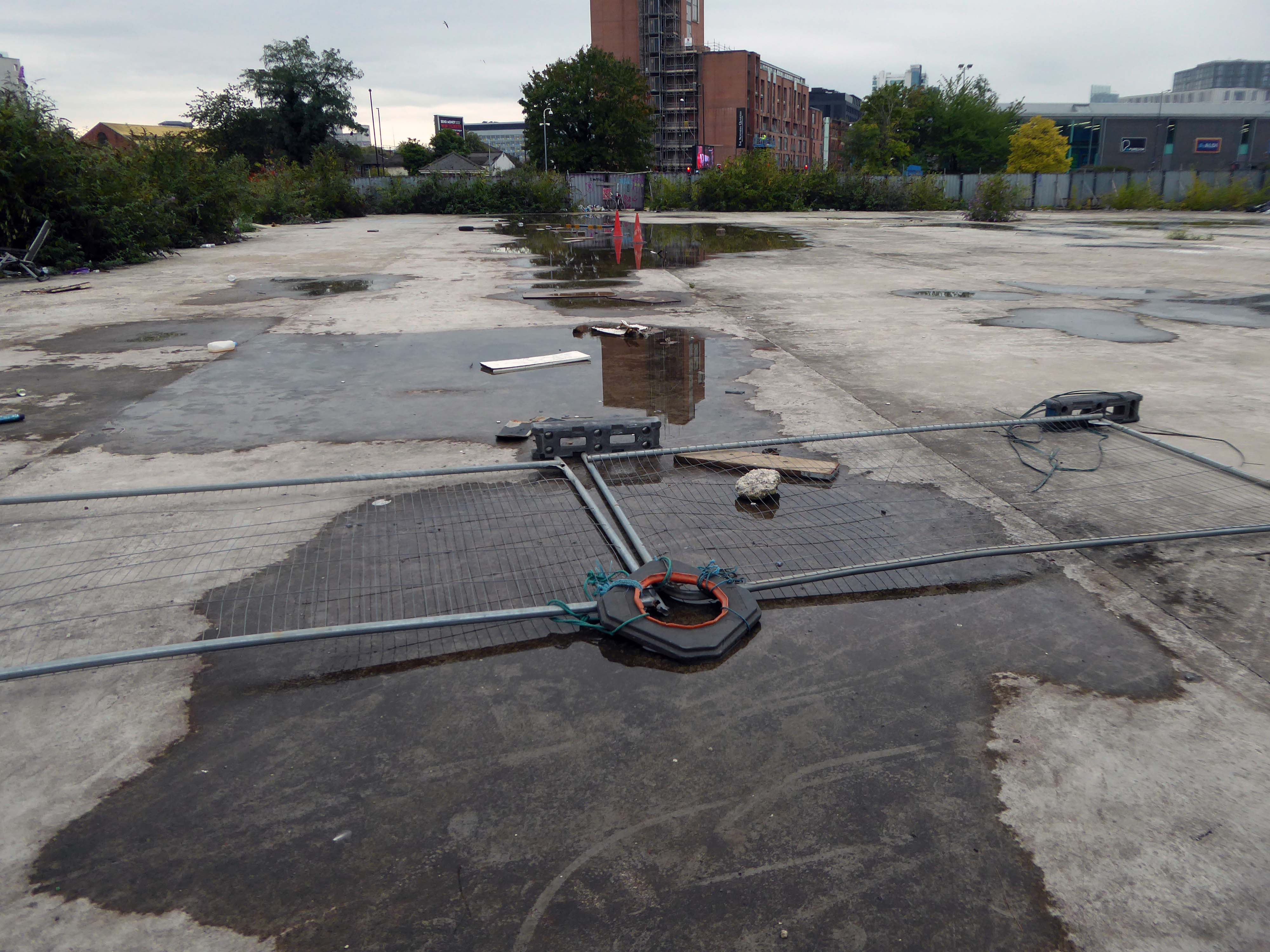
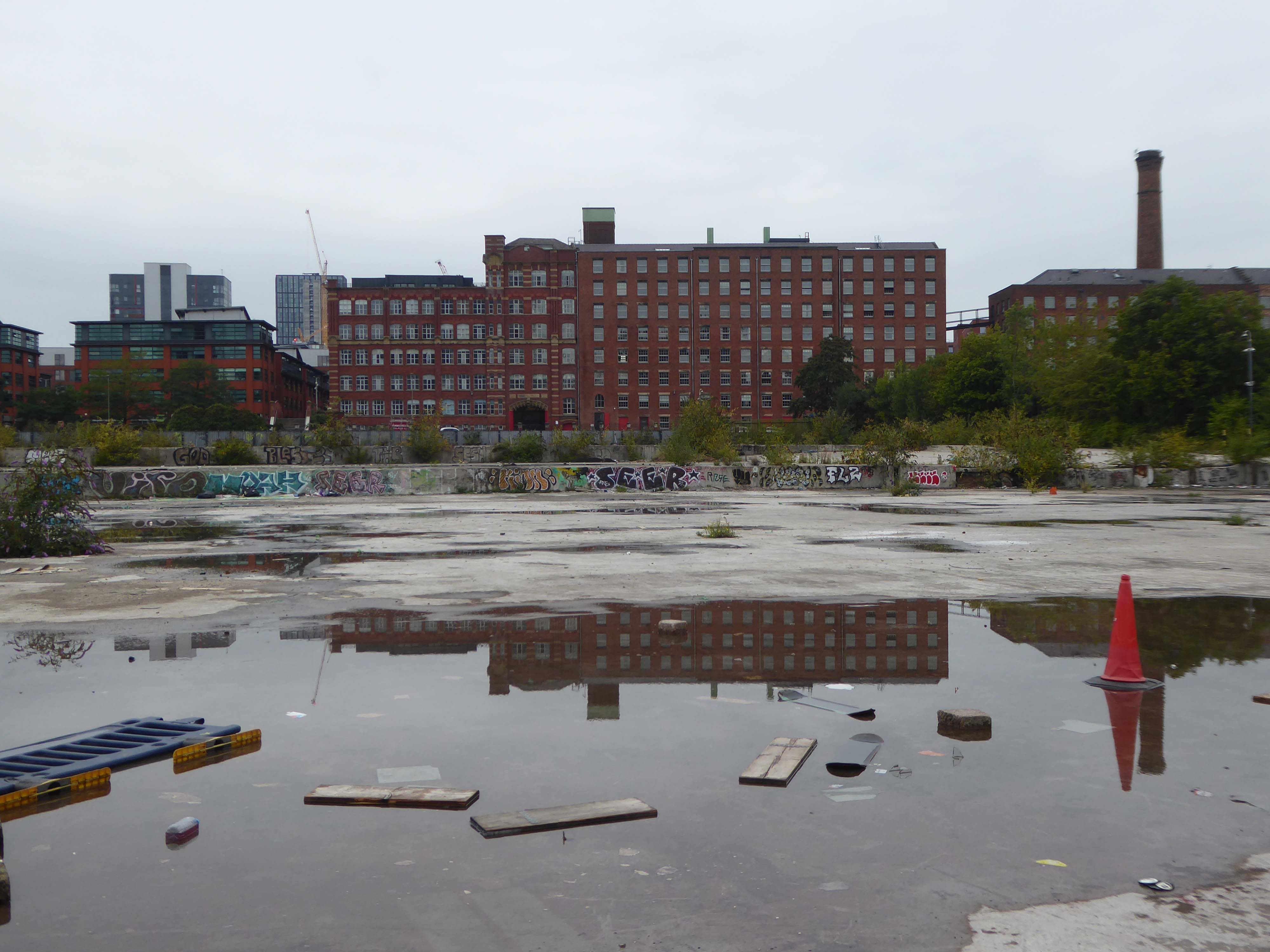
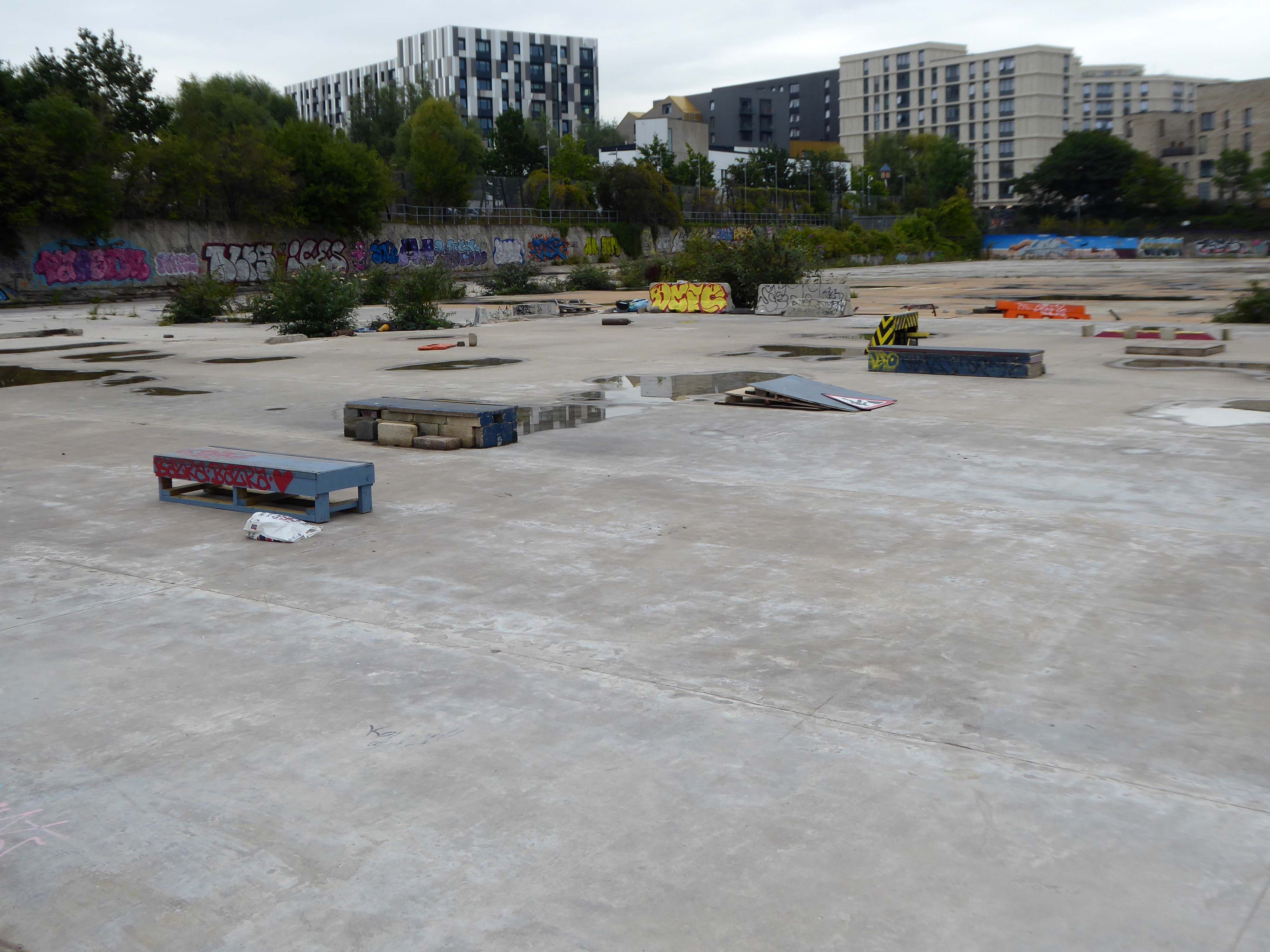
As of 20th September 2022 the land remains derelict – currently the domain of wayward taggers, spray-can jockeys and homemade mini-ramp skaters.

A concrete rectangle dotted with Buddleja davidii  – surrounded by Manctopia and main roads.

The University of Nottingham

The Main Campus based on Jesse Boot’s Highfield parkland incorporating Lenton House and Lenton Hall. Boot along with his architect Percy Morley Horder developed a building scheme in 1921, achieving university status in 1948.

DH Lawrence Pavilion architect Marsh & Grochowski 1998-2001

Portland BuildingT Cecil Howitt 1949 -56

Trent Building architect: P Morley Horder 1922-28

Portland Building extended in 2001-3 architects: Michael Hopkins & Partners

Further additions to the rear 2013

The New Theatre was established in 1969, and was originally housed in the Archaeology and Classics building of the University of Nottingham. In 2001 an extended foyer was added to the building, following a donation from an alumnus of the university.

The summer of 2012 saw an extensive redevelopment of the building housing the New Theatre. The former Archaeology and Classics building was demolished from the site; leaving the New Theatre as a freestanding building. Parts of the old building were retained and repurposed as new rehearsal rooms, and a studio space; as well as a significant remodelling of the dressing room, and extending the foyer.

Architects: Maber

University Library architects: Faulkner Brown, Henry, Watkinson & Stonor 1971-73

The collection of buildings in University Park Campus, colloquially known as Science City, was first masterplanned by Basil Spence in 1959. His vision was largely realised by Renton Howard Wood Associates during the 1960s. Since then, numerous additions and alterations have been made to suit the ever increasing student numbers and the changing needs of the University.
Sir Clive Granger Building

A view over the Science Buildings by Basil Spence 1955 and partner Andrew Renton 1961 onward.

Mathematical Sciences 2012 William Saunders

George Green Library by Hopkins Architects 2017

The University of Nottingham needed to double the size of its existing academic library to cater for an expansion in serious scientific study. Hopkins Architects faced the difficult task of doubling the size of a rather unremarkable 1960’s building – designed by Basil Spence, on a tight sloping site.

Architecture.com

The original turnstiles – a photographic history.

Pope Building leading to the Engineering Science Learning Centre by Hopkins Architects 2011

Chemistry Department

Coates Building by Basil Spence

Tower Building by Andrew Renton 1963-65

Refurbishment work is taking place to develop flexible workspaces, including offices, conference and meeting rooms, while the building will also accommodate hospitality and events rooms. The university also plans to include a restaurant, coffee bar, a deli-shop and a top-floor sky lounge.

West Bridgford Wire

Jubilee Campus

Jubilee Campus is a modern purpose-built campus which now extends to 65 acres and is located only one mile from University Park. The initial phase was opened by Her Majesty the Queen in 1999. The state-of-the-art facilities now include:

  • The Schools of Education – including CELE and Computer Science
  • The Nottingham University Business School
  • The National College for Leadership of Schools and Children’s Services 
  • Sports Centre
  • University of Nottingham Innovation Park
  • 4000 third party purpose-built student residences within half a mile radius of the campus

Central to the development of the site has been the setting of high BREEAM Standards – an holistic approach to achieve ESG, health, and net zero goals. ​It is owned by BRE – a profit-for-purpose organisation with over 100 years of building science and research background.

Built on the former site of the immense Number 3 Raleigh Bicycle Factory – which was opened by Field Marshal Lord Montgomery in 1957.

At its peak in the 1950s, Raleigh employed 7000 people on a 40 acre site that covered most of Lenton Boulevard, Triumph Road and Orston Drive.

In May 1999, Raleigh announced that it was to cease volume production of frames in the UK. The frame welding robots, installed in 1996, were auctioned off in December 1999.

Bikebiz

Alan Oakley – who designed the Raleigh Chopper

Famously home to Alan Sillitoe/Arthur Seaton/Albert Finney in Saturday Night and Sunday Morning.

Advanced Manufacturing Building by Bond Bryan Architects 2018

University of Nottingham RAD Building 2017 Lewis & Hickey Ltd

Enjoying a prime location on the University of Nottingham’s Jubilee Campus, the building provides a number of multidisciplinary and specifically designed laboratory spaces, as well as high quality single and multiple occupancy offices, technical support bases and breakout spaces.

RIBA

Jubilee Conference Centre 2008 Hopkins Architects

Set within 65 acres of lakeside grounds, close to Nottingham city centre, The Jubilee hotel & conferences offers an innovative setting for events, along with all the comforts of a modern hotel.

If you are looking for sustainable venue hire, look no further. With a range of meetings spaces, breakout areas and bedrooms; The Jubilee is perfect for event and conferences organisers looking for a light, airy and relaxing setting.

GSK Carbon Neutral Laboratory 2014 by Fairhursts Design Group

Designed to minimise the impact on the environment of its construction and operation. The design of the building is made up of modules manufactured off-site. The building support pillars and trusses are made from a combination of German spruce, Austrian Spruce, and American red cedar.

The designers used computational fluid dynamics to design the curved roof. This enables ventilation of the building by taking advantage of the prevailing wind. One of the laboratories is also ventilated in this way, to determine the viability of doing so elsewhere. The building also features a green roof, and solar panels that cover 45 per cent of the roof area and provide up to 230.9 kW. The four towers on the roof hide the building’s plant equipment. Additionally, a 125-kilowatt biofuel combined heat and power system was built on-site, providing the majority of heat needed for the buildings.

Wikipedia

Ingenuity Centre by Bond Bryan 2017

Alucraft designed fabricated and delivered the façade,

At first glance the centre appears to be a hi-tech structure that would not look out of place in a sci-fi movie, with a complex array of metal fins forming a metallic bronze-coloured circular envelope that seems to float around a central core.

Keep looking though and some of the design cues are clearly industrial – the metallic external envelope echoing the form of some finely machined, mechanical component or even the patterned tread of a tyre.

Building Construction Design

Romax Technology Centre by Tomlinson 2015

Aerospace Technology Building by William Saunders 2012

Sir Colin Campbell Building by Bond Bryan 2011 – with Arup acting as structural and services engineer.

Si Yuan Centre of Contemporary Chinese Studies

Xu Yafen Building and Yang Fujia Building by MAKE 2008

Aspire is a 60-metre tall, red and orange steel sculpture by Ken Shuttleworth of MAKE, and was, until overtaken by Anish Kapoor’s Orbit, the tallest free standing public work of art in the United Kingdom. It is taller than  Nelson’s Column, the Angel of the North, and the Statue of Liberty  

The name Aspire was chosen after a competition to name the sculpture, which was open to staff and students at the university.

The Nottingham Geospatial Building by Maber Architects 2010

Energy Technologies Building by Maber Architects 2018

A showcase £6.5m research centre, which brings together world-class experts in energy research, has chosen ALUCOBOND® A2 from 3A Composites GmbH, finished in Sakura 917 from its spectra colour series for its cladding.

Institute of Mental Health by BENOY 2012

The House for a Gordian Knot by Ekkehard Altenburger

Business School South

Dearing Building

Computer Science Building

The Exchange Building

The Sir Harry and Lady Djanogly LRC architect Sir Michael Hopkins 1999

A single floor spirals up through the building in the manner of FL Wright’s Guggenheim Museum

The library was named after the philanthropists Sir Harry and Lady Djanogly who gave a significant contribution towards the cost of its construction. Sir Harry Djanogly is the father of Jonathan Djanogly, who became MP for Huntingdon in 2001.

Wikipedia

Business School North 2003

The Atrium

John Player & Sons Bonded Warehouse by William Cowlin and Son 1938-39

Mouchel System concrete construction.

Mouchel’s involvement with the iron industry, and his ties with France, brought him into close proximity with the French engineer François Hennebique (1842-1921), who had been a contractor in Brussels. A self-educated builder, Hennebique had patented an idea of strengthening concrete using iron and steel bars – a forerunner to the widespread modern reinforced-concrete method used in construction today.

Engineering timelines

Sadly – returning in September the last building had been recently demolished.

Many thanks to Elain Harwood from whose Pevsner Guide much of the information was garnered

Eccles Congregational Church

Wellington Road Eccles M30 9AL

Architect: TD Howcroft 1969

Once upon a time there was a Gothic church.

The Cornerstone of the building was laid in front of a crowd of 2,000 on Good Friday 1859 and the church was opened for public worship on Good Friday 6th April 1860. In the press of the day, the church was described as – a Cathedral looking church.

Photo: Flickr cabinet photograph by Enos Eastham of Eccles.

In 1965 it was announced that a new Eccles motorway would be built through the church land.

Work began to demolish the Church and replace it with a new smaller church, but the old church did not go down without a fight as workers could not pull down the steeple. After eleven days of battering and buffeting by eighteen pounds of gelignite and two eight ton bulldozers, the steeple finally surrendered.

Then there wasn’t – then there was this:

On Friday 11th July 1969, the new church officially opened with a splendid ceremony. A minor hitch occurred when the organ blew a fuse during the second verse but the Congregation sang through it while organist Mr Kenyon frantically fumbled about and rectified the matter.

Eccles Congregational Church

TD Howcroft was also responsible for St Wilfrid’s in Pevensey Bay – I happened to cycle by in 2015.

My thanks to Mr Tony Flynn – the acting Lord Mayor of Eccles, for arranging our visit through church member Mr George Cross.

To the rear the exterior is, as Mr Pevsner would say – unprepossessing.

The elevation facing the main road more than somewhat less unprepossessing.

A curved apse along with a raised and canted roof – a window up above illuminating the altar.

The main body of the church is bold and voluminous – strong verticals to the rear and right.

The pews, organ pipes and other furnishings appear to be of a piece.

There is a dynamic timber roof with supporting beams.

Previous Pastors.

Relocated War Memorials.

Platt Court – William Mitchell

Wilmslow Rd Manchester M14 5LT

Situated outside Platt Court a third of four William Mitchell totems that I have visited – Eastford Square and Newton Heath still extant.

William Mitchell 1960

The Hulme exemplar has gone walkabout.

Public Sculpture of Greater Manchester – Terry Wyke

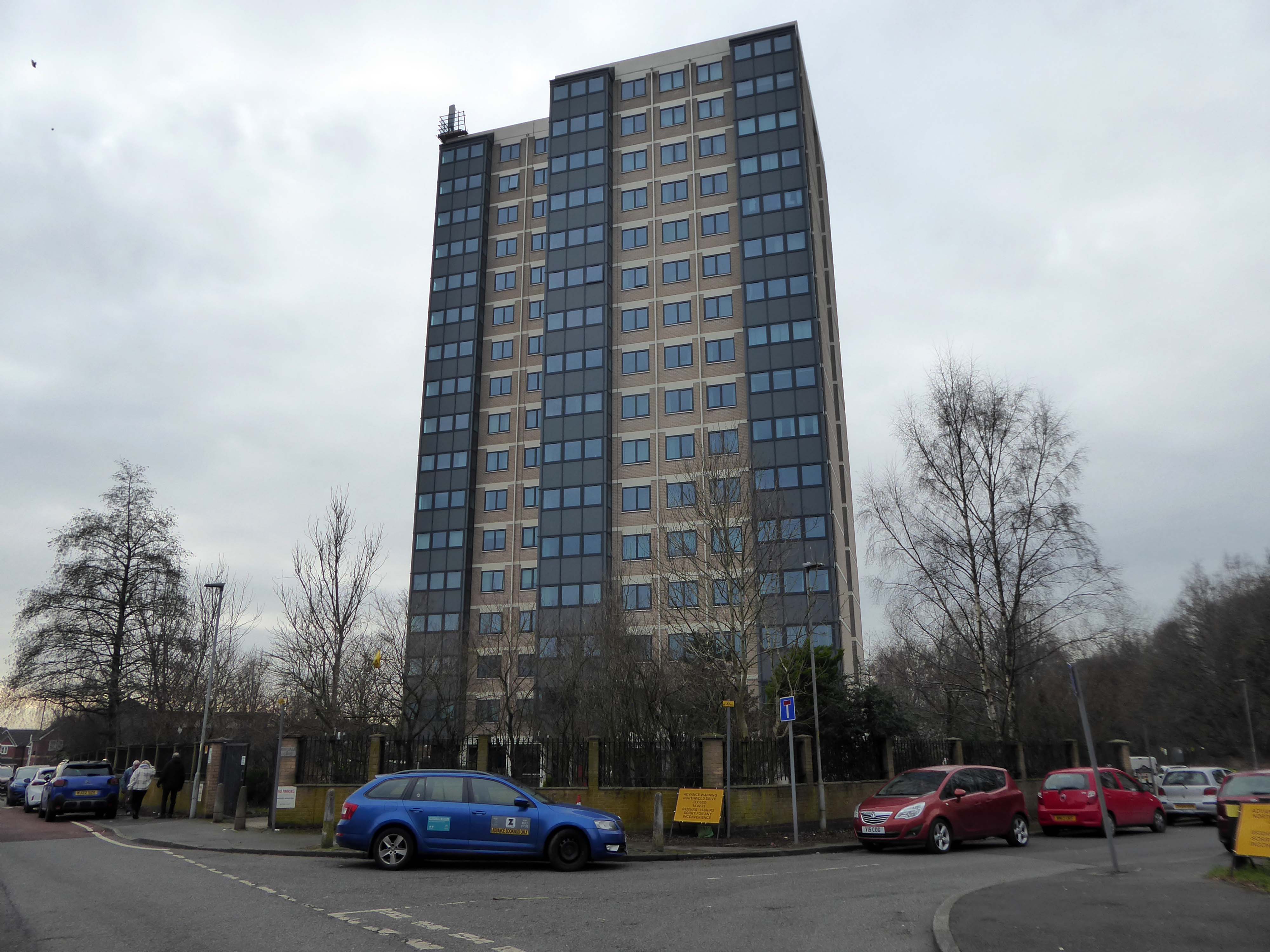
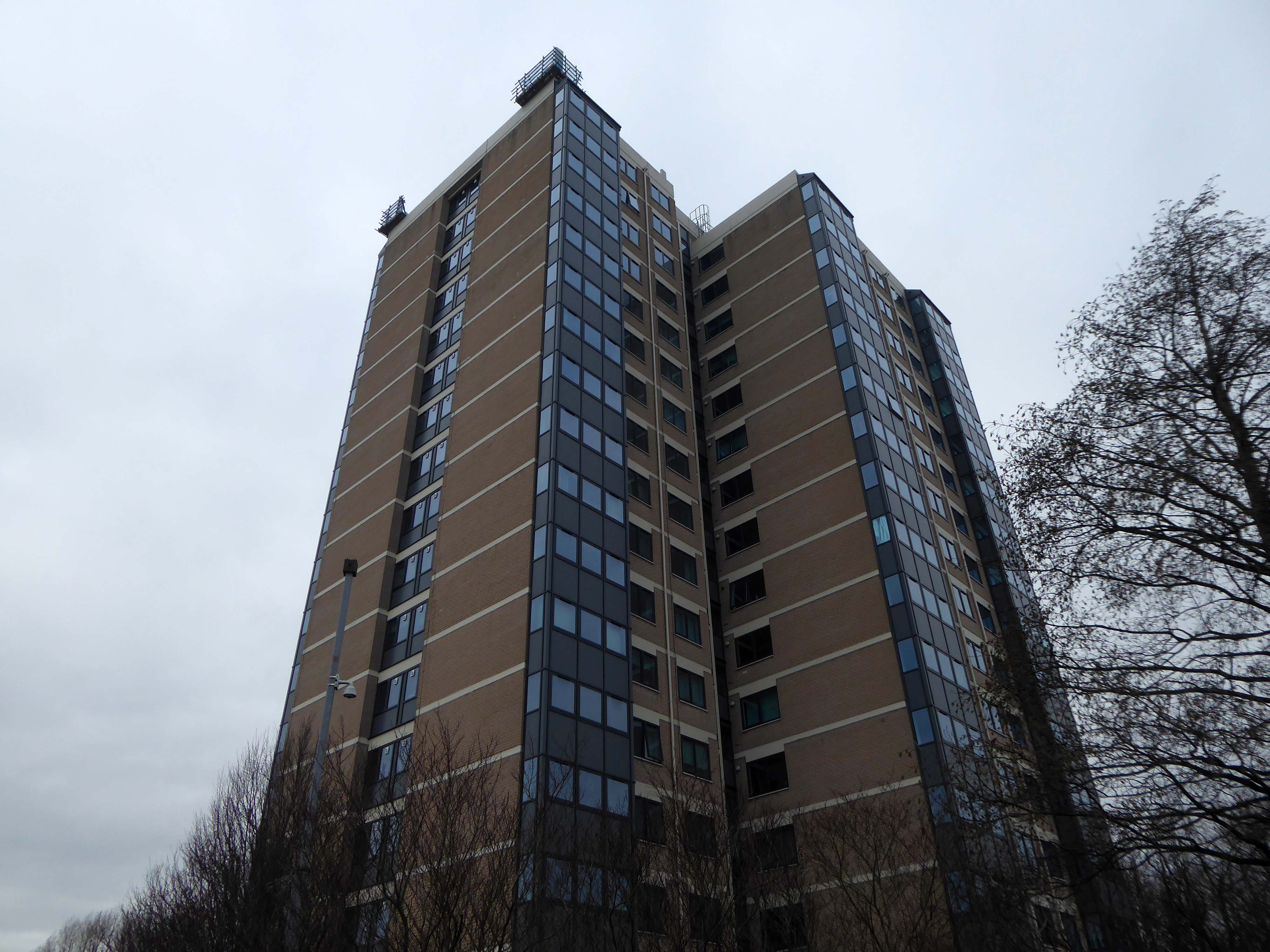
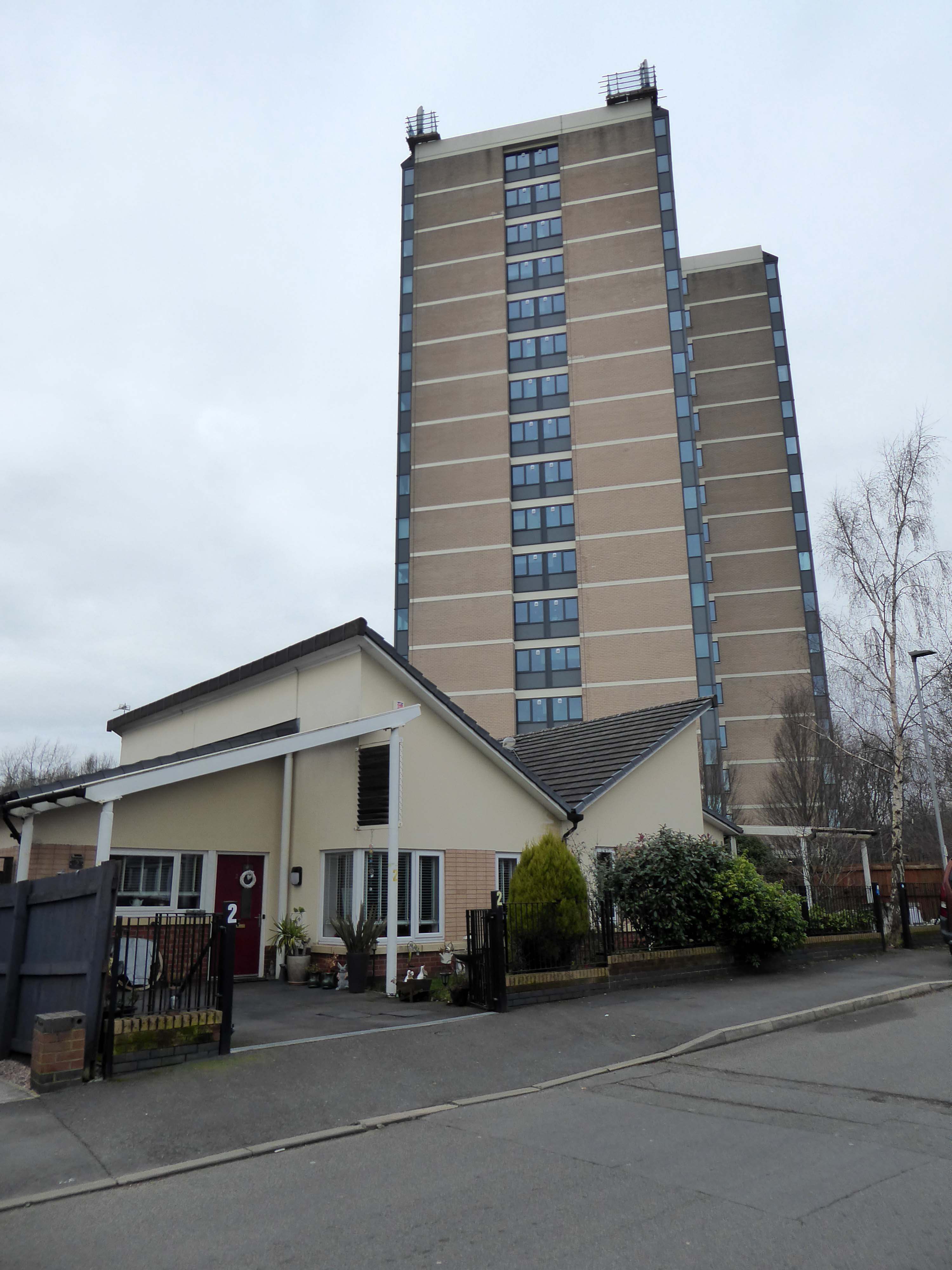
Tower Block tells us this is one 13 storey block containing 62 dwellings along with one 9 storey block containing 70 dwellings.

Built by Direct Labour commissioned by Manchester County Borough Council

Seen here in 1970.

The flats are now gated, so I peeped tentatively through the fencing.

Then chatting to the site’s maintenance gardener I gained access – here is what I saw.

St Alkmund’s Church – Derby

40 Kedleston Rd Darley Abbey Derby DE22 1GU

The burghers of Derby required room for a ring road – but St Alkmund stood in the way, so he was CPOd and sent elsewhere.

Looking for Mr Wright.

When the Victorian church was demolished, traces of several earlier churches were revealed, stretching back to the 9th century. Artefacts found included the stone sarcophagus of Alkmund of Derby, now in Derby Museum and Art Gallery.

Photos: John Mackay 1967

Derby Telegraph

Given a fairly generous budget the Diocese decided upon a modern design solution, in order to solve the pressing problem of their missing church.

Local architects Naylor Sale and Widdows were commissioned to resolve this omission.

Construction began in 1967 completed in 1972.

The exterior boasts a static space rocket spire – which was lowered into position using not one but two helicopters.

Along with a delightful Festival of Britain style clock.

To the right of the front elevation is an extensive Dalle de Verre wall.

The entrance a light as air glass and aluminium construction.

Paired with a gently curving brick mass.

The main body of the church is deceptively capacious.

The wall of glass suitably illuminating.

The original lighting has been retained, though the former cork floor has been carpeted and the original pews replaced by portable seating.

There is a side chapel incorporating stained glass from the original church.

Thank you so much to Alex and Tony for granting us access to this stunning church.

St Bride’s RC Church – East Kilbride

Whitemoss Ave East Kilbride Glasgow G74 1NN

Architects: Gillespie Kidd & Coia 1957-1964

Designed by Professors Andy MacMillan and Isi Metzstein.

Grade A listed 1994 RIBA Bronze Medal

Should you so wish – jump the train from Glasgow Central, unless you’re already here/there.

Walk up West Mains Road, alone on a hill standing perfectly still sits St Bride’s, you can’t miss it.

The biggest extant example of Bricktalism, the most Bricktalist building in the world, possibly.

Stallan-Brand design director Paul Stallan commented:

St Bride’s for me is the most important modernist buildings of the period. The church made from Victorian sewer bricks and concrete is both simple and complex. The architecture continues to be a key reference for students of architecture from across the world interested in modernism and the contemporary vernacular in context. Andy and Isi’s work is as important to Scotland as Alvar Aalto’s work is to the Finnish.

Urban Realm

The bell tower was removed in 1983 due to extensive damage to the brickwork.

Image: Postwar Concrete

Image: Gillespie Kidd & Coia Archive at the The Glasgow School of Art.

It’s a traditional Scottish stone detail I saw for myself as a boy growing up in the Highlands, on every castle and fortified house, and on the flanks of the tower at Muckrach, ancient seat of the Grants of Rothiemurchus, built in 1598. This was my local castle just a mile from home.

The entrance to St Bride’s, I like to imagine, comes from a friendship that included travel in the Scottish Highlands, admiring the Scottish vernacular close-up, of a fevered conversation about a simple concept – the massive blind box, and how the application of simple, semi-traditional material detailing can make it all the richer.

St Bride’s is simply one of the finest buildings in Scotland.

Chris Boyce design director at CJCT Studios

Get your skates on it’s almost ten o’clock, Saturday Mass is about to start, take a seat.

Many thanks to Fr. Rafal Sobieszuk and the congregation for their warm welcome.

Sadly I was unable to reach these dizzy heights.

Happily the exterior is open and easily accessible, though care should be taken when zig zagging carelessly across West Mains Road.

Historically this is my very first Scot’s post, more to follow, I’m away to the Civic Centre.

IRK VALLEY #TWO

Having walked and cycled twixt Victoria Station and Blackley, I returned once more to the Hexagon Tower to resume my explorations towards the source in Royton.

Beginning on Delaunays Road and onwards along Blackley New Road.

The footpath falls away from the main road to the wooded valley.

Returning to the road I was distracted by Sandyhill Court and the reliefs which I discovered there.

I was also taken with with this electrical substation.

We are encouraged to be wild about Blackley Vale a reclaimed landfill site.

Across the Victoria Avenue Bridge and down the other side.

Emerging by Sainsbury’s and picking up the path again.

Onwards under the M60 Motorway.

The M60 was developed by connecting and consolidating the existing motorway sections of the M63M62, and an extended M66. It came into existence as the M60 in 2000, with the completion of the eastern side opening in October.

The original plan called for a completely new motorway, but policy change led to the plan which created the current motorway. As soon as it opened, the motorway got close to its projected maximum volume on significant sections.

Hey look there’s Alkrington Hall!

This Palladian mansion was designed and built in 1736 by renowned architect, Giacomo Leoni, who had also been responsible for significant alterations to Lyme Hall during the same period.  

Offering an infusion of historical significance coupled with an abundance of living space throughout, Alkrington Hall East, simply must be viewed to be appreciated in full.  

During the early 1770’s, the Hall became the largest museum outside of London, when the Hall’s owner, Sir Ashton Lever, exhibited his private collection of natural objects, including live animals. Remaining as an imposing symbol of Leoni’s work, Alkrington Hall remains one of only a few surviving examples throughout England.  
In modern times, the Hall has since been carefully and sympathetically separated into 4 sections, and we are pleased to be offering for sale the largest portion of the Hall, with a total floor area comprising of over 7500 SQFT, and living accommodation spread over 4 floors.  

Sold for £825,00 in 2021 Savills

Seen here in 1870

Next thing you know you find yourself in Middleton, where the Irk sort of disappears – you sort of get lost and sort of follow the wrong track, eventually ending up back where you should have been in the first place.

Don’t follow Wince Brook – it’s so far from right that it’s wrong – right?

Take a walk up Oldham Road to see Warwick Mill instead.

1907 by G Stott of J Stott and Sons – Red brick with internal cast-iron frame.

Grade II Listed

There was and Oval Partnership planning for a retail development in 2014 which failed to materialise.

The converted building will provide a showcase for Chinese manufacturers of construction-related products looking to enter the UK and wider European markets. Products on display will include tiles, lighting, furniture, kitchenware, sanitary ware and curtains. A second phase will see the construction of a new building alongside effectively doubling the floor space. In addition the brief includes a range of restaurant, leisure, culture and entertainment facilities threaded through the building. The conversion will open up the existing building in a dramatic way, maximizing permeability and providing a strong visual connection back into the town, promoting public access through the building to the attractive south-facing waterside of the mill.
Permeability failed to be maximised, sadly.

Ambitious plans to refurbish Grade II listed Warwick Mill to create new homes and breathe life into an important building and part of Middleton’s history have been drawn up. 

Warwick Mill has recently changed ownership and the new owners, Kam Lei Fong (UK) Ltd, have been working with Rochdale Borough Council over the last nine months to develop proposals to redevelop the site.

Rochdale Council

So far so CGI good- the town eagerly awaits a surfeit of high end SUV owners.

Former clog wearing mill workers remain silent on such matters.

The Job Centre steadfastly remains a Job Centre.

The river reappears here in back of the Middleton Arena.

Proceeding in a disorderly manner.

Emerging by this substantial substation.

Across the way is Lodge Mill.

A Middleton couple has saved the oldest surviving mill in the town after a two-year renovation project.

Located on Townley Street, Lodge Mill was built in the mid-1800s and was originally a silk weaving mill. It went on to cotton weaving and cloth dying, then to a home for many different small local businesses. Sadly, in the early 2000s, it fell into disrepair and became derelict.

Martin Cove and Paula Hickey bought Lodge Mill on 1 April 2019 and immediately set about replacing and repairing the roof. They also installed a 19.4kw solar PV system so the mill became its own little power station that summer.

In August 2019, the couple opened a small ice cream shop on the ground floor of the mill – named the Ice Cream Shop at Lodge – selling locally-made ice cream from Birch Farm, Heywood.

The ice cream is made using cream from Tetlow Farm’s dairy herd at Slattocks – Martin explained.

Rochdale Online

It was £2.25 for two scoops and a flake – a welcome oasis on a warmish day.

Sadly in December 2021 there was a serious fire, work has since been done to repair the roof.

A poorly signed footpath takes you back riverside by way of assorted industrial debris.

Still very much in use the Vitafoam Mill

Founded in 1949 on £100 capital, Vitafoam started its original operation manufacturing latex foam products in Oldham, Greater Manchester.

After establishing the business, the company made a major move to its current site in Middleton, Manchester in 1955, acquiring two empty former cotton mills to cope with increased demand.

By 1963, Vitafoam had added the manufacture of polyurethane foam to its business and was providing product speciality for upholstery and bedding markets.

As Vitafoam entered the new millennium the company had made great strides in supplying external foam converters. These rely on Vitafoam to be their business partner and provide their foam needs. This trend continues to grow from strength to strength and is supplemented by our own group conversion companies.

Regaining the river at Chadderton Hall Park.

Its roots stretch back to the 13th century being the land on which Chadderton Hall once stood. It contains a large field area with a small football pitch, a playground area, several flower gardens and a small café situated next to the Park’s bowling green.

Chadderton Hall was first built in the 13th century by Geoffrey de Chadderton, this first hall was in Chadderton Fold slightly to the east of the current park. In 1629 a new hall was built at the site of the current park and was present there until the 20th century when it was demolished in 1939. It was at the end of the 19th Century that the area surrounding Chadderton Hall began to be used for public recreation. A boating lake and a menagerie, including a kangaroo and a lion, were established as part of a Pleasure Garden. These features have long since been demolished but evidence of the boating lake can be seen by the hollowed out area where the playing fields now stand.

Wikipedia

Diminishing now the river thin and shallow, as we rise into the hills on the outskirts of Greater Manchester.

Passing by Royton Cricket Club as the river disappears again.

Based in the heart of Thorpe Estate – Royton Cricket, Bowling & Running Club offers a family friendly environment whilst hosting strong, competitive cricket throughout the summer. Bowling throughout the summer along with a Running section – Royton Road Runners, who operate all year round. Along with seasonal events such as our well known firework display along with St Georges Day celebrations – with plans in the pipeline for improvements on current events as well as new exciting projects – it’s a great time to be apart of the club & community!
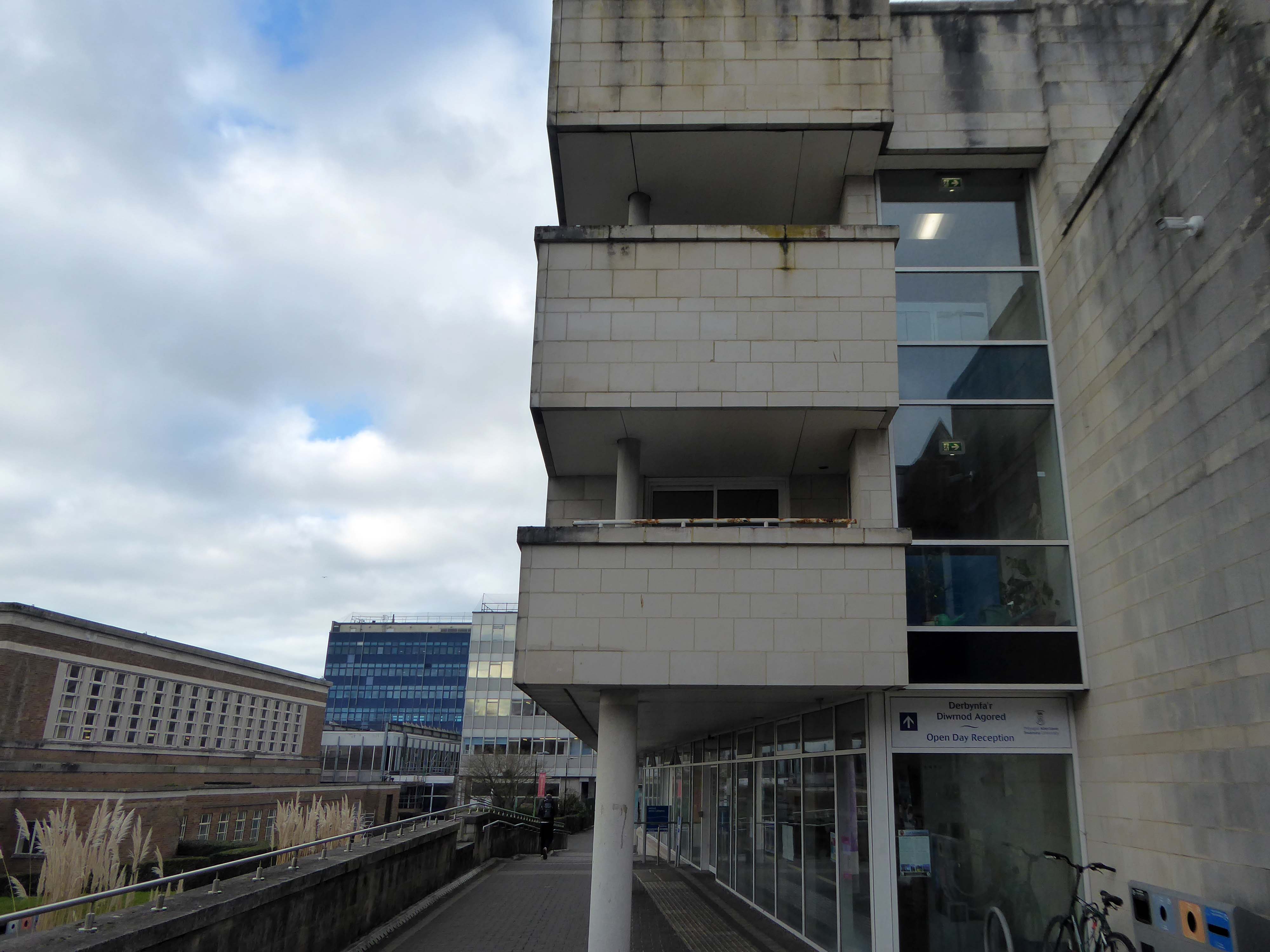
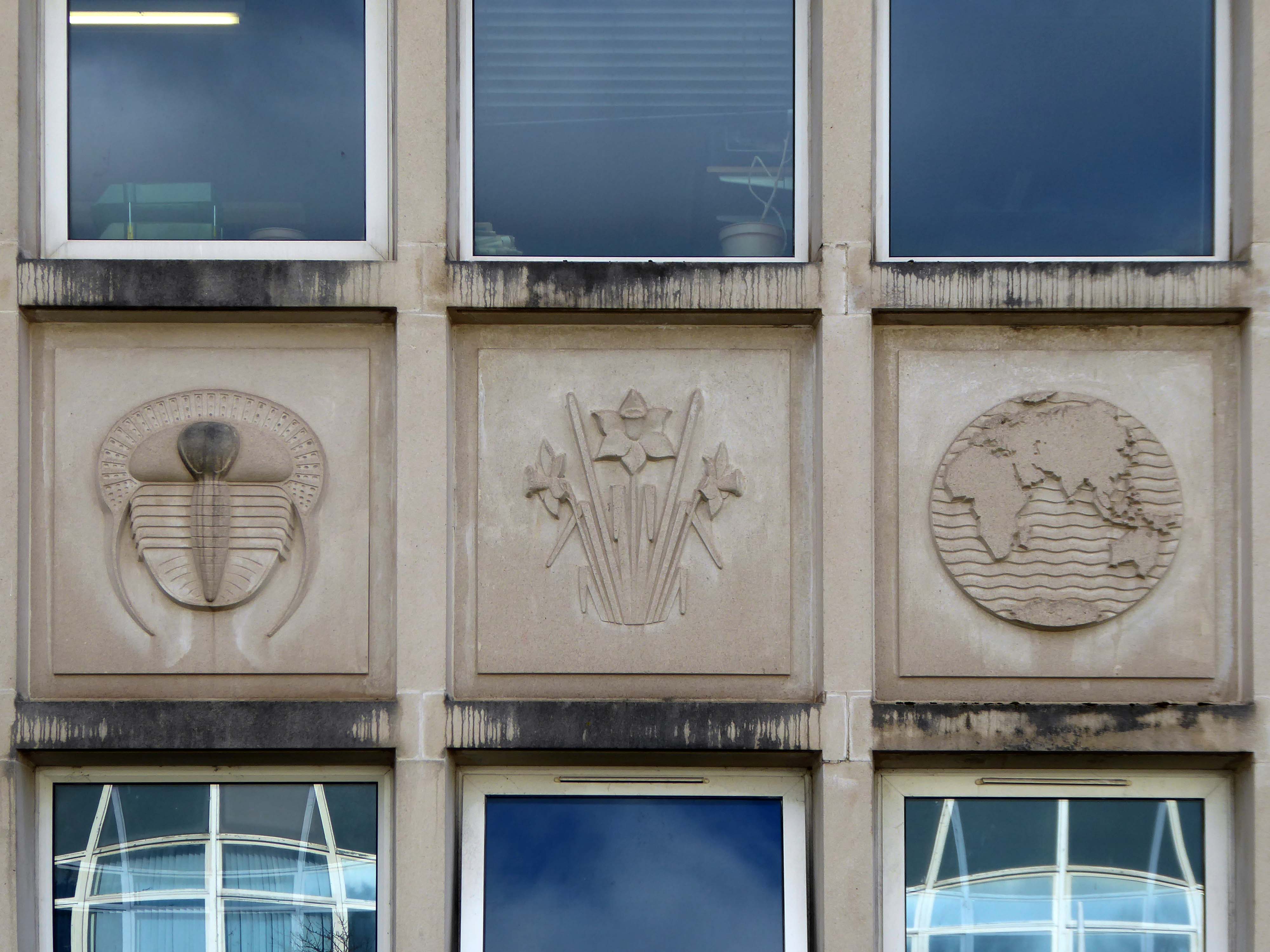
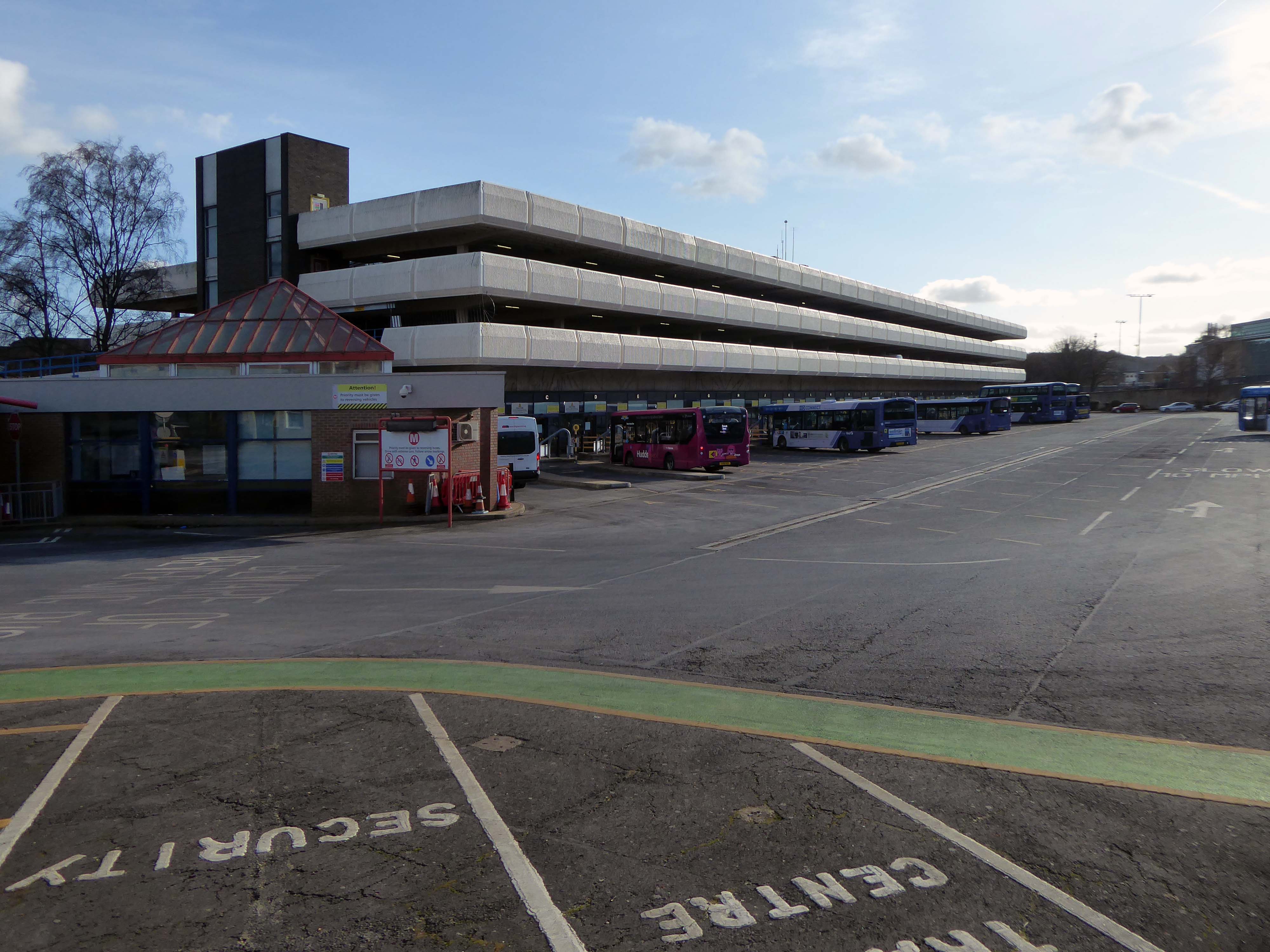
I have very fond memories of visiting with my dad Eddie Marland as he followed Ashton in the Central Lancashire League – both watching cricket and seeing my dad crown green bowling here.
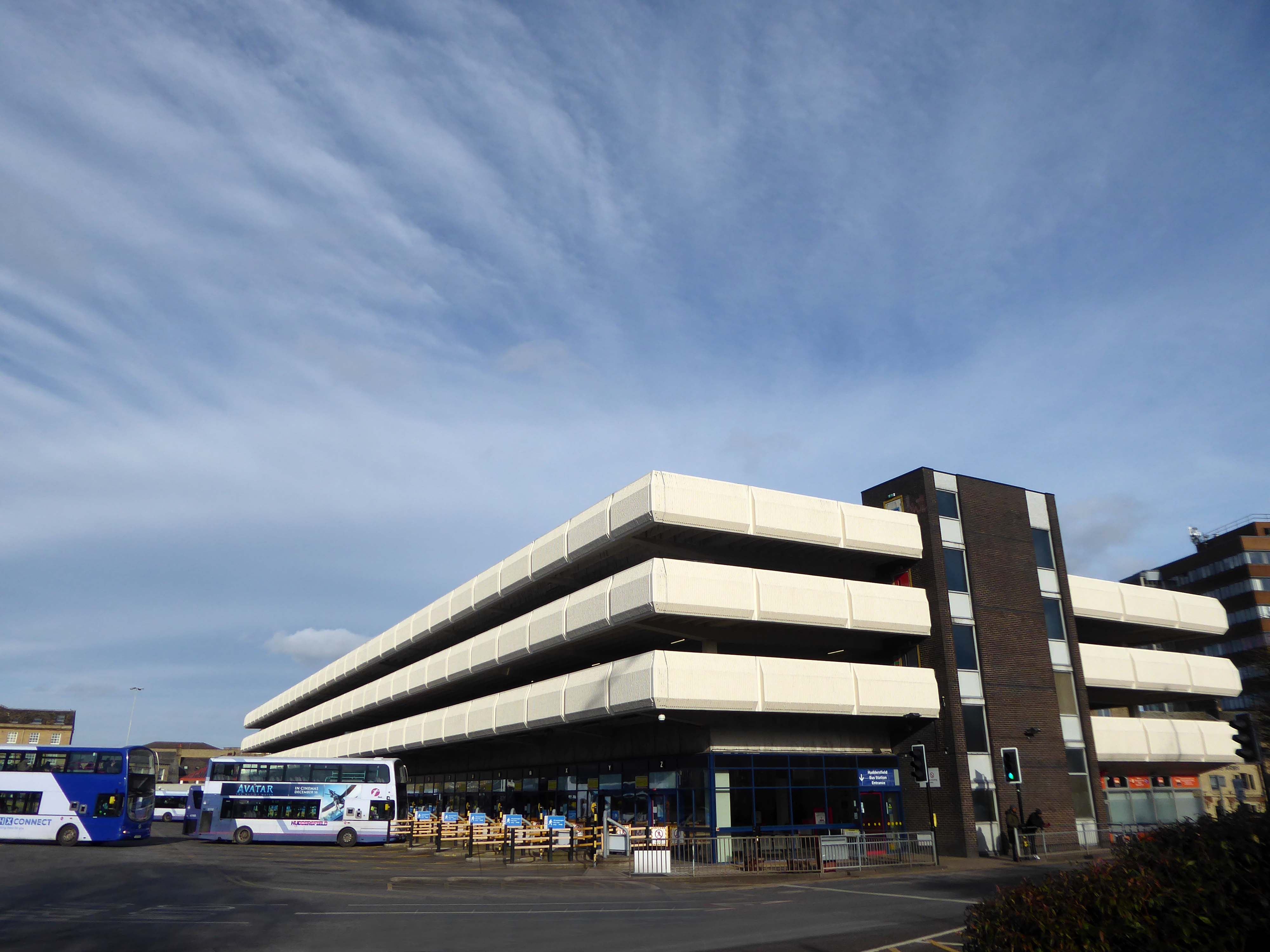
The river has gone underground again.

To be found on Salmon Fields – in pool form.

Site of a Life for a Life Memorial Forest

These now full memorial forests were originally donated to Life for a Life by Oldham Metropolitan Borough Council. Salmon Fields meadow sits adjacent to a lovely pond that is used regularly by fishing enthusiasts and is frequently used as a breeding site for Canadian Geese.

Life for a Life planting areas are natural environments where we encourage wildlife and plantlife to flourish, as such additional items should not be added to the tree or the space around it, especially as they can cause damage to the tree. 

Please be aware that any prohibited items left on or around memorial trees will be removed. 

Although these sites are now full to the planting of new memorial trees if you have an existing memorial tree dedicated you can still upgrade memorial plaques, add additional ashes to a memorial tree, order memorial keepsakes etc.