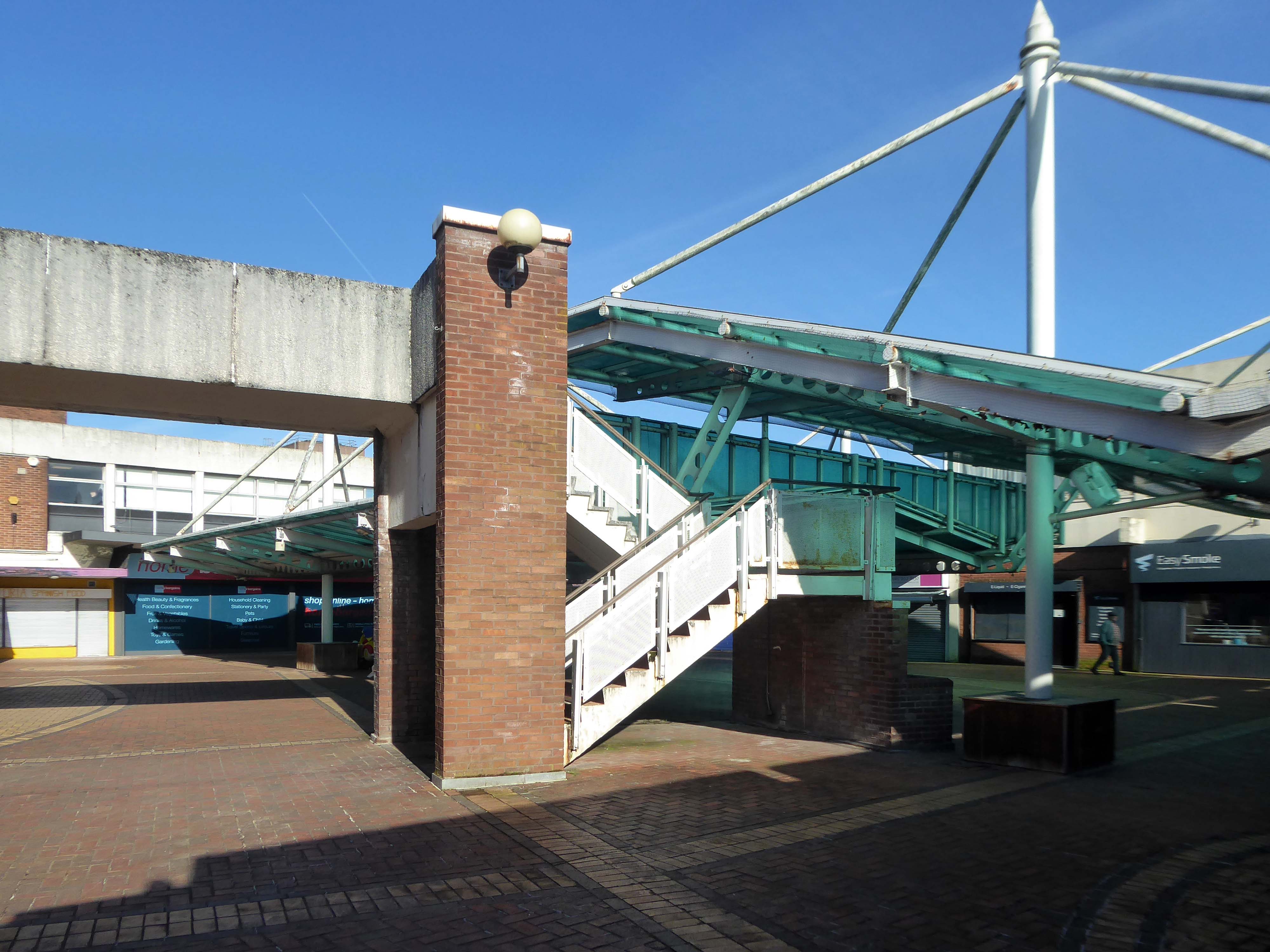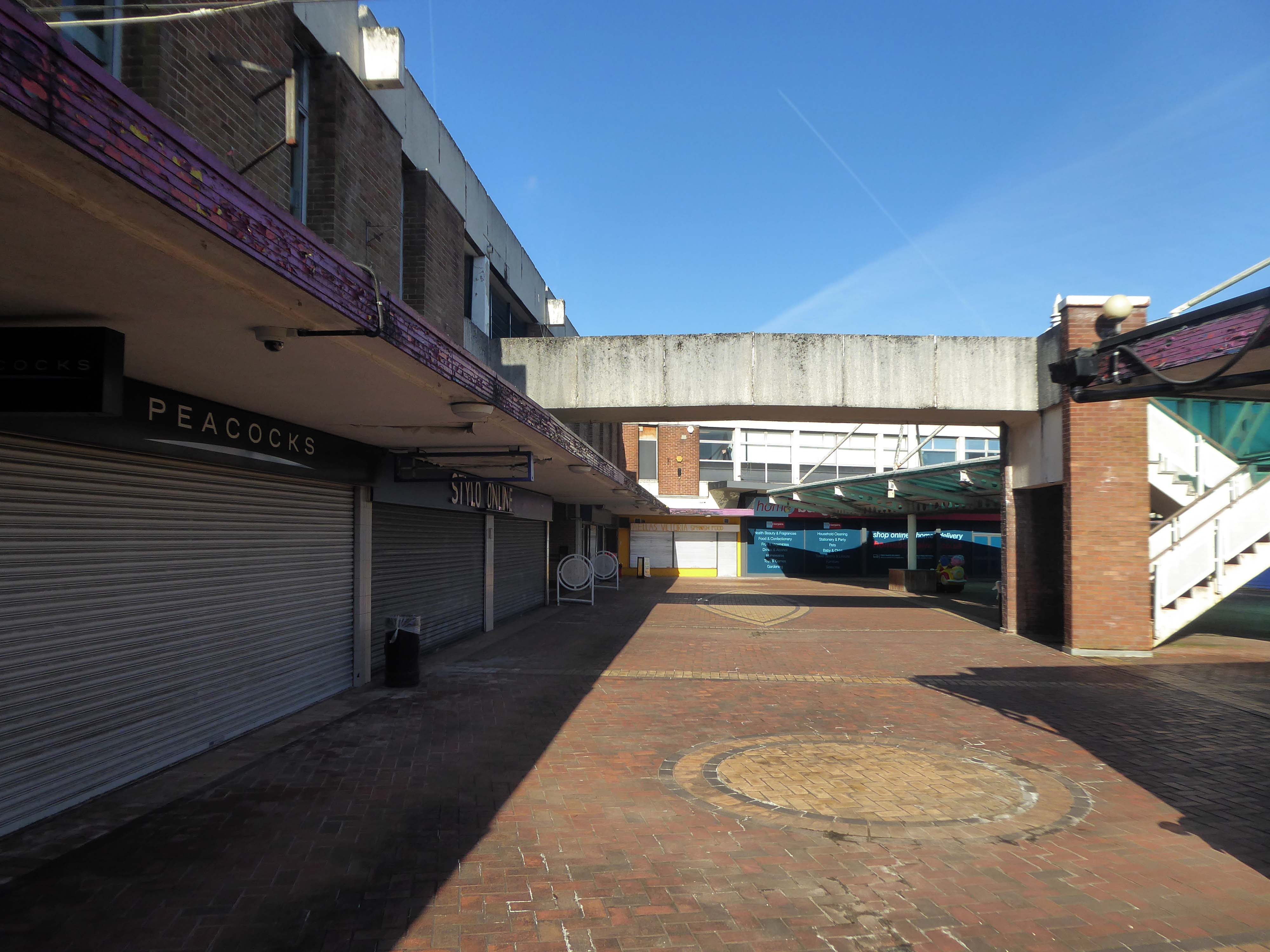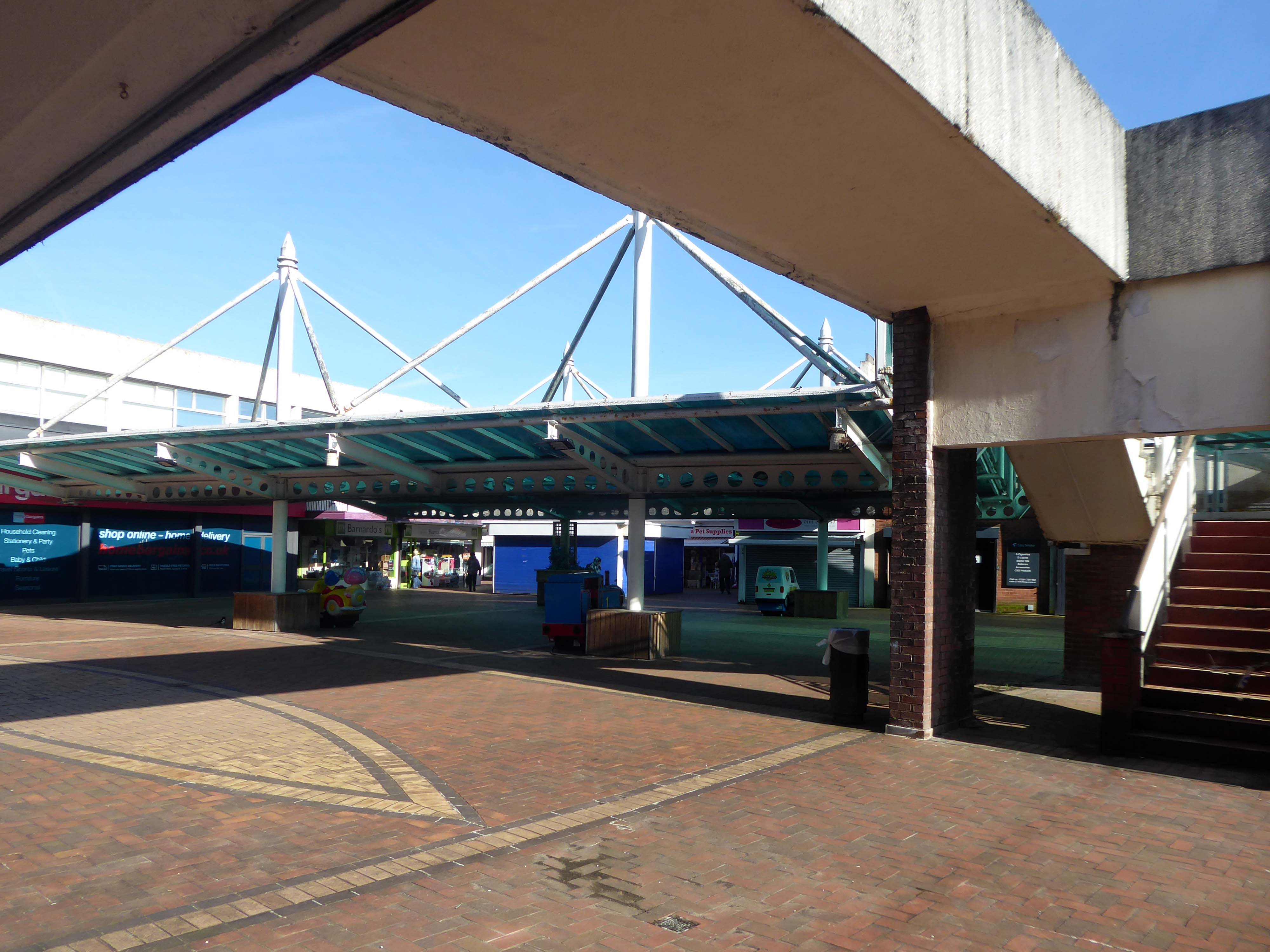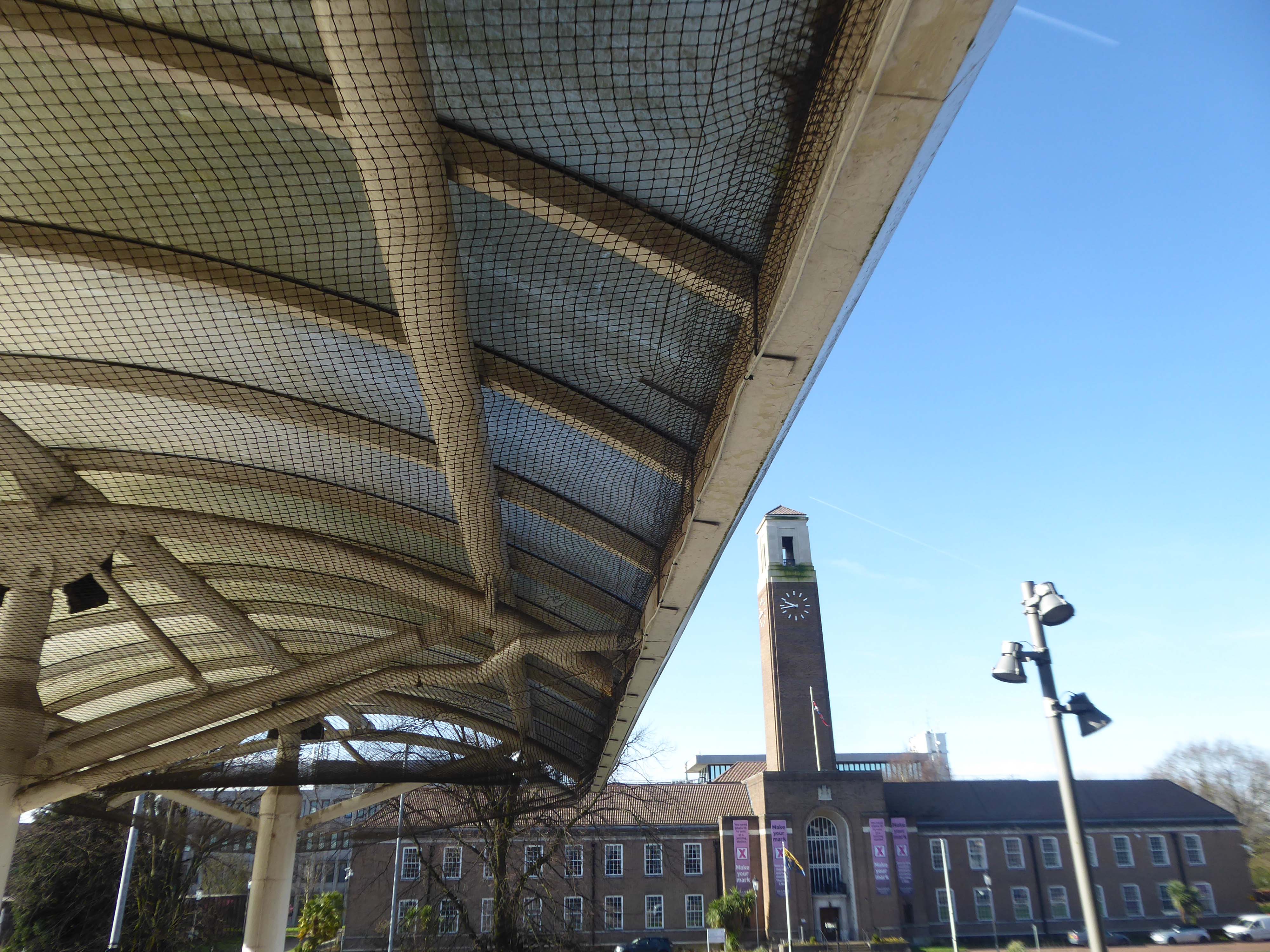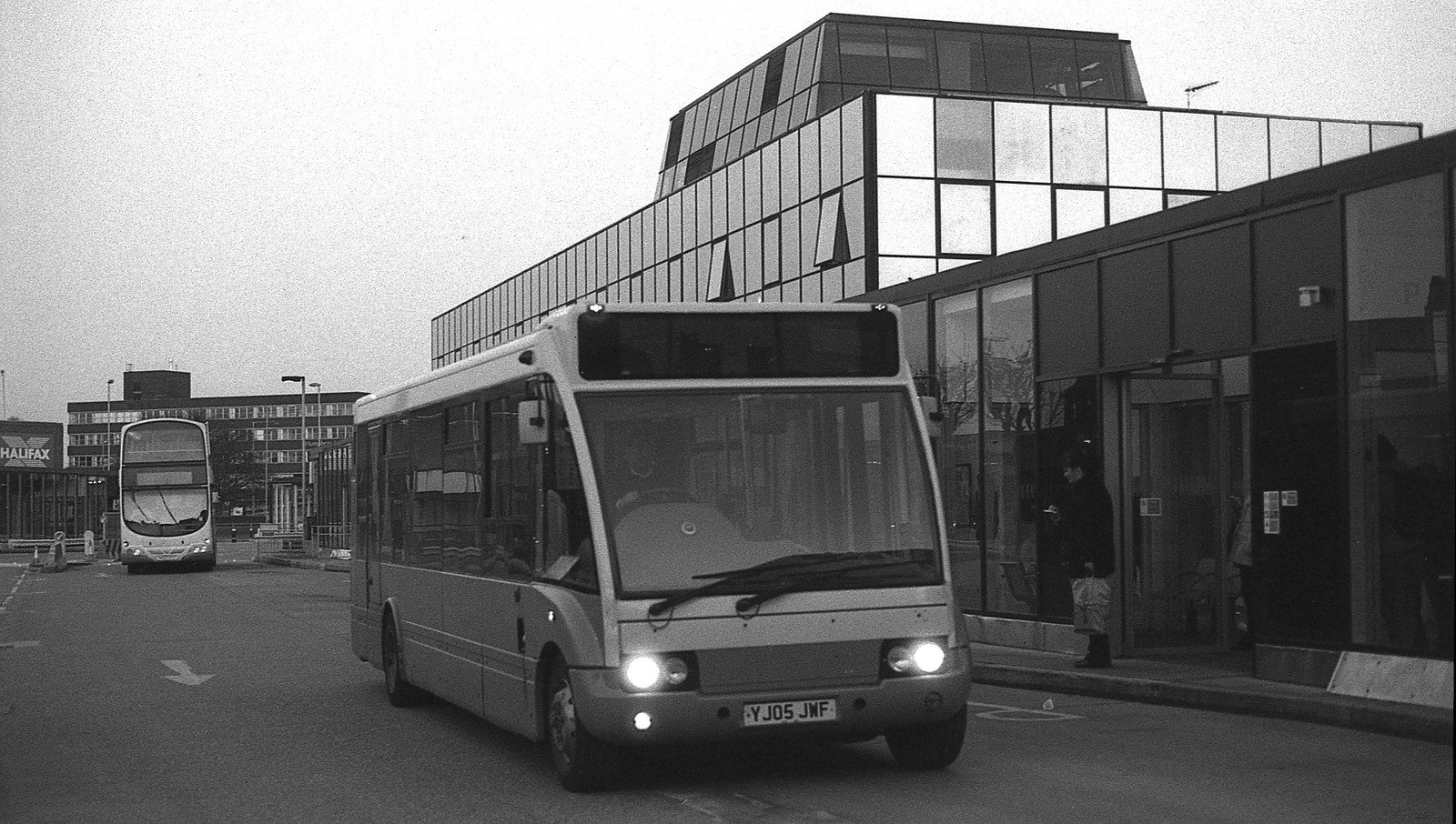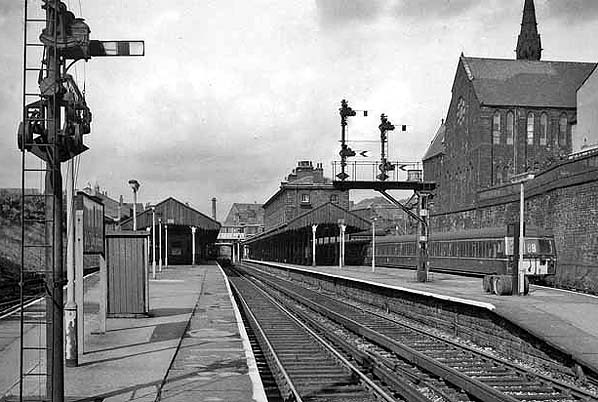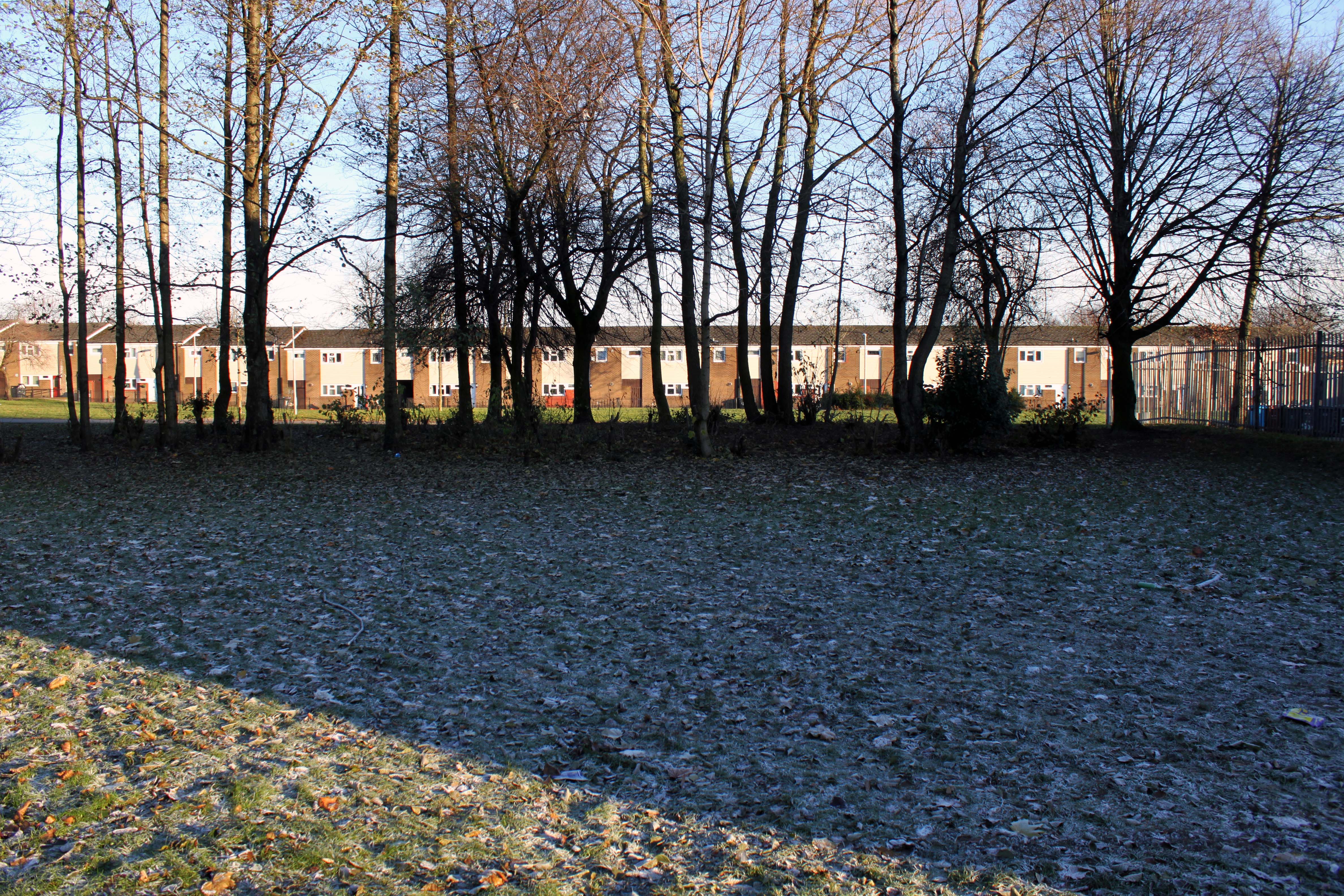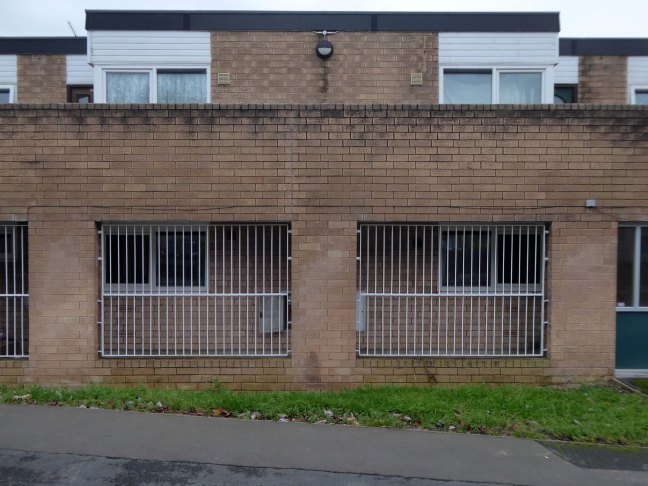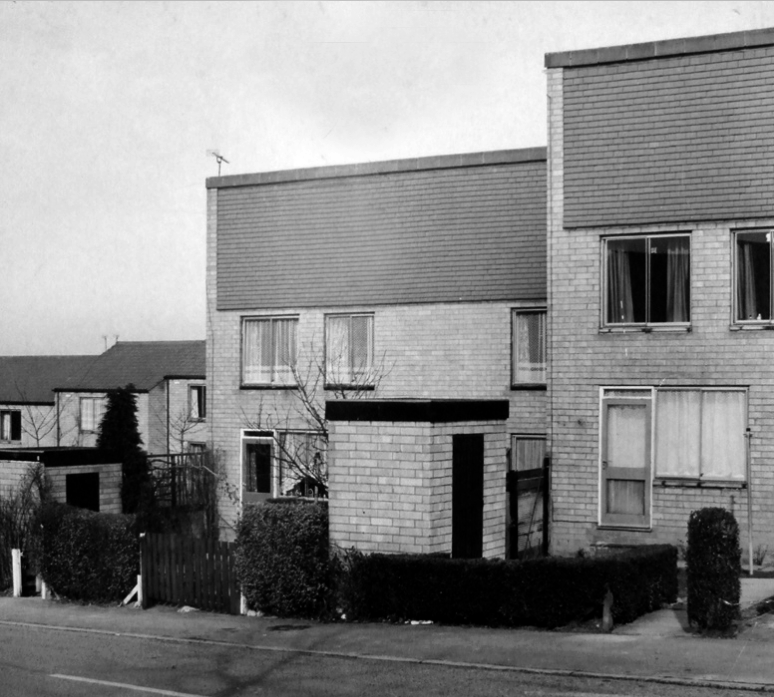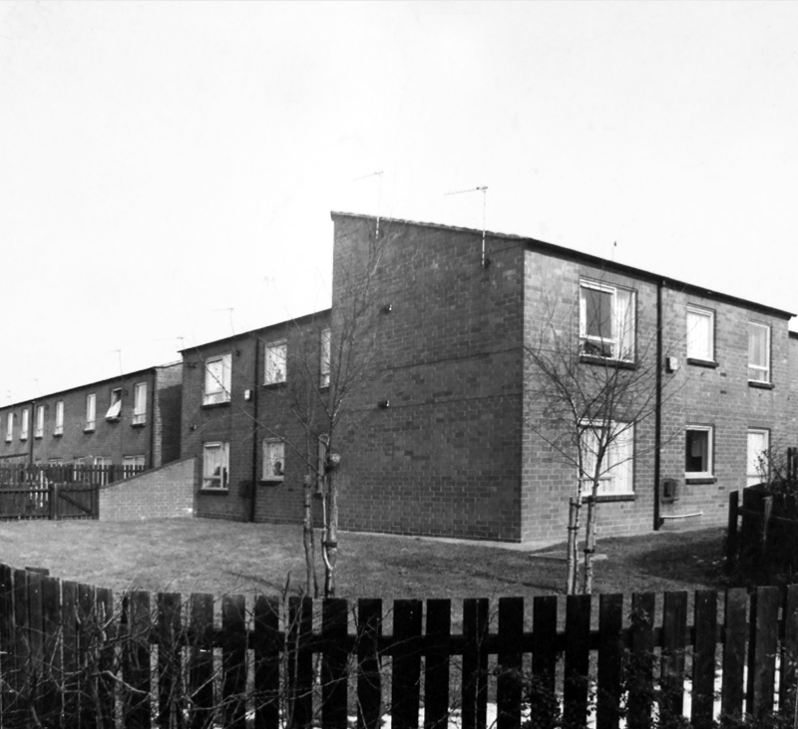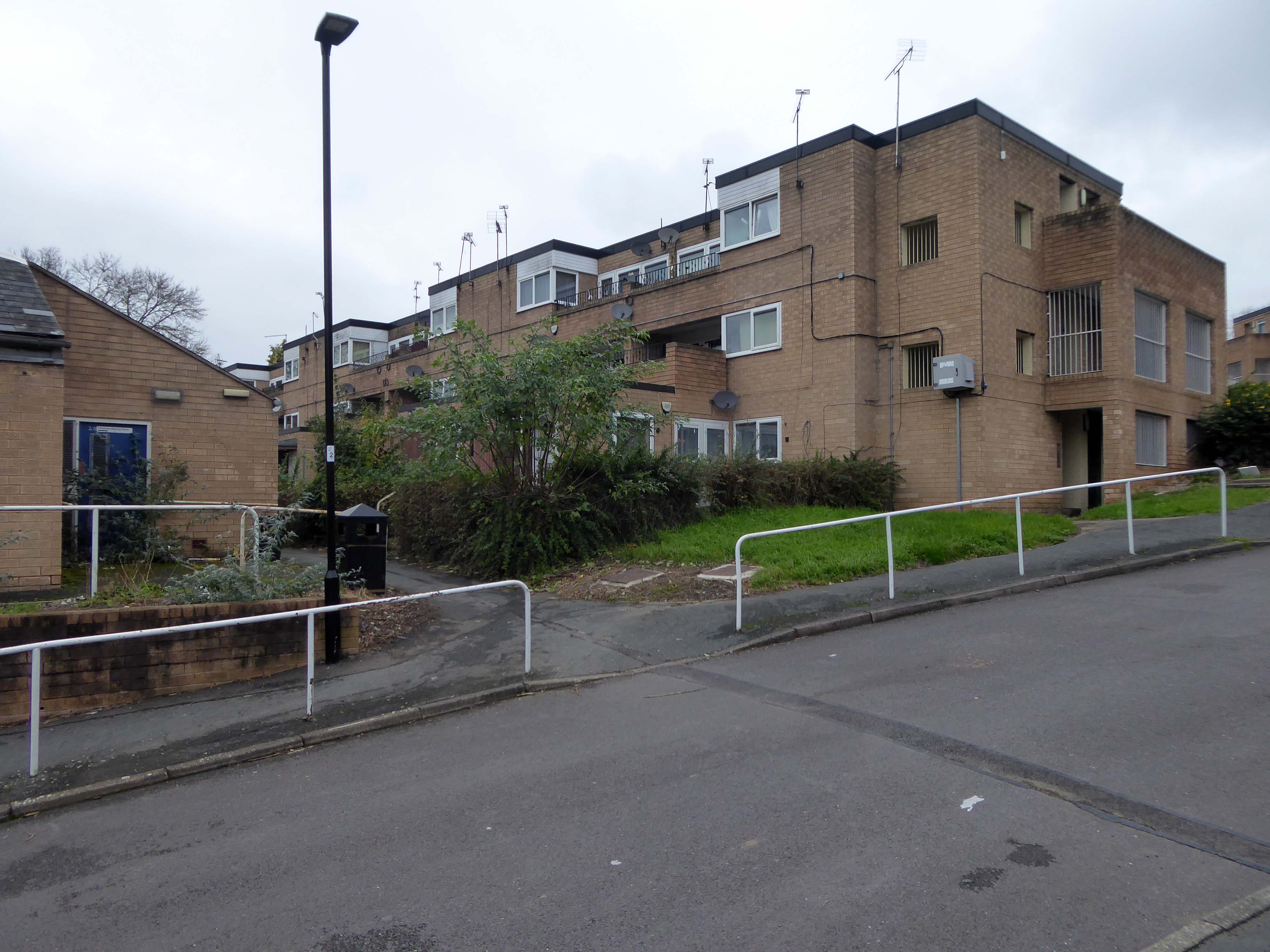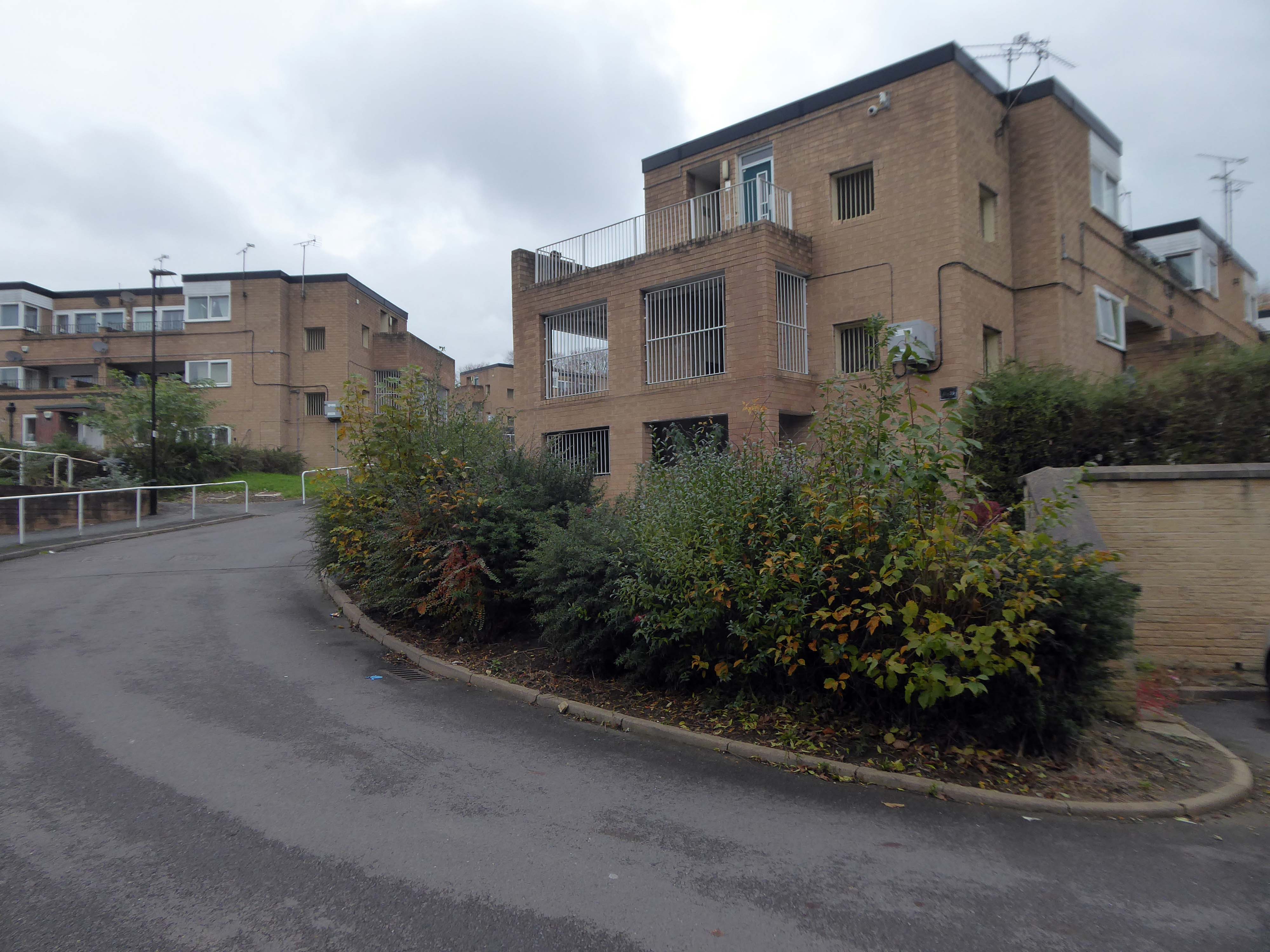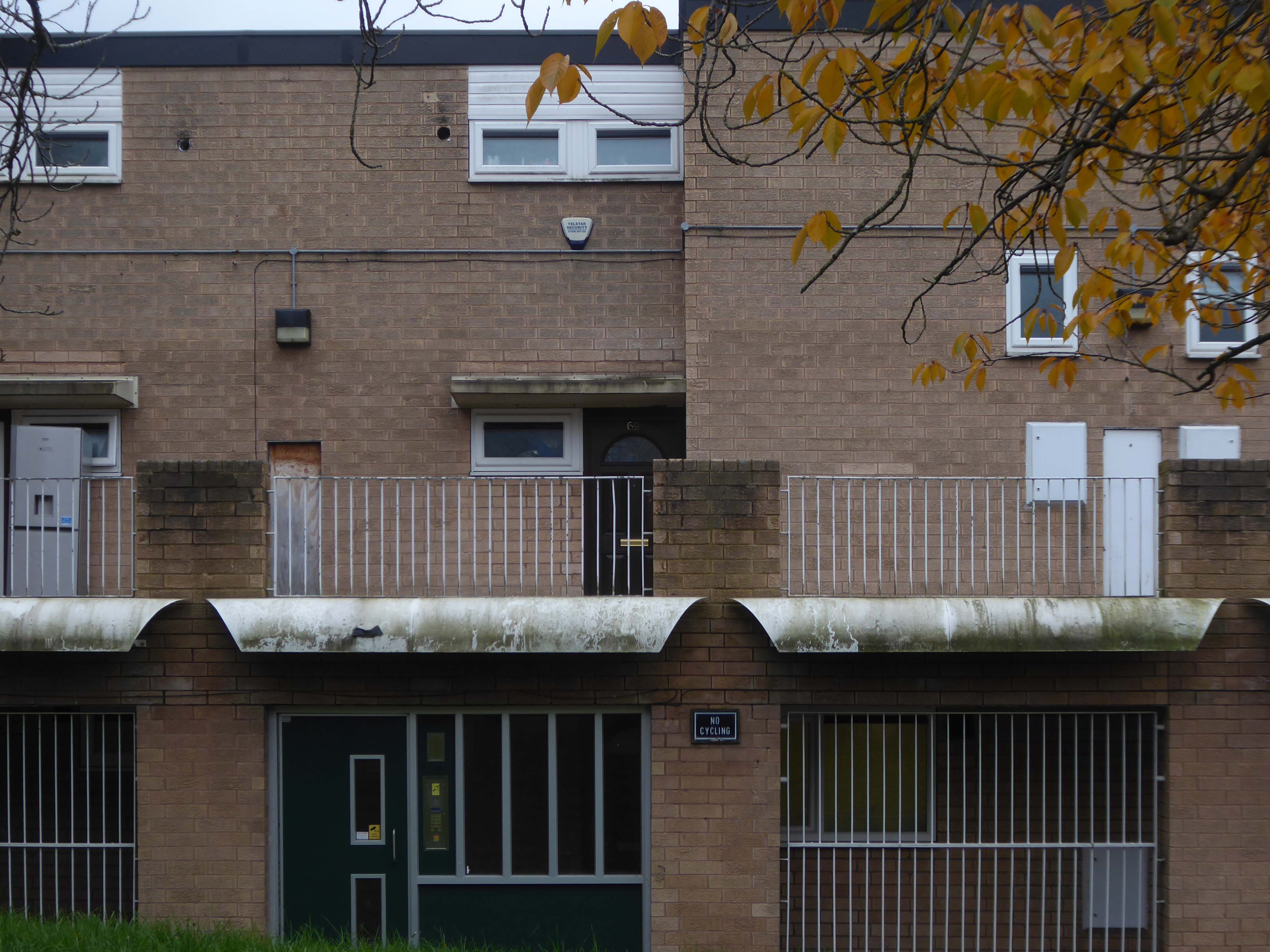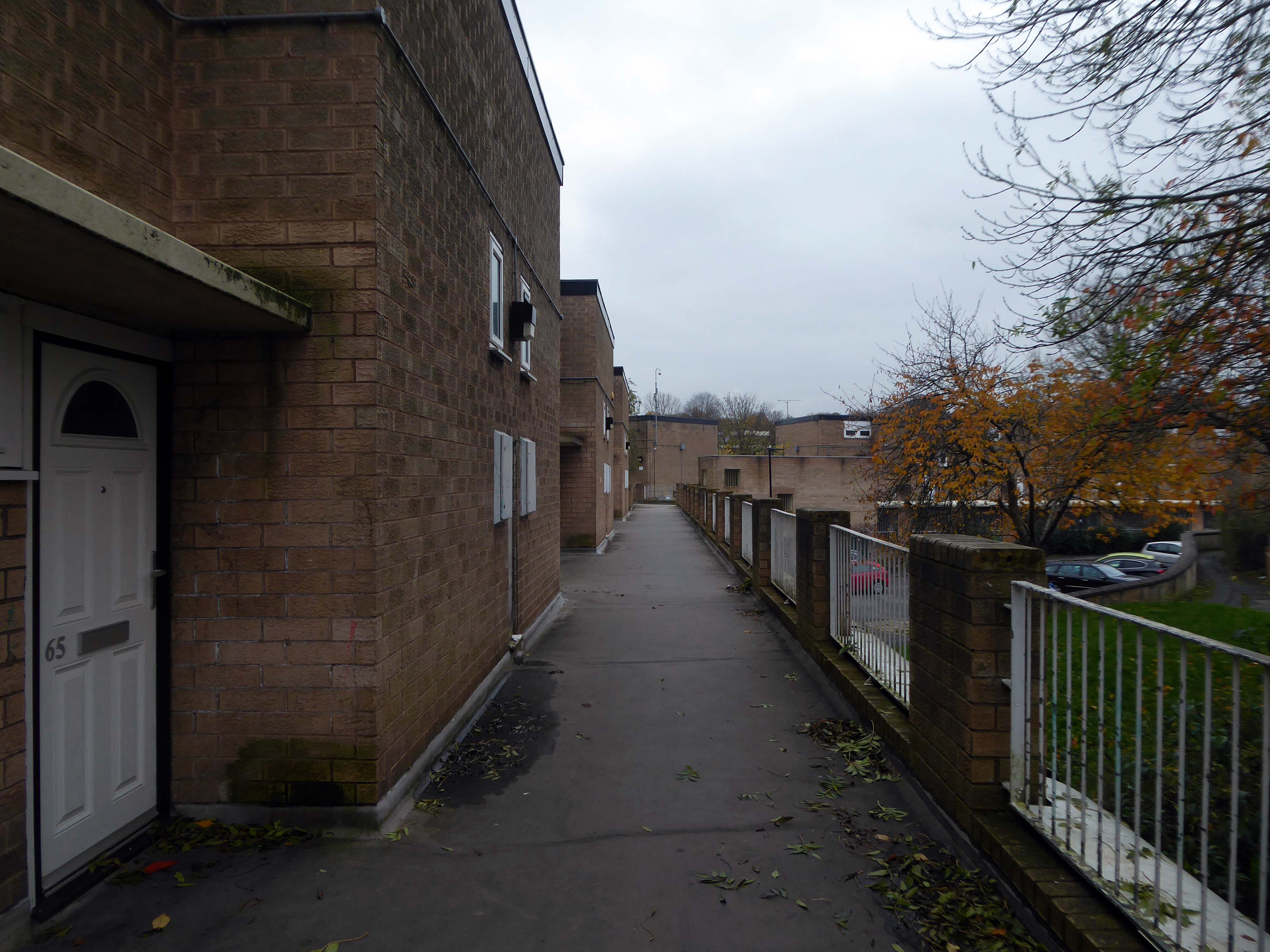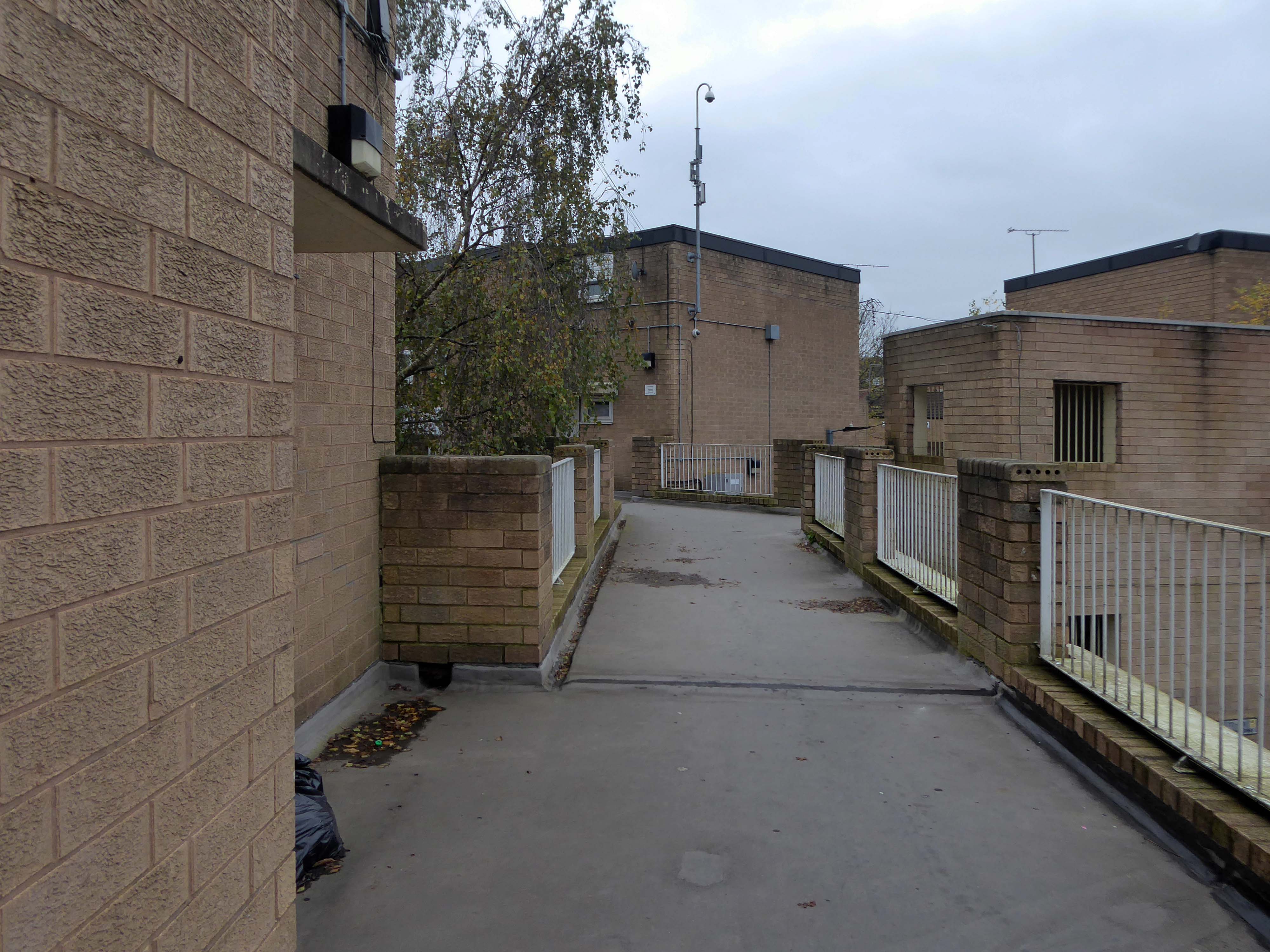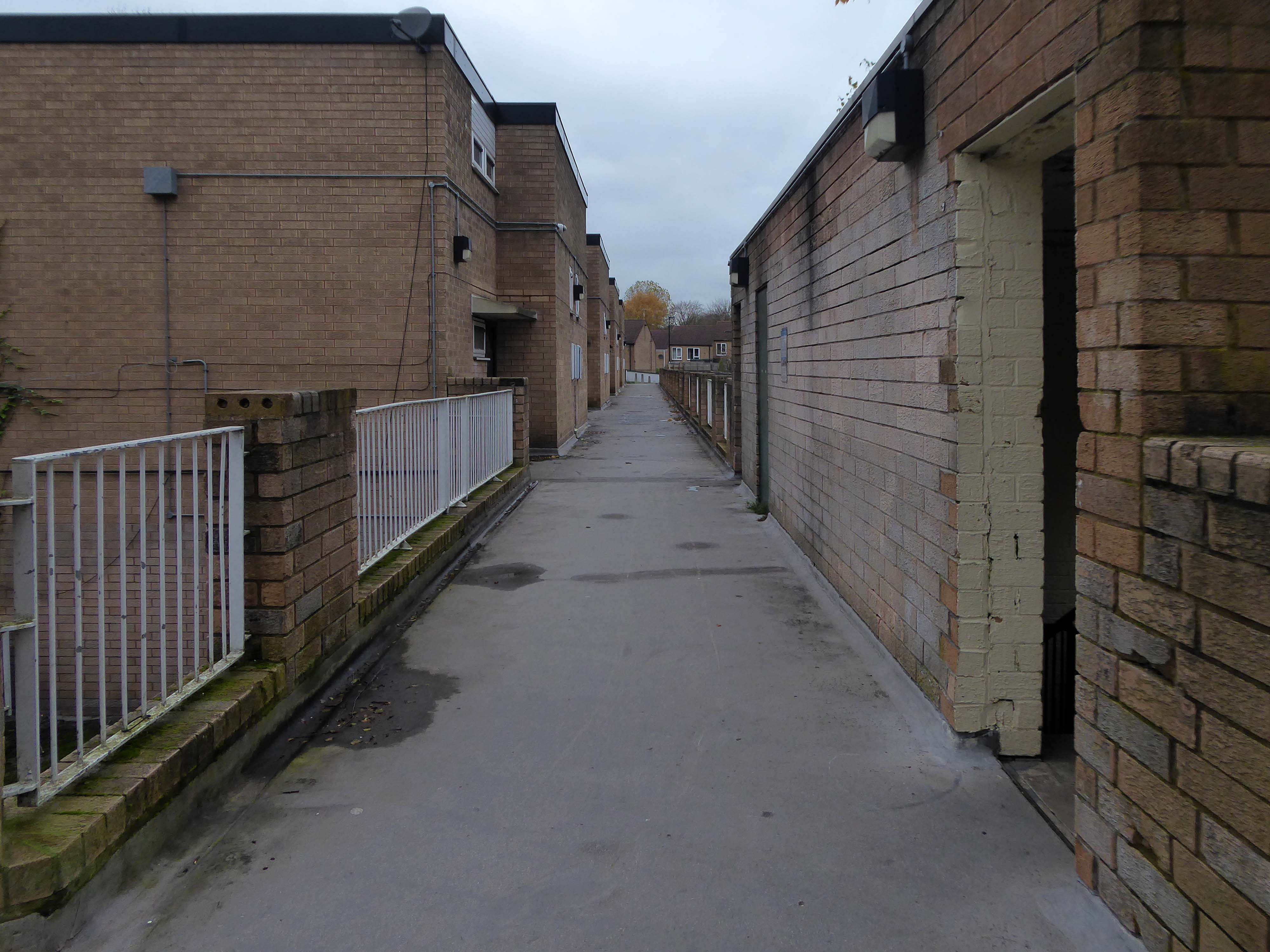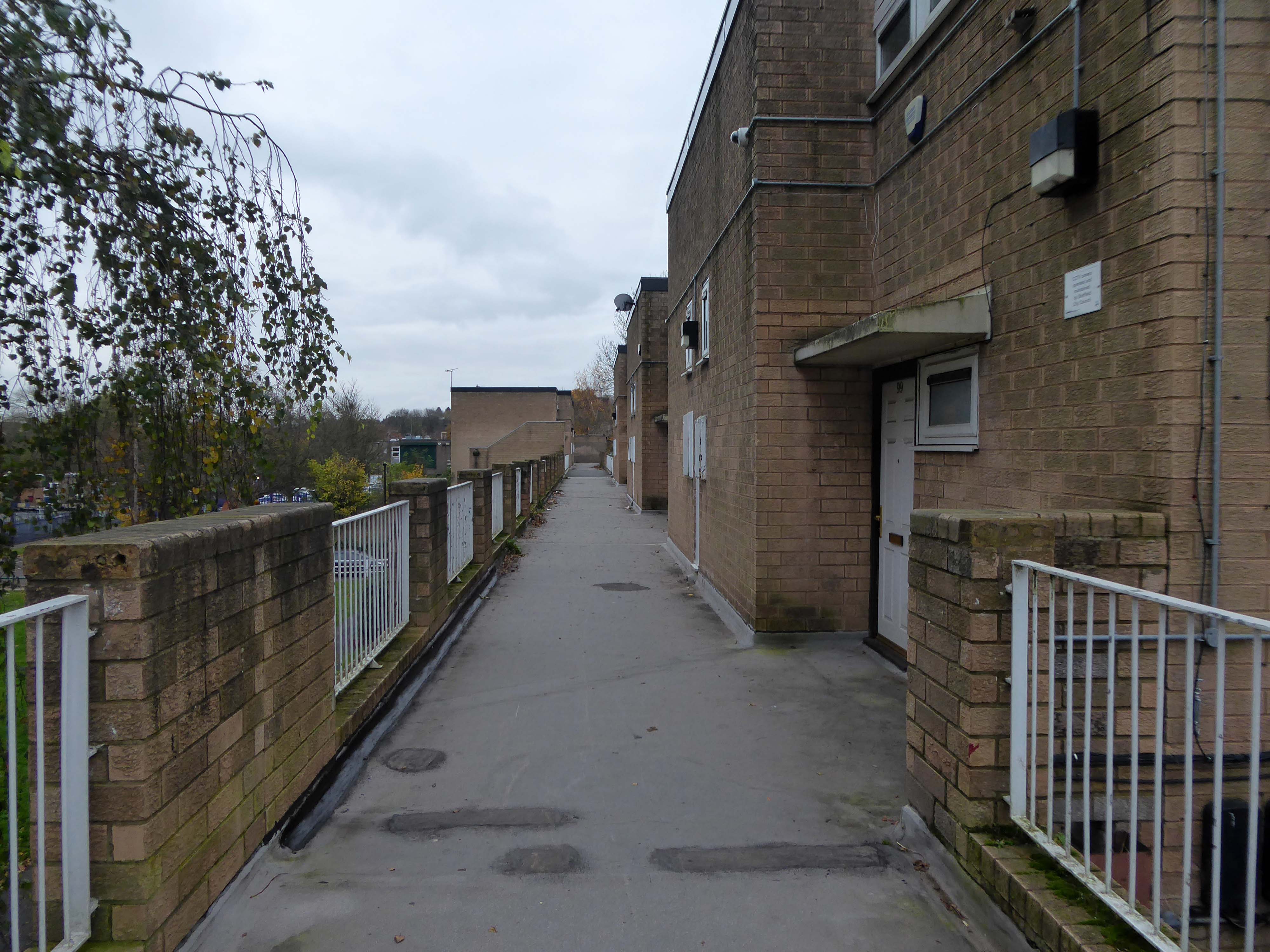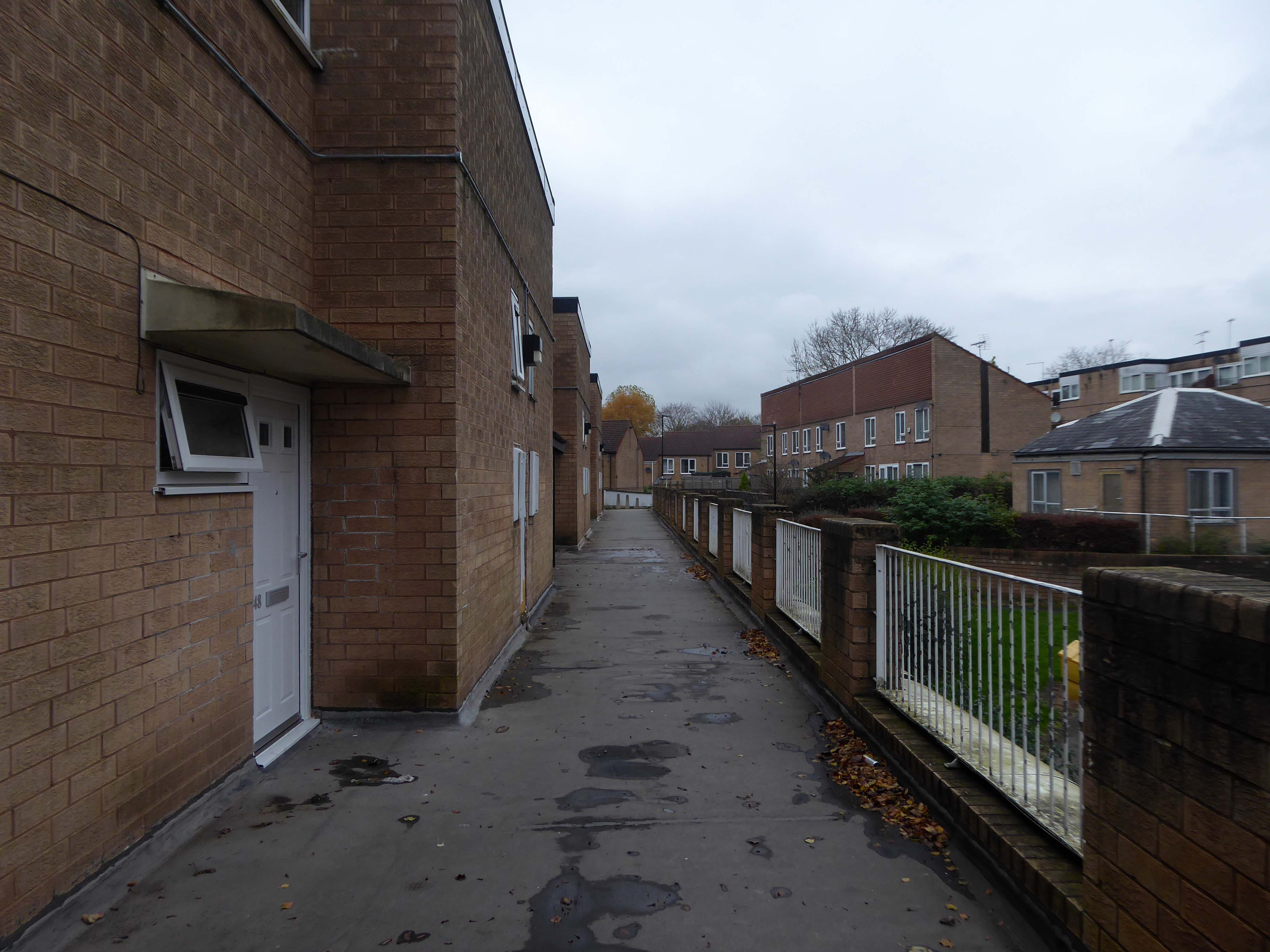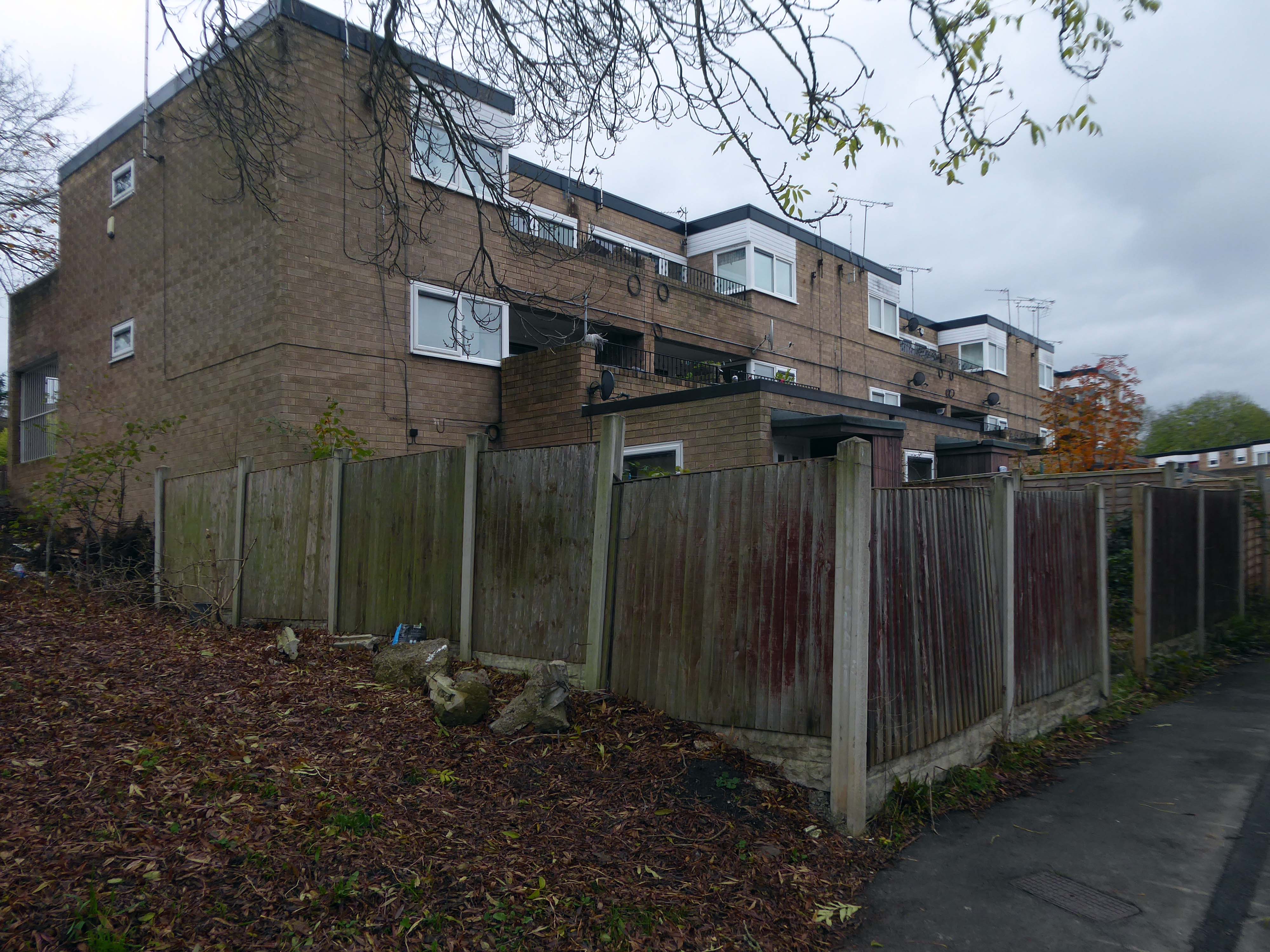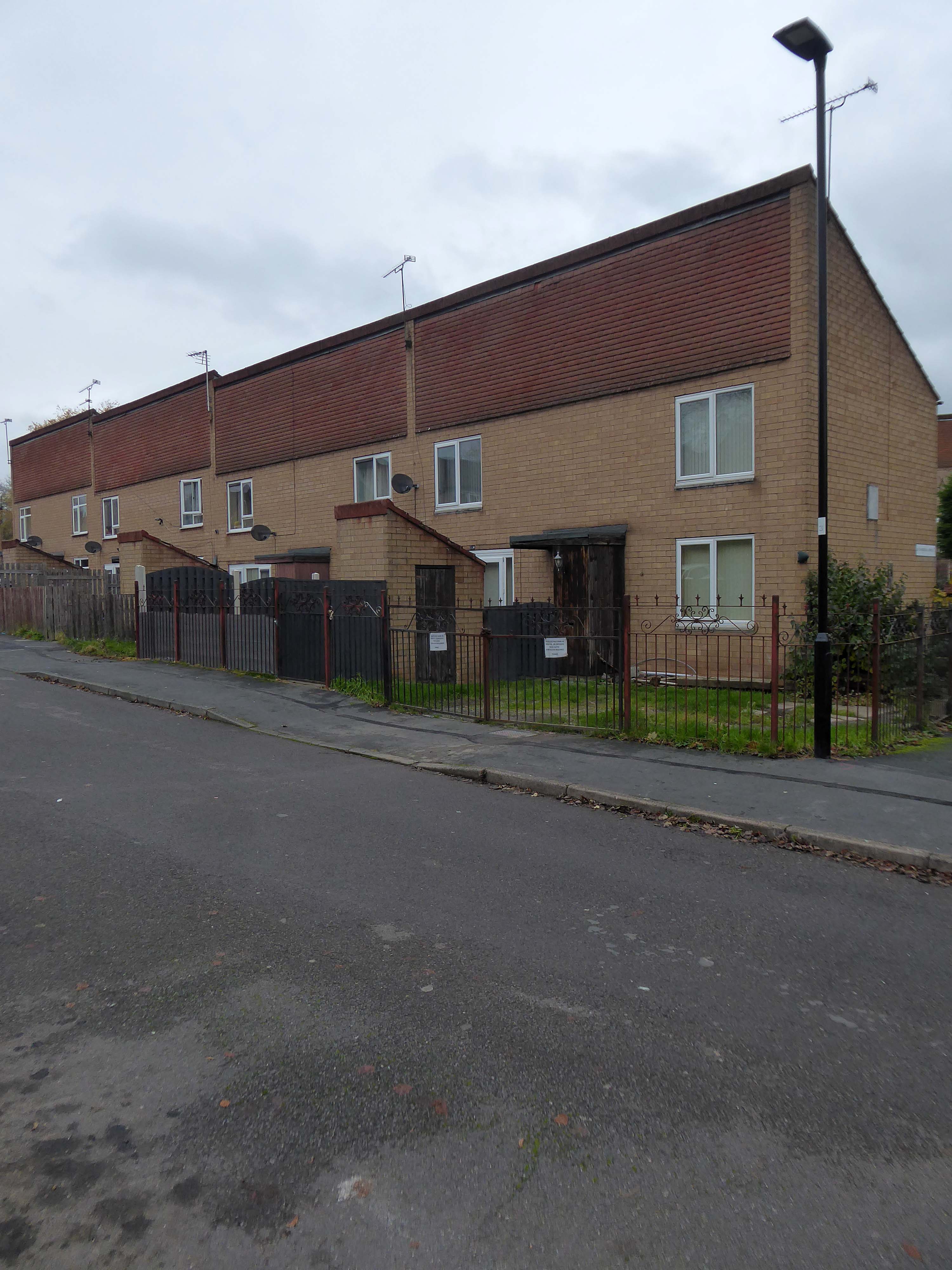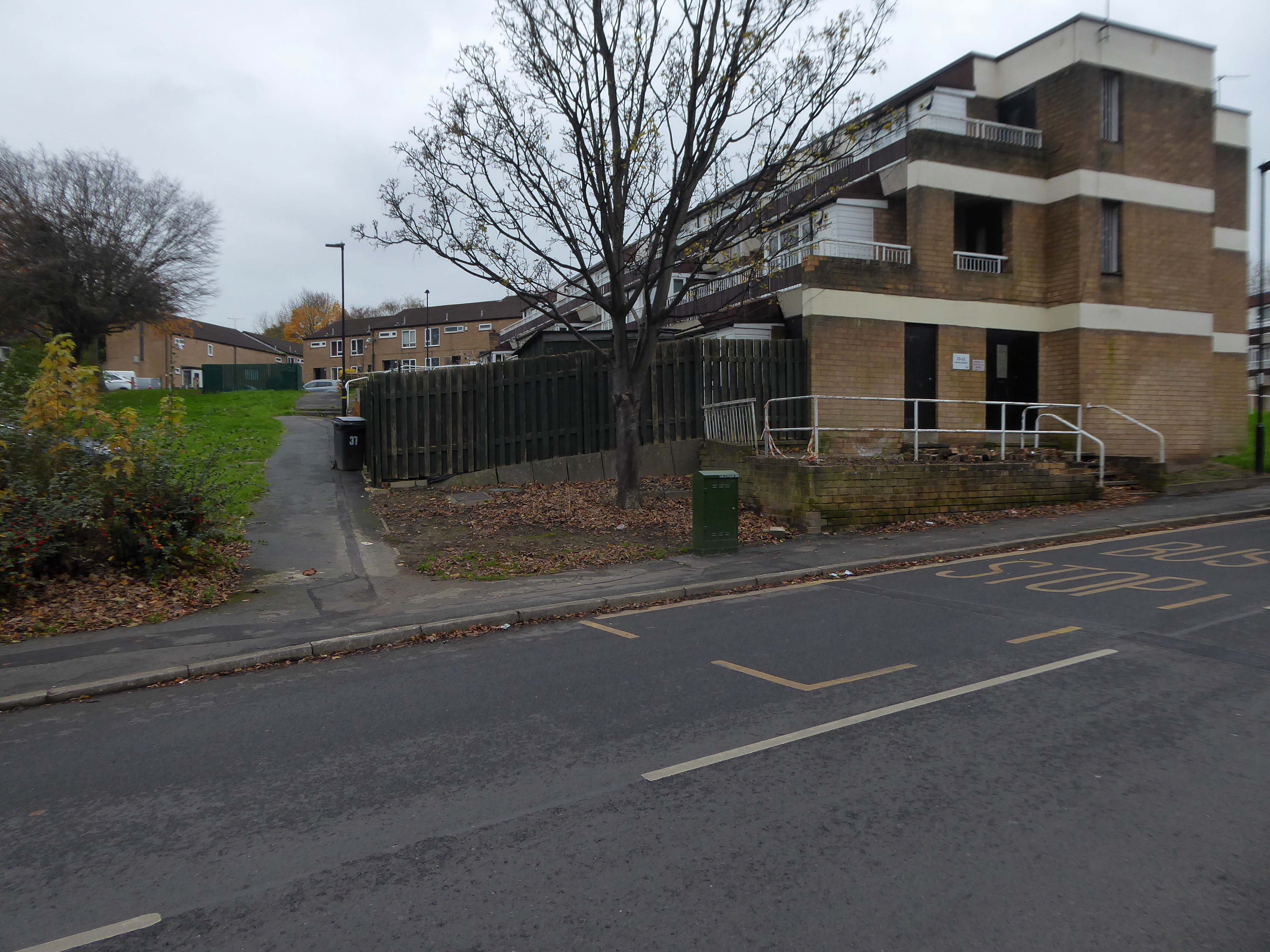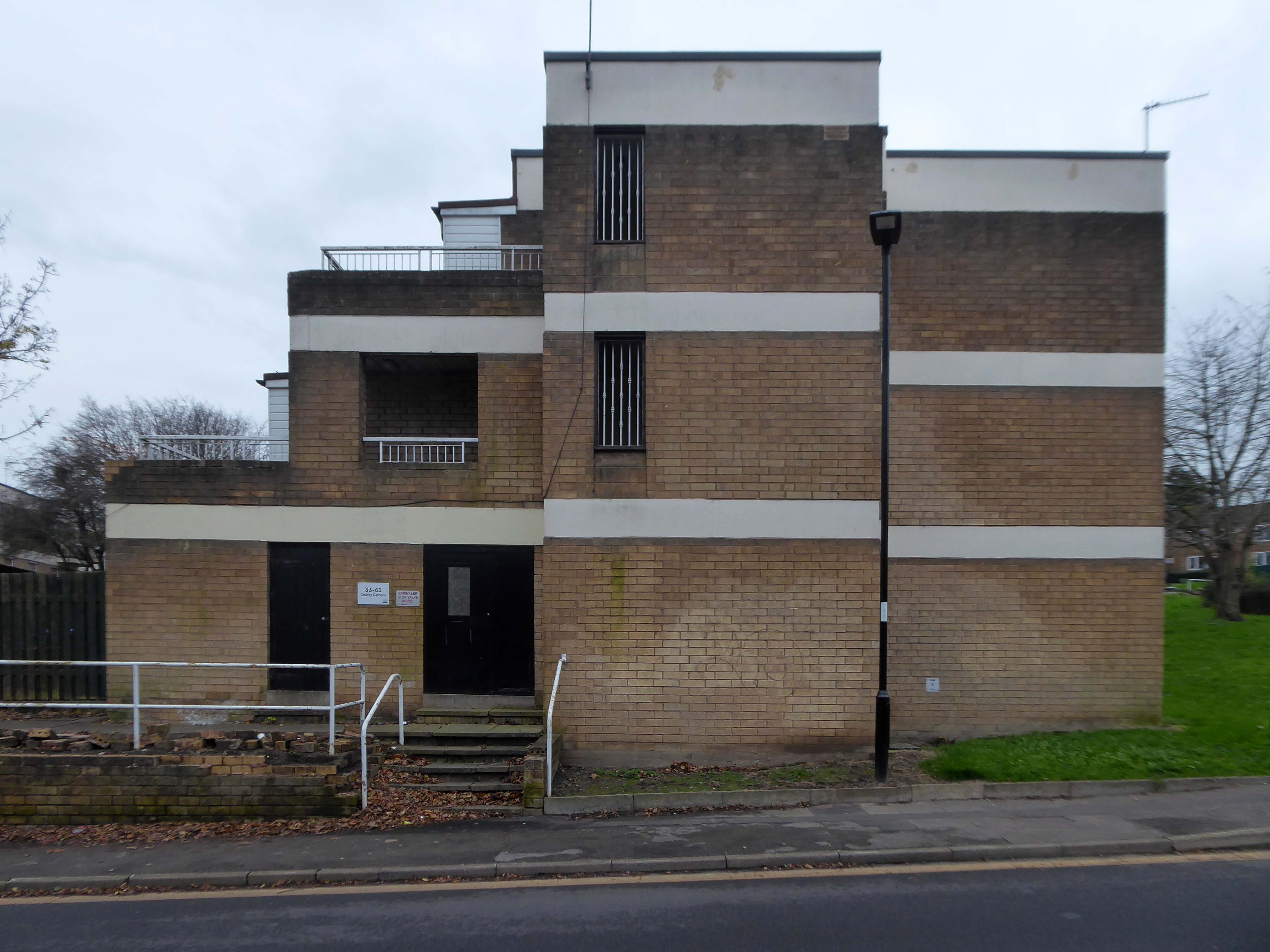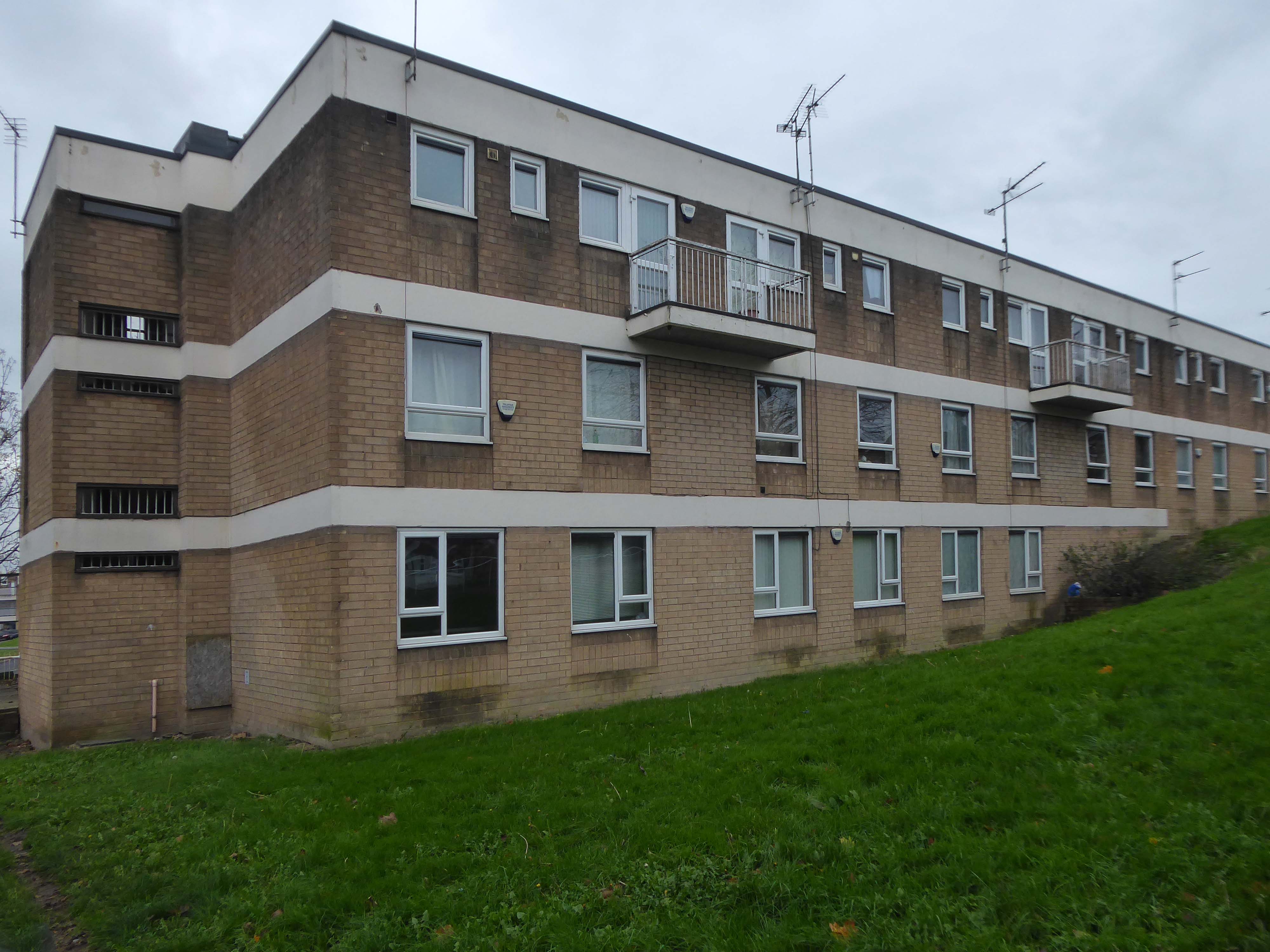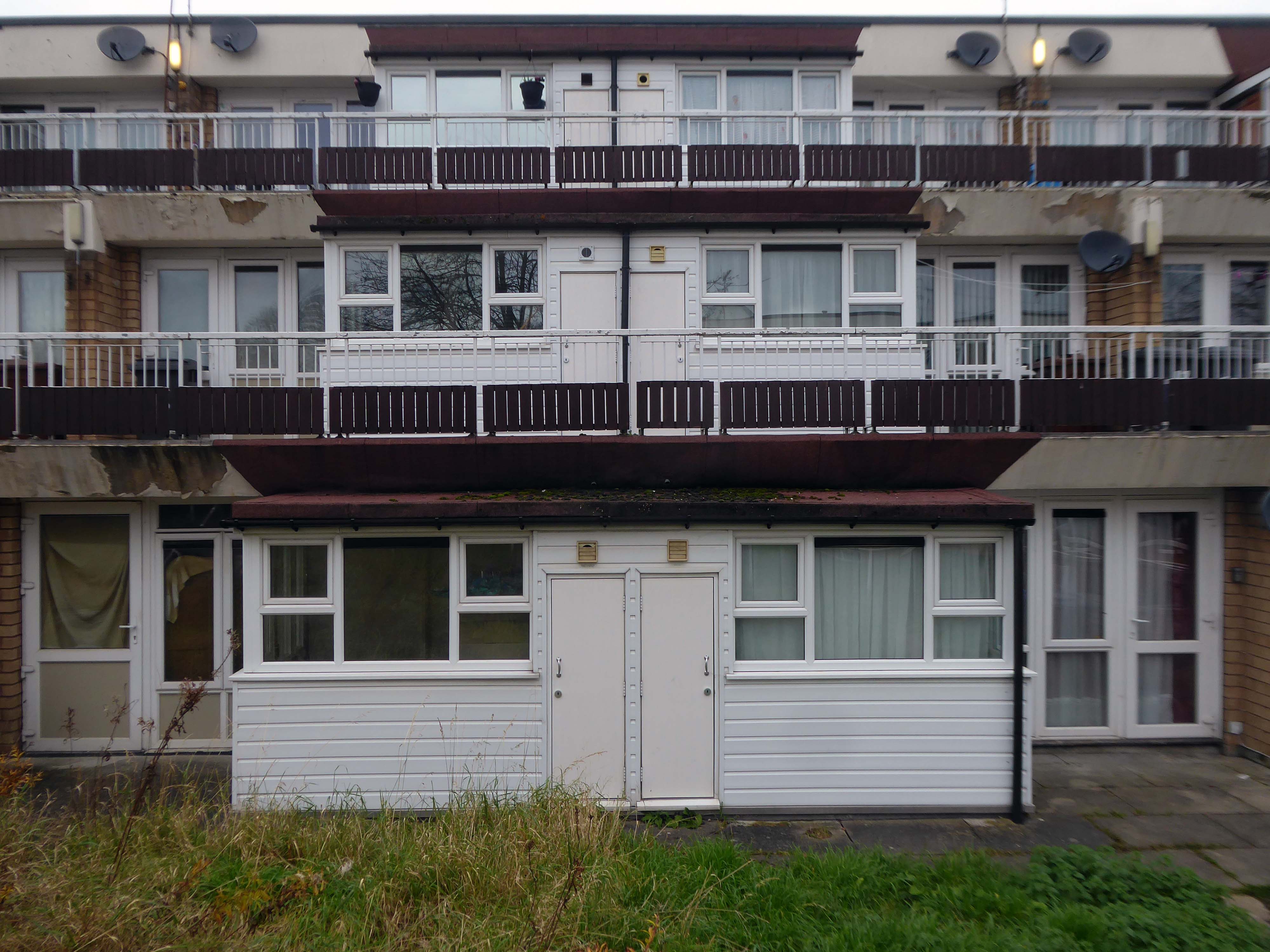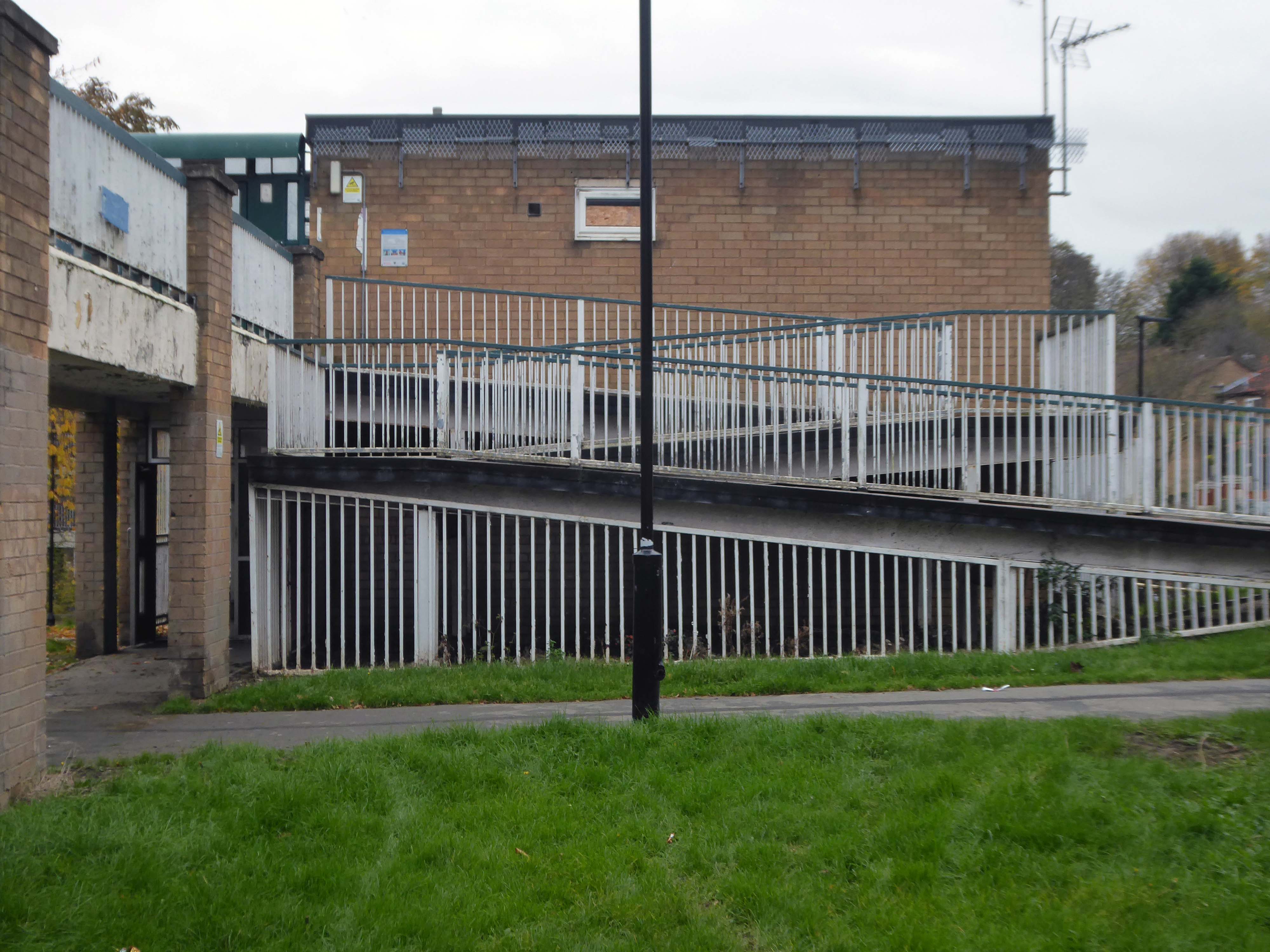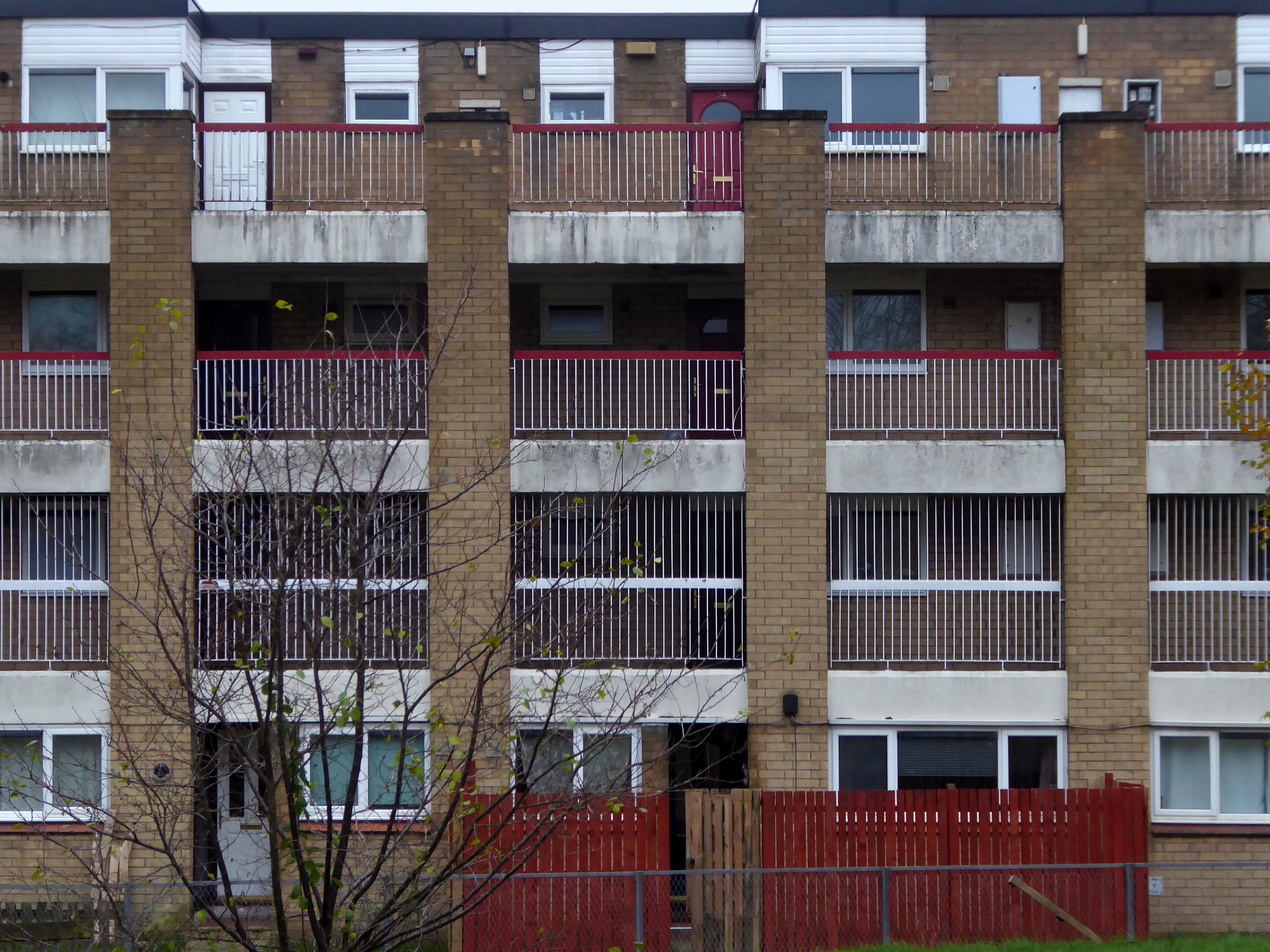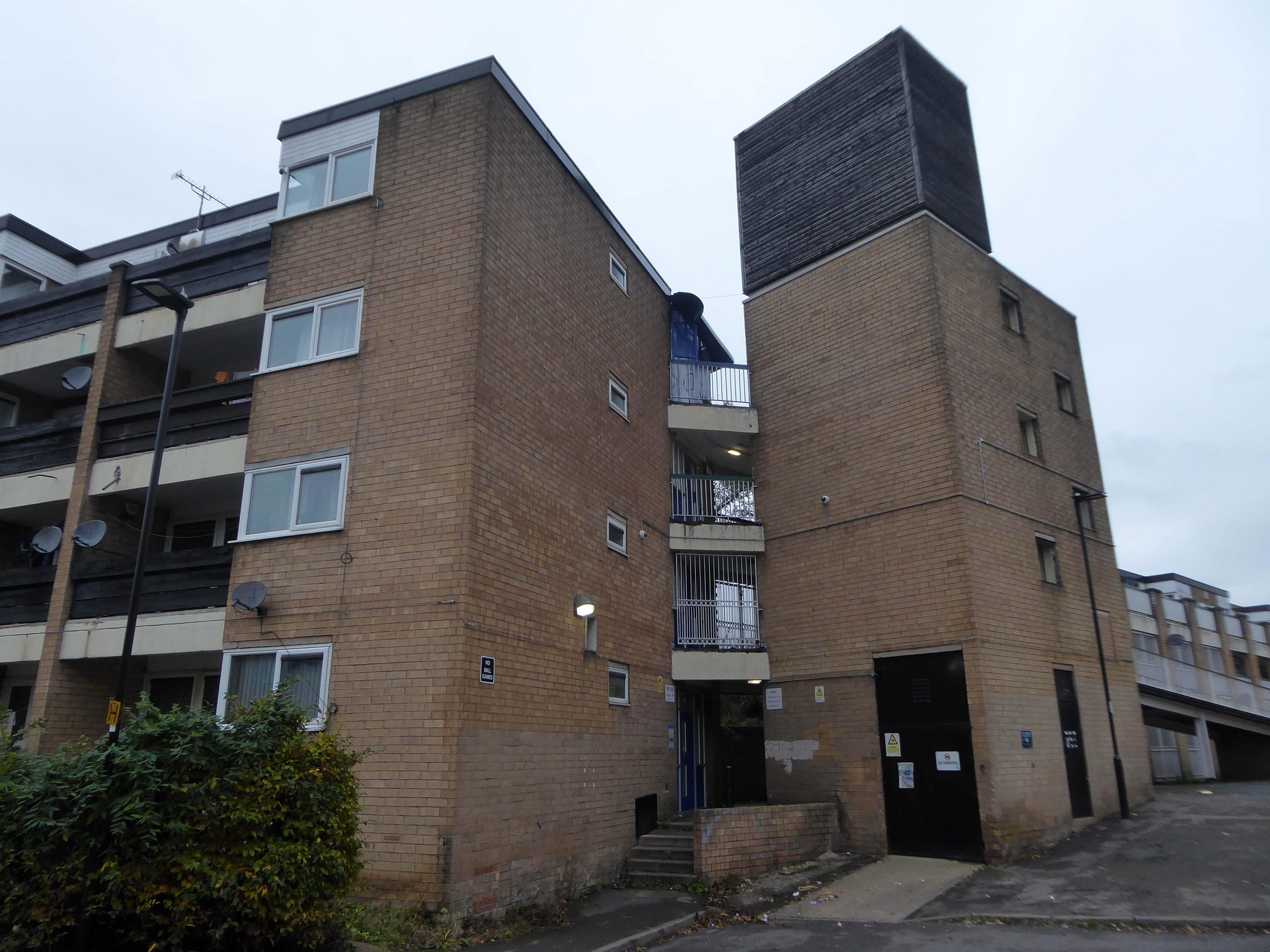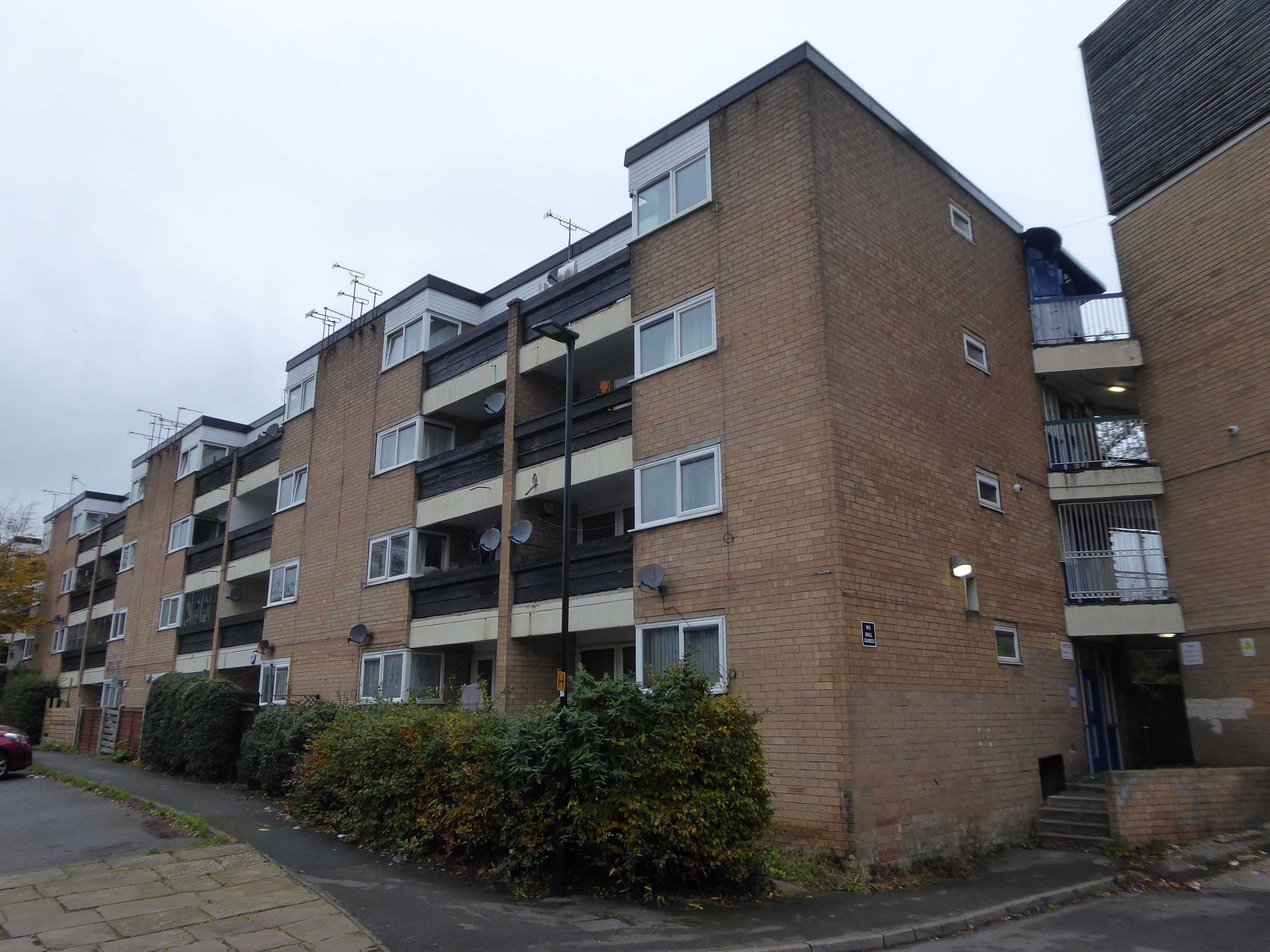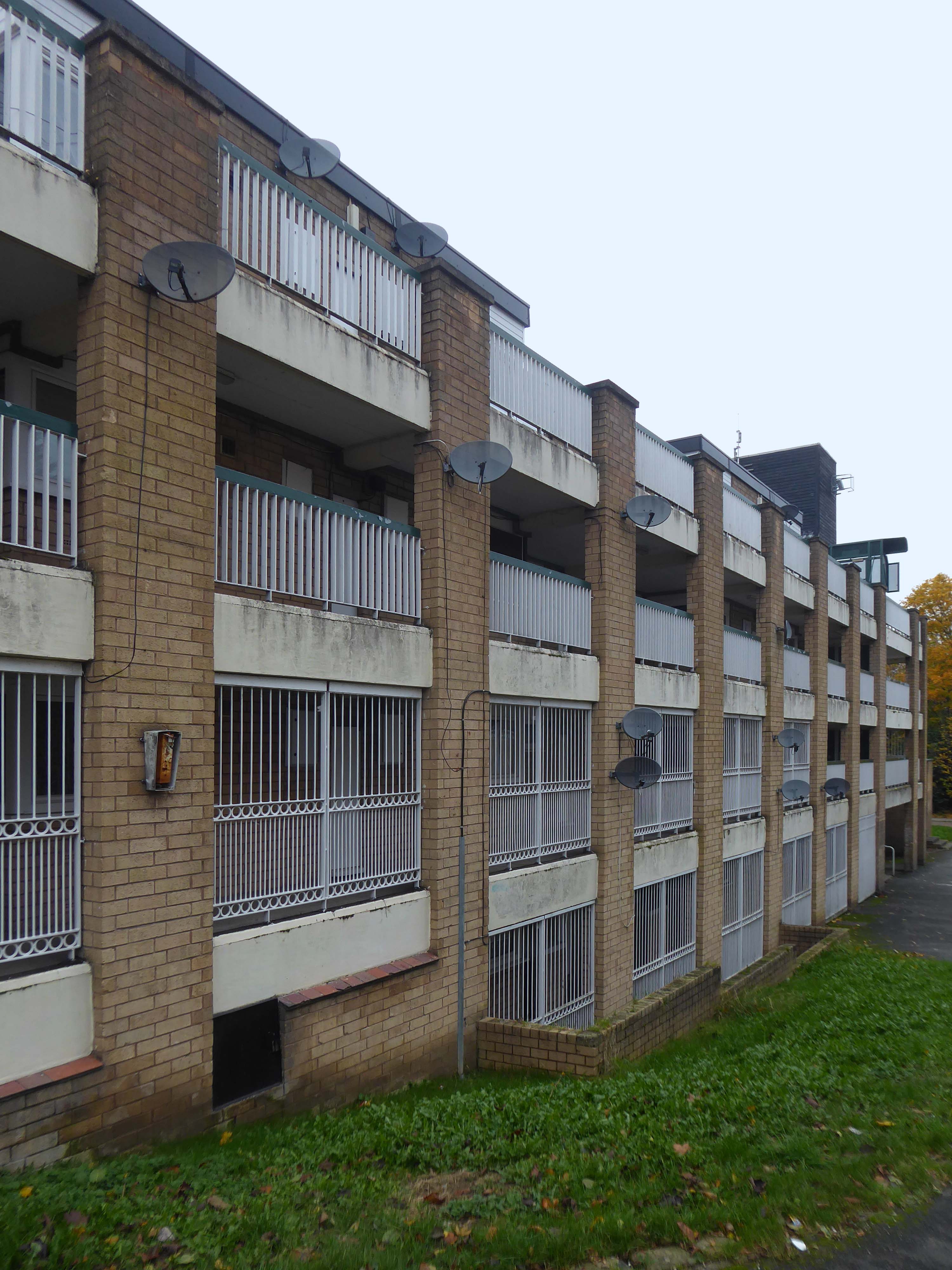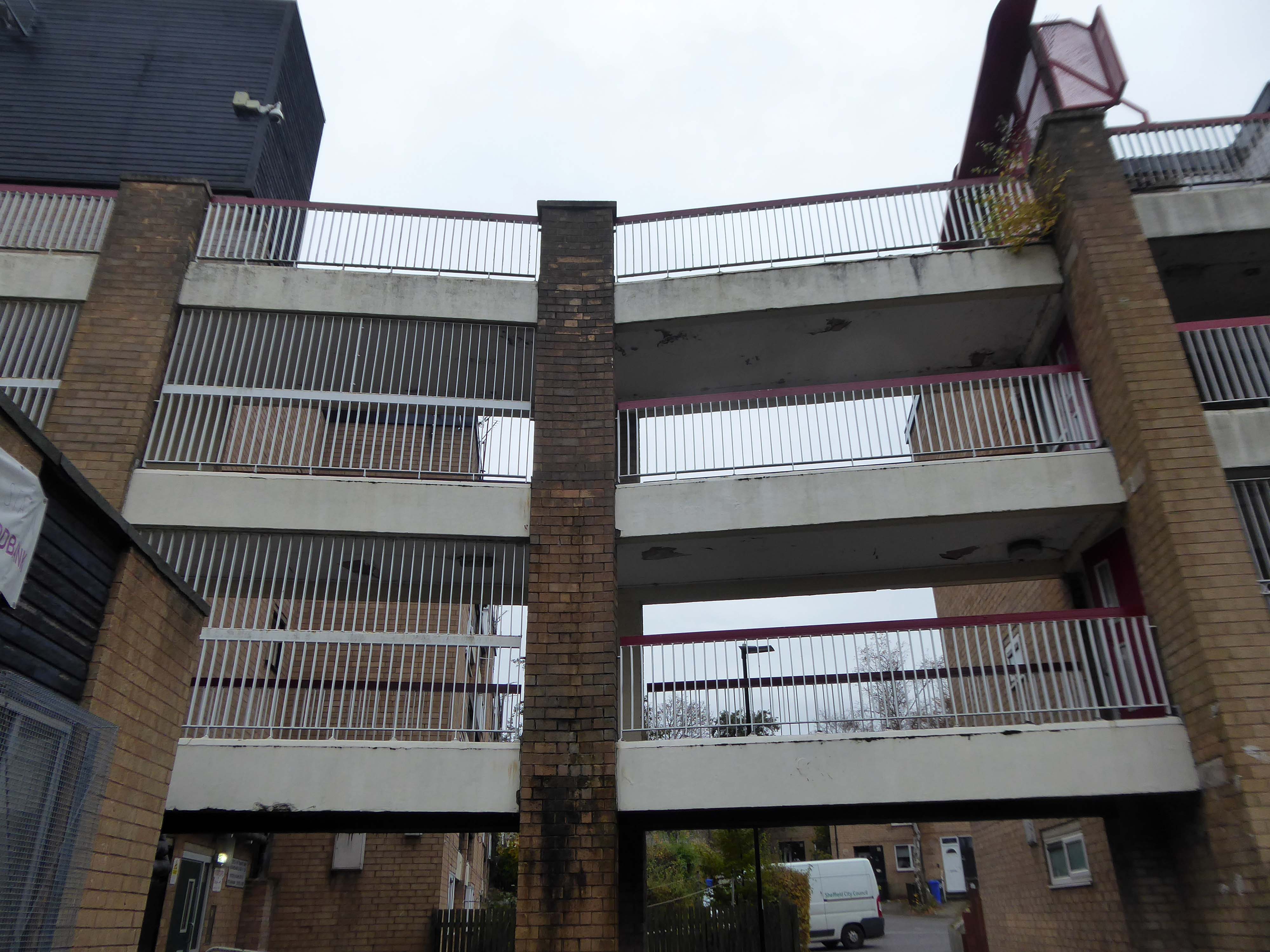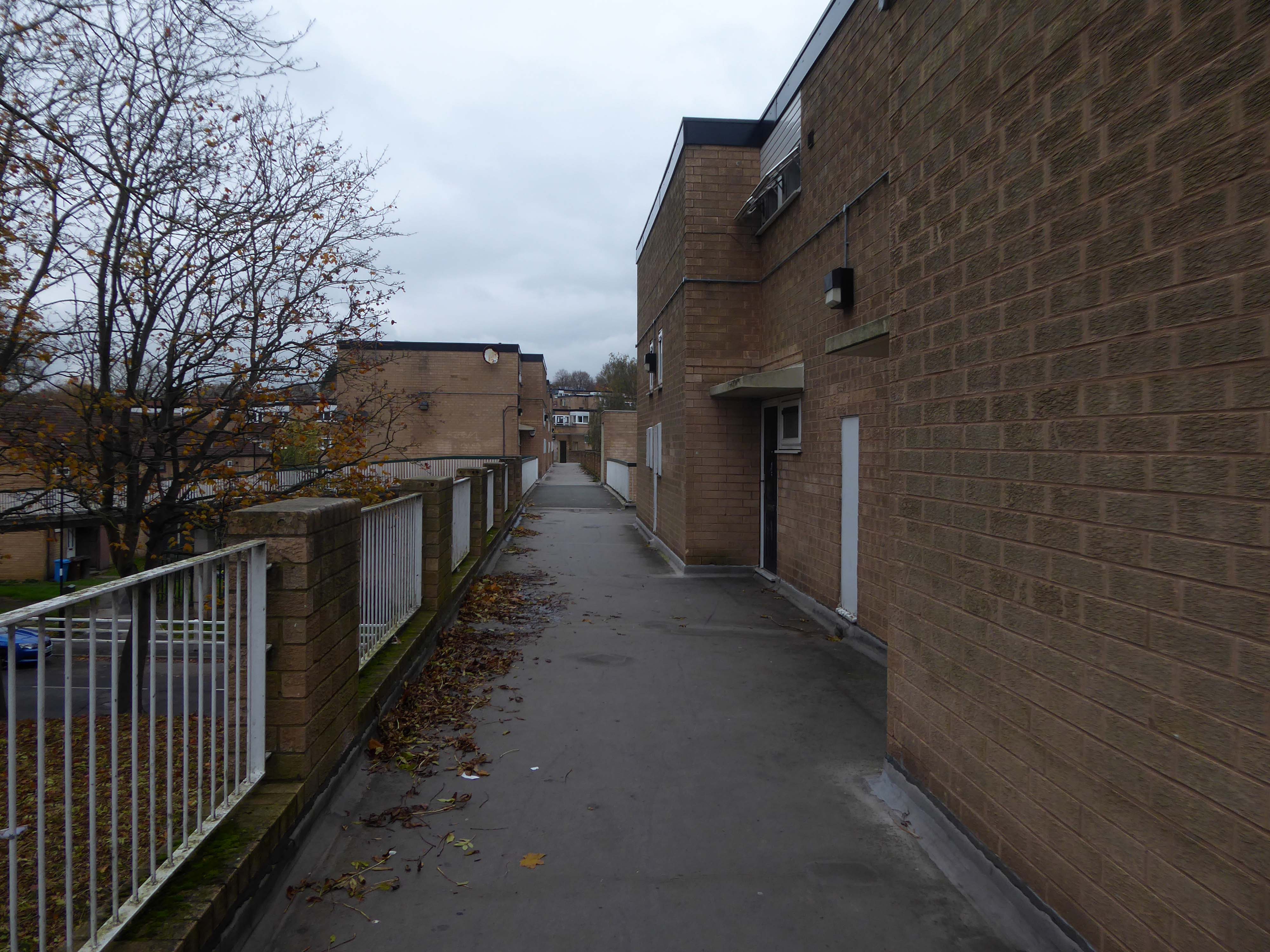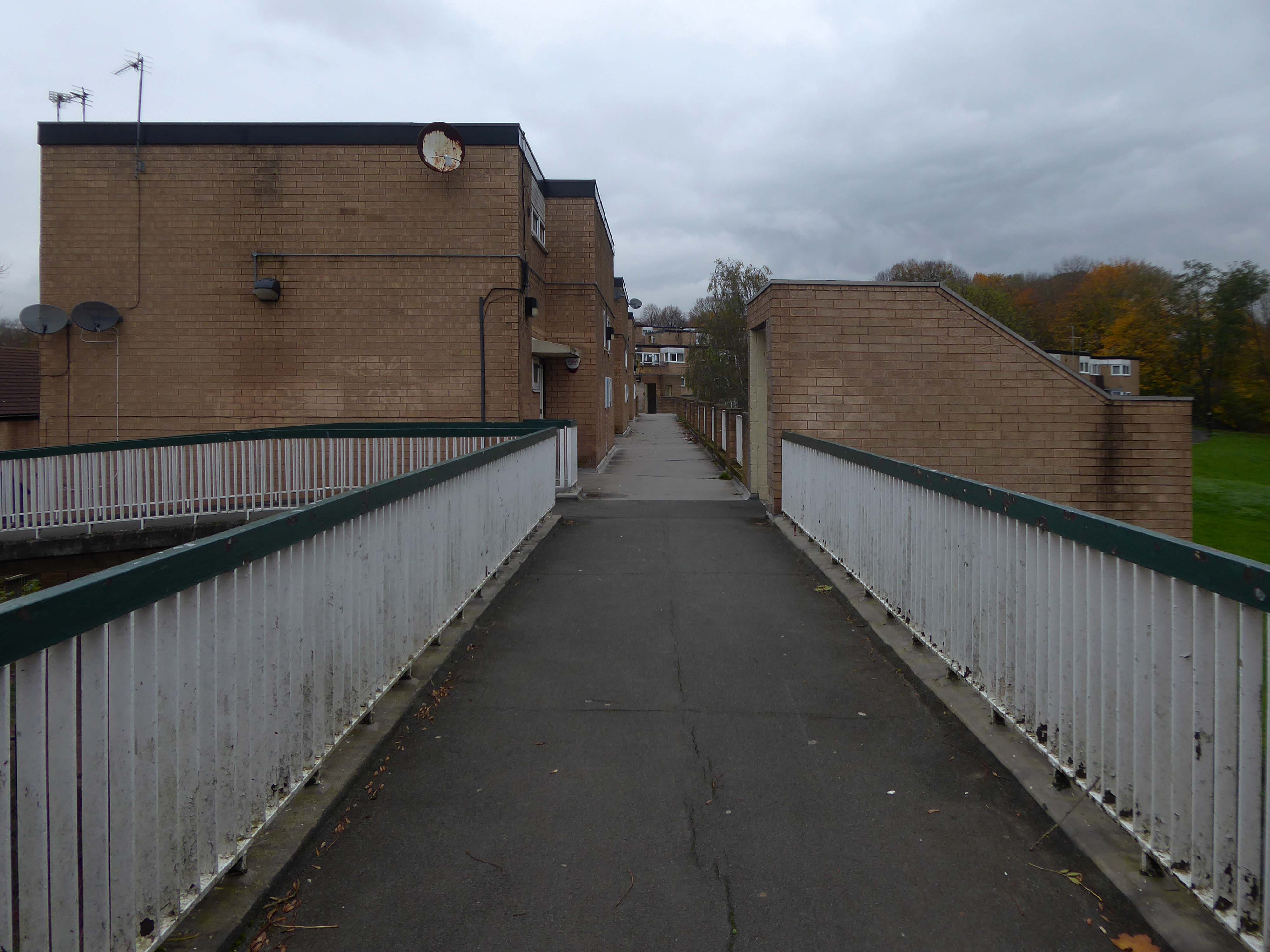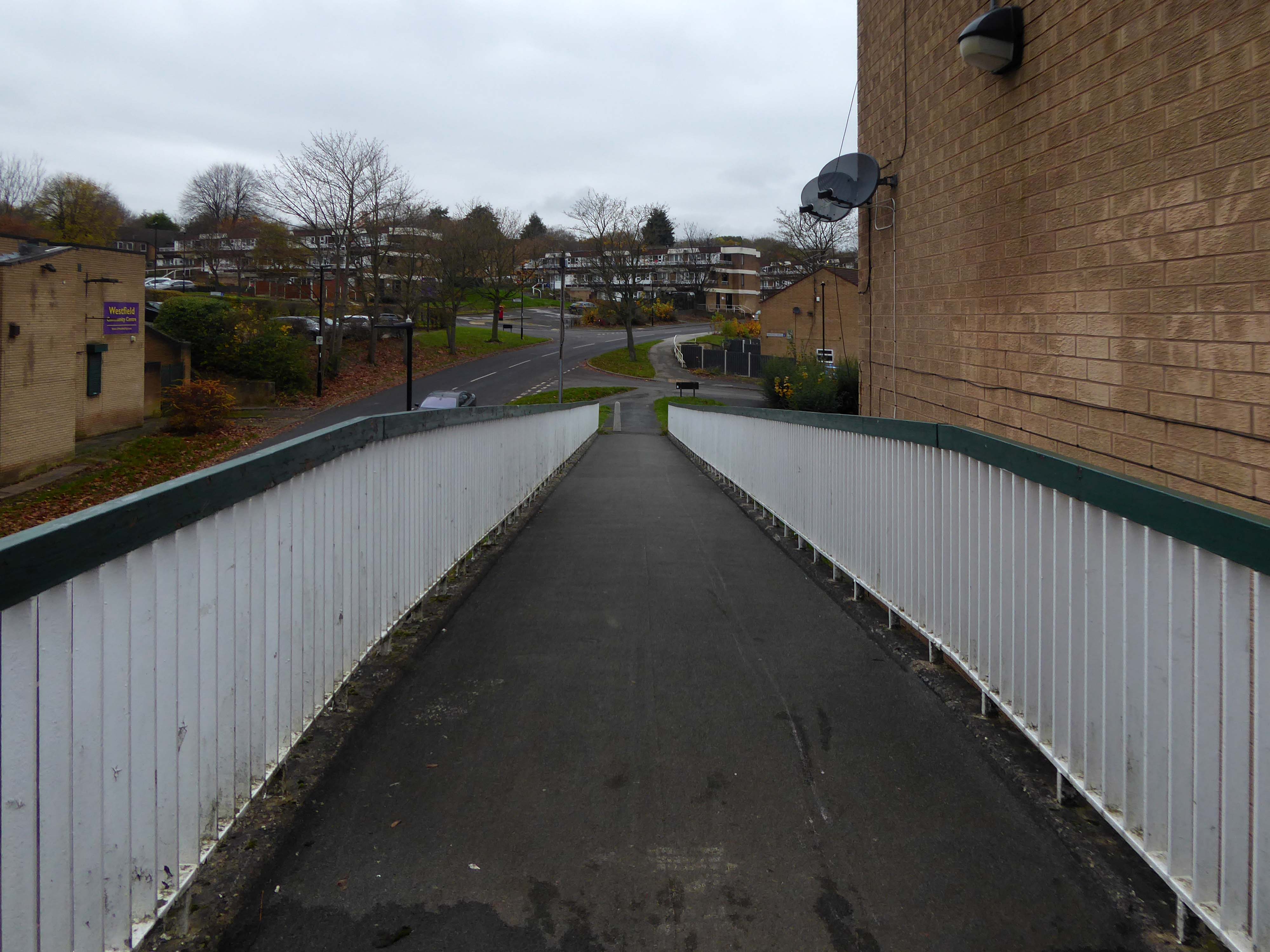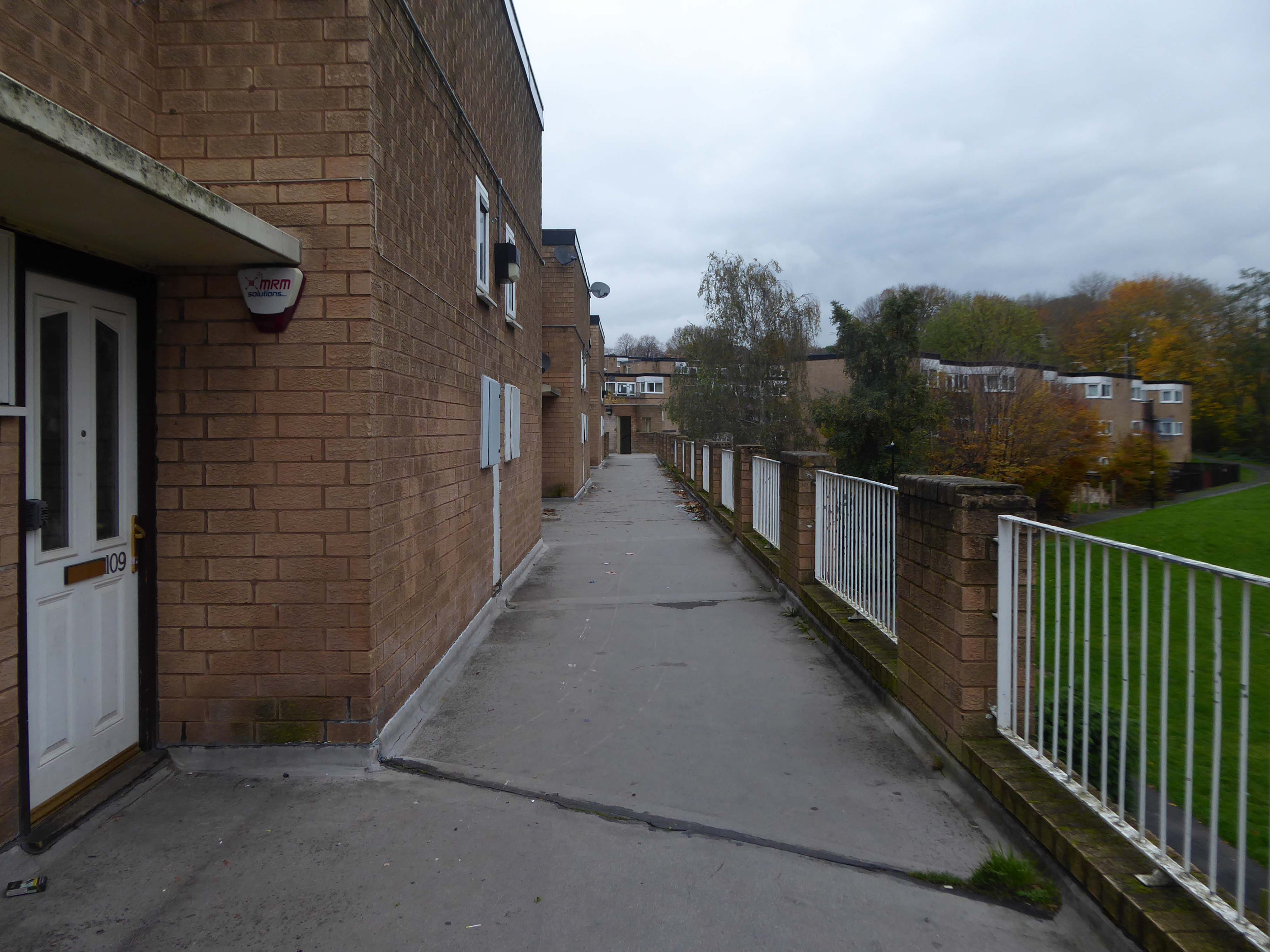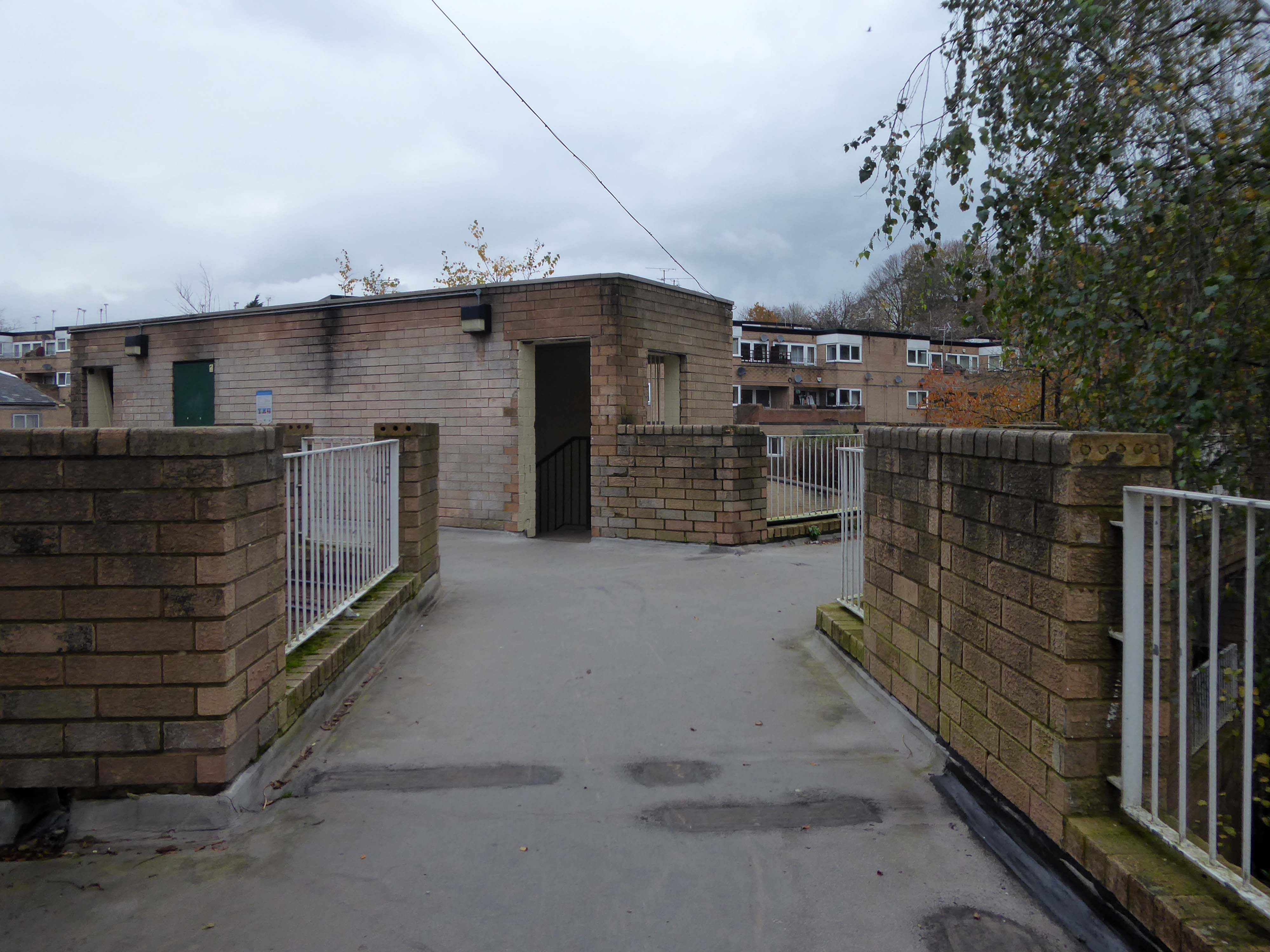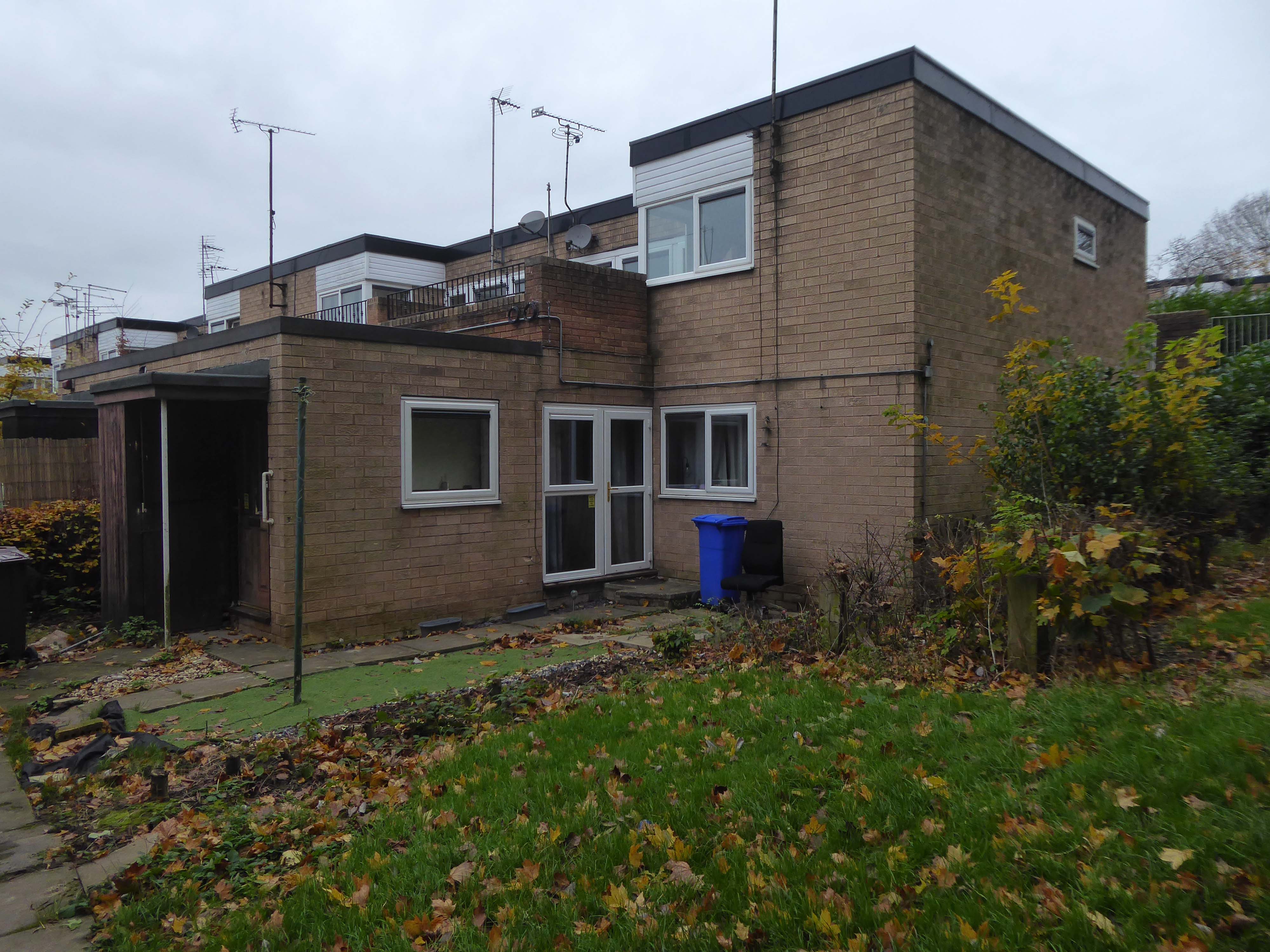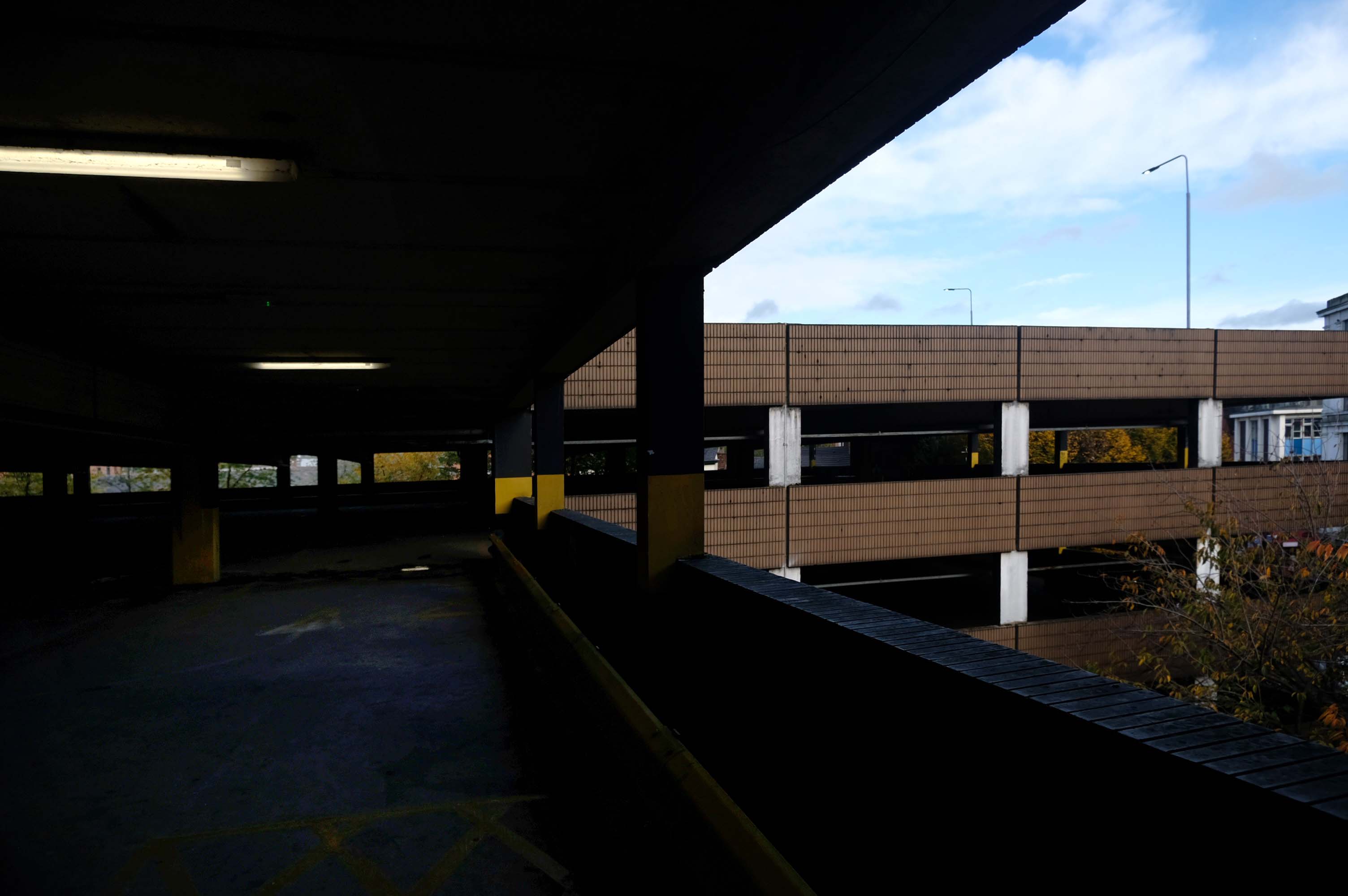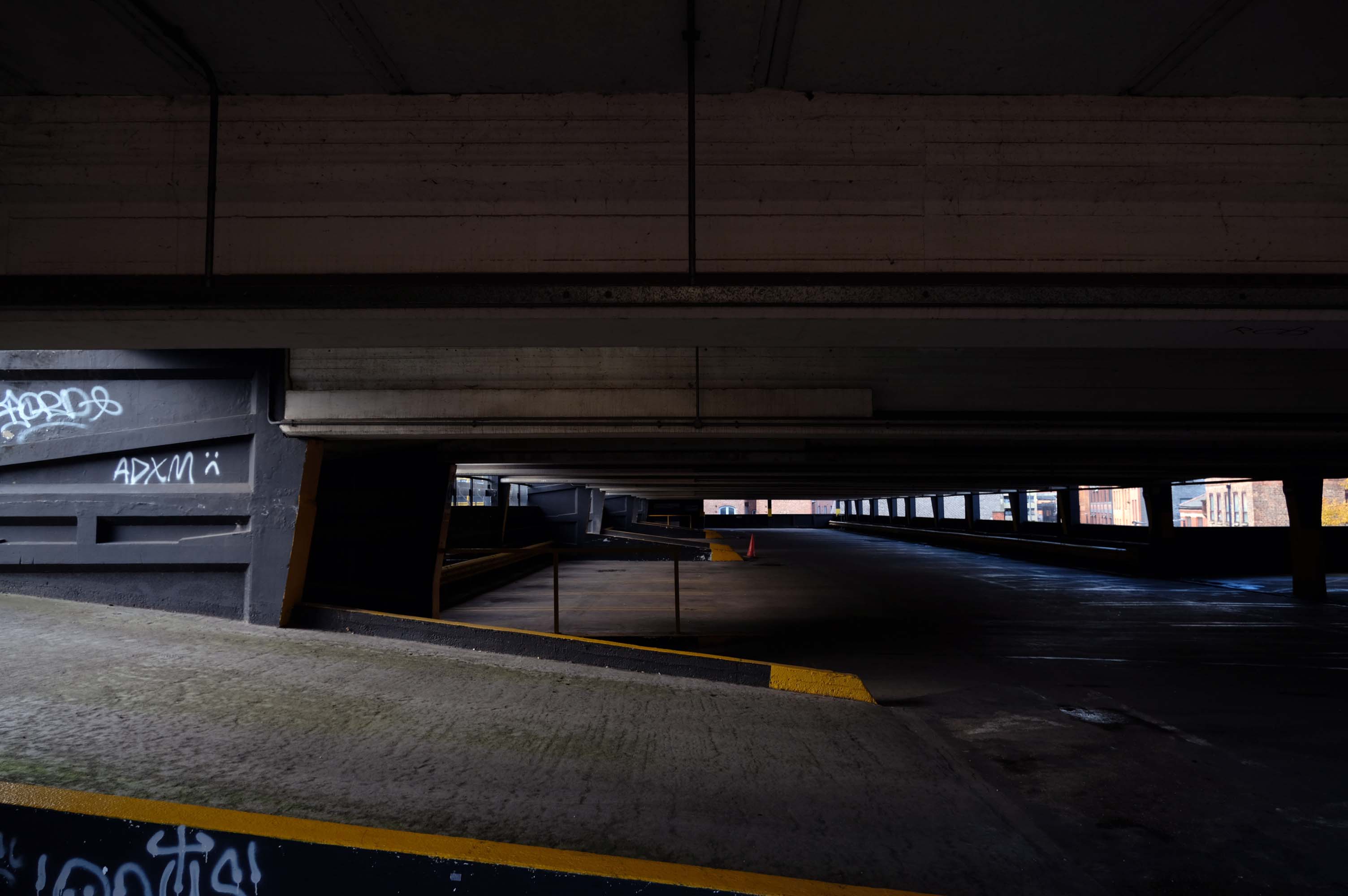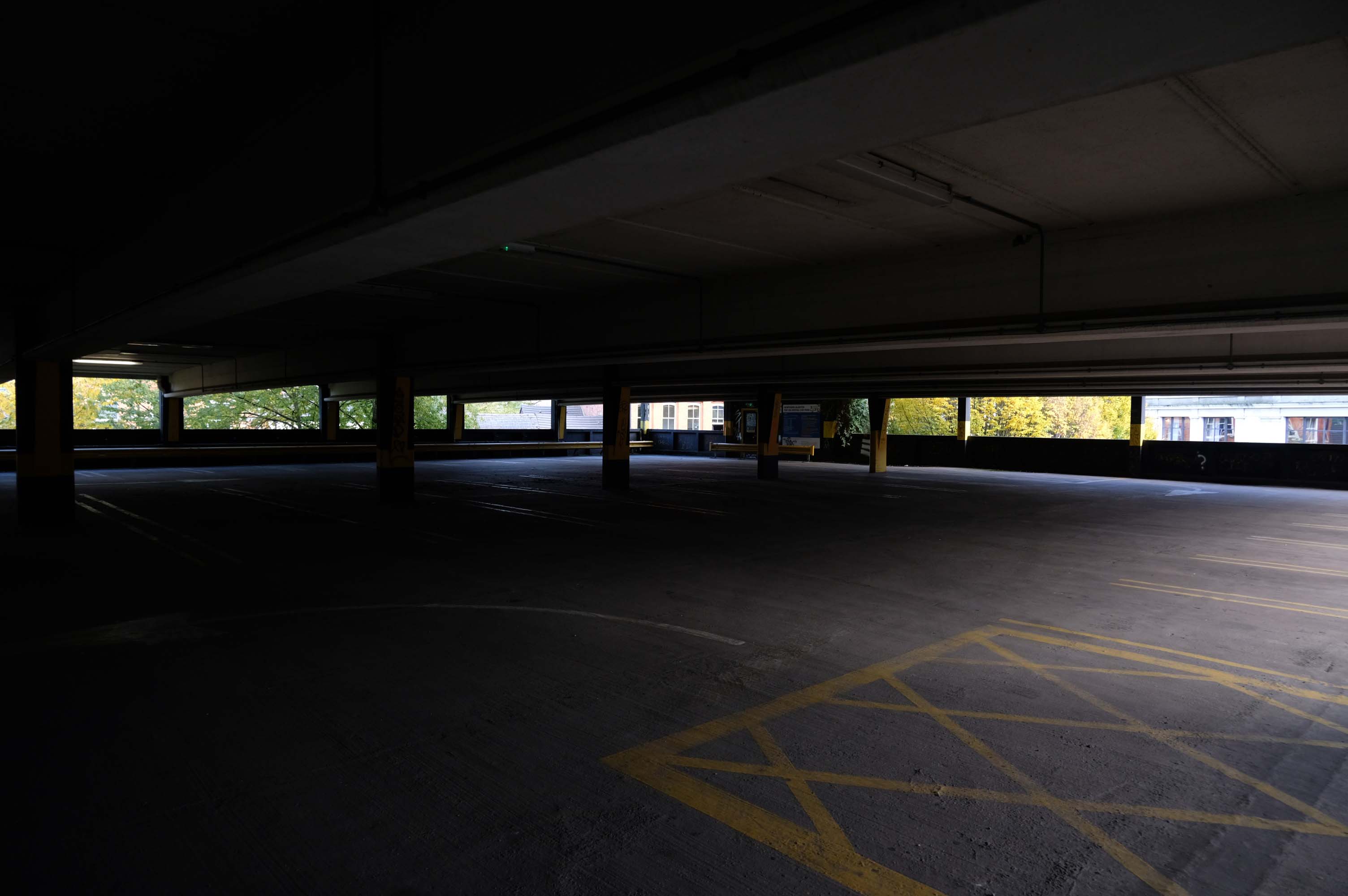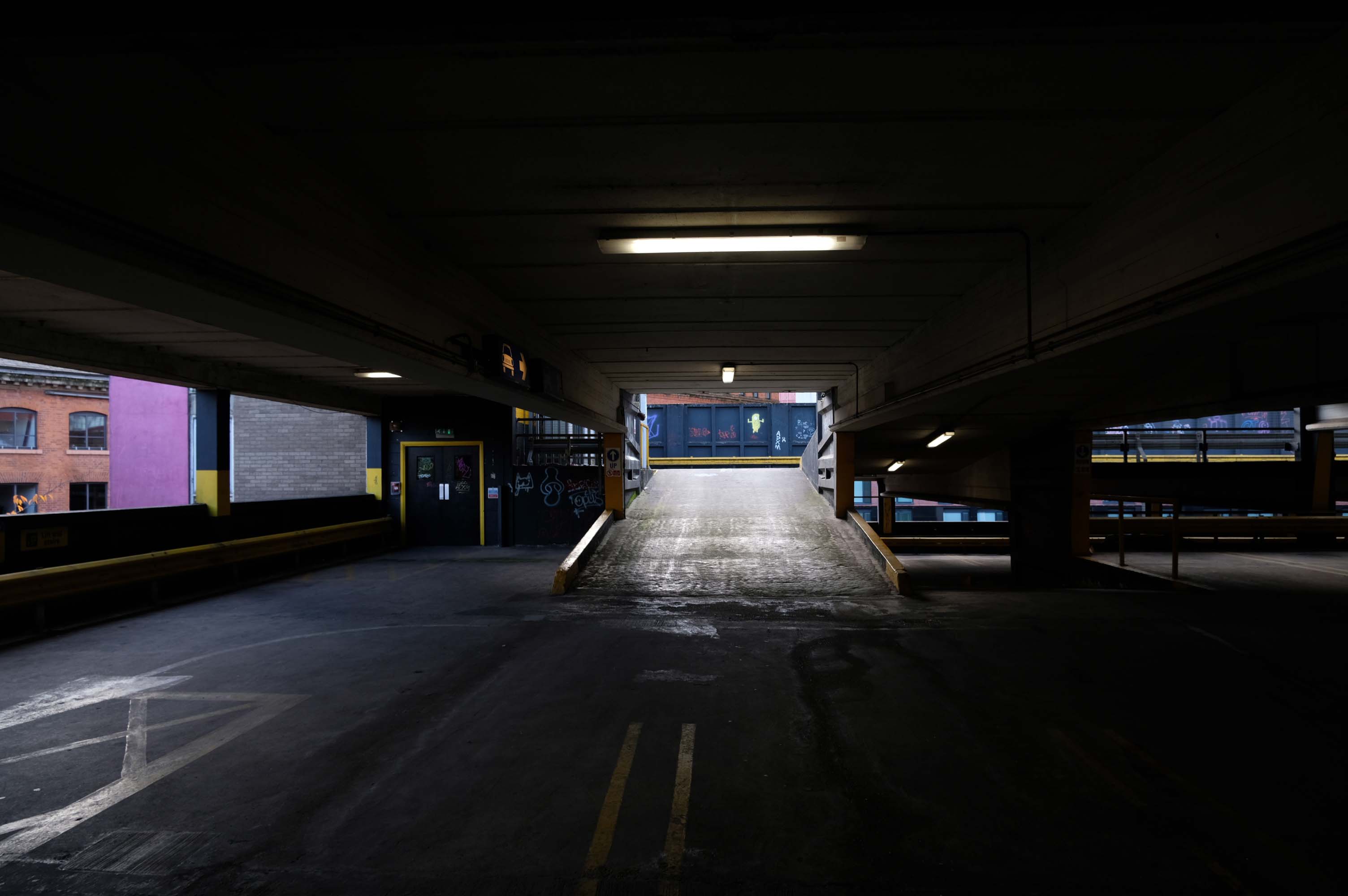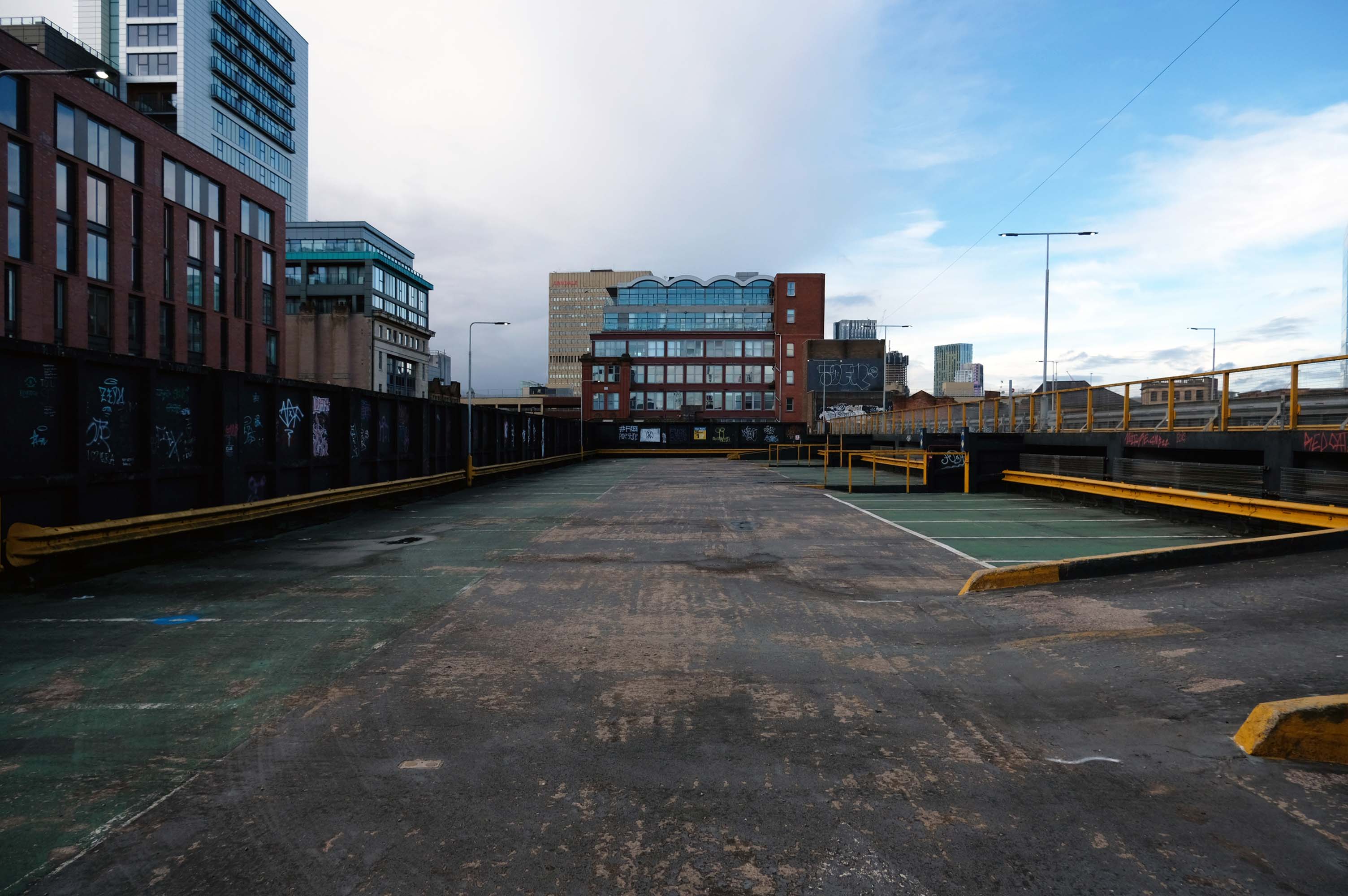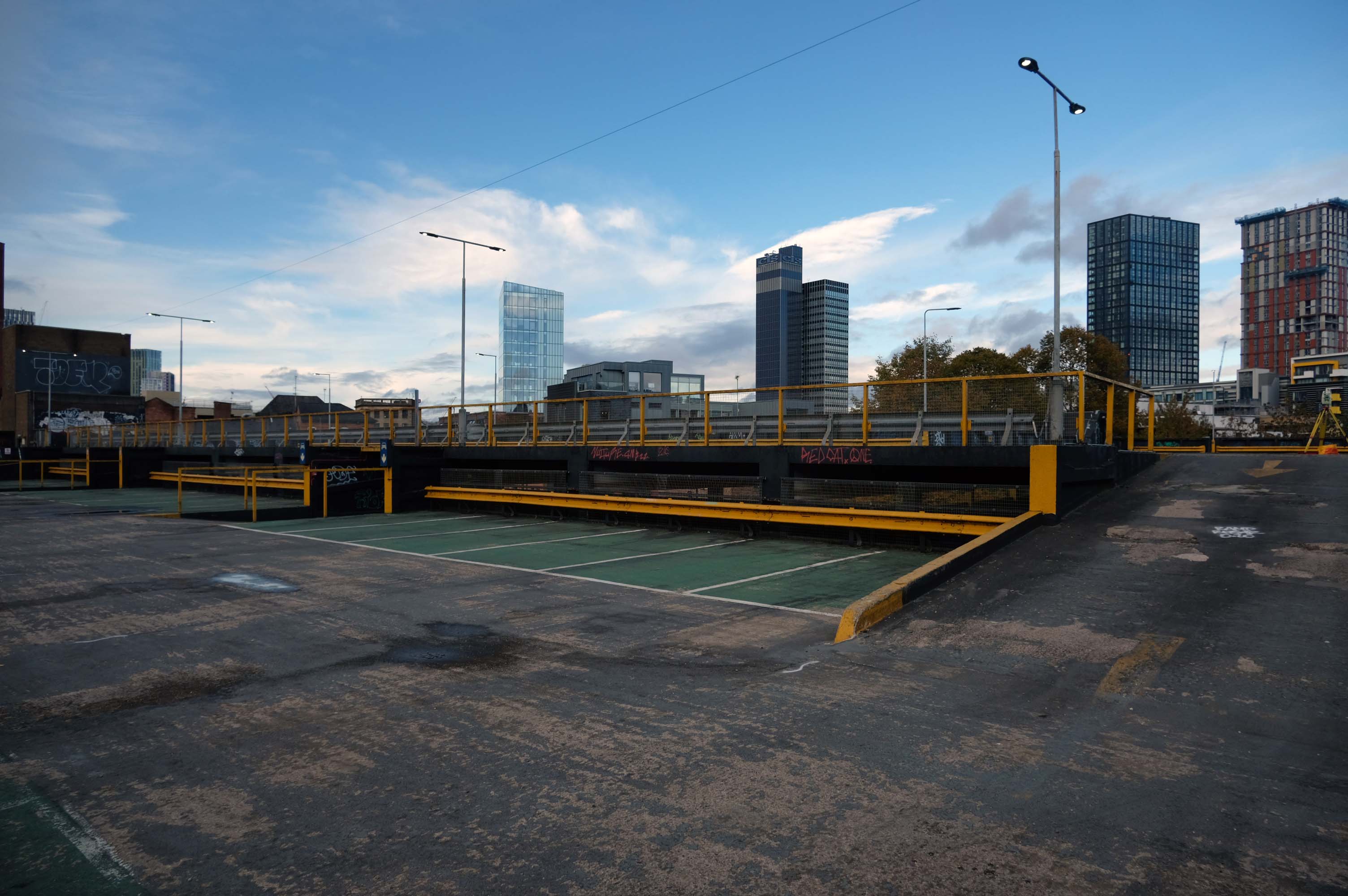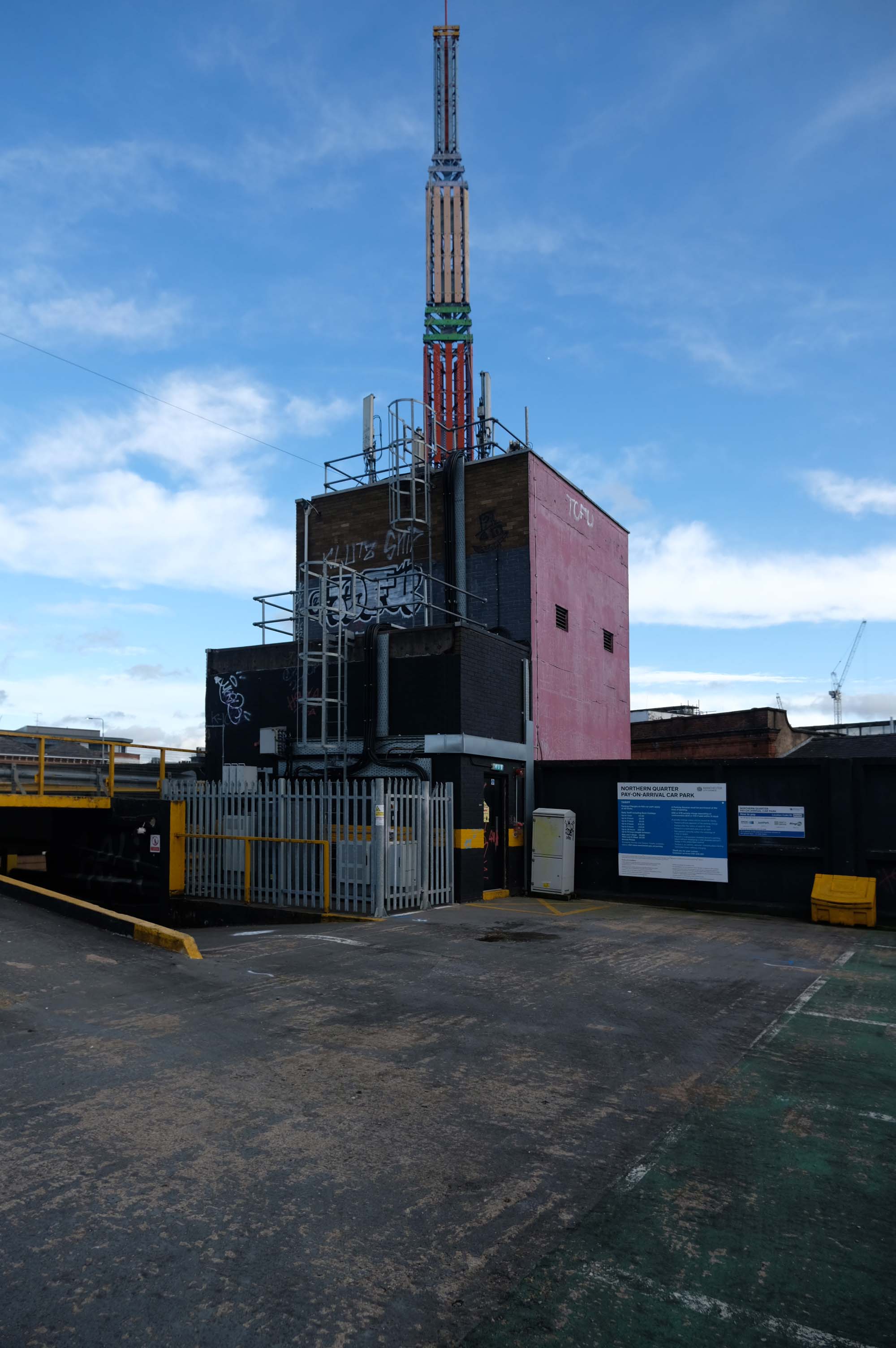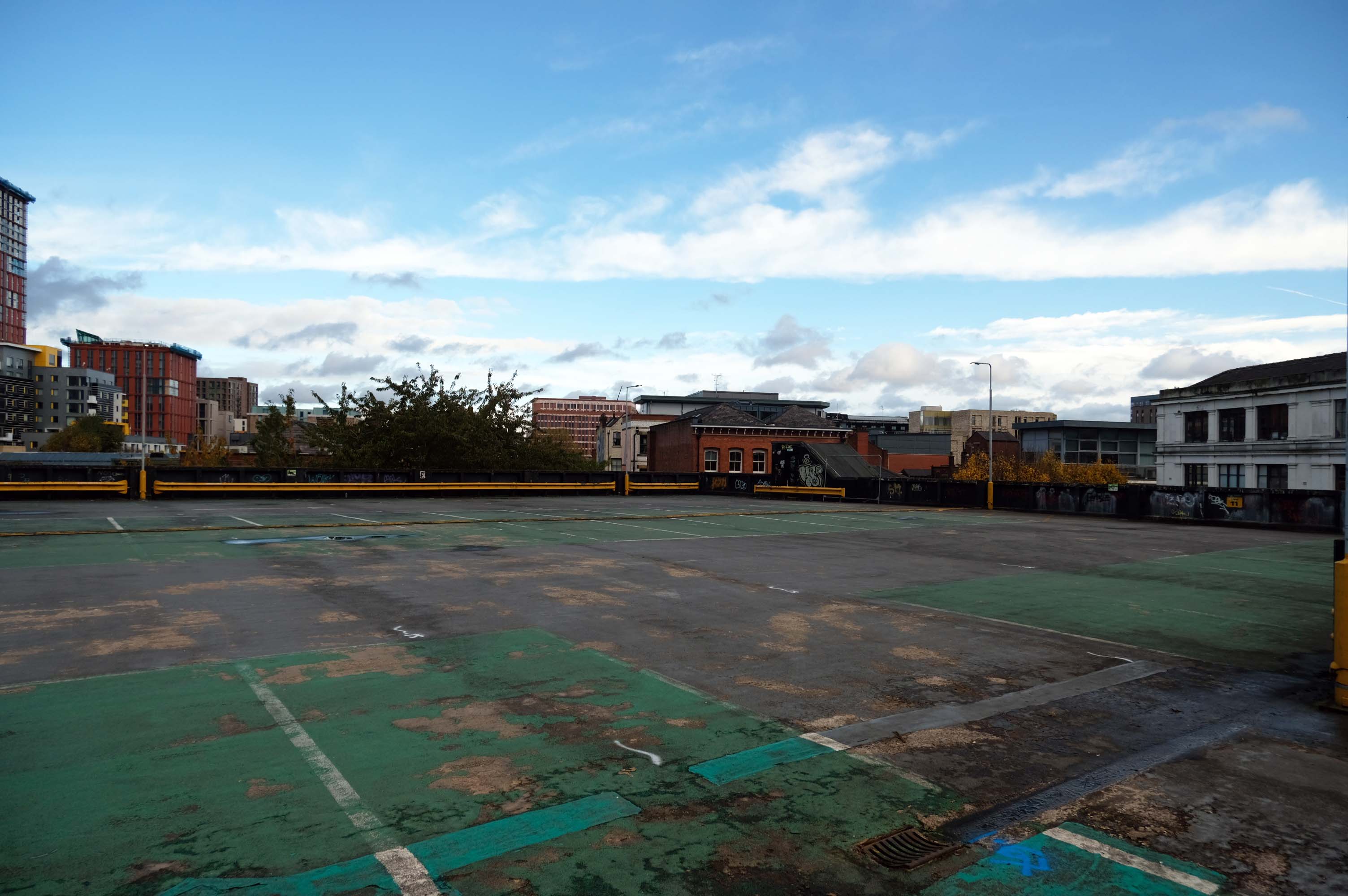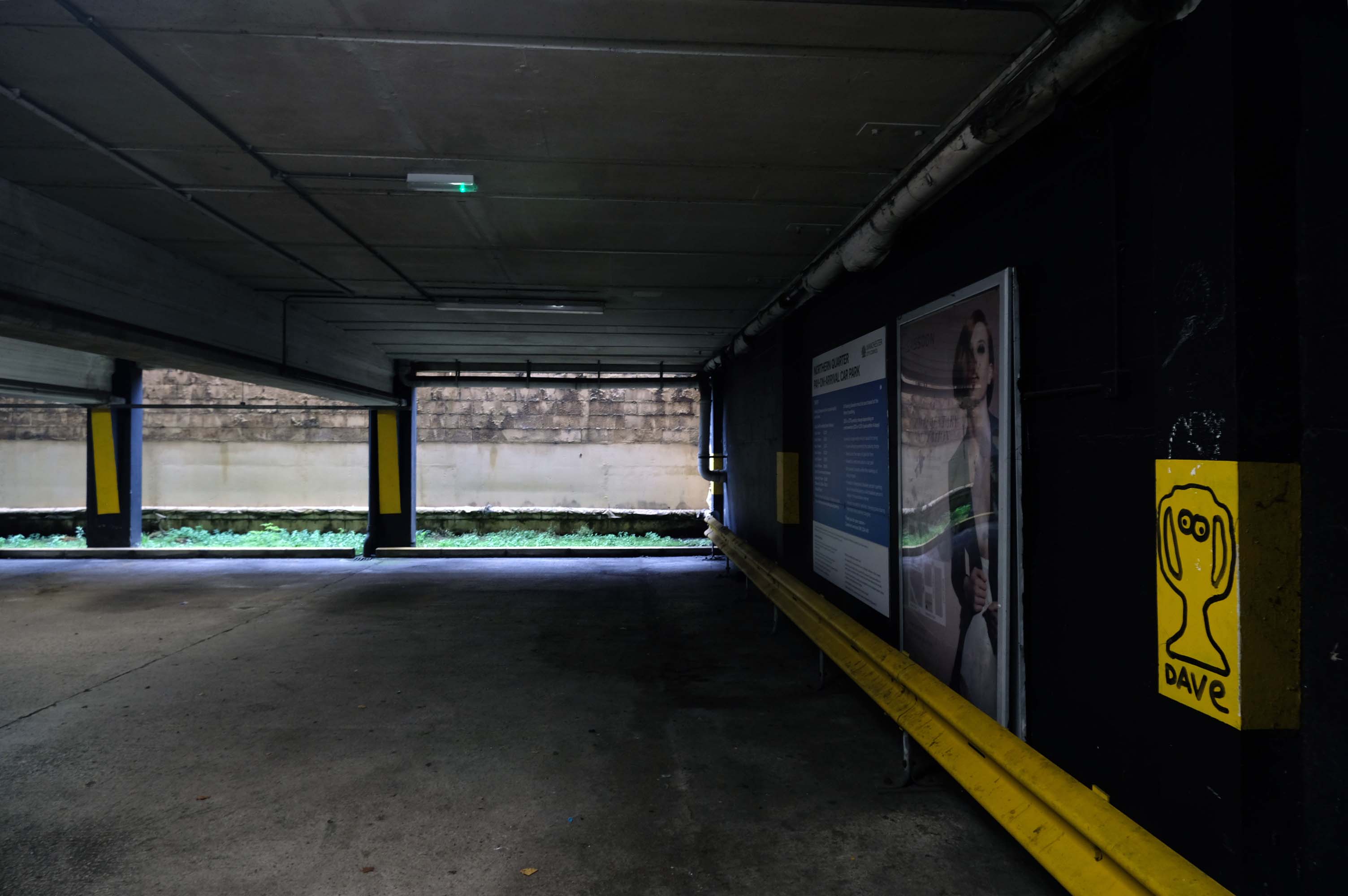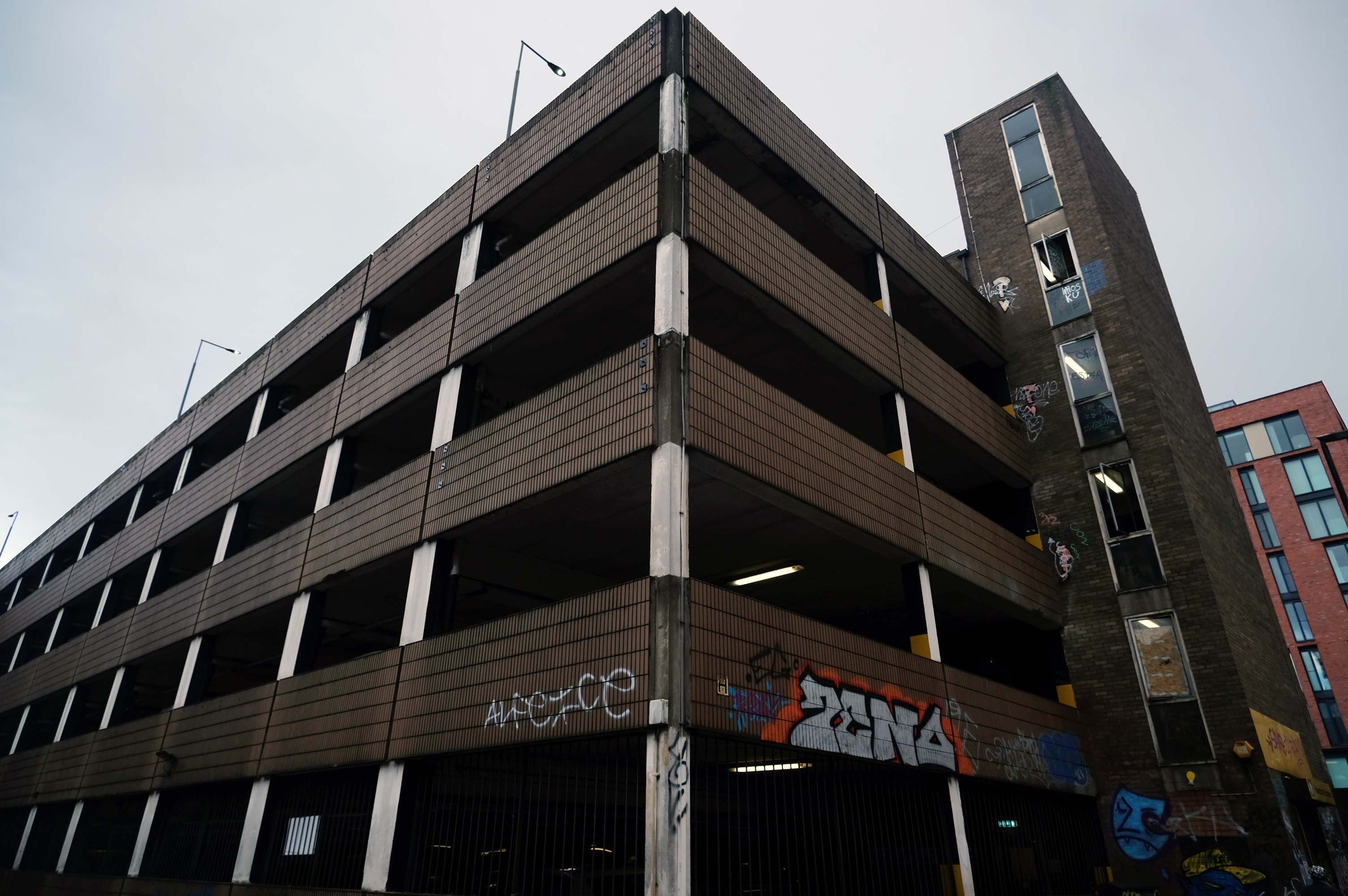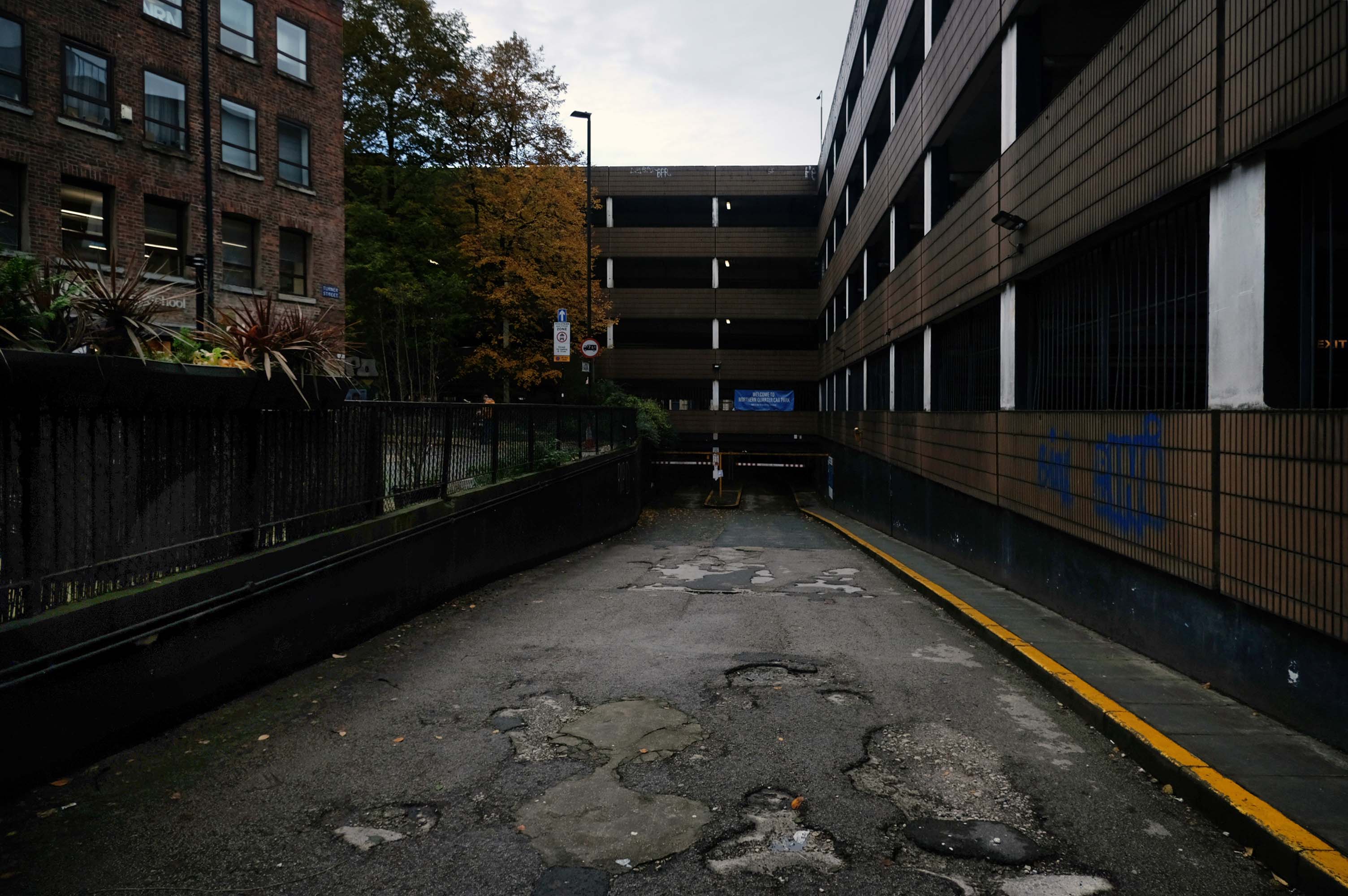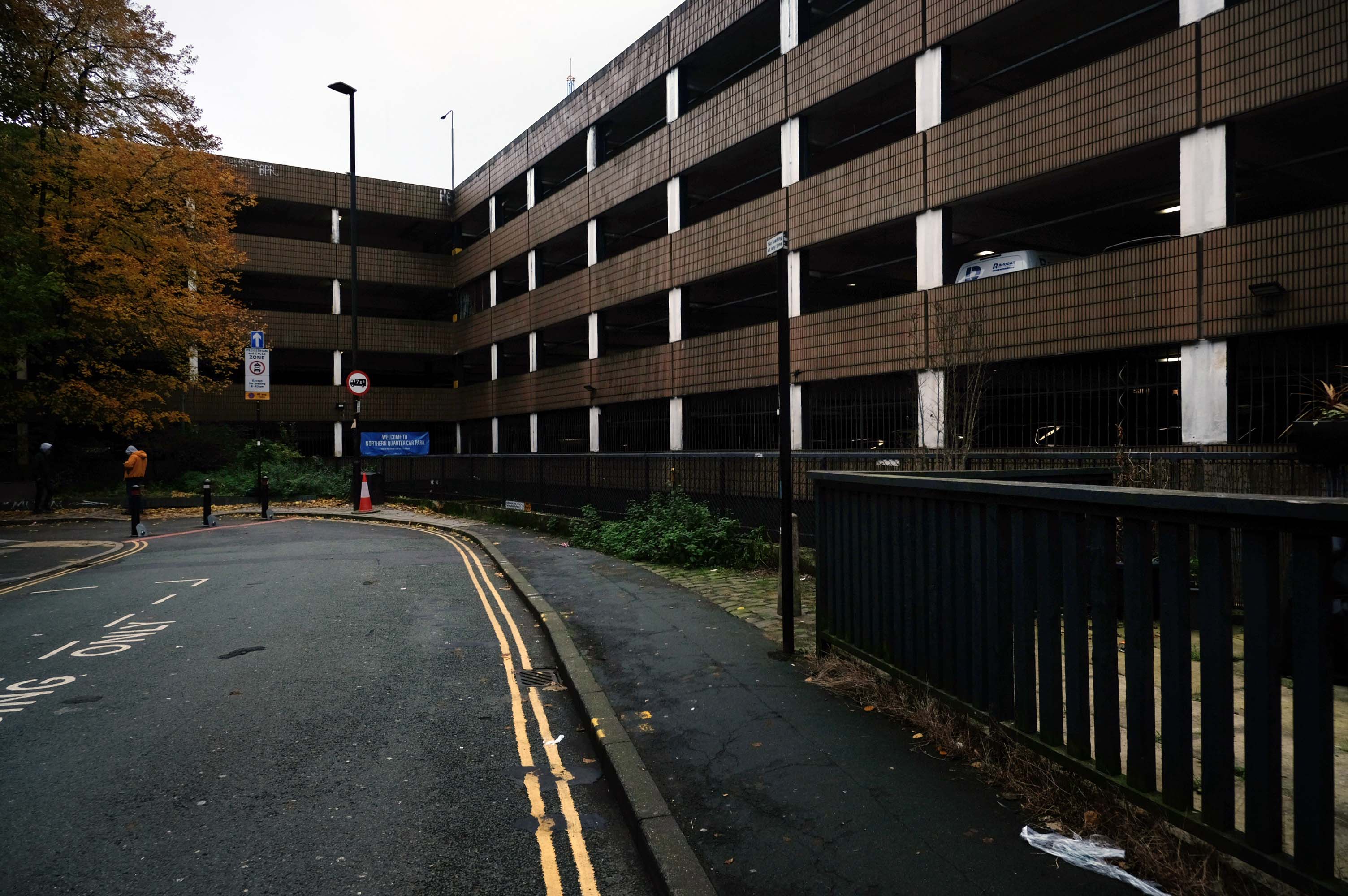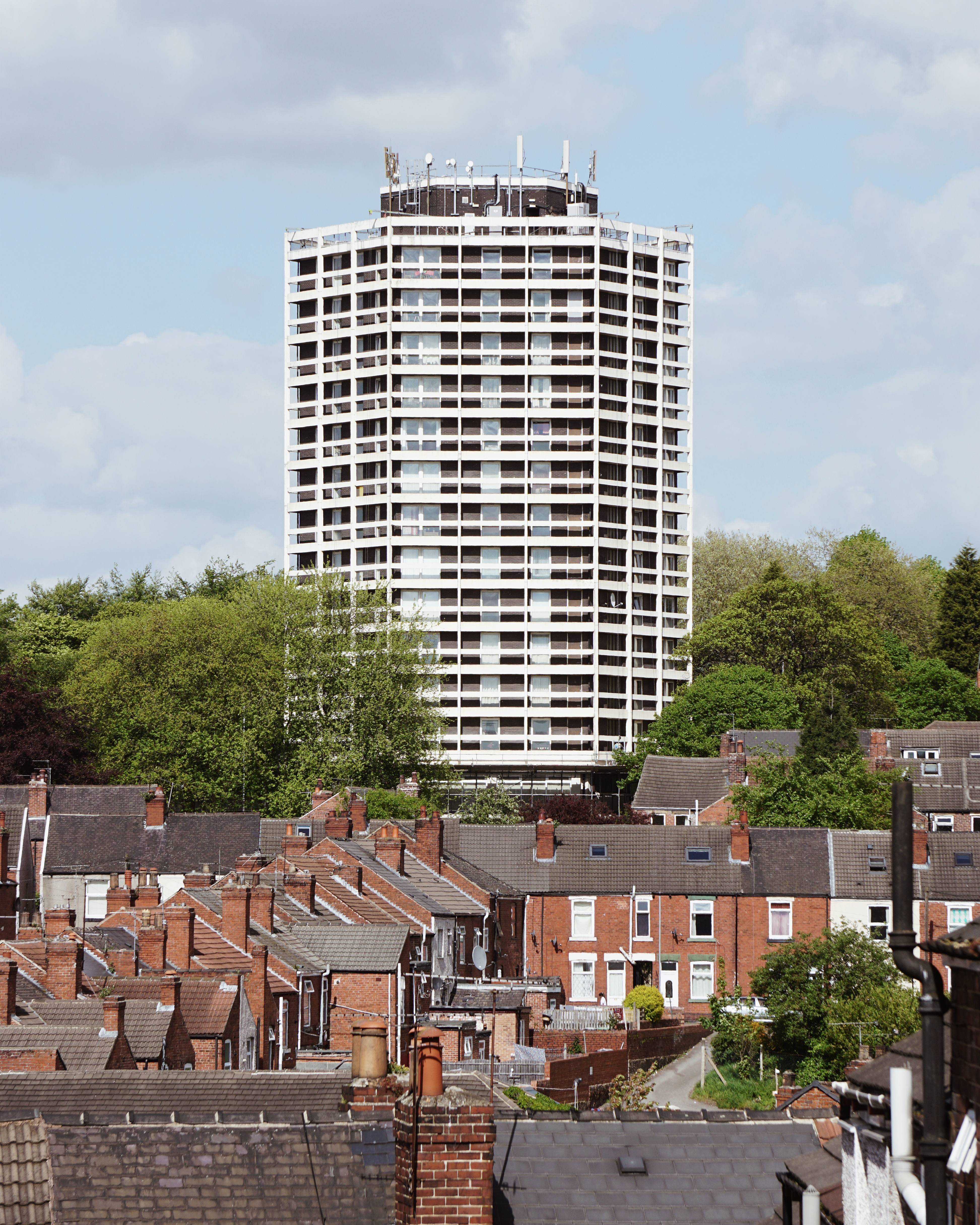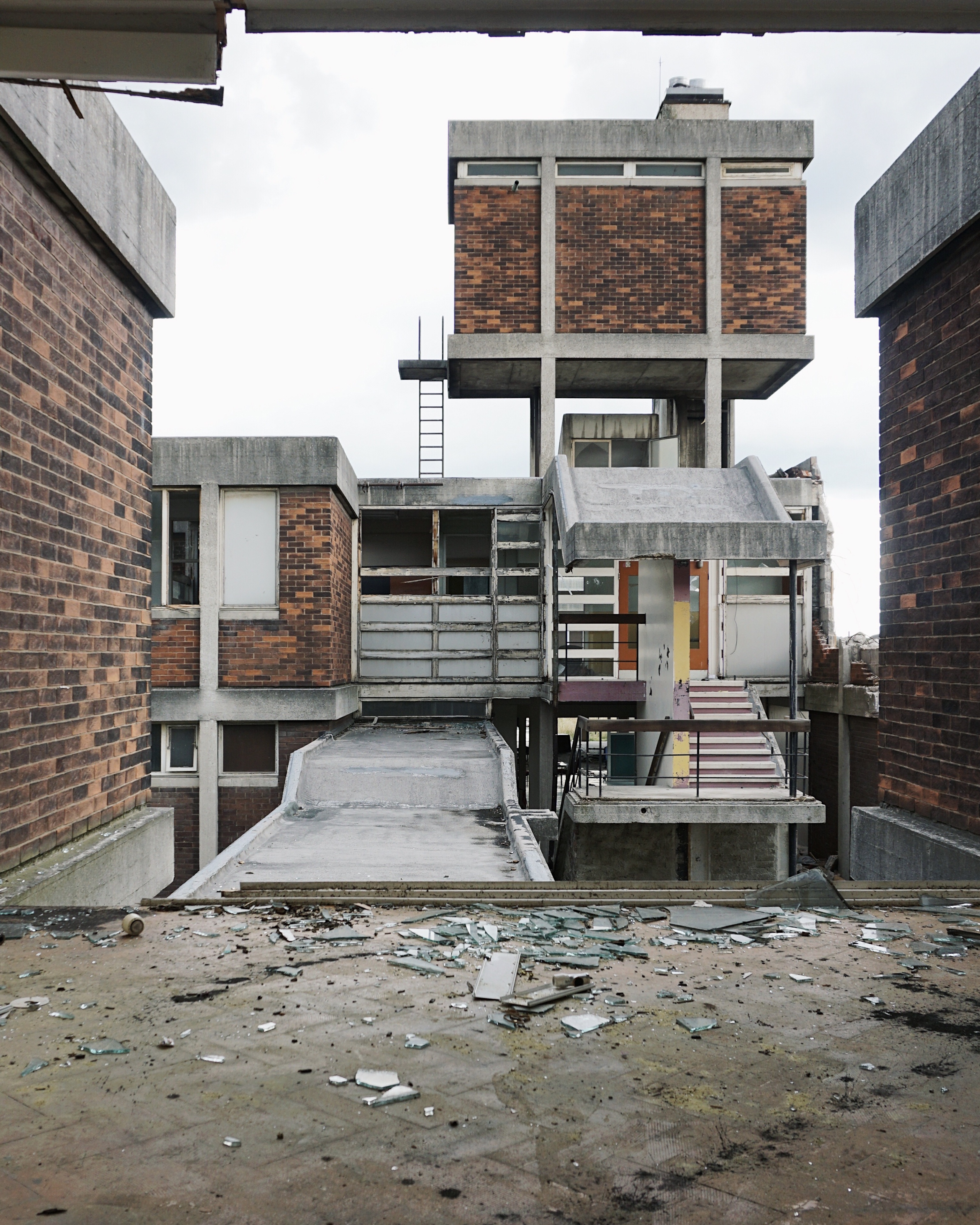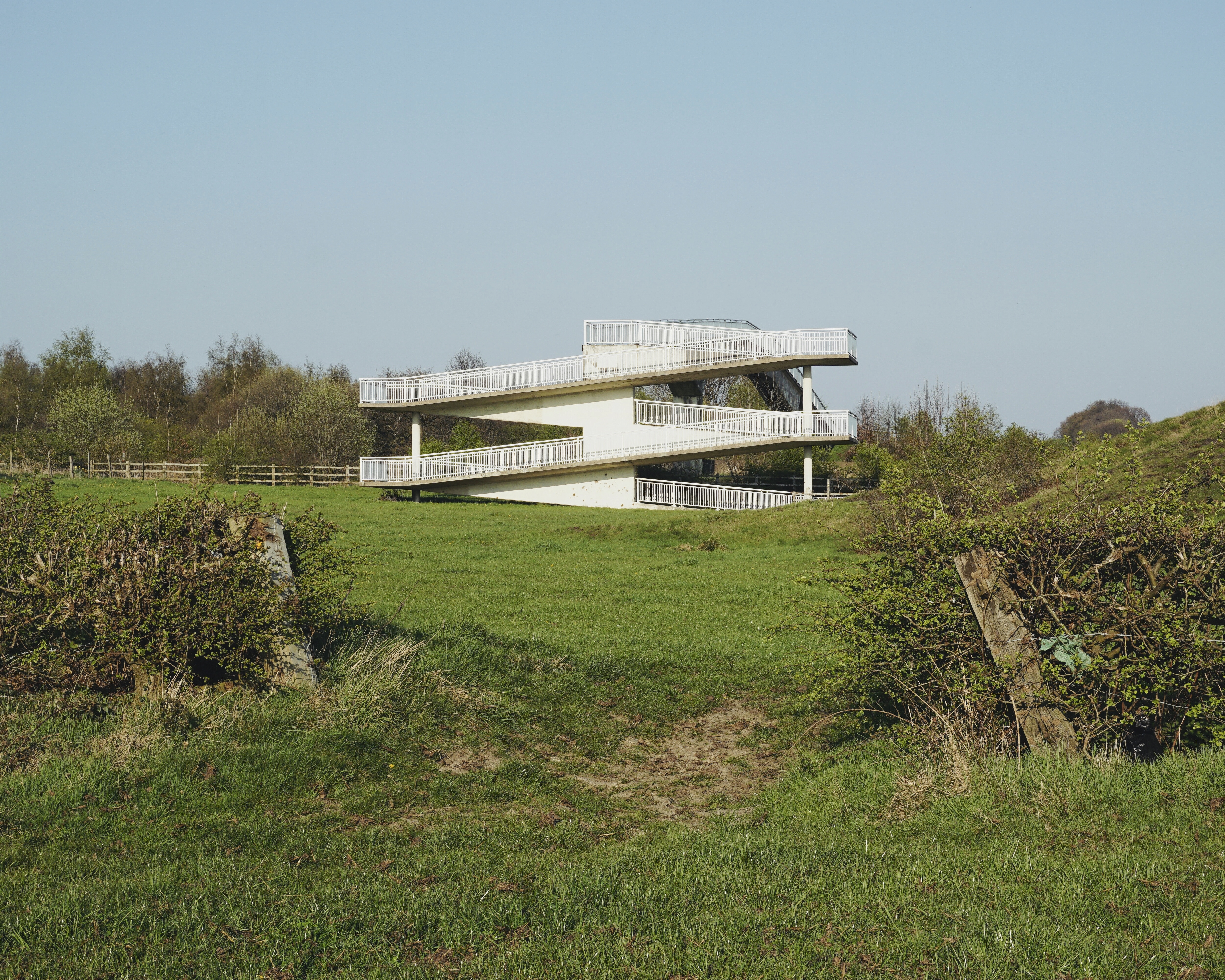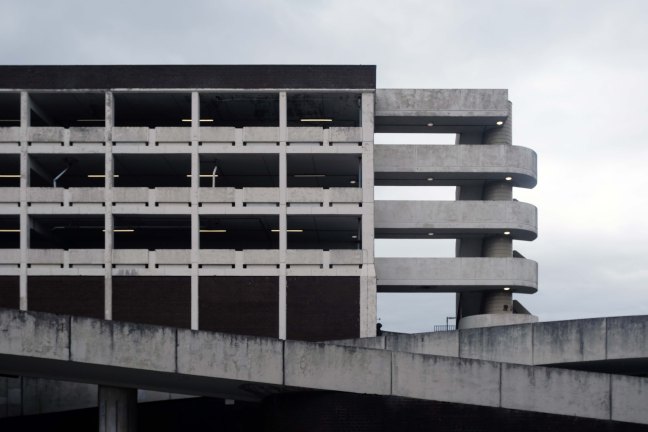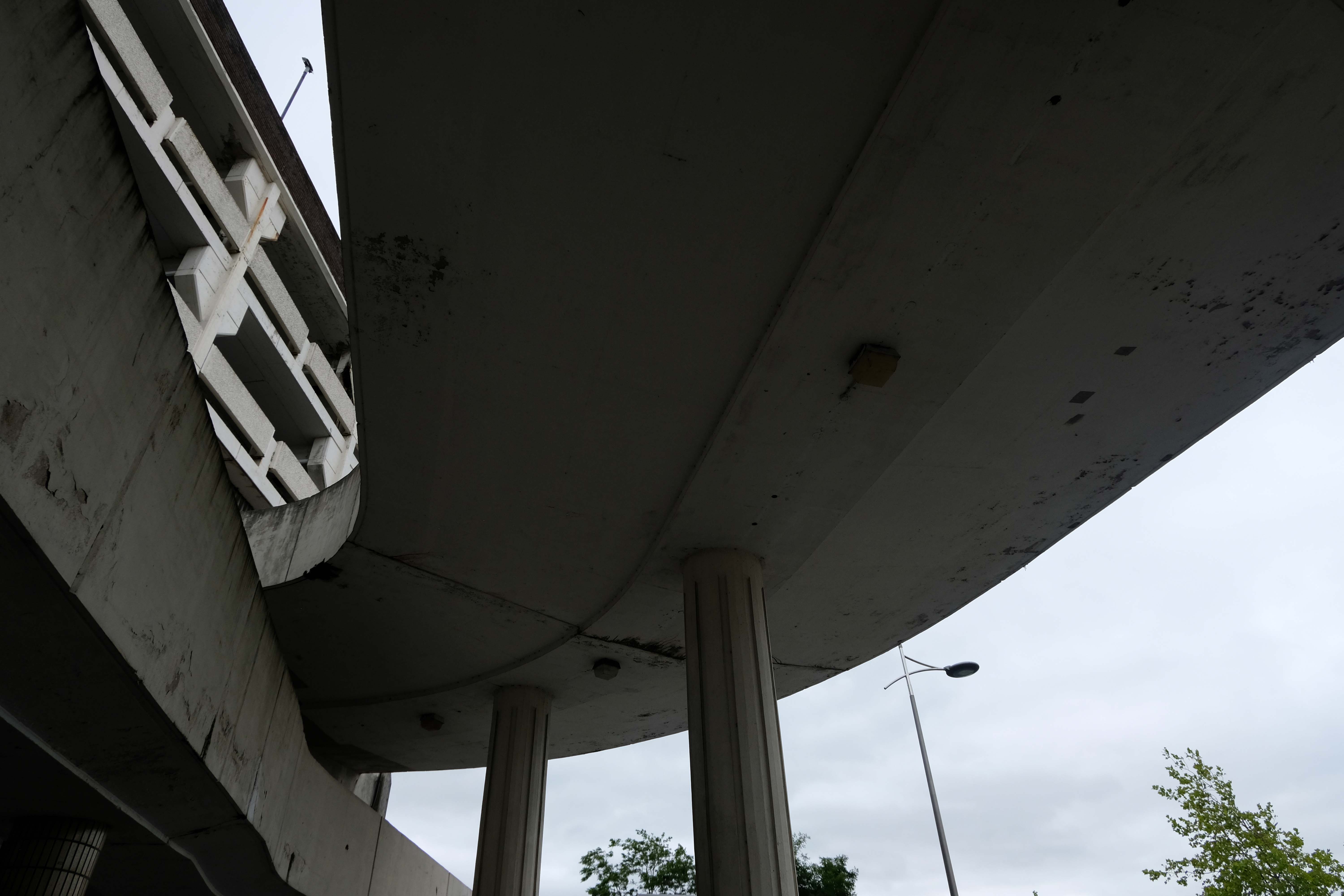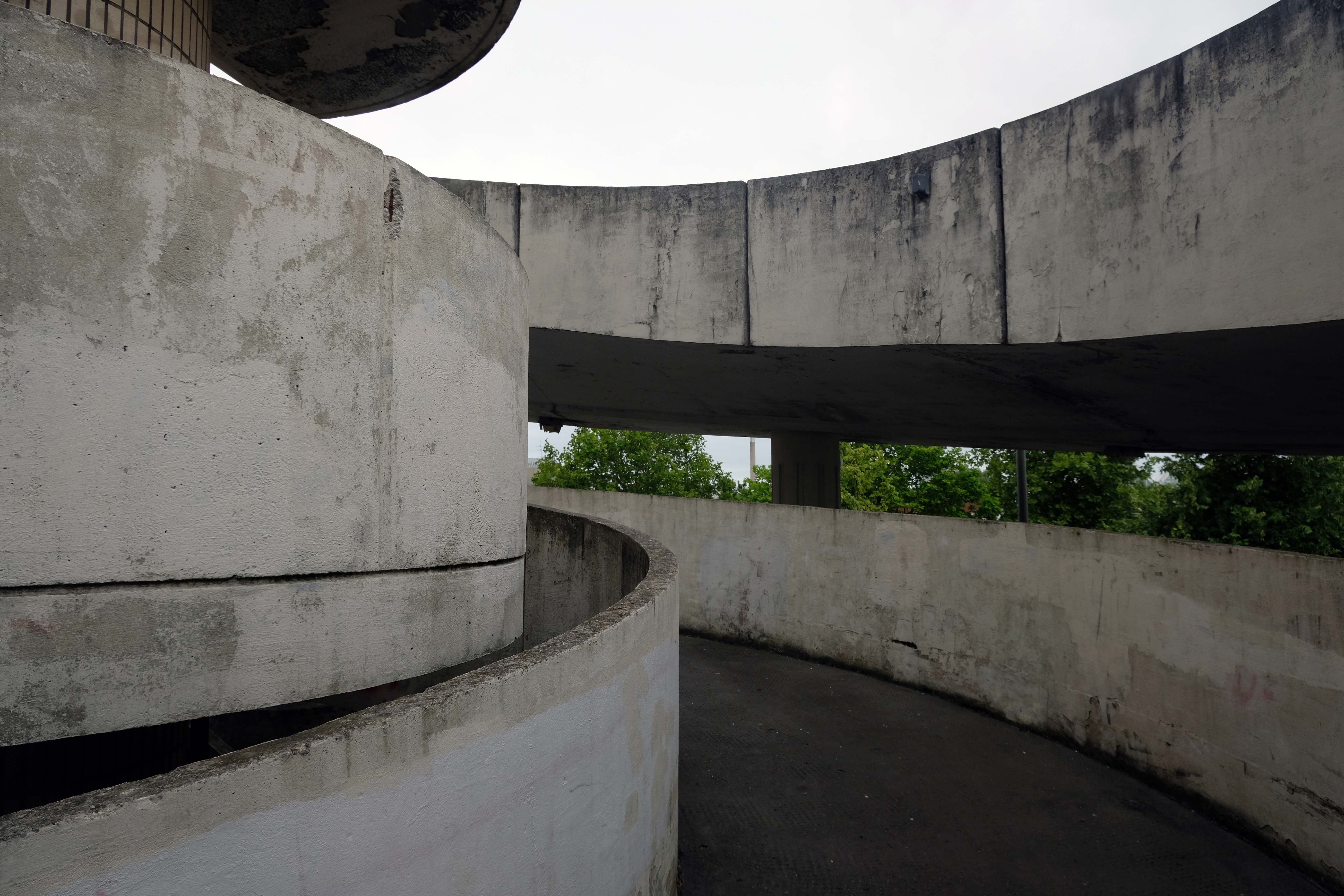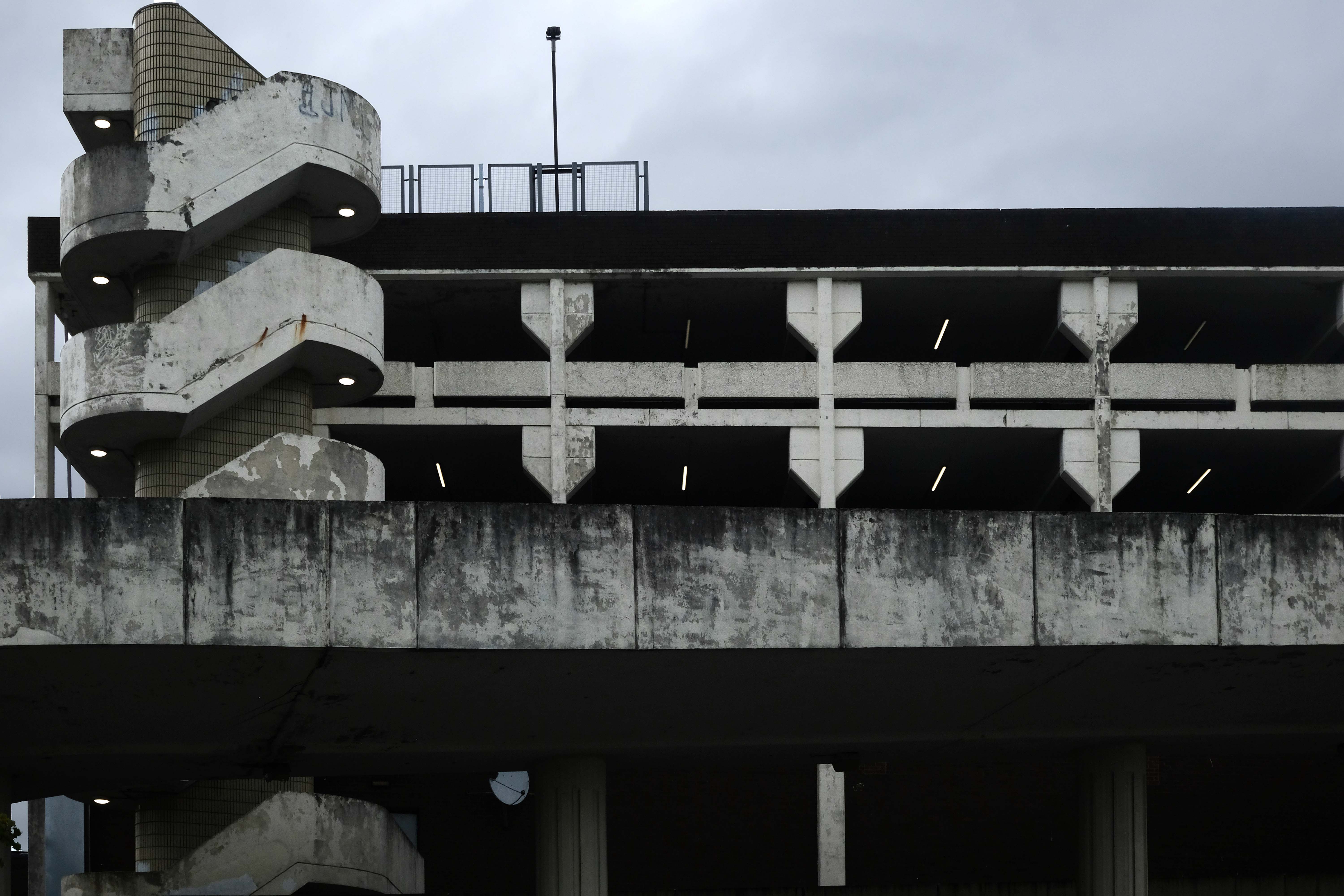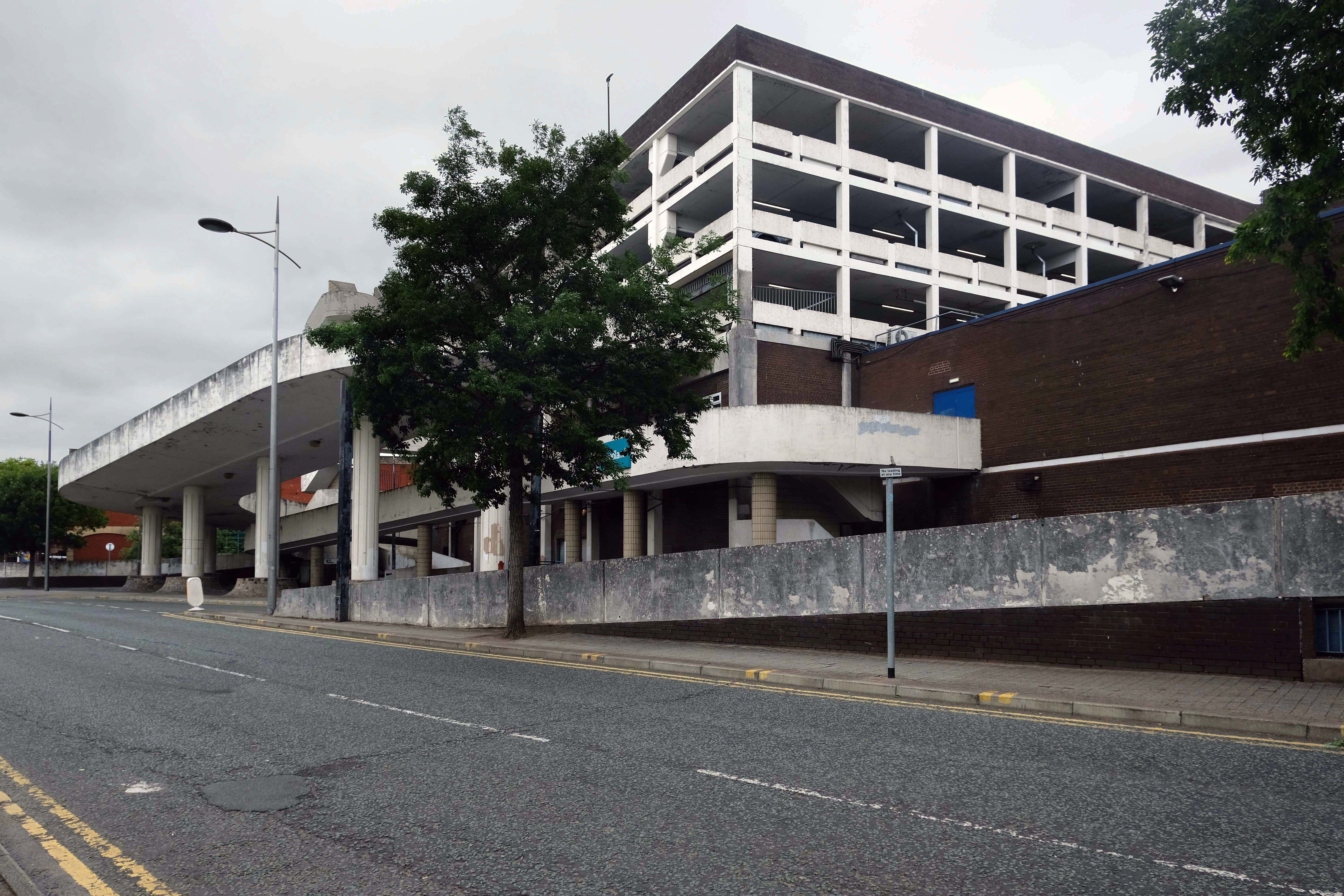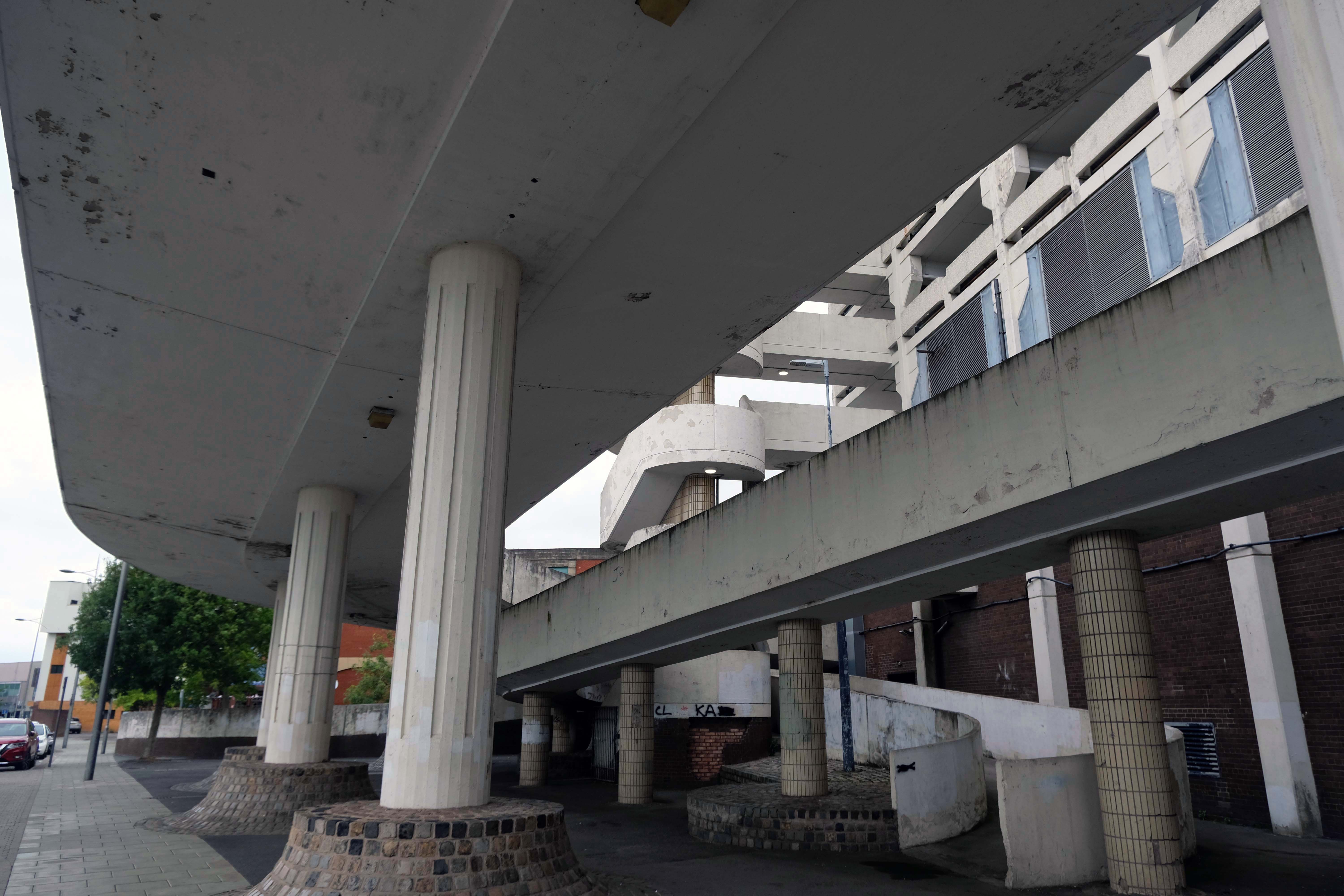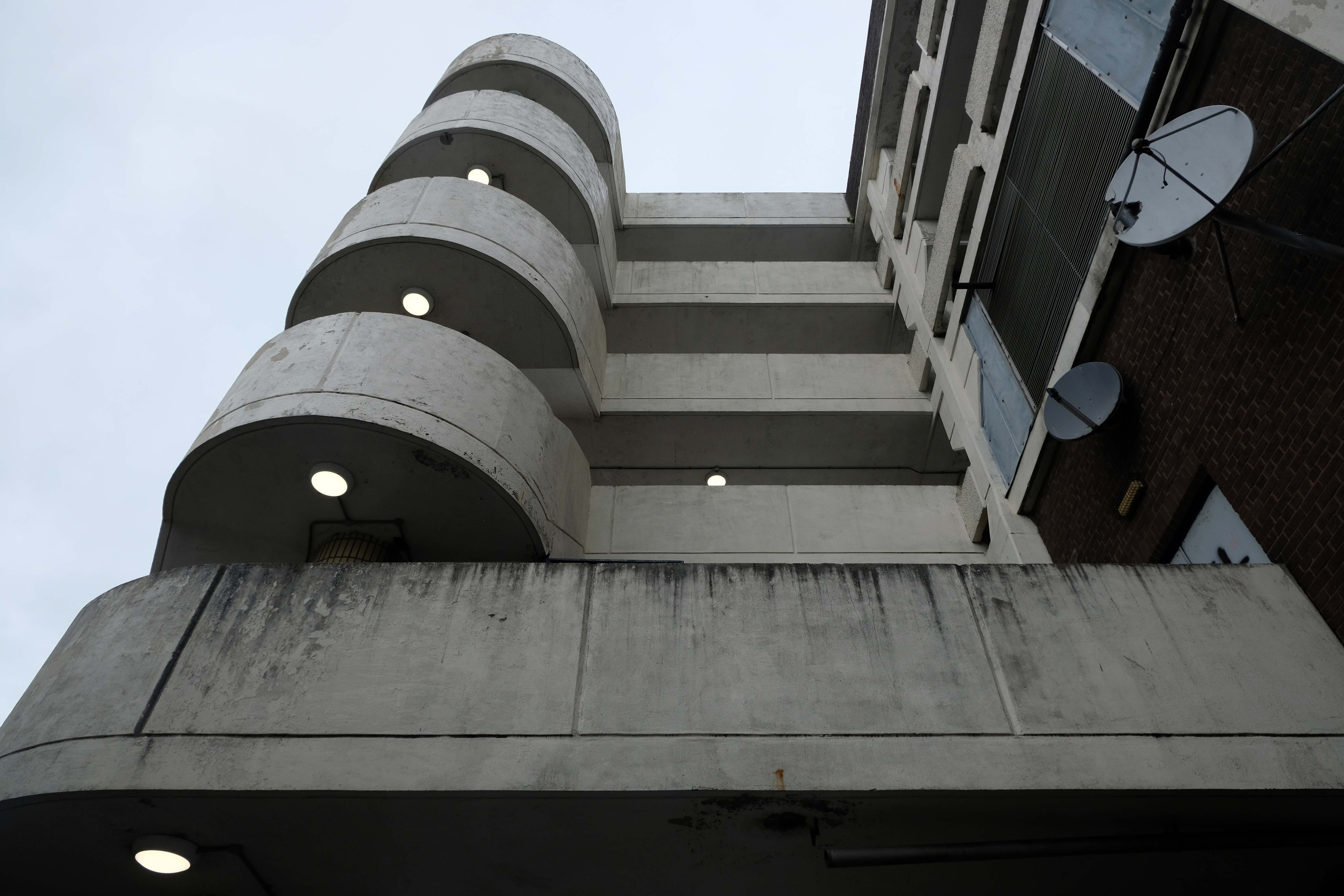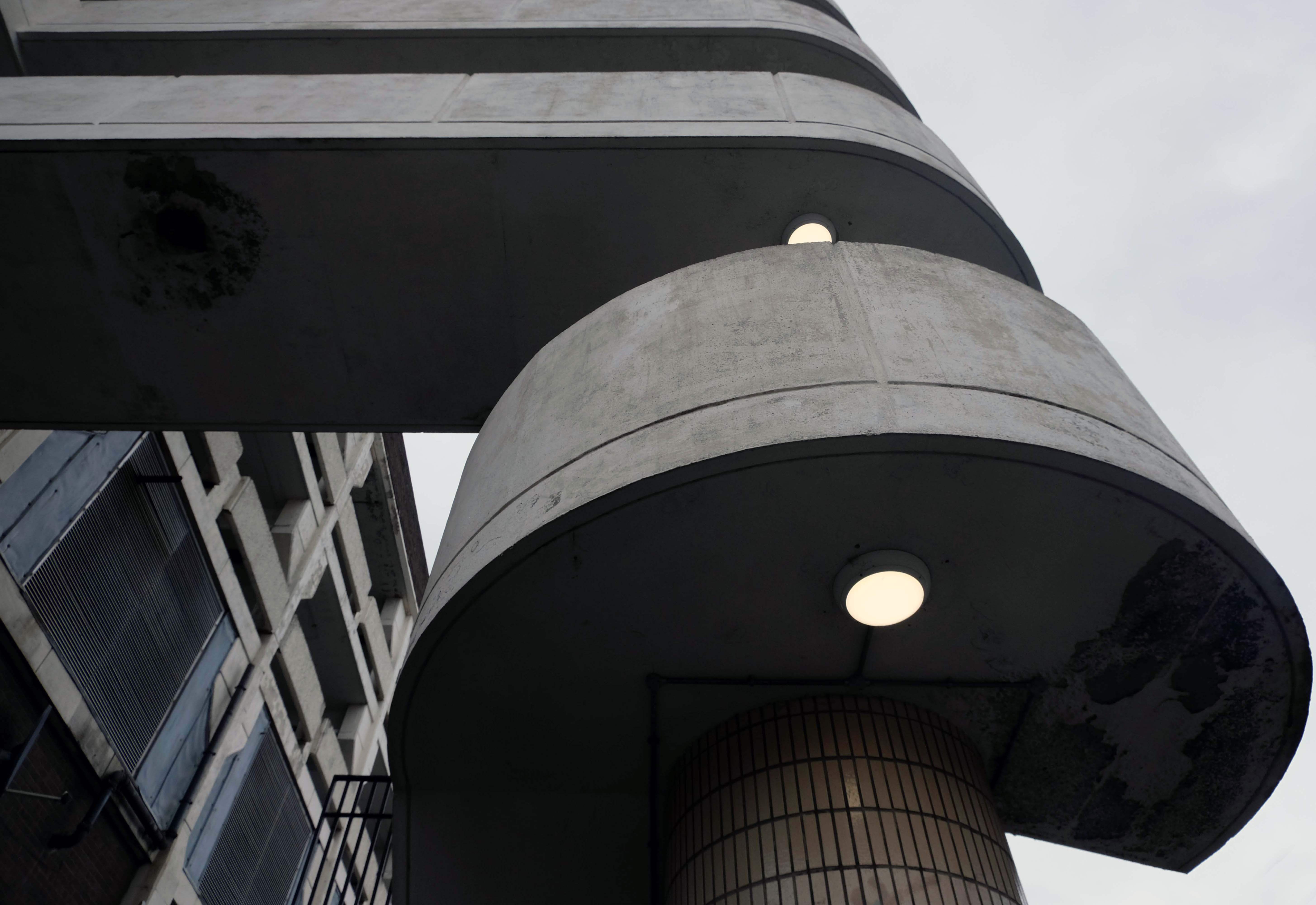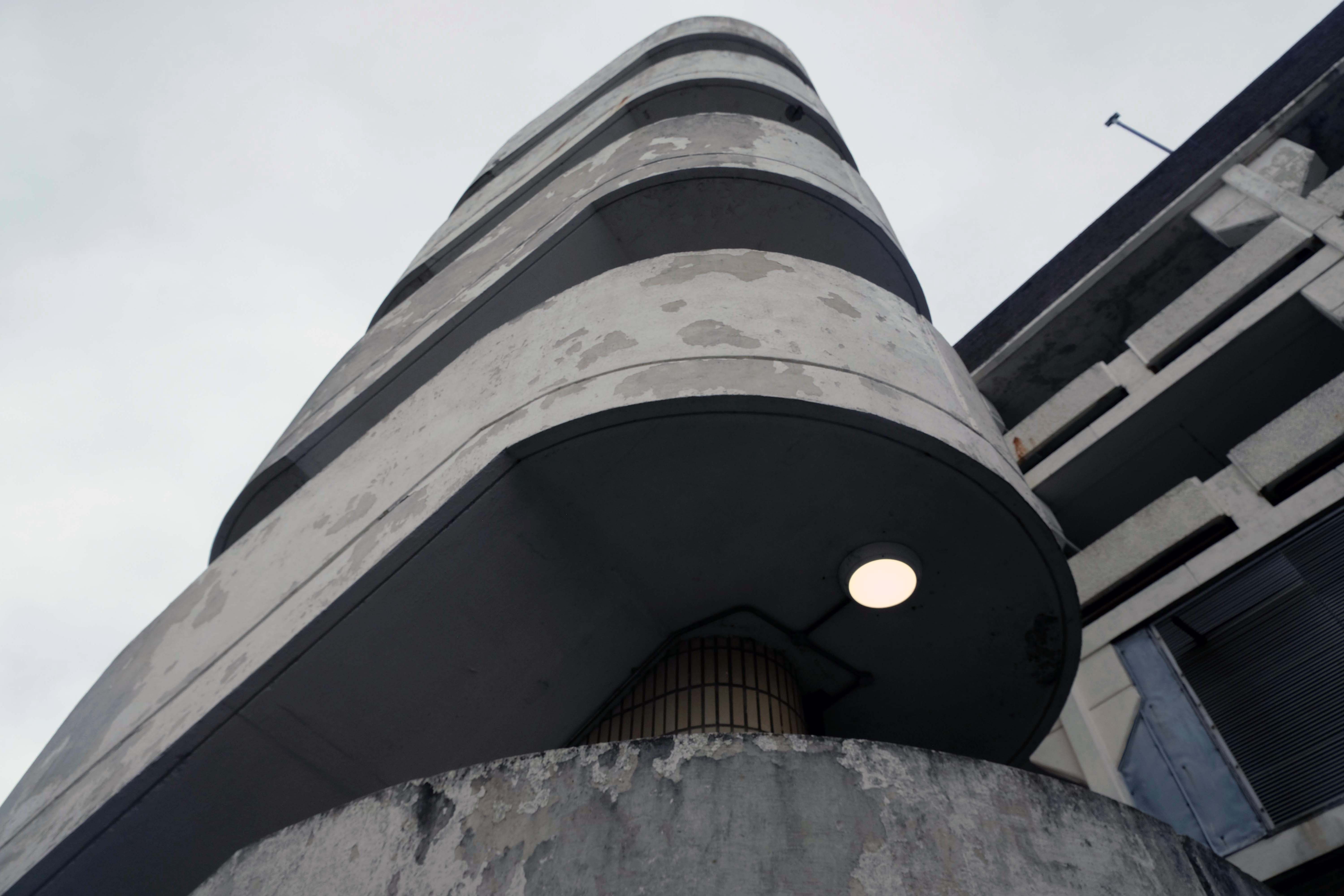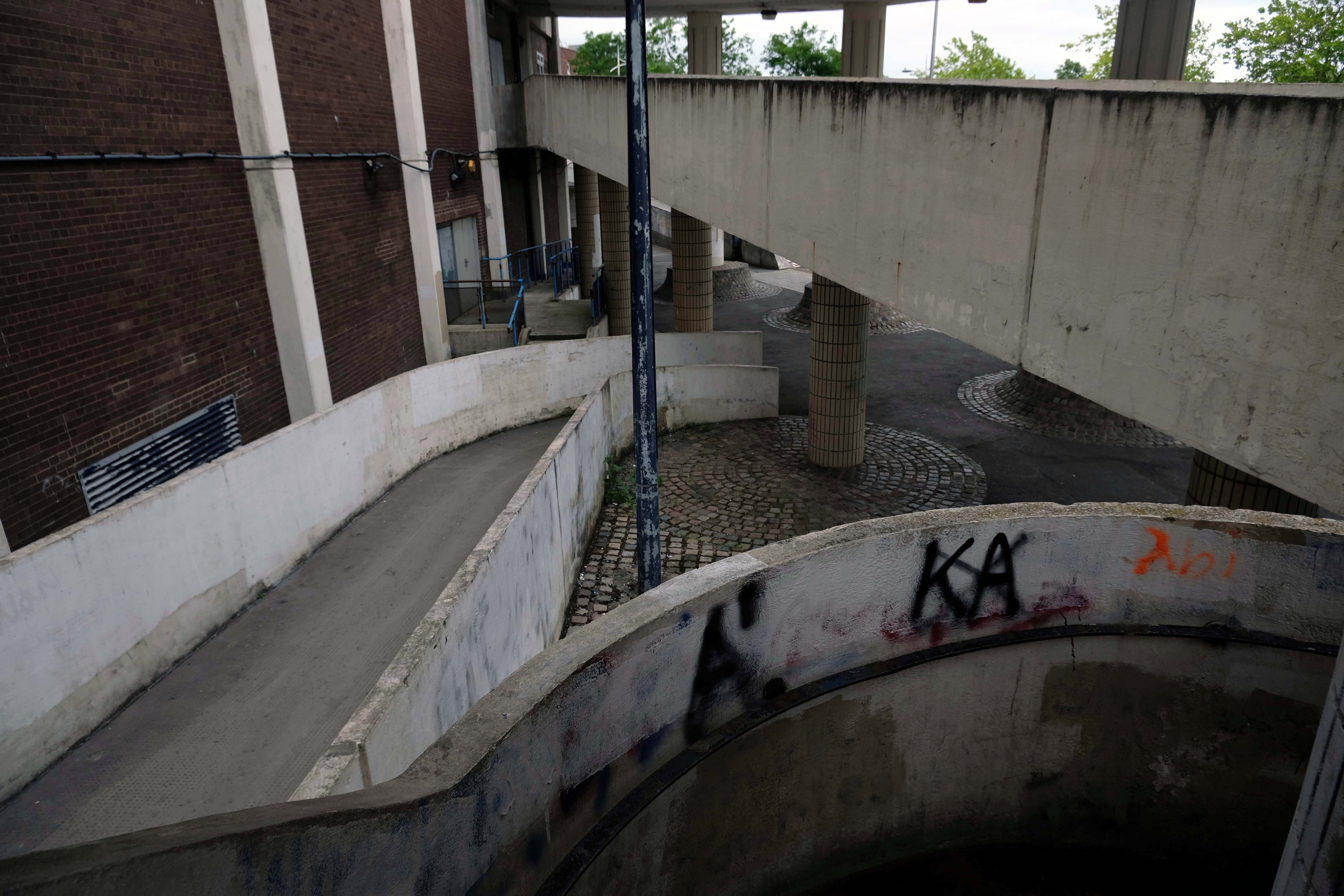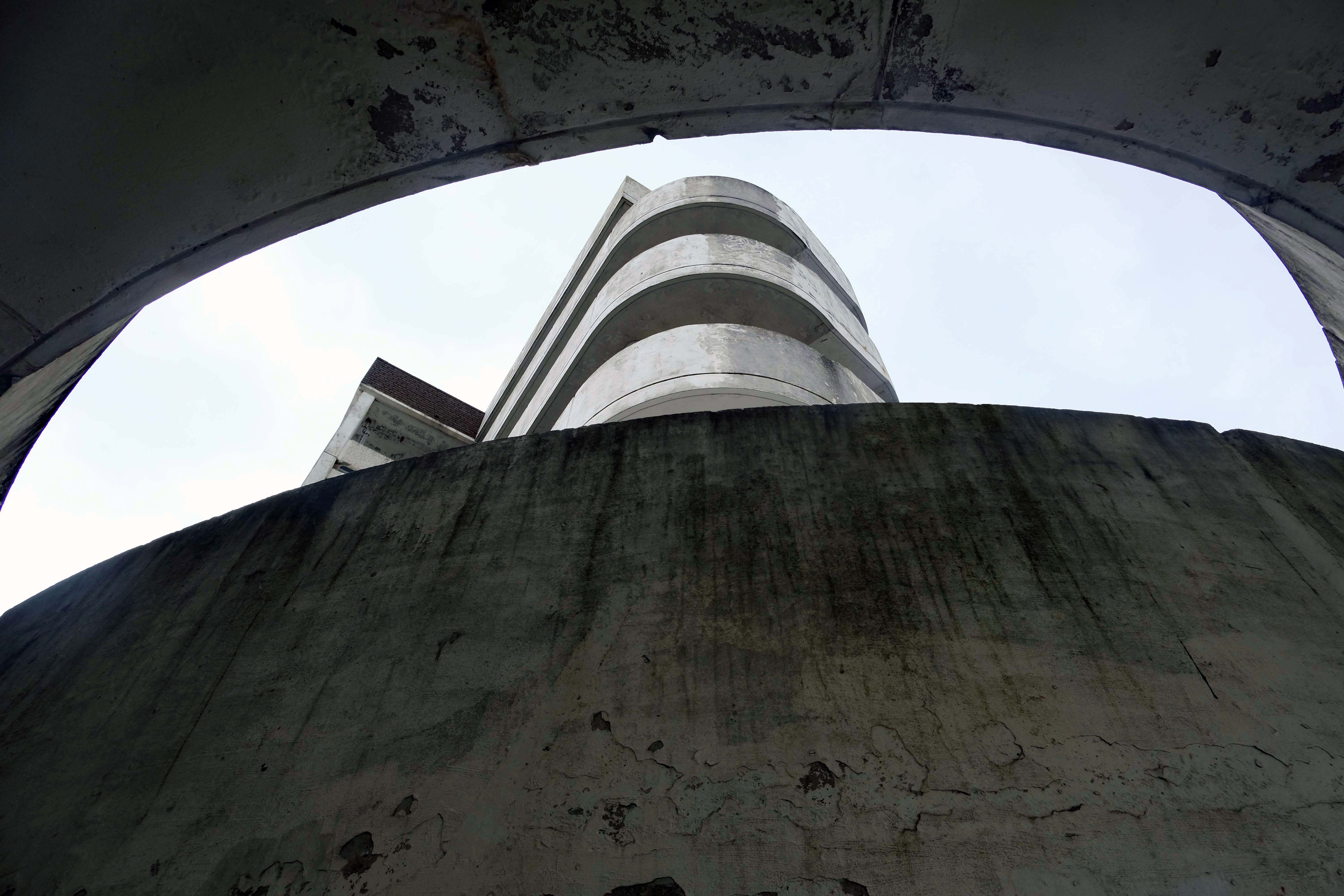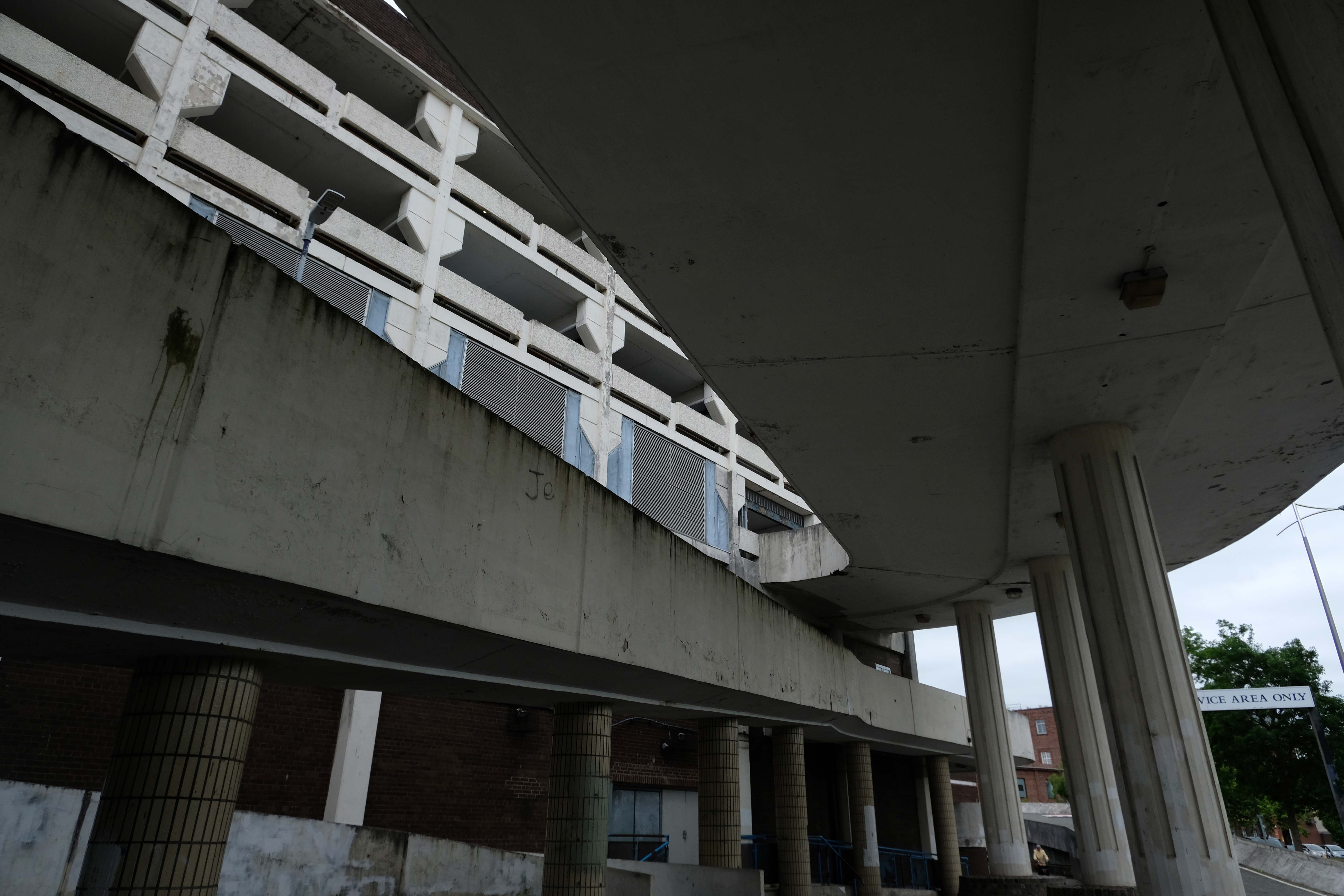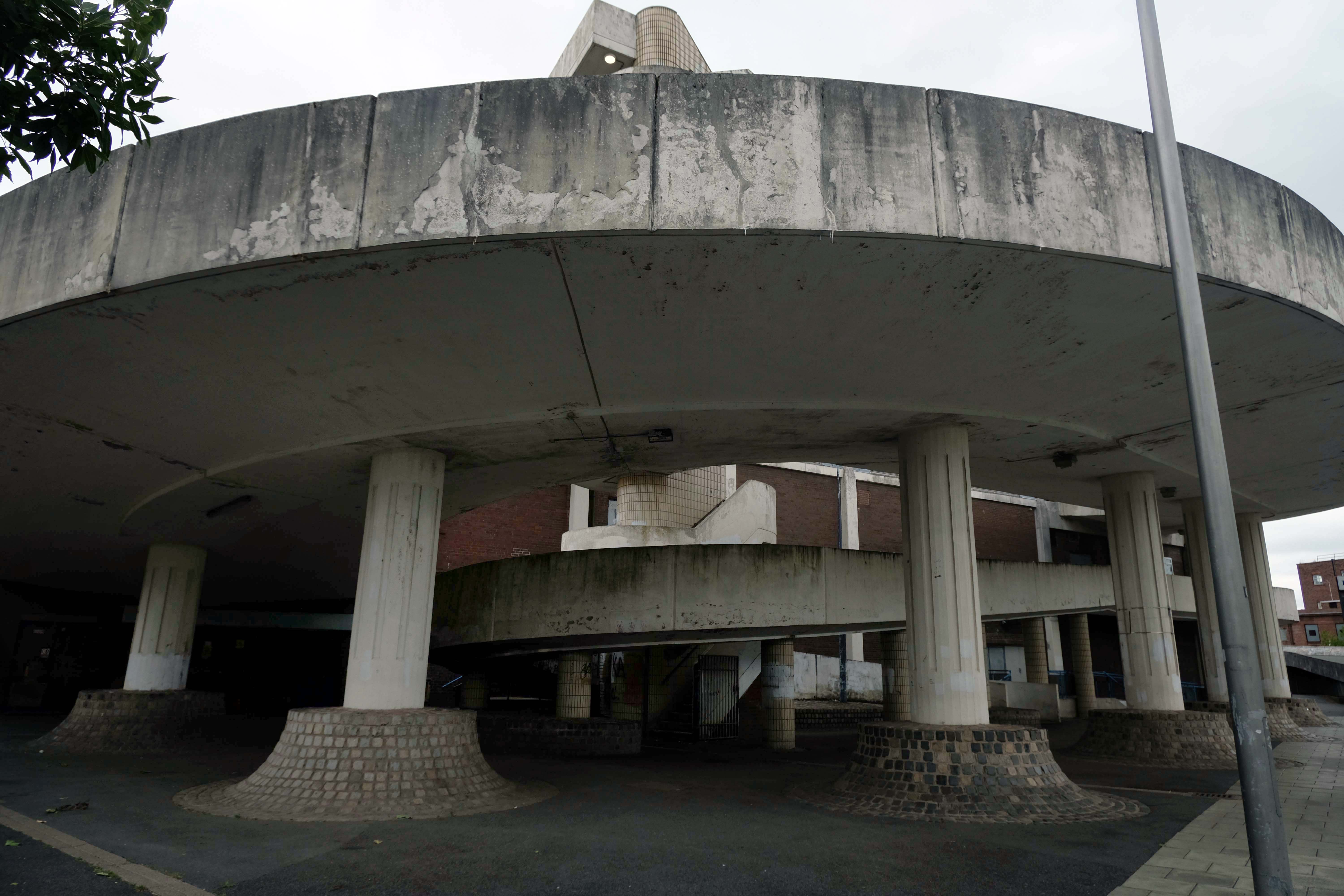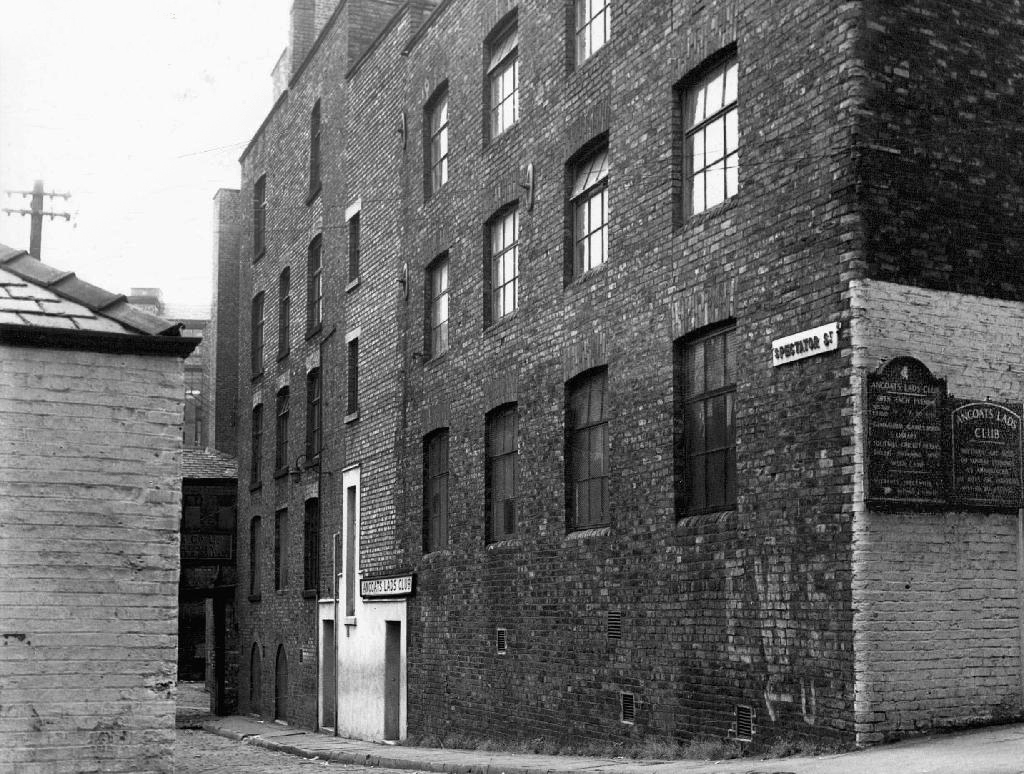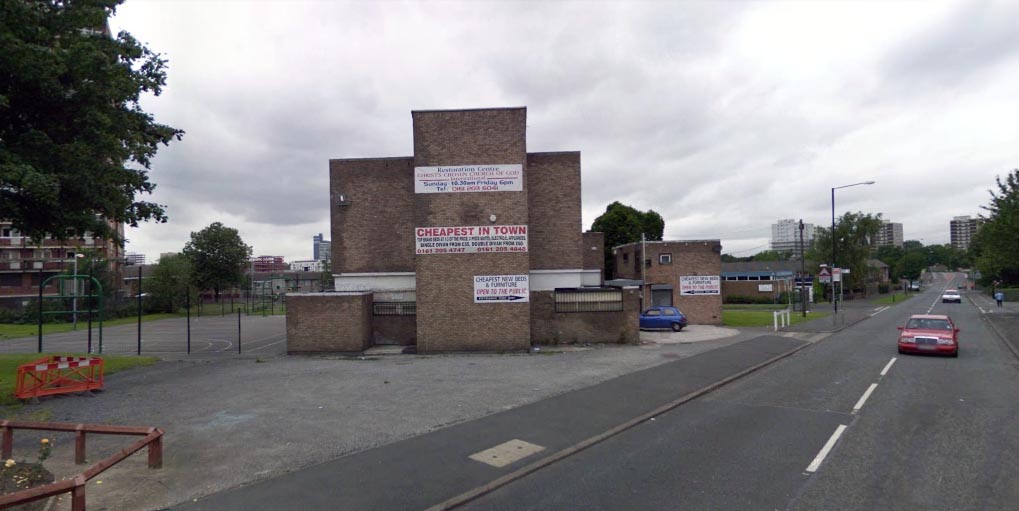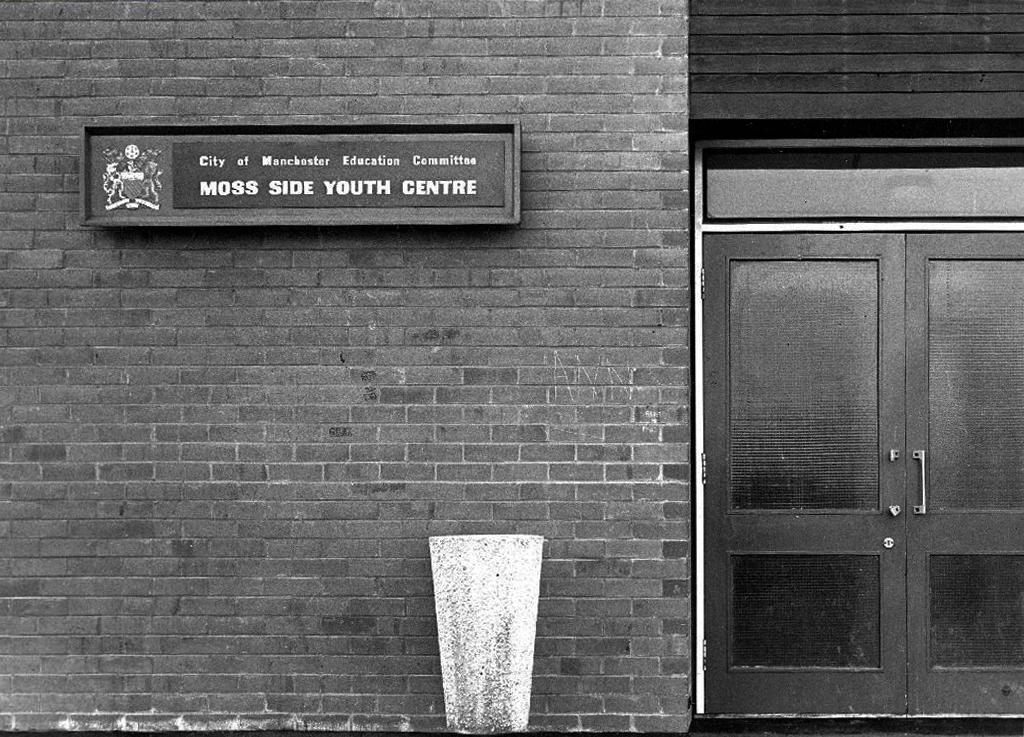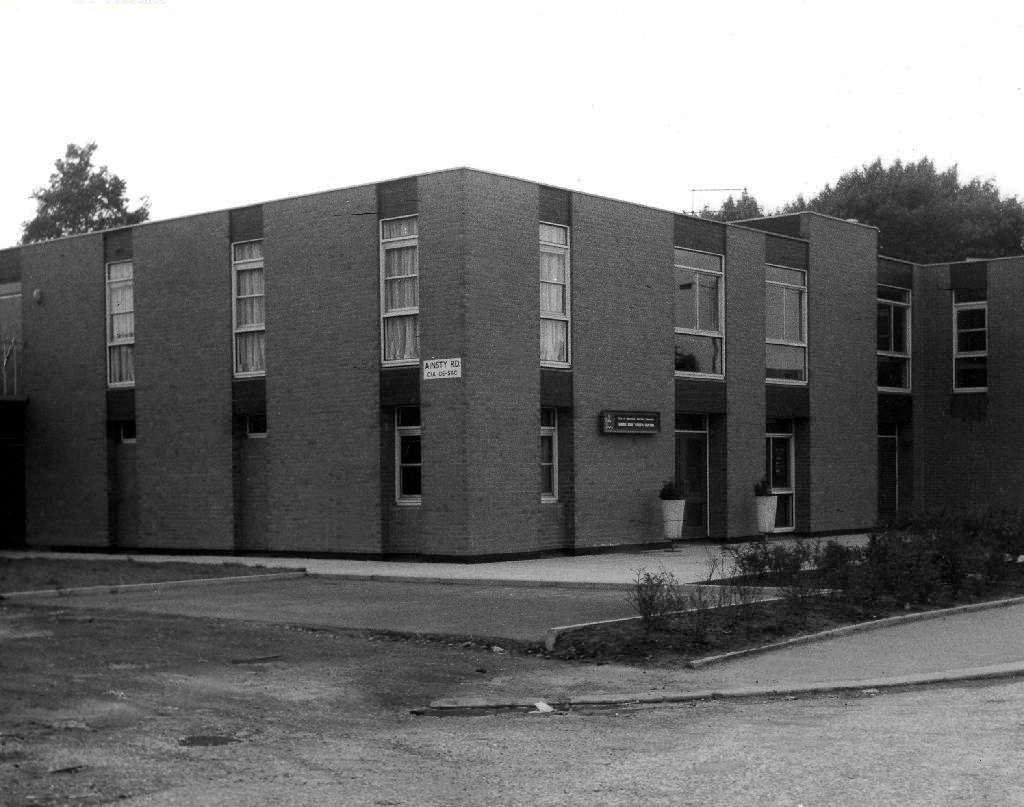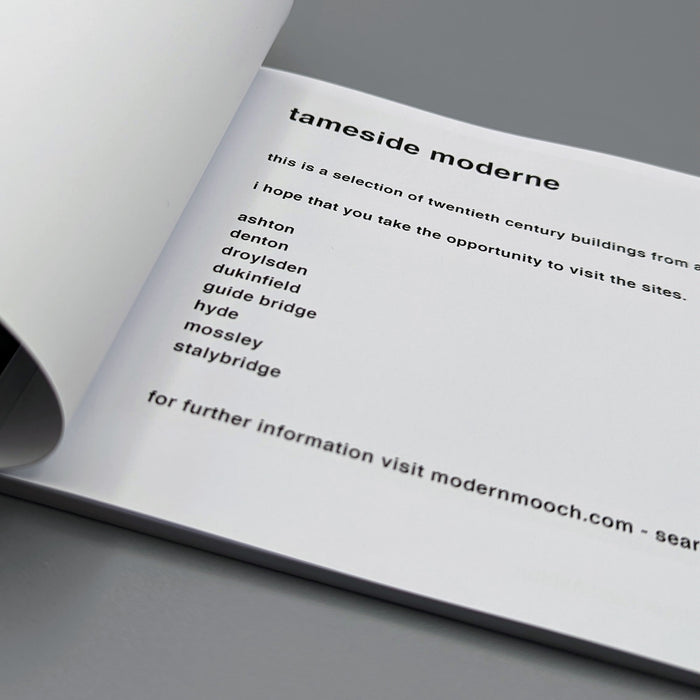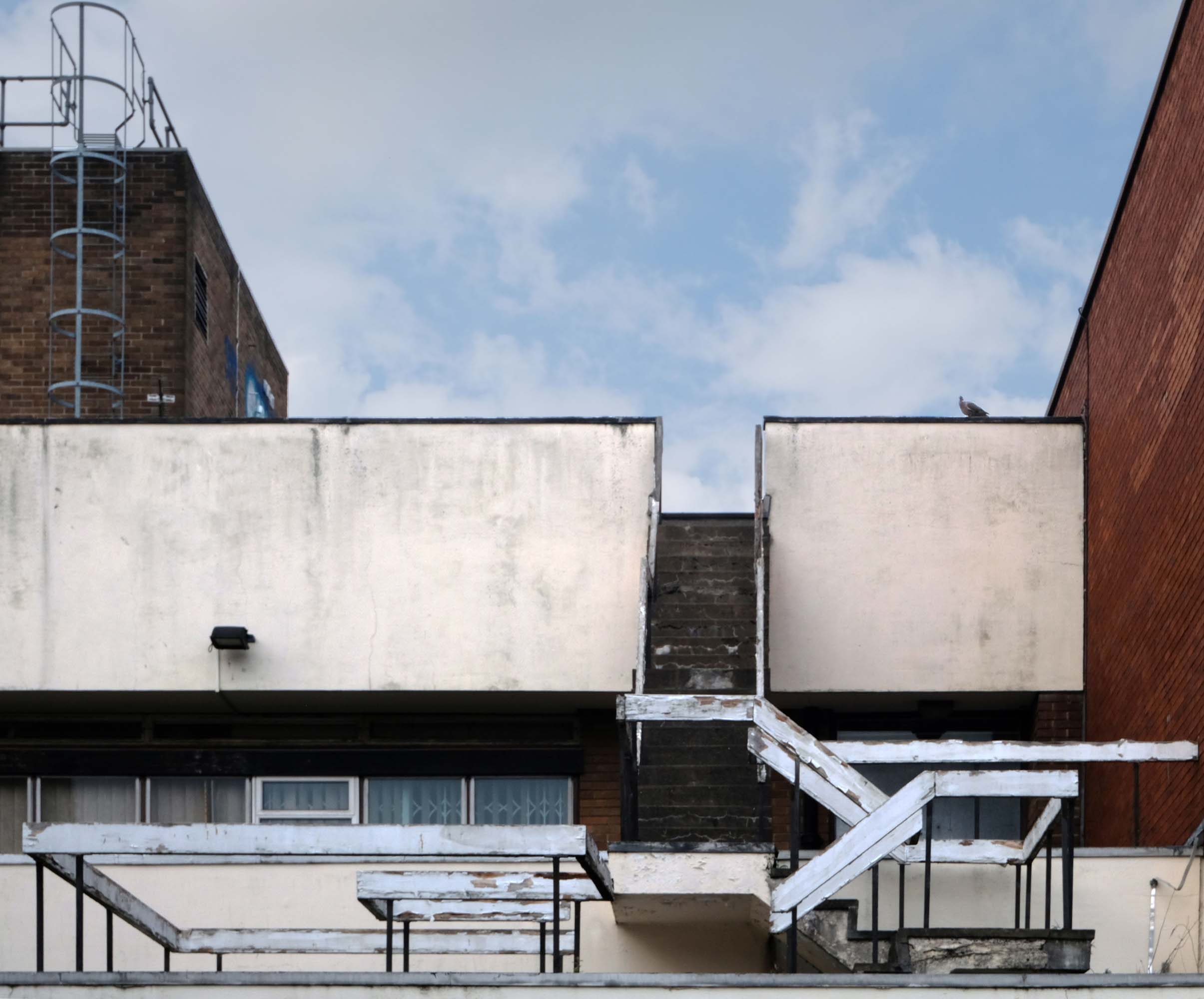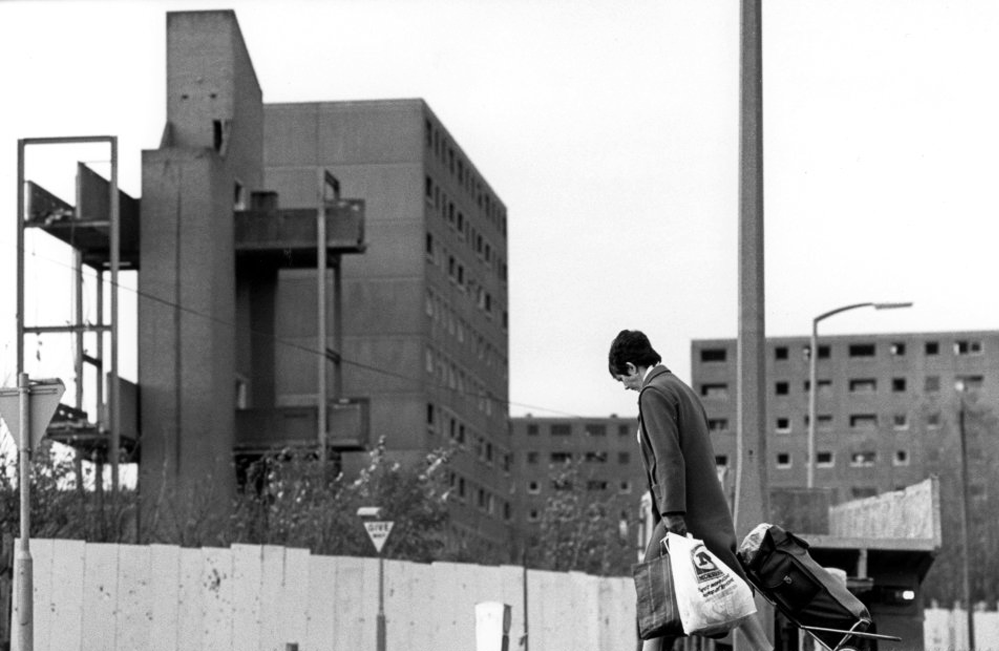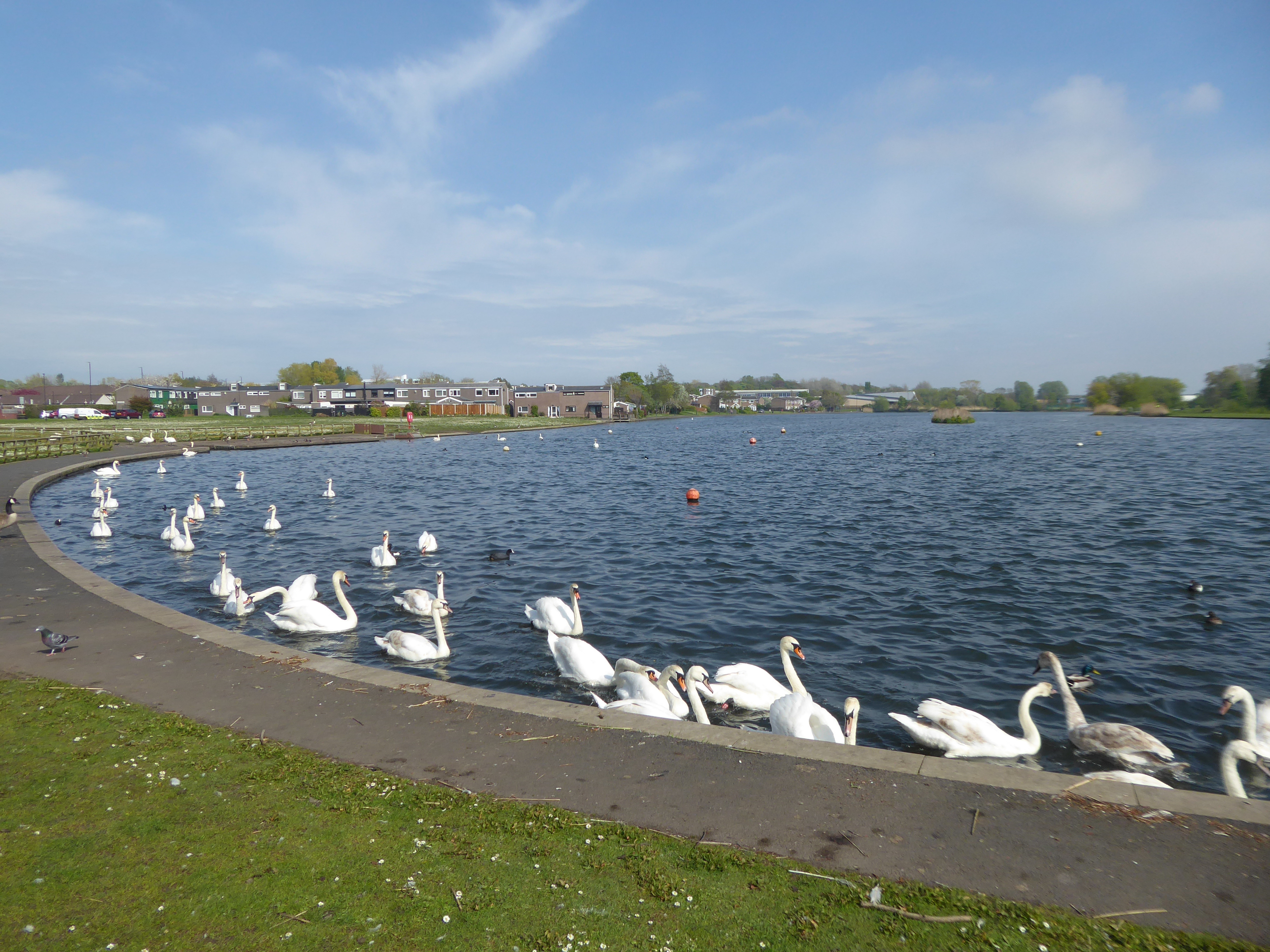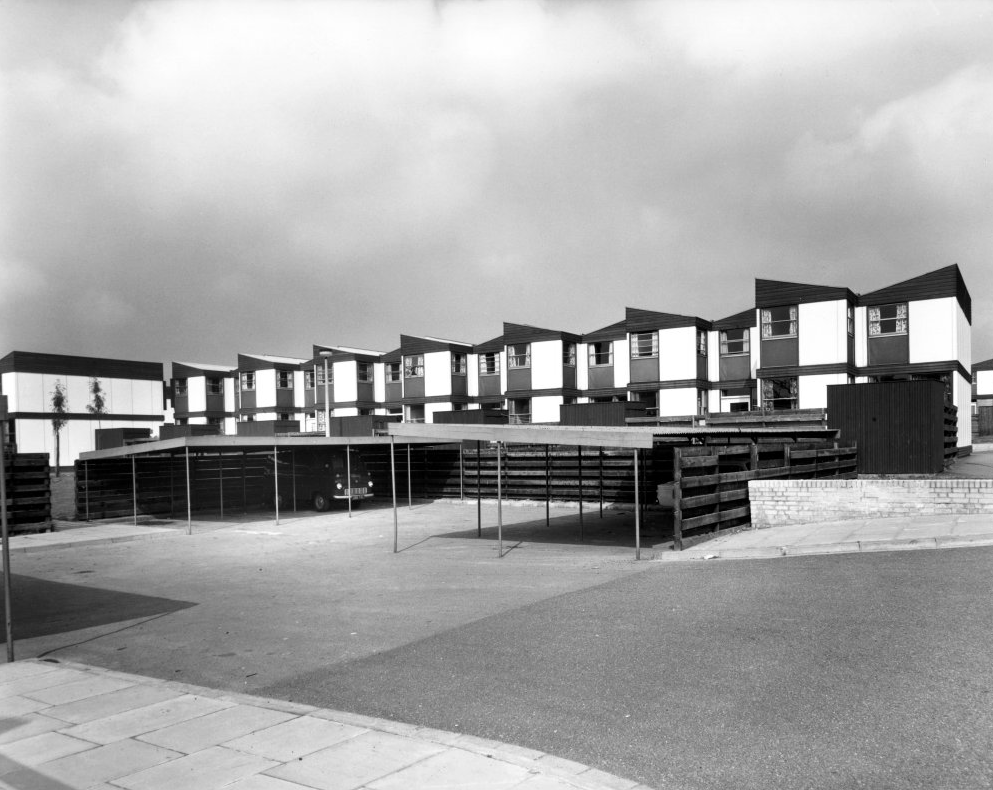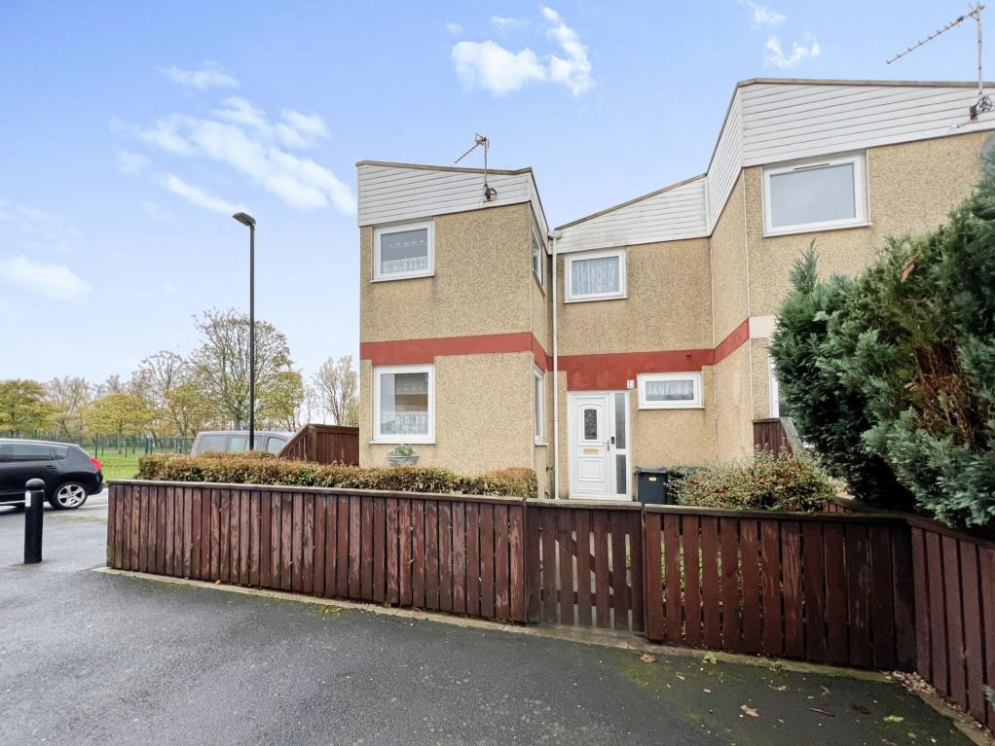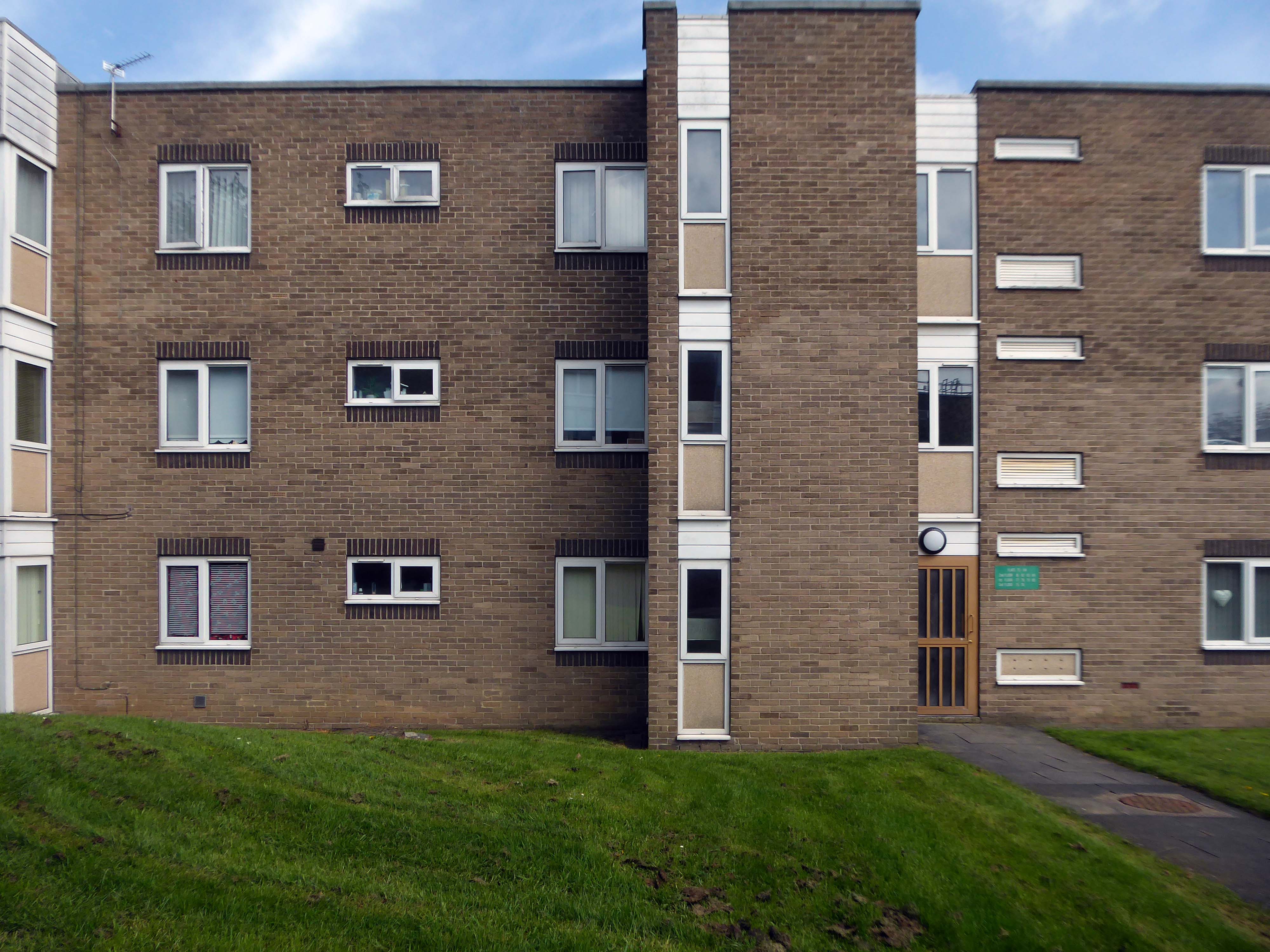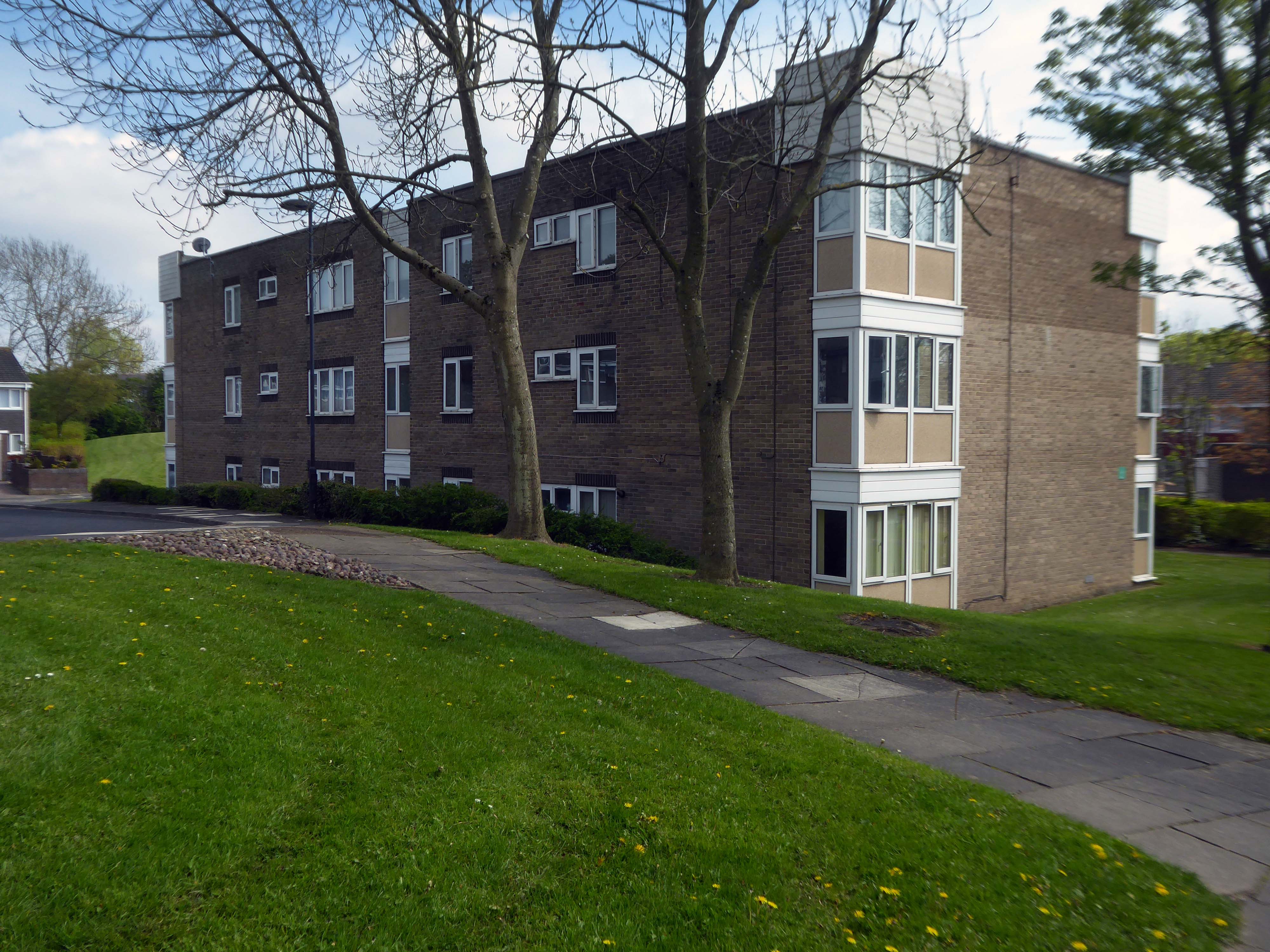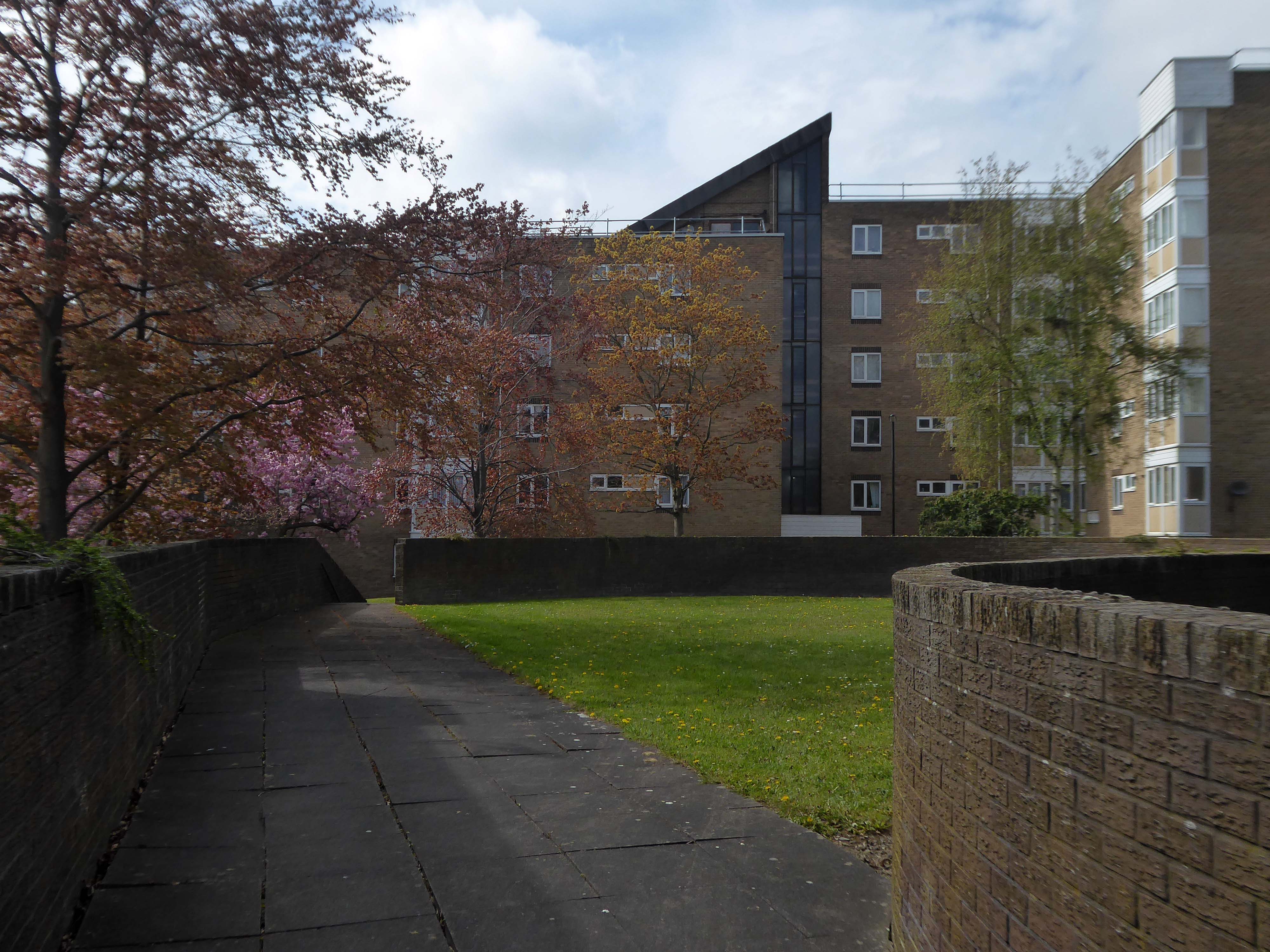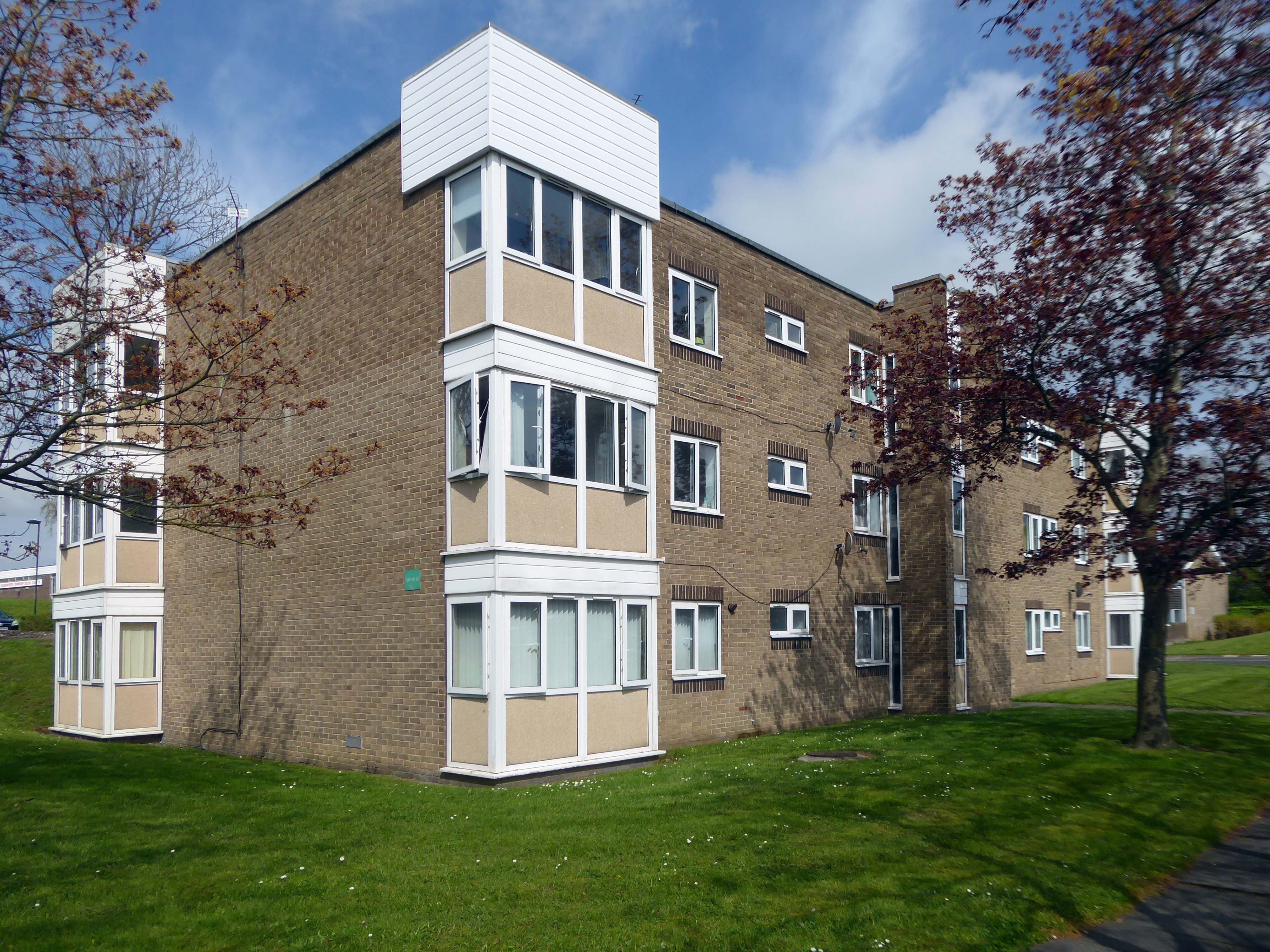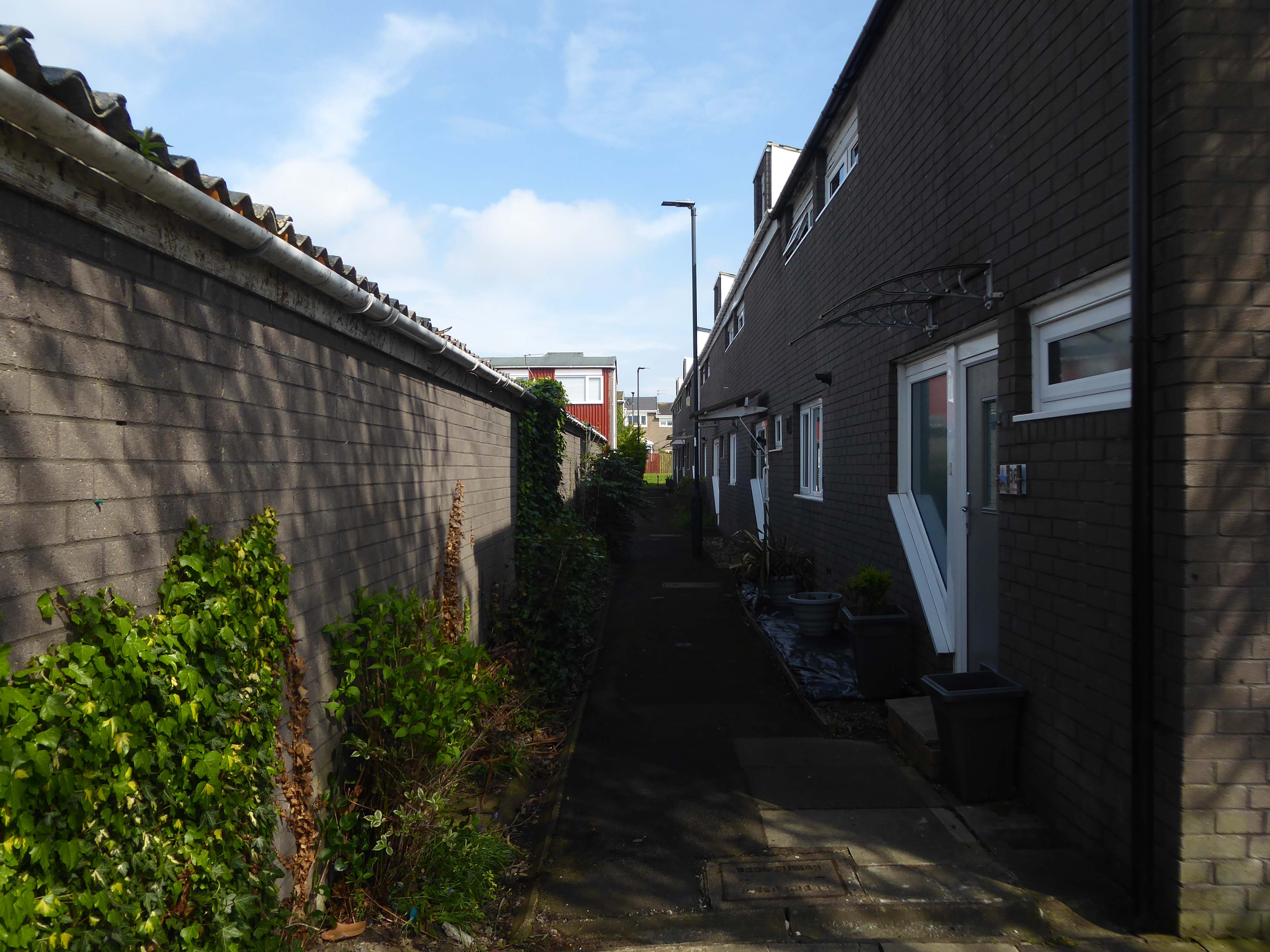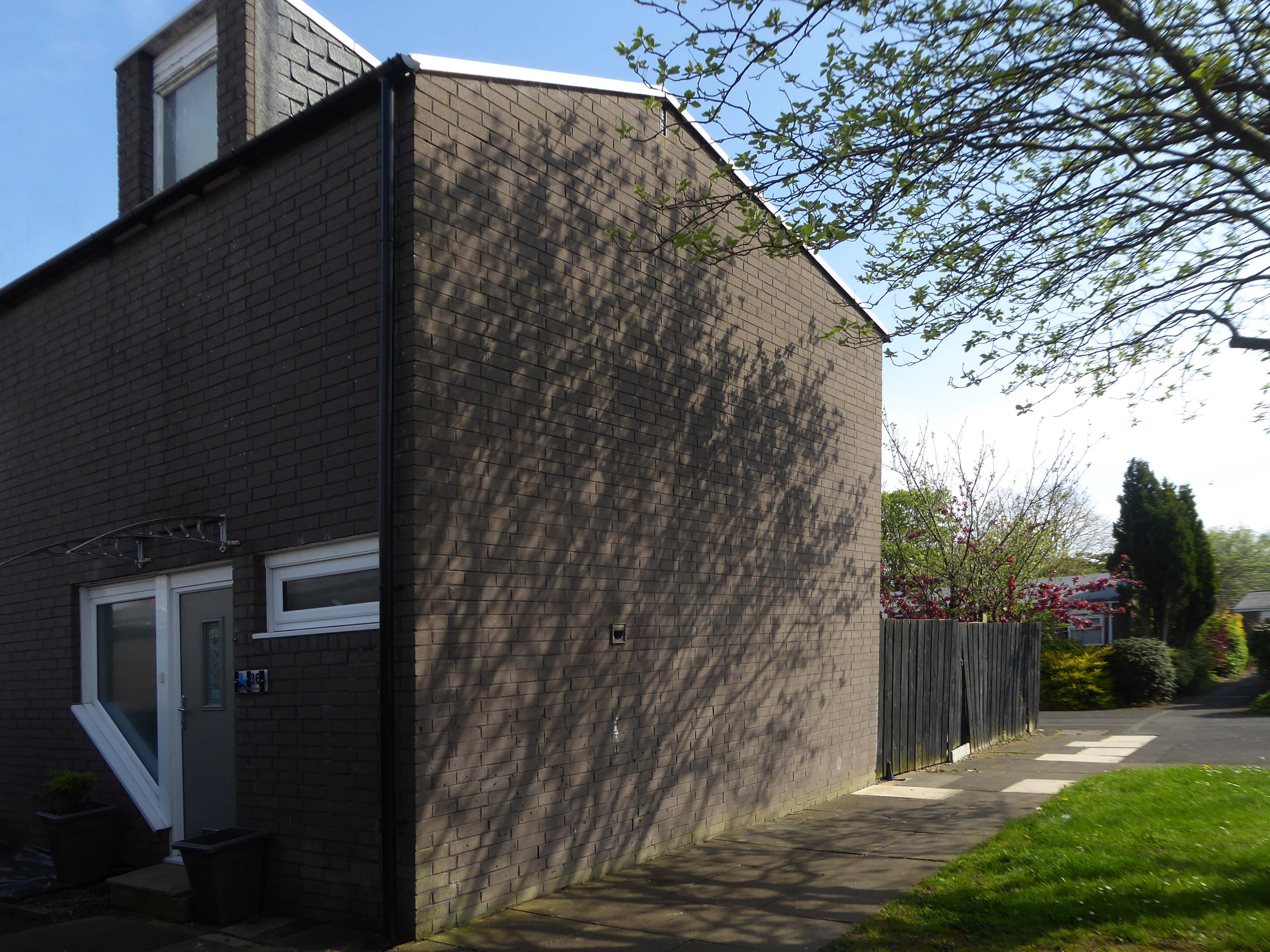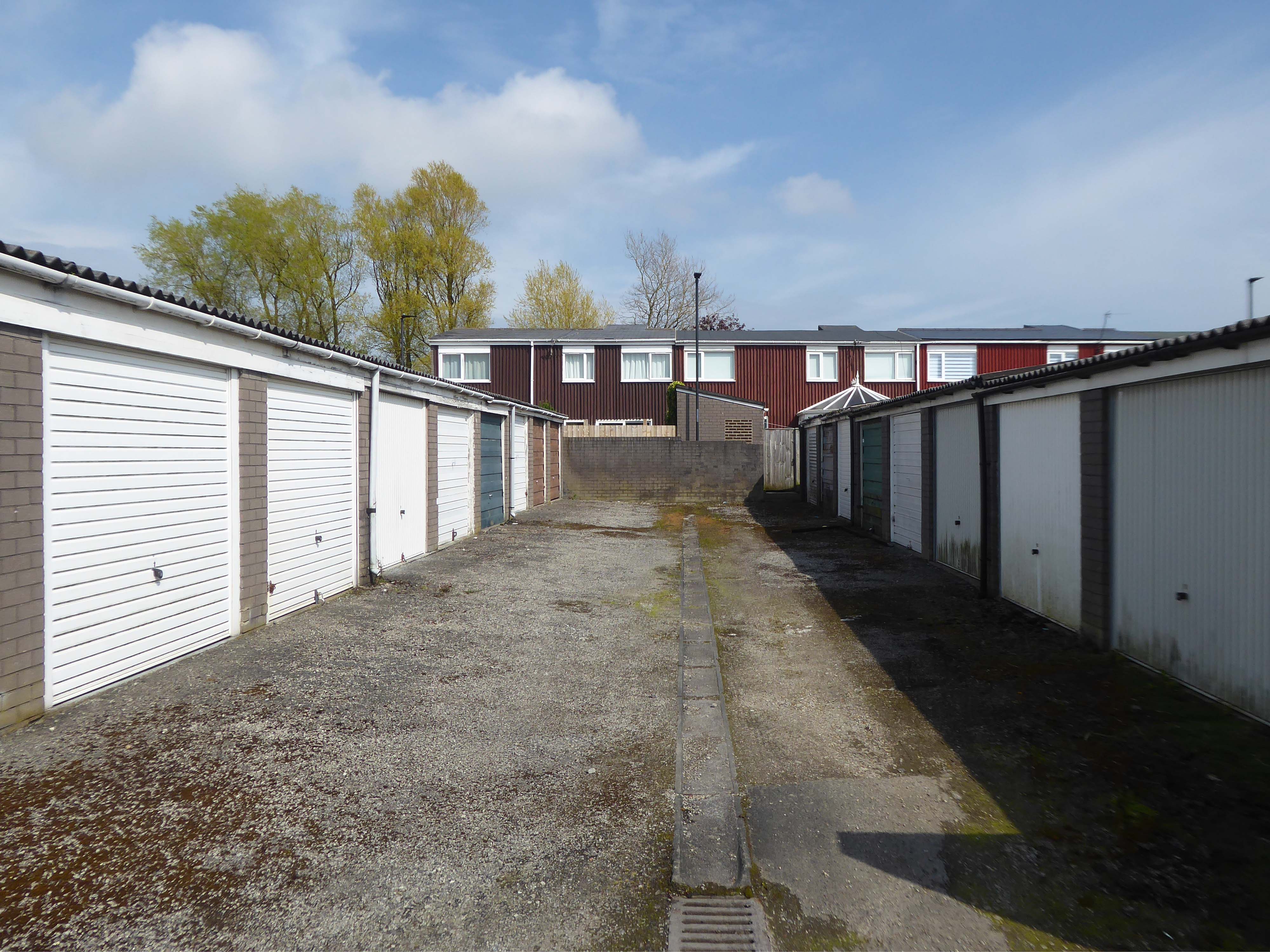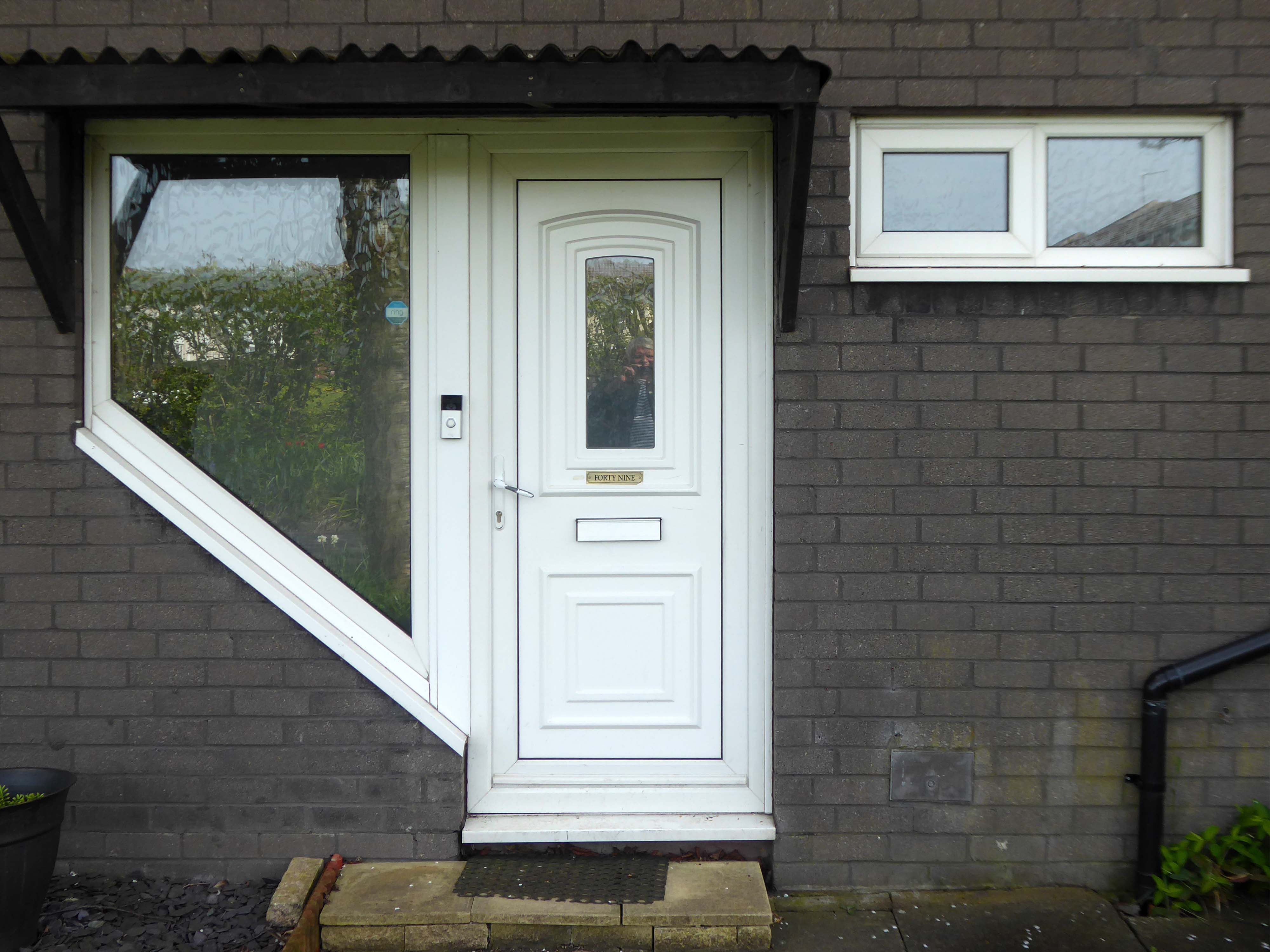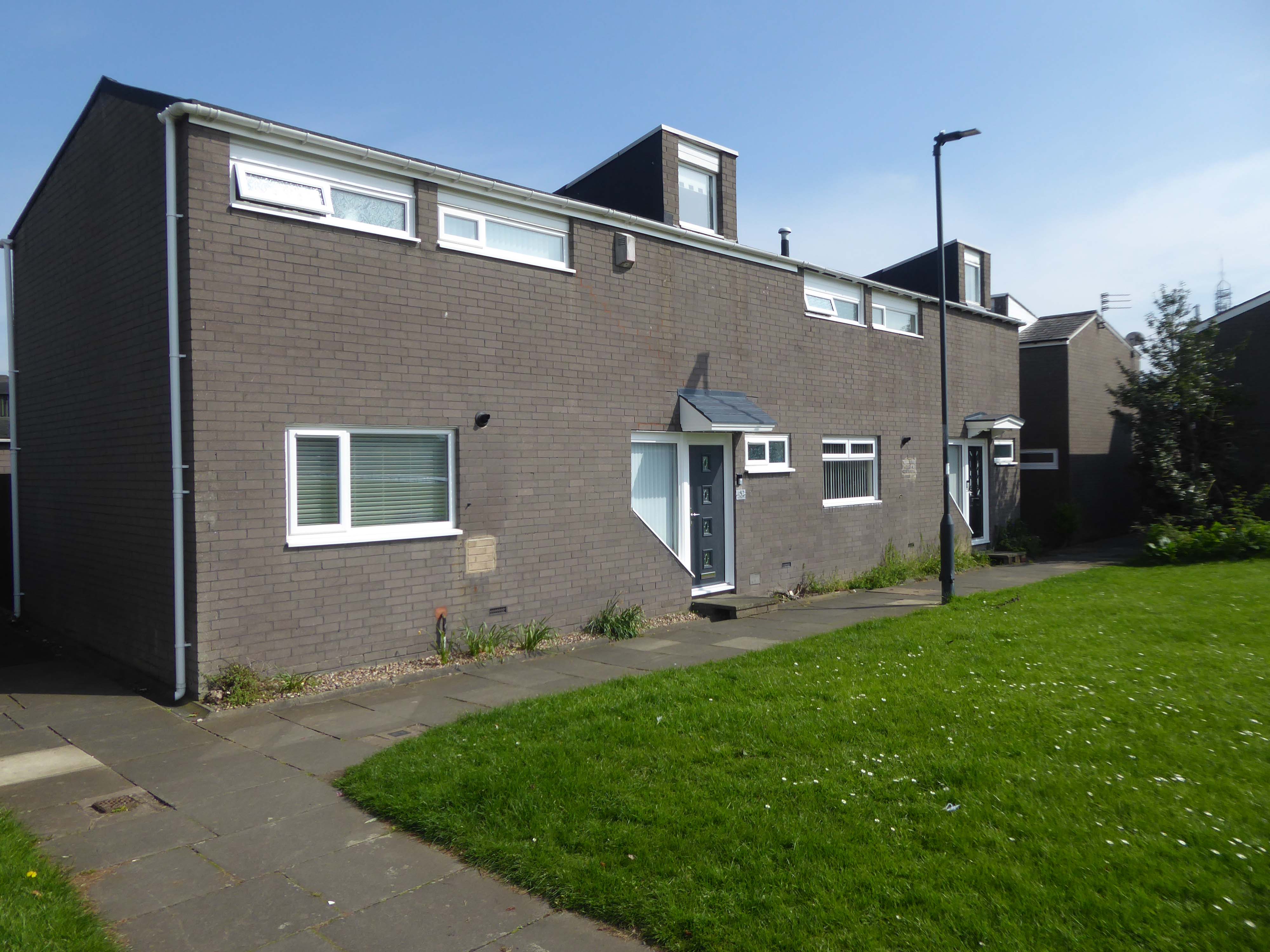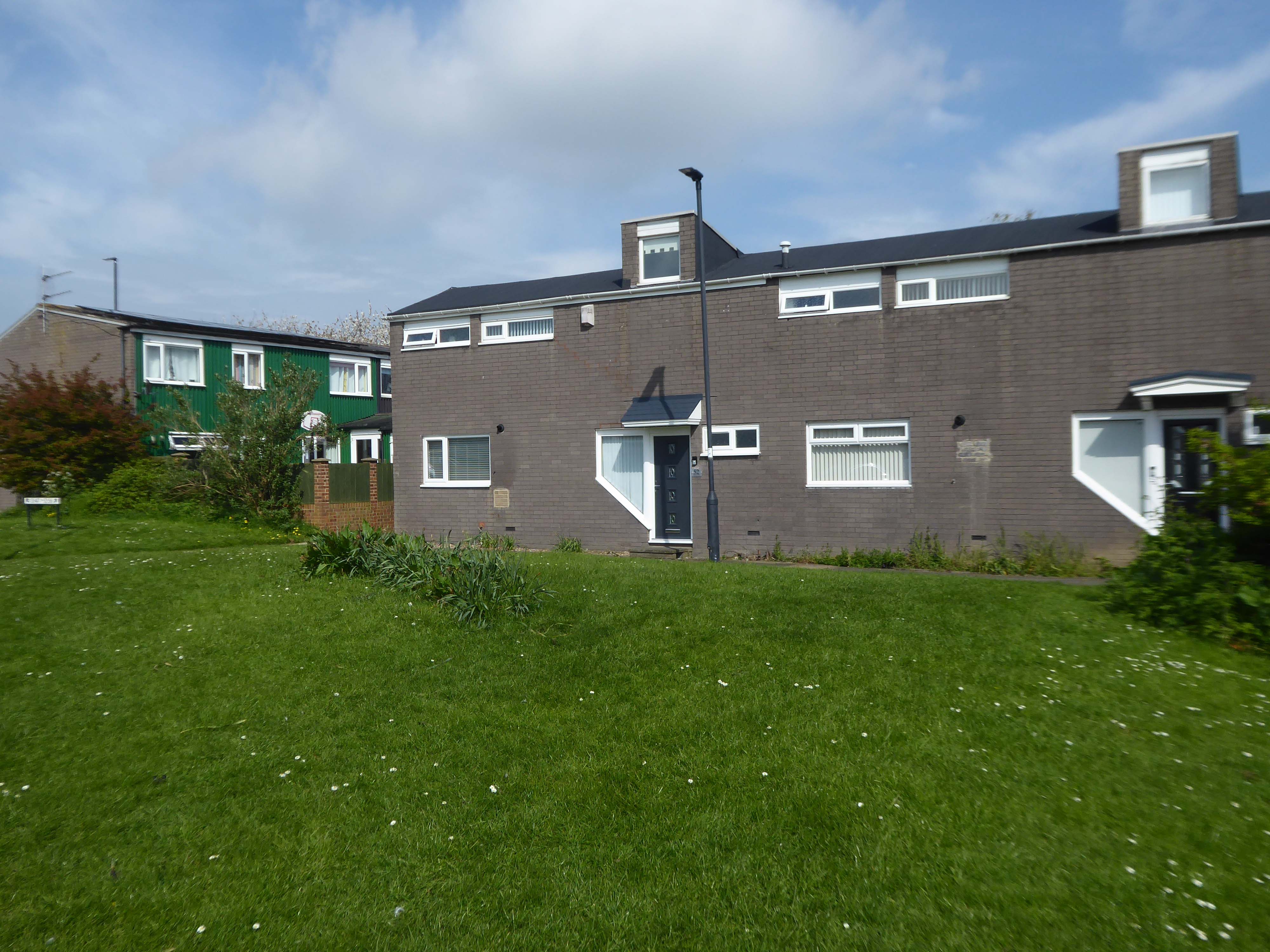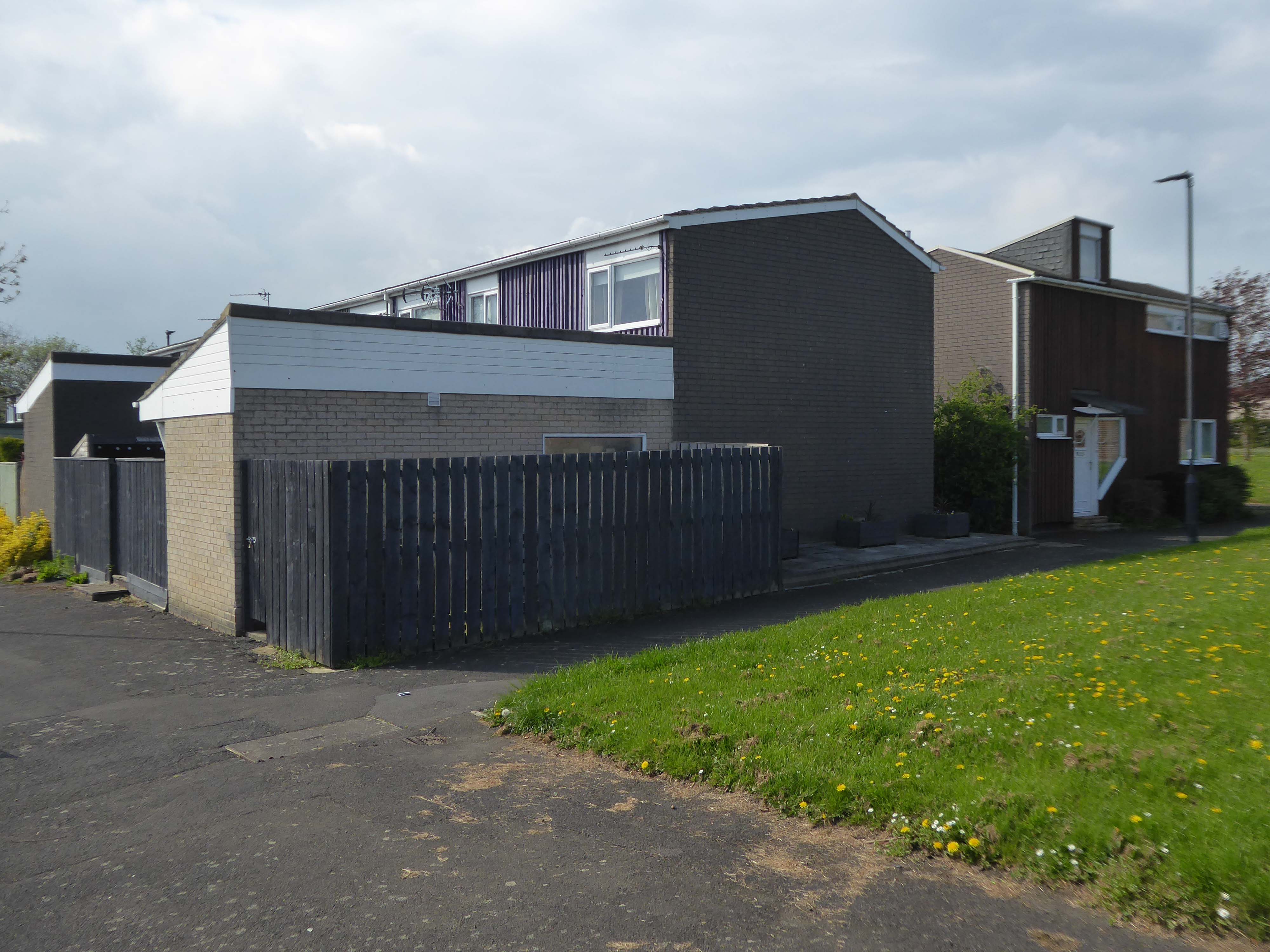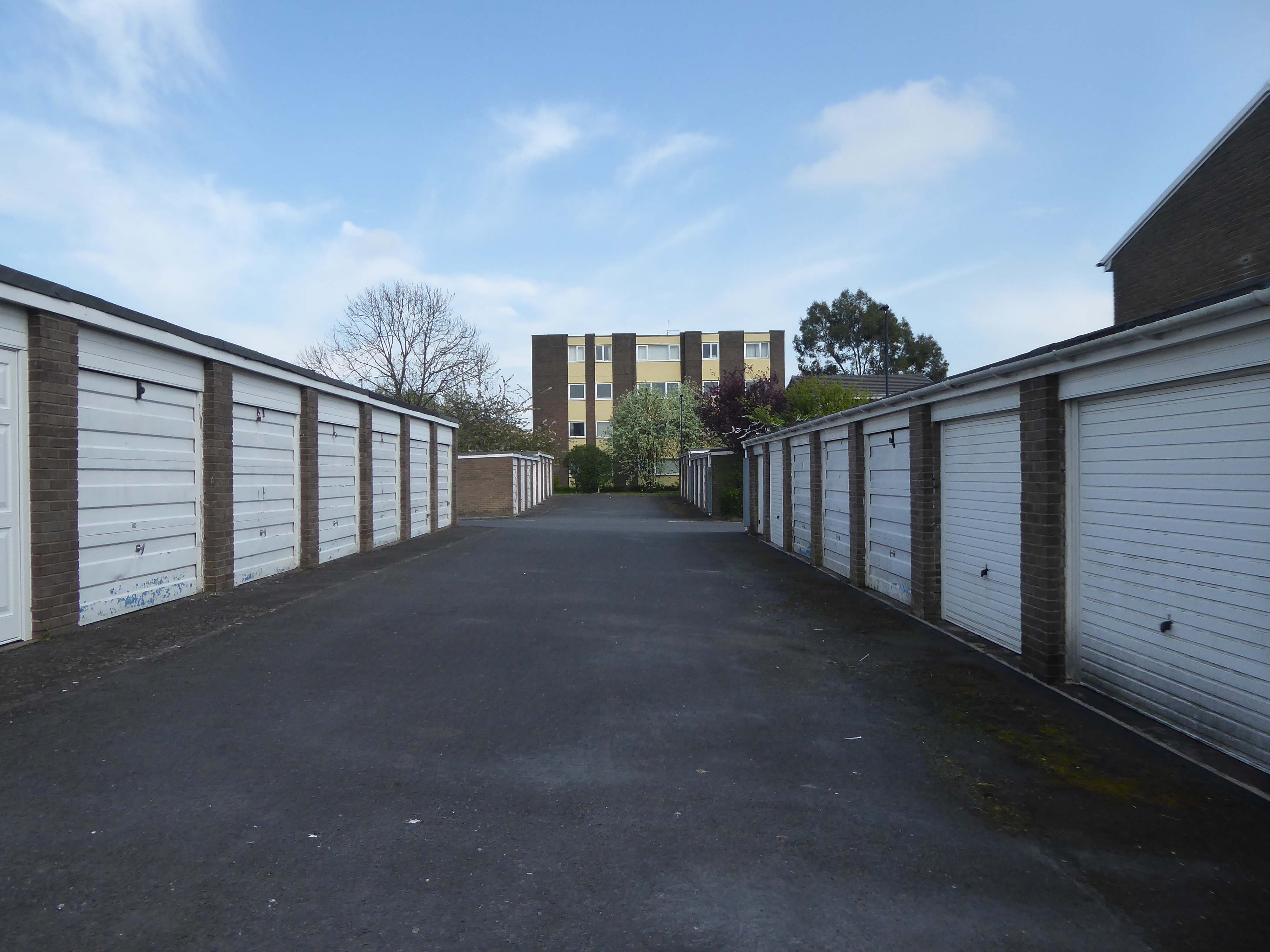
tameside moderne book

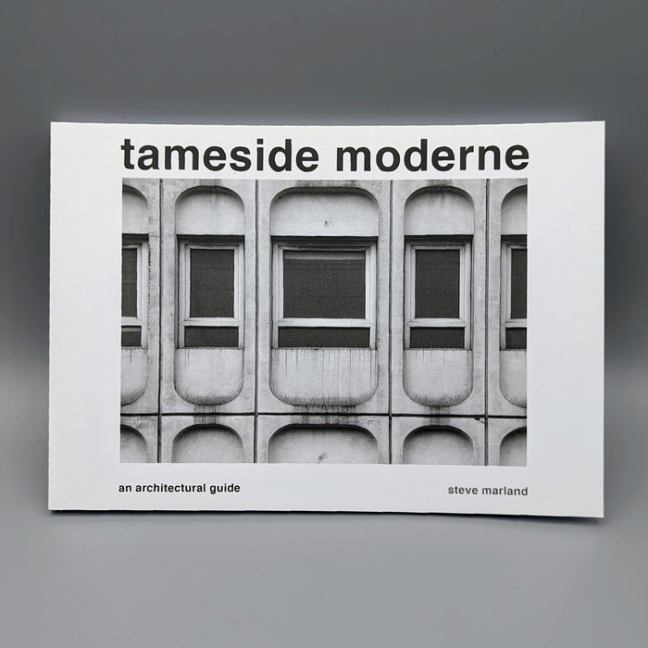
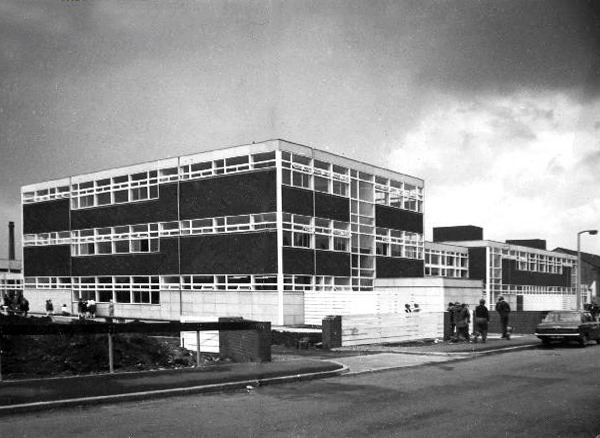
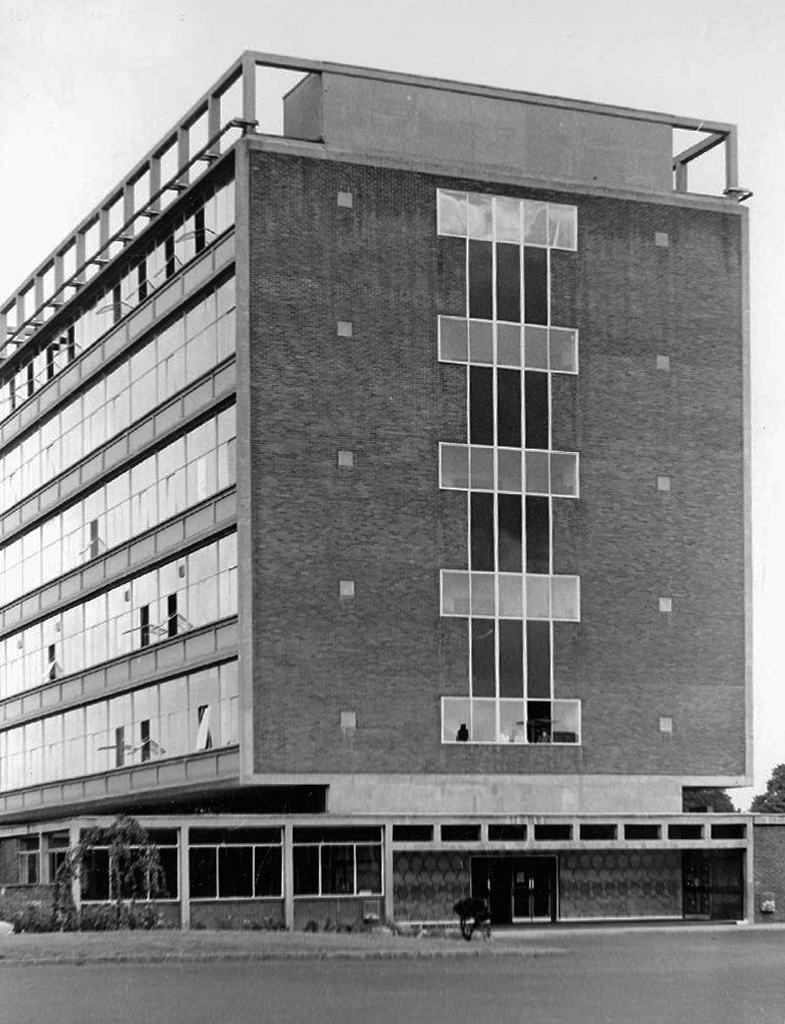
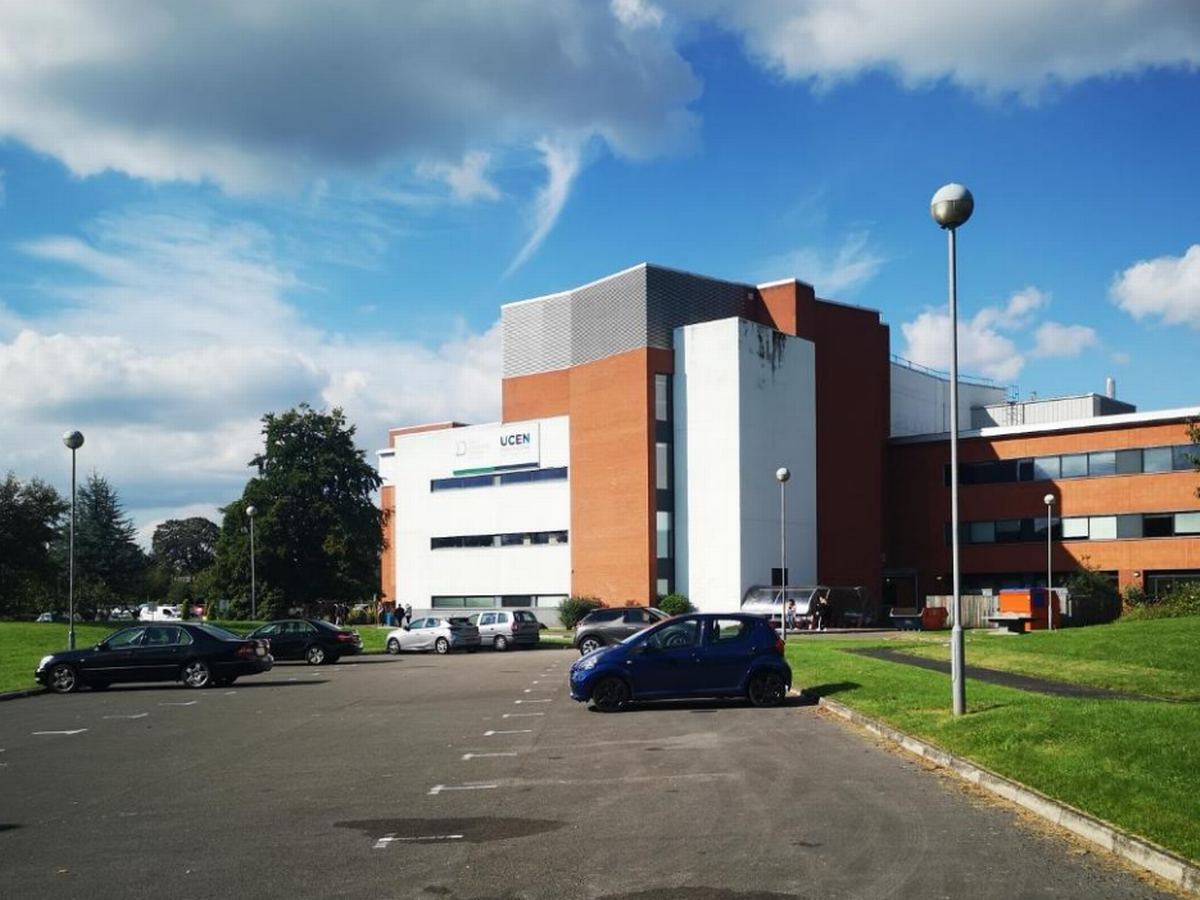
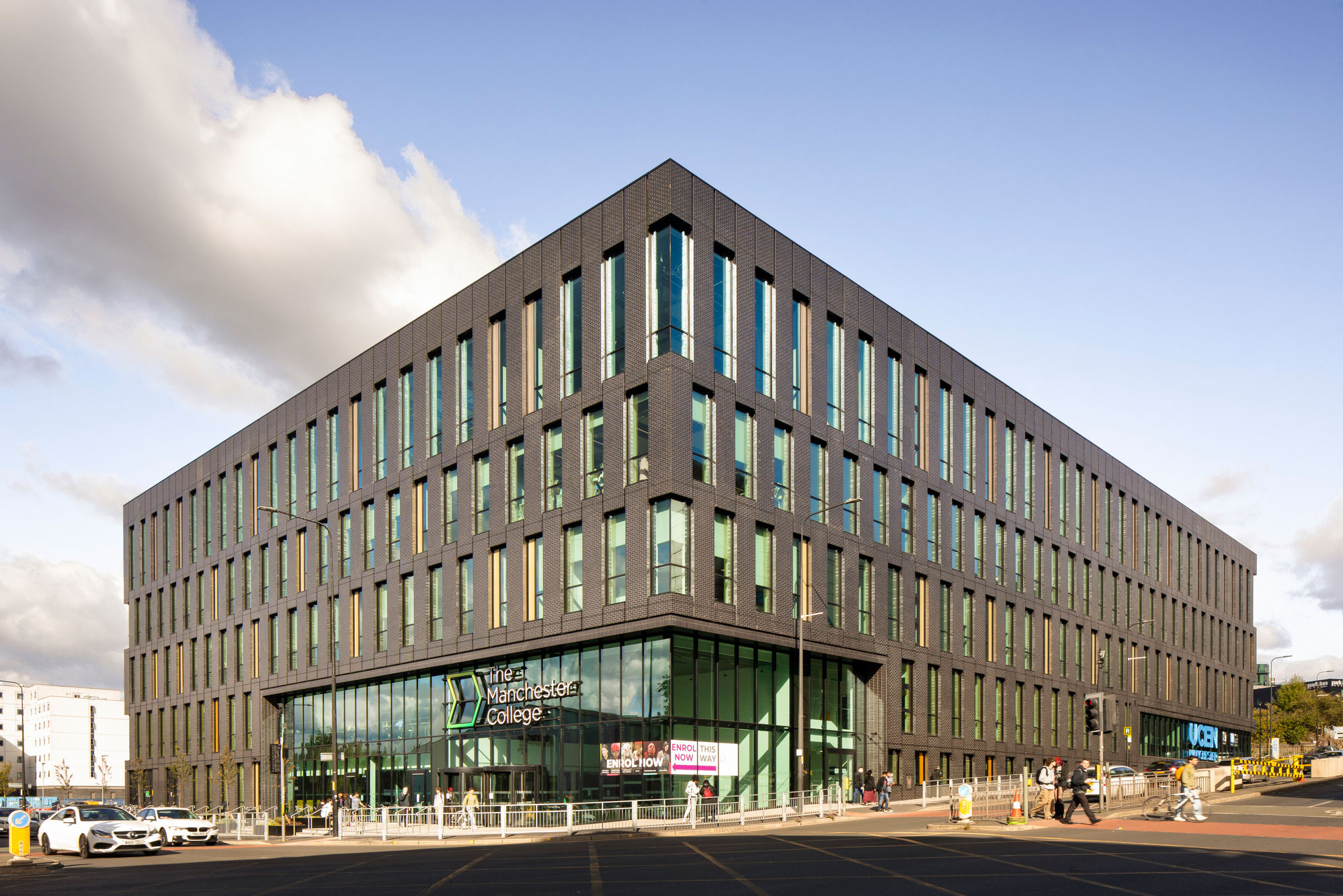
Available online here or call in the Modernist Shop on Port Street Manchester.

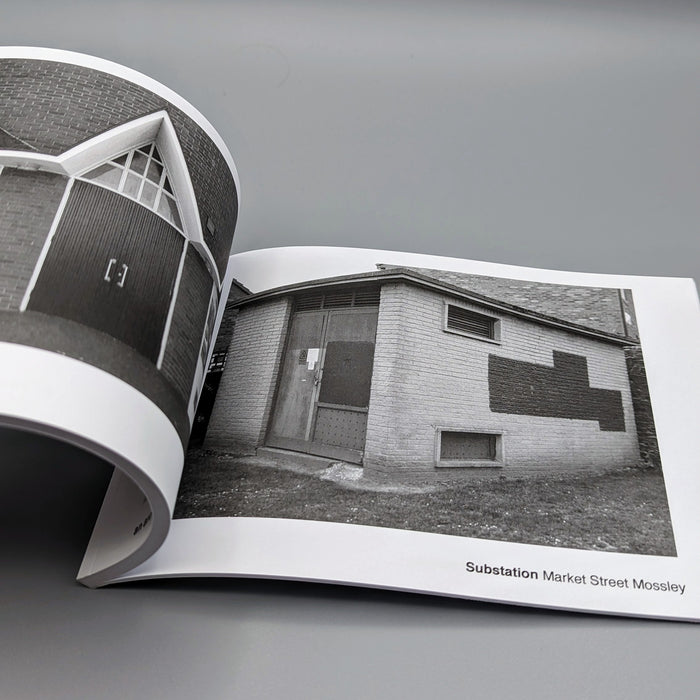
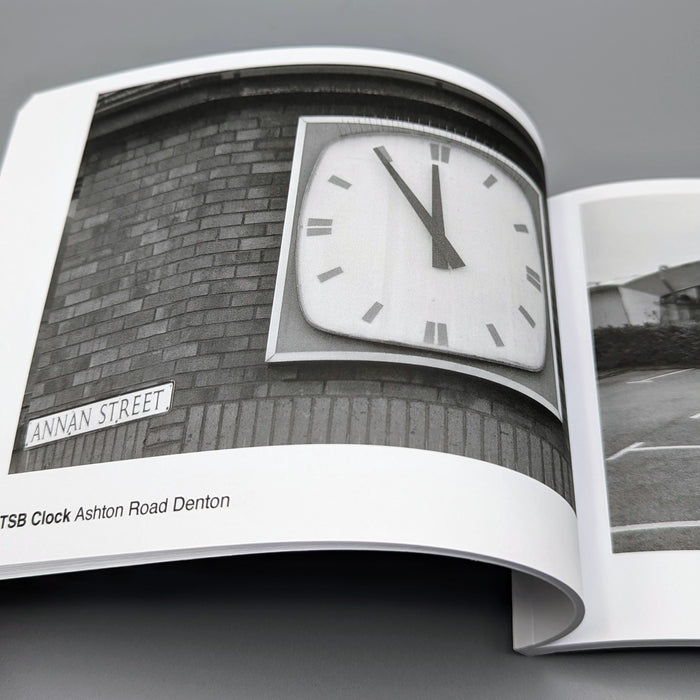
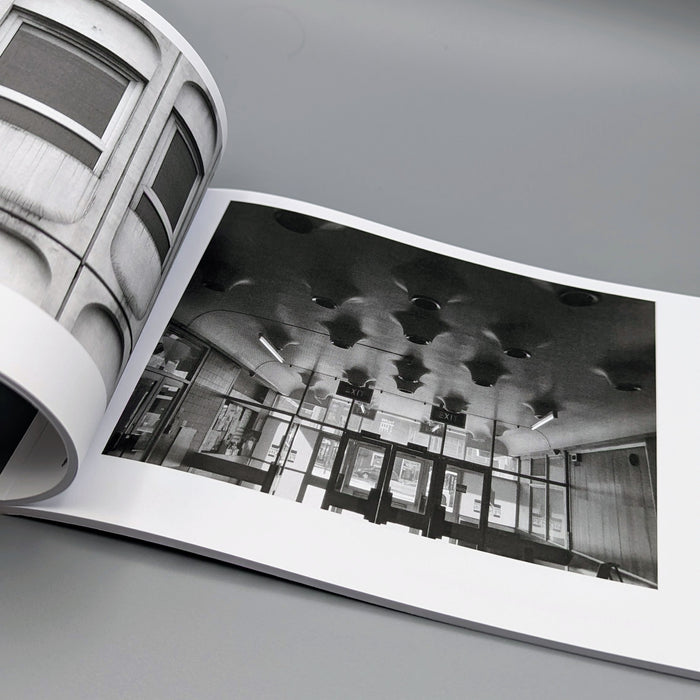
Tameside Moderne

By Steve Marland

A comprehensive guide to the Borough’s modern architecture.
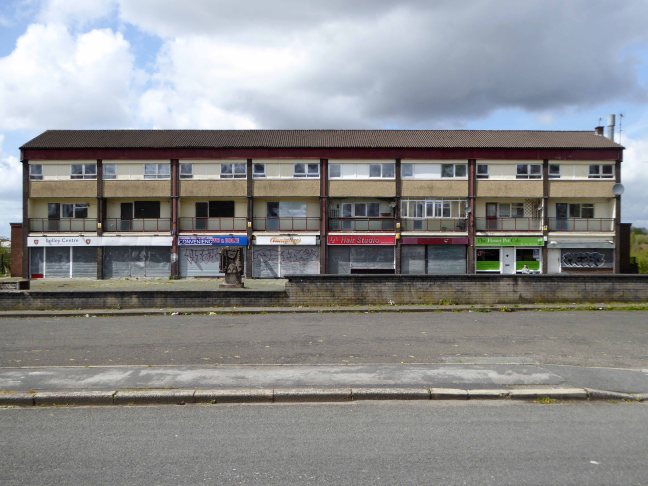
Almost two years in the making.

Tameside east of Manchester – a volcanic explosion of concrete, glass, steel, brick and wood!

From sacred sites to suburban substations, a rollercoaster ride through provincial style.

  
Softcover, 84pages,
B&W
148 x 210xmm – landscape

£10 well spent – be quick these will fly!

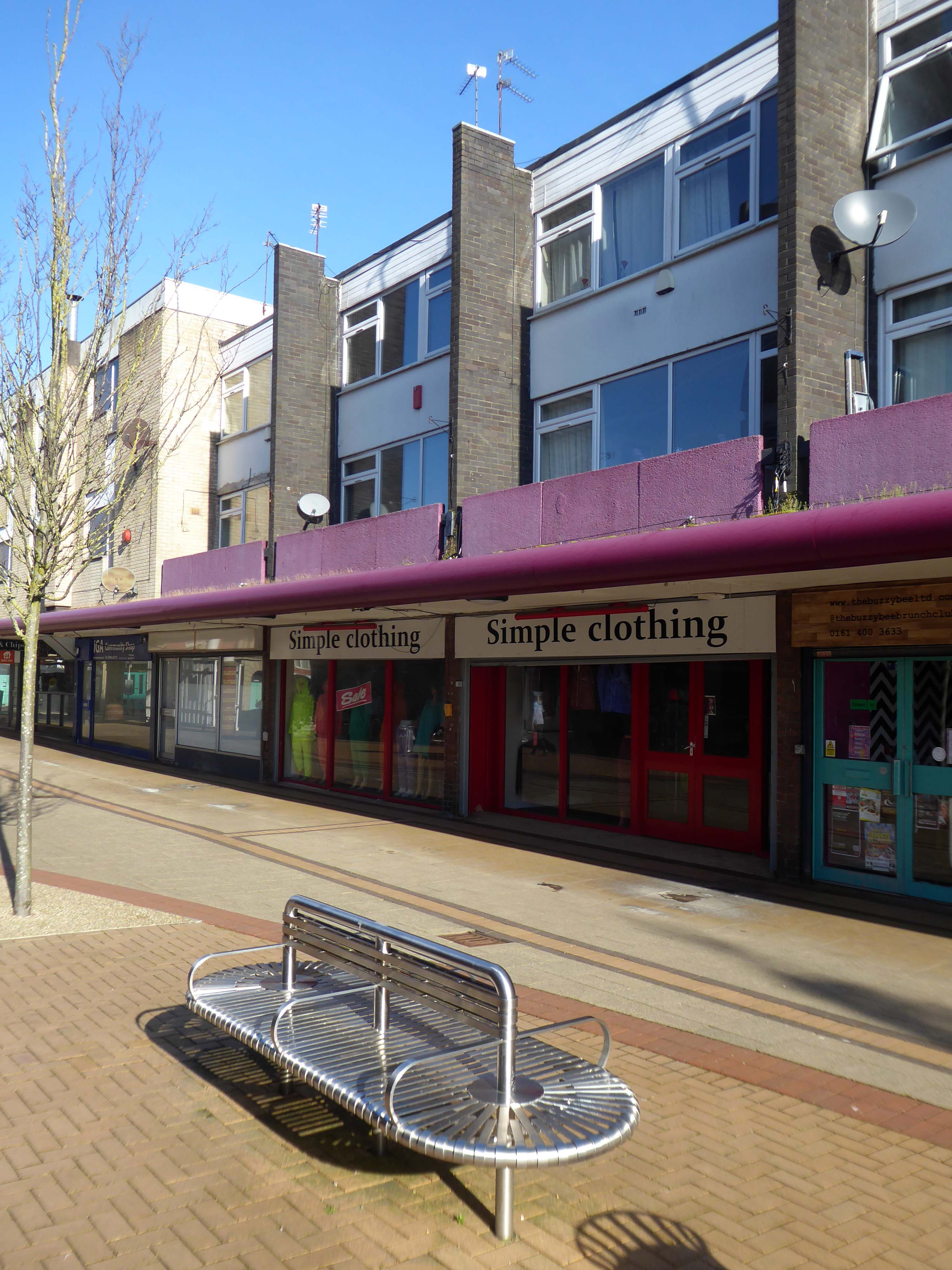
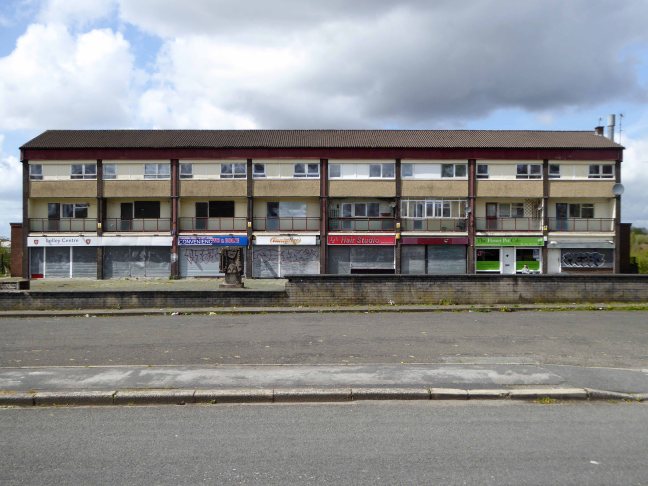
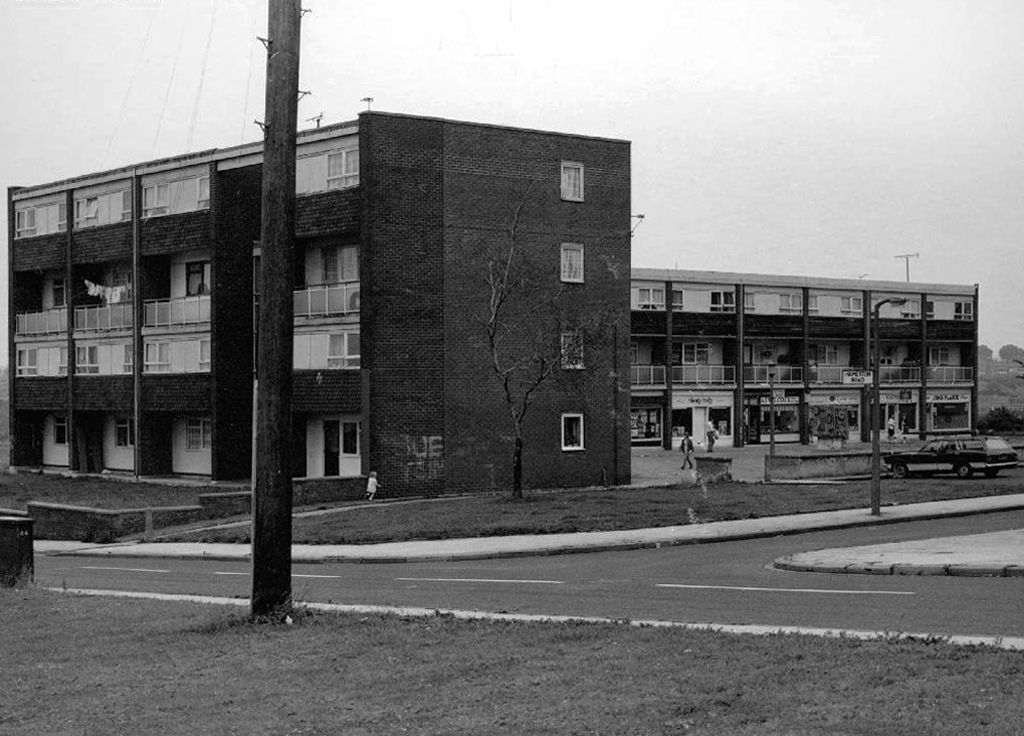
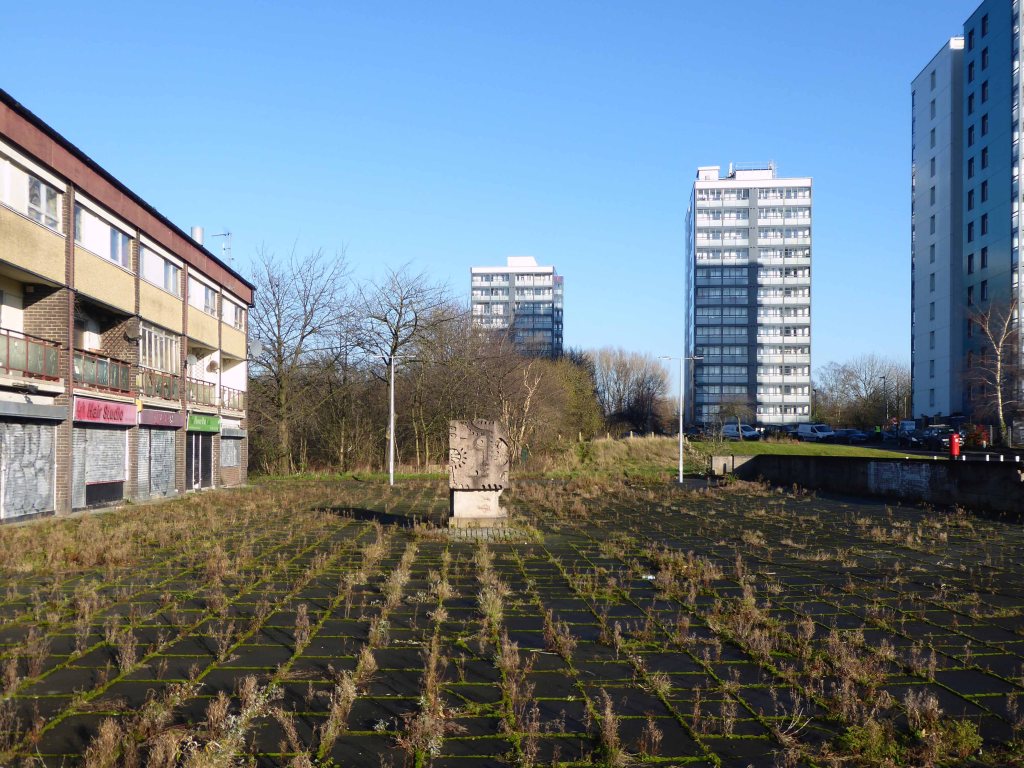
Eastford Square 2023

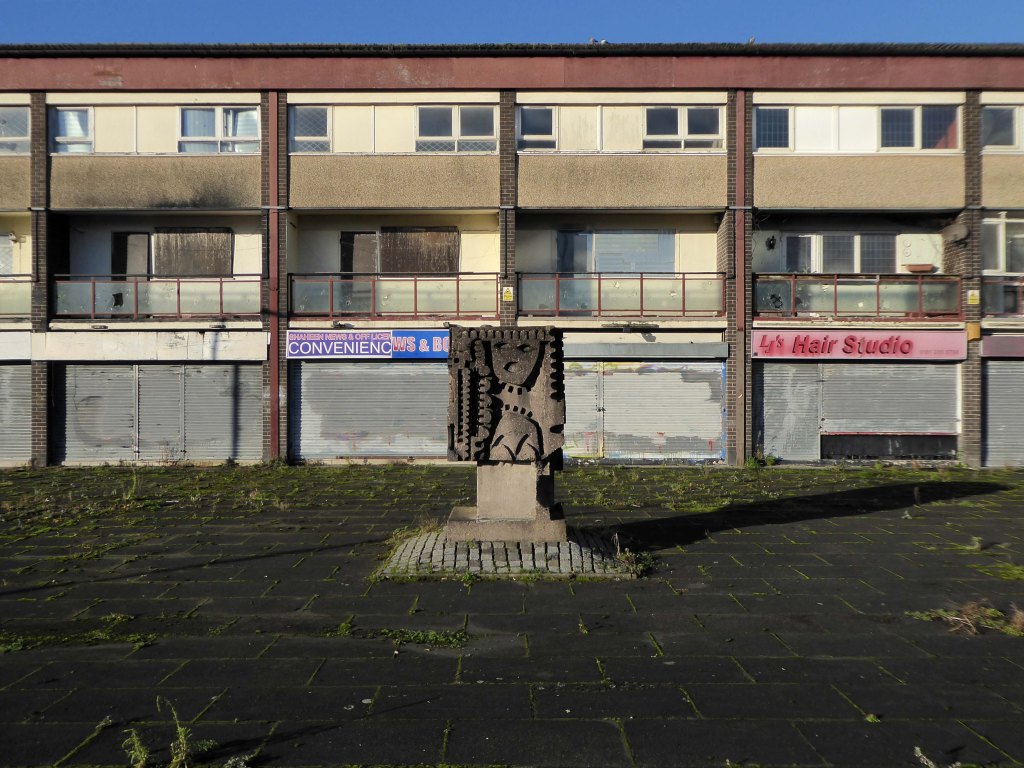
Here we were in 2016 – the last gasp of businesses on the square.

A hangover from the optimism of a long lost decade.

Local Image Collection

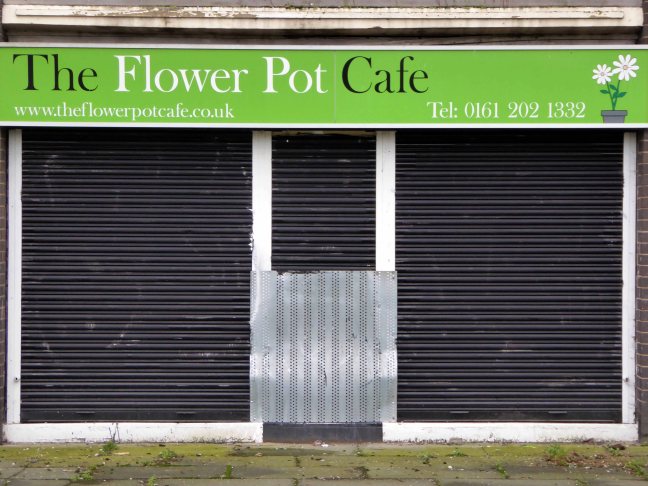
Returning in 2018 to find the shops all shut

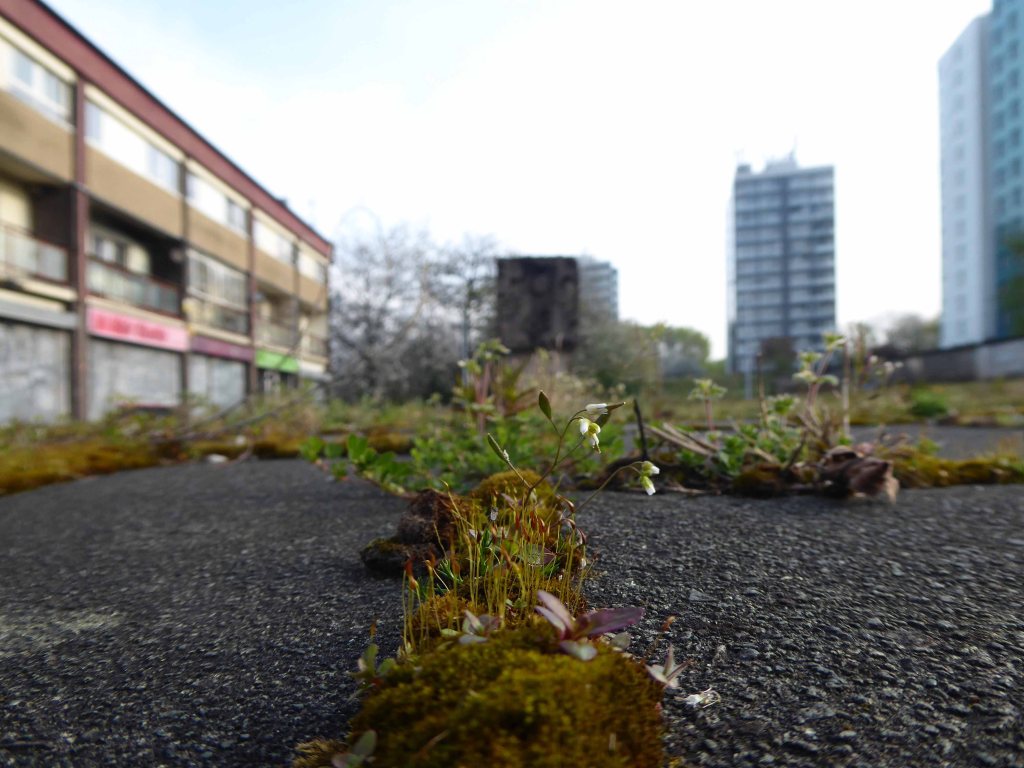
In 2019 the grass now fills up the cracks.

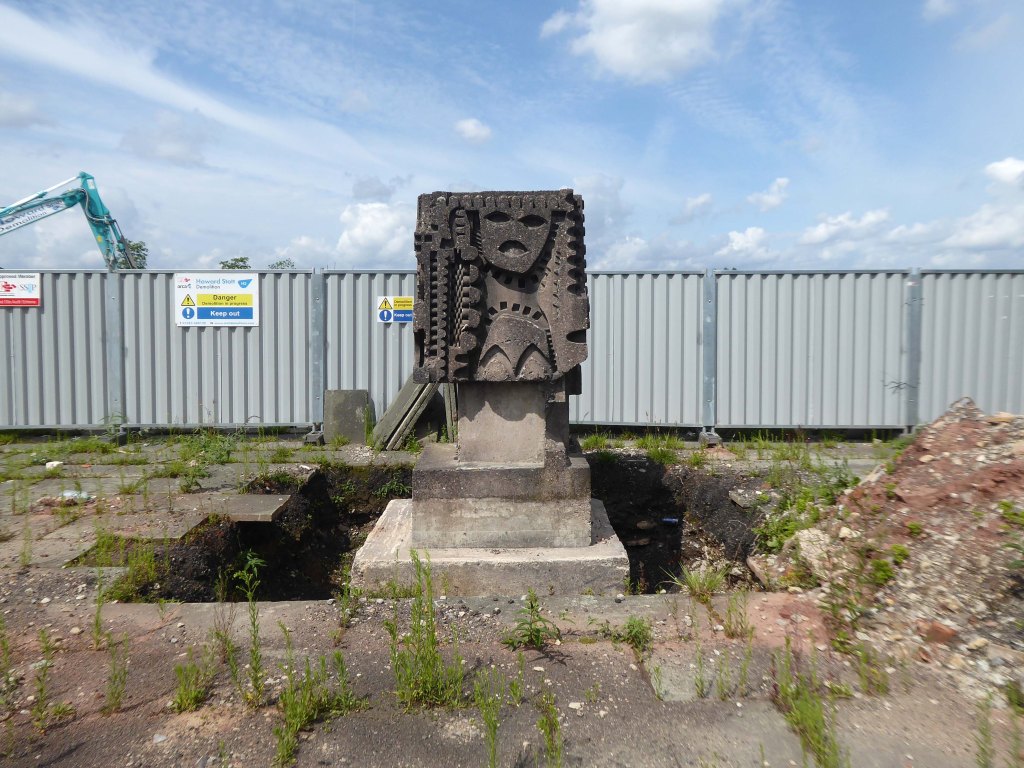
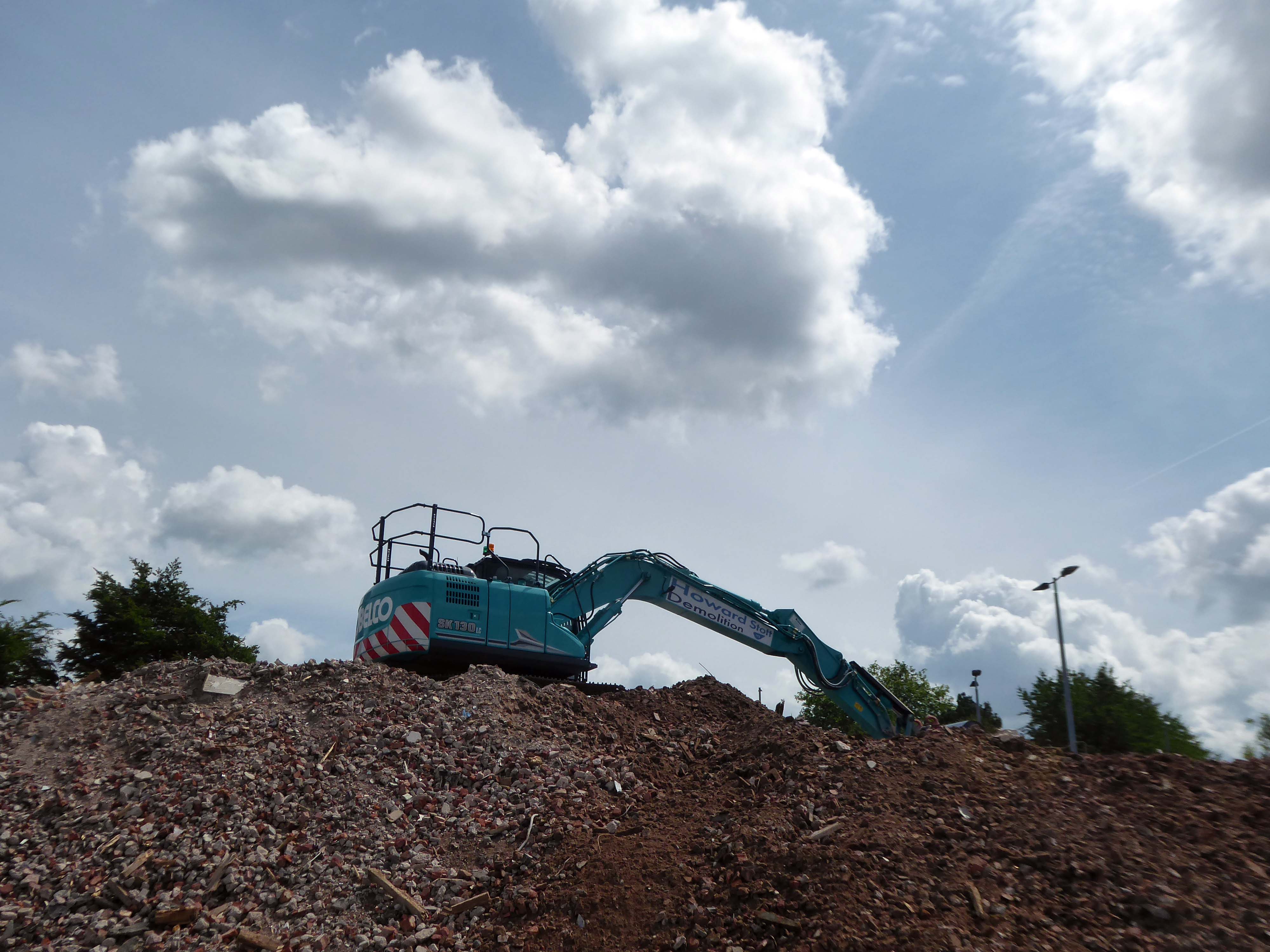
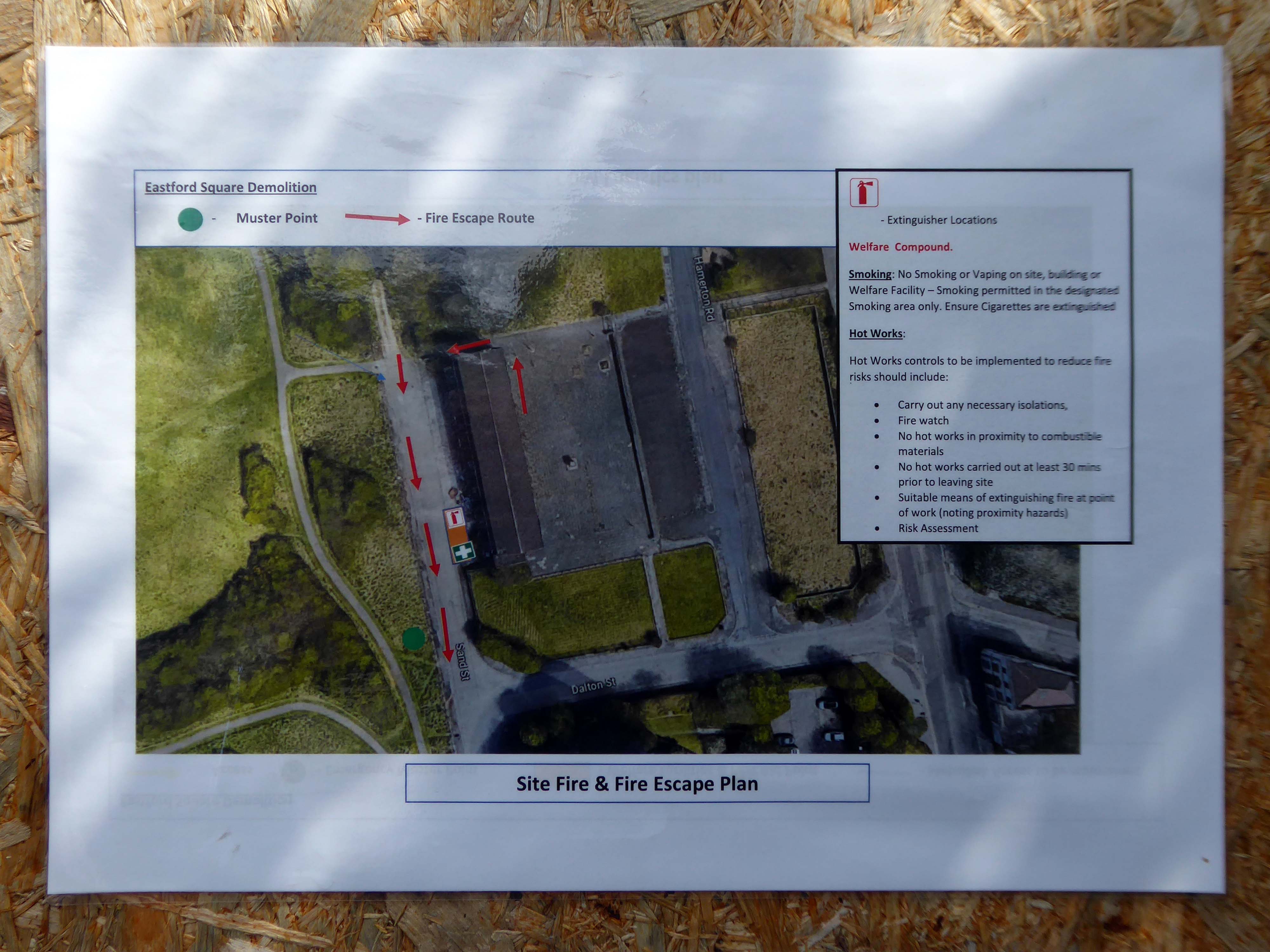
April 2023 and the shops and homes are being prepared for demolition.

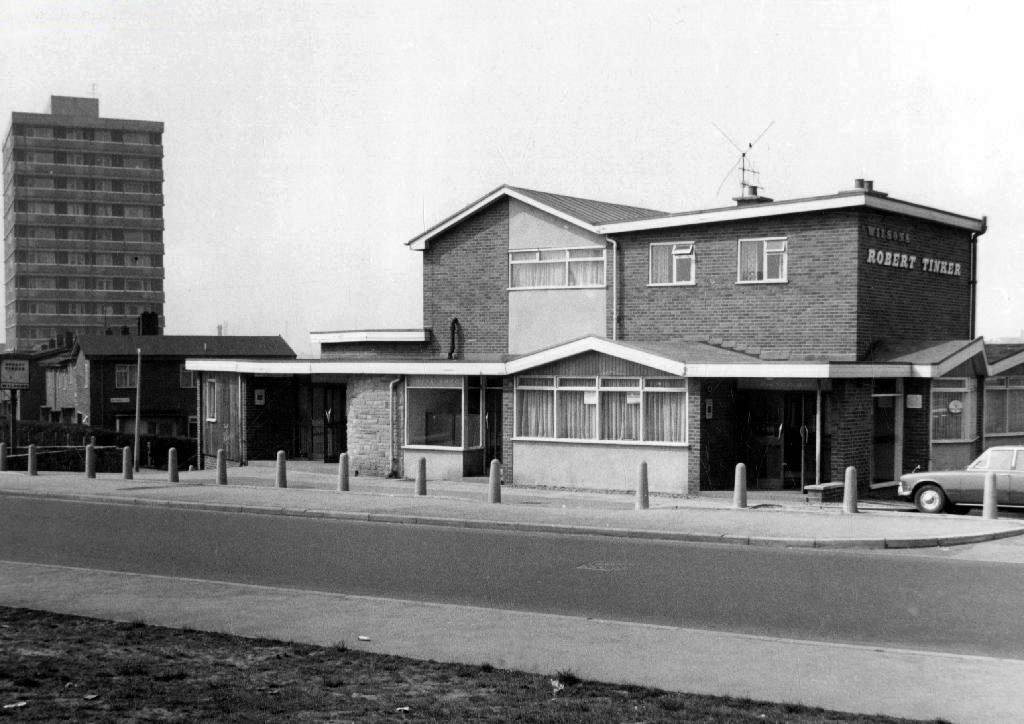
The company responsible for the demolition also dropped the Robert Tinker, on nearby Dalton Street.

While it is not yet clear exactly what will replace the shopping parade, work has already started nearby on other projects within the scheme. The first phase of development in Collyhurst will see 274 new homes built in the area.

MEN

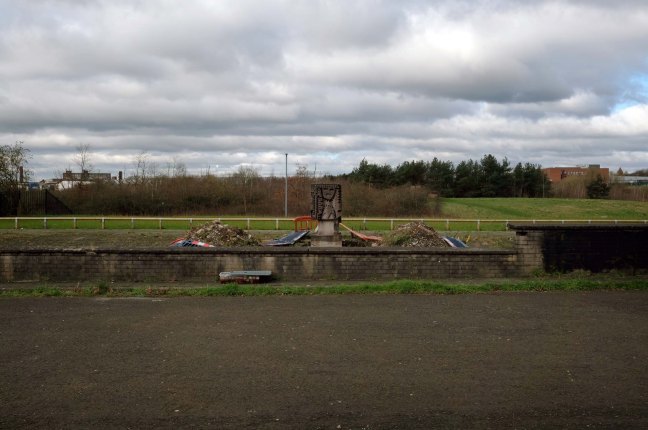
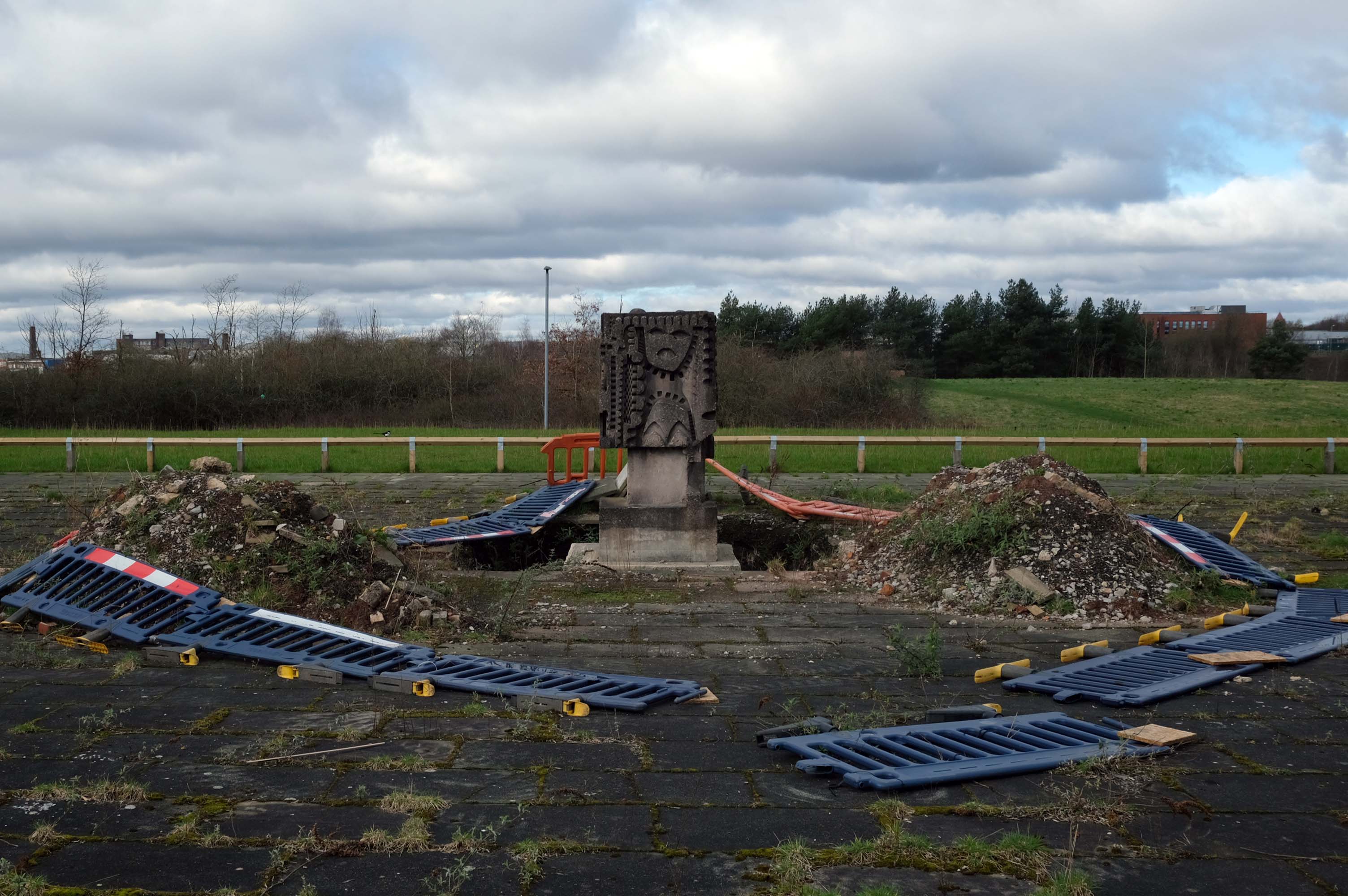
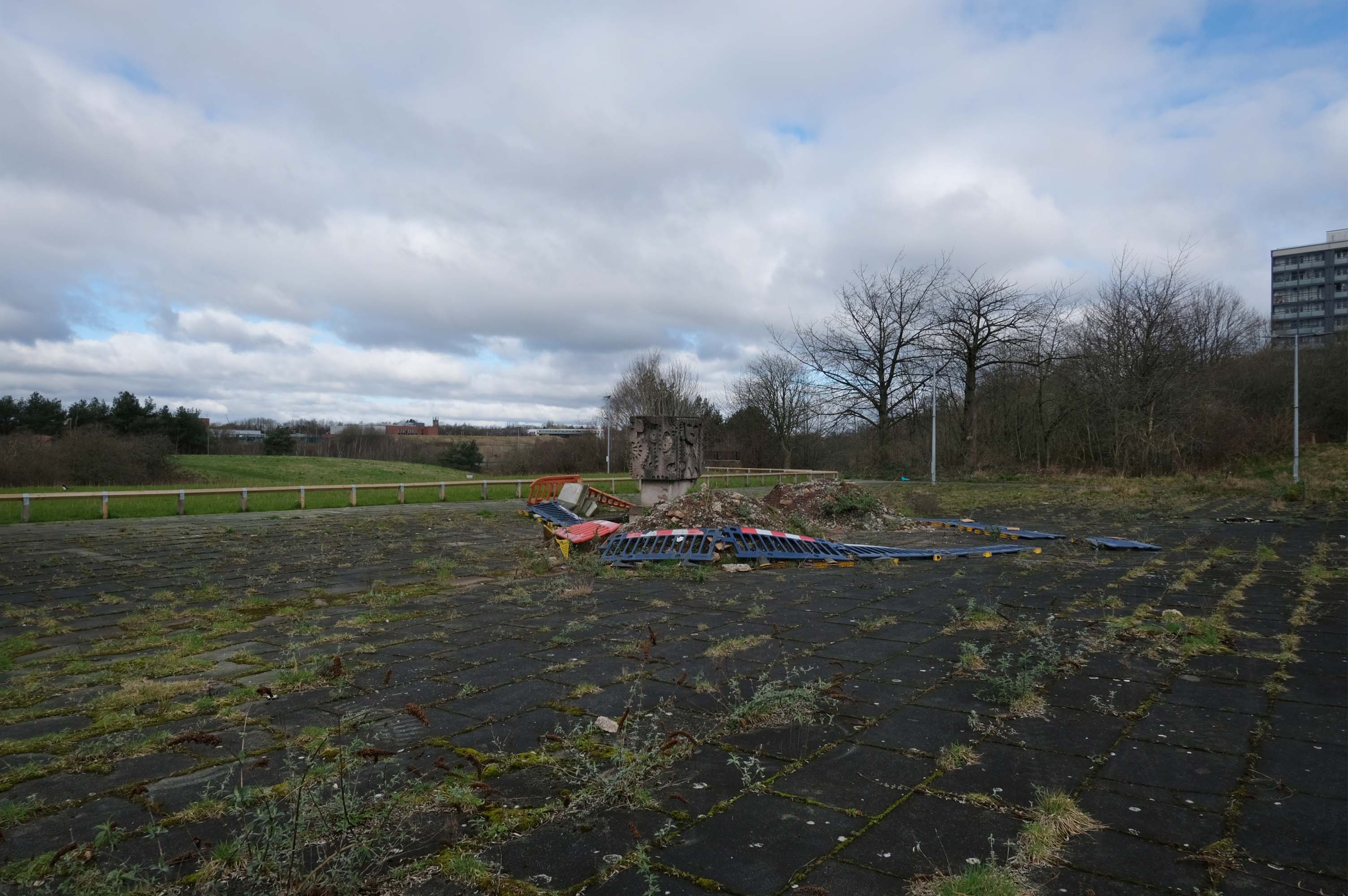
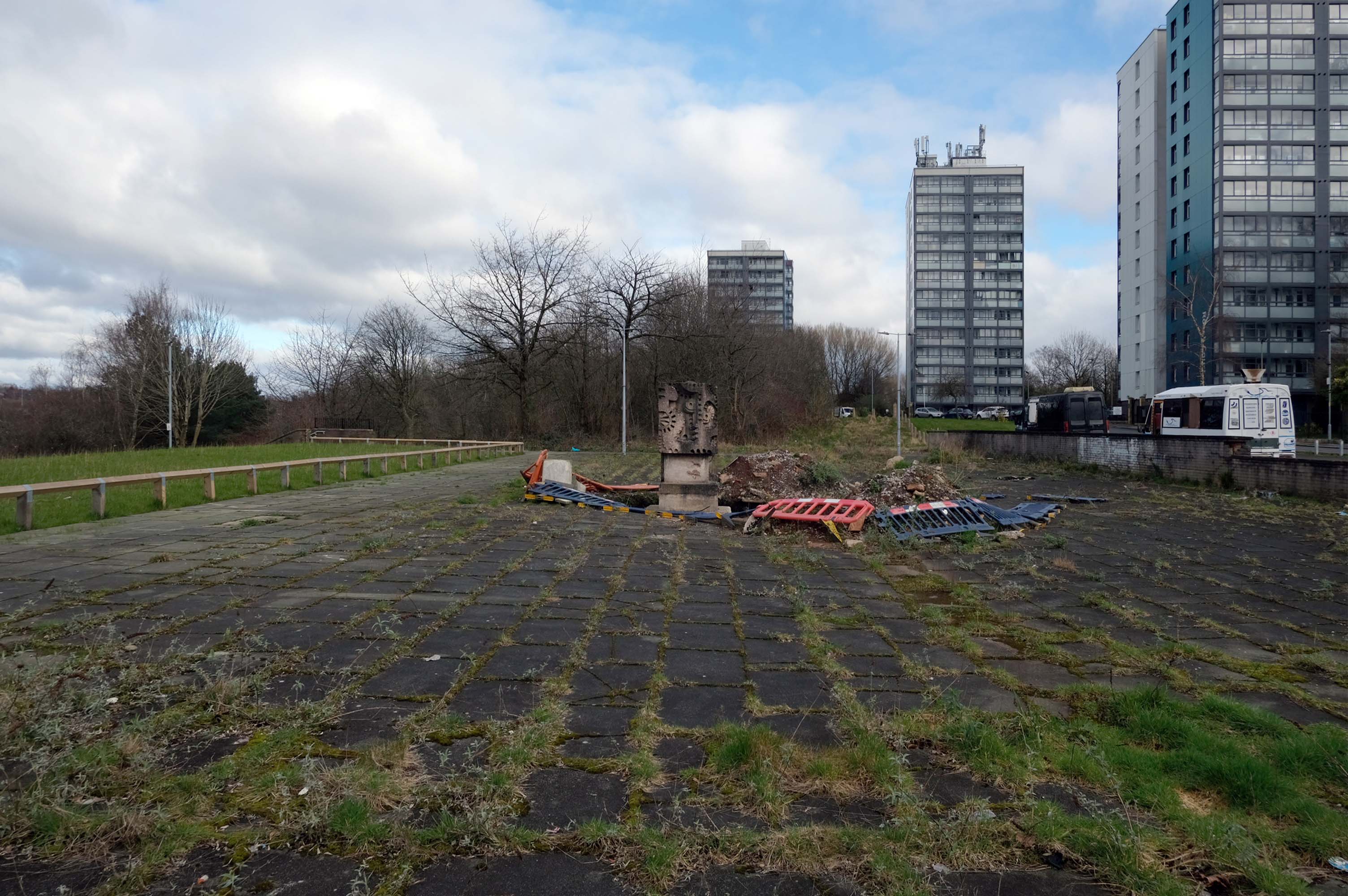
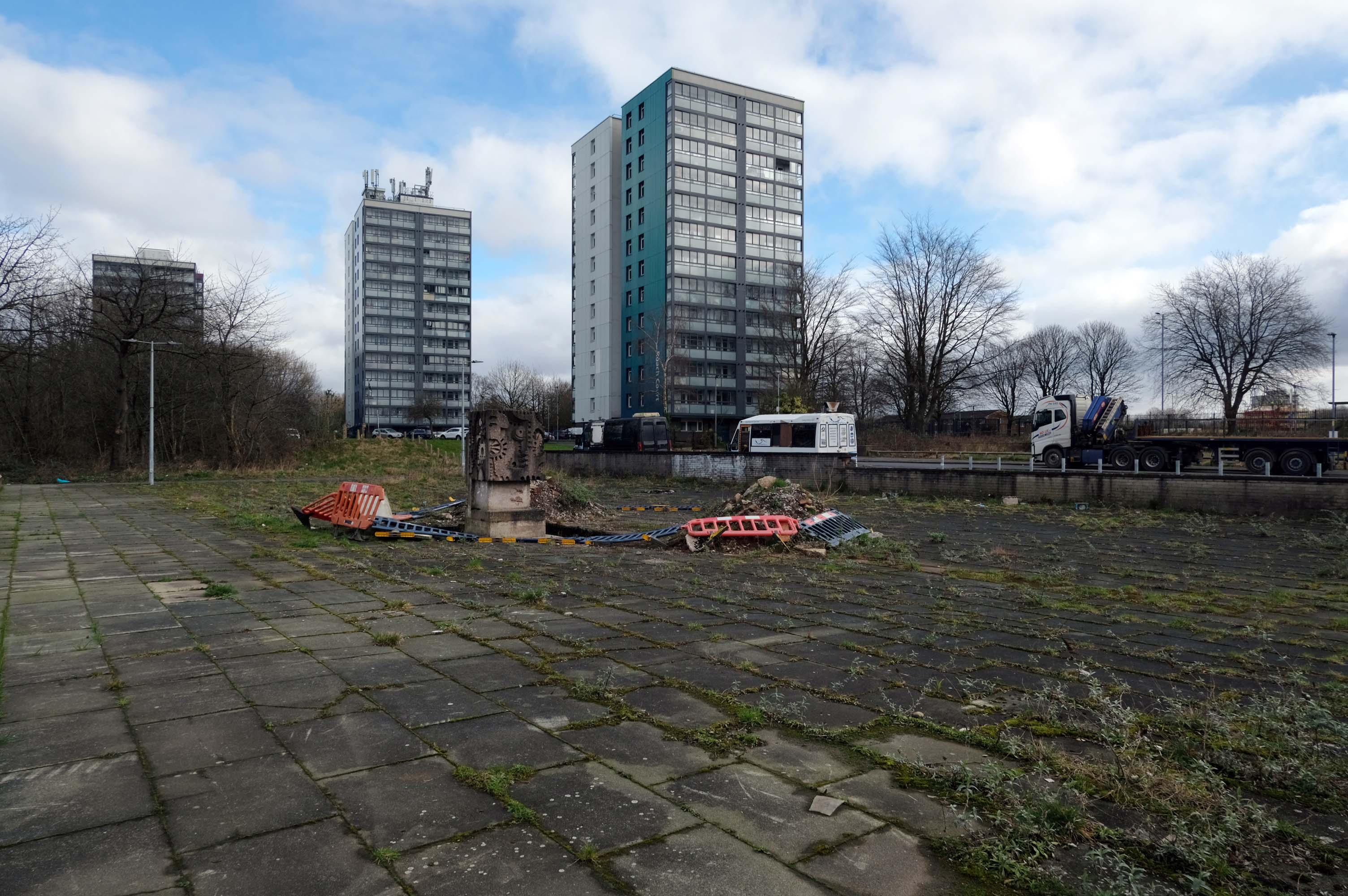
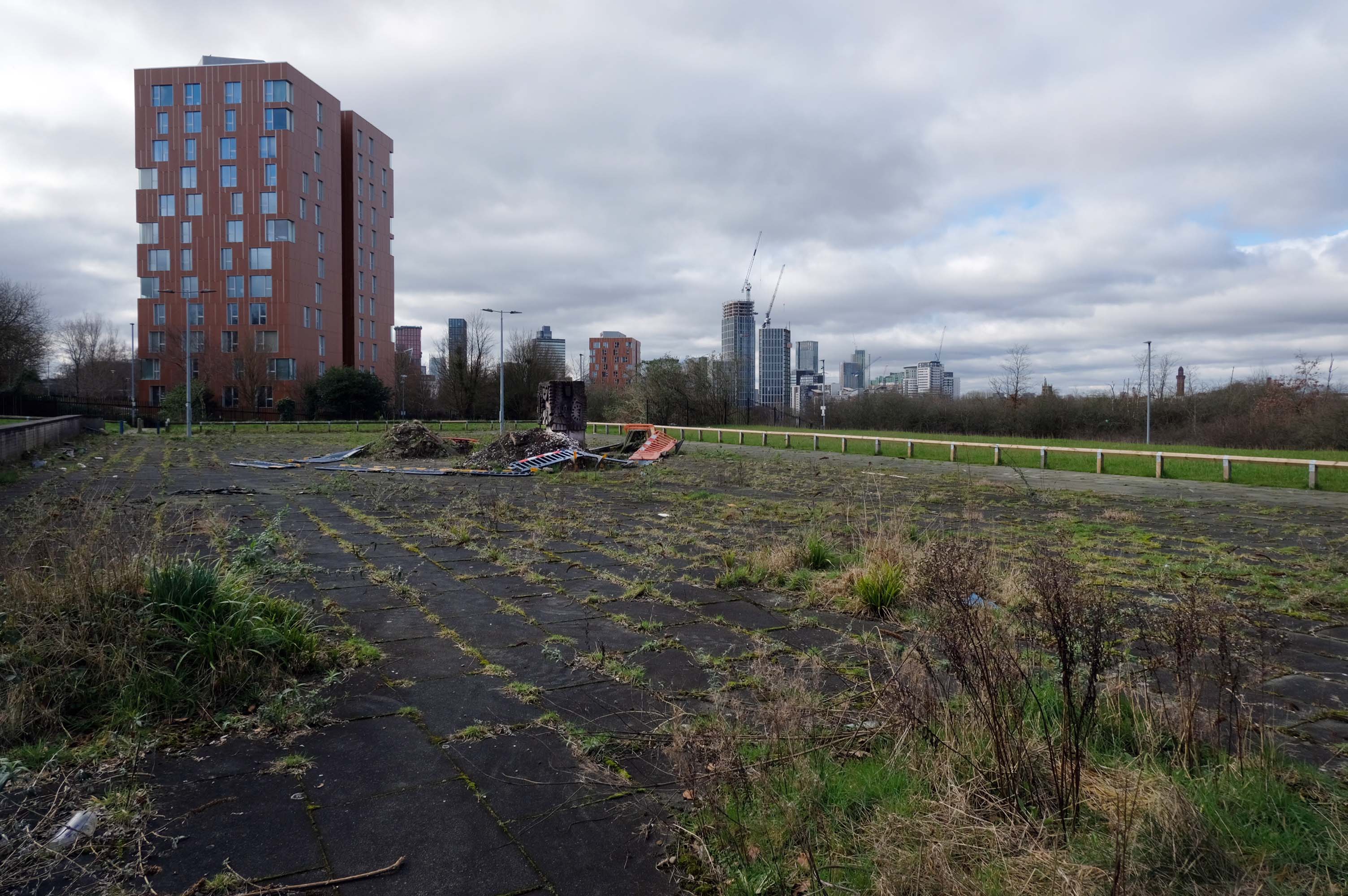
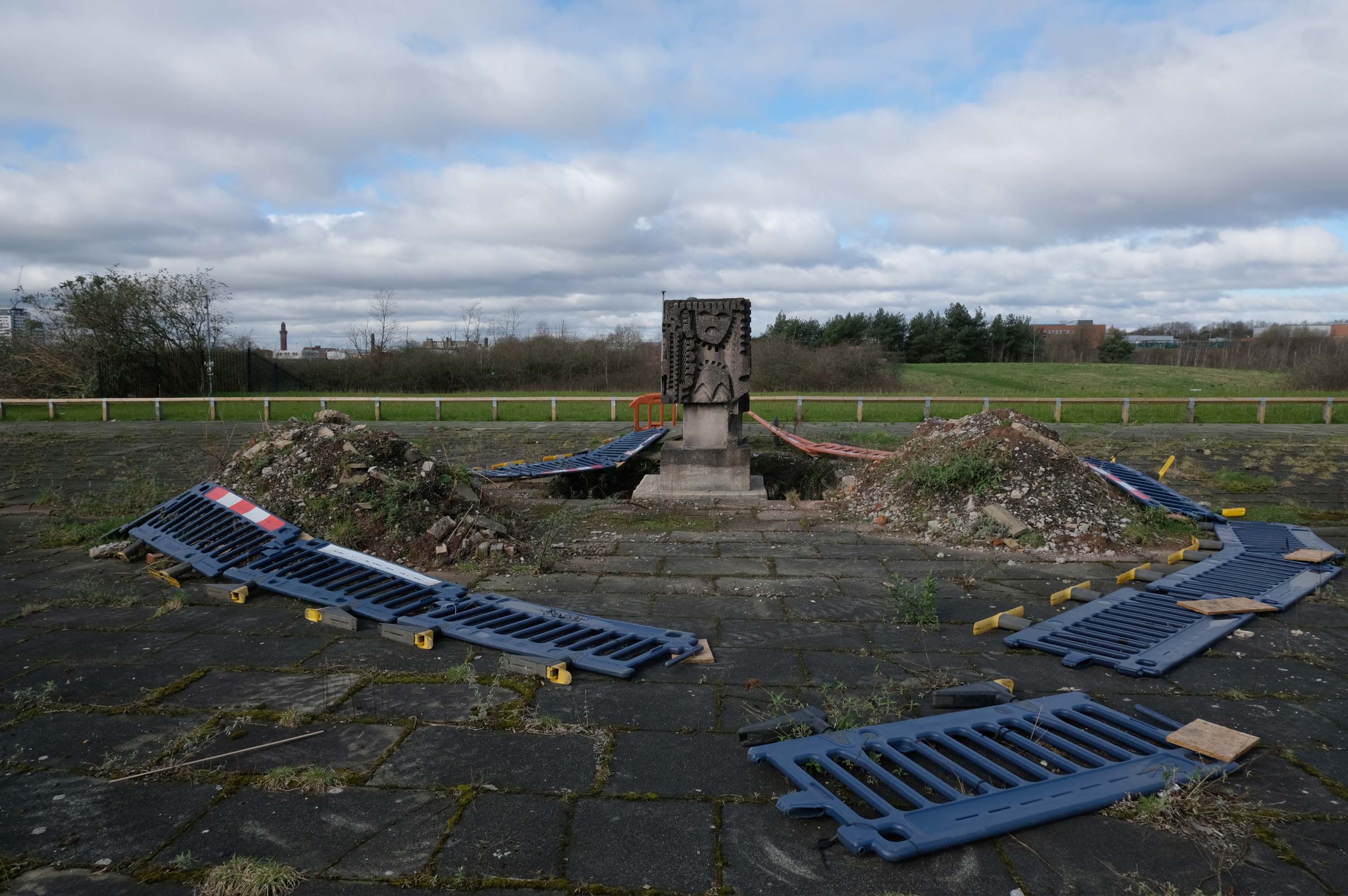
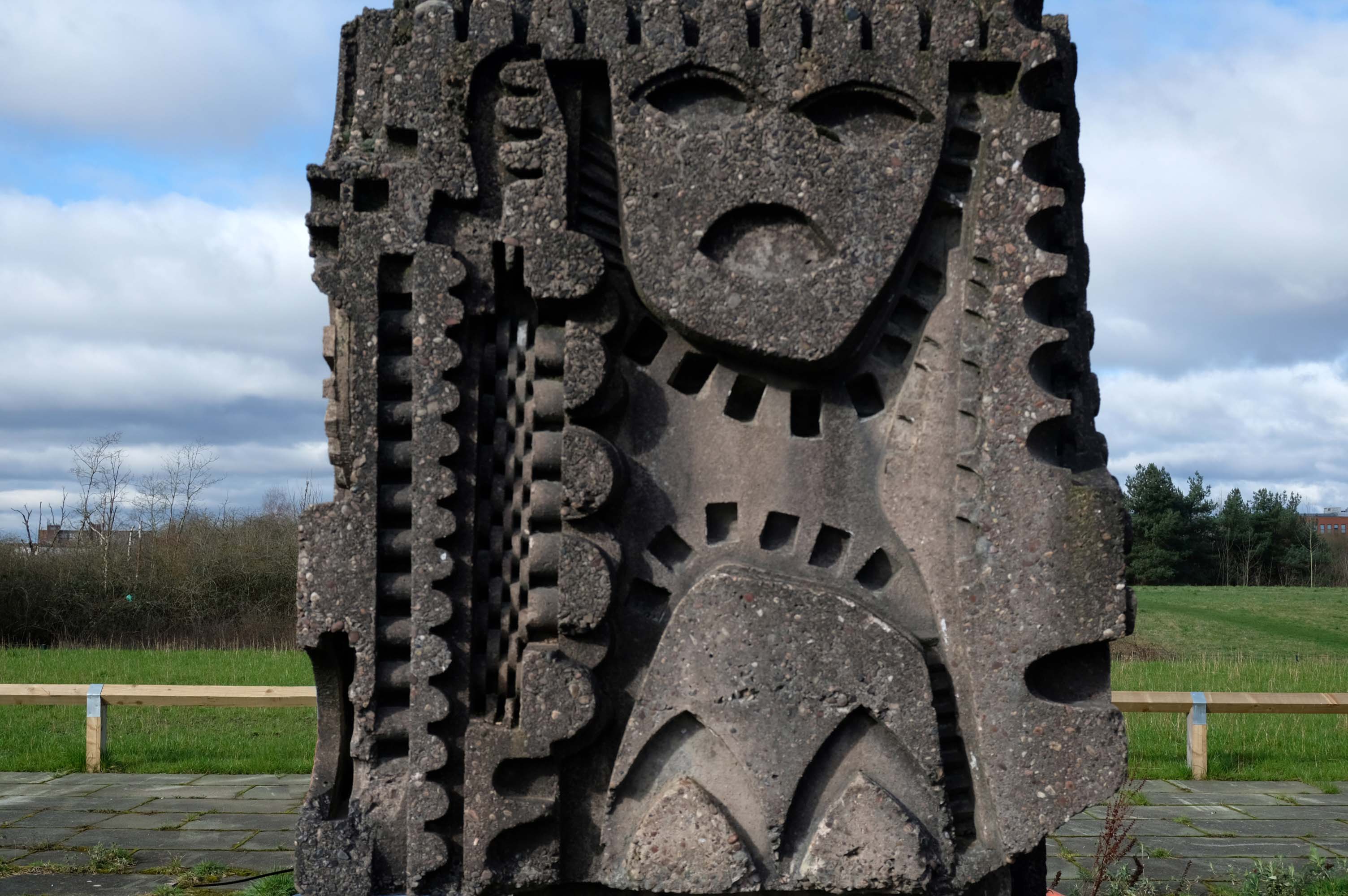
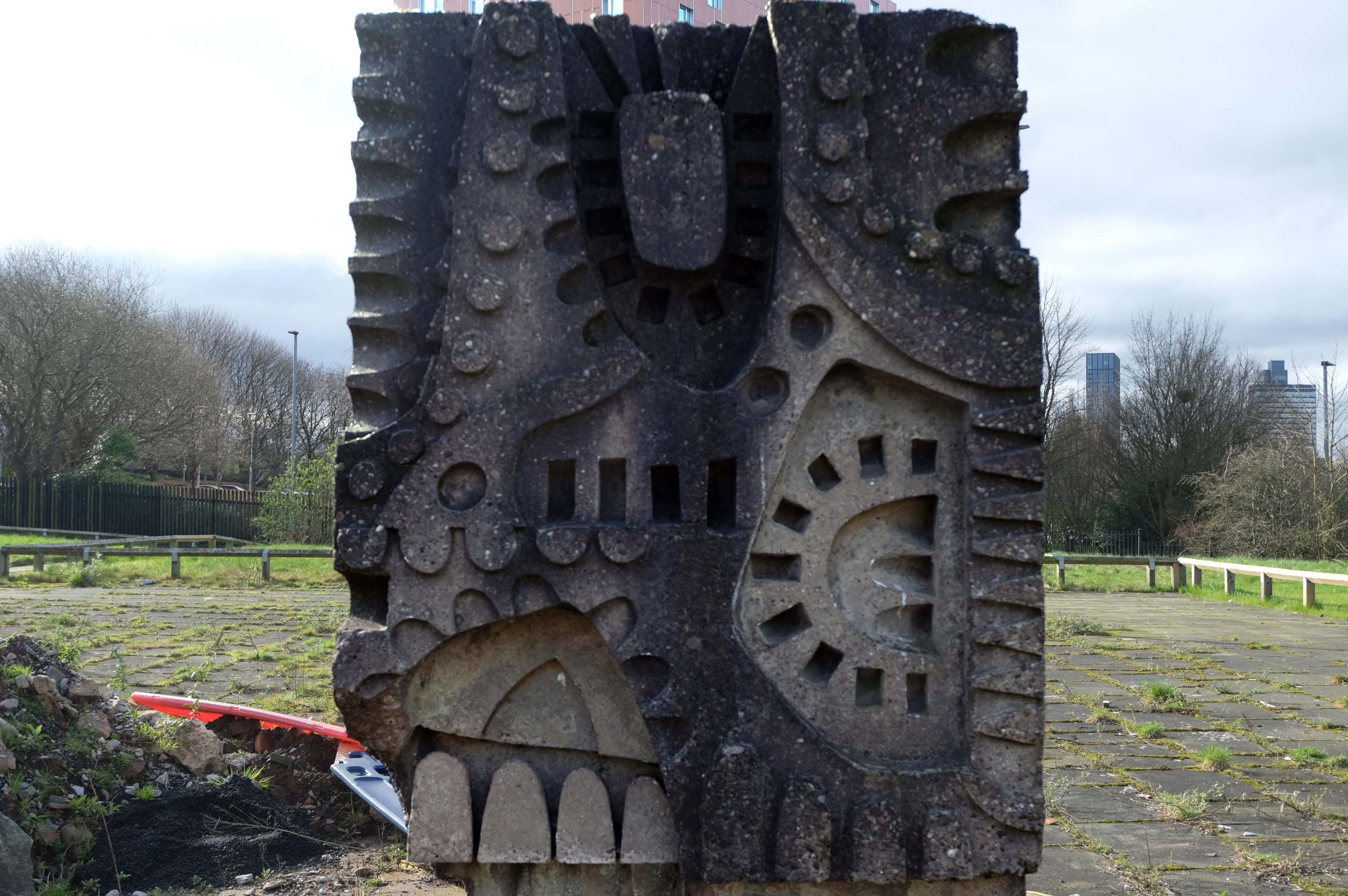
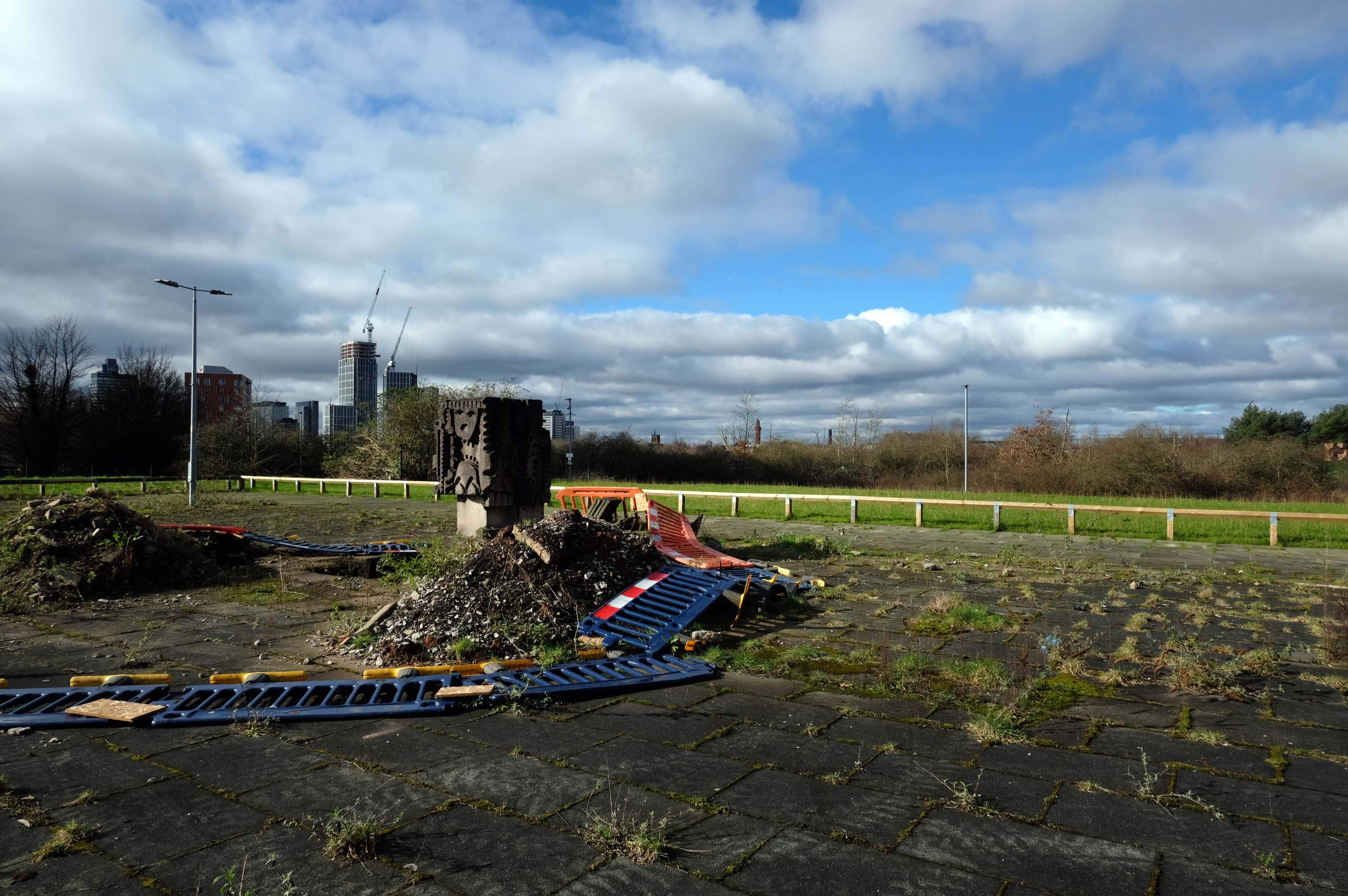
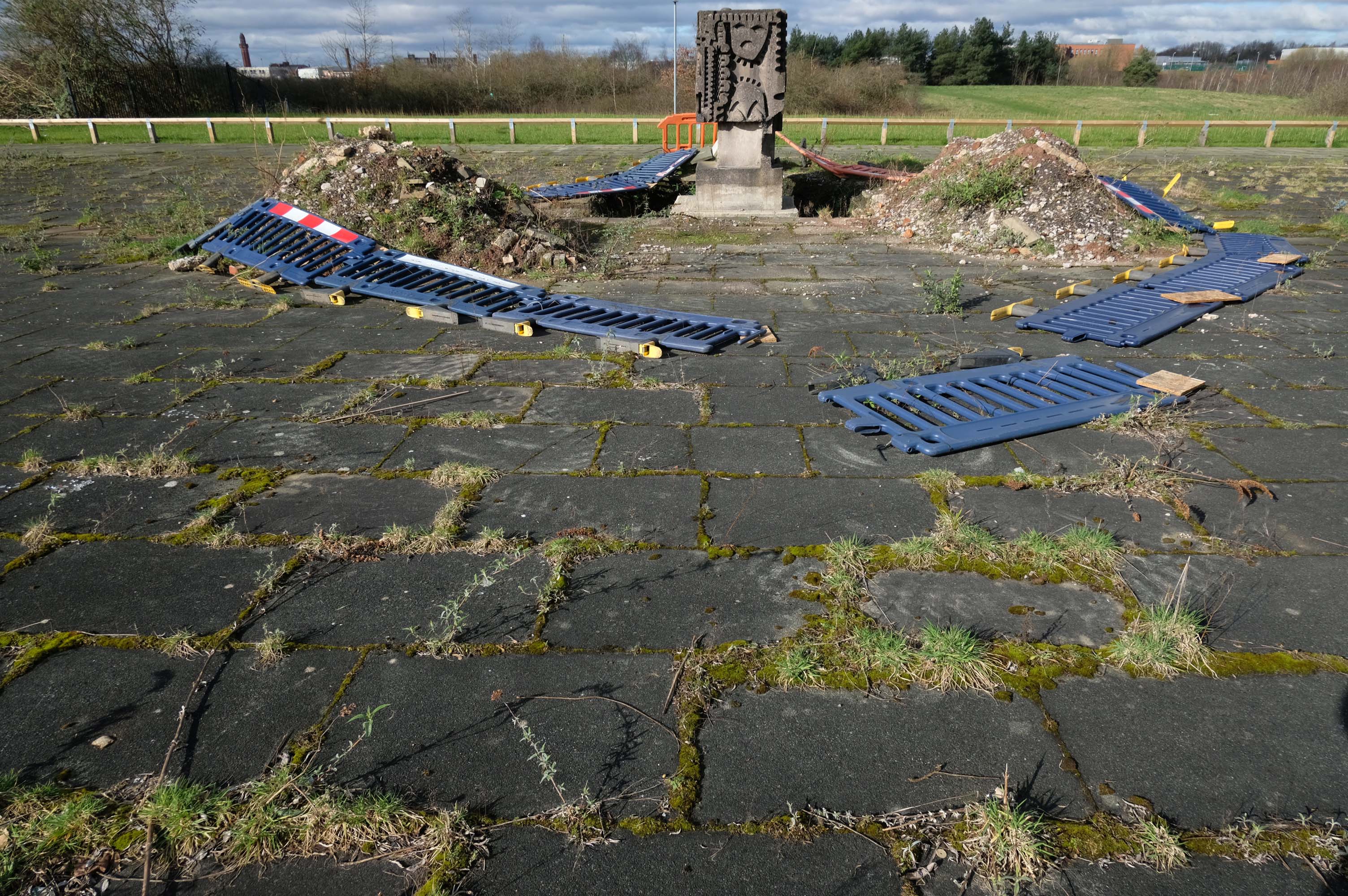
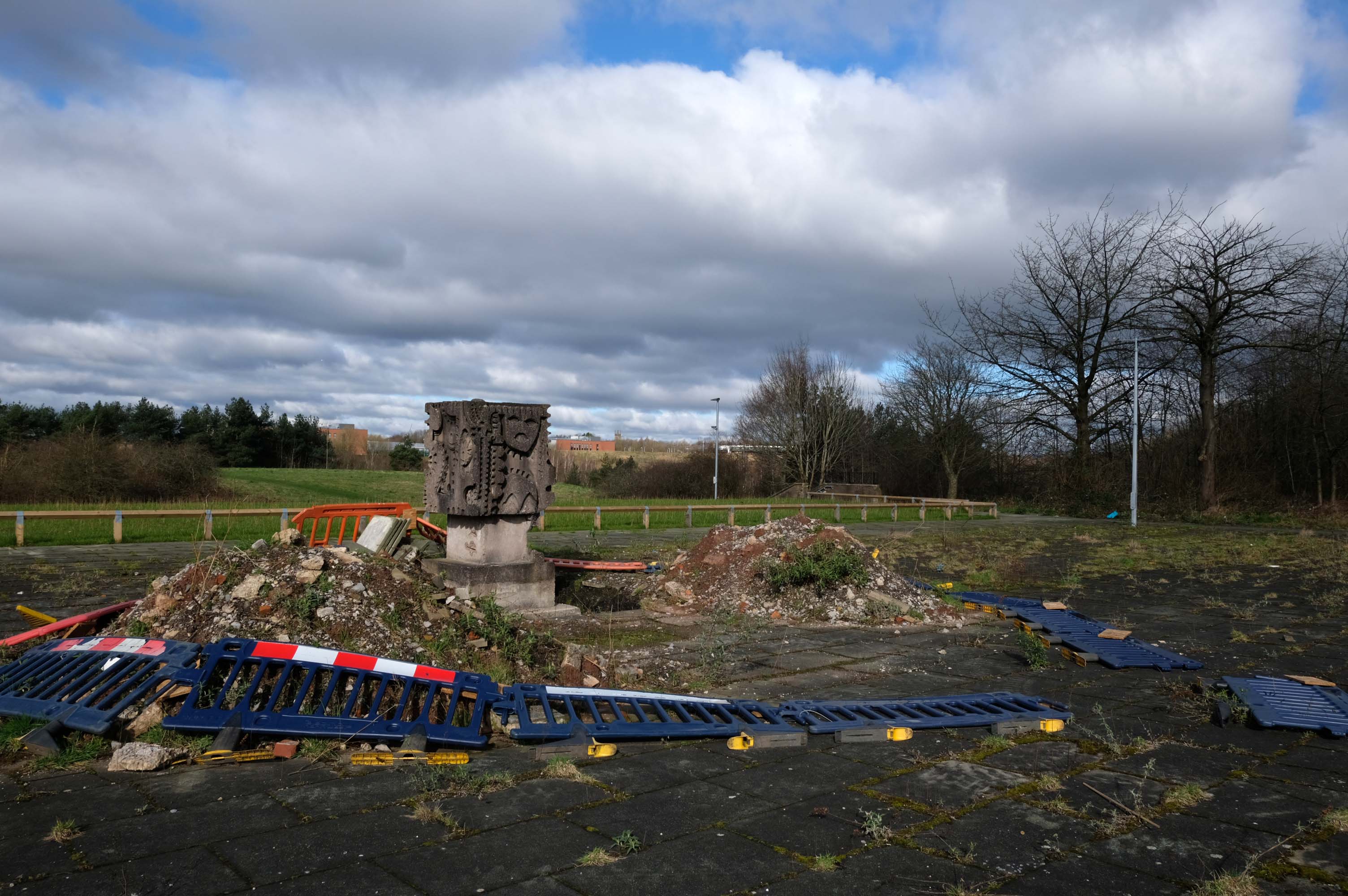
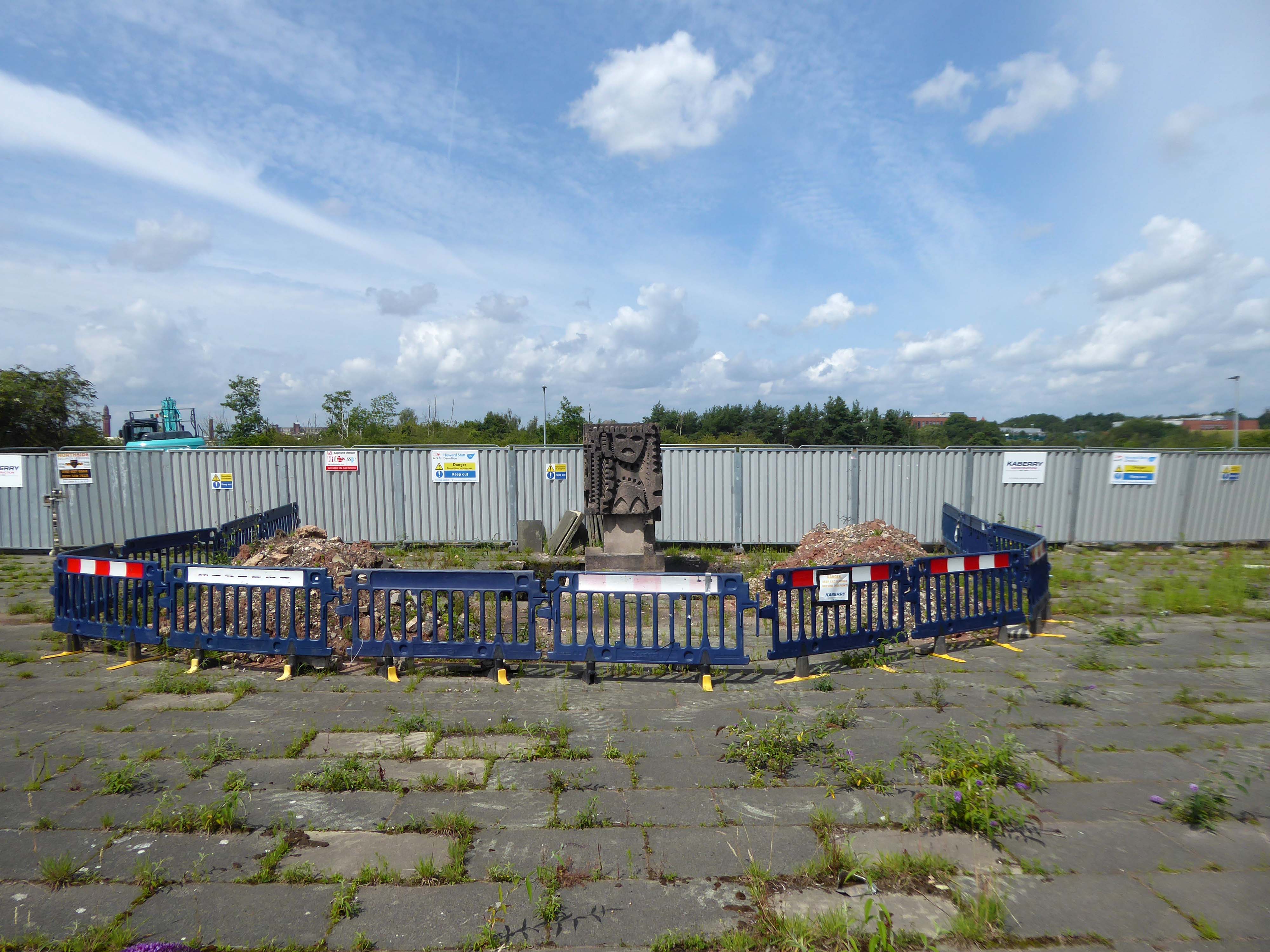
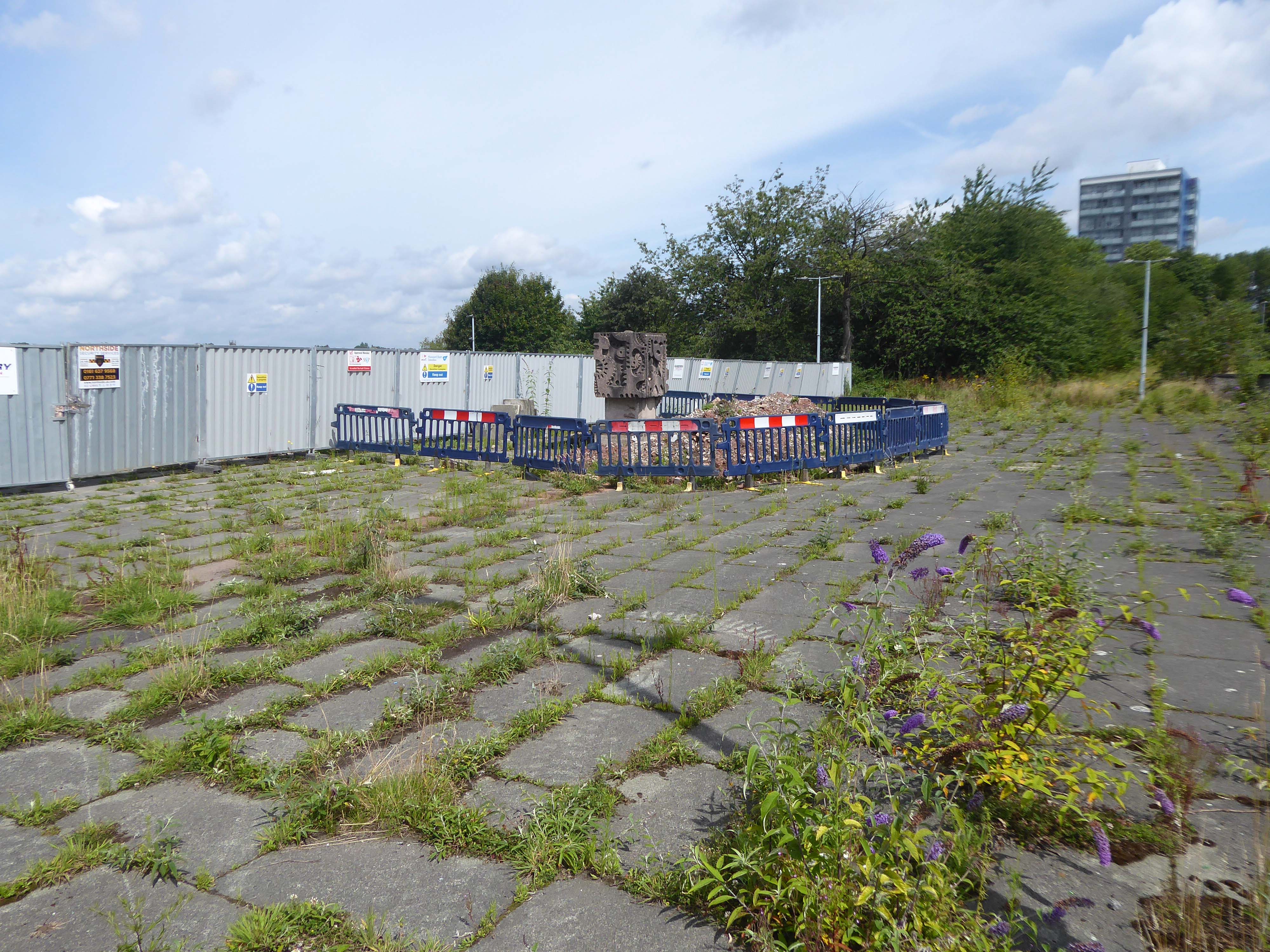
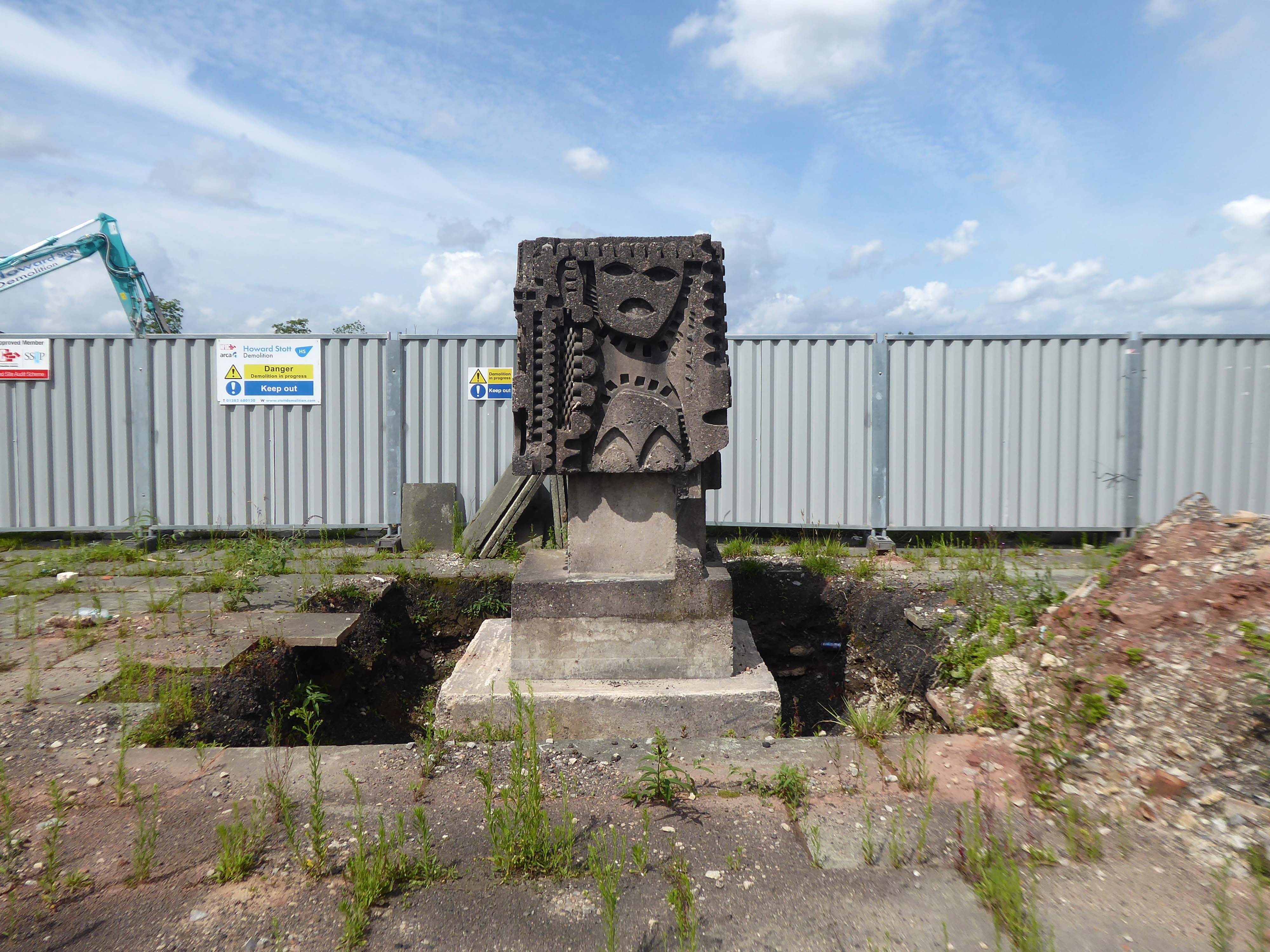
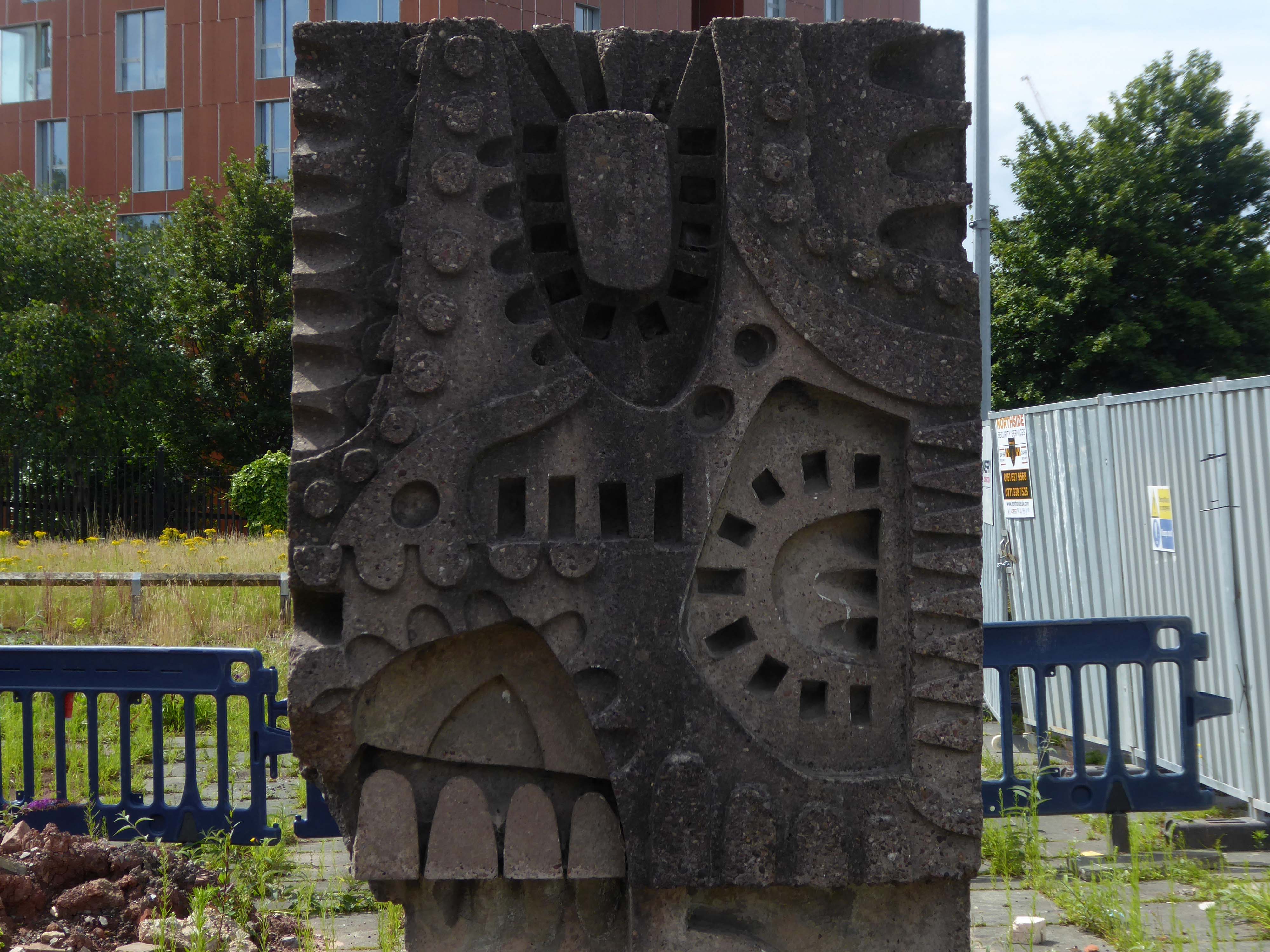
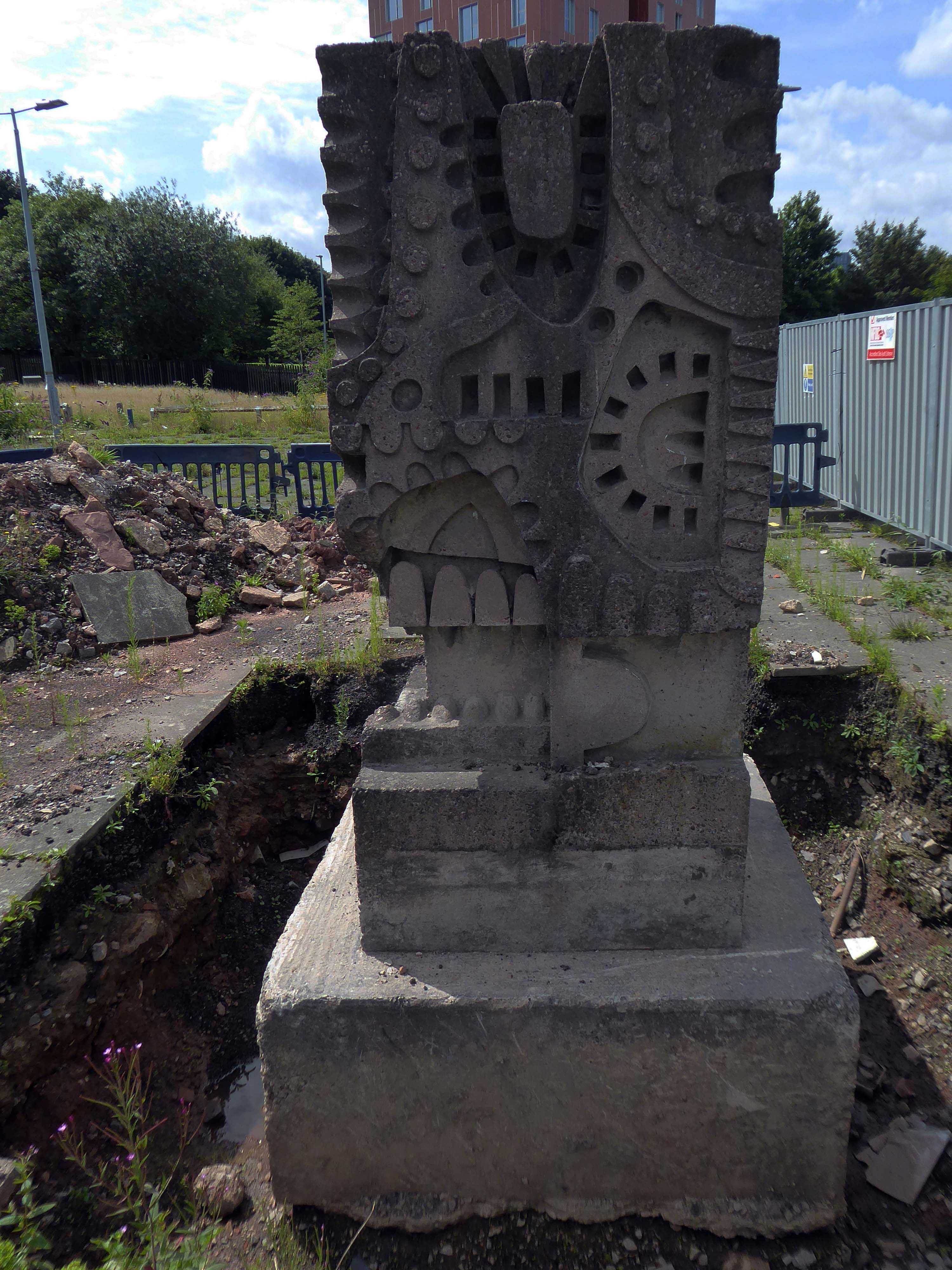
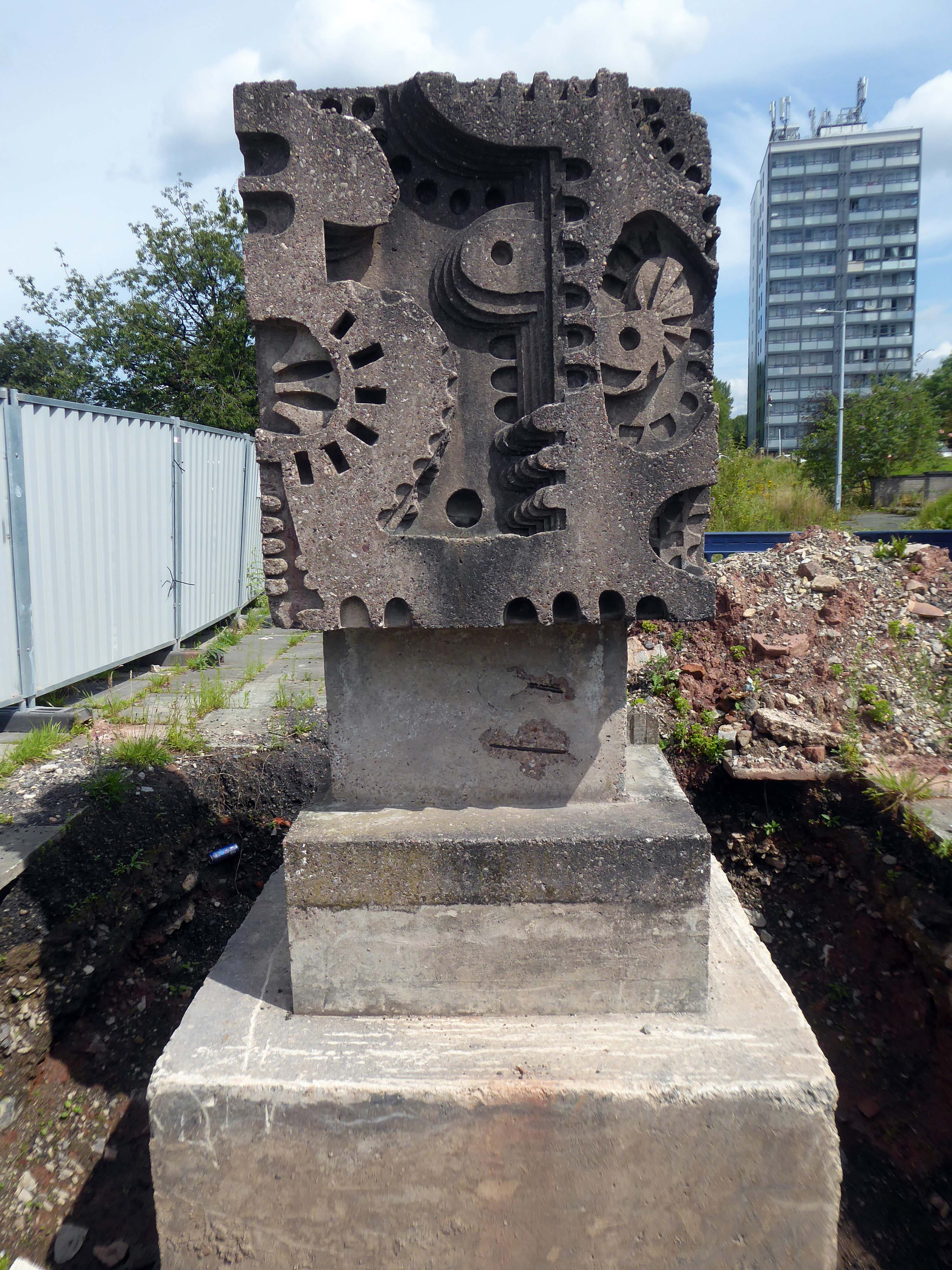
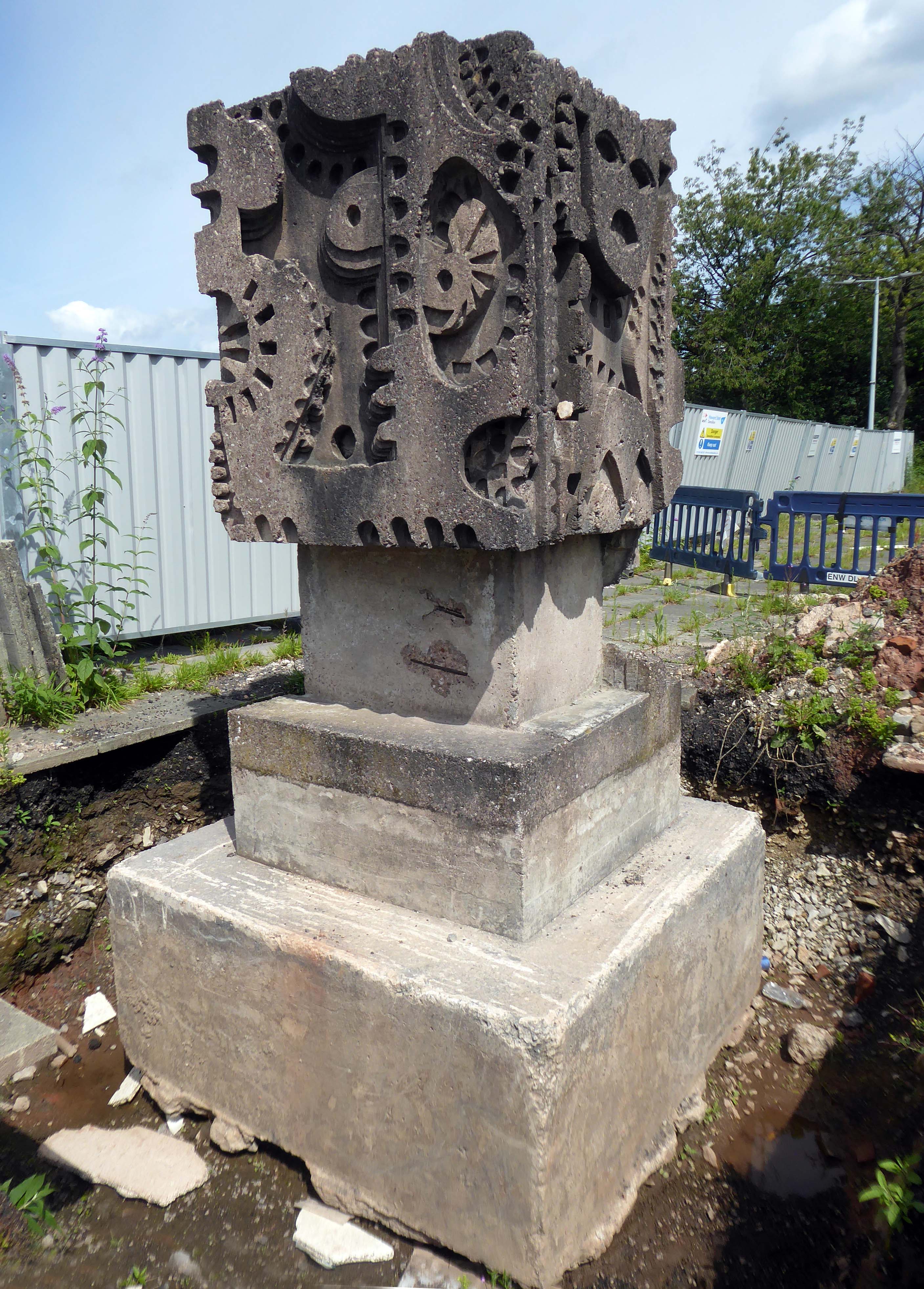
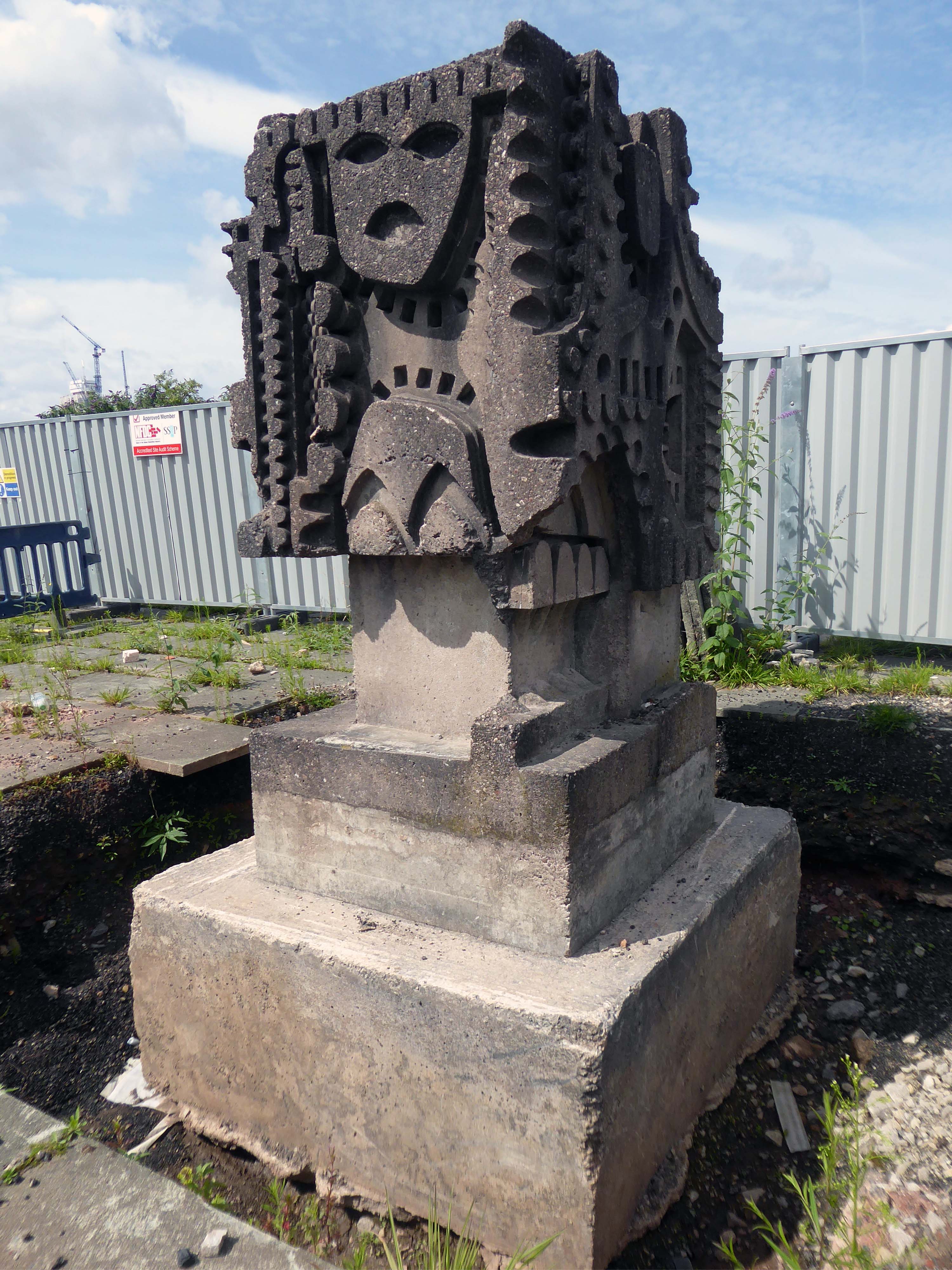
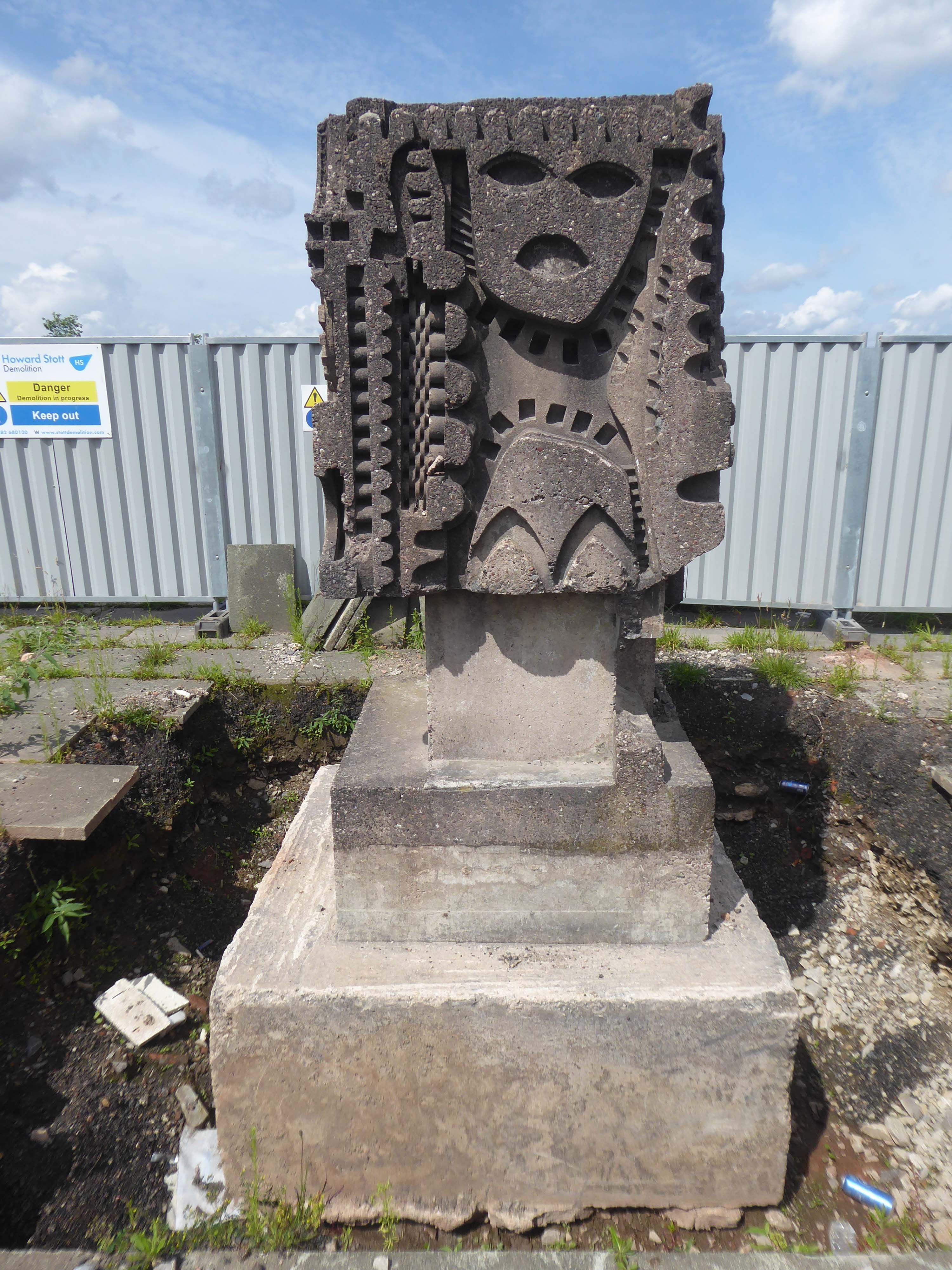
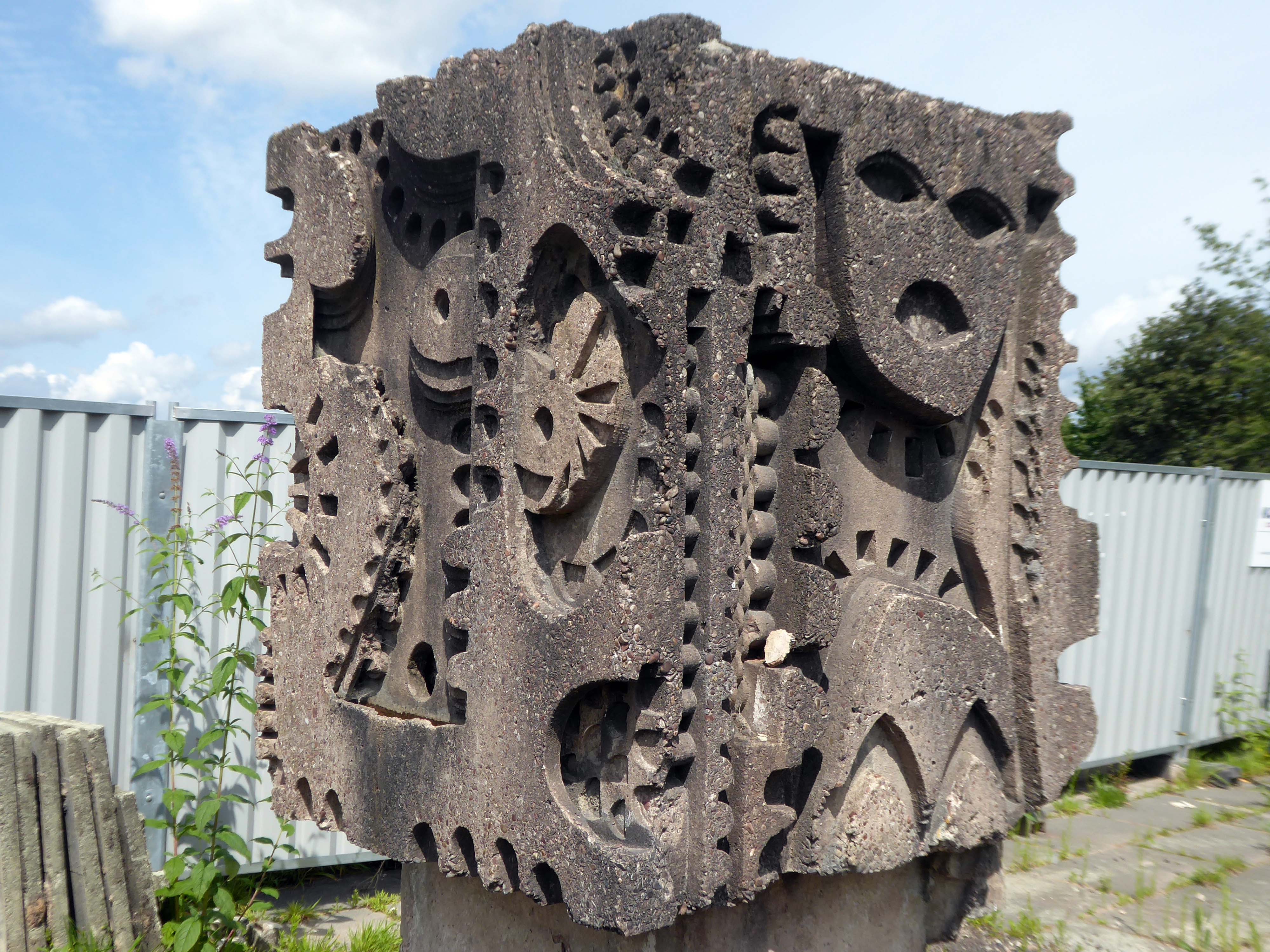
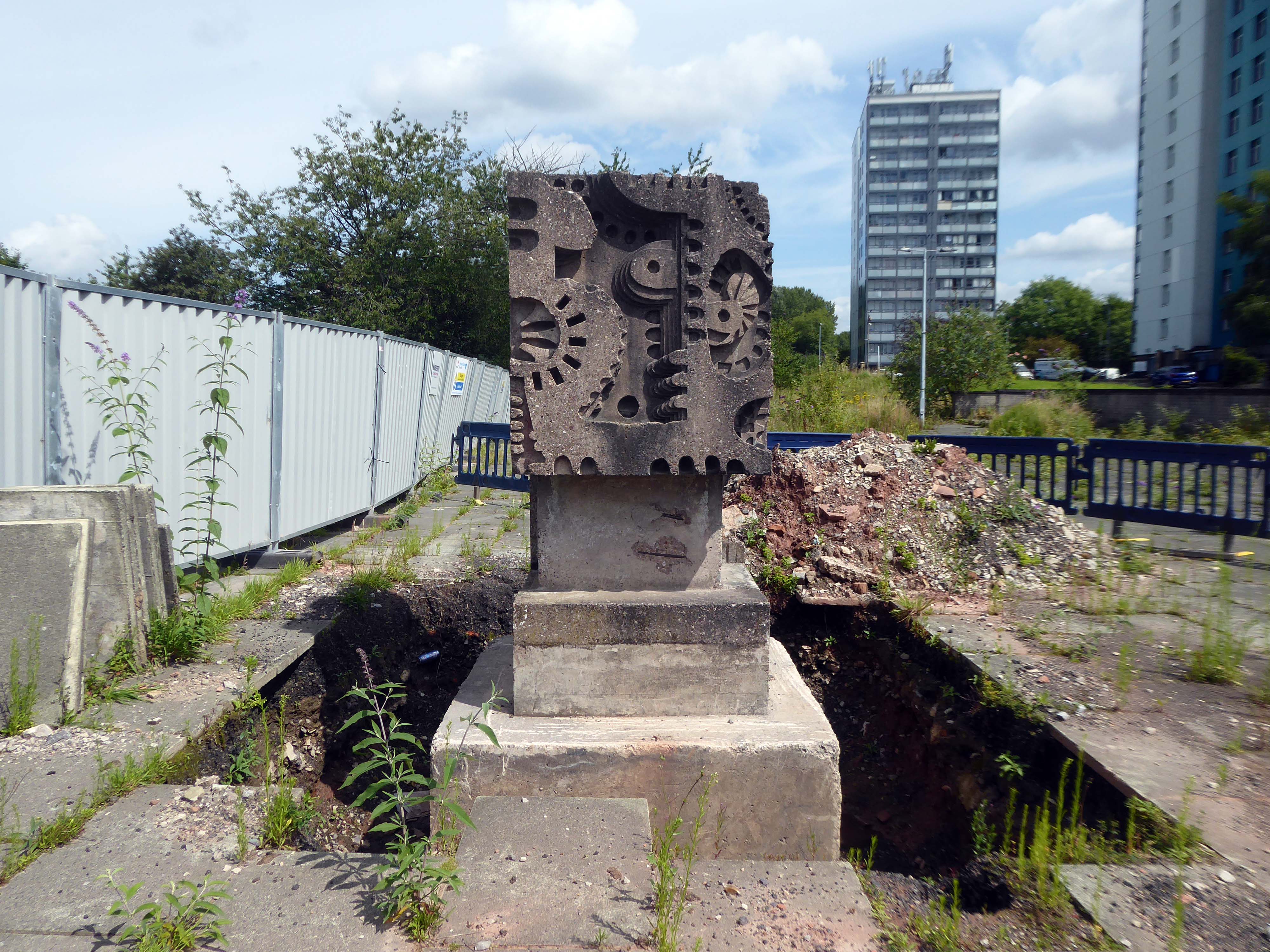
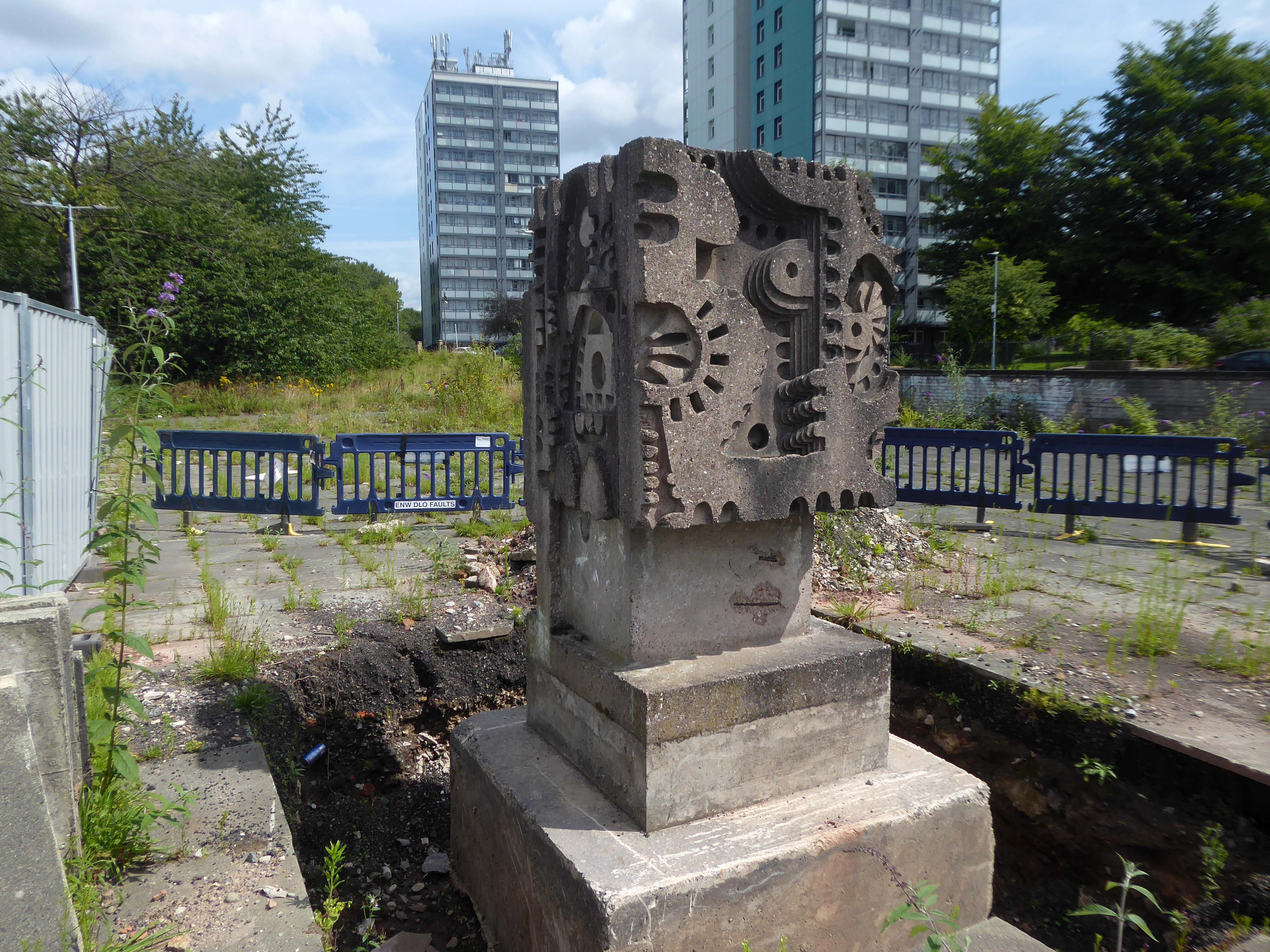
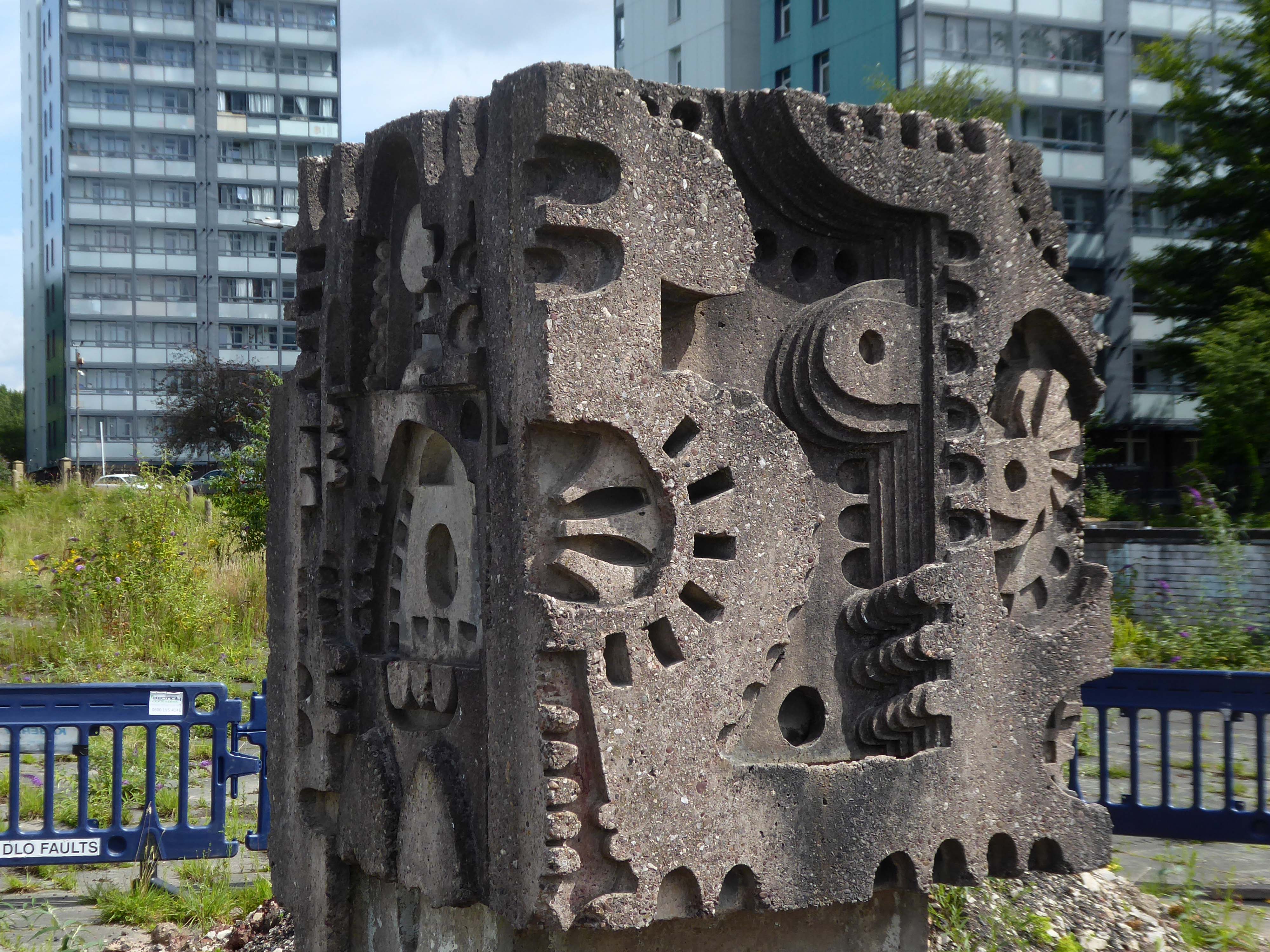
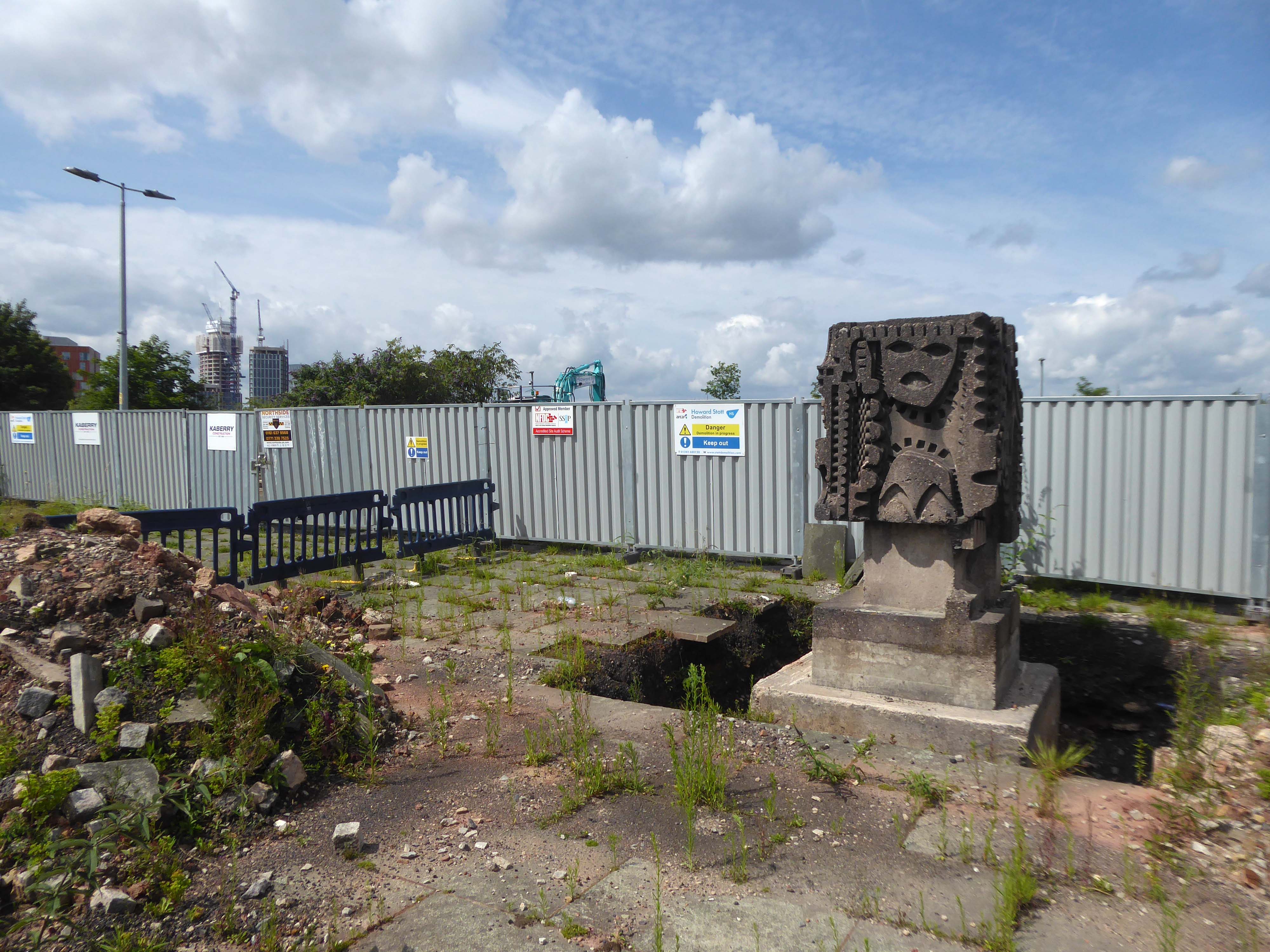
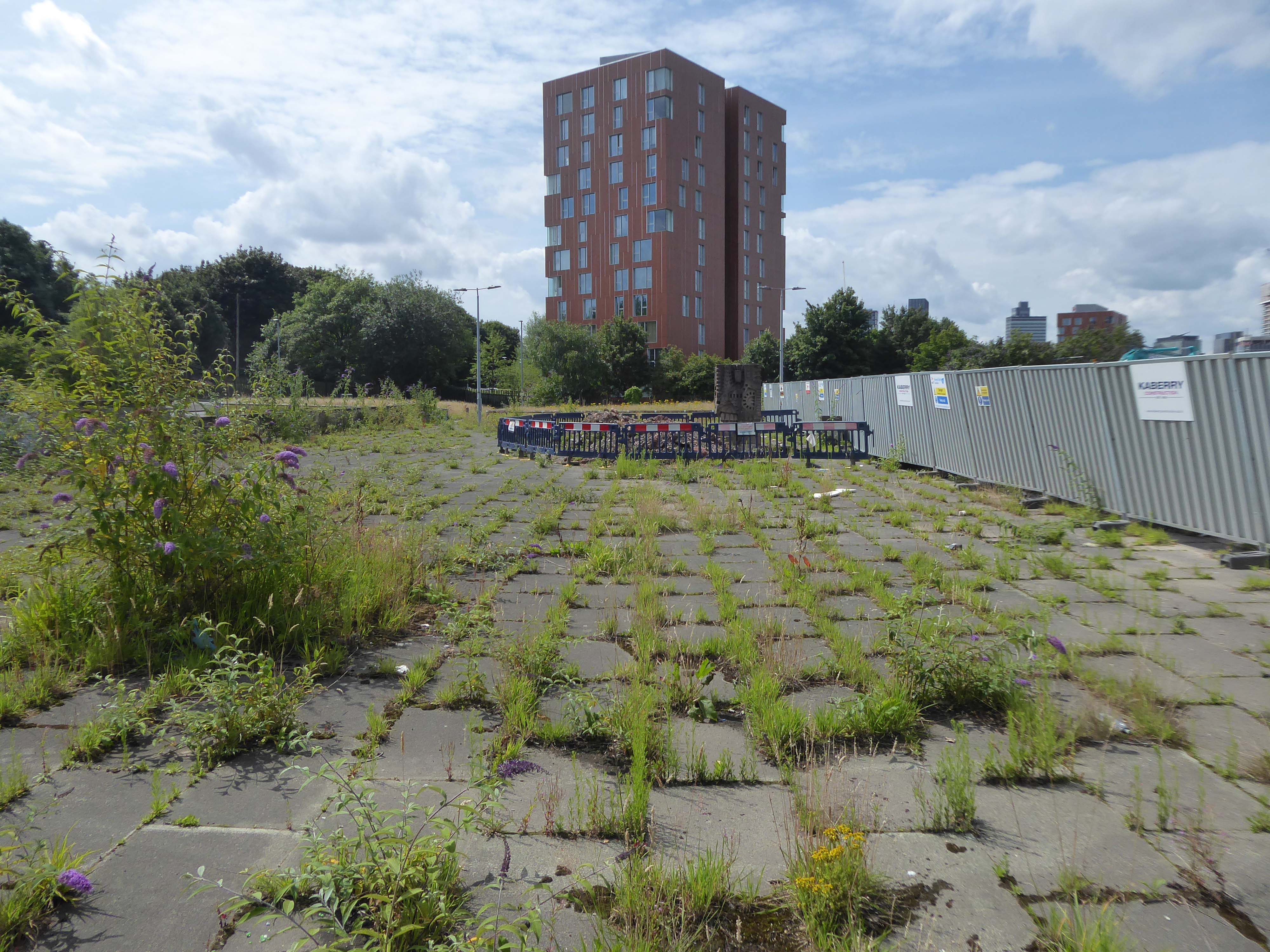
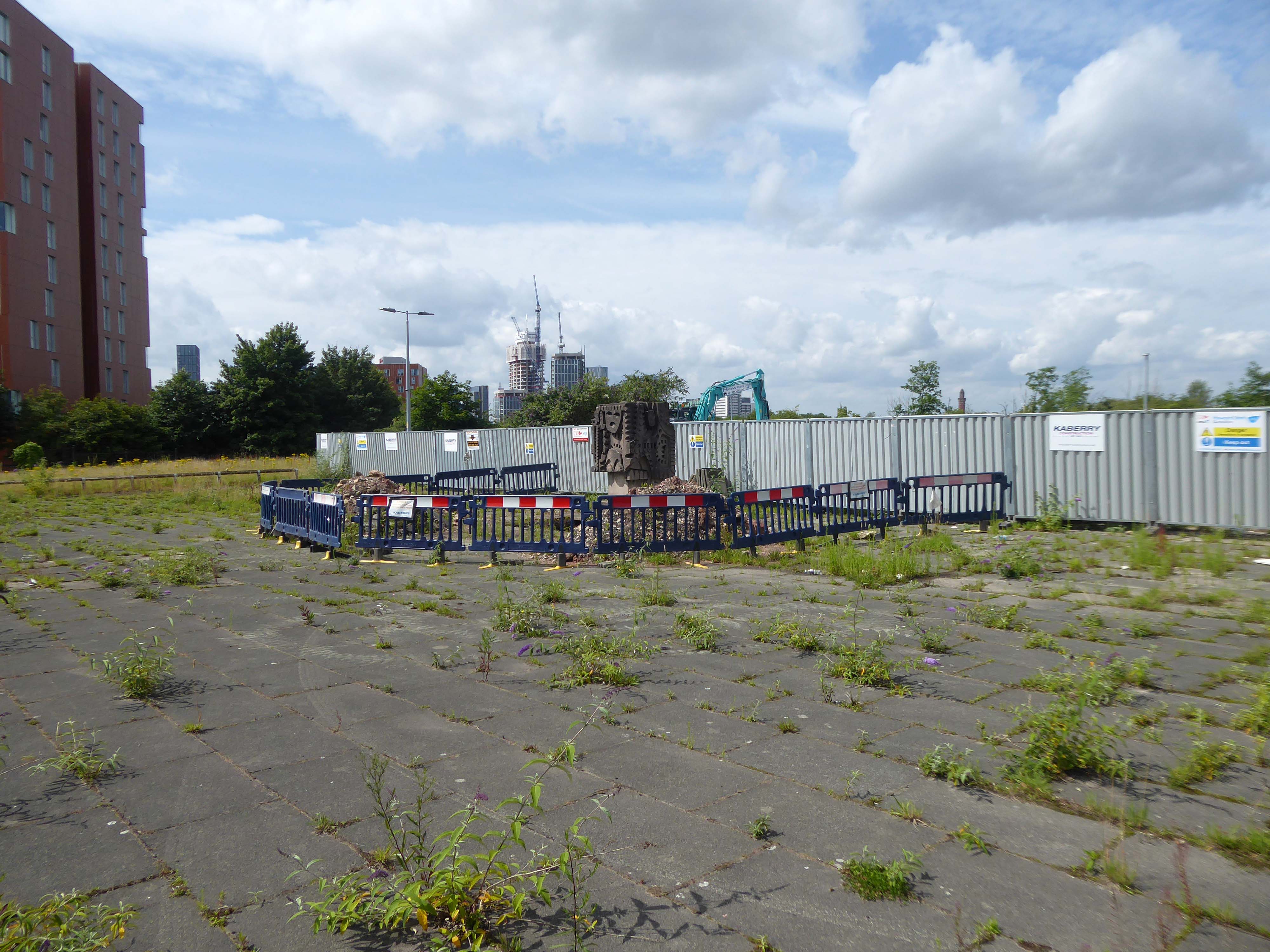
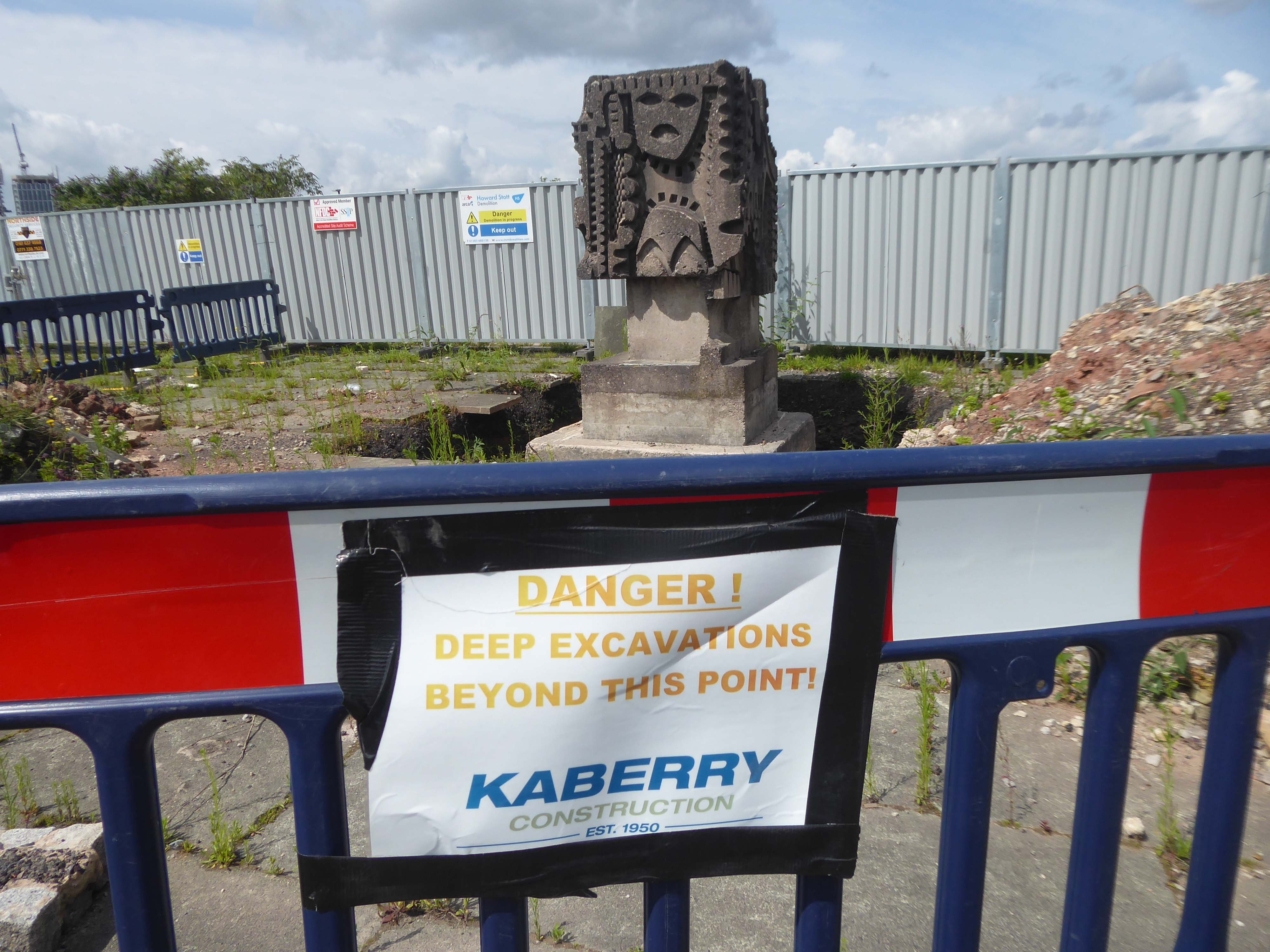
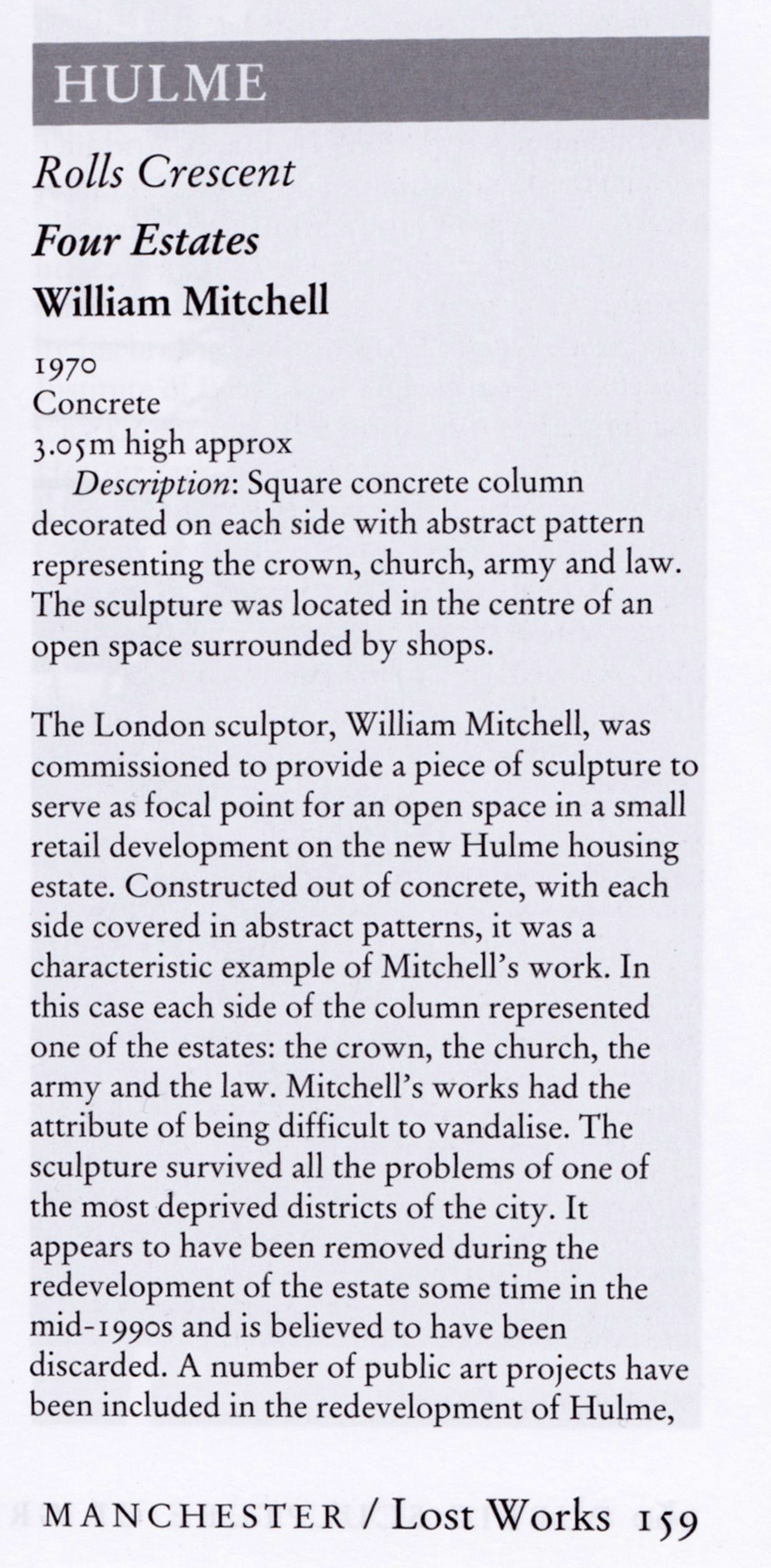
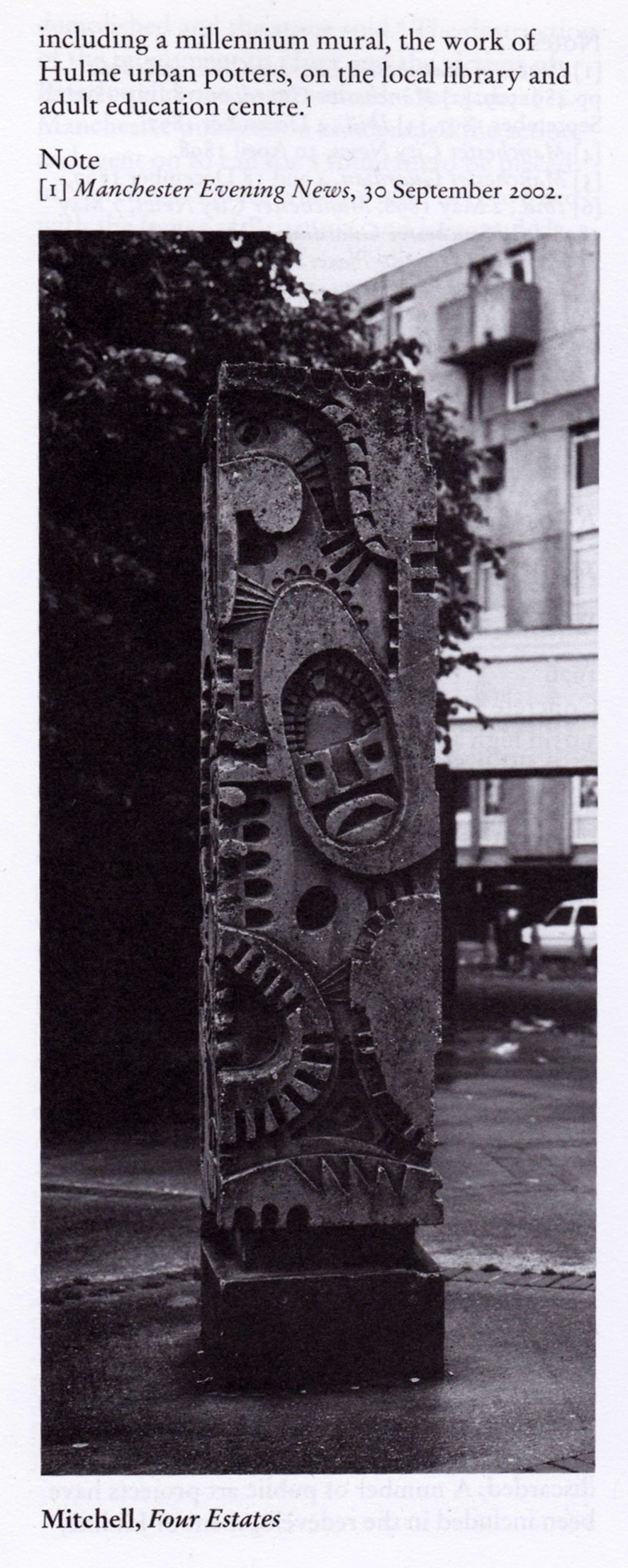
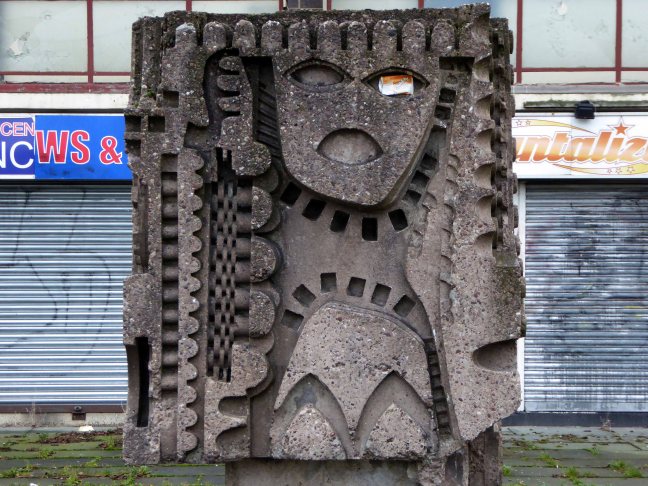
The council has pledged to reinstate the William Mitchell totem nearby.

However the weight of the concrete sculpture and its base have presented unforeseen challenges.

Siting a crane above the Victorian rail tunnel is an issue, as is the cost, a quote for £100,000 was deemed excessive. So stasis is the order the day – the immovable object awaits an unstoppable force.

The sculpture is one of four around Manchester – the Hulme exemplar is long gone.

The Newton Heath and Platt Court totems are both still intact.

Wolverhampton Walk

Architects: Austin Smith Lord

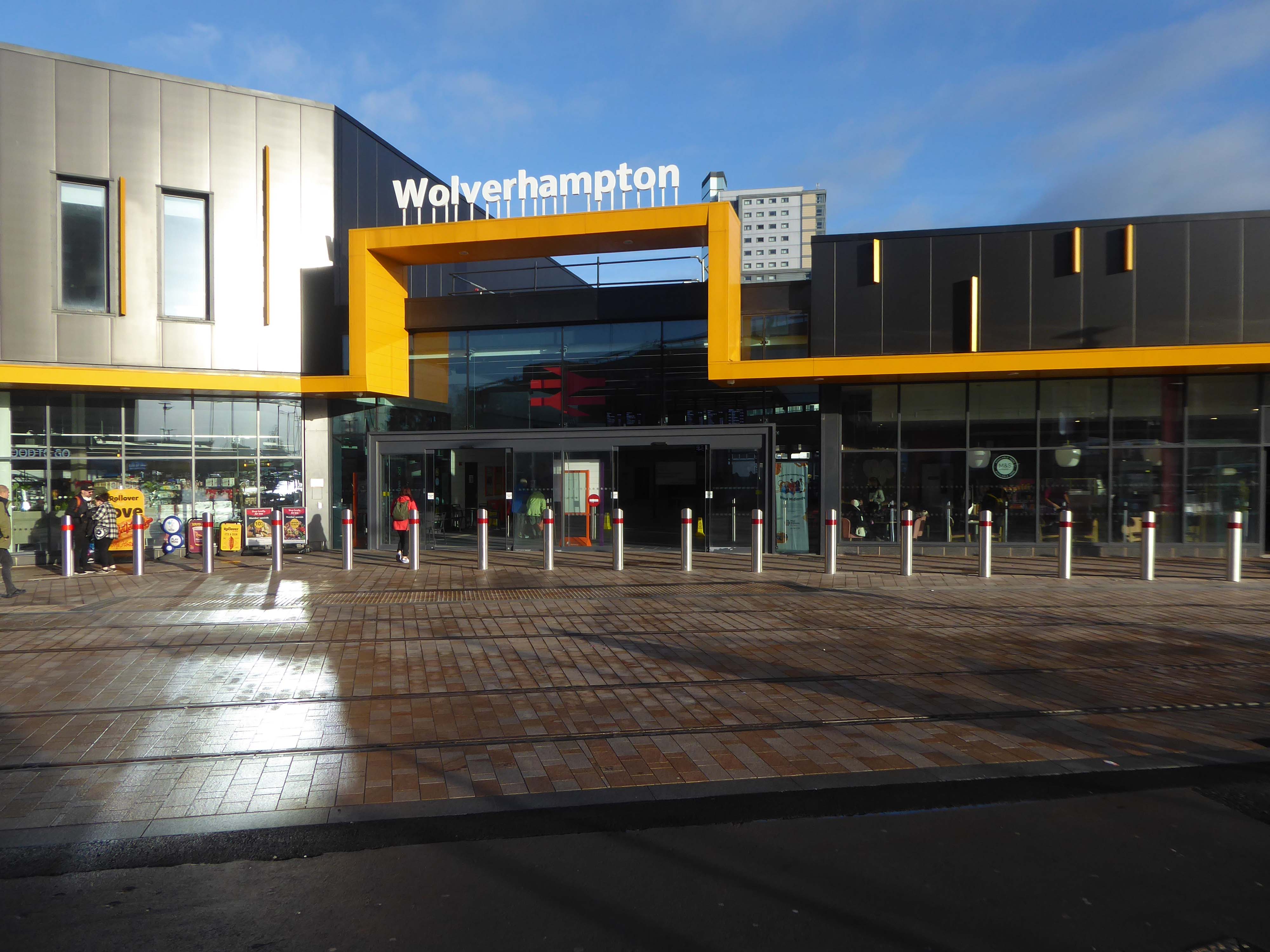
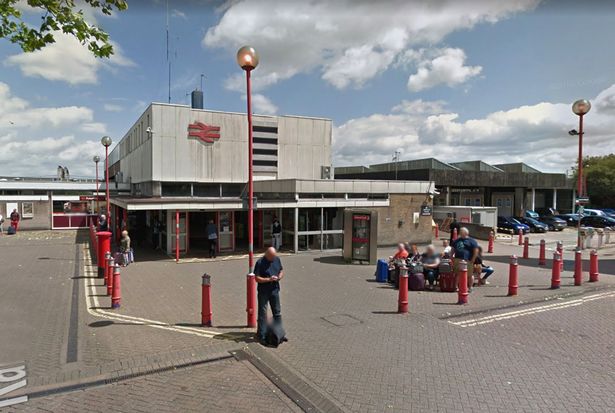
We begin at the Railway Station – recently refurbished, overwriting its 60s iteration – completely rebuilt by the architect Ray Moorcroft as part of the modernisation programme which saw the West Coast Main Line electrified.

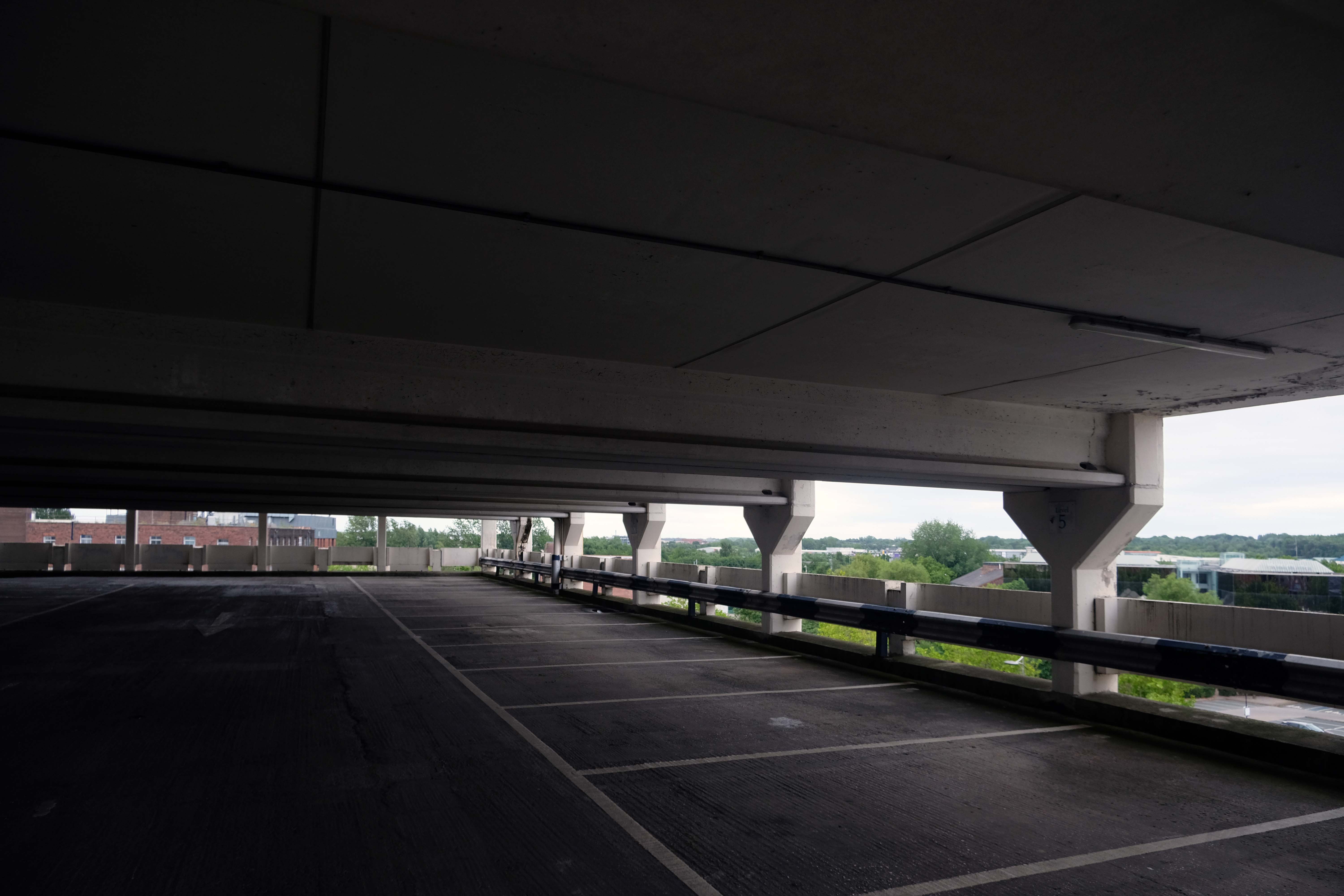
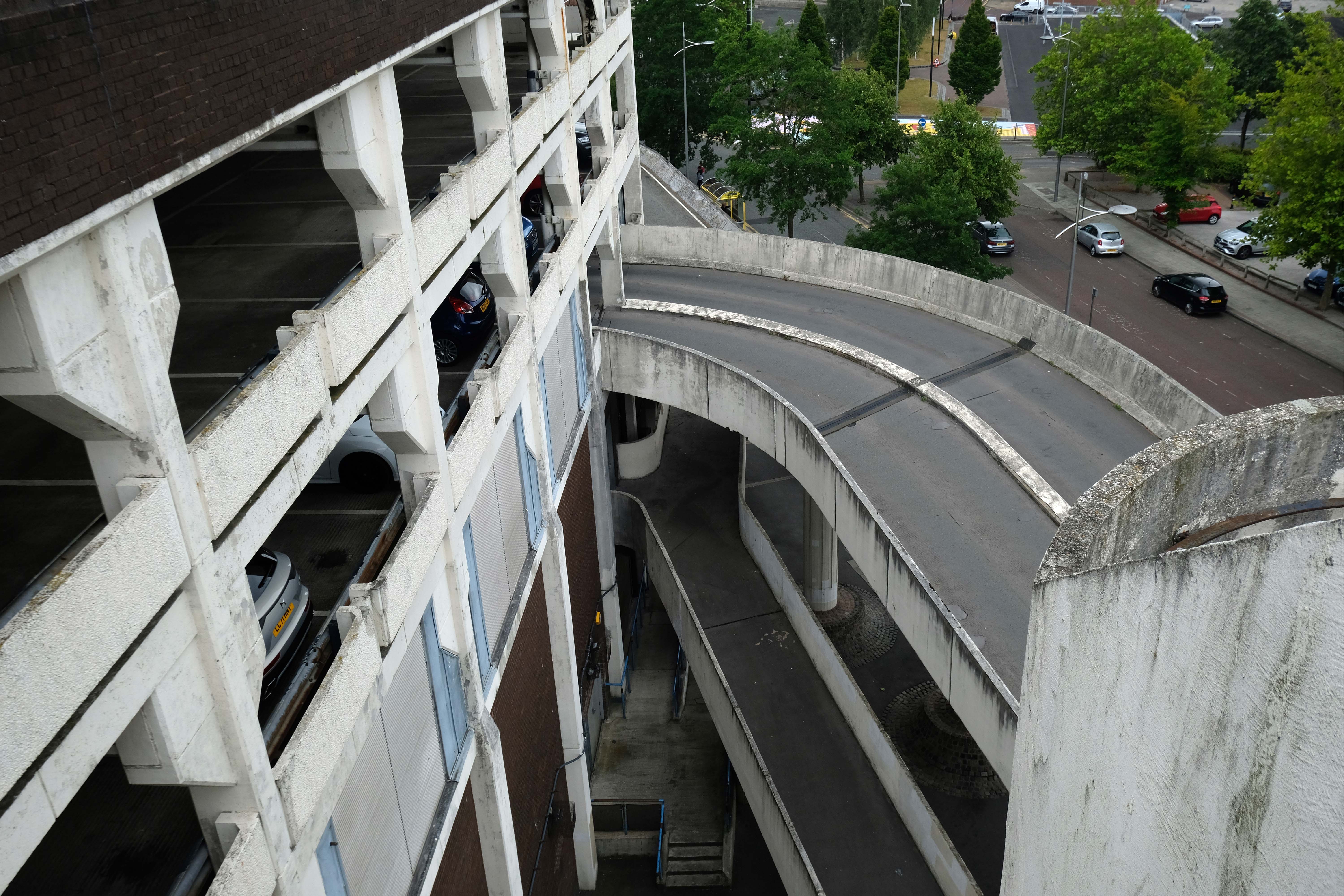
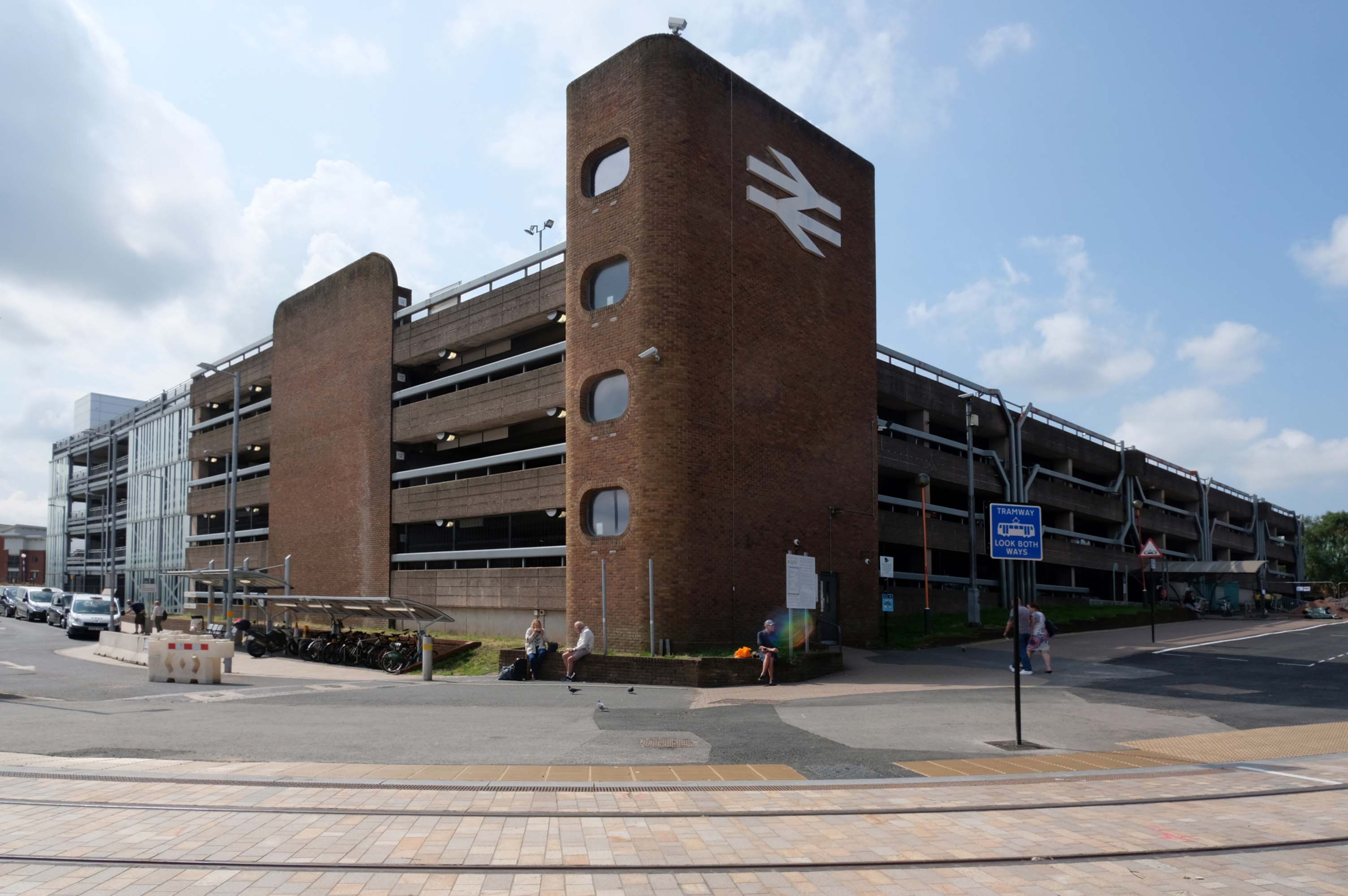
Across the way an enormous brick clad multi-storey car park – skirted by the lines for the tram, which travels to and from Birmingham.

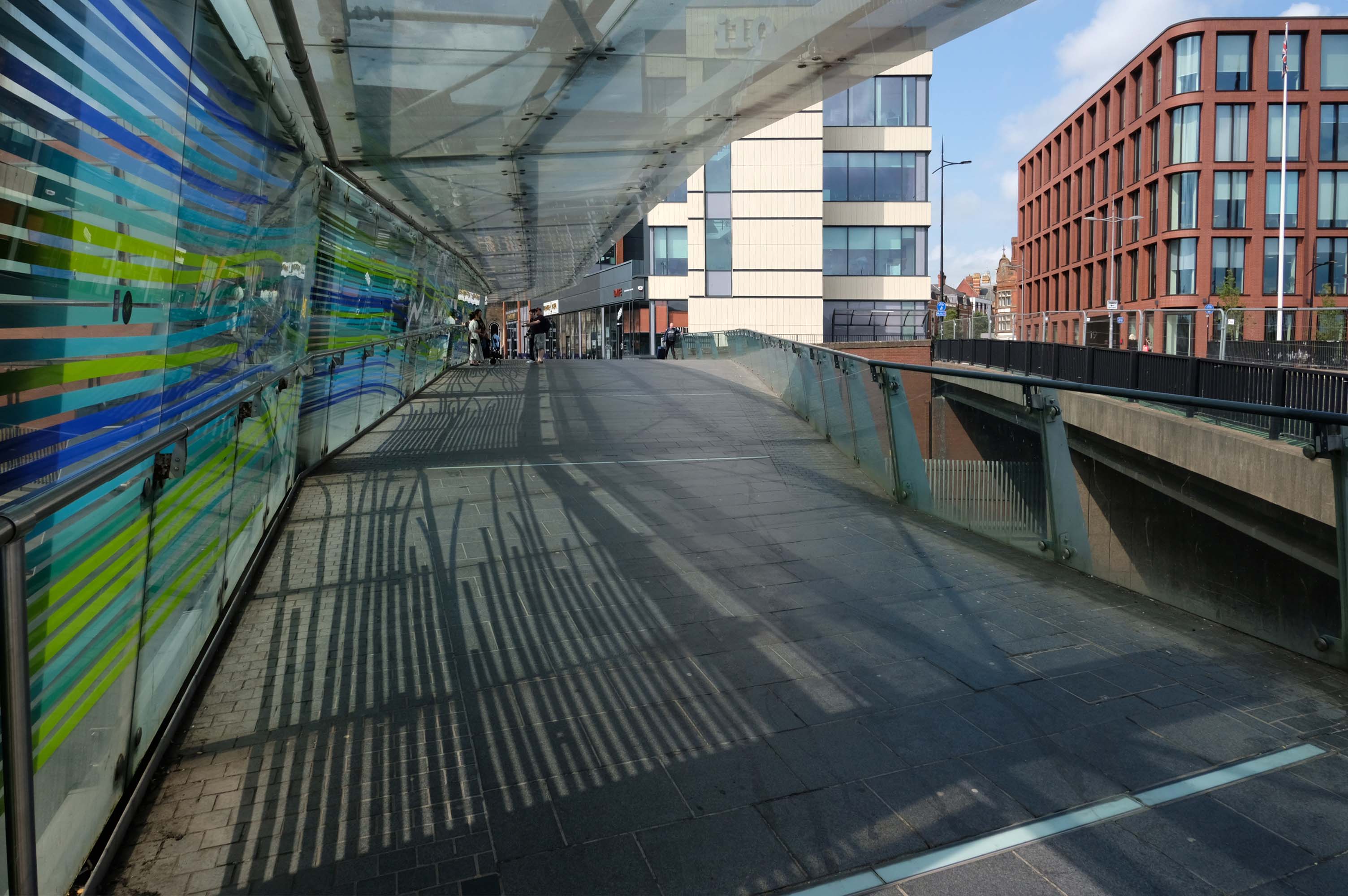
Walk across the brand new pedestrian footbridge over the ring road.

Architectural glass artist Kate Maestri was commissioned to produce the artwork design which features glass with blue and green strips of colour running through it.

BBC

Architects: Austin Smith Lord

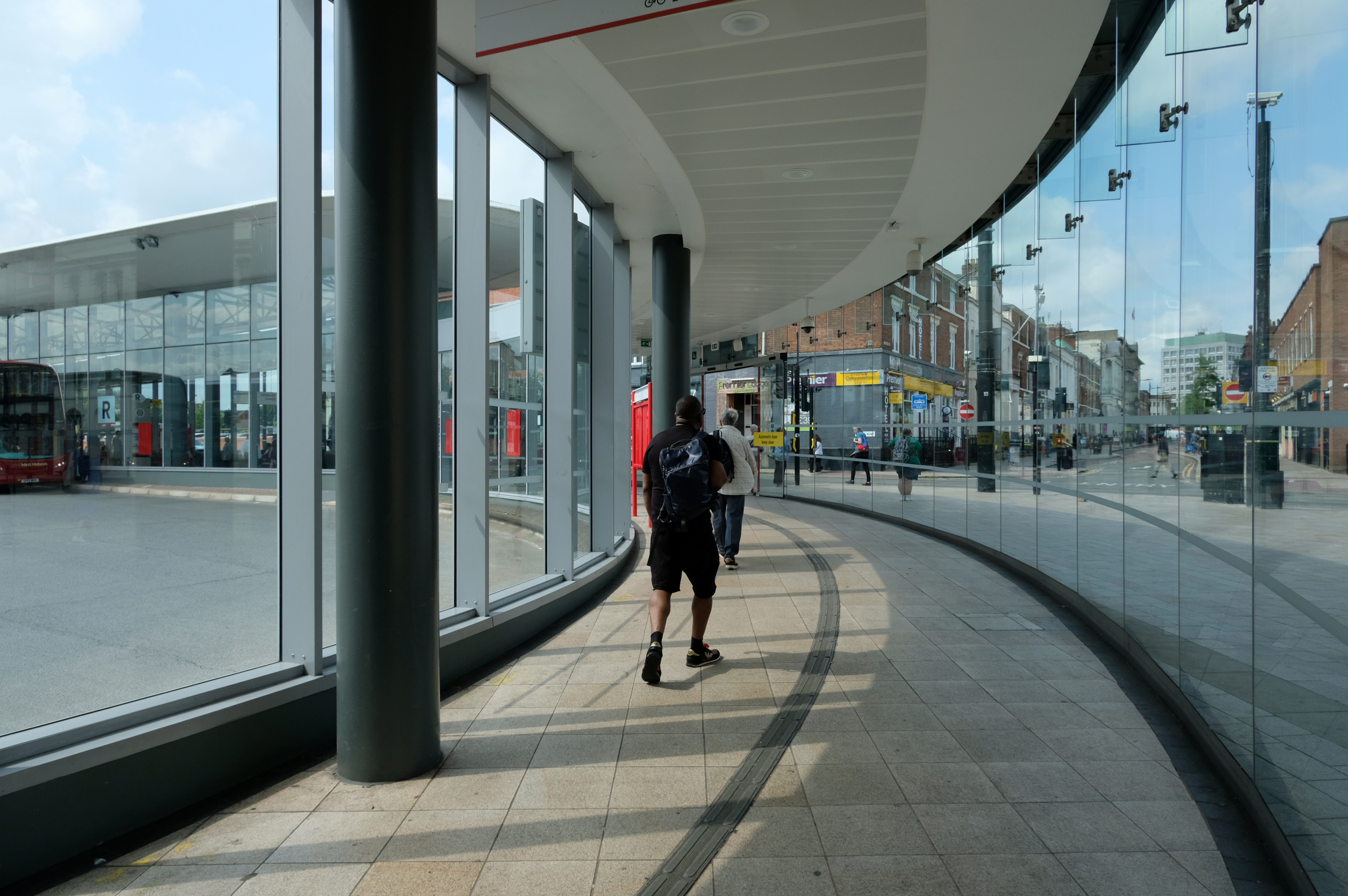
Linking the Rail Station with the brand new Bus Station.

The normal practice of the Wolverhampton Bus Service is to have dirty, smelly buses, that are cramped and extremely hot in the summer and freezing cold in winter. They offer no announcements apologizing for delays they know about and don’t appear to care how long passengers wait with no idea of how or when they’ll be getting a bus.

The best thing you can do is learn to drive as quickly as possible and get your own vehicle or car pool.

Sandra Anderson

Architects: Austin Smith Lord

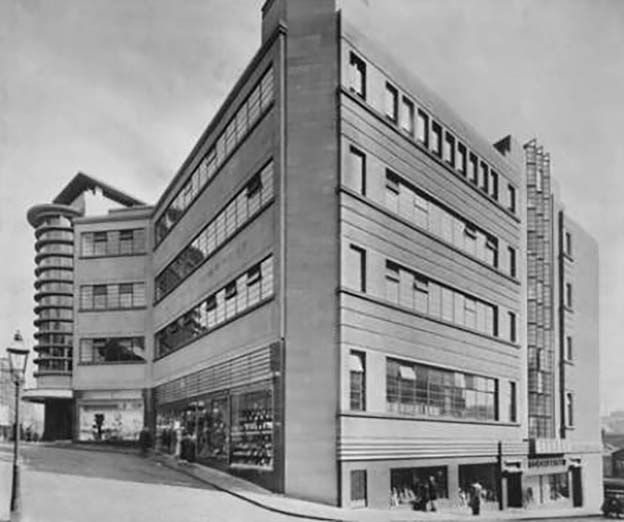
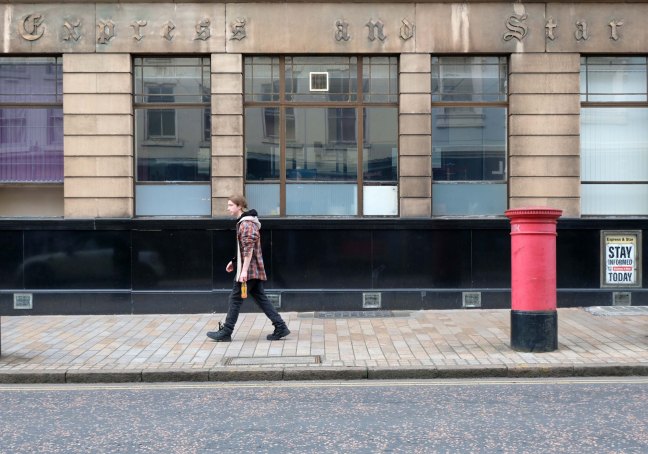
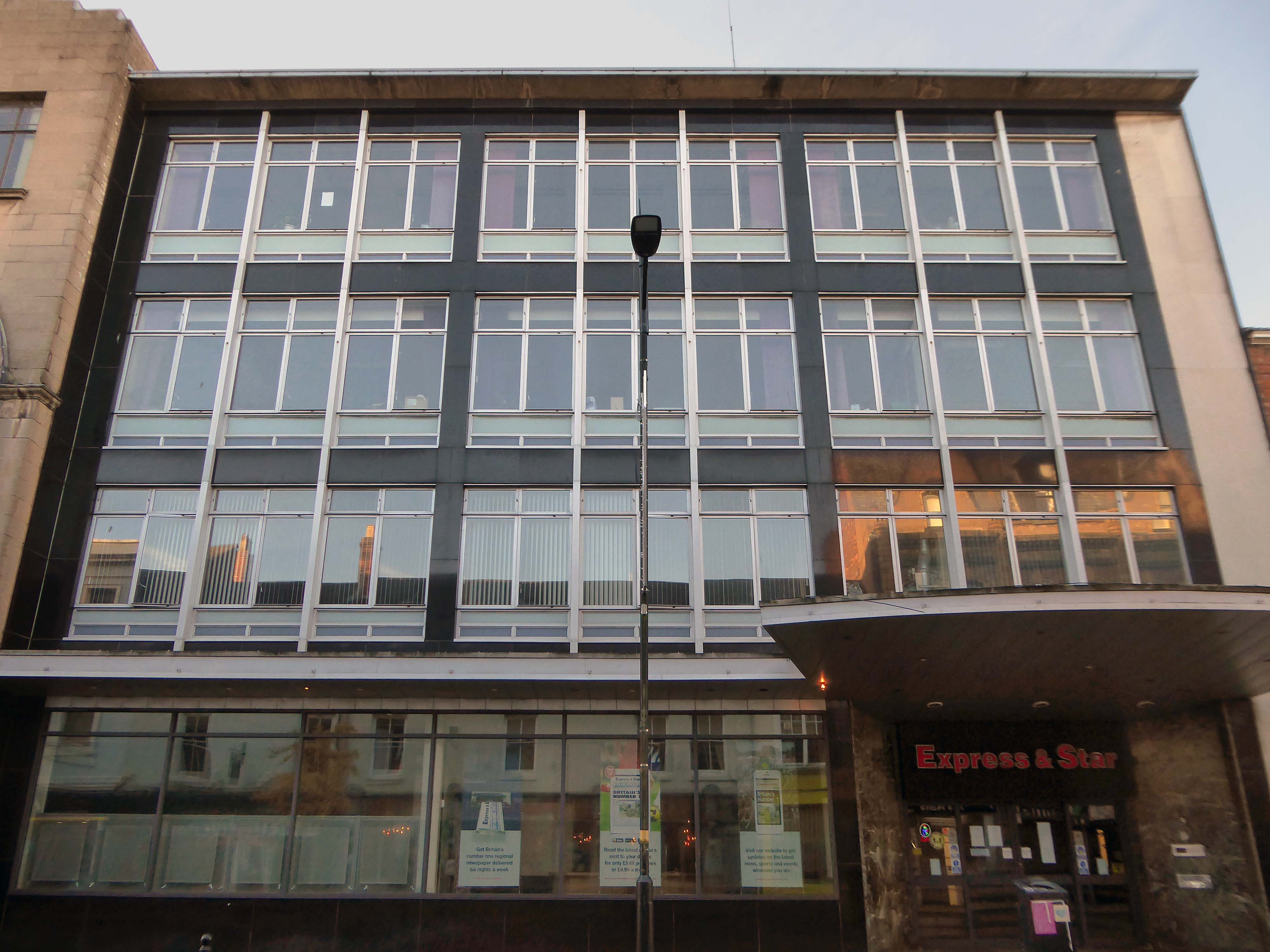
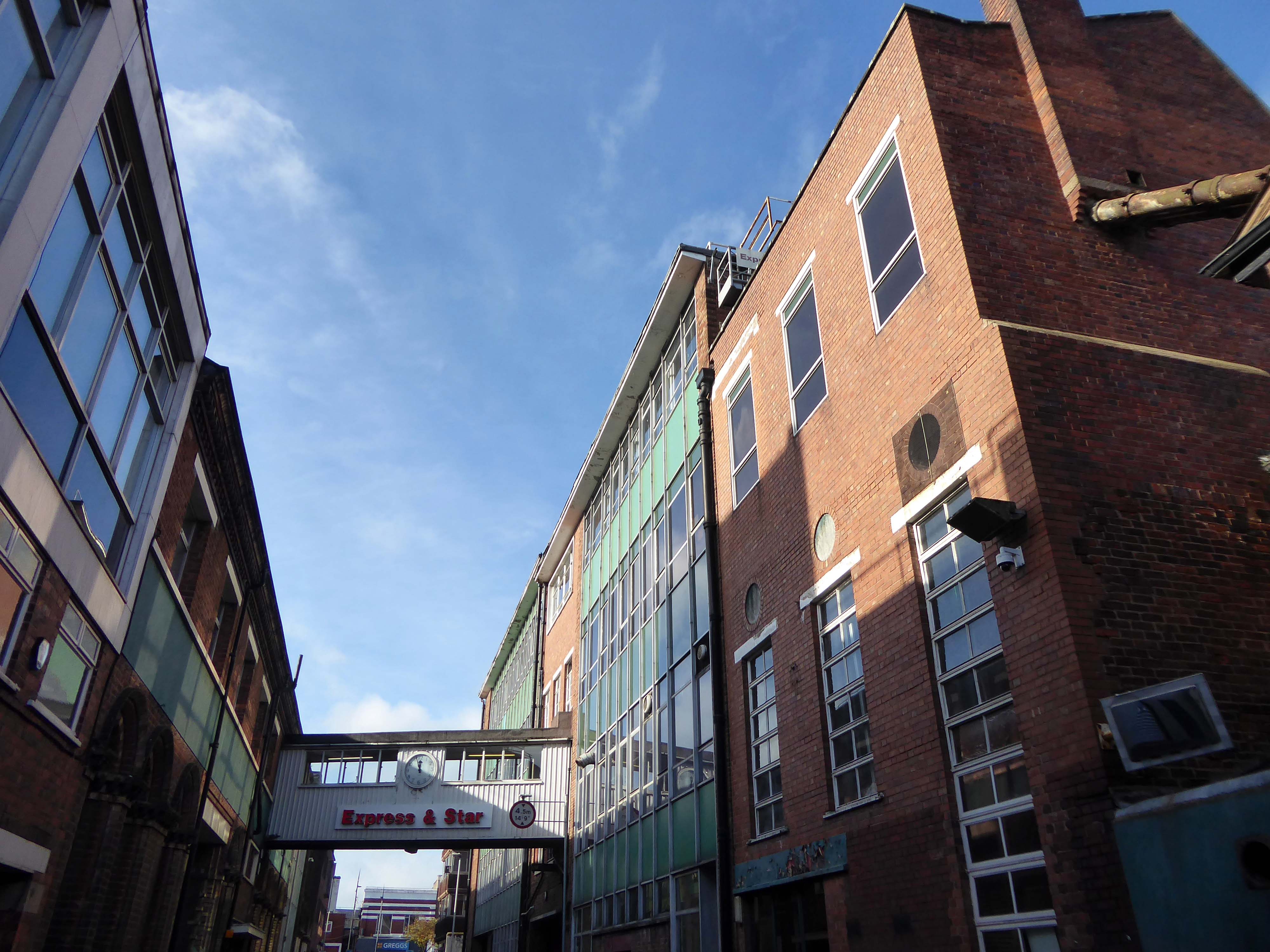
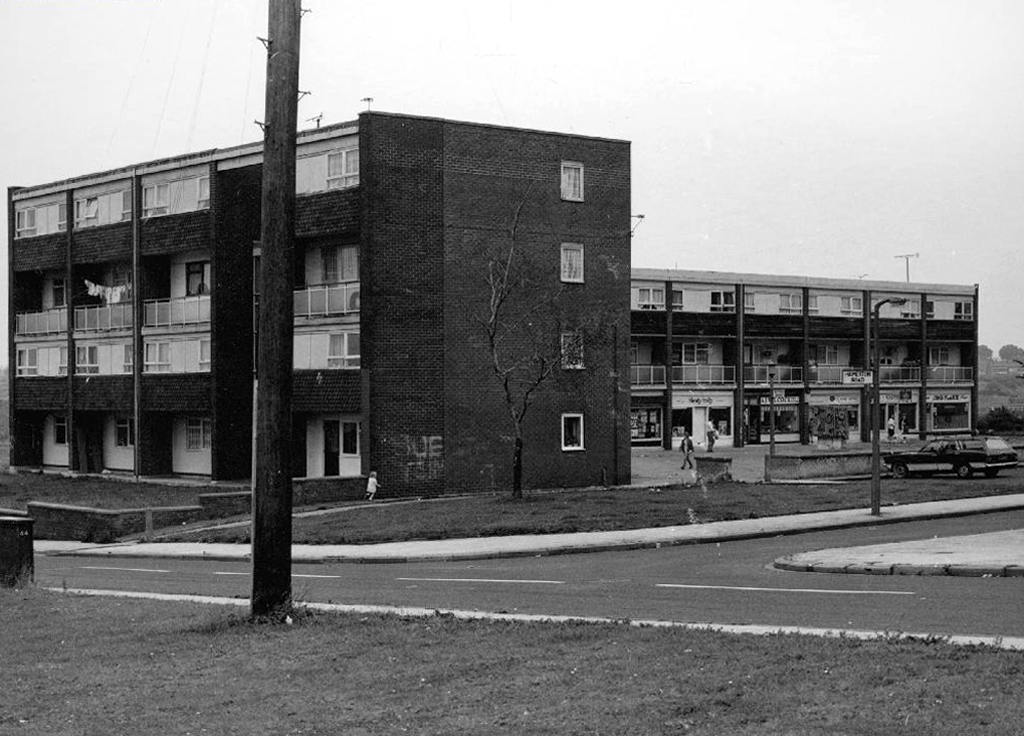
Onward now to the Express and Star Building – Grade II listed.

Architect: Marcus Brown 1934.

The building is faced in a reconstituted Hollington stone called Vinculum, produced by another local firm, Tarmac.

A plaque commemorates RJ Emerson, art teacher and sculptor who sculpted Mercury in 1932.

Wolverhampton History and Heritage Society

Midland News Association managing director Matt Ross confirmed the company is now looking at the building’s future.
For a number of years we have been exploring opportunities surrounding our historic Express & Star offices in the heart of Wolverhampton.

After removing the printing presses from the site and restructuring our departments we now have significant spare capacity available and so are looking at the various options available to us, be that redeveloping the current site or exiting the building altogether.

Hold the front page

Extension is by architects: H Marcus Brown & Lewis 1965

With further work at the rear.

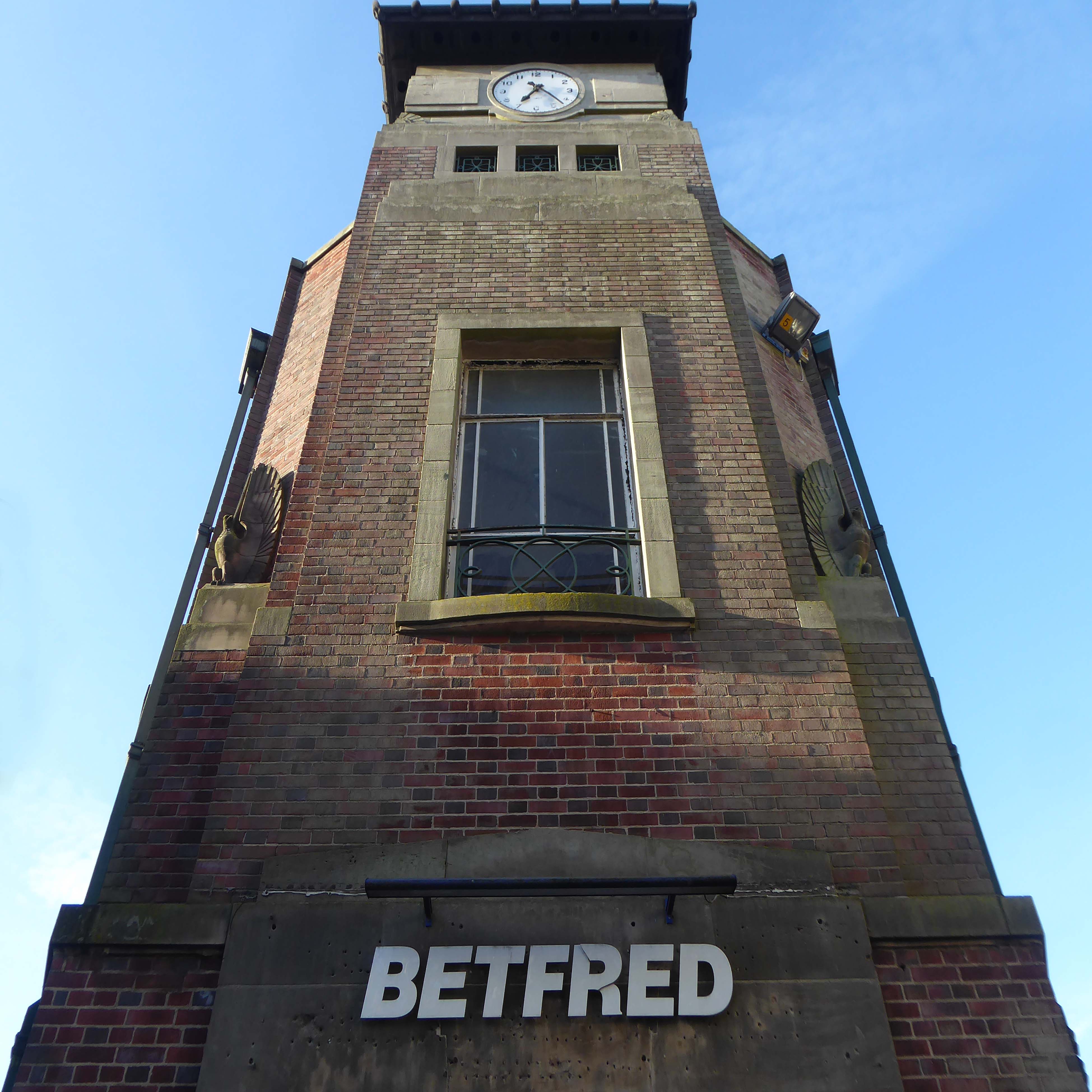
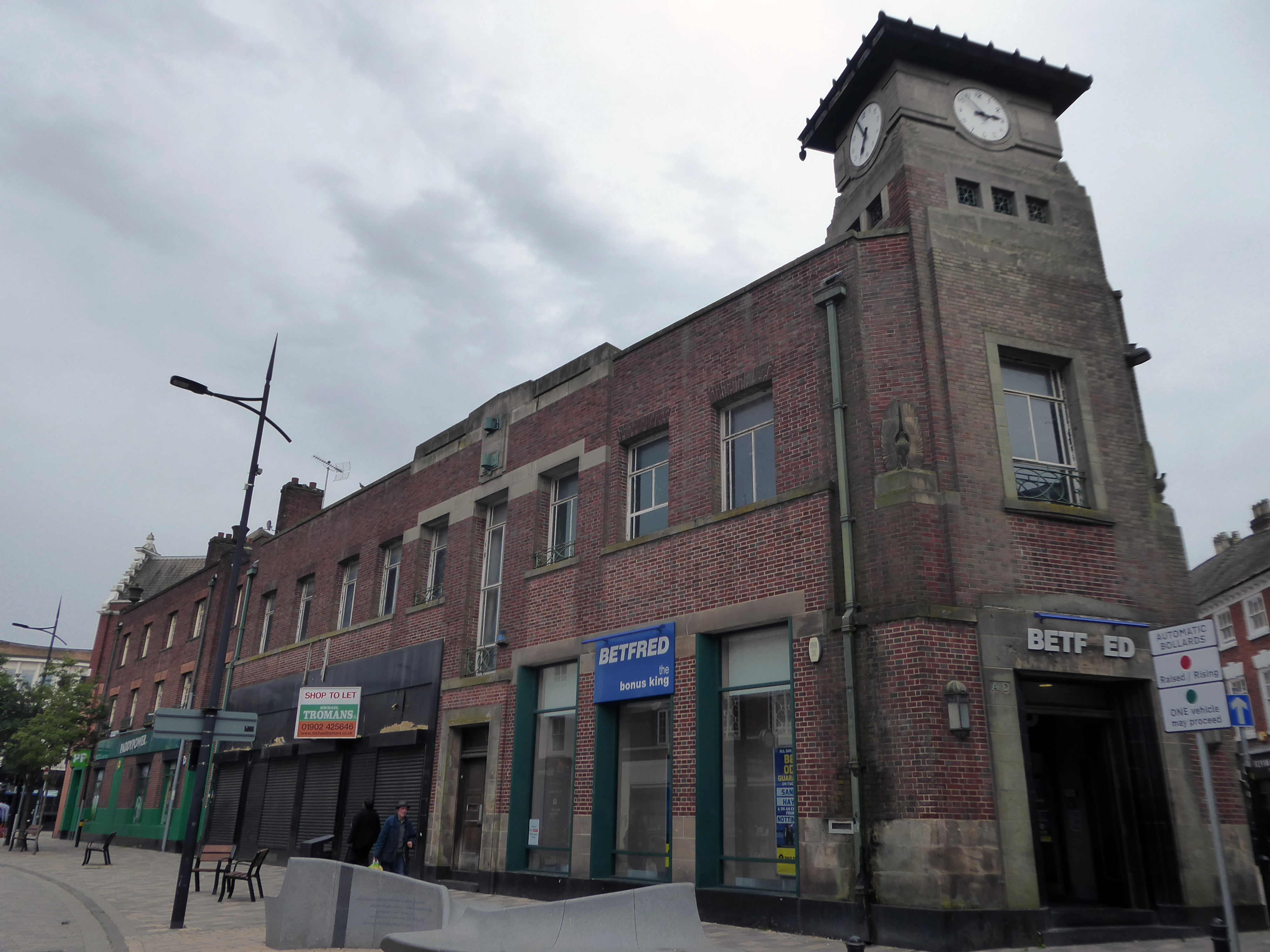
Along Princess Street this corner group, with an impressive clock tower – originally HQ for the South Staffordshire Building Society

Architects: George A Boswell of Glasgow 1932.

On to the Mander Centre – opened on 6th March 1968, refurbished 1987, 2003 and 2016-17.

The Mander Shopping Centre in the heart Wolverhampton is your one-stop shopping destination for all things fashion, home, beauty, food and technology.

Architects: James A Roberts principal architect Stanley Sellers.

Developed by Manders Holdings Plc, the paint, inks and property conglomerate, between 1968 and 1974. The site occupies four and a half acres comprising the old Georgian works and offices of the Mander family firm, founded in 1773, as well as the site of the former Queens Arcade.

Wikipedia

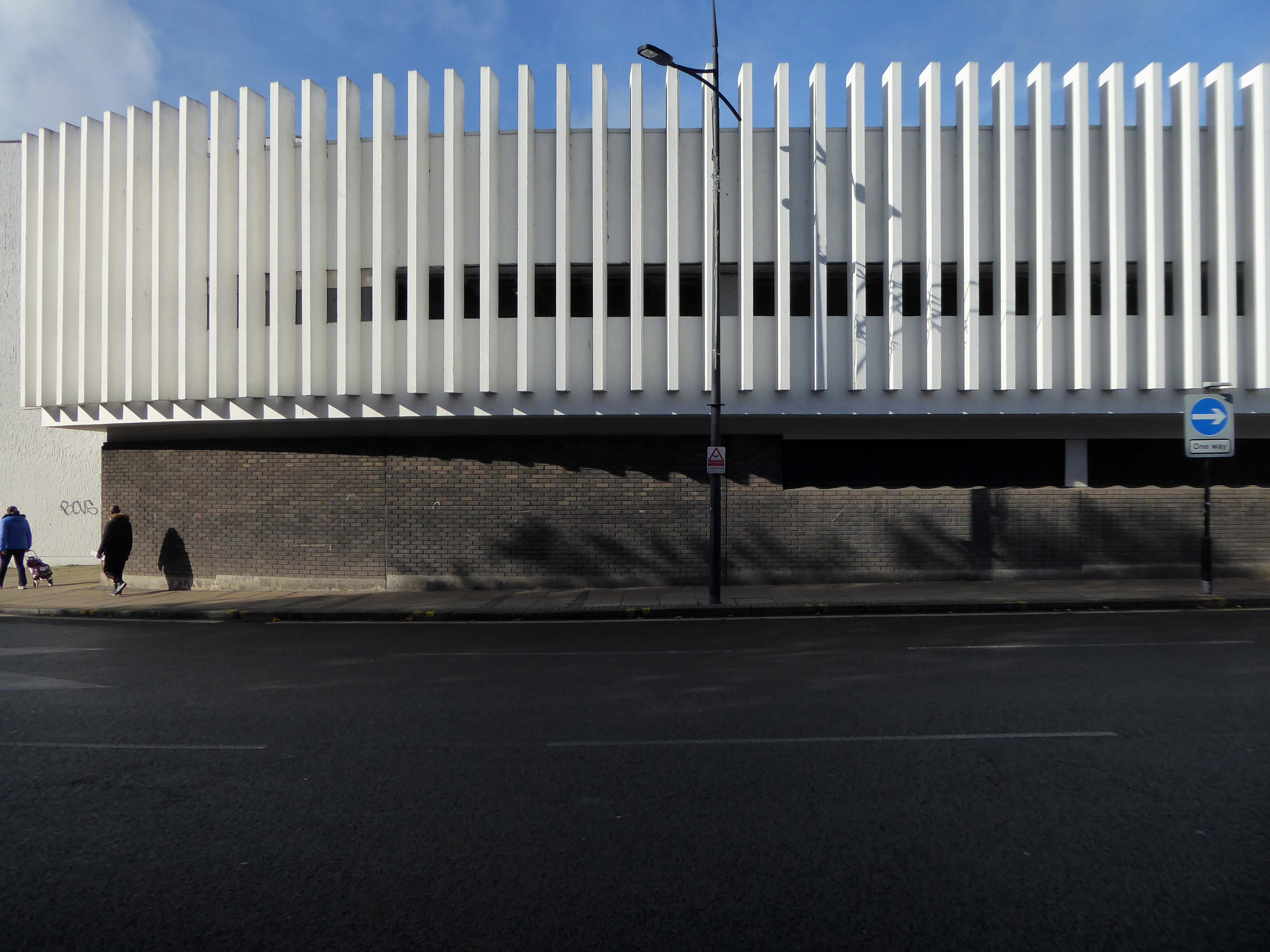
The Wulfrun Shopping Centre is an adjacent companion to the Manders development.

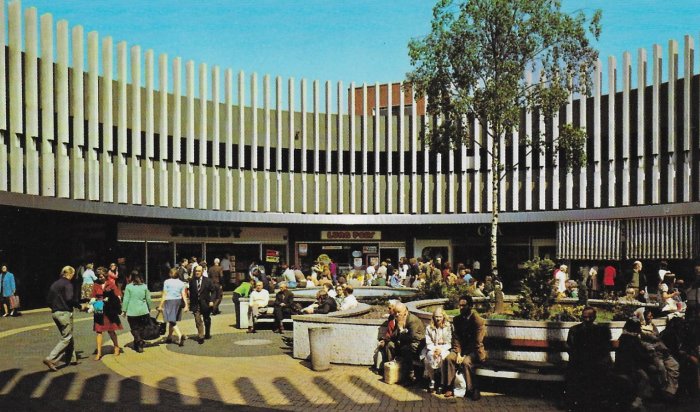
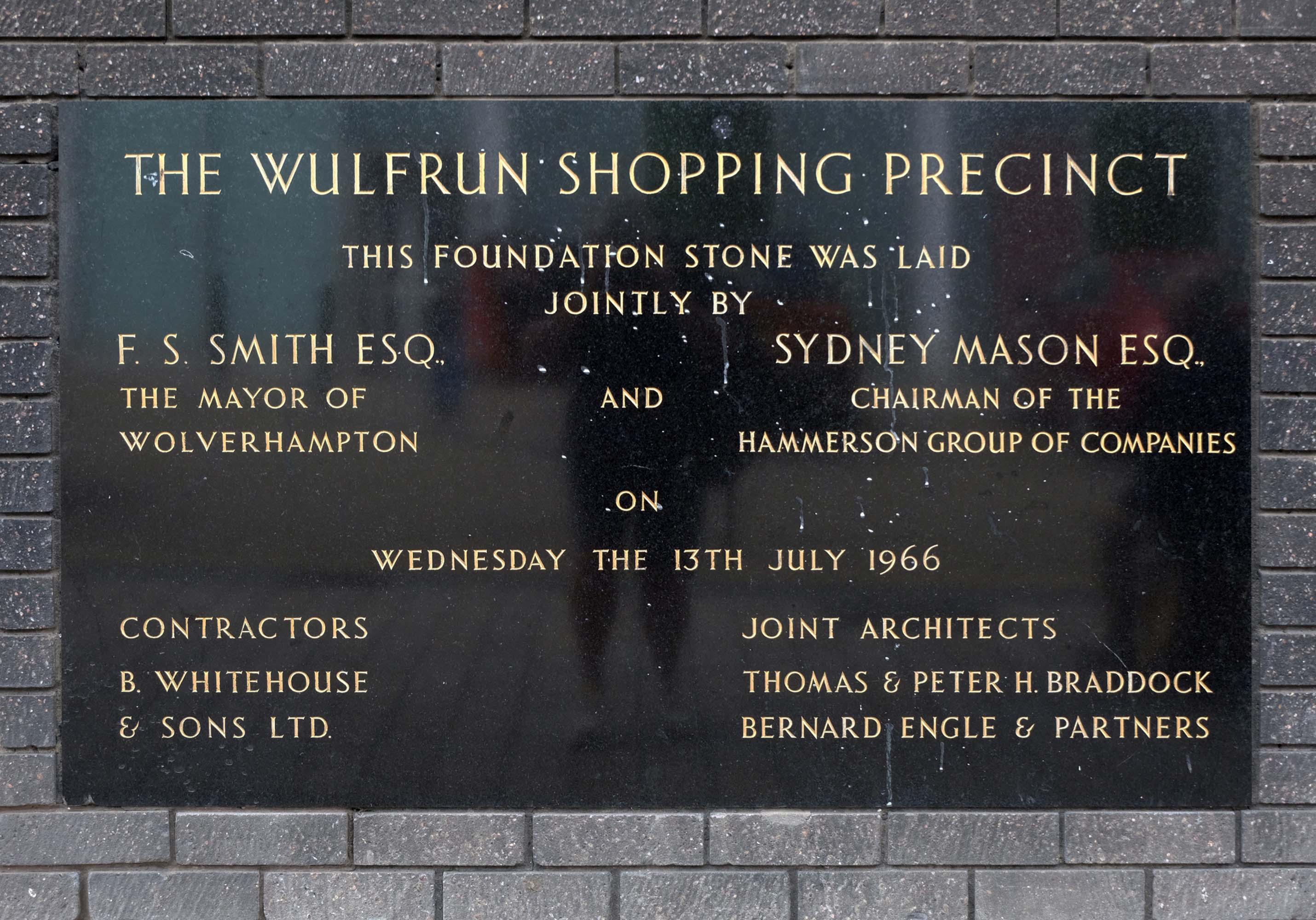
The Wulfrun Centre was built as a result of a joint project between Wolverhampton Council and the Hammerson Groupopen for business in October 1969.

History and Heritage Society

Piazza postcard 1970.

Architects: T & PH Braddock and also Bernard Engle & Partners.

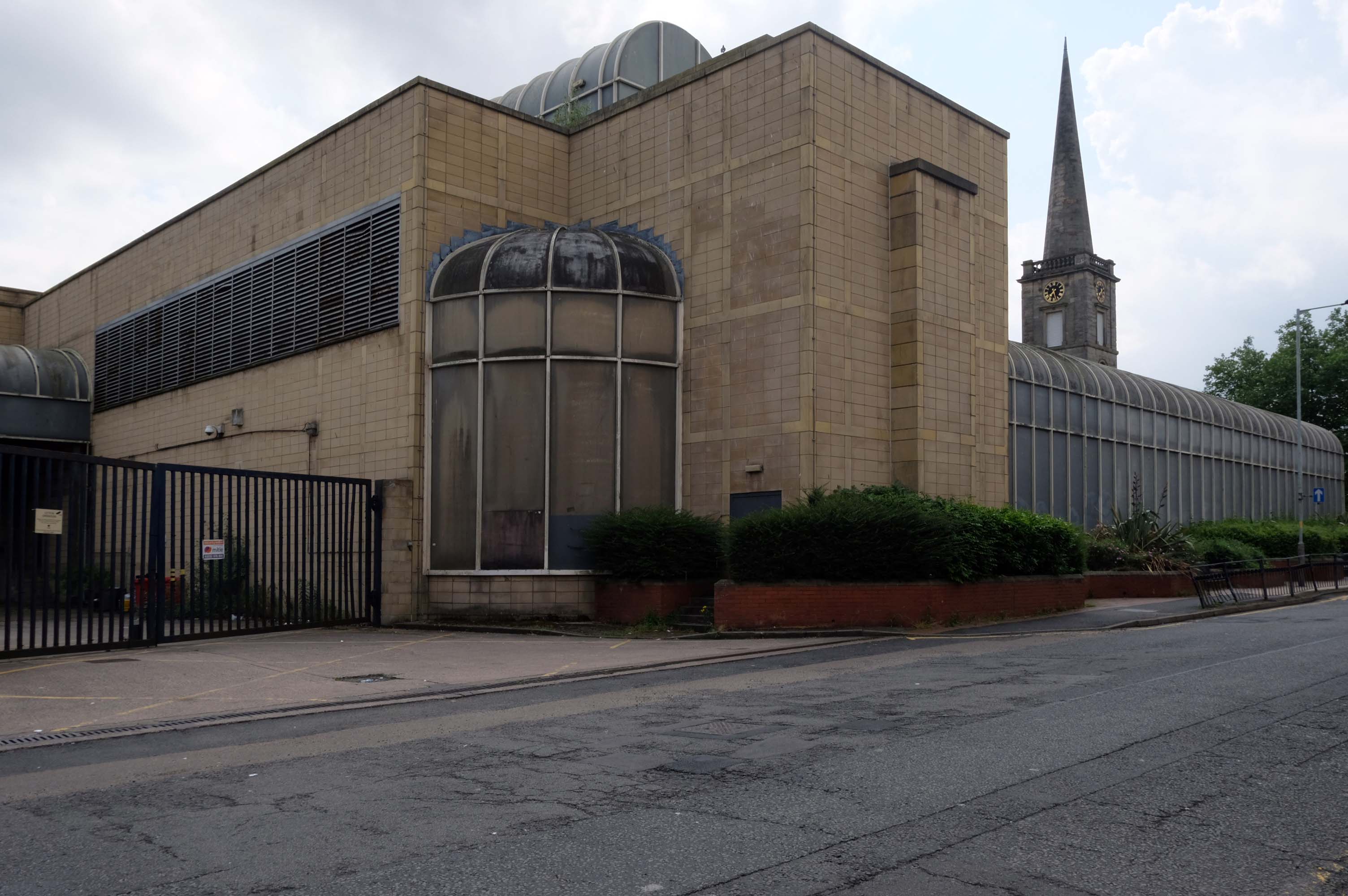
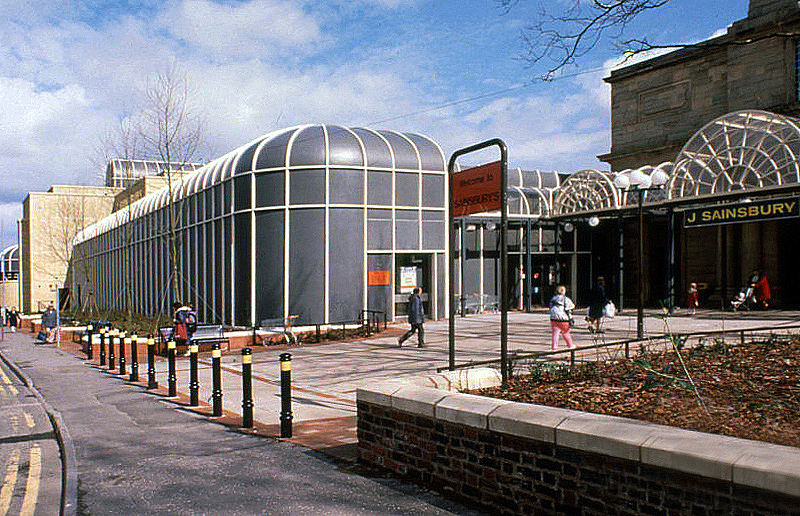
Along St Georges Parade, an abandoned Sainsbury’s church combo – store designed by J Sainsbury’s Architects Department opened 1988.

The church was built between 1828 and 1830 – architect: James Morgan, at a cost of £10,268. It was consecrated on Thursday 2 September 1830 by the Bishop of Lichfield, it was made redundant in 1978.

Sainsbury Archive

The site is currently under lease to Sainsbury’s for a further three years and will come forward on a phased basis subject to their lease concluding. The council is in active dialogue with prospective development partners on the redevelopment of this site and in wider consultation with Homes England.

Express & Star

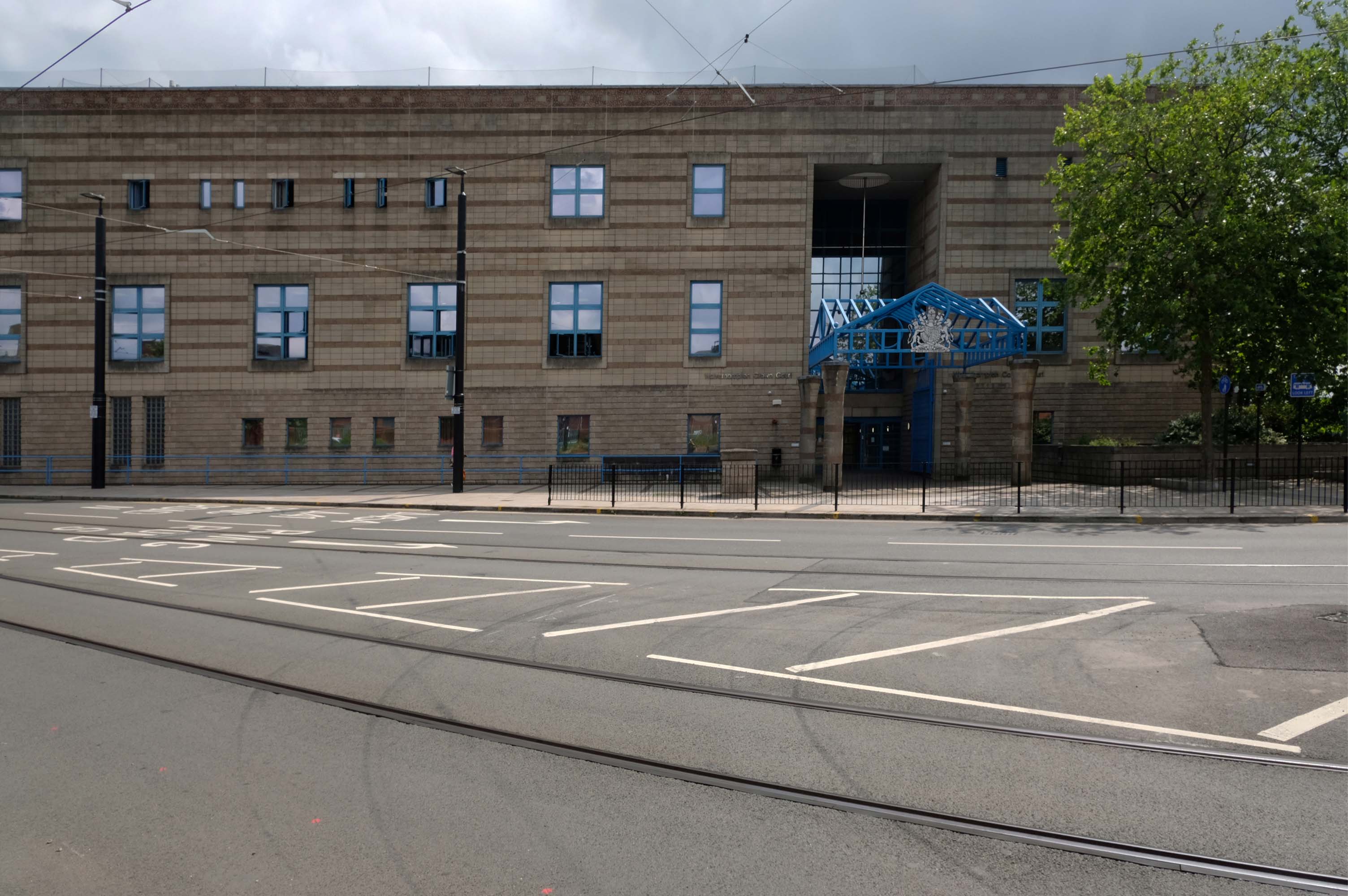
Back tracking to the Combined Court Centre.
Architects: Norman and Dawbarn 1990

Notable cases included trial and conviction of four members of The Stone Roses, in October 1990, for criminal damage to the offices of their former record company.

Wikipedia

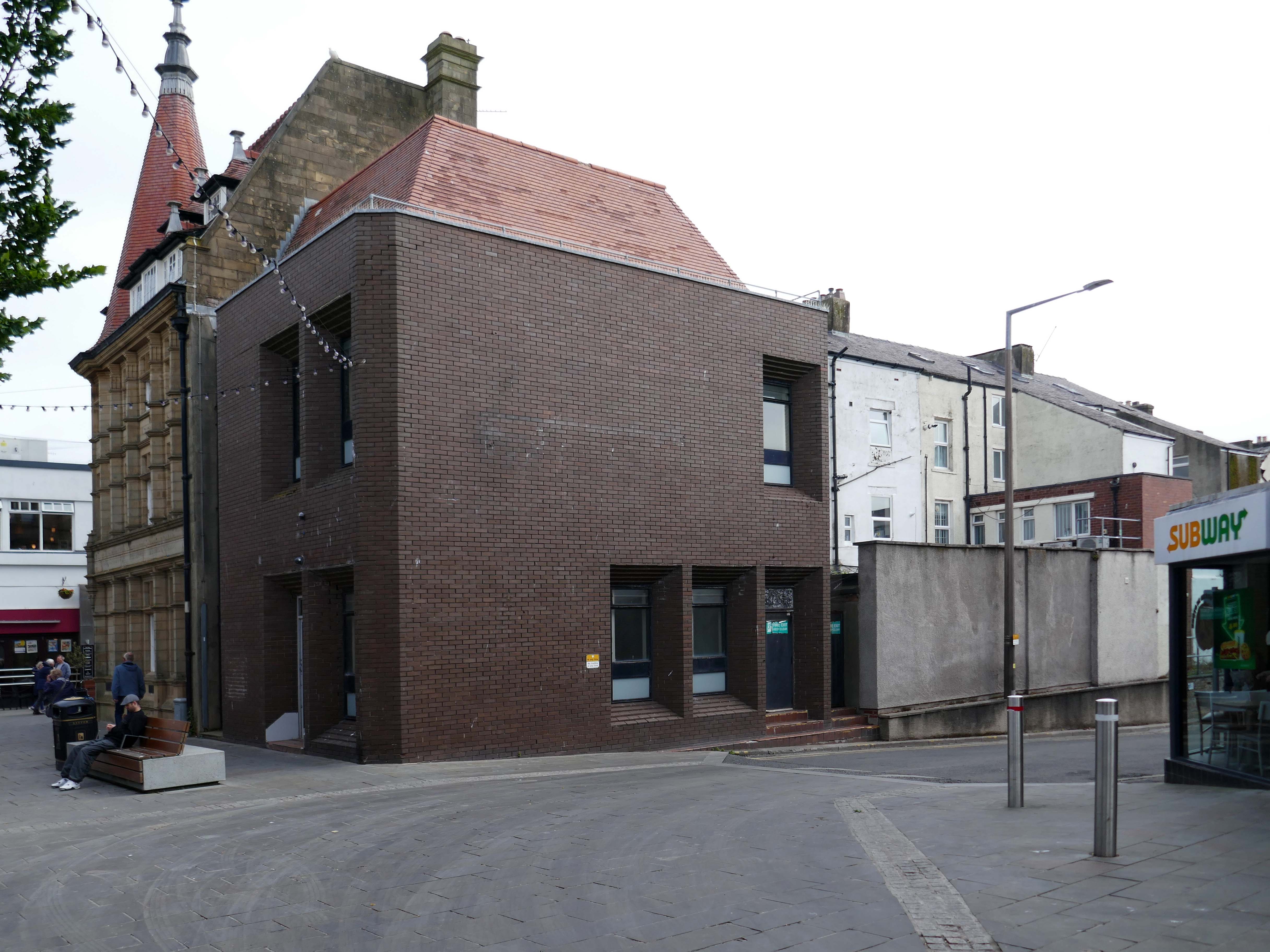
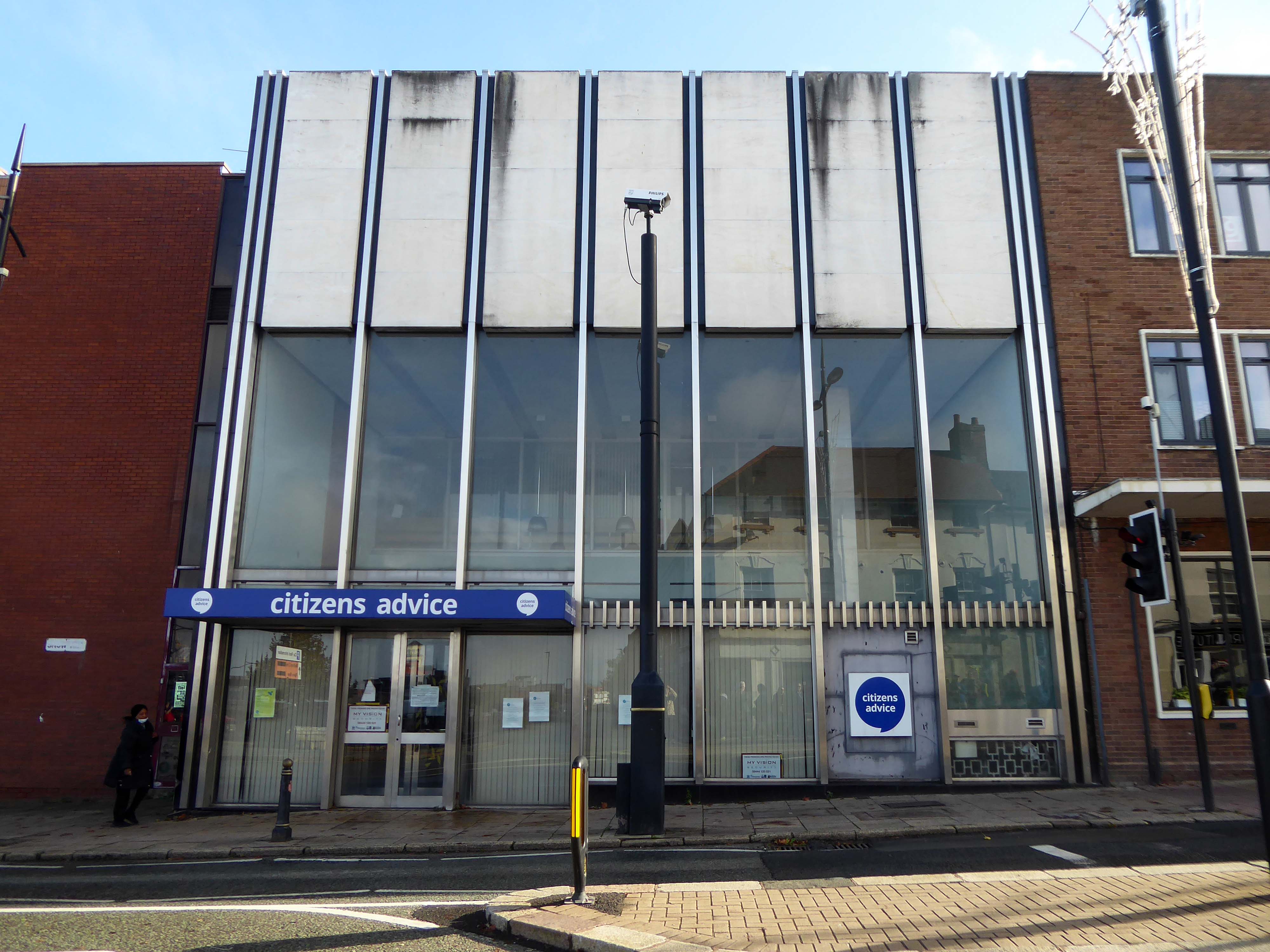
Thence up Snow Hill to the former Citizens Advice former Barclays Bank currently empty.

Architects: John HD Madin & Partners 1969

Take time to have a look around the back.

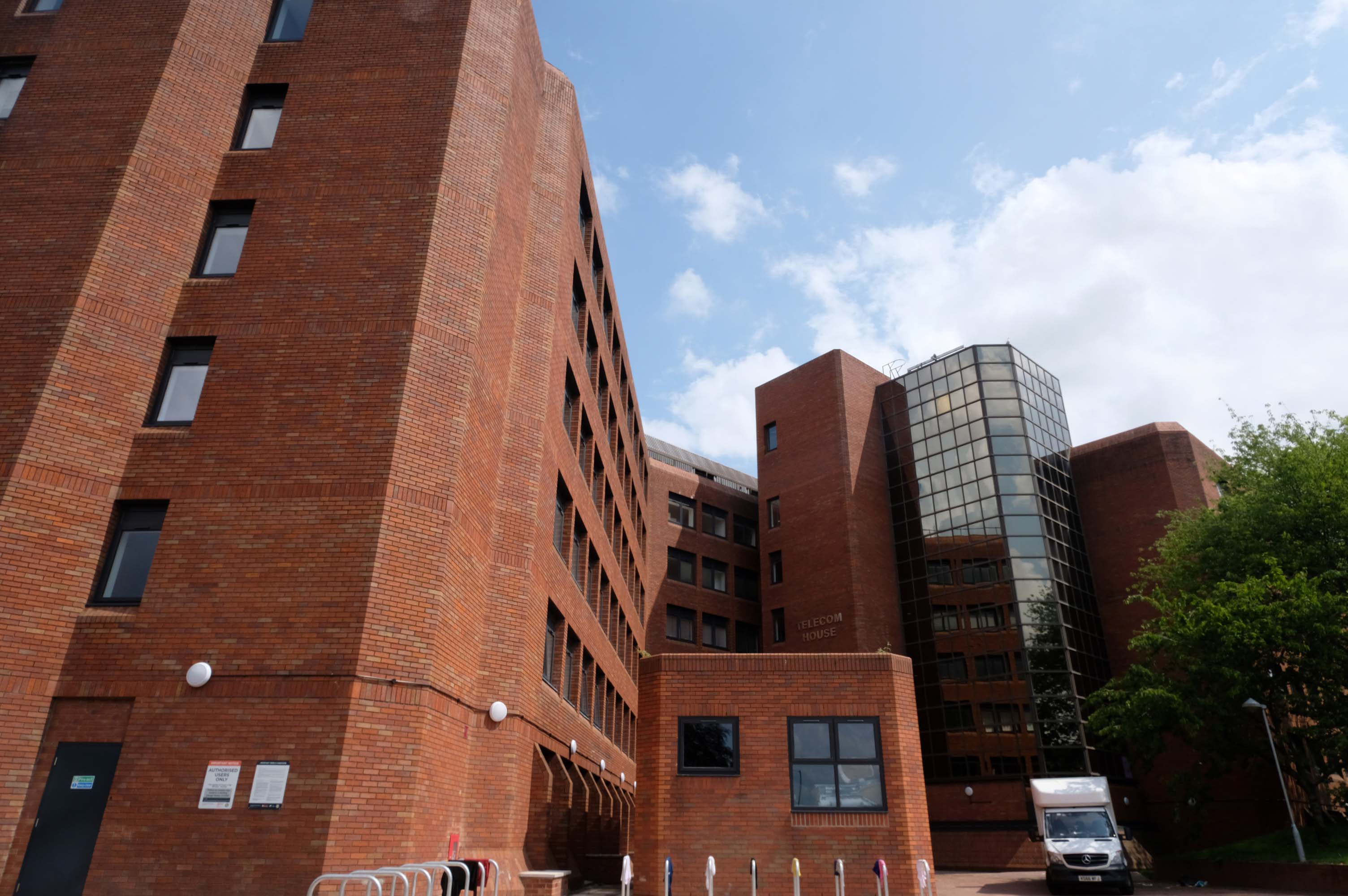
Off to Church Street and Telecom House

Sold for £4.25 million to Empire Property in 2022.

It had previously been sold for more than £3m in July 2018, also for use for apartments, to Inspired Asset Management which later went into receivership.

Express & Star

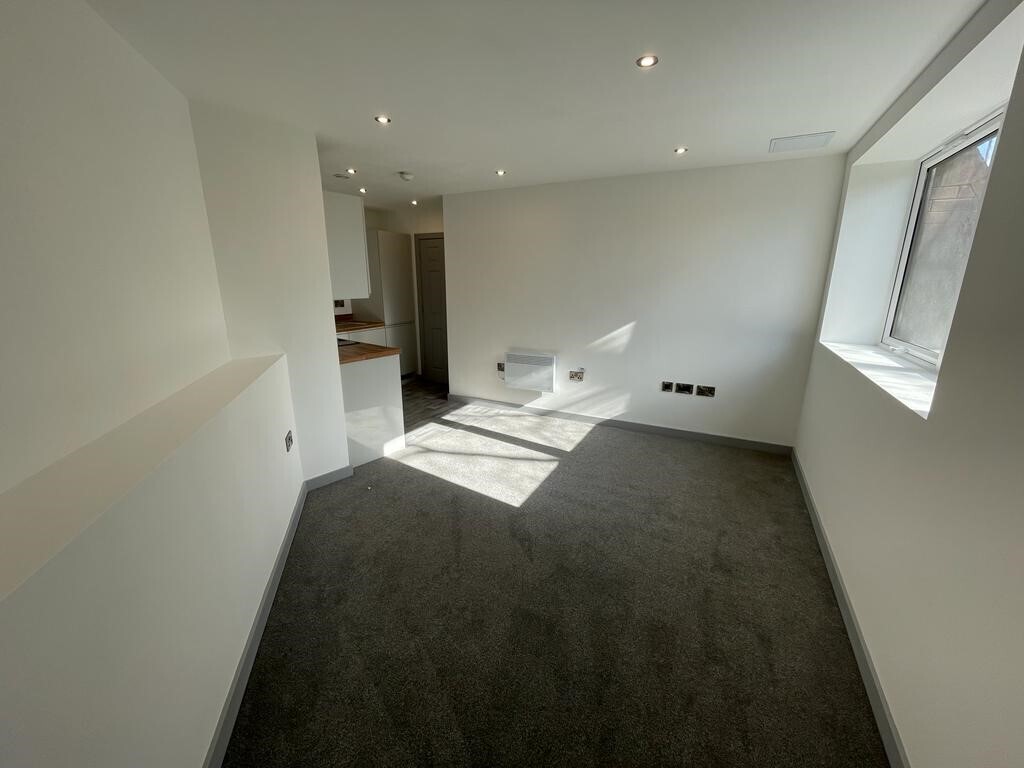
Located on a popular apartment block on Church street in the Wolverhampton centre, this 1 bedroom property has been newly renovated throughout and compromises an entrance hallway, open plan lounge/kitchen with in built appliances, shower room and double bedroom.

£650 PCM – Connells

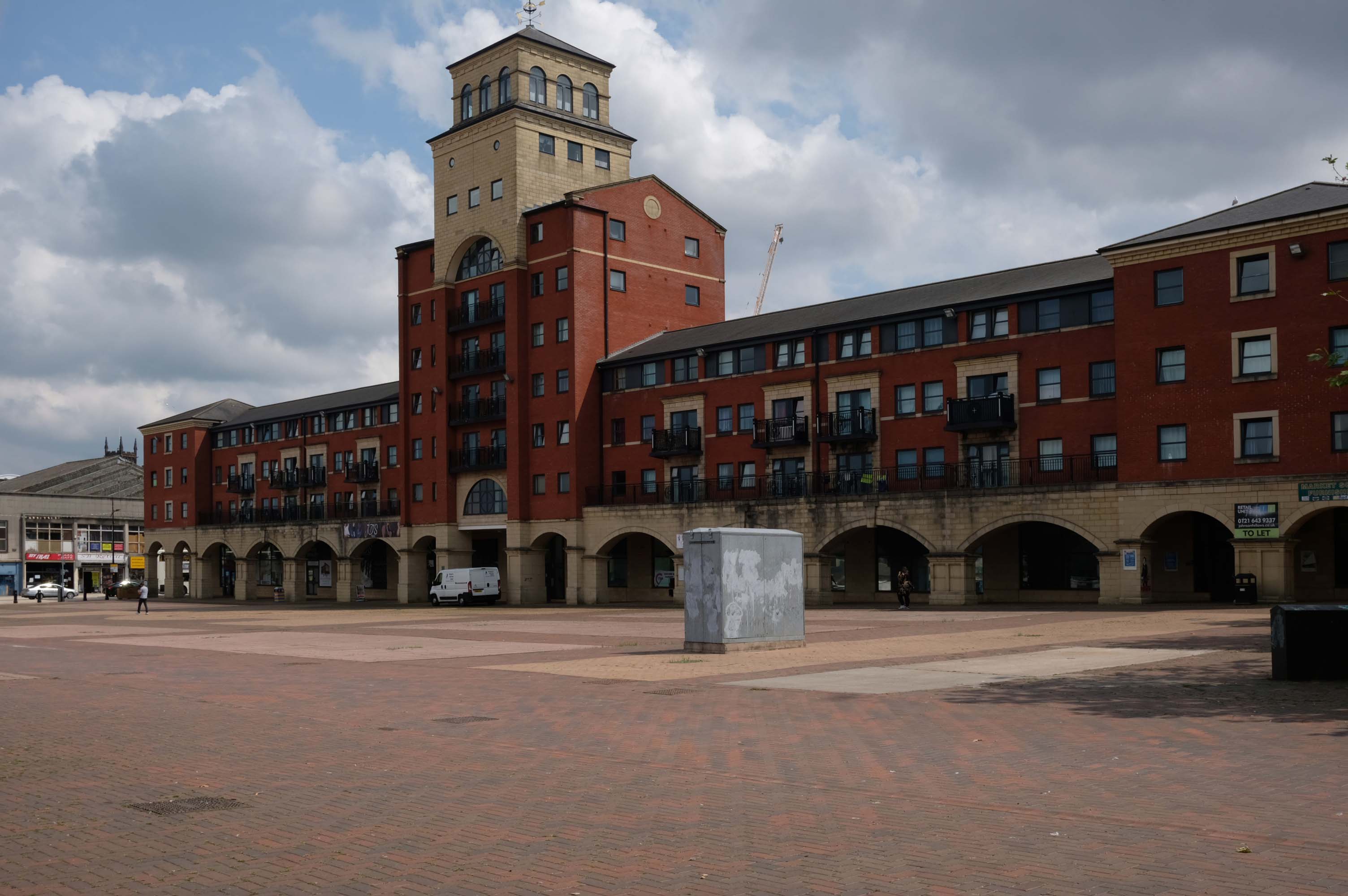
Next to this modern piazza New Market Square – Architects: Nicol Thomas from a concept by head of planning Costas Georghiou.

Formed from the former Market Square, a mix of flats and shops opened in 2004, in an Italianate version of the modish school of streaky bacon.

In 2021 the Coca-Cola Christmas Truck visit to the Midlands was cancelled.

It was meant to arrive at Market Square in Wolverhampton at 11am today but failed to show up.

One fan had waited since 7am this morning to see the Coca-Cola truck.

While schoolchildren were left gutted when the truck didn’t turn up – and one boy had been so excited his mother said he had been talking about the red truck all morning.

Birmingham Mail

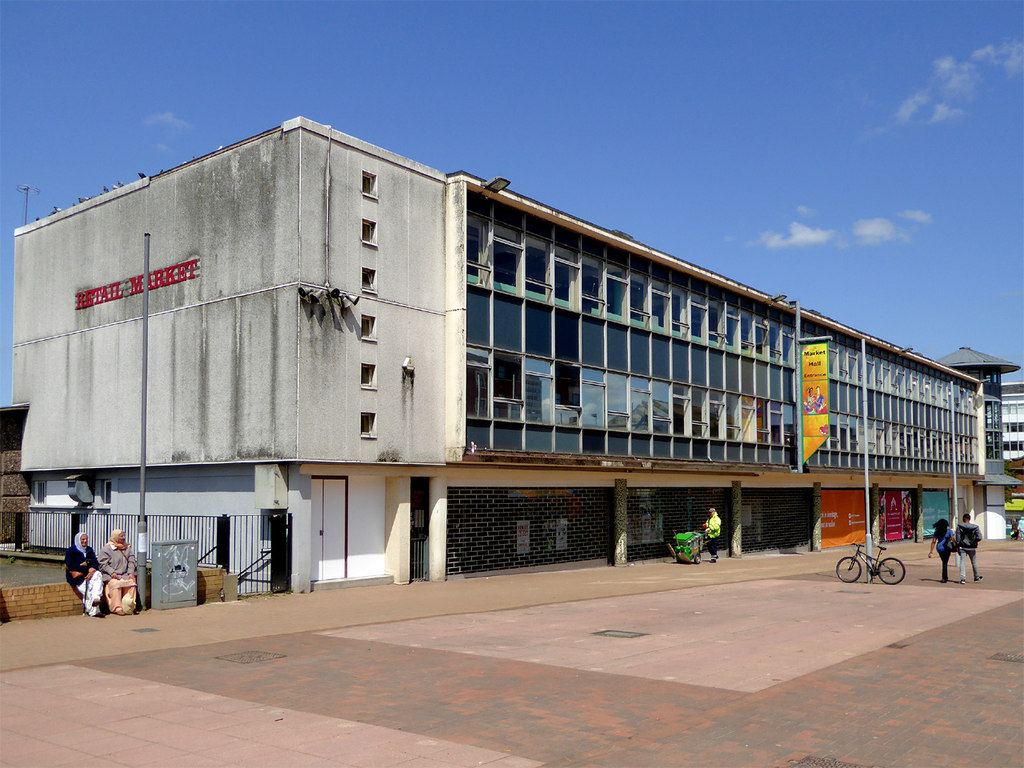
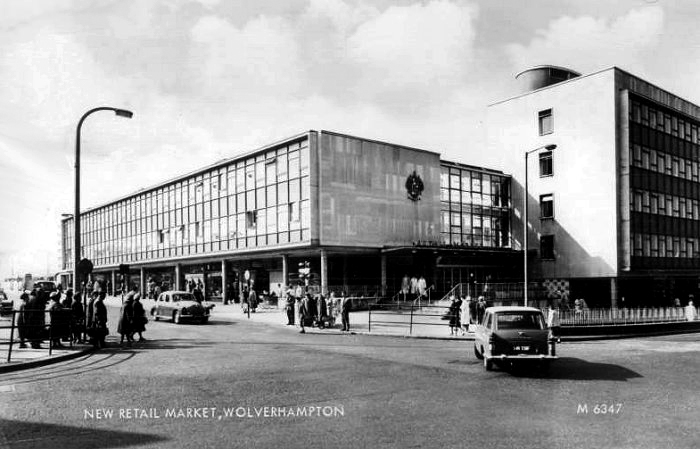
Retail Market – Late 1950s market hall and offices above. 

Architects: Borough Surveyor. 
Excellent example of the Festival of Britain style of architecture, won Civic Trust Award 1960.

Locally Listed March 2000.

demolished January 2017.

Photo: Roger Kidd

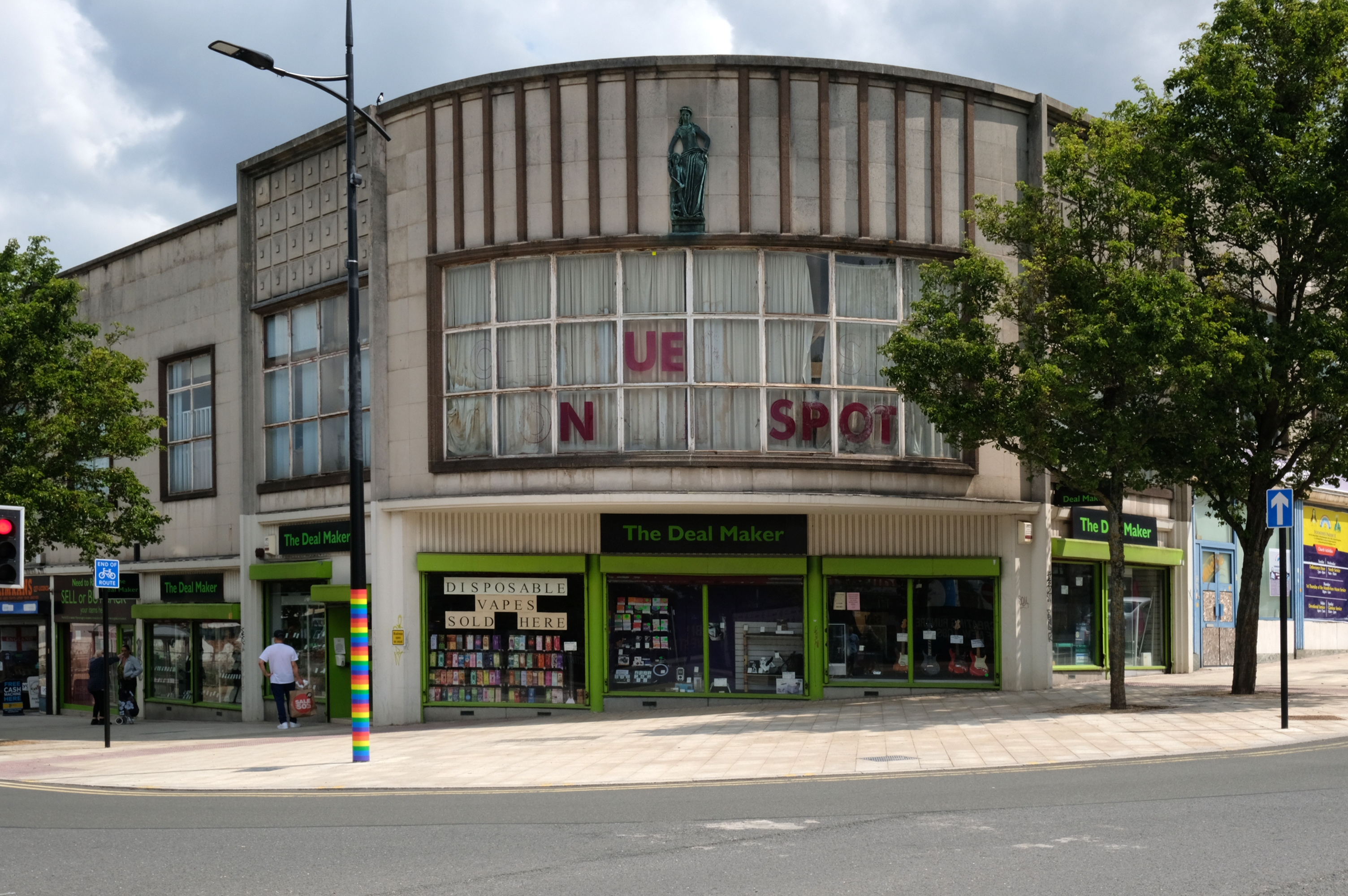
This development that wraps itself around Salop, Skinner and School Streets appears to be of a similar period to the Retail Market – and sports a Lady Wulfrun in relief.

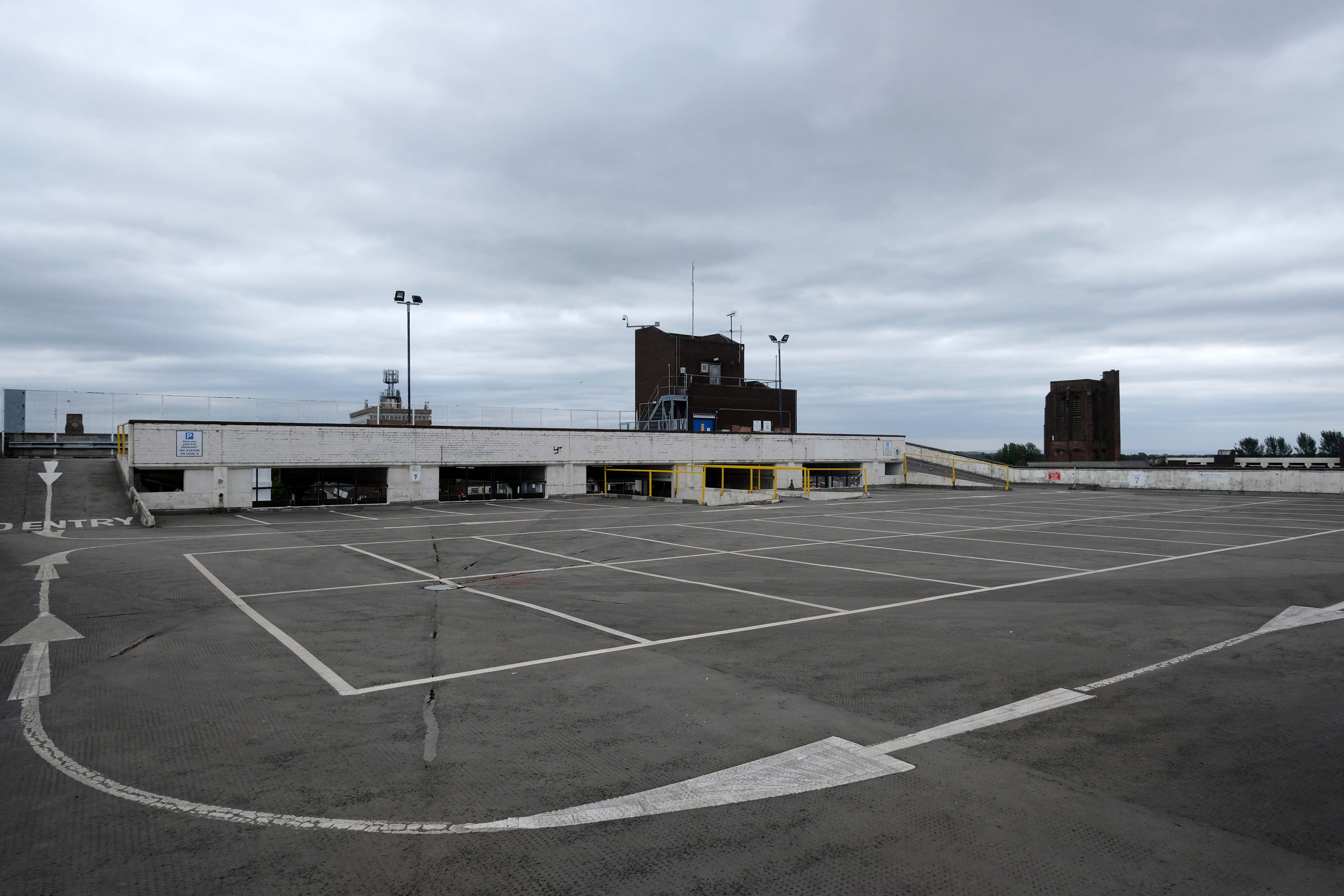
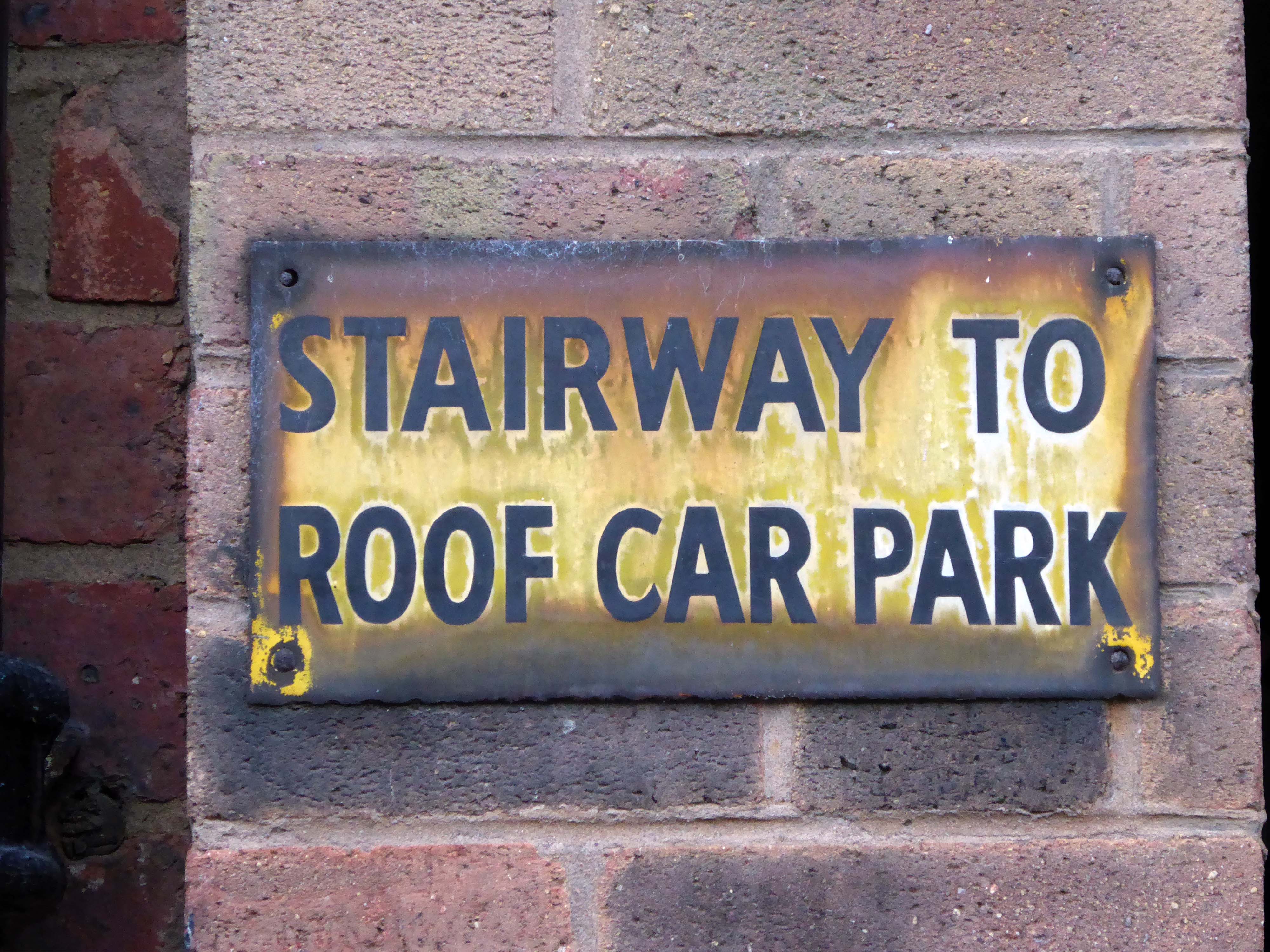
There is access to its roof top car park.

And also an exit back to street level.

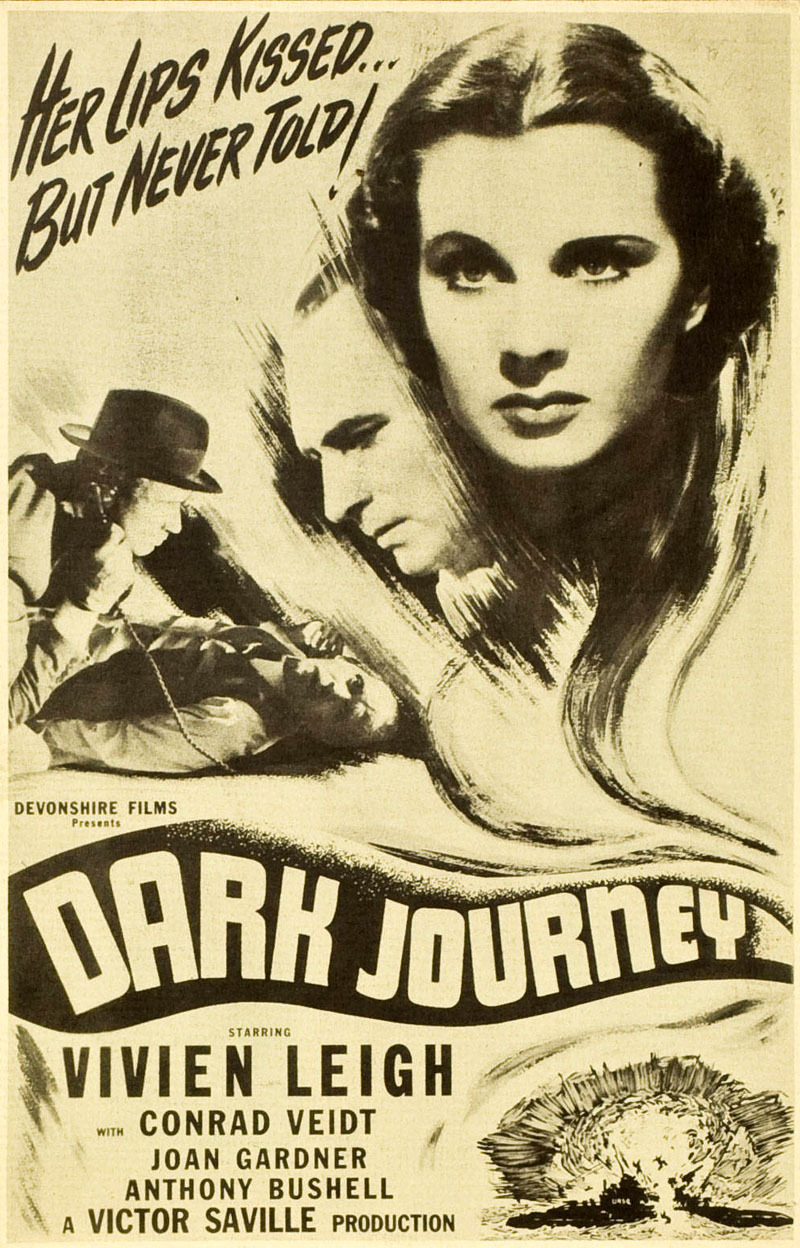
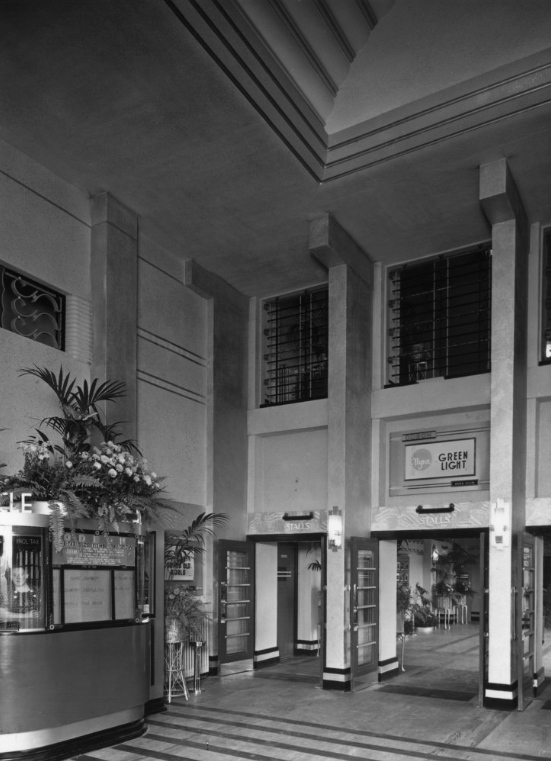
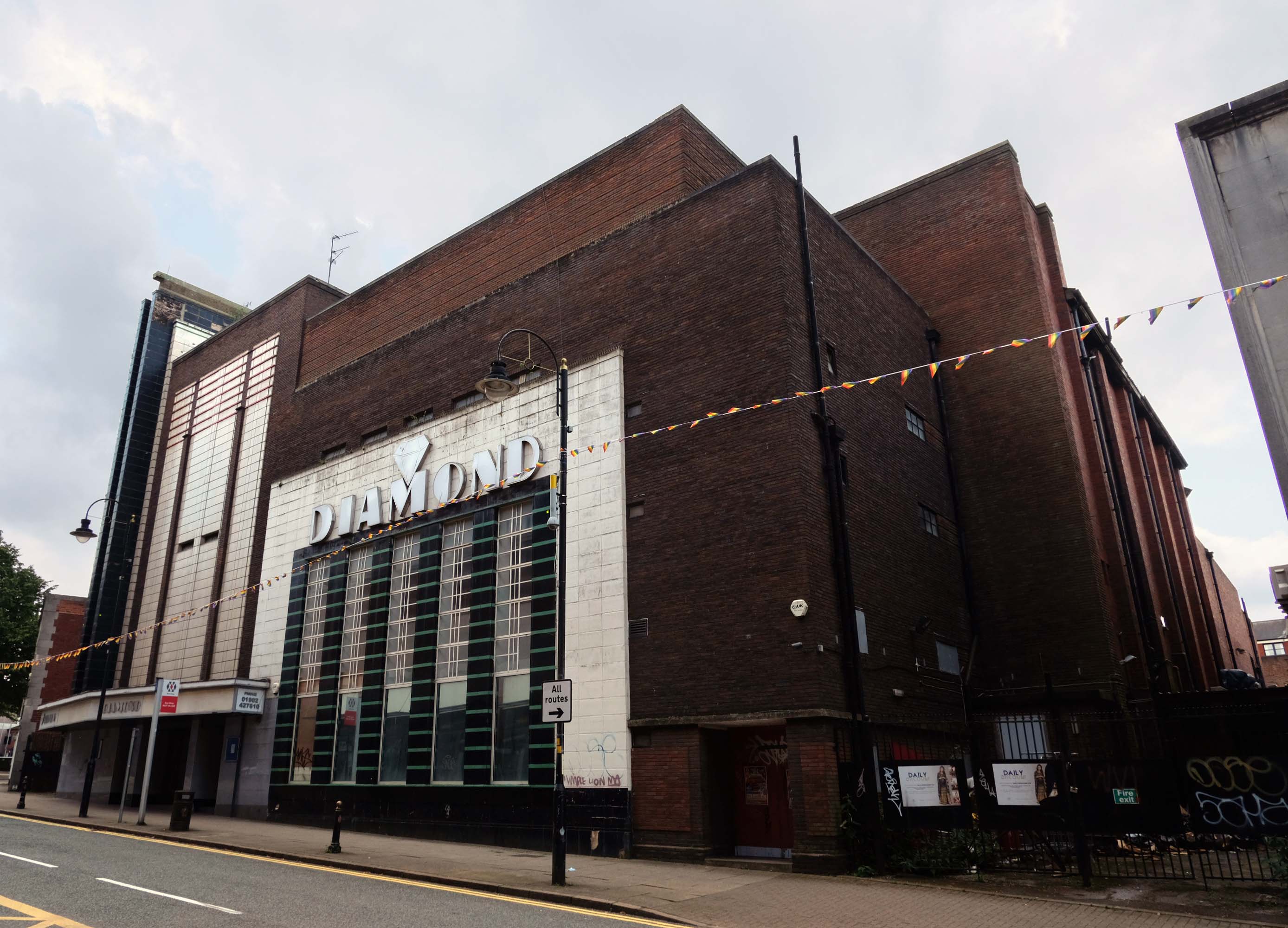
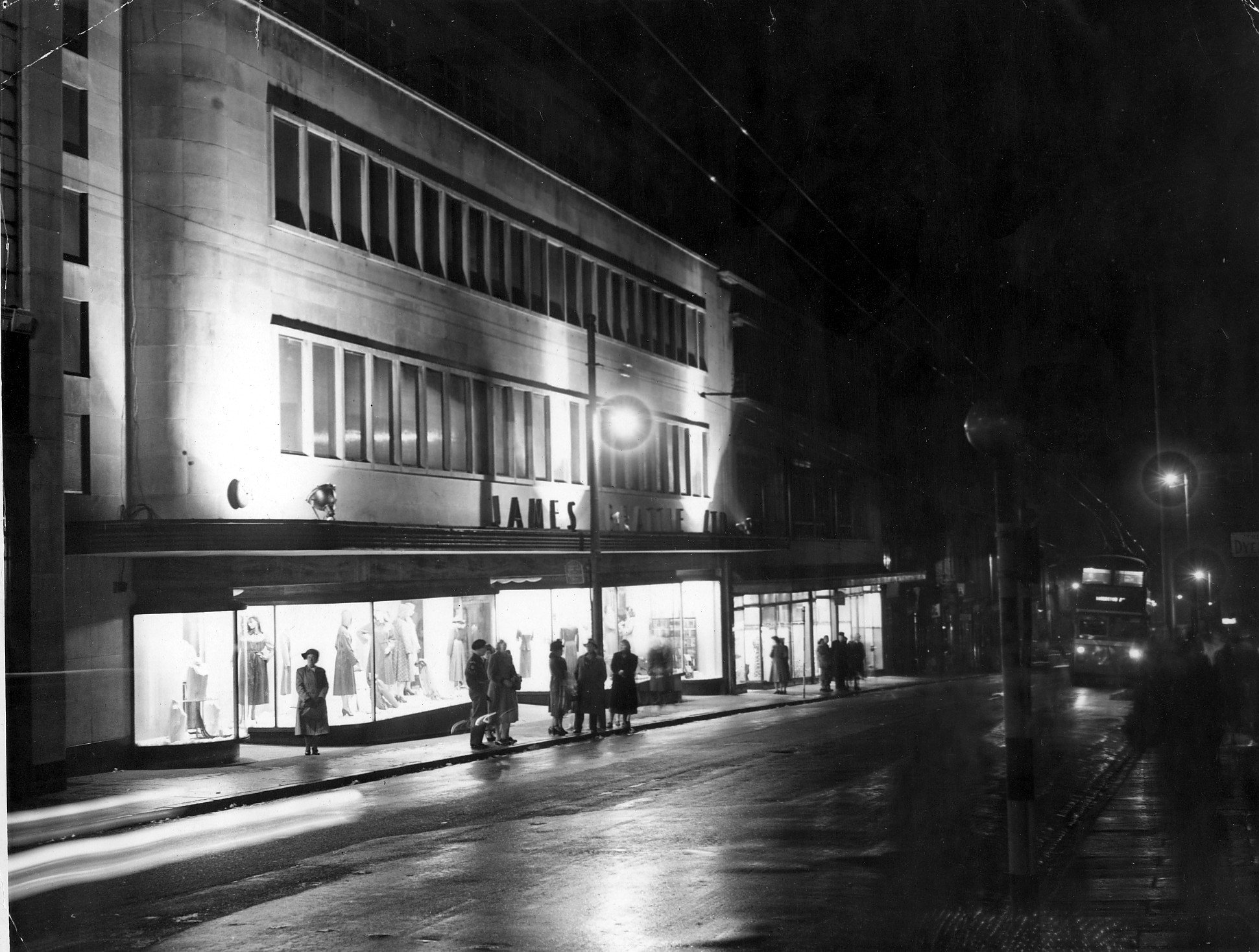
Where we find at street level the former Odeon Cinema, opened on 11th September 1937 with Conrad Veidt in Dark Journey.

Architects: PJ Price and Harry W Weedon.

In October 2000, the former Odeon was designated a Grade II Listed building by English Heritage.

RIBA pix

In recent years it was a Mecca Bingo Club, but this was closed in March 2007 In October 2009, it had been refurbished and re-opened as the Diamond Banqueting Suite. In April 2021 police raided the vacant building to discover an illegal cannabis farm operating in the building.

Four men were arrested.

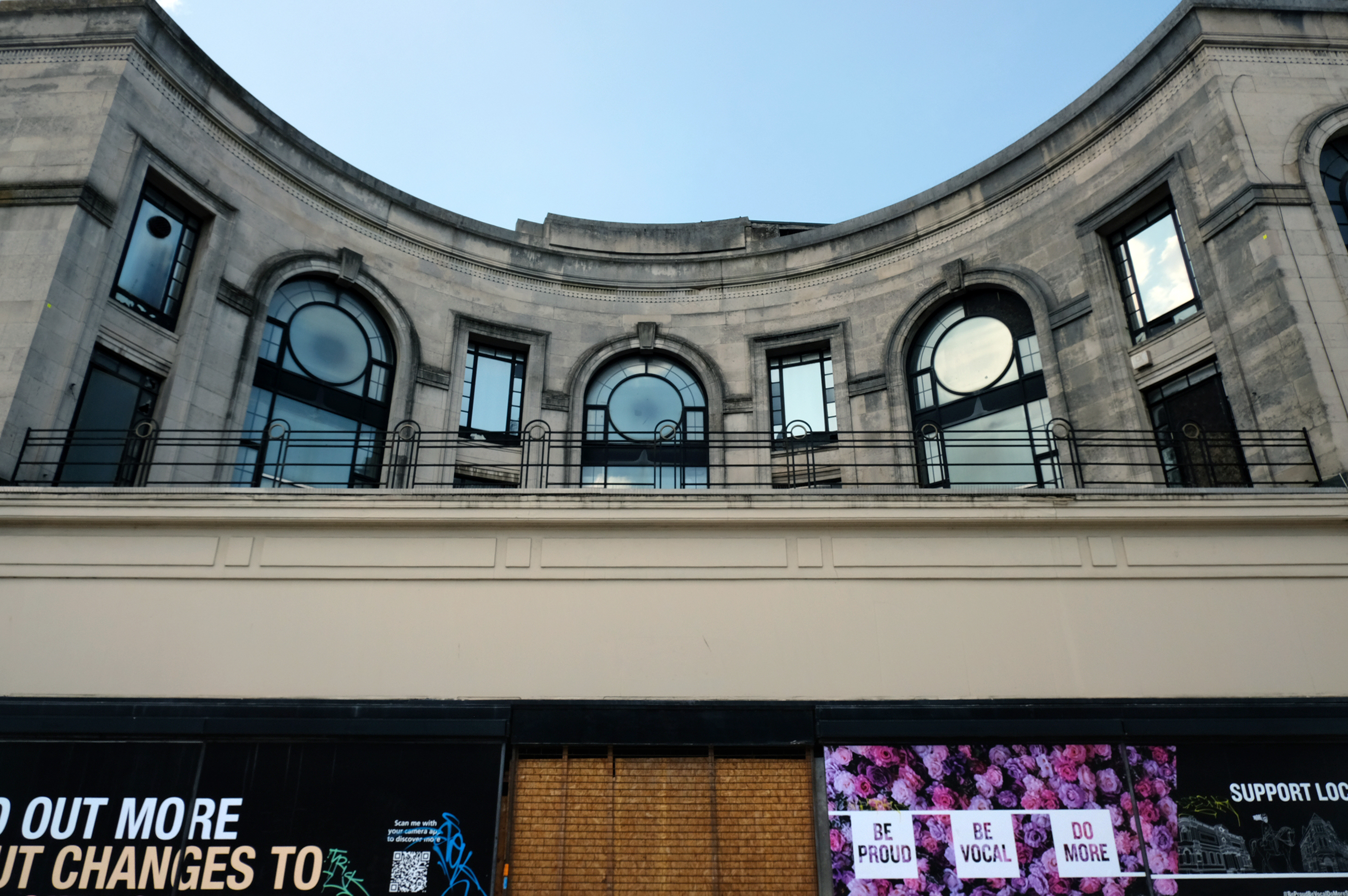
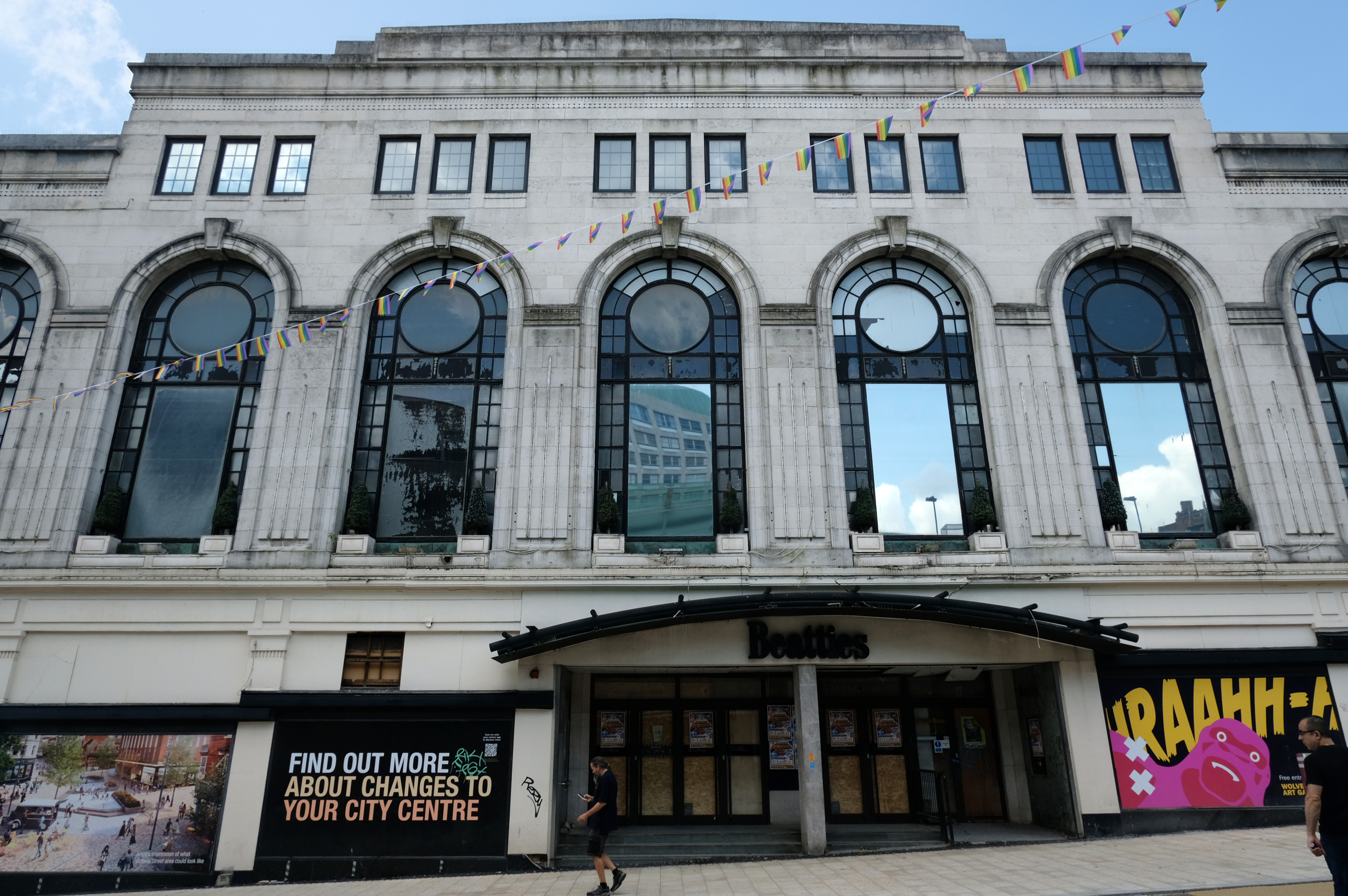
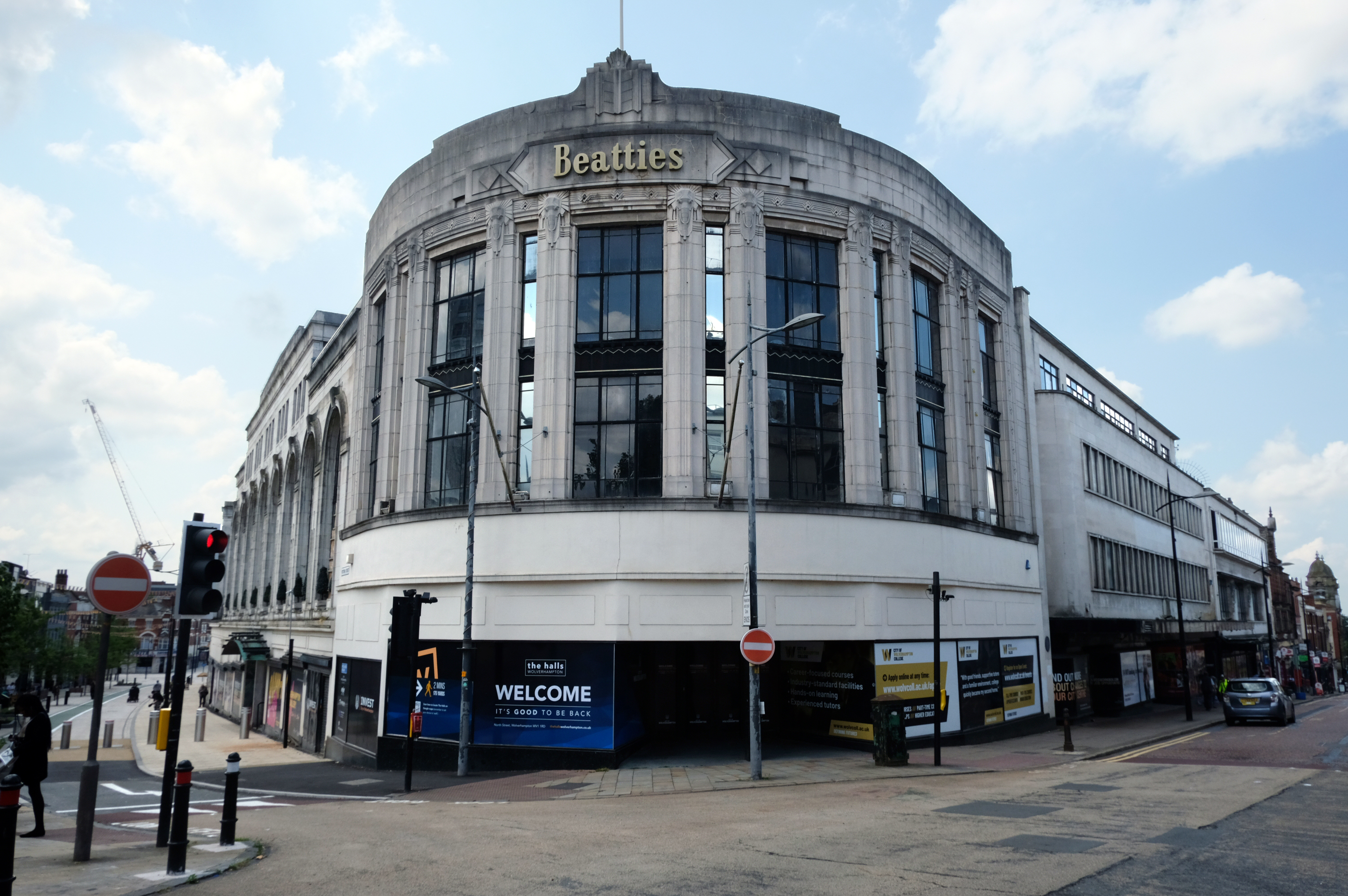
Let’s take a turn around the corner to Victoria Street where we find the complex of Beatties Buildings.

Architects: Lavender, Twentyman and Percy 1920’s – 30’s

The C20 Beatties store is a multi-period site developed first in the 1920s-30s. A Burton’s men’s clothes shop was built on a curved corner site at Victoria St/Darlington St and Beatties themselves replaced their existing Victoria St store in the 1930s with a building by local architects Lavender, Twentyman and Percy. Beatties later acquired and incorporated the Burton’s shop into their store. These two buildings form the locally listed building to which were added a mid-C20 extension along Darlington St and a late-C20 development to the rear at Skinner St.

c20 Society

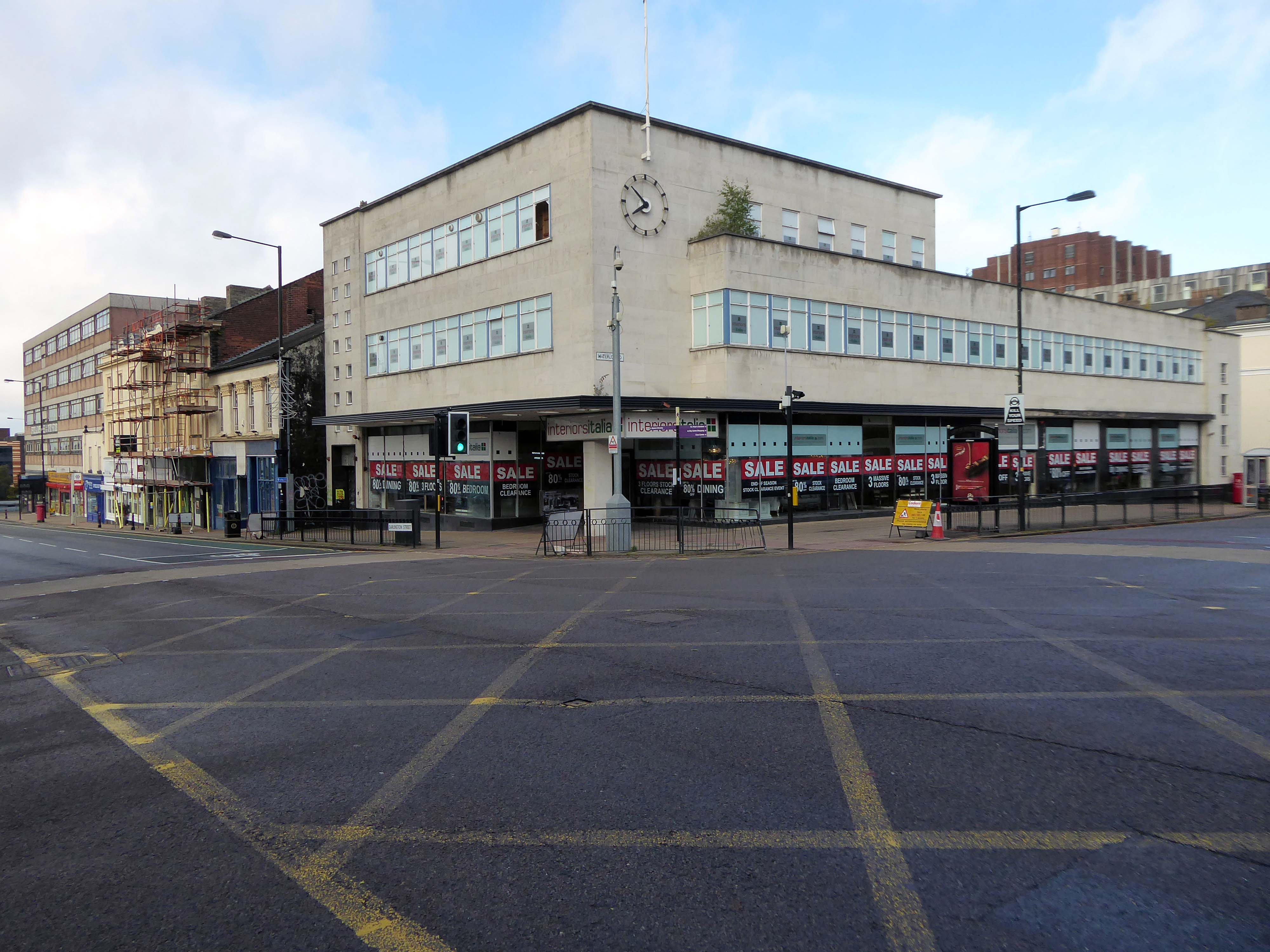
An imperious Portland stone clad mixed us block on Waterloo Road, with a delightful clock.

Formerly the Gas Showrooms then Sun Alliance & London Insurance offices – aka Clock Chambers

The showroom in Darlington Street was also the centre of a radio network that controlled a fleet of service vans. This enabled customers to receive service within minutes of making a telephone call. Demonstrations of cookery, washing and refrigeration were given by the Gas Board’s Home Service Advisers and a number of the company’s engineers, who specialised in designing gas equipment for industrial processes operated an advisory service for manufacturers. 

Architects: Richard Twentyman 1939.

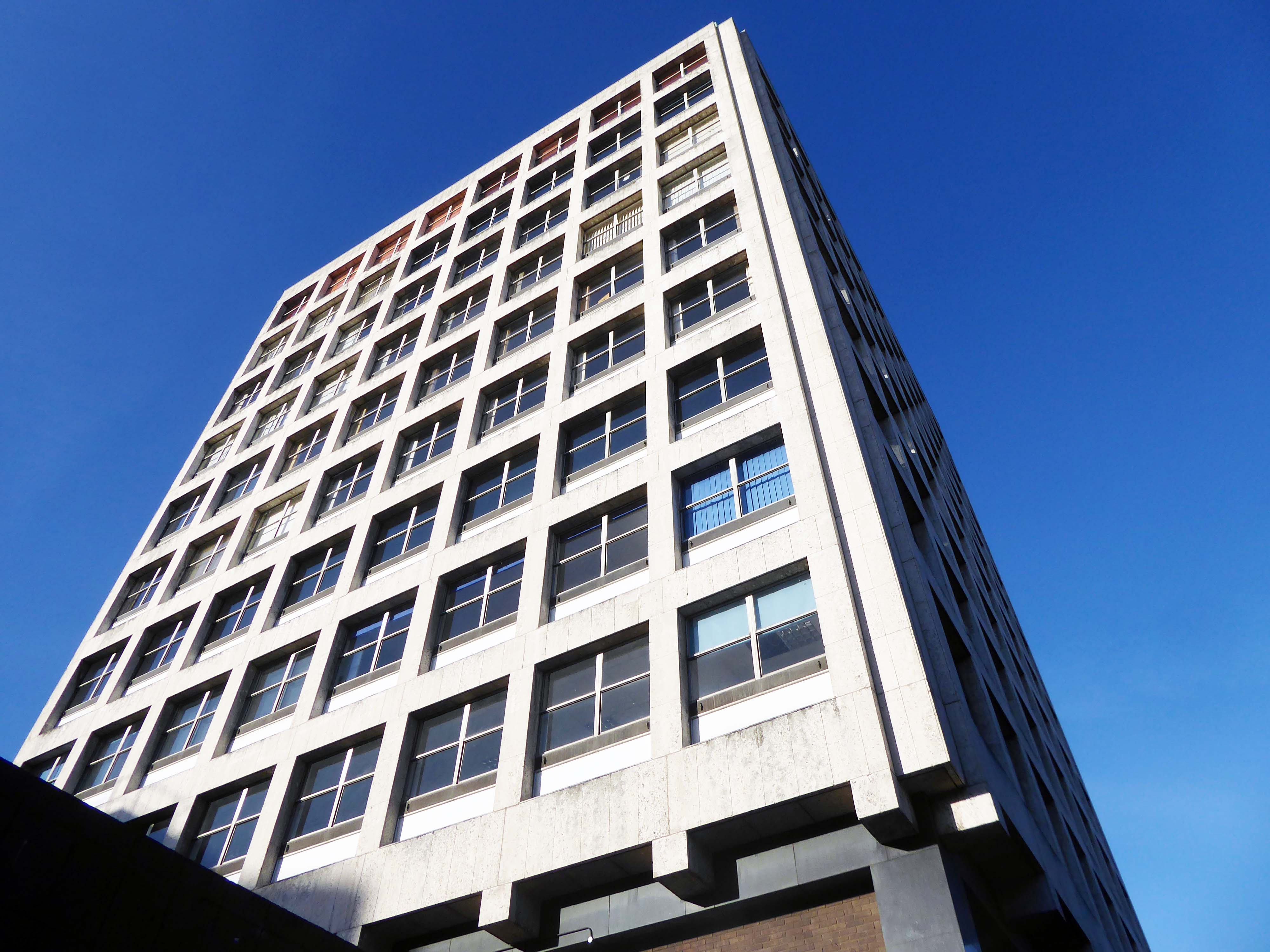
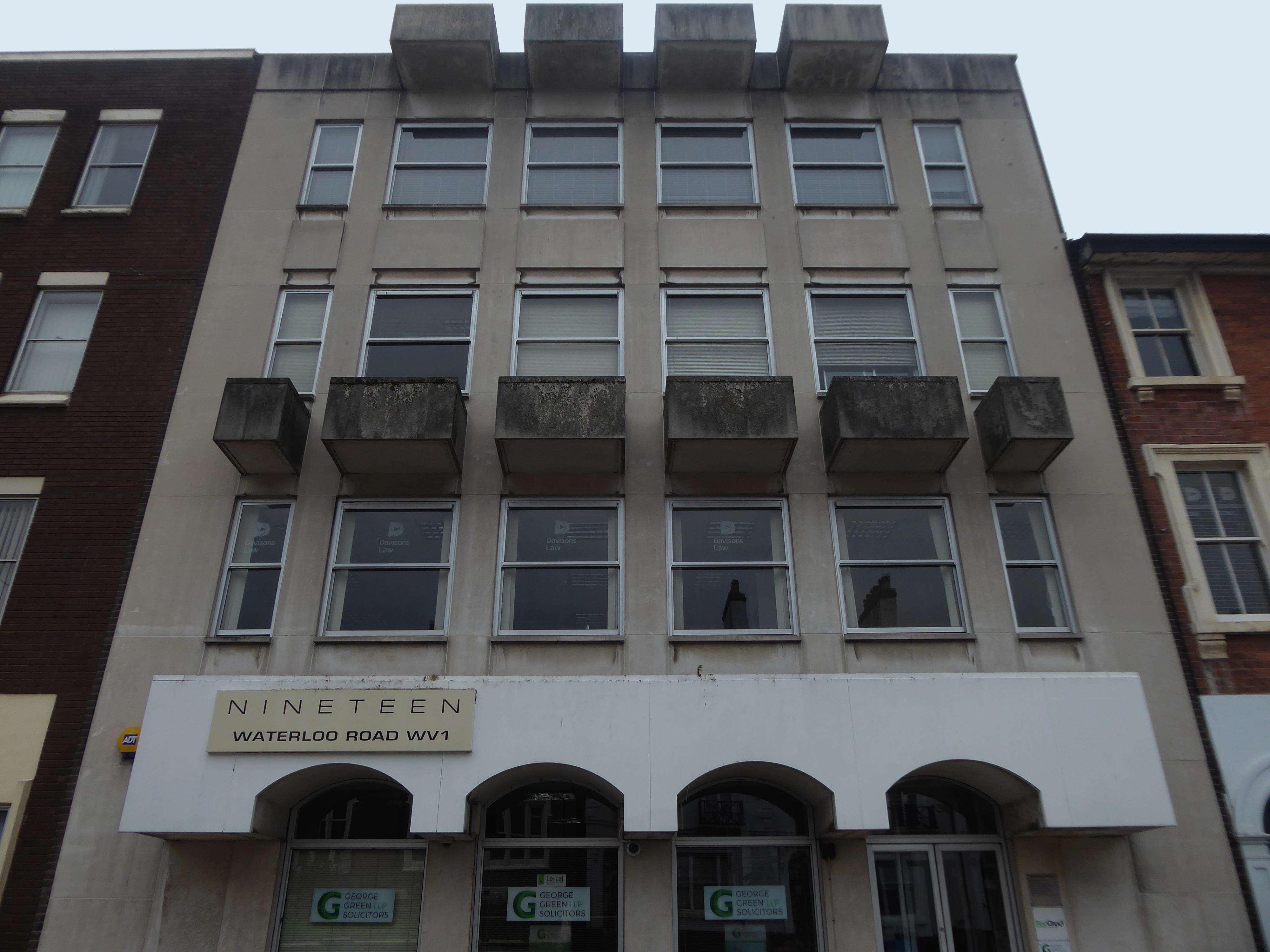
Nineteen Waterloo Road latterly First City House formerly home to Eagle Star Insurance 1970

8-10 Waterloo Road architects: Richard Twentyman 1959 extended 1966.

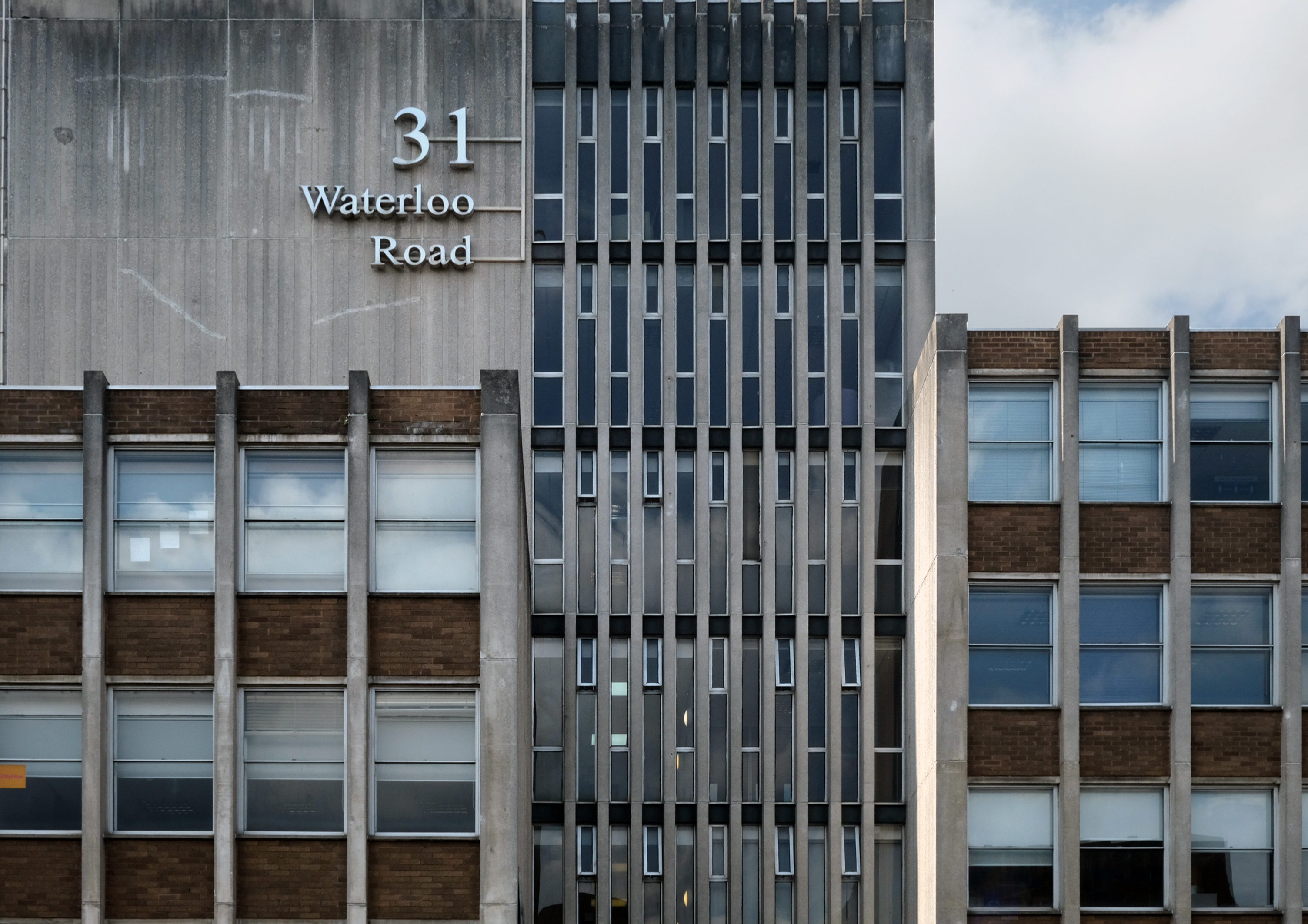
31 Waterloo Road – Waterloo Court architects: Kenneth Wakeford, Jerram & Harris 1972

Right turn to the Telephone Exchange

Architects: NHA Gallagher of the Ministry of Public Buildings and Works and Clifford Culpin & Partners job architect Leslie Parrett 1971.

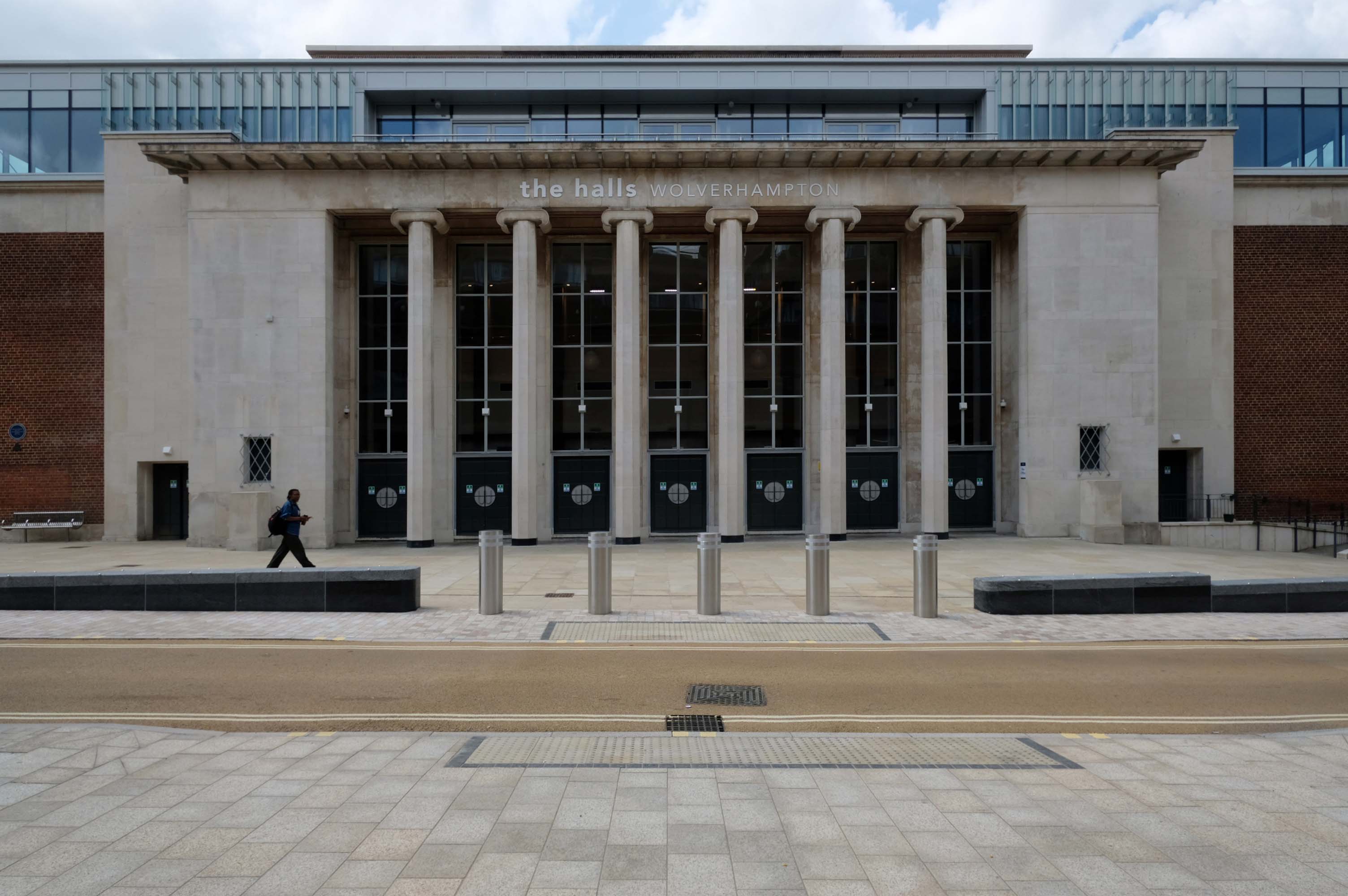
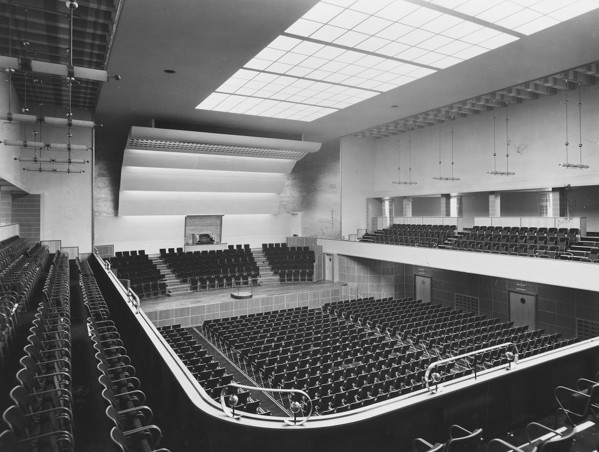
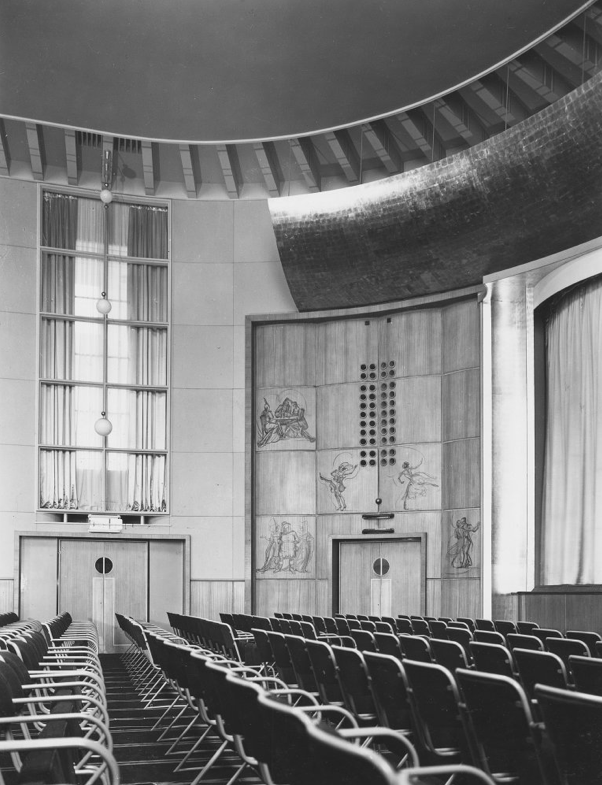
Around the bend to The Halls – once the Civic Halls.

Architects: Lyons and Israel 1936-38

Refurbished 2003 by Penoyre & Presad with more alterations in 2021 by Jacobs consulting engineers.

RIBA pix – 1939

Over the road to the Civic Centre.

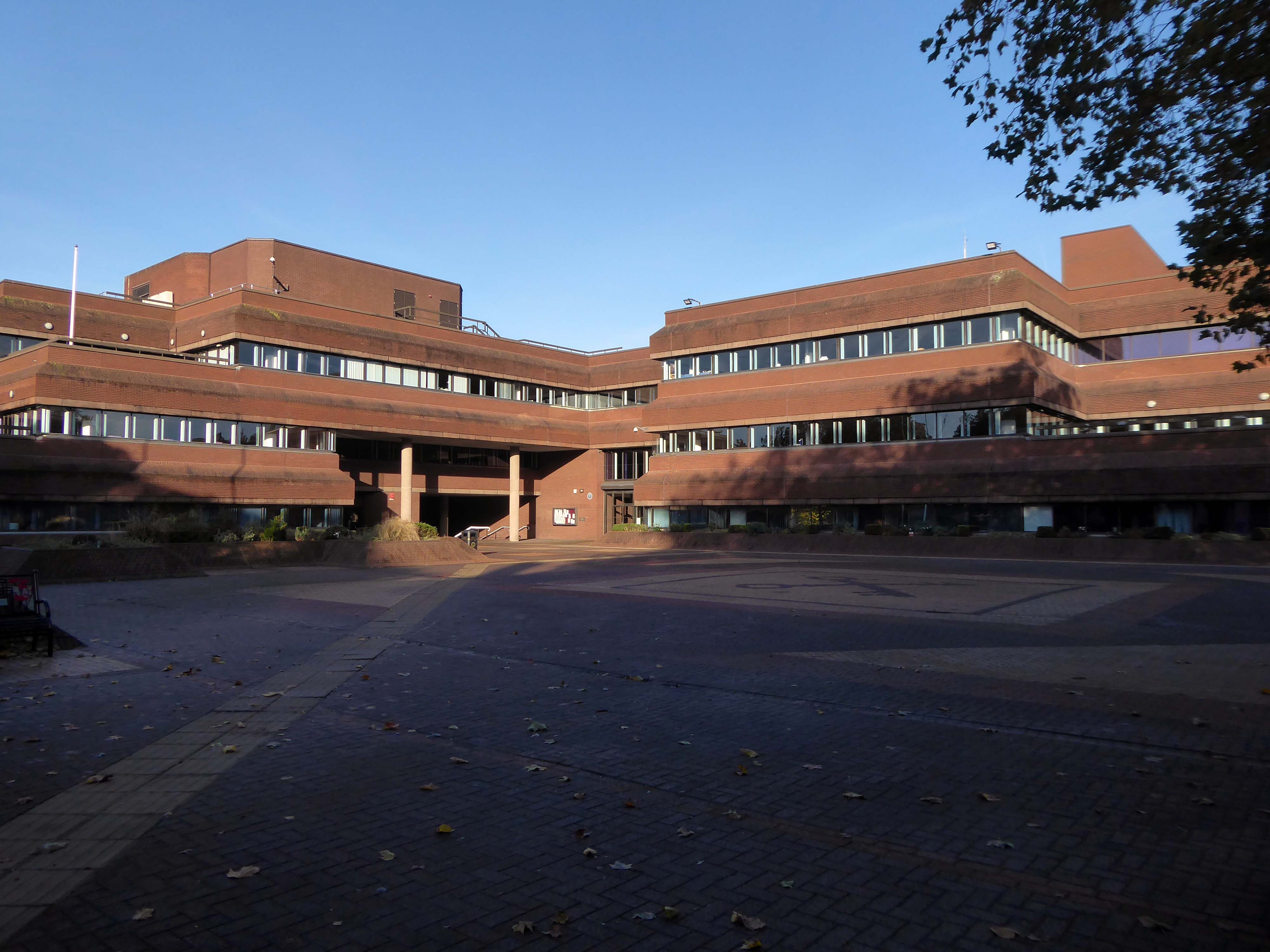
Architects: Clifford Culpin & Partners 1974-79.

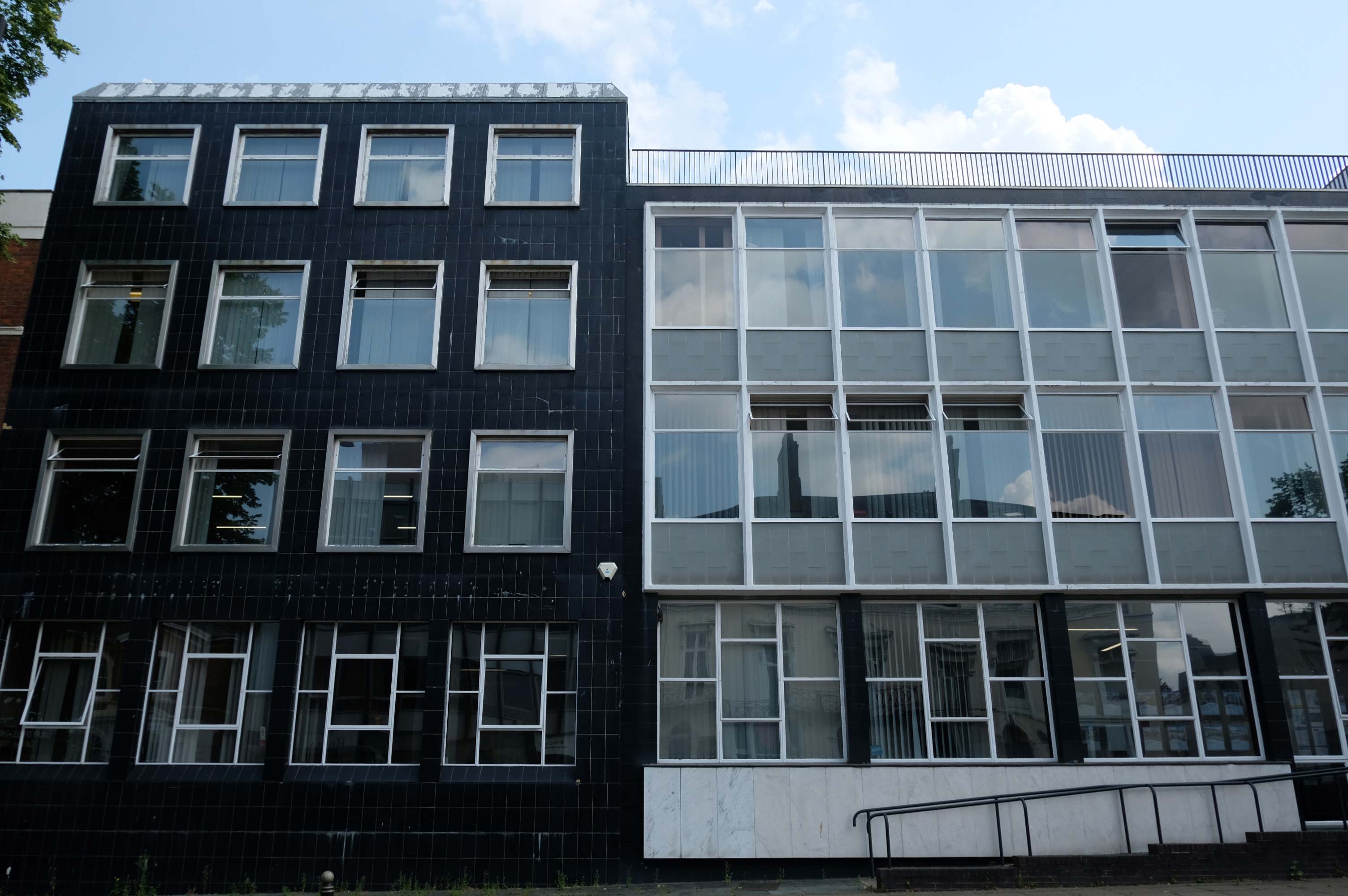
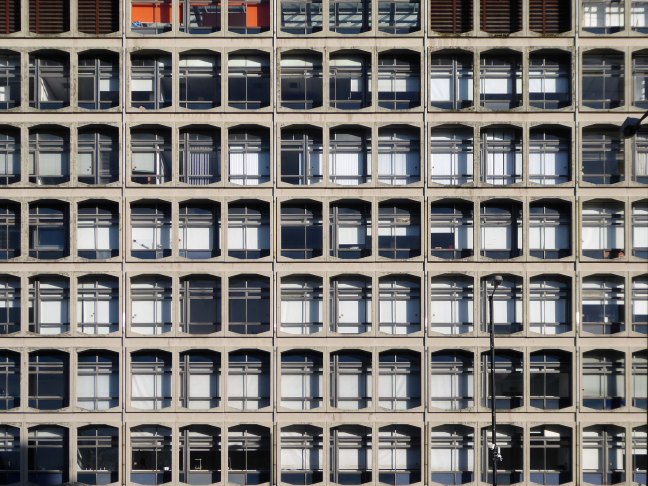
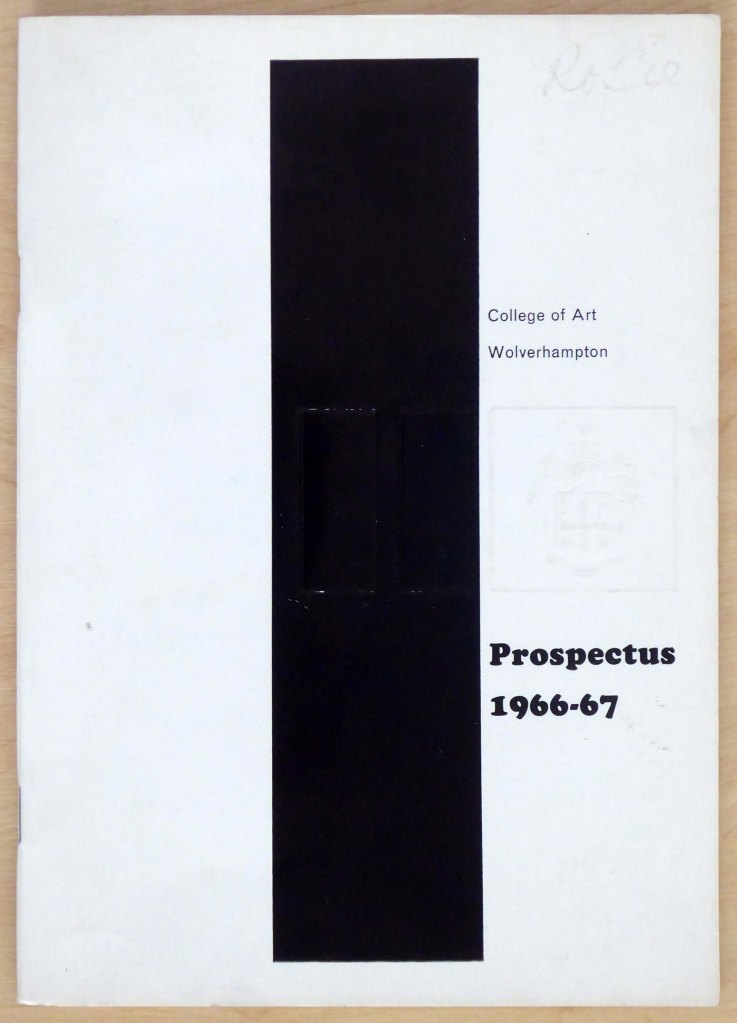
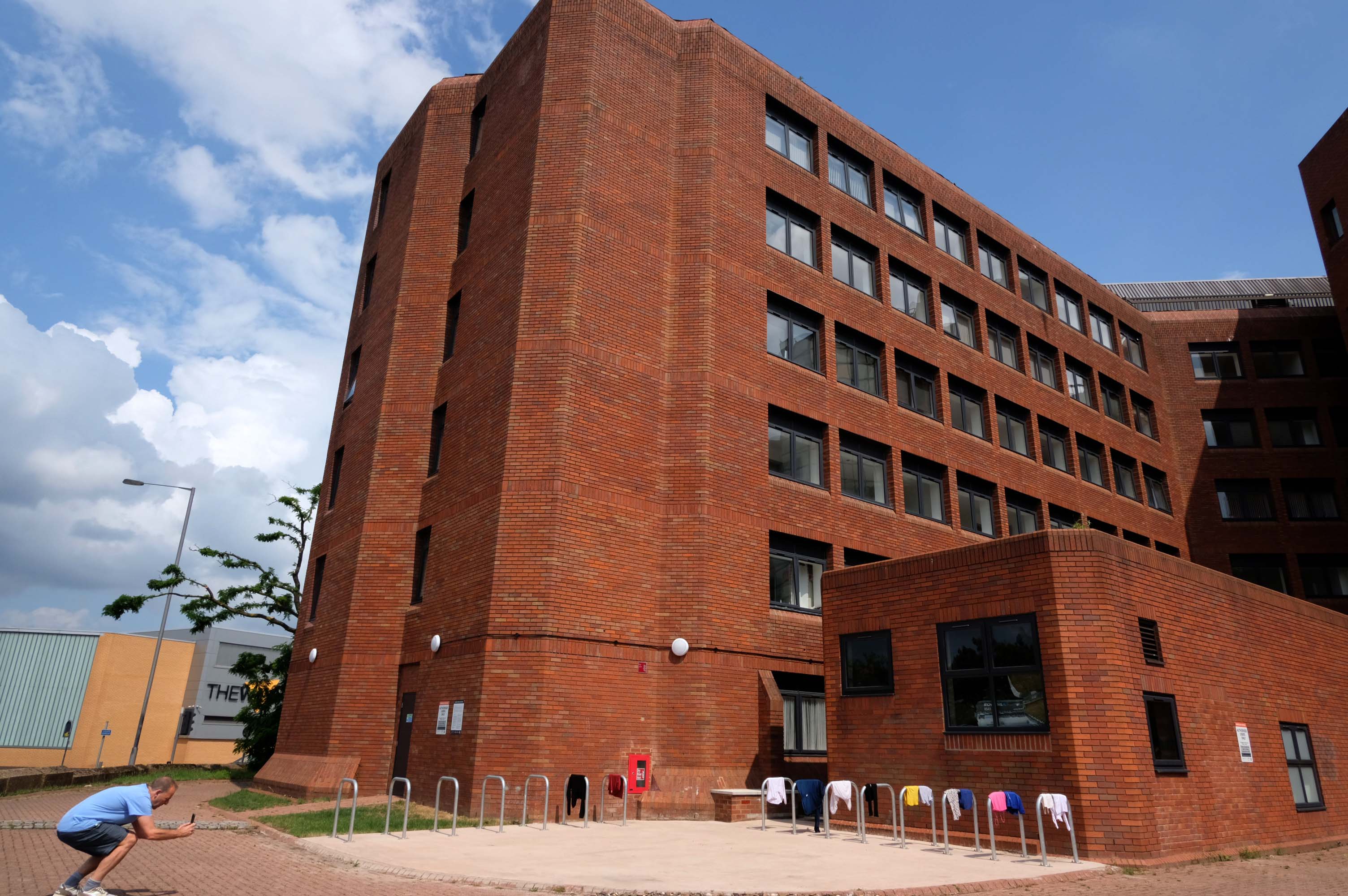
We end our Wolverhampton wander at the College of Art and Design

Architects: Diamond Redfern and Partners with A Chapman Borough Architect 1969

Huge thanks to Tom Hicks aka Black Country Type for his invaluable assistance.

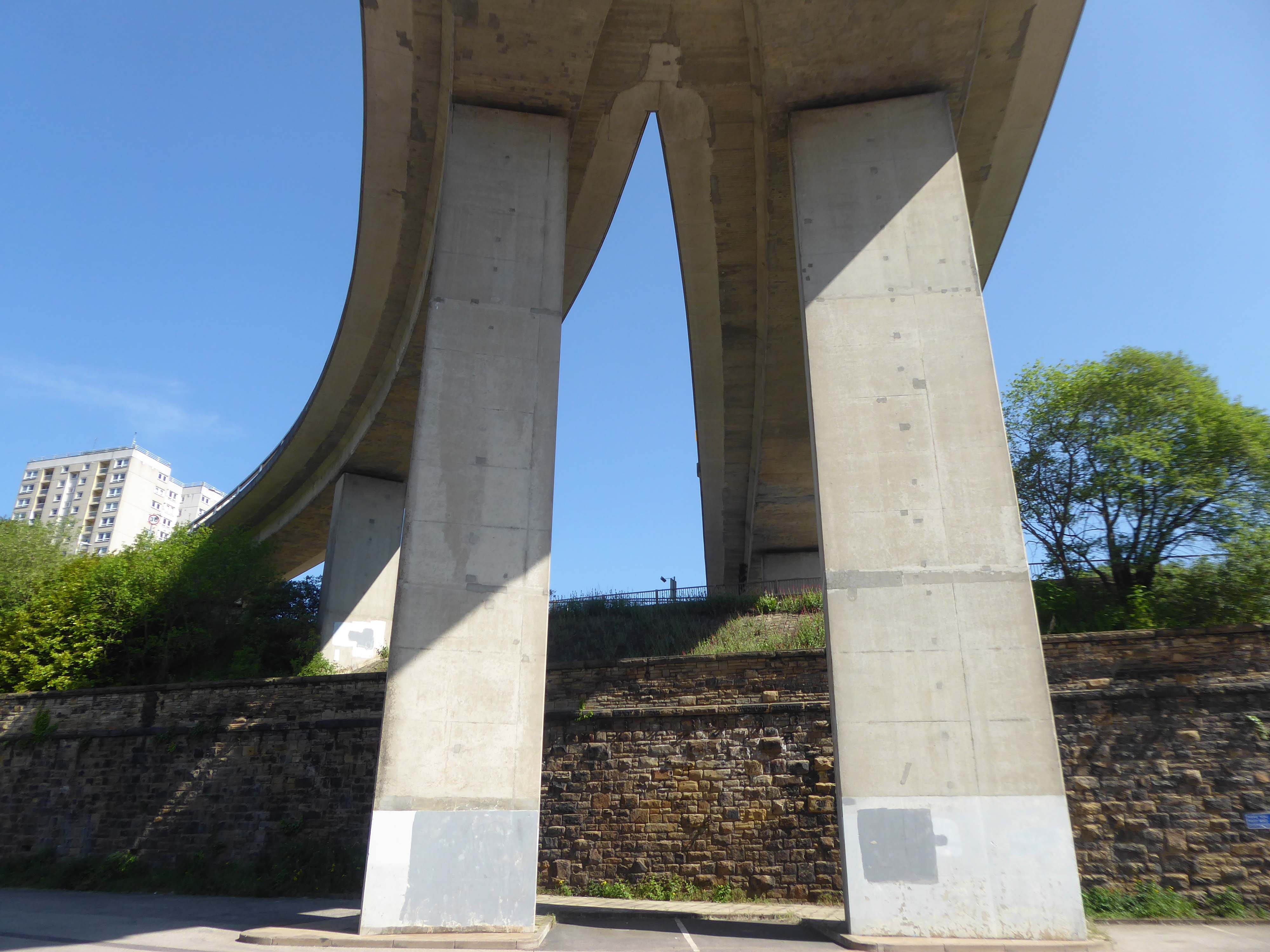
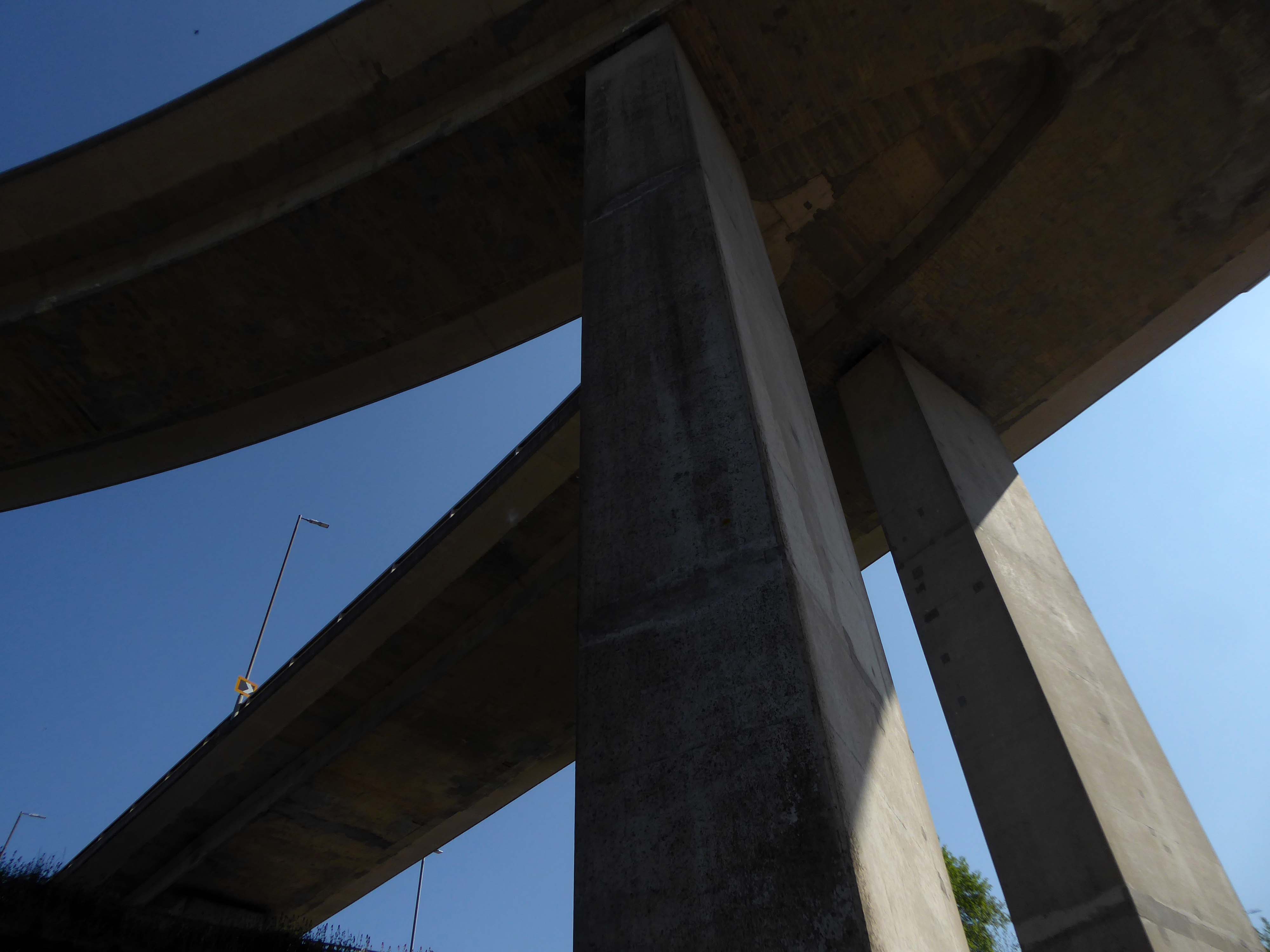
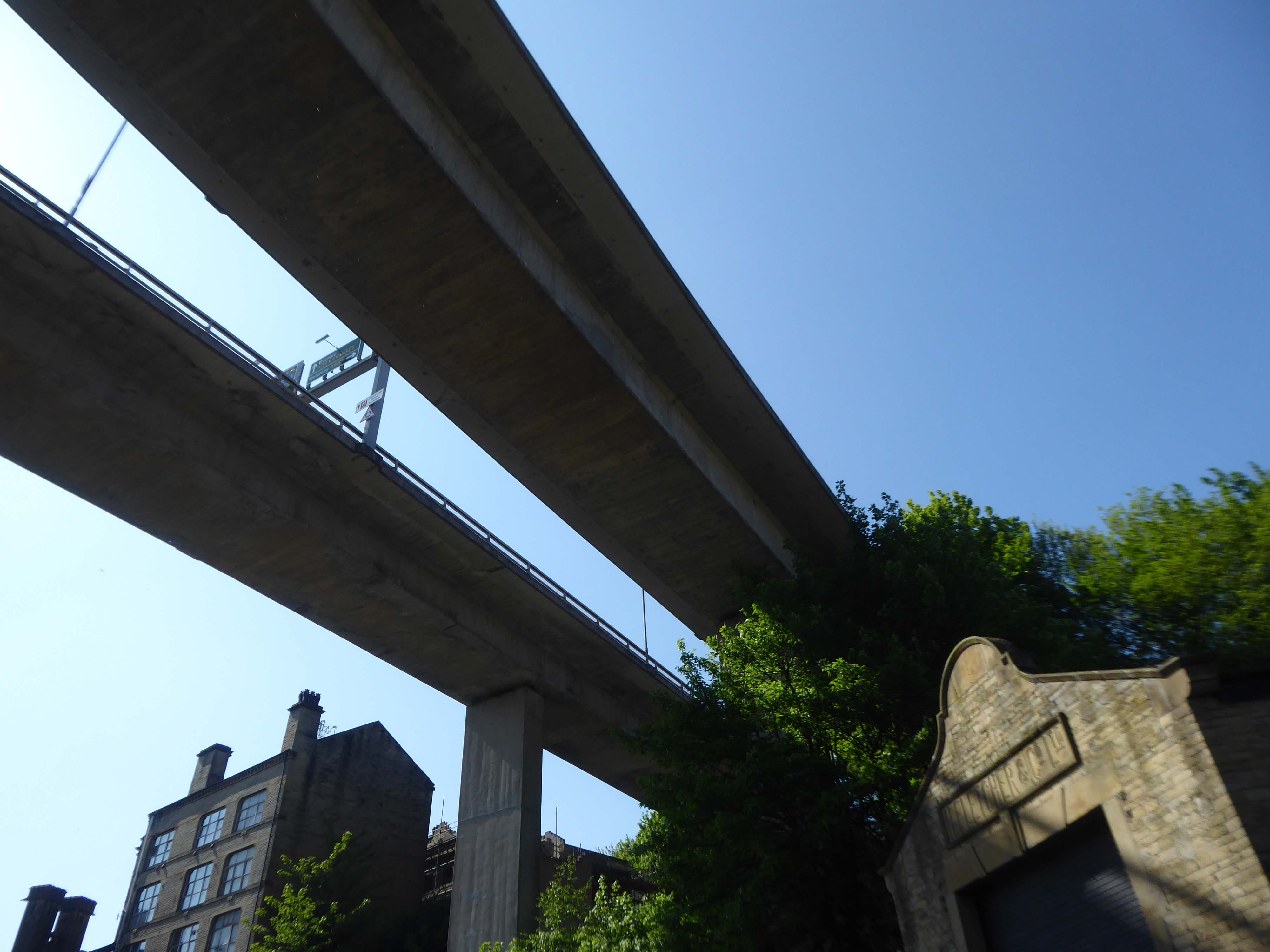
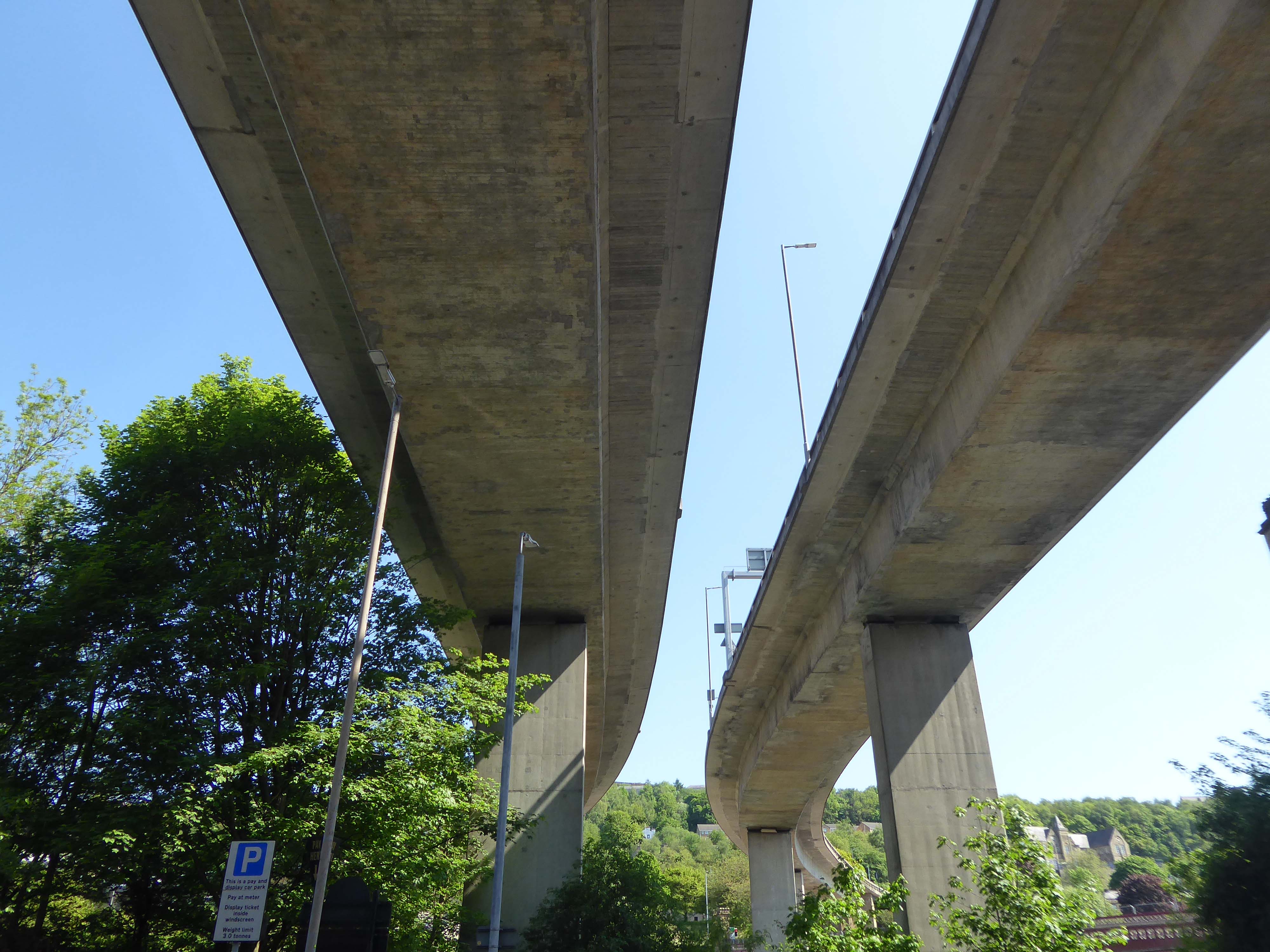
Burdock Way – Halifax

One man who saw the wisdom of building a road infrastructure to deal with high volumes of traffic passing through Halifax and to provide convenient links to the M62.

That man was prominent town councillor John Burdock.

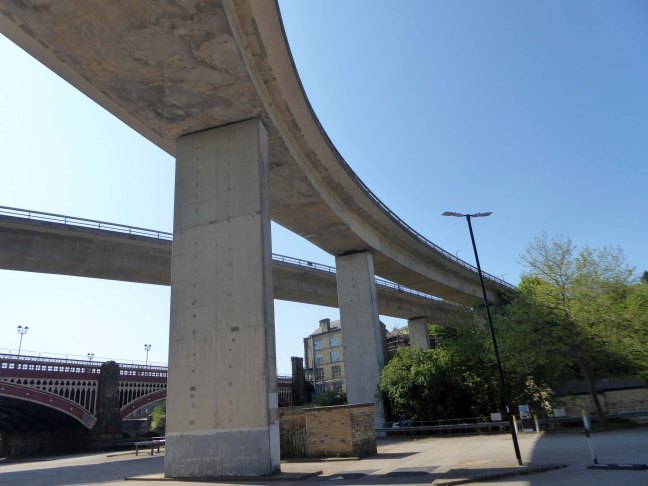
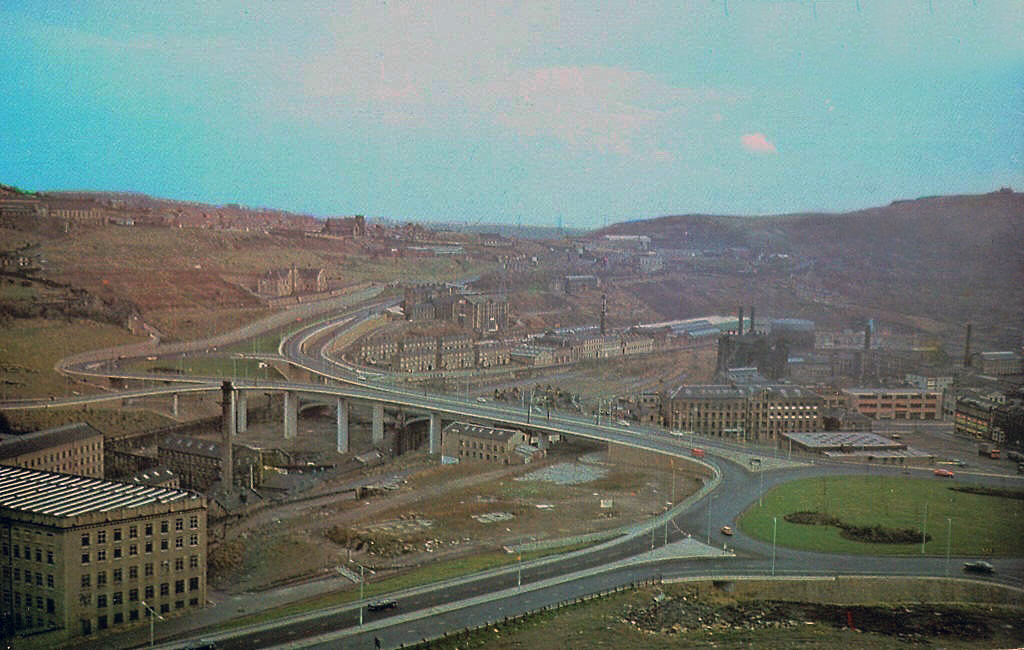
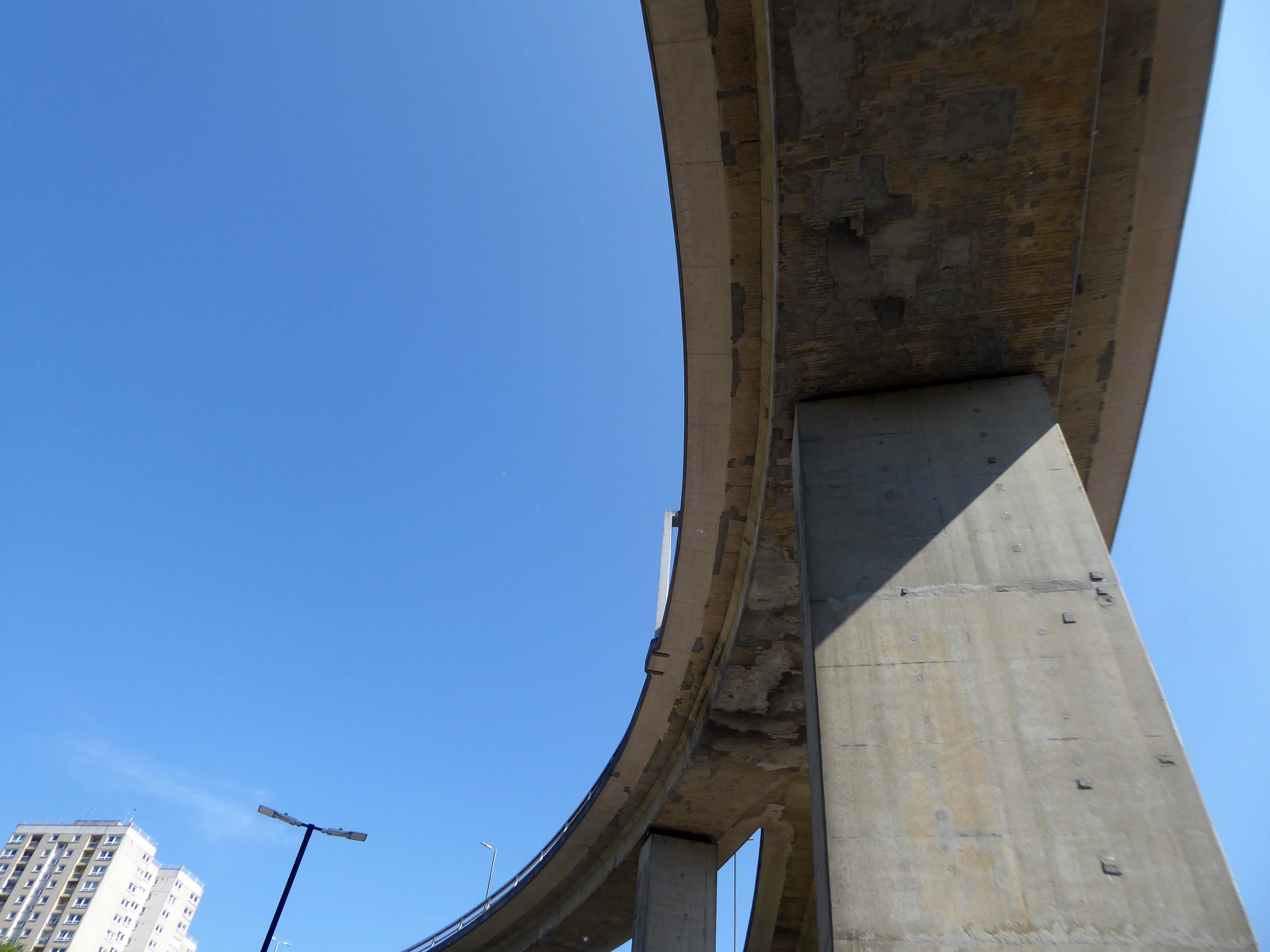
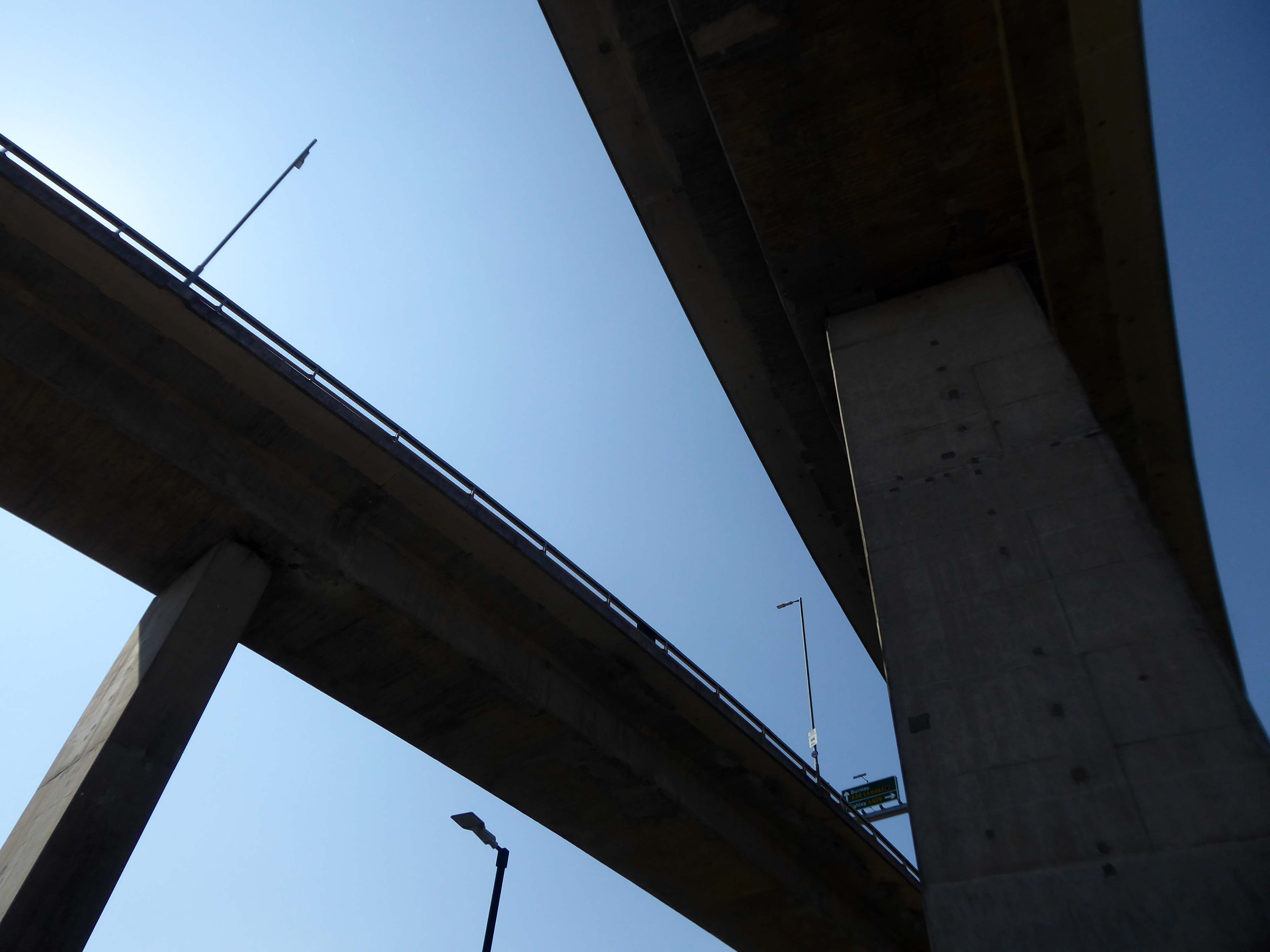
Burdock Way, the modern flyover system, was opened in 1973 to take the A58 and A629 traffic over the River Hebble.

Peter Tuffrey: From The Yorkshire Post Archive

Faced with the problem of very high volumes of through traffic in its town centre, and with the impending construction of the M62 too far to the south to provide relief for the town, Halifax needed a bypass. The steep sided valley that the town centre inhabits prevented a conventional road from being built around the town, and so in the early 1970’s construction began on Burdock Way – one of the most adventurous relief road schemes built in Britain, certainly by a town the size of Halifax.

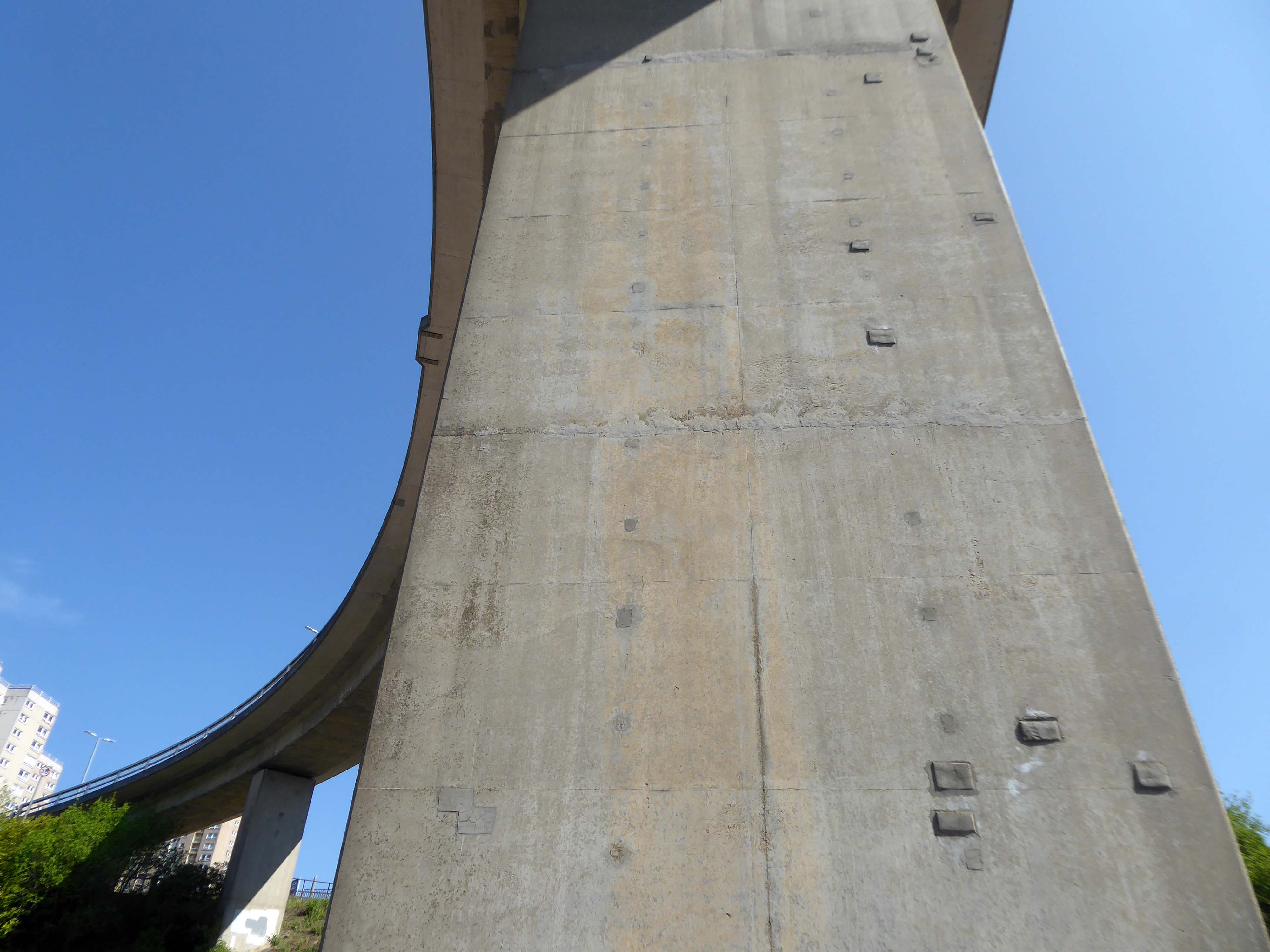
Only one phase of the futuristic road was ever built, but what exists is a partially grade-separated dual carriageway that runs through deep trenches and over tall viaducts close to the heart of the town. At its eastern end is a truly byzantine piece of traffic engineering that stretches the definition of a roundabout to its limit.

Roads

In October 1971 the official celebrations went anything but according to plan. It had been decided to give the people of Halifax a half day holiday so they could attend the opening, but there were not enough police on duty to control the sightseers. It was impossible to get complete silence for the speeches and arrangements to tell the artillery guns at Southowram Road when to fire broke down. They were fired prematurely while an archdeacon was offering prayers. The Mayor, HC McCrae, finally managed to announce that the bridge was officially open and he scurried back to the town hall where he hosted a banquet.

Burdock Way has never been fully completed as it is missing certain sections envisaged in the early 1960s plans. There are a number of reasons for this, but it is mainly owing to West Yorkshire County Council’s cost cutting in the 1970s. 

Yorkshire Post

This is the Valley of the Gwangi in the West Riding – minus the dinosaurs.

An urban chasm, the gulf between everything and nothing.

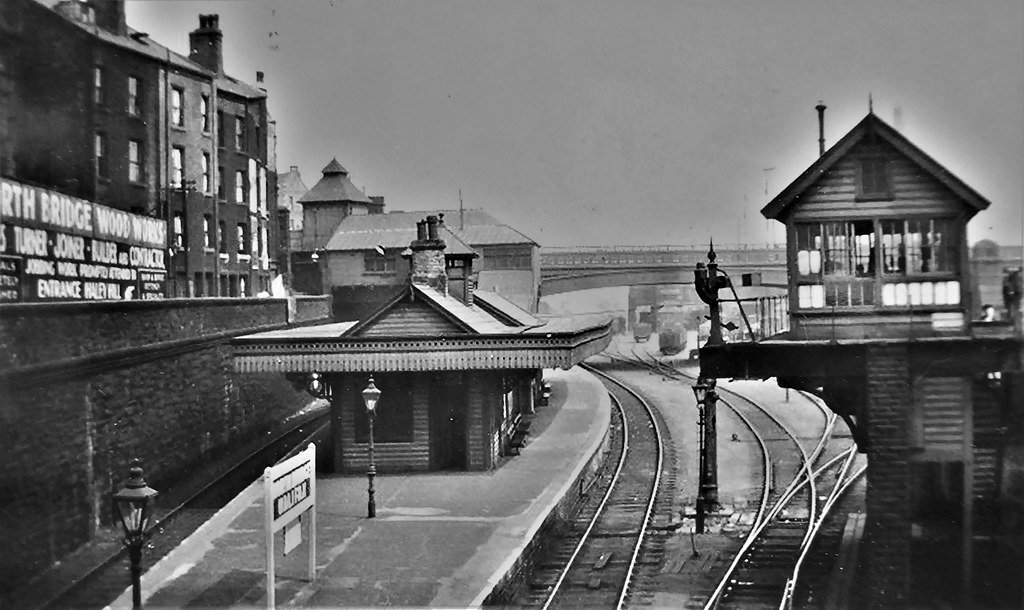
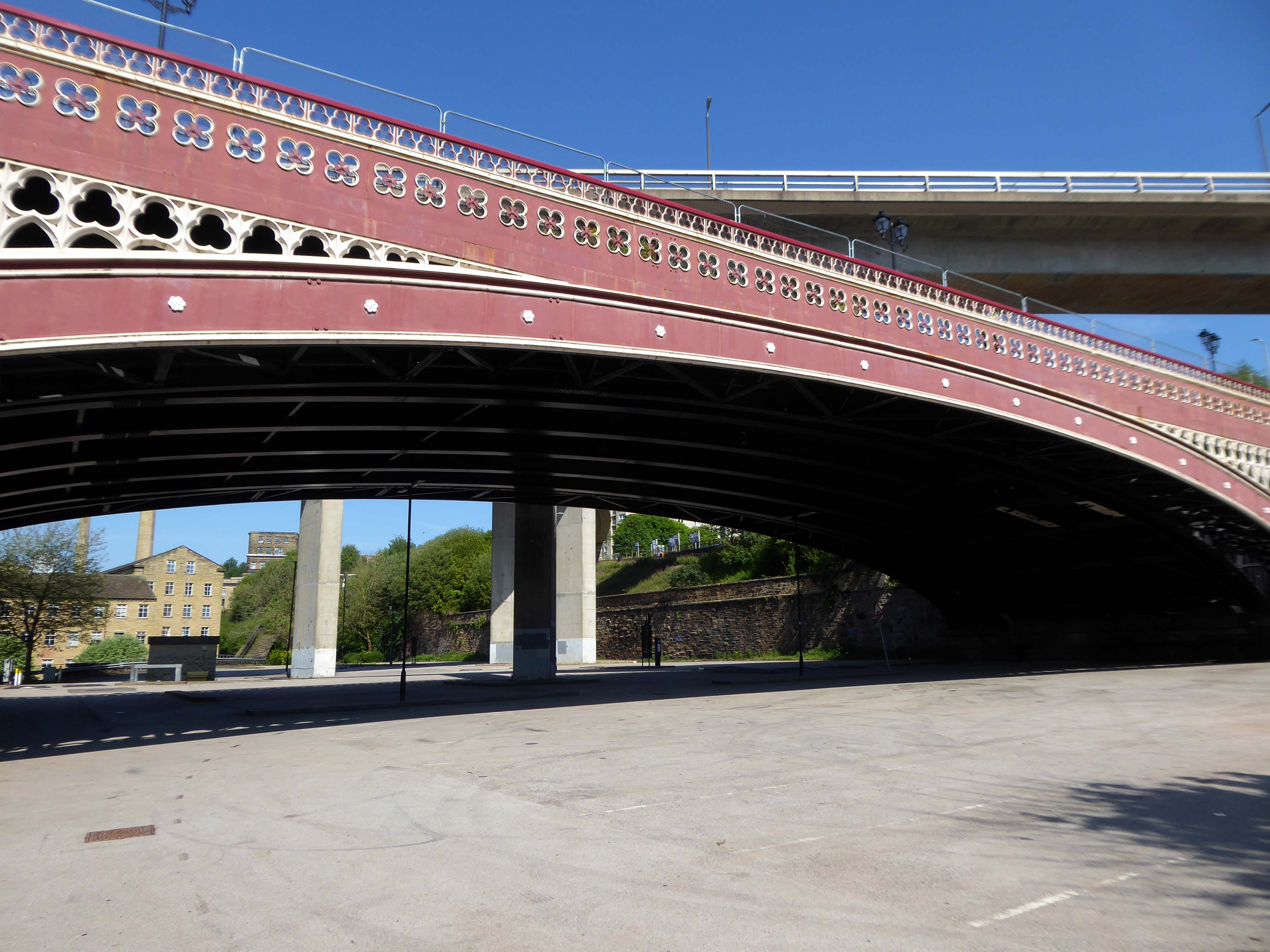
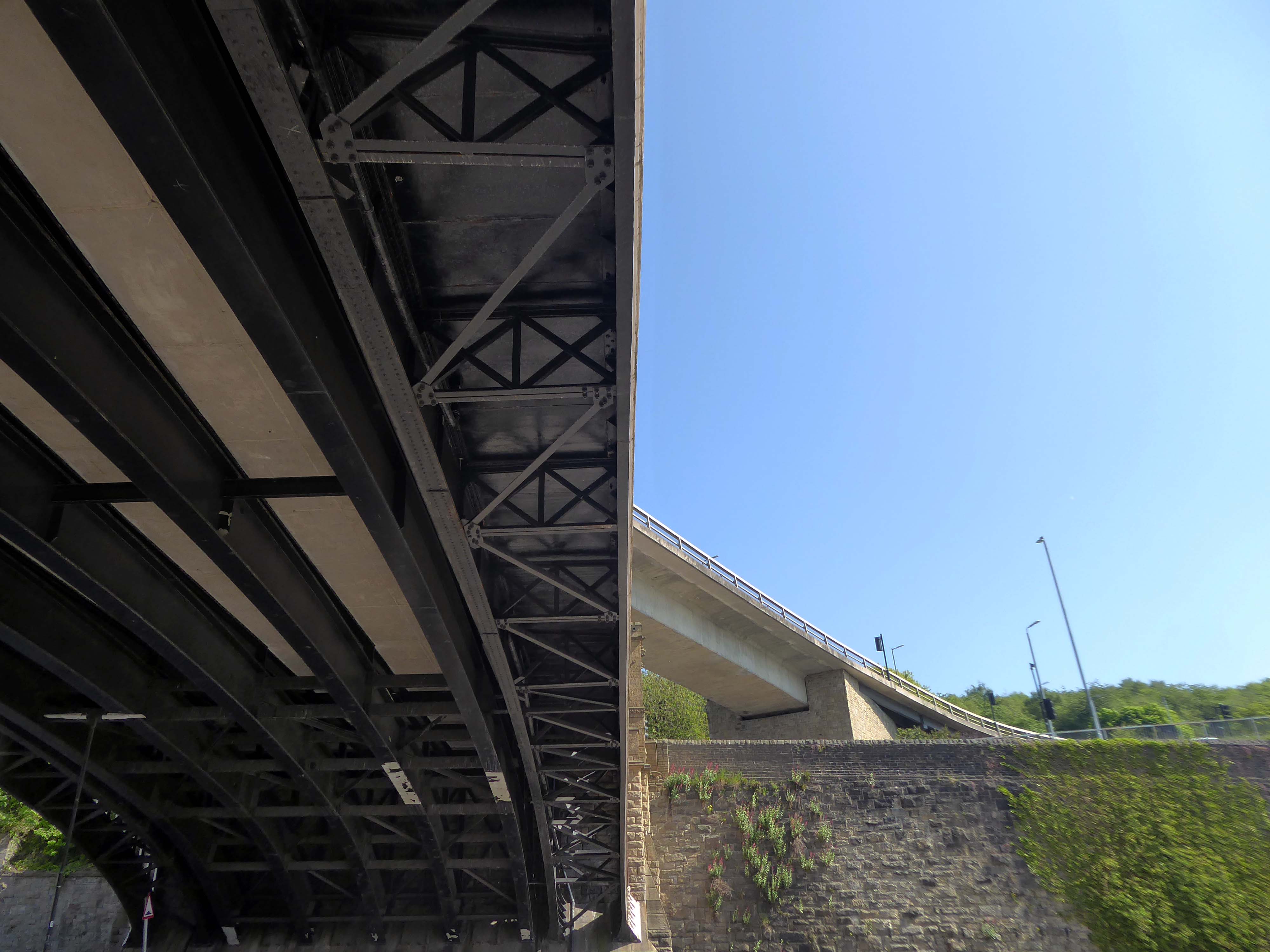
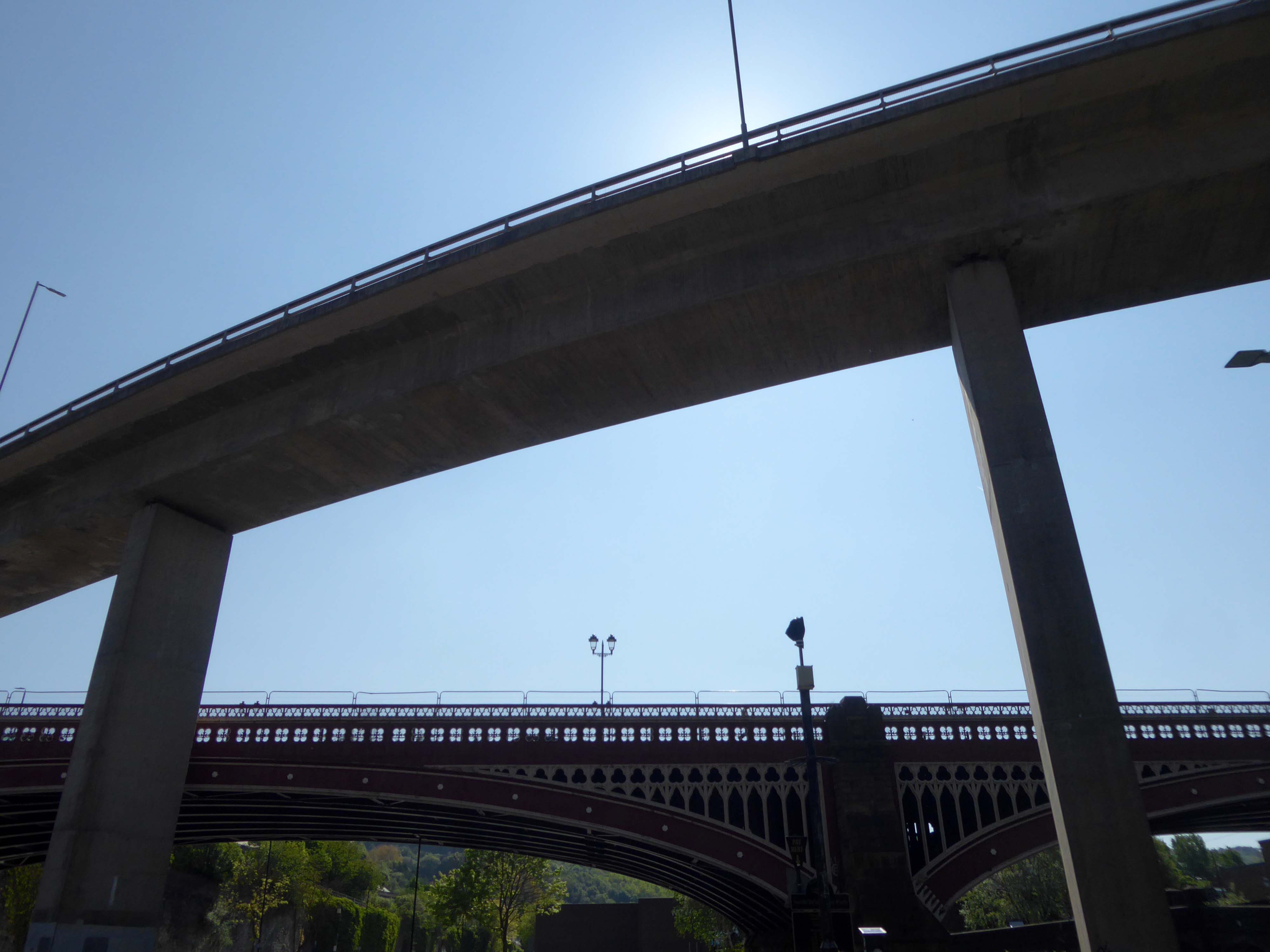
North Bridge is a Victorian iron and stone bridge crossing the valley of the River Hebble, connecting the town to roads to Bradford and Leeds. Replacing an earlier six arch stone bridge it was raised to allow the subsequent construction of the Halifax High Level Railway beneath it, along with an adjoining station.

Opened in 1871 amid chaotic crowd scenes it carried increasingly heavy traffic until it was by-passed by the Burdock Way in 1973.

It remains in use for local traffic.

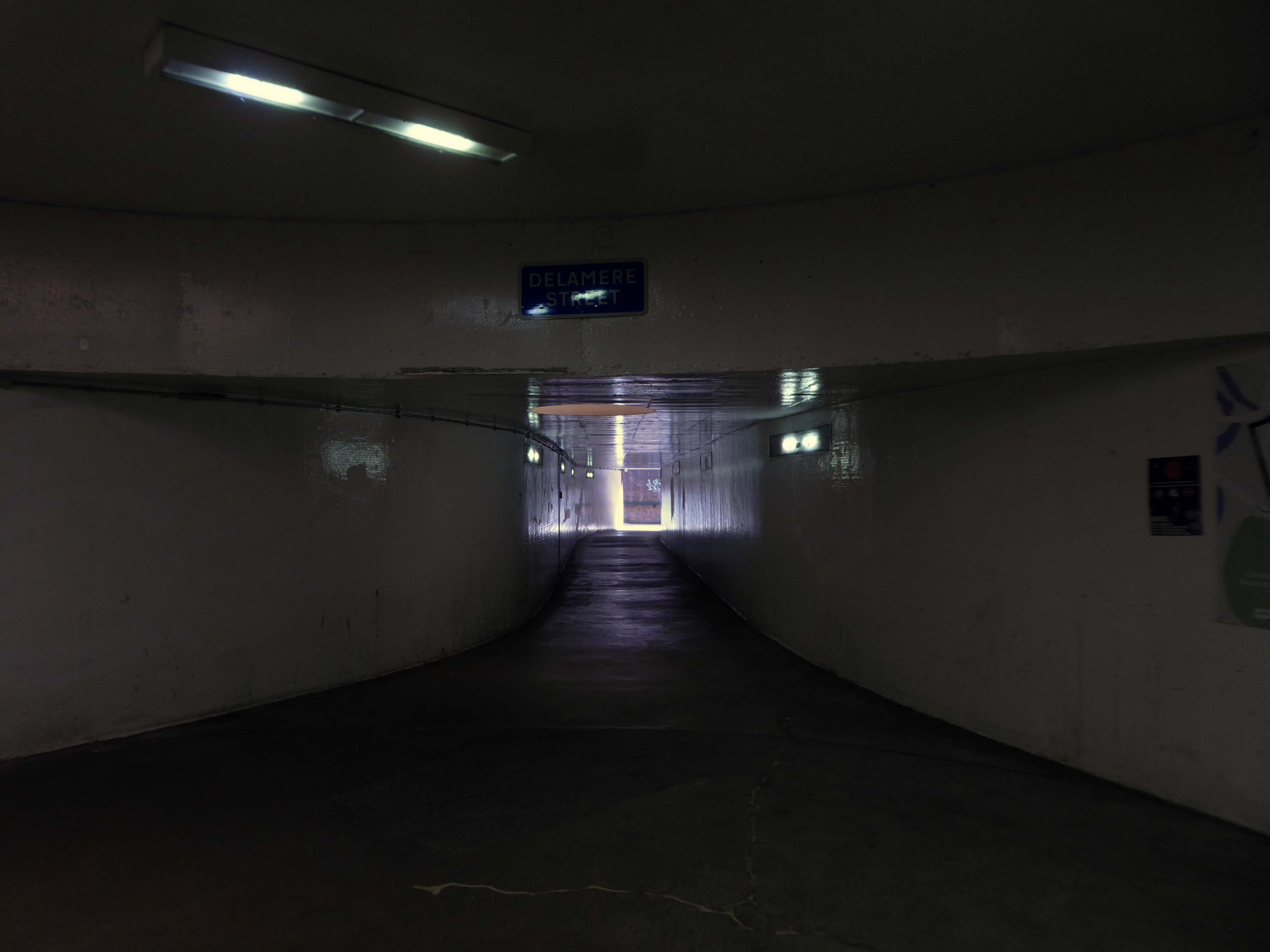
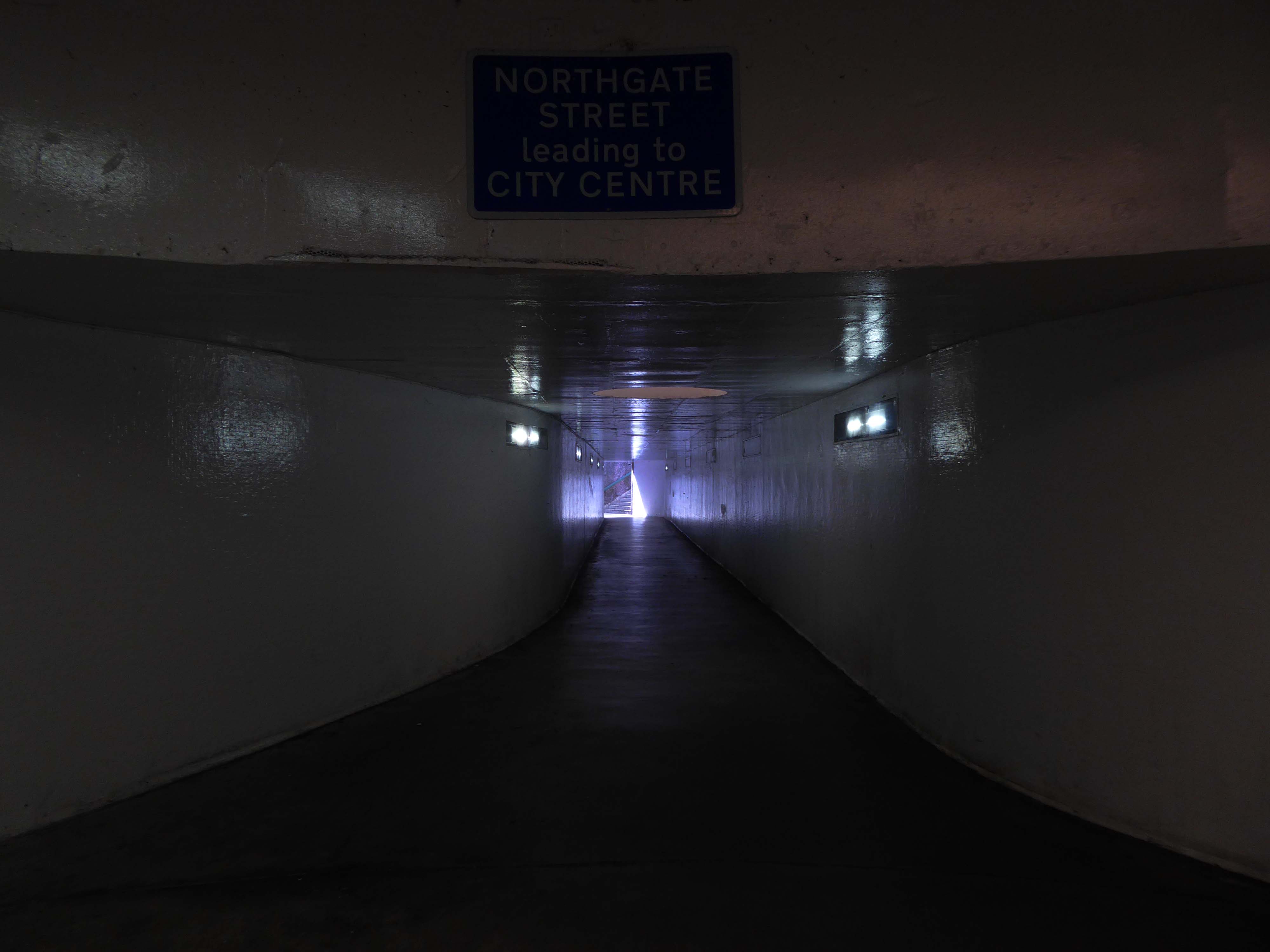
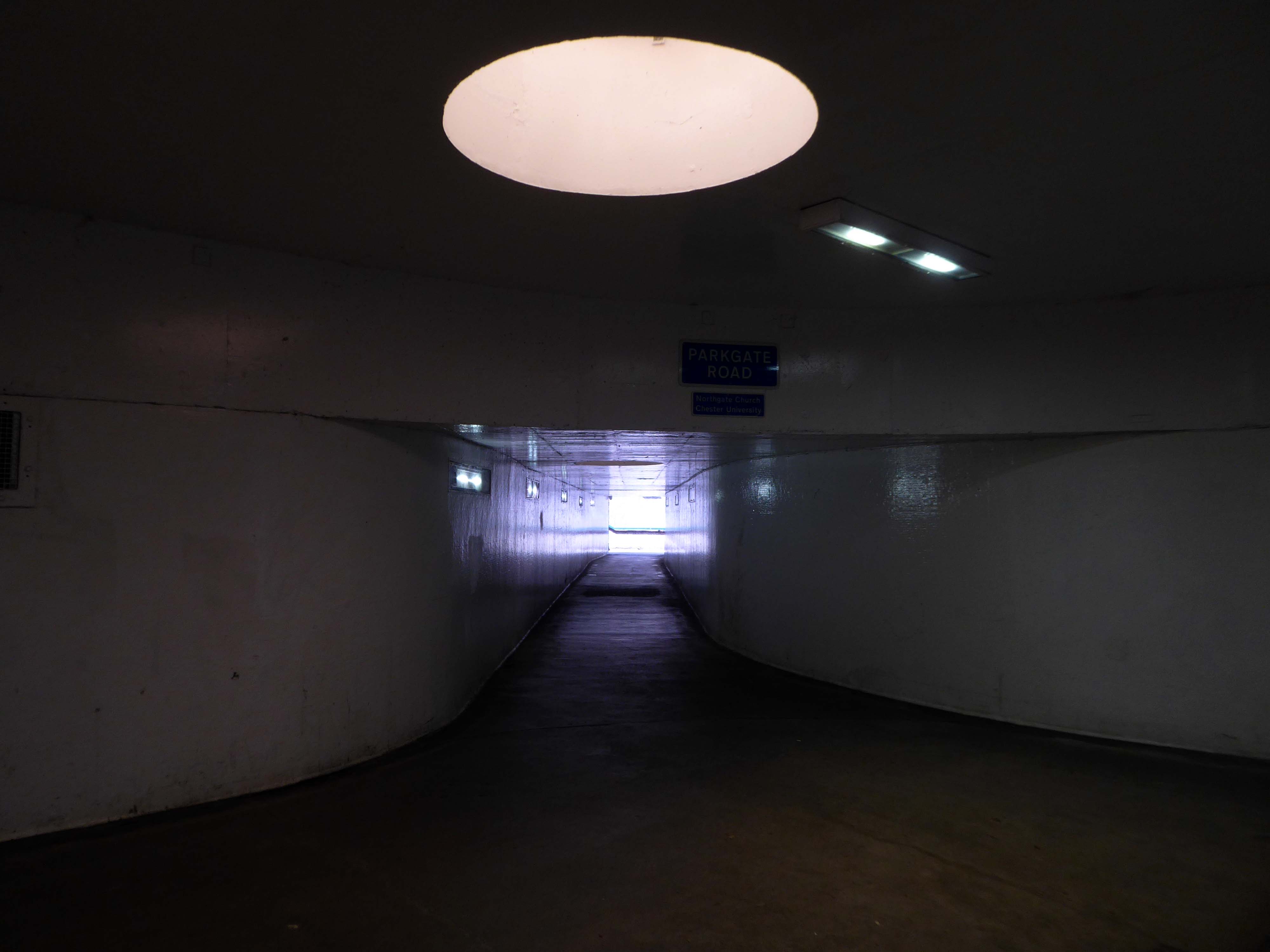
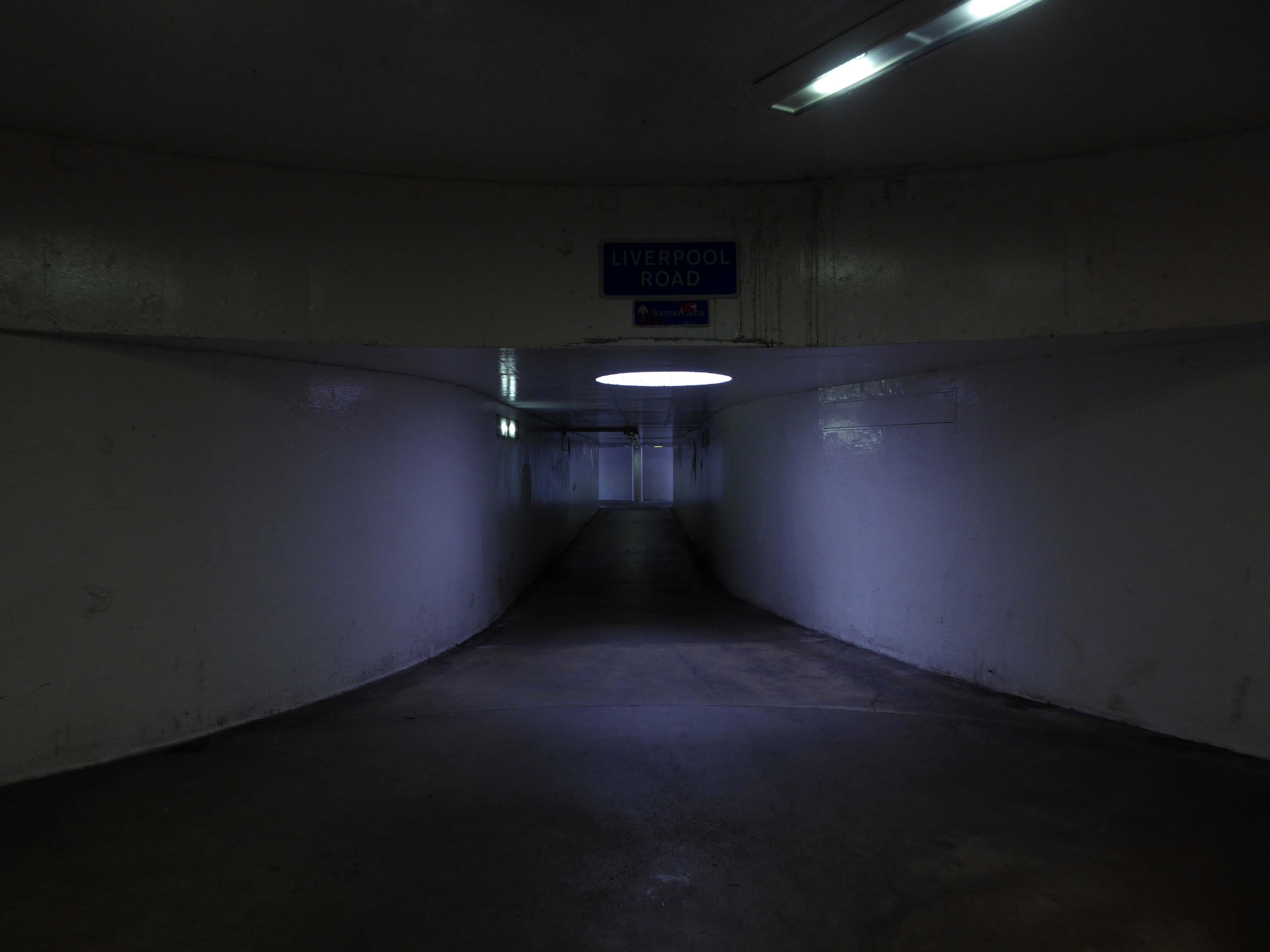
Underpass – Chester

So it came to pass I visited another underpass or two – I’m a one man subway sect.

Having been to Scarborough, Rotherham, Milton Keynes, Newcastle and Stockport.

I’m overwhelmed by the underpass, where the passage of time is both slowed and hurried.

A feeling of unease will hasten your pace, a strange sense of transcendence allows you to linger longer.

There’s a world going on underground.

Rattle big black bones in the danger zone
There’s a rumblin’ groan down below
There’s a big dark town, it’s a place I’ve found
There’s a world going on underground

Tom Waits

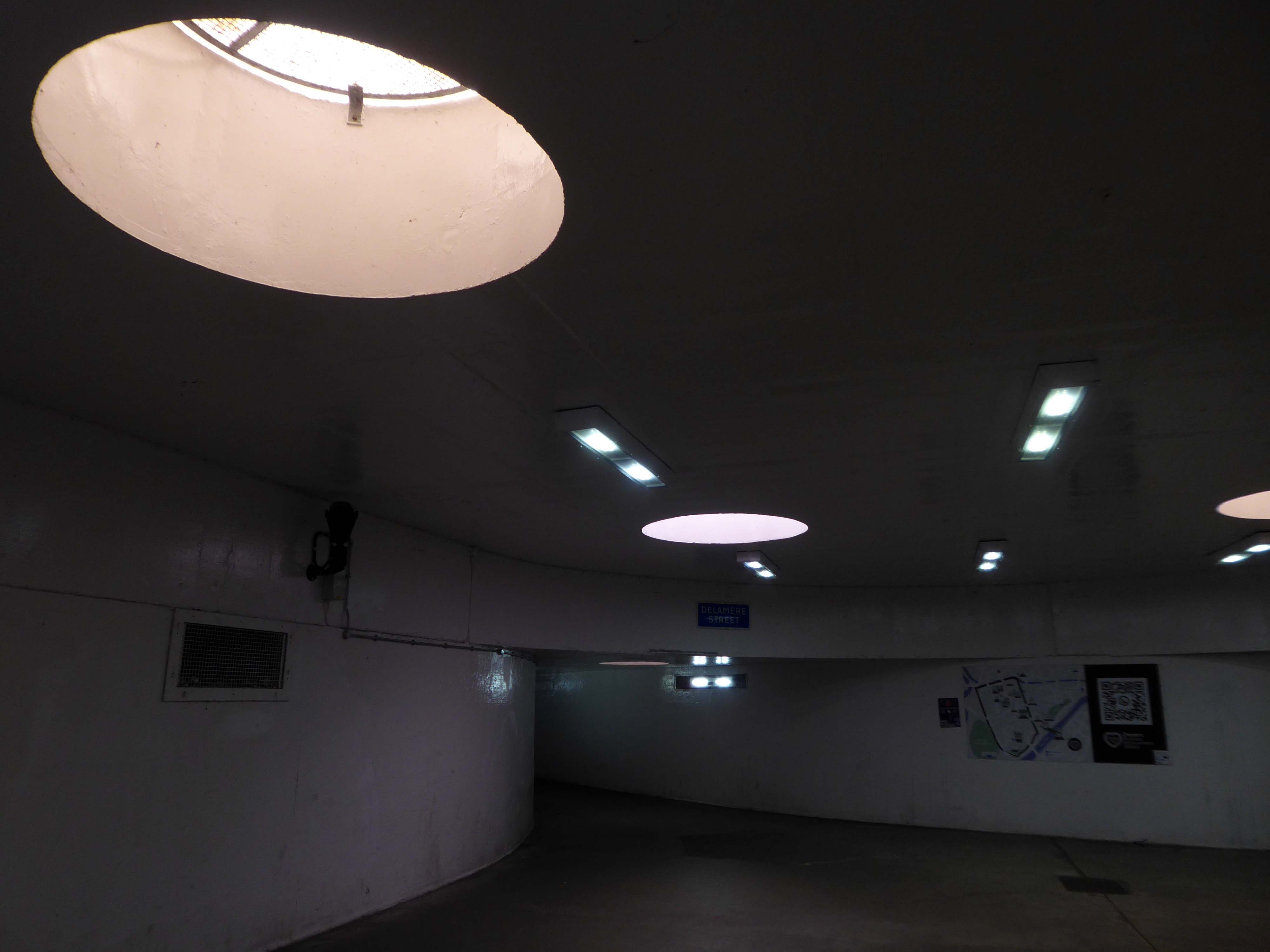
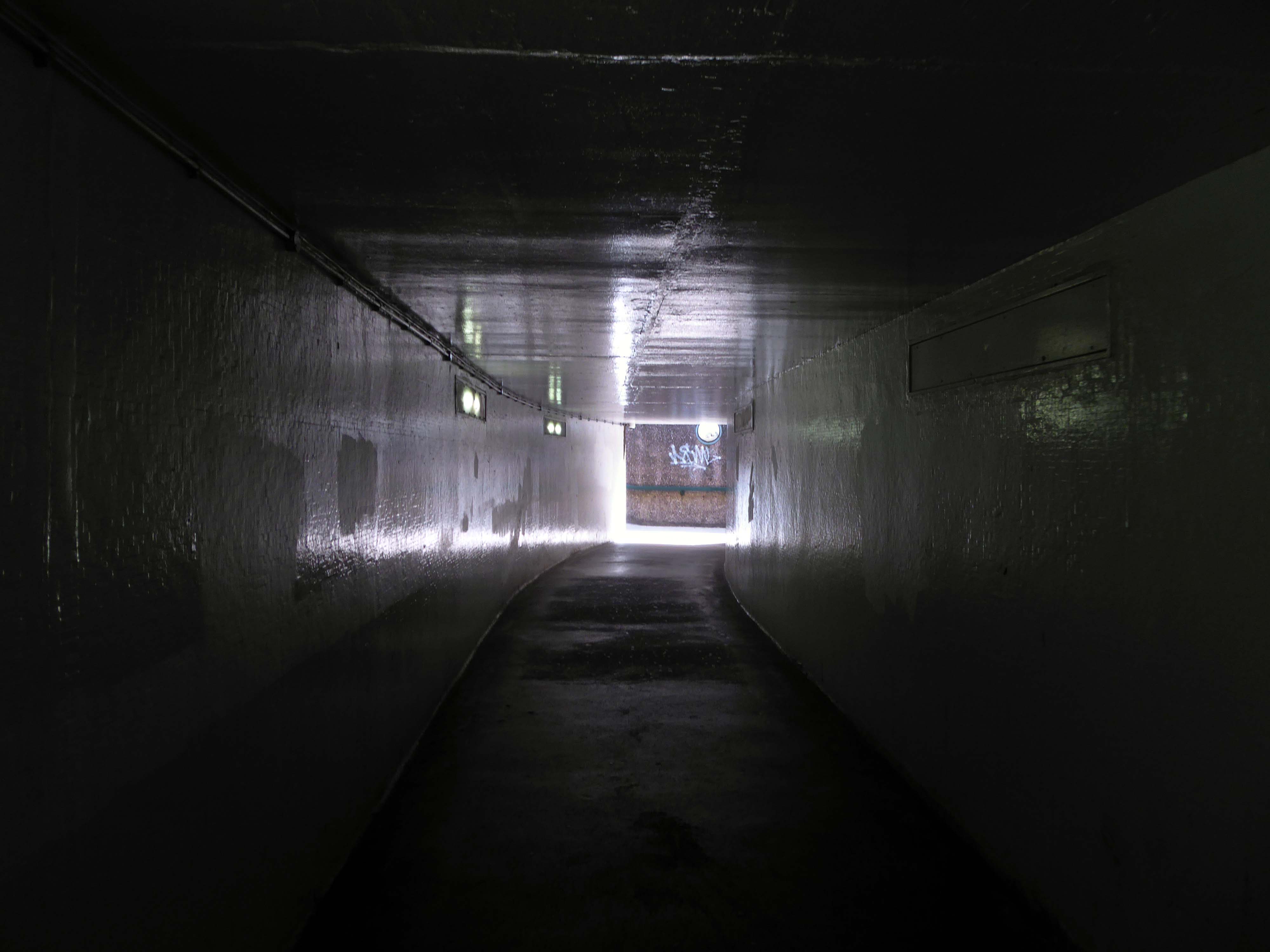
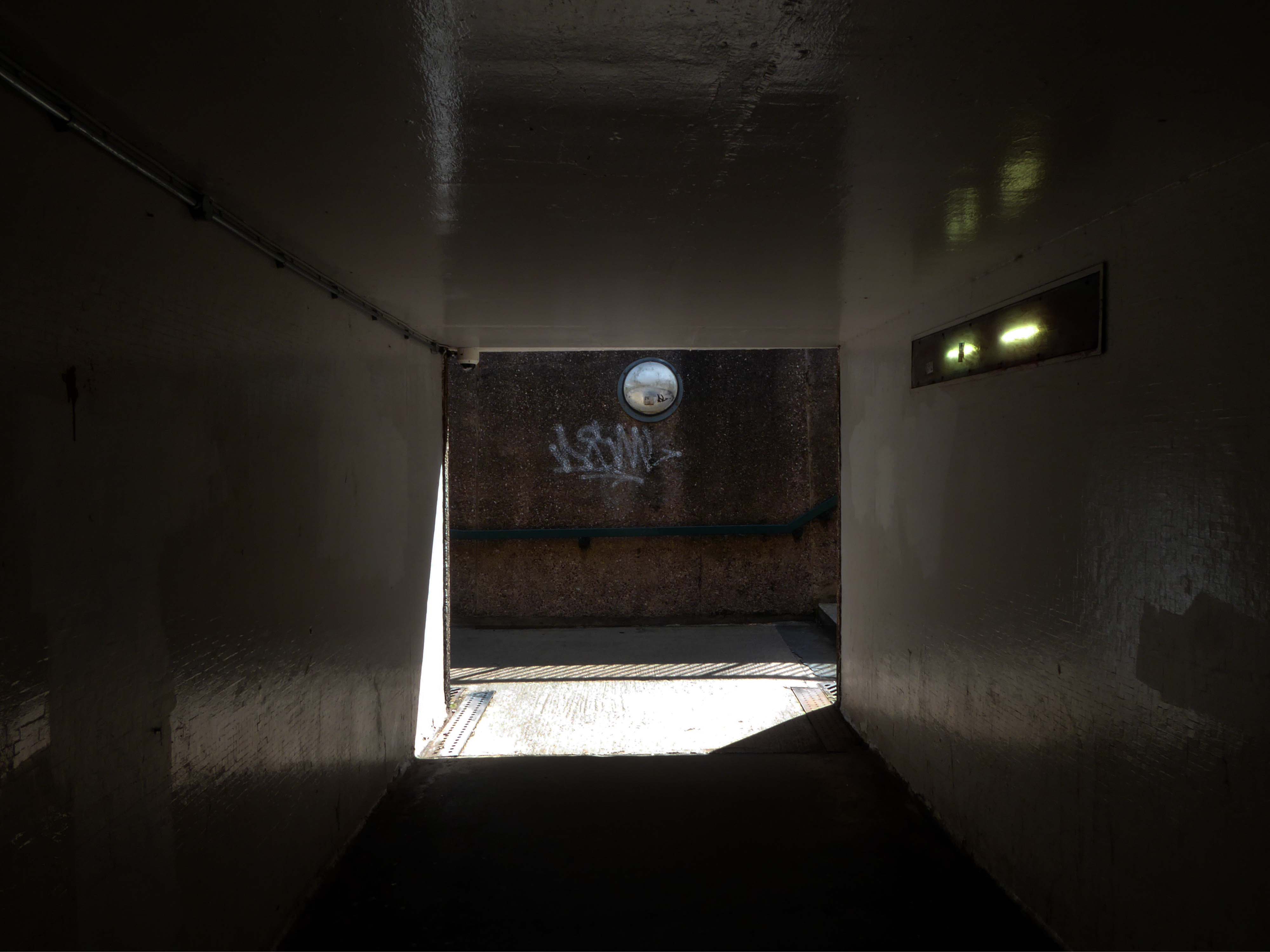
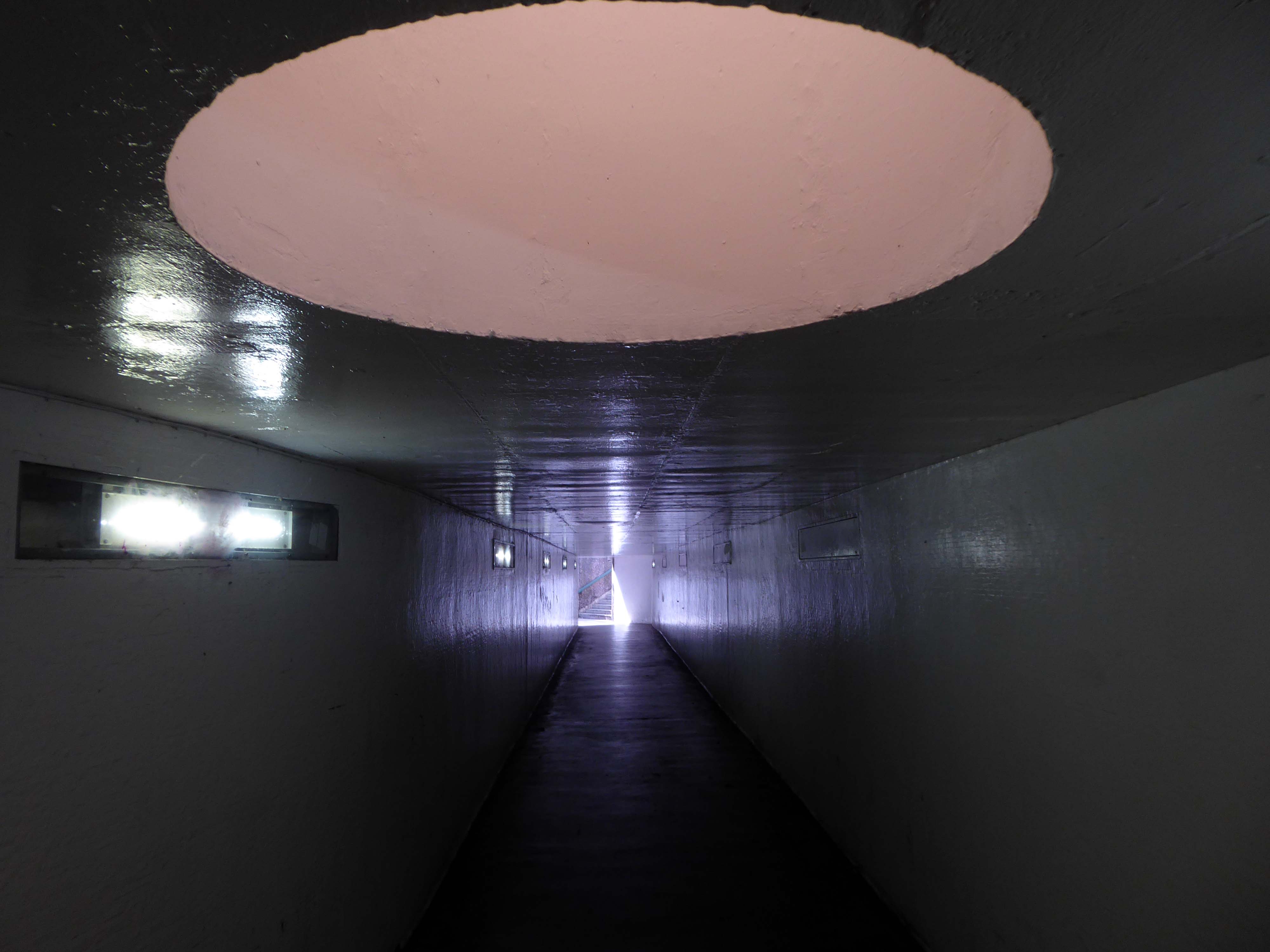
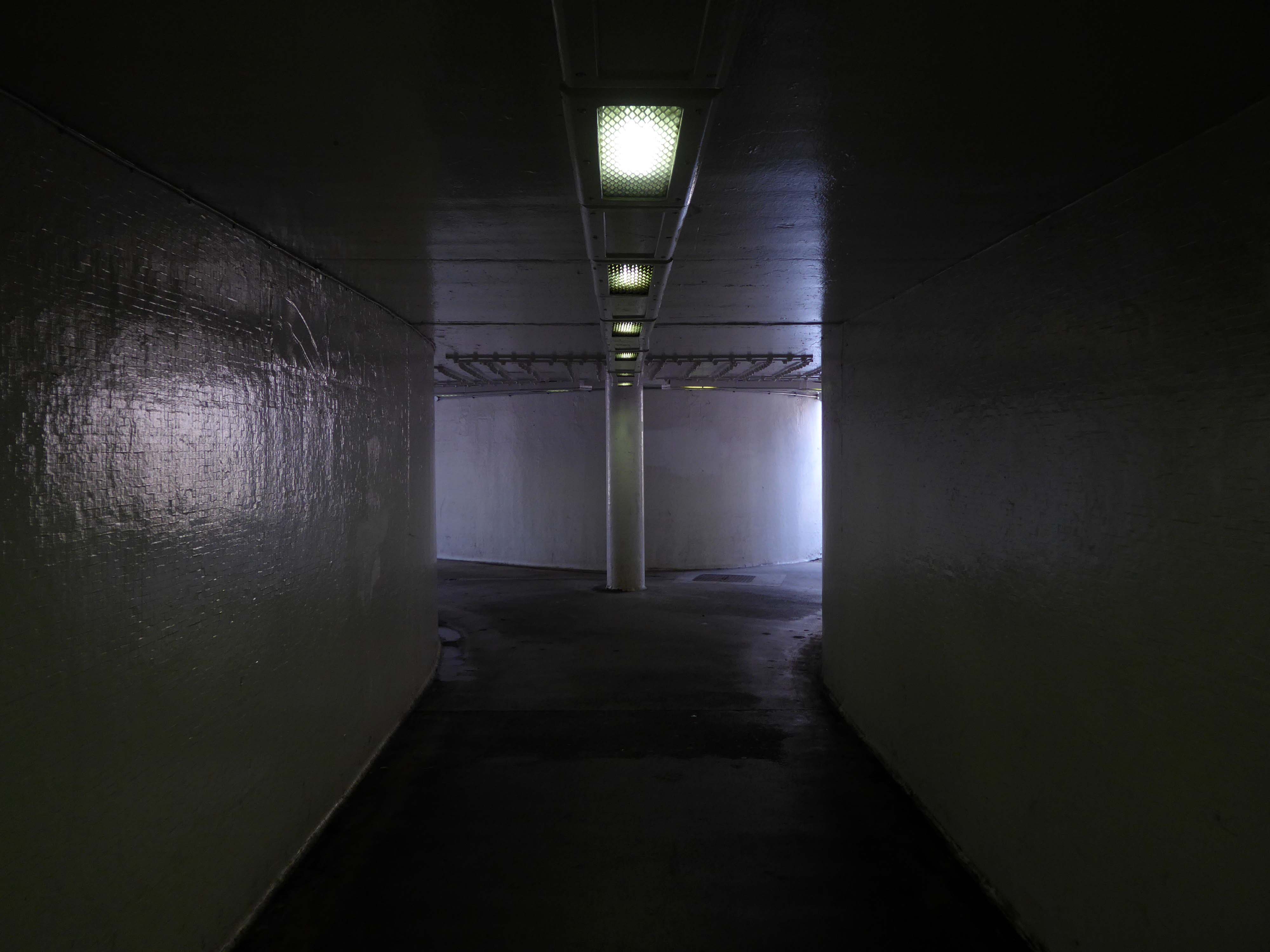
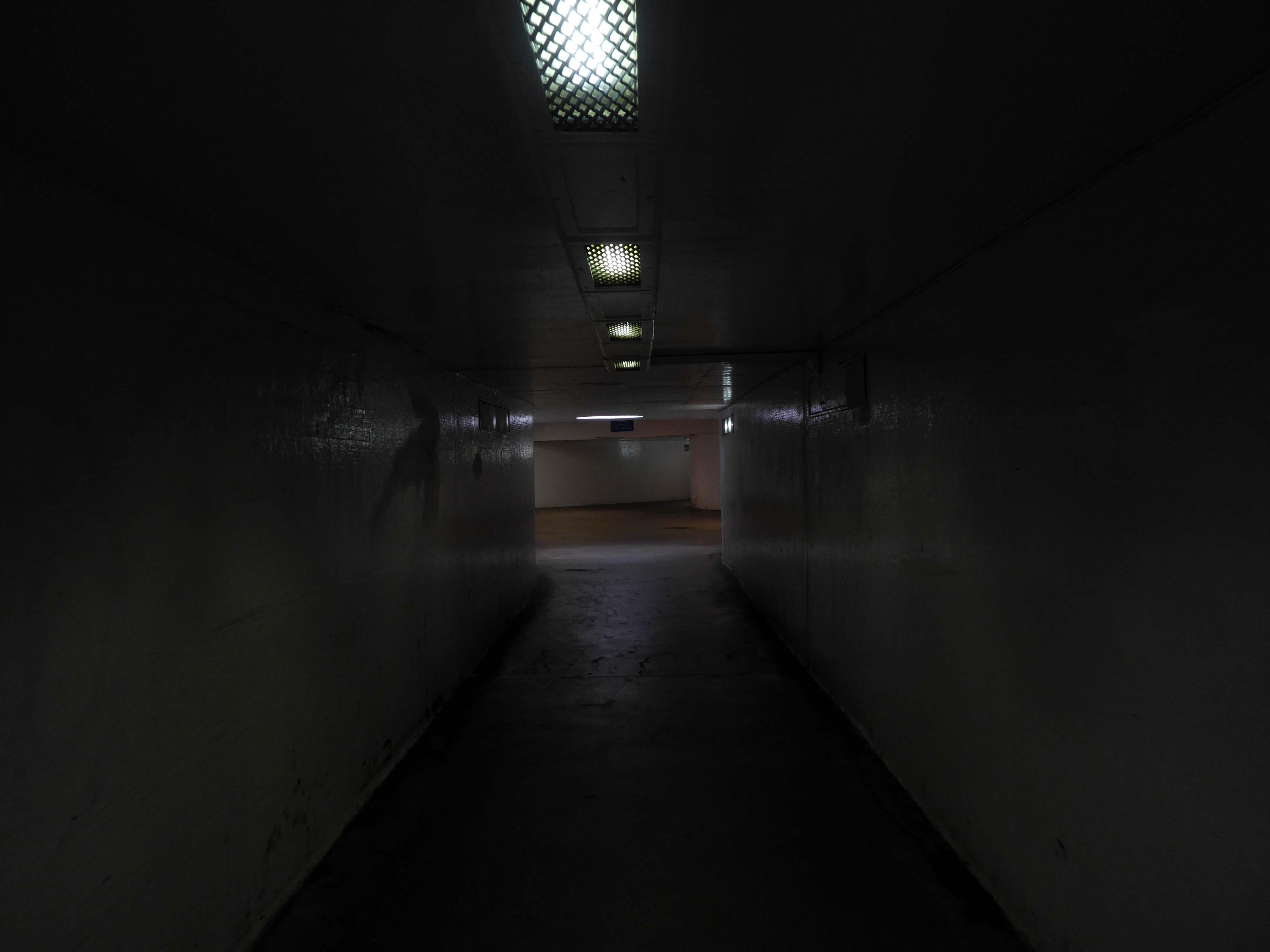
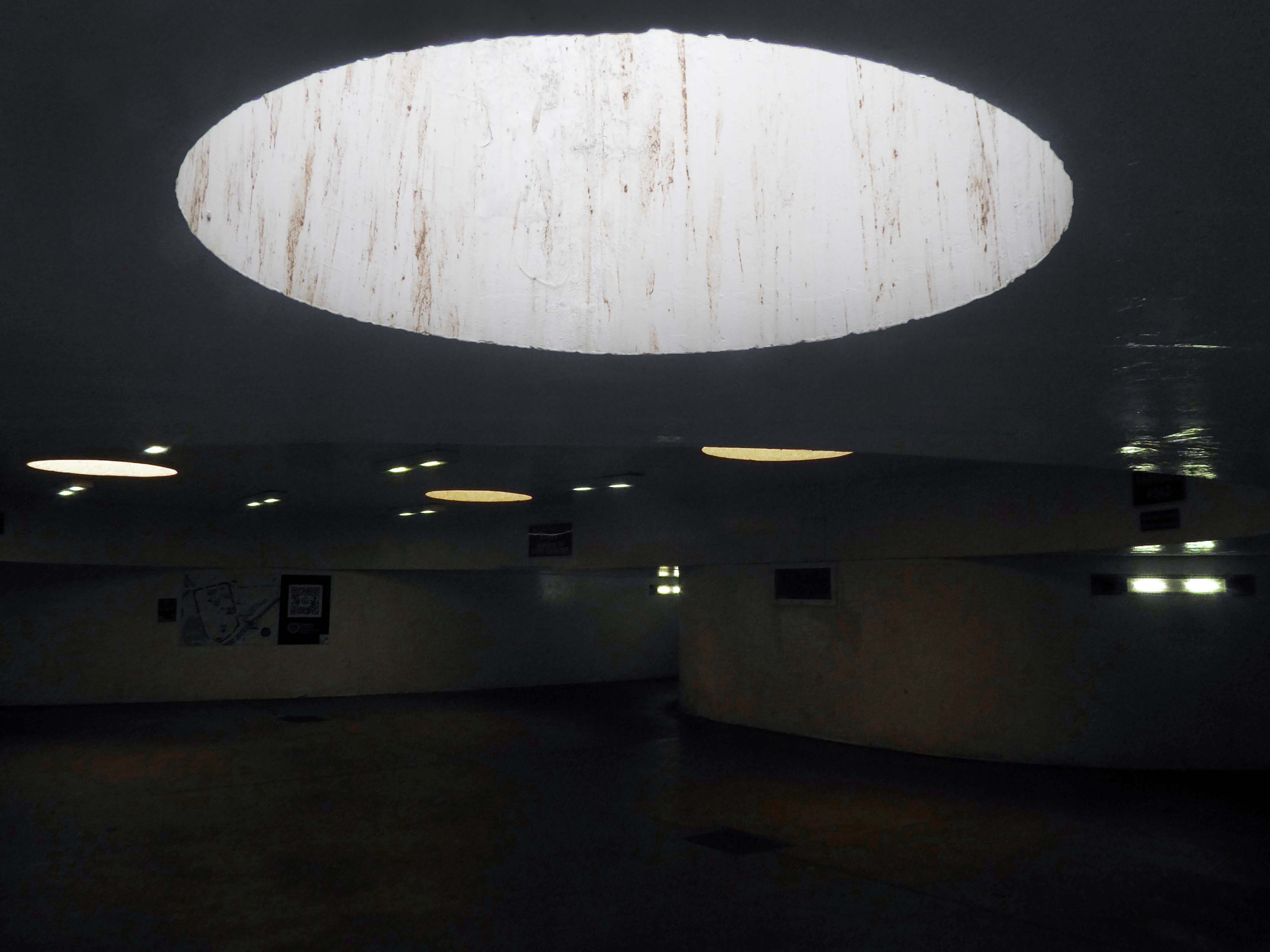
The interlocking, converging and diverging passageways lit by both daylight, LED and UV have given the images a variety of colour casts.

Let’s take a look!

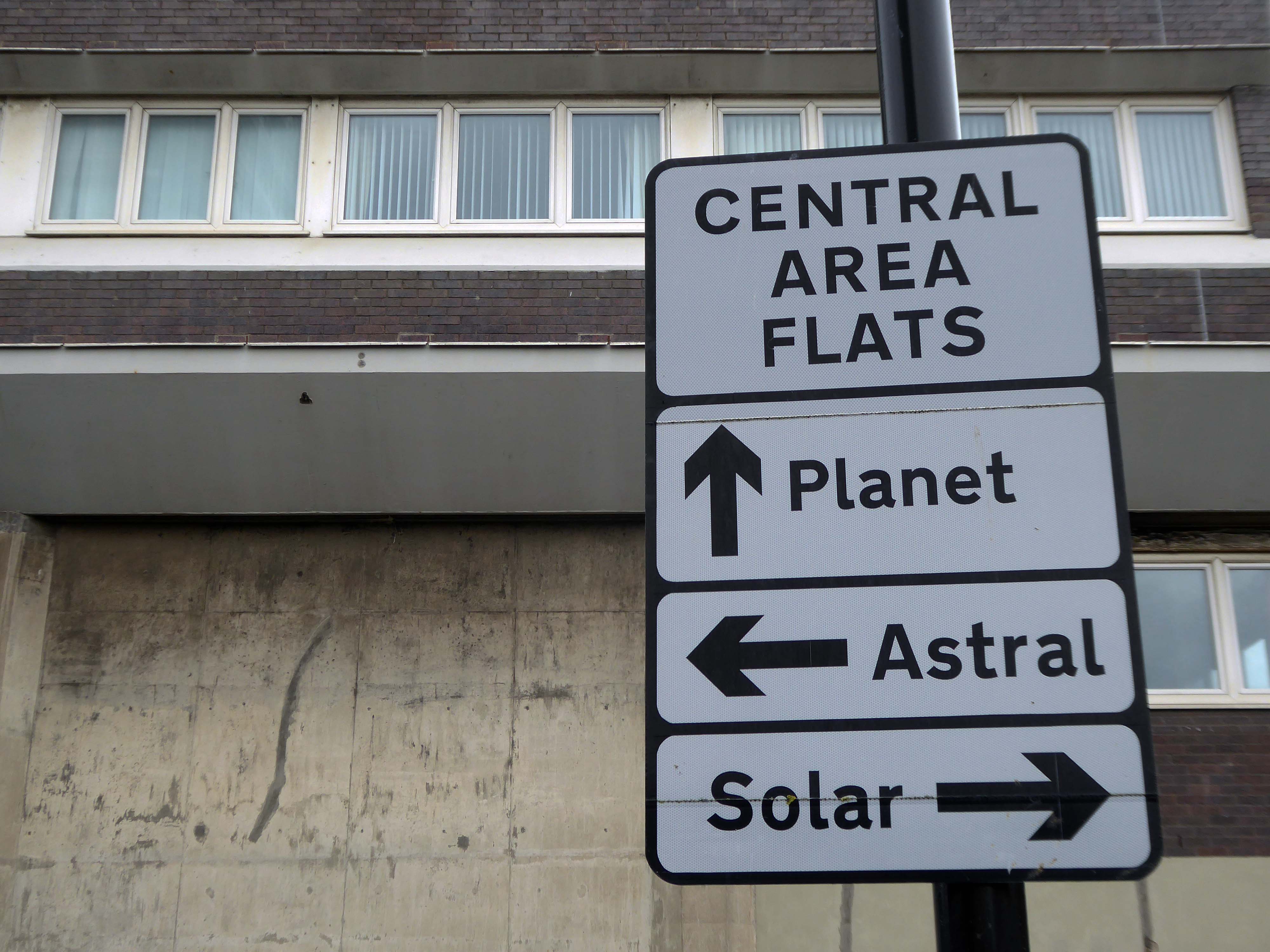
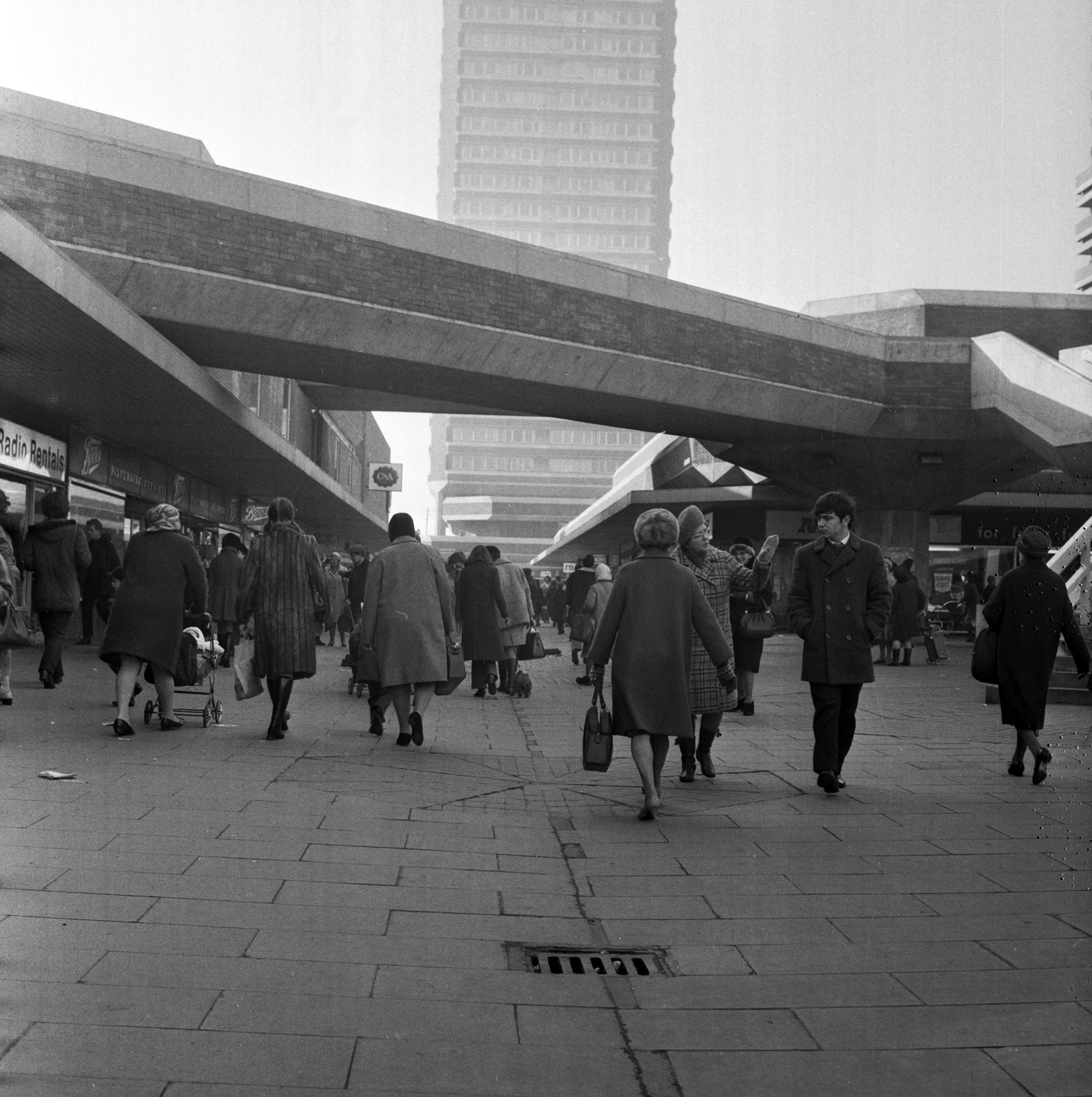
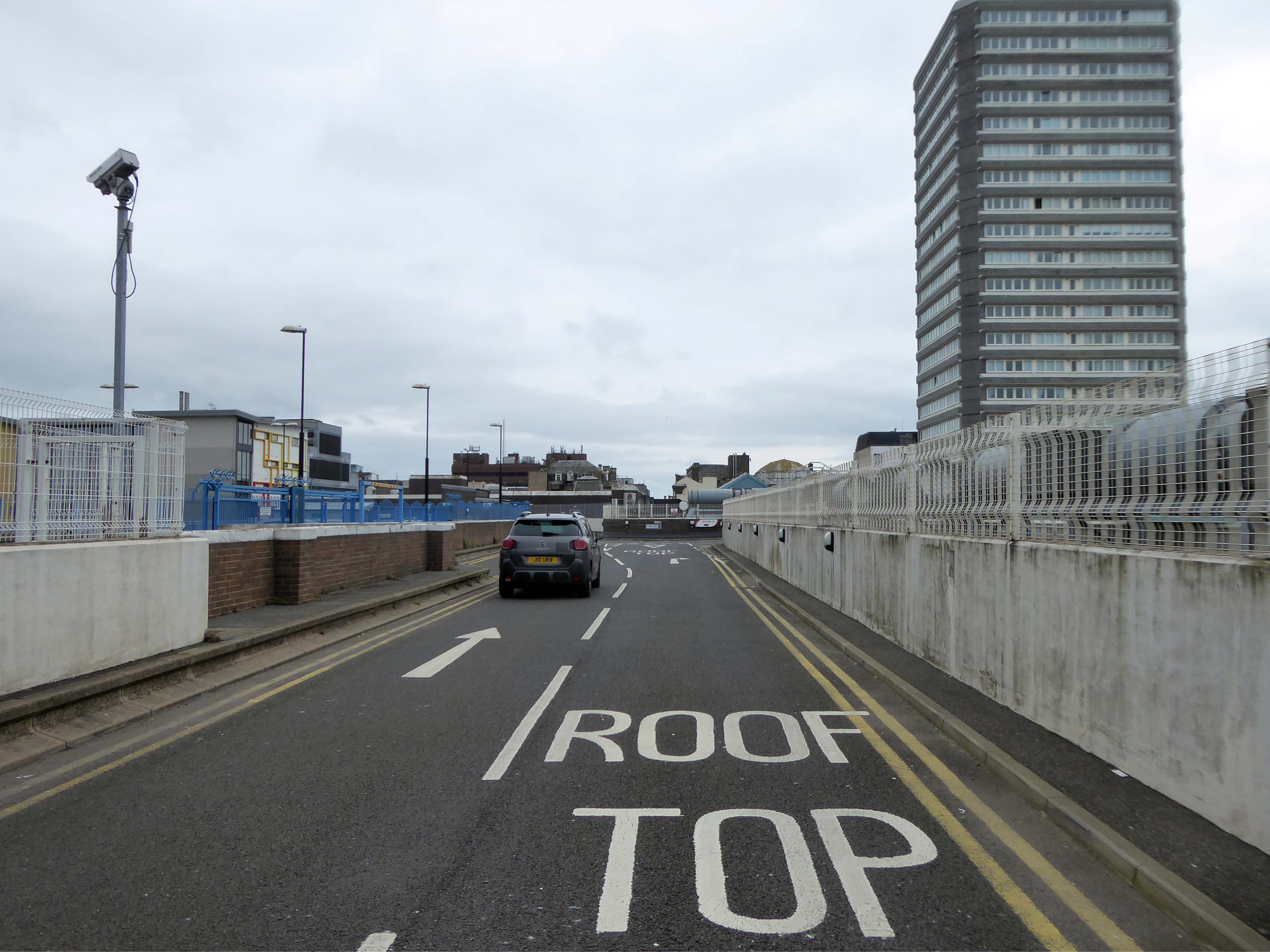
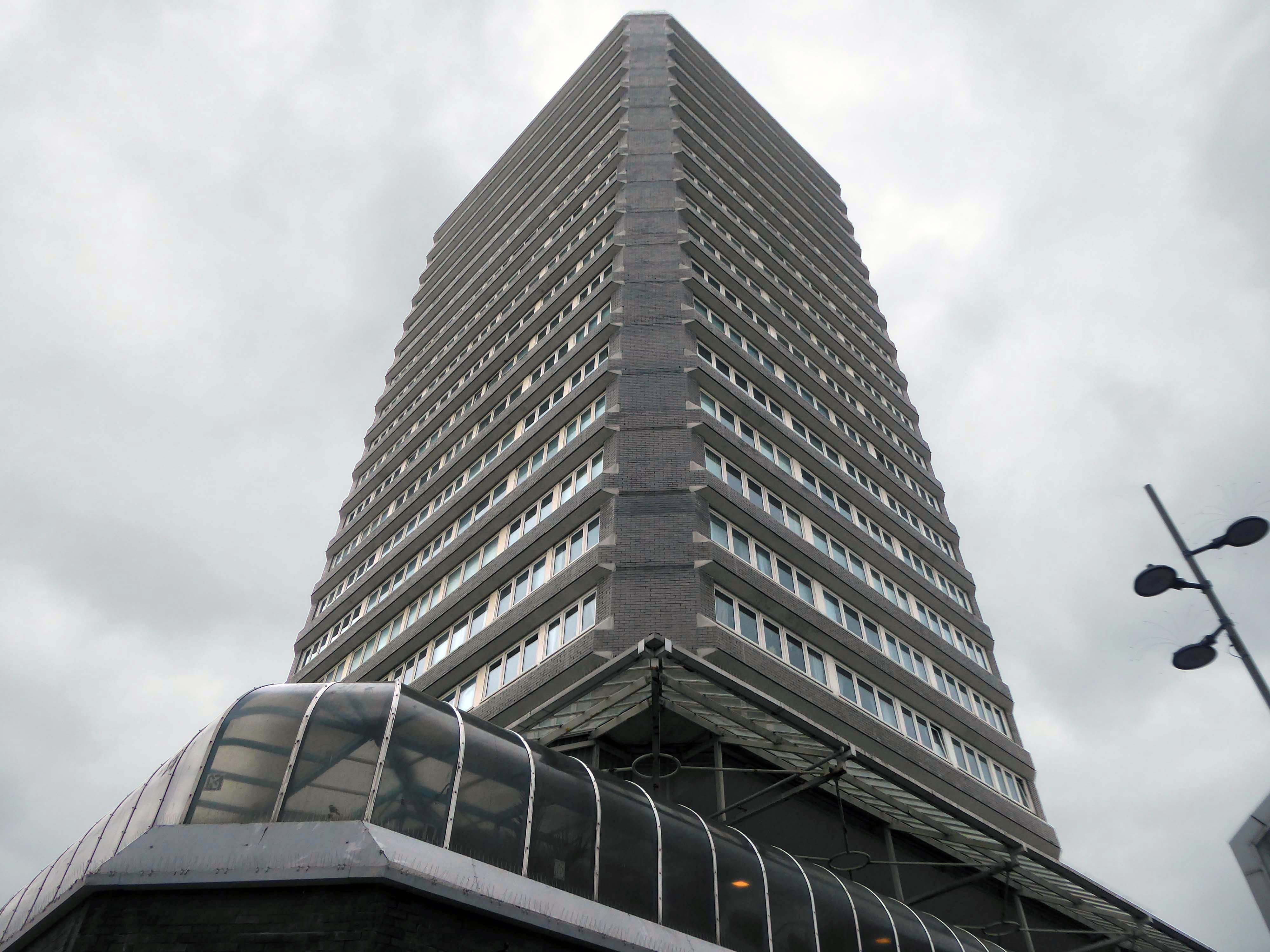
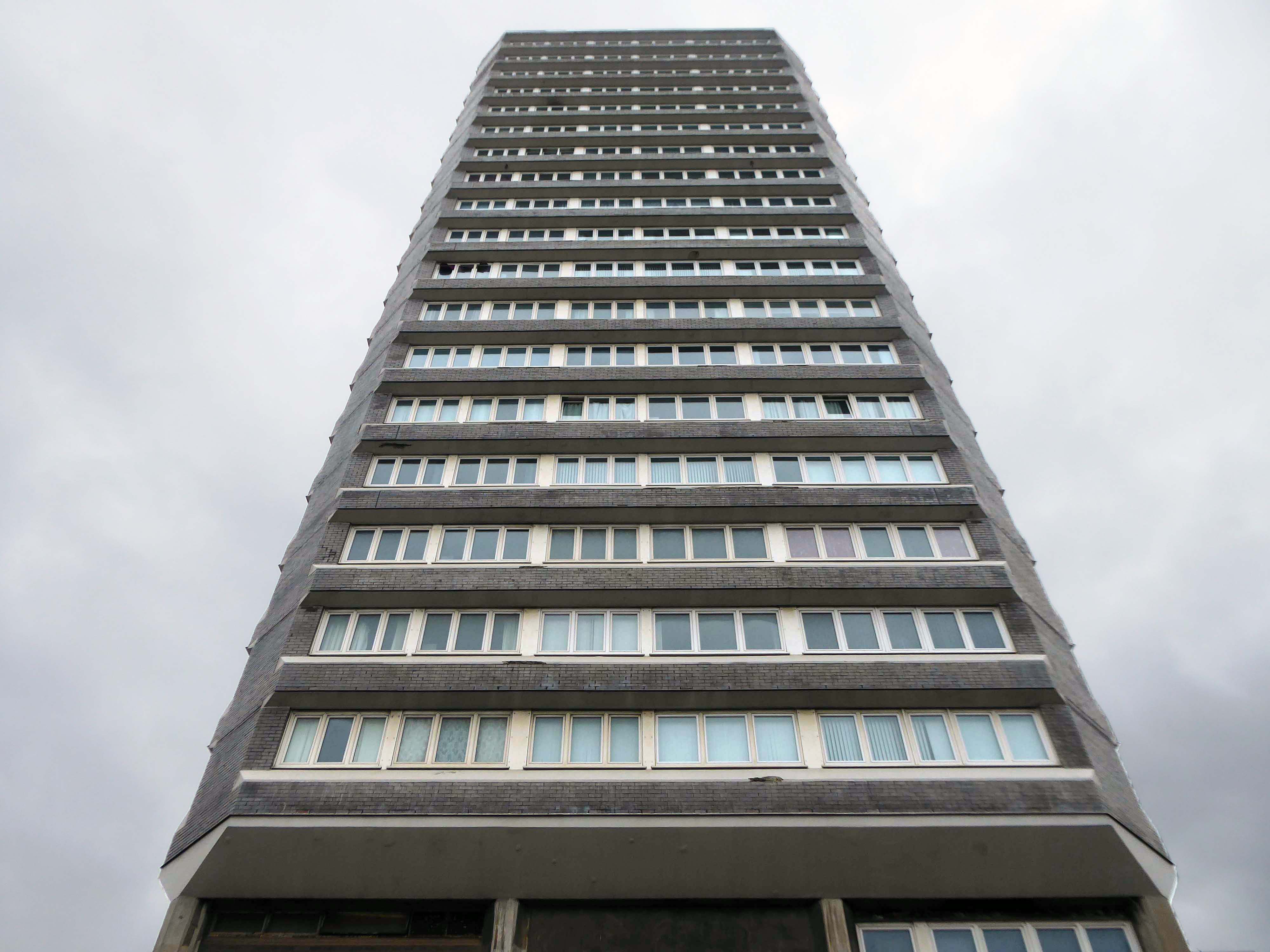
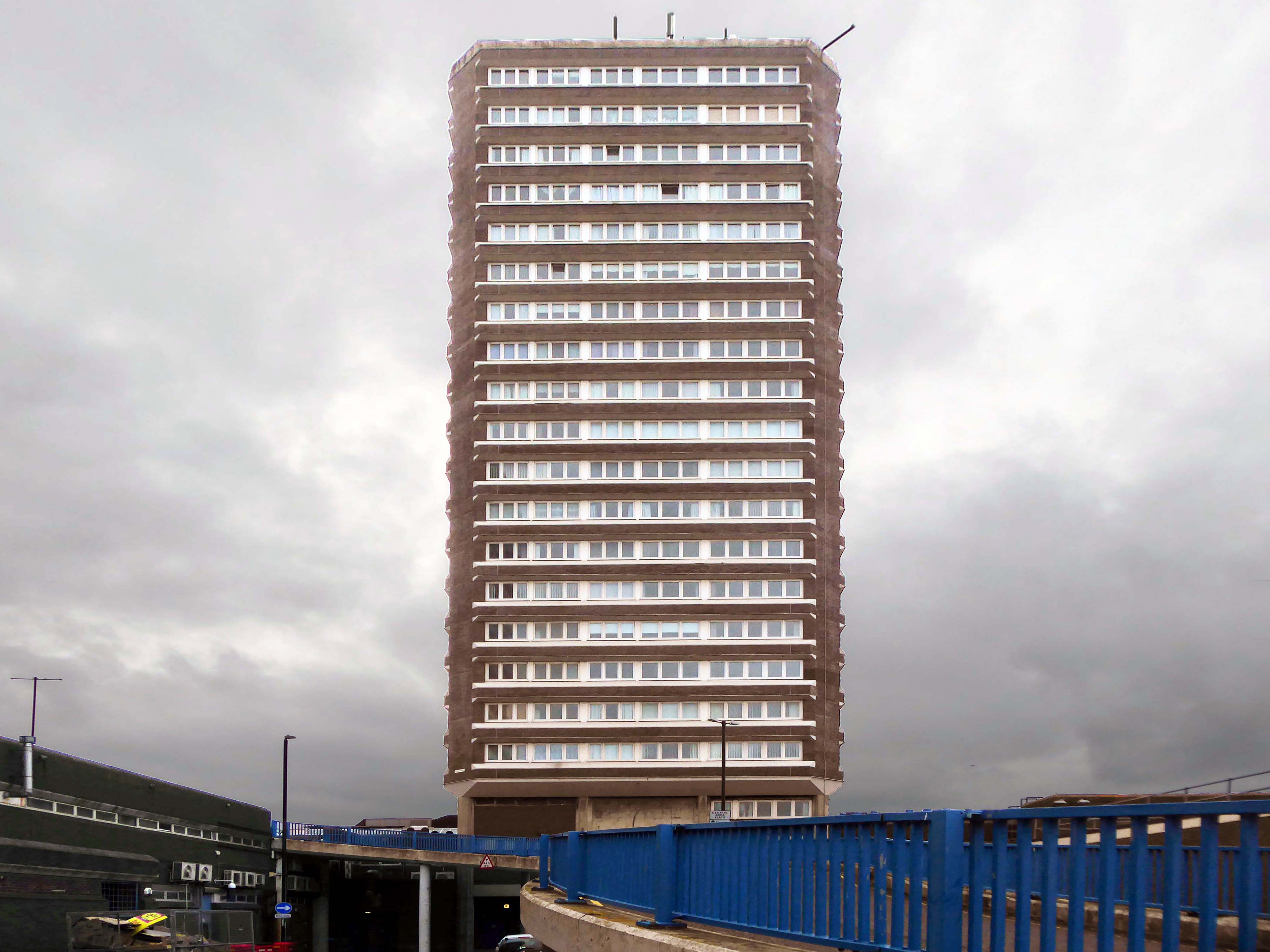
Central Area Flats – Sunderland

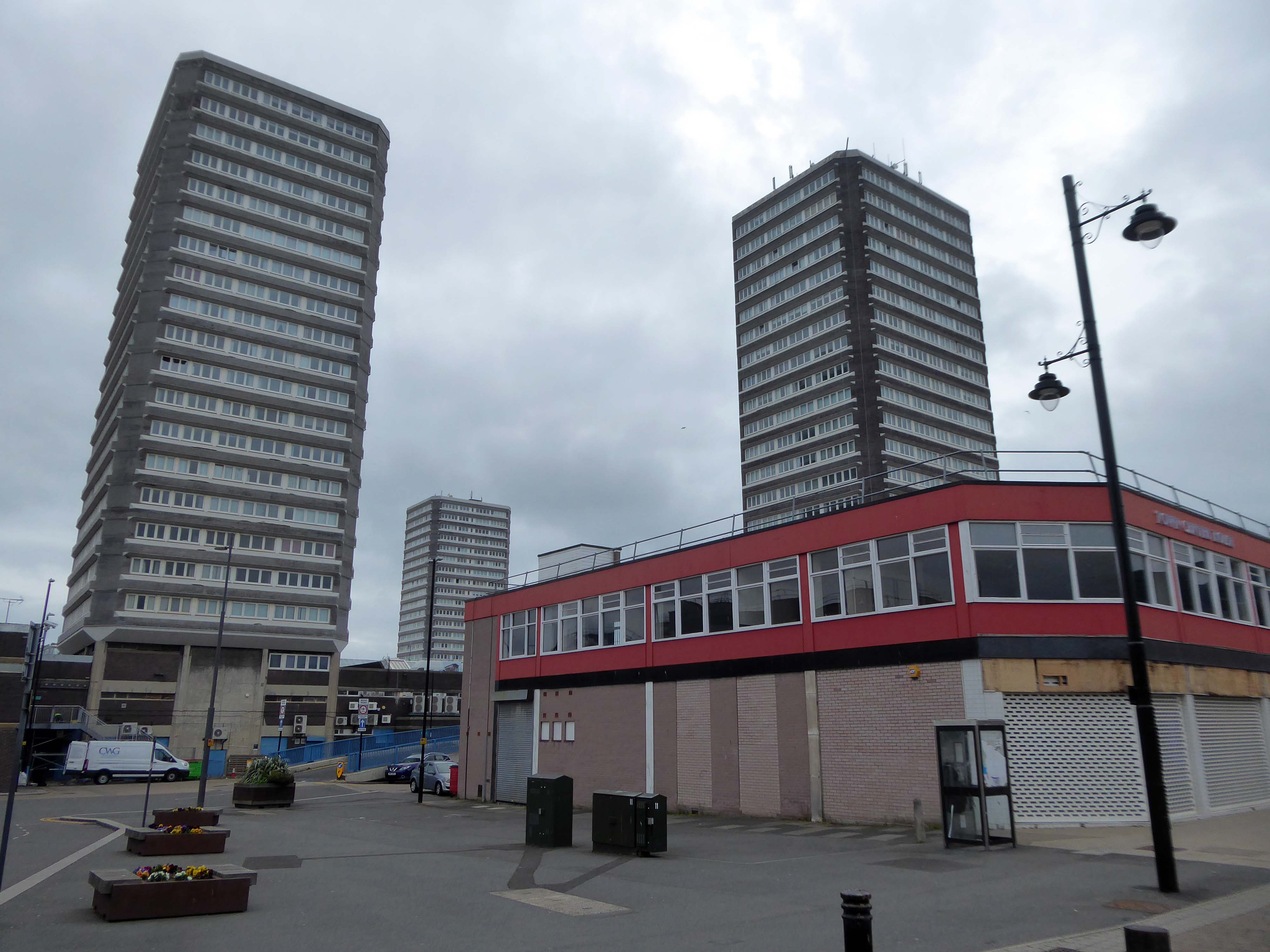
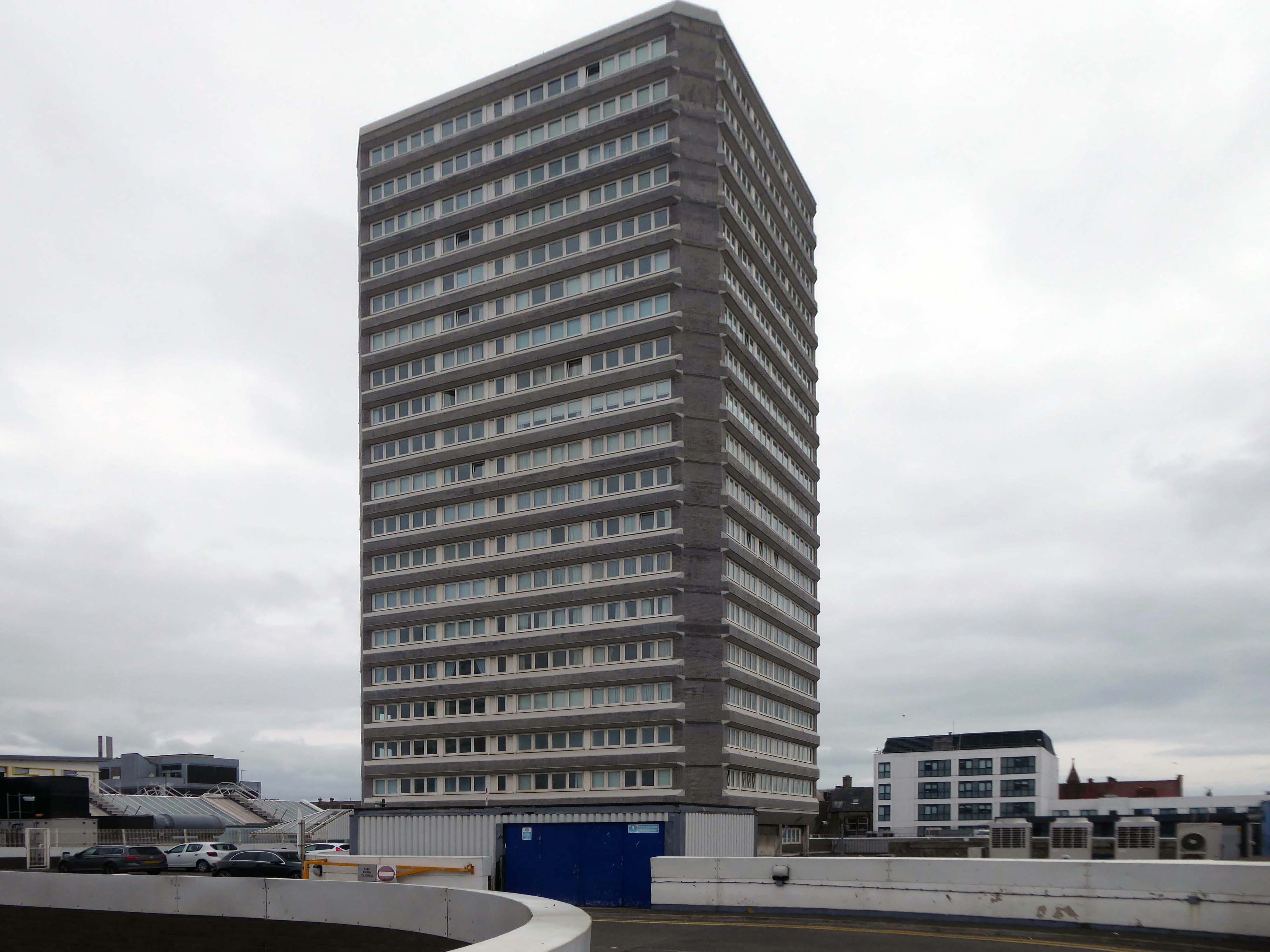
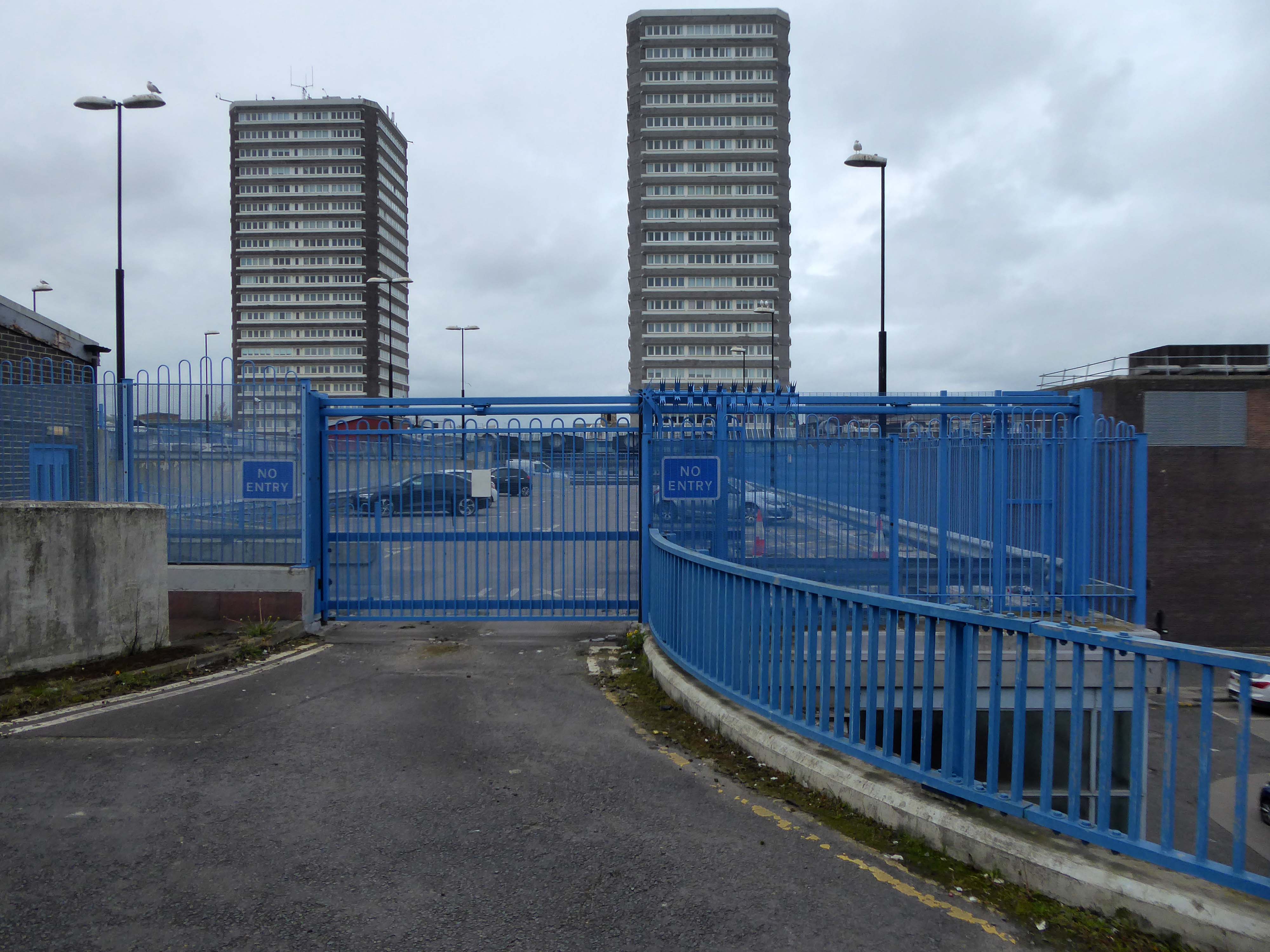
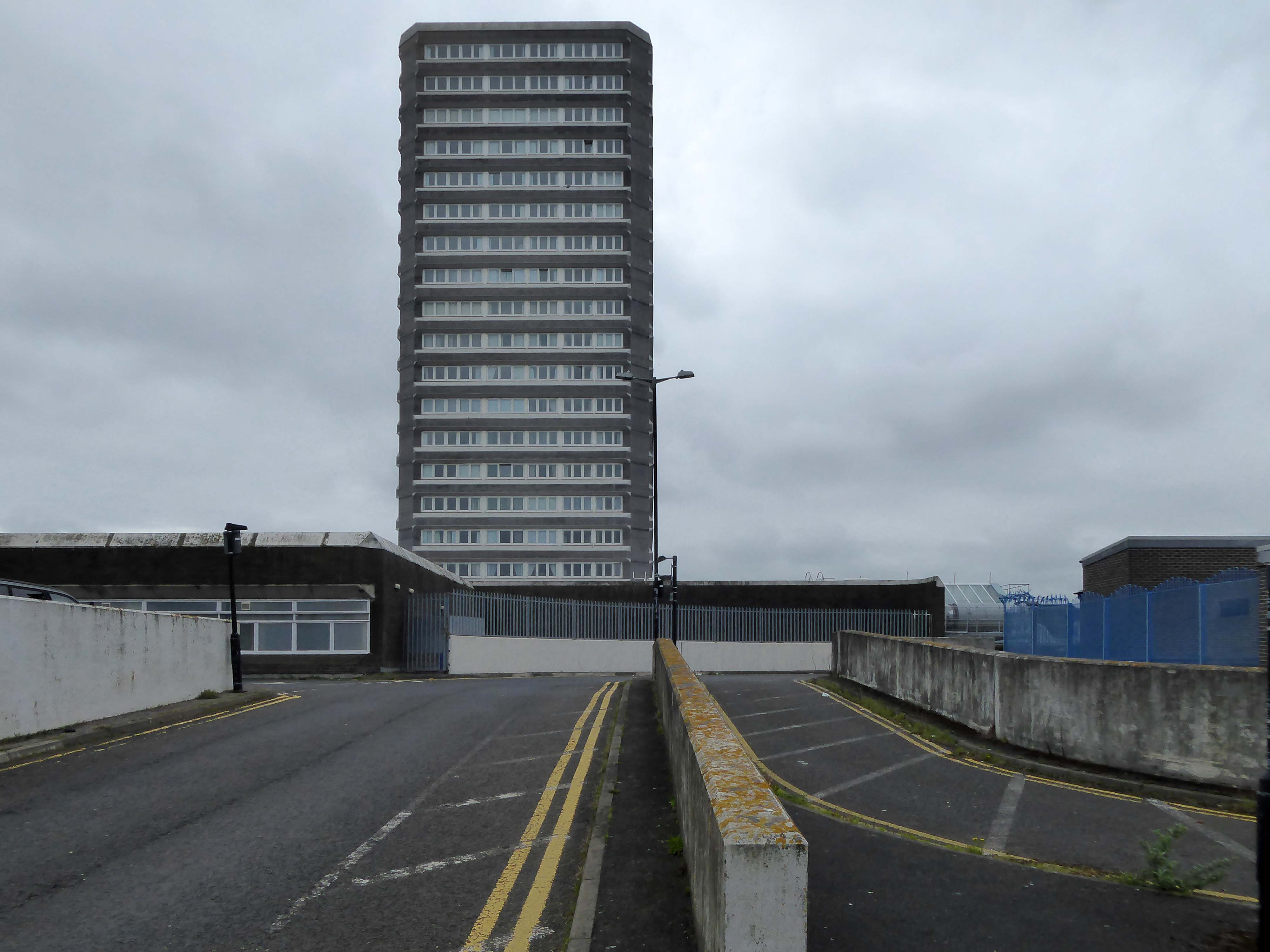
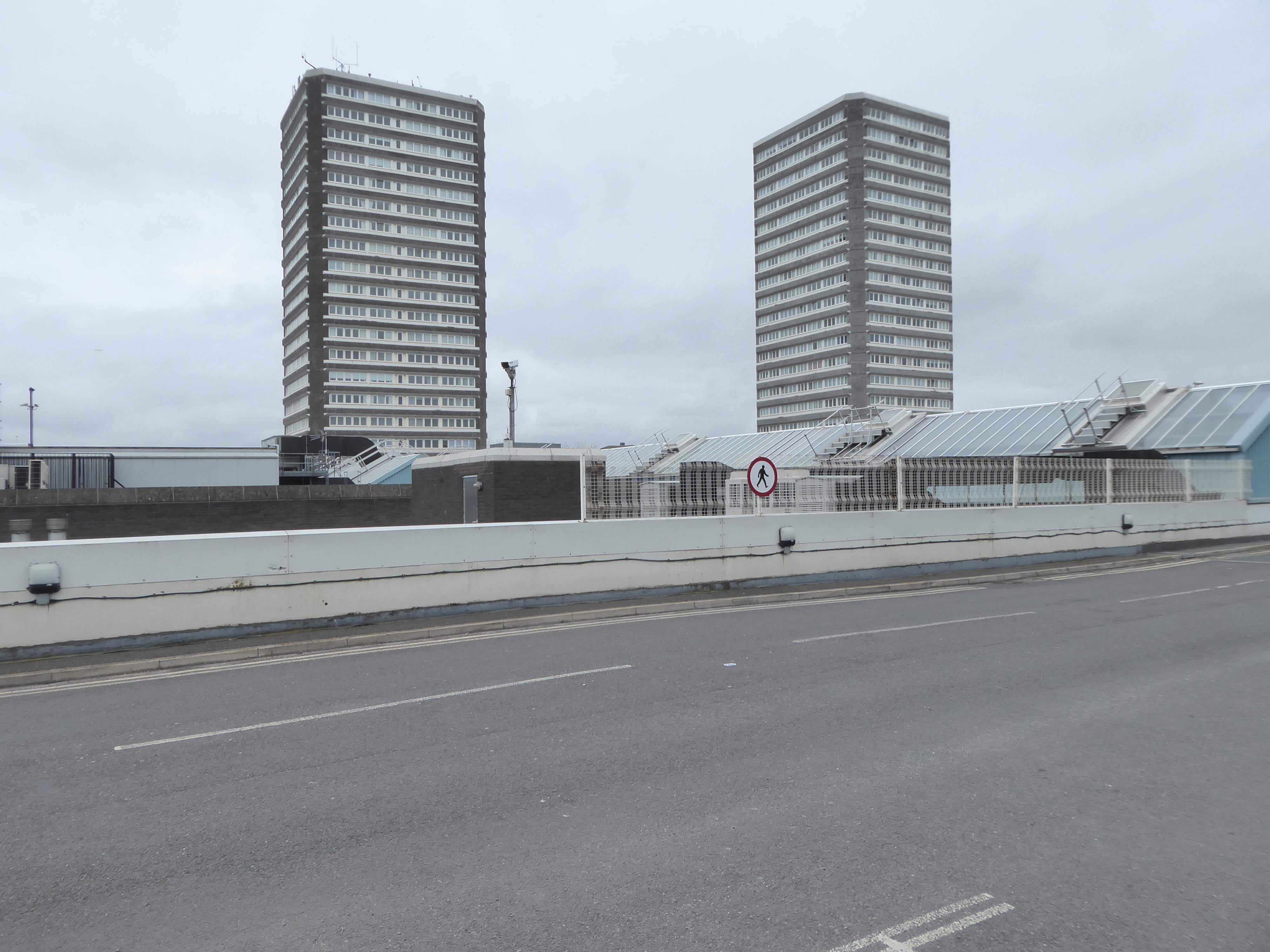
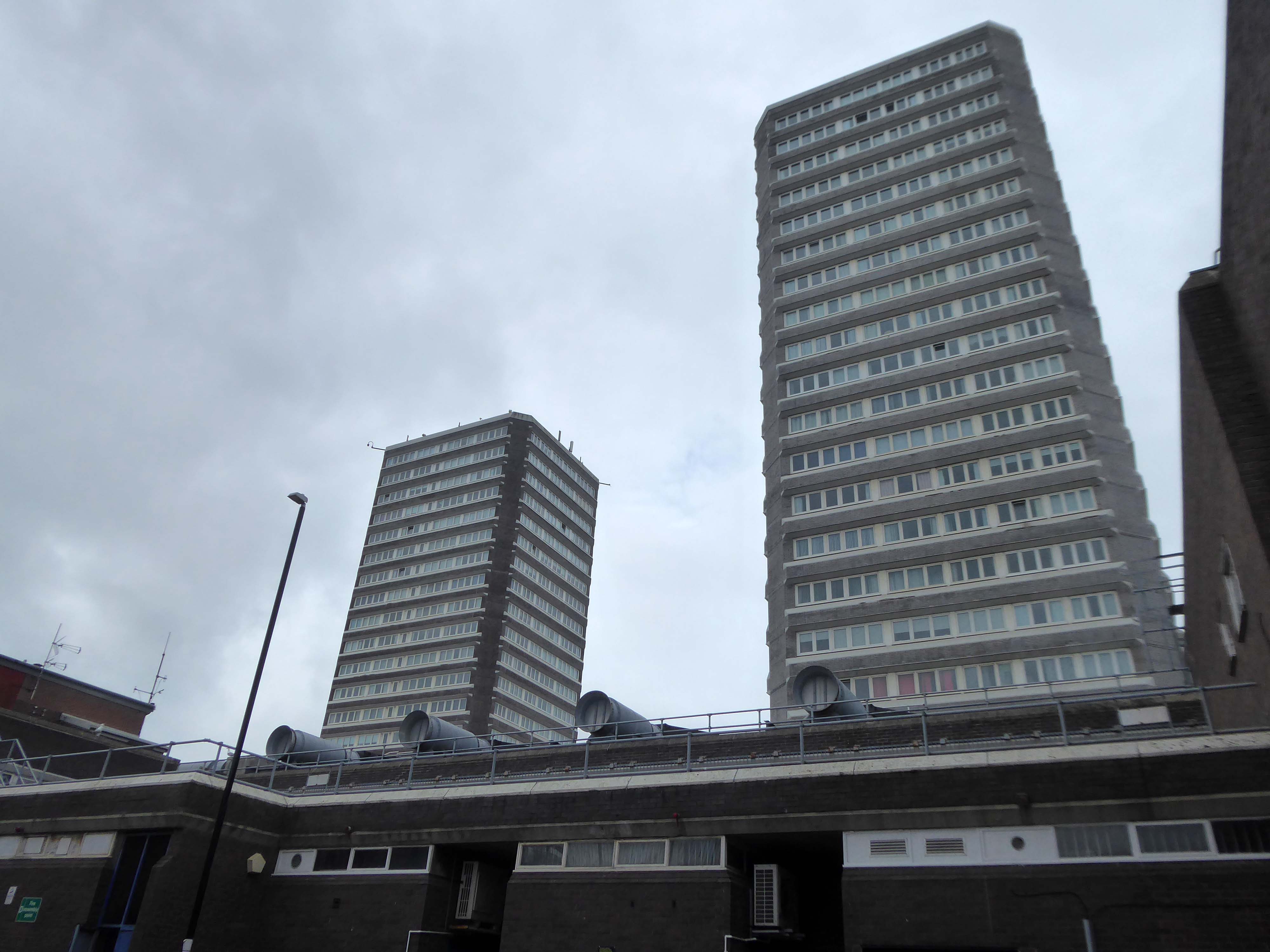
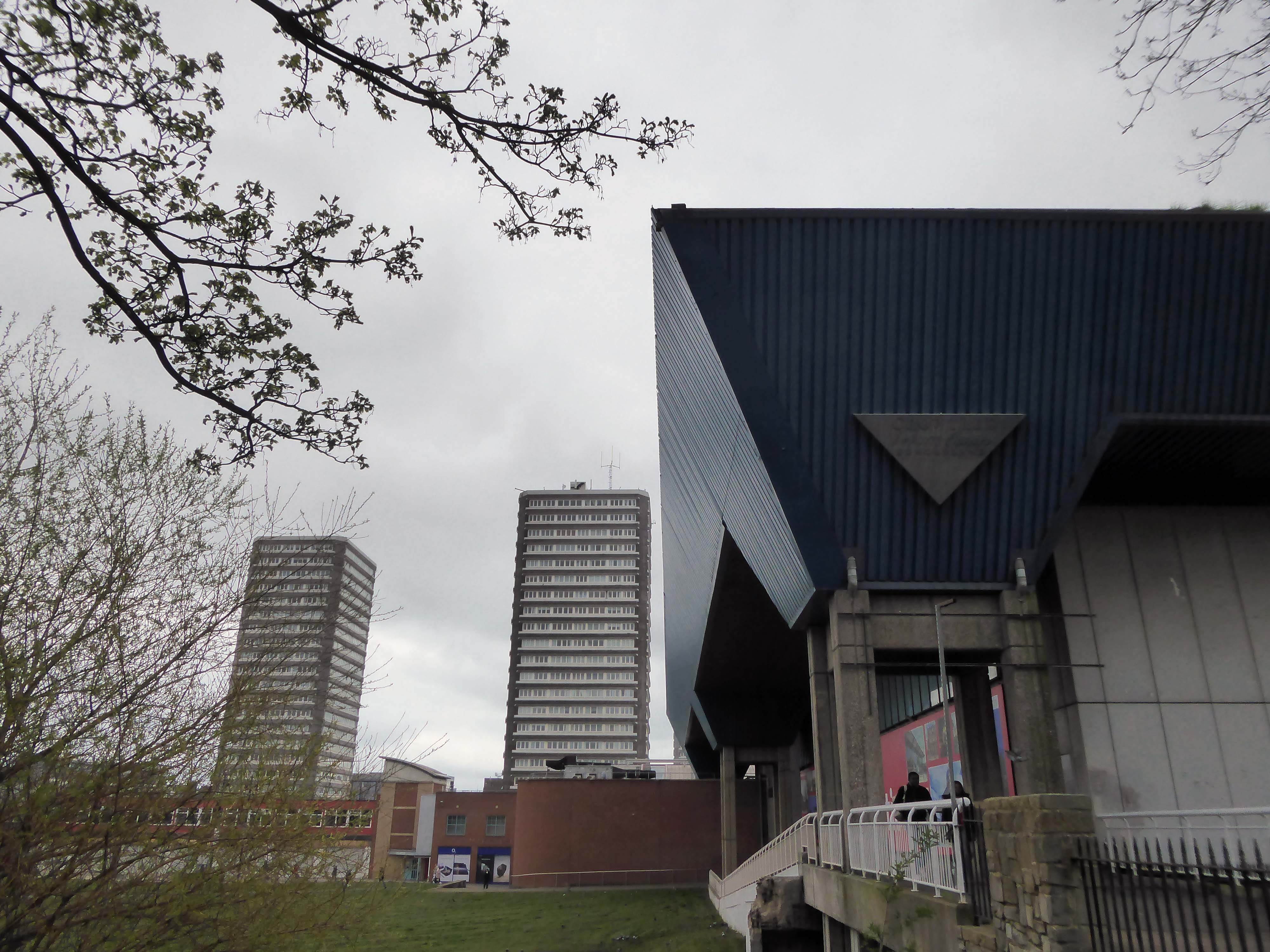
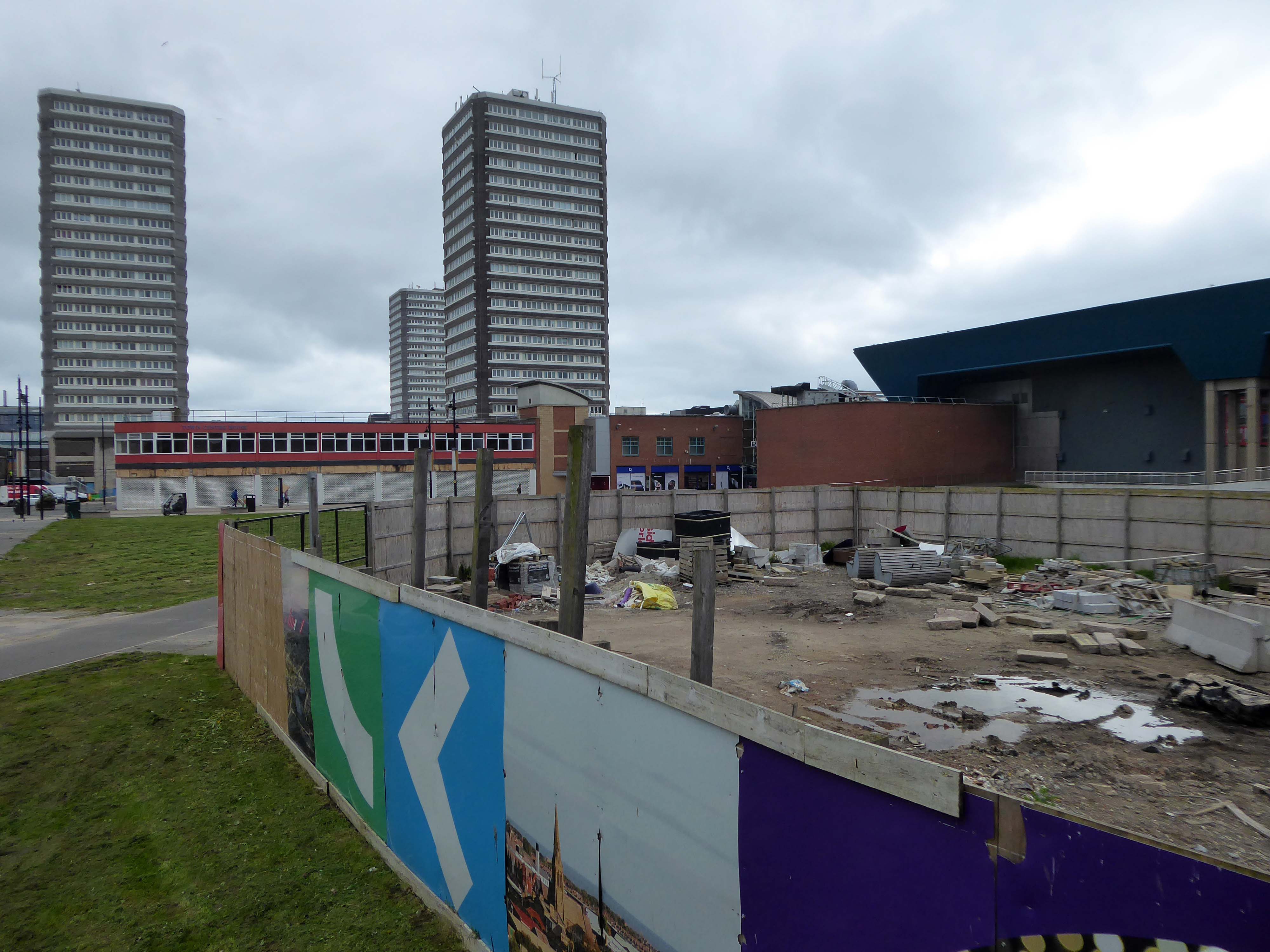
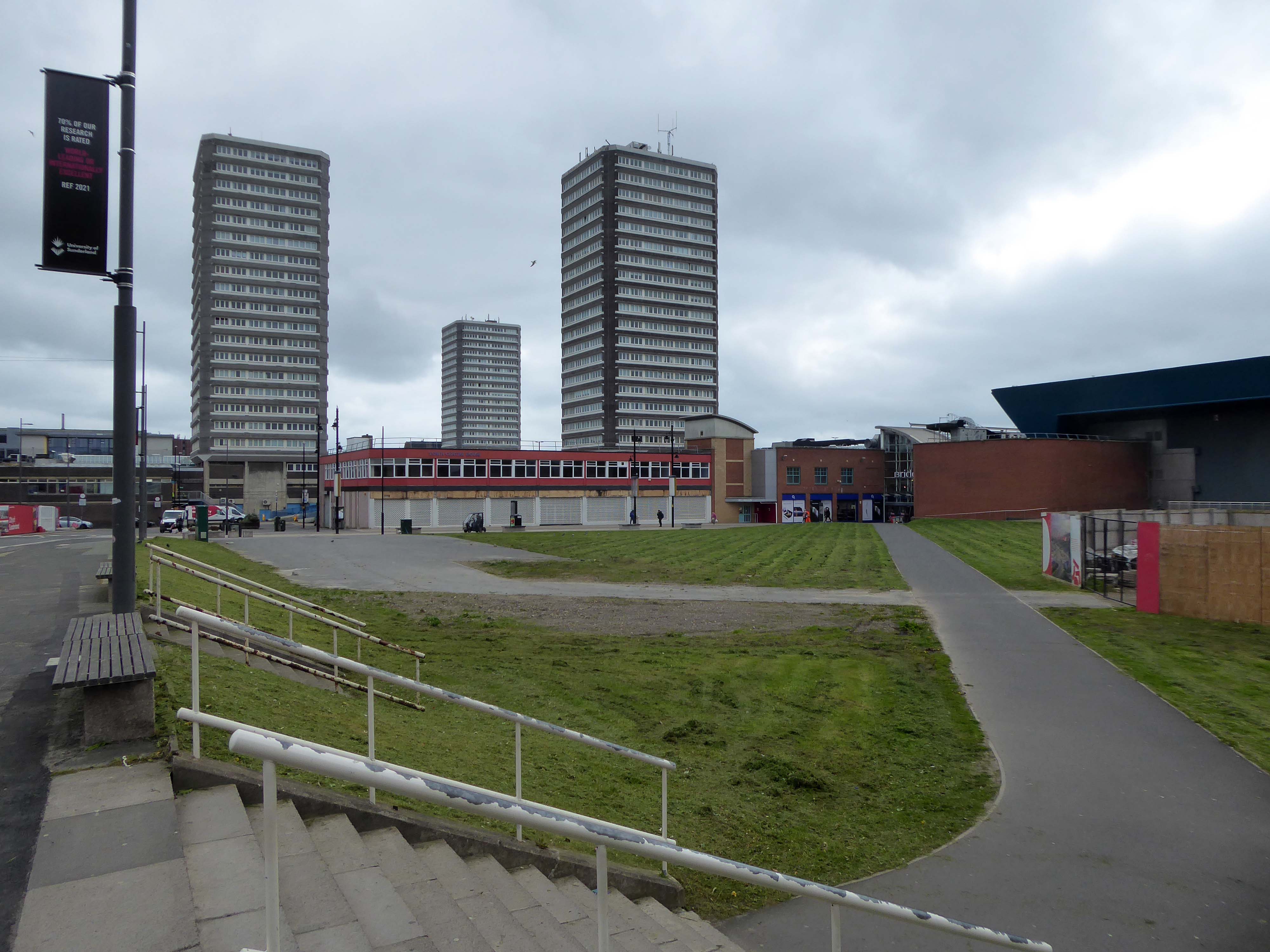
Three nineteen-storey point blocks built as public housing as part of the redevelopment of Sunderland town centre. The blocks contain 270 dwellings in total. Construction was approved by committee in 1967.

The blocks were constructed by Sunderland County Borough Council.

The developers of the Town Central Area were Town and City Properties Ltd. It is believed that they contributed £38,600 to the development of the blocks.

Ian Frazer and Associates were the architects for the sub-structural works only.

Llewelyn, Davies, Weeks and Partners were the structural and mechanical engineers in addition to being the architects for the tower blocks.

Gilbert-Ash Northern Ltd.’s tender for the contract was £959,258 – construction began in March 1967.

Heritage Gateway

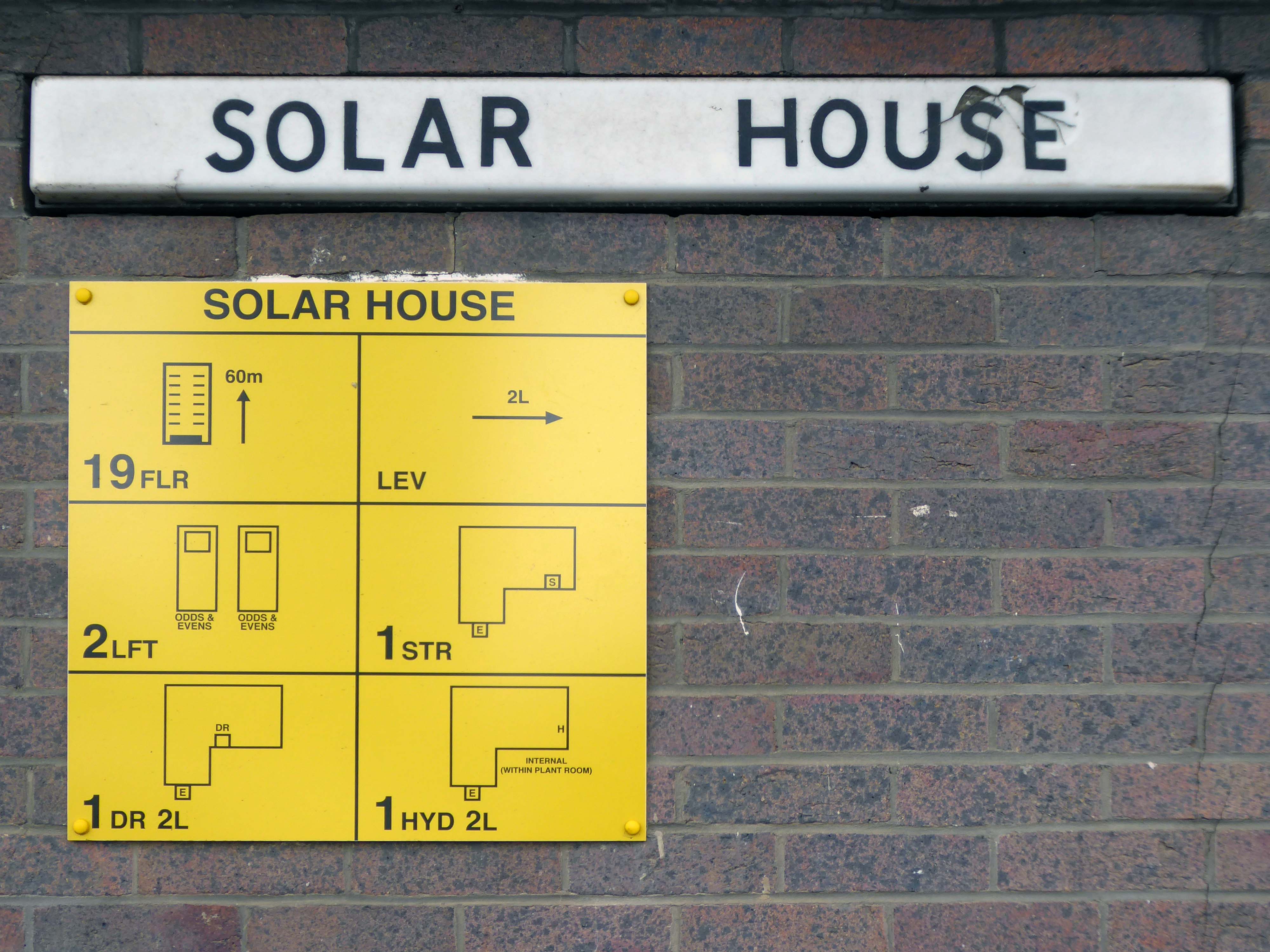
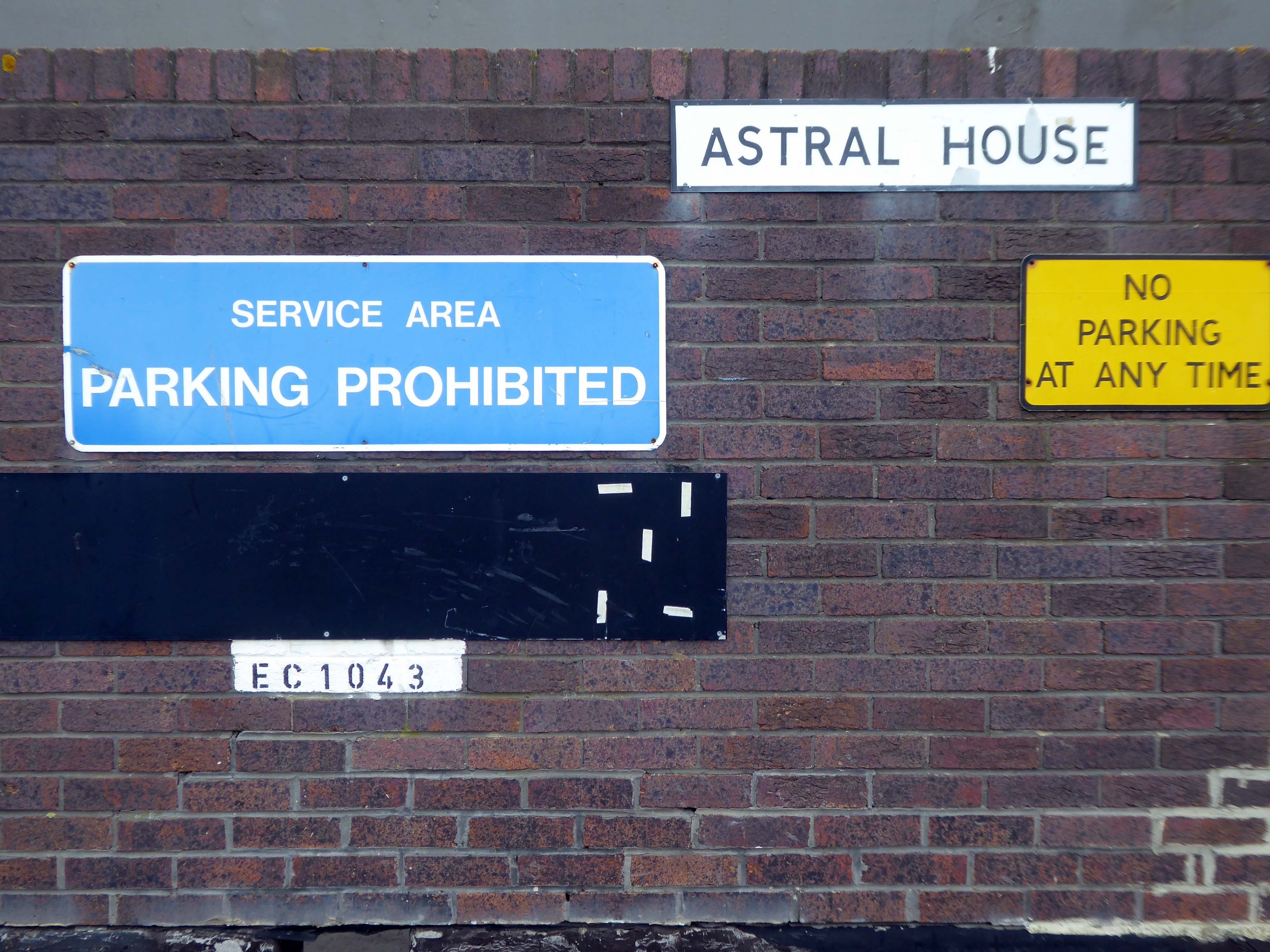
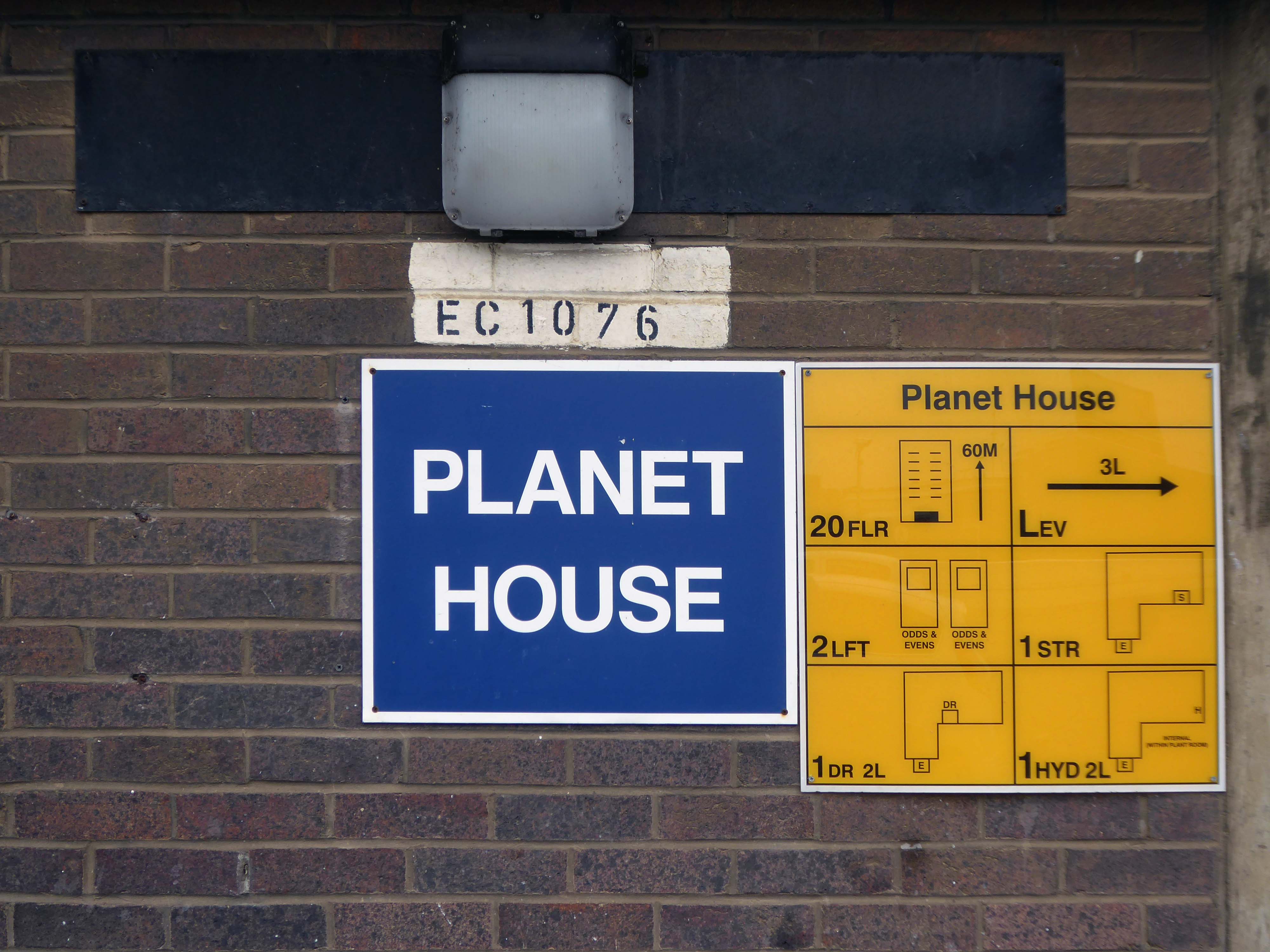
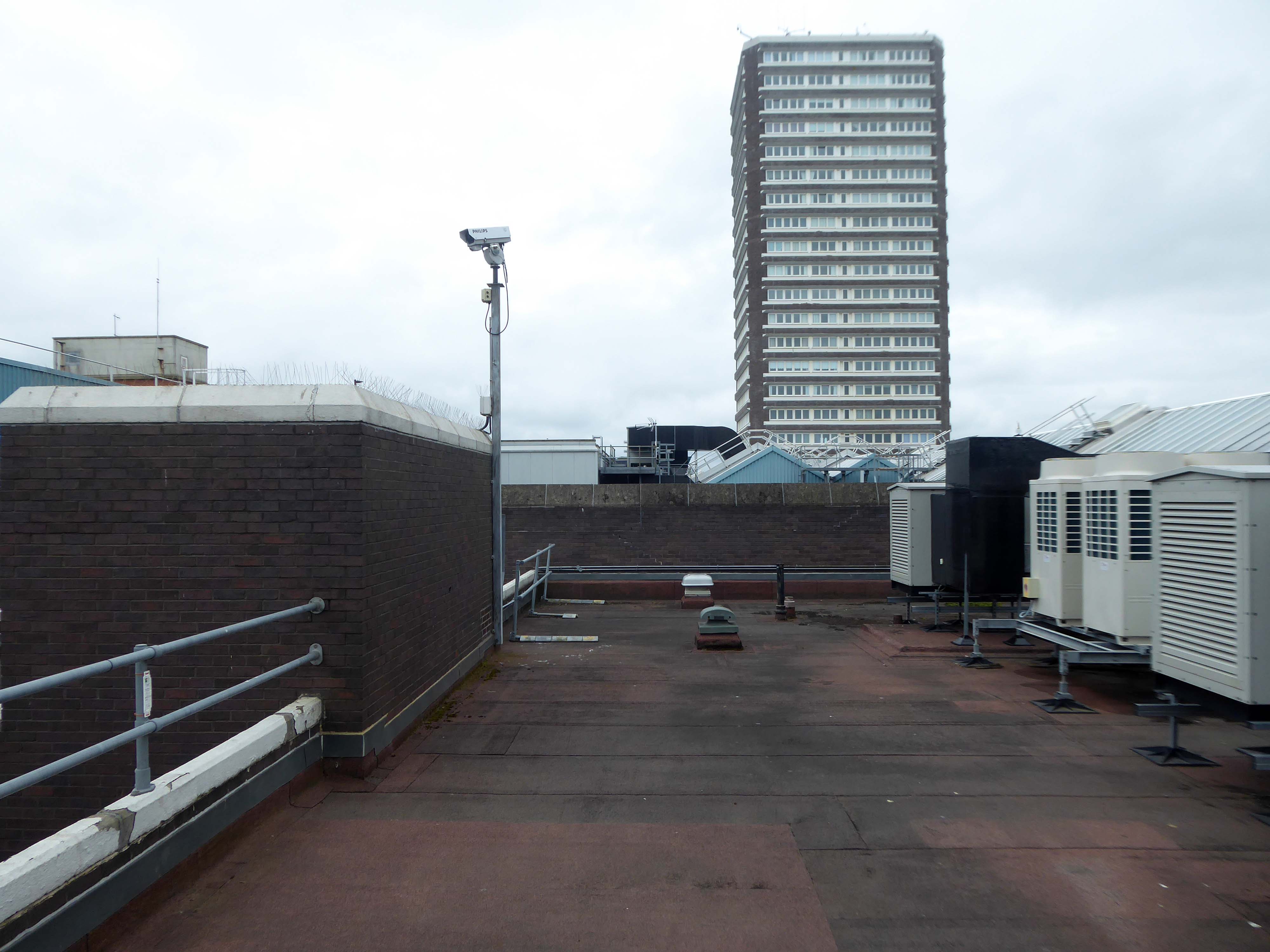
Astral House, Solar House and Planet House.

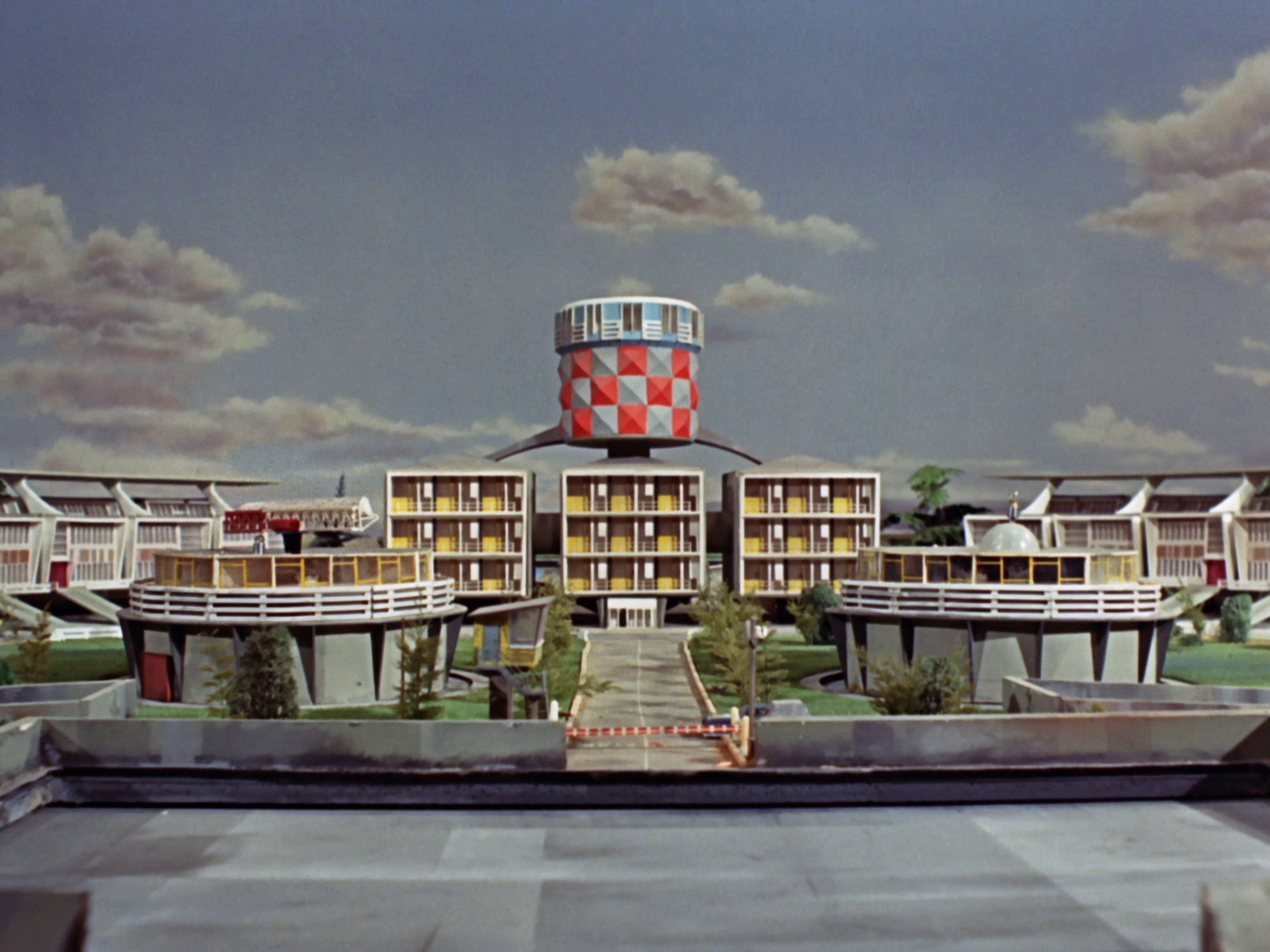
Welcome to Marineville – anything can happen in the next half hour.

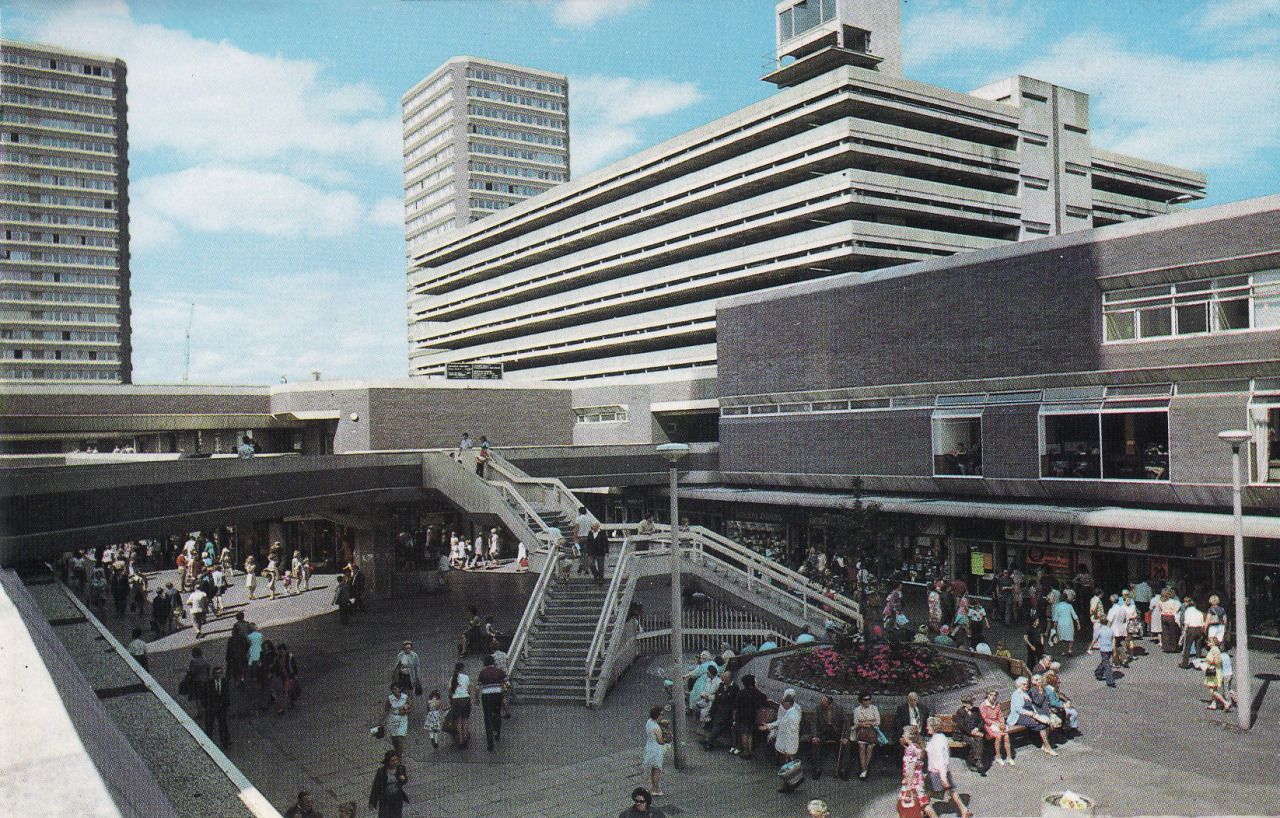
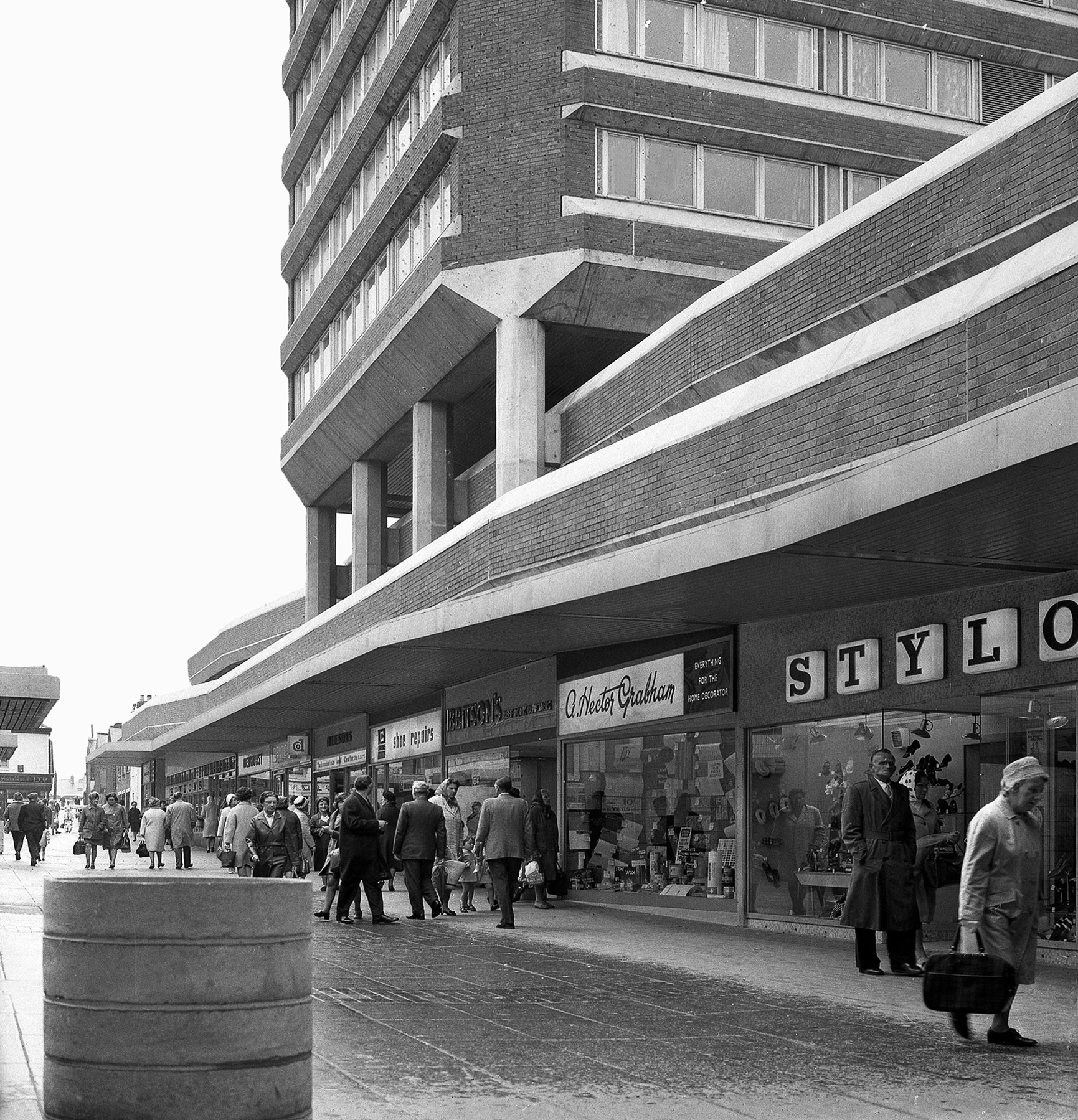
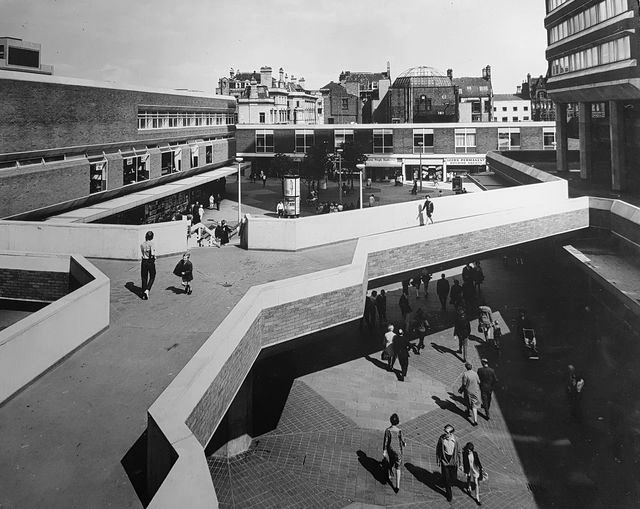
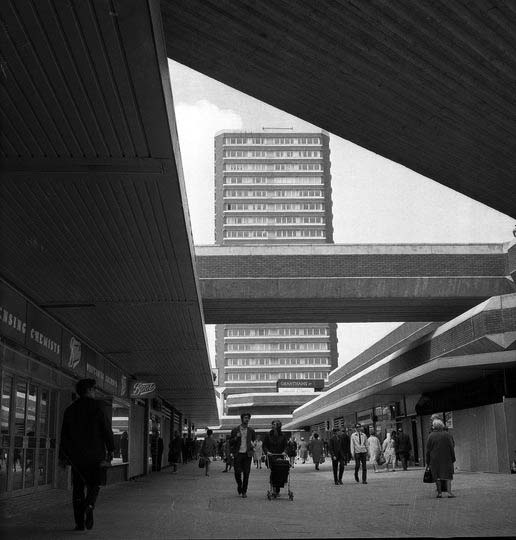
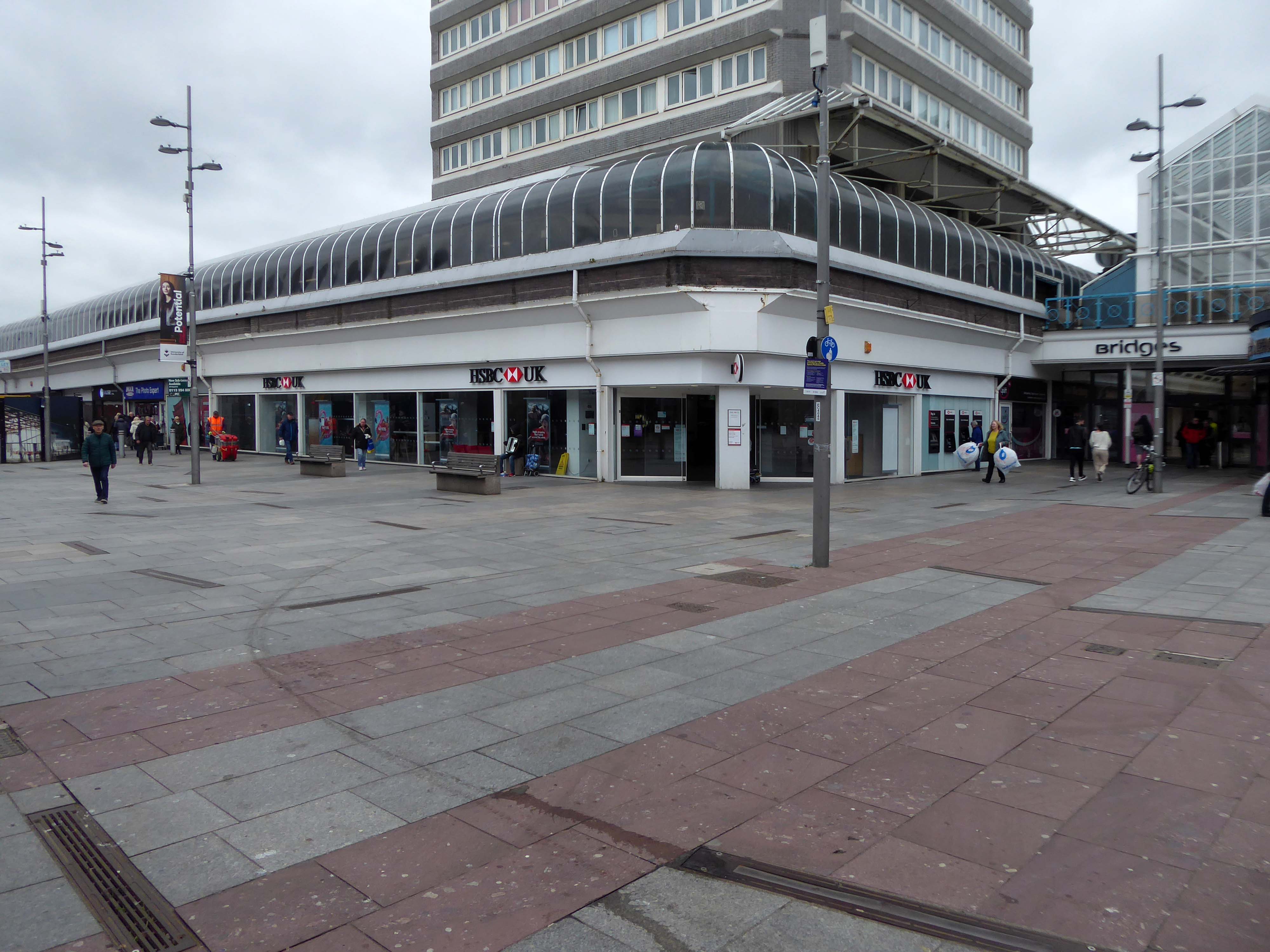
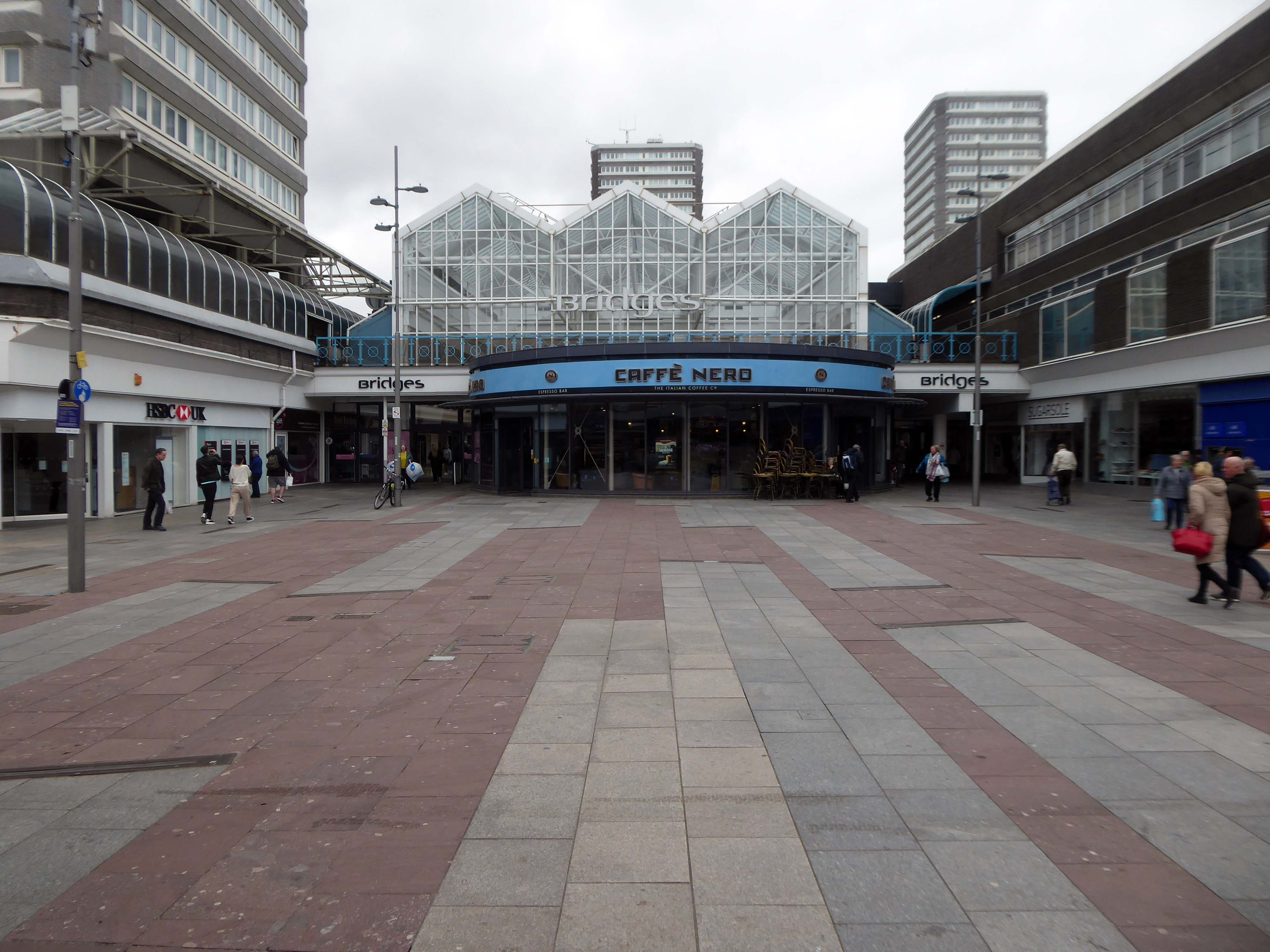
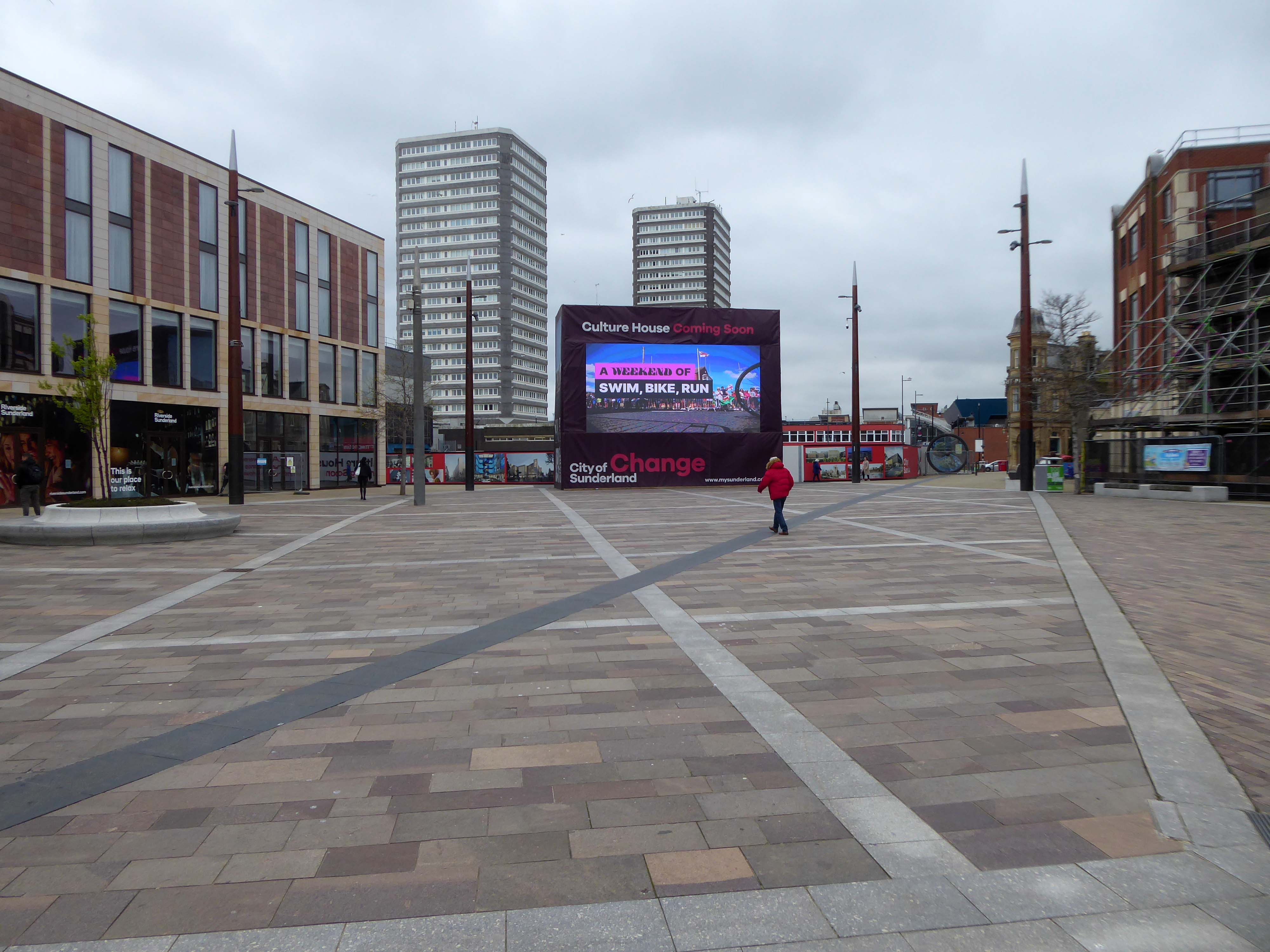
In actuality the blocks sit upon a shopping centre – recently redeveloped as The Bridges.

And we are not in Marineville.

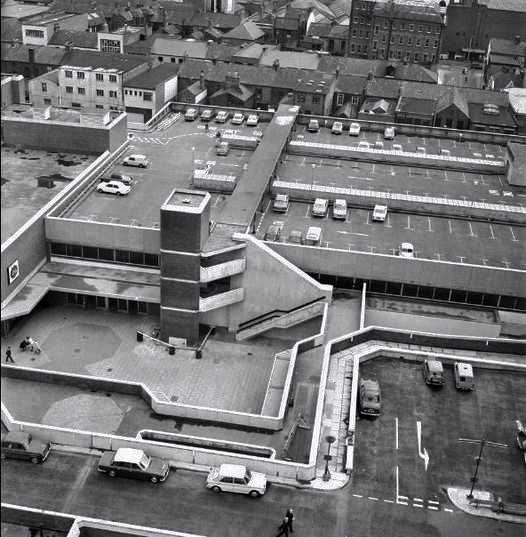
Though once upon a time it looked like this – a brave new shopping world, well worth producing a postcard for.

Photos: Sunderland Echo

Photo: Tom McKitterick

Thanks to Sunderland Antiquarian Society for the links.

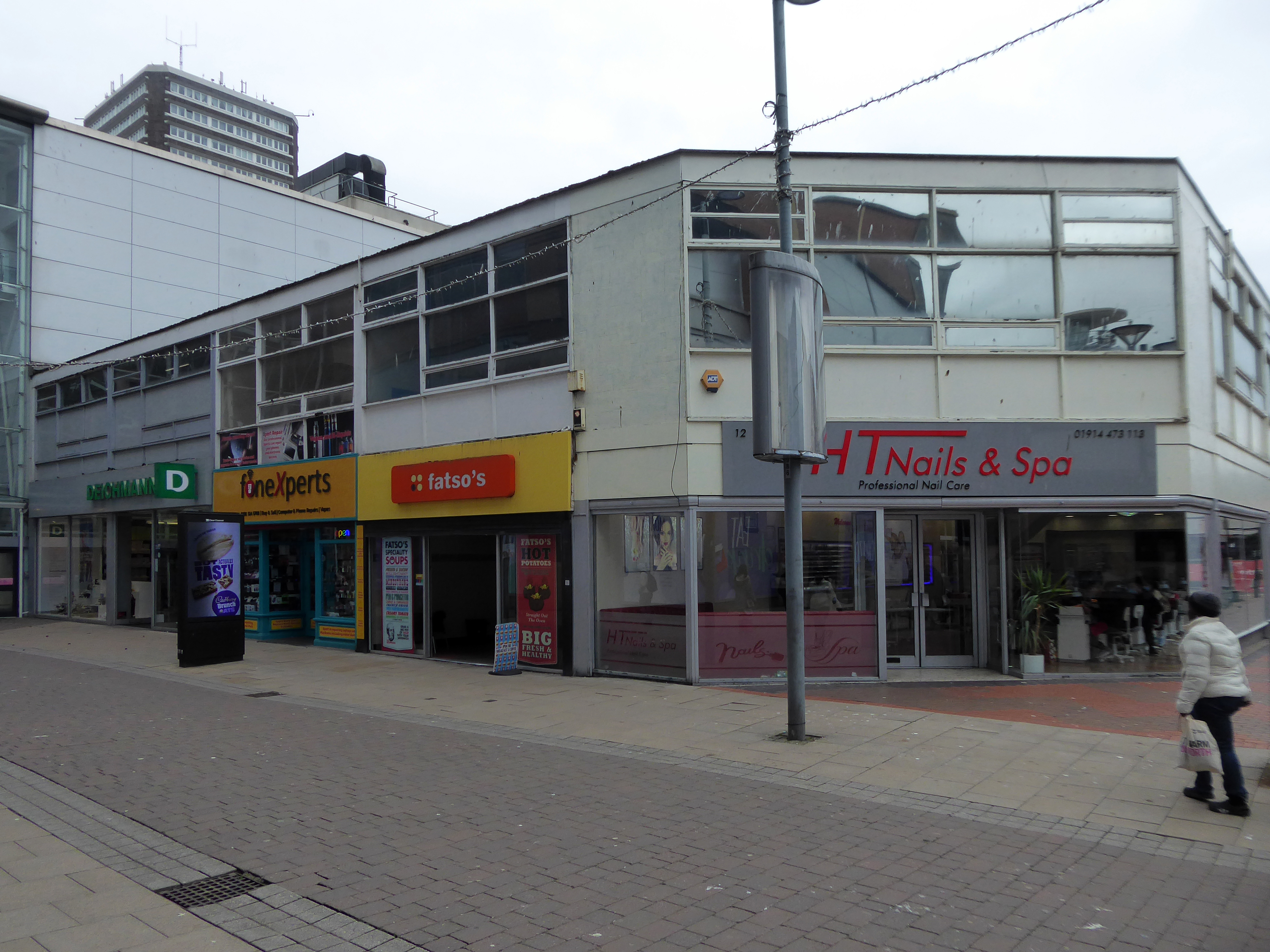
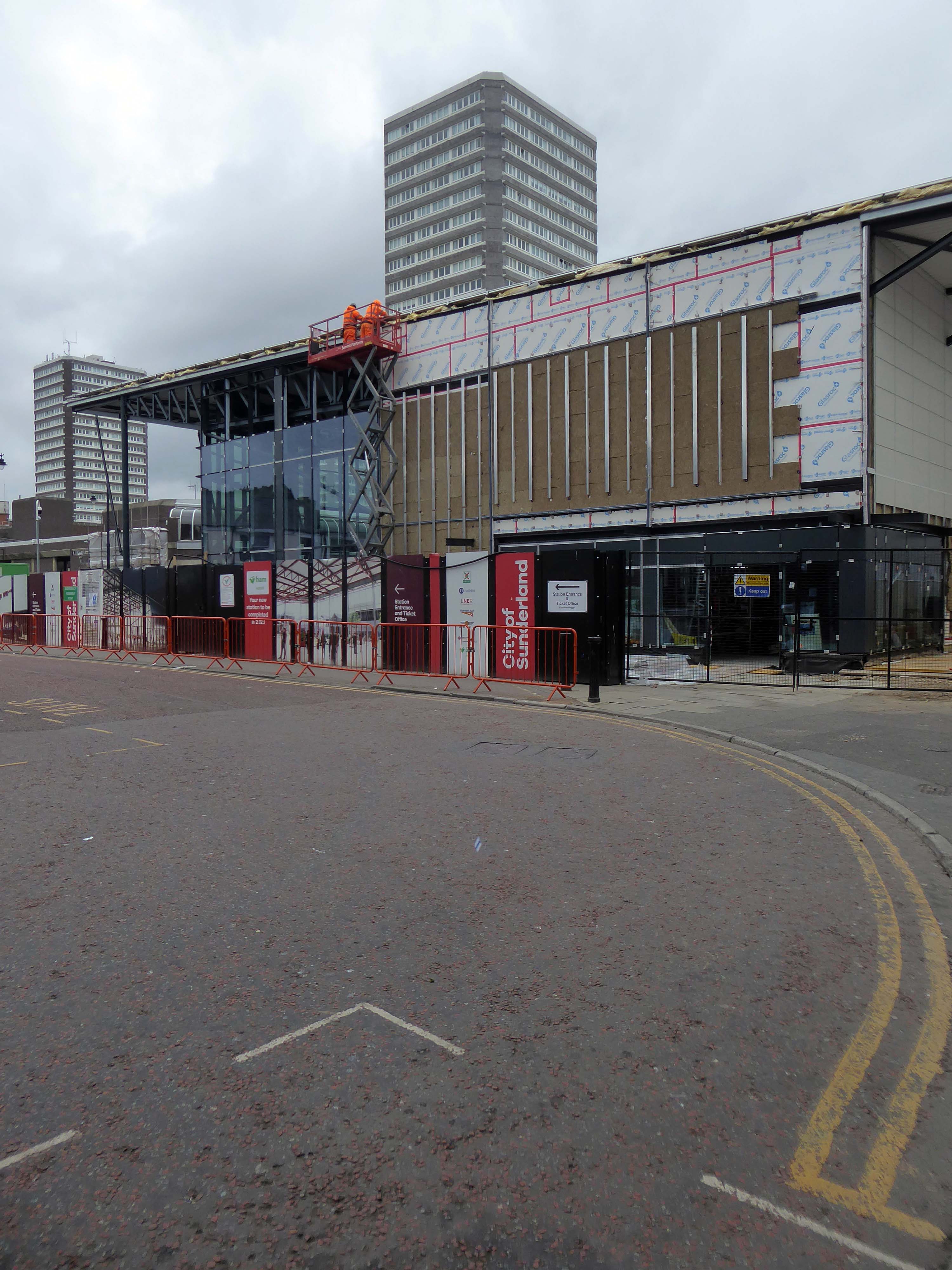
This is the current state of affairs.

Though there are still some remnants of the original development.

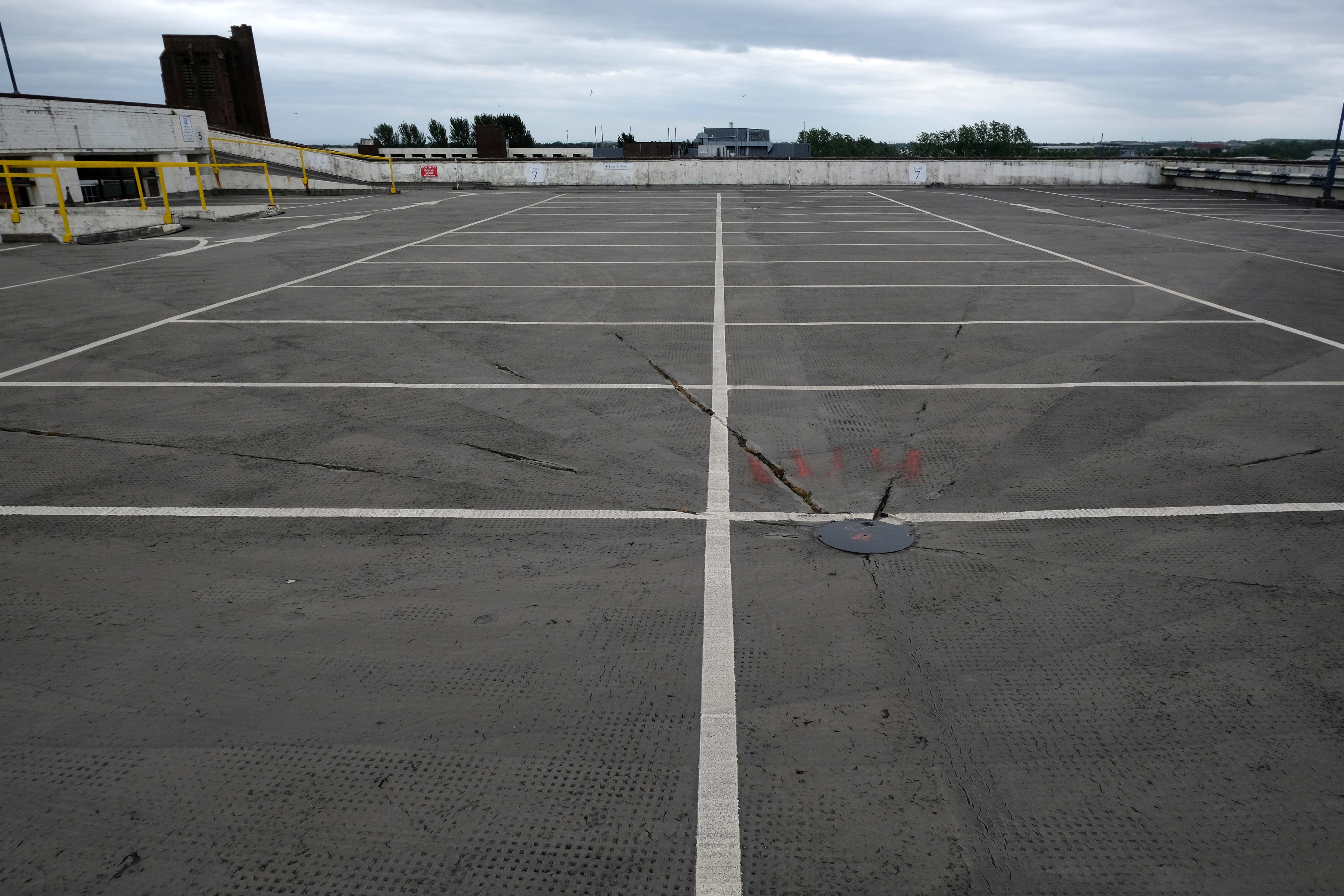
The whole shebang is topped off with a roof top car park.

So in the absence of anything else happening in the next half hour, I took a look around.

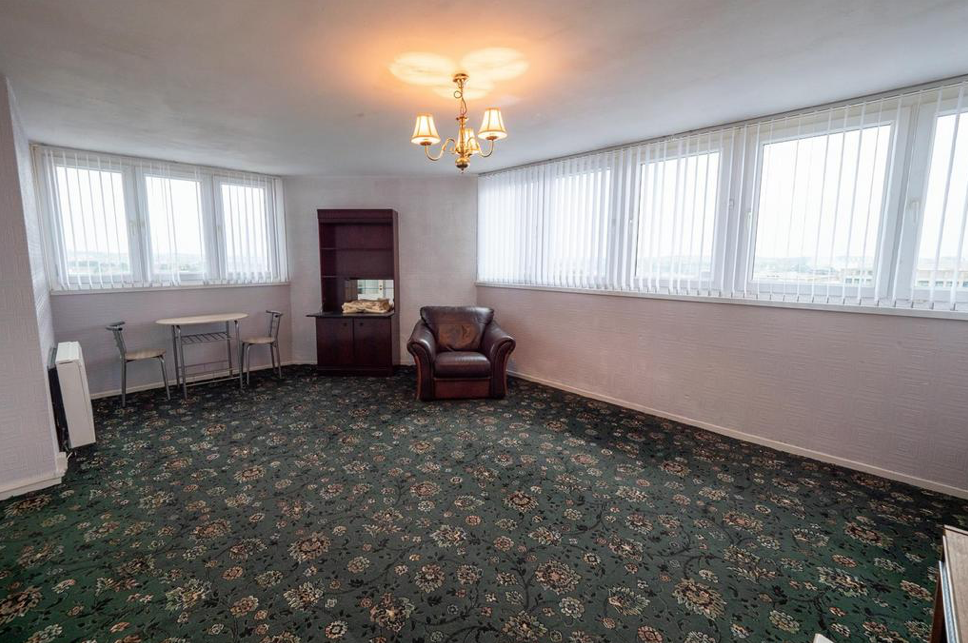
A one bedroomed flat on the eleventh floor will cost you £45,000

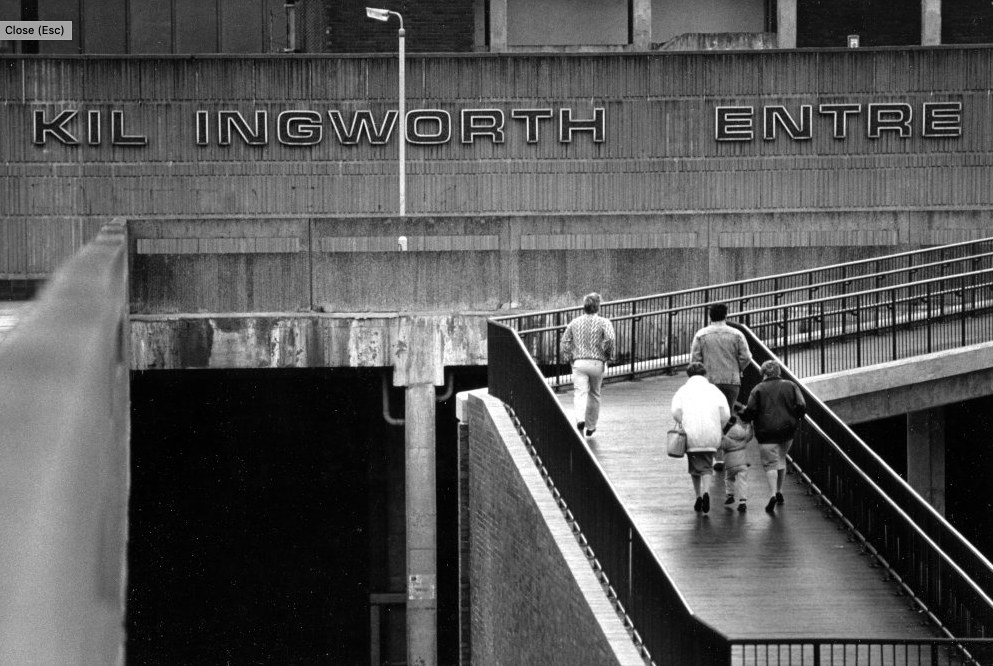
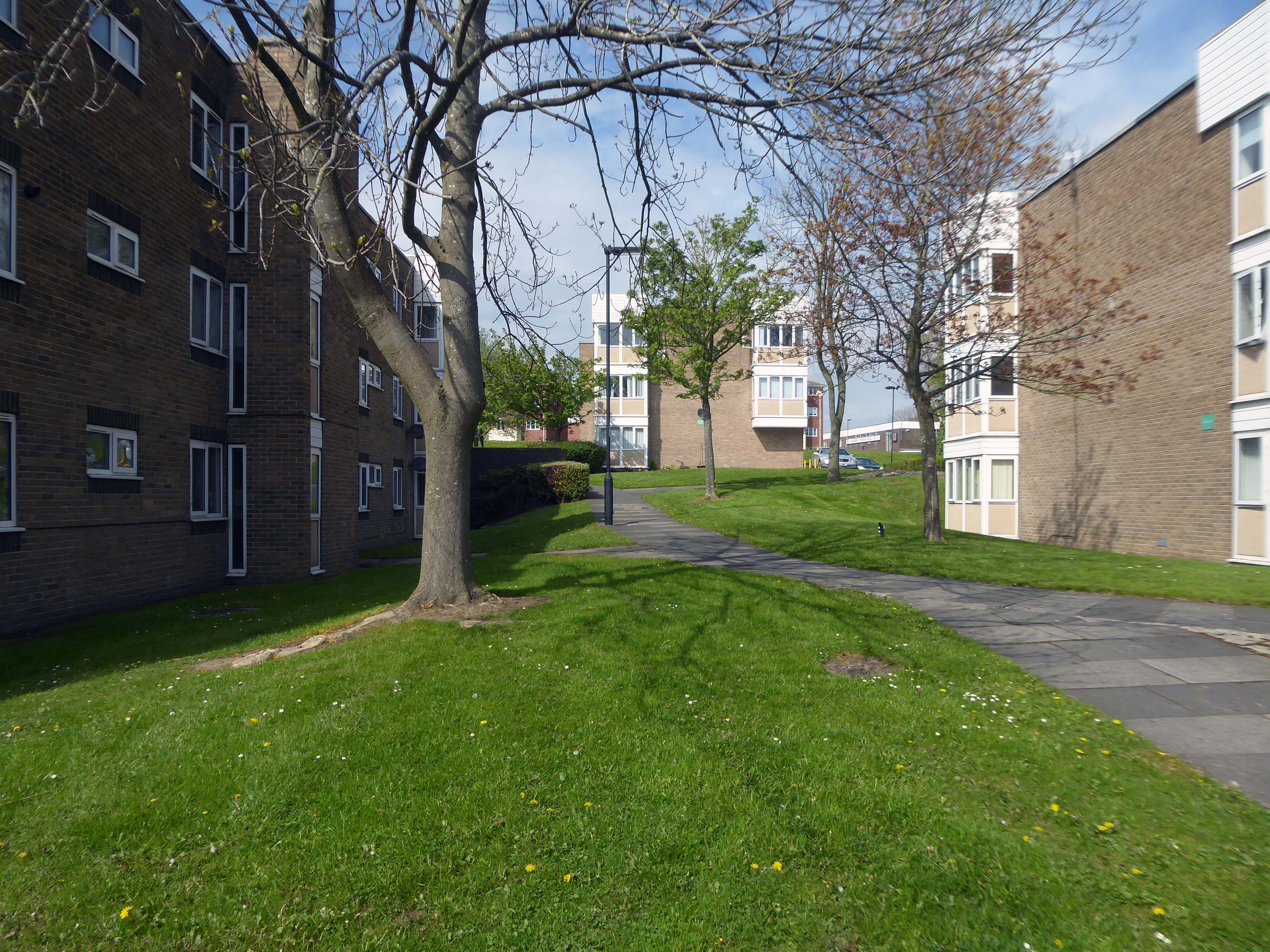
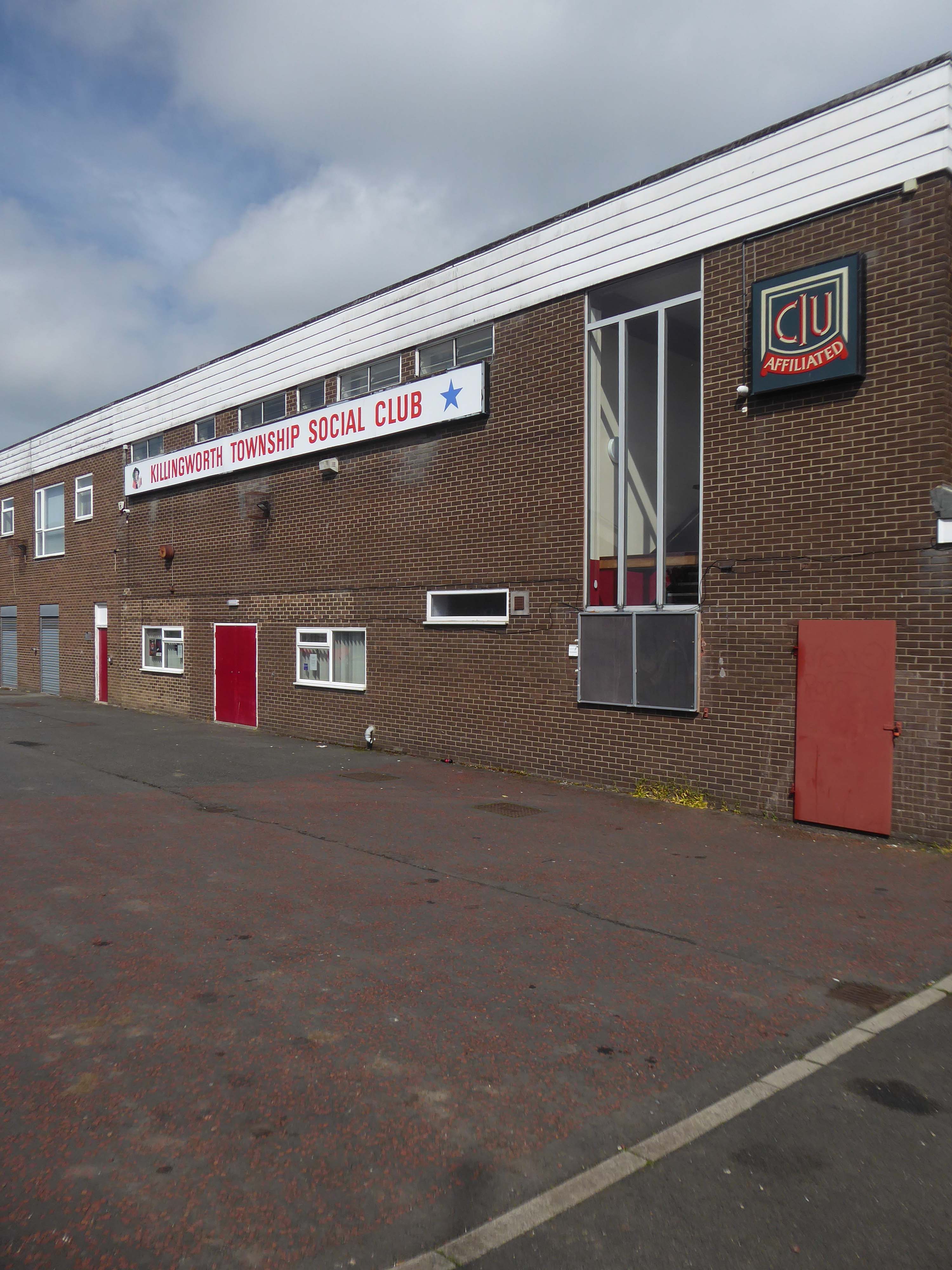
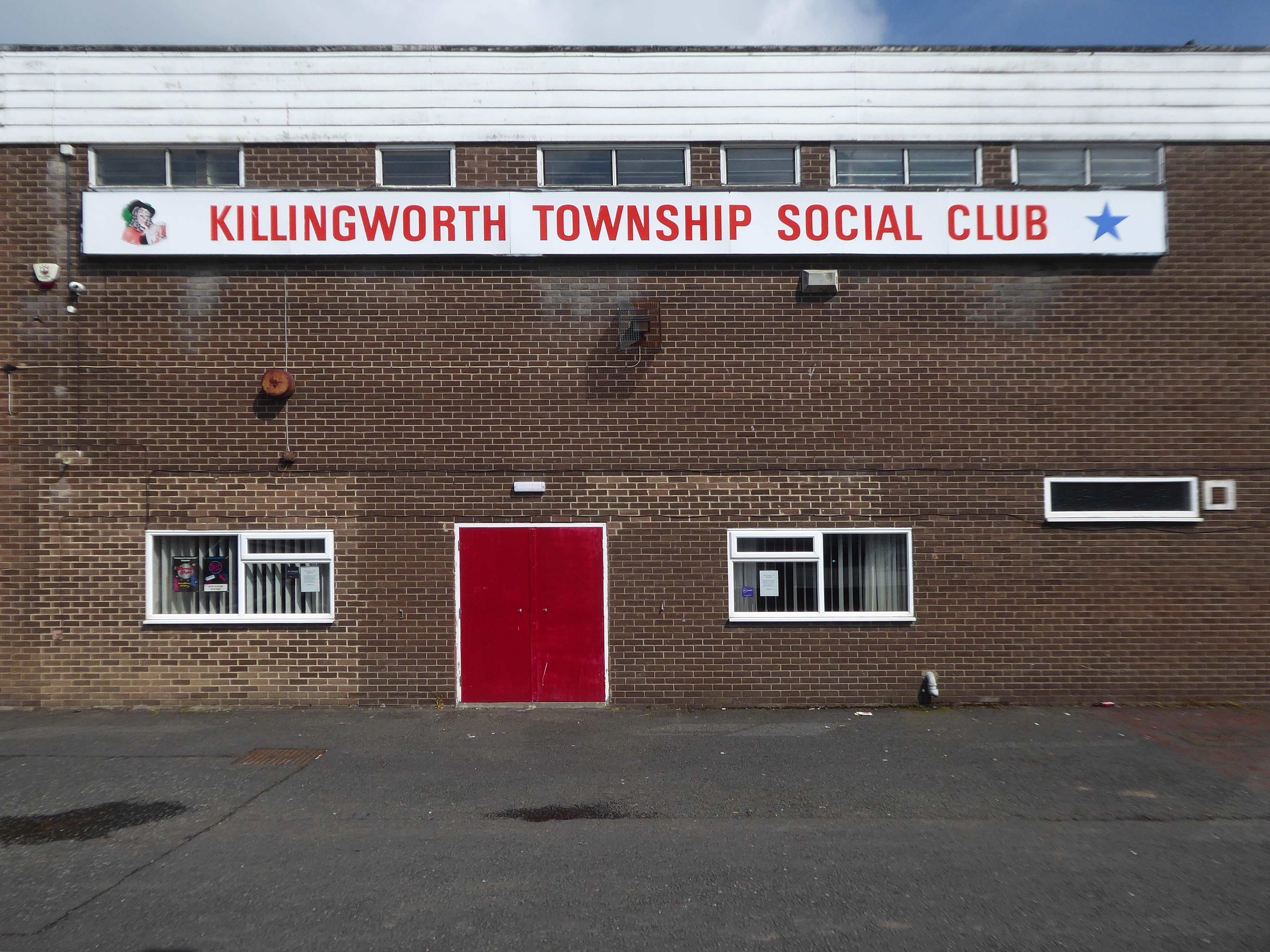
Killingworth

Construction of Killingworth, a new town, began in 1963. Intended for 20,000 people, it was a former mining community, formed on seven hundred and sixty acres of derelict colliery land near Killingworth Village. The building of Killingworth Township was undertaken by Northumberland County Council and was not formally a New Town sponsored by the Government. 

Unlike that town, Killingworth’s planners adopted a radical approach to town centre design, resulting in relatively high-rise buildings in an avant-garde and brutalist style that won awards for architecture, dynamic industry and attractive environment.

This new town centre consisted of pre-cast concrete houses, with millions of small crustacean shells unusually embedded into their external walls, five to ten storey flats, offices, industrial units and service buildings, which often consisted of artistic non-functional characteristics, shops and residential multi-storey car parks, interconnected by ramps and walkways. These made up a deck system of access to shopping and other facilities, employing the Swedish Skarne method of construction.

Killingworth Towers were demolished in 1987

Originally named Killingworth Township, the latter part was quickly dropped through lack of colloquial use.

Killingworth is referred to as Killy by many residents of the town and surrounding areas.

Around 1964, during the reclamation of the derelict pit sites, a fifteen acre lake south of the town centre was created; spoil heaps were levelled, seeded and planted with semi-mature trees.

Wikipedia

There were also groups of Calder Houses built, subsequently rendered neutral with render, their period characteristics erased.

Rightmove

All archive images RIBA pix

Once home to Thelma and Bob Ferris – whatever happened to the likely lads’ and lasses’ homes?

I had come in search of paradise on a 52 bus – too late was the cry, too late.

The winds of change had blown away the new coal dream, so I wandered lonely around the quiet streets.

The daffodils were past their best.

Further Education

The first school of design in the UK, the Government School of Design, was established in 1837 and went on to become the Royal College of Art. It marked the beginnings of the development of technical education in the UK, which expanded in the remaining decades of the 19th century, and was largely instigated by the Science and Art Department of the Board of Trade, formed in 1853.  In 1856 the Science and Art Department transferred from the Board of Trade to the Education Department and administered grant-aid to art schools from 1856 and to schools of design and technical schools from 1868.

The Technical Instruction Act 1889 permitted local authorities to levy rates to aid technical or manual instruction. County and borough councils began to provide technical instruction by day and evening classes.

The Local Taxation Customs and Excise Act 1890 diverted ‘whisky money’ from publicans to local authorities for assisting technical education or relieving rates, boosting investment in technical instruction.

By the end of the 19th century continuing education was provided by a variety of bodies in a number of forms:

  • day continuation schools 
  • evening schools and classes
  • mechanics institutes
  • schools of art
  • polytechnics
  • university extension lectures
  • tutorial classes
  • working men’s colleges and courses

Under the 1902 Education Act, changes to conditions attached to government grants encouraged the expansion of technical education. Local Education Authorities took over most of the evening continuation schools.

Major changes occurred after the Second World War. Junior technical schools , commercial schools and schools of art were fully integrated into the revised system of secondary education.

National Archives

The development of technical and art education were inextricably linked to the industrialisation of the north of England.

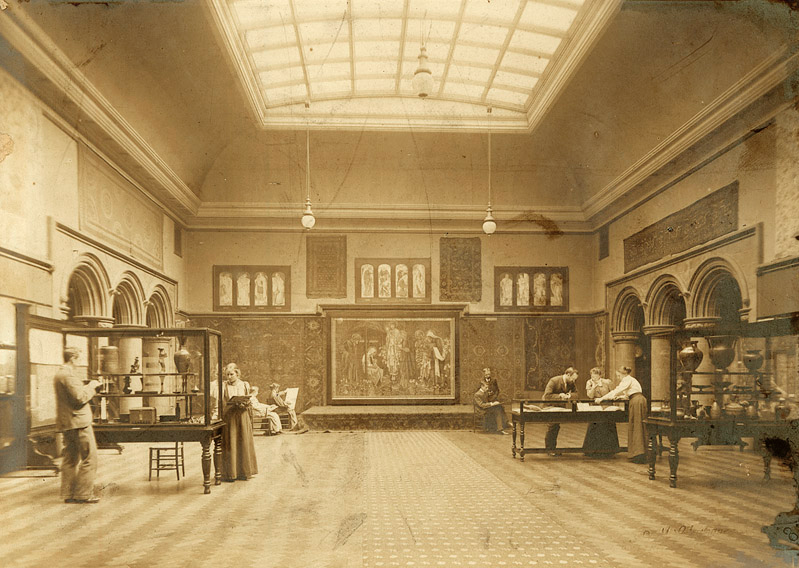
The Textile Court or main gallery space of the Arts and Crafts Museum of the Manchester Municipal School of Art, photographed in 1898-1901.

Flickr

Manchester School of Art was established in 1838 as the Manchester School of Design. It is the second oldest art school in the United Kingdom after the Royal College of Art which was founded the year before.

The school opened in the basement of the Manchester Royal Institution on Mosley Street in 1838. It became the School of Art in 1853 and moved to Cavendish Street in 1880. It was subsequently named the Municipal School of Art. In 1880, the school admitted female students, at the time the only higher education available to women, although men and women were segregated. The school was extended in 1897.

Wikipedia

The mill towns which encircled the city of Manchester each had their own independent colleges of Art and Design.

Textiles in particular required practitioners in surface pattern and garment design and construction, innovative and skilled students were in demand for print, engineering, architecture and general manufacturing – who also required the services of typographers, illustrators, commercial and graphic designers.

Having left school aged sixteen in 1971, all I ever wanted to do was go to Art School.

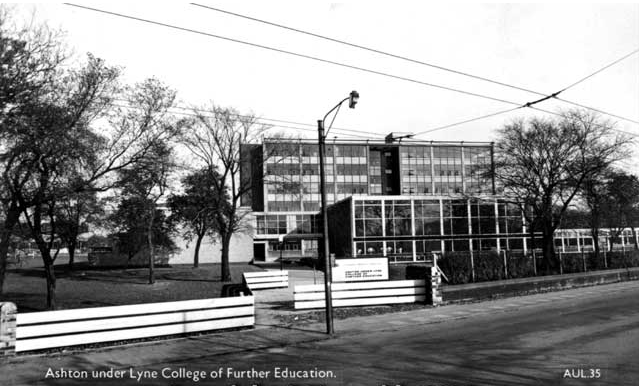
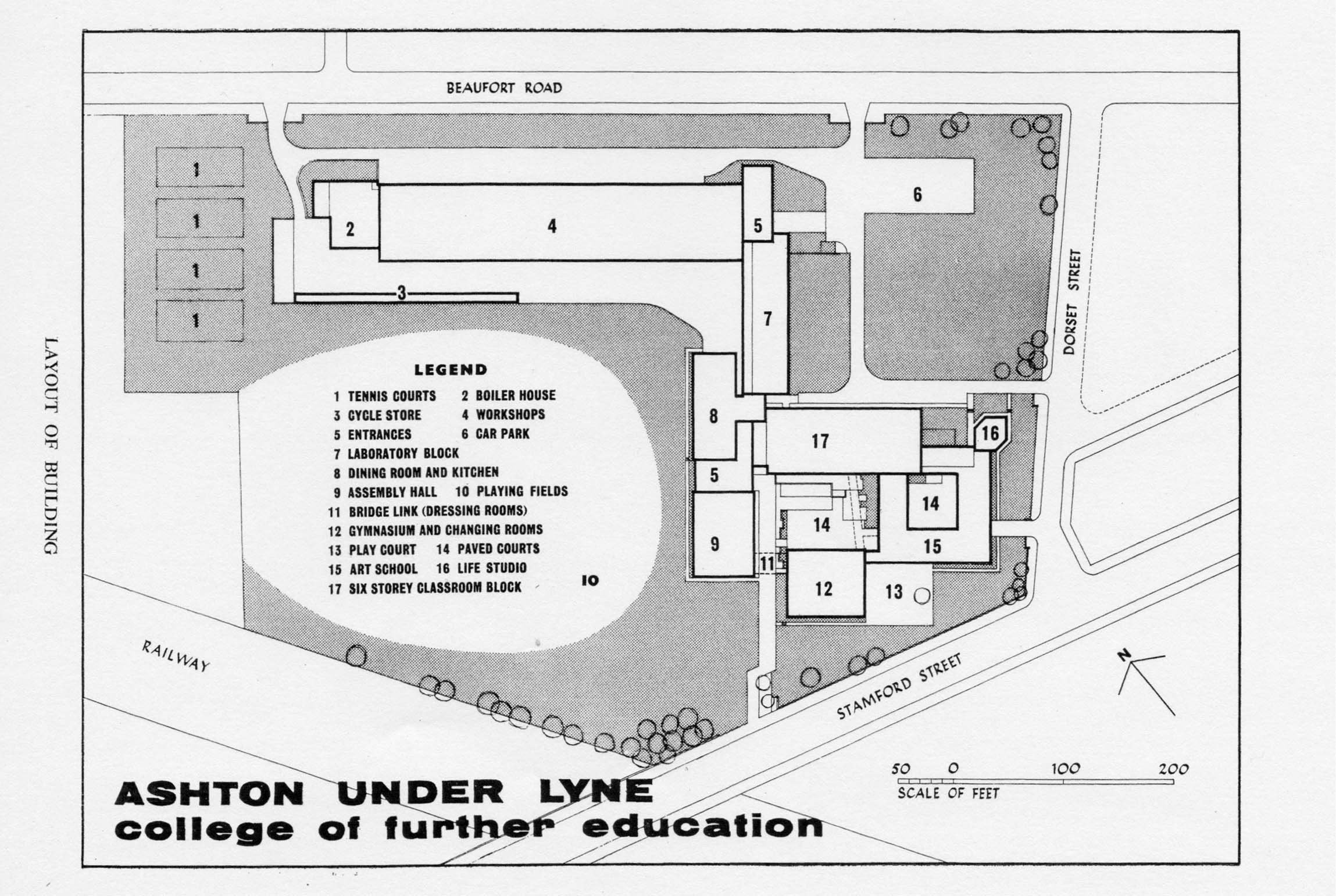
My local college was the then Ashton under Lyne College of Further Education – the full-time mode of study was then a two year Pre-Diploma Course.

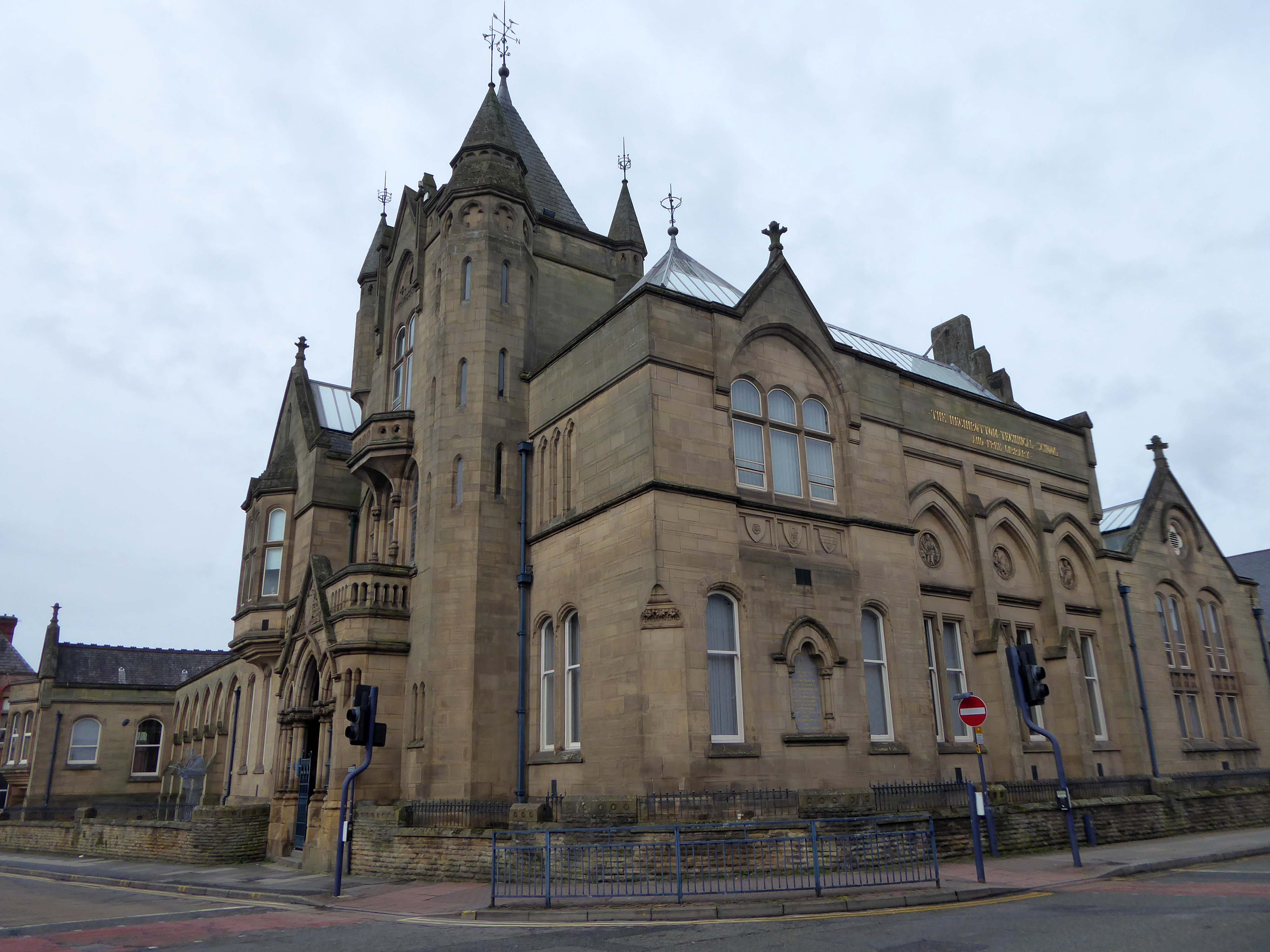
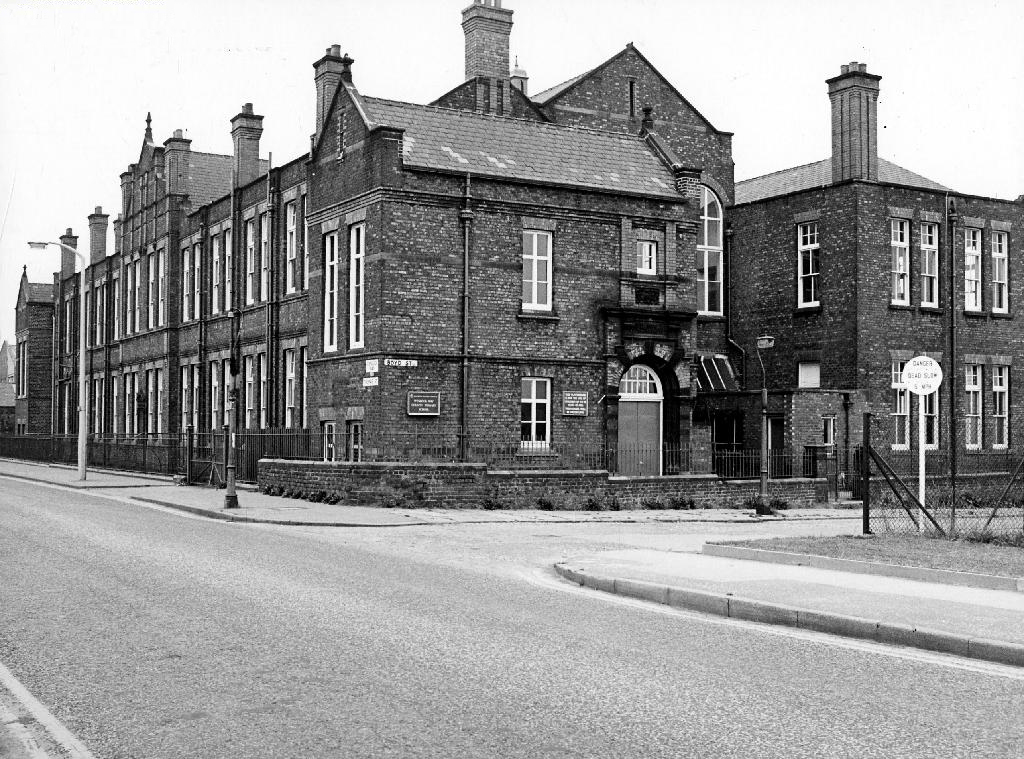
It had begun life as the Heginbottom School of Art based at – Heginbottom Technical Schools School of Art and Free Library Old Street Ashton-under-Lyne.

The new Technical Schools and Free Library, which has just been completed were opened for students without any formal ceremony. The building has been erected from designs prepared by Messrs John Eaton and Sons, architects, Ashton, at a cost, including fittings of £16,000. 

The building is now Grade II listed and the library and college long gone.

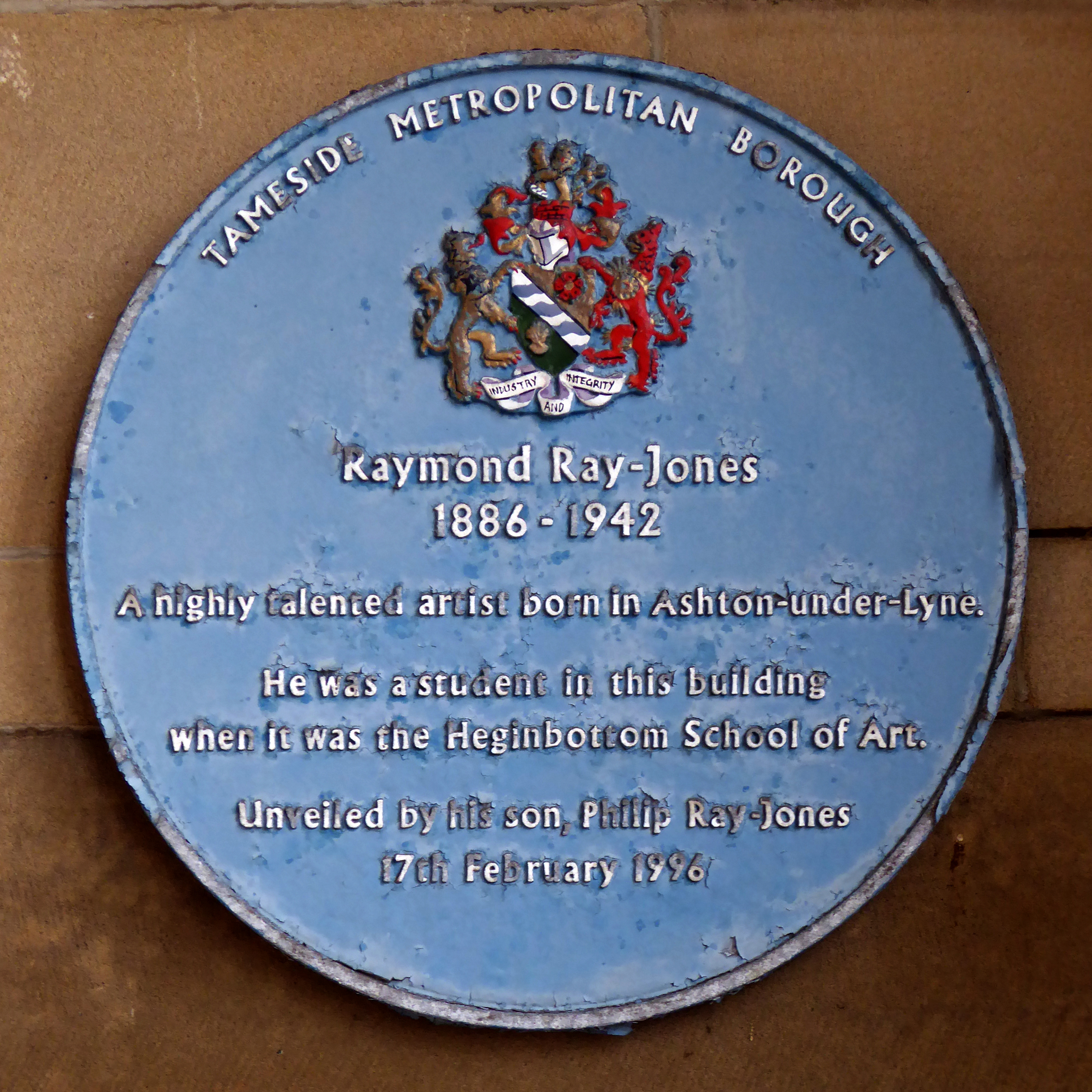
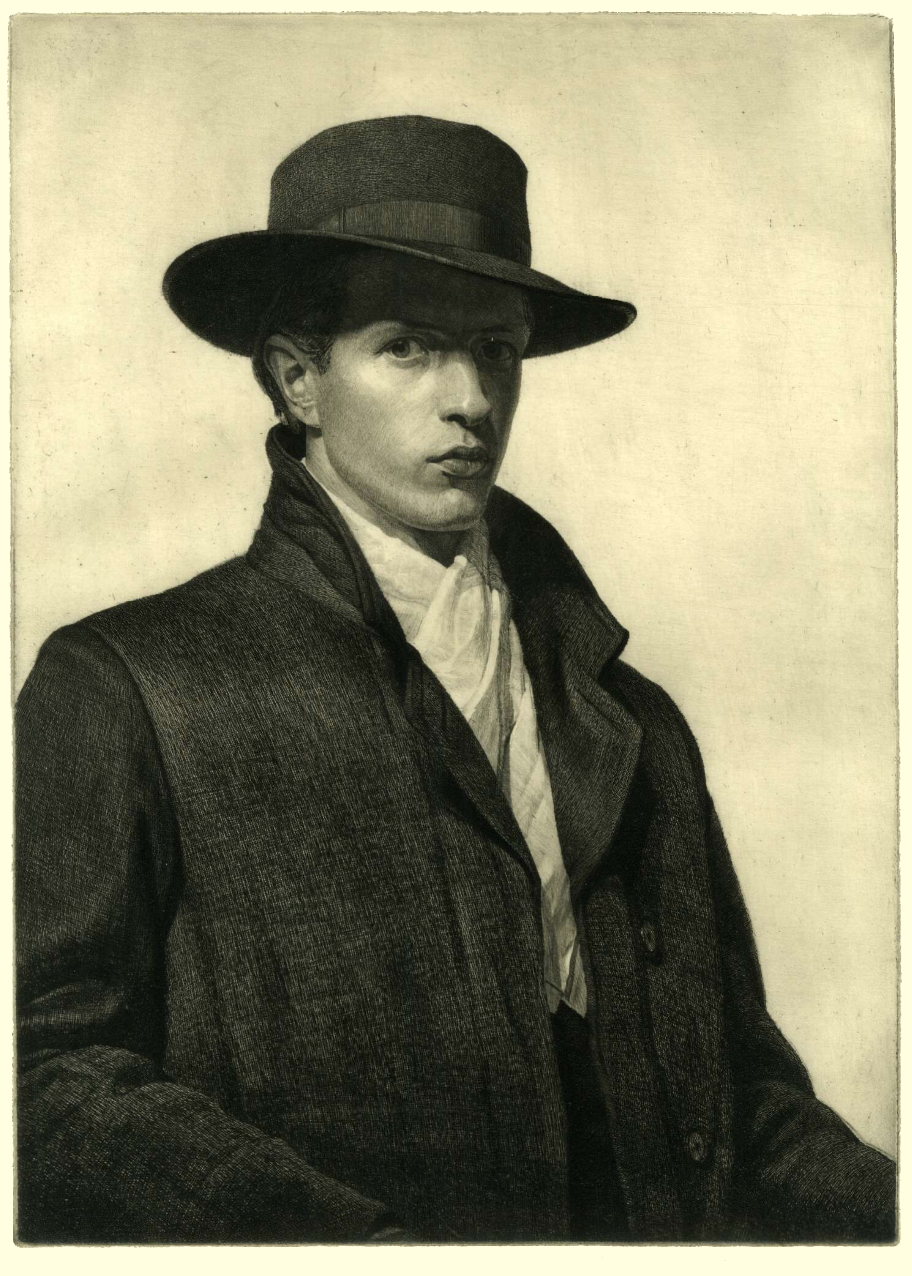
A blue plaque in the main entrance celebrates the former student Raymond Ray-Jones.

Father of photographer Tony Ray-Jones.

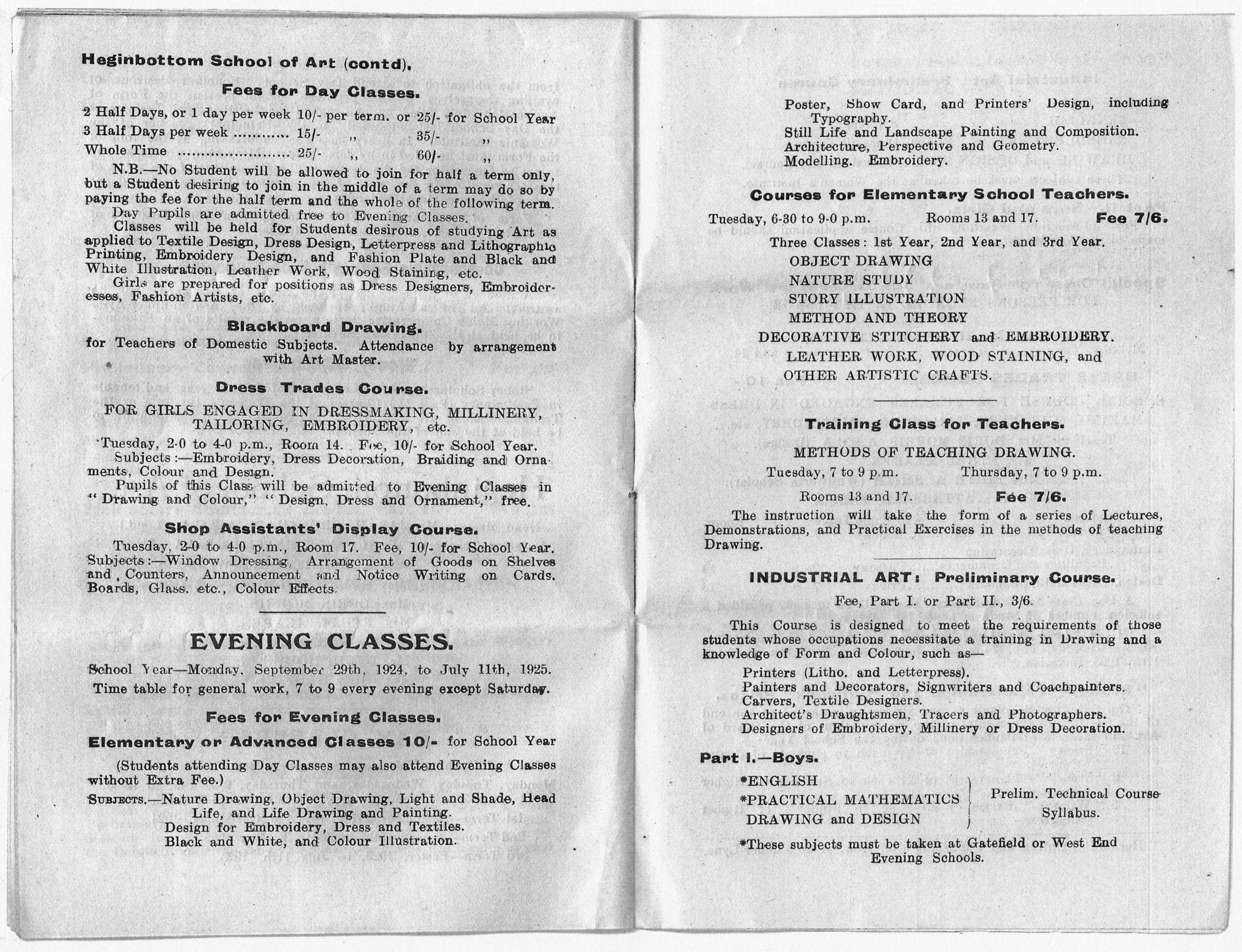
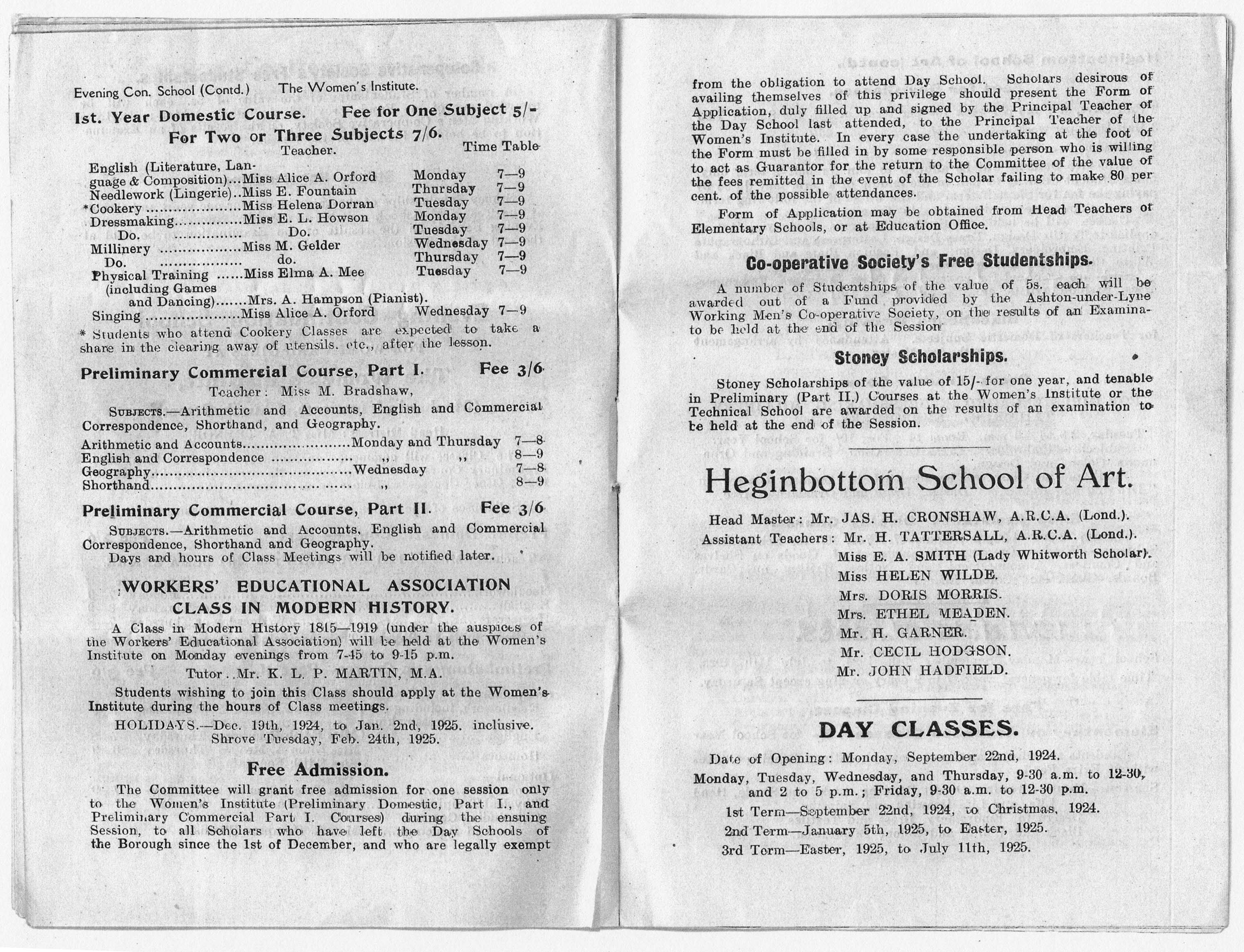
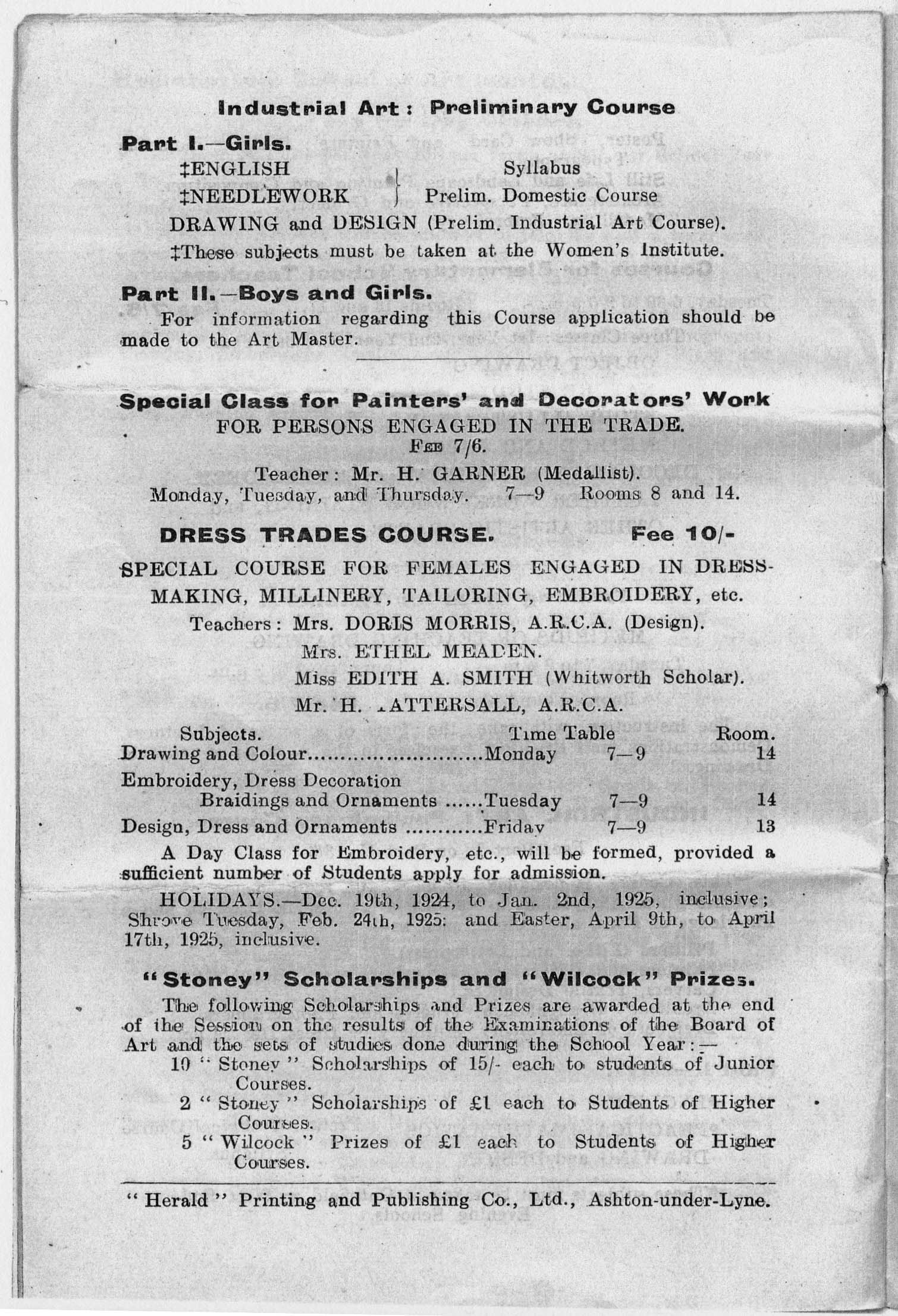
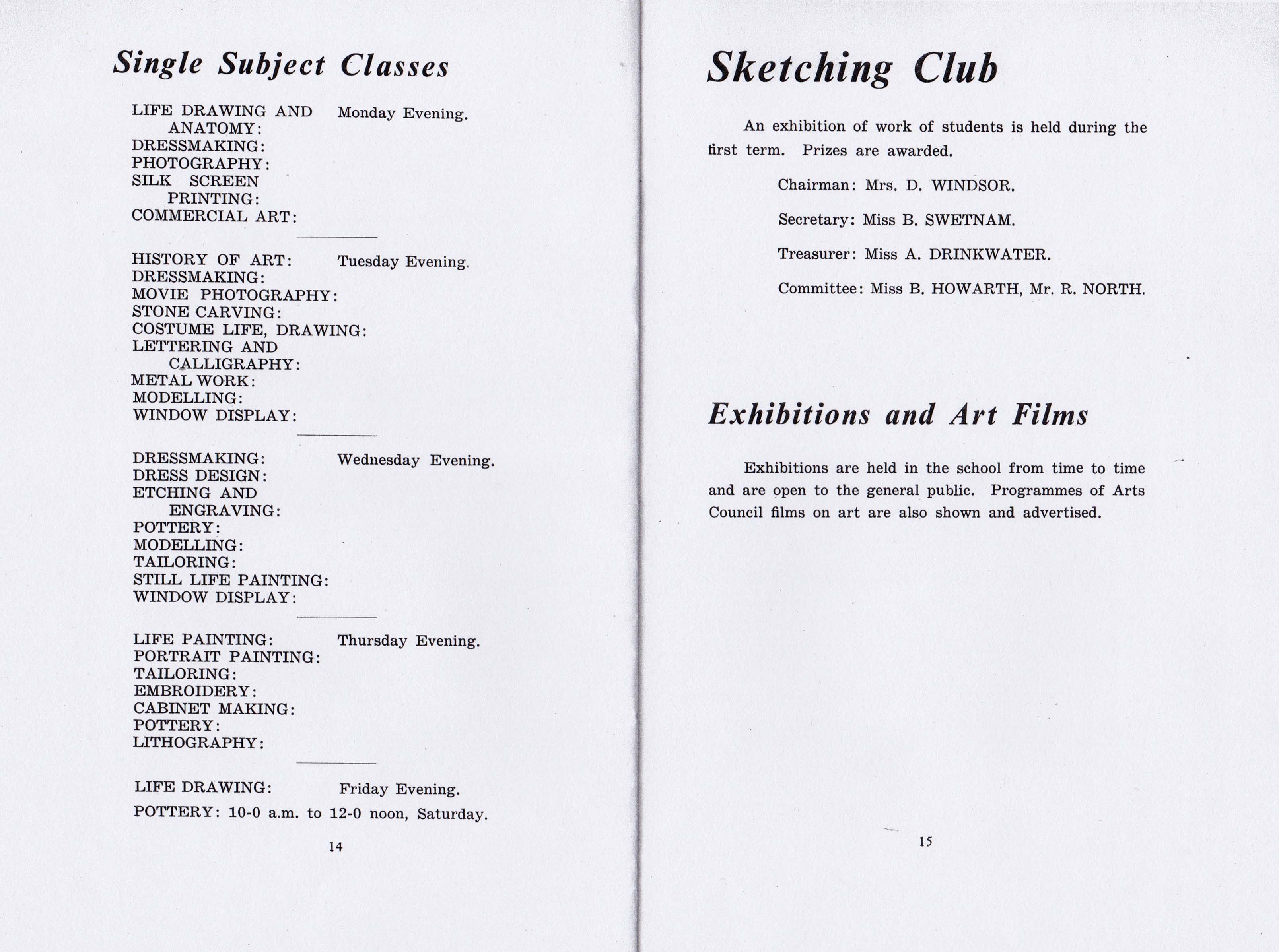
This is the syllabus of 1924-25 – courses take place in evening as students would have been working during the day.

Many of the classes were clearly defined by gender.

Drawing was a seen as a skill which underpinned he majority of disciplines.

Some of the provision was non-vocational.

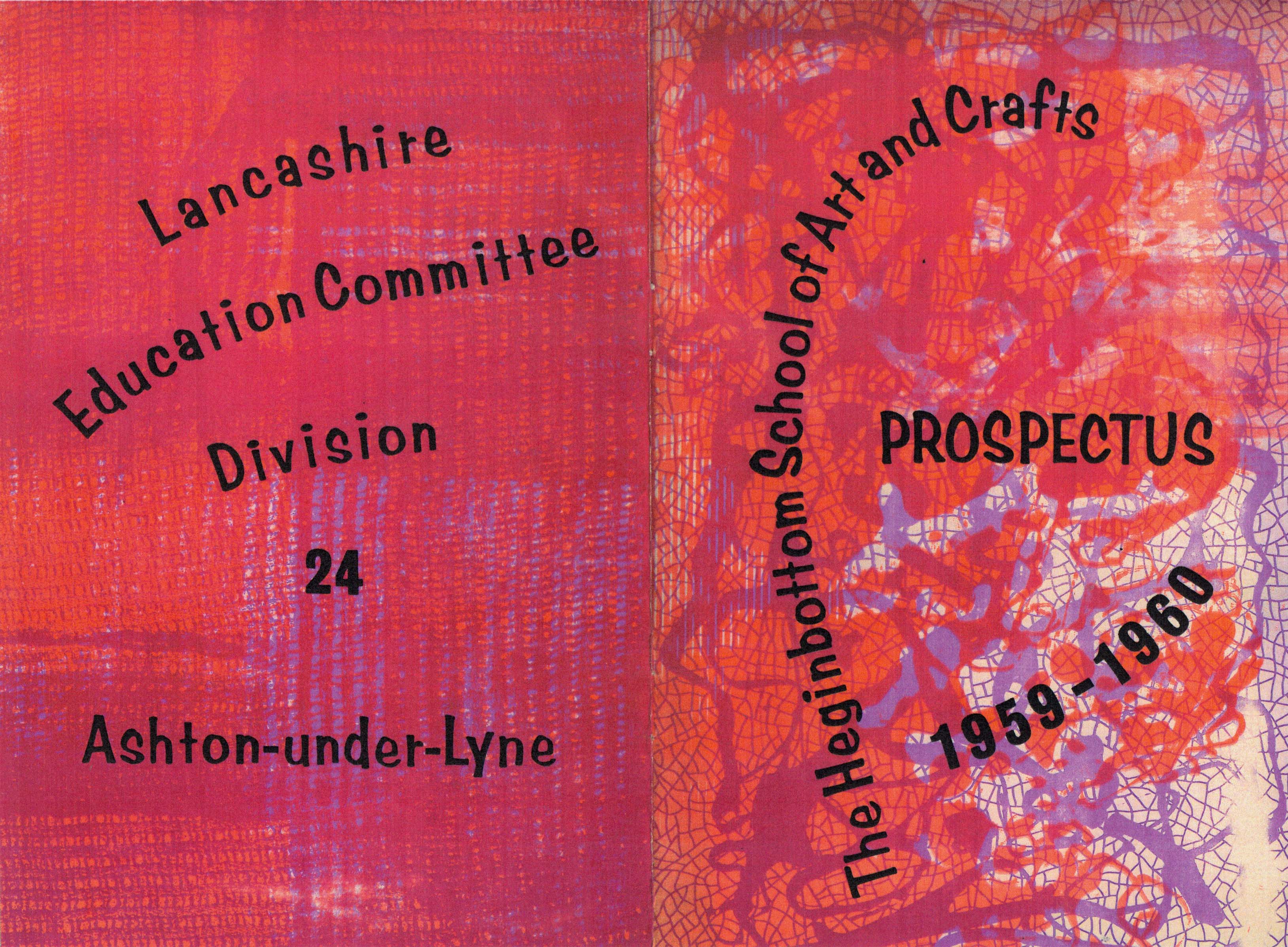
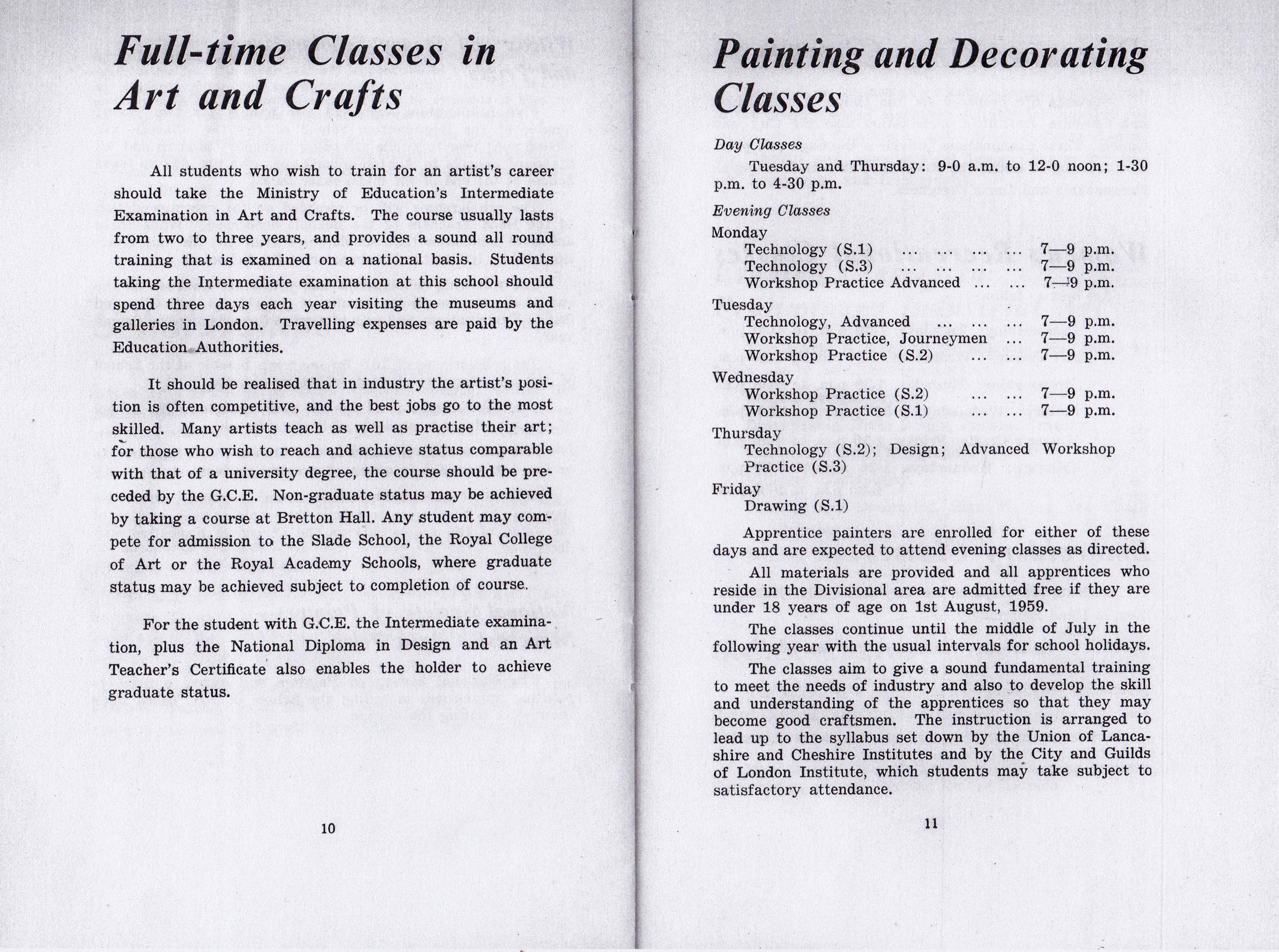
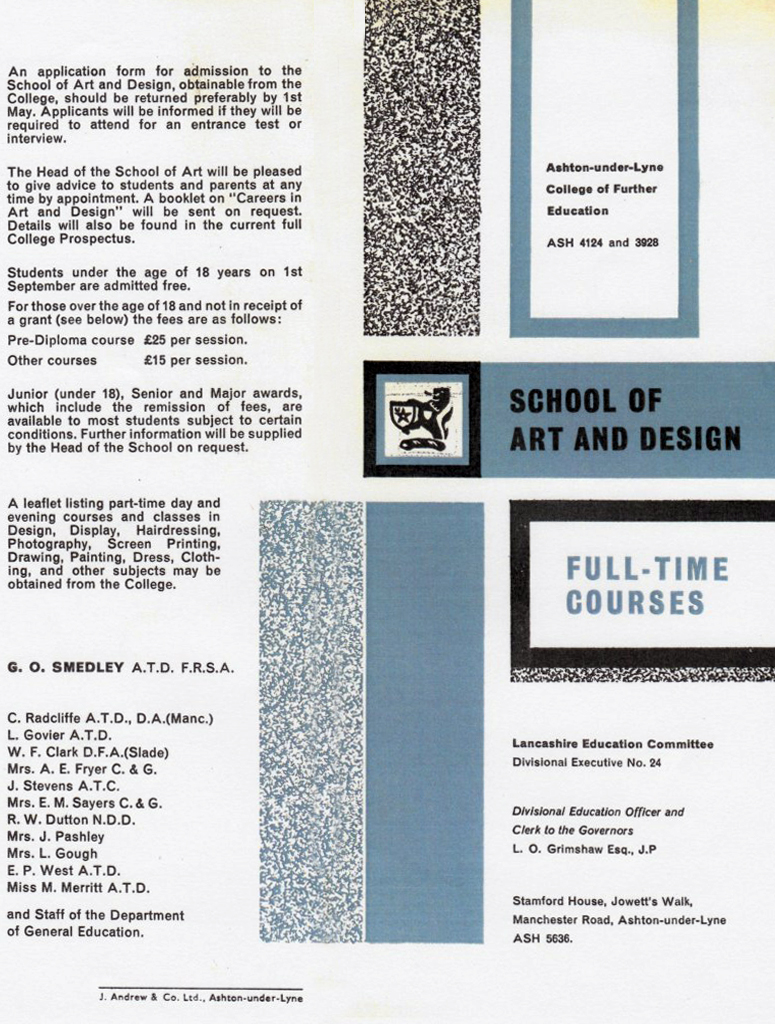
Forward now to 1959-60.

There are now full-time courses in Art and Design – though there were no degree courses until 1974, students would find employment, places on a teacher training course or possibly progress to one of the London colleges, which did have graduate status.

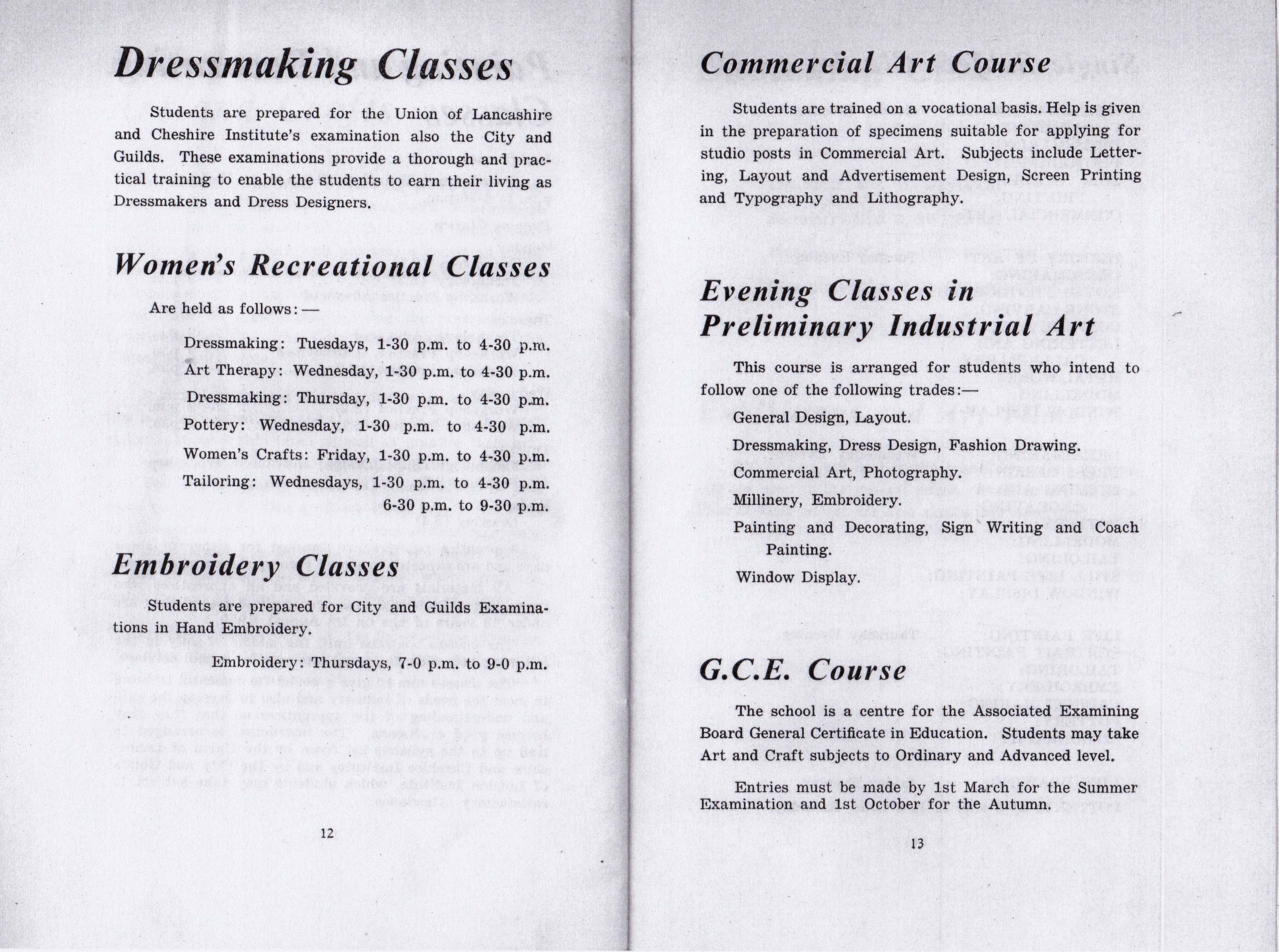
There were still clear distinctions in what were considered women’s skills, which also reflected the patterns of employment.

There was also an increasing distinction between specialisms, Fine and Applied Arts taking diverging paths.

An astounding range of skills were available on a part time evening basis, opening up vocational or non-vocational options.

These were always affordable and well attended.

Art and design education had undergone a major transformation in the early 1960s. The Coldstream report -1960/ 1962 had restructured art education: the existing National Diploma in Design had been replaced with a three year Diploma in Art and Design in 1963. The Dip.AD was conceived as providing ‘a liberal education in art’ and had four areas of specialisation: textiles/fashion, three dimensional design, graphic design, and fine art. Other subjects, such as electronic media, photography and film, were incorporated into fine art or graphic design courses.

The Dip.AD was intended to be the equivalent of a university degree. To achieve this academic entry requirements, at least five O’ levels, were introduced; although exceptions could be granted for “students with outstanding artistic promise”, very few were: only 36 were made in 1967 . The Dip. AD itself contained a compulsory academic element and enhanced art history component: taken together these accounted for 15 per cent of course time and 20 per cent of the final pass mark. One year Pre-diploma (latterly Foundation) courses termed Basic Design, were also introduced, these a product of the Bauhaus approach to art education, pioneered in the UK by and Richard Hamilton, Tom Hudson, Harr Thubron, Maurice de Sausmarez, and Victor Pasmore. Basic Design was a form of creative education involving basic analytic experiment and a clearing of the slate.

Centre for Global Higher Education

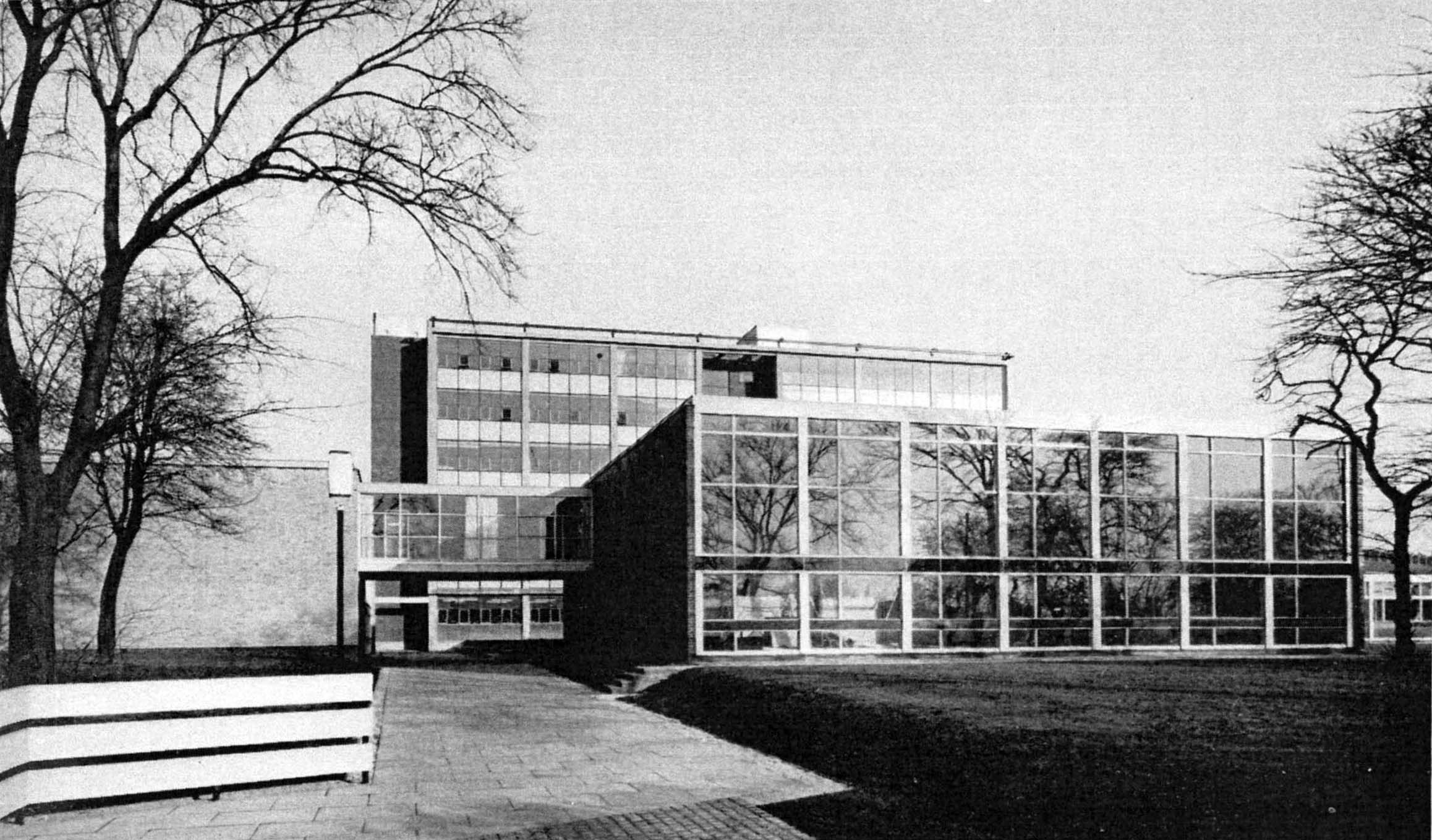
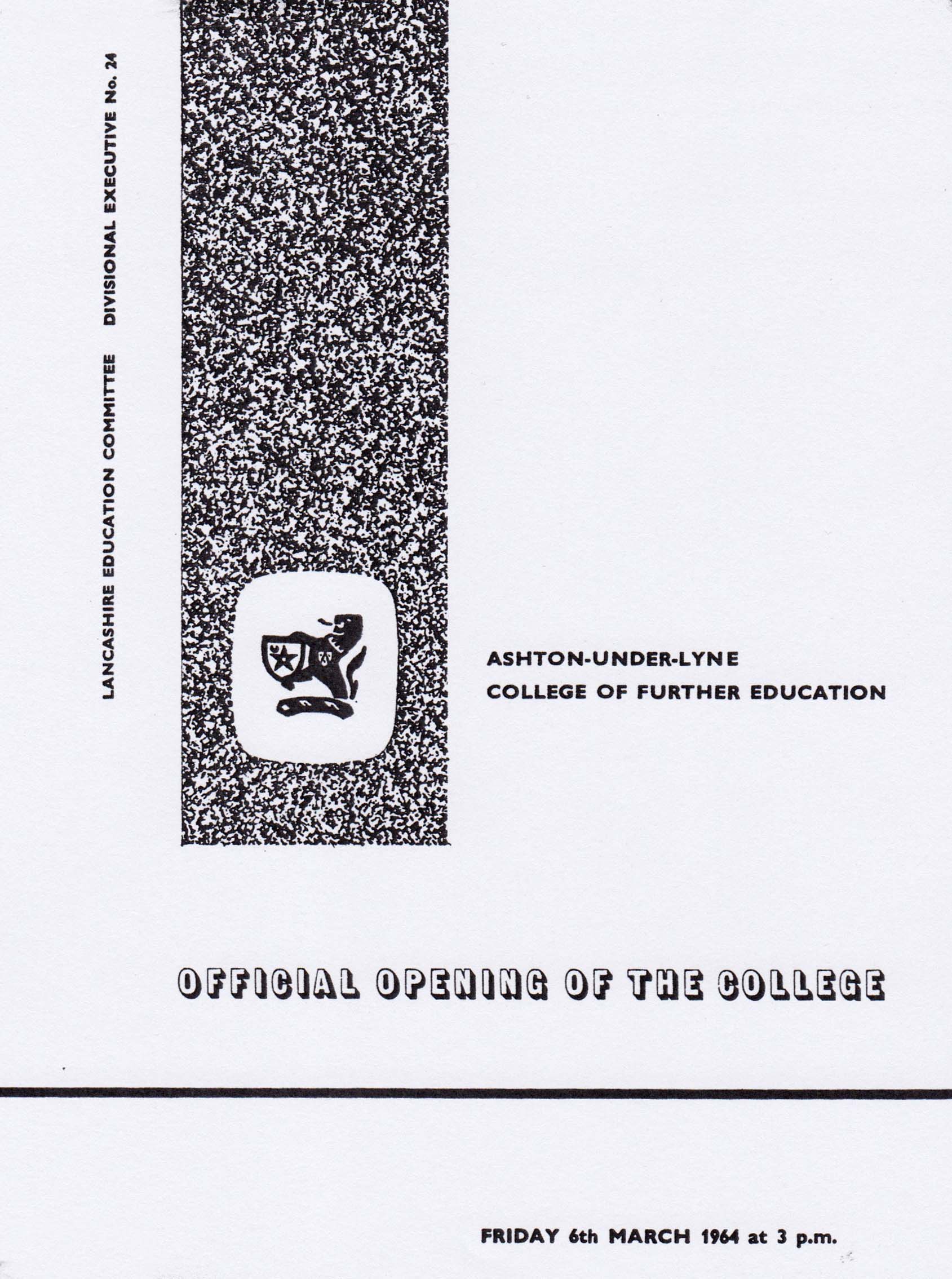
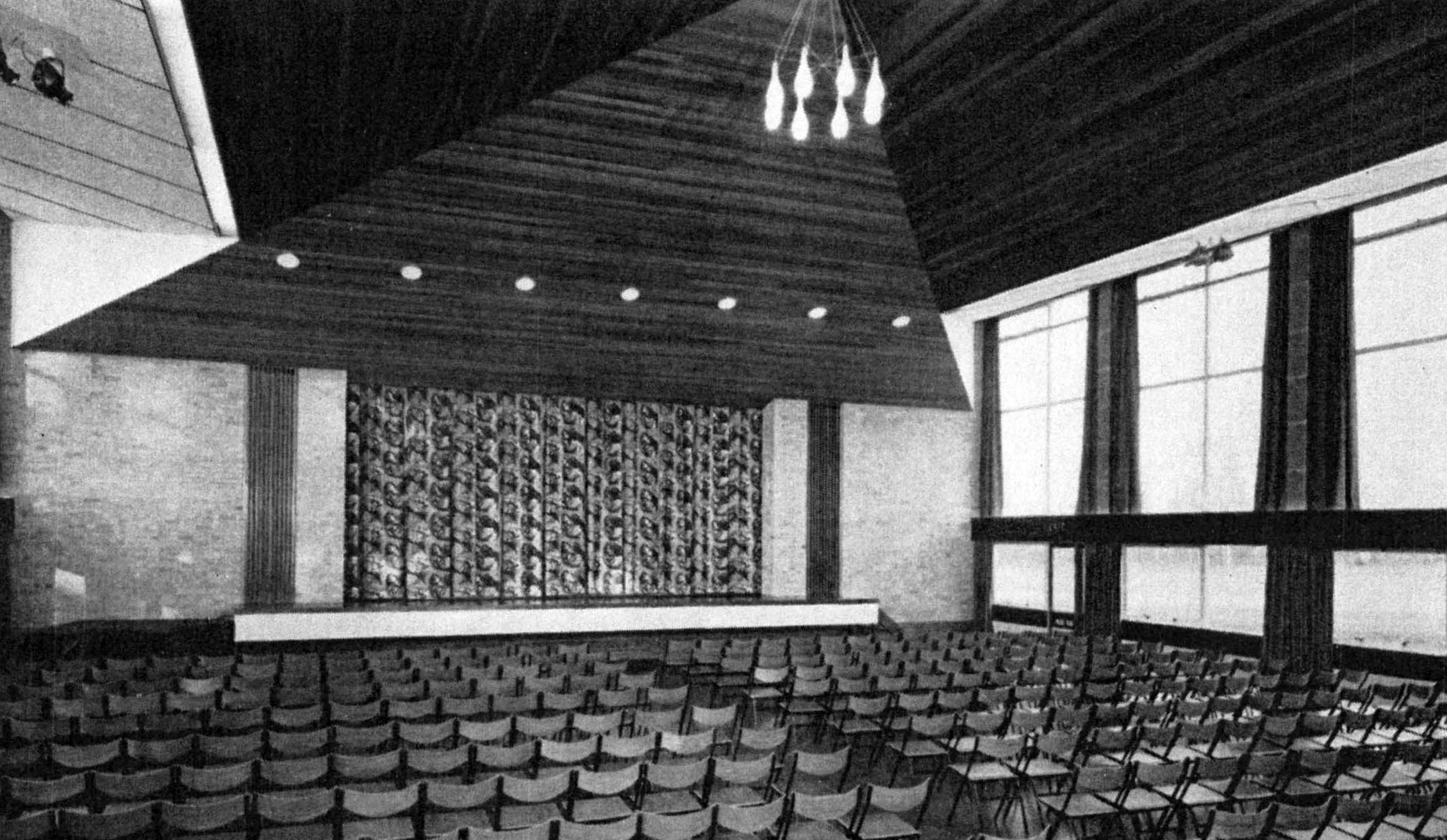
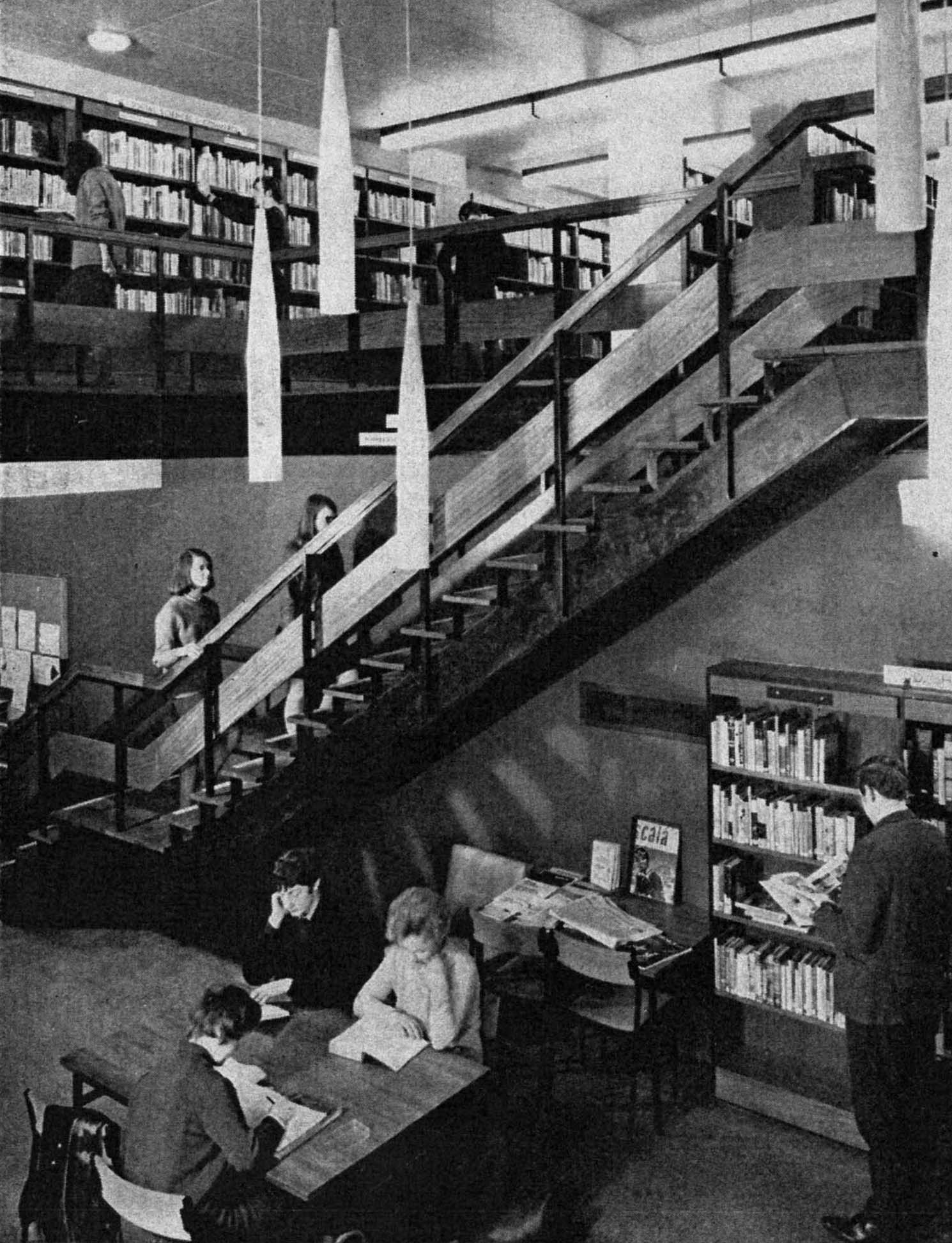
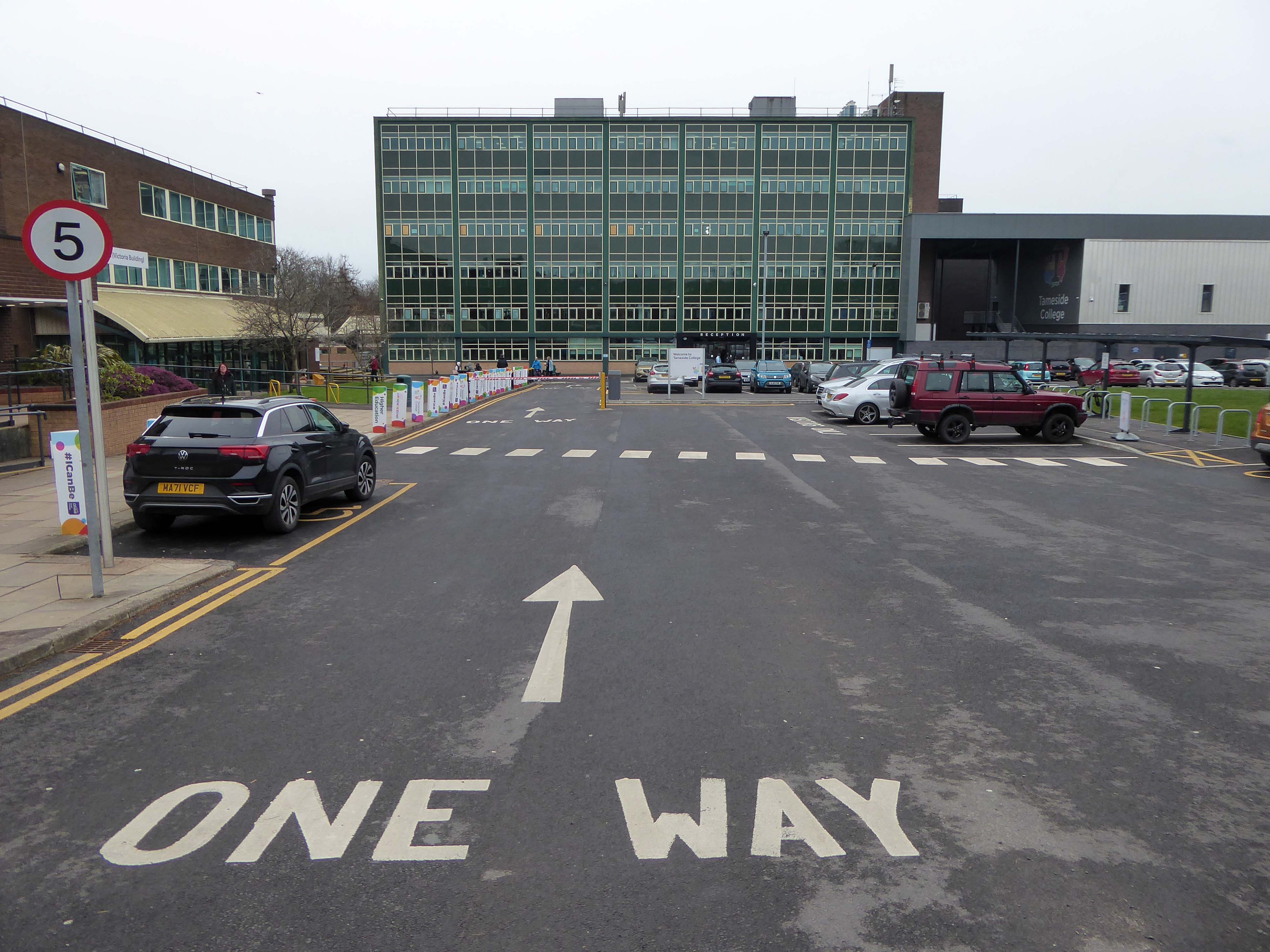
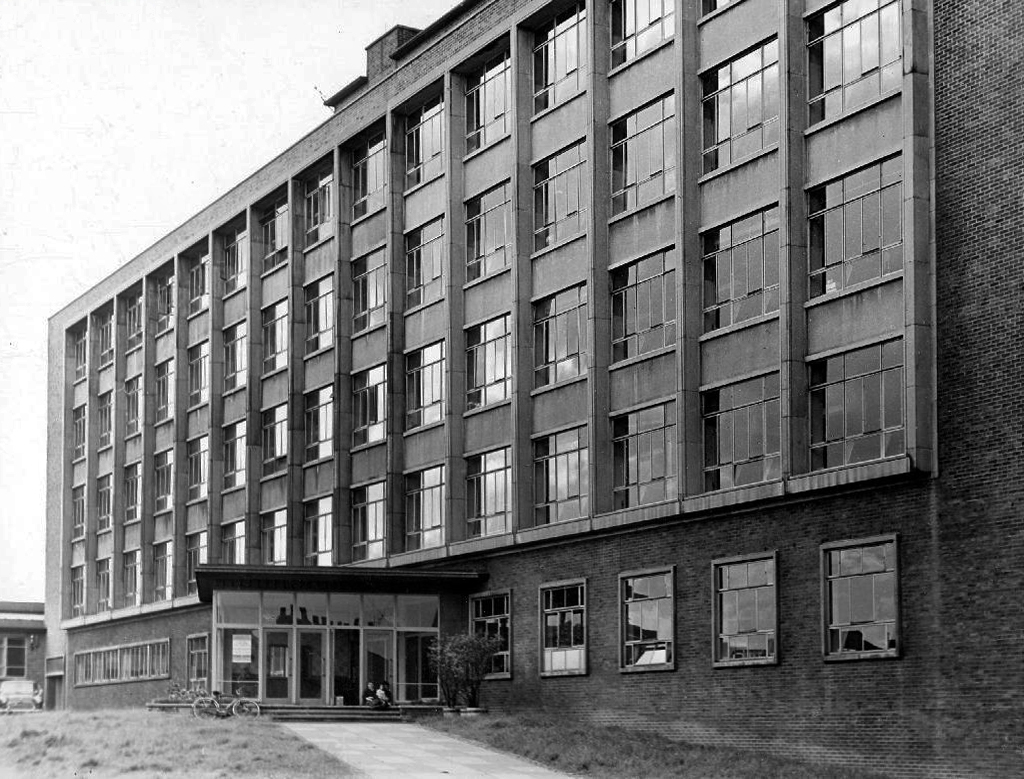
The college which I attended was opened on March 3rd 1964.

Gone were the autocratic Victorian stylings of the Heginbottom School – The College of Further Education represented a more open democratic age.

The communal areas were light and airy, with full-length windows, wooden floors, contemporary furniture and fittings.

The teaching rooms and workshops well equipped and staffed, with ample support from technicians and lecturers.

This was a no expense spared build – we were made to feel valued, in an institution purpose built for our education and future lives.

The full-time course was five full days a week, with one late evening for photography and art history.

I attended ever single day for two years, we were eager to learn and following an introductory merry go round of design disciplines, students were able to choose their own route.

I was privileged to have been taught by Bill Clarke as a student of Fine Art – of whom fellow Ashton student Chris Ofili said:

After six months on the foundation course I chose to specialise in painting and drawing. The teacher there, Bill Clarke, introduced me to painting in a way that didn’t make me feel restricted or limited. Not only was it something completely new, but it was something that allowed me to investigate further into who I am. He taught us that it wasn’t so much about painting a scene and making sure you got the shading right, but trying to get to a point where the thing that works is absolutely critical and essential to you as a living, breathing person. I was obviously aware of famous artists, but I suppose I never really thought that was what you could do with your life. He opened the door enough to make me think that it was worth going into the room.

Tate

Photo: Andy Duncan 2023

A huge emphasis was placed on observational drawing in the life-room, in addition to more exploratory work in a variety of media.

I also spent a great deal of time in the Print Room working in both etching and lithography with lecturer Colin Radcliffe.

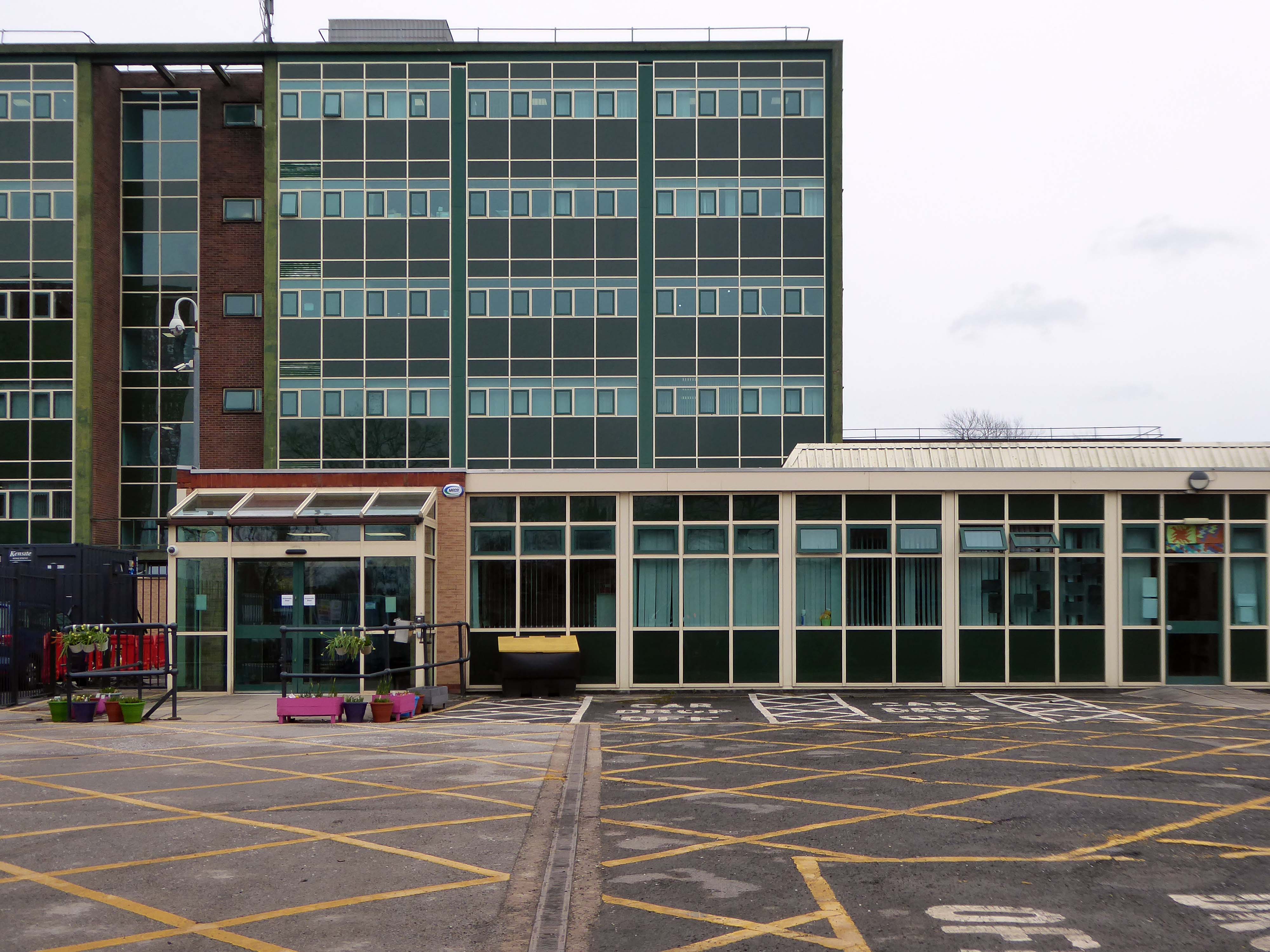
Returning to the college four years ago, I found that the life room was now in use by the Animal Management course.

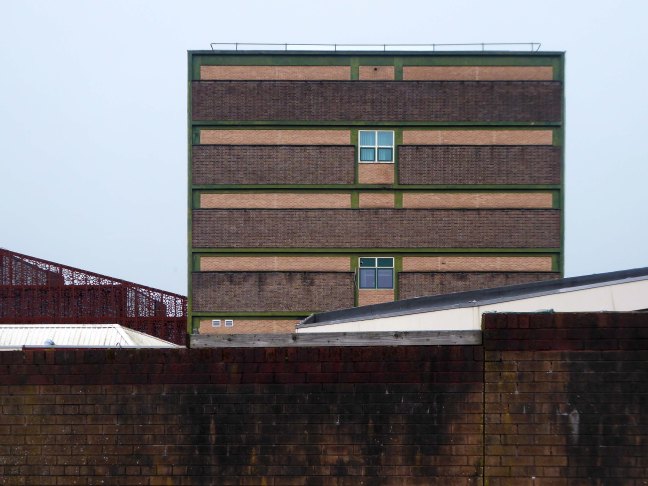
The site had been undergoing refurbishment and new development.

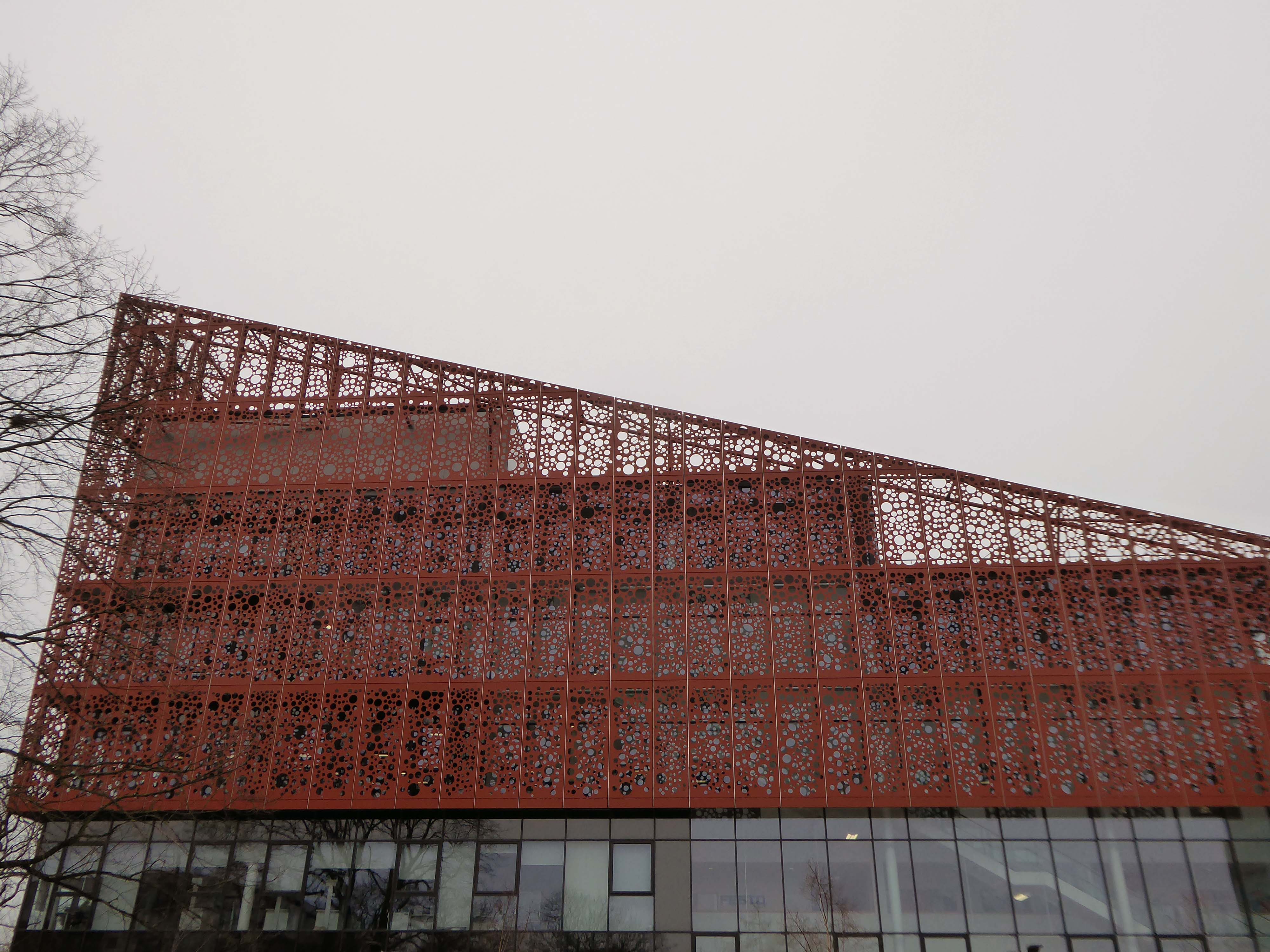
Built by Kier and designed by IBI Taylor and Young the Advanced Technologies Centre has been constructed following a £10.5 million investment.

Levolux designed, supplied and installed a customised architectural facade solution as part of the £10.5 million development of the Advanced Technologies Centre.

ITP supplied our VCL 250 vapour control layer as a protective solution underneath a stunning façade design. With a mono-filament reinforcement scrim for tensile strength, its polyethylene-based membrane ensures that the building envelope is properly sealed to control ventilation, prevent heat loss and protect insulates from interstitial condensation.

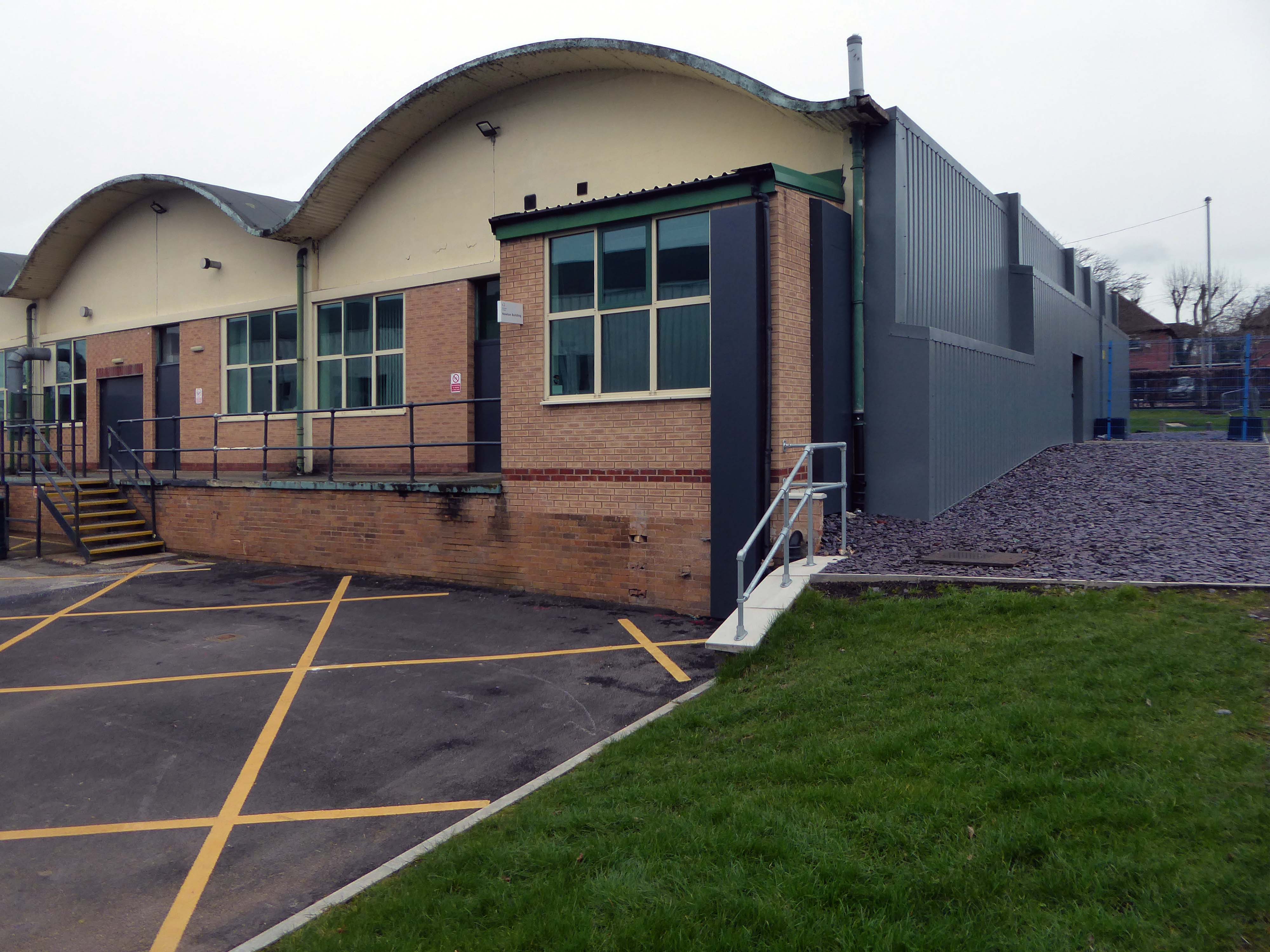
The single storey building was previously home to the Ceramics and Textiles rooms.

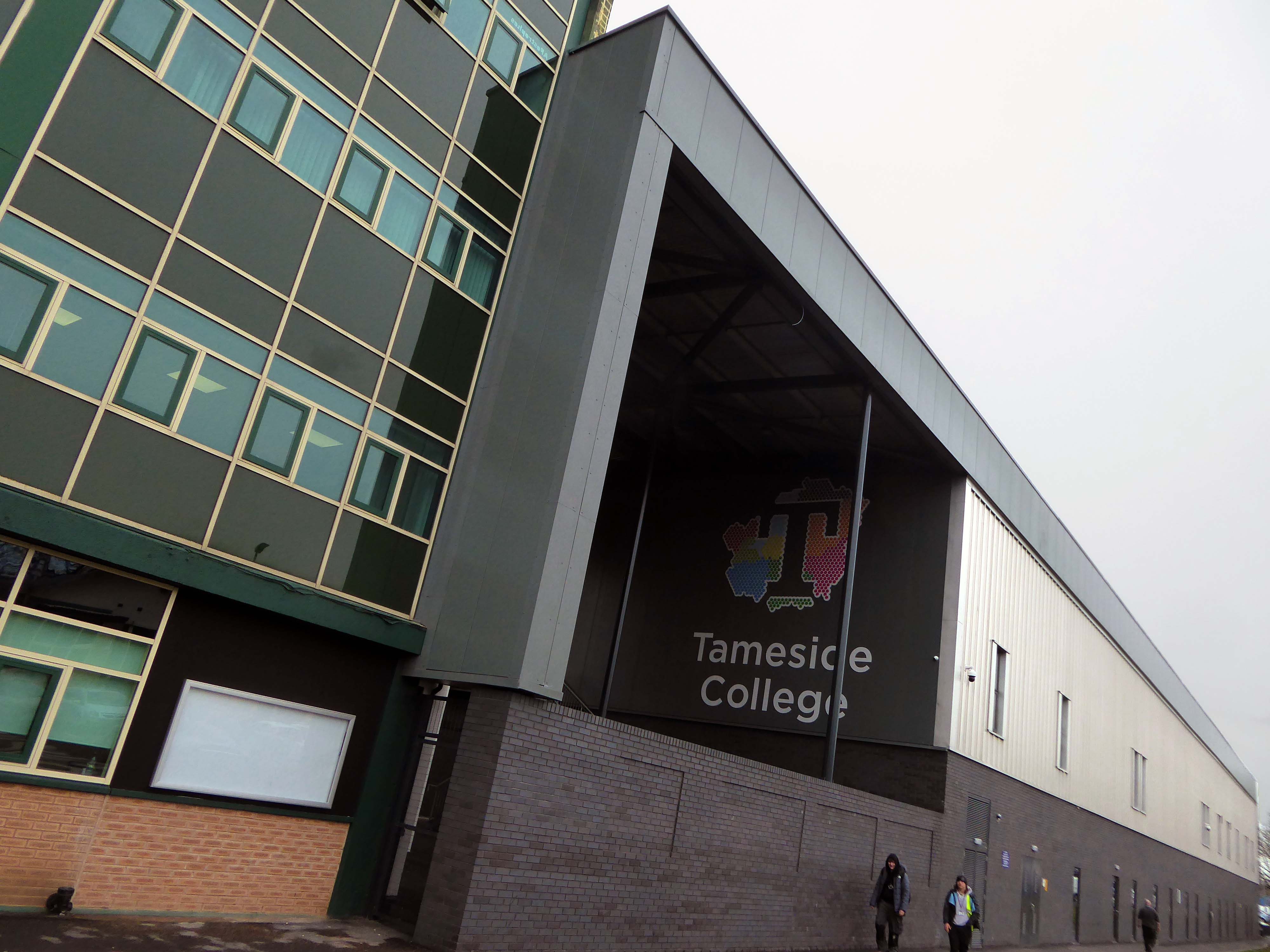
The Construction Skills Centre has been designed by Manchester-based architects 10 Architect.

Heckford Signs work with Willmott Dixon approached on a new coloured acrylic sign for the new Construction Skills Building at Tameside College.  The aim for this new sign was to create a showcase of the college logo at an eye-catching size, to include 3D elements which would be housed on the East elevation of the impressive new building on campus.

The rolling curves of the original workshops have been retained and updated.

Since leaving the college in 1973, I graduated from Portsmouth Polytechnic with a BA(Hons) Printmaking, subsequently spending thirty years of my working life teaching in a variety of Further Educational sites across Manchester.

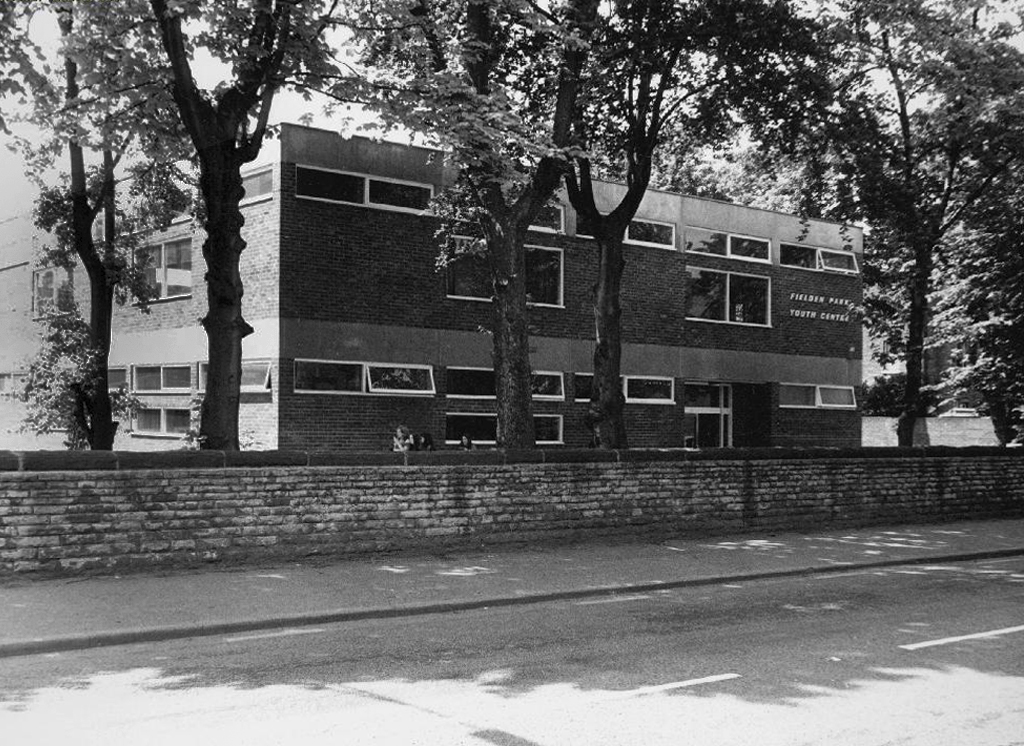
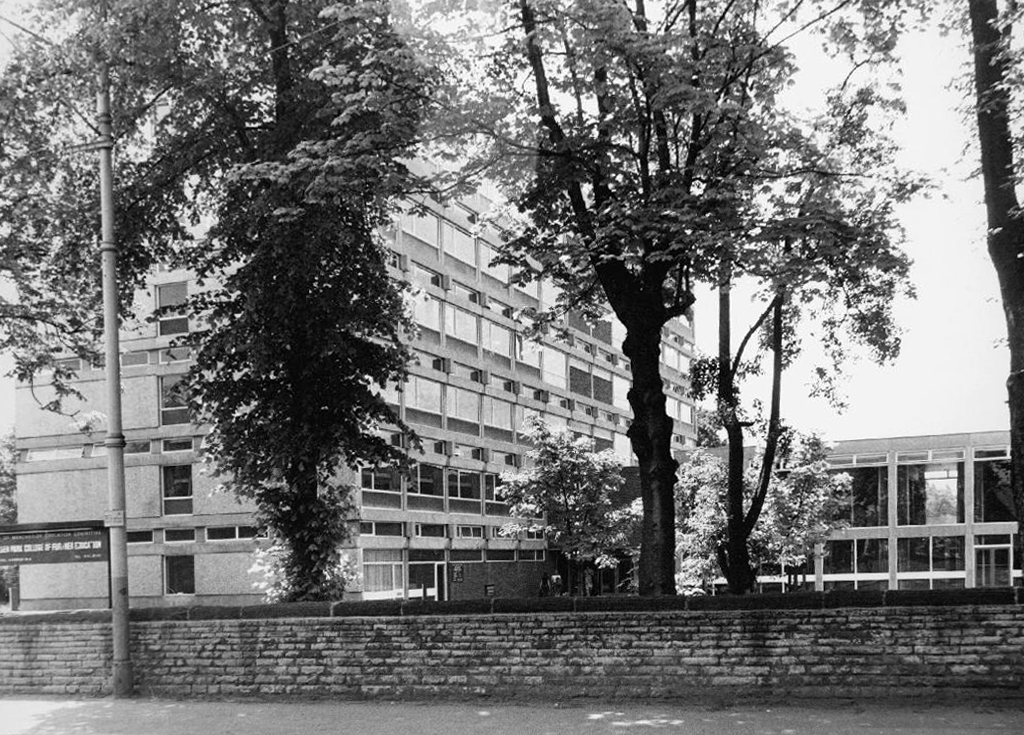
Fielden Park College seen here in 1973 – where I taught design to the printing apprentices.

Originally designed by the City Architect SG Besant Roberts in 1965, refurbished by Walker Simpson Architects.

Closed.

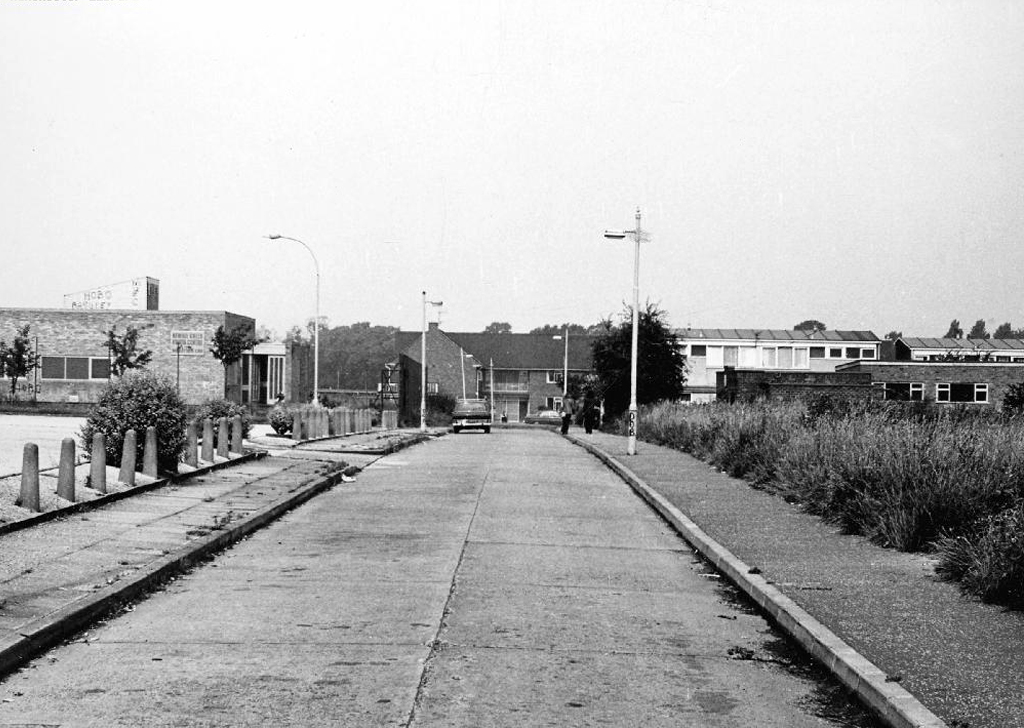
Wenlock Way – an annex of Openshaw Technical College, a former primary school which housed courses in Sign Writing, Jewellery, Horology and Retail Display.

Demolished.

Openshaw College – since demolished and rebuilt, becoming Central Manchester College in the 90s.

We were relocated to Taylor Street in the former Bishop Greer School – renamed the East Manchester Centre.

Since demolished to make way for an old people’s home.

Following the reorganisation of Manchester’s FE provision we were moved again to the former Yew Tree High School, Arden Sixth Form College – renamed City College Manchester.

This block was eventually demolished to make way for the new Northenden Centre – which closed last year, which has in its turn been demolished.

Everyone was relocated to the brand new building on the former Boddington’s Brewery site.

Everyone but me, as I left in 2014 to become a modern moocher.

Manchester College City Campus

Following build completion in July, the long awaited 27,000 square metre, four-storey campus, designed by Bond Bryan and Simpson Haugh, offers a range of facilities, creating an exceptional student experience. It becomes the home of the College’s Industry Excellence Academies for Hospitality and Catering, Creative and Digital Media, Music, Computing and Digital as well as its Centres of Excellence for Visual Arts and Performing Arts.

It accommodates a range of Higher Education courses such as the UCEN Manchester’s School of Computing and Cyber-Security, The Manchester Film School and The Arden School of Theatre and the School of Art, Media and Make-up. 

BDP

Things may come and things may go but the Art School Dance goes on forever.

My thanks to the Tameside Local Studies Centre for assisting me in accessing their archive material.

Eagle Market – Derby

Derby’s Eagle Market, which has been open for nearly 50 years, is set to close for good in around six months from now. The indoor market is expected to shut down in March, traders were told in a memo late last month.

The long-standing city centre market has undergone major changes since opening in 1975. Over the past 46 years, dozens of traders have come and gone, from fruit and veg sellers to fine clothes retailers, pottery makers.

The nut stall that is greatly missed by nut fans.

Singer Frankie Vaughan opens Jack’s Rainwear at the market in 1976.

When it first opened, the venue was a maze of hexagonal stallswhich gave it a futuristic look, but it was a confusing layout and it was difficult to navigate and find the stall you wanted. The hexagons came down in 1990 in favour of a more traditional, open layout which made the market easier to escape in the event of a fire.

The Modernist modular structure replaced by a higher High-Tech roofing solution.

Petes Heel bar will be missed, along with his missing apostrophe.

Text and Photographs – Derby Telegraph

The redevelopment masterplan includes new homes and commercial uses with new public spaces and walkable streets that will integrate the site with the rest of the City Centre and improve new connections to the river. There is scope to introduce some tall buildings to make better use of the site with new food and beverage, leisure and other activity at ground floor level. The proposals will contribute towards the Council’s vision in a way that responds positively to the site context including surrounding character areas.

Derby Cathedral Quarter

I first came here four years ago – as the market was a venue for the Format International Photo Festival.

Saturday GirlCasey Orr

The market was already showing signs of decline, empty units and shutters shut down.

April 2023 the lights are on and there’s almost nobody home.

Postcards from Swansea

Obliquely beginning with a postcard to Swansea

A Swansea man has been left scratching his head after receiving a postcard from Spain 29 years after it was sent.

The card, dated September 25 1986, dropped through the letterbox of Gethin Davies from Bonymaen.

Bearing two 1980s Spanish stamps and a British second-class stamp, it was sent by someone called Phyl, to a Mrs E Leon.

Mr Davies now hopes to reunite it with the person it was intended for.

Princess of Wales Court

In his postcard, Phyl writes that the weather is nice, he has a self-catering apartment near a pond, but complains about the expensive cost of Spanish bread at £1 a loaf. 

Although it was delivered to the right address on the card, Mr Davies said he has no clue who either Phyl or Mrs Leon could be.

I’ve been baffled by it really.

I suppose Mrs Leon once lived in my flat, but I’ve asked around neighbours who have lived here twenty or thirty years, and none of them have ever heard of her.

The Post Office say they have no idea what could have happened to the postcard for twenty nine years, may be it got stuck in a sorting machine, may be given that it’s got both British and Spanish stamps on it, someone found it and posted it on.

Really I’d just like to find out who either Phyl or Mrs Leon are, so I could finally give it to them after all this time.

Curiously the story does not reproduce the picture of the picture postcard.

Dear Eddie, this is a very pleasant place and the weather is just right. The food is very expensive though over £1 for a loaf of bread! We have a self catering little apartment by the side of a pond complete with ducks.

Love Phil xxx

September 25th 1986

BBC Wales

My interest is in both sides of the subject – the choice of picture and the carefully composed message on the obverse.

I have written concerning shopping precincts and shopping precinct postcards and often make reference to postcards when compiling posts about places.

There is something very poignant about the handwritten reportage of holidays past and also a sadness attached to the blank other side -sentiments forever unsent.

I’ve looked at life from both sides now
From win and lose and still somehow
It’s life’s illusions I recall
I really don’t know life at all

We are all going somewhere or nowhere or other – we report back.

Having a nice relaxing holiday. Not had good weather. Got caught in rain on Friday have lost my voice. Uncle Jim laughing

Auntie Ethel & Jim

Hope Leslies finger is coming on alright

20th August 1968

Hello Sharon, hope you are as happy as can be. Sorry I can’t tell you anything about your country, as I’ve never been; not yet anyway.

Bye Don

23rd April 1979

Dear Rita, here we are enjoying our holiday with Frank, Jacky & Stuart. The weather has been very poor, but there is an improvement today. Hope all is well with you. Lynn her husband and the little ones are visiting on thursday, so we shall have a real tea-party.

Everyone joins in sending love to you.

Frank & Irene

July 23rd 1985

David, Best Wishes

From

Steve

Swansea University

Wish we were there?

Charlestown Towers

We have previously taken a look at Deepdale Court.

I returned last week to look at the remaining blocks.

Cartmel, Rusland and Somerton are all social housing.

Kentmere and Whitebeck have been adapted for senior citizens managed by Northwards Housing.

Freshfields formerly Grisedale is owned by private developers LPC Living and converted into a block of one, two and three bedroom homes.

Now, they boast floor-to-ceiling windows in the living spaces, modern fitted kitchens, and light wood-effect floors. Some also come with balconies.

A penthouse apartment, sold for £135,000 in 2008, even has a wrap-around outdoor terrace.

Manchester Evening News

The circular tiles within Grisedale’s entrance have been covered or removed.

Tower Block – 1987

Tunstall Court and Skelton Court have been demolished.

Let’s take a look back at the building of Victoria Avenue East – seen here in 1922.

The demands of an expanding industrial base and population created the need for new roads and housing.

There was subsequent development of inter-war semi-detached homes.

The urgent post-war need for temporary accommodation – was met by prefabricated structures.

Manchester City Council agreed to use the Phoenix model for their prefab estates.

A total of 43,206 Phoenix prefabs were built across the country, each one designed by the John Laing Group.

The Phoenix, designed by Laing and built by themselves as well as partners McAlpine and Henry Boot, looked much like an AIROH with a central front door. It was a two-bedroom in-situ preform design with steel frame, asbestos clad walls and an innovative roof of tubular steel poles with steel panels attached. Like all designs, it came pre-painted in magnolia, with green highlights on frames and skirting.

Phoenix prefabs cost £1,200 each constructed onsite, while the specially insulated version designed for use on the Isle of Lewis in the Hebrides cost £2,000.

Wikipedia

The prefabs were eventually demolished and along came the tower blocks – Architect J Austen Bent, whose work we have seen on the Wythenshawe Walk

In the distance Chadderton Power Station – demolished in 1986.

Photographs – Local Image Collection

Here are the blocks prior to and during the current renovation programme.

Kentmere

Cartmel

Somerton

Rusland

Here are the group as of February 2023.

I was thrilled to find that each of the blocks had variants within the typology of handmade tiles.

Kentmere

Somerton

Cartmel

Rusland

There seems to be no record of attribution for these tiles – happily they are still extant.

Go and take a look.

Huddersfield Re-walked

I have walked this way before.

More than once, though that’s no reason not to do so again – so I did.

Saying hello to Harold.

Harold saying hello to us:

Nostalgia won’t pay the bills; the world doesn’t owe us a living; and we must harness the scientific revolution to win in the years to come. This scientific revolution is making it physically possible, for the first time in human history, to conquer poverty and disease, to move towards universal literacy, and to achieve for the whole people better living standards than those enjoyed by tiny privileged classes in previous epochs.

He warned change would have to reach every corner of the country; The Britain that is going to be formed in the white heat of this revolution will be no place for the restrictive practices or for outdated methods on either side of industry.

Fabian Society

Standing sentinel over one of Nikolaus Pevsner and John Betjeman’s favourite railway station front elevations.

Through a passage darkly.

Emerging into the light of day and the demolition of the Kirklees College 1969-72 by Borough Architect Charles Edmund Aspinall.

My thanks to the Metropolitan team who invited me in beyond the barriers.

We provide safe and efficient demolition services across a broad range of projects, from the small domestic dwelling to  large scale industrial units – we offer the complete solution. With excellent communication and impeccable health and safety standards, we can project manage the decommissioning a structure on time and on budget.

Edward VII is under wraps.

Everything else is up for smash and grab – including the later concrete block immortalised by Mandy Payne.

LIDL is coming – and some homes

The final details have now been signed off by the council and work on the six-acre site – which includes the Grade II-listed original Huddersfield Royal Infirmary – can now begin.

The vandal-hit and fire-damaged late 1960s and early 1970s college buildings are to be demolished and Lidl will build a new supermarket with a 127-space car park. The store will eventually replace the store on Castlegate.

The former hospital will be retained and the site will see 229 apartments and an office complex. The apartments are expected to be for older or retired people.

Huddersfield Hub

The inter-war infirmary is also destined for an imminent demise.

Next we take a turn around the bus station.

Changes are afoot for the buses.

Huddersfield’s £20M game-changing bus station is set to be completed by the end of 2025 with a living grass roof, sixty bike cycle hub, upgraded shops and new facilities

The project between West Yorkshire Combined Authority and Kirklees Council aims to transform one of West Yorkshire’s busiest bus stations, and uplift the area that surrounds it.

Over the way this diminutive commercial building – with a distinctive rectangular stopped clock and boldly incised gold leaf heraldic device.

Architects: Ronald Ward & Partners.

The same crew were also responsible for Millbank Tower

Crossing the road to the Civic Centre and the perennially empty piazza which along with the Magistrates Courts and Police Station was the work of the Borough Architects team – led by Charles Edmund Aspinall.

Walking excitedly toward the Exsilite panels set in the stone faced columns – a brand name for a synthetic, moulded, artificial marble.

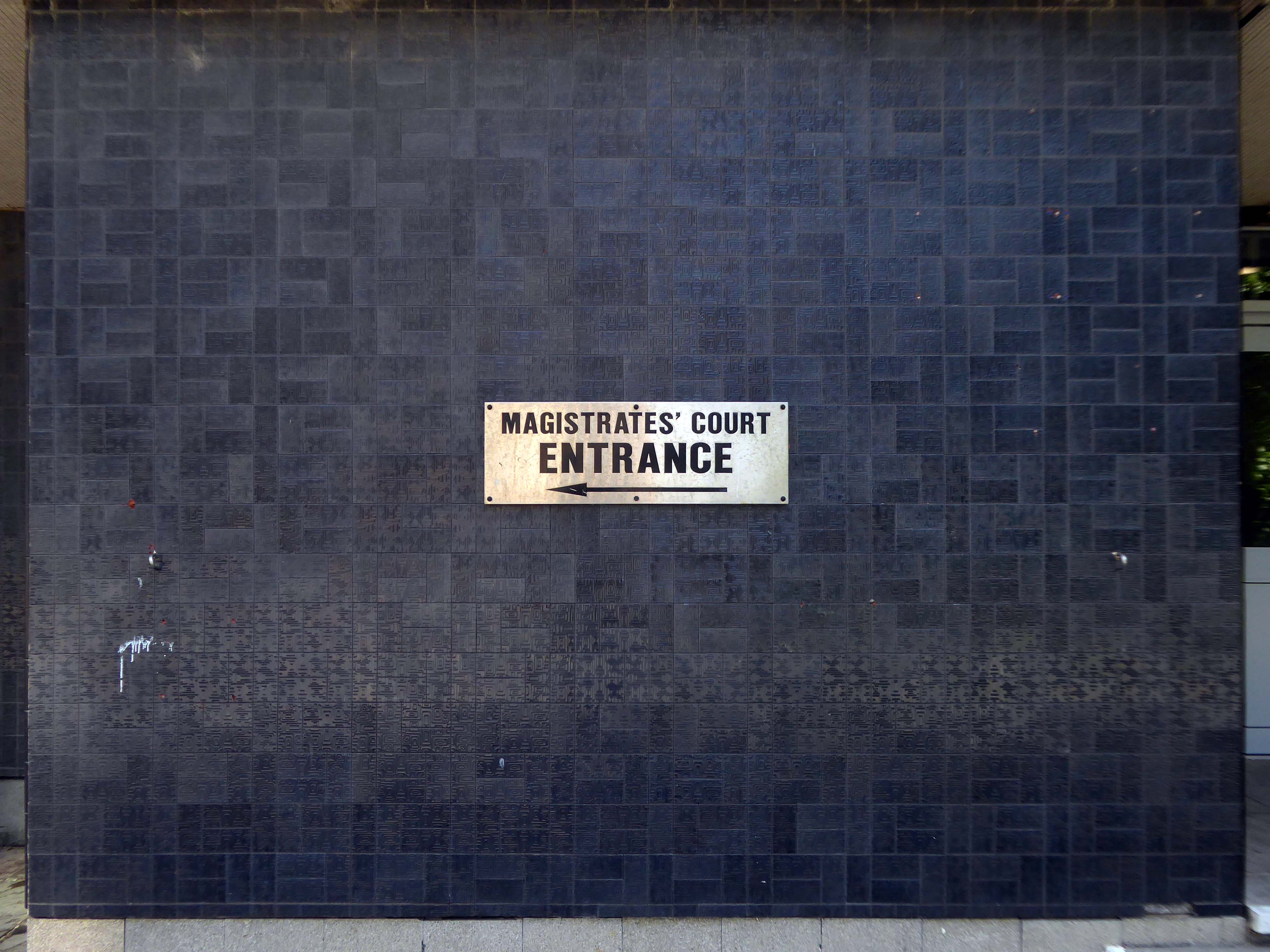
Magistrates Courts

Police Station

Dick Taverne served under Harold Wilson’s premiership in the 1960s, he served as a Home Office Minister from 1966 to 1968, Minister of State at the Treasury from 1968 to 1969 and then as Financial Secretary to the Treasury from 1969 to 1970.

In 1970, he helped to launch the Institute for Fiscal Studies, now an influential independent think tank and was the first Director, later chairman.

Wikipedia

A view up the road to Buxton House – Contractor J Gerrard.

J Gerrard & Sons Ltd’s tender for the contract was £146,210. 

The Queensgate Market and Piazza Centre is at the heart of redevelopment plans.

The vision is to create an inclusive space where families, residents and visitors can enjoy a vibrant mix of music, arts, food and more in one central area, overlooking a stunning new urban park.

Kirklees Together

The Market is currently closed.

The Piazza repurposed – currently housing the regeneration exhibition.

The council plans to demolish the Piazza Centre and create a new events/live music venue, a food hall, a museum and art gallery, a new library and a new multi-storey car park, all centred around a new Town Park.

Huddersfield Hub

I do hope that the decorative panels and door handles survive.

Wandered around the University Campus as the light faded.

Barbara Hepworth Building Architects: AHR

Named after one of the Twentieth Century’s finest artists, the space nurtures a new and inspired generation of designers. Through visual and physical connection, the environment encourages students to work together, stimulating communication and ingenuity, the ingredients of successful collaboration.

Take that to the bank/s

Keep savin’, keep buildin’
That interest for our love
Take that to the bank
Keep savin’, keep buildin’
That interest for our love
Take that to the bank

Shalamar

HSBC was designed by Peter Womersley, who also designed the thoroughly modern private house, Farnley Hey, near Castle Hill, which won the RIBA Bronze Medal in 1958.

Halifax Building Society

Having walked around town for more hours than enough I sought respite in The Sportsman and a glass of Squawk multi-berry fruited sour

Deepdale Court – Blackley

Deepdale Court Northwold Drive Manchester M9 7HX

On the way betwixt somewhere and there I took time to come here.

A tower block on high ground on the edge of Blackley.

One of nine seventeen-storey blocks containing eight hundred and forty six dwellings.

Committee approval date: 1967

Building contractor: Direct Municipal Labour

The two blocks that were demolished were Tunstall Court and Skelton Court.


Freshfields as listed is the new name for Grisedale Court as was sold by council and now private flats.

There are 16 floors in each block, 15 on one side and 16 on the other side

This area is known as the Charlestown Towers.

Tower Block

1987 – Grisedale Court with circular tiles in the entrance.

Over time the balconies have been boxed in and more recently the glazing replaced.

I was particularly interested in the hand made tiles inside the entrance – very much in the style of William Mitchell.

Swinton Square – Shopping Centre

Opened in 1966 along with the slightly later Lancastrian Hall and Library, the Swinton Square shopping precinct provided an integrated modern setting for shopping, living, learning and entertainment.

The late 60s and early 70s was a time of general prosperity – and the hard landscaping offered a soft option for the local folk.

This was the age of the Precinct, celebrated nationally with postcard after postcard.

My local haunt in Ashton under Lyne.

Local traders and national chains rubbed shoulders.

There was even a Job Centre opening- there was even a wide range of vacancies.

Following a challenging year, the letting reinforces Swinton Square as a pillar in the local community. Whilst retail has been heavily affected throughout the Covid-19 pandemic, footfall at the scheme has remained buoyant, with shoppers staying local, favouring the convenience and independent retailers of Swinton Square. Renovations began on the site of the new, temporary job centre at the beginning of the year and is due to be completed in May. The centre is expected to boost footfall and support for local, independent businesses.

Avison Young

Despite Swinton’s many strengths, it faces similar challenges to other towns. The shopping centre and other buildings in the town centre are dated and in need of investment. Demand for local housing has grown by 23% in the last five years, but there is a lack of high-quality family and affordable housing in the right locations in the area.

The vision is just the first step of the journey, the next is to appoint a developer partner who can take this vision and help shape it, through ongoing consultation and engagement with the community, into a framework and plan for Swinton that will guide future investment.  

Salford Gov UK

The road to Swinton is paved with good intentions – rather than gold.

Sadly I was too late for August’s Dino Crazy Golf.

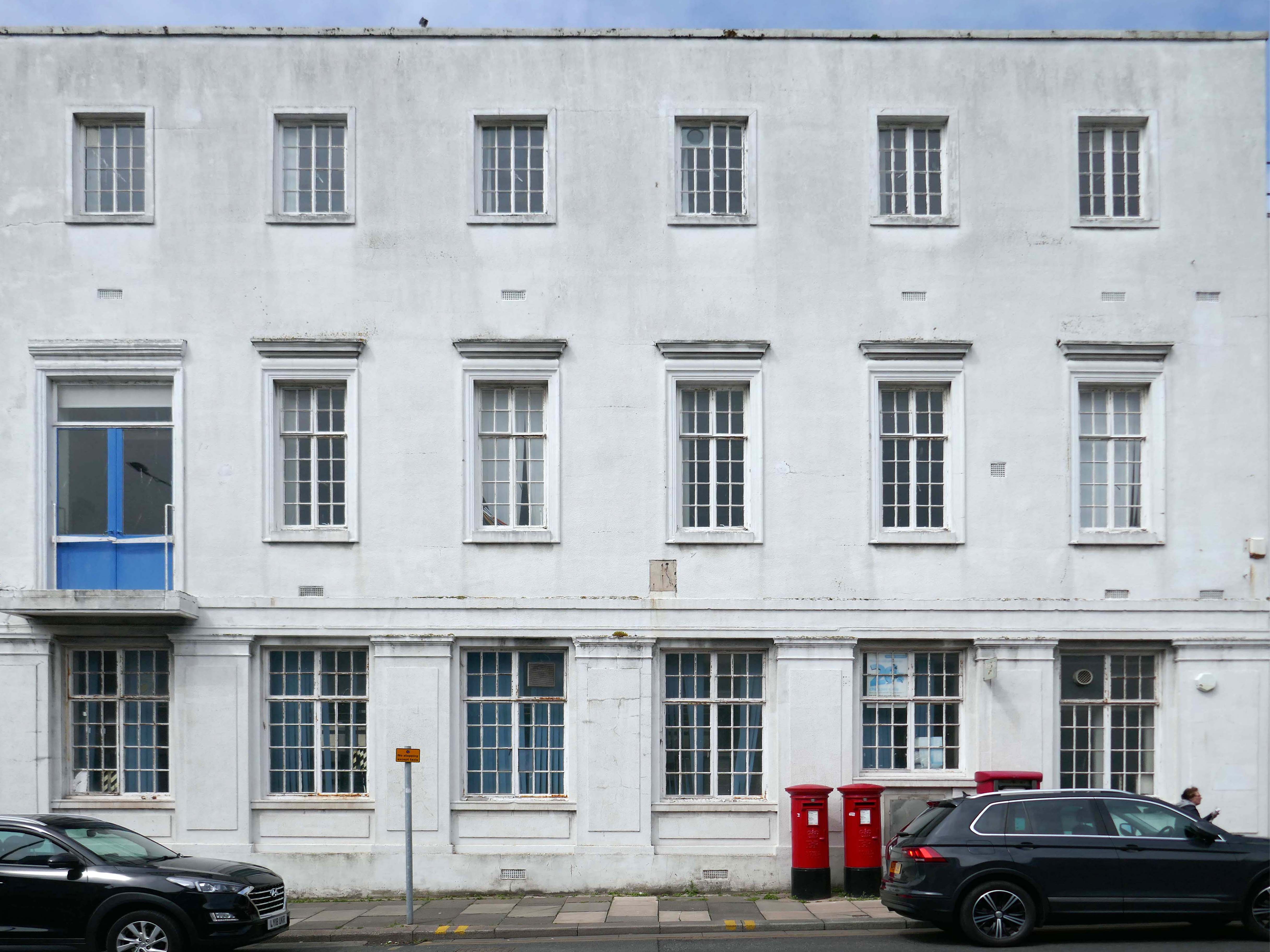
Bonny Street Police Station – Blackpool 2022

I have been outside several times in 2016 again in 2020 – never inside.

Let’s take a look:

Photos – Blackpool Gazette

So whilst in town for a stroll I strolled by once again, the main block now tagged and tinned up.

Whilst the Courts are still in use, until they make their move in 2025, stasis seems to be the order of the day.

There are no signs as yet of the proposed redevelopment of the site.

Some day maybe

Councillors have approved a compulsory purchase order to complete the land assembly for the £300m Blackpool Central project but still hope to negotiate terms with property owners.

Blackpool Council’s executive unanimously agreed the recommendation towards enabling the Central Car Park to be transformed into a leisure destination boasting a flying theatre, virtual reality rides, a thrill and gaming zone, multi-media exhibition space and themed dining areas.

Lancs Live

Let’s veer off the promenade and assess the situation.

Lancastrian Hall & Central Library – Swinton

Completed in 1969 to designs by Leach Rhodes and Walker in collaboration with the Borough Engineer John Whittaker

Constructed at the tail end of the Sixties – the last gasp of Municipal Modernism in the Borough, providing education, edification and entertainment for the local population.

The fountain is gone, the building is closed – the party’s over.

The Fast Cars are history – well they were history, until I was told that they are still speeding along!

A council has spent £348,000 on a masterplan for a town centre that the public has never seen.

Consultants have been used to come up with ideas to regenerate Swinton in Salford.

The town centre is dominated by the imposing Lancastrian Hall, opened in 1969, with an adjoining shopping mall.

The hall housed a council library and was used for civic and community meetings, wedding receptions and election counts.

But it has been closed since 2015 after the library moved to the new Gateway Building on the other side of Chorley Road.

Manchester Evening News

So this magical structure of stairways, undercrofts, elevated walks and majestic concrete clad volumes is under threat.

Swinton and the Lancastrian Hall deserve much better.

Over 550 people took part in the recent visioning work, and we are grateful for their time and valuable contributions.

An overwhelming majority of those who shared their views saw Swinton as a good place to live and bring up a family – somewhere friendly, with a strong sense of community.

People valued their local green spaces, but strongly felt that there needed to be more investment in the town centre, and a plan to tackle empty buildings and shops.

Overall, people felt that Swinton needed to be a more vibrant place, with more going on – and more reasons for people to visit and spend their leisure time there.

The Swinton Vision

This is an opportunity to create tomorrow’s local centre, but that does rely on removing the Lancastrian Hall, rethinking the shopping centre, and repurposing the Civic Centre and the spaces around it. 

Chorley Walk

I arrived at Chorley Railway Station.

The current railway station is a modern version from the 1980s that was built on top of the original station. The level of the old platforms can be seen under the existing station’s two platforms which are connected by underpass. The initial station was opened on 22 December 1841 by the Bolton and Preston Railway – which later became part of the Lancashire and Yorkshire Railway and was subsequently served by the Lancashire Union Railway between St Helens, Wigan North Western and Blackburn from 1869.

Passenger trains over this route between Blackburn & Wigan were however withdrawn in January 1960. Further work was done in 2016 and 2017 in connection with the electrification of the line between Euxton Junction and Manchester.

Wikipedia

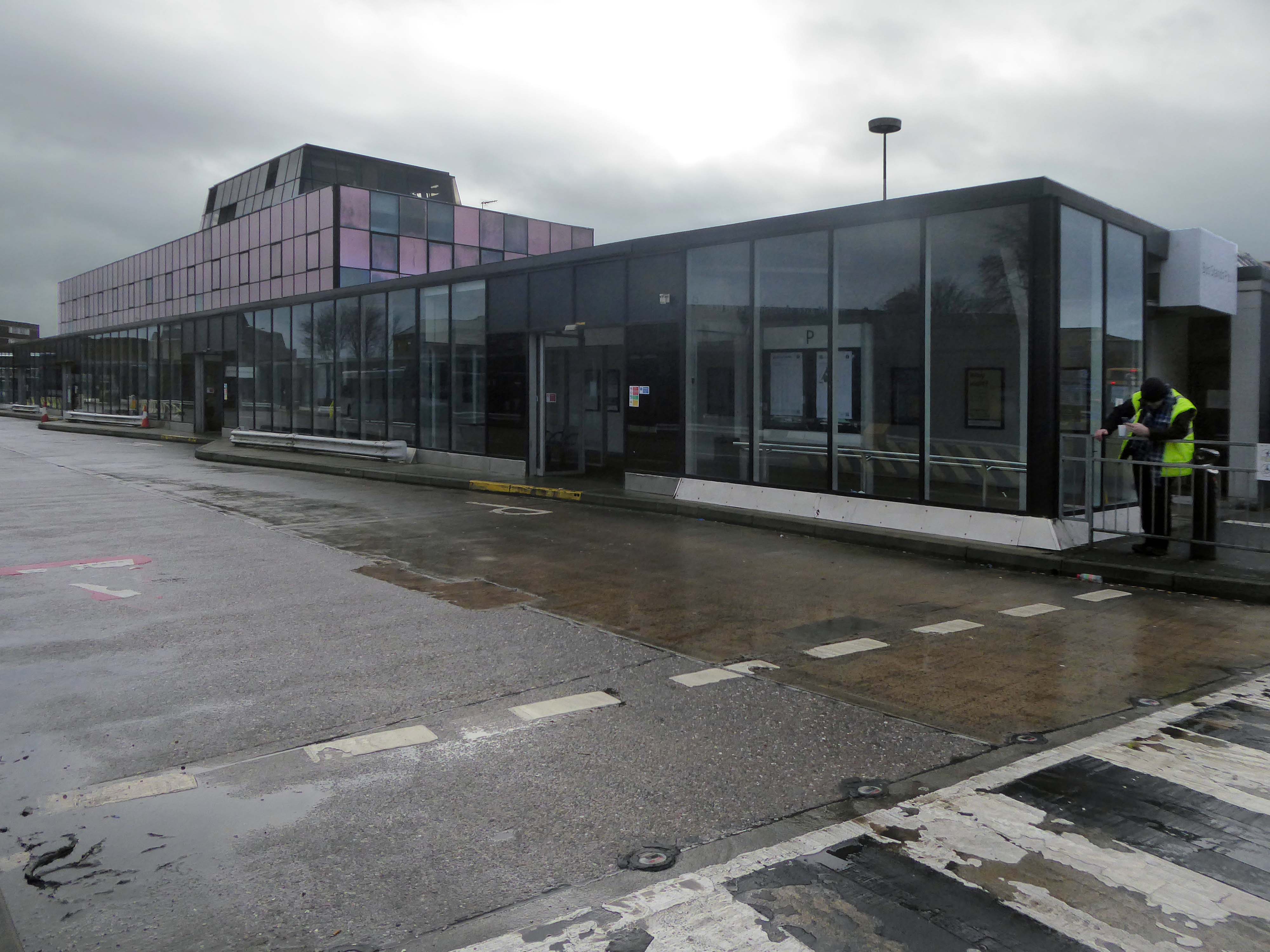
Crossed over to the Interchange – which was formerly a humble bus station, opened in February 2003 replacing the previous structure.
Across the way a stand of shops with distinctive faience fascias.

Further along the Shepherds’ Victoria Hall – once home to the Jubilee of the Ancient Order of Shepherds’ Friendly Society which was quite prominent in Chorley in the late 1800’s and early 1900’s

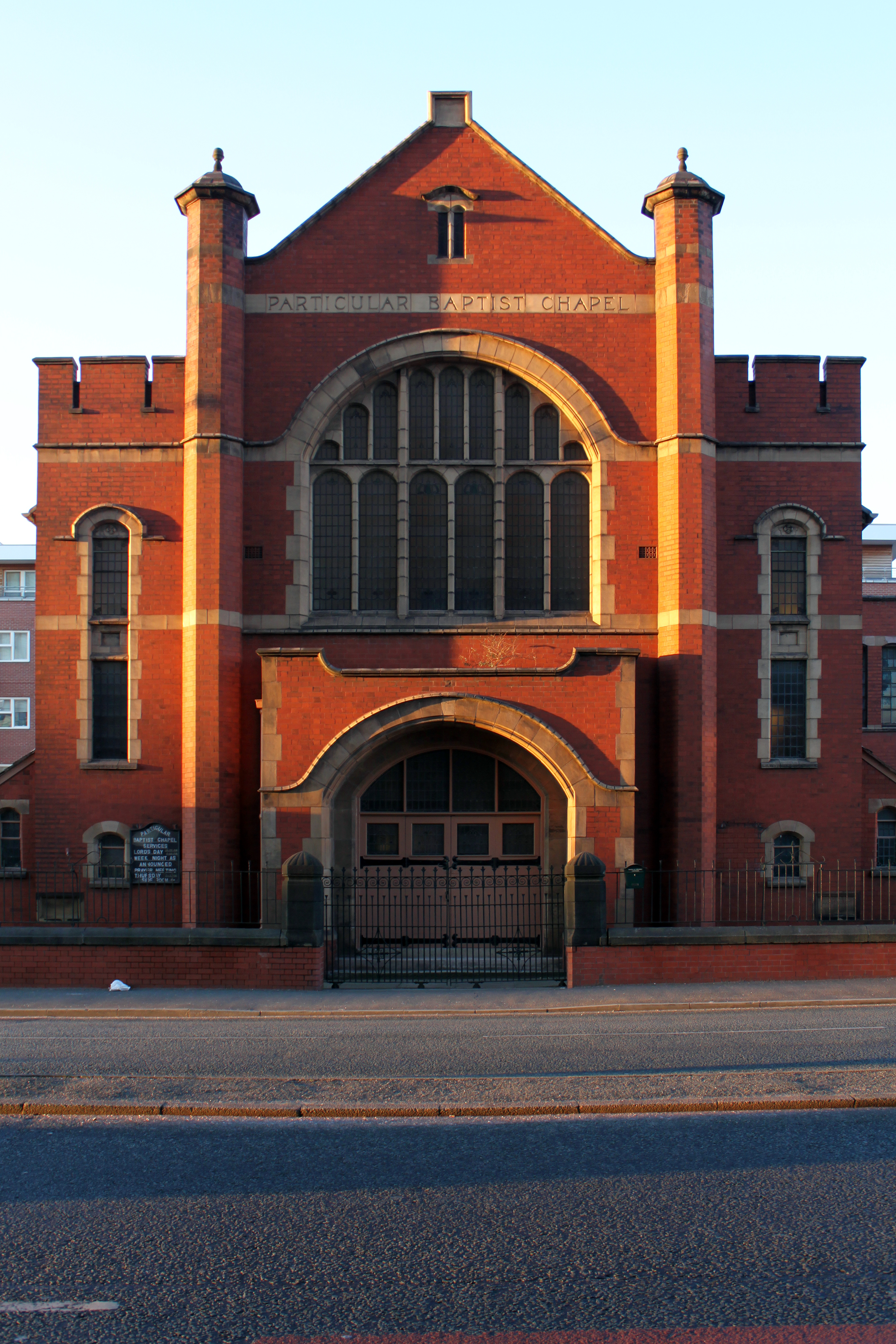
Down the way a ways a Baptist Chapel of 1845 on Chapel Street – currently trading as Malcolm’s Musicland.

Next door the Chorley Town Cafe with some excellent stained glass.

Hang a sharp right to the Market – where there is this newish piece of public art Pattern of Life a bronze relief by Diane Gorvin and mosaic work by Tracey Cartledge

This piece involves an innovative combination of cast bronze and ceramic mosaic. Two bronze relief panels display female figures holding out rolls of fabric, each decorated with patterns and images that are particular to the town of Chorley. Payphones, for example were invented and manufactured in Chorley, the crested newt is protected here and you might also notice the famous Chorley Cakes. As the fabrics tumble down, the designs are translated from bronze relief on the wall surface into 2D mosaic in the pavement.

Looking down Fazakerley Street to where Fine Fare once was.

We’ll return to such matters in a moment – we have to get to the Post Office – which is no longer a Post Office.

Architect Charles Wilkinson.

It was a Post Office in 1935 – it also has a later extension.

The local list declares that the post office dates from 1935. This is almost certainly erroneous since the contract documents date from 1924, and from contract to completion the average construction and fitting-out time was about 18 months.

British Post Office Buildings

Happily, the Library is still a library.

Plans supplied by the Architects Messrs. Cheers & Smith of Blackburn which were approved by the Education Committee on the 18th August 1904design proposals for the new Technical School entitled Light and Air.

The considerable task of erecting the school was given to the local builder Mr. William Hampson of Pall Mall.

Surely the envy of his trade, the total contract was worth a mouth- watering £10,041 15s. 9d. – approx. £720,000 today.

The building was officially opened by the 16th Earl of Derby on September 24th 1906.

Chorley History Society

Heading to the Council Offices.

Over the road the town’s newest retail development Market Walk – the work of AEW Architects.

Chorley Council bought the shopping centre from Orchard Street Investments for £23m in 2013 and commenced a large-scale regeneration scheme in 2018 involving a £15m, 79,000 sq ft retail and leisure extension led by main contractor Eric Wright Group and designed by AEW Architects. Here, Conrad Heald of Chorley Council tells his interviewer, AEW director Phil Hepworth, how the scheme came to fruition and has rejuvenated the town centre.
Place North West

The memorial re-sited in 2018 commemorates the Chorley Pals.

In less than 20 minutes, 235 of the 720 men from the 11th East Lancs. were killed. Another 350 were wounded, of which 17 would eventually succumb to their wounds. Many of the Battalion died where they fell, in No Man’s Land.

As a result of the attack on the morning of the 1st July, the Chorley Pals – Y Company, had 31 men killed and three died within a month of their wounds received on that day. 21 have no known graves and their names are transcribed on the Thiepval memorial to the Missing on the Somme battlefield. A further 59 were wounded, making a total of 93 casualties out of approximately 175 men from Chorley who went over the top that morning.

Landscaping of the public realm by CW Studio.

Reversing now to the former Barclays Bank – which closed earlier in 2022.

We return now to the former Fine Fare.
The company began as one single supermarket in Welwyn Garden City in 1951, as an offshoot of the Welwyn Department Store, owned by Howardsgate Holdings, the company of Ebenezer Howard, the founder of the garden city movement.
Wikipedia

Now here’s a thing a bank which is a bank NatWest not gone west.

Next to the former Woolworths, opened in Chorley in 1930 on Market Street, with its pale Deco faience fascia.

They traded from this building for sixty five years, before closing in March 1995 in order to move to a new store on Market Walk – it became an Argos, then it didn’t.

Woolies Buildings

Here we are now at a Post Office that is a Post Office but was an RBS Bank.

The new location is at the former Royal Bank of Scotland on Market Street in the town centre.

Since the Post Office that was based at WH Smith on New Market Street came to an end, when that store closed in January, it relocated to a temporary unit in Market Walk until a permanent solution could be found.

The unit, which had been provided by the postmaster from Burscough Bridge Post Office, closed on Tuesday.

Kenny Lamont, Post Office Network Provision Manager, said a Post Office is important to a community.

Lancashire Post

This had been a Methodist Church – then, it became the HQ of the Lancashire Electric Power Company.

The Lancashire Electric Power Company was one of the largest private electricity companies in the UK. It was established in 1900 and generated and supplied electricity to 1,200 squares miles of Lancashire from 1905 until its abolition under nationalisation in 1948.

Wikipedia

Time to back track to the Cop Shop – the work of County Architect Roger Booth and crew.

The Magistrates’ Courts are closed and up for sale.

Next door the White Hart once upon a time the Snooty Fox, a pub with an up and down trajectory – currently open and described online as plush.

Down the road a pub no longer a pub but an Urban Spa.

We offer you a full range of professional treatments tailored to your own personal needs. We treat every client as an individual and offer an extensive range of treatments and professional products making your visit one to remember.

Let’s go to the theatre – The Empire tucked away at the back of town.

The Empire Electric Theatre opened, as the town’s first purpose-built cinema, on 3rd September 1910. In 1912 Archie Hooley began his connection with the cinema business at the Empire Electric Theatre. By 1927 it had been re-named Empire Cinema and by 1930 it was equipped with a Western Electricsound system and was operated by the Perfecto Filmograph Co. Ltd. By 1939 it was operated by the Snape & Ward chain. According to the Kine Year Books, in 1940 the seating was for 800, while by 1952 it had been reduced to 679 – still a far cry from today’s 236 seats. 3D films were shown in the early-1950’s. Archie had died in 1944; his son Selwyn closed the cinema in 1957, apparently “because of the taxes”.

1959

Wrestling took over for a while before Chorley Amateur Dramatic and Operatic Society – CADOS acquired the building and renamed it the Chorley Little Theatre. Since 1960 CADOS have been putting on high-quality productions, presenting at least six productions per season – from September to July. It is also the home of the award-winning Chorley Youth Theatre who meet every Saturday, putting on shows throughout the year; and Chorley Empire Community Cinema who present the cinema experience on their 21ft wide screen with 8-Speaker Surround Sound. Run entirely by volunteers the theatre has state-of-the-art sound systems and a full range of lighting equipment. There are two spacious dressing rooms, space for costumes and props and the Empire Bar. The building has disabled access throughout the public area, including a toilet, and the auditorium is fitted with a hearing loop. There are three spaces for wheelchairs in the auditorium. It was re-named Chorley Empire Cinema at Chorley Theatre in October 2019 and films are still part of the programming.

Cinema Treasures

Spare a thought for the town’s lost cinemas:

The Odeon Market Street was built for and operated by Oscar Deutsch’s Odeon Theatres Ltd. chain, it opened on 21st February 1938 with Jack Buchanan in The Sky’s the Limit.

Architect Harry Weedon was assisted by PJ Price.

It was closed by the Rank Organisation on 6th February 1971 with George Lazenby in “On Her Majesty’s Secret Service”. After laying closed and un-used for over two years it was sold to an independent bingo operator and re-opened on 9th August 1973 as a Tudor Bingo Club. It later became a Gala Bingo Club which was renamed Buzz Bingo Club in June 2018. It was closed on March 21, 2020 due to the Covid-19 Pandemic. On 15th July 2020 it was announced that the closure would be permanent.

The building was handed over to Chorley Council who decided that asbestos removal would be too costly and the building was demolished in August 2021.

Located on Salisbury Street, off Cunliffe Street, built in 1888 as a military warehouse, it was converted into a roller skating rink around 1909. It opened as the Pavilion Picture Palace on 14th September 1911, operated by George Testo Sante, a music hall strong man, who also operated the Grand Theatre as a cinema. By 1915, music hall acts were also part of the programme. After the end of World War I, the flat floor of the cinema was raked, allowing for better viewing of the screen. The proscenium was 30ft wide, the stage was 16 feet deep and there were two dressing rooms.

The Pavilion Cinema was the first in town to screen ‘talkies, when an Electrochord sound system was installed in 1929. It was taken over by the J.F. Emery Circuit in 1932 and they operated it until the end of 1933. The sound system was upgraded to a British Talking Pictures sound system. In 1954 it was the first cinema in town to be fitted with CinemaScope and the proscenium was widened to 36 feet.

The Pavilion Cinema was closed by 1962 and converted into a bingo club. In 1972 it was re-opened as a cinema again, but due to Star Cinemas chain barring it from showing first run features – they operated the Plaza Cinema, it was closed after 5 months of operation. It was later demolished and the area was redeveloped for housing.

Cinema Treasures

No trace of The Hippodrome Theatre on Gillibrand Street, which was built and opened in 1909, or the Theatre Royal, opened on 30th September 1911, It was demolished in 1959.

A supermarket was built on the site which later became a McDonalds, which is now a Pizza Hut.

Last but not least – located on the Flat Iron Parade, aka Cattle Market, The Grand Theatre was a wooden building built in 1885, which presented melodramas and plays. In June 1909 it was taken over by George Testo Santo, who had been a music hall strongman, and his family. It went over to operating as a Picture Palace for a short season.

By 1914 it was operating as a full time cinema, but was destroyed by fire in 1914.

Chorley Theatre Cinema History Map

This was a splendid day out – there is much more to see, these have been some of the less obvious landmarks.

Go see for y’self!

Chorley Police Station and Magistrates’ Court

St Thomas’s Road Chorley PR7 1RZ

The police station and magistrates’ court at Chorley was designed to replace a building from 1896 – a weights and measures plaque from the original building was retained and remounted at the foot of the new building.

The two buildings were set adjacent one another and around a newly formed square with one side made up of the rear of the existing town hall. This small civic group was intended to relate to one another in scale, but was markedly contrasting in its material make-up.

County Architect’s Report: 1963-64.

The design team was Roger Booth, Lancashire County Architect; C.A. Spivey, Assistant County Architect; D.B. Stephenson, Design Architect; and D.G. Edwards, A.G. Gass, responsible for the detailed design and construction. The seven-storey in-situ concrete framed main block was the last bespoke police station to be built in Lancashire, following this the department developed a systemised concrete construction method which was deployed across the county. The dramatic cantilevers gave the new building a stature and presence that signalled authority. The lower levels were accessed by ramps and provided space for police vehicles. To enter the police station one ascended a set of external stairs across a pool that once contained koi carp – fittingly, one boy described the new building as a ‘fishtank’ upon its completion. The magistrates’ court was finished externally in a grey brick and carried the signature pyramid rooflights that were synonymous with the Department.

Many thanks to Richard at Mainstream Modern

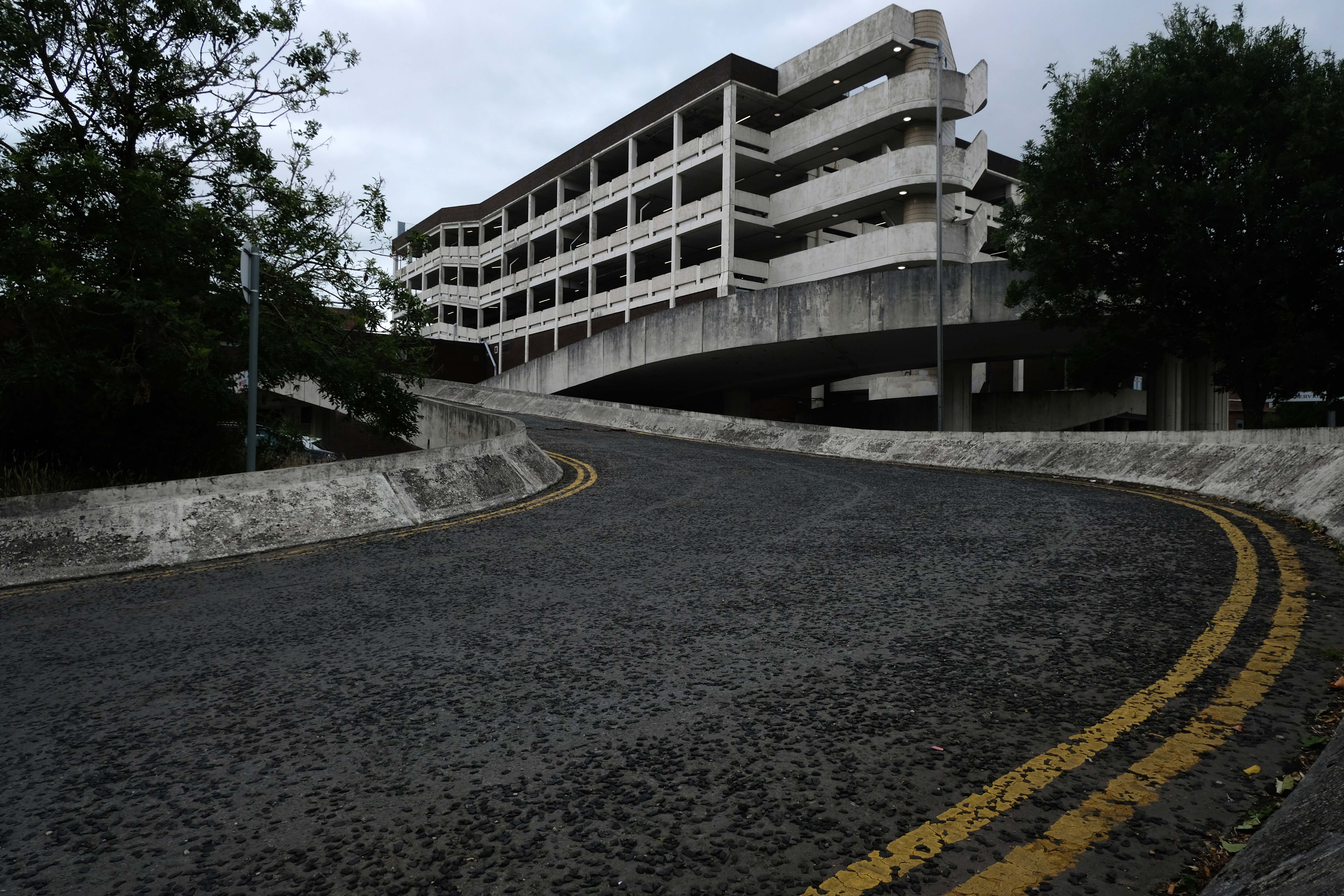
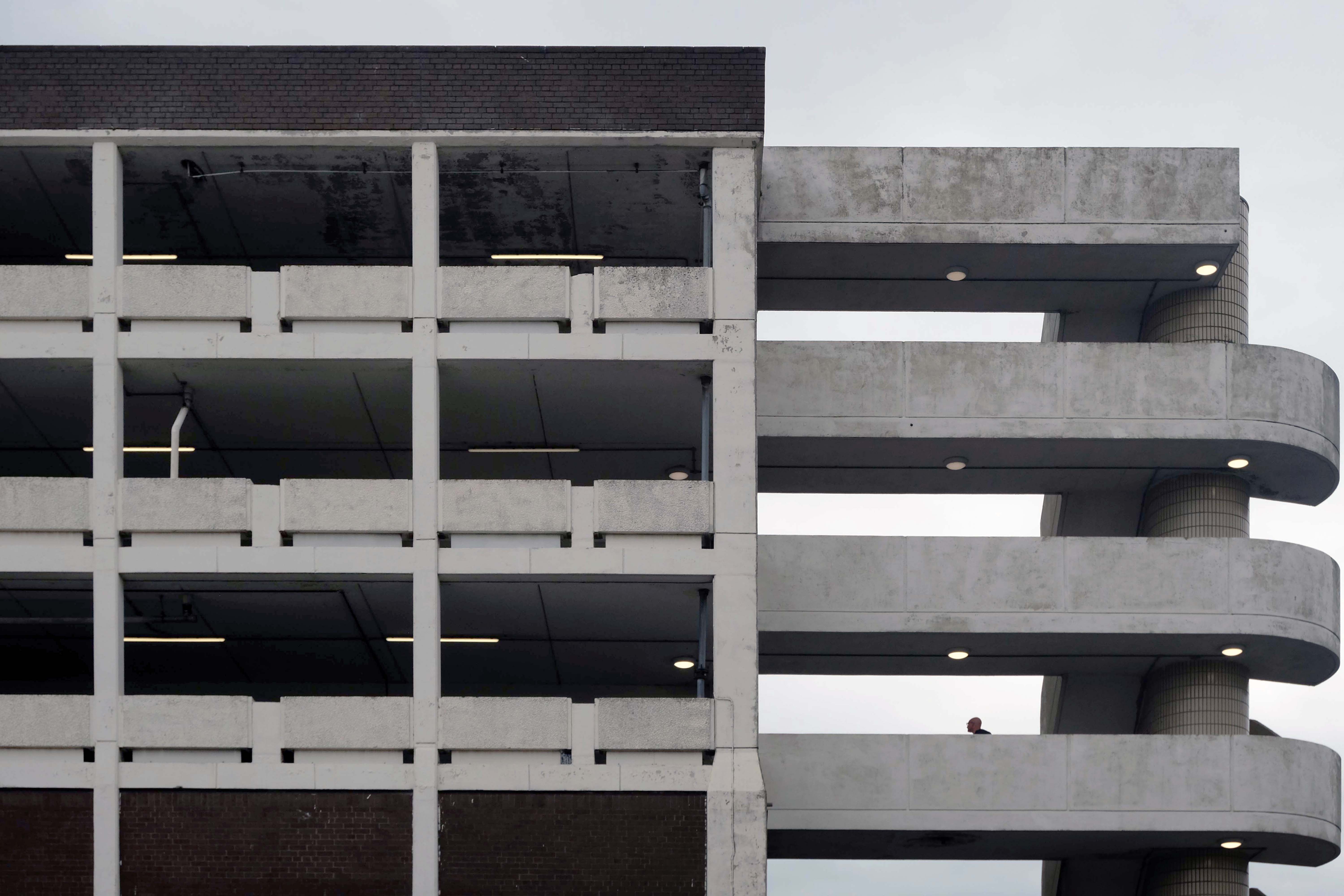
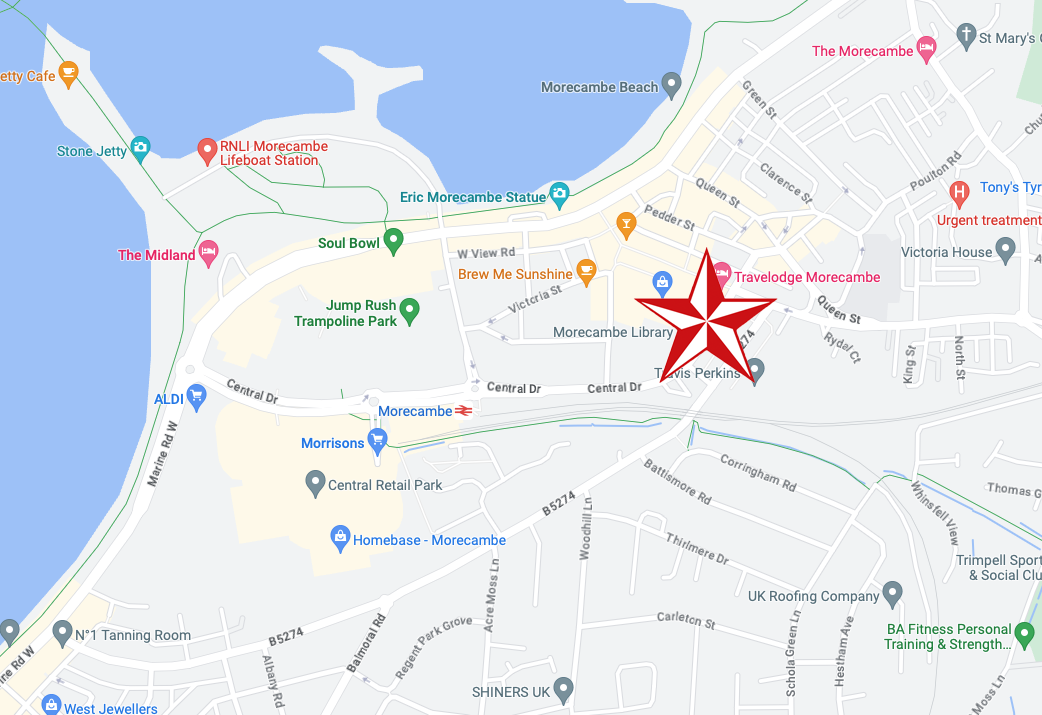
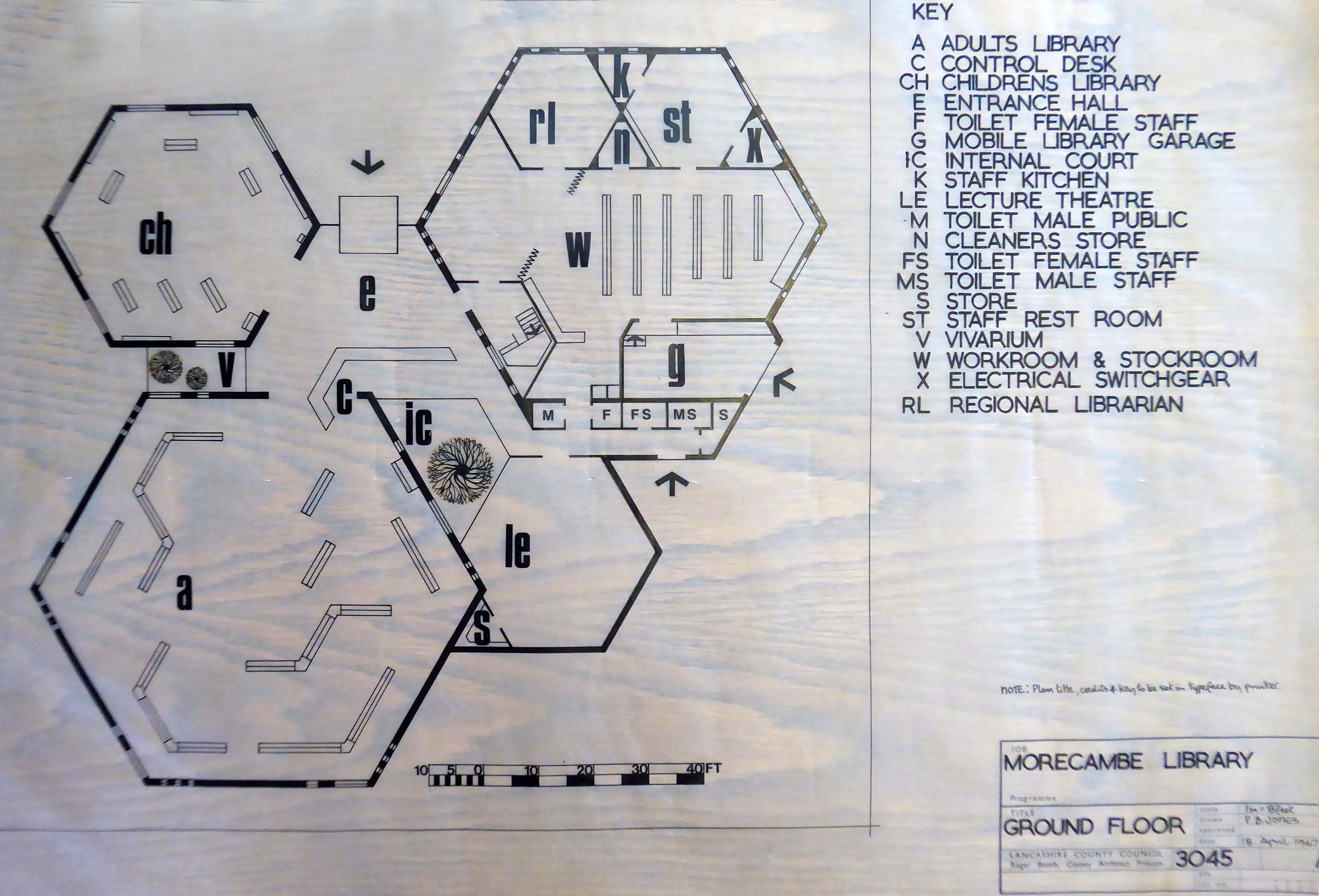
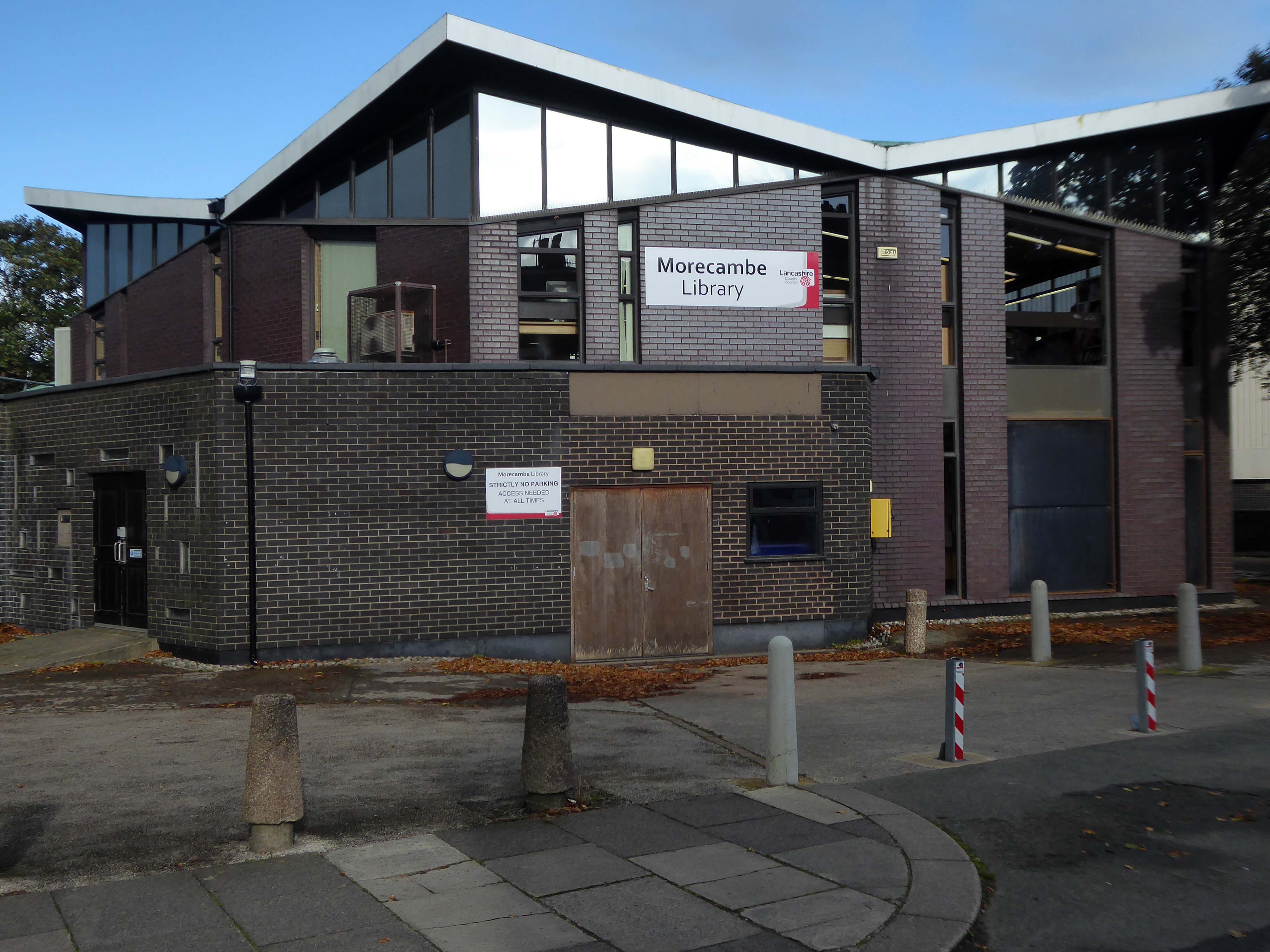
This is one of many Roger Booth police stations I have visited – Bonny Street Blackpool under threat, Bury long gone and the extant variant in Morecambe

The Magistrates’ Court is up for sale:

Coun Alistair Bradley, Leader of Chorley Council, confirmed that the council had enquired to take ownership of the building but that this was knocked back.

He said: We’ve enquired about taking the building on but the owners, the Ministry of Justice, has said they want to take it to market.

Lancashire Post

The building is being advertised as a potential site for a future office, residential, restaurant and bar, leisure, entertainment, and hotel.

Asked about its future, Chorley councillor Aaron Beaver told Lancs Live he had heard no news of developments but desperately wanted to see something happen with the building, he said:

It’s a perfect location. There’s lots of things it could be used for. 

If you were to knock it down, there’s all sorts of things which could be built there. If you were to convert it to something like flats, it could be tricky because there’s not many windows.

Commenting on the progress of the sale since it’s closure, he added:

I wouldn’t say it’s slow moving, I’d say it’s not moving.

Lancs Live

We eagerly await any possible developments.

Whilst walking around the adjoining Police Station.

Seaside Shelters – Colwyn Bay

Here I go again – just like Archie Bell minus the Drells.

Here I go again, thinking with my heart

But every time I see ya, I keep running back for more

April and October 2019 walking from Rhos to Colwyn.

Pandemics come and almost go – as do seaside shelters it seems.

The shelters of 1860 are quite literally a thing of the past.

Thye have become host to Niall McDiarmid‘s snaps of local business folk – the project developed when local residents raised concerns about the appearance of the shelters on the promenade.

Cllr Roger Parry said

The shelters are nearing the end of their lifespan and these sections of the prom will be upgraded as part of the waterfront project.

In the meantime, State of Independents will make great use of the shelters; celebrating our hardworking local businesses and hopefully encouraging footfall from the promenade to our high streets.

The last of the Rhos on Sea shelters is a dangerous customer suitably secured.

There remains two exemplars of the typology located at the Colwyn end of the bay.

The second shelter lacks the pierced concrete blocks.

So work progresses on the coastal defences, the promenade is refashioned after a fashion in the fashion of the day.

There is no longer a place for these unique exemplars of Municipal Modernism.

Before the work began, the promenade was a tired, uninviting and underused public space. Poorly lit and often host to anti-social behaviour, the uneven surfacing and crumbling shelters were the results of years of patchwork repairs.

The project has transformed the area into a public space which the local community can take pride in and make use of all year round.

ice.org.uk

Desolate yet all undaunted, on this desert land enchanted

On this home by horror haunted – tell me truly, I implore

Is there, is there balm in Gilead?

Tell me, tell me, I implore

Quoth the Raven “Nevermore.”

Joyce Pallot and Henry Collins – Gwent House Cwmbran

Gwent House is the home of the District Council Offices for Torfaen and the Public Library. Used by HM Courts Service and HCMS – South East Wales, the building is a seven story structure with retail space on the ground floor and open plan office space above. Built during the 1970s as a local government building, it is constructed with a steel and concrete frame with wall to wall double glazed windows and a flat roof.

Gwent House sits on the east side of Gwent Square at the heart of Cwmbran New Town’s centre. The ‘Central Building’ as it was known during development was conceived by the Cwmbran Development Corporation, as a mixed development of leisure (including a club, dance hall and hotel) and office accommodation with retail to the ground floor. this was to expand the function of the town centre beyond purely a shopping centre, and to address the perceived lack of ‘professional’ office jobs. In the event, the offices proved difficult to let and were occupied by the CDC and Cwmbran Urban District Council. 

The building was designed by Sheppard, Robson & Partners and opened on the 18th January 1973. The eight-storey, concrete framed block included a job centre, the library, a conference and exhibition hall, and three restaurants catering for different tastes and age ranges, including the ‘Sign of the Steer’. 

On the west side of the building are a series of three moulded concrete relief panels designed by Joyce Pallot and Henry Collins for the MEPC, the Cwmbran Development Corporation and the Cwmbran Arts Trust in 1974. The panels depict scenes representing different phases of the history of Gwent: Iron Age and Roman, Medieval and Industrial.

Coflein

The work of Joyce and Henry is well known here at the modern mooch having visited Newcastle, Bexhill and of course Stockport. There are also examples in their hometown Colchester, Gloucester and Southampton.

Joyce Pallot 1912-2004 and Henry Collins 1910-1994 – two artist/designers, who along with John Nash, established the Colchester Art Society, during the 1930s.

The square it seems is due to be revamped as part of the broader regeneration plans.

Literature displayed at the public consultation said improvements in Monmouth Square aim to -introduce colour into what is a lacklustre space.

South Wales Argus 2017

One hopes that these important public arts work survive the transformation.

September 2022 the bandstand was demolished.

Photo: Rhiannon Jones

Lia Jones said:

The bandstand was a well-known centre point for the area. I really wish it had been kept in the design for the area, they should have relocated it instead of getting rid of it all together.

South Wales Argus 2022