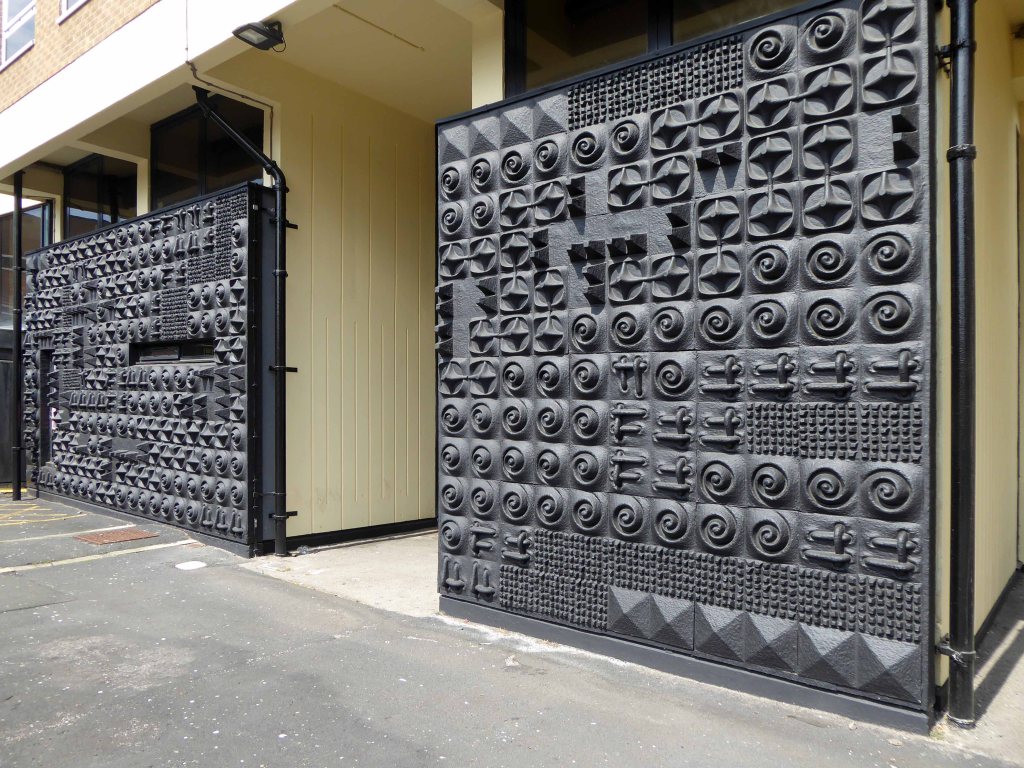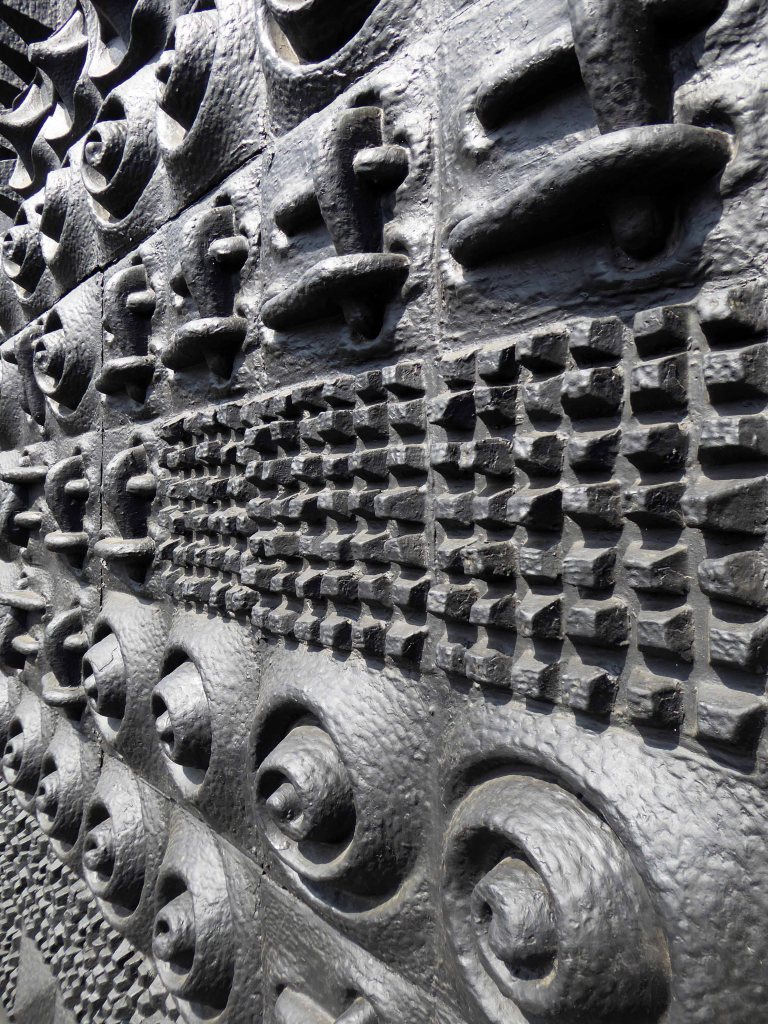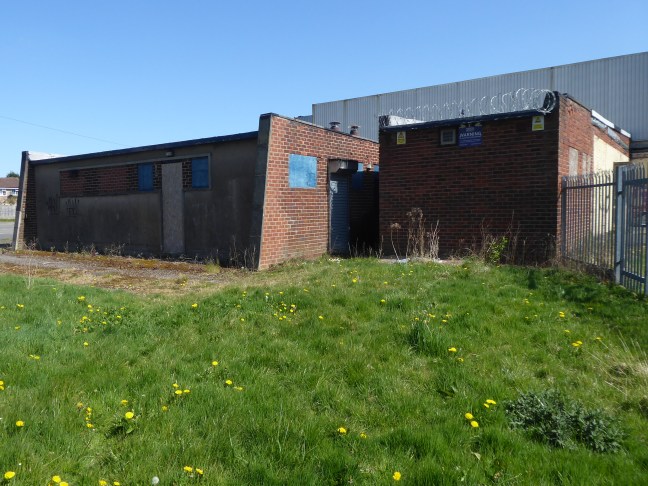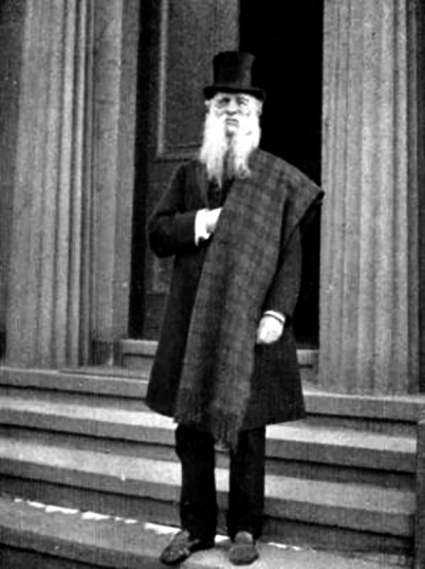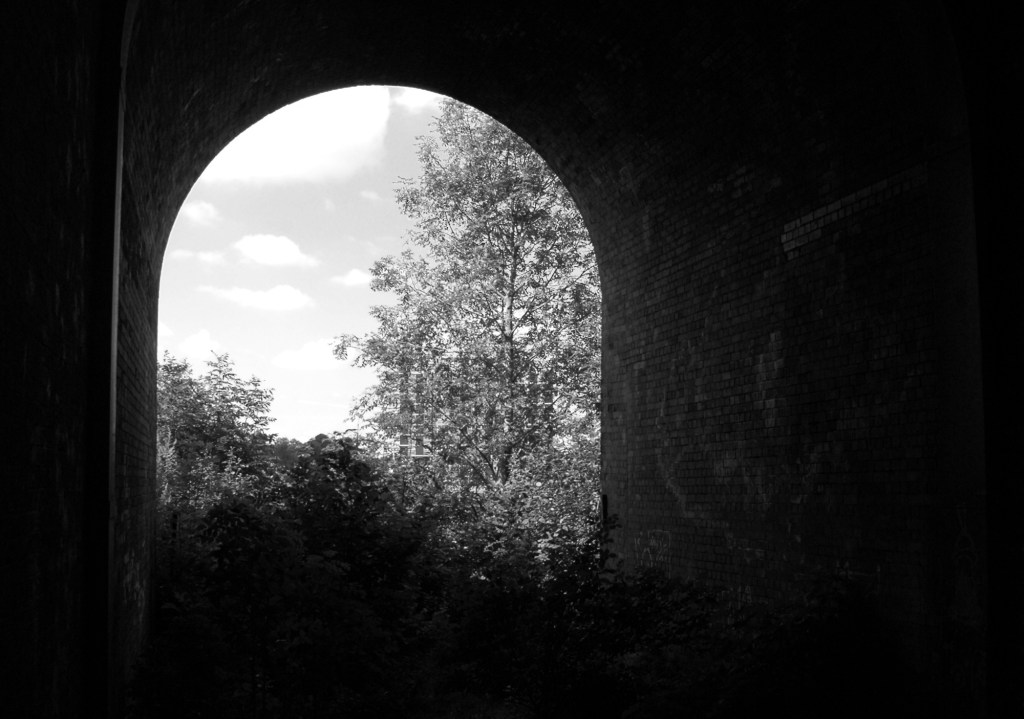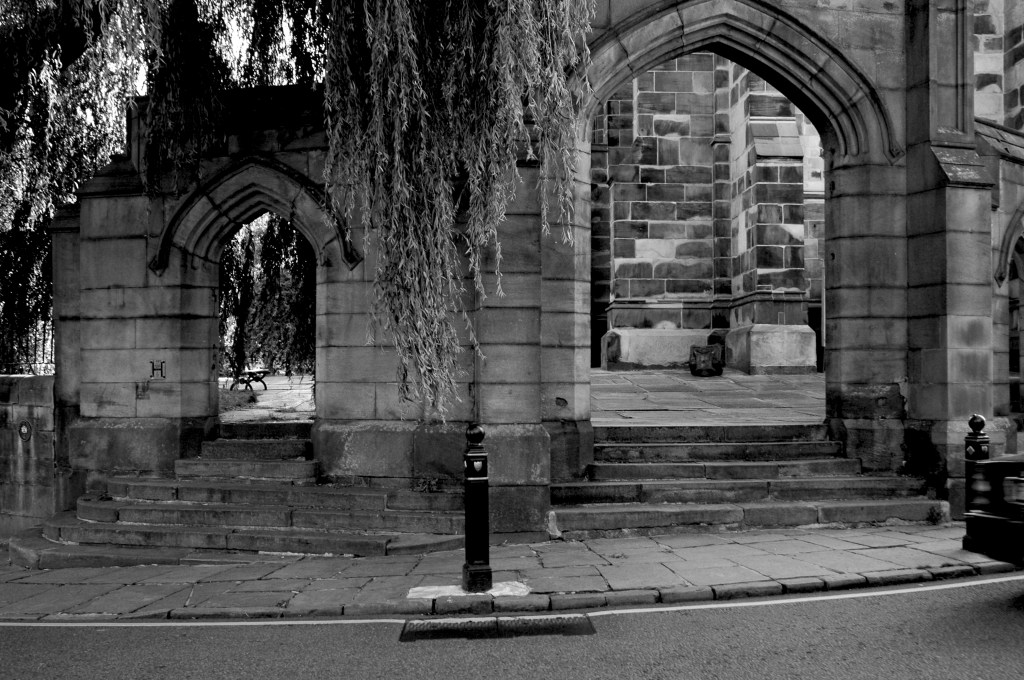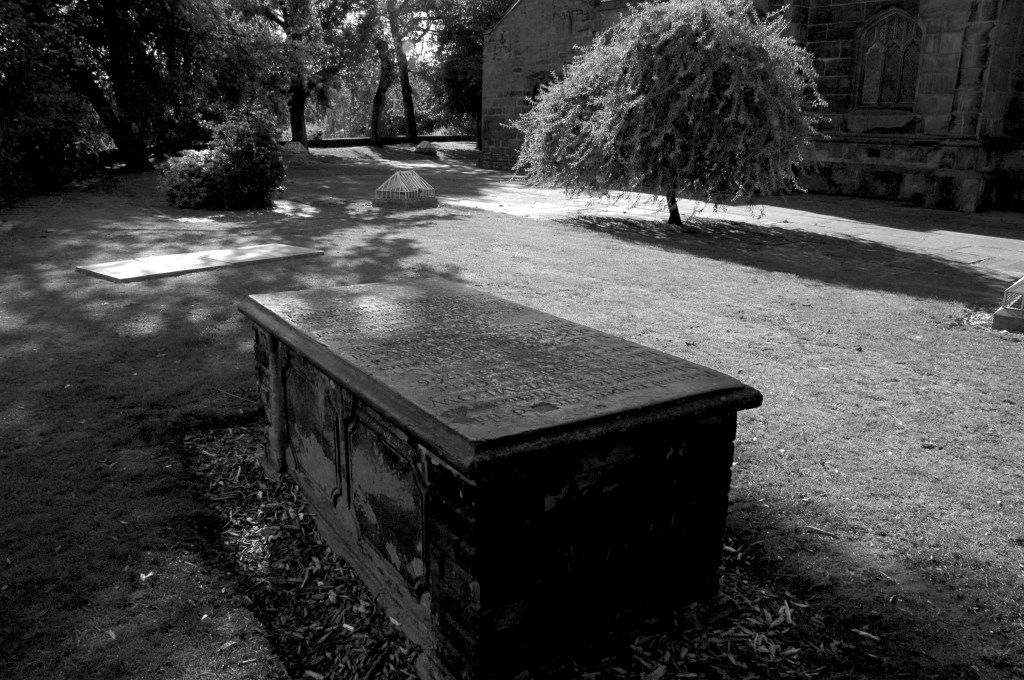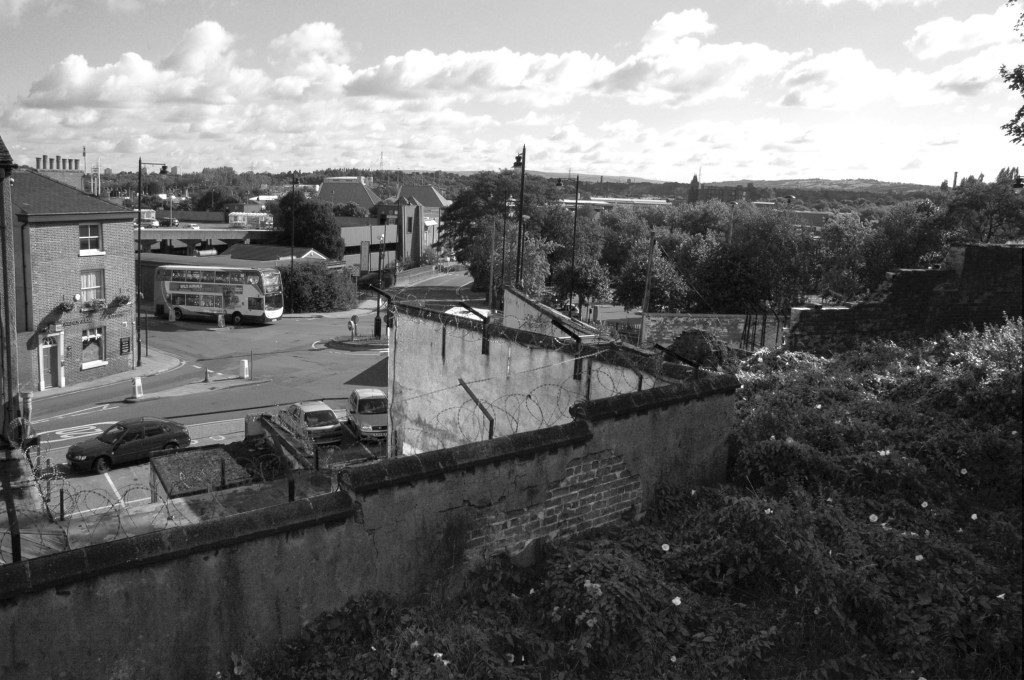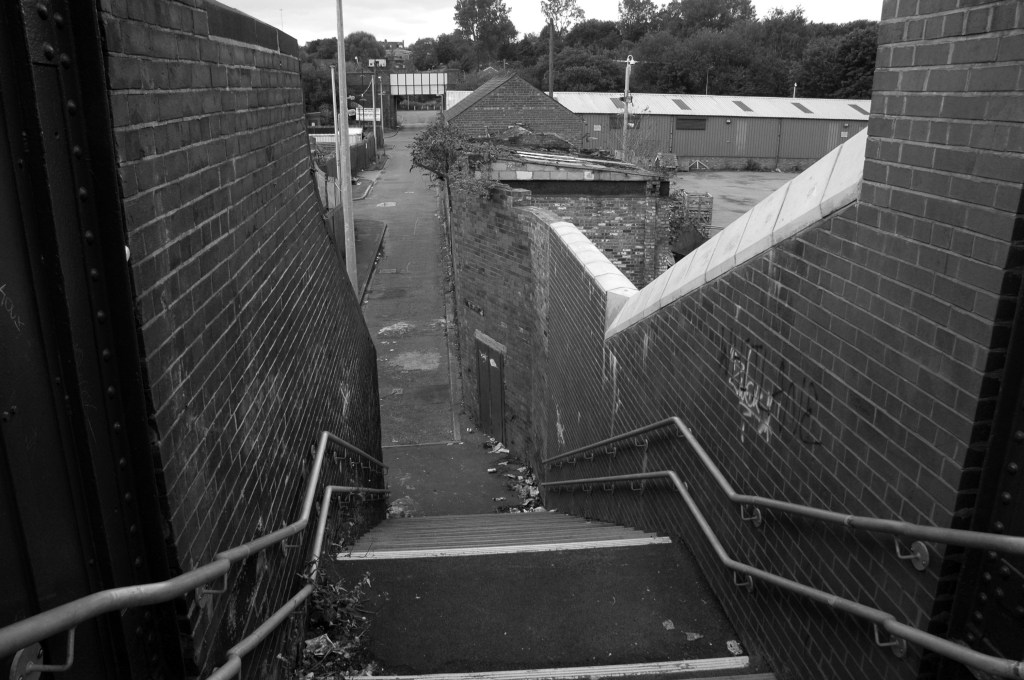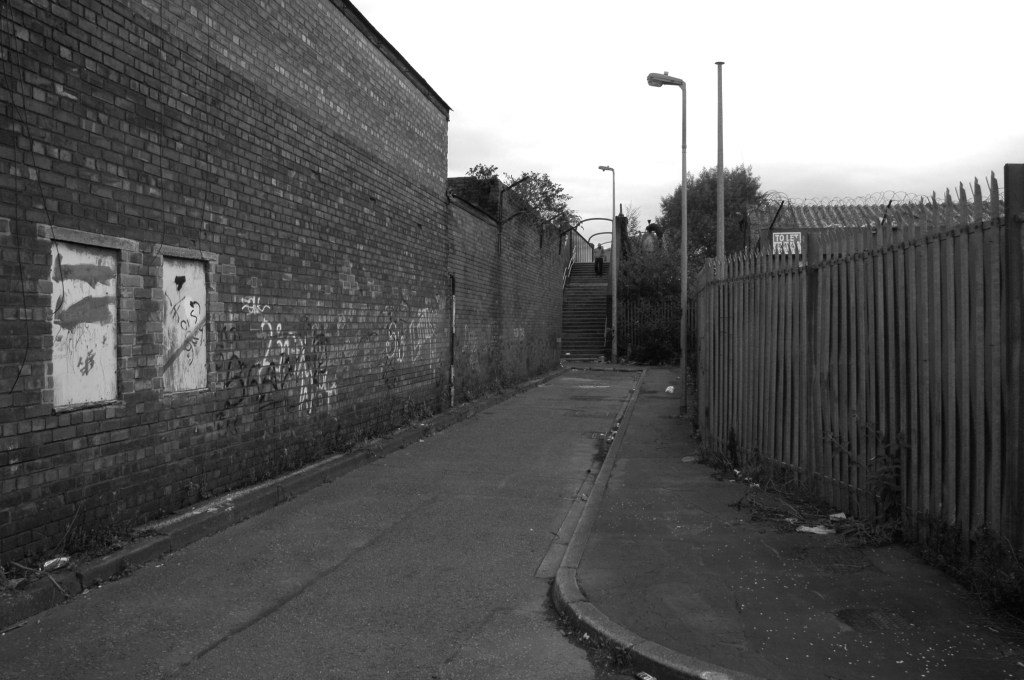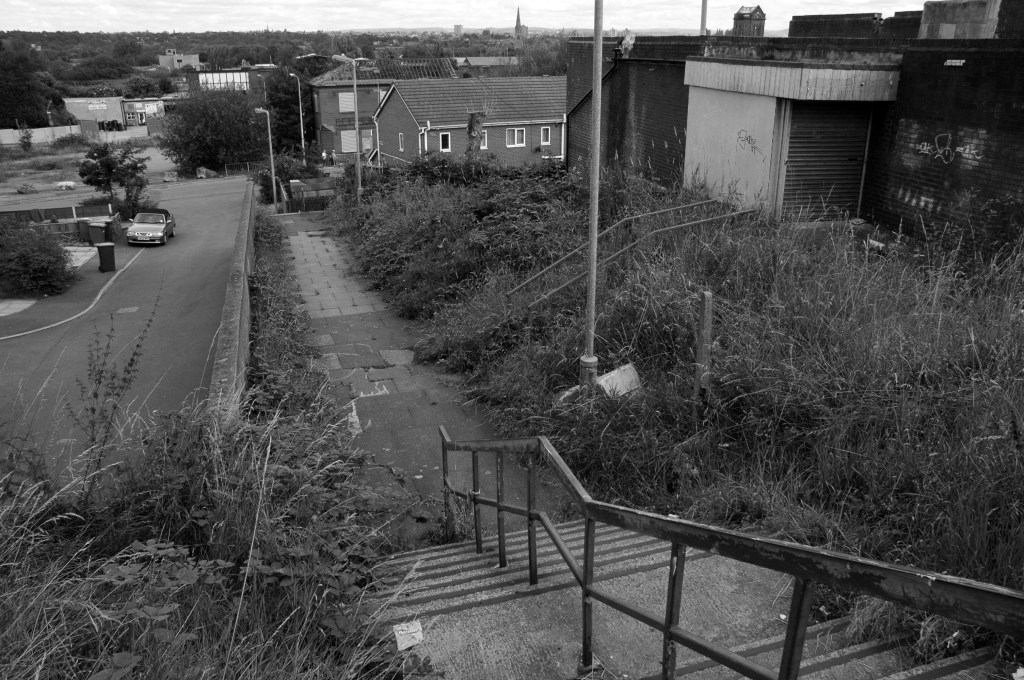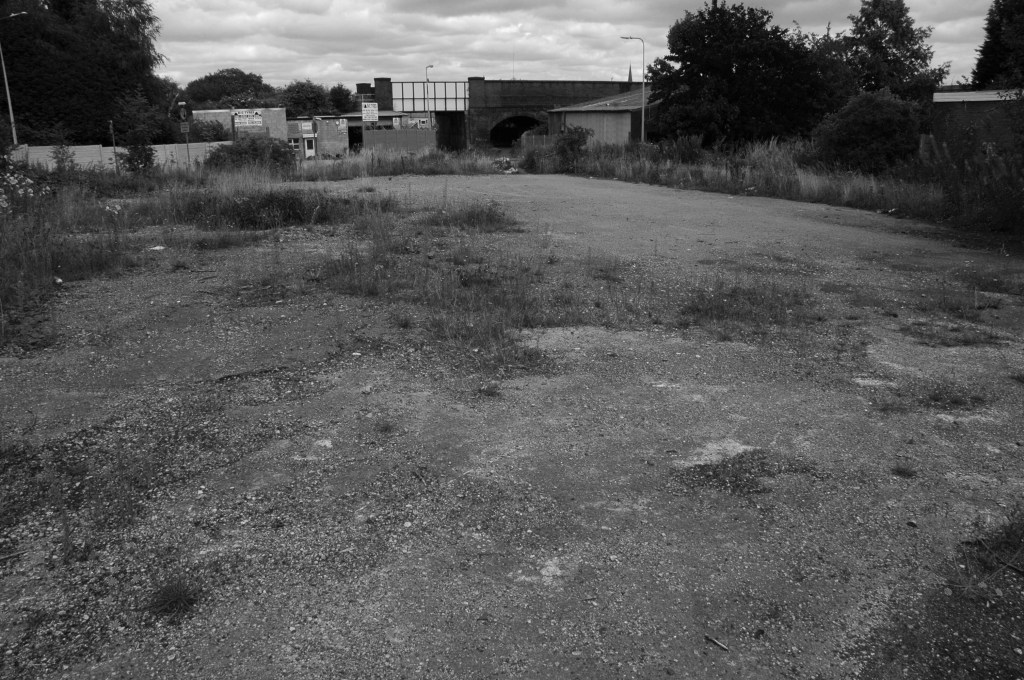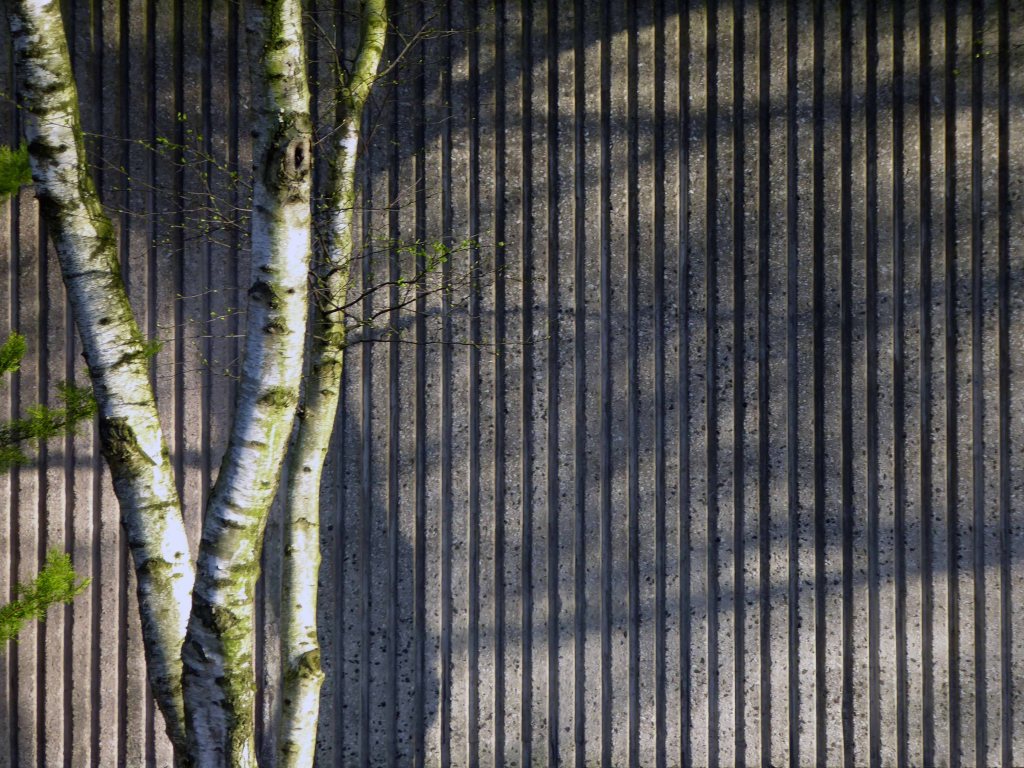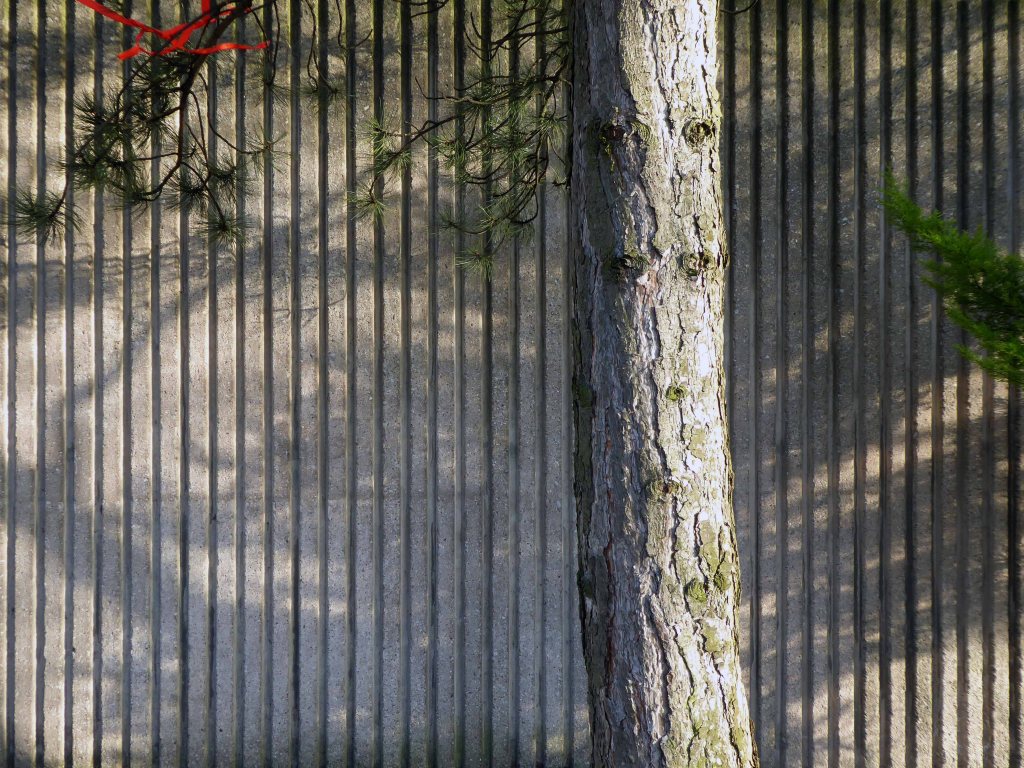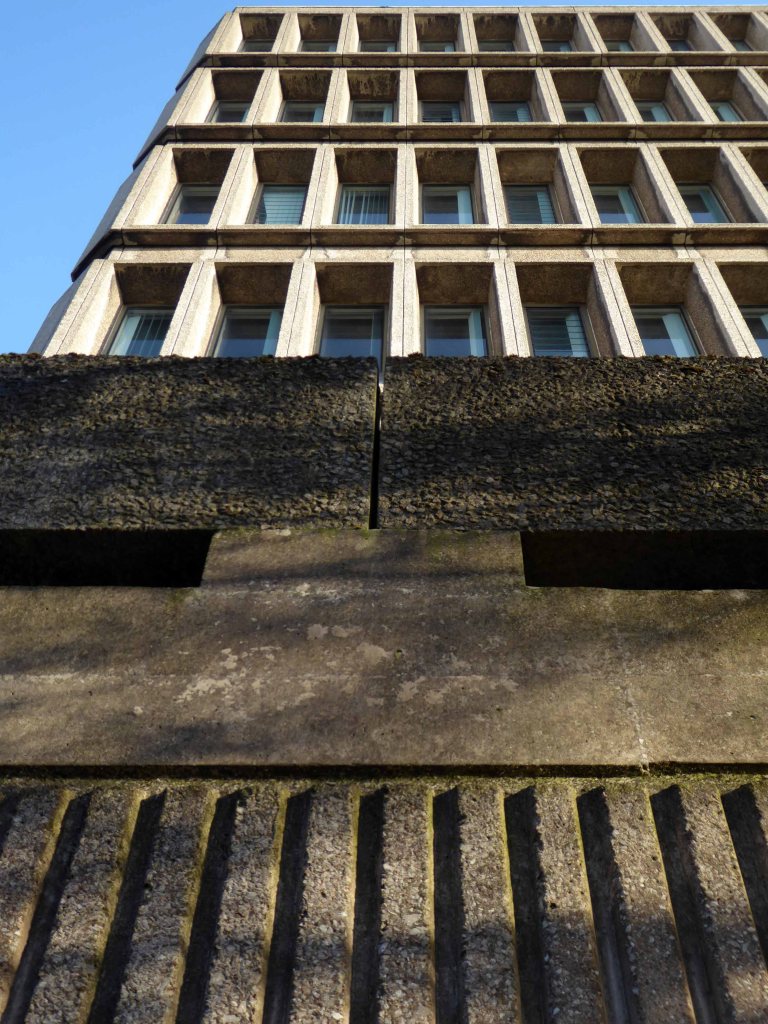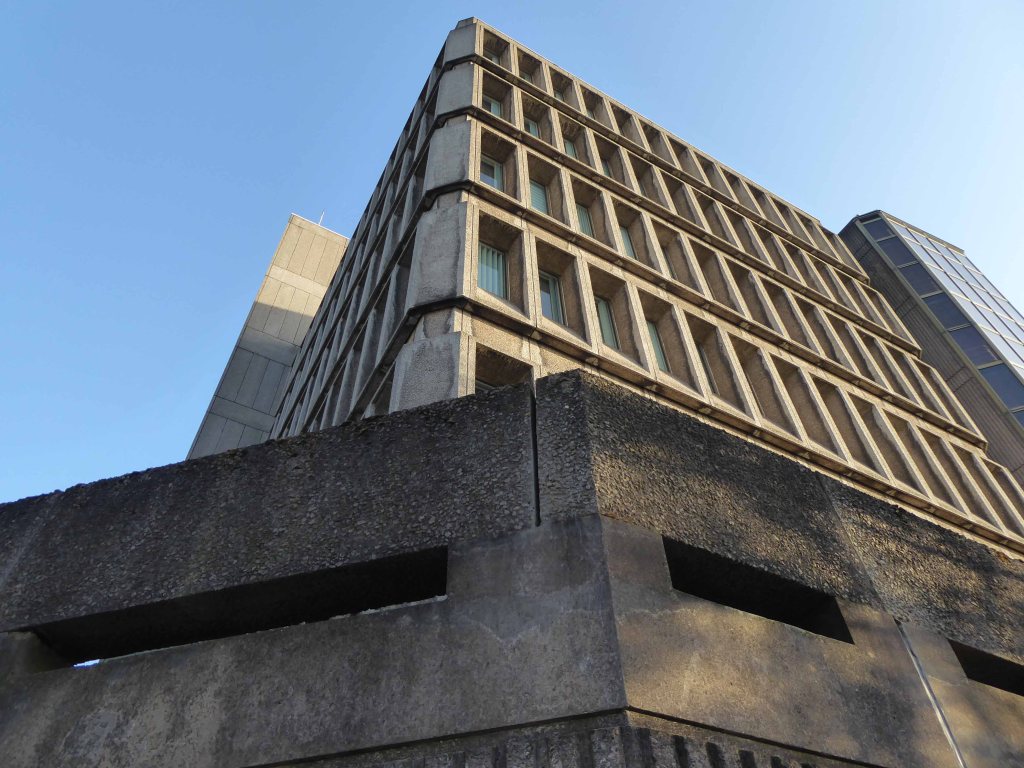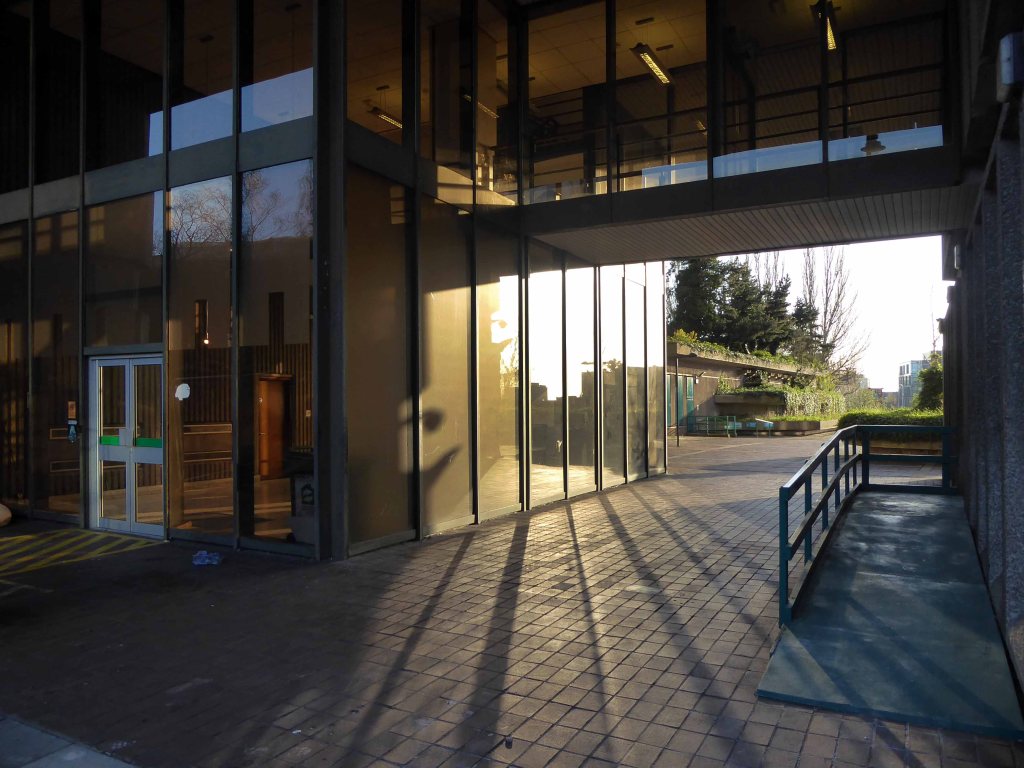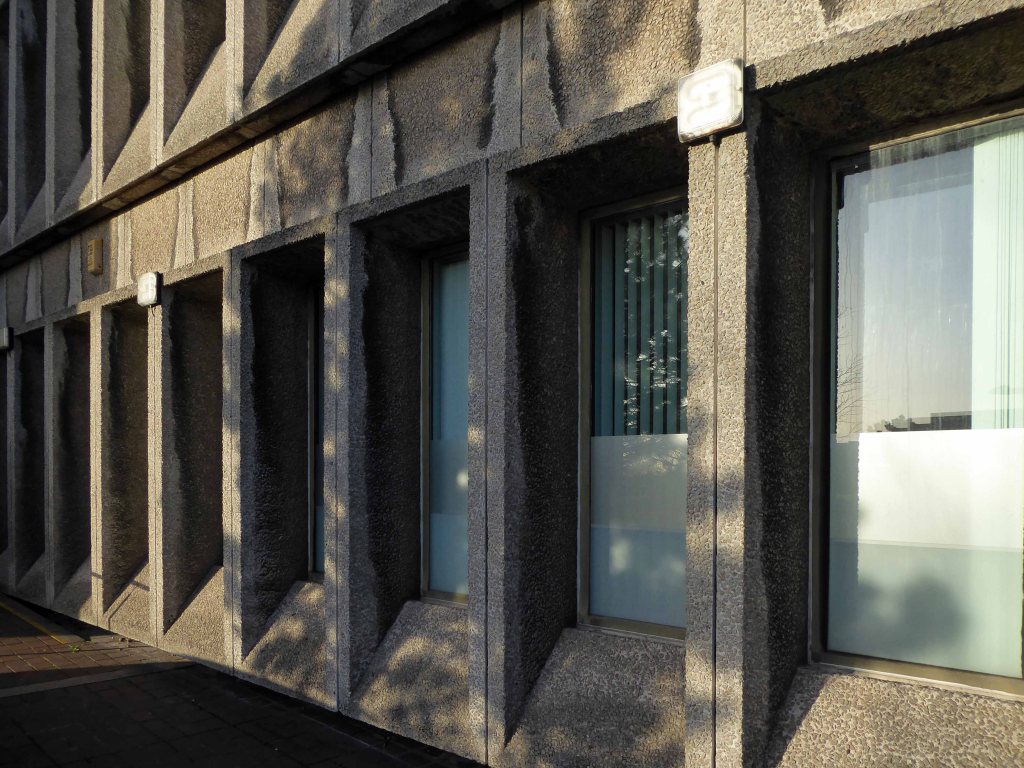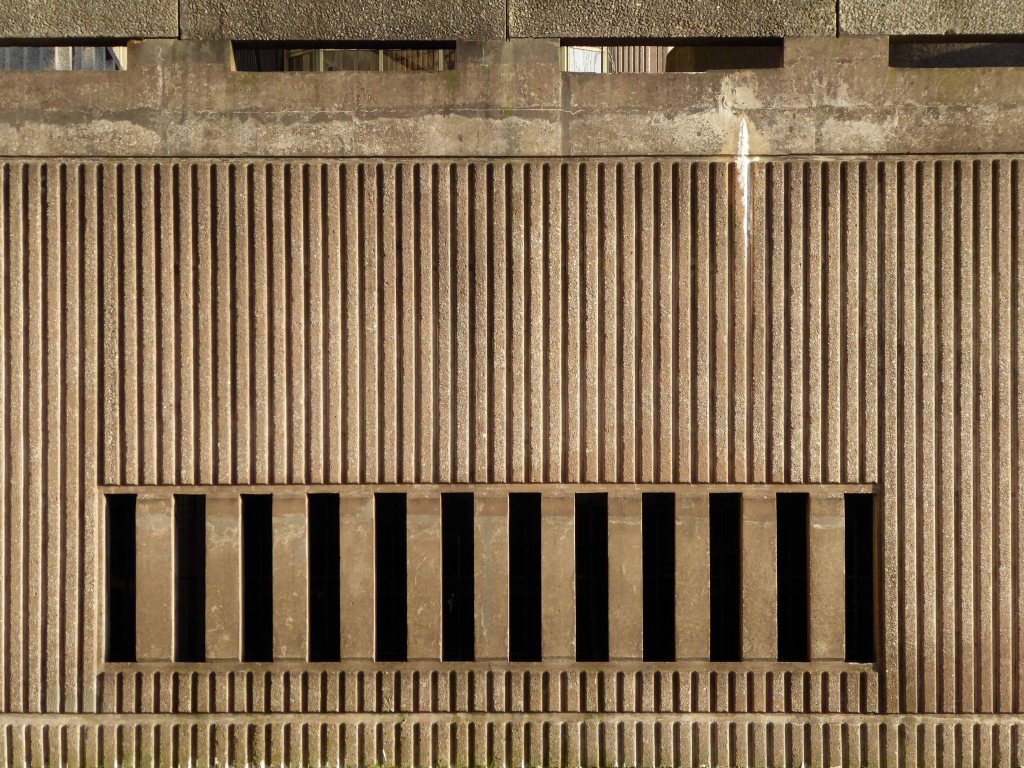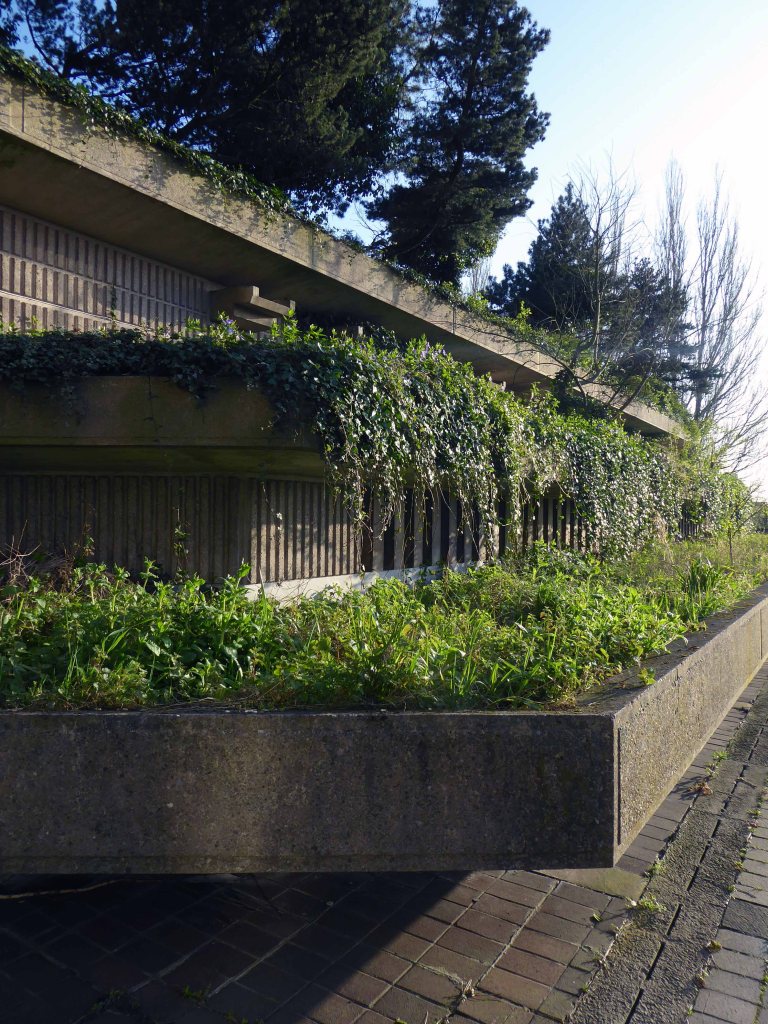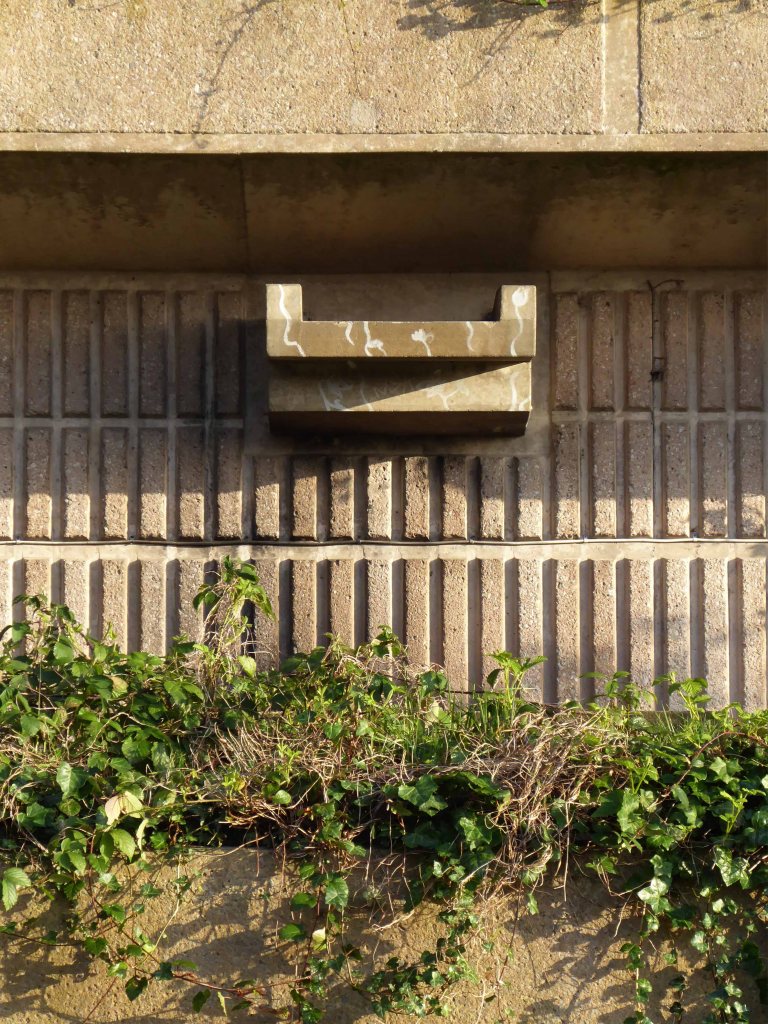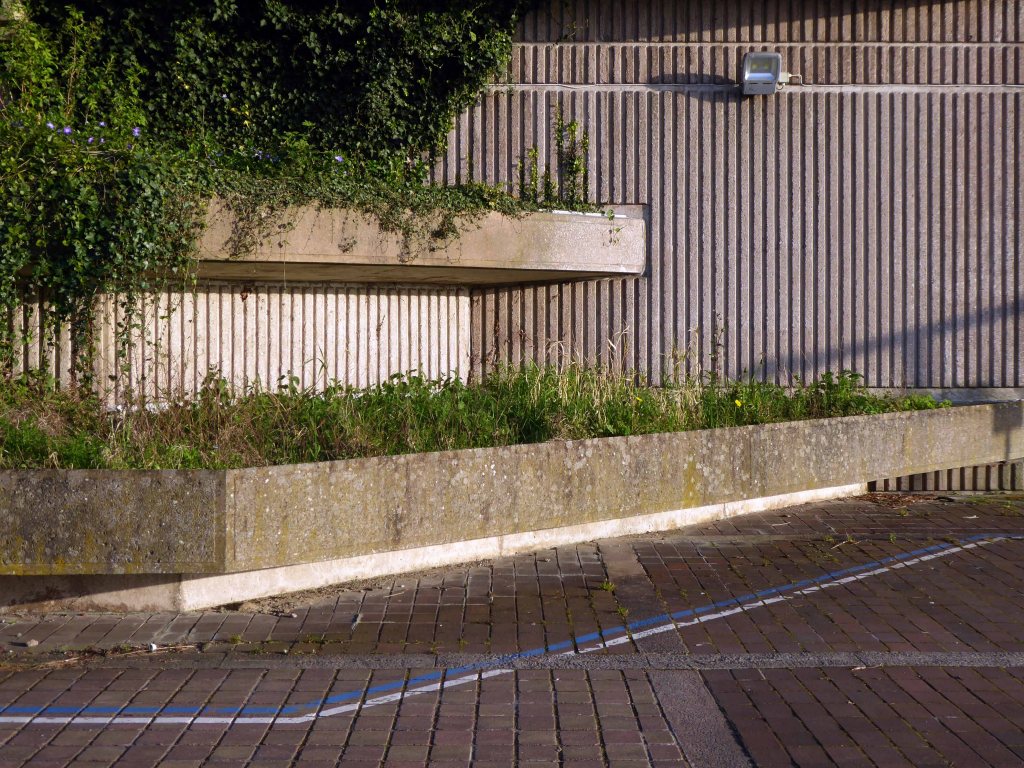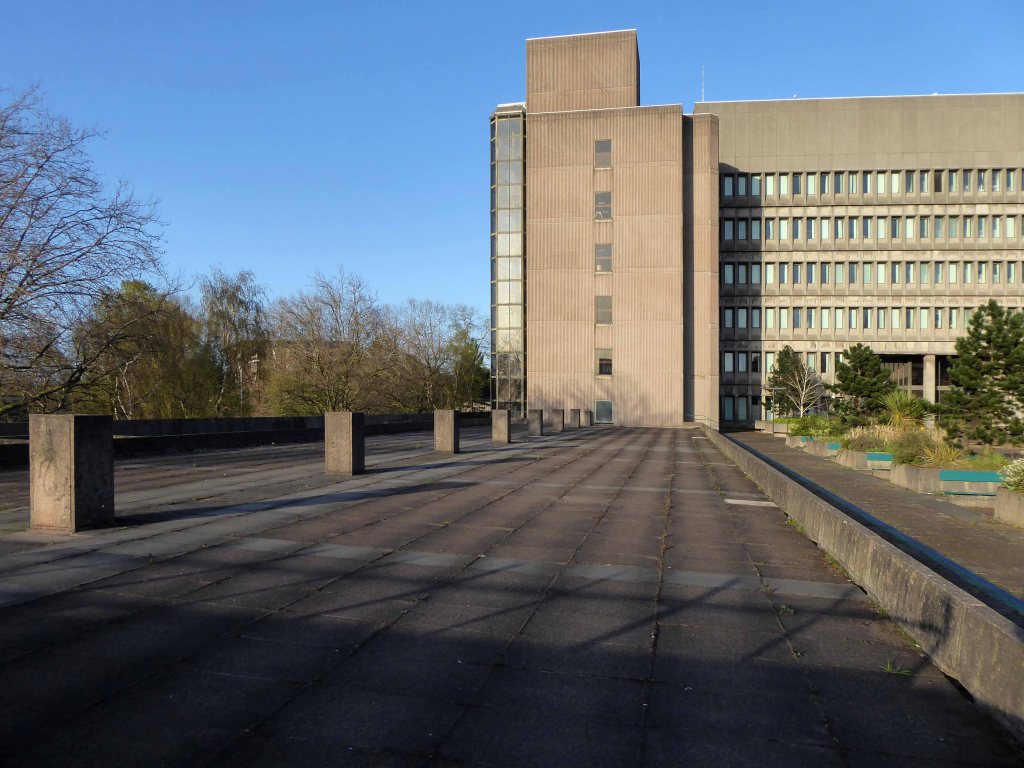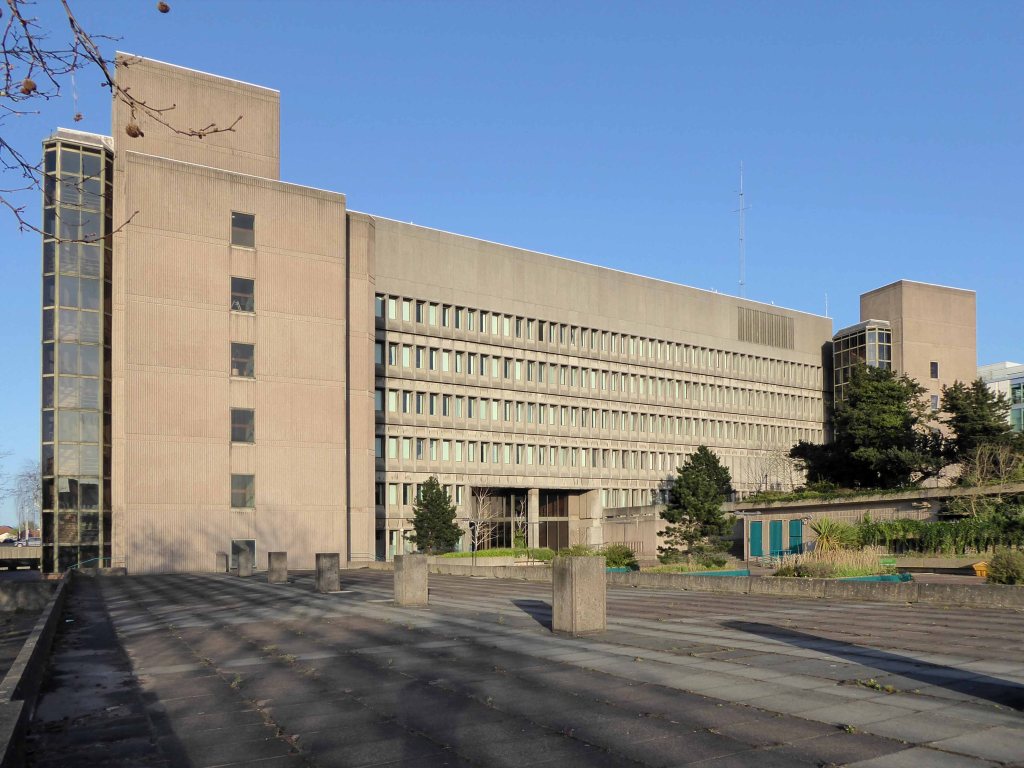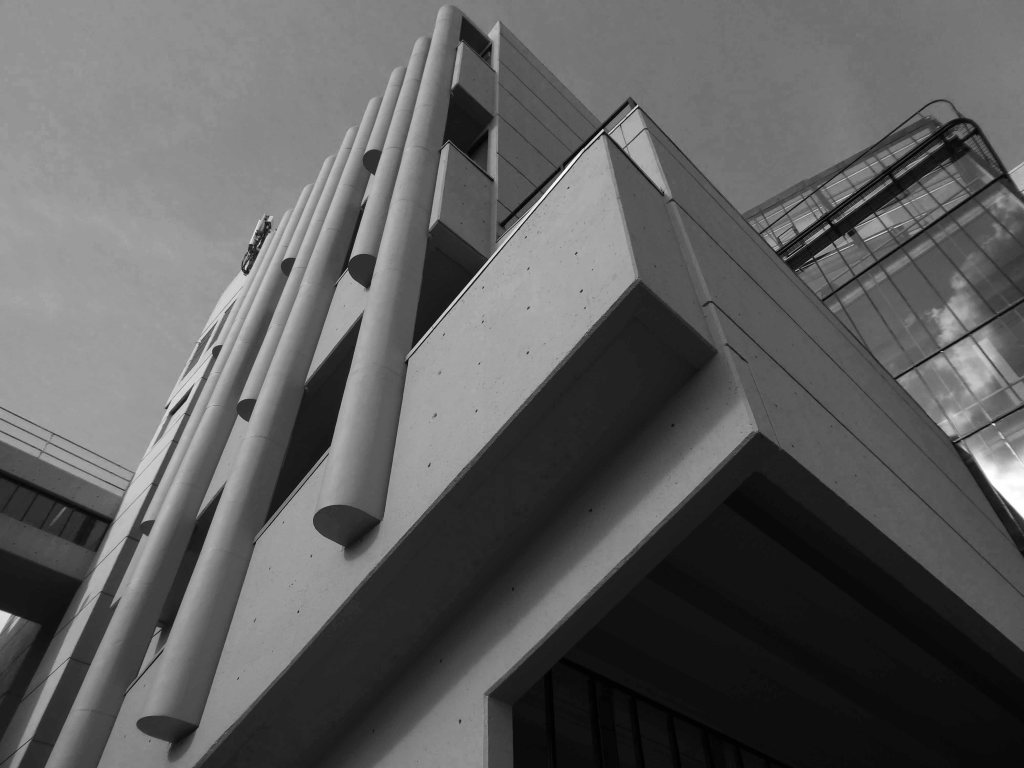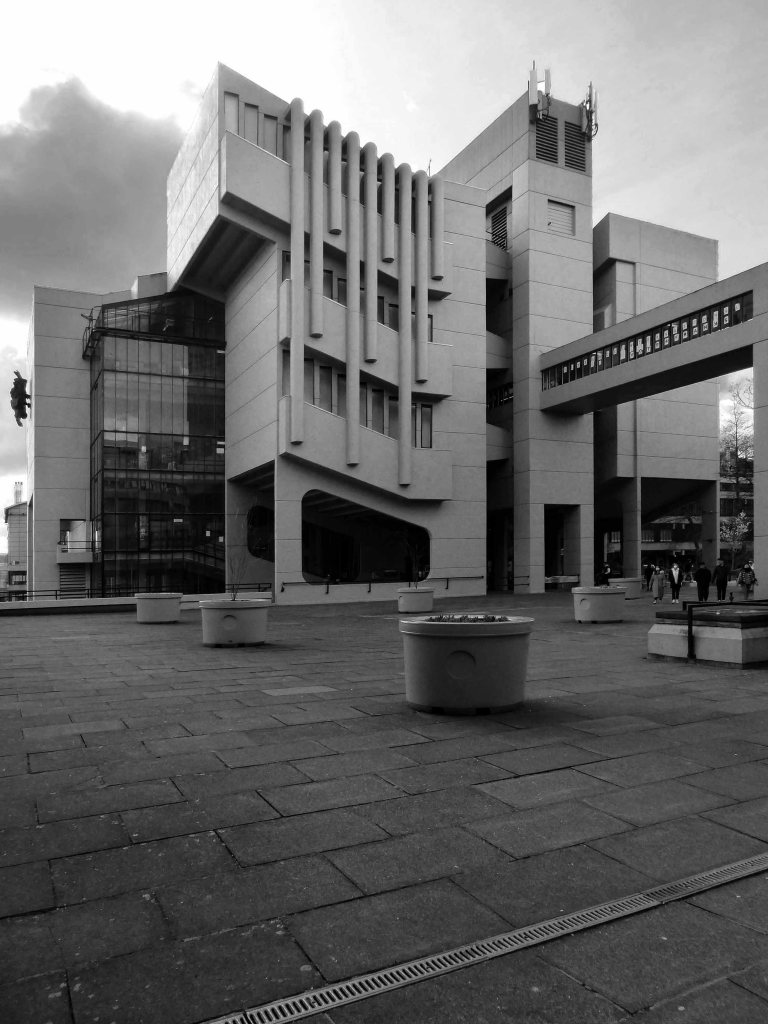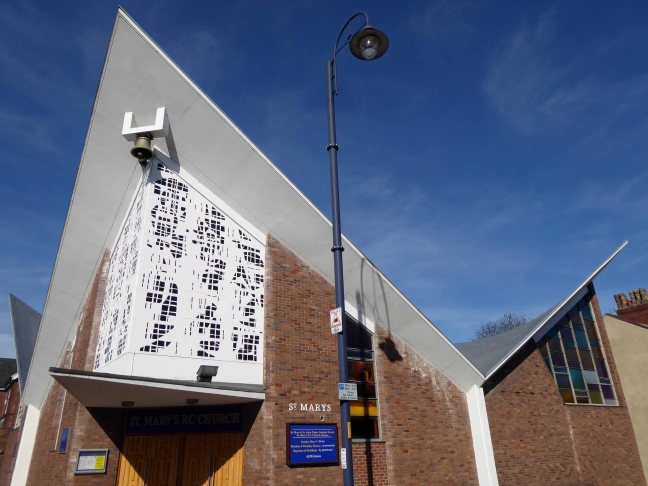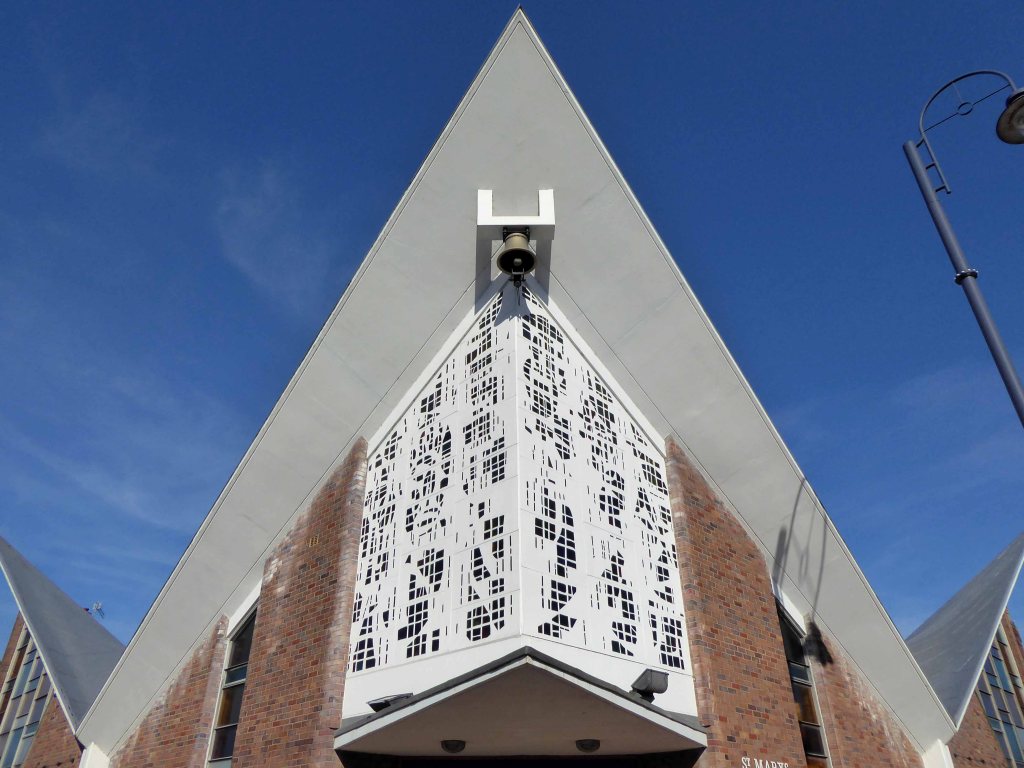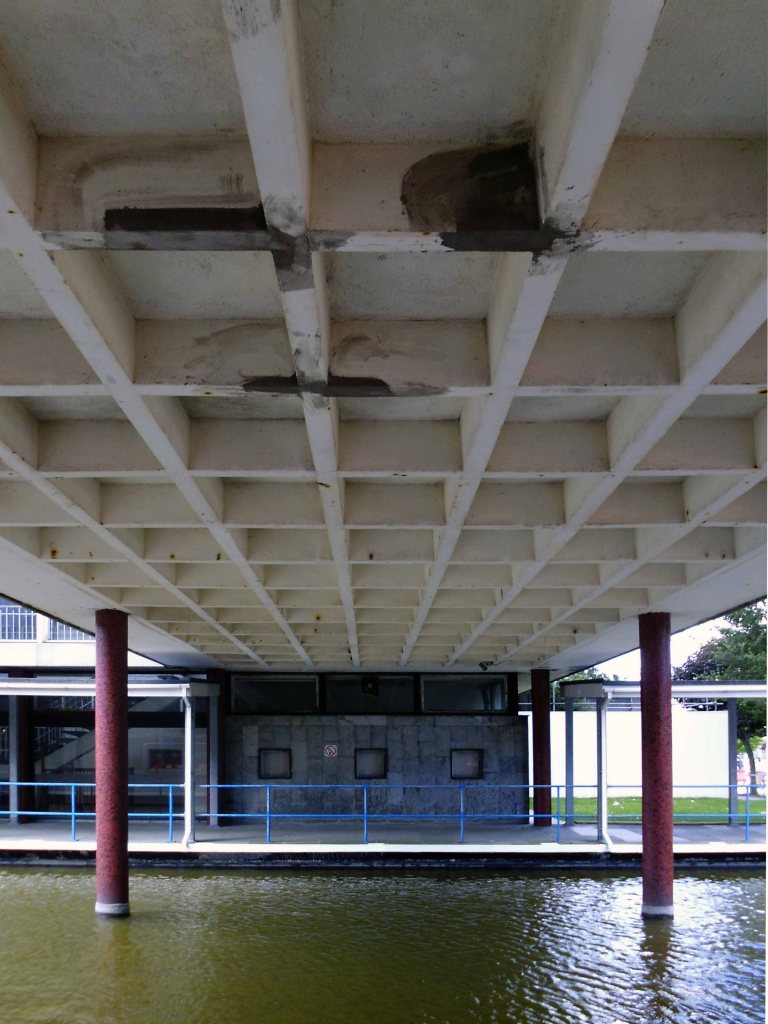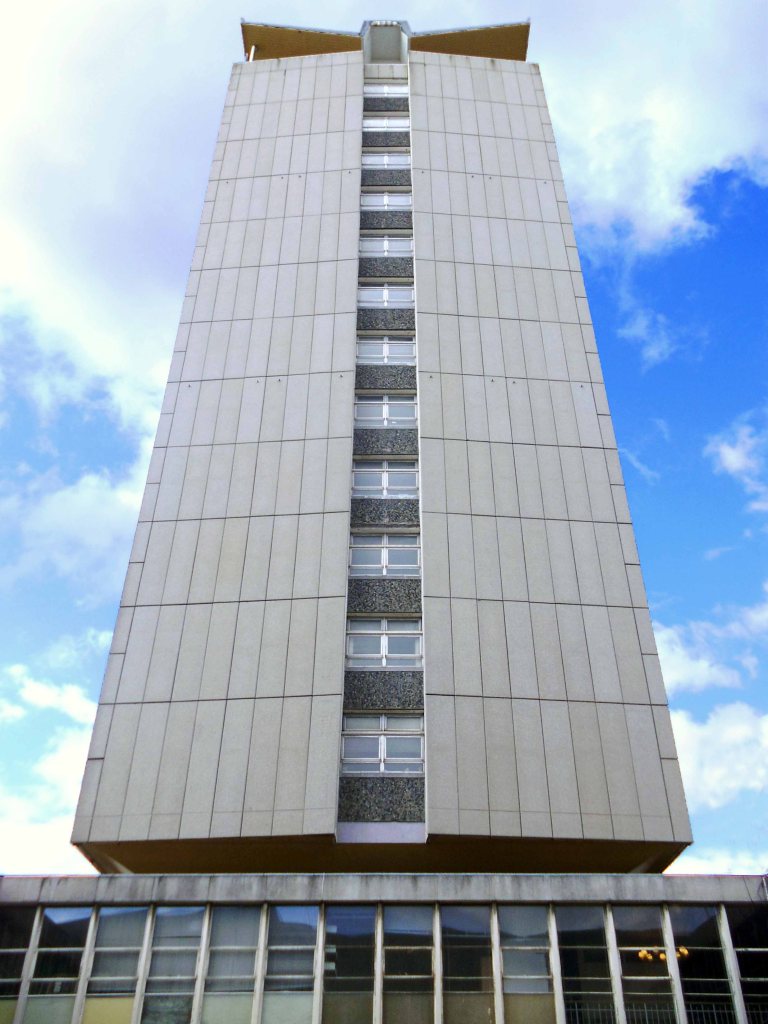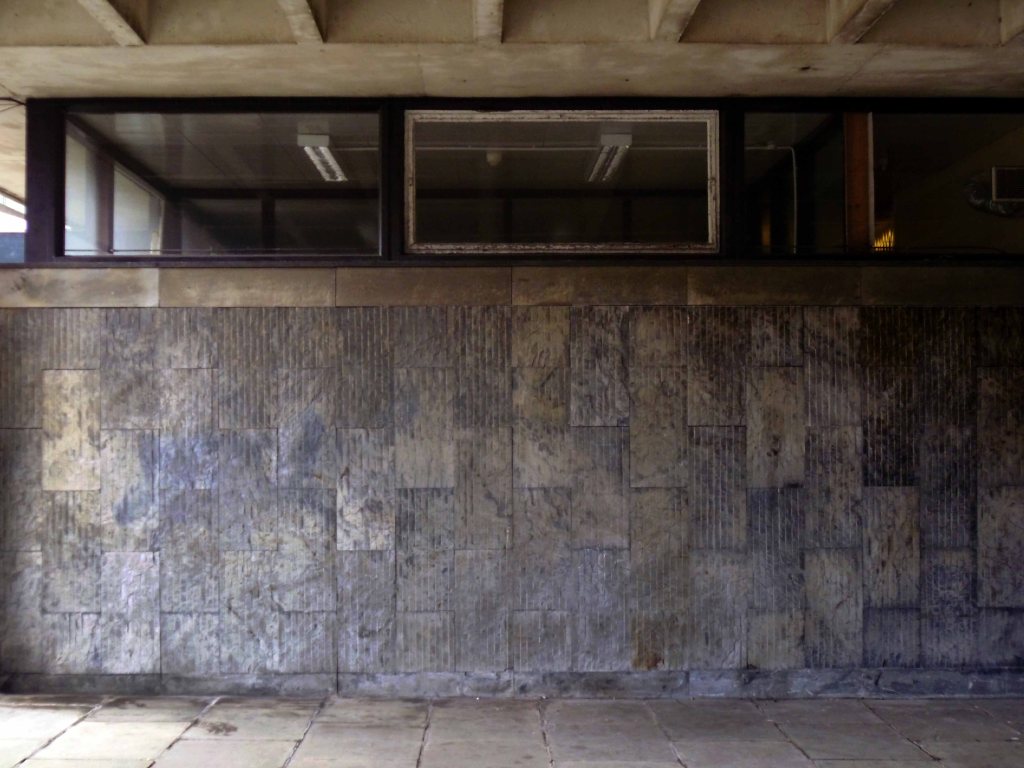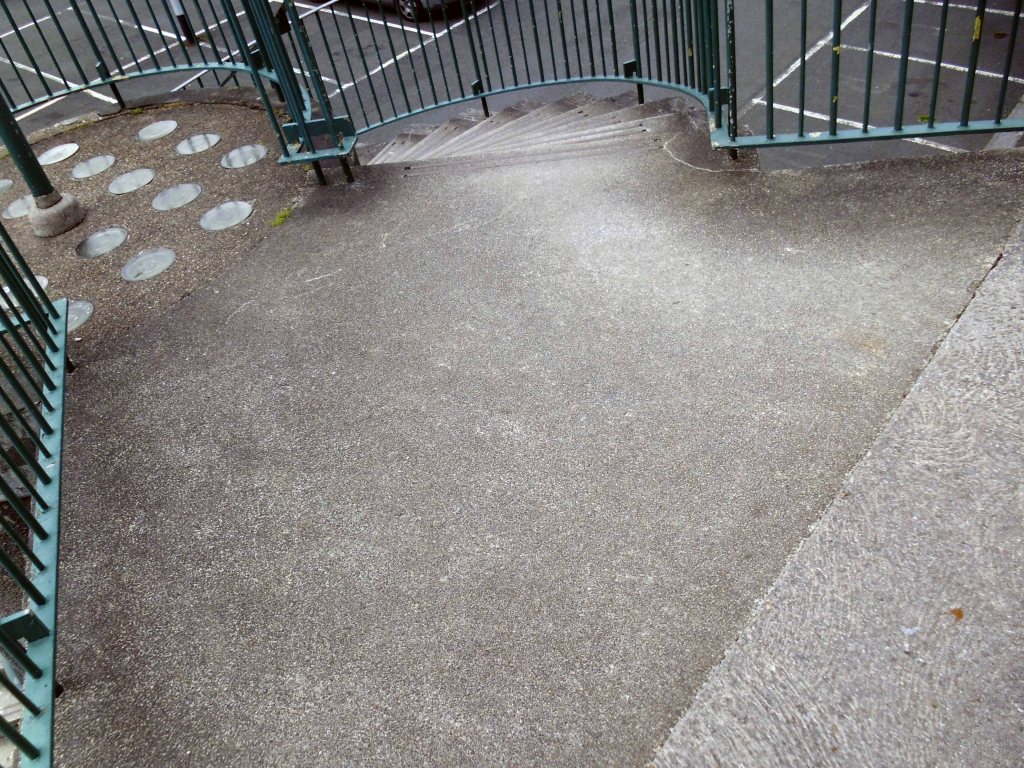
St Christopher RC – Ashton under Lyne

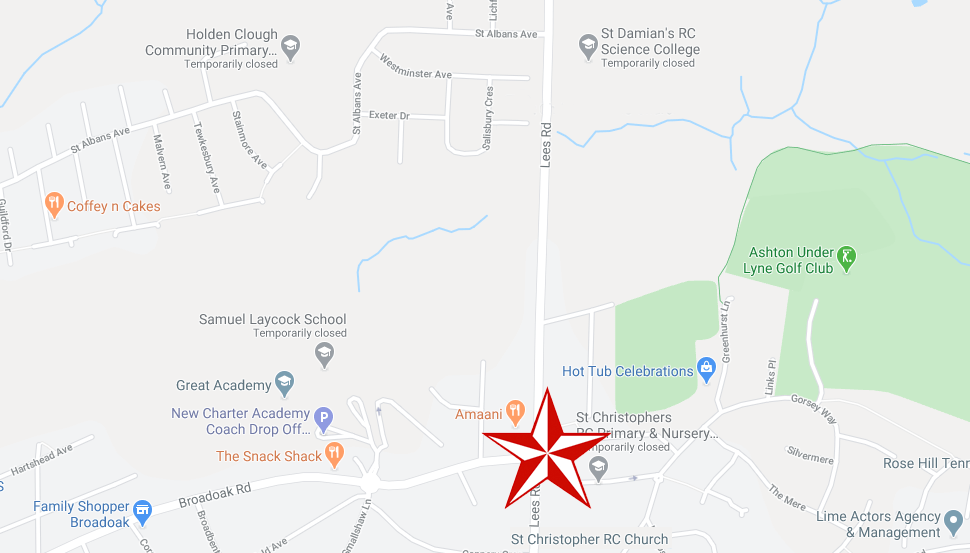
Lees Road Ashton-under-Lyne OL6 8BA

Architect: Francis A. Kerr 1955

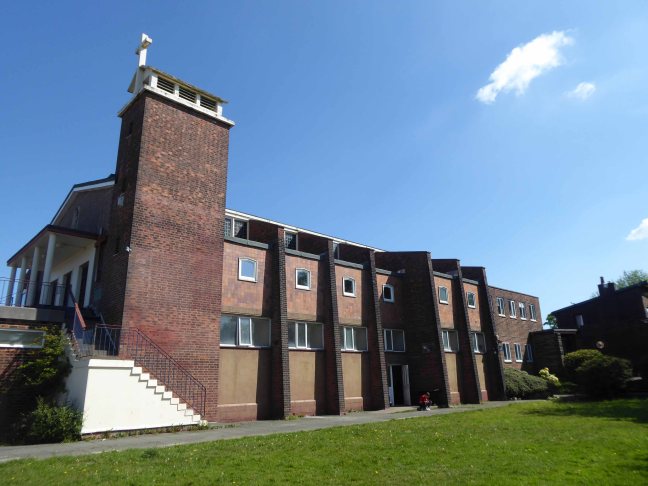
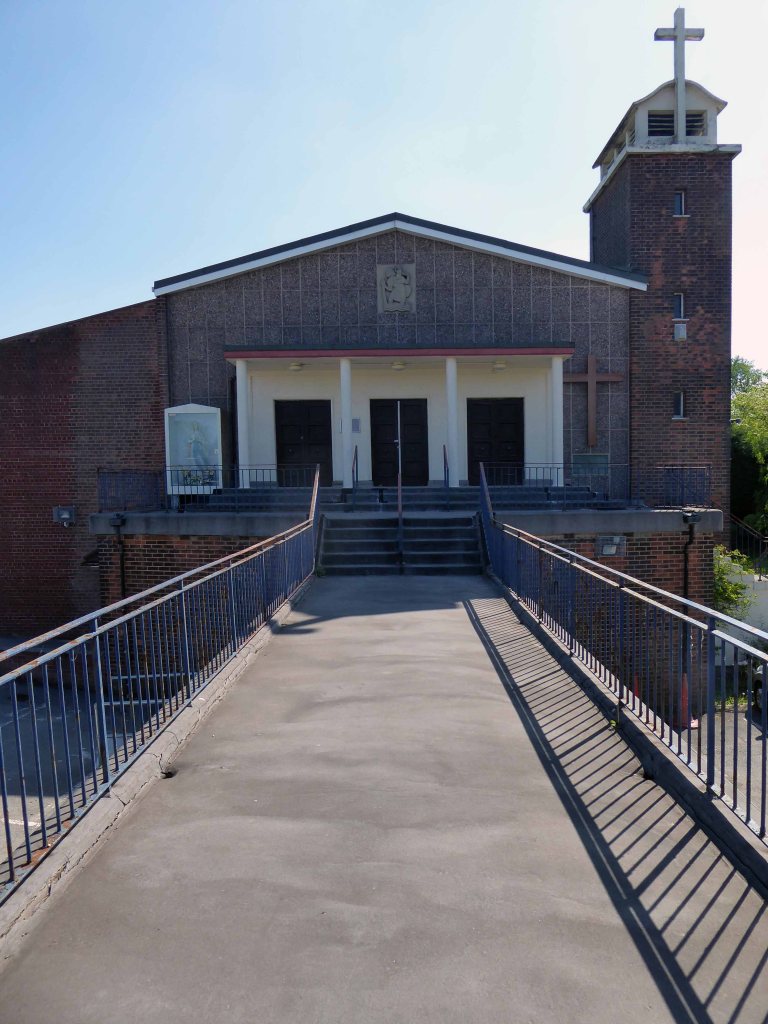
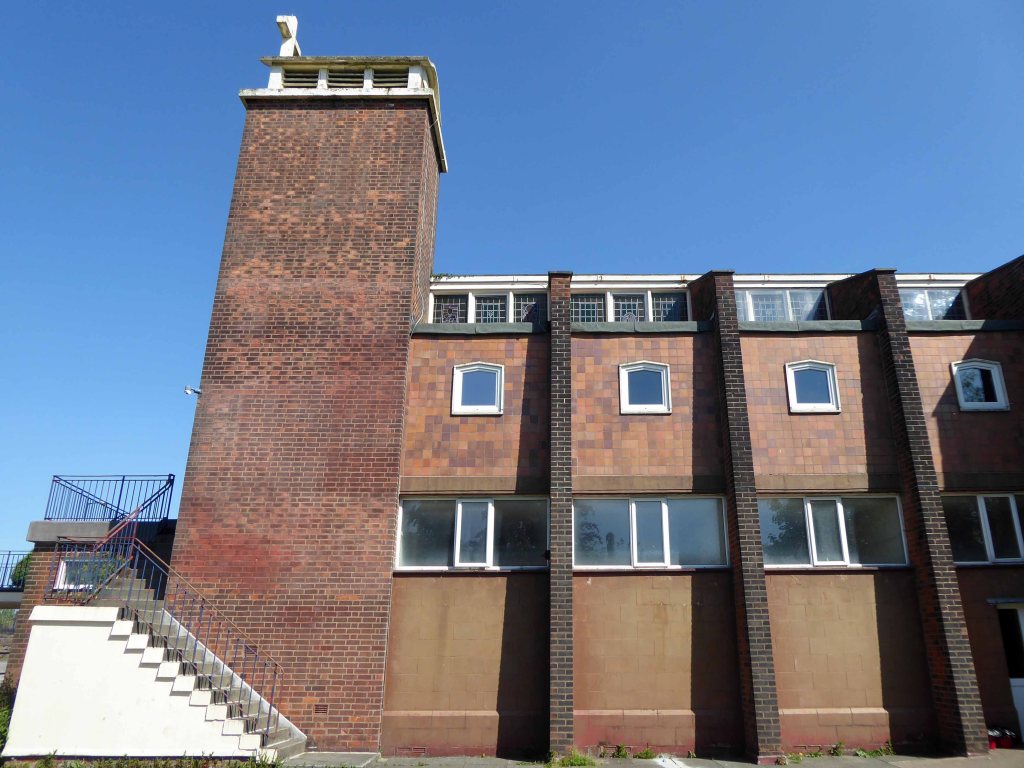
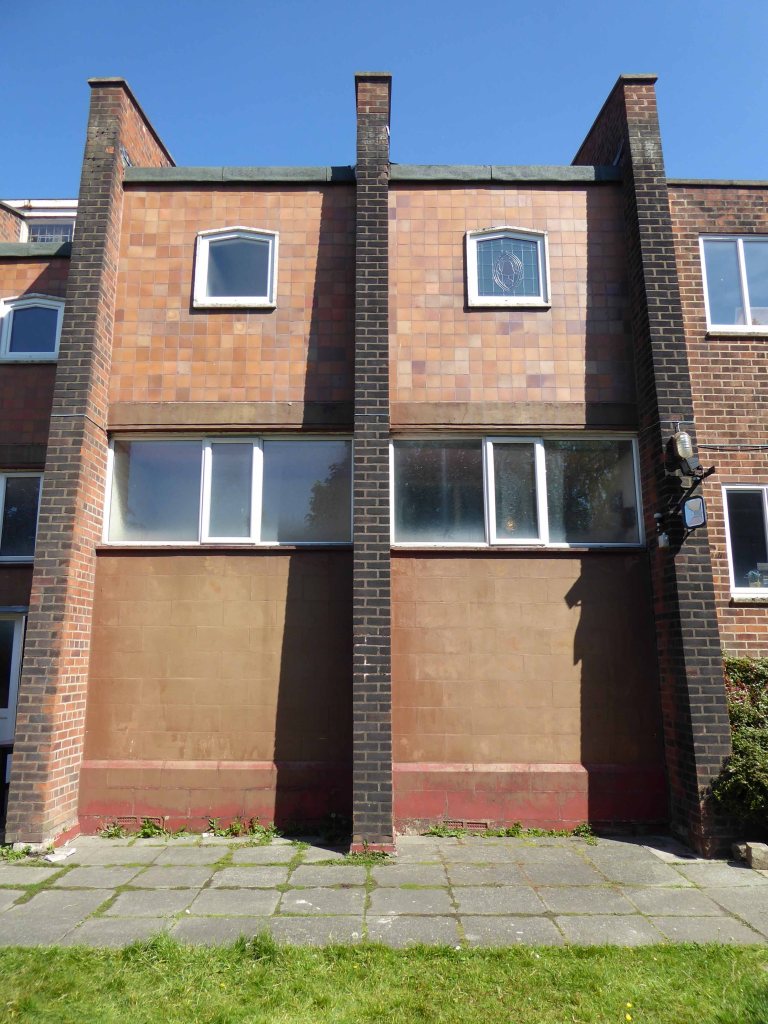
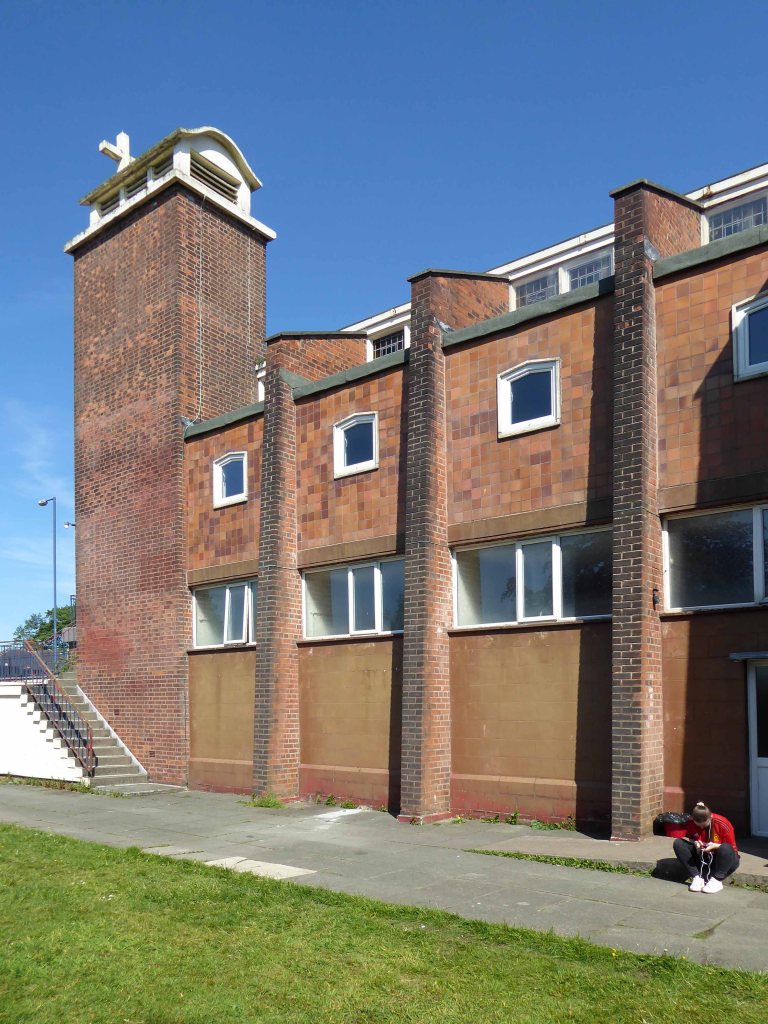
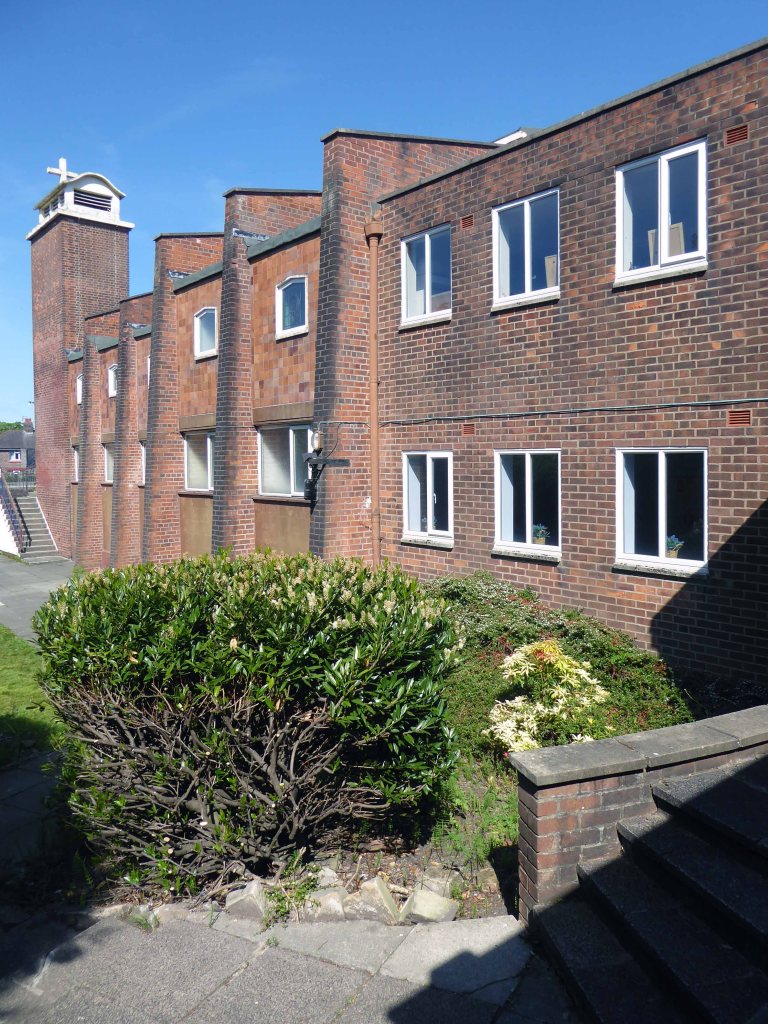
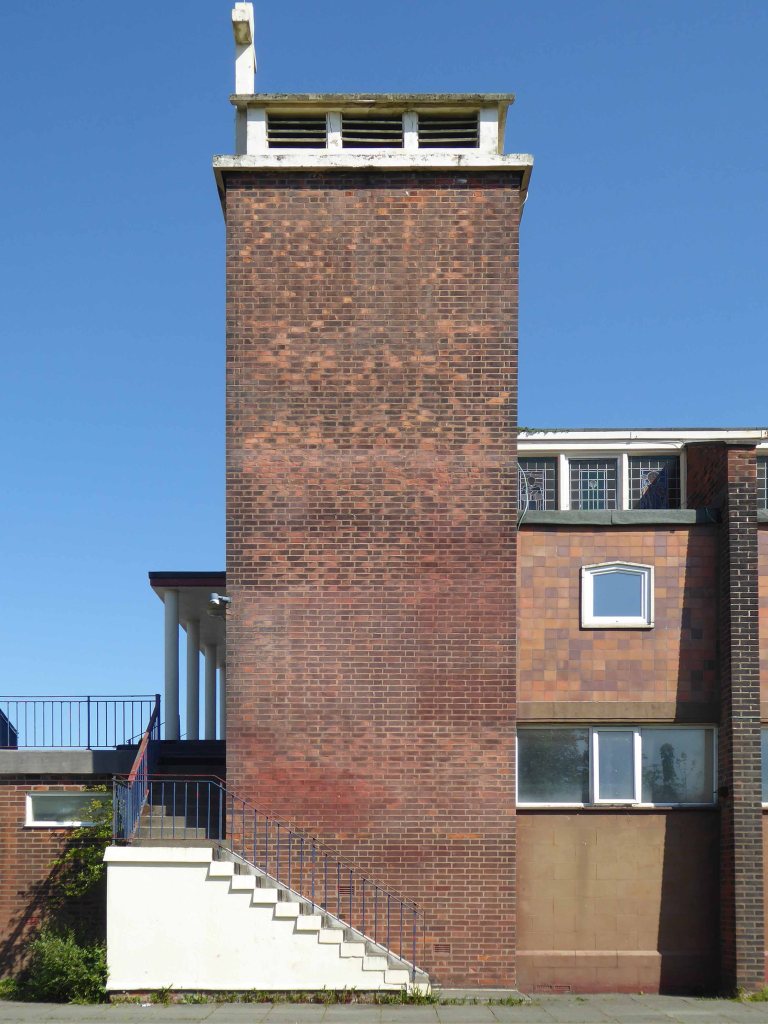
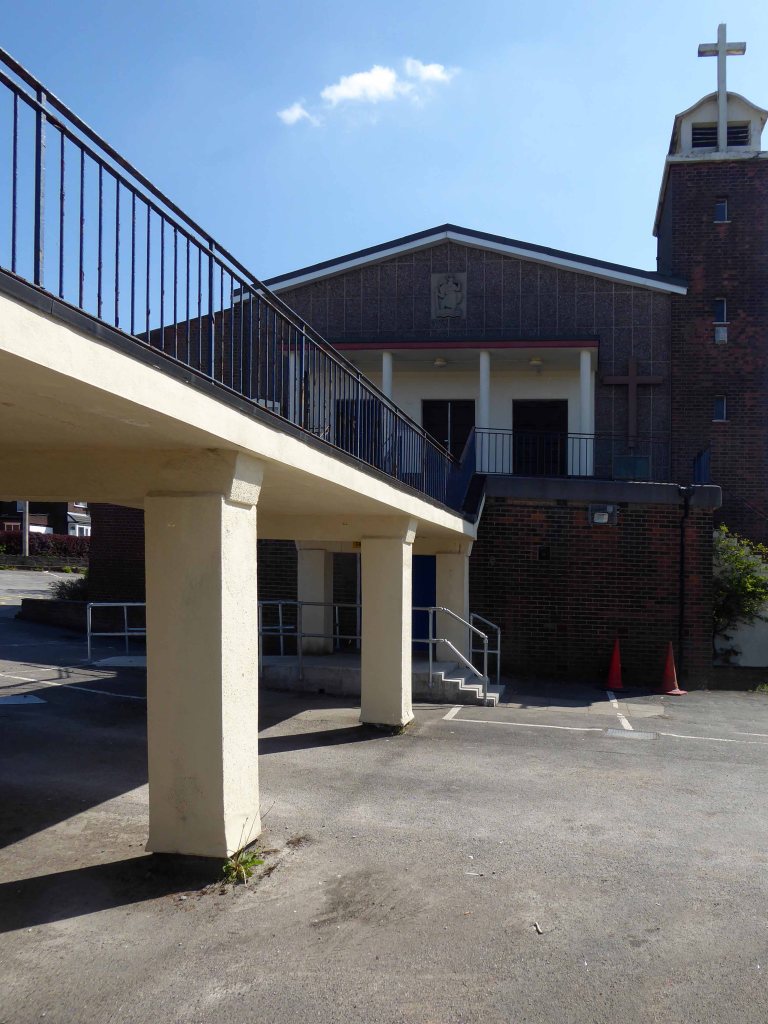
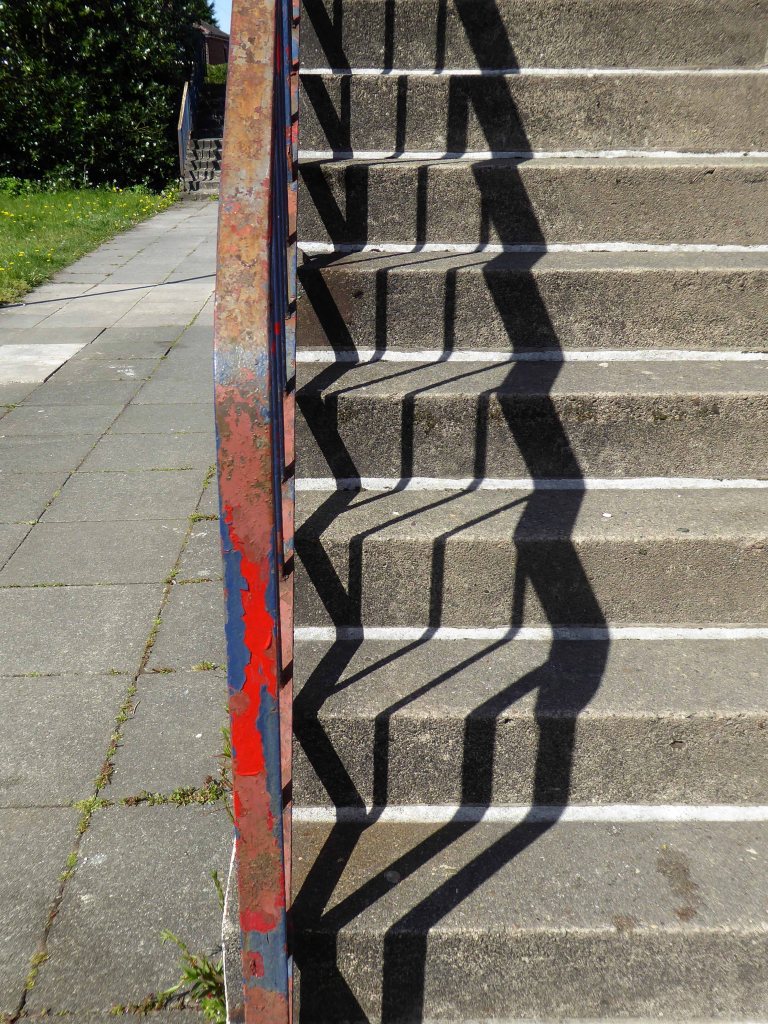
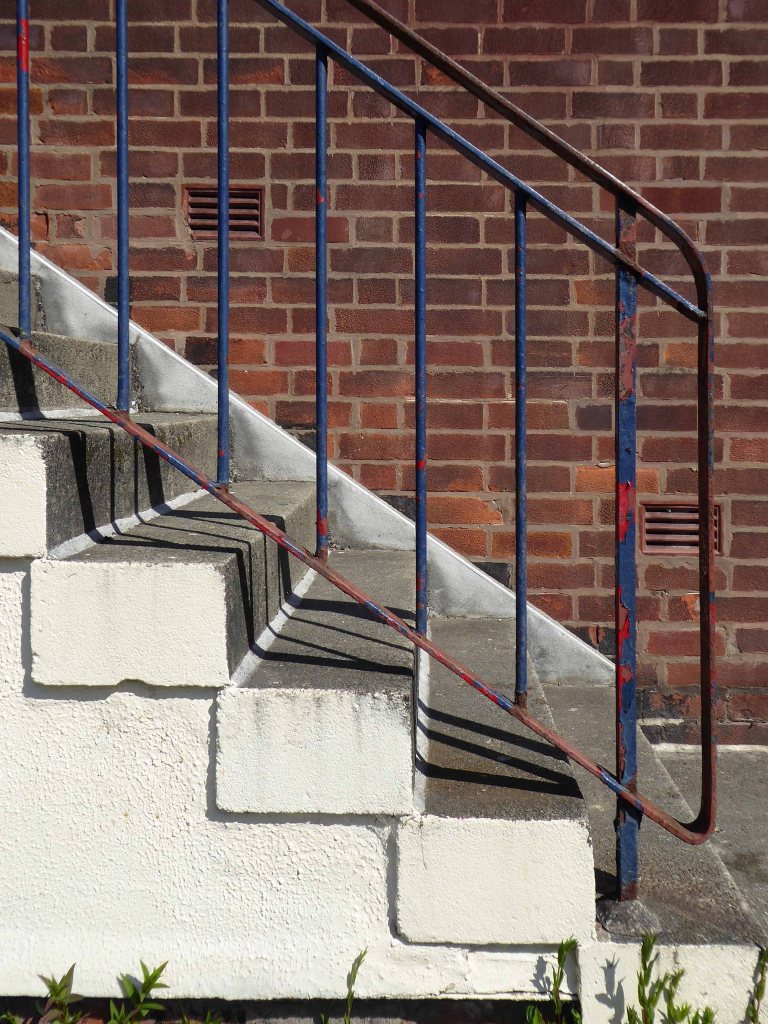
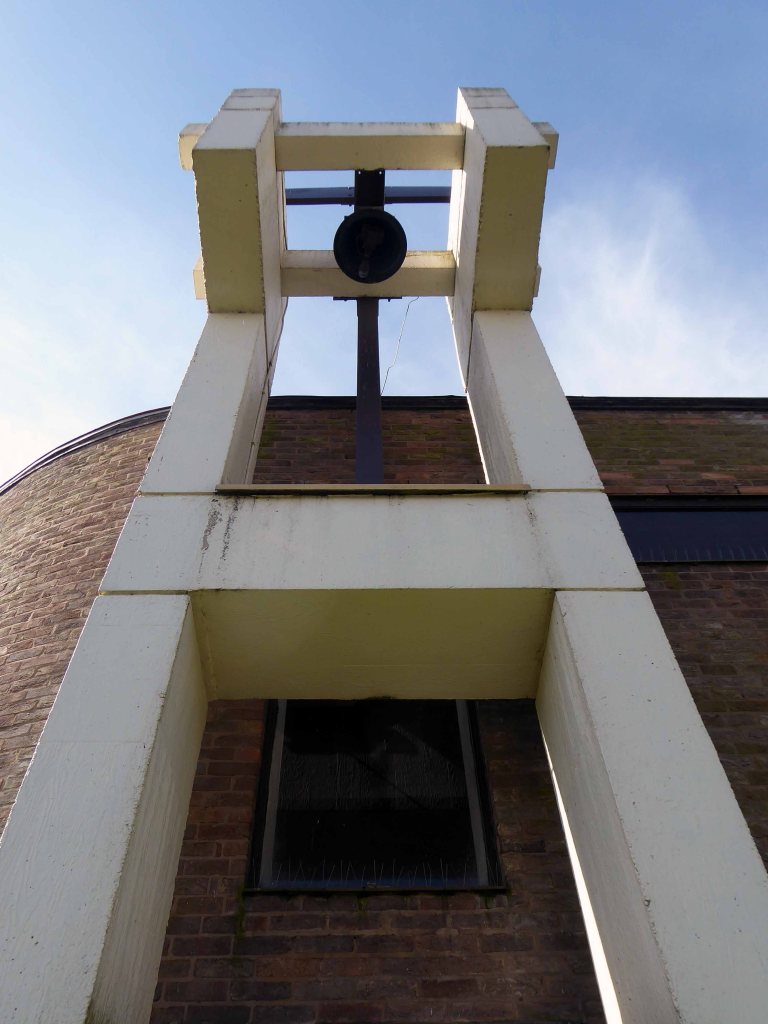
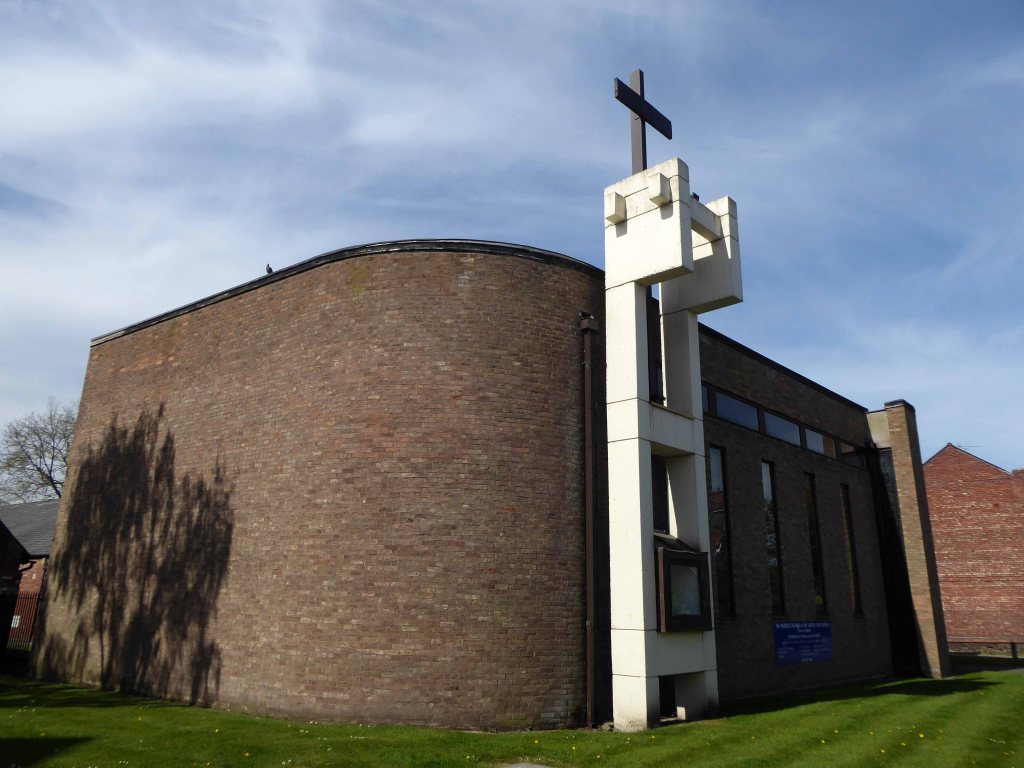
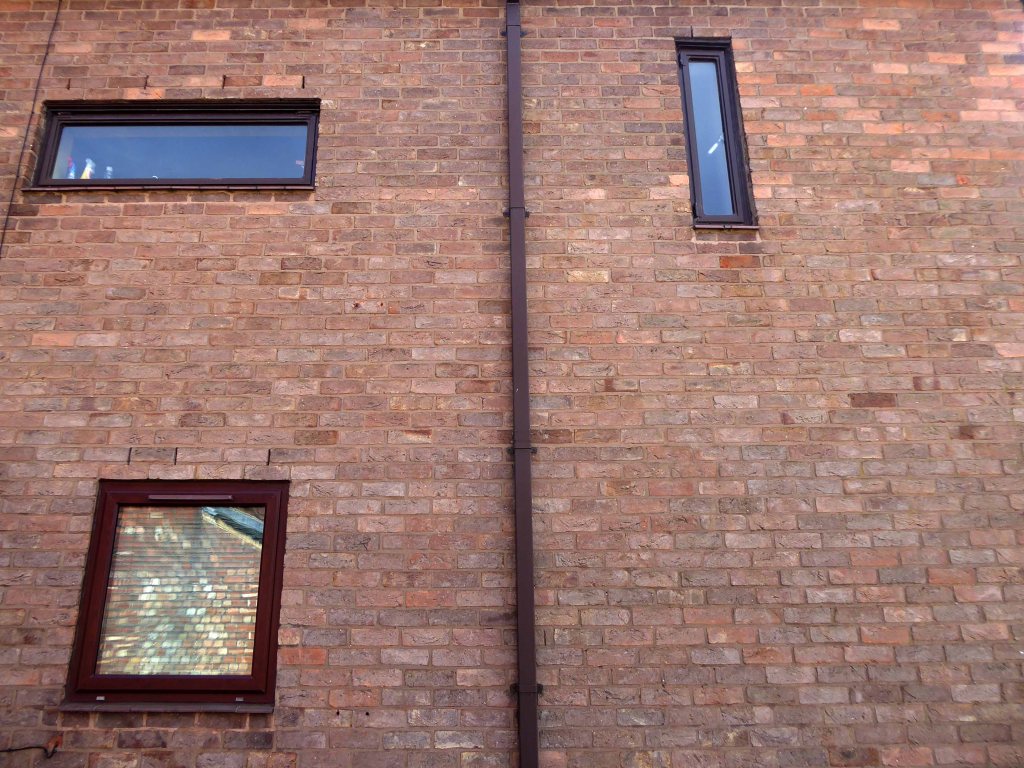
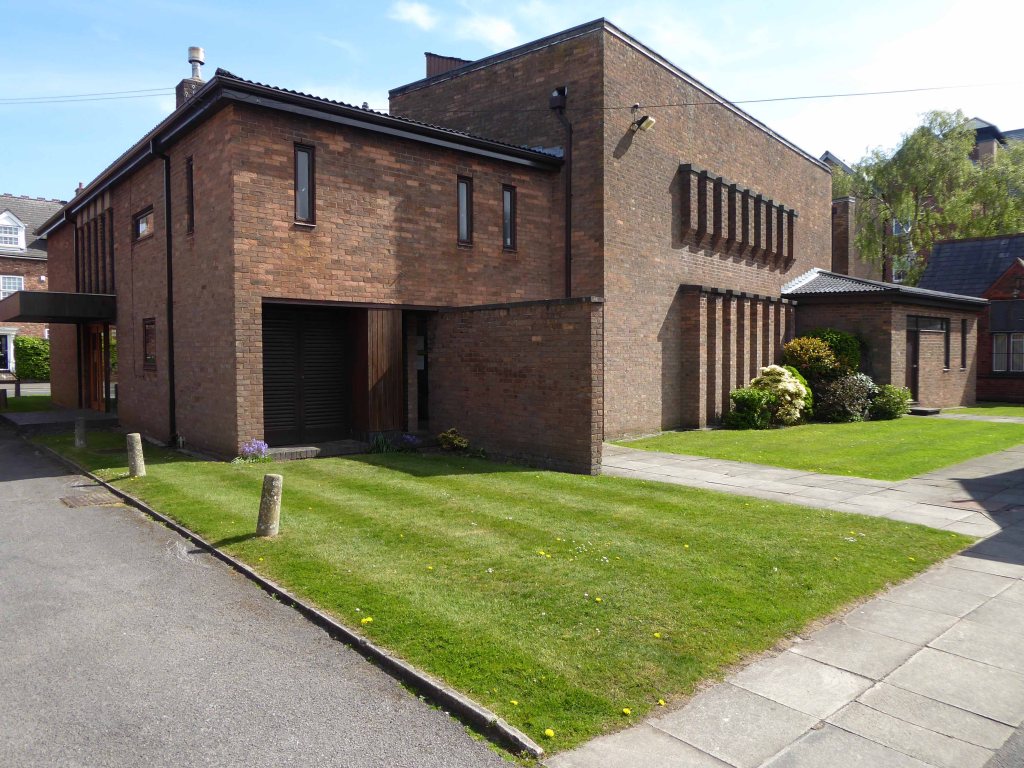
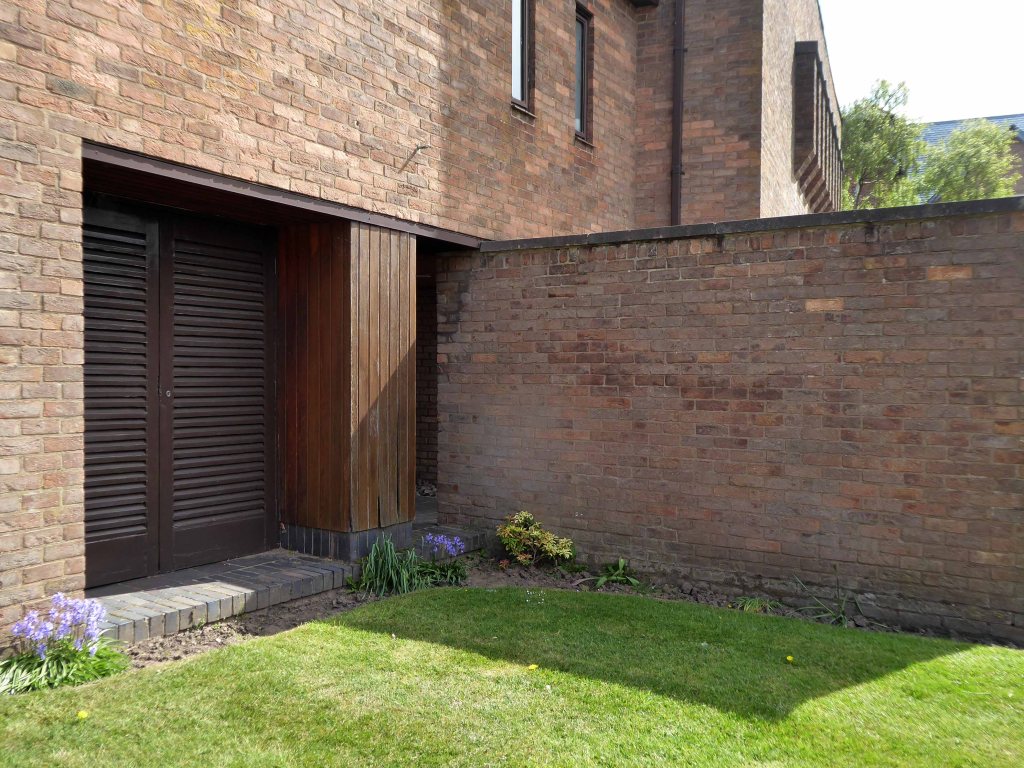
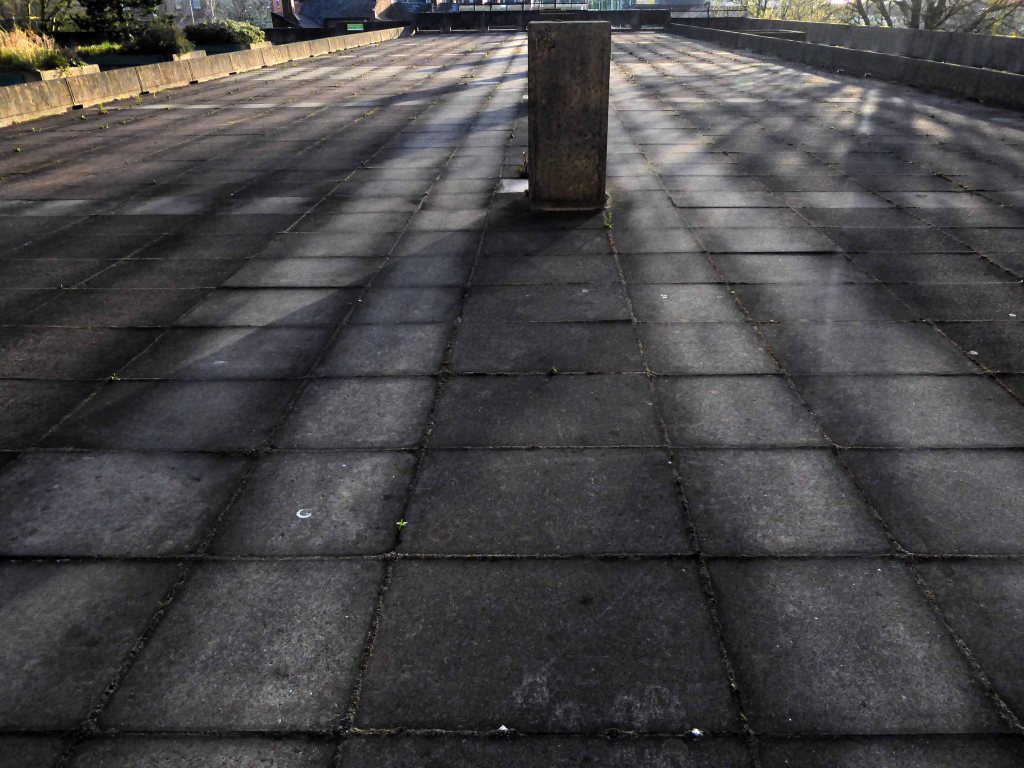
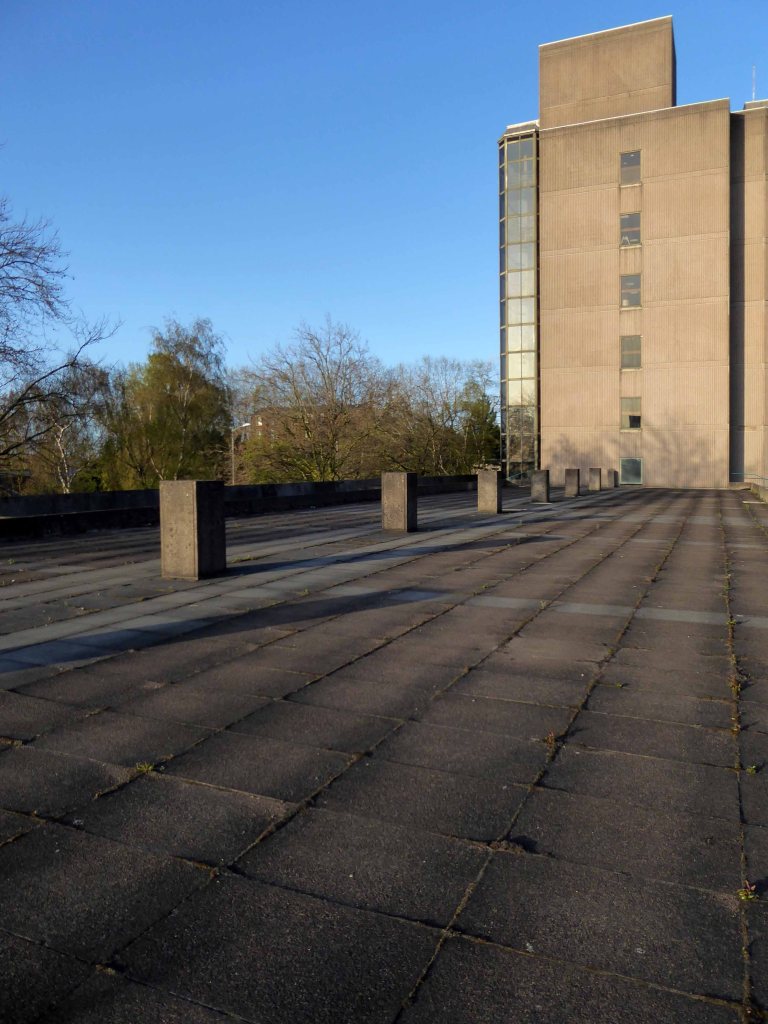
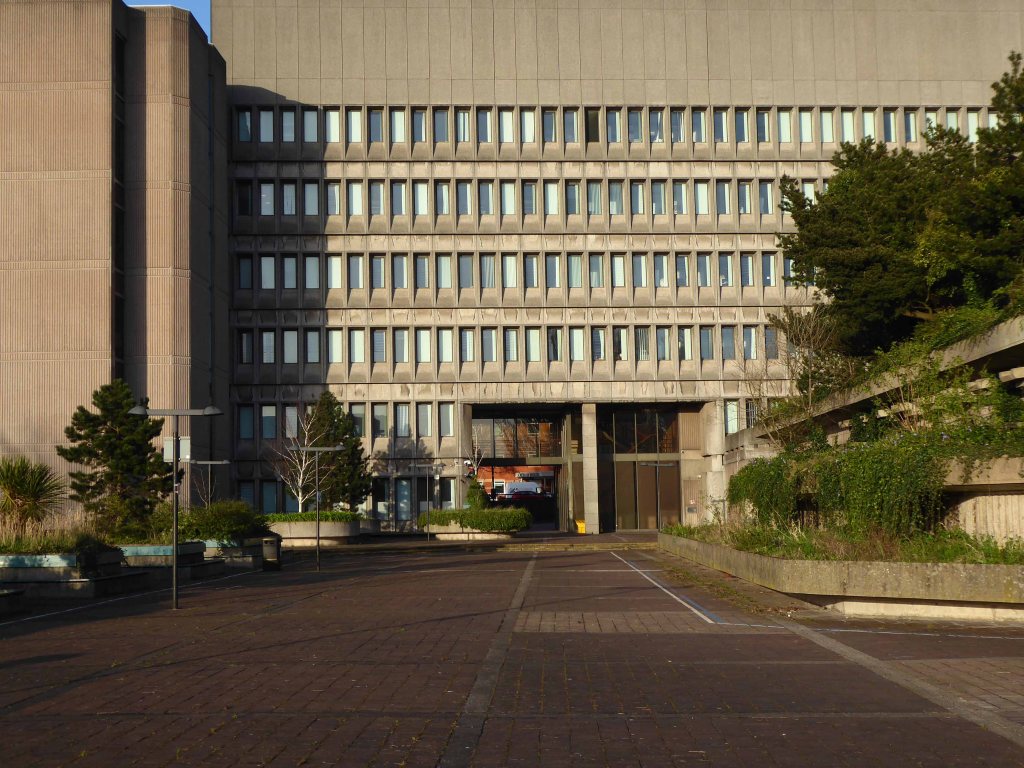
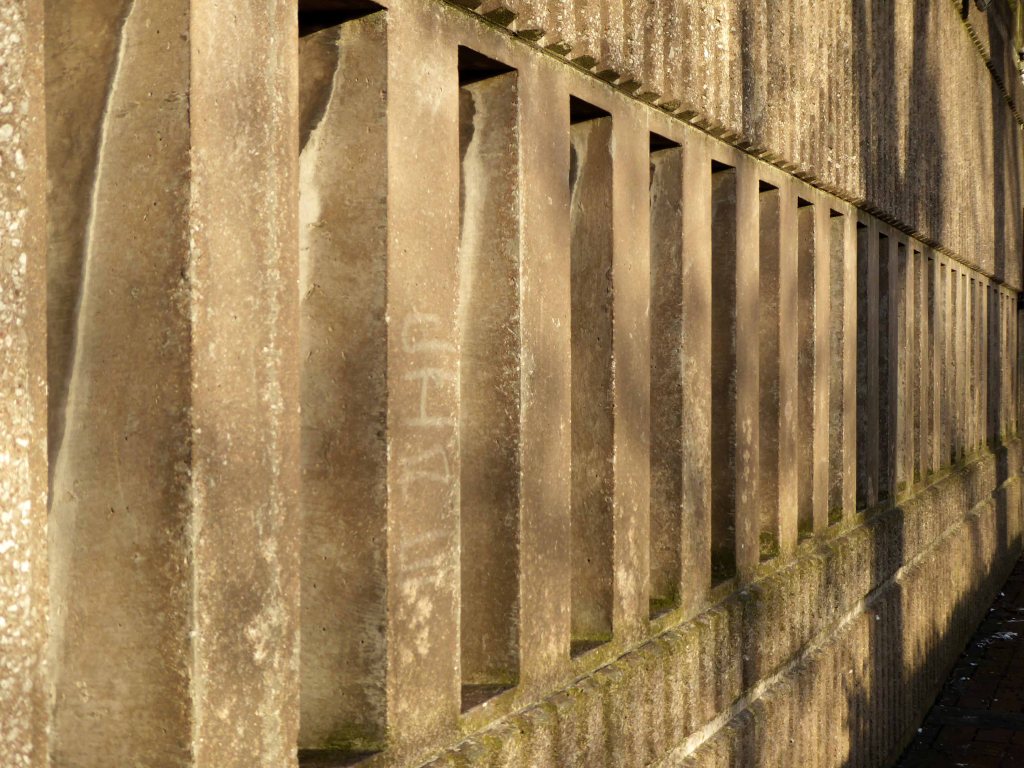
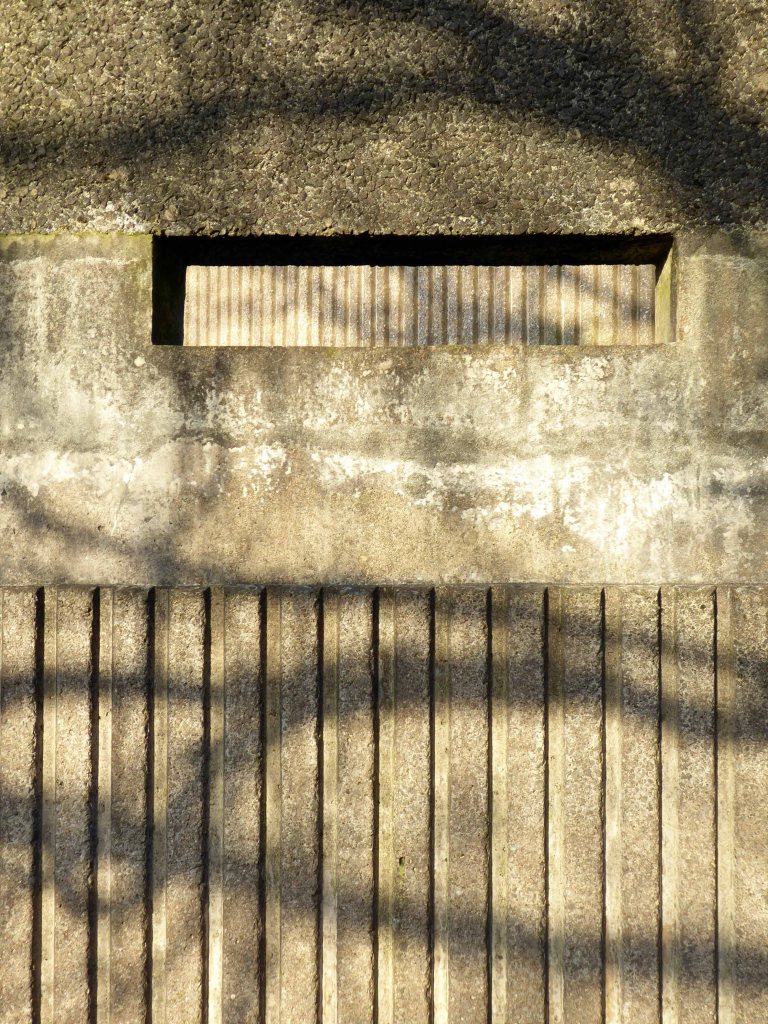
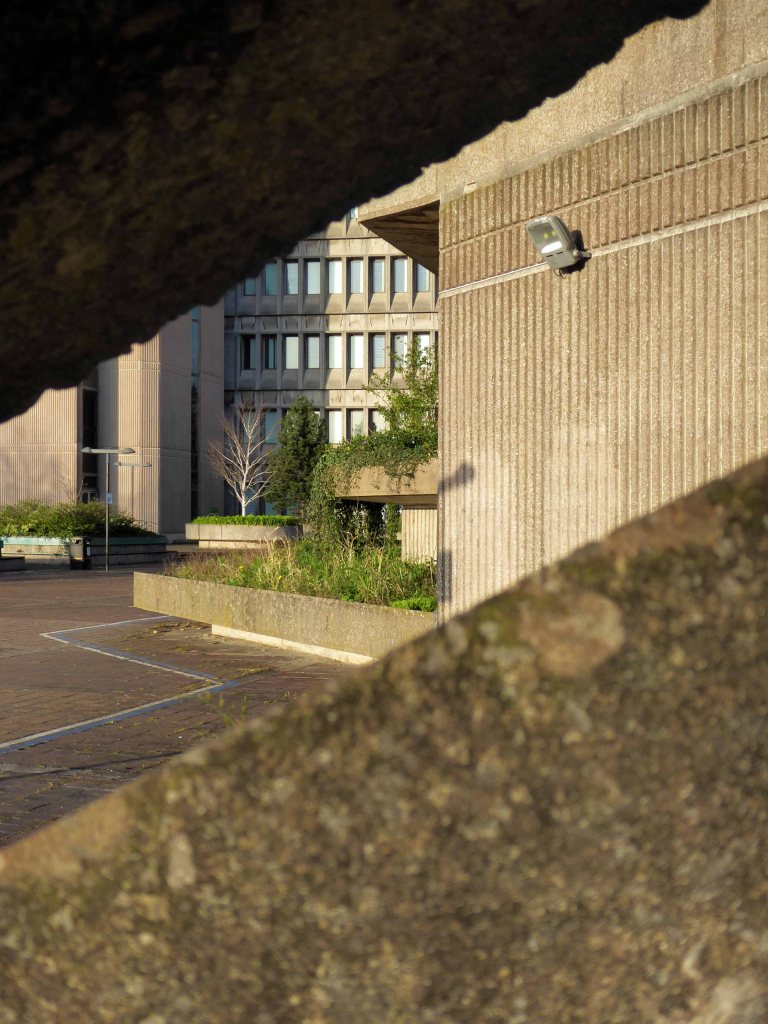
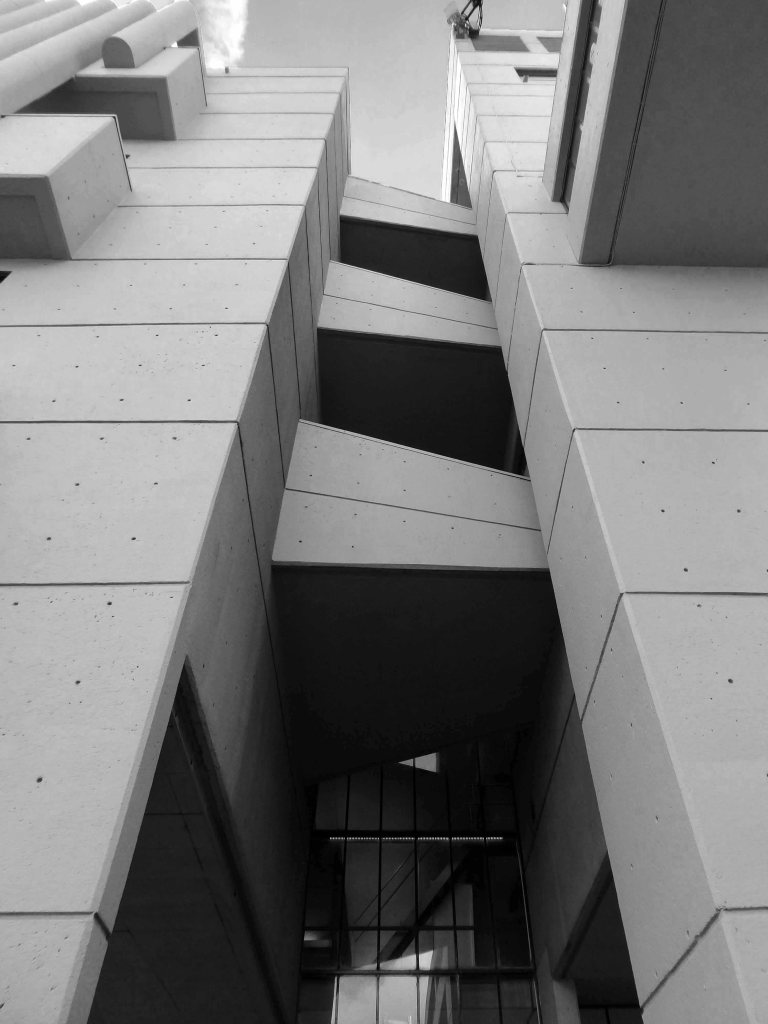
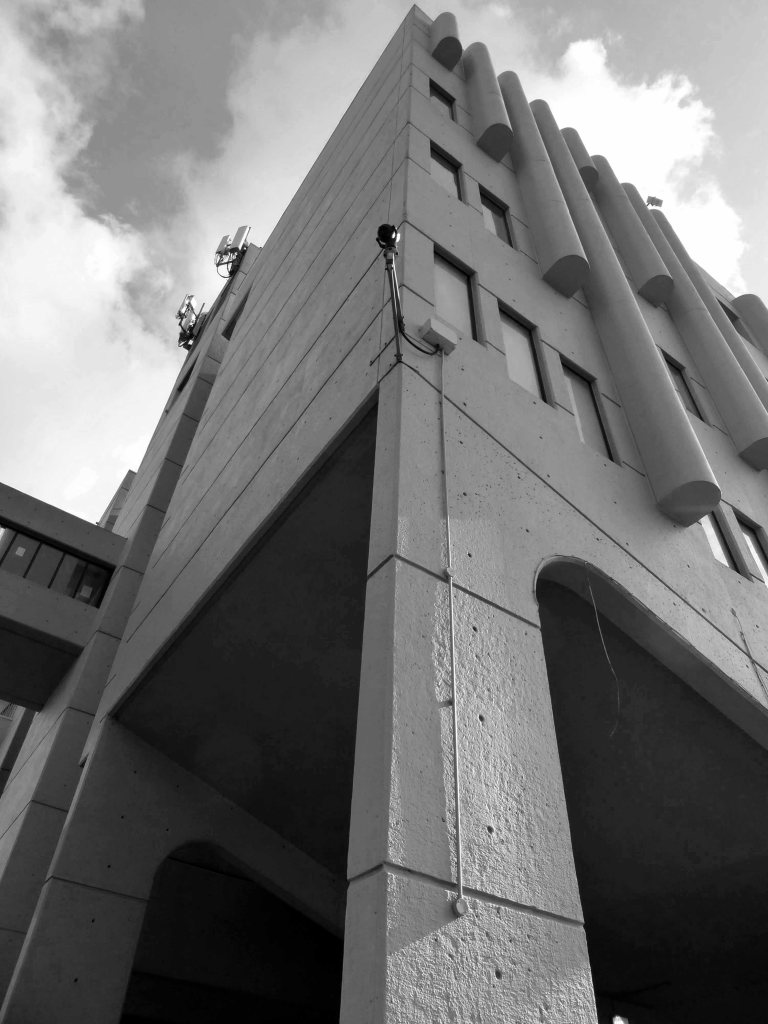
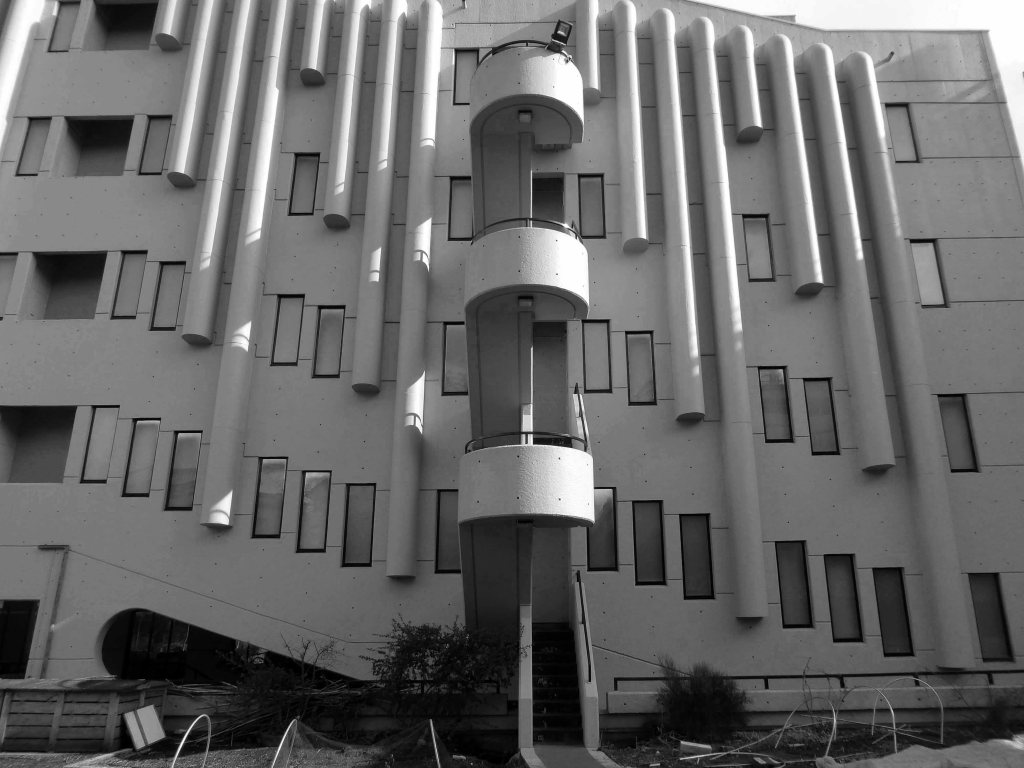
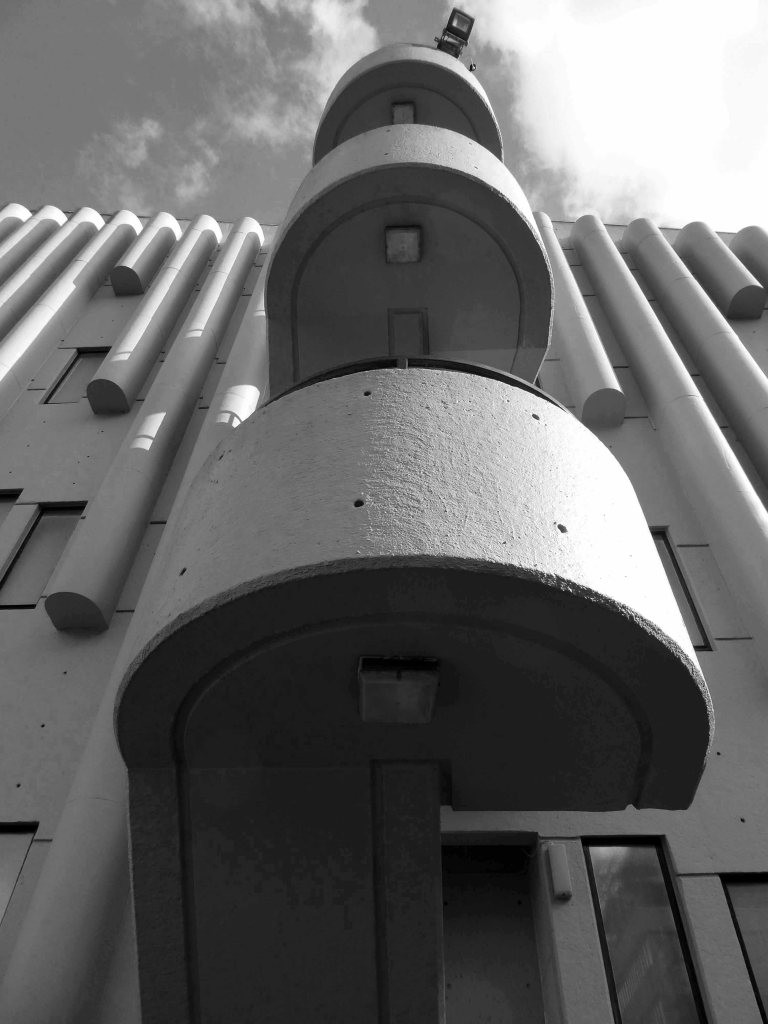
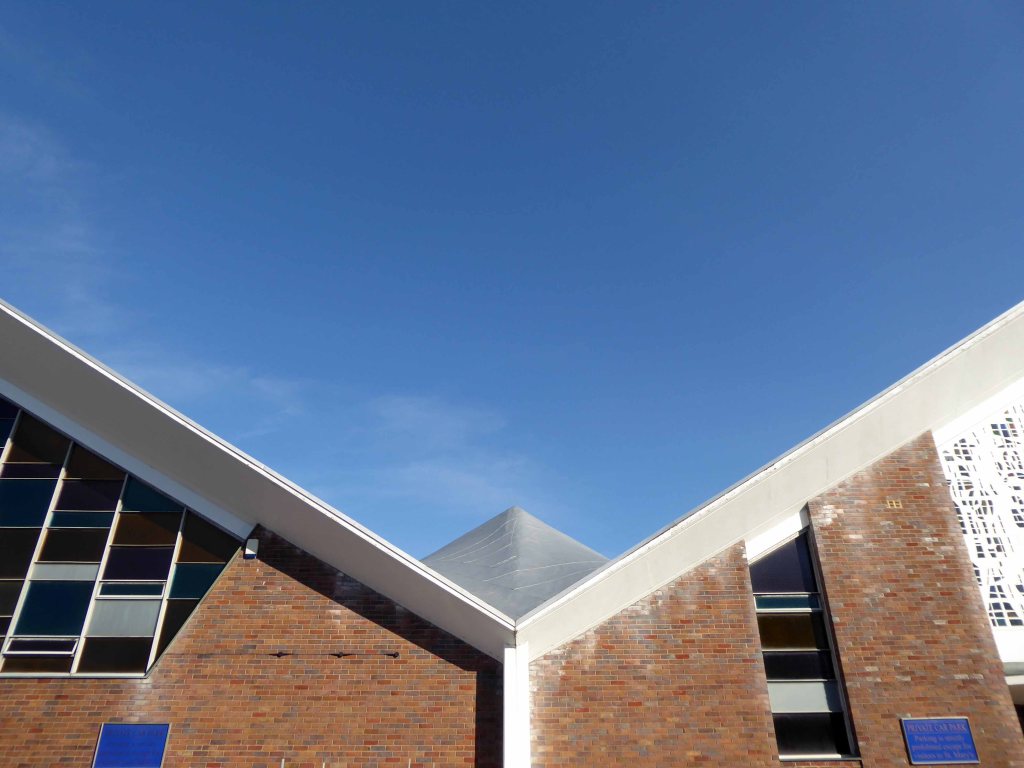
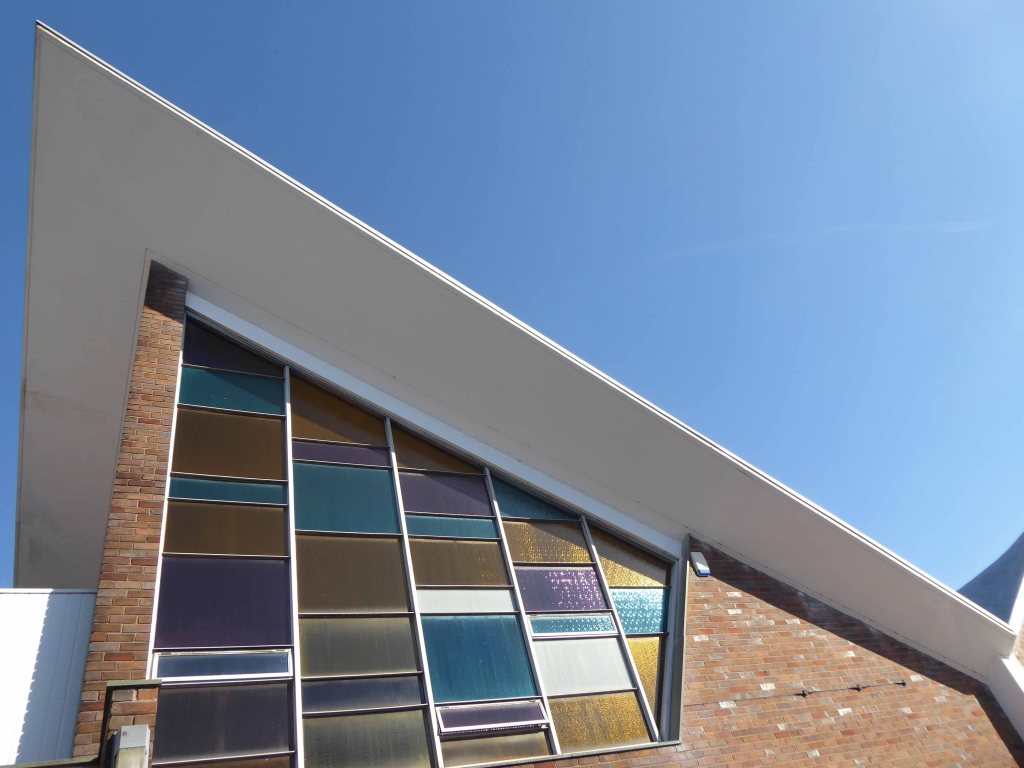
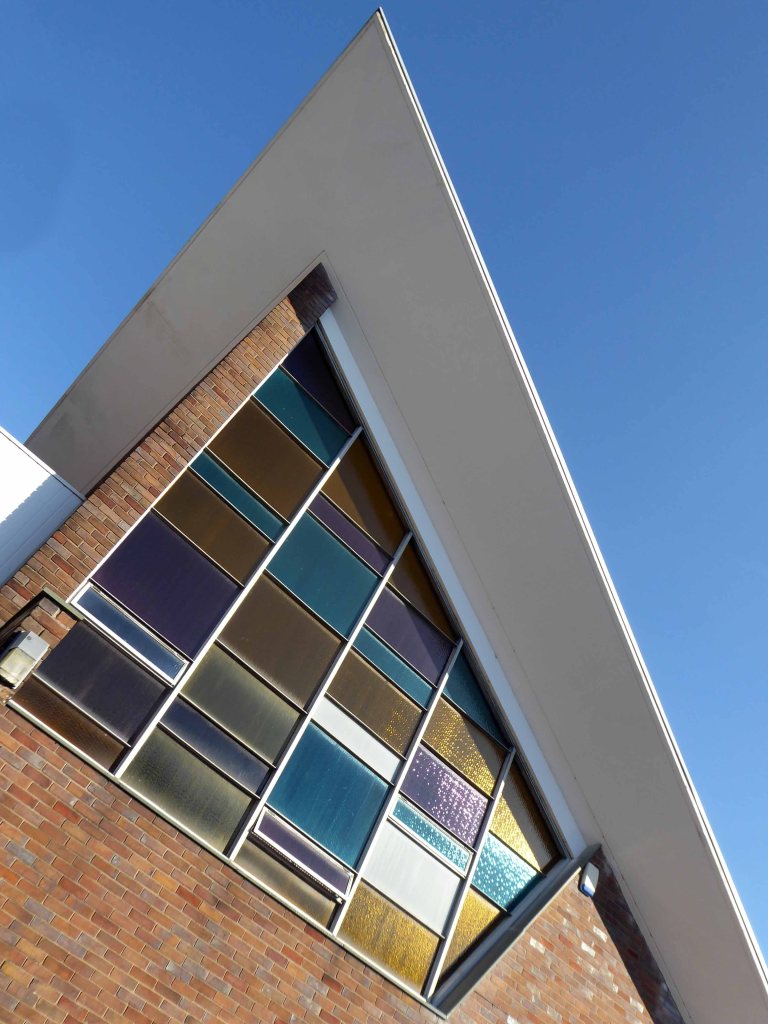
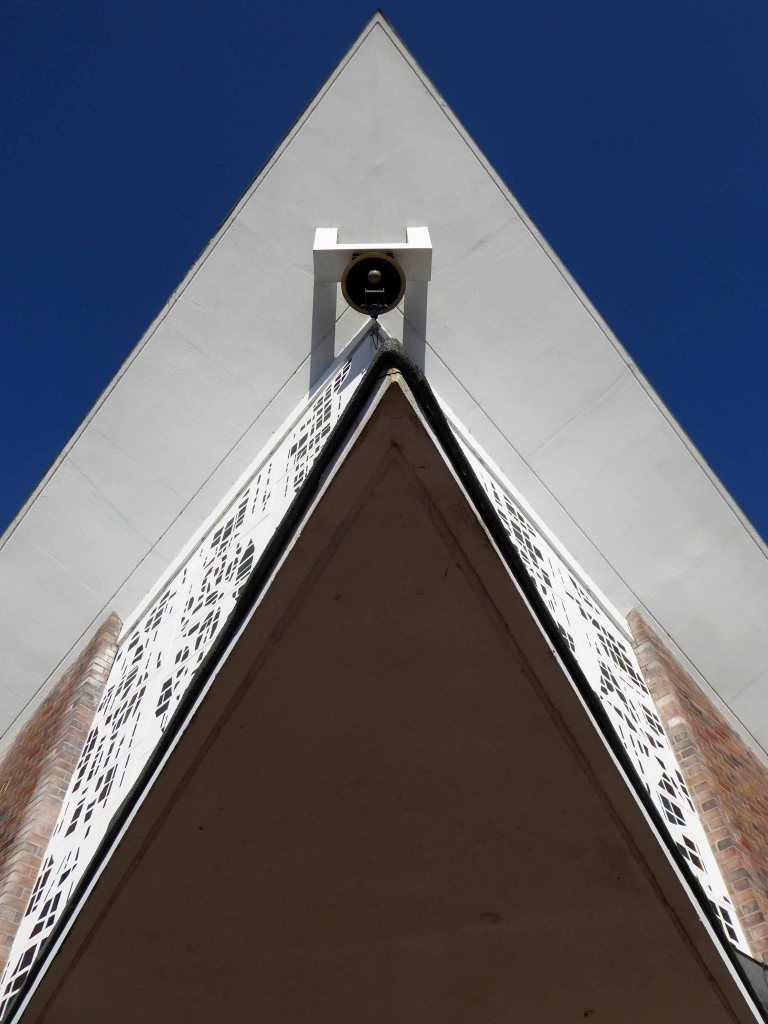
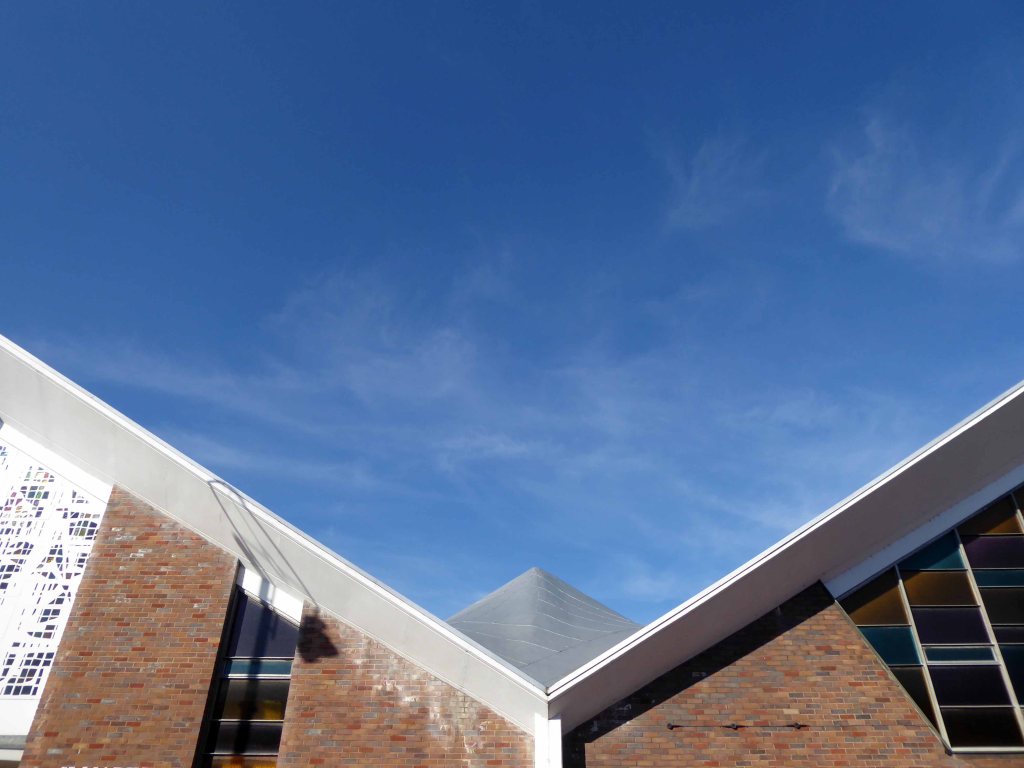
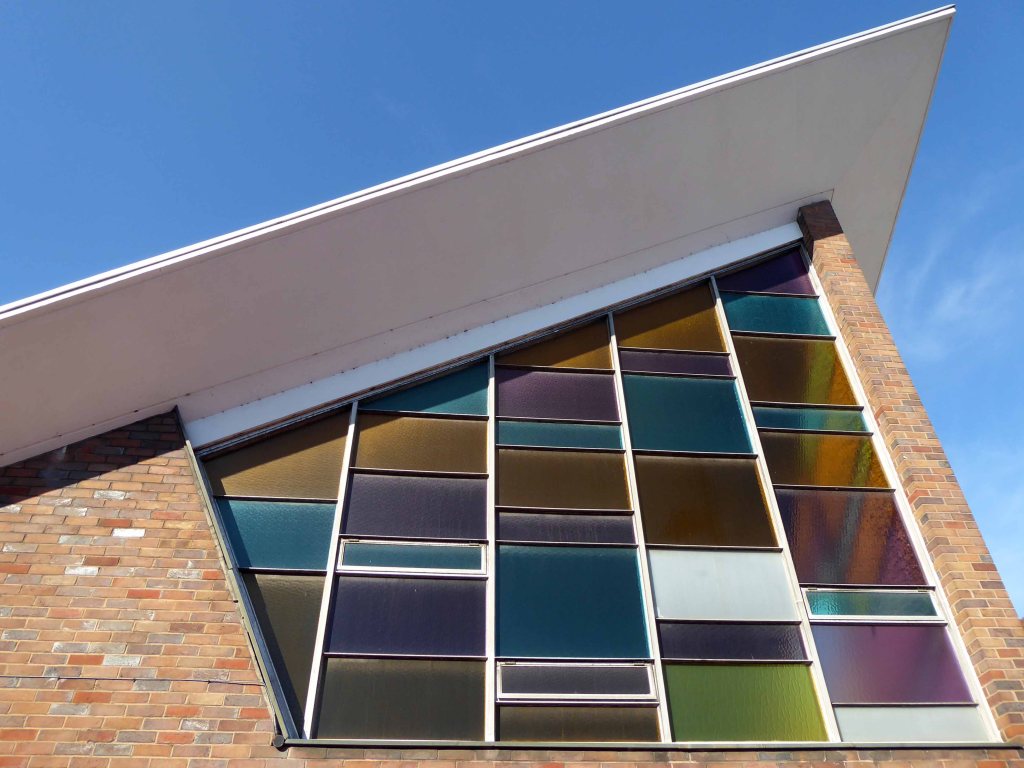
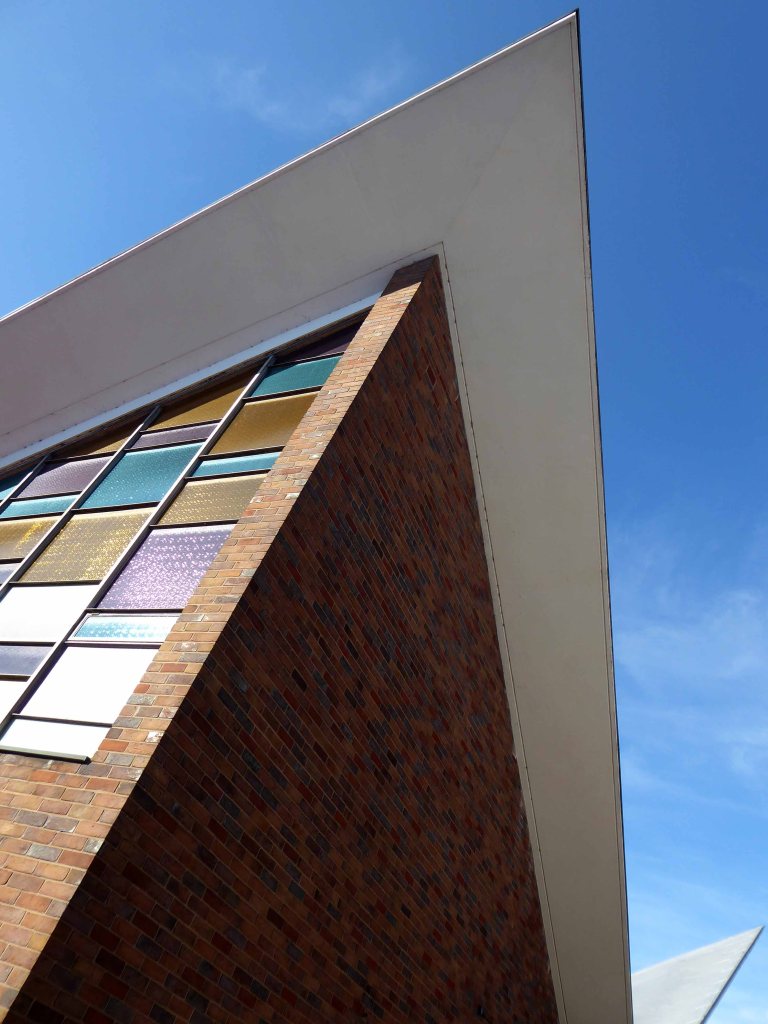
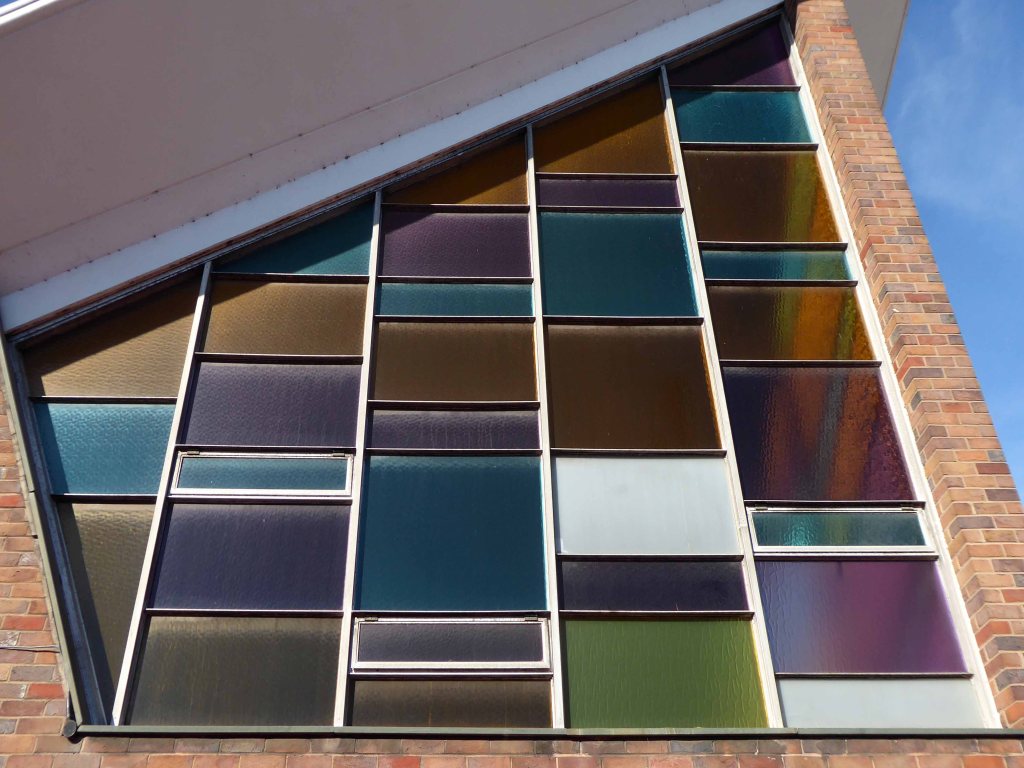
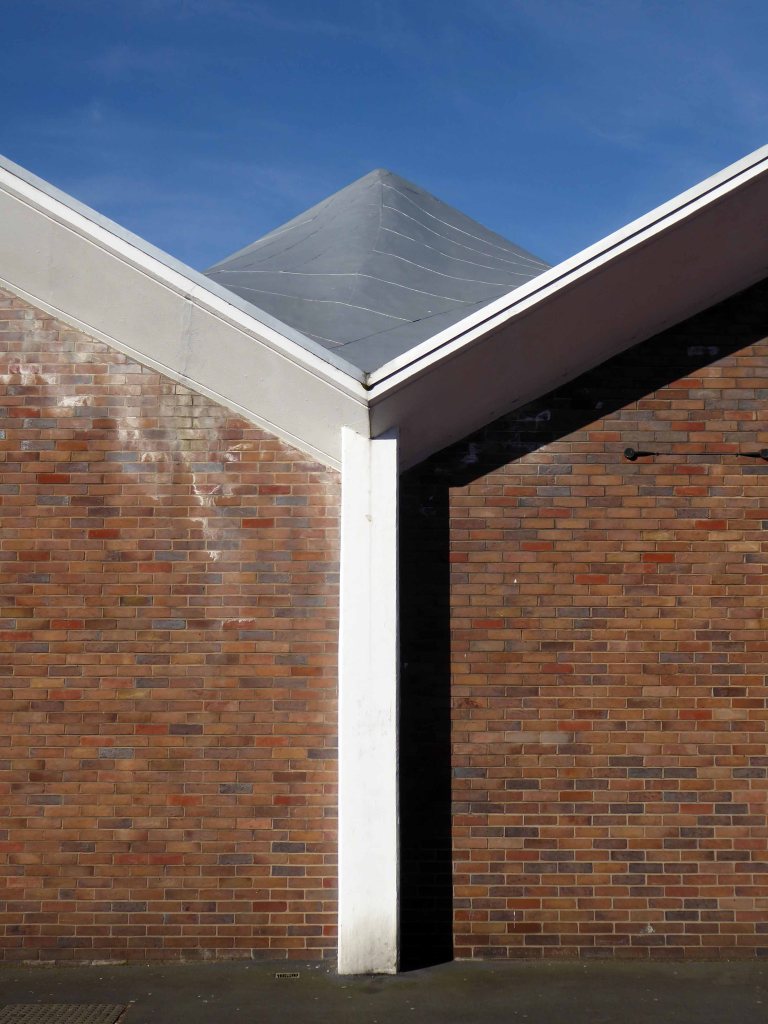
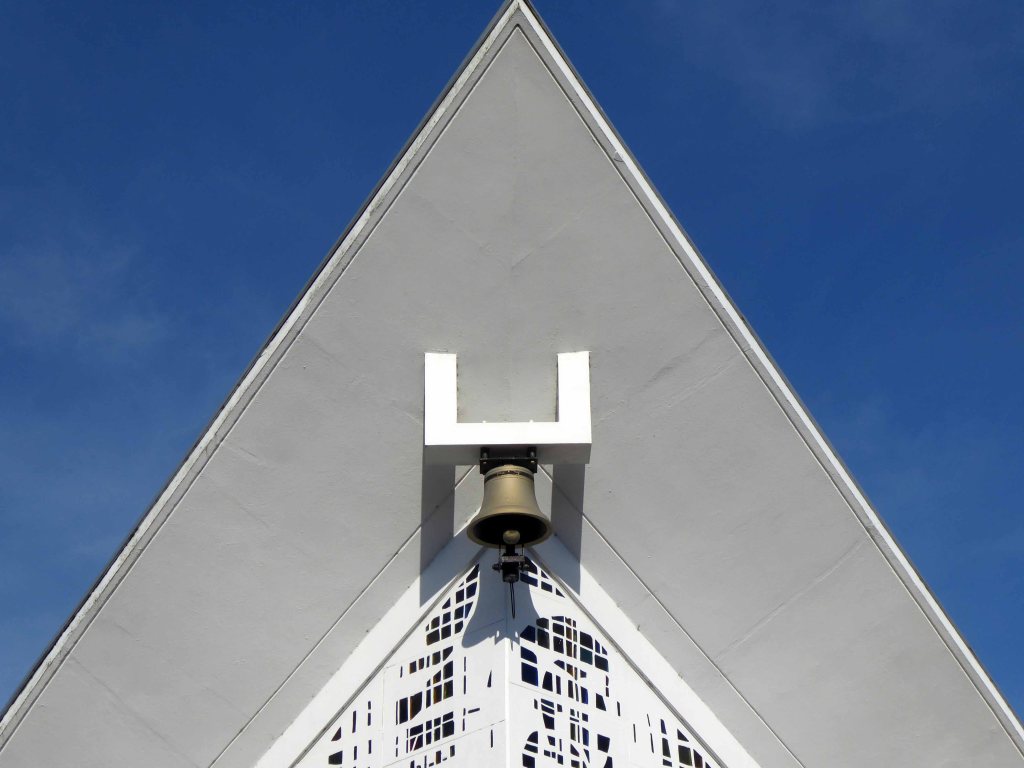
A post-war design consisting of an upper church over a lower hall, the prominent campanile making it something of a local landmark. The portal frame construction, materials and design are standard for the time. The interior has been reordered but retains some original furnishings. 

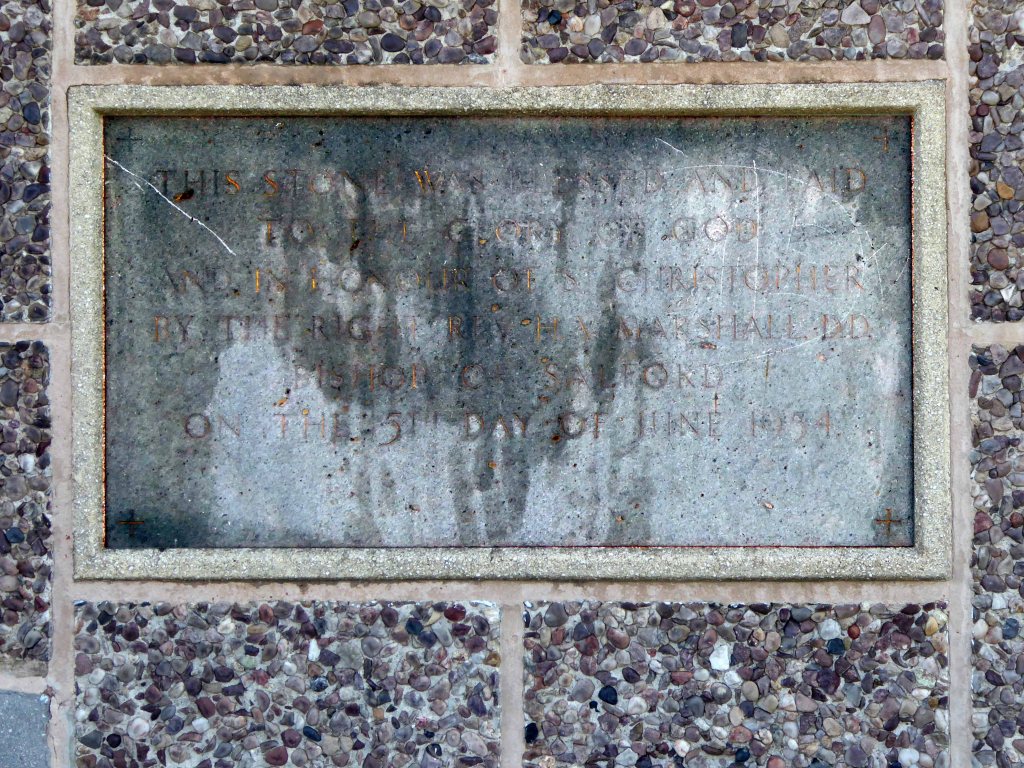
A new post-war parish was created to serve the growing residential area in Hurst Cross, previously served from St Anne’s, Ashton. Fr Kelly built the new church, whose foundation stone was blessed by Bishop Marshall on 5 June 1954.  The first Mass was held on Easter Monday, 1955. 

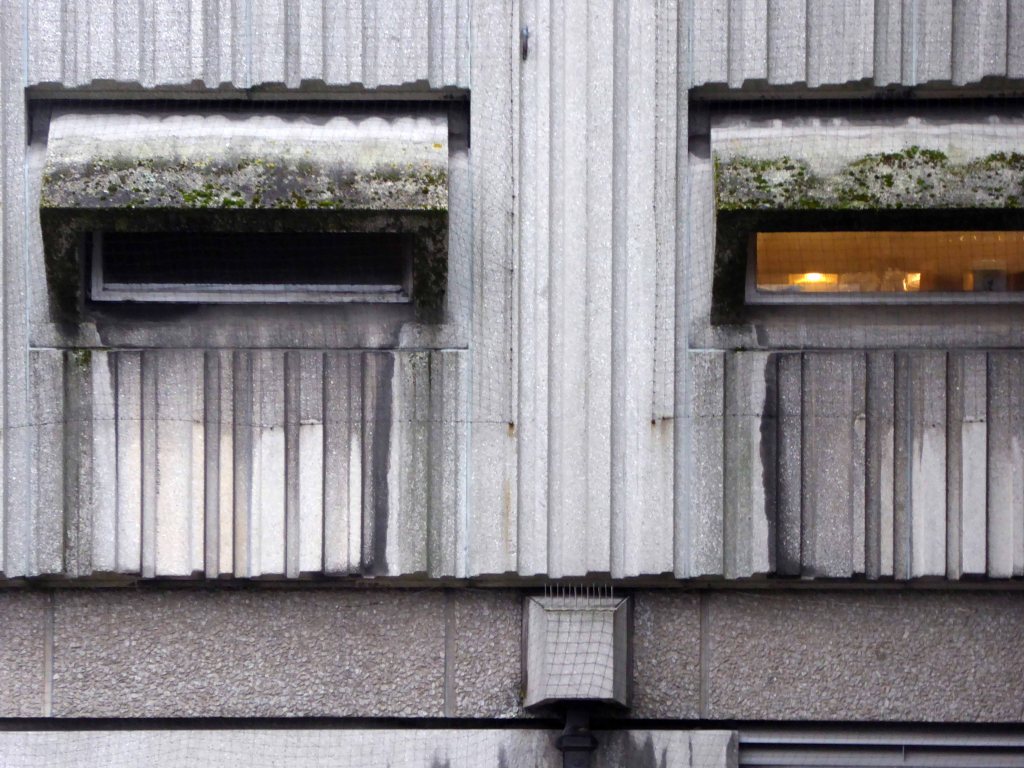
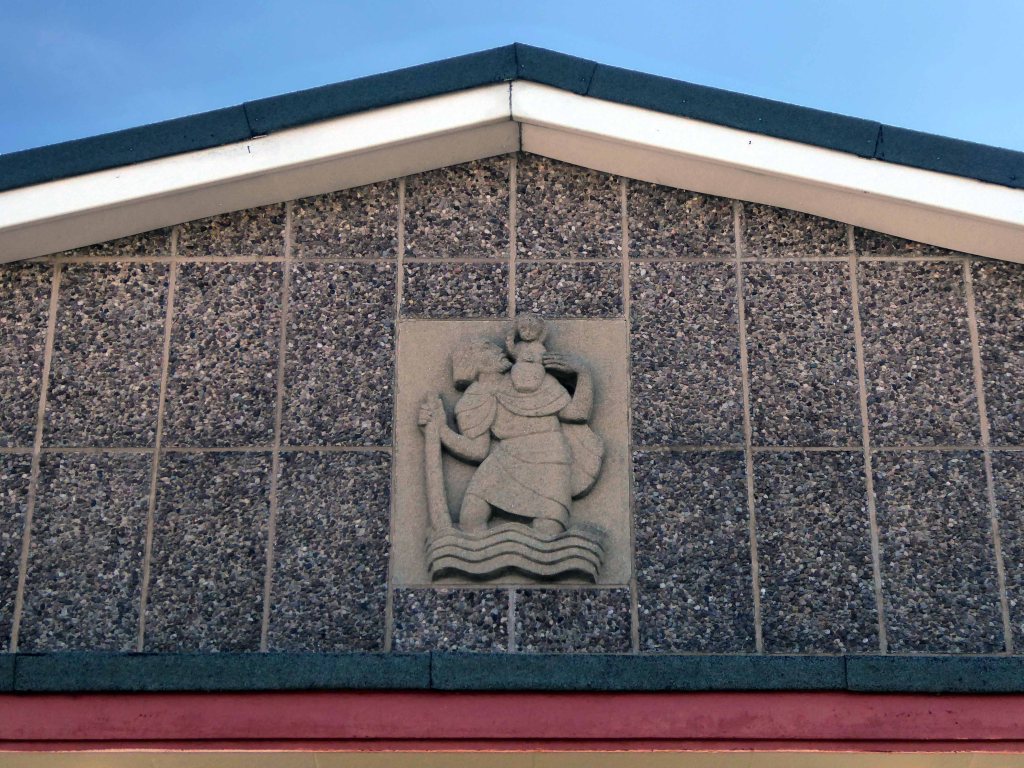
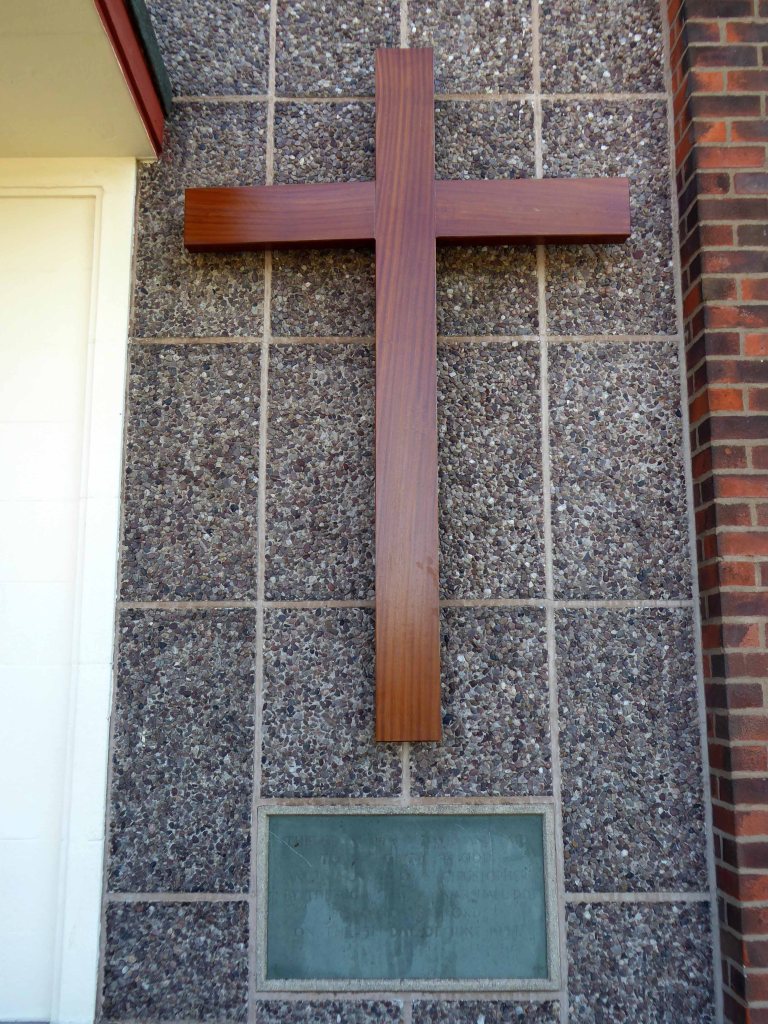
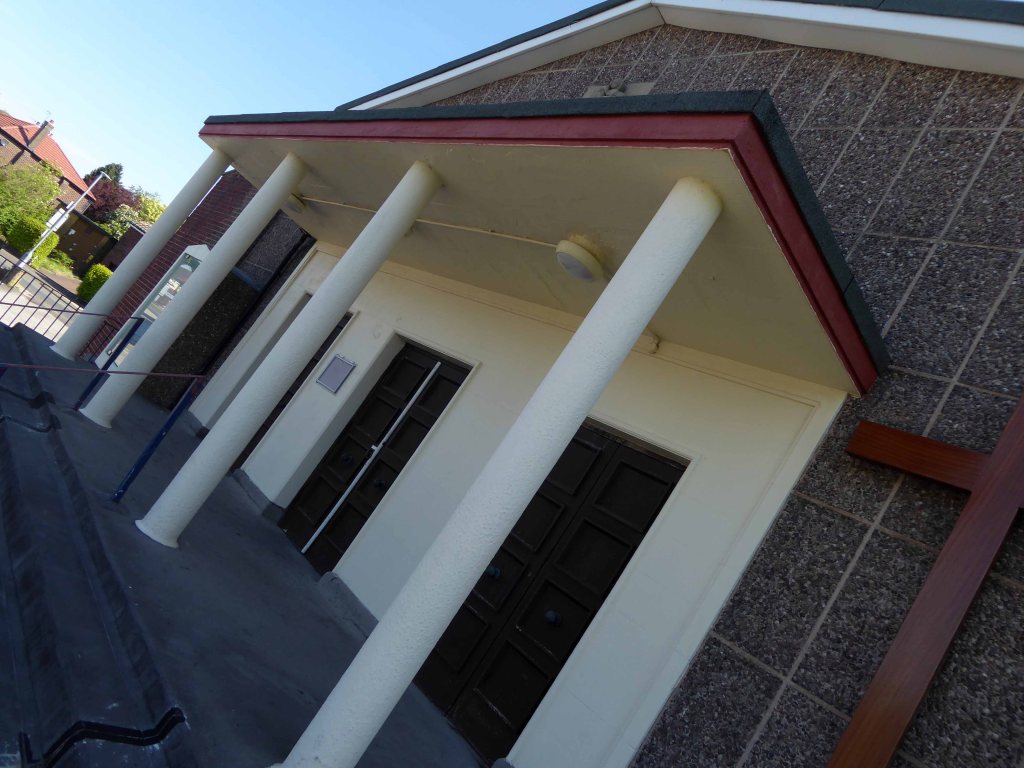
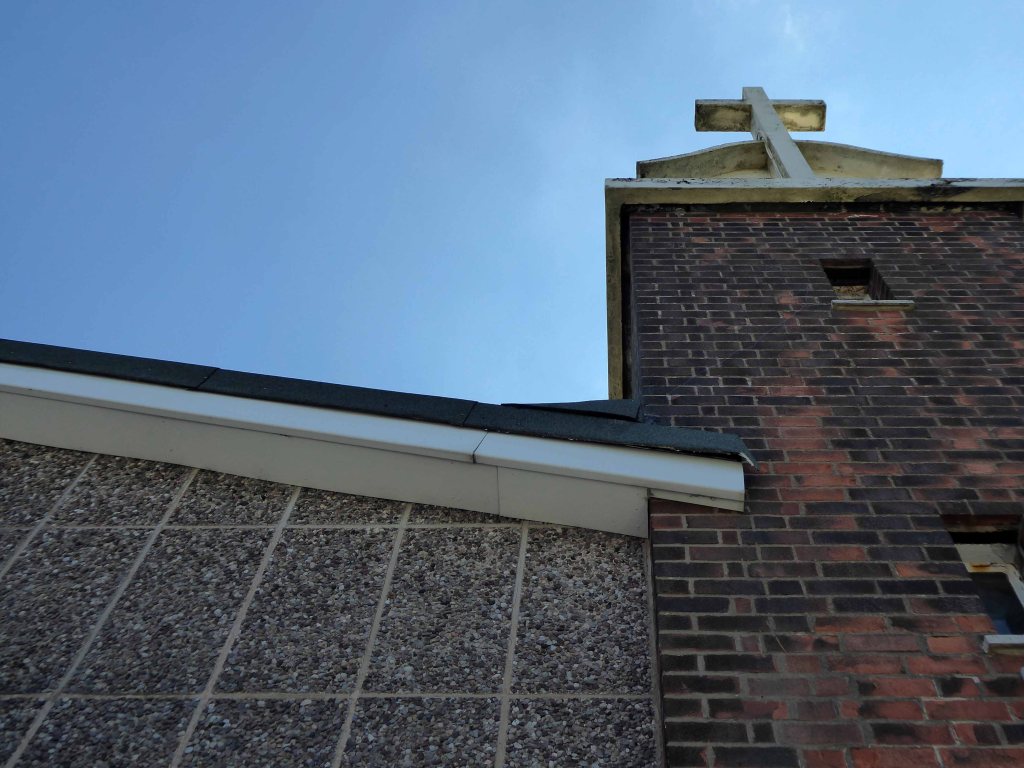
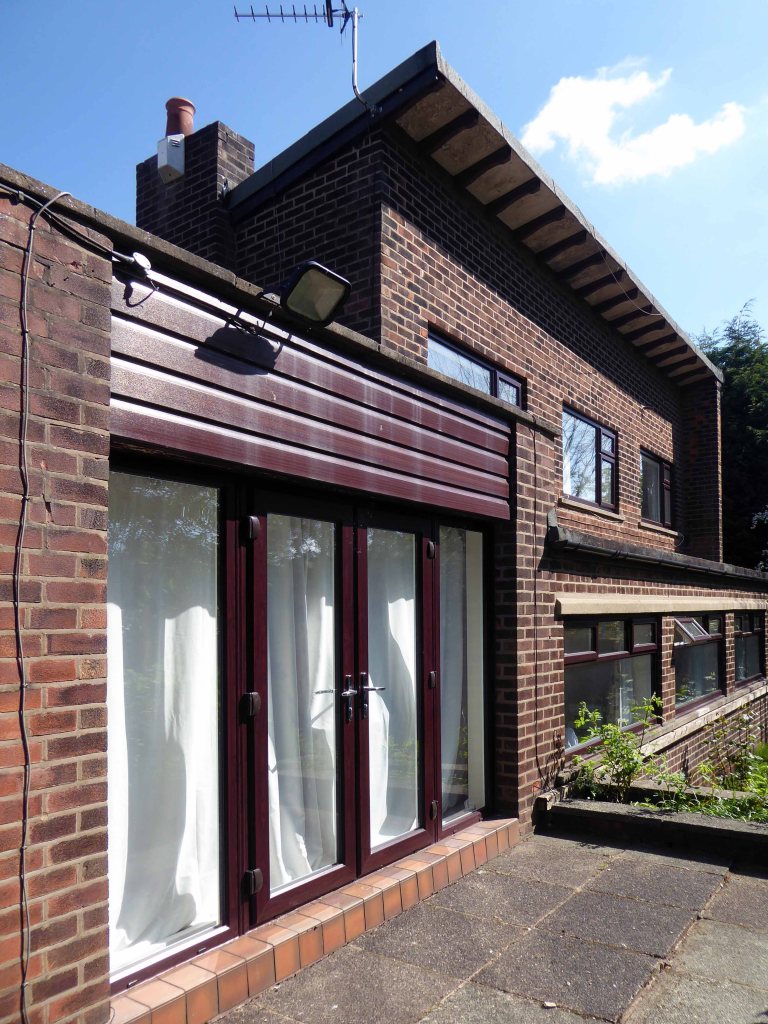
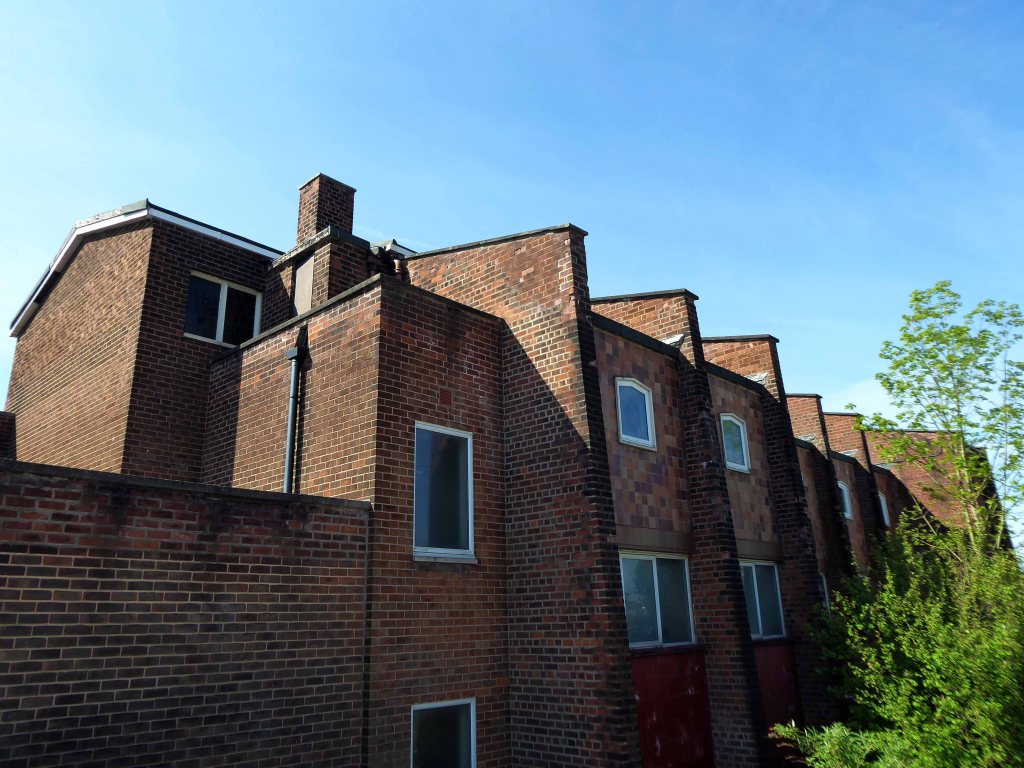
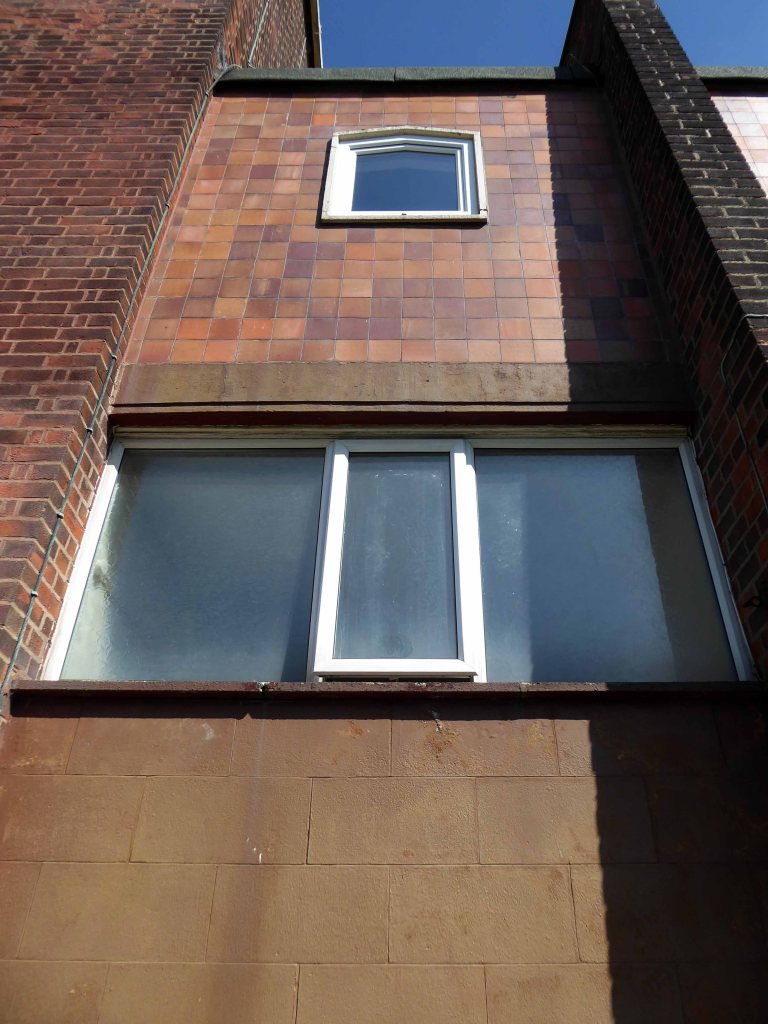
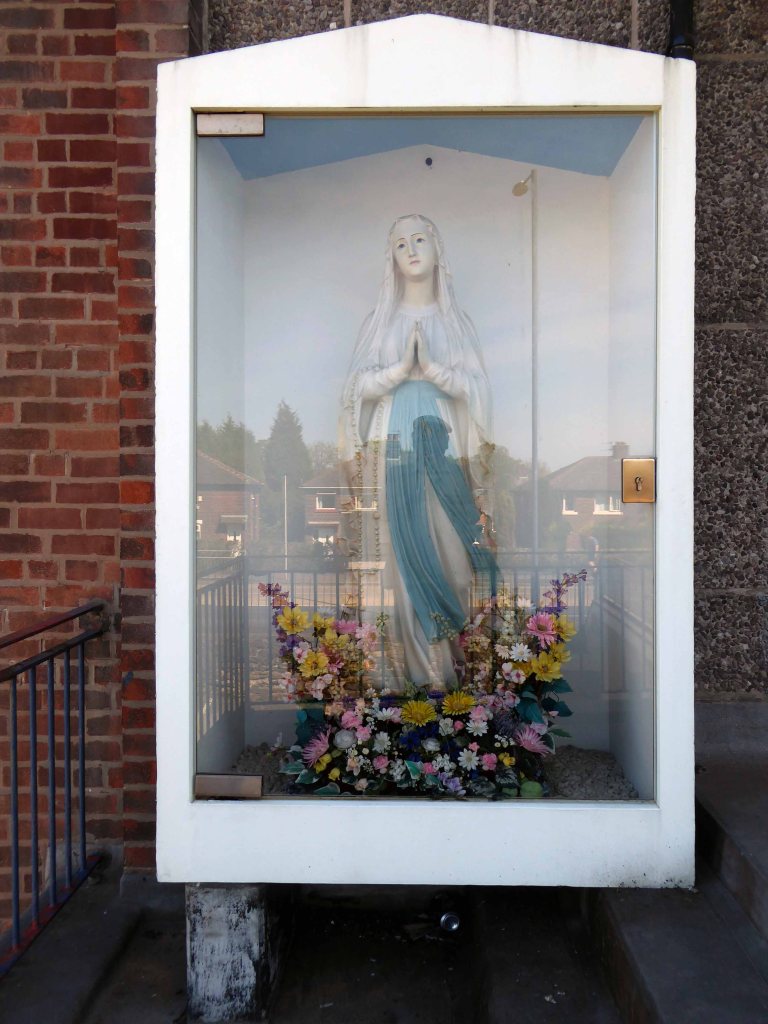
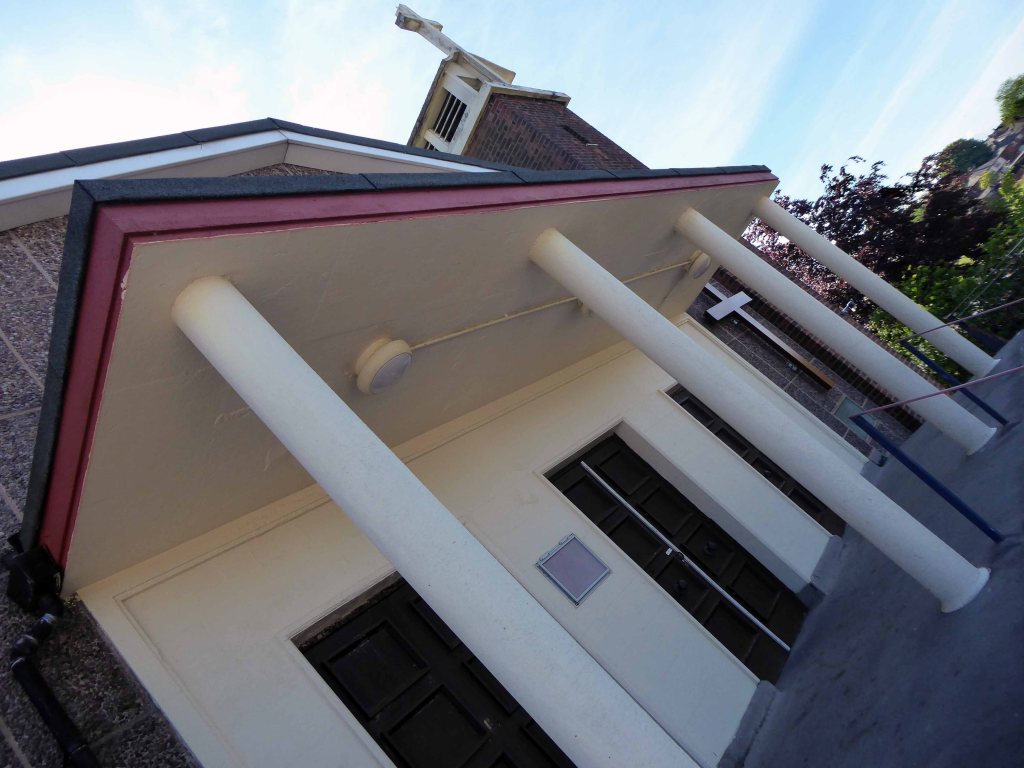
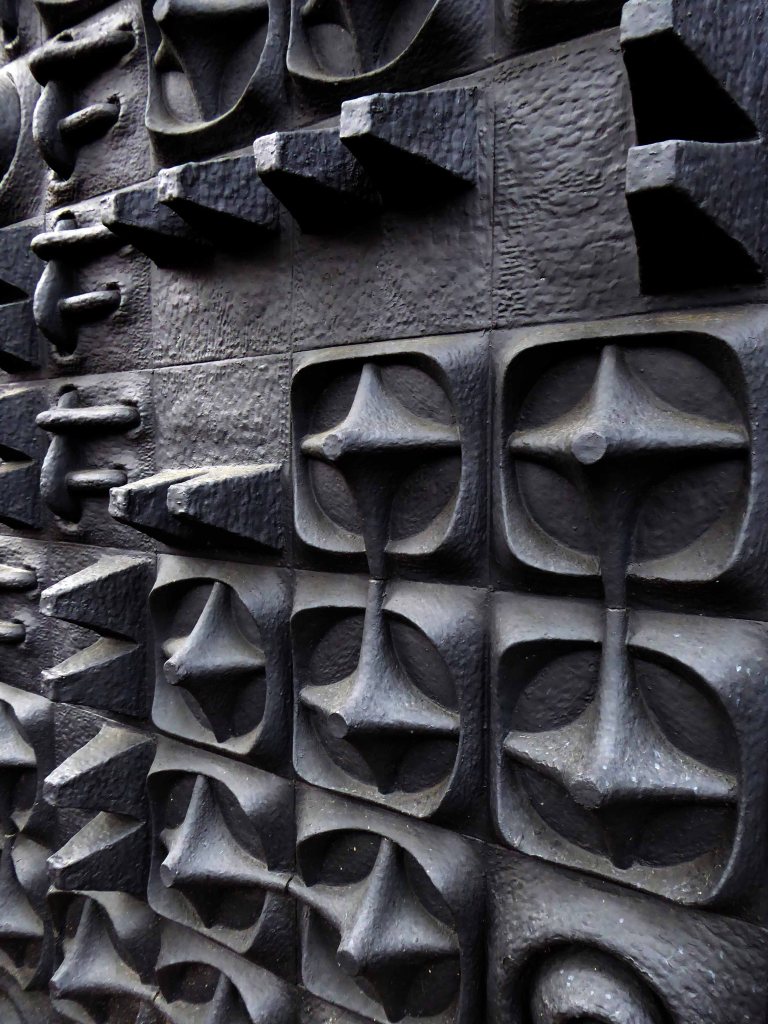
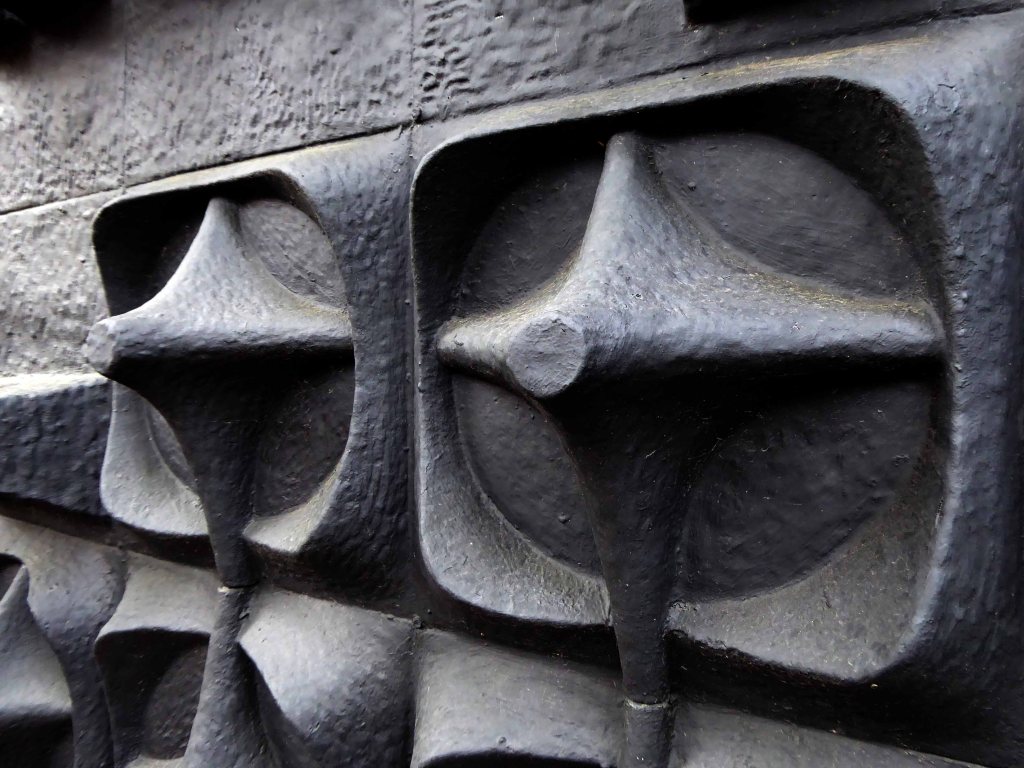
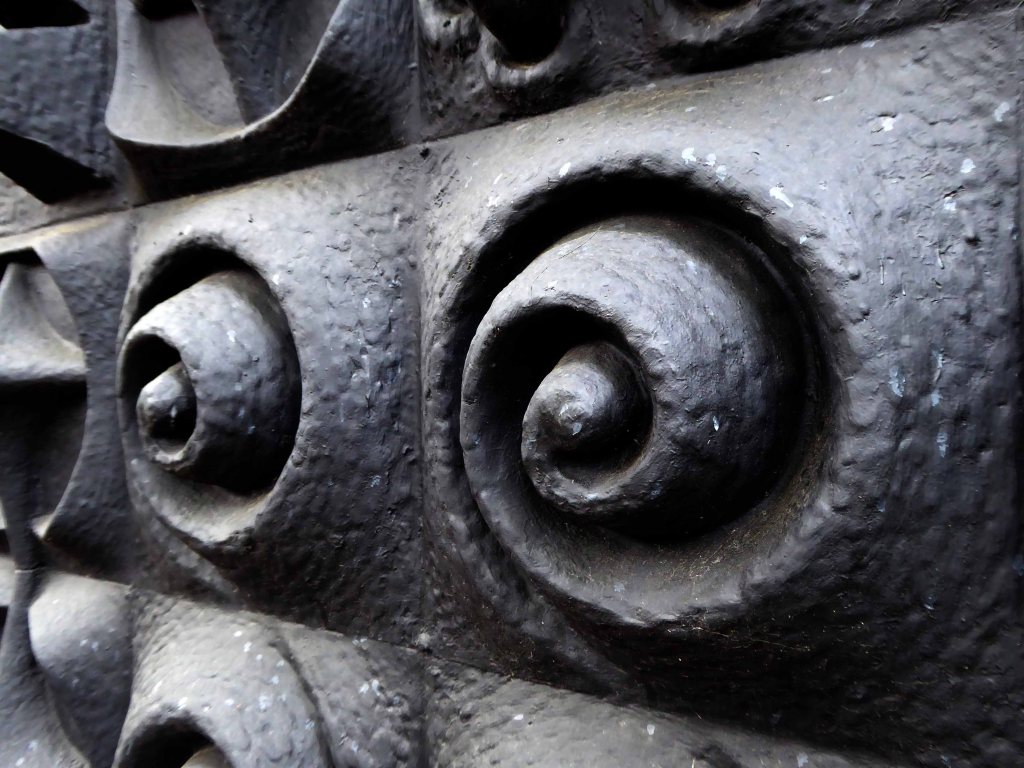
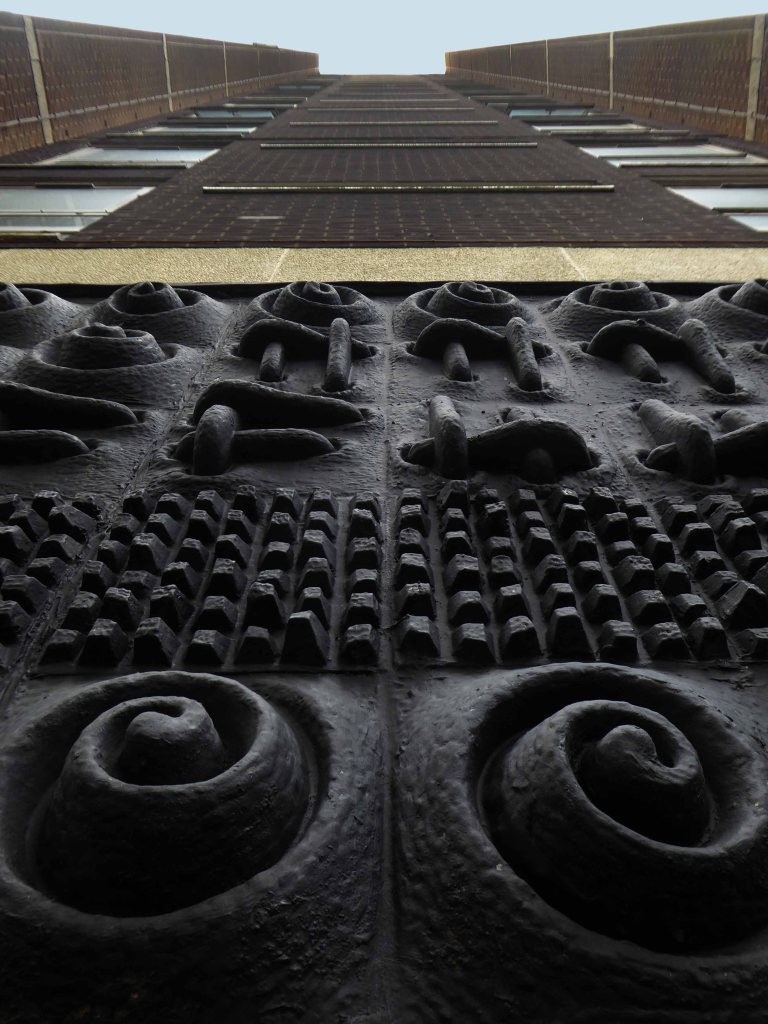
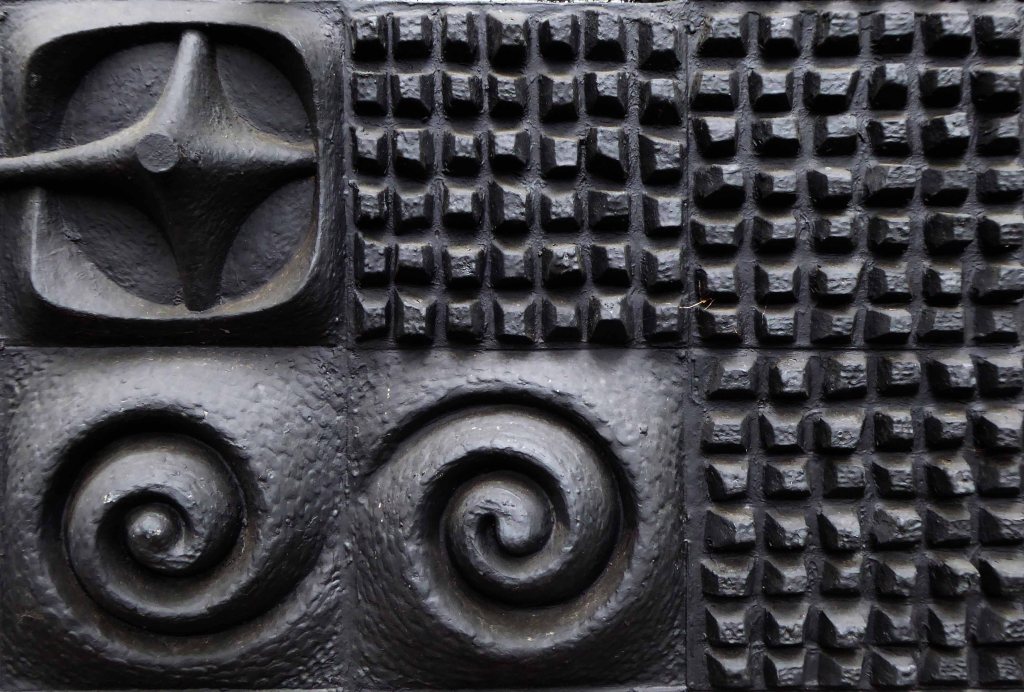
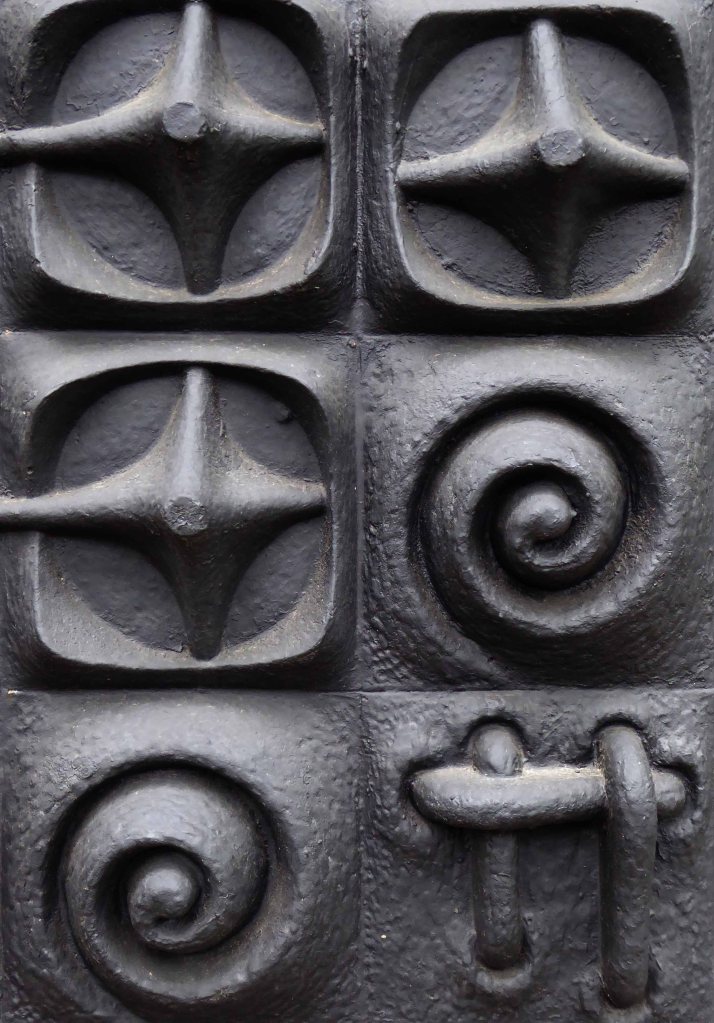
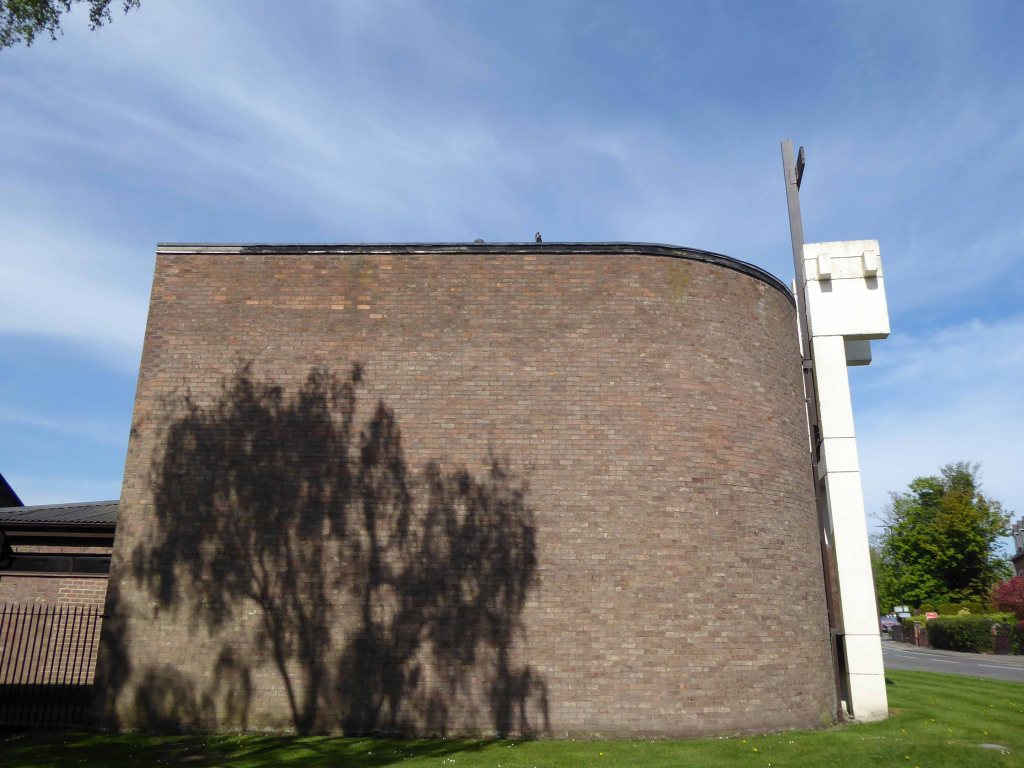
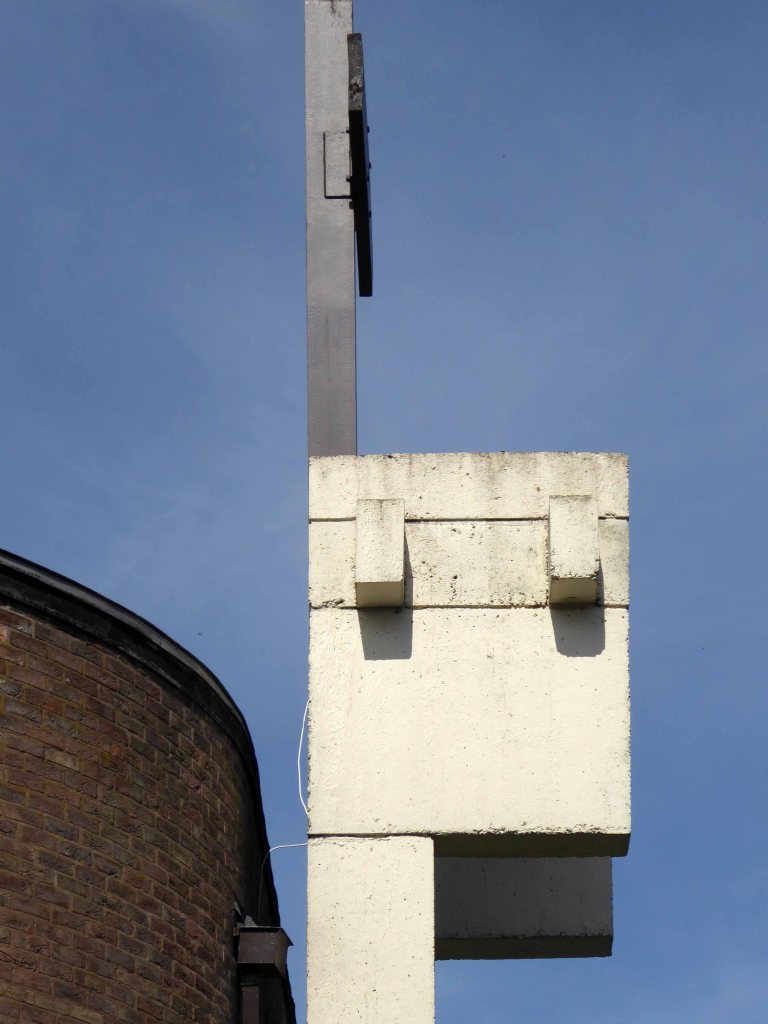
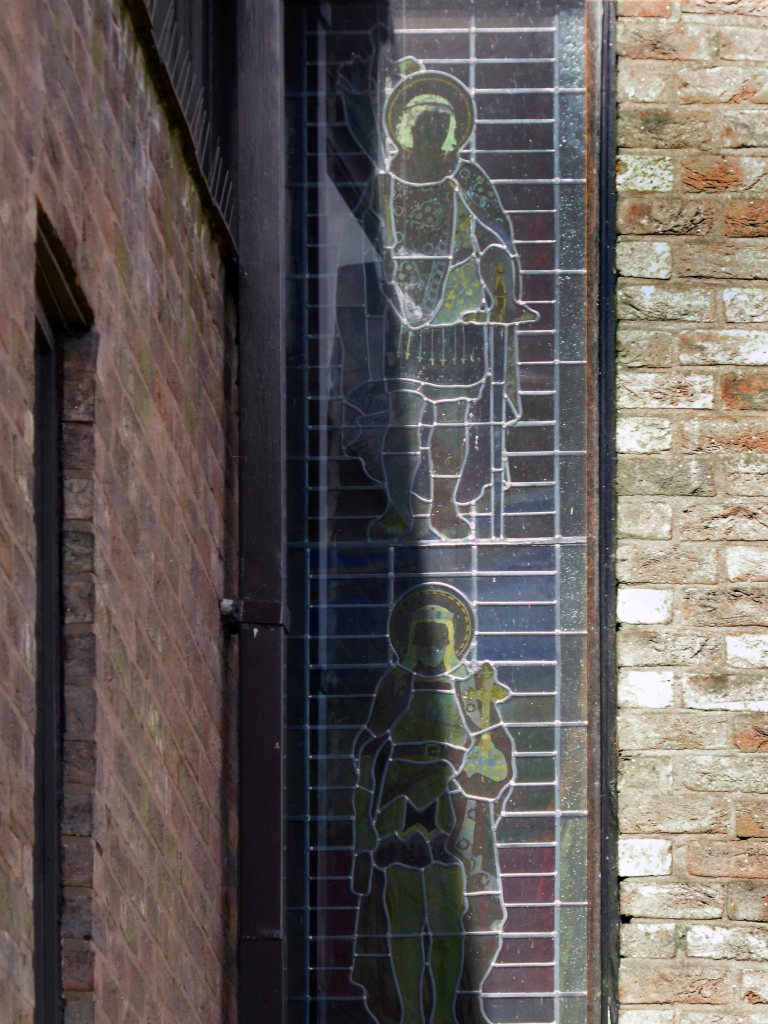
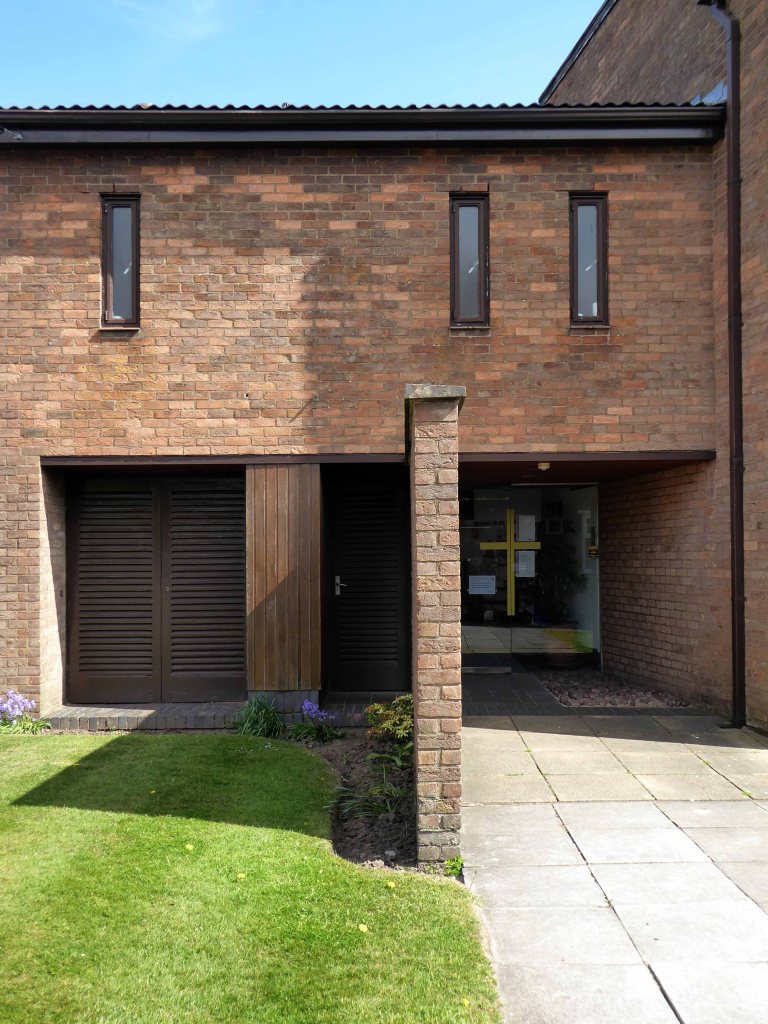
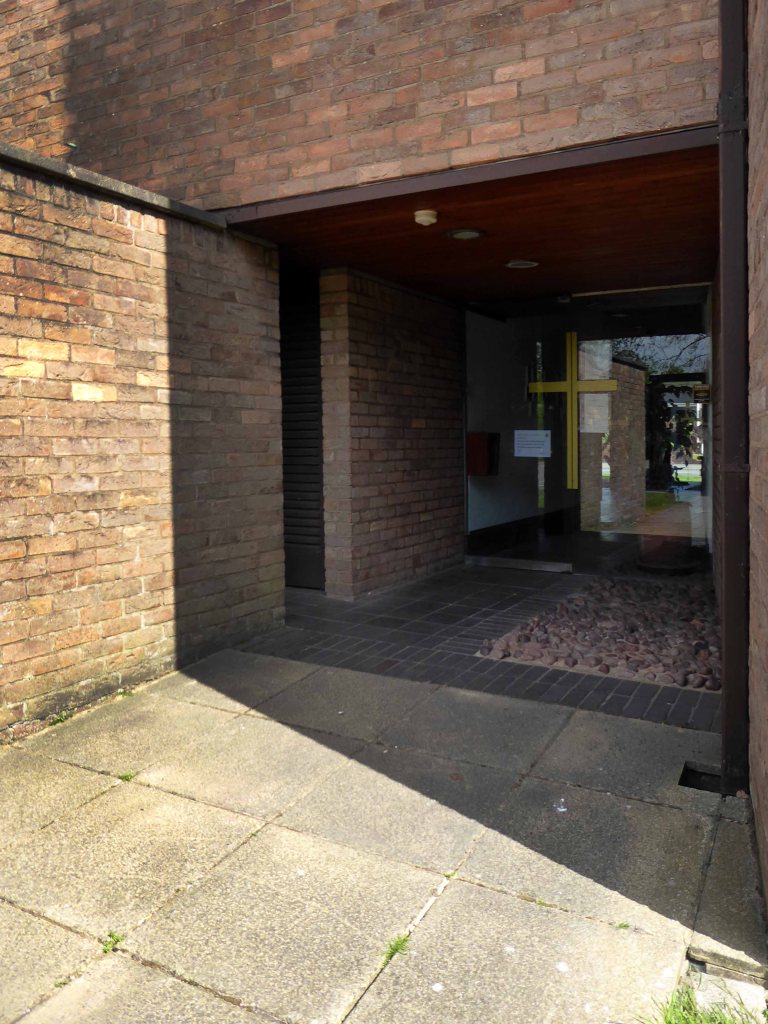
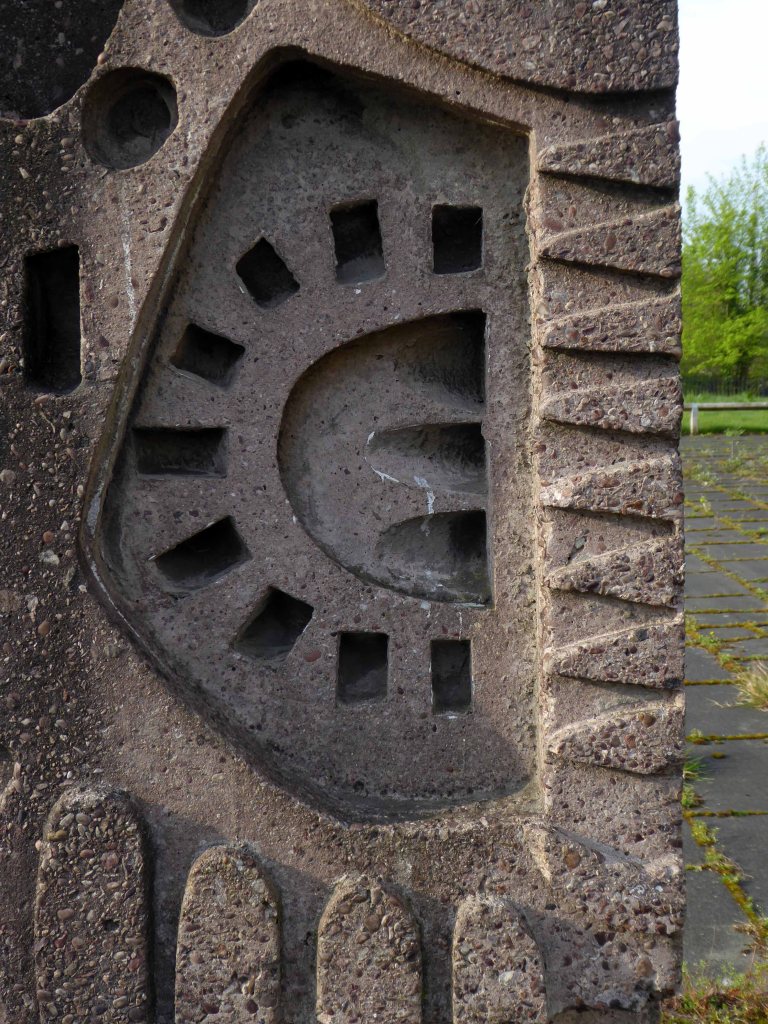
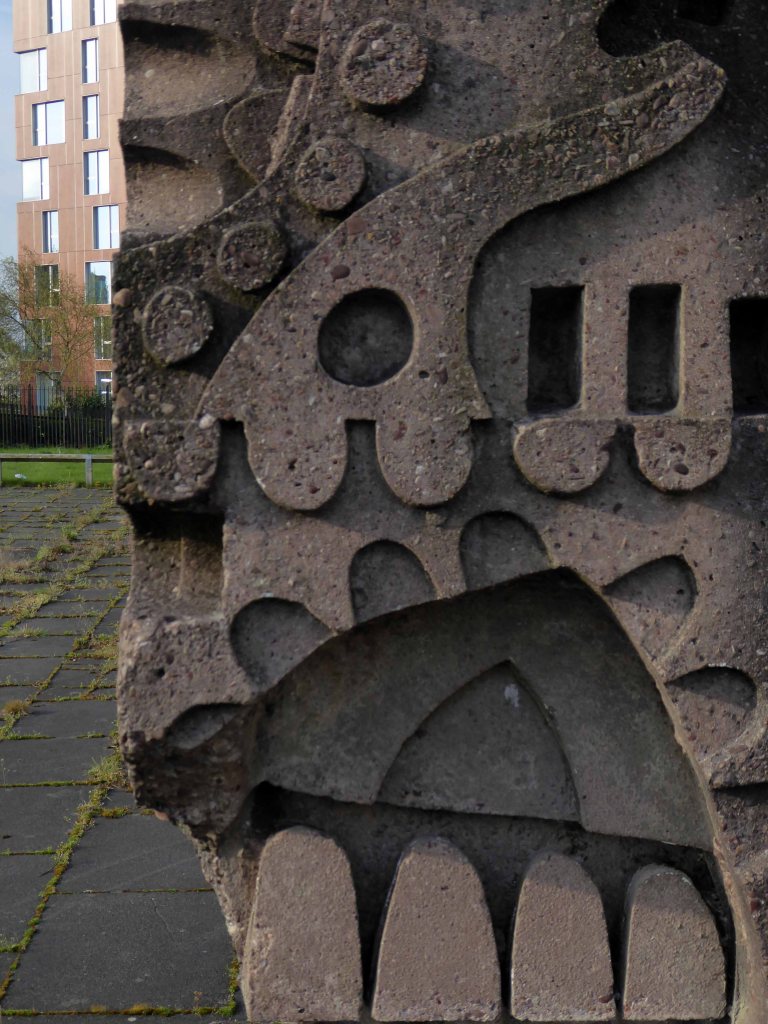
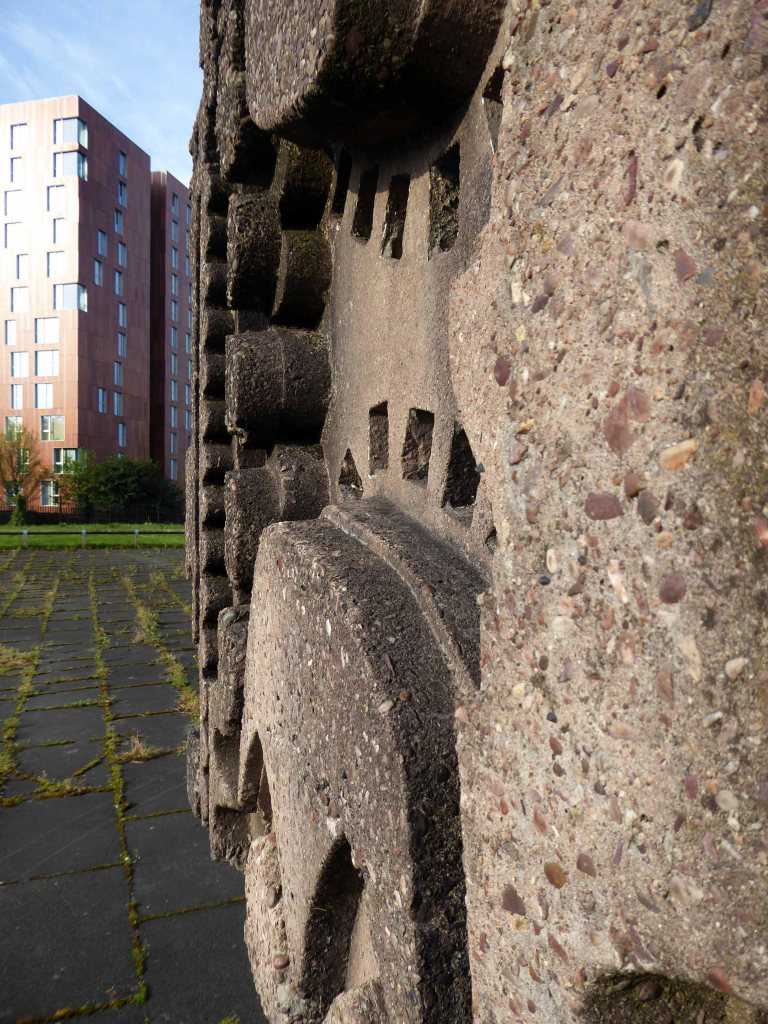
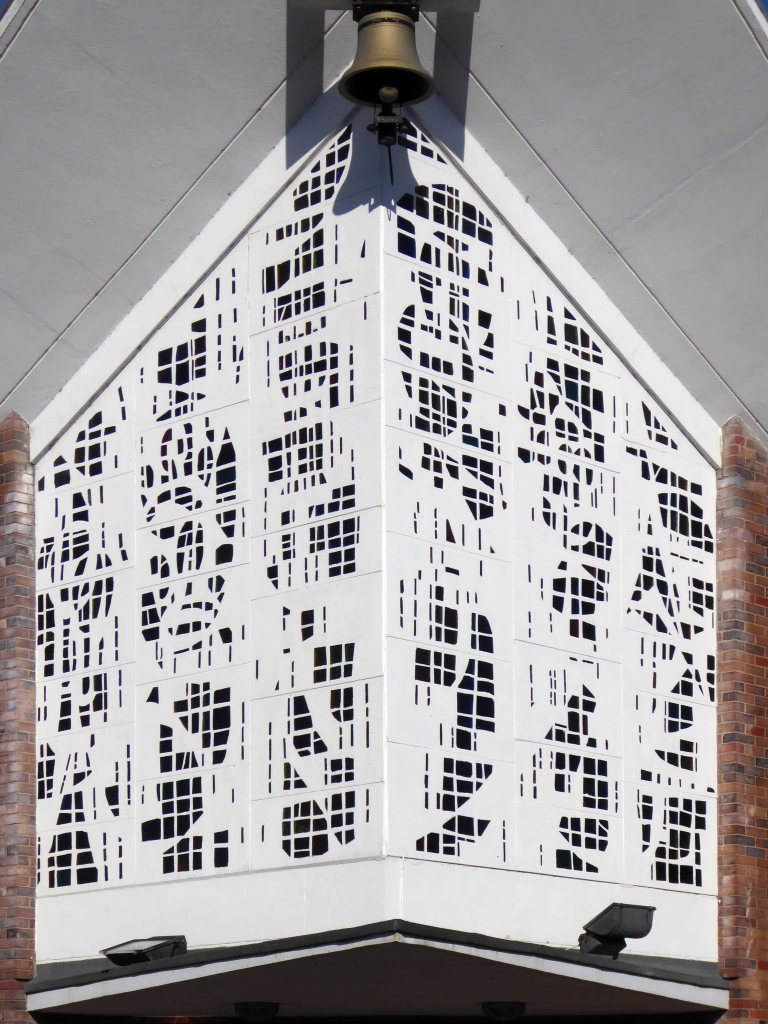
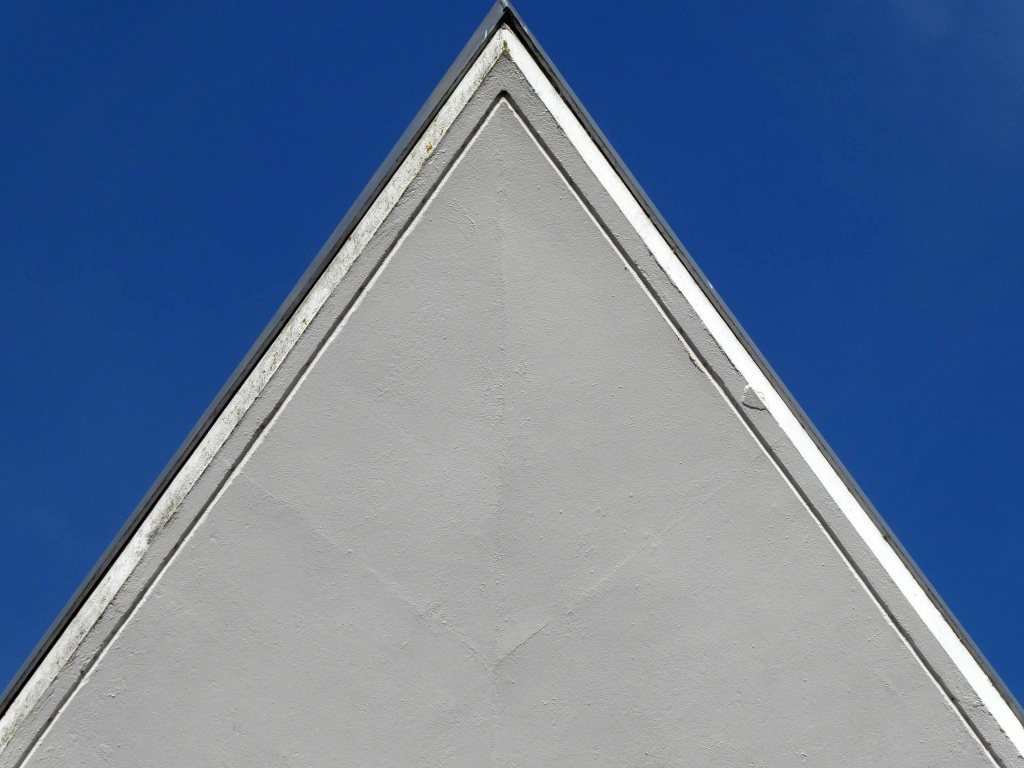
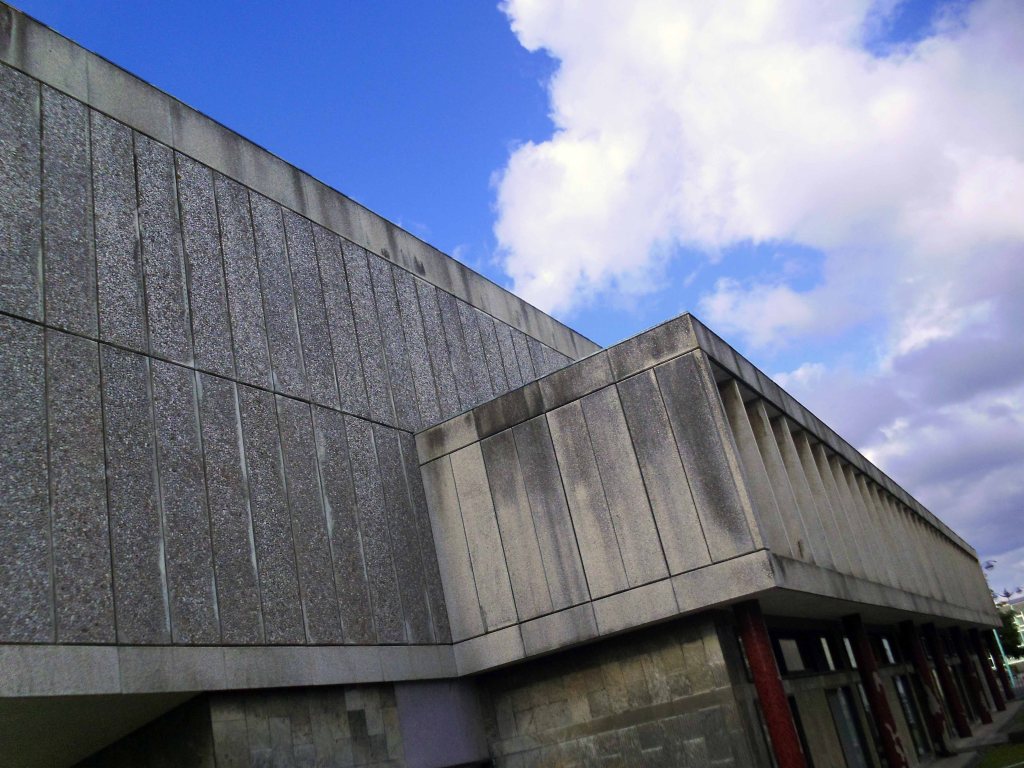
The church is conventionally orientated with the sanctuary to the east. Less conventionally, it is a two-storey building, with a ground floor parish hall and a first floor church. The church is reached from Lees Road by a reinforced concrete bridge and steps. A brick campanile marks the southwest corner. The structure of the portal-framed building is expressed externally by raking brick buttresses to side elevations.  The west gable end is faced in aggregate panels with a concrete relief depicting St Christopher over a plain three-bay flat-roofed portico.  The aisles are faced in ceramic tiled panels to the upper level with render to the parish hall level. The nave is lit by three-light clerestory windows with smaller windows to the aisles. The shallow-pitched roof is laid with mineral felt.  A two-storey block containing a large sacristy connects to the contemporary presbytery.

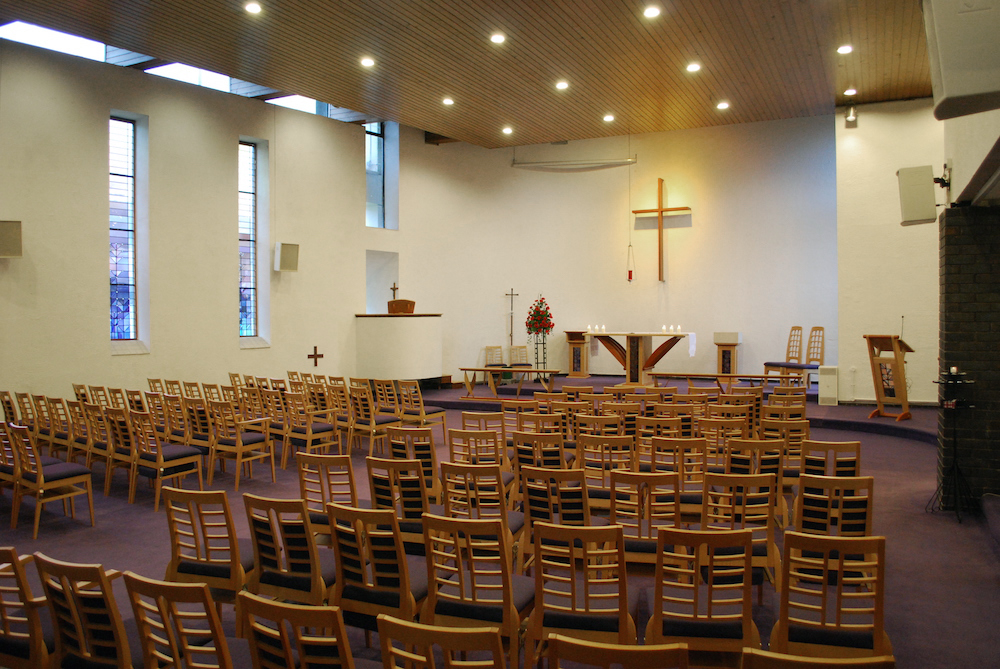
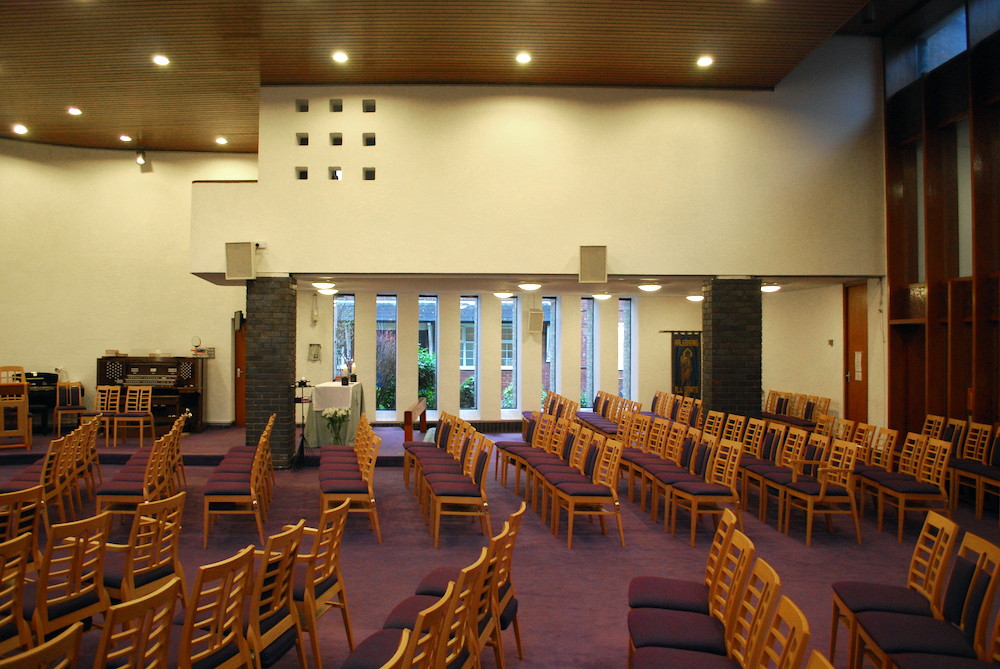
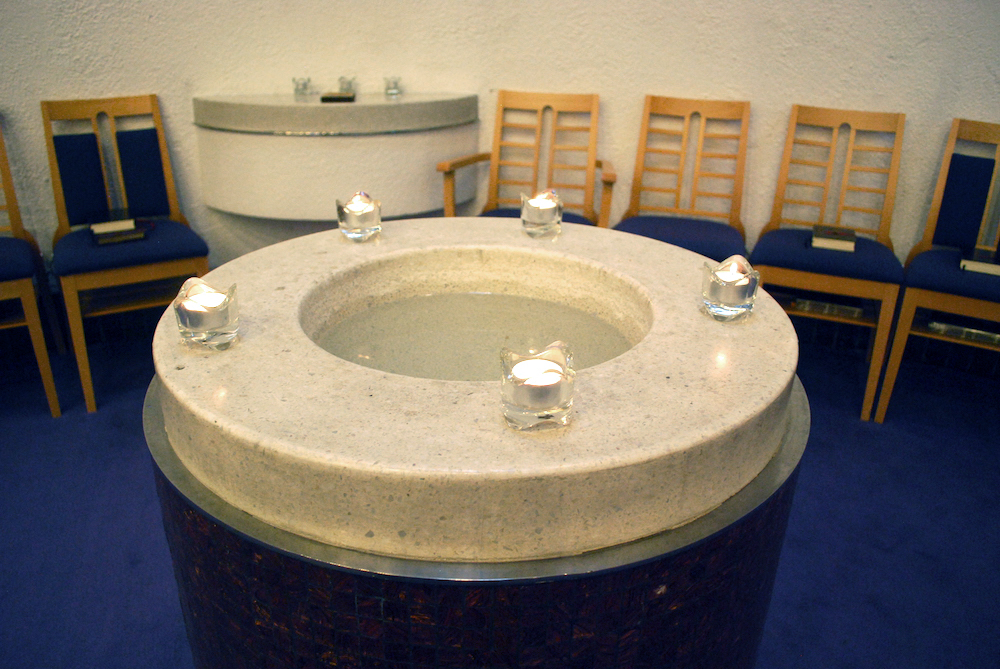
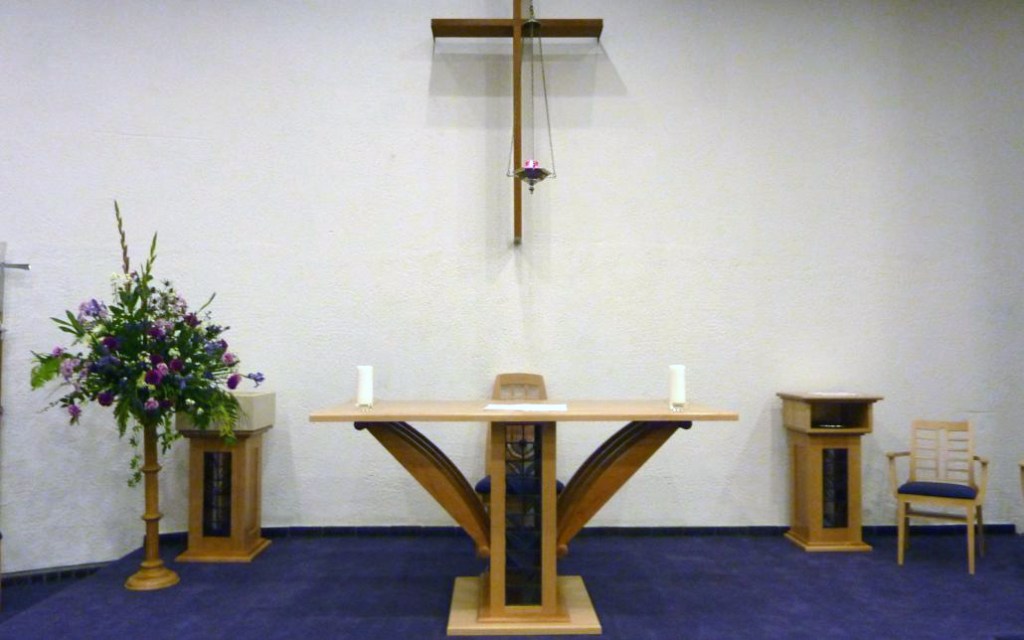
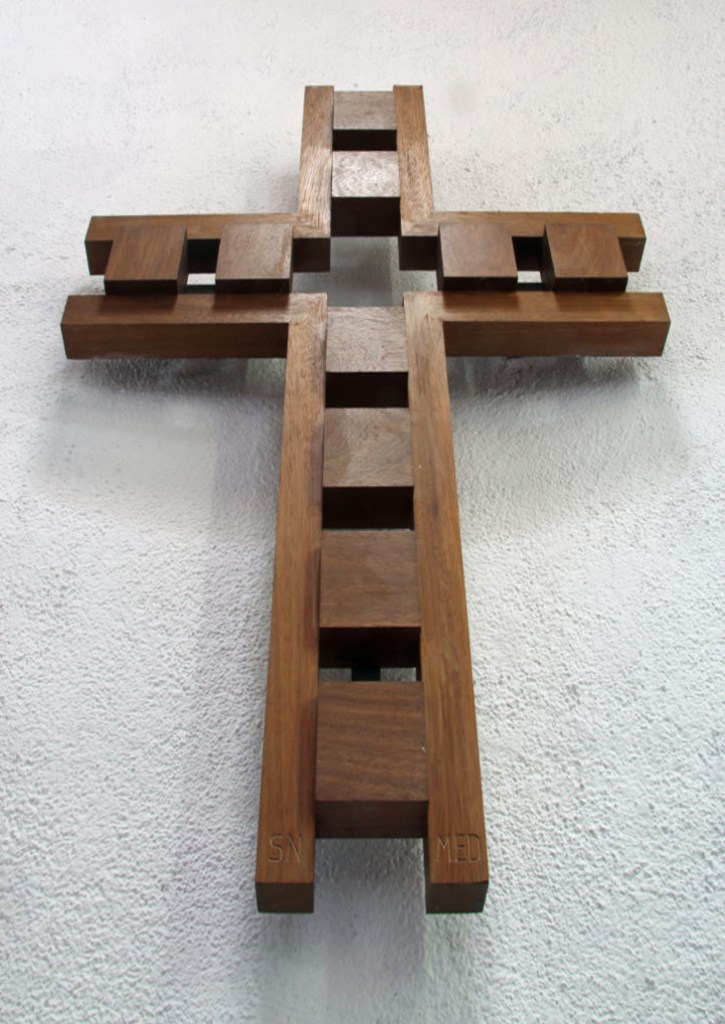
Inside, the six-bay upper church has a plain west gallery above a narthex with glazed screen. The aisles have arcades of square brick piers and plain plastered walls. The clerestory windows are leaded with coloured glass margins. The ceiling is lined with acoustic panels and the concrete floor is laid with carpet or linoleum tiles. The reordered sanctuary retains the original polished concrete altar in a forward position; the 1950s altar rails and pulpit have been removed. The east wall is now hung with wallpaper, but was originally fair-faced brick; the Crucifix and painted timber high altar canopy are part of the original arrangement.  The side chapels also retain original 1950s polished concrete altars. The octagonal font with oak cover dates from the late nineteenth or early twentieth century, of unknown provenance. The hardwood pews were designed for the church.

Taking Stock

I have known this church for some fifty years – living just up the road.

It was probably along with St Mary’s Denton my first experiences of Modern Architecture.

I went to the youth club in the social area beneath the church.

St Mary

It is typical of the Italianate styling of the time, a functional mix of glass brick and concrete, far from ostentatious – and sitting comfortably in its setting.

On the day of my visit the country is in lockdown, Mass suspended and the body of the church used as a homeless shelter, prior to rehousing – signs of the times.

Beanland House No 2 – Ashton under Lyne

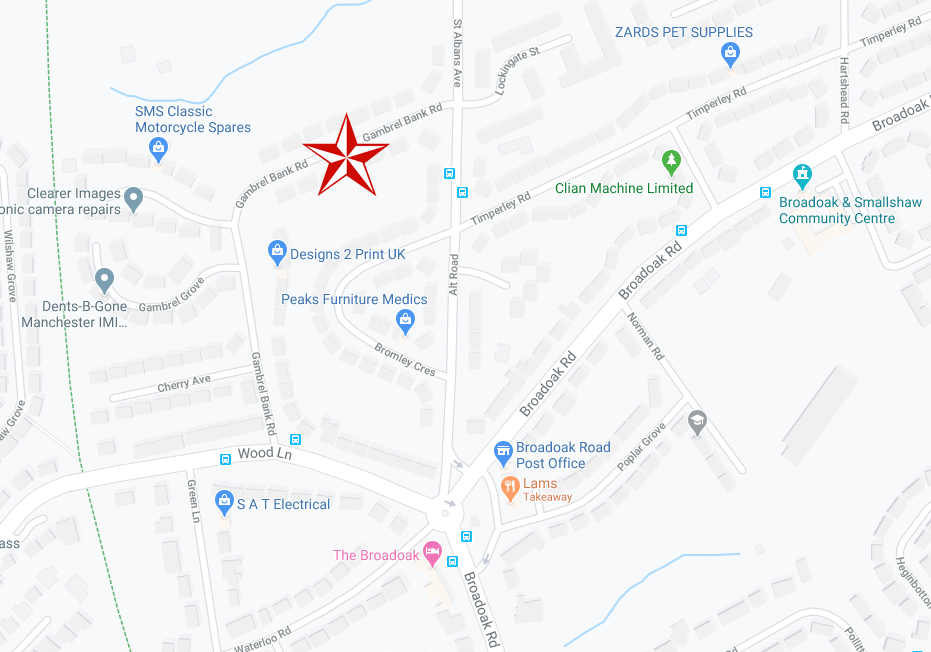
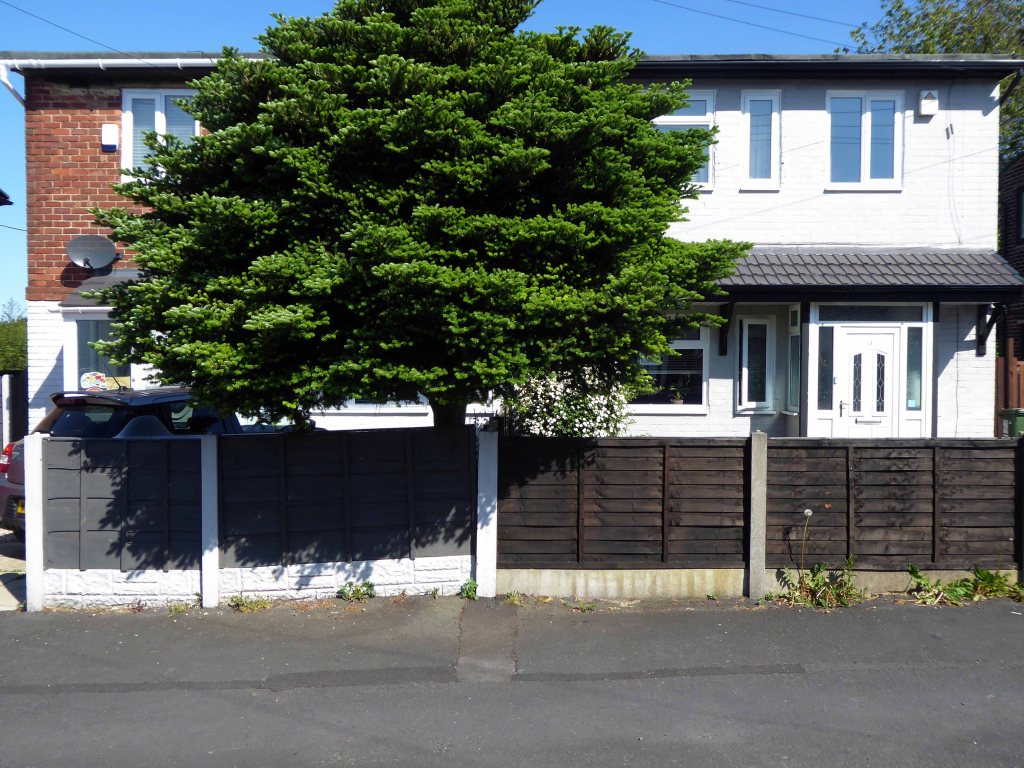
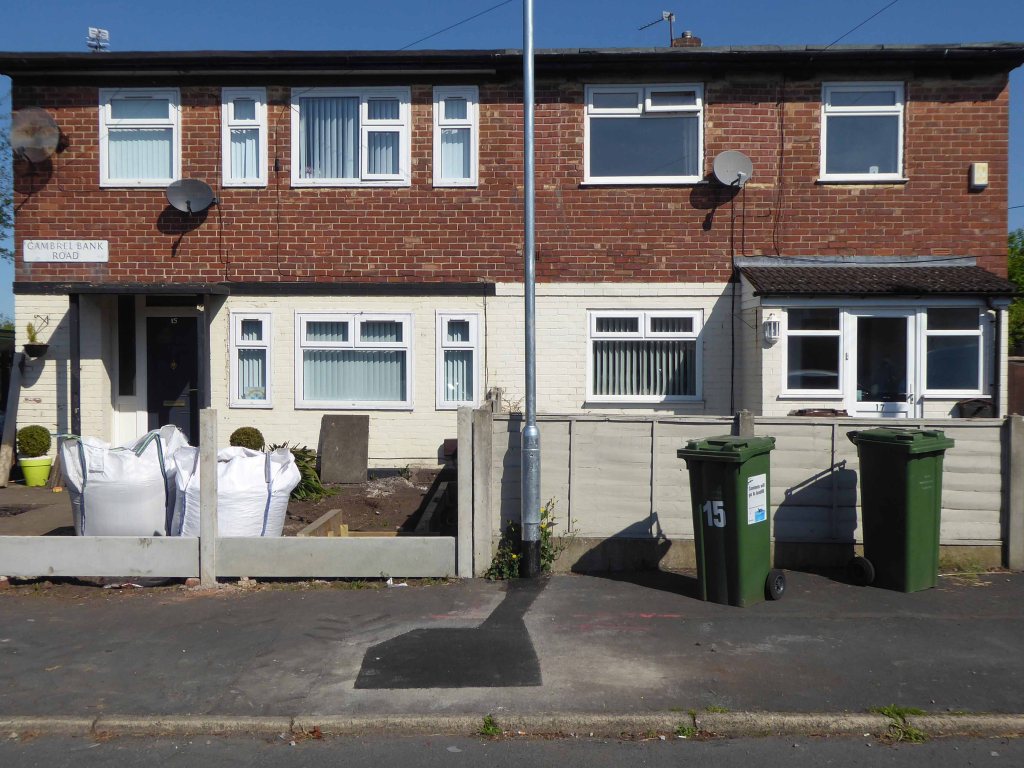
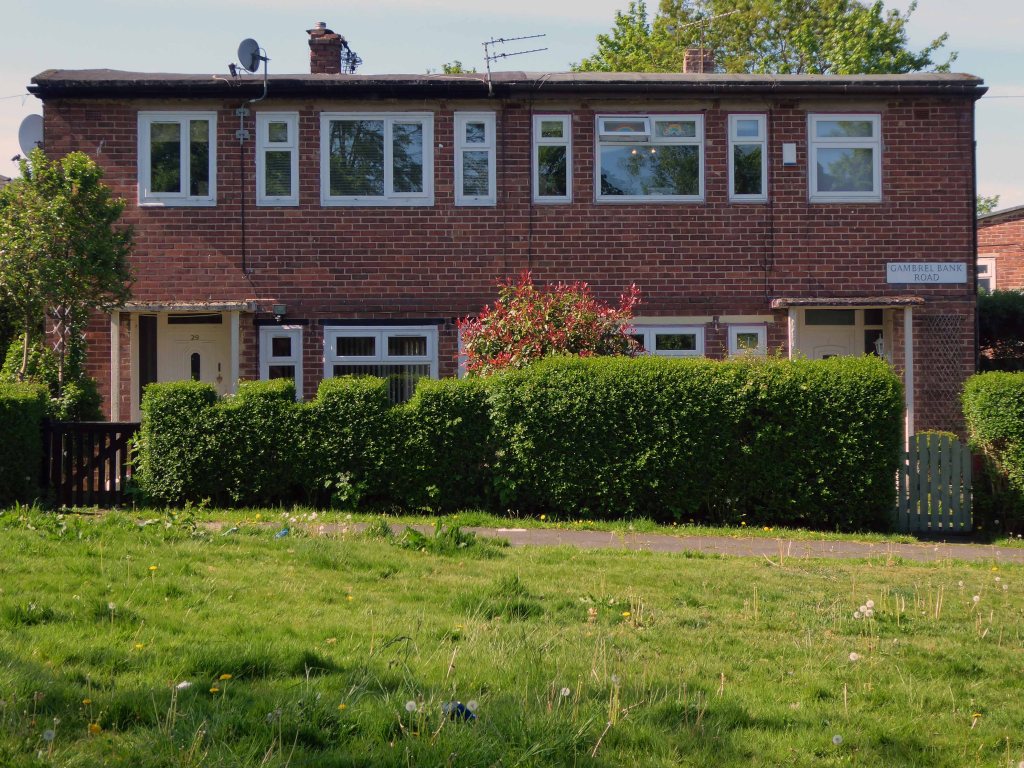
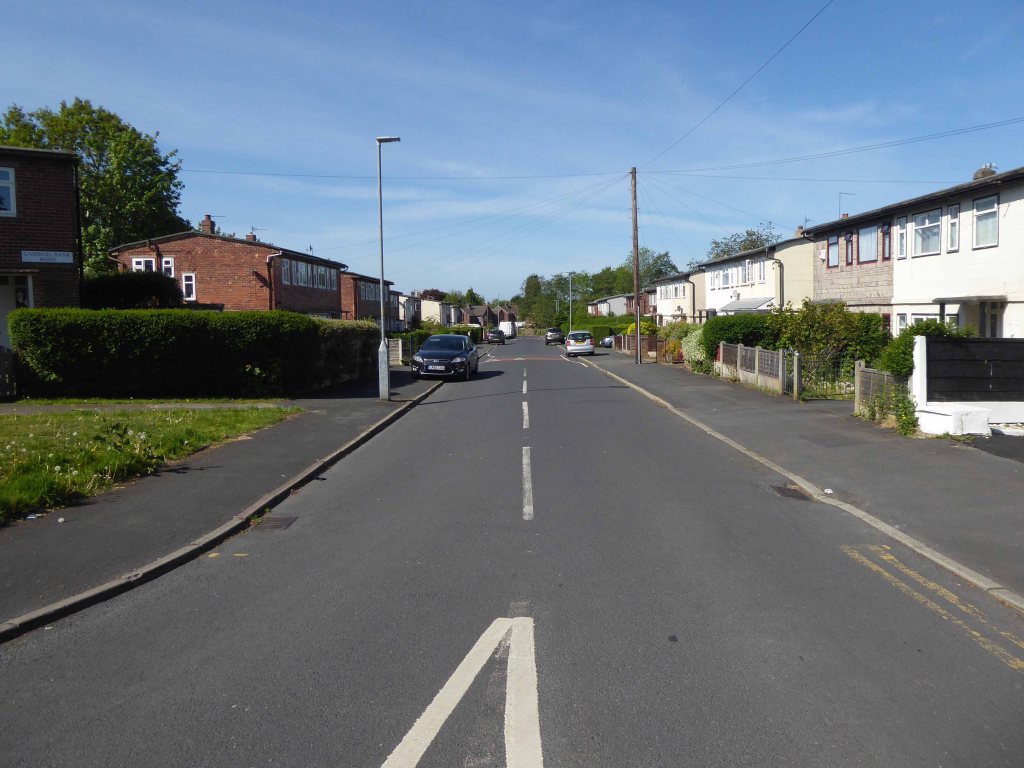
Gambrel Bank Road Ashton under Lyne

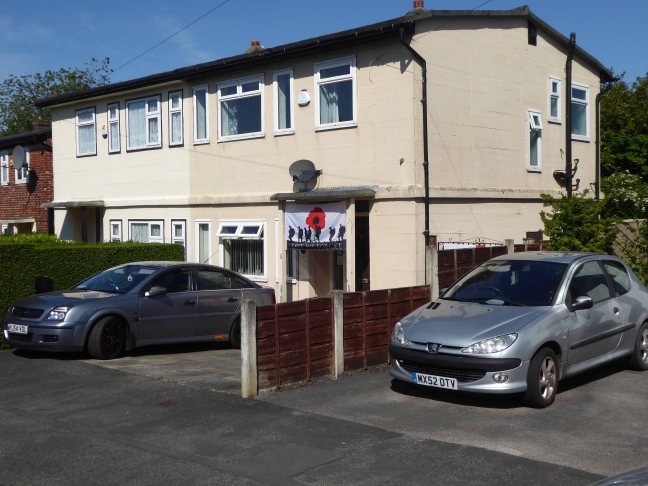
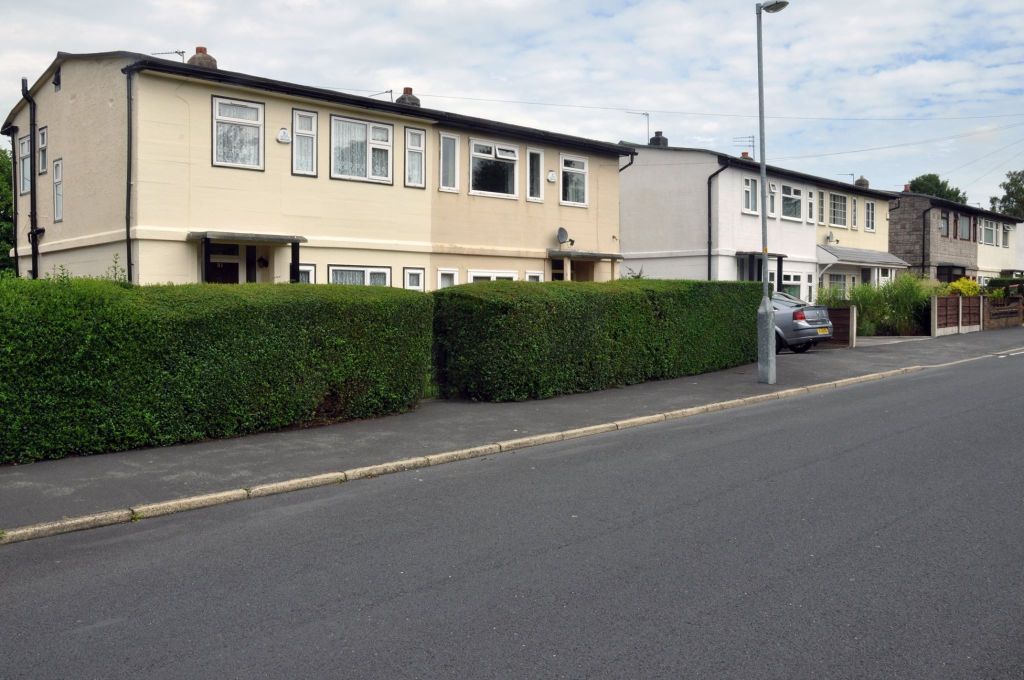
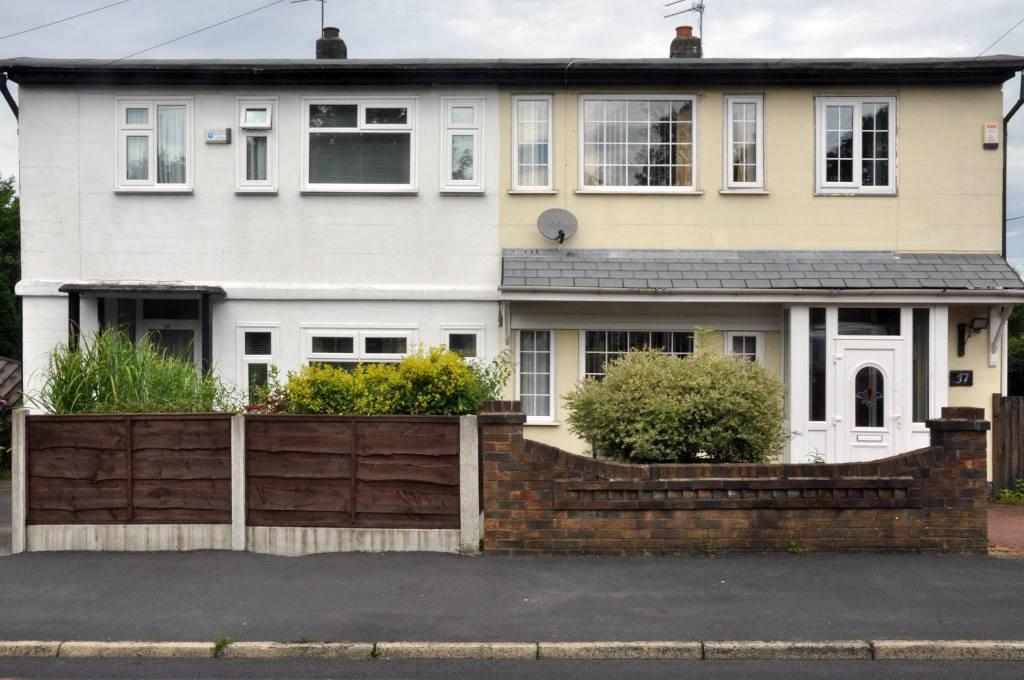
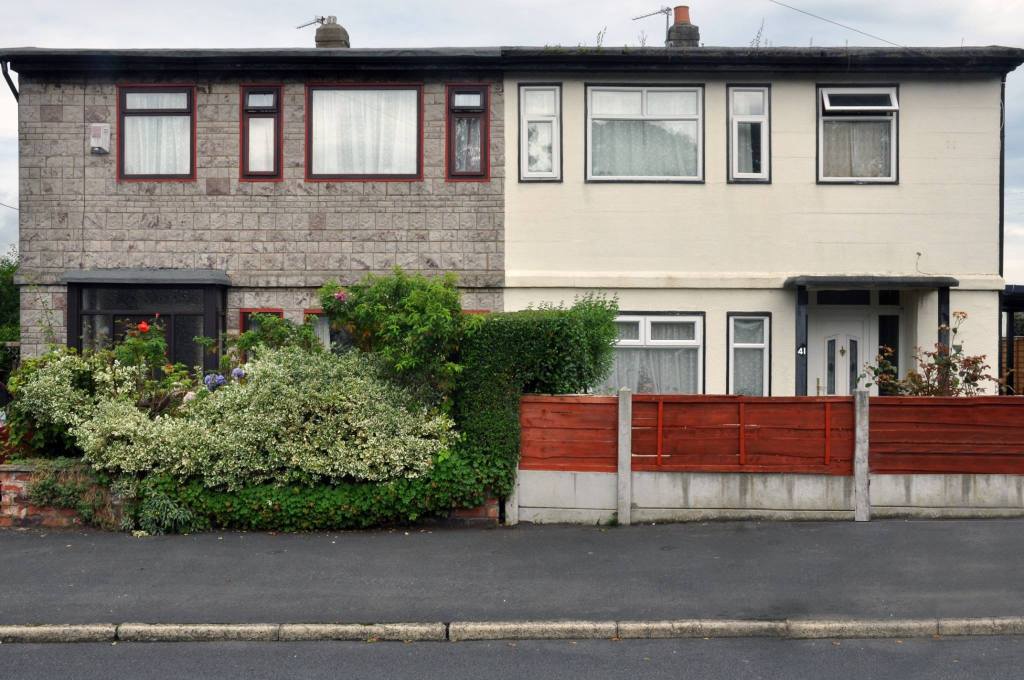
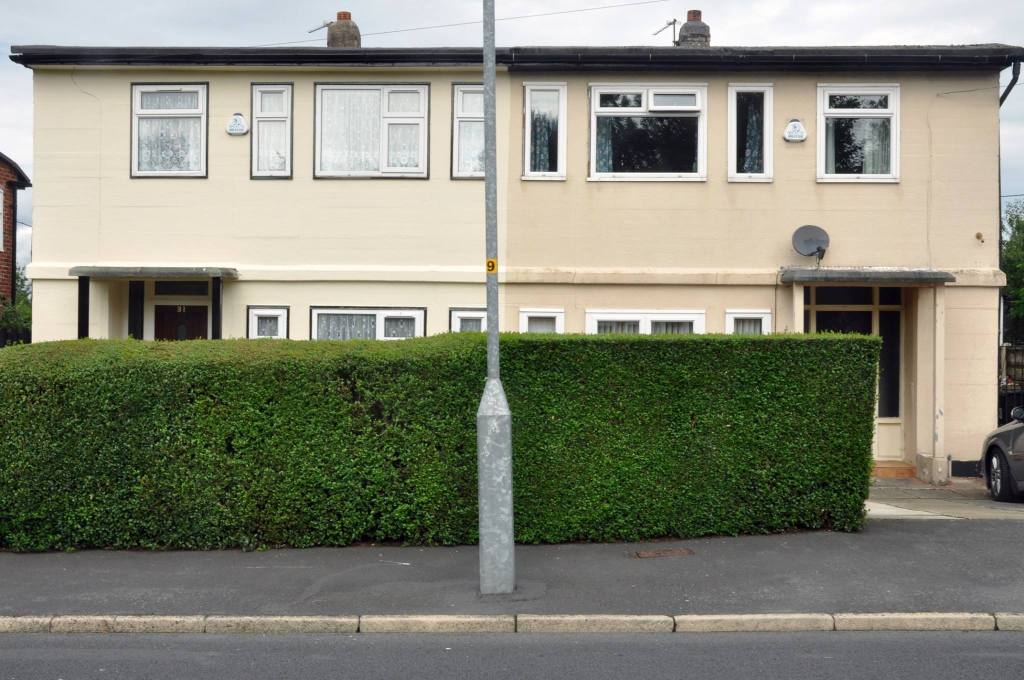
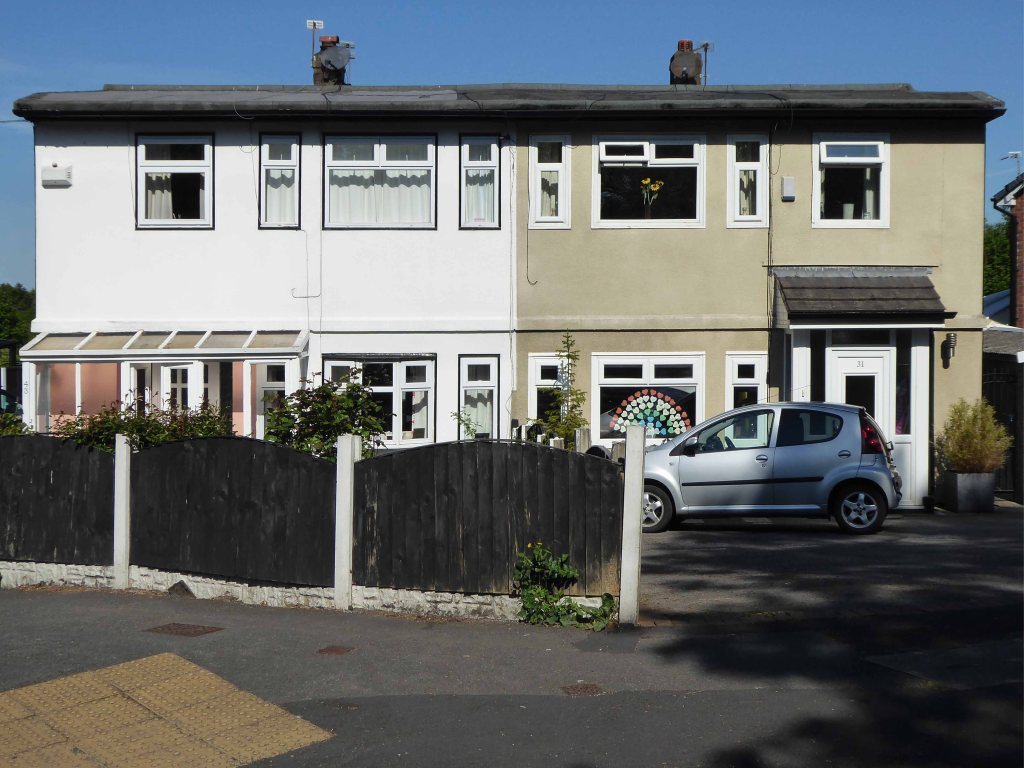
I have been here before in 2015 en passant, snapped the homes chatted to a resident and off, she had informed me that they had been post-war experimental concrete homes.

I thought no more about it – but subsequently I did, returning to the road to take another look.

Here’s one I didn’t make earlier.

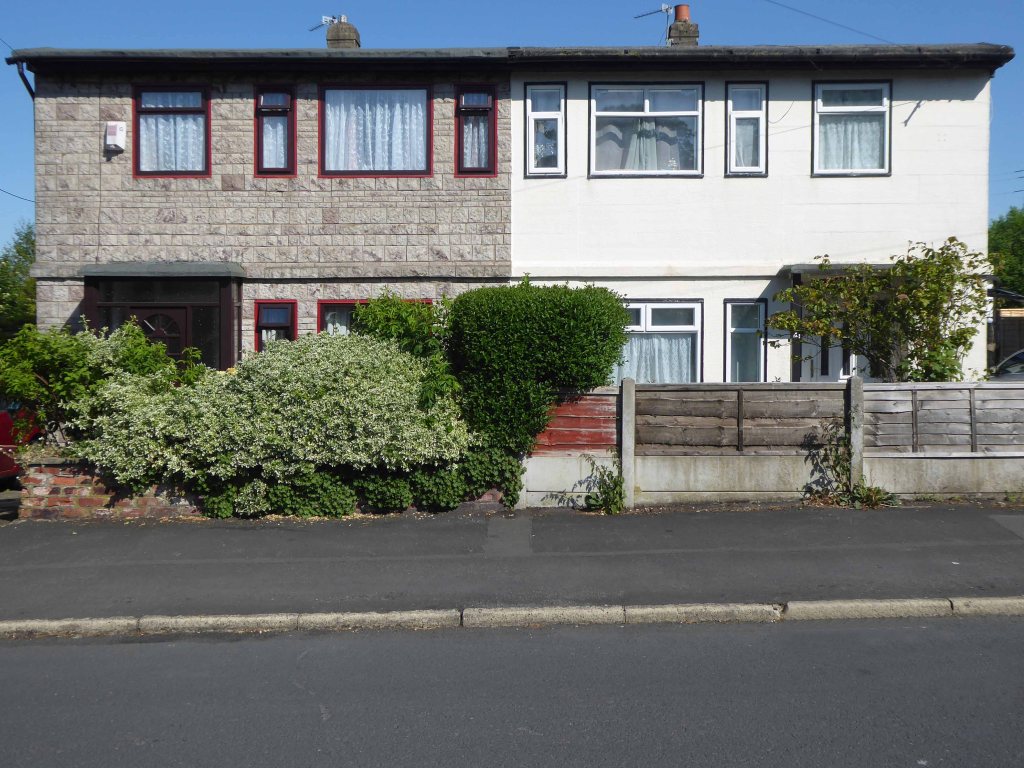
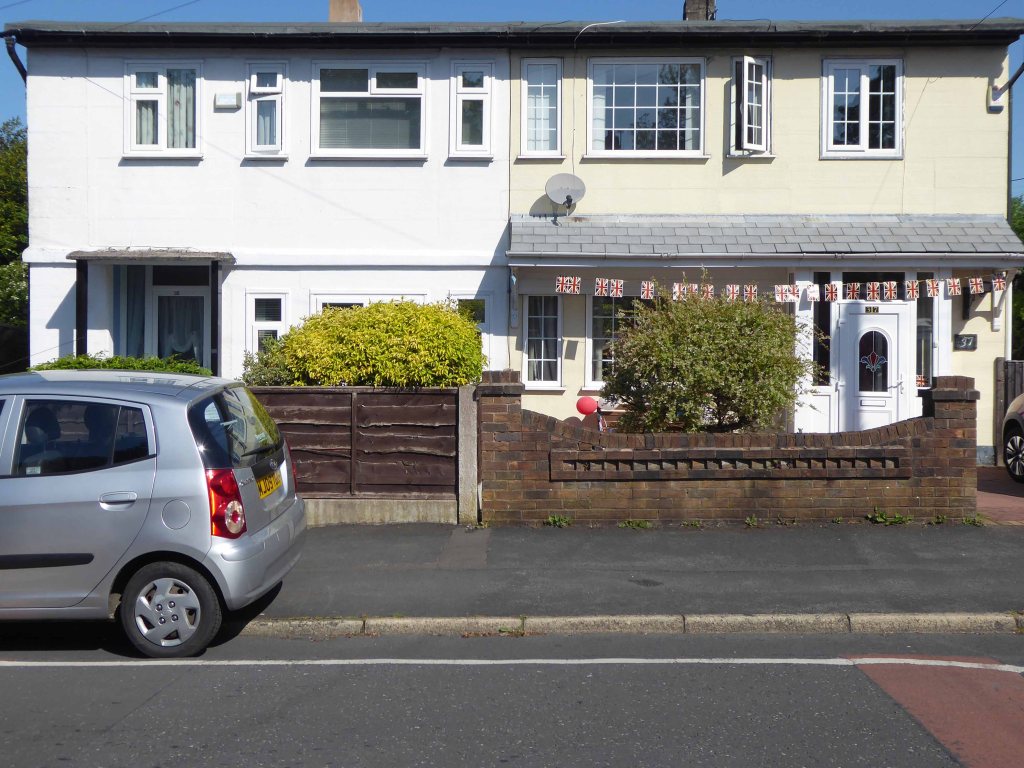
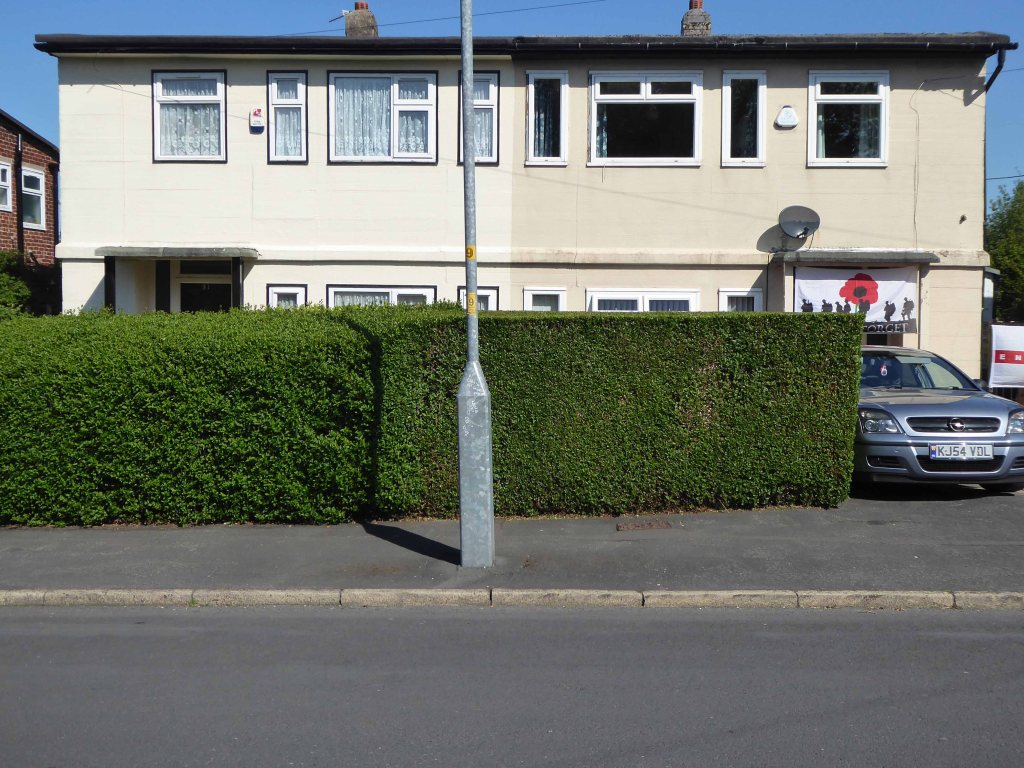
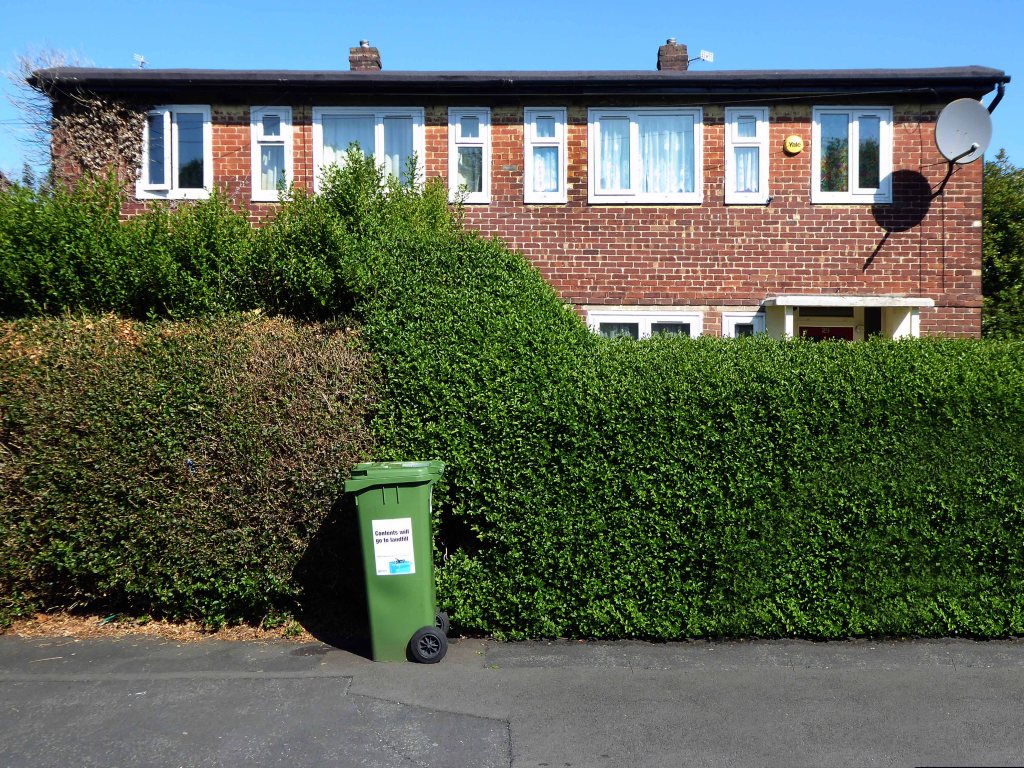
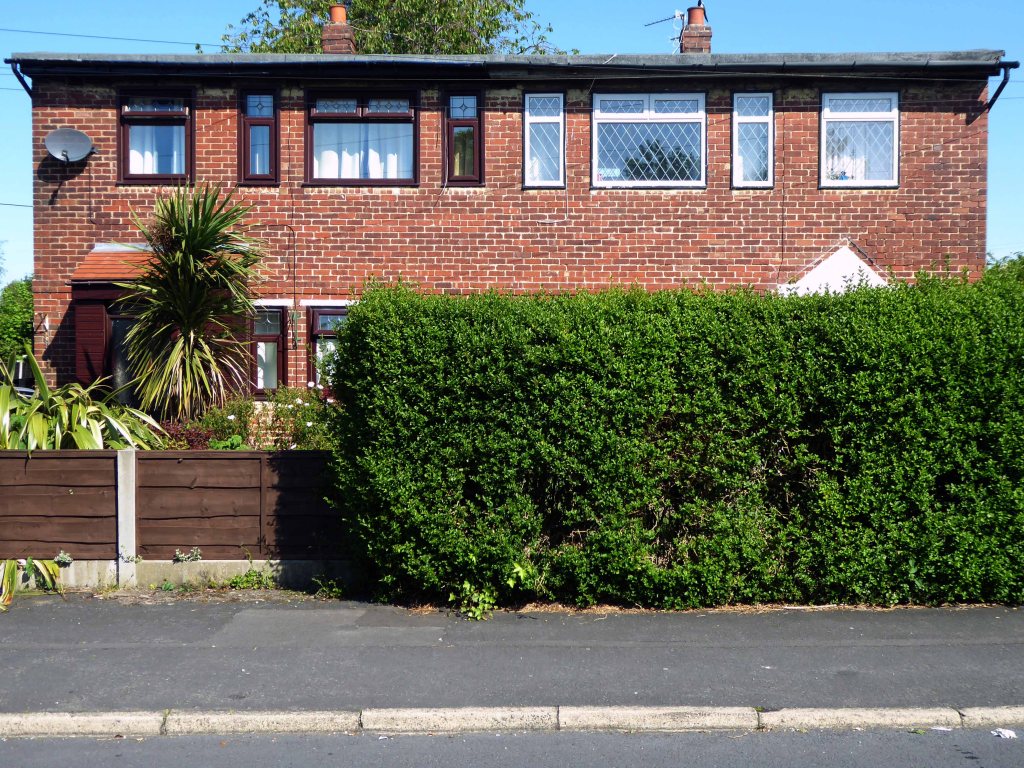
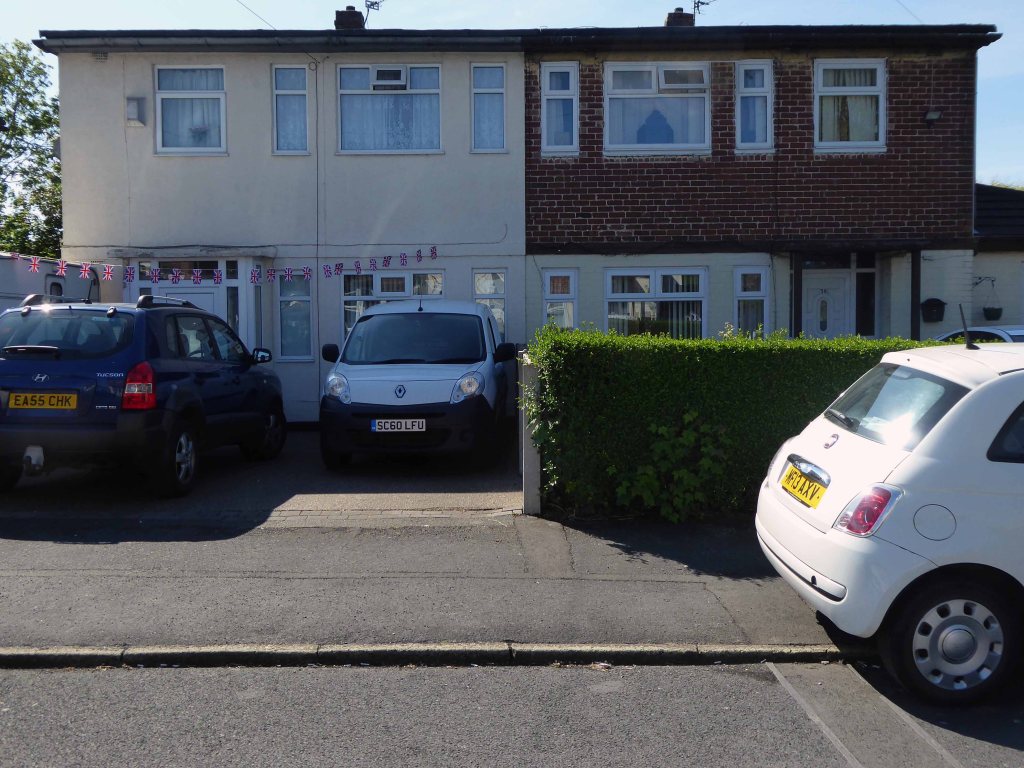
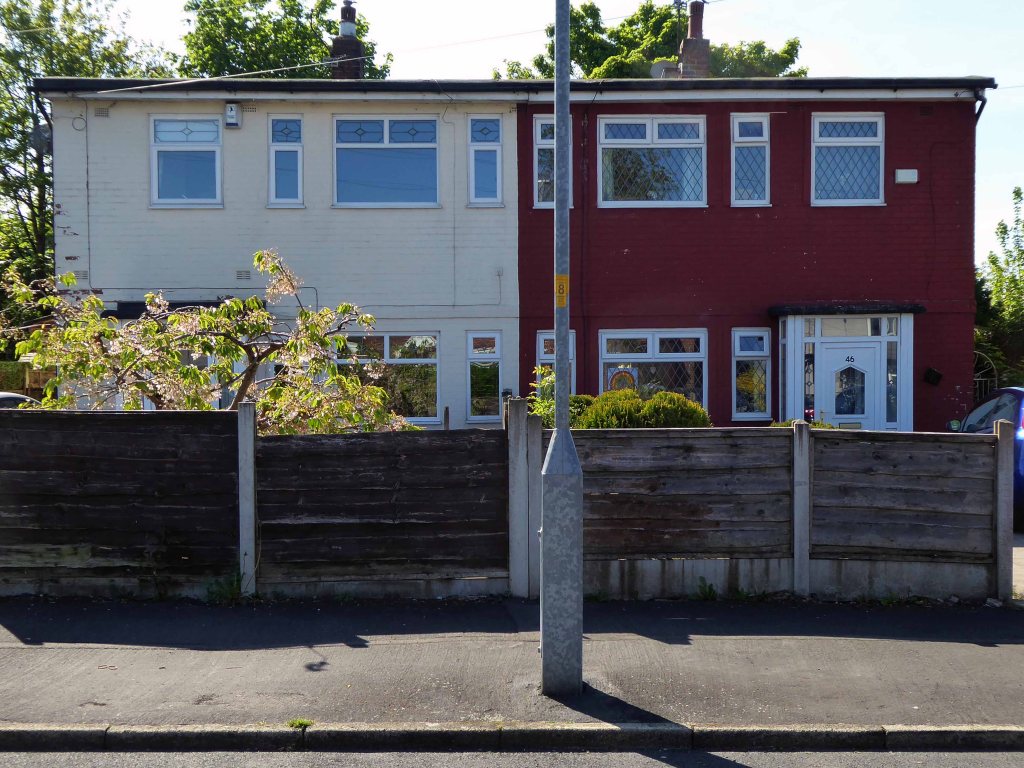
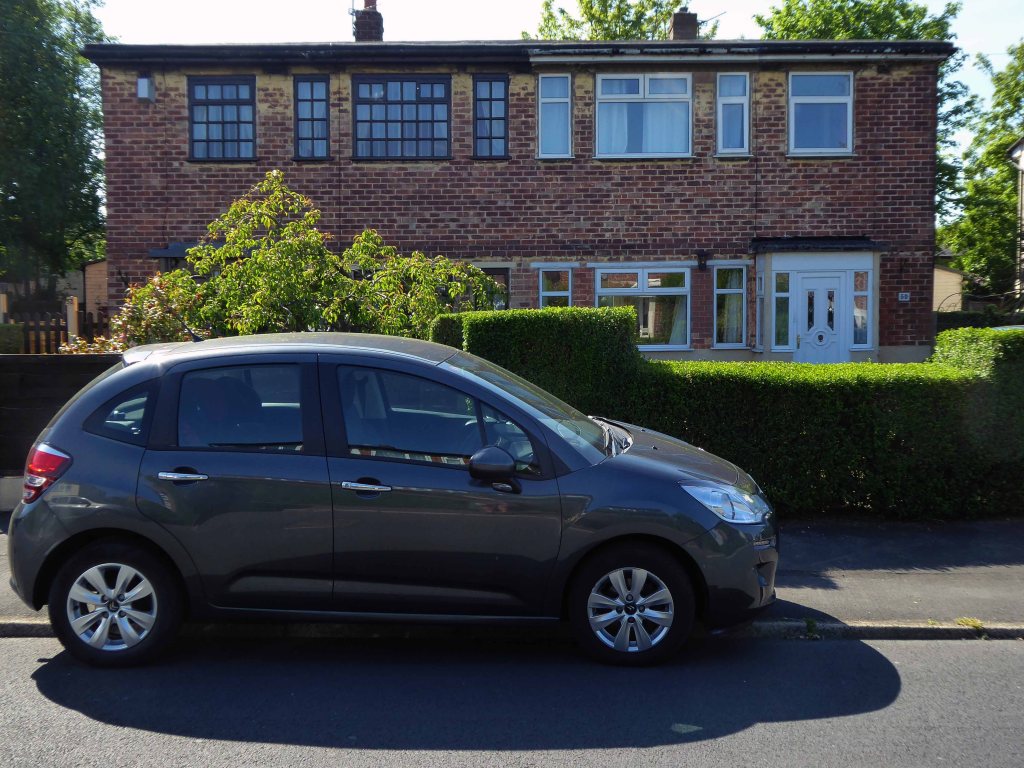
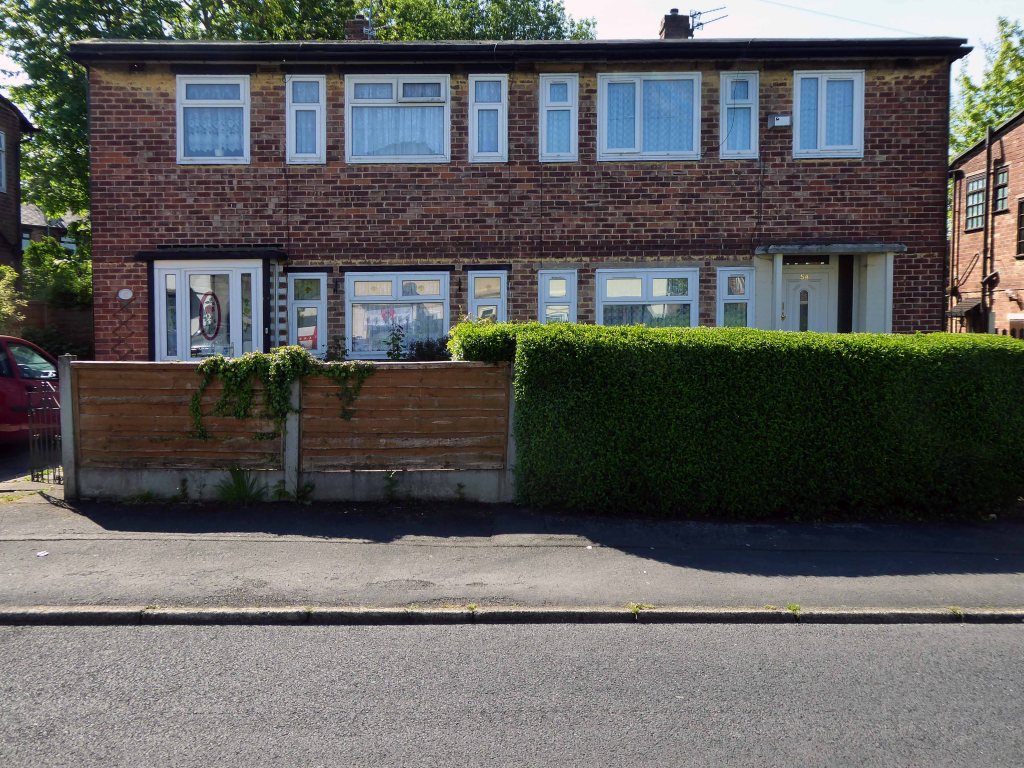
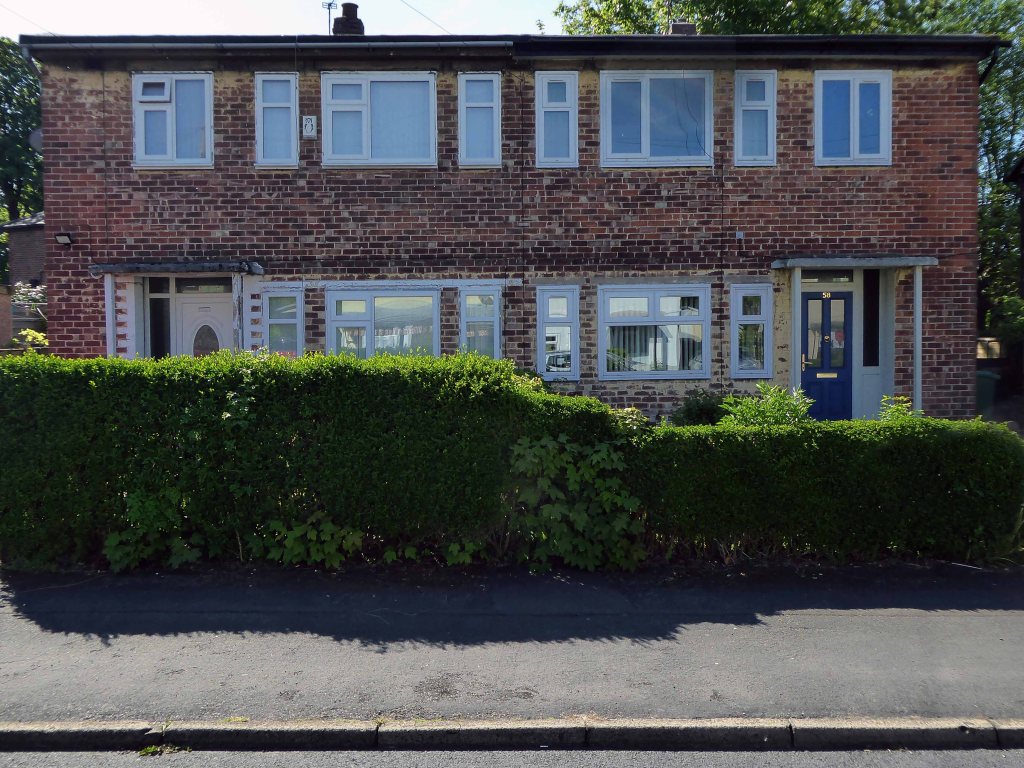
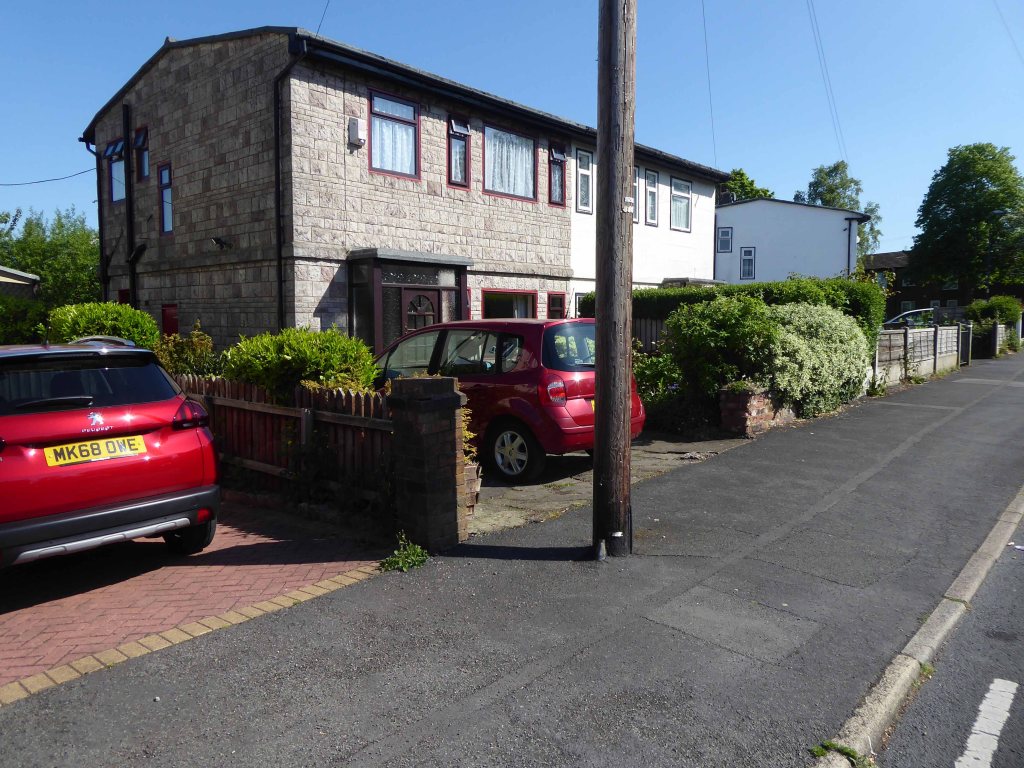
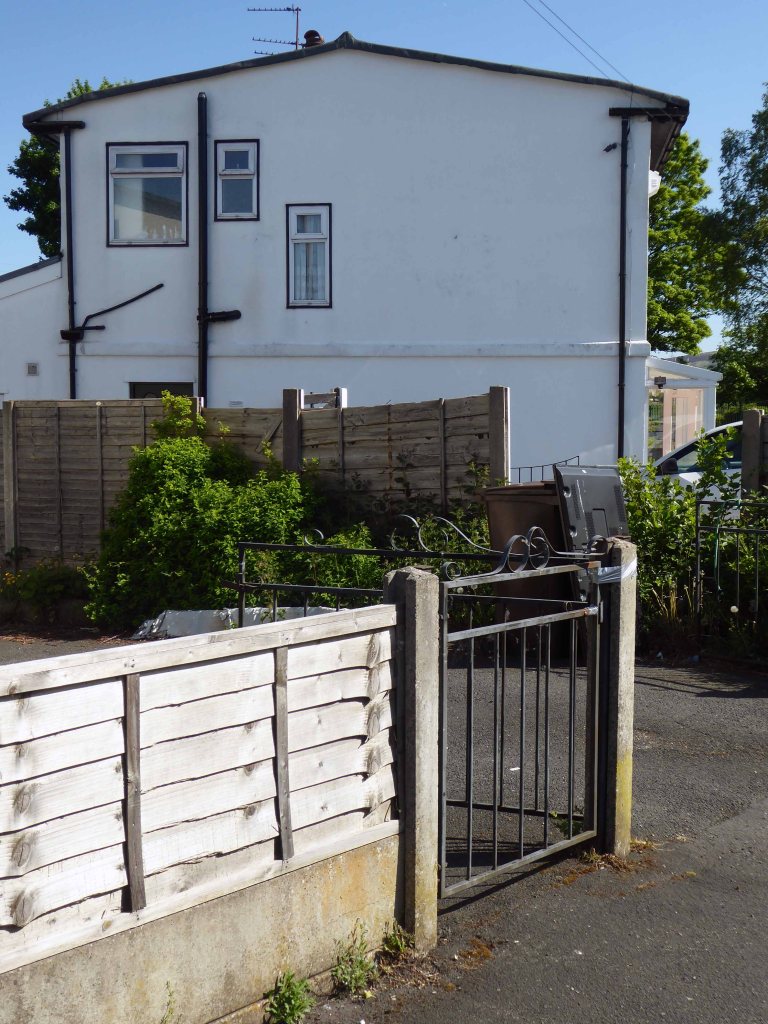
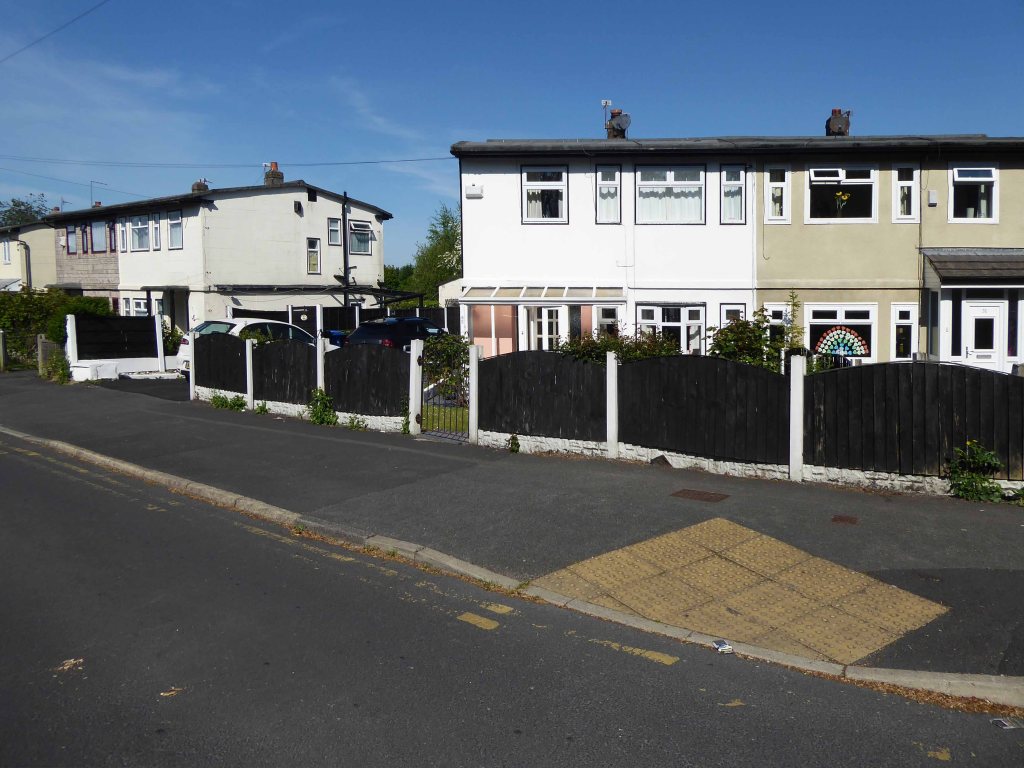
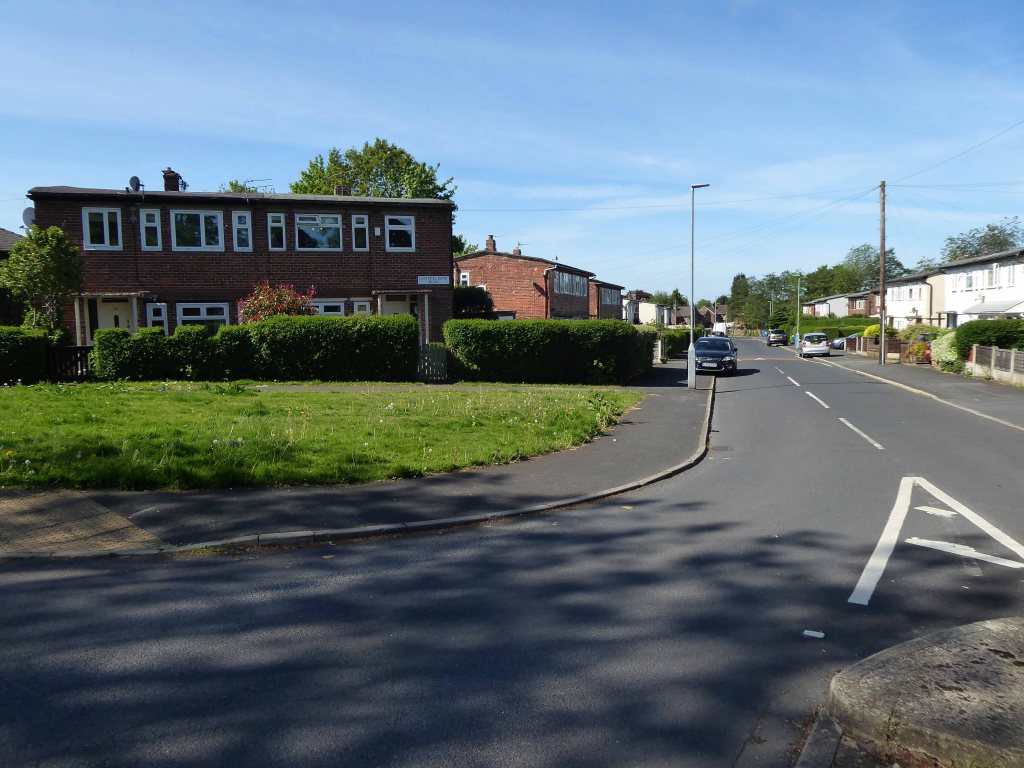
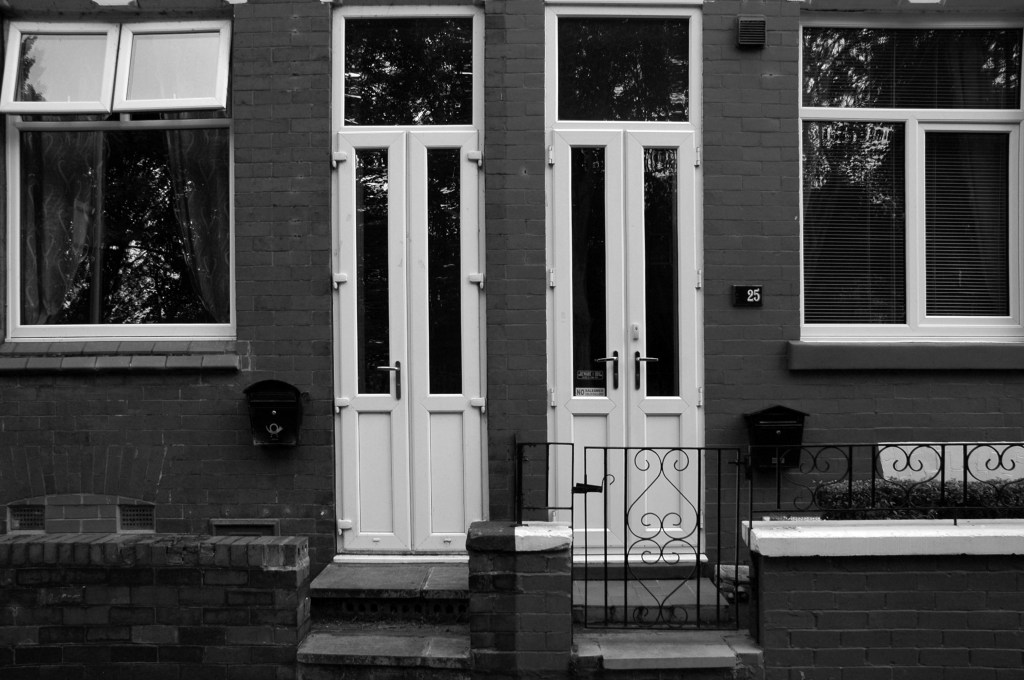
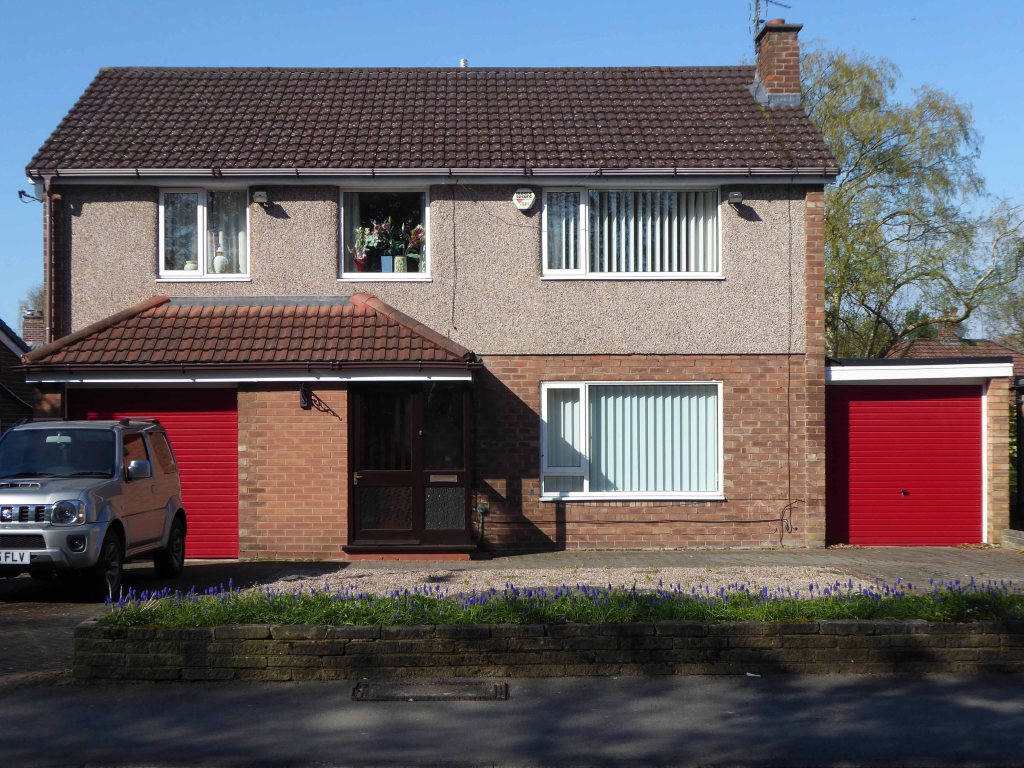
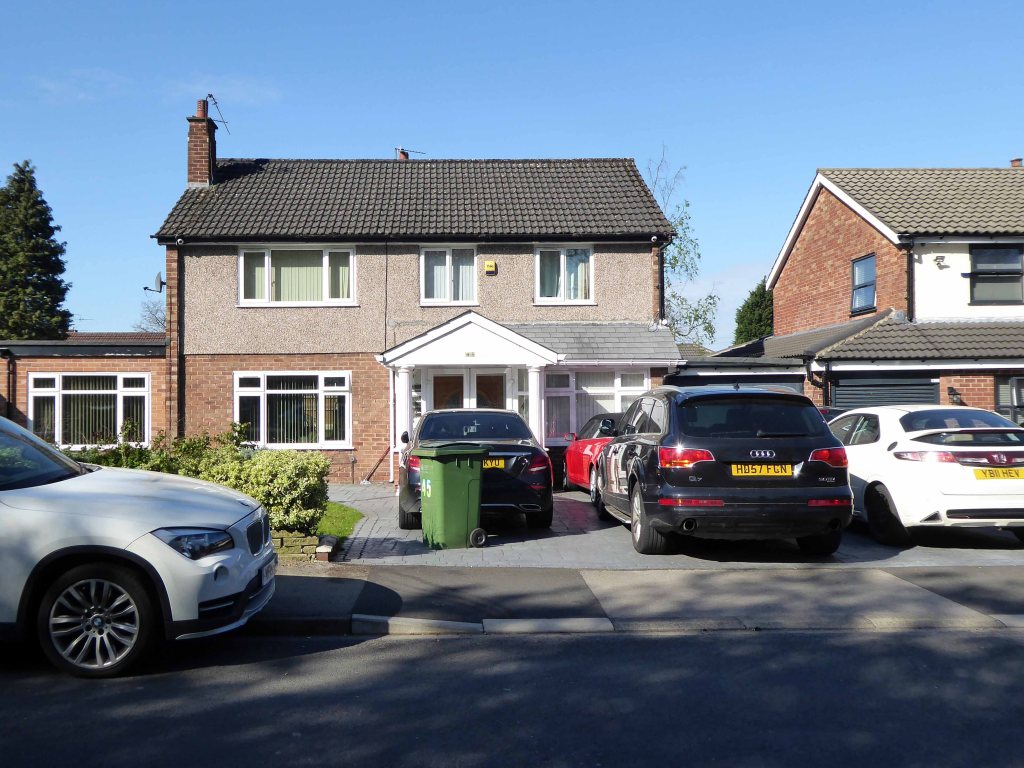
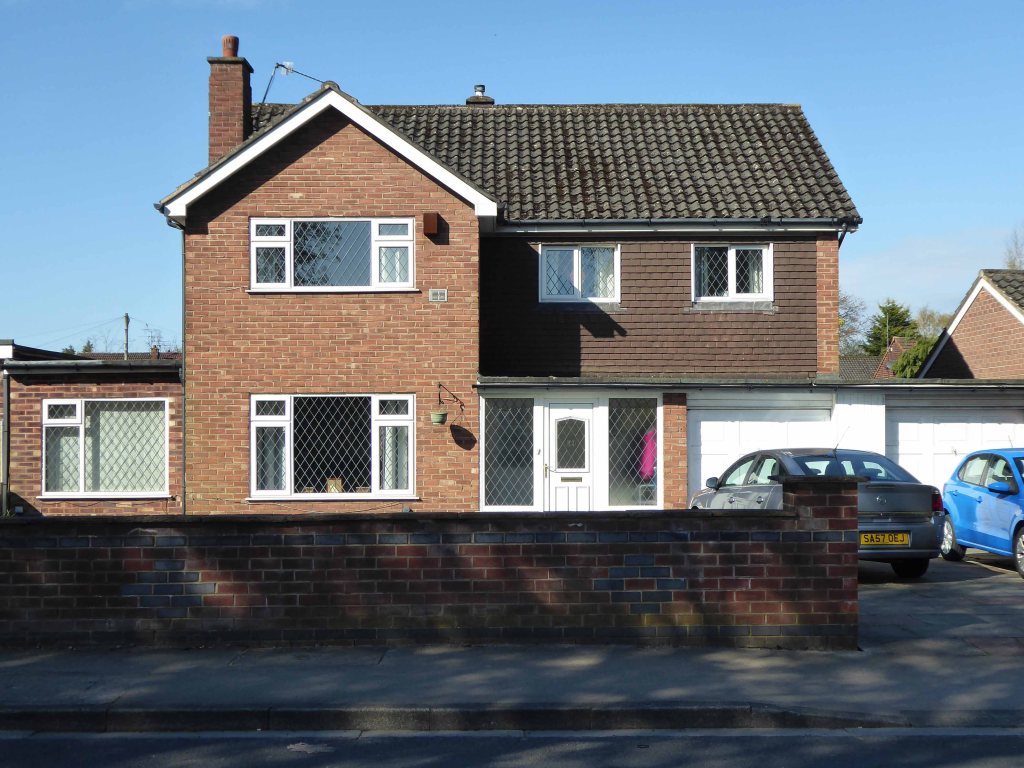
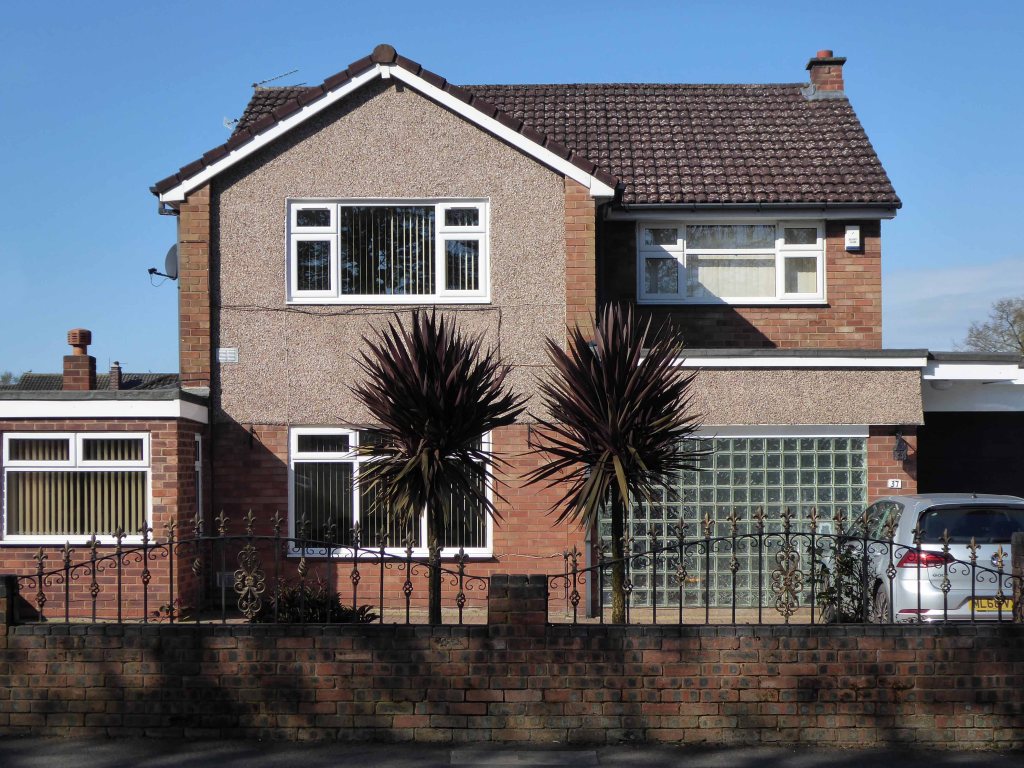
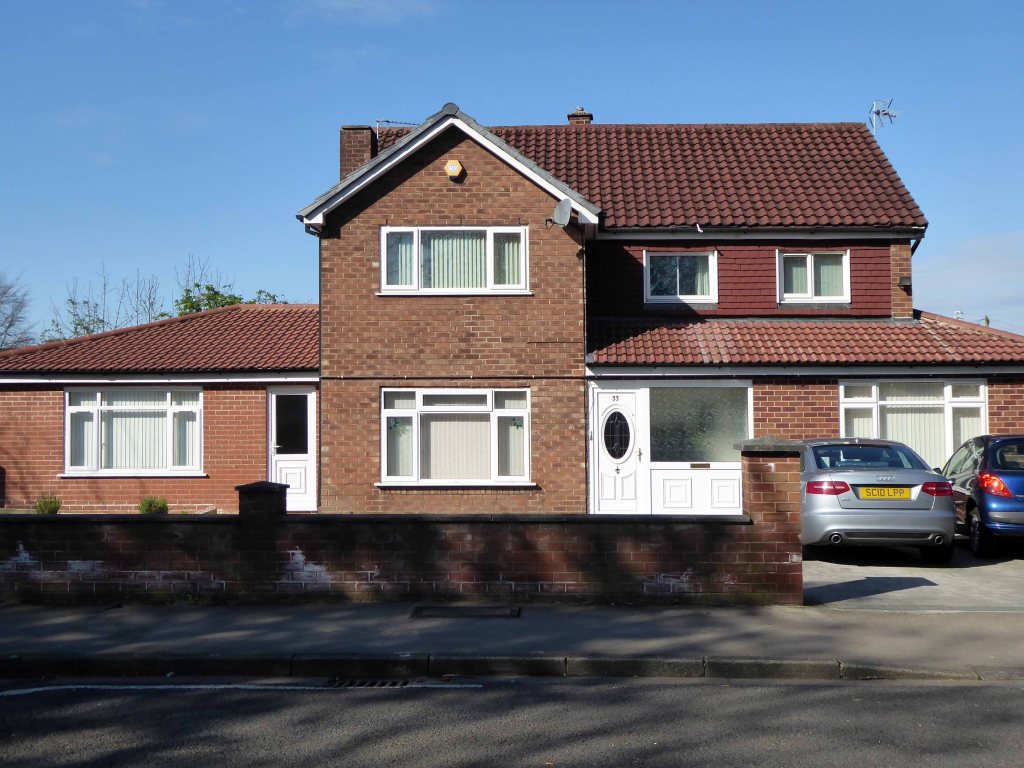
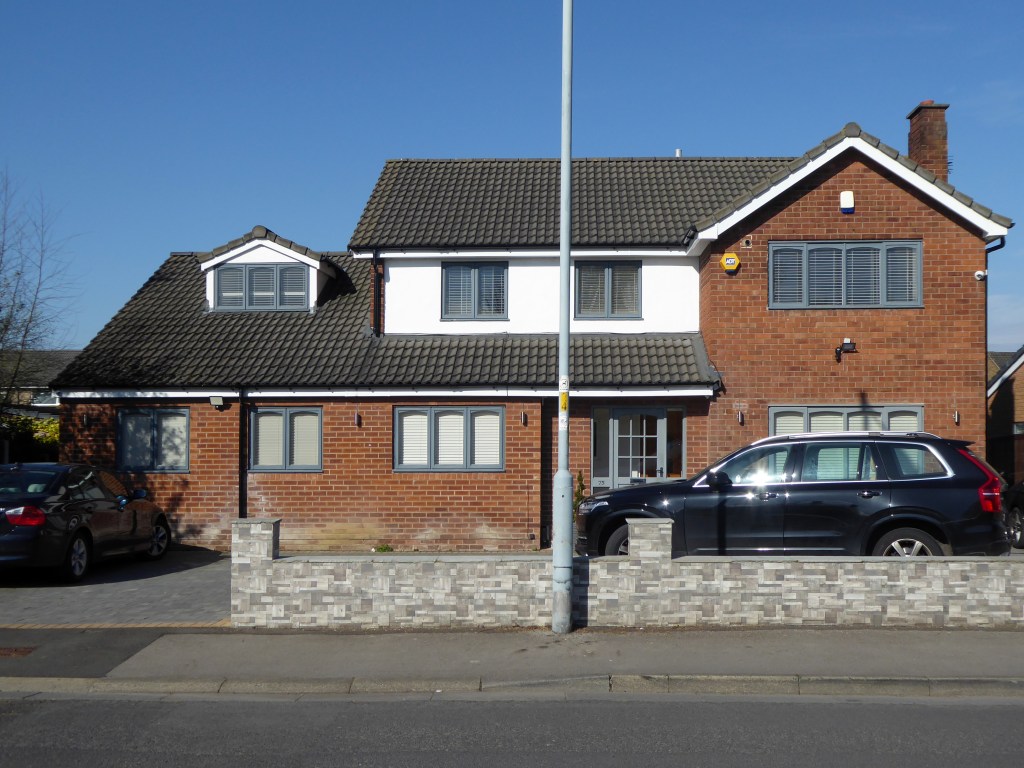
There are four semi detached homes constructed from concrete, rendered painted and clad over the years, windows replaced, additions and amendments made.

Though the basic design characteristics have been retained.

There are no local archival images or histories, I assume that they were post-war, an addition to the inter-war Smallshaw council estate.

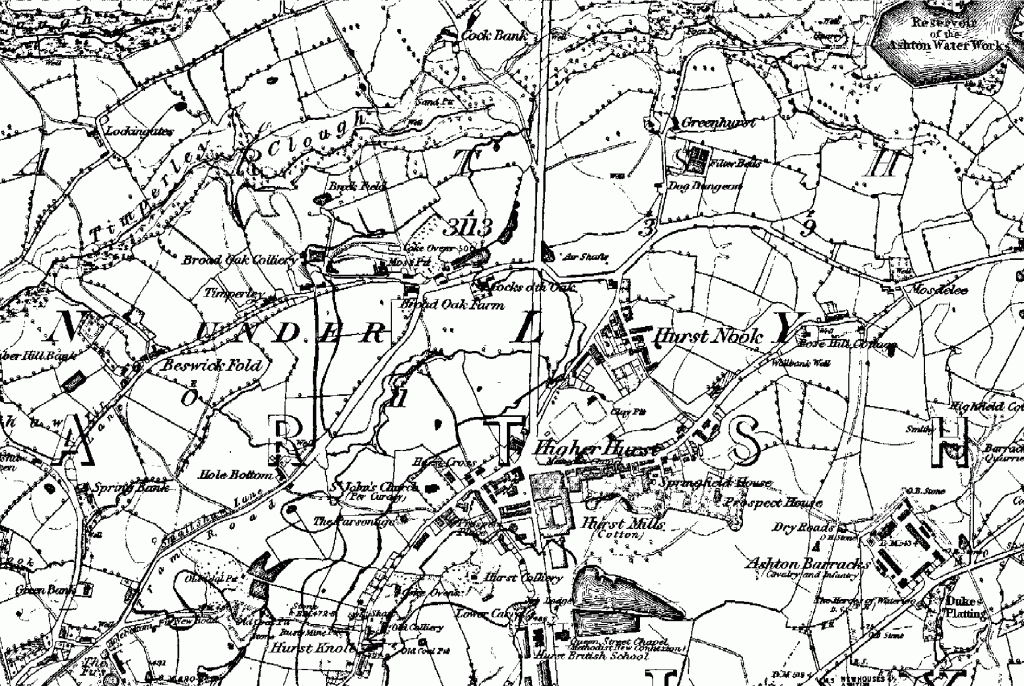
In an area which in 1848 was given over to mining and agriculture.

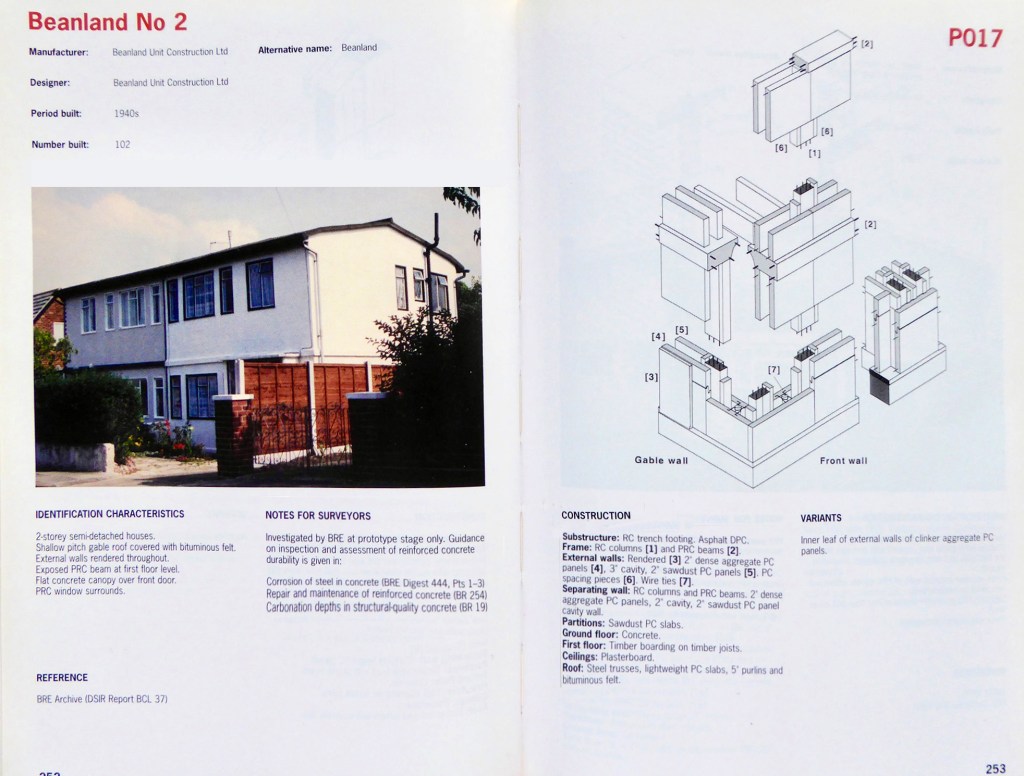
I have subsequently learnt from an online contact Mr Sid Cat, that the homes are Beanland No 2.

They are listed on the BISF site – 102 were built.

More than this I cannot say – further searches for Beanland proving largely fruitless.

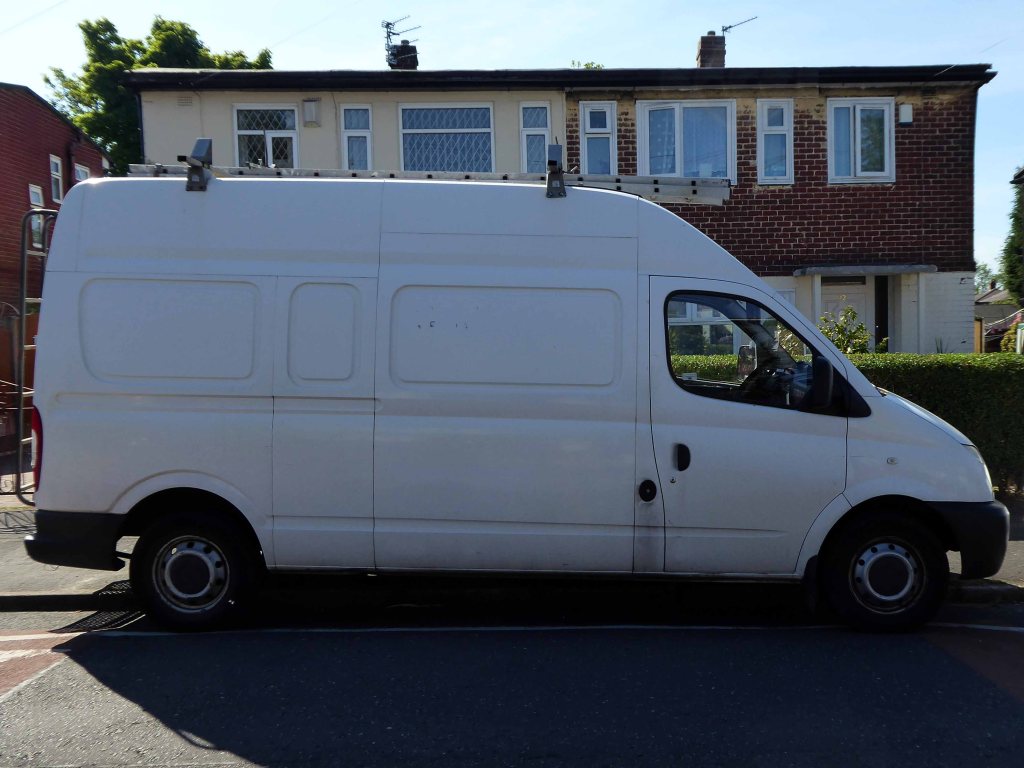
In addition there are also several semi detached houses of identical shape and proportion faced in brick – why?

Suffice to say here we are now and here they all are.

Clayton Aniline CIBA Offices

Charles Dreyfus was a French emigrant chemist and entrepreneur, who founded the Clayton Aniline Company on 29 May 1876. The company obtained a lease on a parcel of land in Clayton, Manchester, sandwiched between the Manchester and Ashton Canal and Chatham Street – later known as Clipstone Street.

1904

At its peak in the 1970s, the site occupied over 57 acres and employed over 2,000 people. However, due to the gradual demise of the British textile industry, most textile production shifted to countries such as China and India with the textile dye industry following.

1960

In 2002, the company made 70 members of staff redundant and in 2004 the announcement was made that the site would be closing with the loss of over 300 jobs. A small number of staff were retained to assist in the decommissioning of the plant. The last workers left the site in 2007 and the remainder of the buildings were demolished shortly afterwards.

Wikipedia

Like much of the industry of east Manchester its tenure was relatively short – money was made and the owners departed, without wiping their dirty feet.

The site remained derelict until demolition, followed by extensive site cleansing – to remove the dangerous detritus of 200 years of hazardous chemical production.

It is now occupied by the Manchester City FC training academy.

Vincent Kompany had just completed his £6million move from Hamburg when he realised that Mark Hughes’ sales pitch about the direction the club was going was not entirely accurate.

They took me for a look around the training ground at Carrington – it wasn’t fit for purpose, it was a dump.

I remember there was a punch bag in the gym – and only one boxing glove. And even that had a big split in it!

Then in 2008 the corrupt boss Thai PM Thaksin Shinawatra is bought out by Sheik Mansour – the rest is history/mystery.

Mr Peter Swales makes no comment.

My interest lies in the company’s Ashton New Road offices – seen here in 1960.

Demolished and replaced by a distinctly Modernist block by 1964.

A flank was added on Bank Street along with a bank.

Archive photographs Manchester Local Image Collection

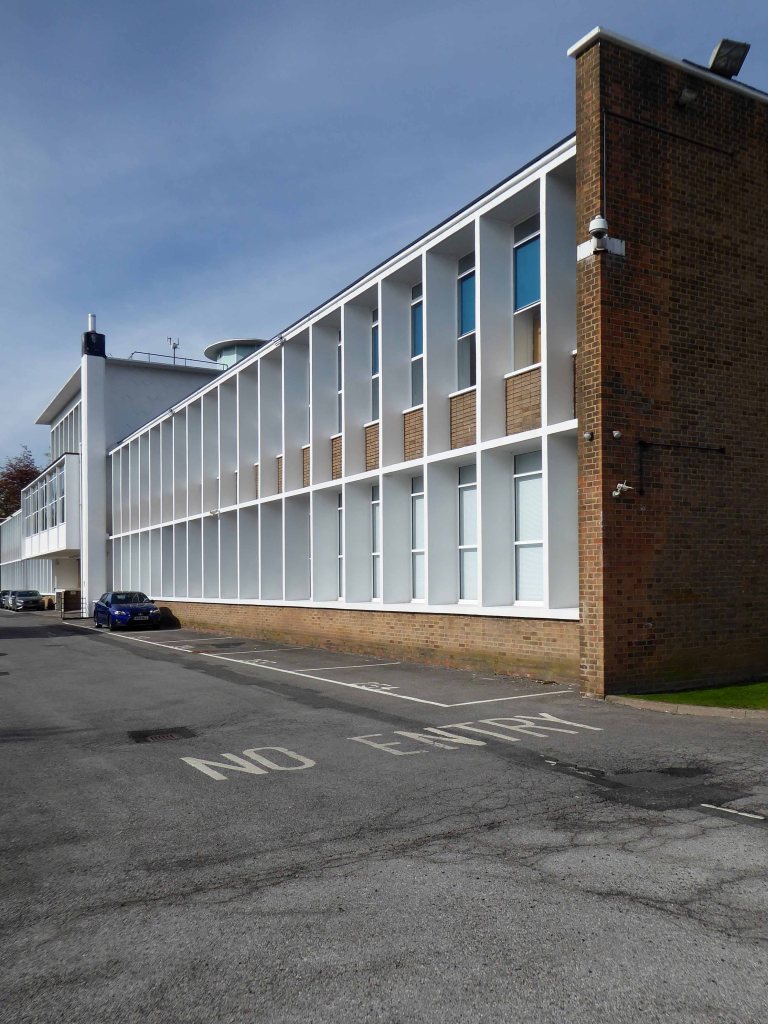
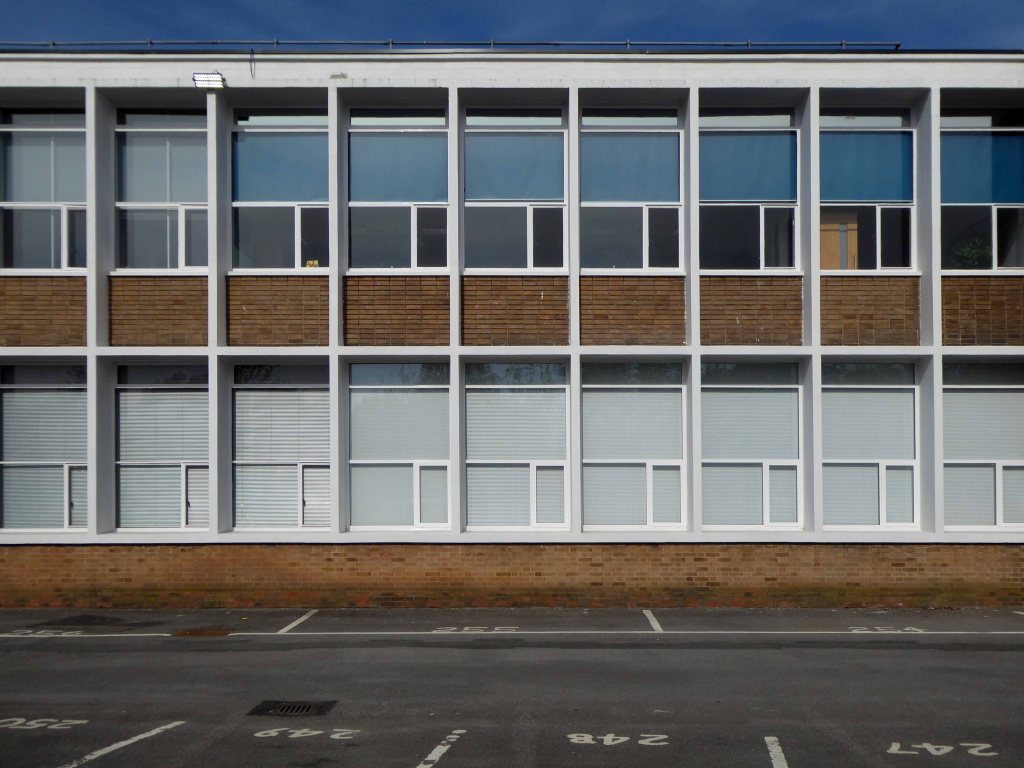
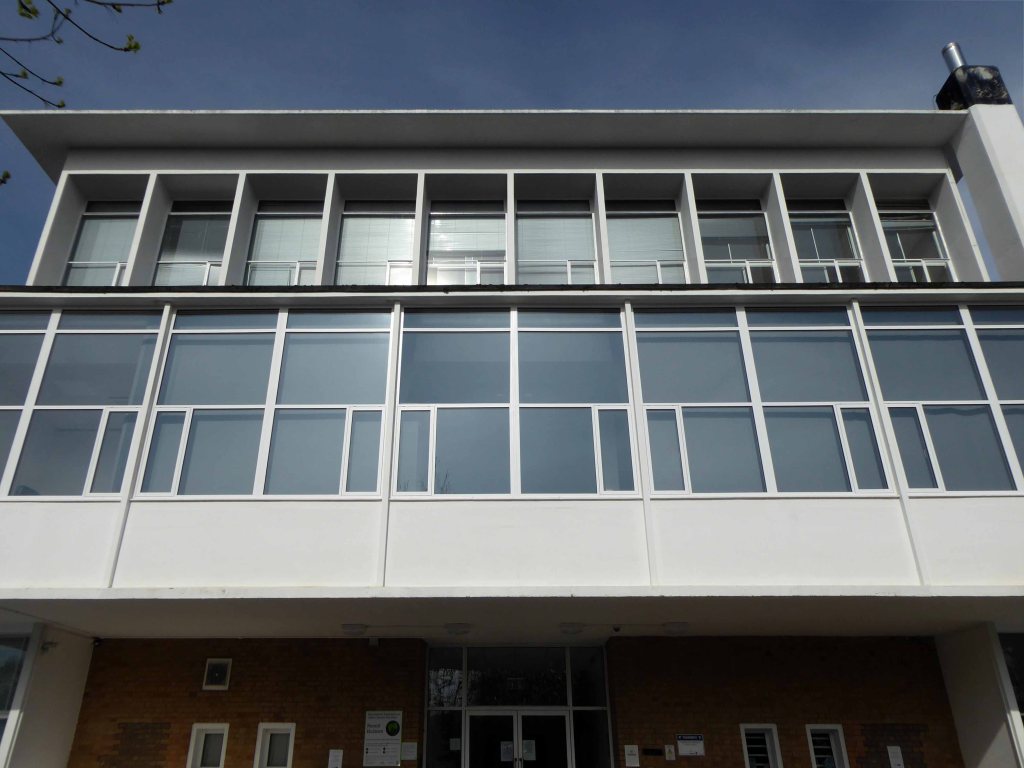
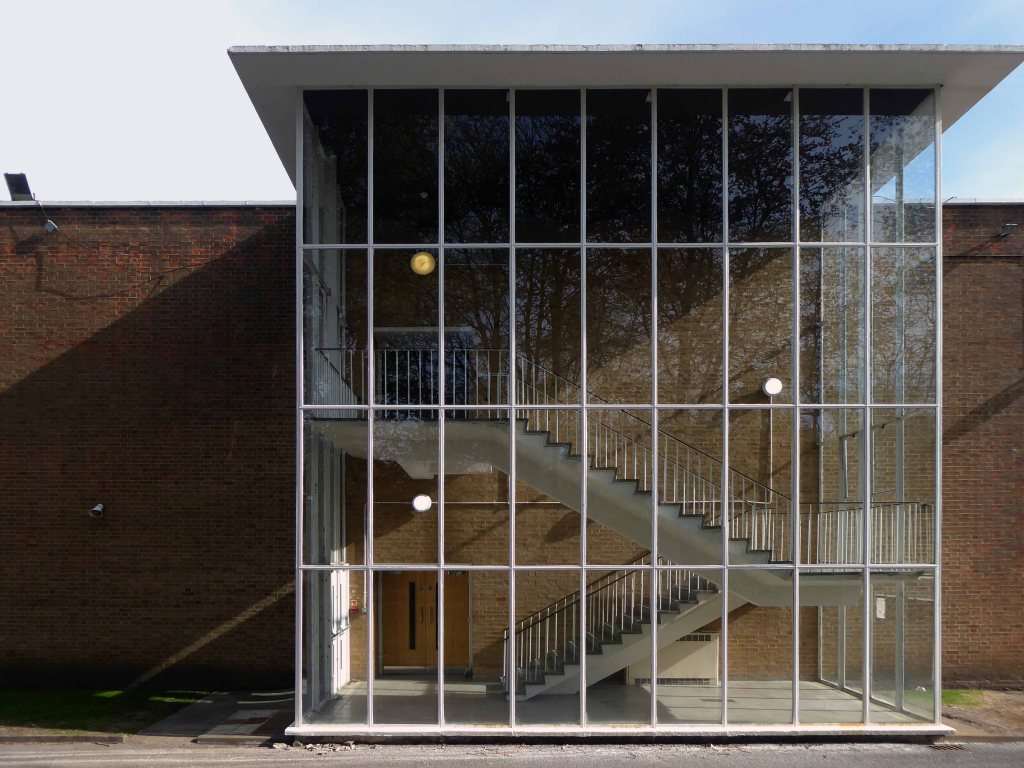
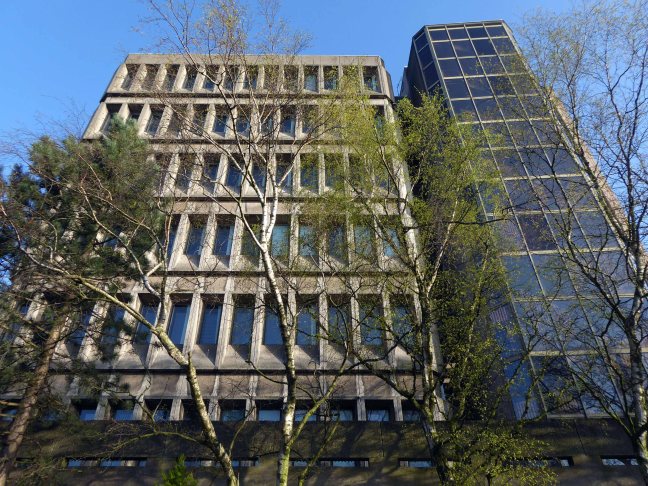
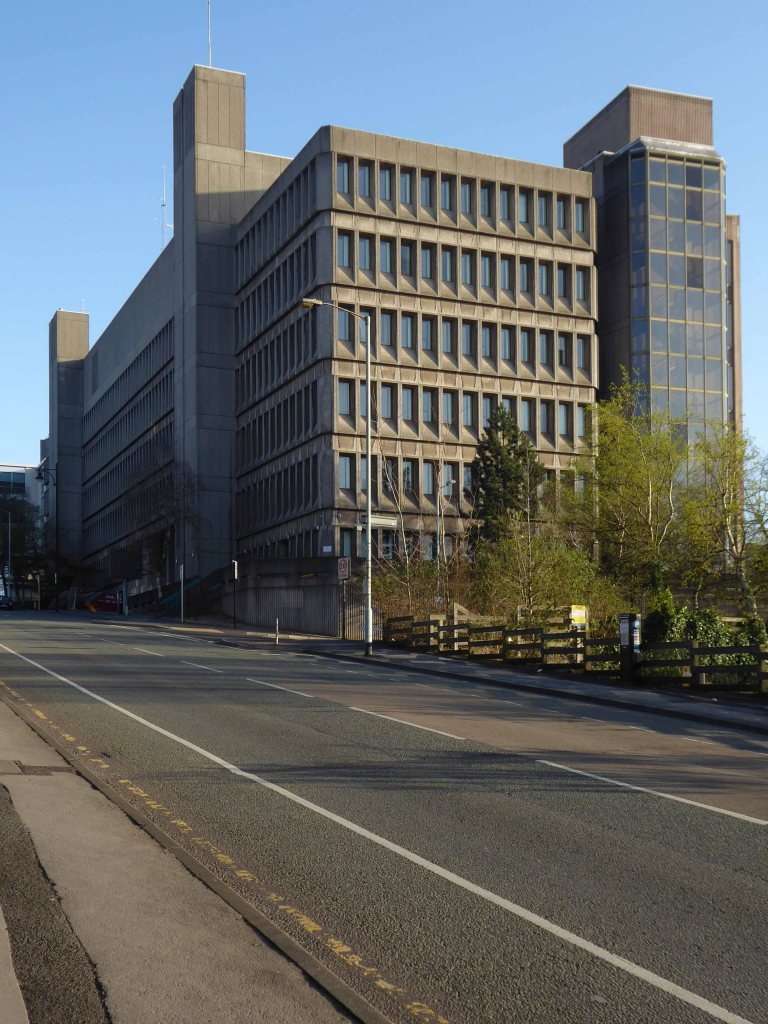
The office complex is still standing, now home to Manchester Police, I risked arrest and incarceration, in order to record the distinctive tile work, rectilinear grid and concrete facades.

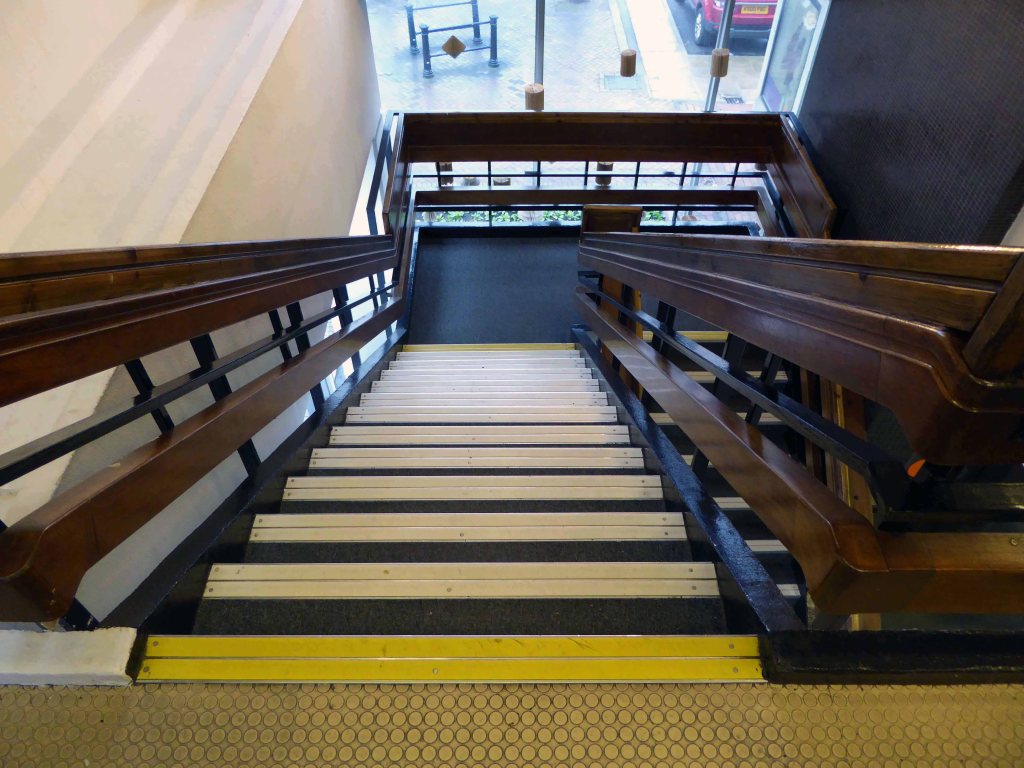
Attracting several suspicious stares from the open glazed stairwells.

Let’s take a look.

Mitzi Cunliffe – Owen’s Park #2

293 Wilmslow Rd Fallowfield Manchester M14 6HD

We have of course been here before visiting Mitzi Cunliffe and her work – Cosmos

Mitzi Solomon Cunliffe January 1st 1918  December 30th 2006

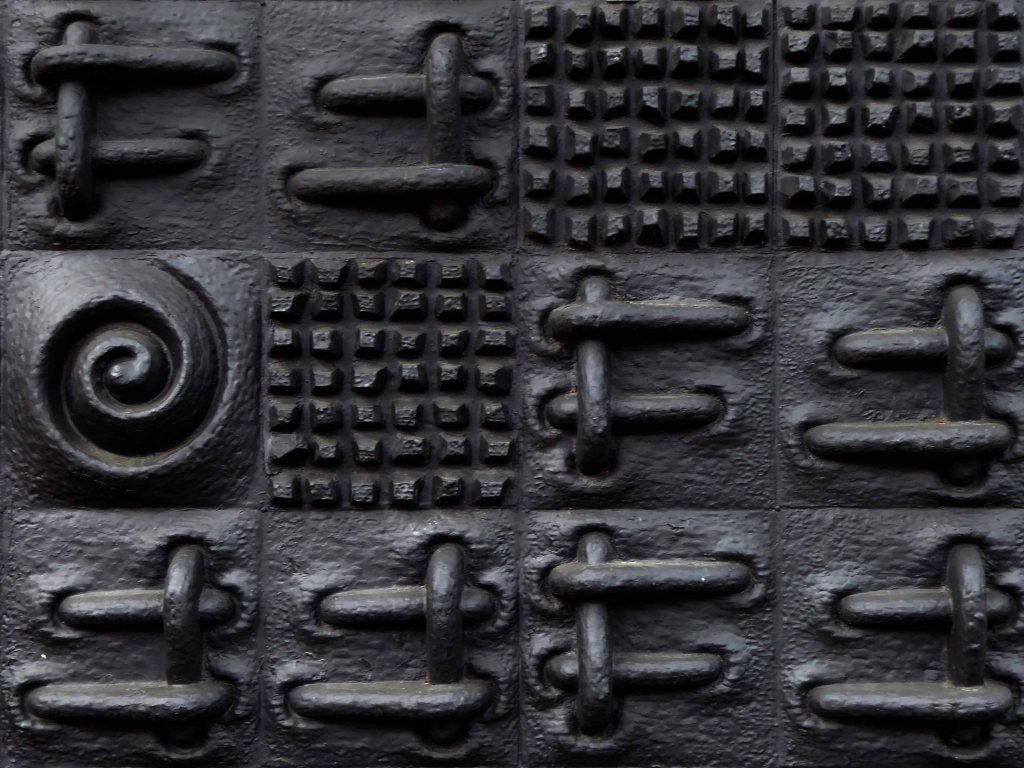
This time we are taking a peek around the back.

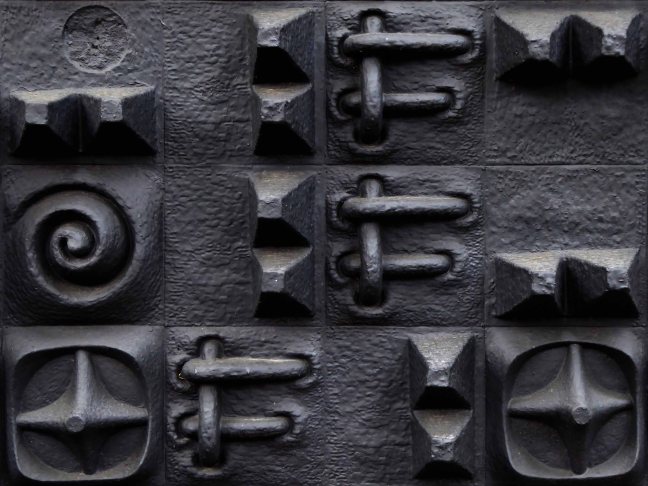
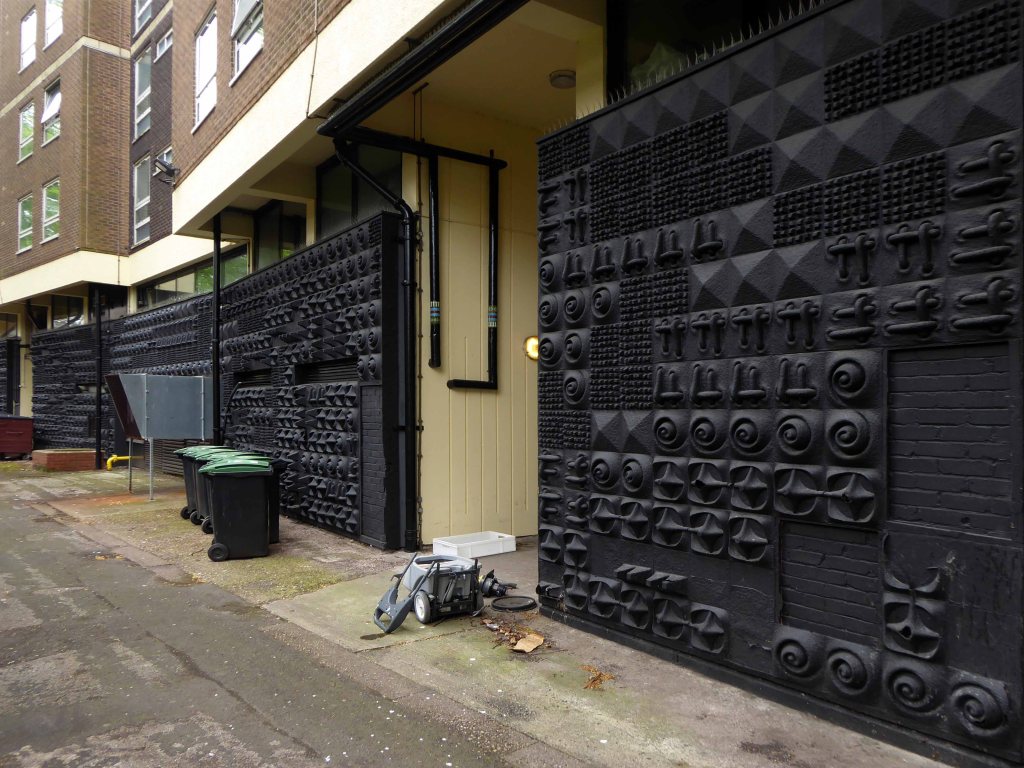
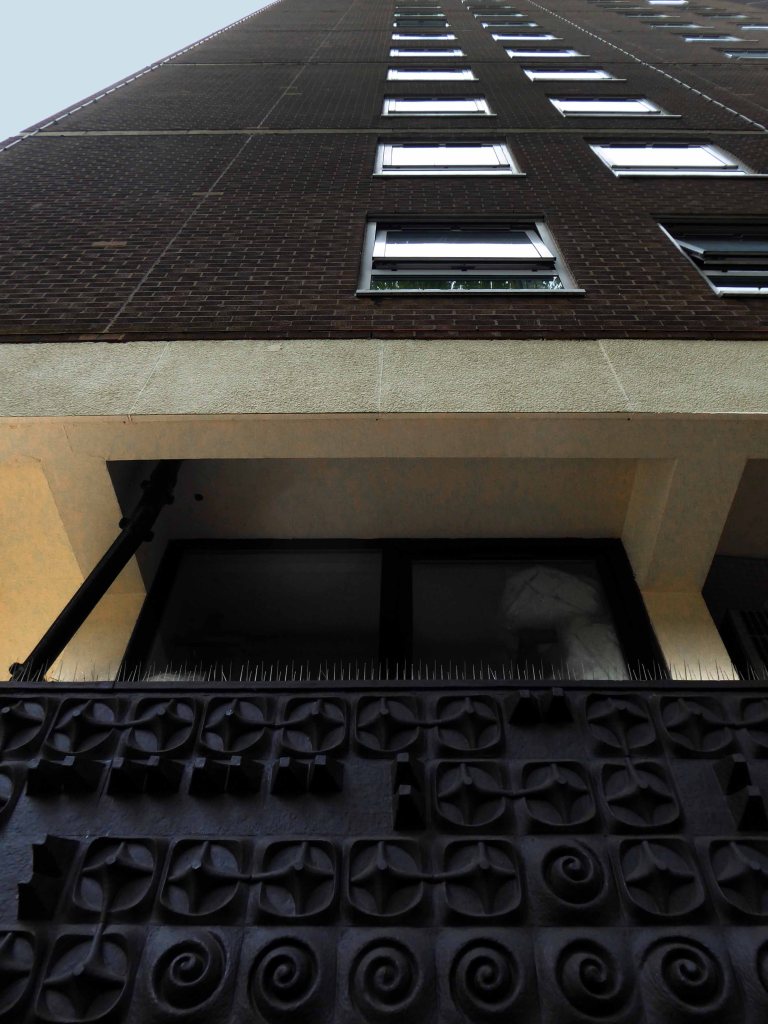
Having passed by on the top deck deck of the 42 on my way home to Stockport, I espied an extension of the sculpture to the rear of the tower.

I vowed to return!

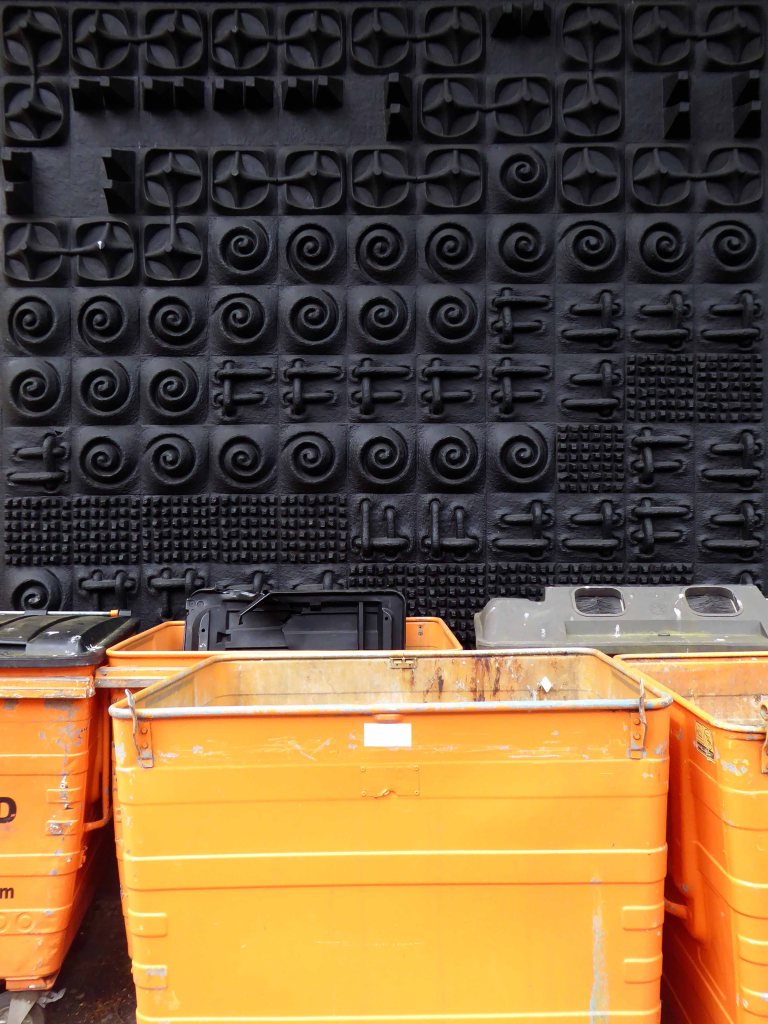
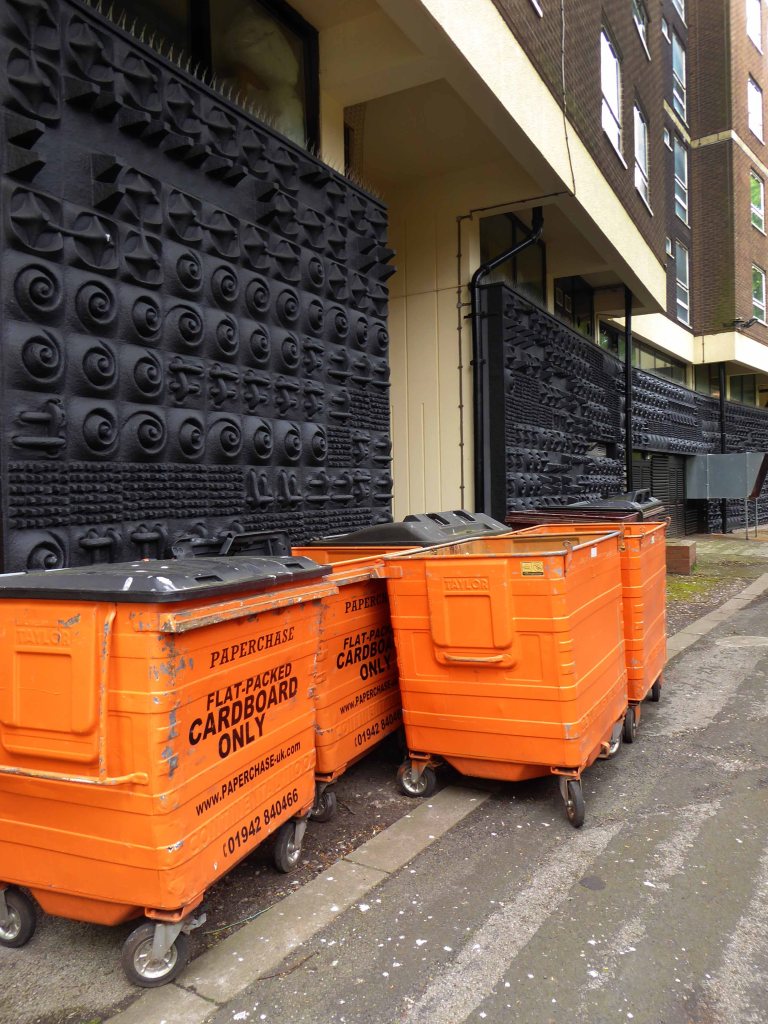
Fighting through extraction units, wheelie bins, hoppers, plus a disused and disabused vacuum cleaner, I found myself in the narrow service area, where I did my best to get back from the wall, hard against the chain link fence.

The things you do.

For some much needed light relief, air and open space I revisited the front face of the tower.

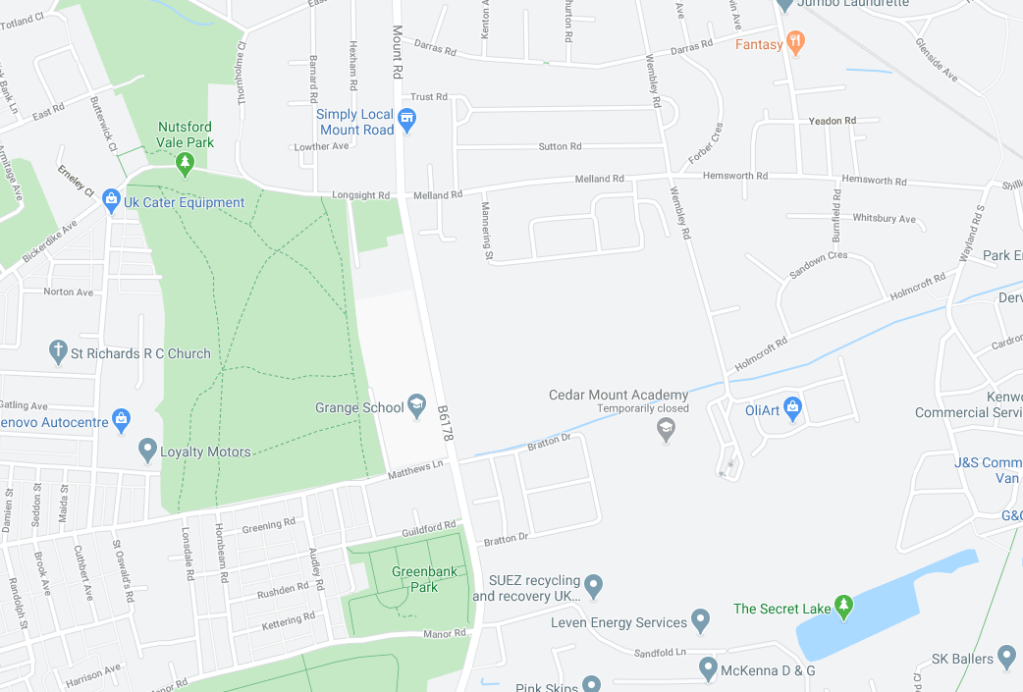
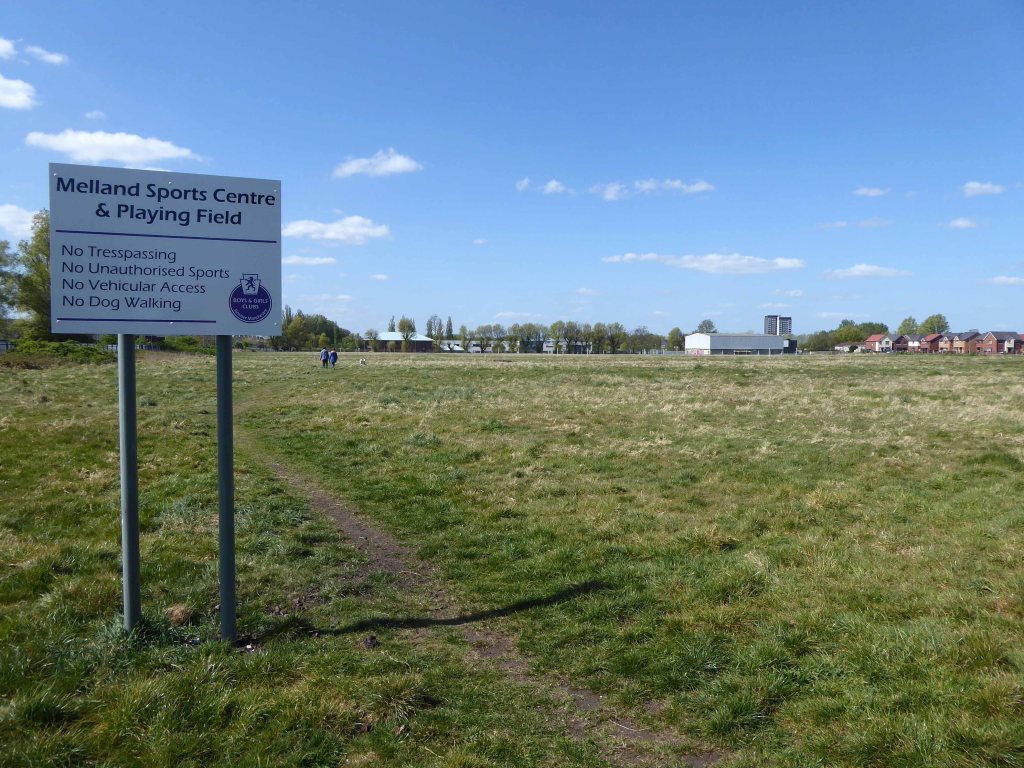
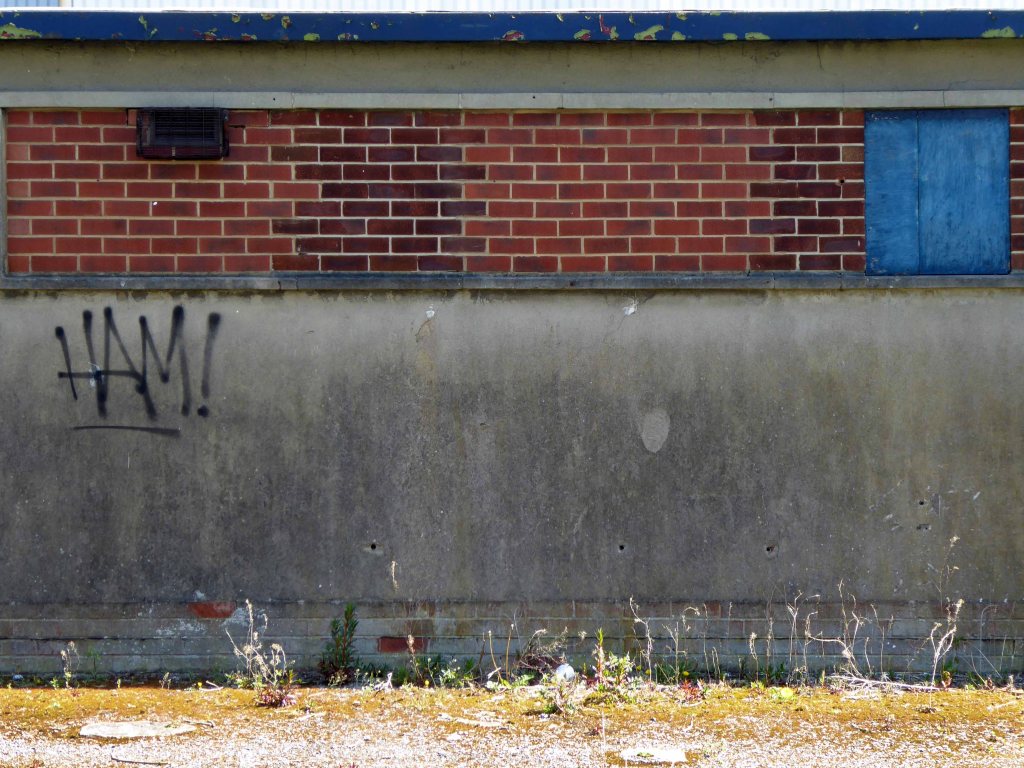
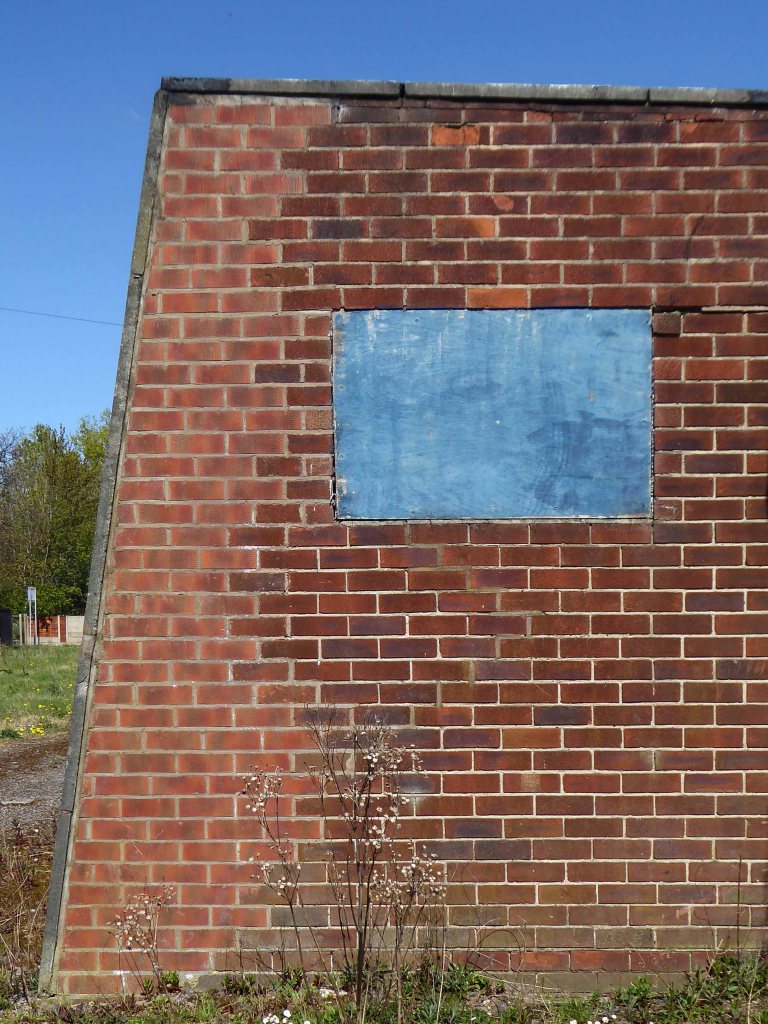
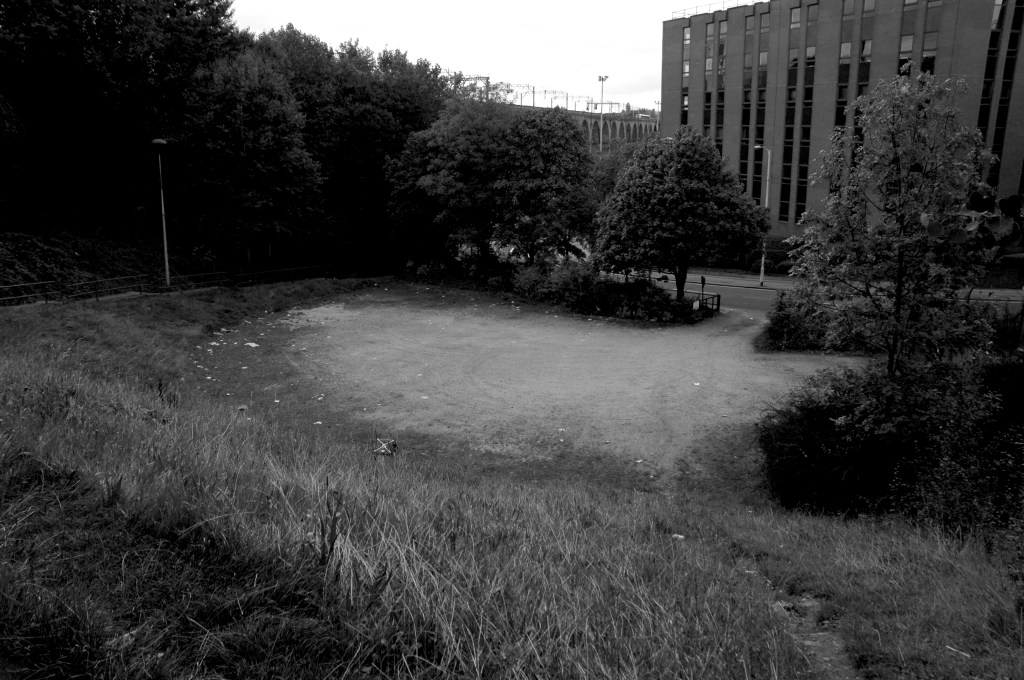
Mellands Playing Fields – Mount Road

Does it all begin here with Frederick Melland?

His zeal for play-grounds and open spaces was always great, and only a few years ago he took part in an agitation for the acquisition of a new park.

Seen here at the centre of the contemporary map – an empty space with no indication of its current use, or past status – drawn a blank.

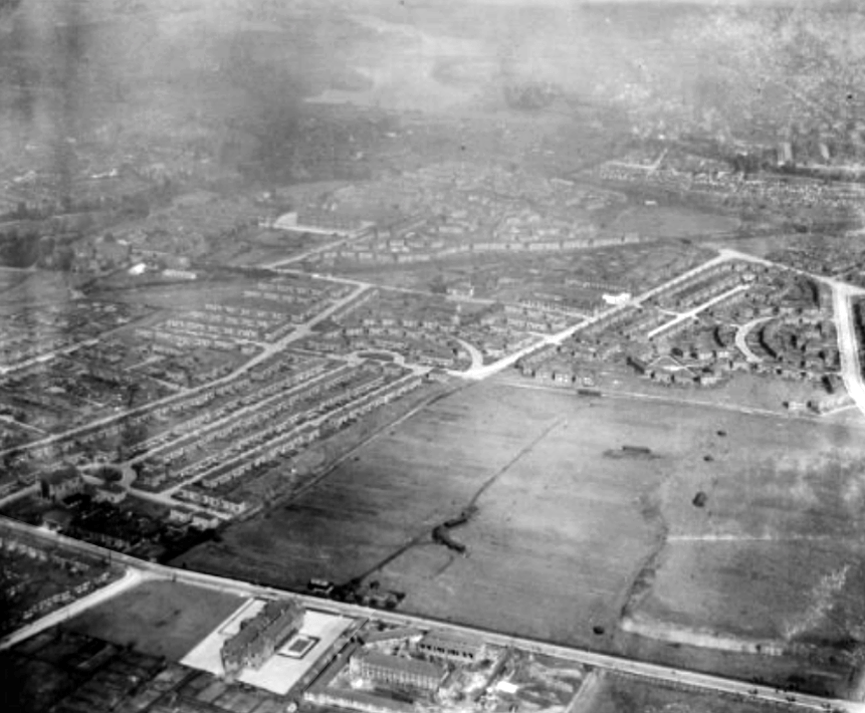
It’s here in an aerial photograph of 1931.

Photograph – Britain From The Air

Surrounded by newly built social housing.

Melland Road 1965

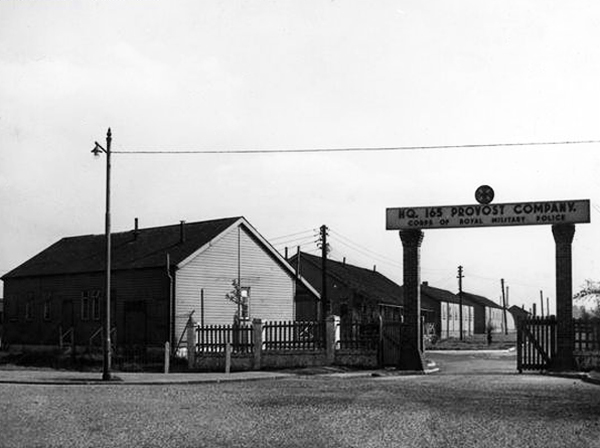
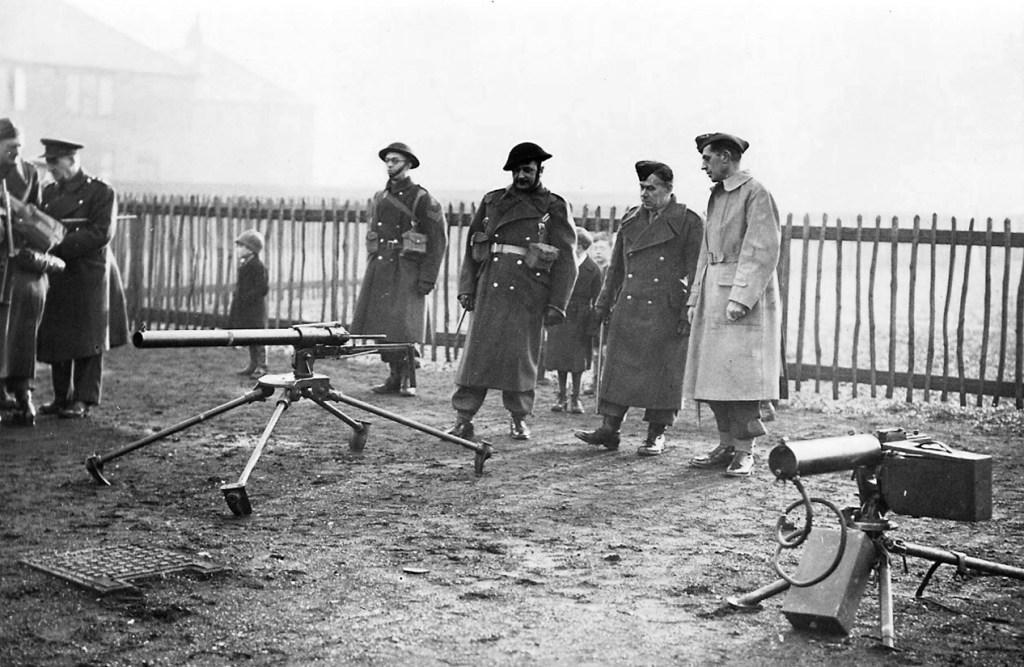
Levyboy’s website informs us of the fields’ wartime uses:

As a Military Police and POW Camp
The 48th Battalion Manchester Home Guard used the facilities 

Photograph Brian Wood

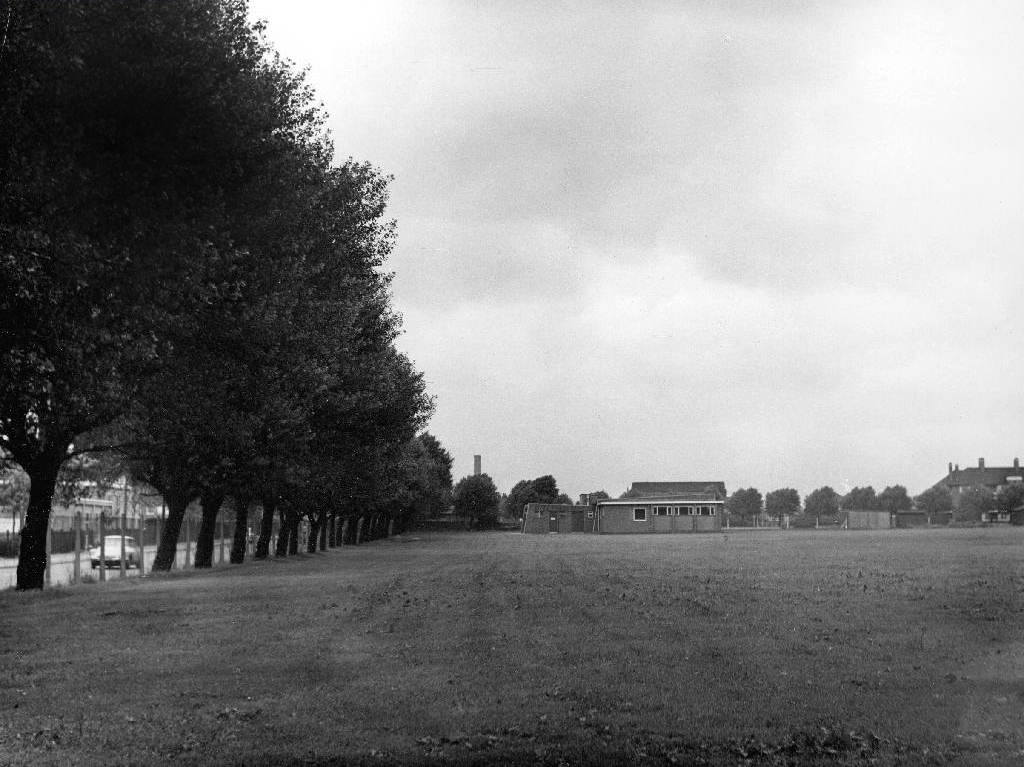
I remember from the 60’s onwards the fields in use for amateur football – pubs, clubs, schools and works all supplying teams to the plethora of leagues across the city.

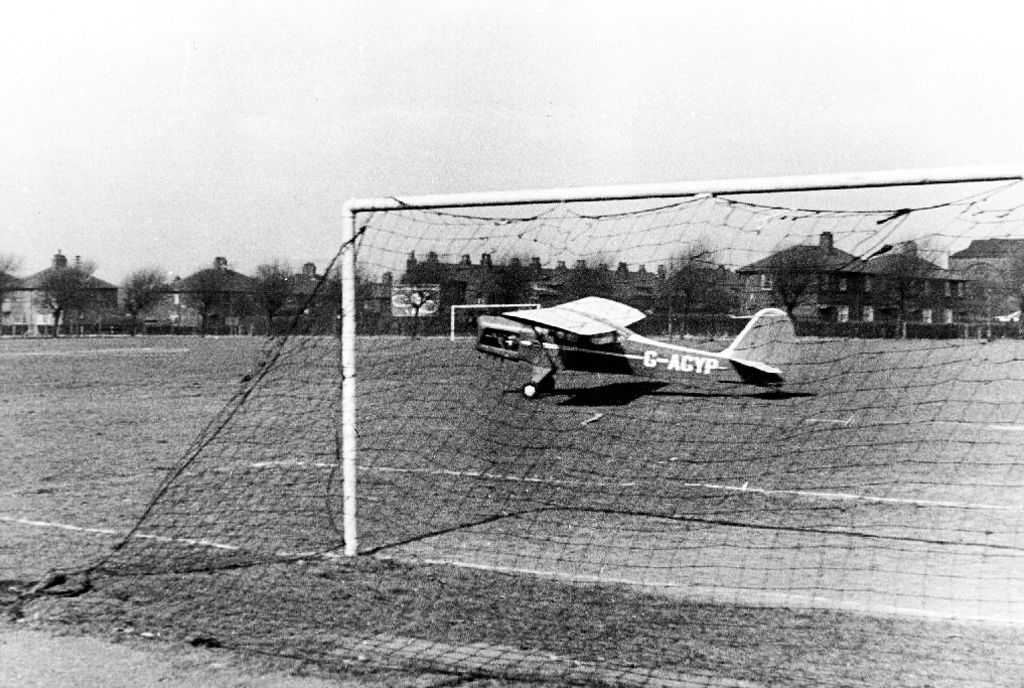
Auster Aircraft of Airliners forced to land at Melland Playing Fields whilst towing banner 1961
1963

Archive photographs – Local Image Collection

The pitches and the sports centre built in 1978 are now closed.

On my previous visit in 2015 the facilities were still open.

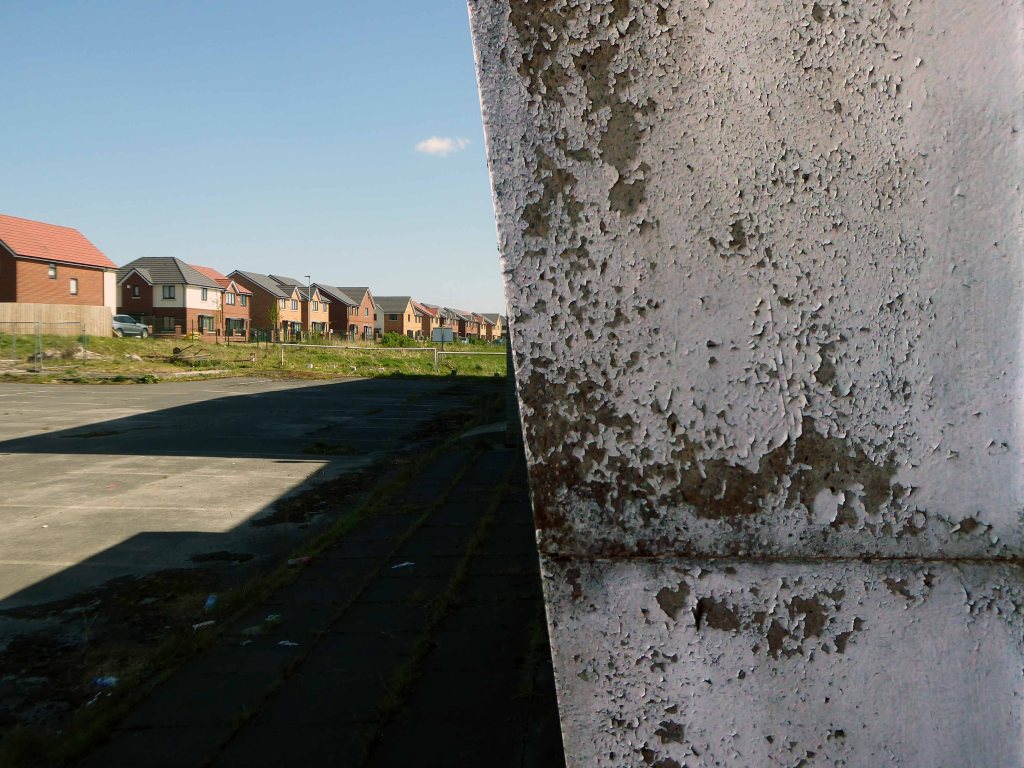
New housing has been built on the northern edge.

Gorton has received significant regeneration and investment over recent years as have nearby areas including Levenshulme. This is an aspirational, exciting new development and Arkwright Place has something for everyone – from first time buyers to growing families and downsizers – with a huge range of beautiful homes on offer.

A local campaign was organised to preserve the open space:

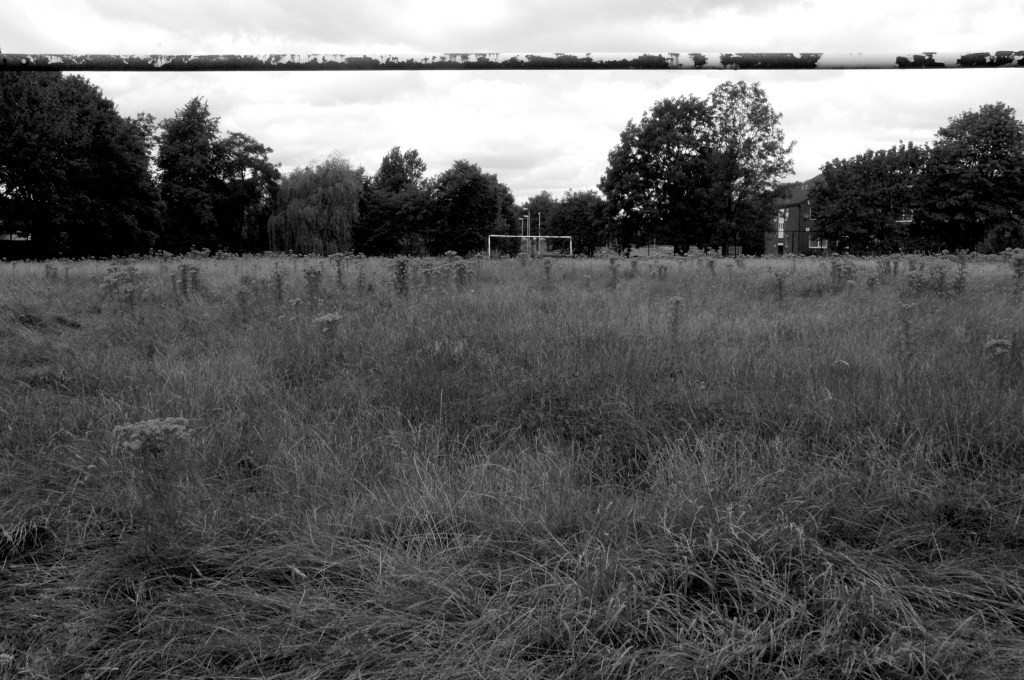
At present the fields are fenced and secured – though gaps have been made to allow access for strollers.

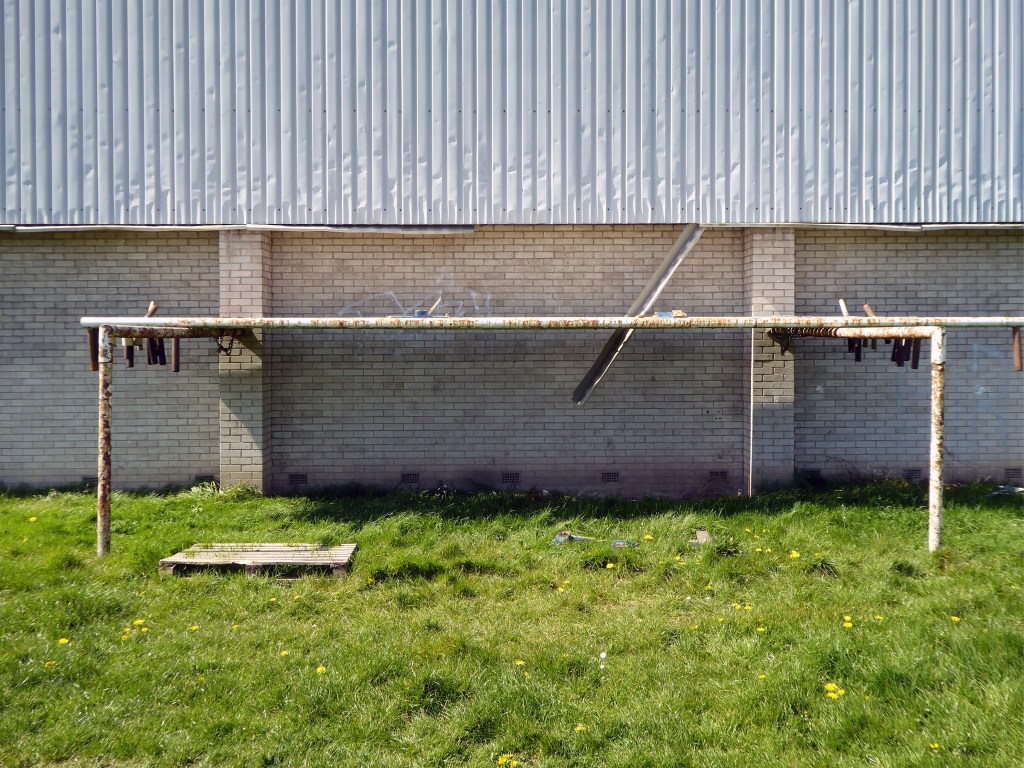
The goalposts still stand though currently without crossbars.

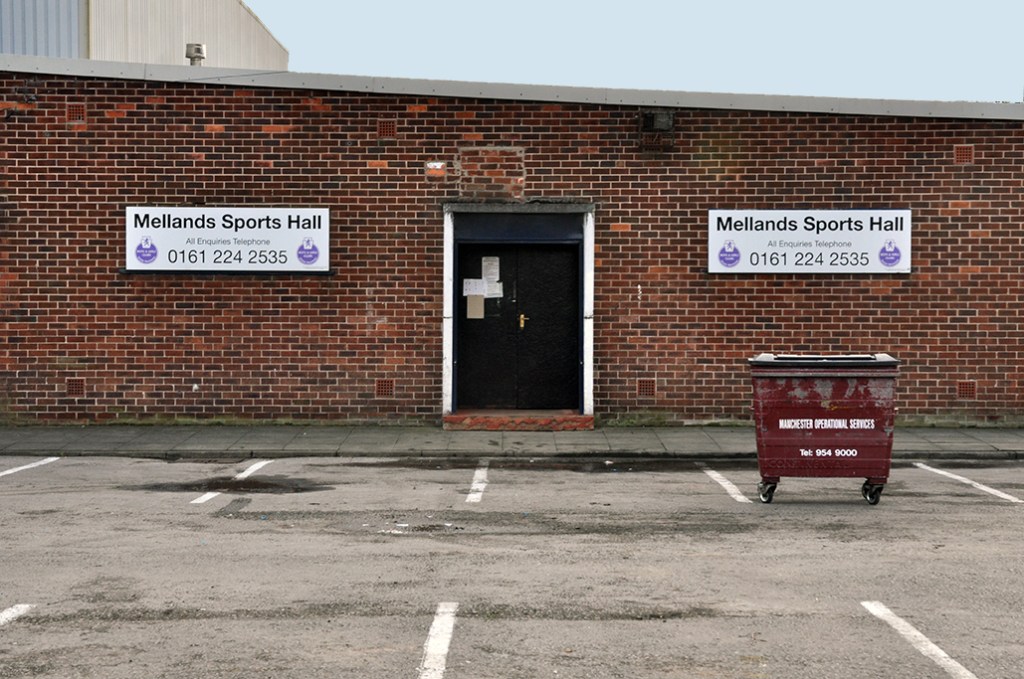
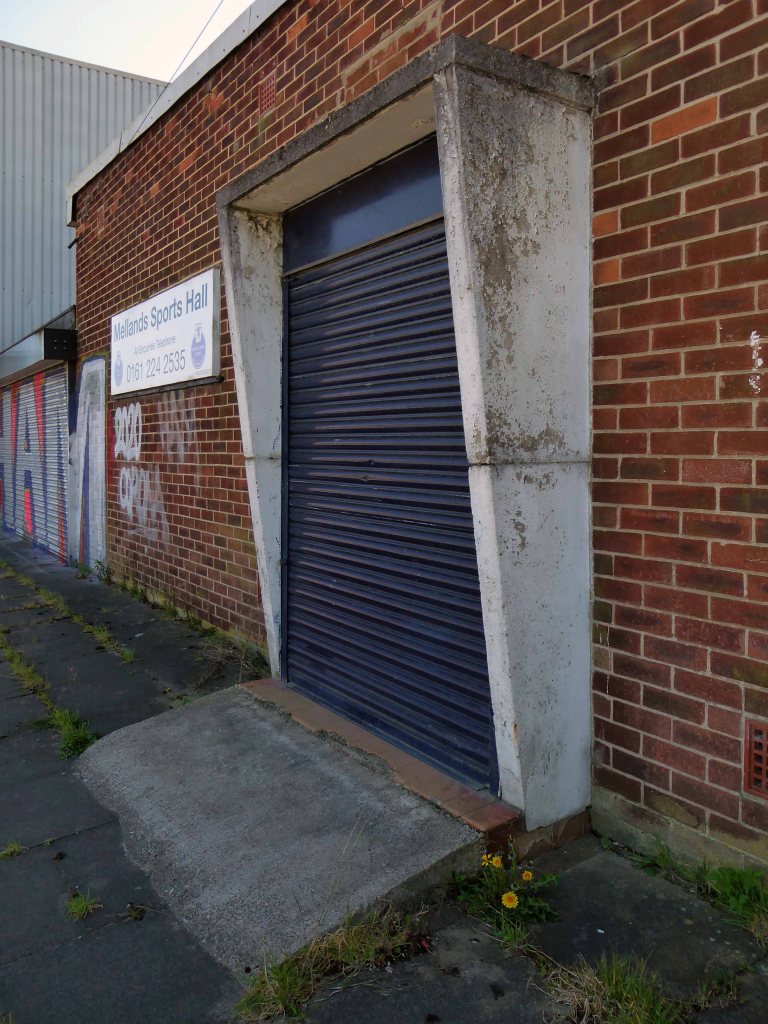
Which are stored by the Sports Hall.

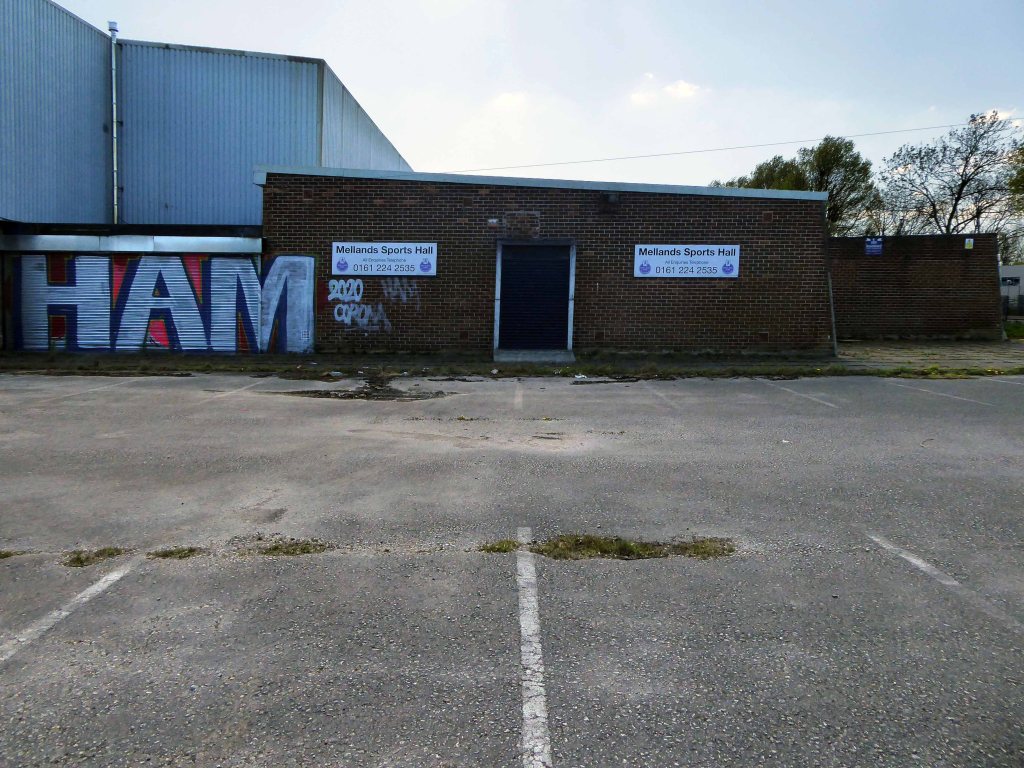
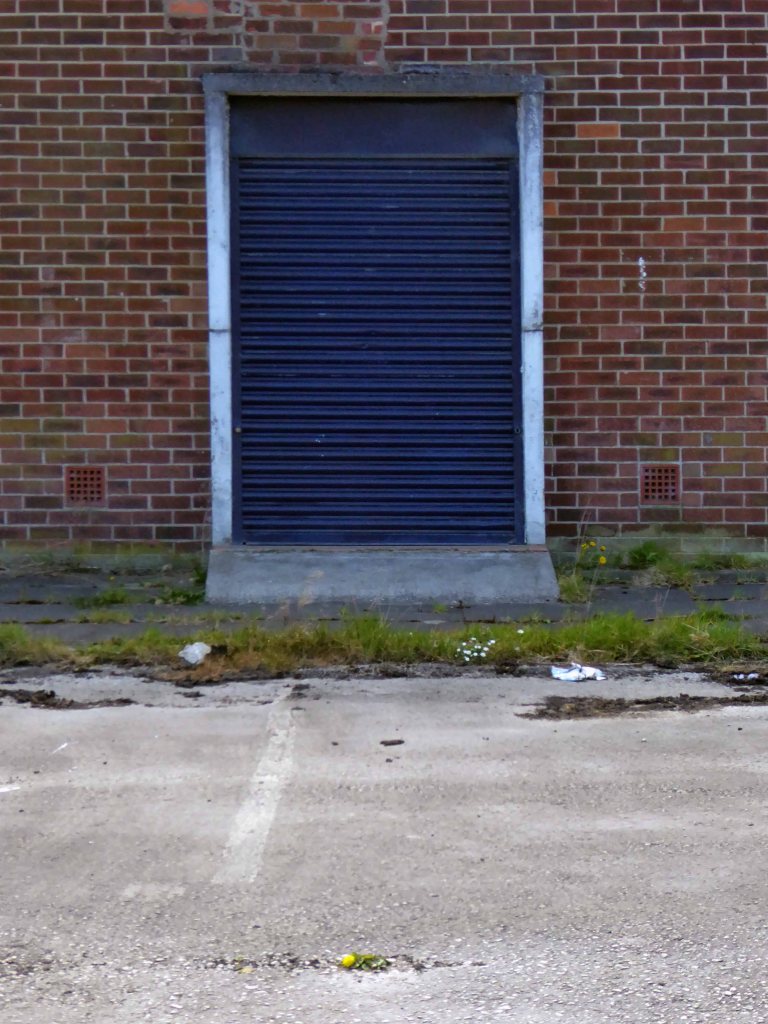
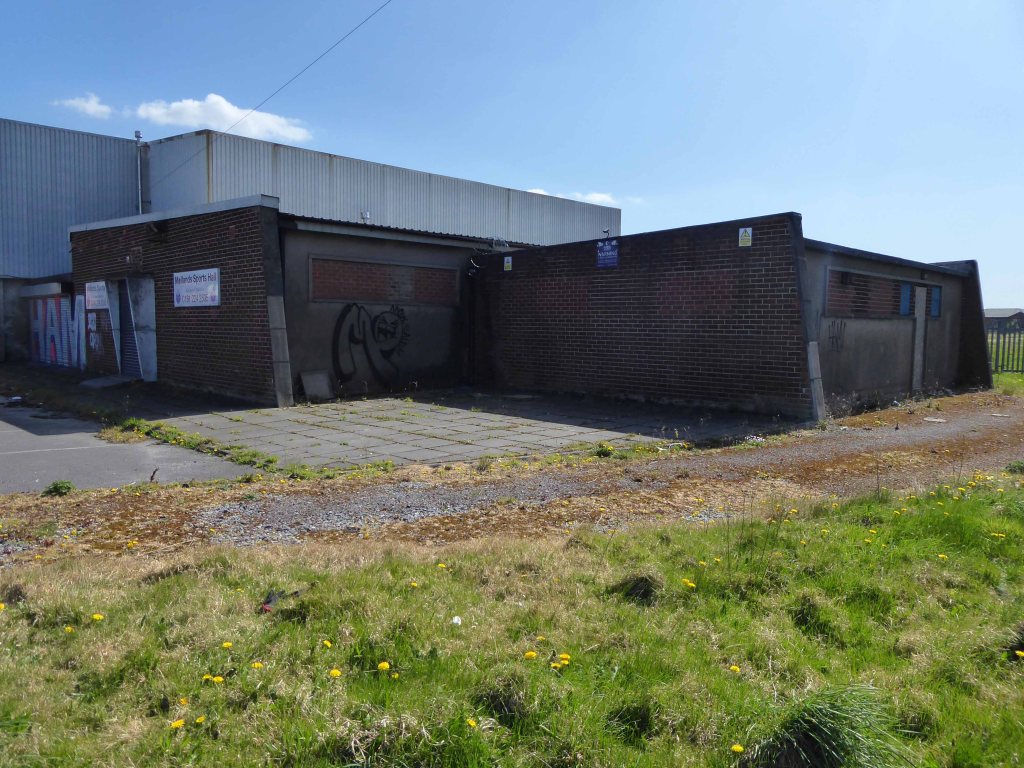
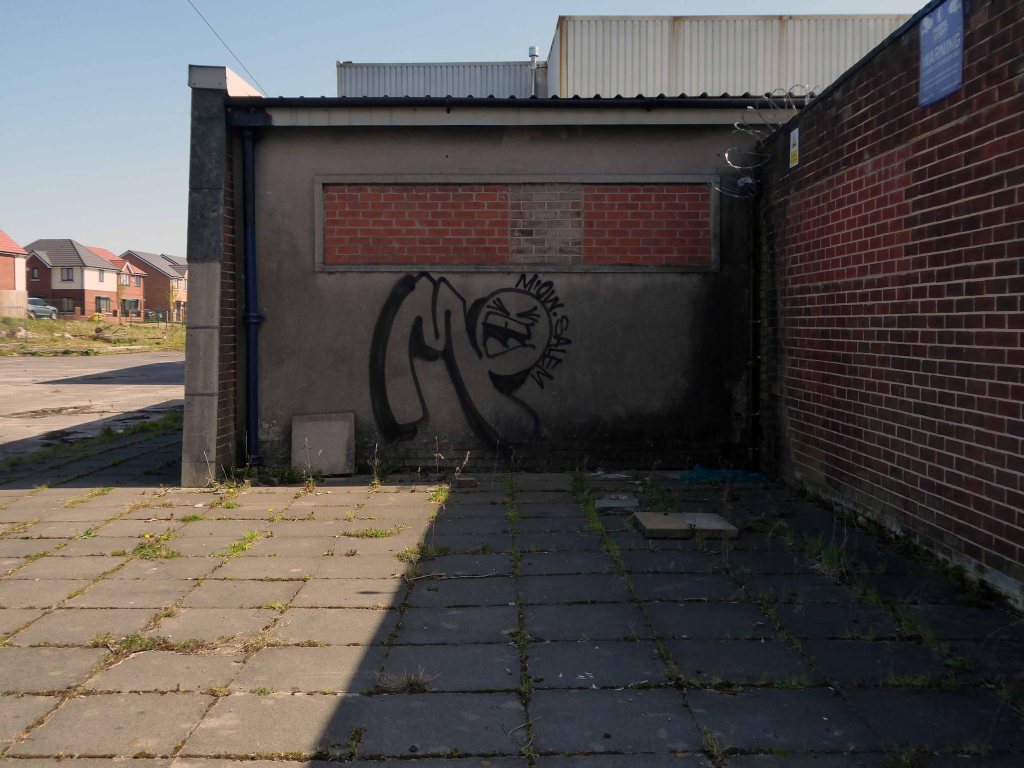
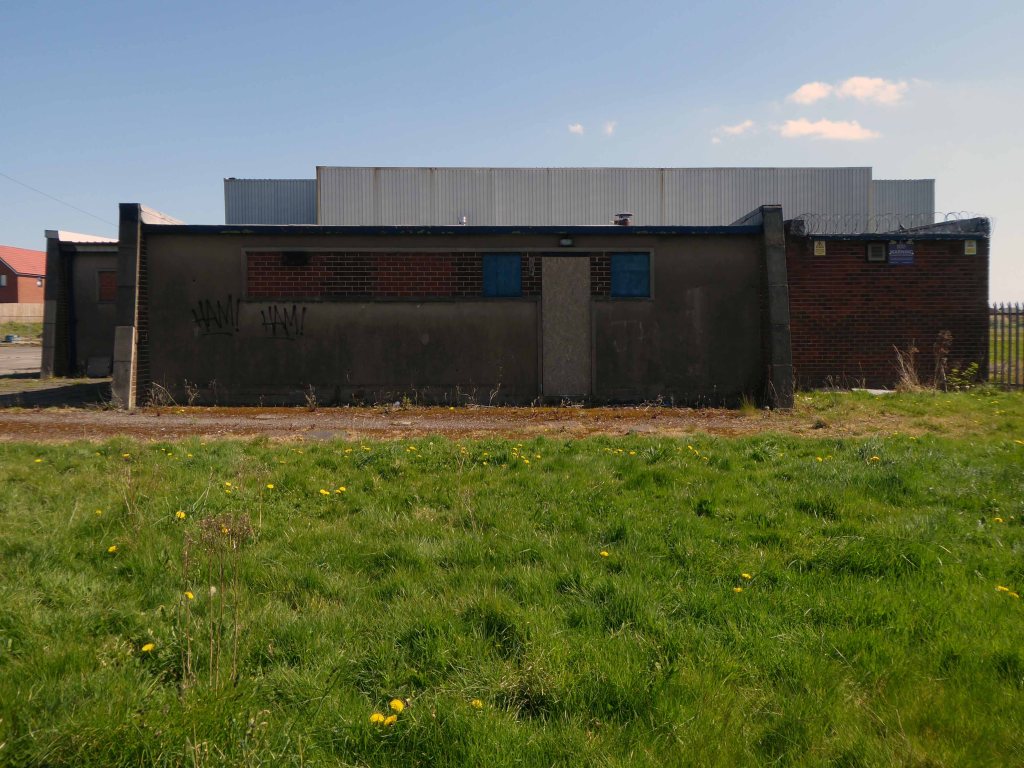
The buildings are mothballed – awaiting what?

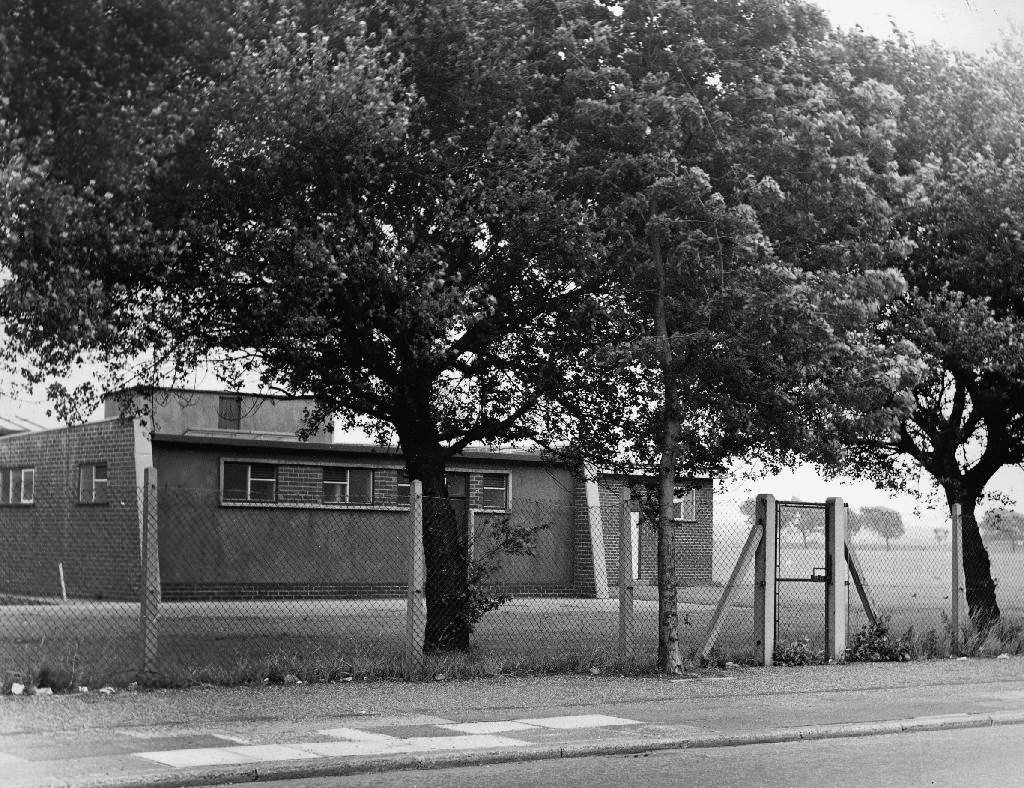
For me the concrete and brick functionalist changing rooms are a thing of beauty and seem to have been a part of my life for quite some time, as I cycled back and to – on my way to work.

All Saints Church – Hale Barns

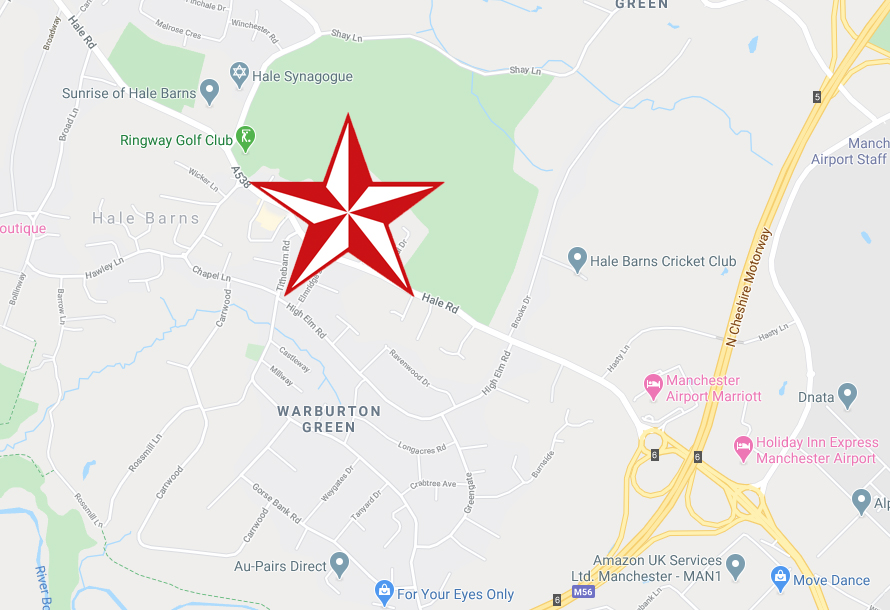
Hale Rd Hale Barns Altrincham WA15 8SP

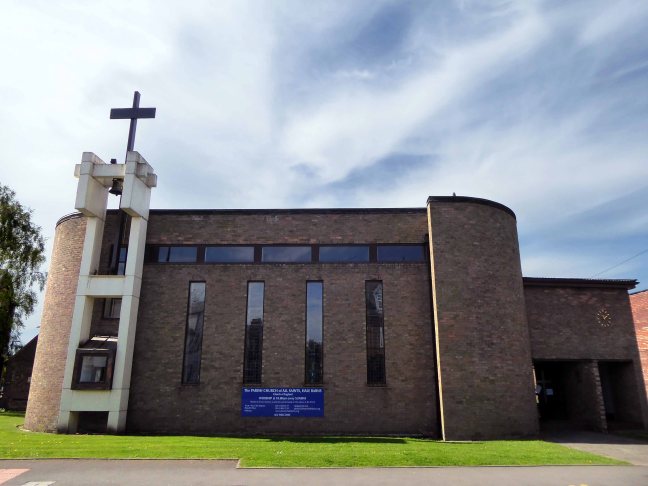
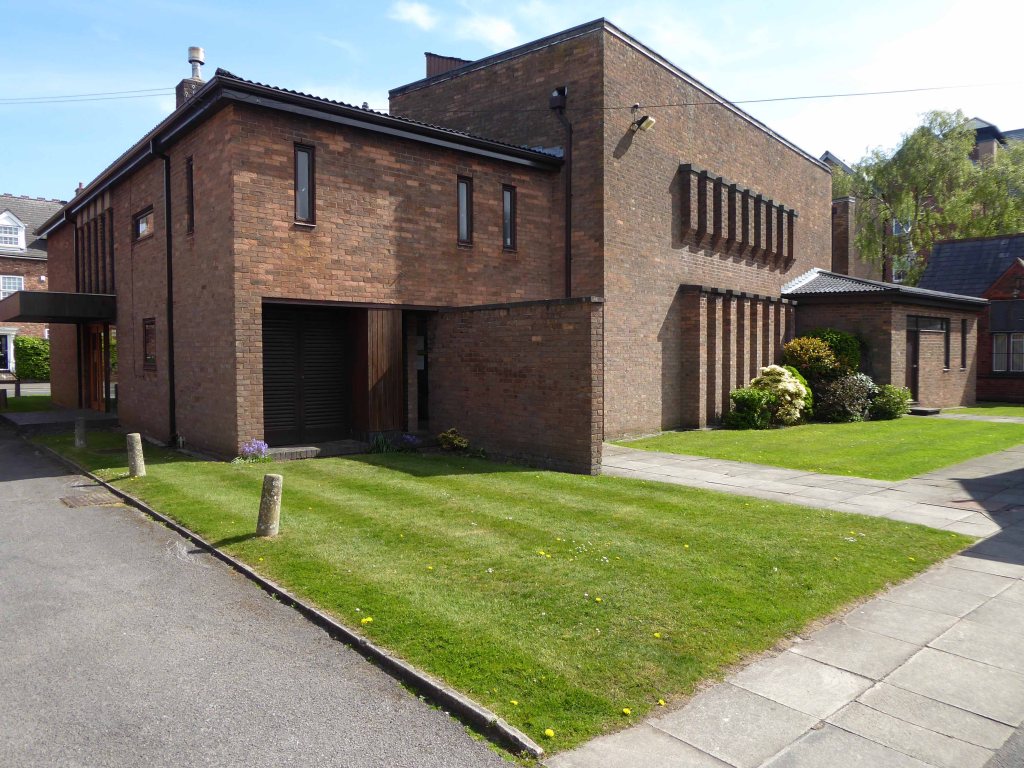
As Hale Barns grew in the 1950s and 1960s it was clear that the small daughter church was less than adequate in terms of size and facilities, and under the leadership of the Rev Fred Cox, the then Vicar, a new church was planned for the site. Designed by Brian Brunskill, All Saints Church was consecrated in 1967.

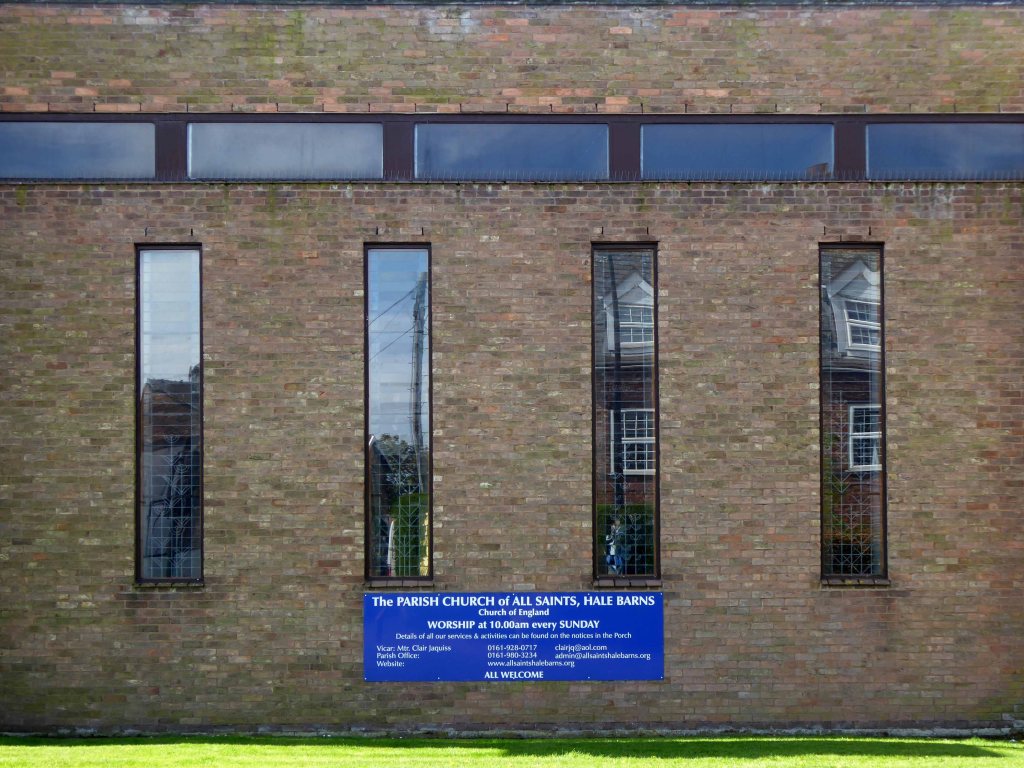
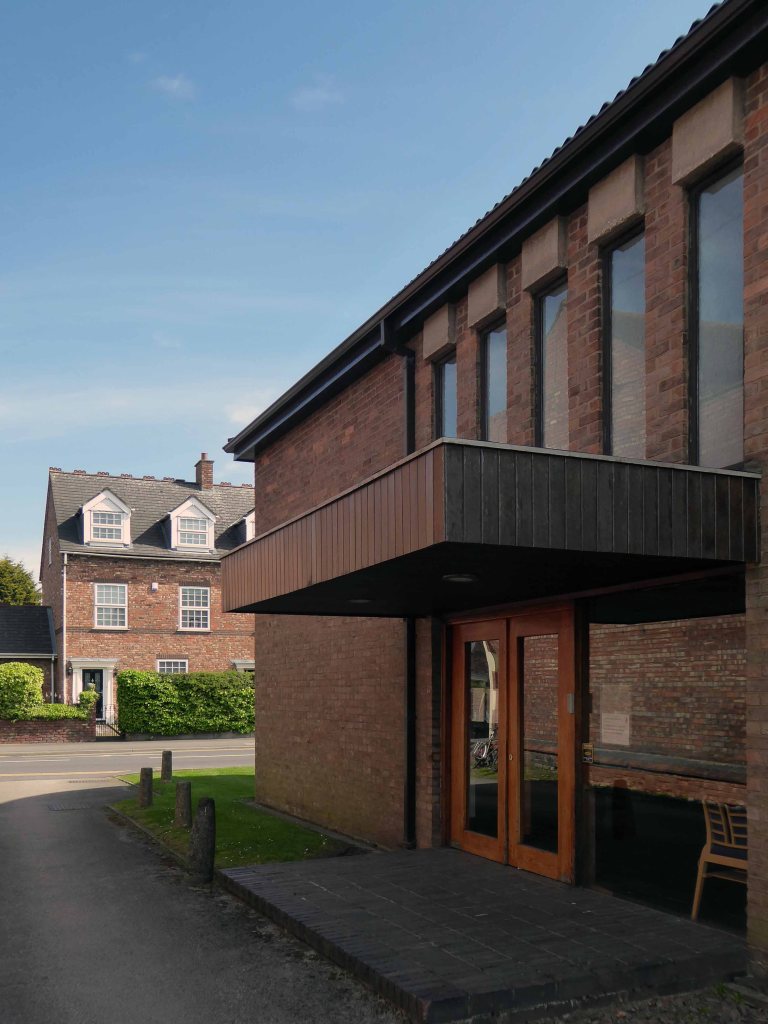
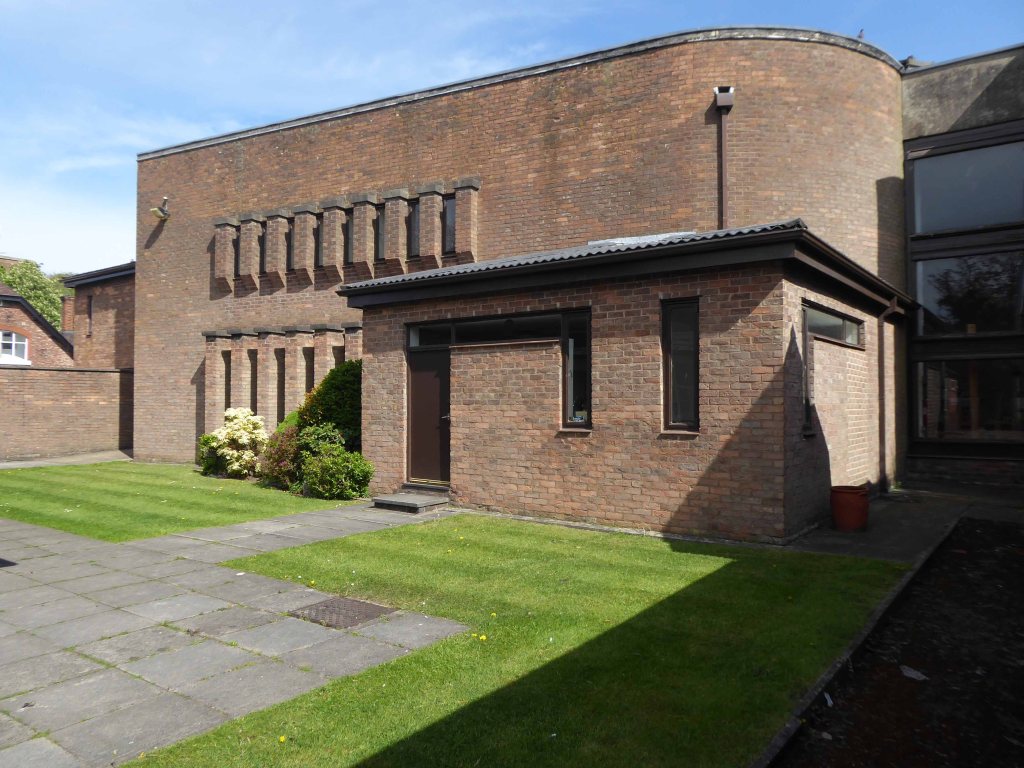
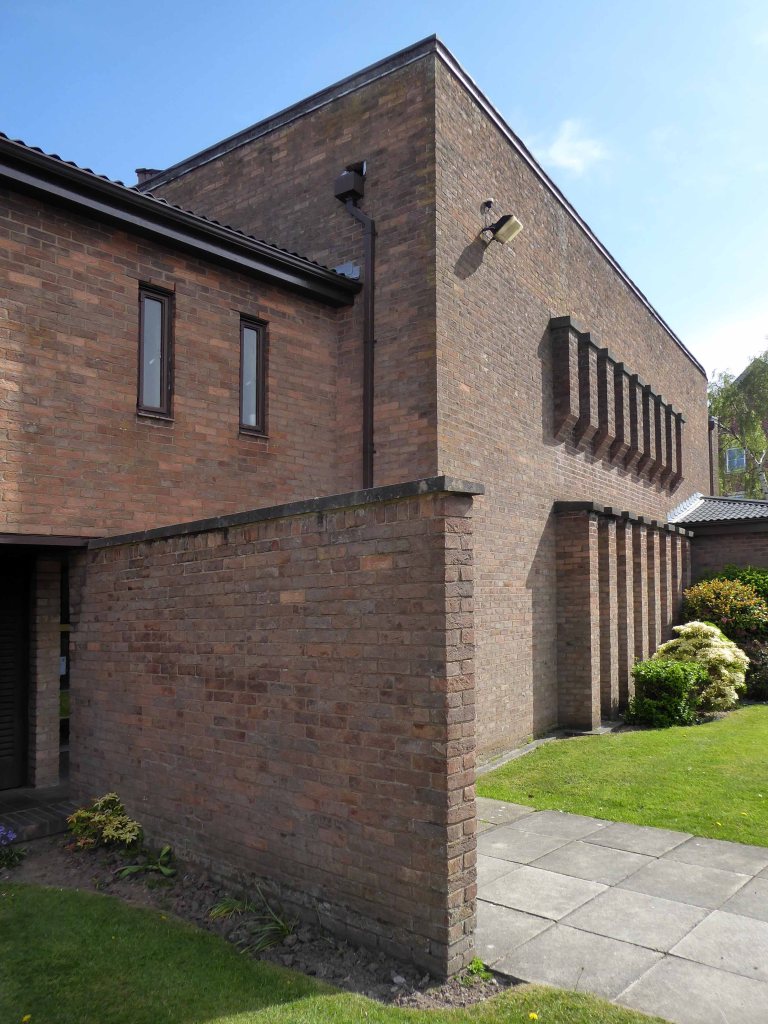
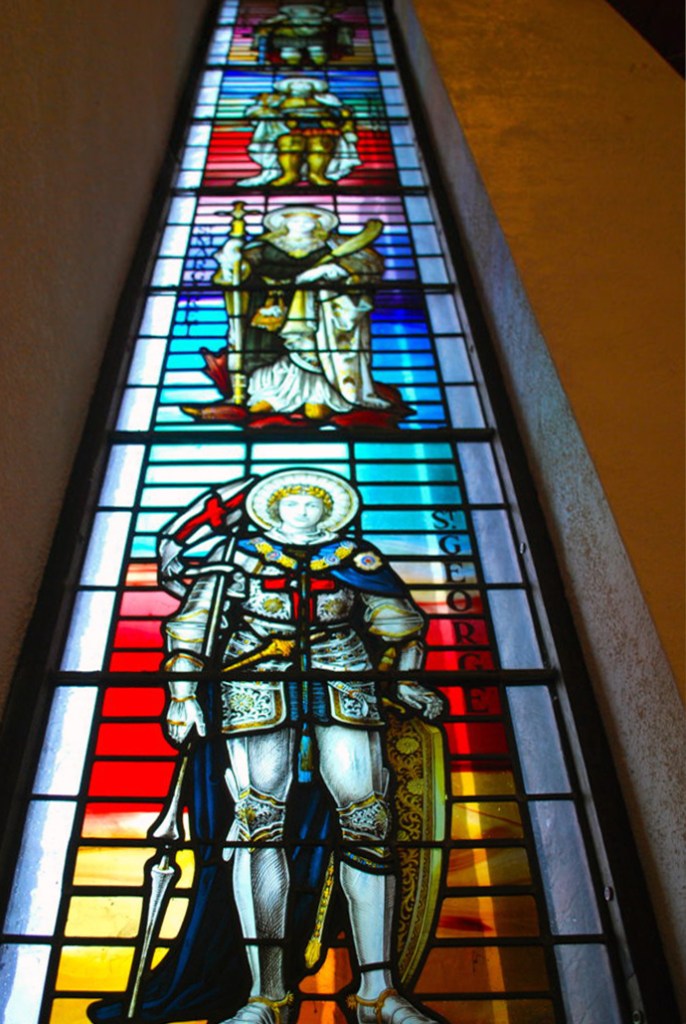
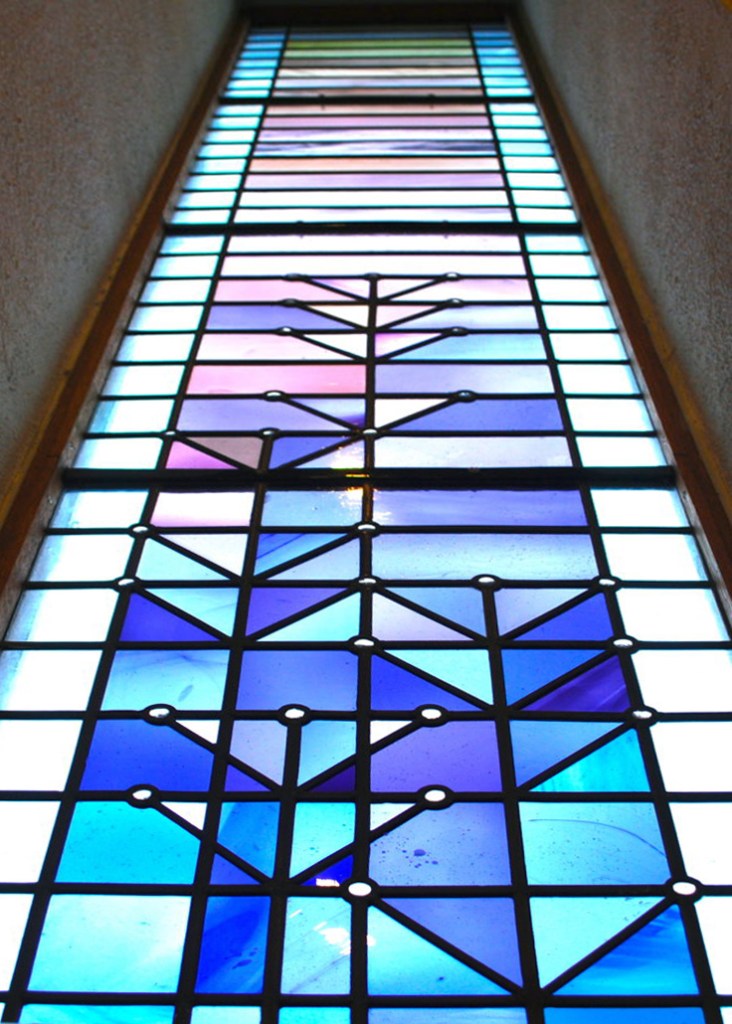
Outside it can seem a rather stark building, of brown brick, set back from the busy Hale Road but inside it is full of light and space.  The influence has clearly been that of the French architect Le Corbusier, and there is a wonderful interplay of curved and straight walling.  At first there was no stained glass, but in the early 1980s glass by the Japanese artist Sumiko was installed in the north windows.  This includes a stylised tree-of-life design. In the baptistry there is some Victorian glass brought from St Mary’s Church.

In 2009 a radical and daring re-ordering of the building was completed. The church was carpeted and new furniture of high quality, designed and made by Treske, woodcarvers  of Thirsk, North Yorkshire, was installed.  The tree-of-life design in the 1980s glass has been echoed in the glass inserts to the Lectern and High Altar and also in the metal uprights of the Altar Rail.  All the fittings are moveable, giving a flexible space.  This flexibility give opportunities to explore how the building itself can enrich worship at different seasons of the Church’s year. 

All Saints

My first time in Hale Barns – hence my first visit to All Saints.

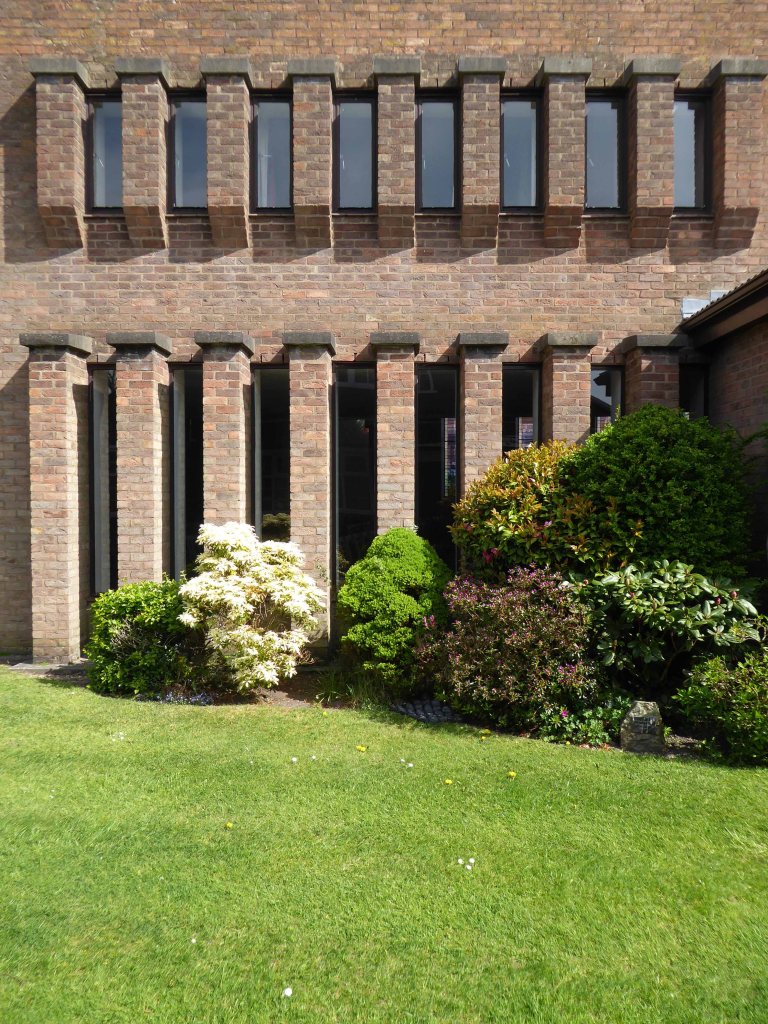
Small in scale, but large in ambition – a wonderful exercise in the calm controlled use of brick, rich in small details, along with an expressive mix of warm curves within a rigid grid.

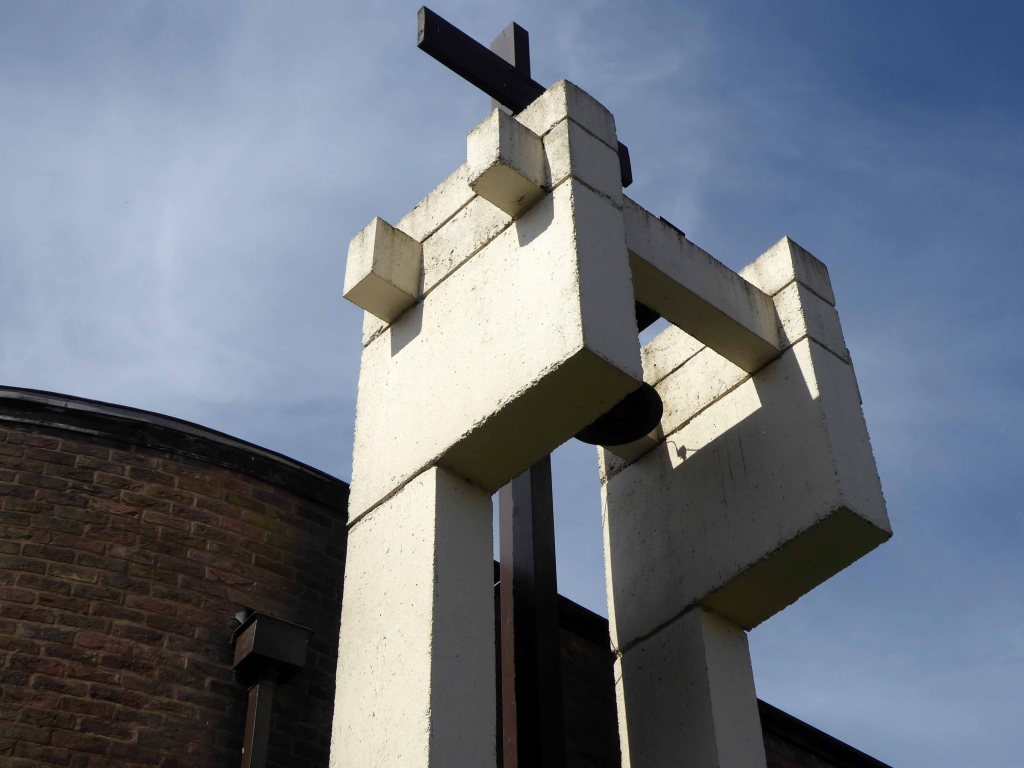
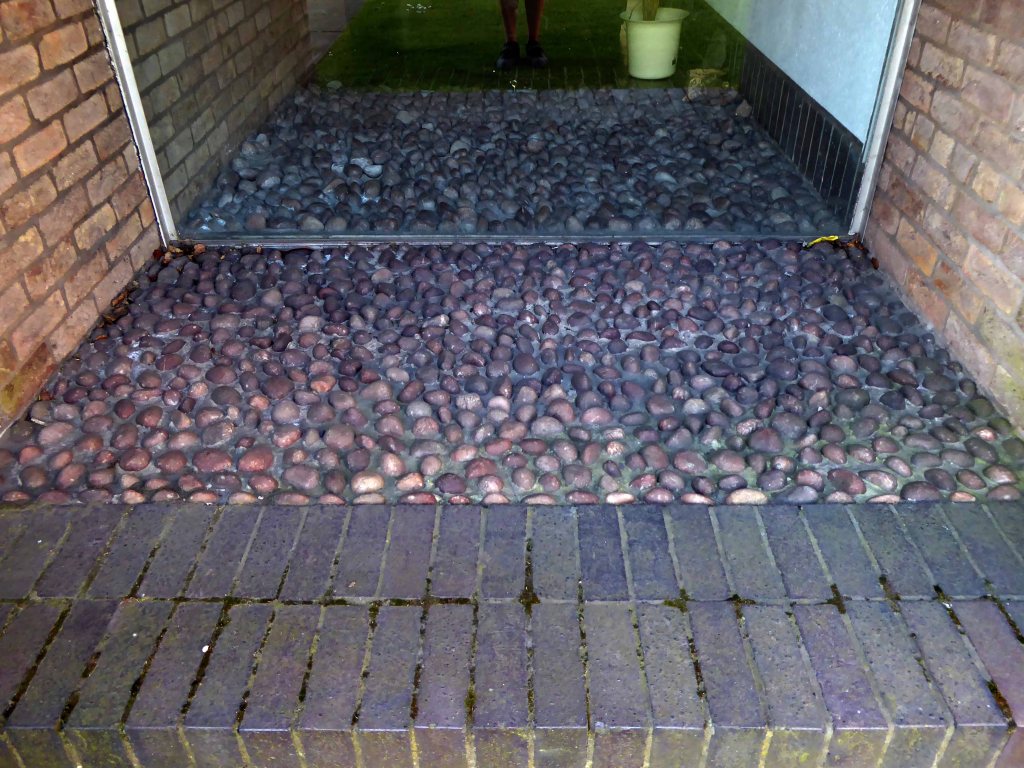
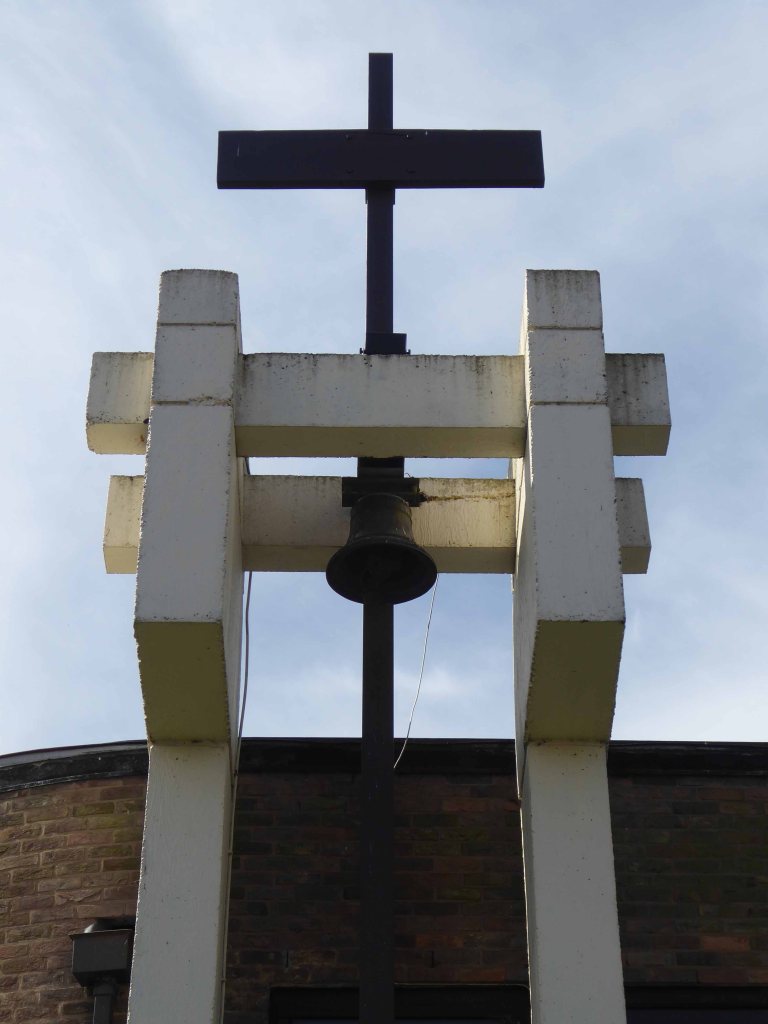
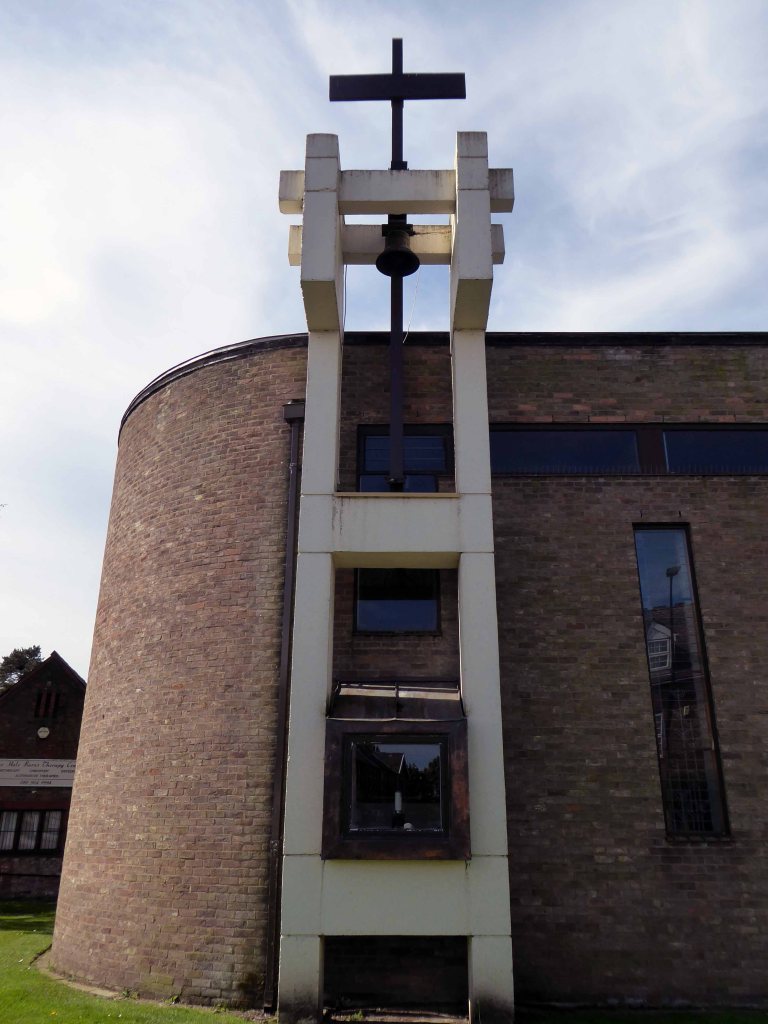
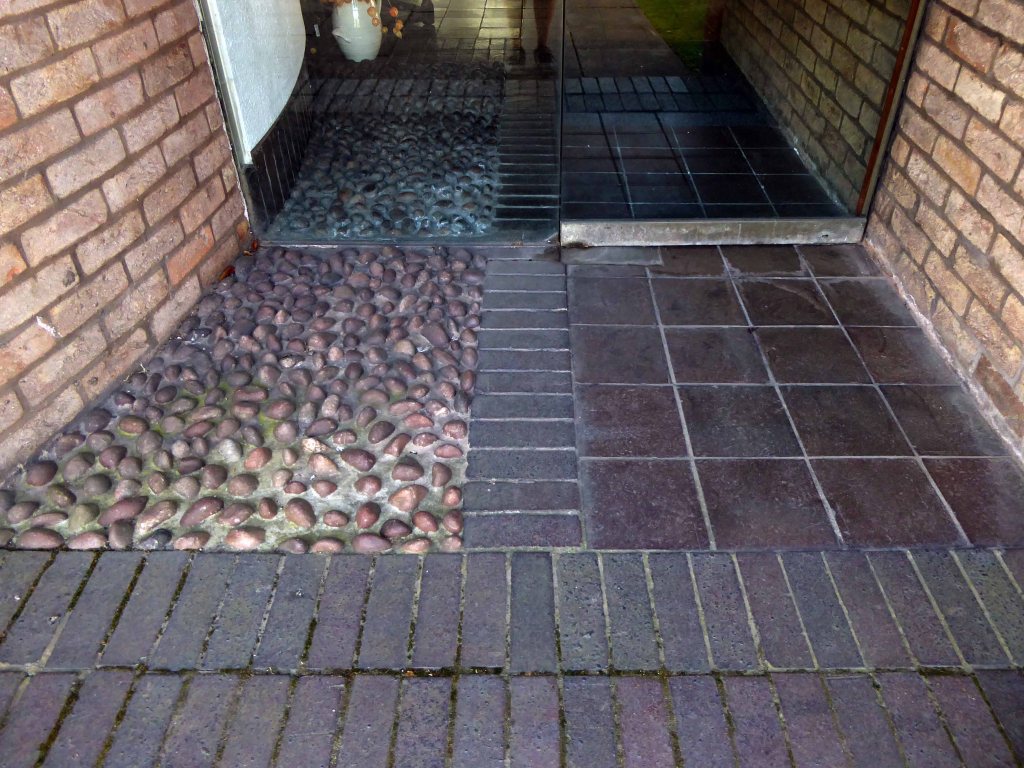
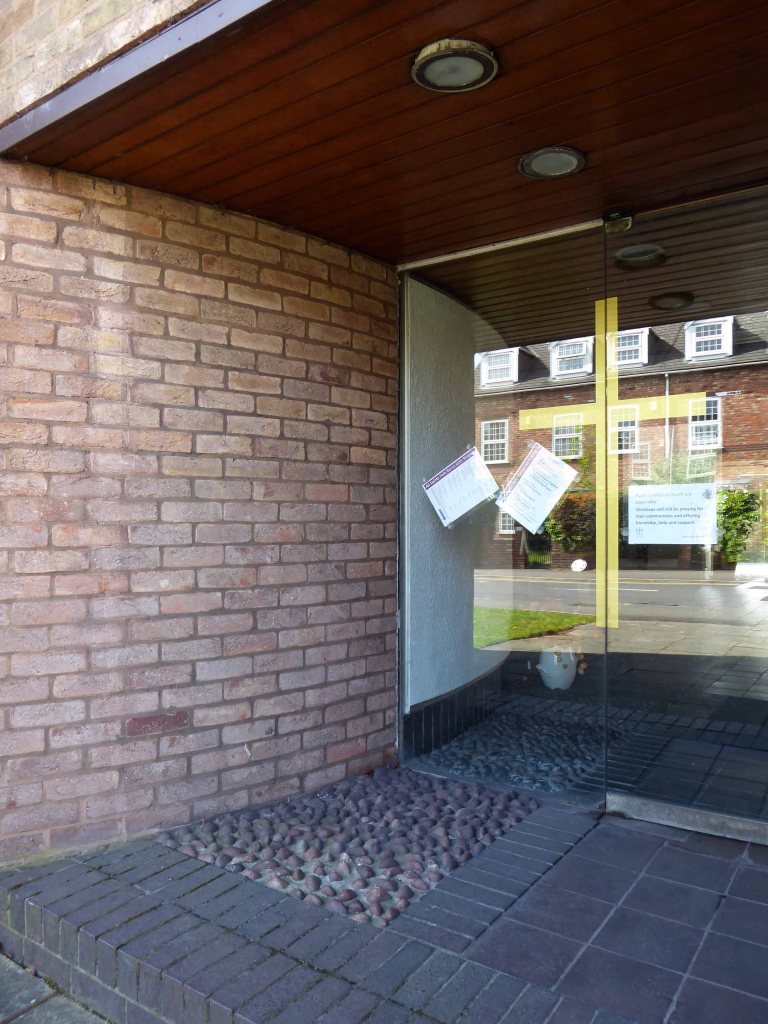
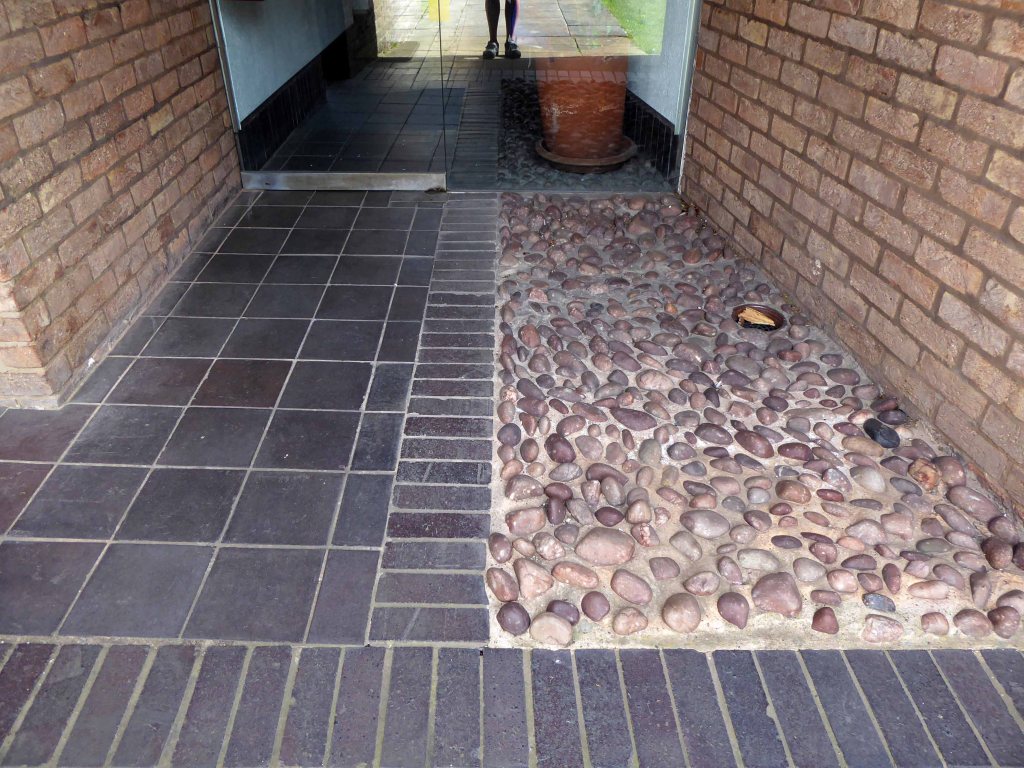
Of particular note is the sculptural concrete bell tower, the exterior use of pebbles in the porch which flow into the interior space, along with a discrete palette of grey tiling.

It demands to be circumnavigated – fresh surprises await around each turn, simple hard landscaping of flags, softer restrained planting and open areas of lawn, so very well tended.

Let’s take a look around.

Here are some images of the reworked interior taken from the All Saints gallery.

Renold House

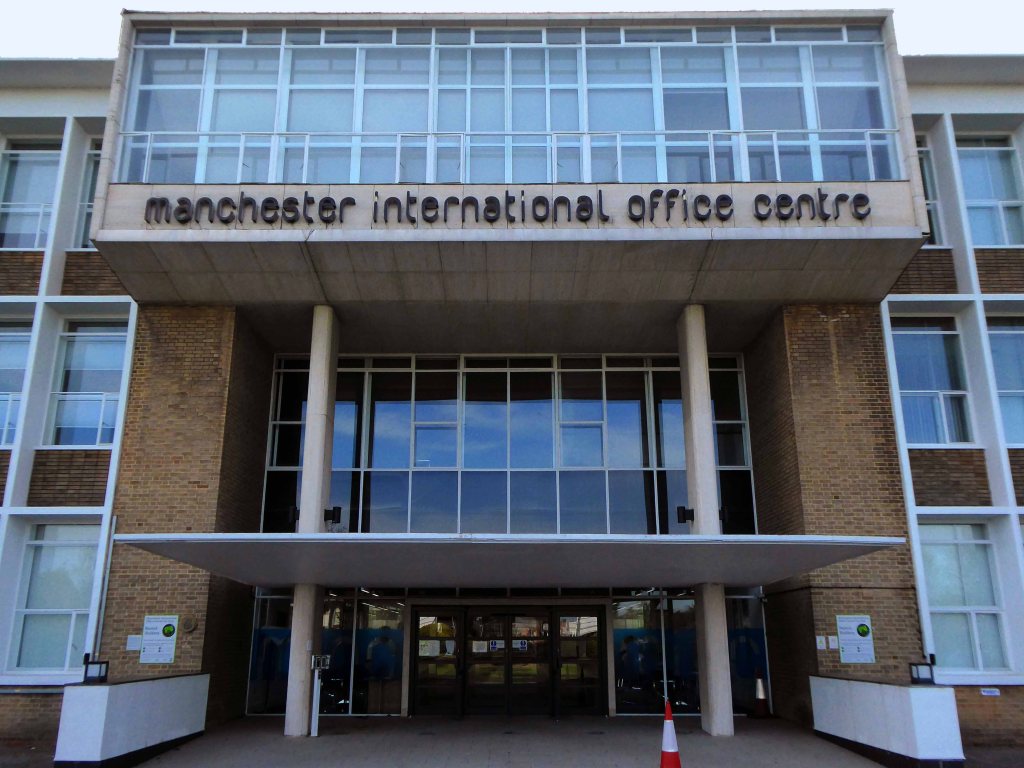
Manchester International Office Centre
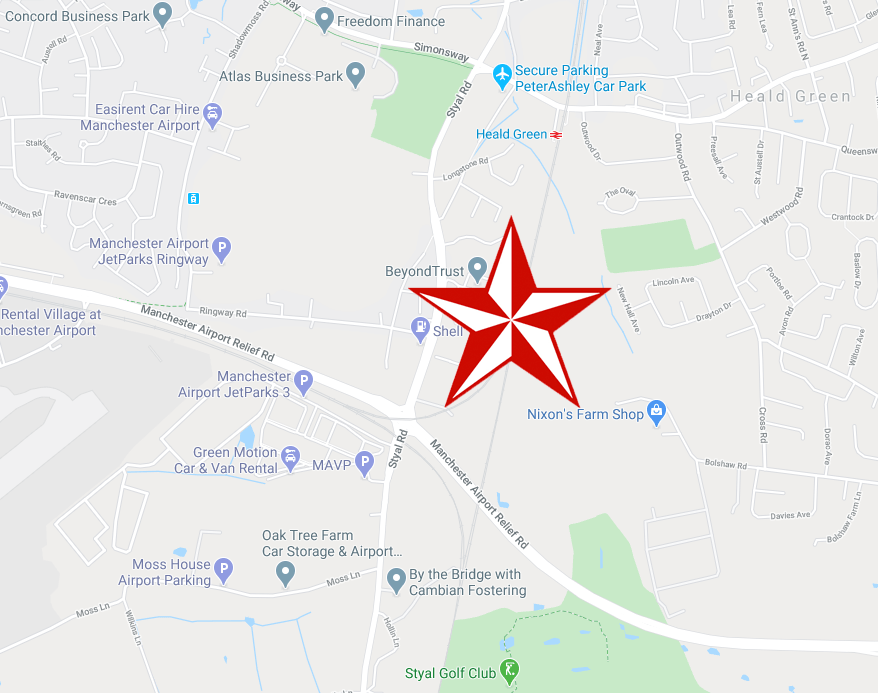
11 Styal Rd Wythenshawe Manchester M22 5WB

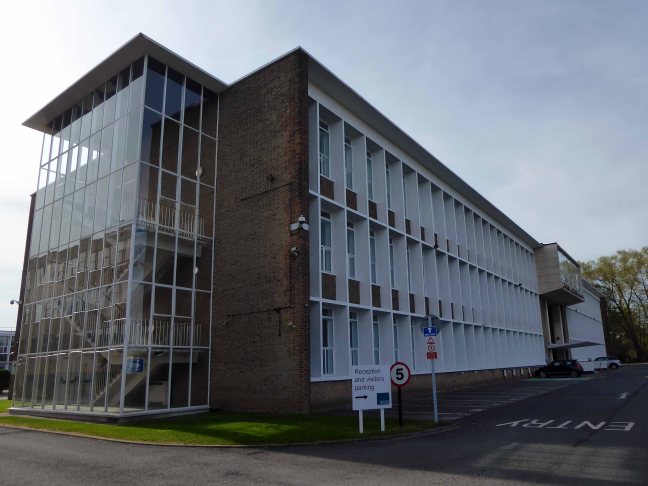
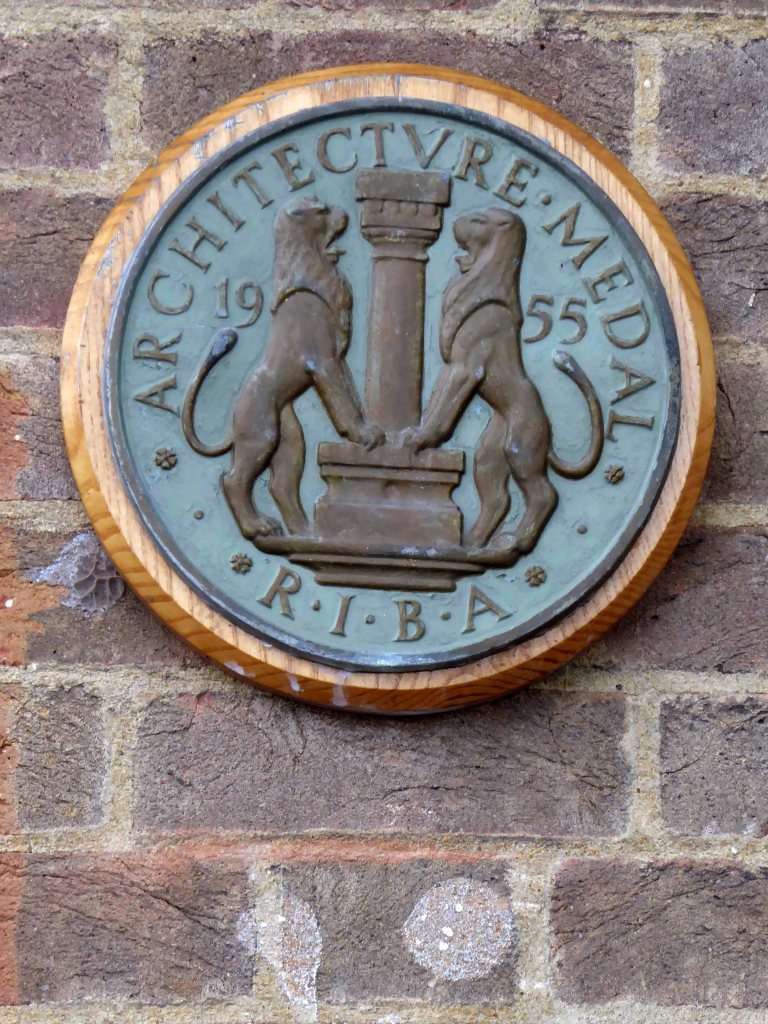
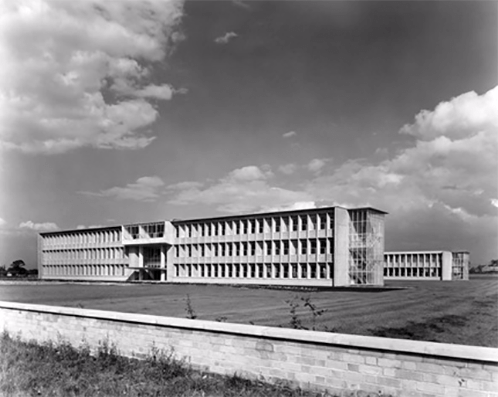
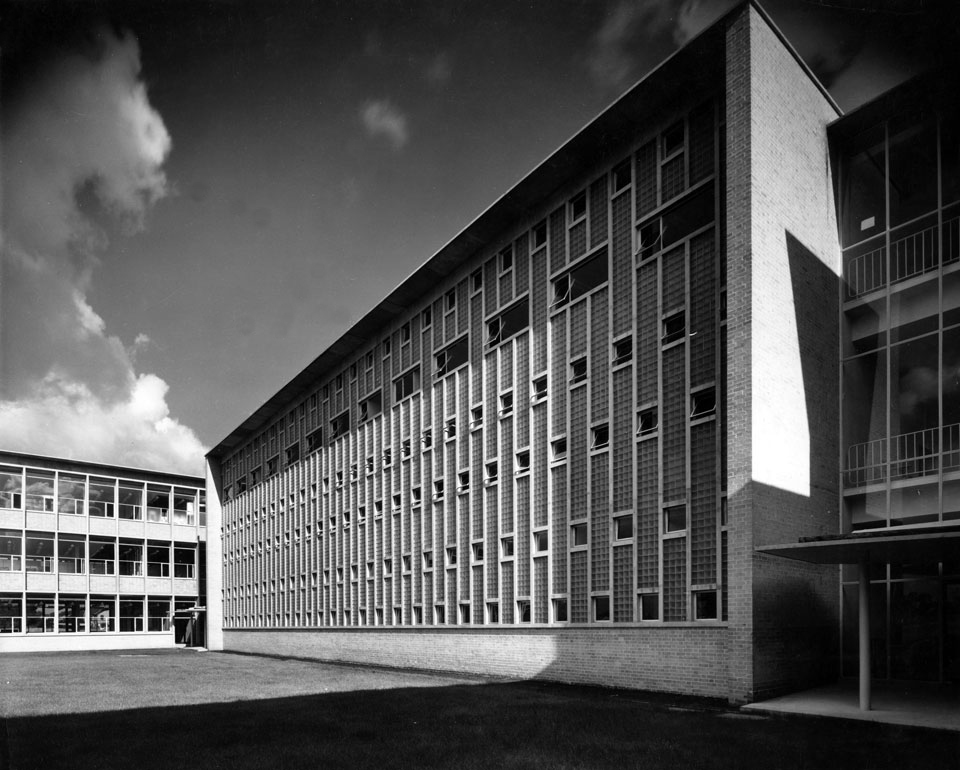
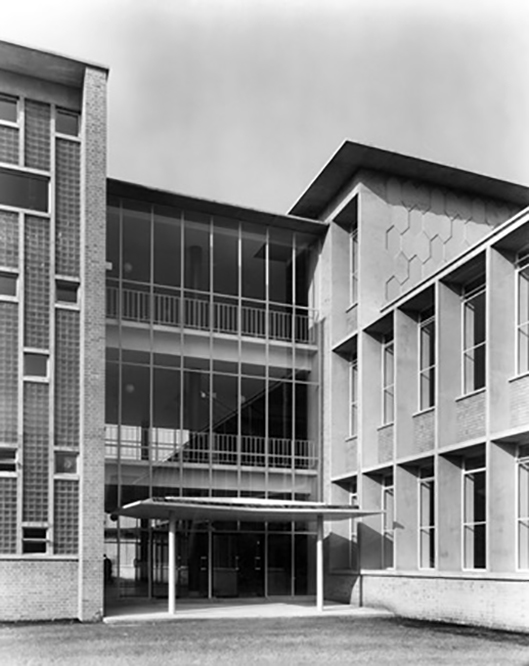
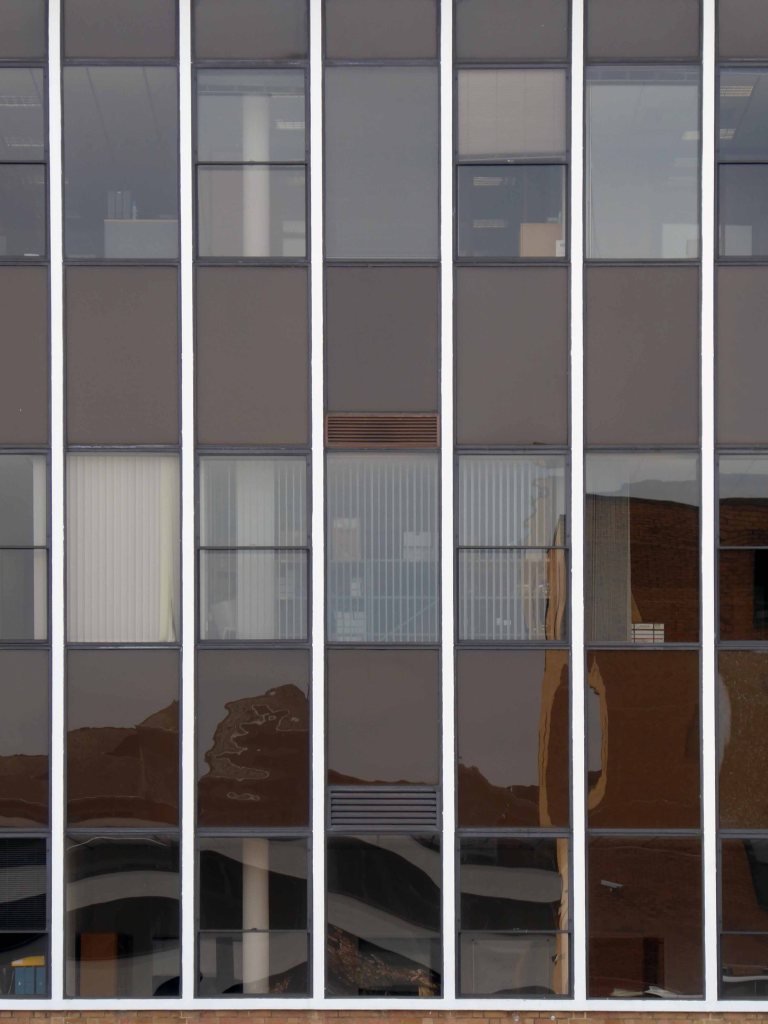
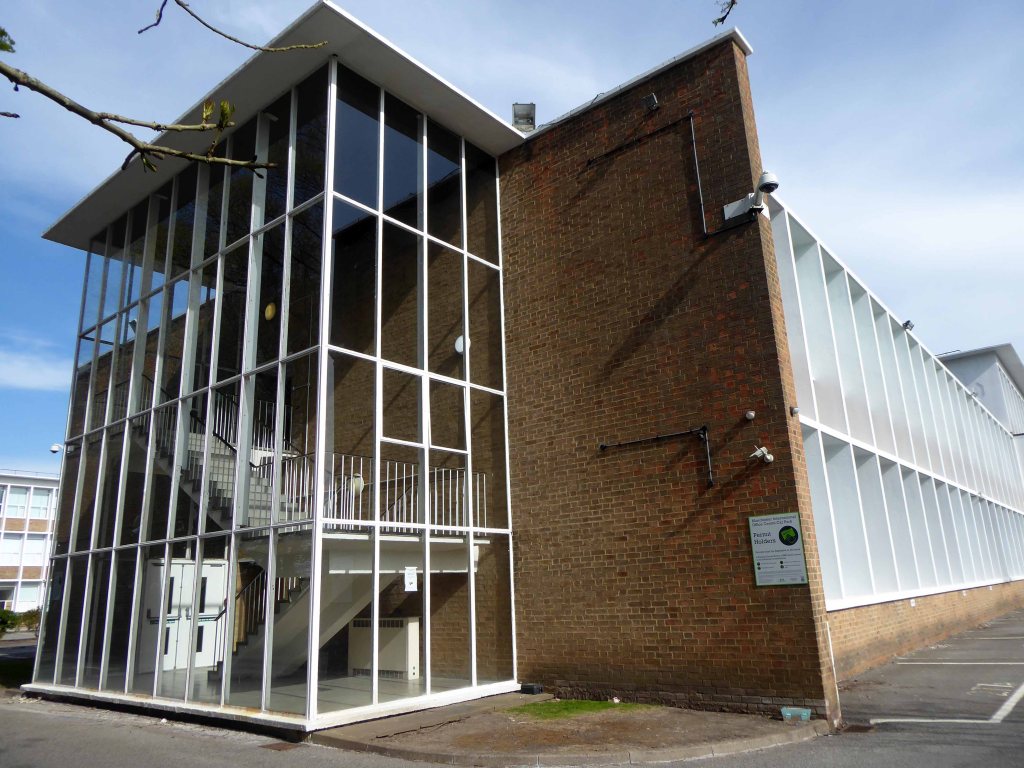
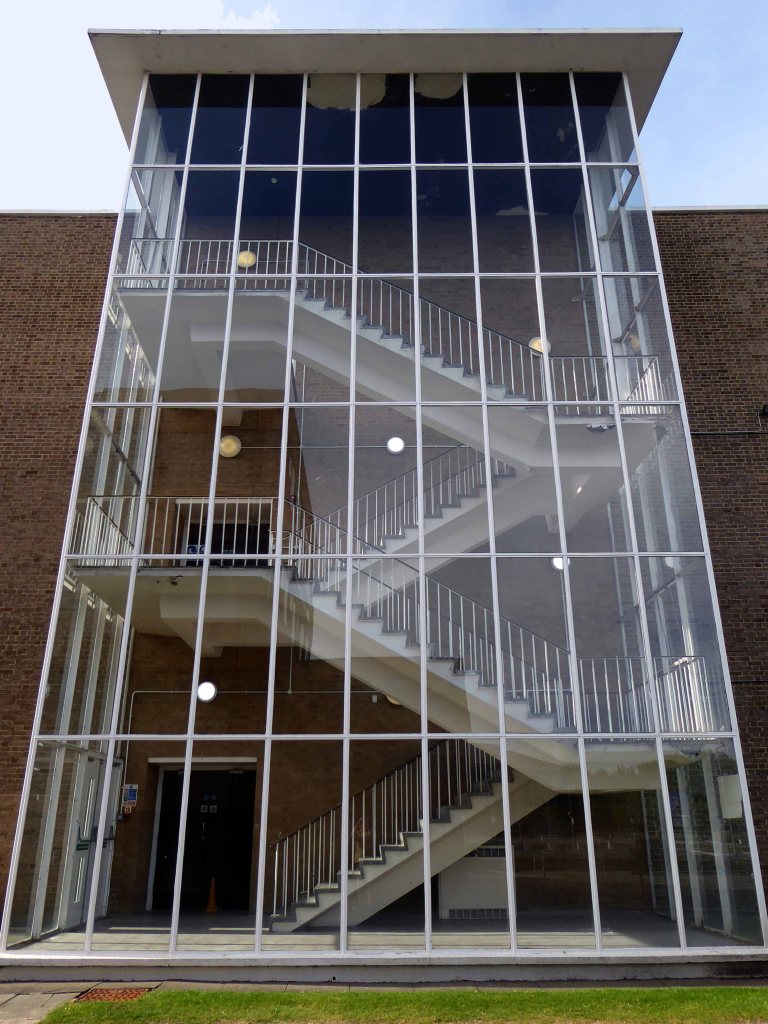
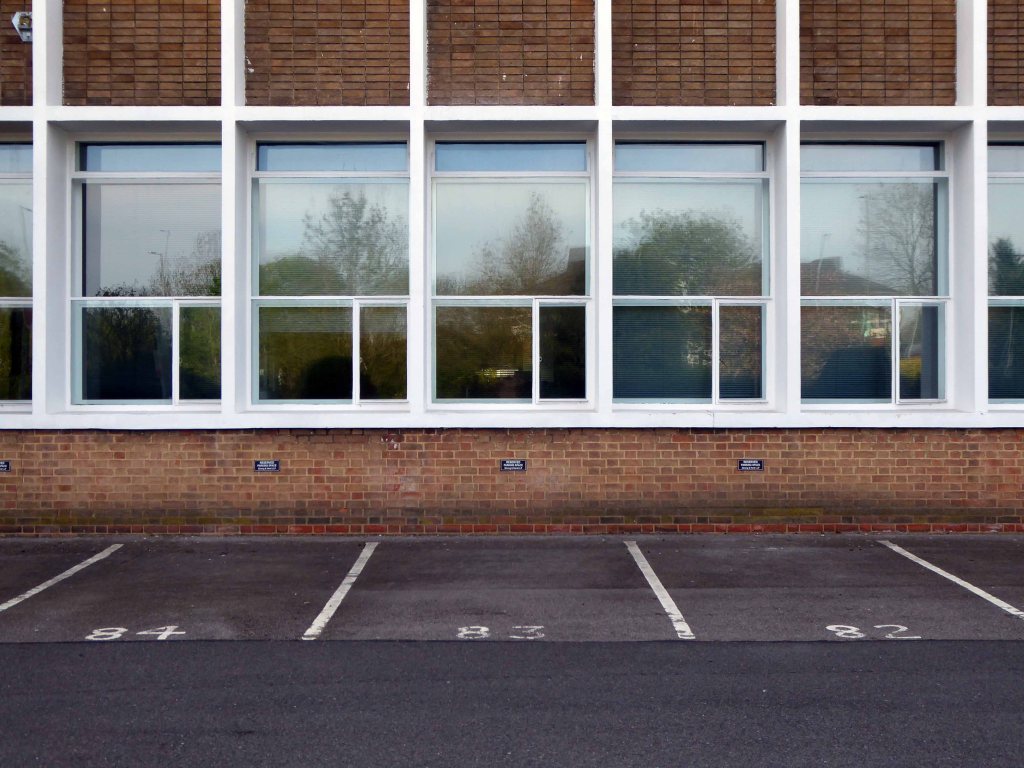
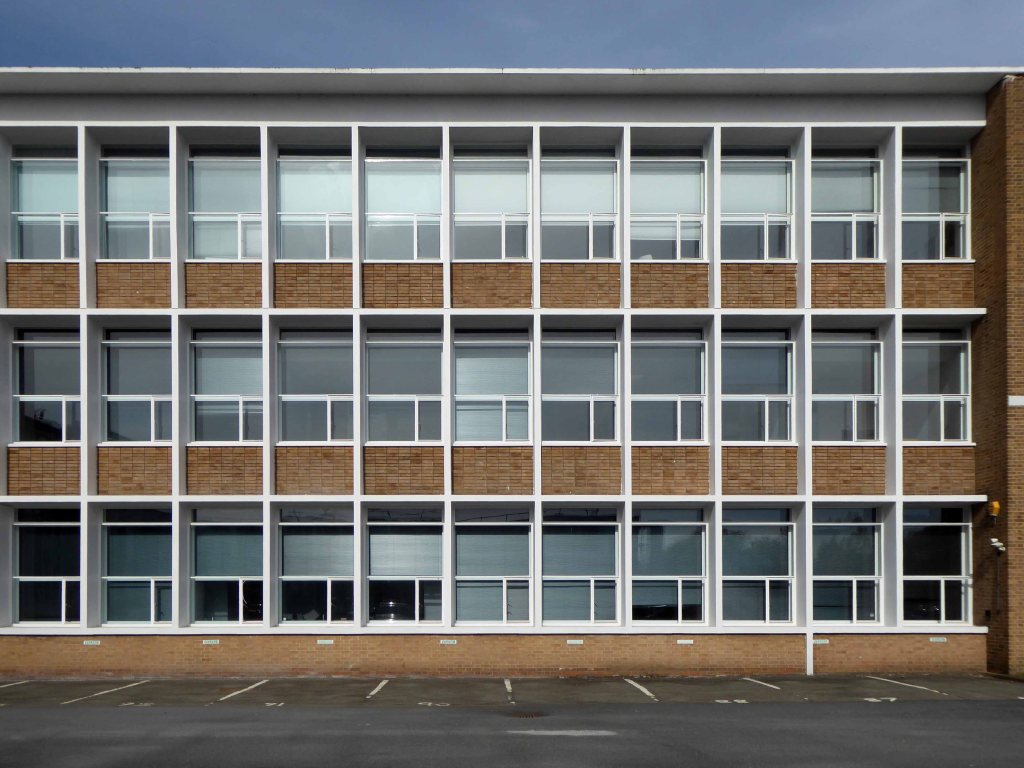
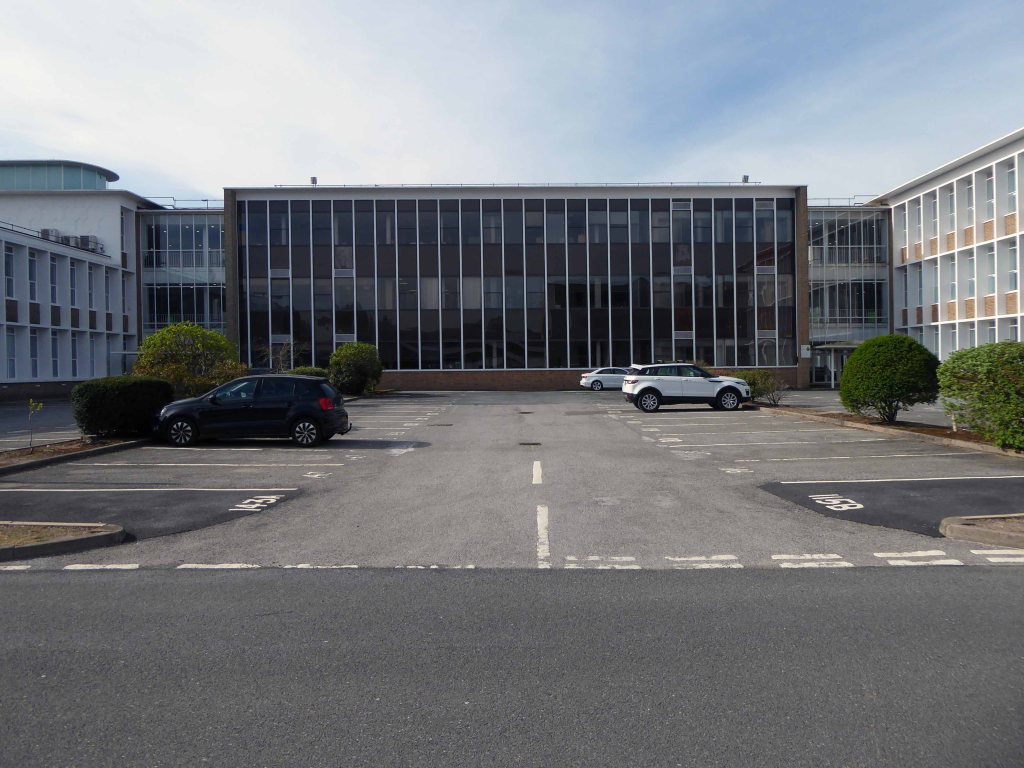
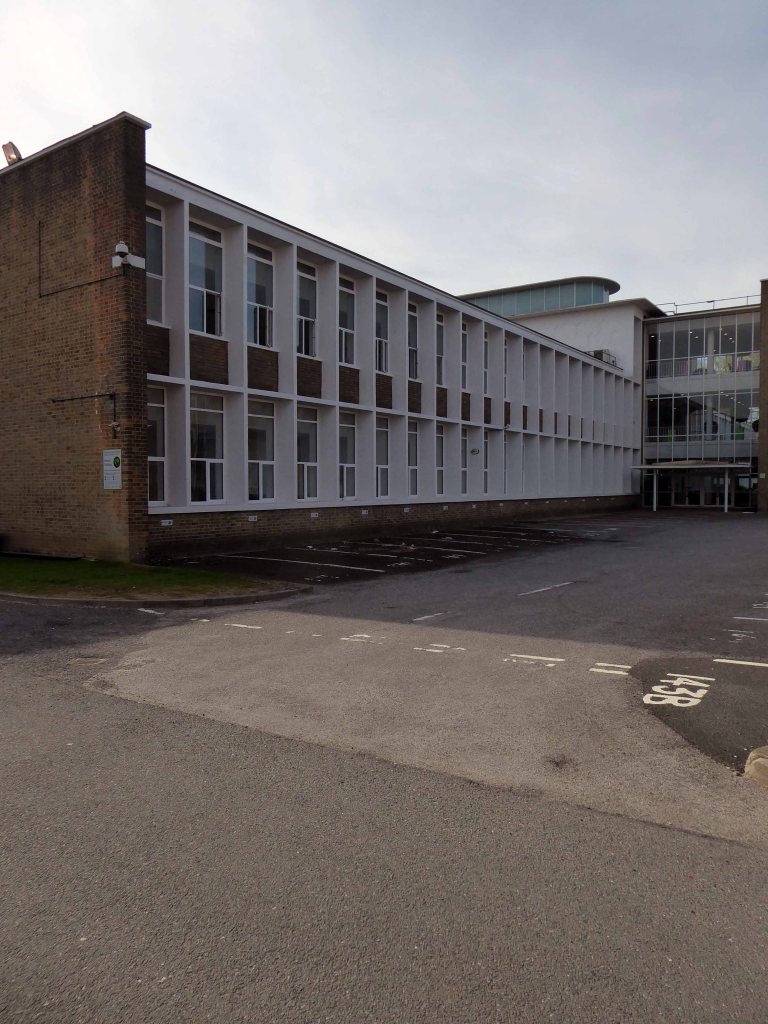
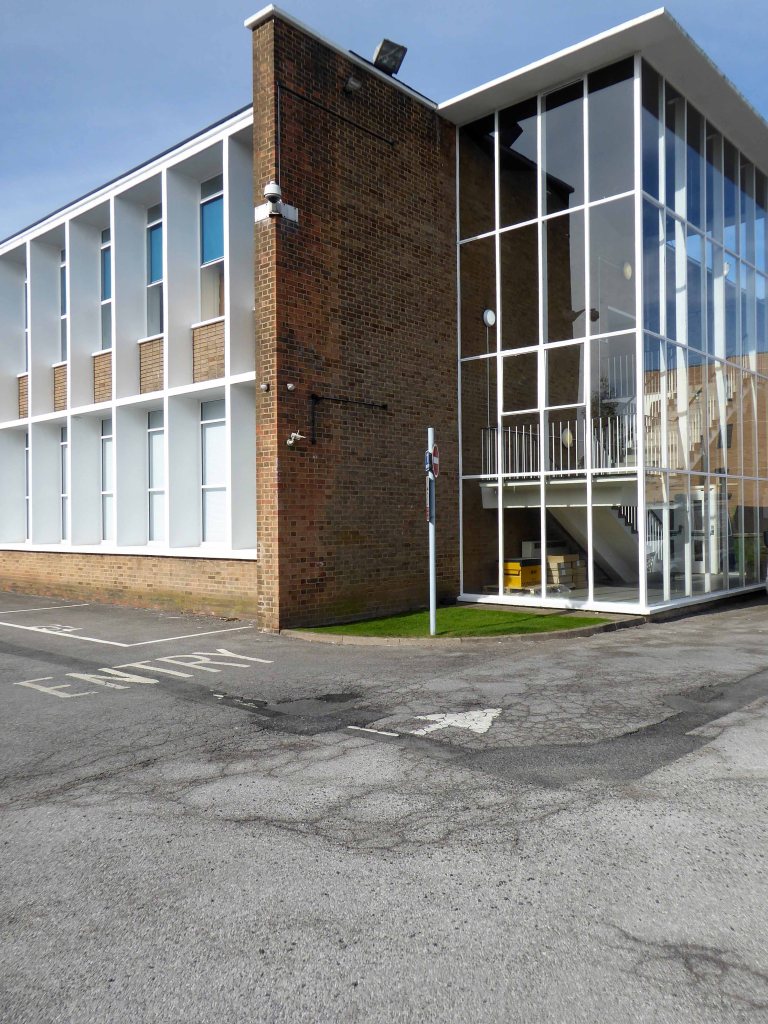
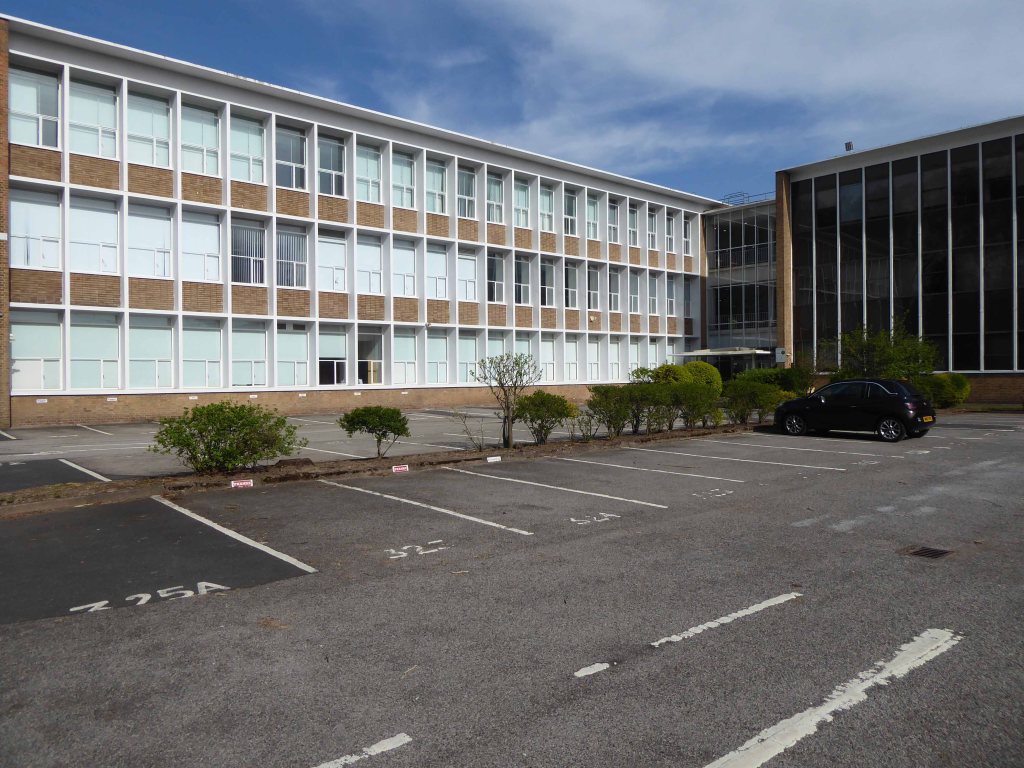
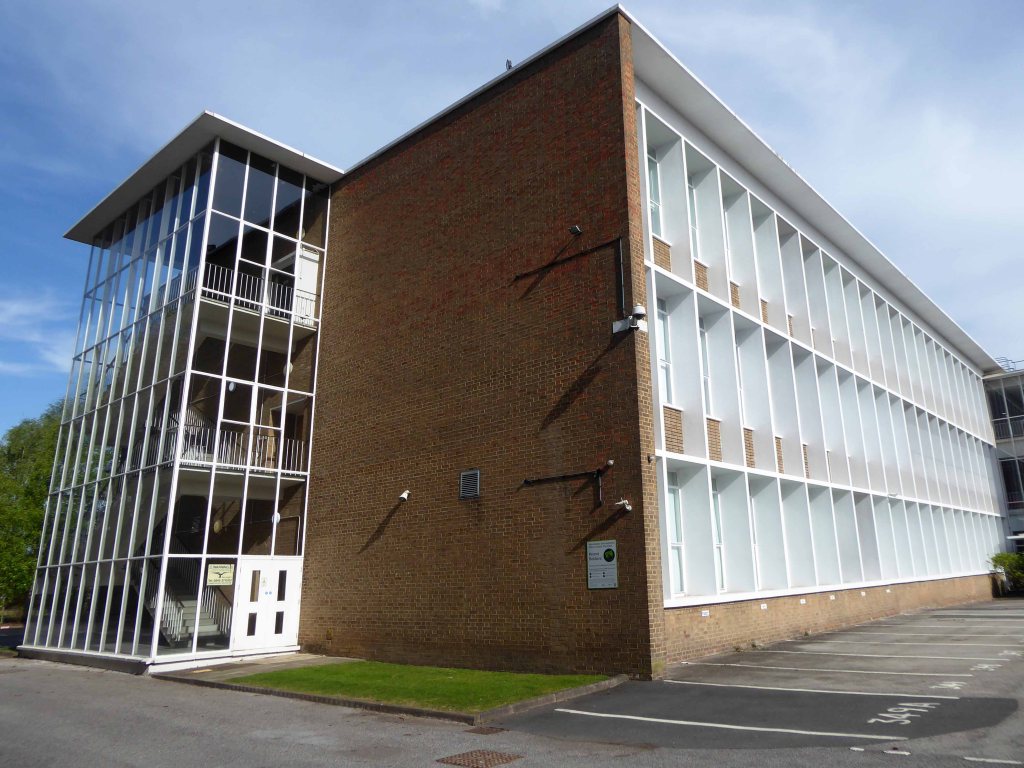
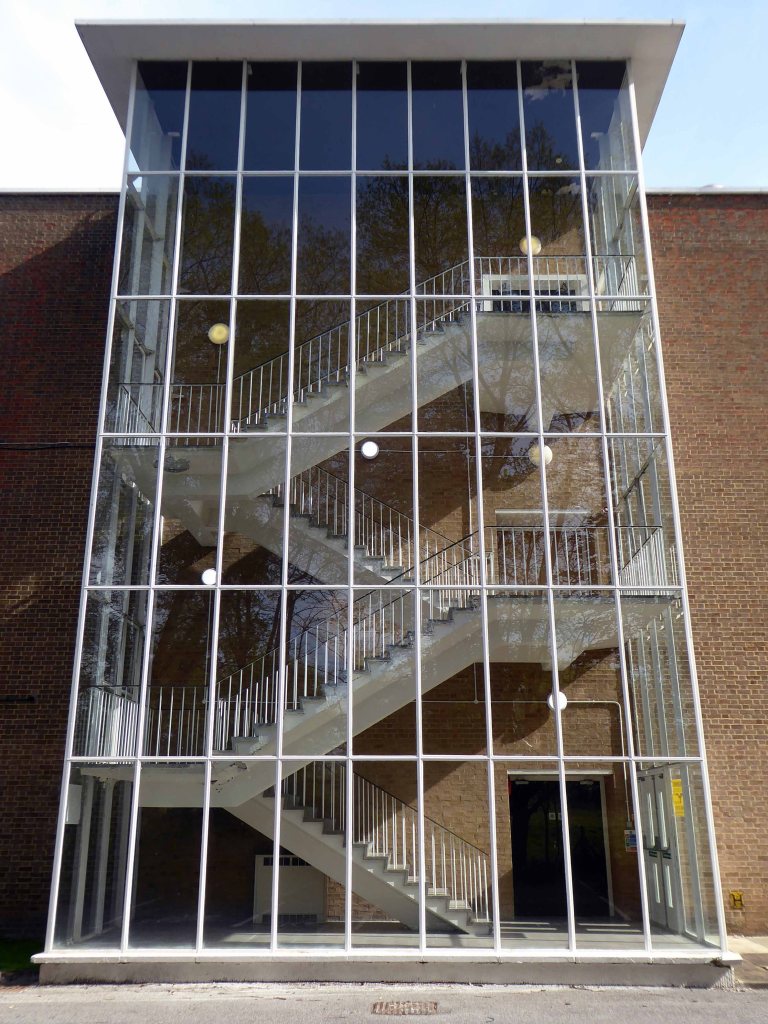
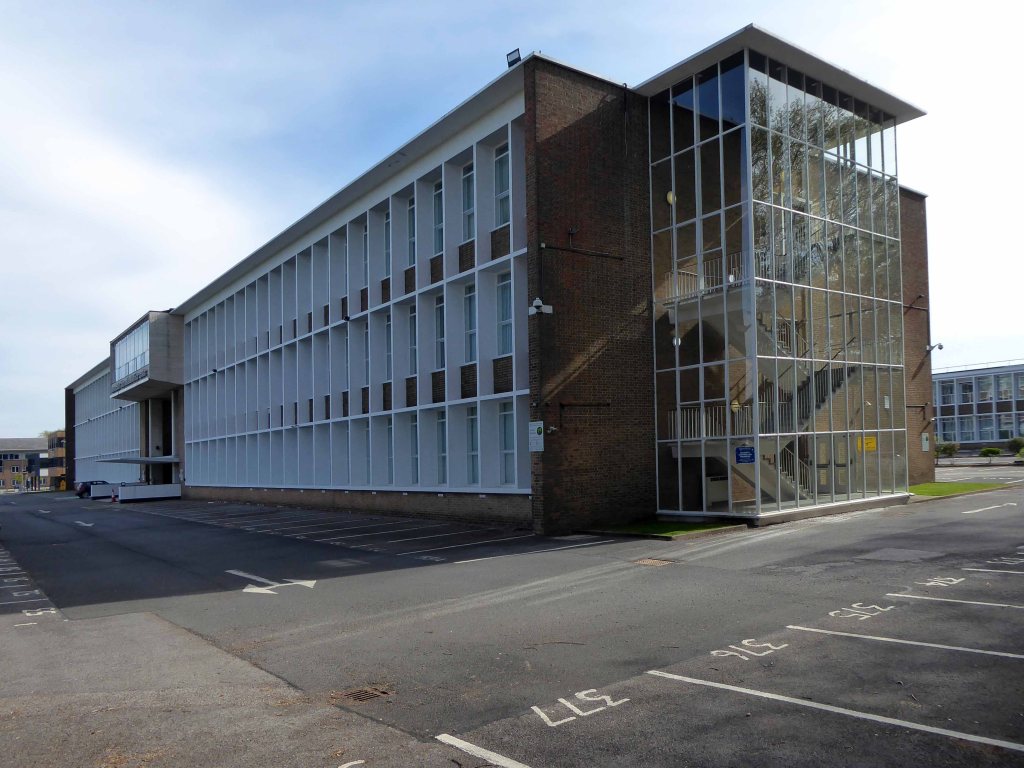
Renold Chains were once a huge firm employing thousands in south Manchester, their main factory at Burnage, now demolished to make way for a supermarket. This grouping was designed as the administrative headquarters for the company and was in receipt of an RIBA Architecture Bronze Medal in 1955. The scheme, of two parallel wings connected by a central hub running perpendicular, now seems fairly pedestrian, though still exudes some presence by virtue of the evident control in the design and construction of relief within the main façade. This building, though, actually points toward the moment where Cruickshank & Seward were turning, with the rest of the profession, toward new engineered, curtain walling solutions. The three storey glazed stair towers are made of a relatively fine steel section glazing bar and are clearly expressed at the ends of the blocks; these perhaps pre-empt the altogether more refined towers at the Renold Building and Roscoe Building of the Universities. The third floor boardroom was also positively expressed as a curved solid, cantilevered above the entrance canopy. That the building was developed in such close proximity to the airport has ensured its continued viability as office and conferencing space. The firm also delivered the adjacent building for the same client in the 1970s.

Mainstream Modern

Four weeks into a pandemic – cycling somewhere else. I turned off and into the grounds of the former Renold House, currently trading as Manchester International Office Ccentre.

Manchester International Office Centre (MIOC) is a prominent landmark office building extending to some 100,000 sq ft which provides occupiers with high quality space ranging from suites of 450 to 8,000 sq ft.

The building has undergone a complete internal transformation with a total refurbishment of the reception and common areas. The office suites provide a superb working environment in line with the demands of todays occupier.

On arriving home I hungrily rustled up a few RIBA Archive images from 1954.

Much remains intact – though gone is the concrete grid and glass brick insertions of the 1954 central section – replaced with a slick glass and steel skin.

And there are unpleasant intrusions made by the fitting of contemporary security and lighting – using intrusive exterior conduit.

It’s a sunny day with a southwest light – there’s nobody about, let’s take a look around.

Concrete Island – Stockport

He reached the foot of the embankment, and waved with one arm, shouting at the few cars moving along the westbound carriageway. None of the drivers could see him, let alone hear his dry-throated croak, and Maitland stopped, conserving his strength. He tried to climb the embankment, but within a few steps collapsed in a heap on the muddy slope.

Deliberately, he turned his back to the motorway and for the first time began to inspect the island.

Maitland, poor man, you’re marooned here like Crusoe – If you don’t look out you’ll be beached here for ever. He had spoken no more than the truth. This patch of abandoned ground left over at the junction of three motorway routes was literally a deserted island.

JG Ballard Concrete Island

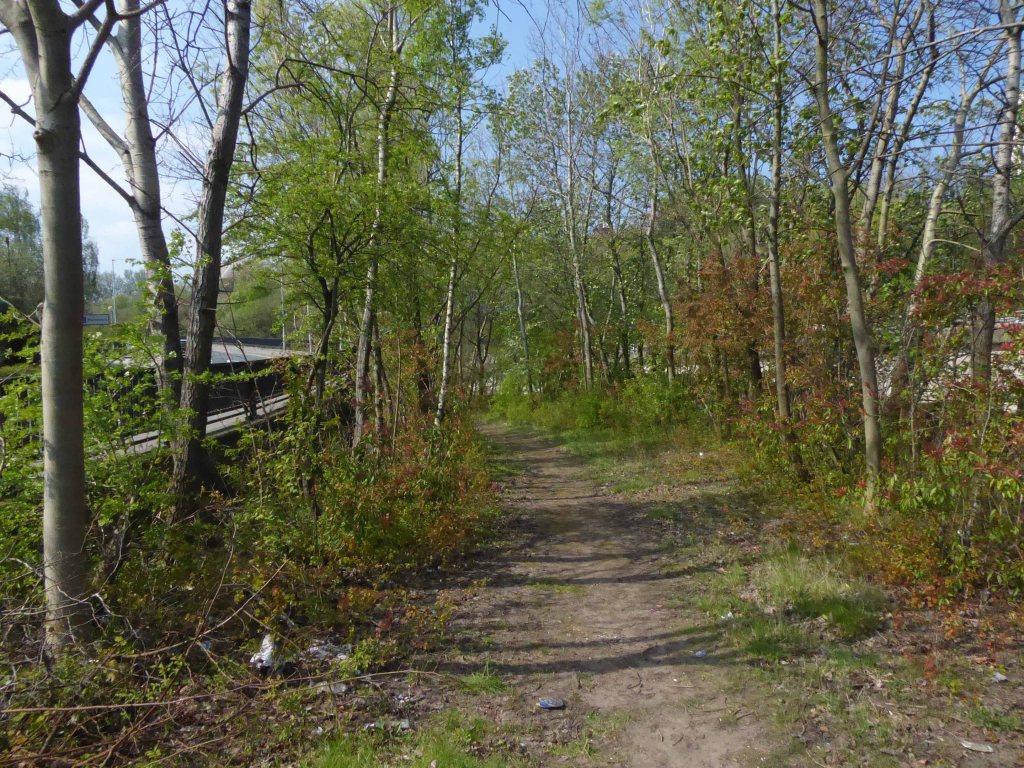
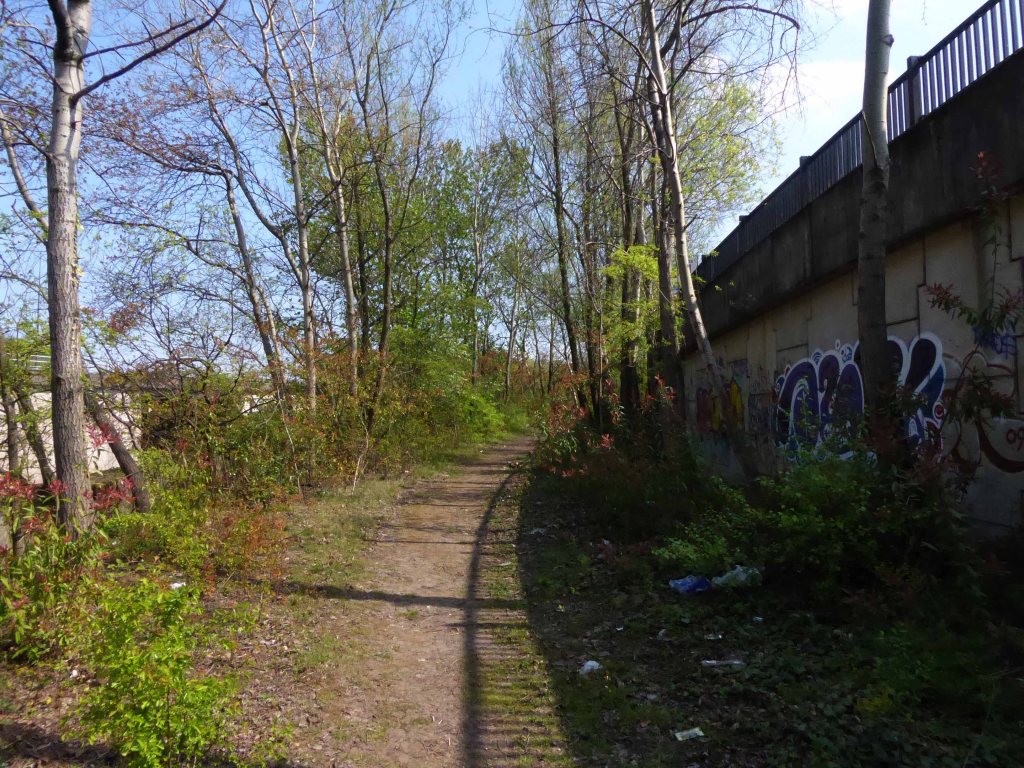
I’m in a different place – the same but different, whilst out walking I went through an open gate, following a well worn path, for the very first time.

Leading who knows where.

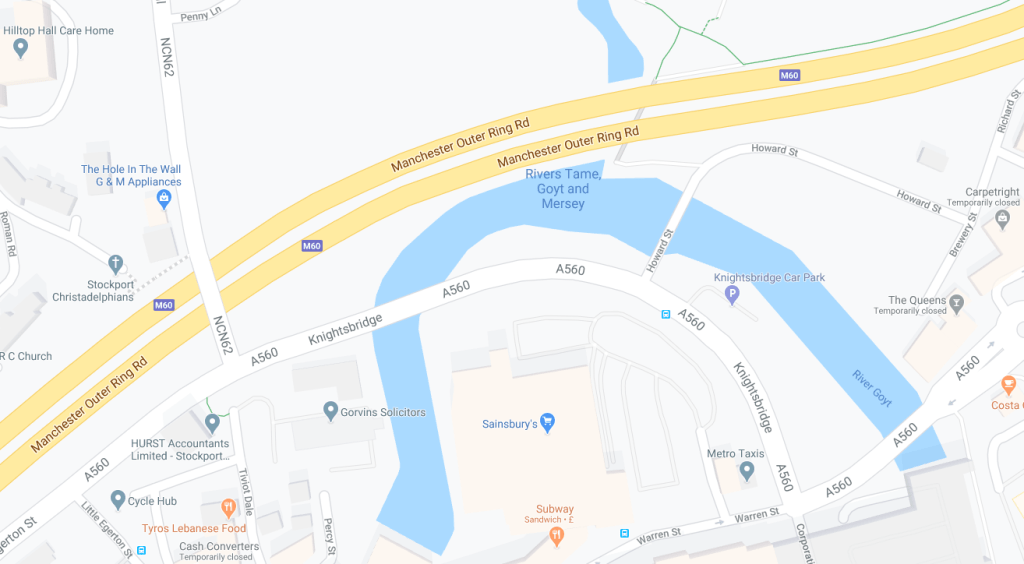
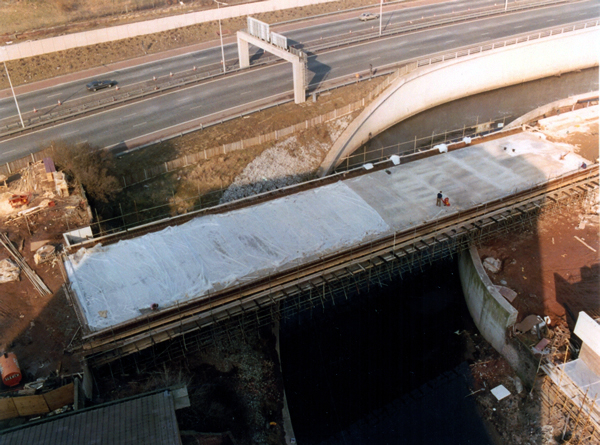
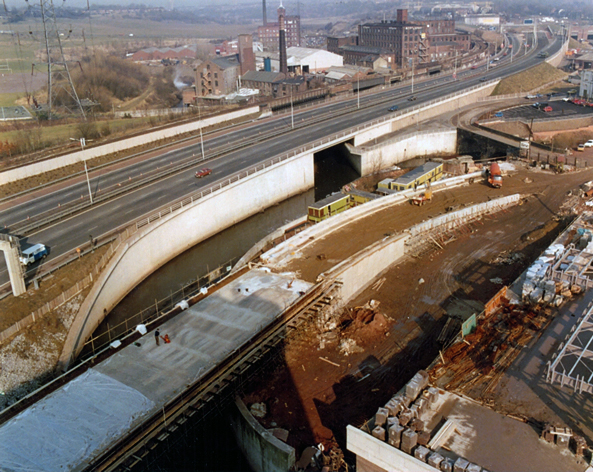
The confluence of three rivers, the meeting of motorway and main road.

I ventured further – where if anywhere are we going?

This tight tree lined and paint daubed triangle offers no answers.

Tamed thirty years or so ago, with concrete and steel.

Further and further.

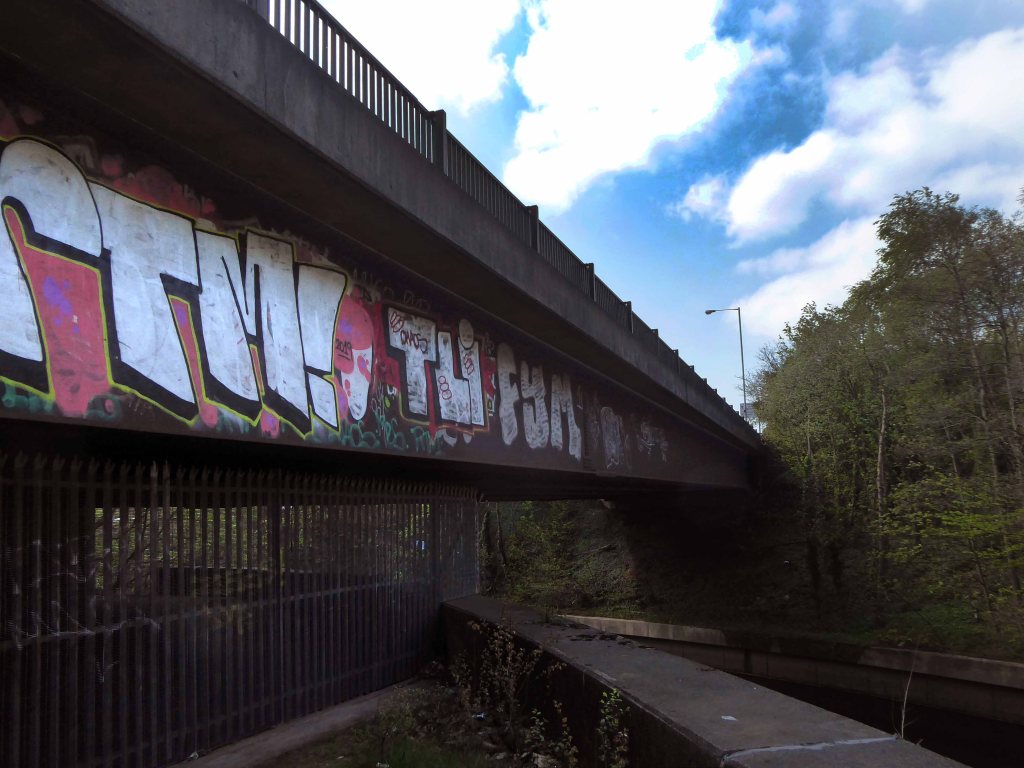
Into an underground world.

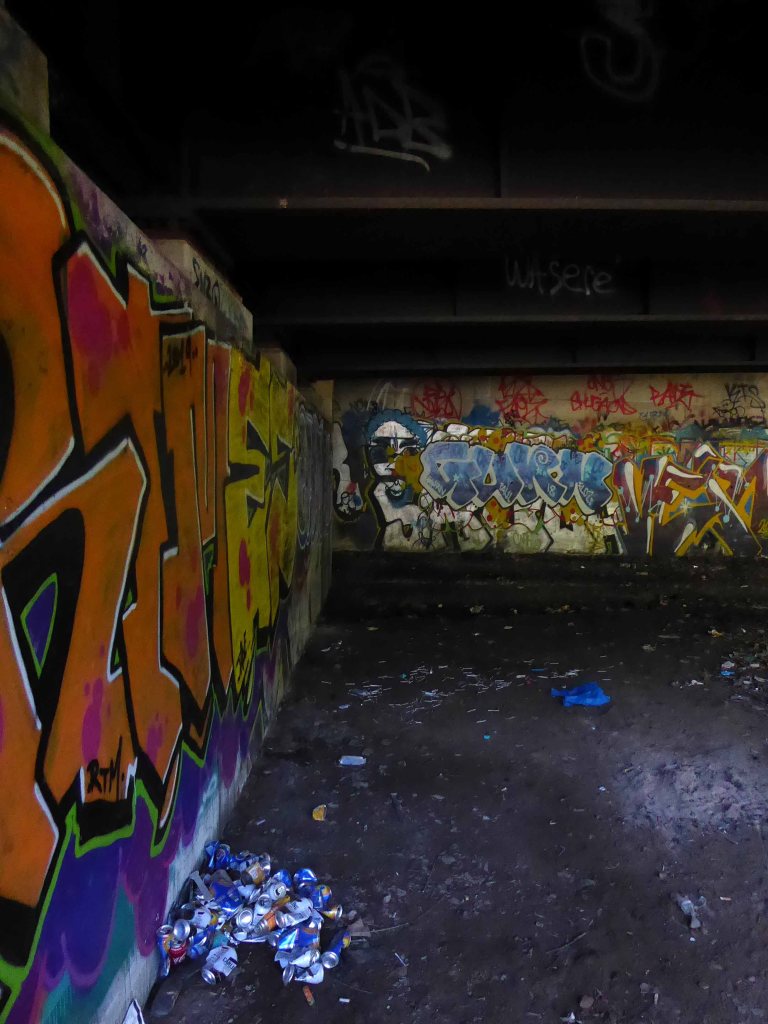
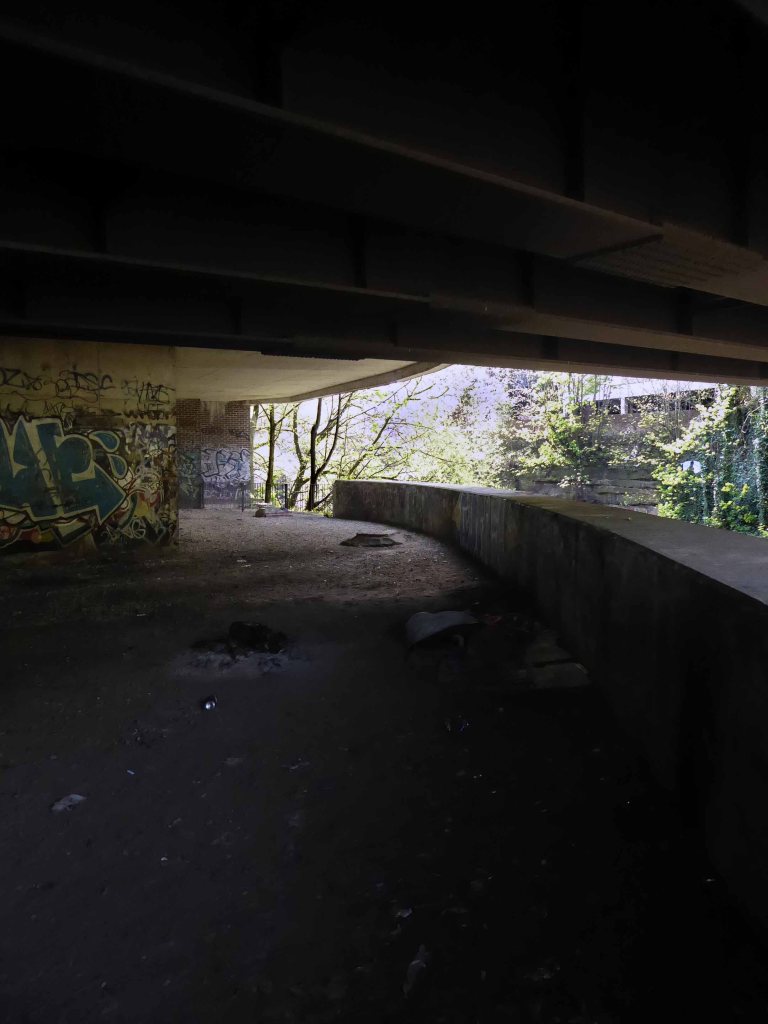
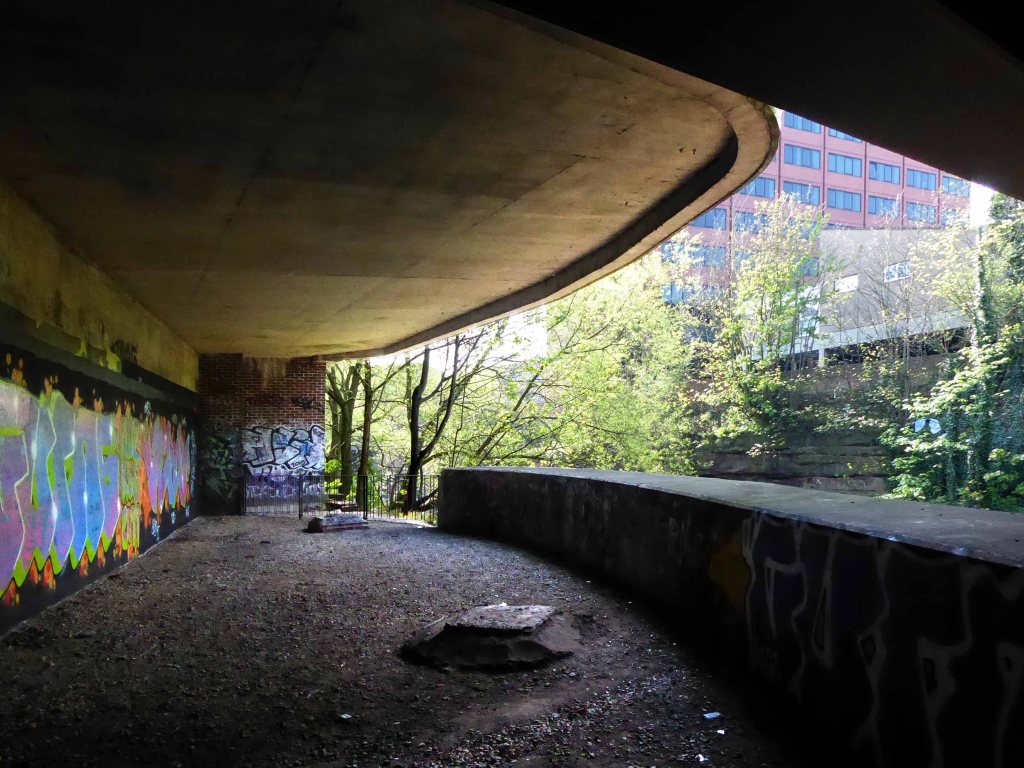
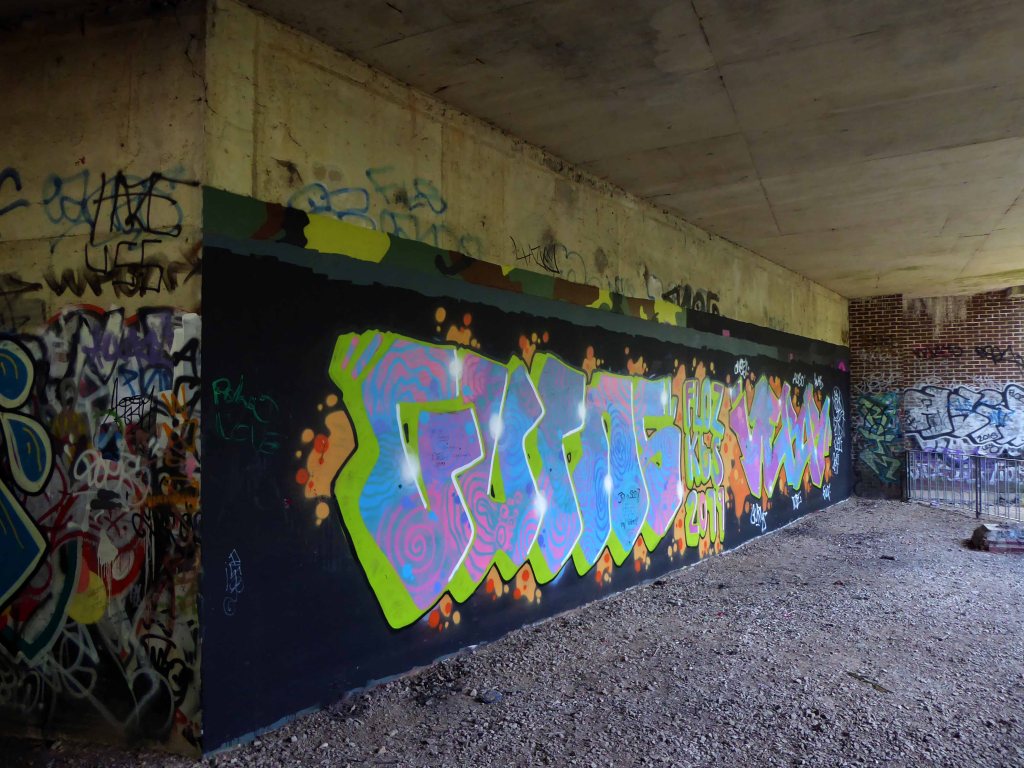
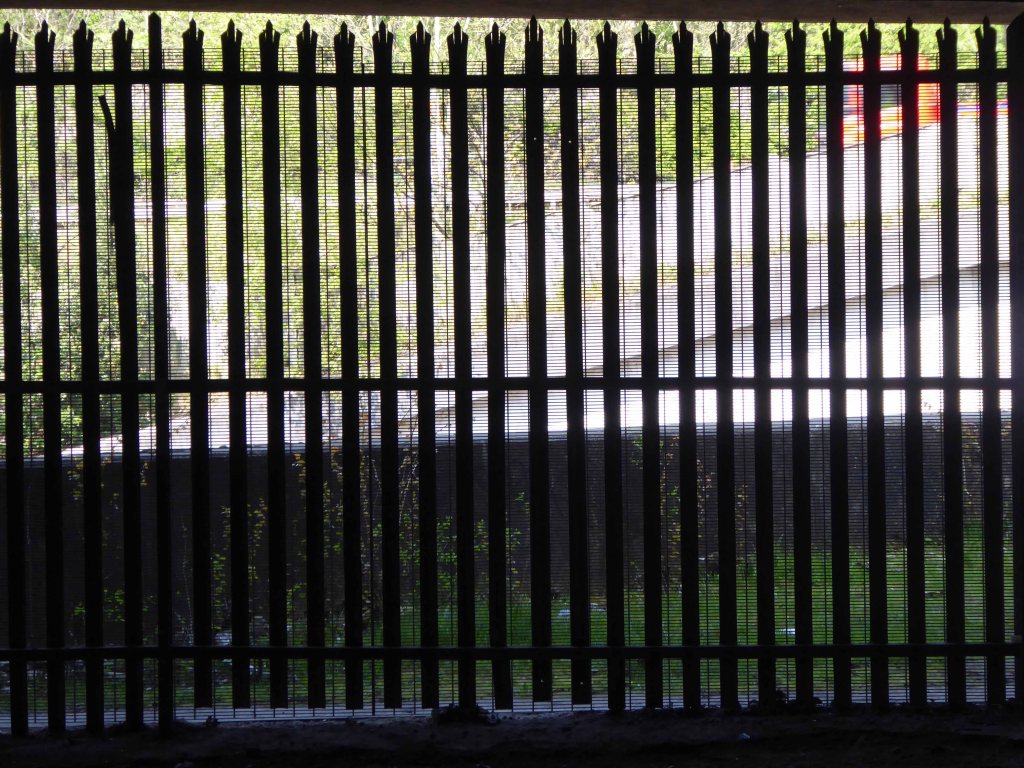
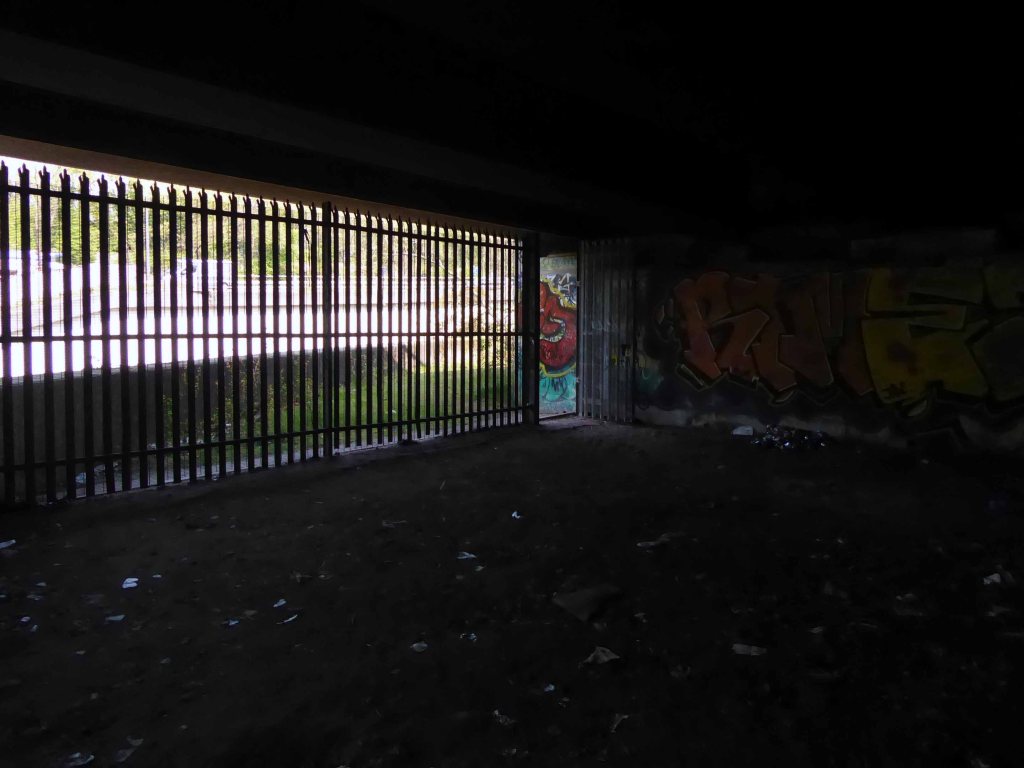
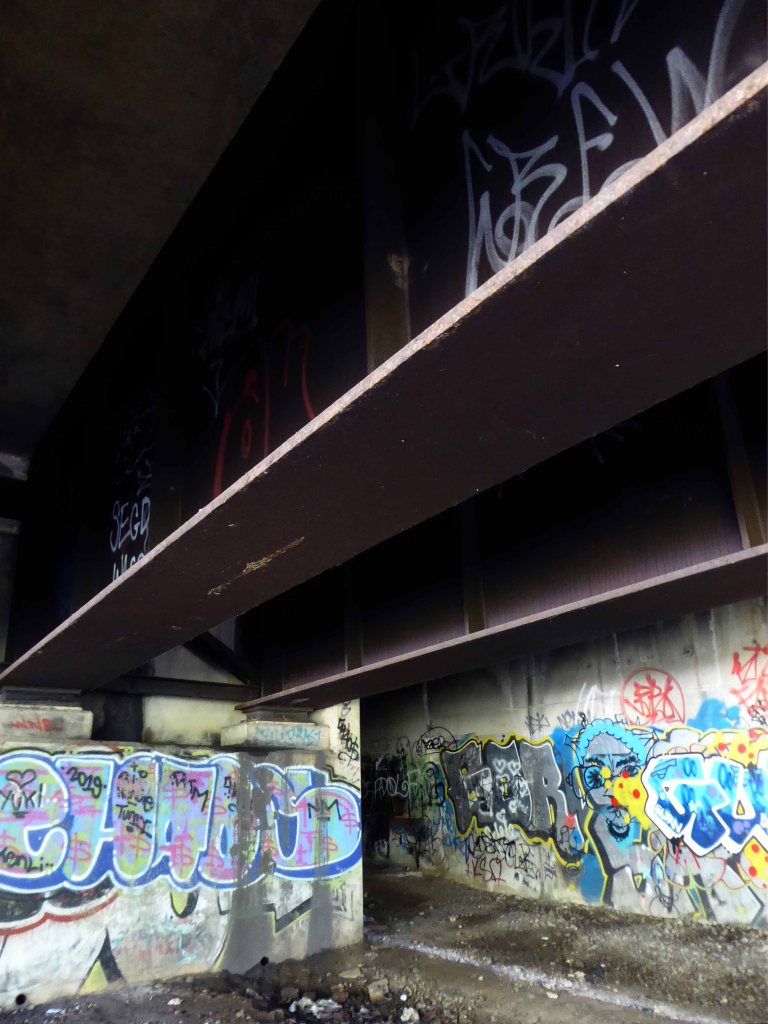
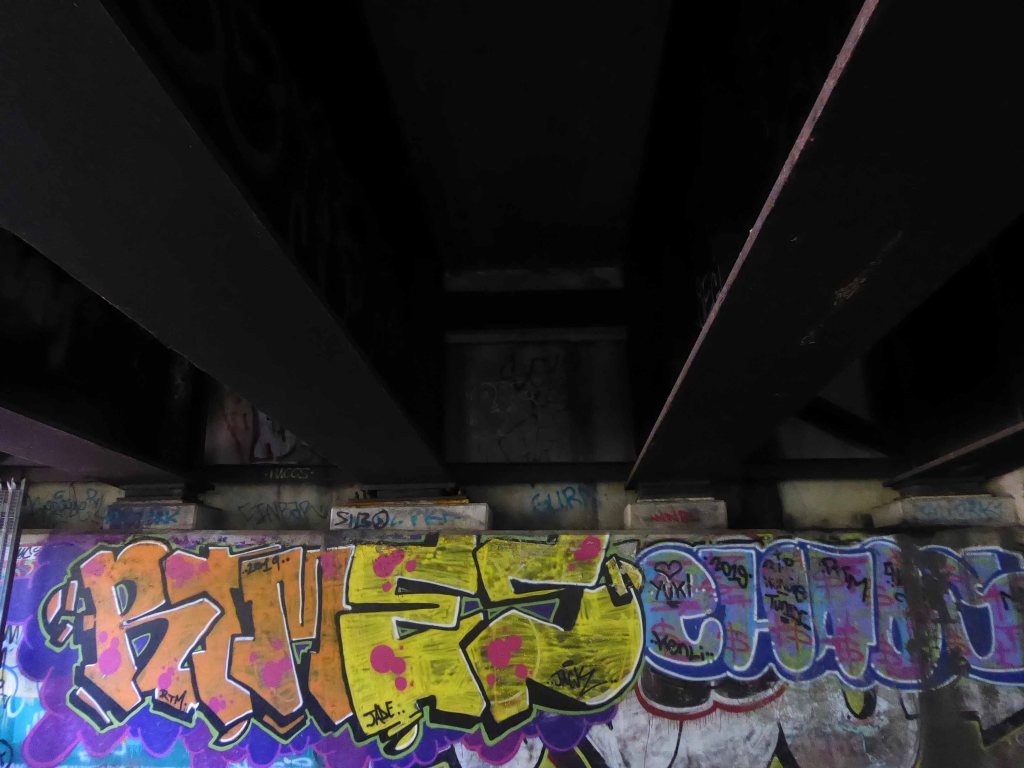
Through the railings and into a void – a void that had become home to the otherwise engaged, seeking solace somewhere, finding shelter from the storm. A storm of Twenty First Century austerity, man made – moving money around until those without are out, out in the open, nowhere else to go but here.

How often have I lain beneath rain on a strange roof, thinking of home. 

William C. Faulkner

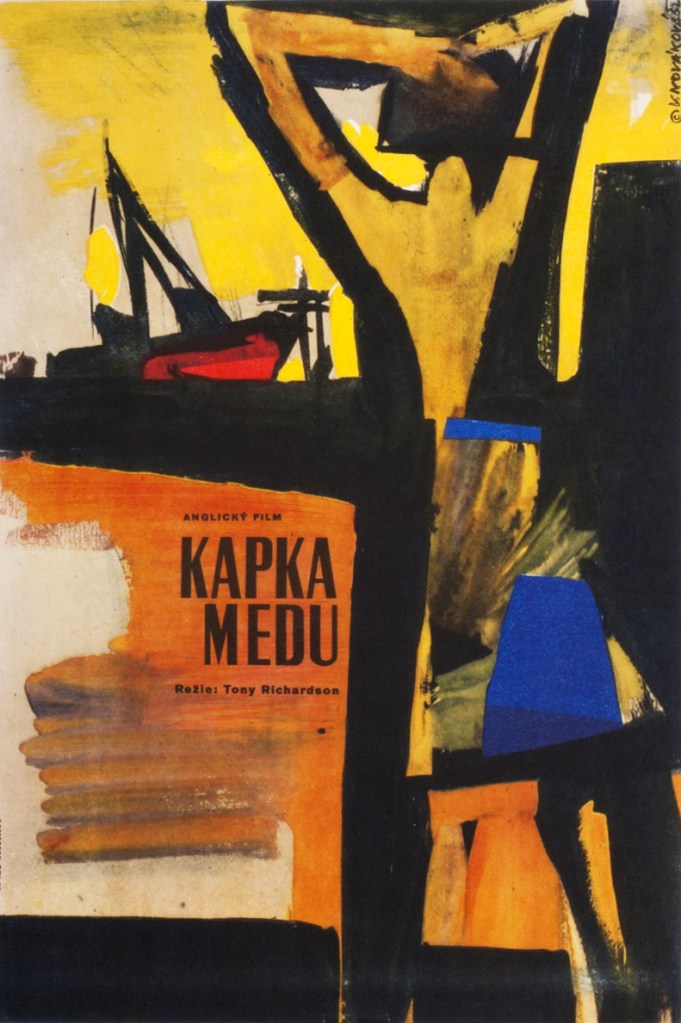
A Taste Of Honey

This is a film that has stayed with me for most of my life – first seen as a nipper, fascinated by the fact that it was shot in a very familiar landscape.

As years have passed I have watched and rewatched it, finally resolving to track down the local locations used in its filming.

Studying and pausing the DVD, making thumbnail sketches of frames, researching online – referring to Reelstreets.

I have previously written about the way in which the movie shaped a particular image of the North.

And examined particular areas of Manchester such as Barmouth Street.

The film generated world wide attention and remains just as popular today.

Still watched, still loved, still relevant – here are a selection of photographs I took in 2011 – cycling around Manchester, Salford and just a little closer to home in Stockport.

Larkhill Road scene of the moonlight flit

The descent from Larkhill Road

Stockport Viaduct

Stockport Parish Church

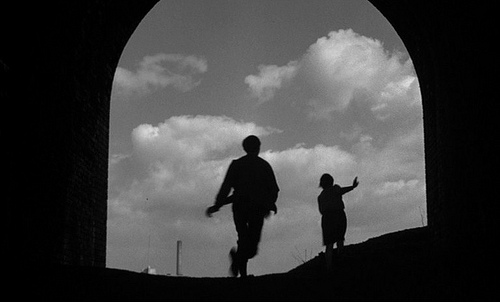
Stockport running for the bus to Castleton

Midway Longsight – where Dora Bryan sang

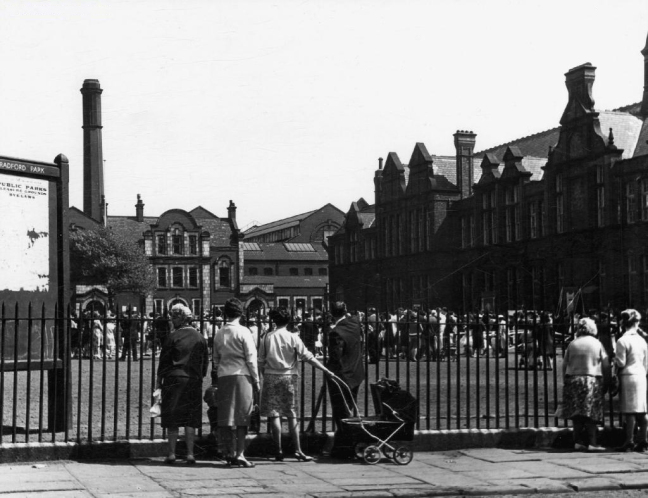
Barmouth Street were the school scenes were filmed.

Timpson’s shoe shop now demolished opposite the Etihad

Phillips Park the back of the gas works in Holt Town

The Devil’s Steps Holt Town

Rochdale Canal

Ashton Canal

All Souls Church Every Street Ancoats

Piccadilly Gardens as we view the city from a moving bus.

Manchester Art gallery – where they watched the Whit Walks.

Albert Square part of the earlier bus ride.

Trafford Swing Bridge

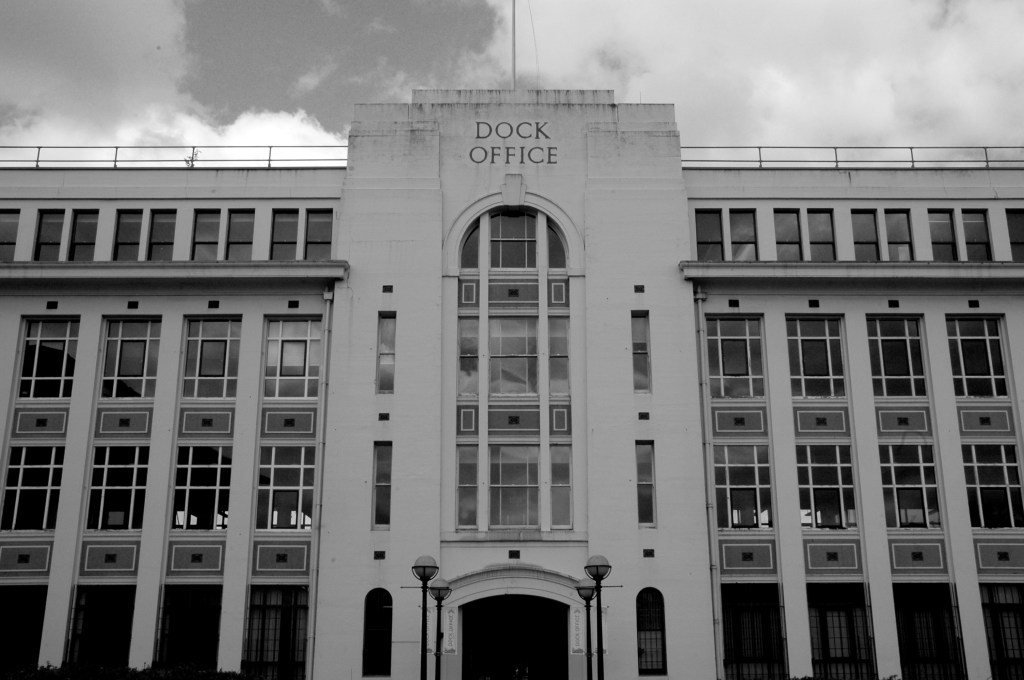
Dock Offices

Chimney Pot Park Salford

Pendleton

Barton Aqueduct

Through my tour I have attempted to capture a sense of the settings as they are – how, if at all, the areas have changed.

There may be some minor inaccuracies or omissions which I am happy to amend.

You may wish to visit the sites yourselves, the majority of which are easily accessible, above all watch the film and appreciate that which is around you.

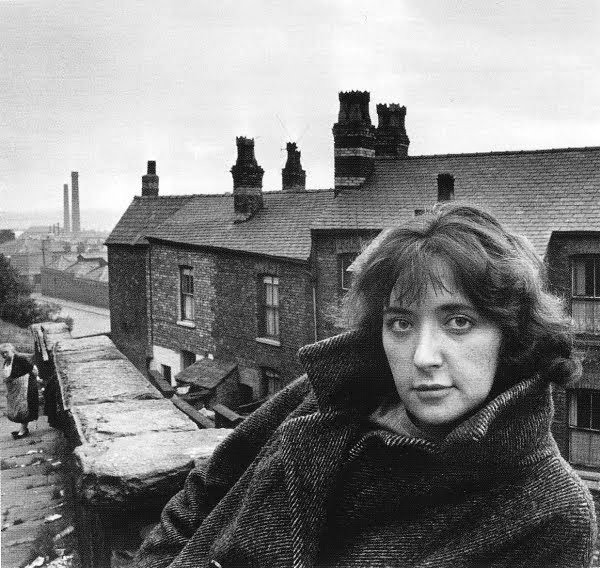
Portrait of Shelagh DelaneyArnold Newman

William Mitchell – Collyhurst

It’s April 2020 and I’m here again.

Having been before and before and before.

It’s lockdown so we can’t go far, so from home in Stockport to Collyhurst is within my daily exercise allowance.

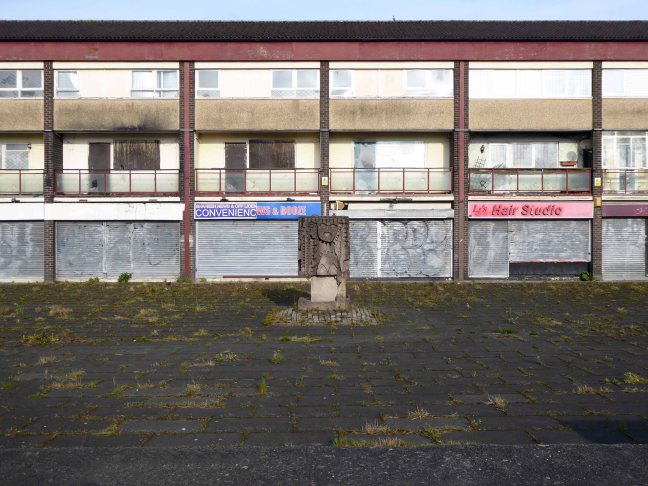
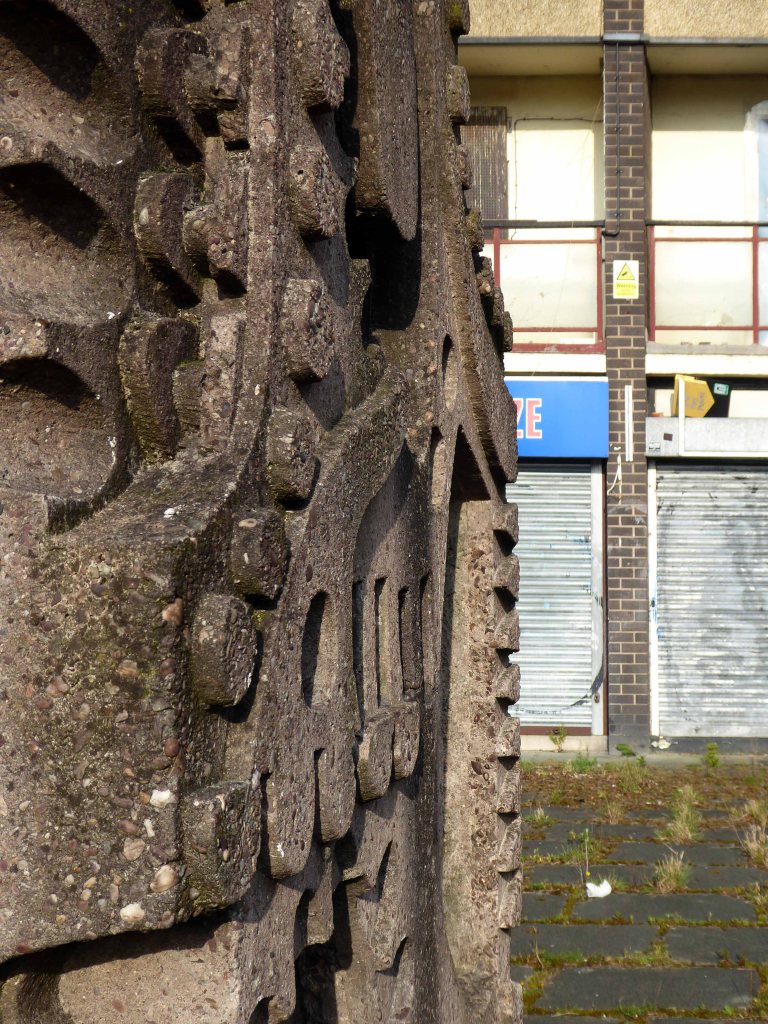
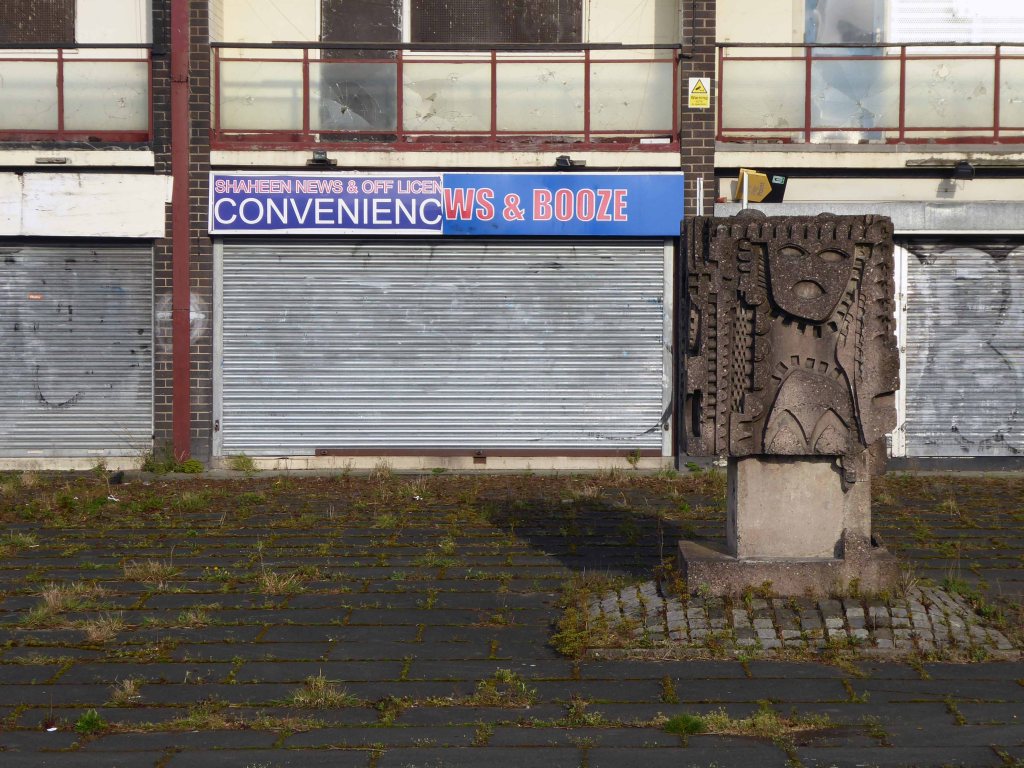
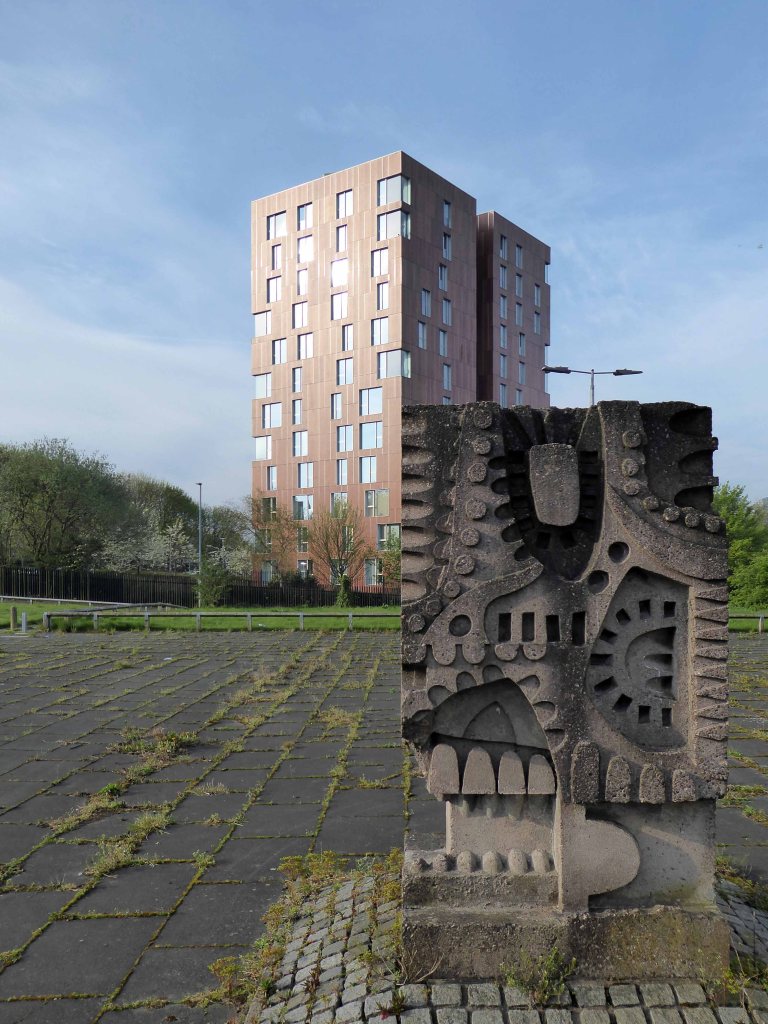
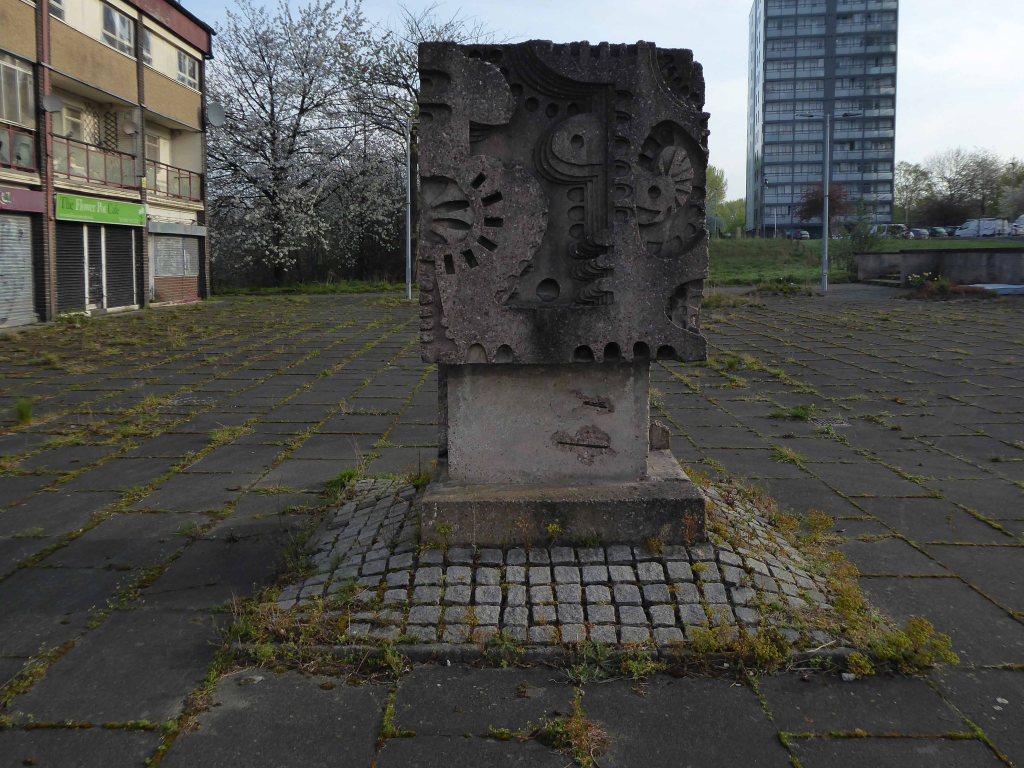
There is talk of relocation for the diminutive Mitchell totem, but as of today no sign of any action – all is in abeyance.

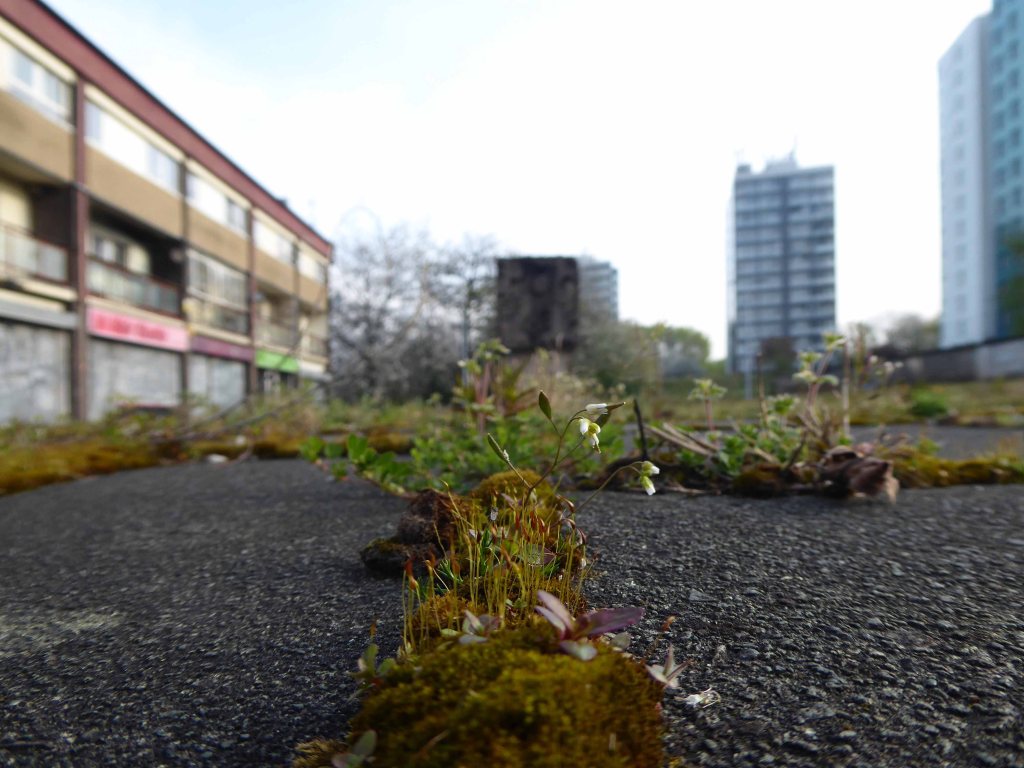
What we do see is the encroachment of flora, cleaner air, low or no level human activity encourages growth between the cracks.

And at the base of the plinth

I took the opportunity to get in close.

Move around in a merry dance.

Quite something to spend time in an ever changing urban space – devoid of company, save for the calming sound of birdsong and the distant rumble of a distant train.

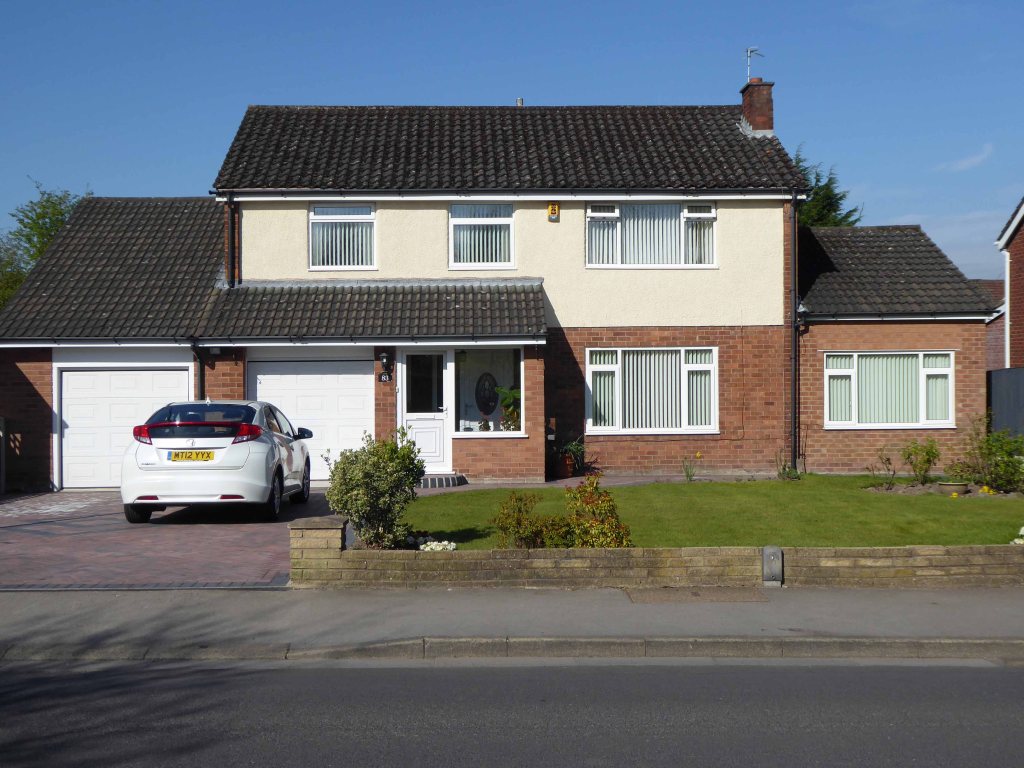
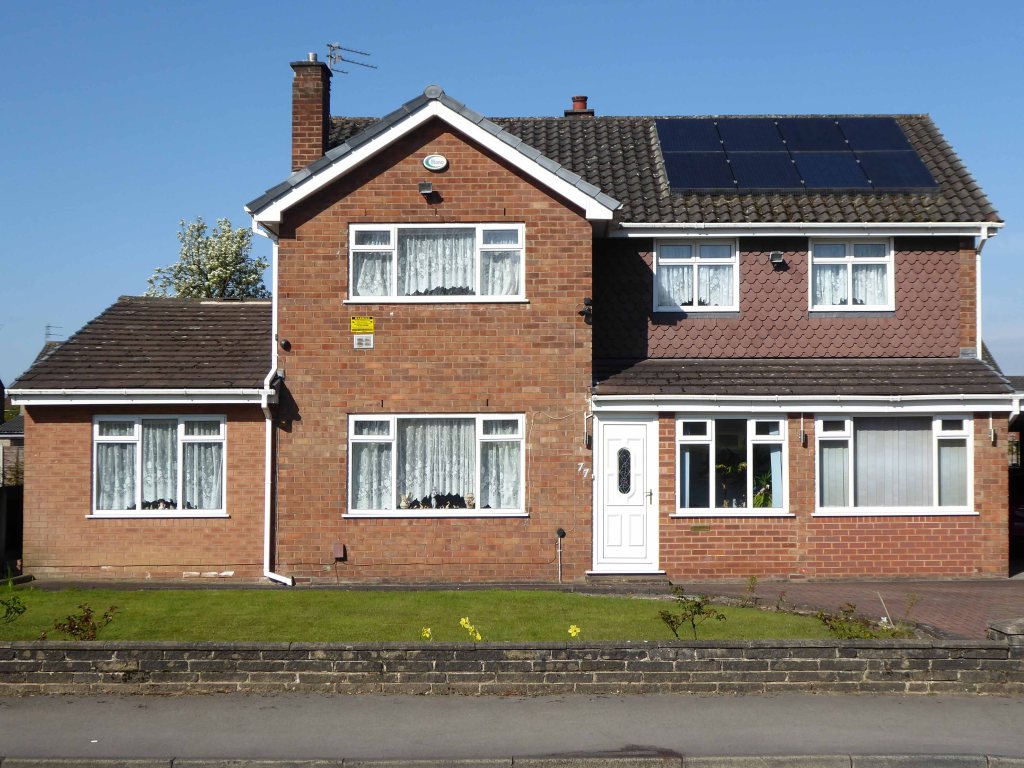
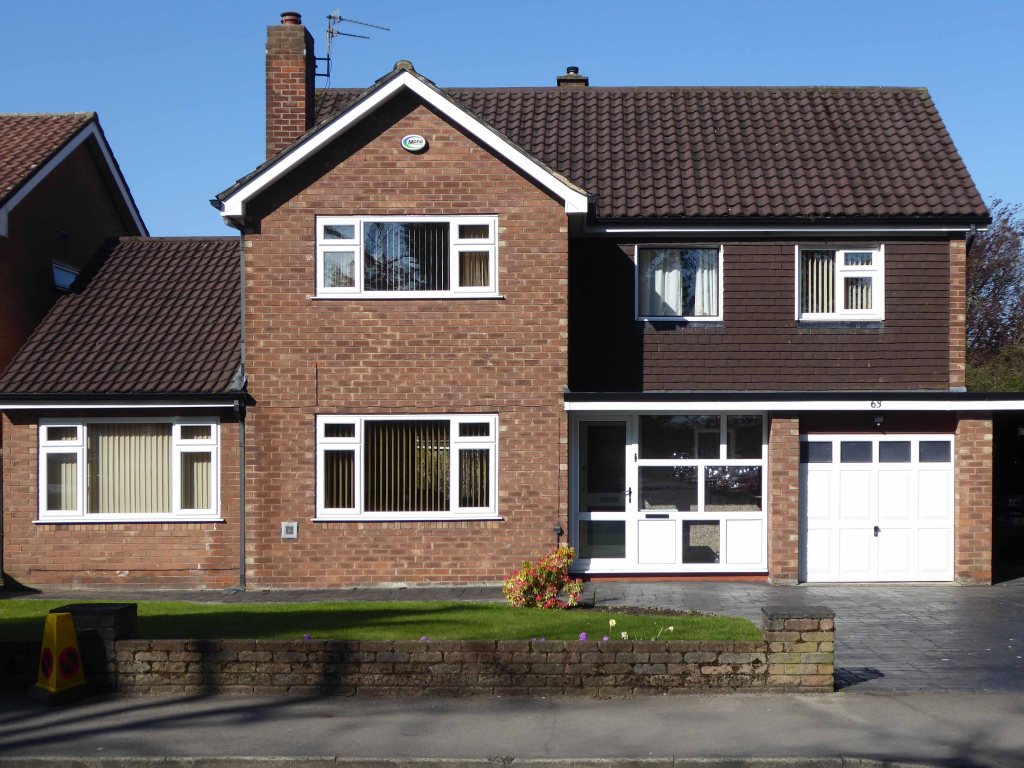
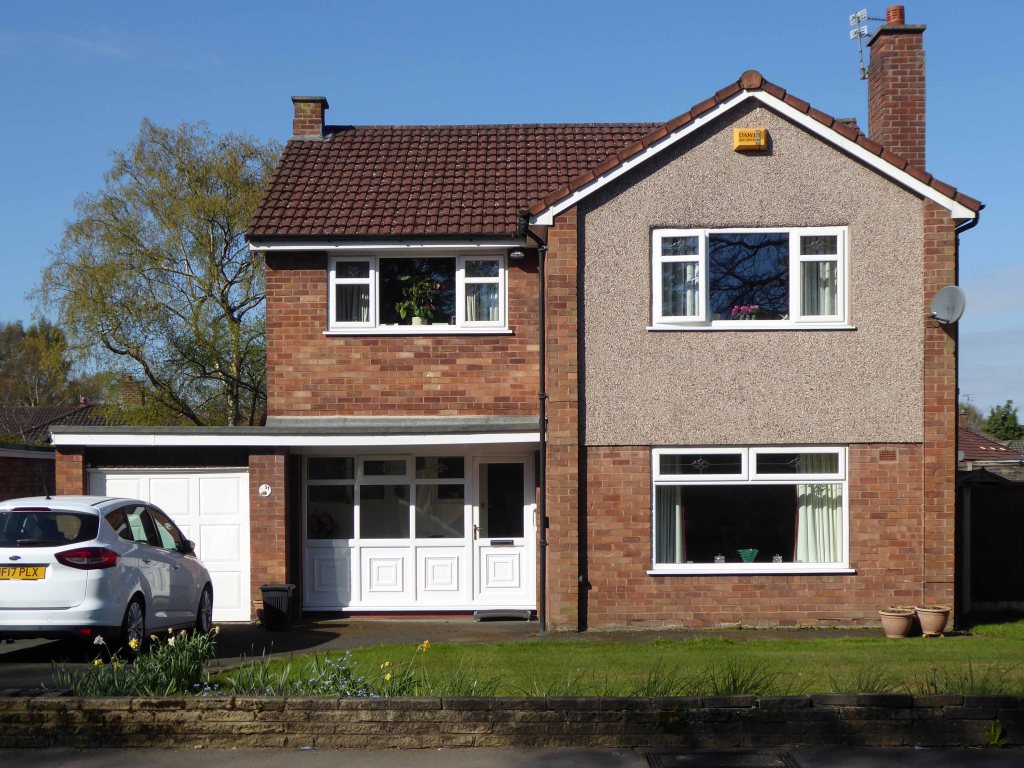
Homes of Distinction – Heald Green

We begin our journey through bricks and mortar, domestic fashions and fads, time and tide in Rainham.

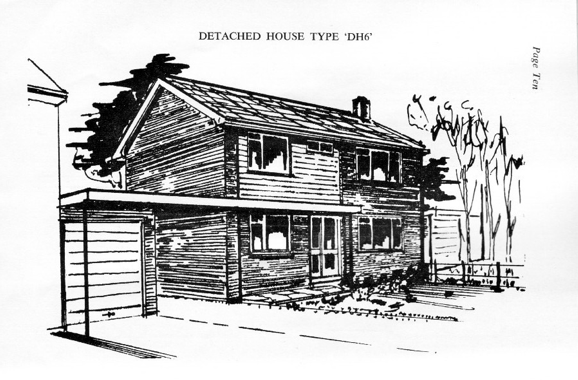
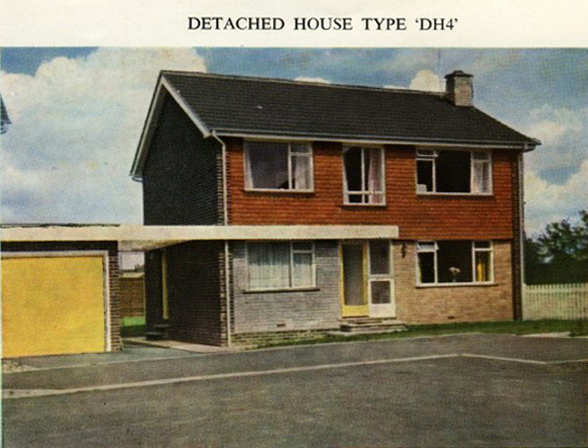
Ward’s Construction, along with many others throughout the country, offer the aspirational suburbanite an opportunity to own the very latest in modern design.

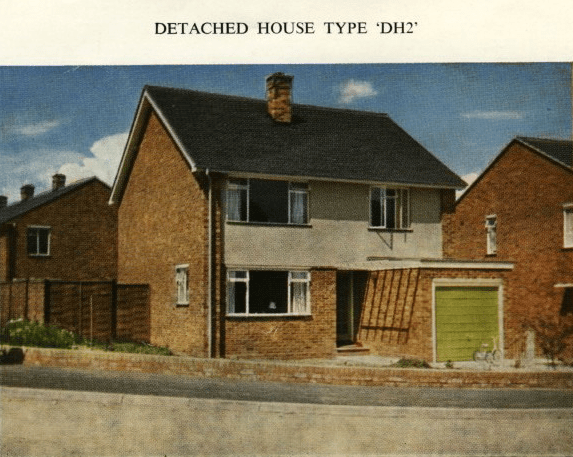
Large open plan rooms lit by large open glazed windows, quality cladding – mixing traditional materials with go ahead get it now design. Double fronted, remote garage, modest manageable, grassed gardens.

For those on slightly more limited means the DH2 offers affordable modernity, along with everything you would expect from a Ward’s Home.

Homes of distinction.

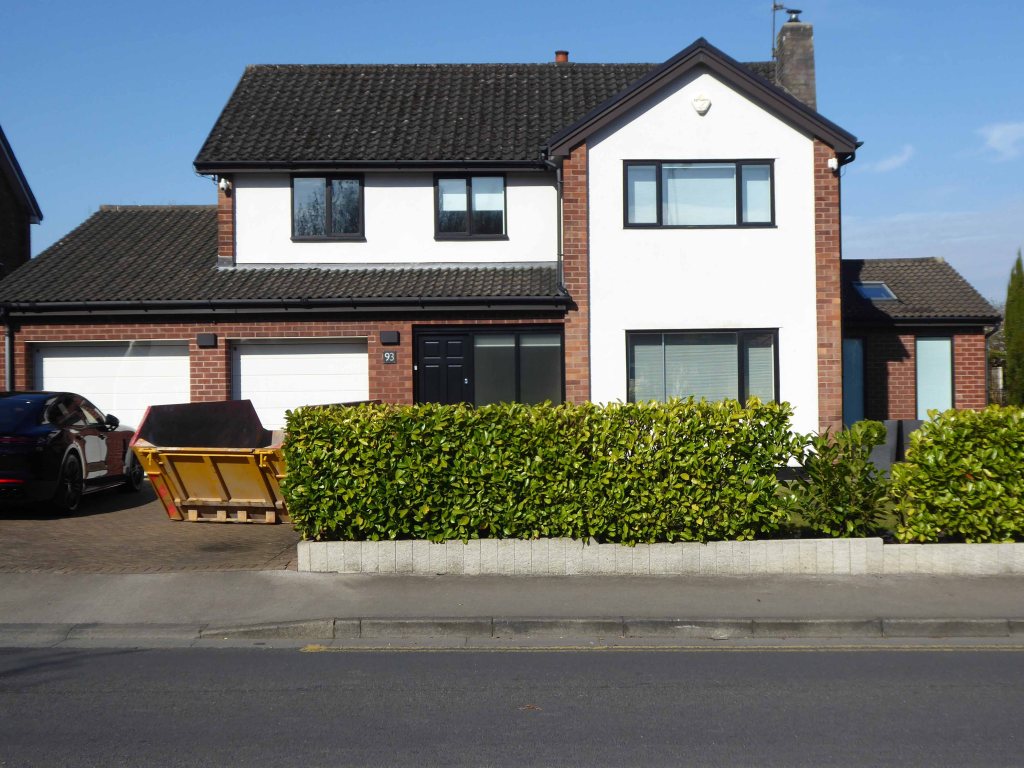
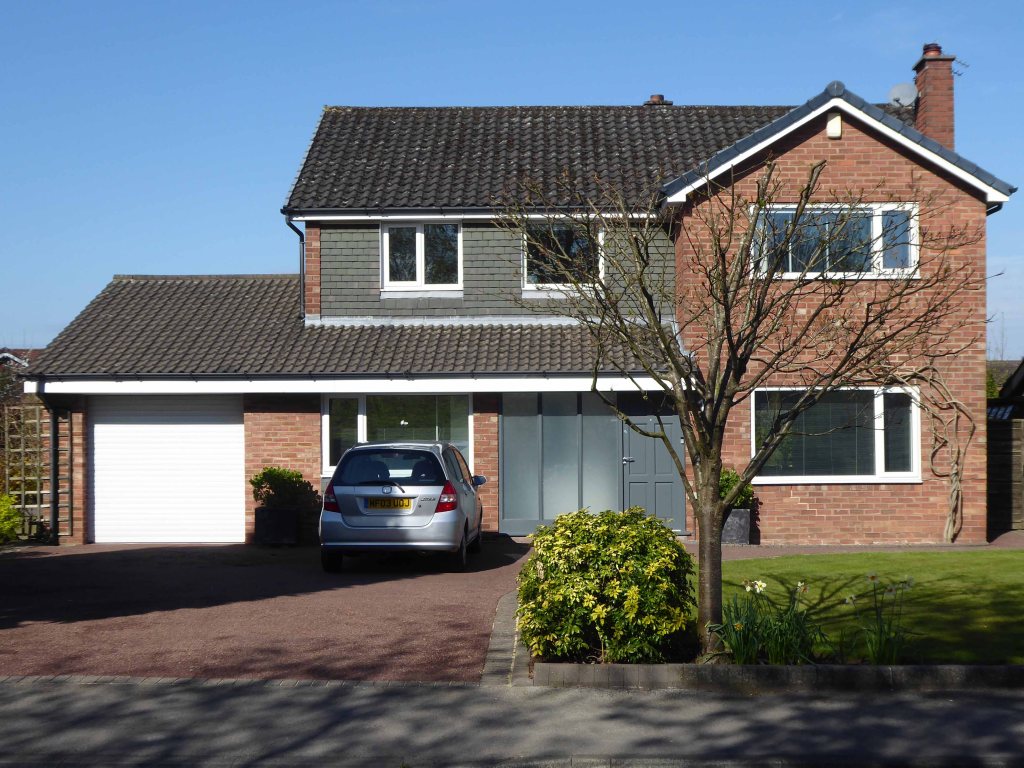
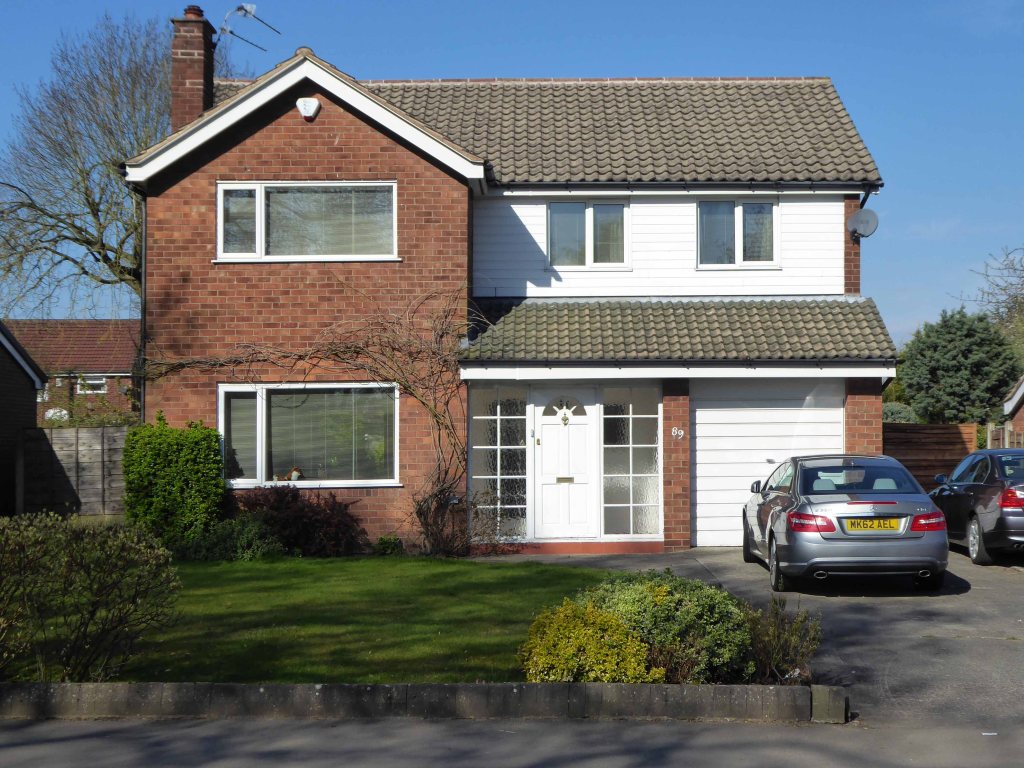
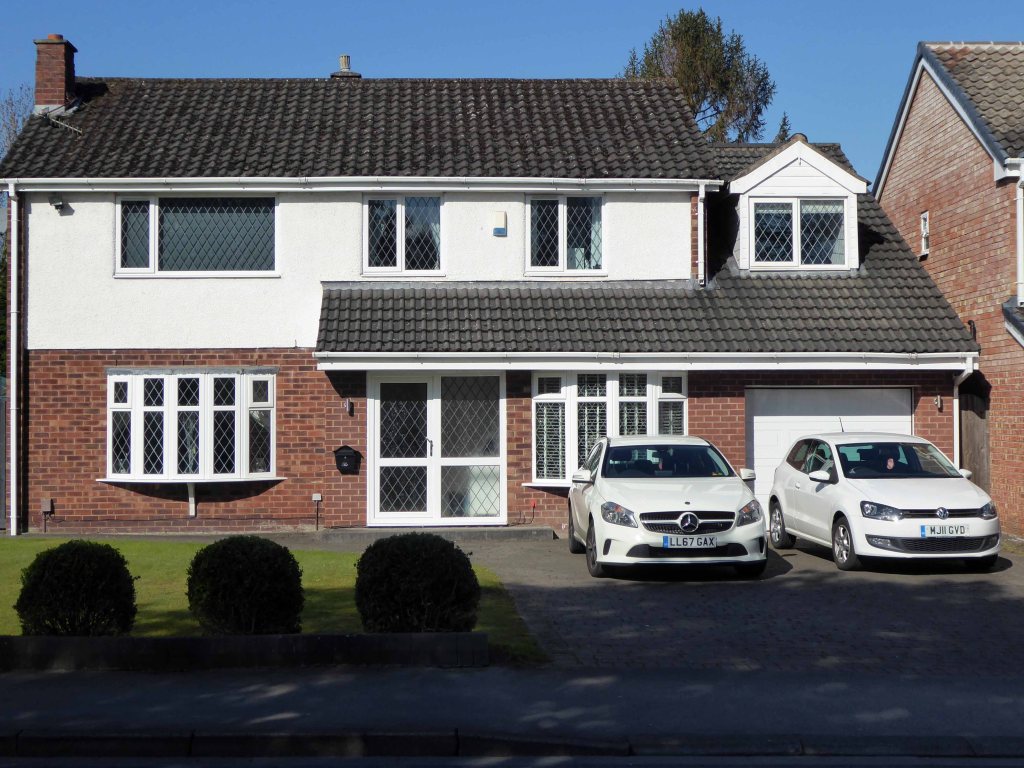
Fast forward to April 2020 – St Ann’s Road Heald Green Cheshire

National Cycle Route 558 brings me here – sanctioned lockdown exercise for the mobile moocher.

In the sixty or so years that have passed something has happened to those suburban dream homes.

An ever expanding middle class fuelled by bigger pay packets, low, low, lower taxation and bumper inheritance payouts, wants more.

More house, more car, more style – conspicuous consumption of everything and more – extend yourself, express yourself!

Right here in one unexceptional road is the apotheosis of today’s Homes of Distinction.

Stopford House – Again and Again

Third time around – on a late lockdown April evening.

I’ve been here before and before, yet I come back again and again.

It’s different every time, deserted at the best of times, during the worst of times it seems even more so – not a soul in sight. The low warm sun affords the bare concrete a pale pink and orange glow.
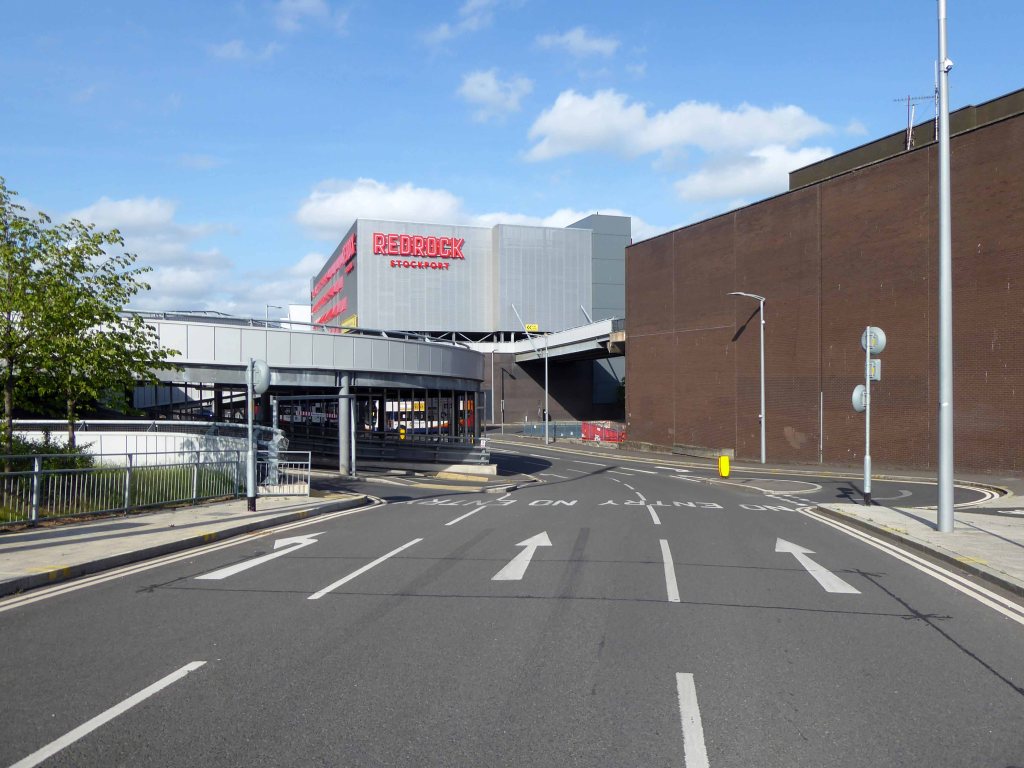
The mix contained coarse aggregate from the Scottish Granite Company of Creetown, a fine Leemoor sand from the Fordamin Company, together with white cement.
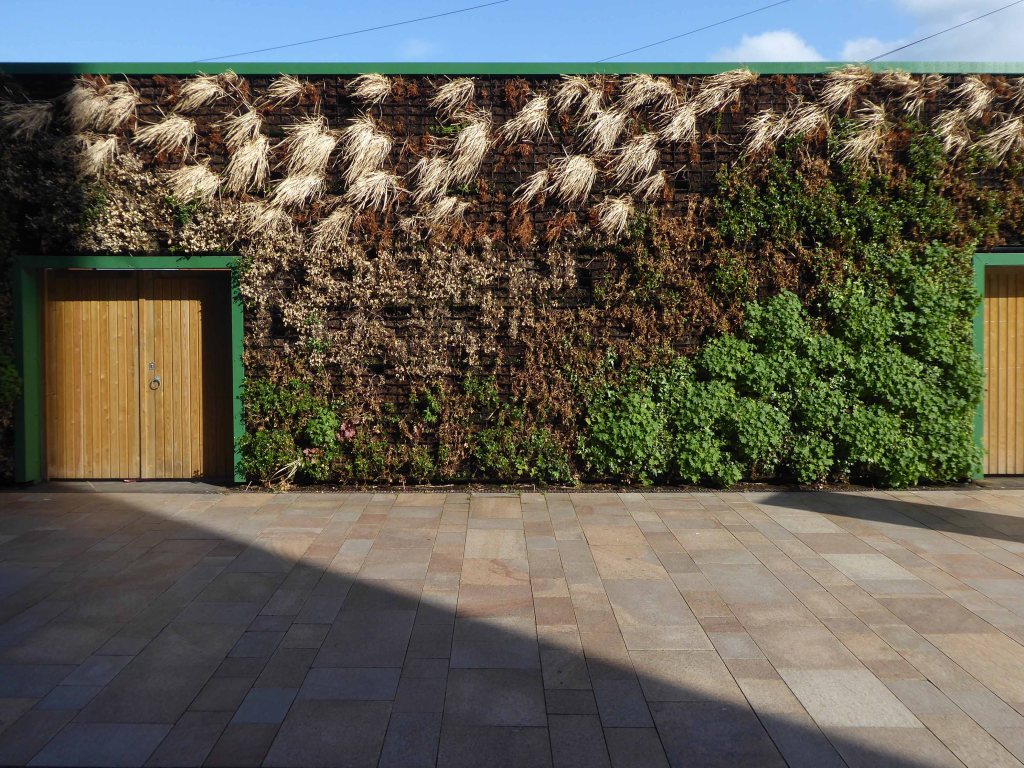
So here we are again, again:

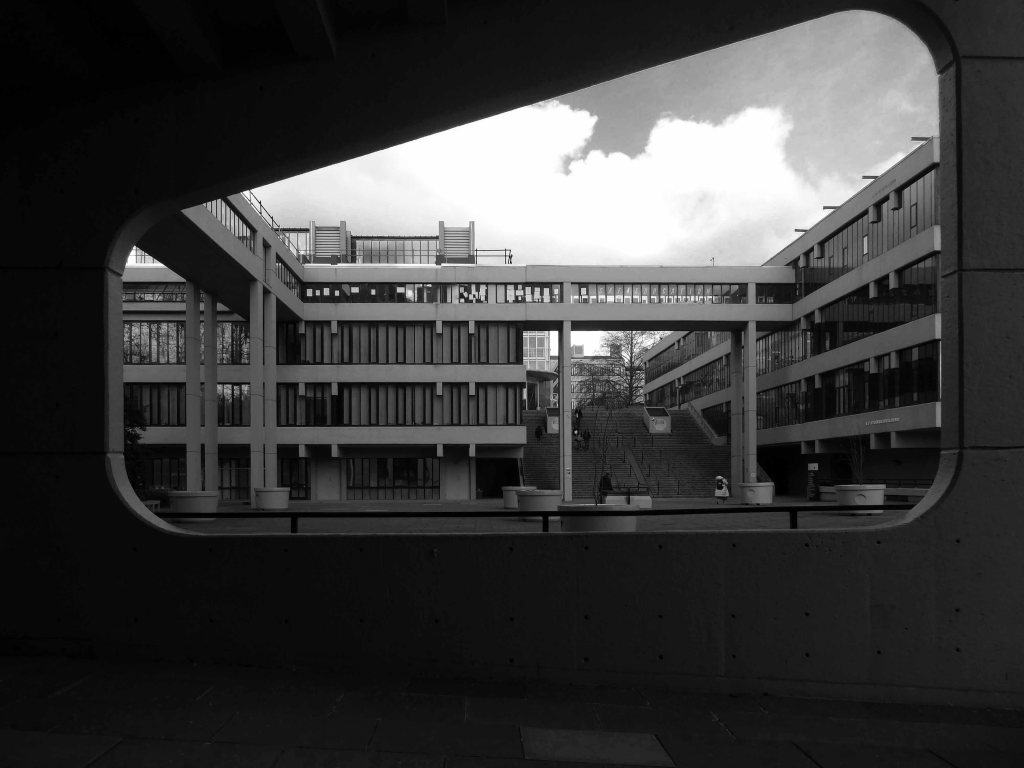
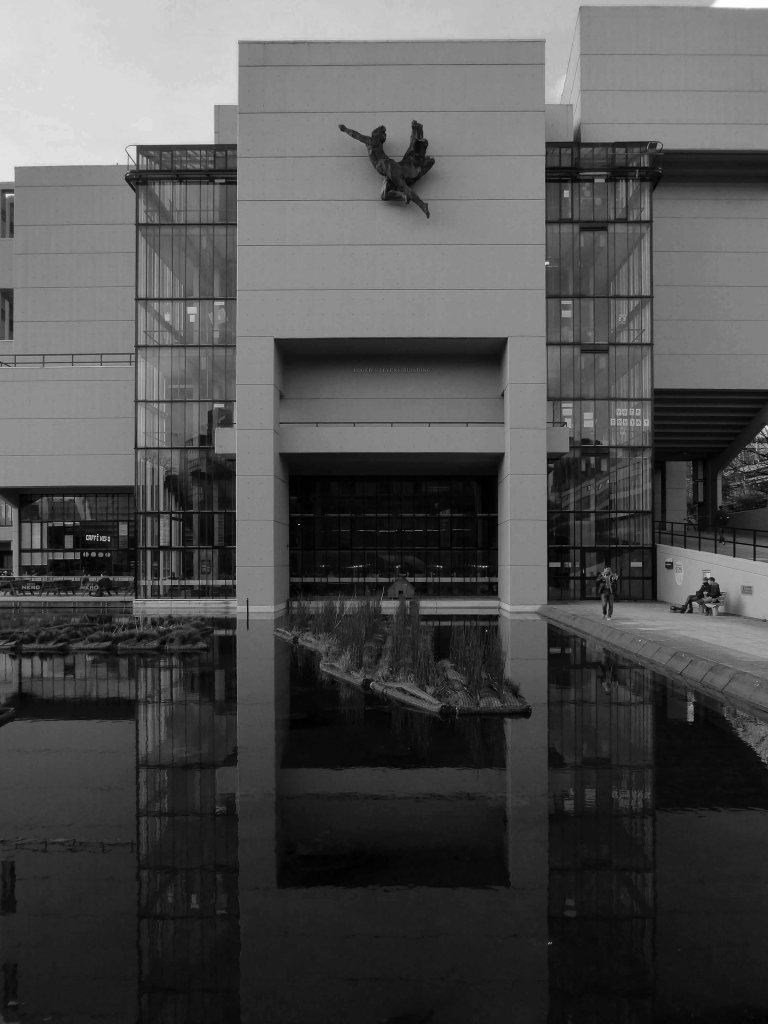
Leeds University – Roger Stevens Building

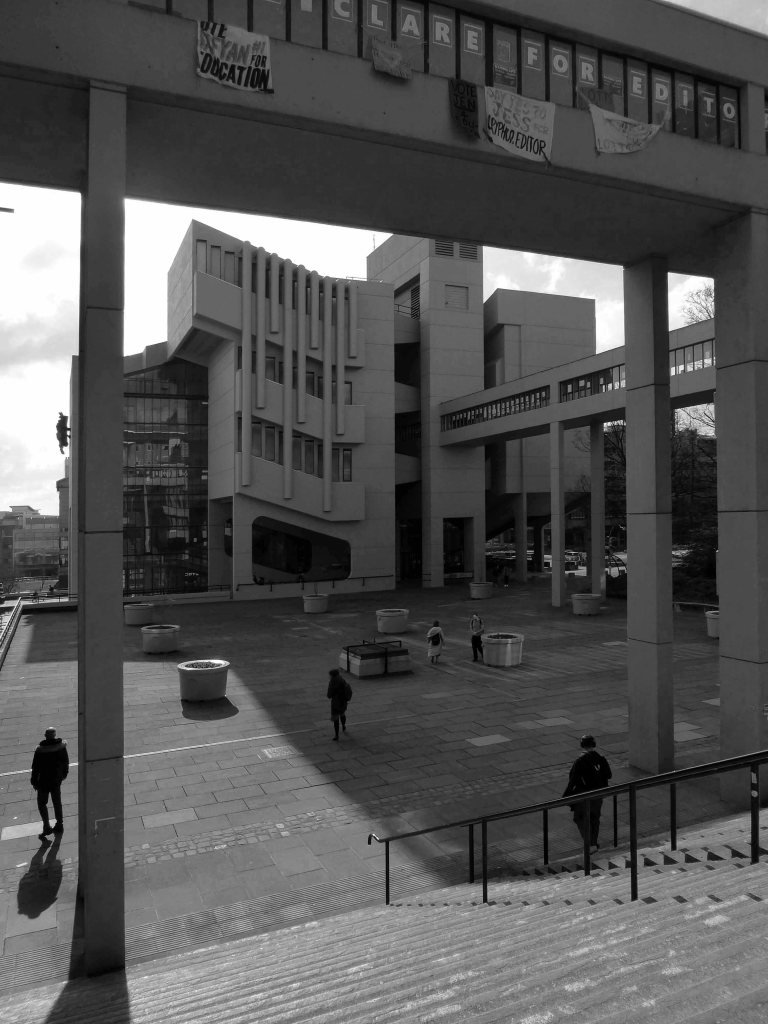
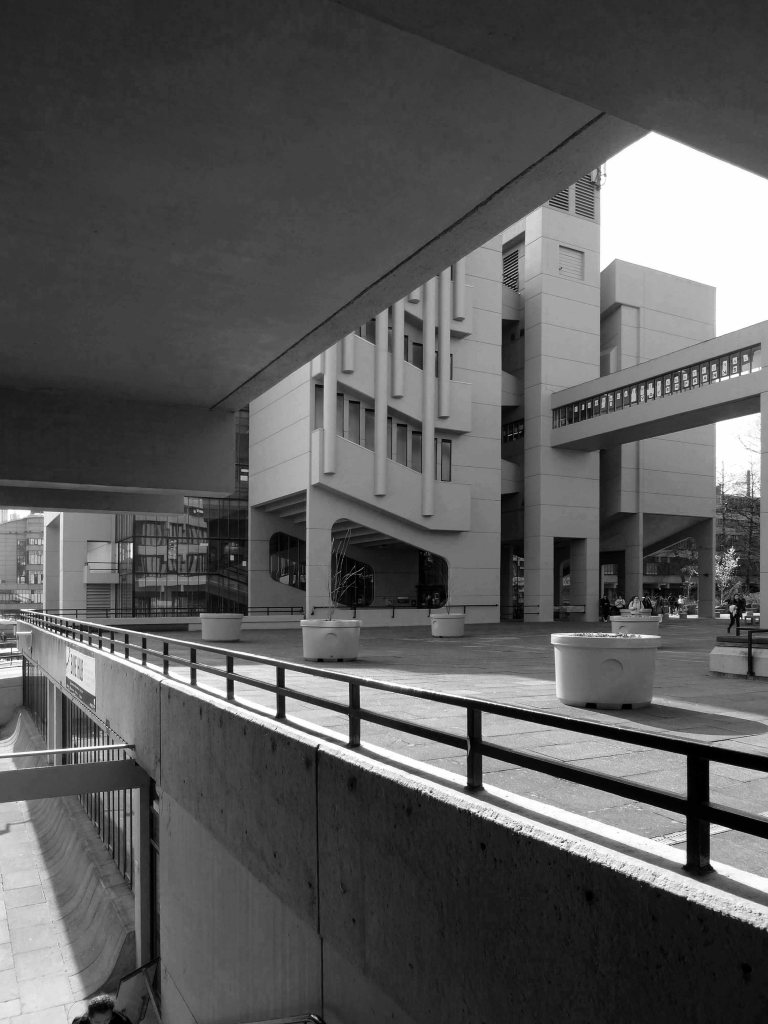
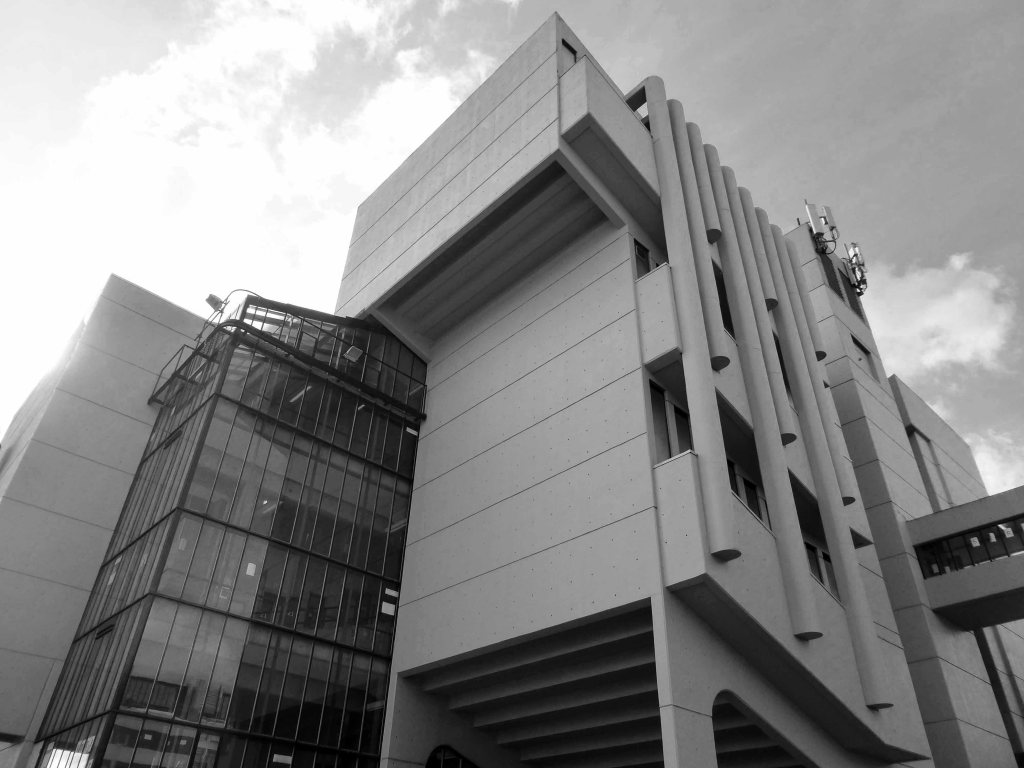
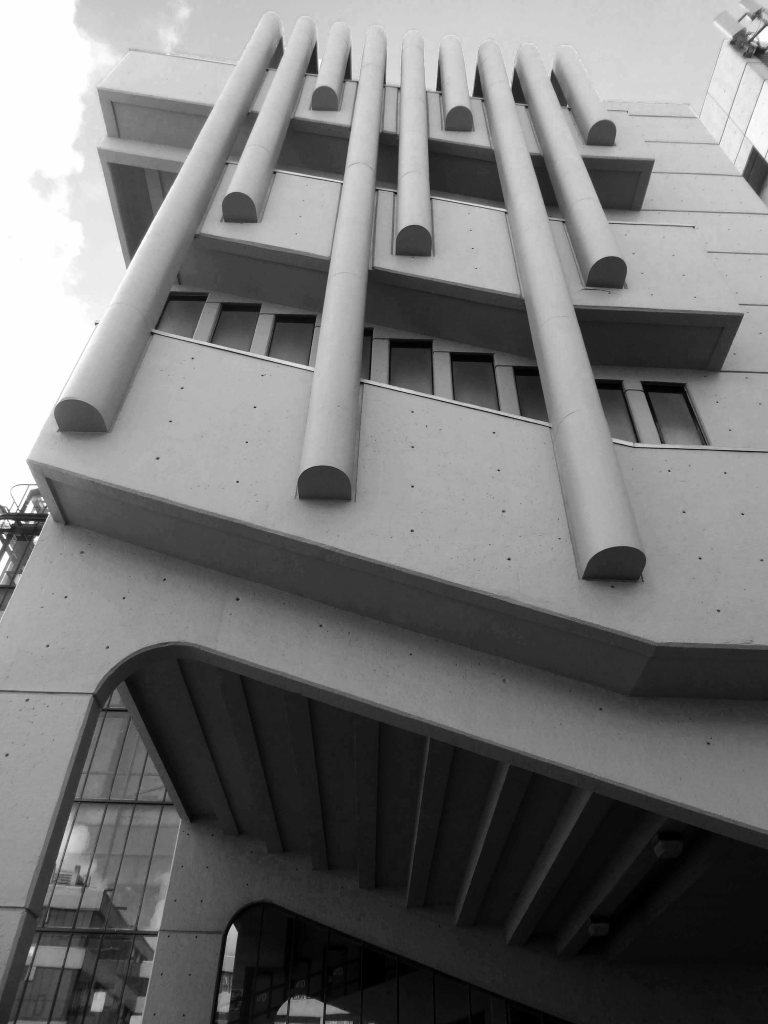
The Roger Stevens Building 1970 – by Chamberlin, Powell and Bon for Leeds University South Campus is designated at Grade II

The building represents the high point of their Leeds University work.
Architecture: the building is an outstanding and individual design with bold external shapes and carefully designed interiors

Planning: the internal spaces are the result of extensive research on the requirements of the university and introduce innovative and influential features such as individual doors into the lecture theatres, and external links intimately with other buildings on the campus by means of multi-level walkways

Intactness: despite the changing requirements of universities, the building has remained largely unchanged, proving the success of its design

Group Value: the building provides a fitting centrepiece to the group of university buildings on the South Campus at Leeds, also recommended for designation.

Historic England

I was asked by the Leeds Modernists to put together a walk which avoids the the Roger Stevens Building, so I did just that.
That didn’t stop me visiting the site on the day of my visit.
This is what I saw:

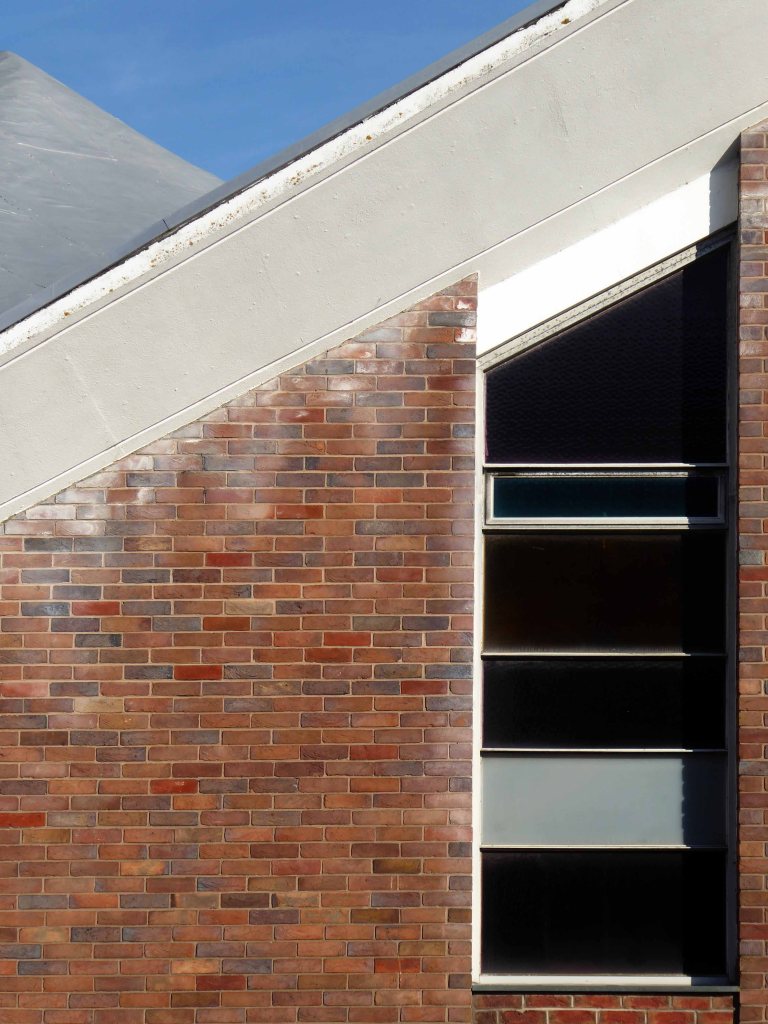
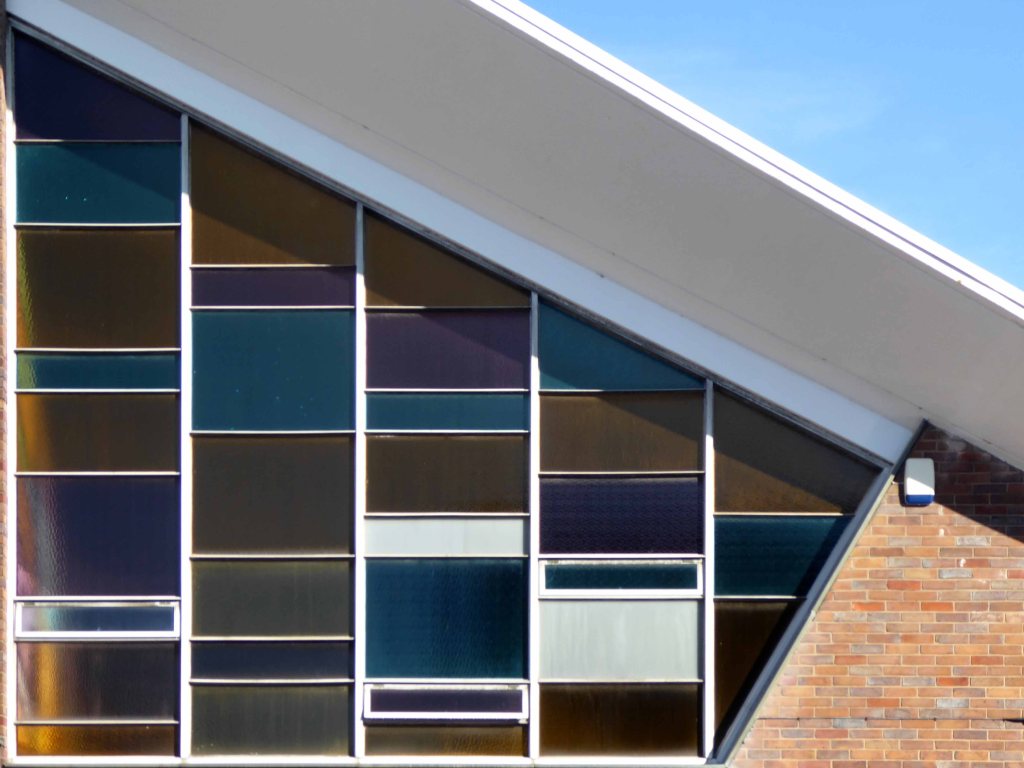
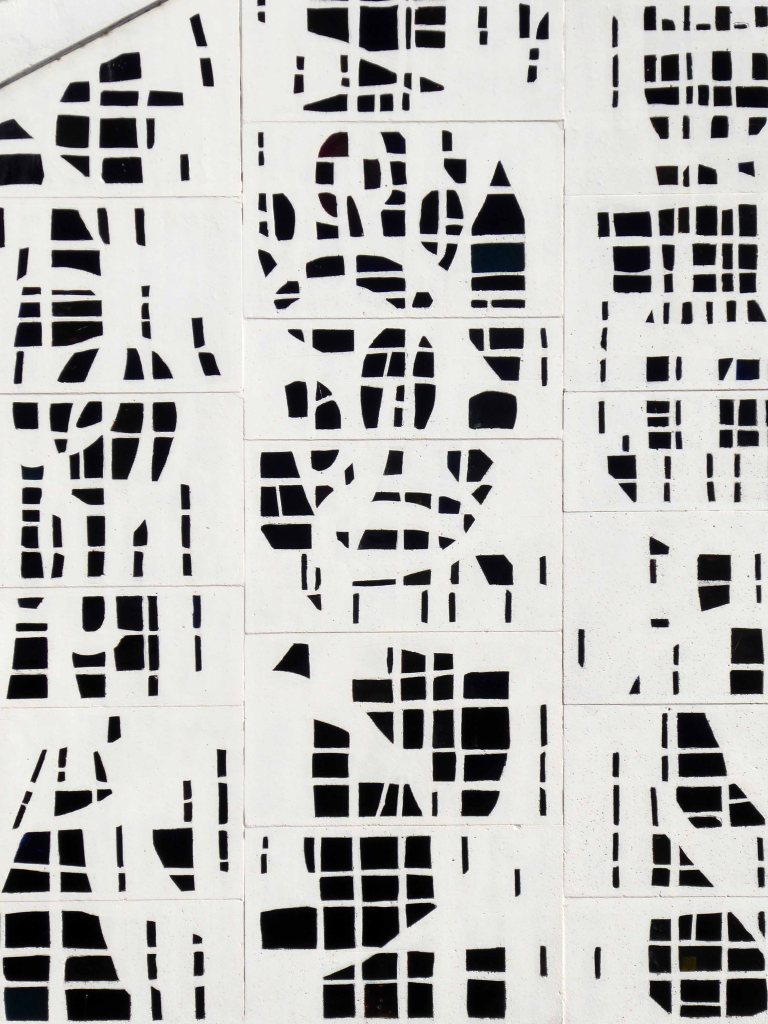
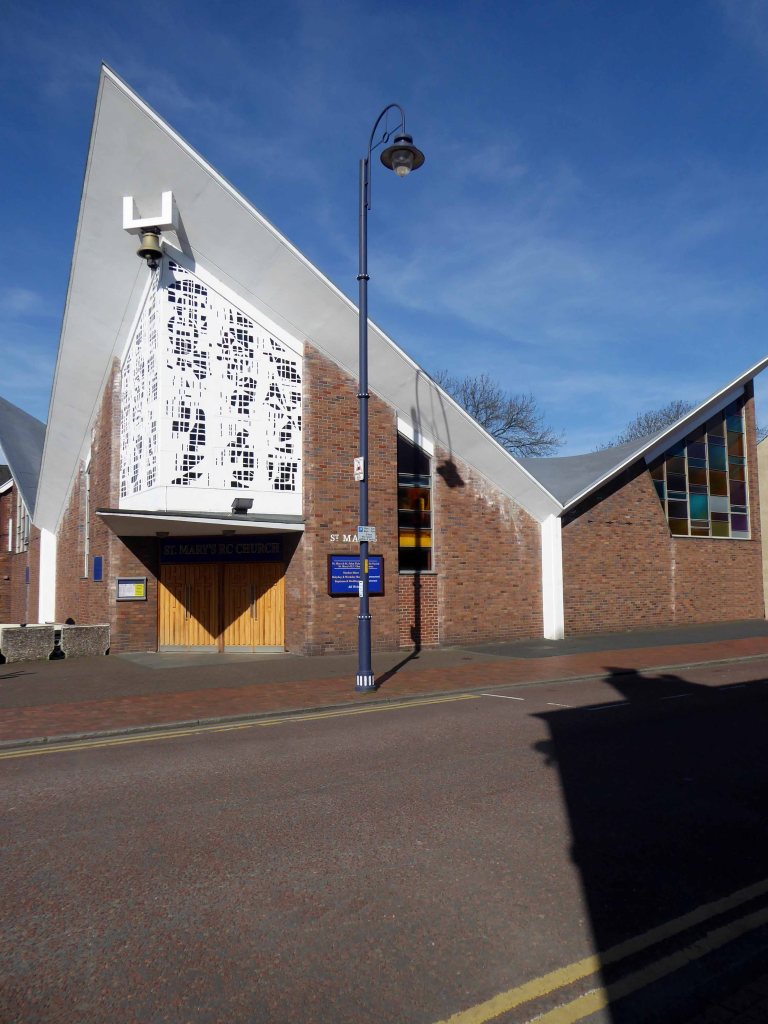
St Mary’s RC Church Denton – Again

I’ve visited before and posted a post previously.

That’s no reason not to pay another visit, especially on a sunny lockdown day – so here we are again on Duke Street.

All masses suspended, life on hold – let’s take a look around:

Civic Centre – Plymouth

Council House former Civic CentreArmada Way Plymouth PL1 2AA

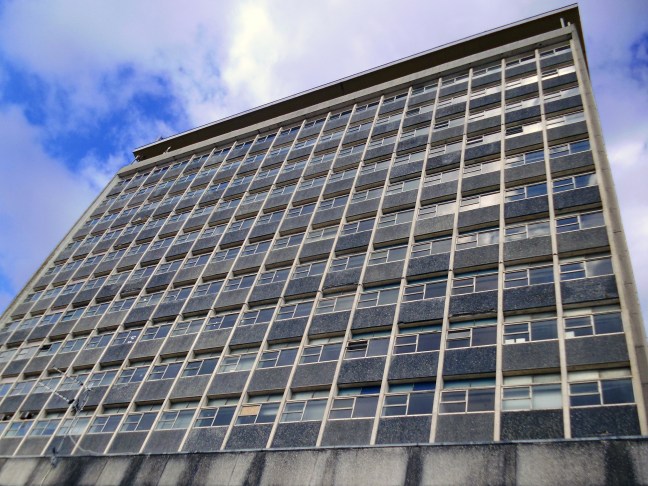
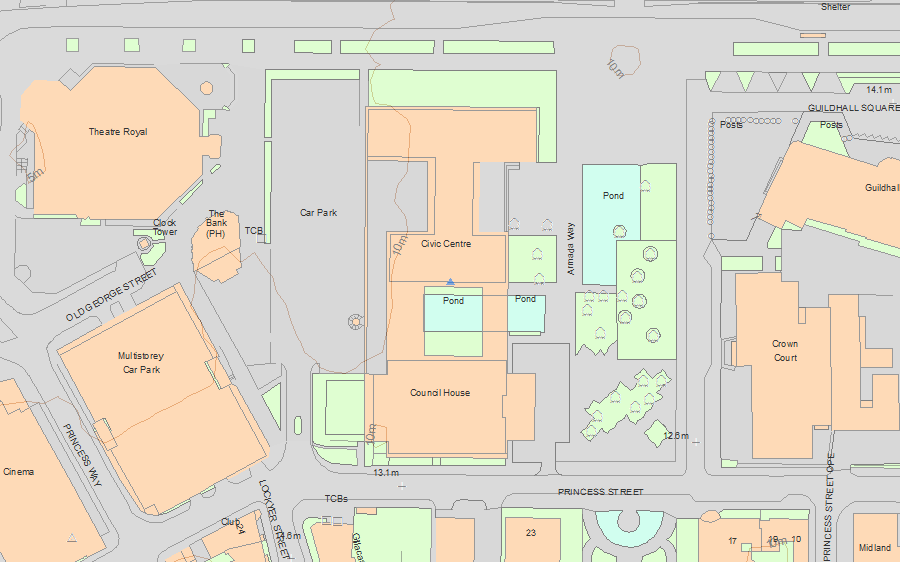
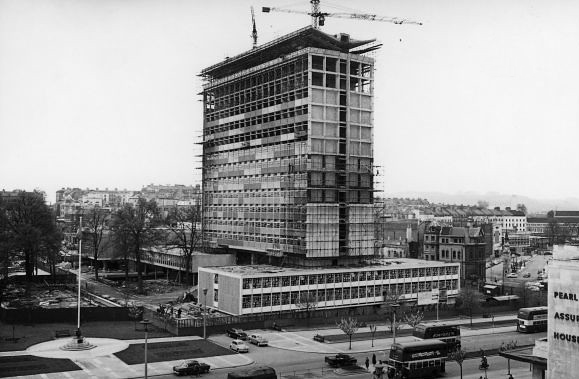
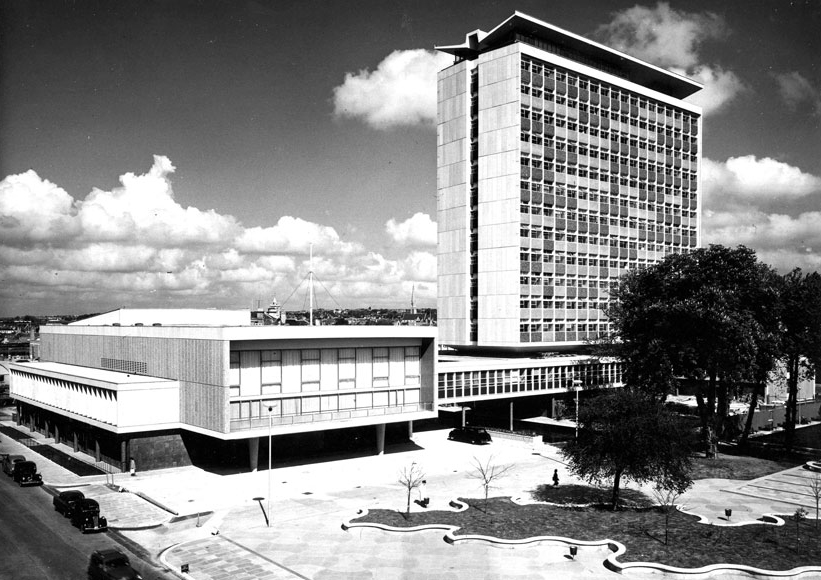
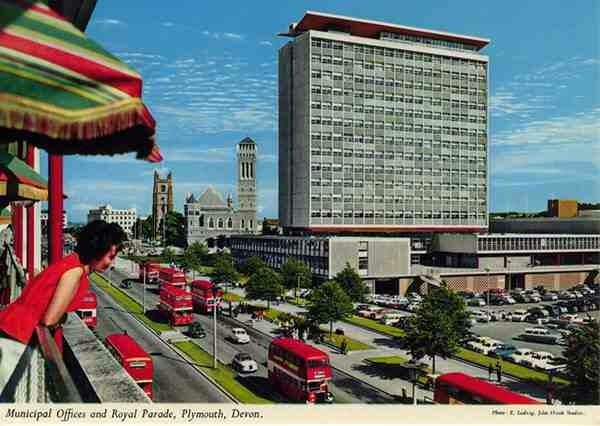
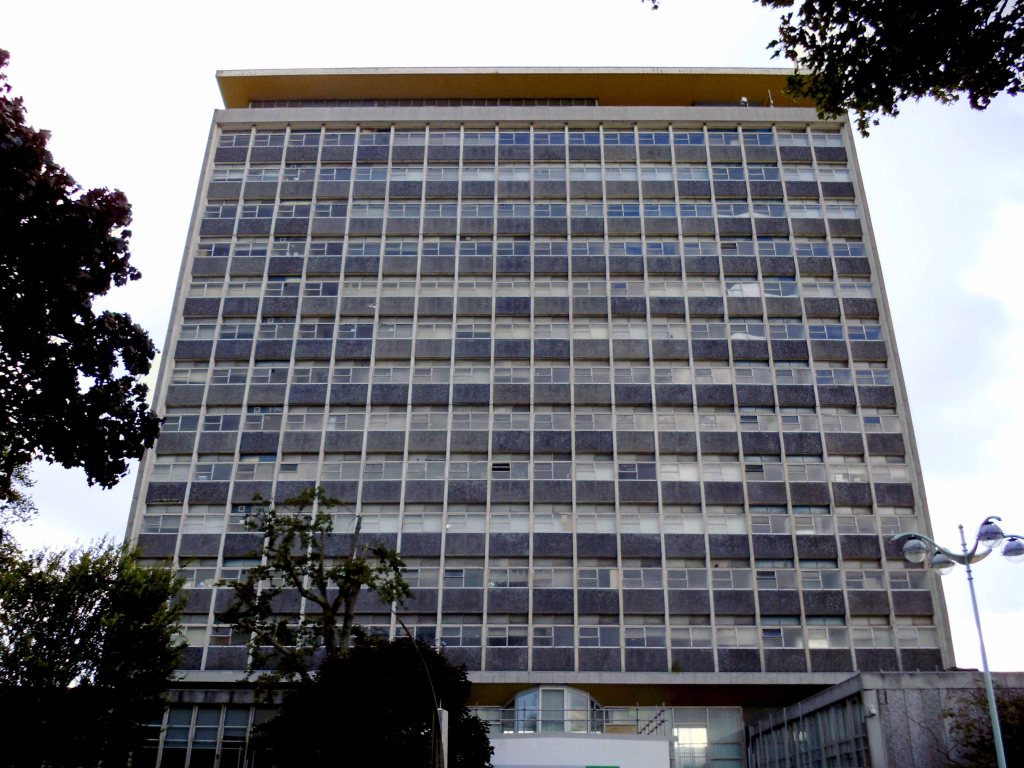
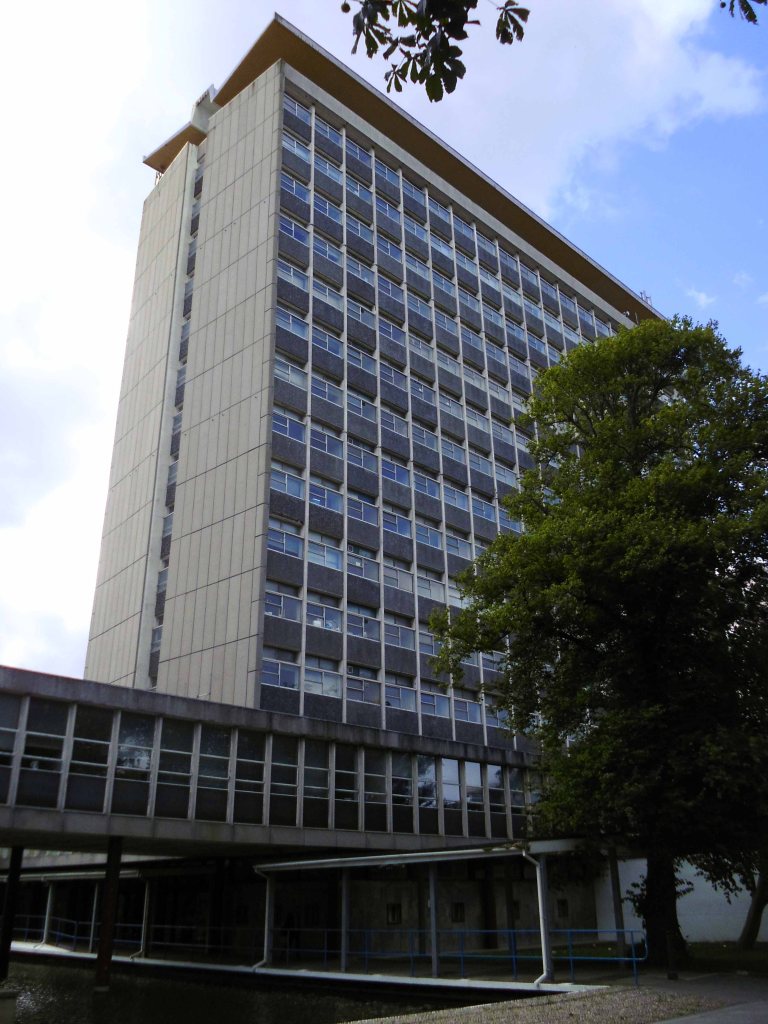
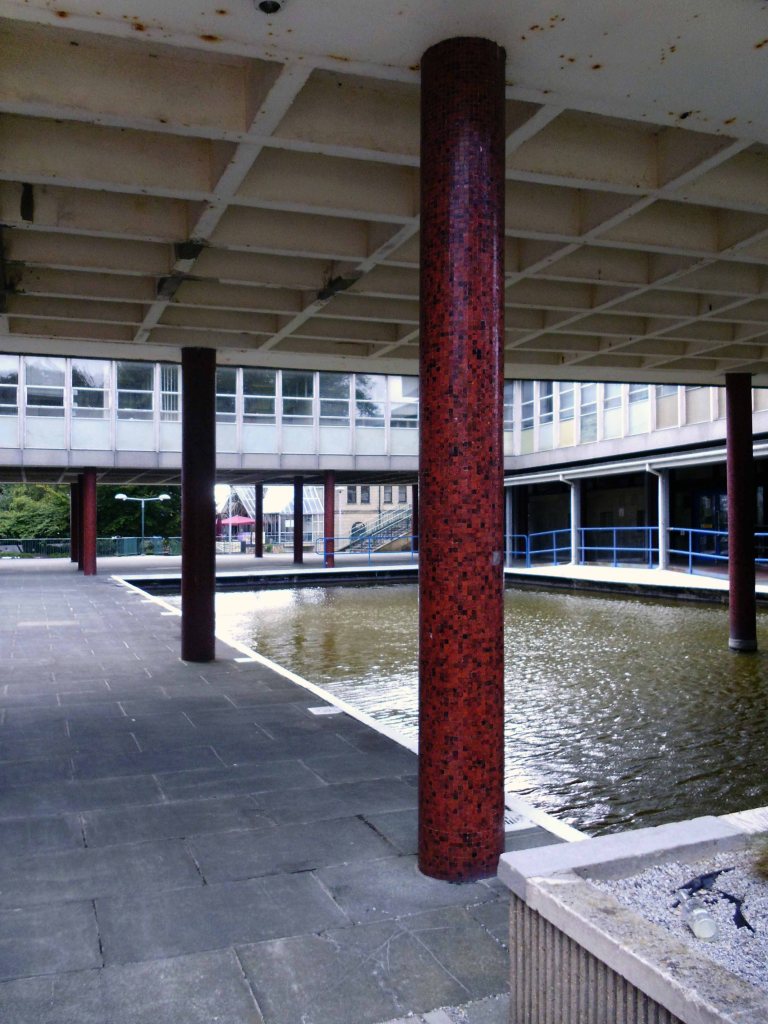
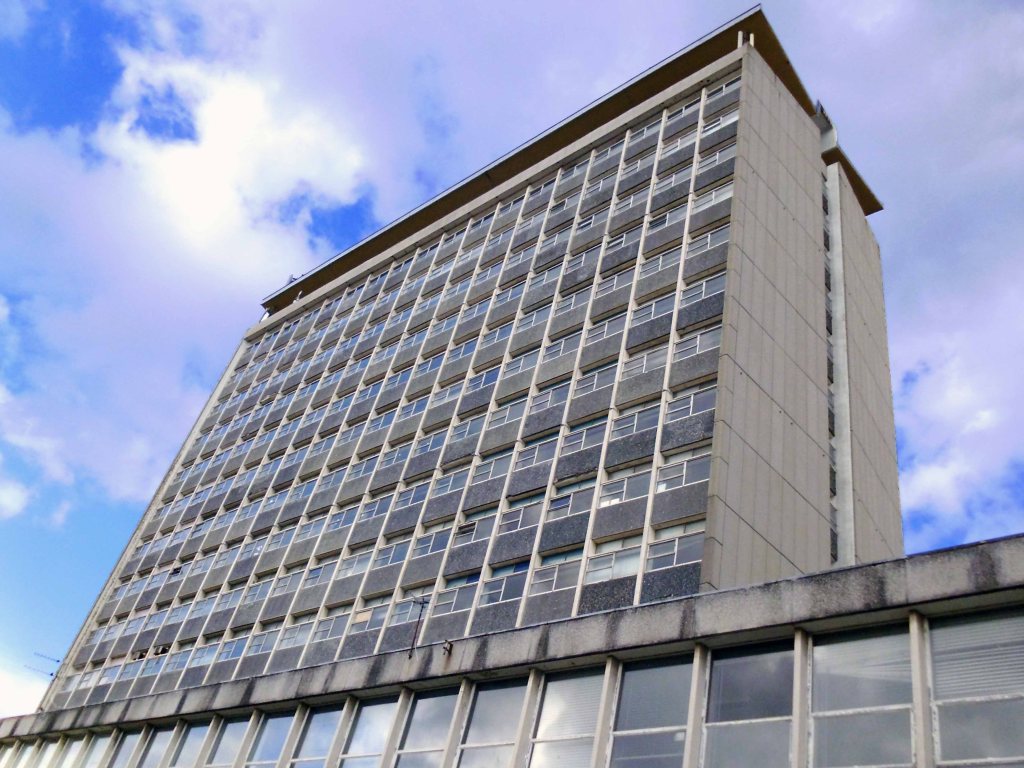
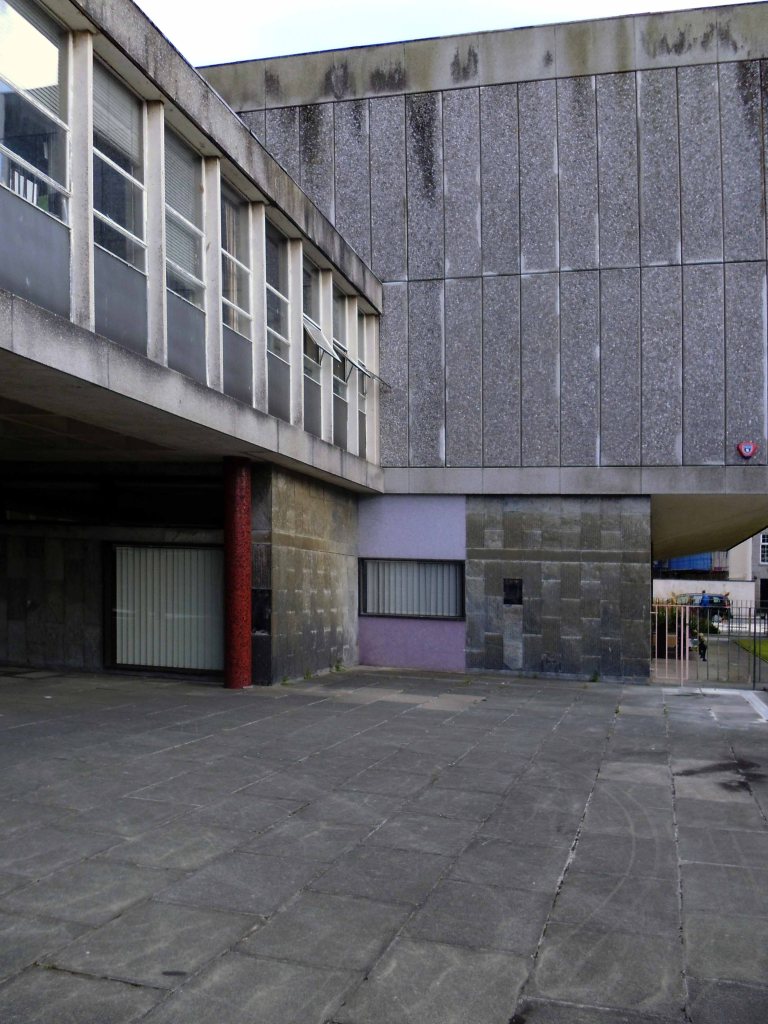
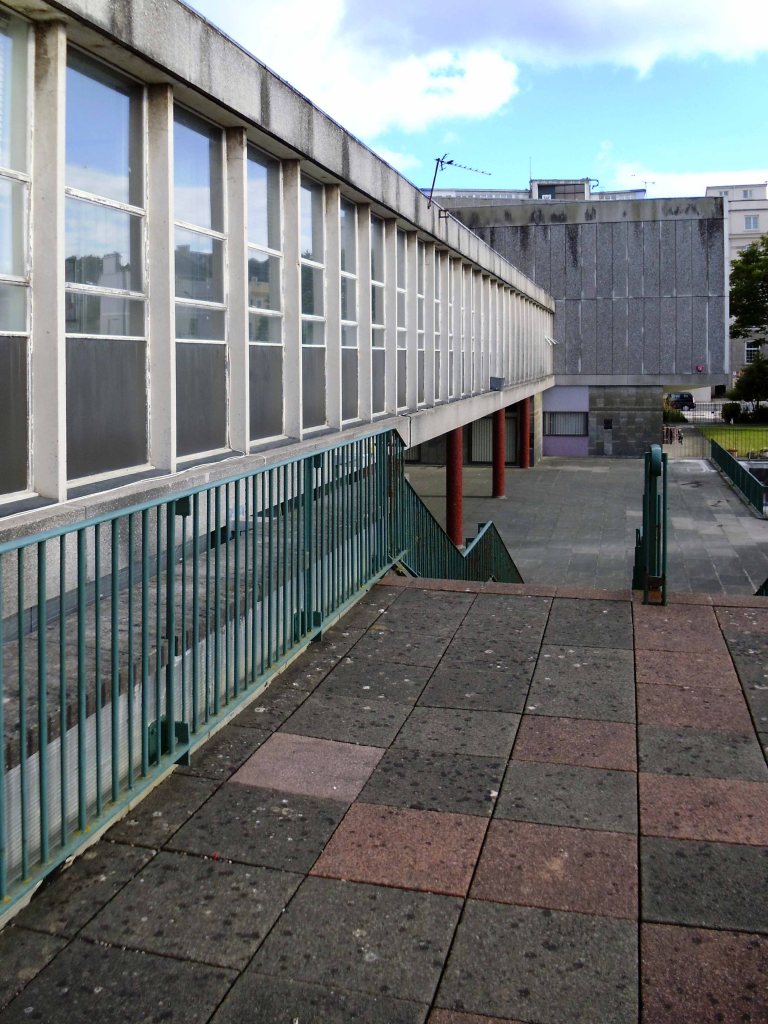
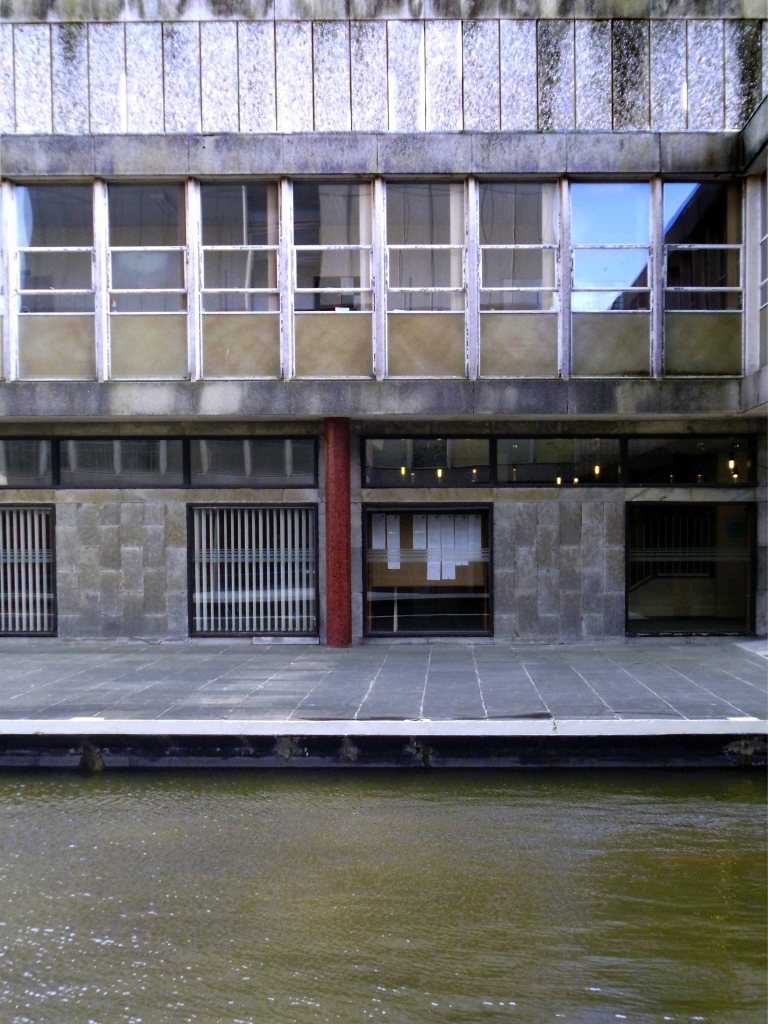
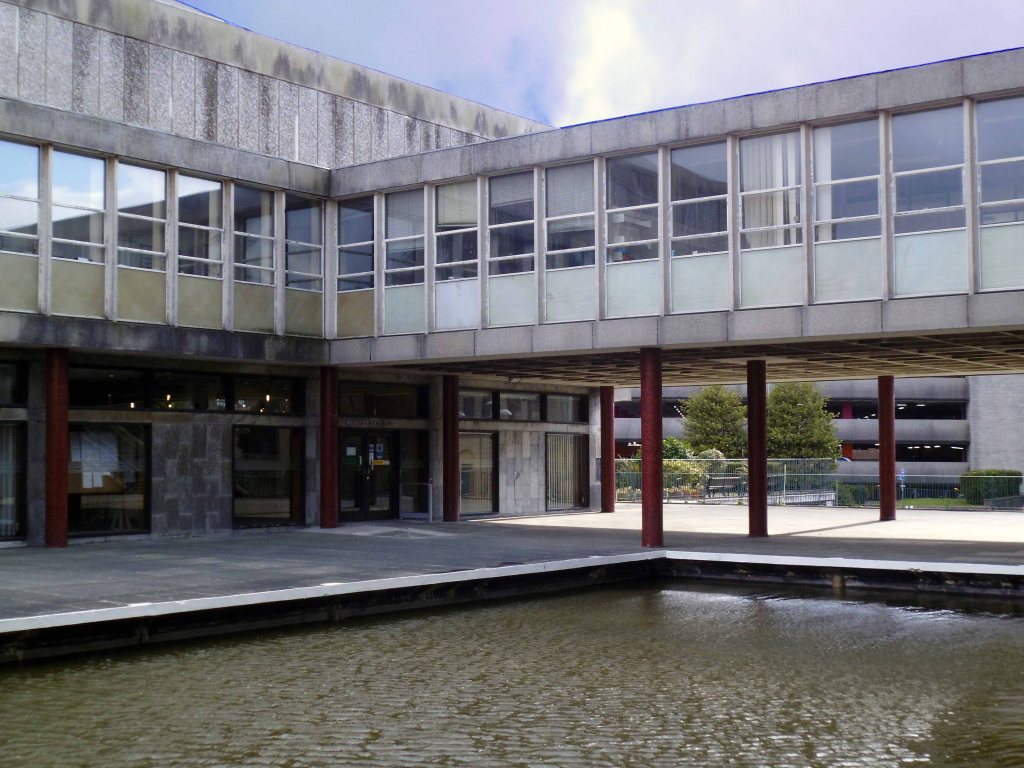
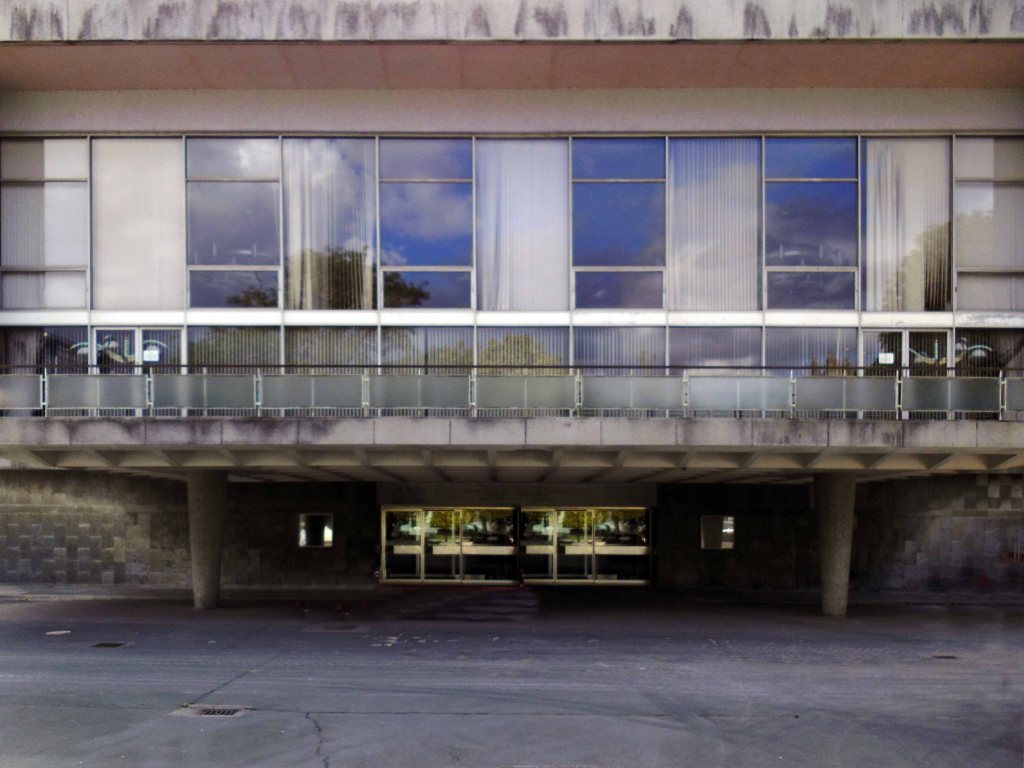
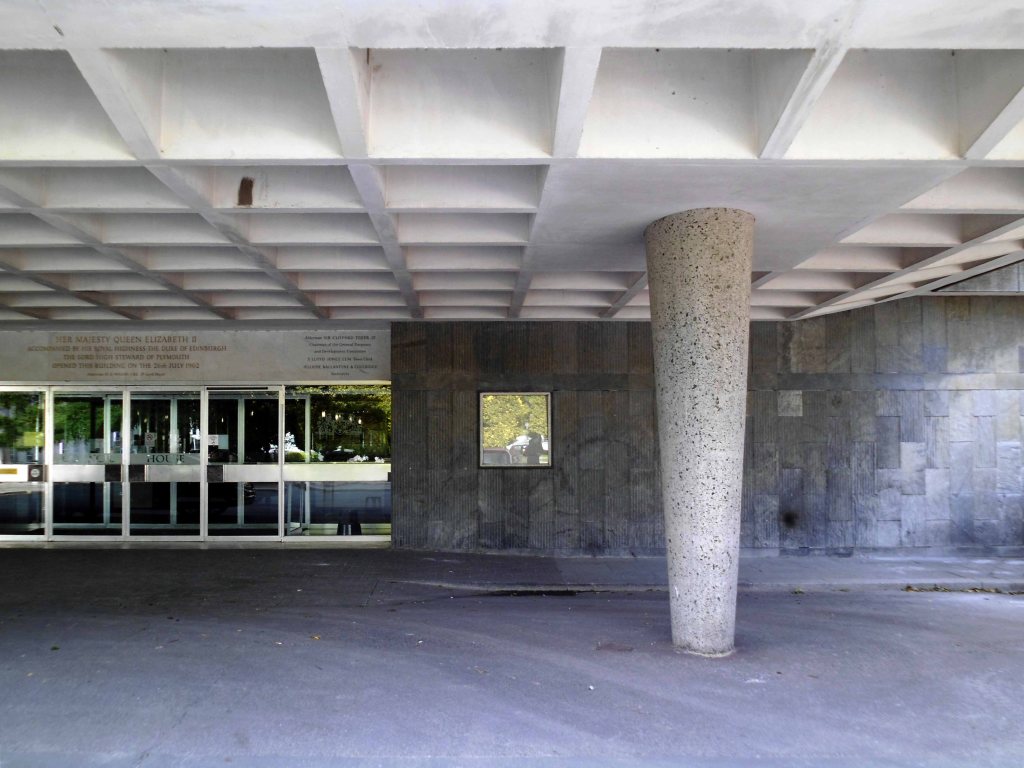
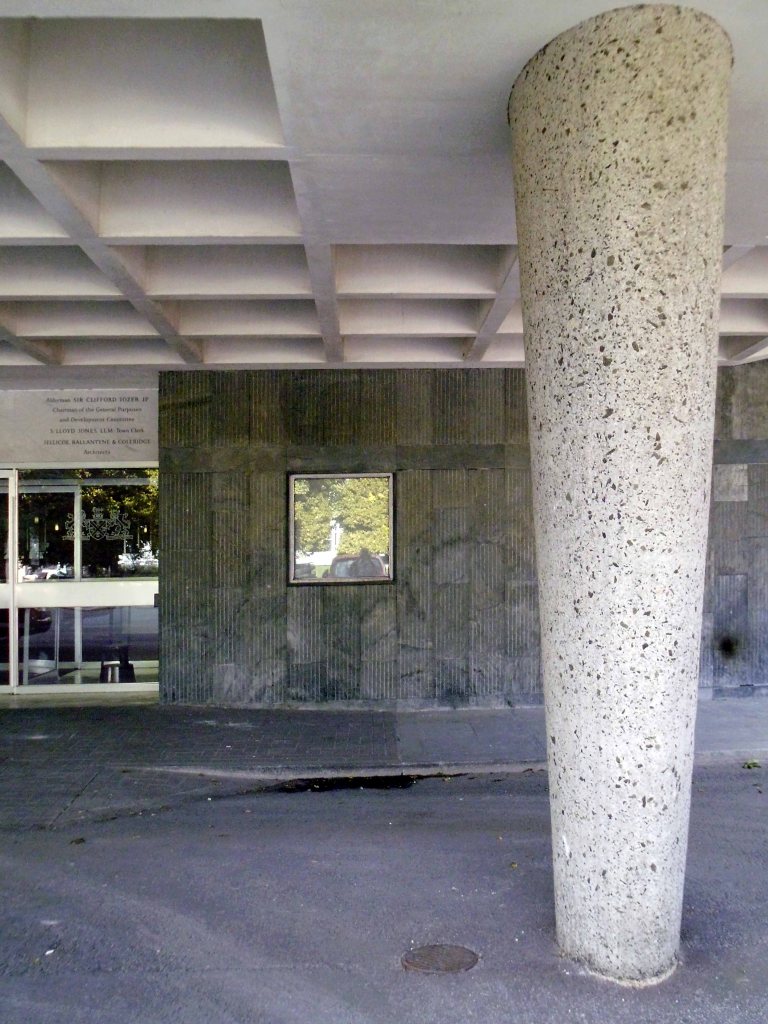
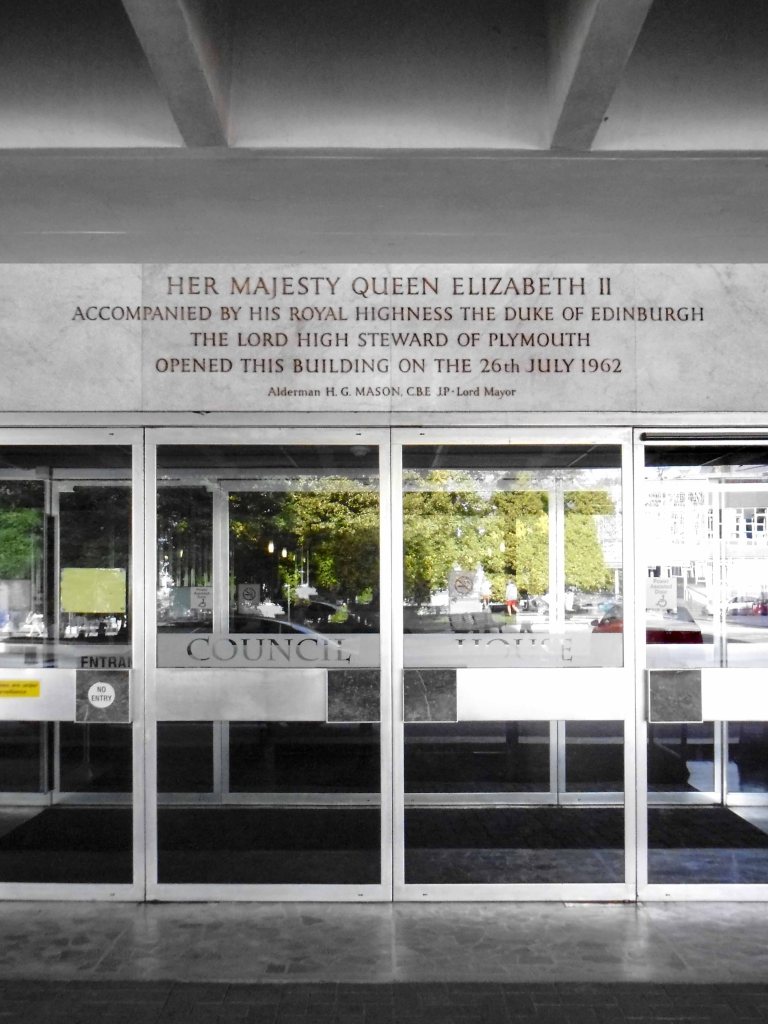
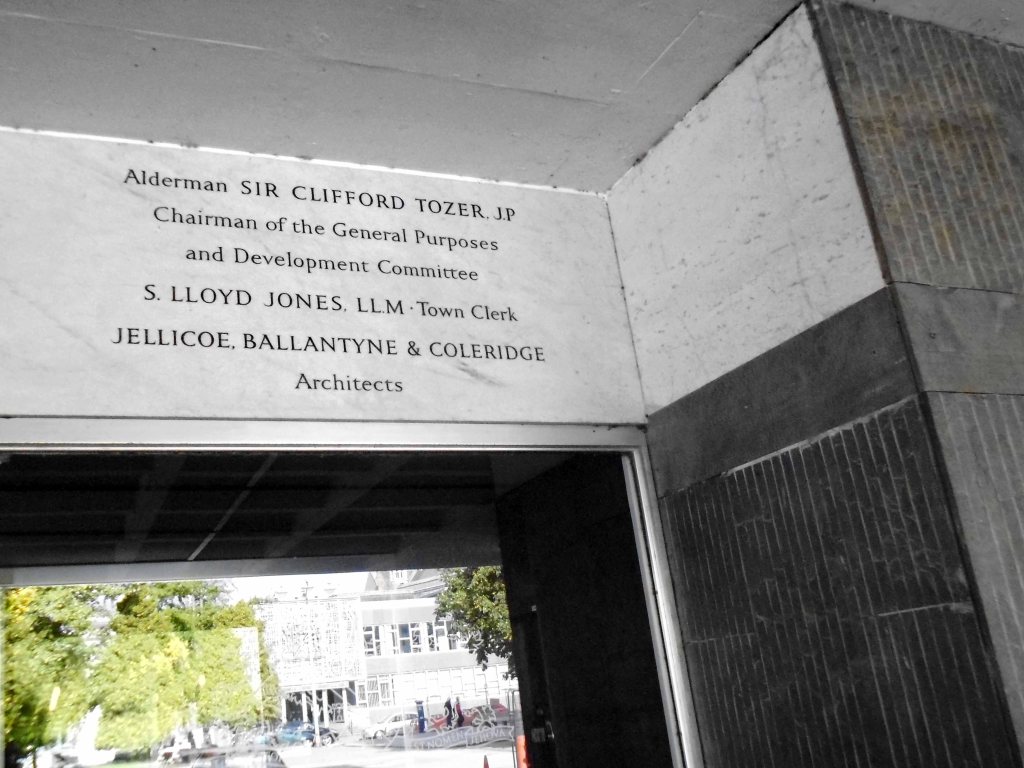
Former Civic Centre 1958-62 by Jellicoe, Ballantyne and Coleridge with city architect HJW Stirling. In-situ concrete structure with pre-cast aggregate panels. It comprises a fourteen storey slab block on a raised raft foundation which straddles a two storey block to the north and a bridge link to the two storey Council House to the south. The bridge link is elevated on pilotis to create an open courtyard with a reflecting pond, part of the designed landscape of the civic square. 

Current listing June 10th 2007 Historic England

I rode into town on my bicycle en route from Weston super Mare to Hastings one sunny afternoon in 2015. The pictures I took that day were largely left untouched, until today. I was prompted by an online postcard search to finally put them to some good use.

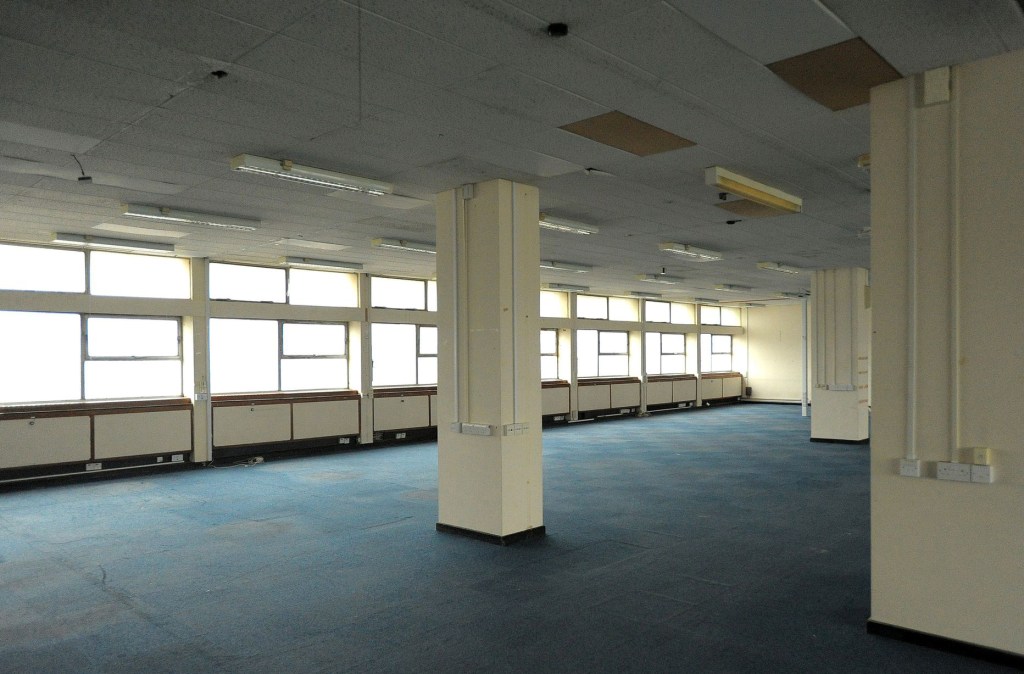
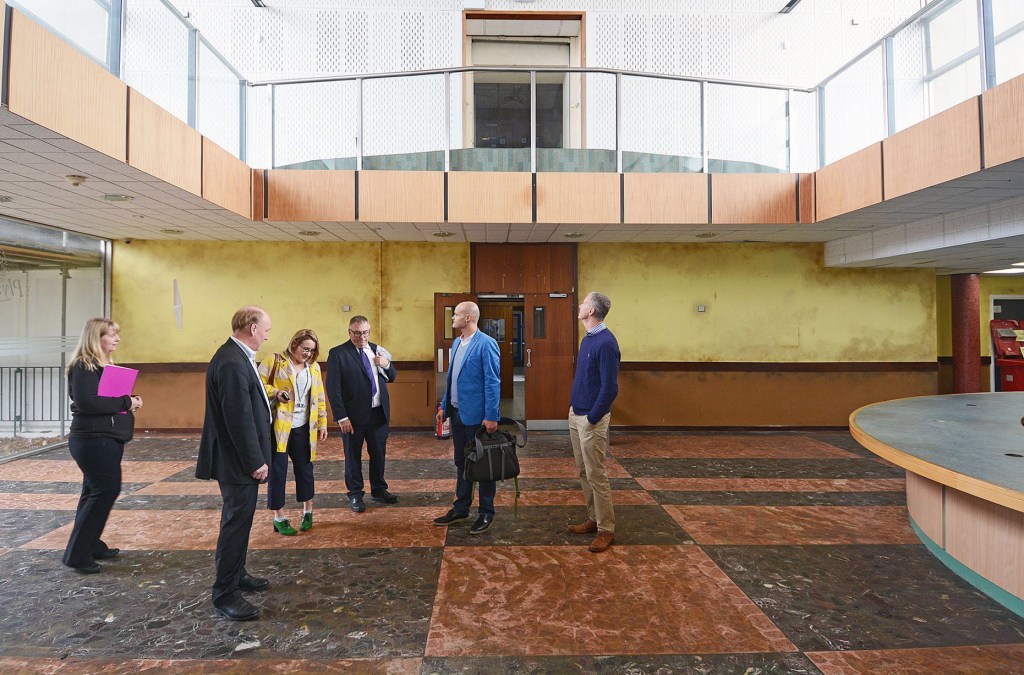
On the day of my visit the building was well and truly closed, and its future uncertain.

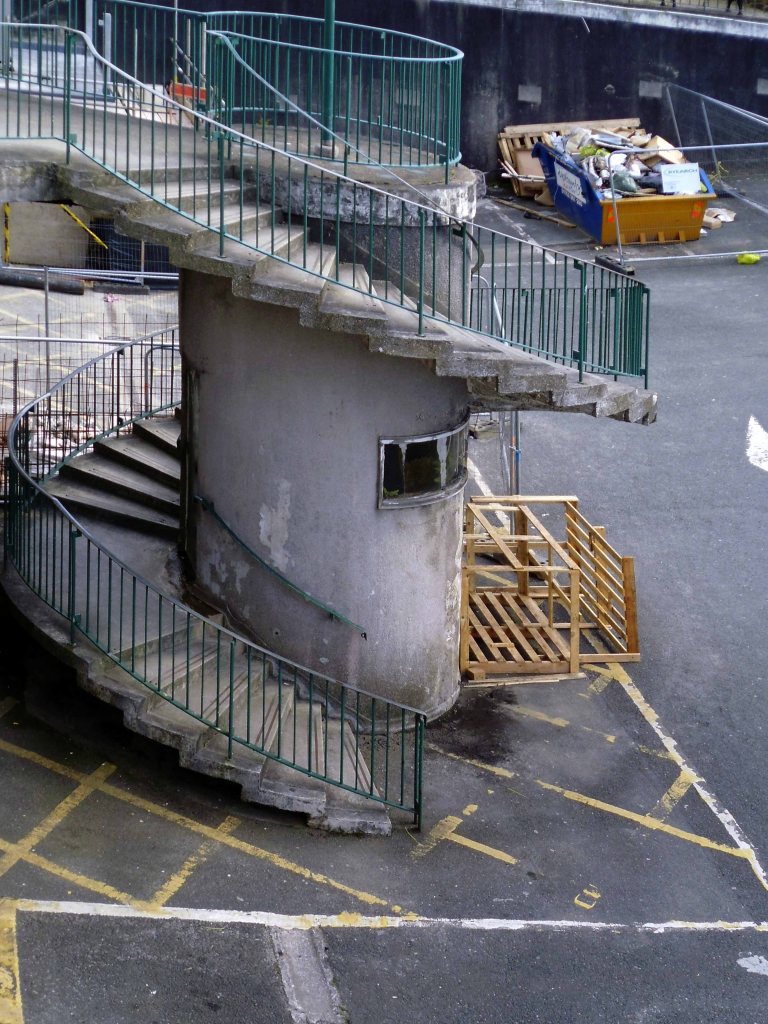
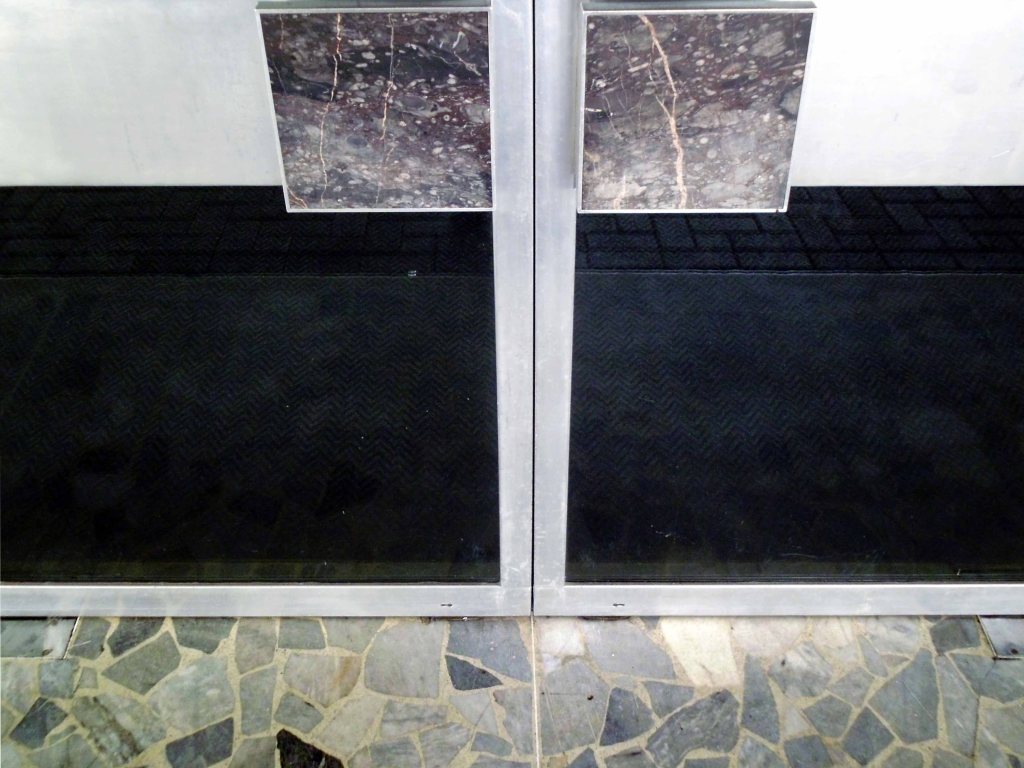
I took my time and explored the site, here is what I saw:

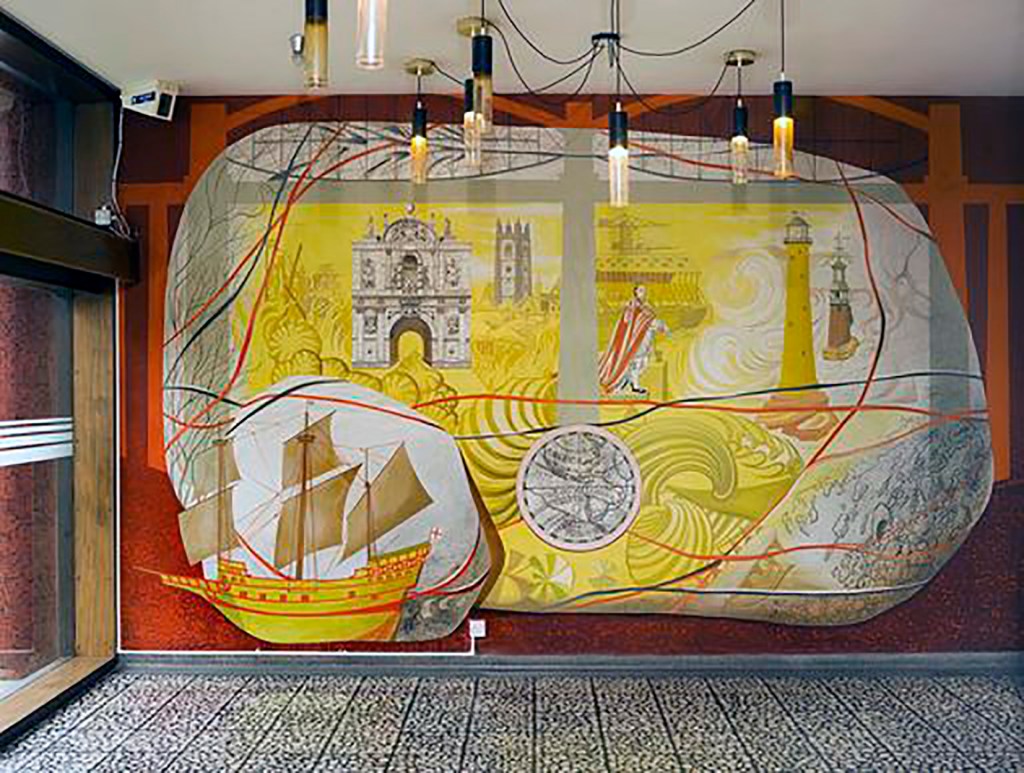
I subsequently found archival image of the interior – including examples of applied decorative arts.

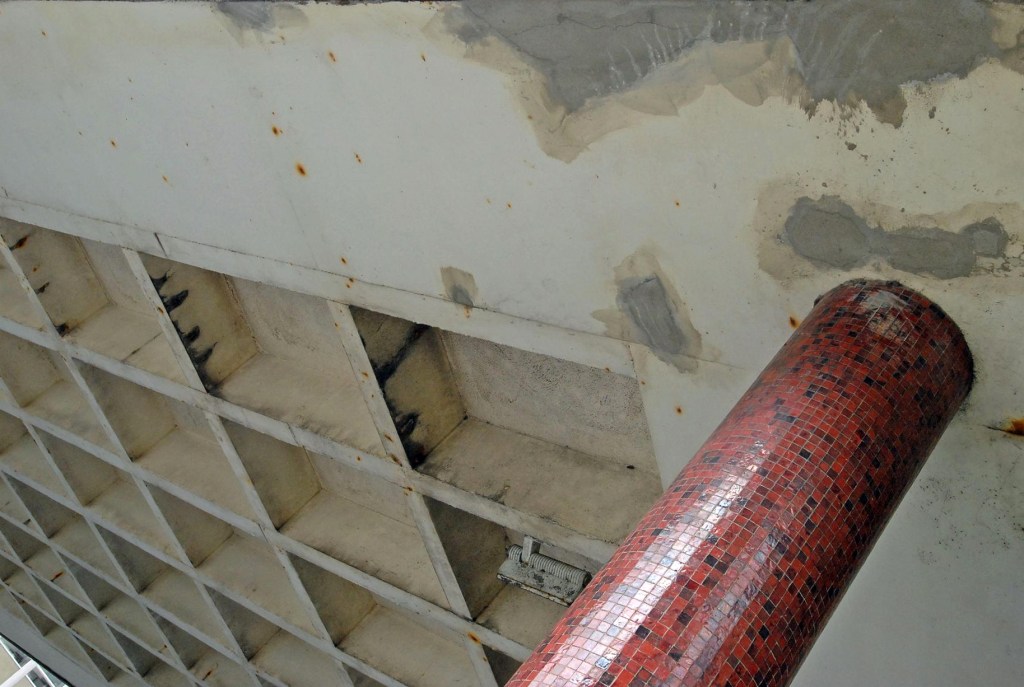
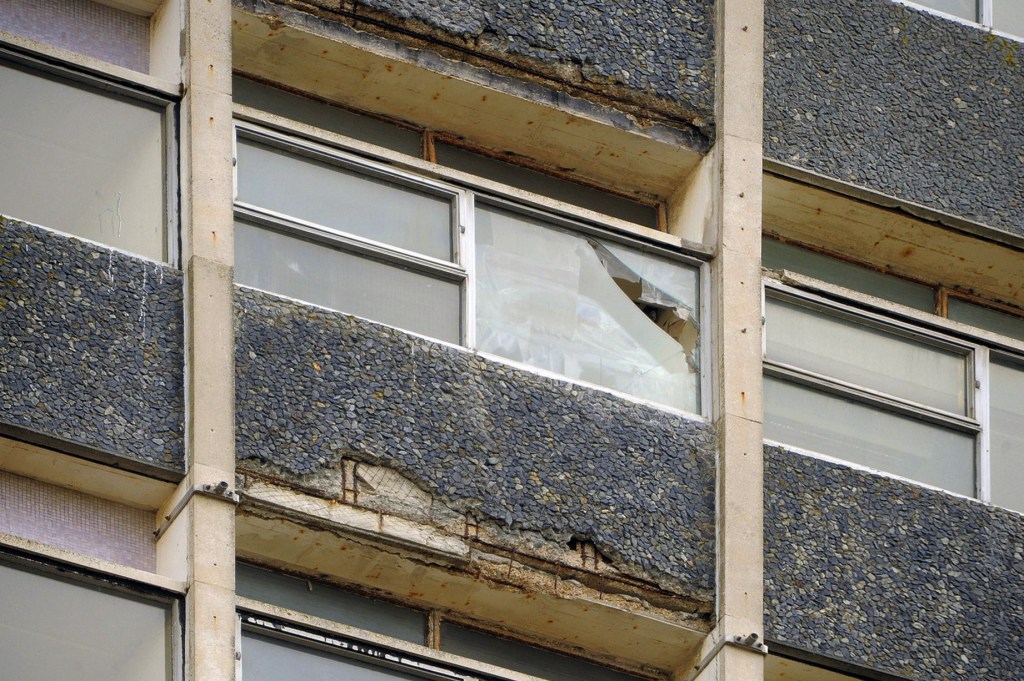
The building has suffered of late, from poor maintenance and general neglect.

Love it or hate it, it’s one of Plymouth’s most iconic post-war buildings – and it towers over the city centre. But the Civic Centre has been empty since 2015, with sad images revealing parts of the outside literally crumbling.

Today is the day Plymouth will finally discover what developer Urban Splash plans to do with the landmark 14-storey tower block it bought for £1.

Plymouth Herald

Urban Splash are in the house – plans are to go ahead.

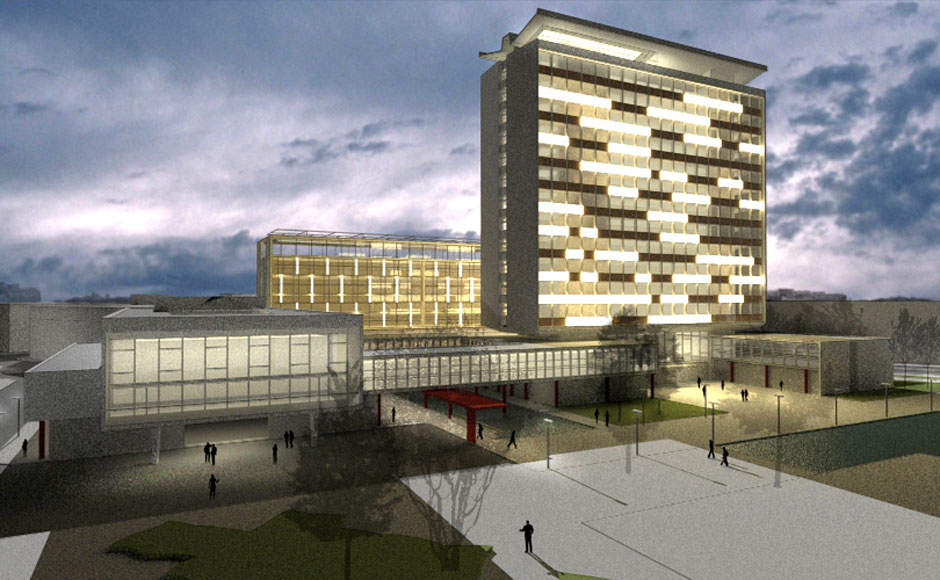
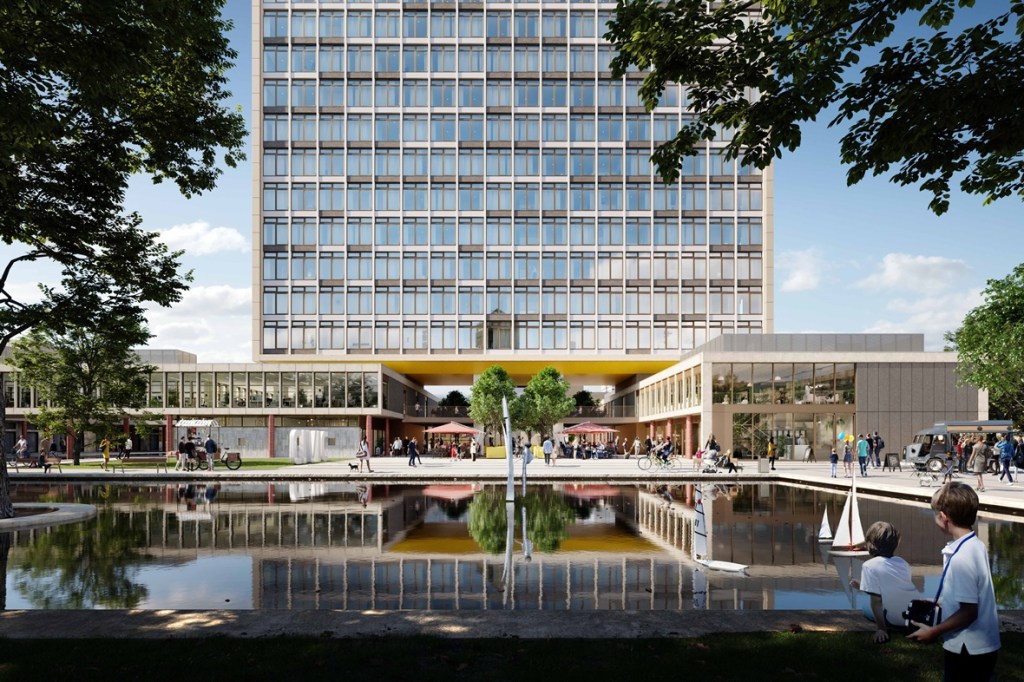
The proposal, by Gillespie Yunnie Architects, will see the 14-storey former council headquarters converted into 144 one and two-bedroom flats with the ground floors of the lower blocks providing about 4,600m² of office, retail and leisure space.

Unanimously approved last week, the scheme will open up the ground floor, making it ‘an active public space filled with outside seating for cafés, bars and restaurants’ and reuse the existing landscaped pools, while creating new pedestrian connections through the scheme from the Theatre Royal and Civic Square.

Architects Journal

Civic Centre Postcards – Newcastle and Plymouth

I’m more than partial to a picture postcard – I have penchant for the picaresque.

And in these troubled times there’s no safer way to travel.

I have some previous experience, exploring the precincts of our fair land – here and there.

Prompted by a post from Natalie Bradbury – I became intrigued by Newcastle Civic Centre cards, I have visited the site, but in this instance, we are taken there thus:

Let’s have a look inside:

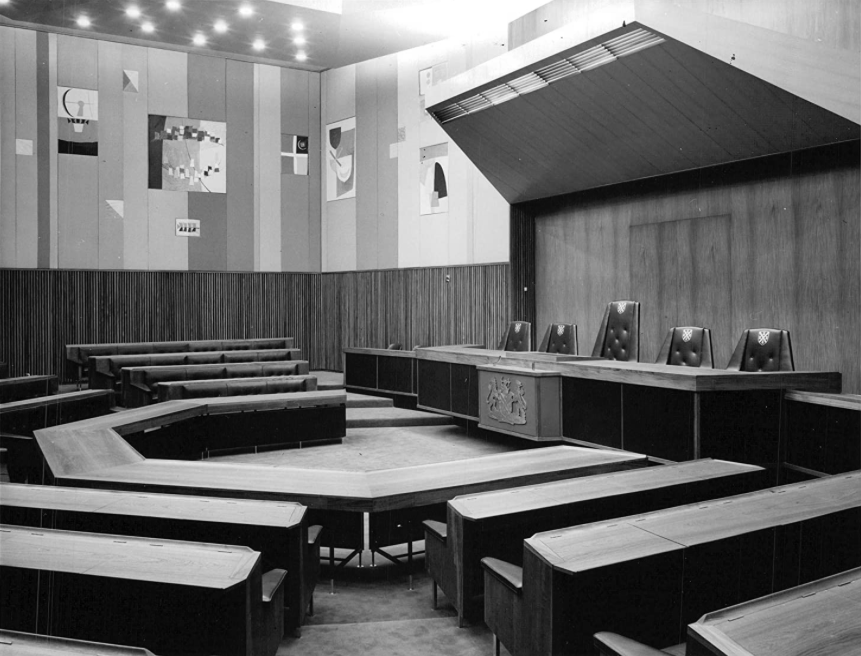
The Council Chamber

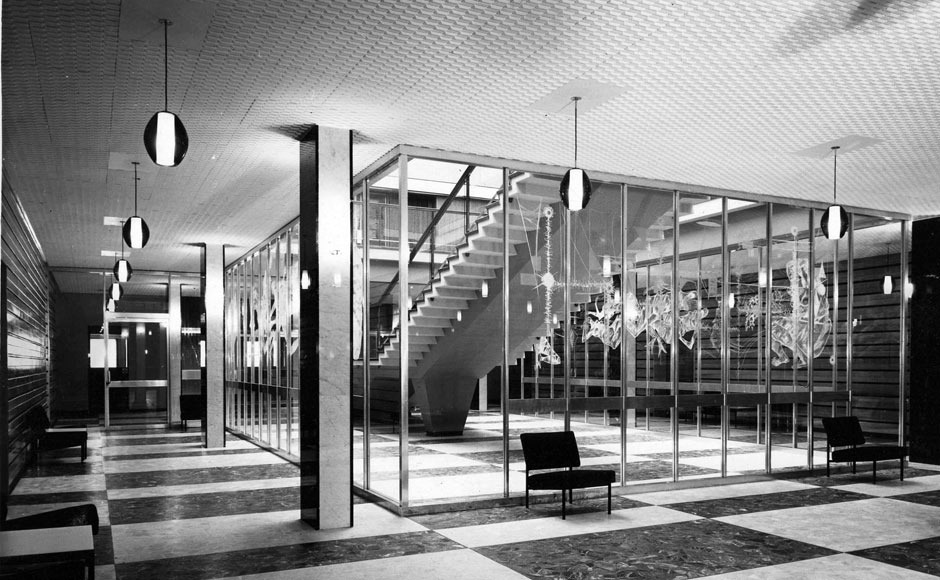
Grand Entrance Hall

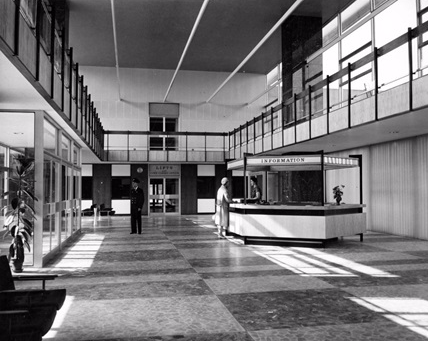
Its extensive rooms.

Which then led me to Plymouth – which I had visited some time ago, on my coastal cycle tour, another fine example of post-war Municipal Modernism.

Empty for some time it now seems that a change is going to come:

A long-awaited scheme to convert the empty Civic Centre tower block in Plymouth into flats is set to be given the go-ahead.

Planning applications to create 144 homes in the 14-floor landmark building in Armada Way are being recommended for approval. 

The scheme also proposes a mix of uses for the ground and first floors including shops, offices, cafes and restaurants, bars, hot food takeaway, art gallery, gym, creche and day nursery.

Plymouth Herald

Many of our fine Modernist civic buildings are under threat – as councils seek new premises for a new age.

Only the strong survive.

GPO Tower – London

Well of course we’ve all been here before, haven’t we?

Well I have – I even wrote all about it right here.

The tower was designed by the architects of the Ministry of Public Building and Works: the chief architects were Eric Bedford and G. R. Yeats. Typical for its time, the building is concrete clad in glass. The narrow cylindrical shape was chosen because of the requirements of the communications aerials: the building will shift no more than 25 centimetres in wind speeds of up to 95 mph. Initially, the first 16 floors were for technical equipment and power. Above that was a 35-metre section for the microwave aerials, and above that were six floors of suites, kitchens, technical equipment and finally a cantilevered steel lattice tower. To prevent heat build-up, the glass cladding was of a special tint. The construction cost was £2.5 million.

The tower was topped out on 15 July 1964, and officially opened by the then Prime Minister Harold Wilson on 8 October 1965. The main contractor was Peter Lind & Co Ltd.

Wikipedia

I’ve always wished to be granted entry, walk its corridors and ante rooms, sit in the revolving restaurant – take in the views.

Alas so far – no!

So I simply walk around and around, looking up – hoping.

Church of The Latter Day Saints – Stockport

Bramhall Lane Stockport SK3 8SA

Built 1961-1963 – architects Ivan Johnston & Partners of Liverpool.

The proposed modernistic architecture of the building, caused some qualms among members of Stockport’s Planning and Development Committee, which was still discussing the plans early in 1962, but in the end it was built much as the architect had intended.

A 70ft. spire on Bramhall-lane Davenport, will be a new landmark in Stockport next year when the no-labour-cost £41,000 chapel of the Mormons – The Church of Latter-Day Saints, from America – is expected to be complete. The Stockport branch of 150 members will fund over £8000 of the cost and will provide food, shelter and pocket money for volunteer builders from all over the country. 

Text and archive image Davenport Station

A striking A Line addition to the Stockport skyline – its steeply pitched roof punctuated by prominent triangular bays, and partnered with a prominent remote tower of wood and steel.

The front elevation is of concrete, constructed with panels of a rough grey aggregate.

Take a walk around, there have been some additions of single storey ante rooms.

This remains a simple, confident and assured building.

I had gone along today as a blood donor – so granted access to the splendid, elevating well-lit interior.

The front portion of the main body is given over to worship, furnished with light wood pews, altar and panelling.

The suspended lighting groups are of particular note.

Cardiff Central Police Station

The current five storey Cardiff Central police station was designed by Cardiff’s city architect John Dryburgh and built on the southern corner of Cathays Park between 1966 and 1968. It is described as: The most successful post-war building in Cathays Park and the only post-war building in the area: To be both modern and majestic

The detention facilities at the station were inadequate with only four cells. These were replaced by sixty cells at the new Cardiff Bay police station, which opened in 2009.

This year’s Mayday protests in Cardiff took place outside Cardiff Central Police Station to show the opposition to the increasing criminalisation of public protest.

No Borders South Wales activists were in attendance to show solidarity with fellow protesters and register our opposition to repressive police tactics at all forms of public demonstrations.

The protest was good natured and lively, with lots of music and singing. 

The building is celebrated by photographer Joe Fox via Fine Art America

Who are happy to reproduce the image in the form of this delightful phone case, for the princely sum of twenty two pounds.

I myself was taken by its unapologetic system built panelling, all-round convivial confidence and cantilevered porch.

Plus an exciting array of concrete planters – exhibiting an exciting array of seasonal planting schemes.

Well with a wander around should you find y’self down that end of town.

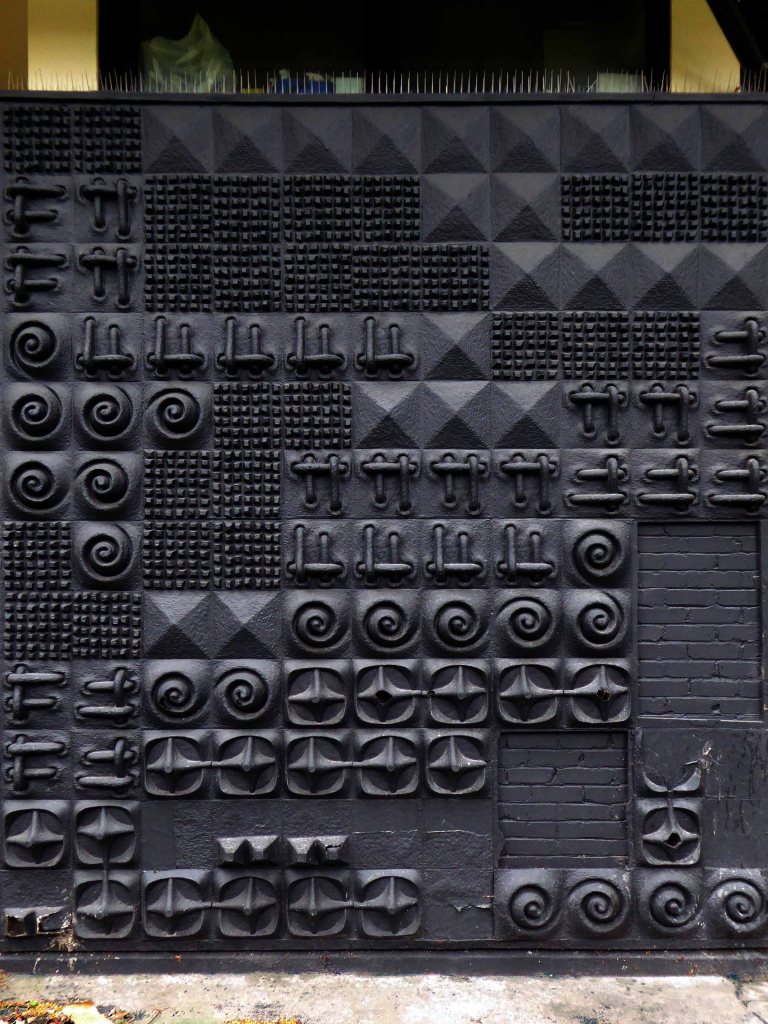
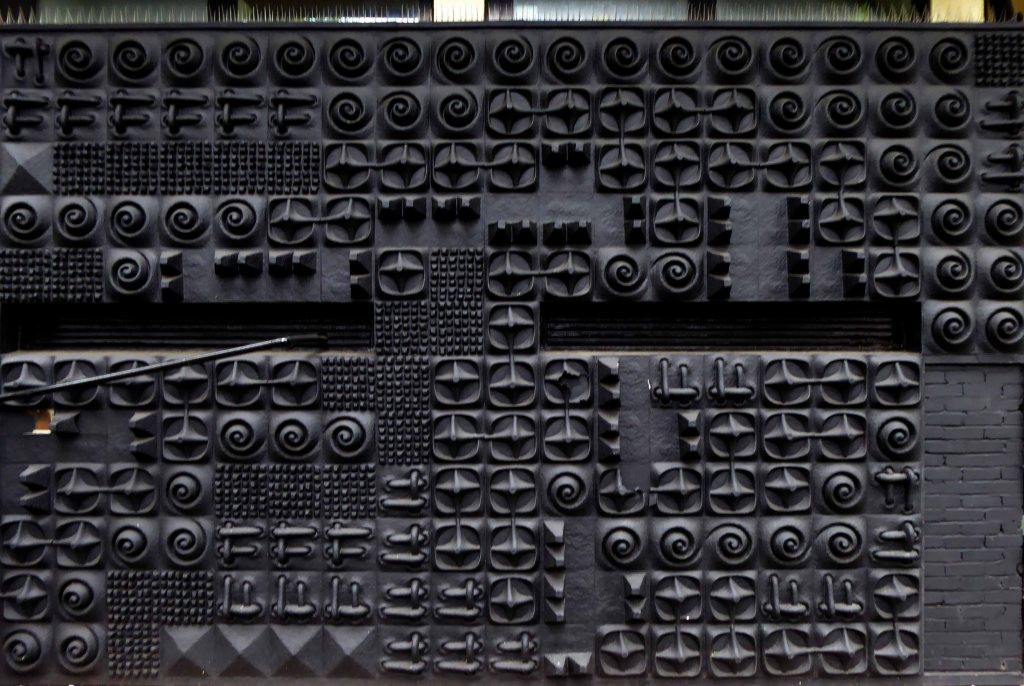
Merseyway – Alan Boyson Screen Wall

Deep in the heart of Stockport at the centre of our very own shopping centre – Merseyway.

A pierced concrete relief screen wall surrounds the former Co-op, currently Primark, car park.

The work of Alan Boyson – today the 16th of March 2020 would have been his ninetieth birthday.

I’ve even gone so far as to analyse its structure:

So I went for a walk this morning, as I have on several previous occasions, to take a look around the site – inside and out.