On Wednesday 21st January, I boarded the 9.33 for Blackpool from Platform 14 Manchester Piccadilly station.
10.35 the train terminated at Preston – thus far and no further.
Thinking on my feet, I legged it rapido to Preston Bus Station and just about caught the 68 bus to Blackpool.
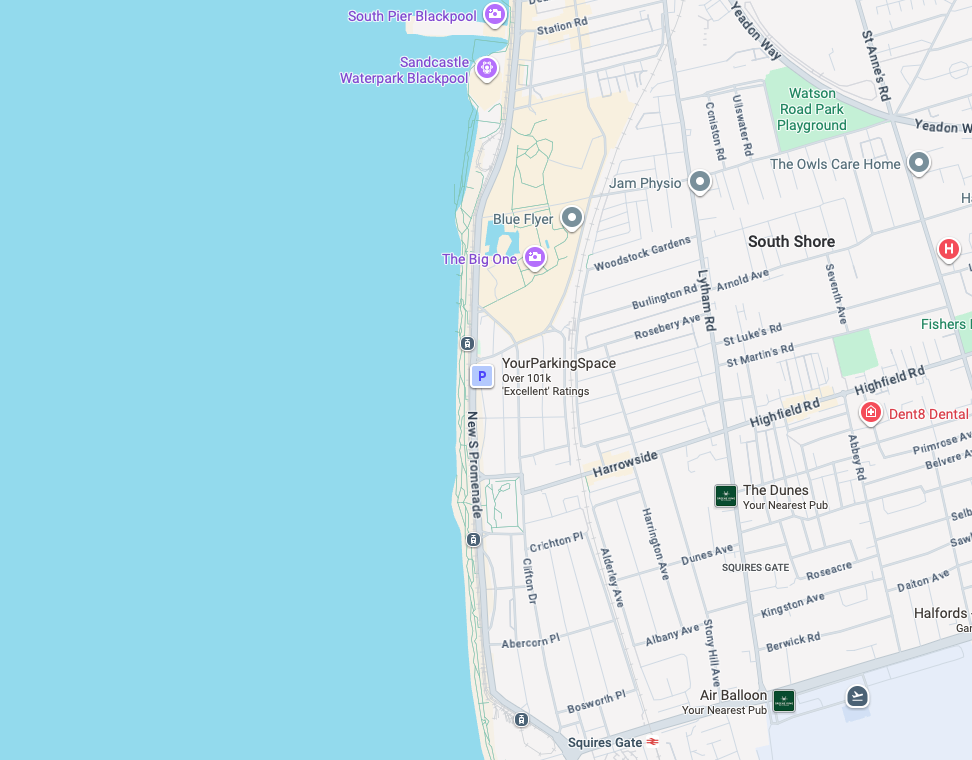
Already an hour or two behind time I elected to alight at Squires Gate, and take a walk along the South Promenade toward the town centre.
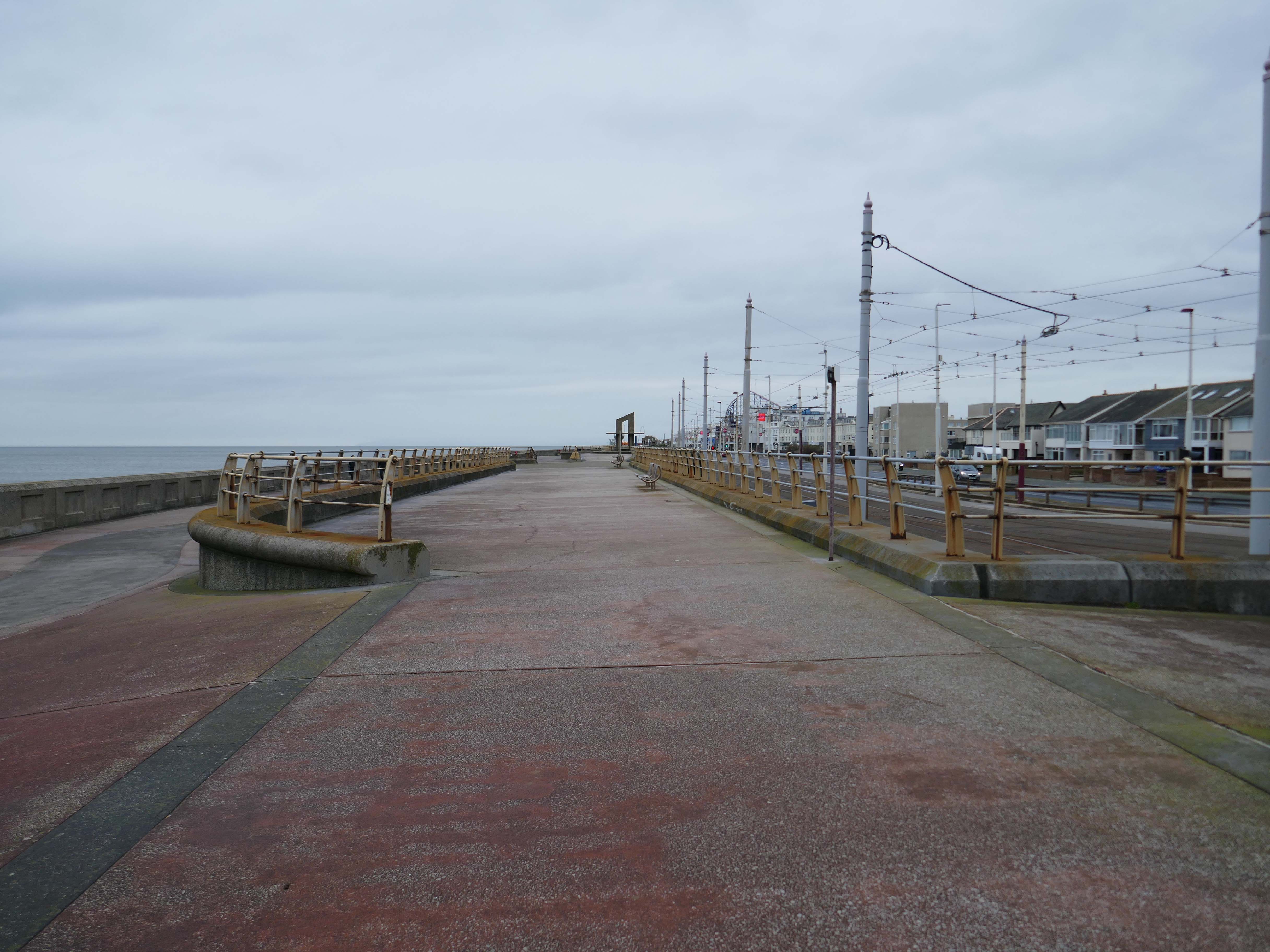
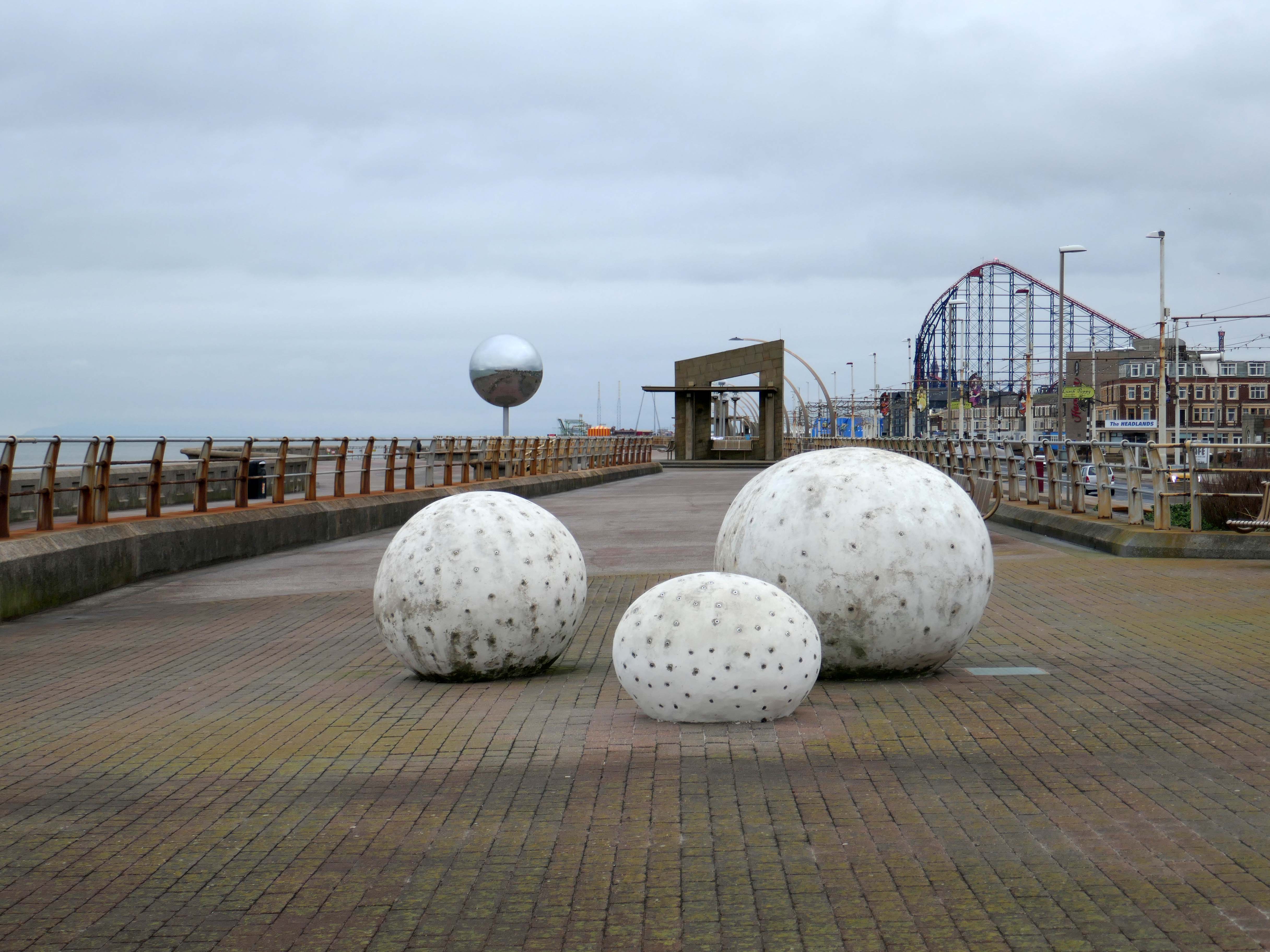
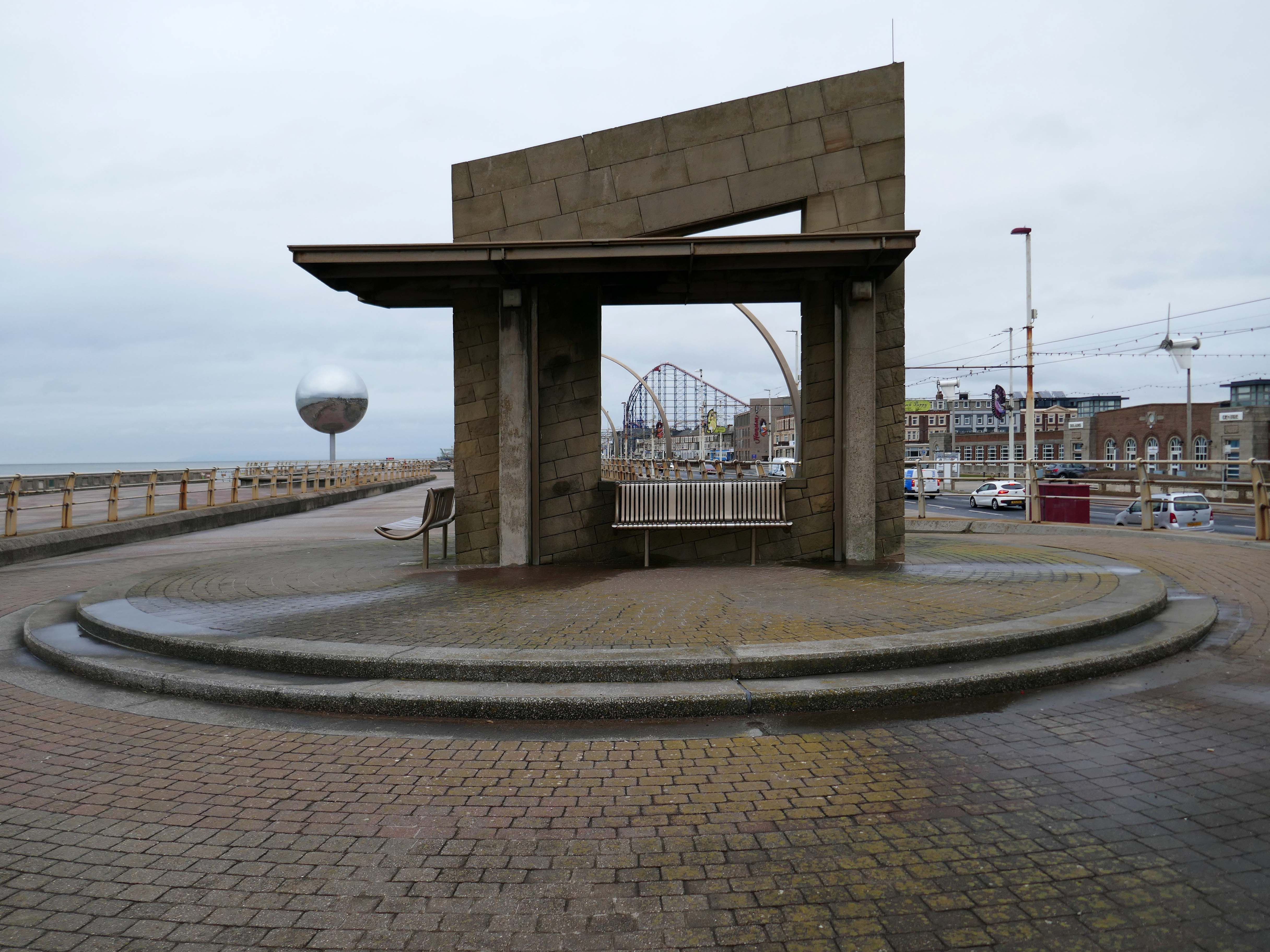
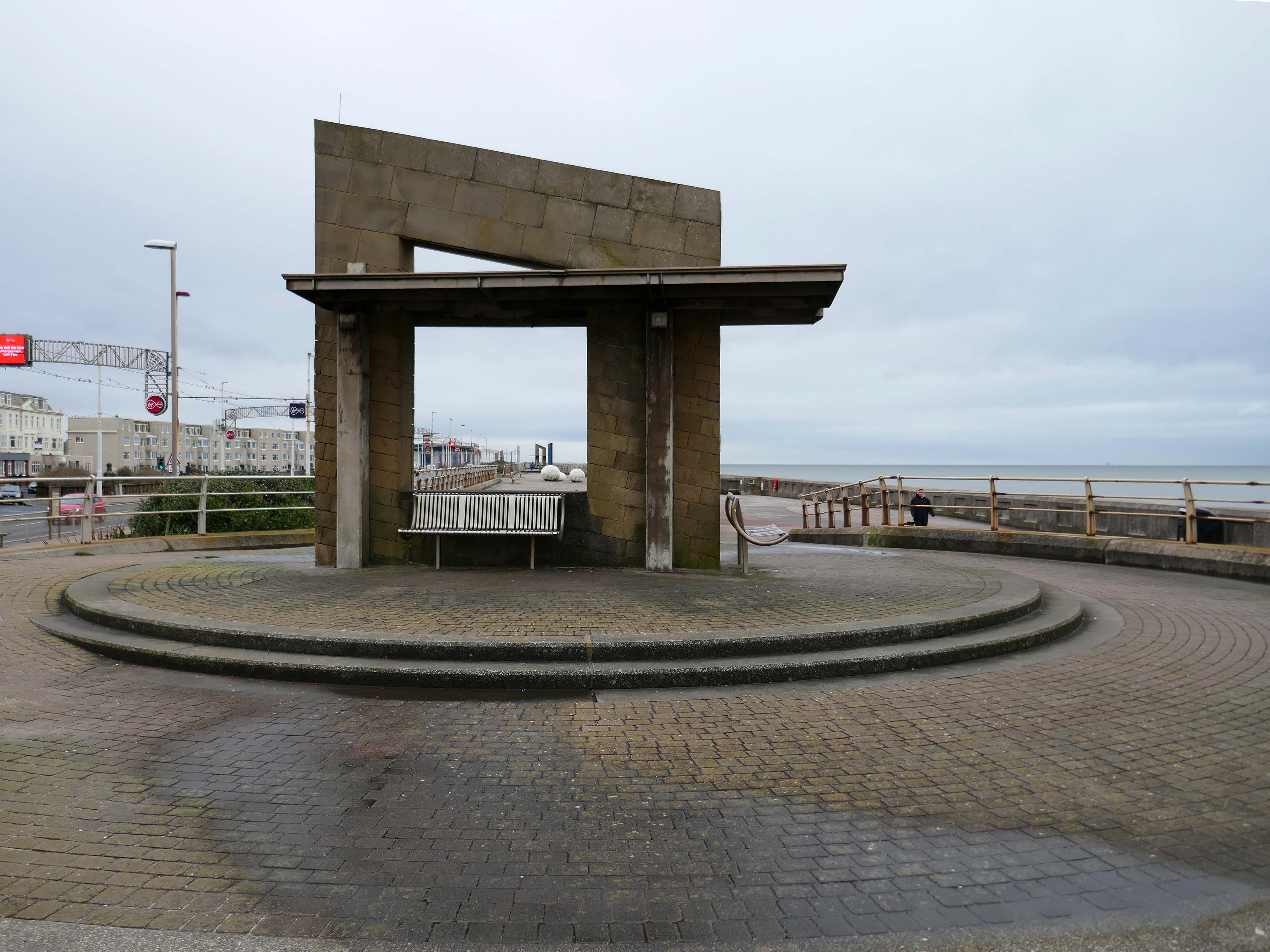
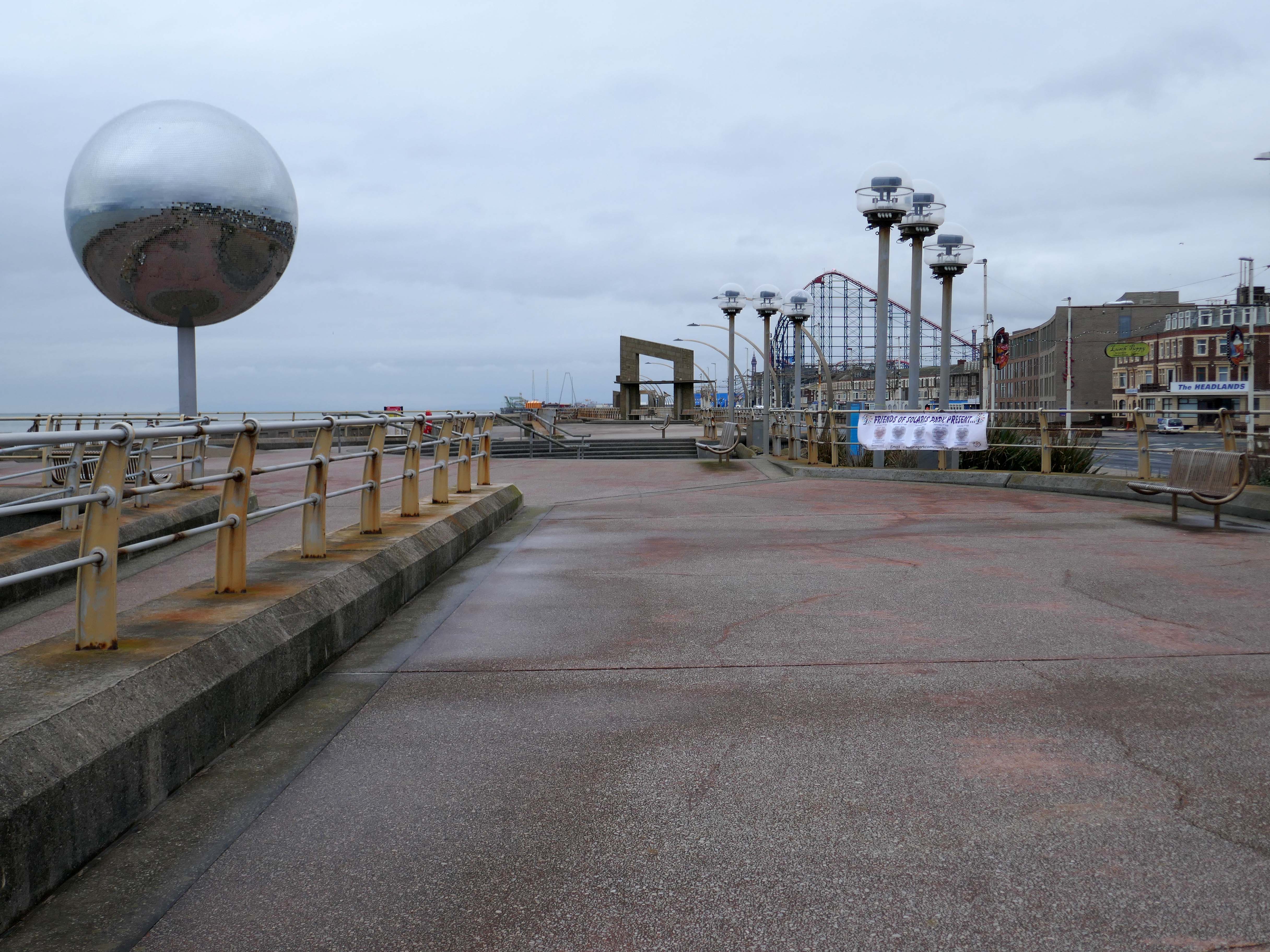
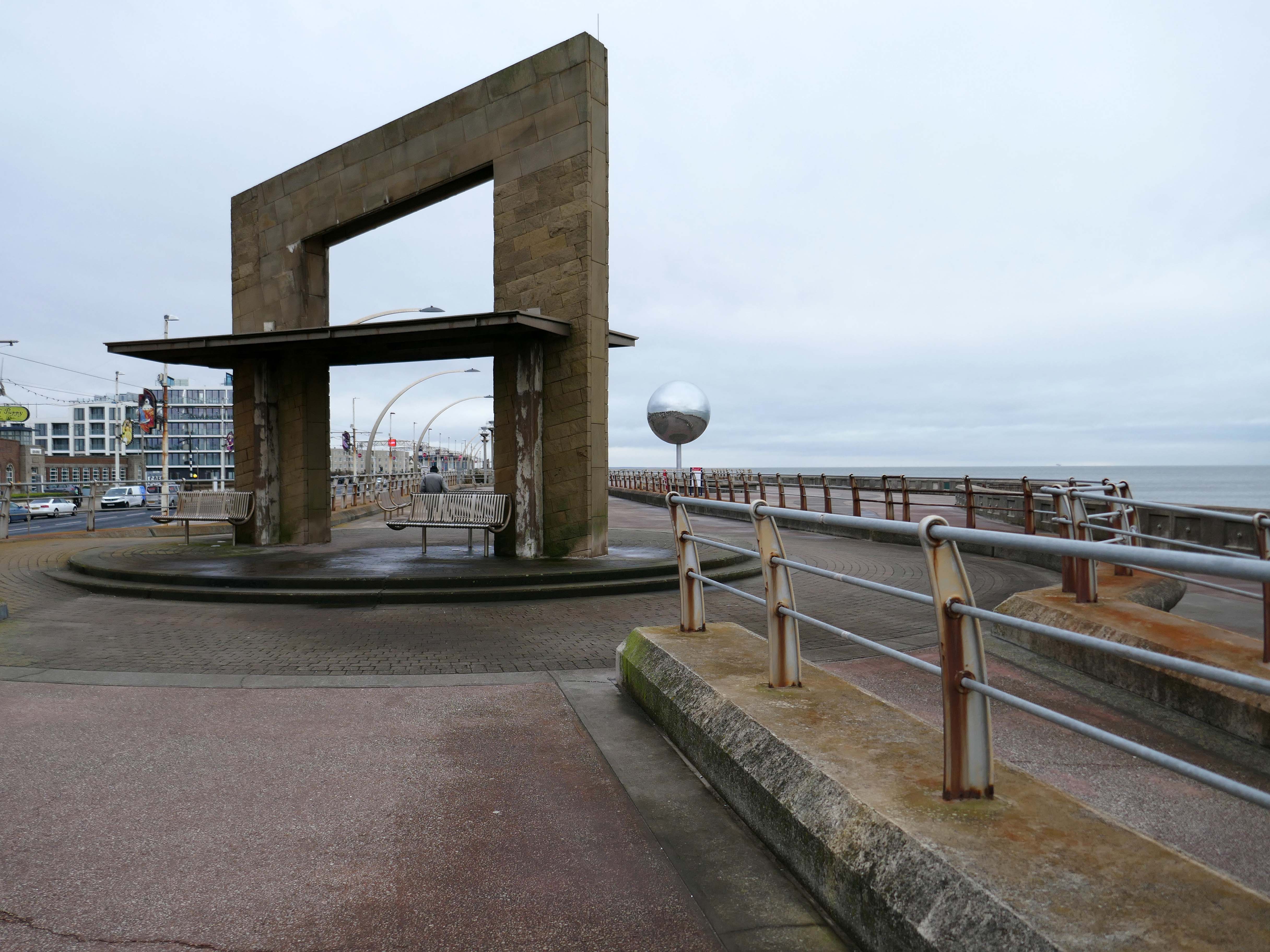
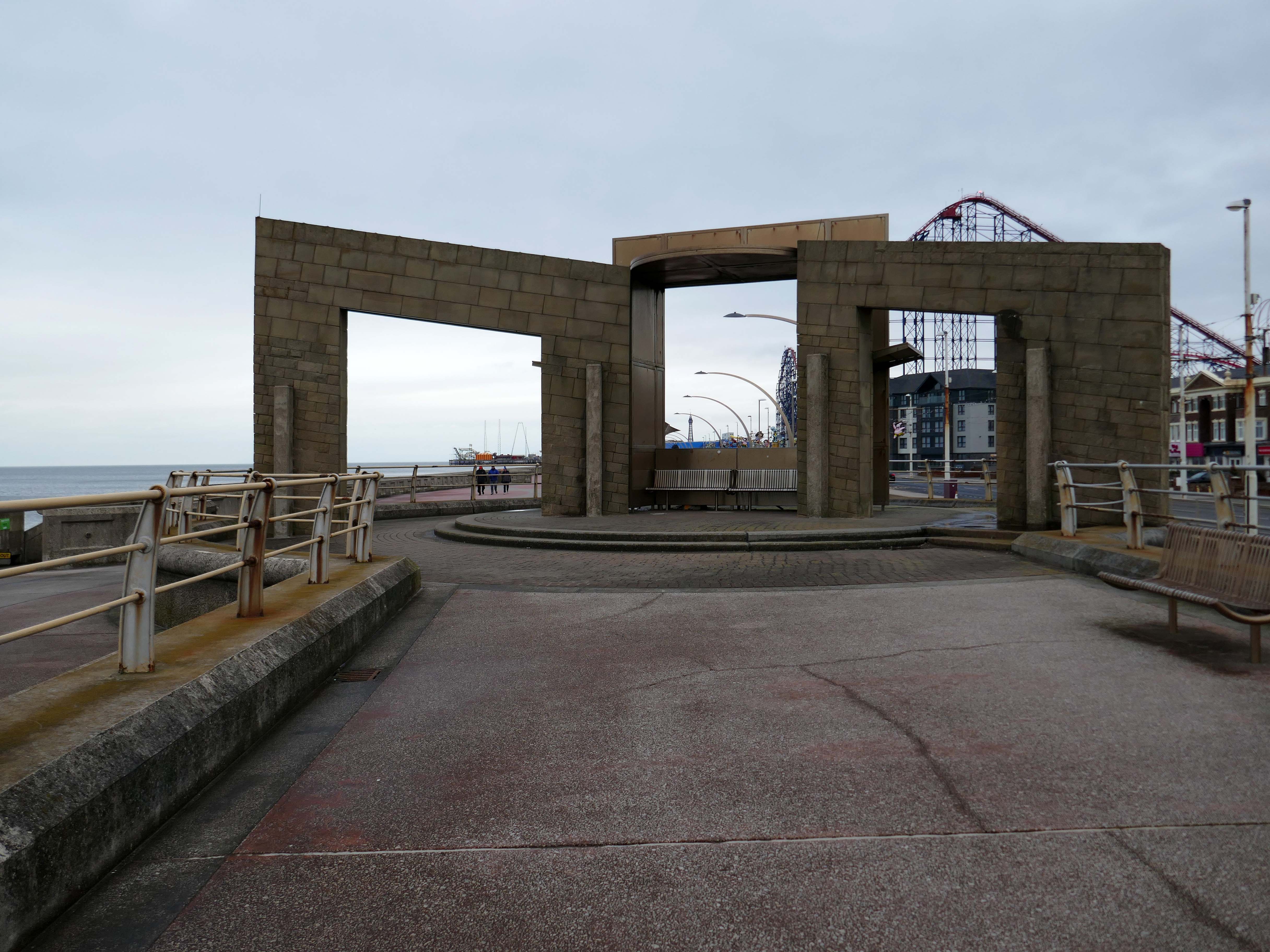
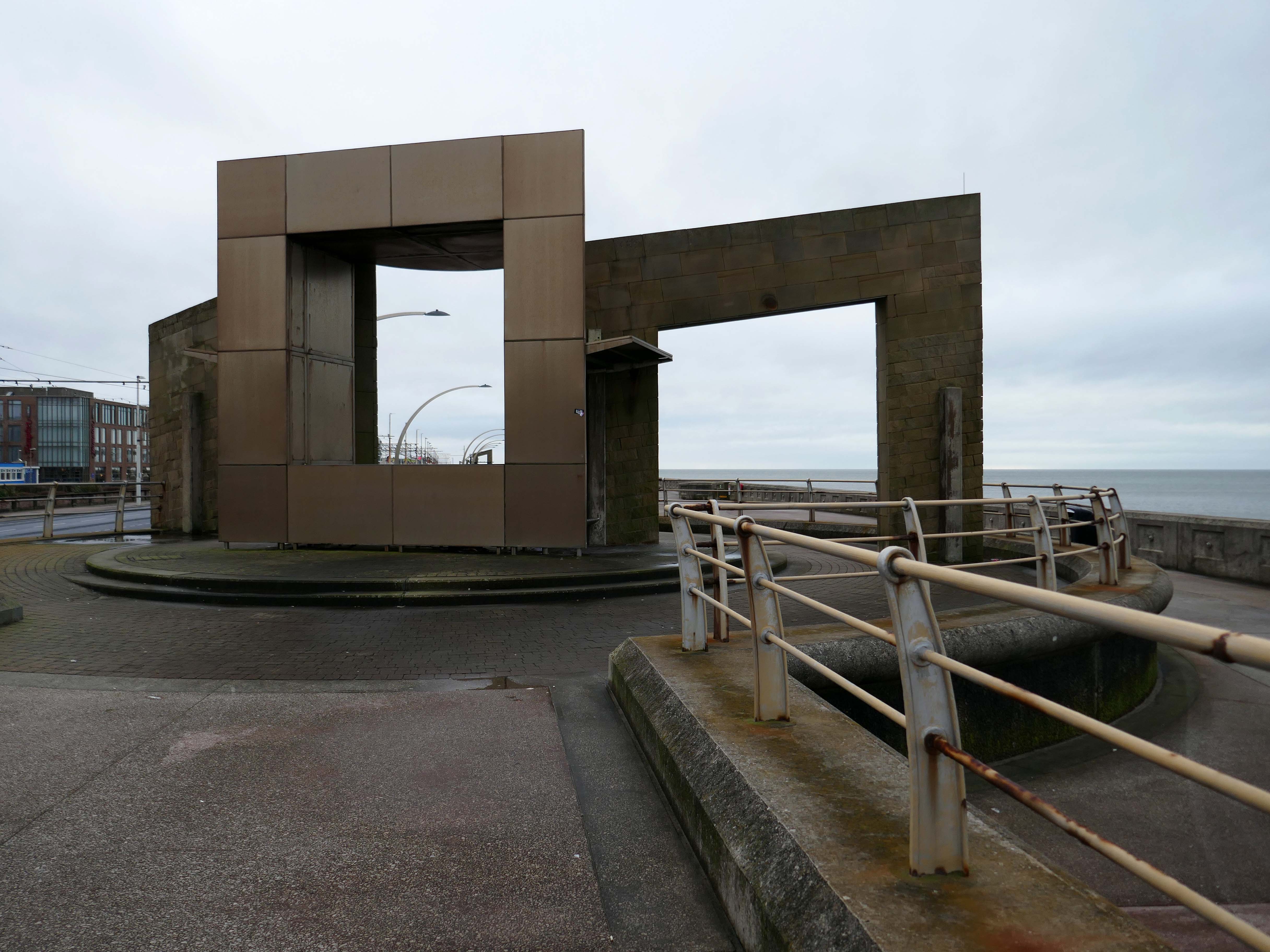
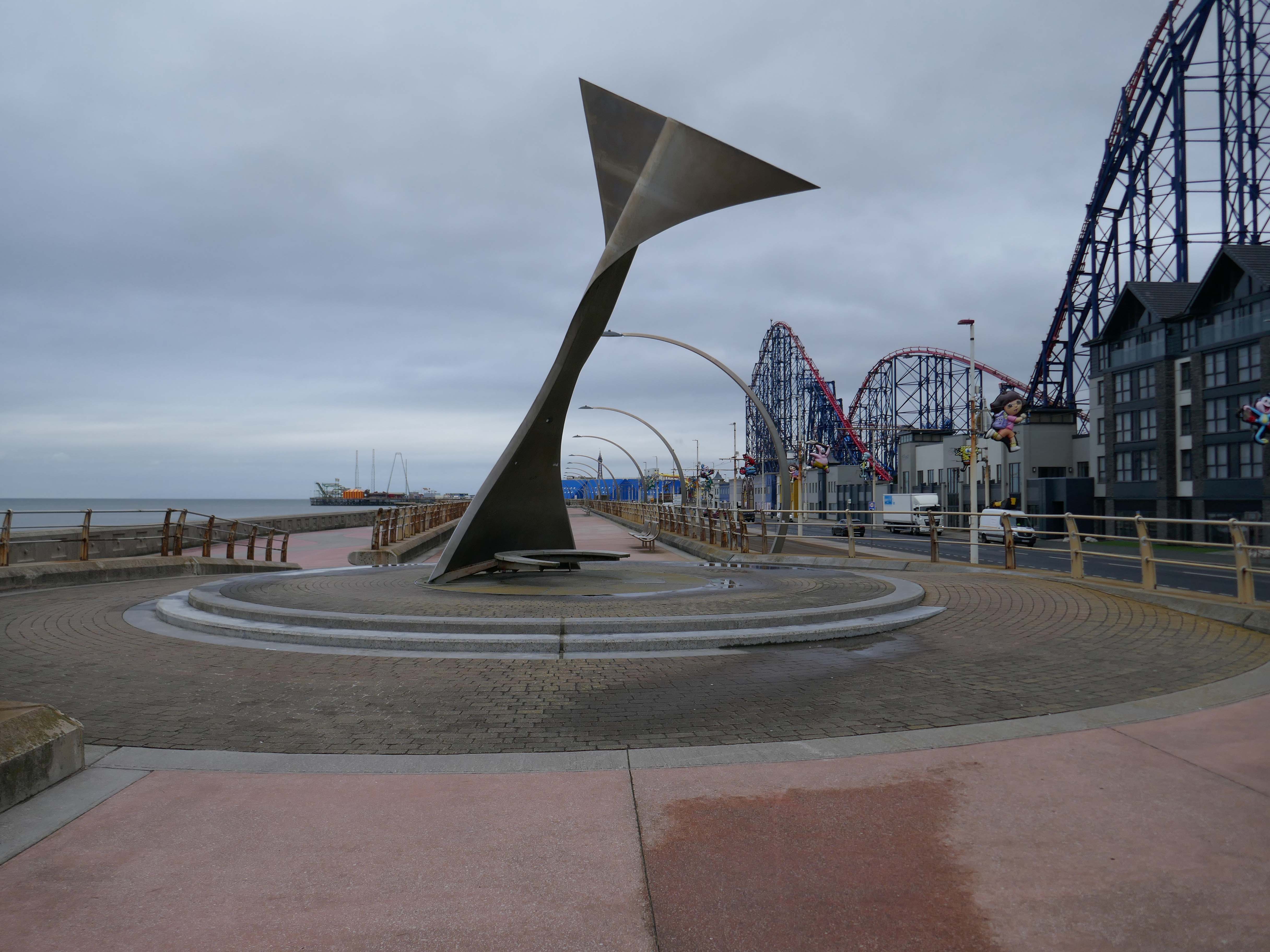
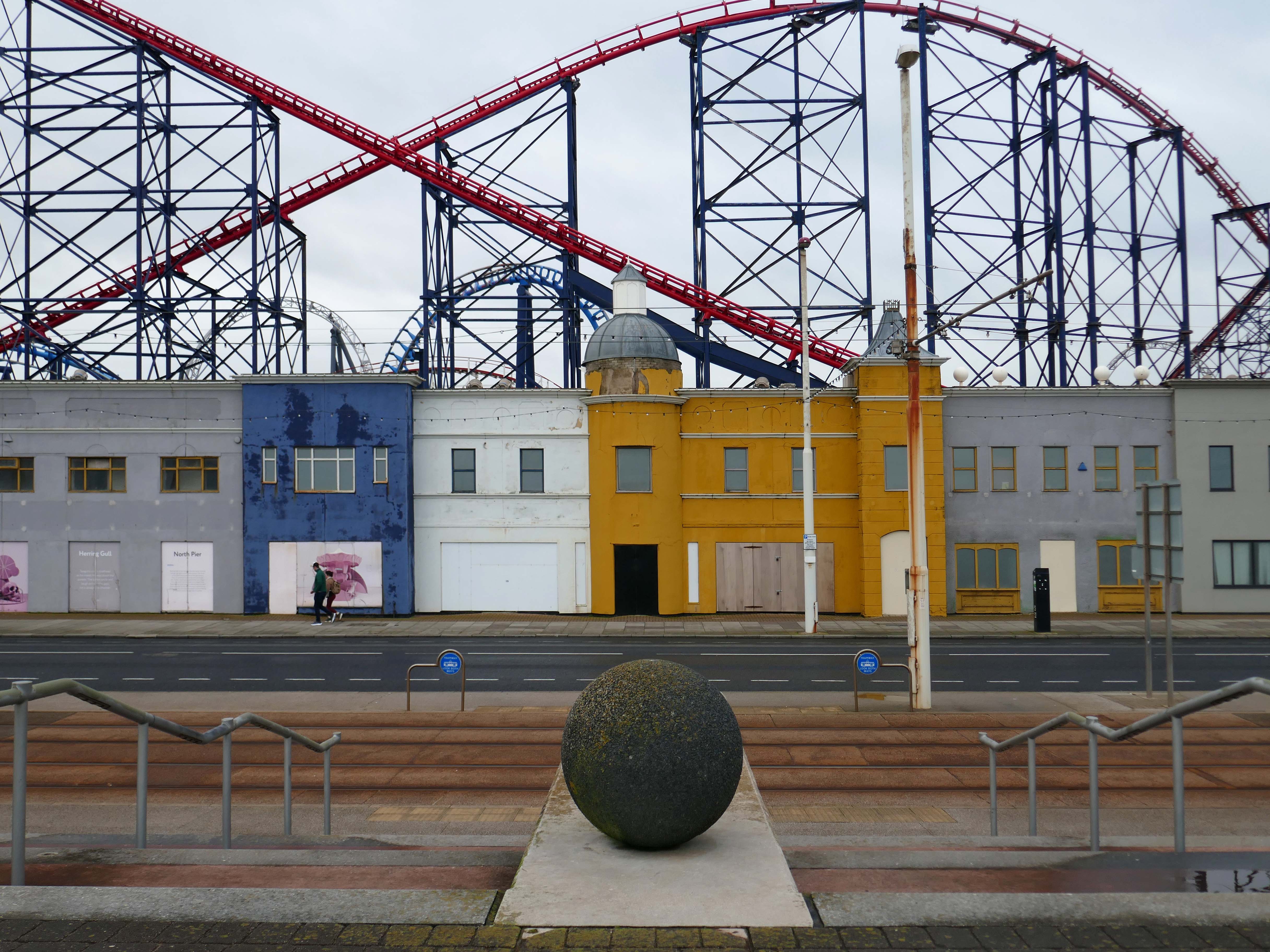
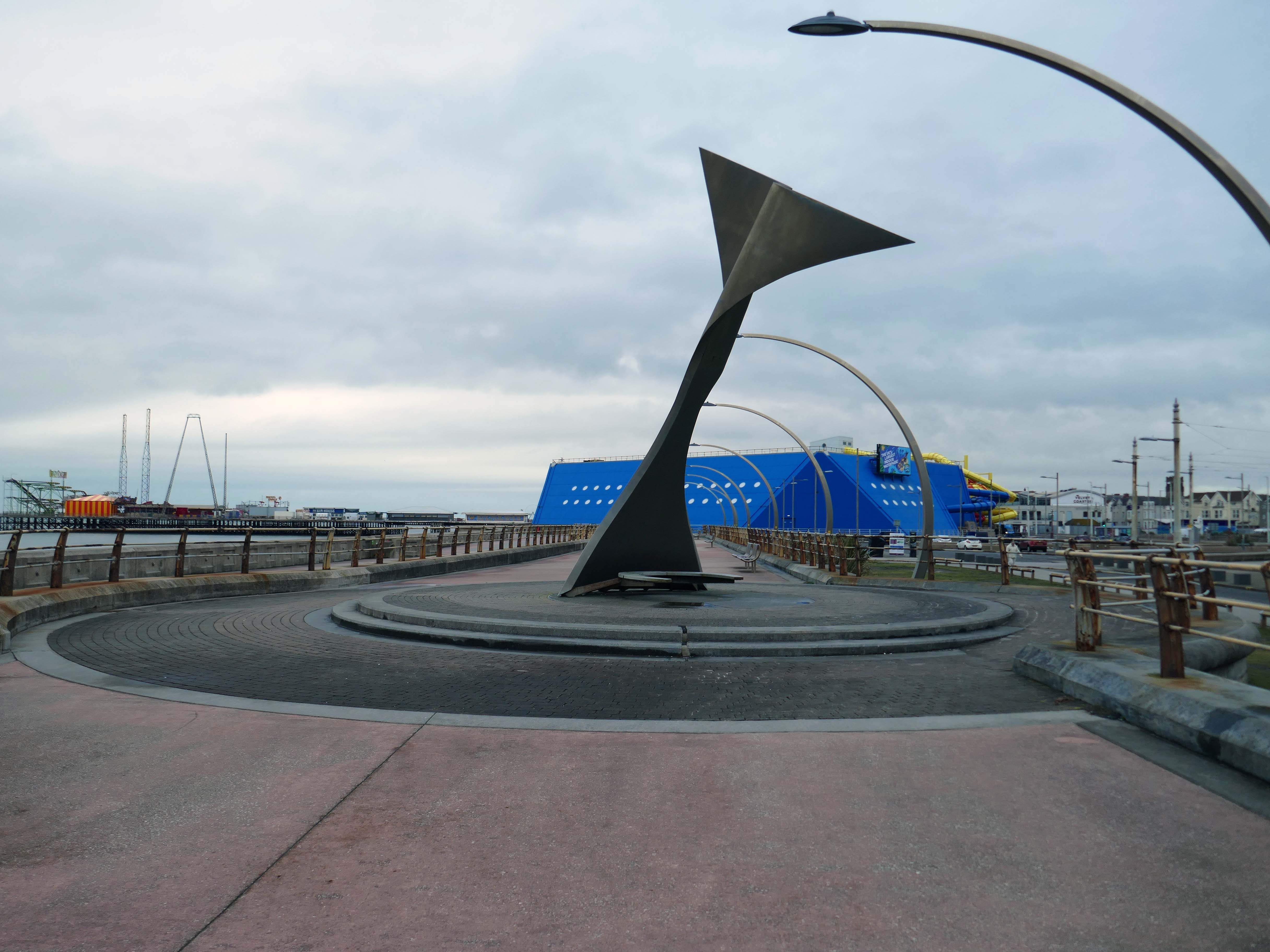
The promenade is home to a plethora of public art works and sculptural shelters.
The Great Promenade Show originated from the major redevelopment undertaken by the then Department for Environment, Food and Rural Affairs to replace and strengthen the 2km long South Promenade’s seawall flood defences. This £20 million project entailed removing the existing Victorian promenade and replacing it with a new well-designed concrete promenade on two levels. The upper level was to incorporate ’roundels’ every hundred metres, on which it was intended to site specially designed features, including wind shelters and visual displays possibly representative of the history of Blackpool. A Millennium Lottery bid was made by the Council to this end, though a commitment to start building had to be made before the outcome of the bid was known. The bid was unsuccessful, but the sites for visual features along the new promenade remained, as did the Council’s commitment to occupying them. At this point, responsibility for managing the project shifted from the Council’s Technical Services Department to its Education, Leisure and Cultural Services Division.
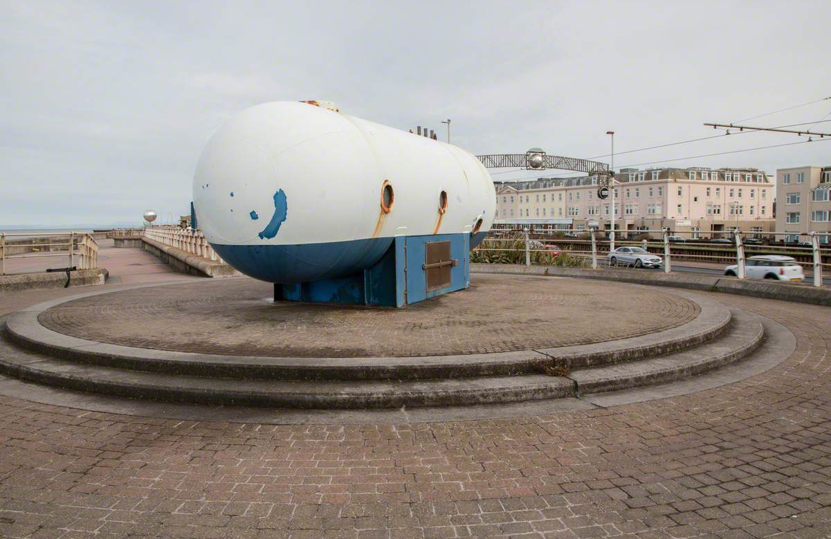
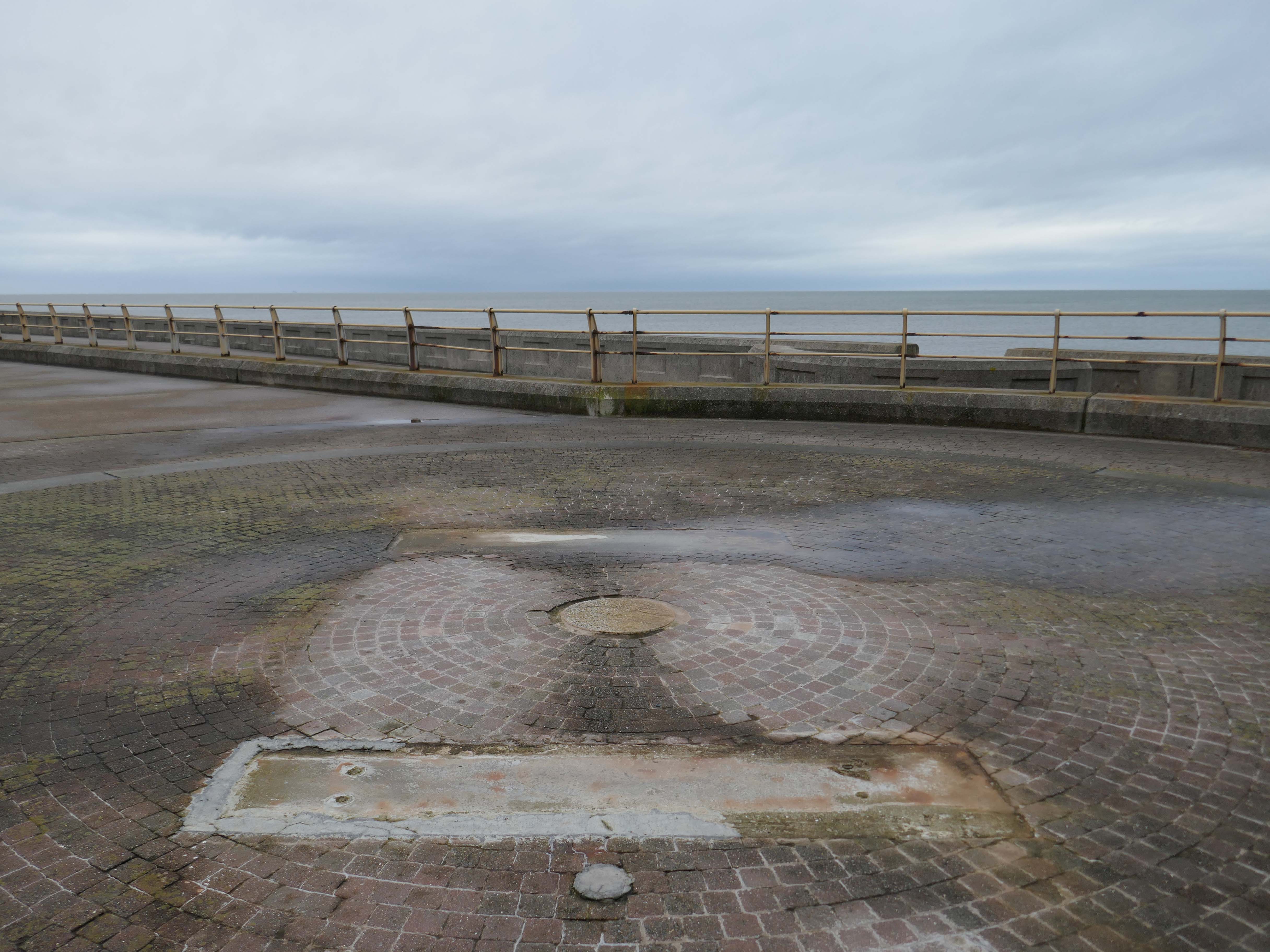
Like a sinister exhibit in one of Blackpool ‘s Victorian freak shows, the skeleton of a killer whale made from pulsating dark blue neon can be viewed through portholes within a metal tank like a decompression chamber.
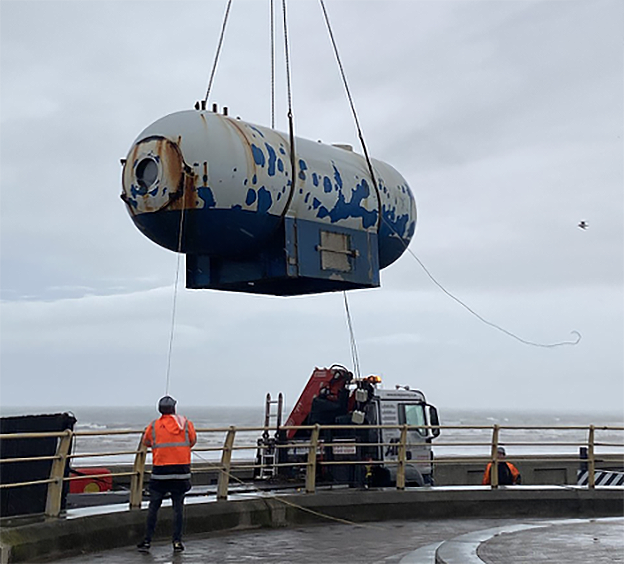
The work was subsequently removed.
The structure has been on display for the public to enjoy for over 15 years and was deemed unsightly due to corrosion, which is why the decision was taken to remove it. PTSG Building Access Specialists Ltd planned the decommissioning and contract crane lift from start to completion.
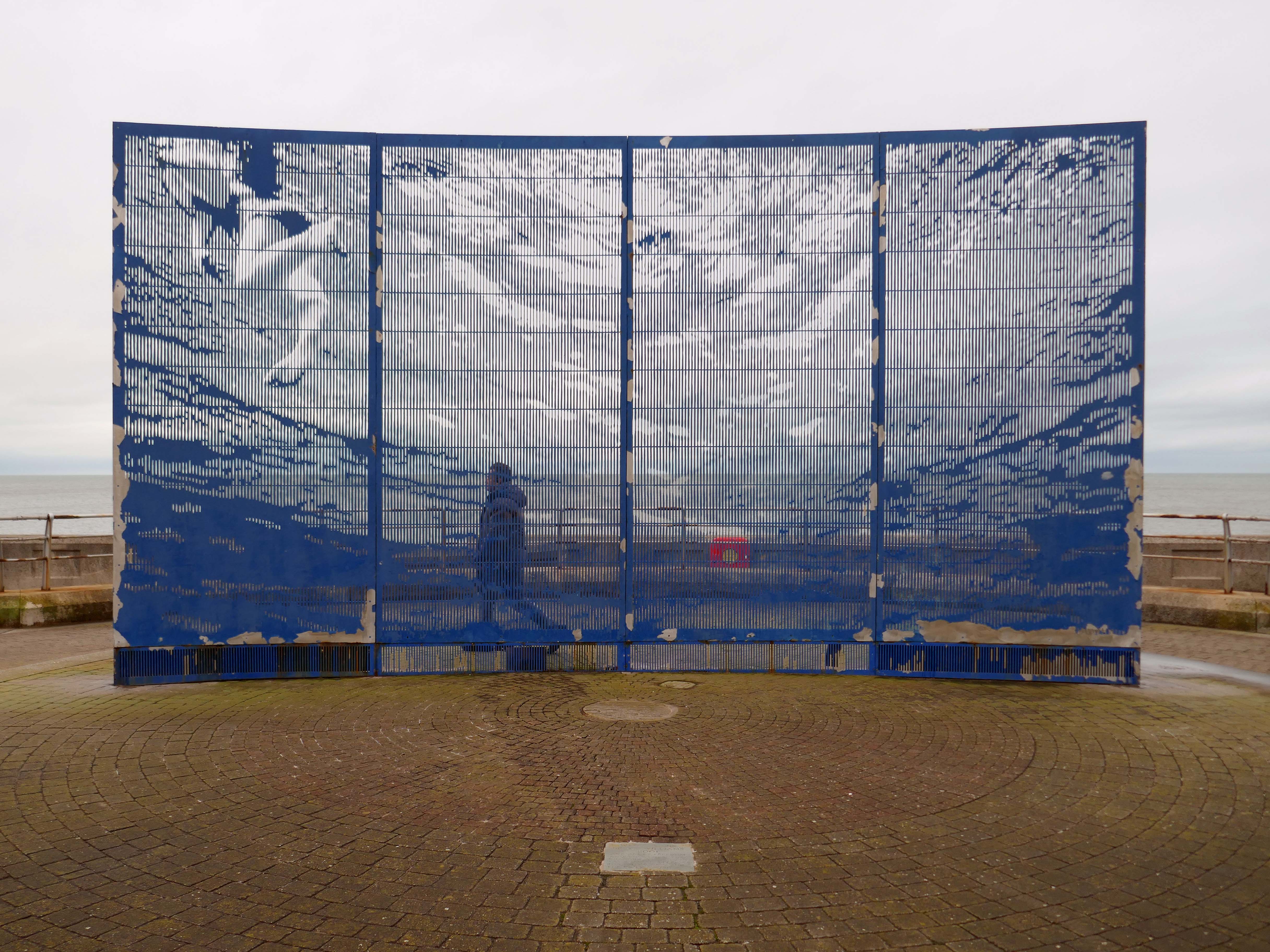
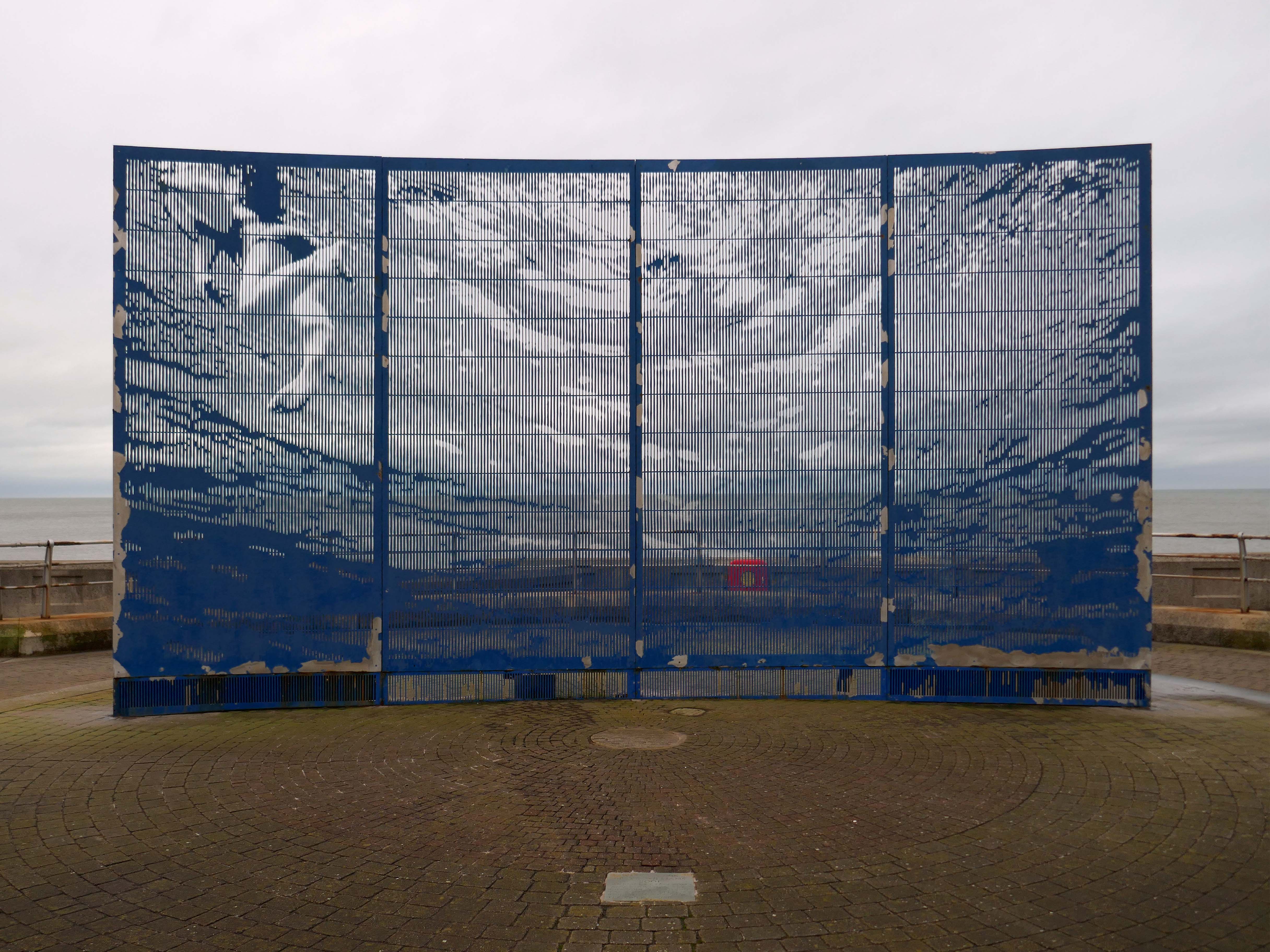
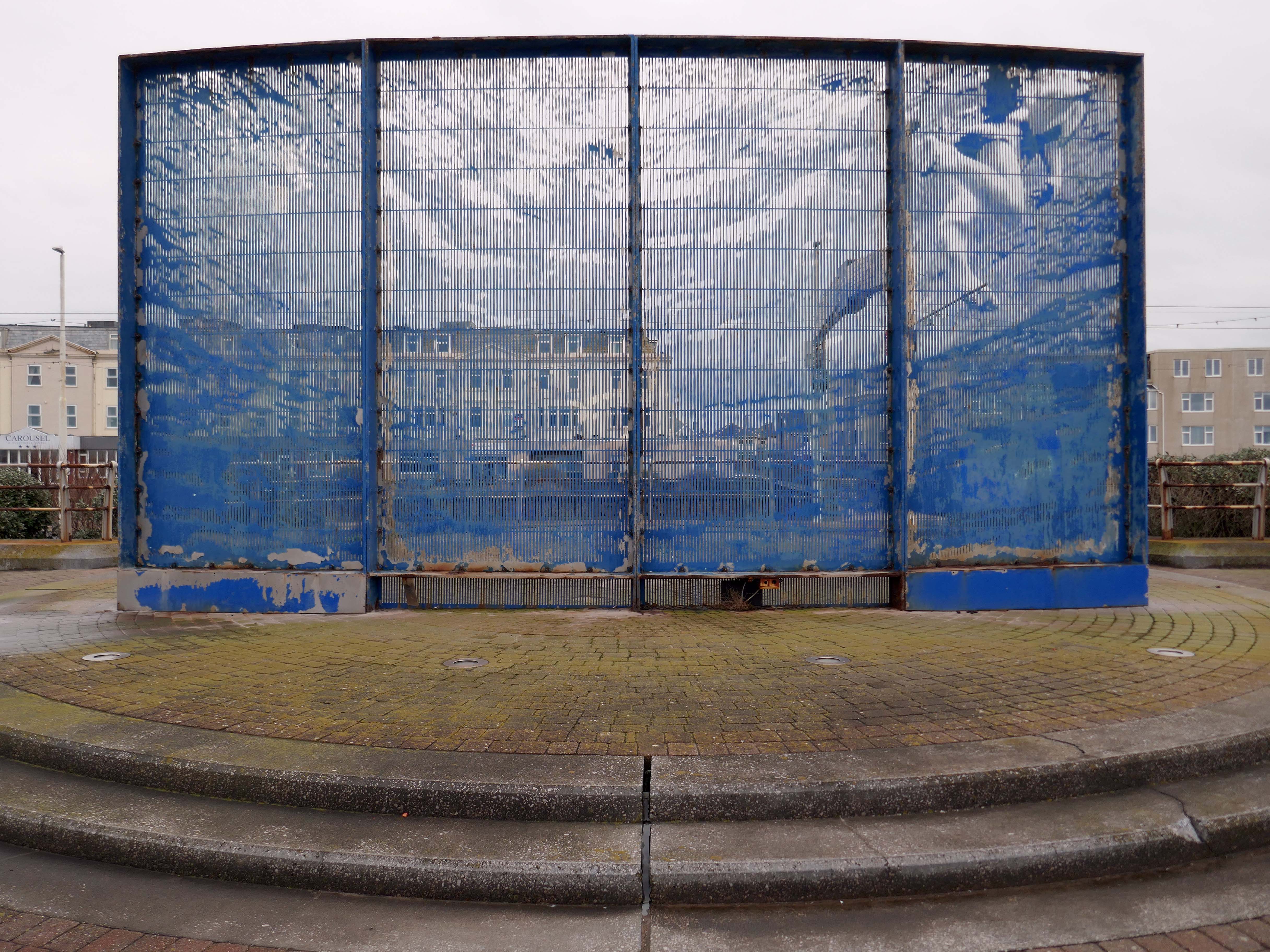
Designed to be viewed in motion from the adjacent tram track and road, the photographic image of a swimming child laser cut into an 8m long curved stainless steel screen gradually resolves and disappears again as the viewer moves past.
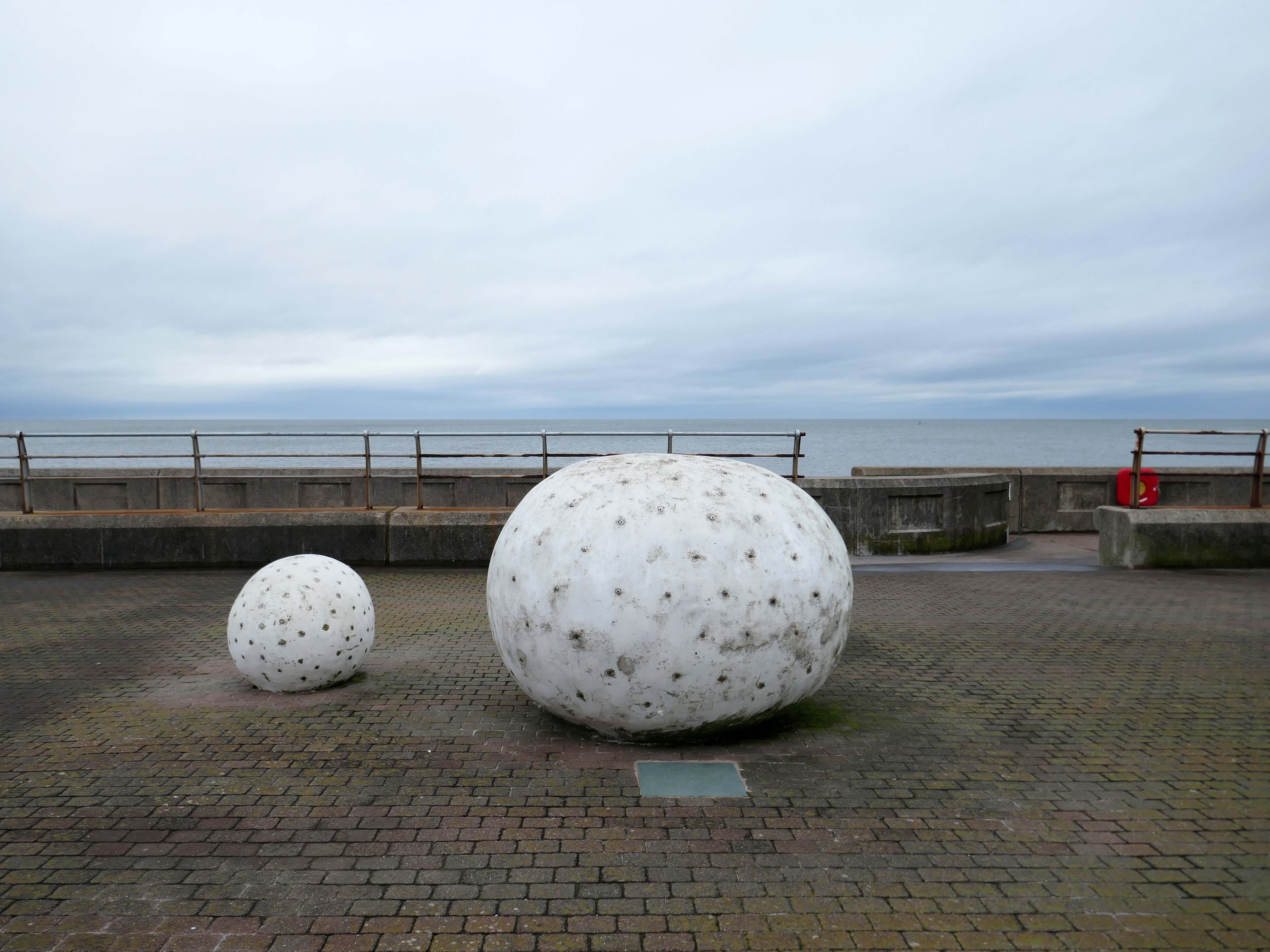
Glam Rocks by Peter Freeman
Inspired by Las Vegas and the Blackpool Illuminations, three large pebble-like modelled shapes glitter after dark, as hundreds of fibre optic light points on their surface slowly change colour and sparkle.
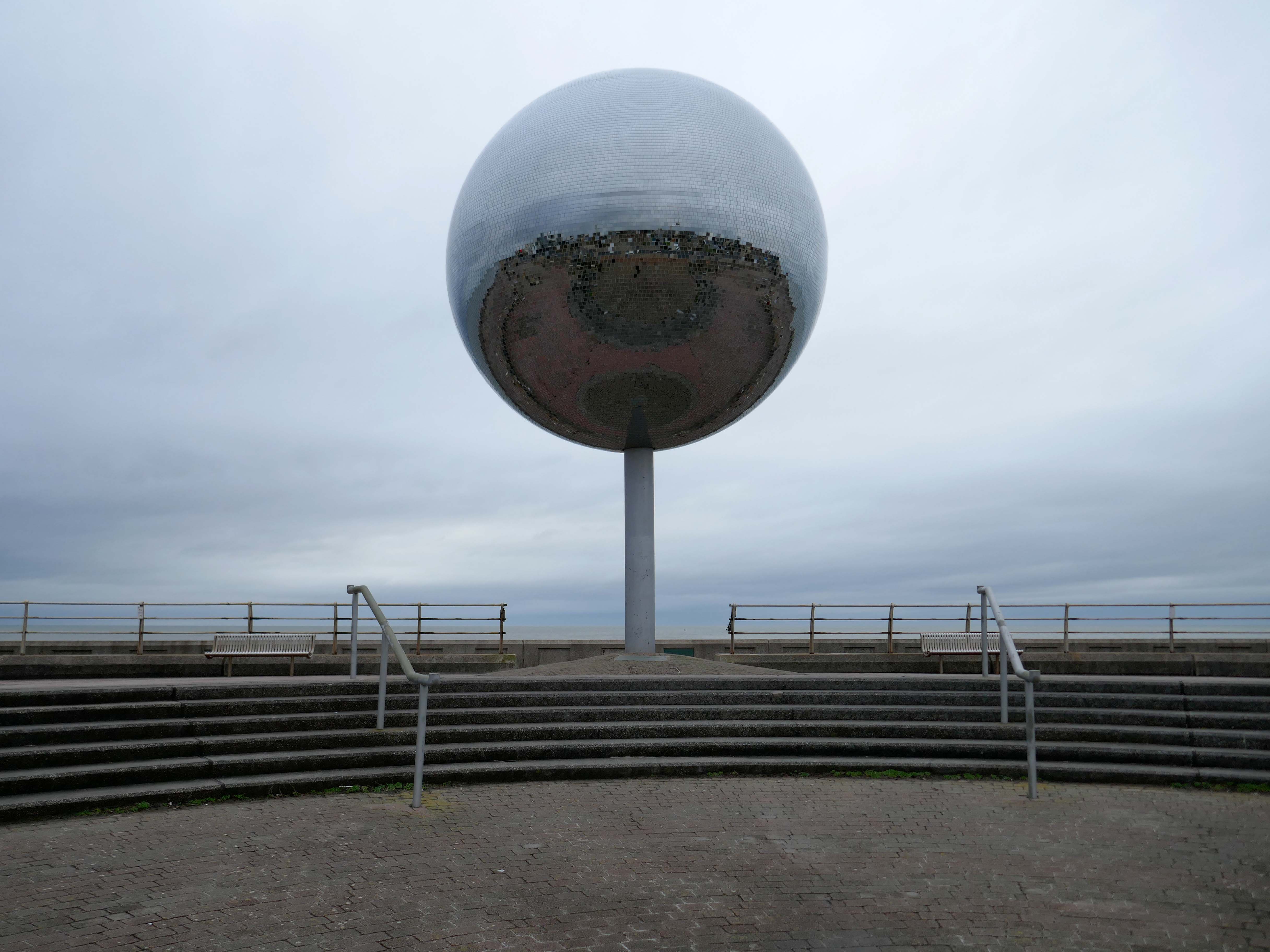
They Shoot Horses, Don’t They? by Michael Trainor and The Art Department
Blackpool is known as the “ballroom capital of Britain”. This rotating ball 6m in diameter, covered in almost 47,000 mirrors, has been claimed as the world’s largest mirror ball, and is named after the 1969 film about a depression era ballroom marathon in the USA.
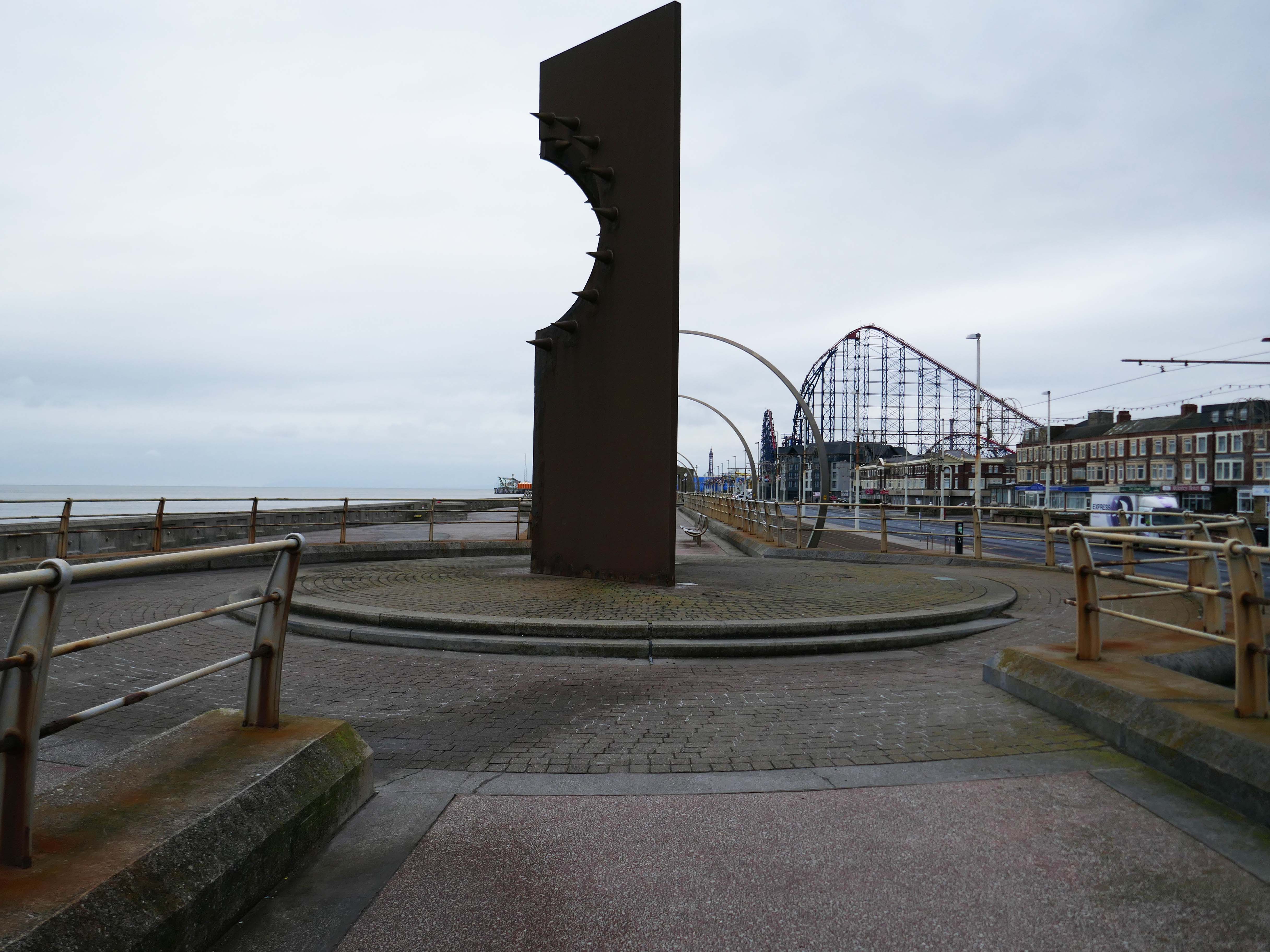
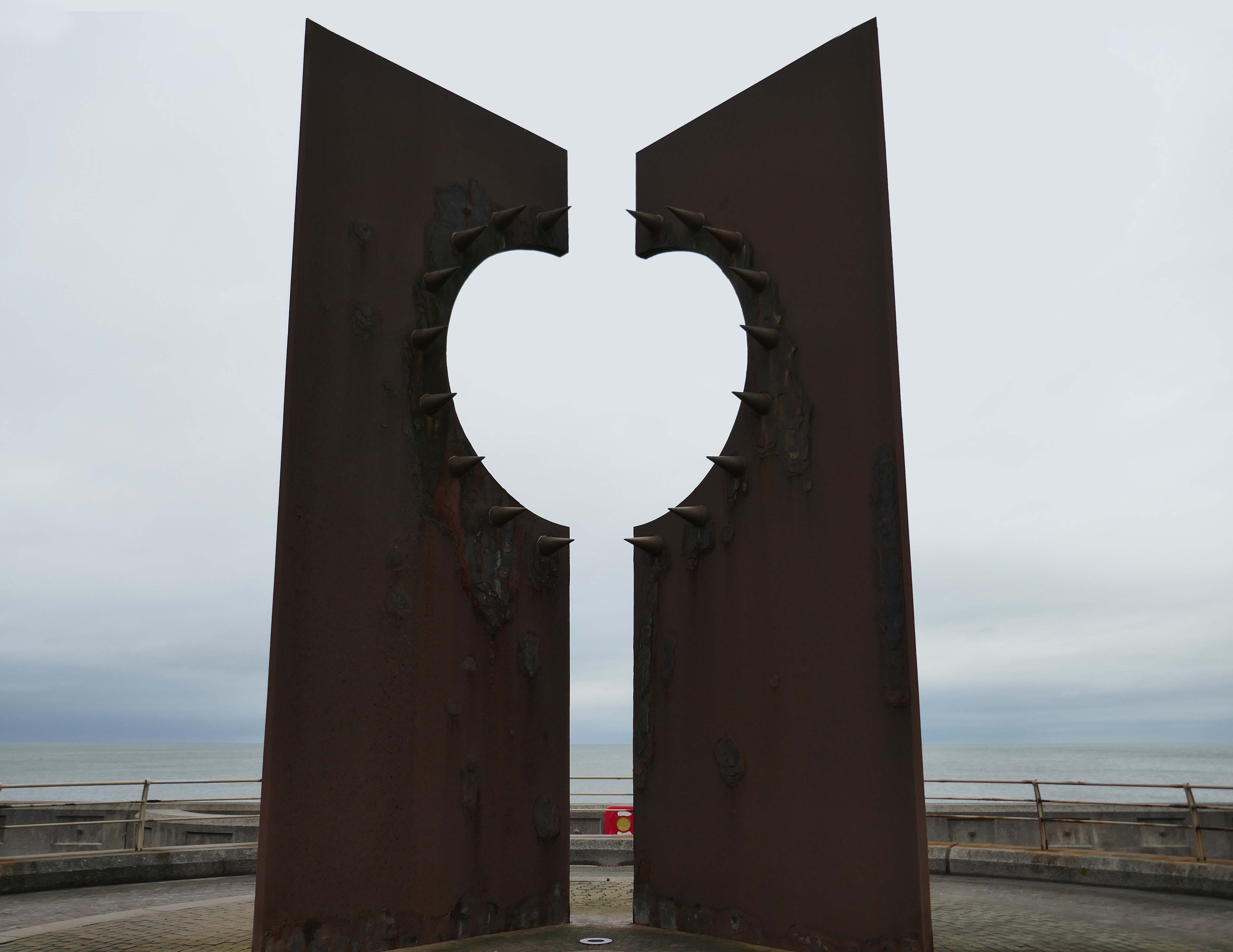
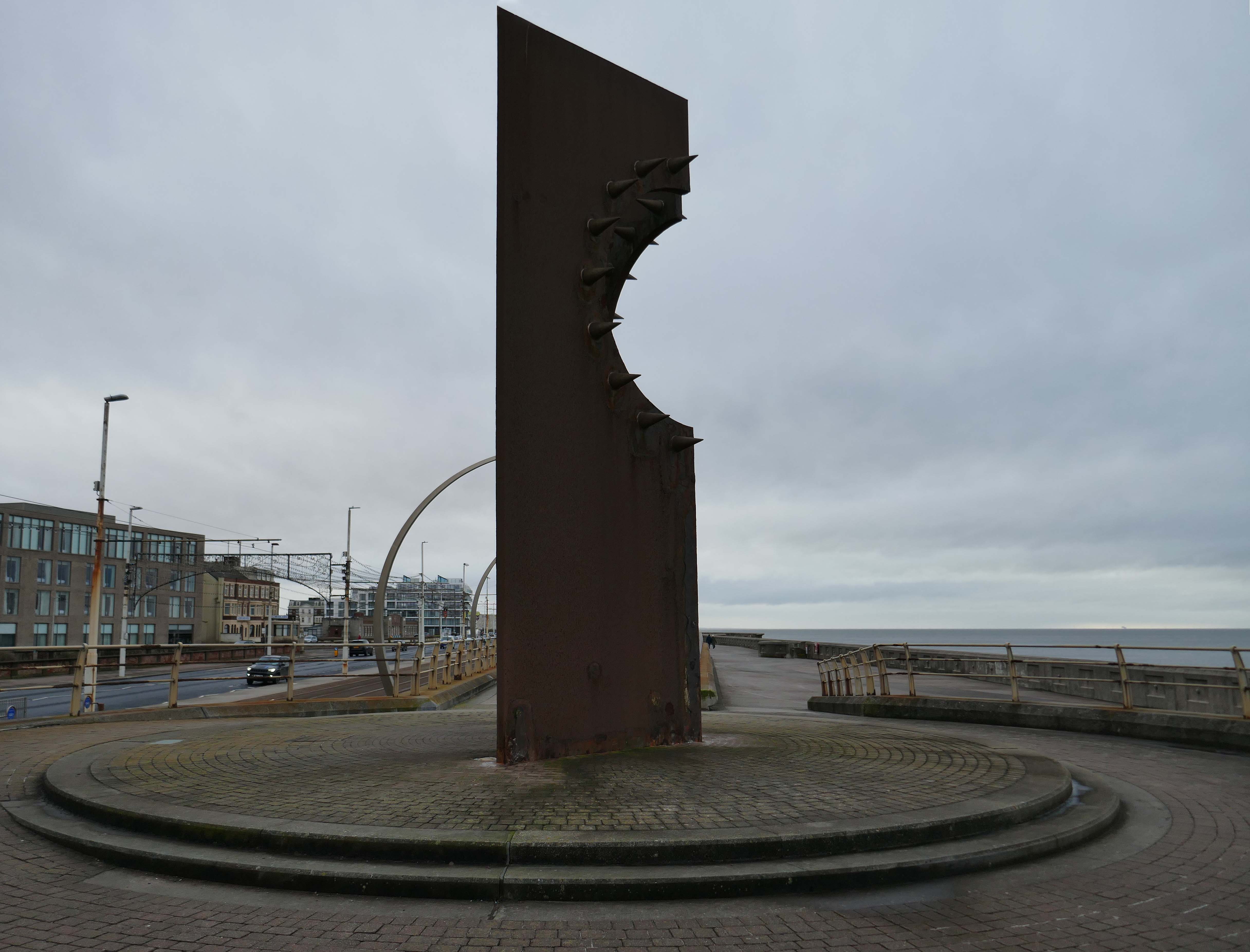
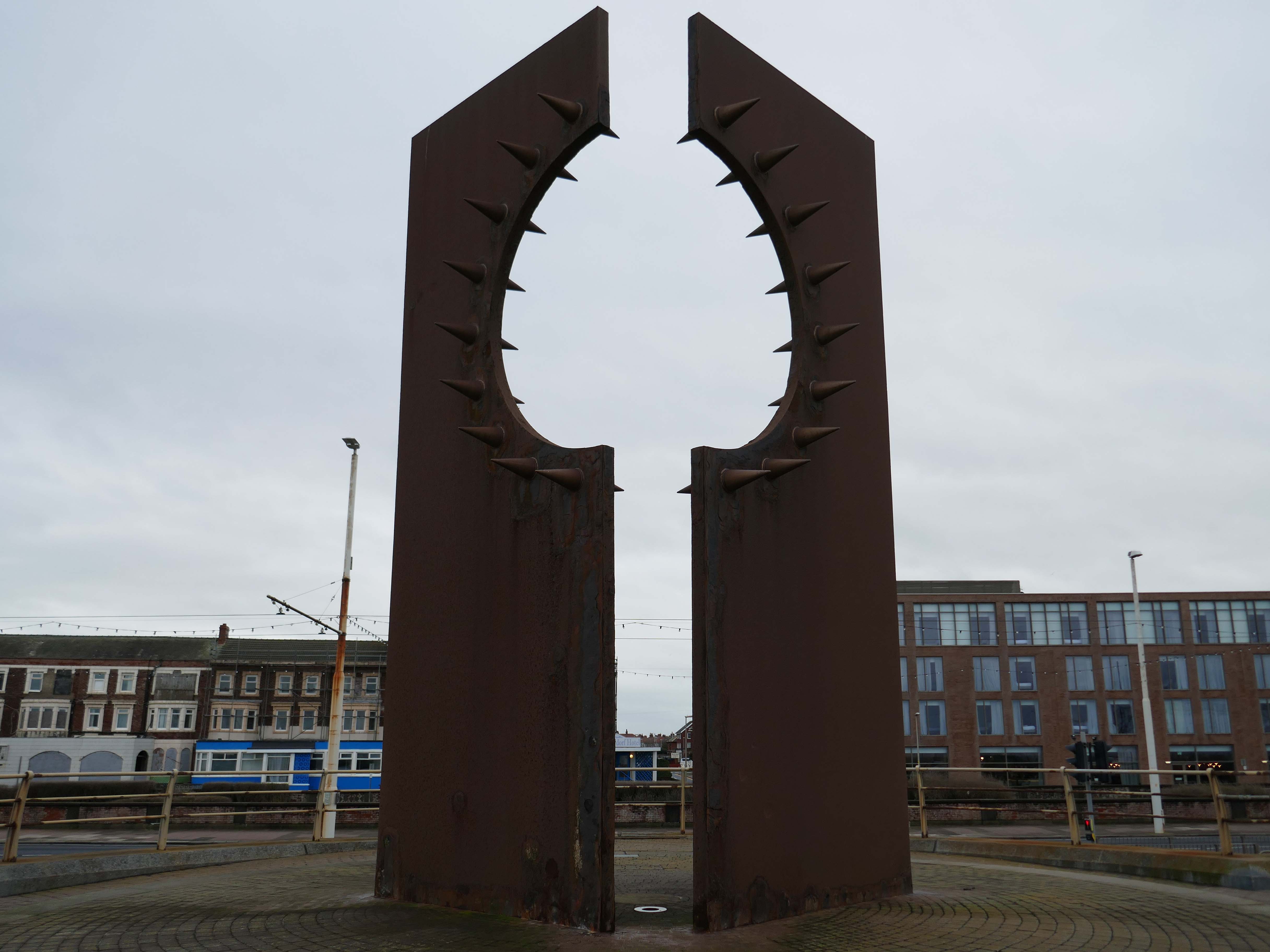
Desire by Chris Knight
An abstract sculpture 8m high, contrasting rusty corten steel with shiny stainless steel spikes, inspired by the town’s reputation as a destination for ‘dirty weekends’, and its hidden ‘fetish scene’. It casts the shadow of a spiky heart on the promenade.
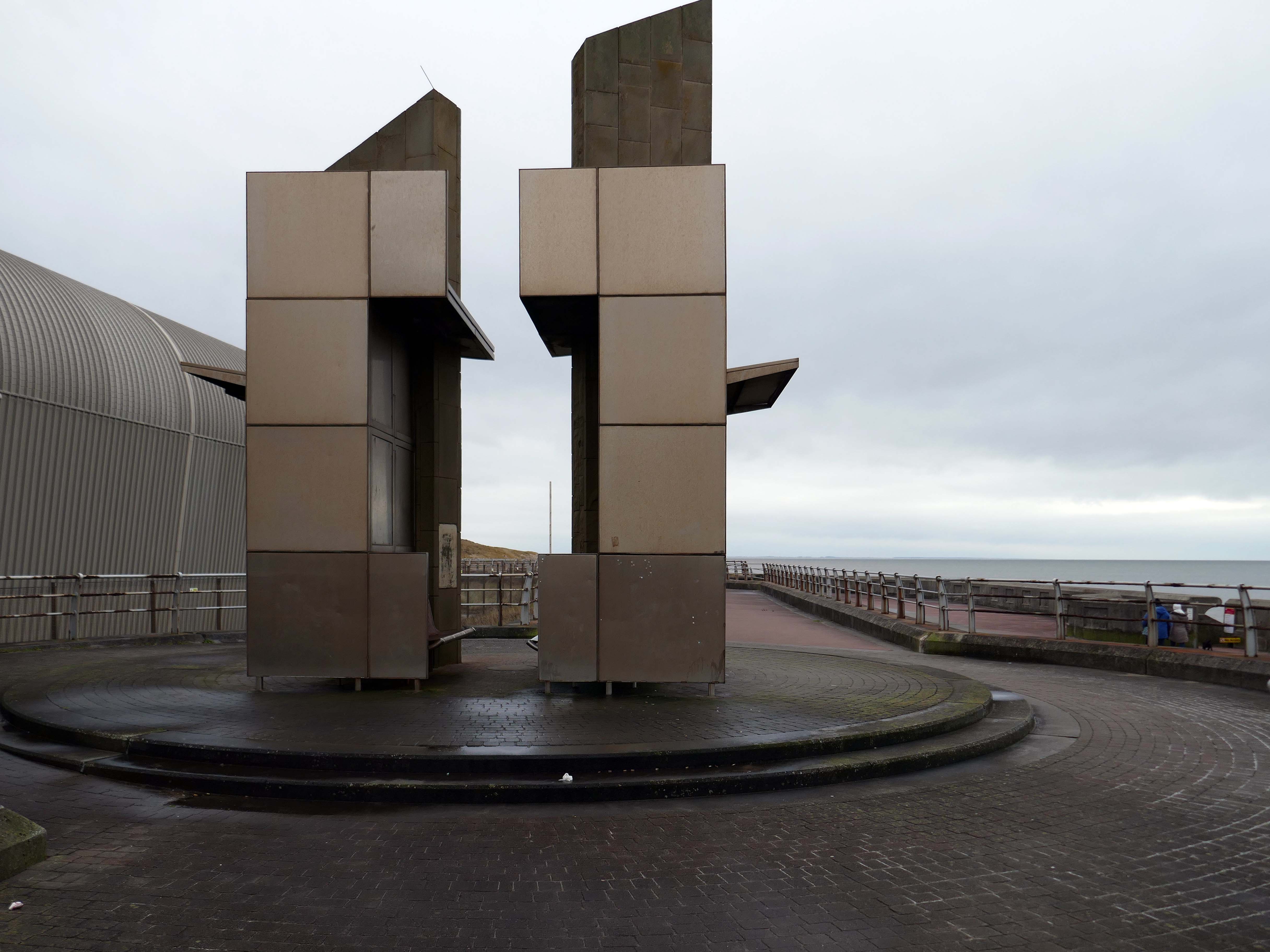
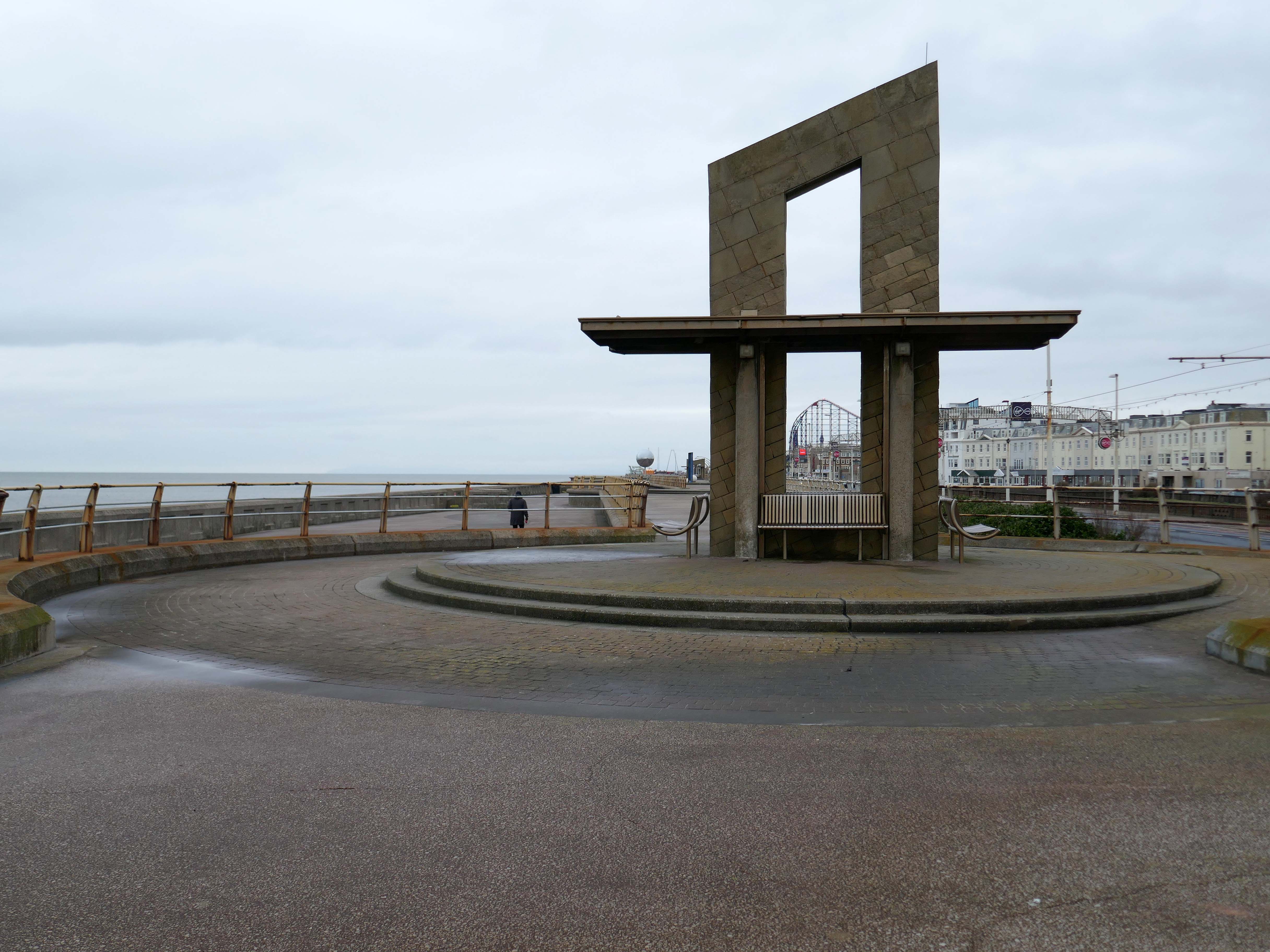
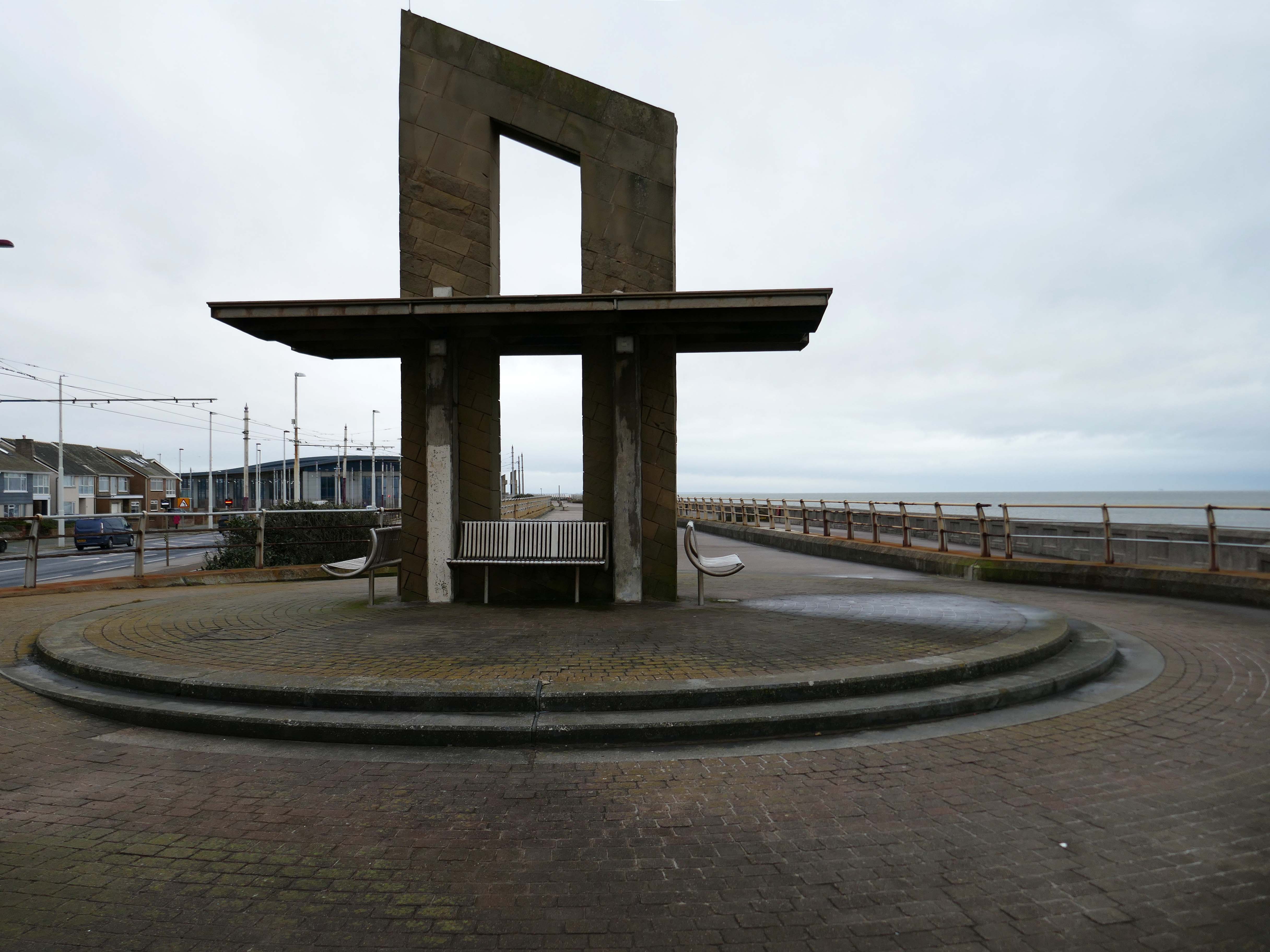
Swivelling Wind Shelters by Ian McChesney with Atelier One
Three 8m high, stainless steel shelters turn like weather vanes, keeping their occupants away from the prevailing wind. Designed by architect Ian McChesney, in collaboration with engineers Atelier One, the graceful sculptural form of the shelters, shaped like whales’ flukes, is structured like an aircraft wing, vibrating in strong gusts of wind.
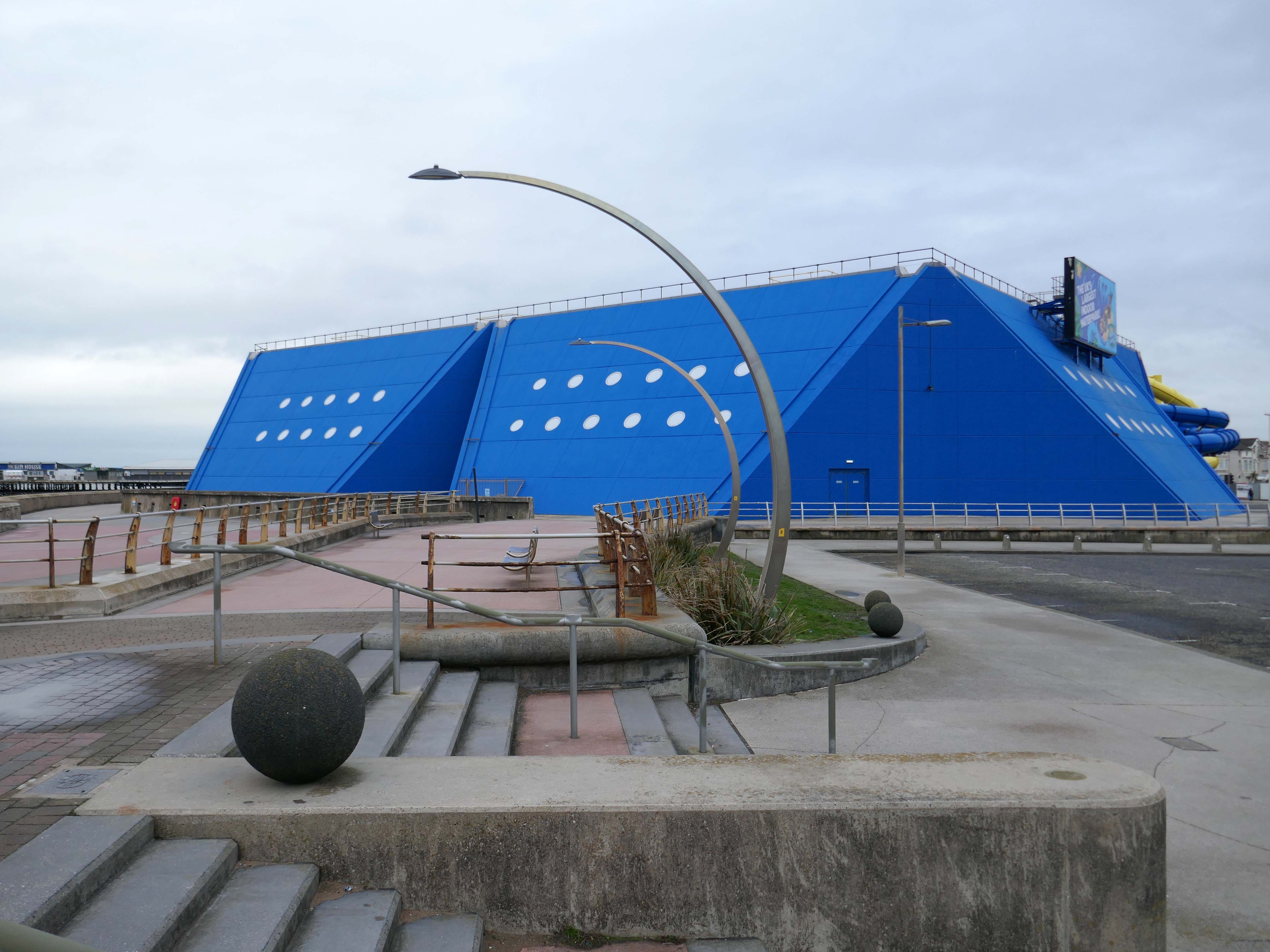
Sandcastle the UK’s largest indoor water park.
Sandcastle opened on 26 June 1986 on the site of the former South Shore Open Air Baths as a joint public/private partnership. Operation of the facility was taken back into Blackpool Council ownership in 2003. A significant investment in new attractions costing £5.5M was also agreed, which was delivered in two phases, with the second opening in 2006 on time and on budget.
In 2012, Sandcastle opened two new Aztec-themed slides, one with a chamber called ‘Aztec Falls’, and a toboggan-like slide called ‘Montazooma’.
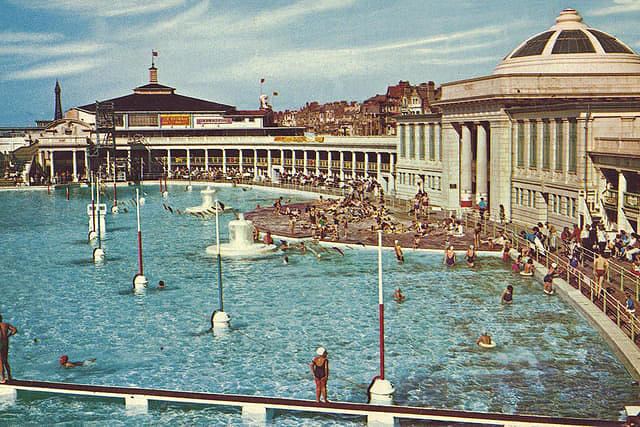
Situated adjacent to the South Pier at Blackpool was the open- air swimming bath. Elliptical in form, it was designed in the renaissance style of architecture, with white ivory terracotta, known as ‘Marmola’. It was said to be the largest and finest of its kind in the world and similar in design to the colosseum of ancient Rome.
Built at a cost of around £70,000, Designed by JC Robinson – Borough Architect, it was officially opened on the 9th June 1923, the same day as the first Blackpool Carnival, by the Mayor of Blackpool, Councillor Henry Brooks. The opening ceremony was followed by a short swimming exhibition in which Blackpool swimmer Lucy Morton took part. The following year Lucy was to win a gold medal in the 1924 Paris Olympics.
Sadly in 1983, following years of neglect and falling attendances, the bath was demolished.
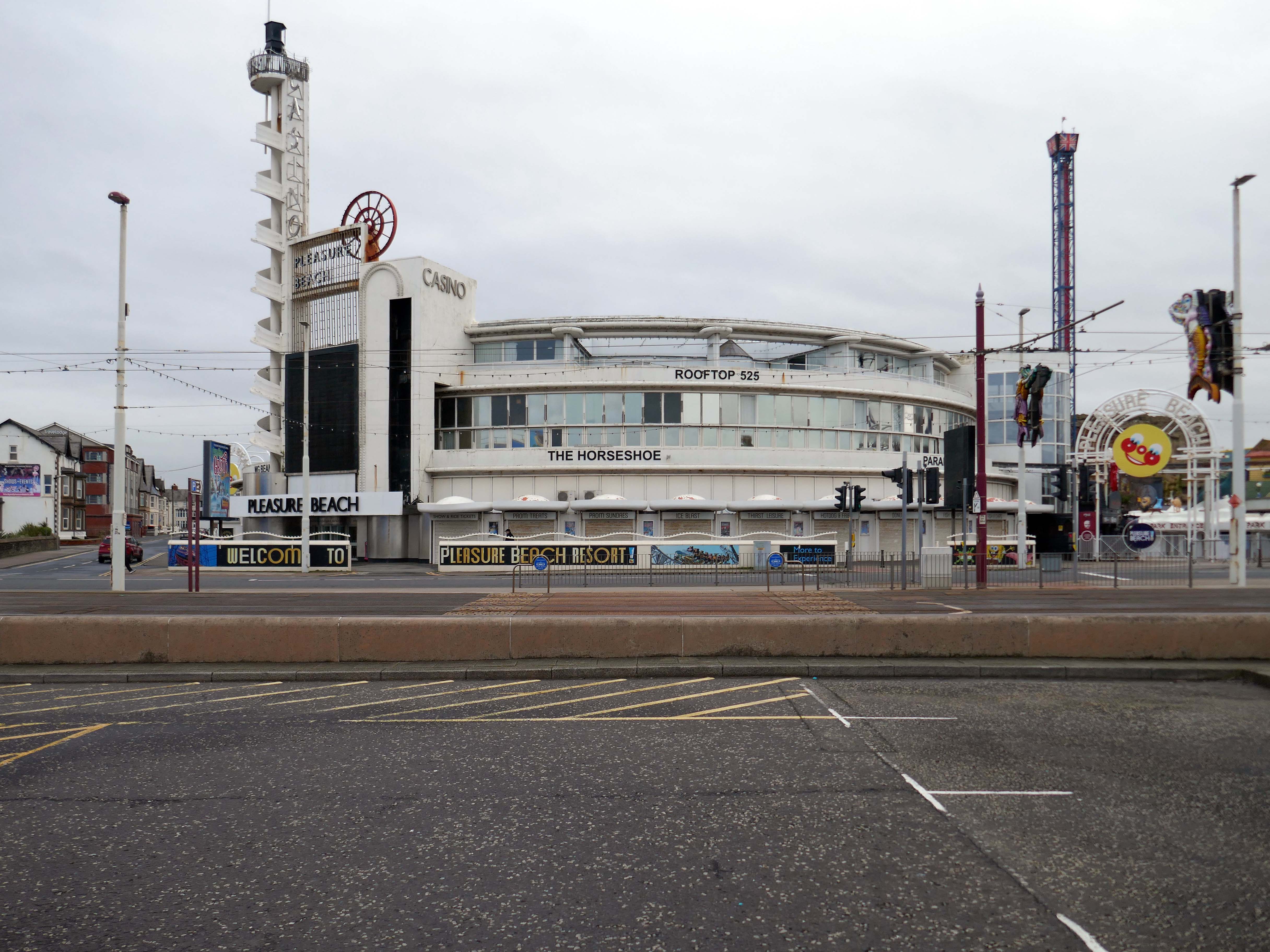
Built to the designs of Joseph Emberton for Leonard Thompson; restored and altered 1972 and 1977-9 by Keith Ingham. Reinforced concrete in the International Modern style. Circular plan, the circle broken by three principal projections marking the main entrance and foyer, the main exit and the main public stairs. The key to the plan were the central kitchens on the ground and first floors, serving (on the former) a number of restaurants and (on the latter) a banqueting room. Kitchens now on first floor only. The result is a sequence of intriguingly curved rooms; originally there was no public access to this inner core area or directly across the building, but this has now been provided. The basement contained stores, a billiard room and sports facilities, now in mixed use. Between ground and first floor is a mezzanine office range, with private flat over. Top floor built as roof garden, provided with a glazed curtain wall in c.1940 by Emberton and largely infilled as an extra floor in 1972.
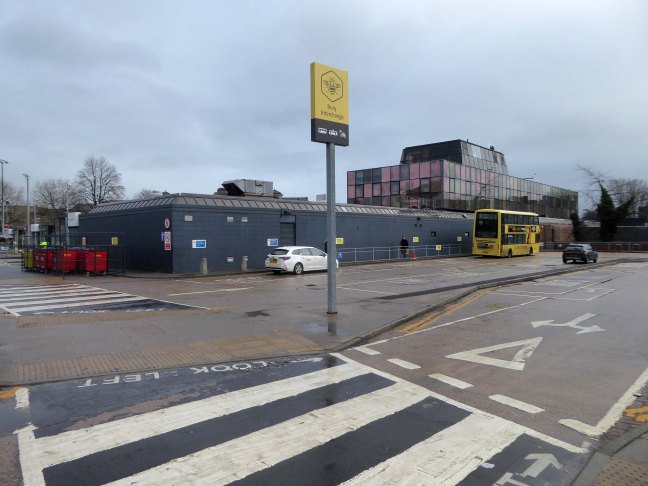
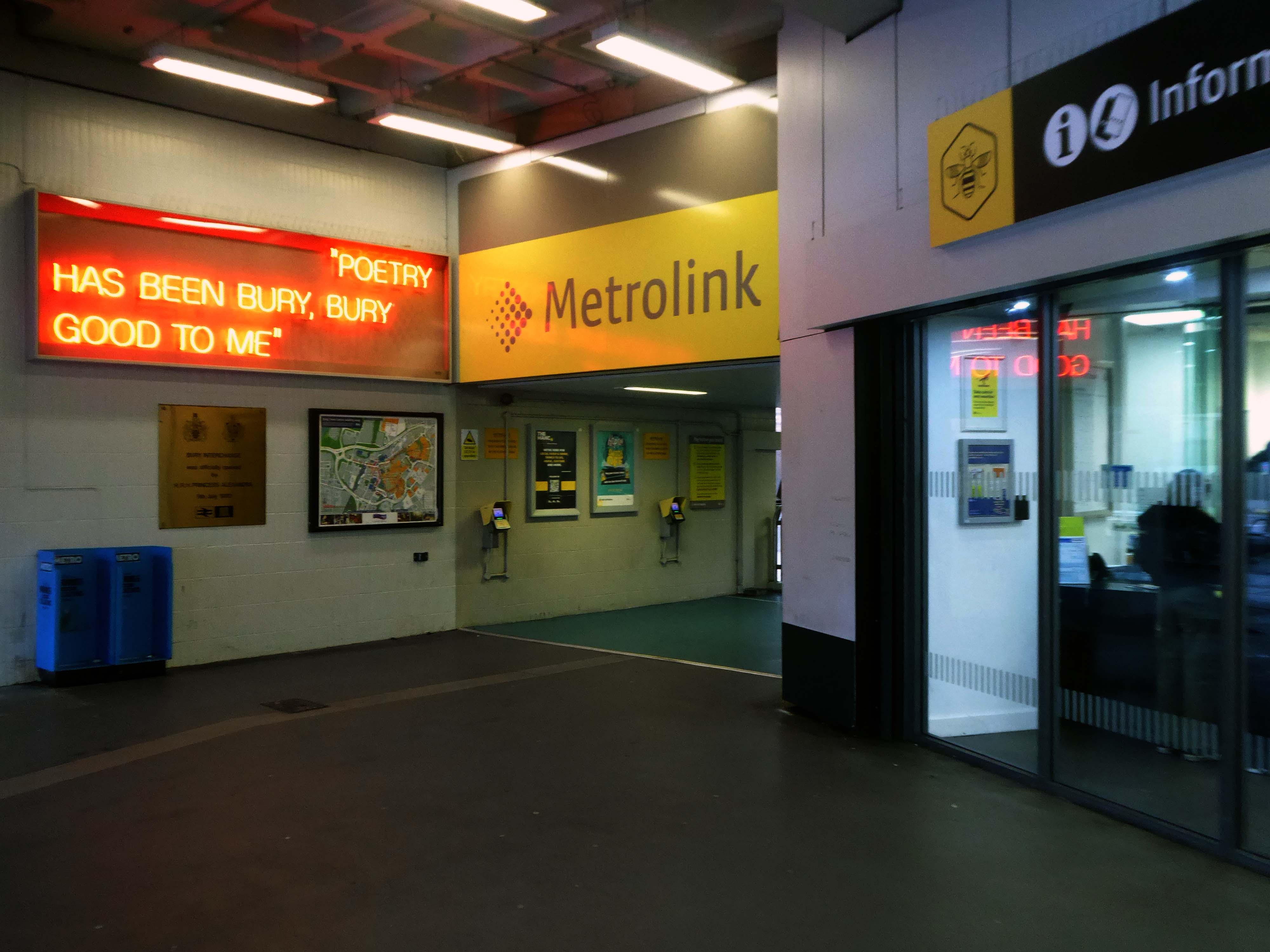
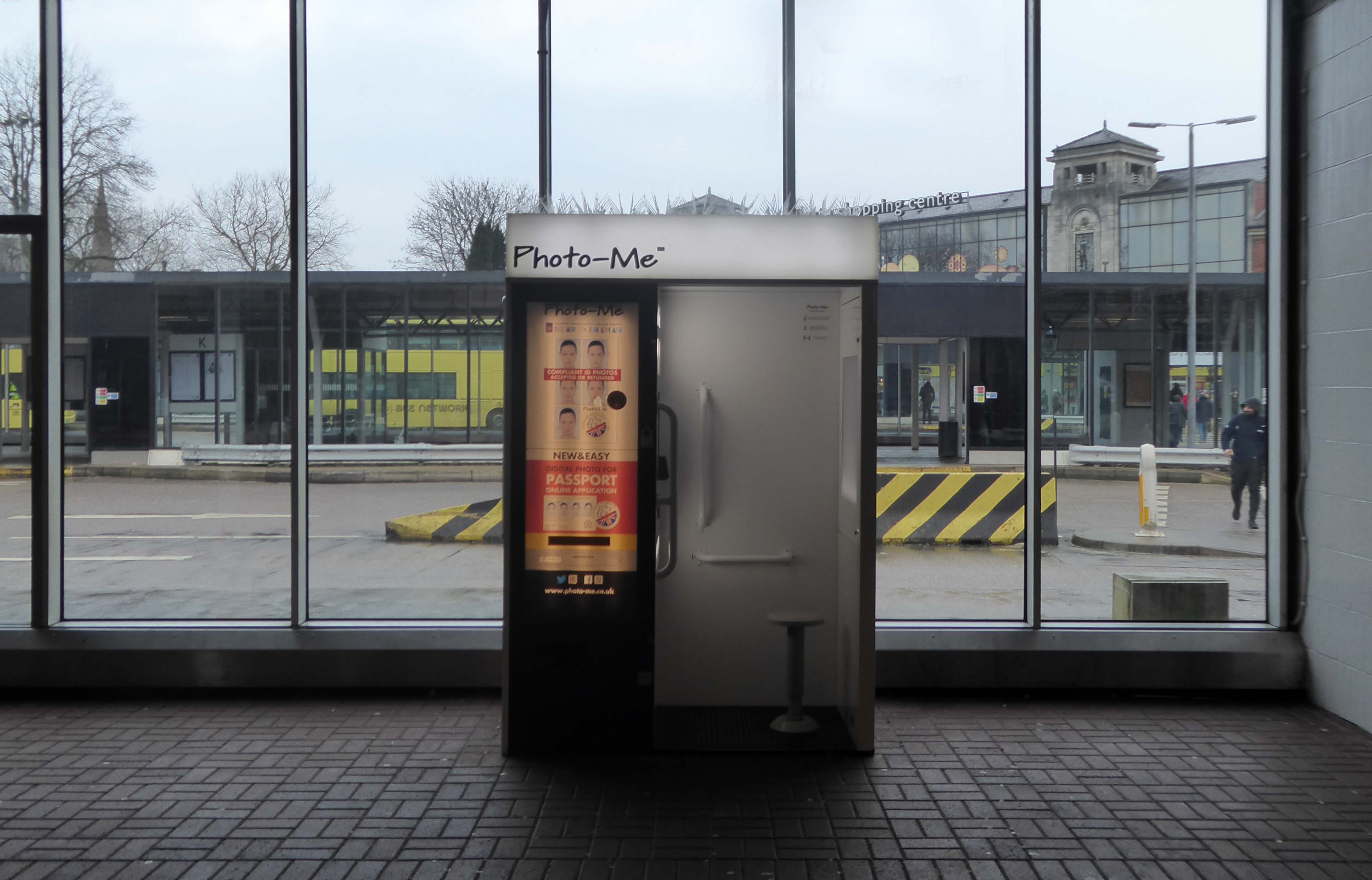
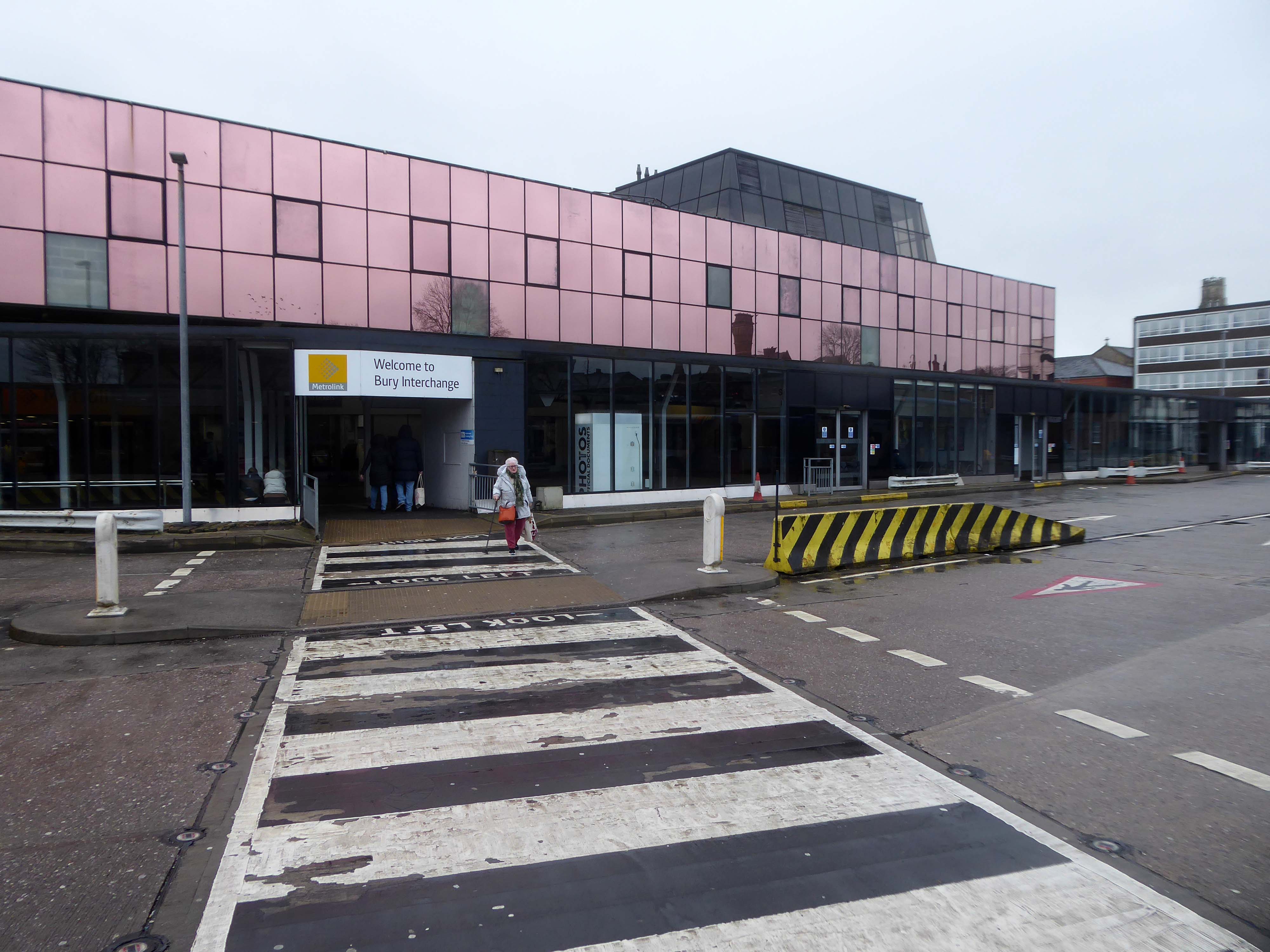
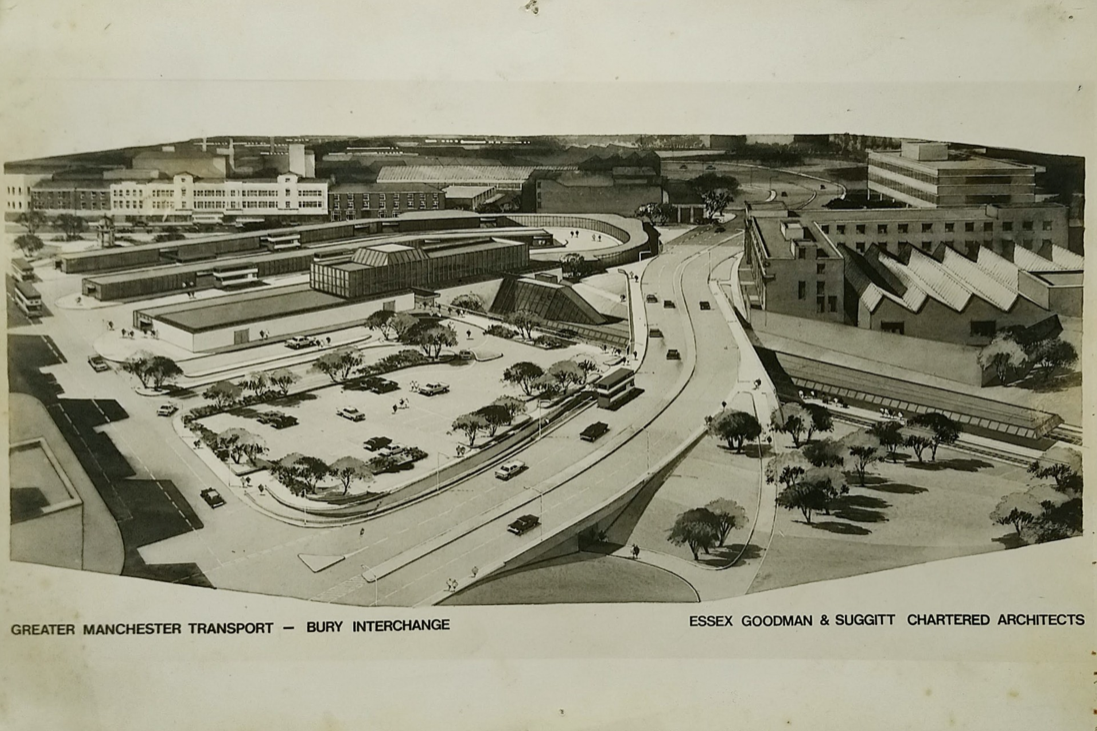
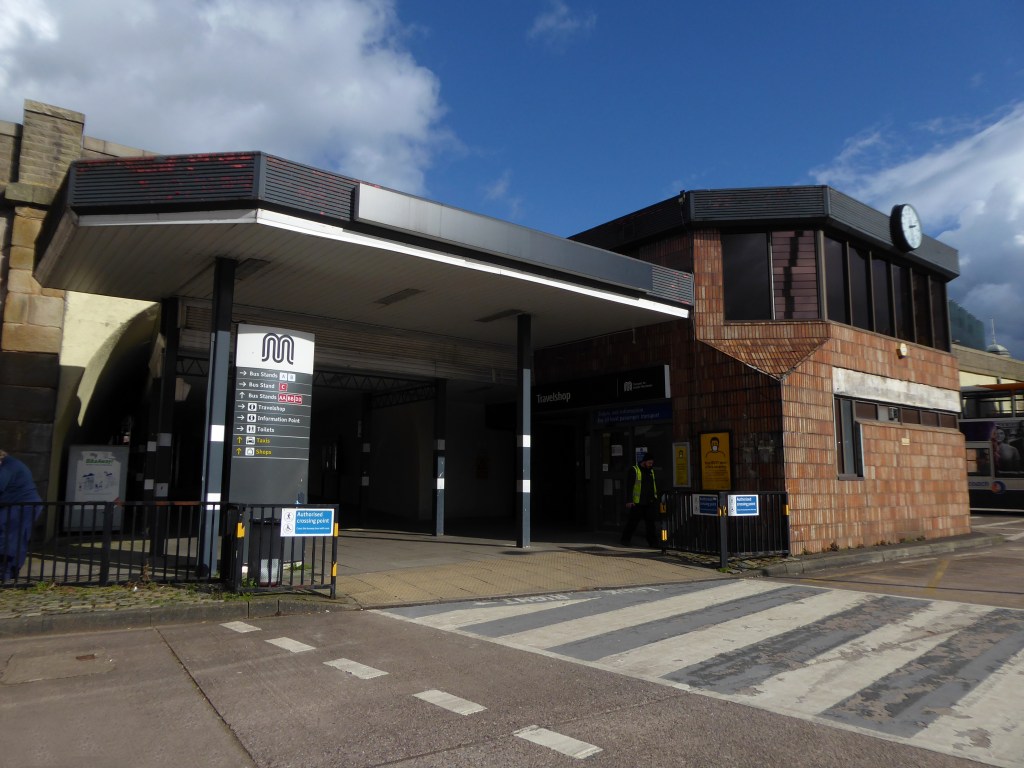
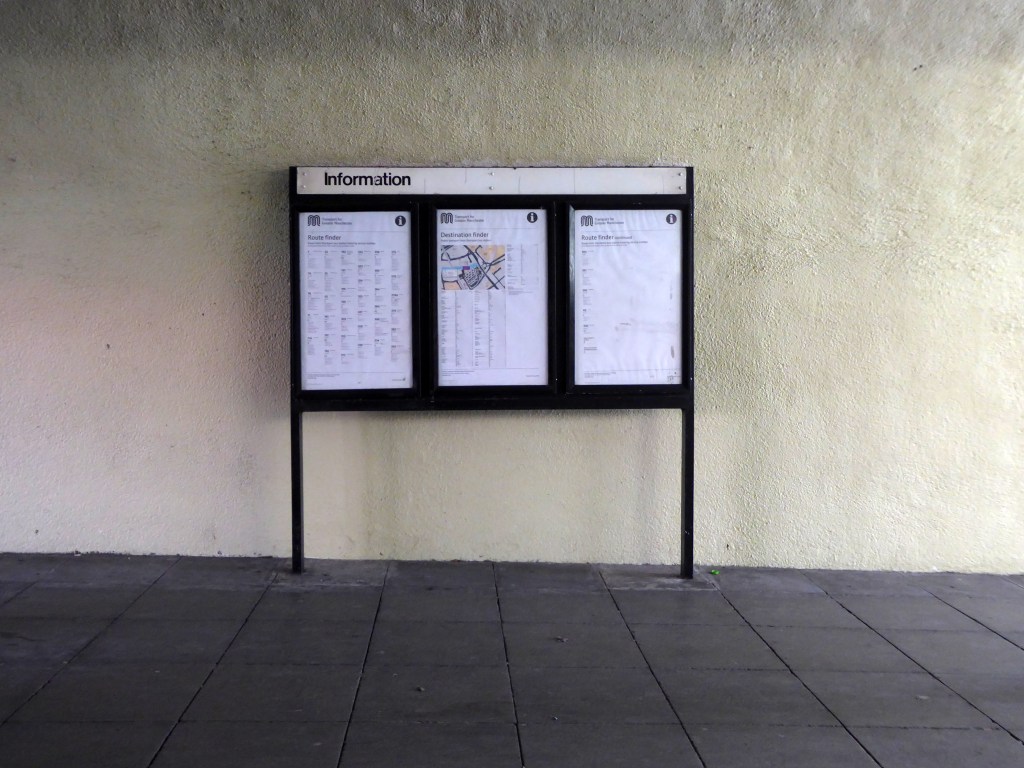
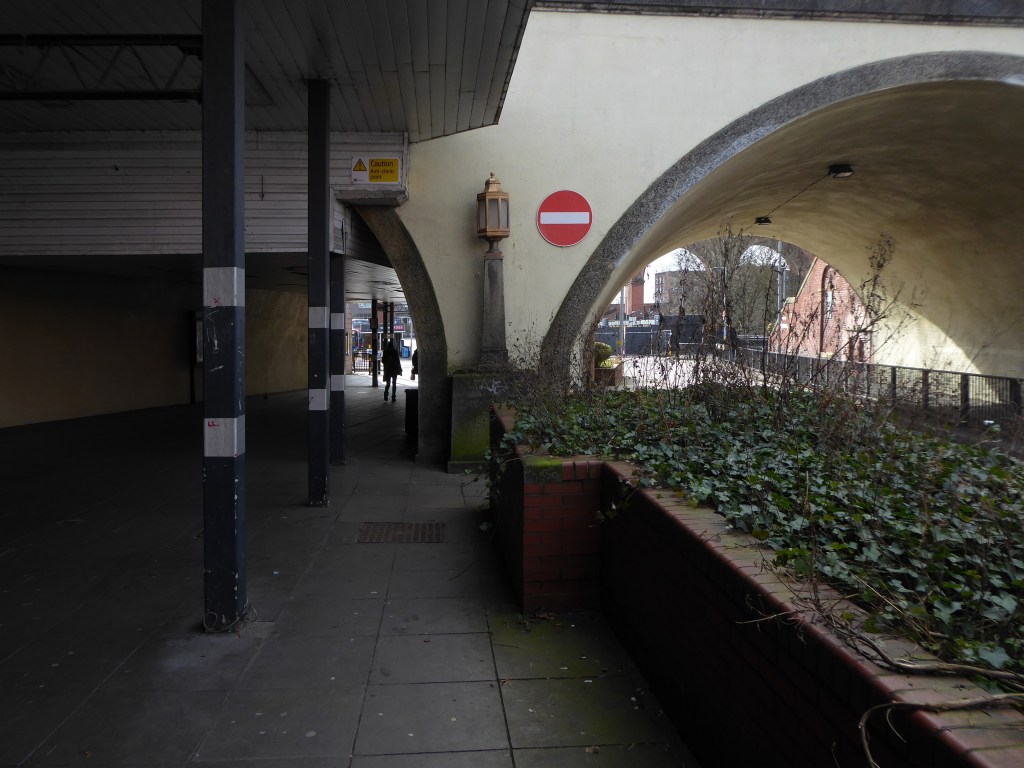
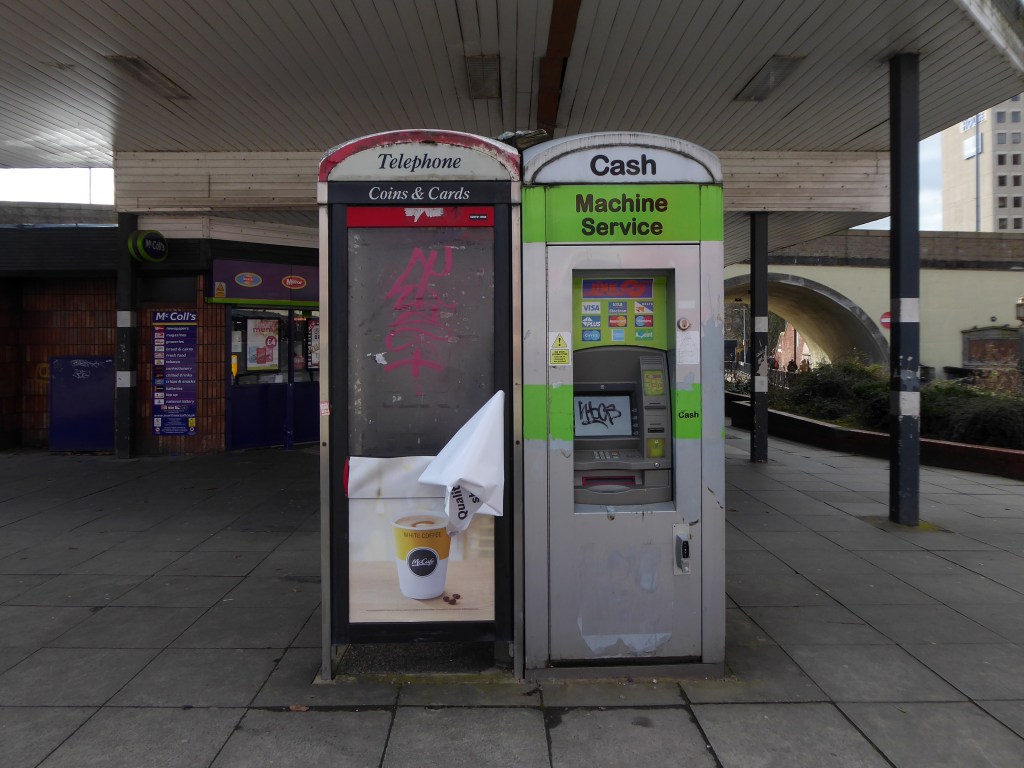
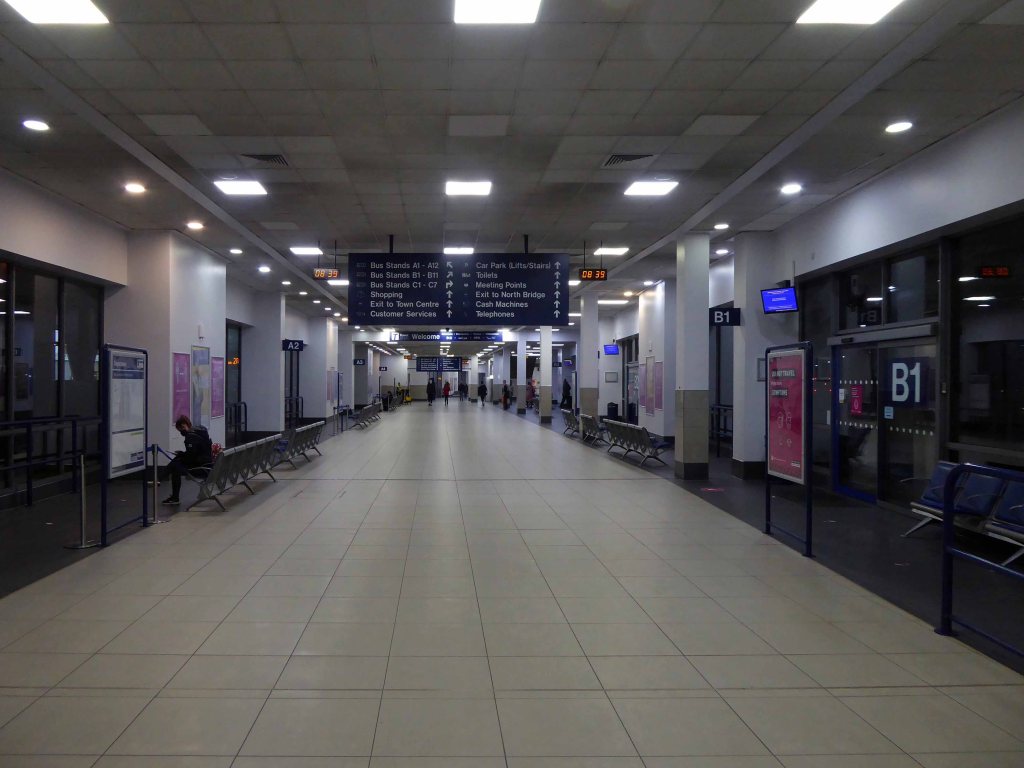
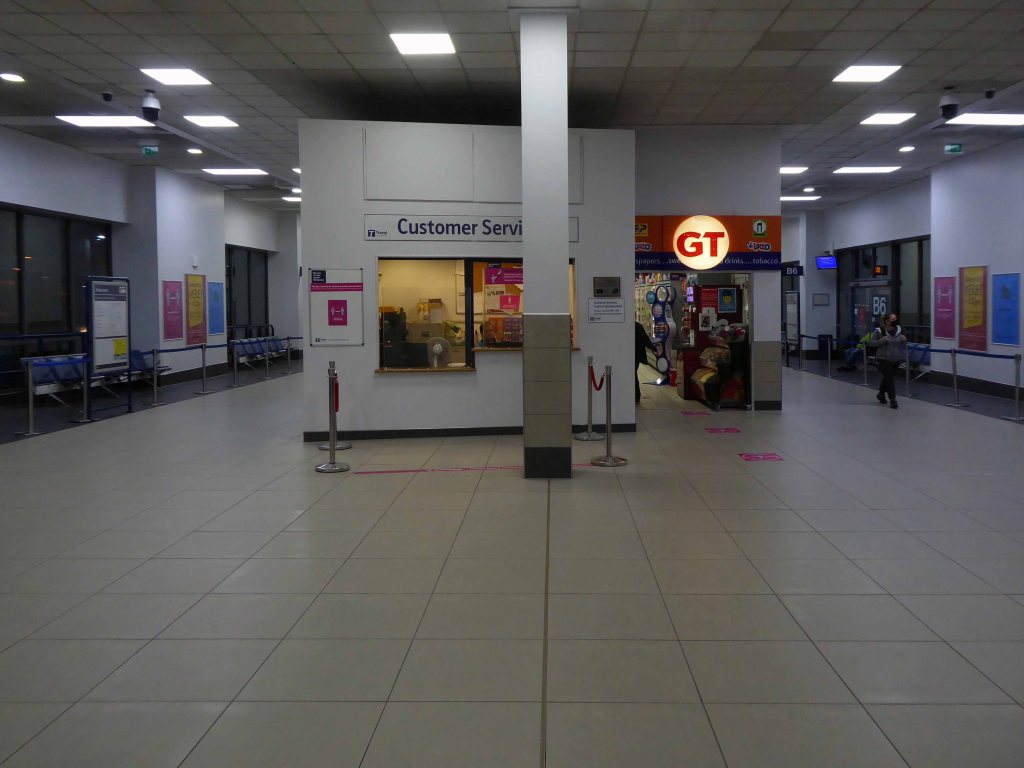
Arriving at and looking around the Interchange – 1980 architects: Essex Goodman & Suggitt
It is the northern terminus of the Manchester Metrolink’s Bury Line, which prior to 1992 was a heavy-rail line.
A new short spur line was constructed to connect the new station. The railway had originally run into Bury Bolton Street which was further away from the town centre, and was closed by British Rail on the same day that Bury Interchange opened.
It also incorporates a bus station.
Bury Interchange replaced the bus termini scattered around Bury town centre, notably around Kay Gardens.
An £80m transformation is coming to the Bury Interchange, which will see step-free access at the Metrolink, a “vertical circulation core” to better connect the Metrolink with the bus facility, and an integrated travel hub with spaces for cycle storage.
The work is much-needed, explained Transport for Greater Manchester’s Alan Lowe, he said that the interchange was built in the 1980s and very much is of its time.
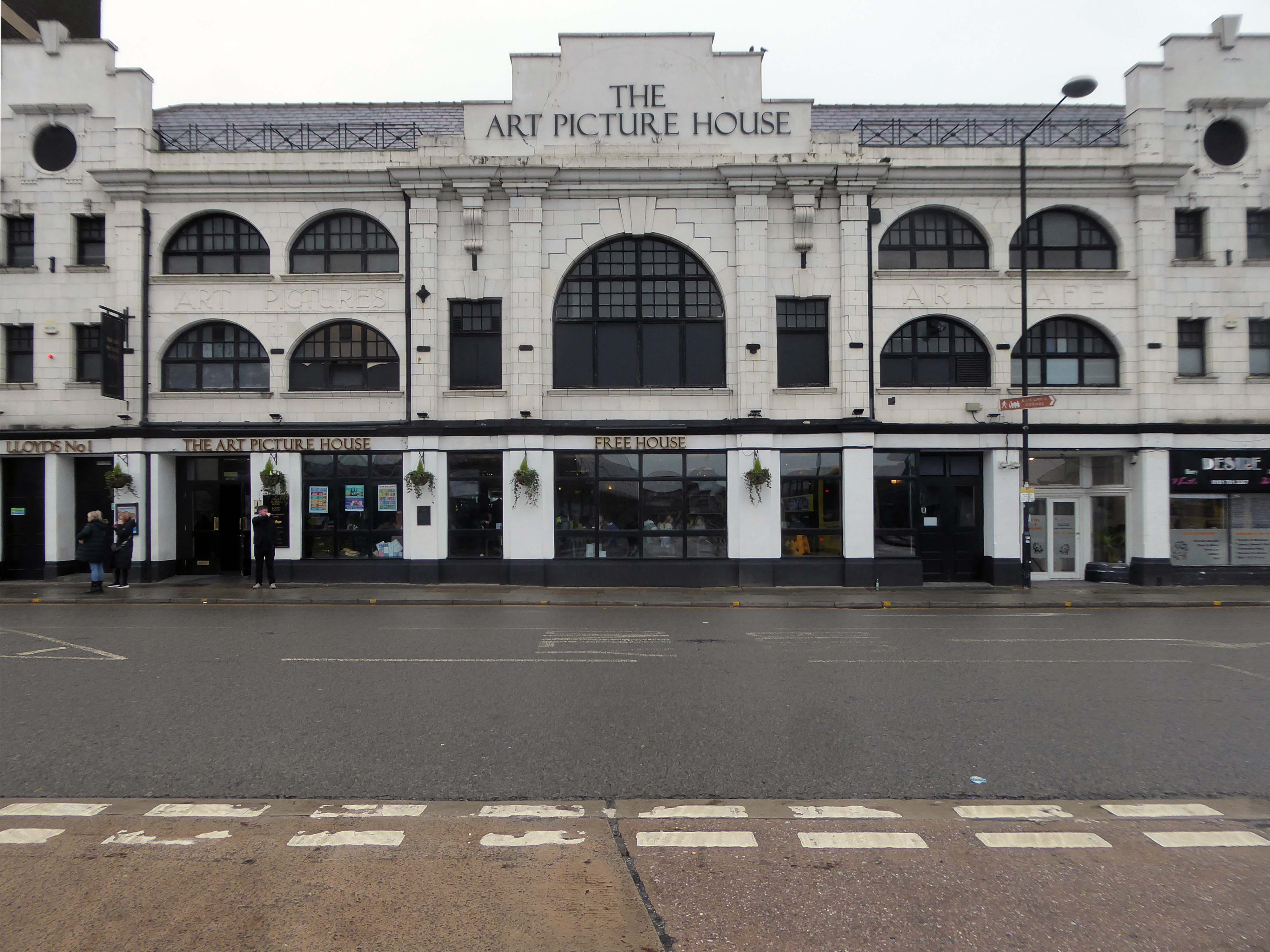
The Art Picture Palace was a 1923 rebuild of the earlier Art Picture Hall both designed by architect Albert Winstanley. The Art Picture Palace was opened on 26th January 1923. A remarkably complete survivor of a 1920’s cine-variety house executed in an elaborate style.
Films ceased in February 1965 and it became a bingo club. Later converted into a billiard hall until 19th May 1991 when it became a bingo club again, it later became a Chicago Rock Cafe.
Cinema Treasures
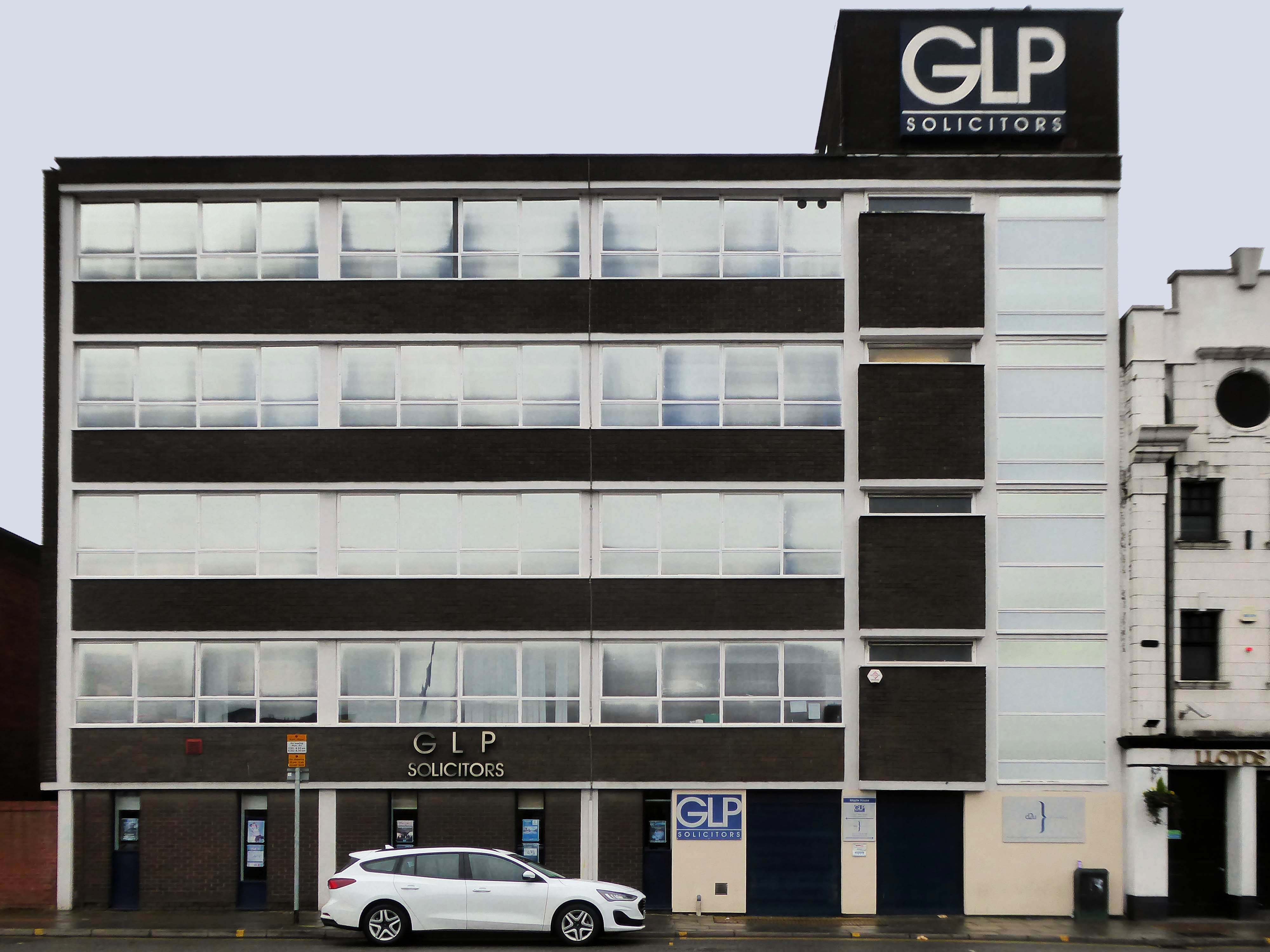
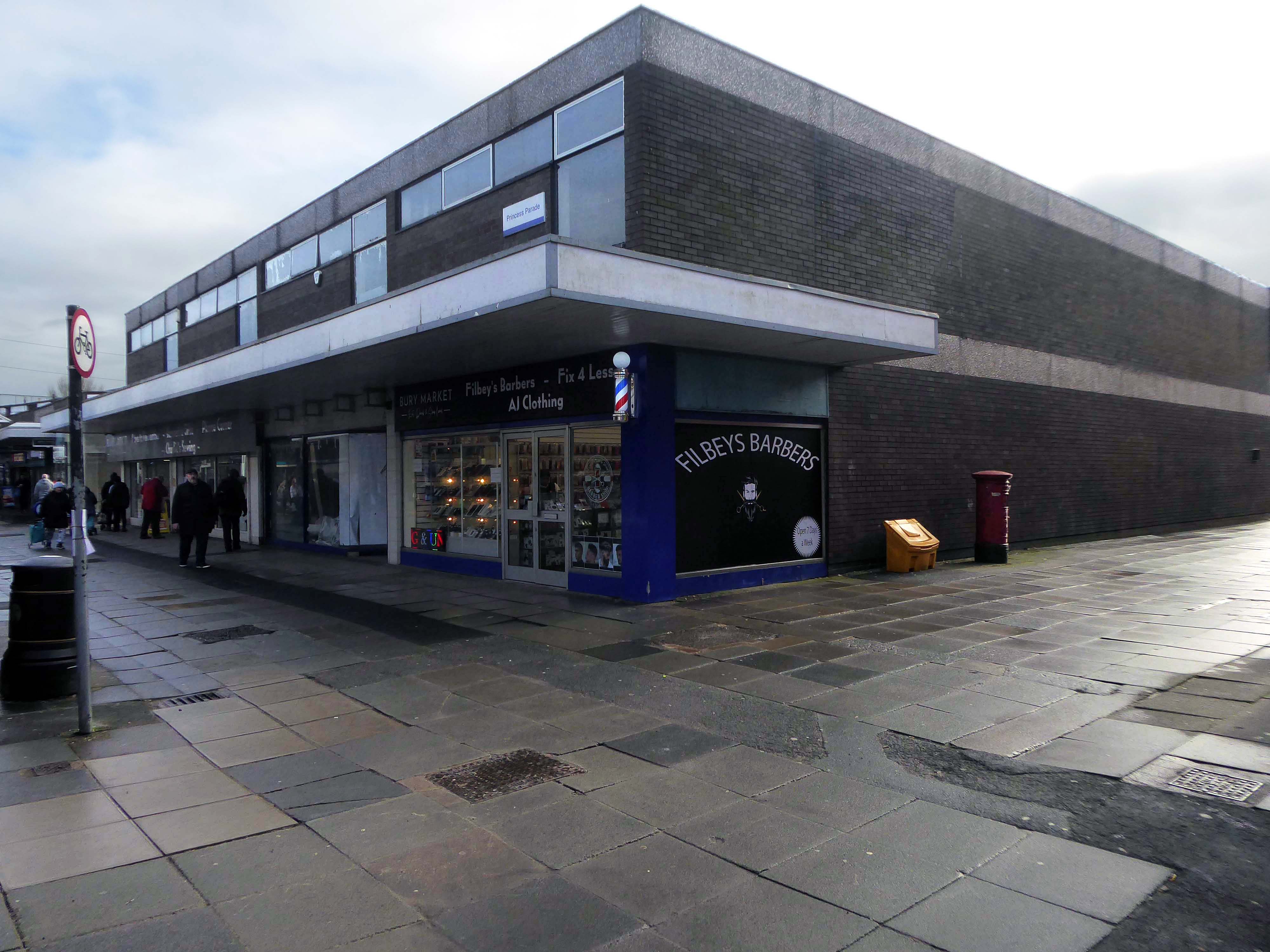
Next door a typical steel glass and brick banded office block Maple House.
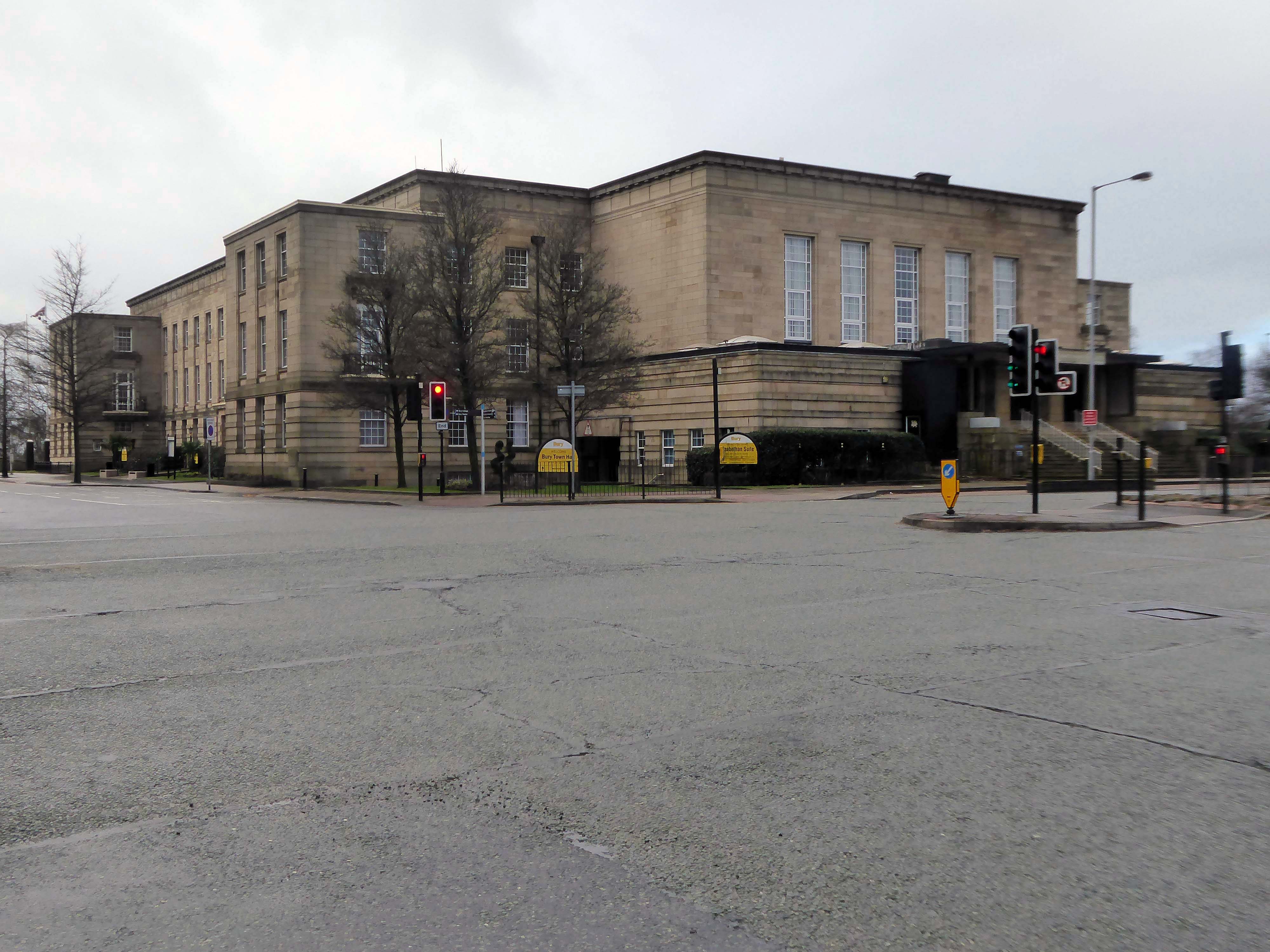
Around the corner and over the road to the Town Hall 1939-40 architects: Reginald Edmonds of Jackson & Edmonds then 1947-54.
Large and Dull – Niklaus Pevsner.
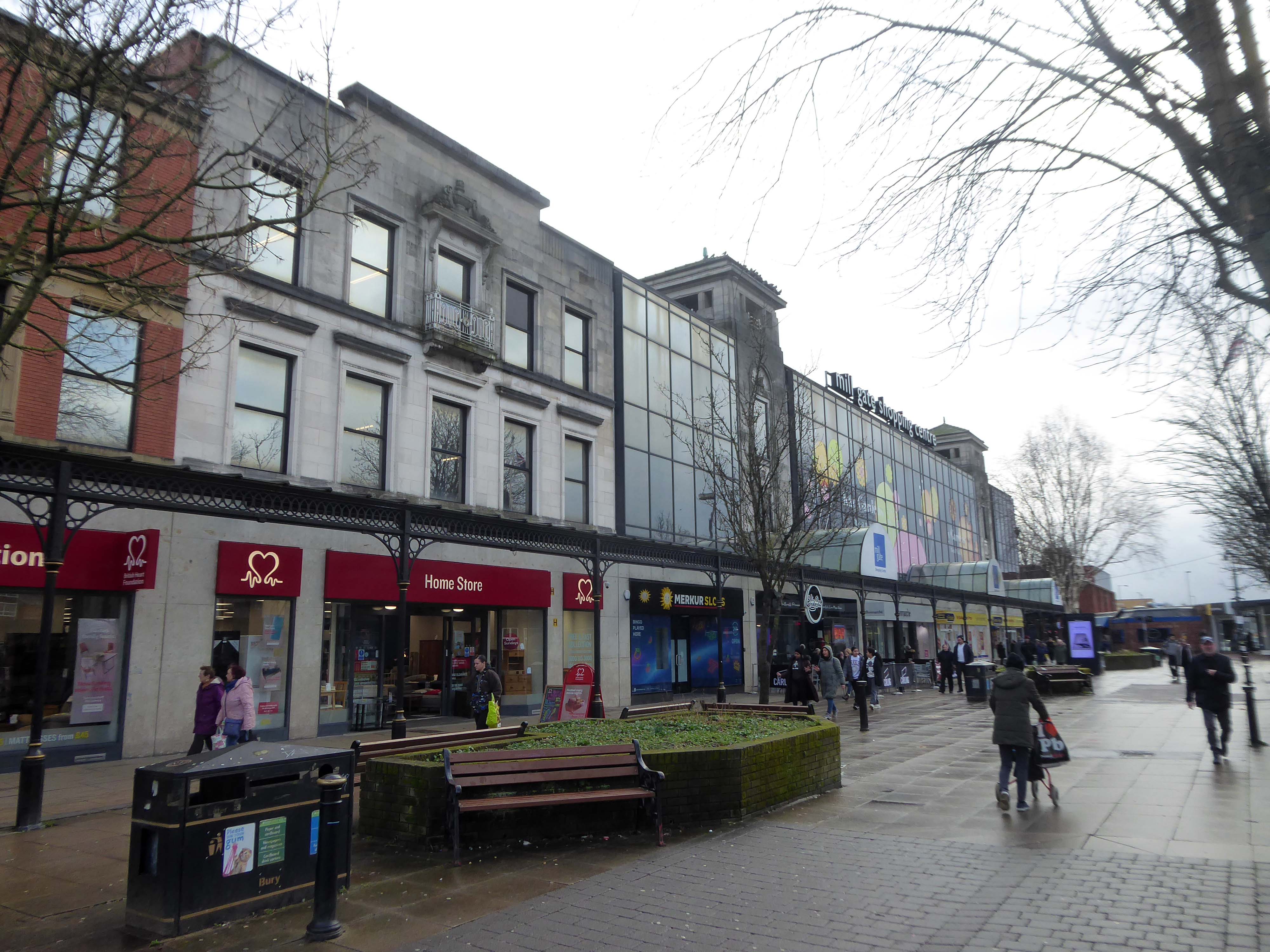
Back through the Interchange to the former Cooperative Store of the 1930’s.
The Portland Stone towers still visible – the elevation largely retro-clad in glass.
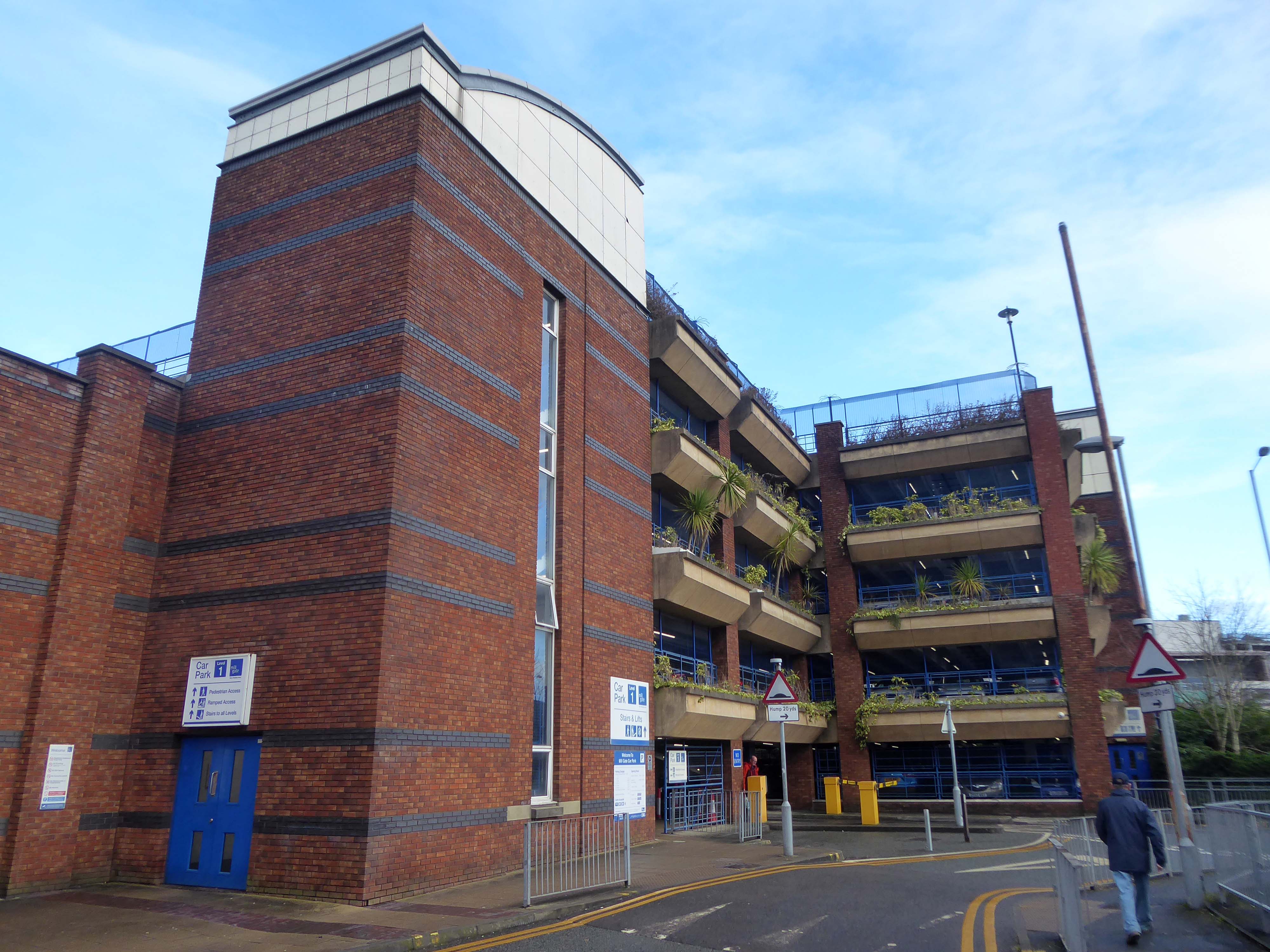
Passing through the Millgate Shopping Centre of the 1980’s.
Unambitious but successful, the floors cheerfully tiled – Niklaus Pevsner.
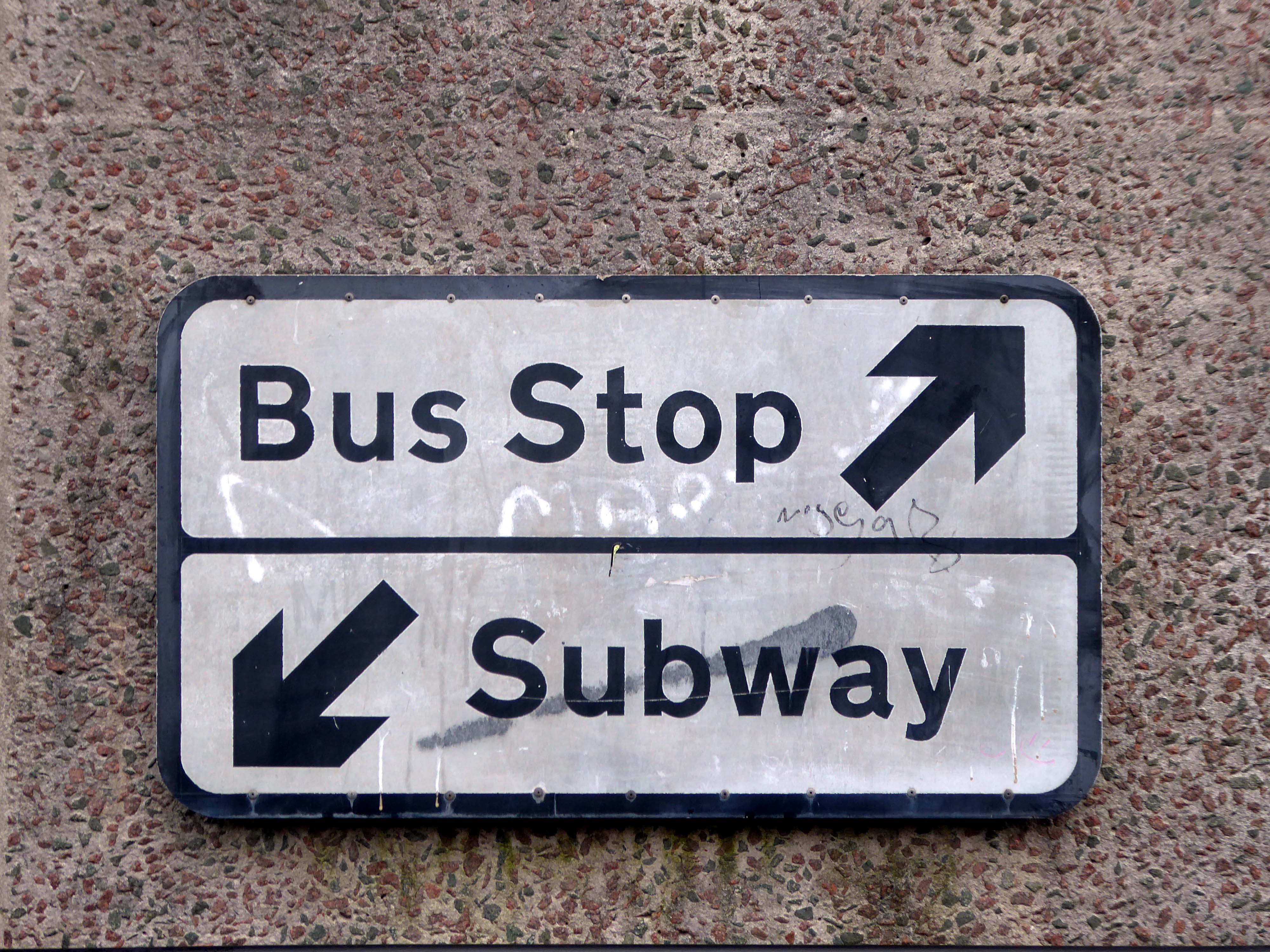
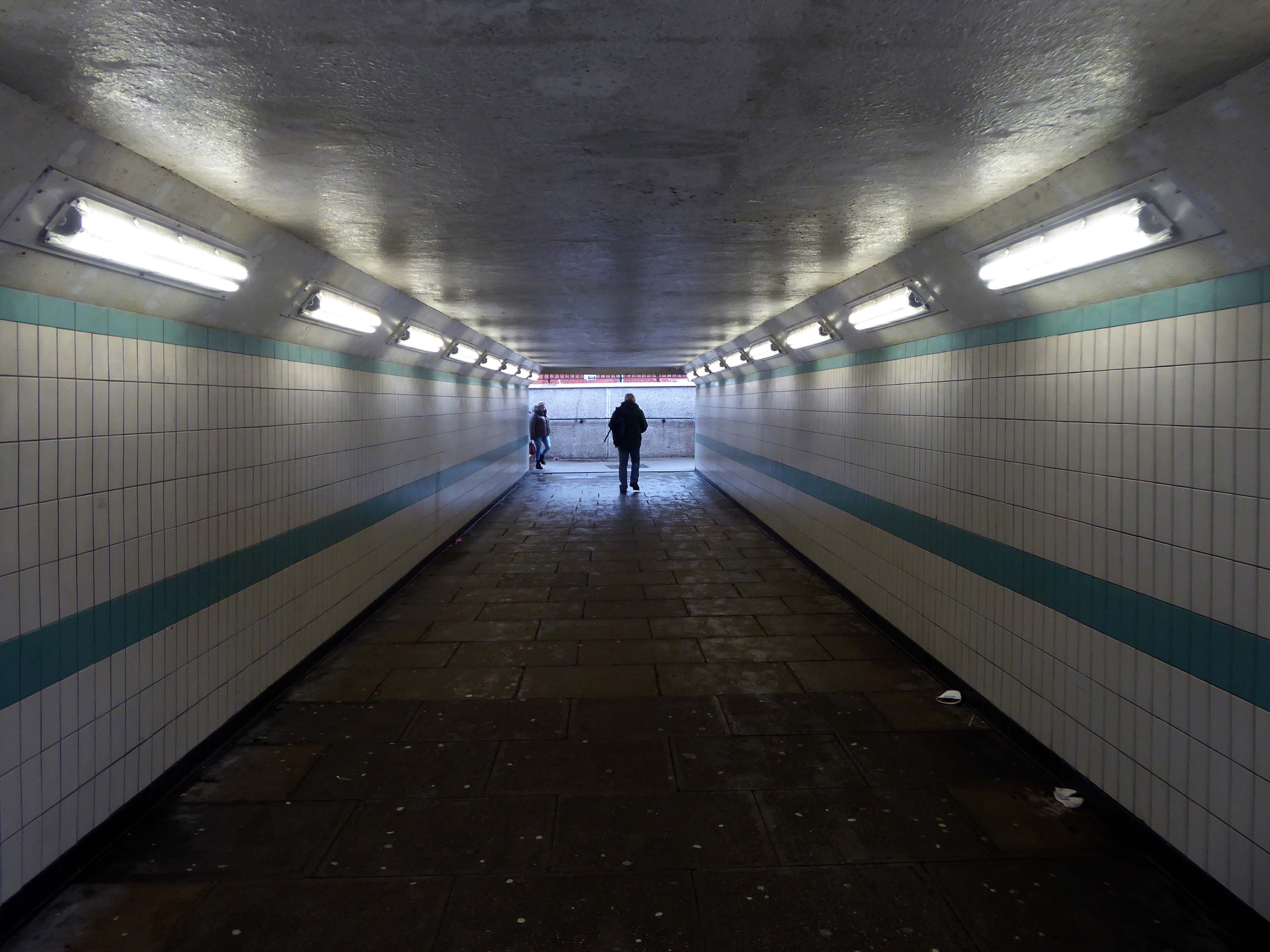
Down in the subway at midday.
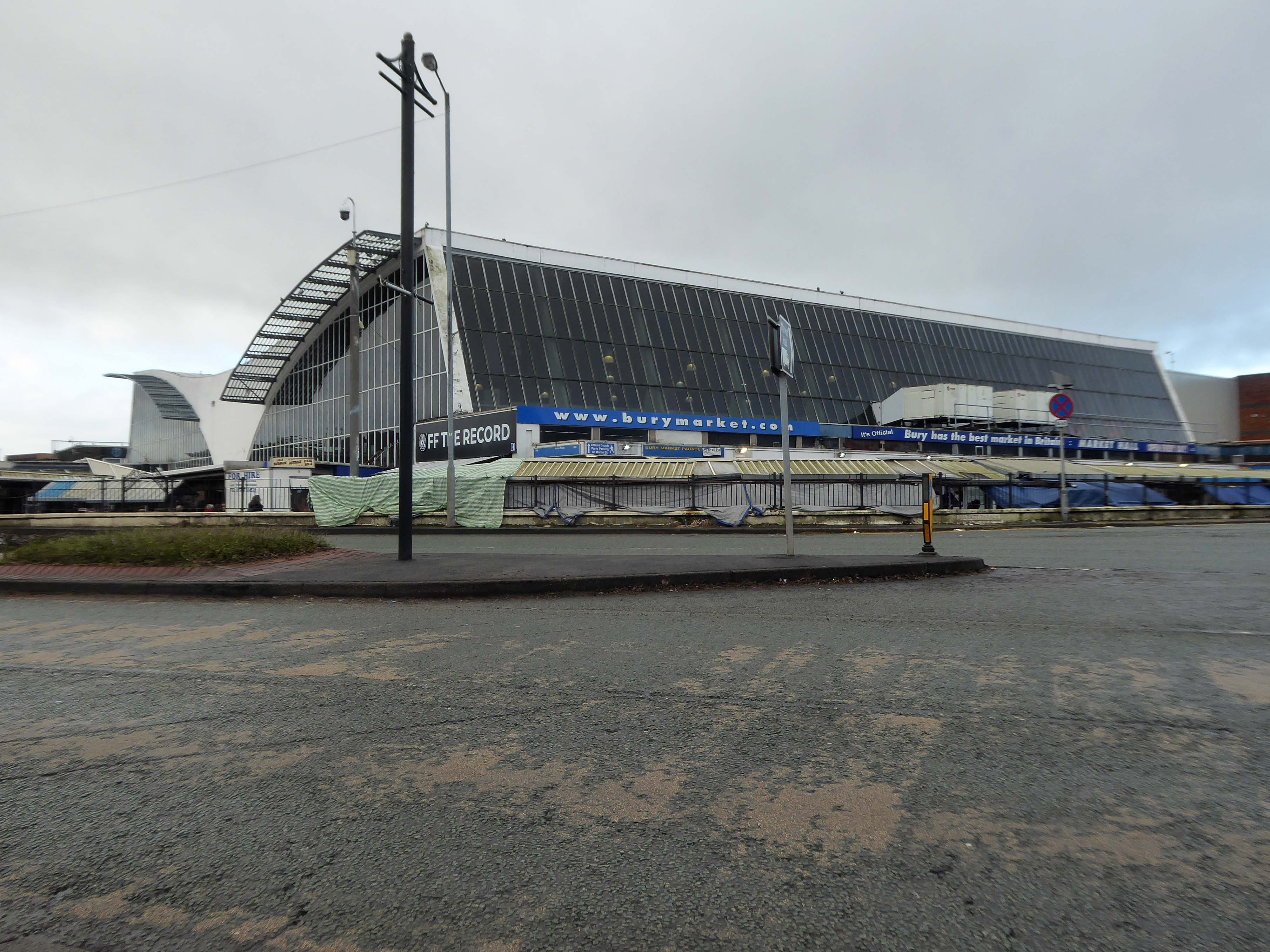
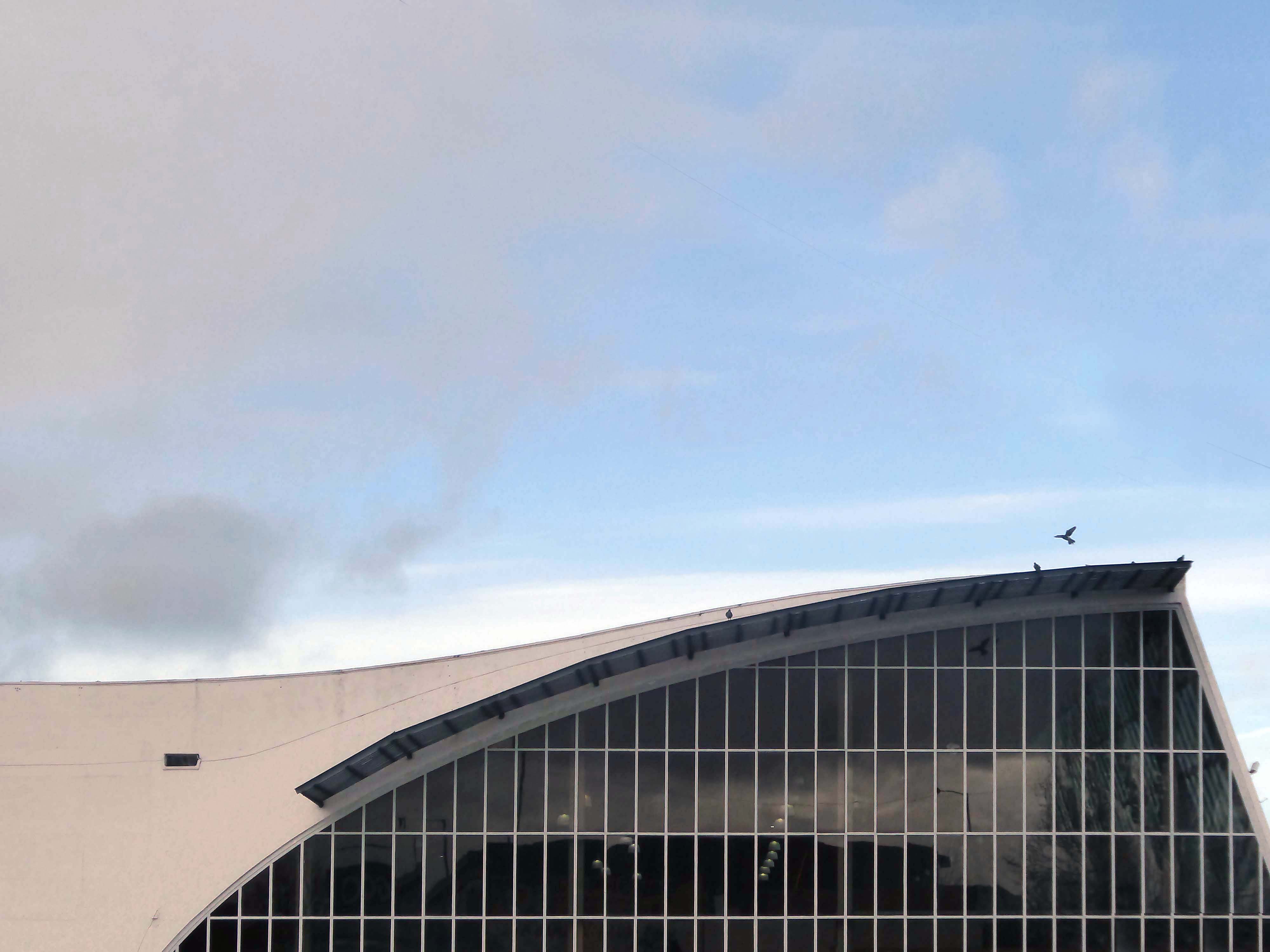
The better to get a view of the Market Hall 1971 – architects: Harry S Fairhurst.
The Indoor Market Hall is currently closed due to the discovery of Reinforced Autoclaved Aerated Concrete – within the building structure. RAAC is a lightweight type of building material that was used between the 1950s and 1990s.
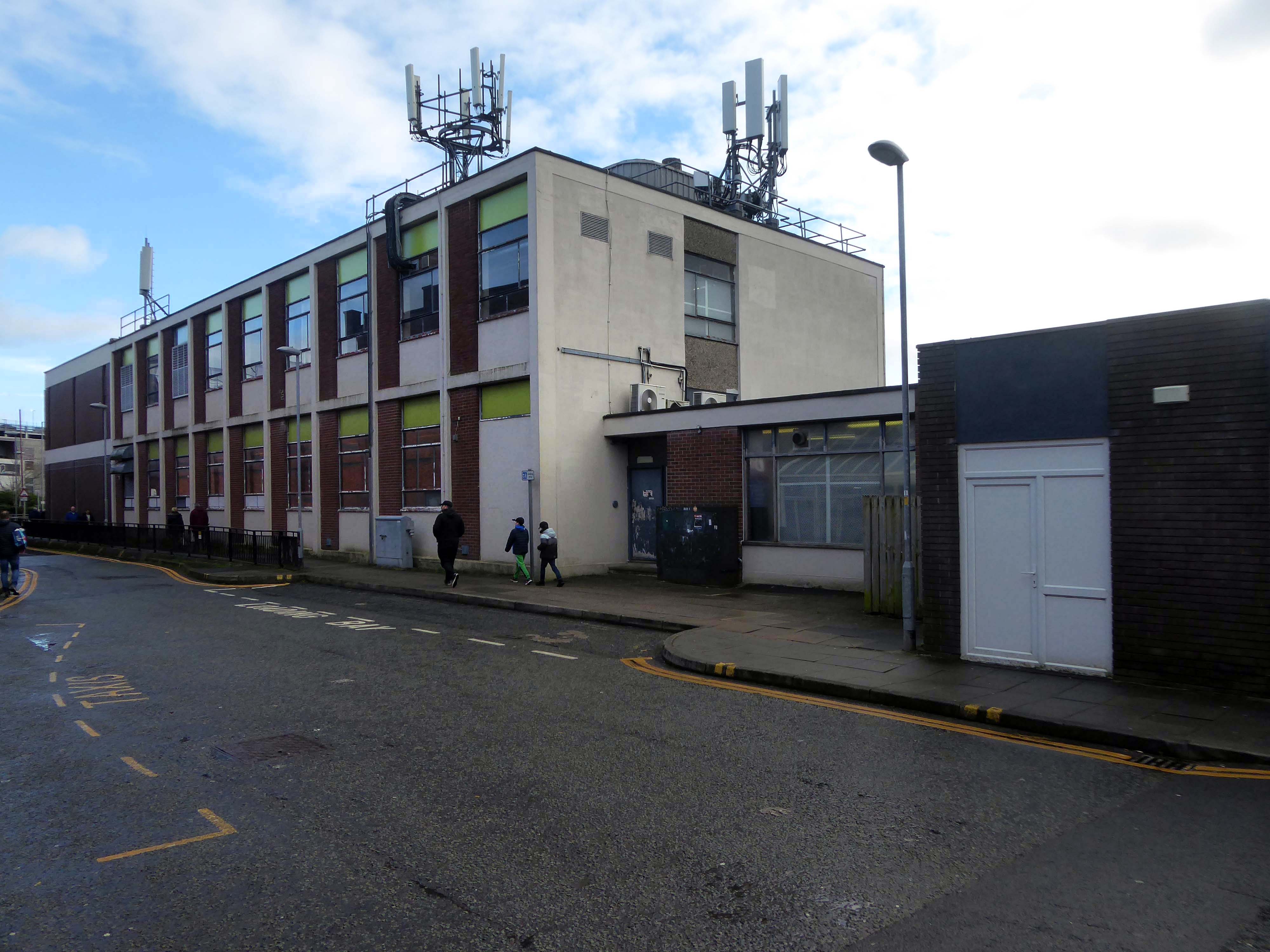
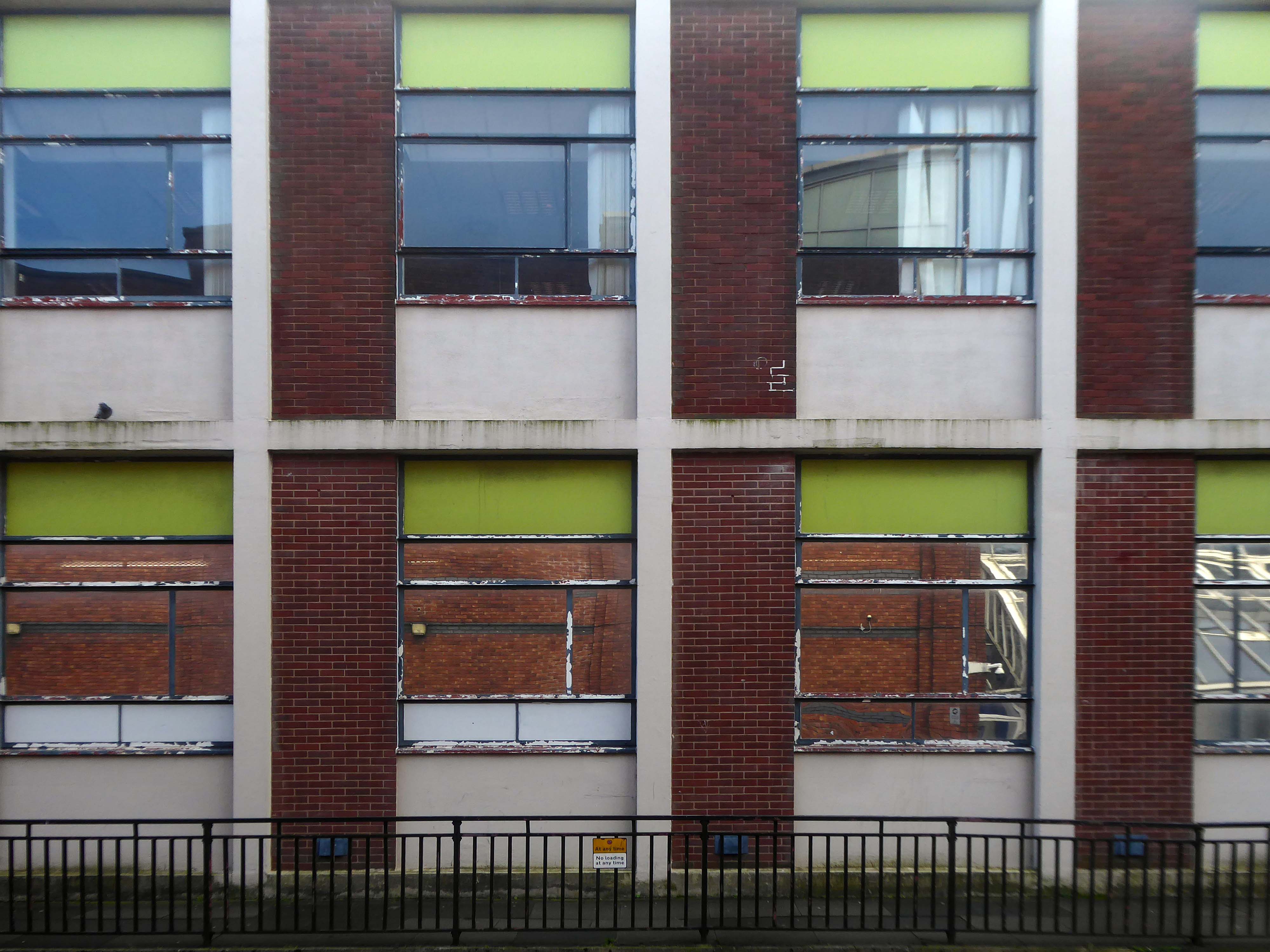
Back under the road – where we find a delightful Telephone Exchange.
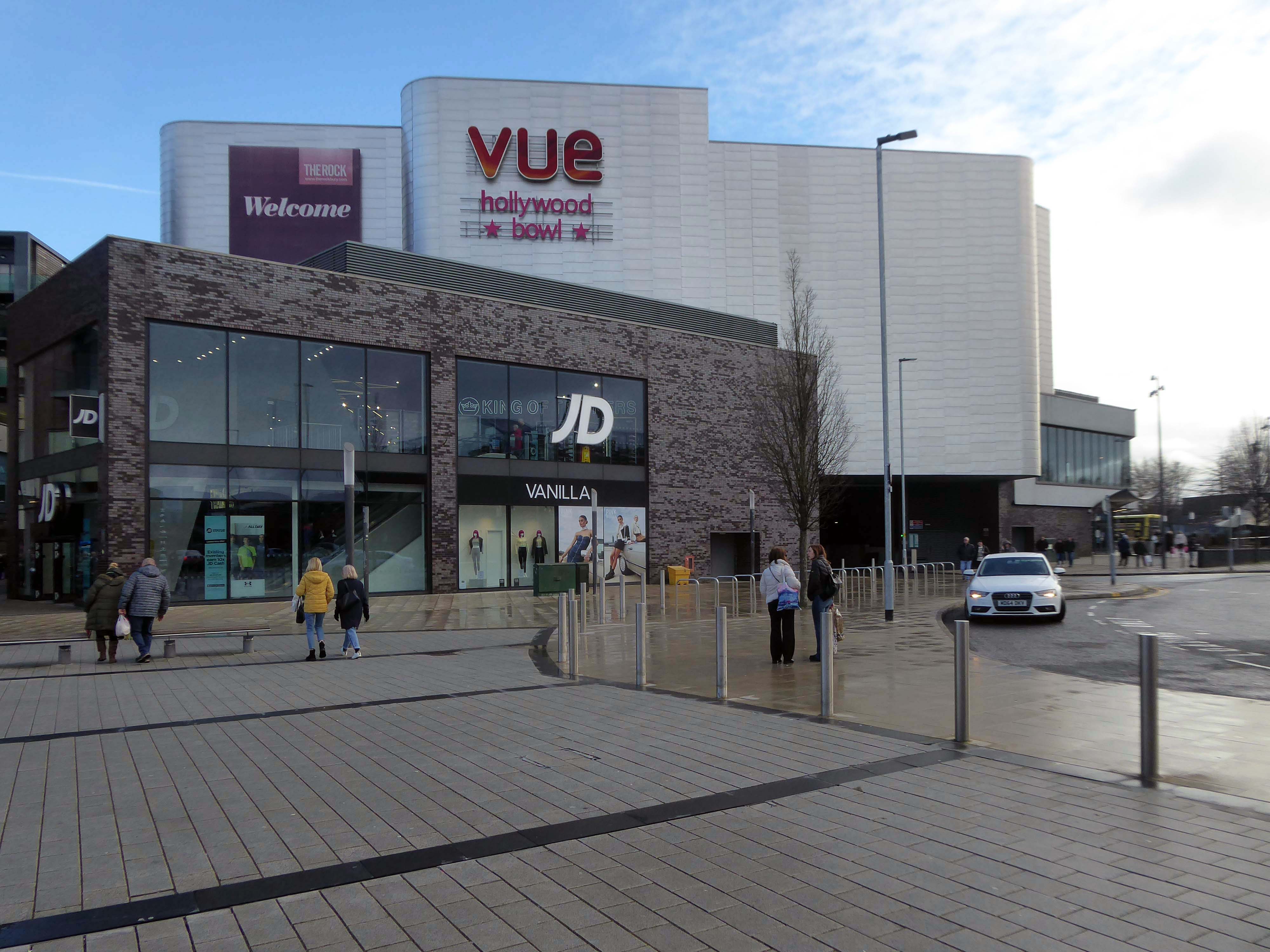
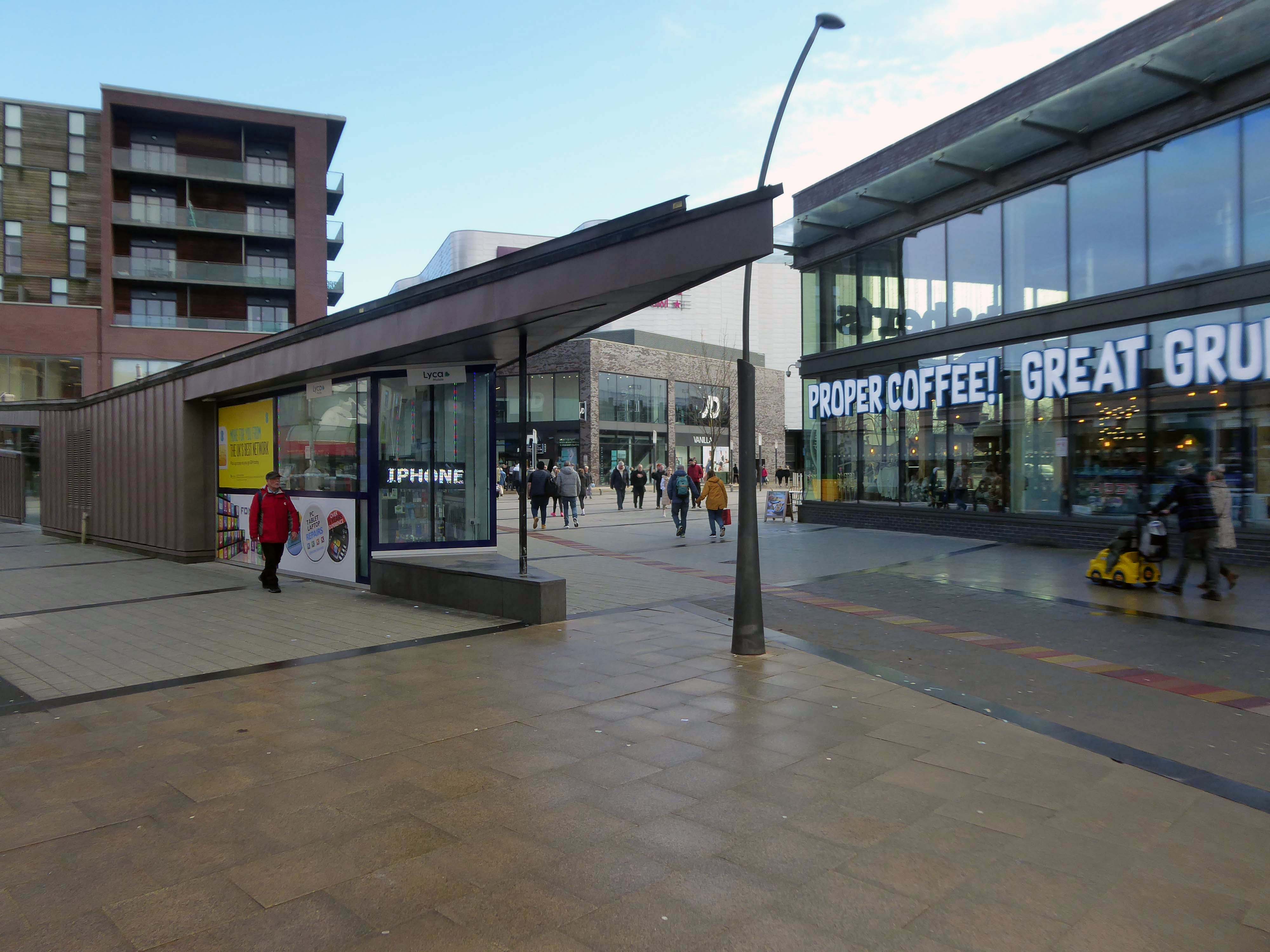
The Rock is a vibrant retail and leisure centre which is home to a range of high street fashion brands, independent retailers, tantalising eateries and fantastic entertainment – it’s the perfect place to visit any day of the week.
It is the work of architects BDP – completed in 2010 at a cost of £350 million.
Our masterplan for The Rock took into account the historical street pattern and public realm context to give the scheme its own identity, and make visual connections to local landmarks.
The retail and leisure scheme brings many exciting brands to Bury for the first time.
New pedestrian streets rejuvenate and improve connections to adjacent areas stitching the town back together.
The development will also contain 408 one and two-bedroom apartments.
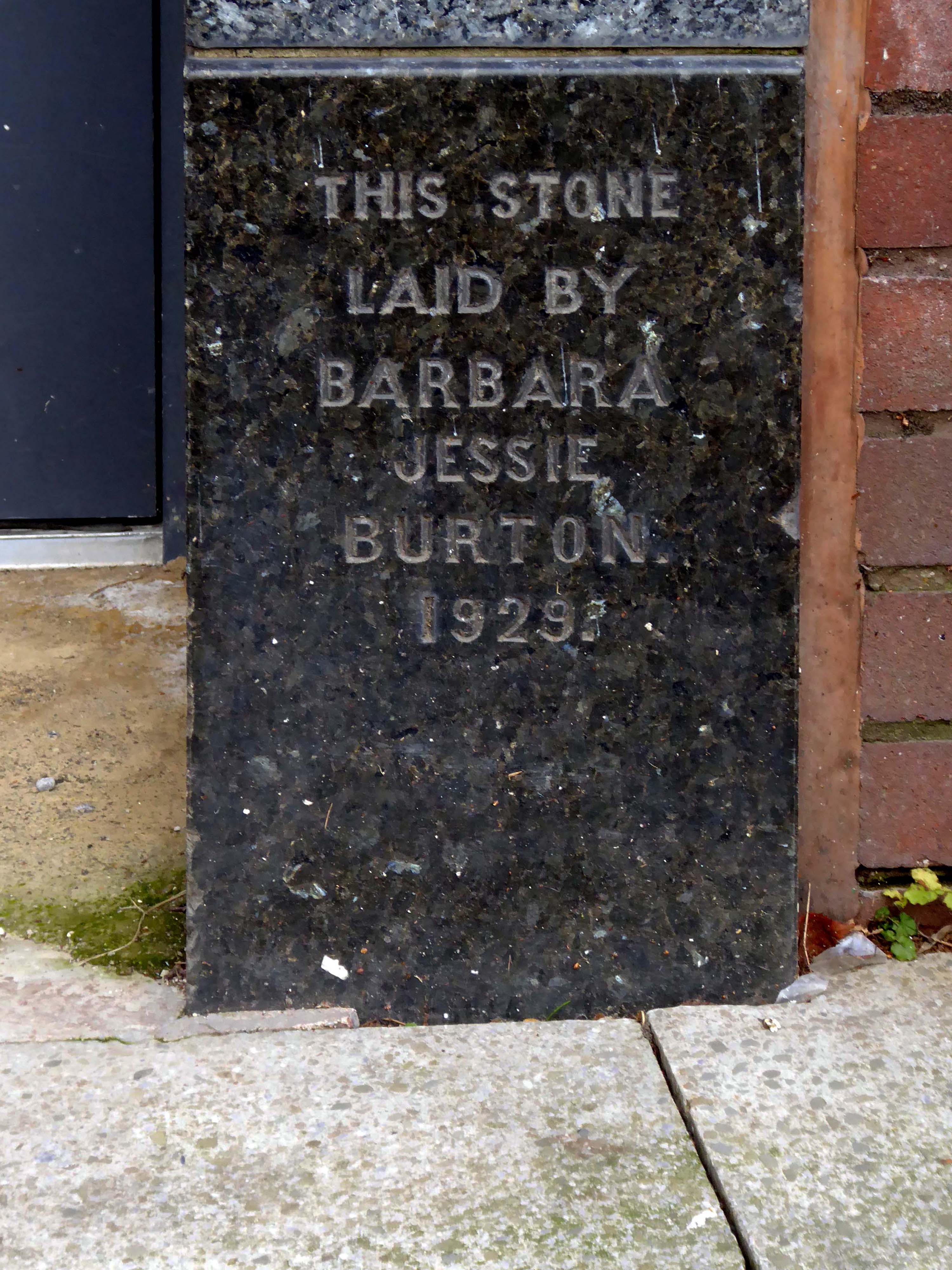
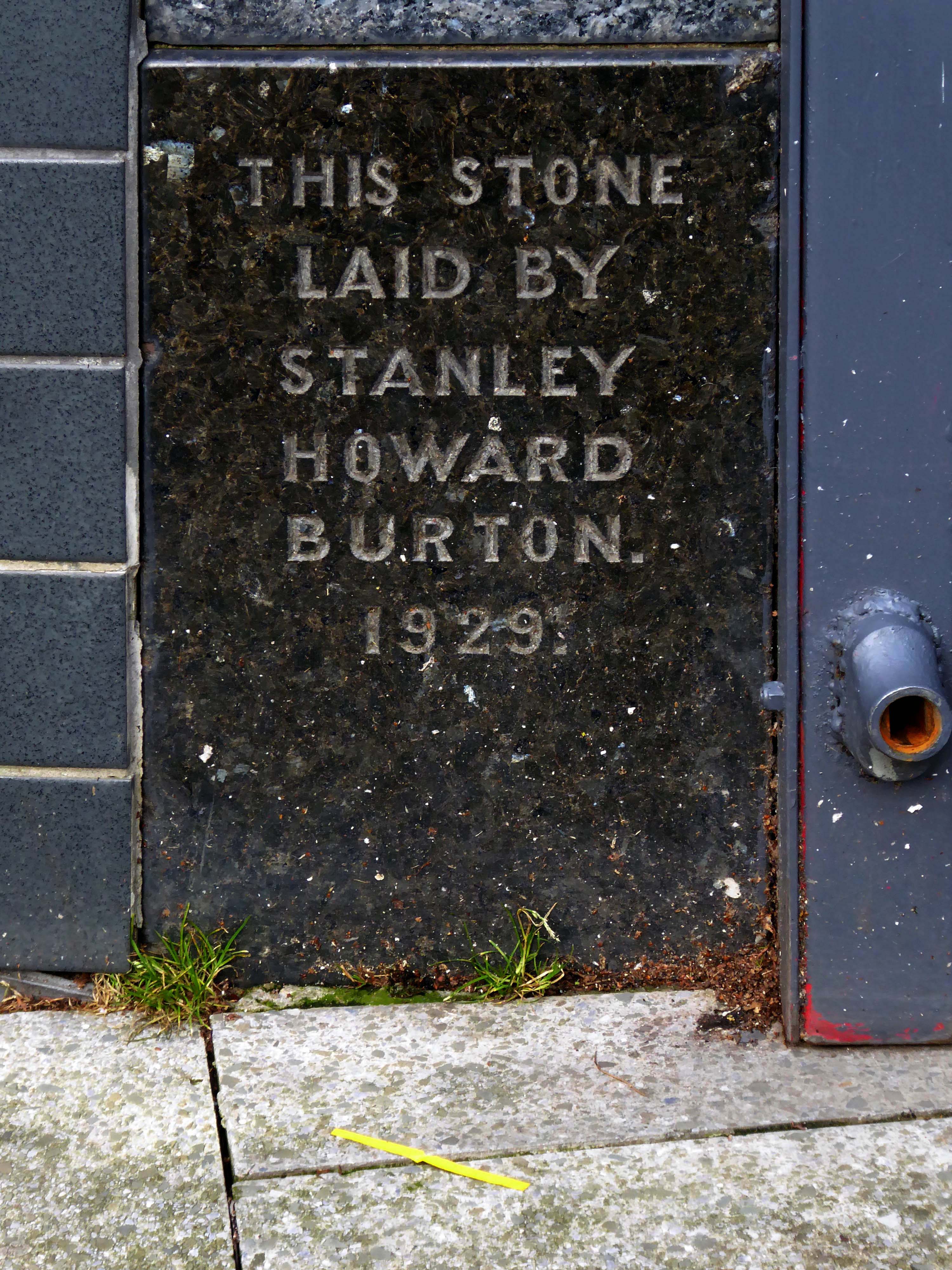
Back to basics at a former Burton’s hiding its faience facade.
Typical inter-war infill on our crazy mixed up mongrel high streets.
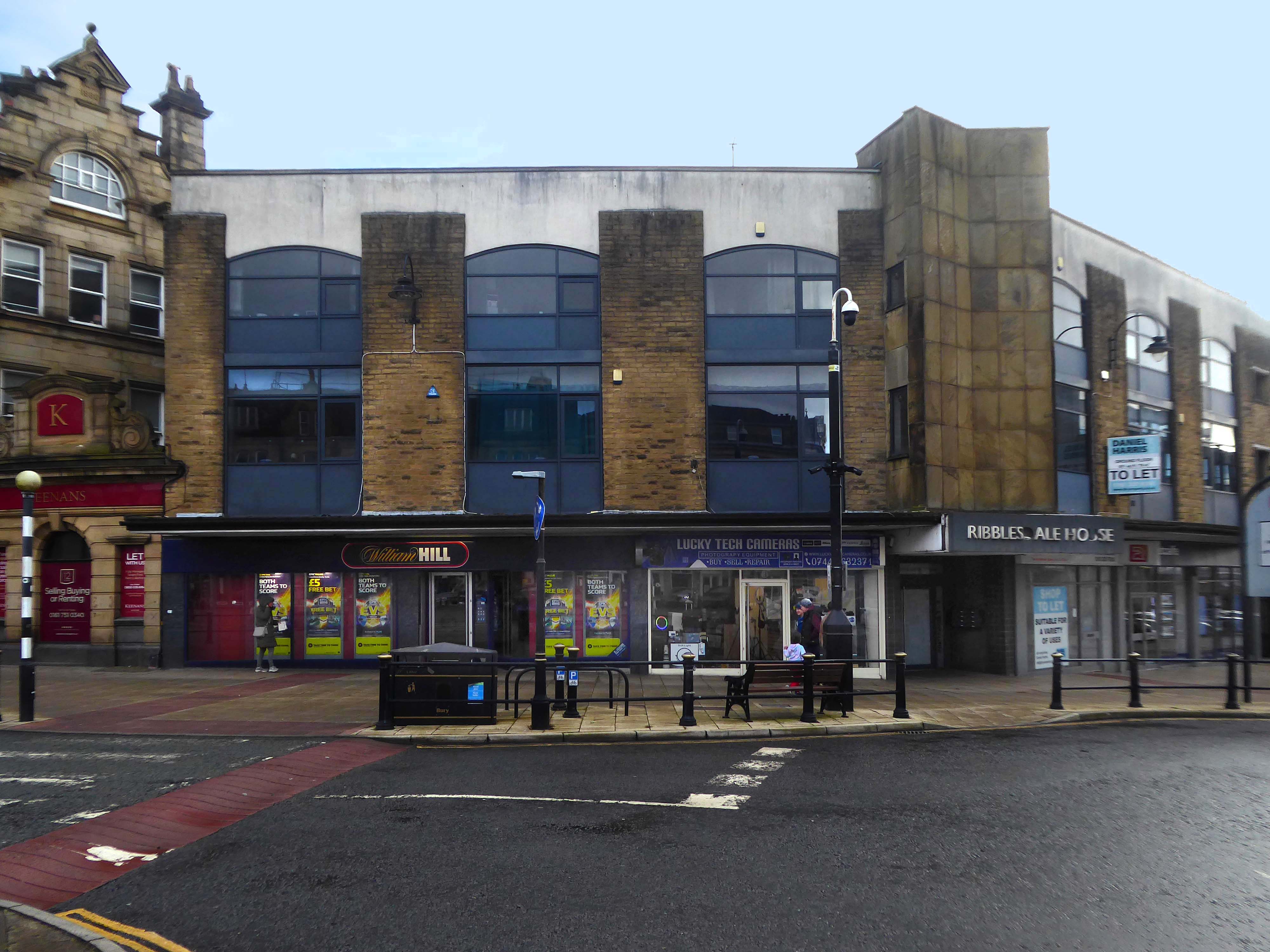
Ribblesdale House
Application by Shop and Store Developments Ltd submitted August 1965. Architect on application was Samuel Jackson and Son of Ocean Chambers in Bradford but during the application process this changed to John Brunton & Partners – Brunton was a partner in Jackson’s firm, at the same address. It had a restaurant and shops on the first floor.
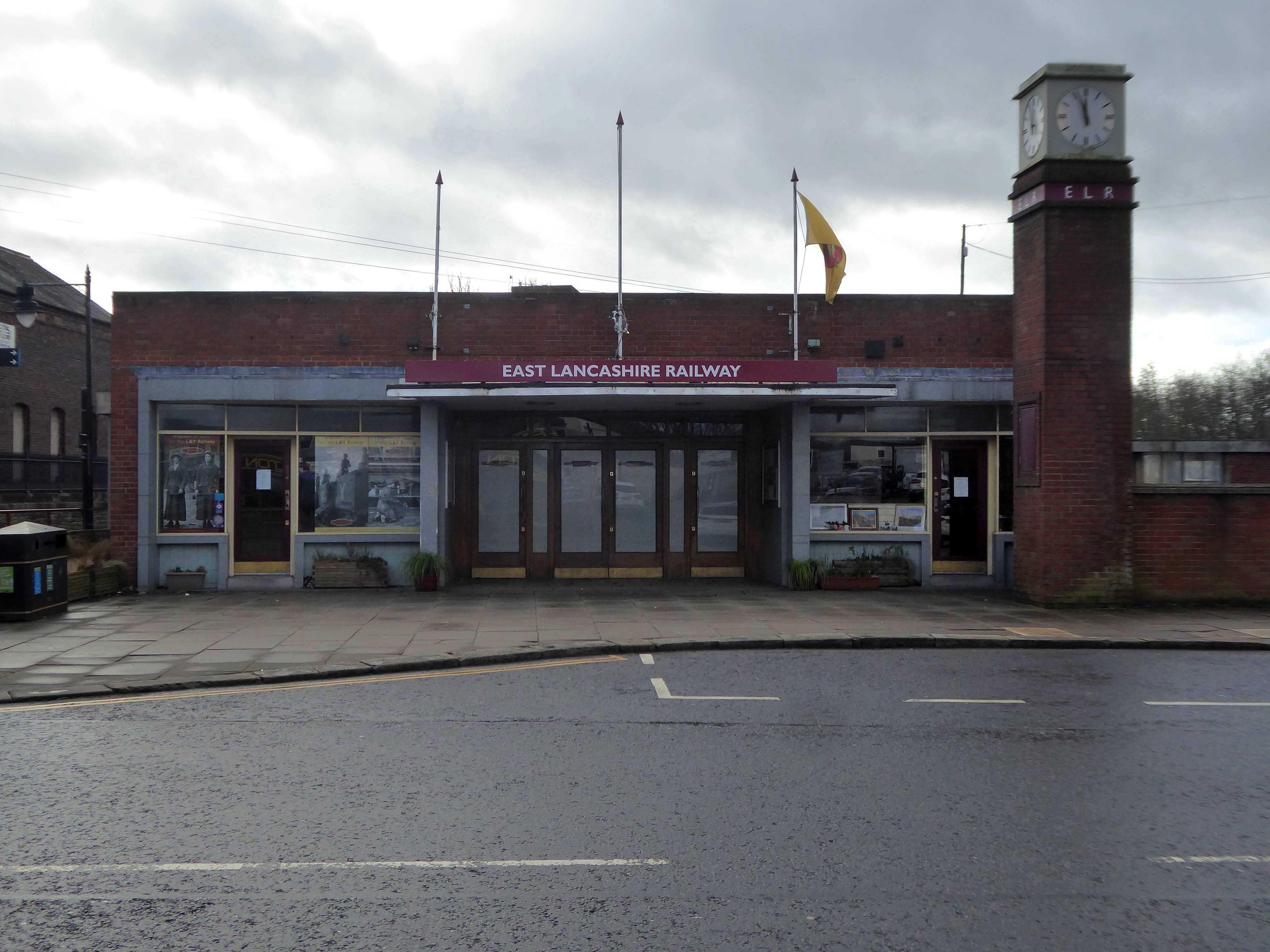
The street level buildings were destroyed by fire on 14 May 1947 and were replaced with a new brick and concrete entrance and footbridge in 1952.
British Rail closed the station on 17 March 1980, when it was replaced by a new bus/rail interchange station further east into the town centre. Bury Interchange railway station served up until 1991 before the entire Bury Line was converted to light rail operation. It reopened in 1992 for Metrolink operation.
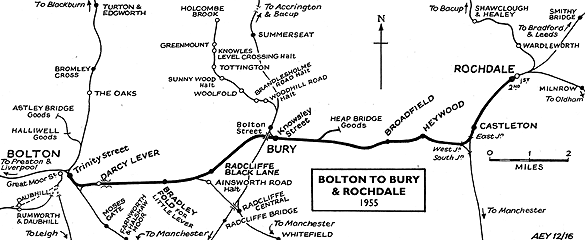
Bury was once the centre of multiple train links and the lost station of Knowsley Street.
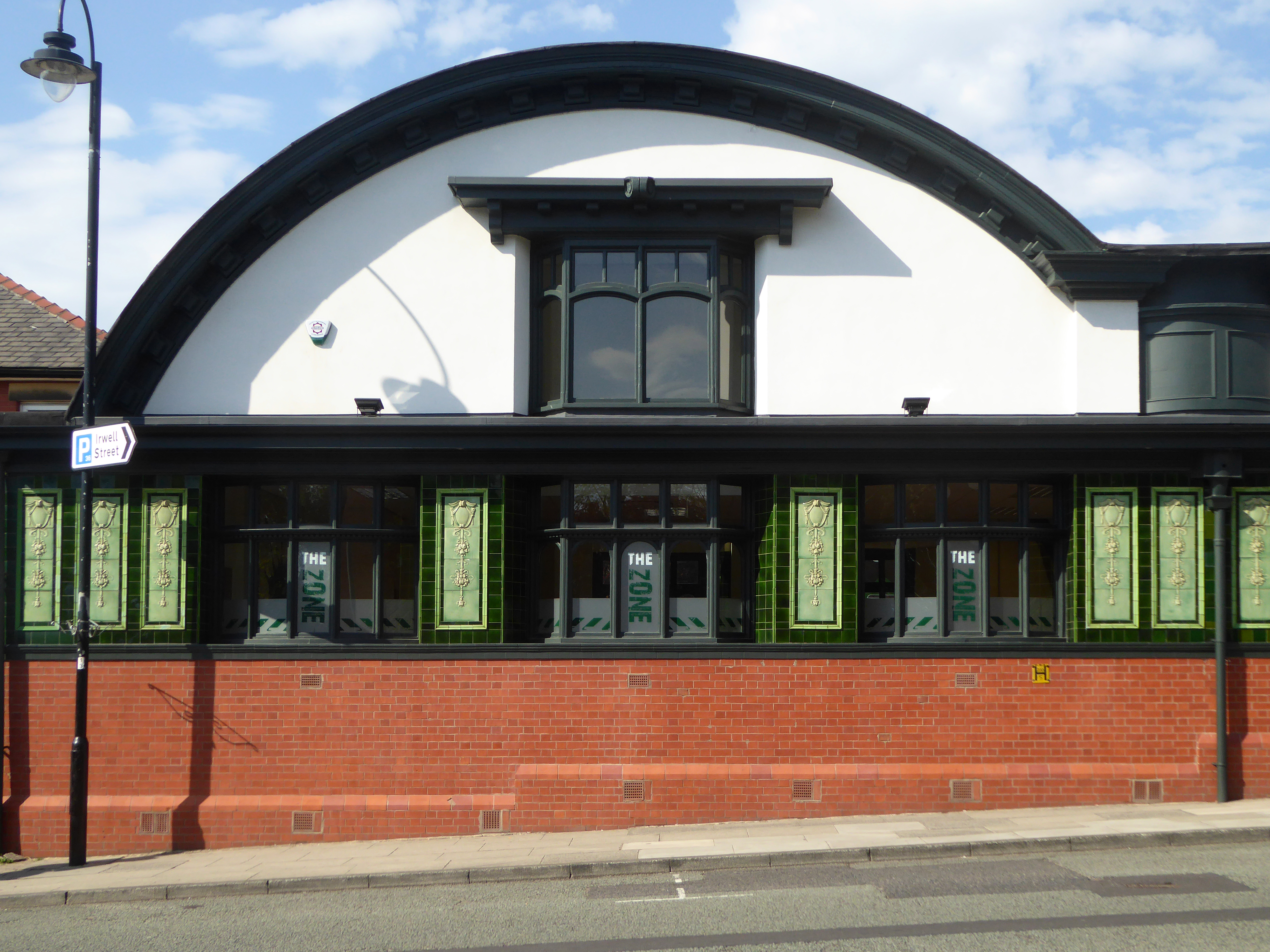
Over the road the former Temperance Billiard Hall 1910 architect Norman Evans.
Planning application January 1965 – work started in June 1965. The architectural firm was Richard Byrom, Hill and partners. Richard Byrom was submitting building applications in the 1930s in Bury and locally.
The rendering on the building is original but the windows have been changed. The Job Centre took over the building in 1993. It is in a conservation area and the Civic Trust had some concerns!
Many thanks to David French for the above information.
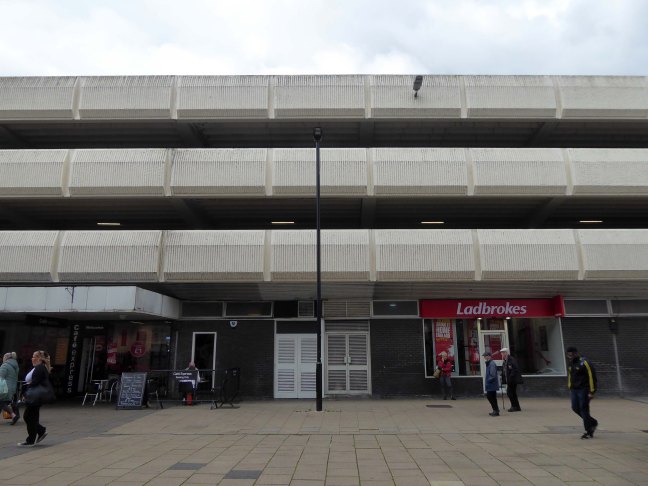
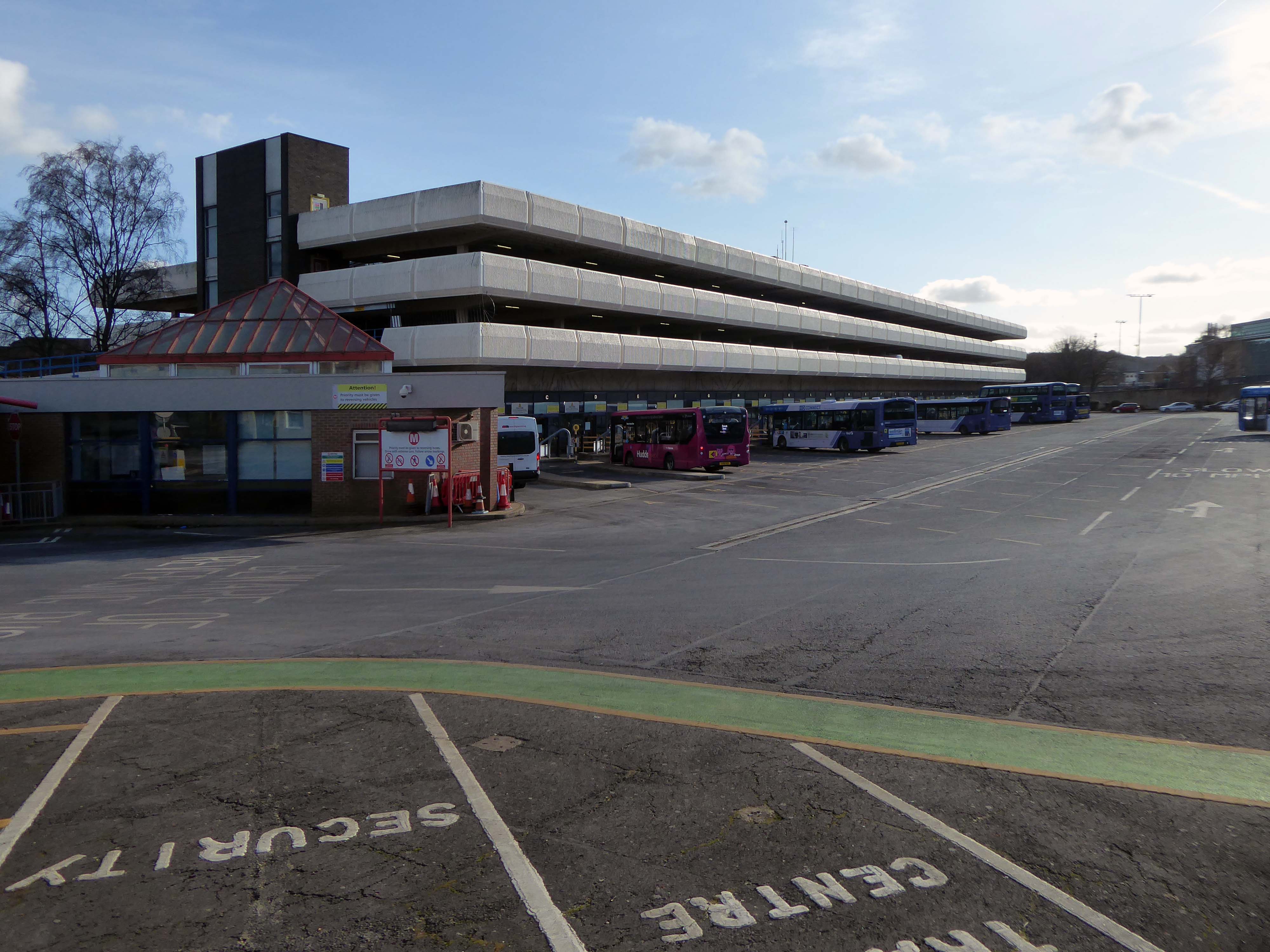
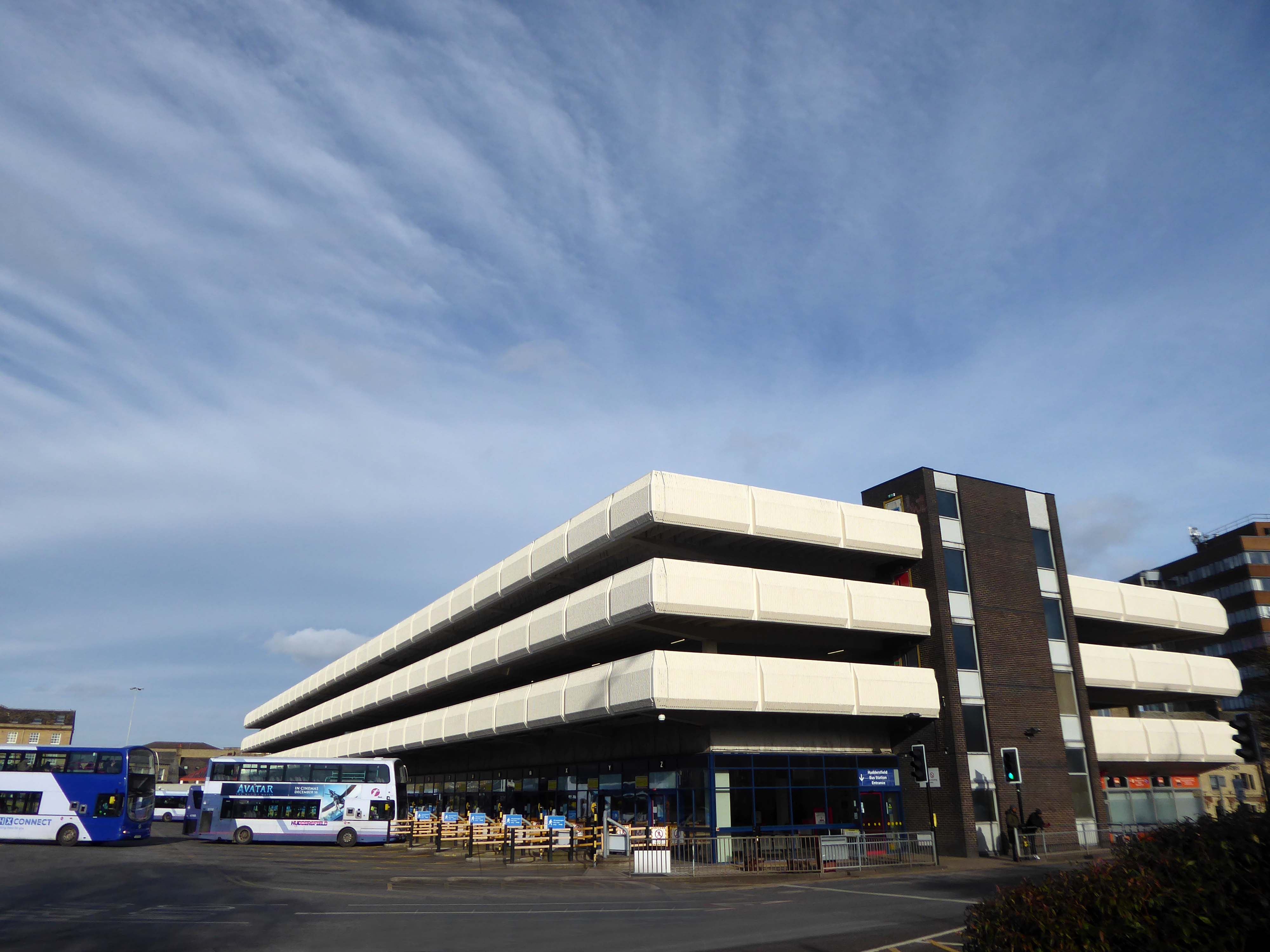
I was informed by the seriously erudite Christopher Marsden that the bus station and car park were the work of Derek C W Vane: Borough Architect 1972-1974.
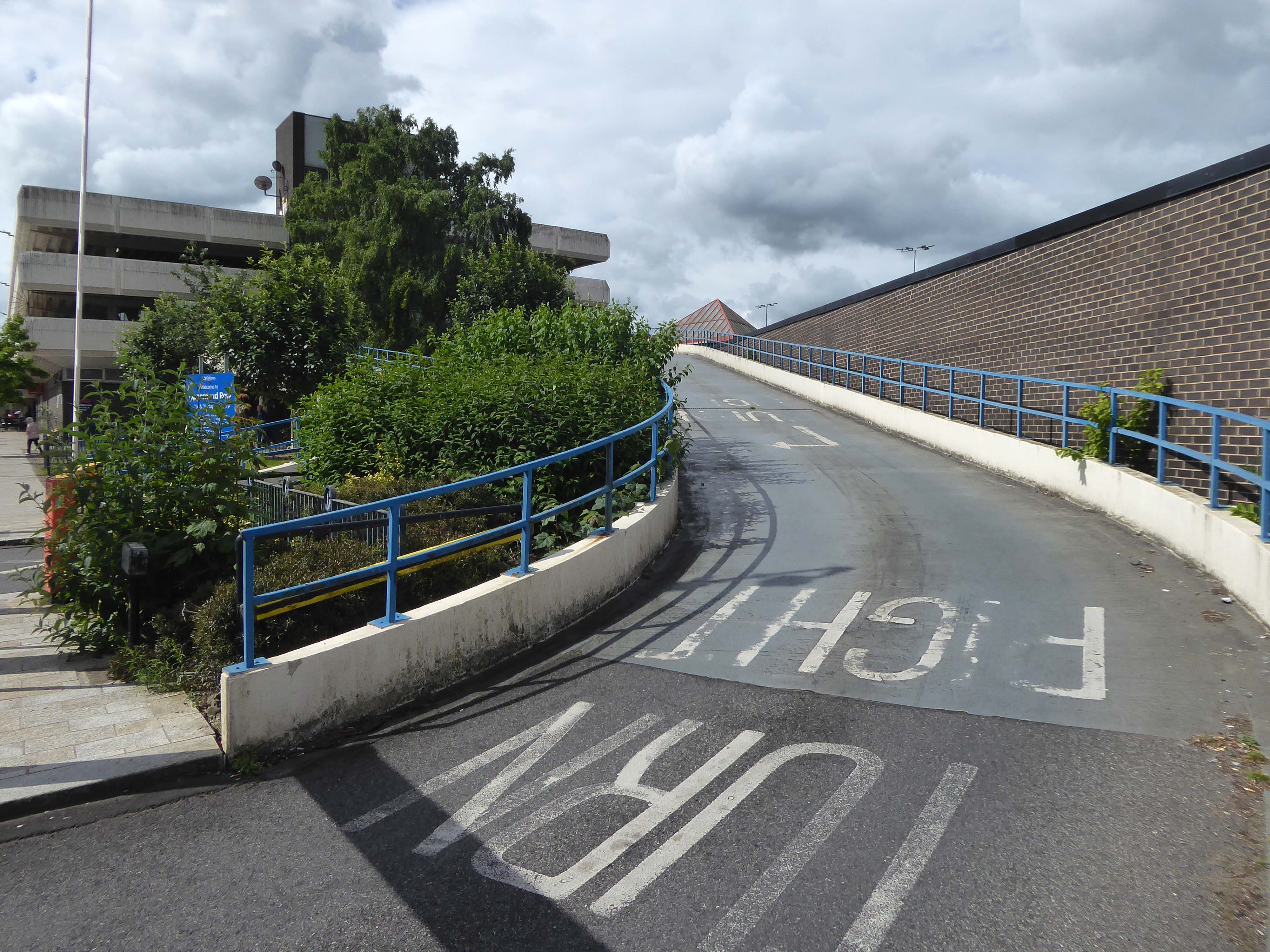
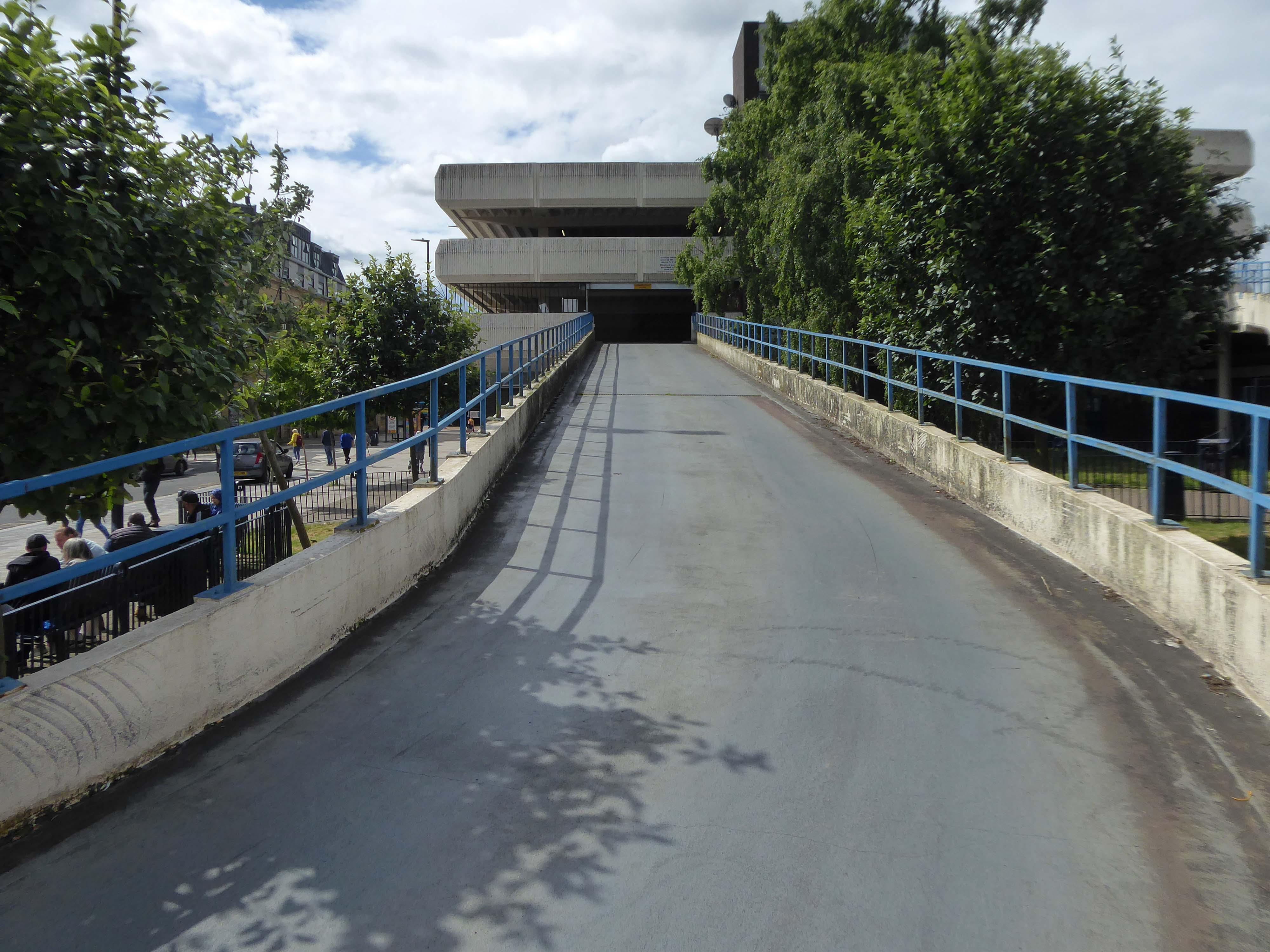
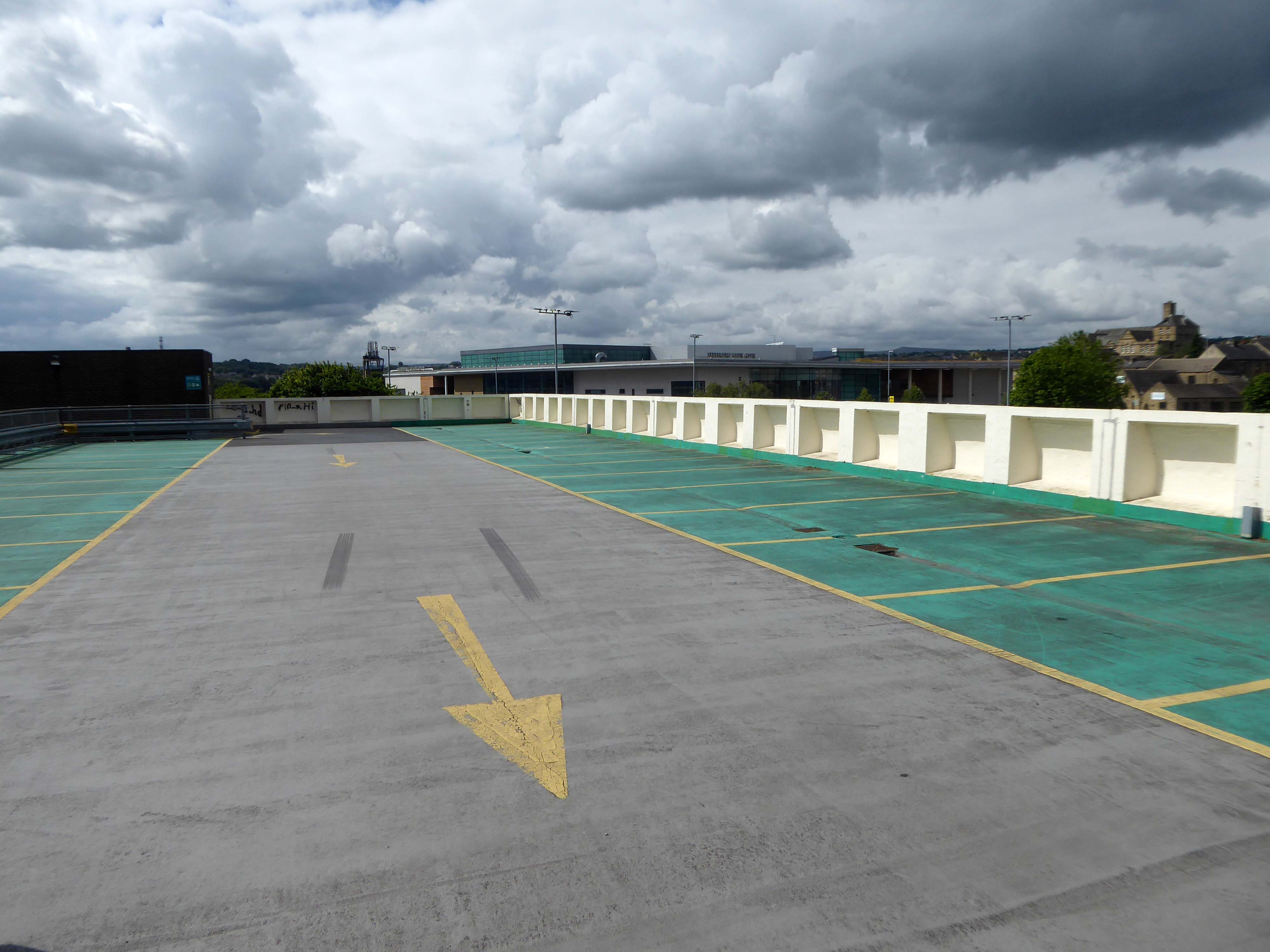
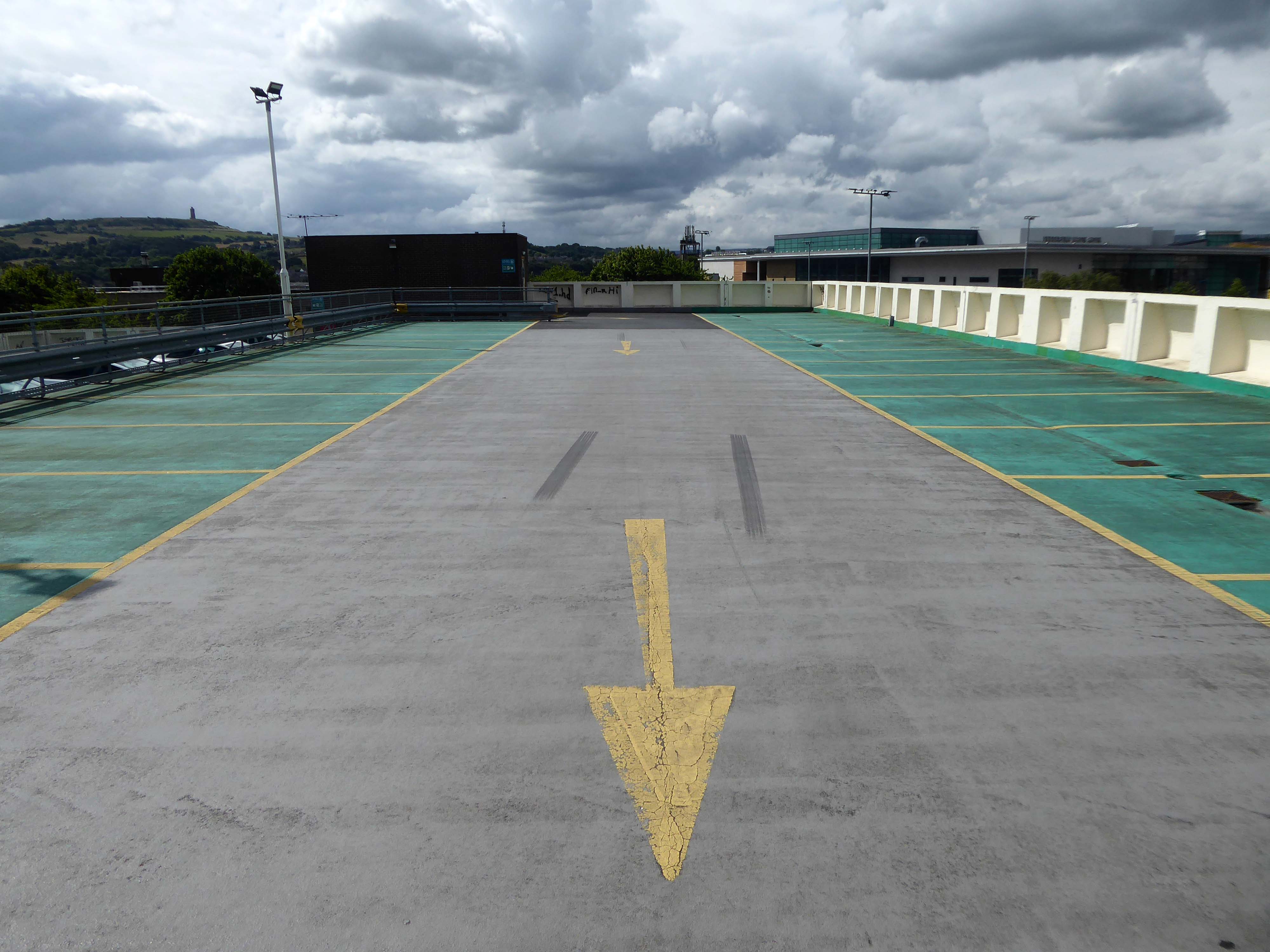
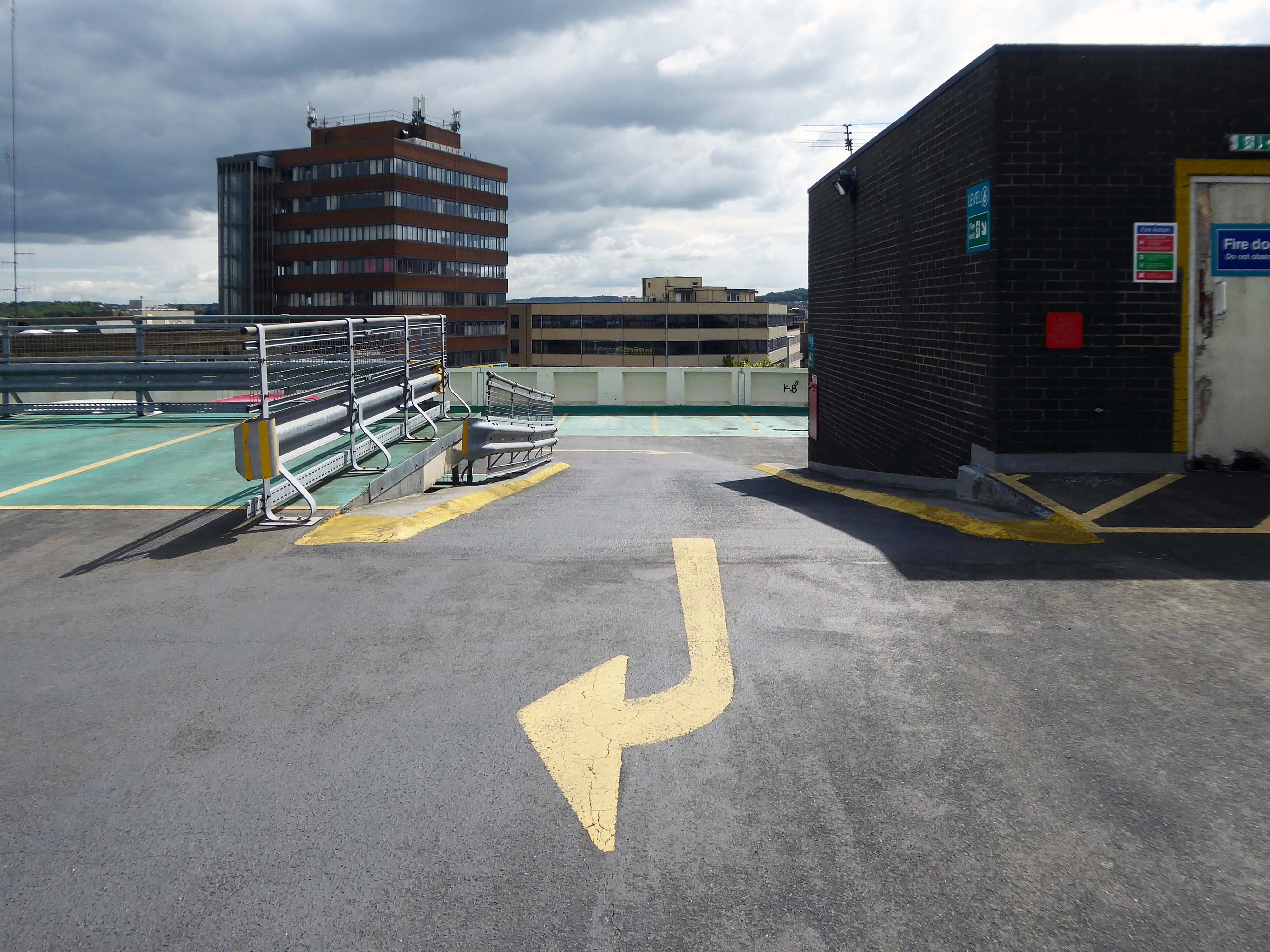
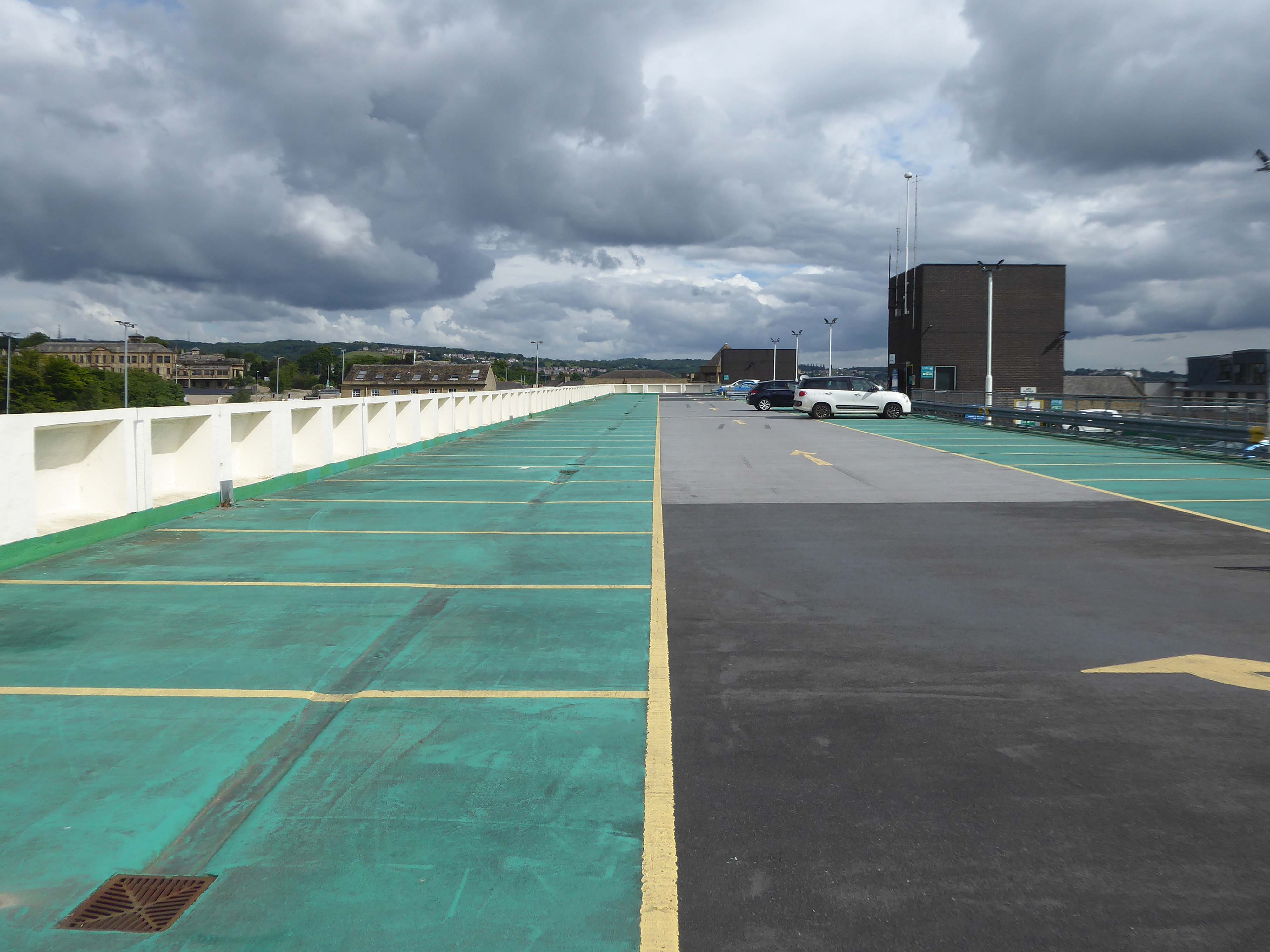
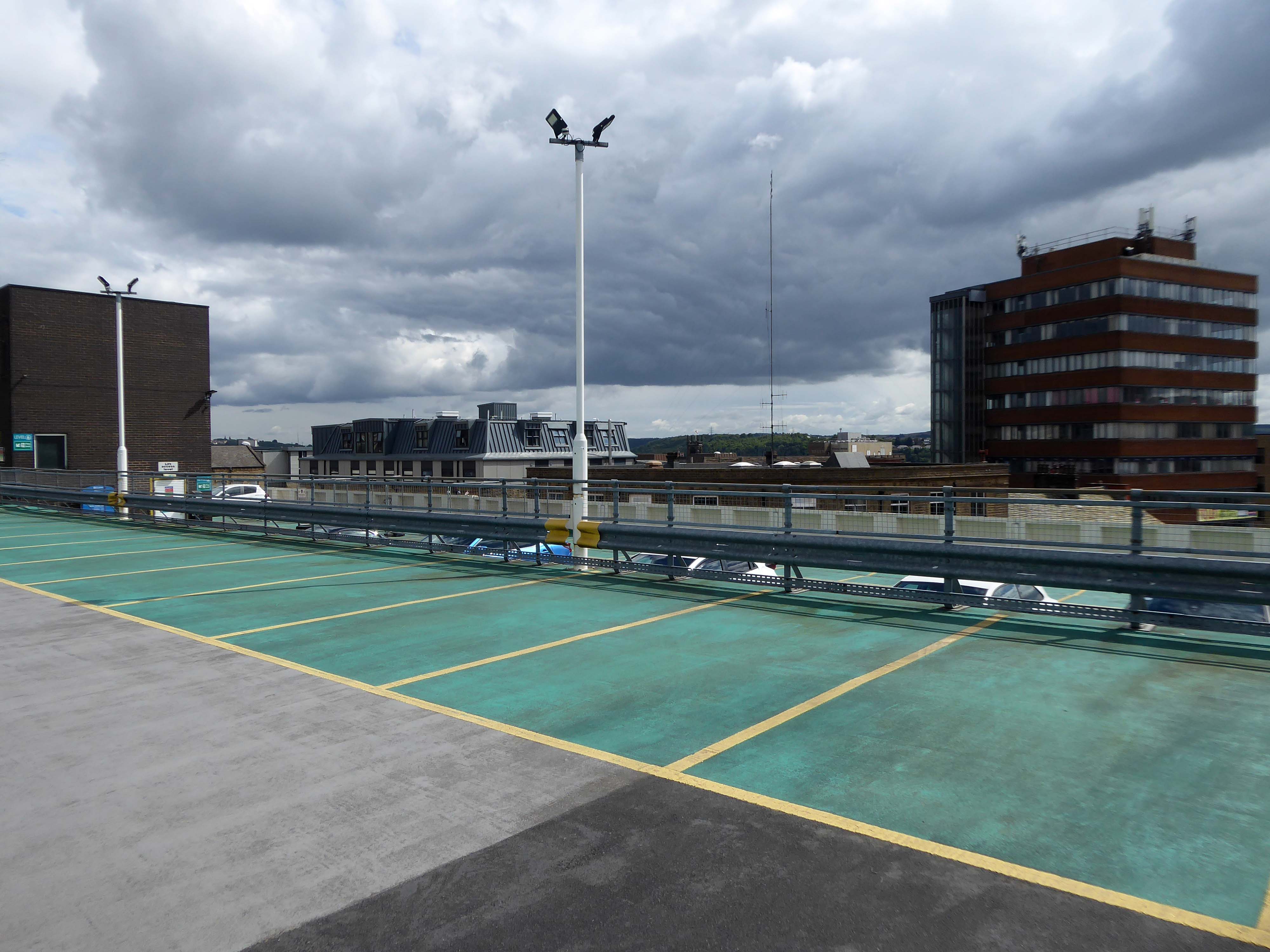
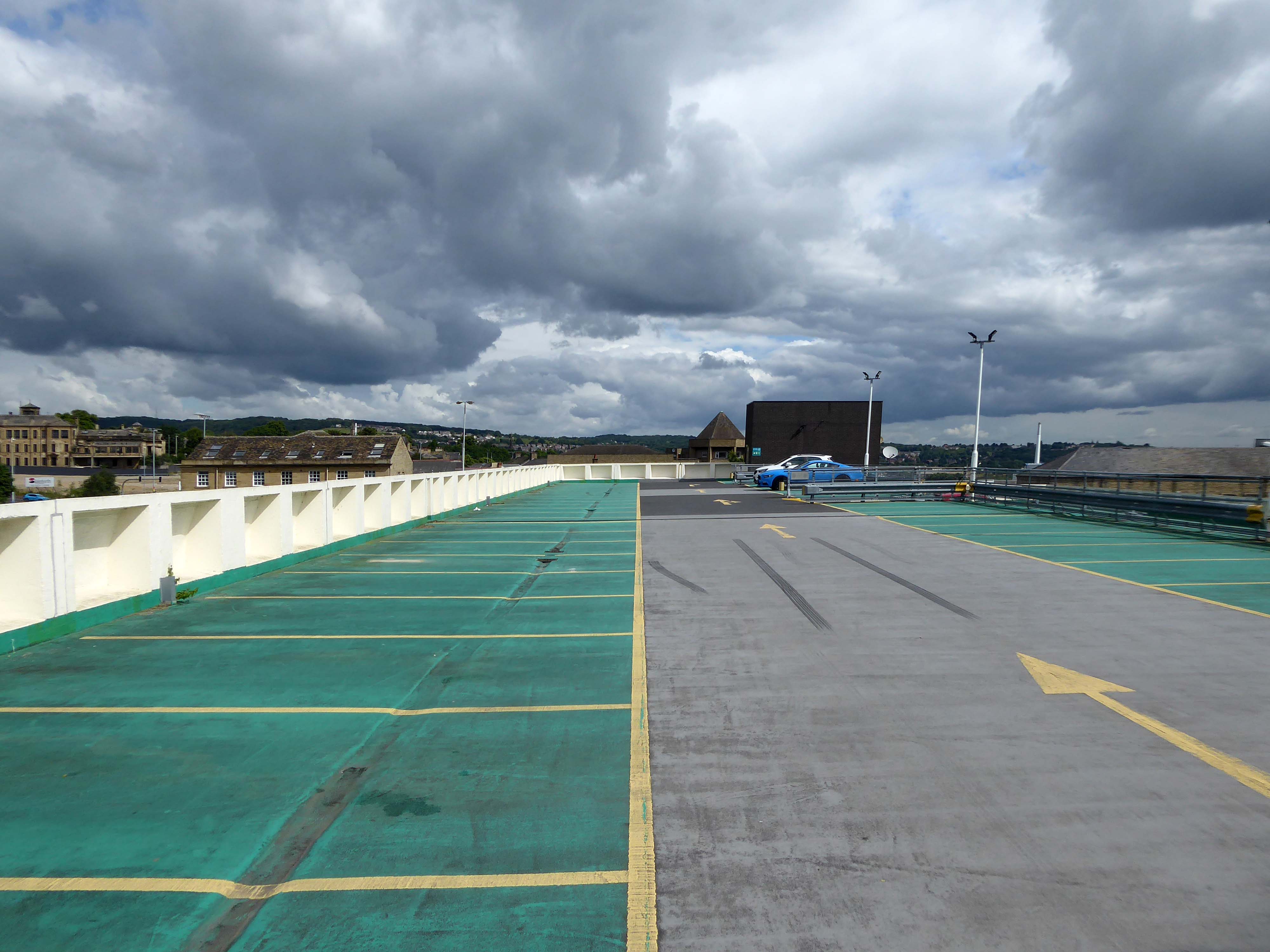
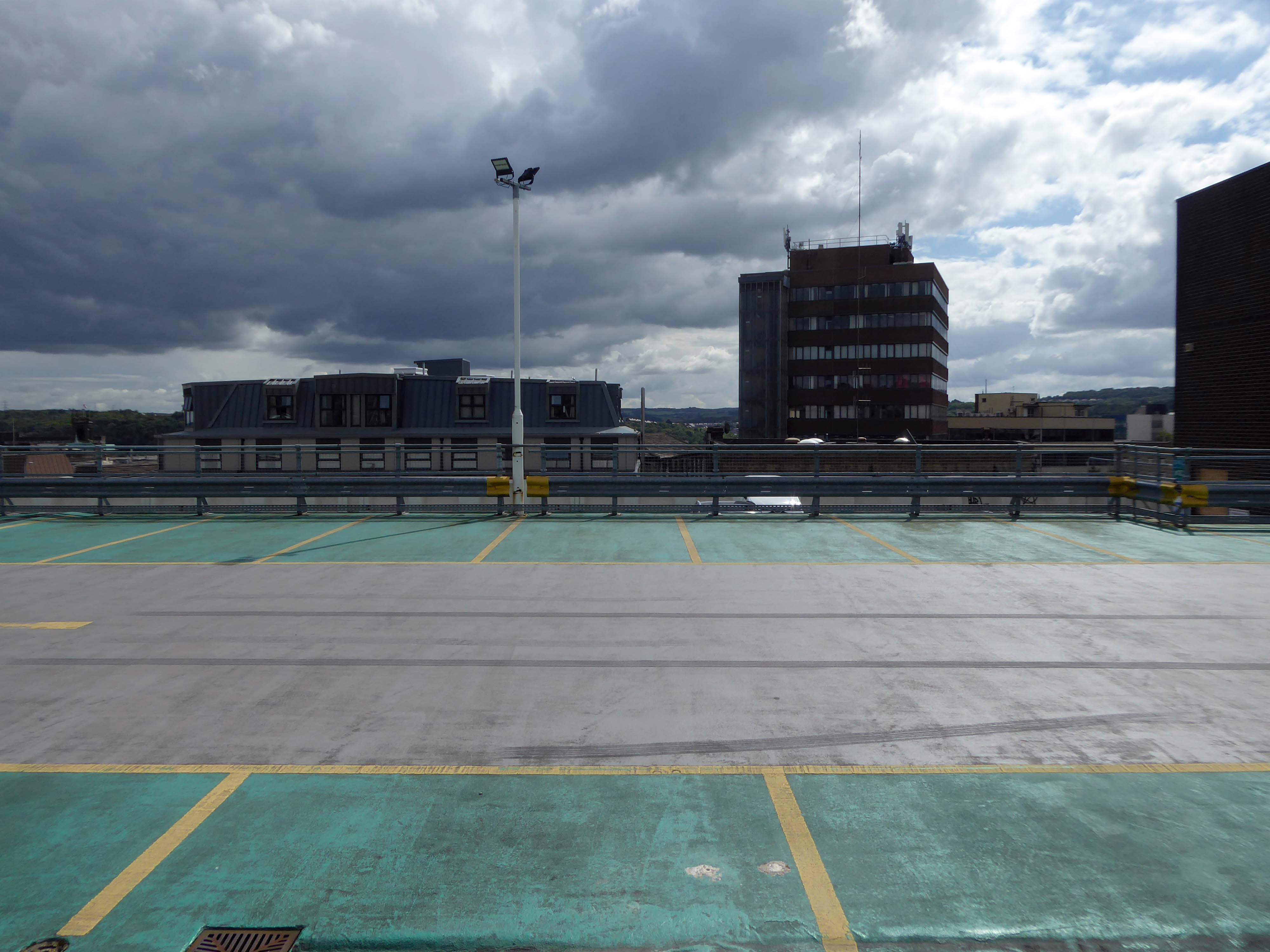
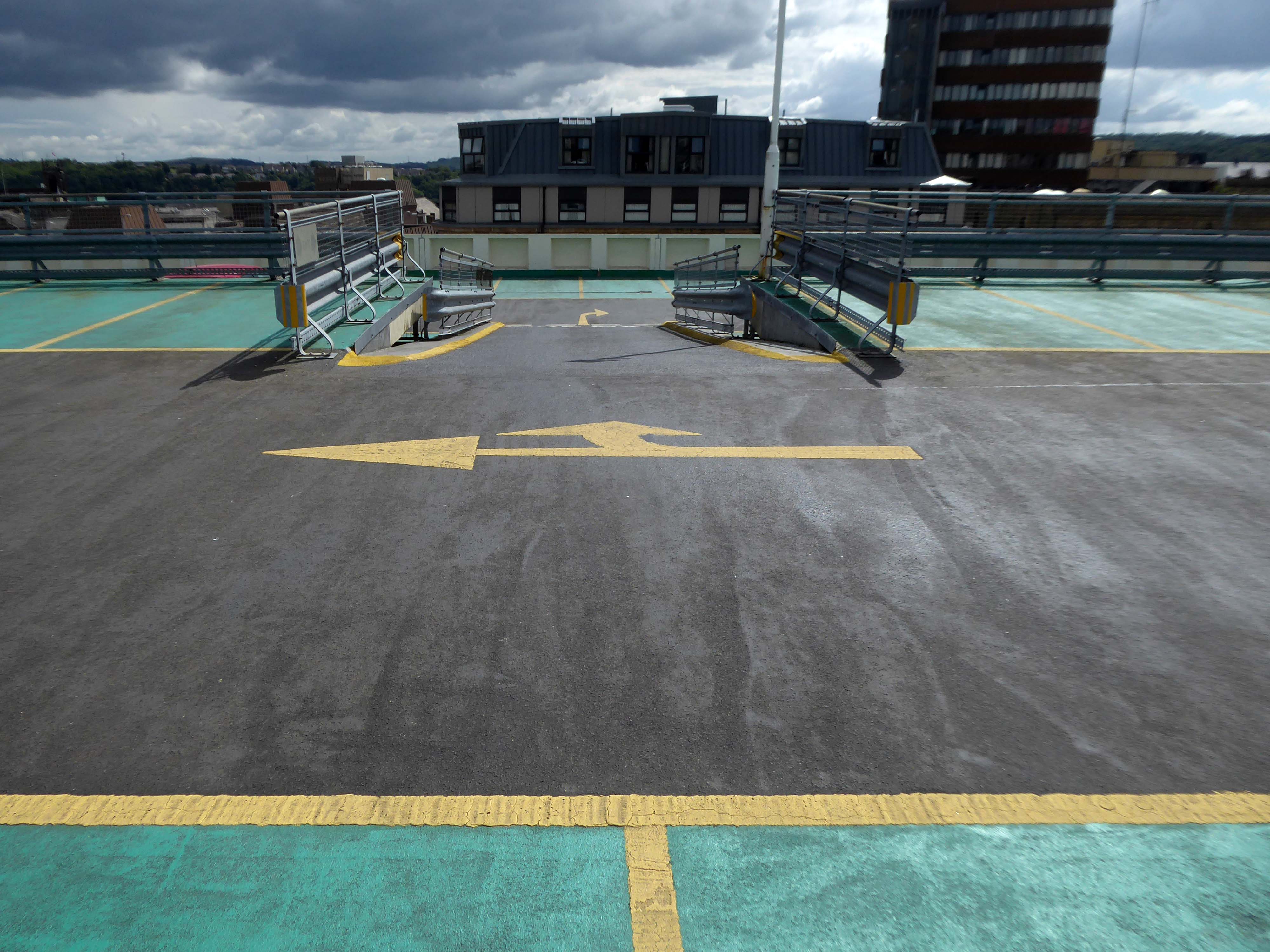
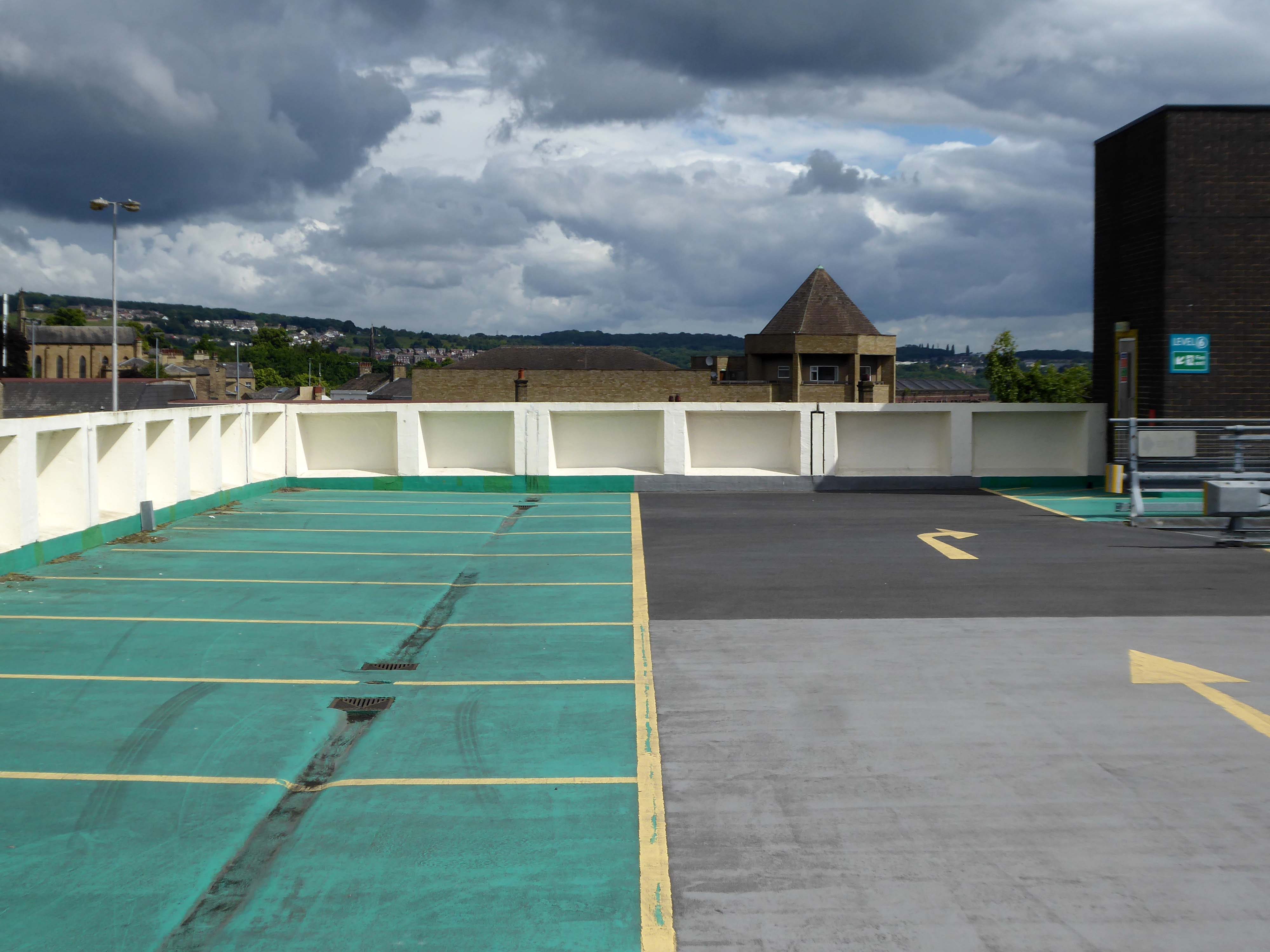
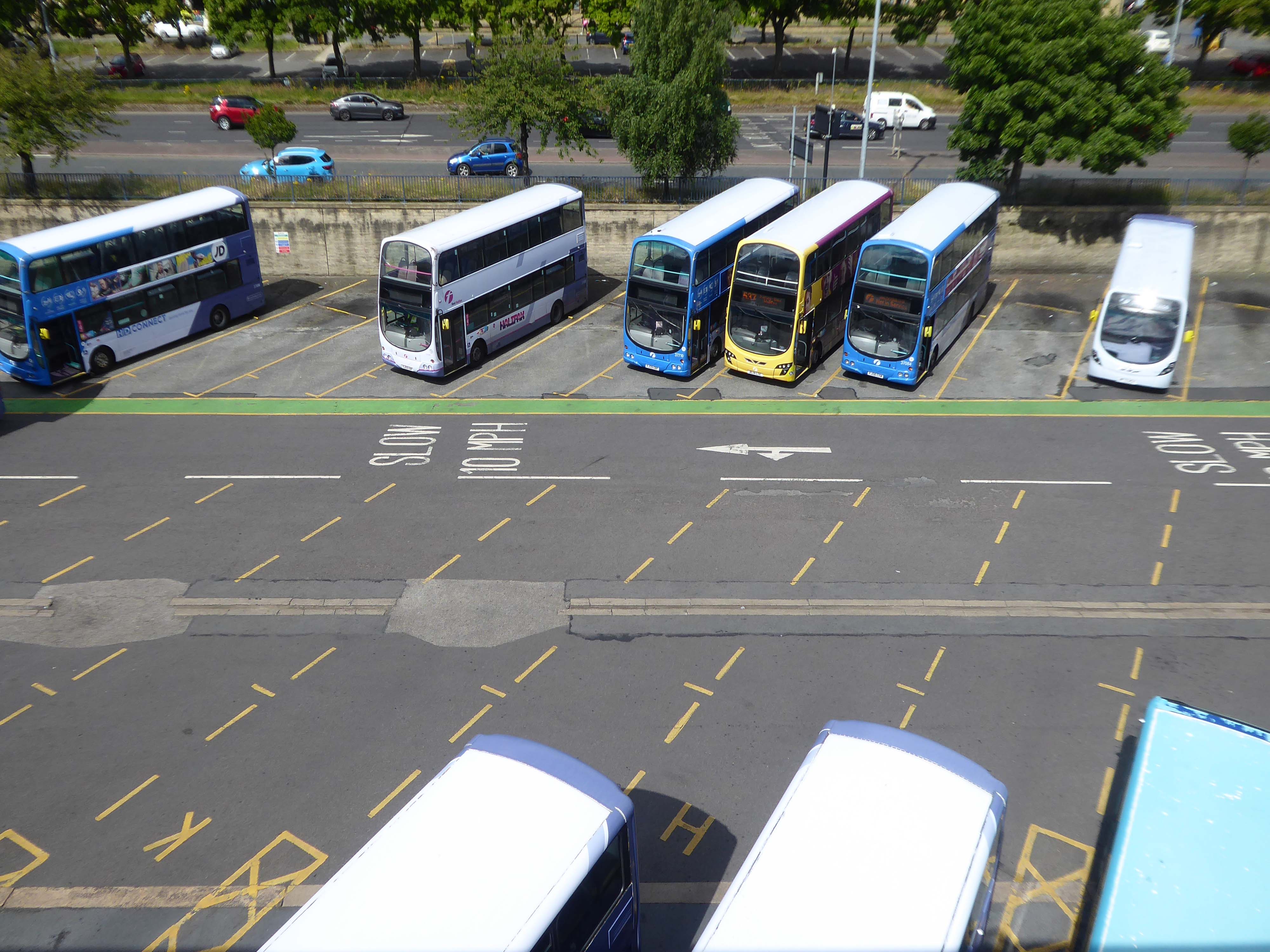
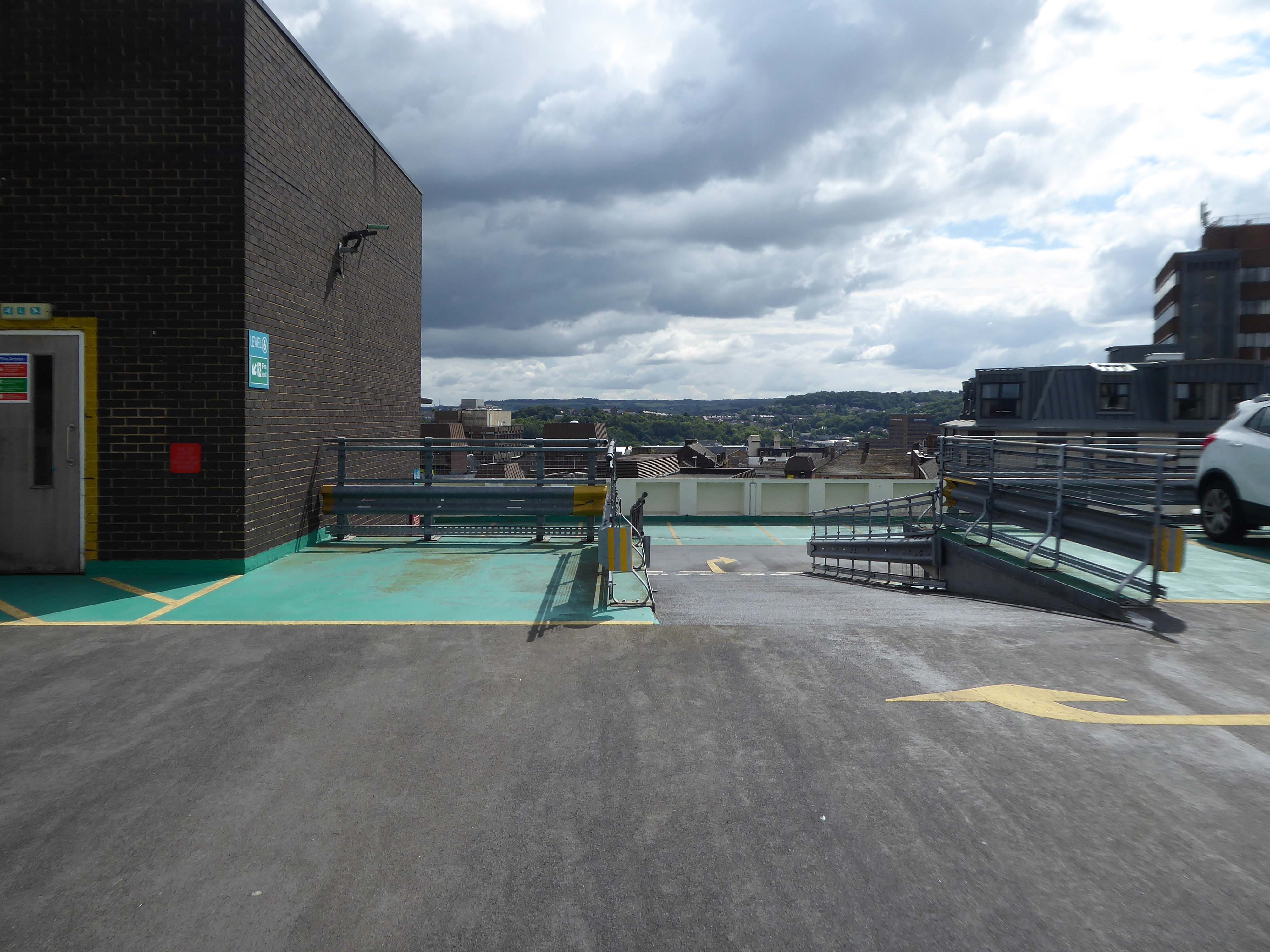
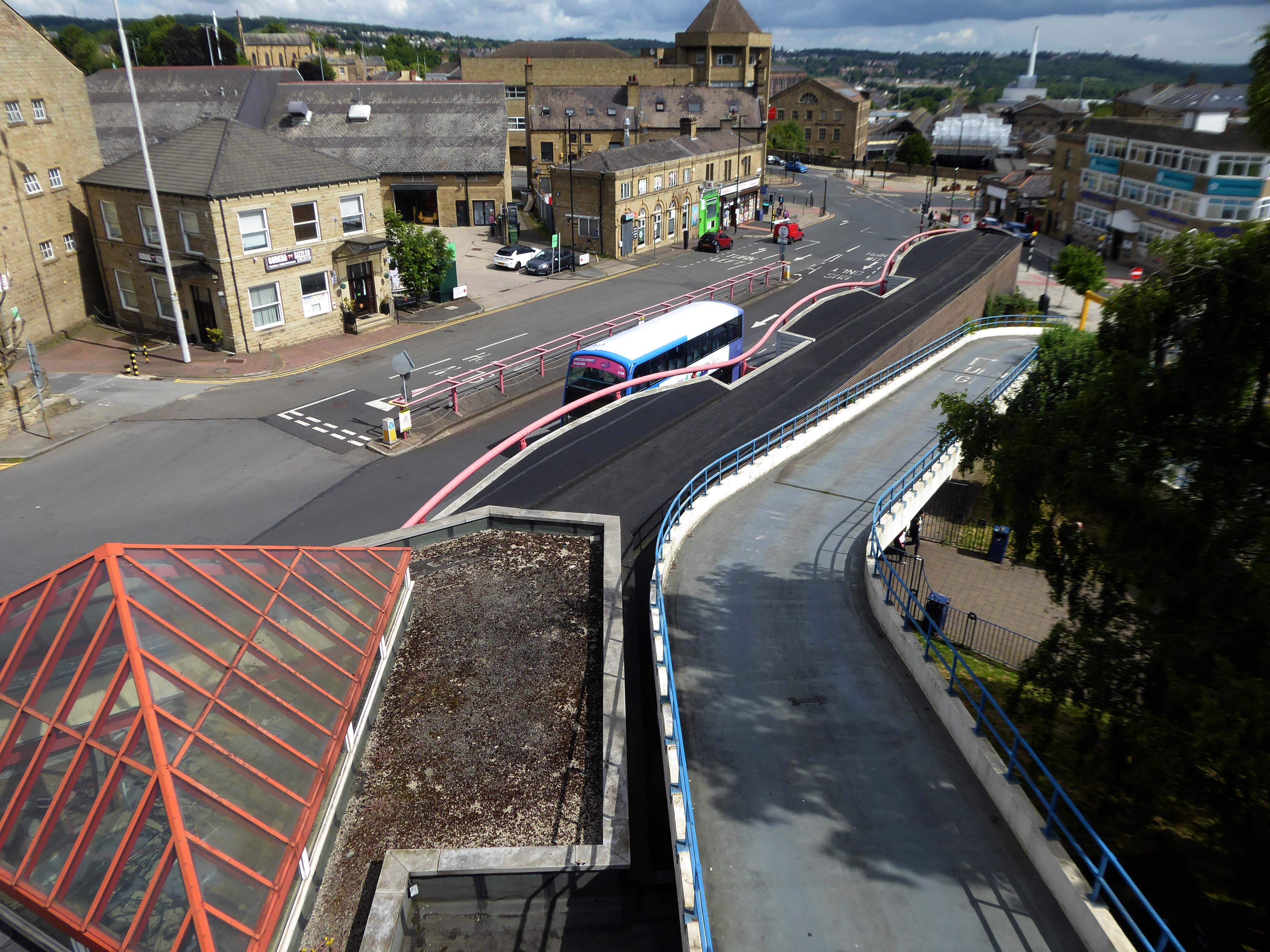
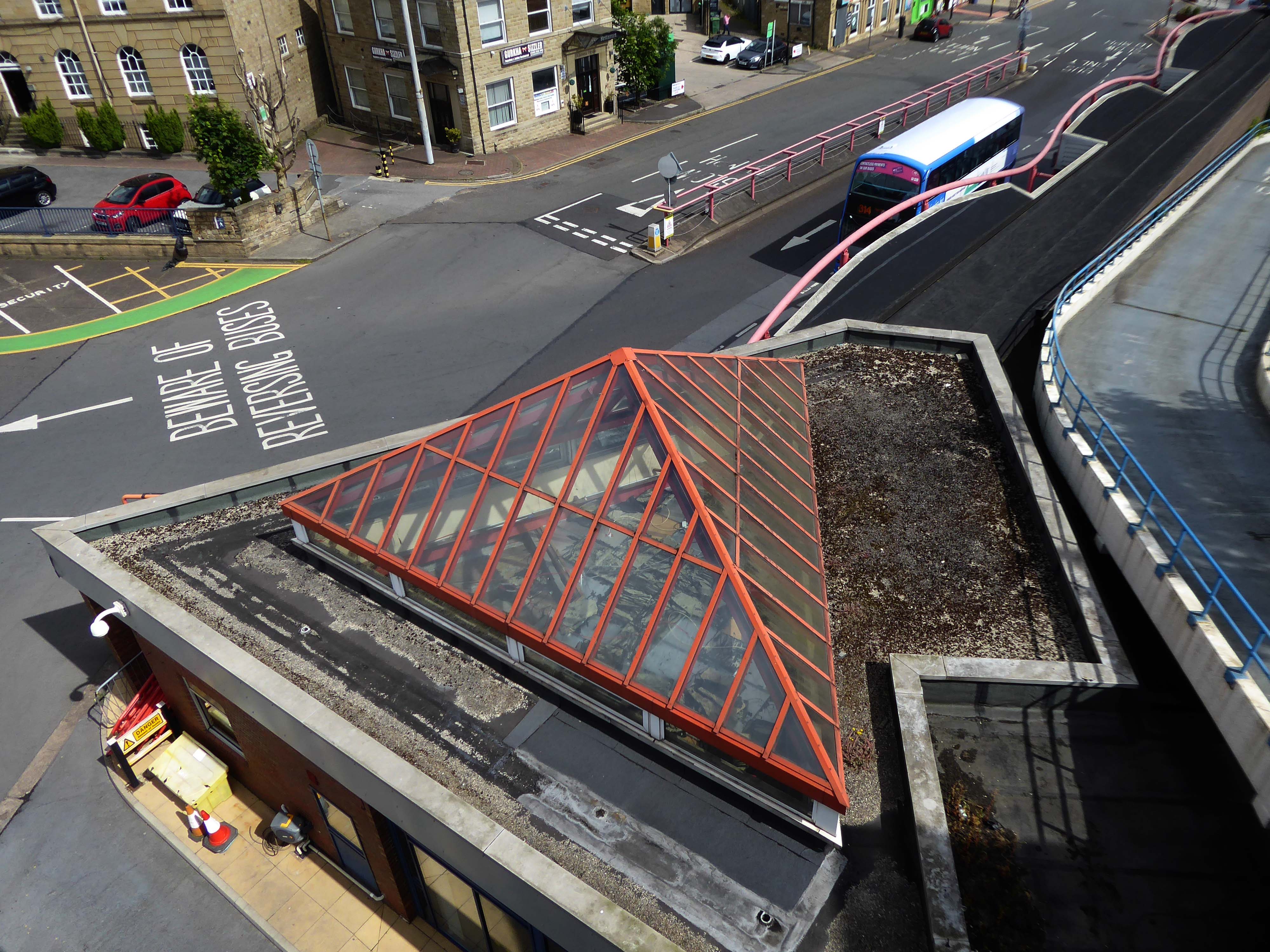
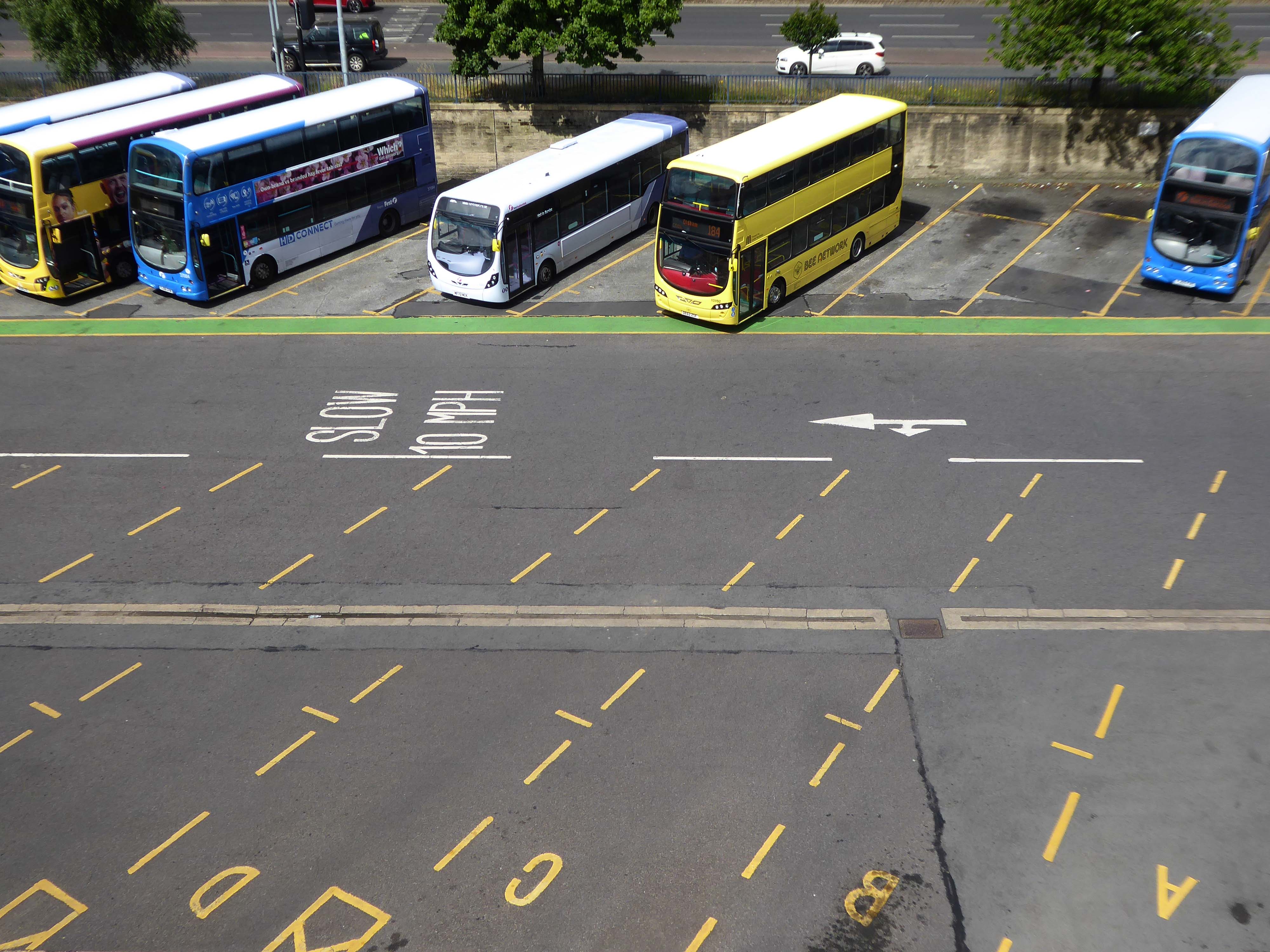
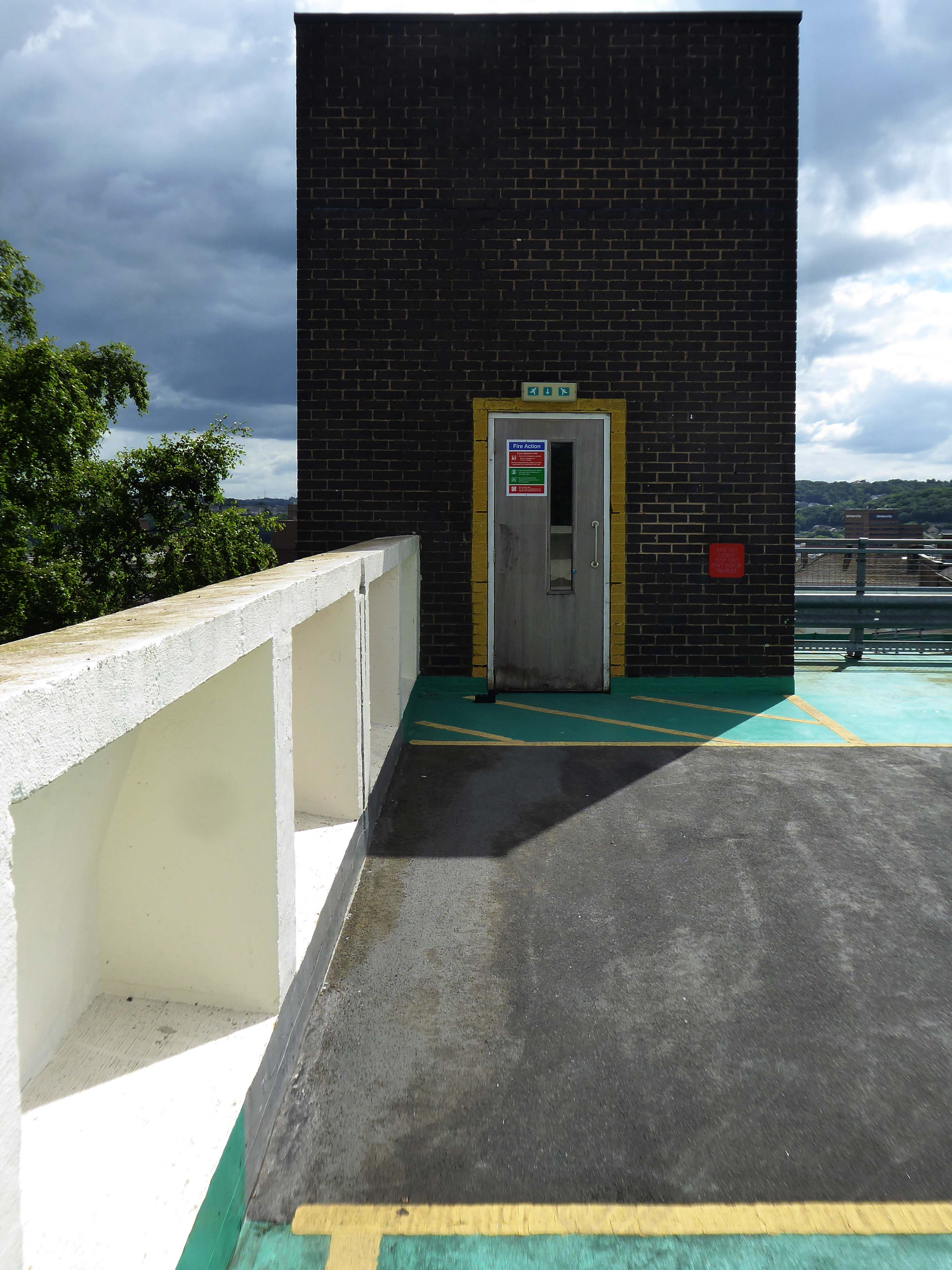
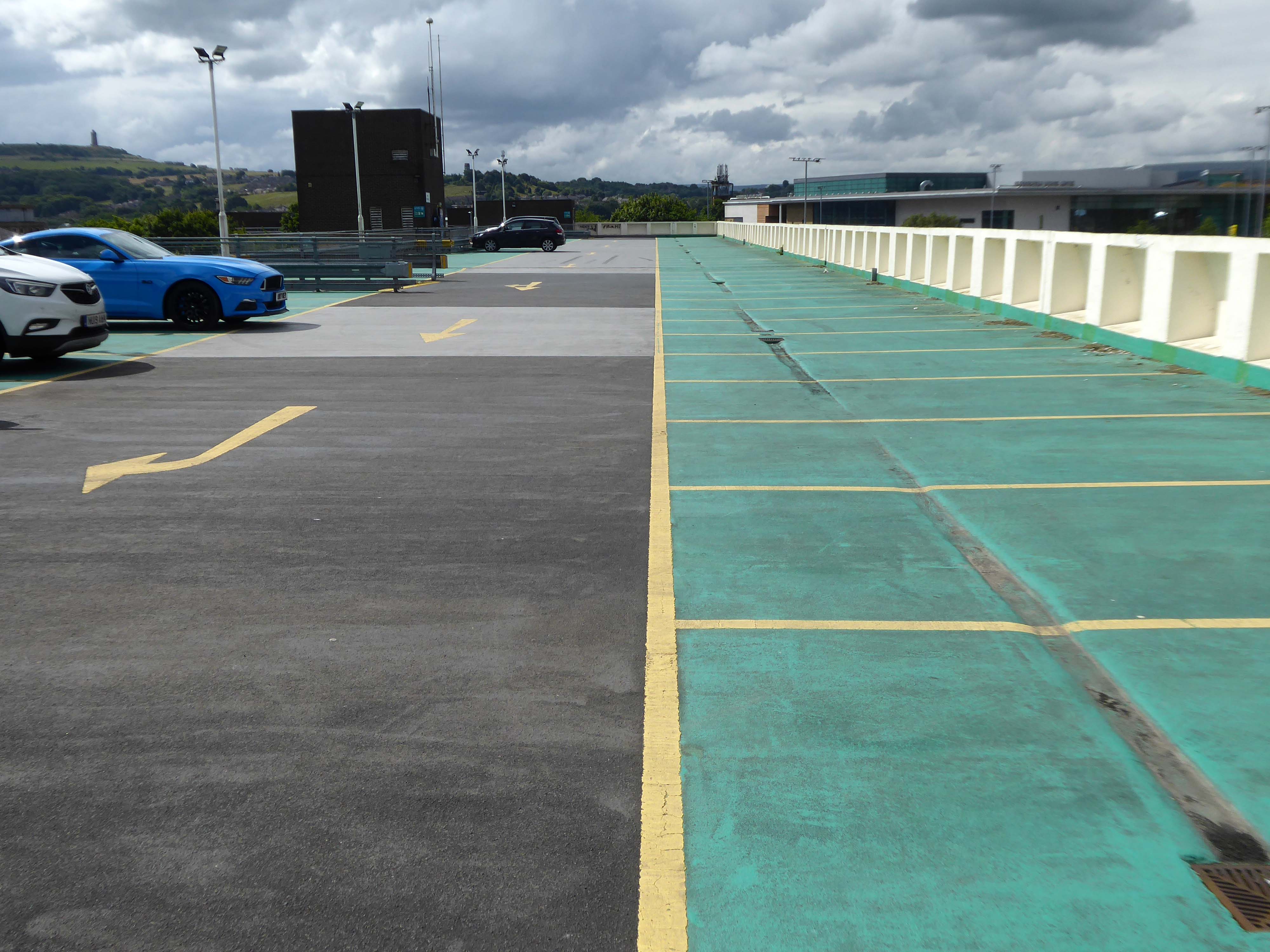
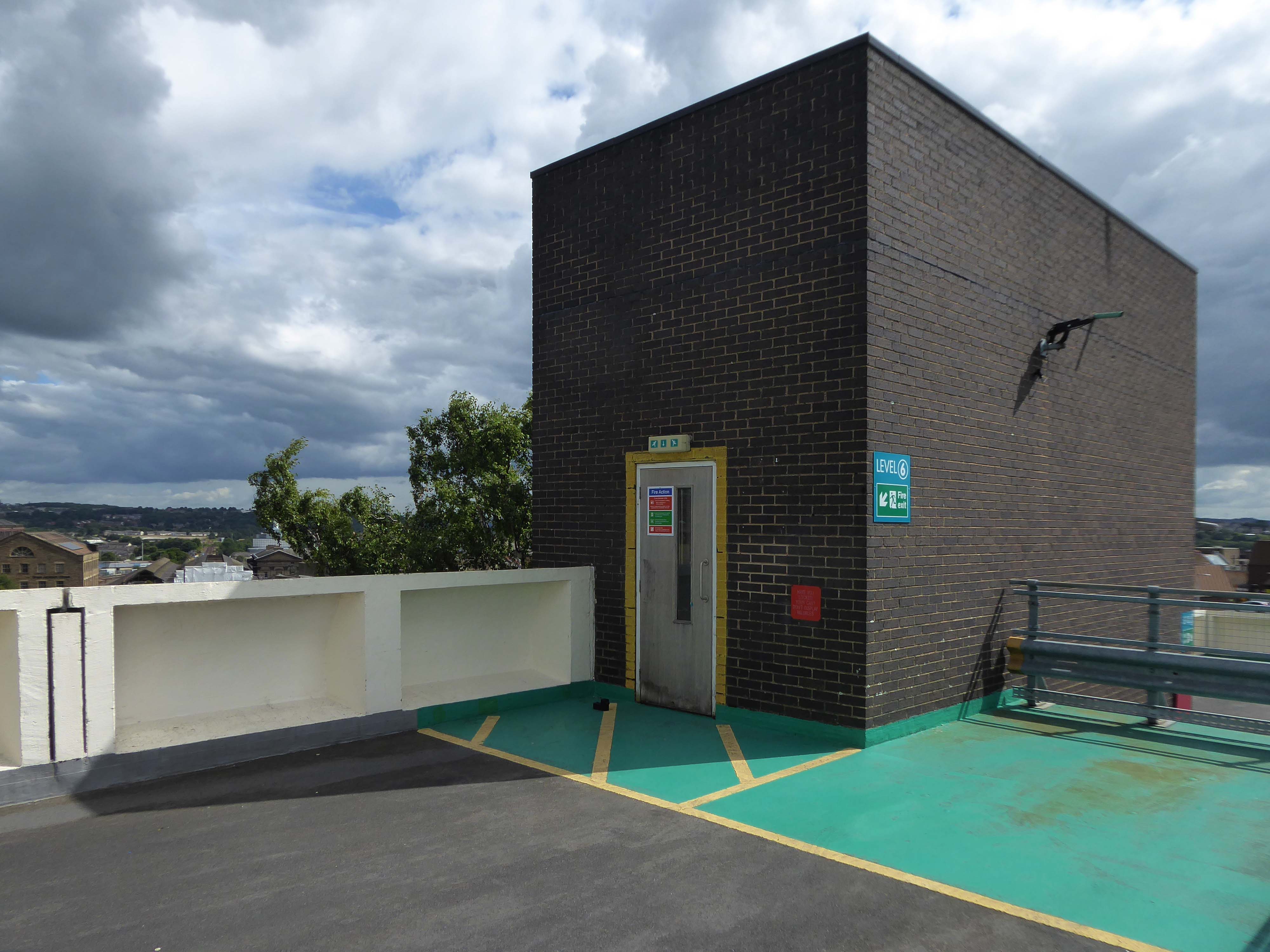
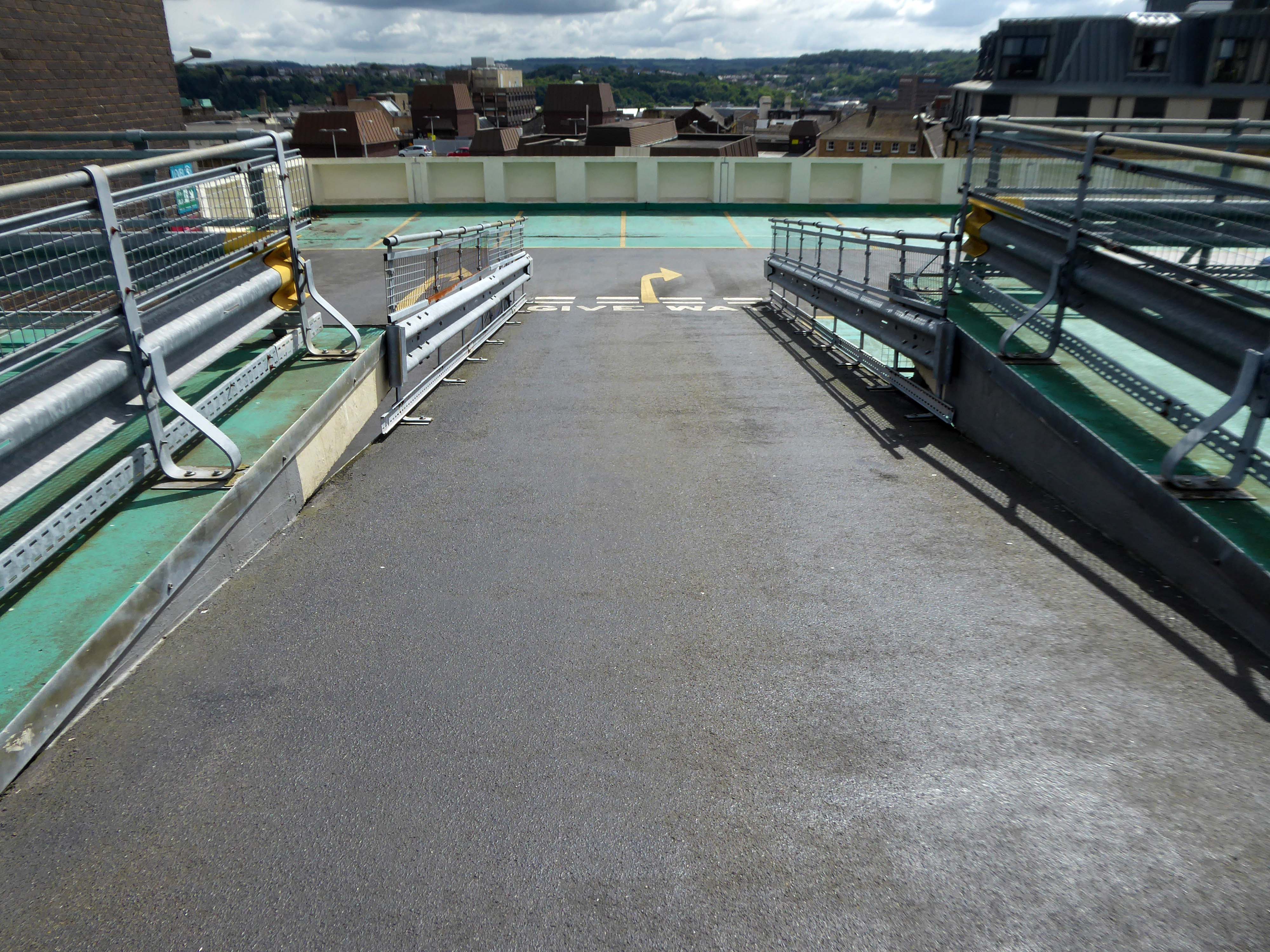
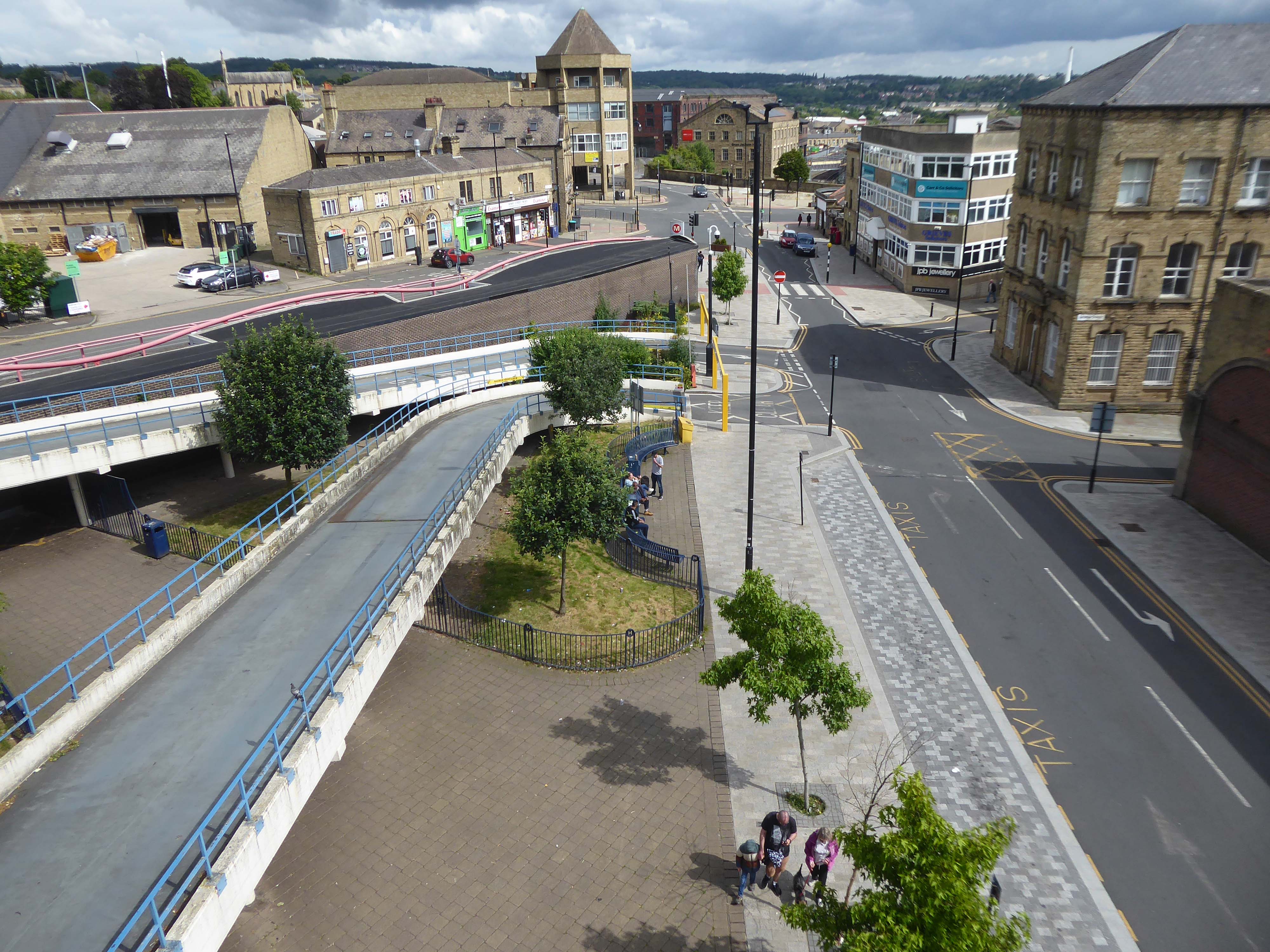
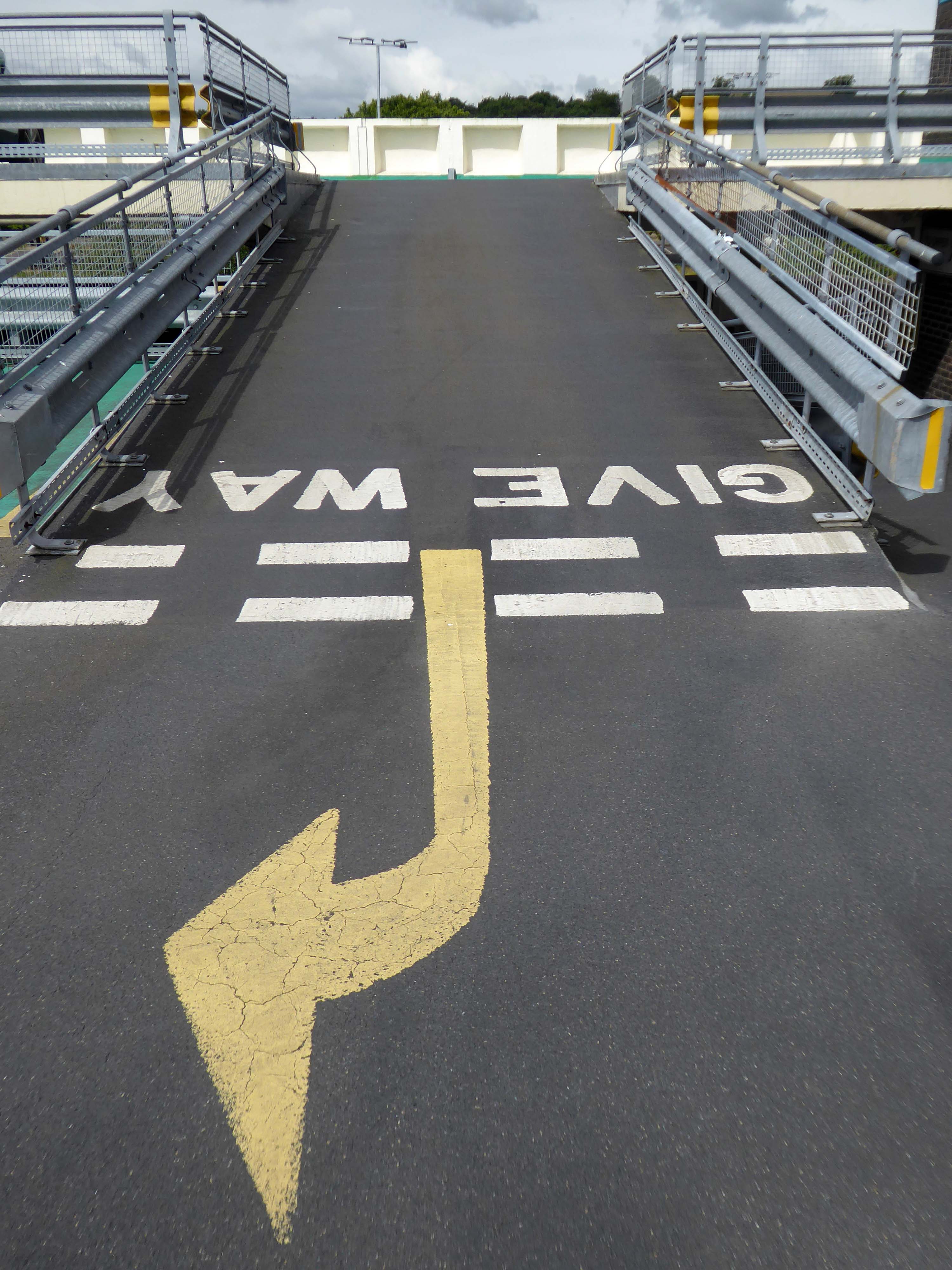
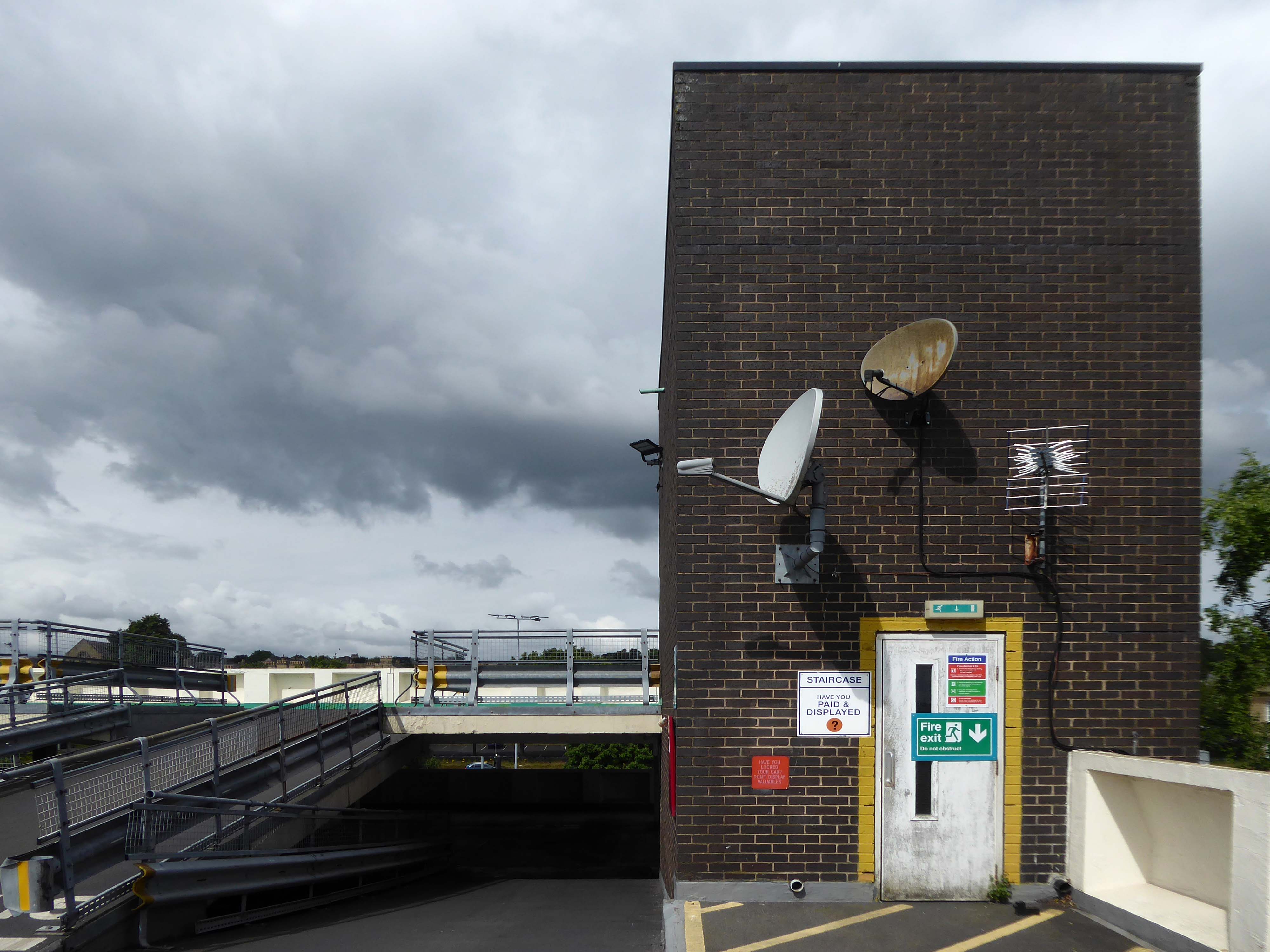
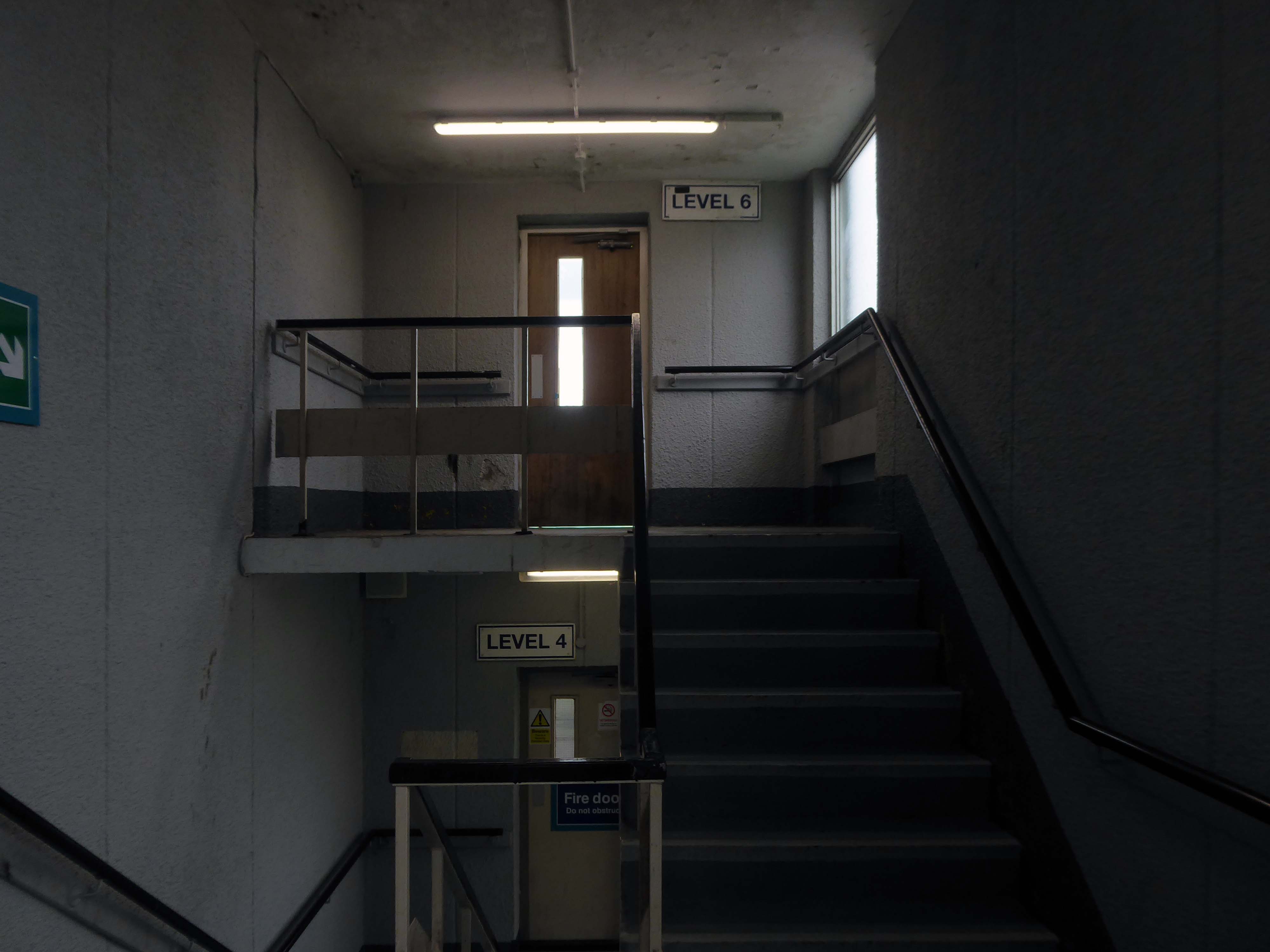
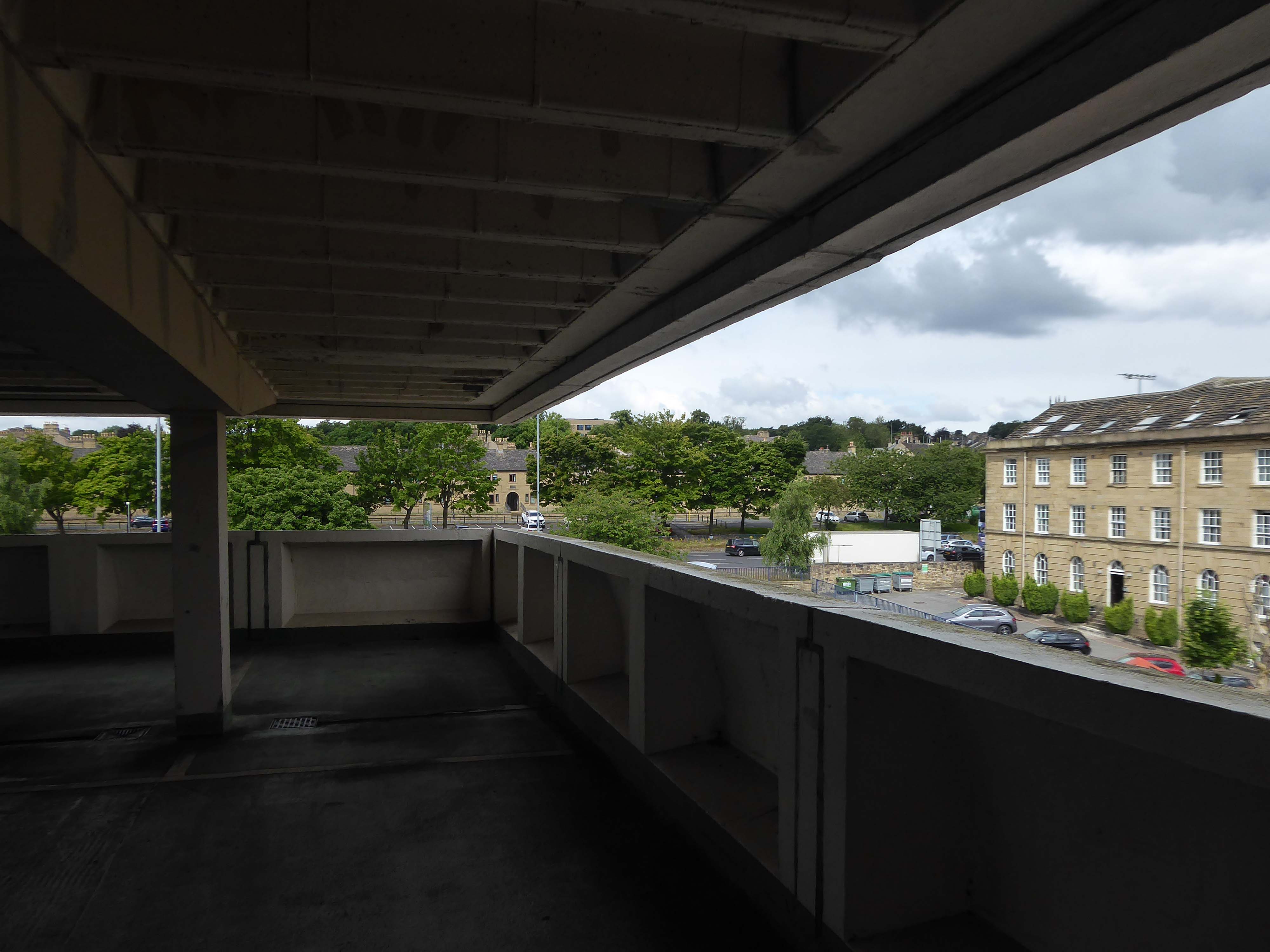
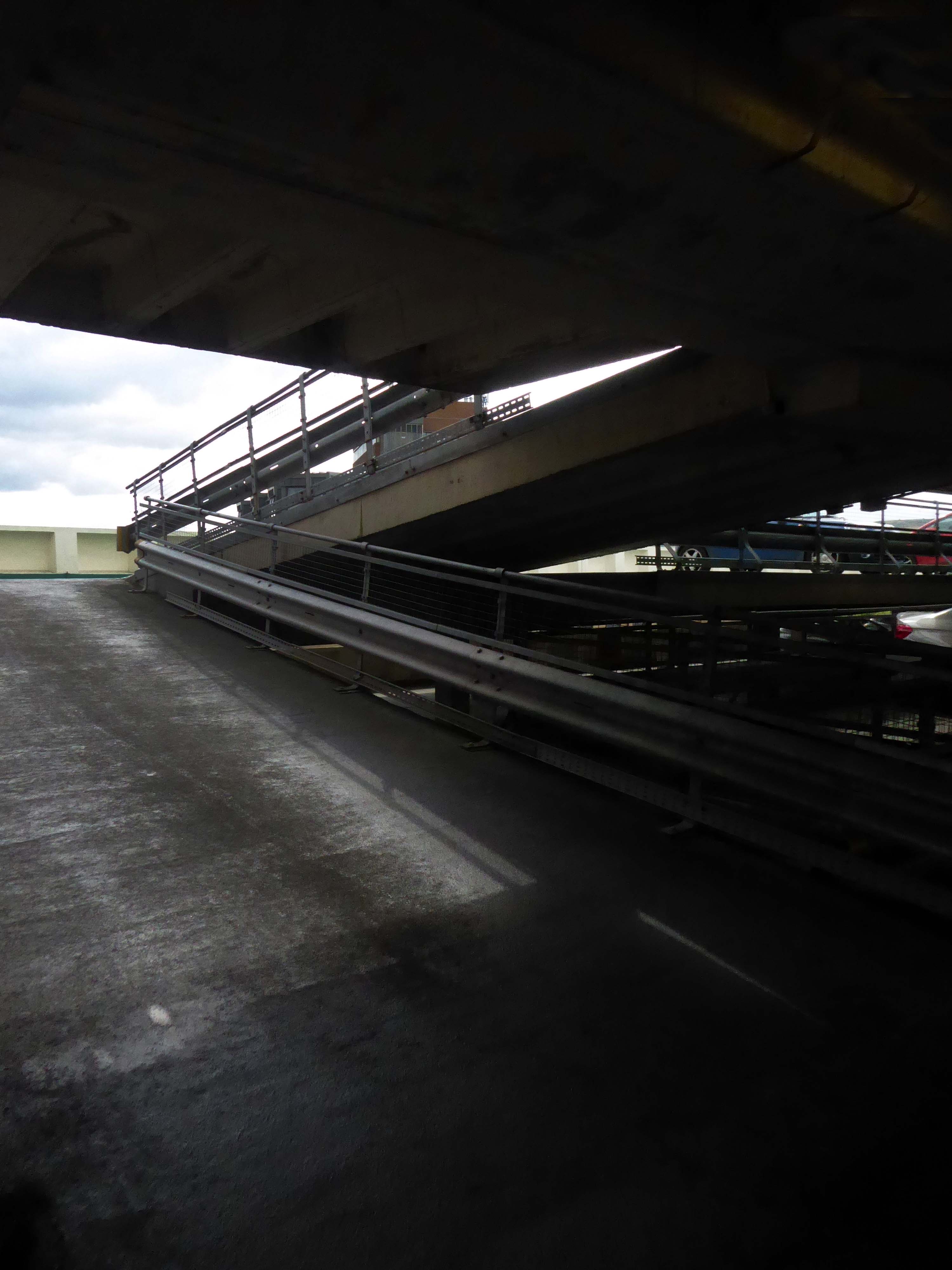
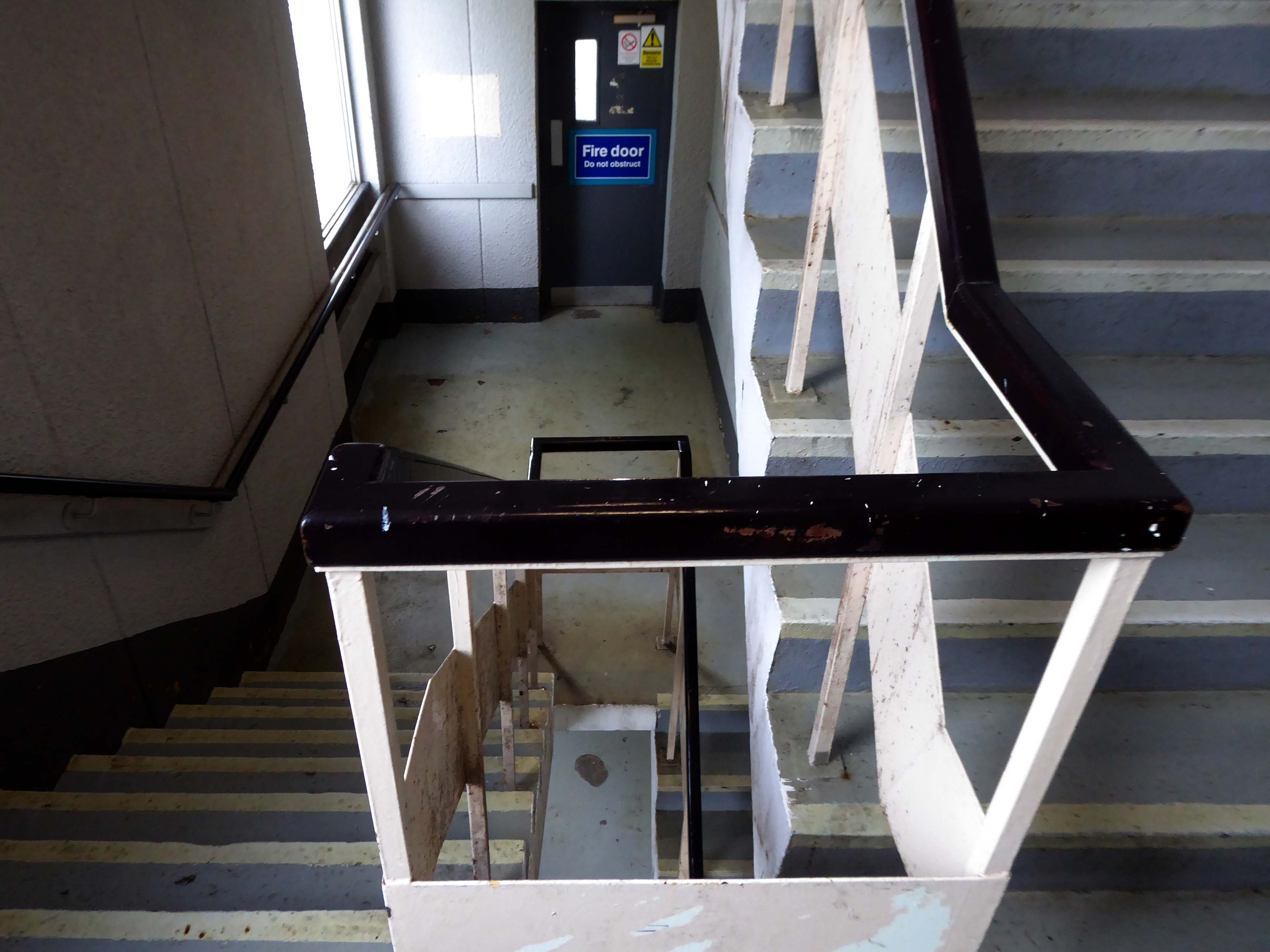
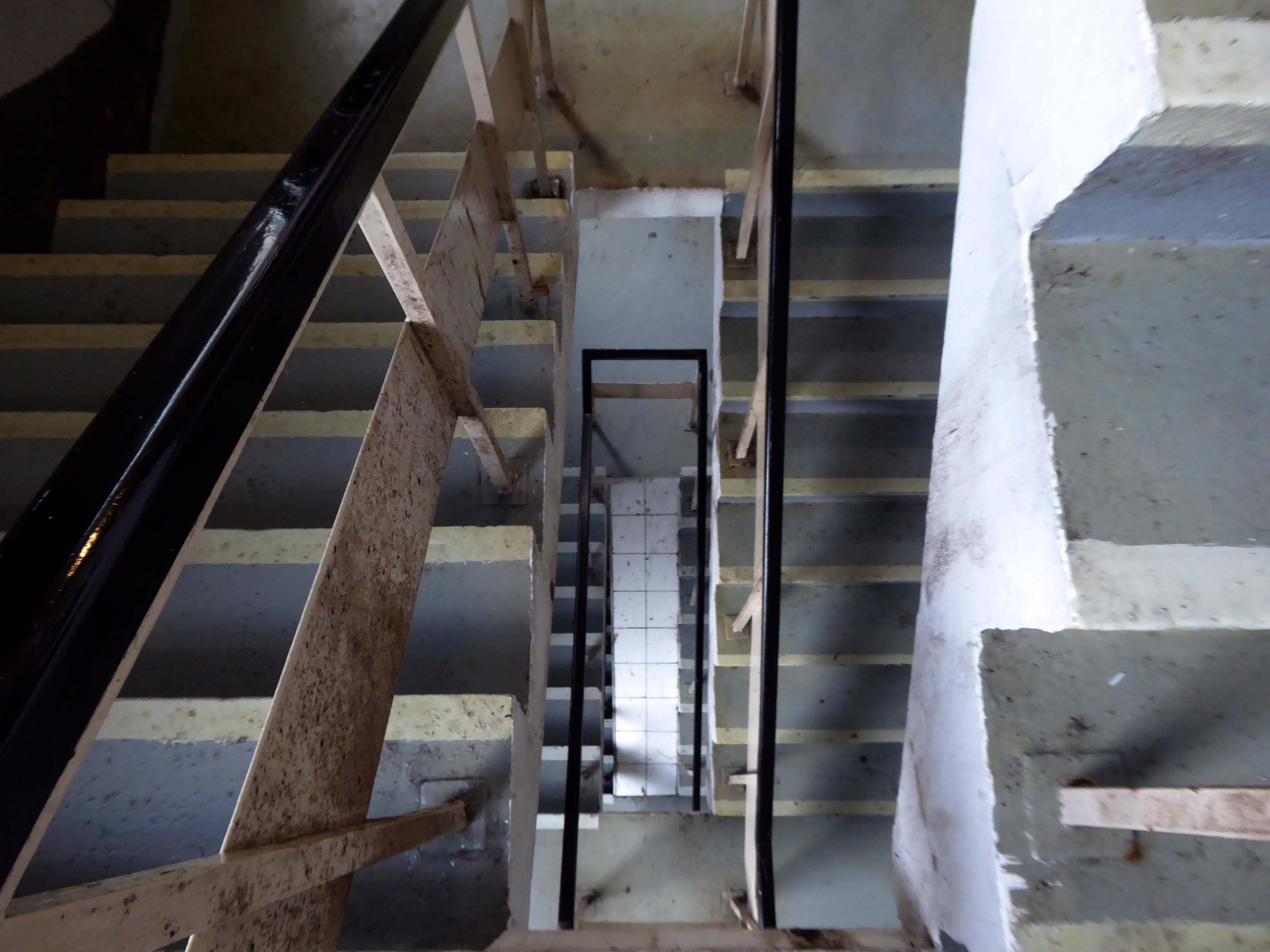
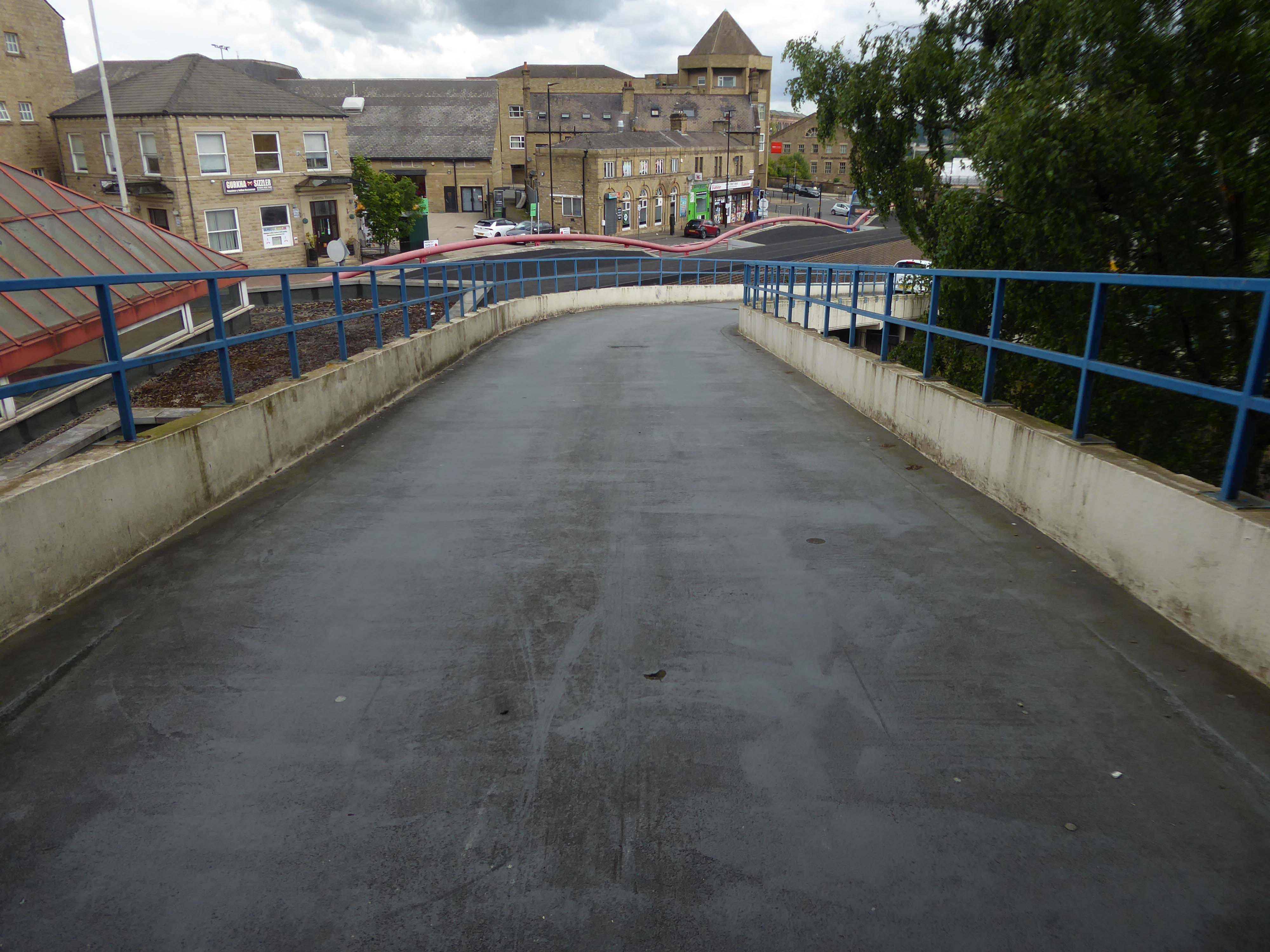
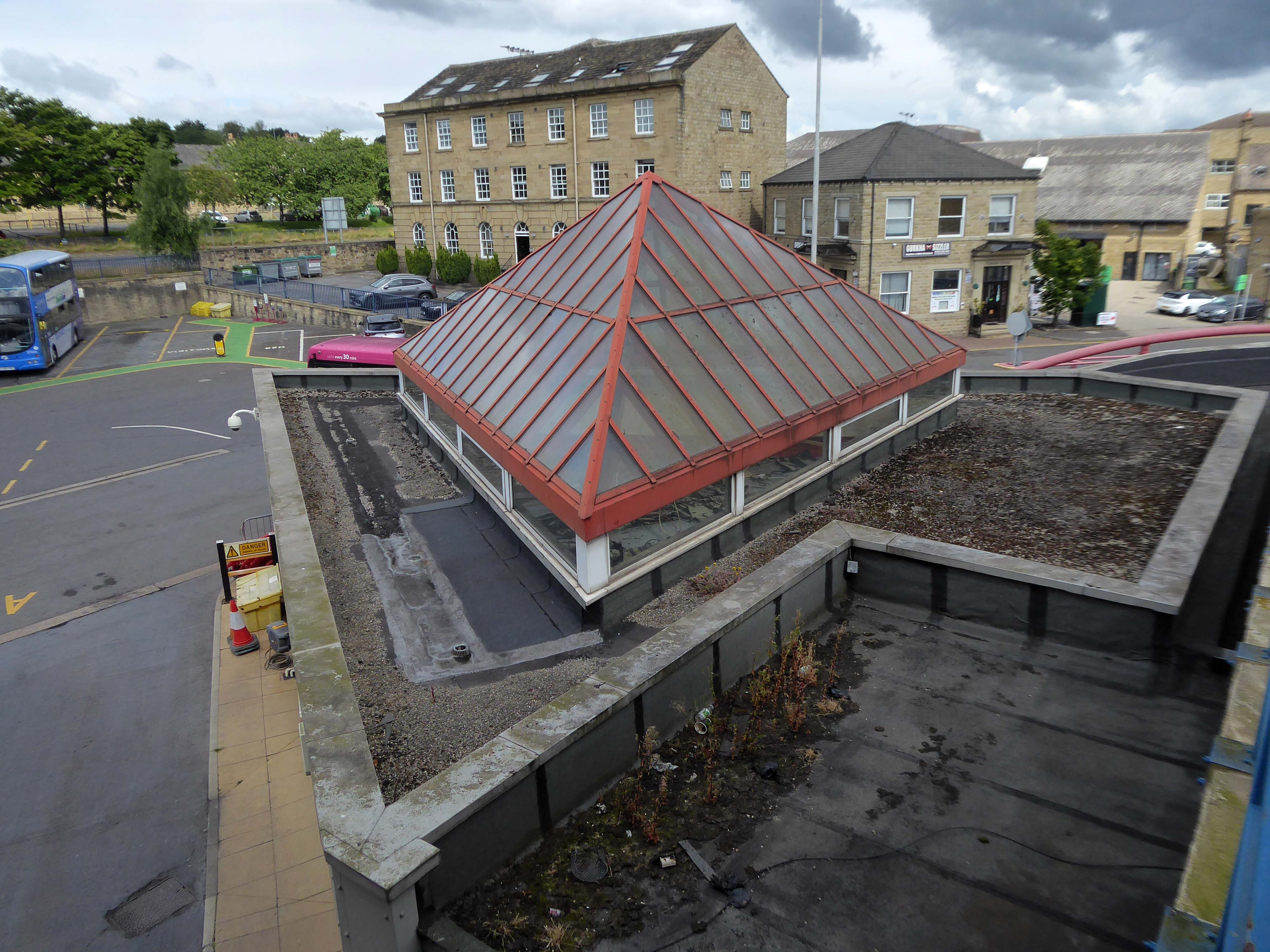
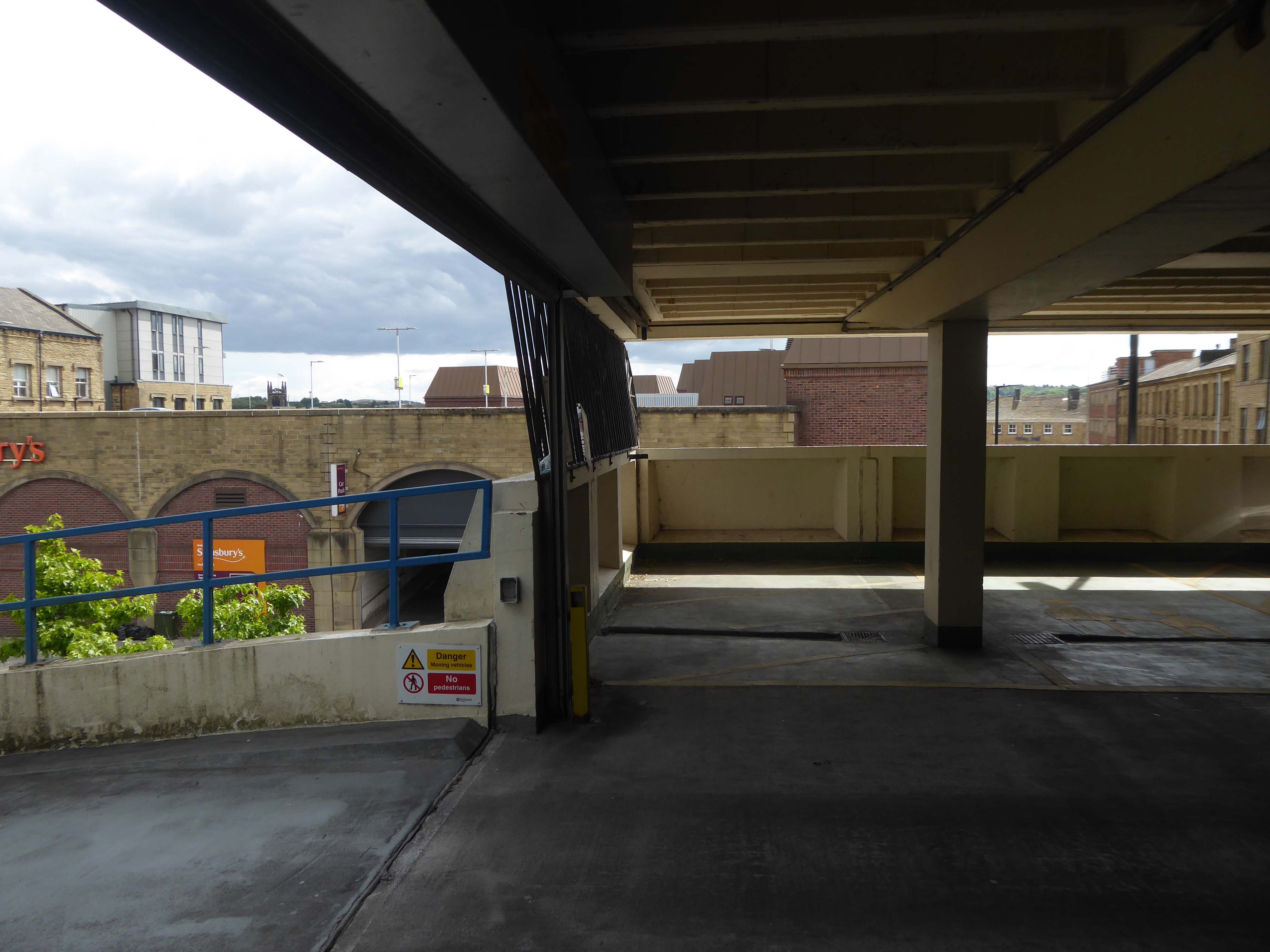
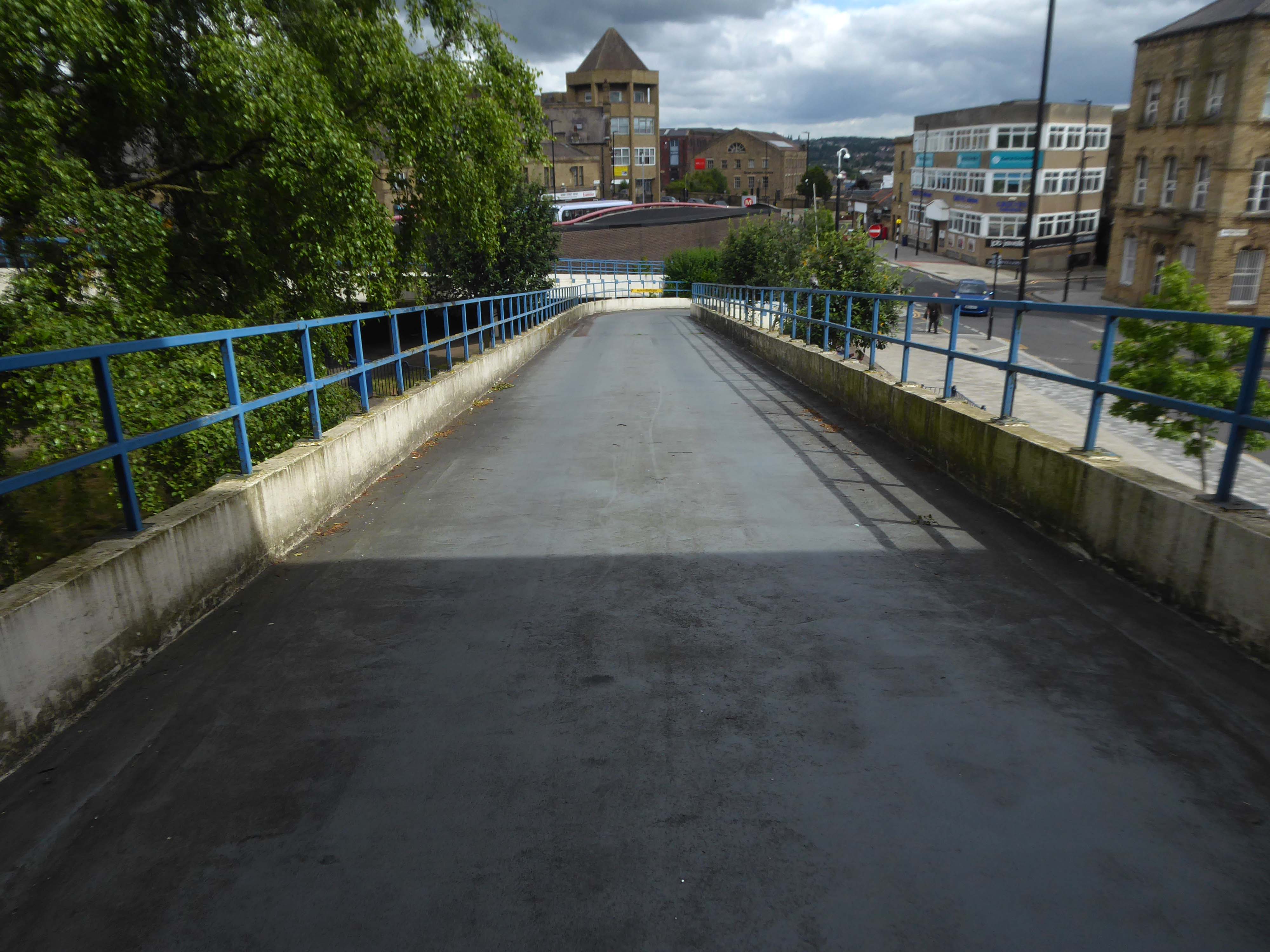
Having visited and photographed the bus station in 2016 I thought that it was about time I went up in the world, to the top level of the car park.
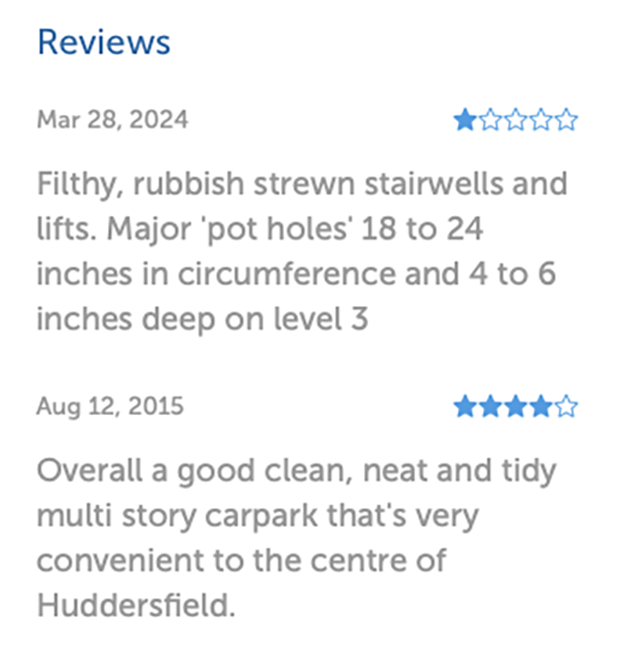
Mixed opinions from Parkopedia reviewers – let’s take a look around.
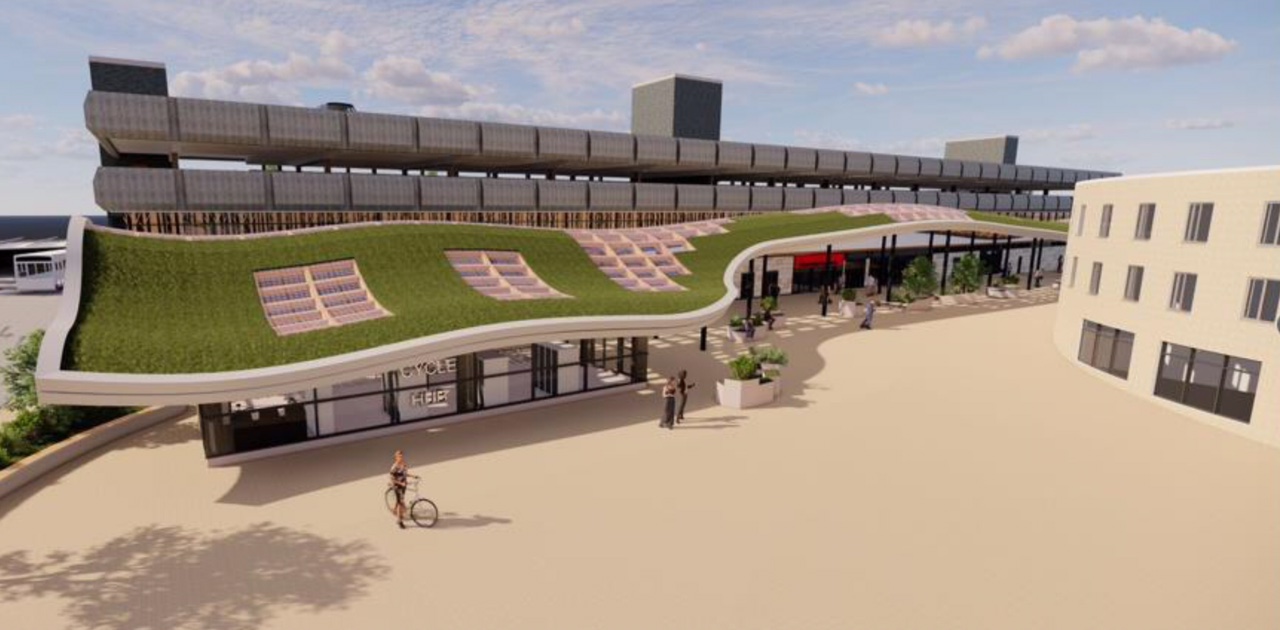
There are plans for refurbishment outlined in 2022 in the Huddersfield Hub.
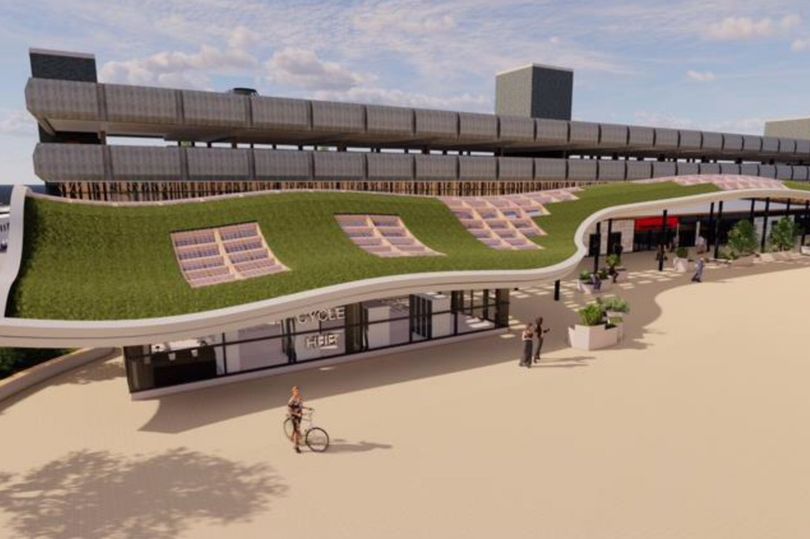
The bus station will undergo a major revamp both inside and out and the most striking feature will be a sweeping canopy with a living grass roof which will run right across the main frontage from Macaulay Square to Upperhead Row.
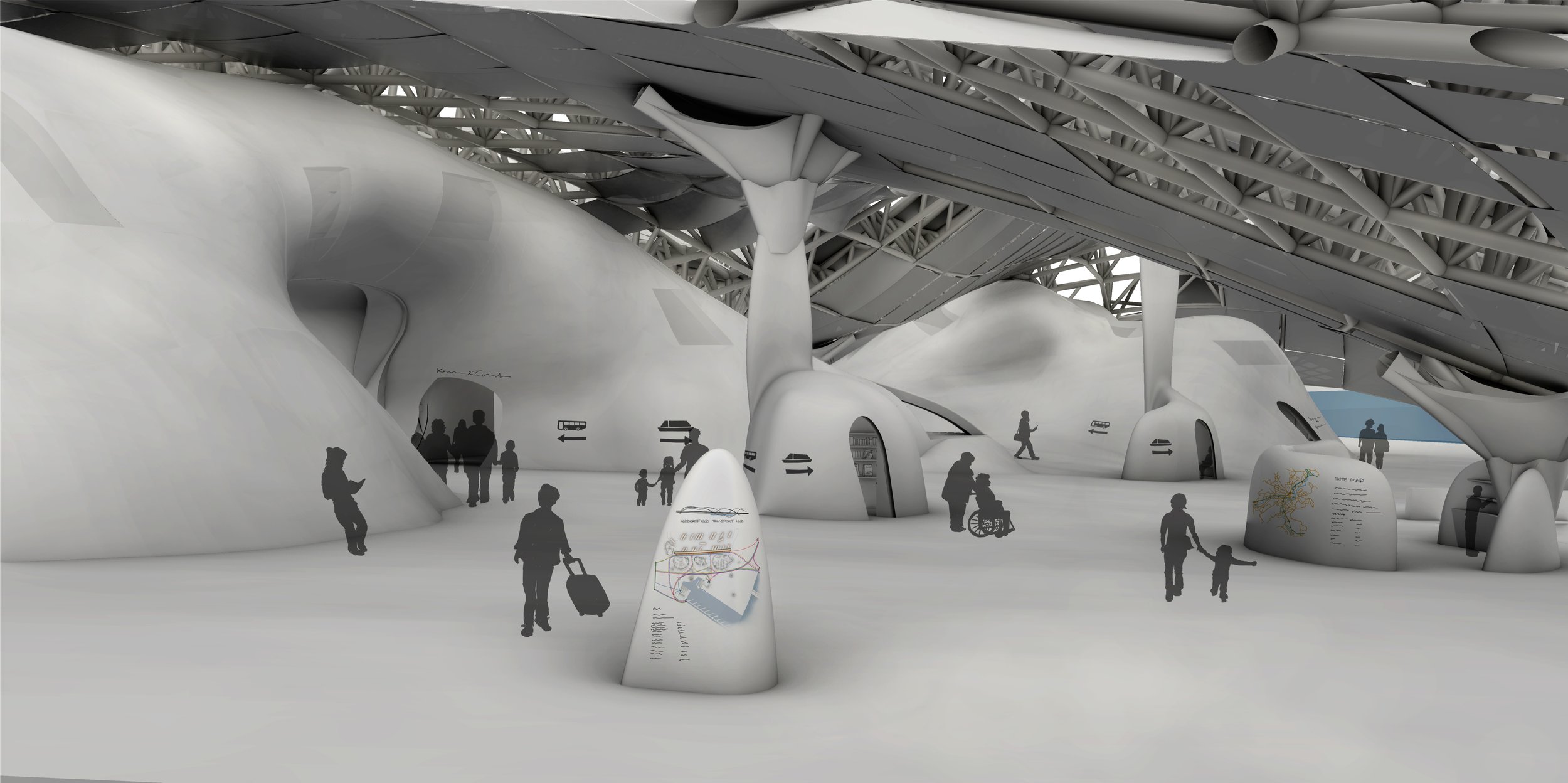
Also of note a project by Kate Matthews to seriously rethink the role and design of the space.
The starting point for this project was the Welcoming Water group scenario, involving the controlled flooding of areas of the town.
The new interchange includes facilities for cycling, walking, and public transit. The basin and marina on the new lake allow for an increased focus on water-based transport, including a new bus-boat. The main Transport Hub sits below an undulating roof and contains not only the bus bays and ticketing facilities, but also co-working and relaxation spaces. The curves of the roof, trying to confuse the binary of floor and ceiling, are just one example of the ambiguity throughout the scheme.
This project was nominated for the Architects for Health Student Design Award in 2021.
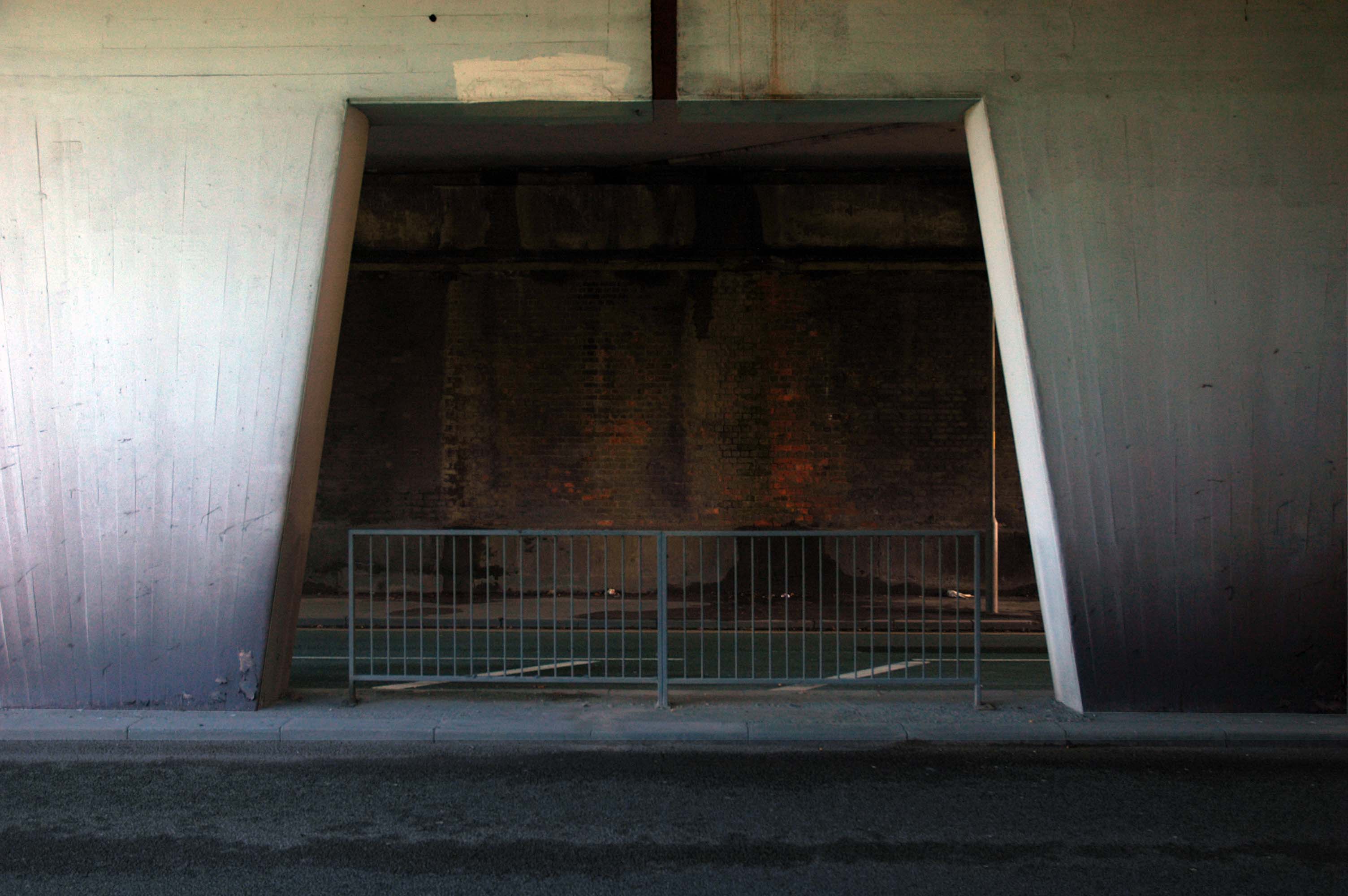
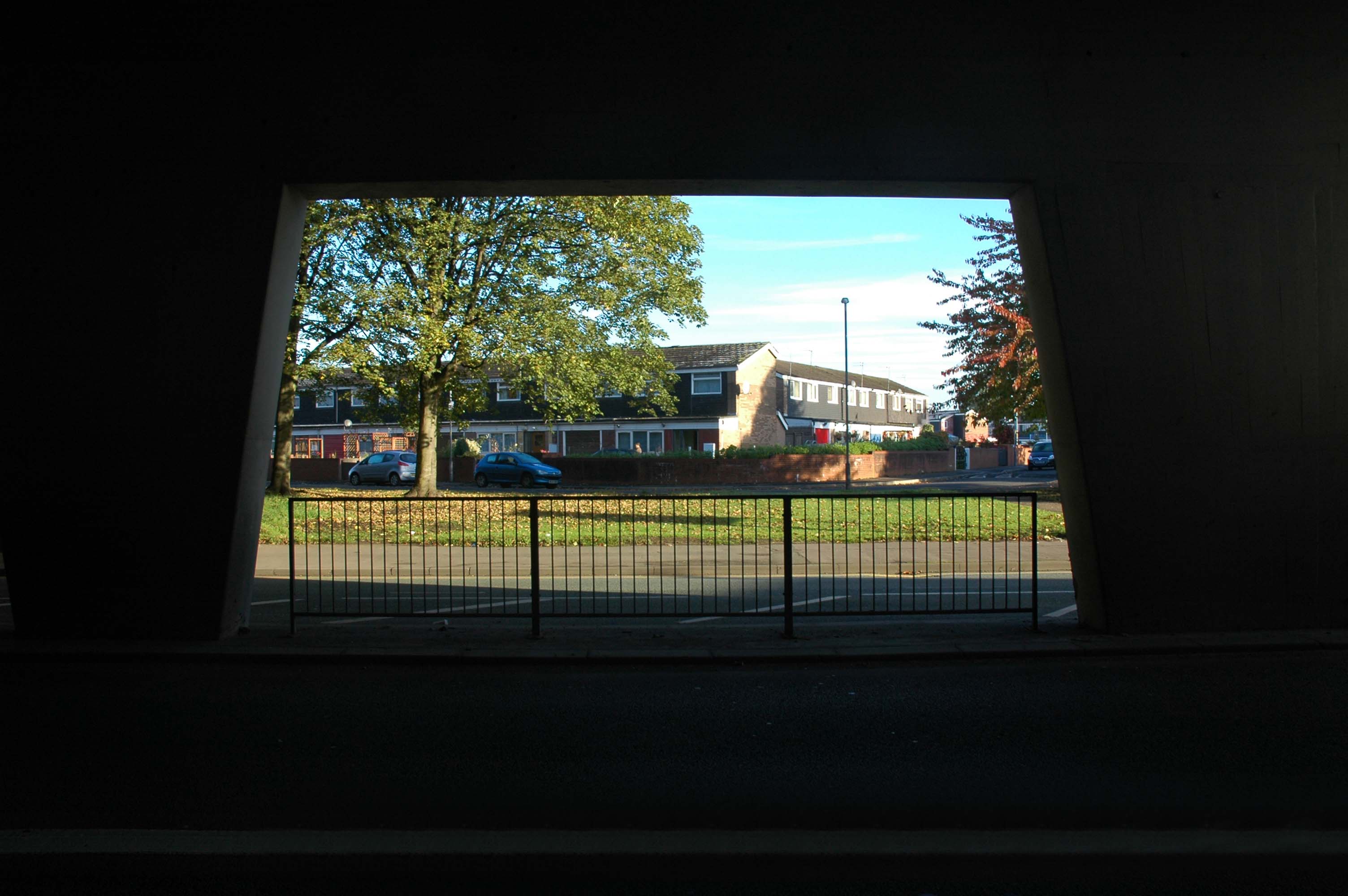
The A57 was nearly a coast to coast route. It passes through three major city centres (Liverpool, Manchester, and Sheffield – with elevated sections in each) and several smaller ones, multiplexes with the A6 and the A1, follows the banks of two canals and negotiates the remotest part of the Peak District. In one city it part of it is a tram route, whilst in another its former route is also a tram route. After all these adventures, it sadly gives up just 40 miles short of the east coast, Lincoln apparently proving too big an obstacle.
The A57 crosses the River Irwell at Regent Bridge before entering its moment of motorway glory as the A57(M) Mancunian Way skirting the south of Manchester’s city centre on an elevated section and crossing the A56 and A34. This includes a half-completed exit that goes the wrong way up Brook Street – a one way street. The original A57 ran further north through the city centre along Liverpool Road (now the A6143) and Whitworth Street – B6469 as far as the A6 London Road which marked the start of a multiplex.
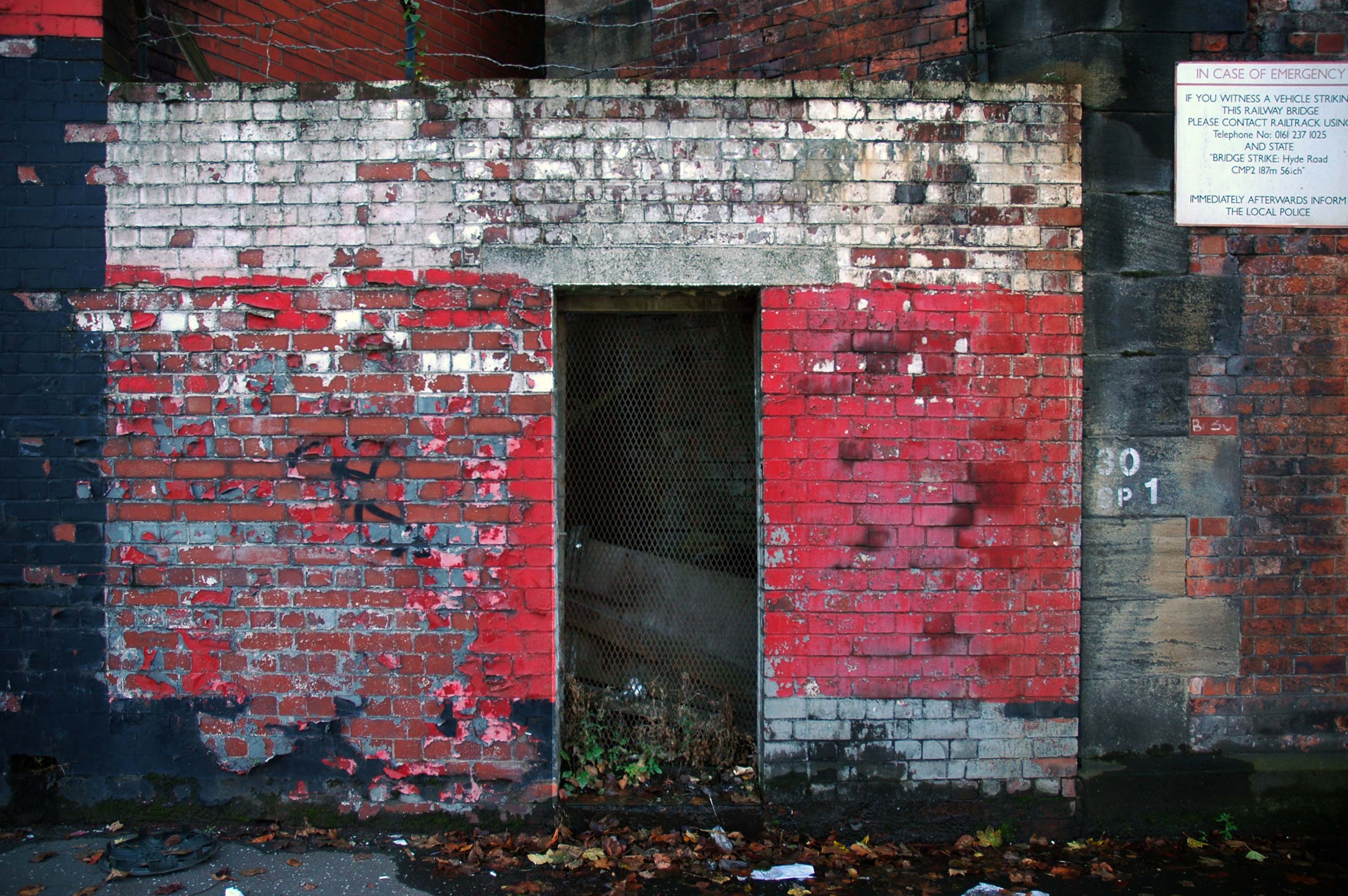
At the end of Mancunian Way, we reach a TOTSO, straight on being the short unsigned A635(M) and thence the A635 – for Saddleworth Moor, Barnsley and Doncaster whilst the A57 turns south, briefly multiplexing with the A6, and then branching off along Hyde Road. This section of road was extensively cleared for the westward extension for the M67, and consequently has seen a lot of redevelopment.
More than once, though that’s no reason not to do so again – so I did.
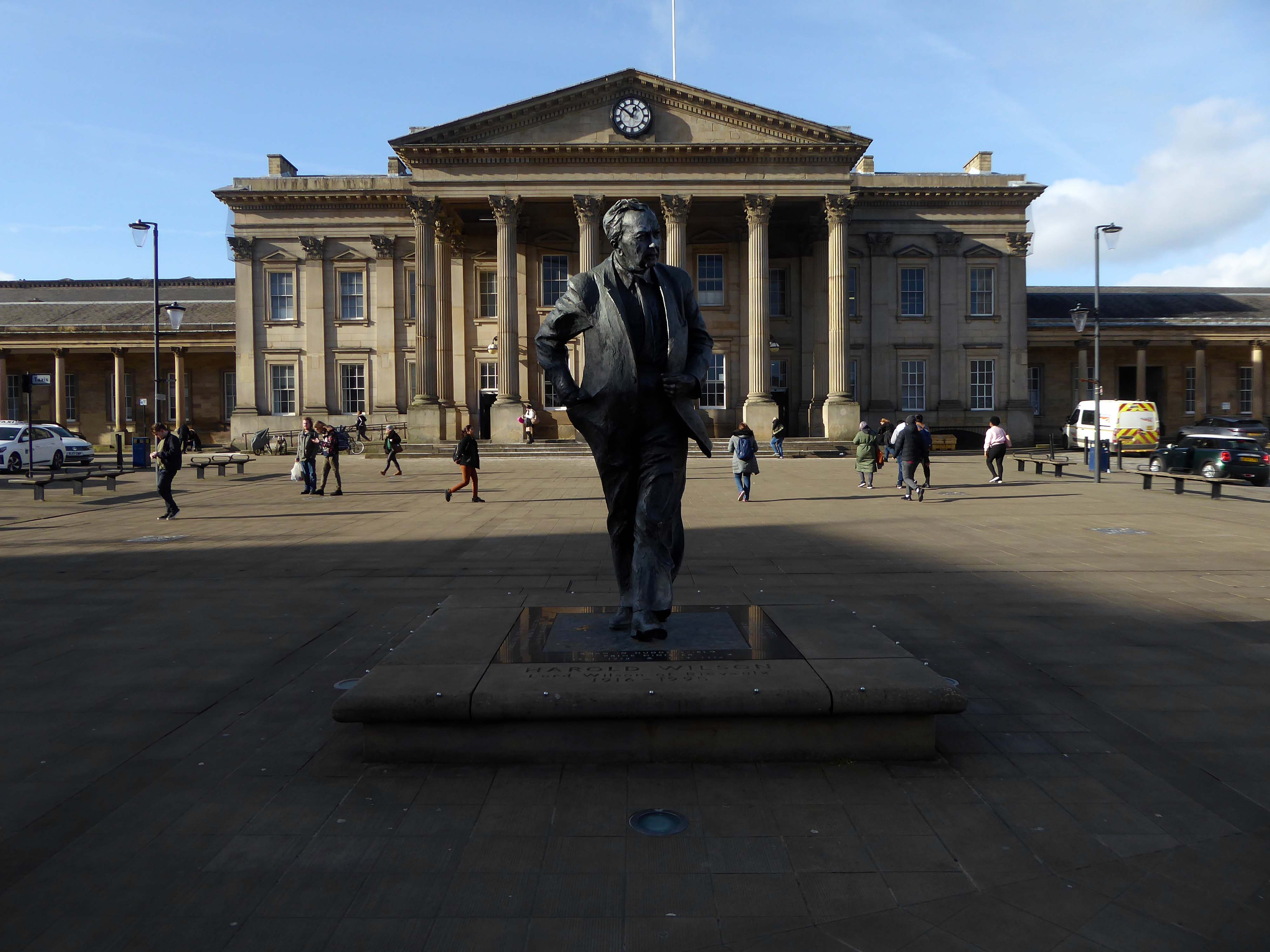
Saying hello to Harold.
Harold saying hello to us:
Nostalgia won’t pay the bills; the world doesn’t owe us a living; and we must harness the scientific revolution to win in the years to come. This scientific revolution is making it physically possible, for the first time in human history, to conquer poverty and disease, to move towards universal literacy, and to achieve for the whole people better living standards than those enjoyed by tiny privileged classes in previous epochs.
He warned change would have to reach every corner of the country; The Britain that is going to be formed in the white heat of this revolution will be no place for the restrictive practices or for outdated methods on either side of industry.
Standing sentinel over one of Nikolaus Pevsner and John Betjeman’s favourite railway station front elevations.
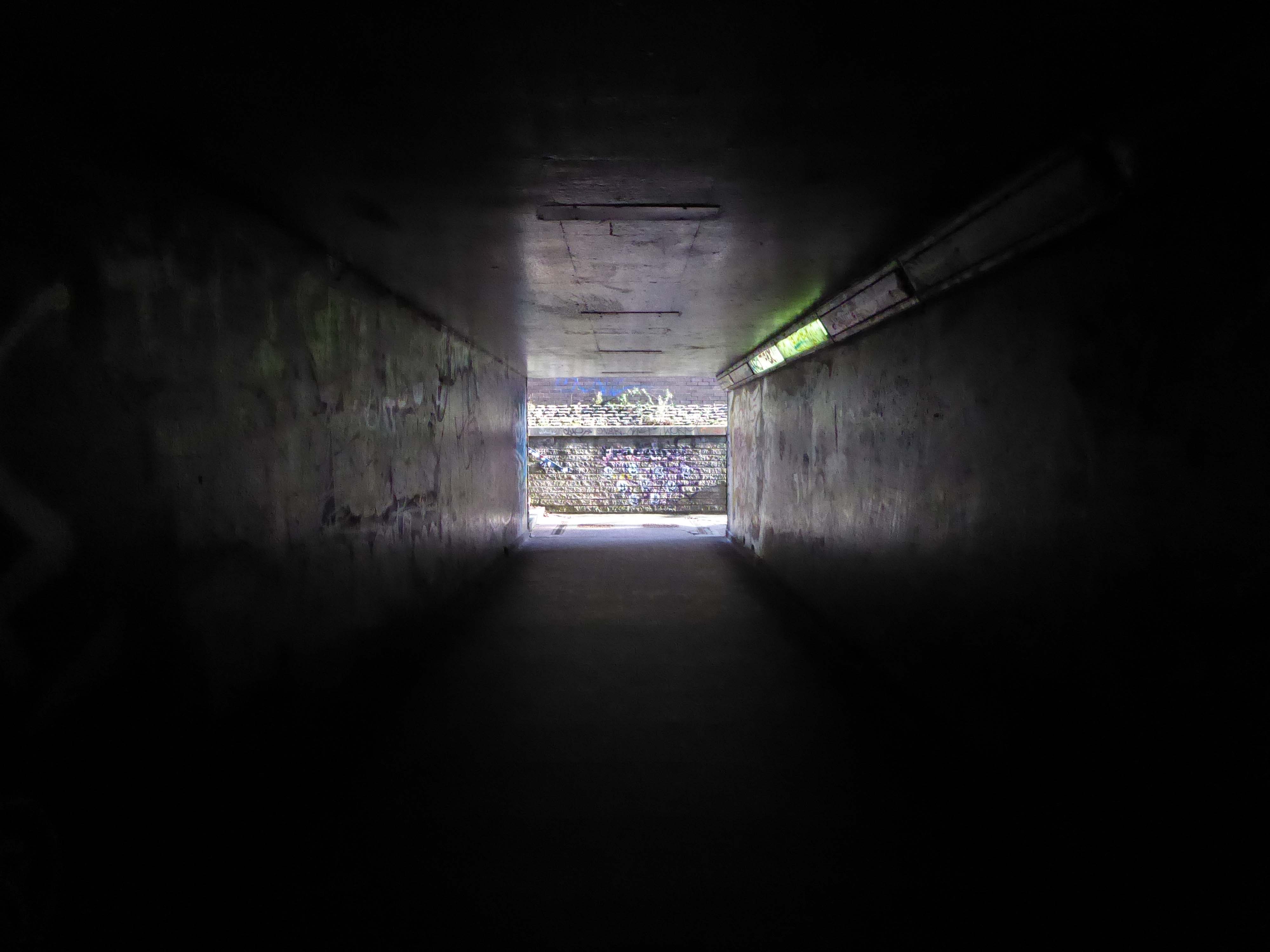
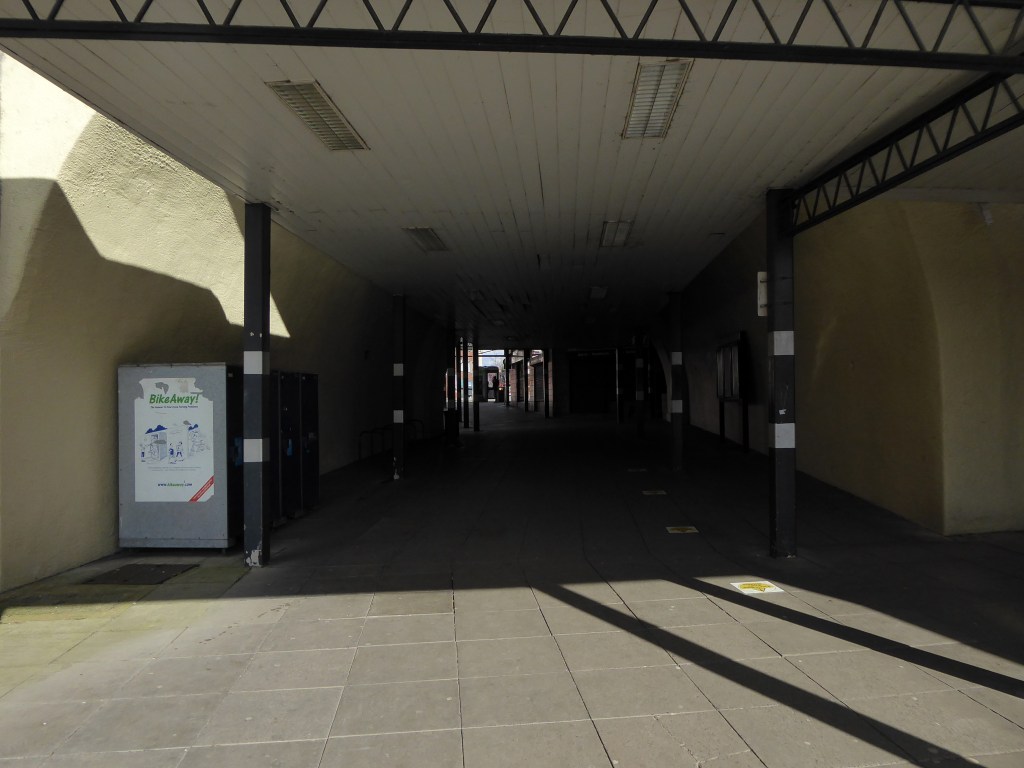
Through a passage darkly.
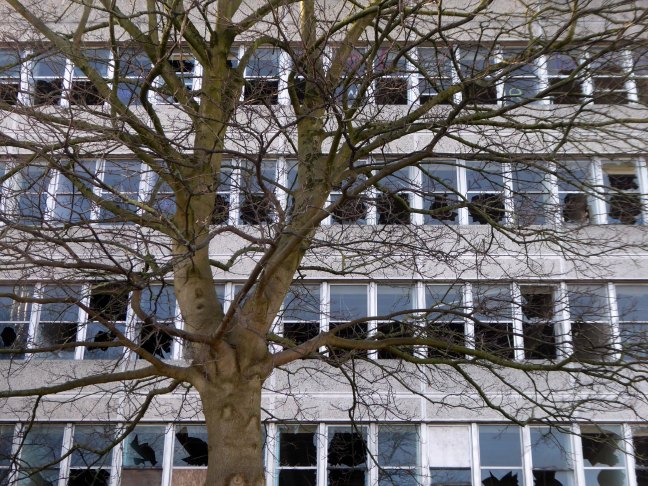
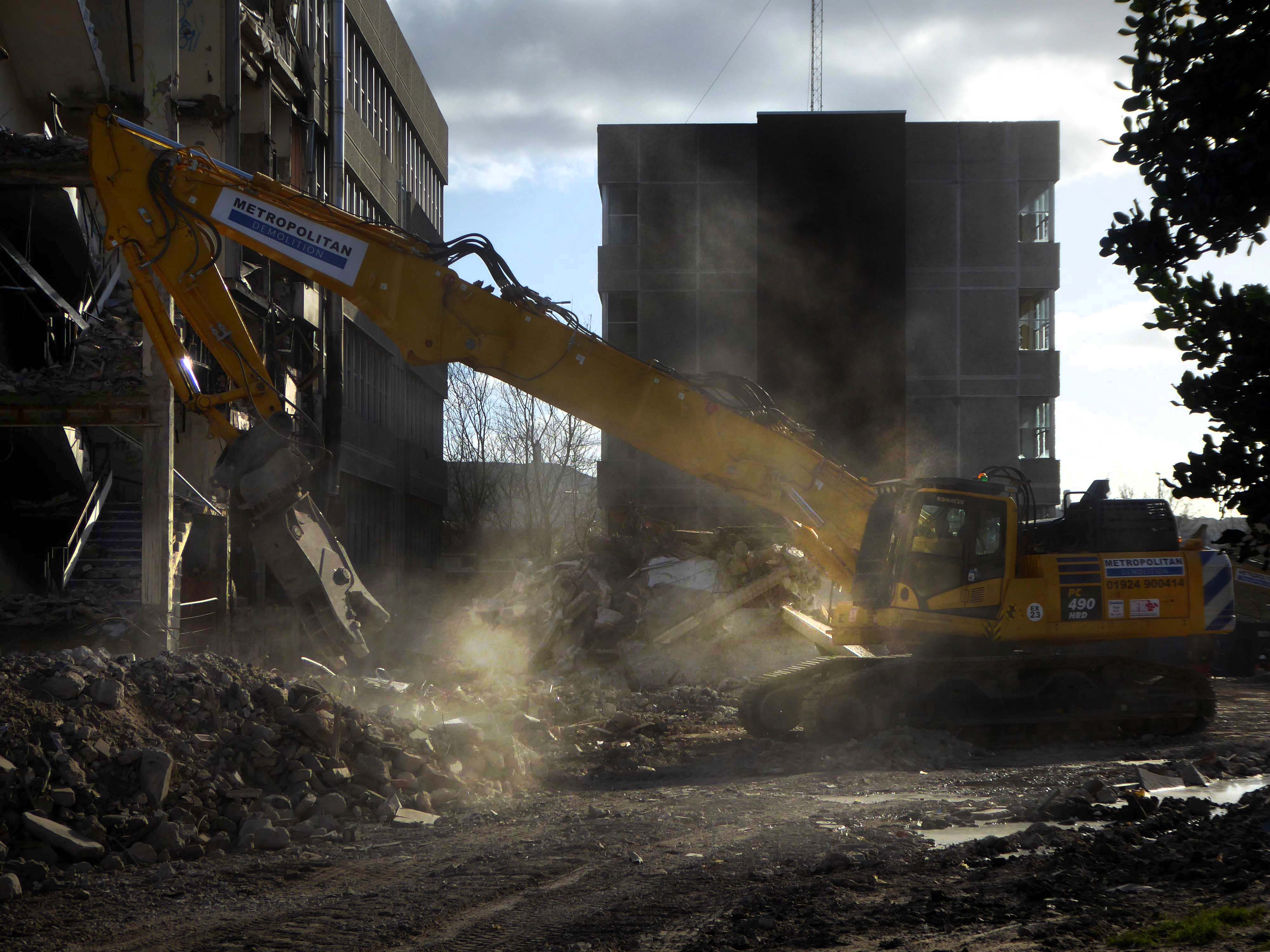
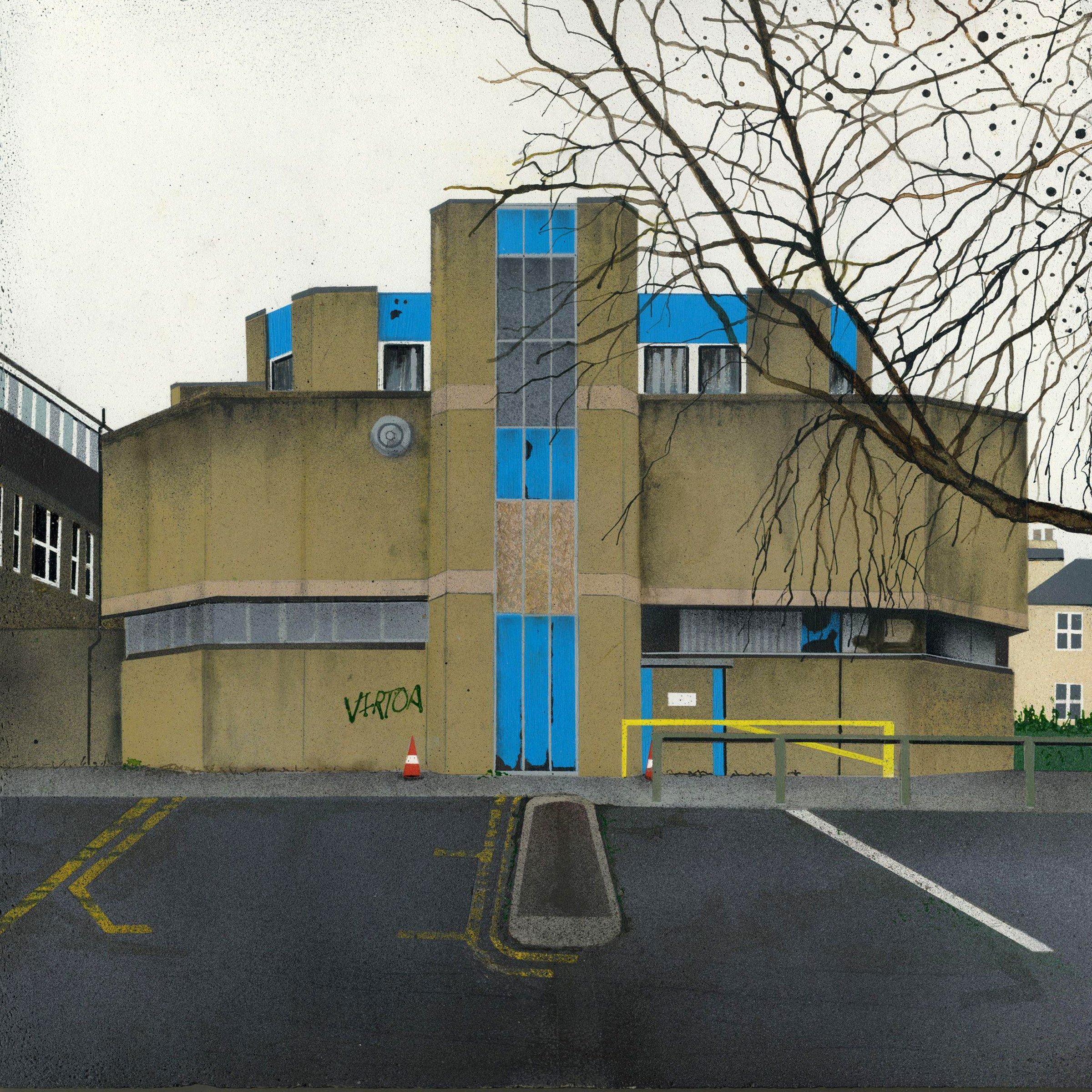
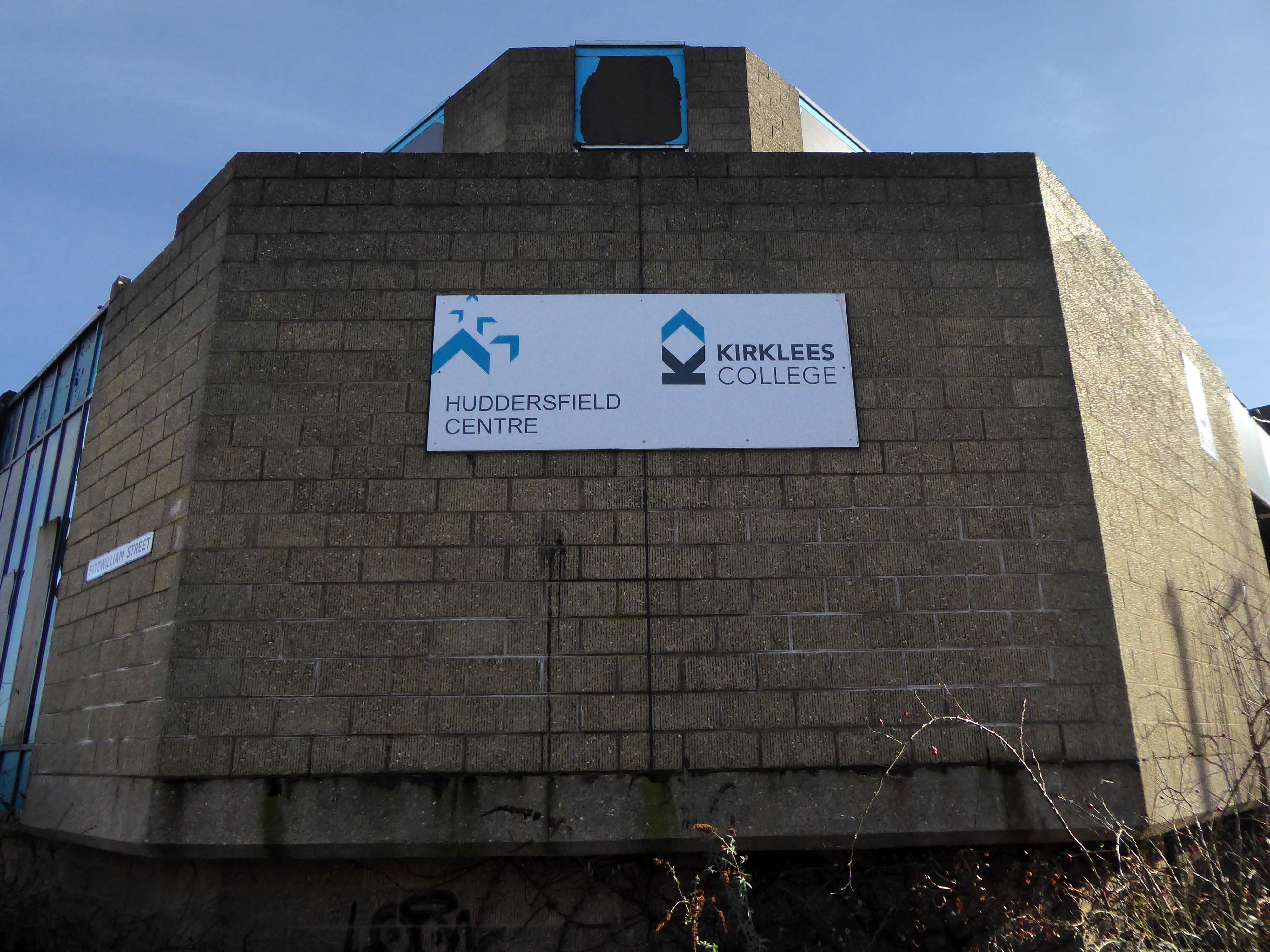
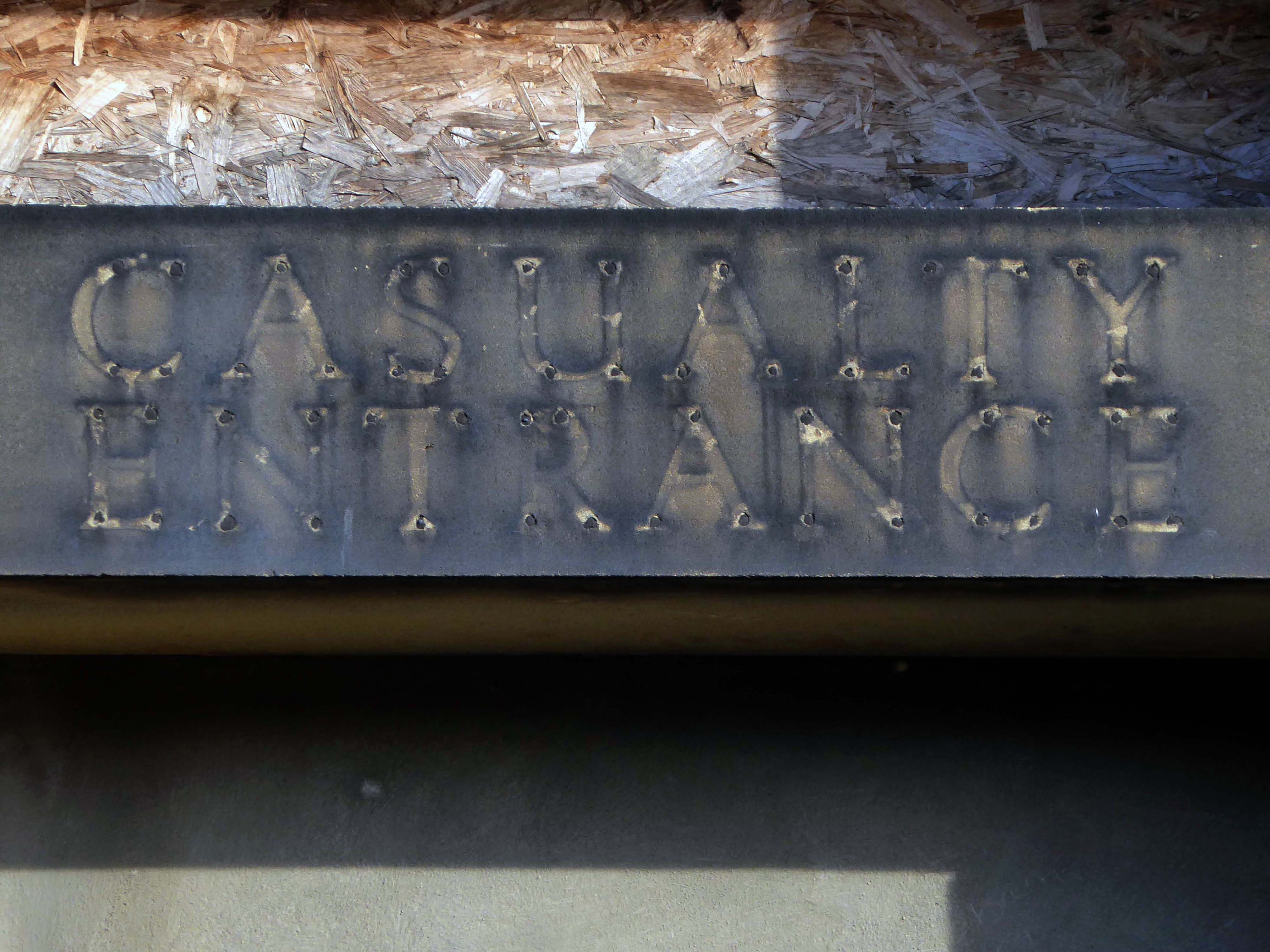
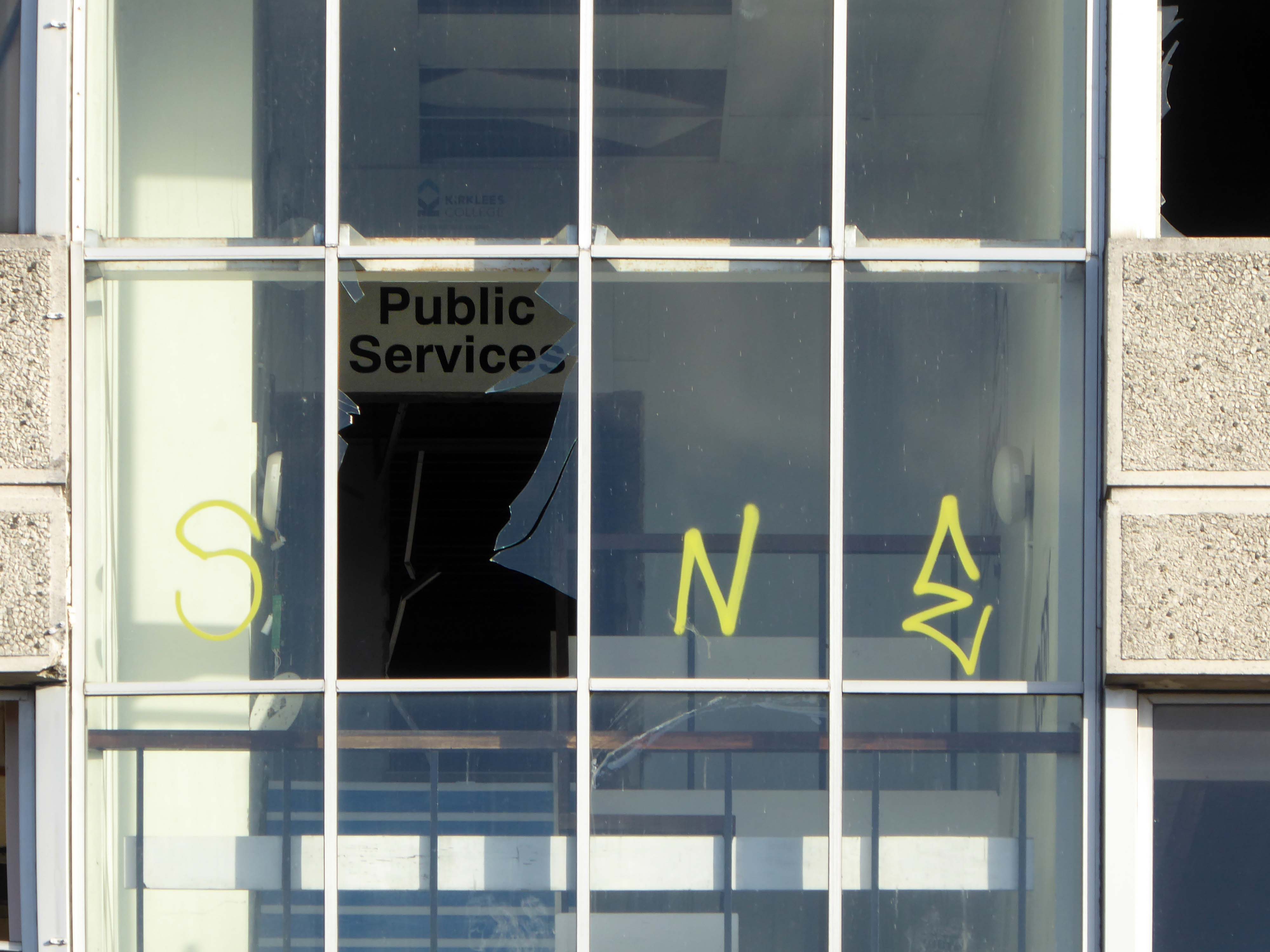
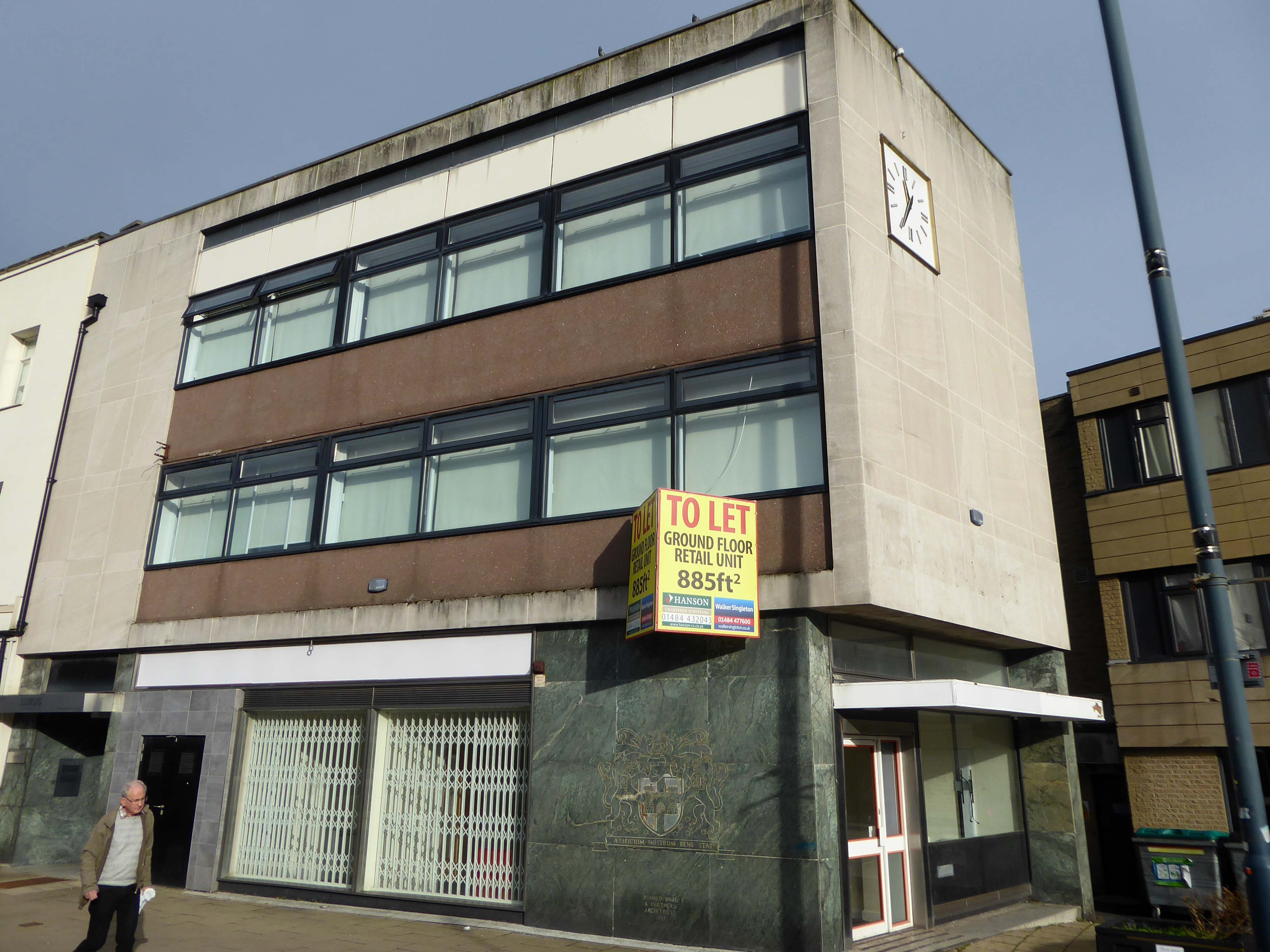
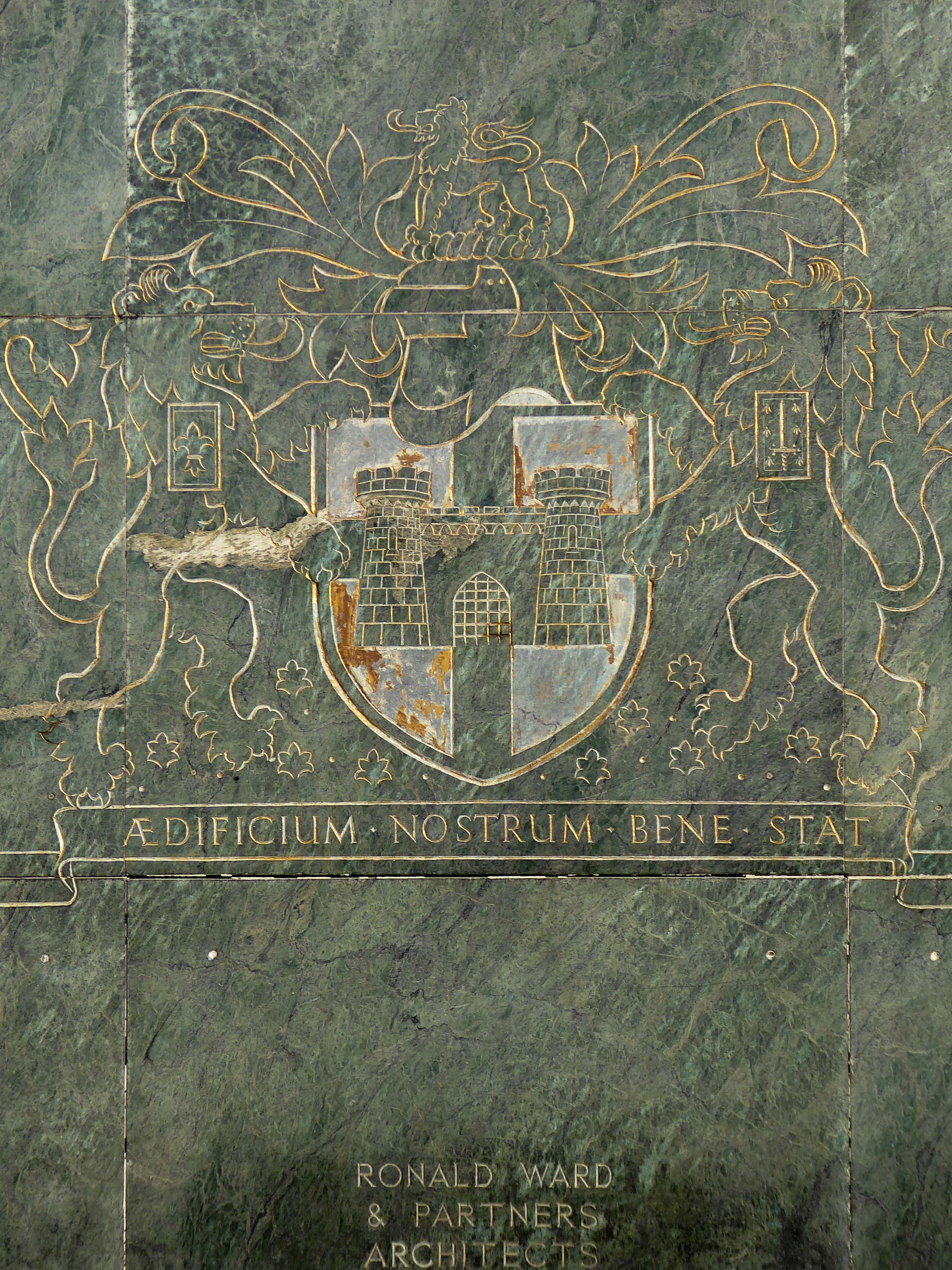
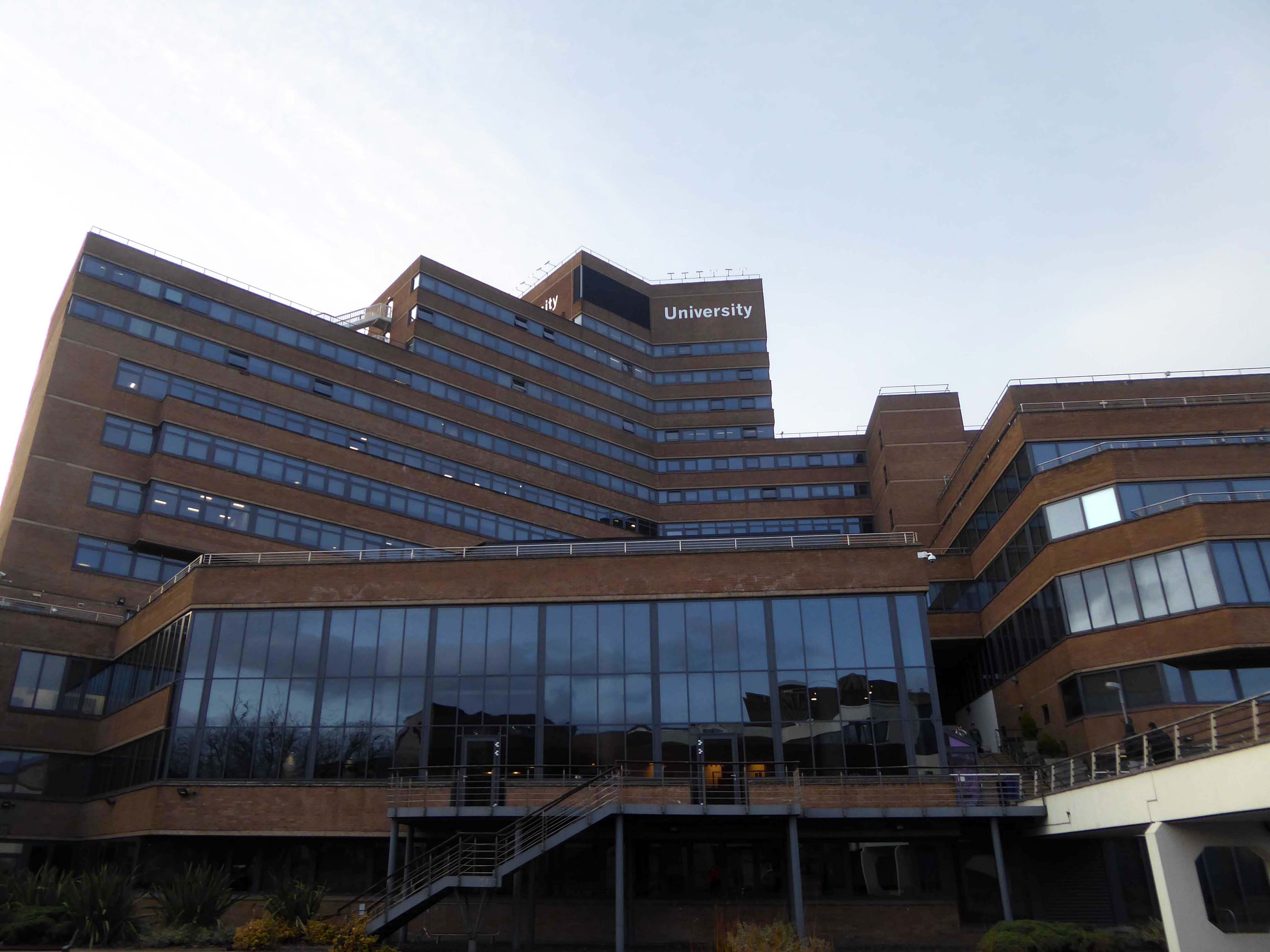
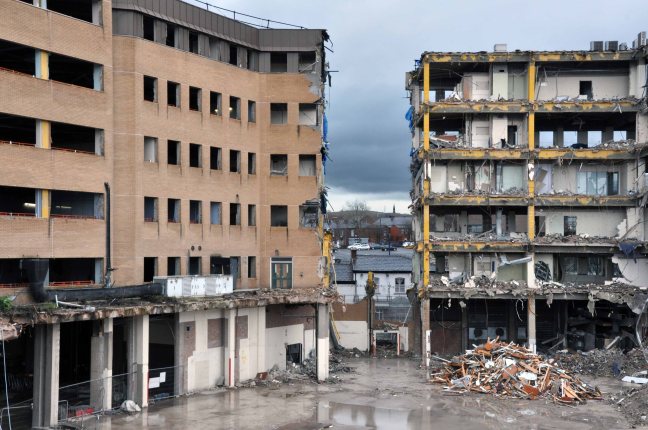
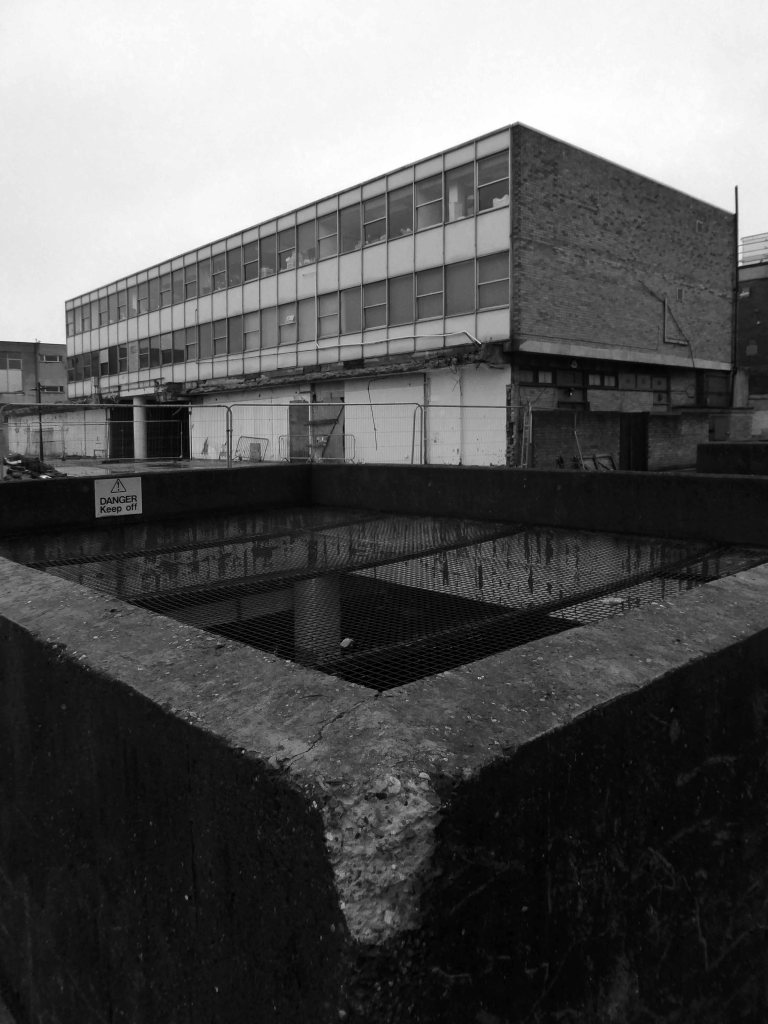
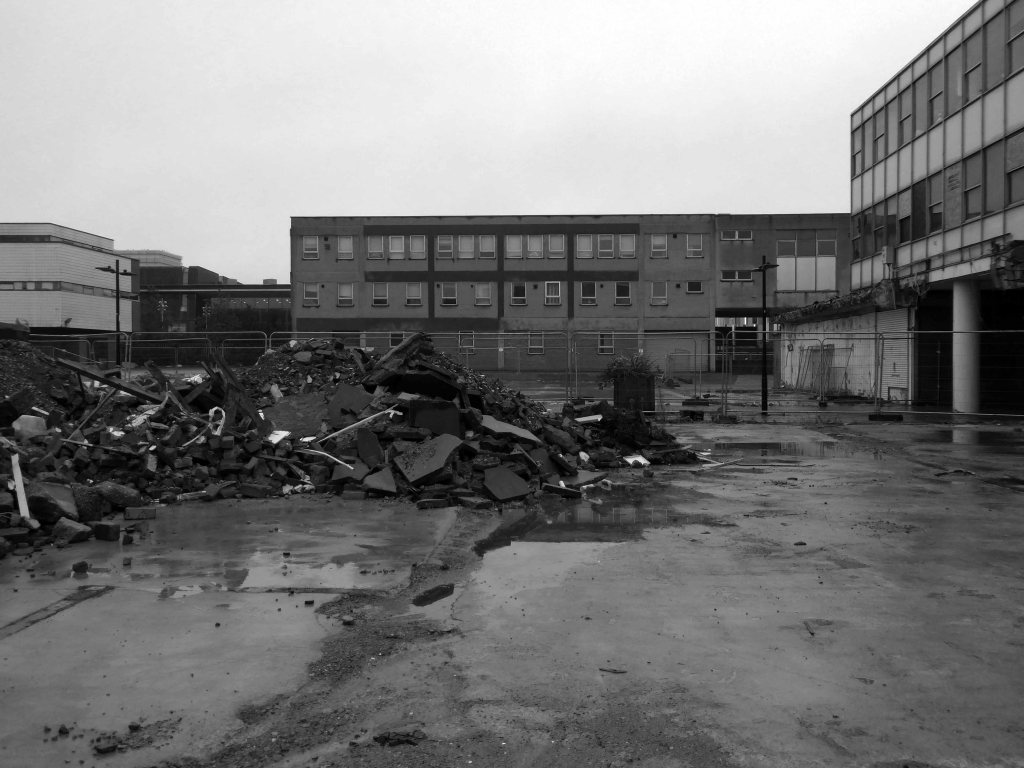
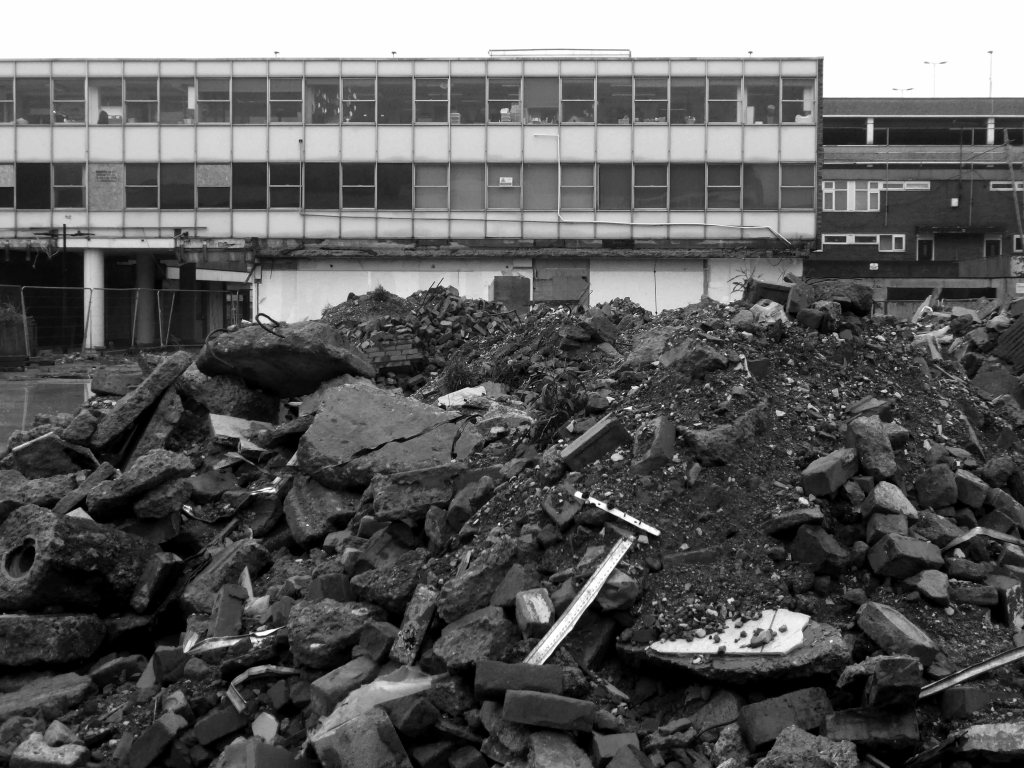
Emerging into the light of day and the demolition of the Kirklees College 1969-72 by Borough Architect Charles Edmund Aspinall.
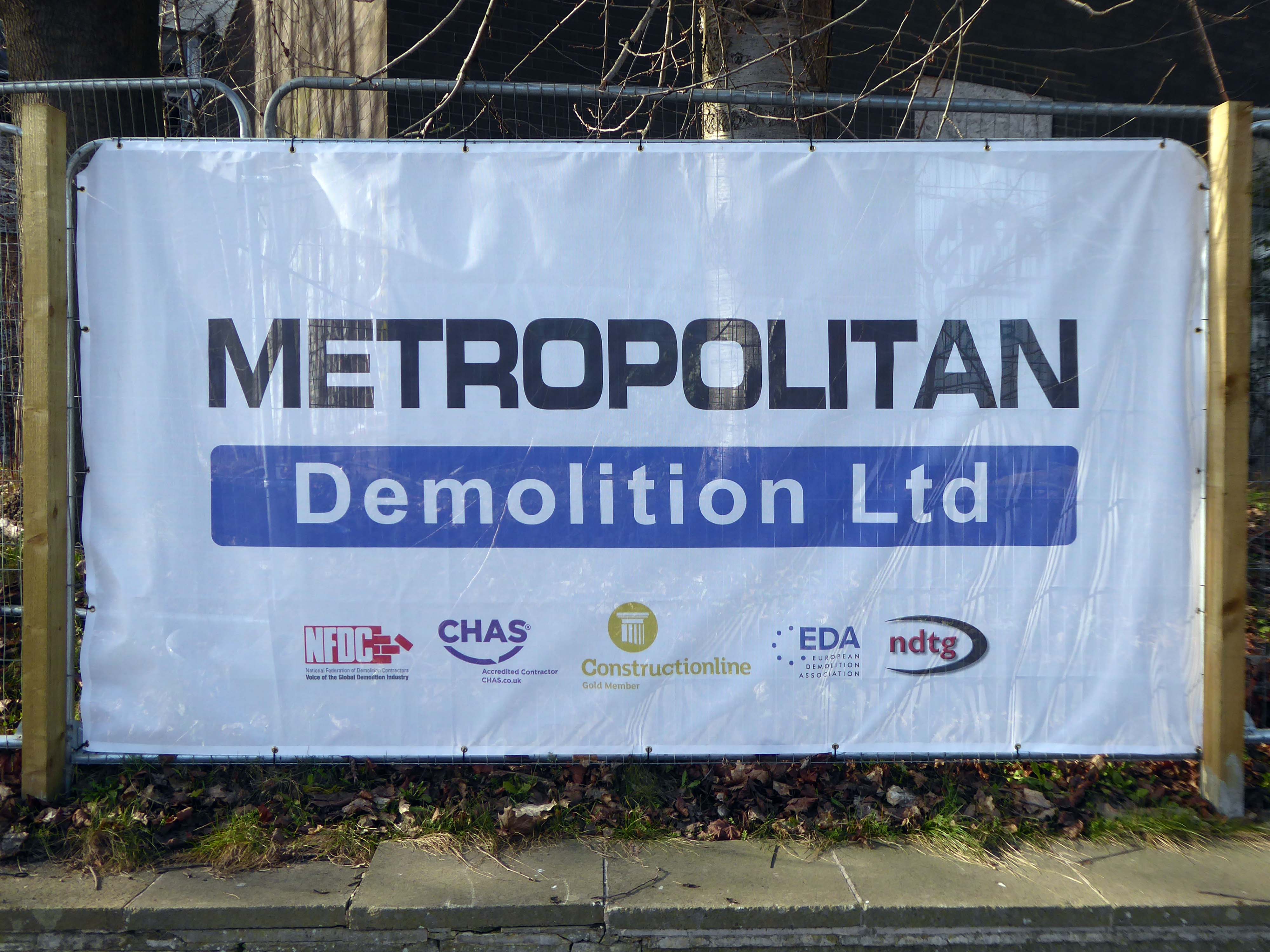
My thanks to the Metropolitan team who invited me in beyond the barriers.
We provide safe and efficient demolition services across a broad range of projects, from the small domestic dwelling to large scale industrial units – we offer the complete solution. With excellent communication and impeccable health and safety standards, we can project manage the decommissioning a structure on time and on budget.
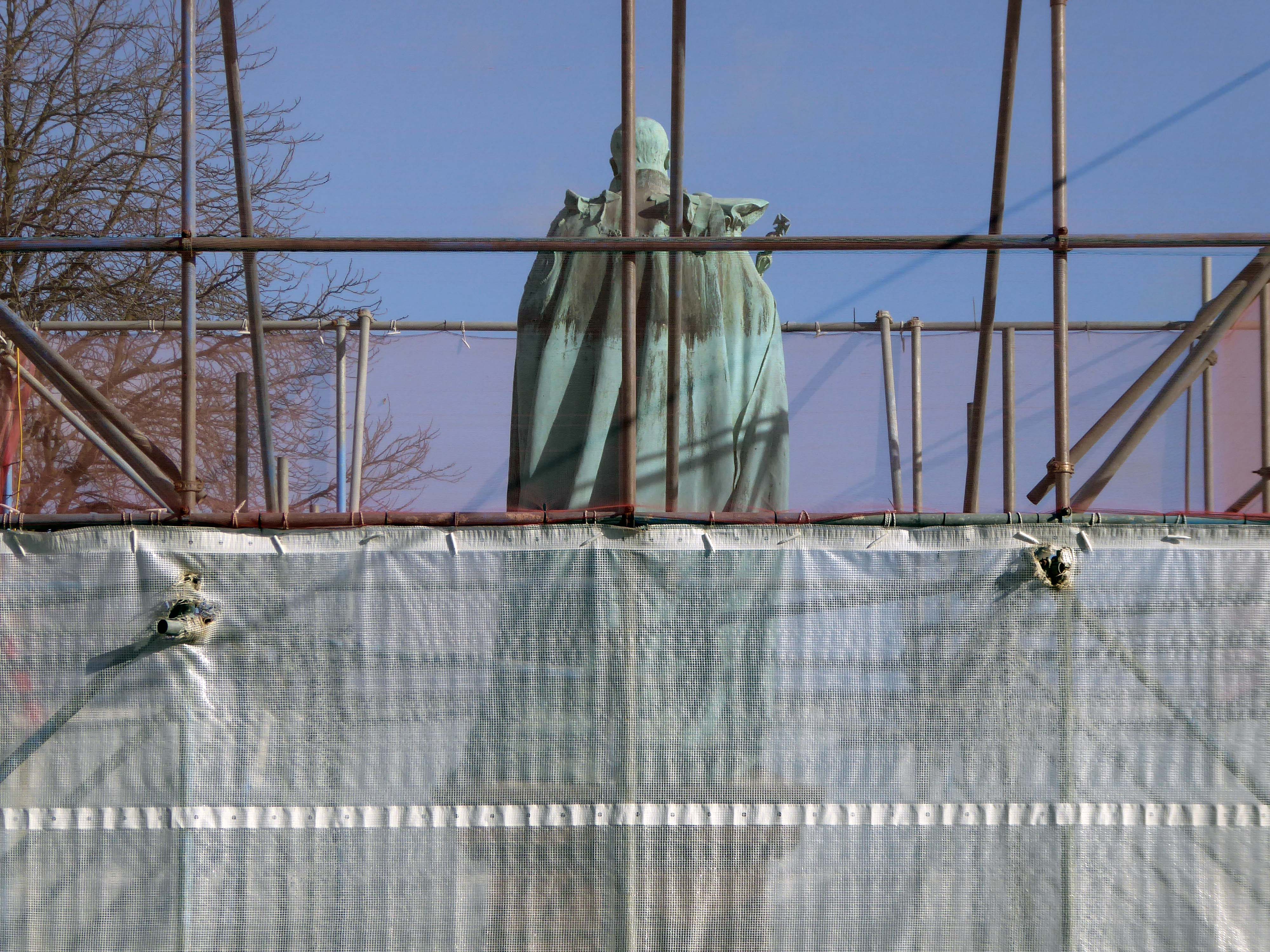
Edward VII is under wraps.
Everything else is up for smash and grab – including the later concrete block immortalised by Mandy Payne.
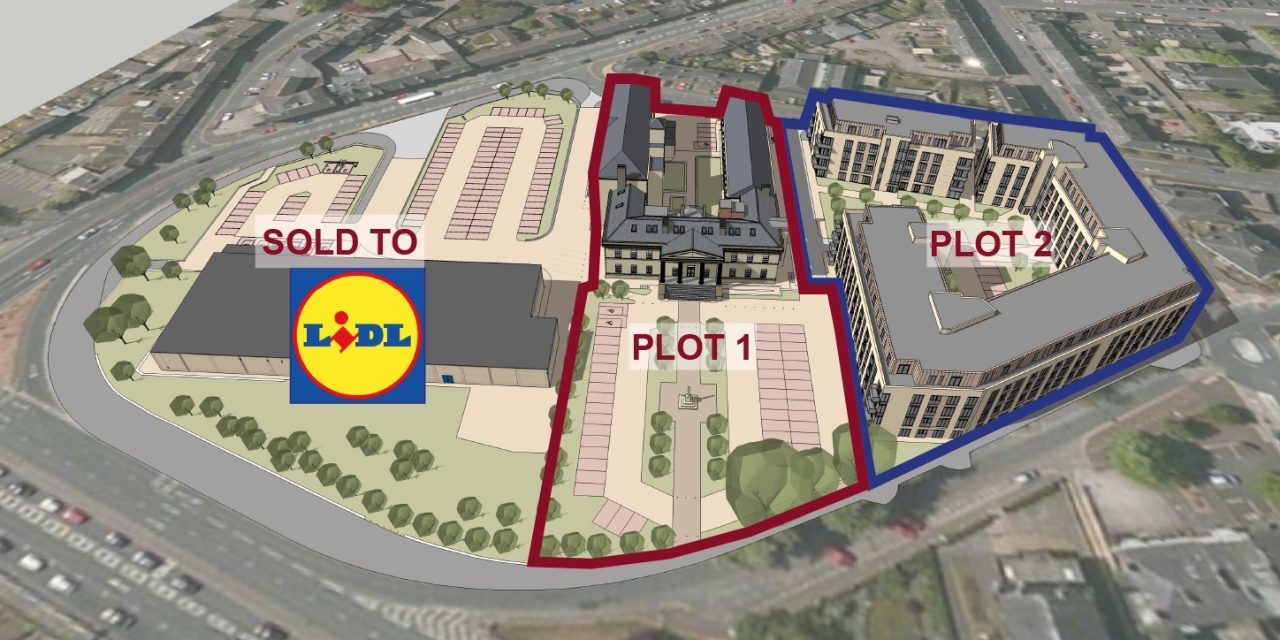
LIDL is coming – and some homes
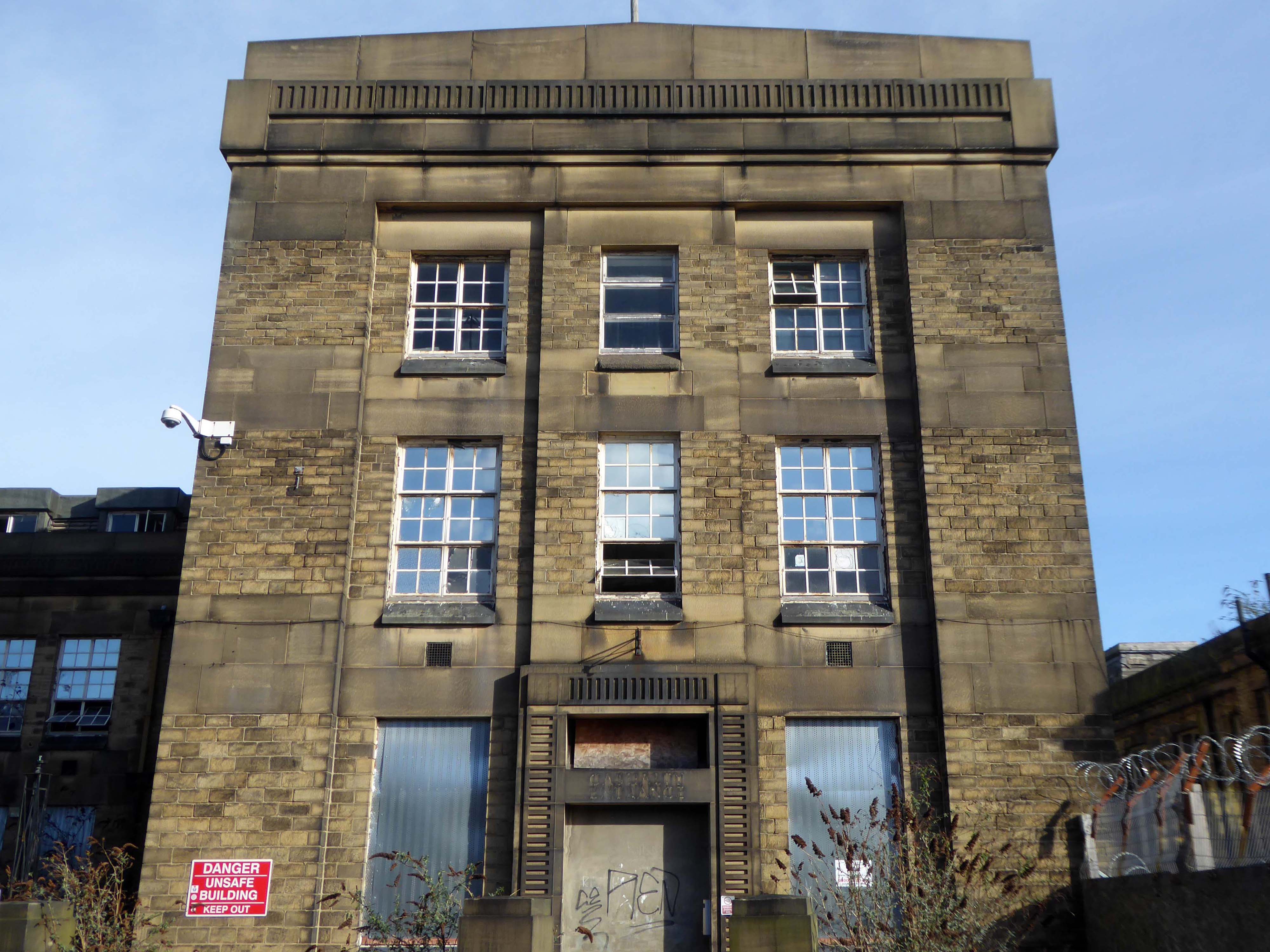
The final details have now been signed off by the council and work on the six-acre site – which includes the Grade II-listed original Huddersfield Royal Infirmary – can now begin.
The vandal-hit and fire-damaged late 1960s and early 1970s college buildings are to be demolished and Lidl will build a new supermarket with a 127-space car park. The store will eventually replace the store on Castlegate.
The former hospital will be retained and the site will see 229 apartments and an office complex. The apartments are expected to be for older or retired people.
Huddersfield’s £20M game-changing bus station is set to be completed by the end of 2025 with a living grass roof, sixty bike cycle hub, upgraded shops and new facilities
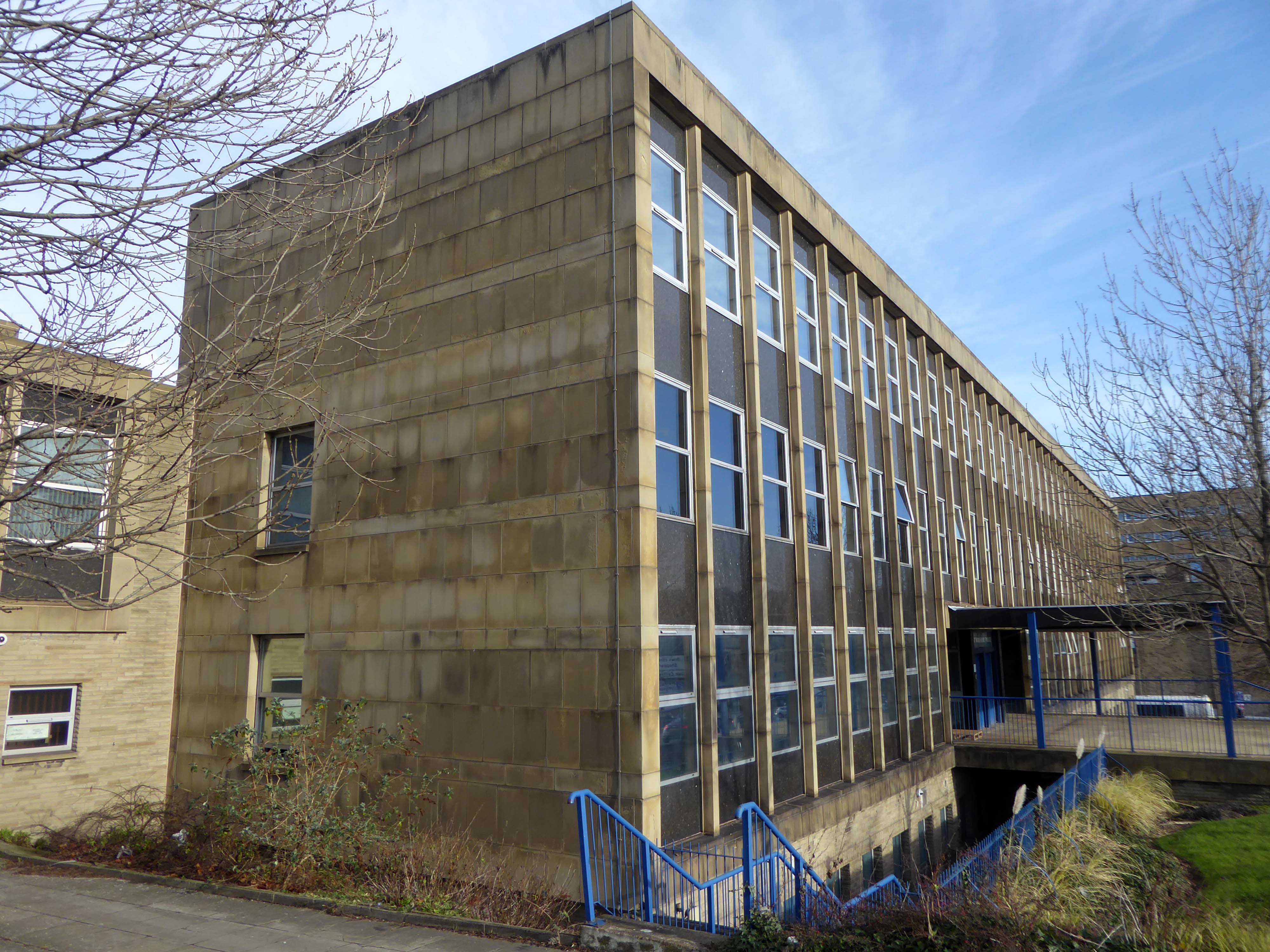
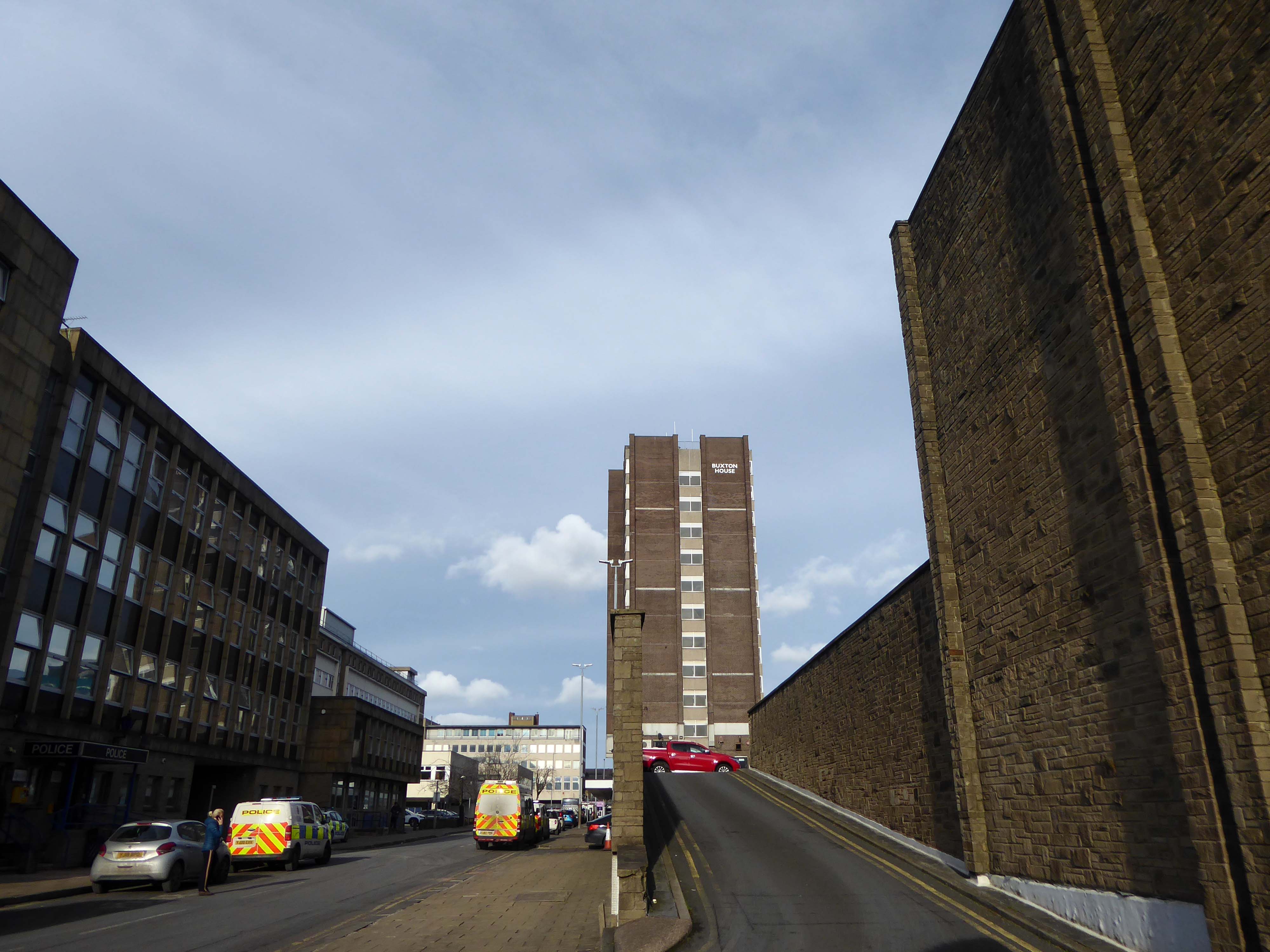
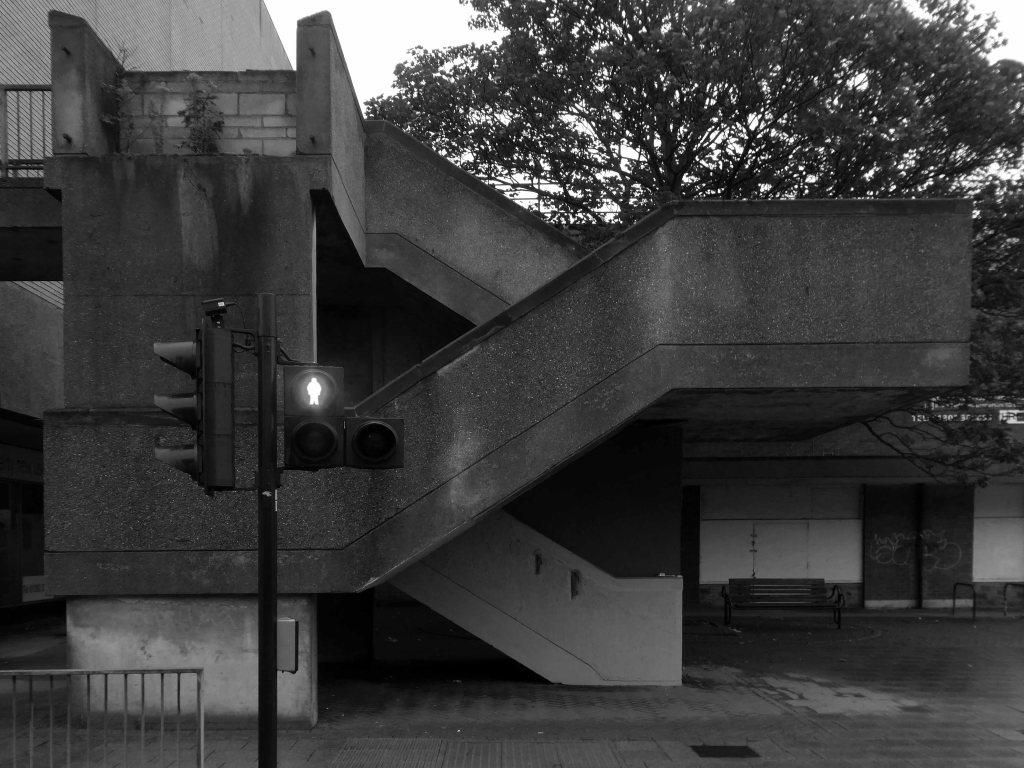
Crossing the road to the Civic Centre and the perennially empty piazza which along with the Magistrates Courts and Police Station was the work of the Borough Architects team – led by Charles Edmund Aspinall.
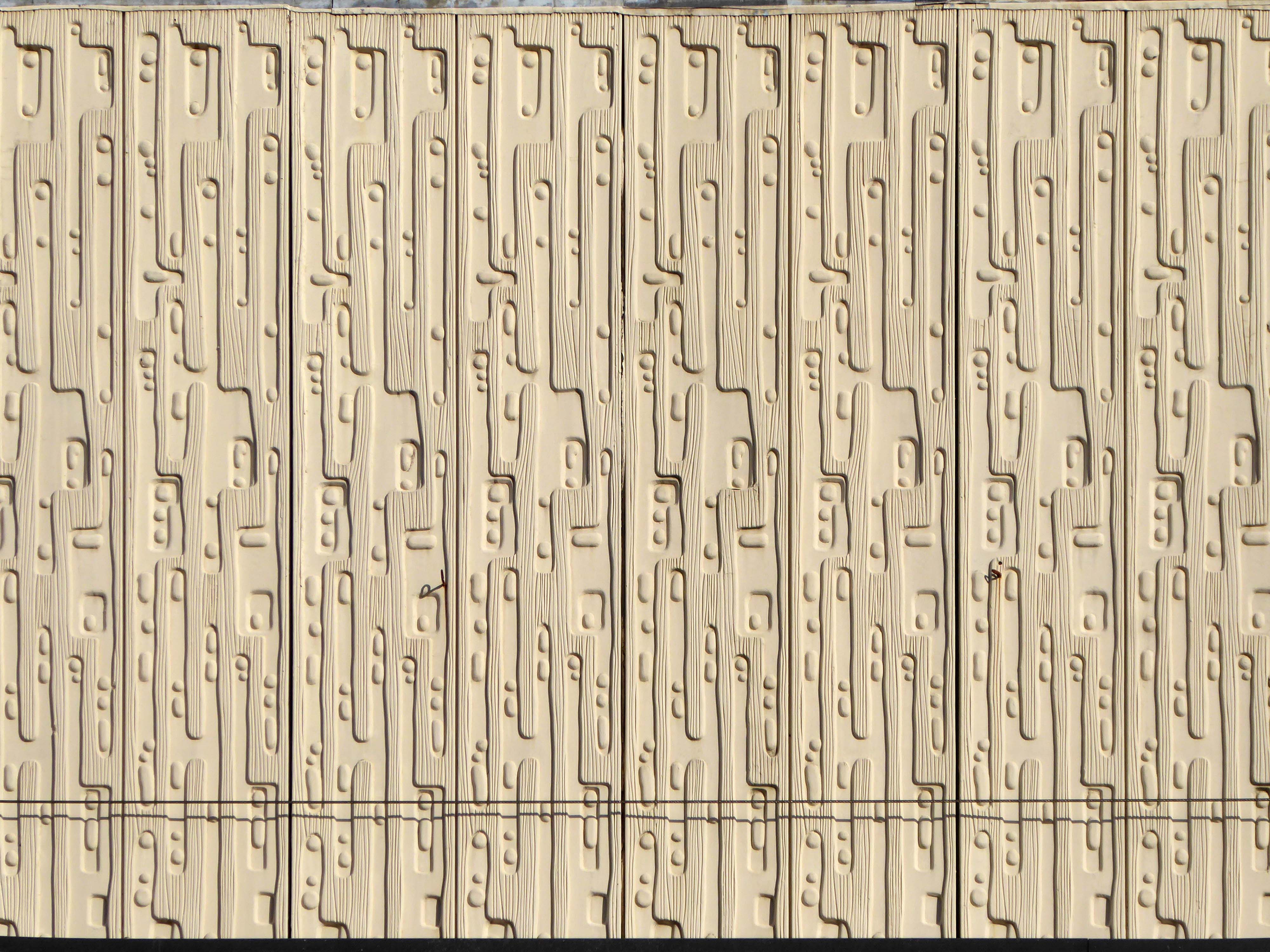
Walking excitedly toward the Exsilite panels set in the stone faced columns – a brand name for a synthetic, moulded, artificial marble.
Magistrates Courts
Police Station
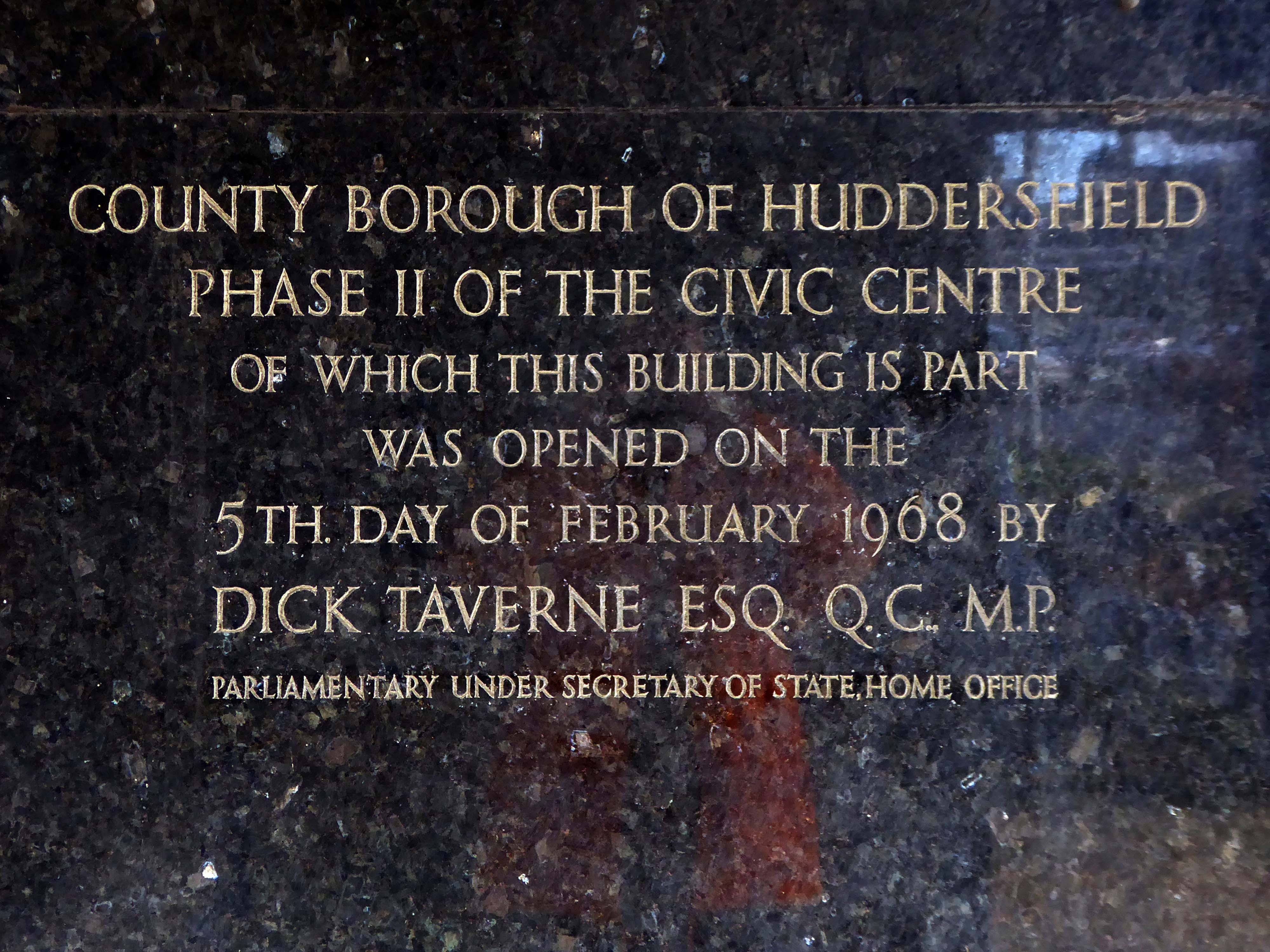
Dick Taverne served under Harold Wilson’s premiership in the 1960s, he served as a Home Office Minister from 1966 to 1968, Minister of State at the Treasury from 1968 to 1969 and then as Financial Secretary to the Treasury from 1969 to 1970.
In 1970, he helped to launch the Institute for Fiscal Studies, now an influential independent think tank and was the first Director, later chairman.
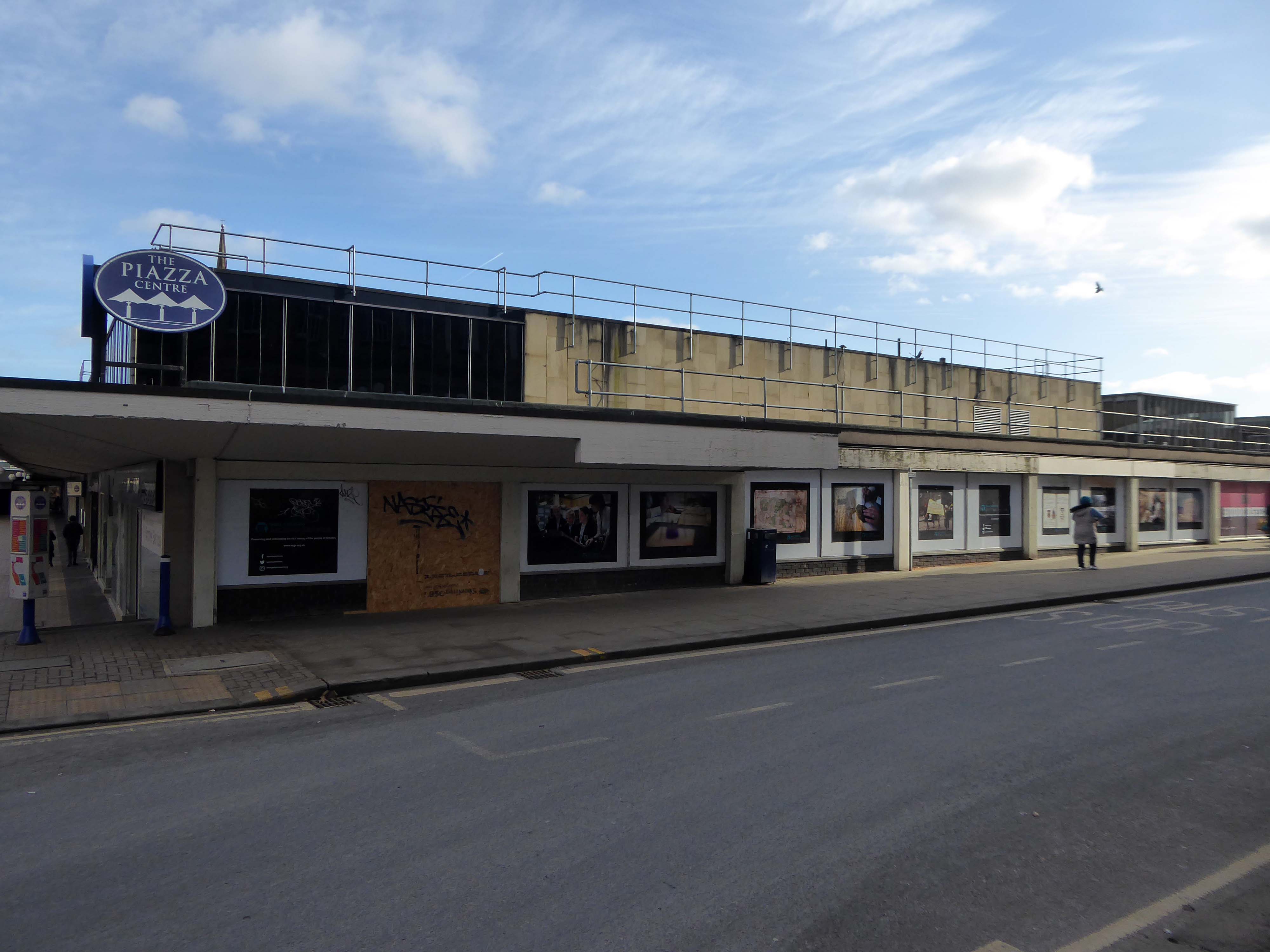
The vision is to create an inclusive space where families, residents and visitors can enjoy a vibrant mix of music, arts, food and more in one central area, overlooking a stunning new urban park.
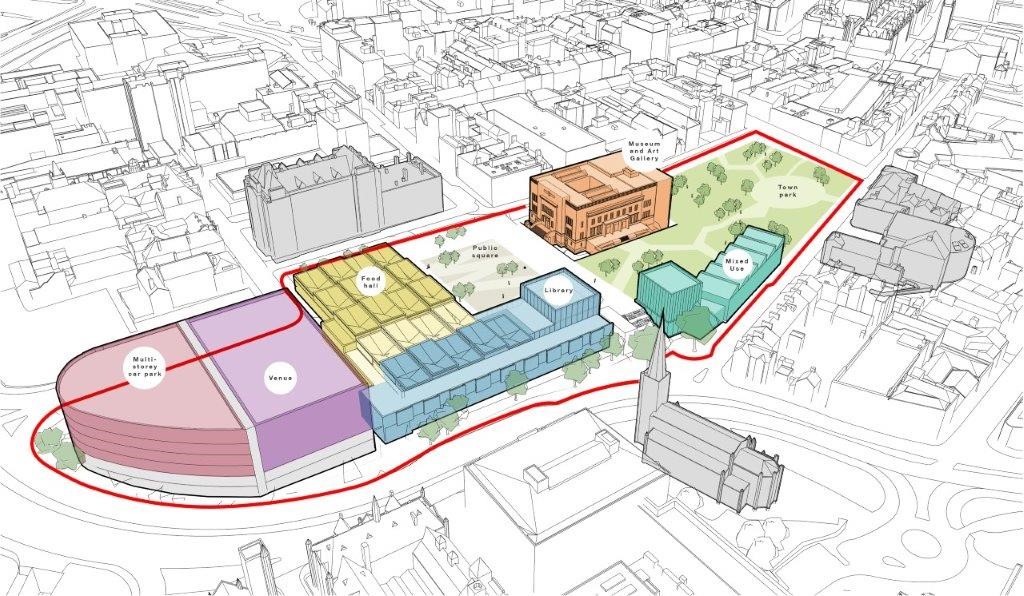
The council plans to demolish the Piazza Centre and create a new events/live music venue, a food hall, a museum and art gallery, a new library and a new multi-storey car park, all centred around a new Town Park.
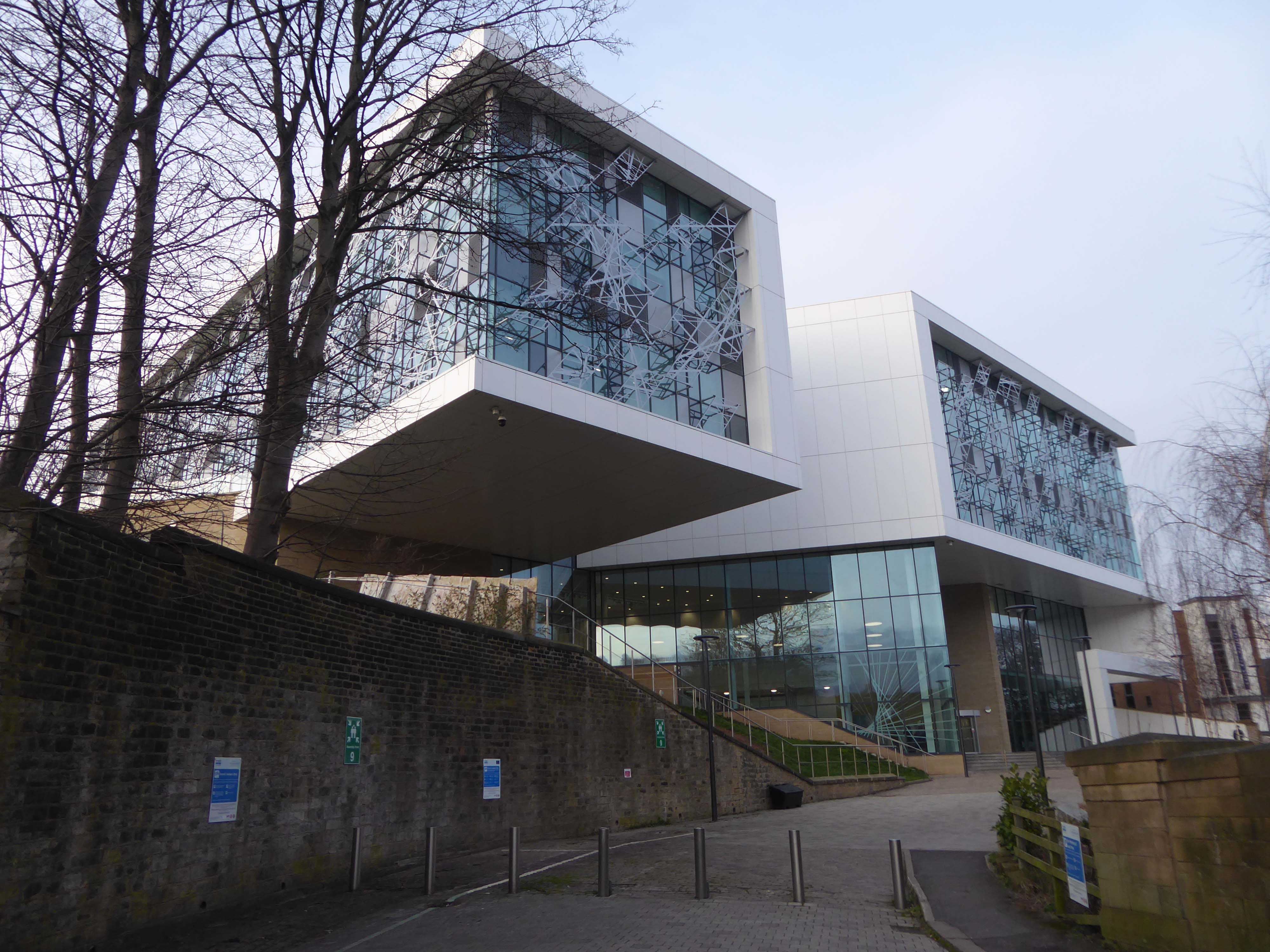
Named after one of the Twentieth Century’s finest artists, the space nurtures a new and inspired generation of designers. Through visual and physical connection, the environment encourages students to work together, stimulating communication and ingenuity, the ingredients of successful collaboration.
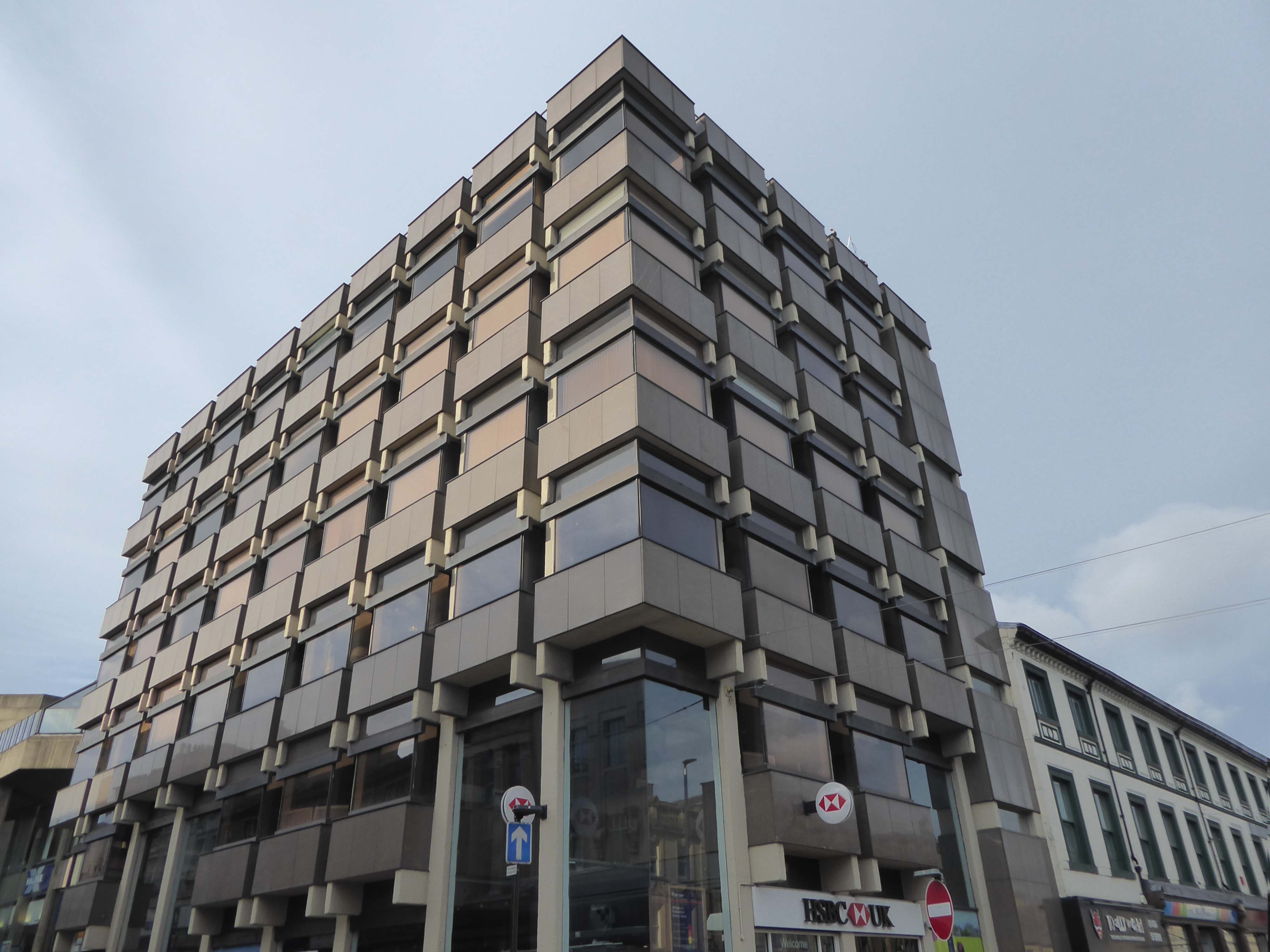
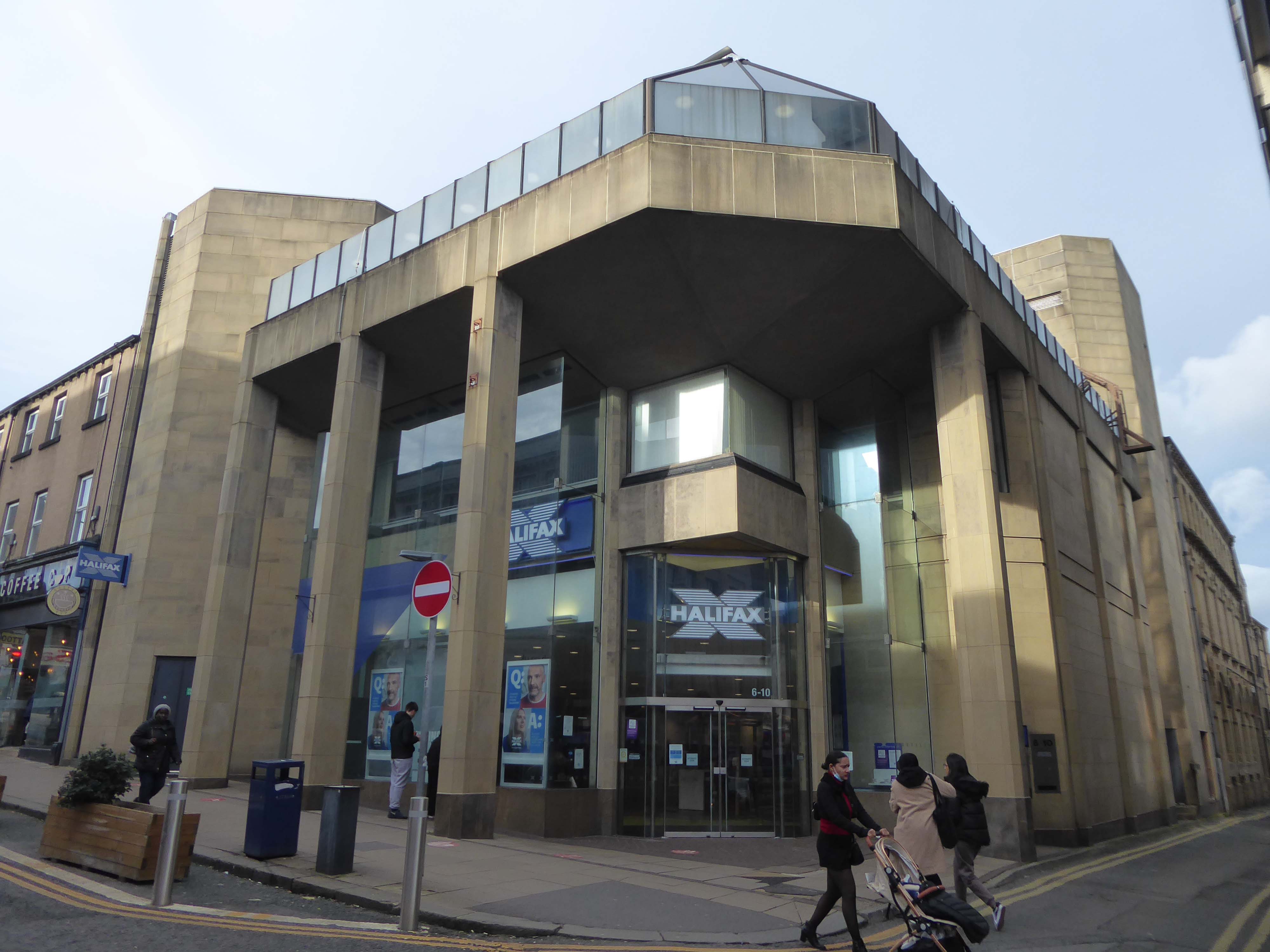
Take that to the bank/s
Keep savin’, keep buildin’ That interest for our love Take that to the bank Keep savin’, keep buildin’ That interest for our love Take that to the bank
HSBC was designed by Peter Womersley, who also designed the thoroughly modern private house, Farnley Hey, near Castle Hill, which won the RIBA Bronze Medal in 1958.
Halifax Building Society
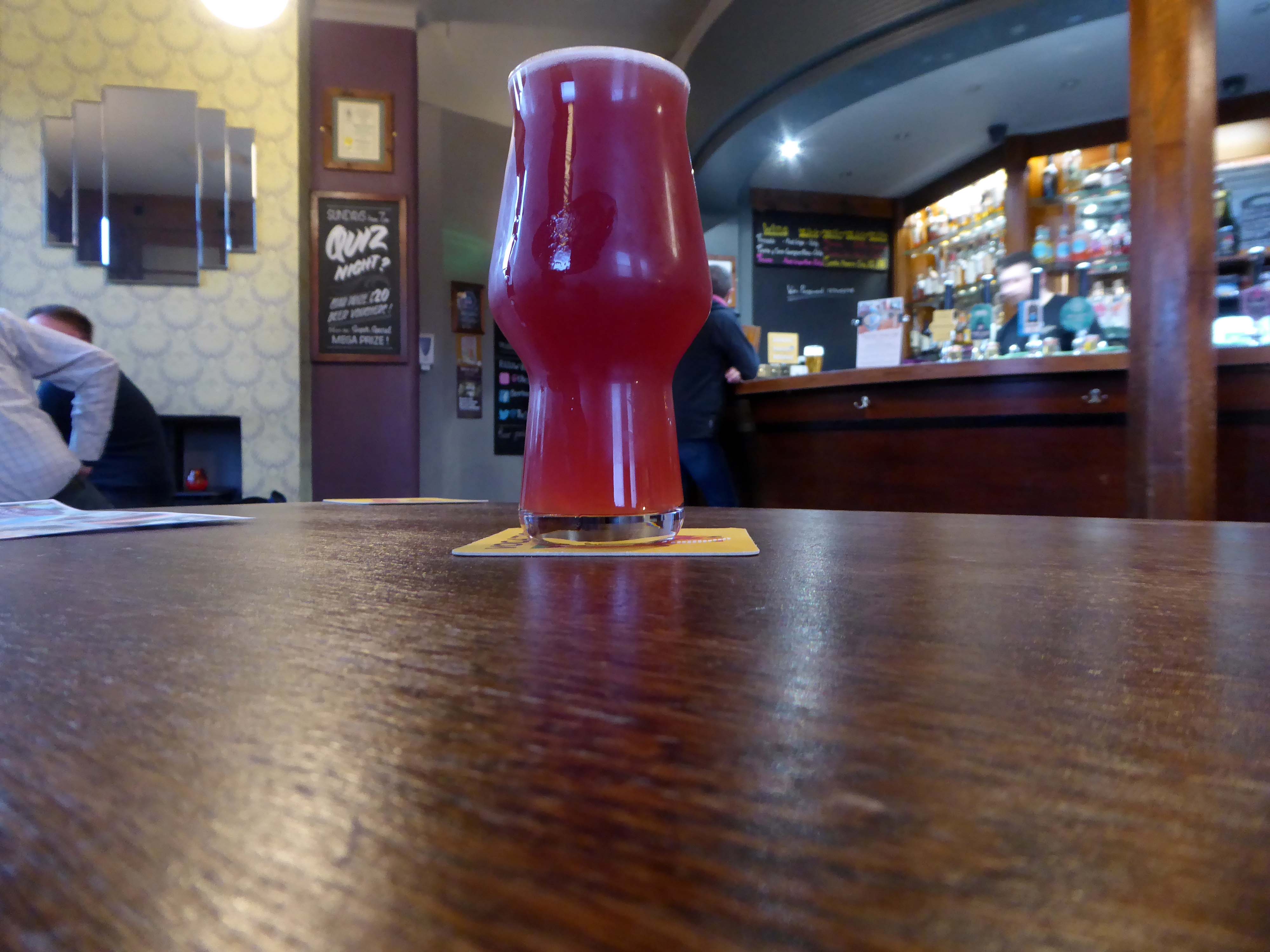
Having walked around town for more hours than enough I sought respite in The Sportsman and a glass of Squawk multi-berry fruited sour
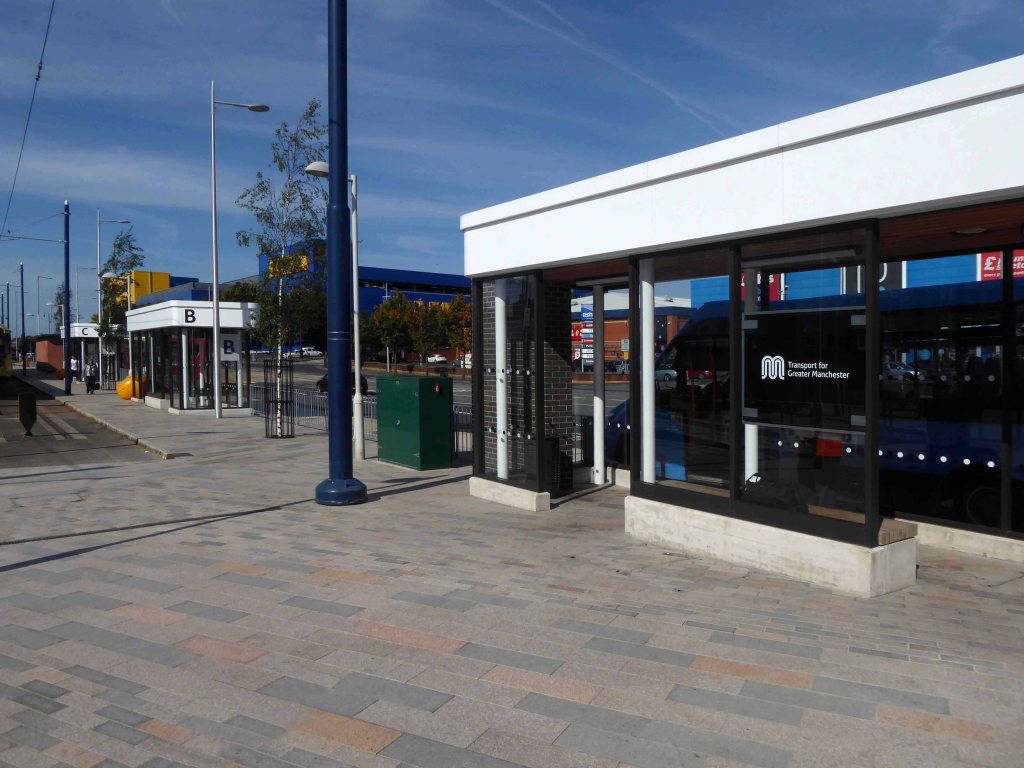
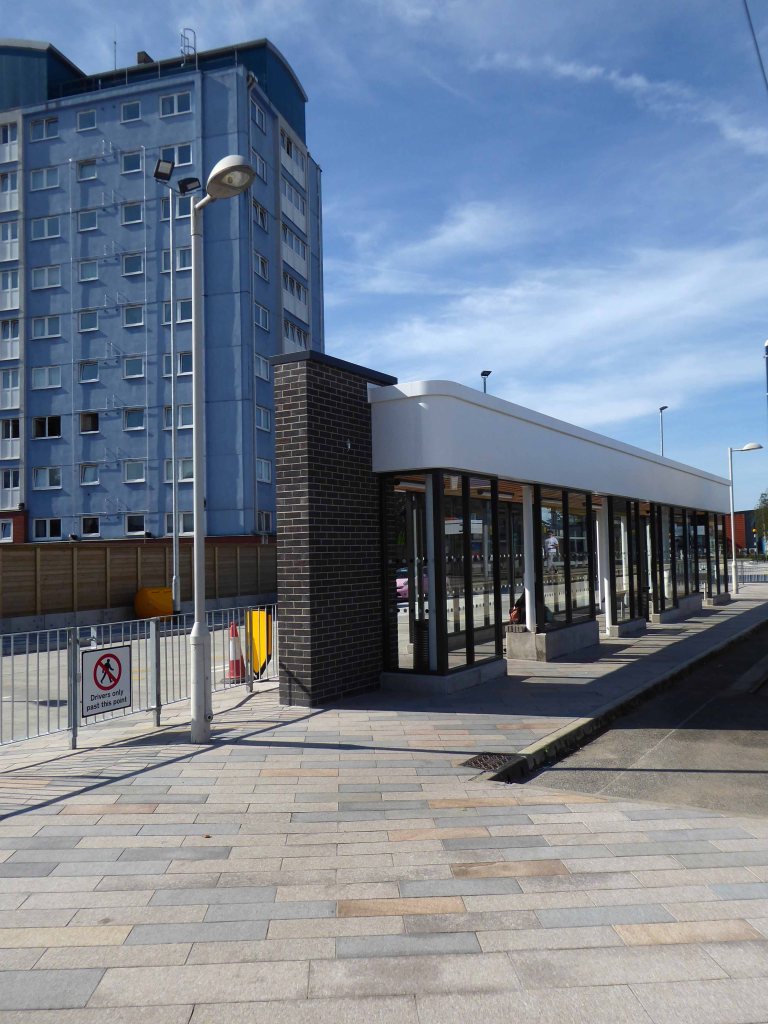
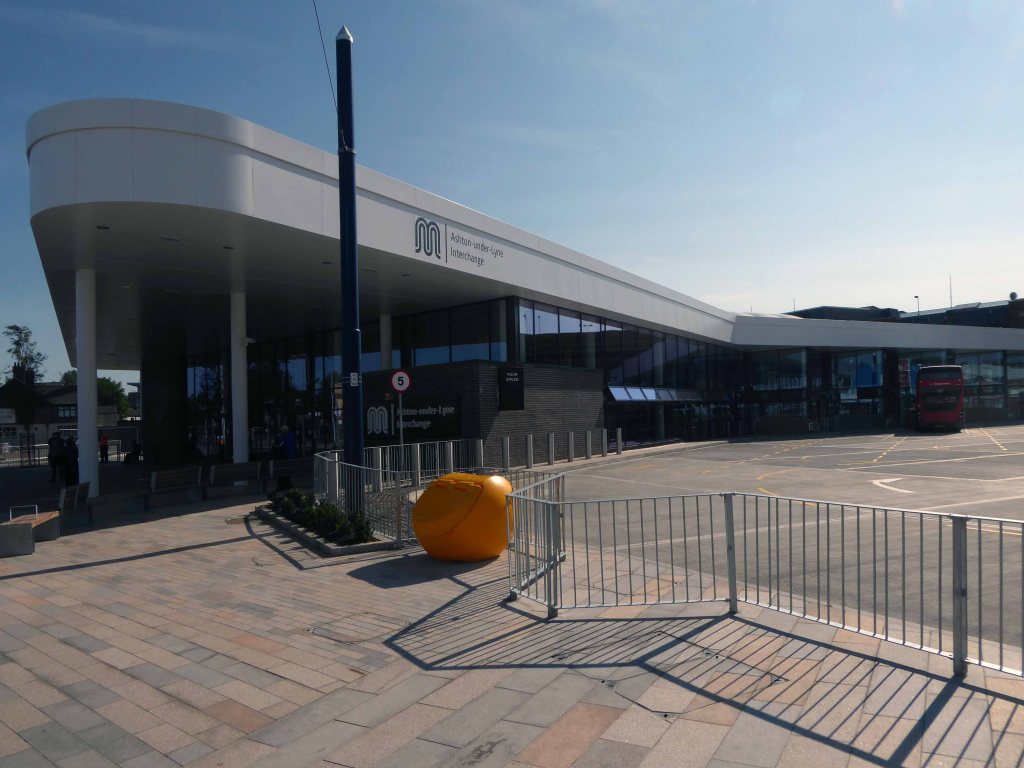
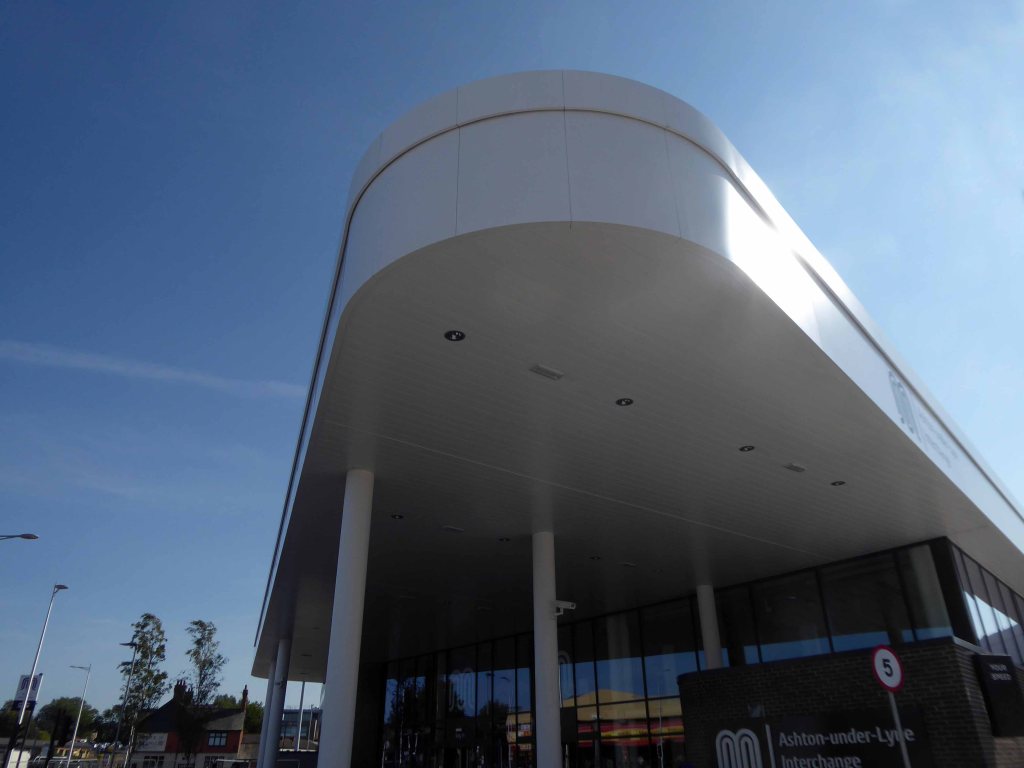
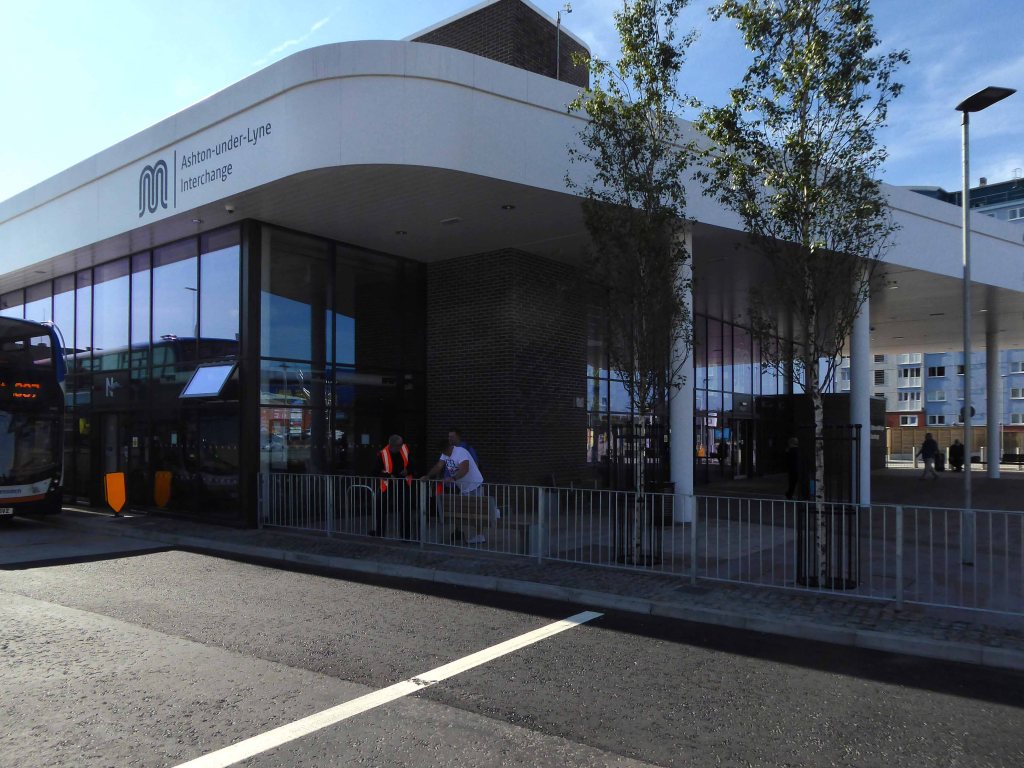
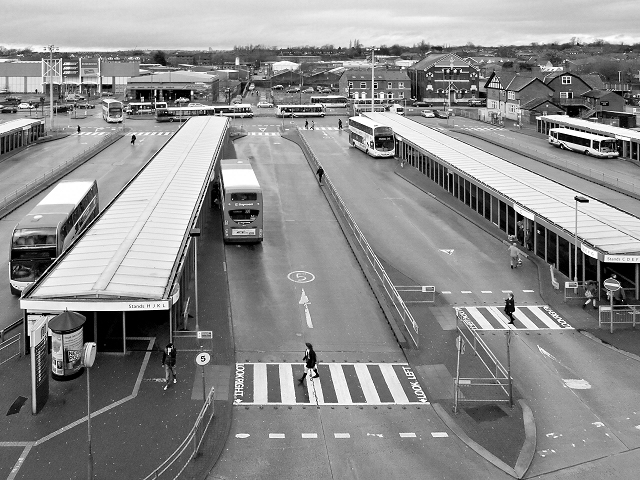
This time as an interchange, where bus, tram and train converge – the most modern of modern ideas.
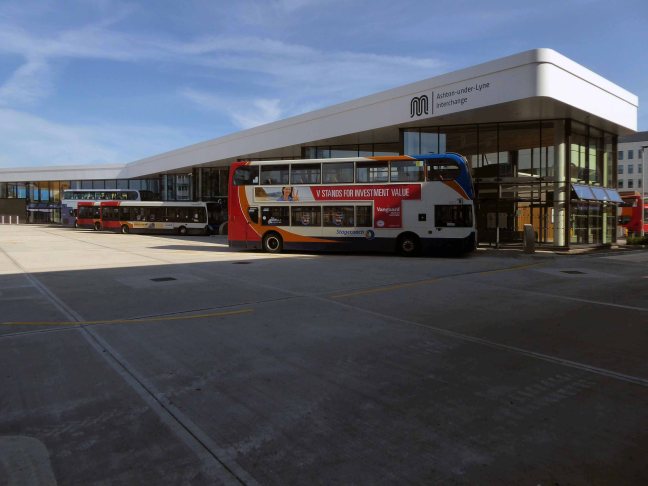
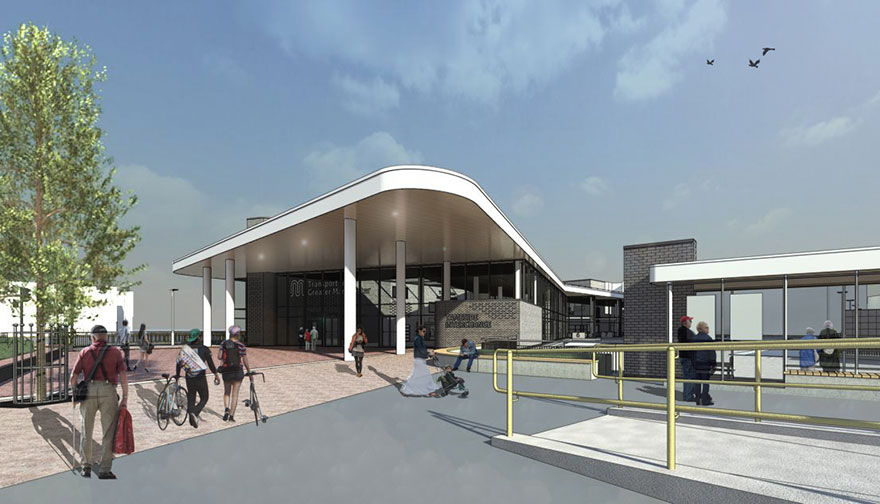
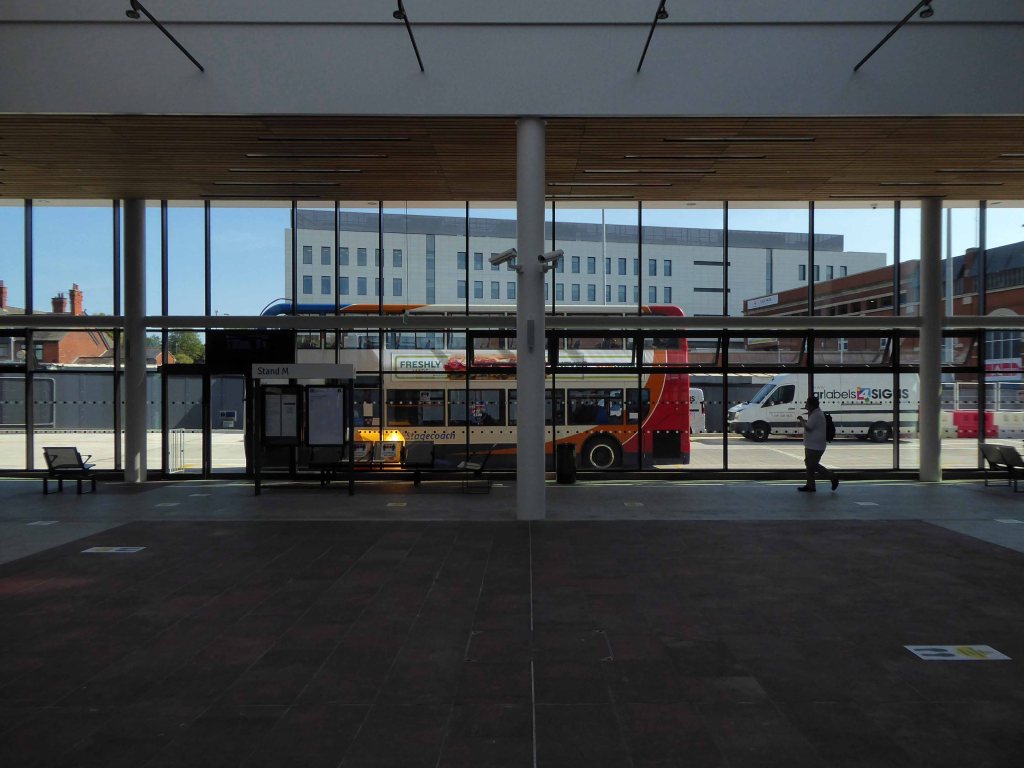
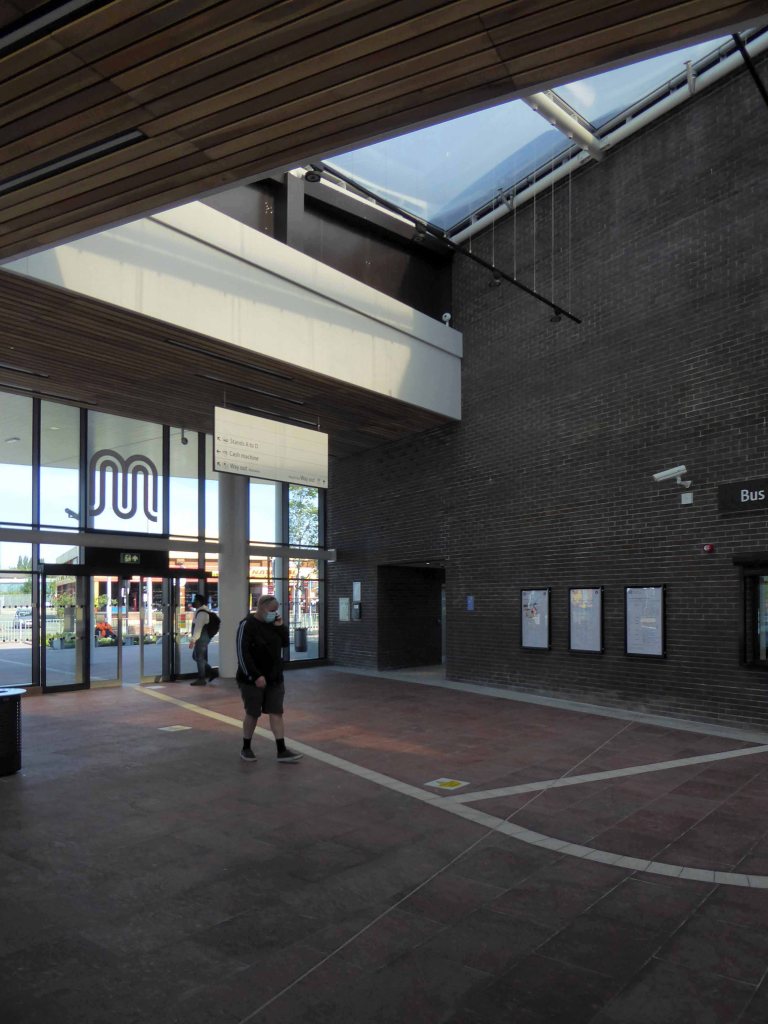
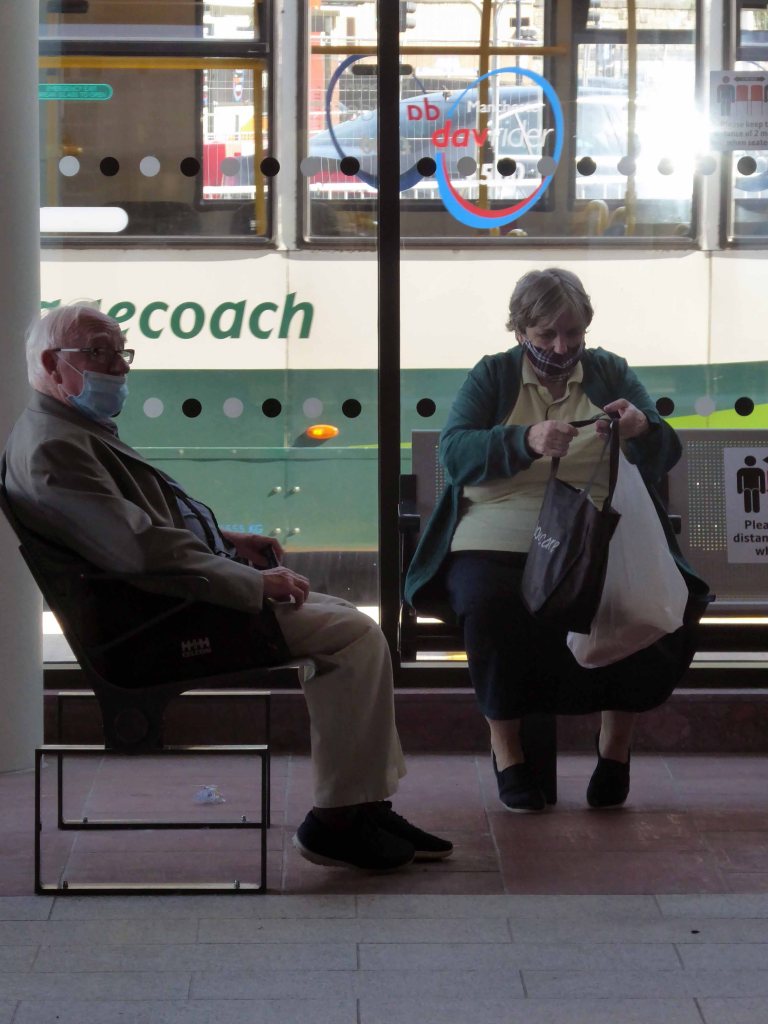
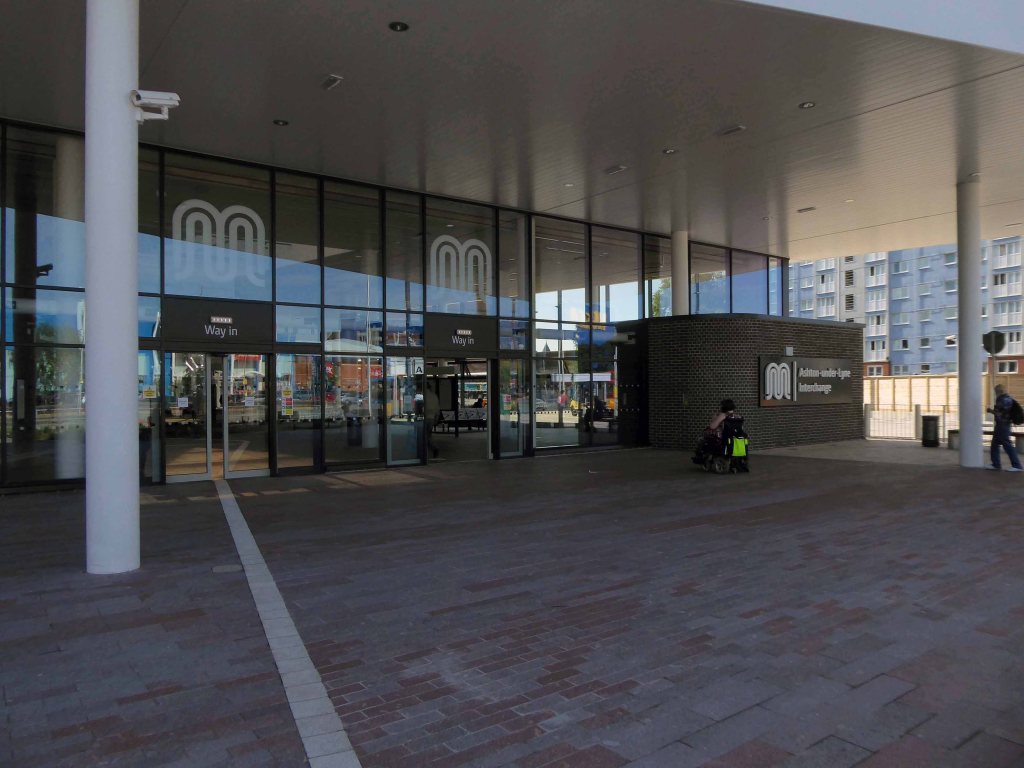
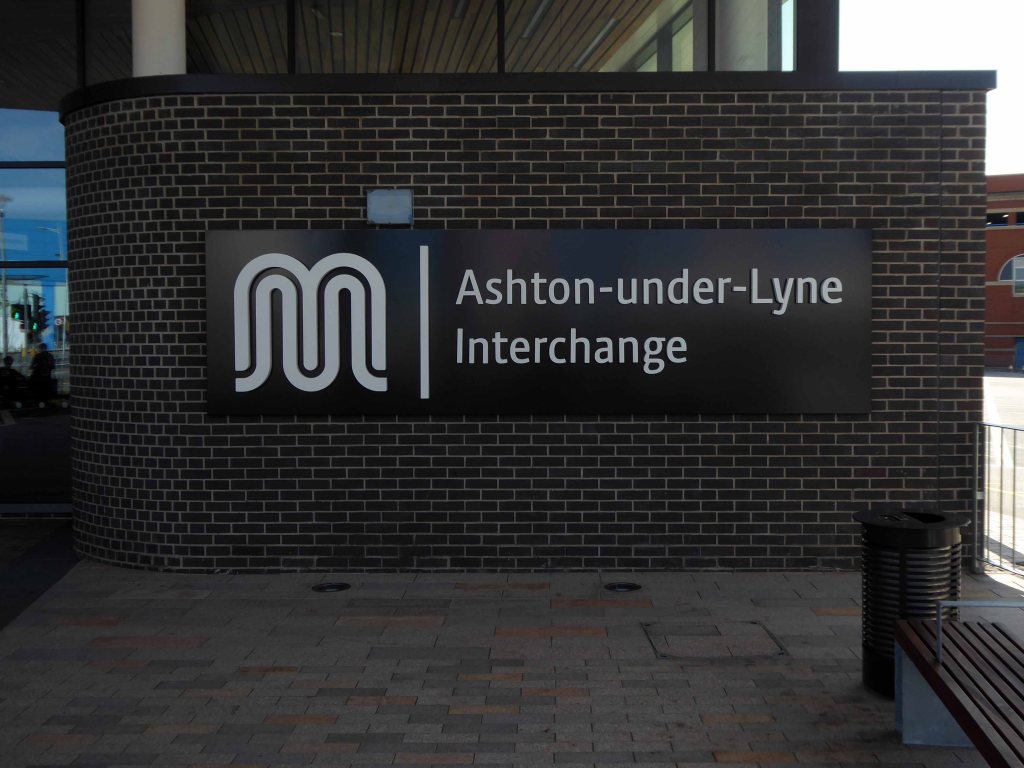
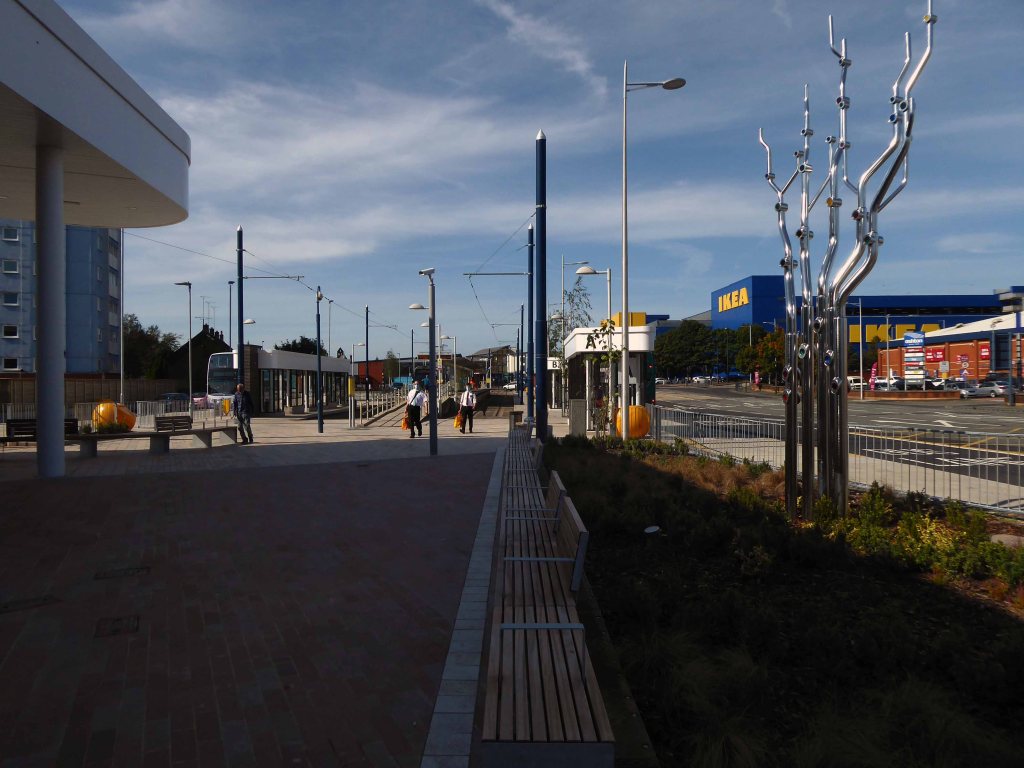
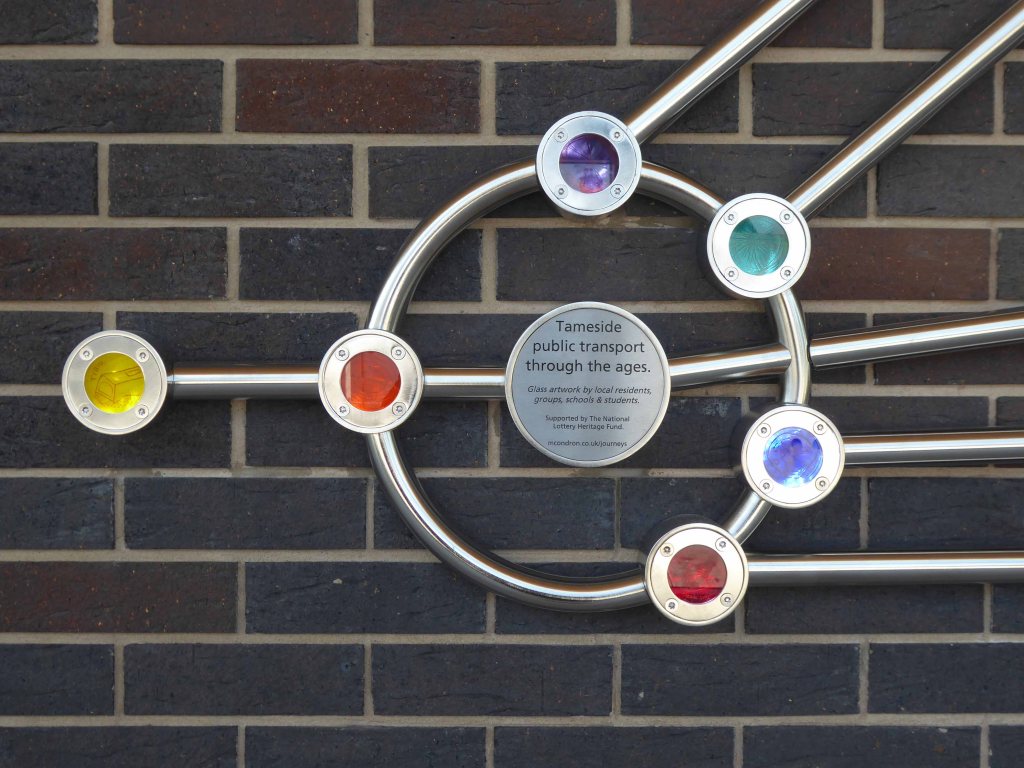
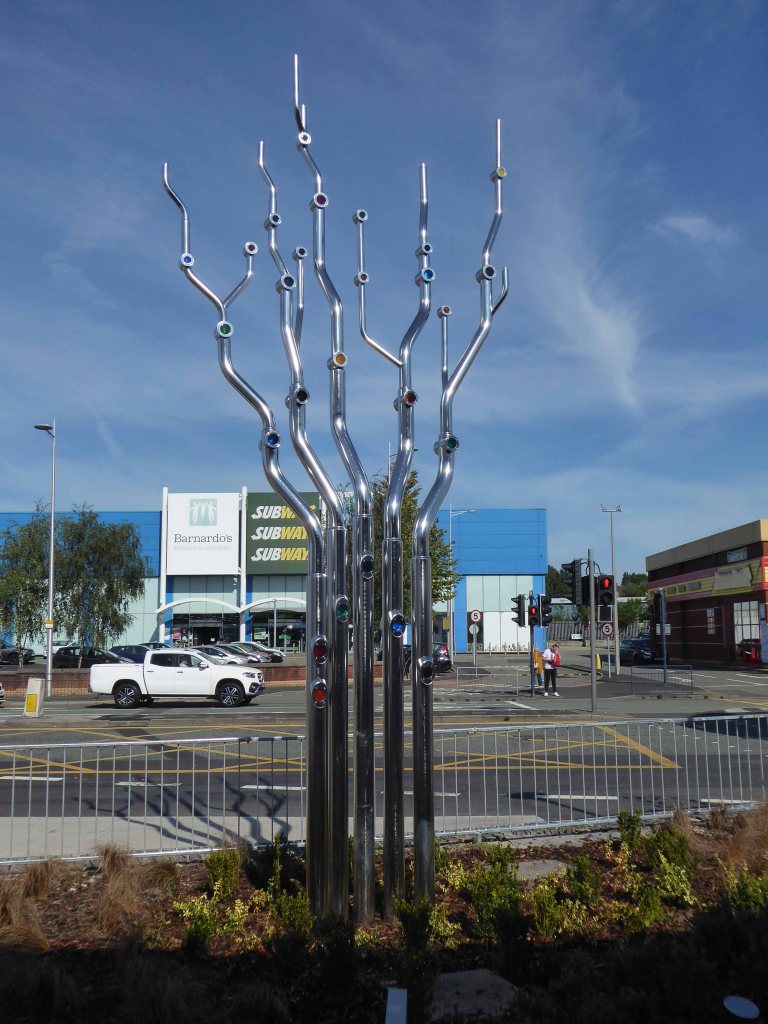
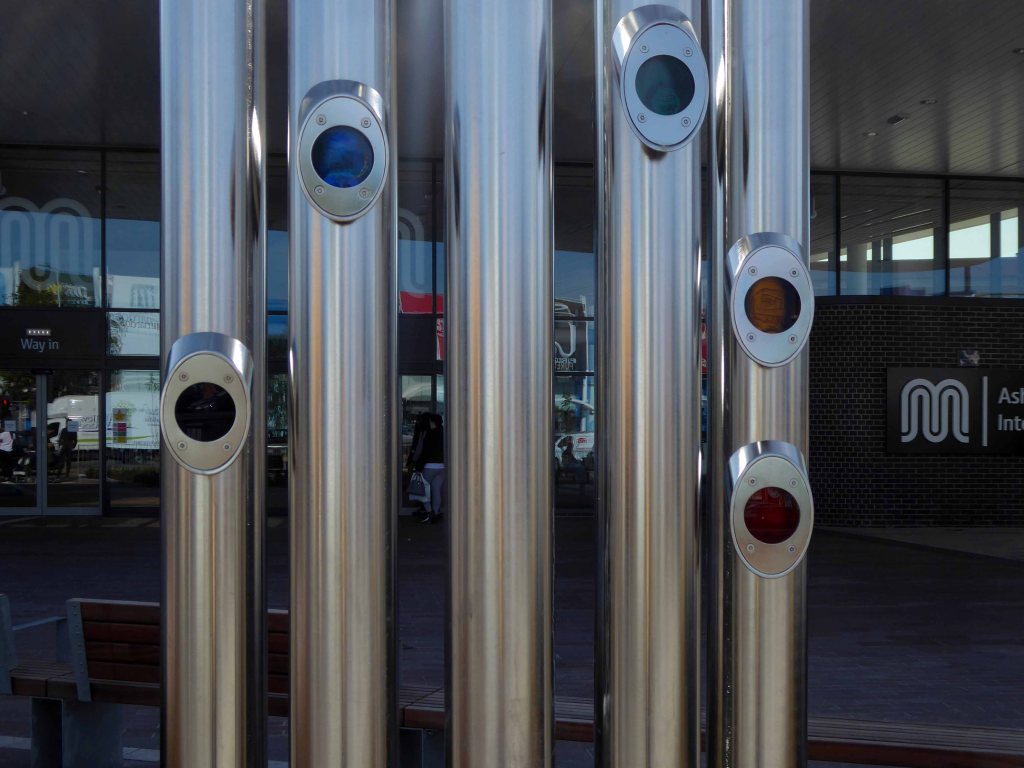
The brand-new Ashton-under-Lyne Interchange is now open, providing passengers with much-improved facilities and a modern, accessible gateway to the town.
The Interchange supports the economic growth of the town and helps people to get to and from their places of work as well as Ashton’s great shops, markets, restaurants and bars in a modern, safe and welcoming environment.
The Interchange has been developed by Transport for Greater Manchester in partnership with Tameside Council and funded with support from central government’s Local Growth Deal programme.
The building contractor was VINCI Construction UK.
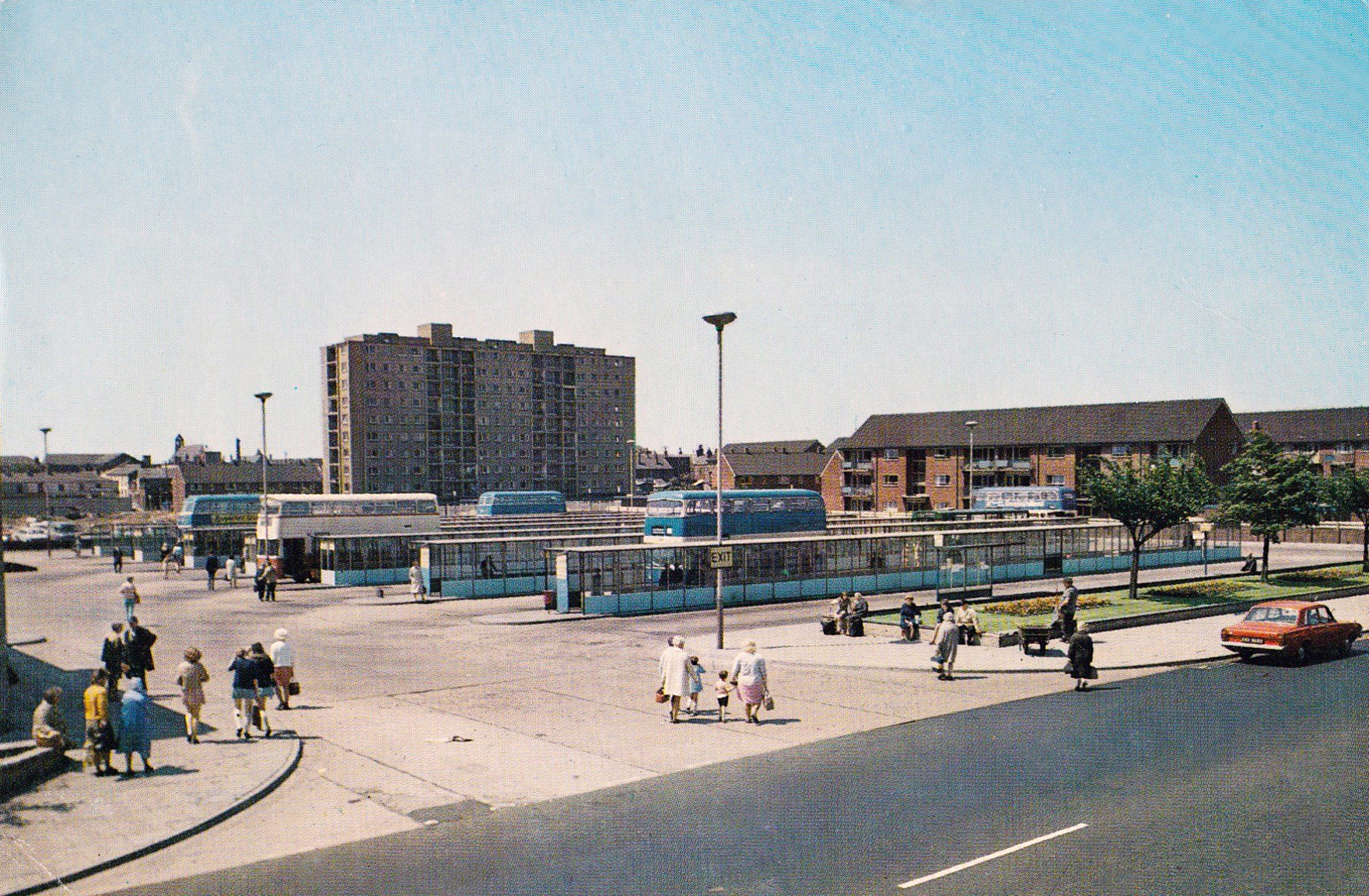
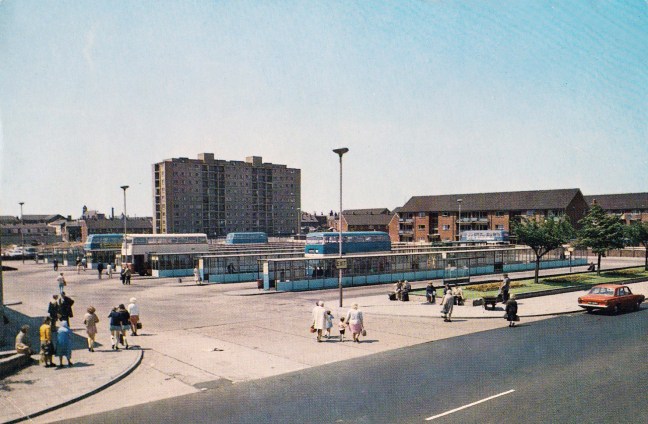
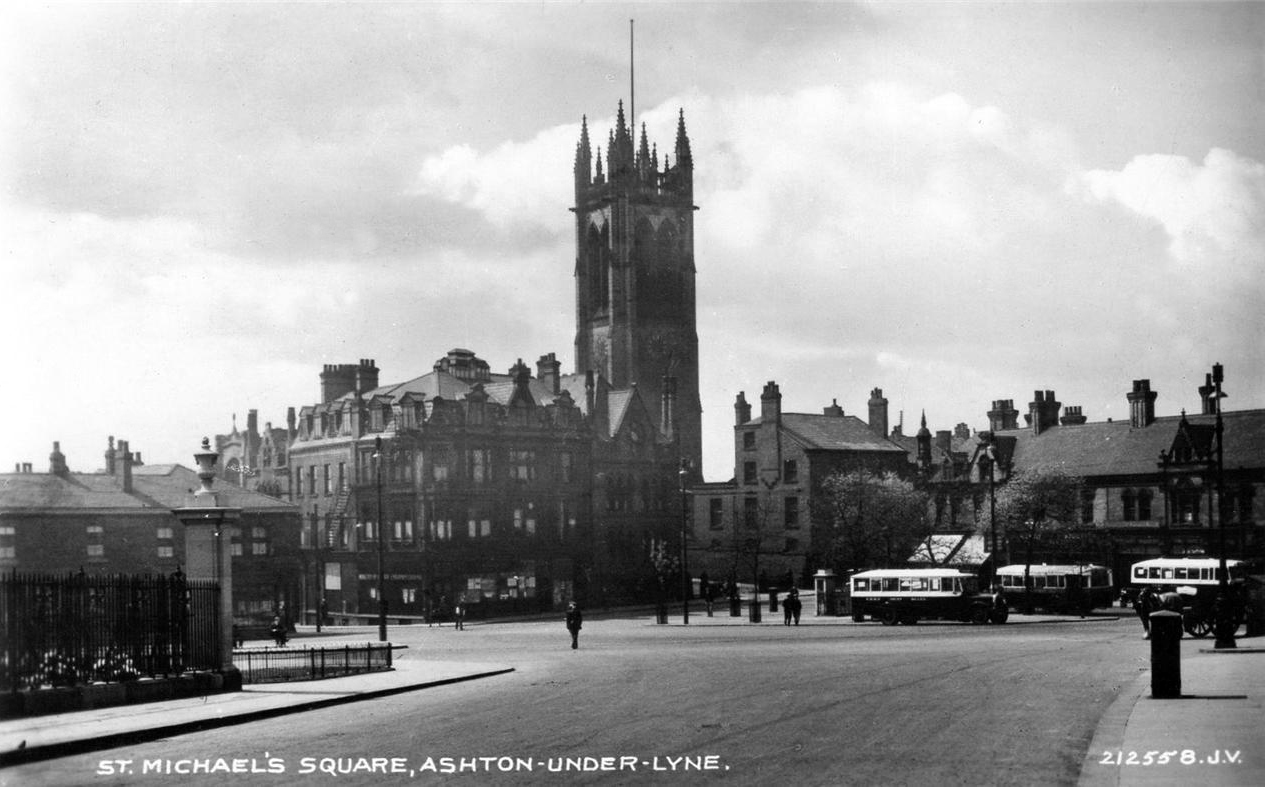
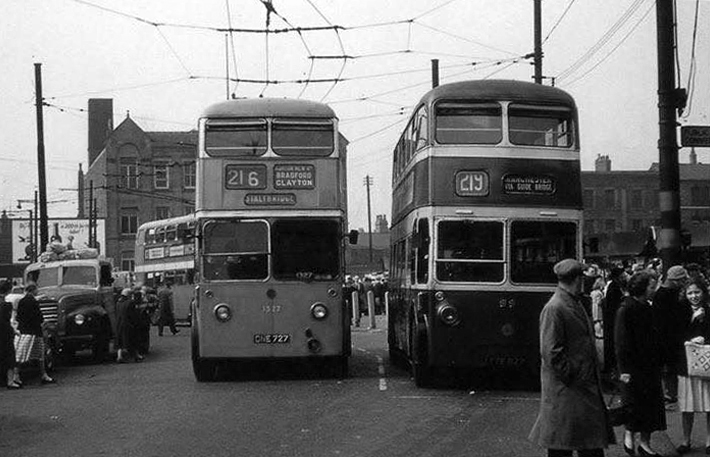
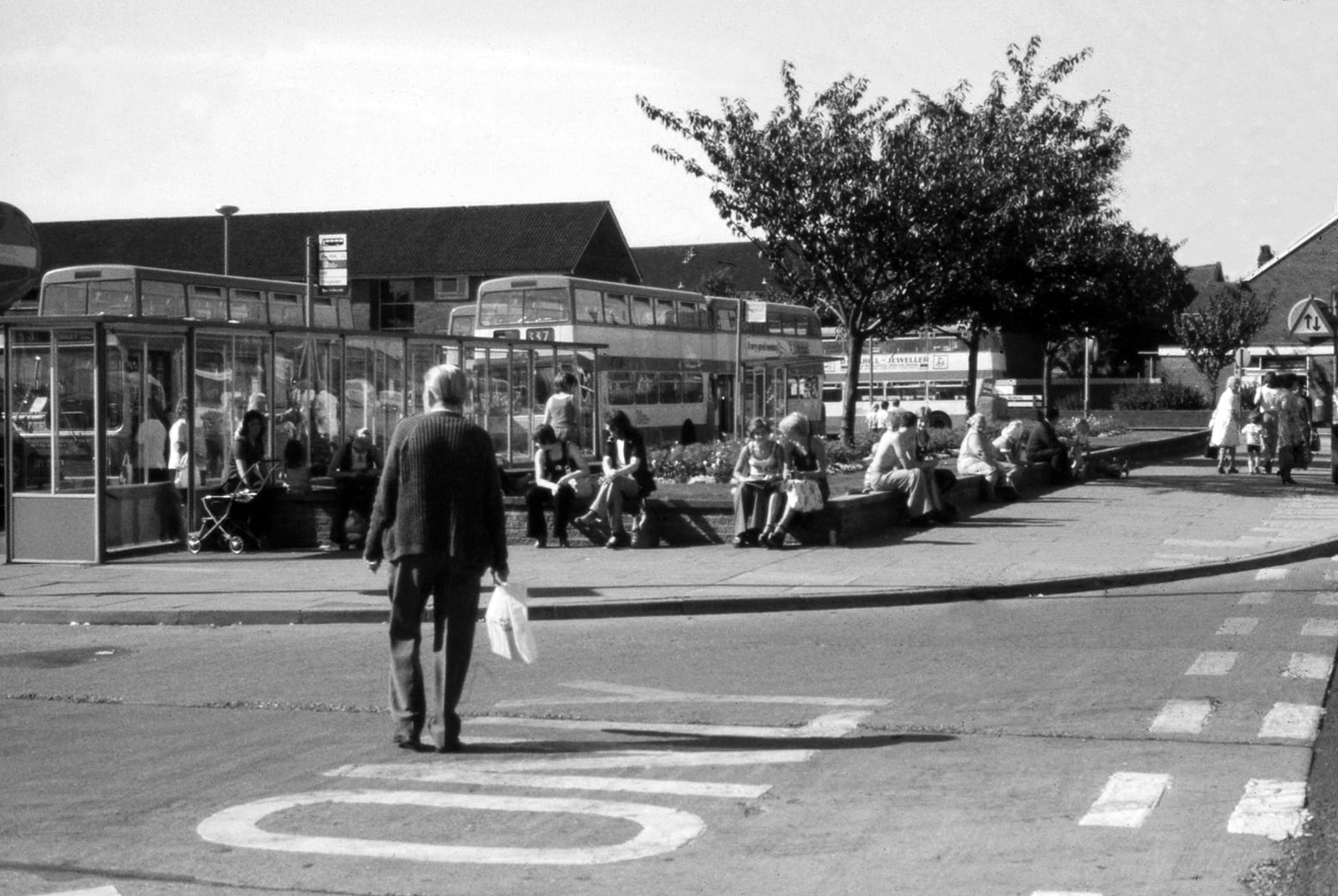
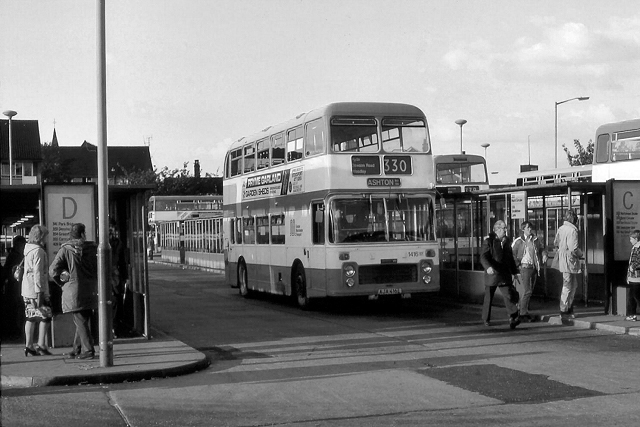
In my memory of days long gone by, I call to mind the stops strewn around St Michael’s Square – all points east I assume, Stalybridge, Mossley, Micklehurst, Dukinfield, Glossop and beyond.
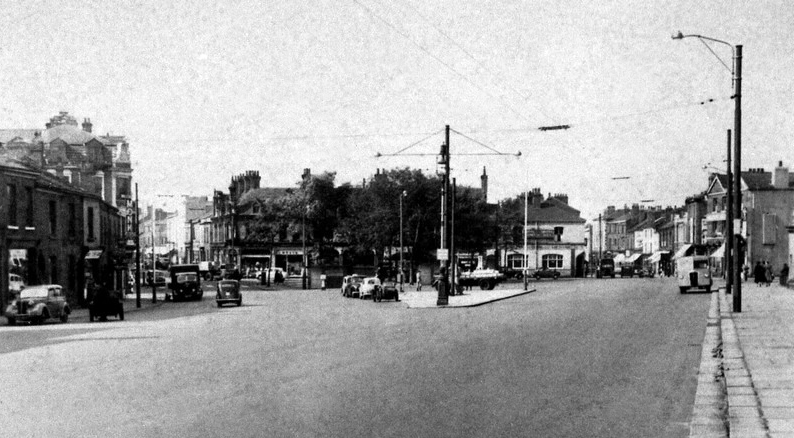
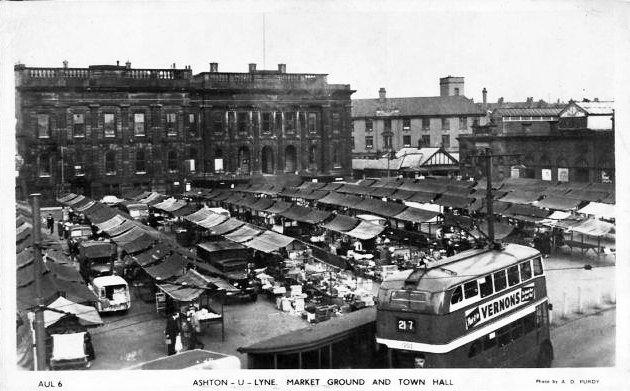
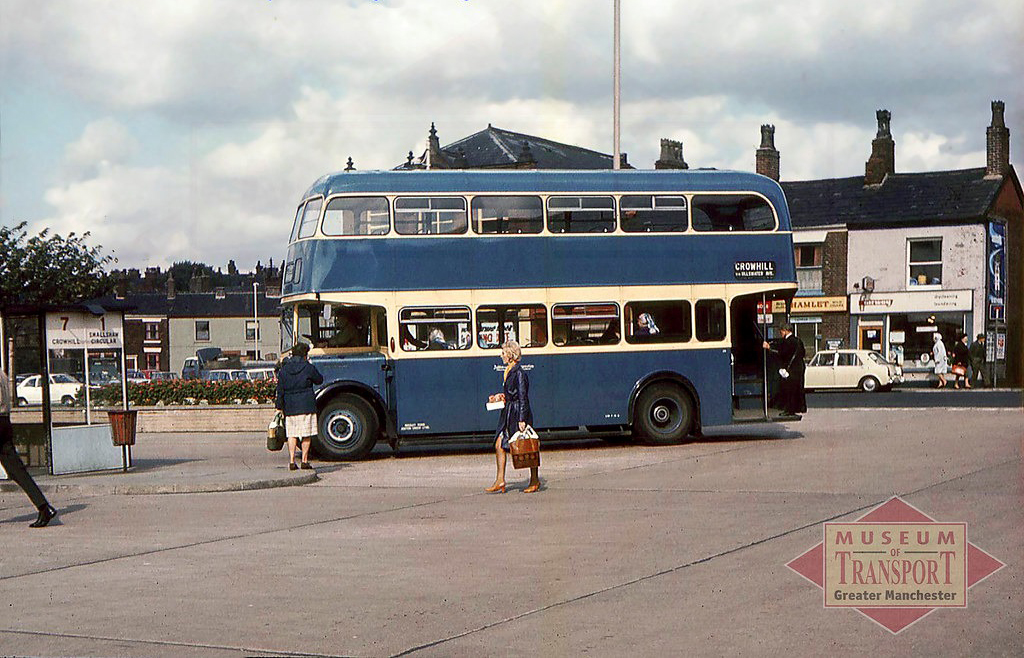
Prior to 1963, Ashton-under-Lyne’s buses and trolleybuses stopped at a variety of termini throughout the town centre. Manchester Corporation services called at Bow Street and Old Square, by Yates’ Wine Lodge; Ashton-under-Lyne Corporation’s buses opted for Market Street and Wellington Road by the town hall.
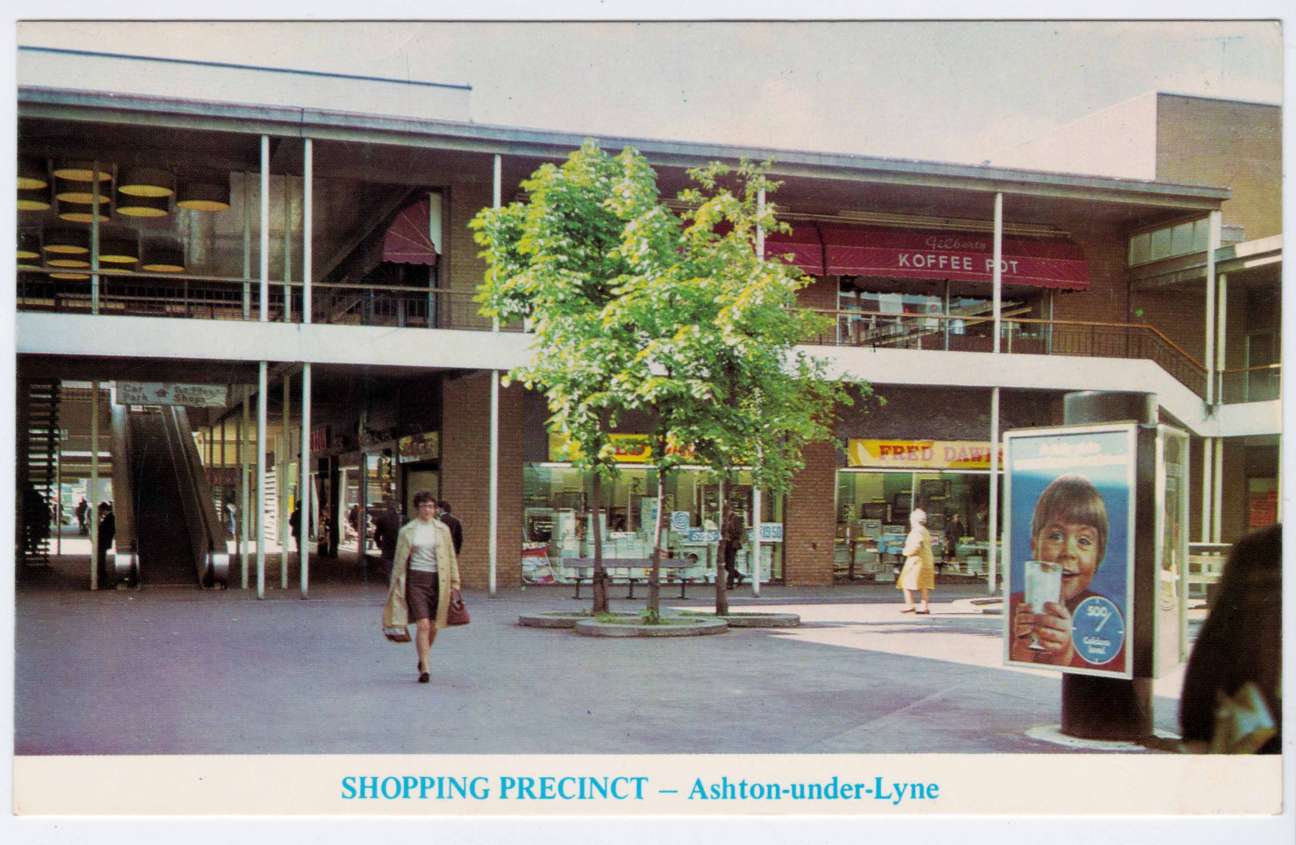
Ashton zooms forward into the future, its flat-roofed modern facilities complemented by ranks of low-level shelters and edged to the east by a walled lawn and flower bed – where we all loved to sit of a sunny day.
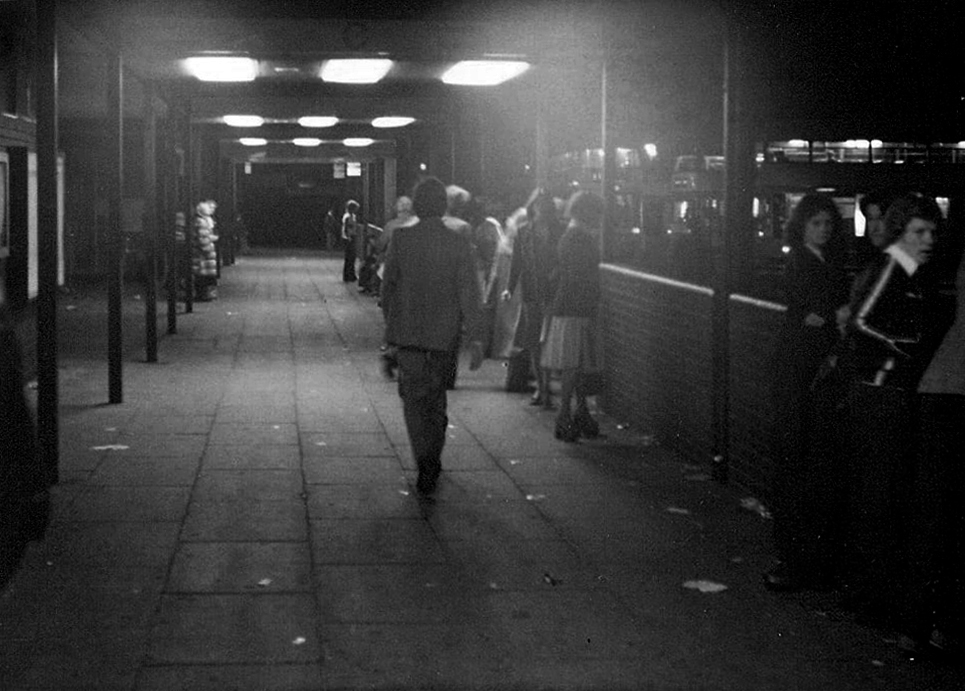
And the under the cover of the canopy at night, ready for the time of your life, at the Birdcage, pub or pictures.
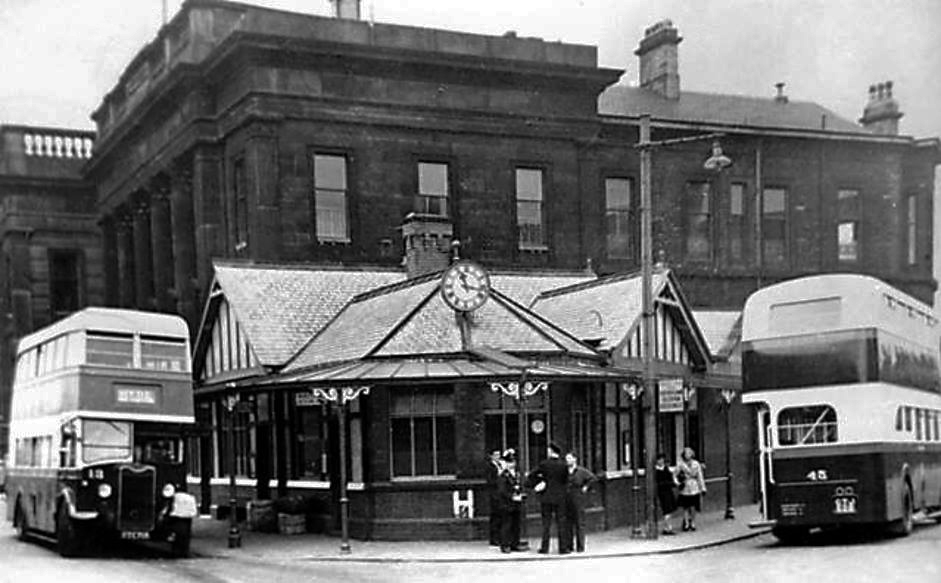
I remember the kiosk on the corner, a jewellers around the other corner.
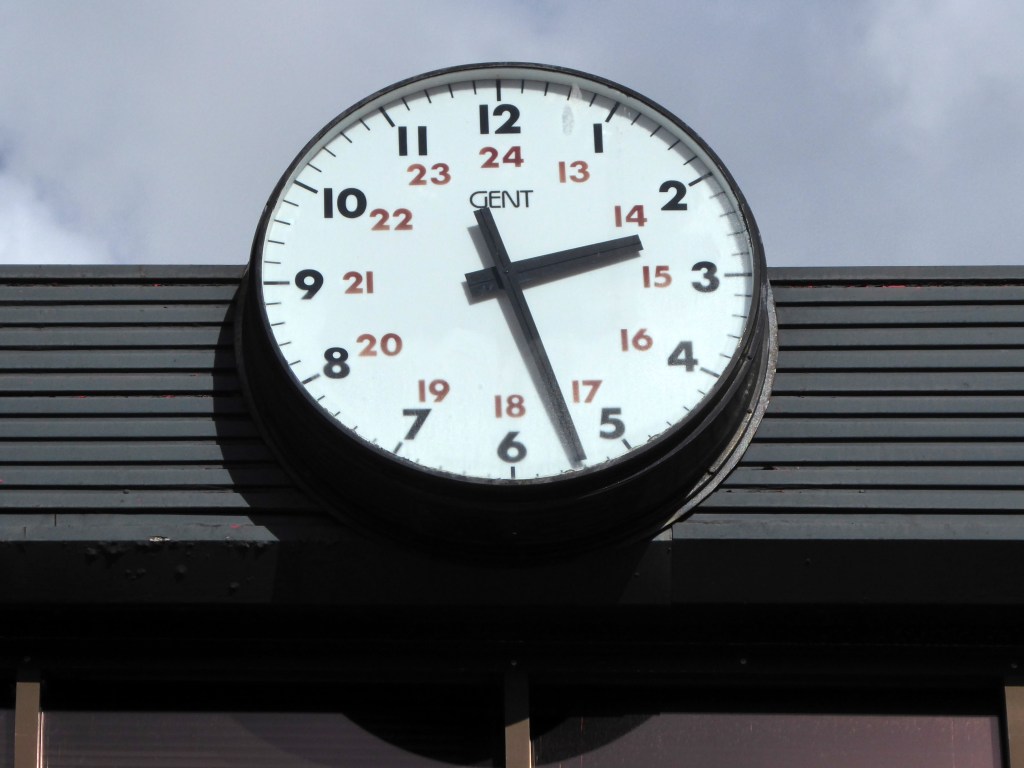
I’ll meet you under the clock.
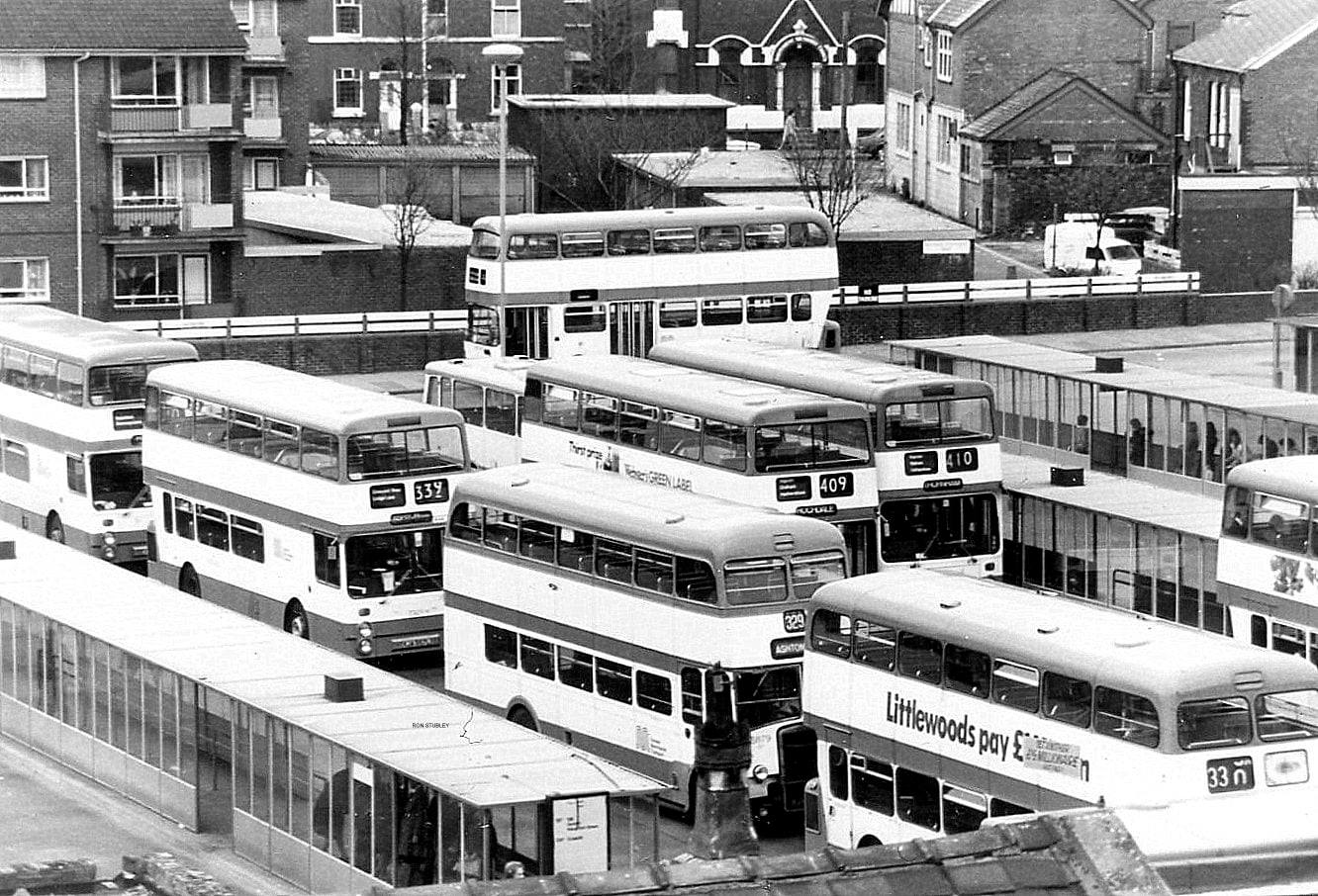
Photo: Ron Stubley
Here we see that the original shelters have been replaced and realigned.
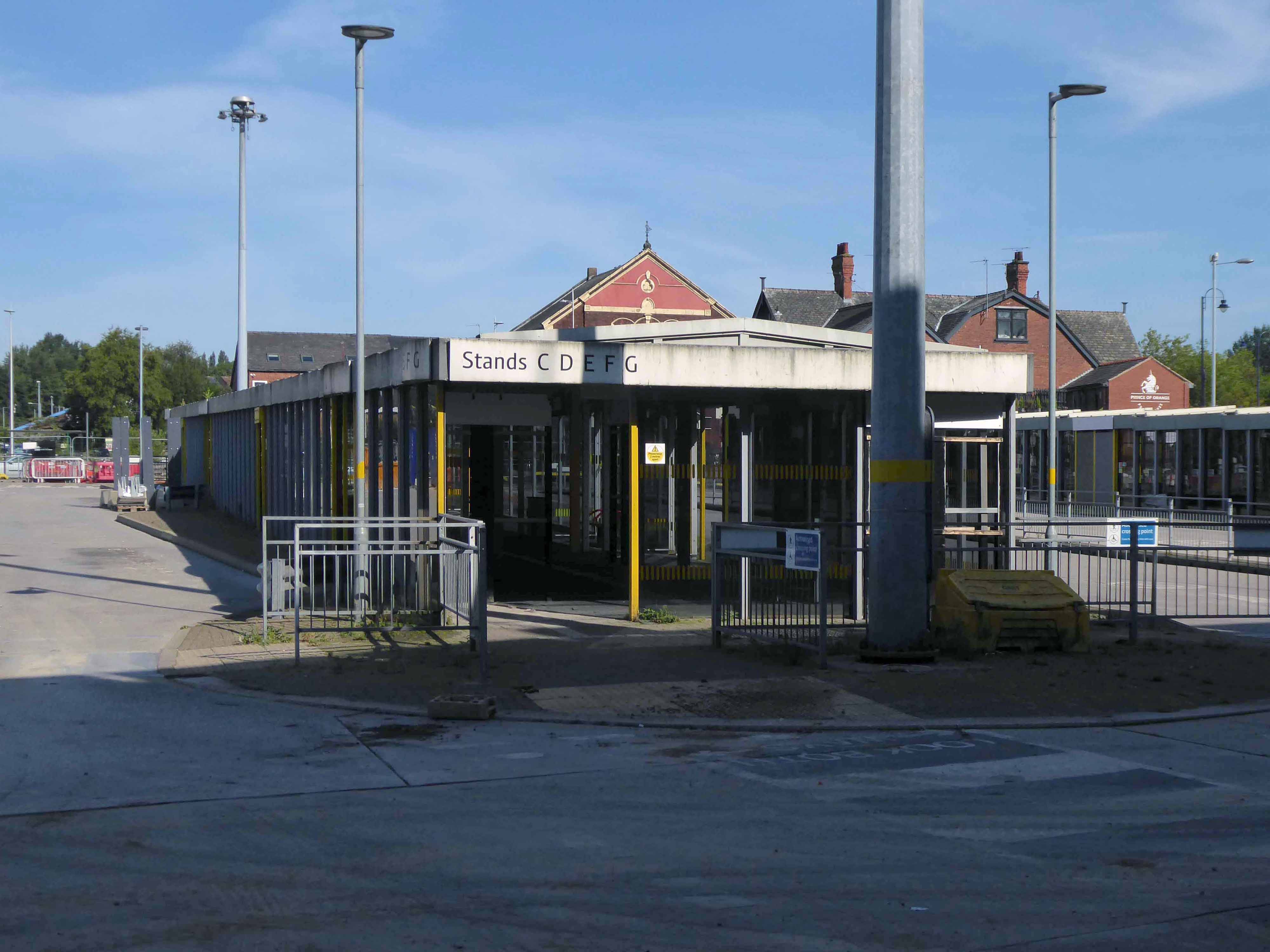
Temporary Queensbury shelters were put in place prior to the addition of GMPTE’s standard shelters, seen in Stockport and Oldham bus stations. By the close of 1983, the recognisable GMPTE ones emerged. The cover at the precinct end was later glazed and became stands A to C.
The second version of Ashton-under-Lyne’s bus station opened on the 18 March 1985. After two and a half years refurbishment work, it was opened at 11.30 by Councillor Geoffrey Brierley.
Mancunian 101
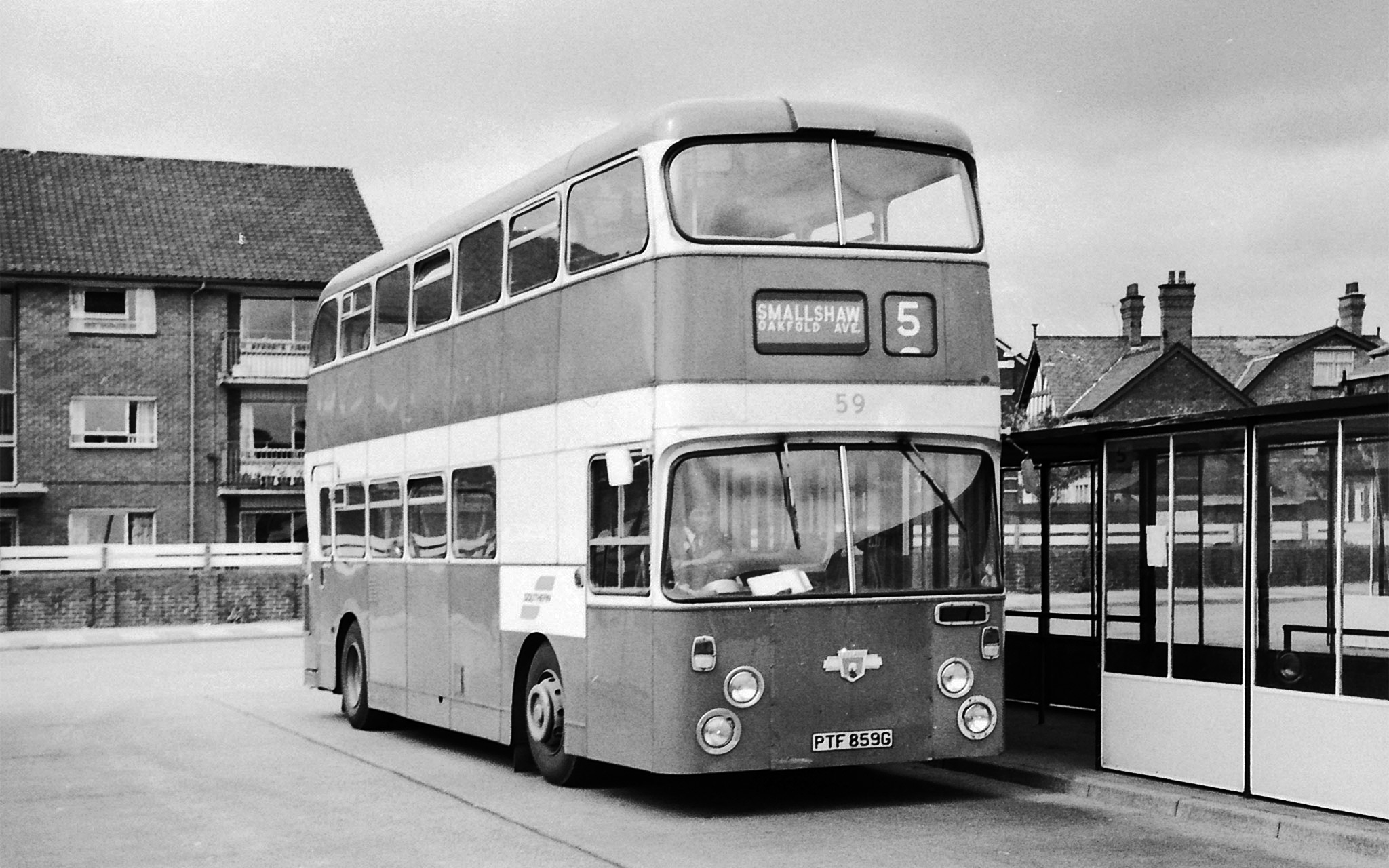
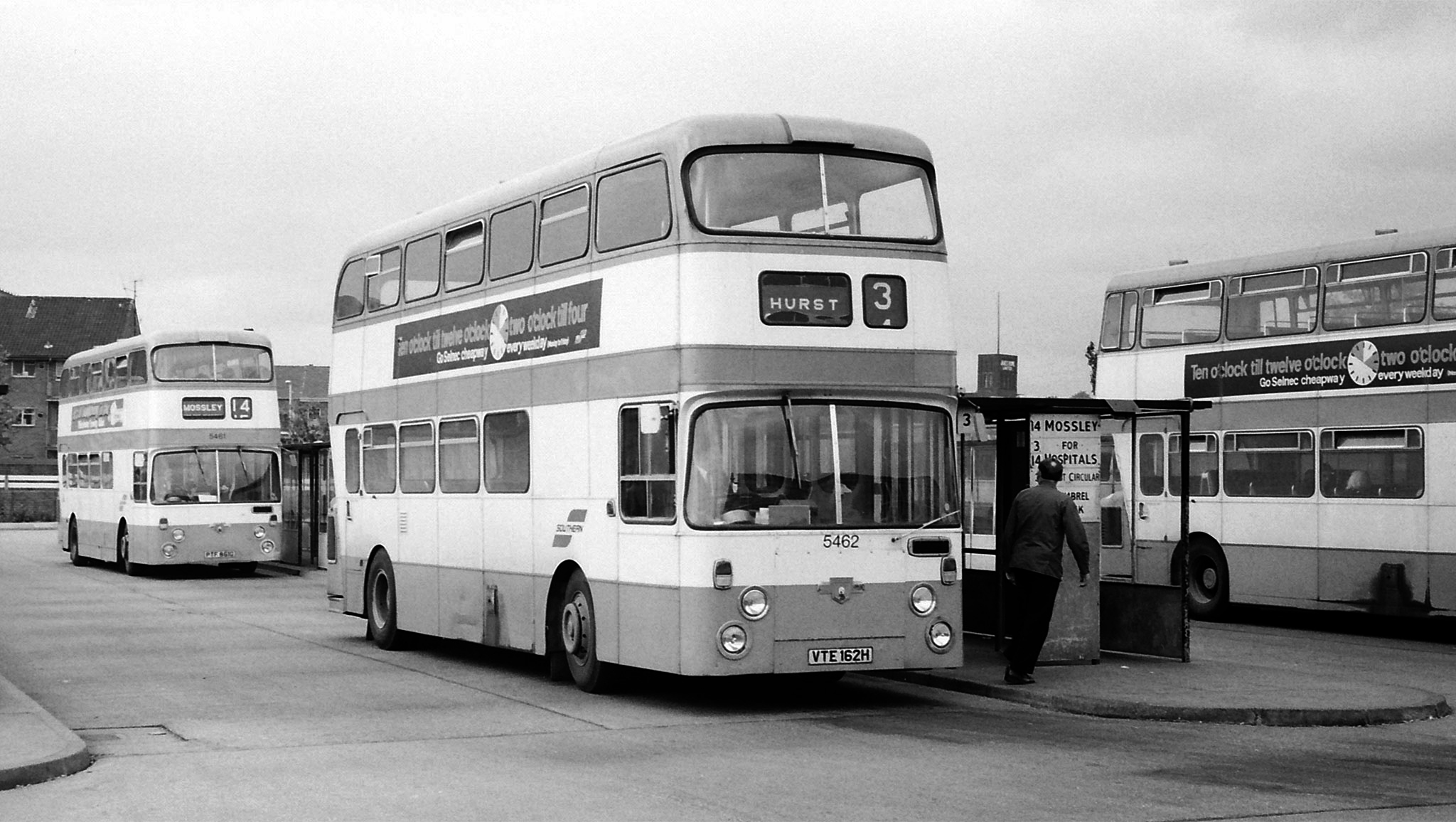
And that’s the corner where we would deck off the open backed buses, hitting the pavement at speed.
That’s the deep blue and cream Ashton livery later superseded by SELNEC, GMPTE and TFGM – the wonderful full fare, unfair world of Margaret Hilda Thatcher’s privatisation, Arriva, First and Stagecoach first.
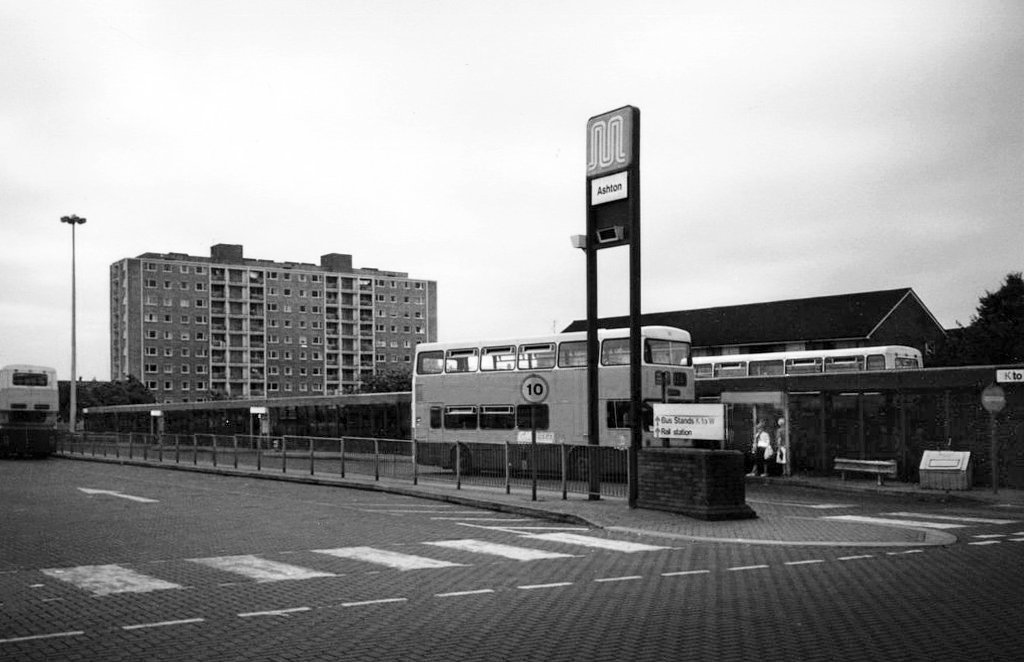
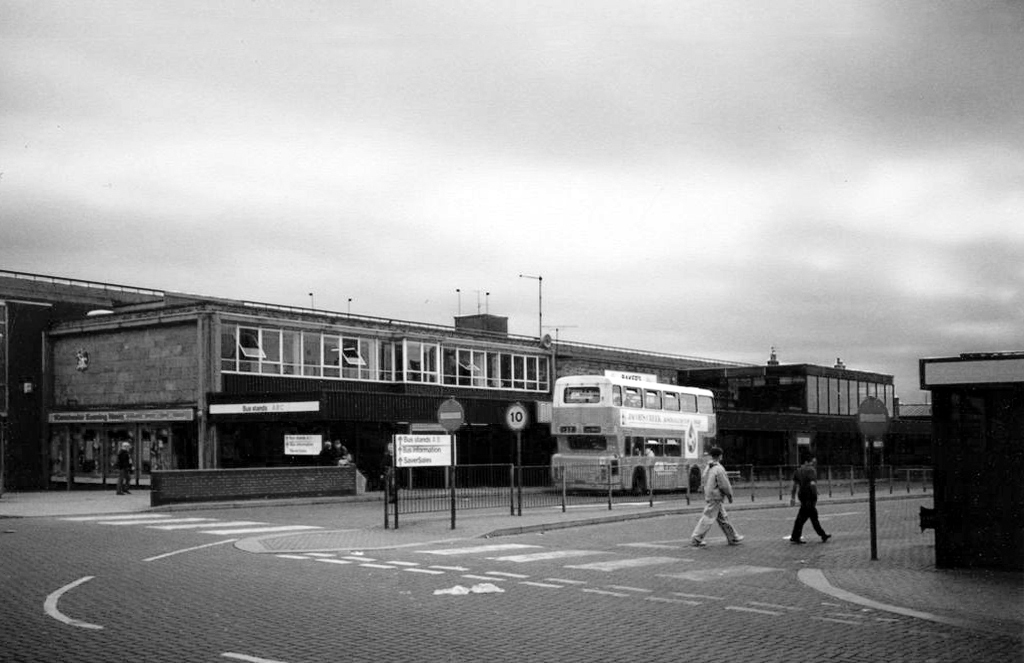
Then in the 1995 with the development of the Arcades Shopping centre, the whole site is reconfigured, now seen nestling in the shadow of the Dustbin.
Though as we know, nothing lasts forever and the shelters, passengers and buses get shunted and rebuilt yet again,
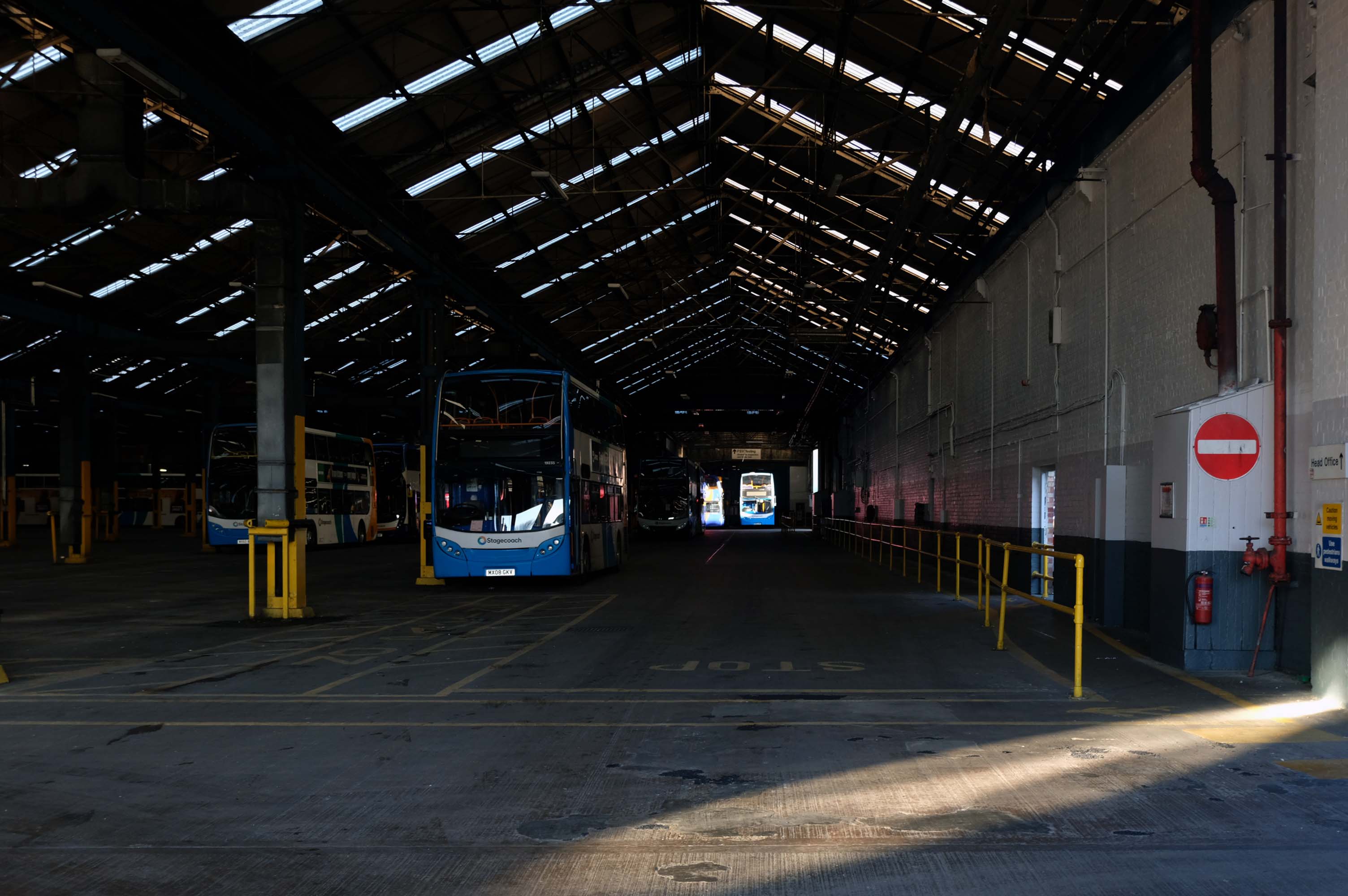
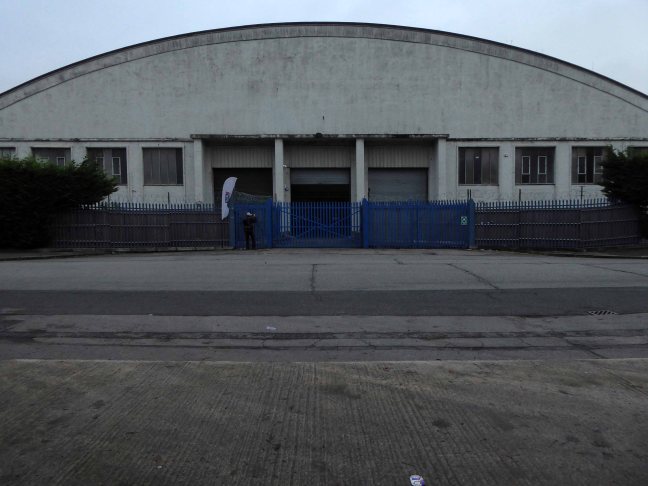
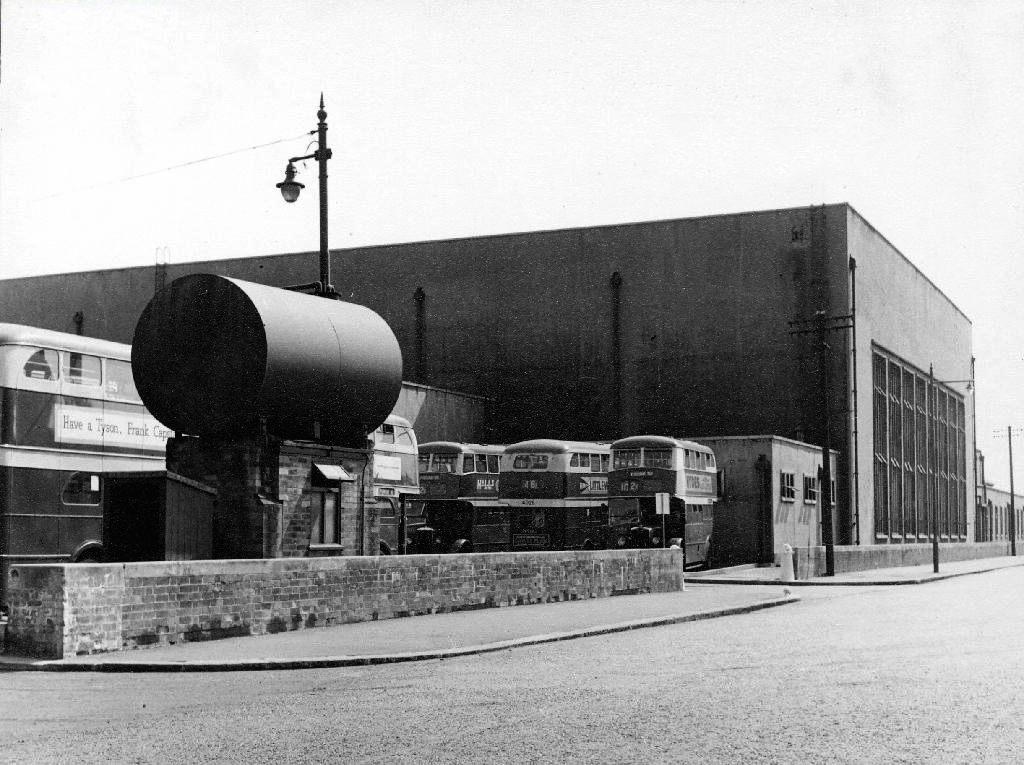
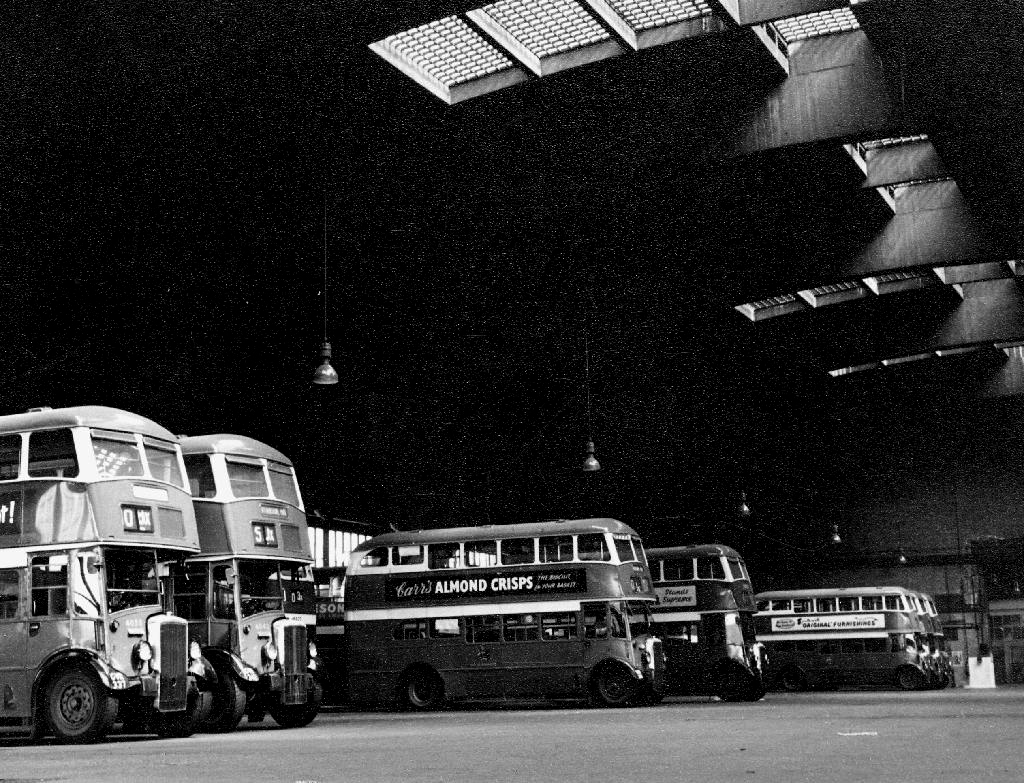
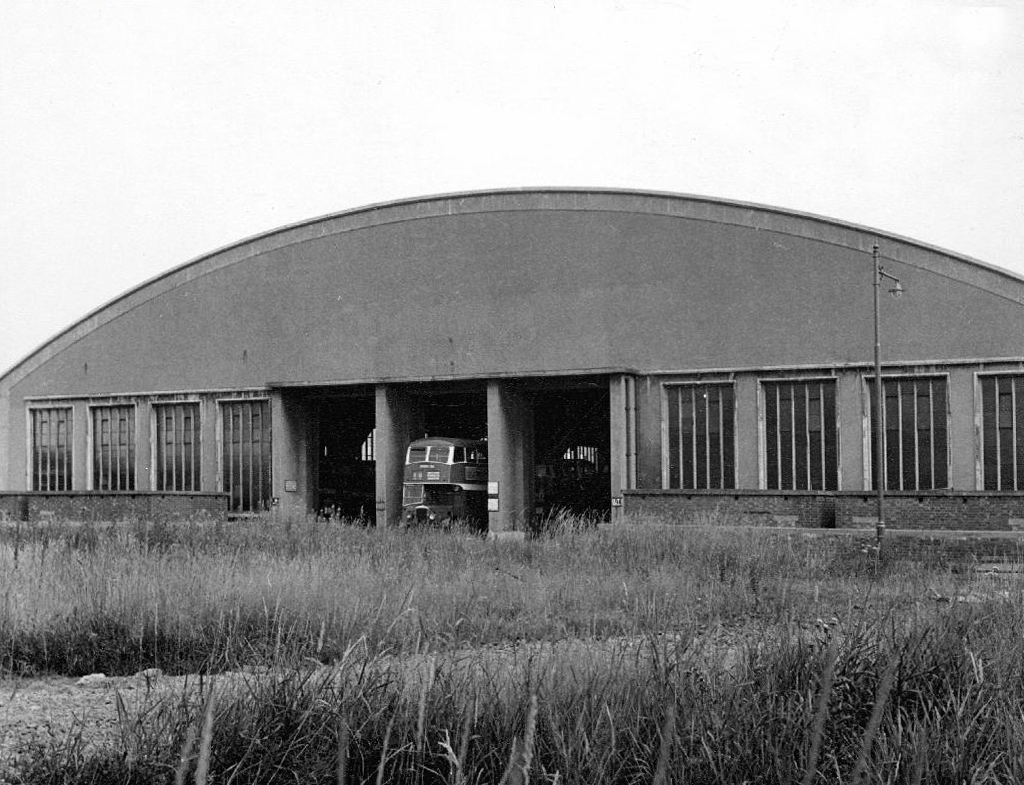
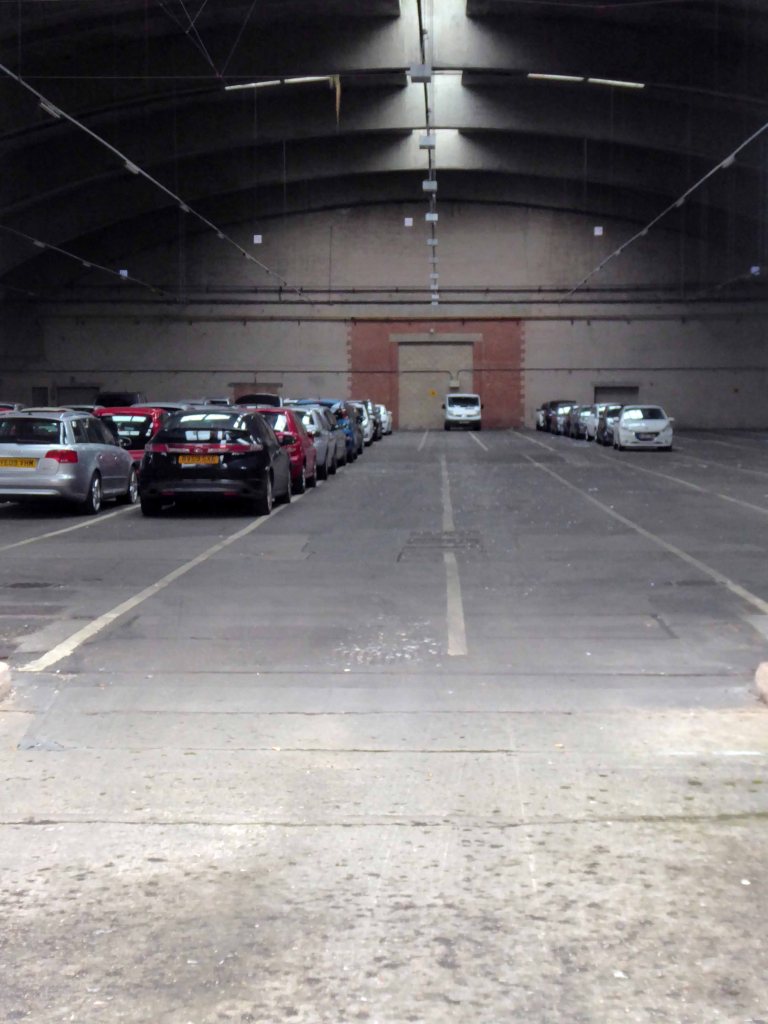
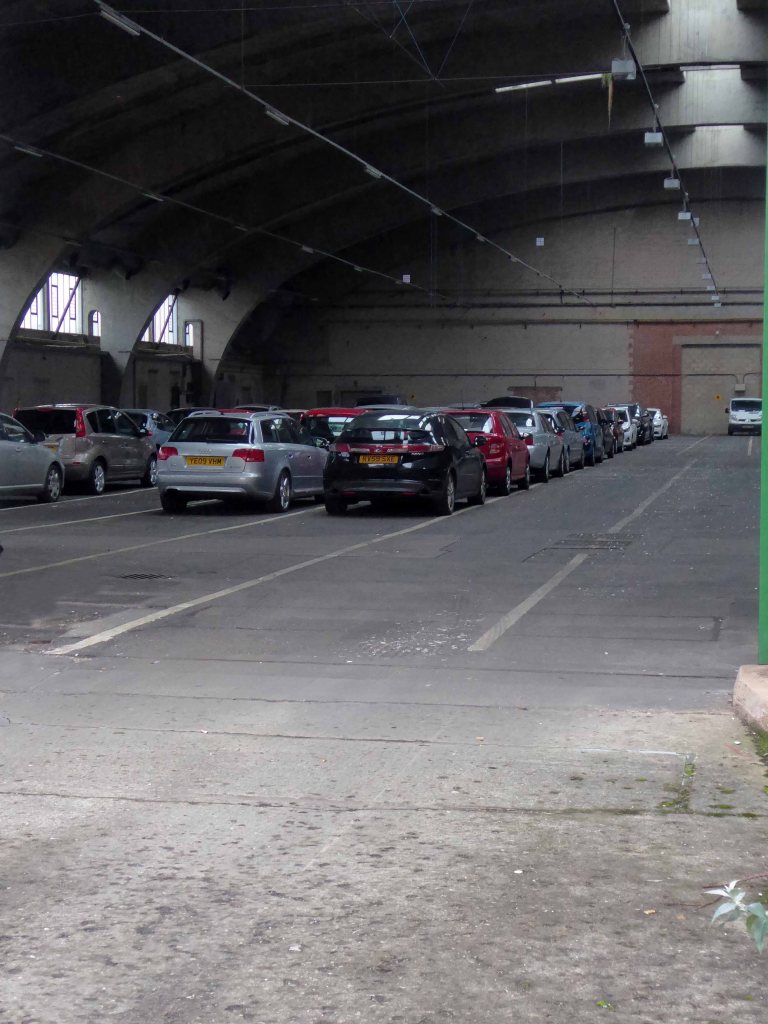
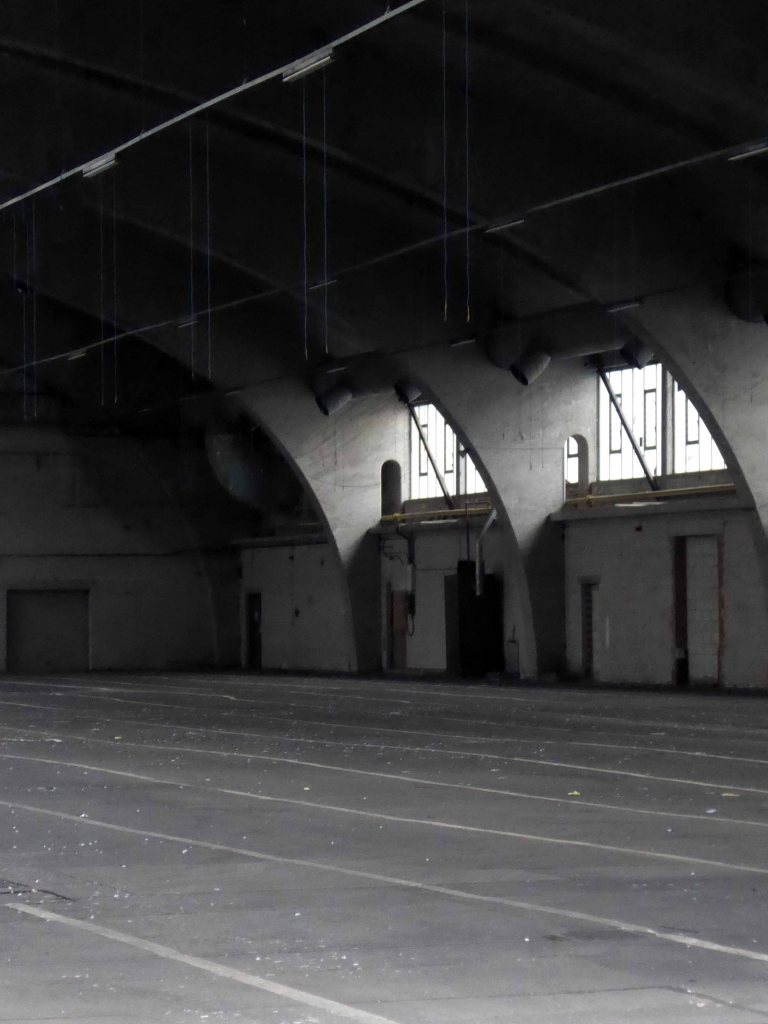
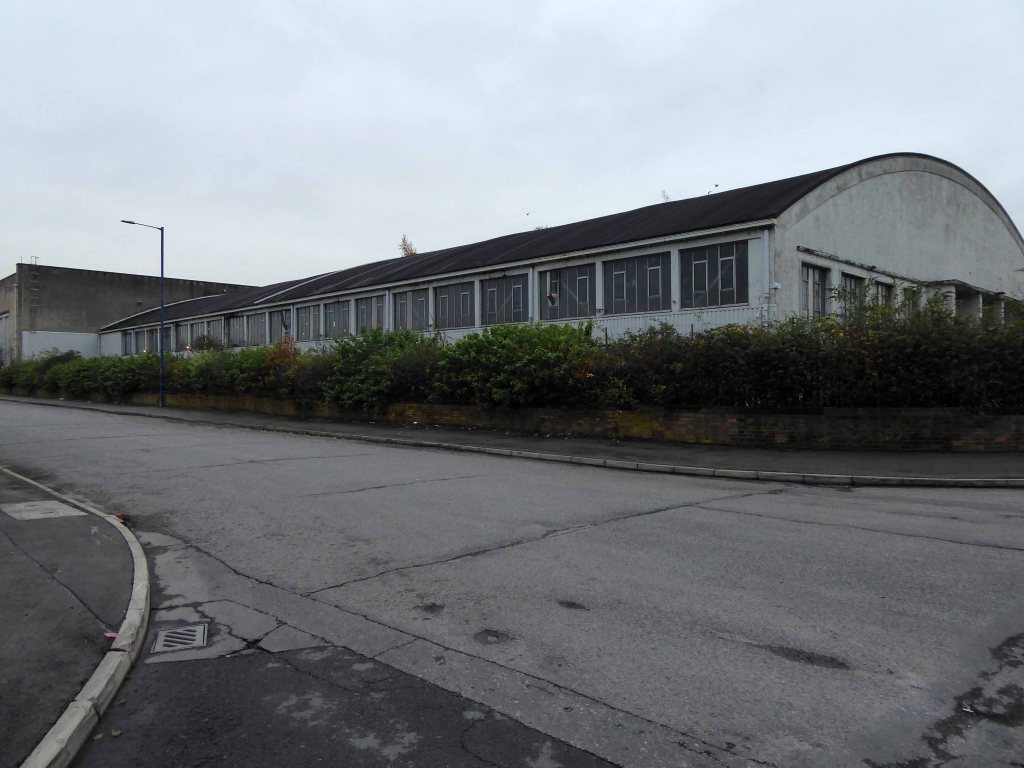
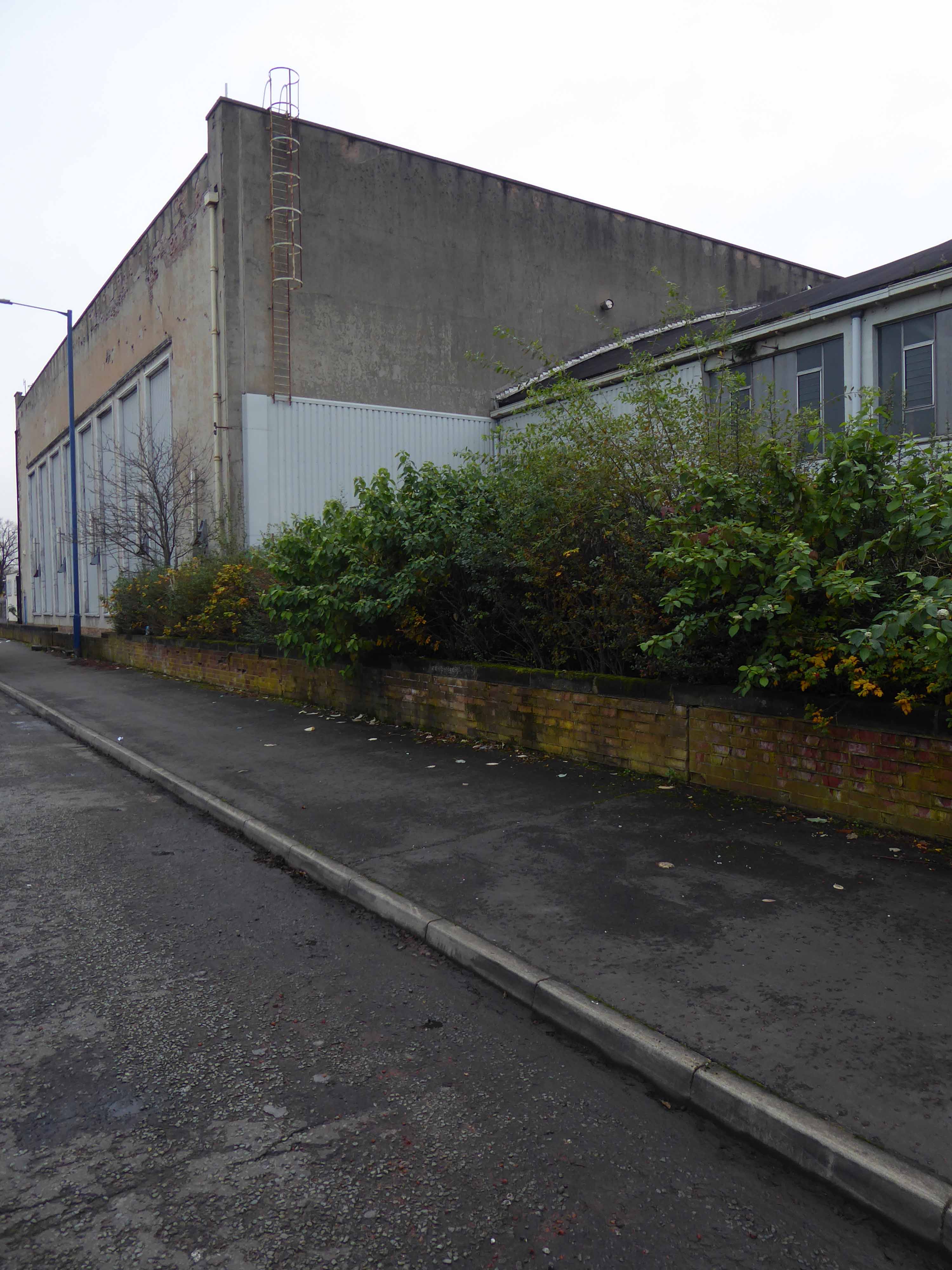
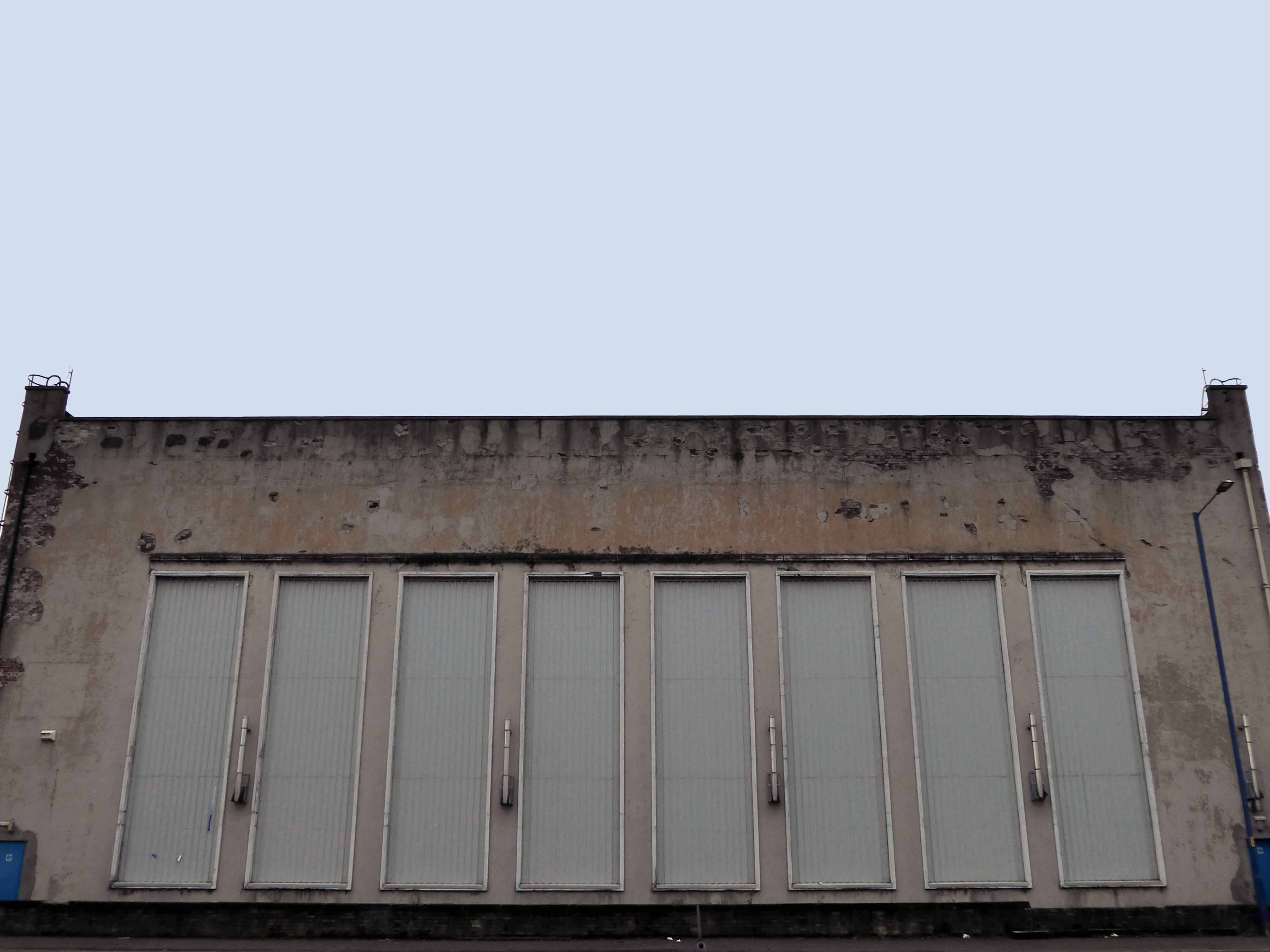
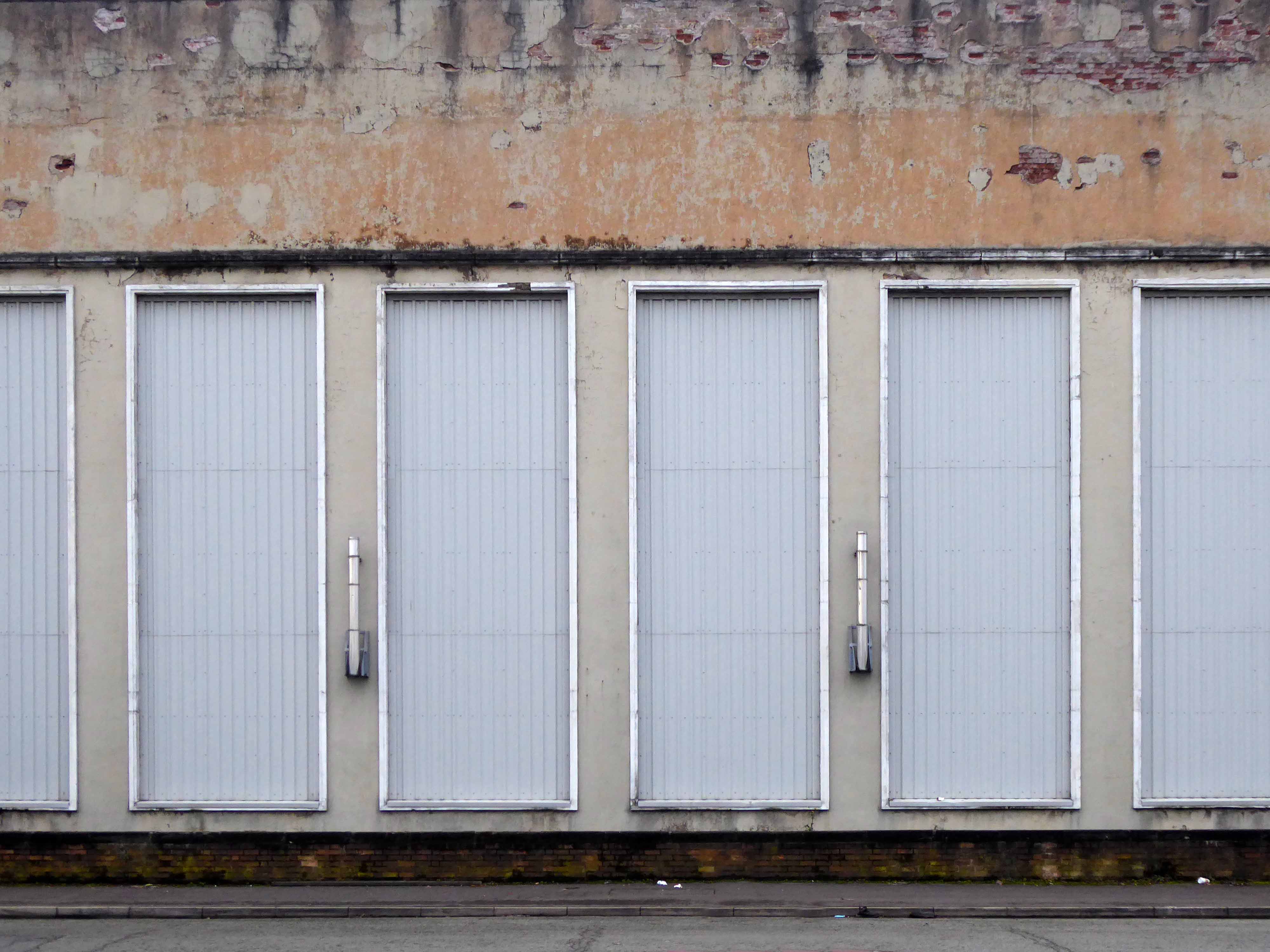
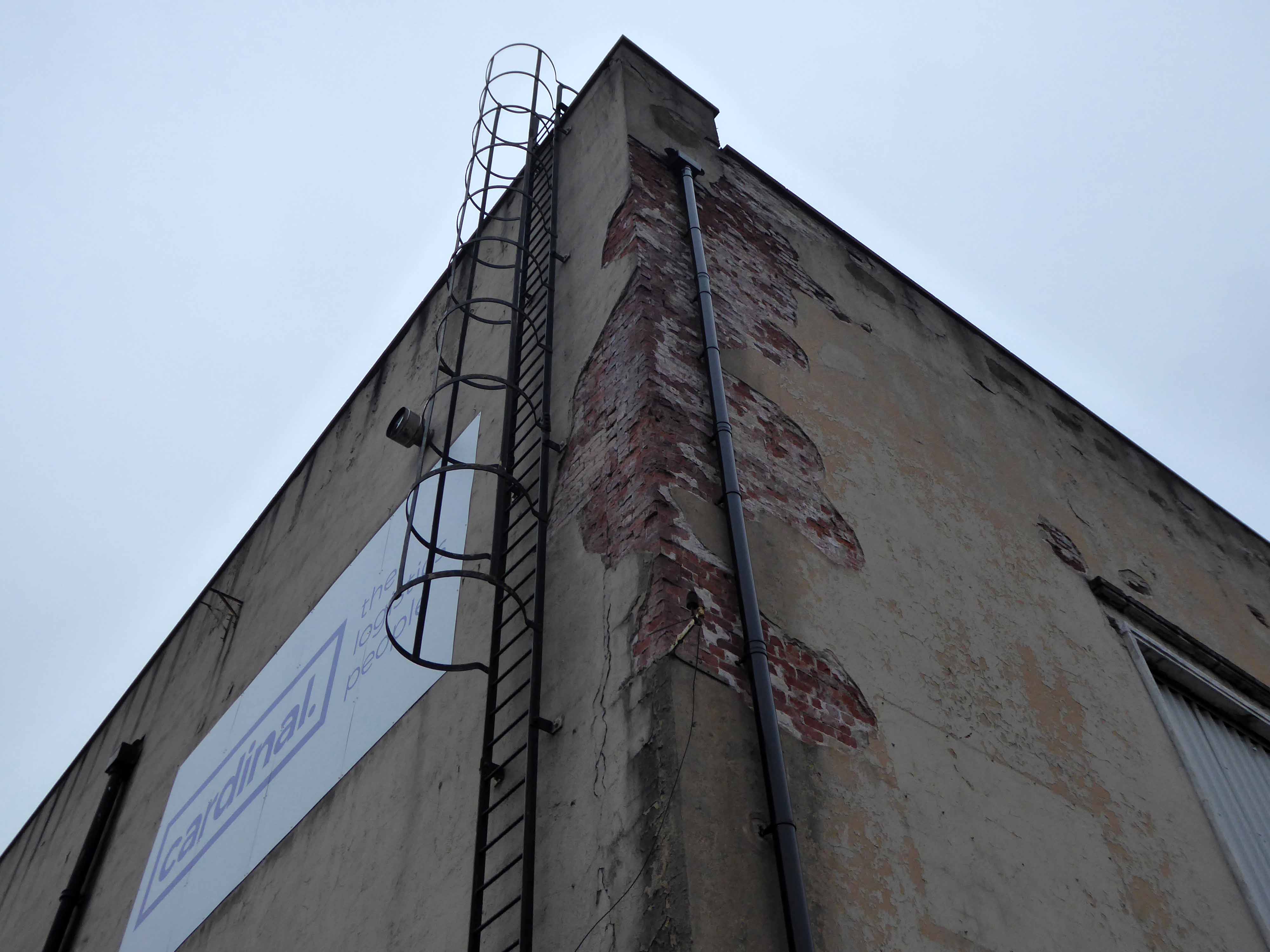
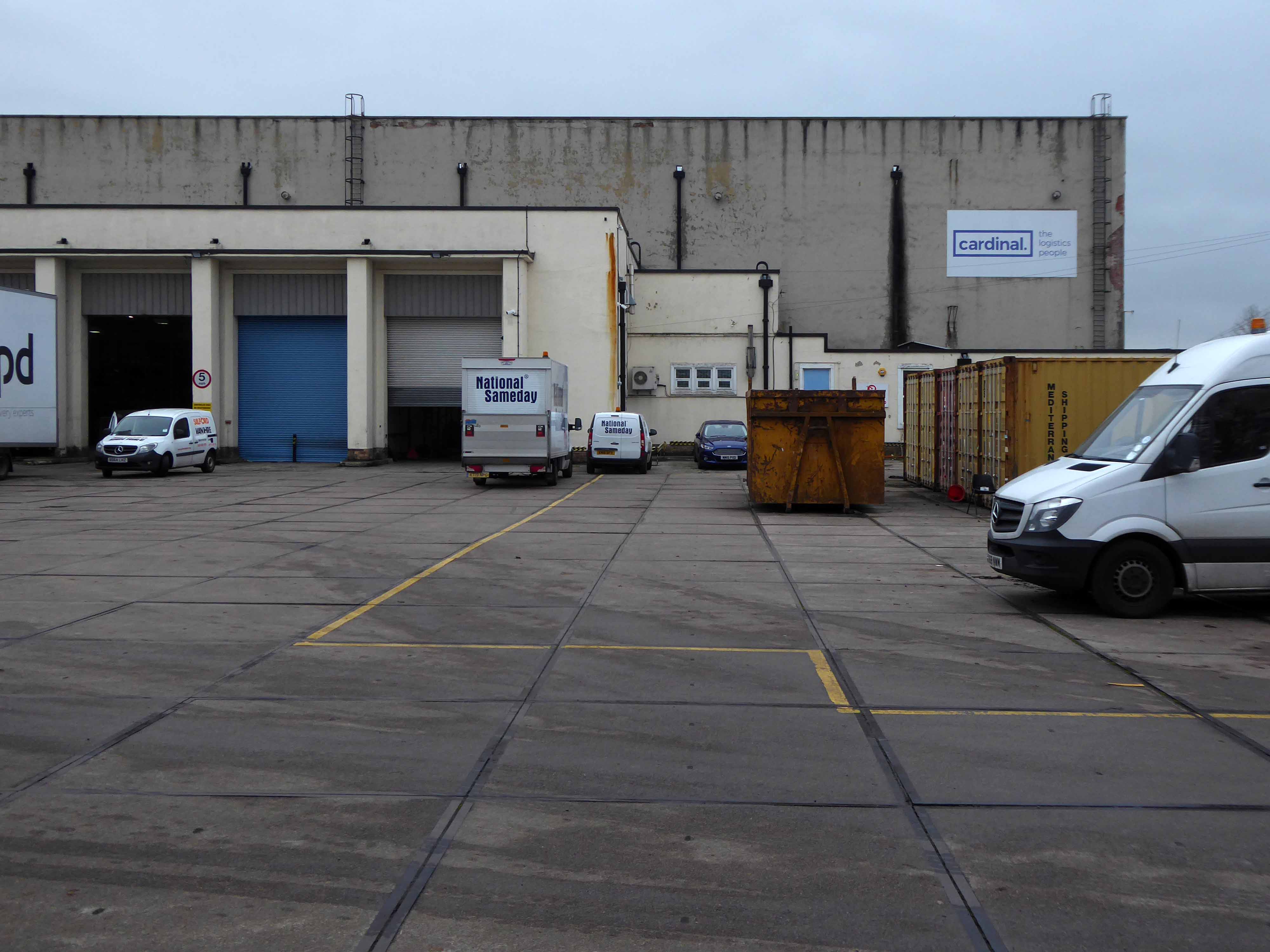
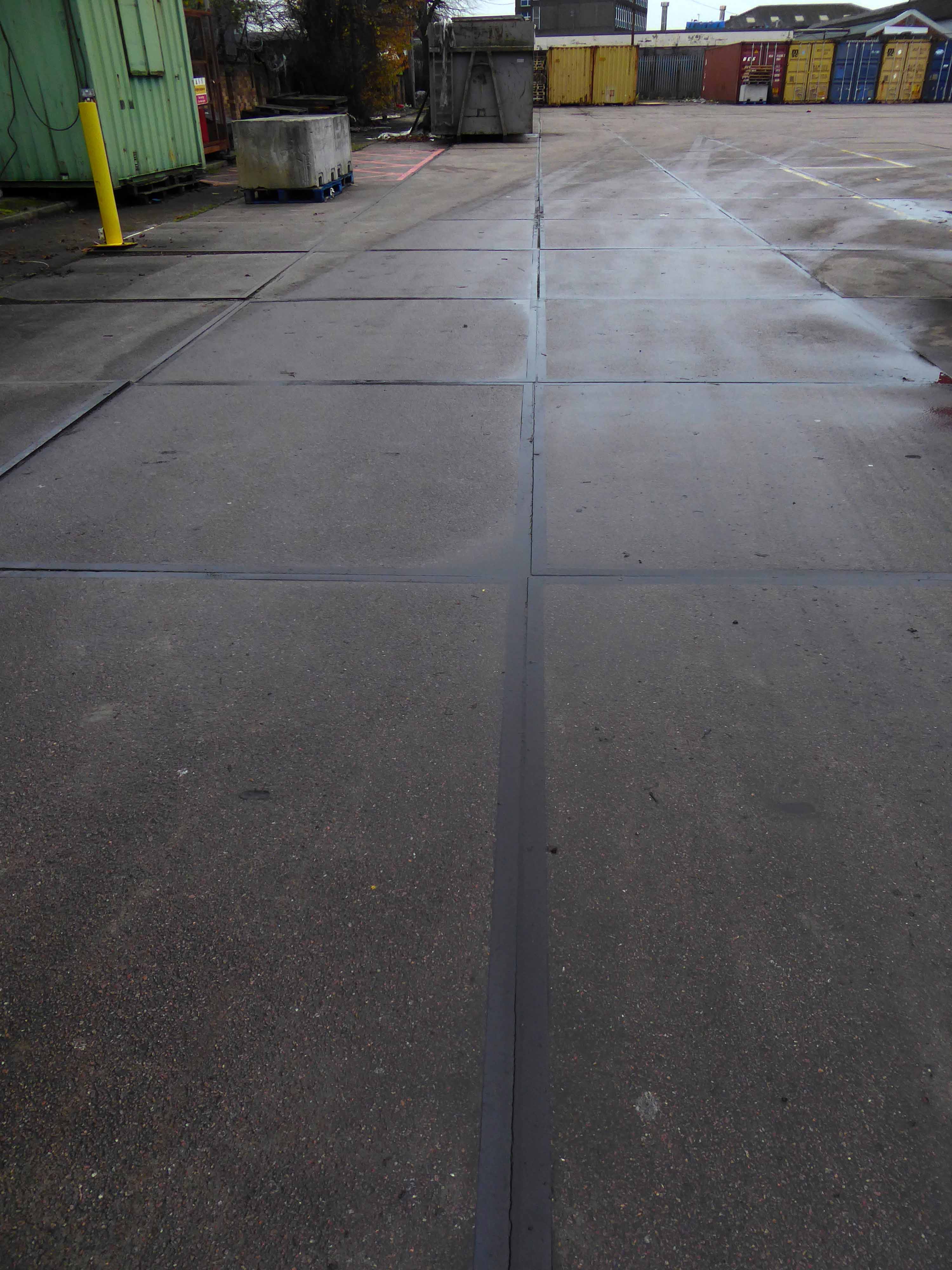
This building formed part of the later phasing of the proposed Garden Suburb of Wythenshawe. It was intended to house up to 100 double-decker buses but was put to use as a factory for components for Lancaster bombers during the war. It is included here for the functionalist qualities of the building and the acknowledgement of the daring of the City Architects Department. Academic papers, as late as 1952, cited this simple structure as exemplar of its type; Elaine Harwood notes, ‘this was the pioneering example of the means of construction, and the model for larger shells at Bournemouth and Stockwell’. The arches that support the shell have a span of over fifty metres and are spaced at twelve metre intervals. The concrete shell roof is of the short-barrel type commonly used on single span buildings such as hangars, it is uniformly around seventy millimetres thick. The only single span structure larger than this was indeed an aircraft hangar, at Doncaster Airport, demolished around 1990. This building is now in the ownership of an airport parking company that utilise it as vehicle storage; close to its original function.
Walking from our house to Sharston, this was the furthest point west – I kept on walking towards the security gates, they opened – I snapped, they closed.
This is now the home of Manchester Airport Parking – no place for a pedestrian, I walked away, slowly circumnavigating this uplifting, uplifted behemoth.
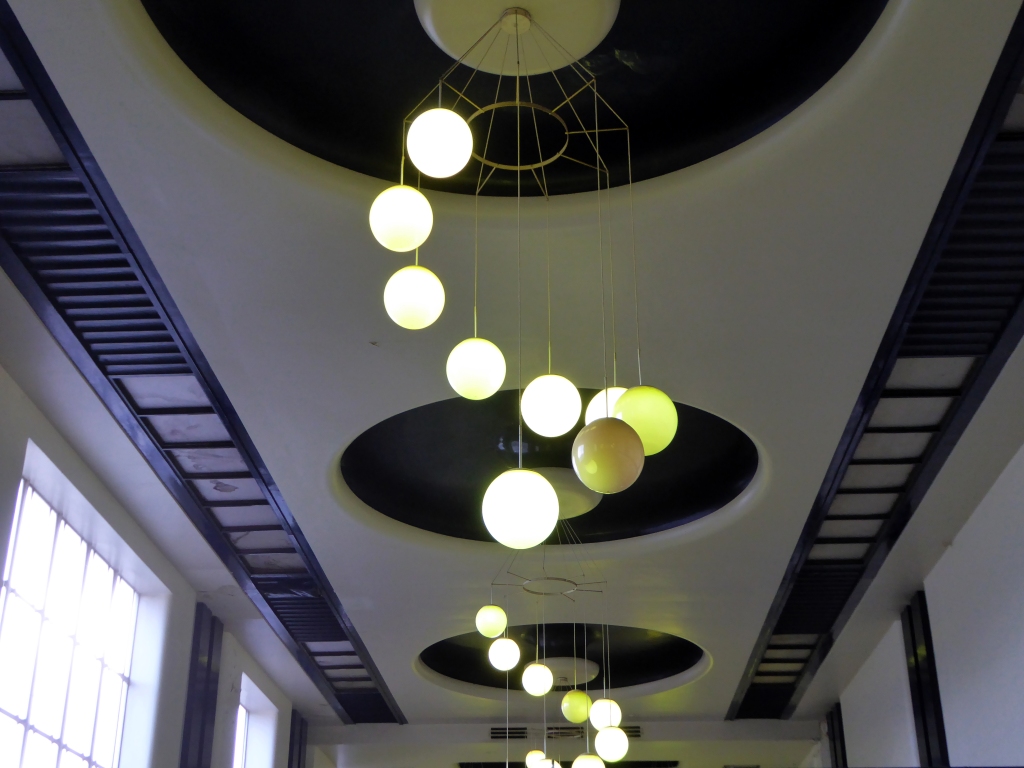
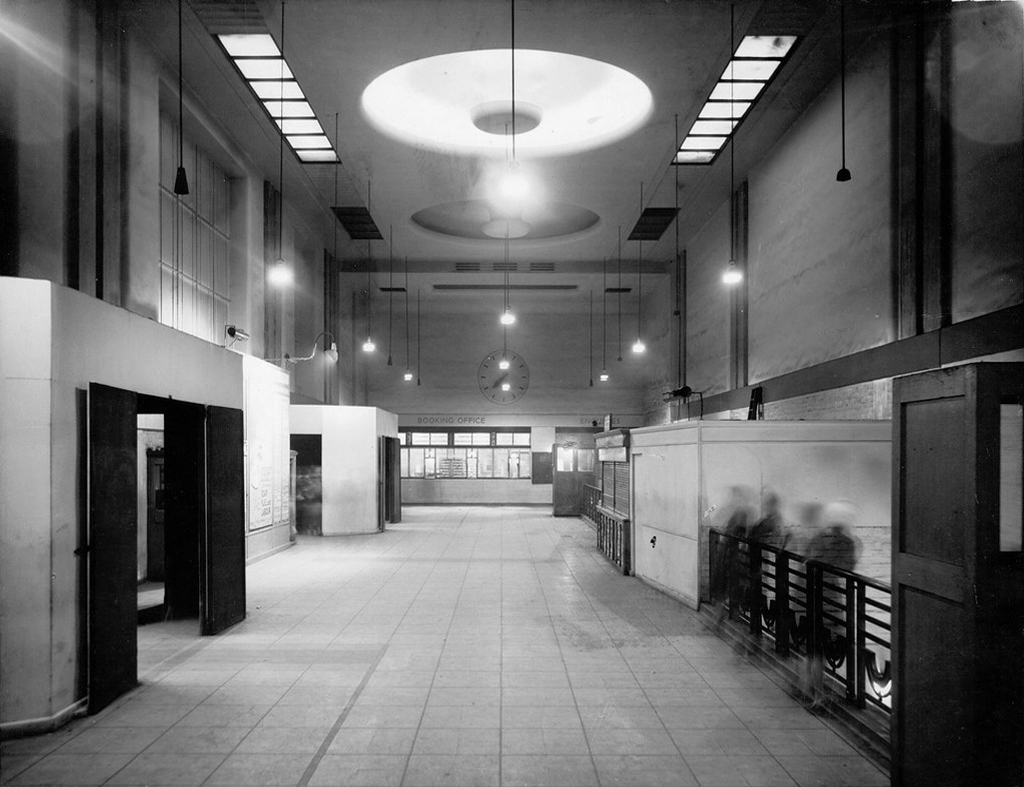
Arriving by train at 8.30, just in time to check out the new lighting scheme in the station foyer.
Replacing the previous lighting.
Which in turn replaced the original Thirties lighting.
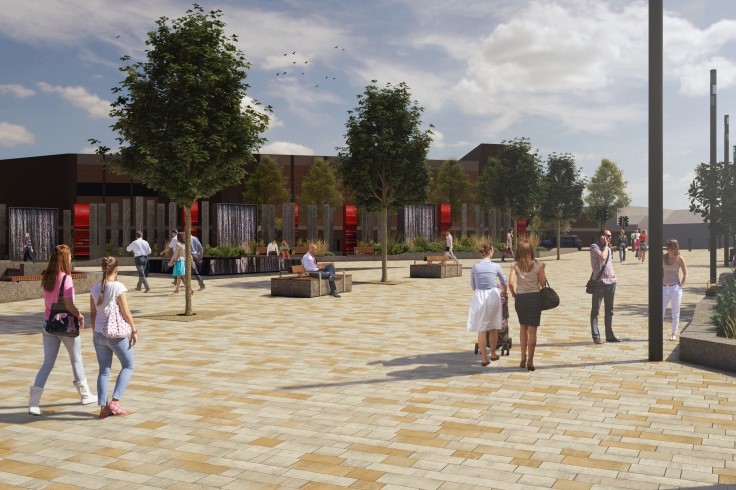
The forecourt redevelopment is a work nearing completion.
I was on my way to Intake by bus so it’s off on the 66 from the Frenchgate Inetrchange.
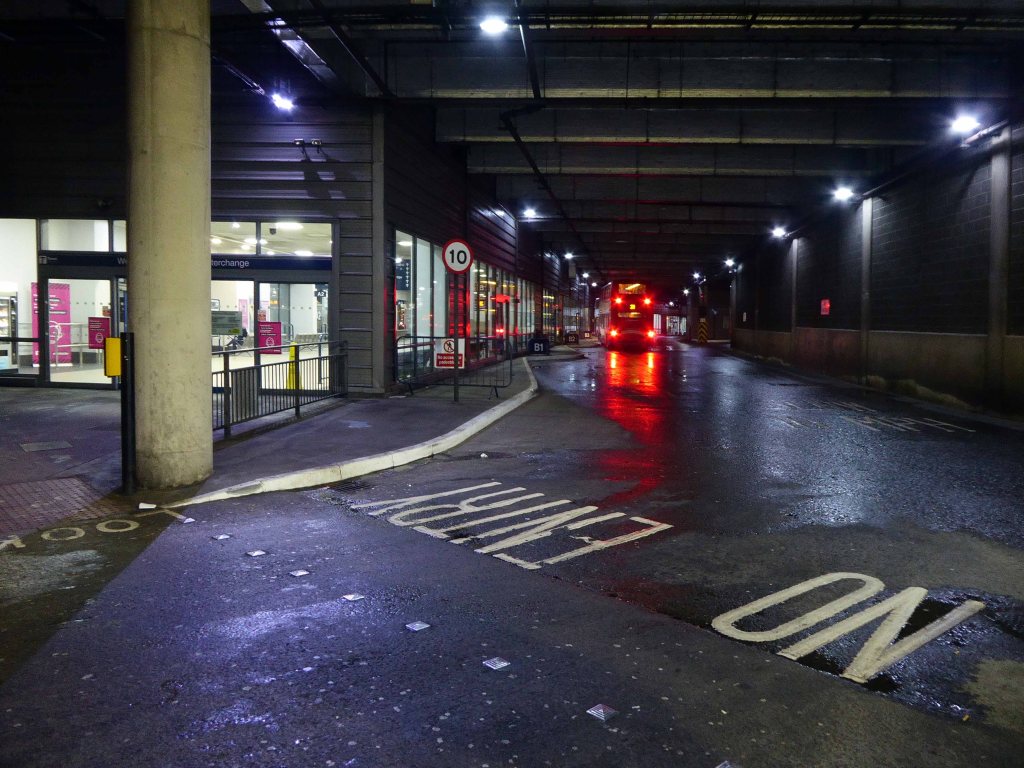
An urban environment so anonymous, that it can only just recognise itself. I was helpfully informed by two radio controlled security guards that photography was illegal.
More Interzone than Interchange.
Here are my transgressive snaps, I made my excuses and left – on the next available 66.
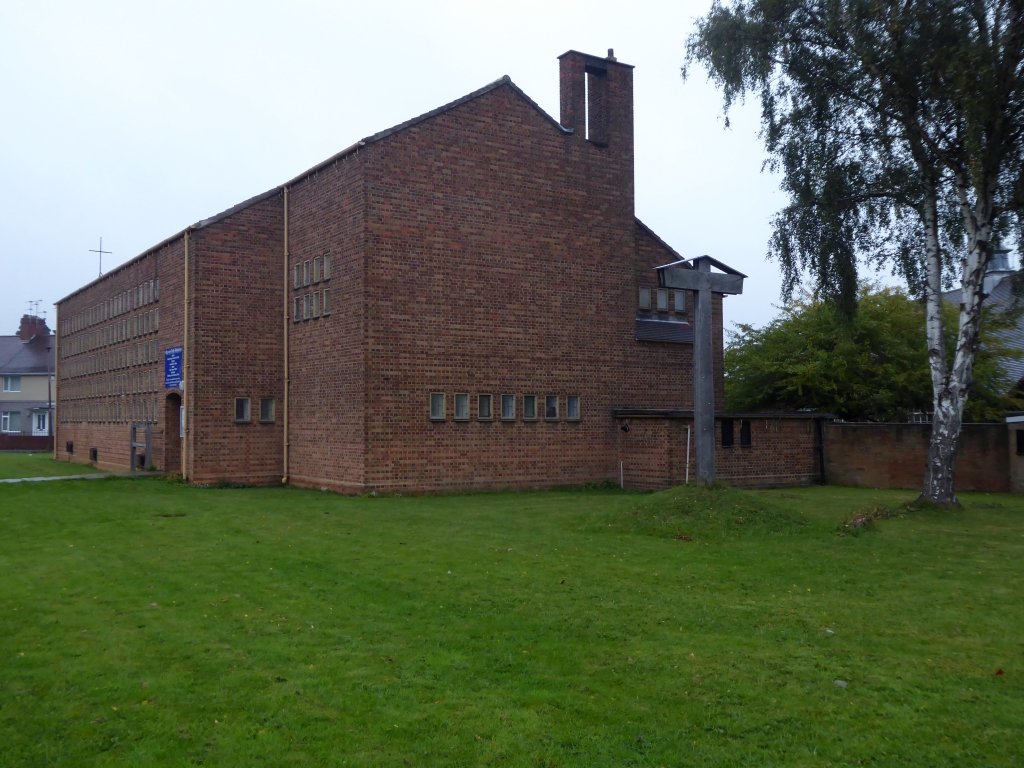
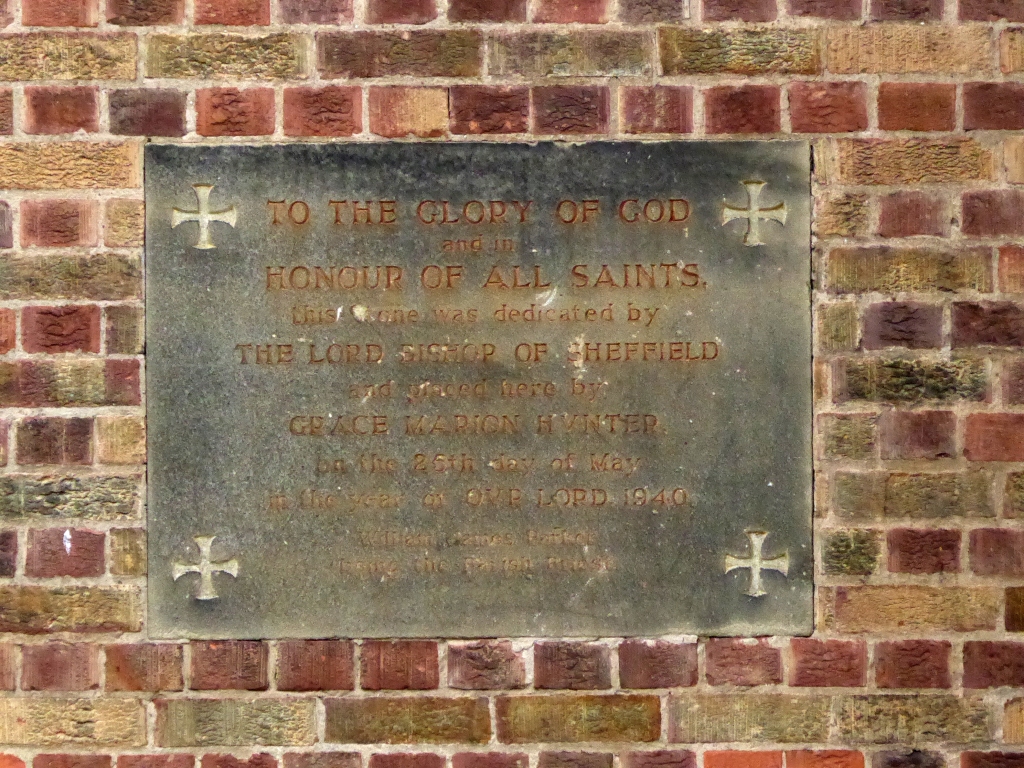
Decanting from the single decker I made my way across the way to All Saints, a George Pace church of 1956.
Built on the foundations of an unrealised Neo-Romanesque church of 1940, but reorientated east/west.
I legged it back to catch the bus back, the returning 66, much to the surprise of the surprised driver, making his return journey.
Jumping the 41A to Scawsby, displaying my risible home-printed map to the driver, requesting a shout when we arrived at the indicated destination, which he was unable to discern, and which I had failed illustrate.
I had contrived to arrive at the end of the line, a bit part player in a non-existent Béla Tarr film.
Following a thorough tour inside and out, I returned promptly to the town centre, on the limited stop express X19.
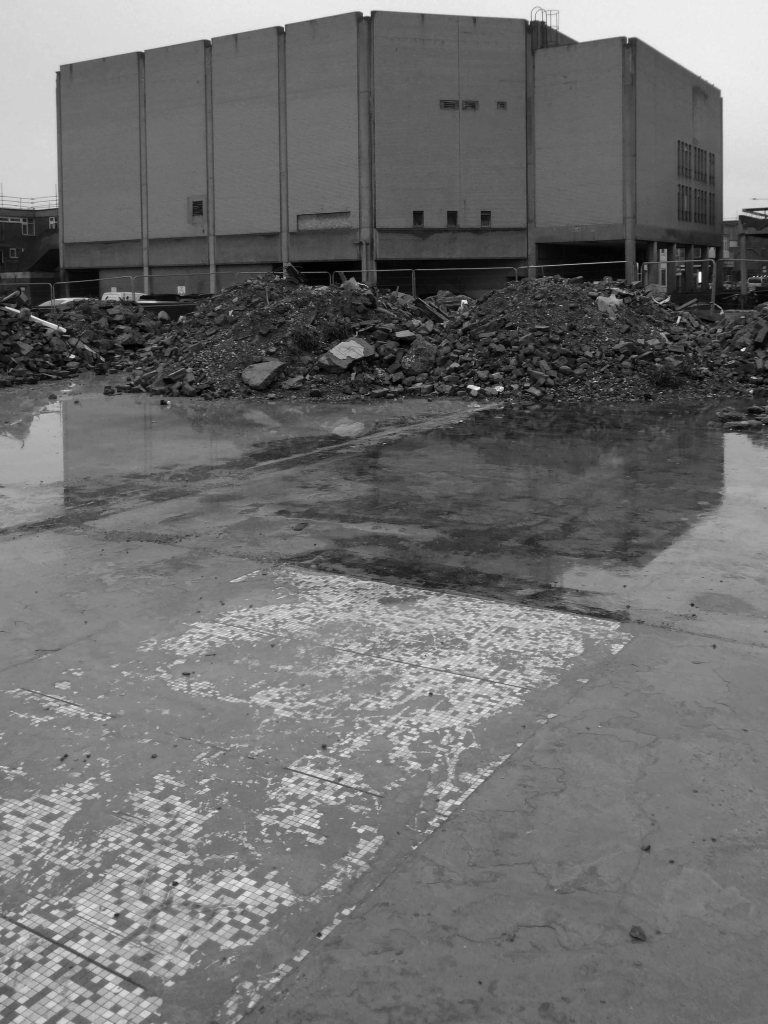
And hotfooted it to the Waterdale Centre, a work in progress, the CGI figures being as yet, a mere figment of the development officer’s fevered dreams.
Doncaster Council documents from the planning application for the demolition say, that while the exact project is not yet fully in place, discussions are taking place with the council on the project and grant funding is being sought to help the future regeneration scheme. But the council has said it supports schemes that would revitalise the Waterdale Centre area for retail, leisure, and tourism uses.
The centre is now owned by the Doncaster-based property firm Lazarus Properties, who bought it from the Birmingham firm St Modwen.
Lazarus director Glyn Smith said his firm had faith in the local economy of Doncaster town centre, even though larger multinationals seemed to be shying away.
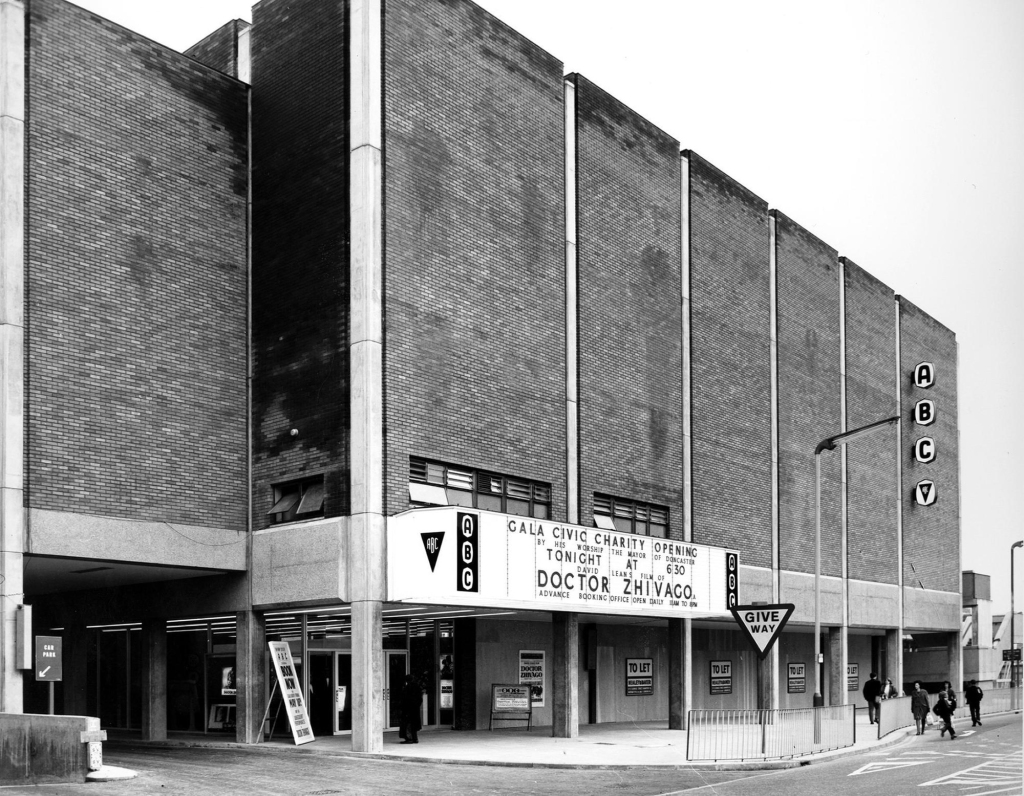
The ABC was built by Associated British Cinemas(ABC) as a replacement for their Picture House Cinema which had opened in 1914. It opened on 18th May 1967 with Omar Sharif in Doctor Zhivago presented in 70mm. Designed with 1,277 seats arranged in a stadium plan by the architectural firm Morgan & Branch, with input by architects C. ‘Jack’ Foster & Alan Morgan. It was decorated in a modern 1960’s style.
Closed in January 1981 for conversion into a triple screen it re-opened on 9th April 1981 with seating in the 3-screens.
The Cannon Group took control in the mid-1980’s and it was re-named Cannon and it closed on 18th June 1992, screening its opening film “Doctor Zhivago”.
The building has stood empty and unused since then, but in 2007, it was bought by Movie World for just £150,000. It is reputedly being re-modeled with extra screens added, however by 2009, only a clean-up of the interior has been achieved. The building sits empty and unused in 2020.
Cinema Treasures
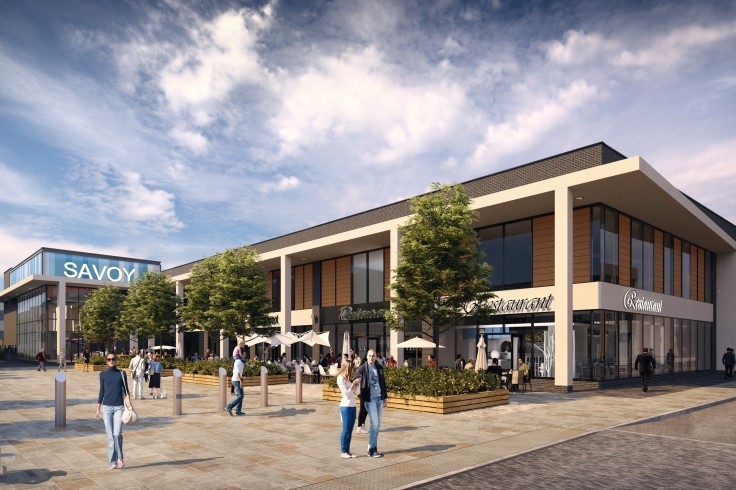
The delayed opening of the new Savoy Complex will no doubt inform the future of the Cannon.
It’s a familiar tale of the local authority, developers, leisure and retail outlets chasing dreams, cash and hopefully pulling in the live now pay later public.
It’s all part of the Doncaster Urban Centre Masterplan which will transform the way Doncaster looks and the way residents and businesses use the city core.
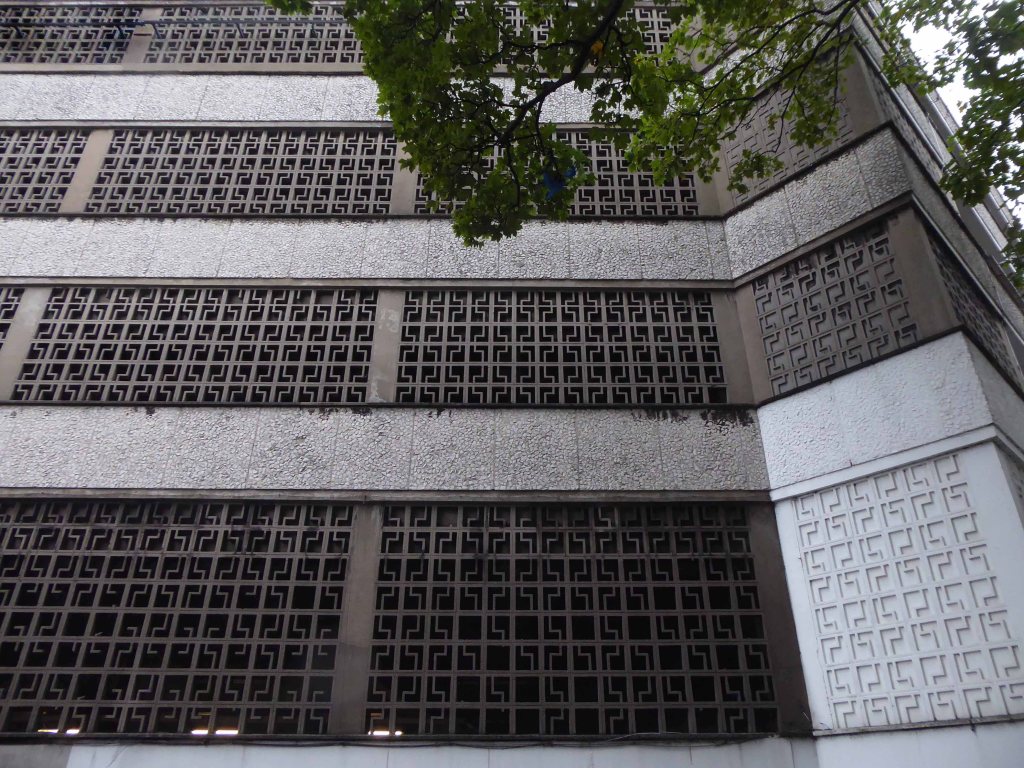
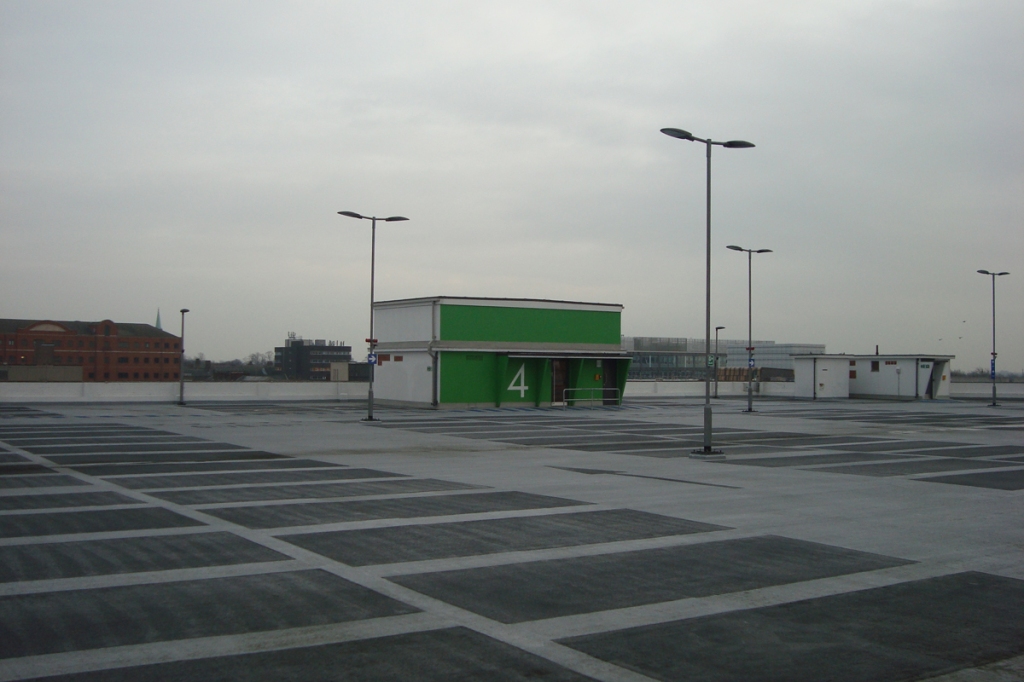
The area is a pivotal point, I sincerely hope that the Waterdale Centre is revived, along with the adjacent Civic Quarter car park.
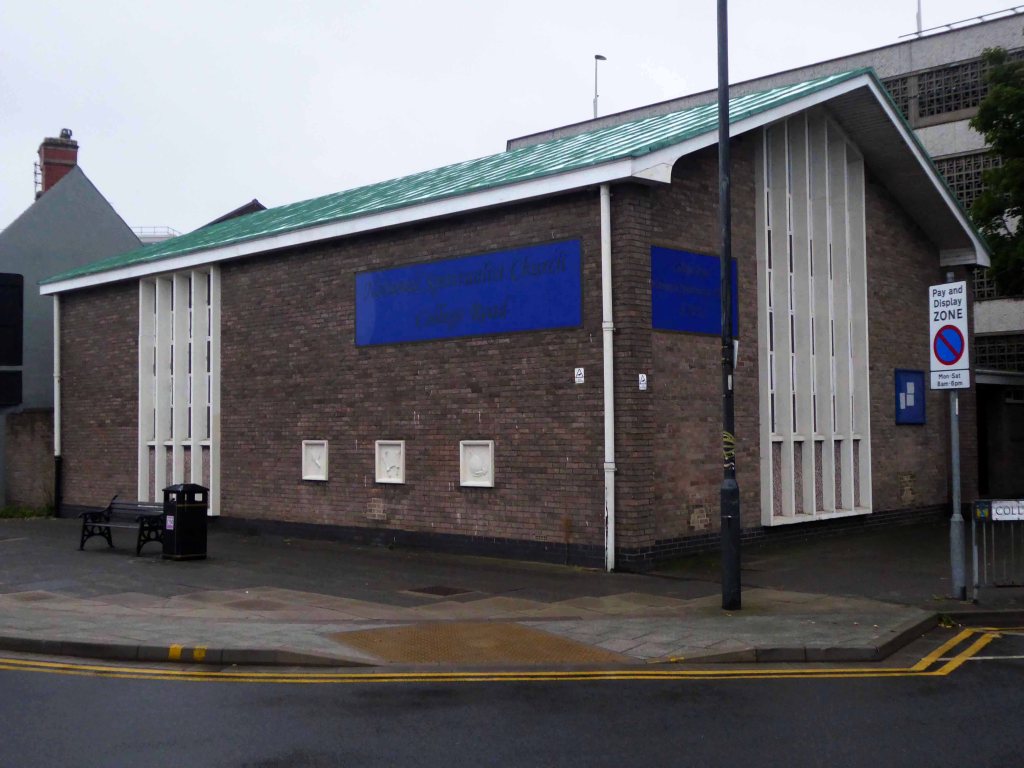
I noted the restrained Modernism of the National Spiritualist Church.
The service begins with a short prayer. The congregation sings three songs during the service using music that most people would recognise. There is usually a short reading or lesson on something to do with spiritualism or events in the world. There is also a talk by the guest medium who use their inspiration or intuition to compose an uplifting address.
Then the business of contacting the spirit world begins.
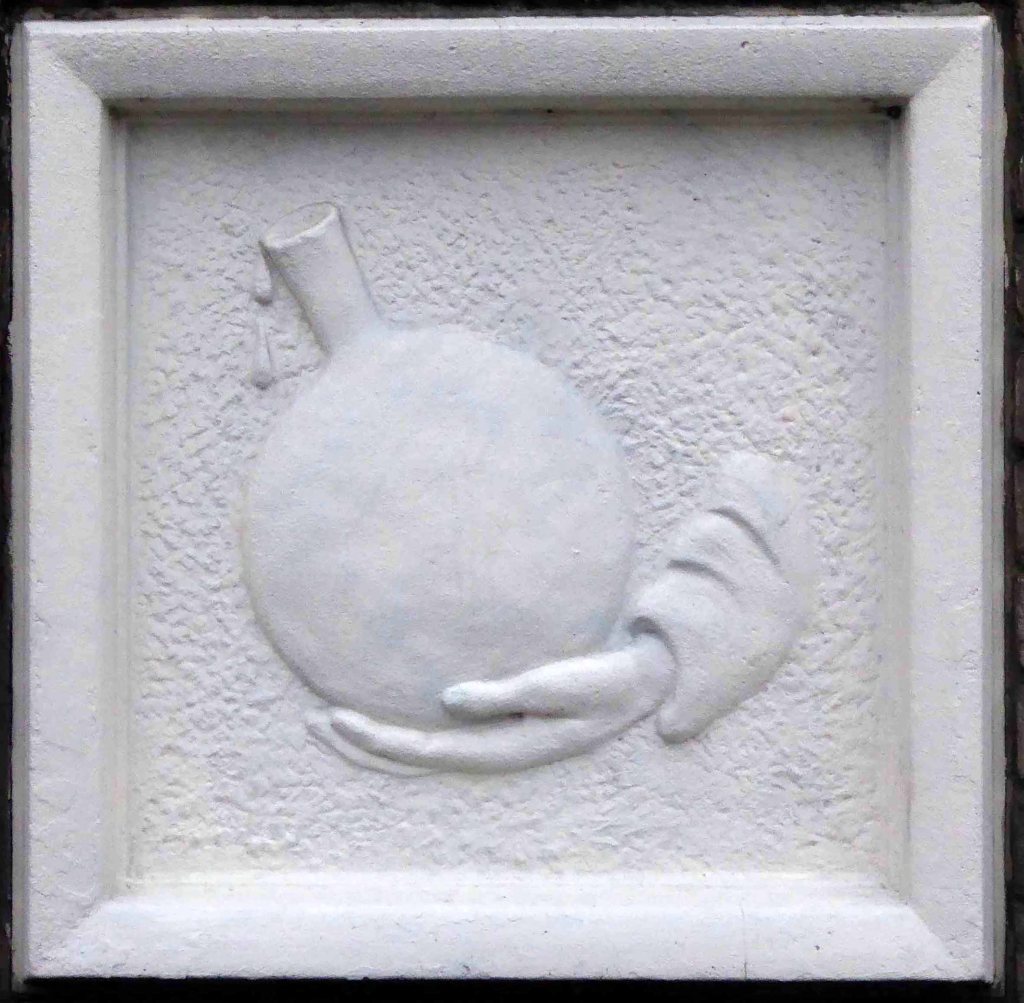
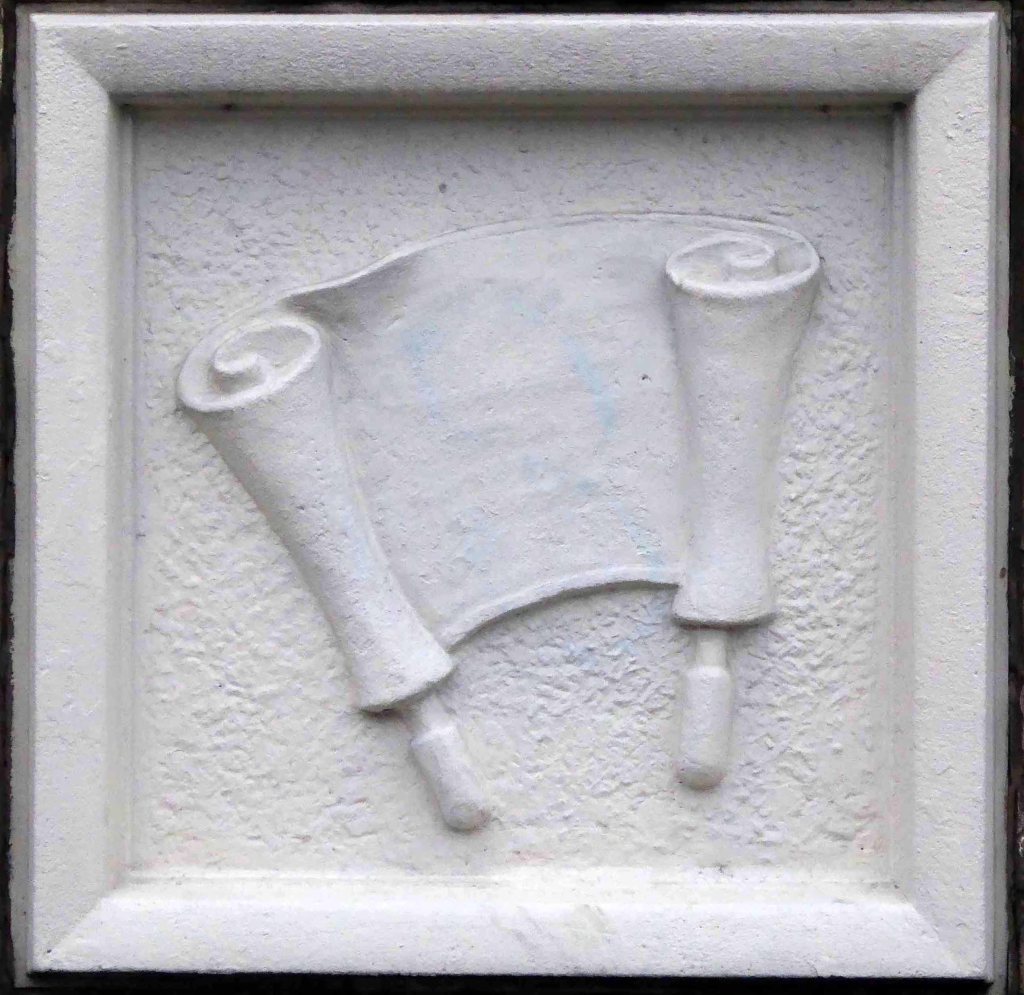
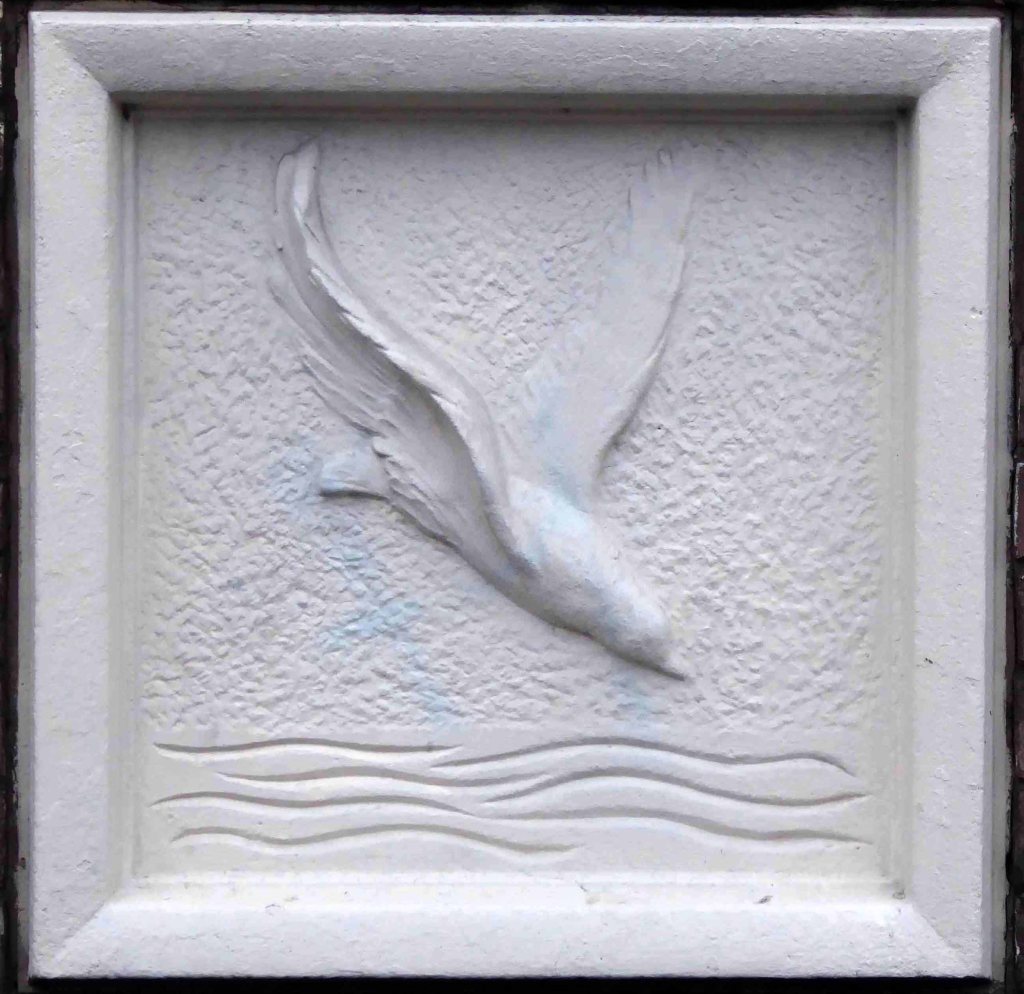
Along with its curious relief panels.
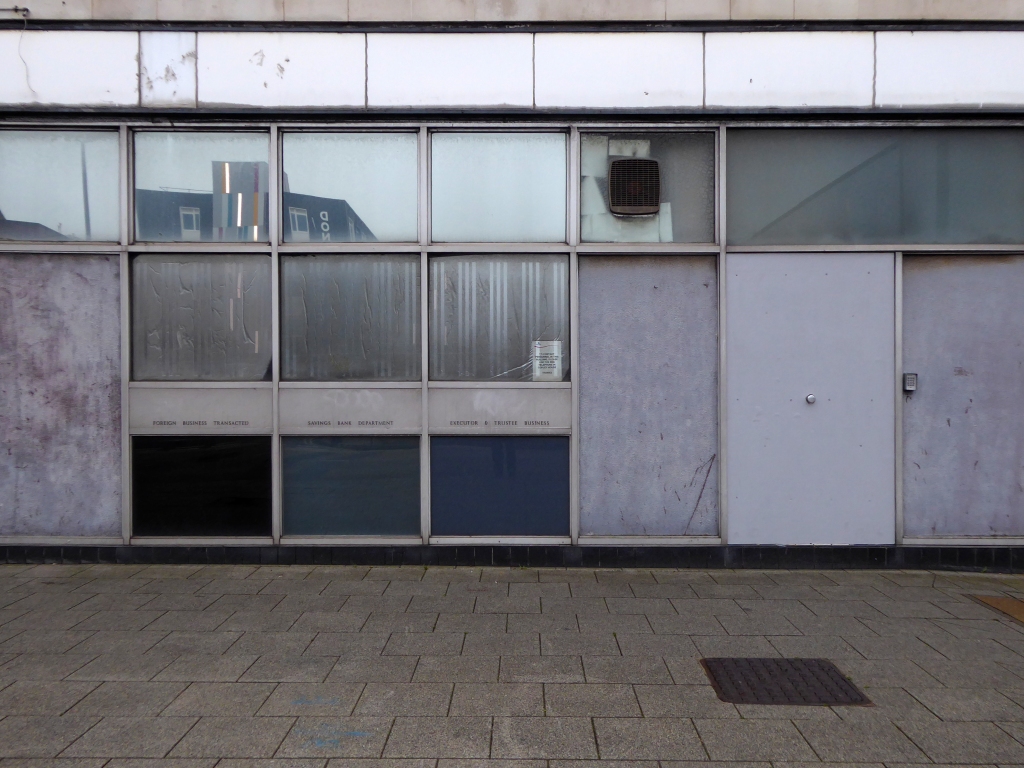
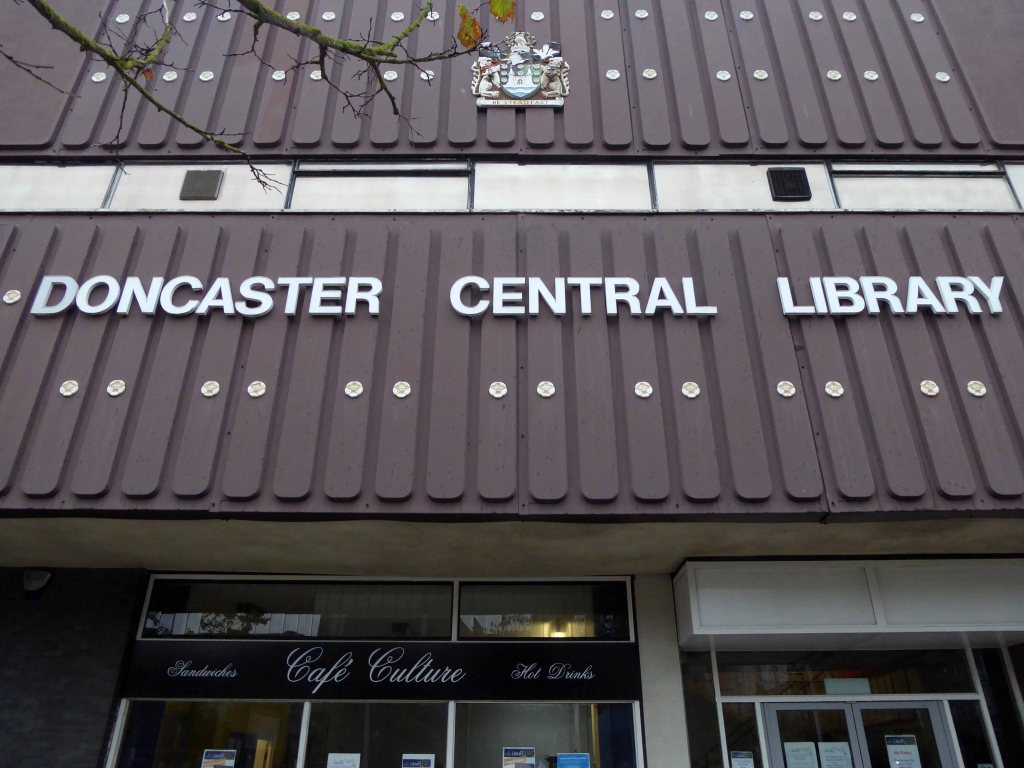
Back around to the back of the Waterdale and the surviving former bank fascia, civic offices and library.
Back through the Waterdale to discover the saddest of retail archeology.
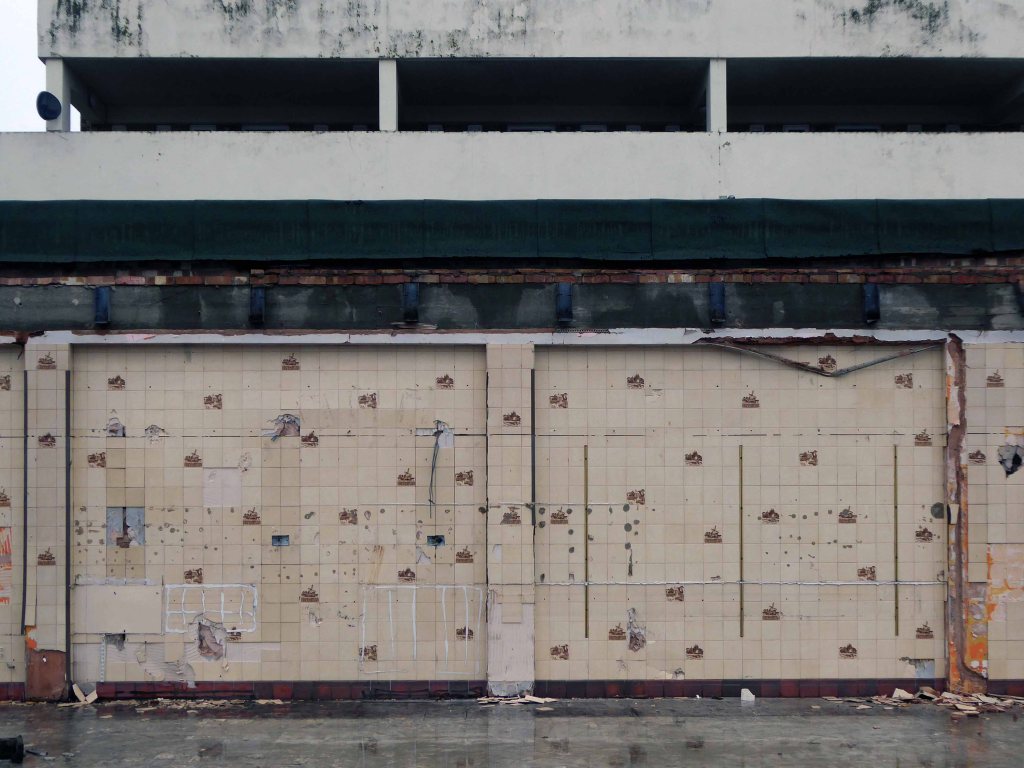
The long lost tiled café wall and a mysterious porch.
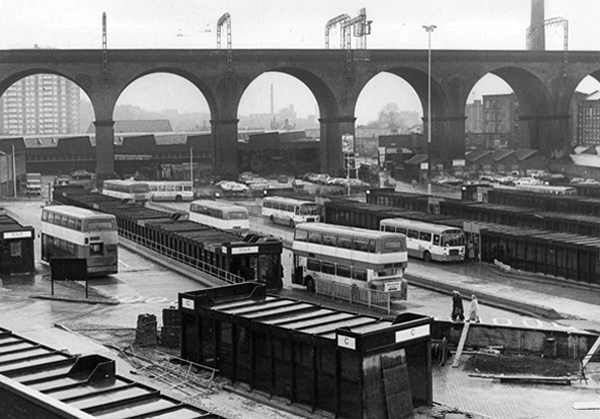
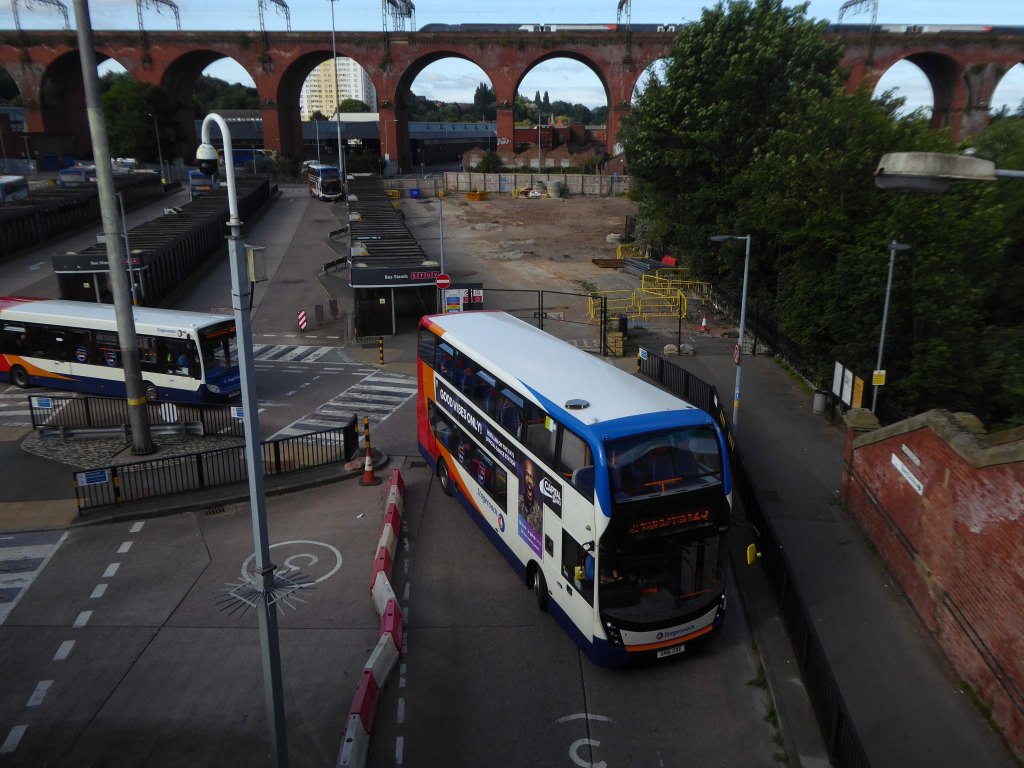
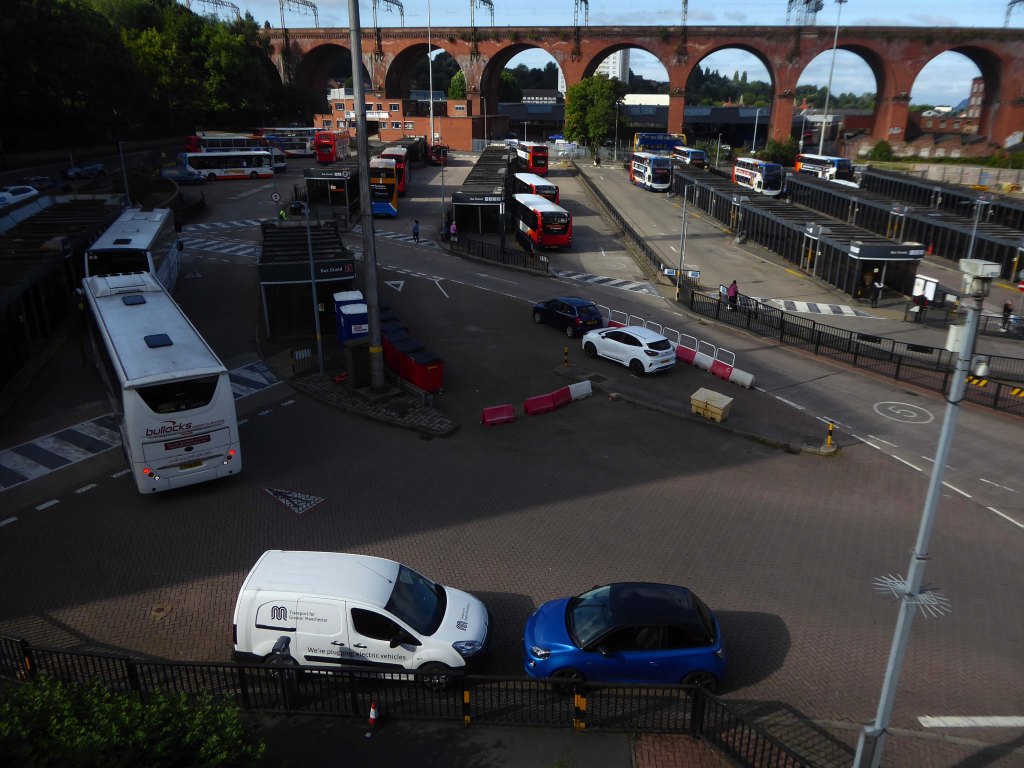
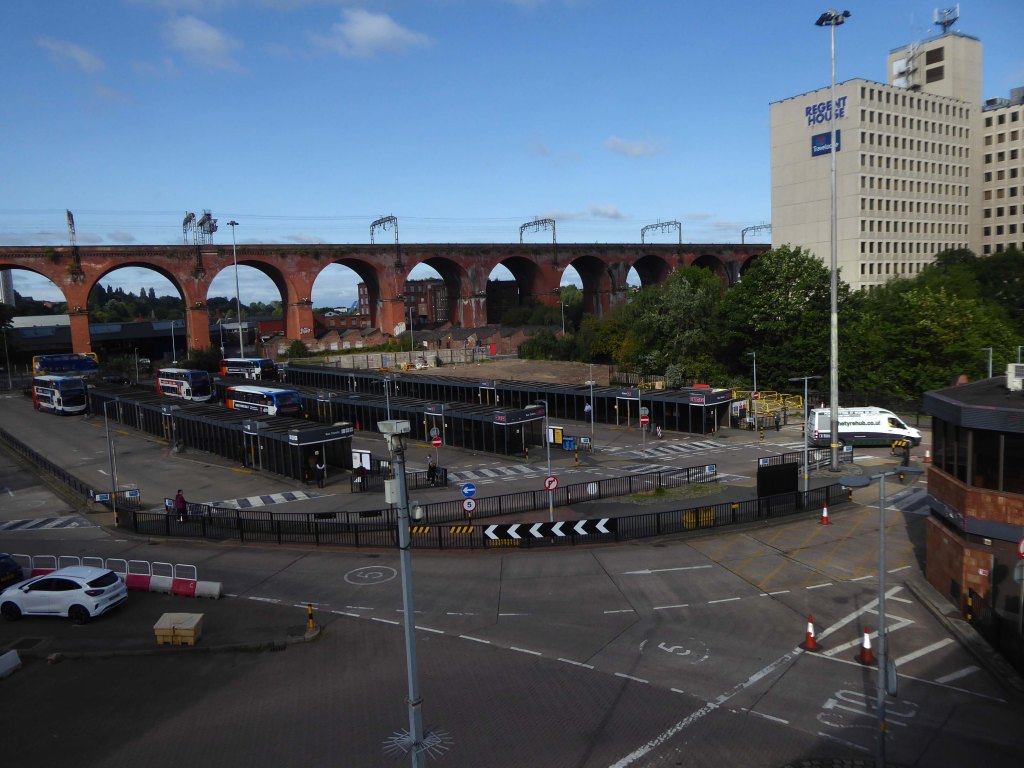
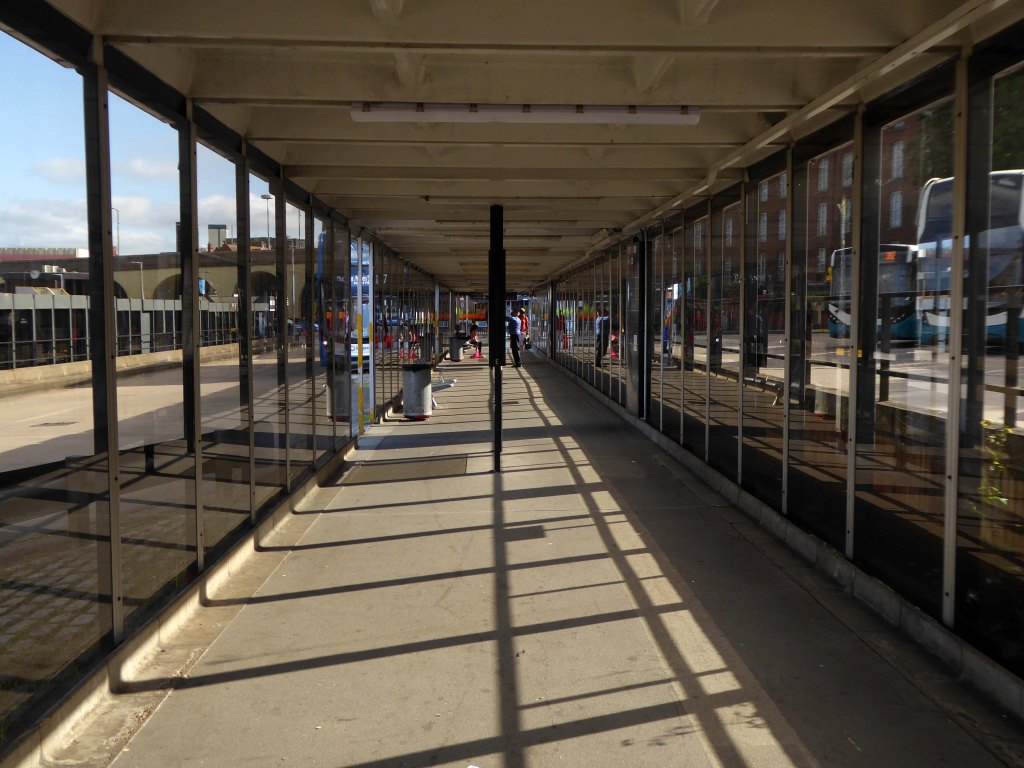
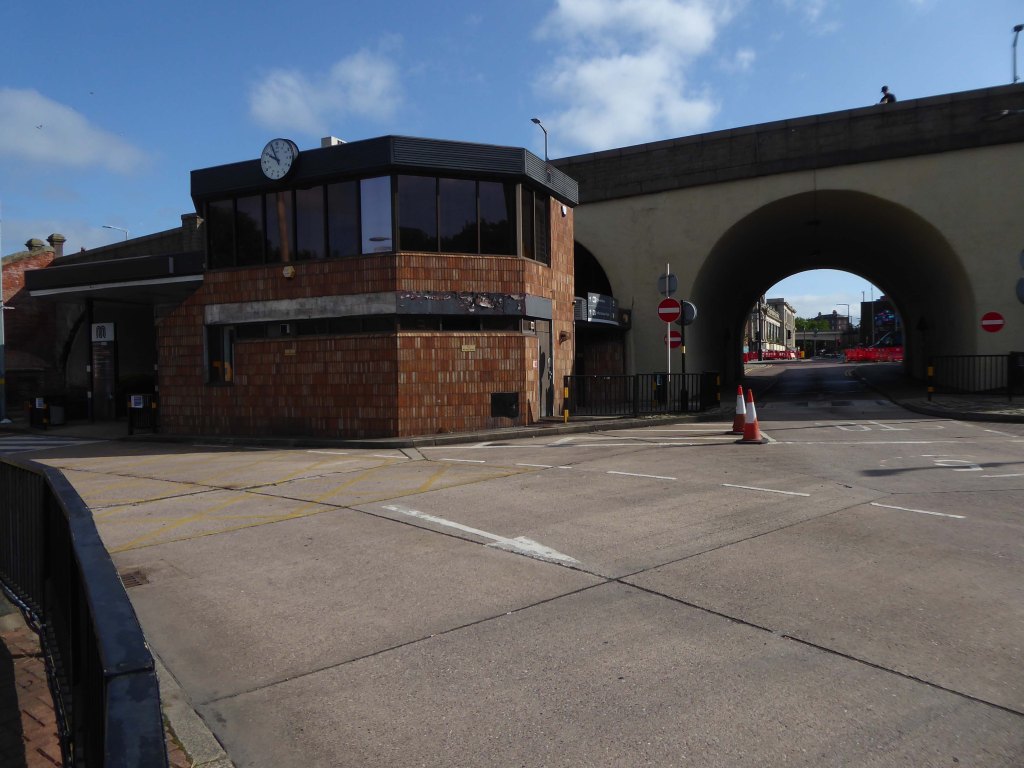
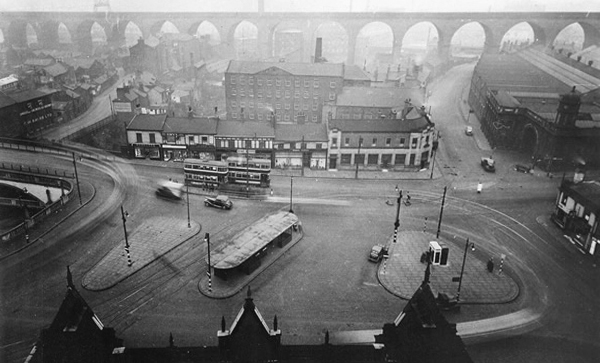
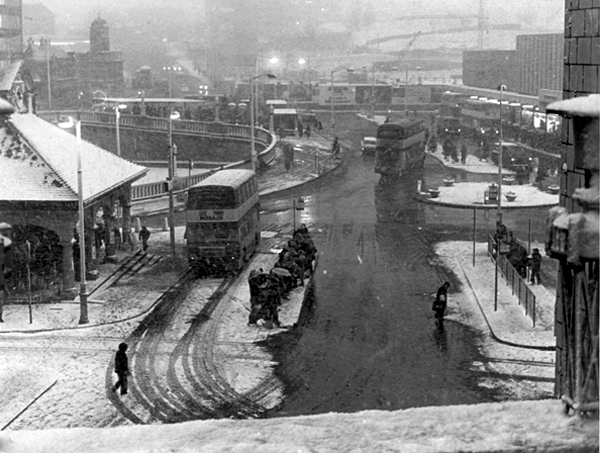
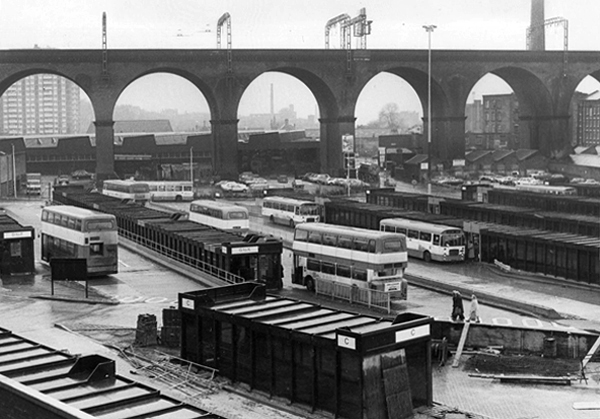
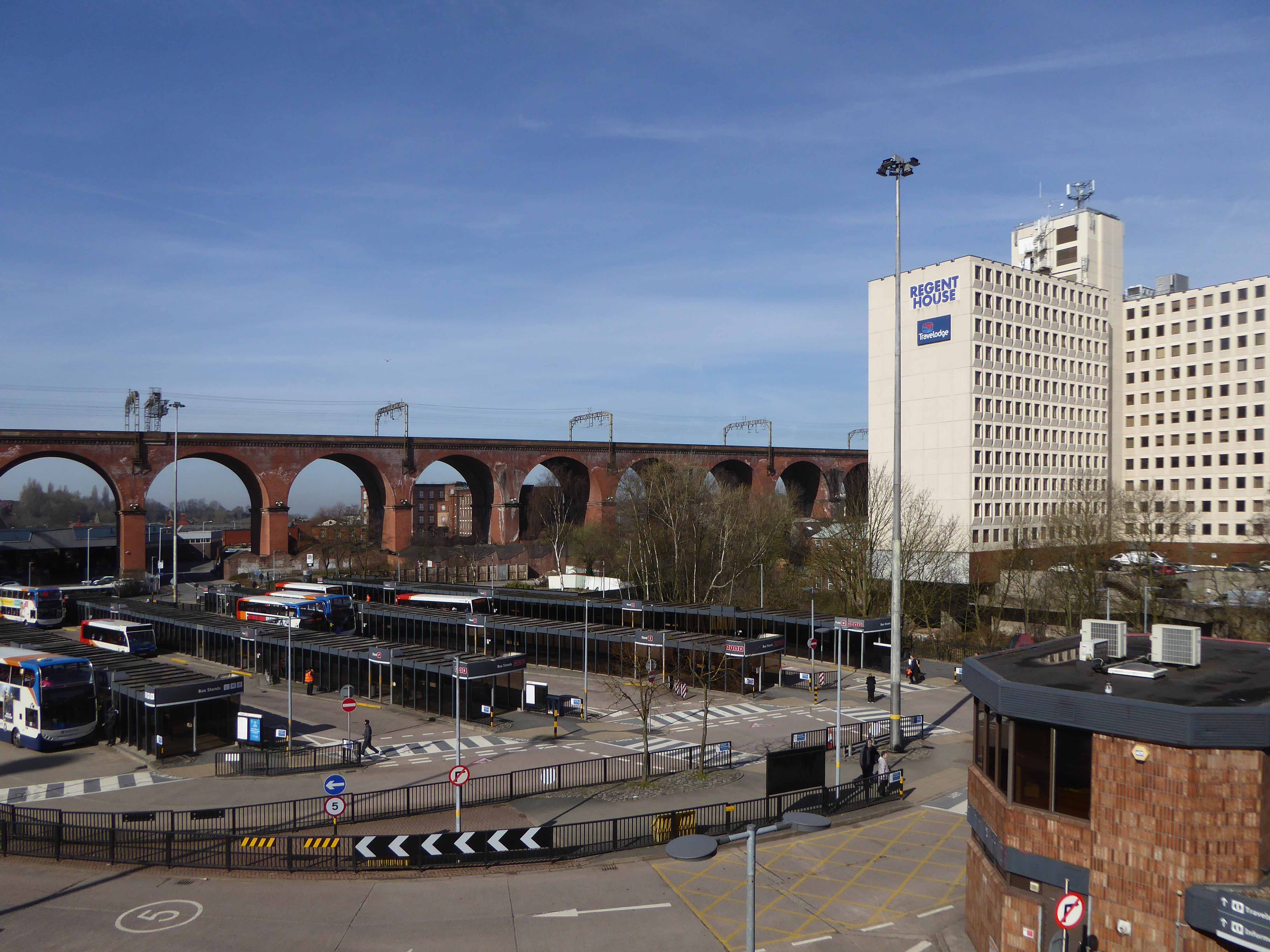
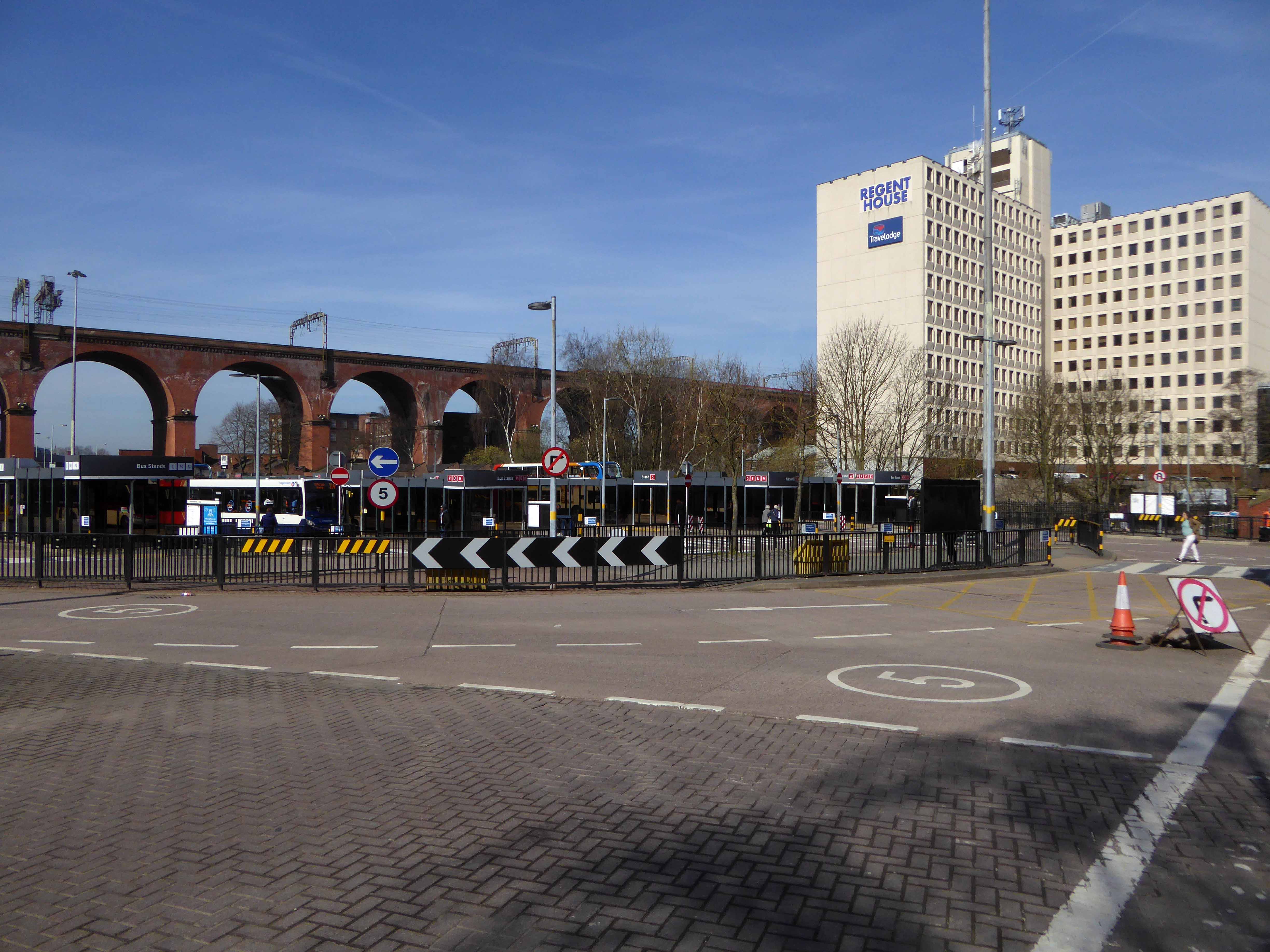
From the early part of the Twentieth Century trams and then buses stopped and started in Mersey Square, affording limited succour, space or shelter for the weary traveller.
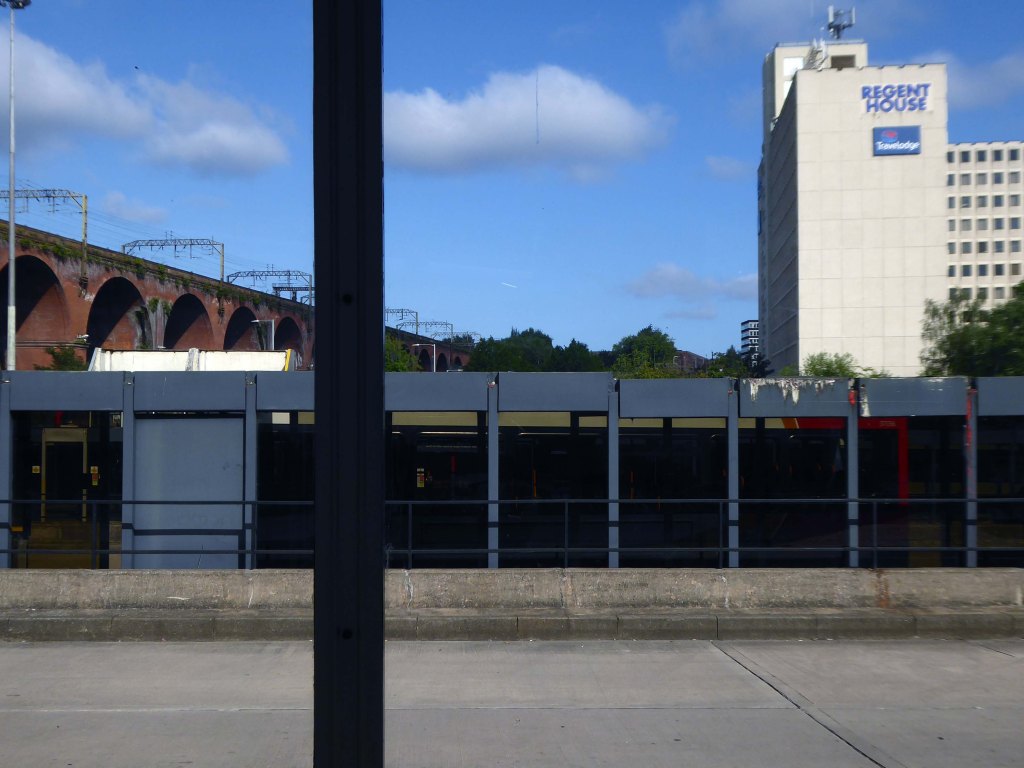
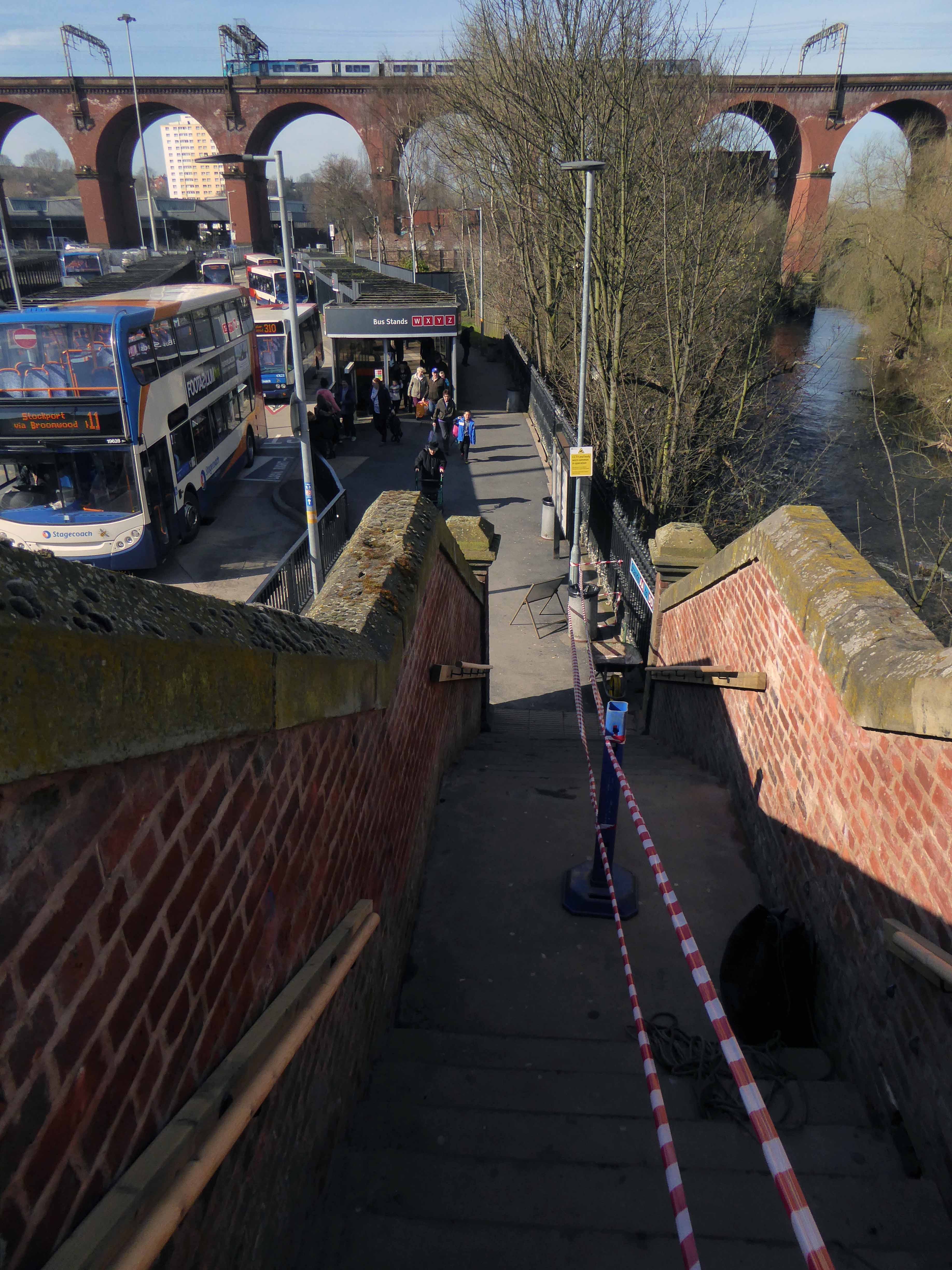
View from the Fire Station Tower.
View from the Plaza Steps.
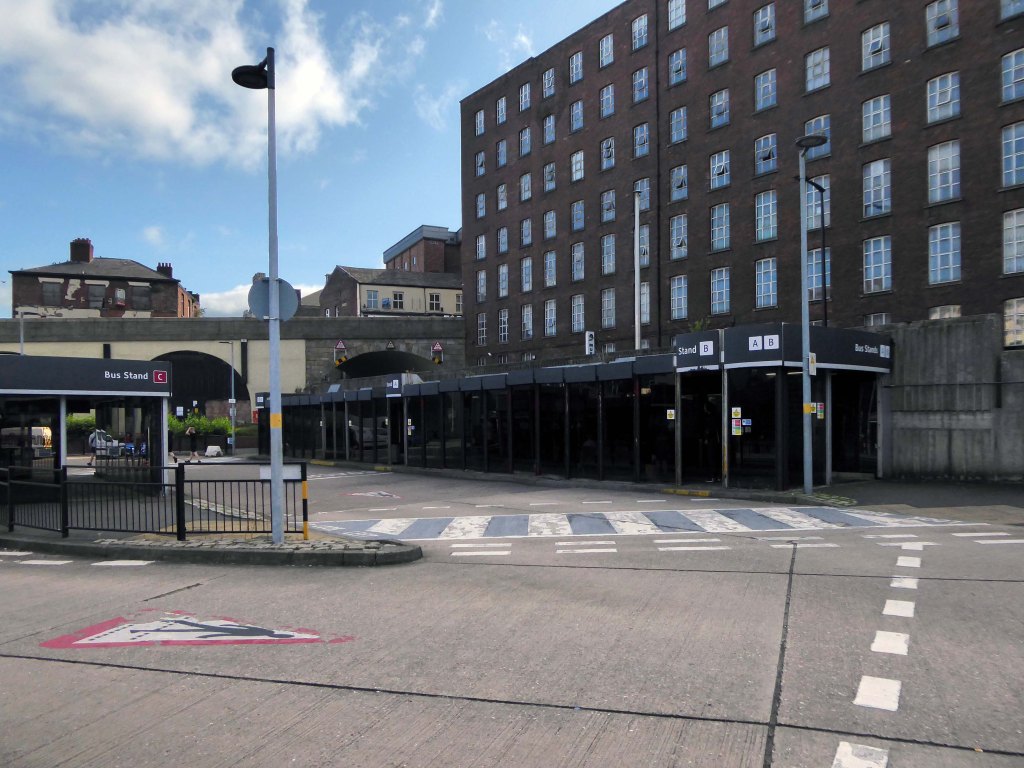
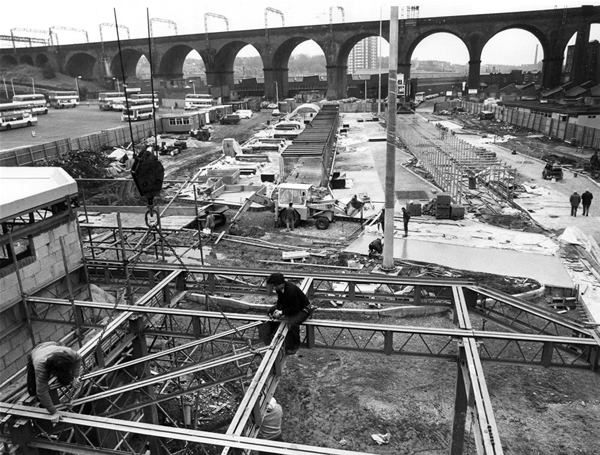
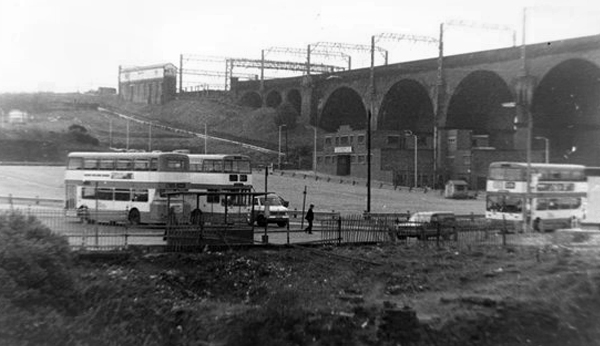
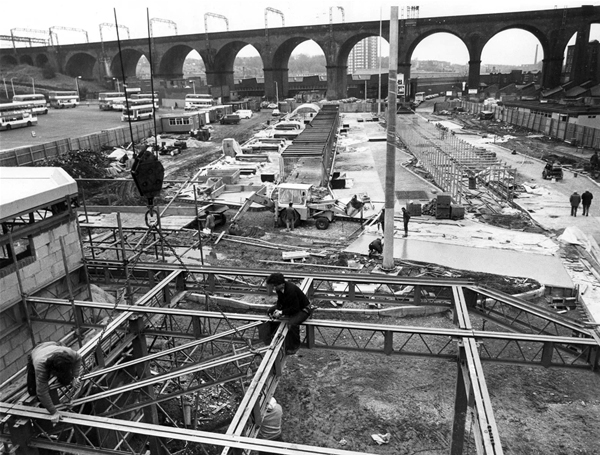
The land where the bus station currently stands was then owned and used by North Western Buses – a rather large and uncultivated plot.
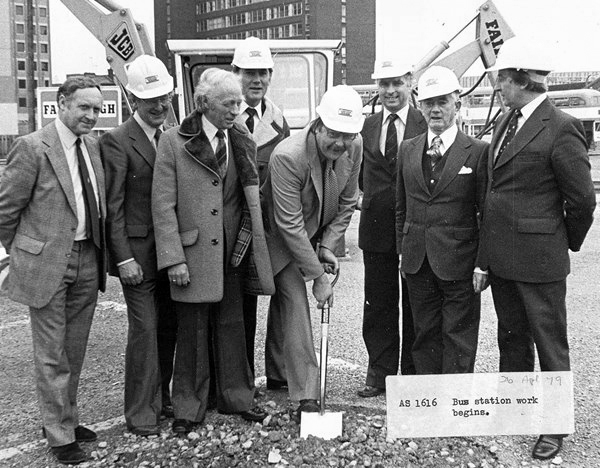
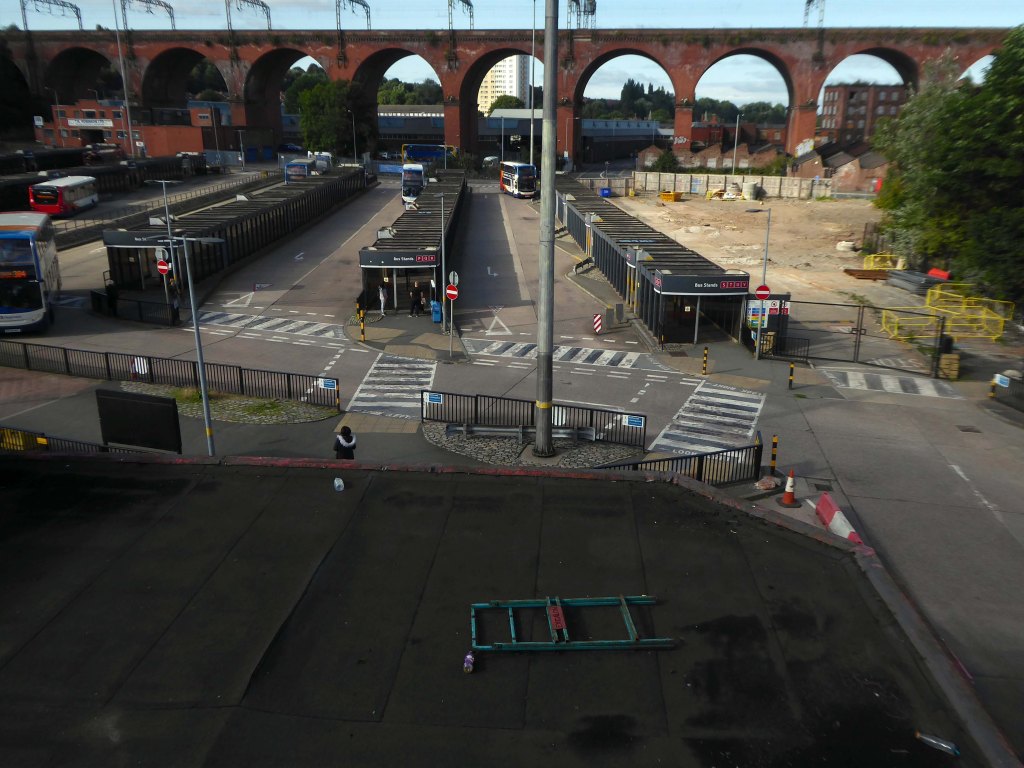
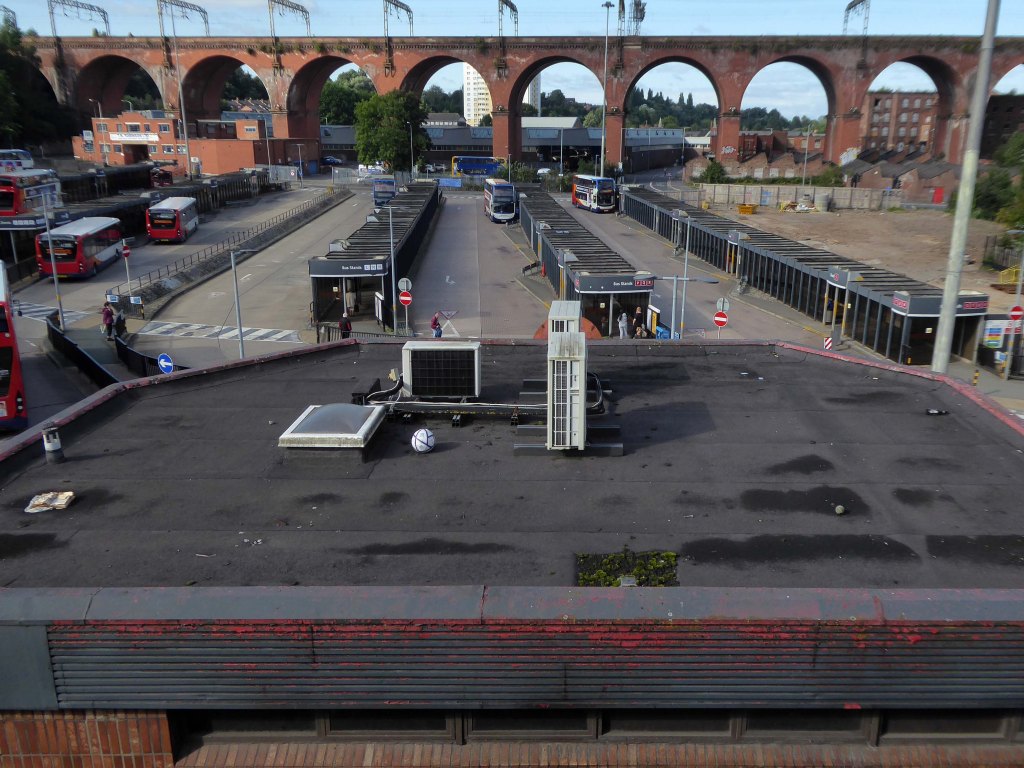
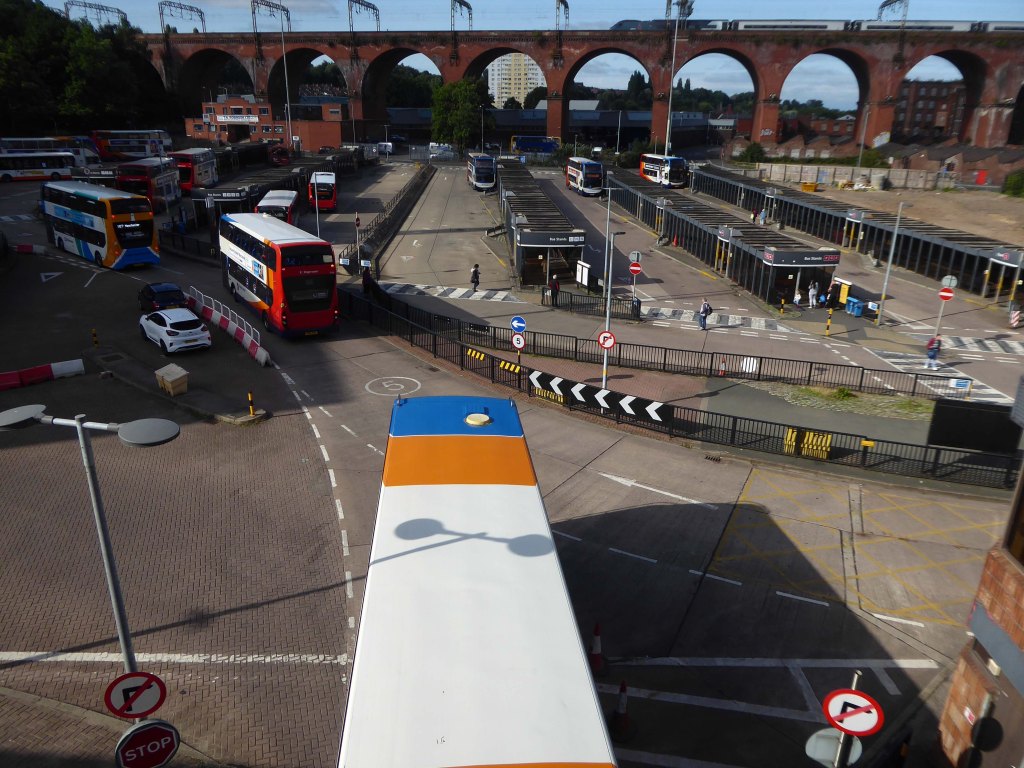
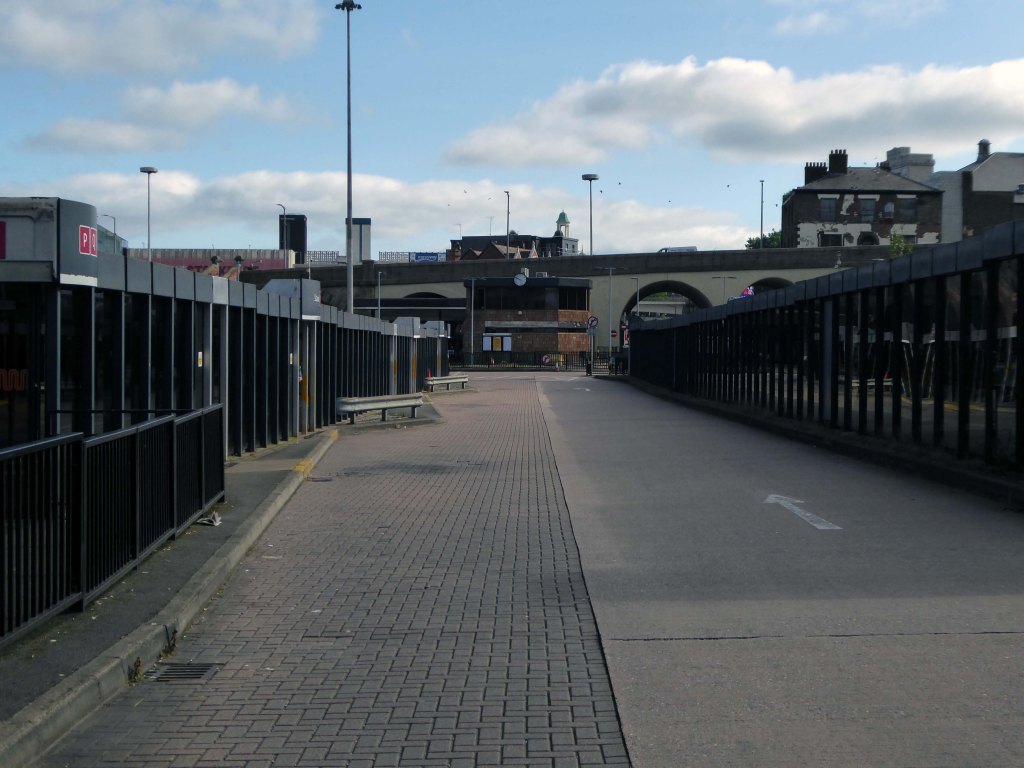
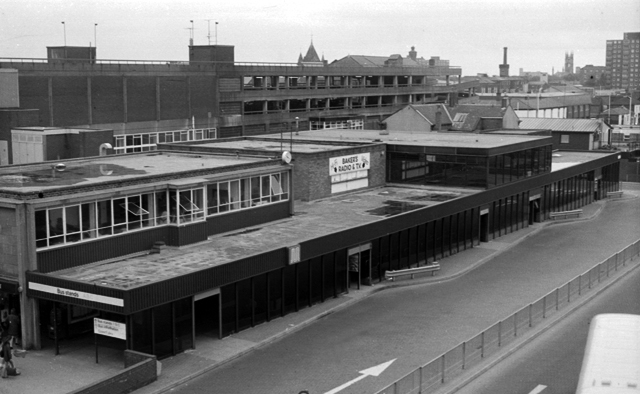
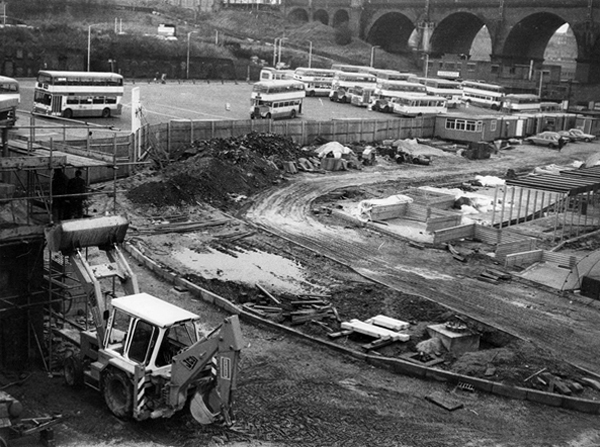
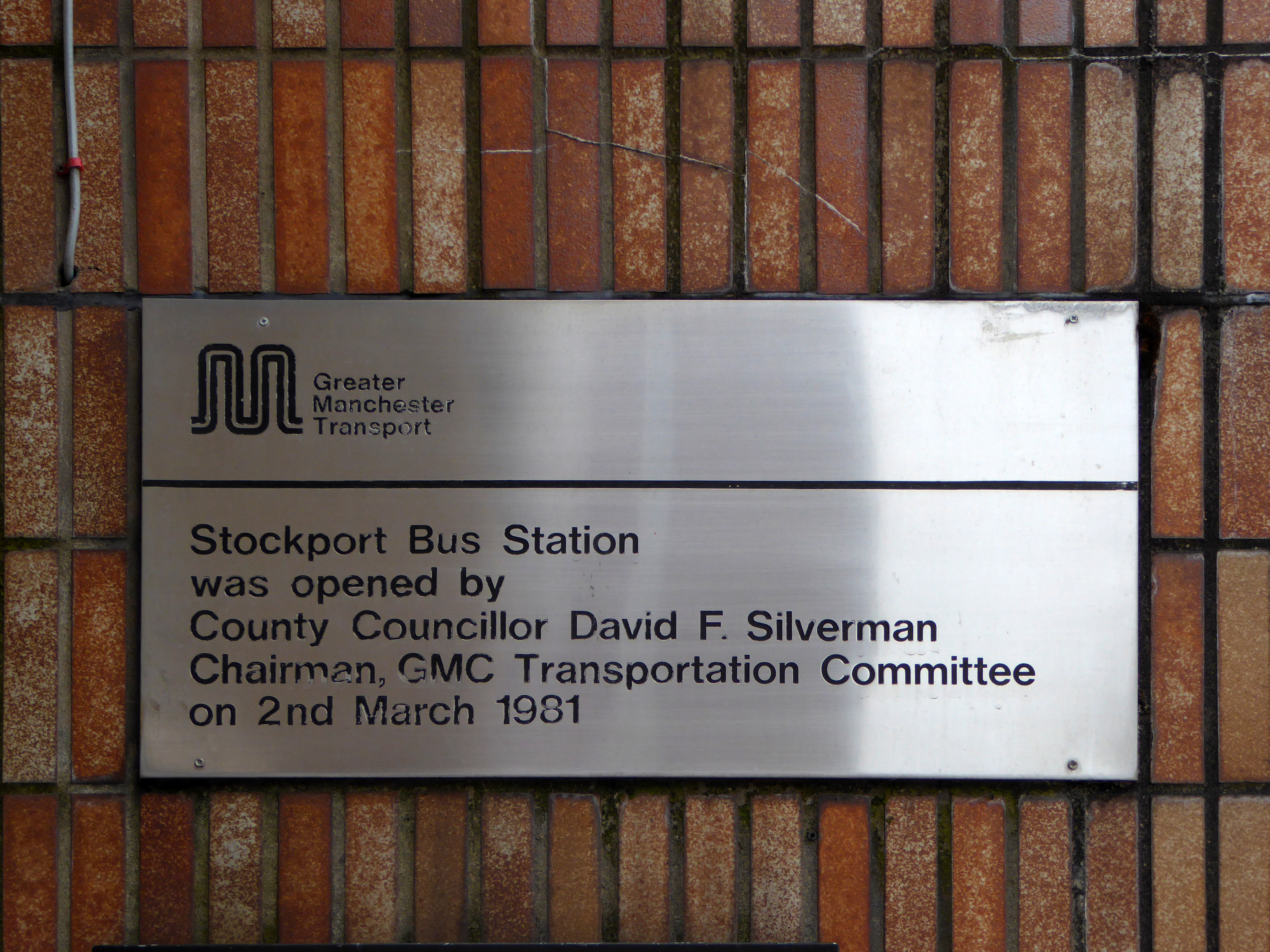
Work began in April 1979 on a brand new bus station, the first stage finally opening on March 2nd 1982.
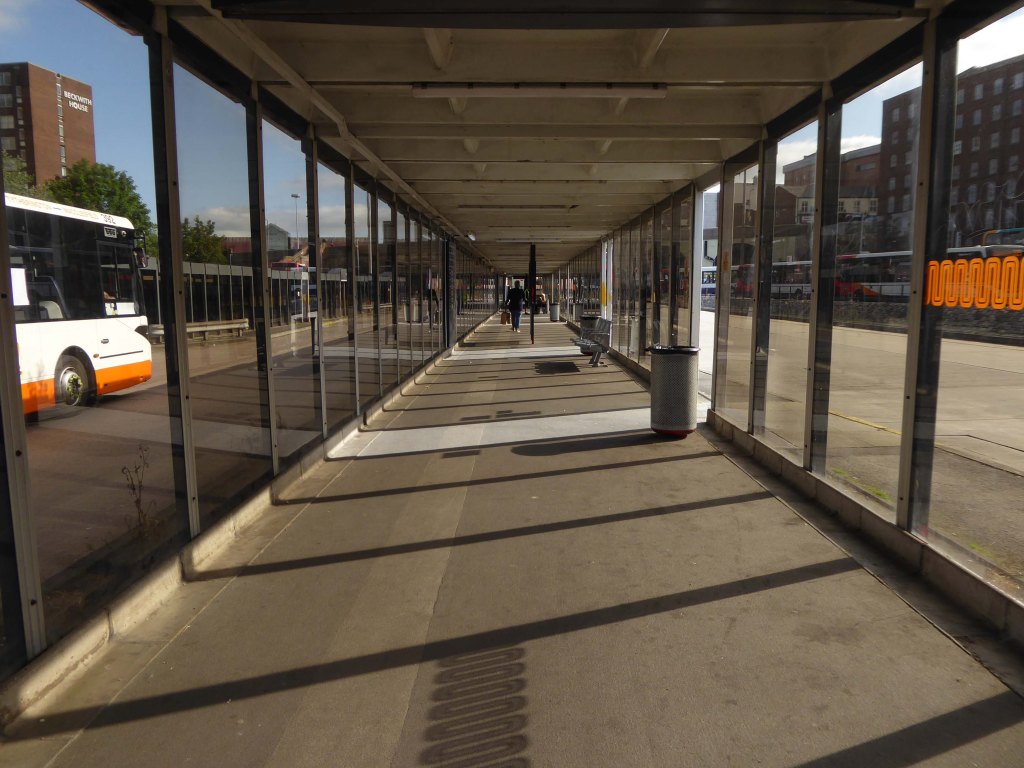
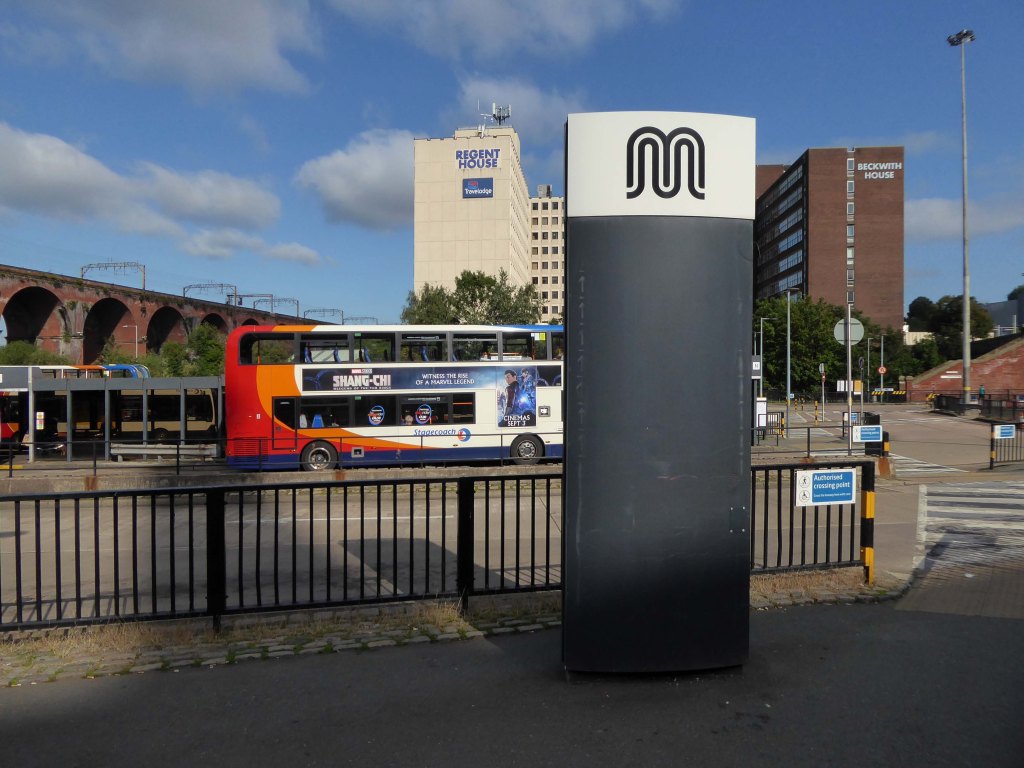
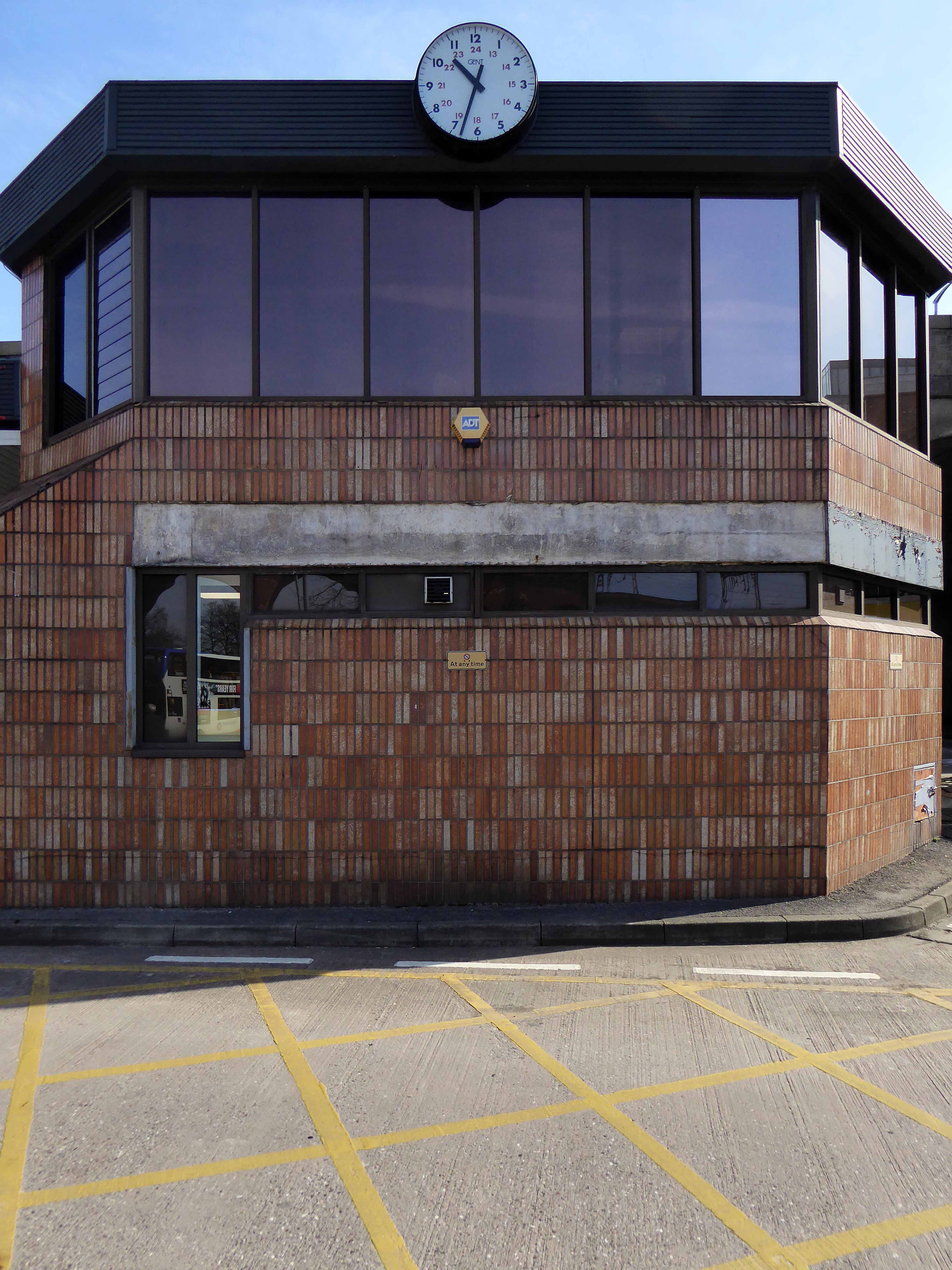
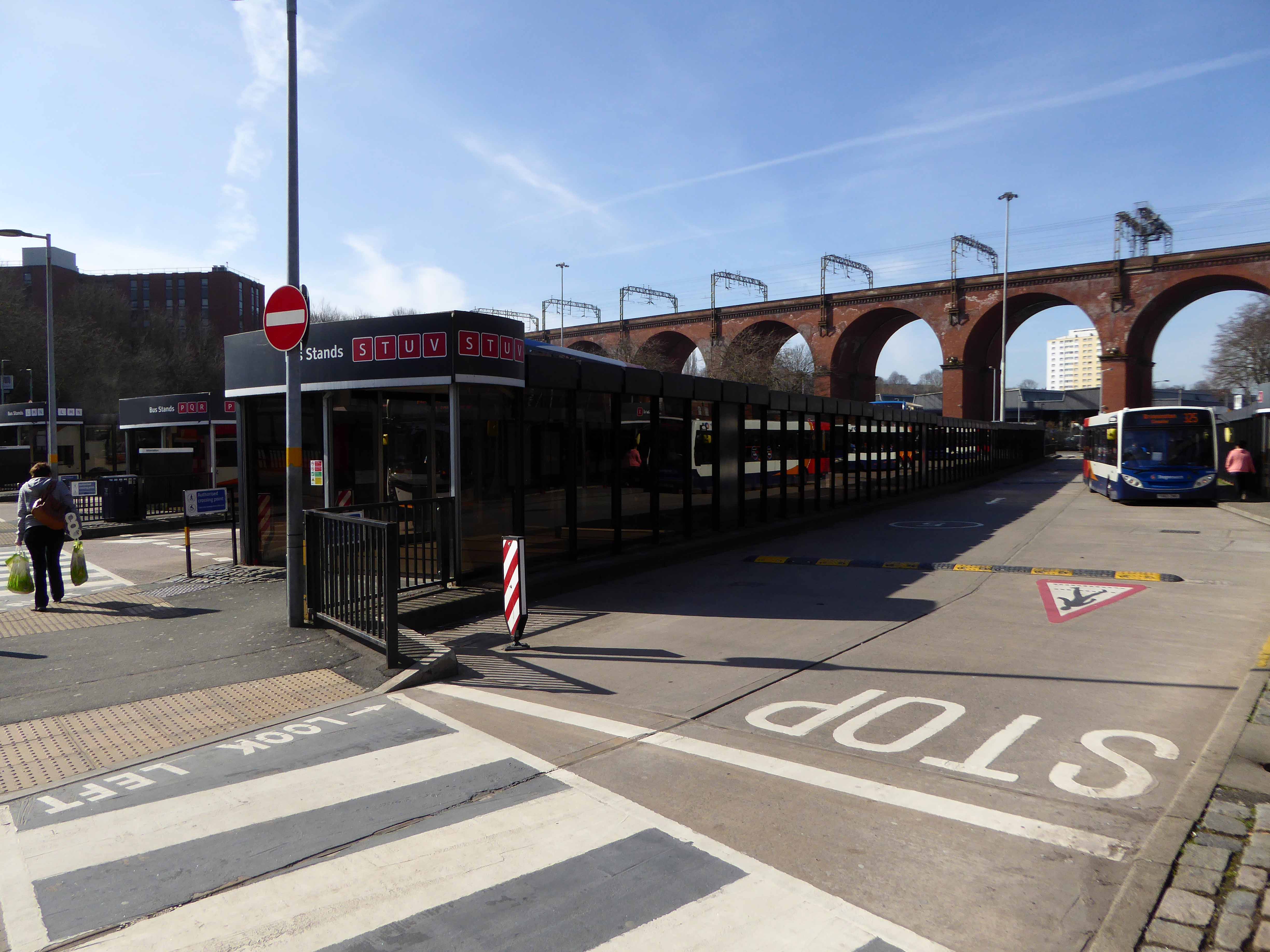
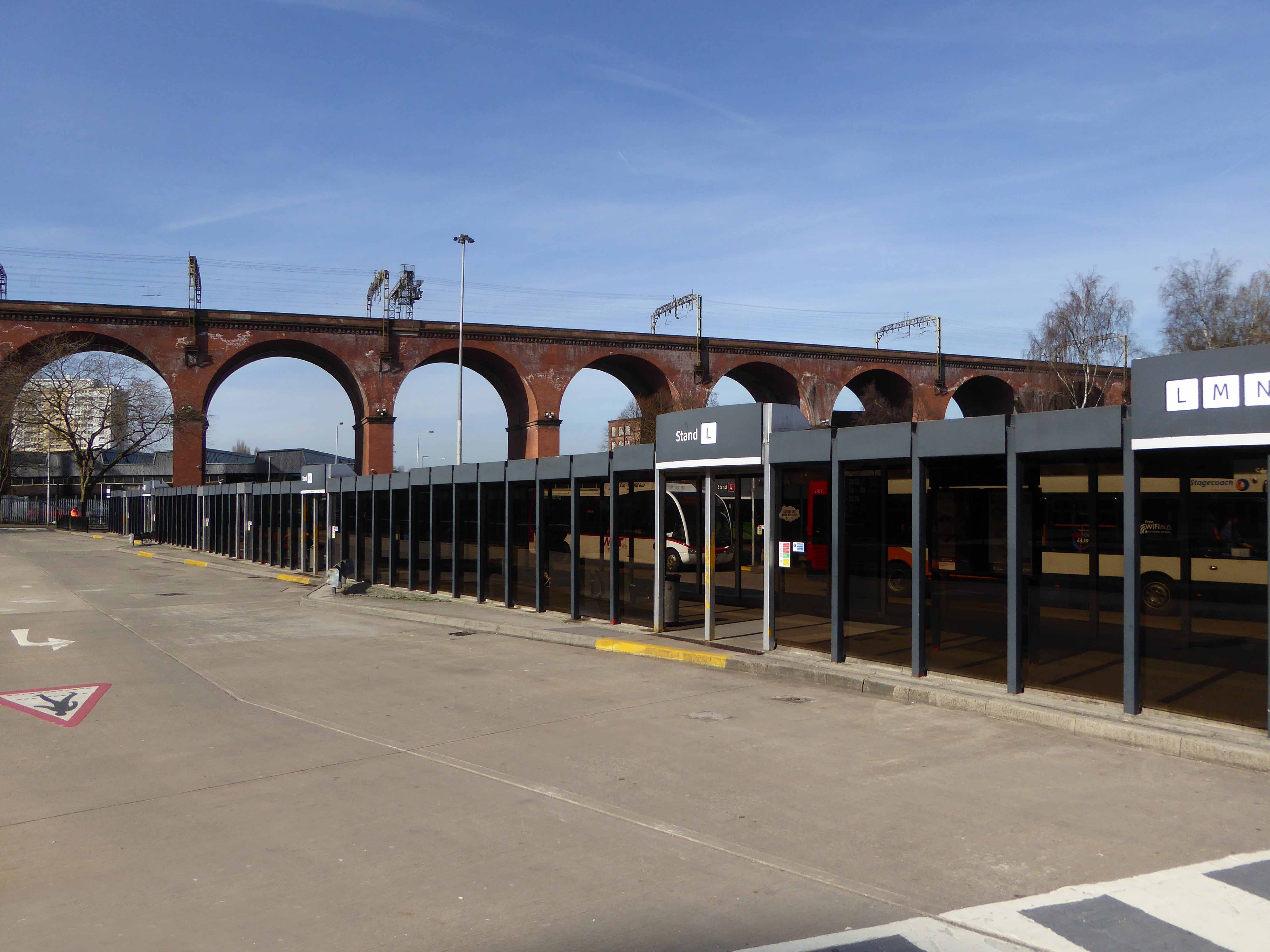
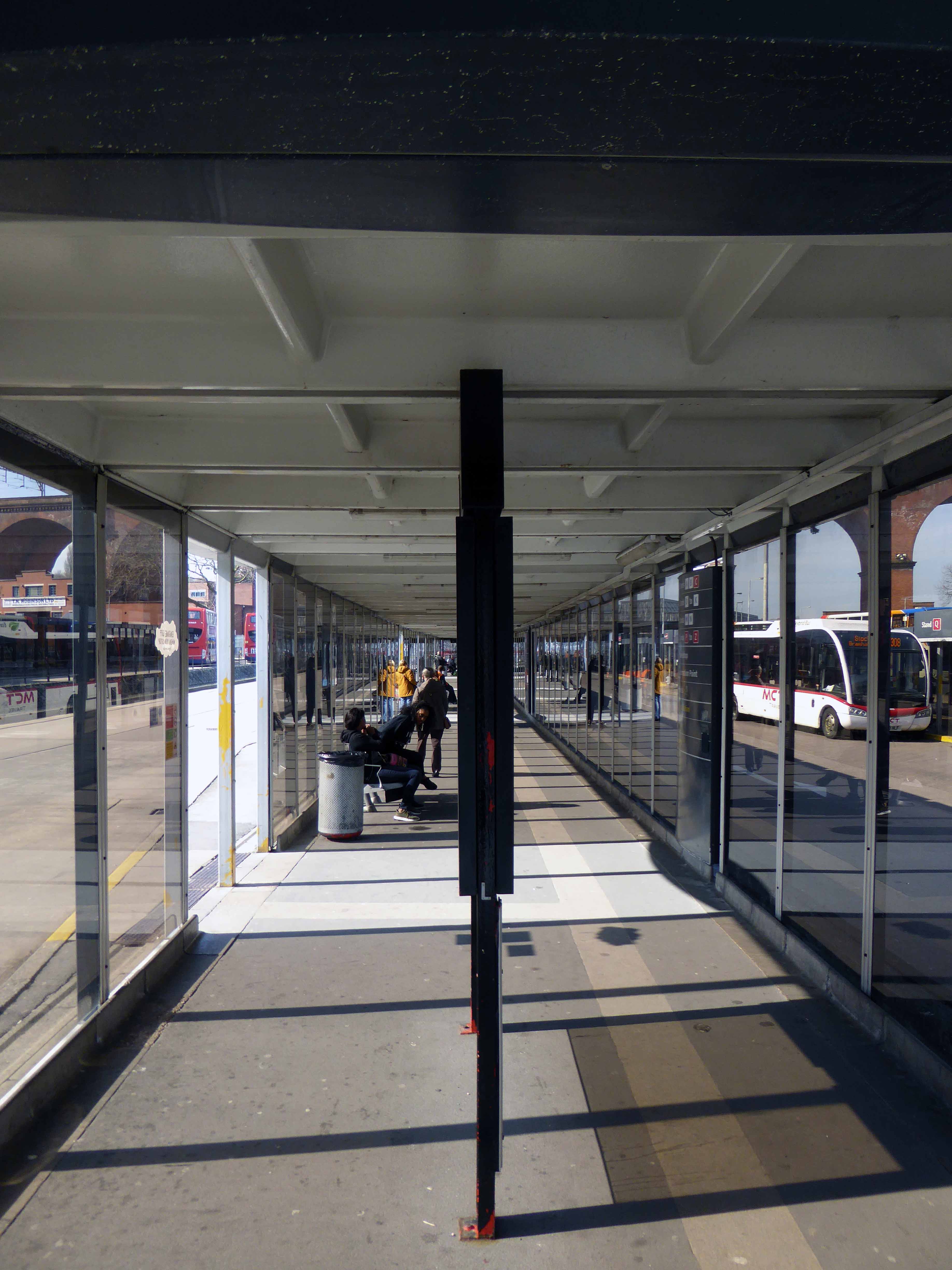
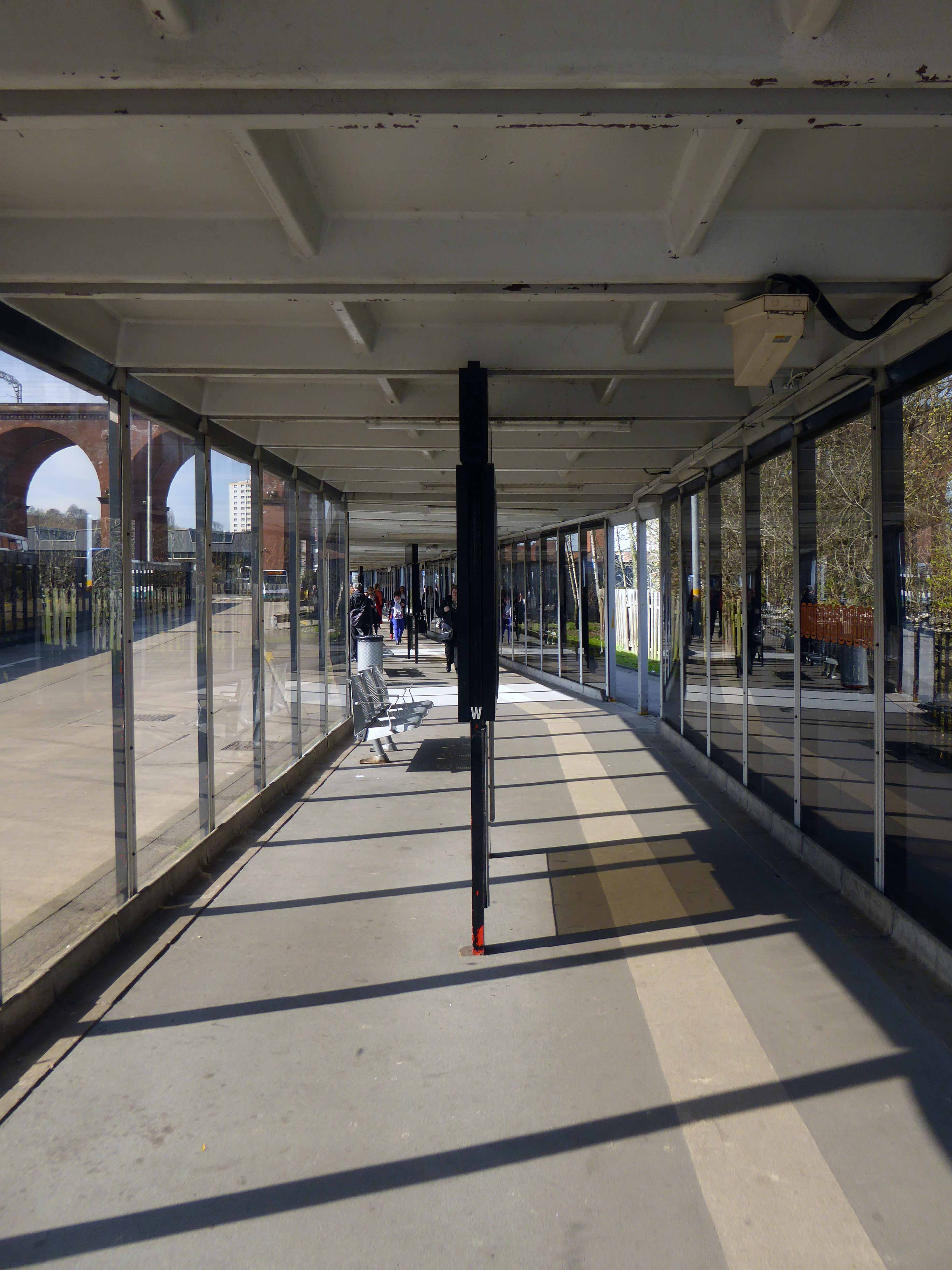
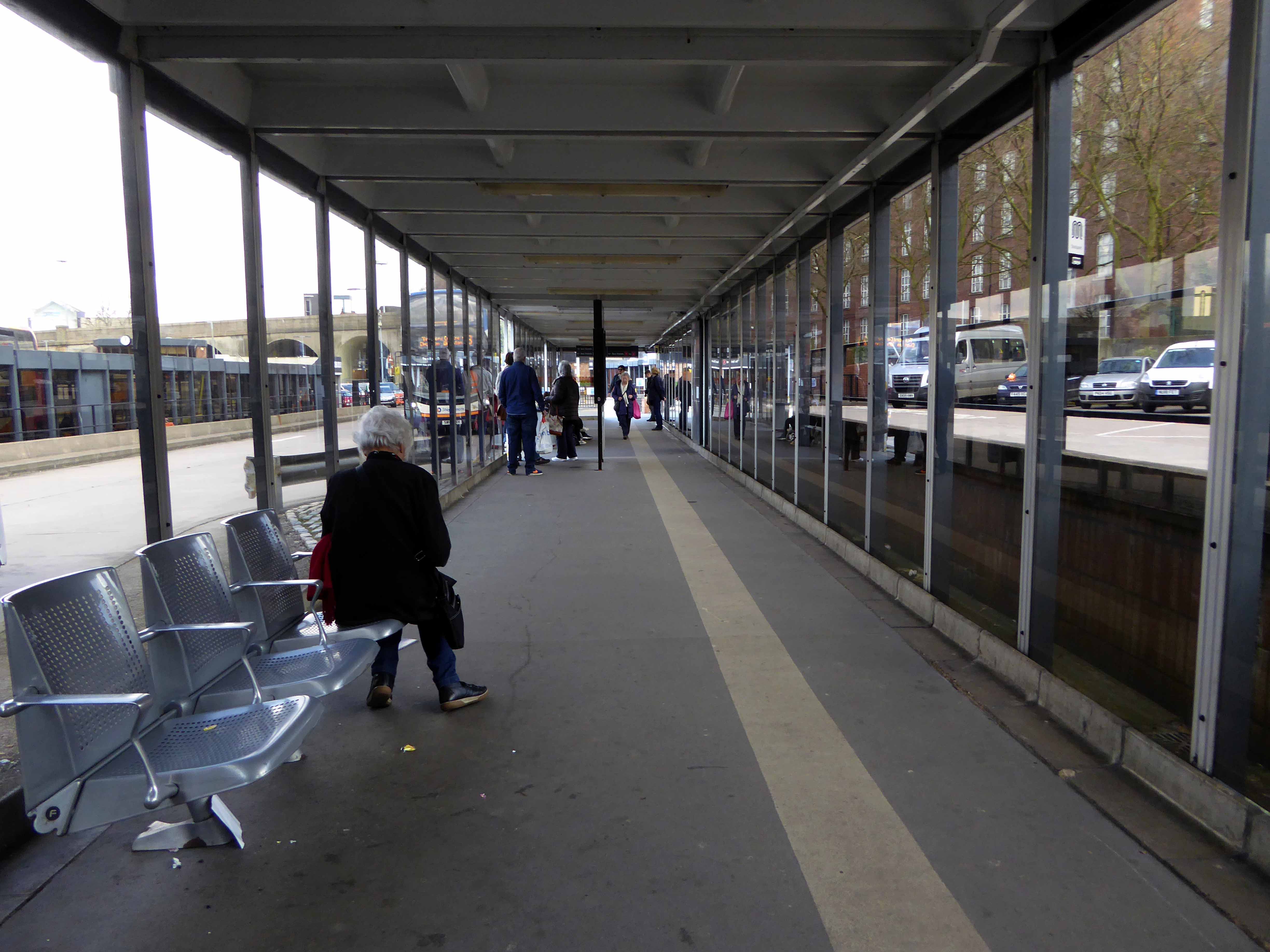
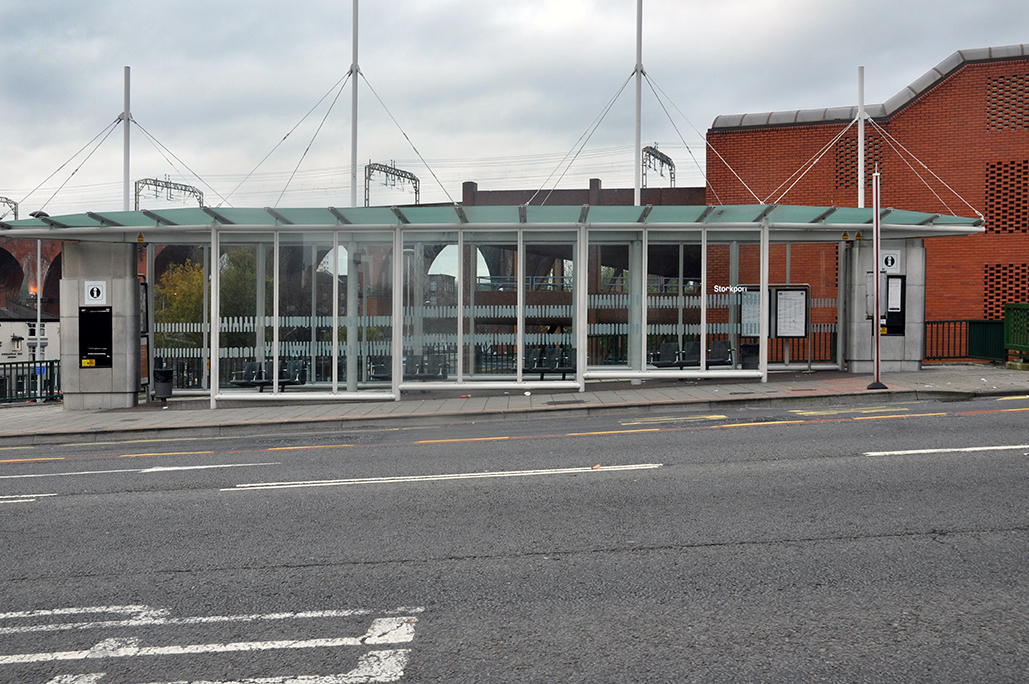
Slowly emerging from the rough ground – a series of glass and steel boxes worthy of that master of minimalism Ludwig Mies van der Rohe, a Neue Nationalgalerie in miniature.
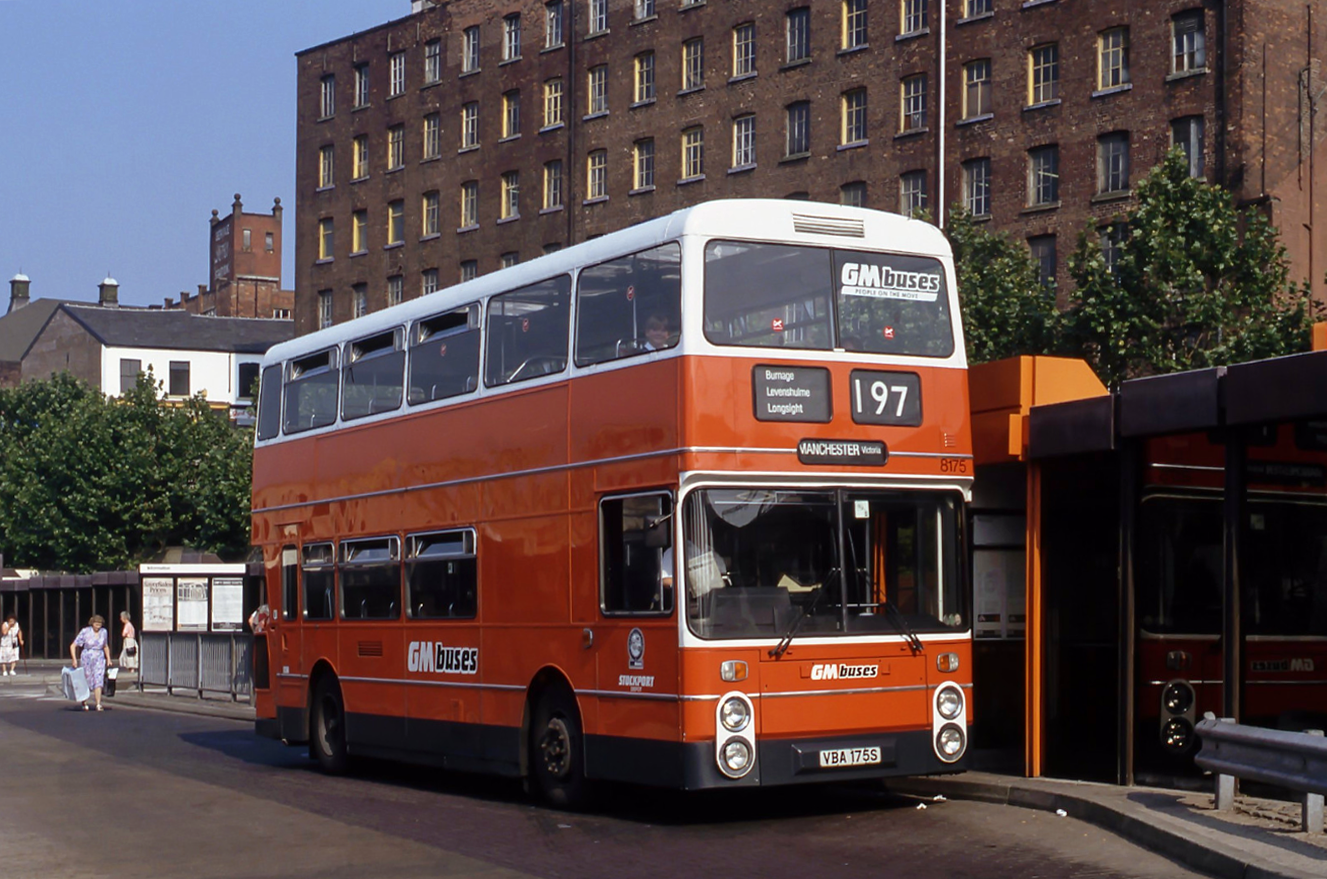
It has stood and withstood the winds of change and perfidious public transport policy, the privatisation of the service, snatched greedily from local authority control.
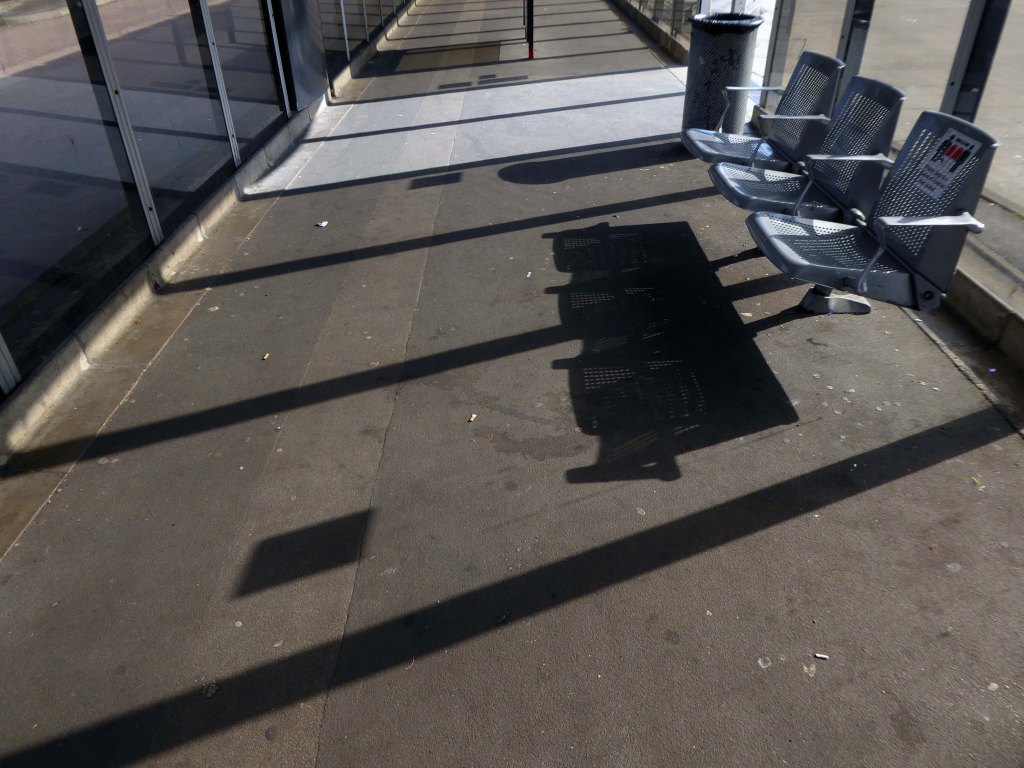
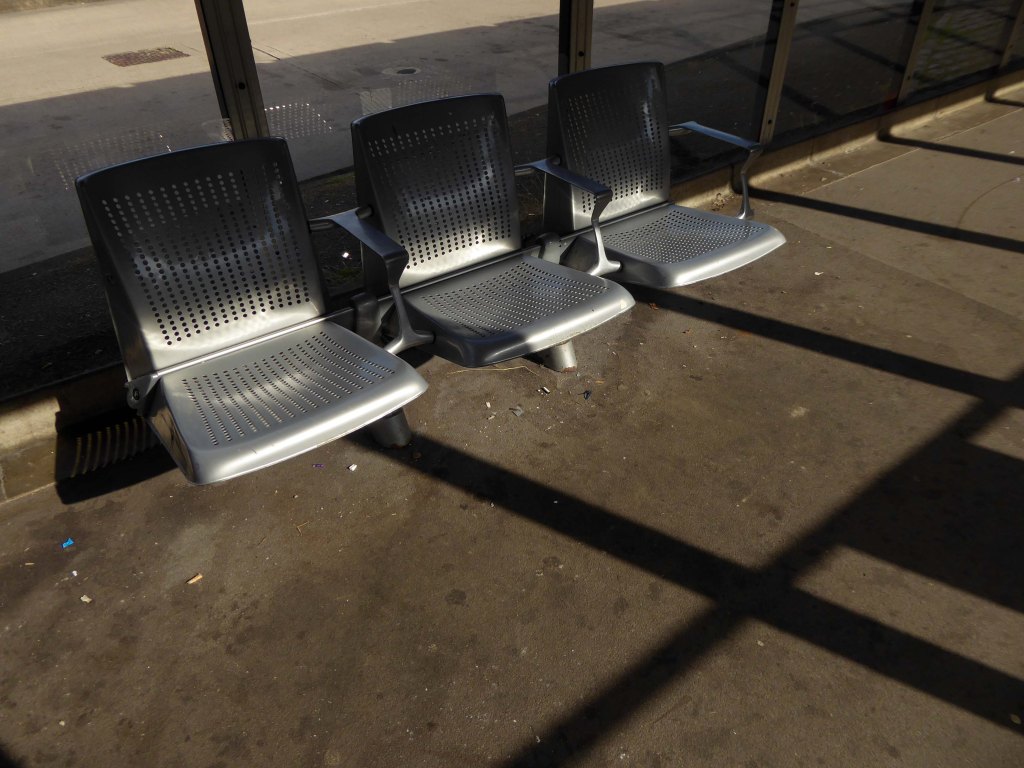
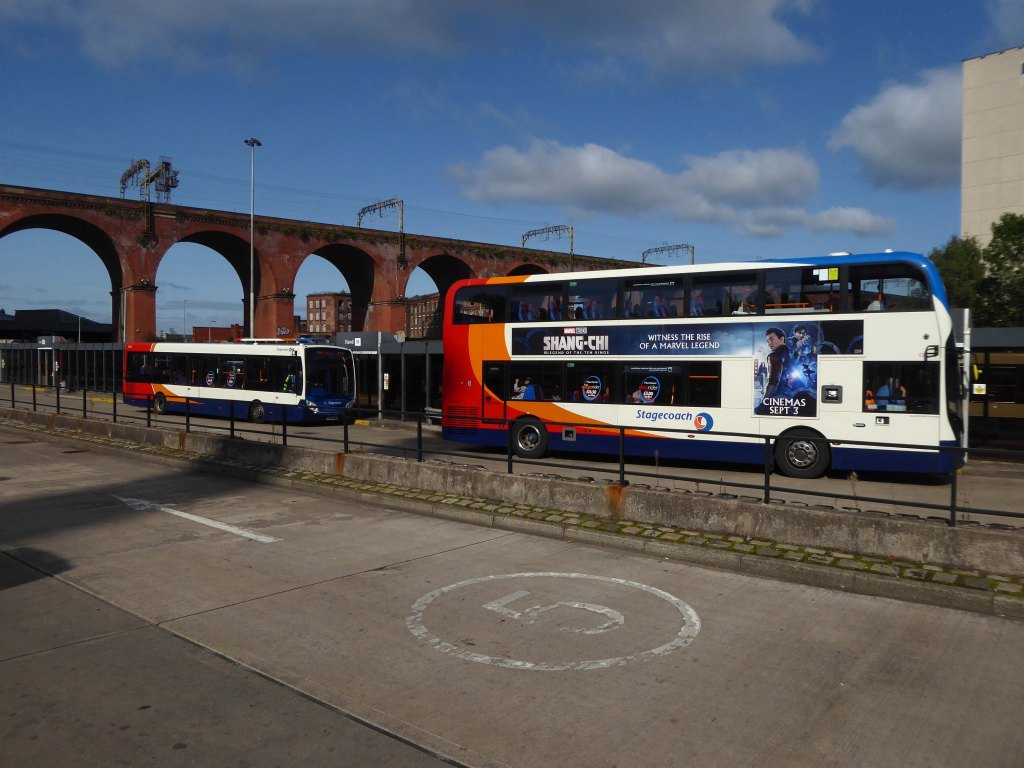
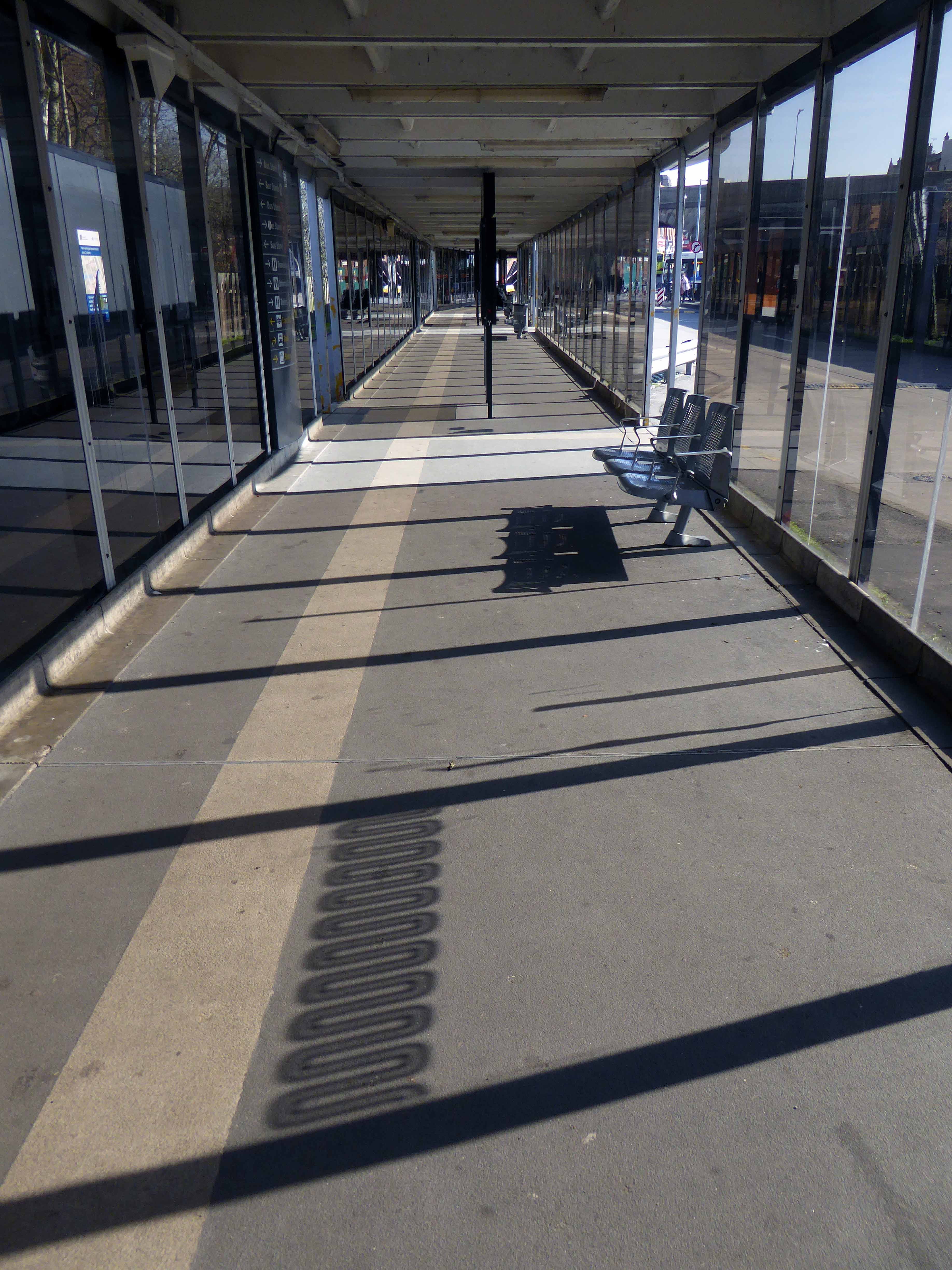
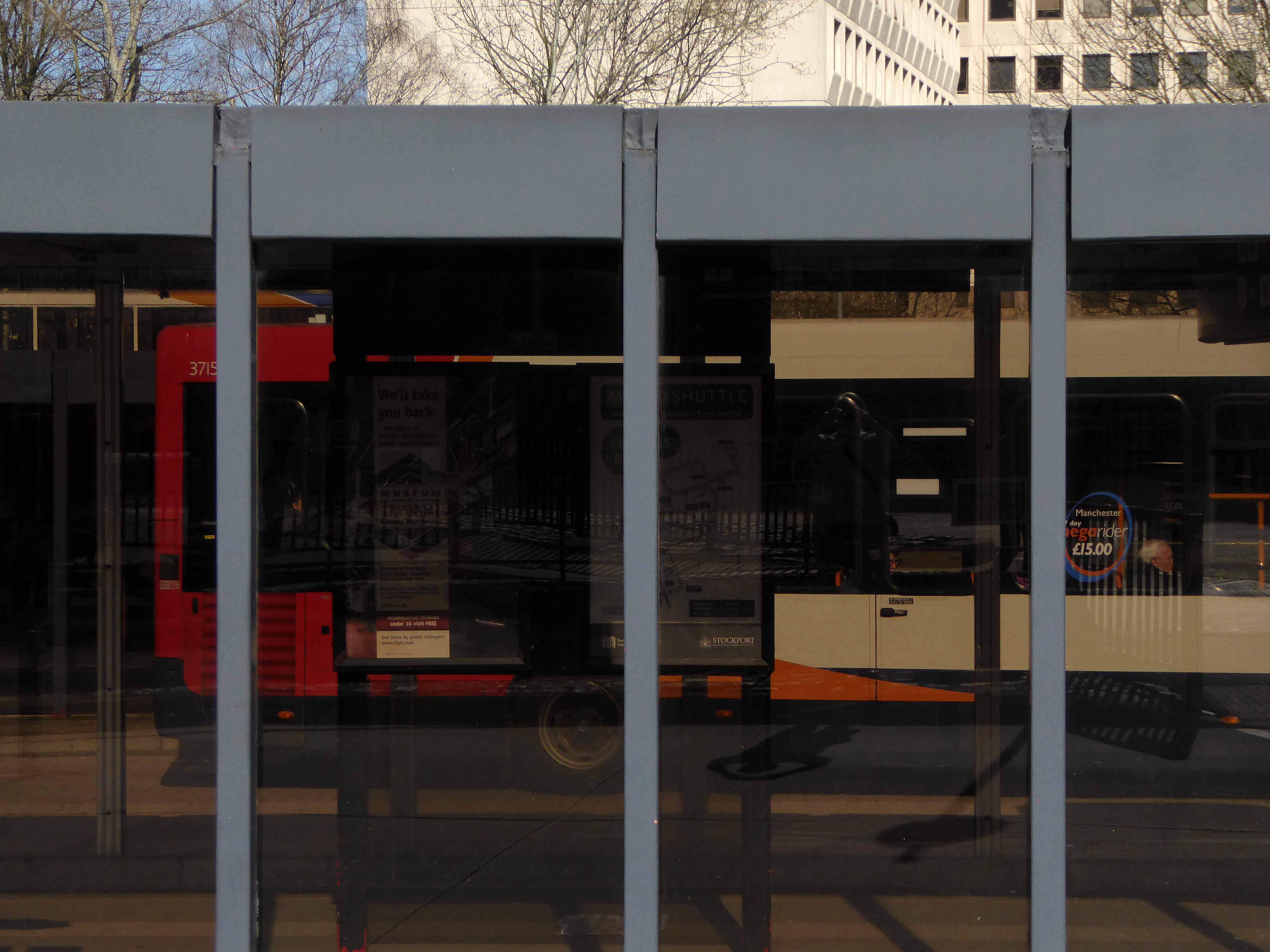
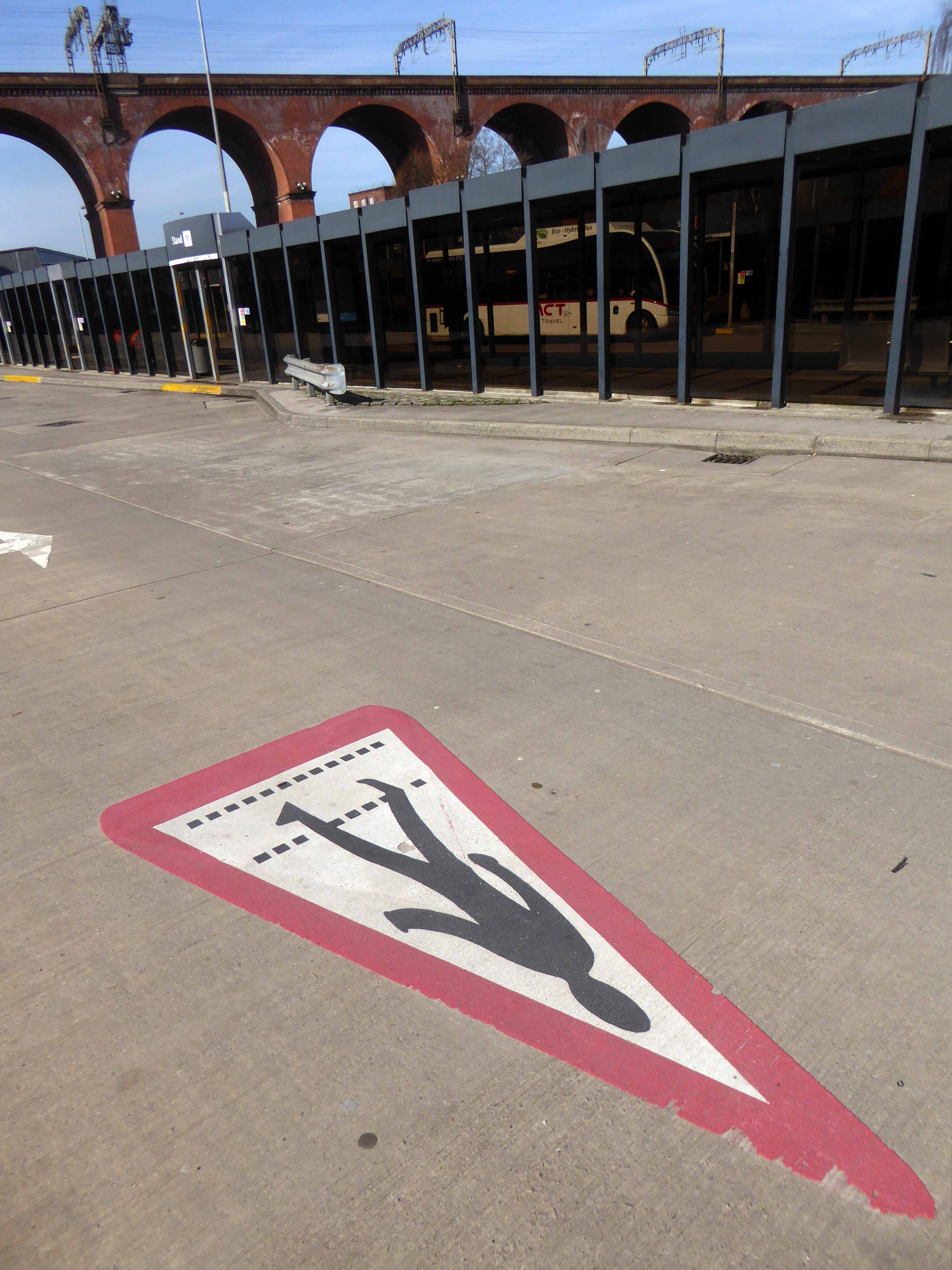
Passengers have met and parted, whilst buses of every hue and stripe have departed from these draughty boxes.
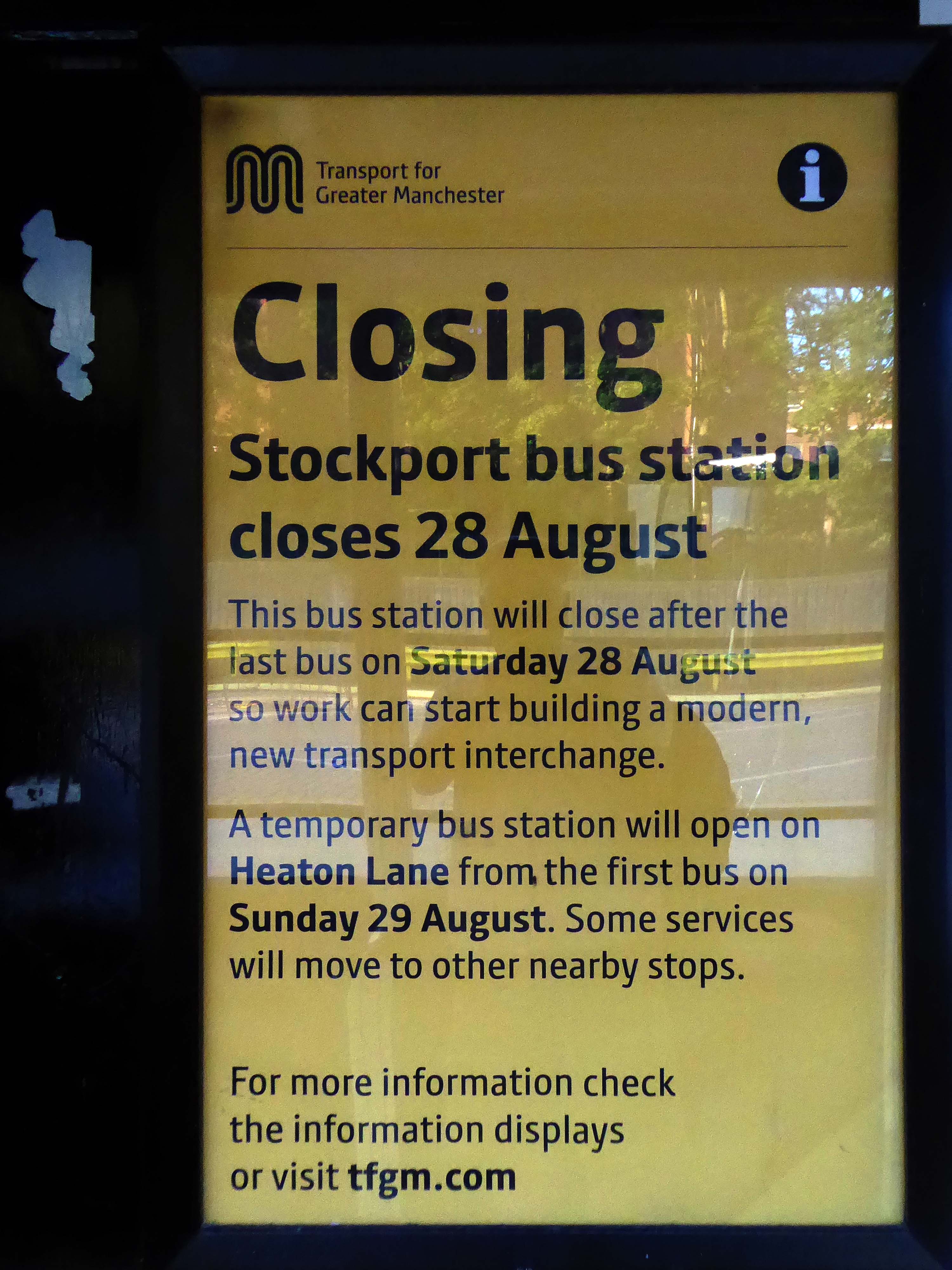
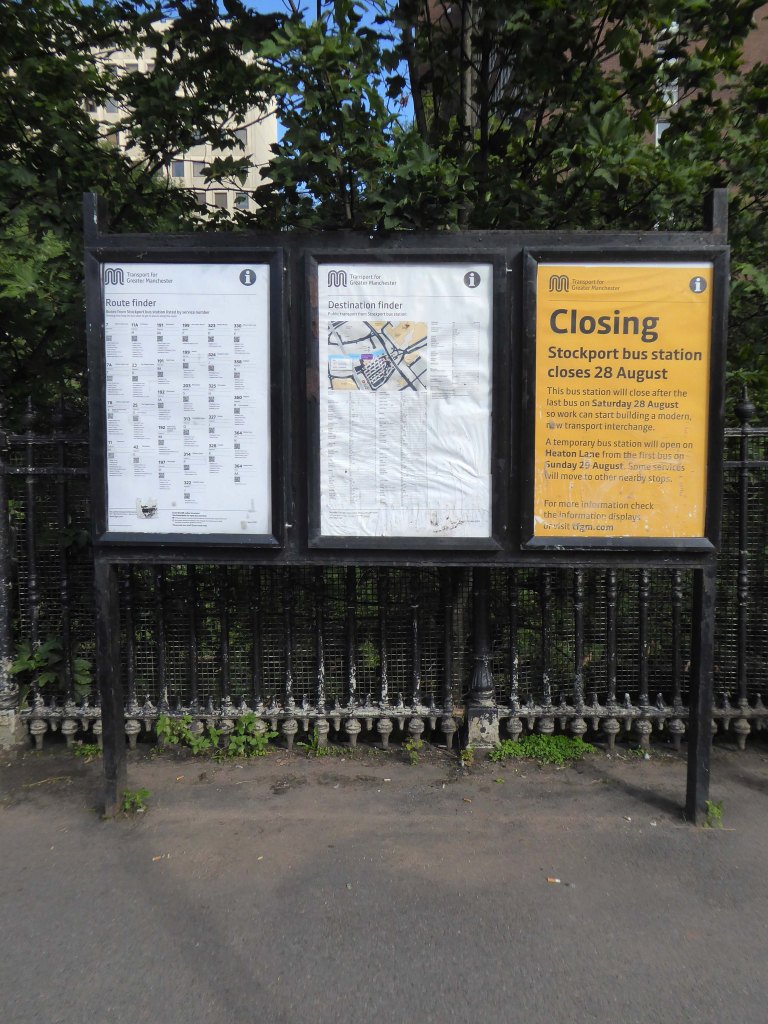
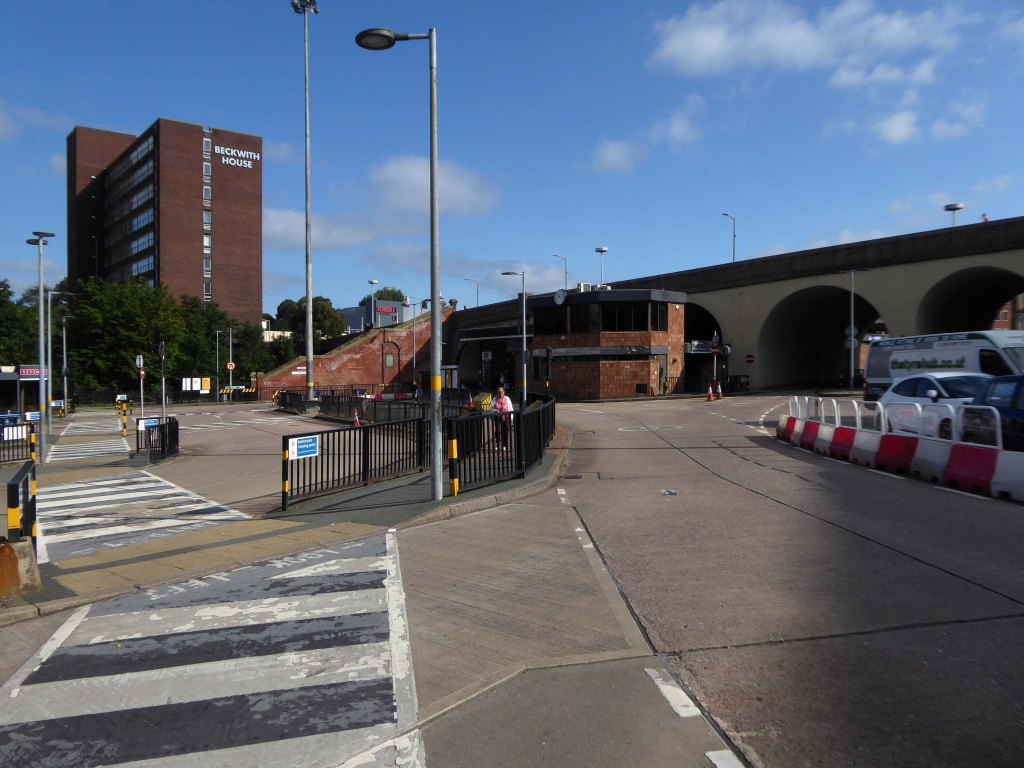
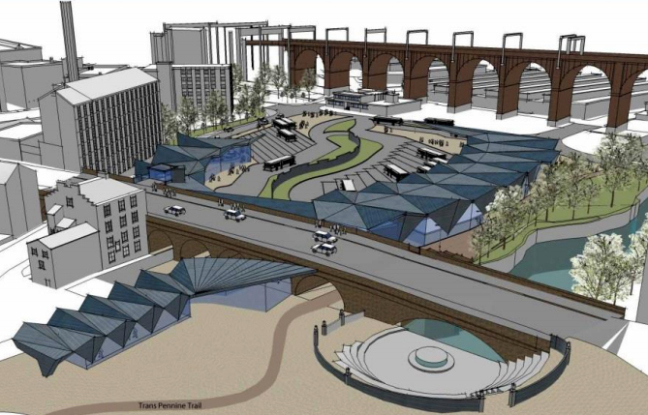
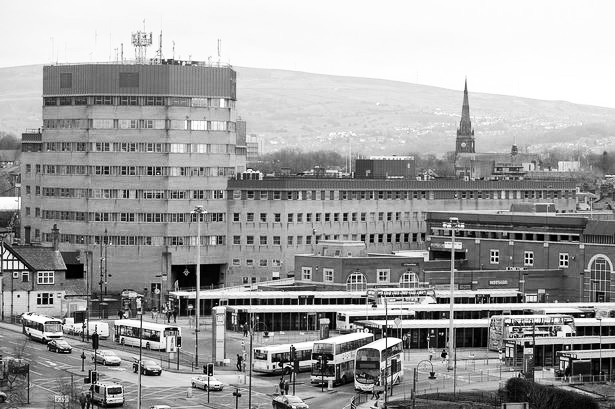
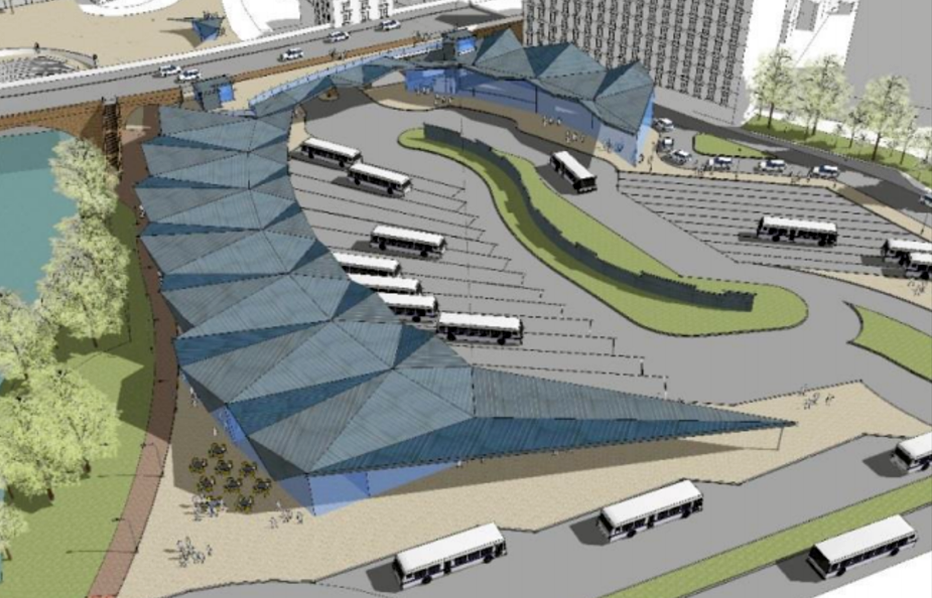
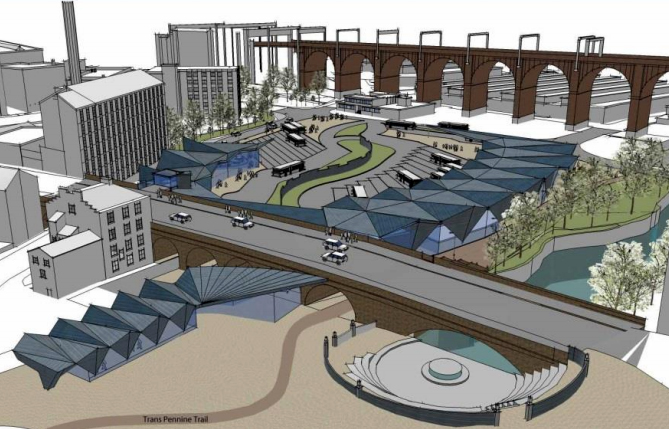
There are now plans for imminent demolition and rebuilding – shaping a transport hub fit for the Twenty First Century – Space Age forms for a brave new world.
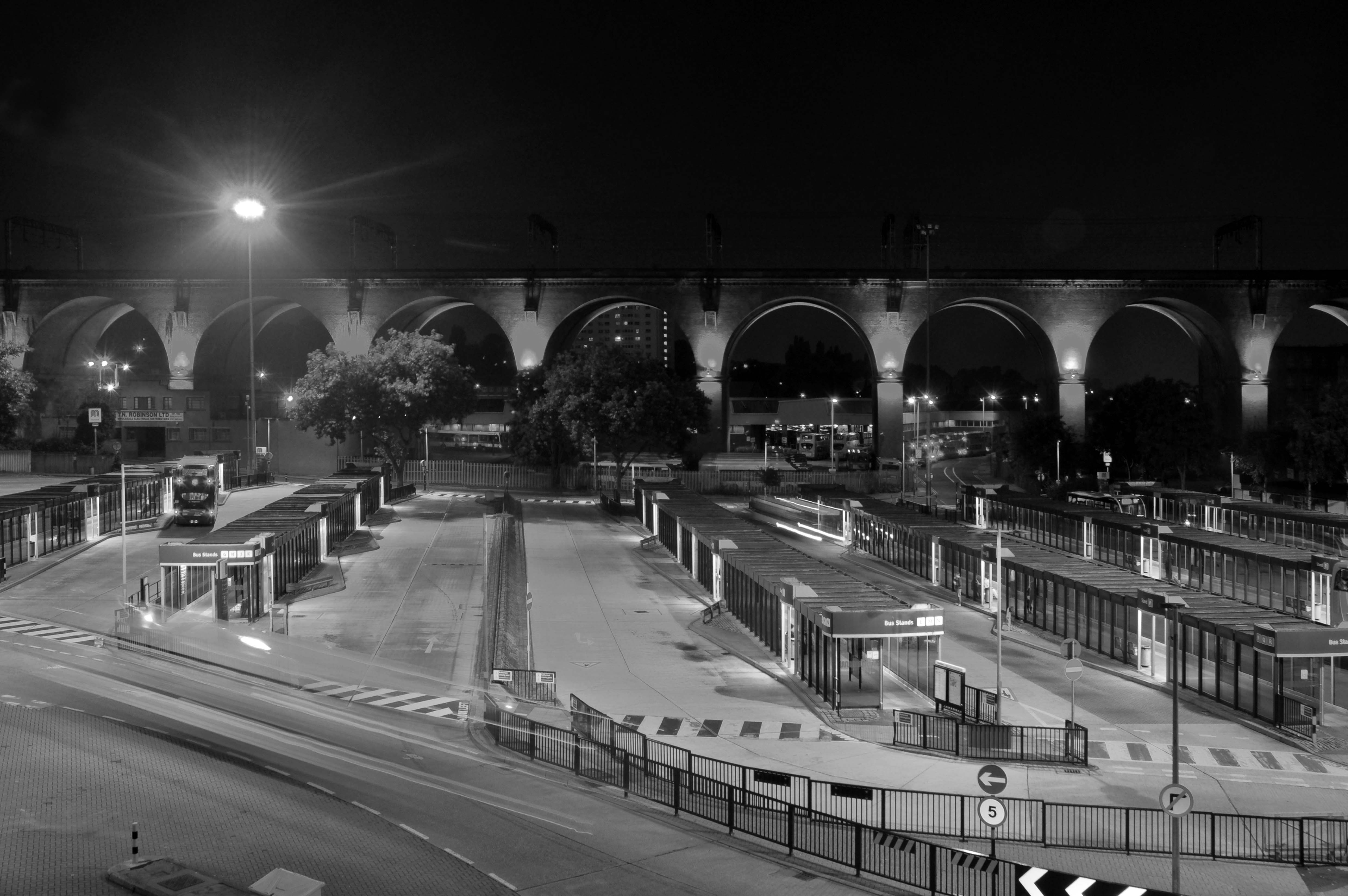
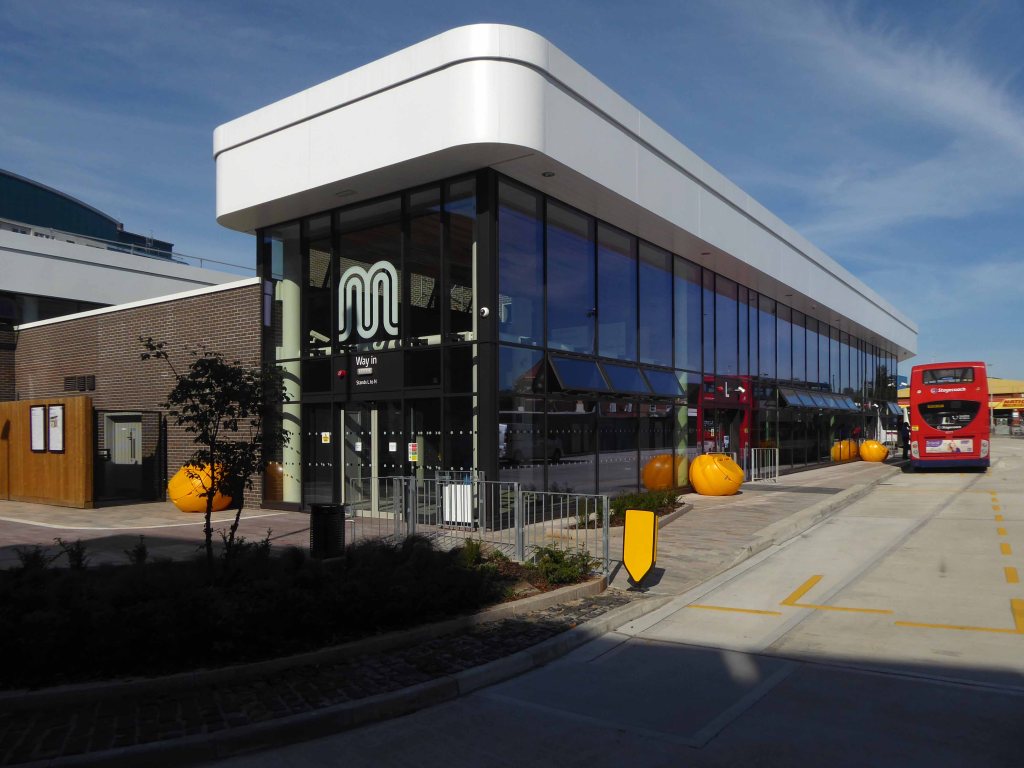
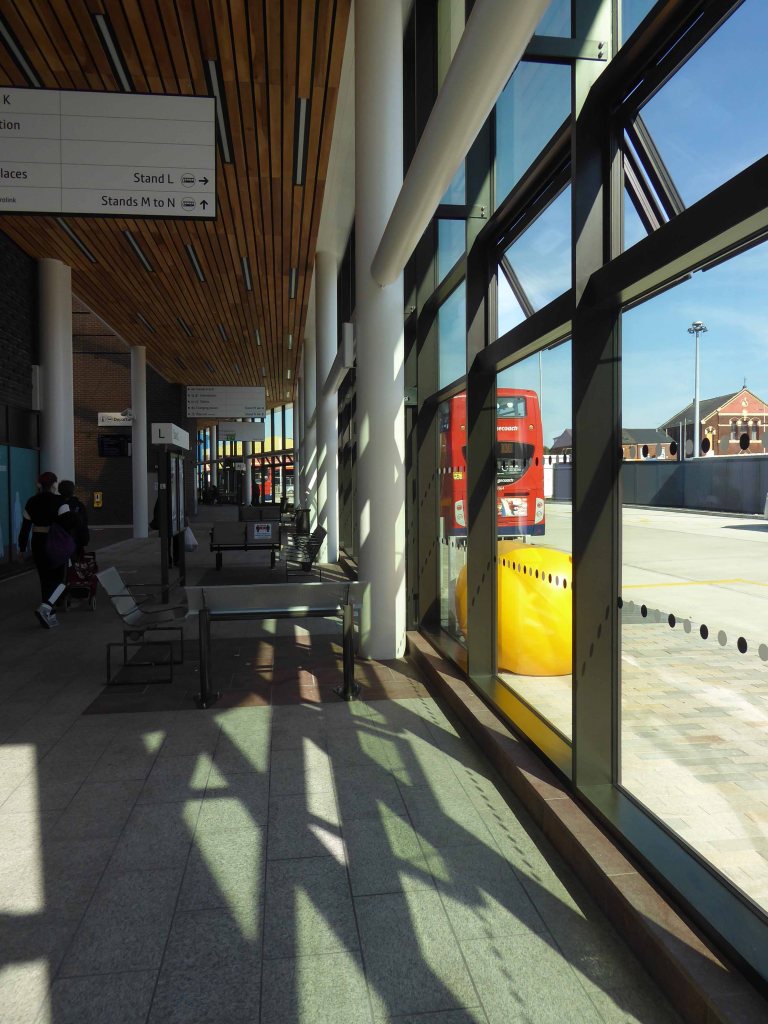
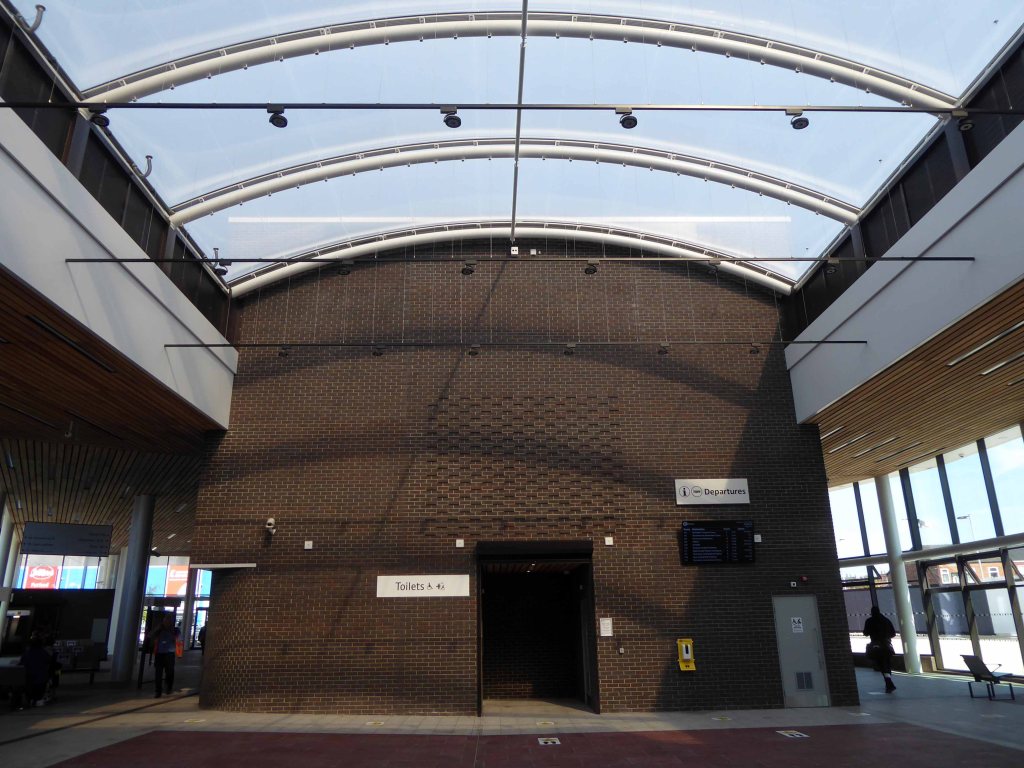
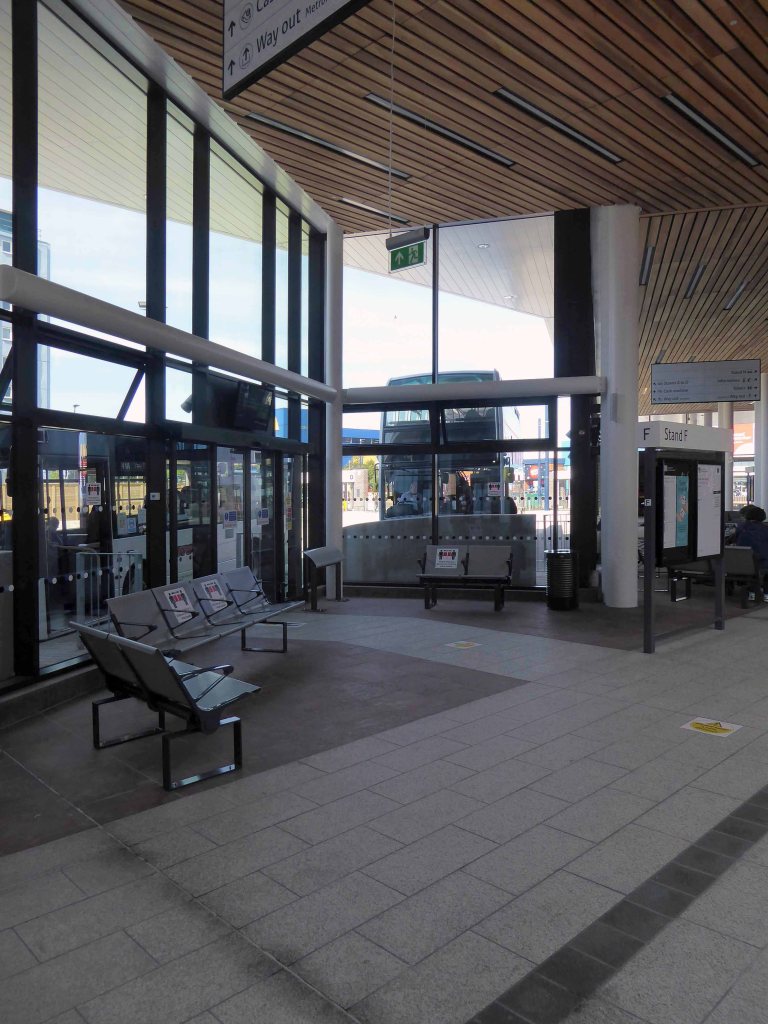
A new £42m transport interchange in Stockport town centre has taken a step forward after the local council agreed key measures to back the project.
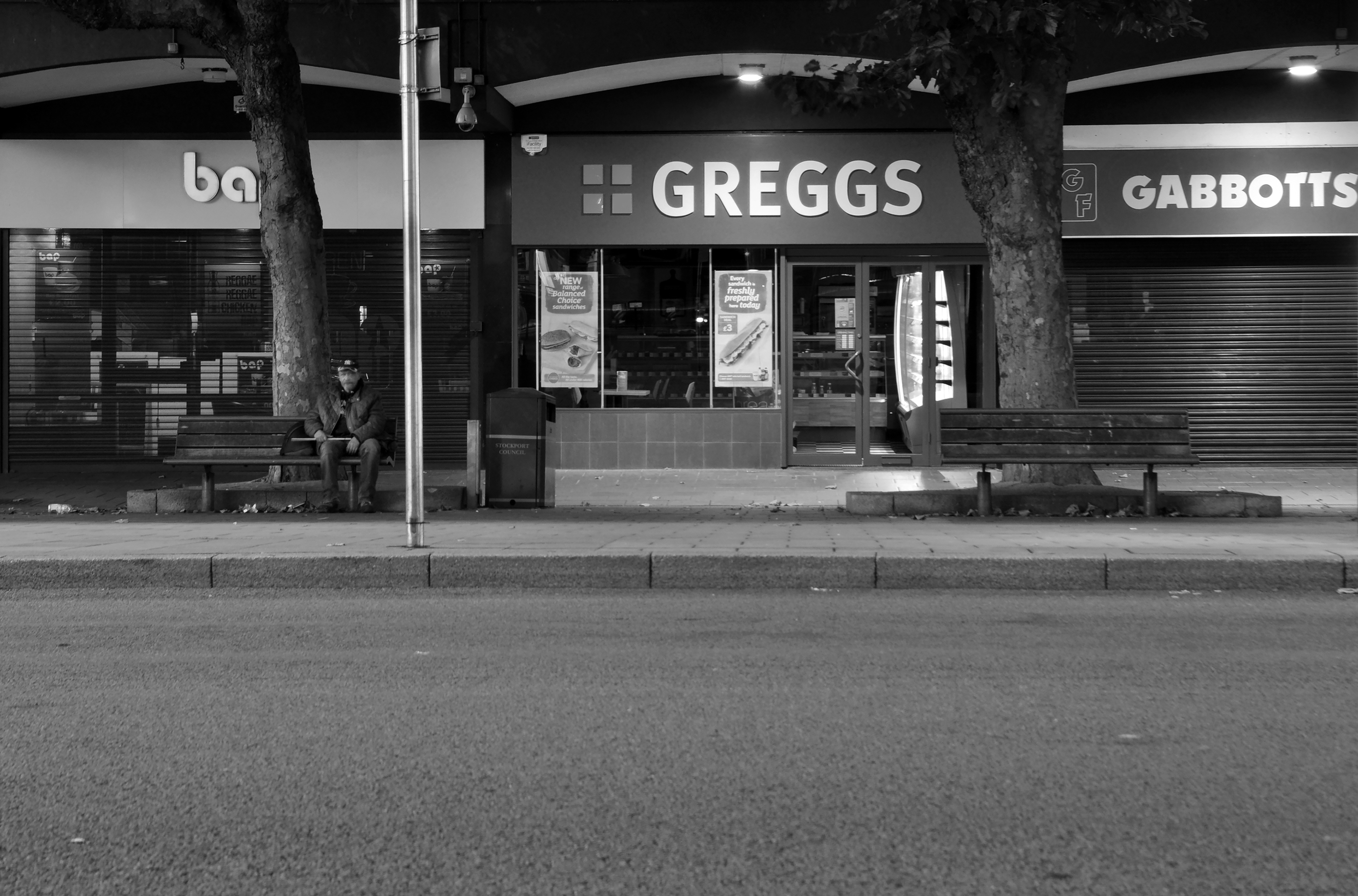
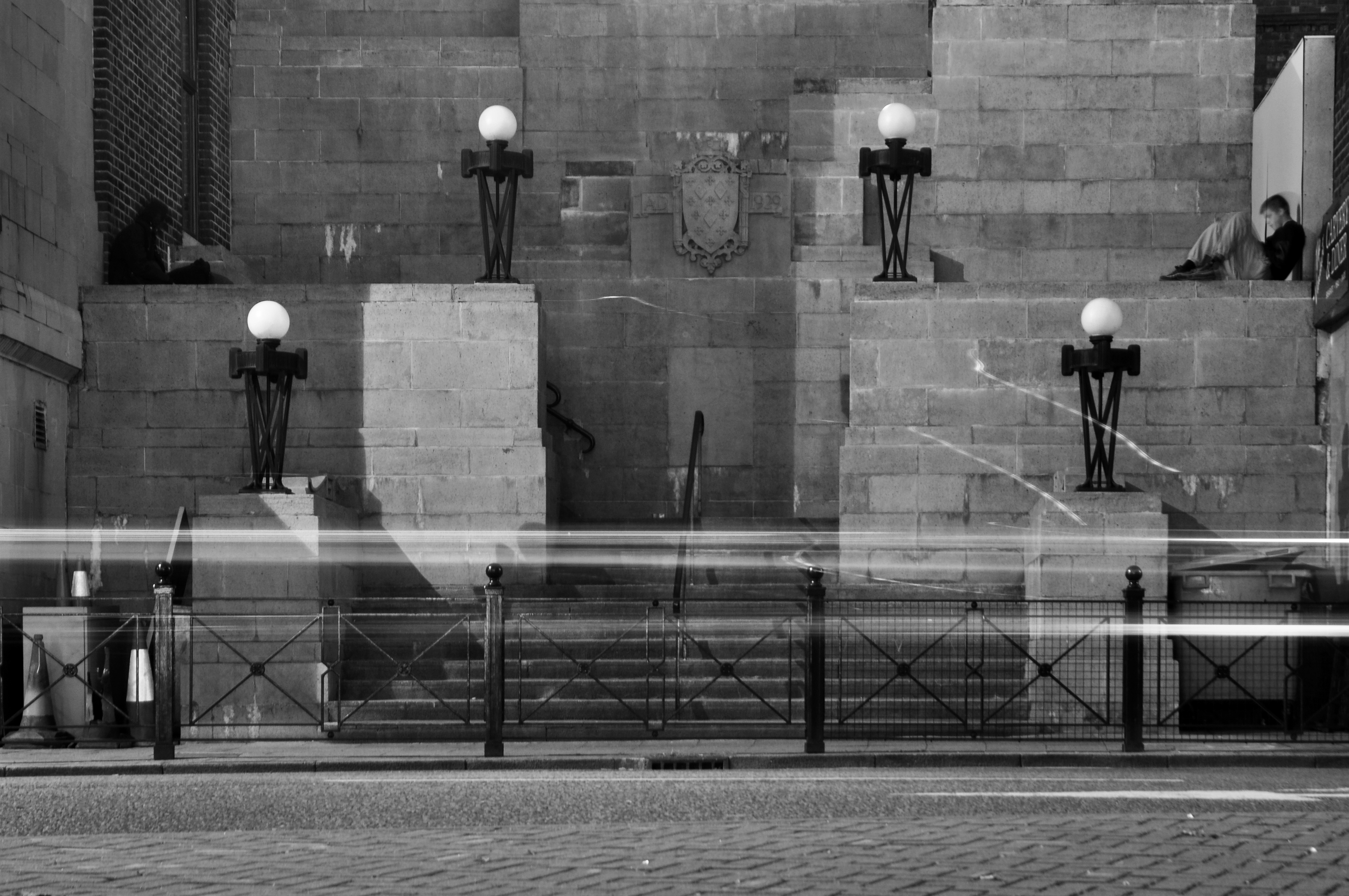
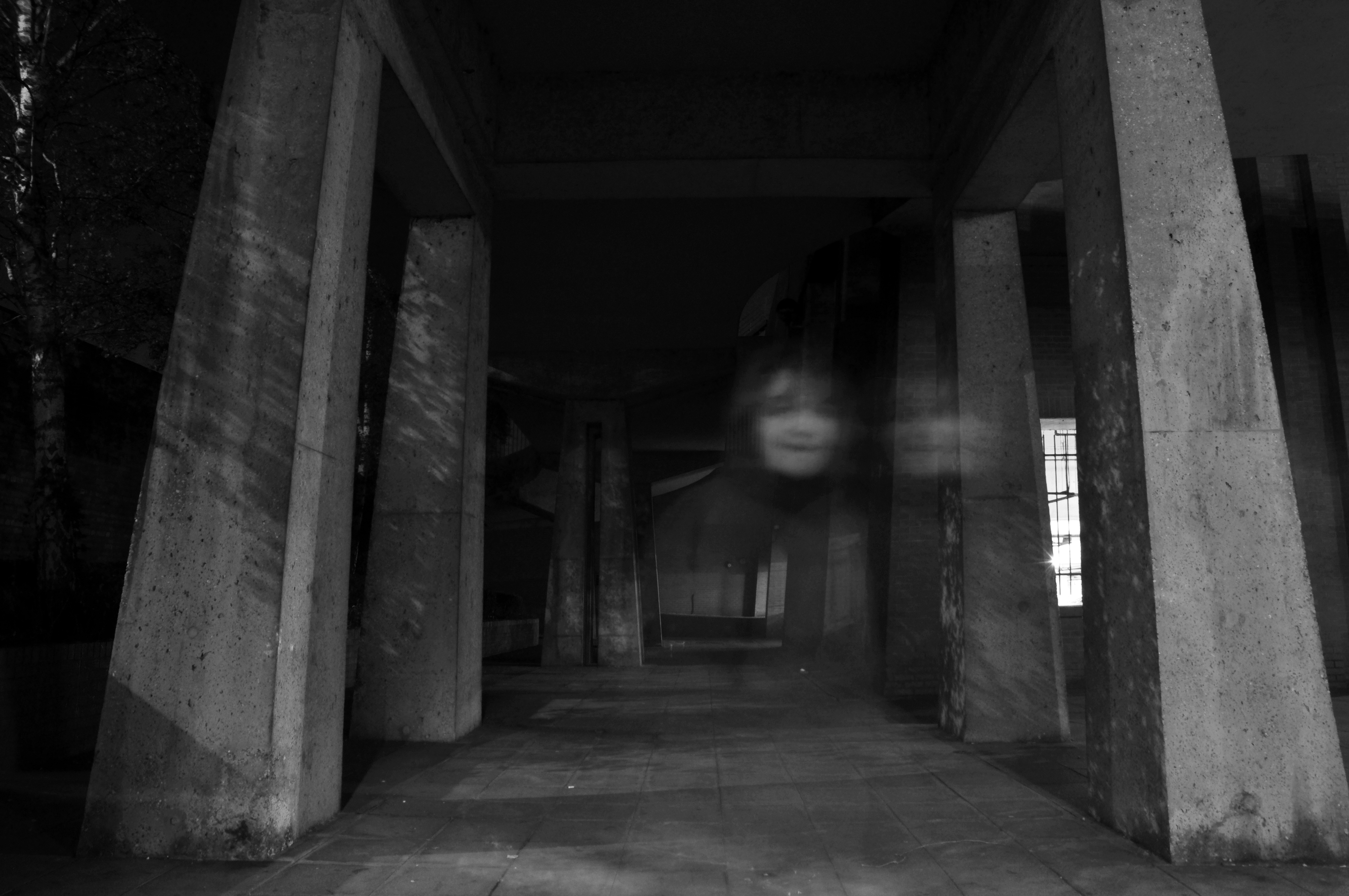
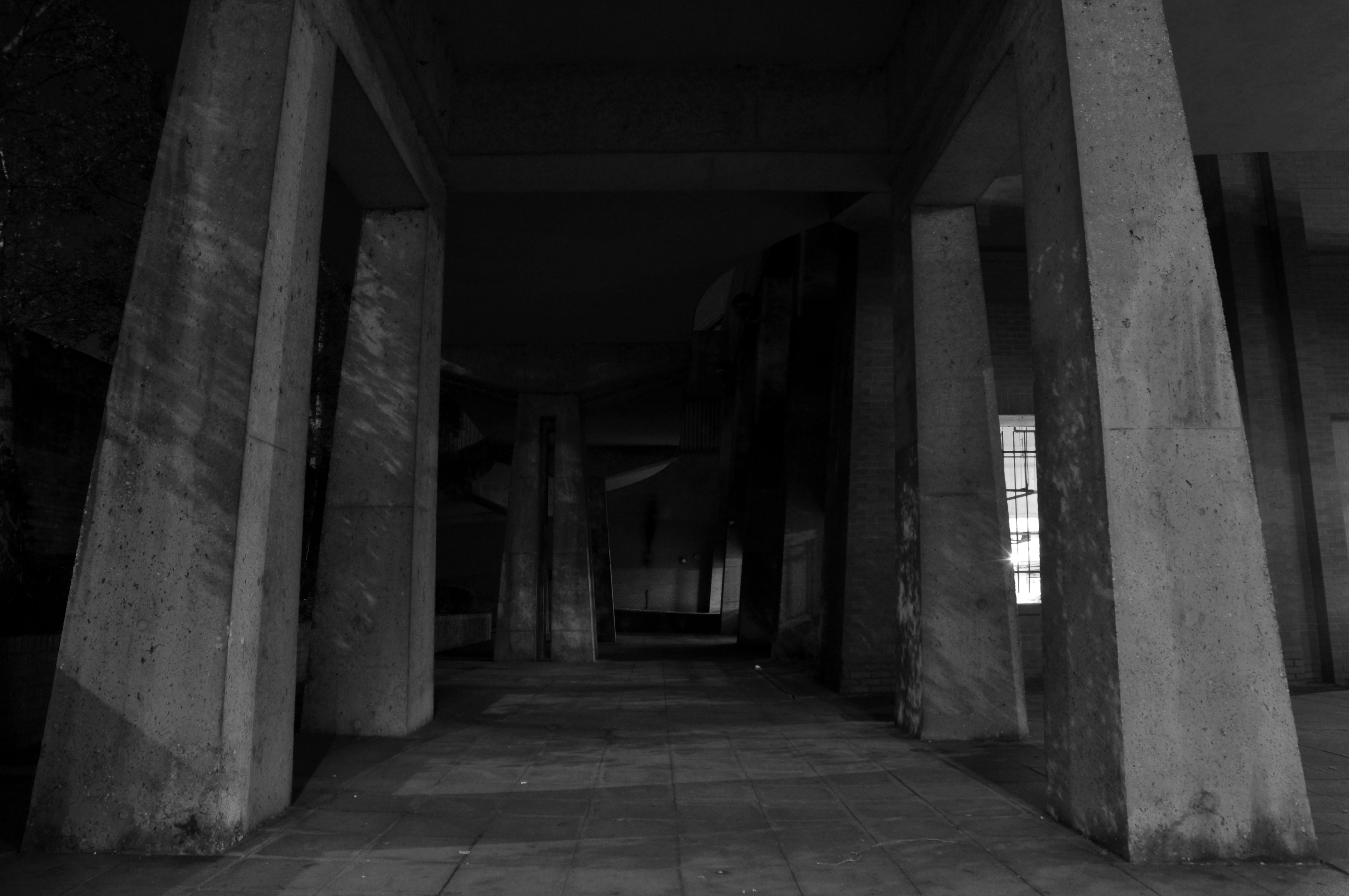
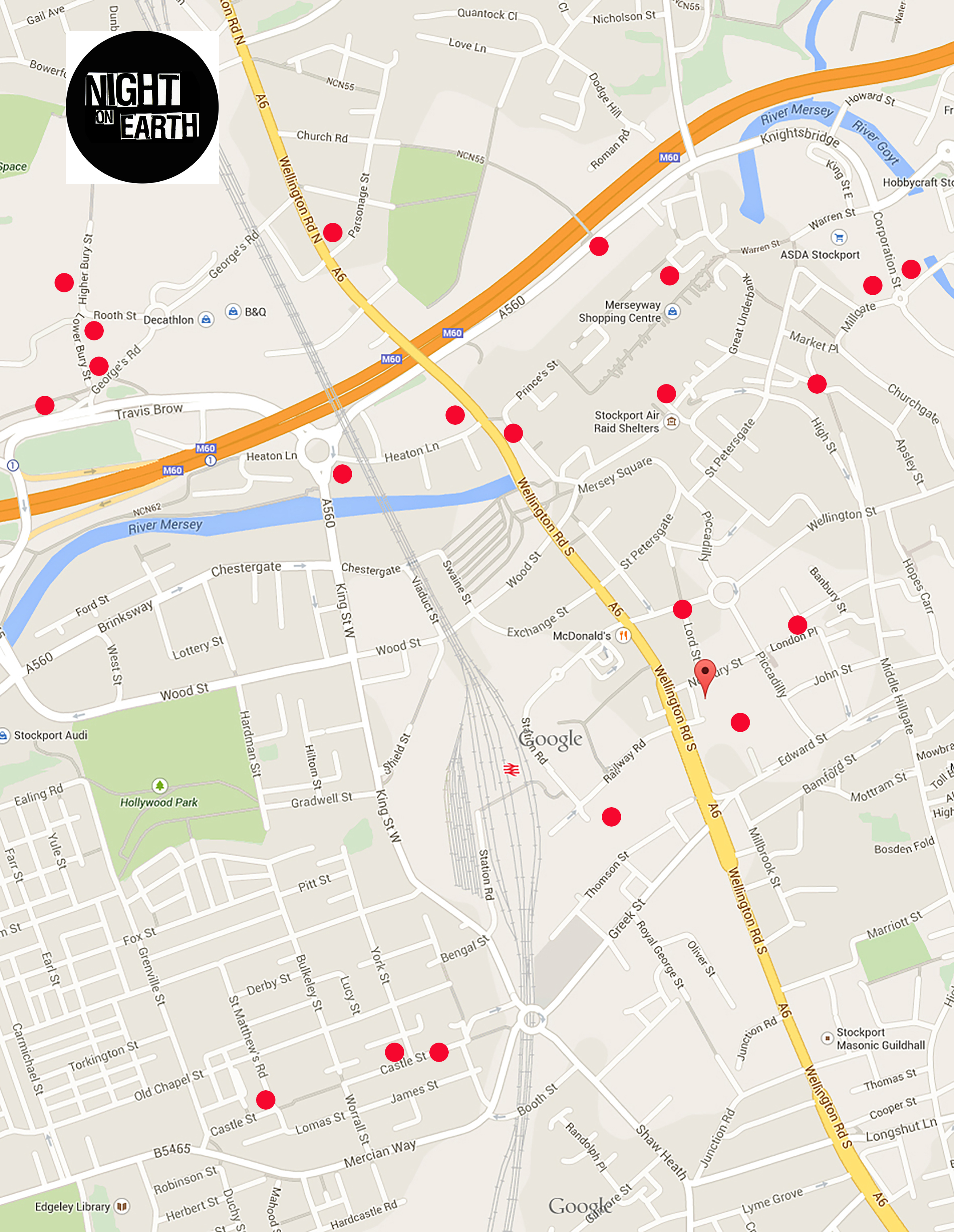
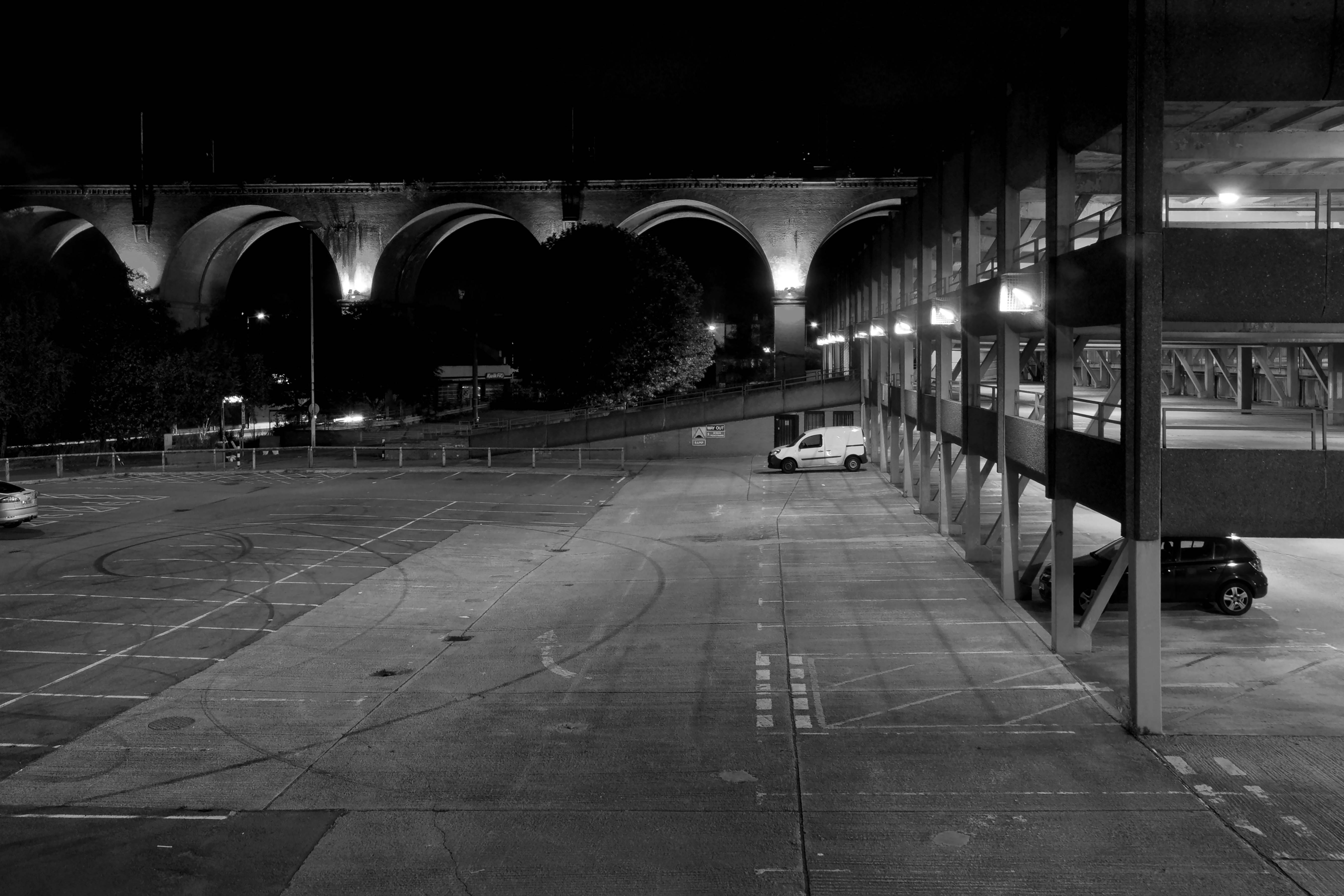
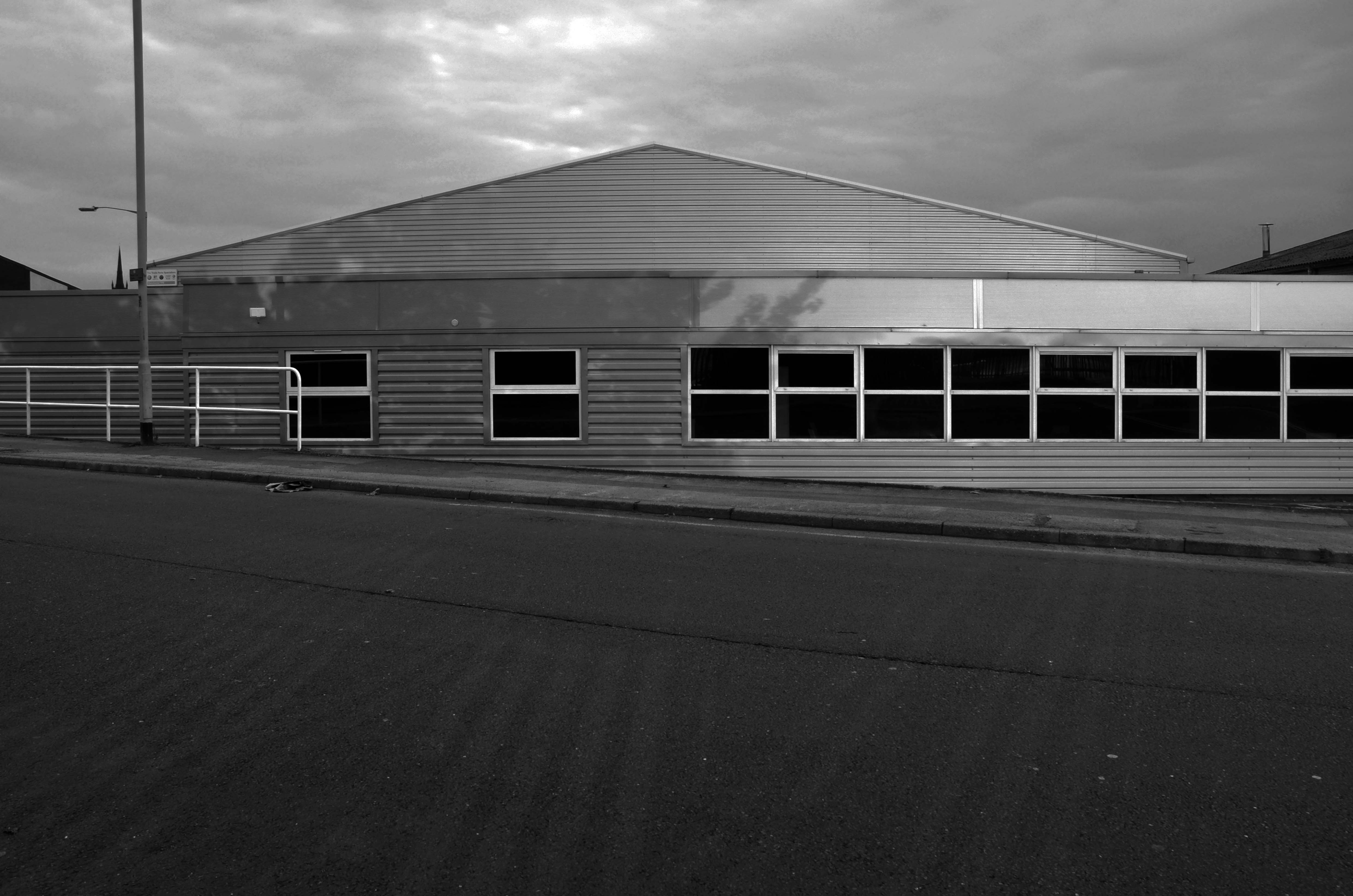
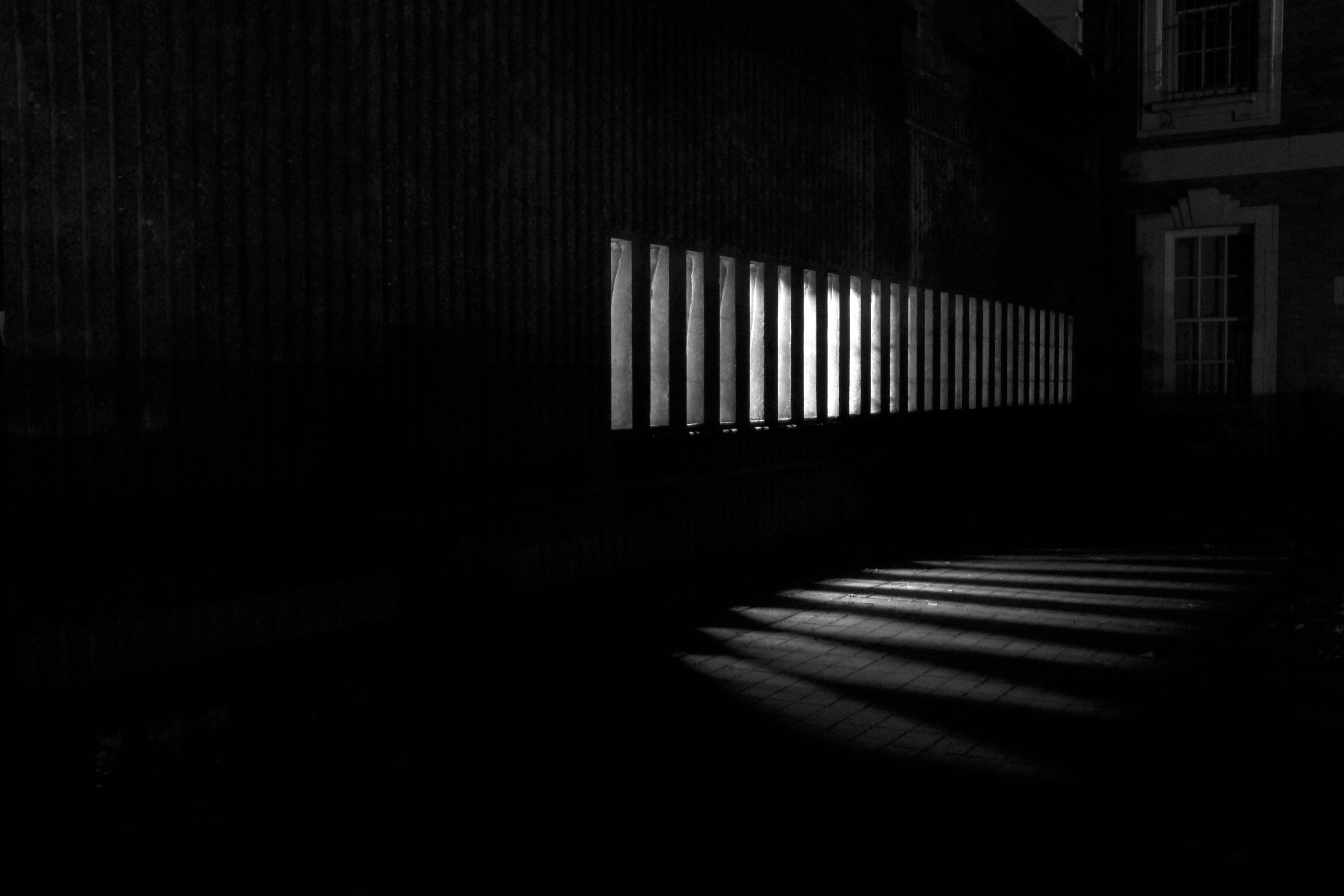
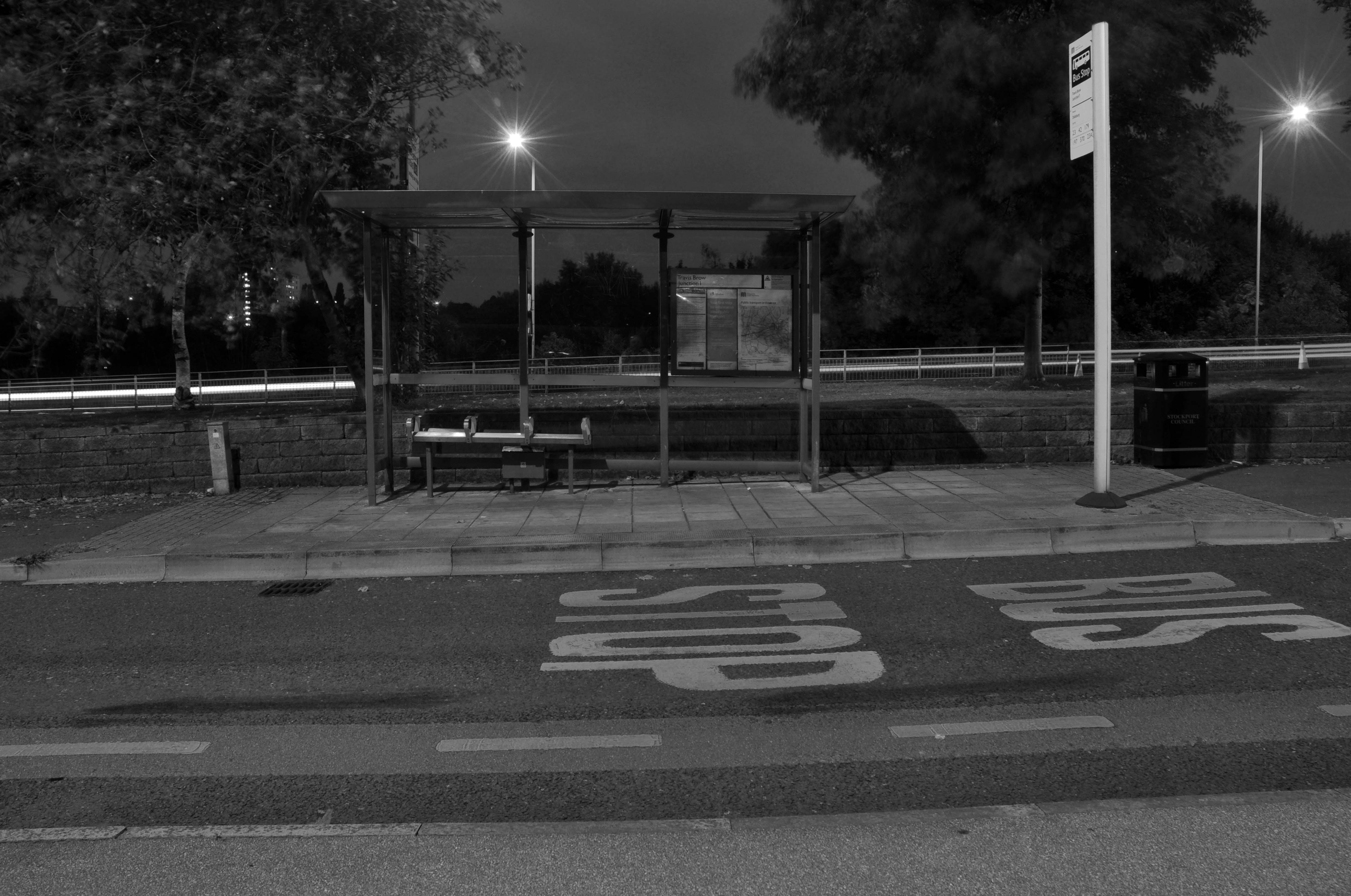
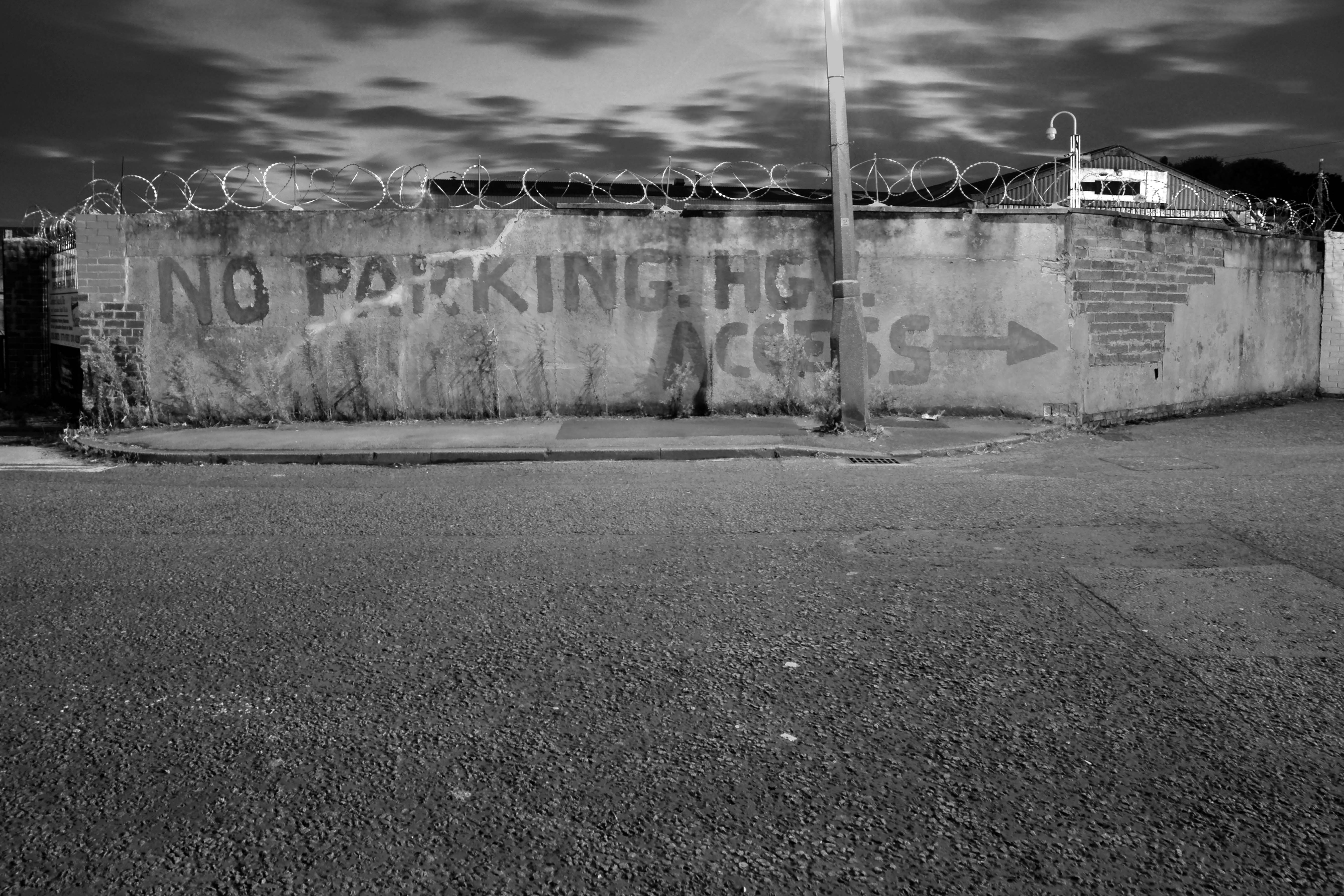
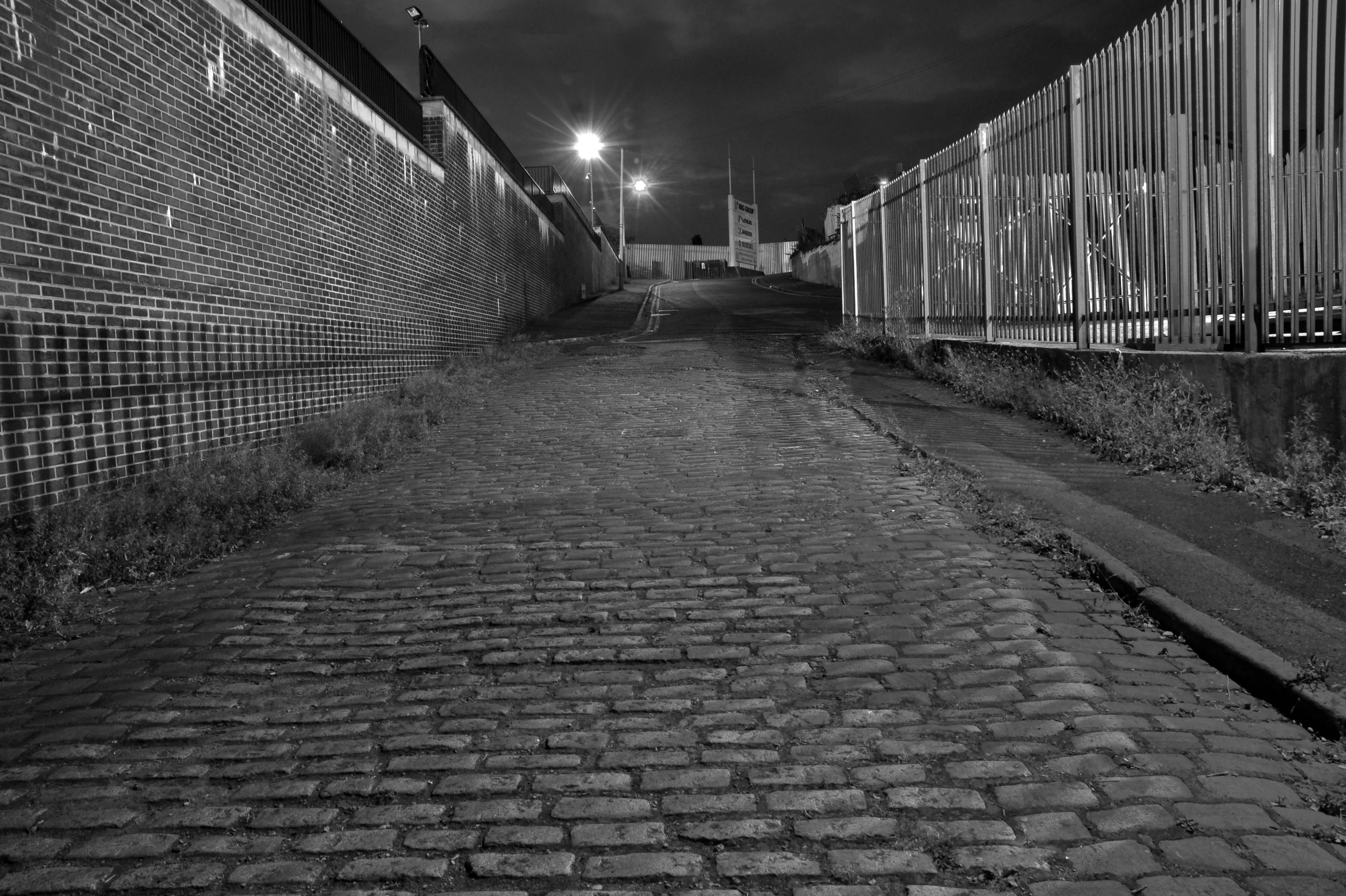
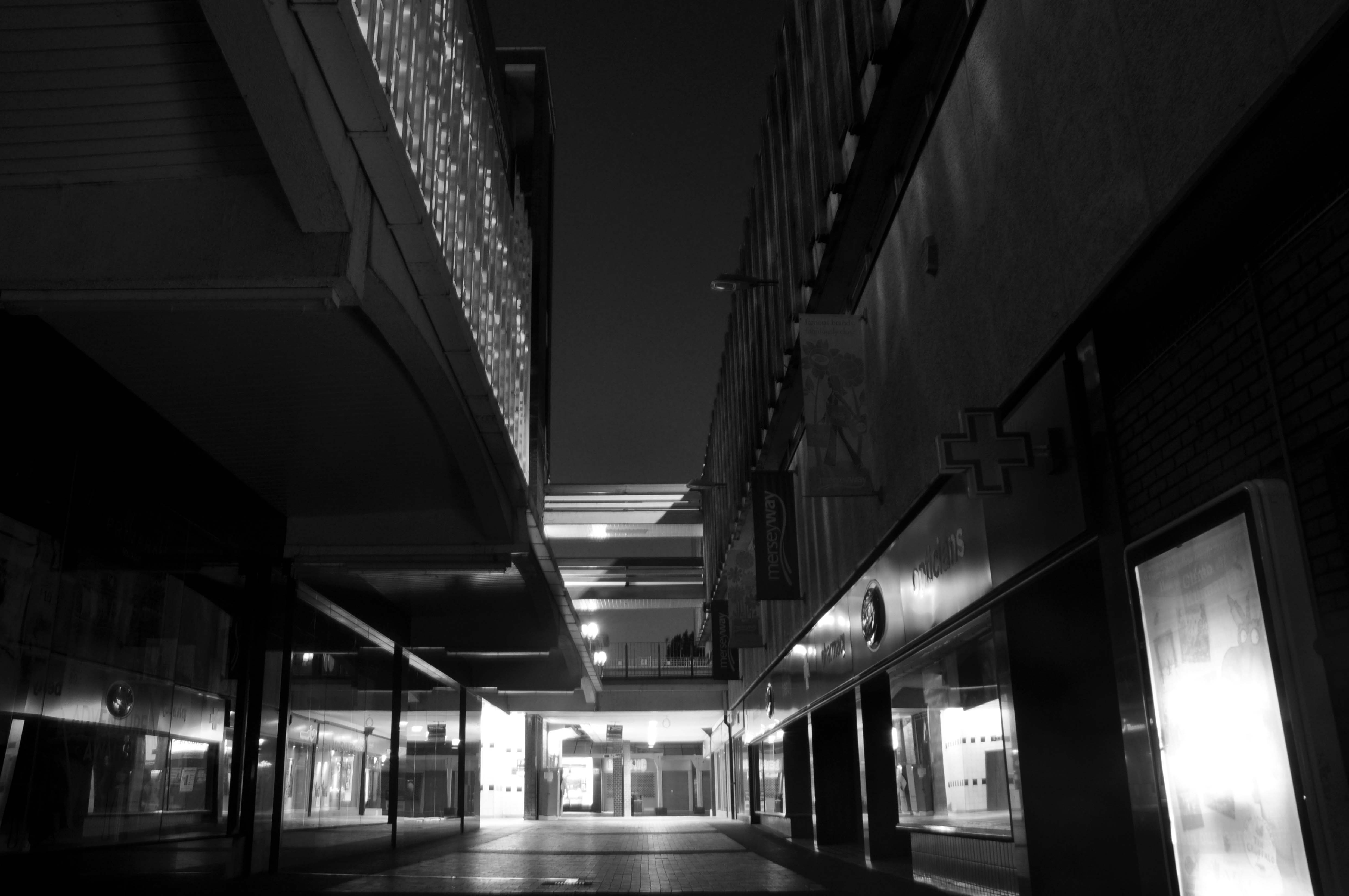
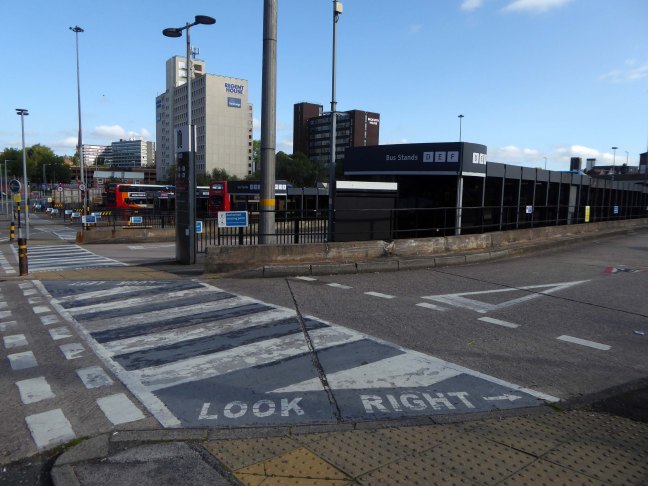
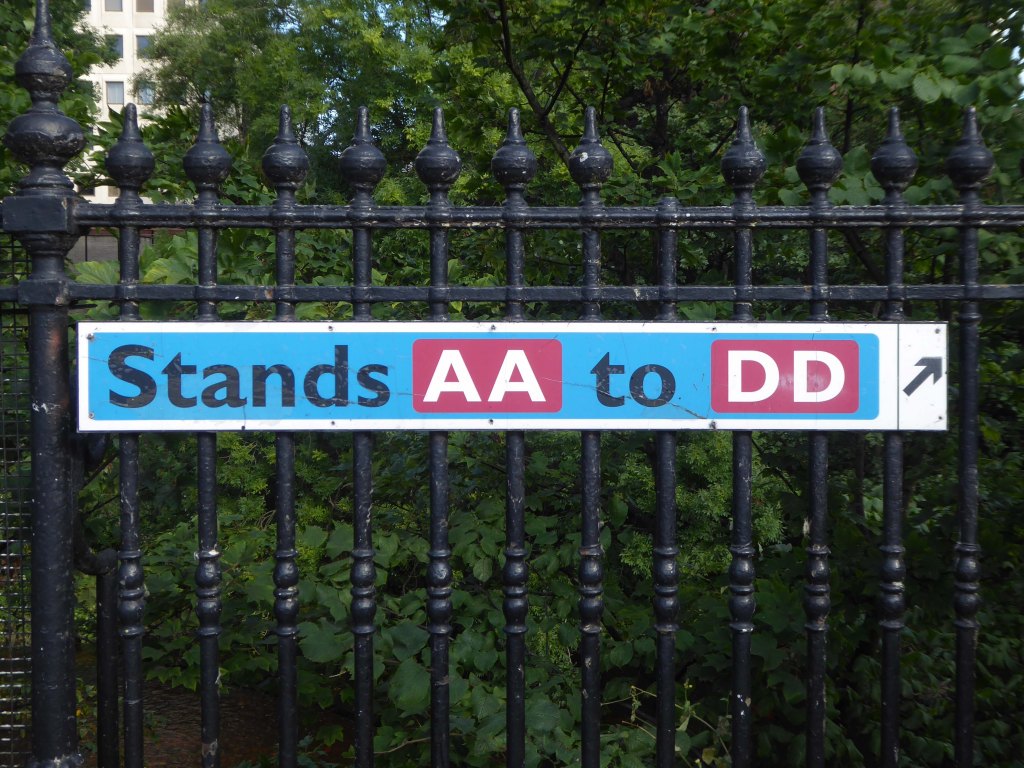
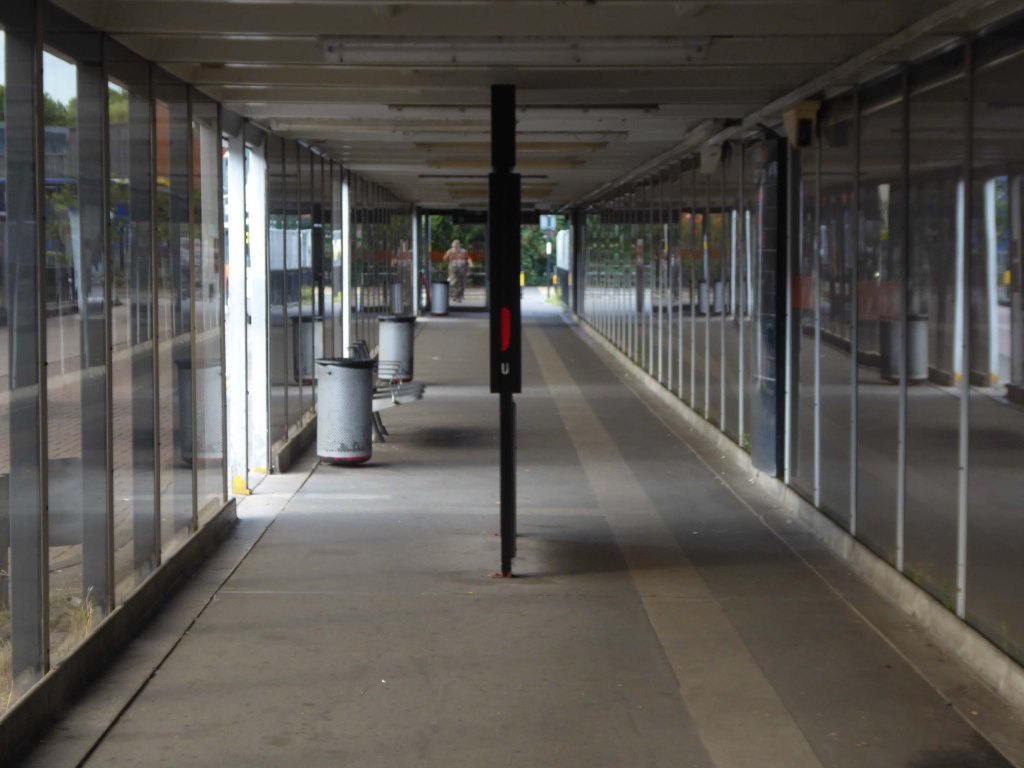
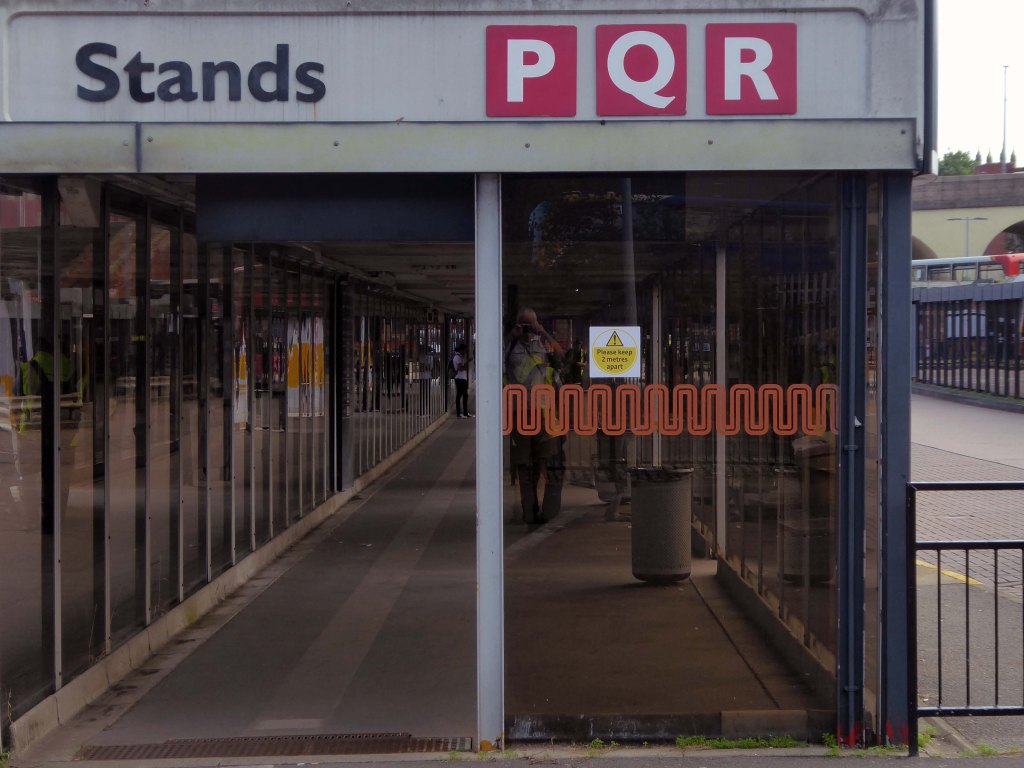
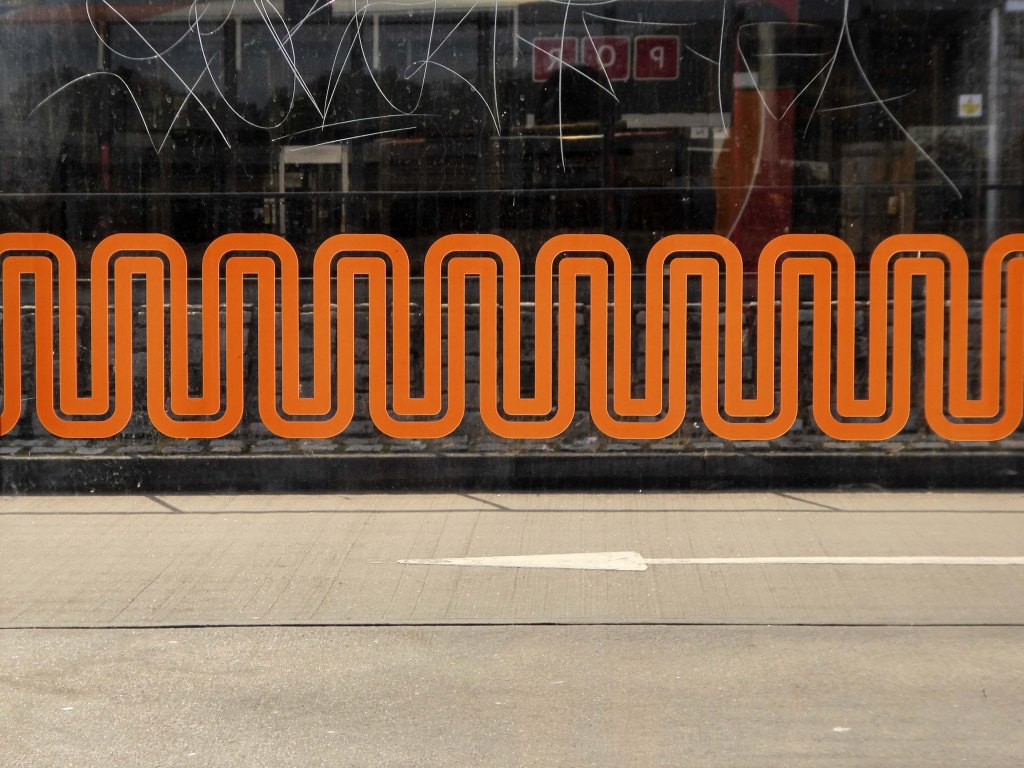
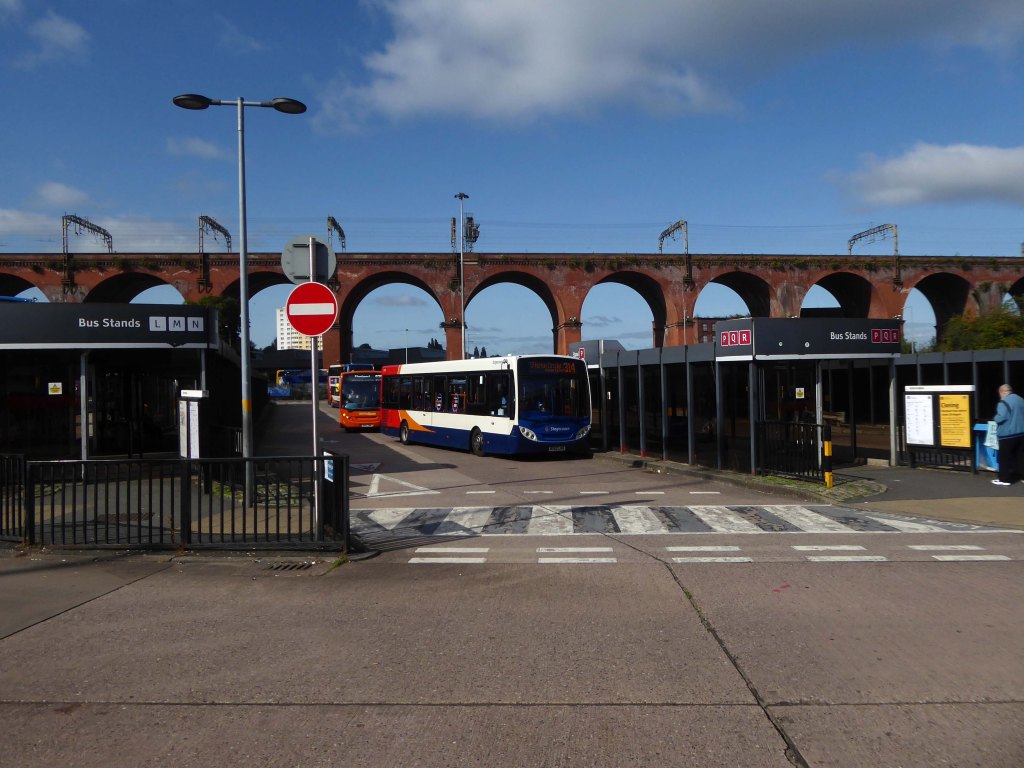
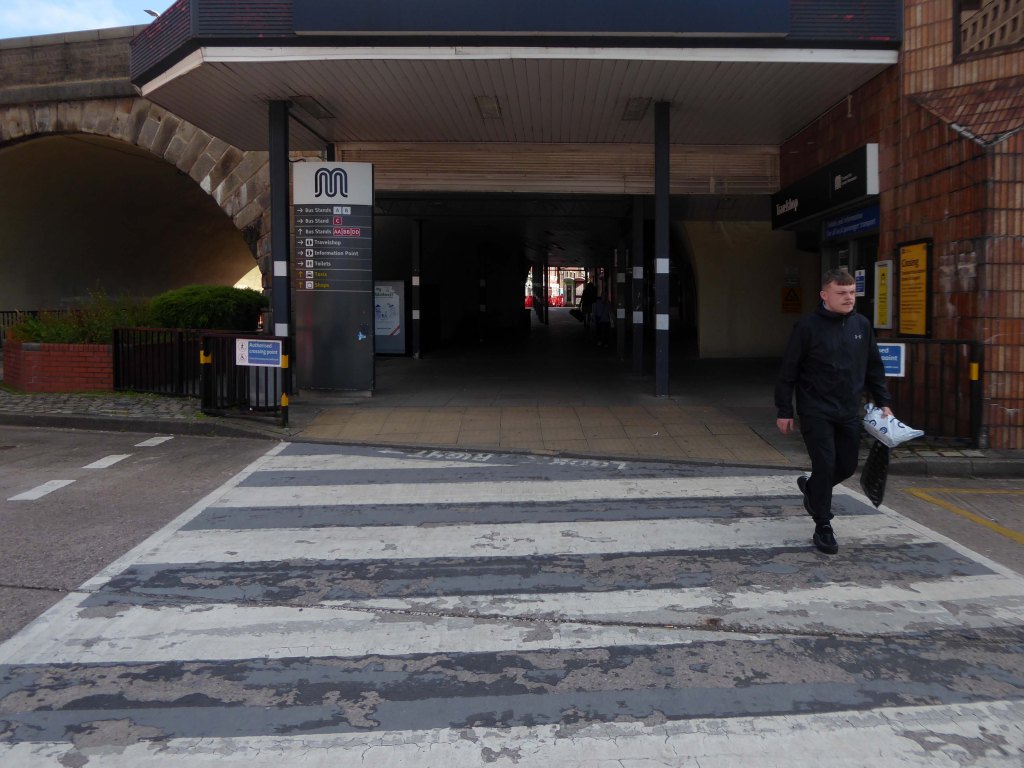
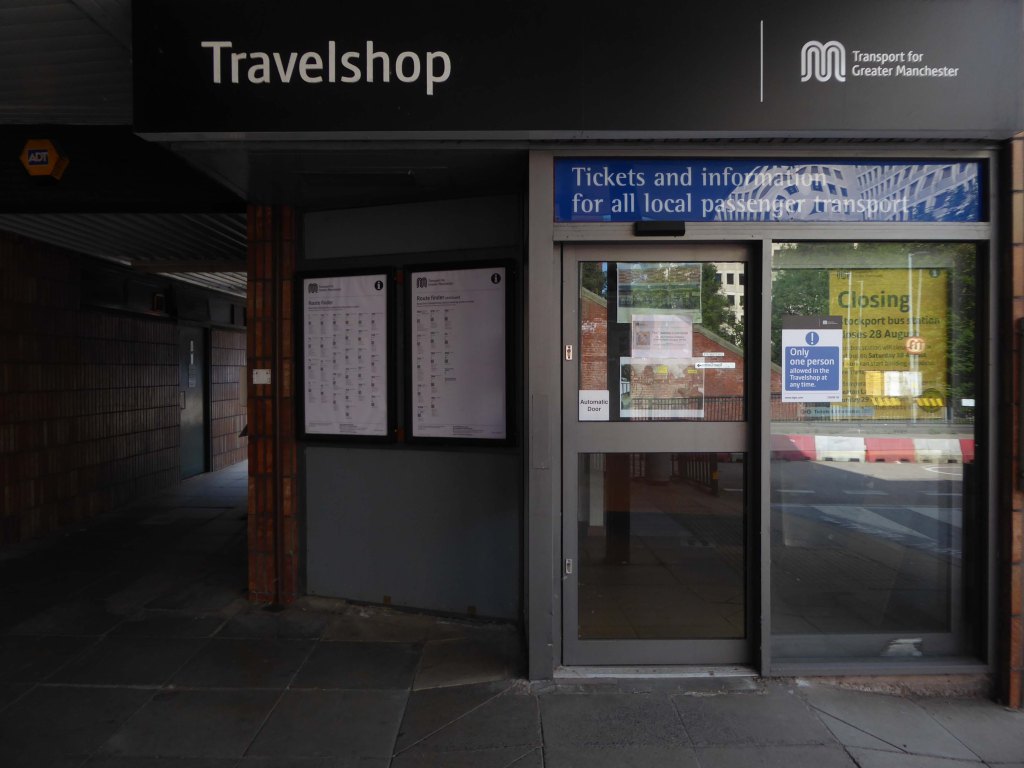
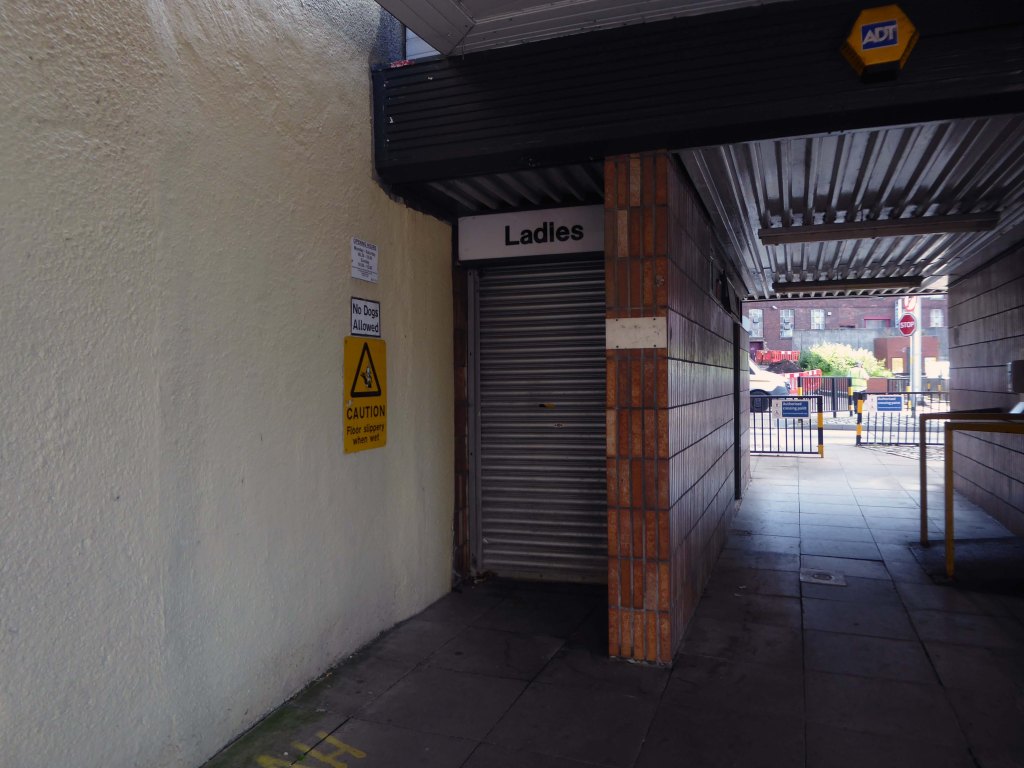
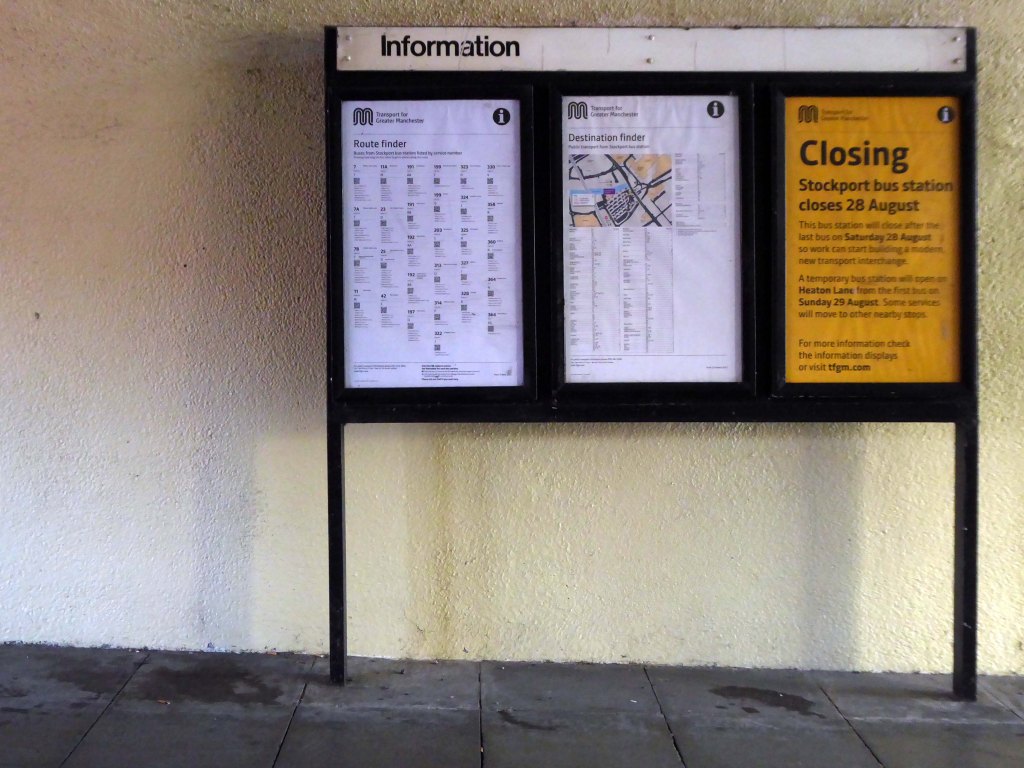
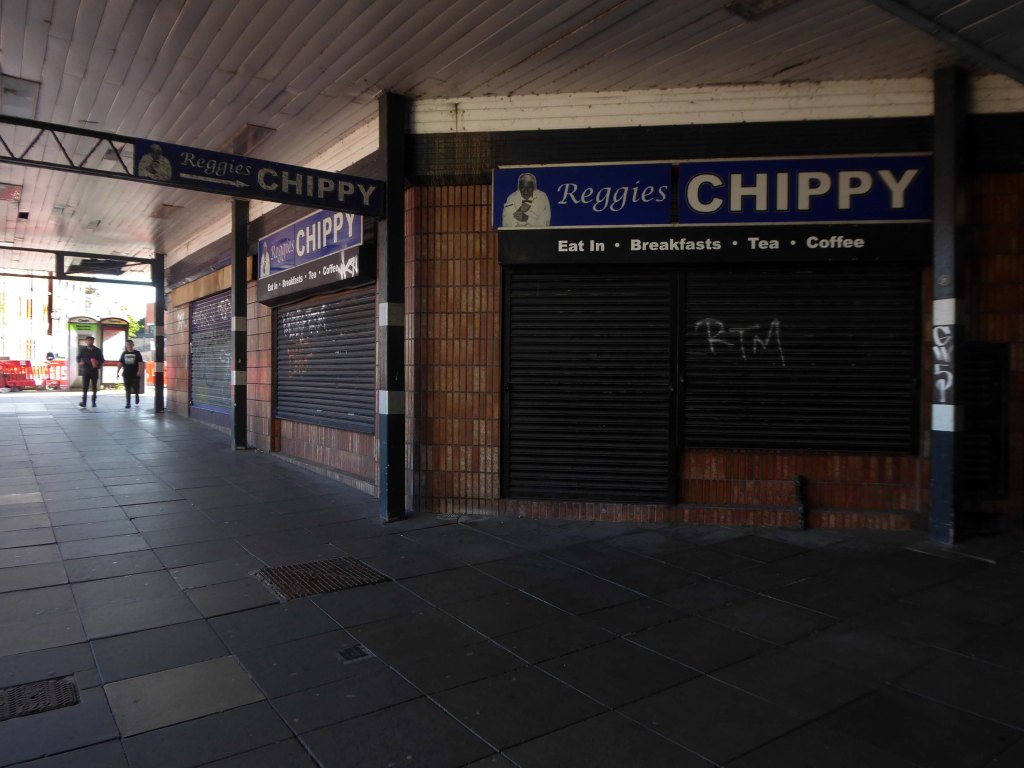
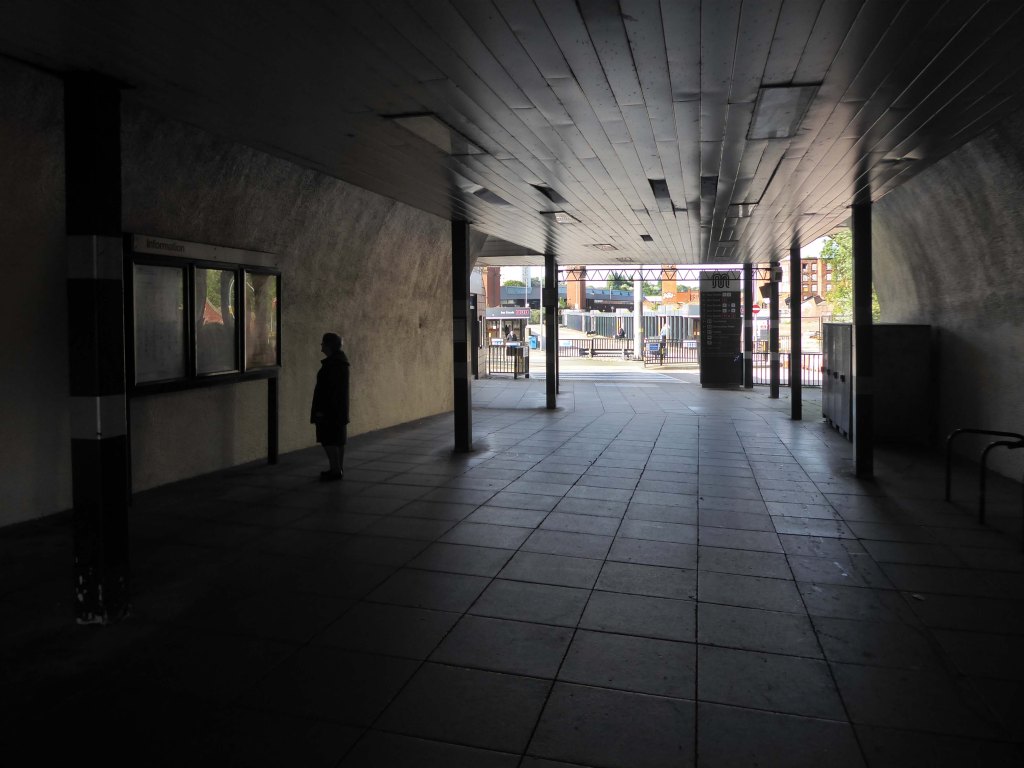
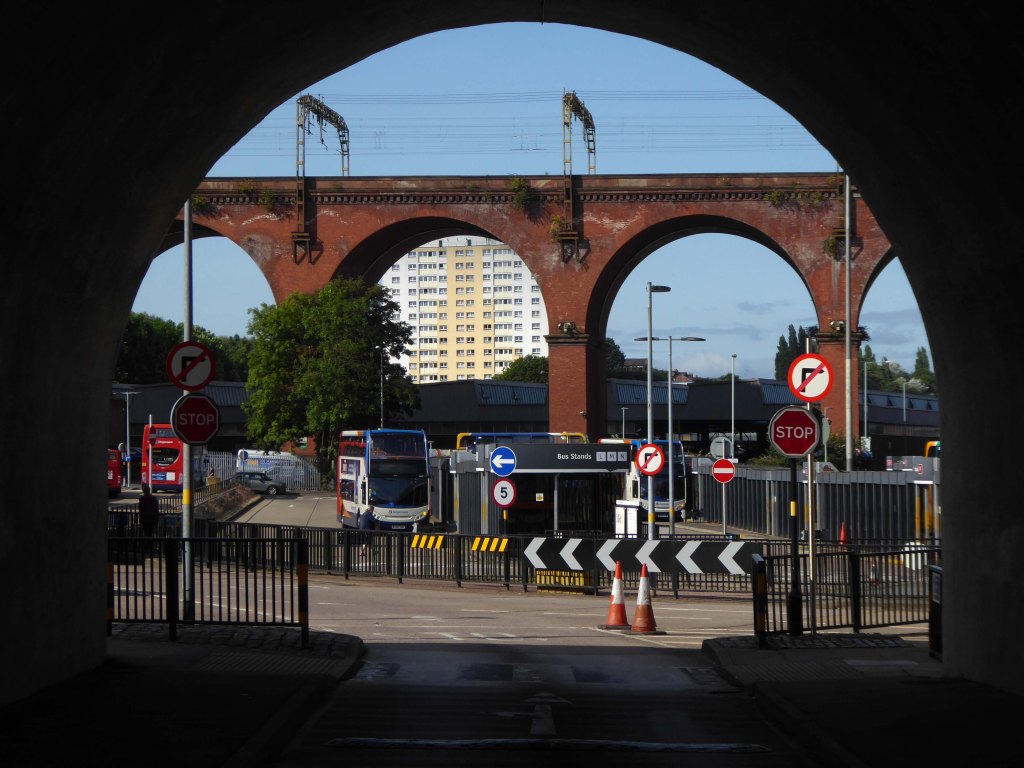
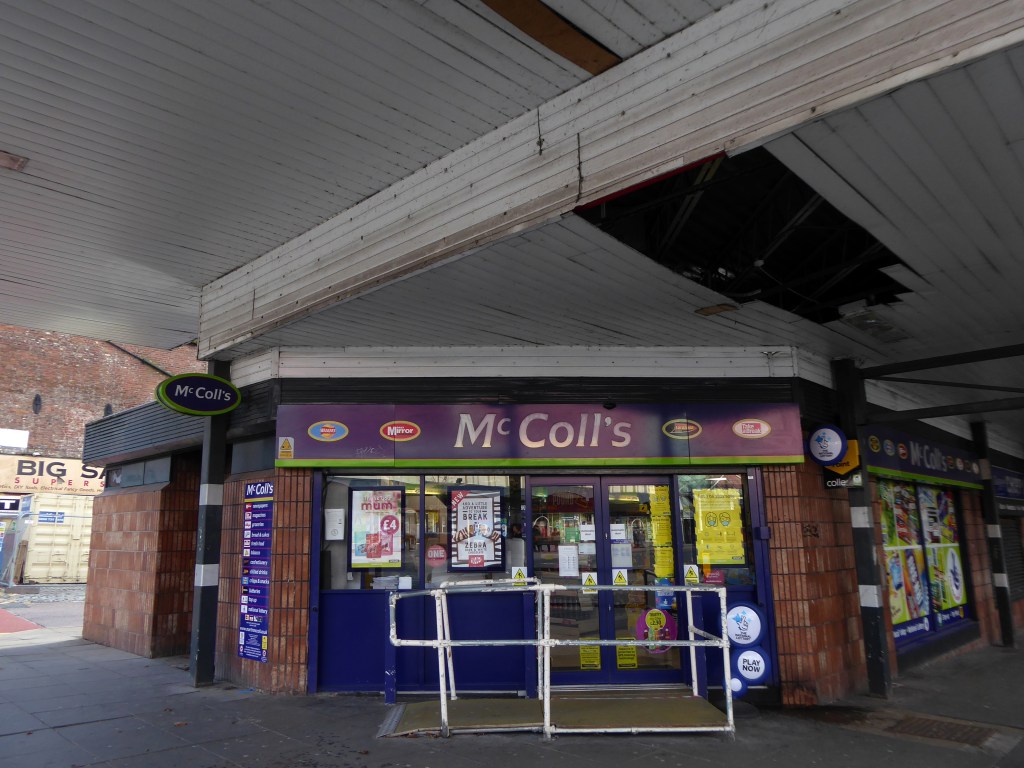
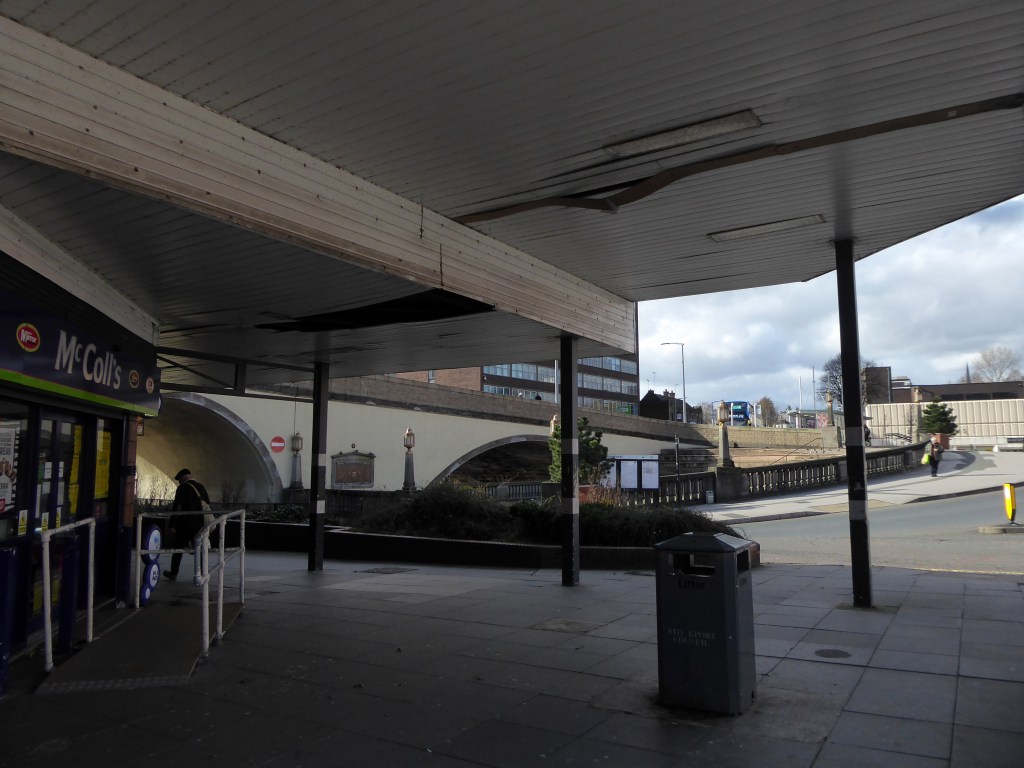
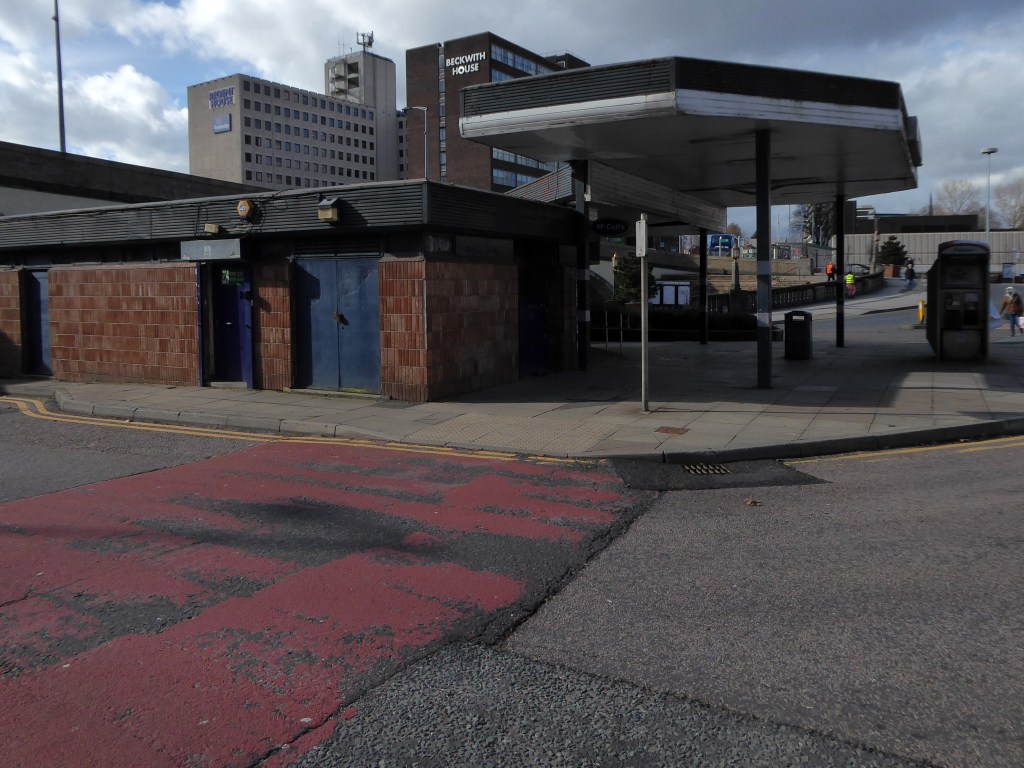
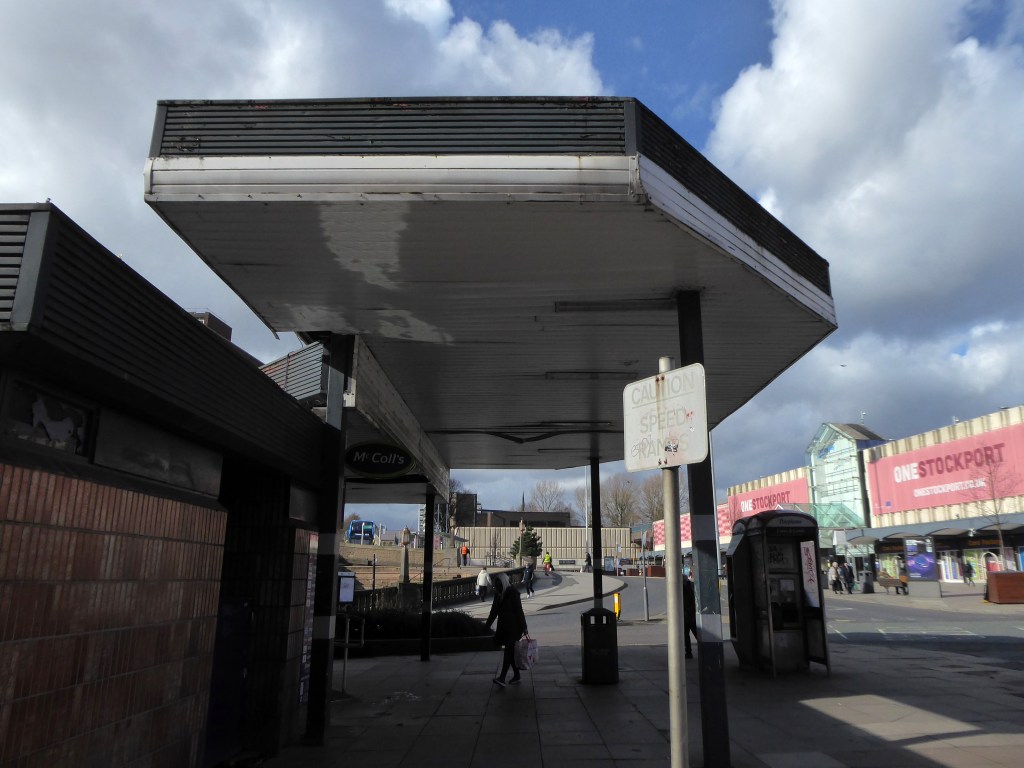
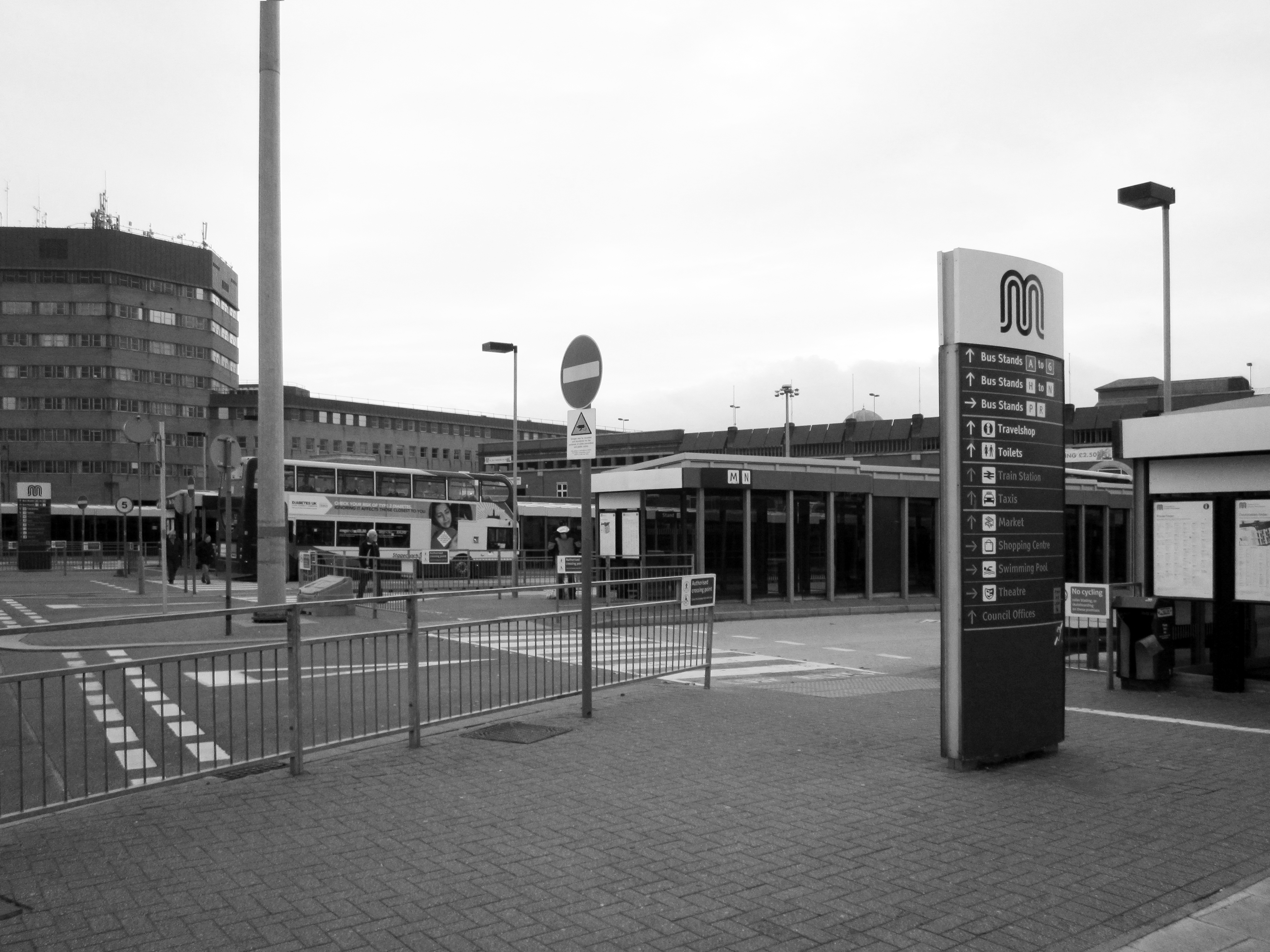
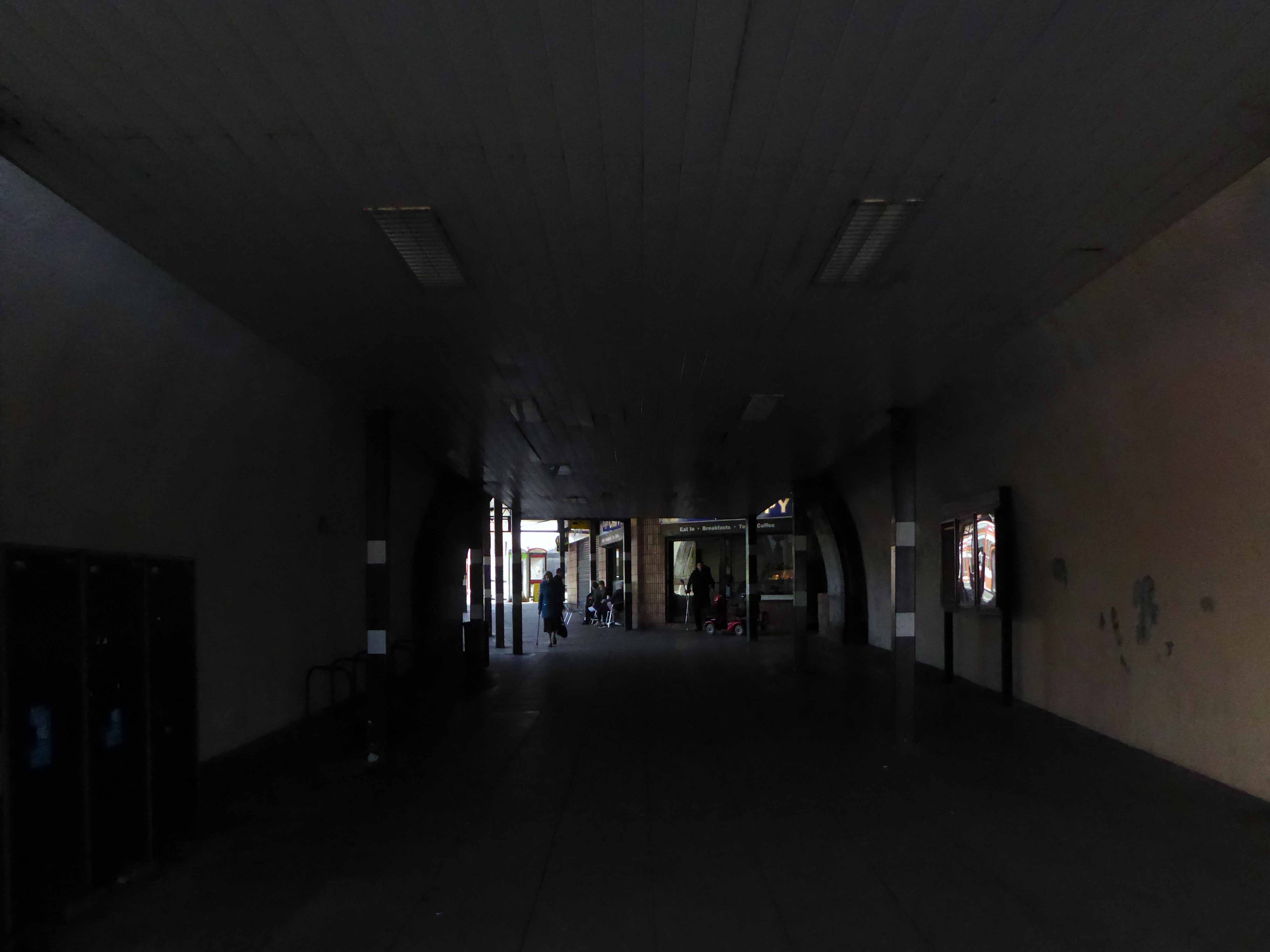
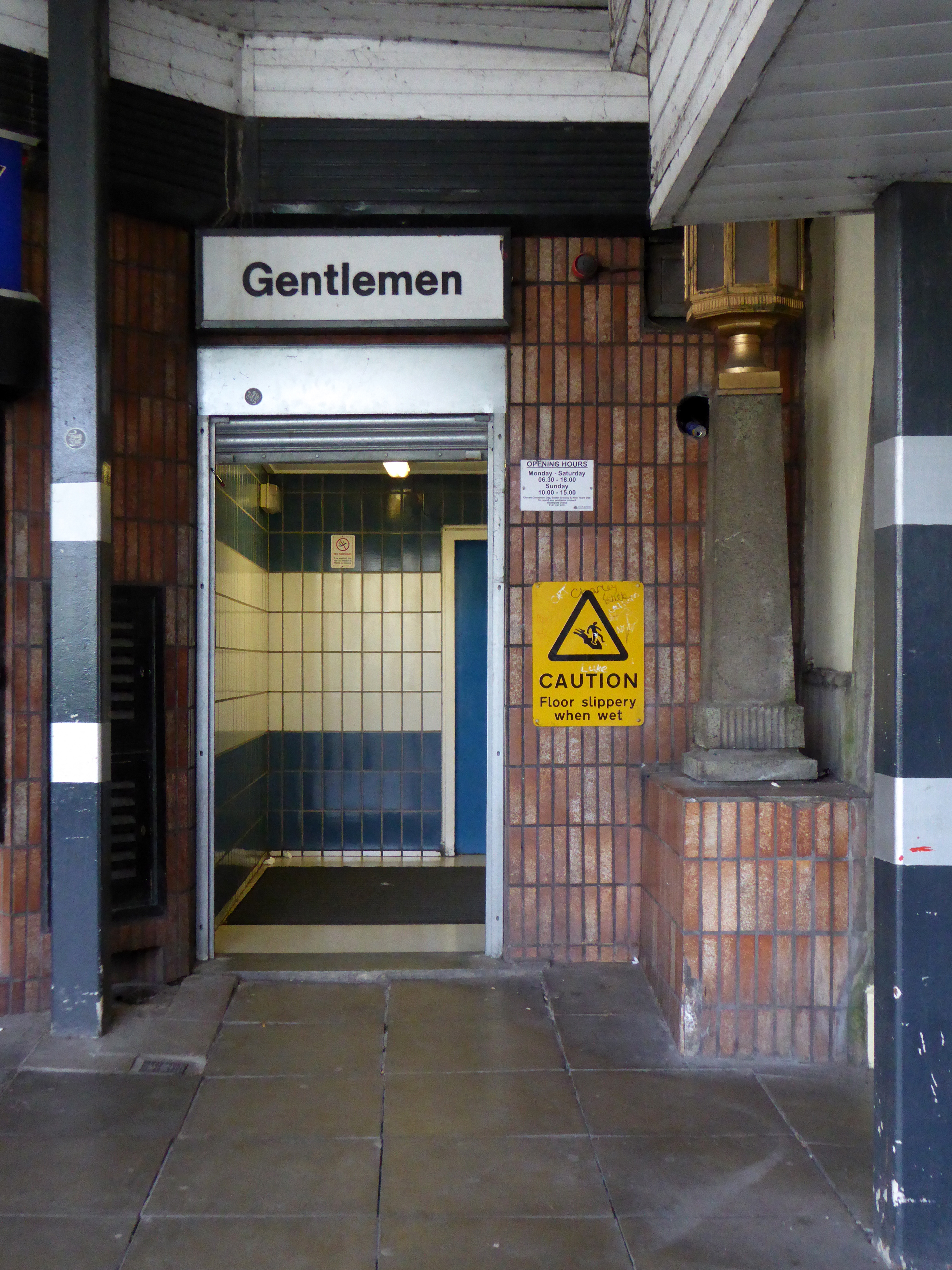
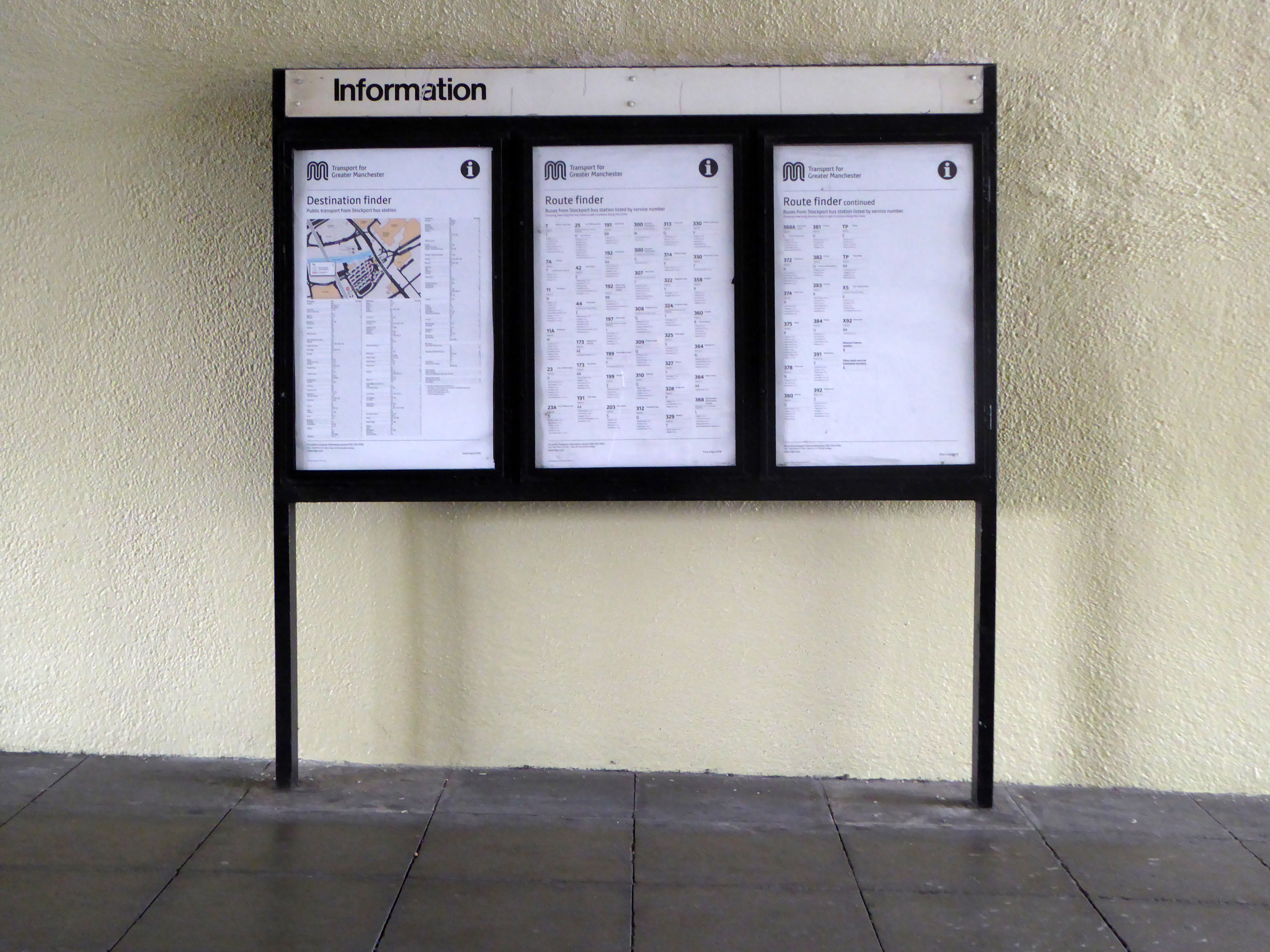
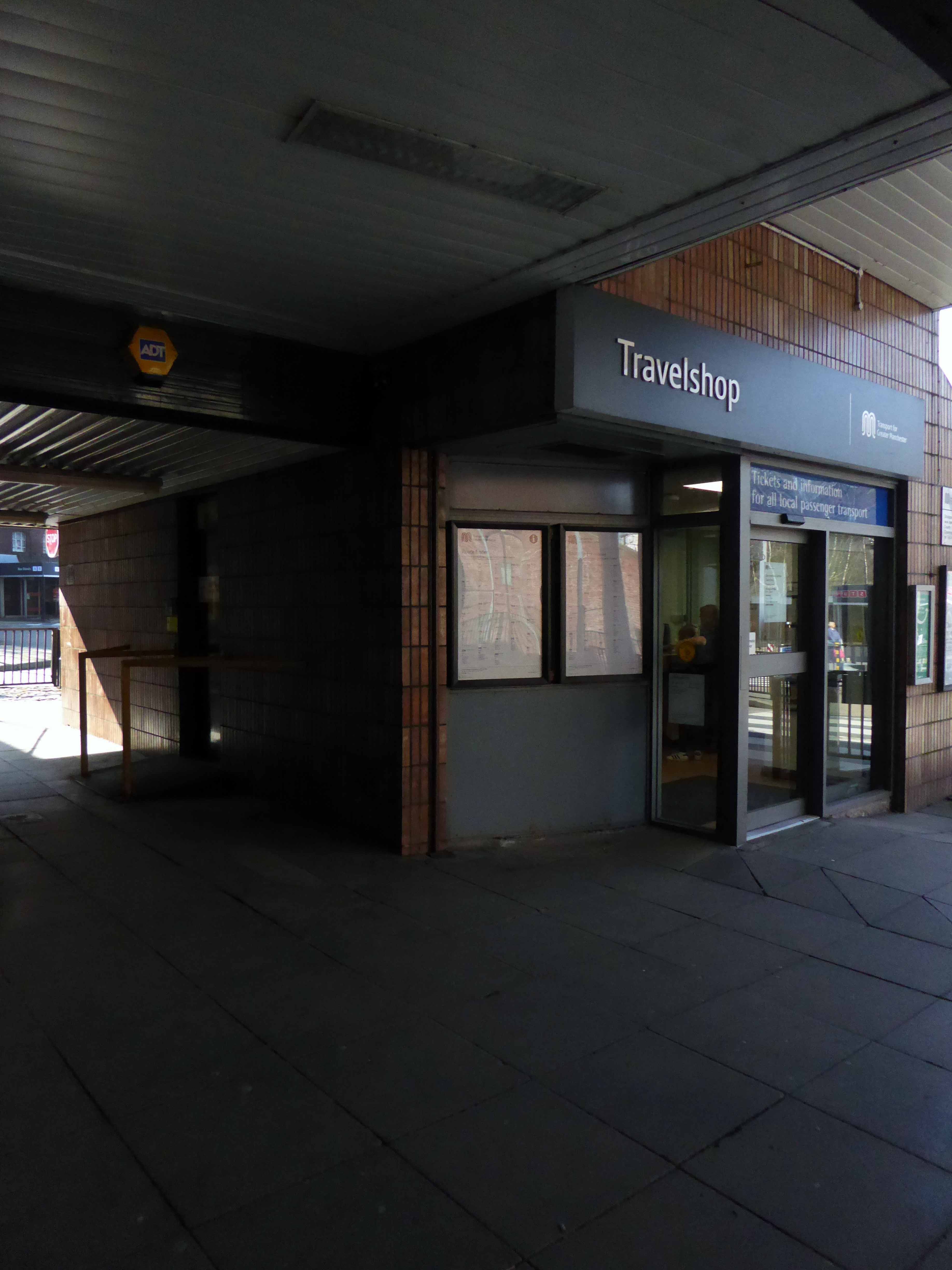
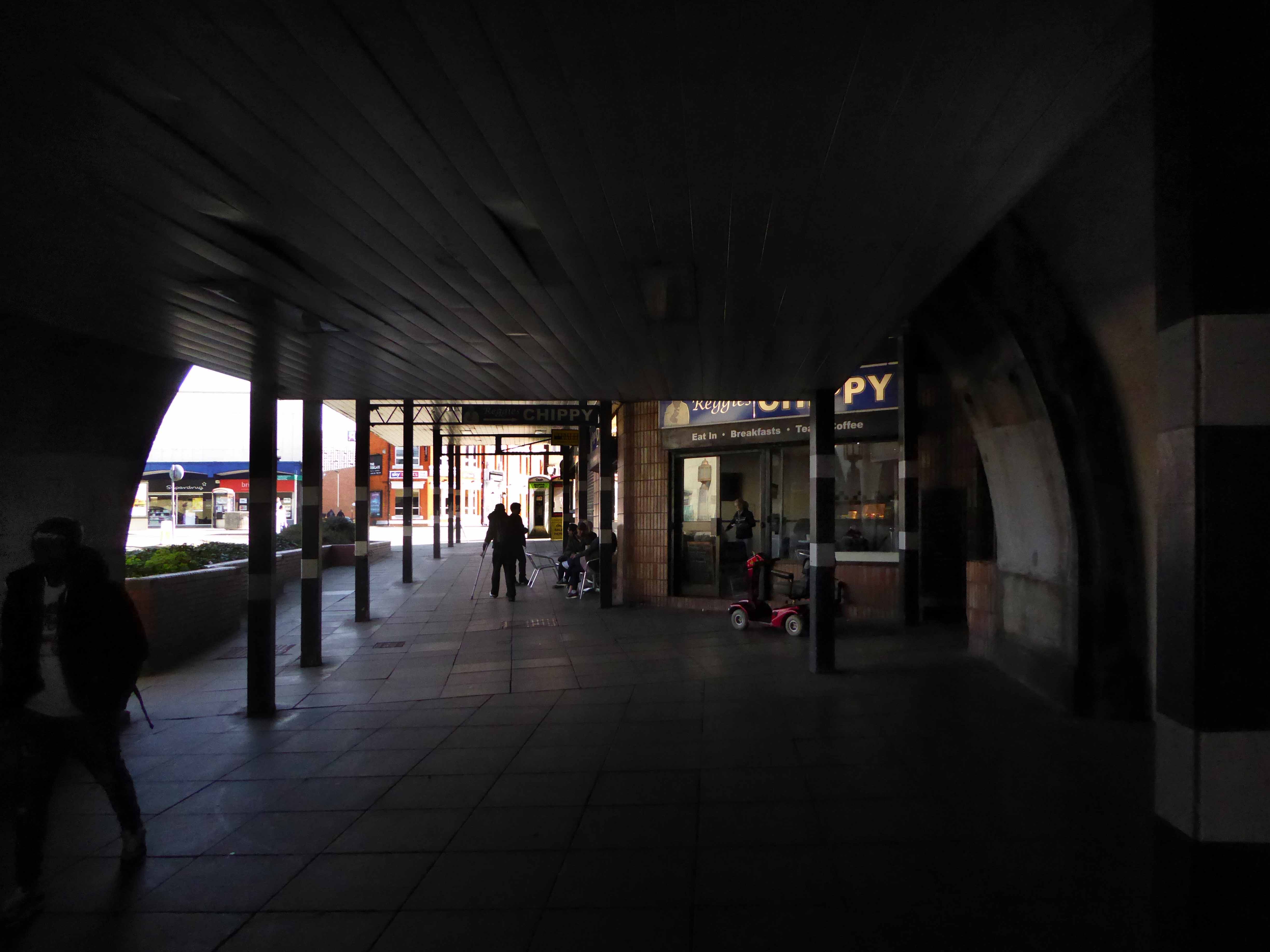
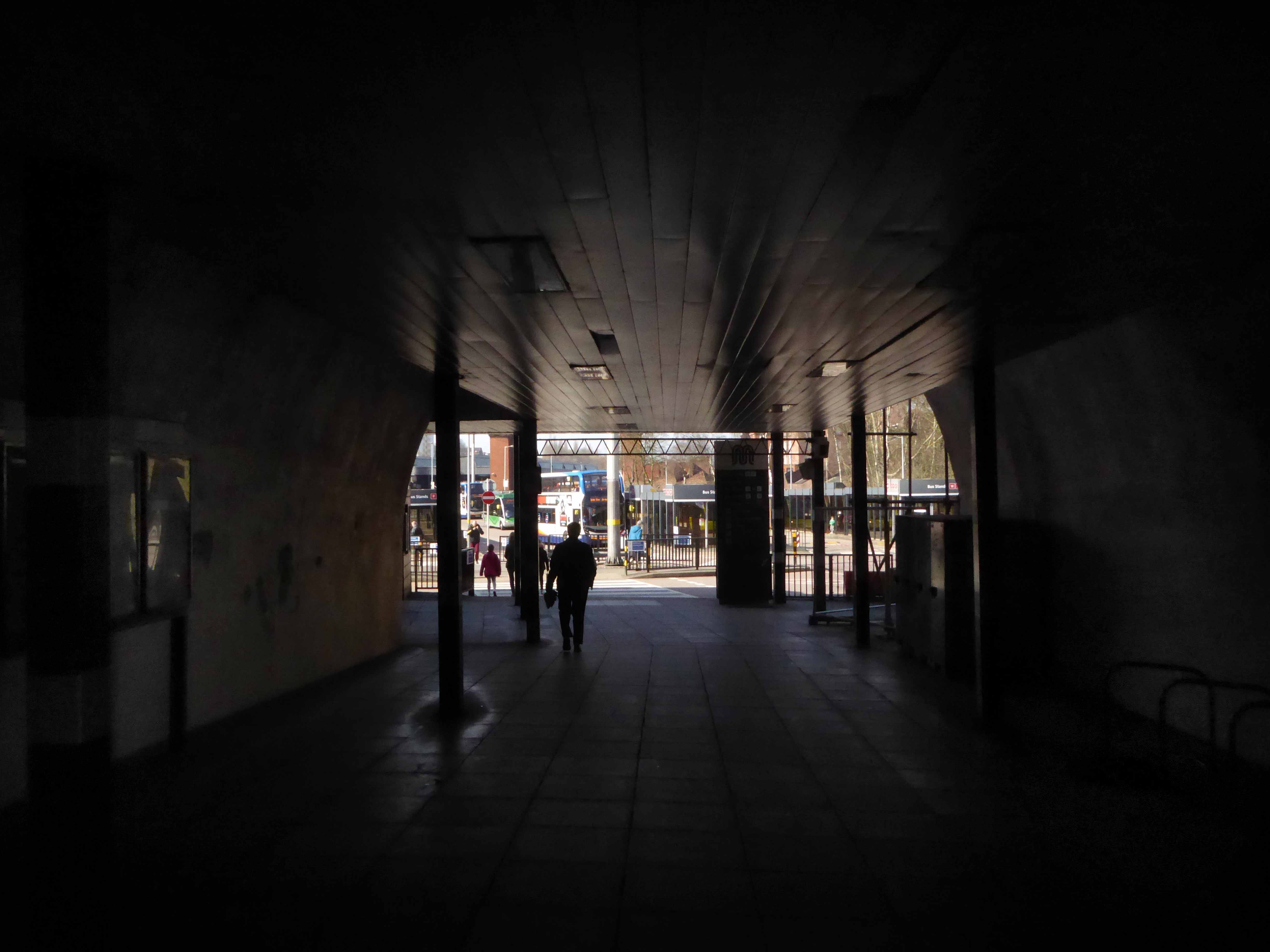
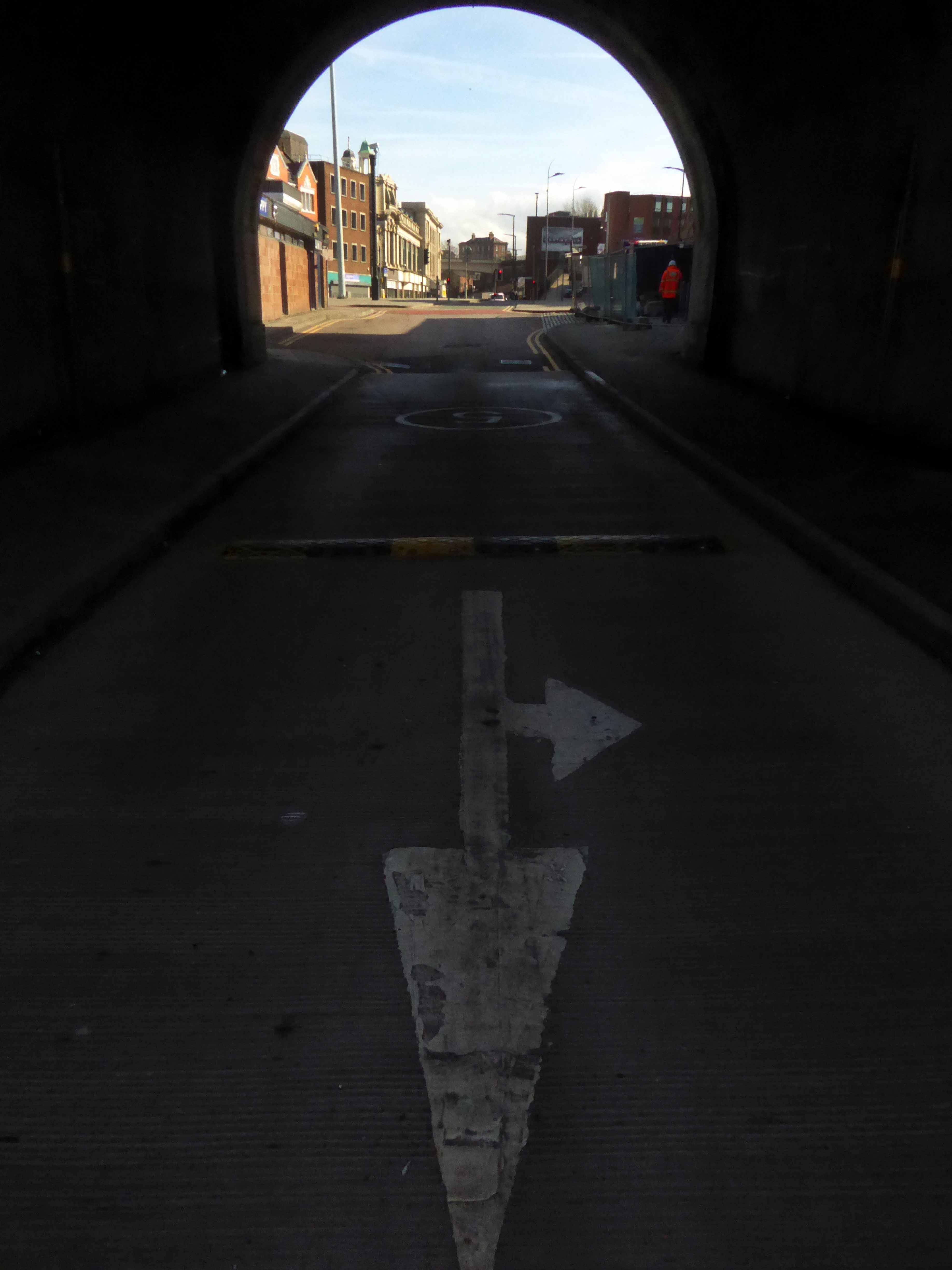
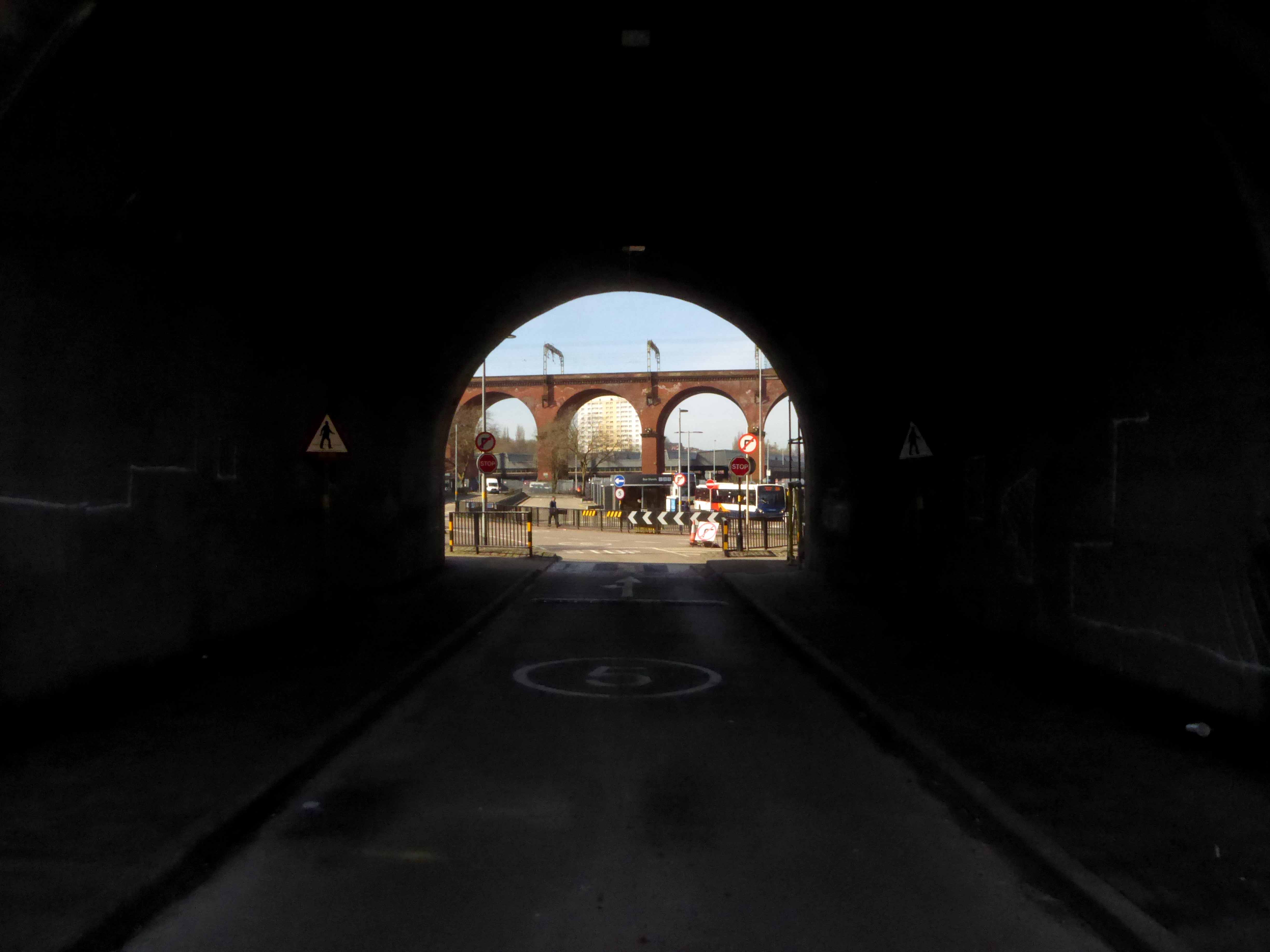
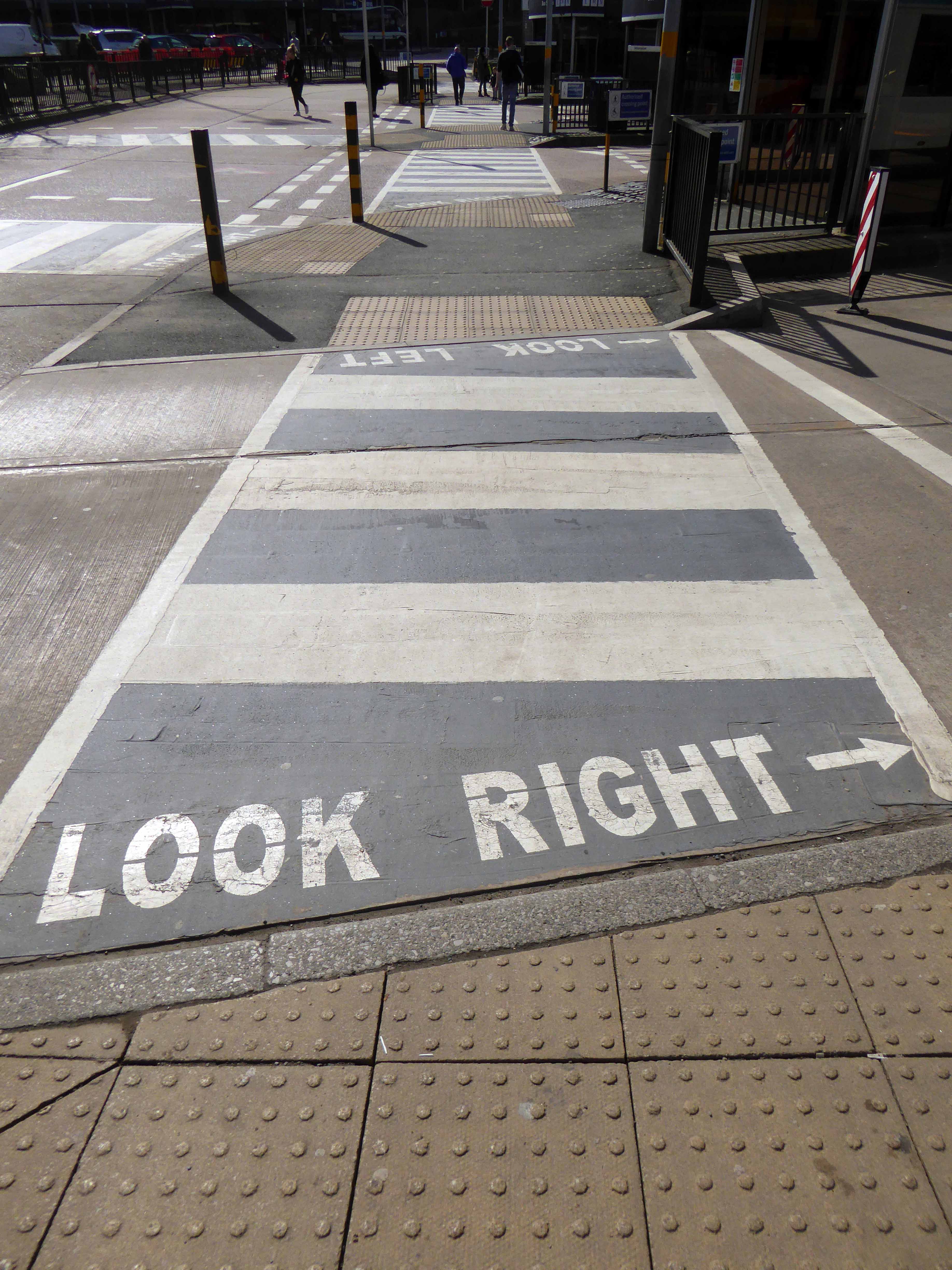
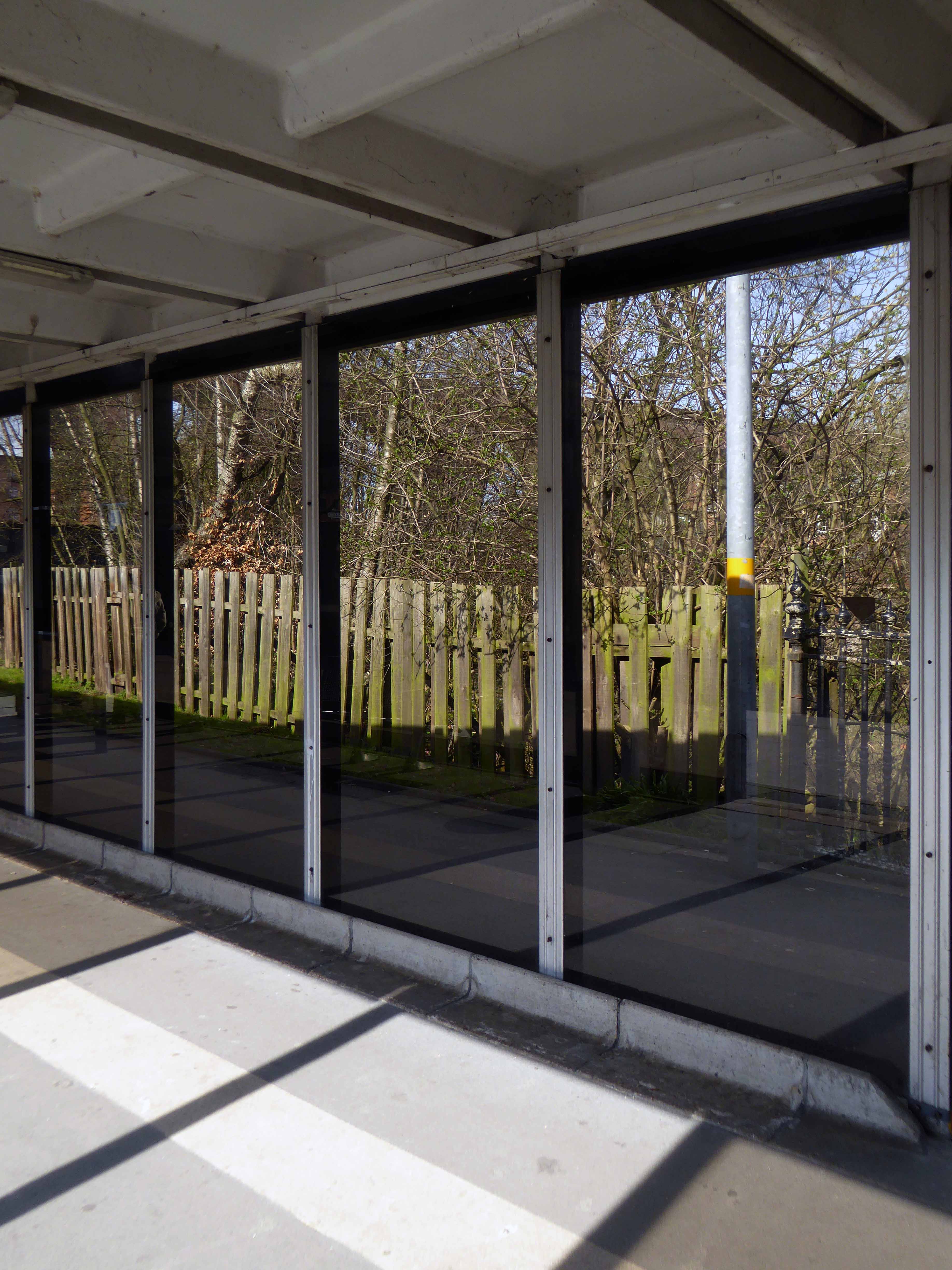
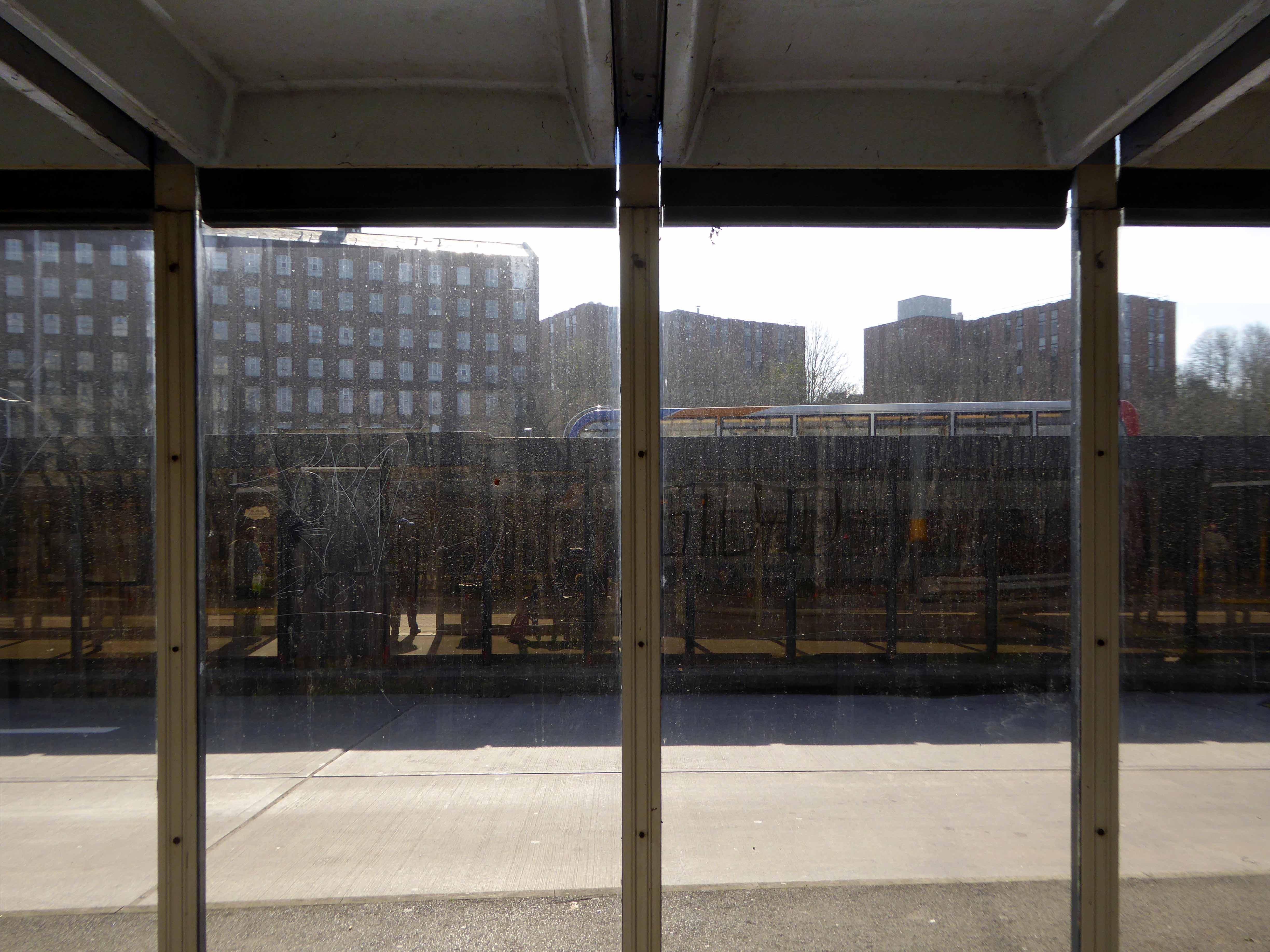
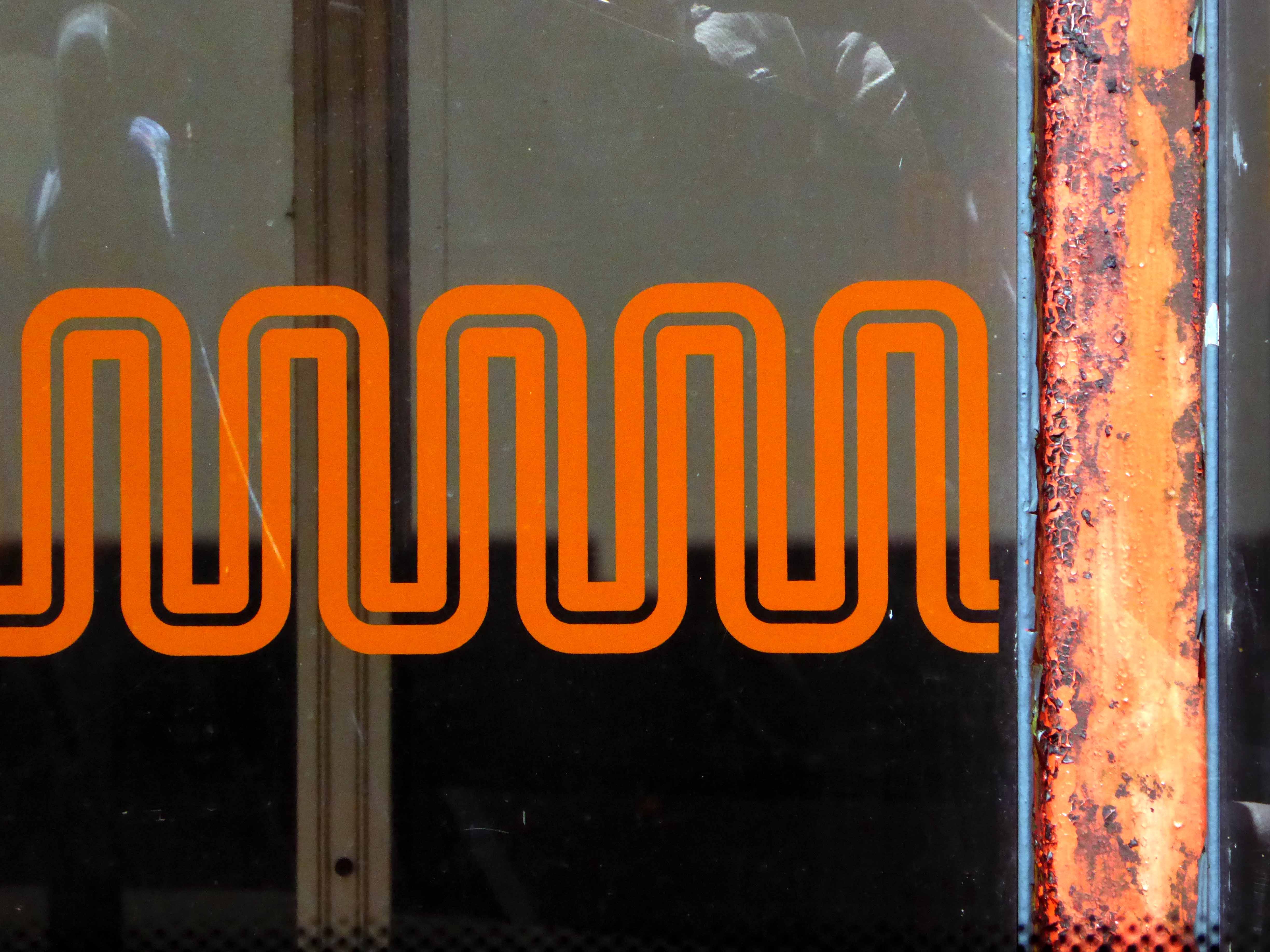
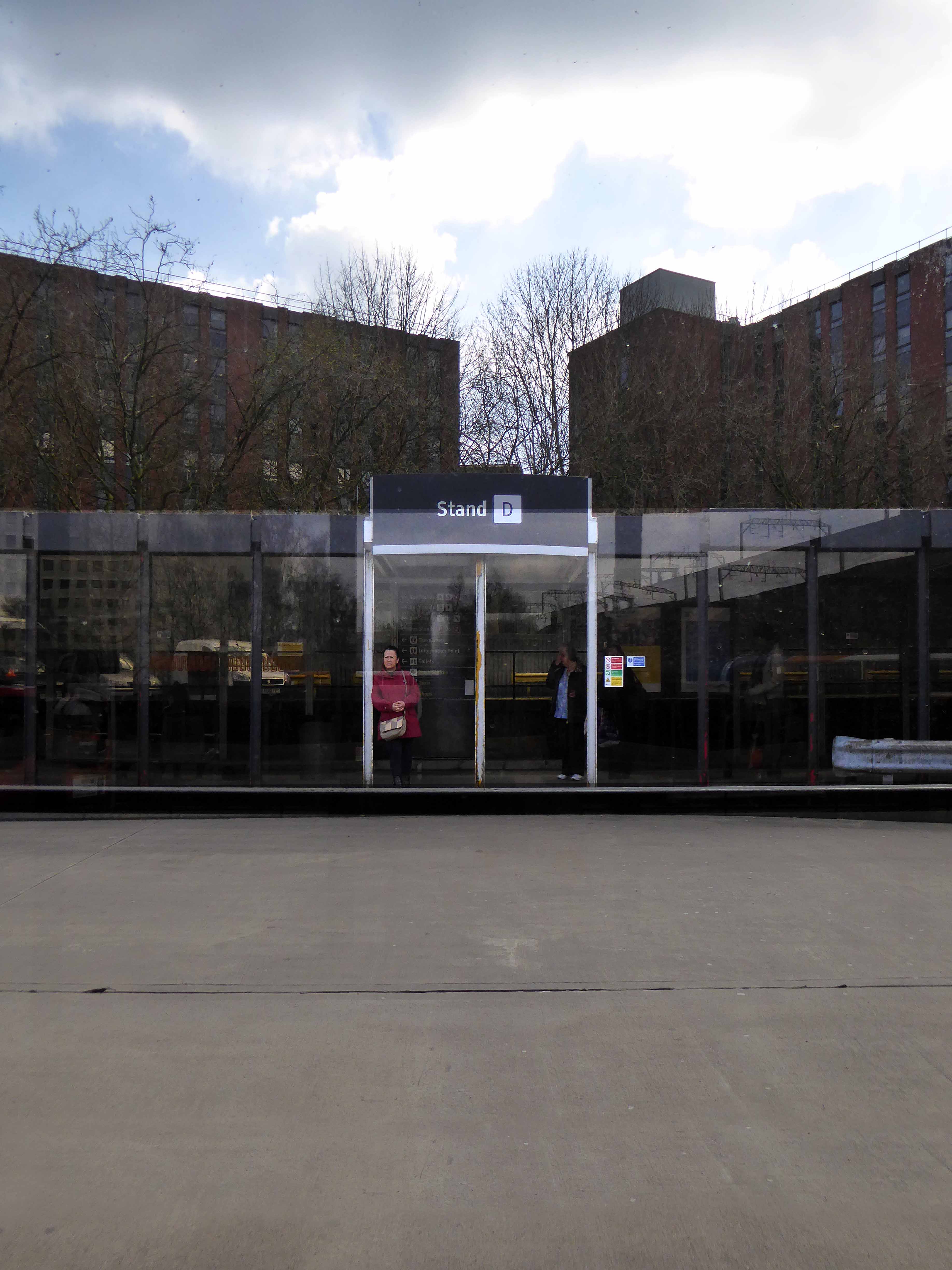
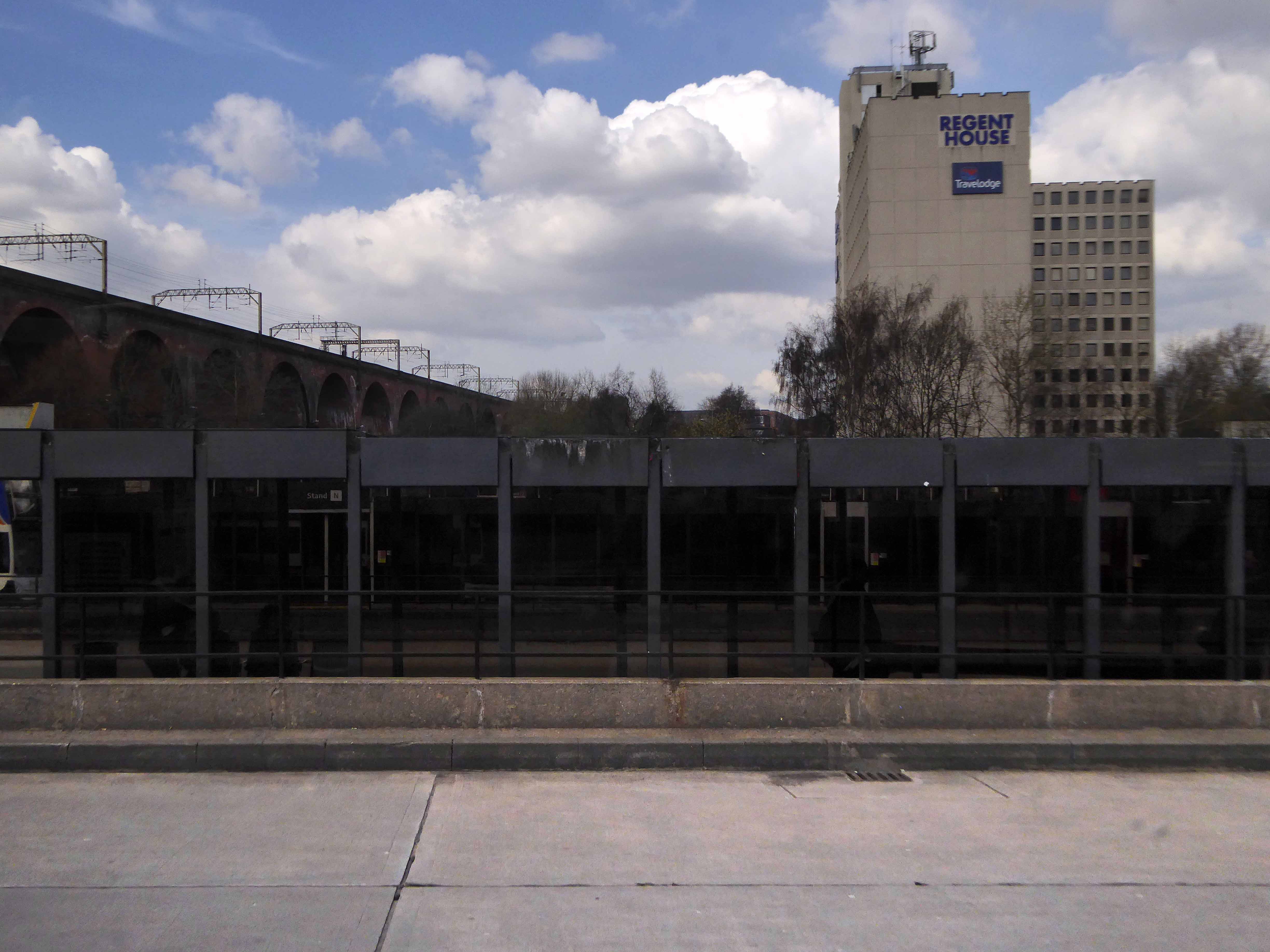
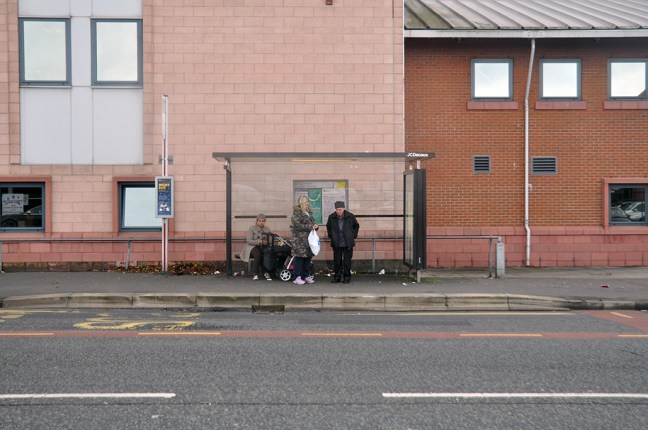
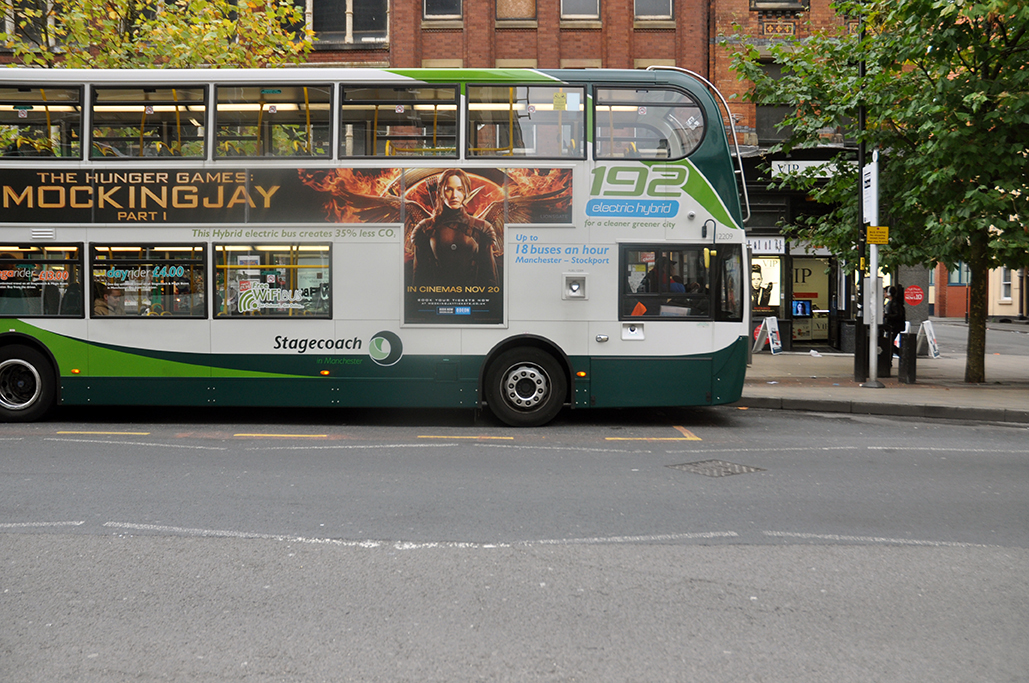
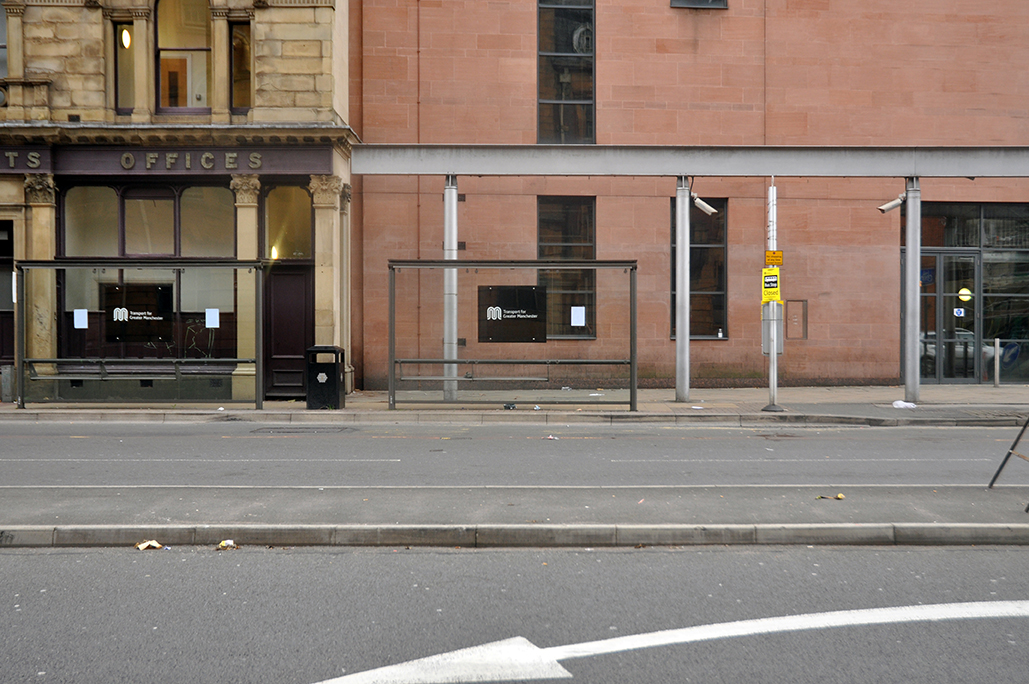
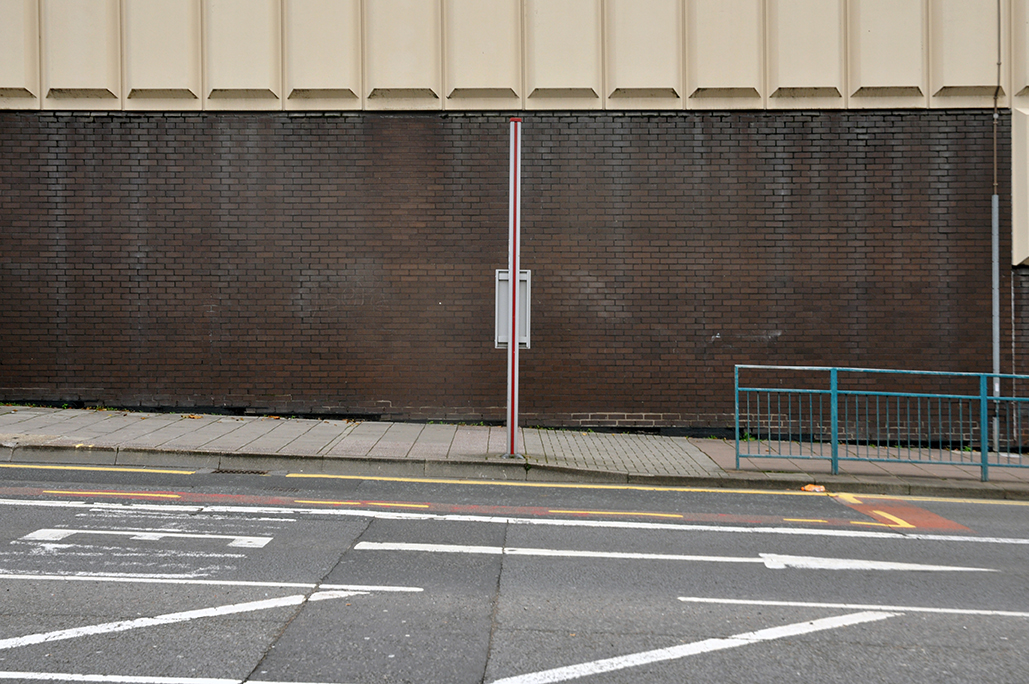
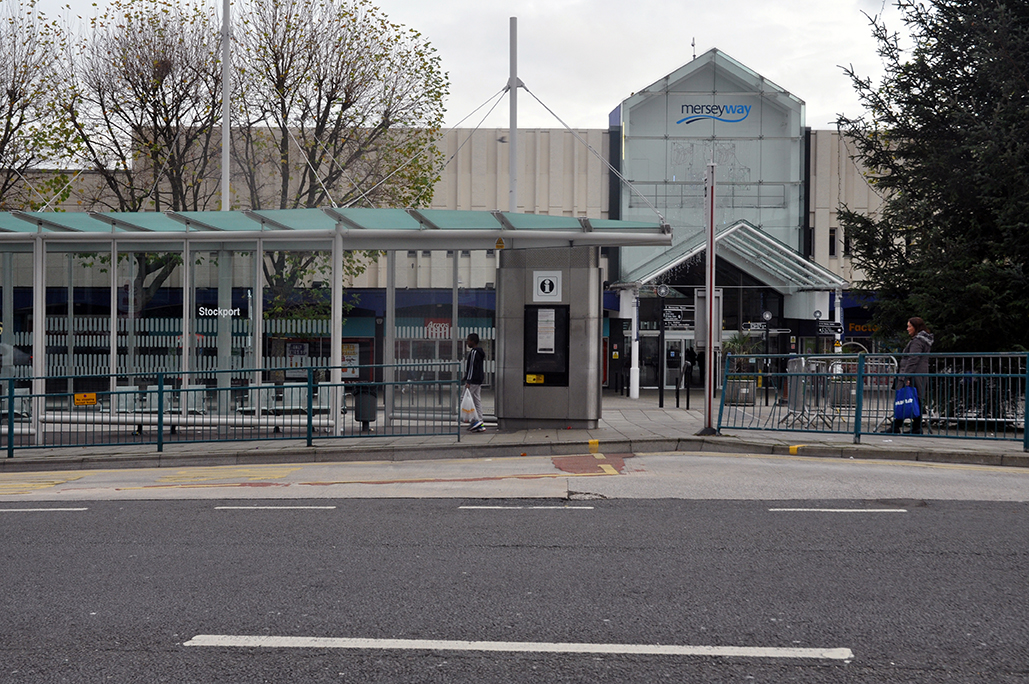
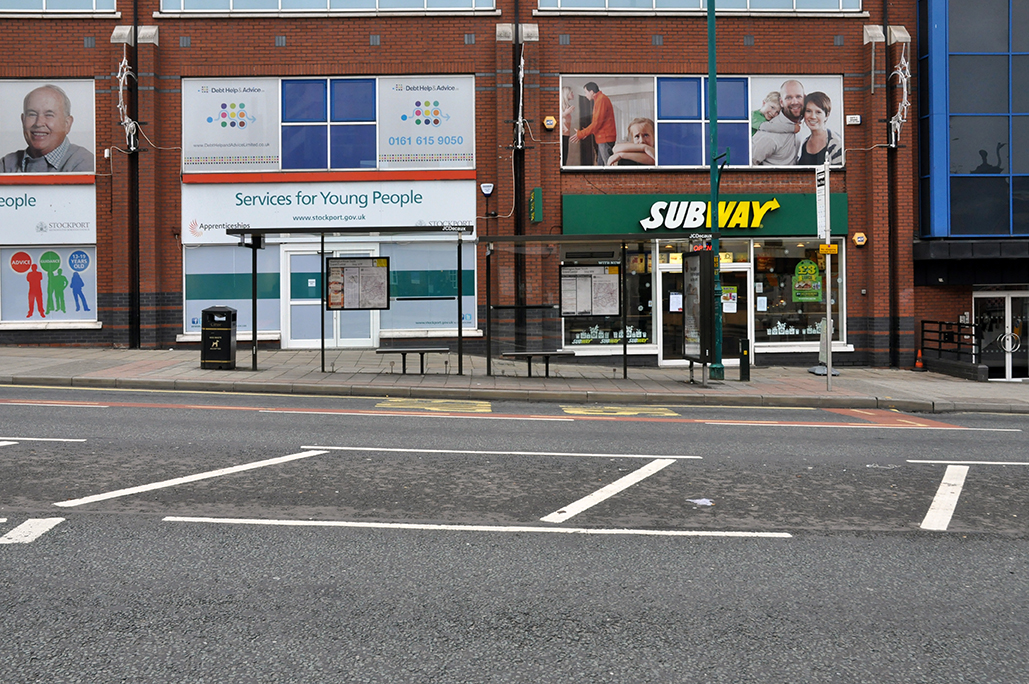
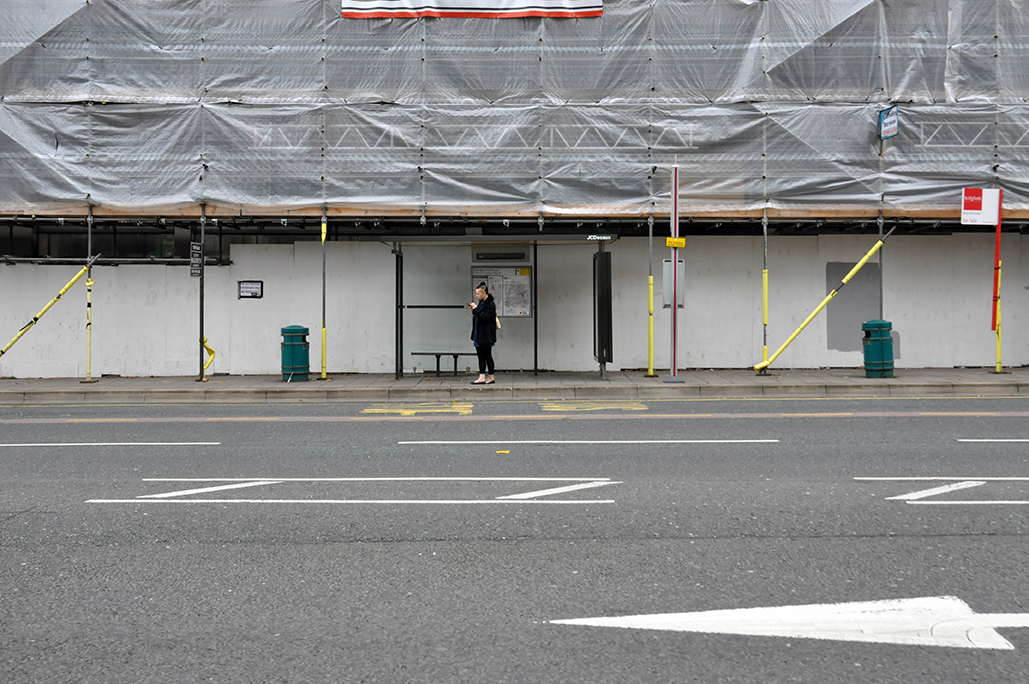
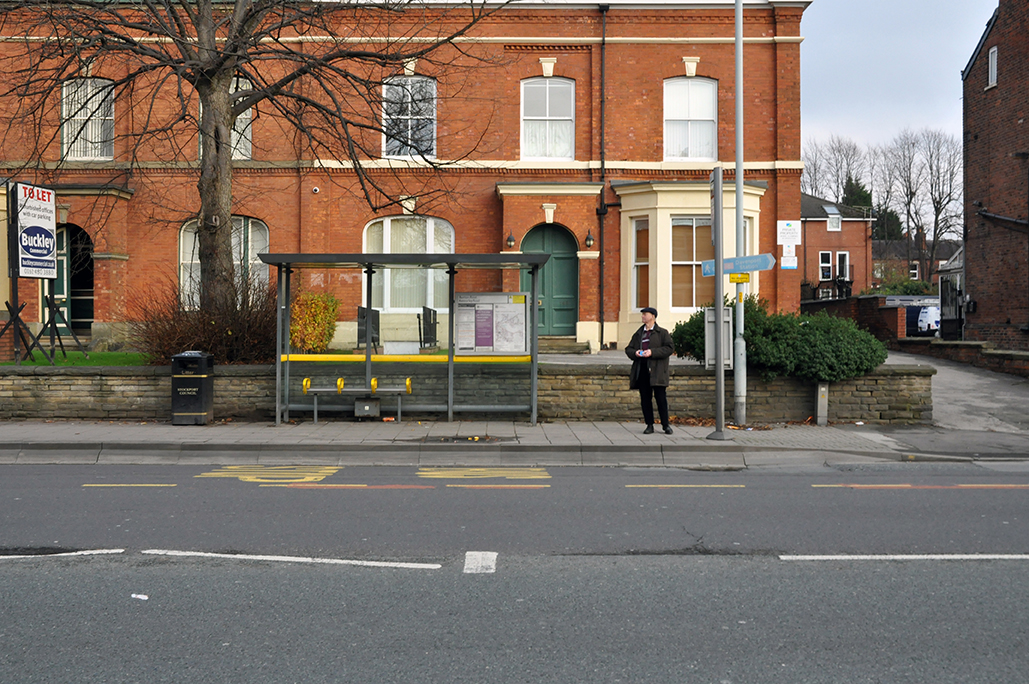
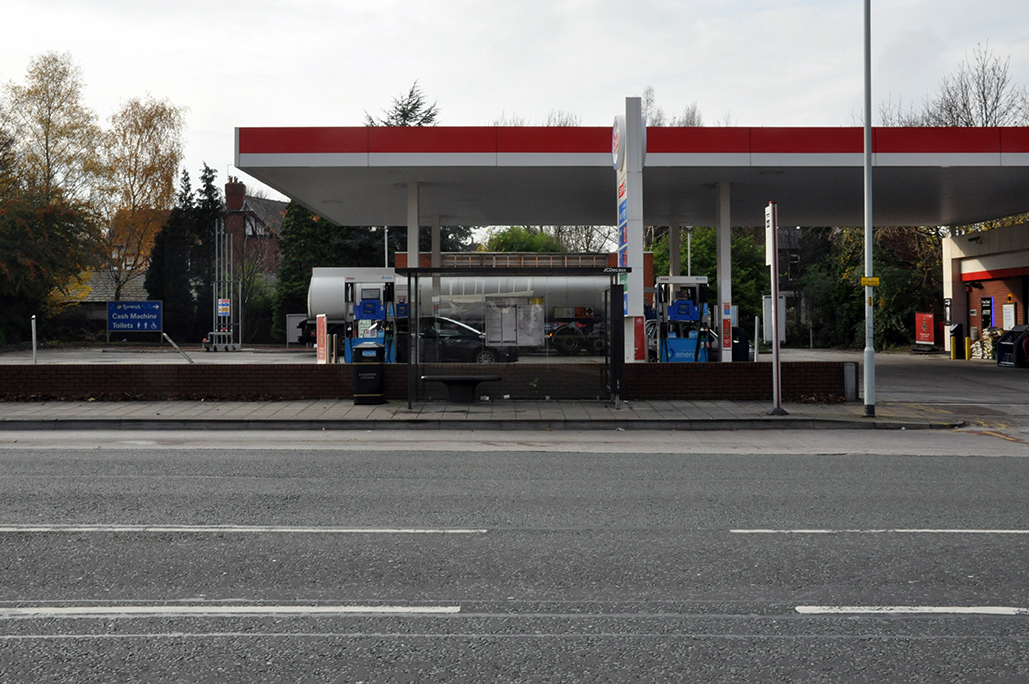
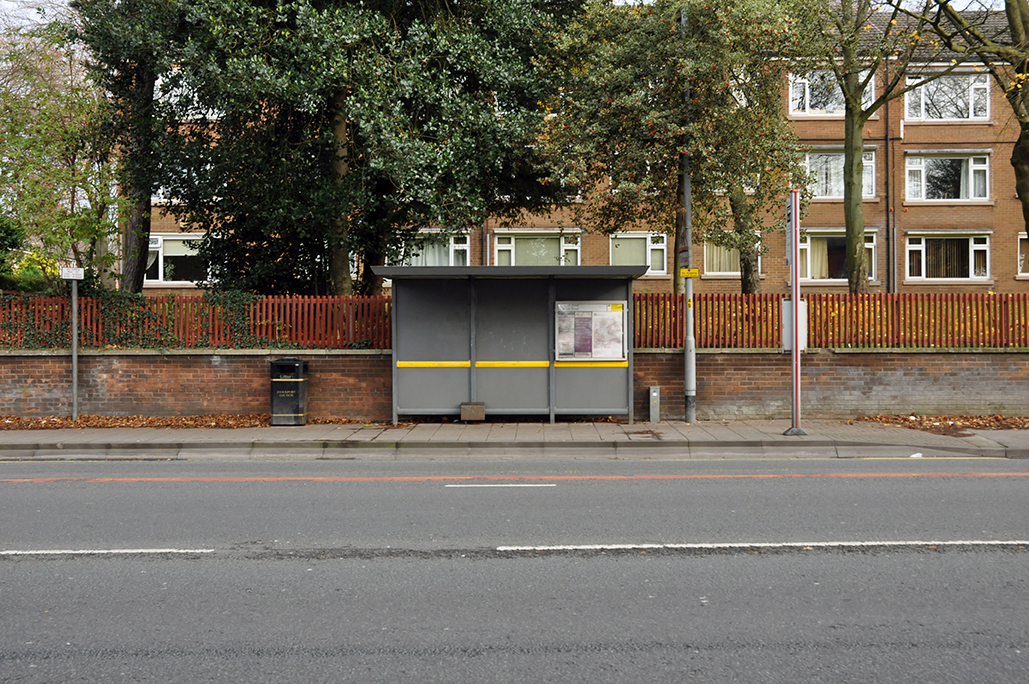
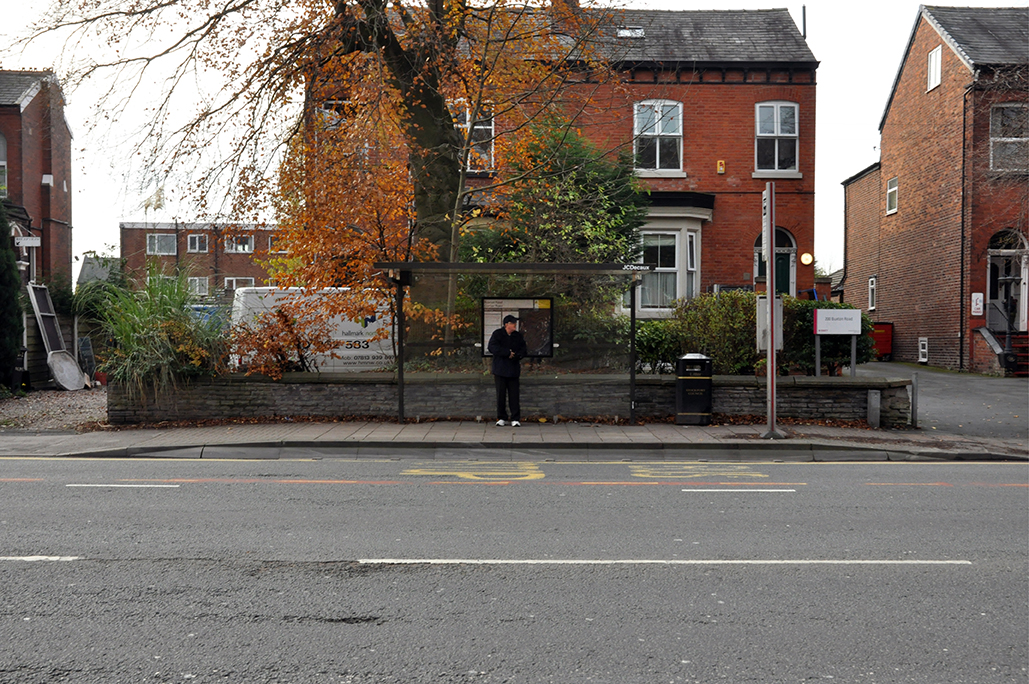
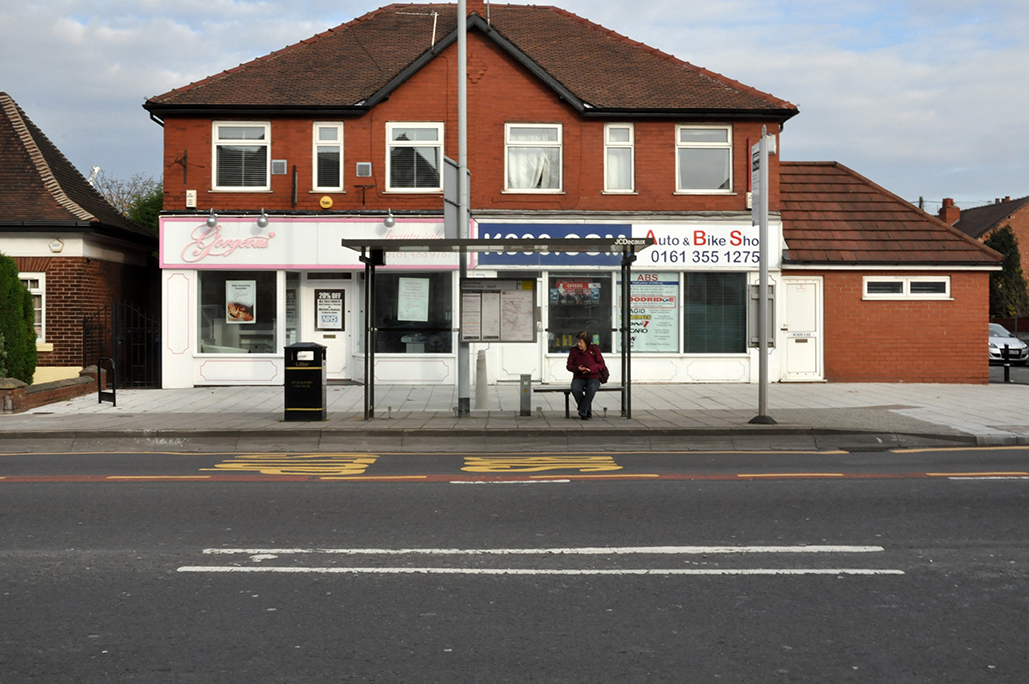
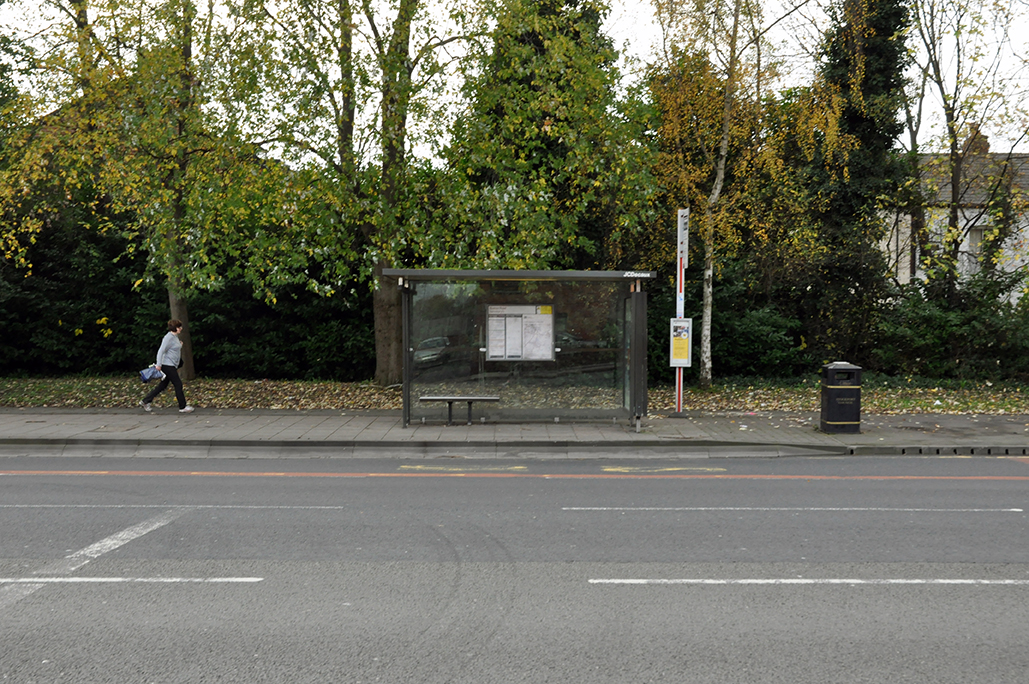
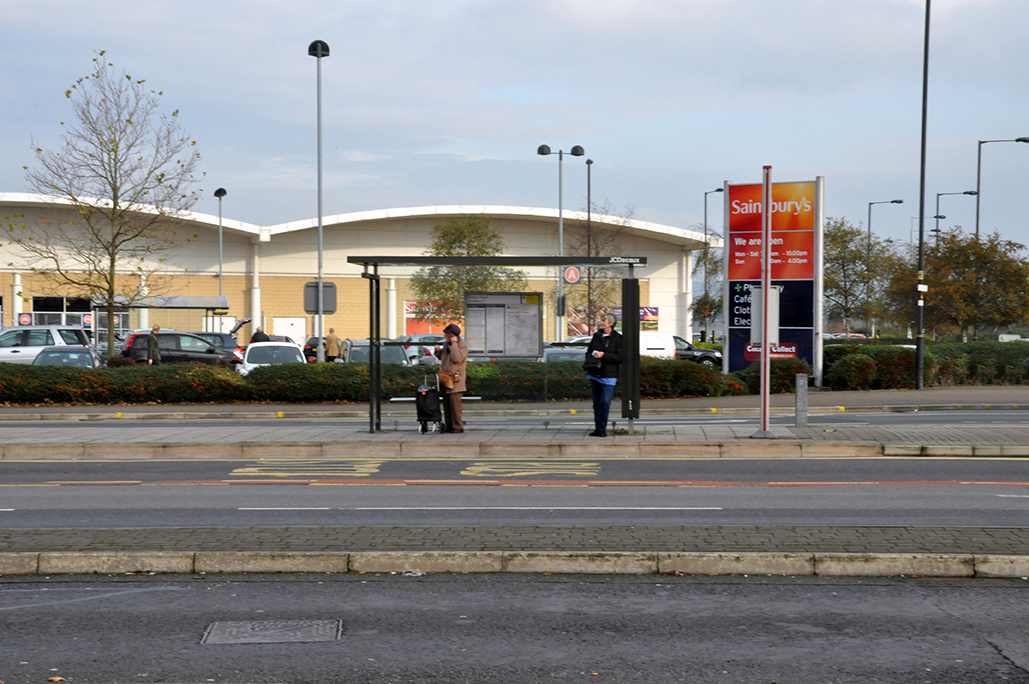
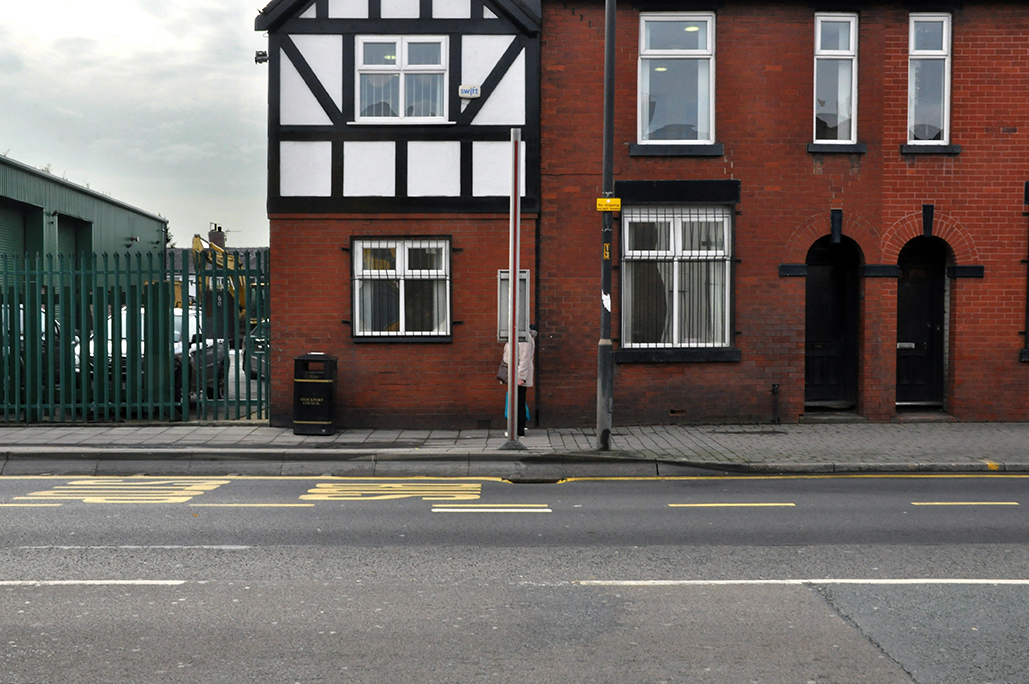
April 9th 2017 here is my photographic record of the Bus Station, I’ve been, gone and come back again countless times through the years.


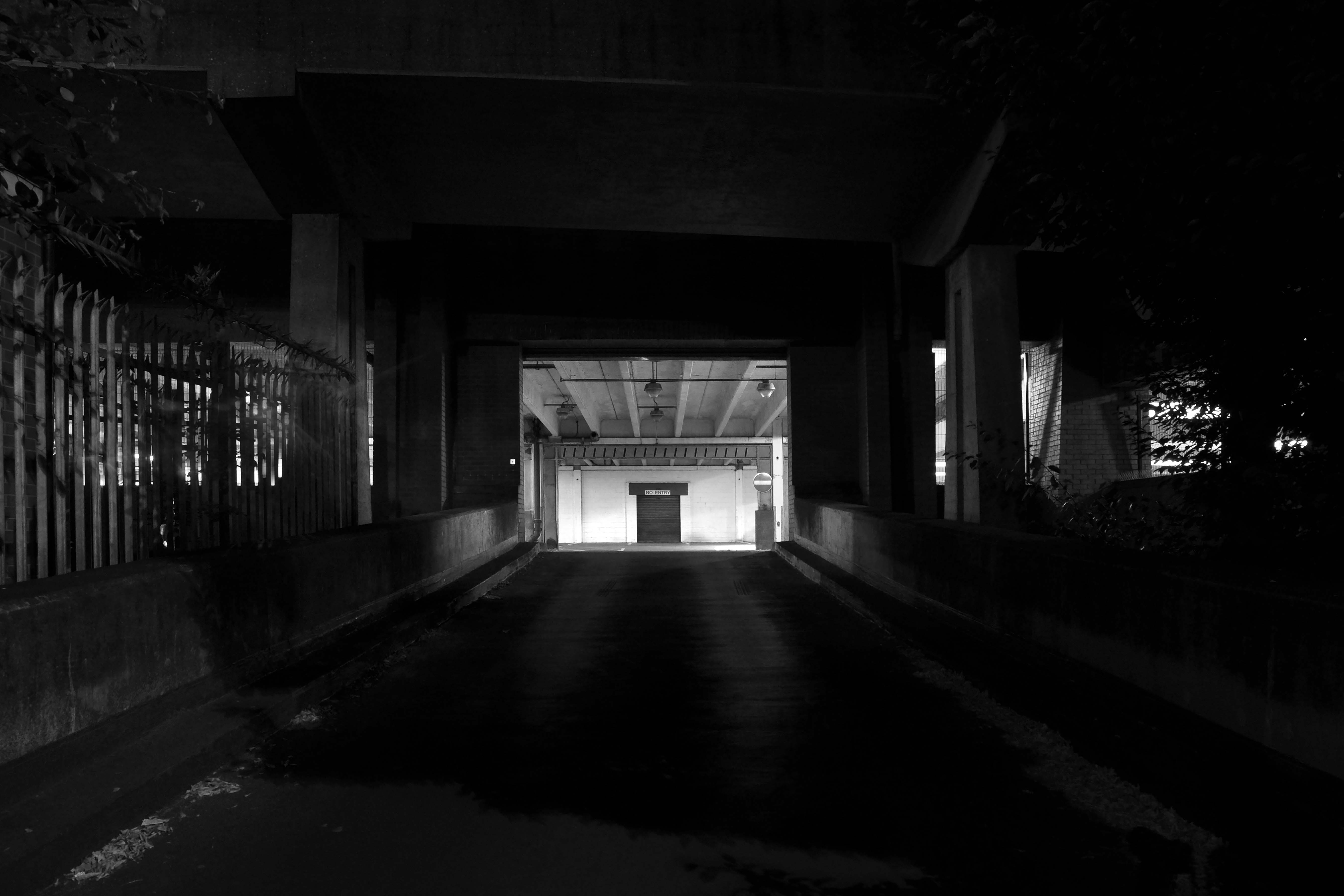
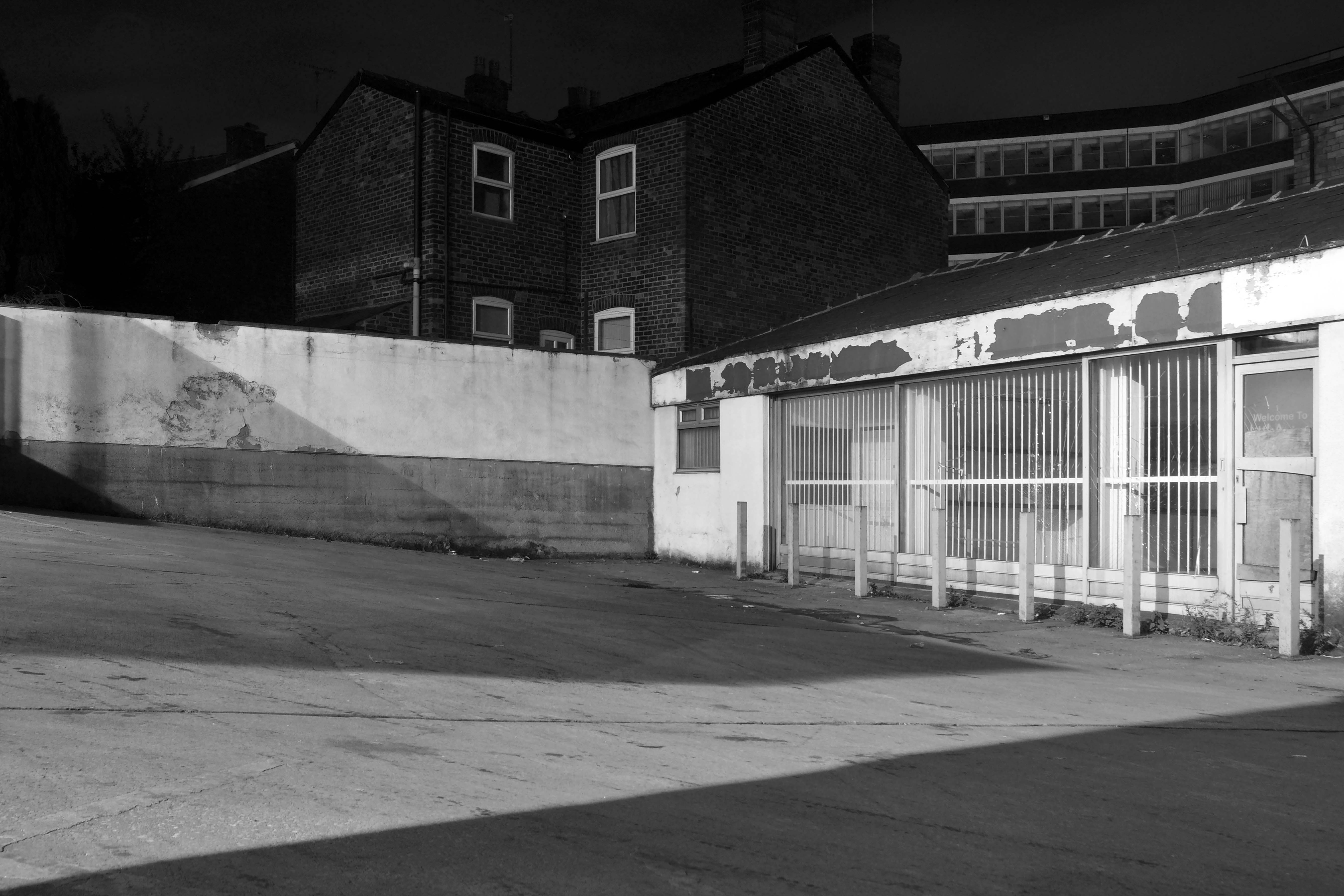
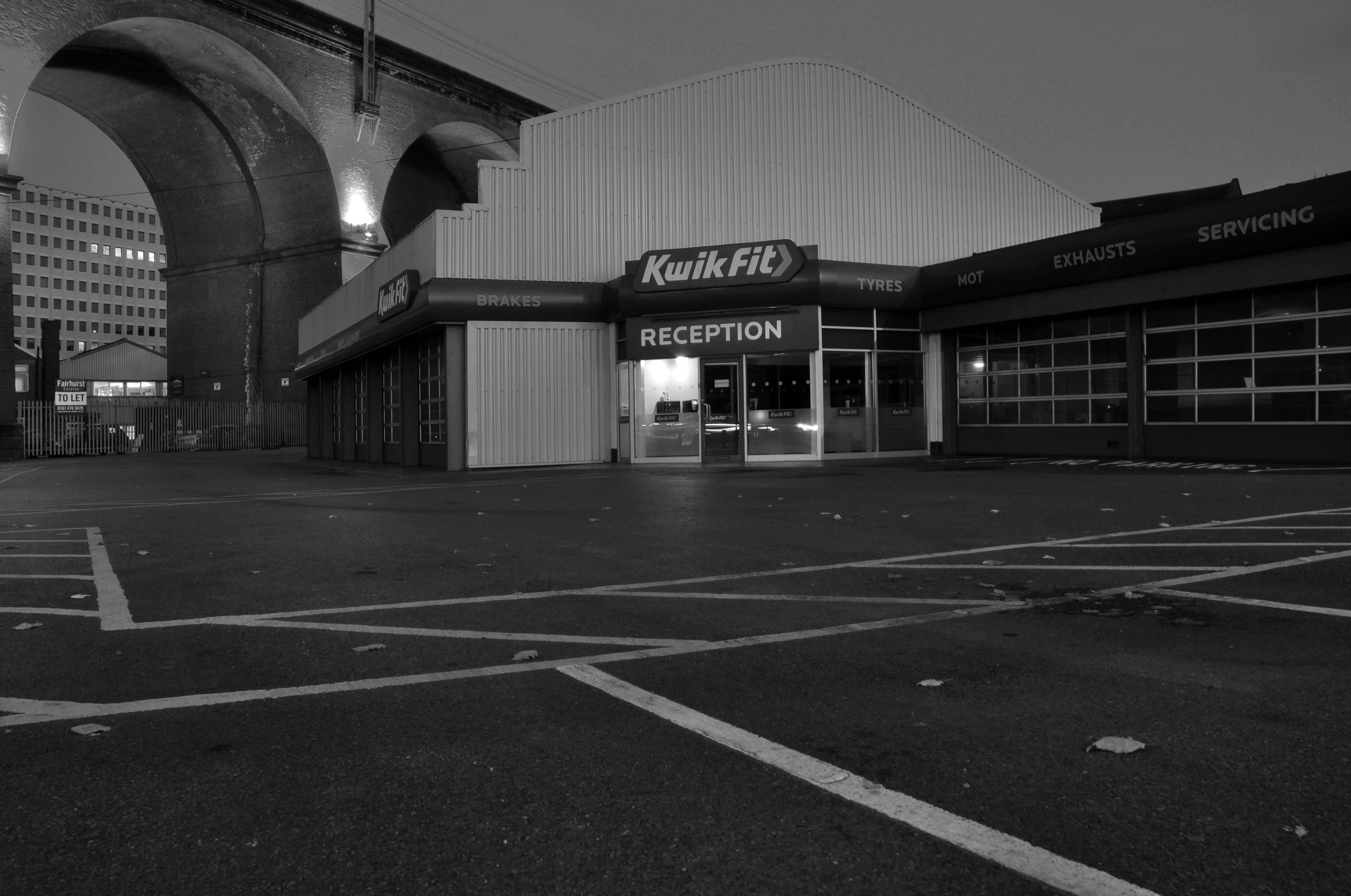
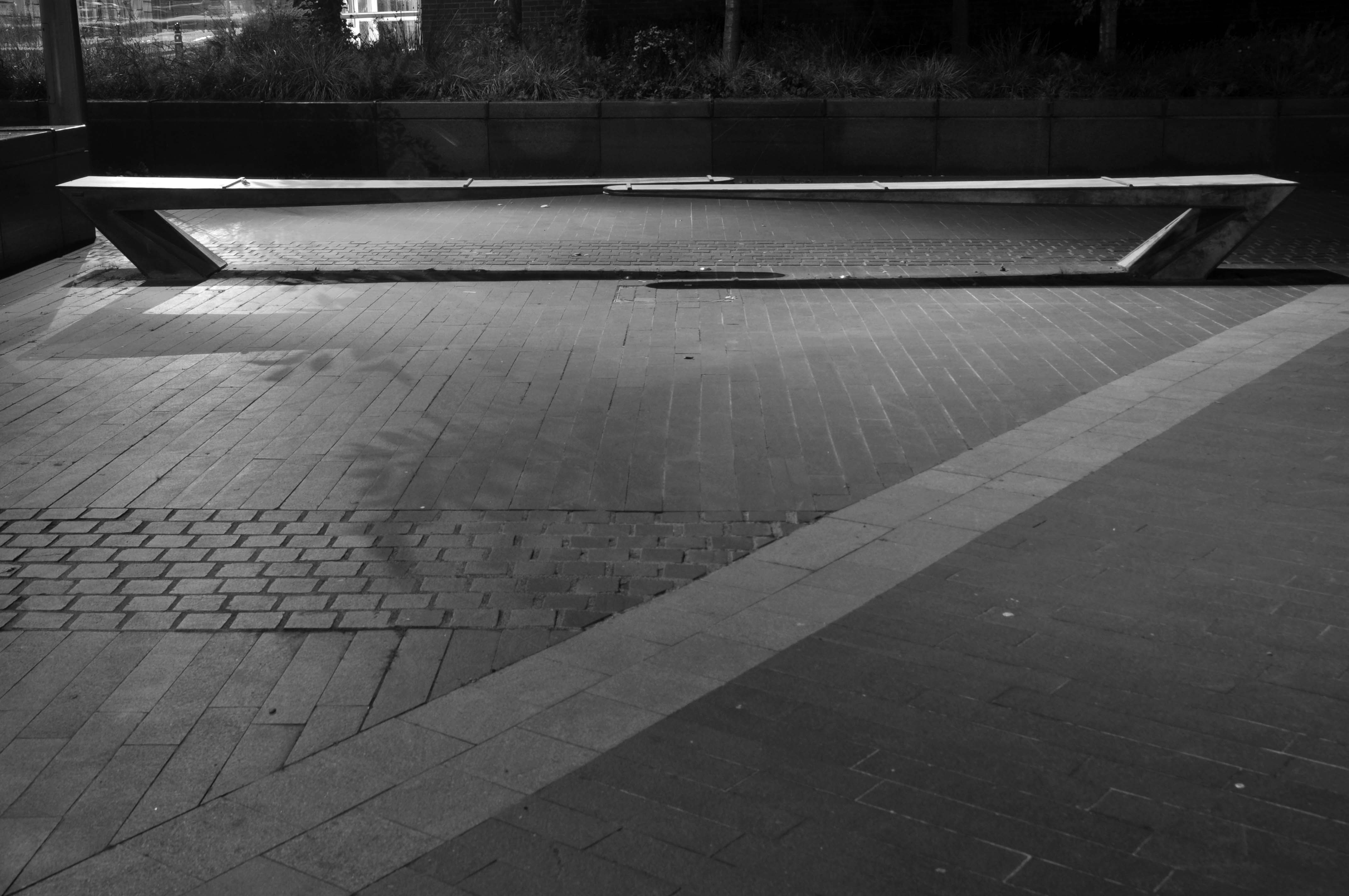
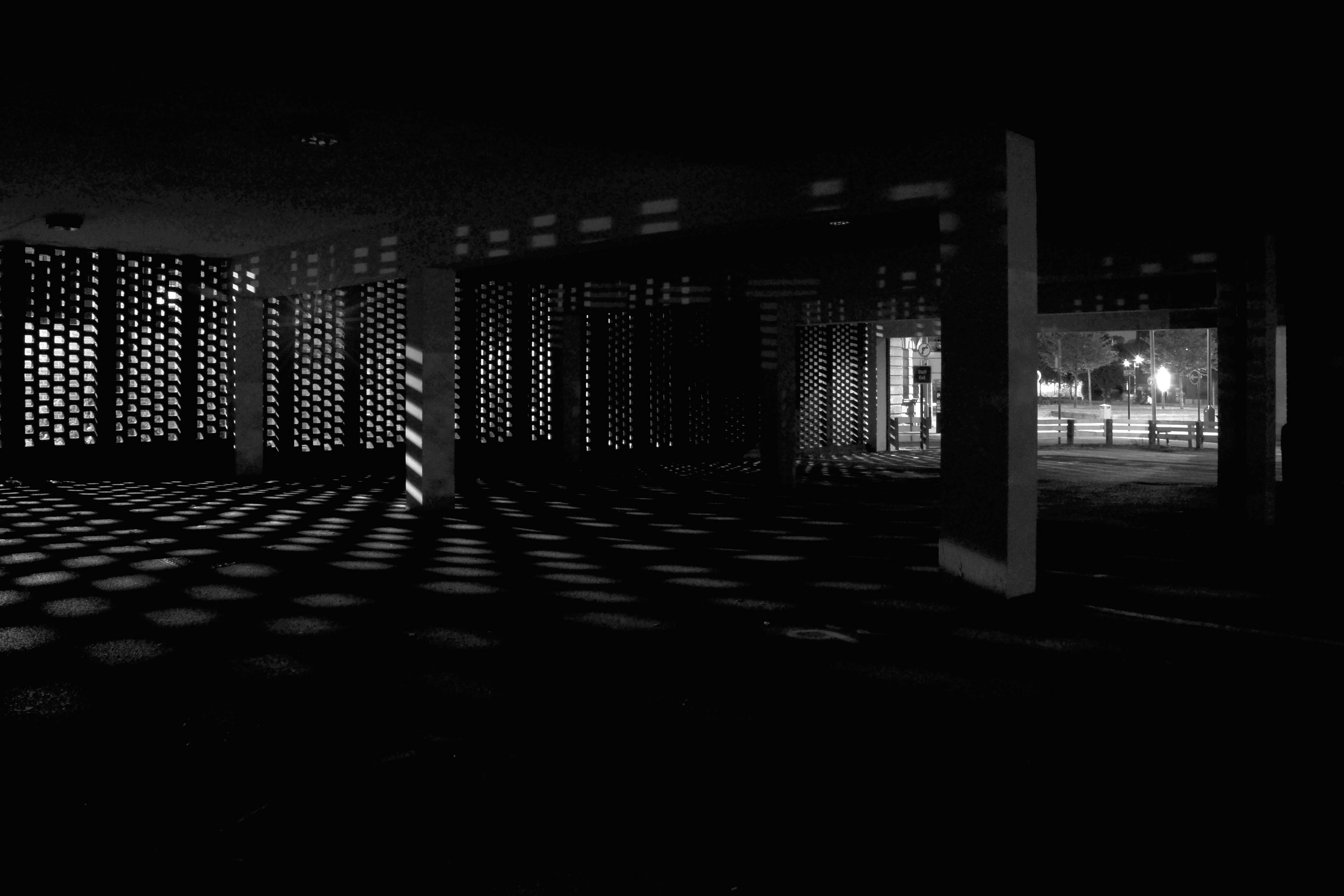
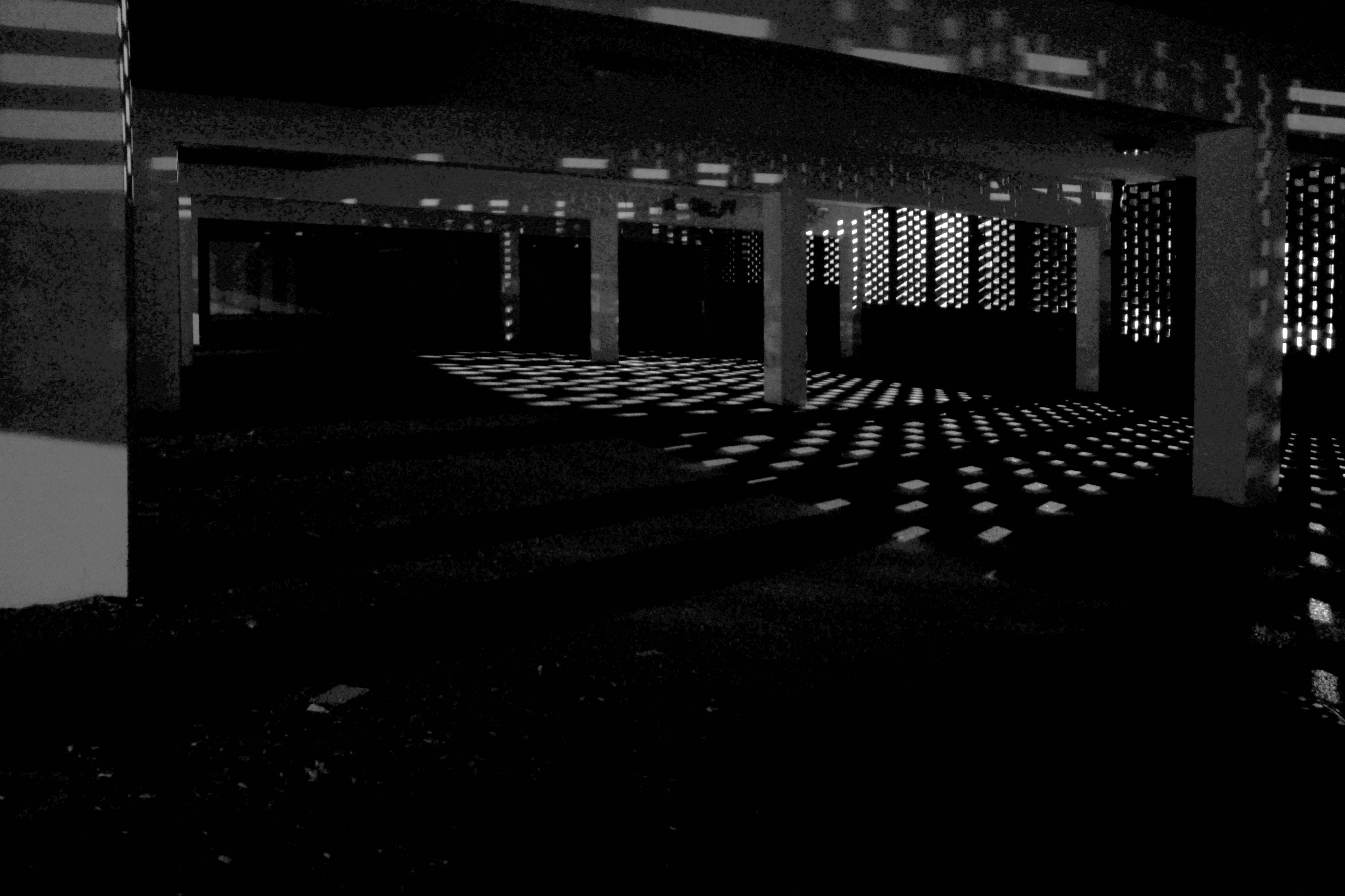
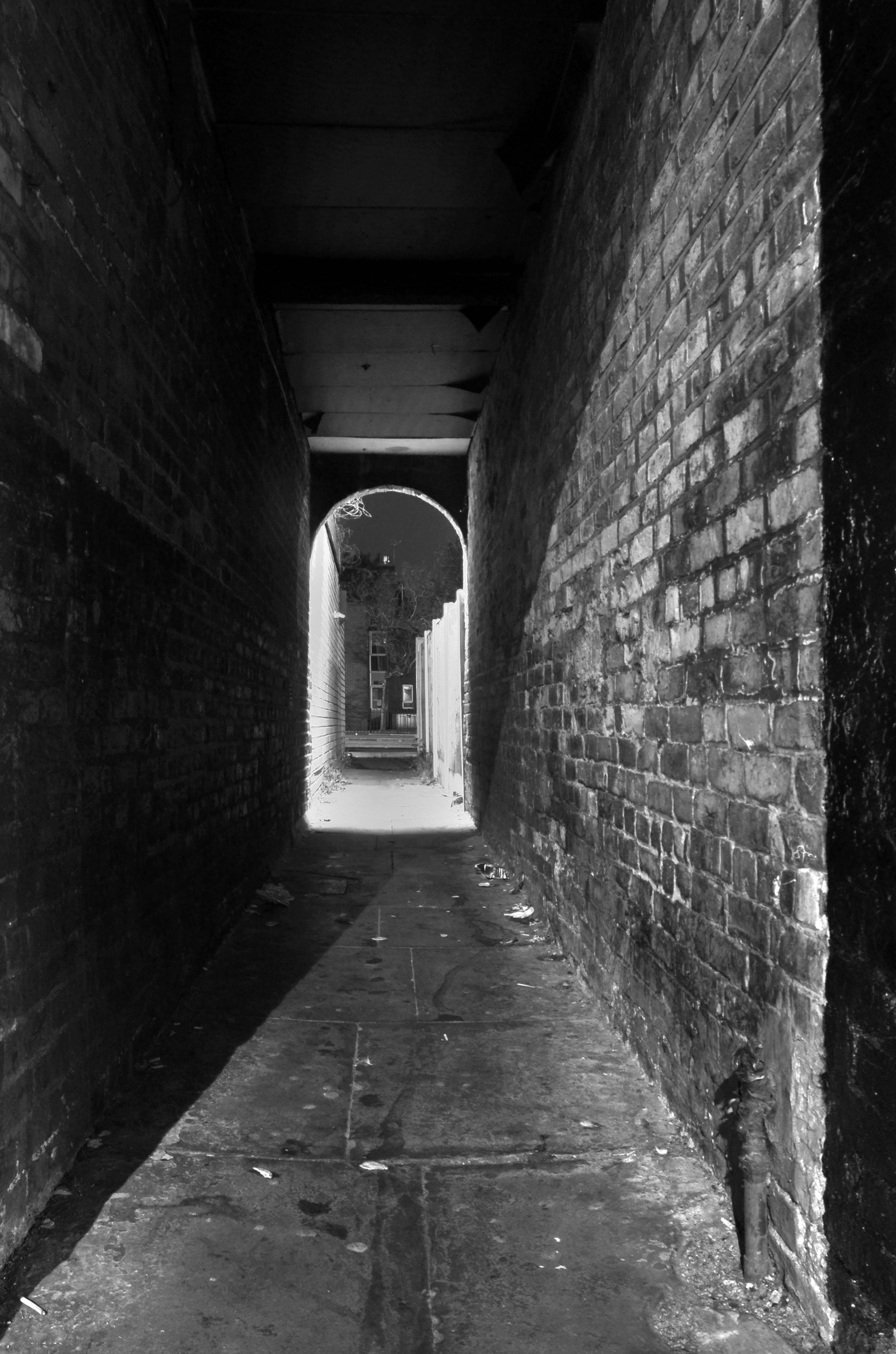
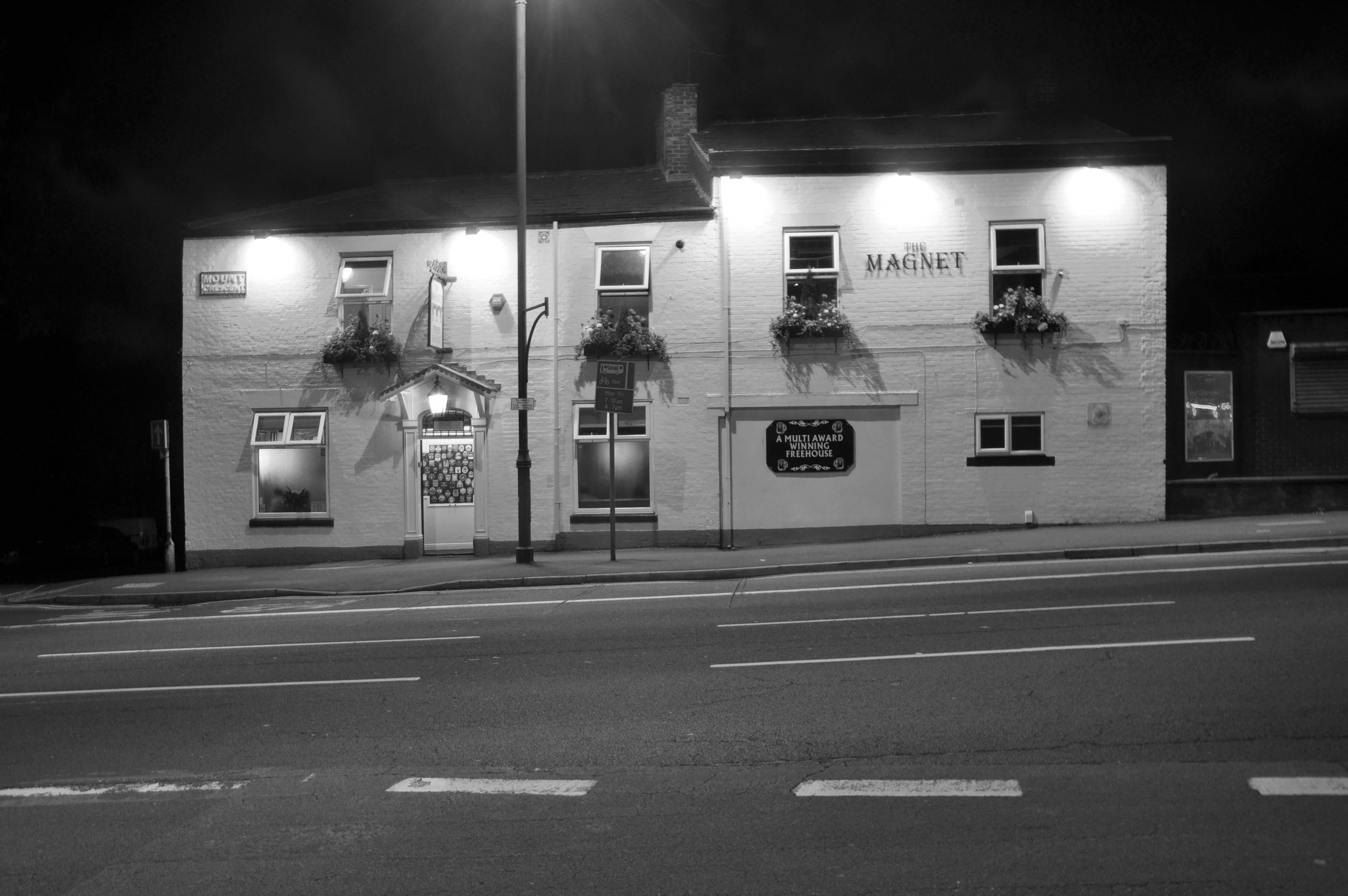











































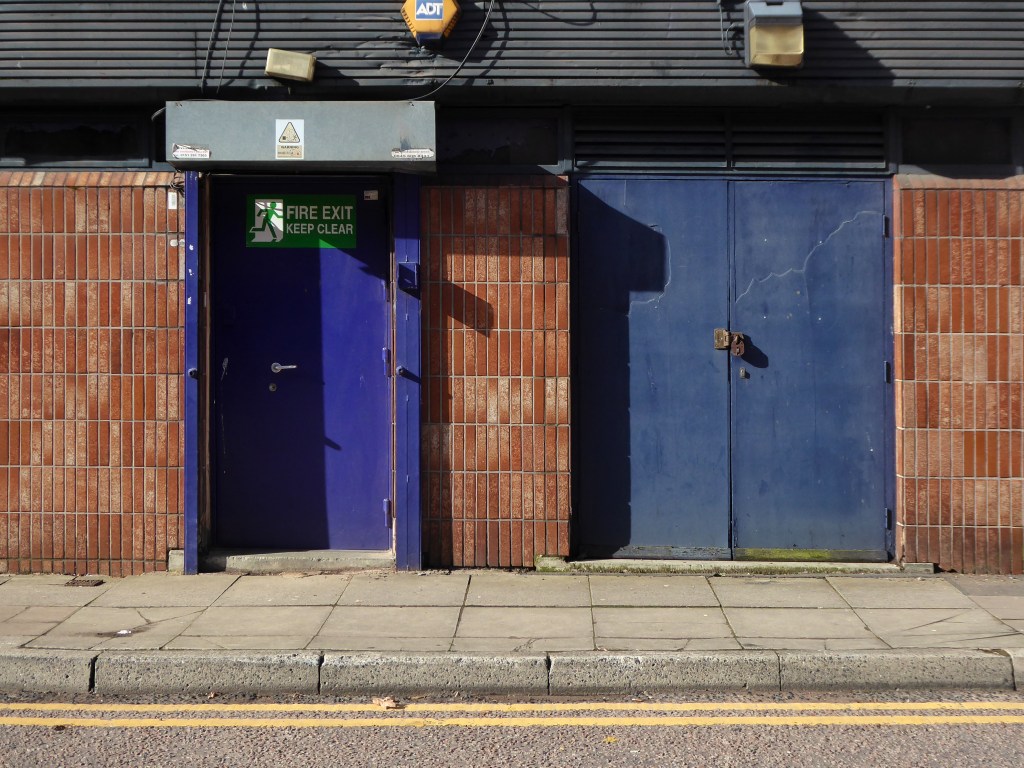
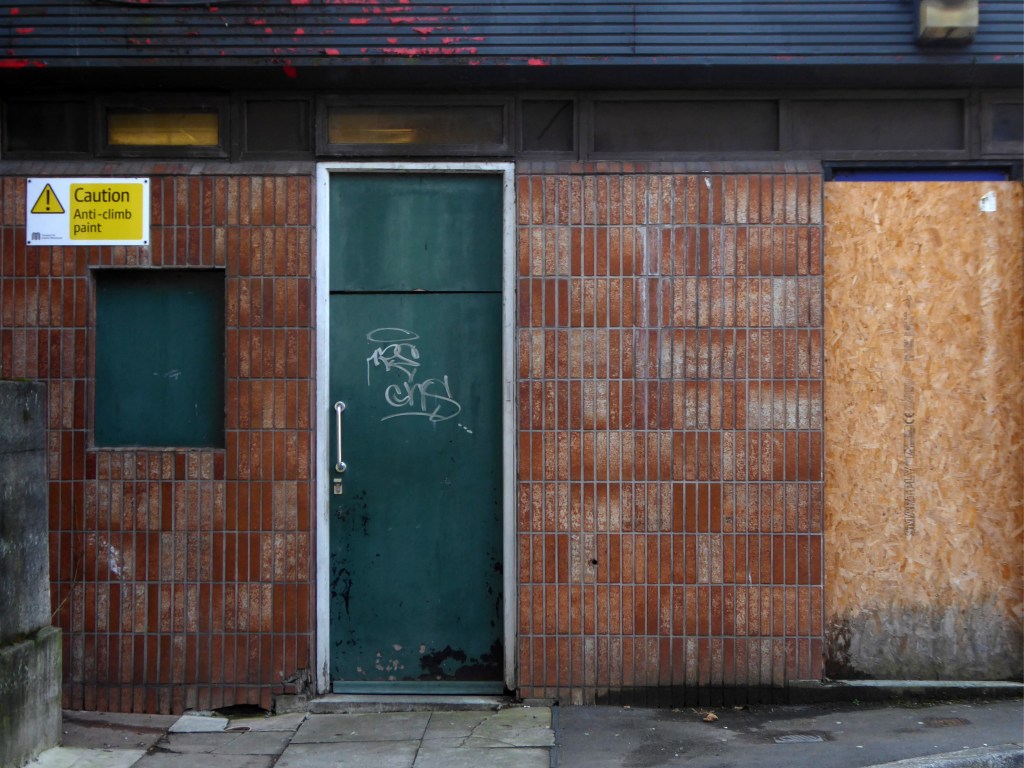
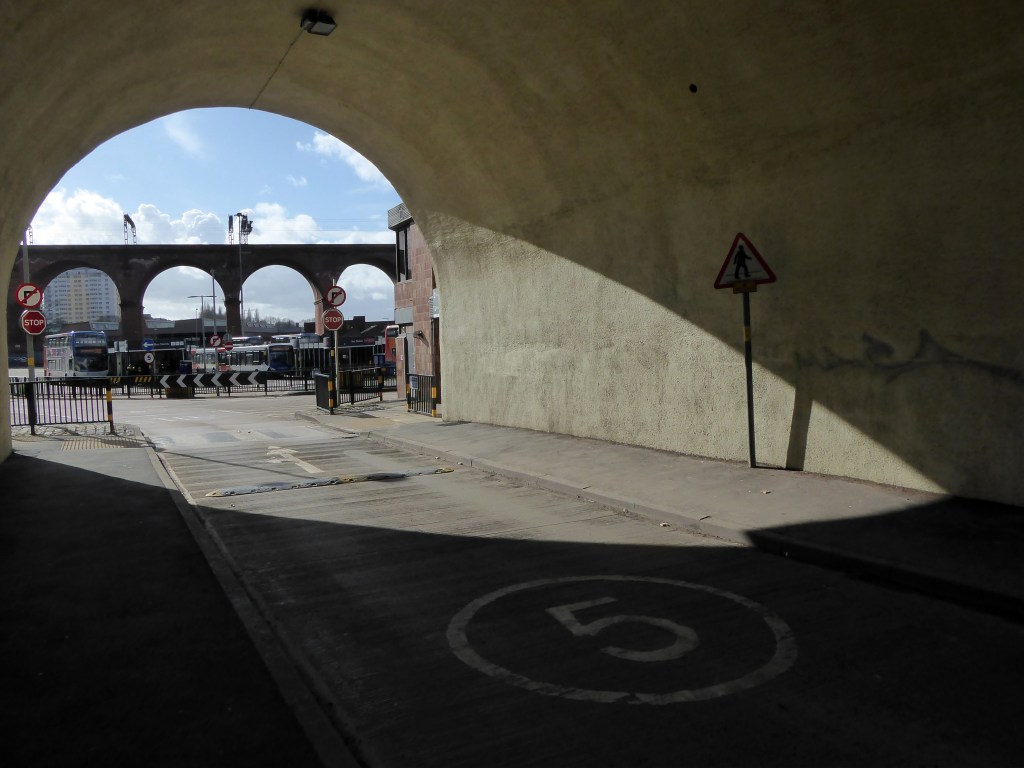
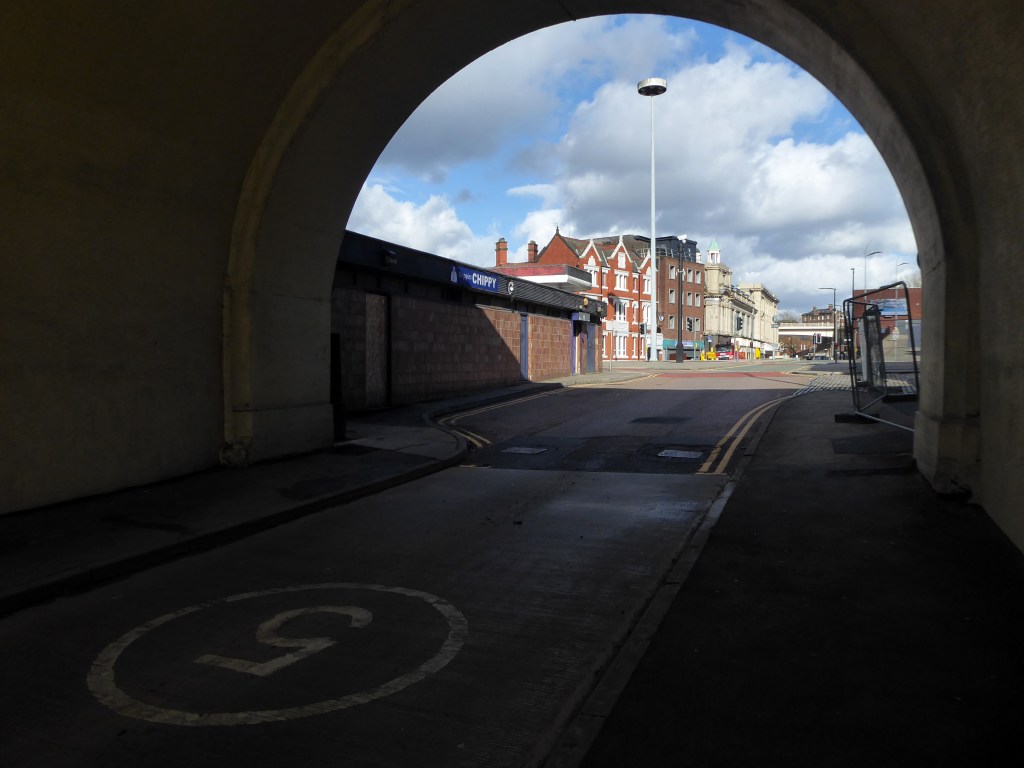
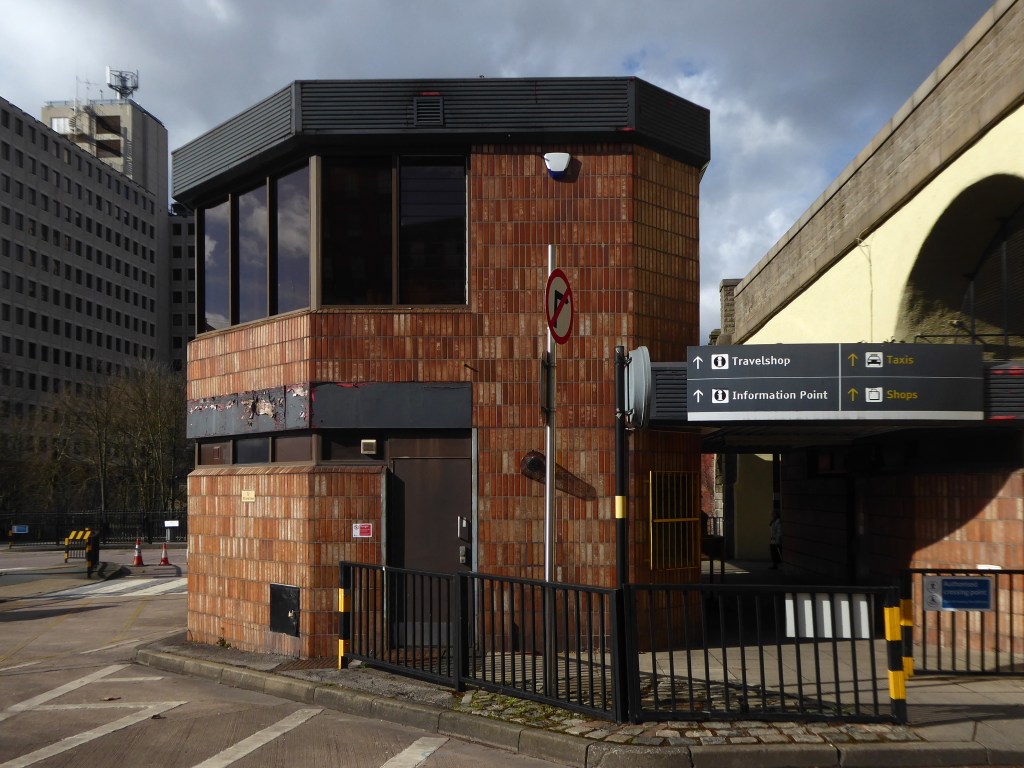
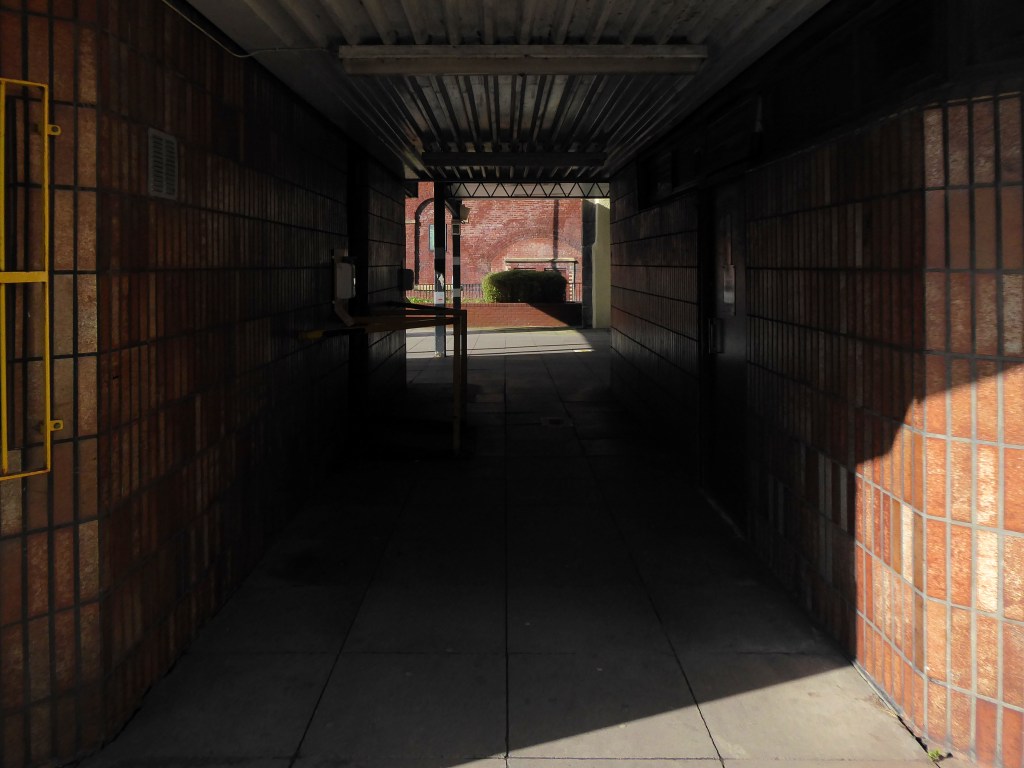
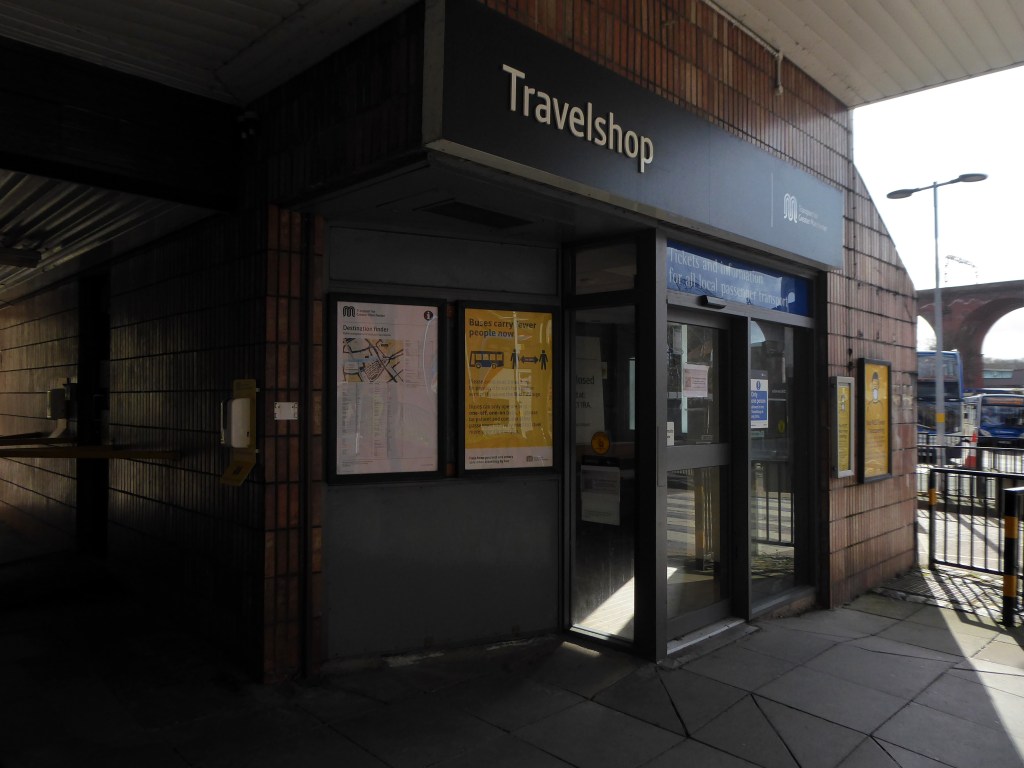

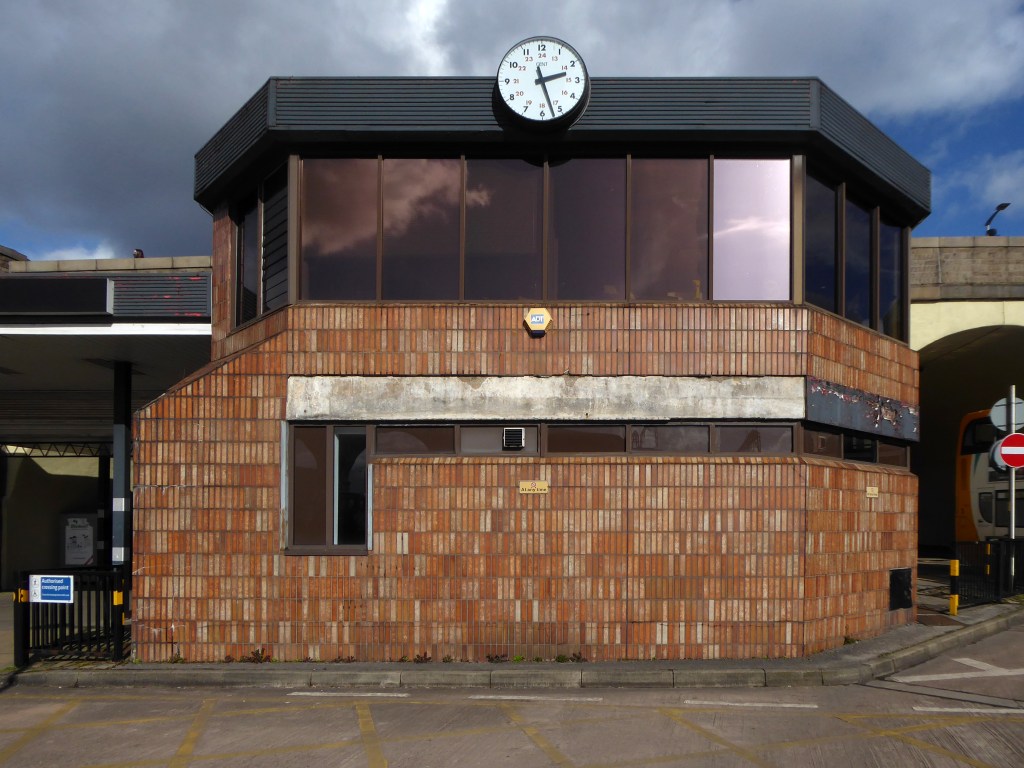

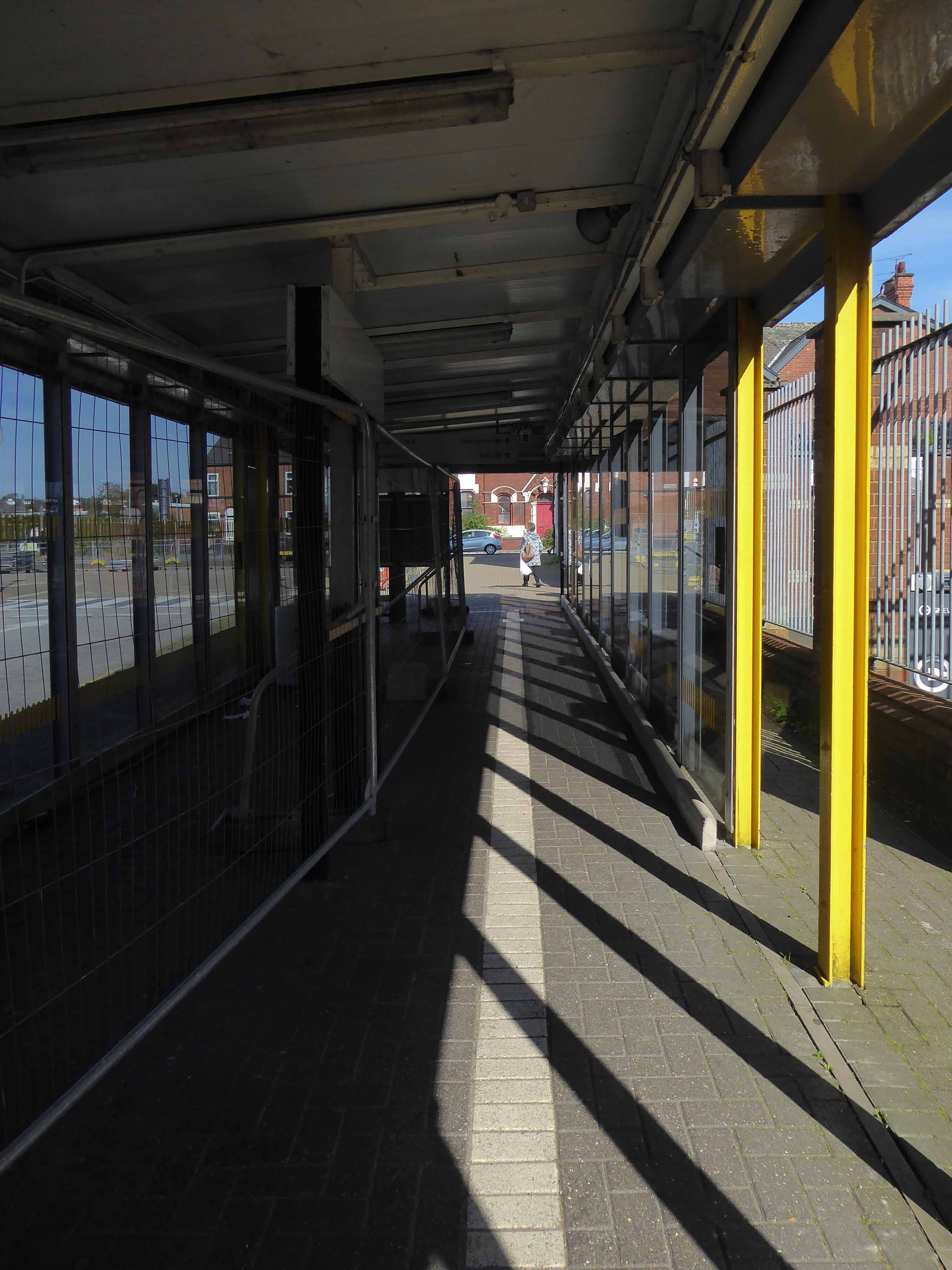
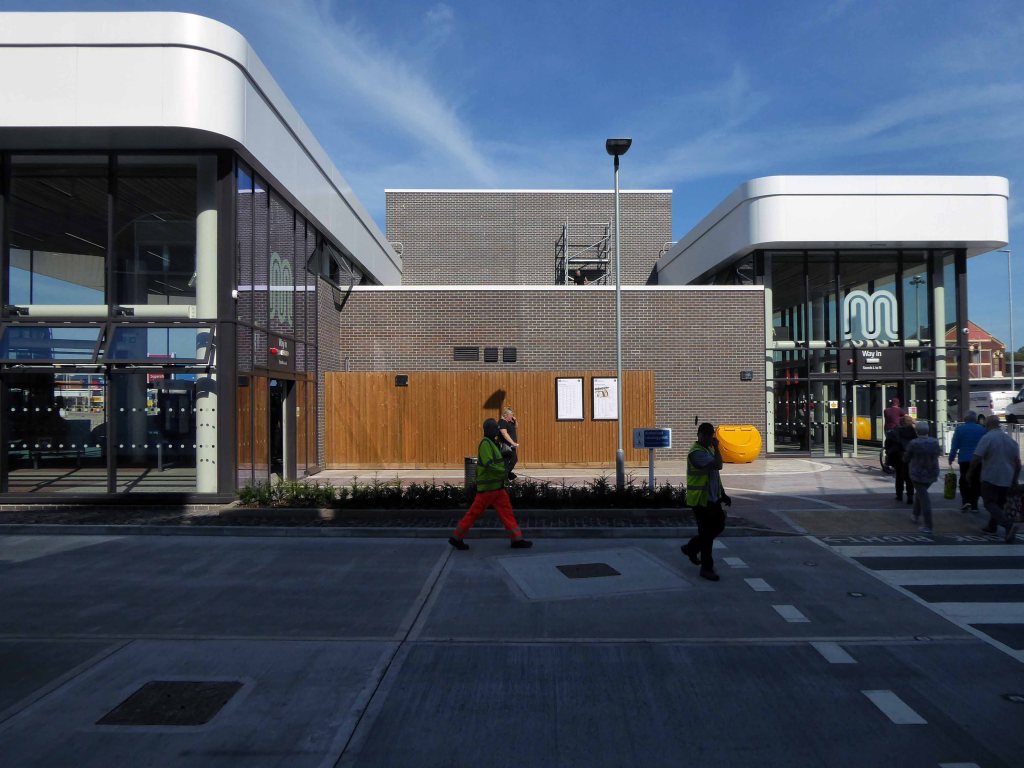
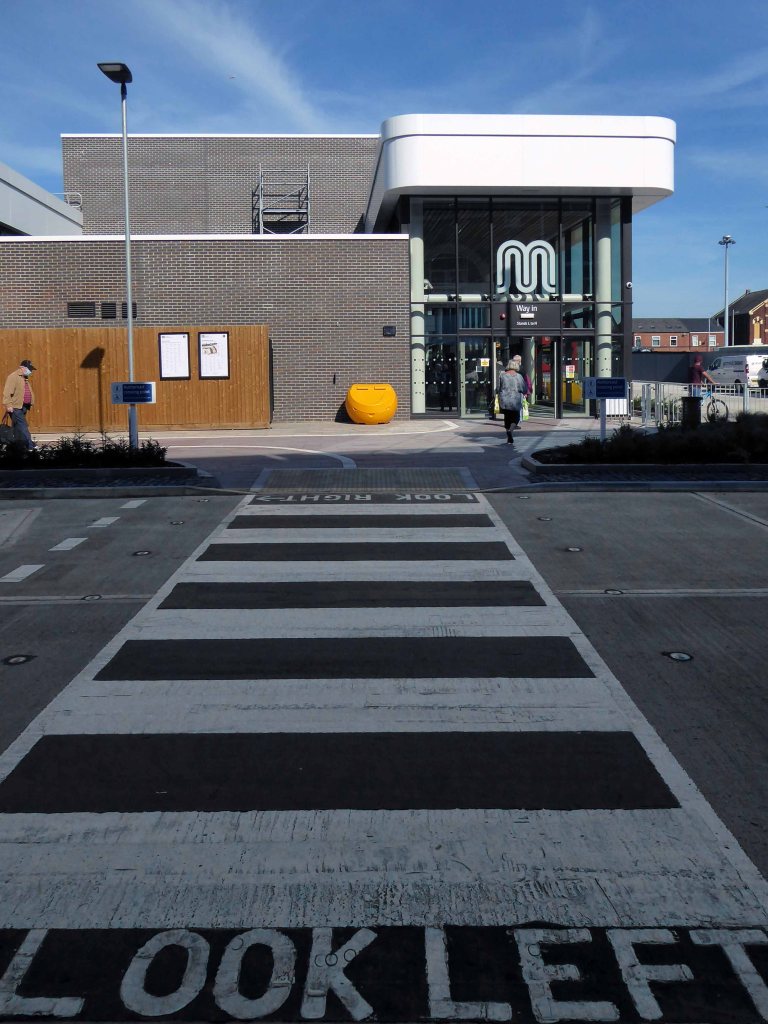

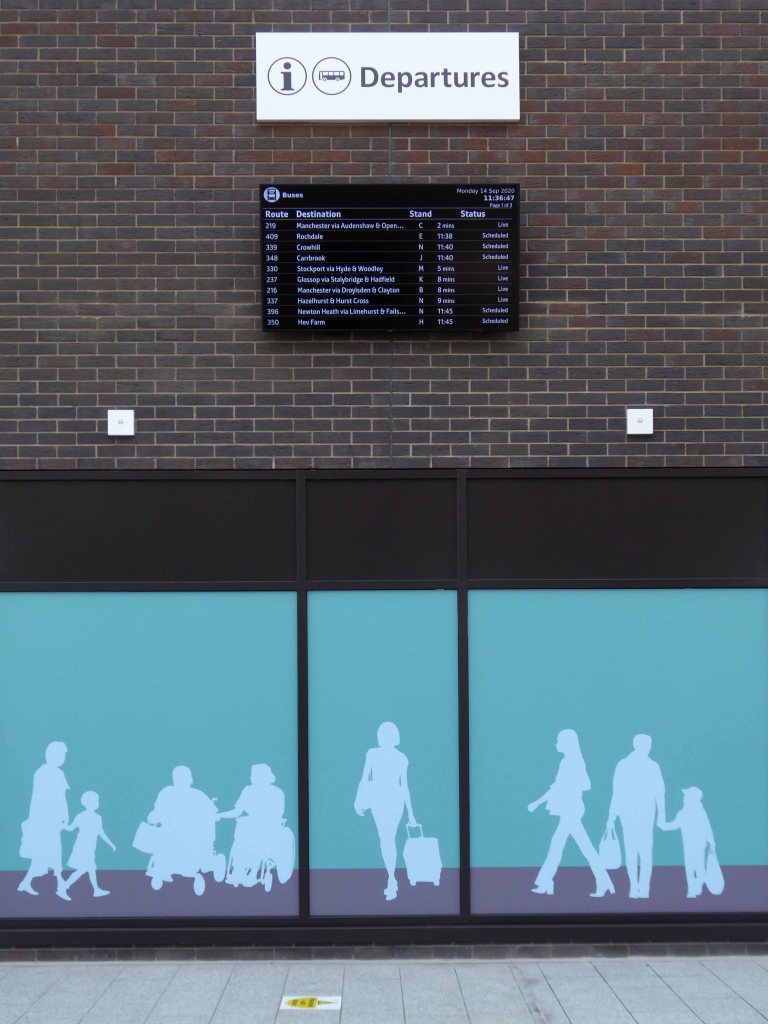
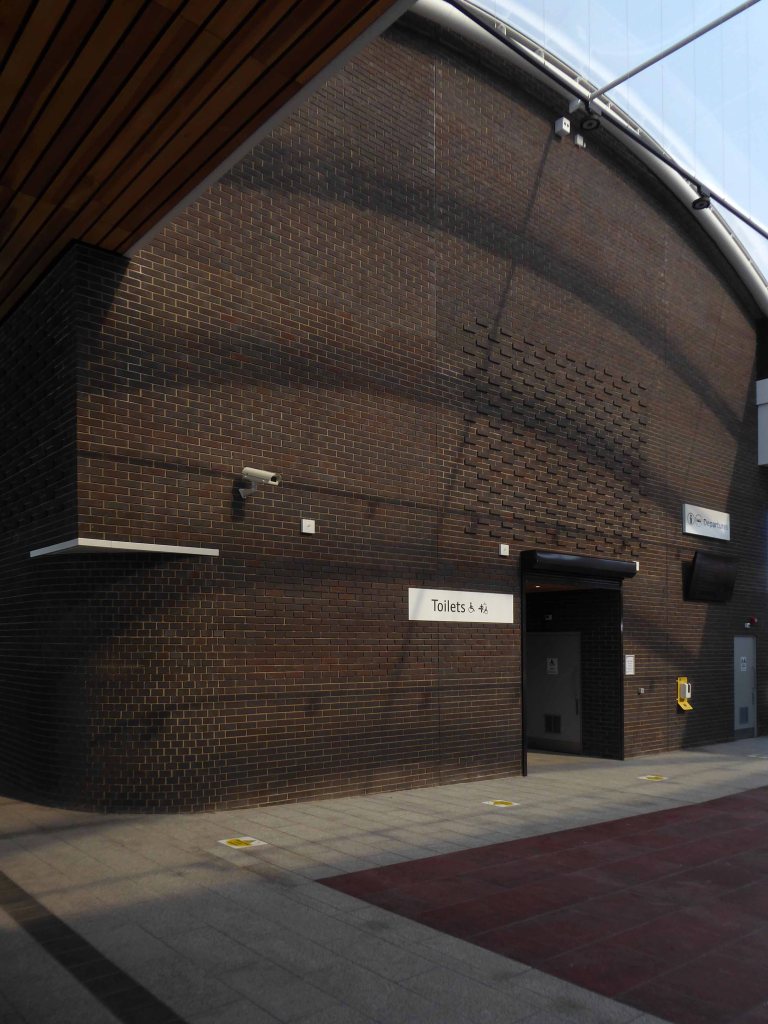
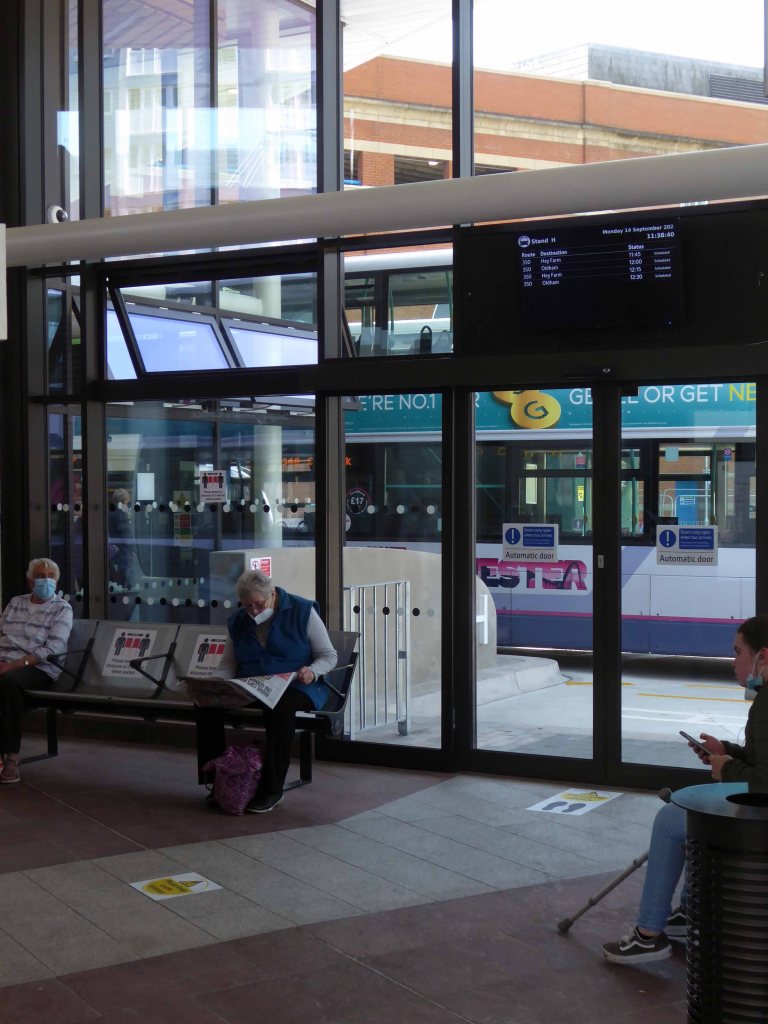
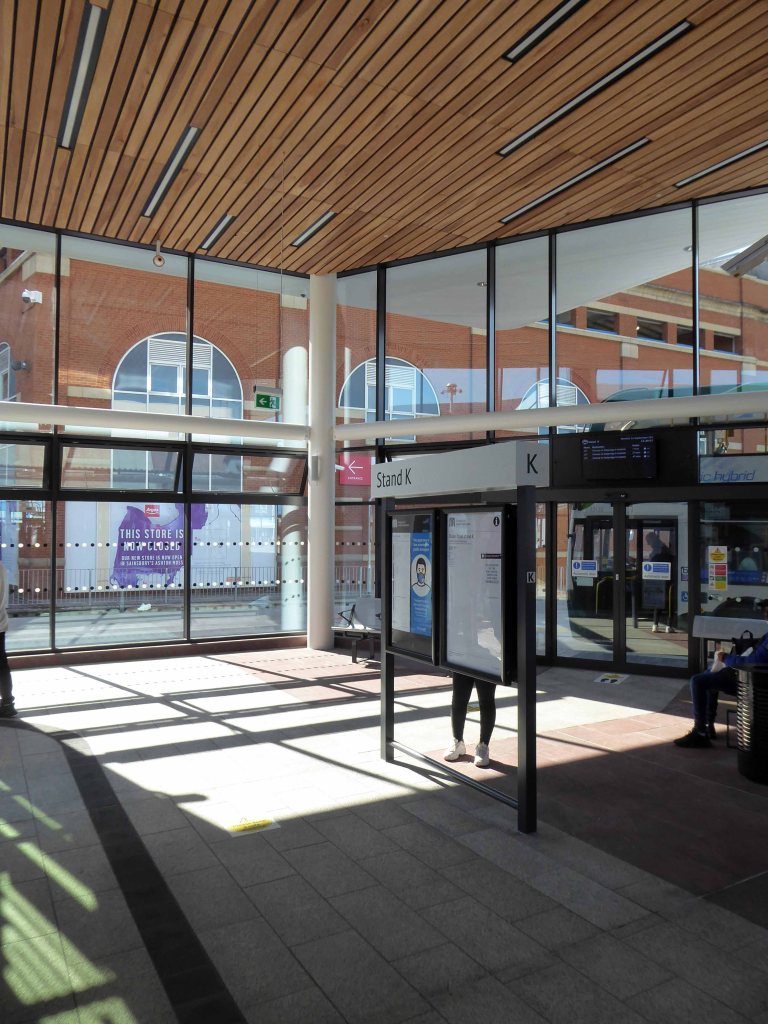












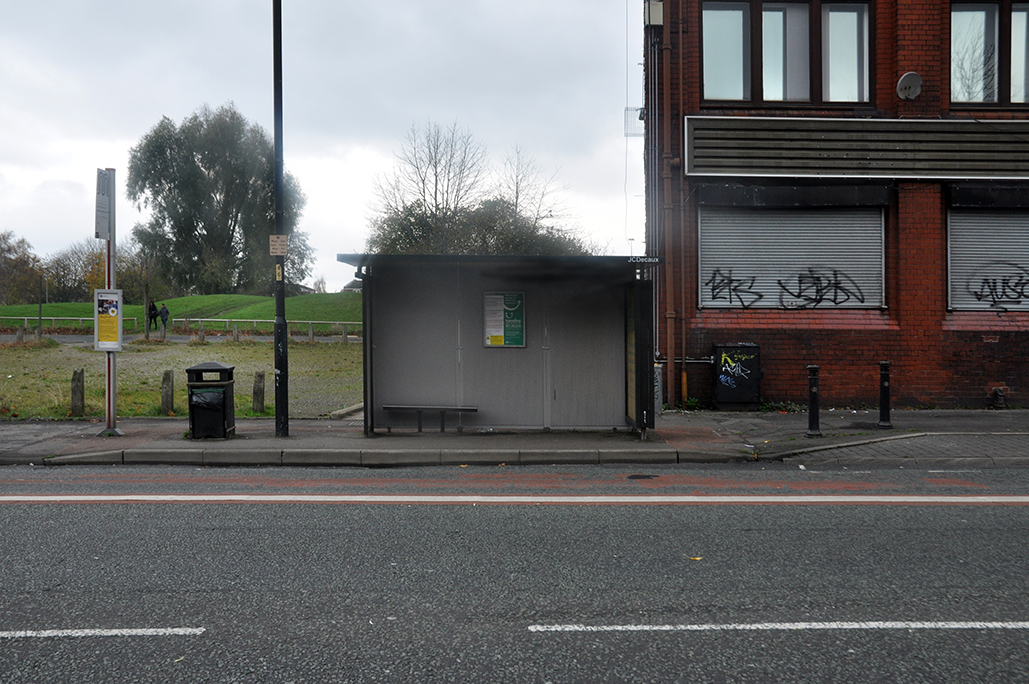
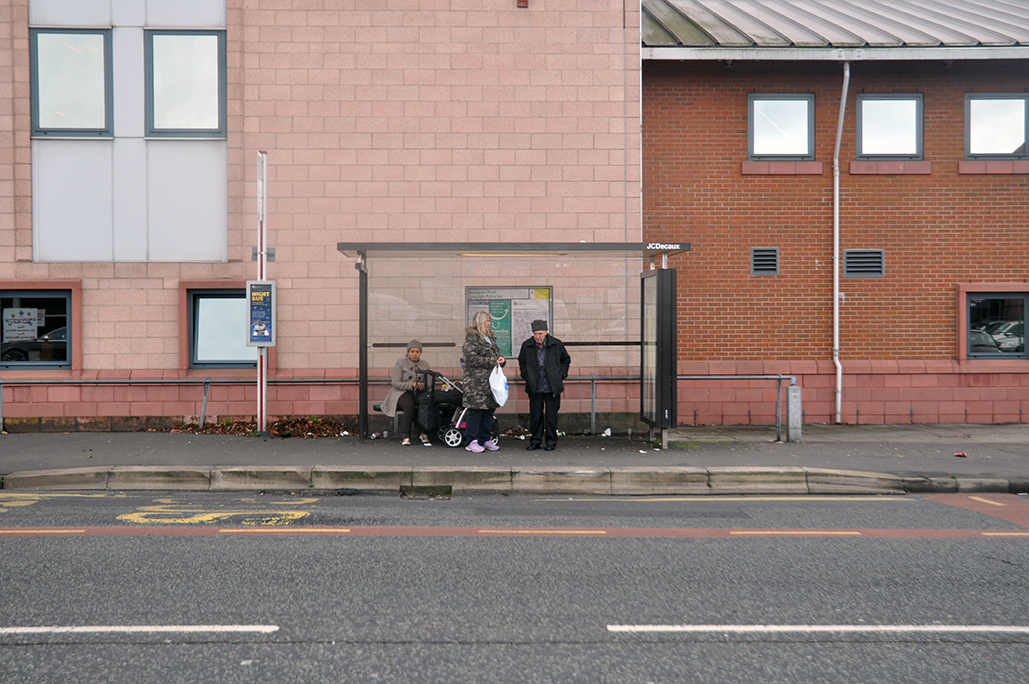
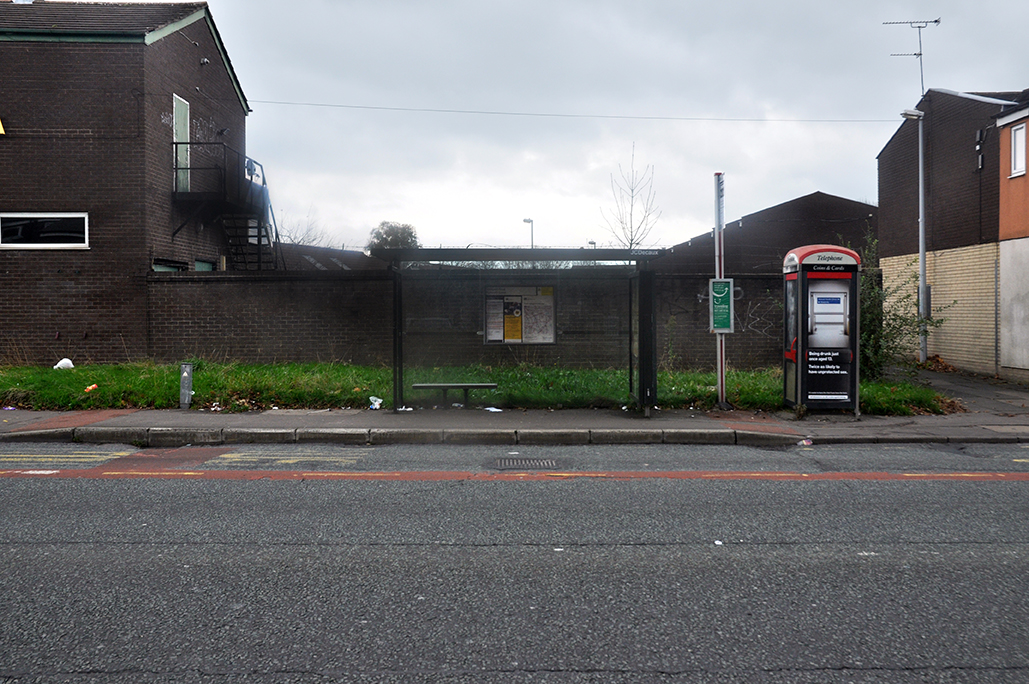
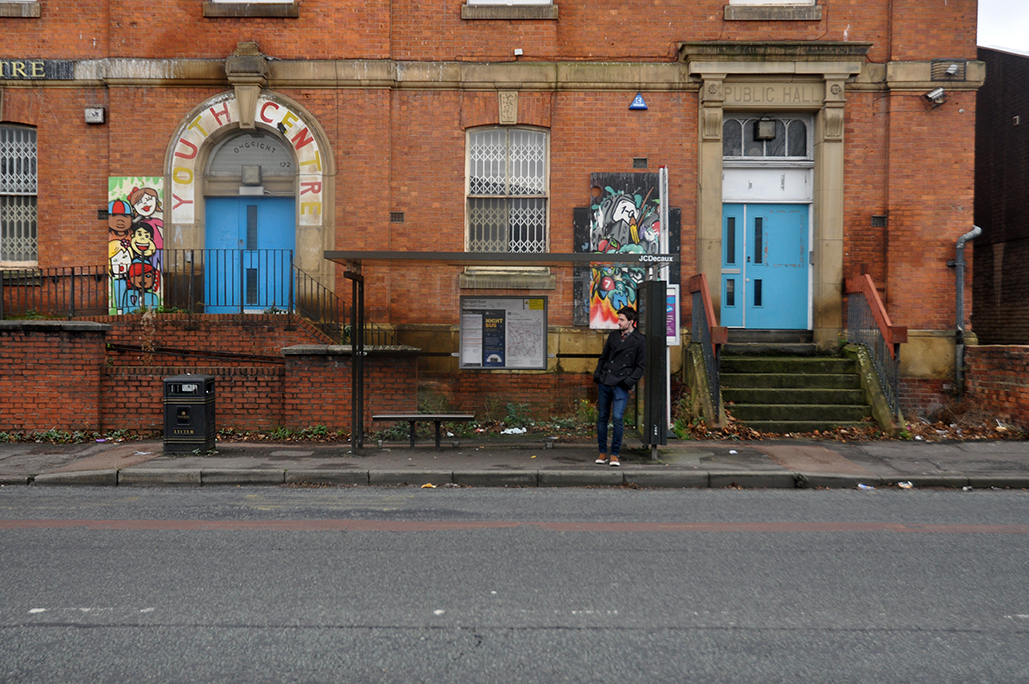
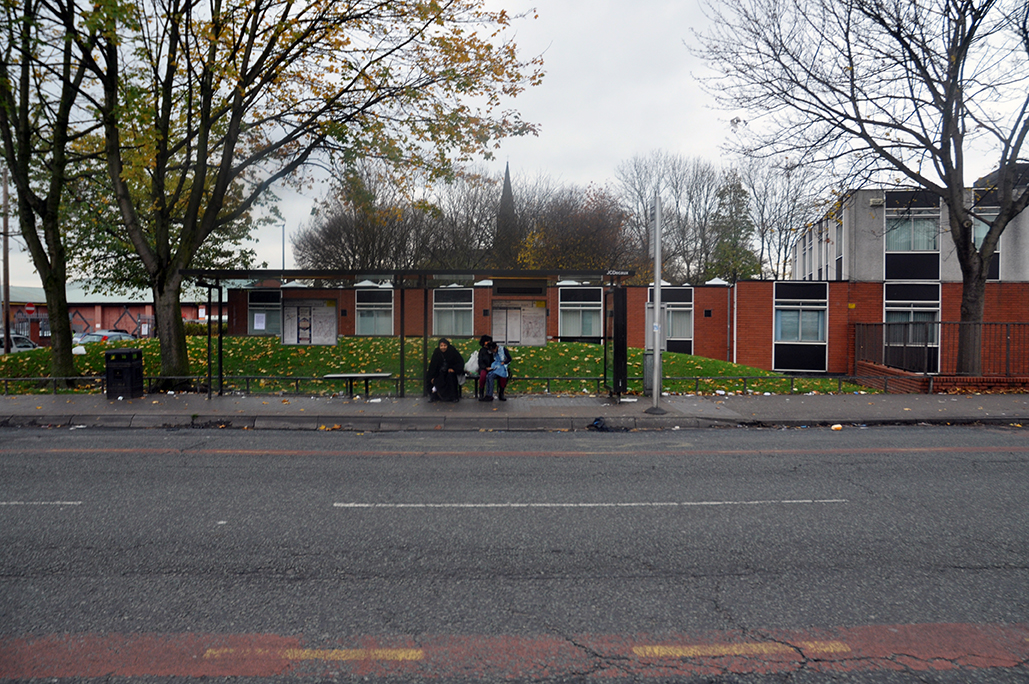
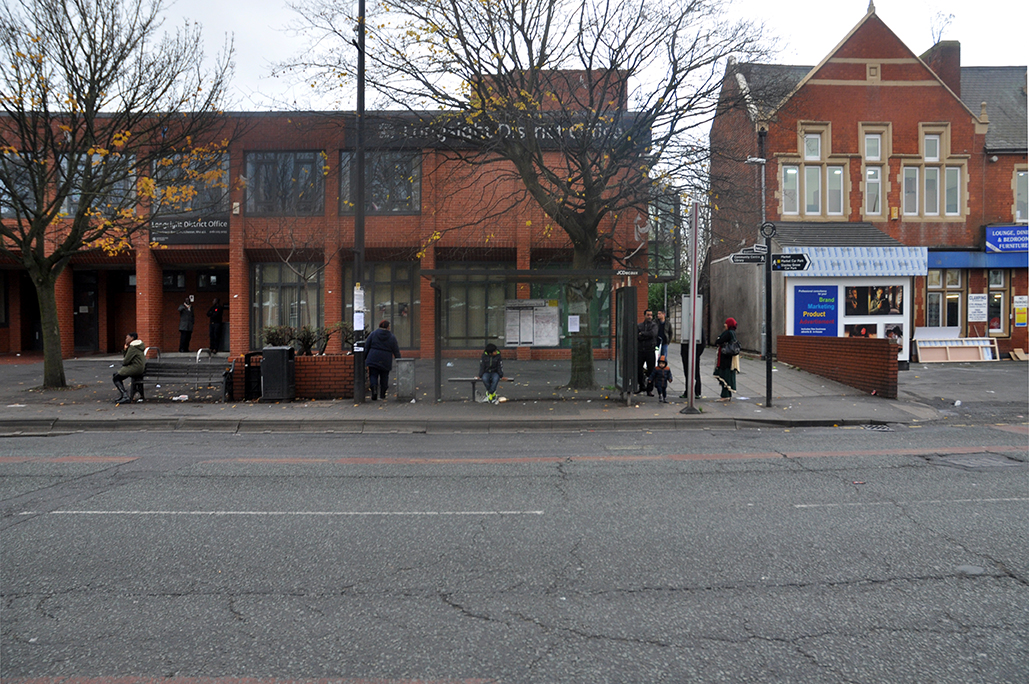
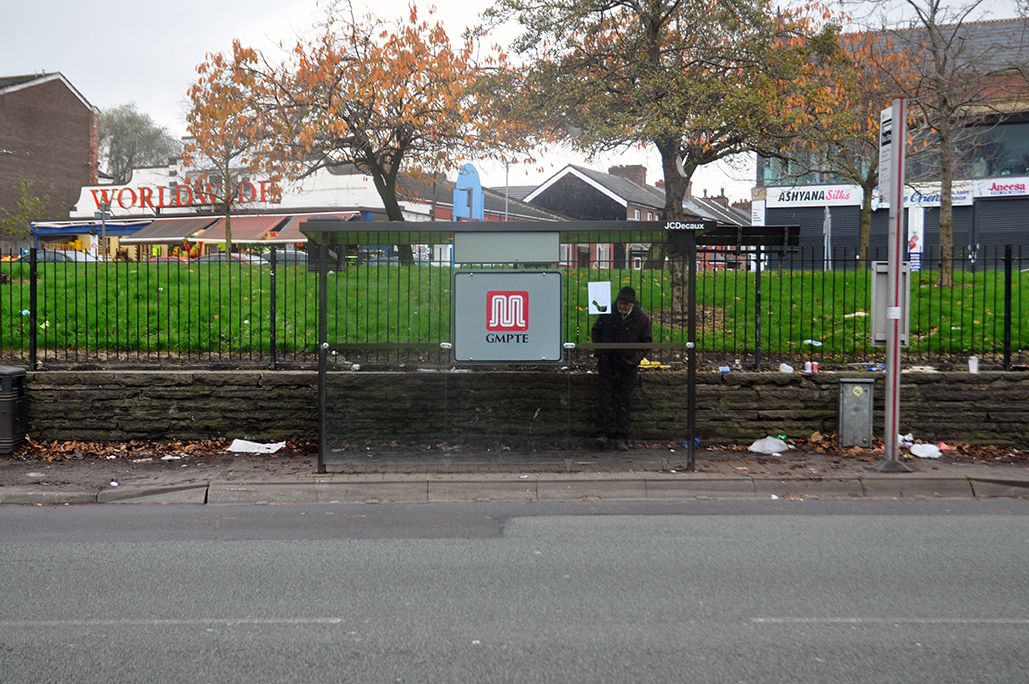
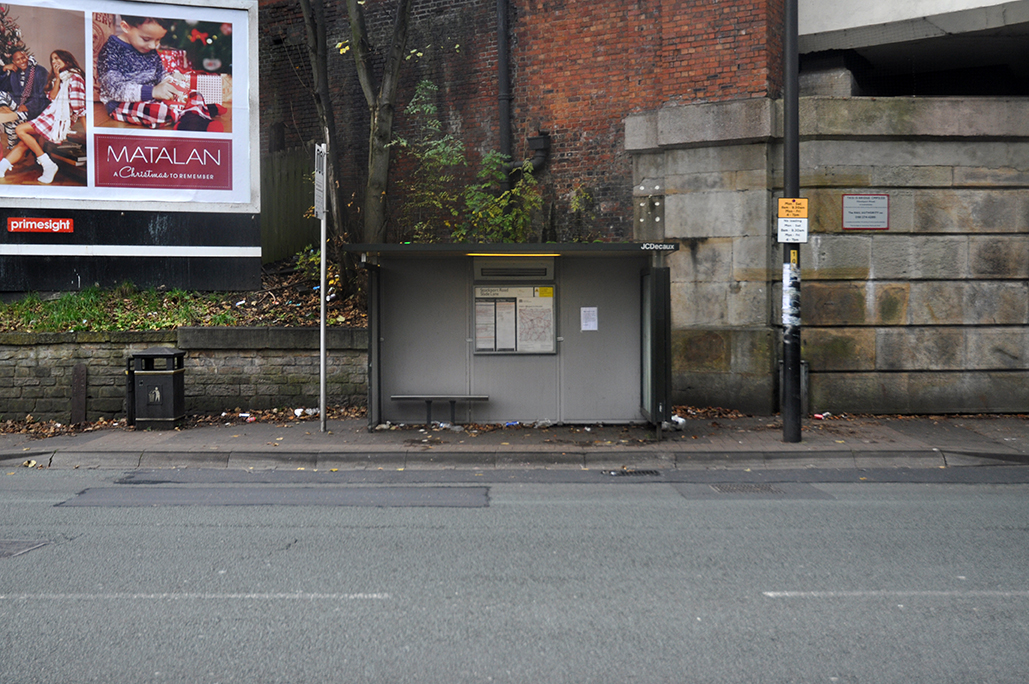



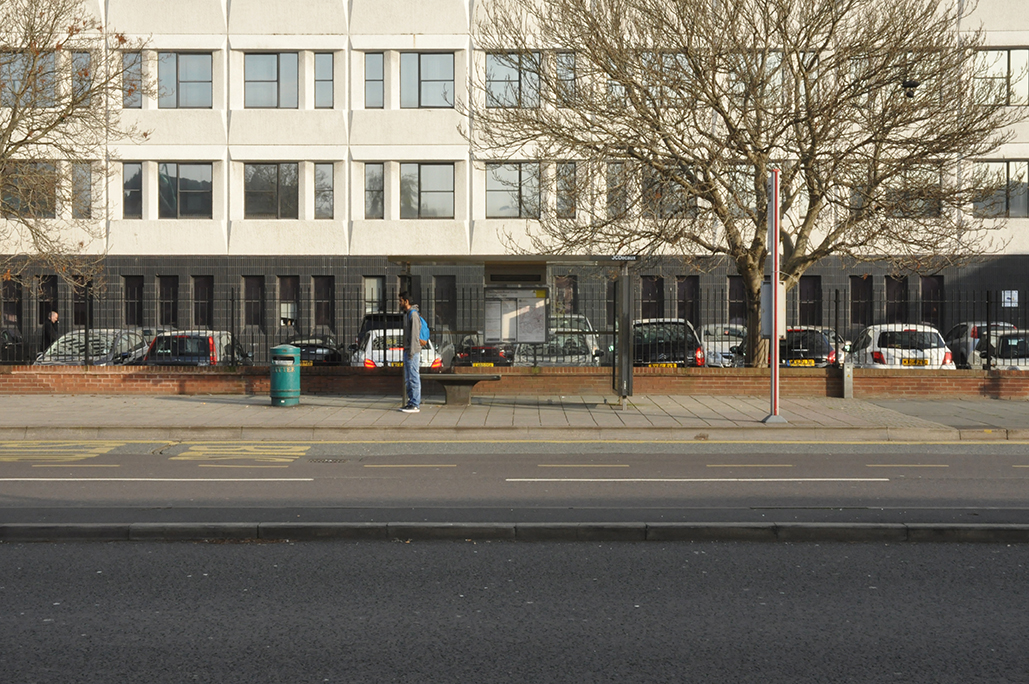
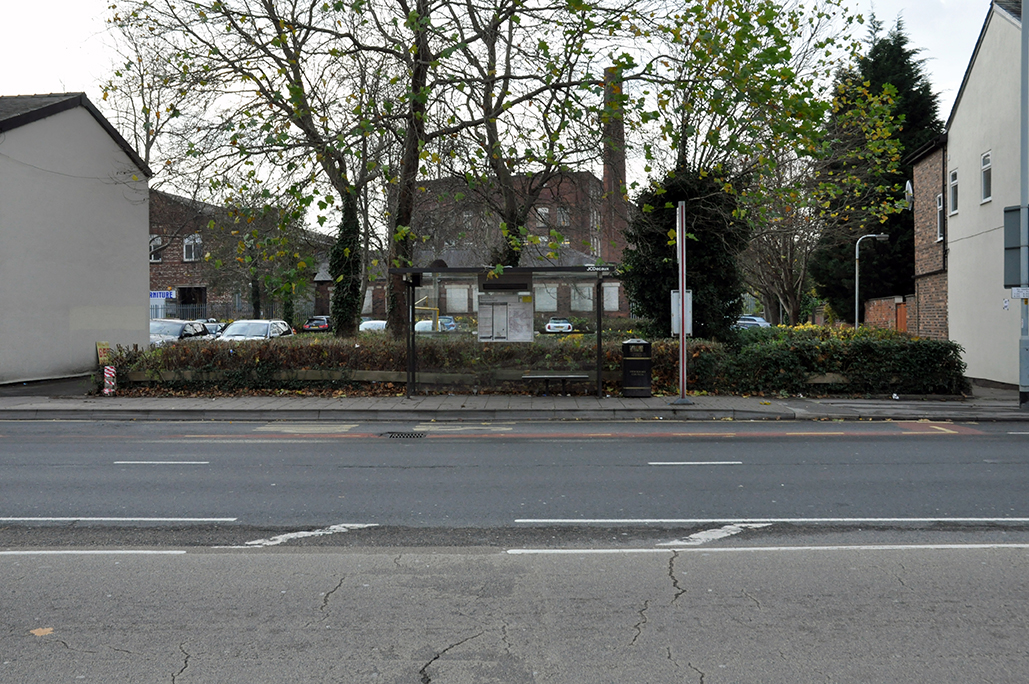
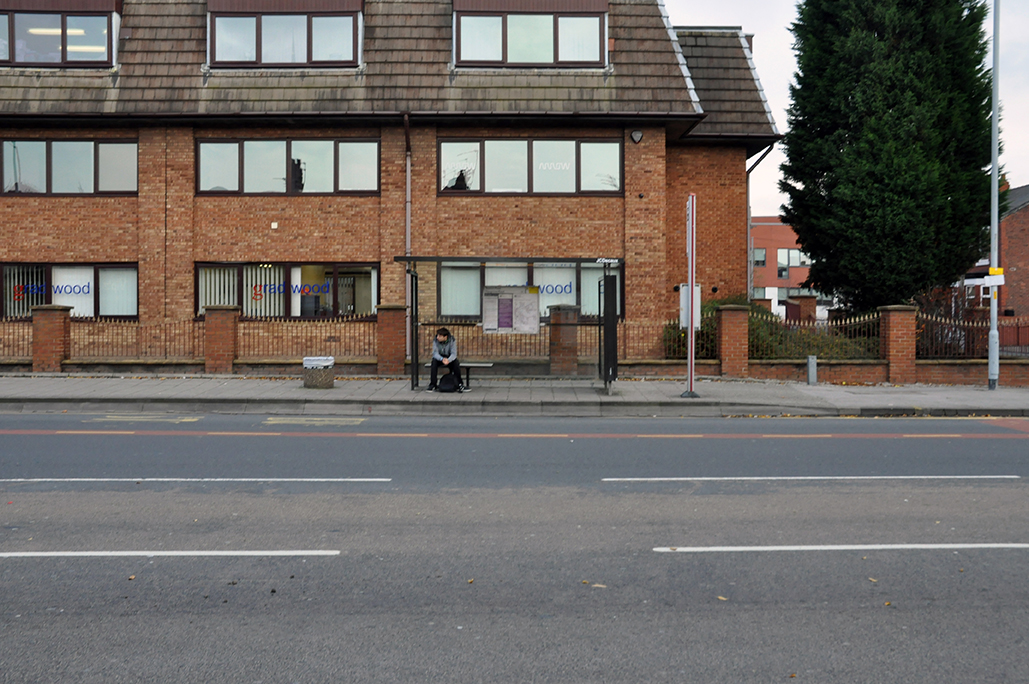
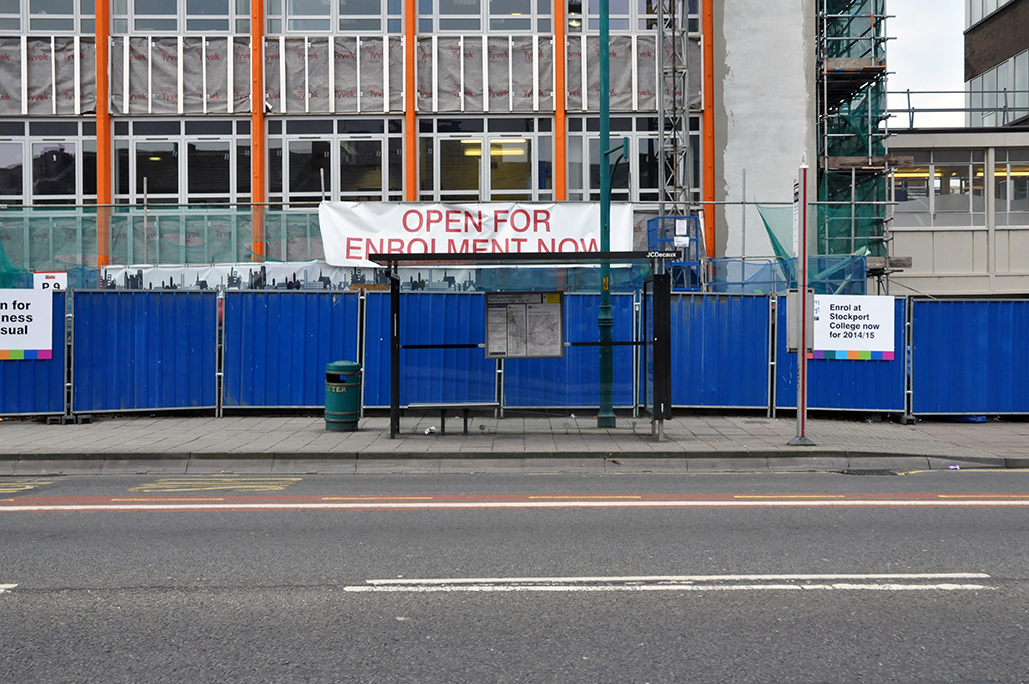





 Modern Mooch