The concrete and the clay beneath my feet Begins to crumble But love will never die
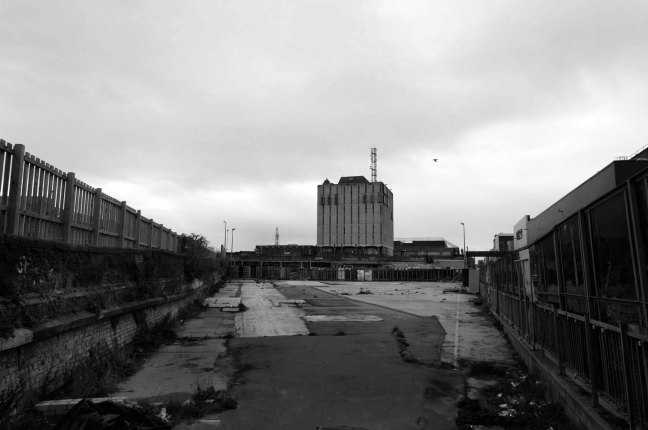
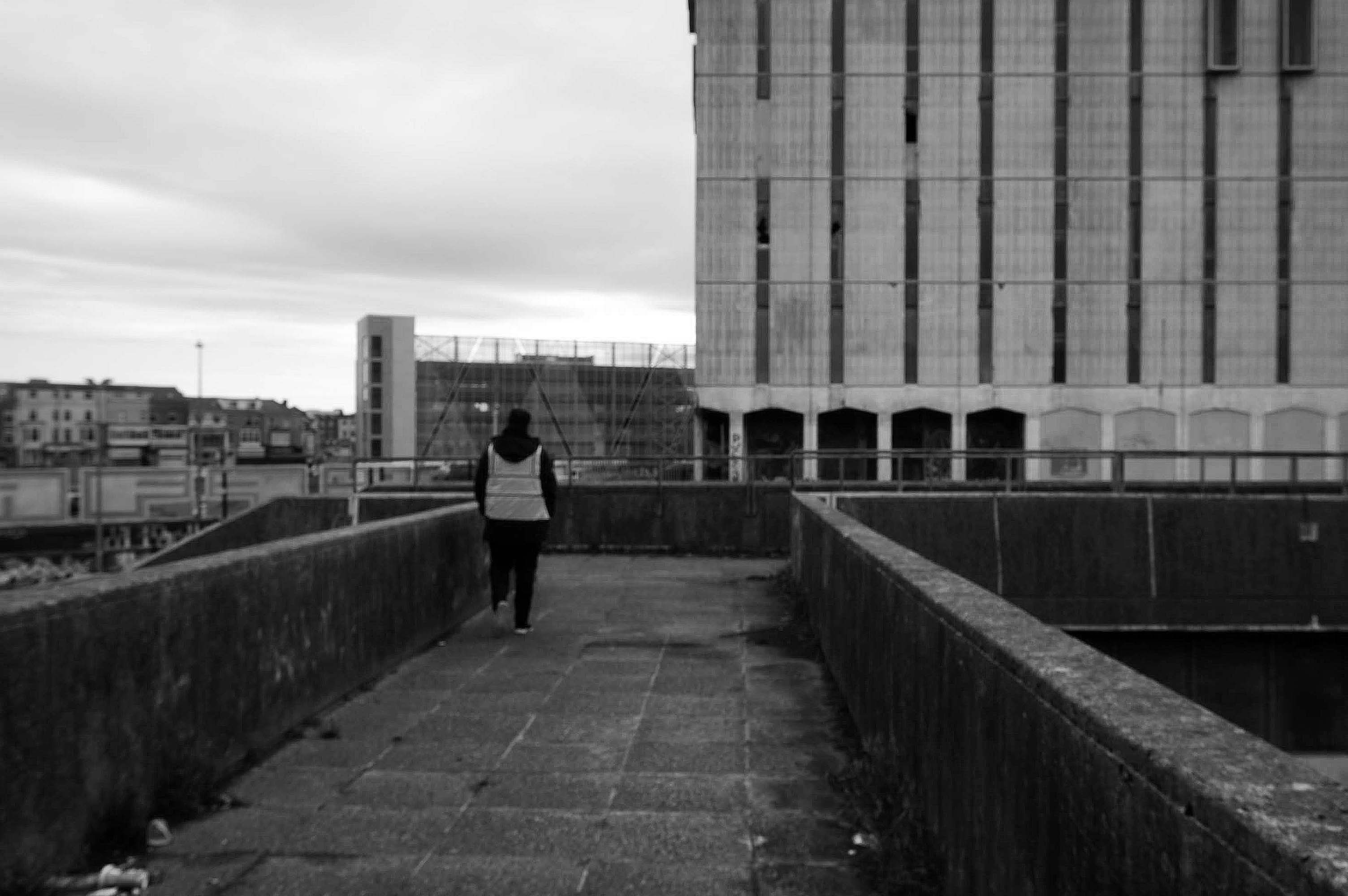
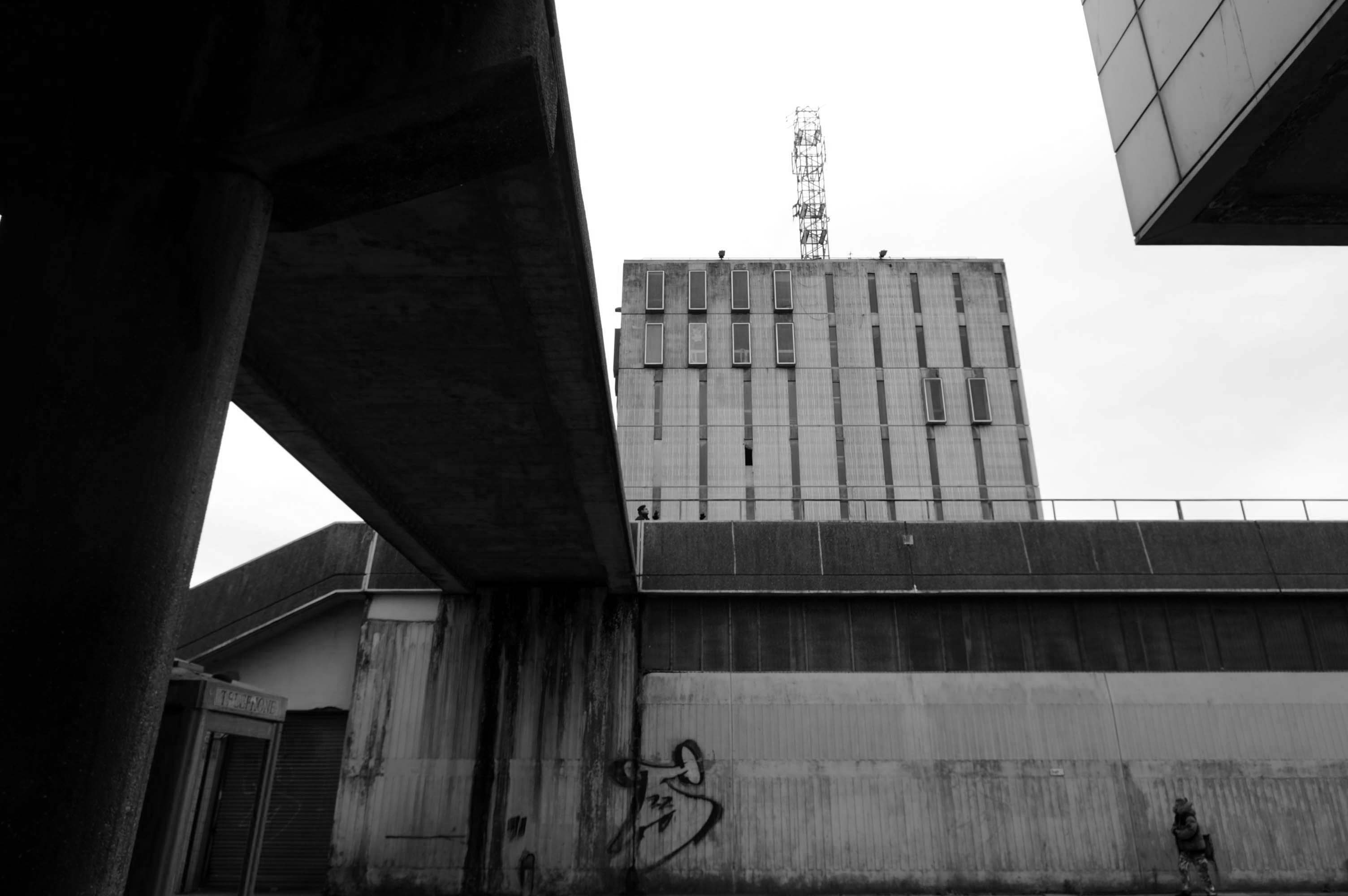
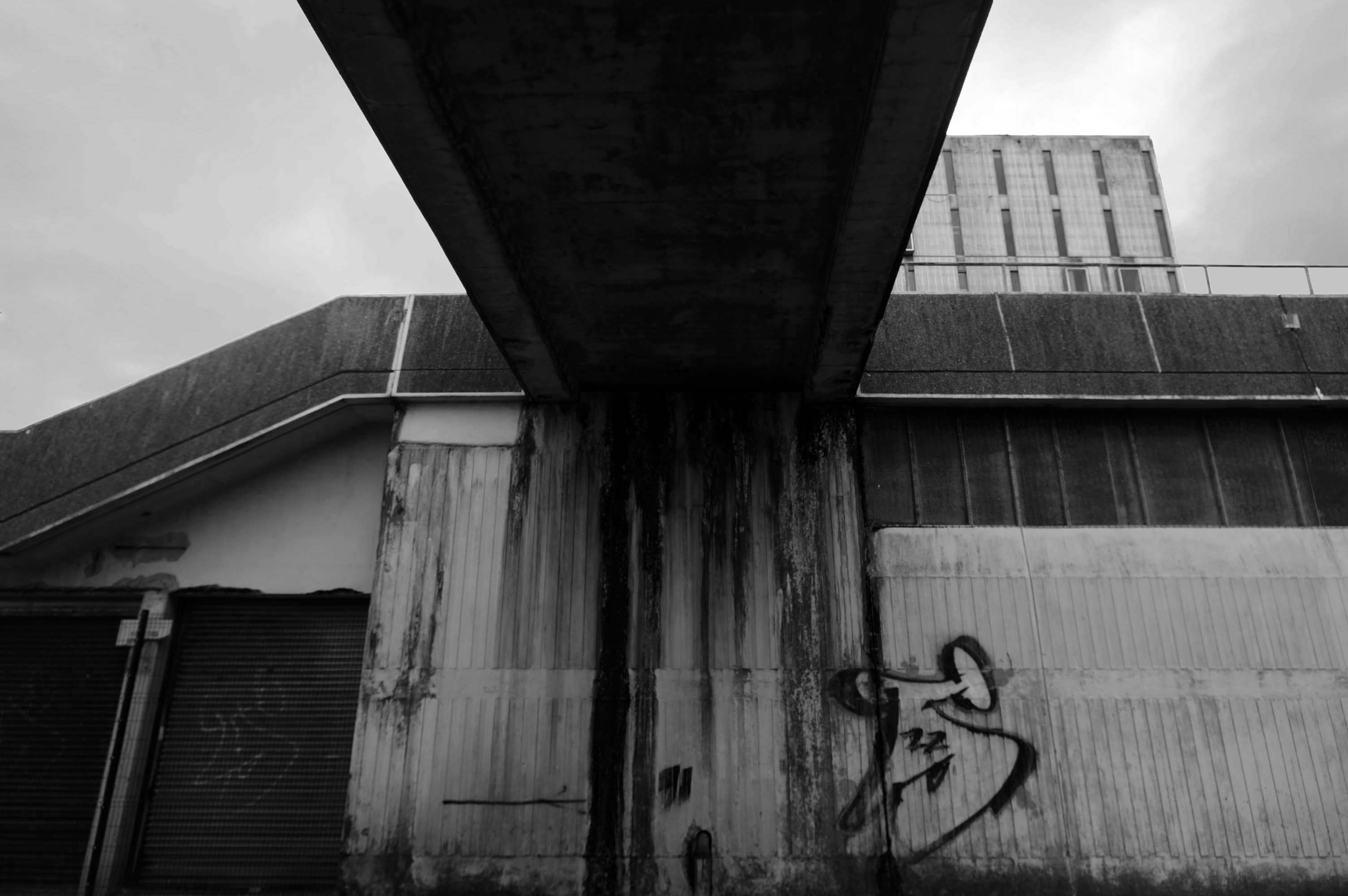
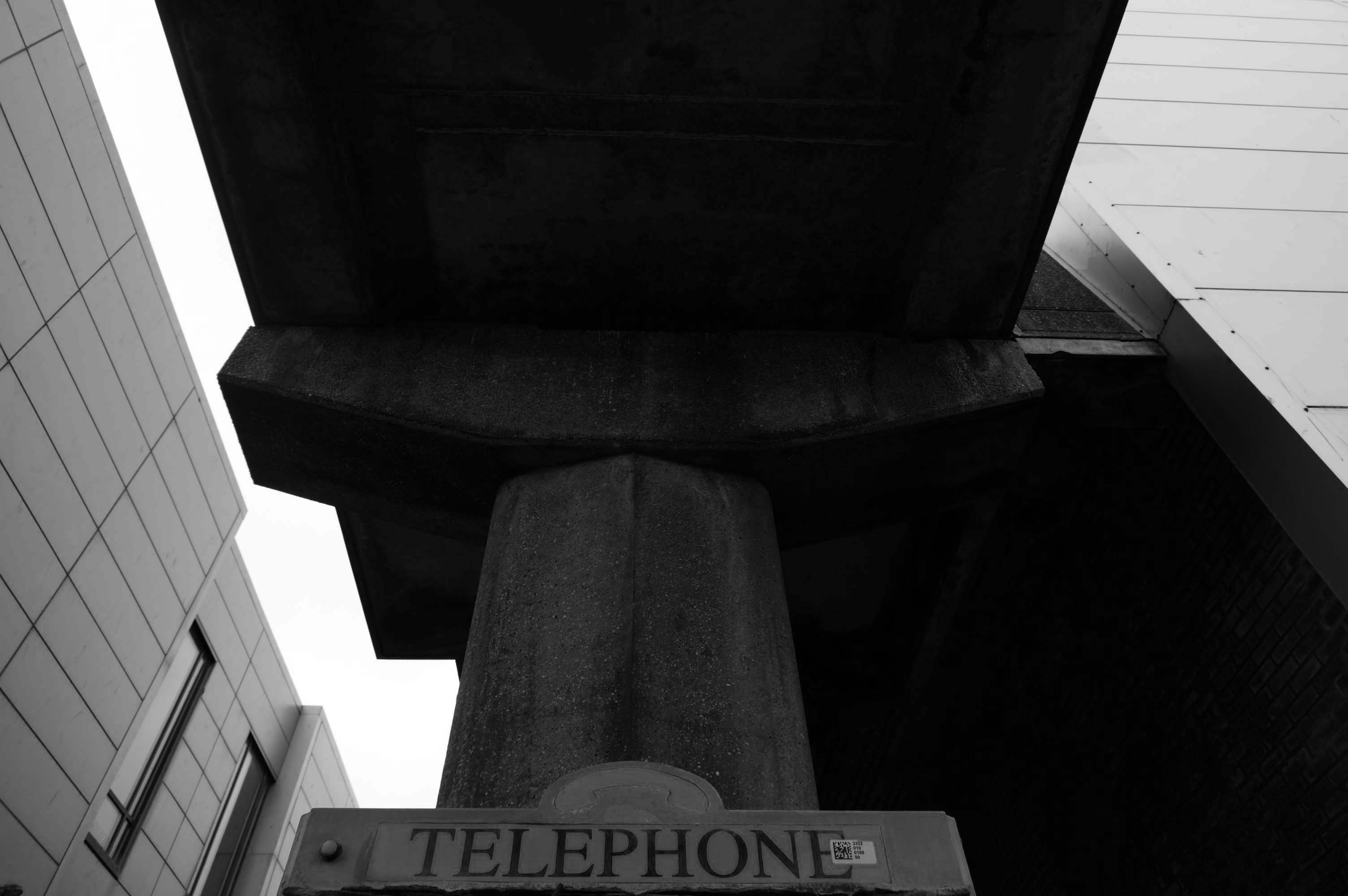
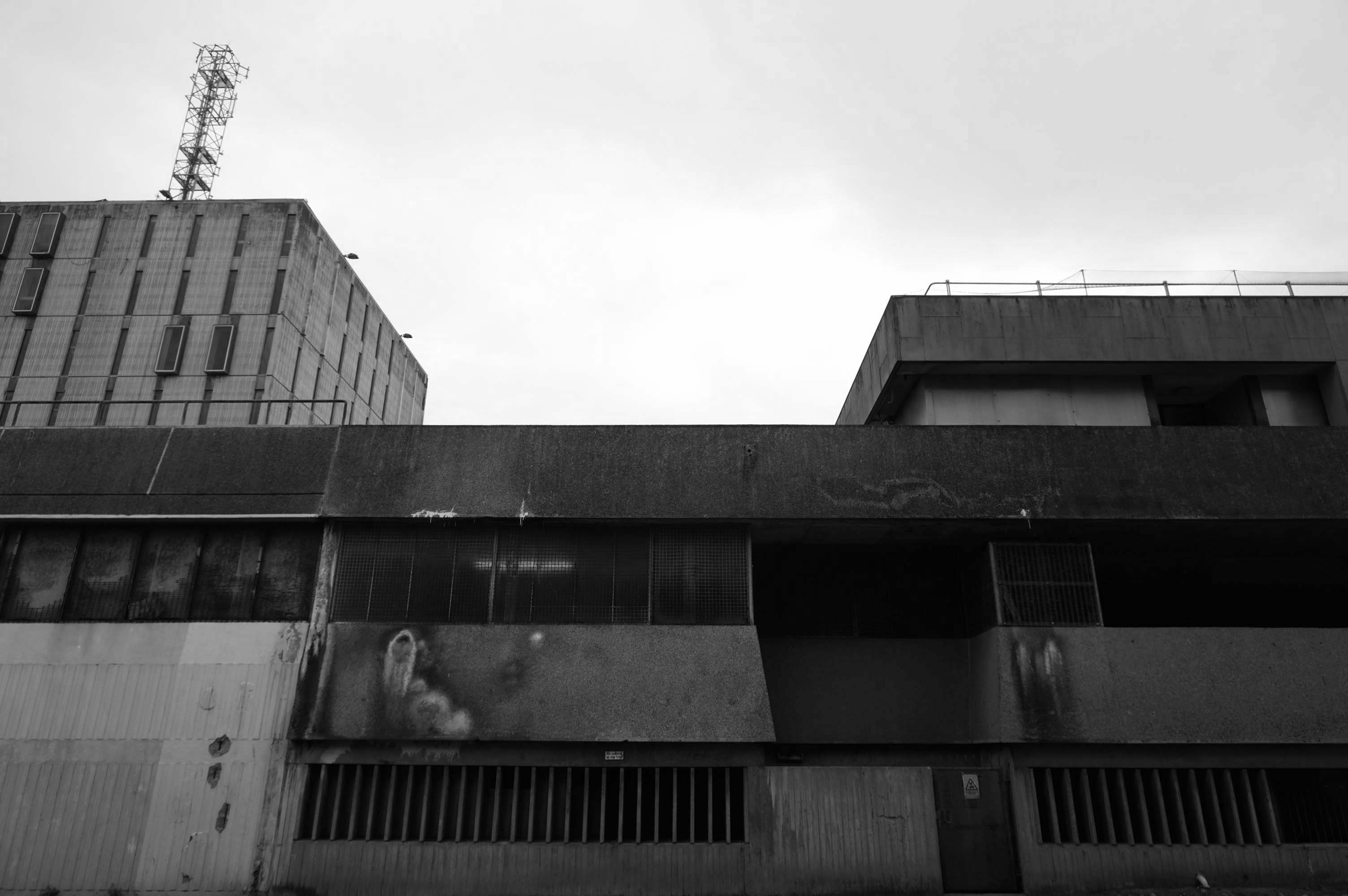
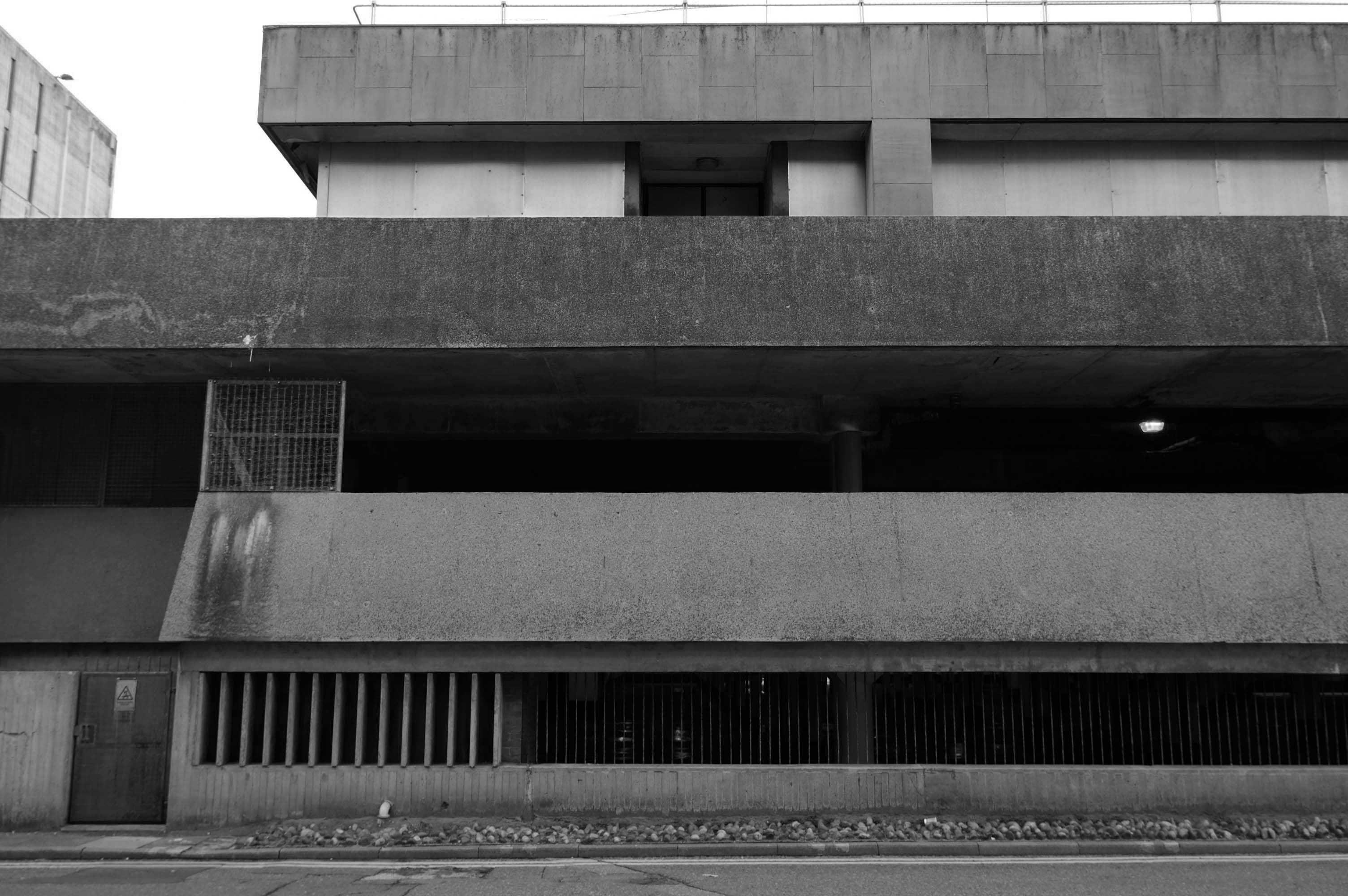
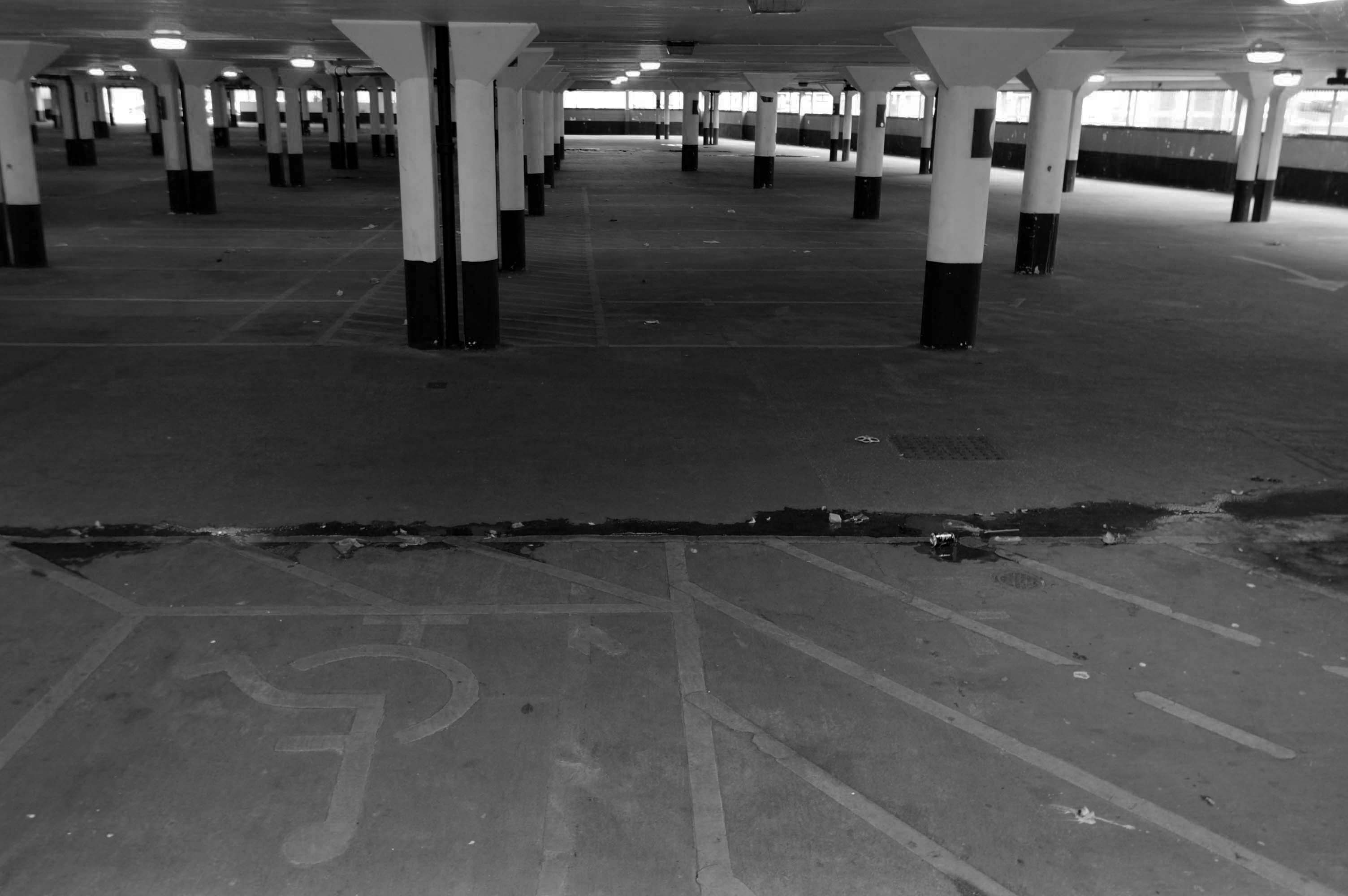
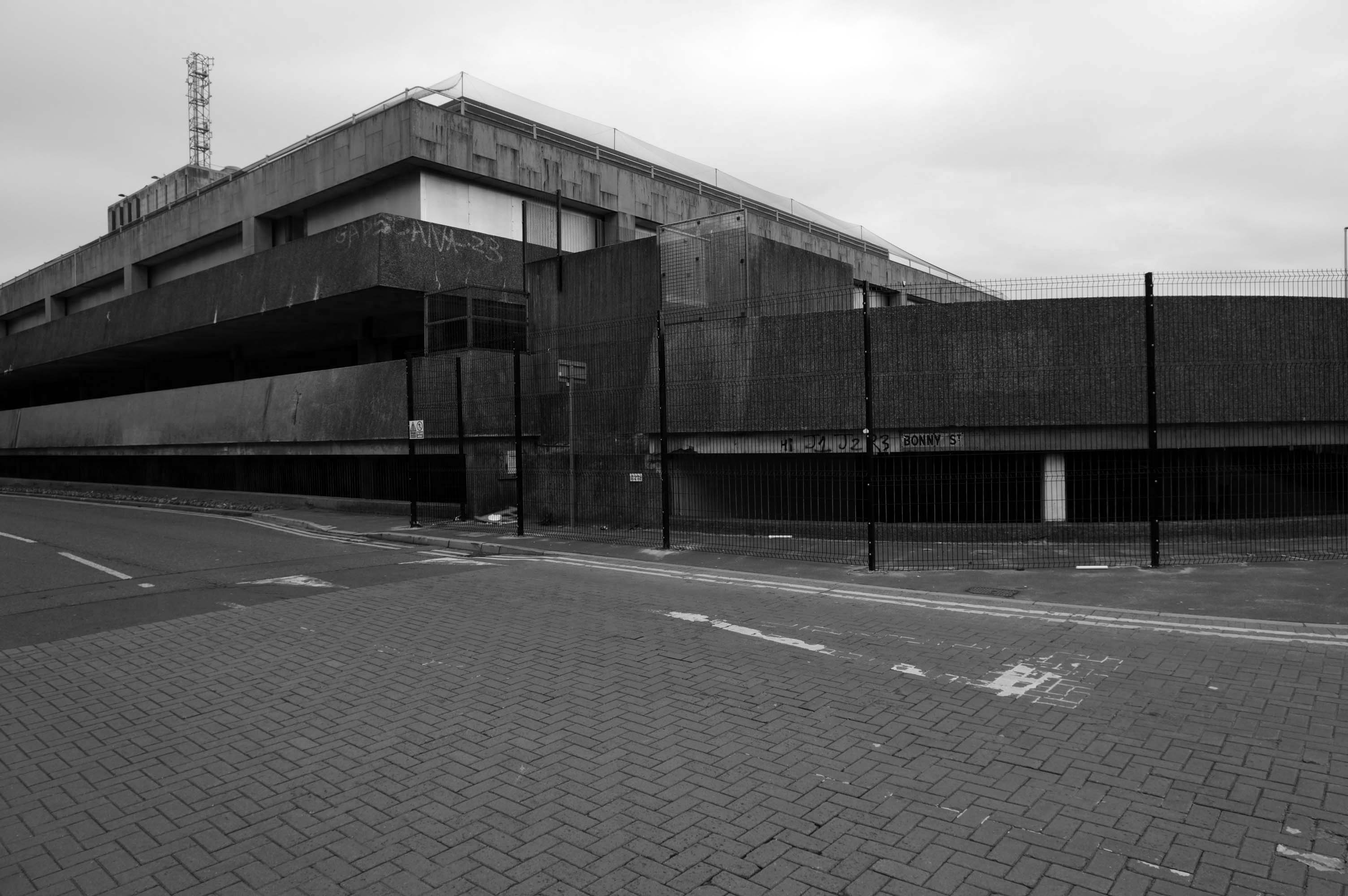
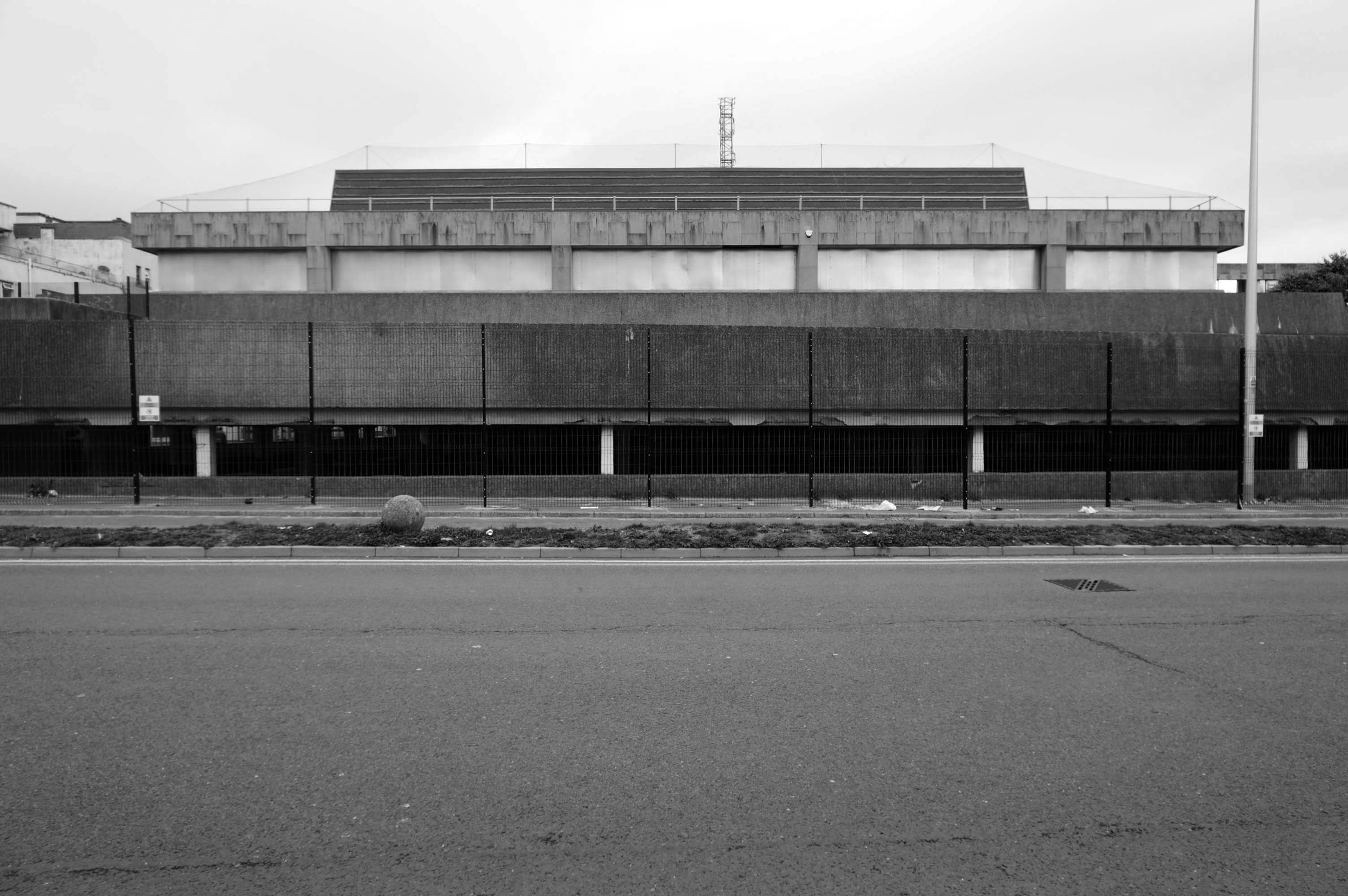
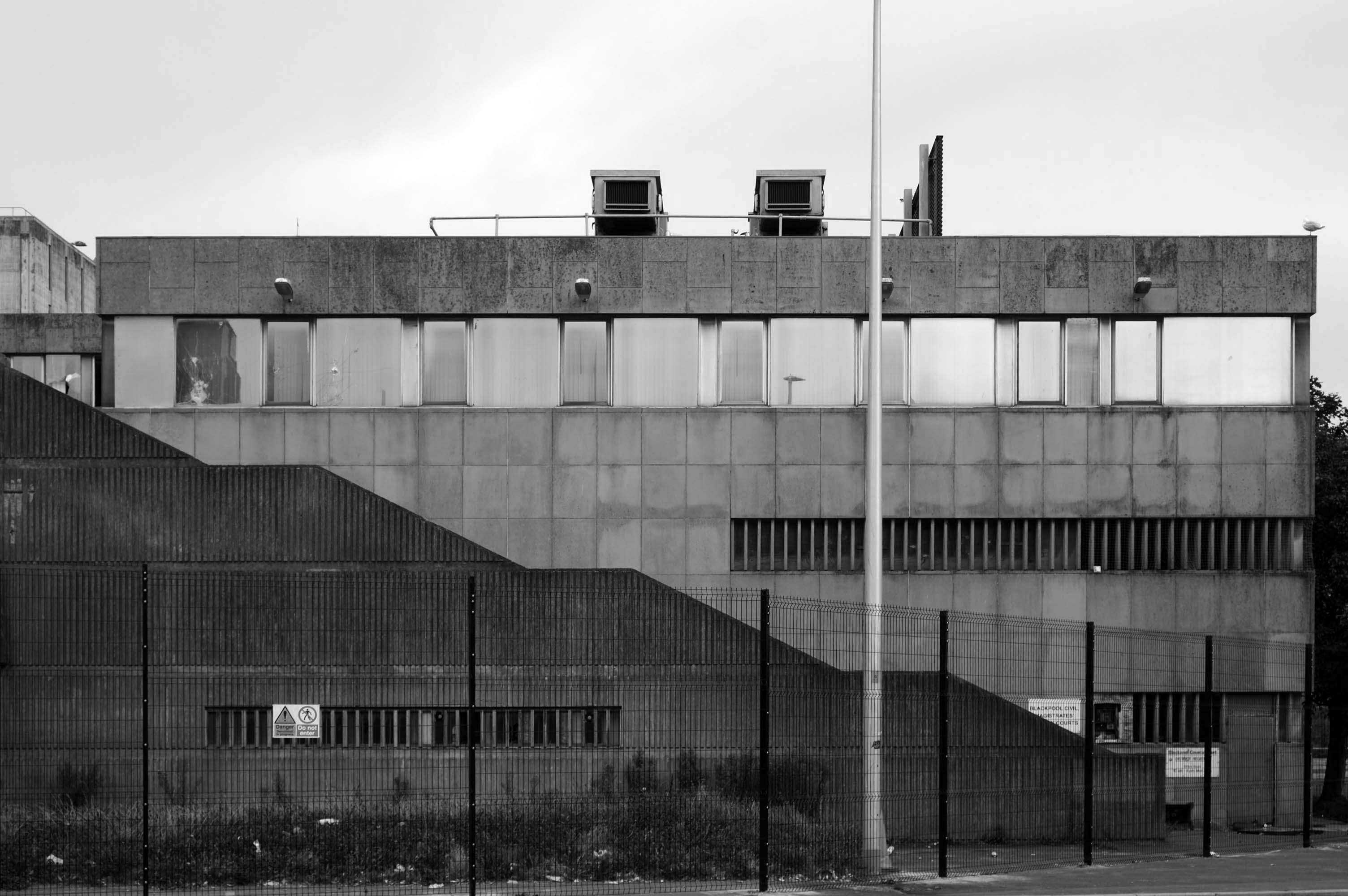
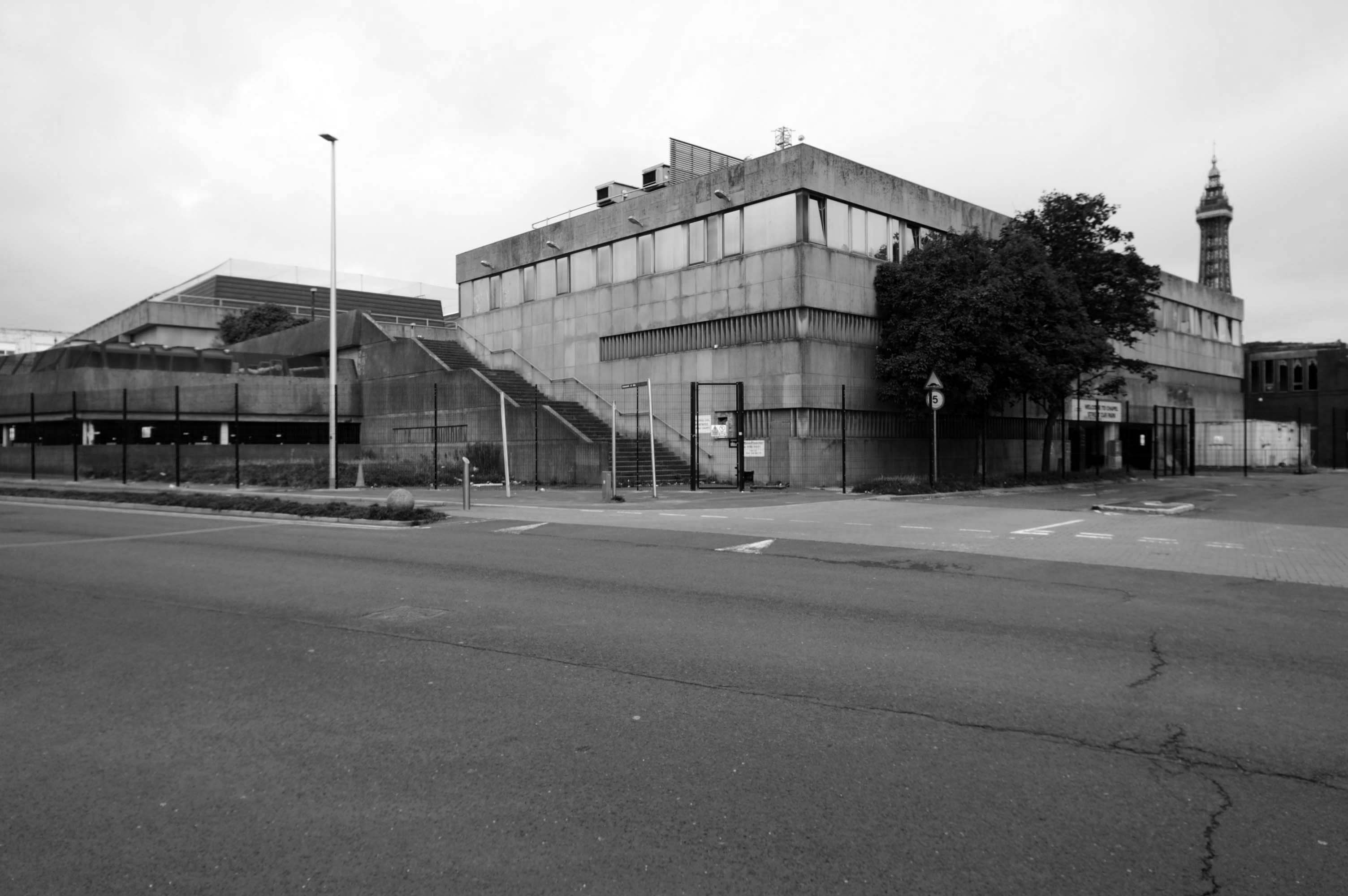
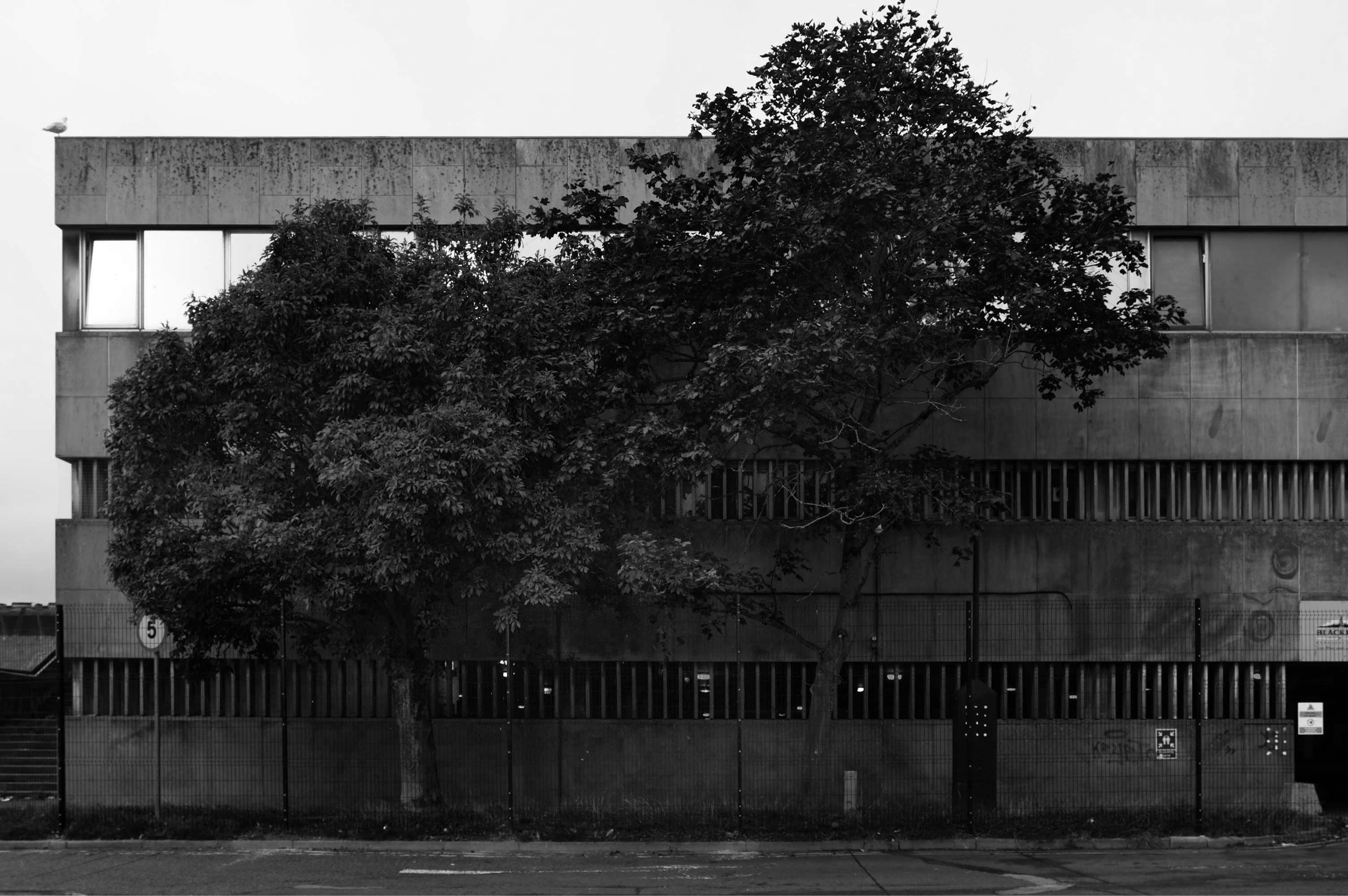
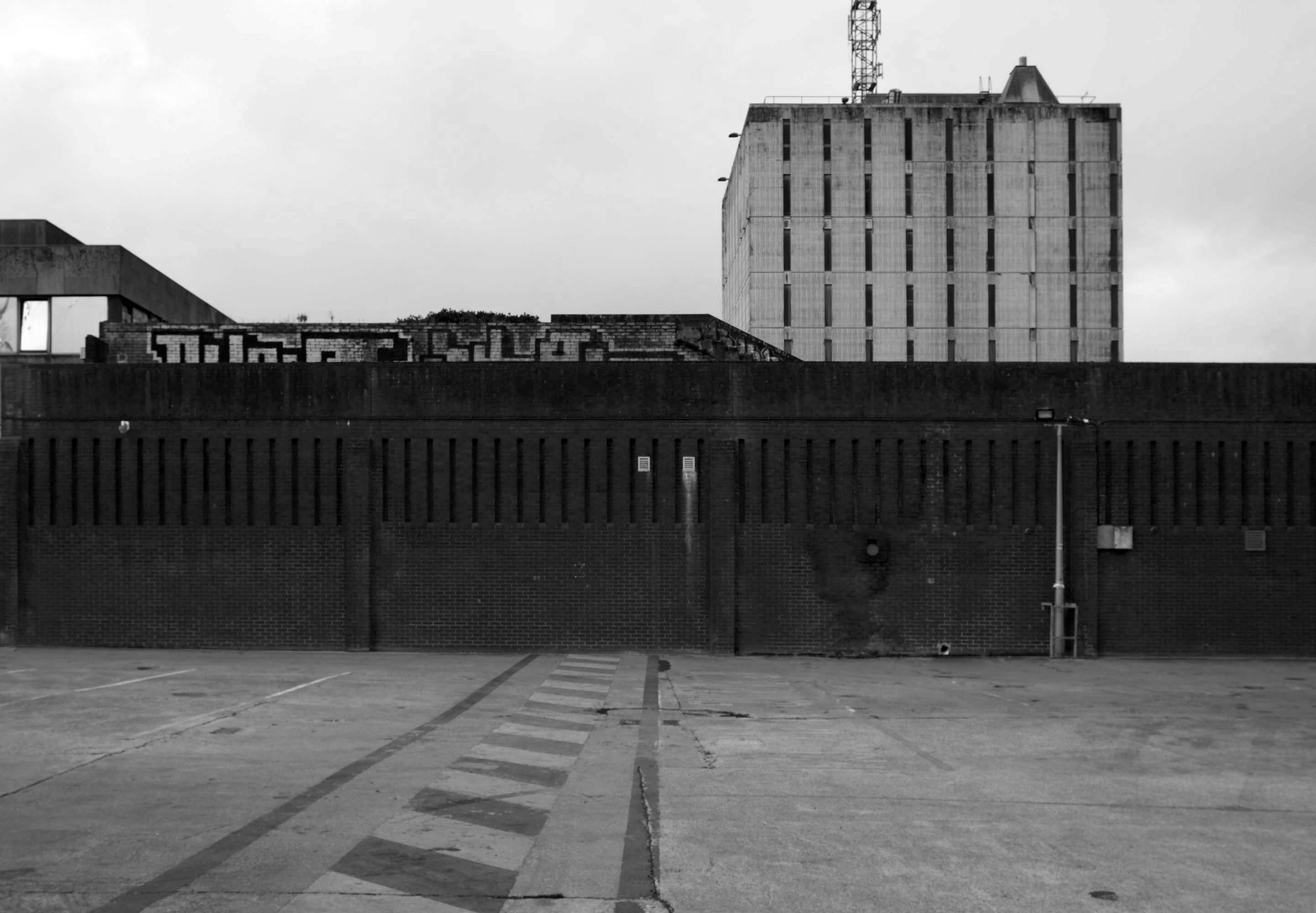
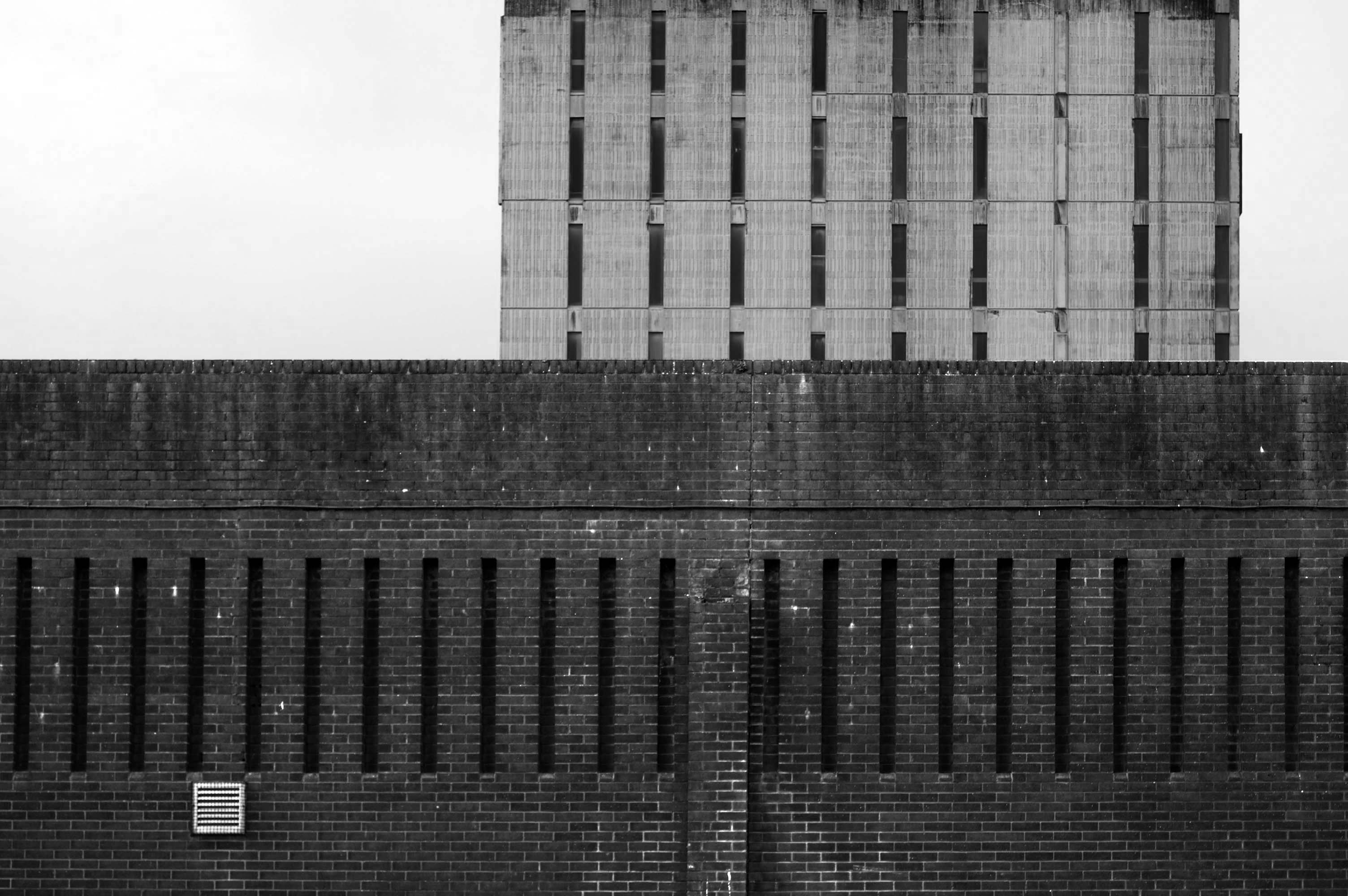
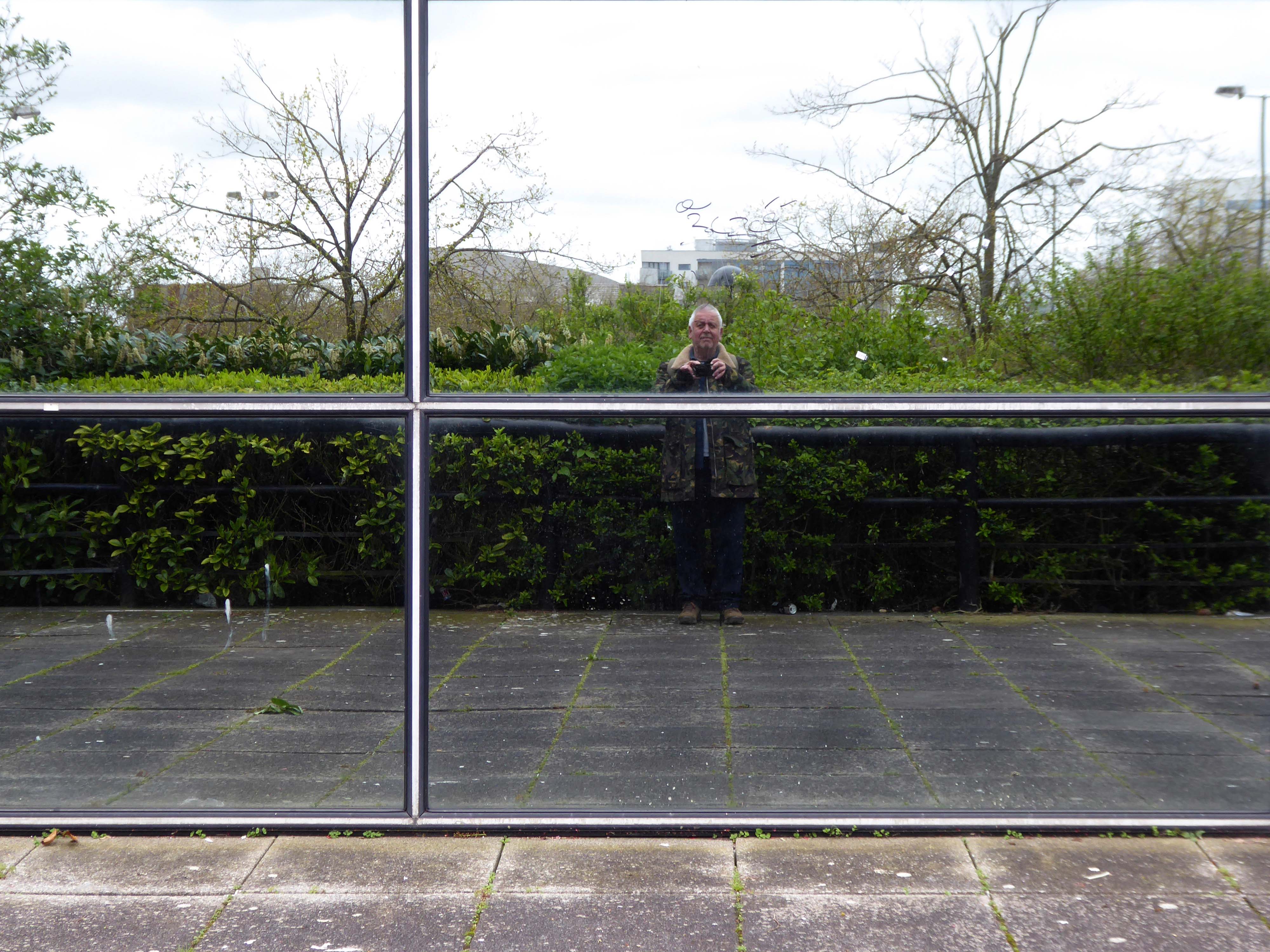
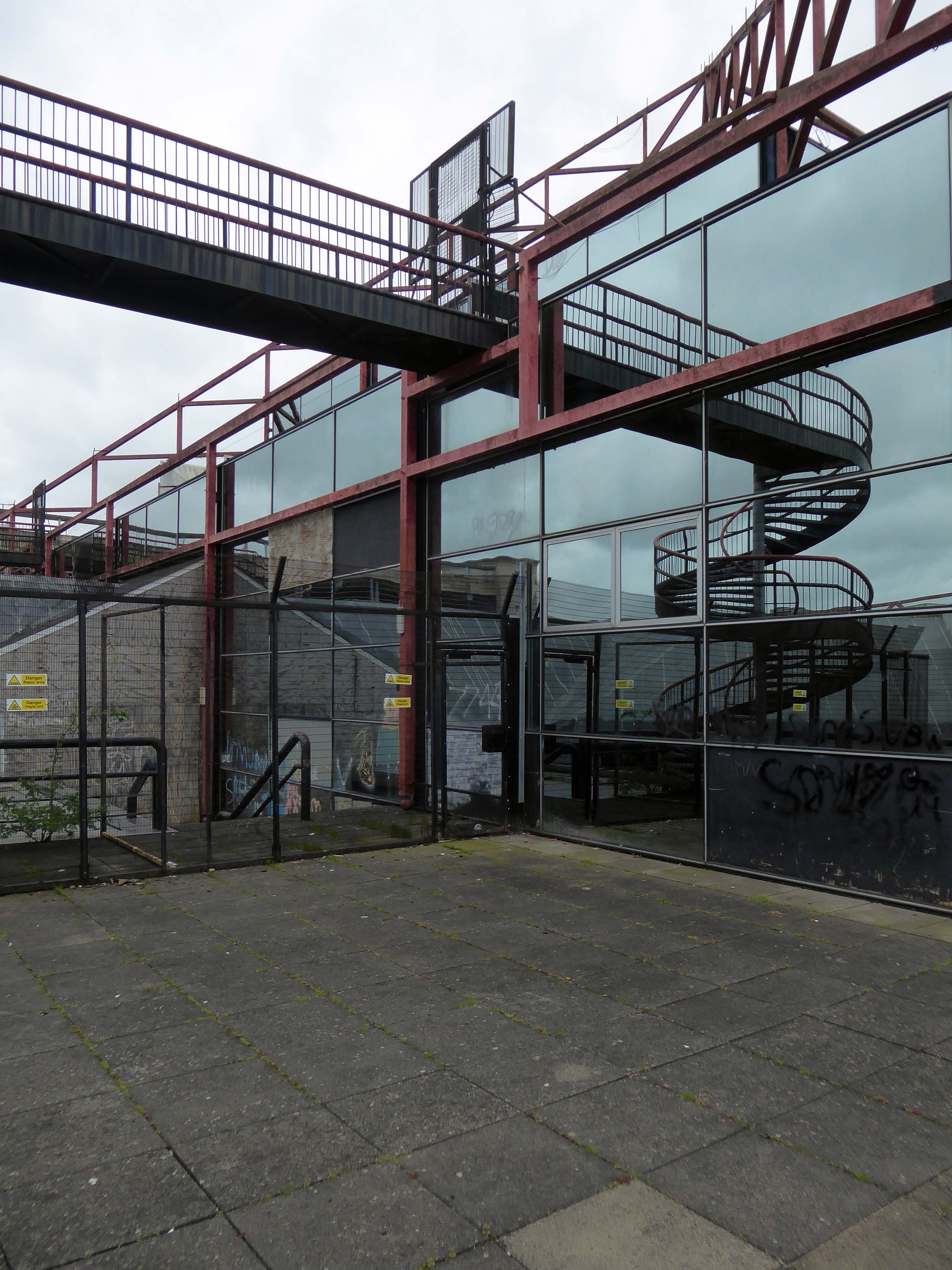
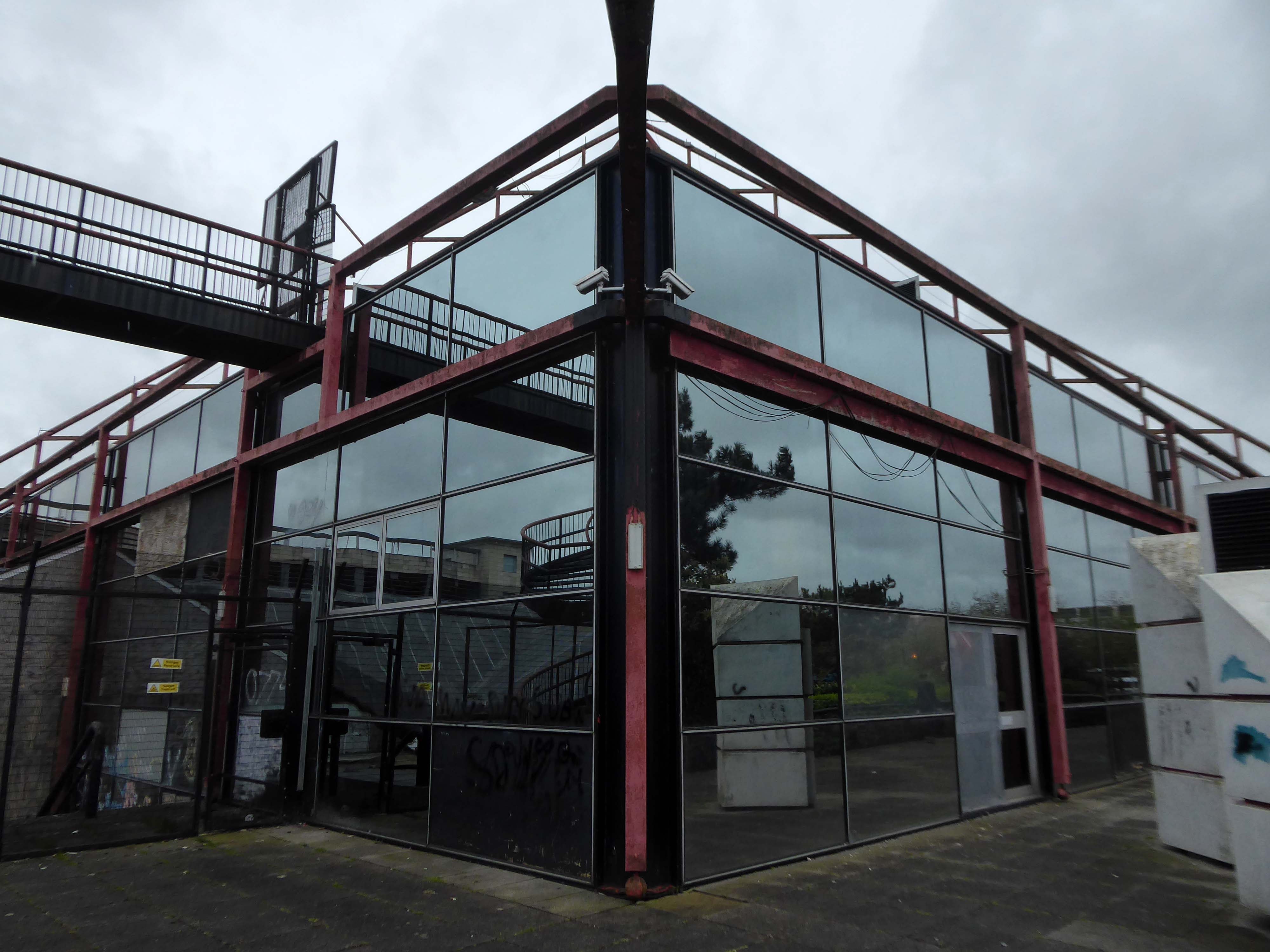
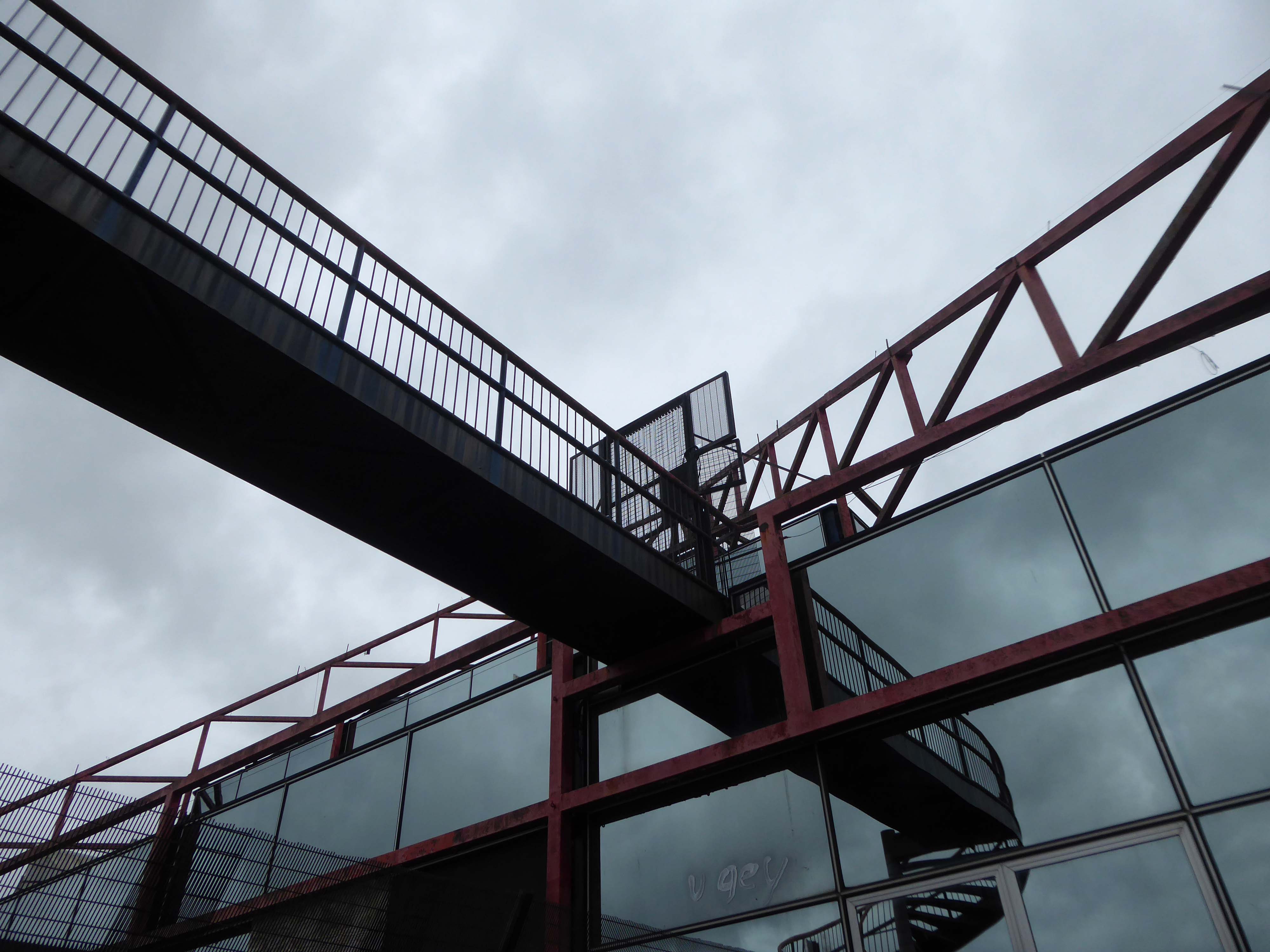
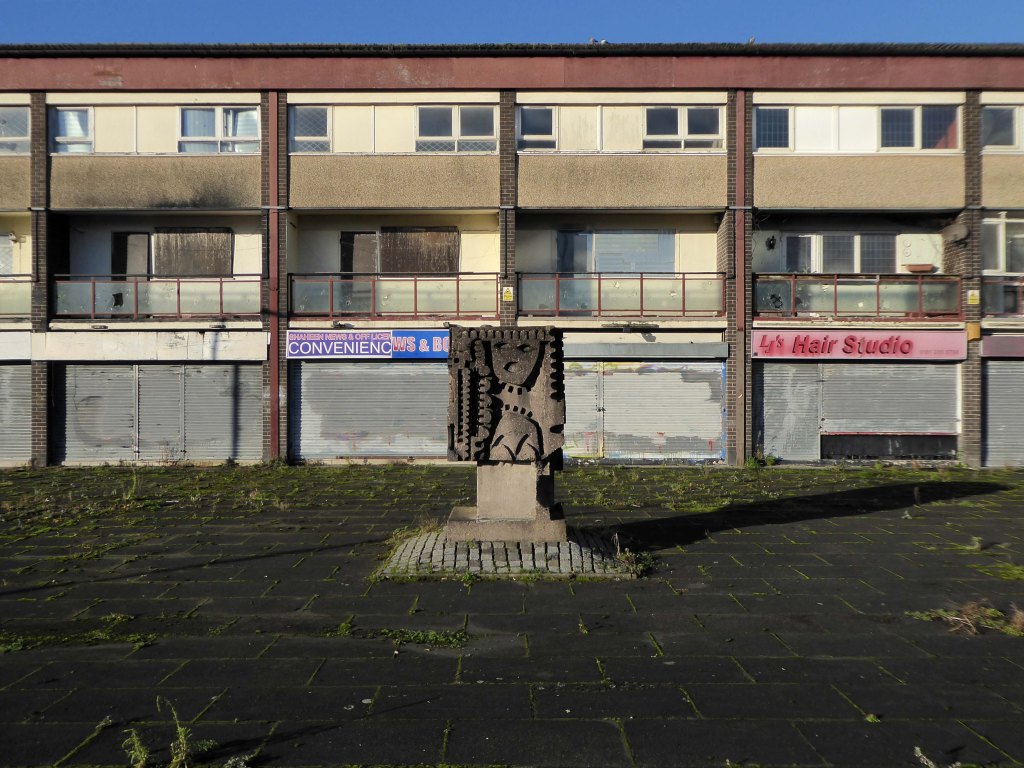
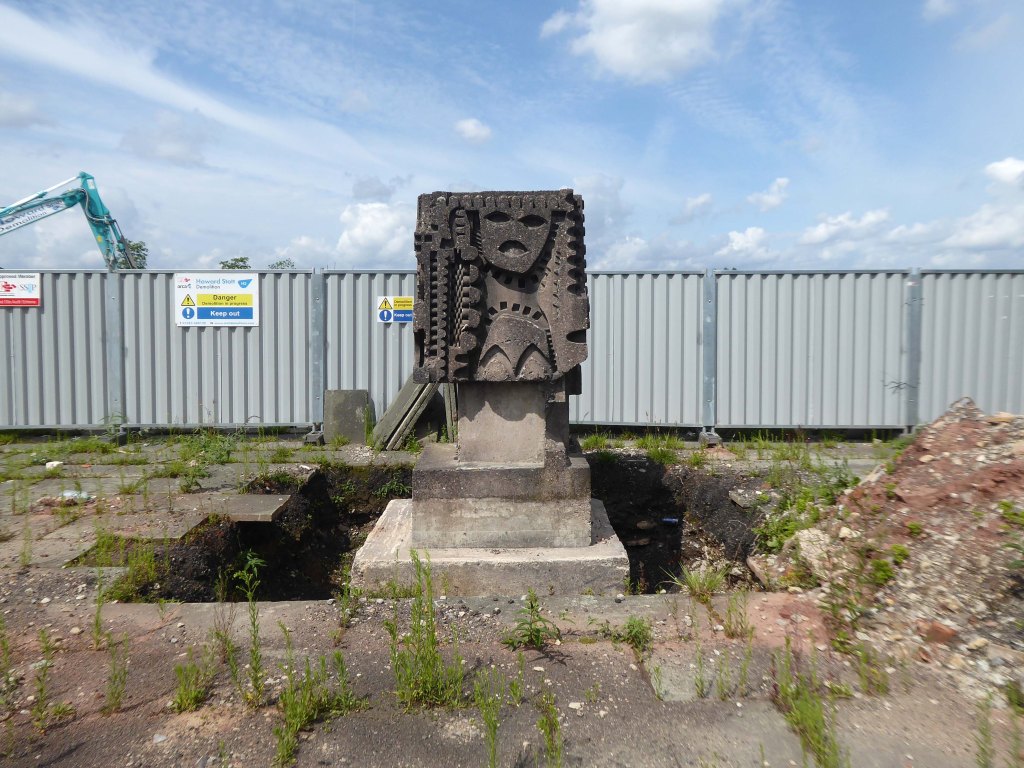
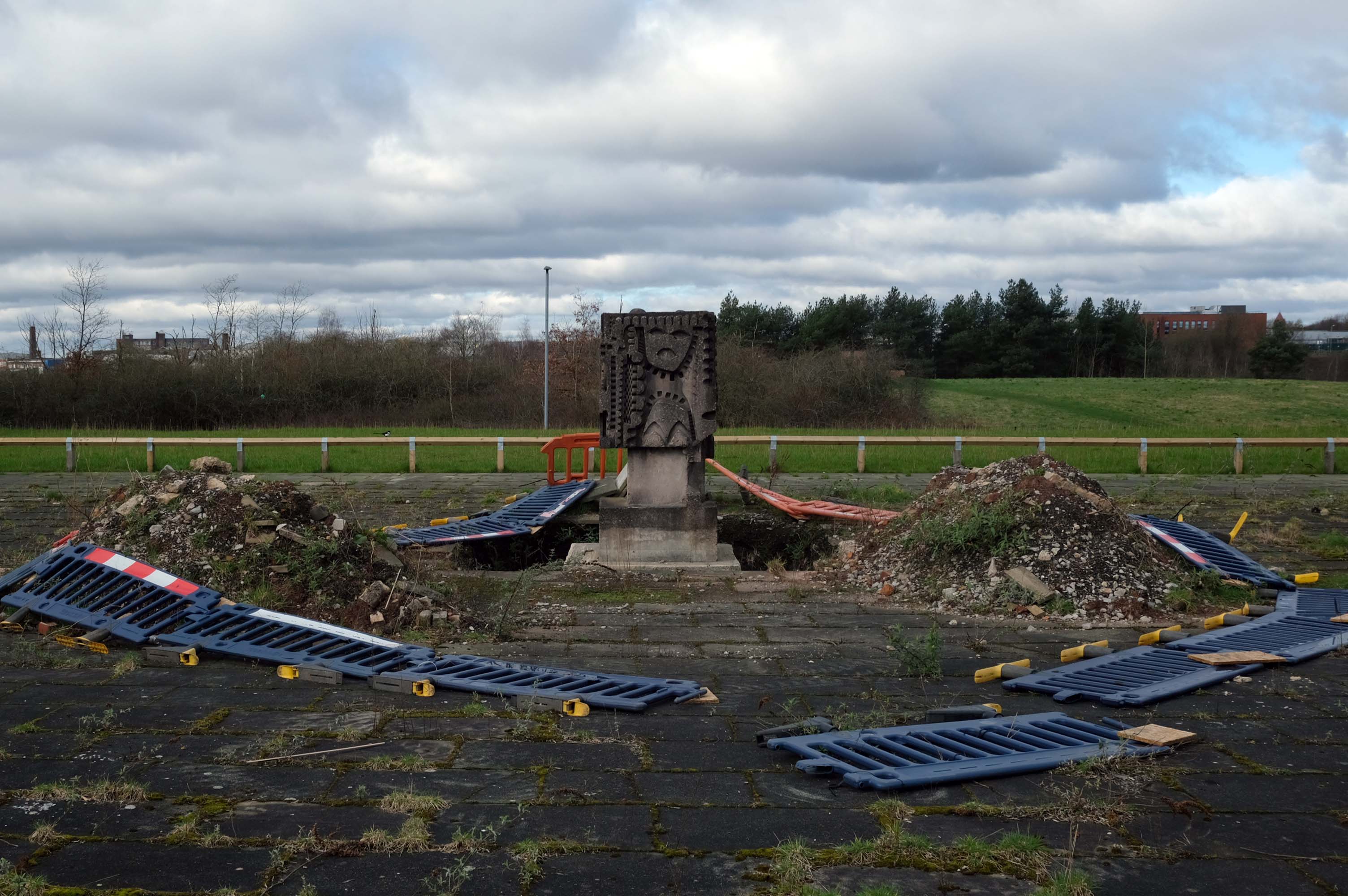
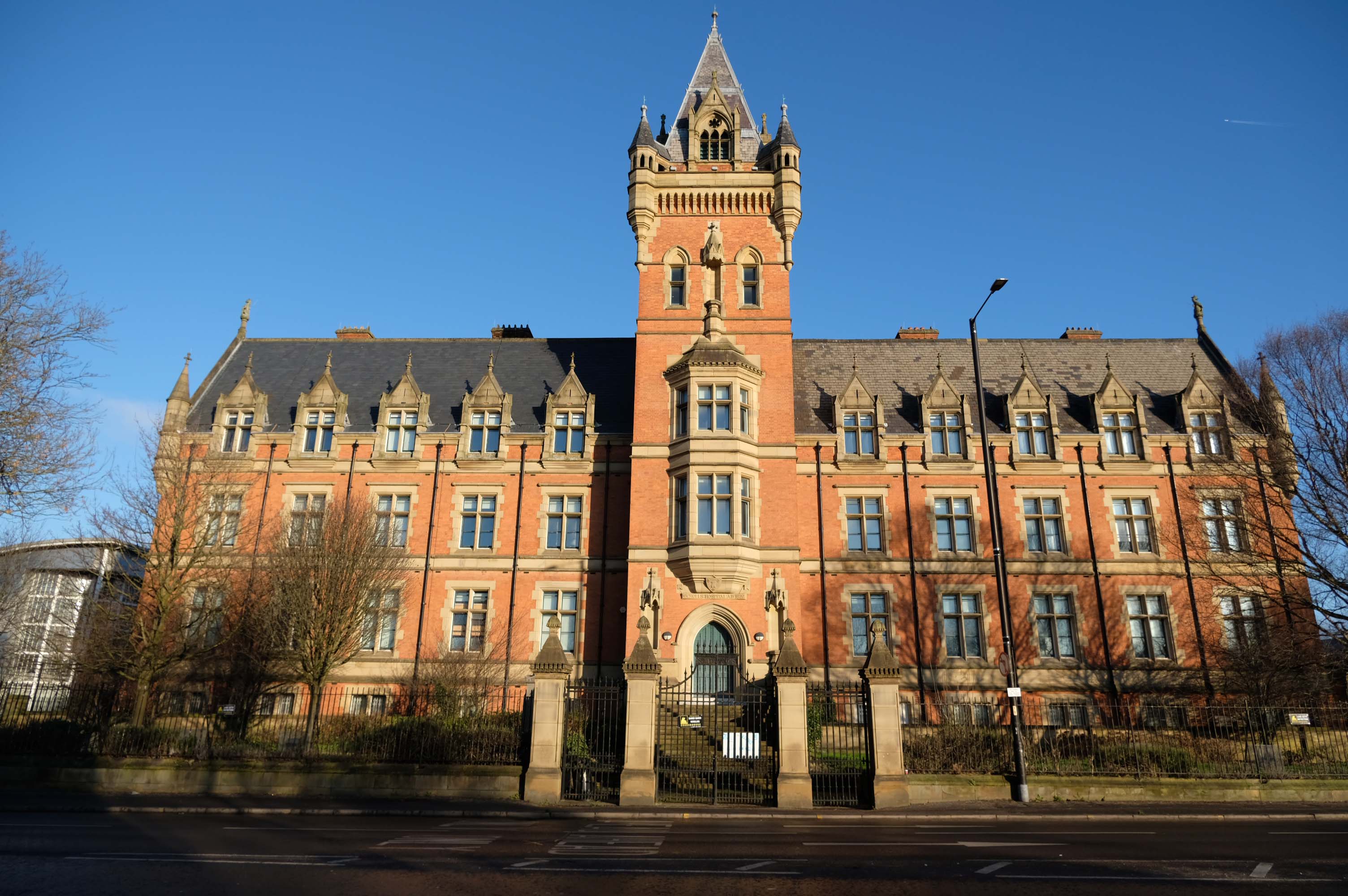
Doomed to face the demolition crew – the anti-social intrusions and falling masonry have enforced a fence, an impenetrable fence.
My requests for unforced entry were politely rebuffed by the hi-vis vest security guards.
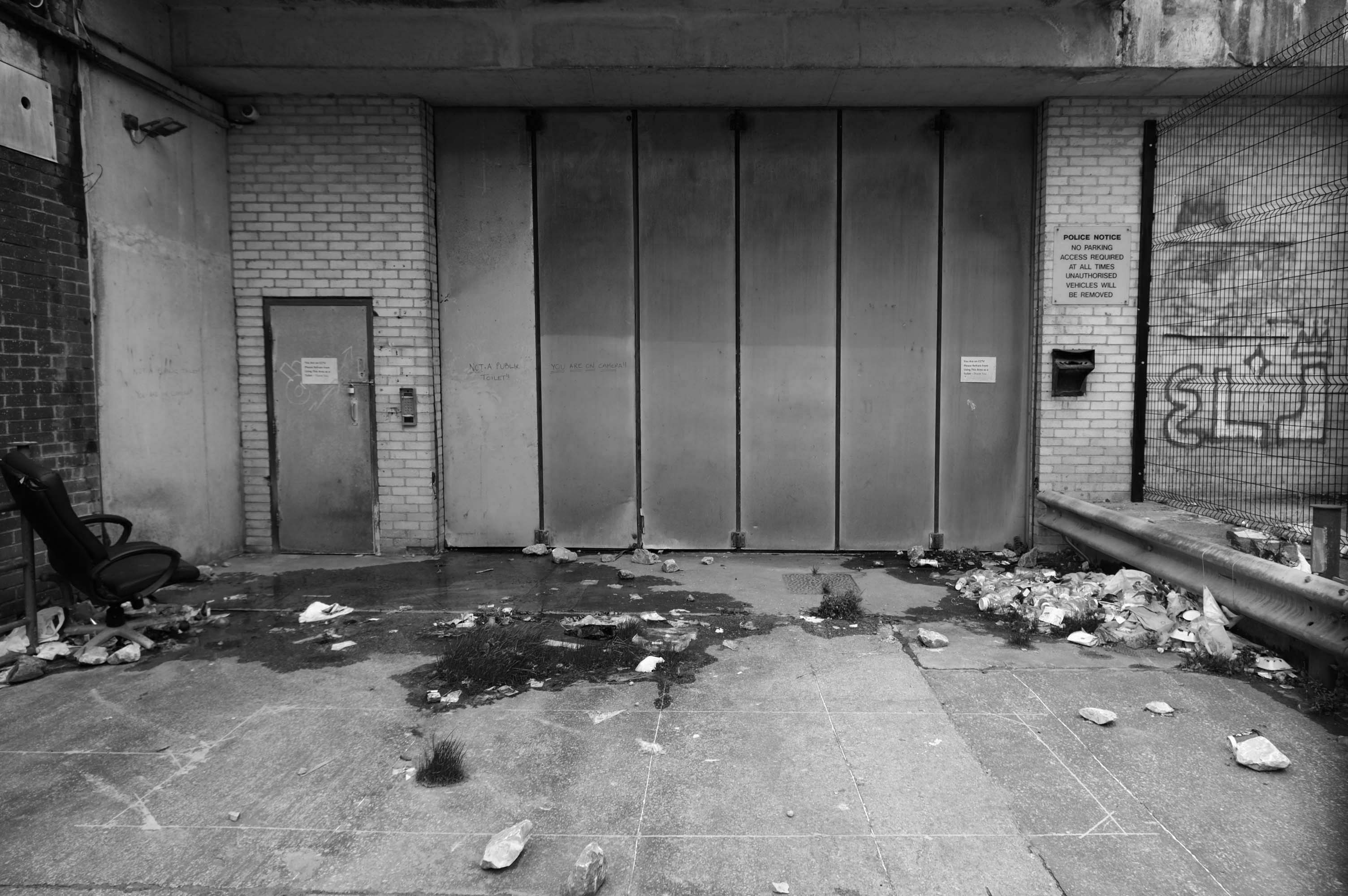
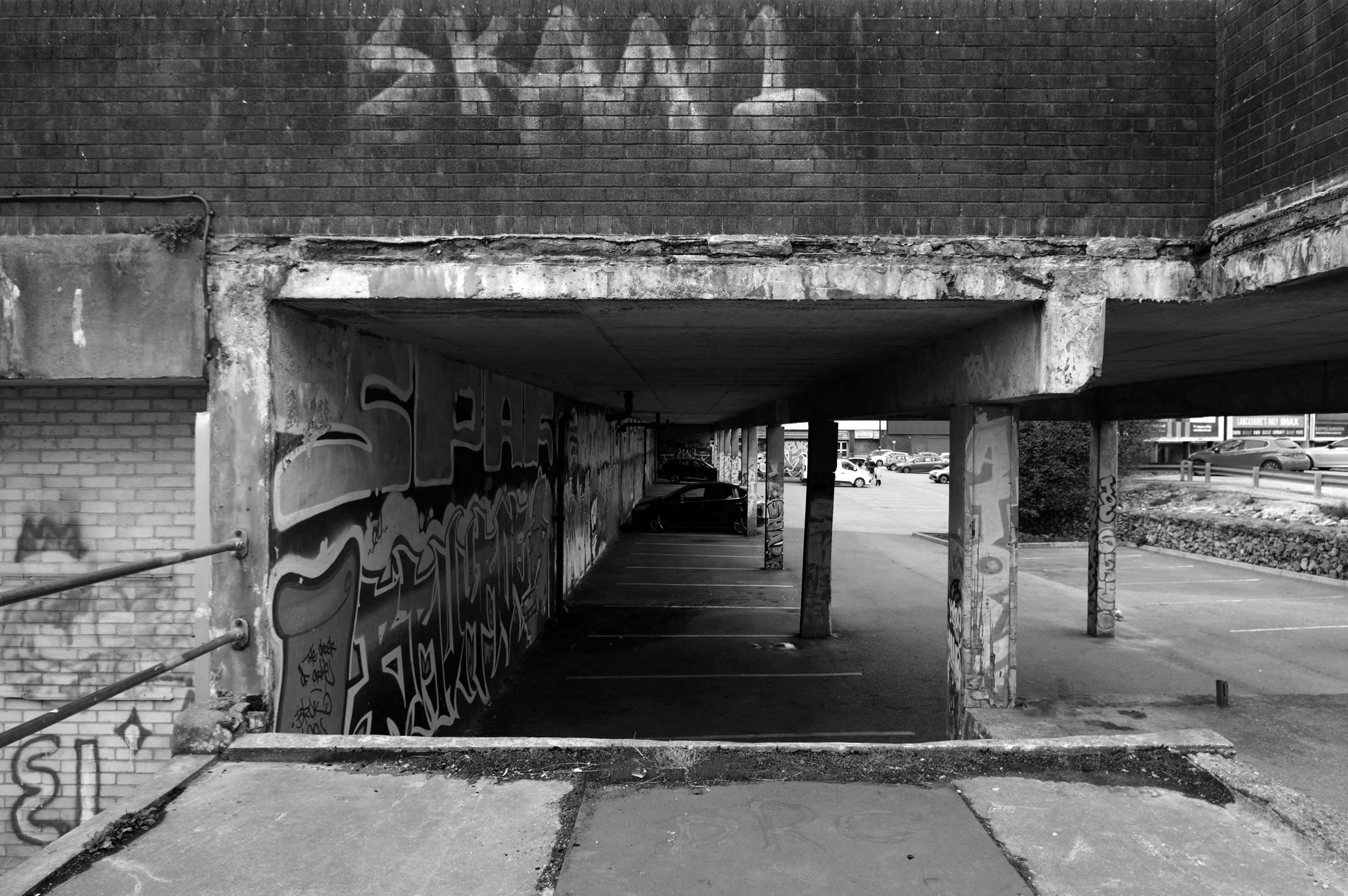
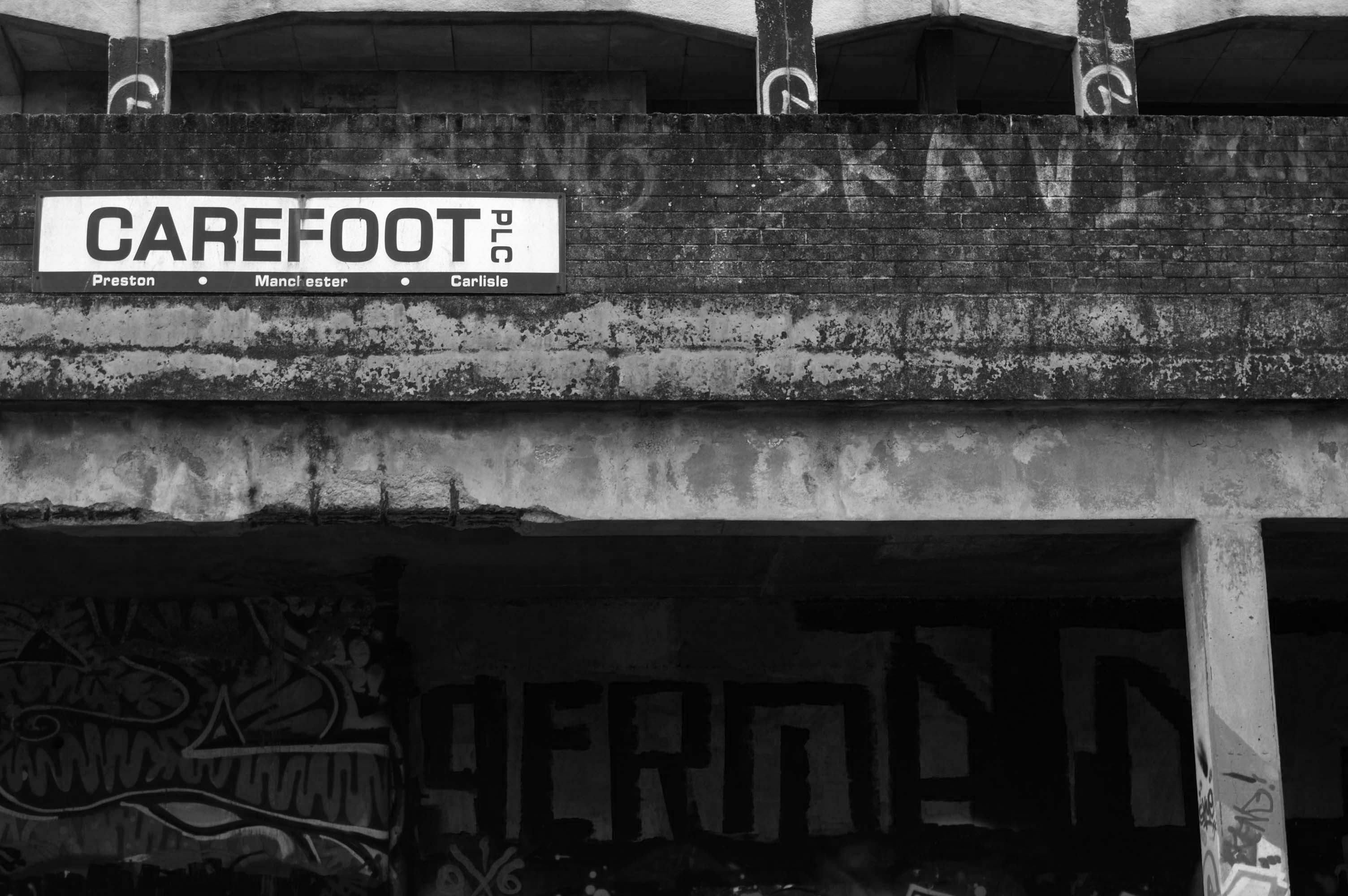
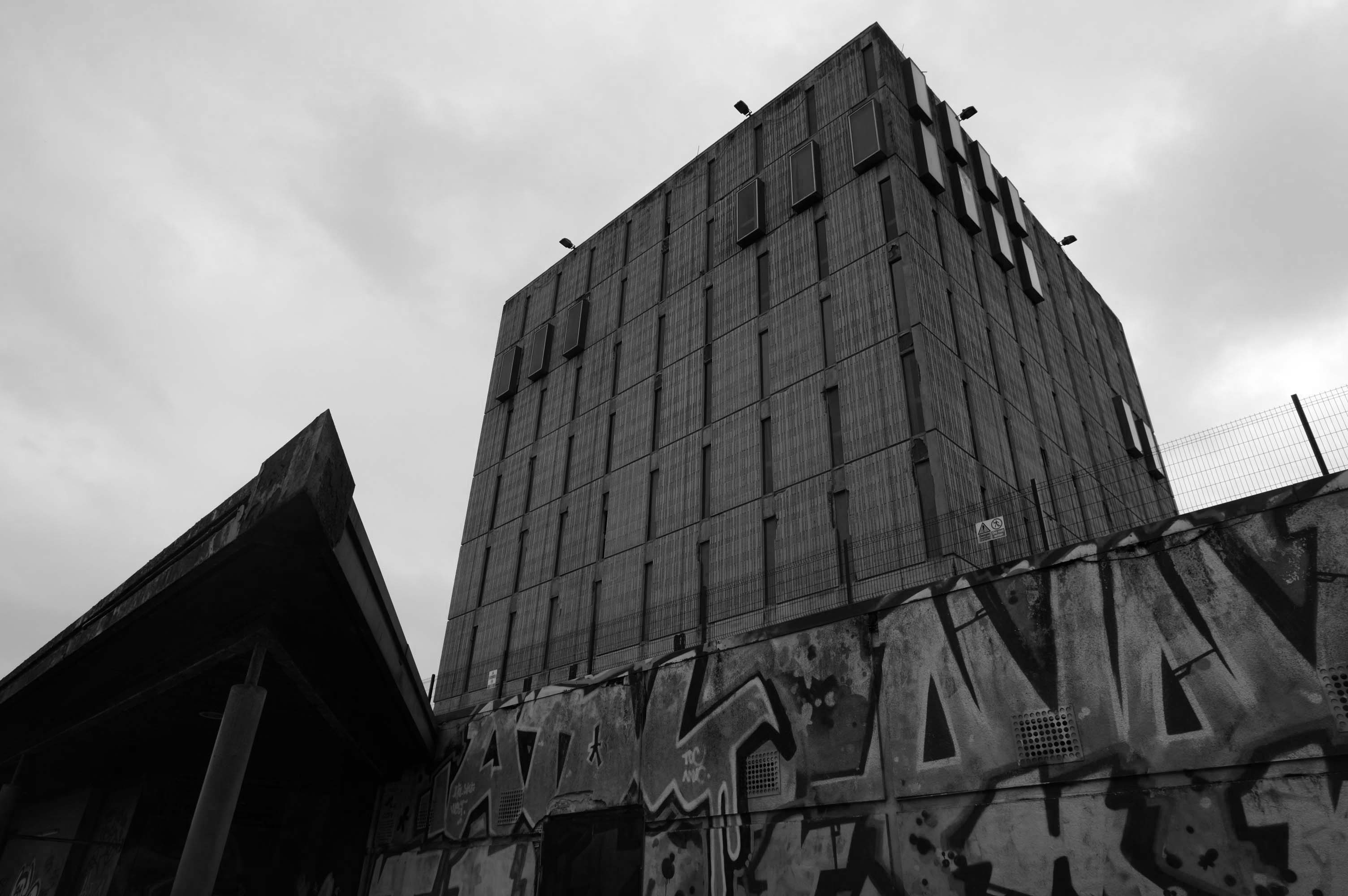
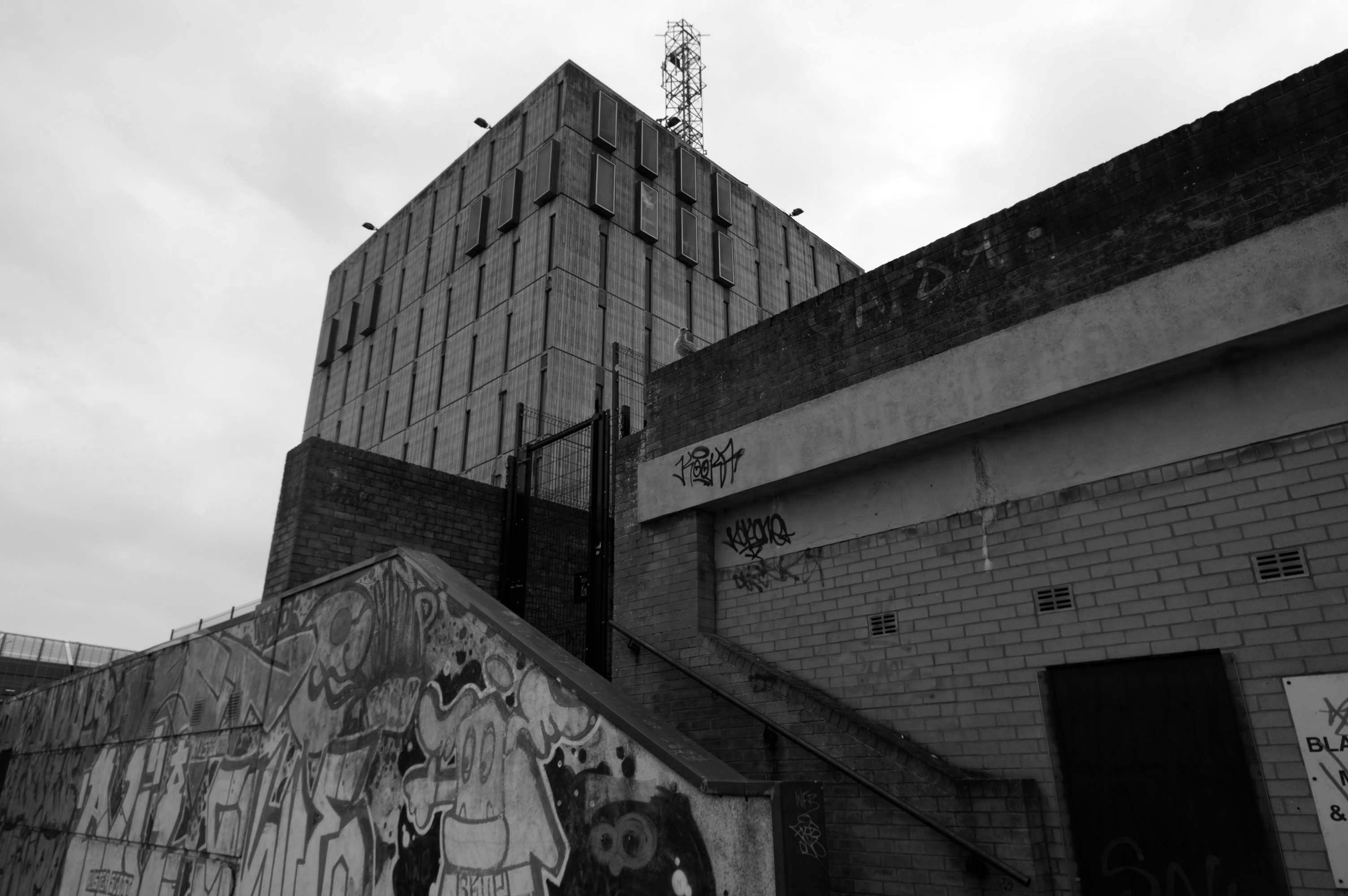
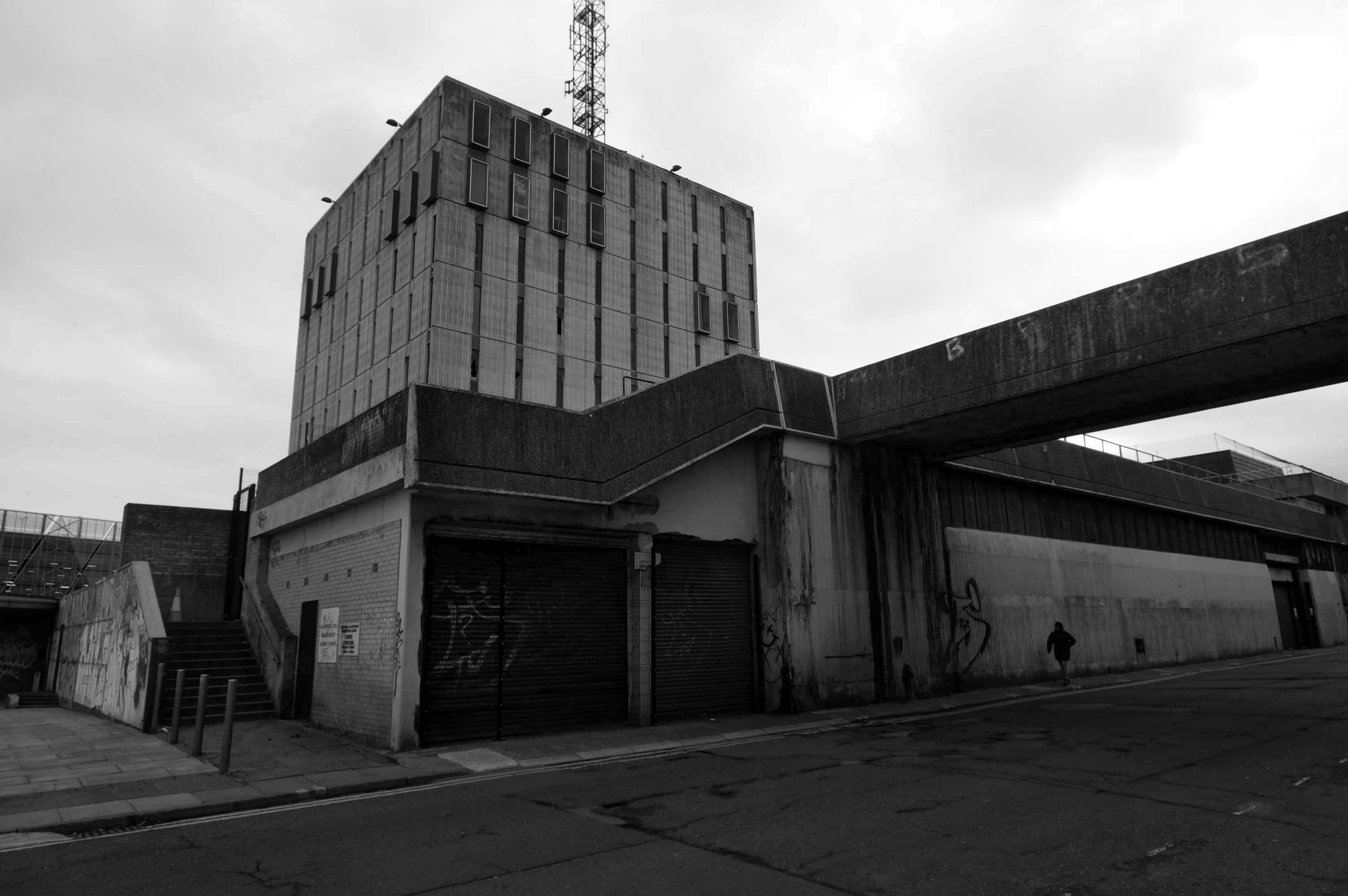
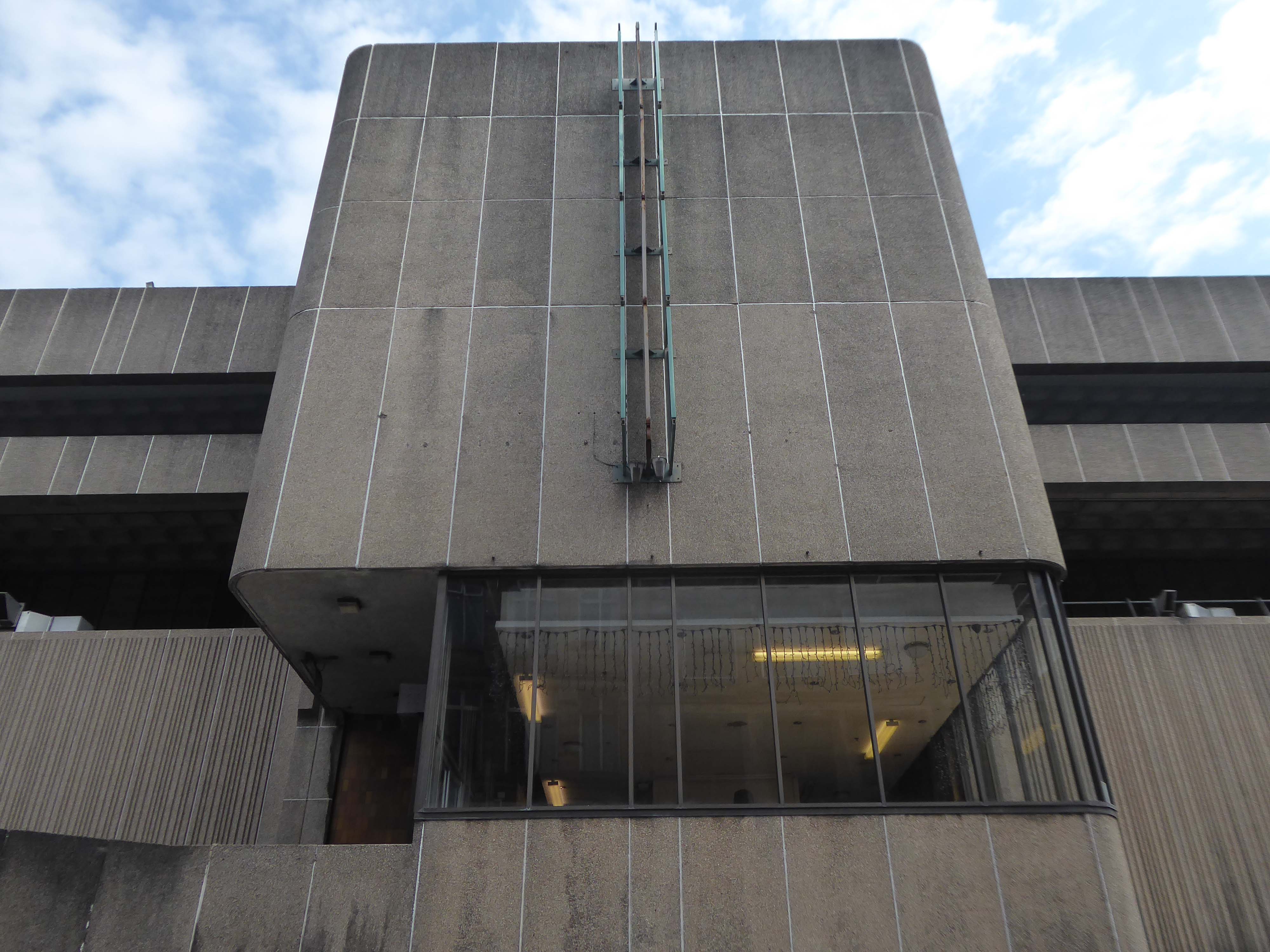
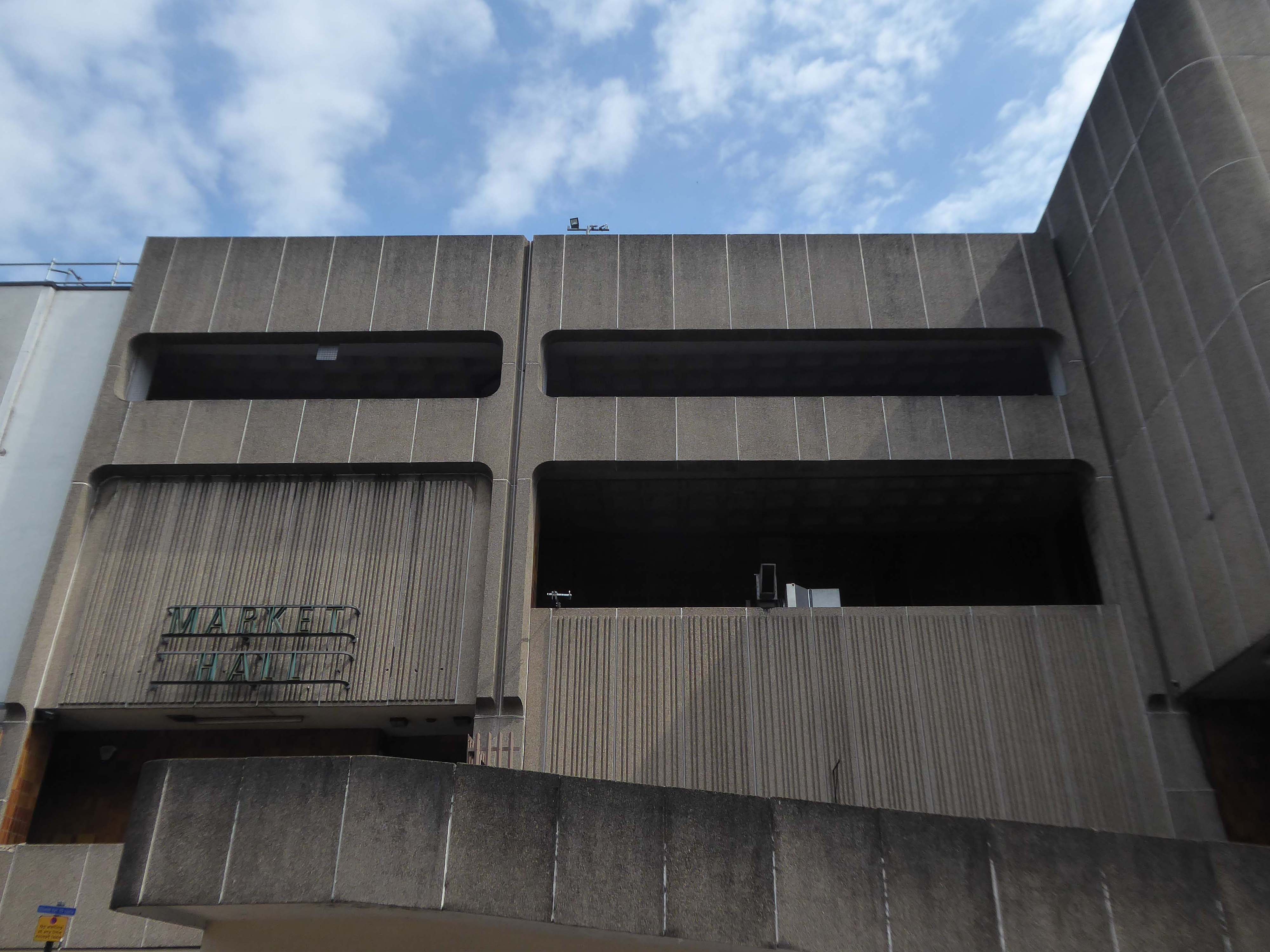
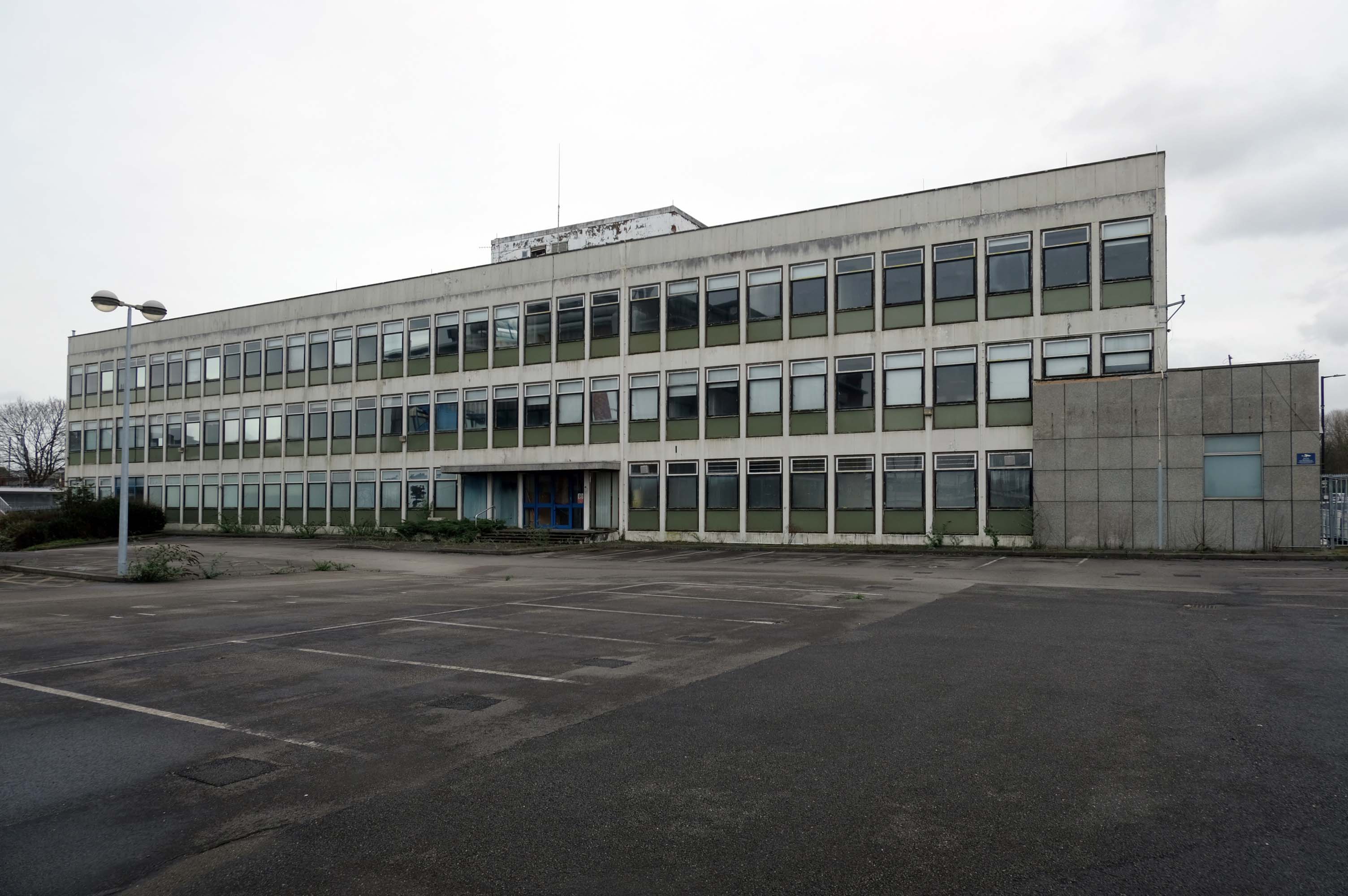
A former police station could finally be demolished this autumn after closing six years ago when officers moved to new headquarters.
Blackpool Magistrates’ Court, which is part of the same complex, will also be bulldozed after crumbling concrete was discovered in the building in January.
In recent months, the empty Bonny Street police station has become a target for anti-social behaviour.
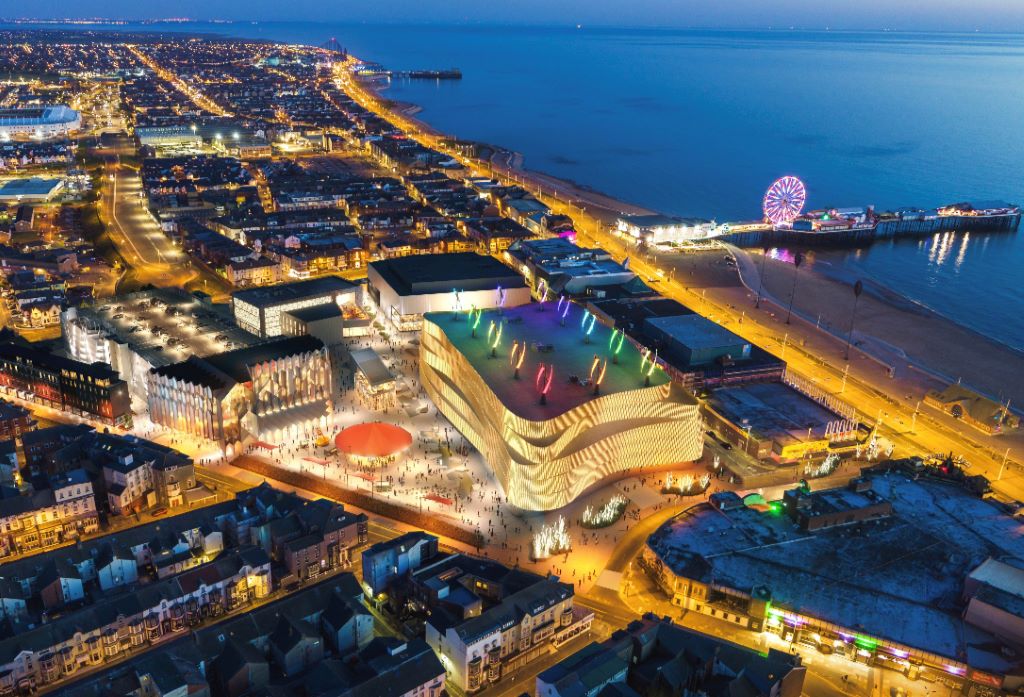
Clearance of the site will pave the way for investment in leisure facilities including hotels and indoor theme parks by developer Nikal.
The Ferodo Factory was founded in Caernarfon in 1962, and officially opened by Princess Margaret.
However, the Ferodo Factory faced a significant setback in April 2001, when a lengthy industrial strike by the Transport and General Workers Union members began.
The strike lasted for an astonishing two and a half years.
Following the strike, the Ferodo Factory underwent a change in ownership. Bluefield Caernarfon Ltd acquired the site in 2007/08, with plans for redevelopment and revitalization. However, these plans did not come to fruition, and the factory’s buildings gradually fell into disrepair.
The site was identified as a potential location for a multi-million pound North Wales prison. This development would have created numerous job opportunities and breathed new life into the area.
Plans for this proposed redevelopment where rejected.
An appeal was launched in 2023 to find ex-strikers, in order to invite them to the premiere of a documentary to mark the 20th anniversary of one of Britain’s longest industrial disputes.
The hard-hitting film, Y Lein: Streic Friction Dynamics – The Line: Friction Dynamics Strike, has been made by Dïon Wyn, the grandson of one of the strikers, Raymond Roberts, who was determined the historic injustice should never be forgotten.
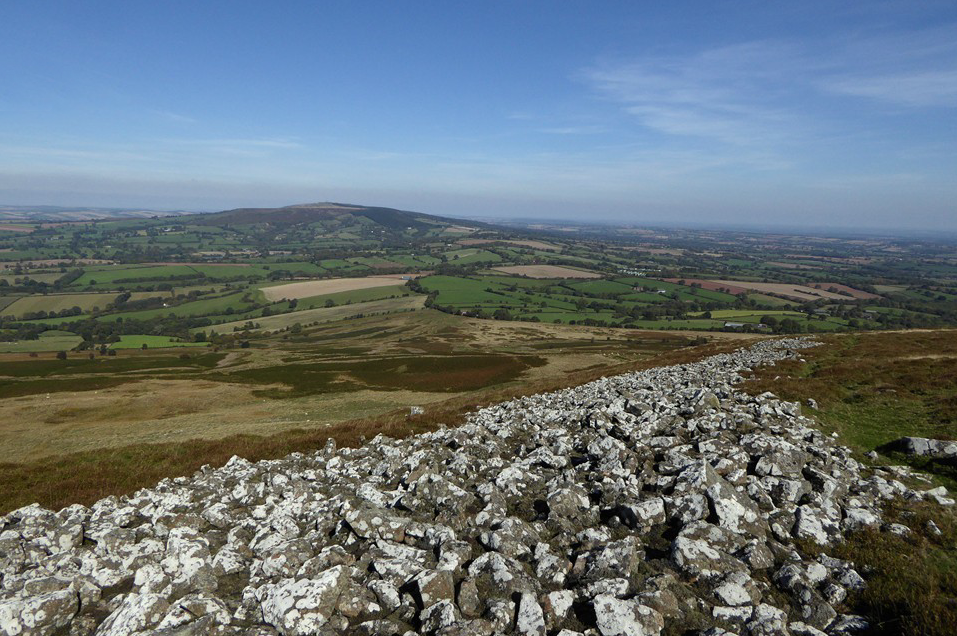
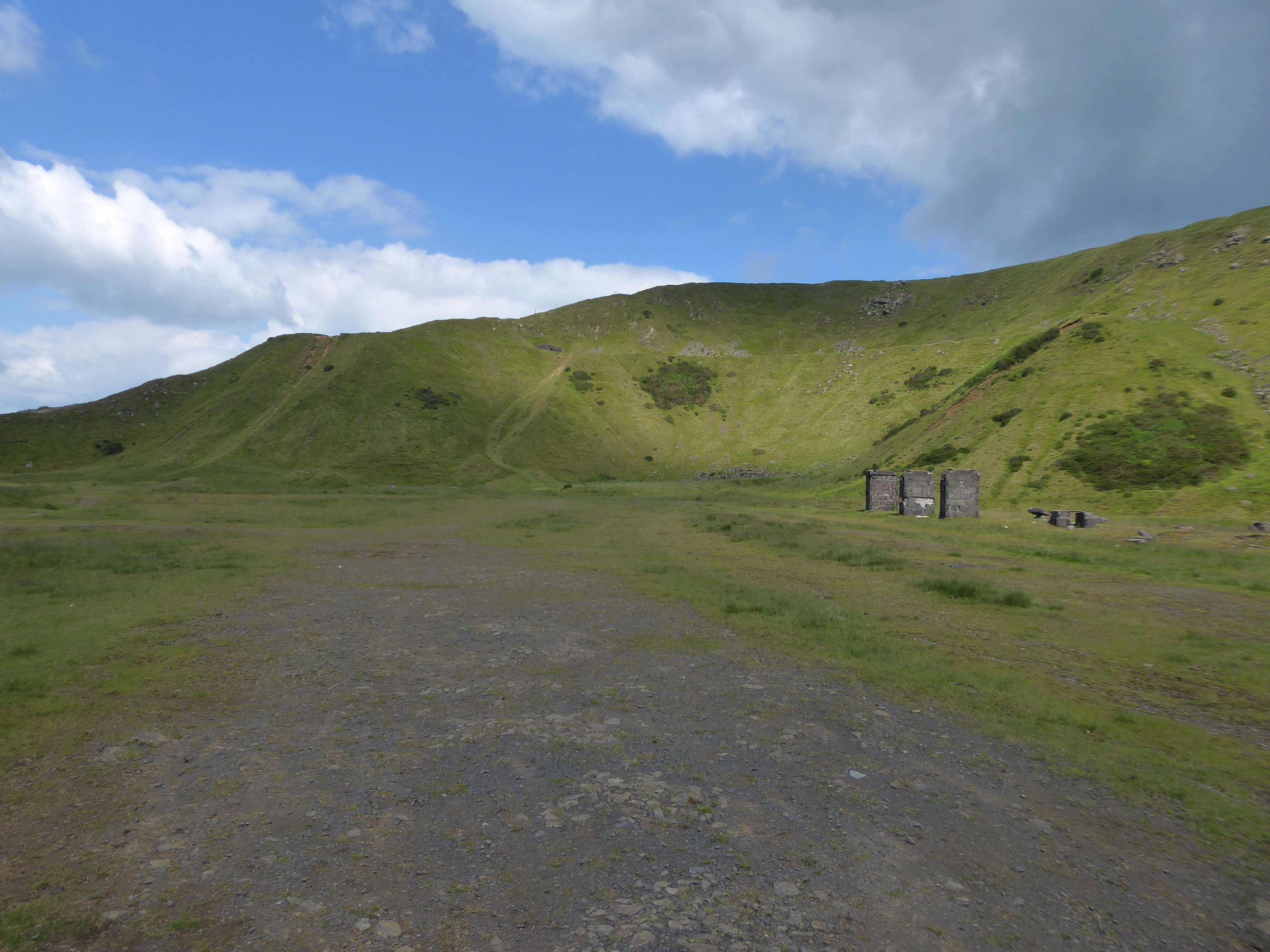
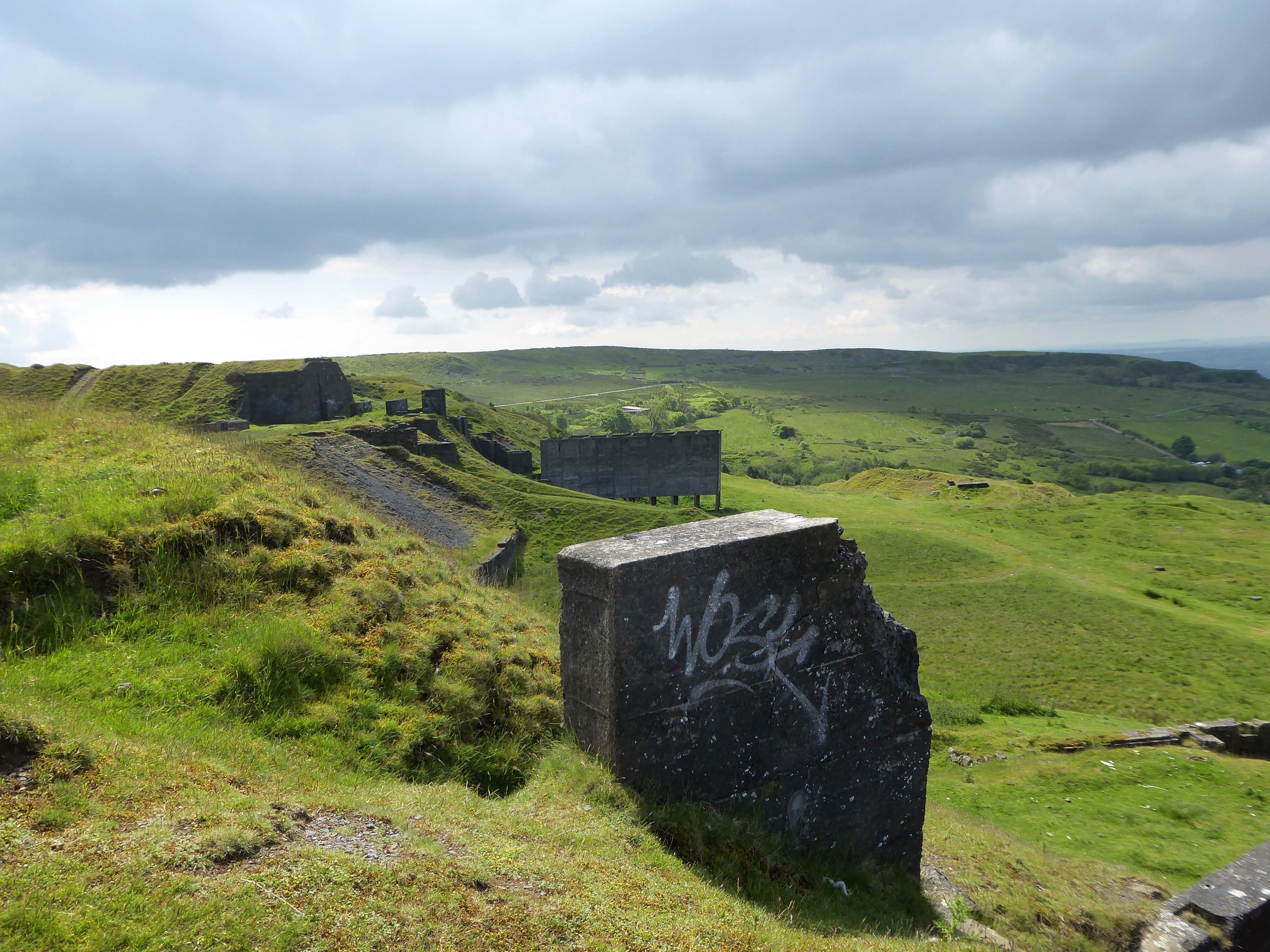
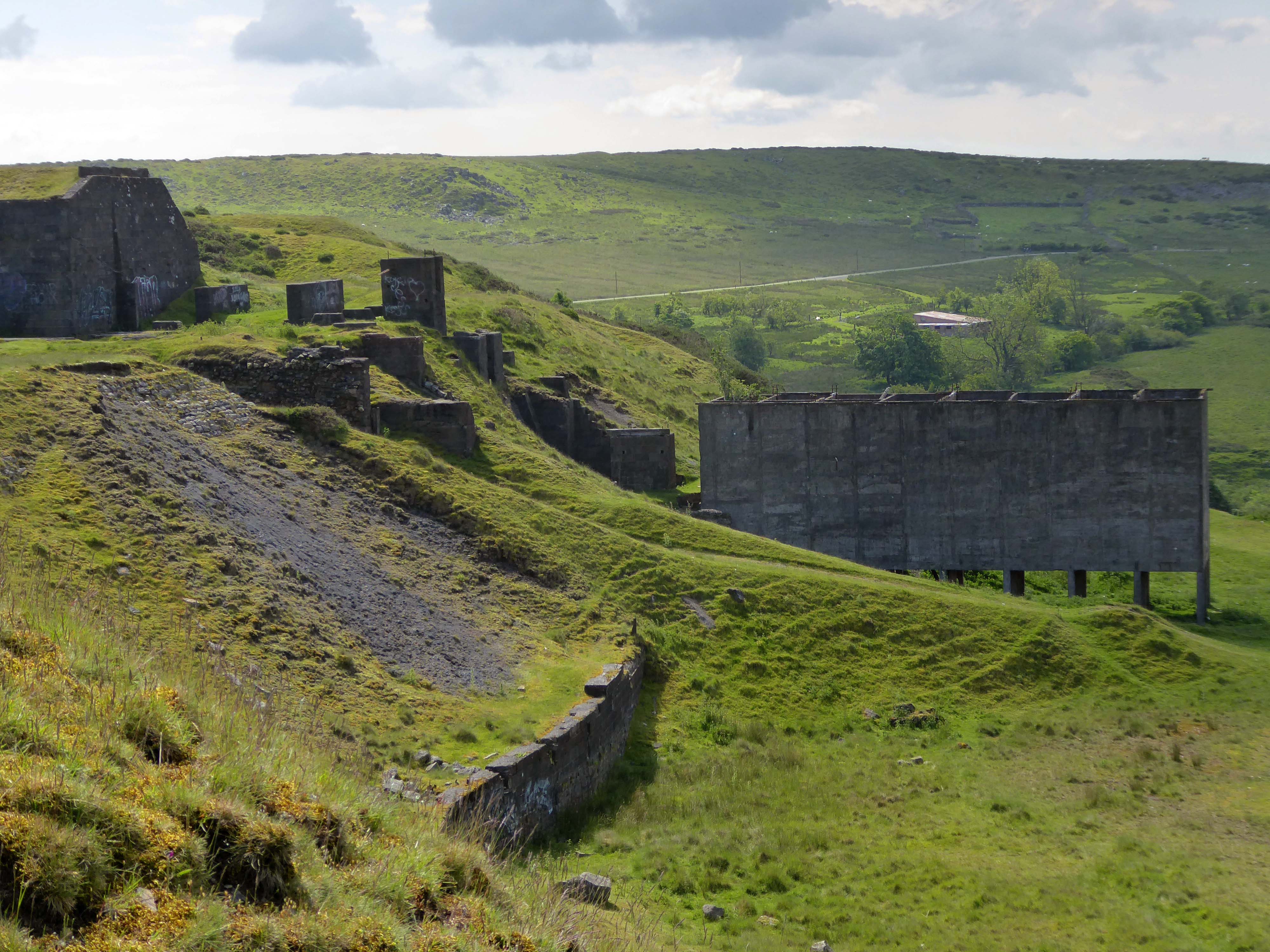
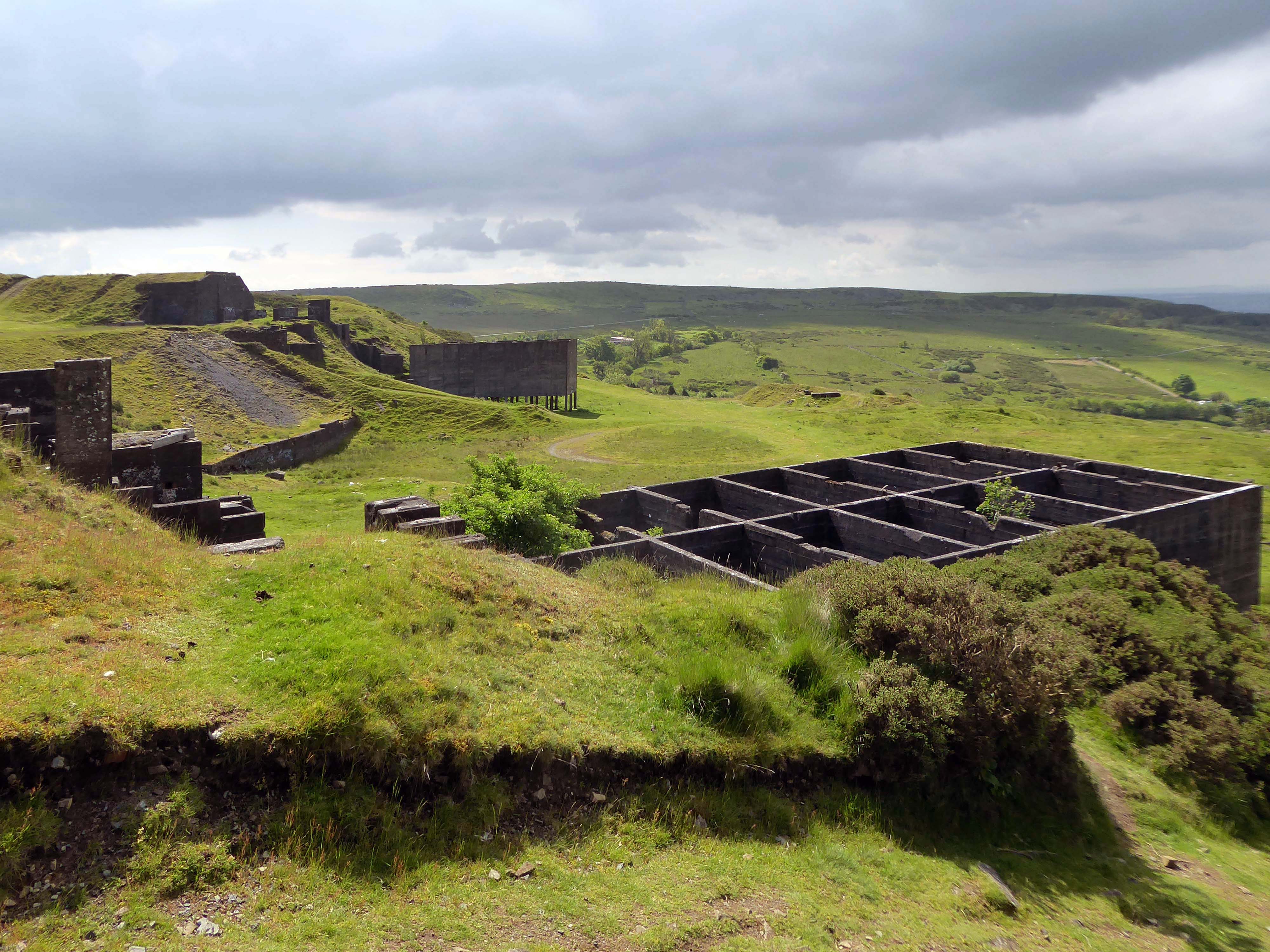
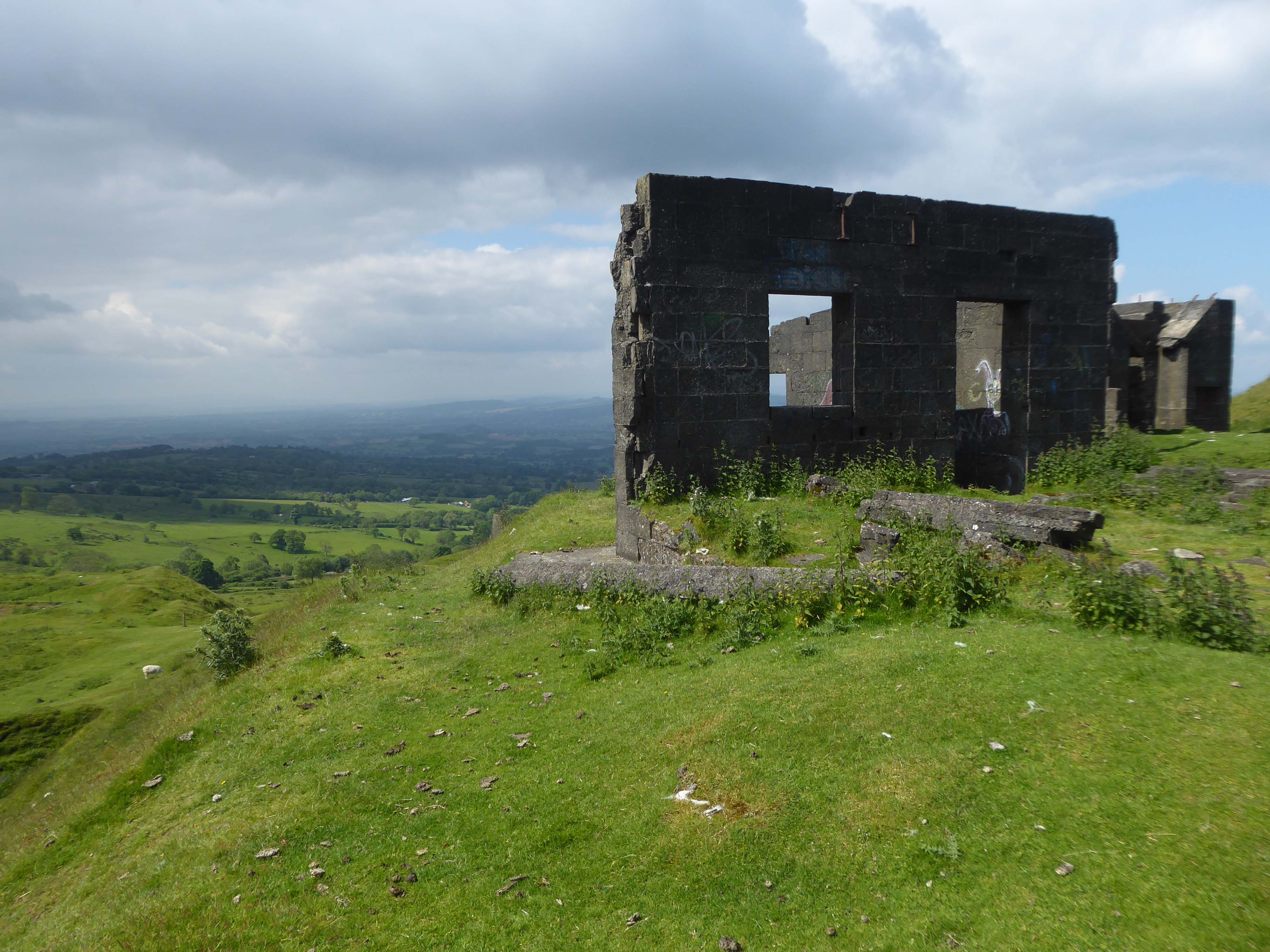
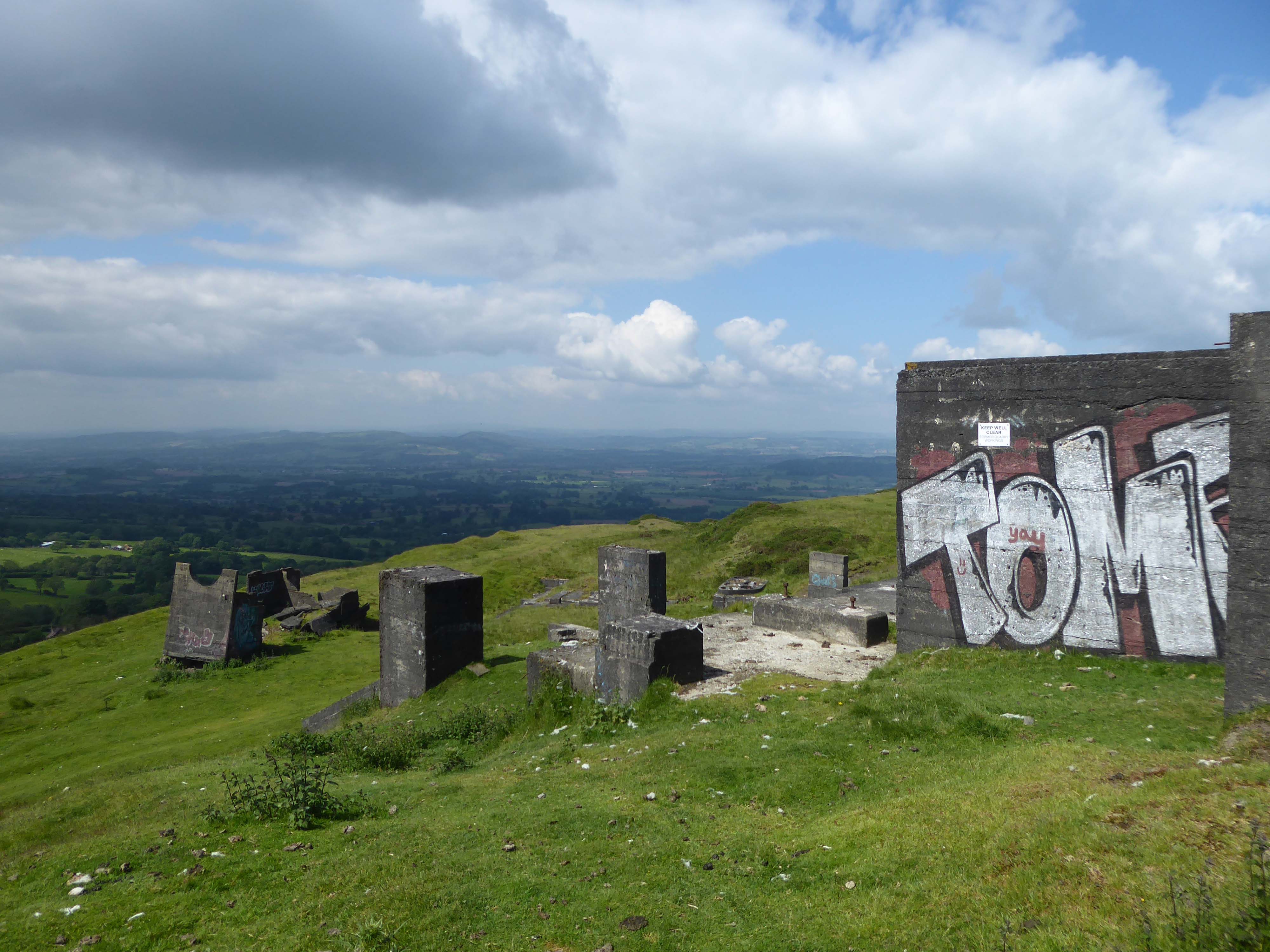
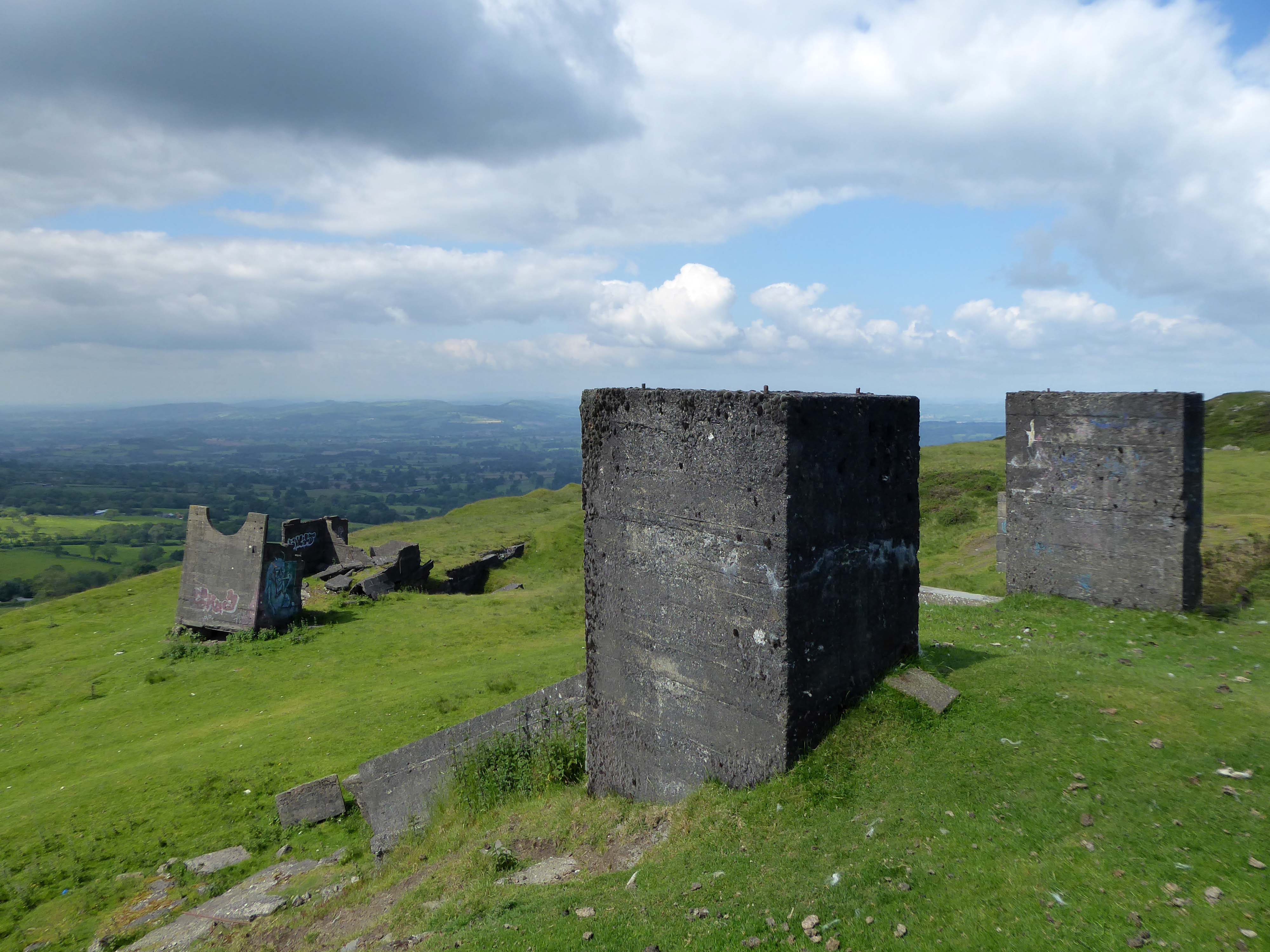
Titterstone Clee is the third-highest hill in Shropshire rising at the summit to 533 metres – 1,749 ft above sea level.
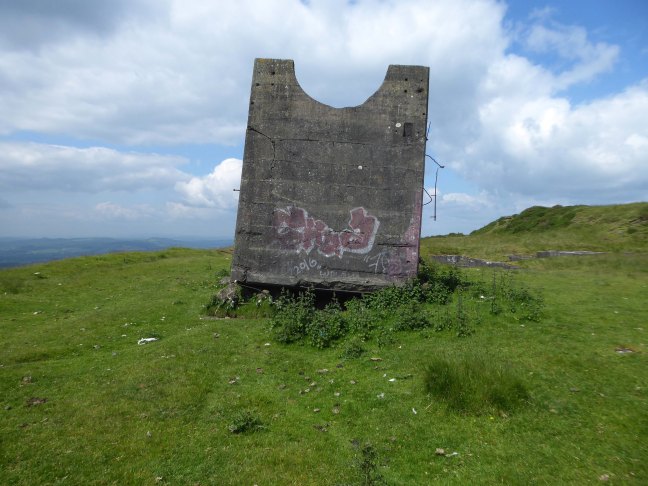
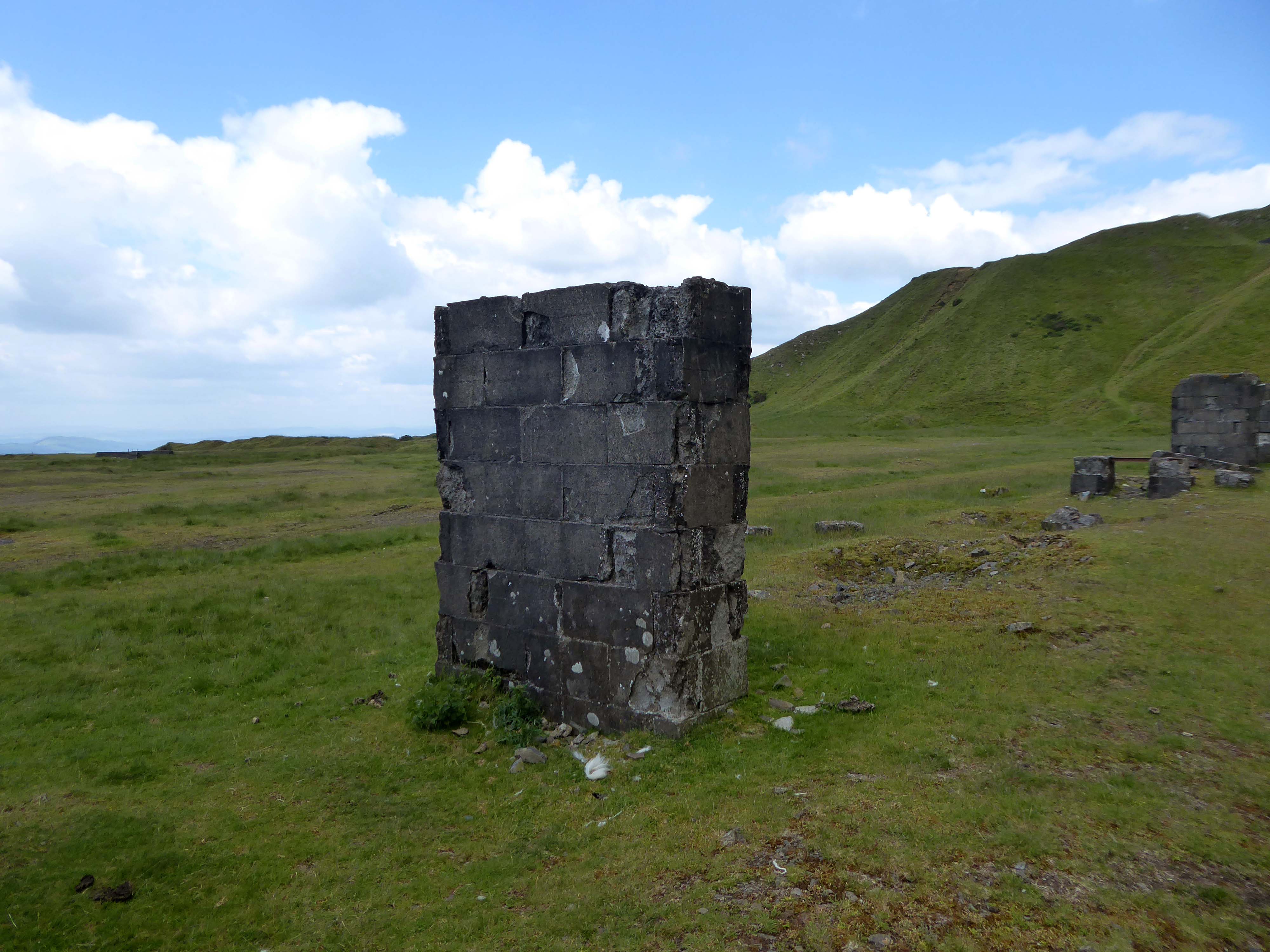
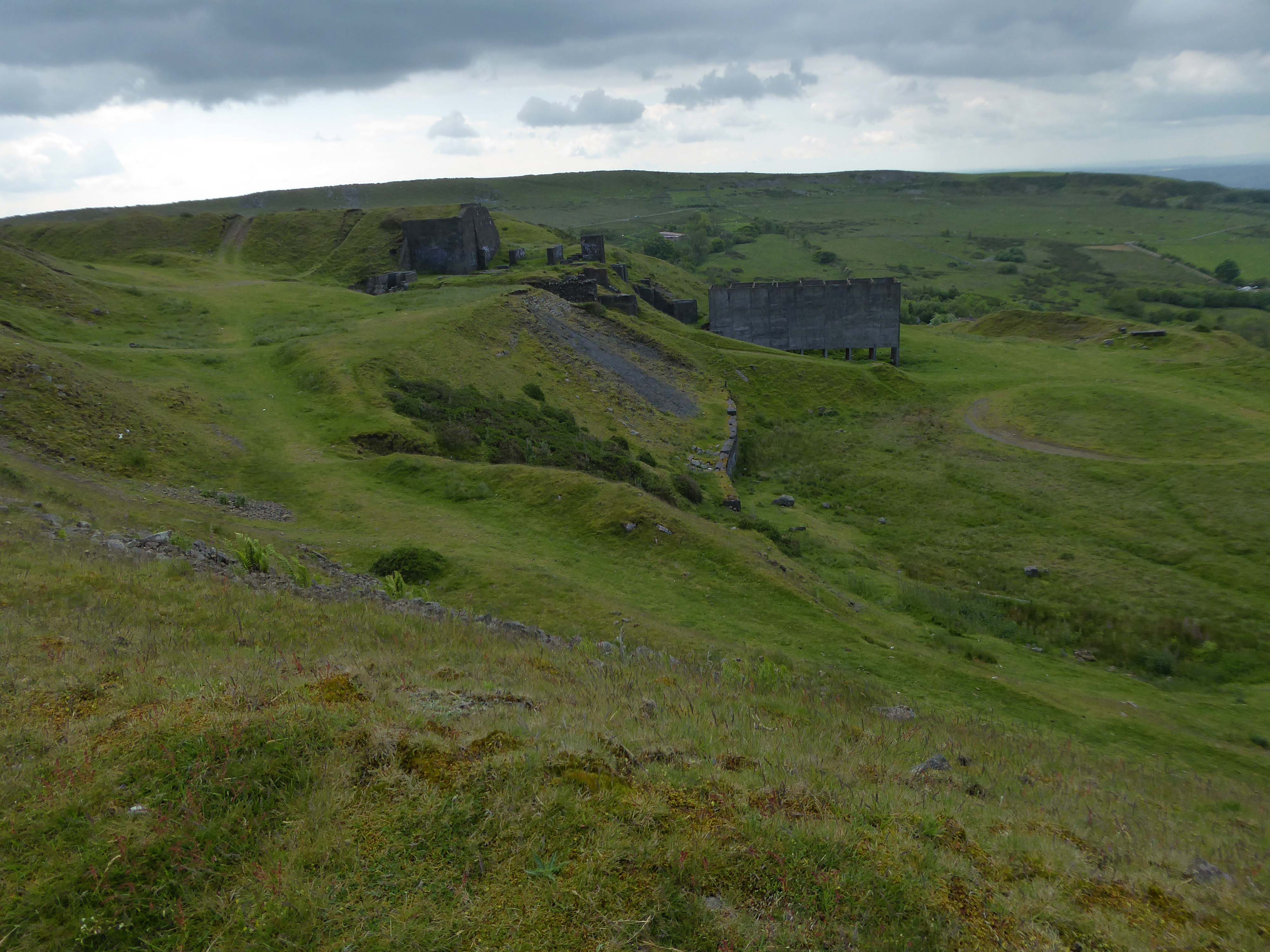
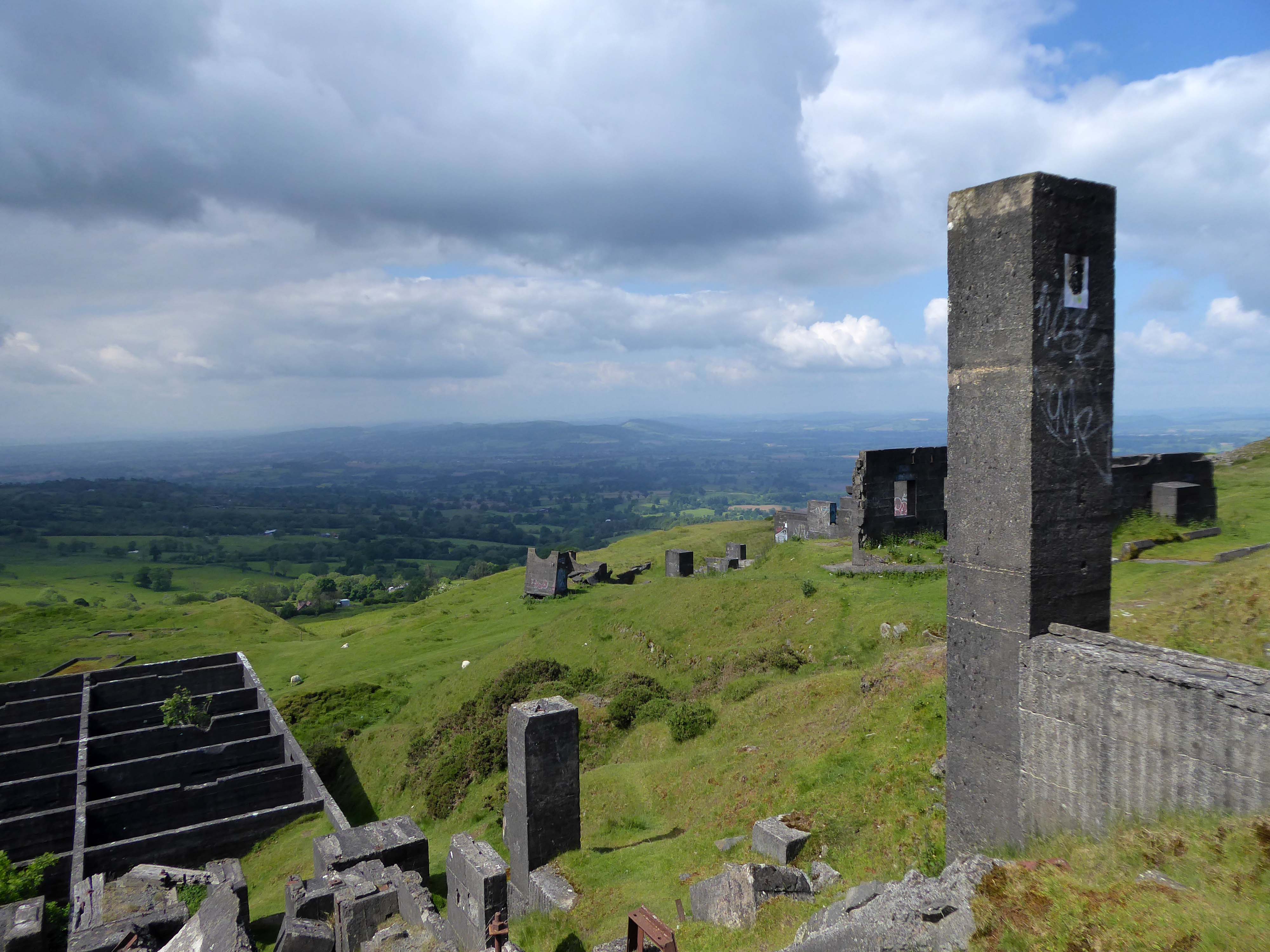
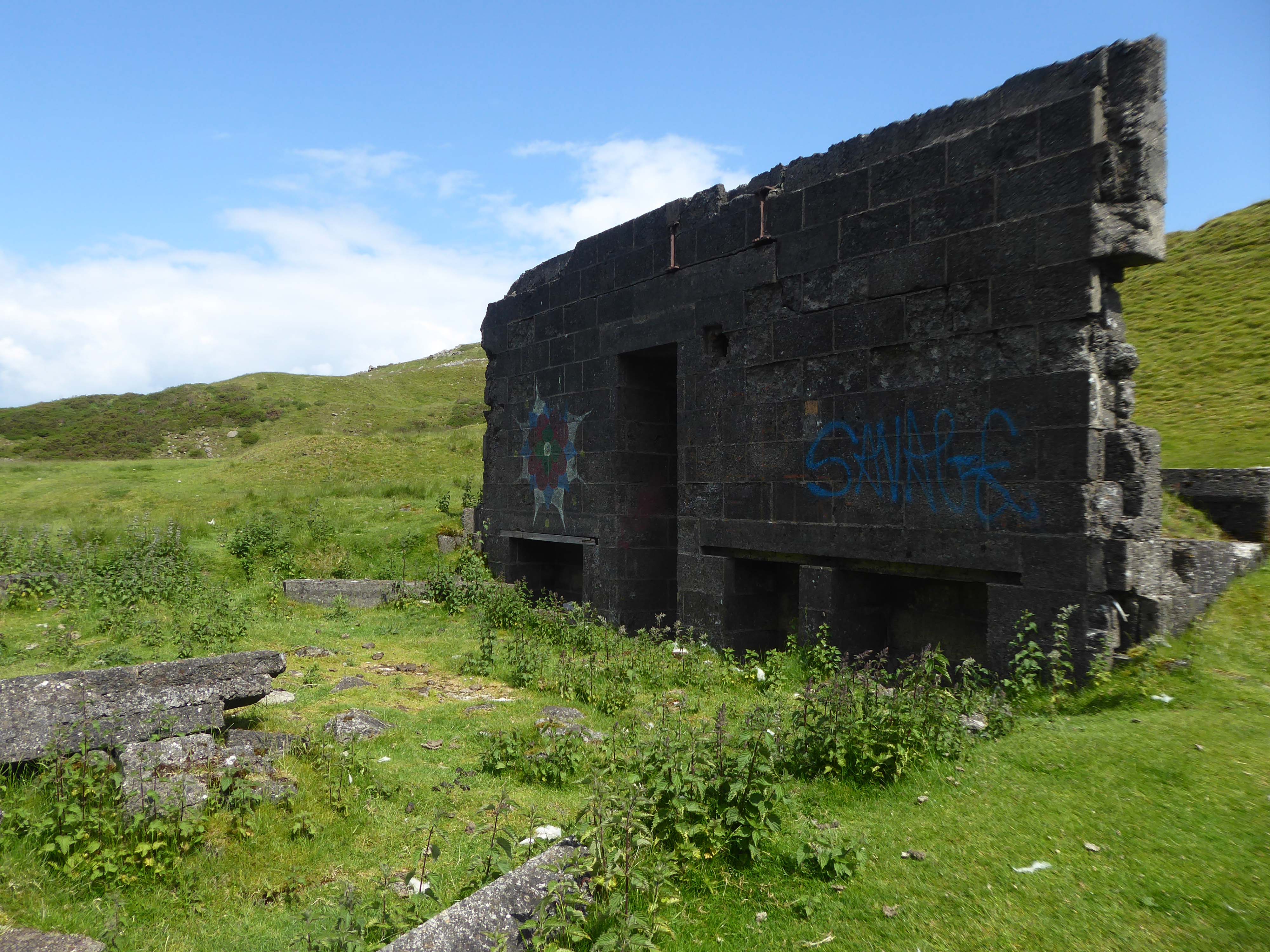
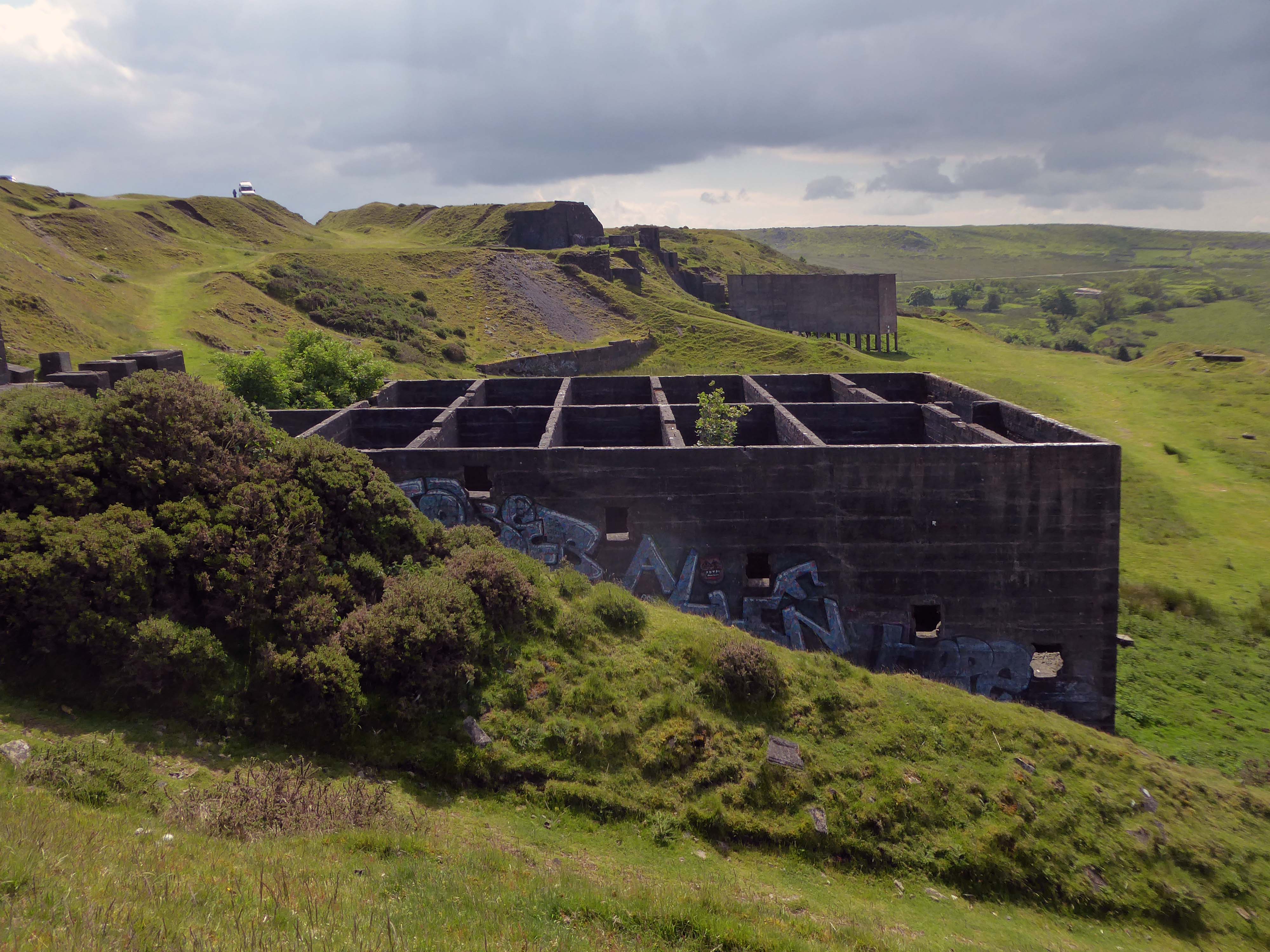
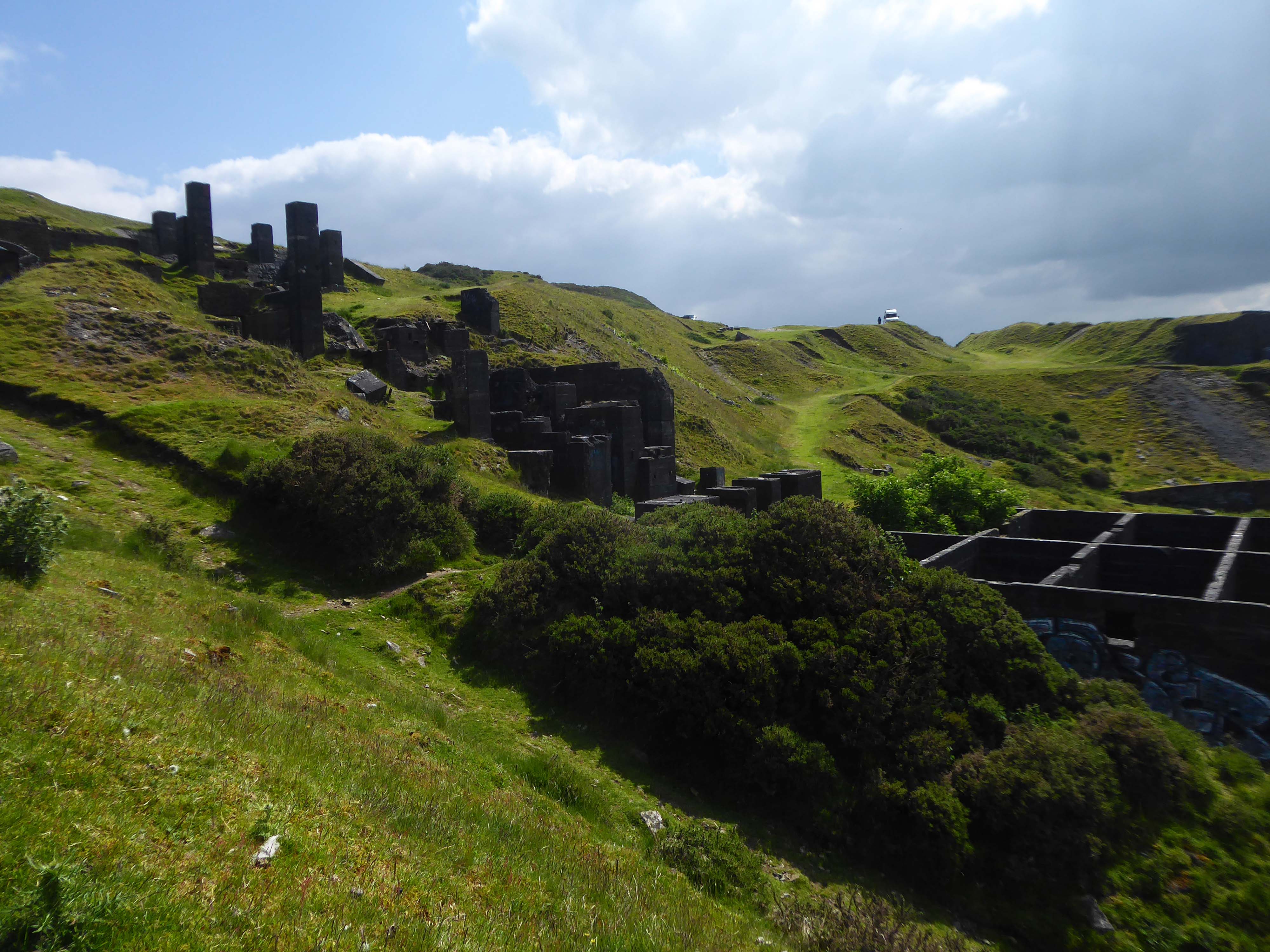
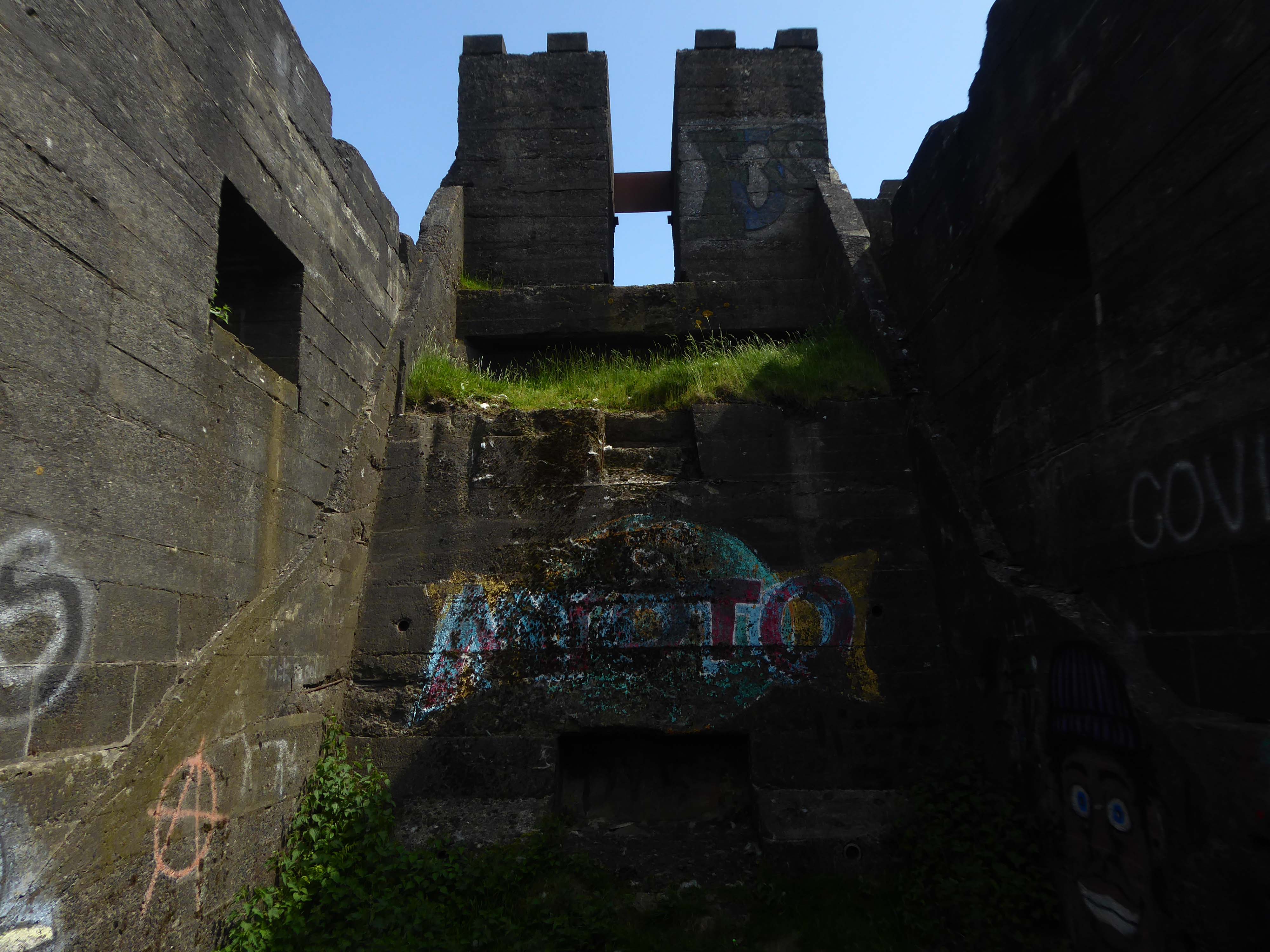
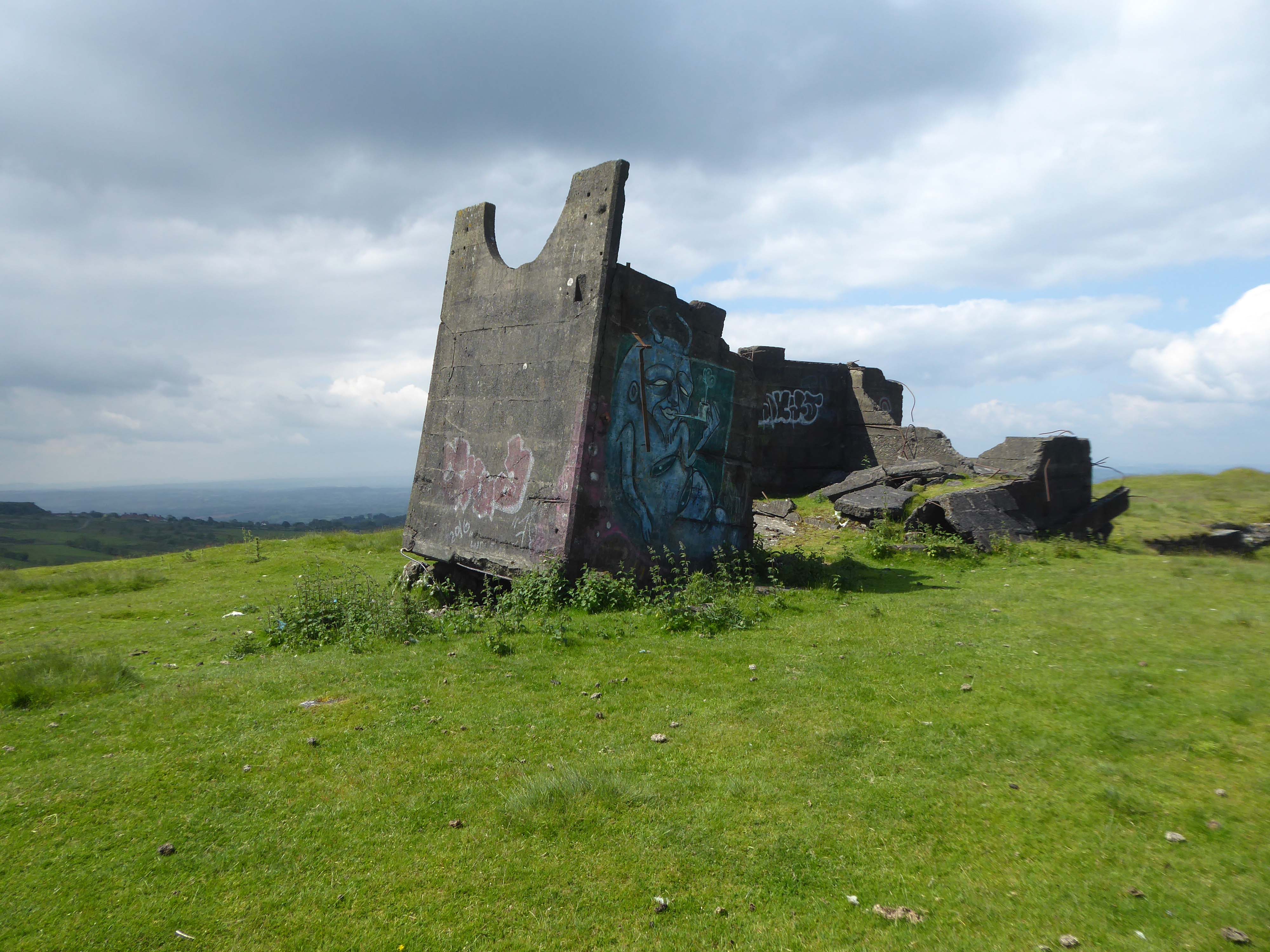
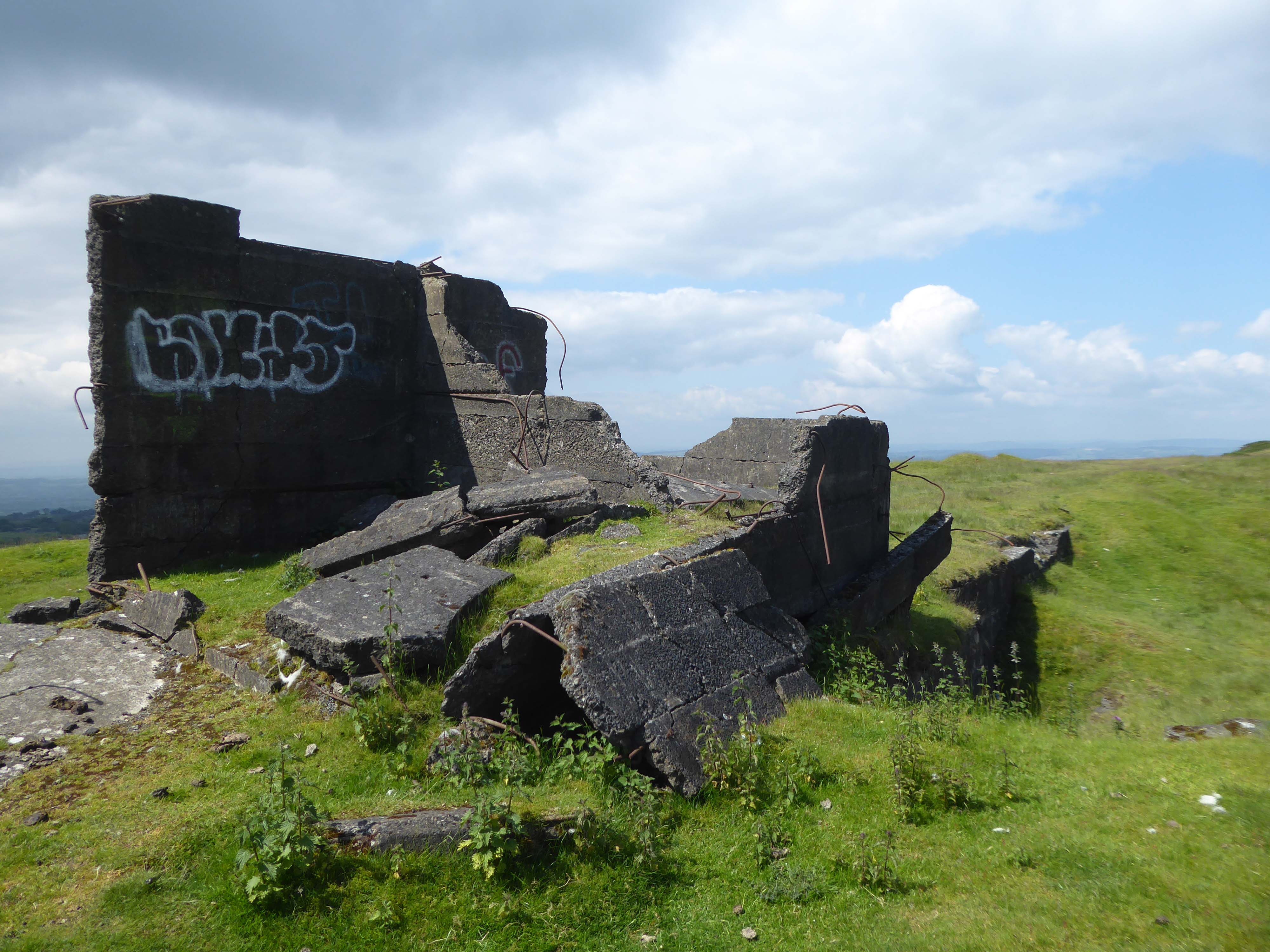
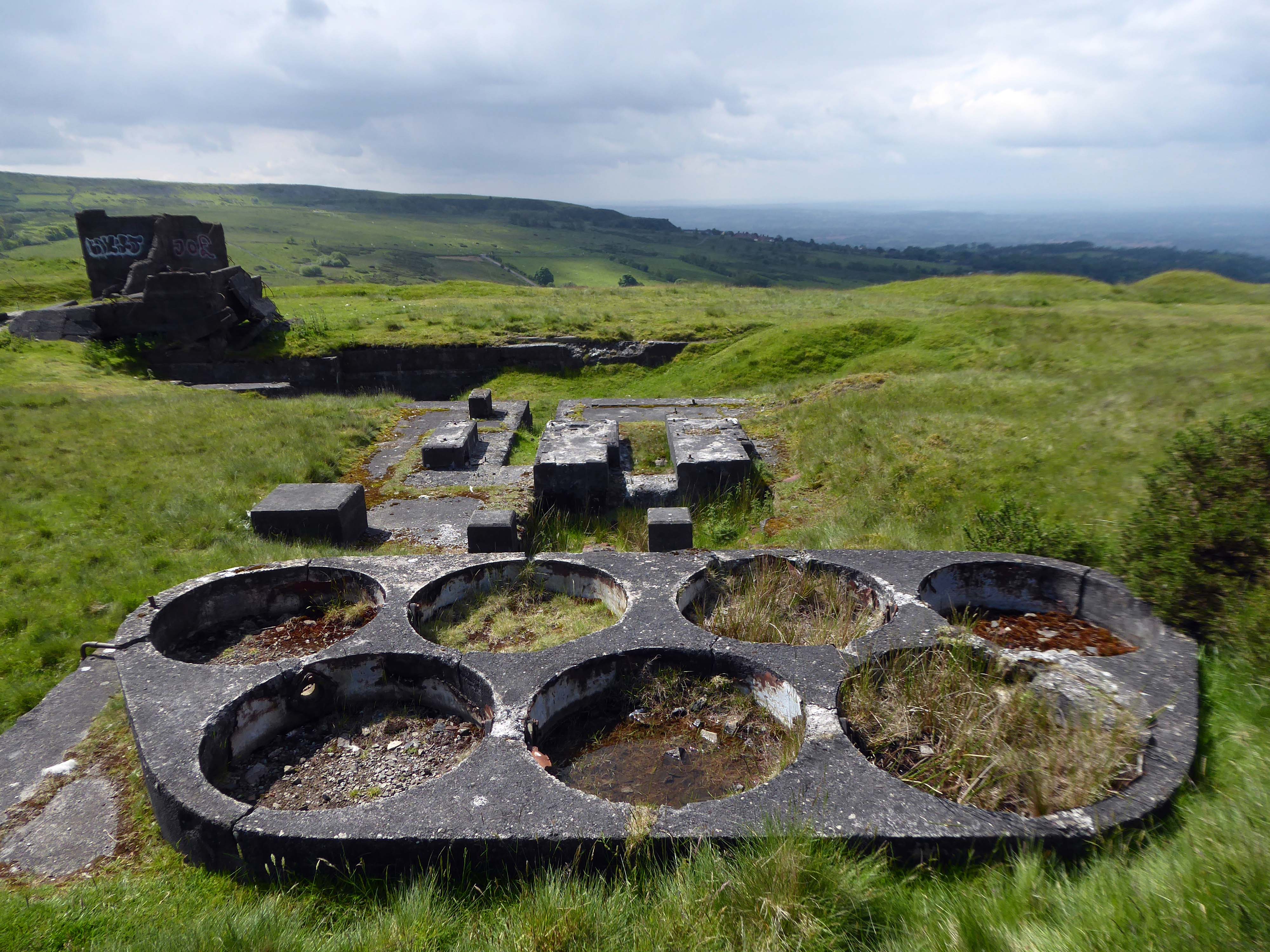
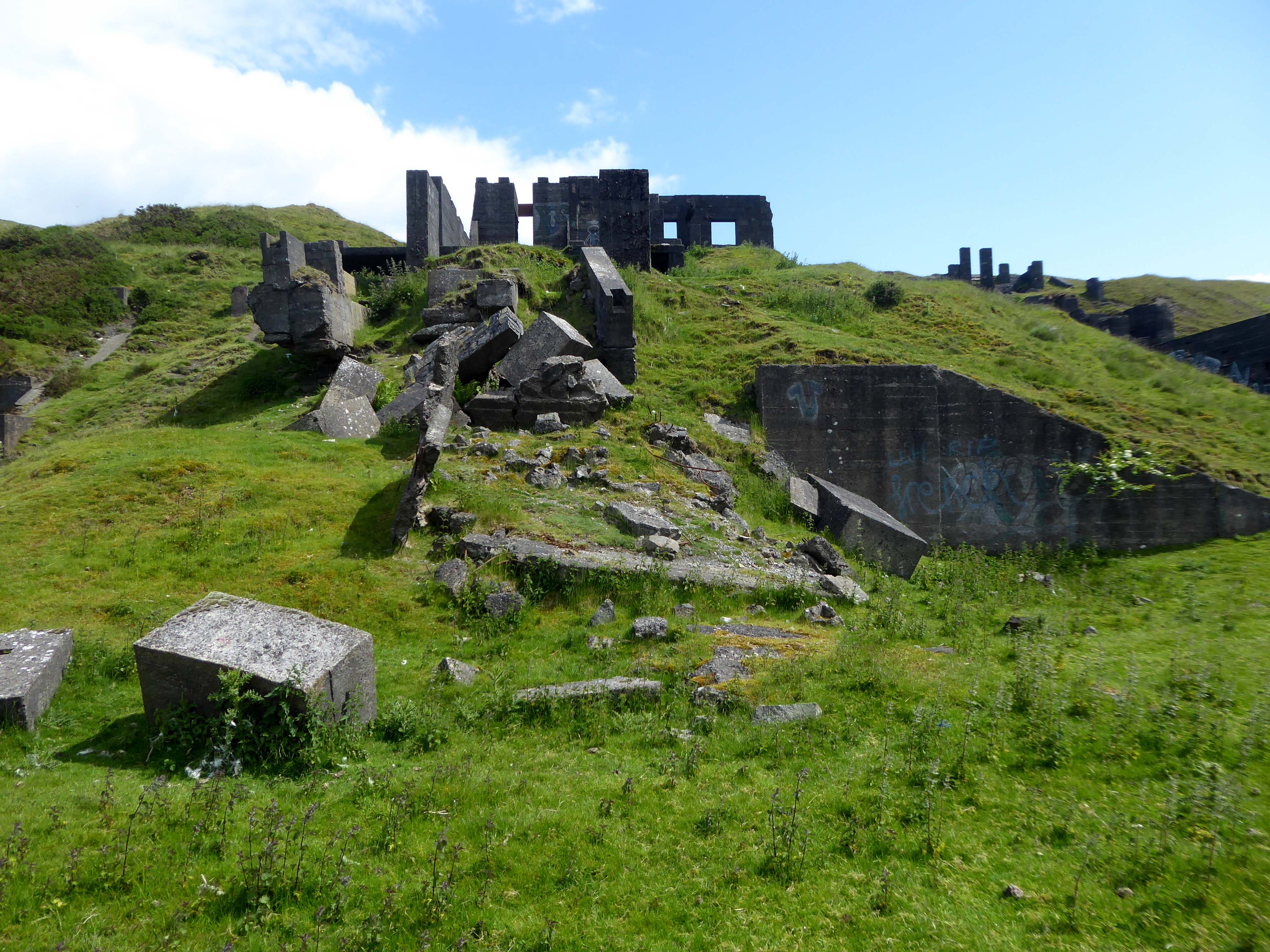
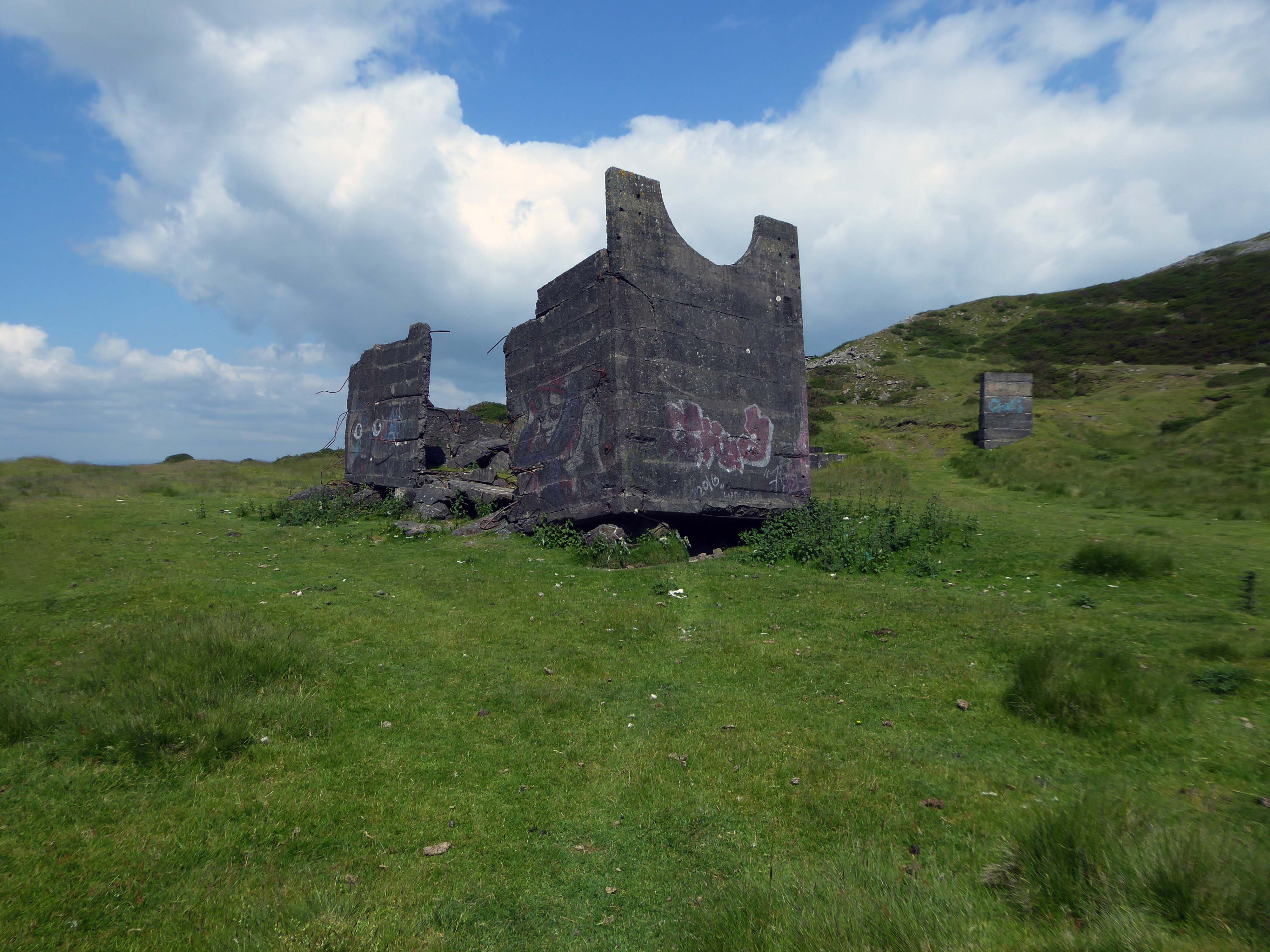
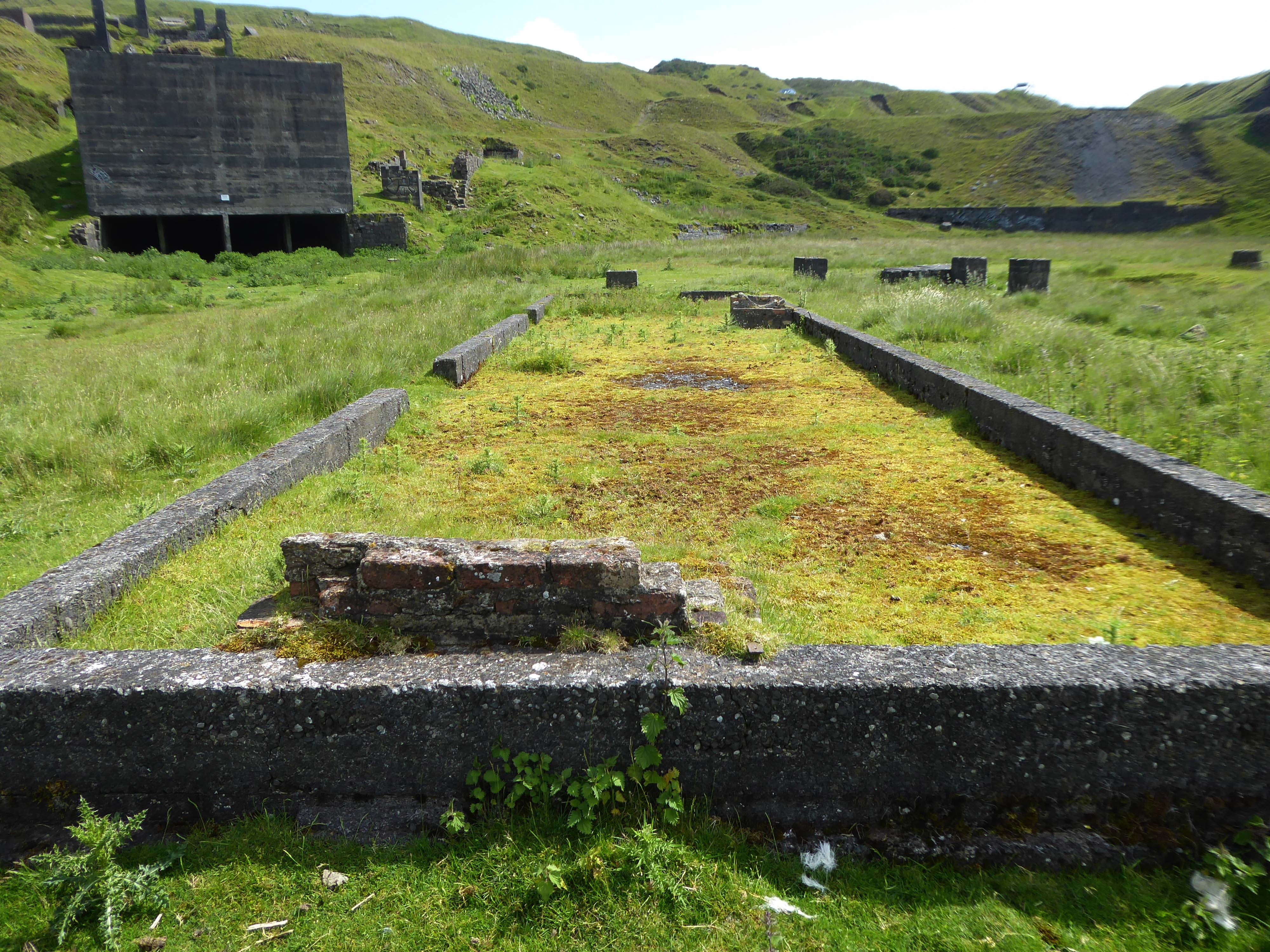
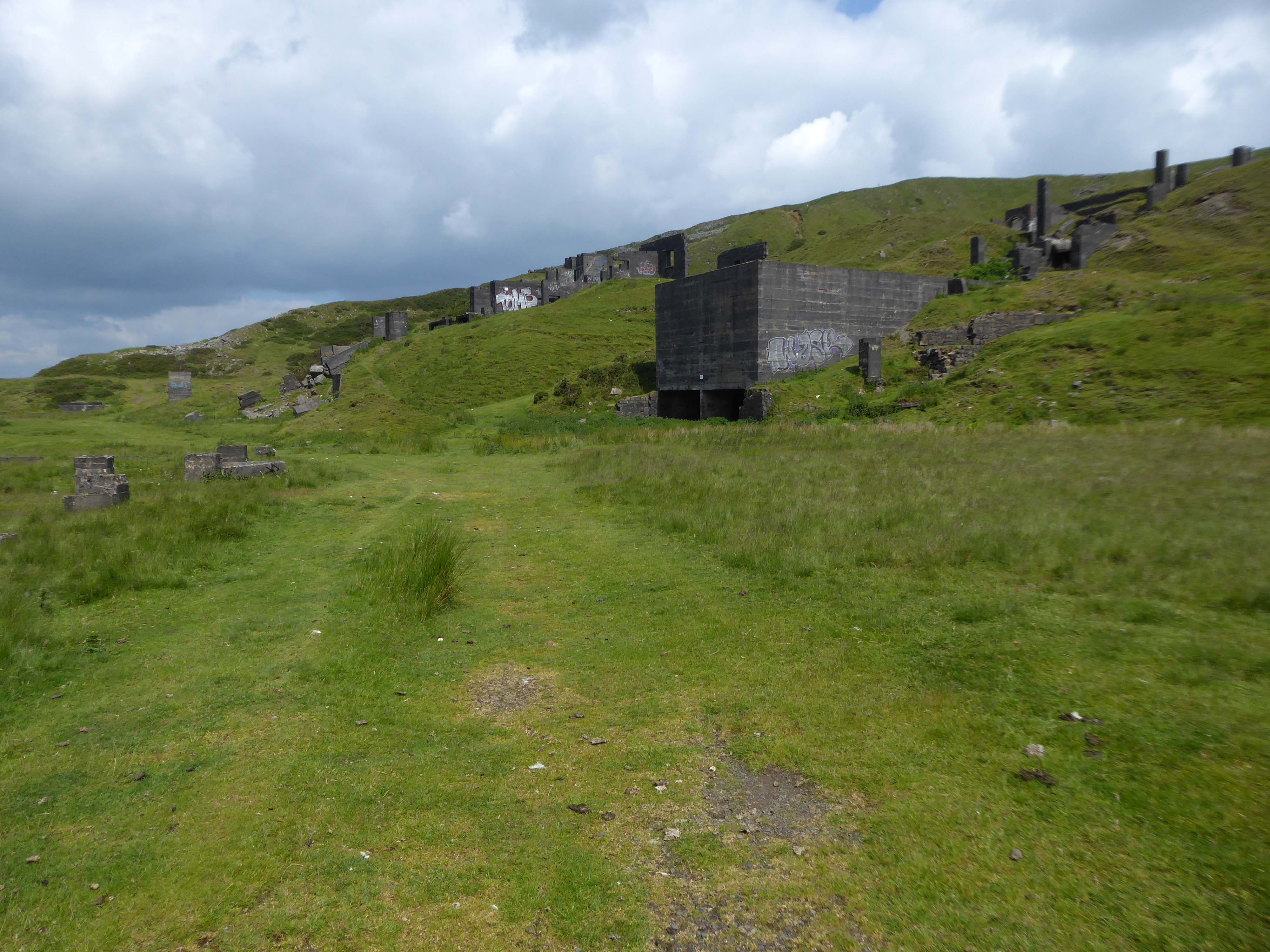
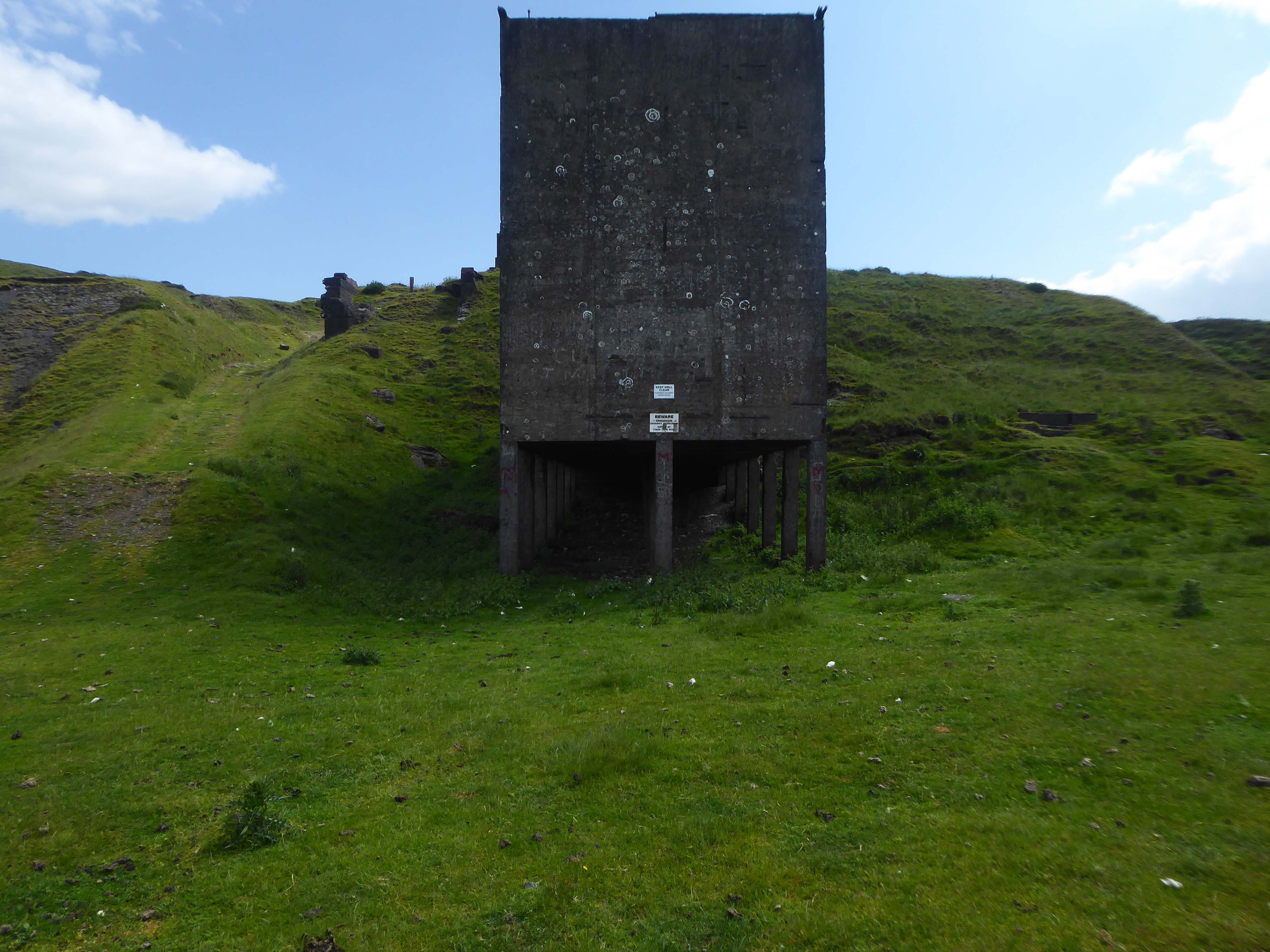
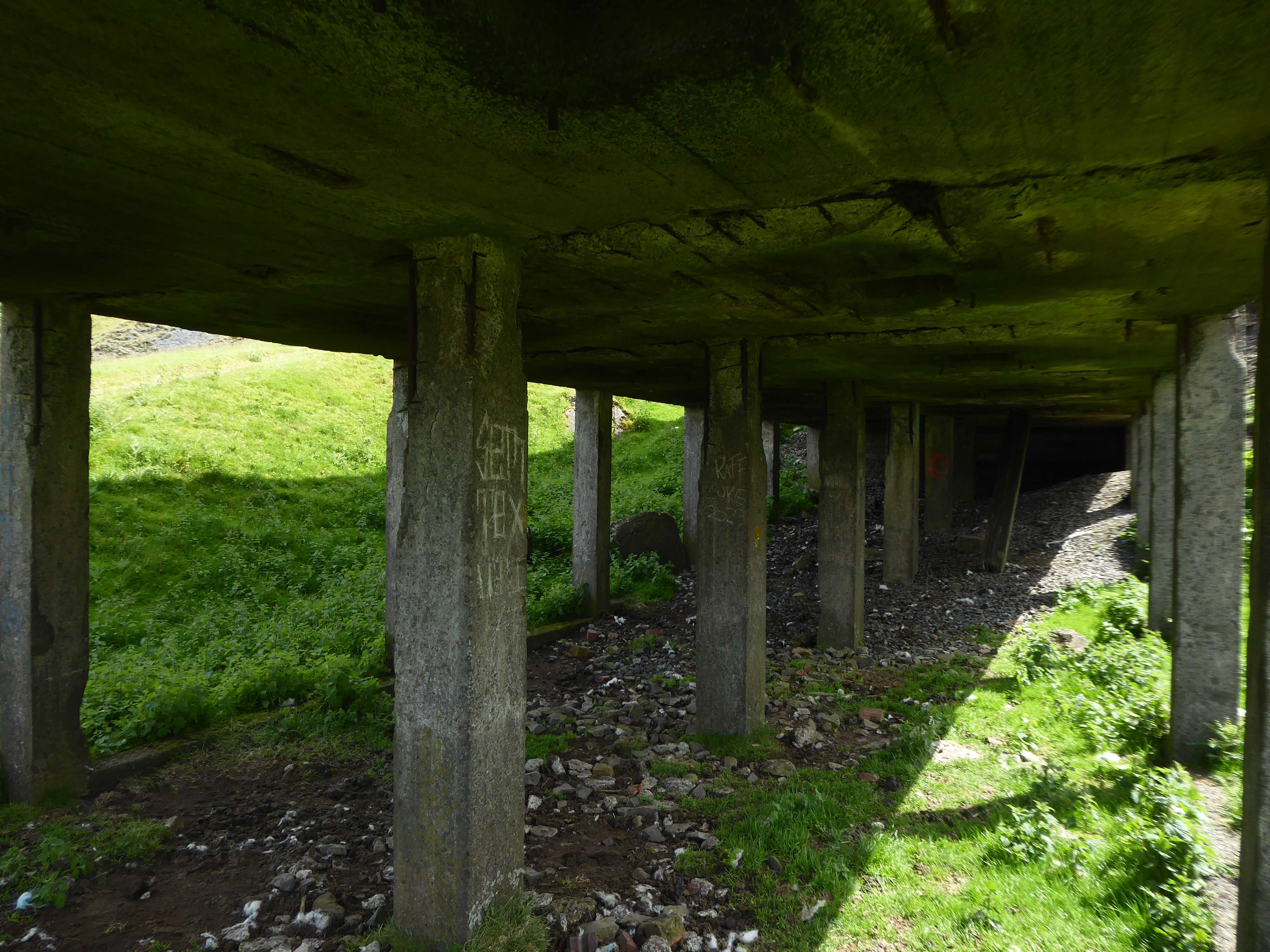
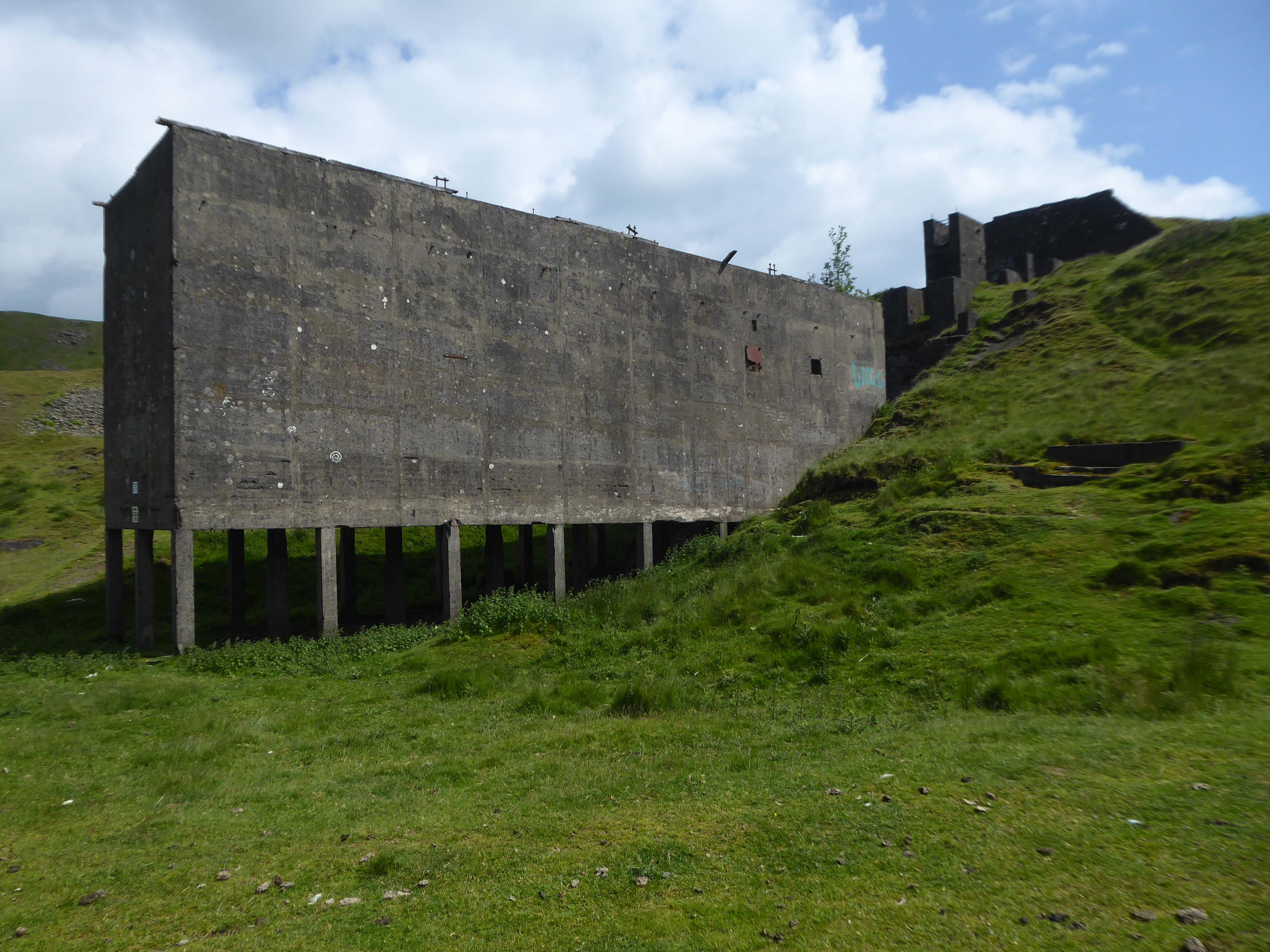
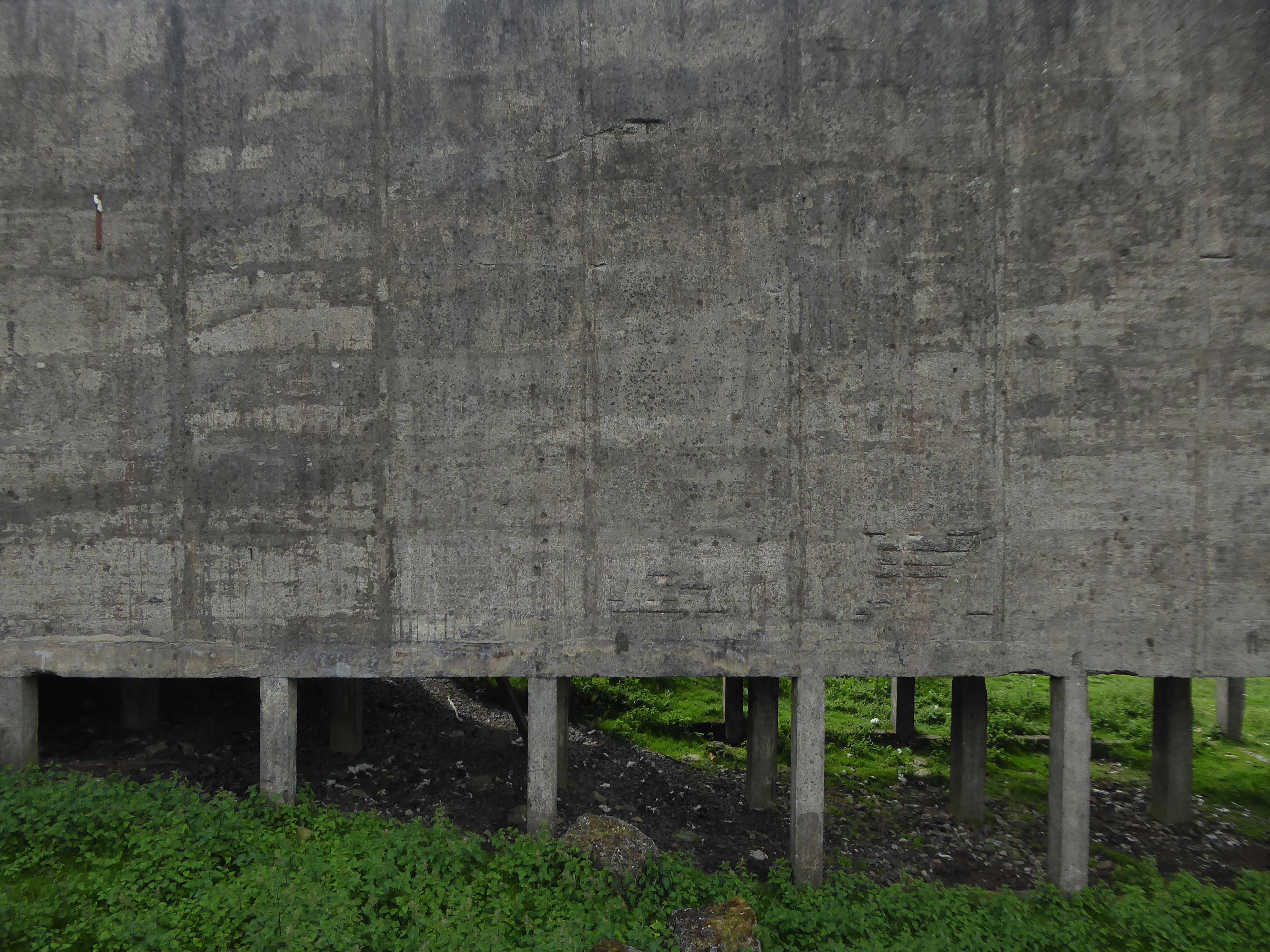
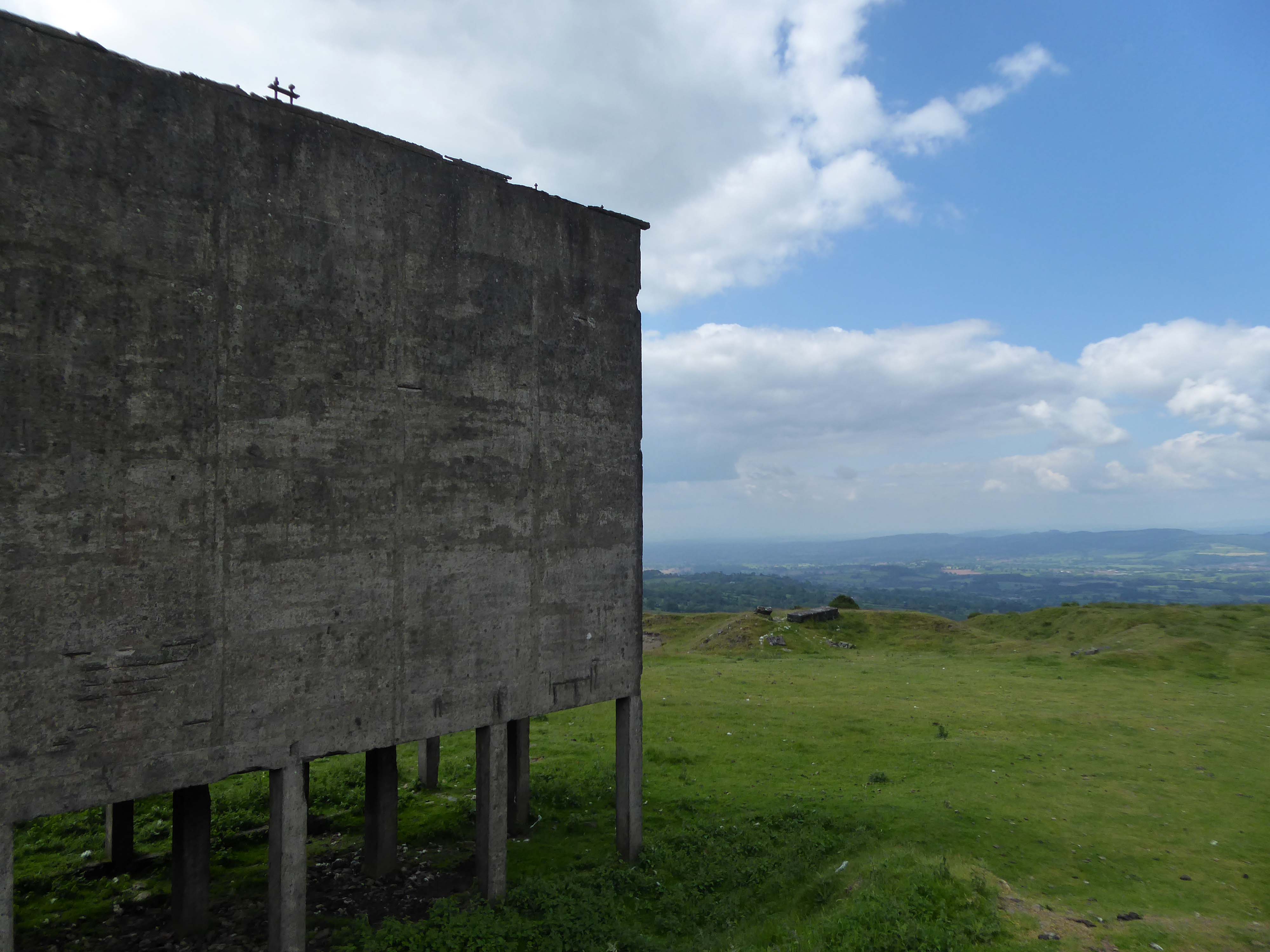
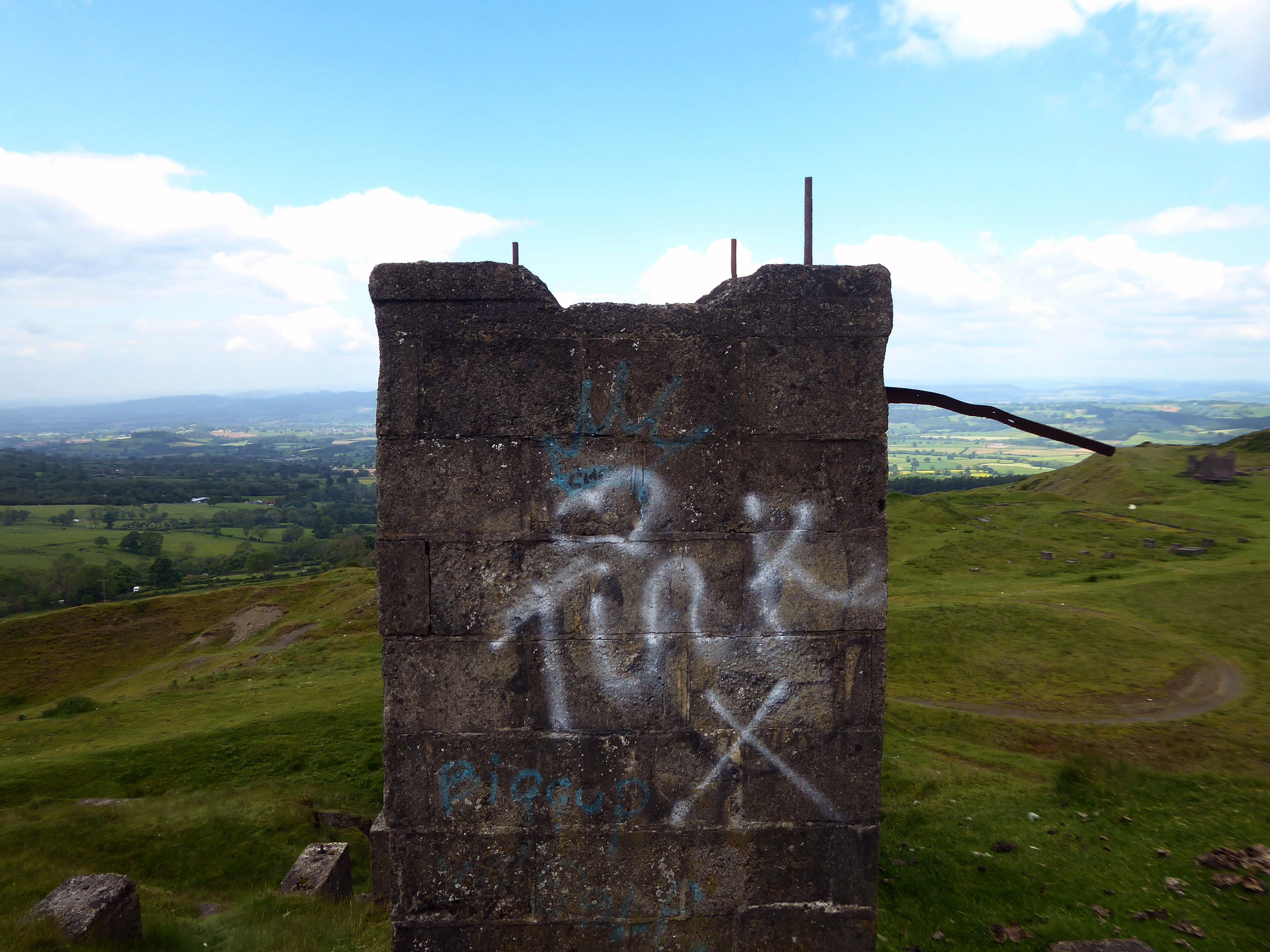
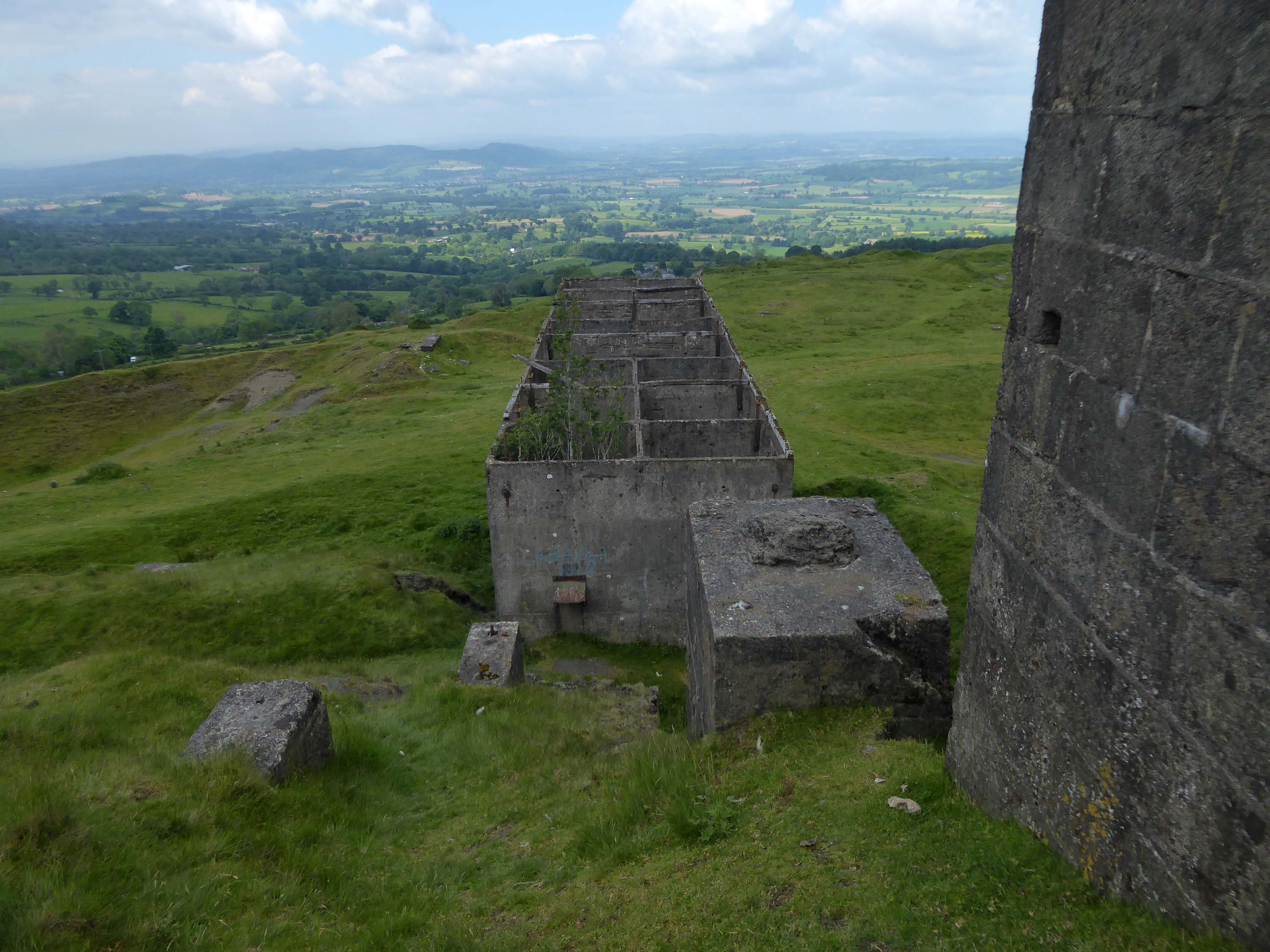
Most of the summit of the hill is affected by man-made activity, the result of hill fort construction during the Bronze and Iron Ages and, more recently, by years of mining for coal and quarrying for dolerite, known locally as dhustone, for use in road-building. Many derelict quarry buildings scattered over the hill are of industrial archaeological interest as very early examples of the use of reinforced concrete.
Near the summit trig point are the remains of a Bronze Age cairn, dating back up to 4,000 years and indicating that the summit was a likely ceremonial site. Although partly destroyed by quarrying, Titterstone Clee’s Iron Age hill fort is enclosed by a huge boundary earthworks.
It is of note that the walls of the fort are made up of stone blocks, instead of earth banks.
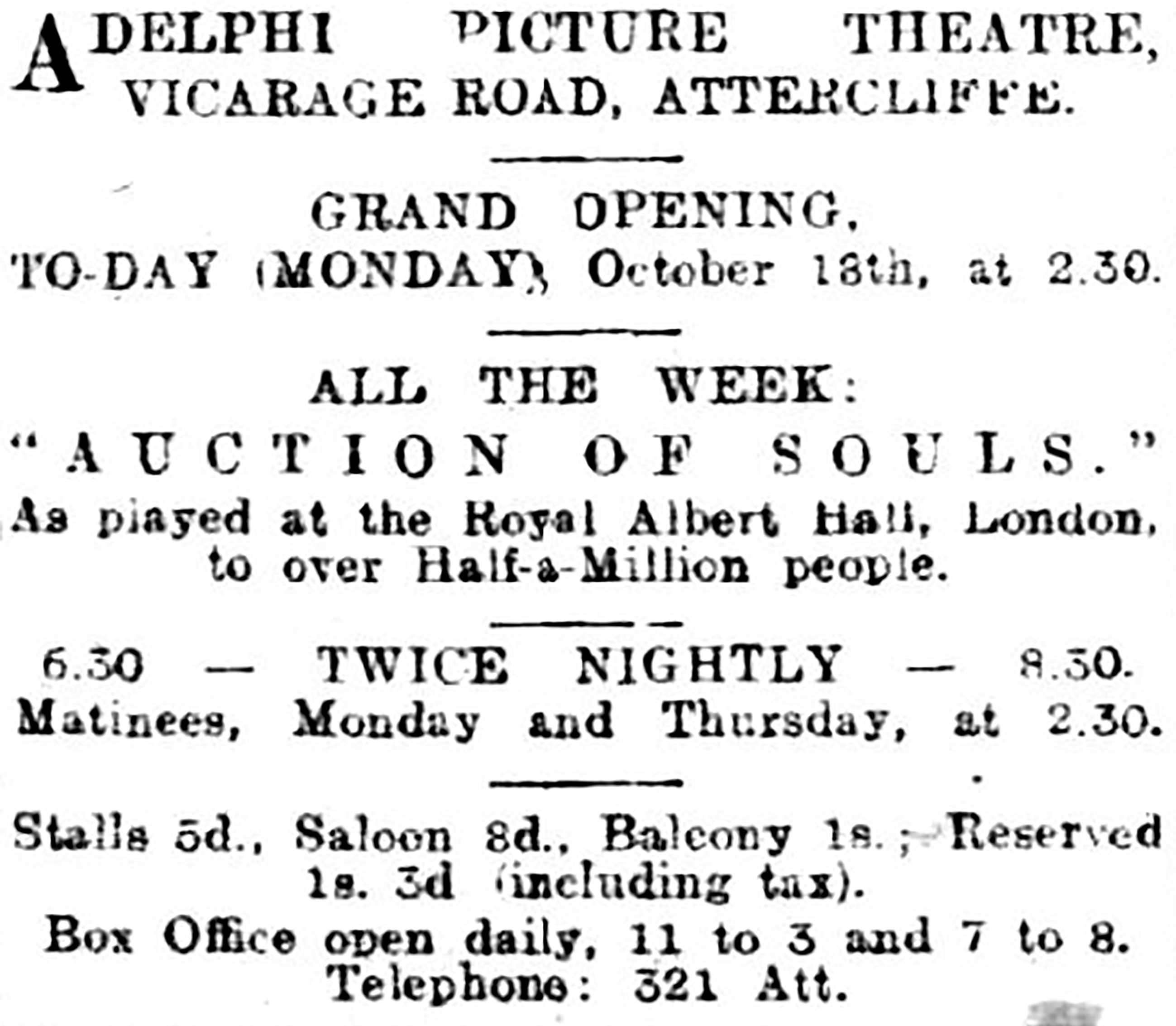
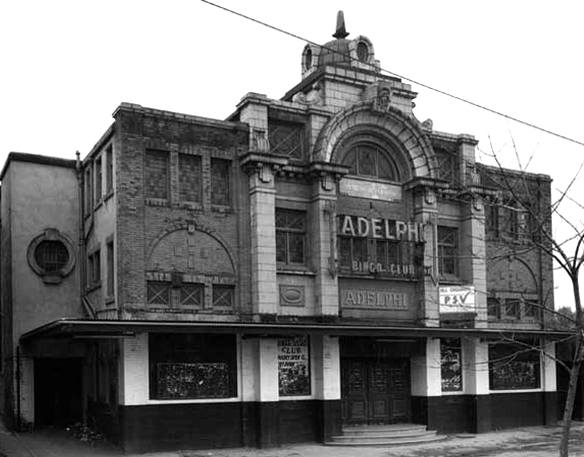
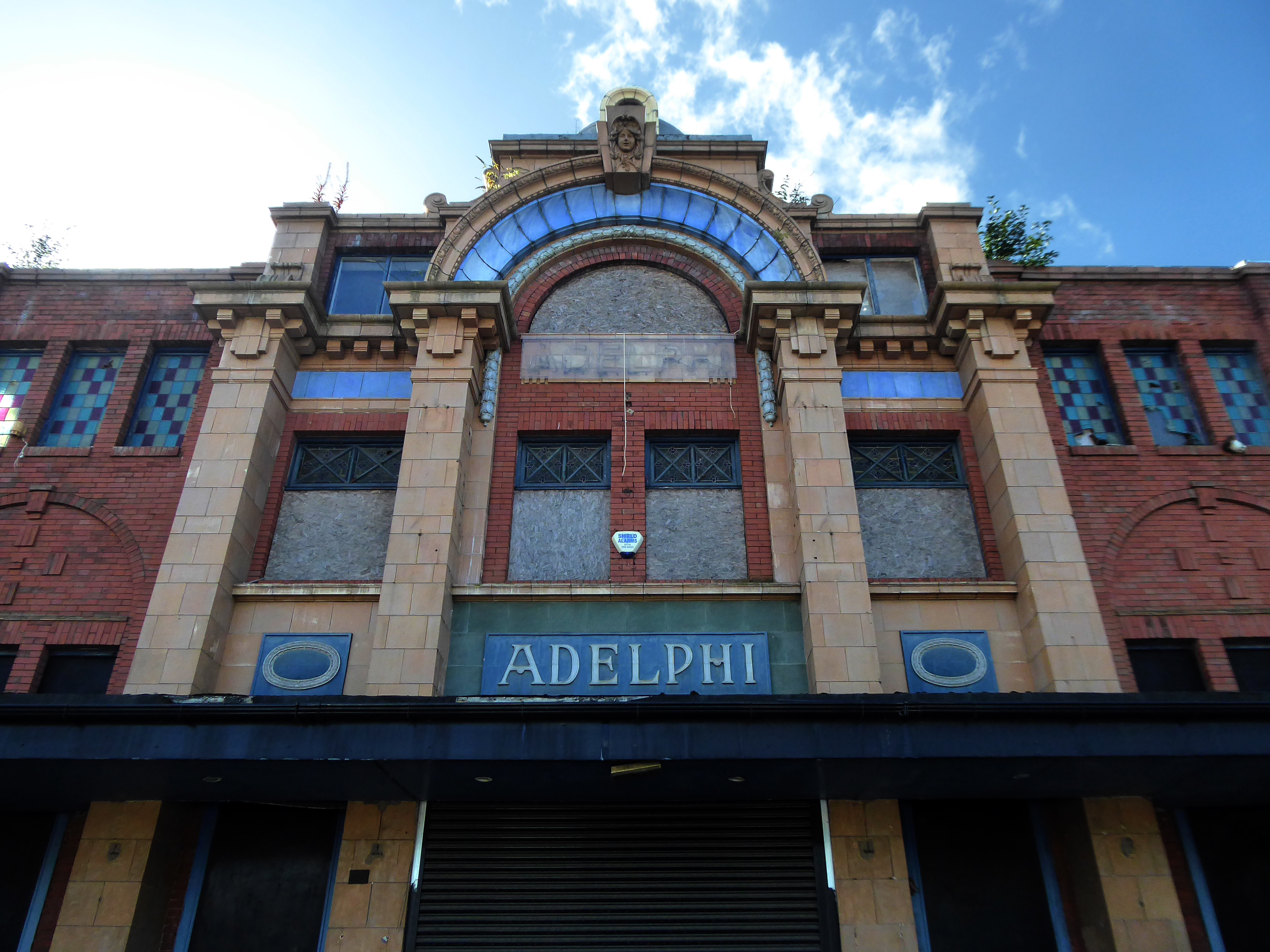
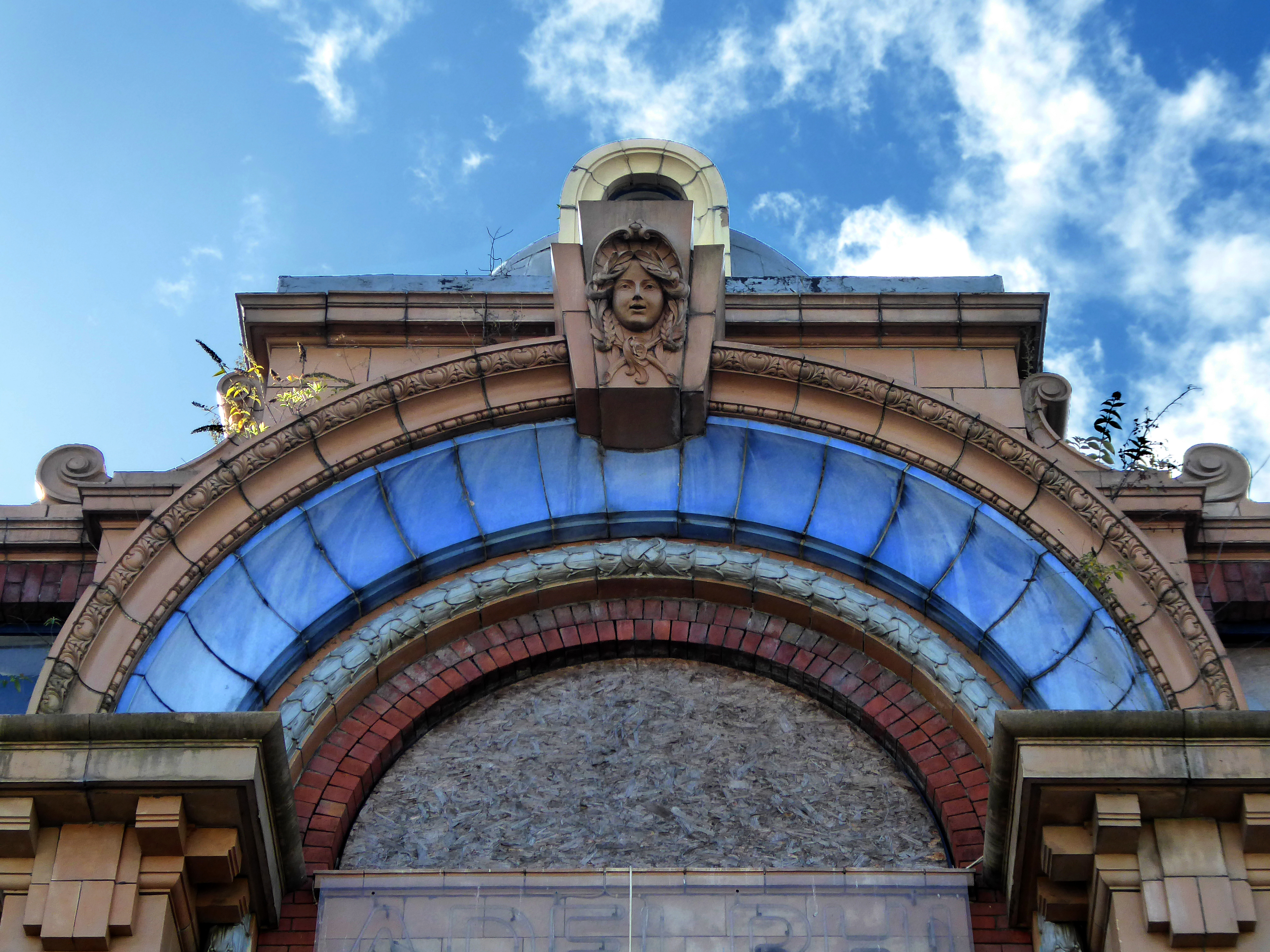
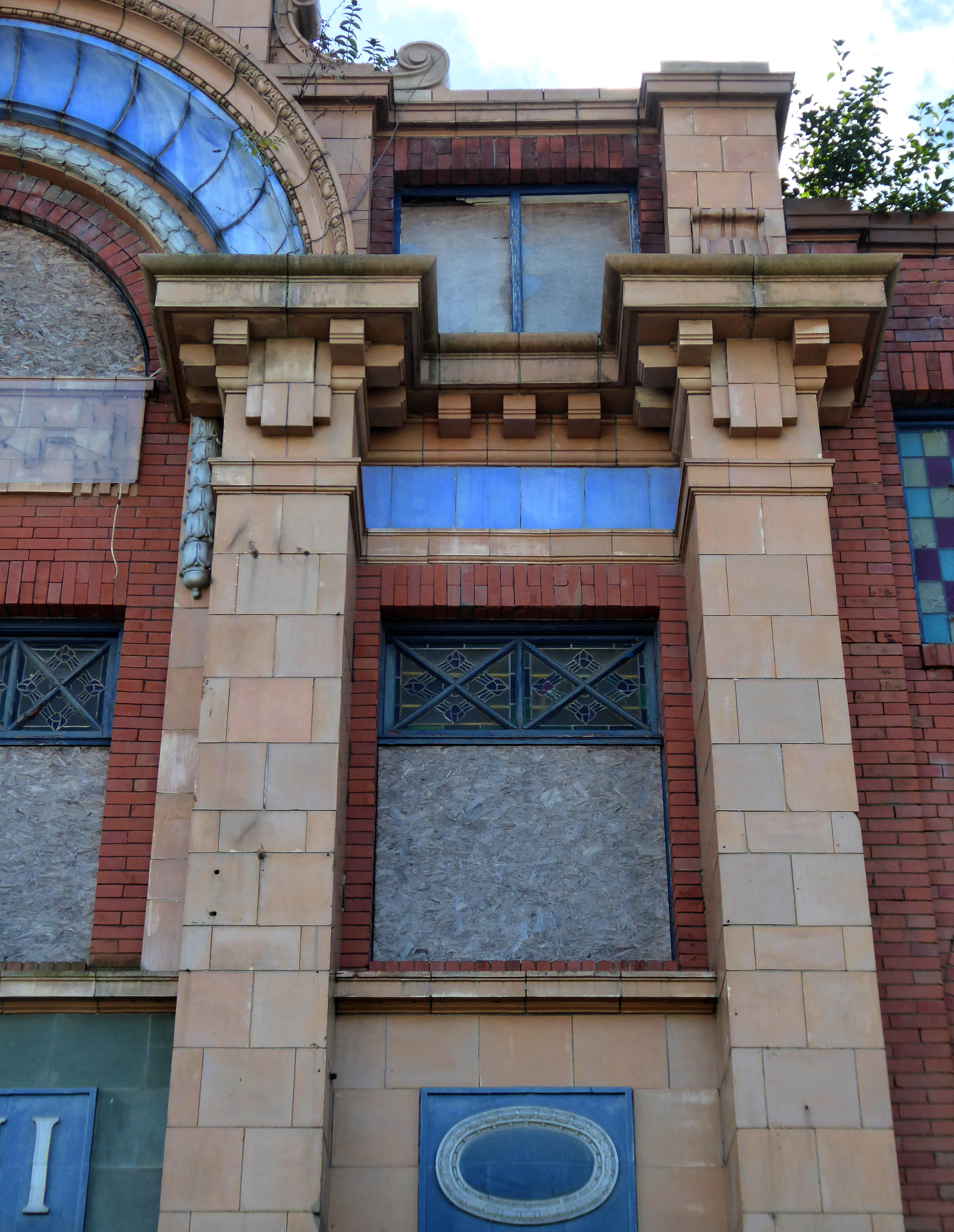
The Adelphi Picture Theatre is located in the Attercliffe district in the east of Sheffield. It opened on 18th October 1920 with Irving Cummings in Auction of Souls. The red brick building has buff and blue coloured terracotta enrichments on the façade, especially on the small turret dome over the entrance, which also has stained glass windows.
Seating in the auditorium was provided in stalls and circle, and the projection box was located in the rear stalls, underneath the circle. The cinema was in reverse, and patrons entered the auditorium from behind the screen. The decoration includes pilasters, a segment-arched panelled ceiling and a moulded proscenium arch with a central crest which is flanked by torches. The circle has a lattice-work plaster front.
Single photo enhanced with easyHDR 3.15.2: Adelphi 1920 10 18.jpg
It underwent some restoration in 1936 and a re-decoration in August 1939. It received some bomb damage during the second week of the blitz and was closed for around a month. It received further renovation in August 1946. It remained an independently operated cinema throughout its cinematic life and was usually tied in with the Coliseum Cinema on Spital Hill.
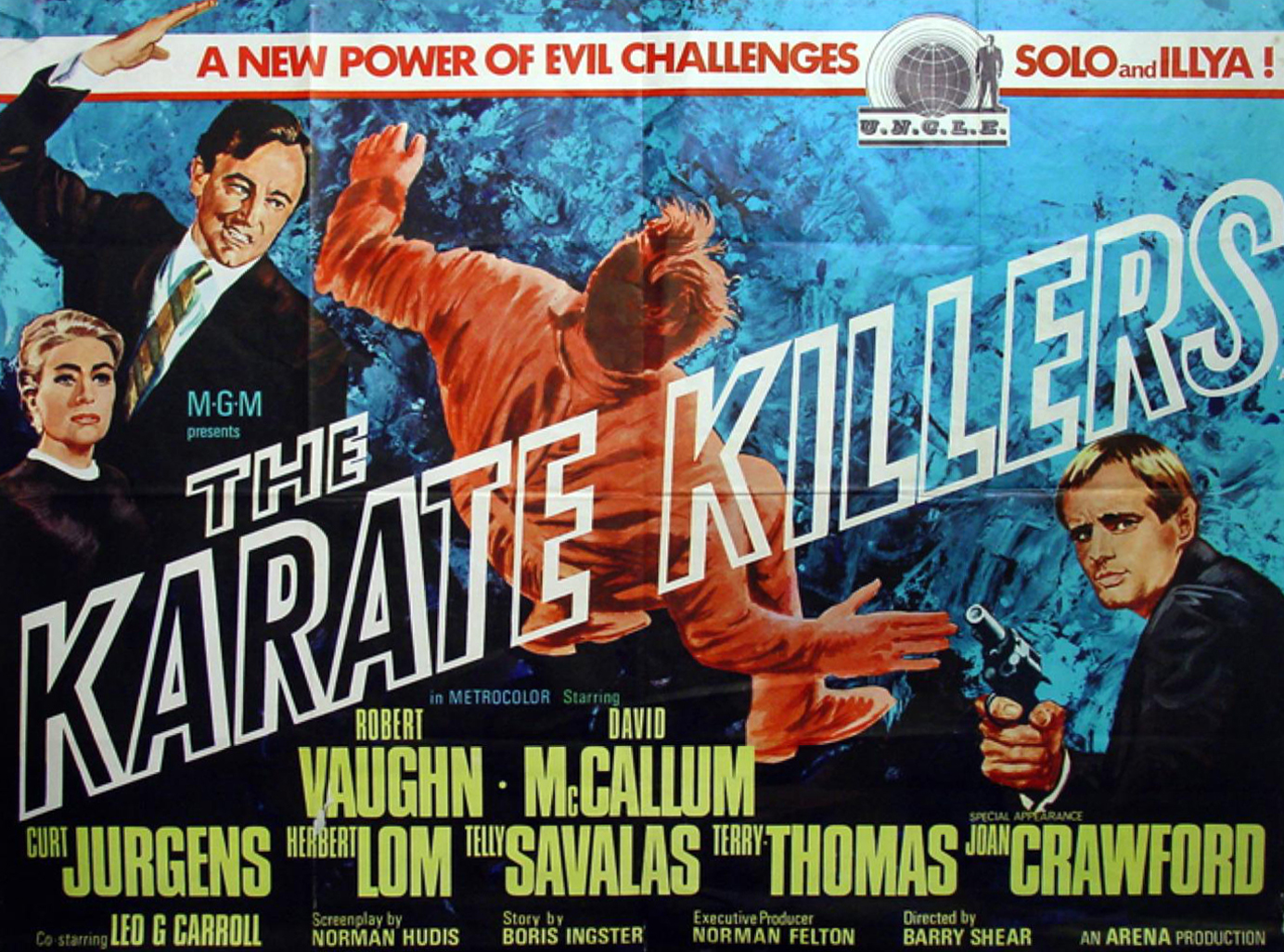
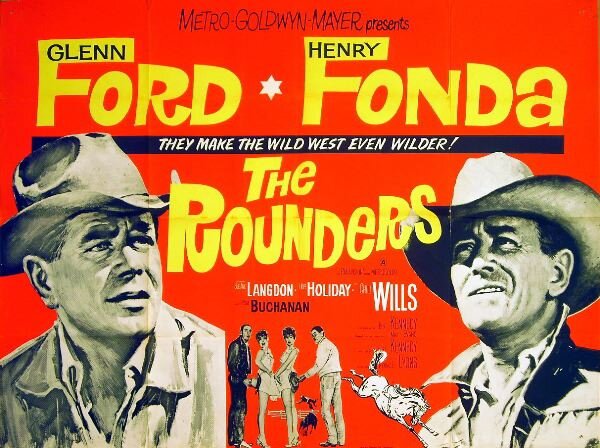
The Adelphi Picture Theatre closed on 28th October 1967 with Robert Vaughn in The Karate Killers and Glenn Ford in The Rounders. It became a bingo club, last operated by the independent Walkers Bingo. After this closed in around 1995 it became a nightclub and since March 2000 was converted into a music teaching centre. This closed in 2006, and the building stood unused, and by 2013, it was in use as a storage facility. It was announced in November 2022 that the city council were seeking to purchase the building to renovate and convert it into a community centre.
Since early 1996, the Adelphi Picture Theatre was designated a Grade II Listed building by Historic England.
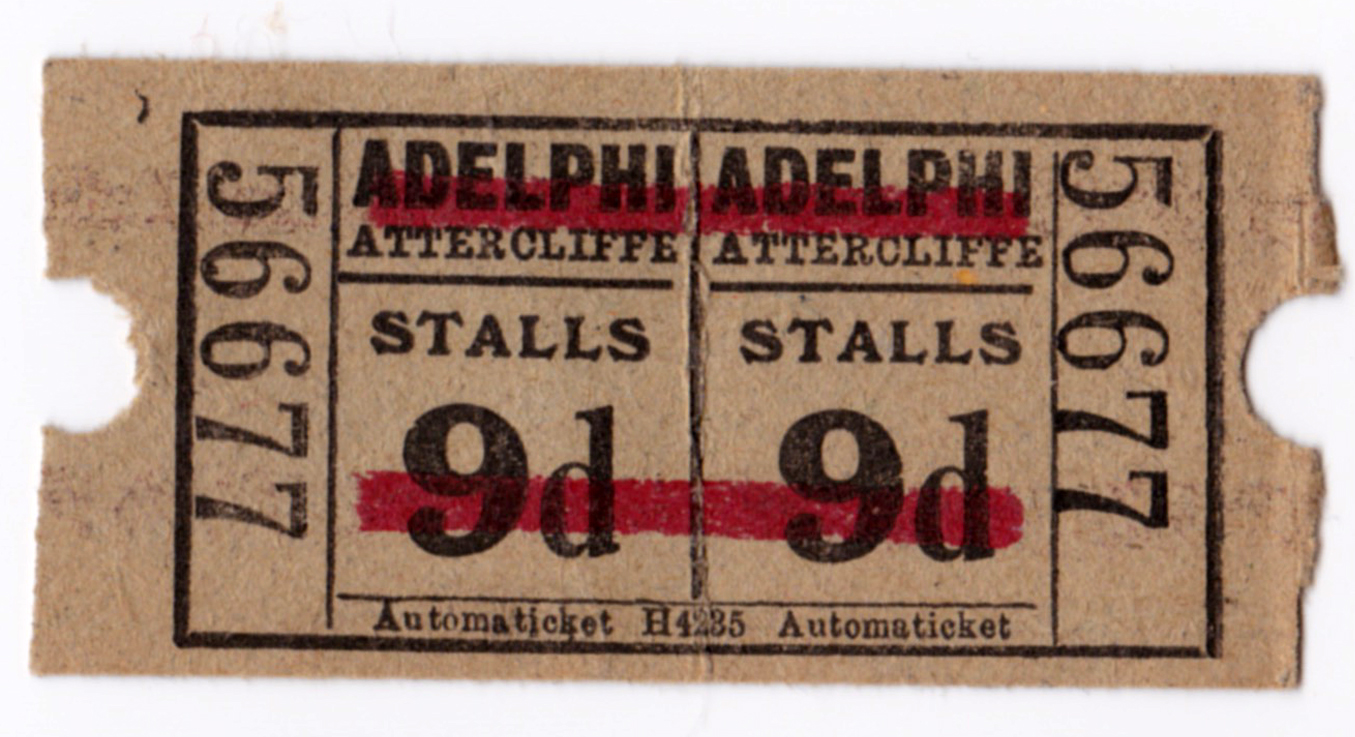
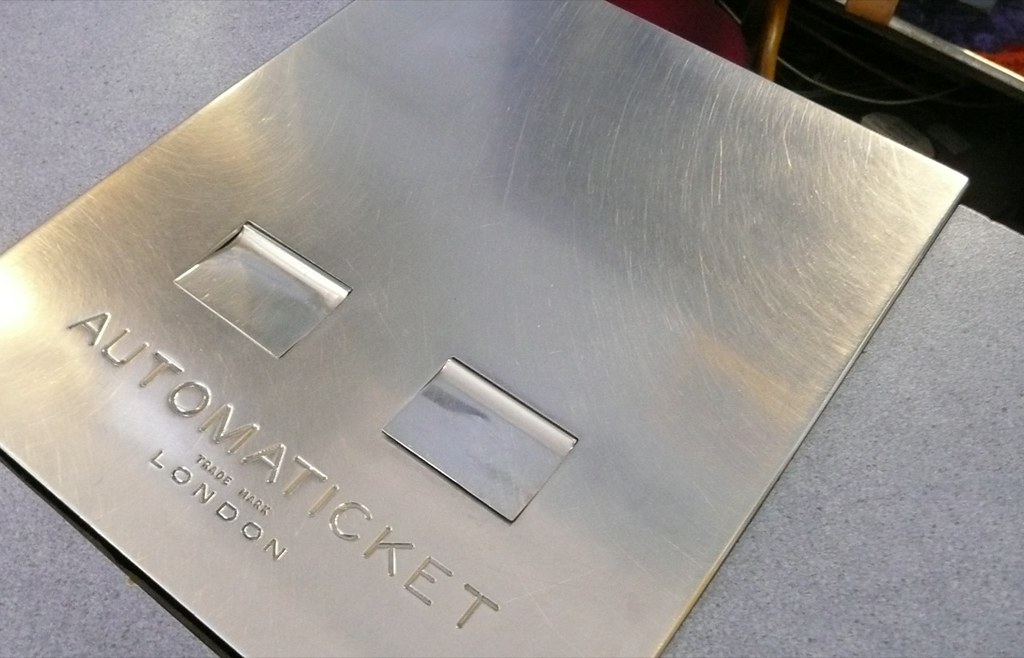
Just the other day I came across an old ticket stub issued by The Savoy in Heaton Moor.
They used a Automaticket machine, but with dead stock tickets.
Evolving from being gear and lever driven, to powered by electric motors, these ticketing machines served as somewhat of an industry standard for over eighty years.
While there are still a few of these machines in use, the theatre industry generally abandoned such ticketing systems, in favor of computerized ticketing, by the late 1980’s.
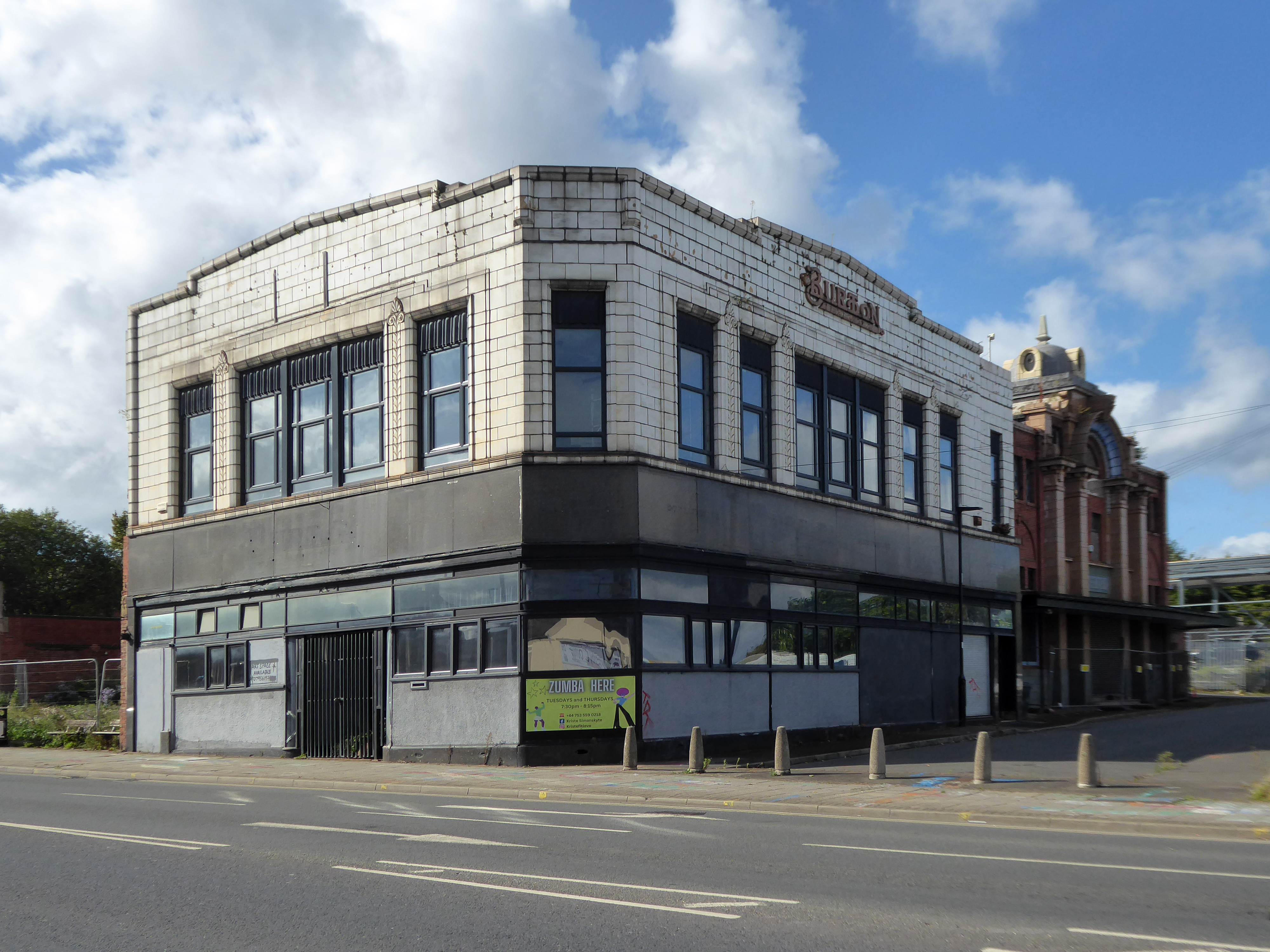
The striking art deco – sic. building later hosted Sheffield’s famous Gatecrasher club nights, among other events, and was also used as a music teaching centre.
It sat empty from 2006 until 2013 and has since been used only for storage.
My dad was a regular at The Adelphi during the war years. He remembers that the showings were always like a theatre with two matinees during the week and two evening showings everyday unlike the continuous showing at other cinemas and a children’s matinees on a Saturday.
He and his friends had six seats booked on Q row for every Monday and Saturday night as more often than not the films ran for three nights Mon, Tues and Wed, then a new picture Thurs, Fri, and Sat – no show on a Sunday. Occasionally a good film, now known as a blockbuster, would run for longer; if this was the case they just put up with seeing it twice.
The cost of the film was 4d or 6d upstairs, the cinemas in town were dearer.
Called up in February 1944 he did not return to Attercliffe until his first leave from the army a week before VE day in 1945. He returned from Germany, said hello to his Mum and Dad, dropped off his kit bag then caught the tram the three stops to the Adelphi where he knew his friends would be. The smartly dressed commisioner, in blue with plenty of gold braid, standing outside immediately recognised him even in army uniform. He showed him in telling him the lads were all there. He crouched in the aisle next to his friends and caused quite a commotion once he was spotted – he has no memory of the film showing but great memories of the reunion to this day.
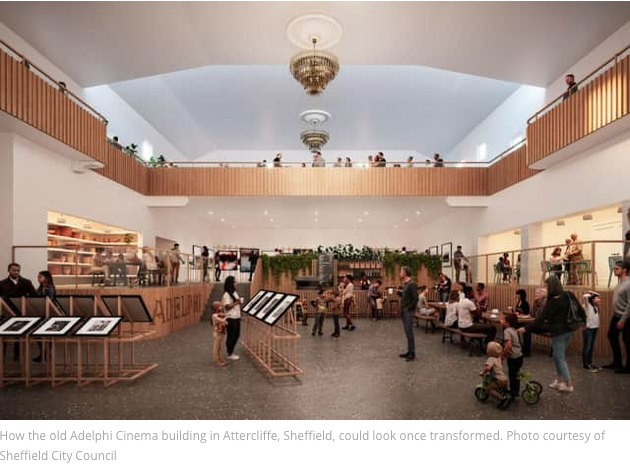
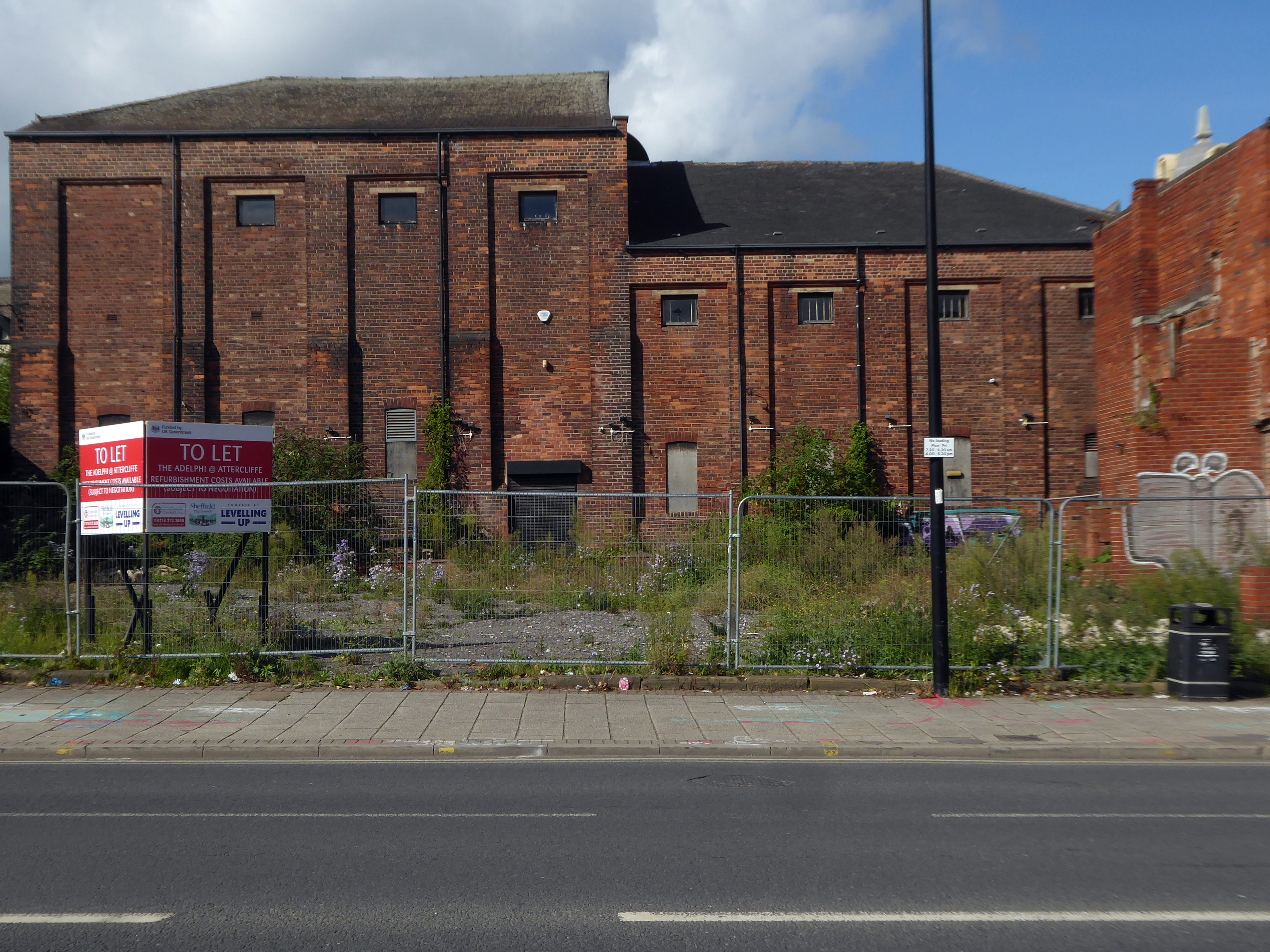
It was bought by Sheffield City Council earlier this year, as part of the Attercliffe Levelling Up project, and has now gone on the market as the council seeks someone to revive the Grade II-listed building as a vibrant cultural hub.
Councillor Ben Miskell, chair of the council’s Transport, Regeneration and Climate Policy Committee, said:
We’re thrilled to announce the Adelphi Cinema building in Attercliffe is now on the market and we’re eager to hear from interested parties. The building forms one part of our ambitious plans for the area which will all come together to breathe new life into the community.
The last post on the concrete coast was from Filey
Now we’re heading south to Bridlington and beyond.
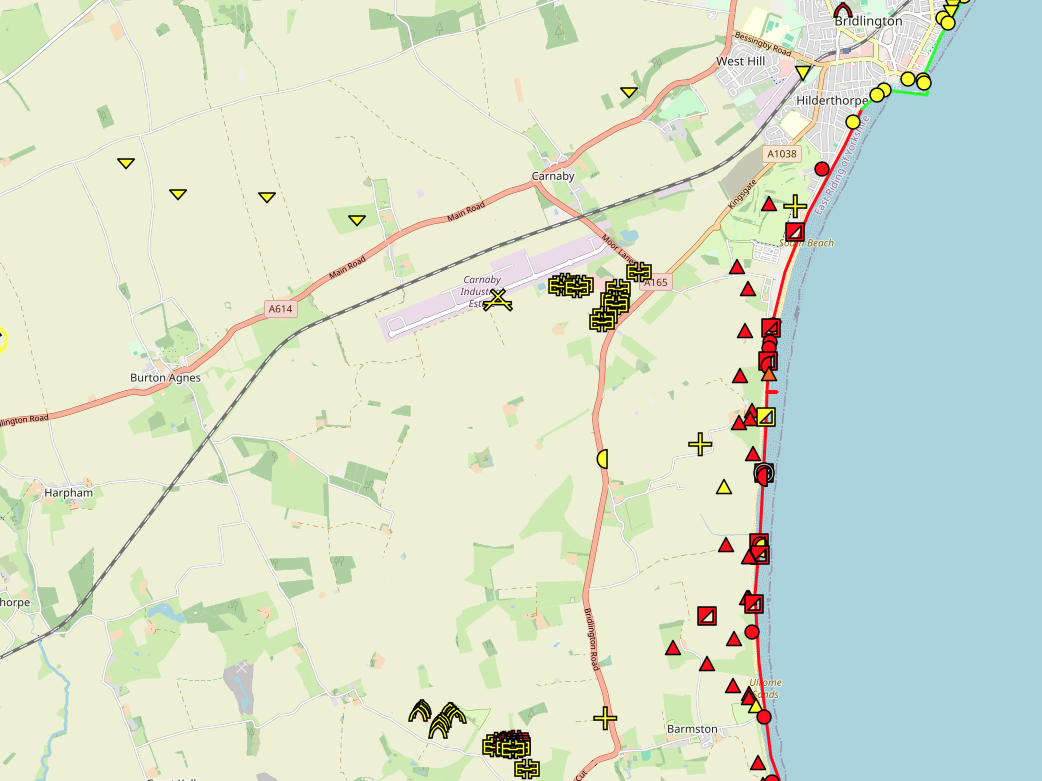
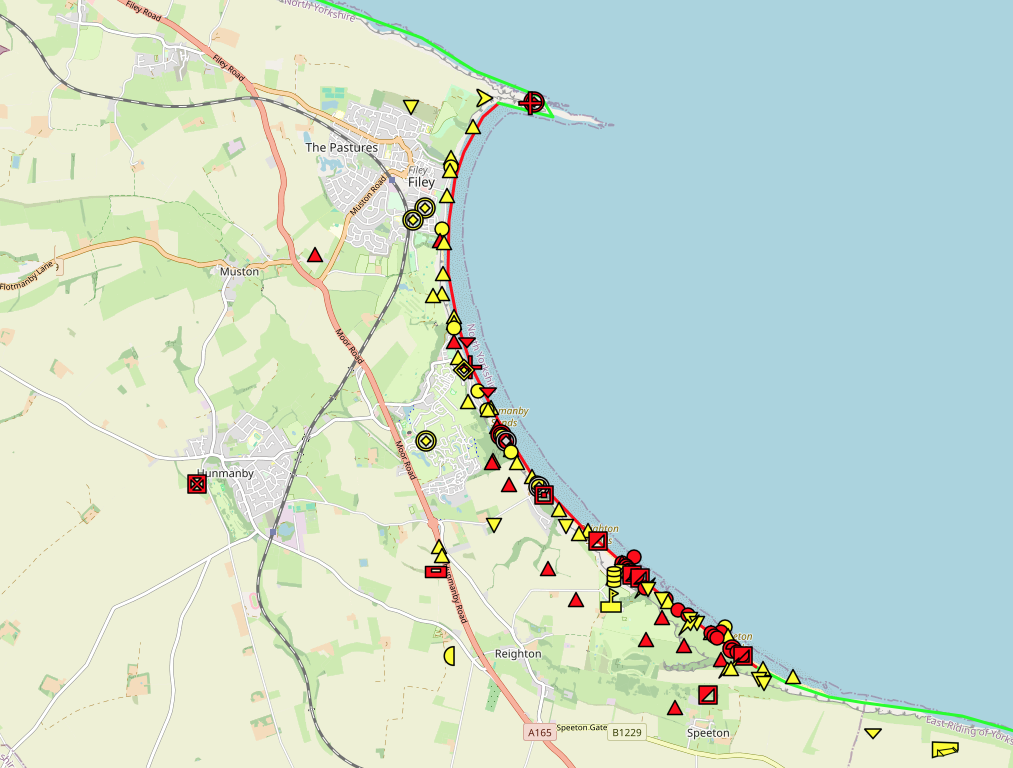
Where we find another dense cluster of sea defences, some but not all extant.
After the south coast, both East Anglia and the Yorkshire Coastline were identified as vulnerable to invasion. Bridlington Bay, was and ideal location for an invasion; flat sandy beaches for amphibious landing crafts, above the foreshore flat landscapes perfect for tanks and gliders to land, an isolated small population with only the residence of Bridlington close by and finally the control of an established port at Bridlington, once it was under German control. According to the Defence of Britain Survey undertaken in the Late 90’s, Northern Command had some of the best defend beaches in the country, this includes Bridlington.
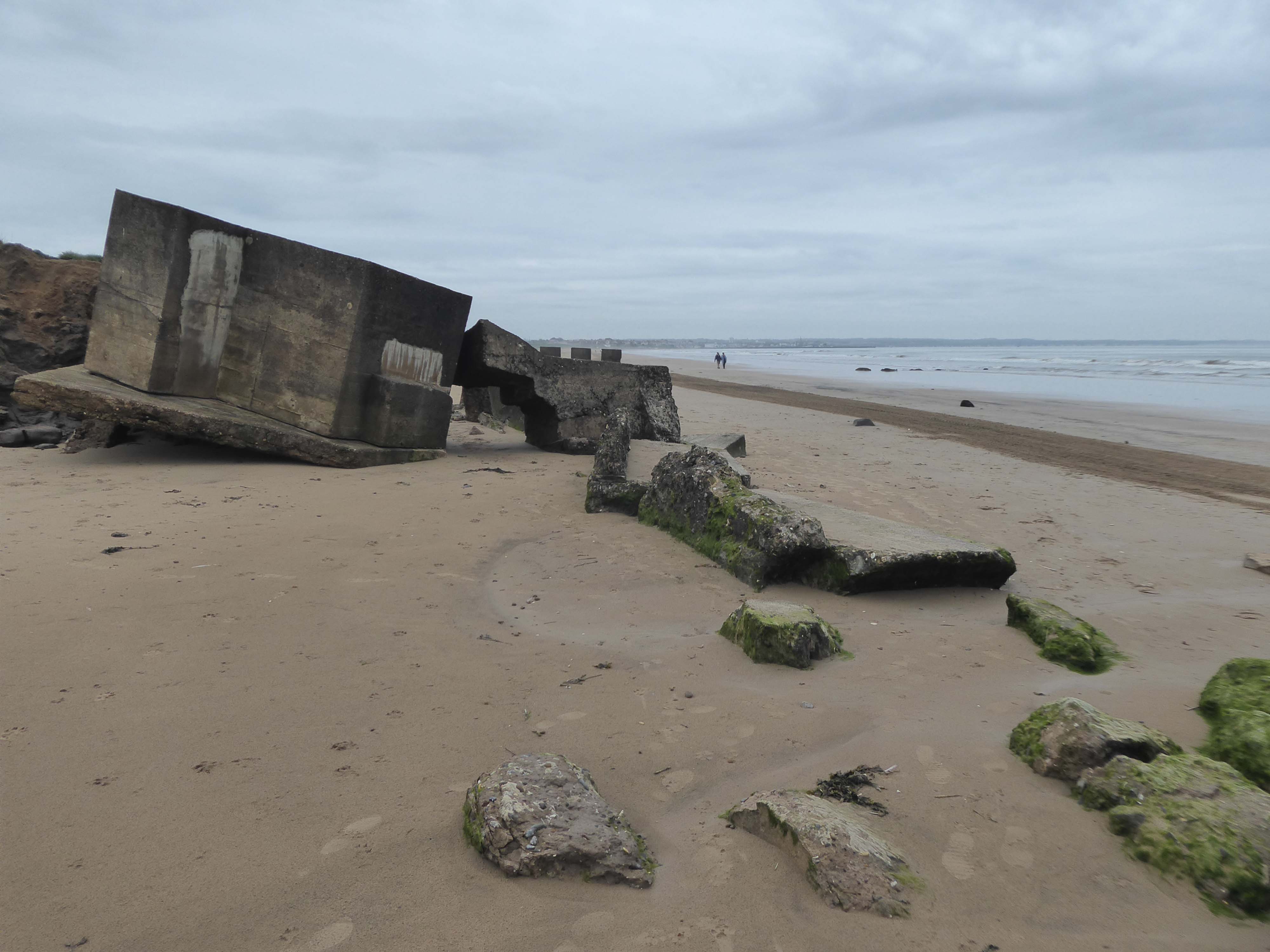
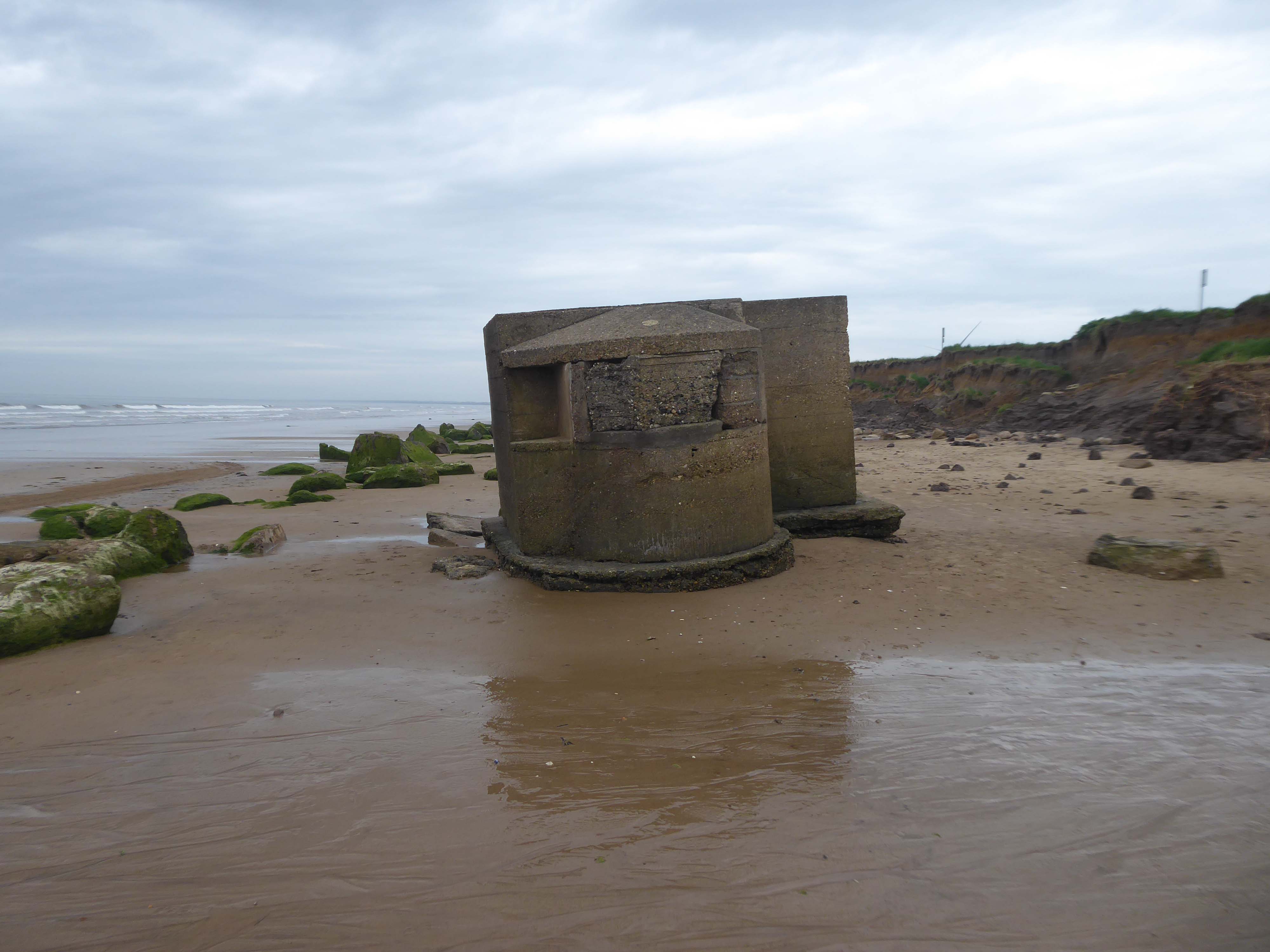
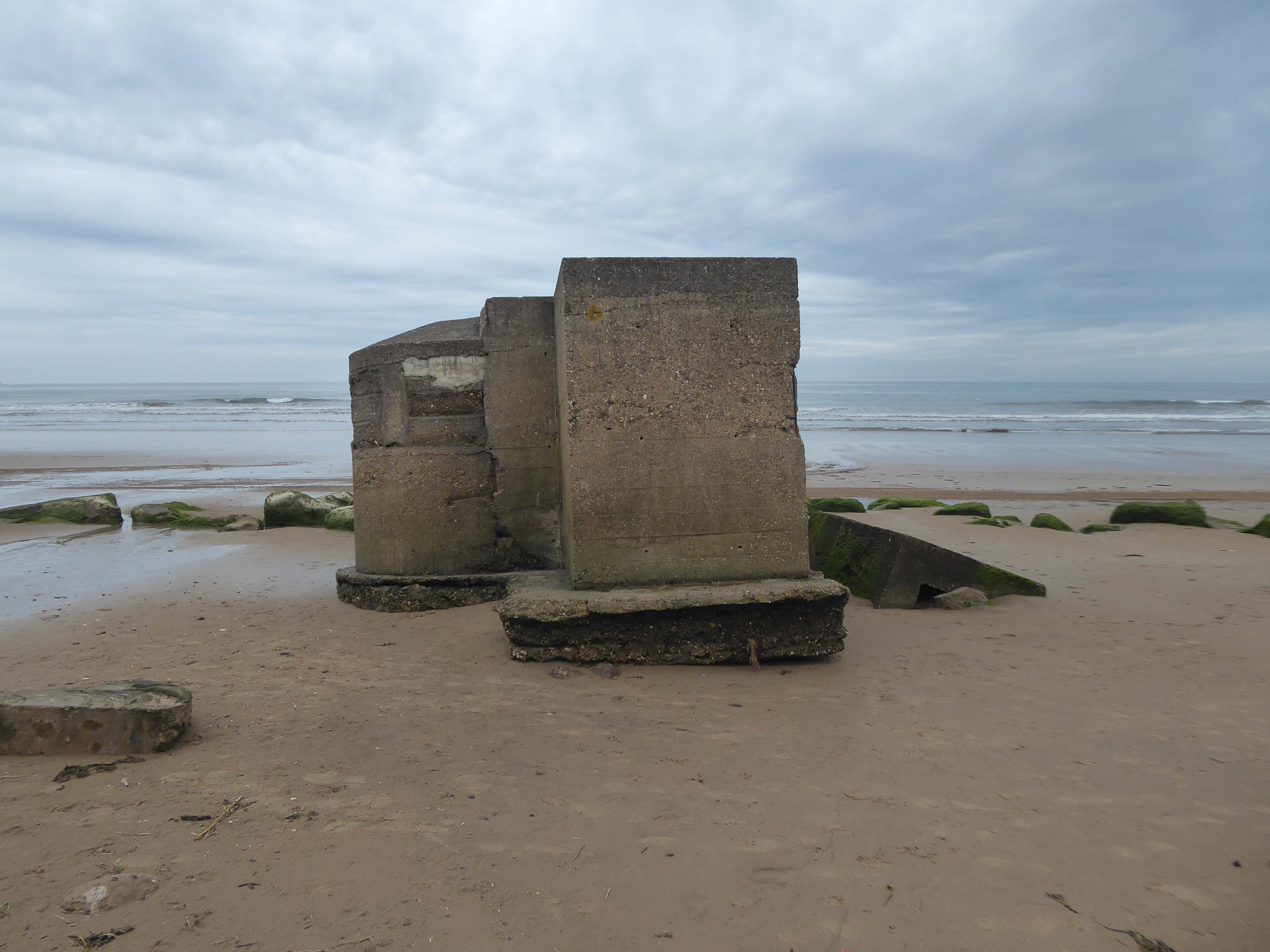
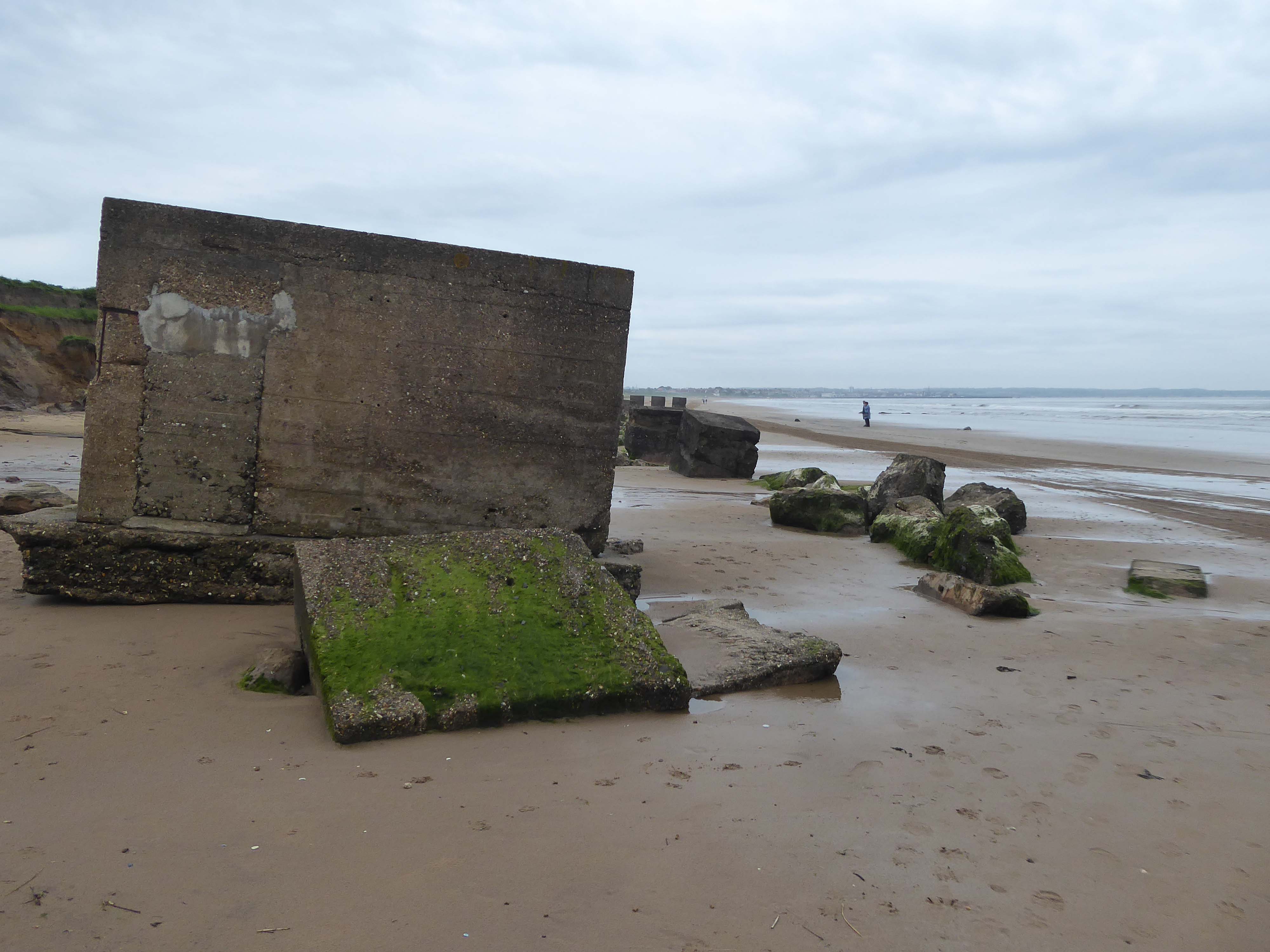
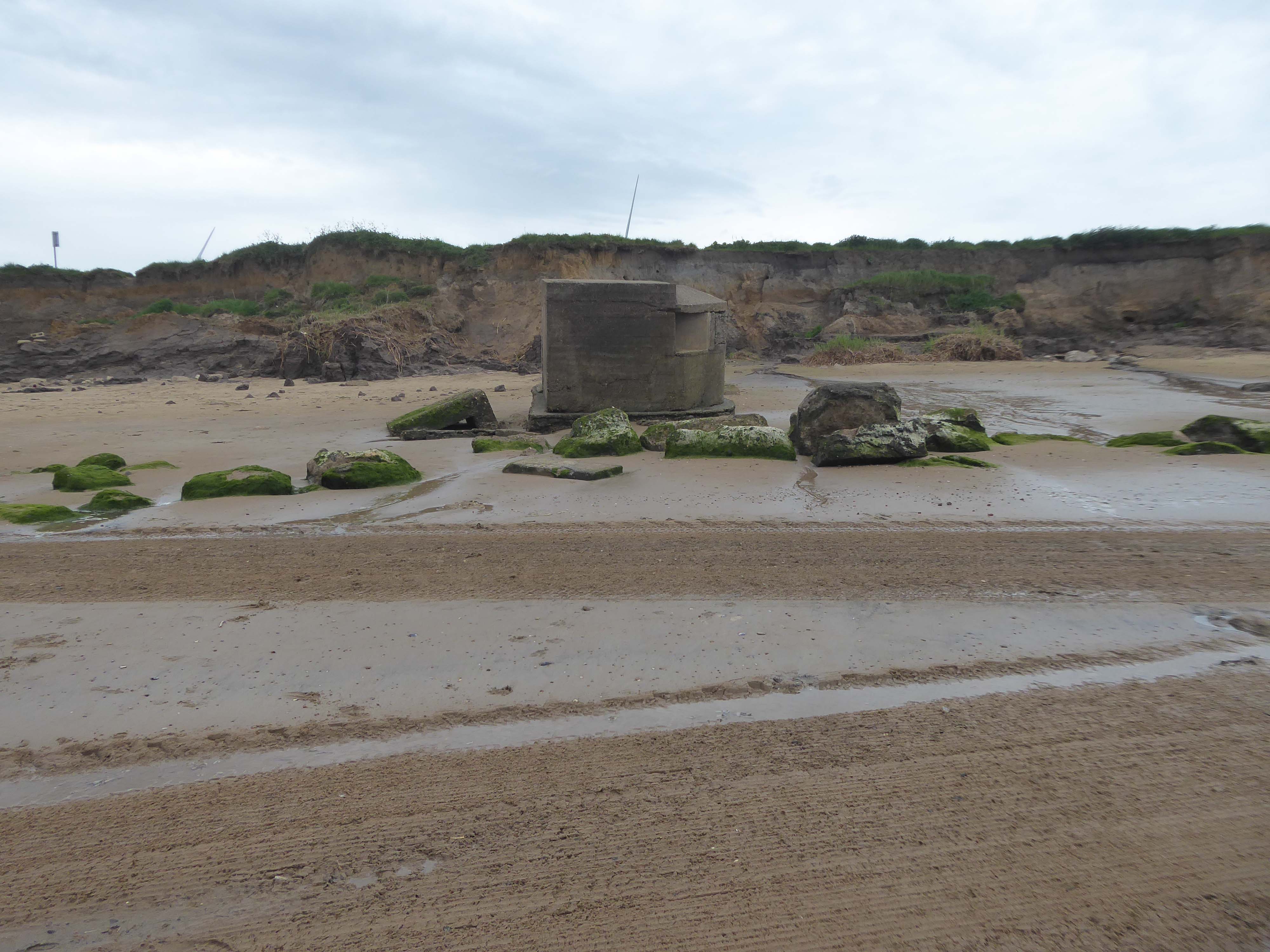
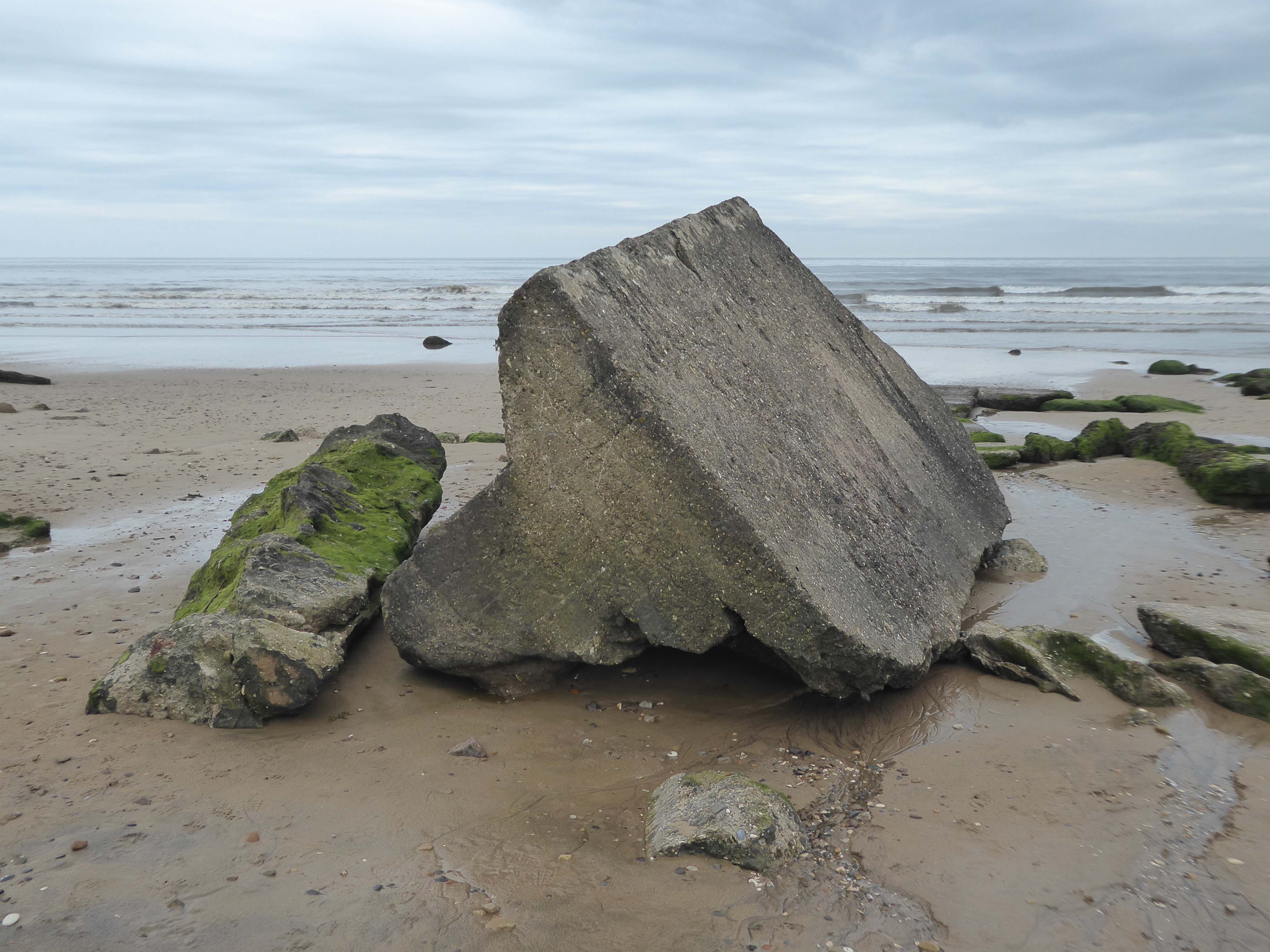
Here there are forces, past and present, at work shaping the landscape and the manmade addenda.
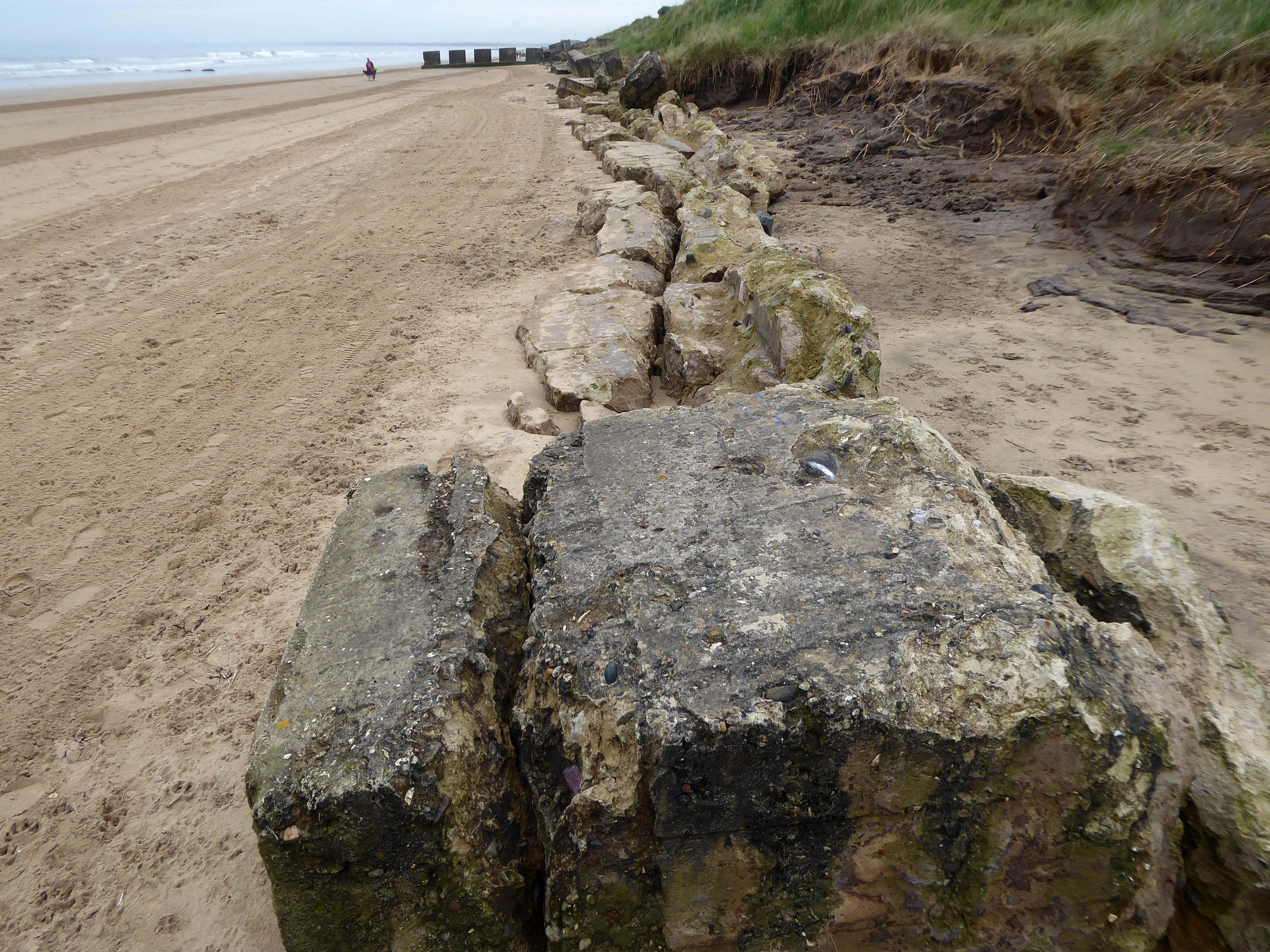
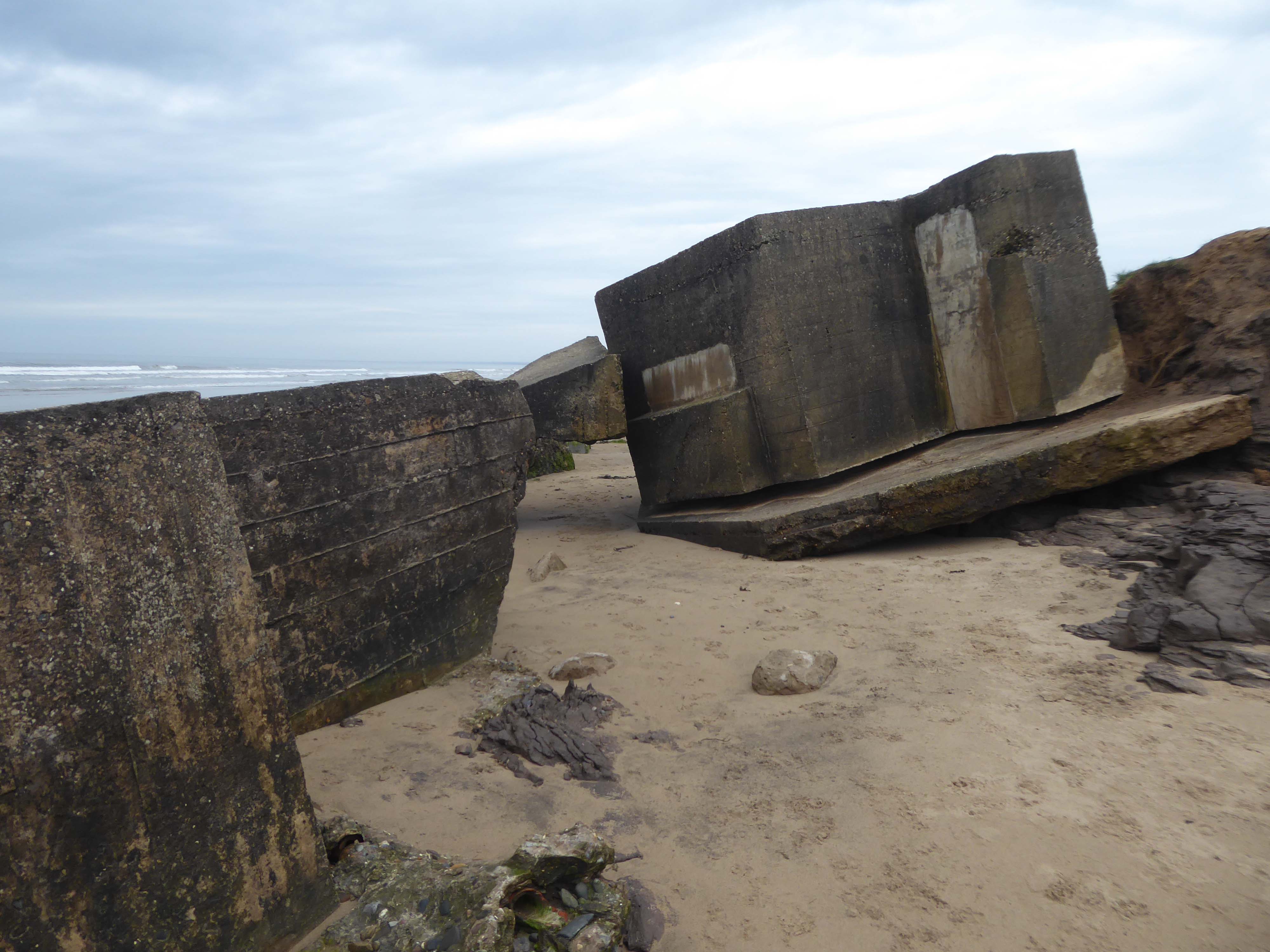
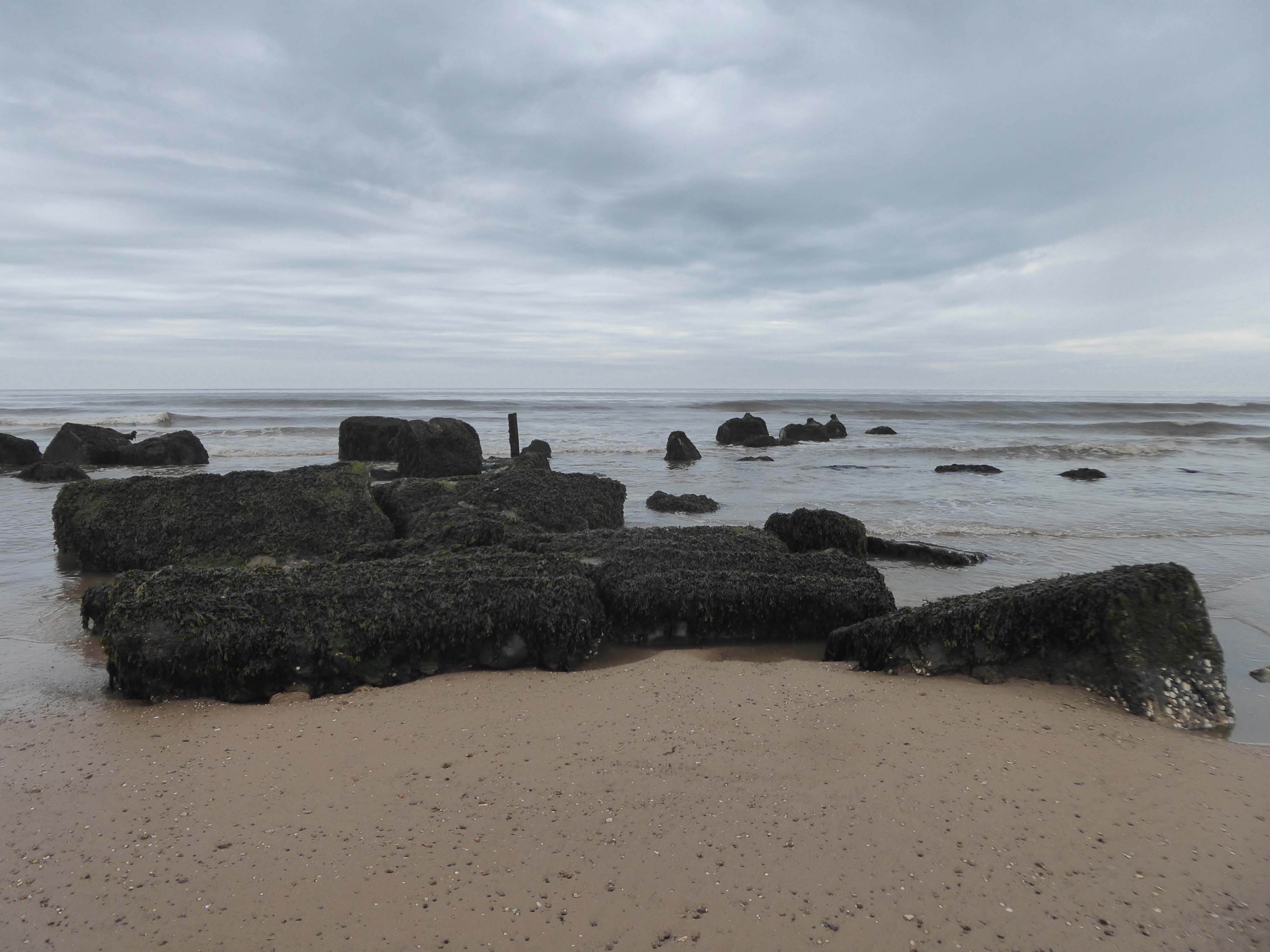
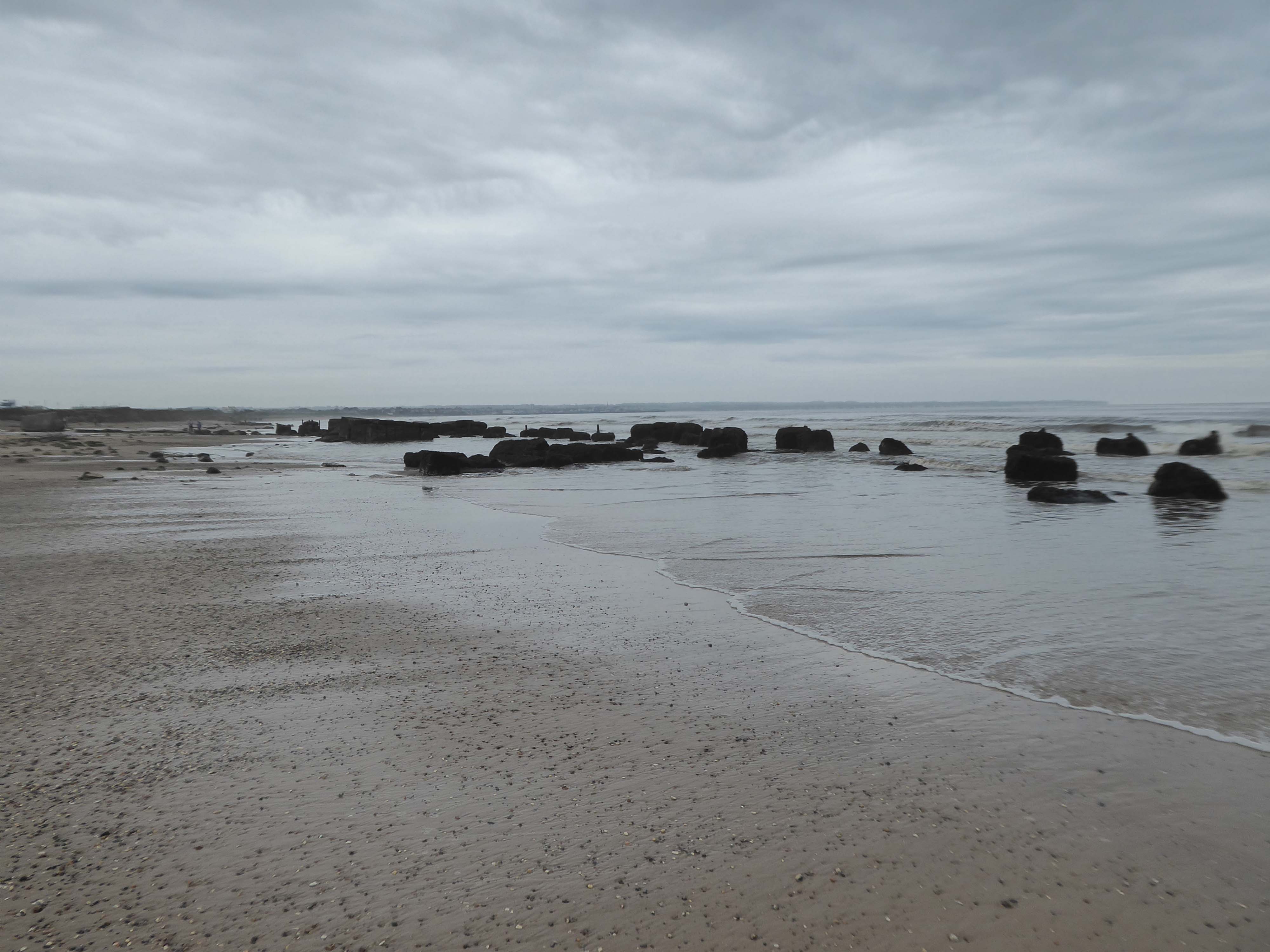
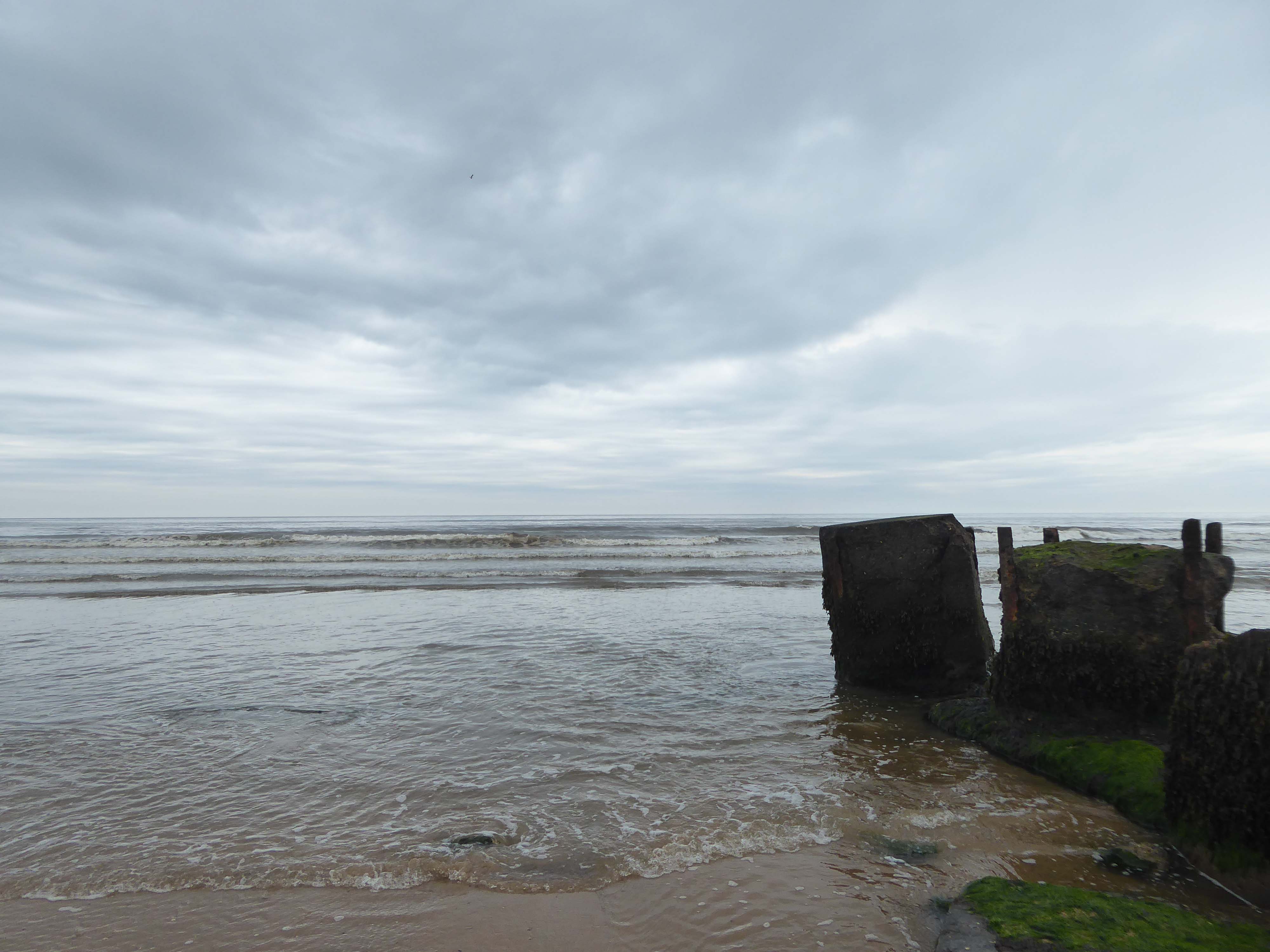
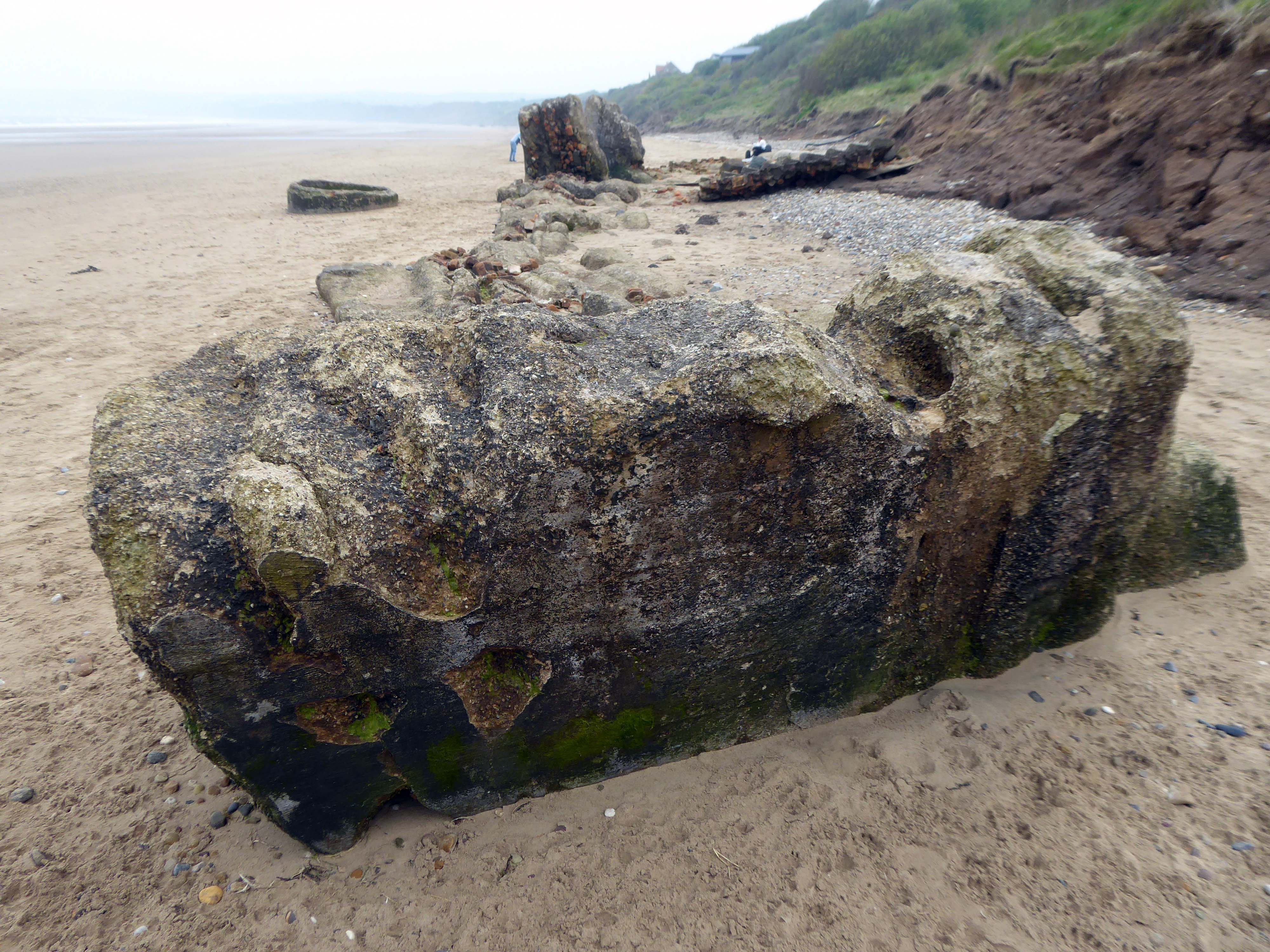
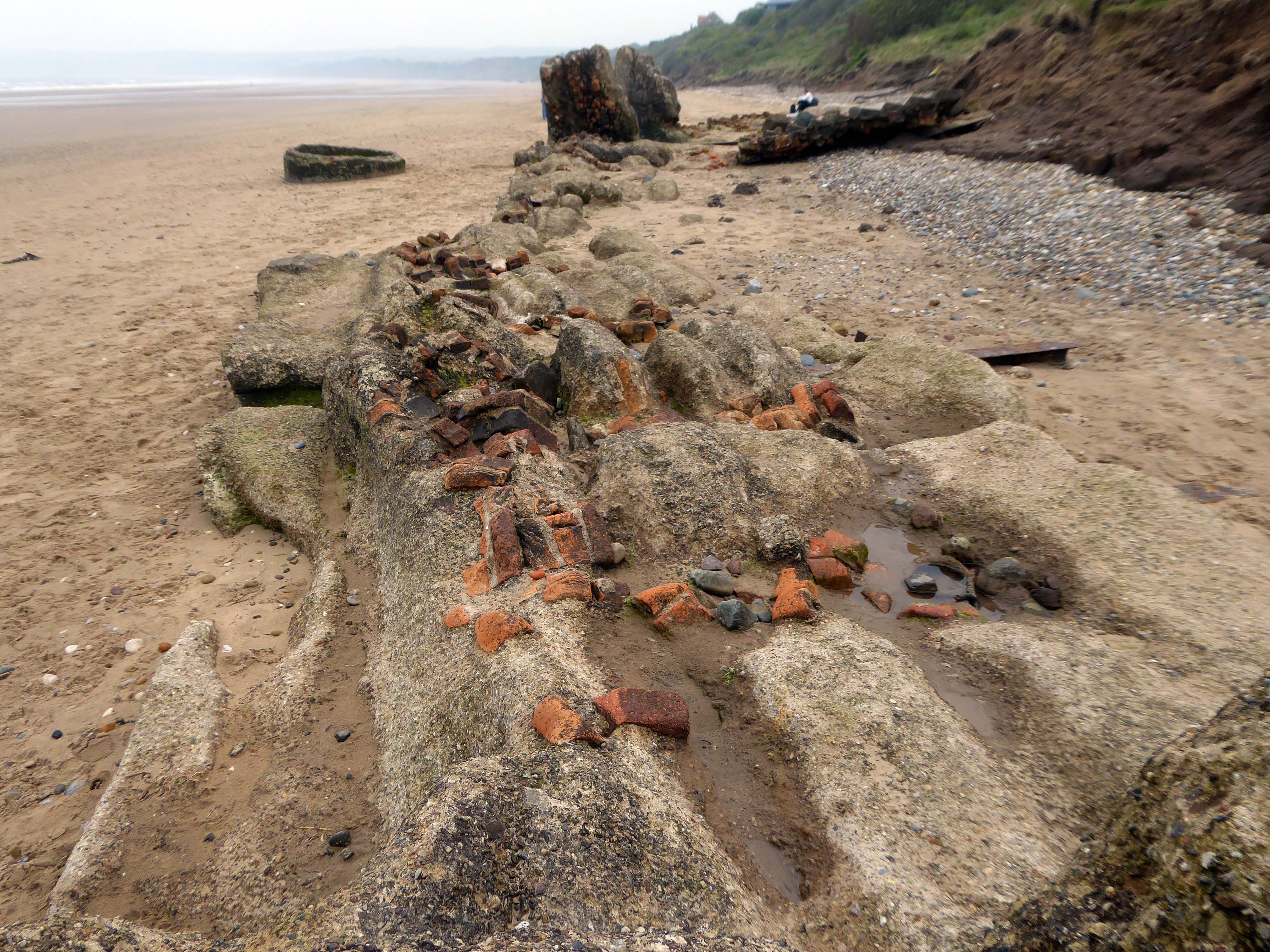
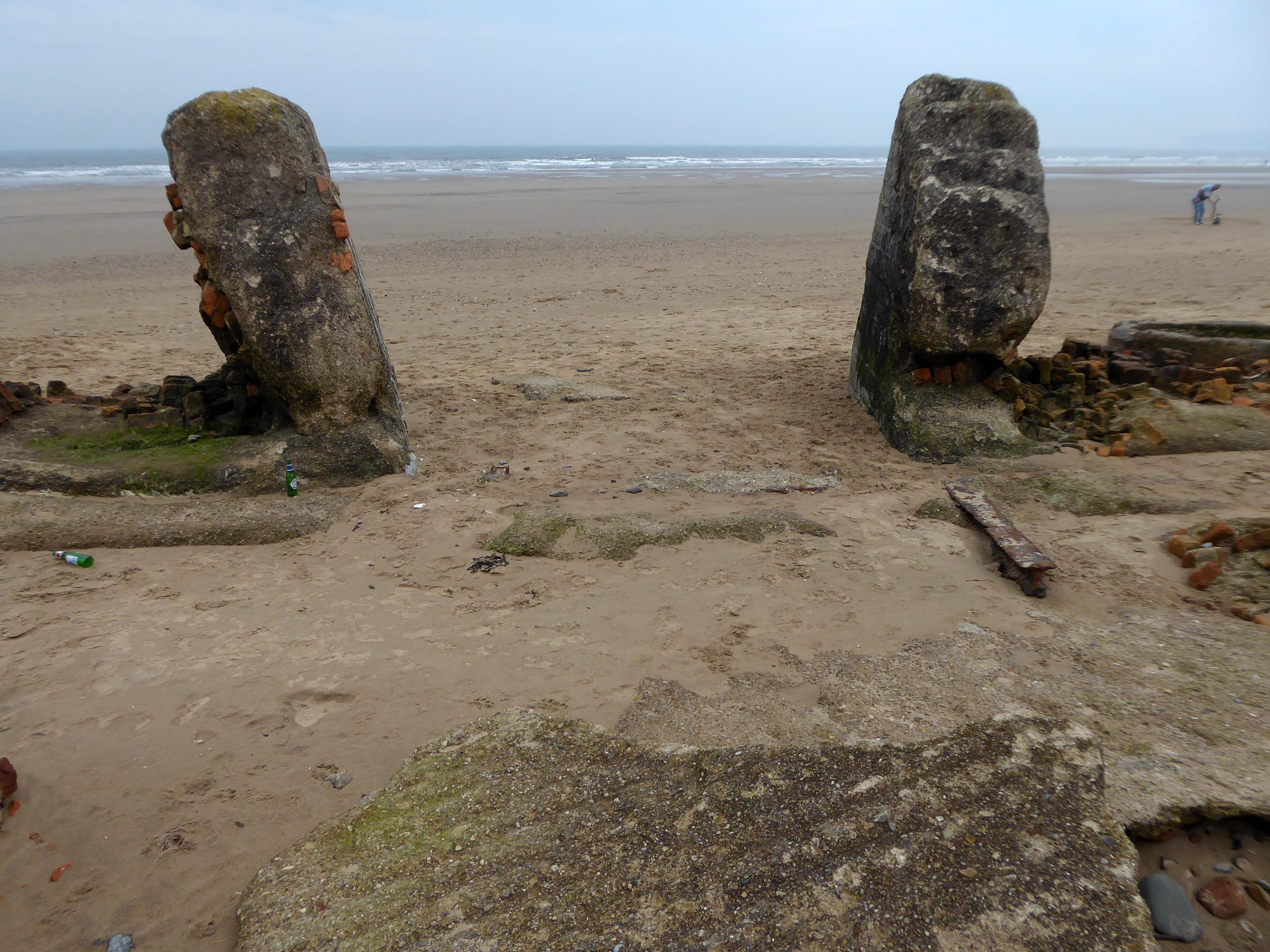
The remorseless waves, wind and rain eroding the coastal clay and contorted concrete.
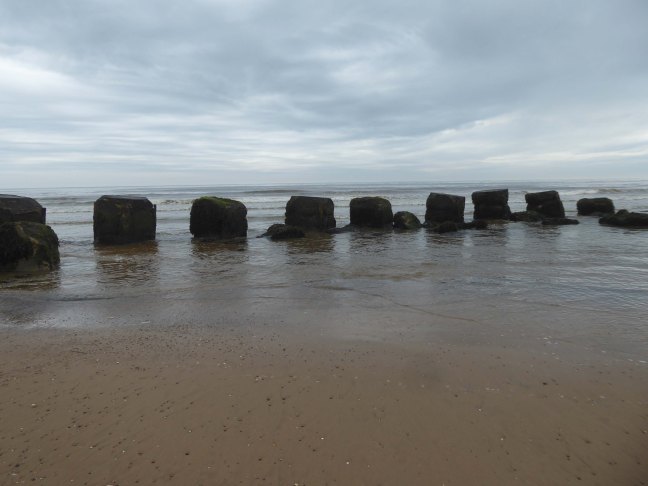
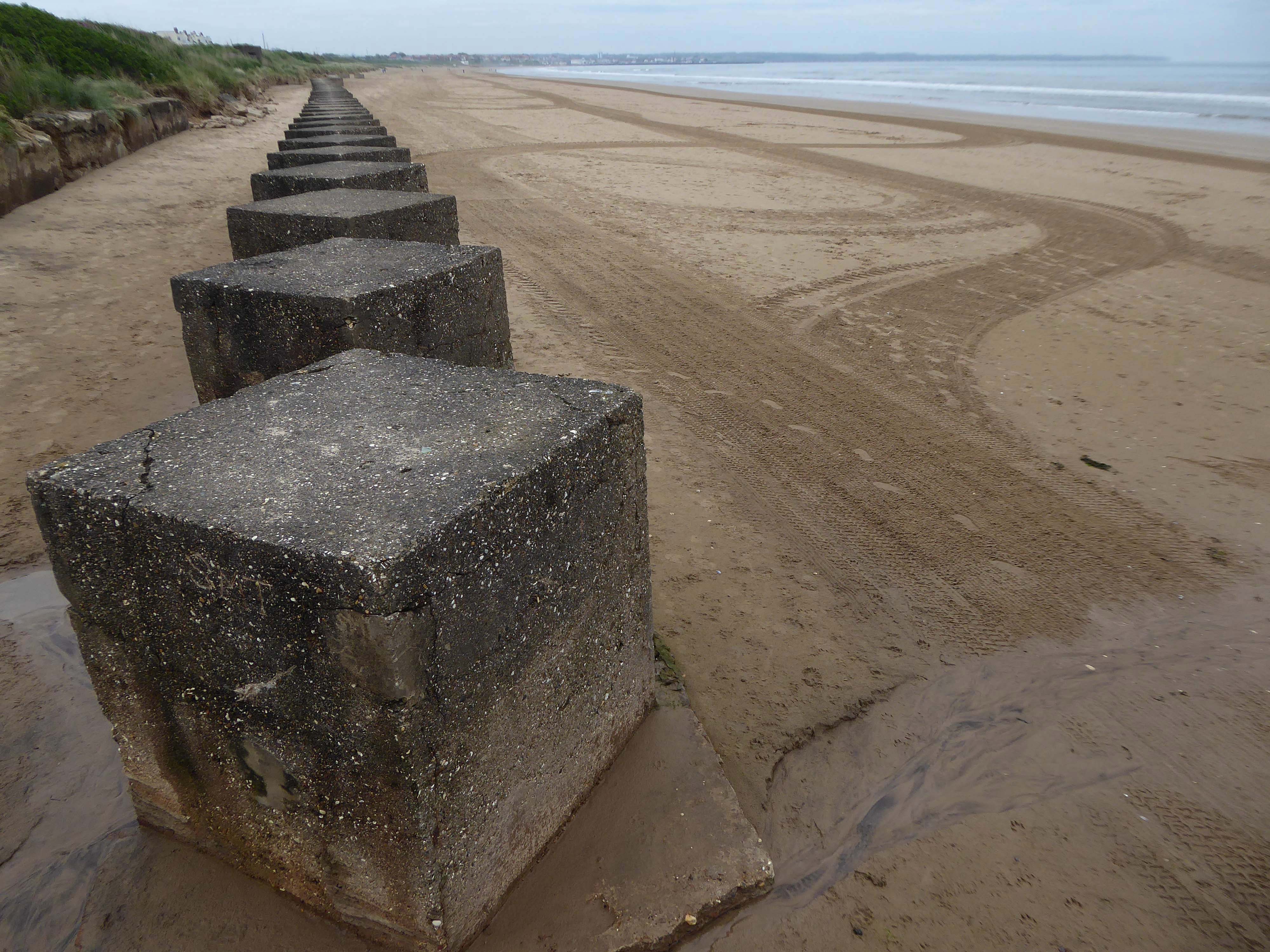
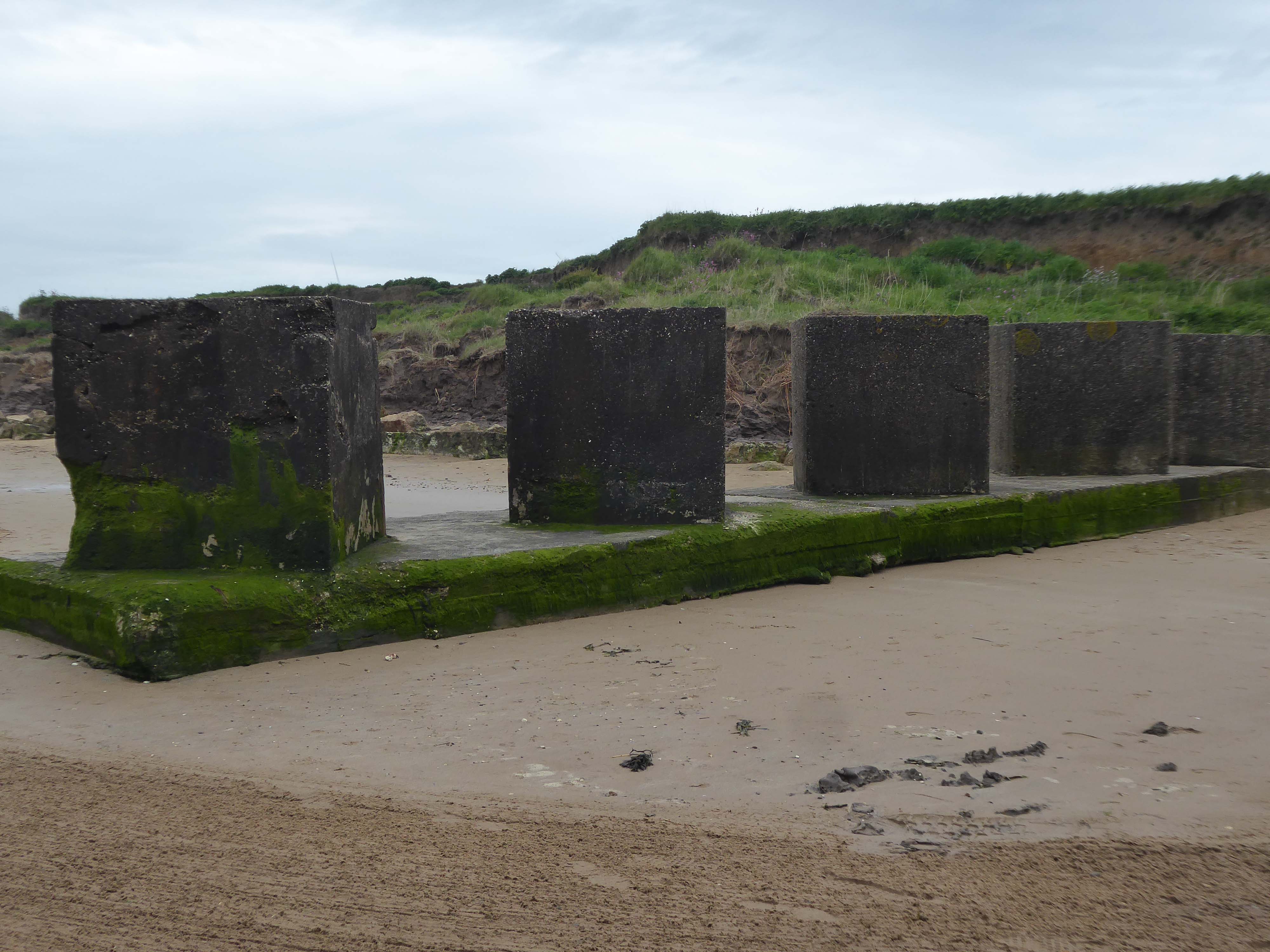
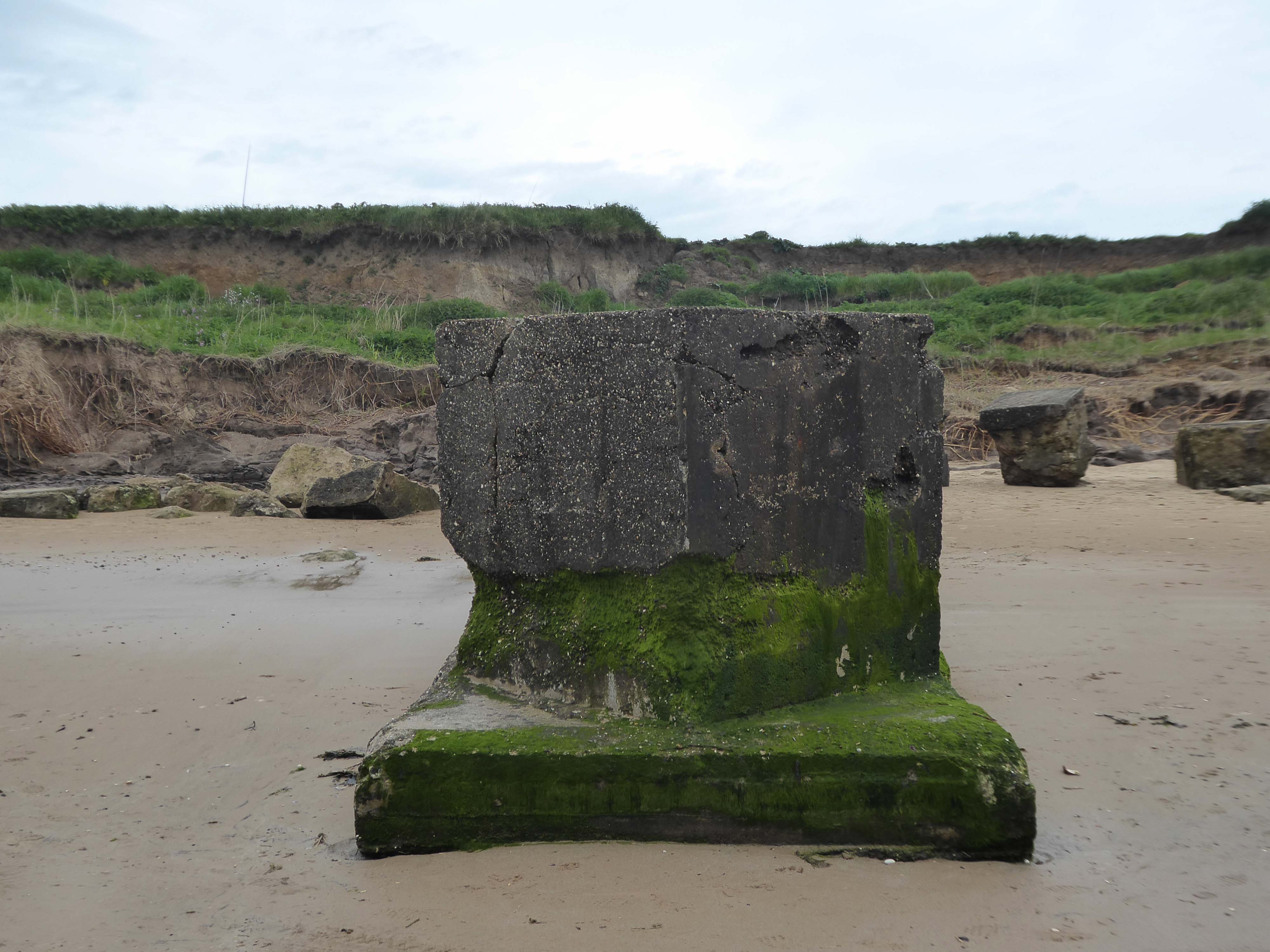
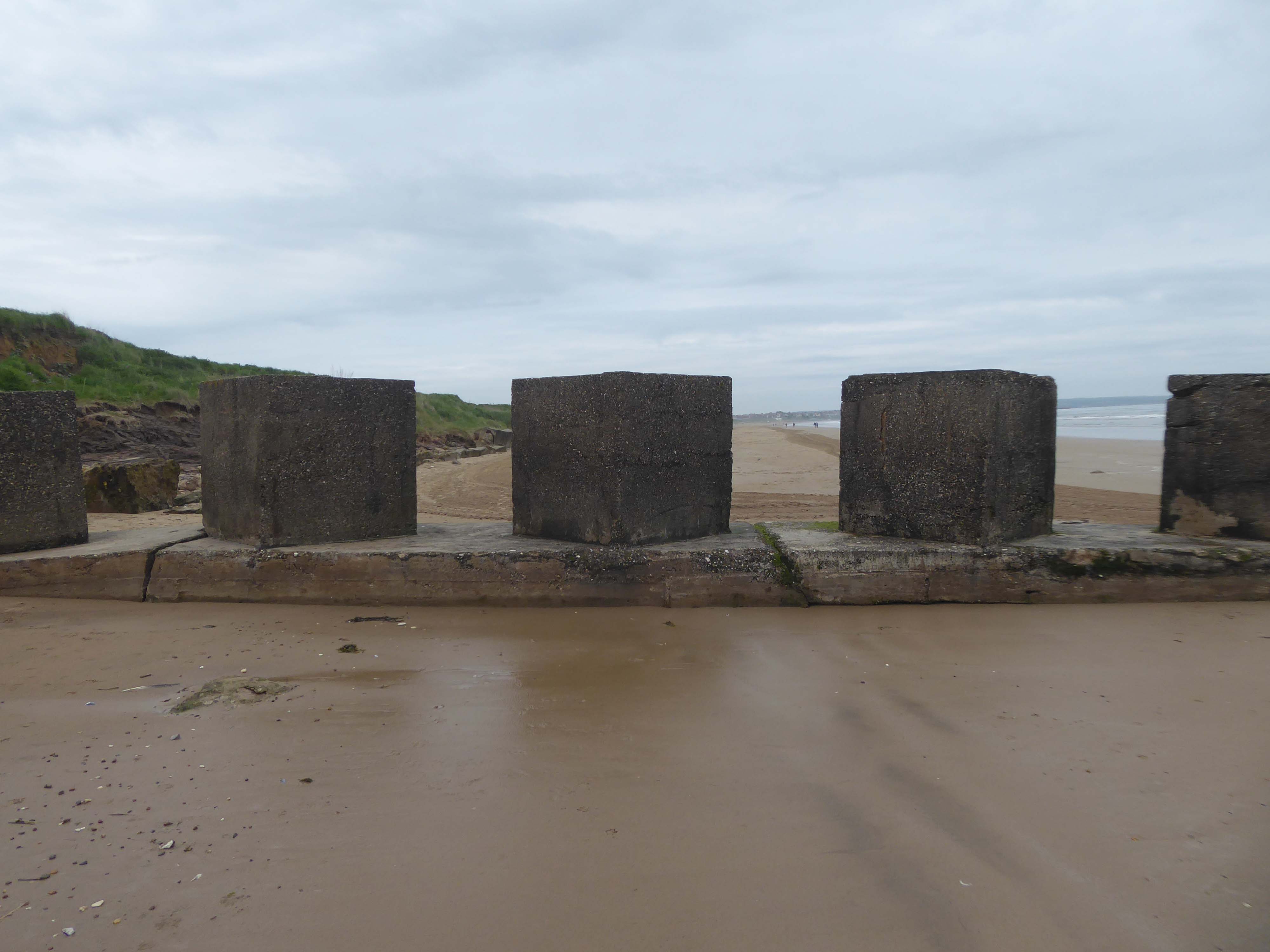
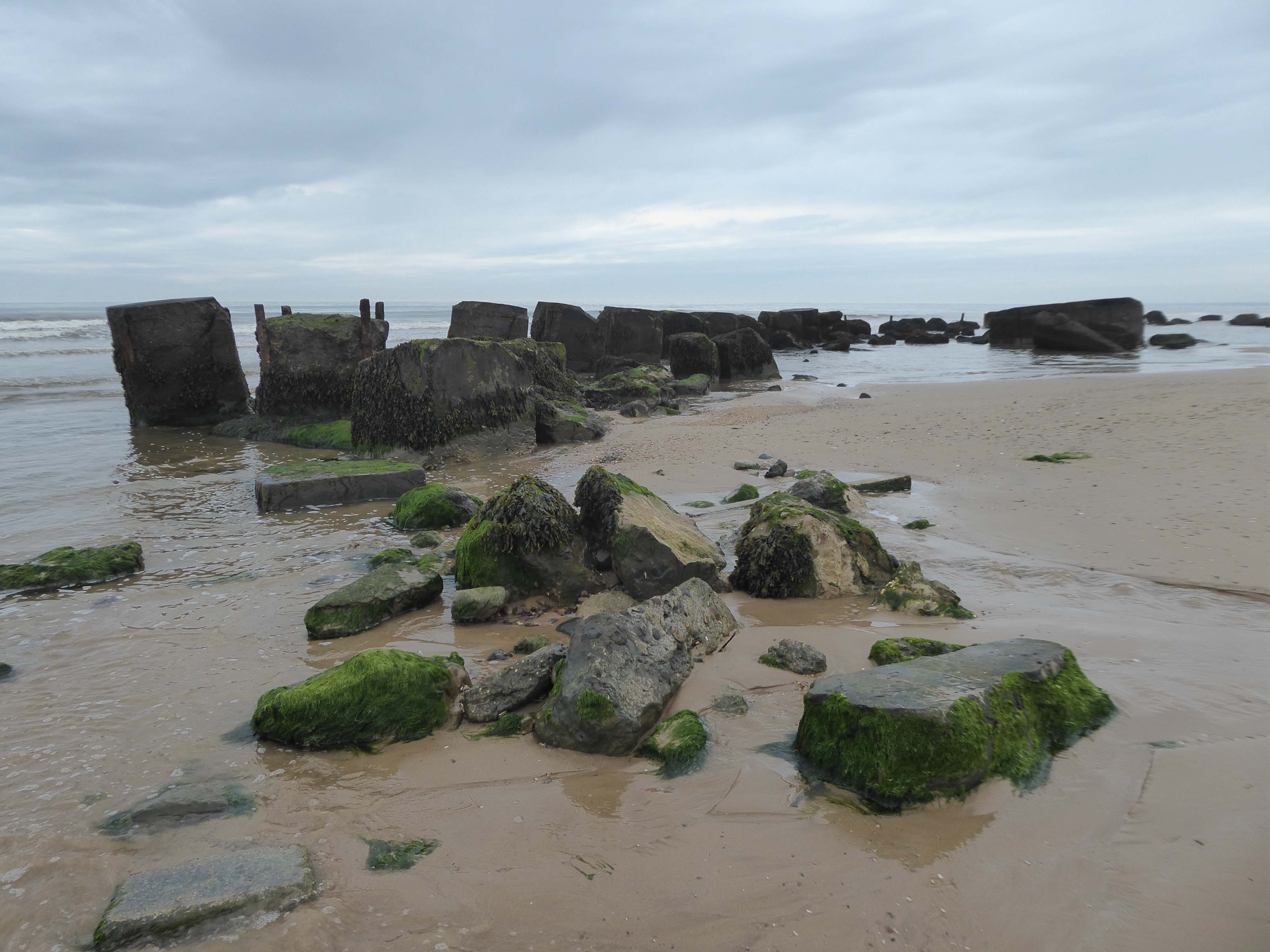
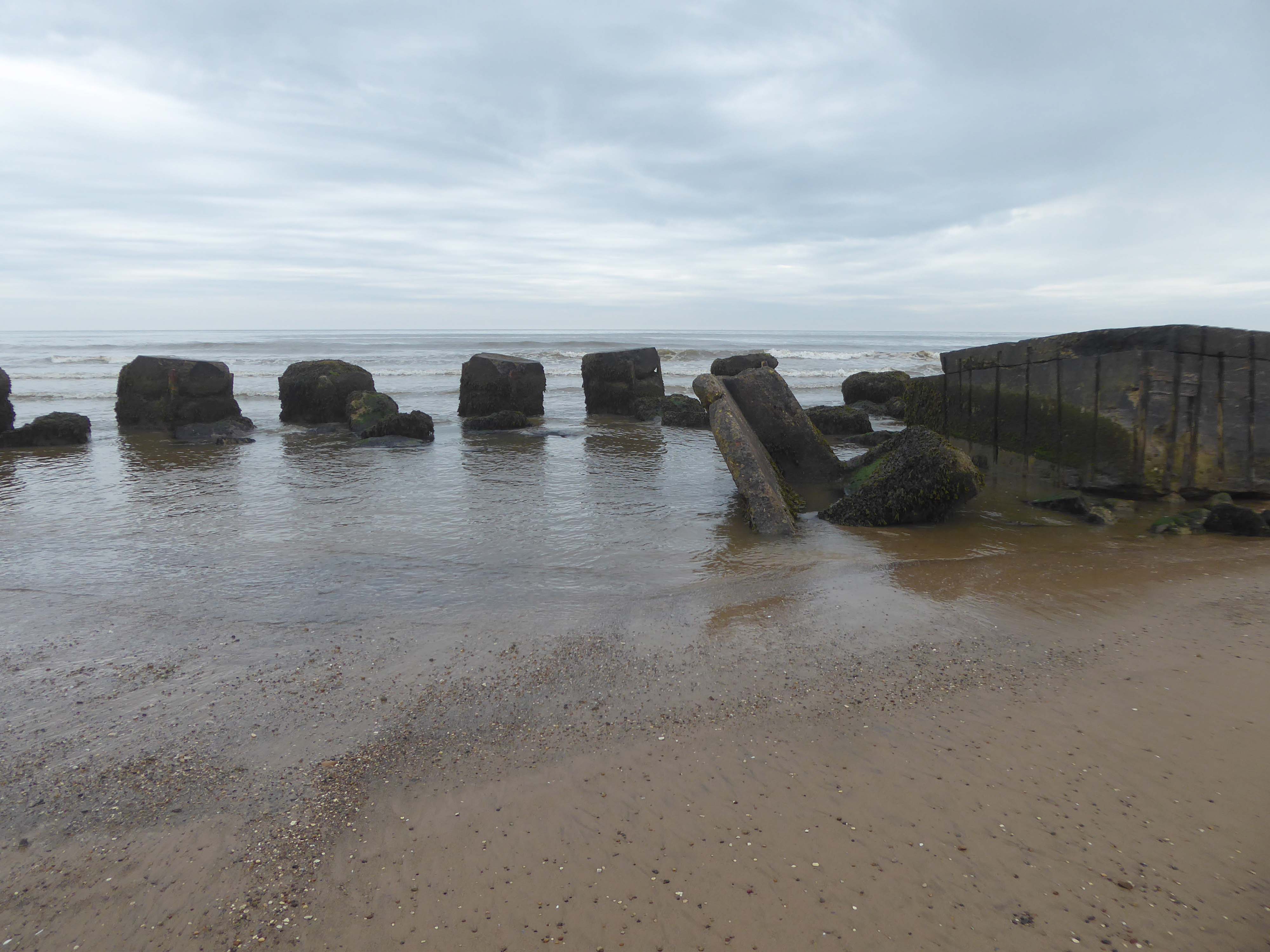
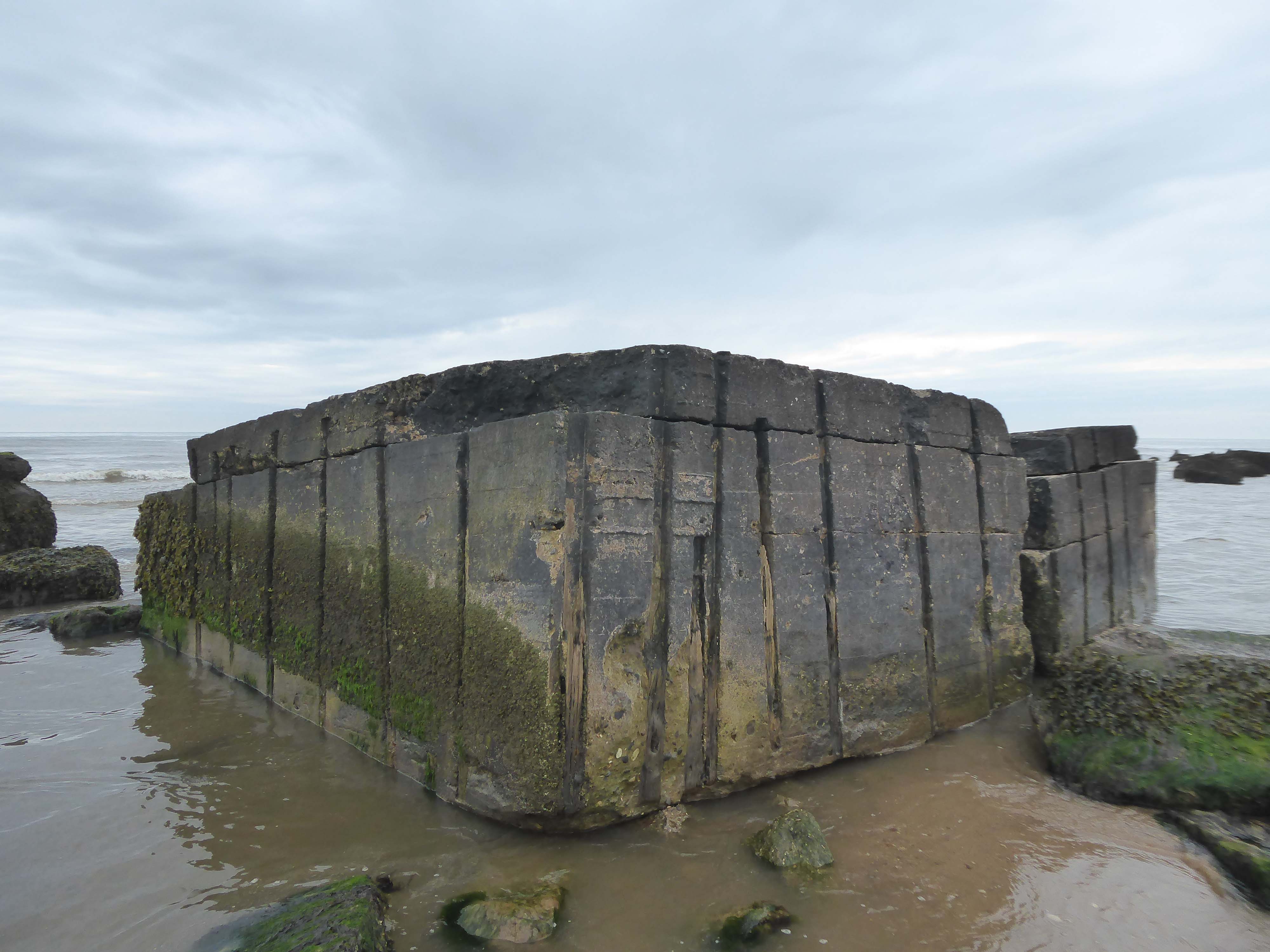
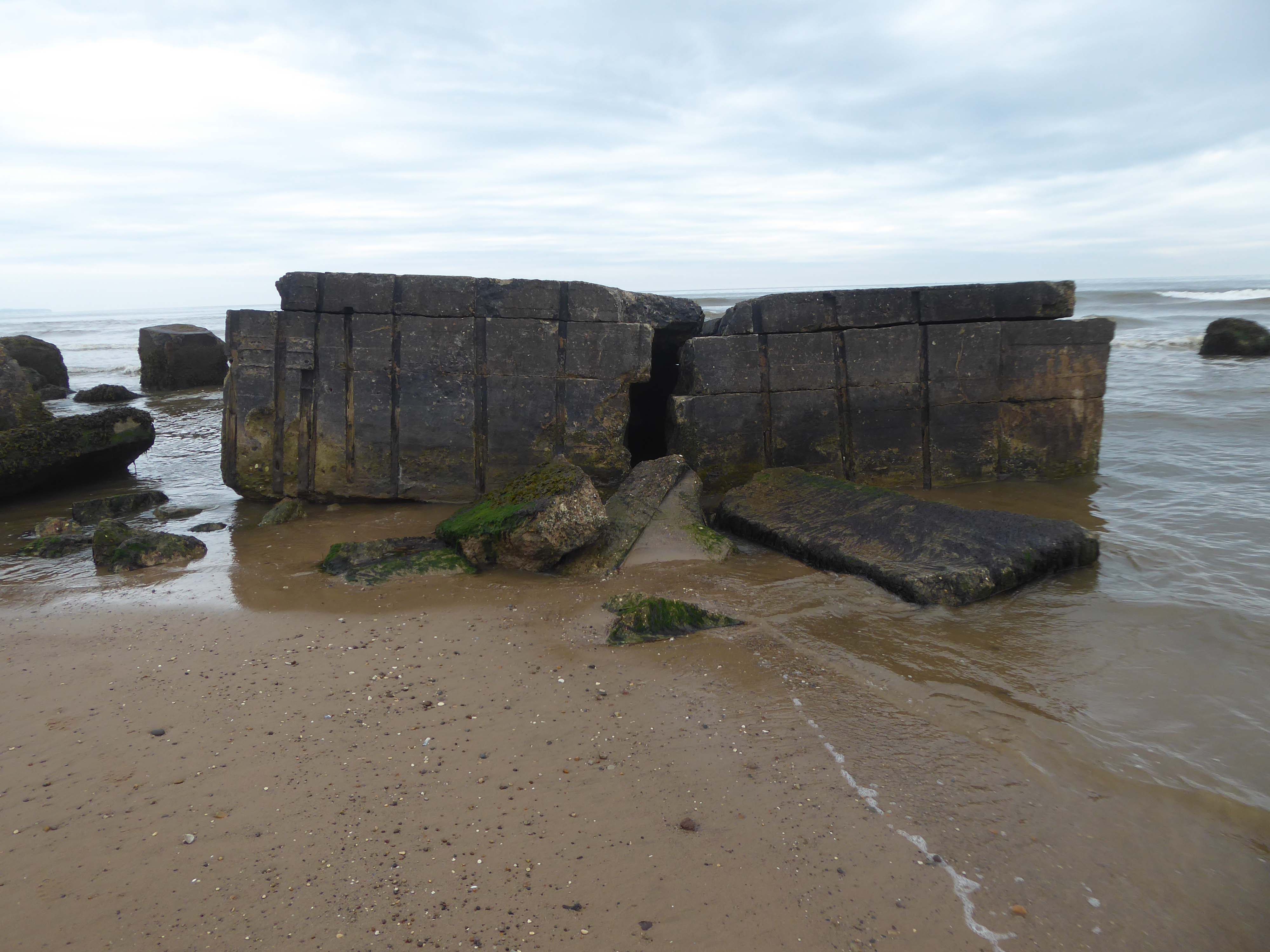
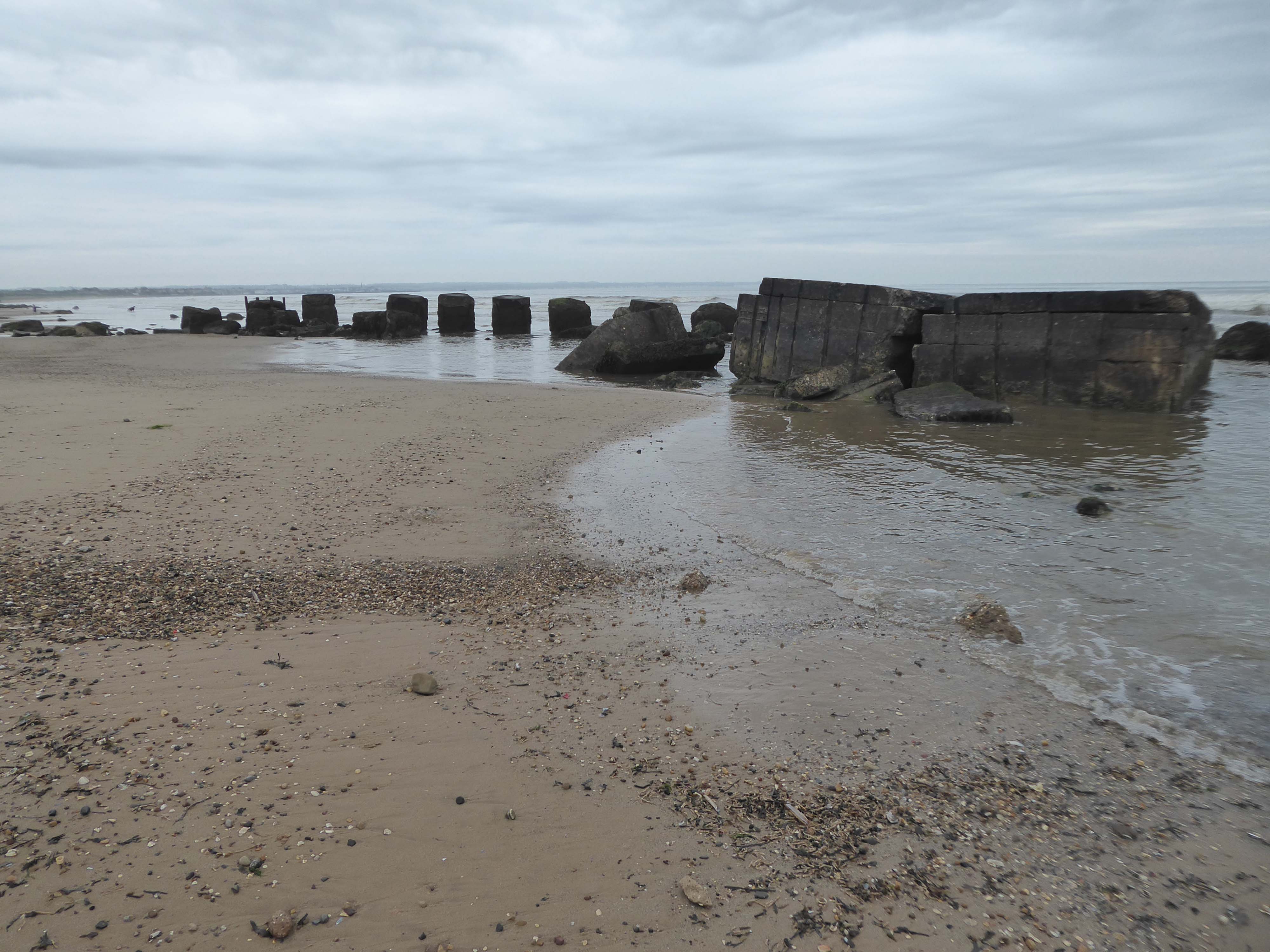
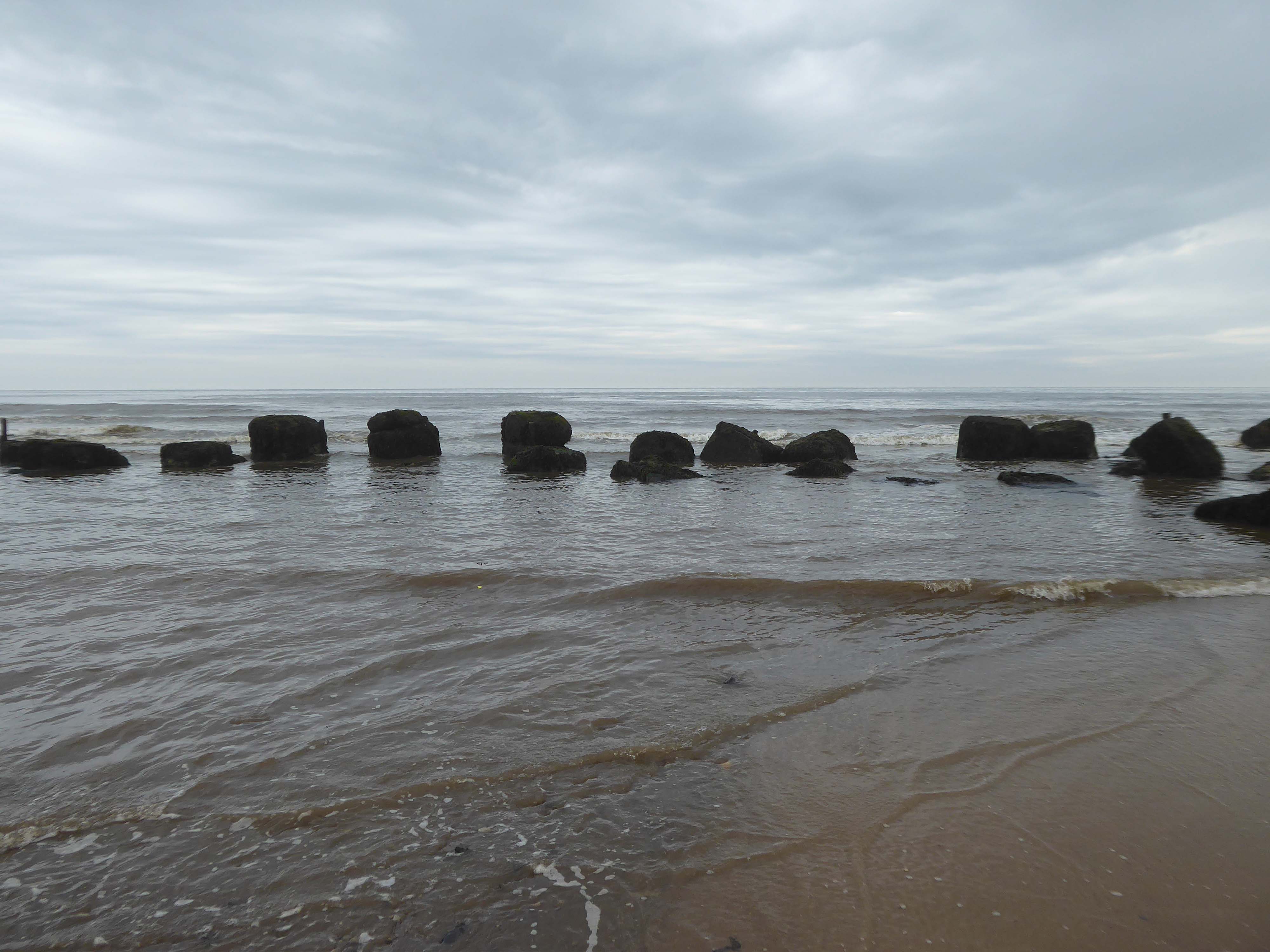
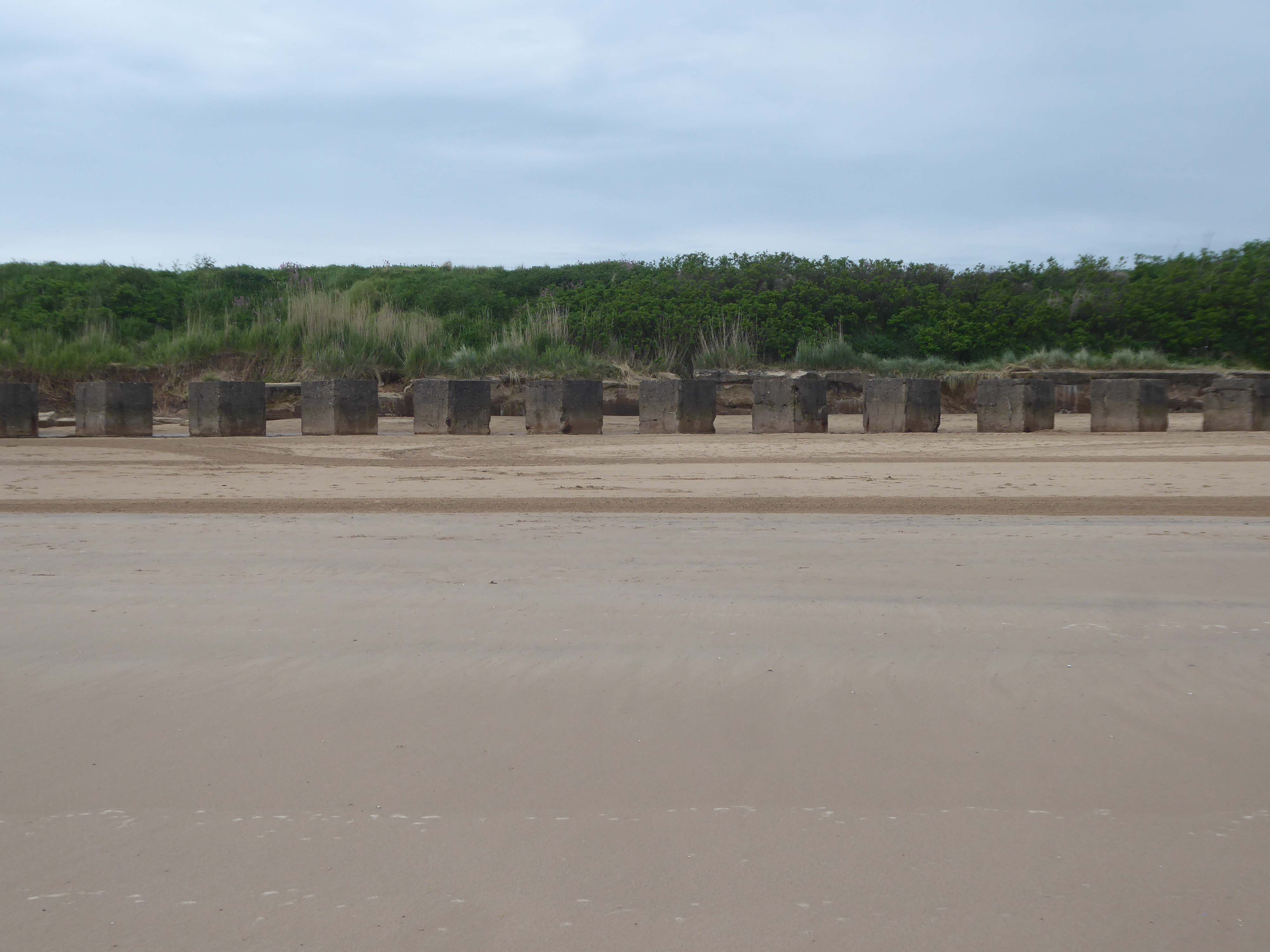
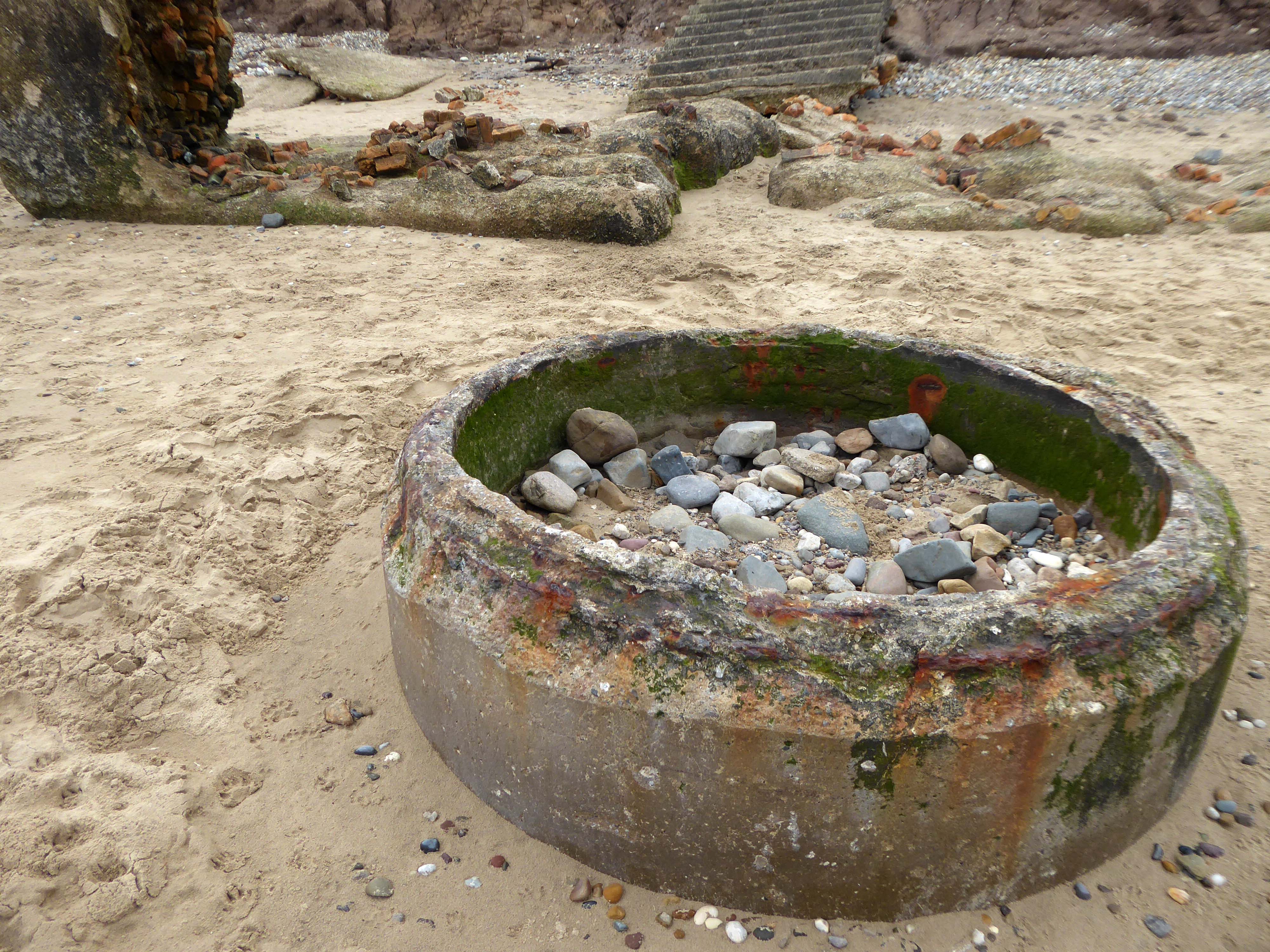
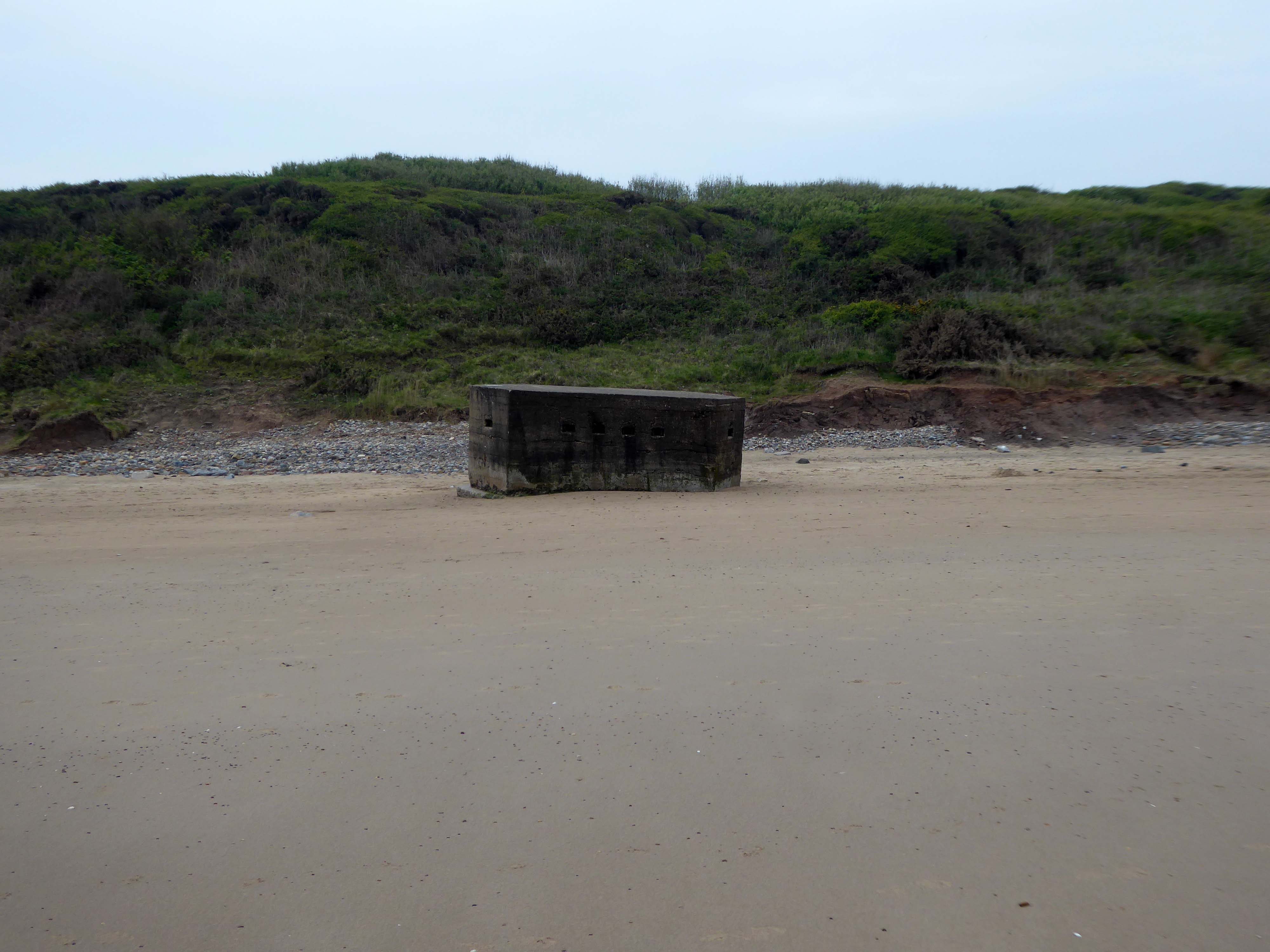
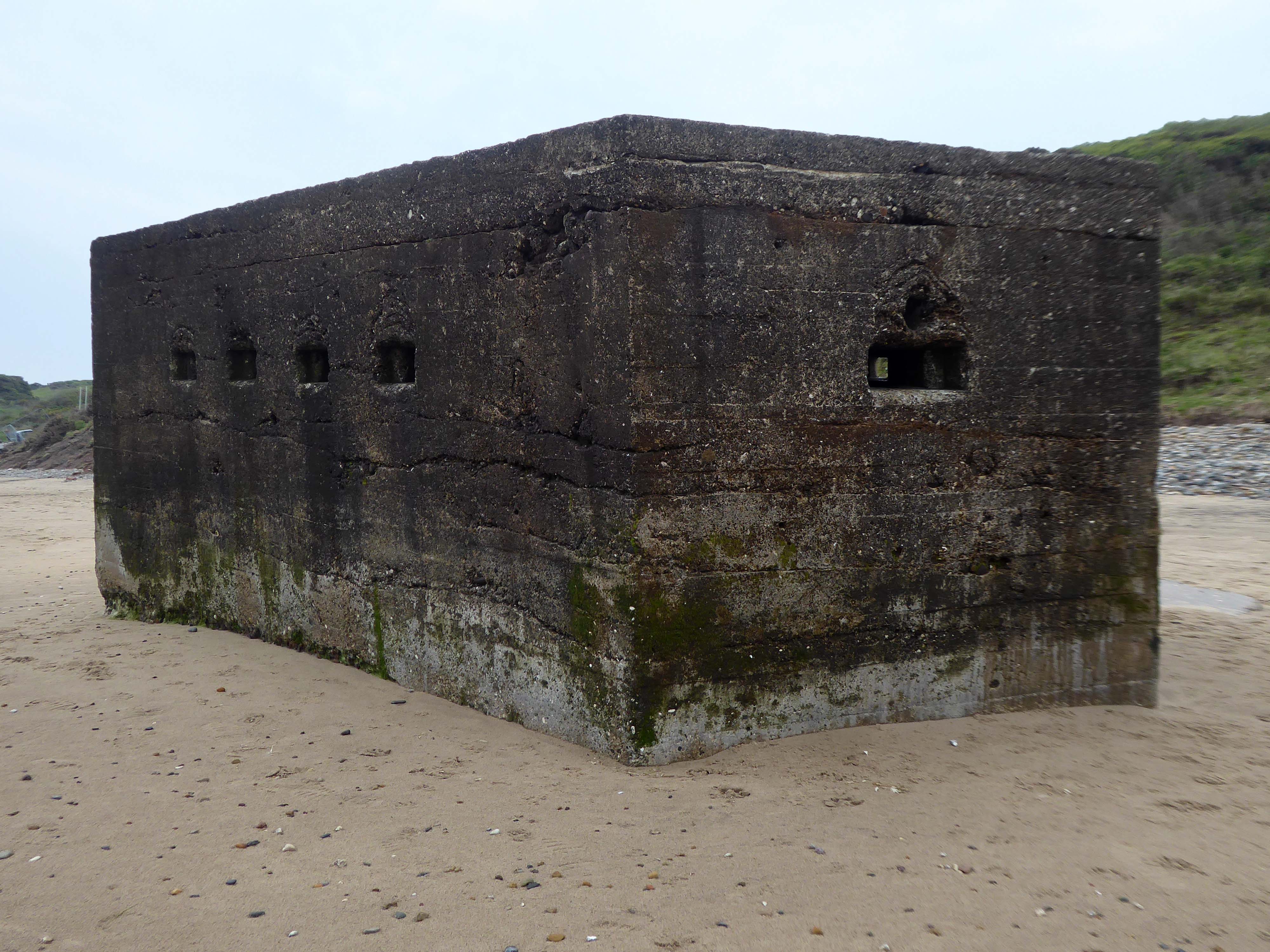
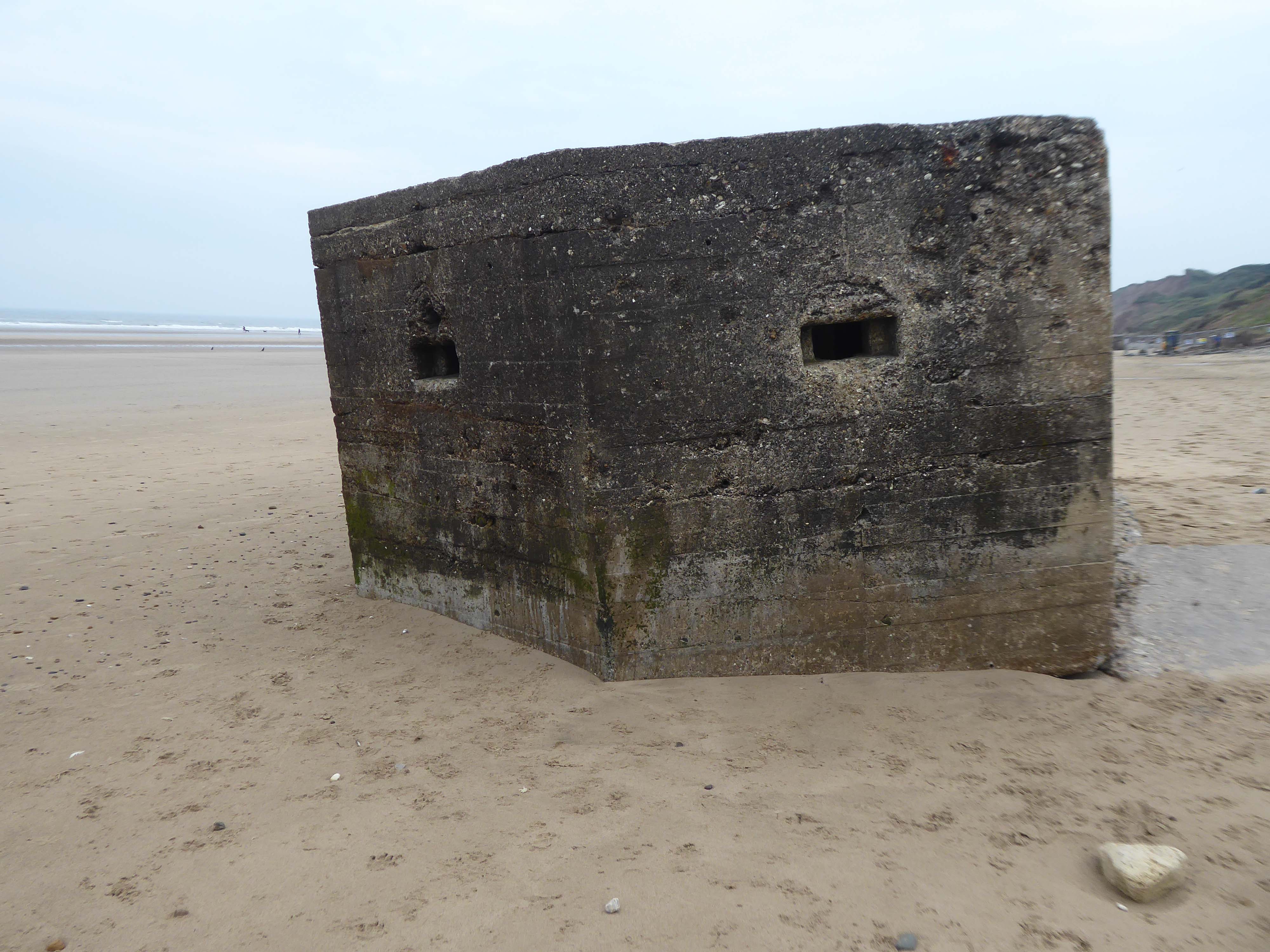
Anti-tank blocks line the foreshore here; with deep foundation they are meant to be so immovable that tanks cannot go through them and rather have to go over them, exposing the weakly armour undersides of the tanks, which can then be fired at. The anti-tank blocks are arranged in batches of both parallel and perpendicular to the sea, which helps to divide up the beach and channel enemies towards the pillboxes and into fire.
Once more unto the beach, dear friends, once more, or close the wall up with our English dead.
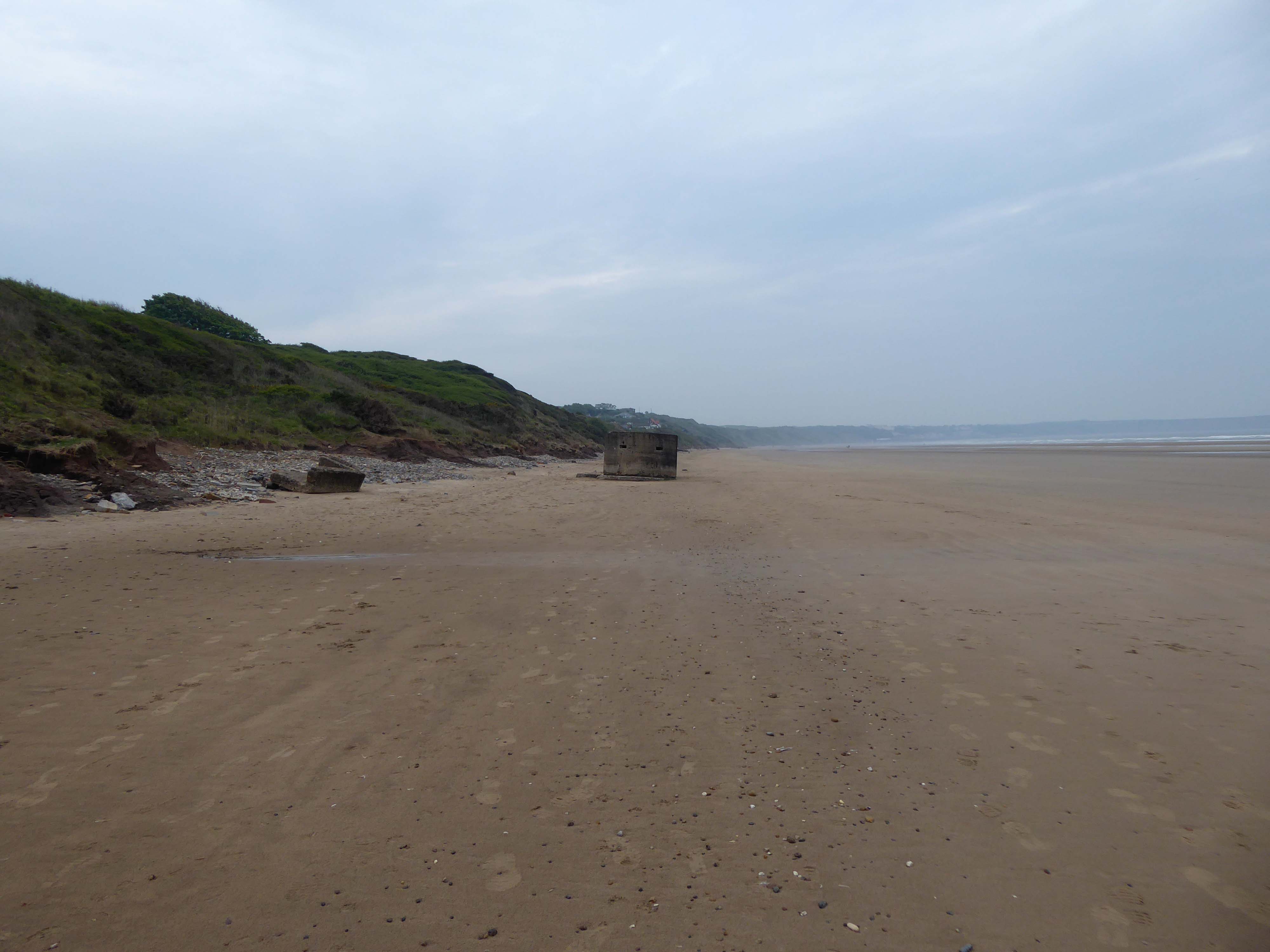
Having visited Cayton Bay last year I ventured forth last week, to Filey and beyond.
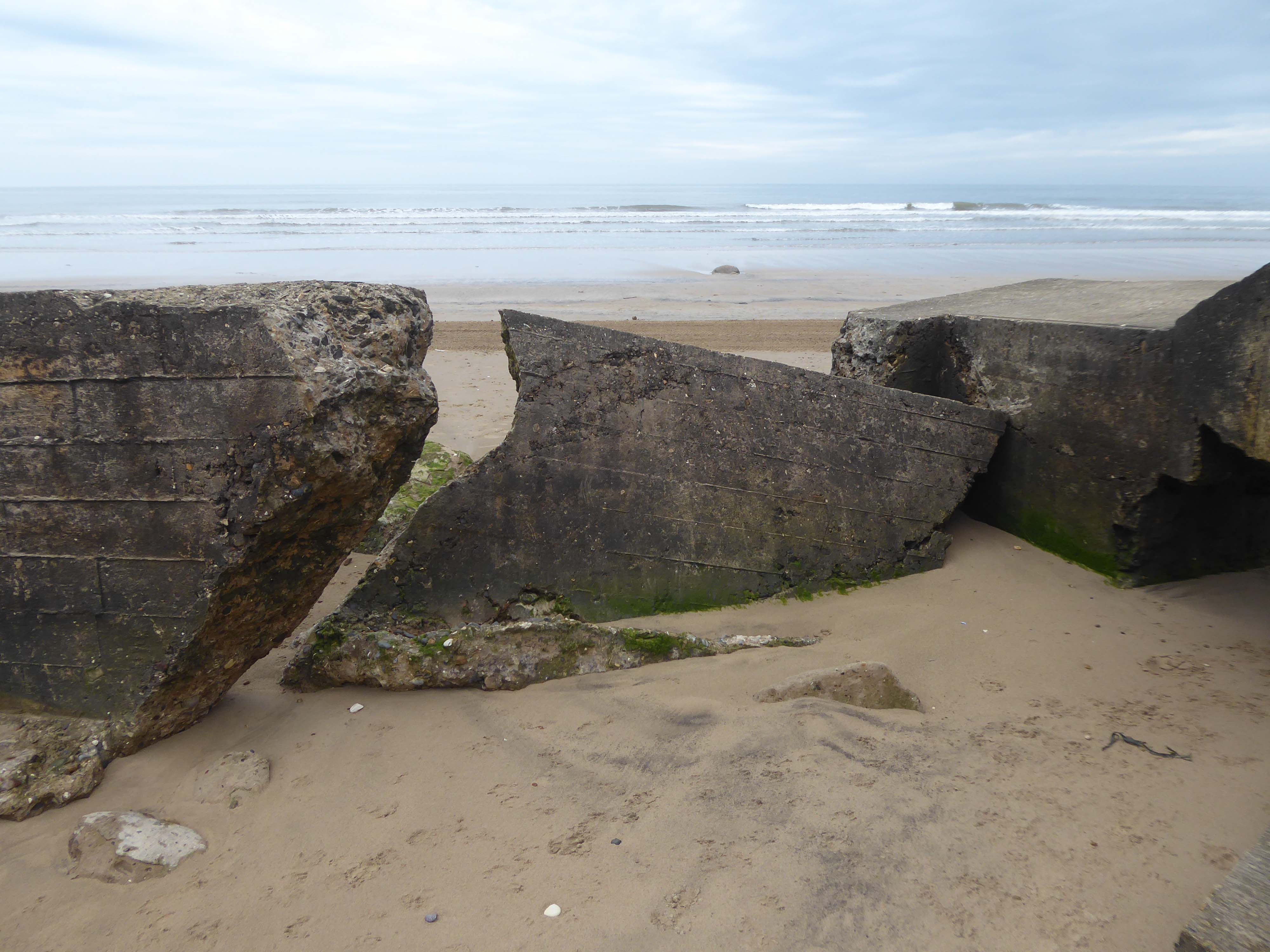
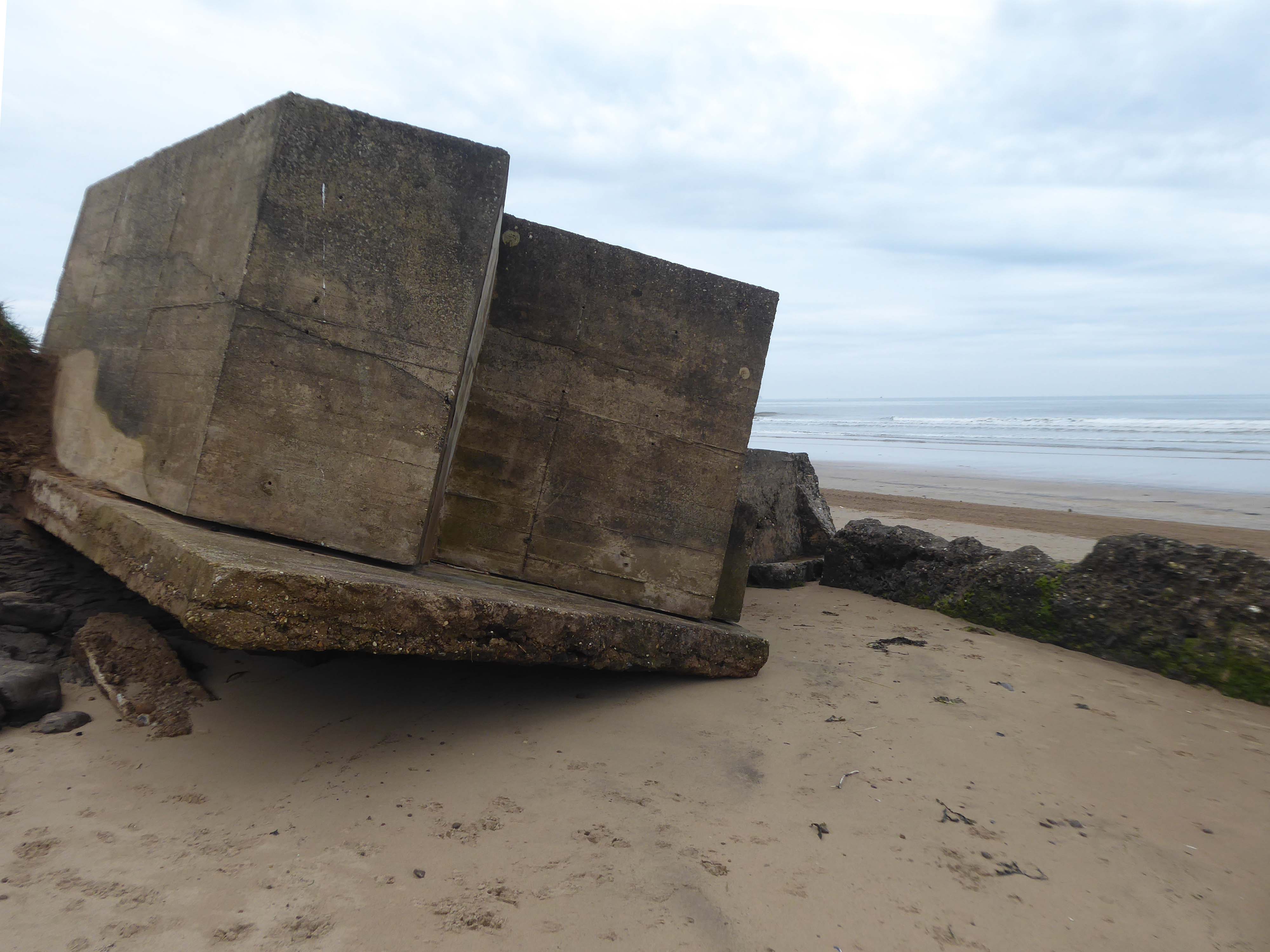
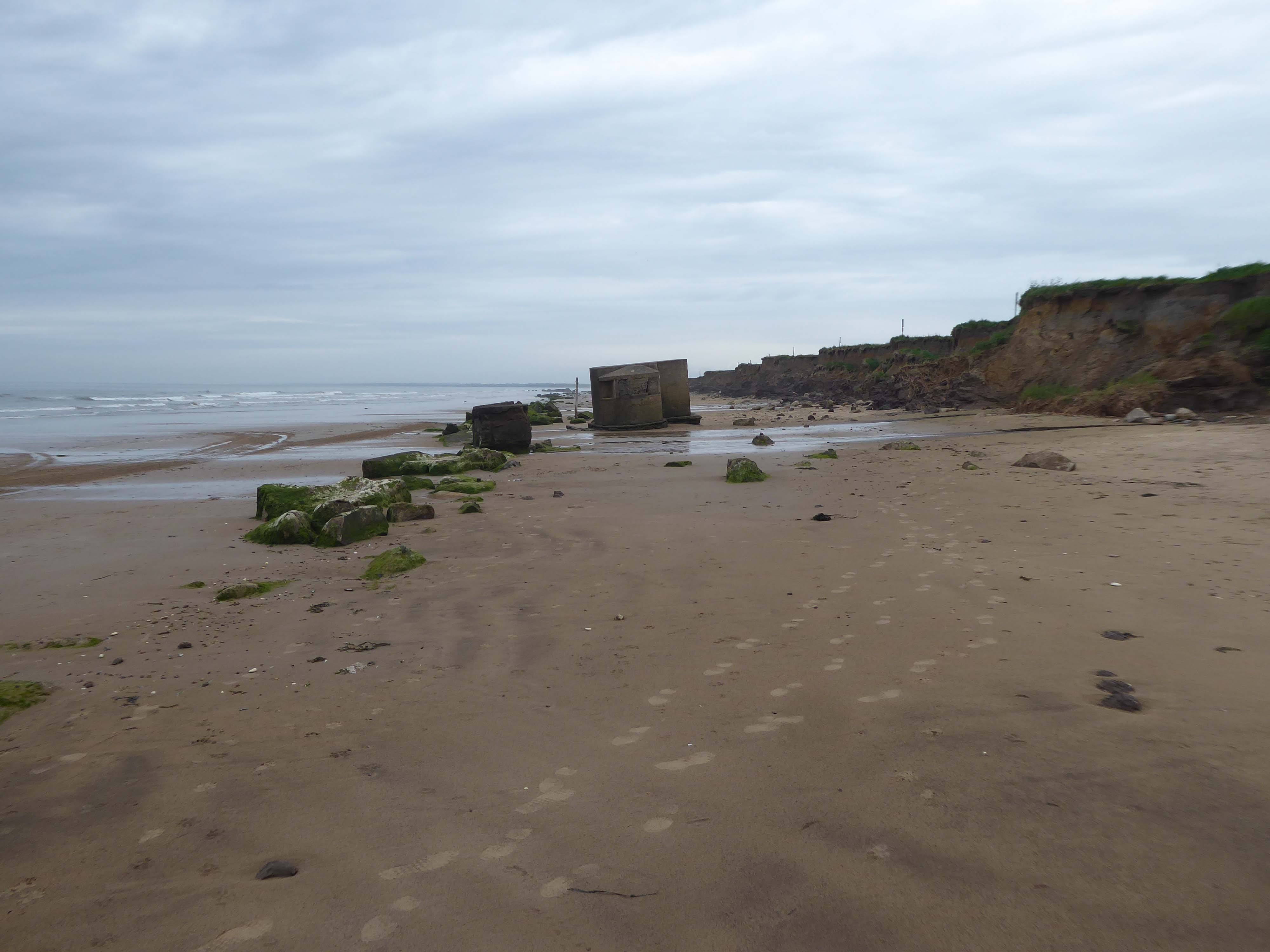
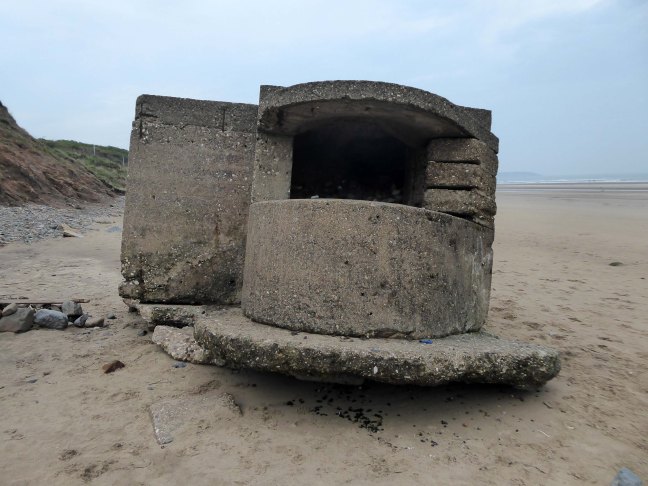
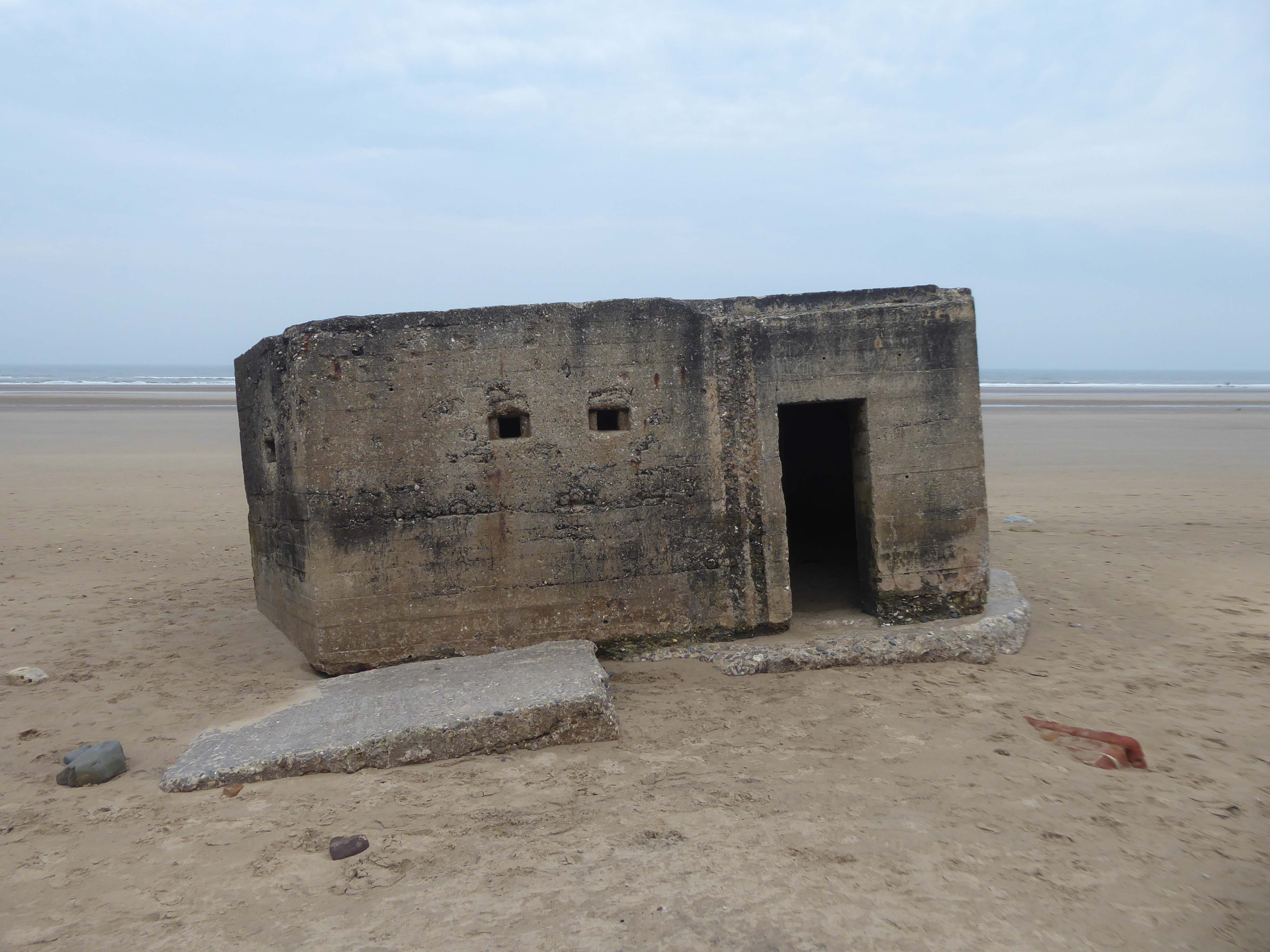
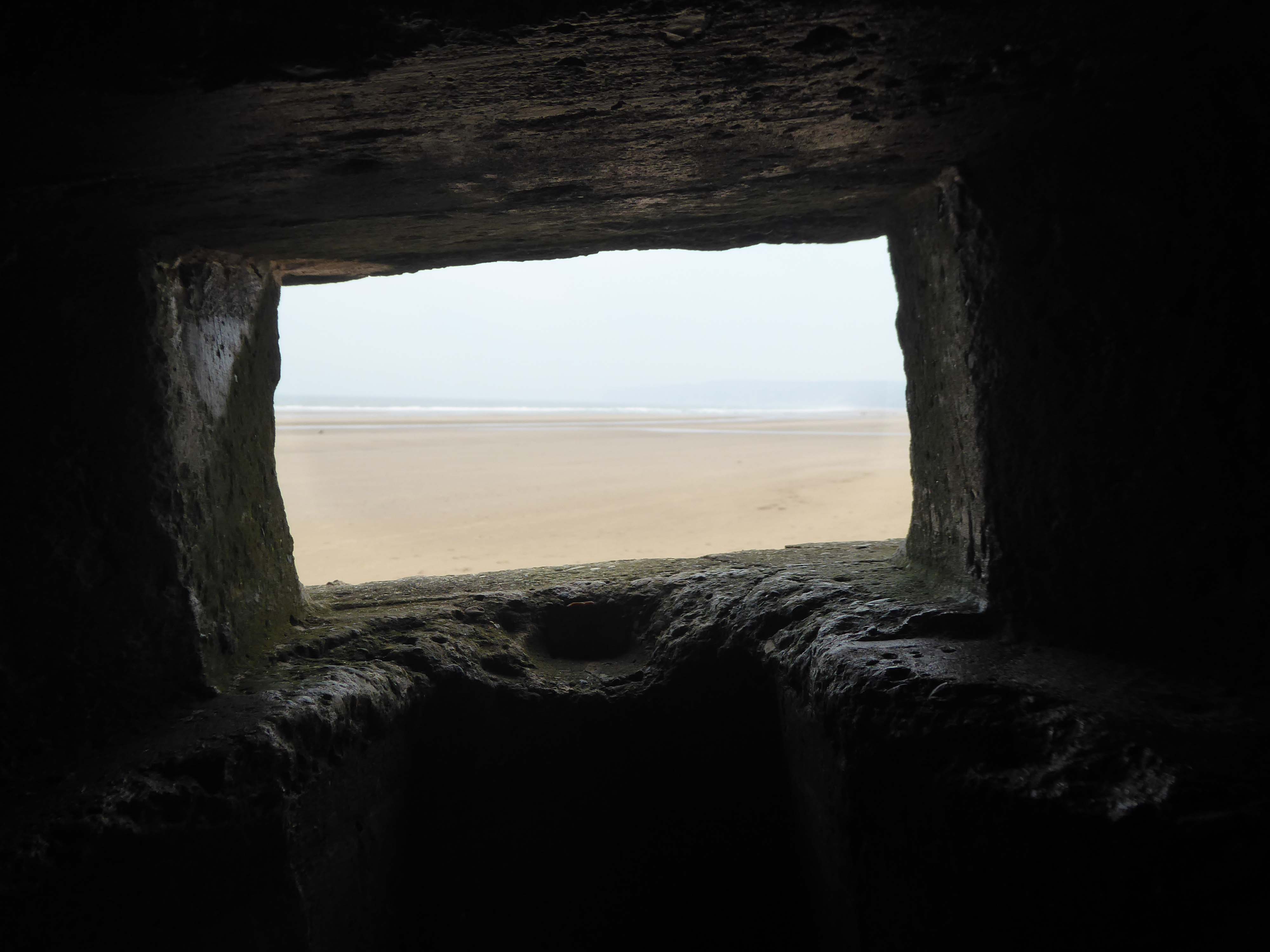
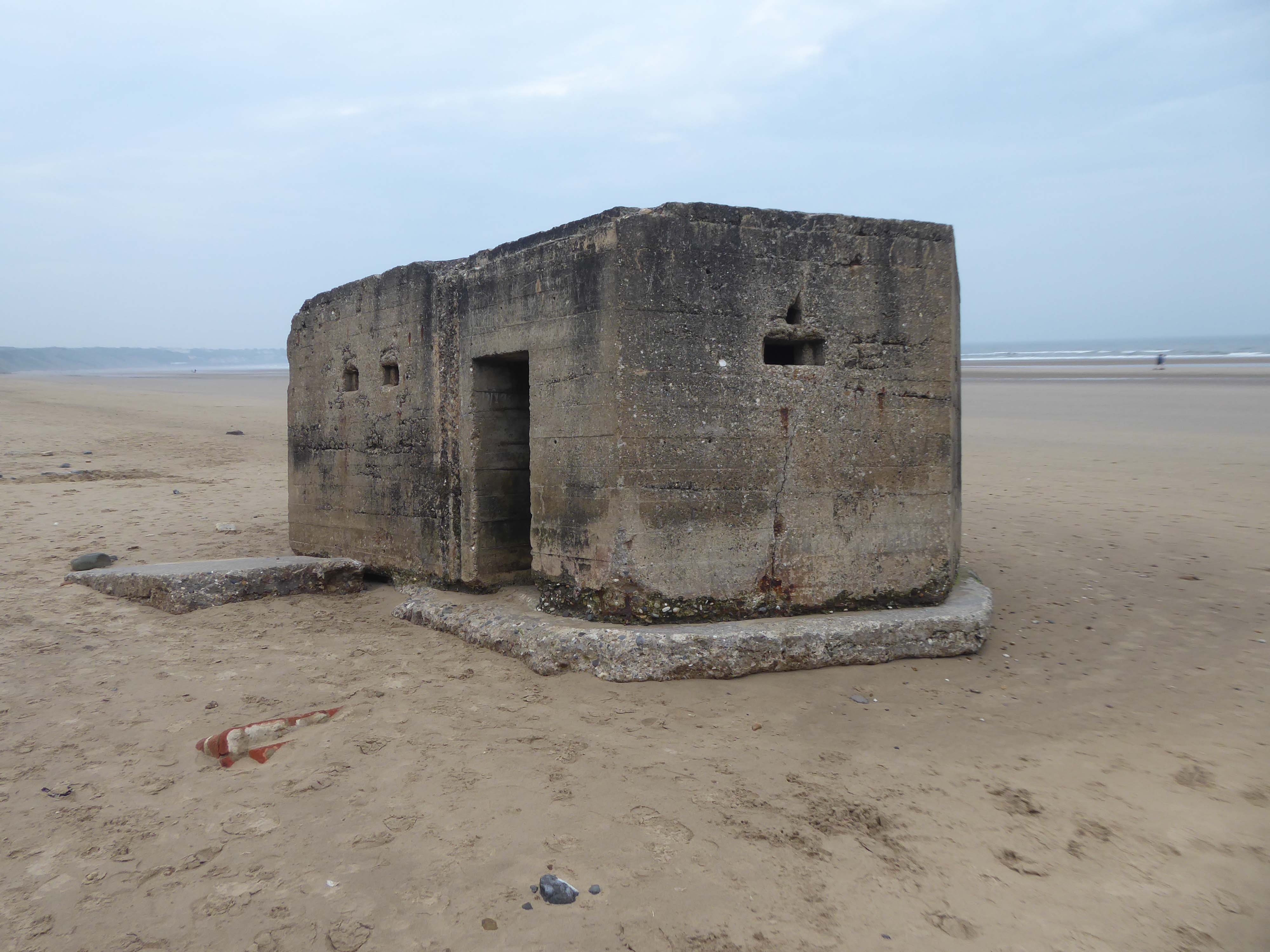
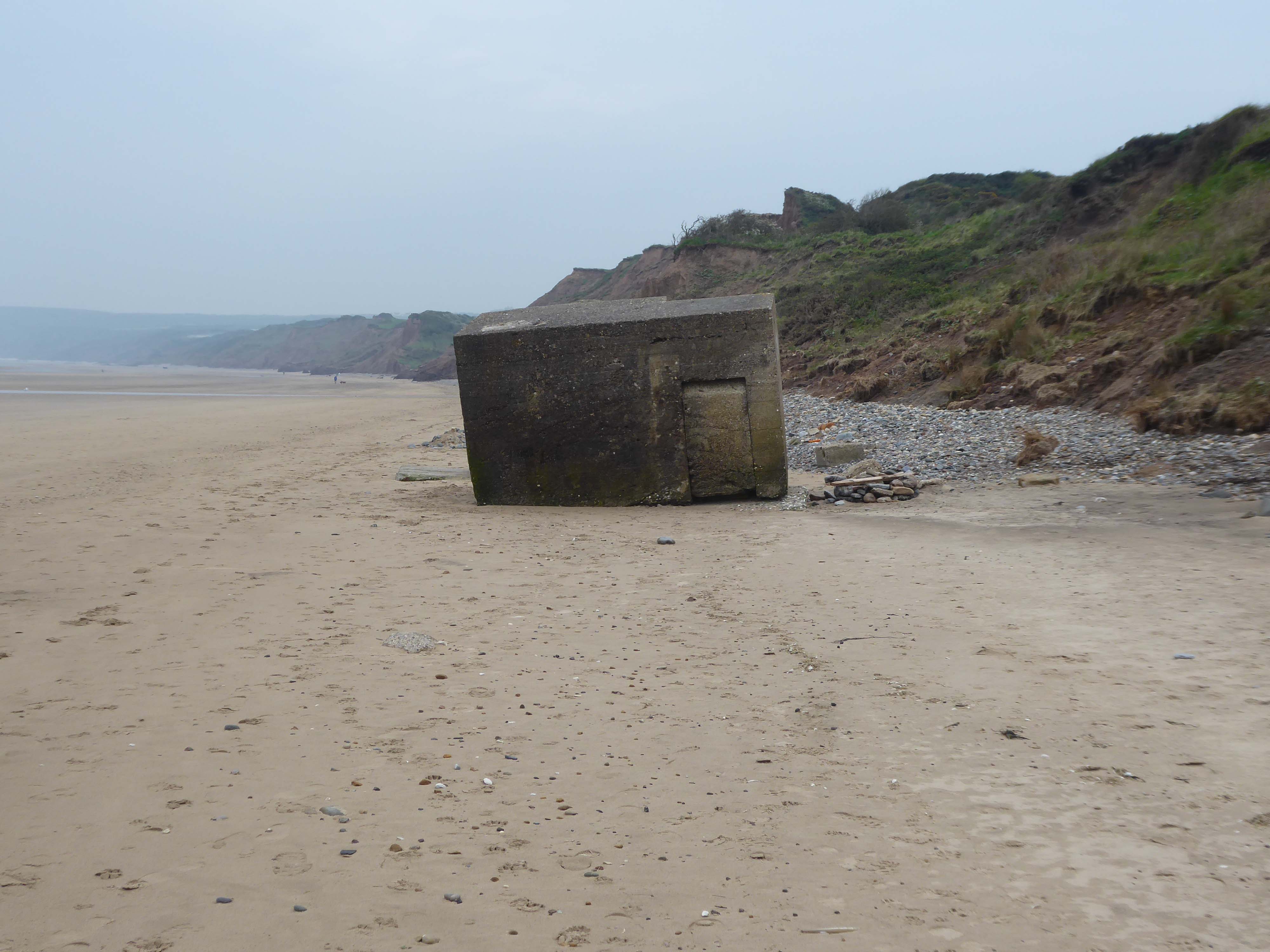
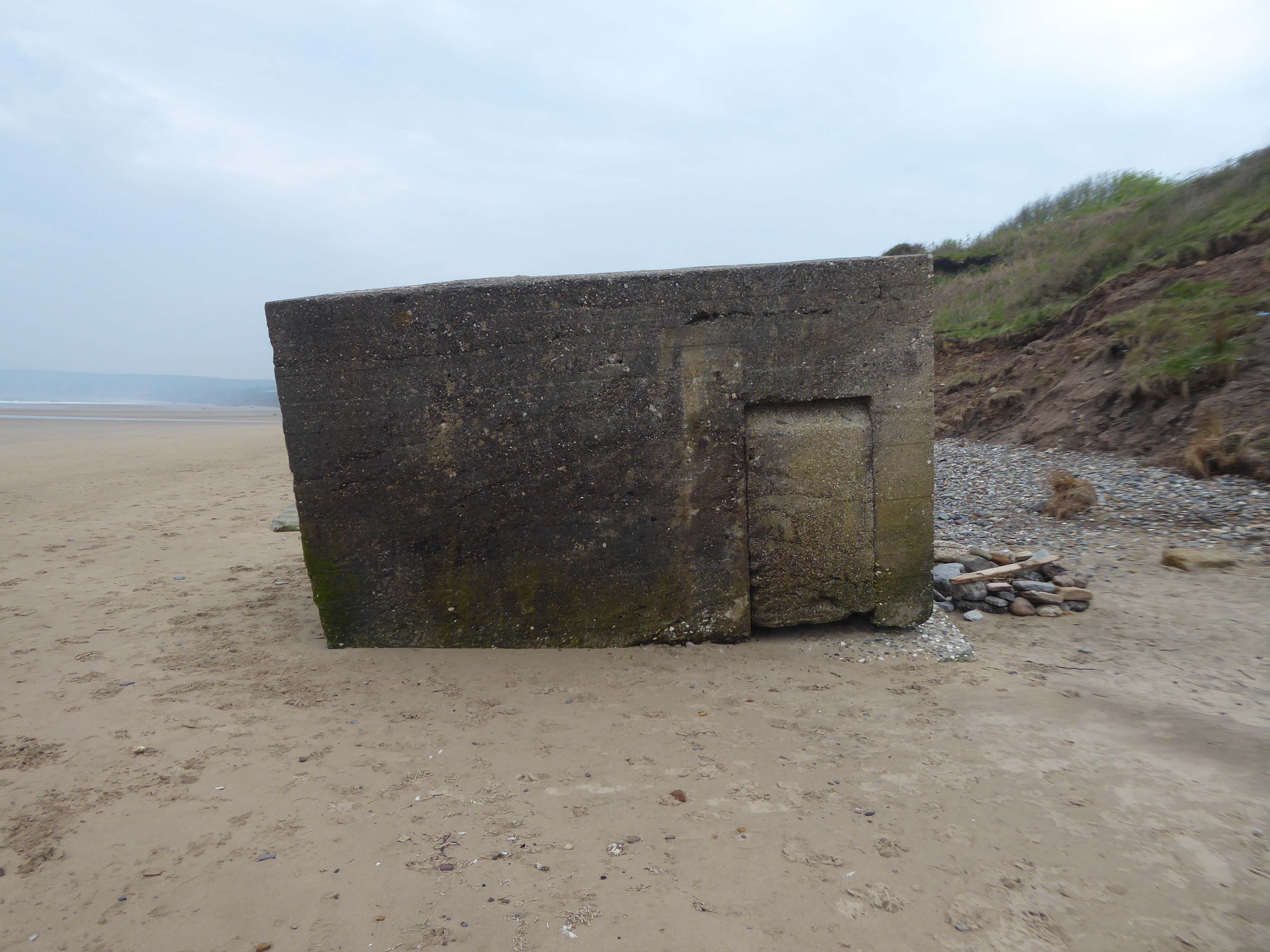
The shore toward Hunmanby Gap when faced with the threat of invasion, was home to a plethora of coastal defences, formed from raw concrete between the years 1941 and 1942, along with attendant armed forces.
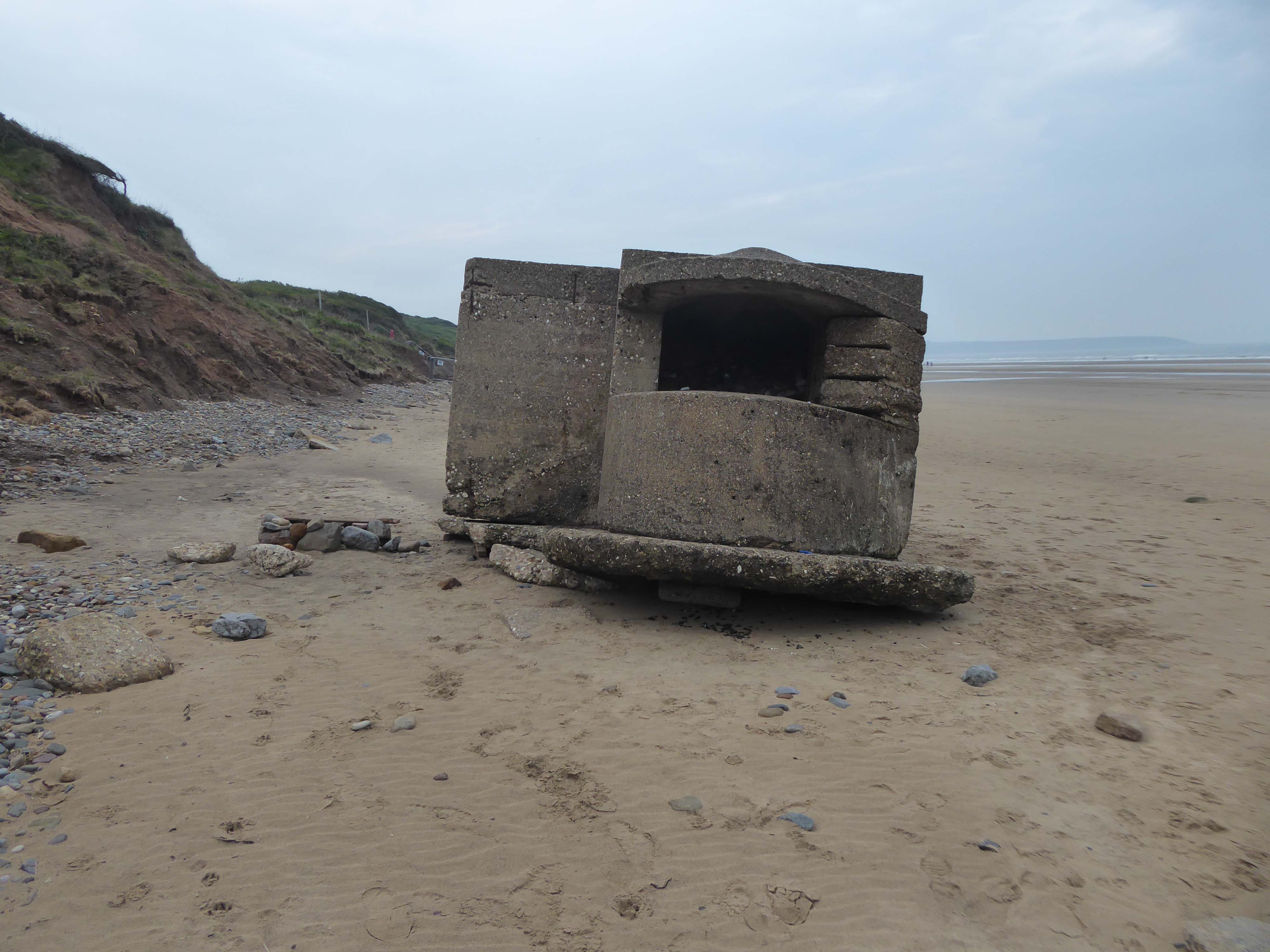
Pill boxes, anti-landing trenches, anti-tank obstacles, beach lights, coastal batteries, flame fourgasses, gun emplacements and machine gun posts were clustered along the coast.
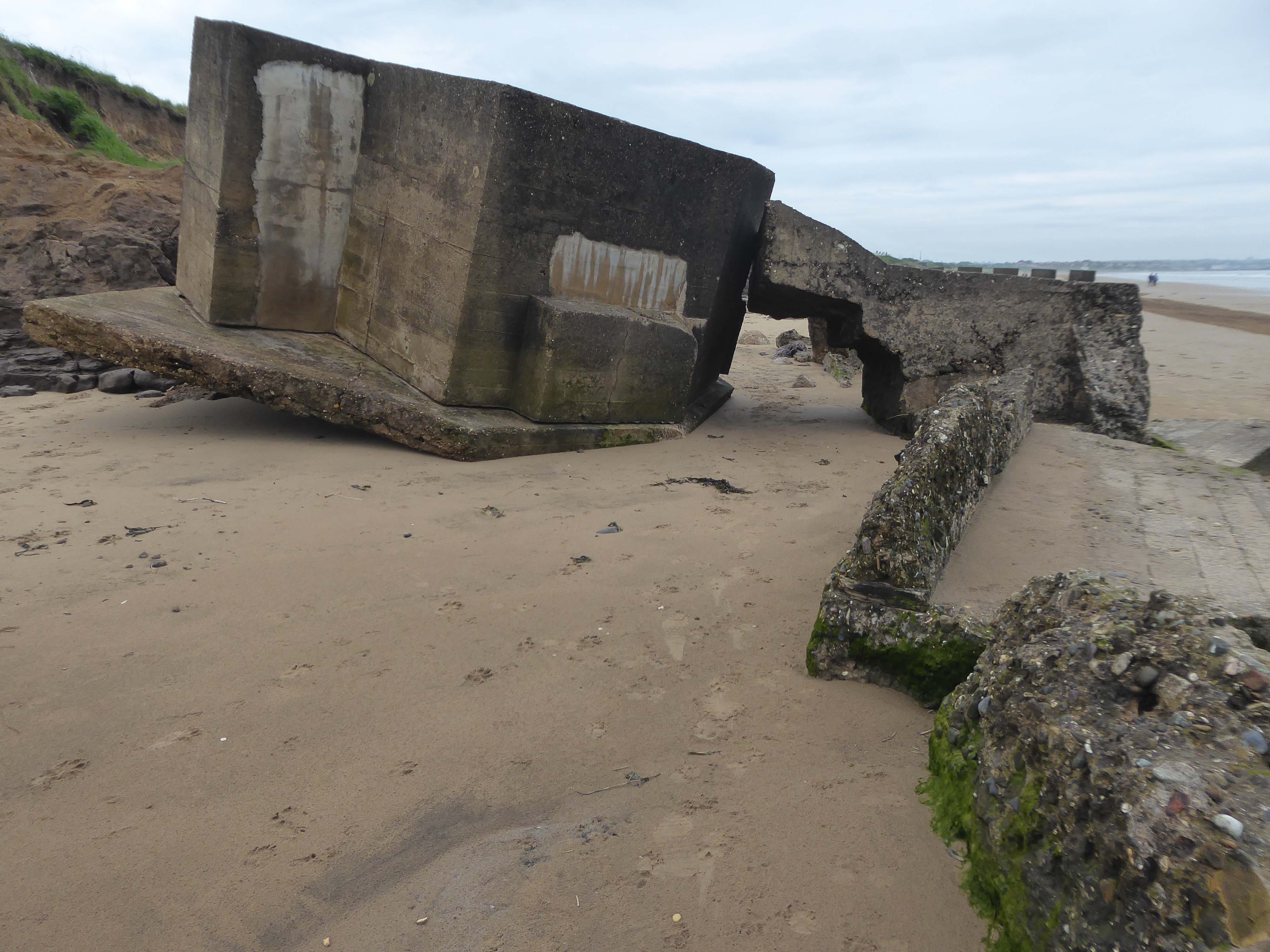
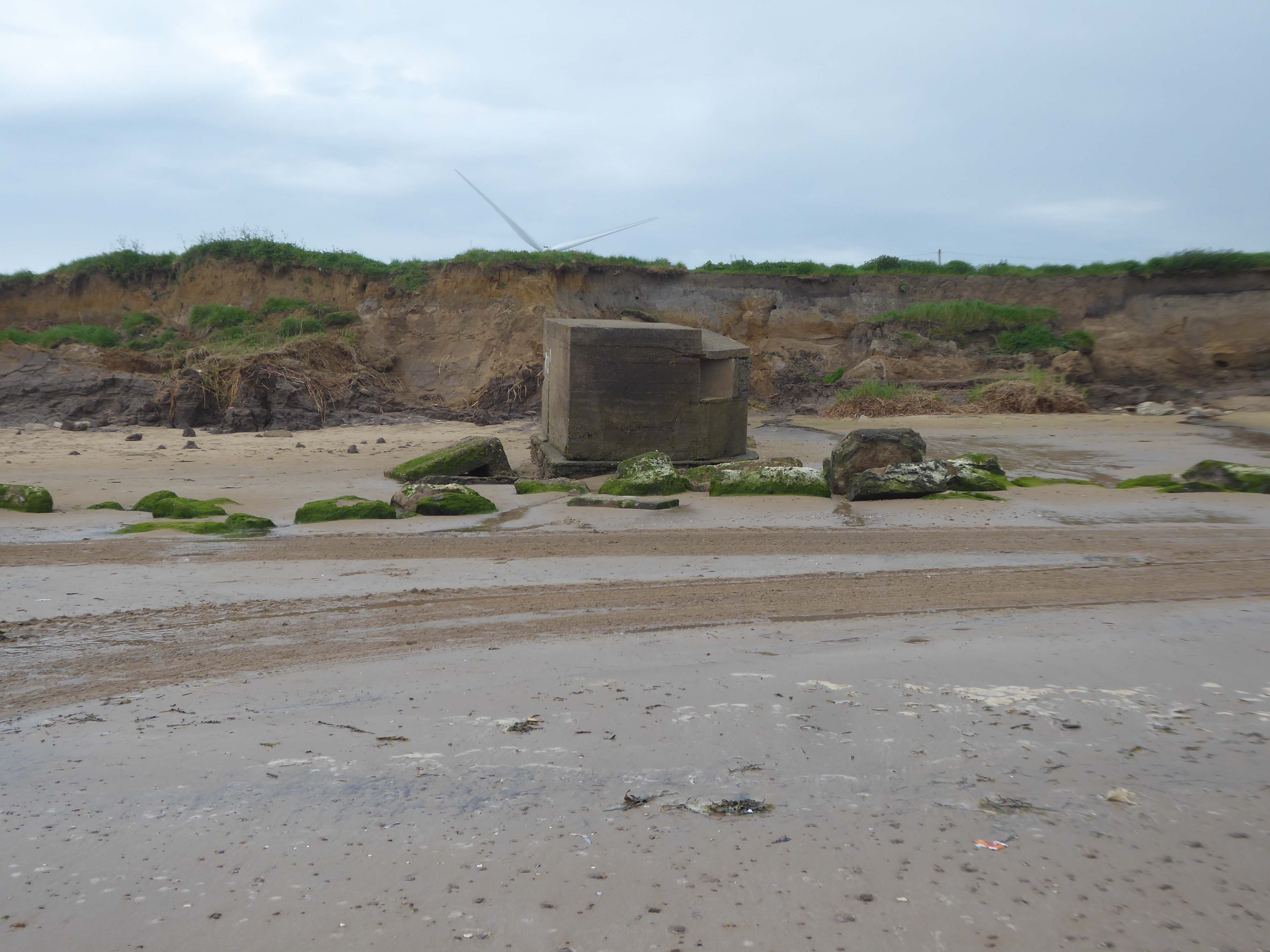
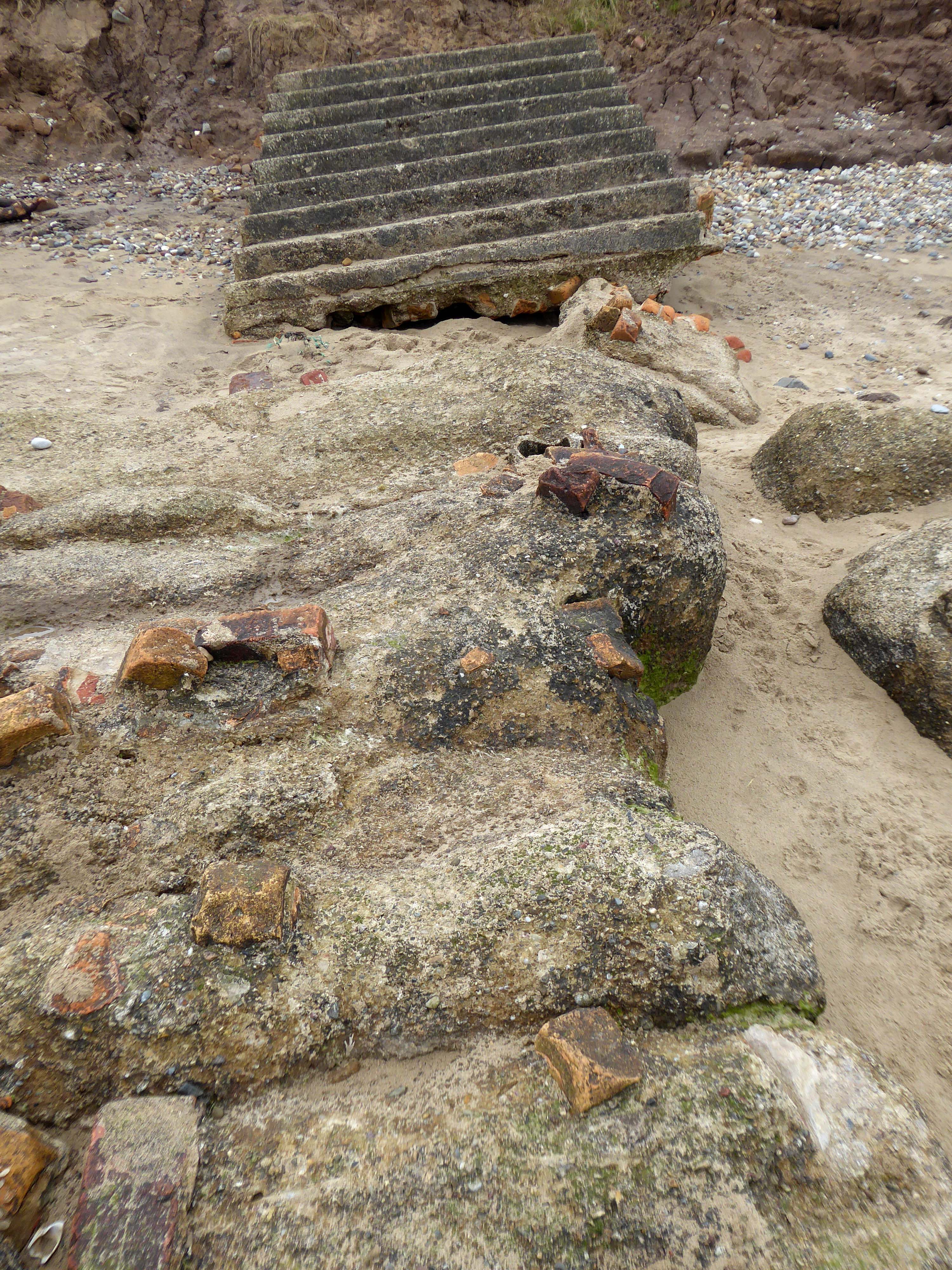
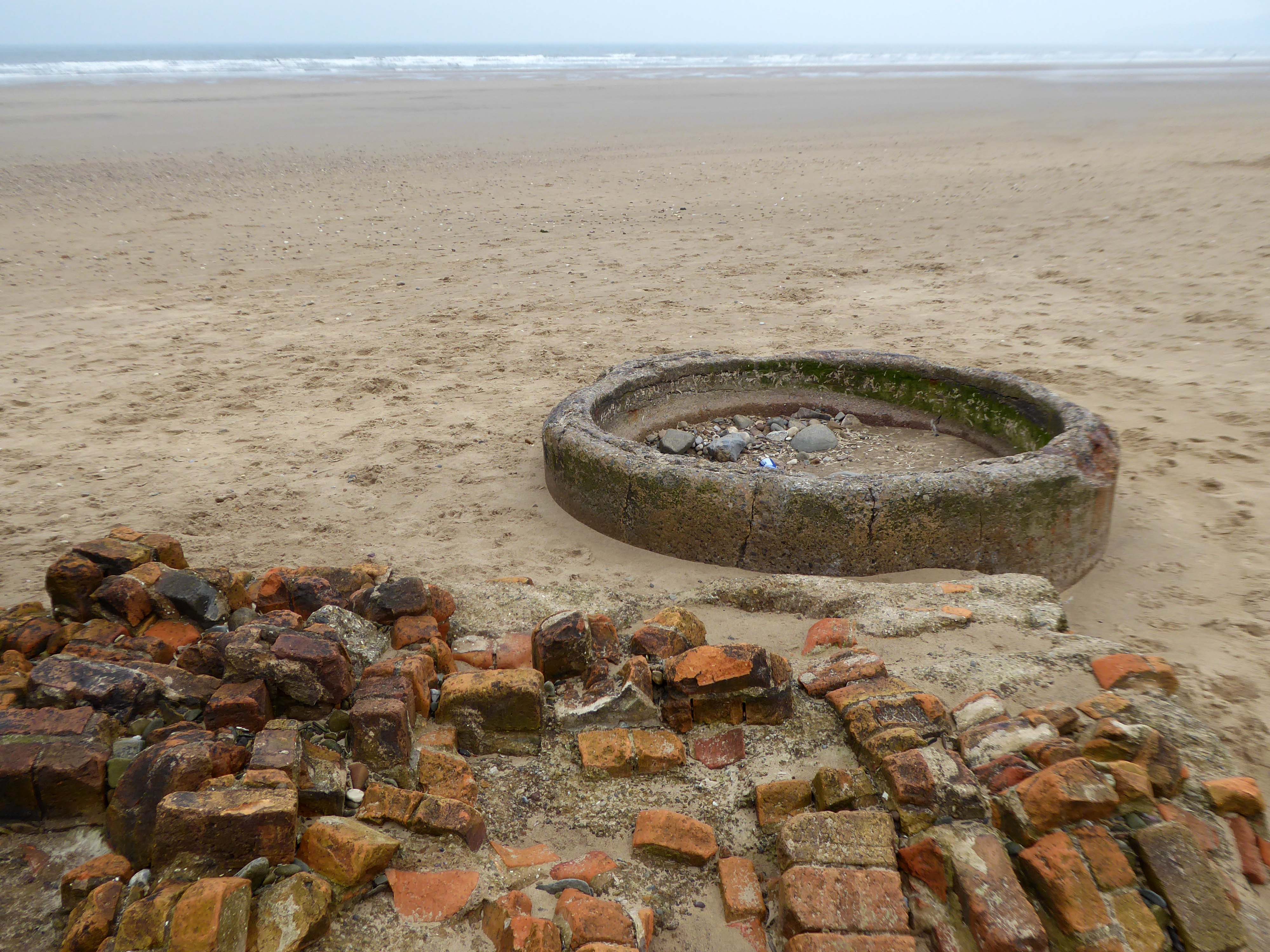
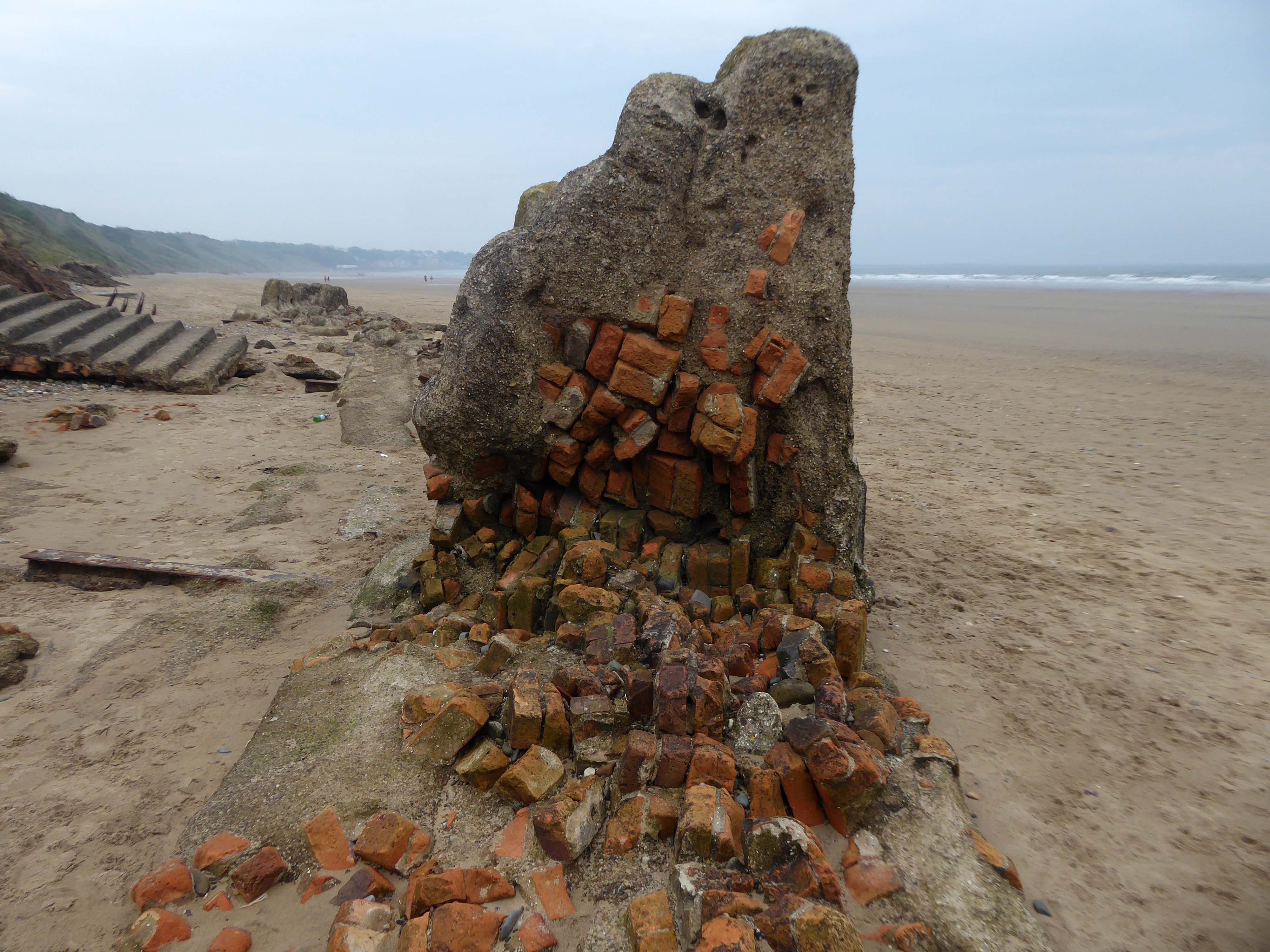
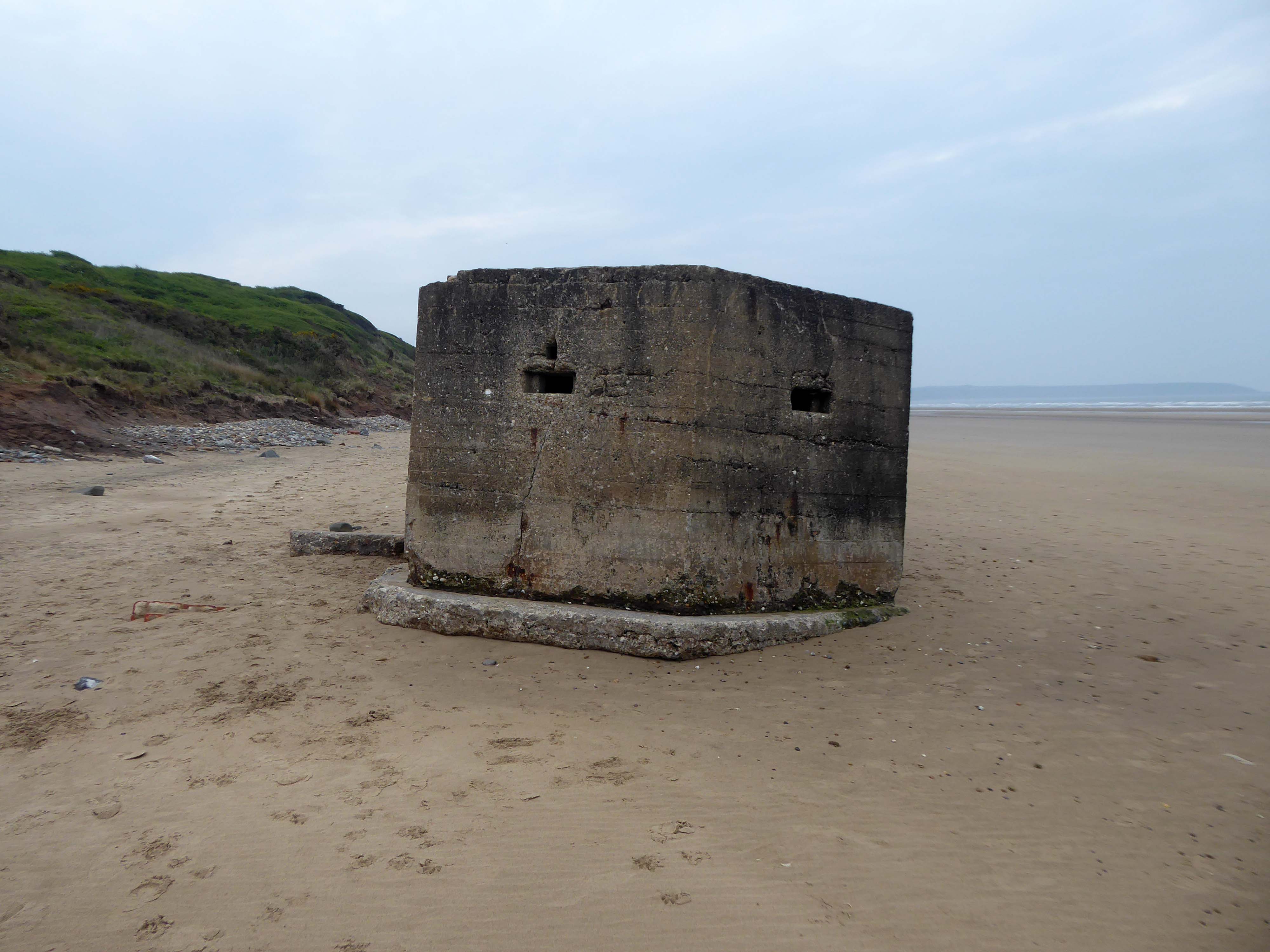
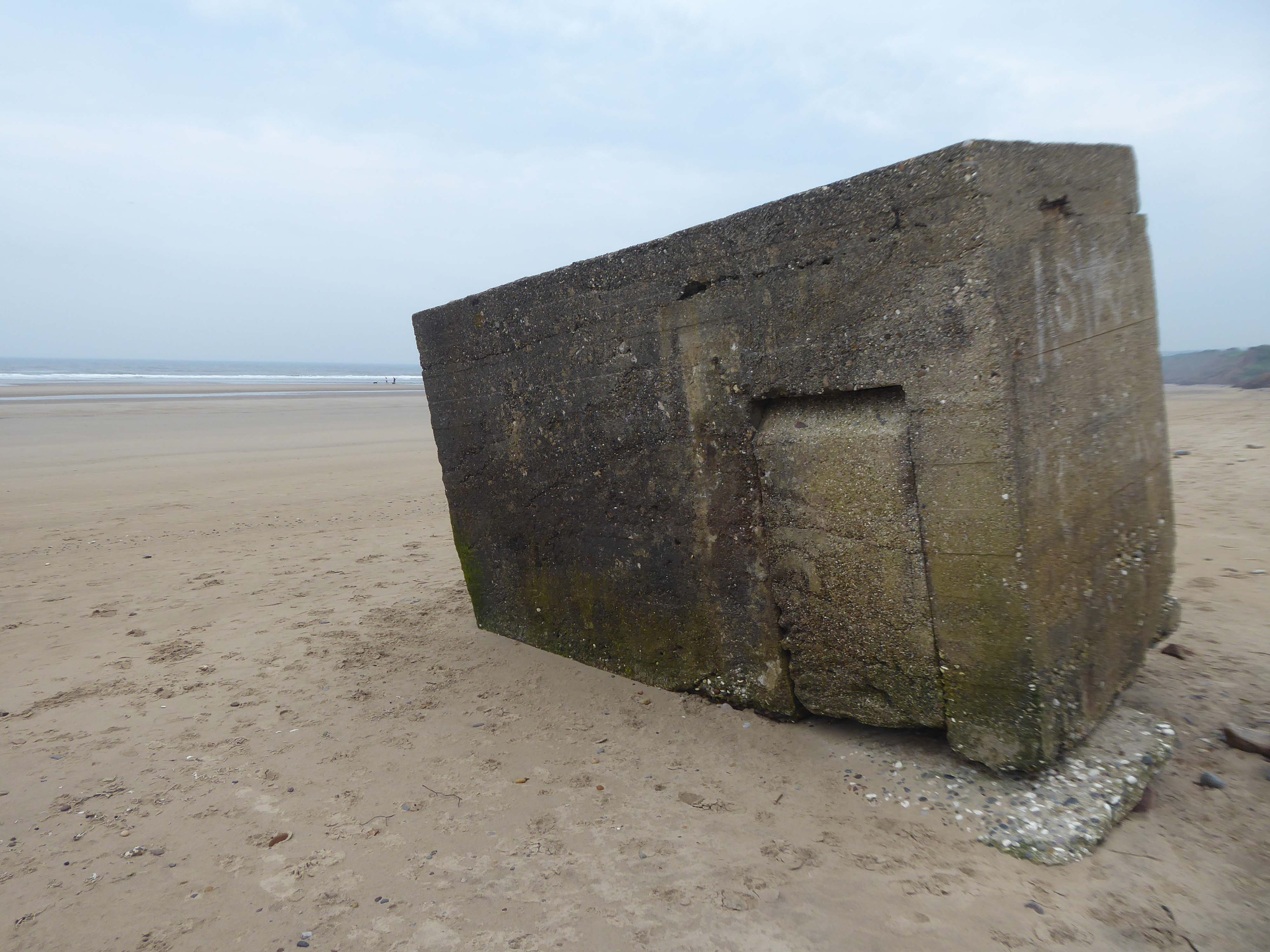
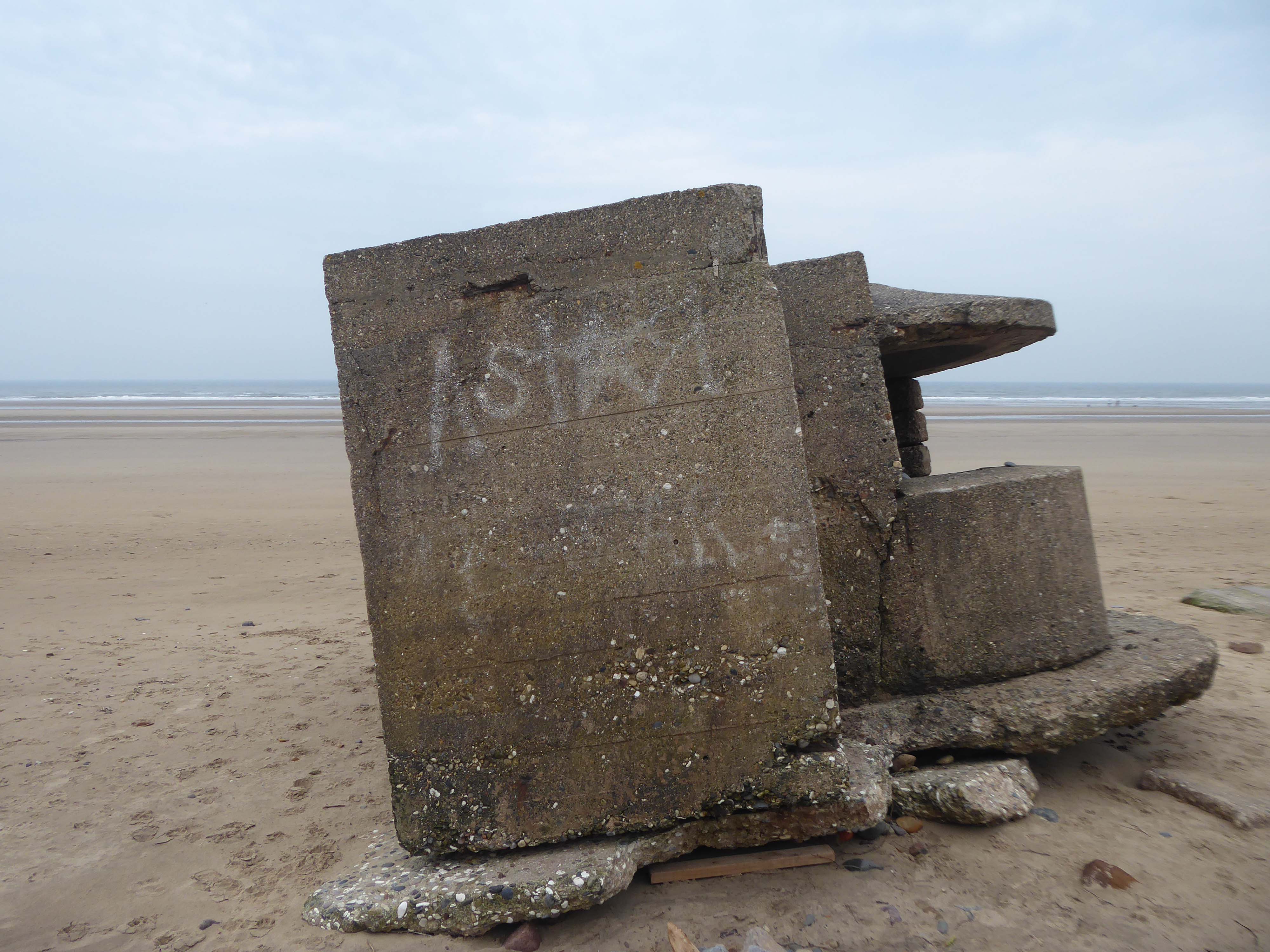
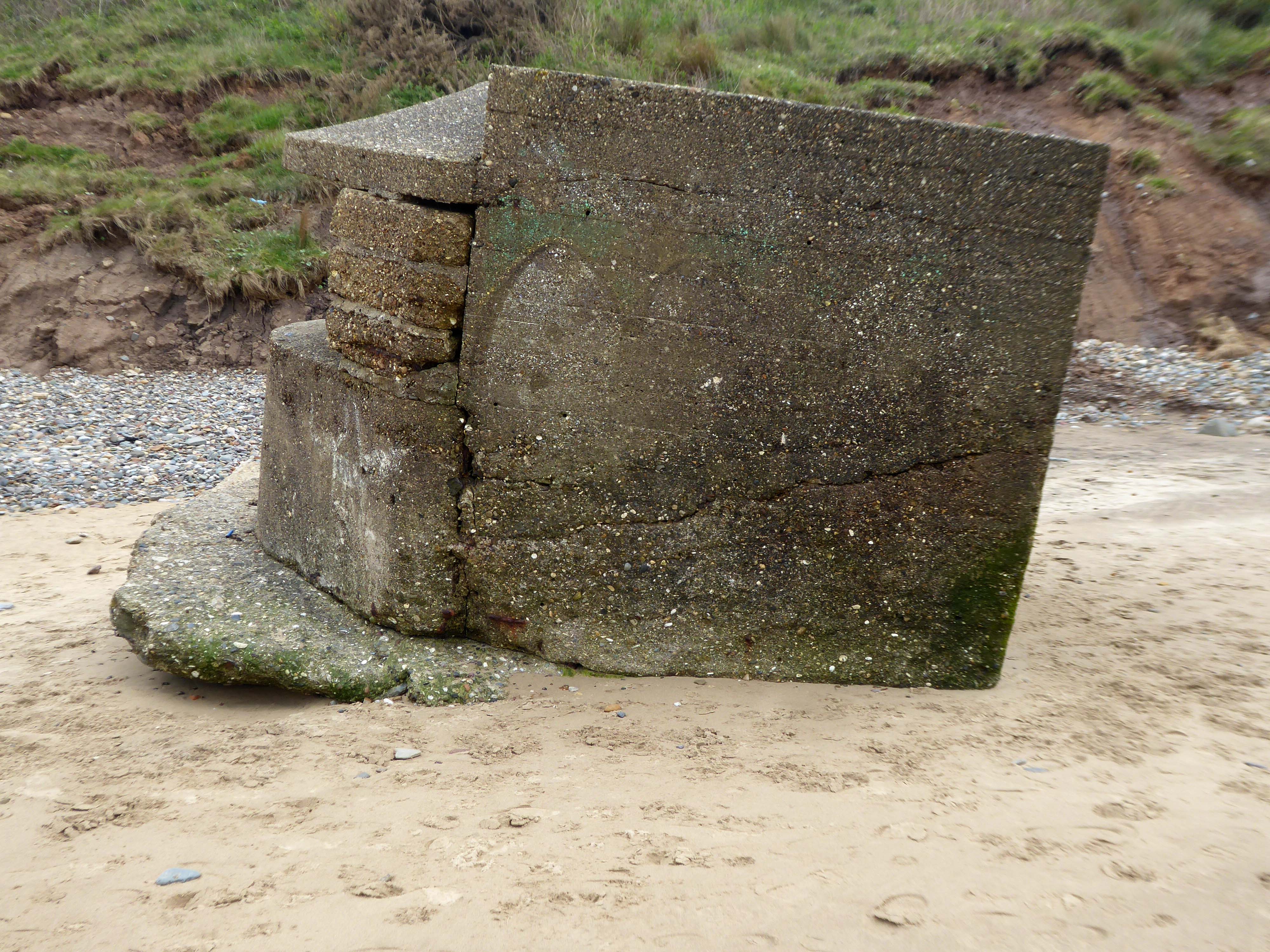
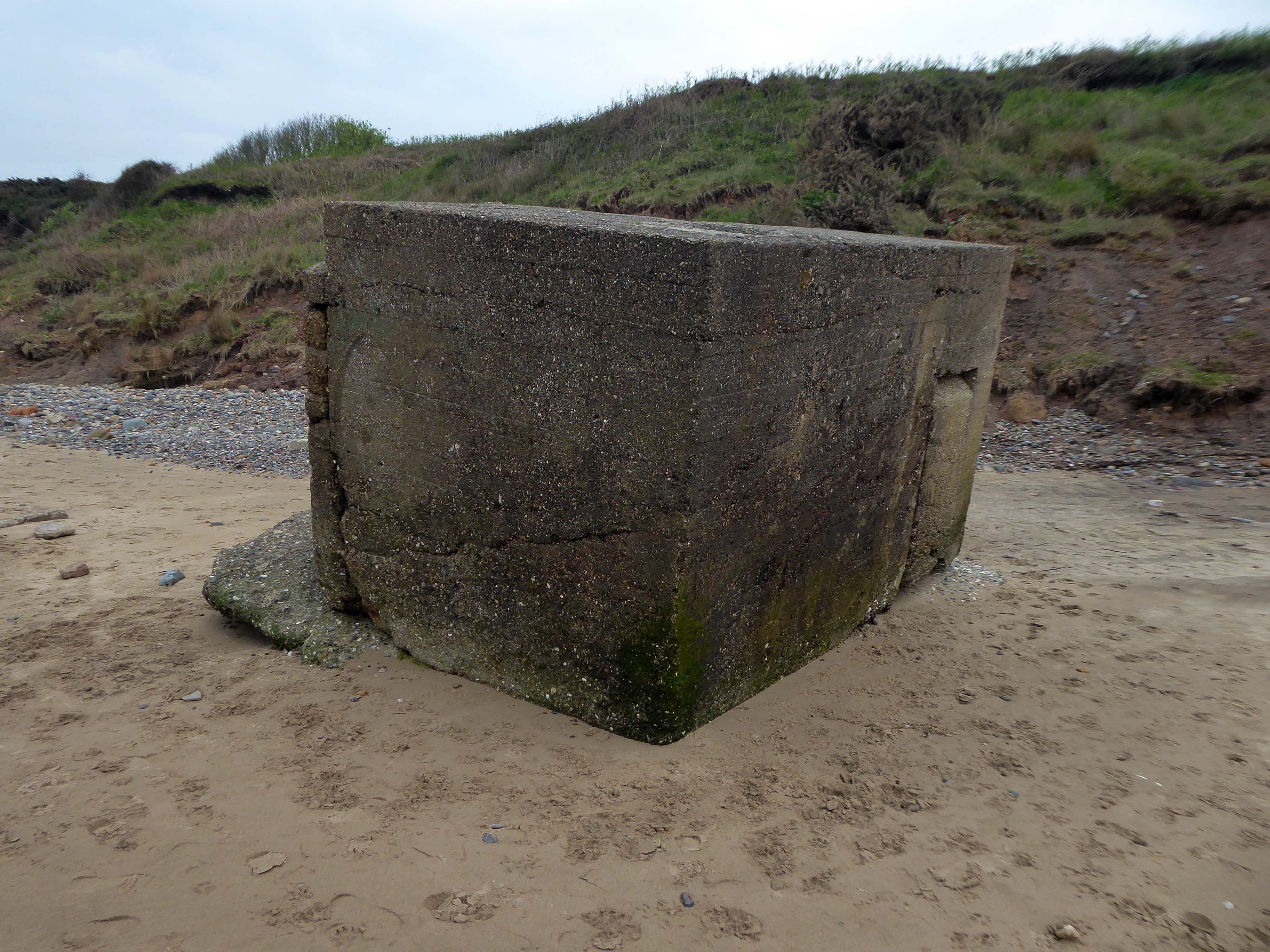
The majority have subsequently been removed, a few are extant – slipping from their cliff-top positions, as the soft clays have been eroded.
Their remains are now skewed and diminished by the weather and the North Sea’s formidable waves, taking on striking sculptural forms, embedded in the shifting sands.
During May 1940 the branch of the Directorate of Fortifications and Works – FW3, at the War Office was set up under the Directorship of Major-General G.B.O. Taylor. Its purpose was to provide specific pillbox designs to be constructed throughout the countryside at defensive locations.
During June and July 1940 saw the FW3 branch issue seven basic designs. However, often, once in the field, the local construction companies modified these under the direction of the area commands.
The FW3 pillbox design concept was to provide a simple fieldwork standard that could be constructed very quickly. Most designs consisted of or incorporated some of the following features:
Minimum of Bullet/Splinter Proof protection No attempt was made to provide living accommodation Some designs were enhanced to Shell Proof standard Simple Blast Walls to protect open entrances External flat side walls with rectangular or polygonal shape
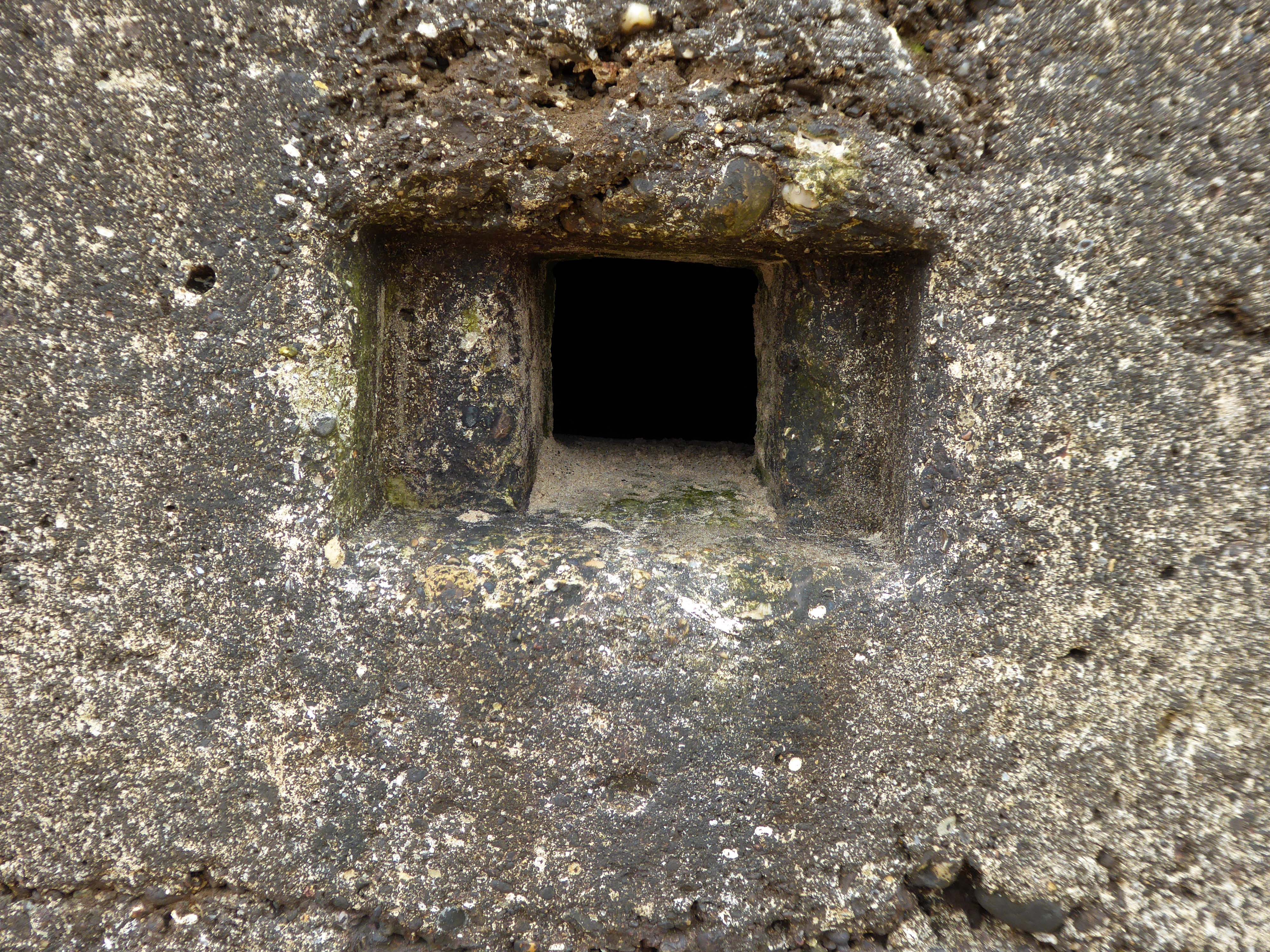
The use of common designs with standard sizes for doors, loopholes and flat sides made it easier to mass produce items for concrete shuttering and hence the speed of construction. However, with the general countrywide lack of material it was often necessary to use bricks as the shuttering. This often fools the casual observer into believing that the whole structure is constructed of brick. Closer examination often reveals the integral reinforced concrete back-bone.
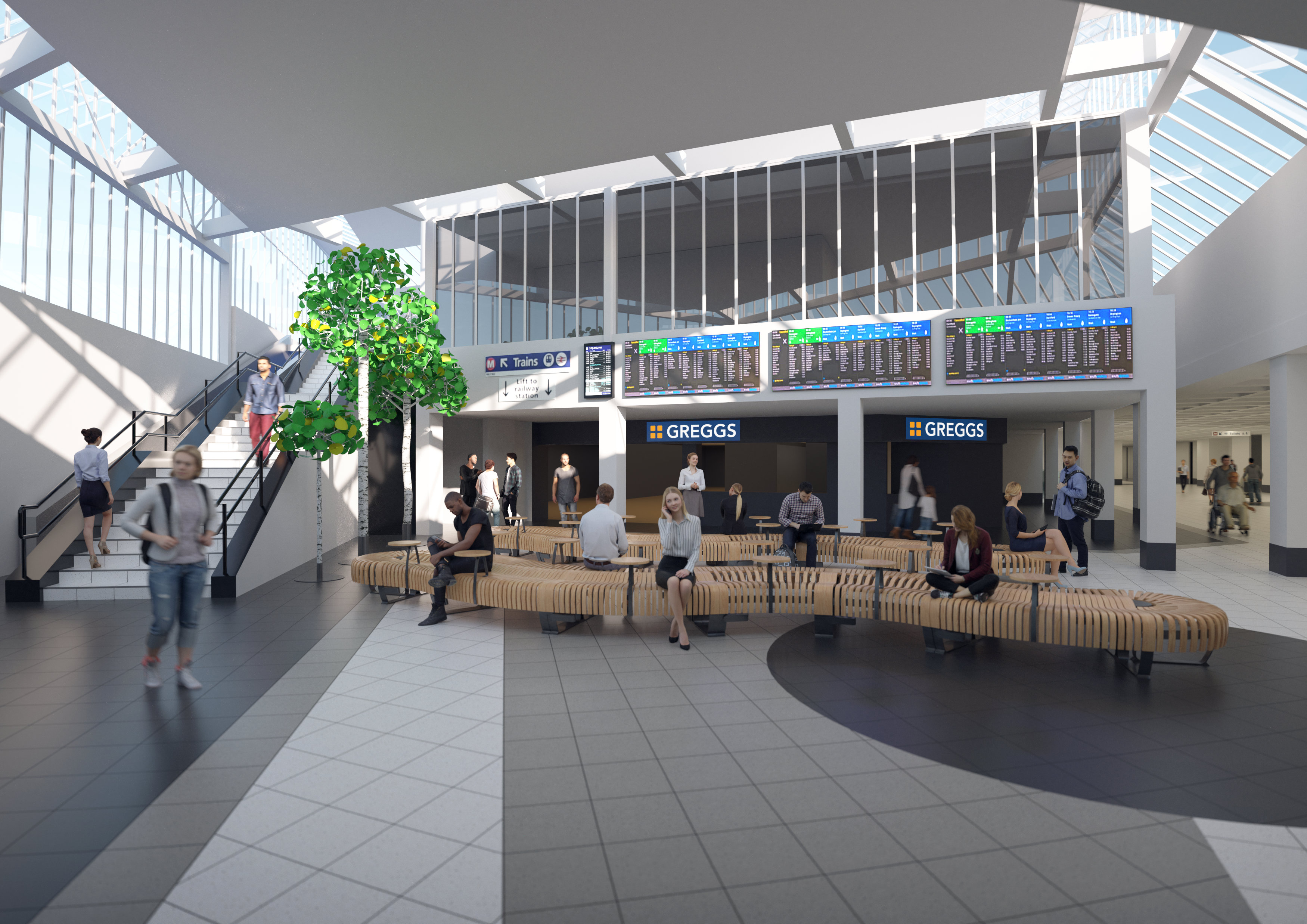
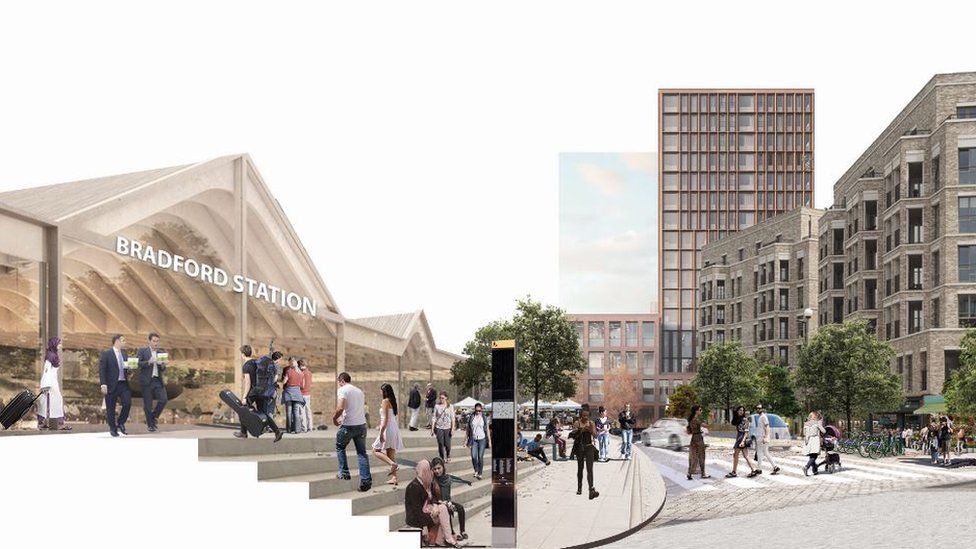
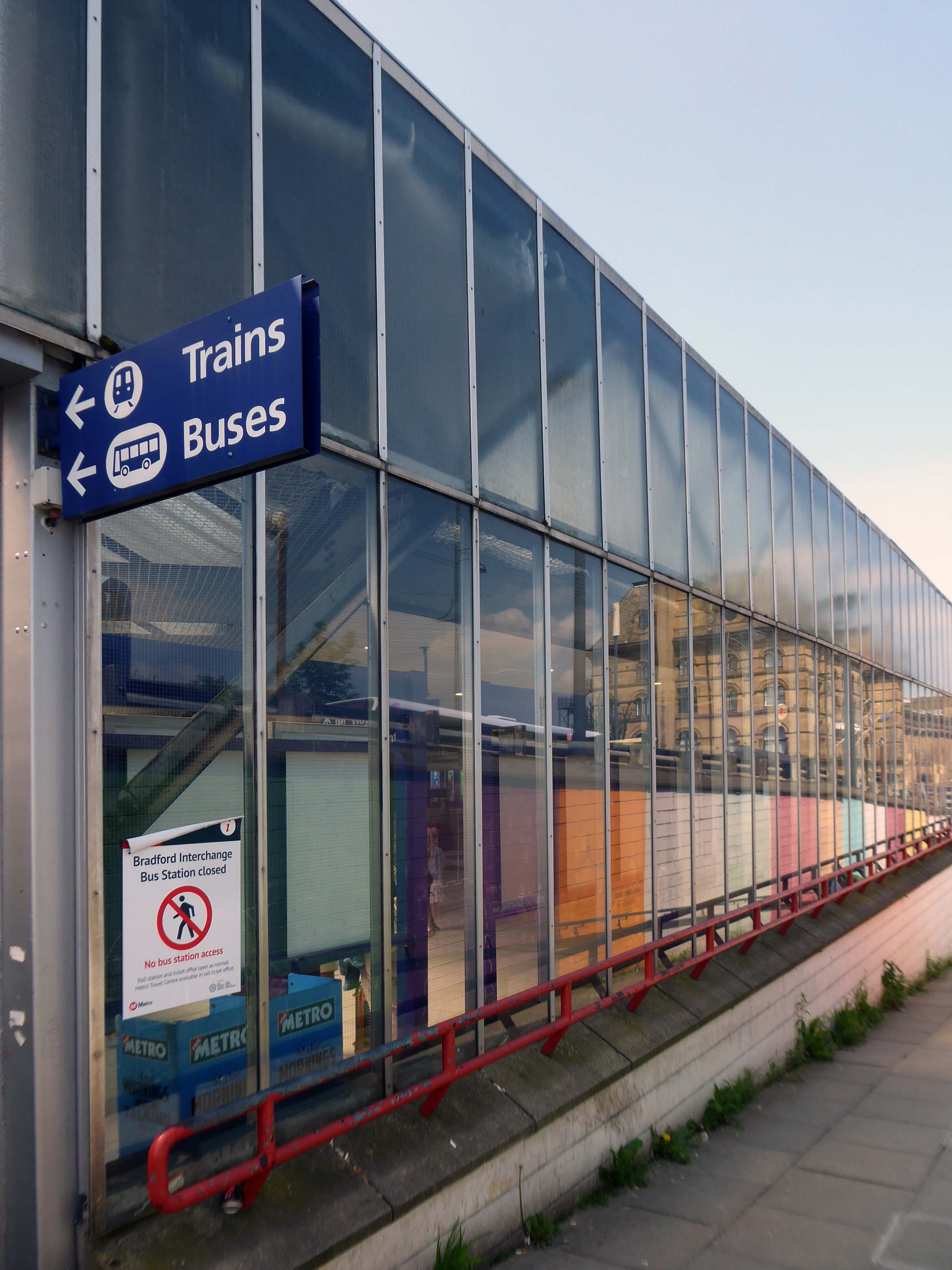
We arrive at and begin our journey at the Interchange – the bus station is closed, along with the station entrance.
Bradford accepts that it is a part of the Northern Supercity stretching from Coast to Coast – Liverpool to Hull. Every existing town and new settlement must be unique. People belong to their own hotspot as well as Coast to Coast. Bradford as a dispersed centre will give it individuality as well as becoming synonymous with the whole new city. Bradford is a mini version of the whole. It is composed of a series of mini hotspots which will each act as a focus for each square kilometre.
Bradford has the topography to allow every citizen to wake up to a view – both physical and mental. Their collective ambition can create a place of extraordinary difference.
The Interchange opened in 1971 was the first of its kind in the country, designed by the BR regional team headed by RL Moorcroft and the City Architect.
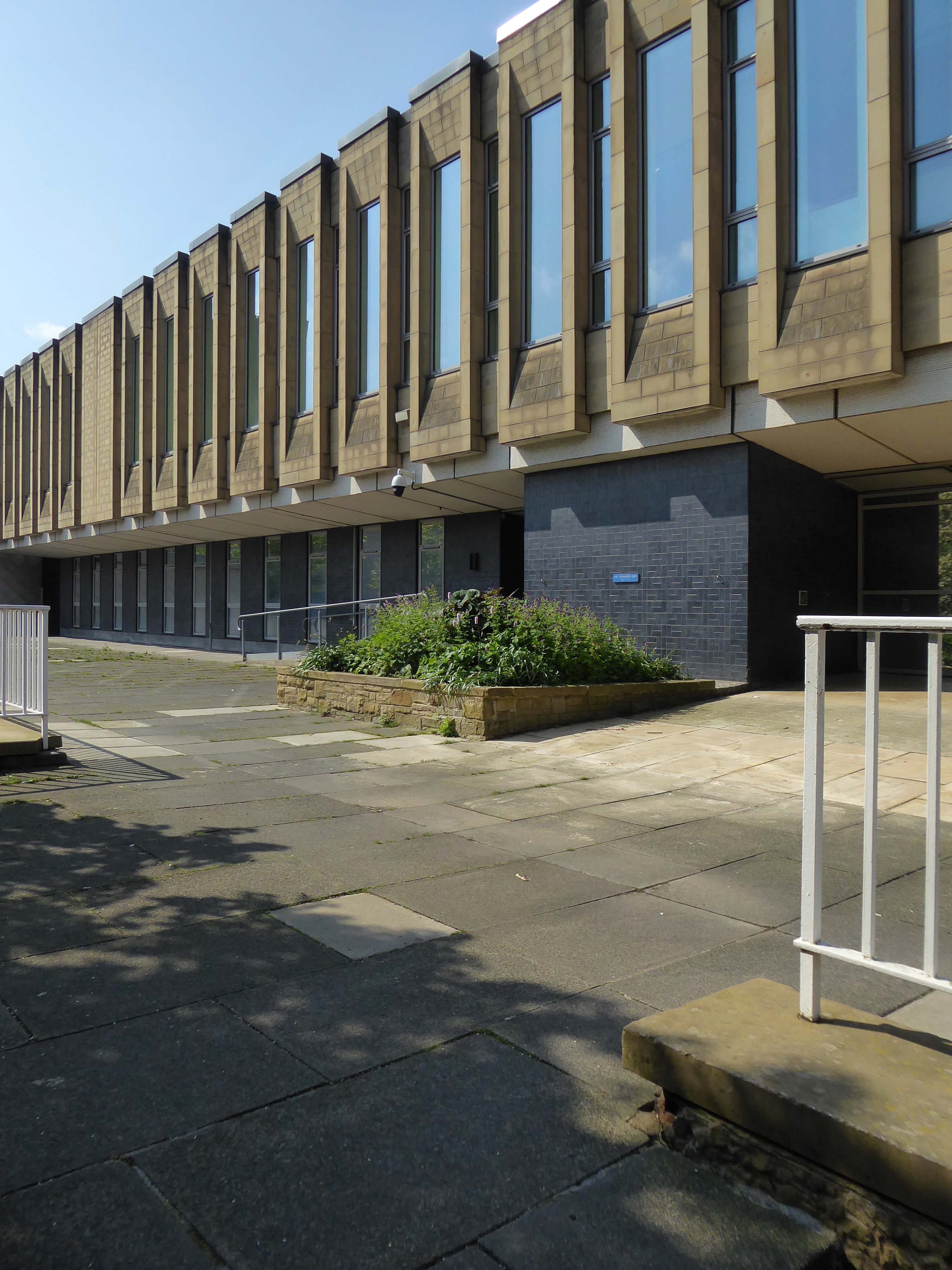
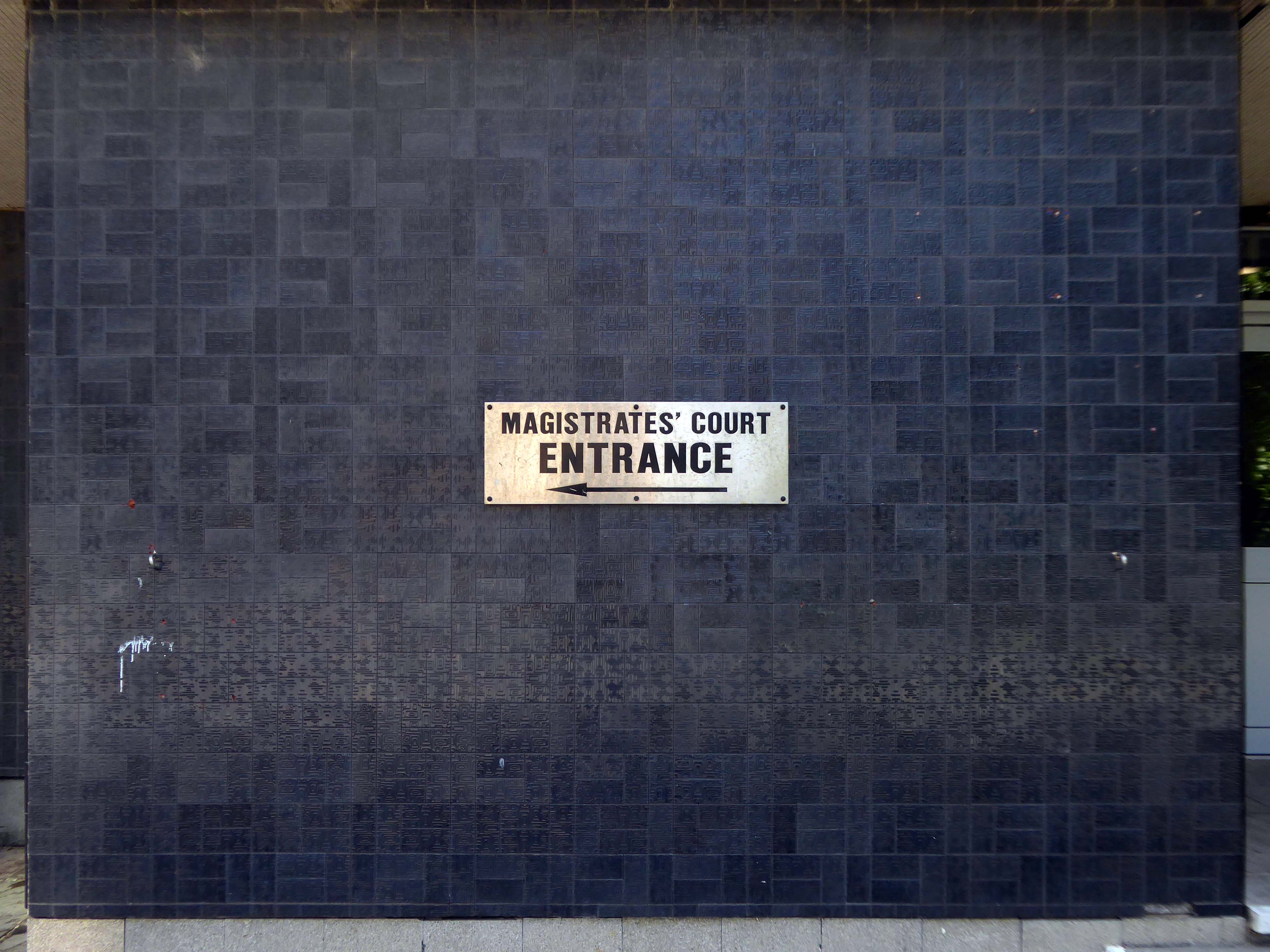
Onward to the Magistrates’ Courts designed by City Architect Clifford Brown in 1972.
Bradford is in the process of paving and puzzling pedestrians, as it becomes City of Culture in 2025.
So we wind our way over the inner ring road, advisedly avoiding the filled in underpasses.
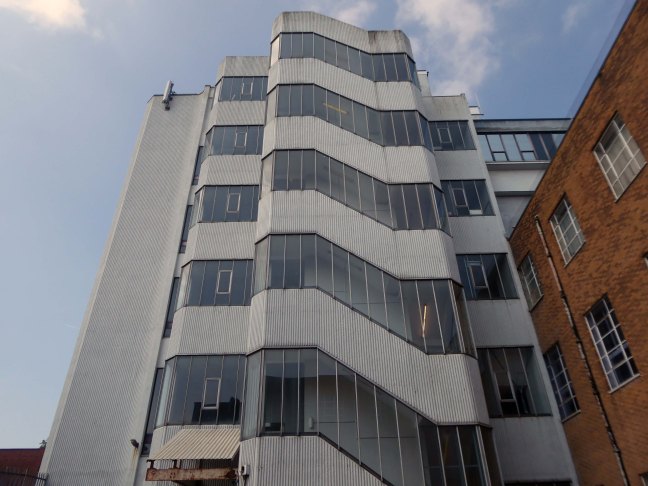
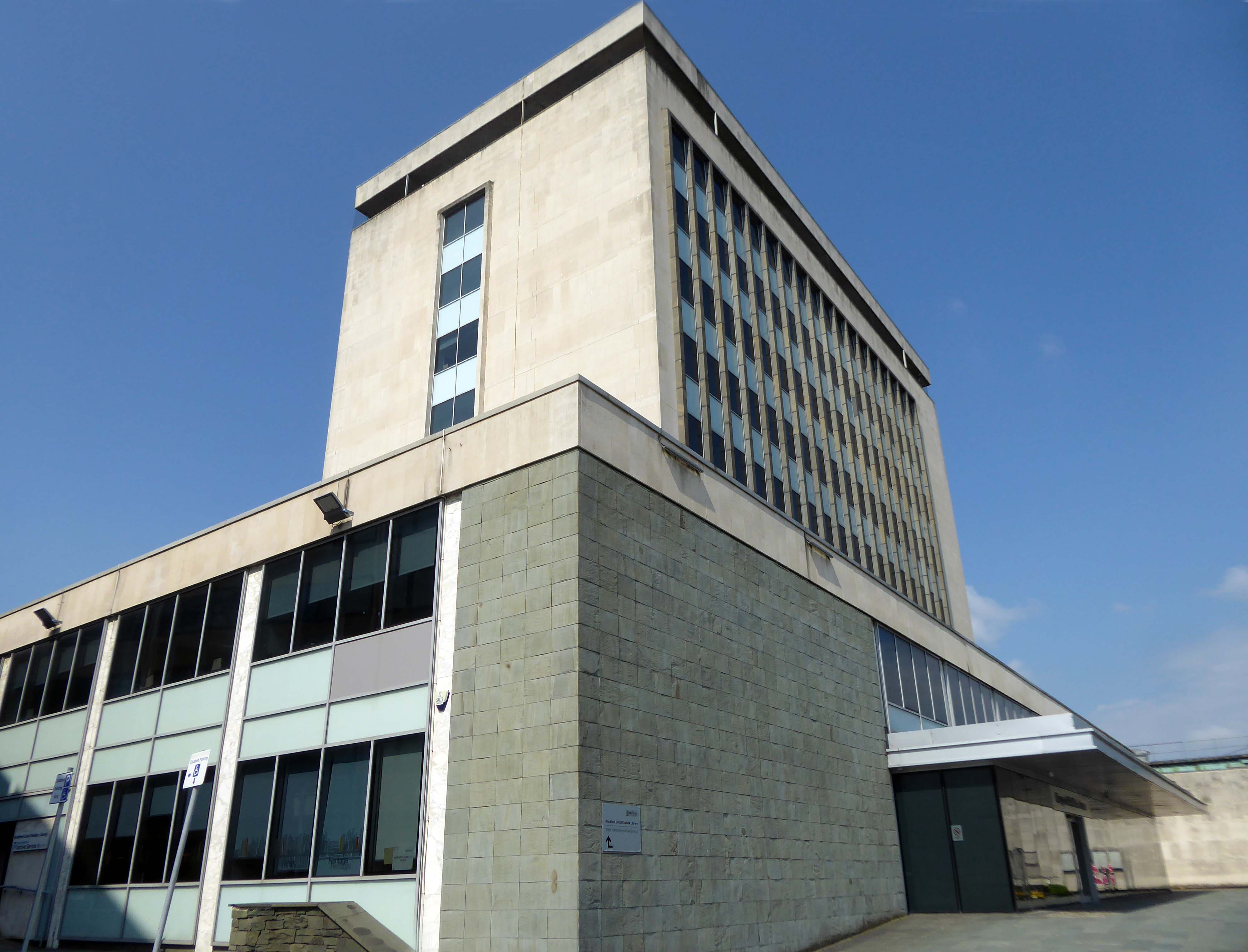
The former Central Library awaits us, designed in 1965 by Clifford Brown – a striking podium and tower, currently home to council offices.
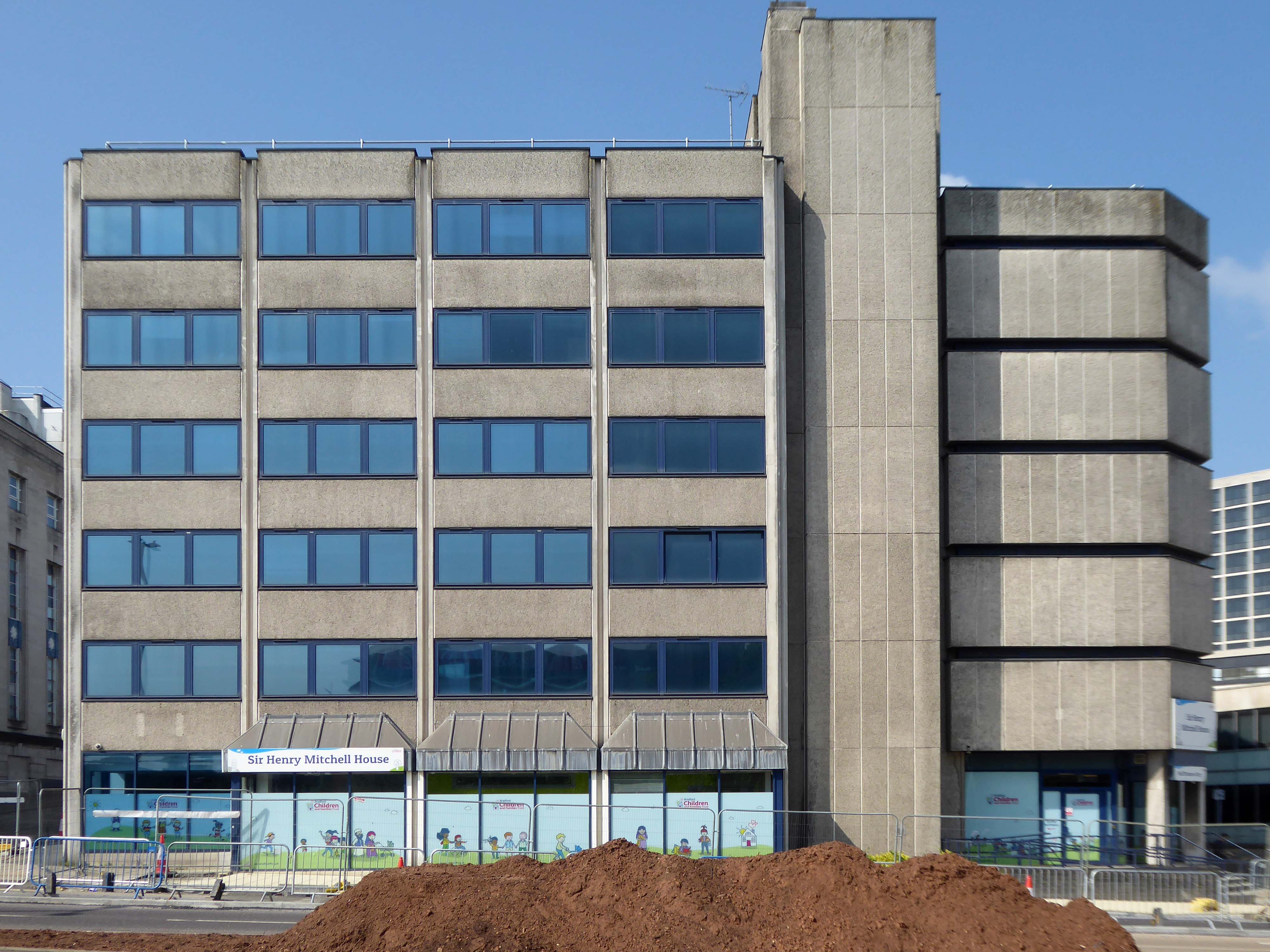
Next door the Sir Henry Mitchell House home to the Children’s Services.
Sir Henry Mitchell 1824 1898 was a mill owner and Mayor.
Moving further along the Telephone Exchange of 1936, design by architect FA Key.
Partner to the Telephone Exchange of 1976 by architect Trevor H Hanson for PSA
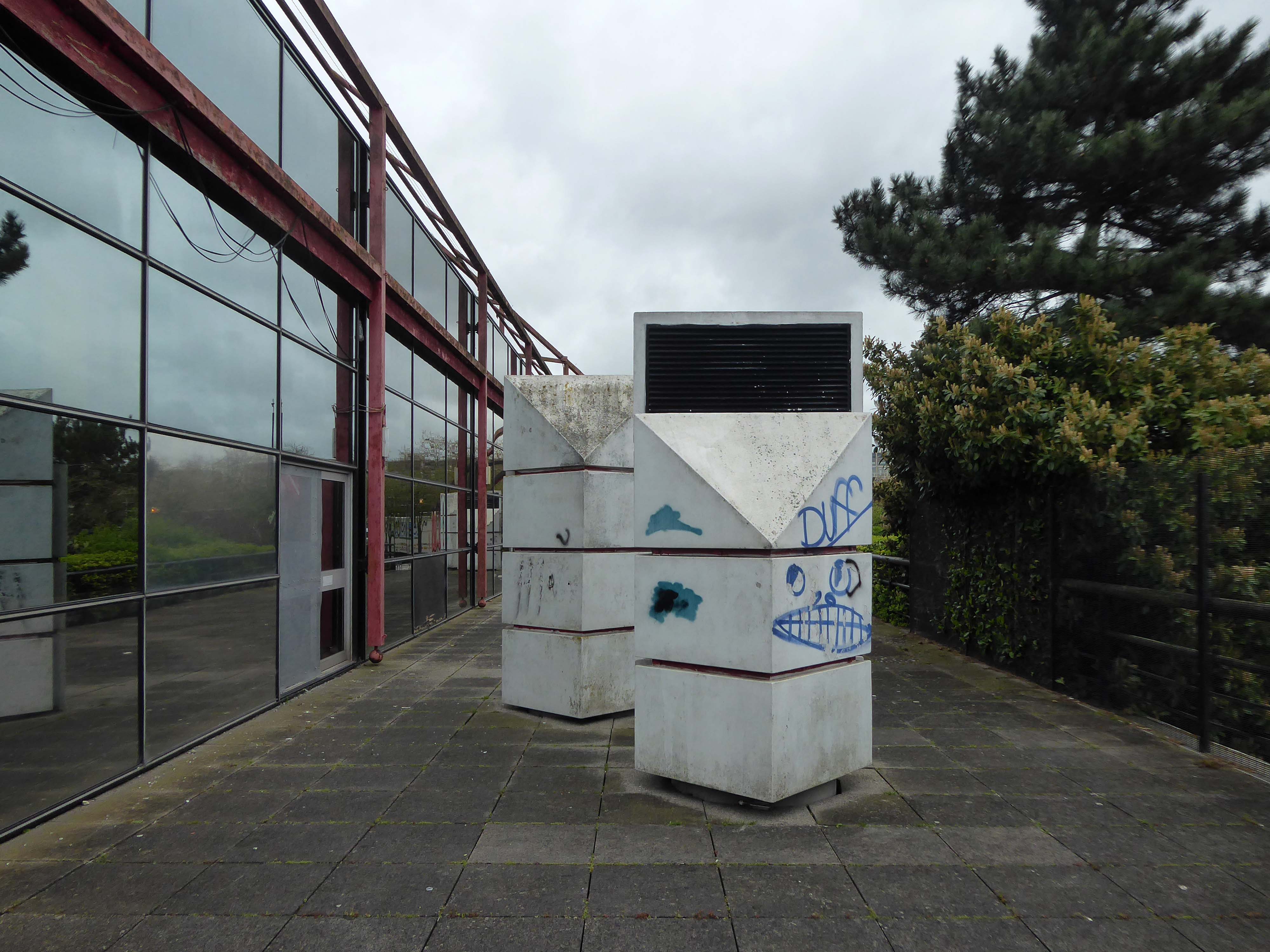
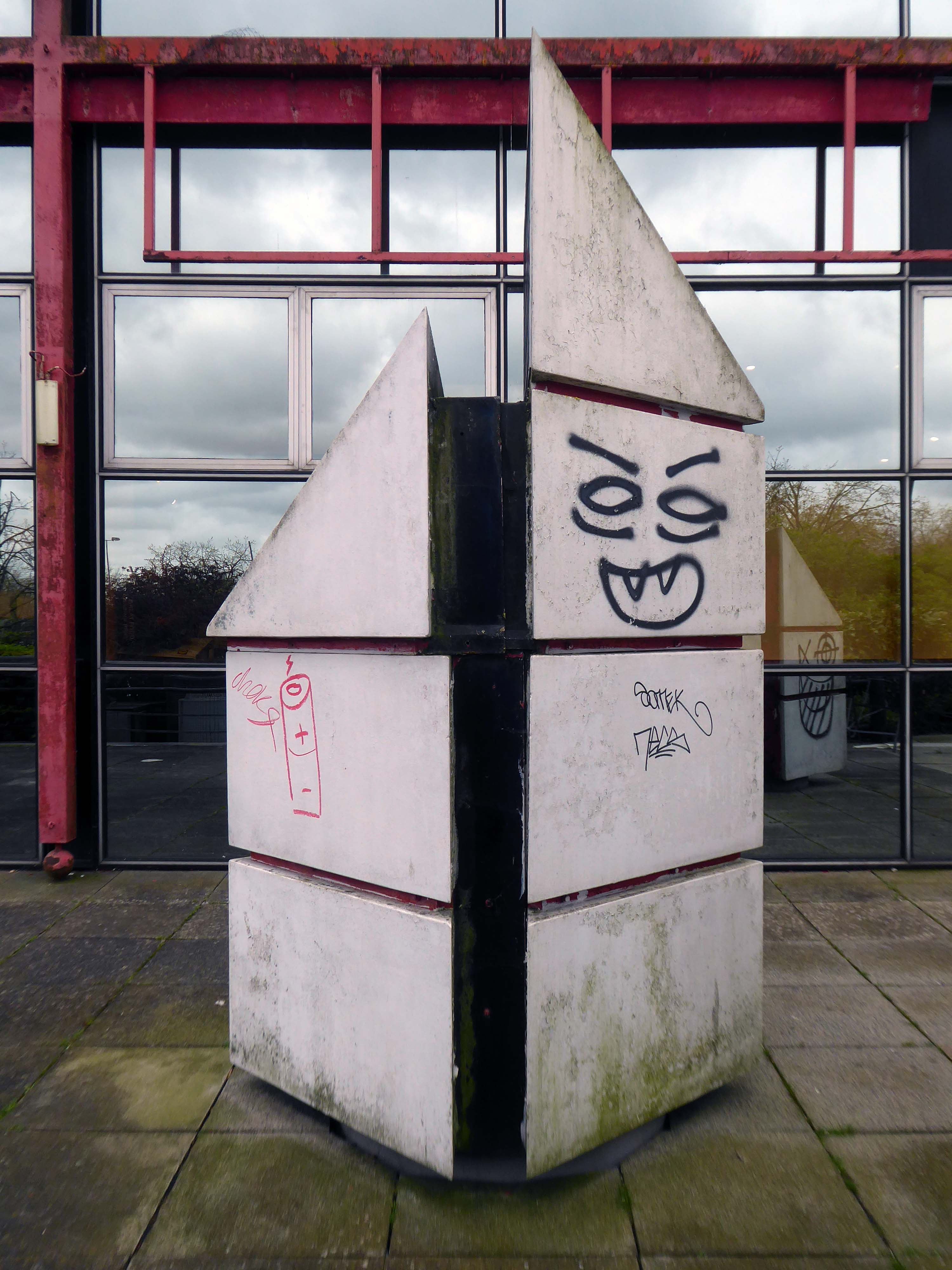
The gates were open and we were afforded a view of these delightful vents.
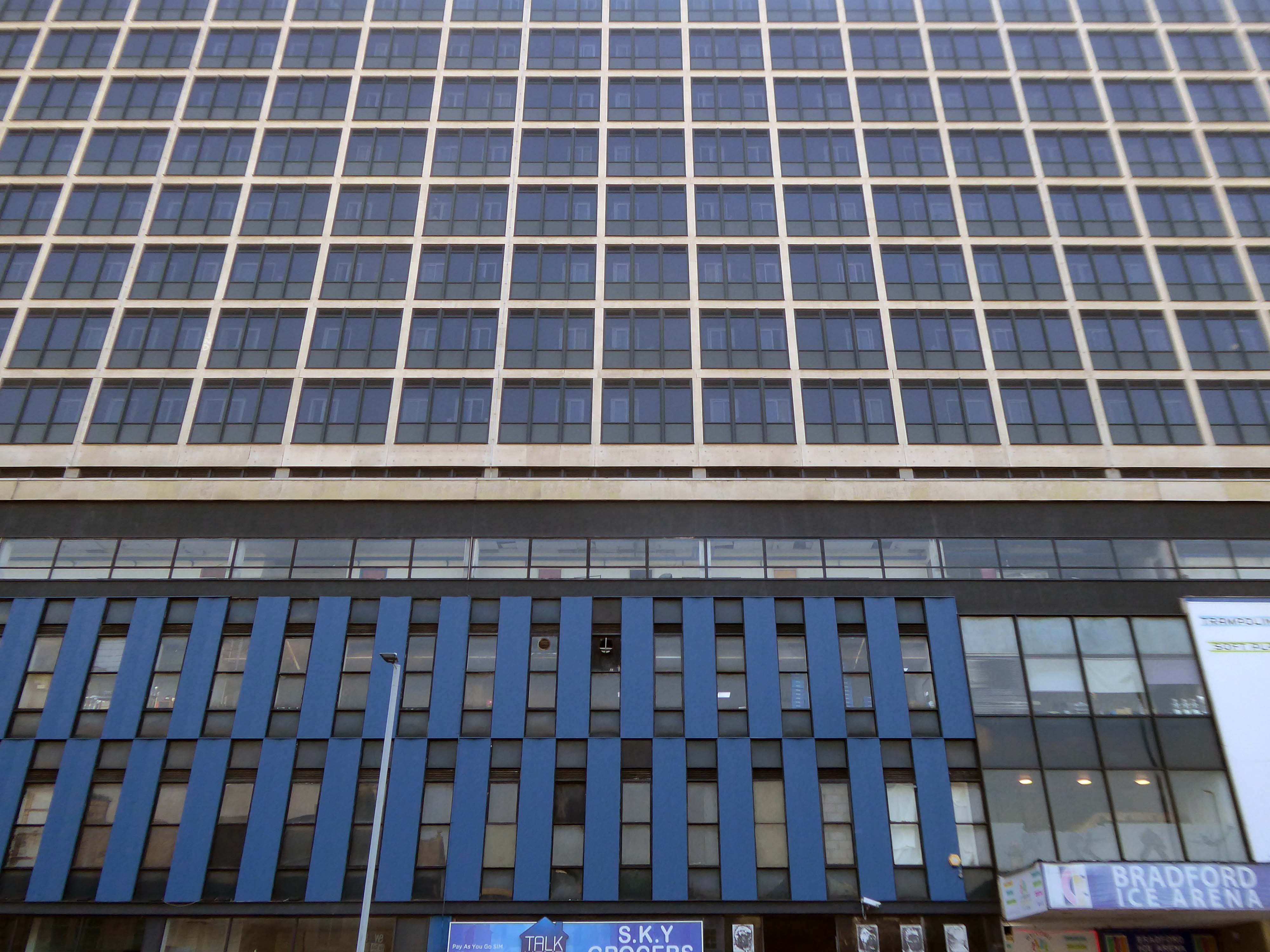
Next to the Ice Arena topped off with Wardley House – Sanctuary accommodation for key workers and students.
Wardley House is equipped with all the modern amenities you need for a comfortable and connected life as a key worker. The rent includes high-speed broadband and building-wide Wi-Fi, utility bills, and contents insurance. Our top-notch facilities comprise a large common room with a pool table, flat-screen TV, and live BT Sport – the perfect social space.
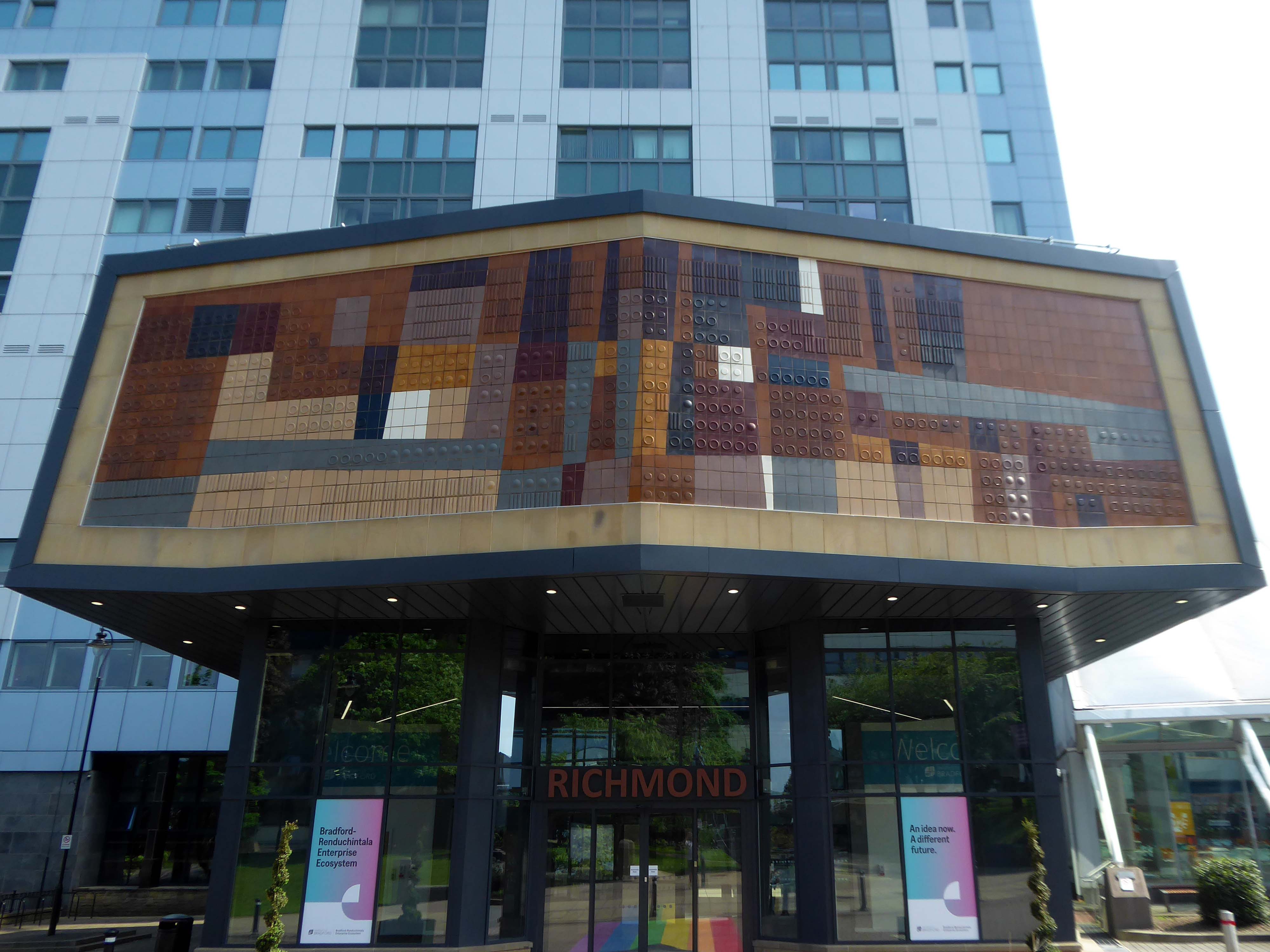
Up the hill and around the bend totheUniversity of Bradford – the main Richmond Building fronted by Joe Mayo’s tiles.
At the University of Bradford our focus is oncreating the conditions for social, cultural and economic impact. We will achieve this by using our proud heritage as a springboard and remaining steadfast in our commitment to equality, diversity and inclusion. We will harness our strengths in research, innovation, teaching and partnerships to extend our reputation, influence and impact. All of this will create a values-led culture that is inclusive and effective in enriching lives and benefitting society.
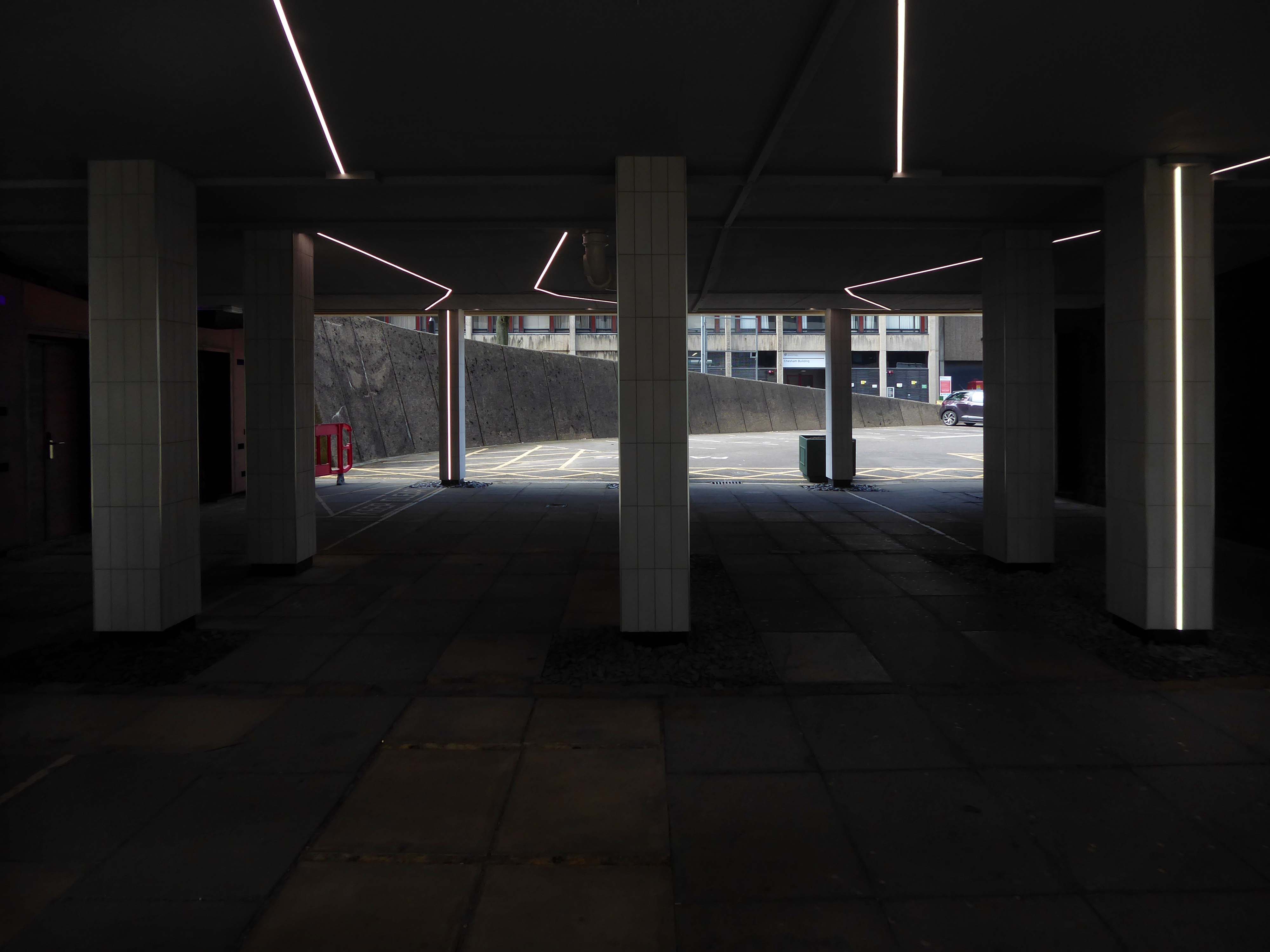
The undercroft has undergone a major refurb rethink – transformed into a Goth Disco.
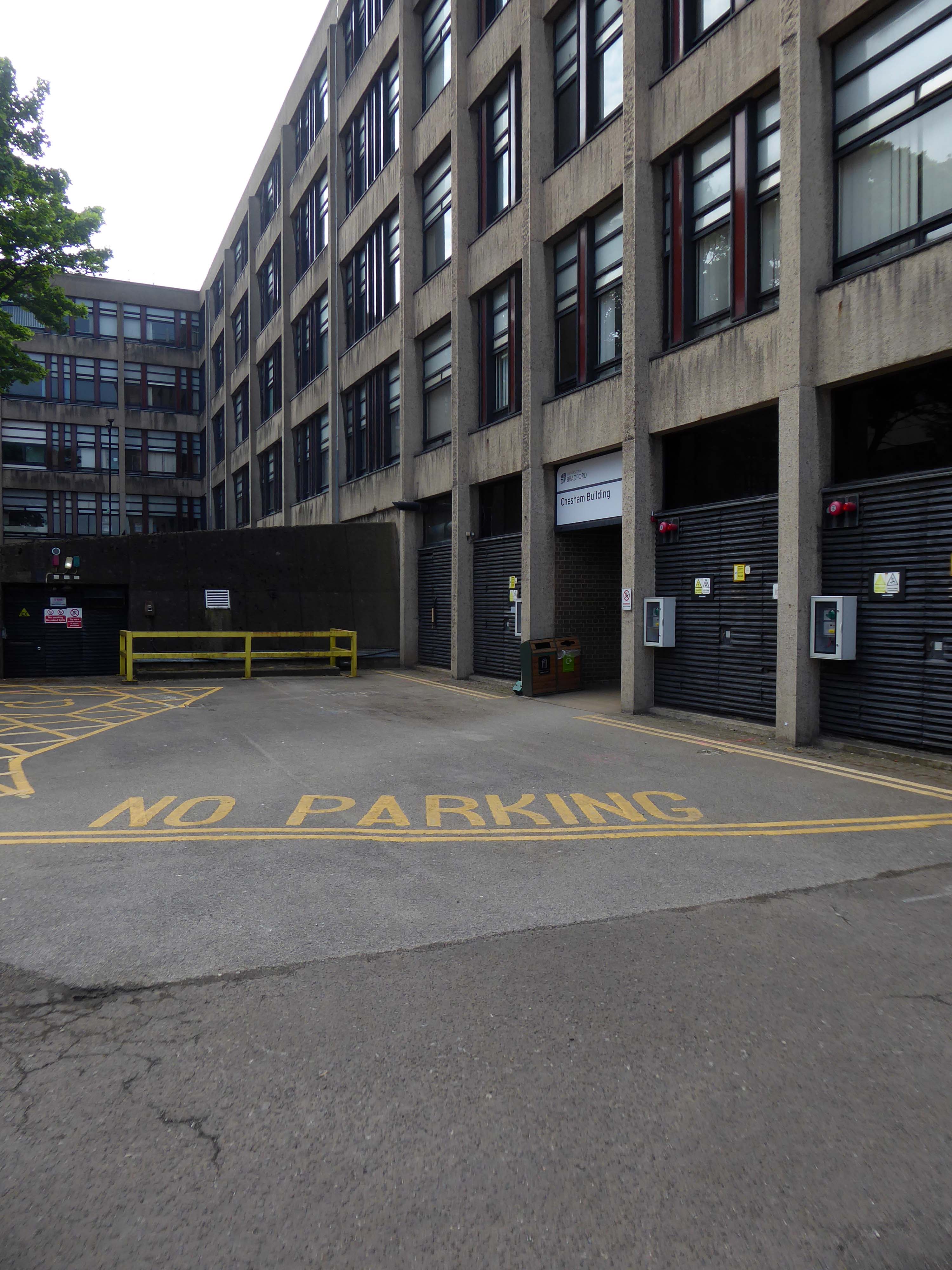
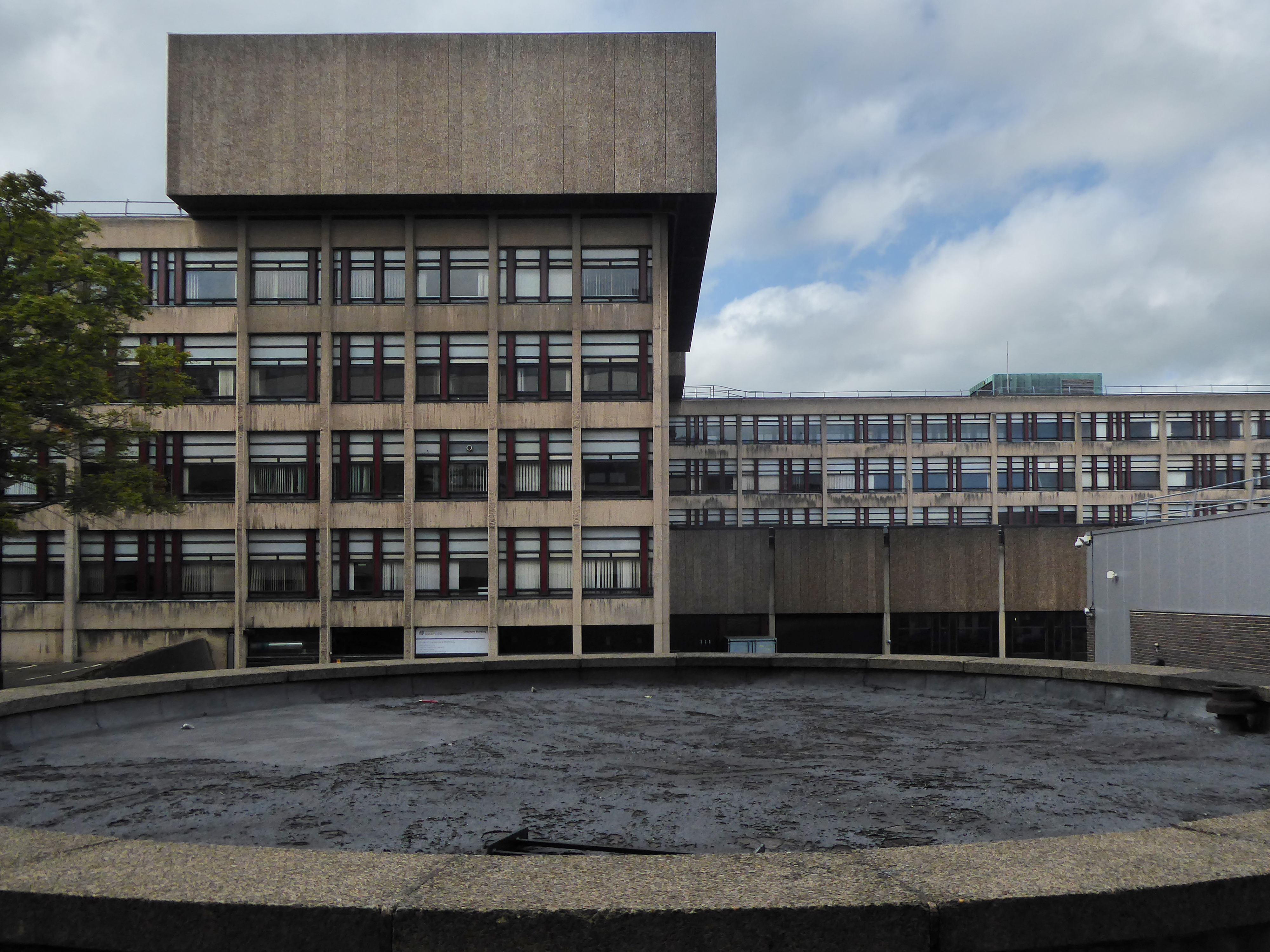
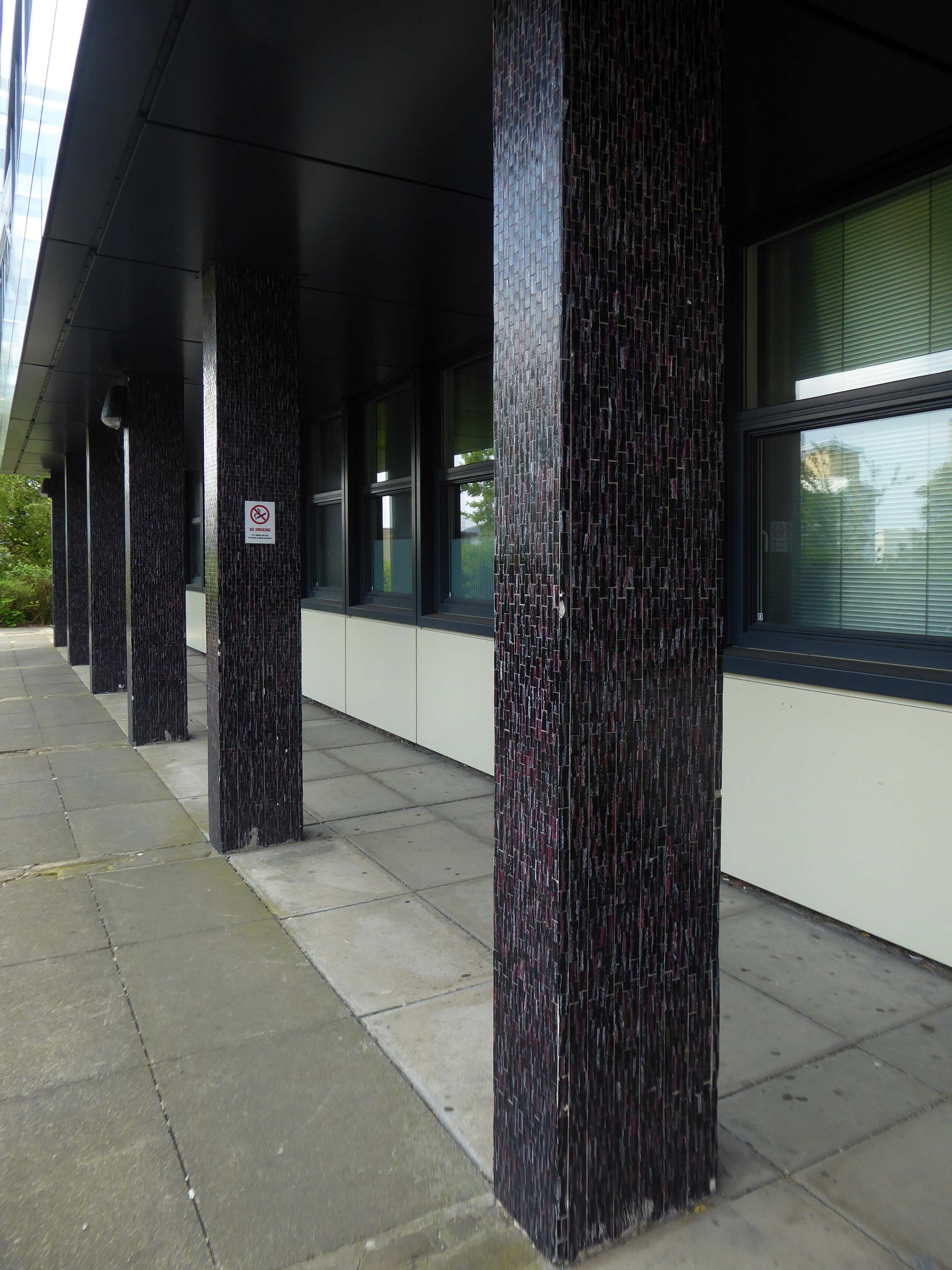
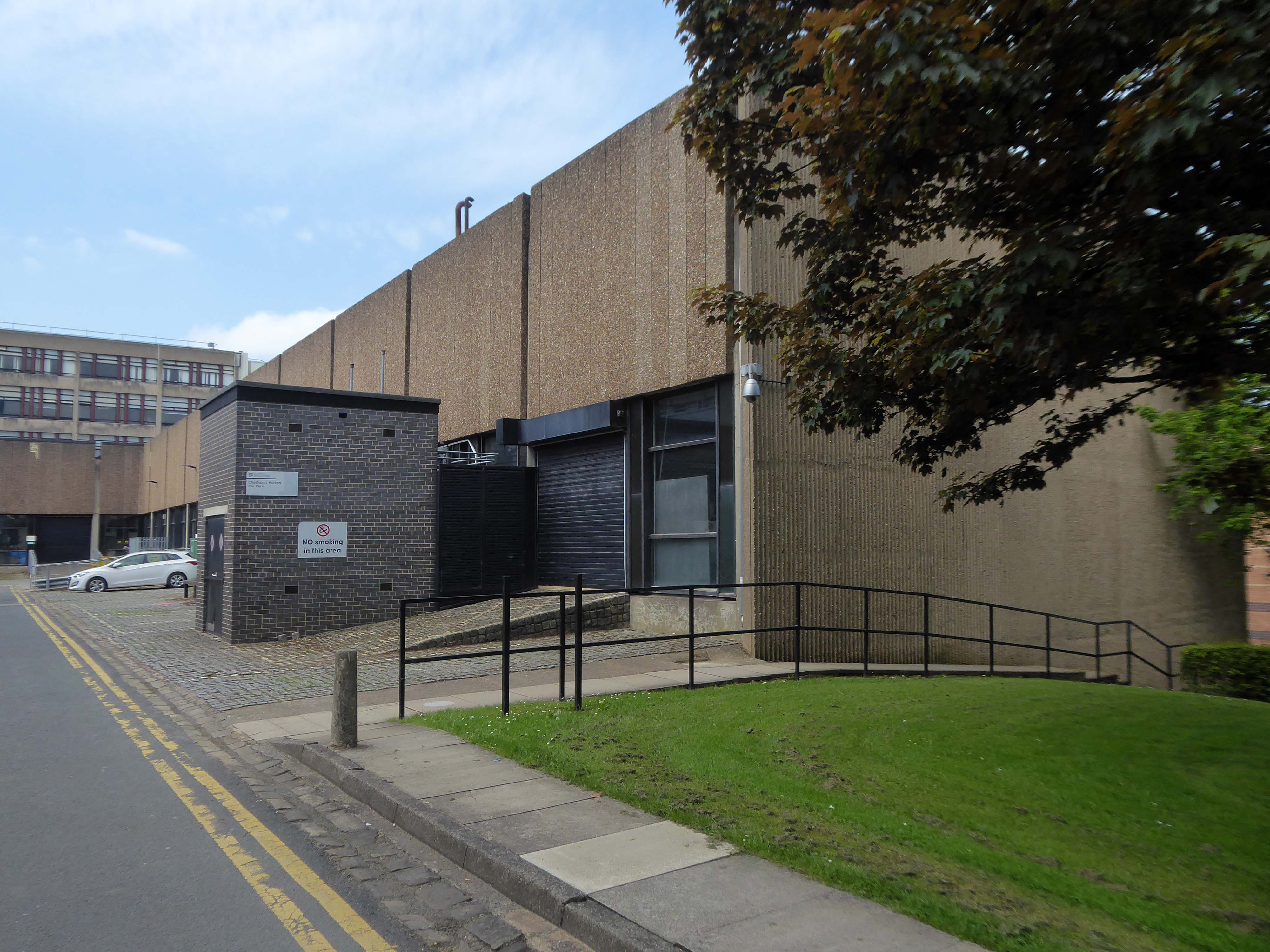
We emerge unscathed into the clear light of day and the BDP designed Chesham and Horton blocks.
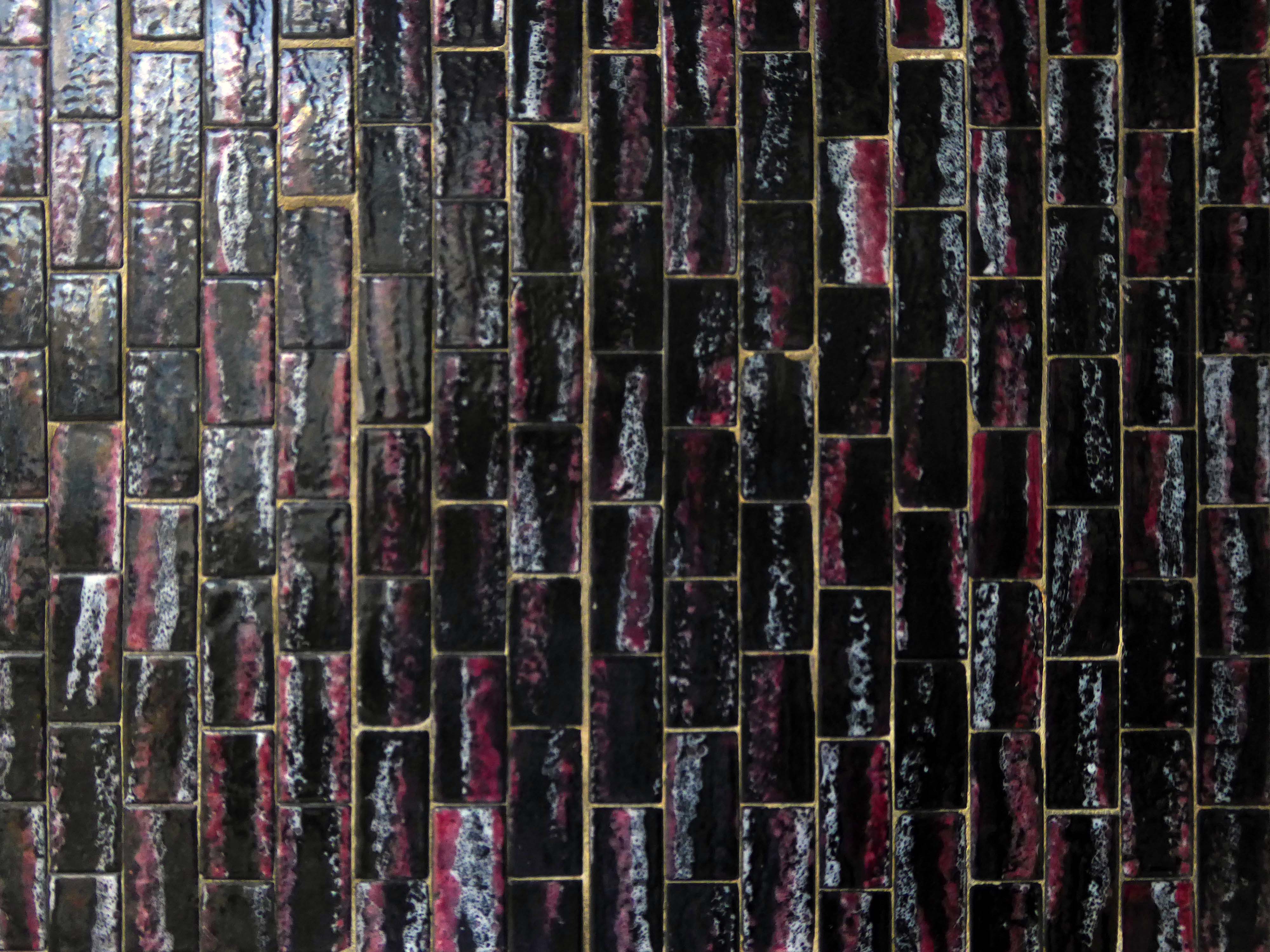
The mosaic covered columns remain unclad.
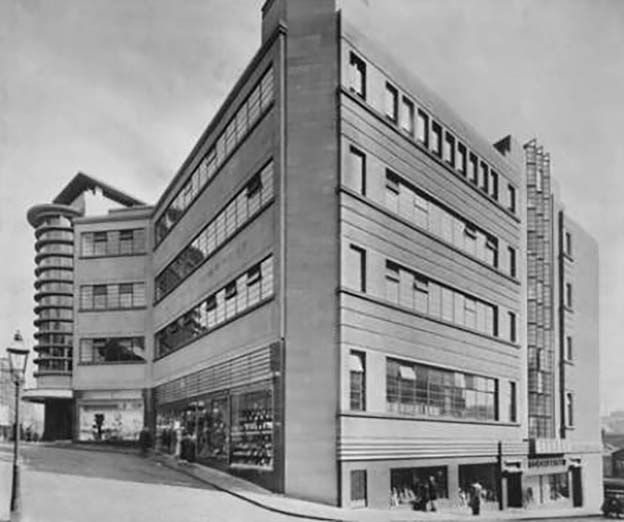
Let’s hop to the Grade II-listedCo-op designed by CWS in house architect WA Johnson and JW Cropper in 1935.
Architect W A Johnson worked for the Cooperative Wholesale Society from 1899 until 1950. He was heavily influenced by the German architect Erich Mendelsohn after 1930, evident in his embrace of the International Modernist style. Johnson travelled widely in Germany and Holland, and Mendelsohn’s Schocken store in Stuttgart 1928 is quoted as being a particular inspiration for the Bradford Co-op.
Demolished despite protests in 1960.
In 2019 the Architectural Heritage Fund announced a £5,000 Project Viability Grant to Freedom Studios Ltd.
The money funded a viability study to investigate the potential of building becoming a multi-use cultural hub.
In 1979, the building won a European award from the International Council of Shopping Centres.
But the Historic England report described its design as mundane and repetitive.
Janice Ivory and Lisa Donison didn’t hold back in their criticism of the centre in its current state.
Thank God for that, was Janice’s reaction to the news the building was set to be bulldozed, although an exact date for its closure remains unknown.
It’s just a concrete monstrosity, she said of its design, which Historic England said was lacking architectural flair.
It’s just an ugly building, added Lisa.
Once dubbed Bradford’s space age retail destination, Kirkgate Shopping Centre will soon be no more.
The city centre landmark, which opened for business as an Arndale in 1976, has been denied listed status by Historic England – paving the way for its demolition.
Geoffrey Cowley from Wibsey, who was in town for an eye appointment, said demolishing it:
Might be the right thing to do.
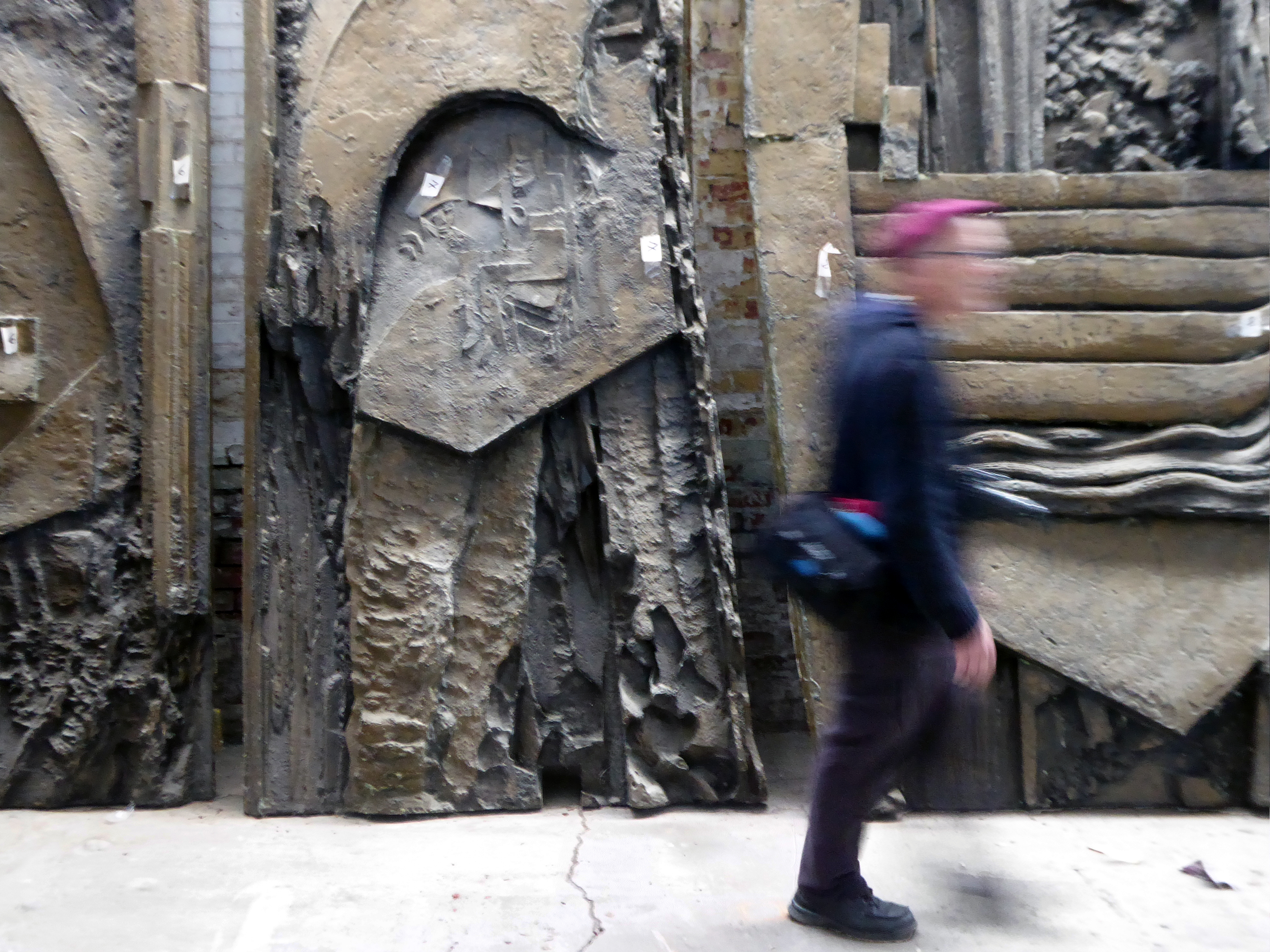
There are plans to remove and display the William Mitchell panels along with these other examples of his work.
In-situ at Highpoint.
In storage – removed from the Bradford And Bingley Building Society.
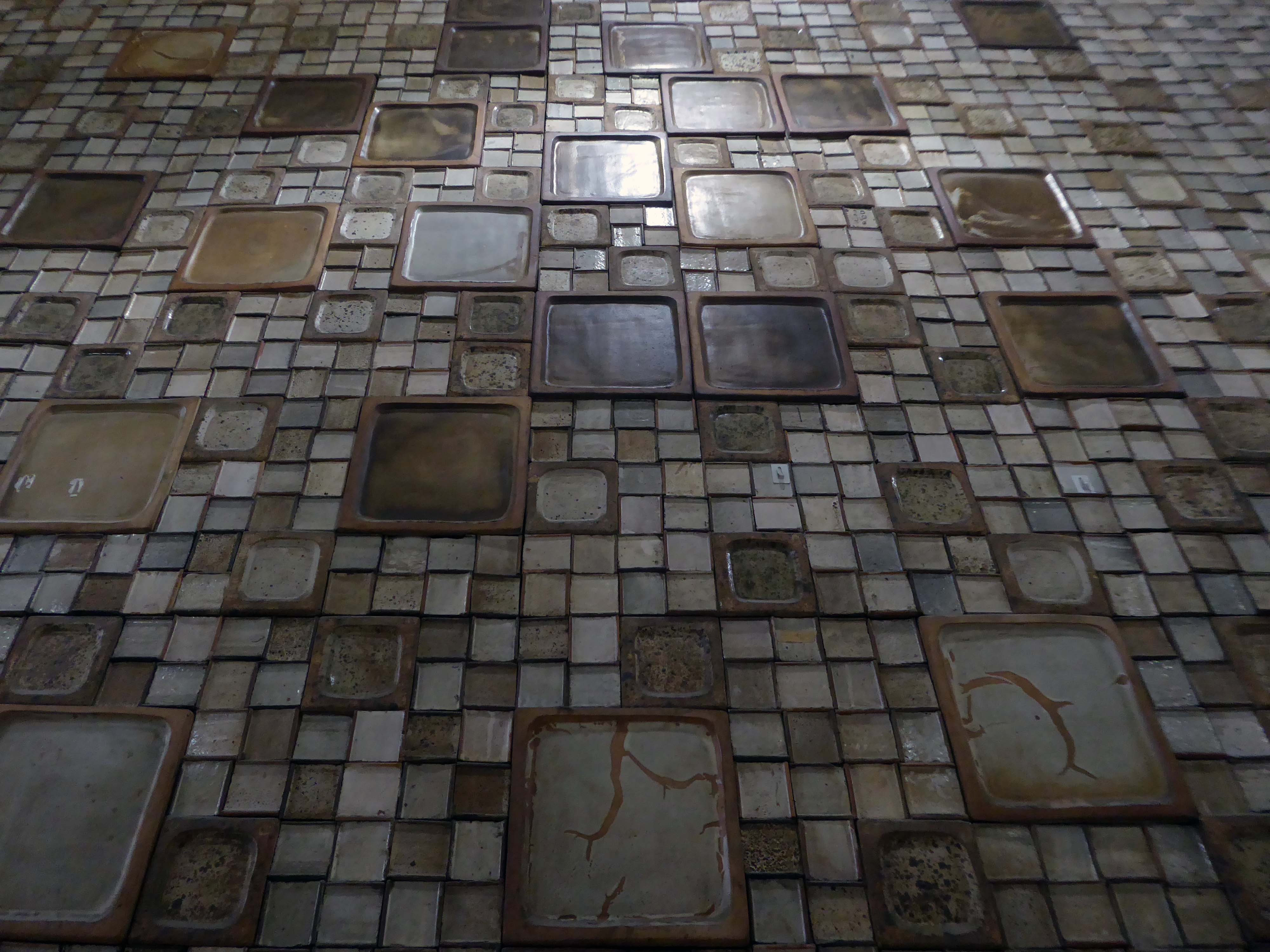
Artist Bernd Trasberger plans an artistic project, which involves repurposing Fritz Steller’s tile works.
As Ken Kesey so rightly said – Further!
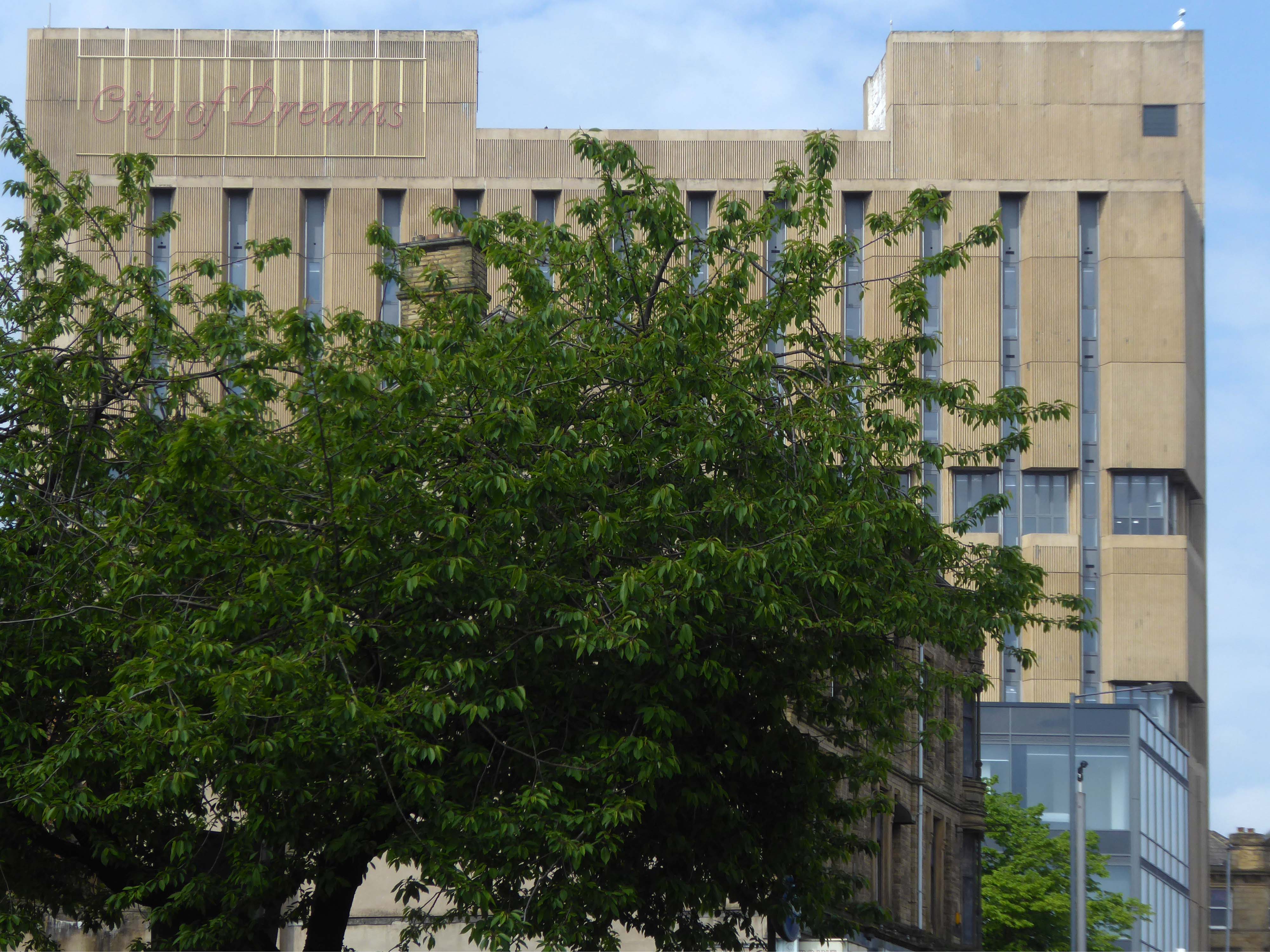
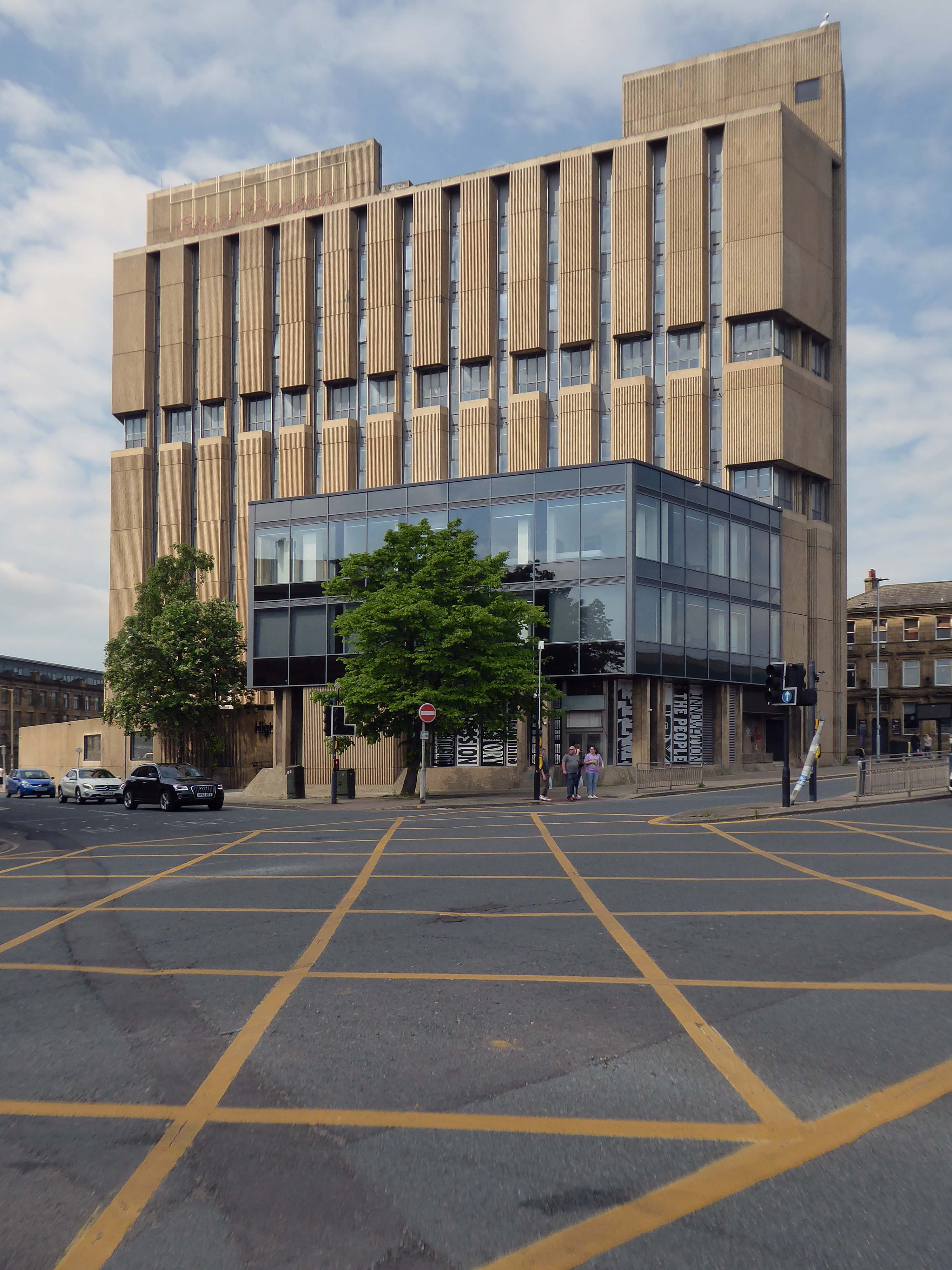
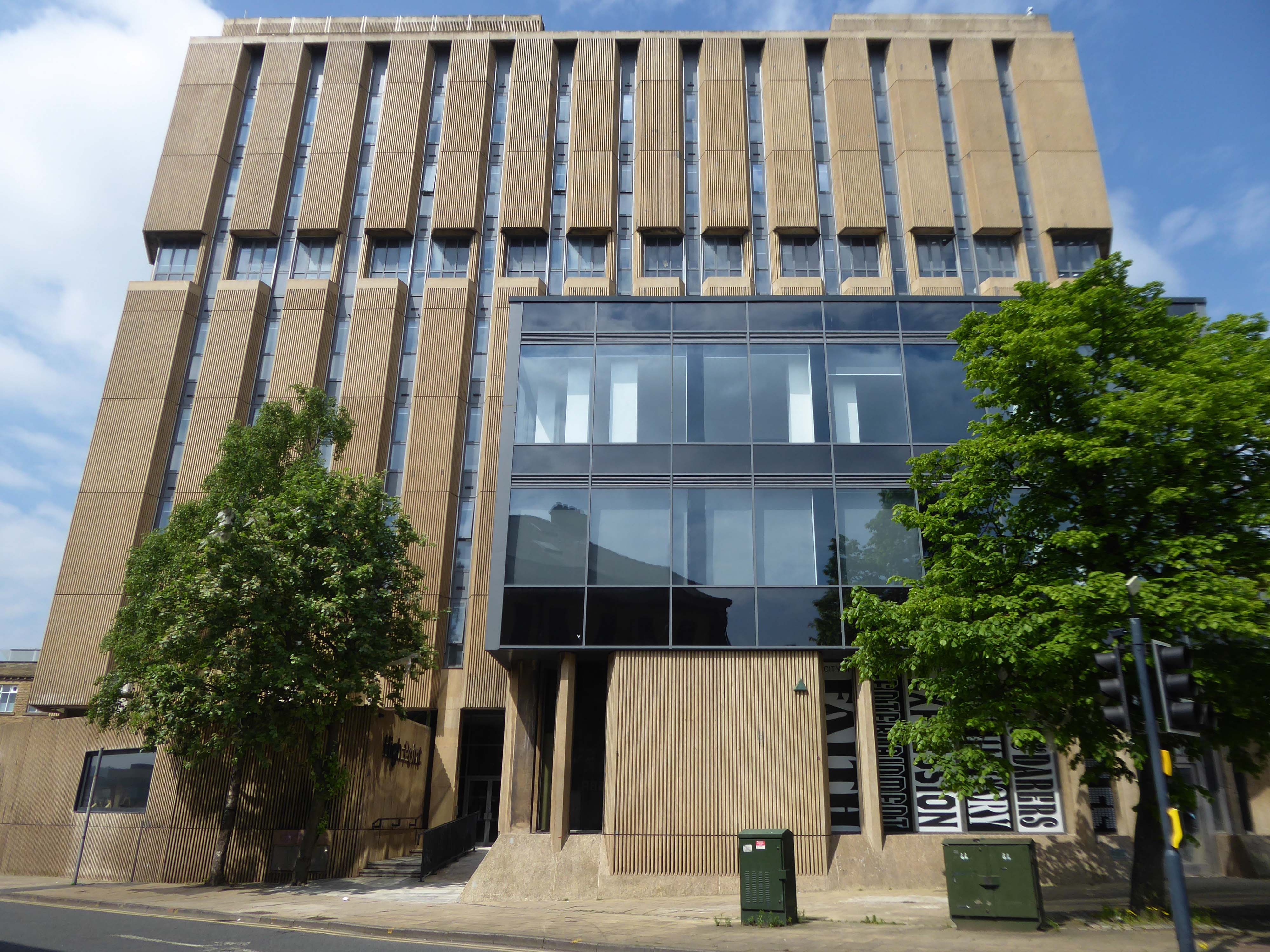
Up to Highpoint designed by John Brunton and Partners 1973.
The derelict former headquarters of Yorkshire Building Society, on one of the highest parts of the city centre, looms over the city centre, and to many people is the city’s ugliest building.
High Point is the perfect site for the first Radii development. Now perceived as an exemplar of the Brutalist style, this eight-storey titan, has languished derelict and in disrepair for many years in the heart of Bradford City Centre.
Our regeneration of High Point into an innovative residential apartment complex with a community at its heart, embraces ideas of sustainability, preservation, and rejuvenation that will bring a new lease of life to this abandoned landmark.
Sharp, chic and spacious apartments available. Furnished to the highest standards throughout and with the flex to provide you with office space if required – this is modern city living that’s easy on your eye and your pocket.
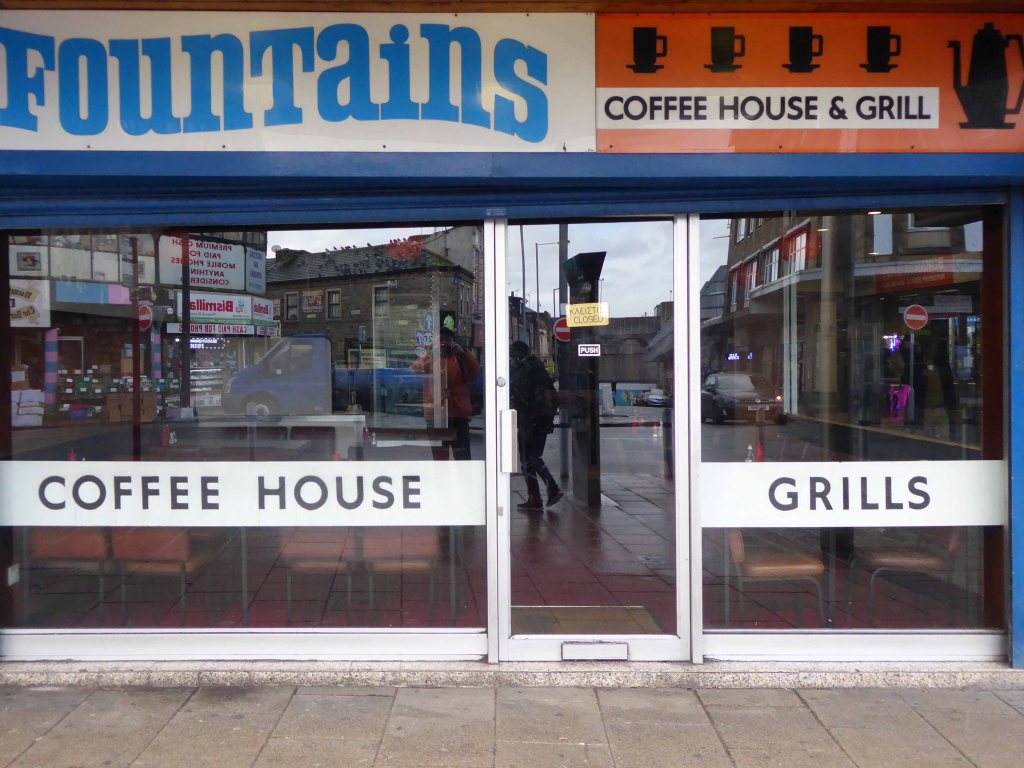
And finally the cafe that is not a cafe – Fountains, where the griddle no longer grills, the lights are always out and the shutters tightly shut, ain’t nobody home.
Wishing nothing but well for this West Riding gem – Bradford City of Culture and cultures and culture.
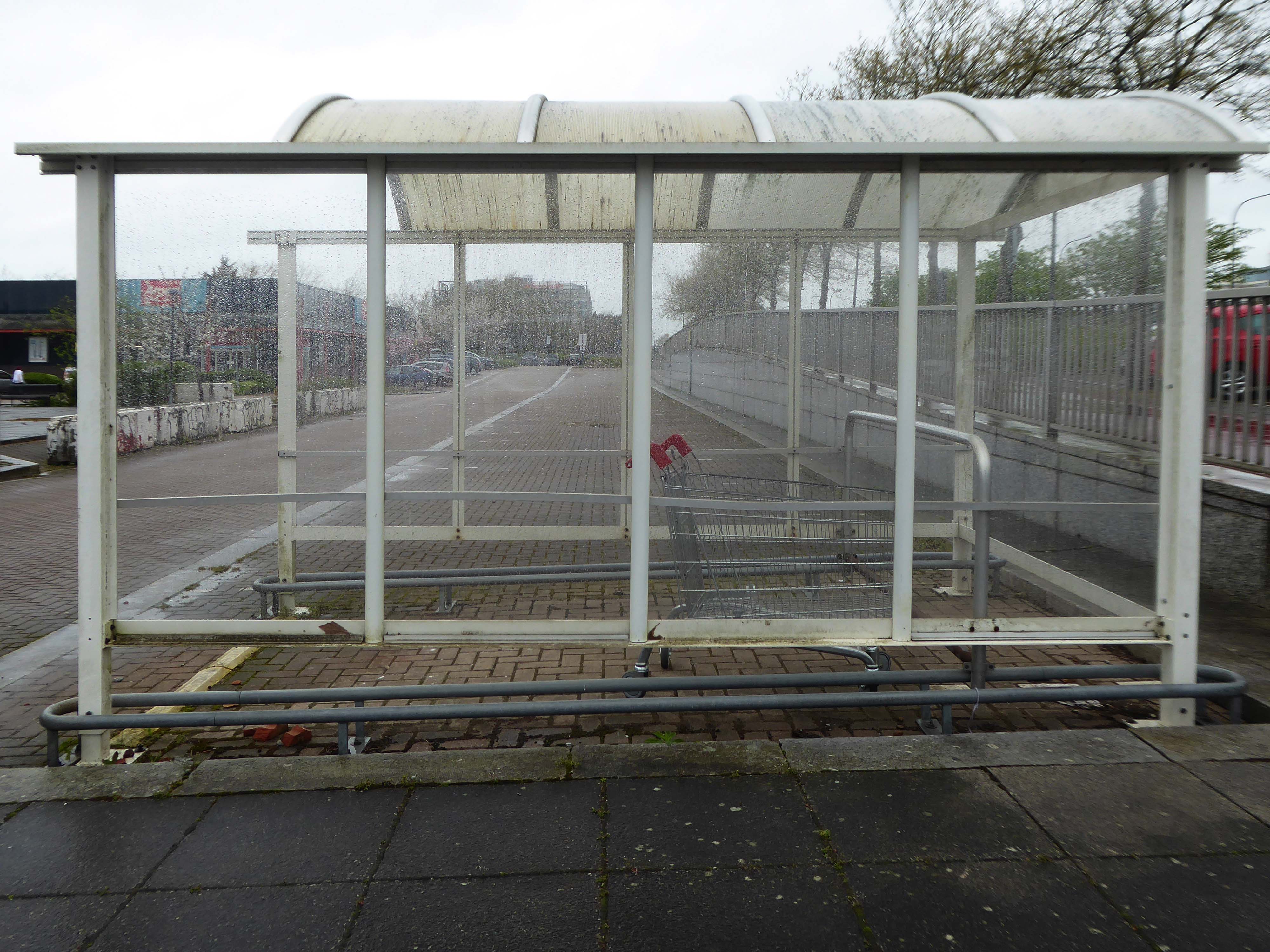
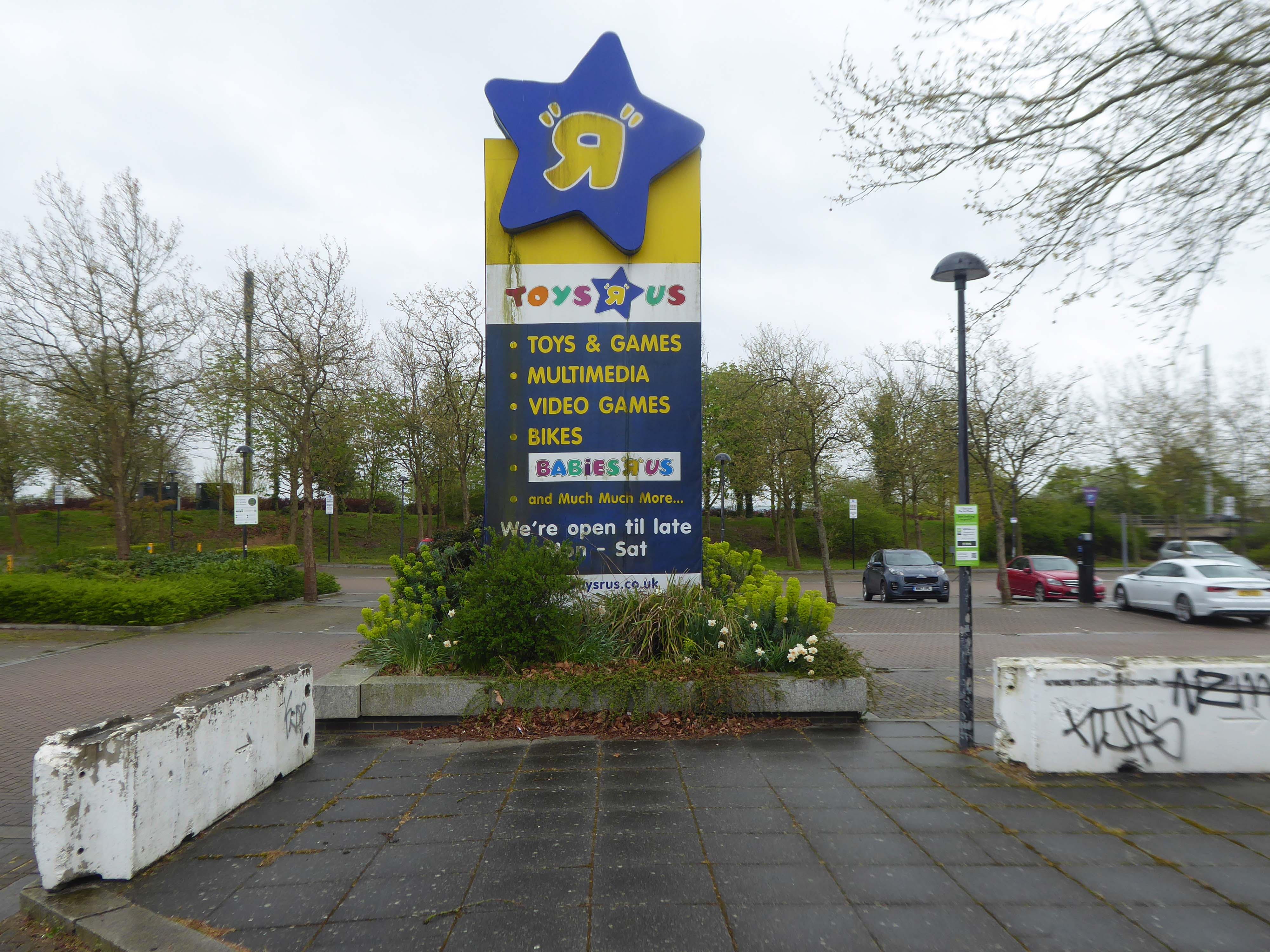
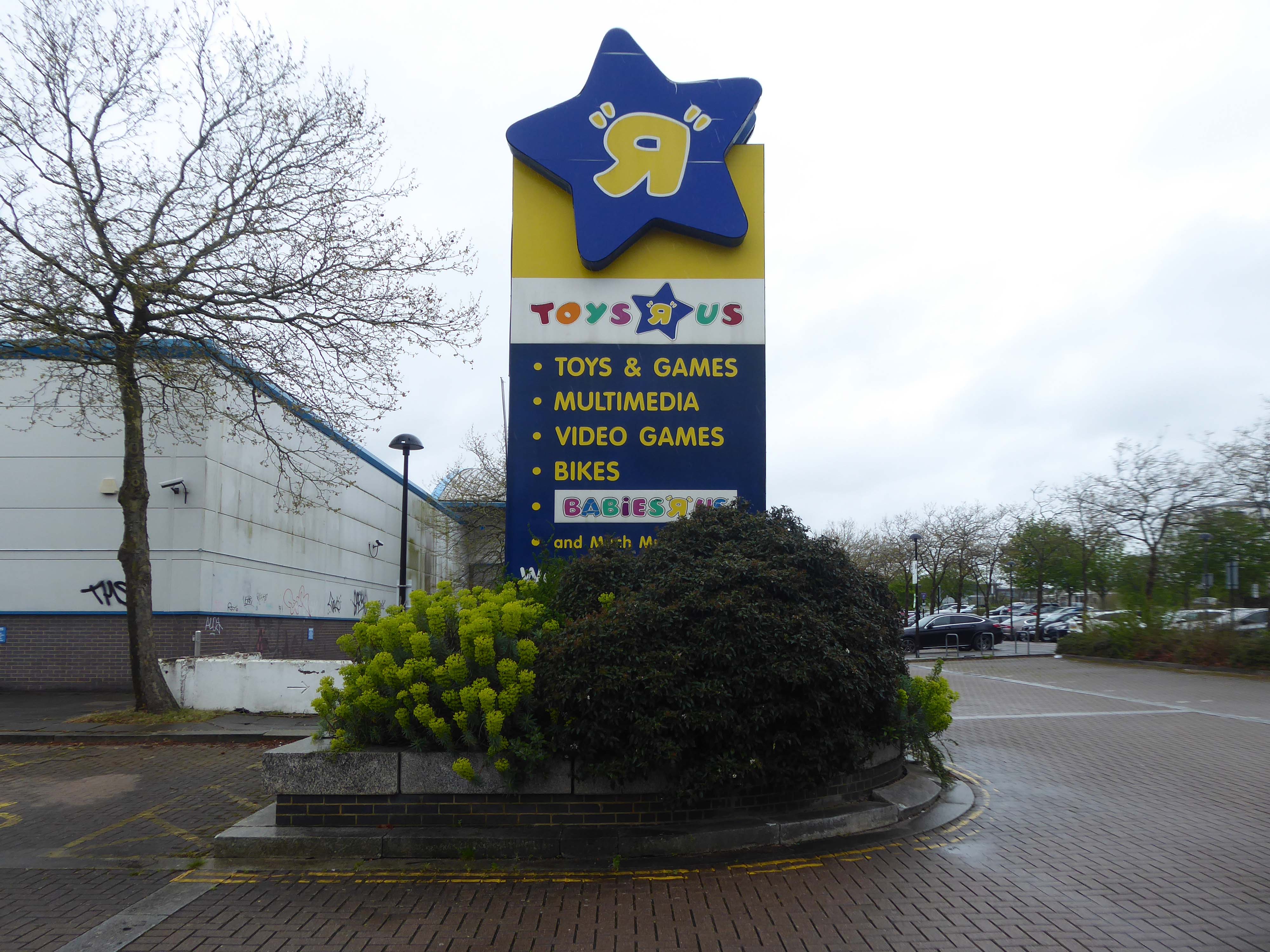
While originally considered a category killer, the rise of mass merchants and online retailers cost Toys “R” Us its share of the toy market. The company was further hampered by a significant debt load, the result of a leveraged buyout organized by private equity firms.
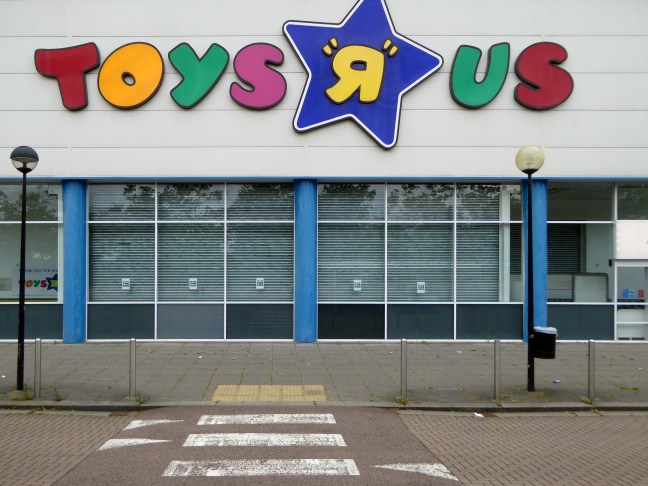
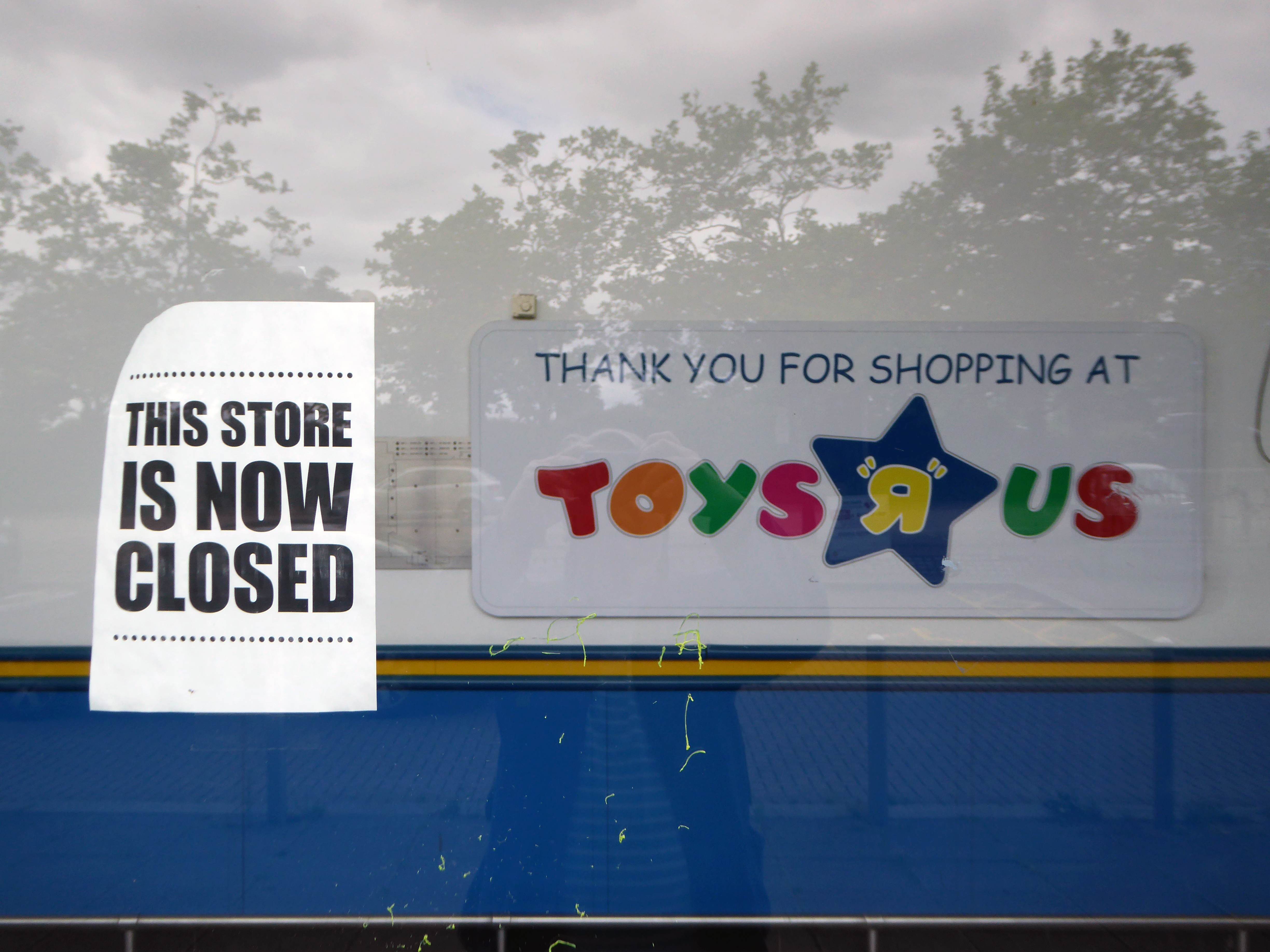
The toy retailer filed for bankruptcy in 2017 and in March 2018 announced it would be closing all its UK stores.
There were more than 100 Toys ‘R’ Us stores in the UK at the time.
A nipper, named only as Andrew penned a heartfelt 3-point letter to the judge handling the company’s bankruptcy case, and pleaded with him not to allow his fave shop to close down.
Andrew’s hand-written note to Judge Keith Phillips – which was put in the official court file – laid out exactly why he didn’t want the shops to shut.
In April 1948, Charles P Lazarus founded a baby-furniture retailer, Children’s Bargain Town in Washington DC, during the postwar baby boom. It was acquired in 1966 by Interstate Department Stores Inc.
The focus of the store changed in June 1957, and the first Toys “R” Us, dedicated exclusively to toys rather than furniture, was opened by Lazarus in Rockville Maryland. Lazarus also designed and stylized the Toys “R” Us logo, which featured a backwards “R” to give the impression that a child wrote it.
Having grown up in the days of the diminutive local toy shop – noses pressed against the widow admiring those treasures never ever owned, I find the present day retailers to be soulless industrial hangars – designed to extract every ounce of fun and currency from the hapless child and guardians.
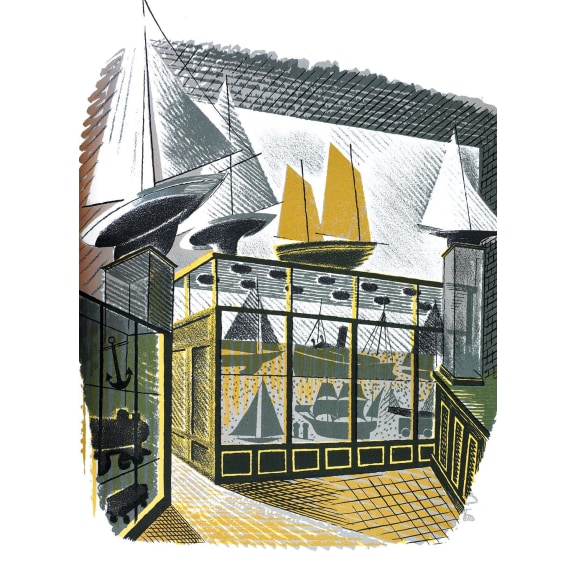
Eric Ravilious – inside the model shop.
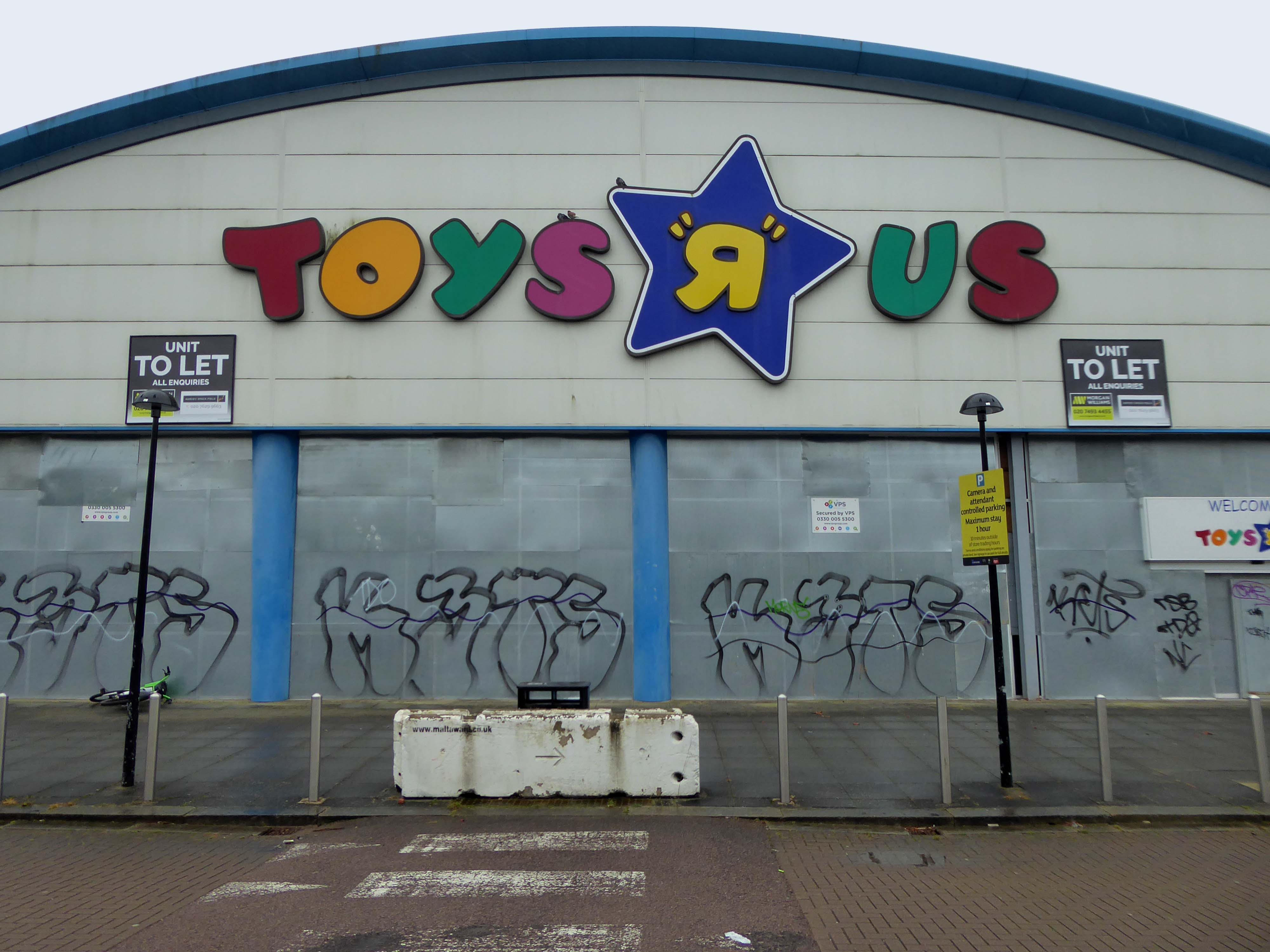
I returned in 2024.
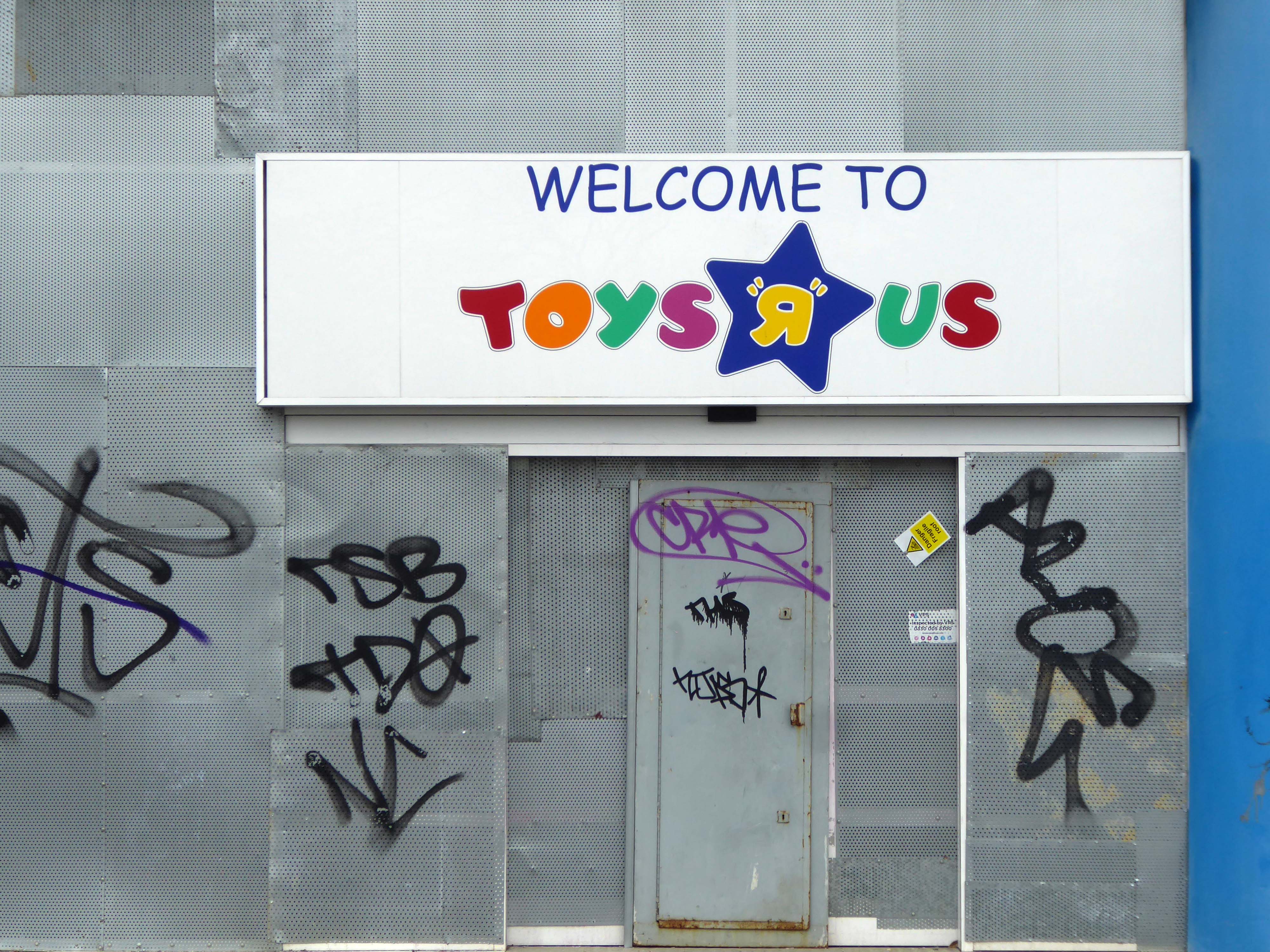
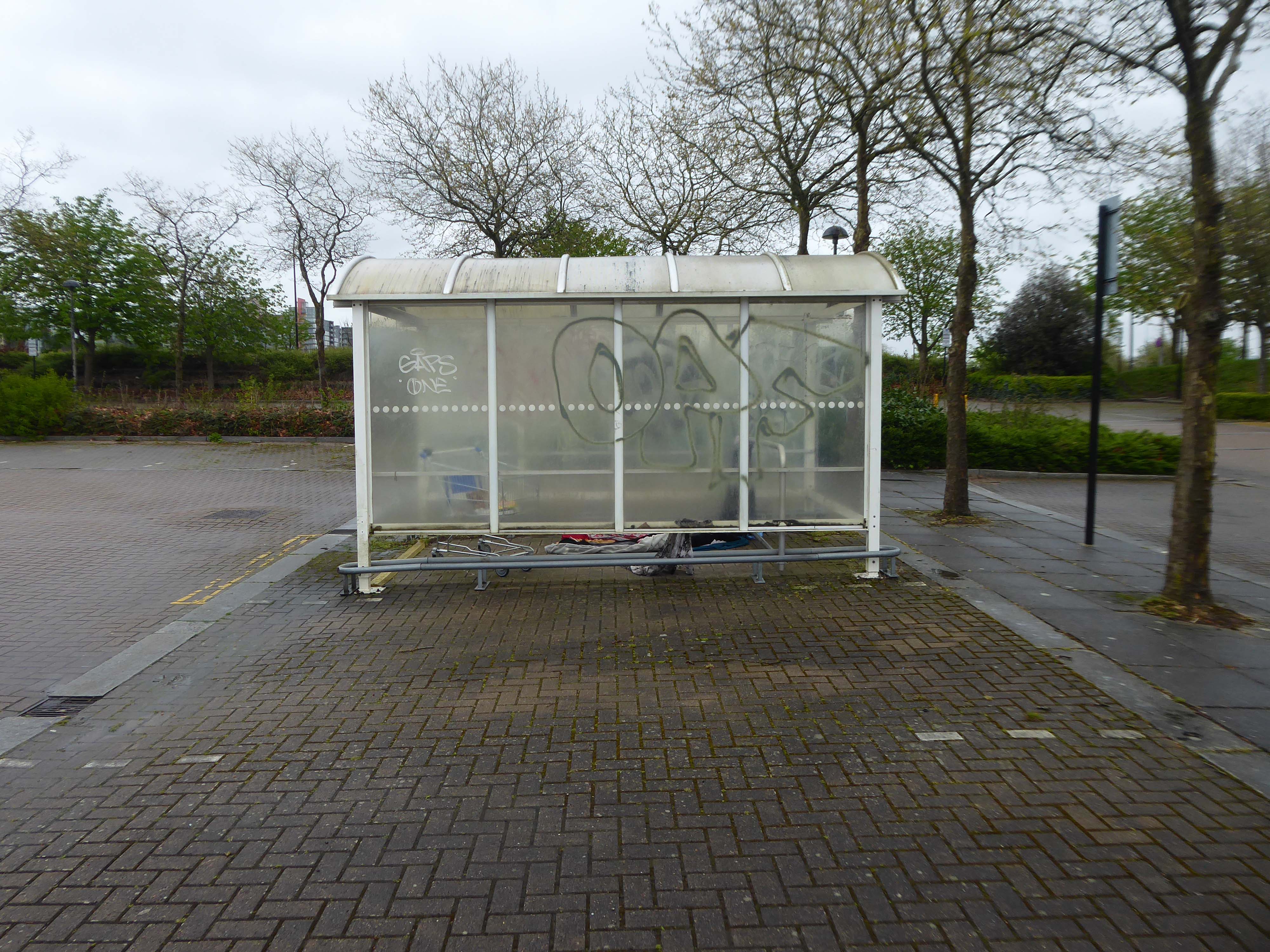
A large To Let sign is now visible above the store, with any interested parties invited to inquire about the large unit. The 47,500sq foot unit is available to lease – in whole or in part, and is described as being immediately available.
The news comes despite previous announcements that WHP Global, the owner of Toys R Us, had plans to re-open some UK stores during 2022. In February, the company said UK Toys R Us stores could open within months, although none have yet done so.
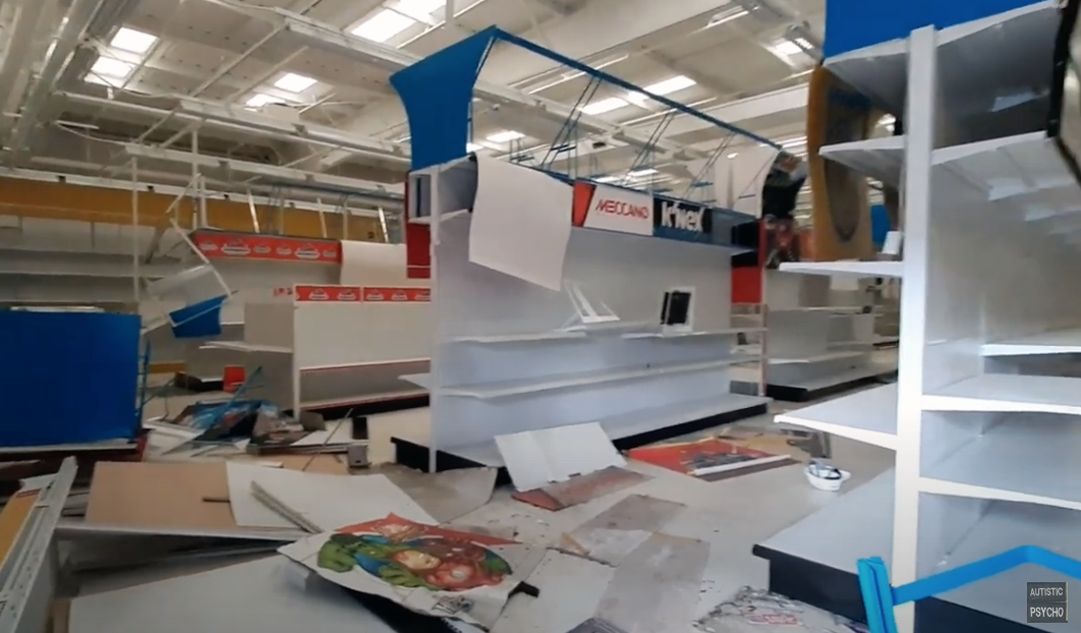
Here is Autistic Psycho’s tour around the deserted store,
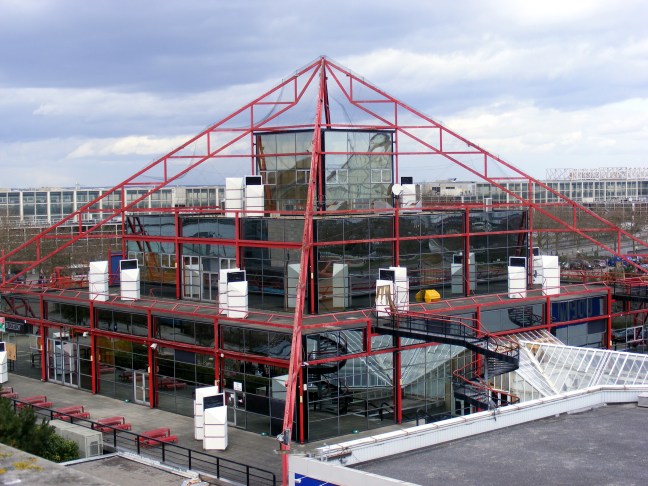
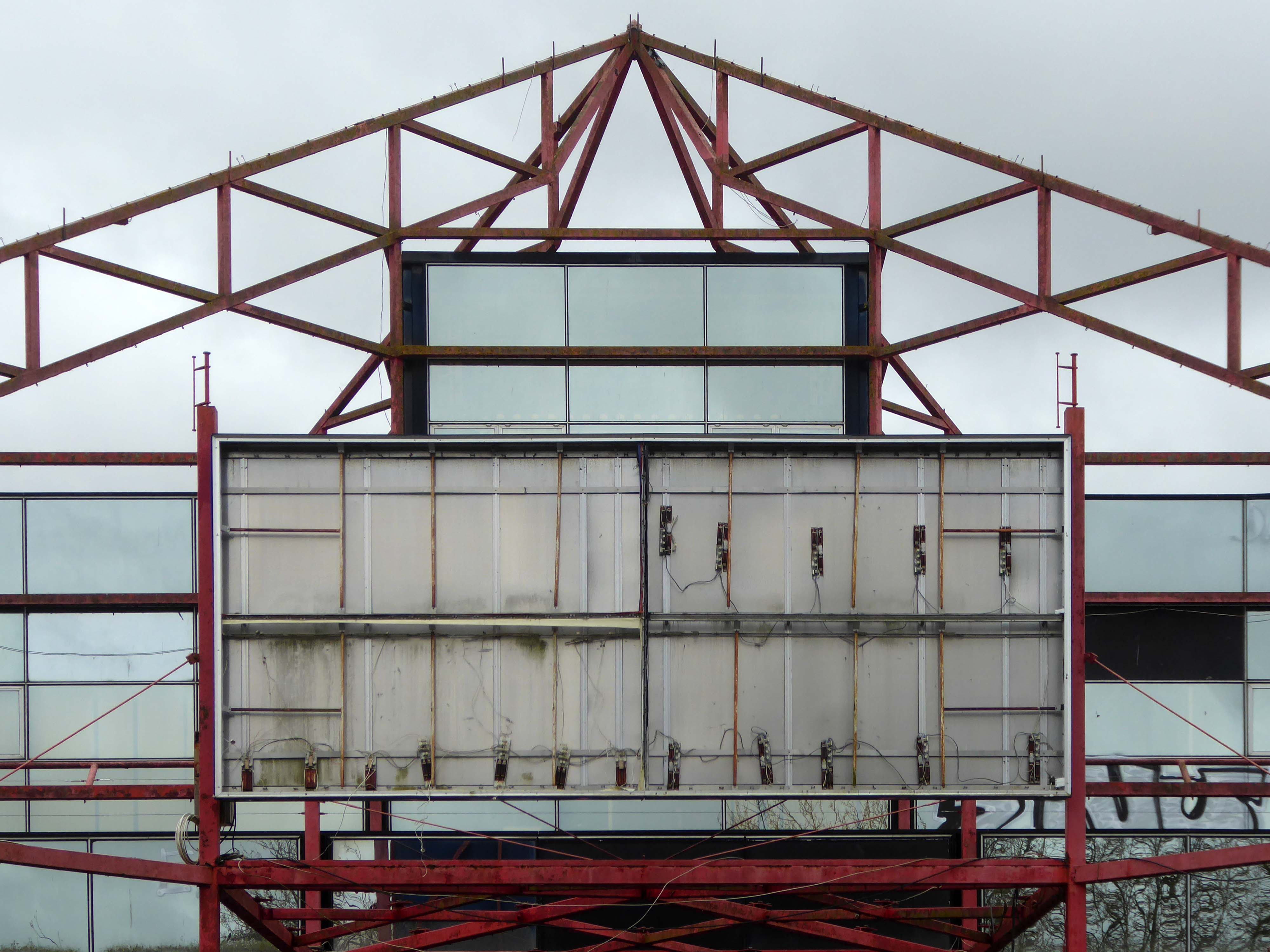
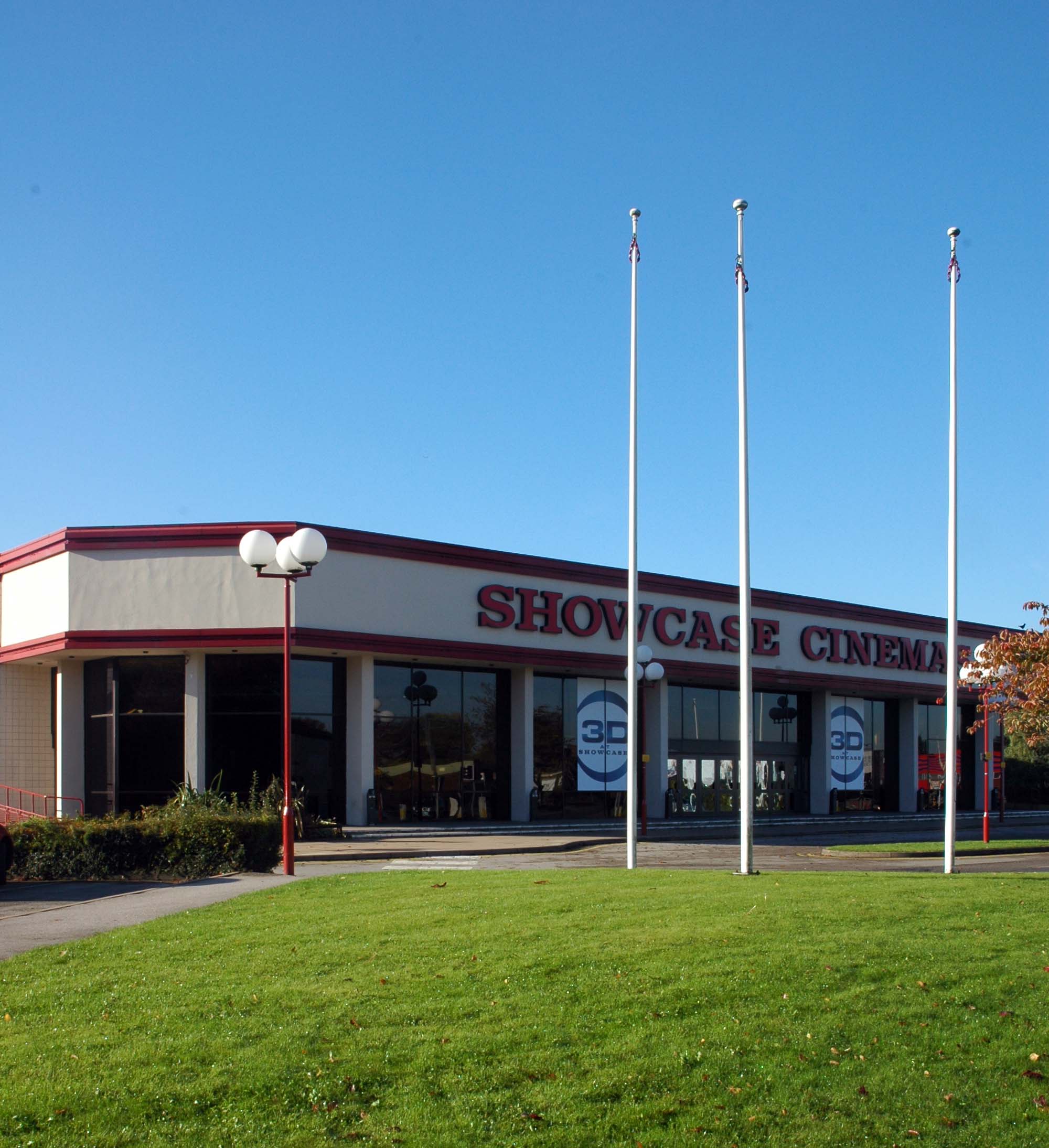
Famous in the history of British cinema as being the first purpose built multiplex cinema to be built in the UK. The 10-screen AMC-The Point opened on 23rd November 1985 with a Royal Premiere of the Harrison Ford film Presumed Innocent which was attended by Sarah, Duchess of York.
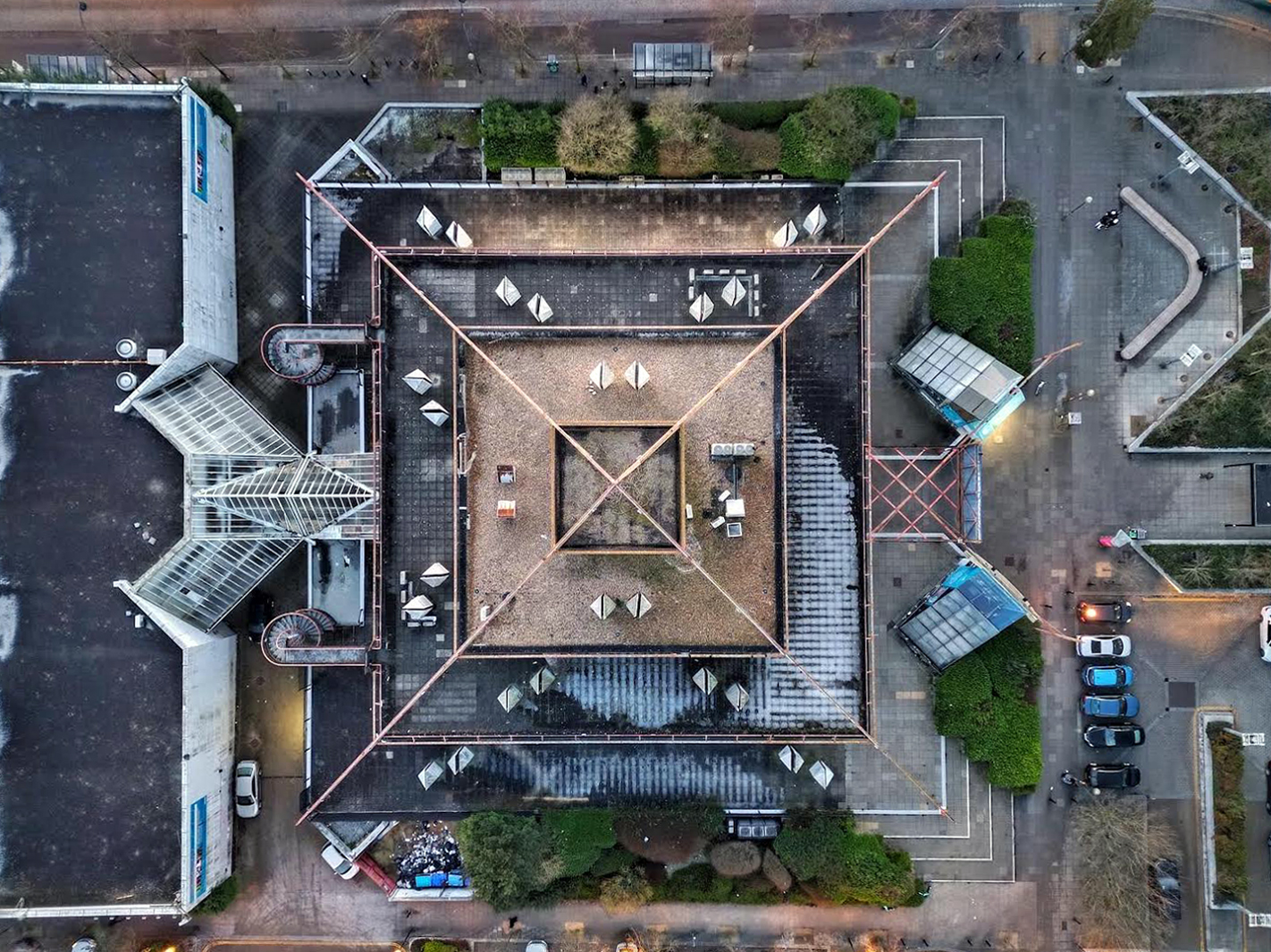
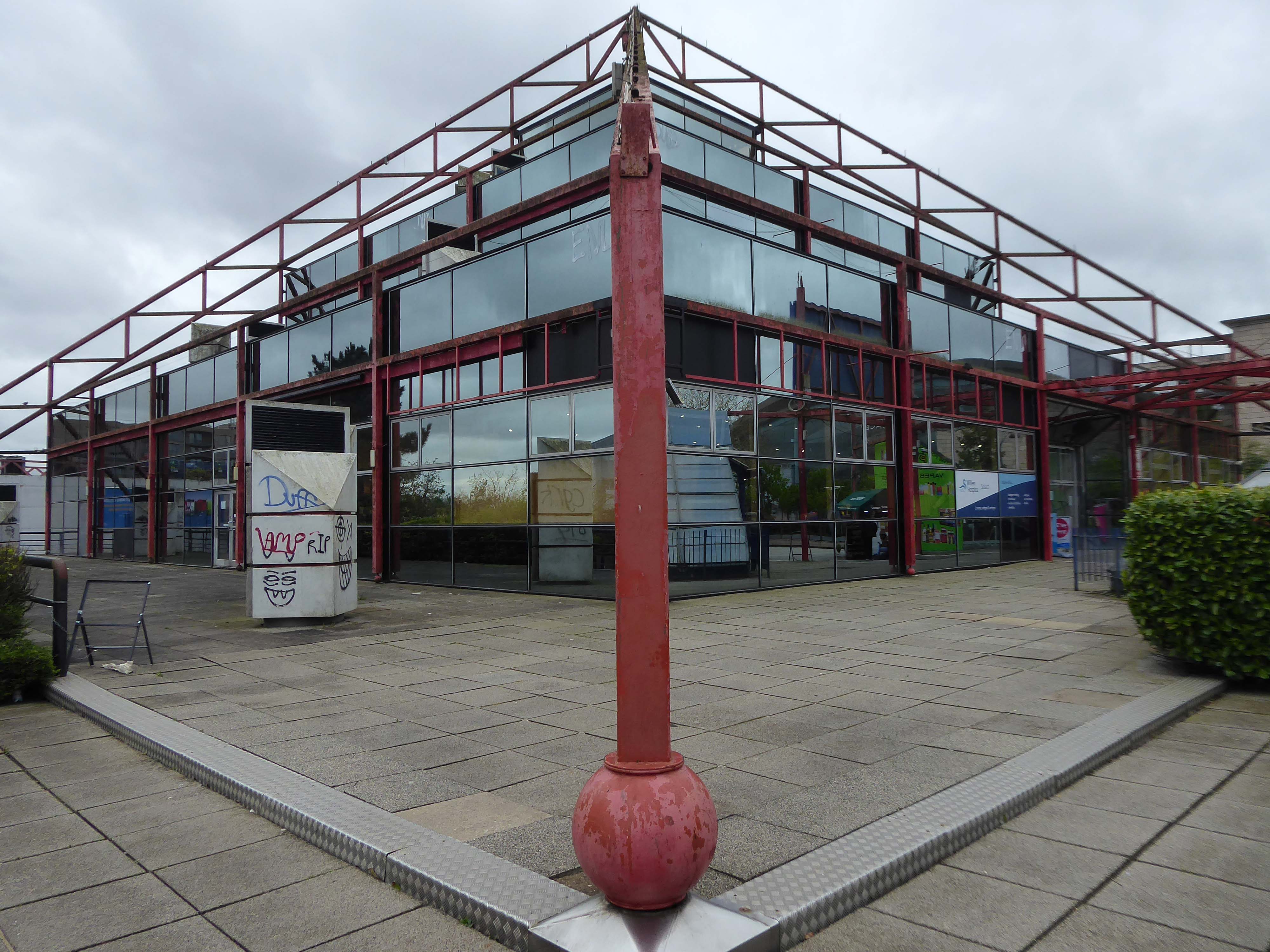
Built for and operated by American Multi-Cinemas, it has a foyer section, designed in the shape of a pyramid, hence the name The Point. The supporting struts were originally edged in red neon. The structure containing the auditoriums is just a plain block. Also in the complex is a Gala Bingo Club located under the cinema foyer entrance, a nightclub and cafes and restaurants.
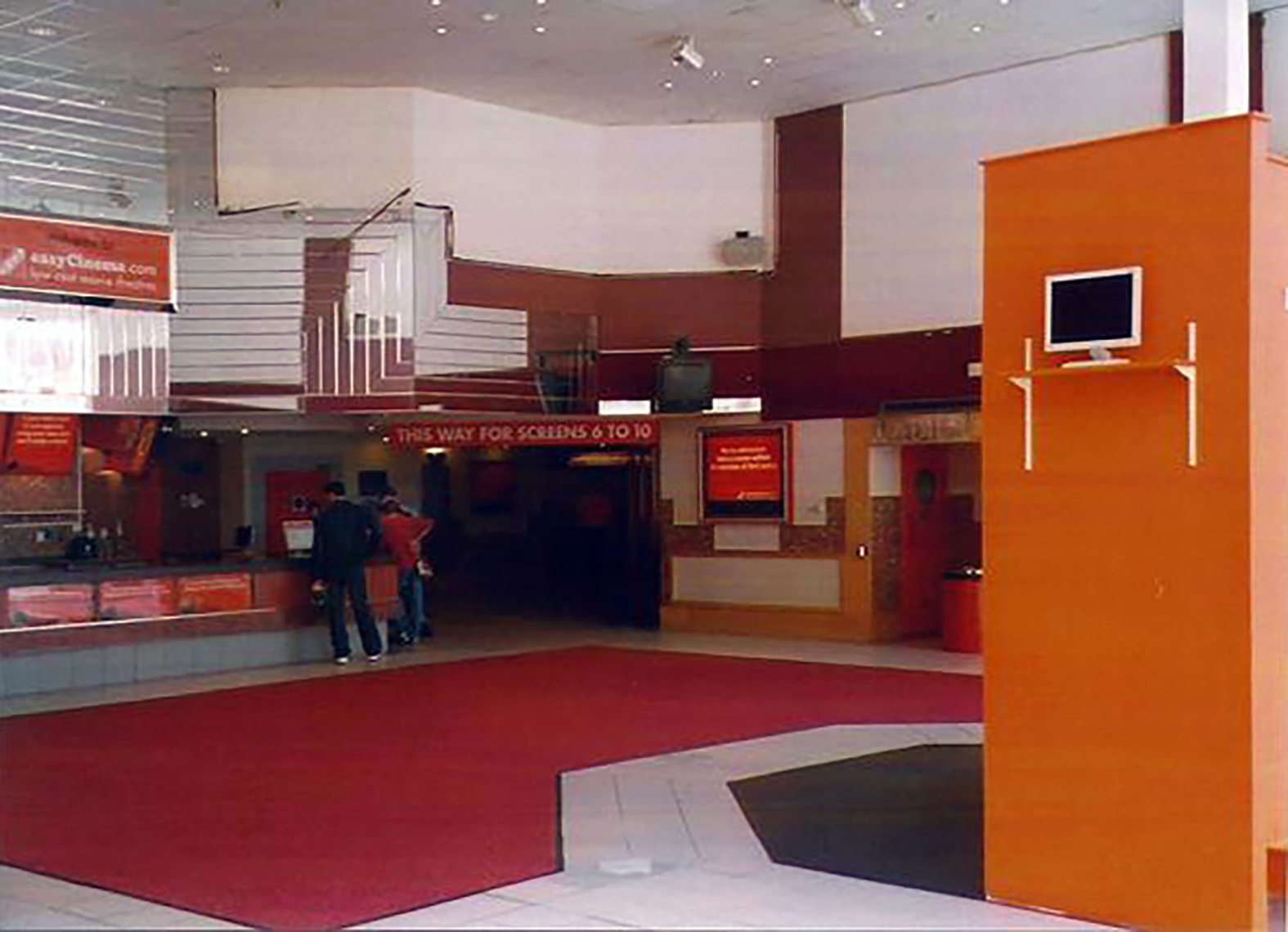
In December 1988, it was taken over by UCI and re-named. In April 2003 it was leased to easyCinema, operated by the budget airline easyJet, when a policy of taking bookings only online and charging a minimum admission, created interest, but turned out to be a failure. In May 2006 it was taken over by Odeon Cinemas Group. Seating capacities in the screens range from 248, down to 156.
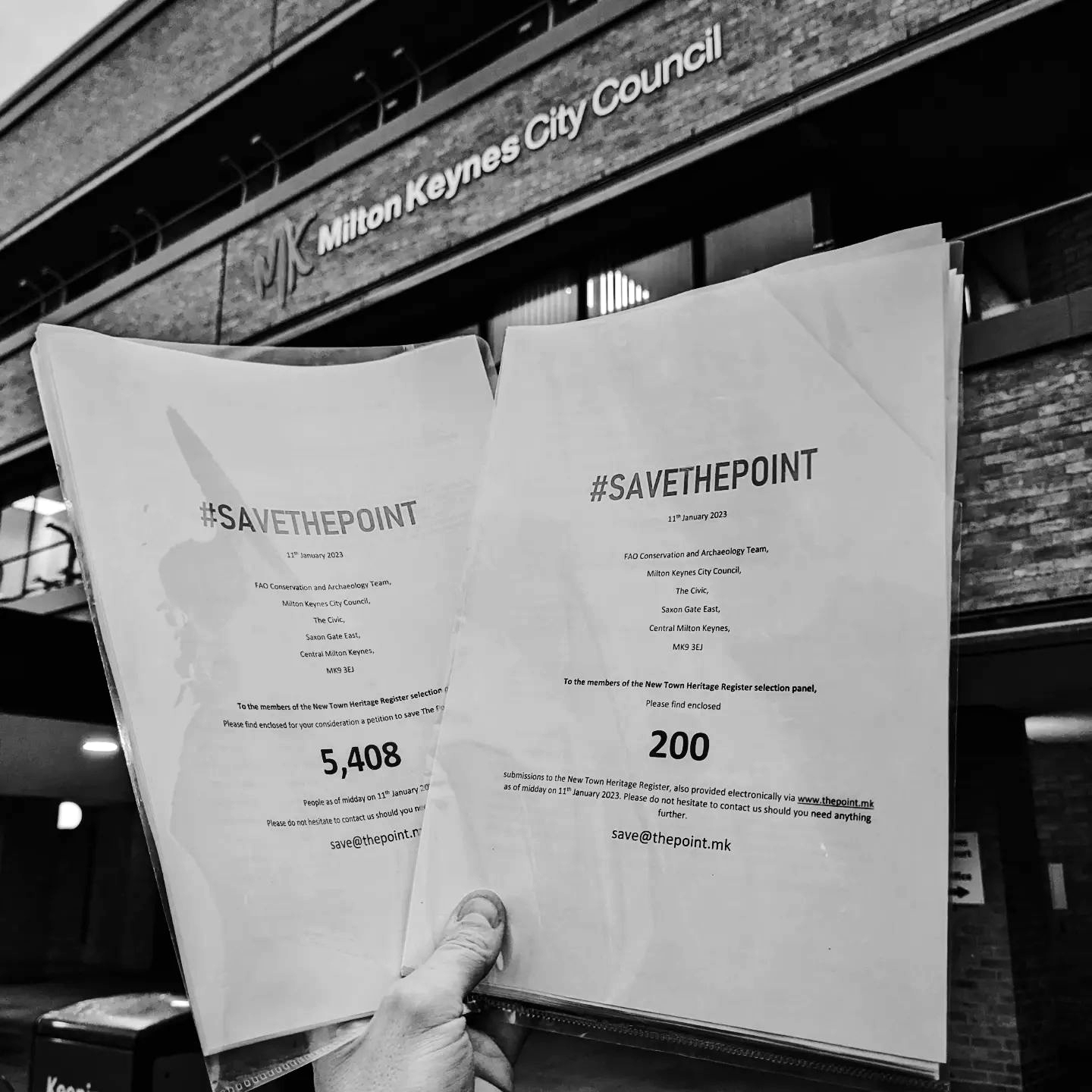
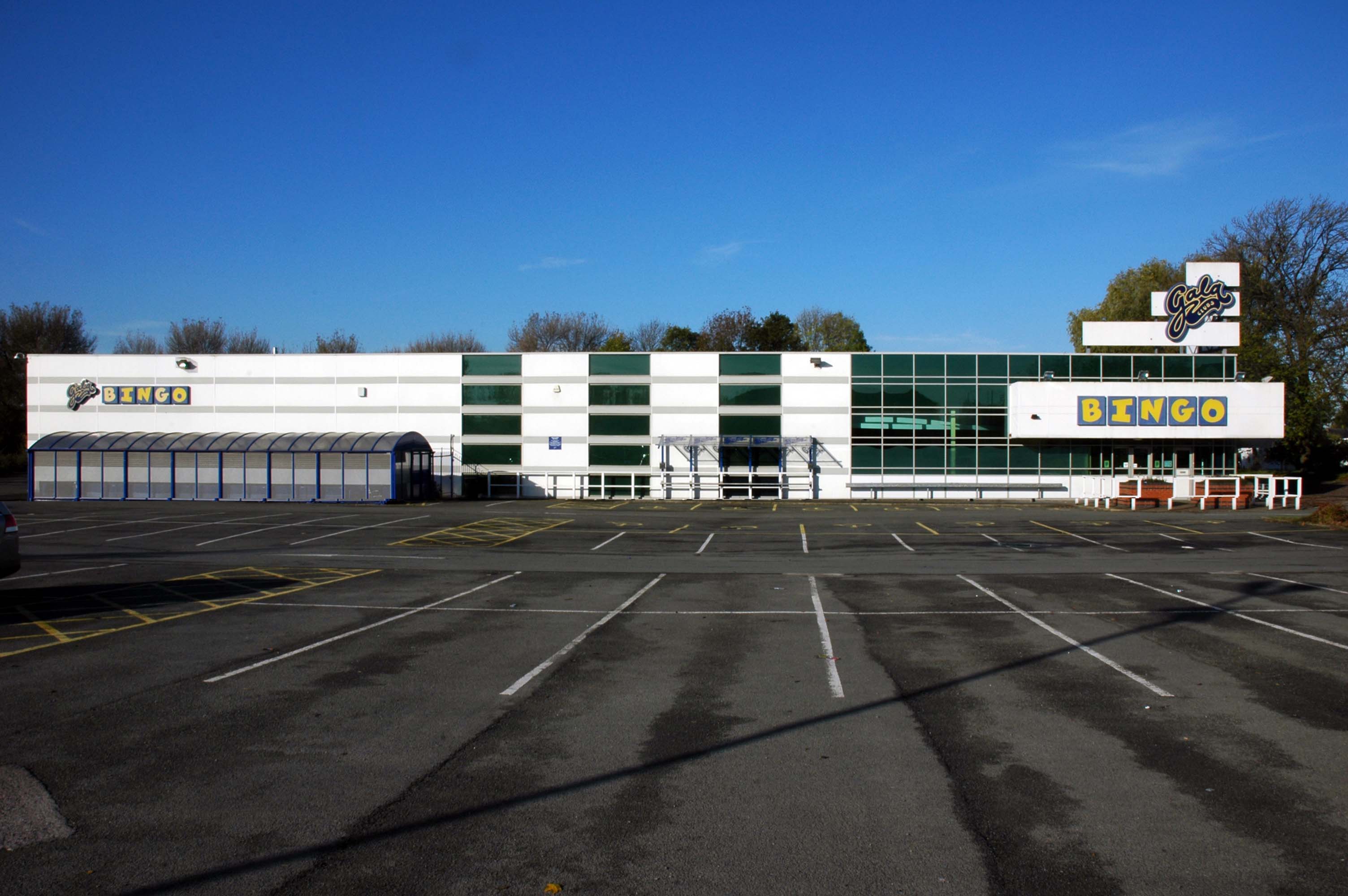
The Odeon was closed on 26th February 2015 with Kingsman, The Last Service being the final film in one its auditoriums. There had been hope that the cinema would be given a Grade II Listed status due to its historical relevance as the UK’s first multiplex cinema, but it was turned down by English Heritage. It will be demolished and replaced by new shops and leisure facilities. The Gala Bingo Club – re-named Buzz Bingo Club from June 2018, was closed on March 21, 2020 due to the Covid-19 Pandemic. It was announced on 15th July 2020 that the closure would be permanent.
Milton Keynes now has a new 16-screen Odeon Stadium + IMAX, located at the MK Dons Stadium, which has an IMAX screen and two screens equipped with Atmos sound. It opened on 27th February, 2015.
Designed by Building Design Partnership, the Point was reputedly inspired by the work of avant grade provocateurs Archigram and became an instant Milton Keynes landmark upon its opening in 1985. As well has being one of the UK’s first multiplex cinemas, the unconventional structure housed a games arcade, bingo hall and nightclub. These individual functions are externally expressed as stacked, mirrored boxes beneath the 70ft bright red steel pyramidal frame – illuminated at night as a space-age beacon across the low-rise city centre.
An application as been submitted by developers GHL – Galliard Holdings Ltd, the intention is to demolish the famous pyramid structure and replace it with 487 new flats in tower blocks of up to 21 storeys high.
There is a local grassroots campaign to save the Point – with its own Facebook page.
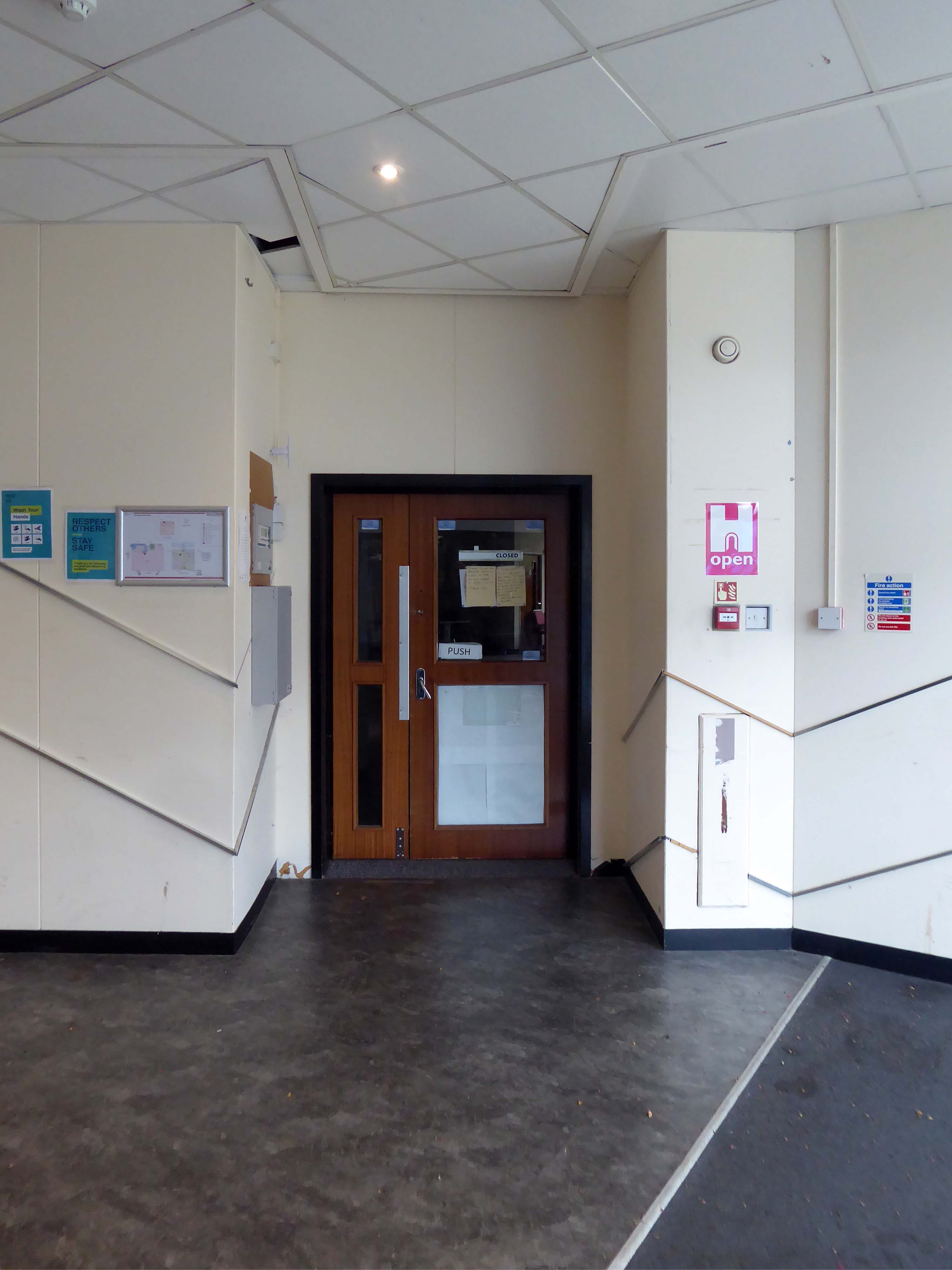
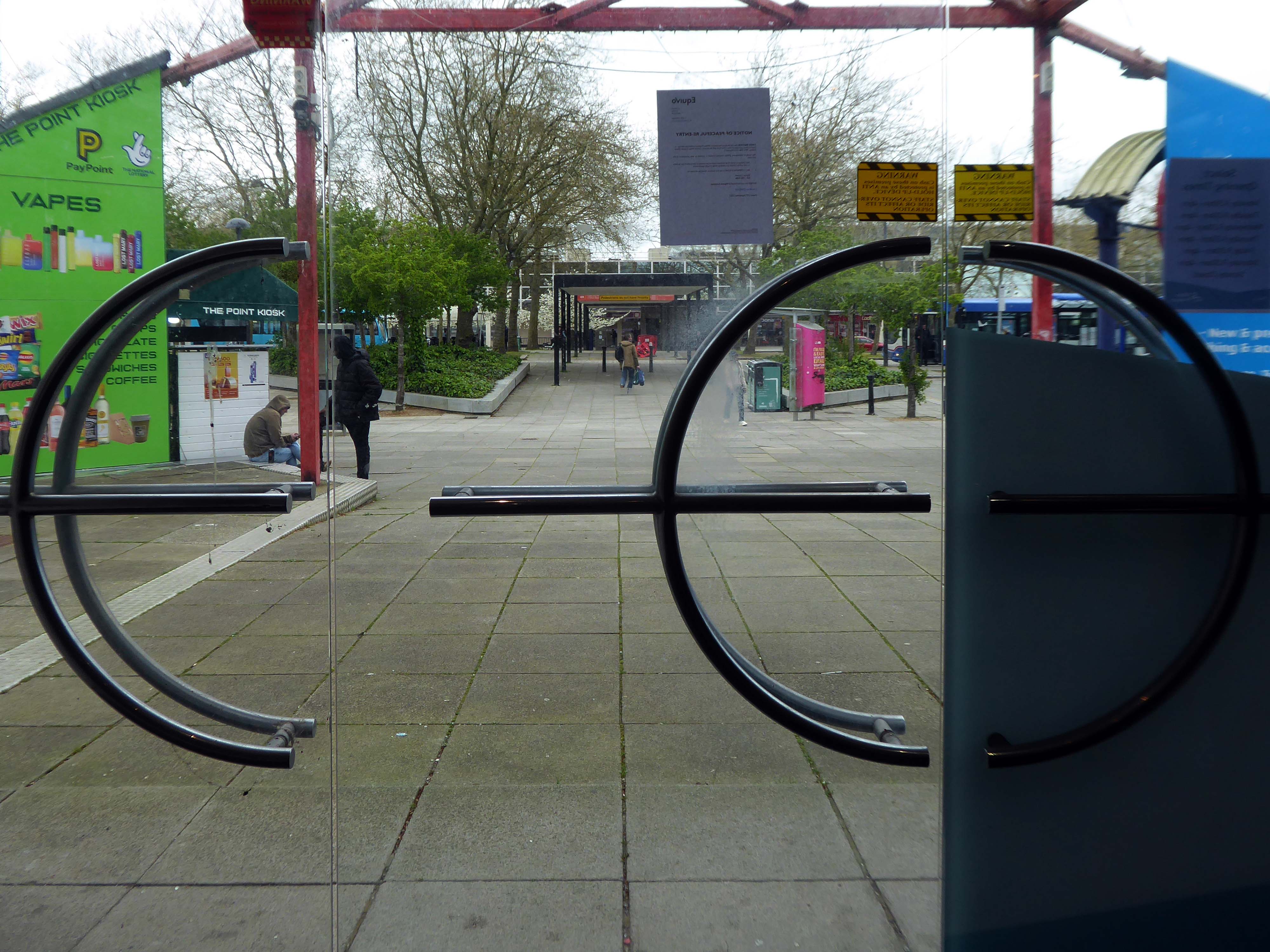
On the day of my visit April 10th 2024 – this is what it looks like.
I’ve known about The Point for as long as I can remember. It’s always been there. When I was a lot younger and we’d drive into MK at night, we’d always look out for the glowing red beacon in the shape of a pyramid on the horizon. It’s an iconic and even historic to Milton Keynes building, and it’s a shame to see that it’s just being left to become a shadow of its former self. I mean it surely wouldn’t cost much to put some led lights on it and light it up at night time again. So much money is wasted elsewhere in the city they should think about the upkeep of the actual landmarks they have.
Walking along Rochdale Road yesterday, I was suddenly arrested by the Pleasant Street street sign.
Having already been suddenly arrested last week, by the Bland Close street sign.
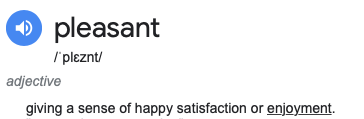
With my expectations defined by the above definition, I ventured along the street in search of happy satisfaction.
Coincidentally – The 18th century entrepreneur Josiah Wedgwood pioneered many of the marketing strategies used today, including the satisfaction or you money back guarantee, on the entire range of his pottery products. The money-back guarantee was also a major tool of early US mail order sales pioneers in the United States such as Richard Sears and Powel Crosley Jr. to win the confidence of consumers.
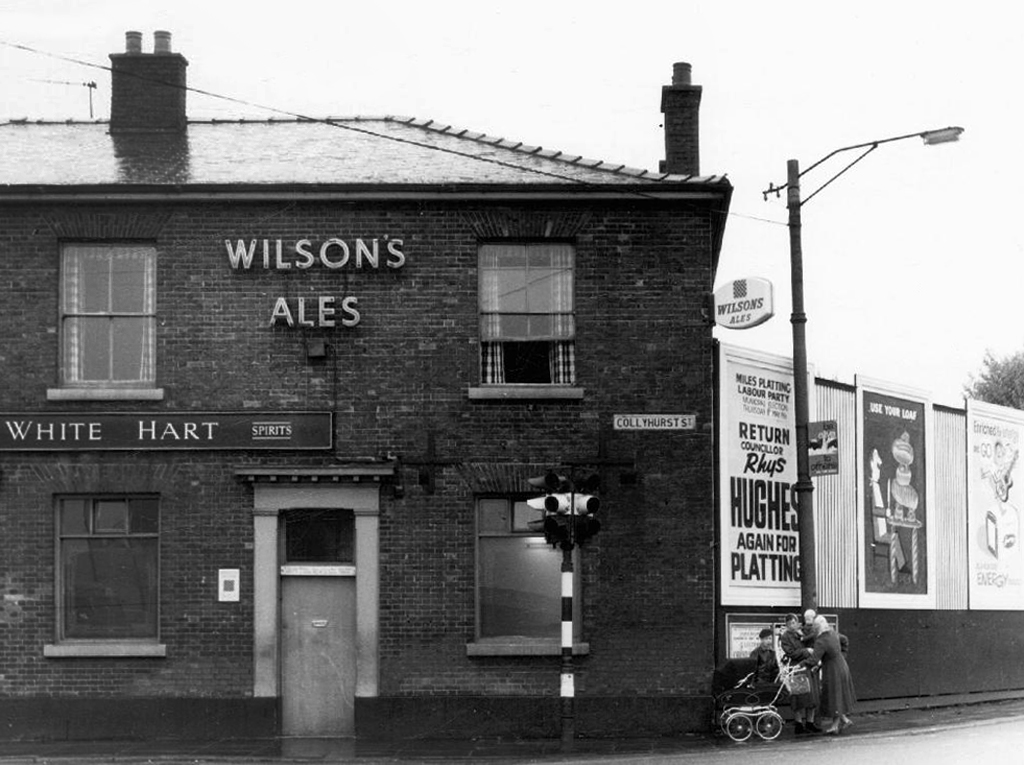
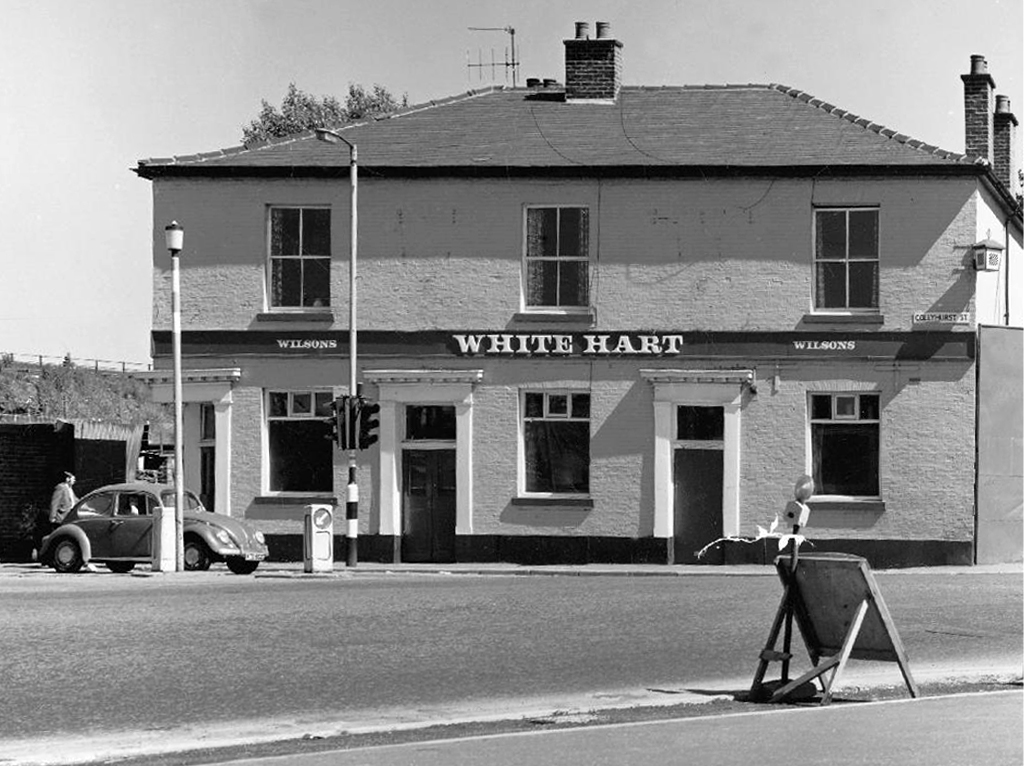
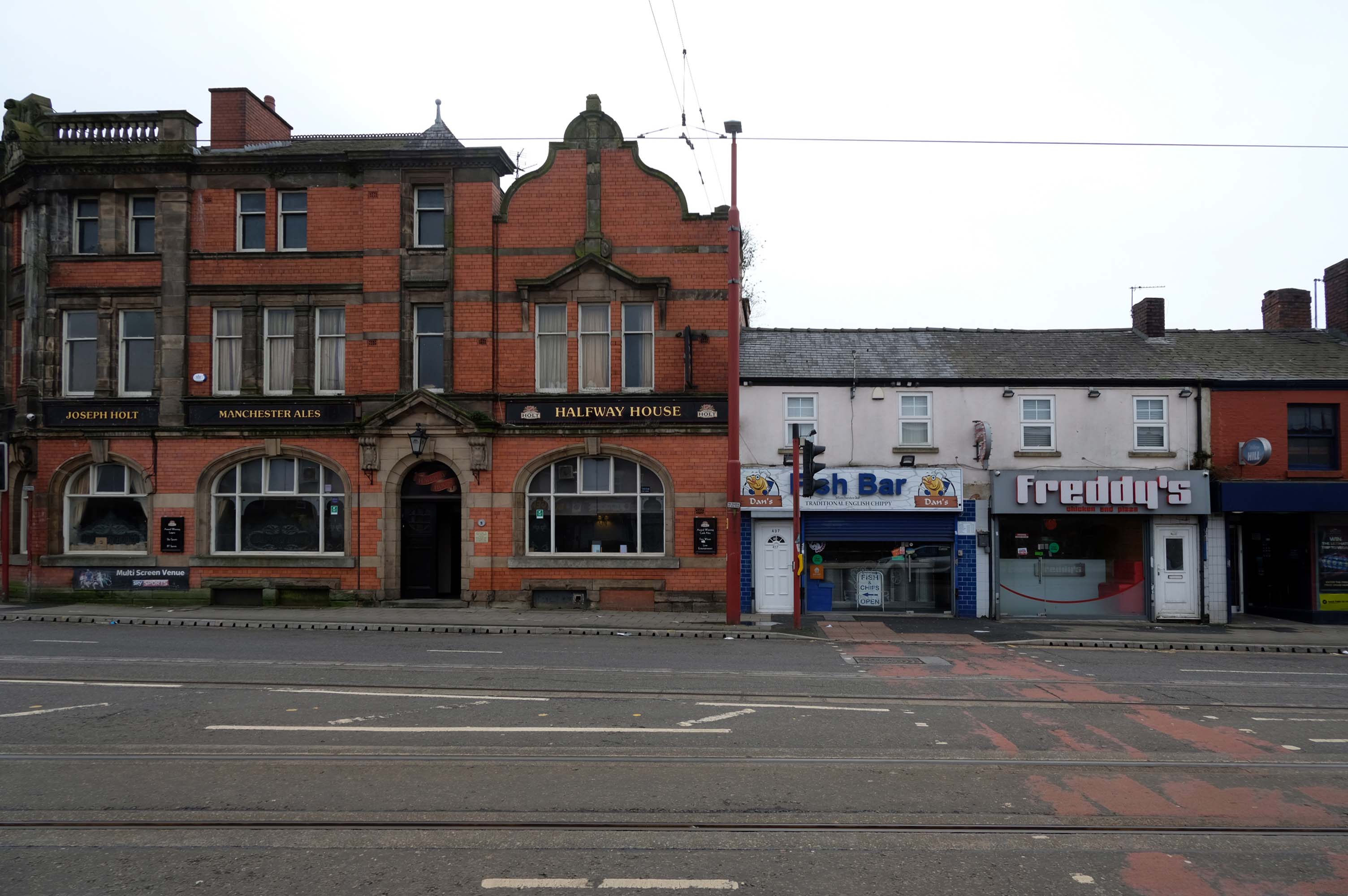
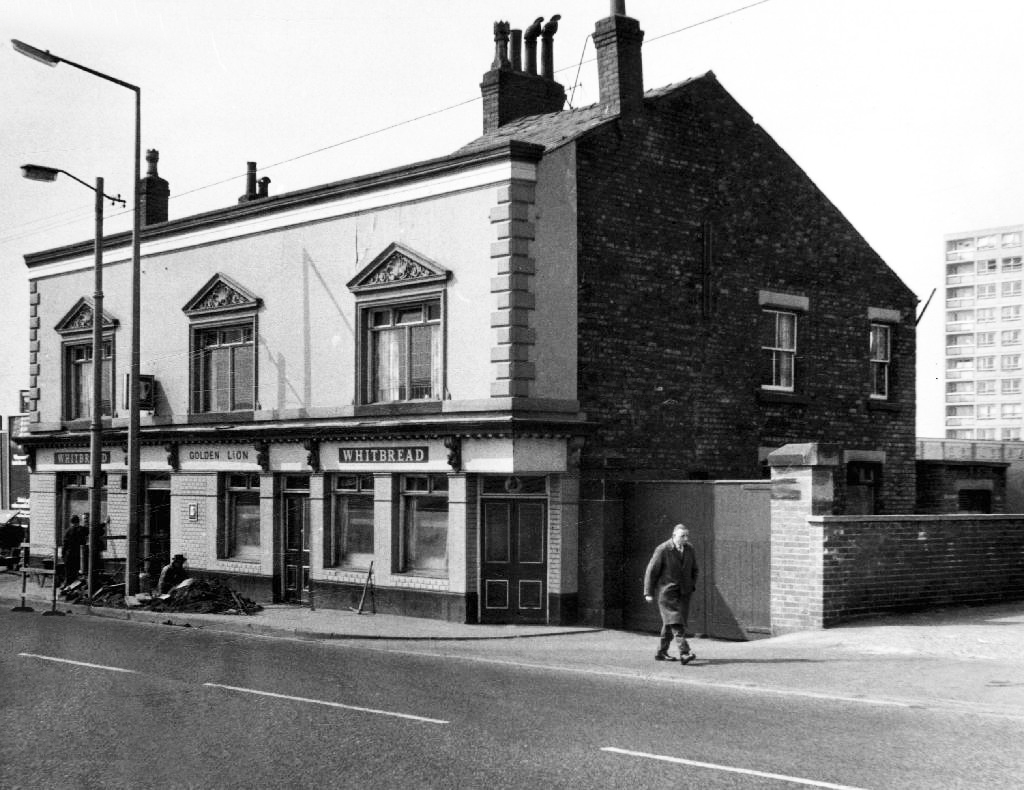
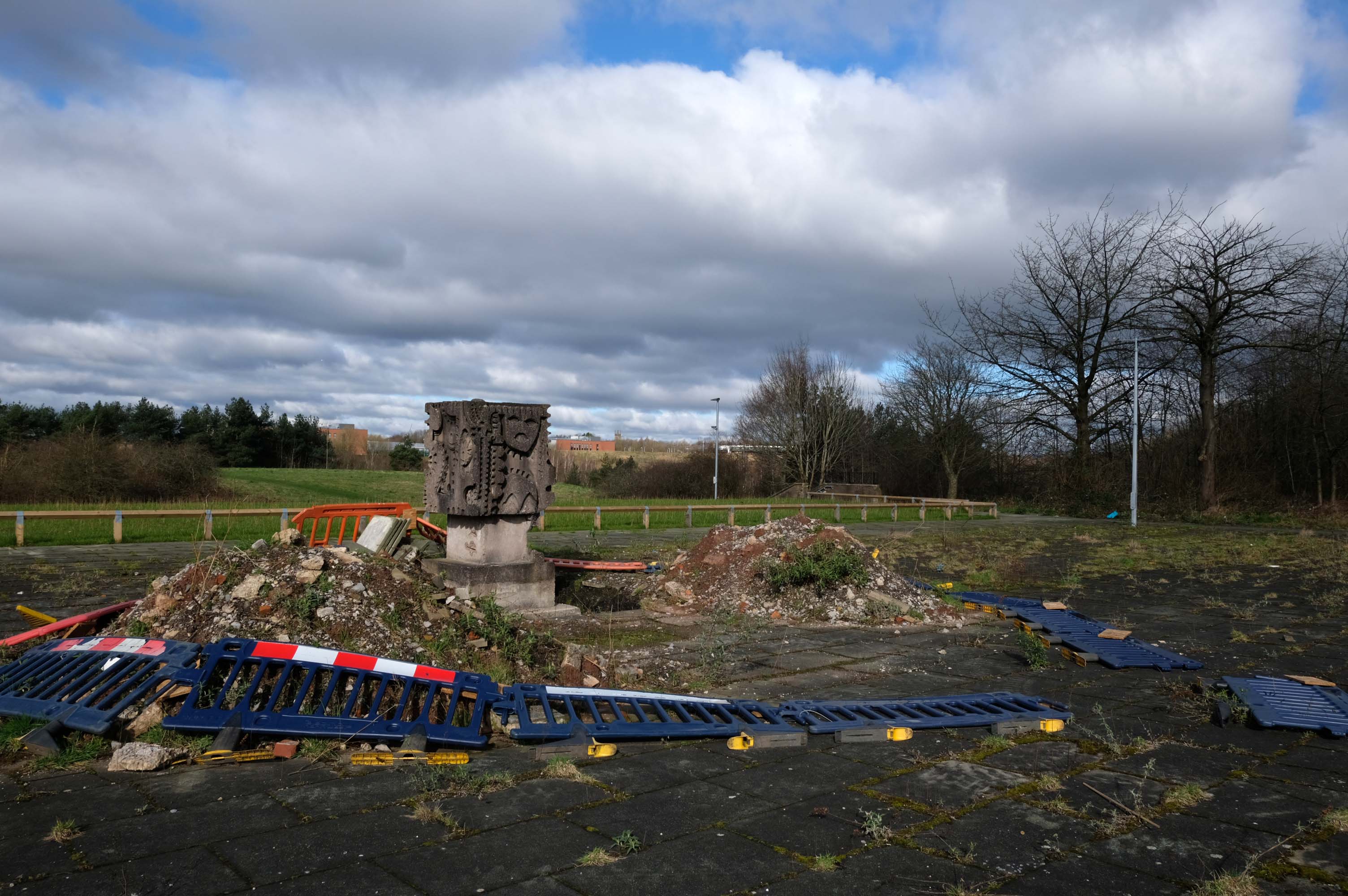
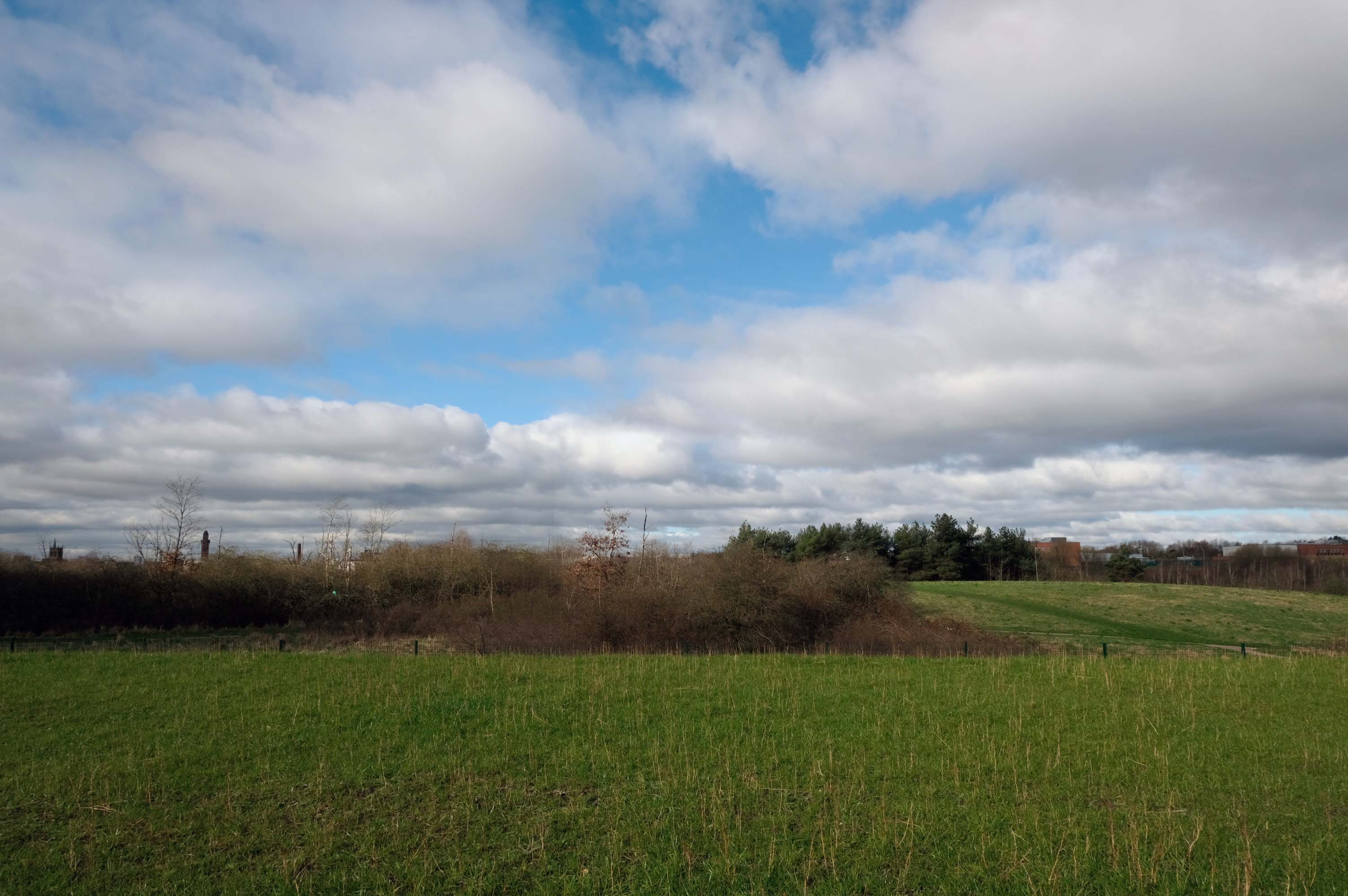
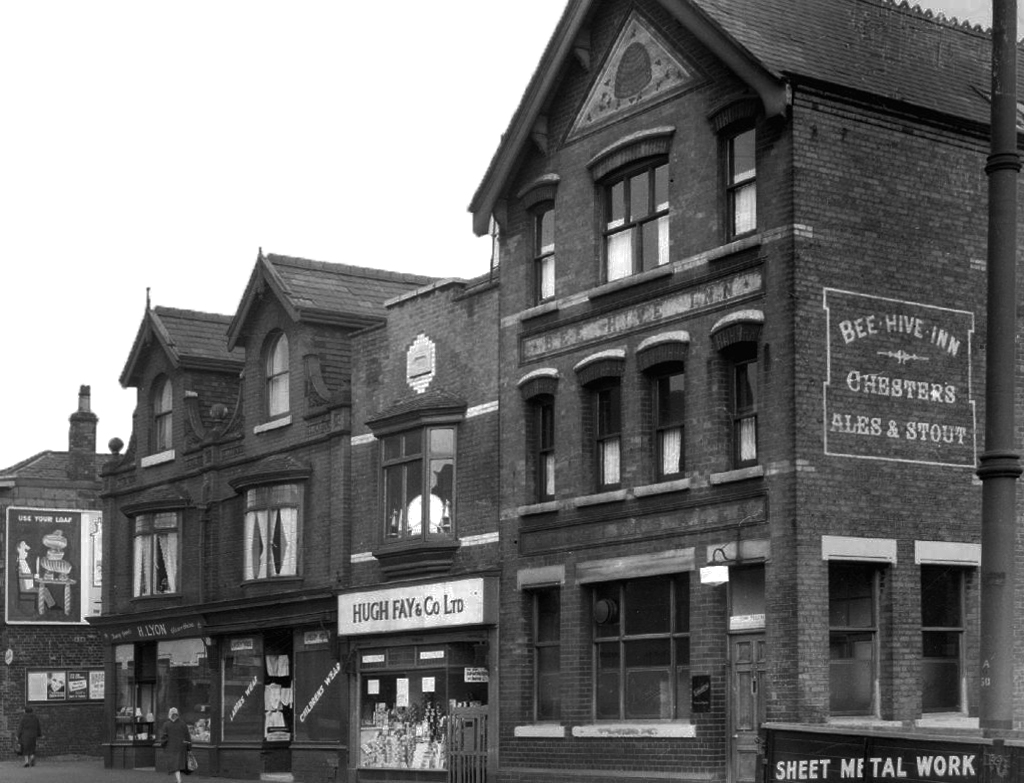
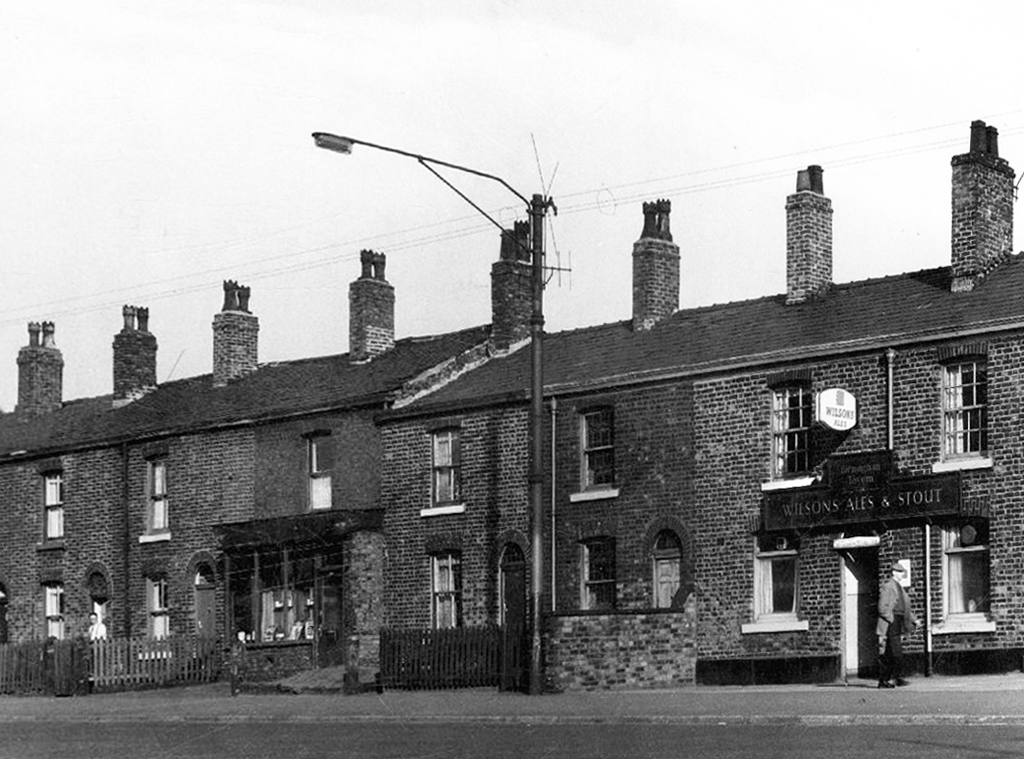
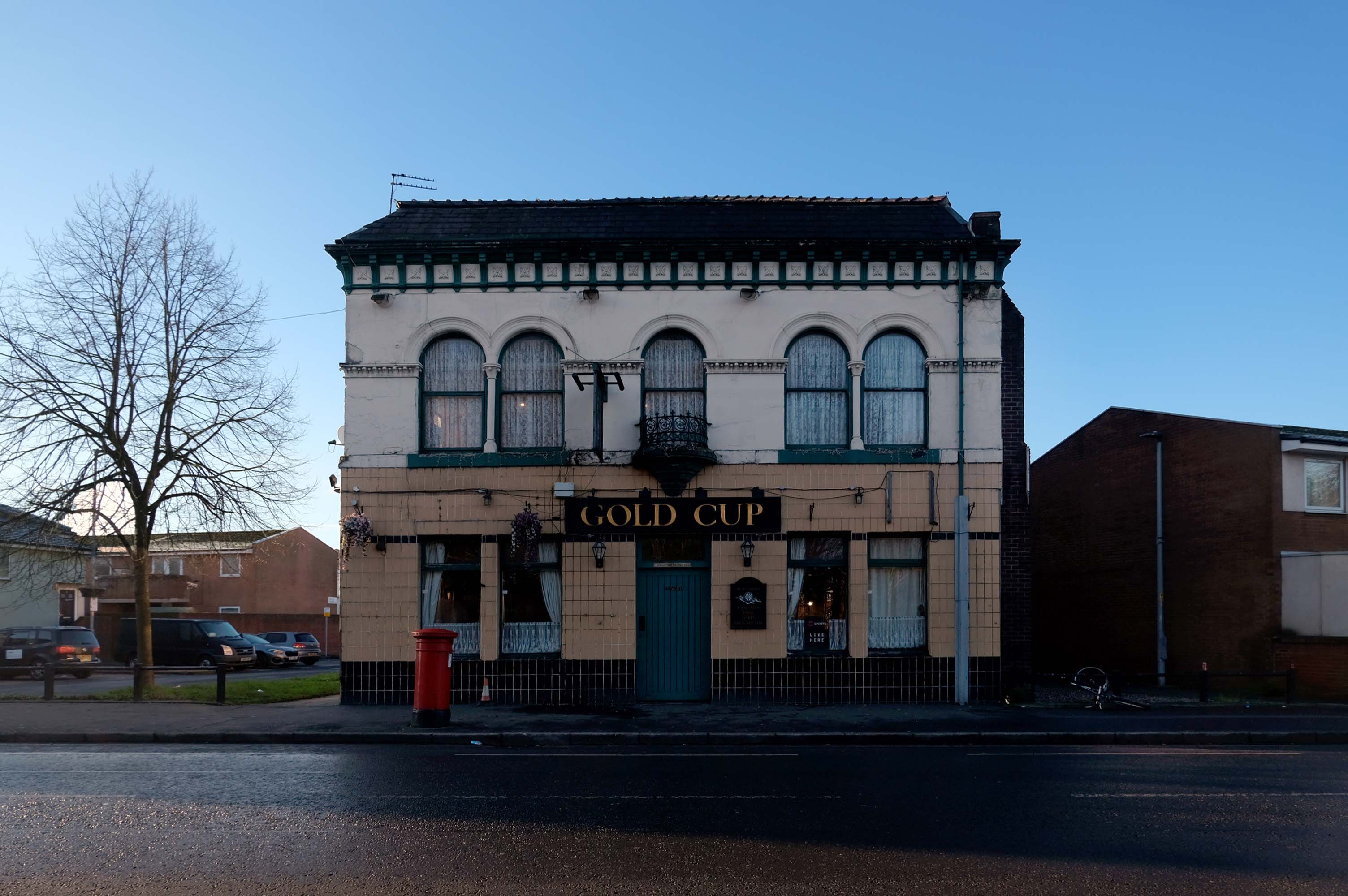
However at someone between 1968 and 2024 the housing had been cleared away – also missing in action is the Golden Lion pub adjoining Pleasant Street on Rochdale Road.
The Golden Lion was a proper old pub on the very busy rochdale road in the Harpurhey area of Manchester. Once inside there was a decent lounge and a basic bar i had a drink in the lounge and this was quite a comfy room.
This pub was a Whitbread tied house and there were two real ales on the bar I had a drink of Chesters bitter and this was a nice drink the other beer was Chesters mild. I thought this was quite a nice pub but sadly this pub has now been pulled down in the name of progress.
So here we are here today – yesterday has long gone and tomorrow never knows no how.
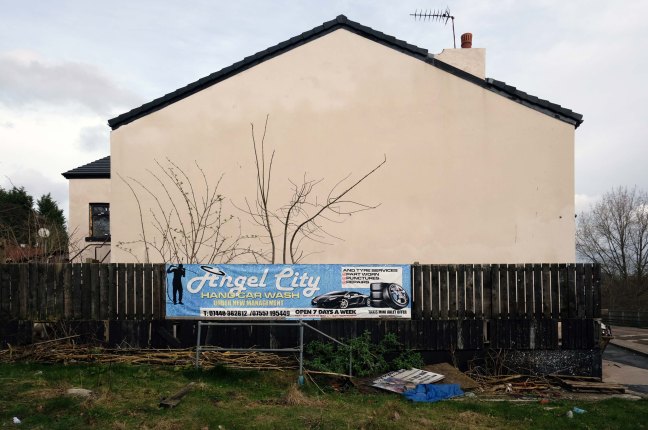
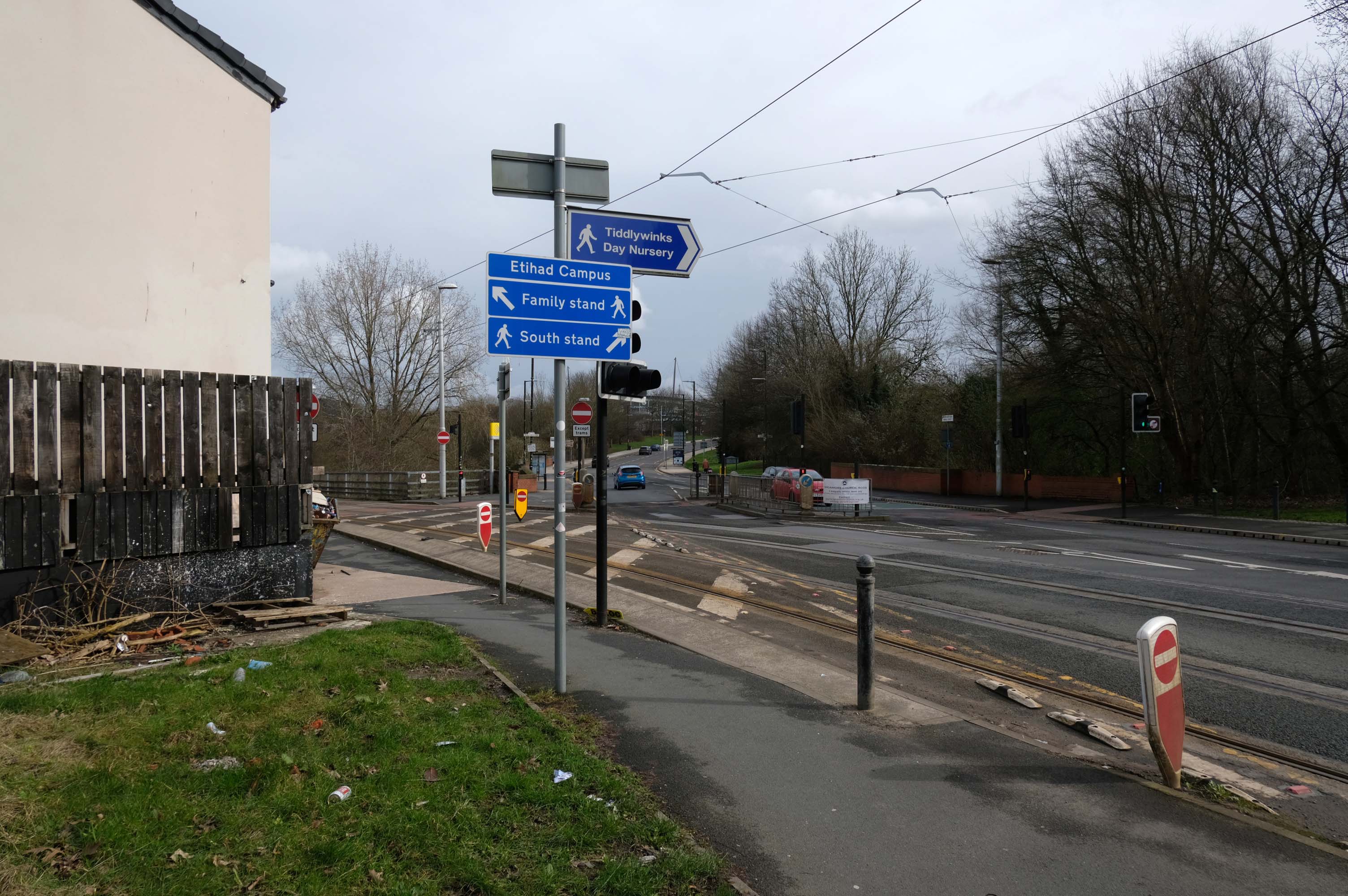
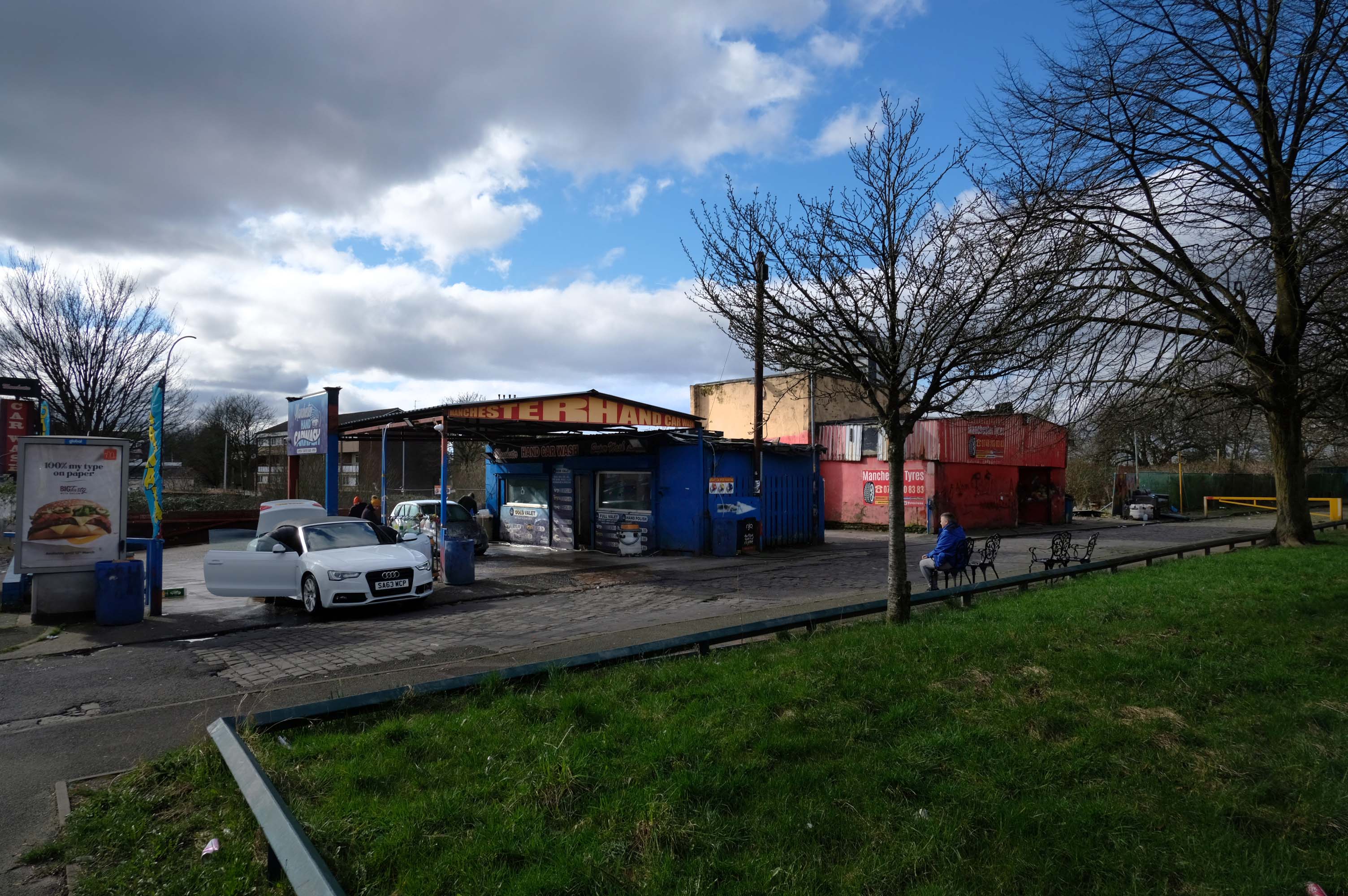
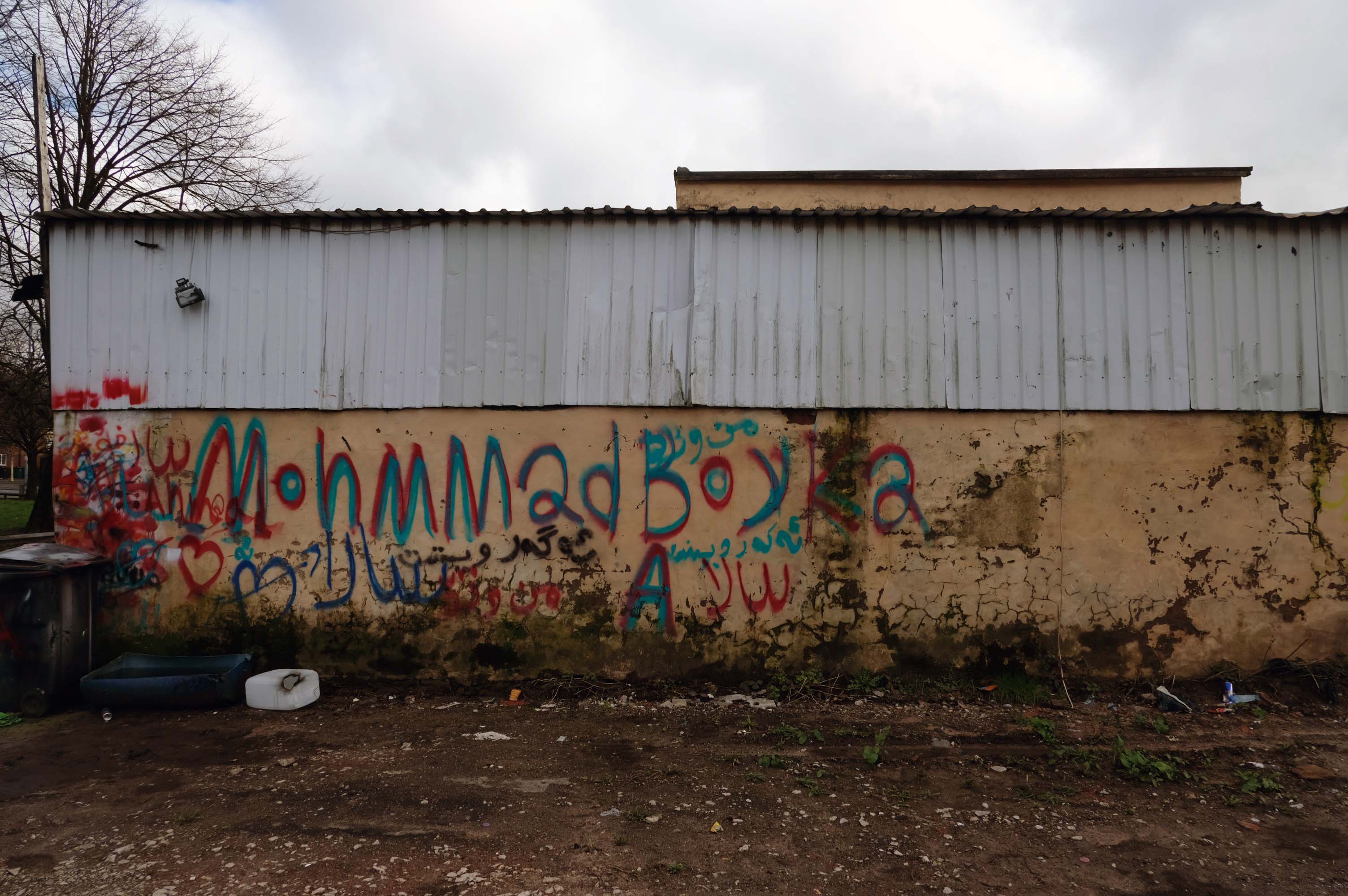
What’s left to see?
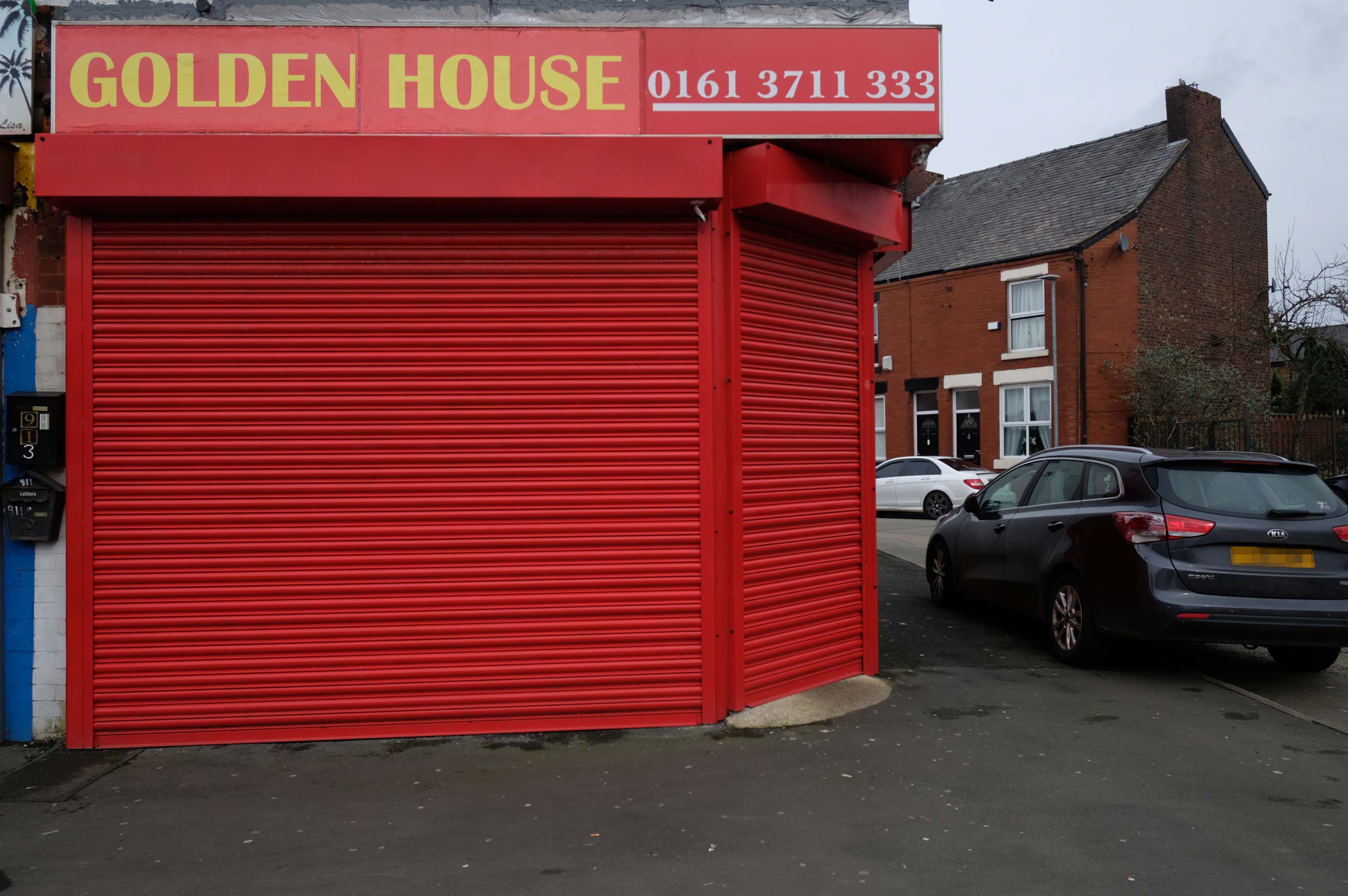
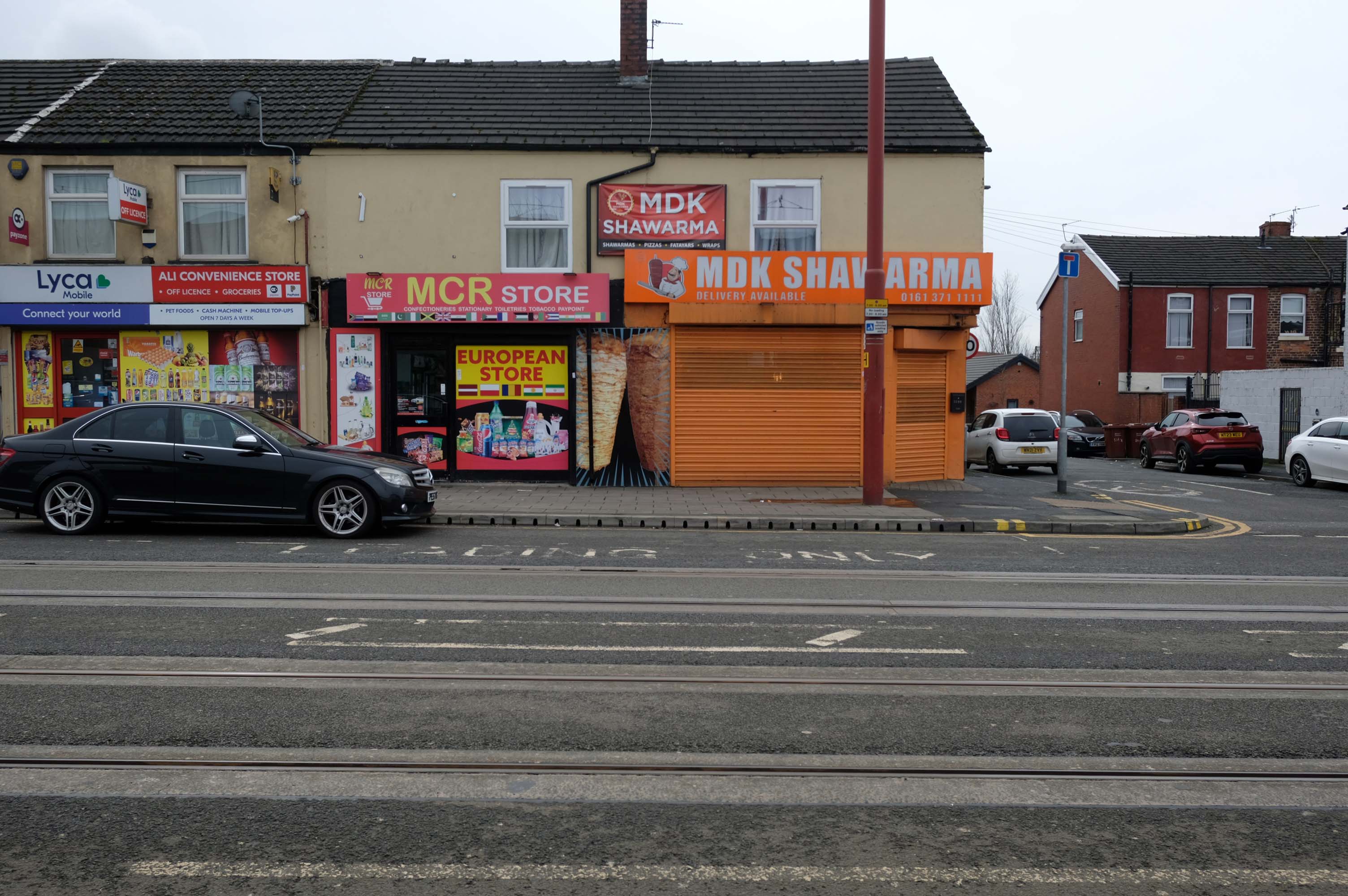
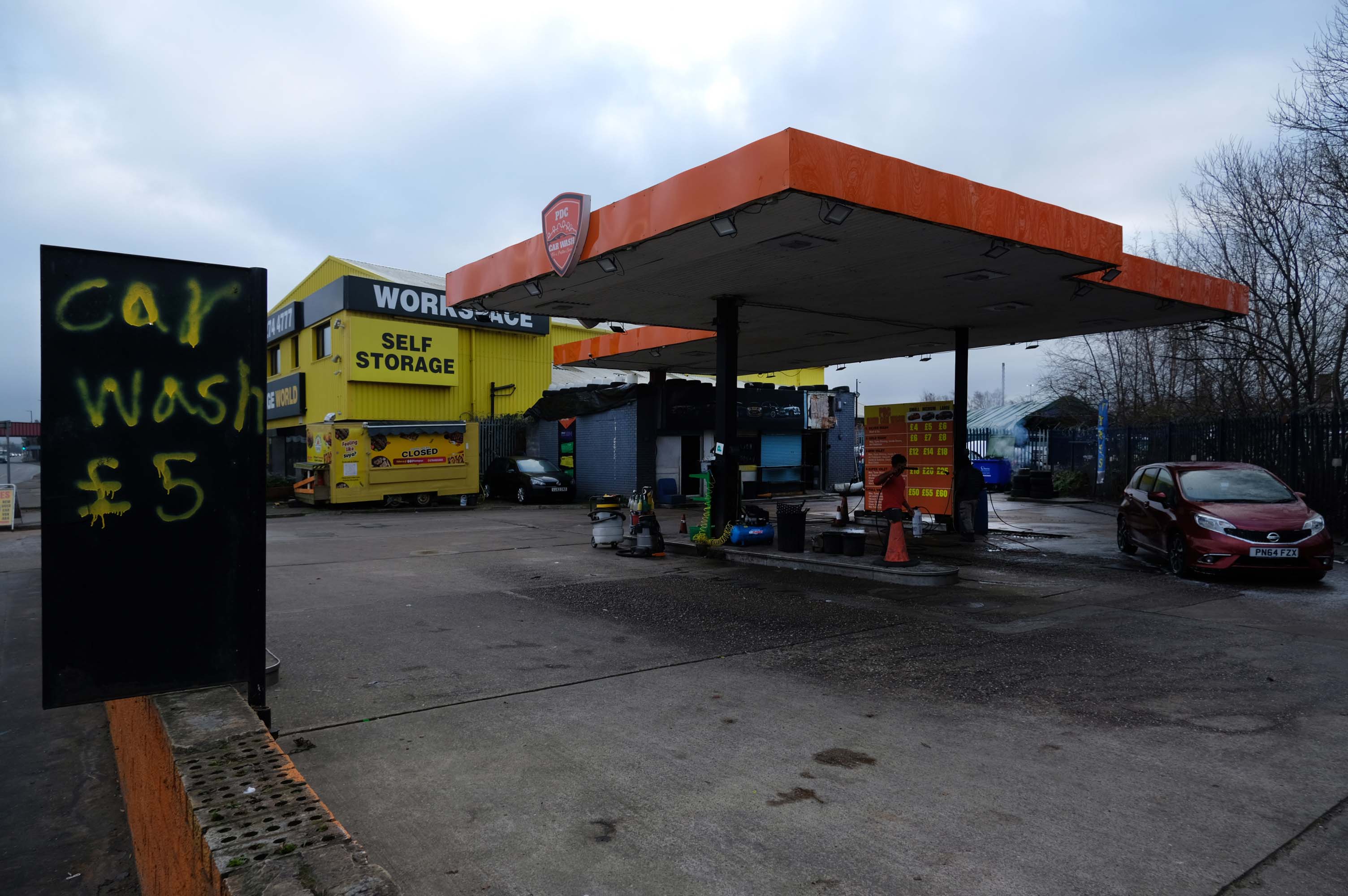
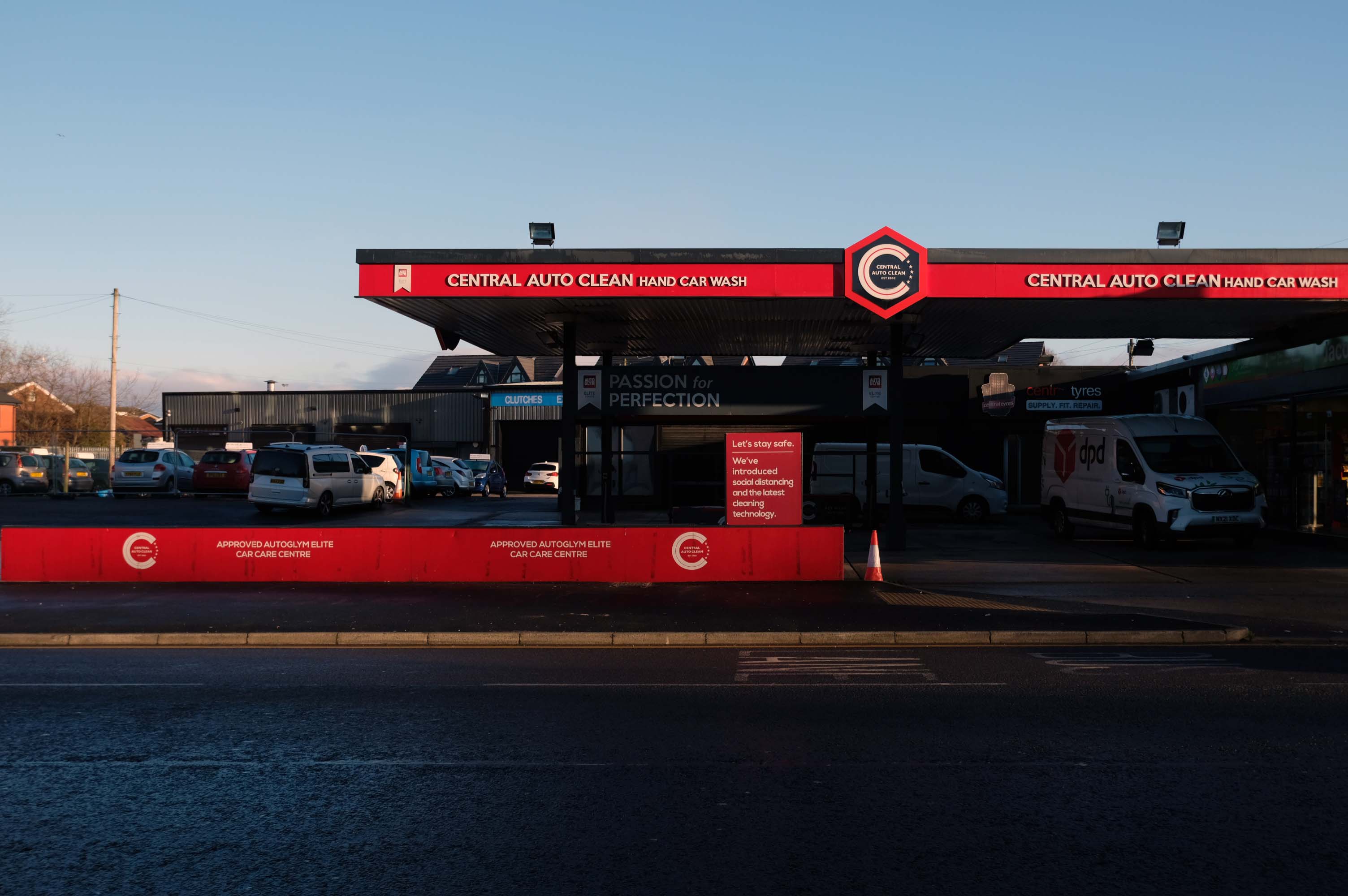
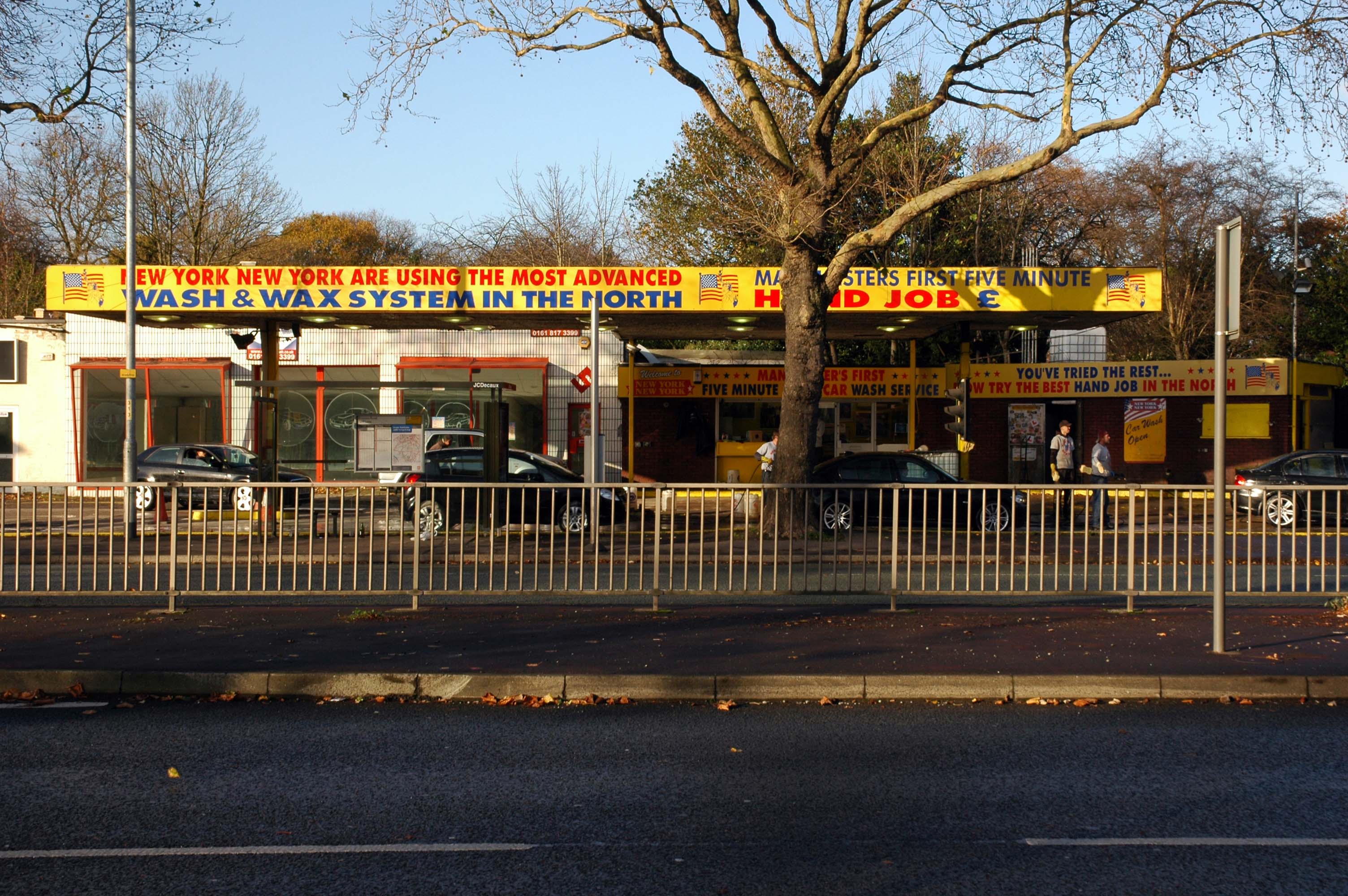
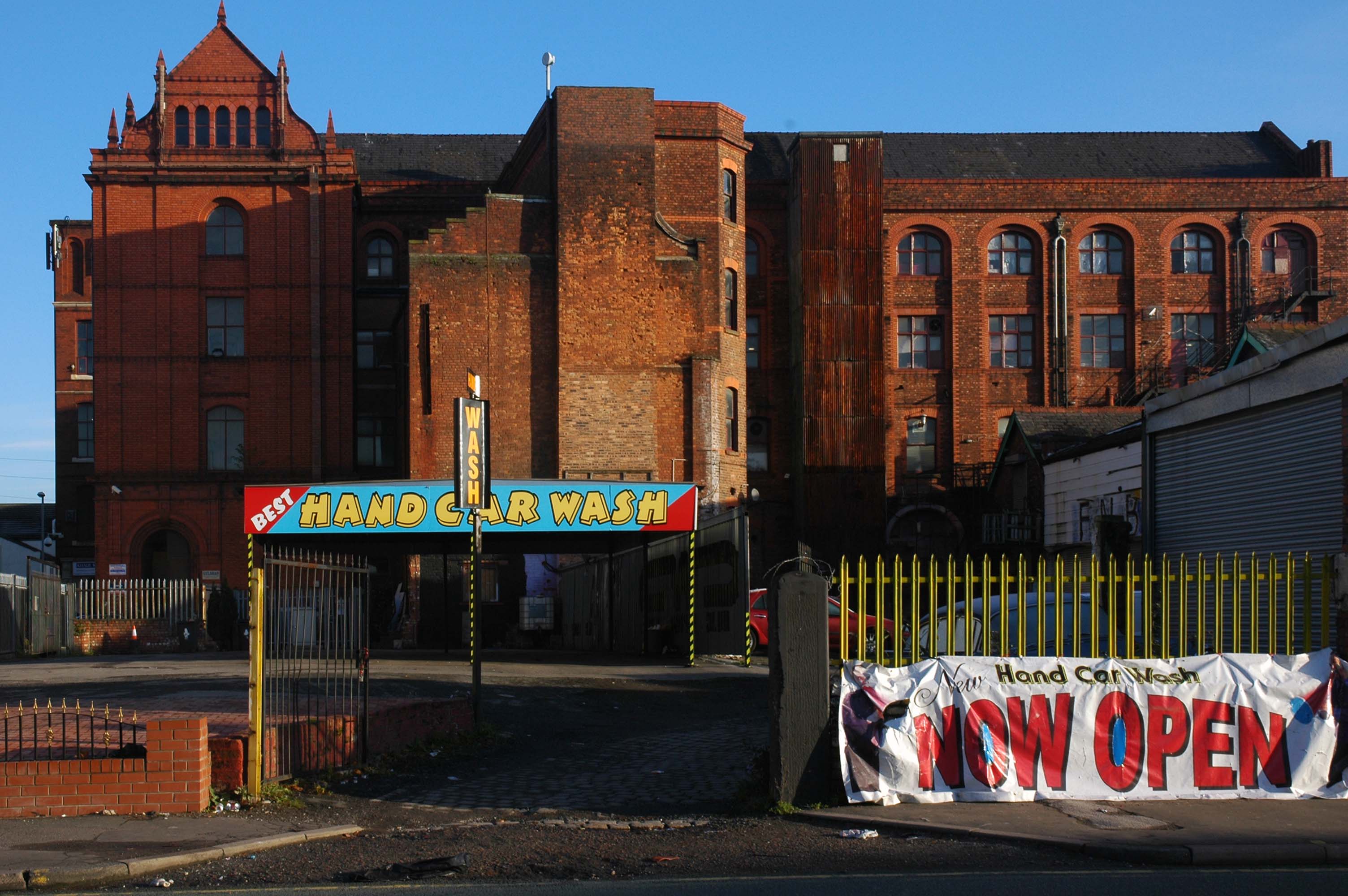
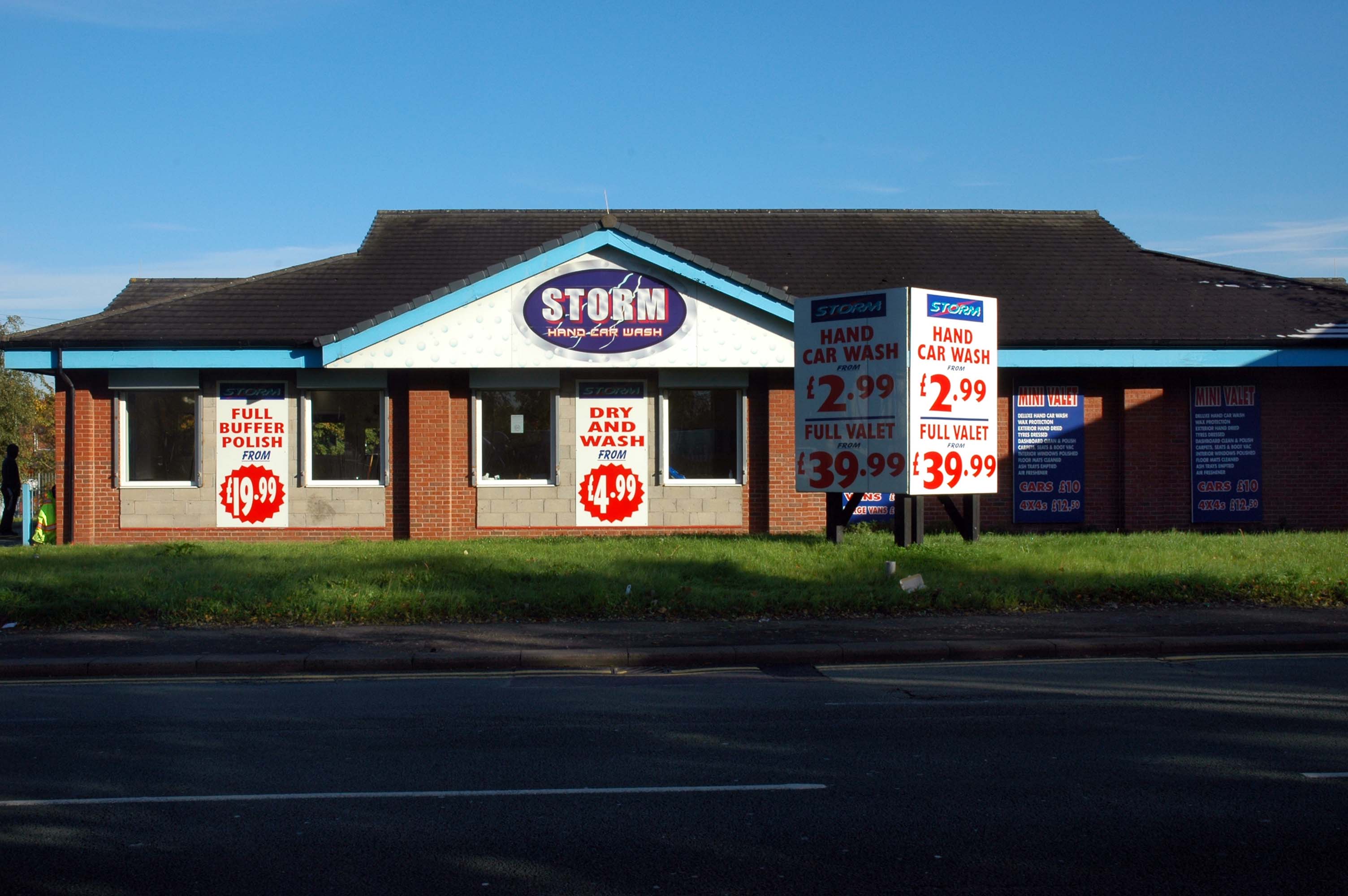
Manchester Hand Car Wash
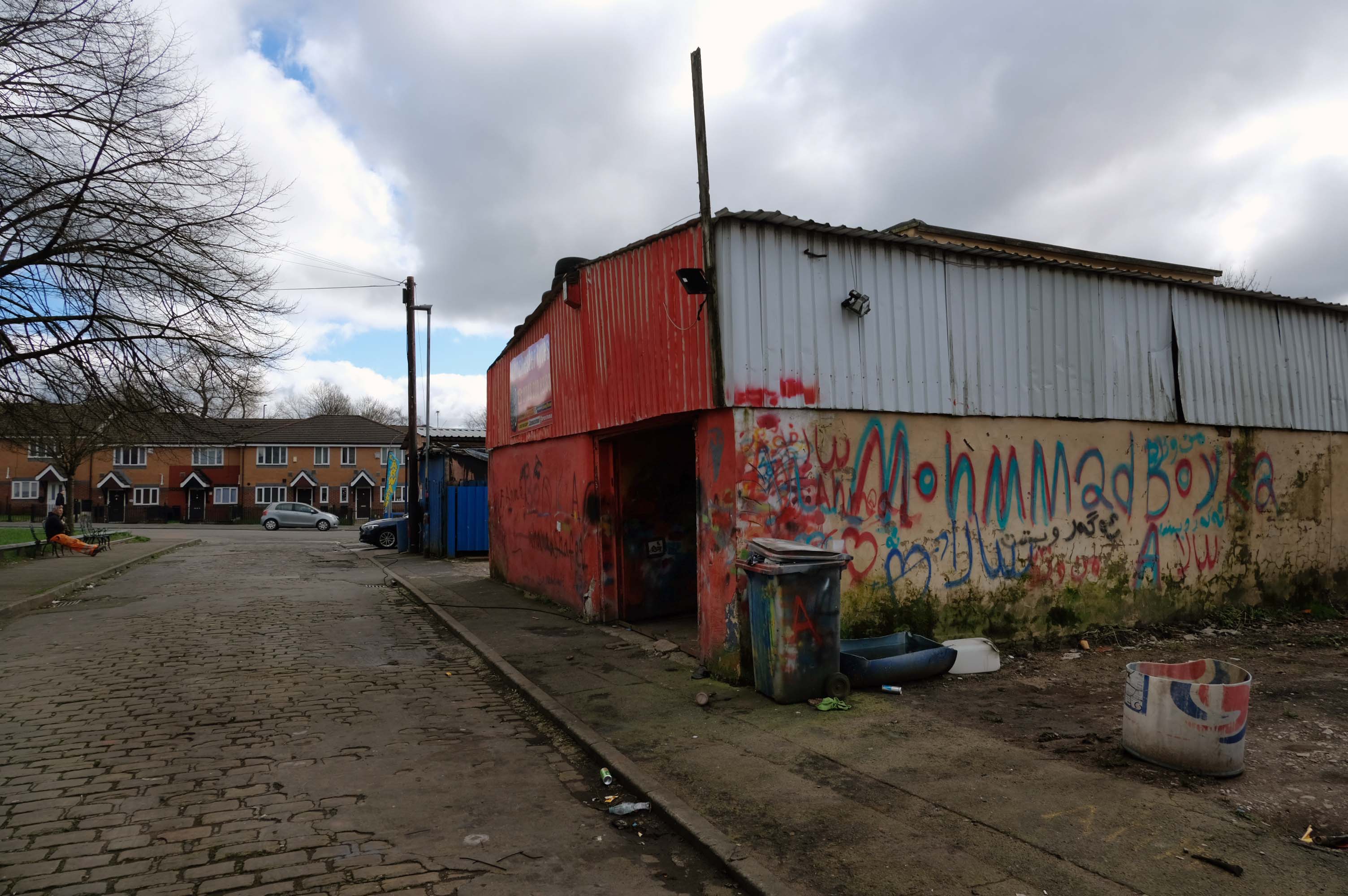
Manchester Tyres
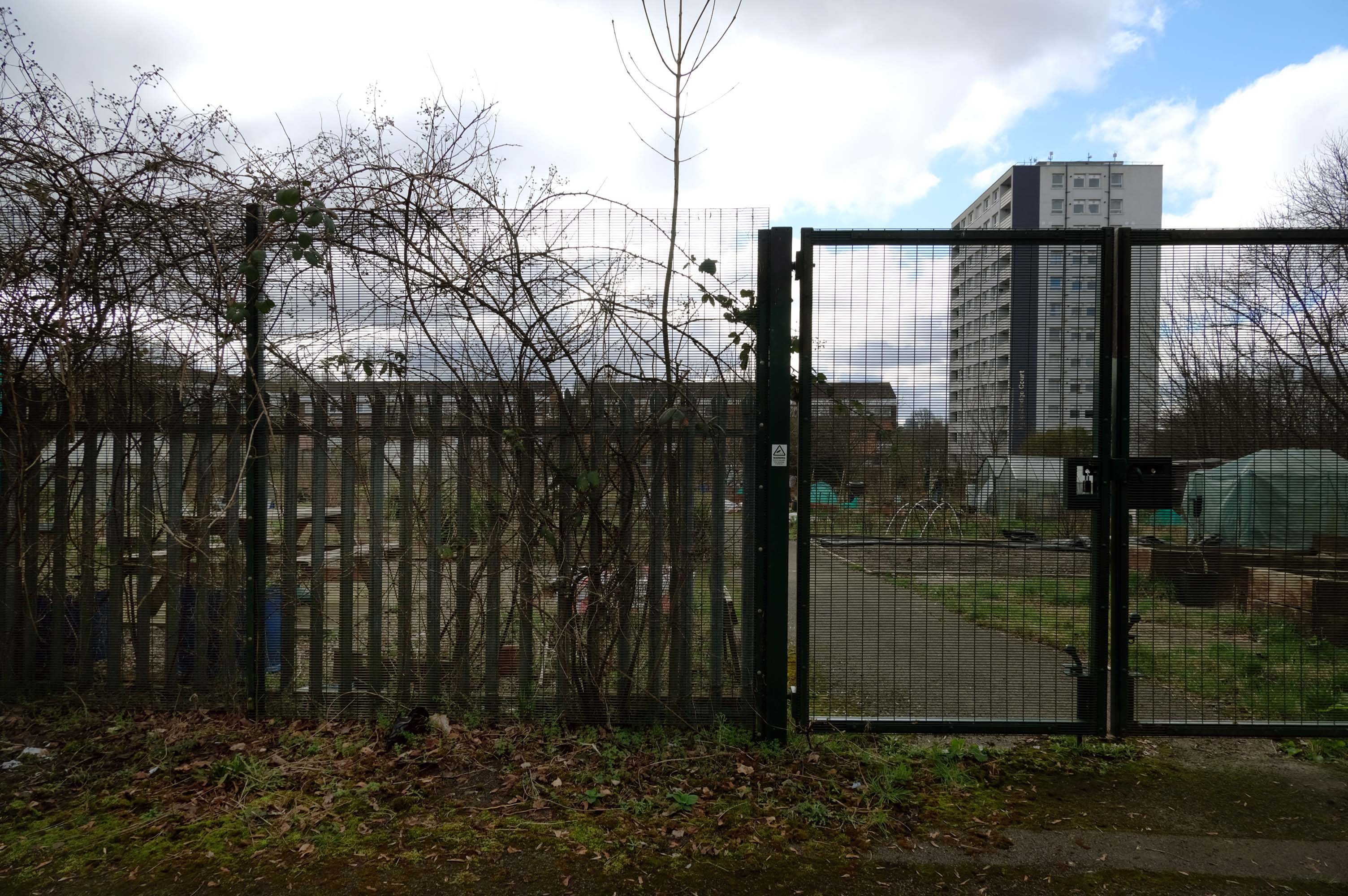
Pleasant Street Allotments
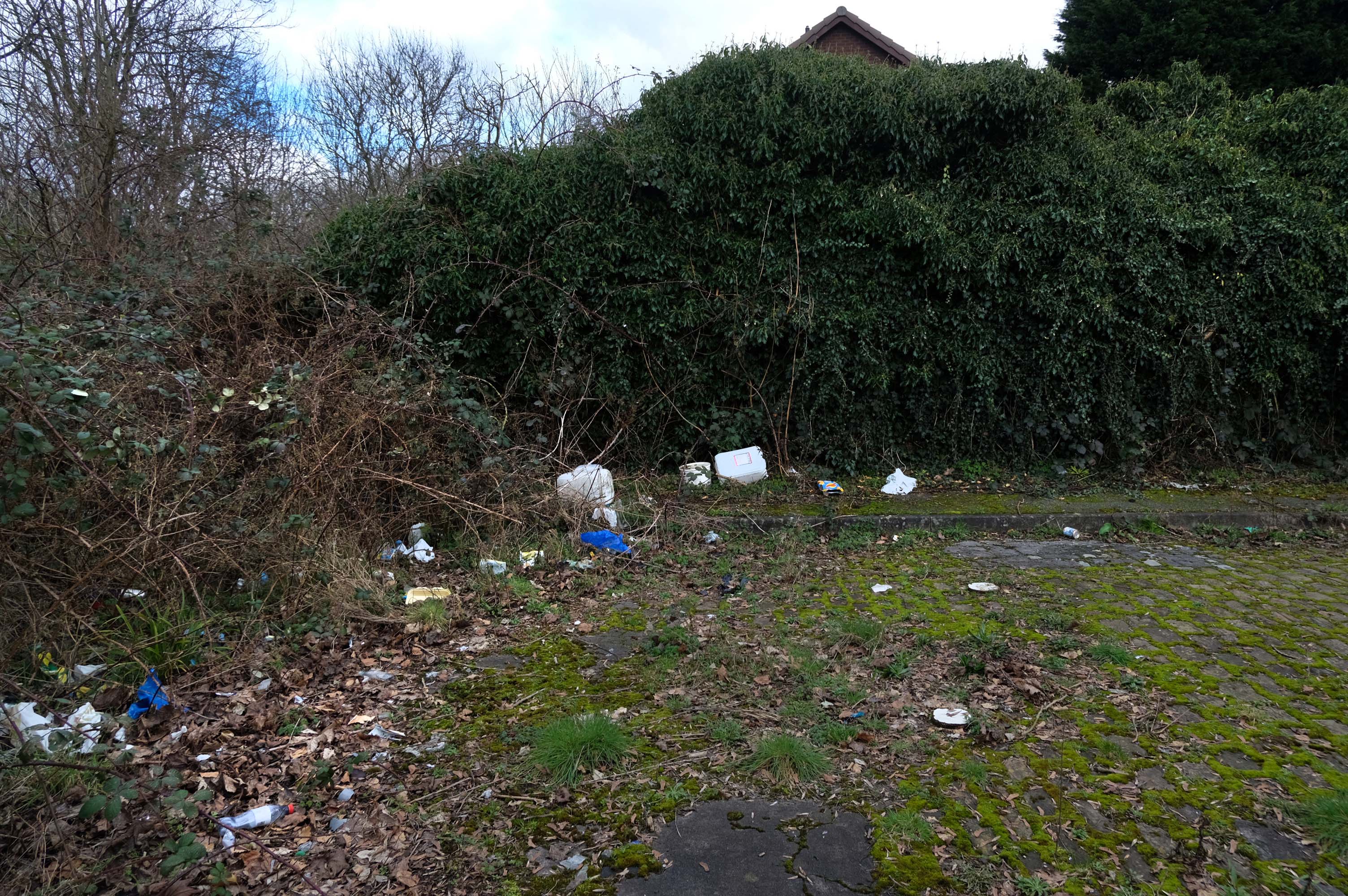
The allotments have had issues with fly tipping back in 2021.
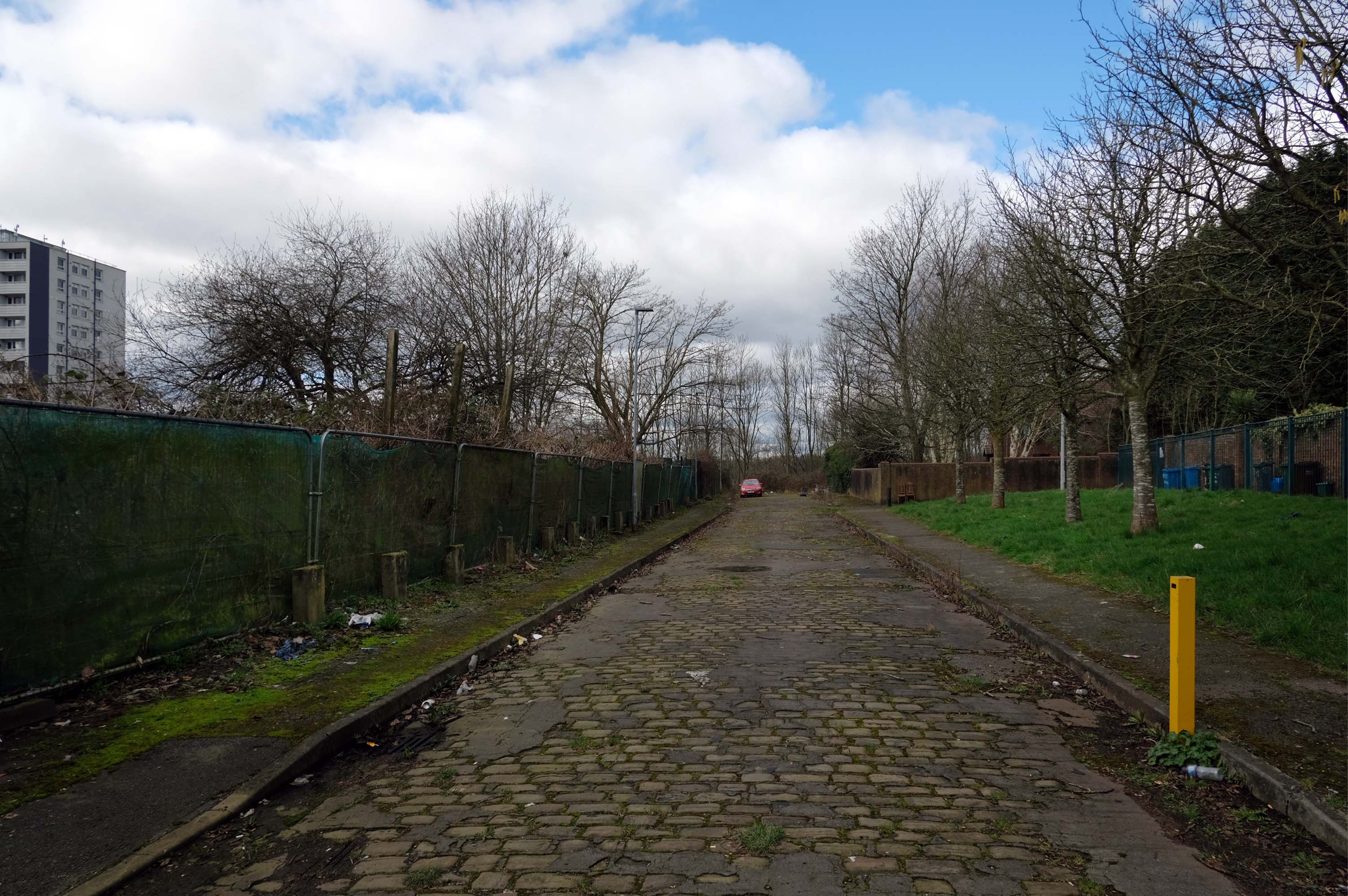
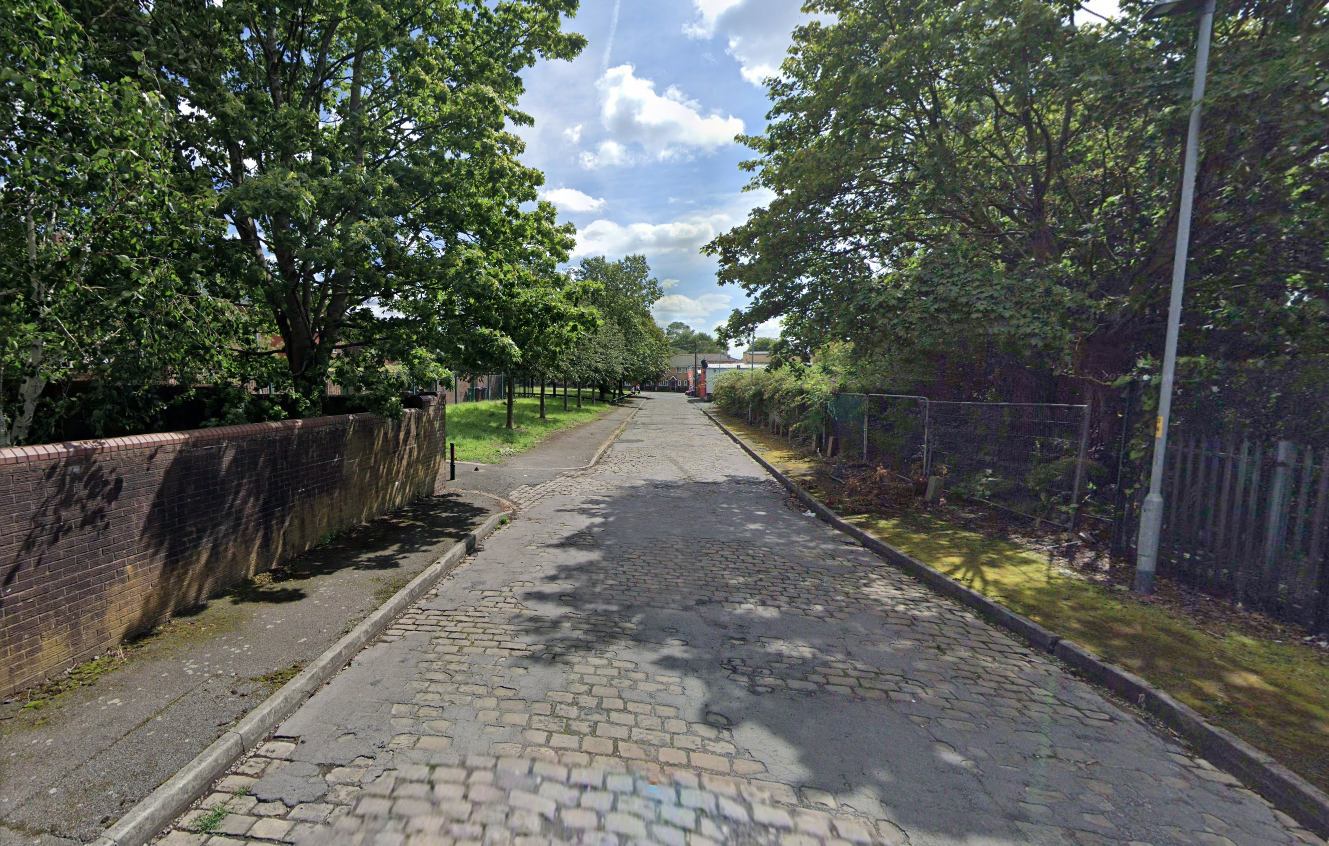
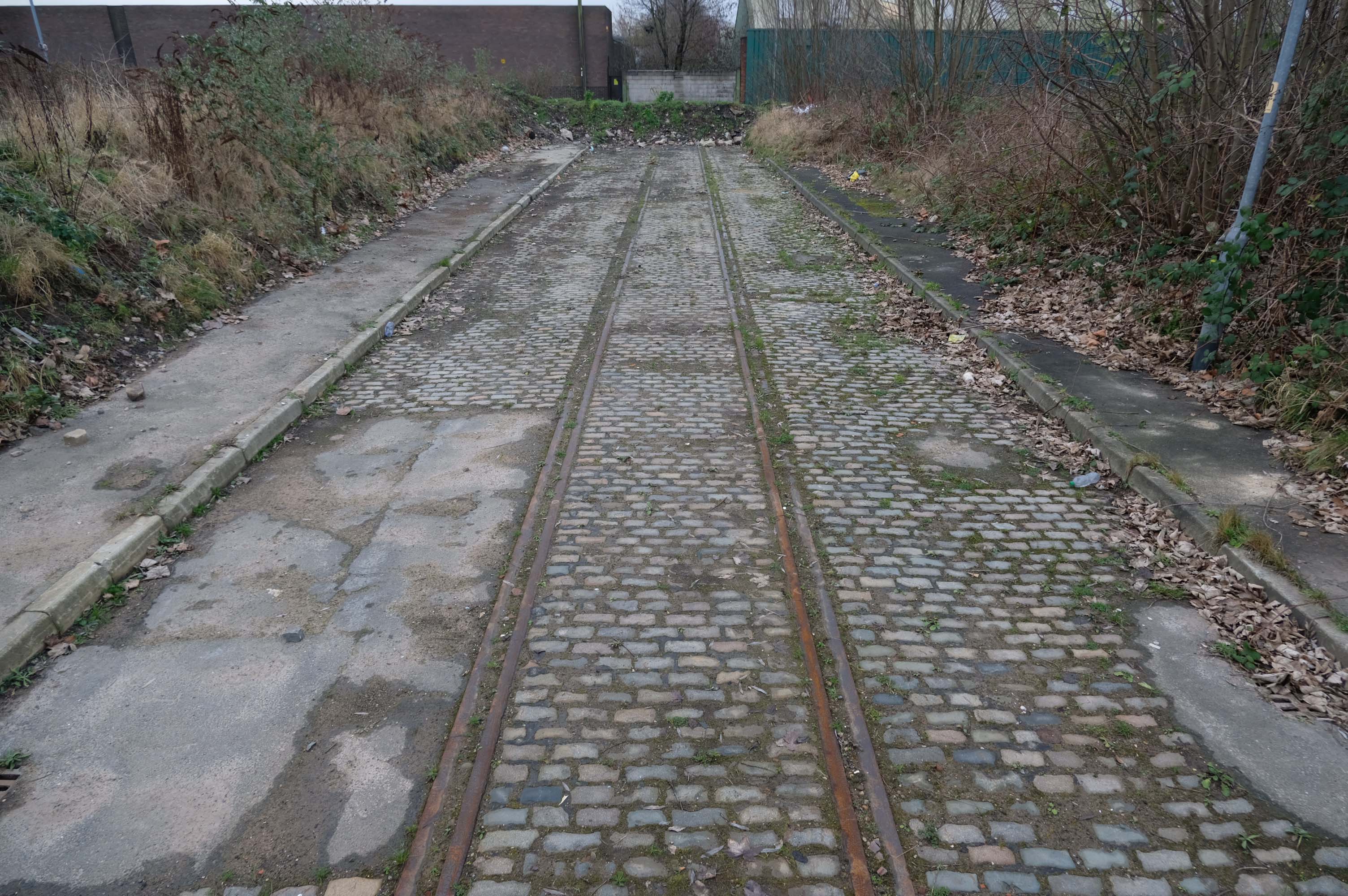
There is now a lockable barrier in place on the cobbled cul-de-sac.
Photo – Howard Bristol
It is understood that the heaps of rubbish, including bin bags full of waste and unwanted wood and cardboard, have been growing in recent weeks.
Howard Bristol, the Secretary of the Pleasant Street allotments committee, said the situation has been ongoing for some time but has worsened since the removal of nearby CCTV cameras.
He told the Evening News that the road has been – piling high with rubbish, and that the area also had issues with the woodland behind the allotments being used for drug dealing during summer.
Pat Karney, councillor for Harpurhey tweeted about the flytipping on Sunday, calling it – unbelievable and disgraceful.
He added that those responsible should be – locked up in Strangeways for a long time, before adding that the council will – get it cleared.
This is Oldham Road Manchester – this also Memory Lane.
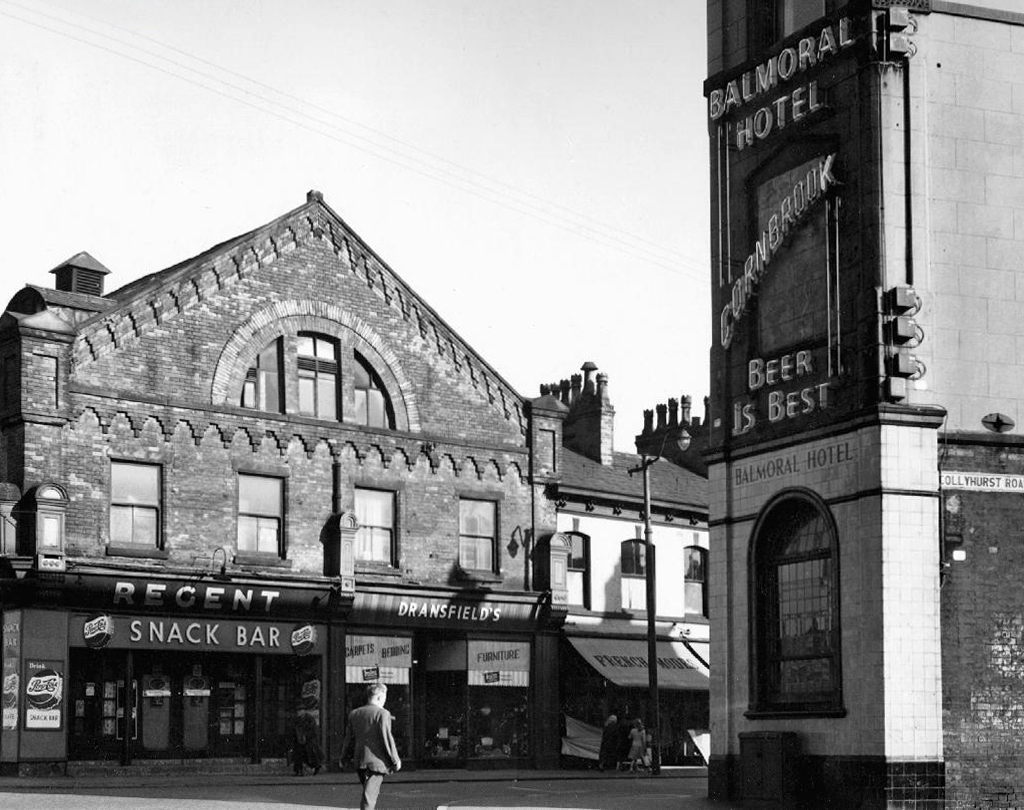
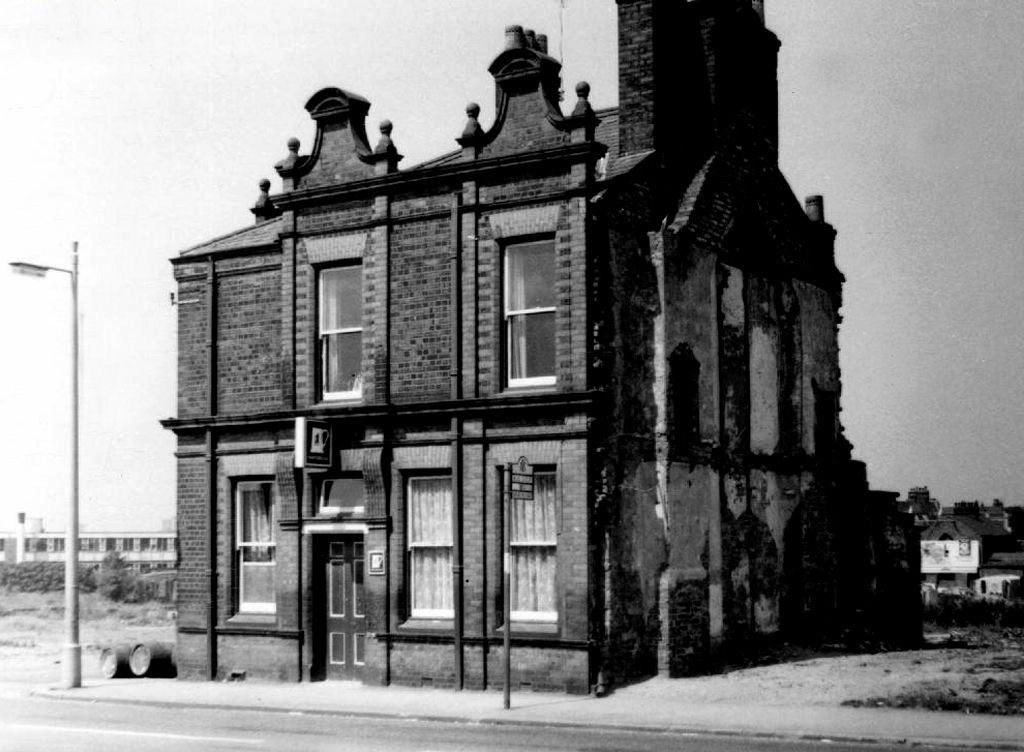
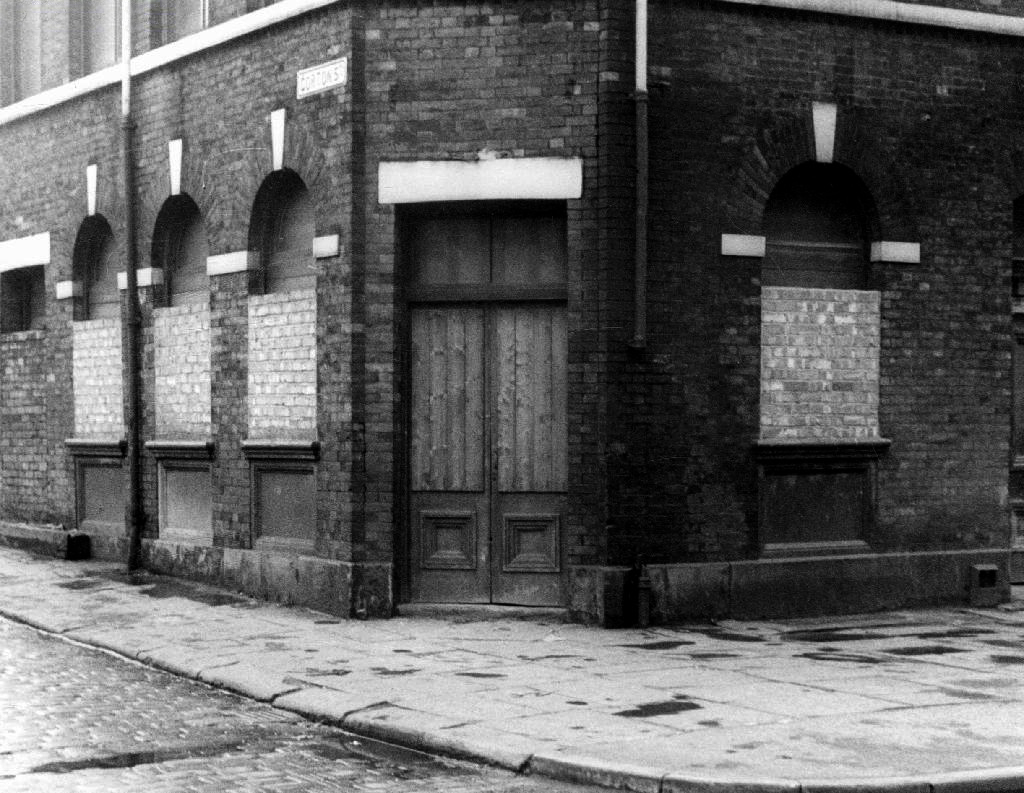
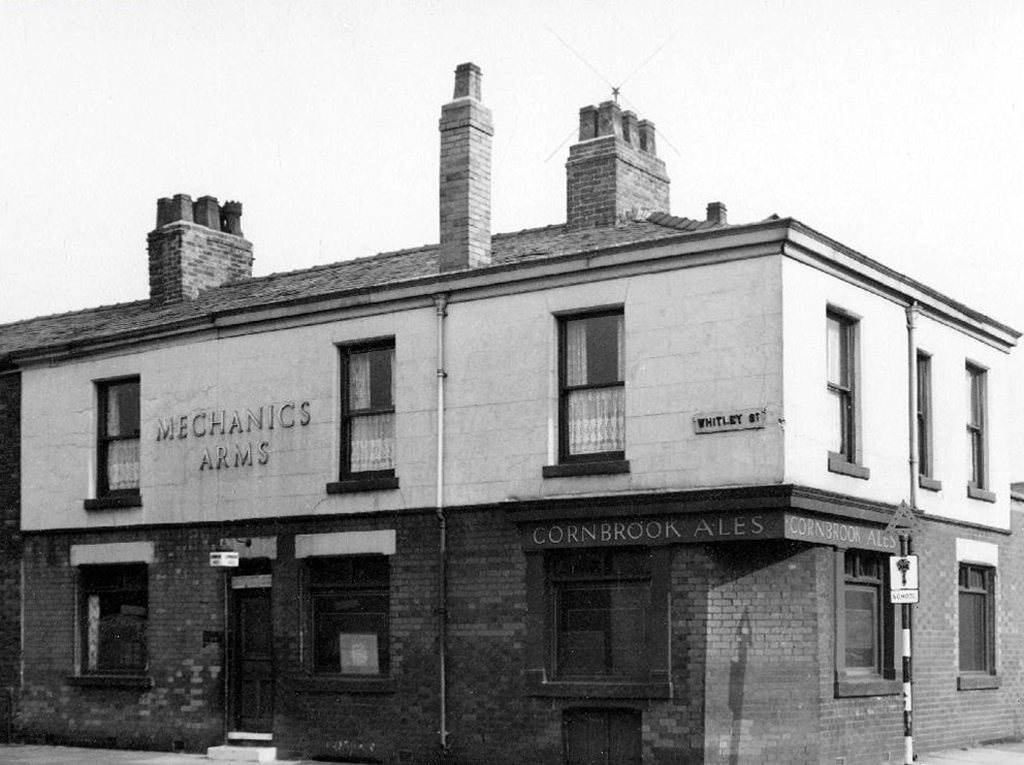
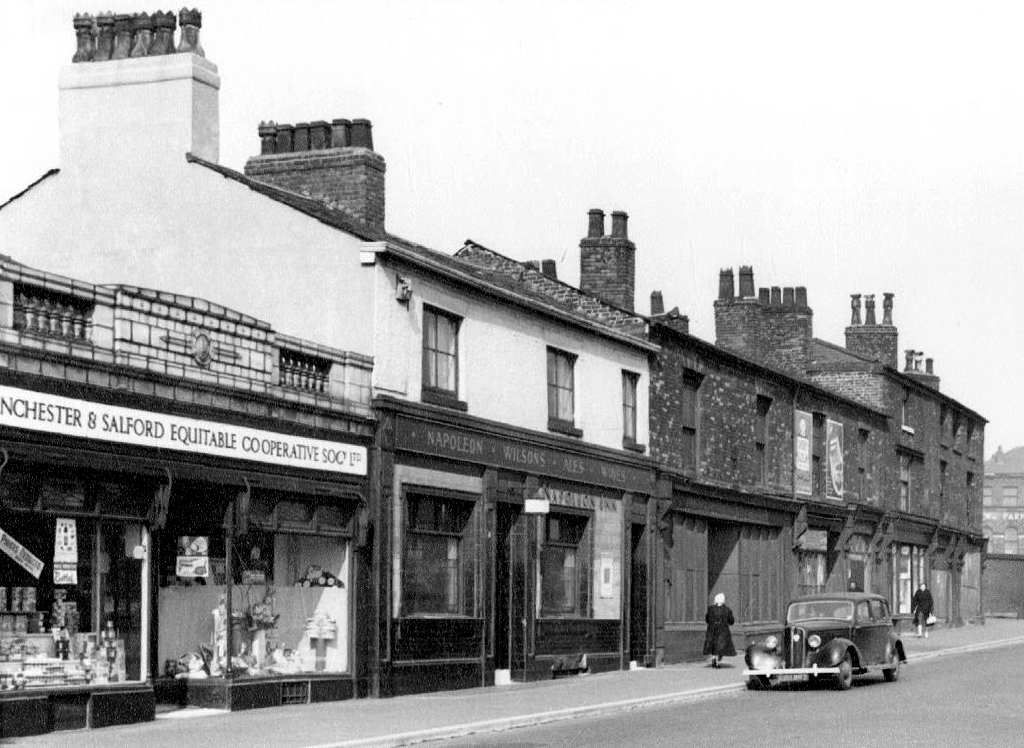
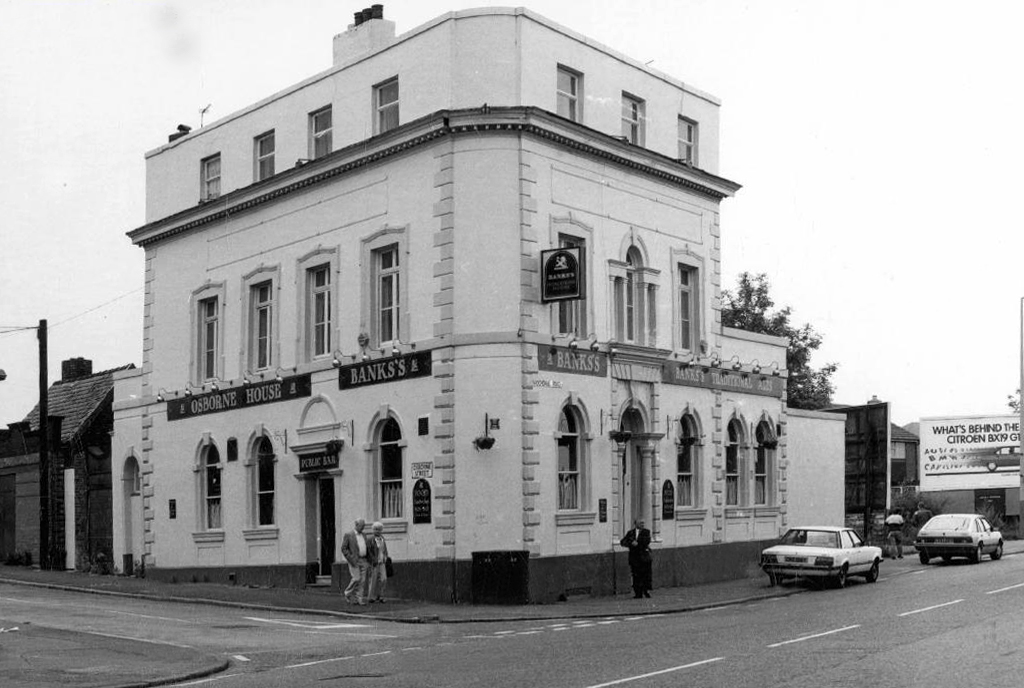
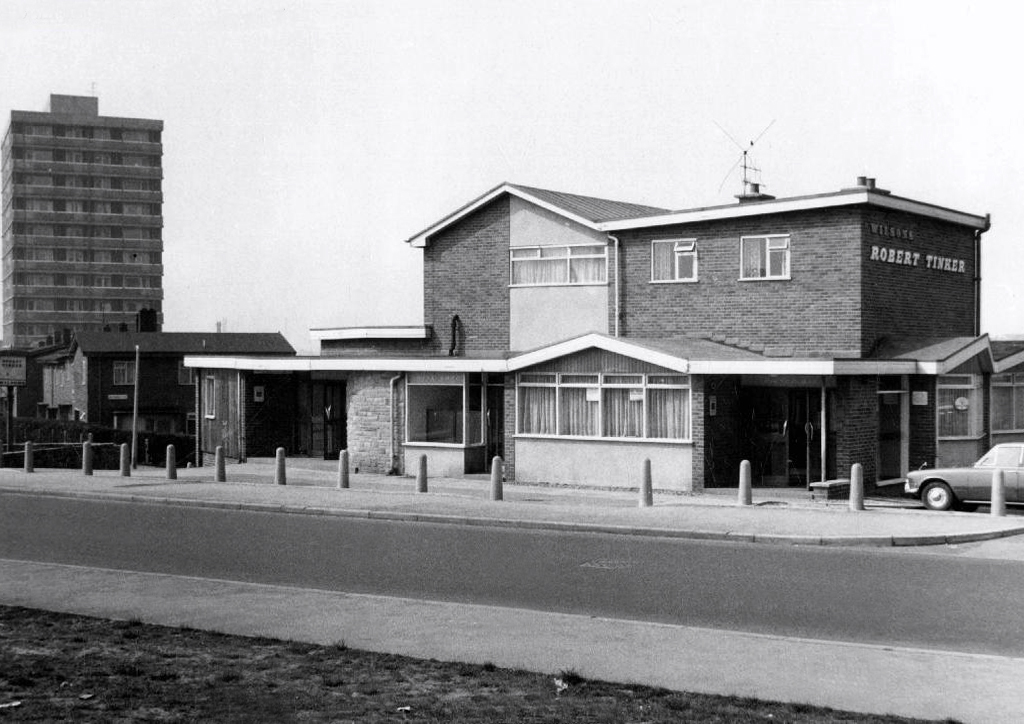
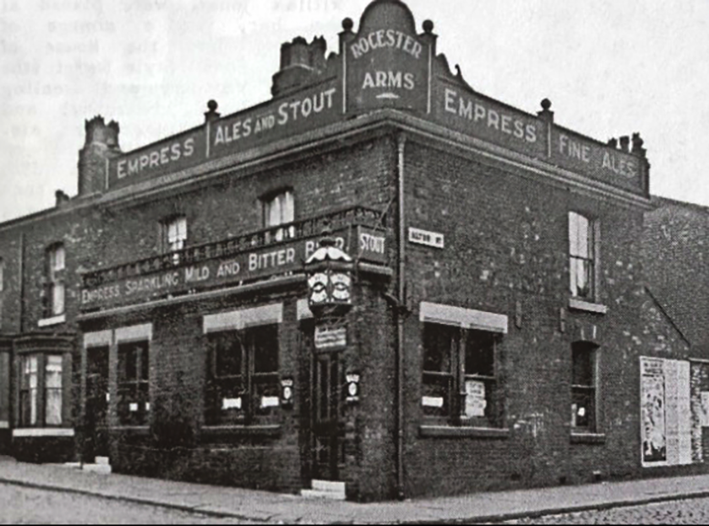
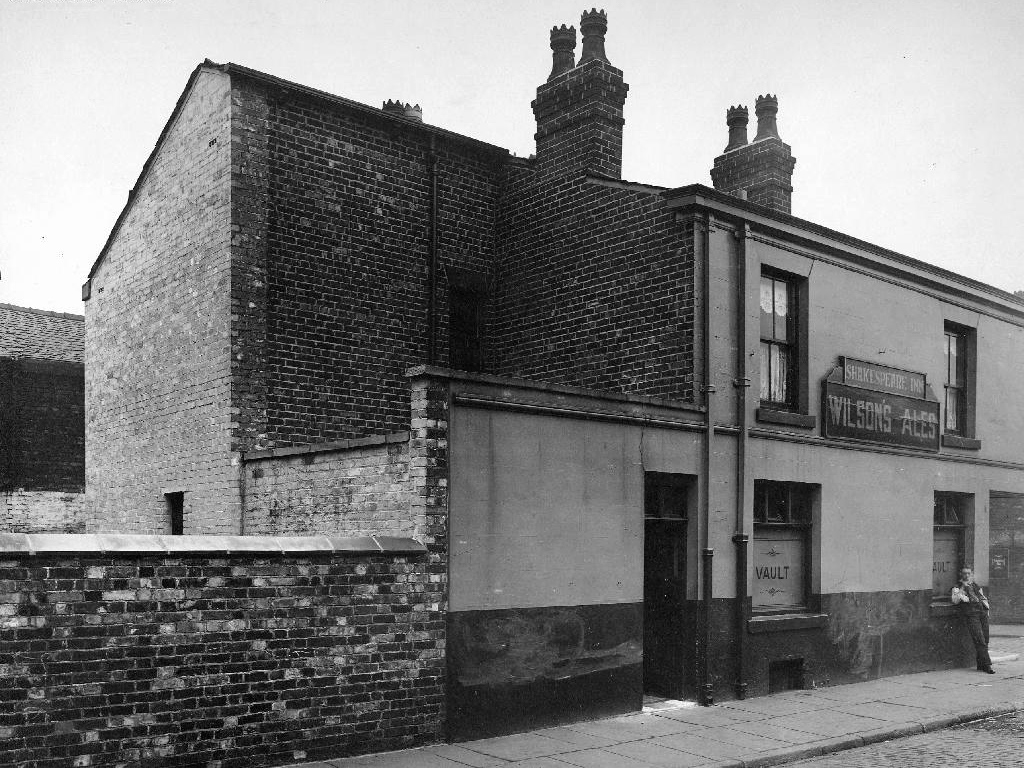
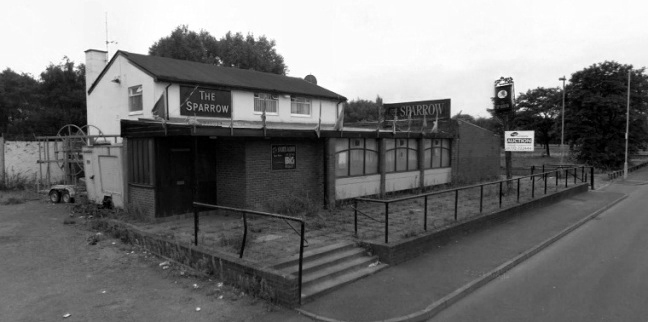
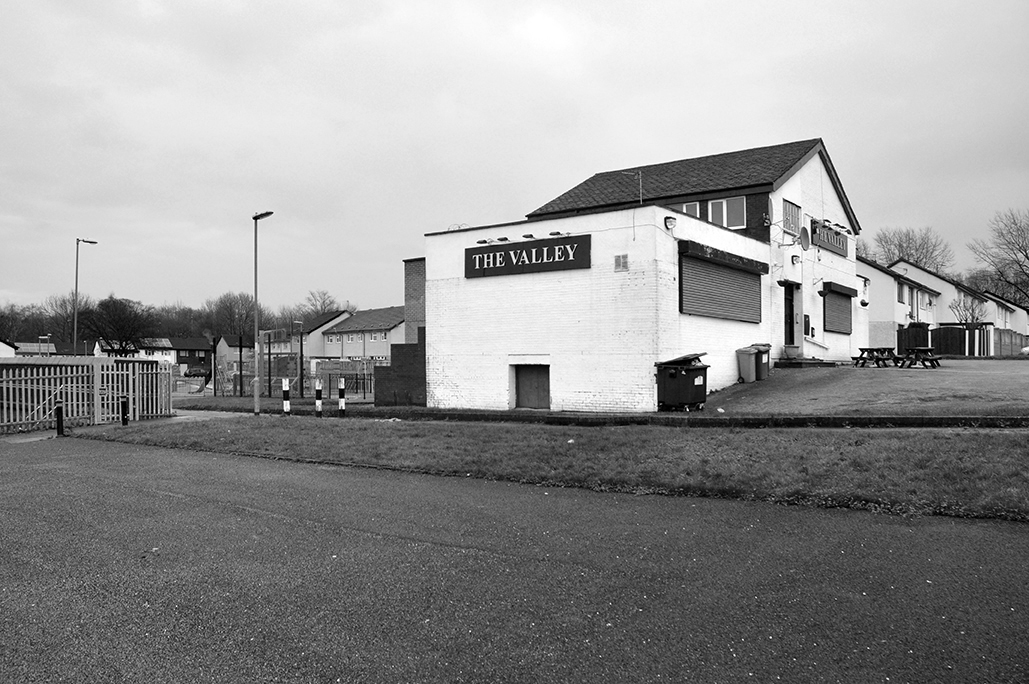
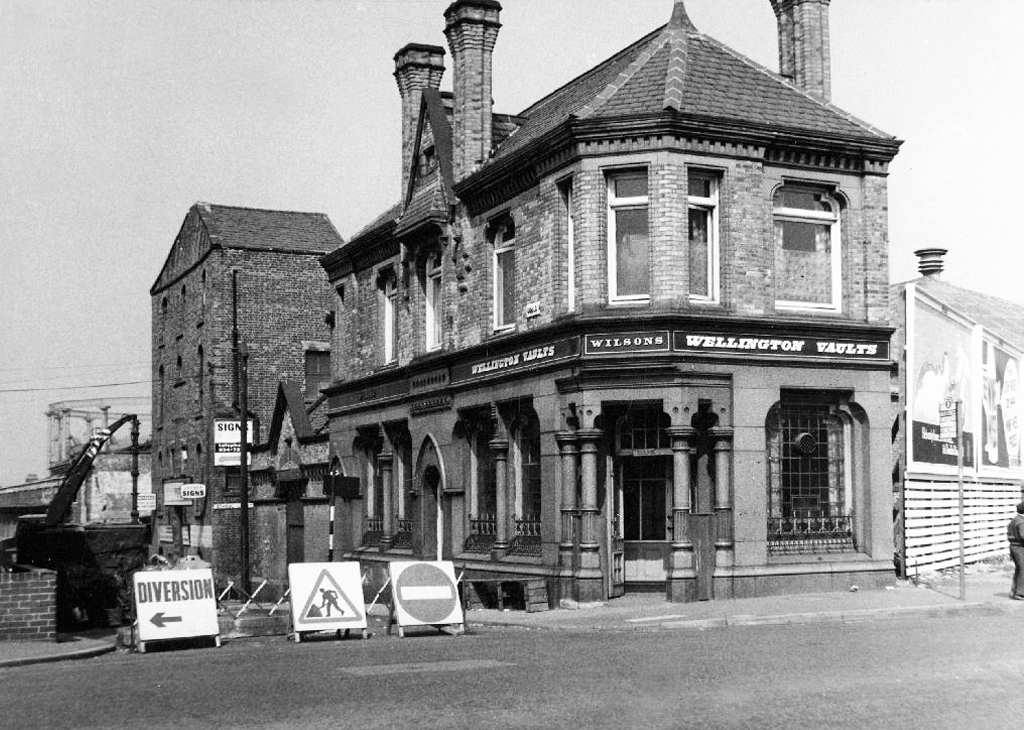
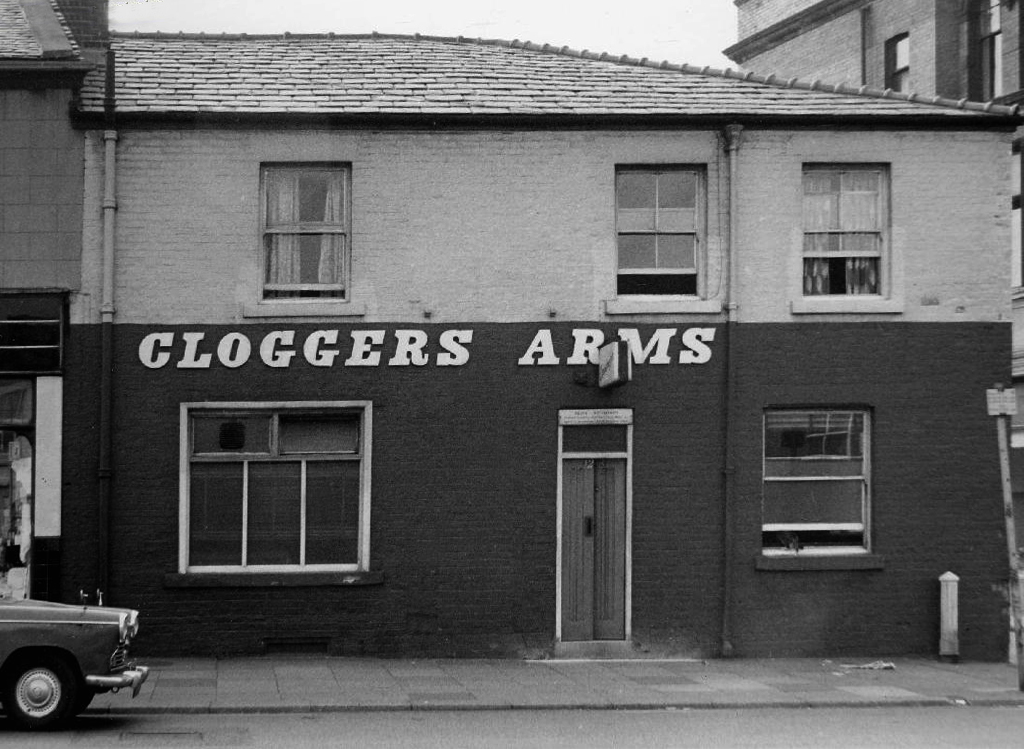
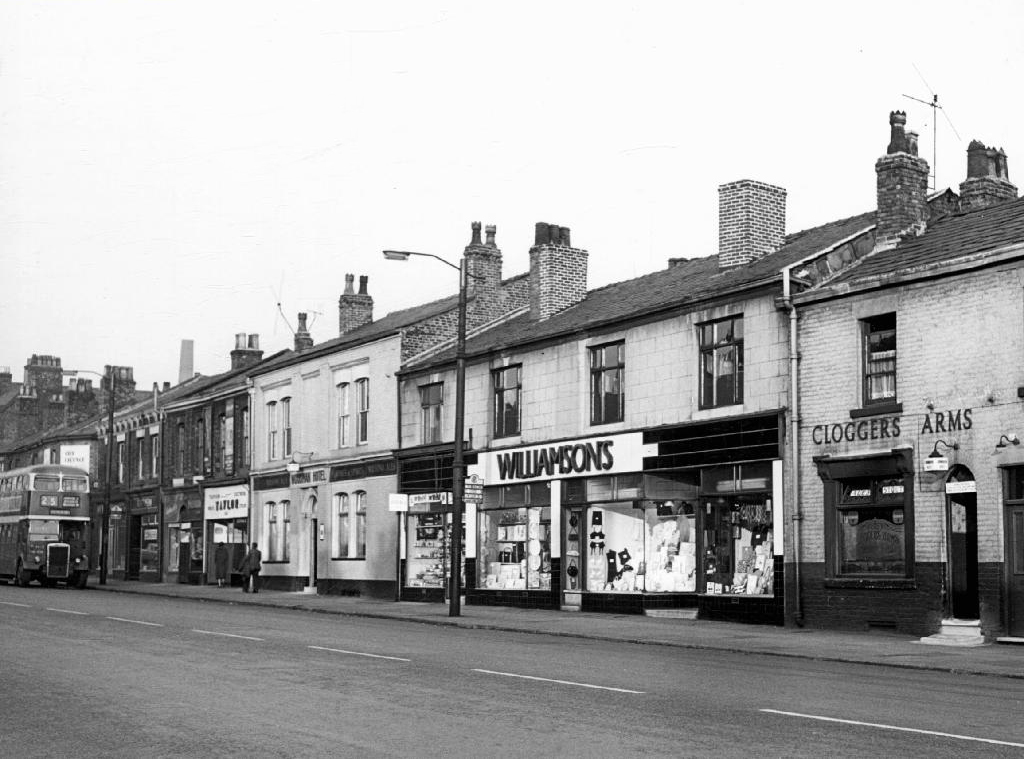
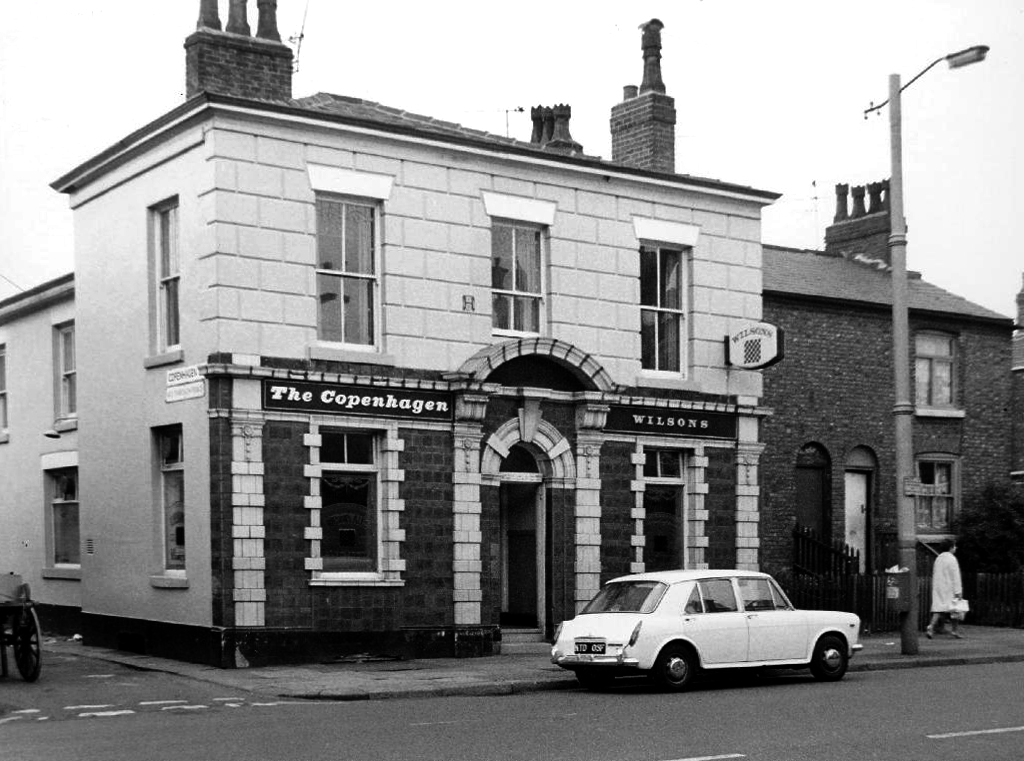
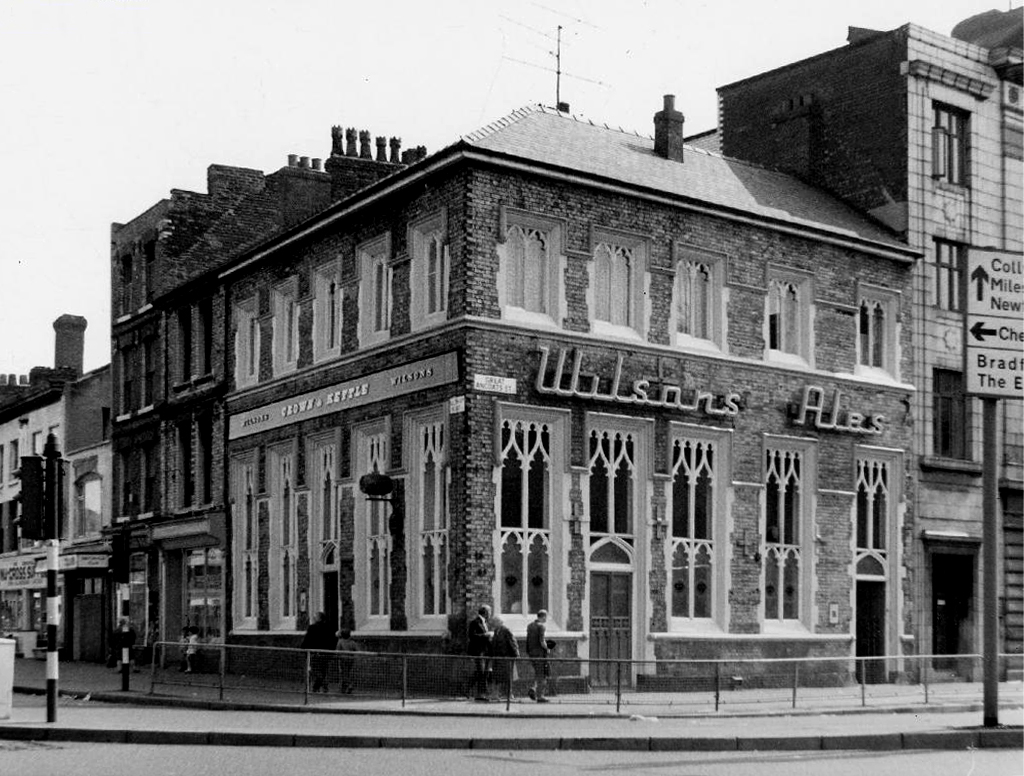
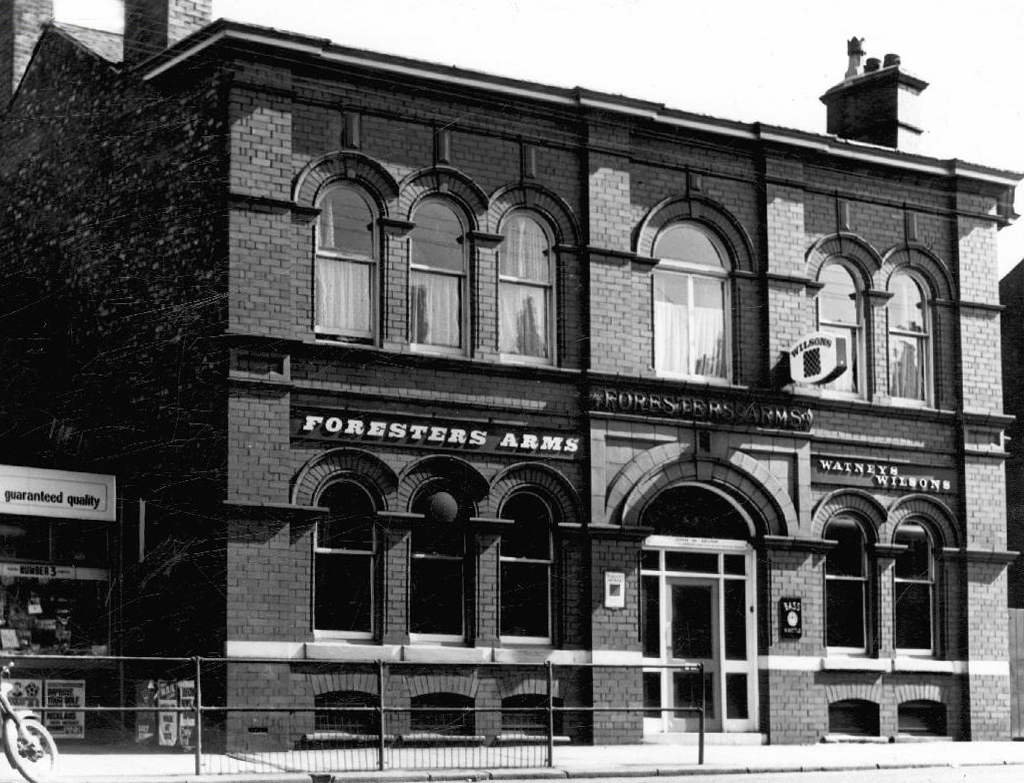
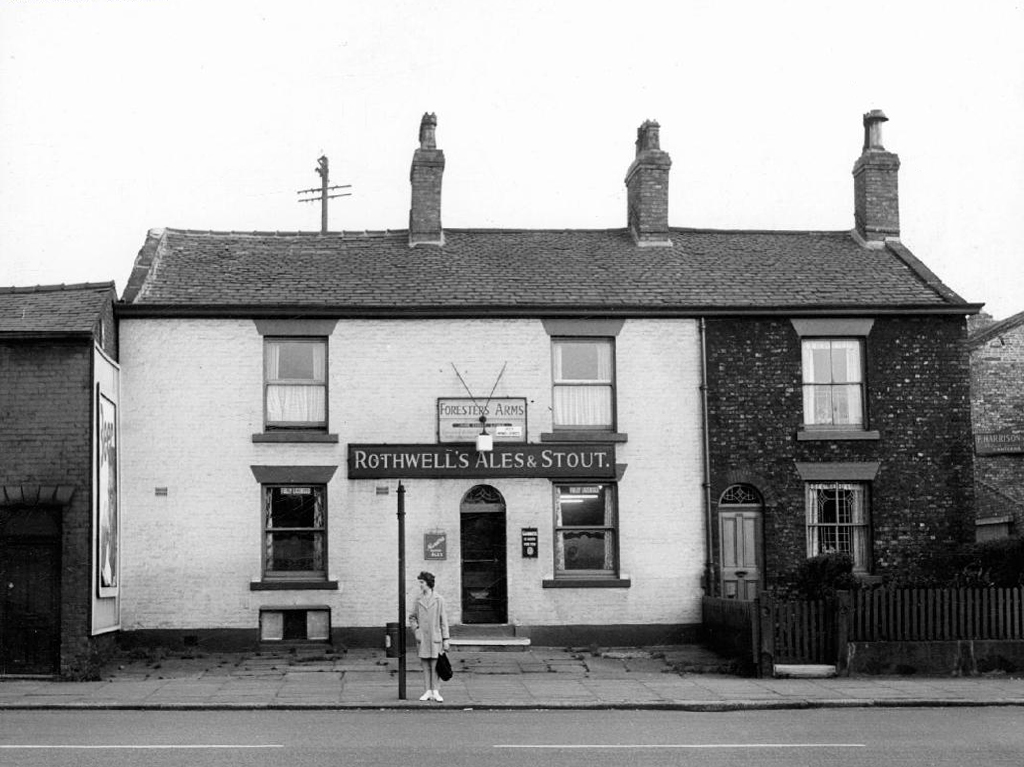
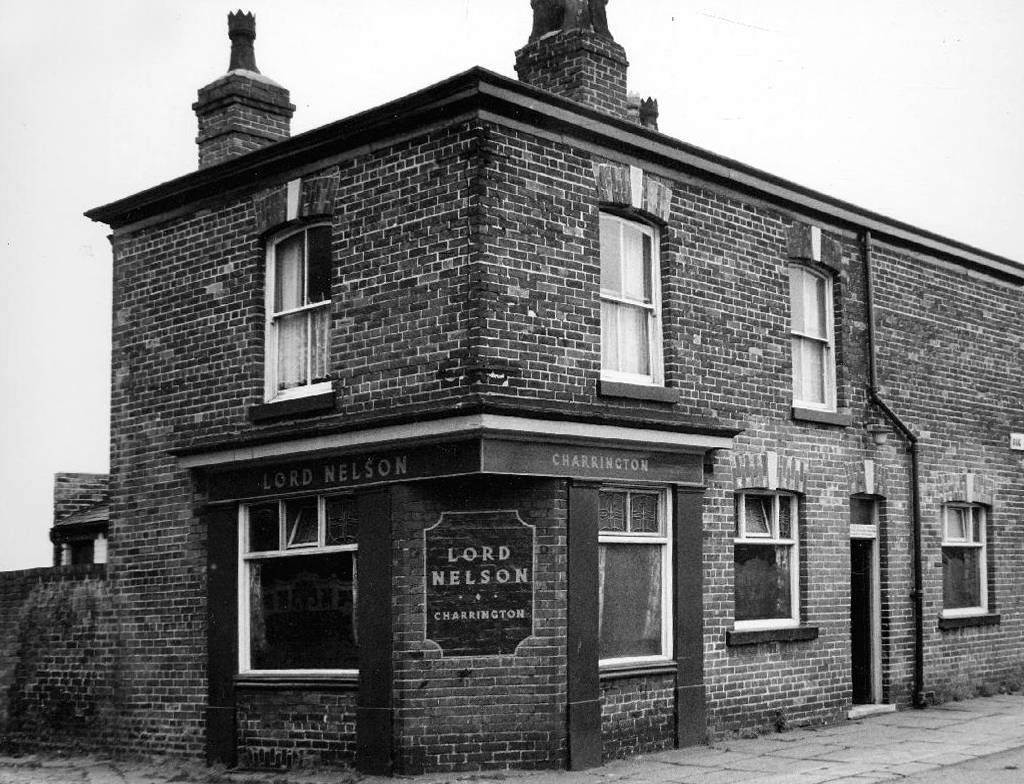
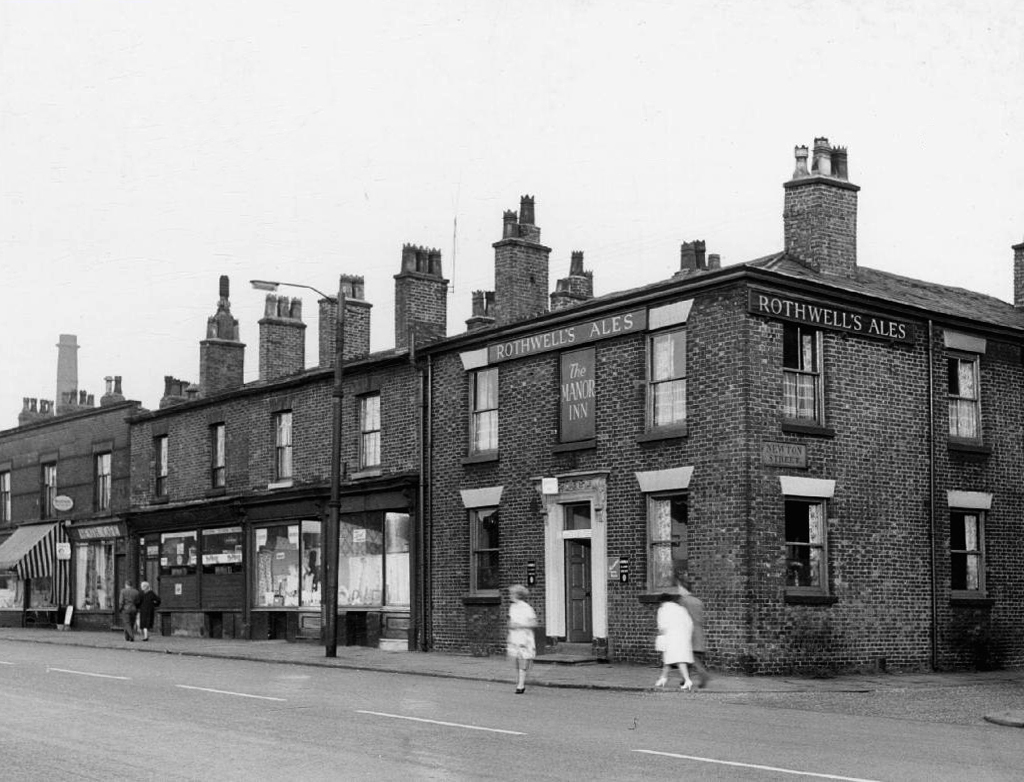
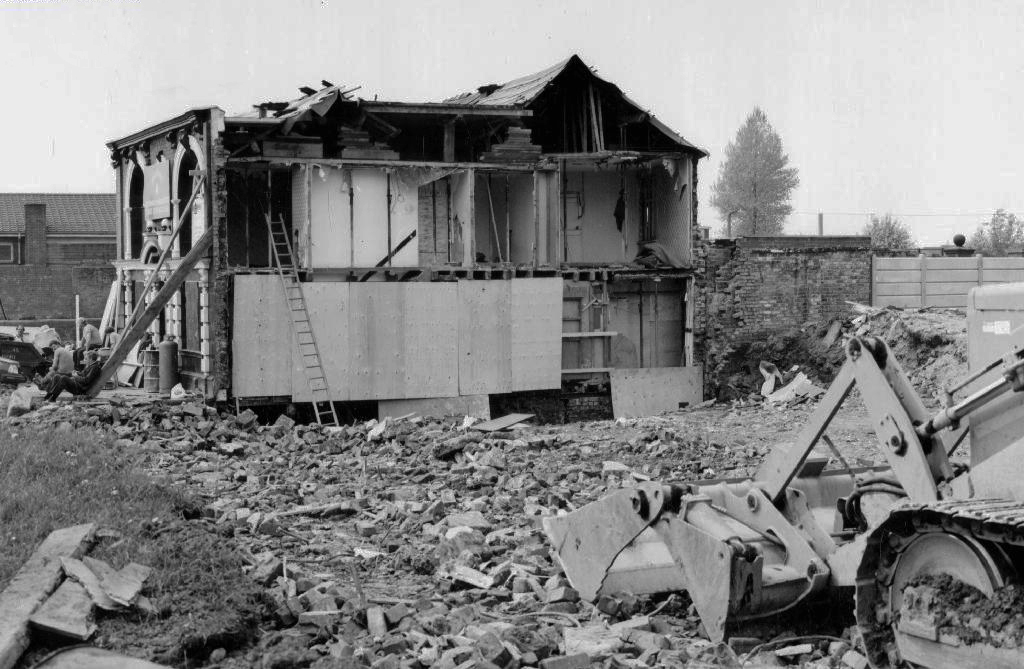
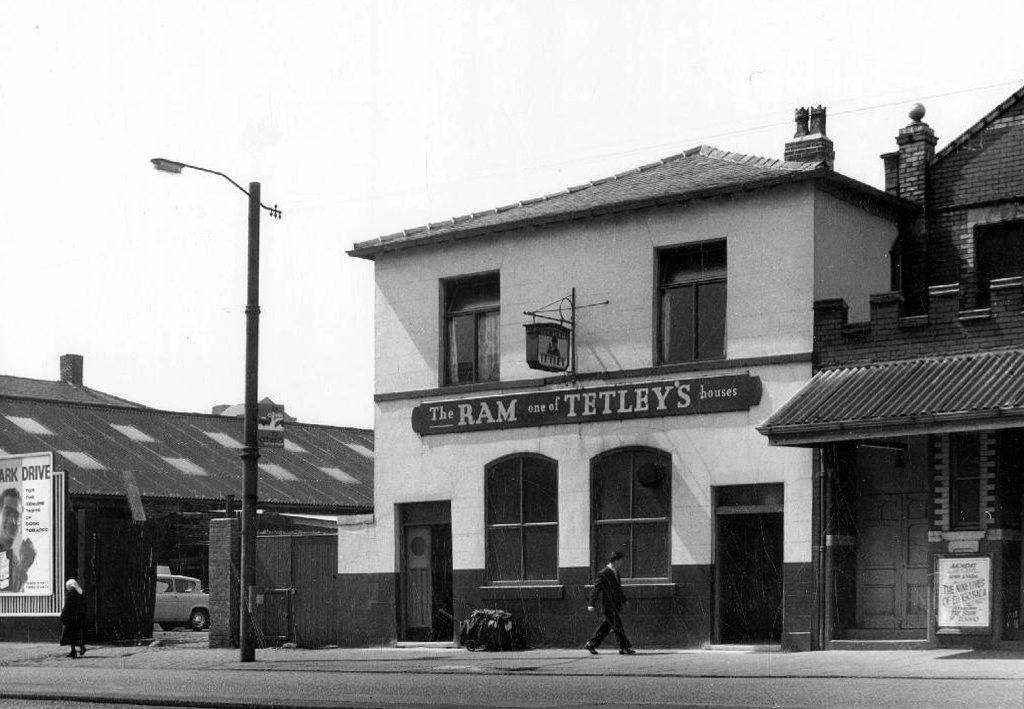
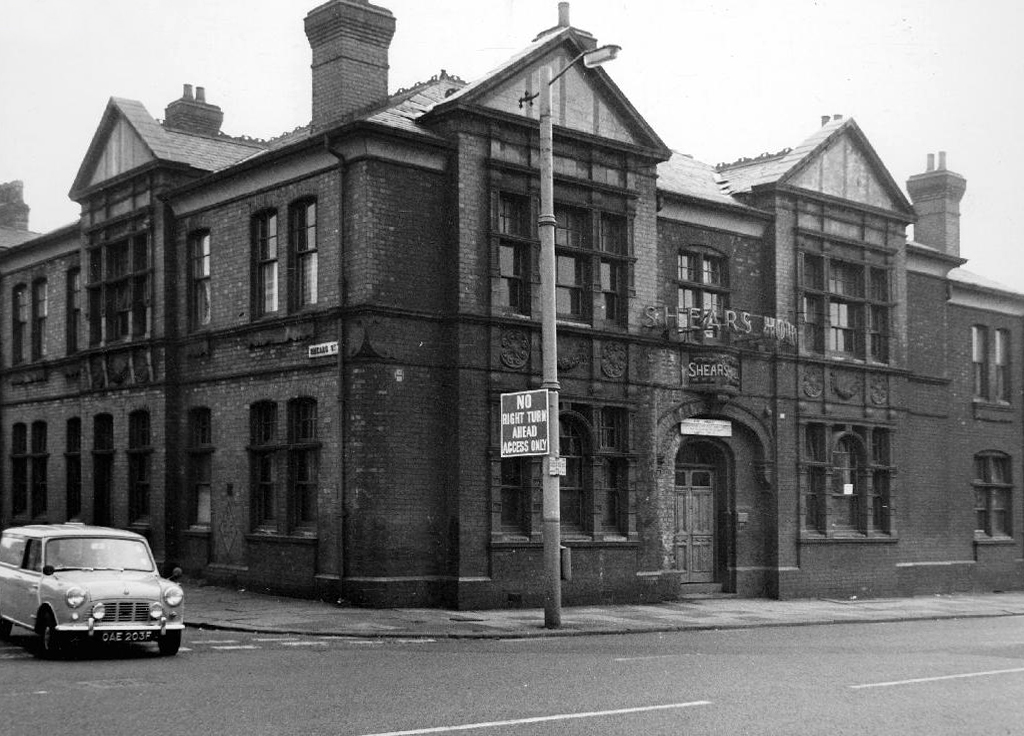
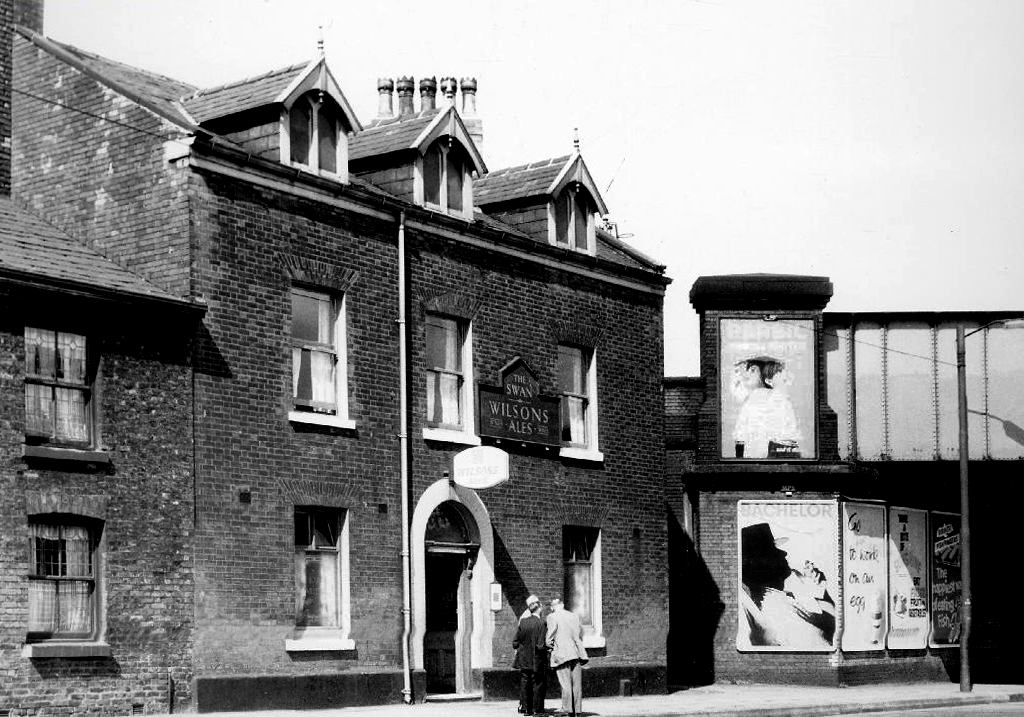
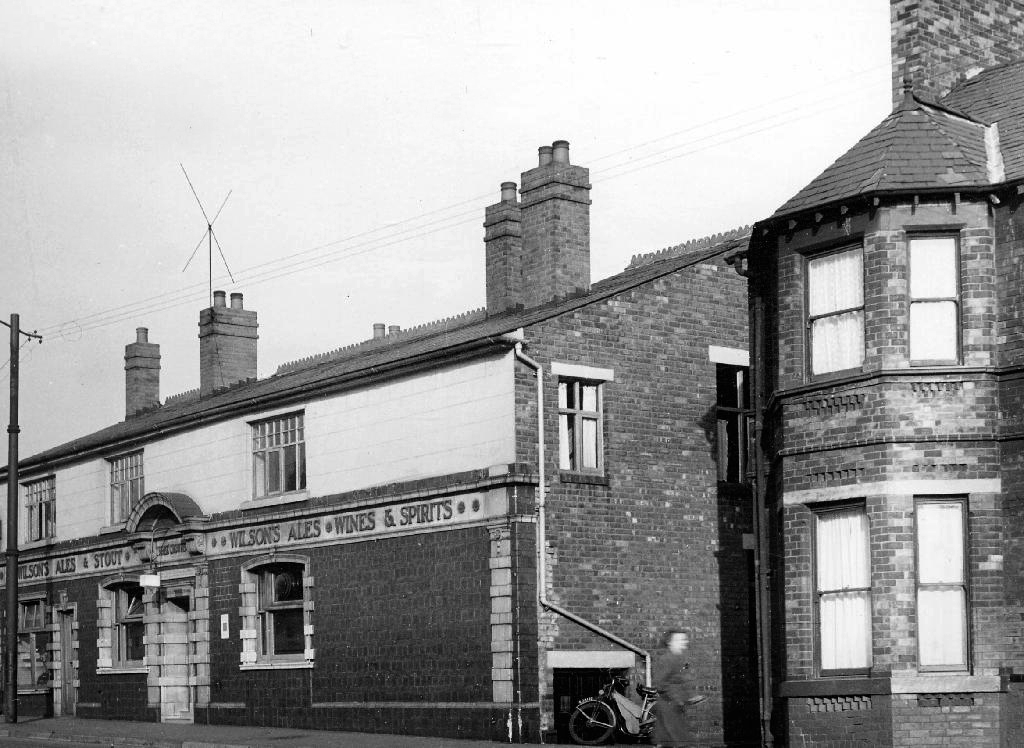
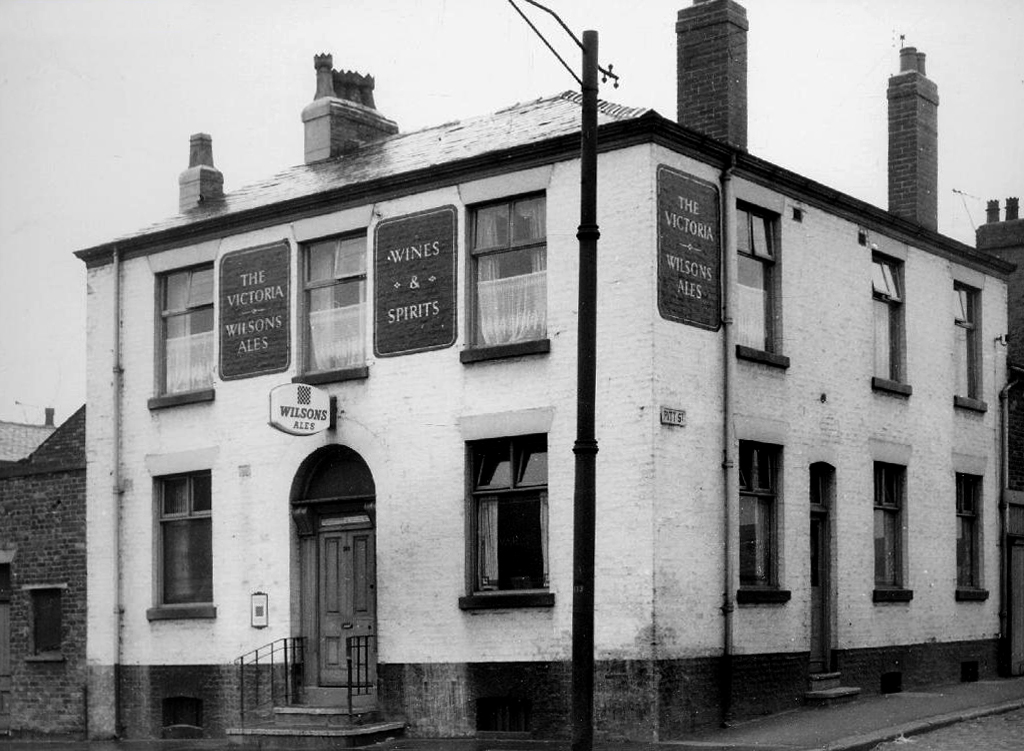
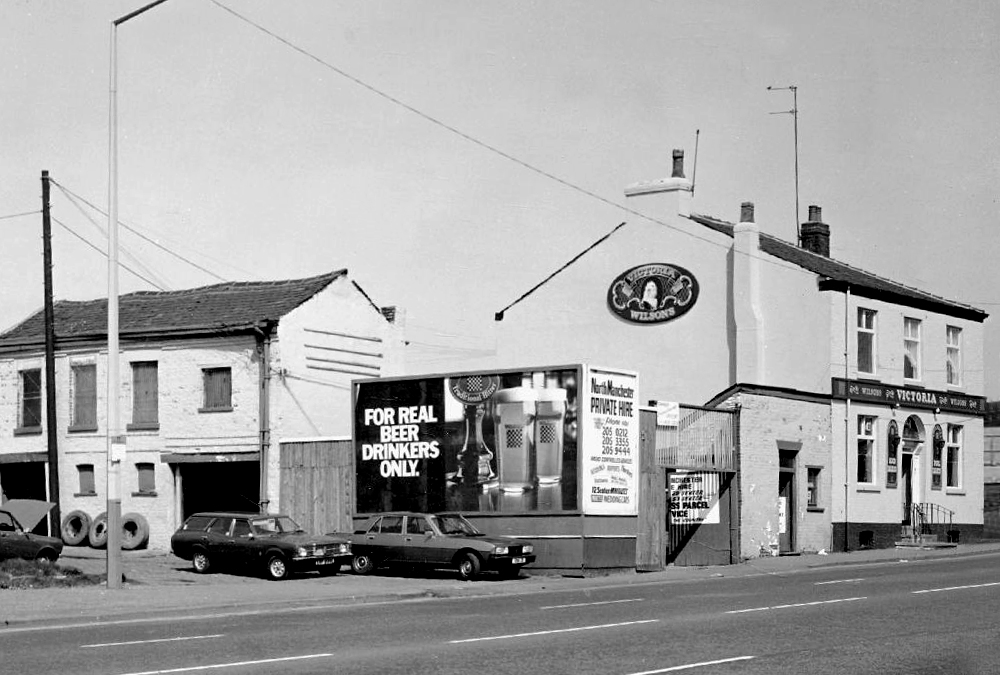
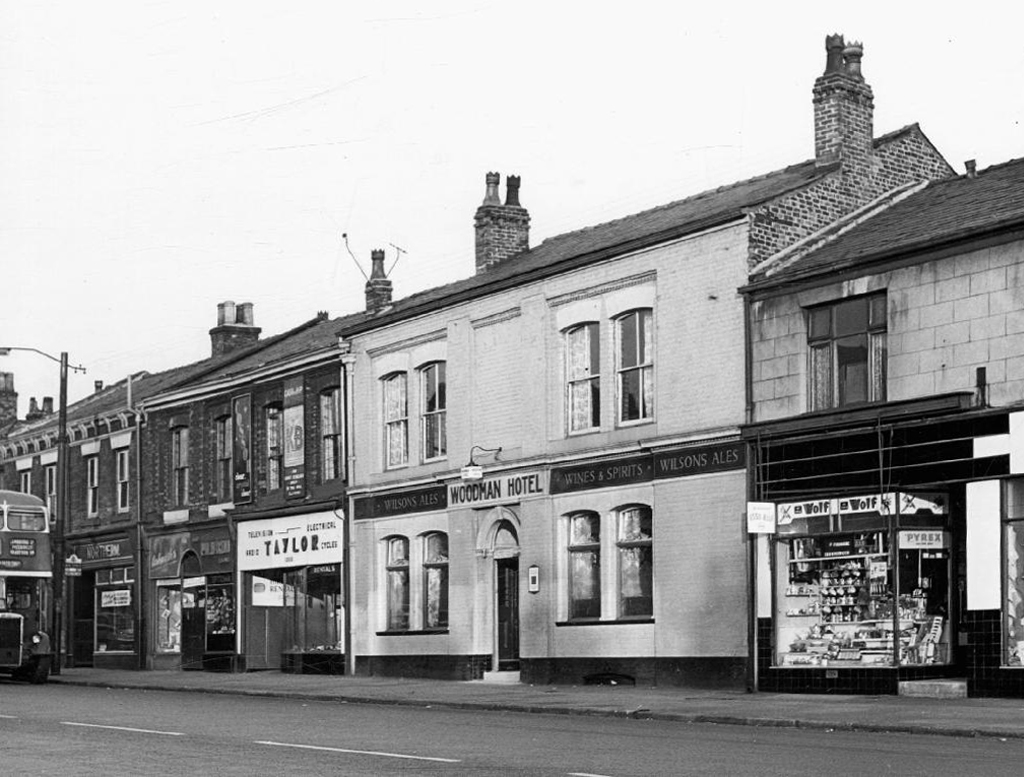
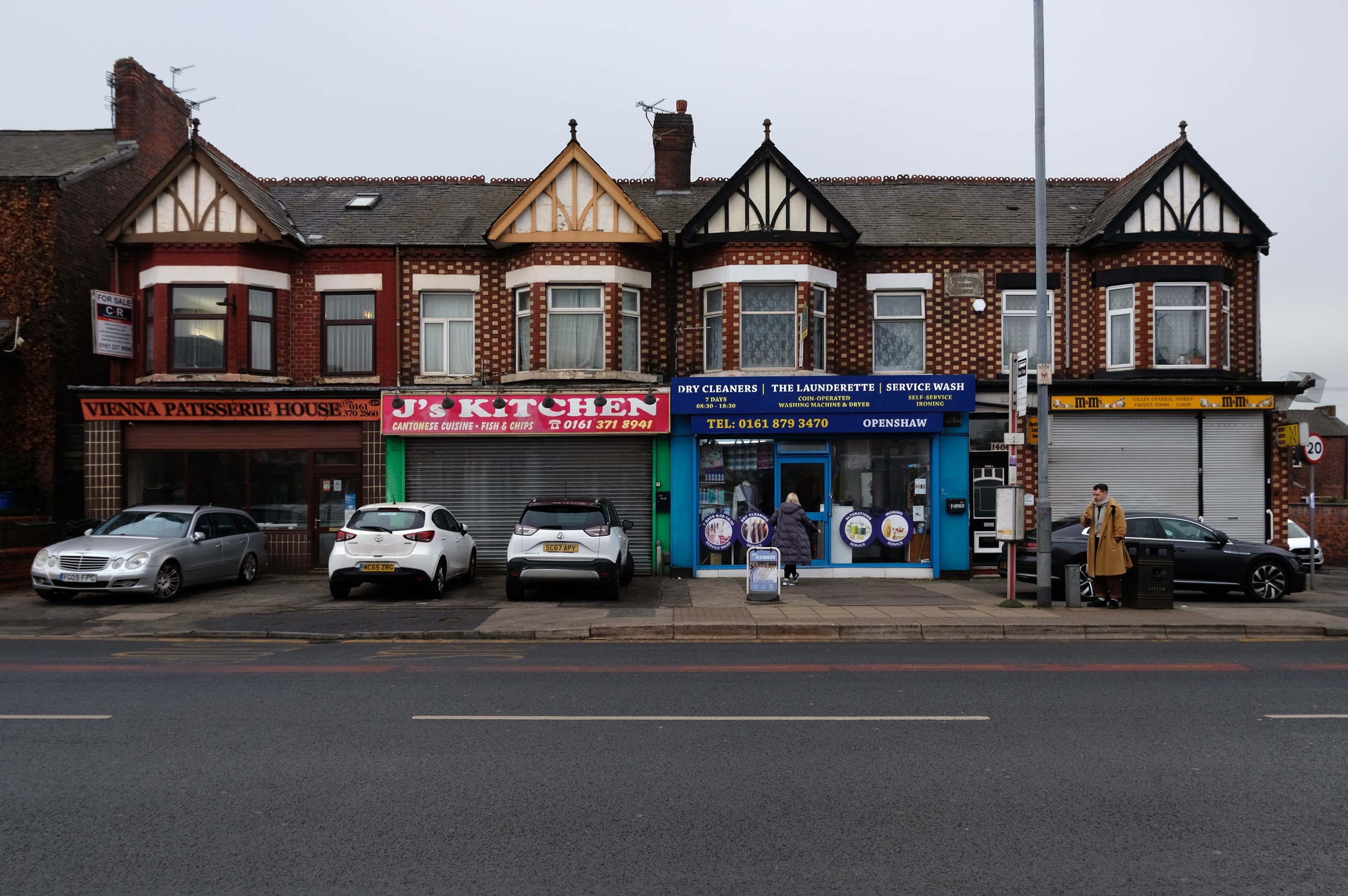
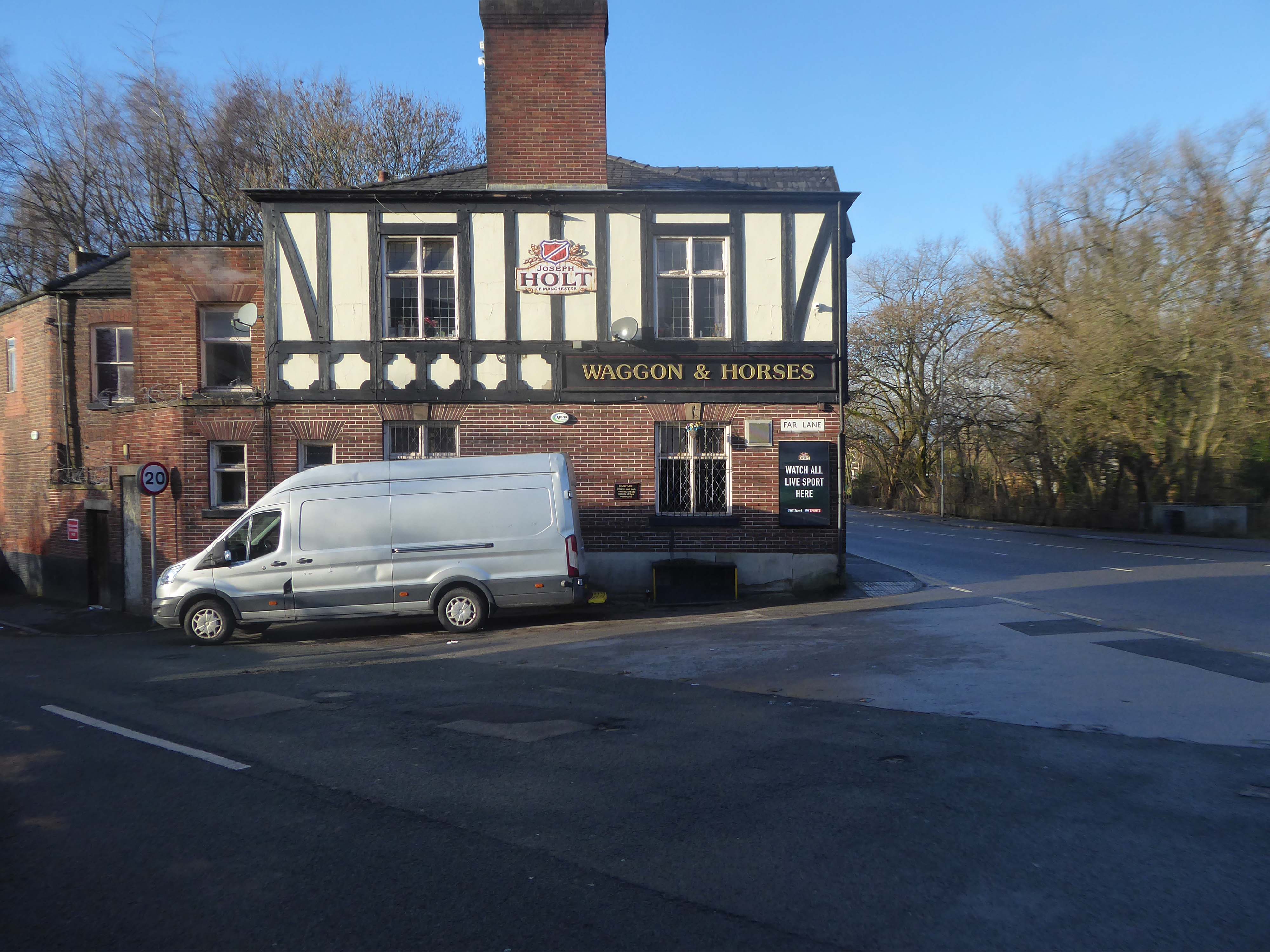
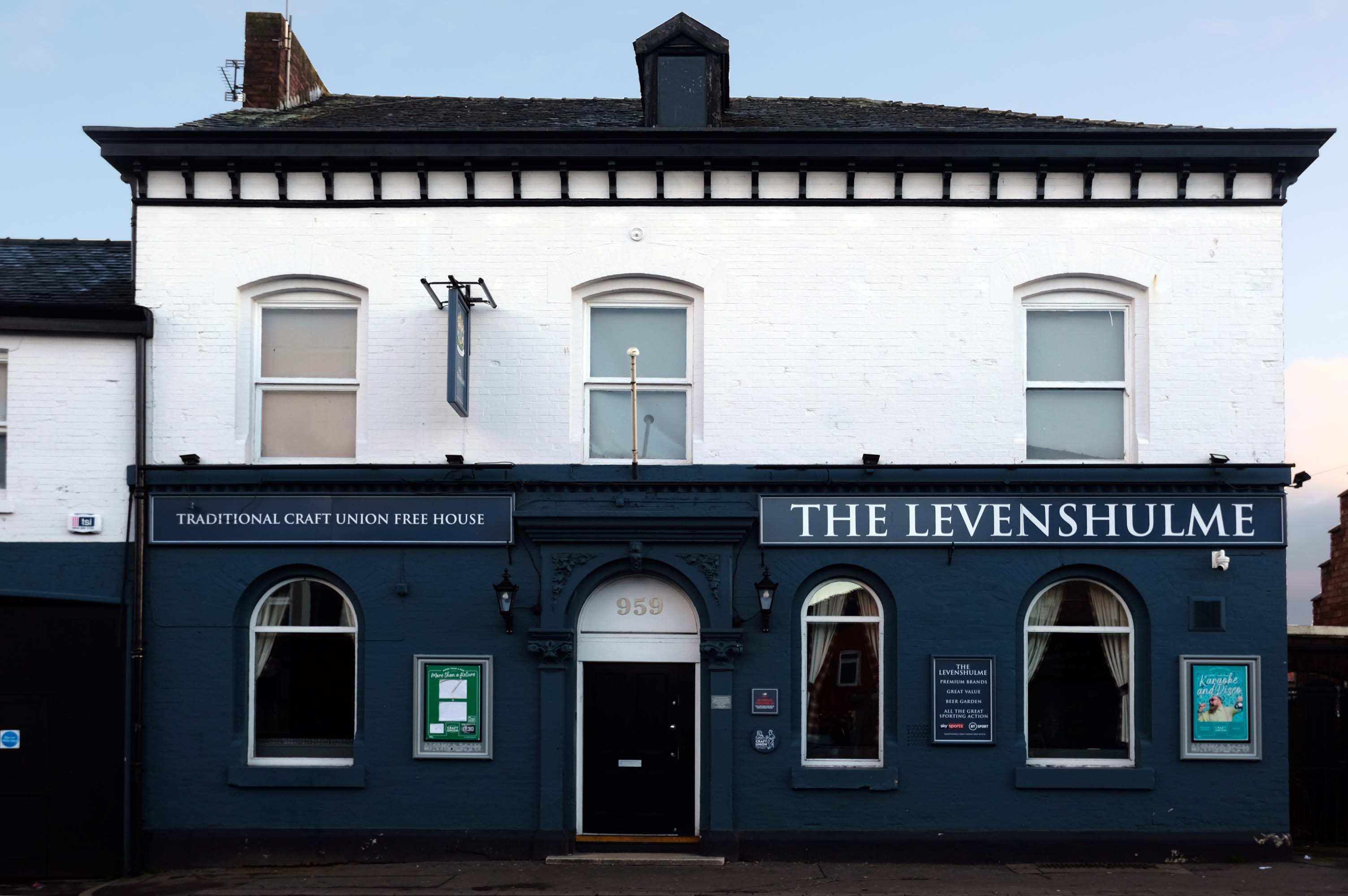
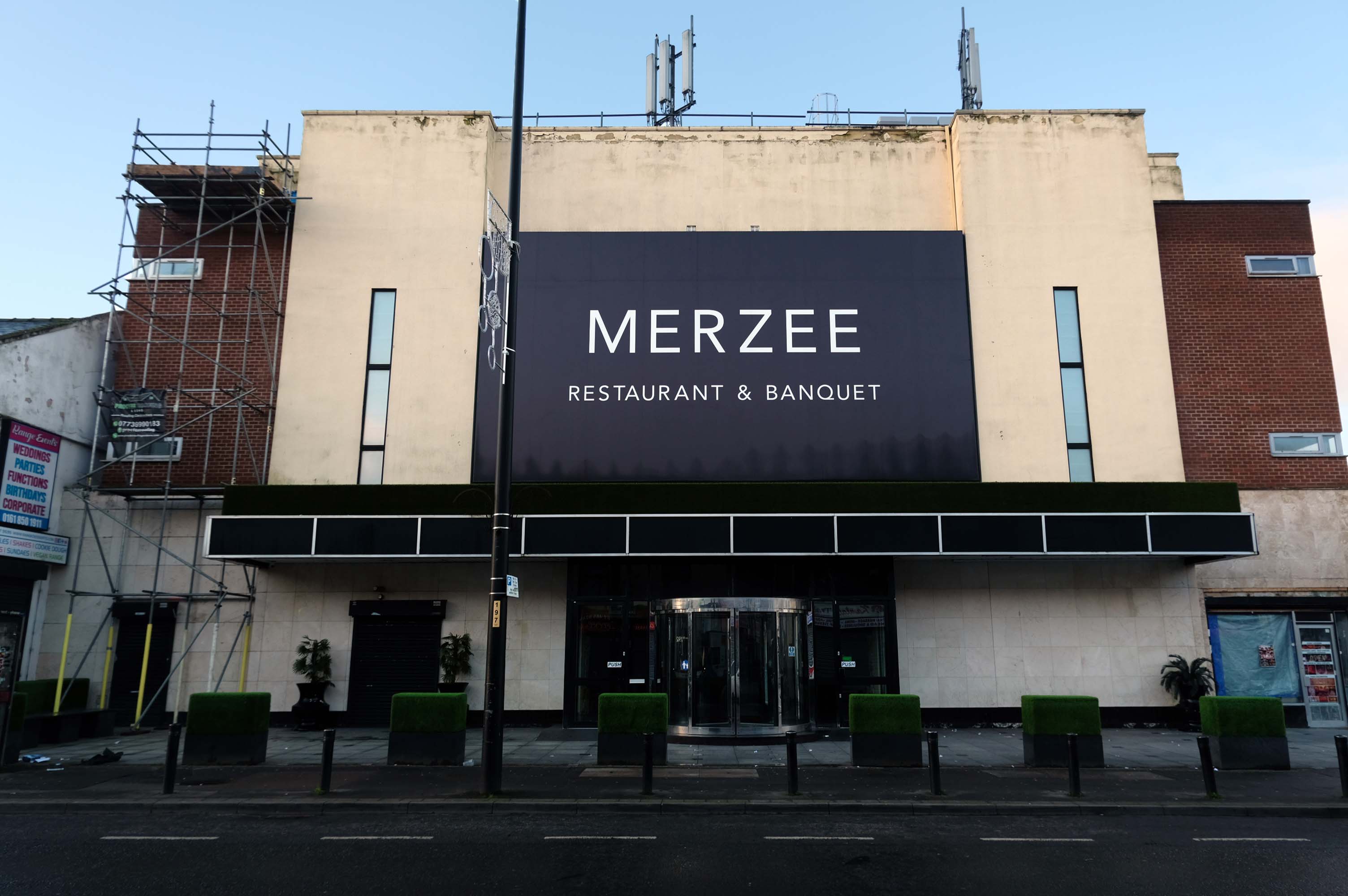
Walking from the city centre to Failsworth I noted the absence of public houses, some long since demolished, some now serving other purposes – very few open selling beer.
Many of the breweries no longer trading.
Much of this the consequence of changing economic circumstances, the decline in manufacturing and subsequent serious absence in regular drinkers.
I do remember the huge Winston Churchill relief in the Room and R100 Airship wooden panelling in the lounge. Also of note were the ornate plater work ceilings and pendulous lighting, much damaged as the pub awaited restoration.
The A5103 is a major thoroughfare running south from Piccadilly Gardens in Manchester city centre to the M56 in Northenden. The road is two-lane dual carriageway with a few grade-separated junctions. It is used by many as a link to the airport and to the motorway network south.
The road starts at Piccadilly Gardens where it meets the A6. It heads along Portland Street – at one time it ran along the parallel Mosley Street, past fast-food outlets and off-licences and then meets the A34 Oxford Street. It multiplexes with that road north for 200 yards into St Peter’s Square and then turns left into Lower Mosley Street, initially alongside the tramlines and then past the former Manchester Central station, now a conference centre with the same name. The road becomes Albion Street and goes over the Bridgewater Canal and under the railway line east of Deansgate station. The road then meets the A57(M) Mancunian Way at a roundabout interchange. This is where most of the traffic joins and leaves.
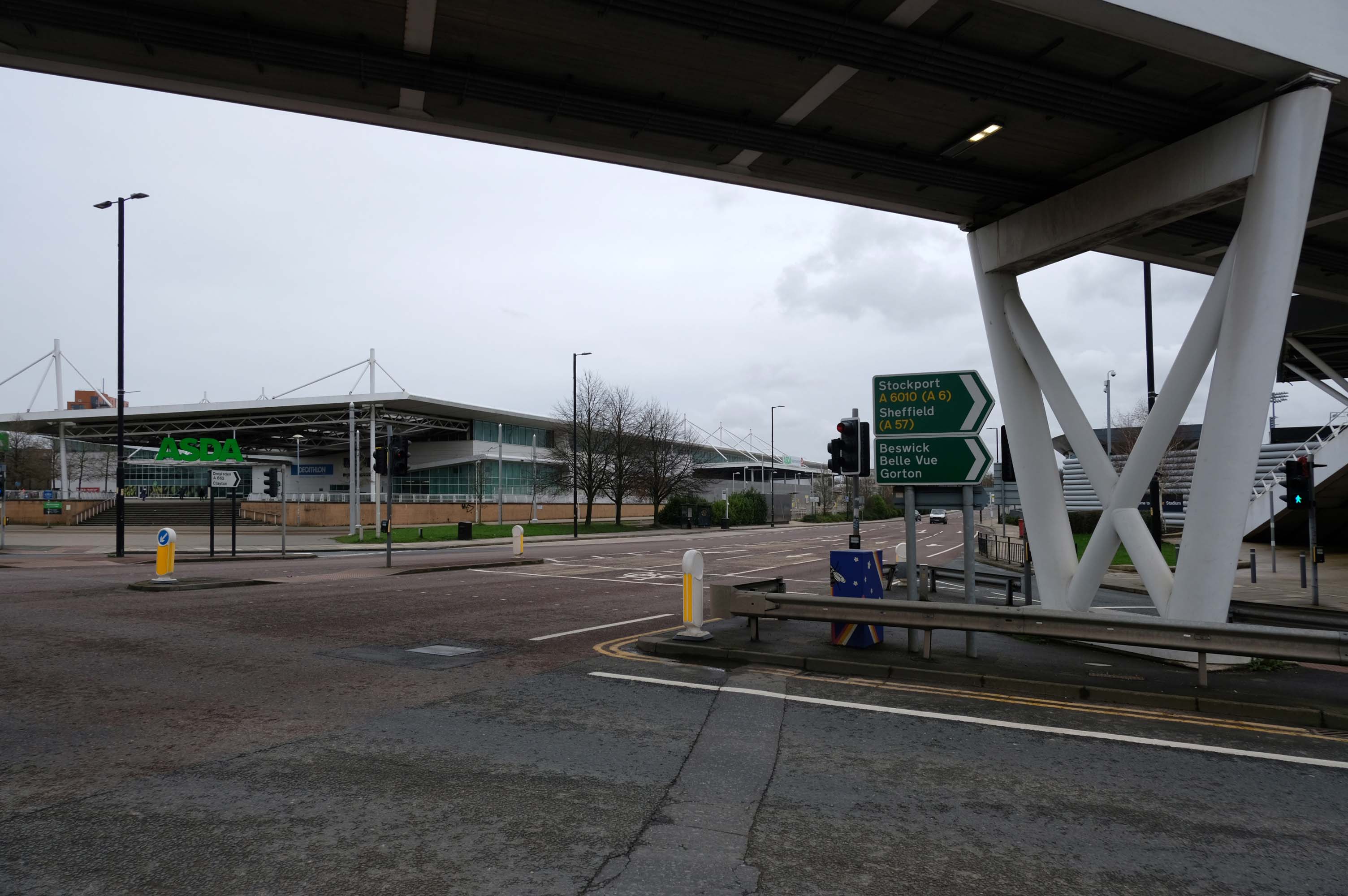
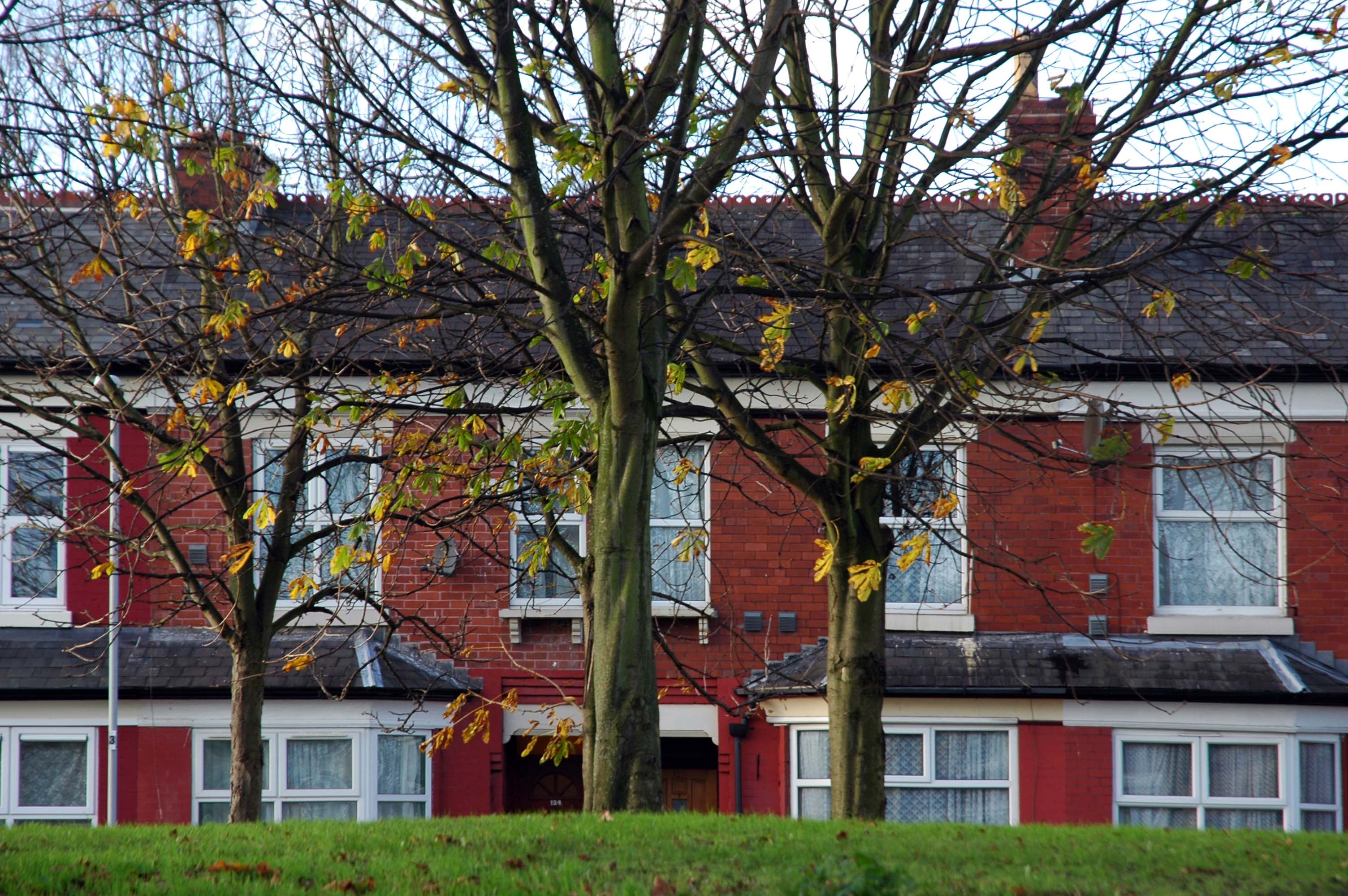
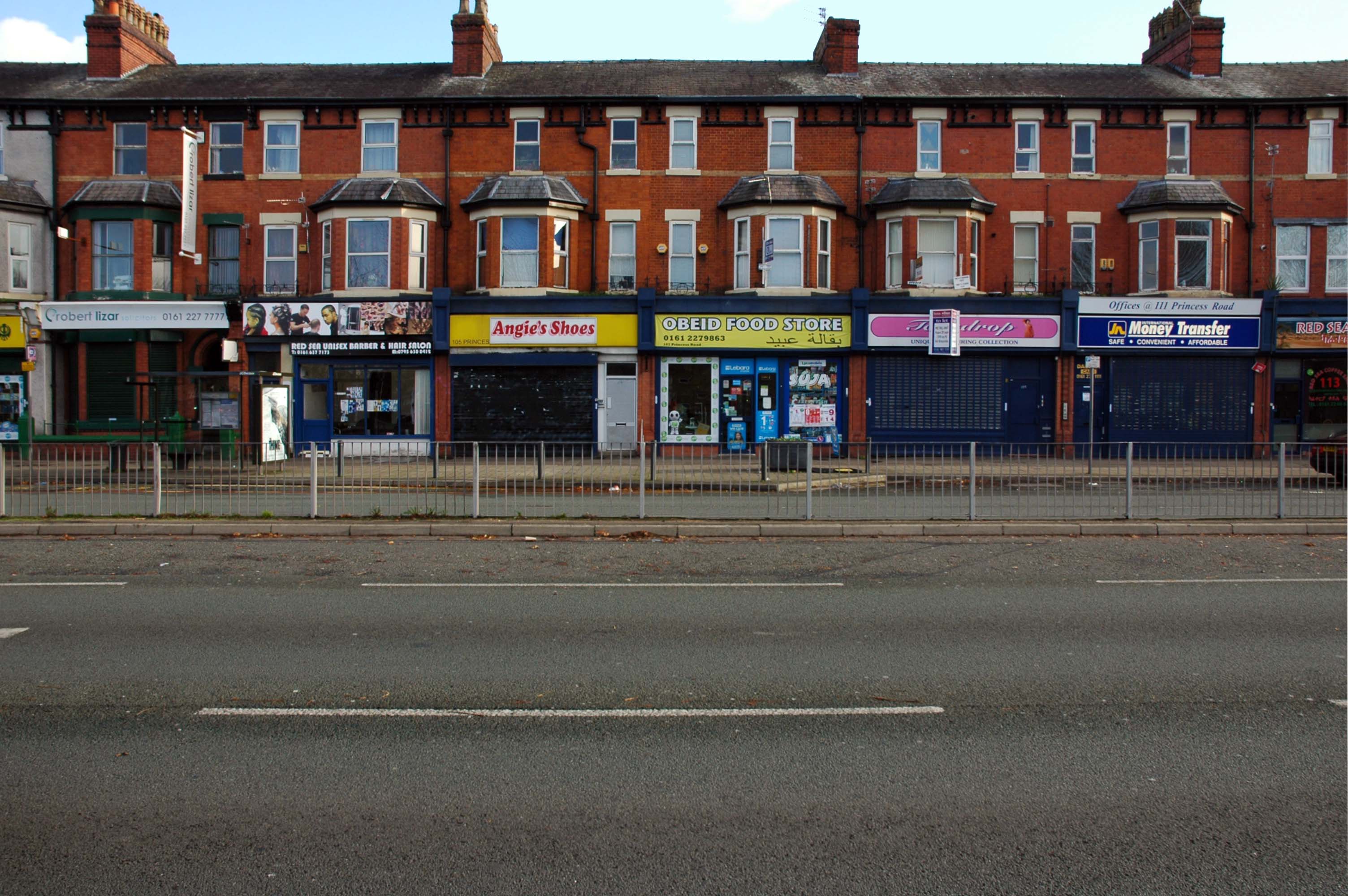
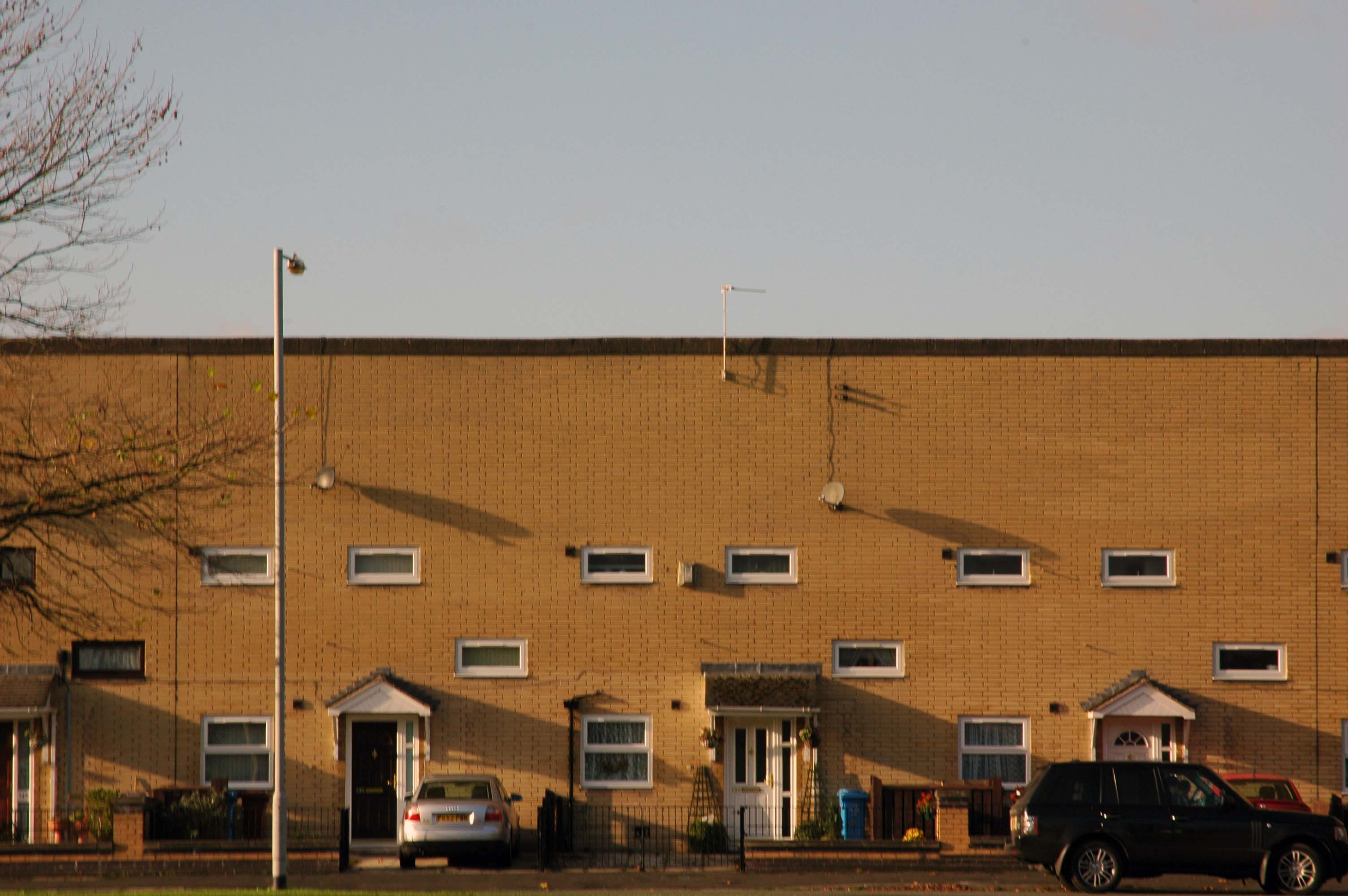
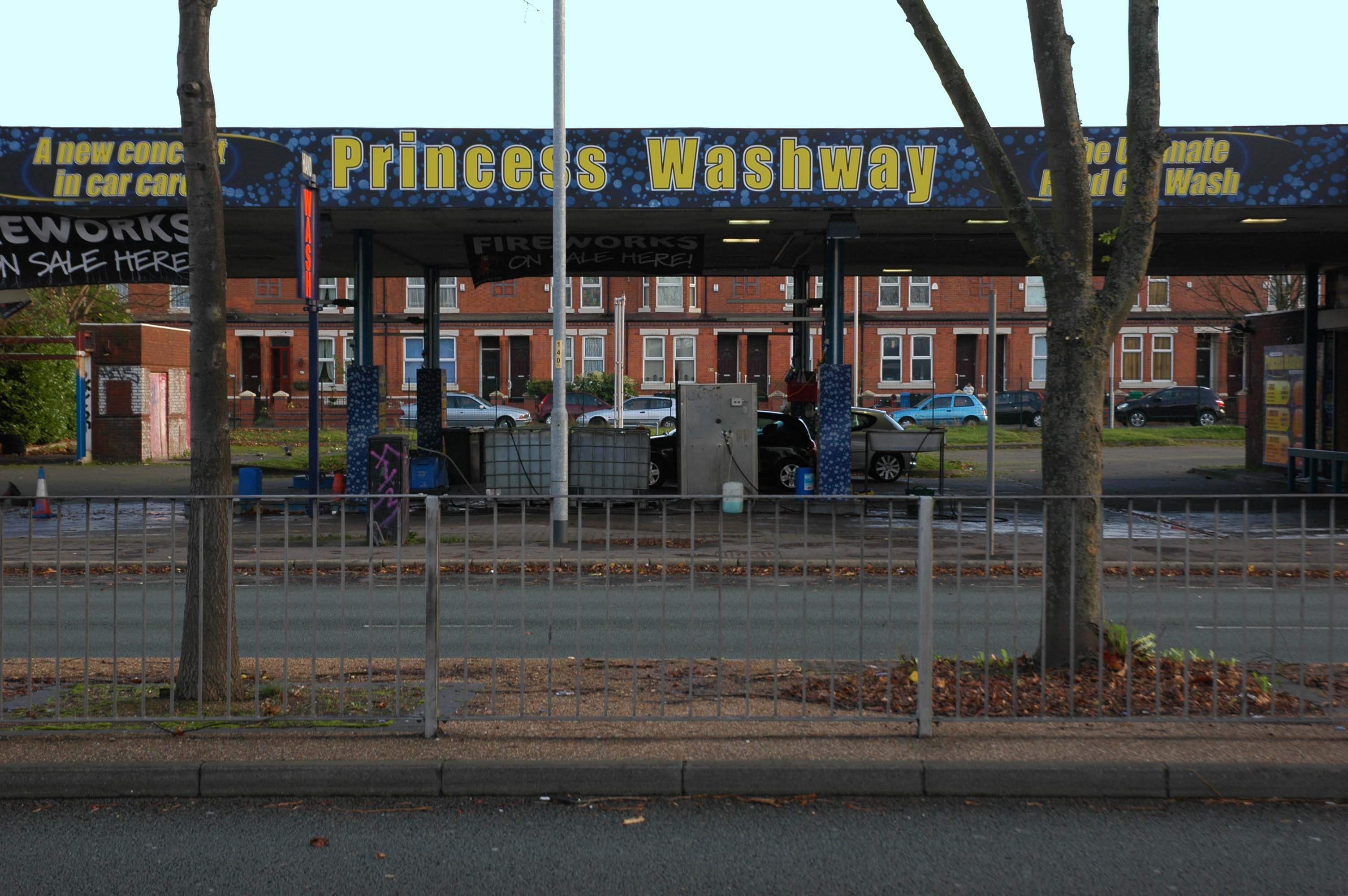
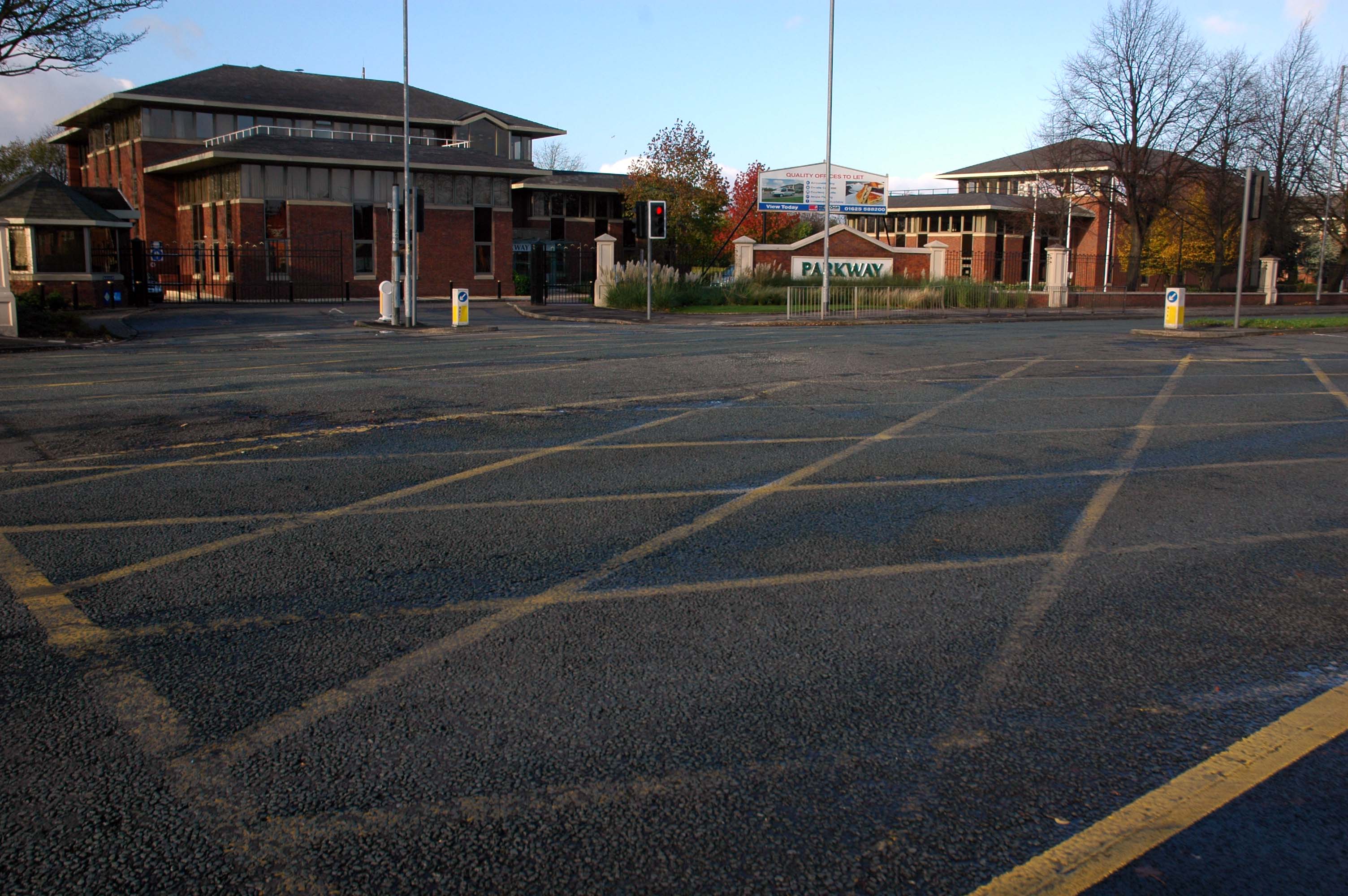
The road is now 2×2 dual carriageway with the name Princess Road. It passes under the Hulme Arch, a grade-separated junction with the A5067, with an unusually large central reservation. This is presumably because of the proposed plans from the 1960s of a motorway. However, after passing under the junction, there are innumerate sets of traffic lights, with the B5219, the A6010 and the A5145, as well as many other unsigned roads. There are also many speed cameras set at 30 mph.
The road picks up pace as we exit the sprawl of South Manchester and the road becomes Princess Parkway, with a 50 mph speed limit. We cross the River Mersey and almost immediately hit the M60 at J5.
Except for the Manchester City Centre section – which was numbered A5068, this road did not exist on classification in 1922. Princess Road was built in 1932 to serve the new southwestern suburbs; initially it ran between the B5219 and A560 and was numbered B5290, with the road later extended north into the A5068 on the southern edge of the city centre and renumbered A5103.
The northern extension through Hulme initially followed previously existing roads, so followed a zigzag route. As part of the road’s upgrade and the reconstruction of Hulme in the 1970s the road was straightened and the original route can no longer be seen. The A5068 was severed around this time with the construction of the A57(M) and the A5103 took on its city-centre section, taking it to the A6.
The A6 is Britain’s fourth longest road. Its route varies greatly from the lower lands of the South East, though the Peak District, right though the heart of Manchester city centre, then onwards towards Preston. It then goes though the historic city of Lancaster before skirting the Eastern fringe of the Lake District before ending in Carlisle, bang on the start of the A7.
North from Stockport towards Manchester, the A6 was a wide, four lane road, but still 30 mph, which usually flowed pretty well. According to Mudge, it looks like it has now been massacred by bus lanes and red paint. Shame. We meet the A57 from the east, just south of the city centre, and multiplex until we reach Mancunian Way, the A57 heading off as a short urban motorway, the A6 heading into the city centre via London Road/Piccadily, where it loses its number and vanishes. It would have gone straight down Piccadily/Market Street to meet Deansgate, and then across the River Irwell into Salford, and up Chapel Street, where the number reappears. Market Street has been pedestrianised for years, so the A6 has long ceased to be a through route.
The A57 was nearly a coast to coast route. It passes through three major city centres (Liverpool, Manchester, and Sheffield – with elevated sections in each) and several smaller ones, multiplexes with the A6 and the A1, follows the banks of two canals and negotiates the remotest part of the Peak District. In one city it part of it is a tram route, whilst in another its former route is also a tram route. After all these adventures, it sadly gives up just 40 miles short of the east coast, Lincoln apparently proving too big an obstacle.
The A57 crosses the River Irwell at Regent Bridge before entering its moment of motorway glory as the A57(M) Mancunian Way skirting the south of Manchester’s city centre on an elevated section and crossing the A56 and A34. This includes a half-completed exit that goes the wrong way up Brook Street – a one way street. The original A57 ran further north through the city centre along Liverpool Road (now the A6143) and Whitworth Street – B6469 as far as the A6 London Road which marked the start of a multiplex.
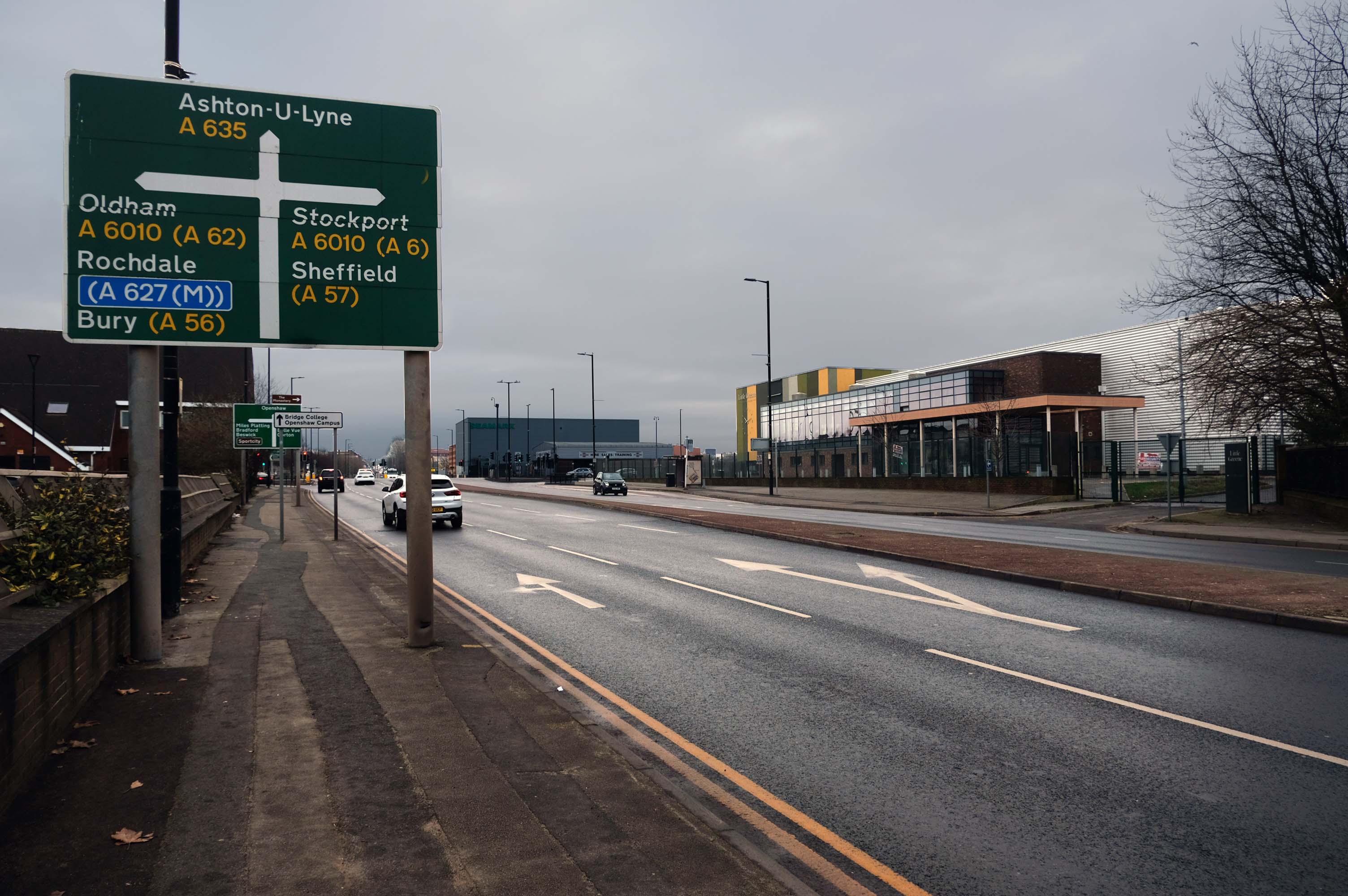
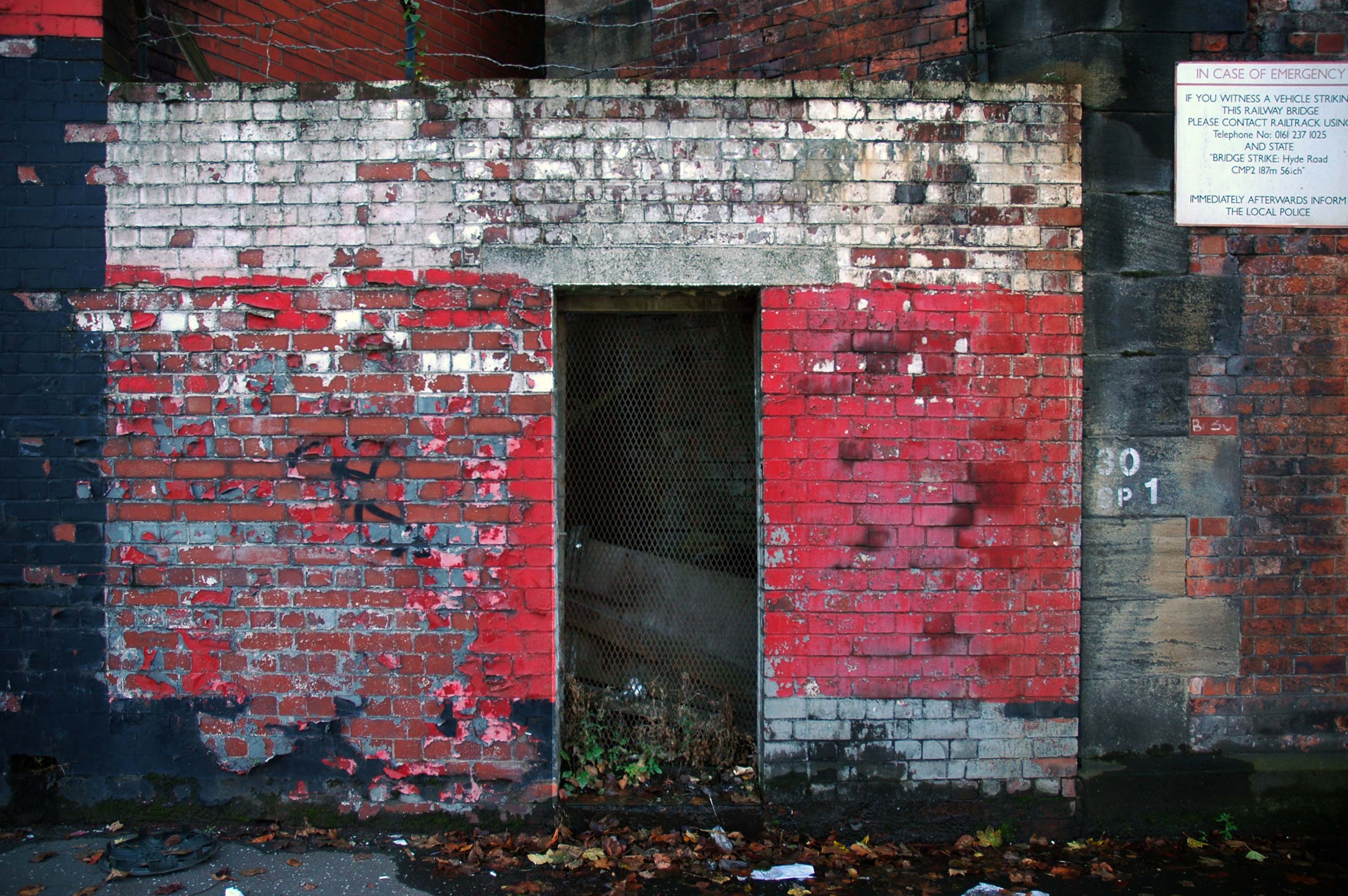
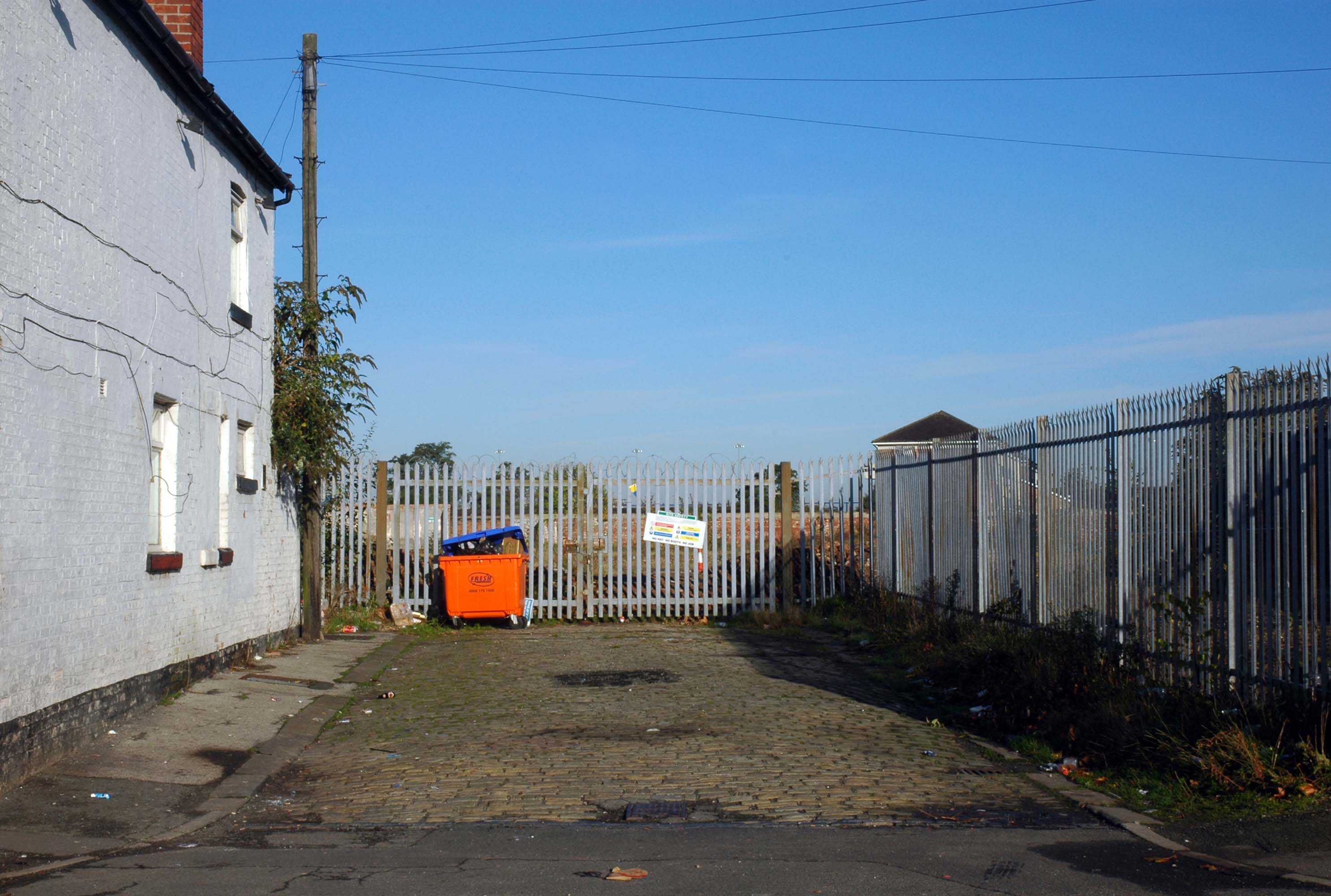
At the end of Mancunian Way, we reach a TOTSO, straight on being the short unsigned A635(M) and thence the A635 – for Saddleworth Moor, Barnsley and Doncaster whilst the A57 turns south, briefly multiplexing with the A6, and then branching off along Hyde Road. This section of road was extensively cleared for the westward extension for the M67, and consequently has seen a lot of redevelopment.

































































































































































































 Modern Mooch