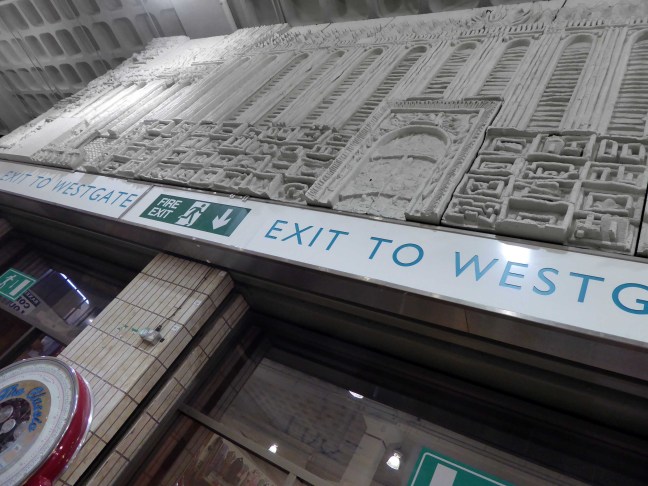
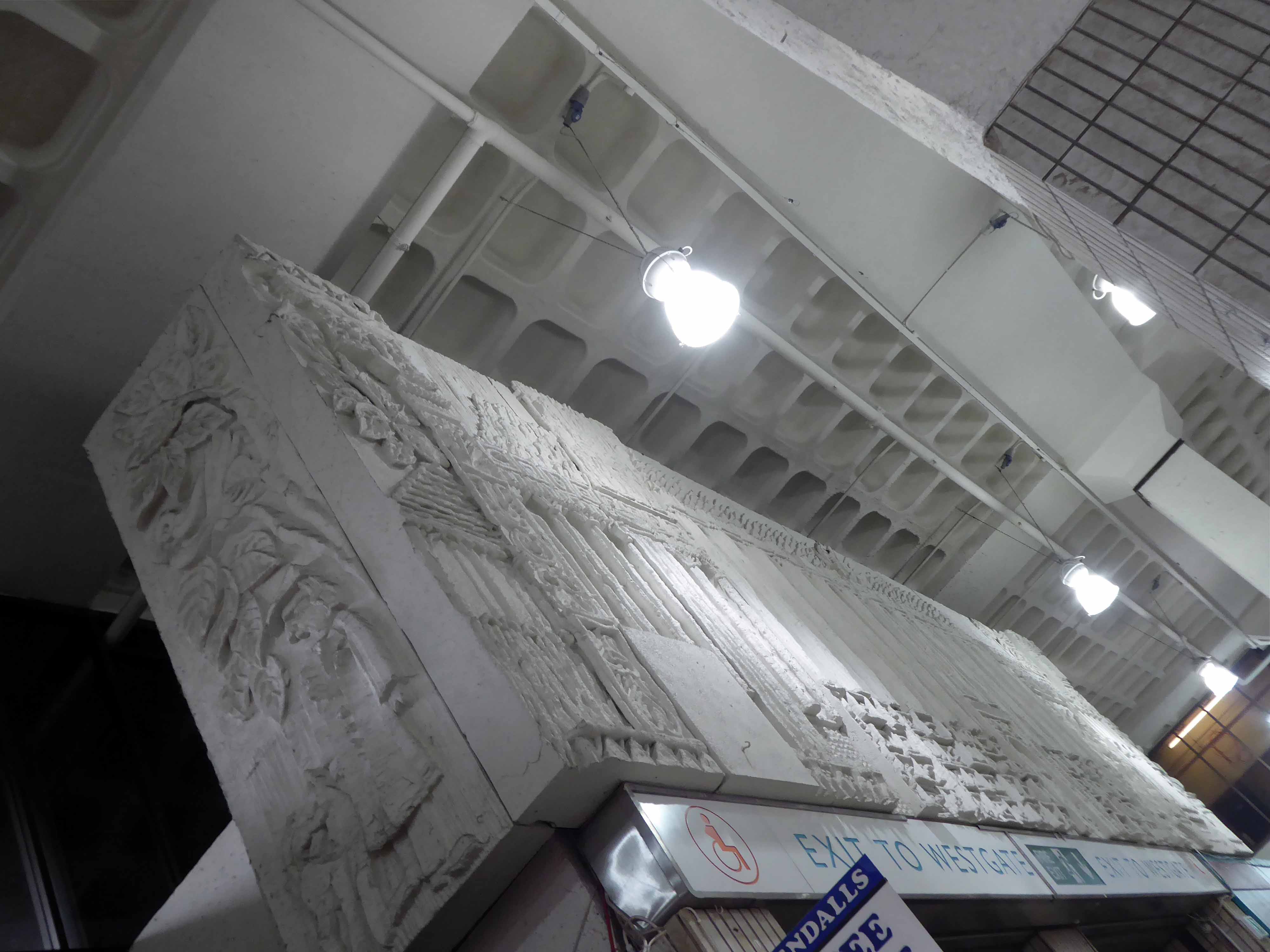
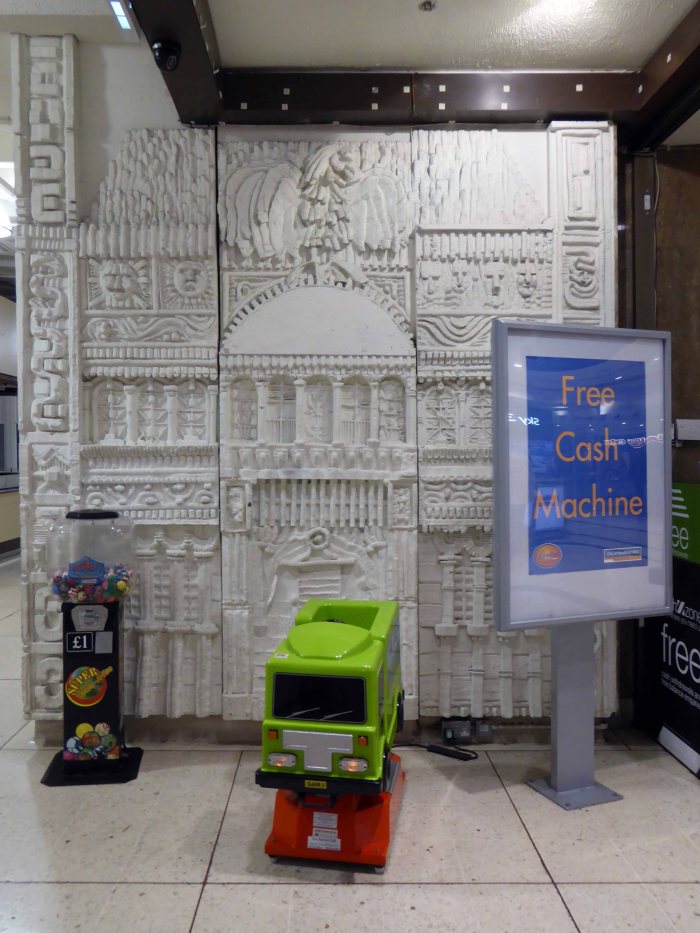
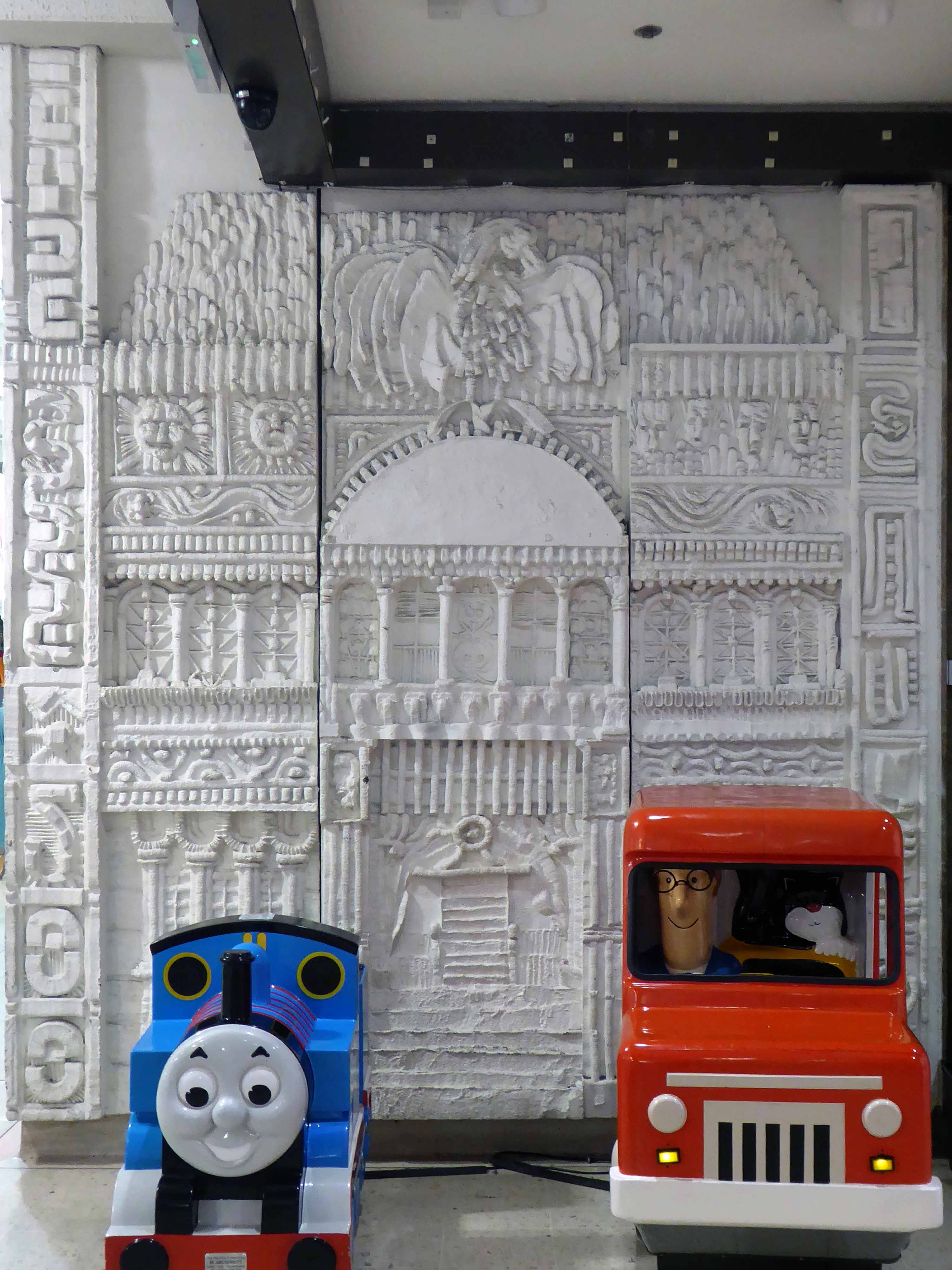
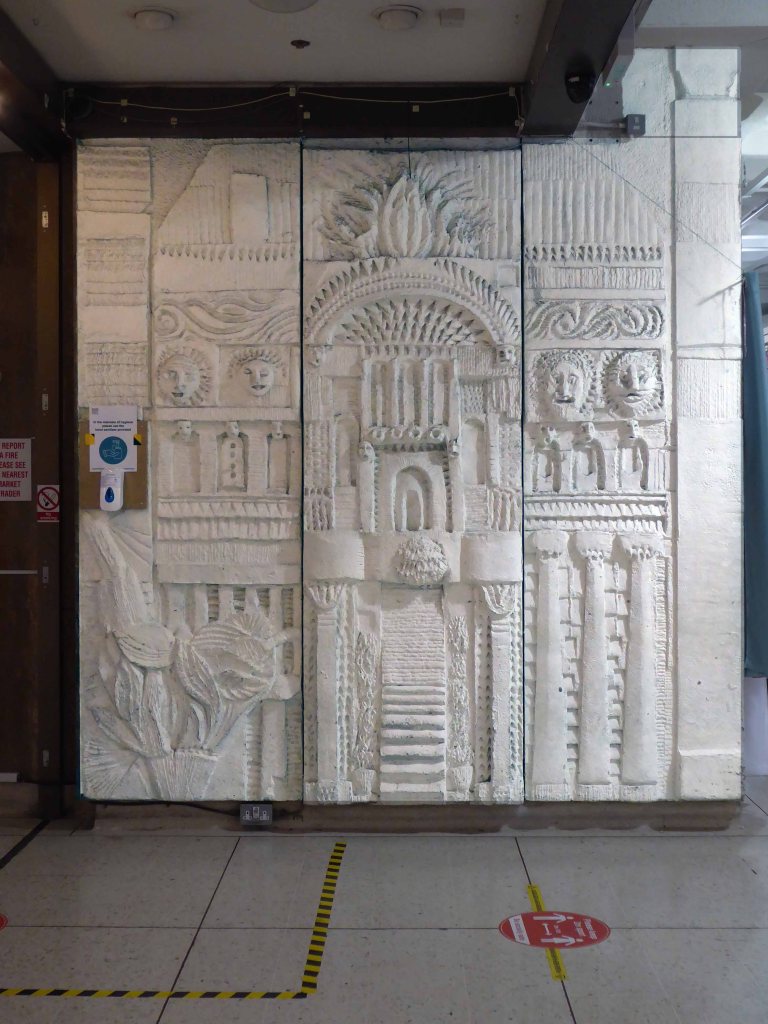
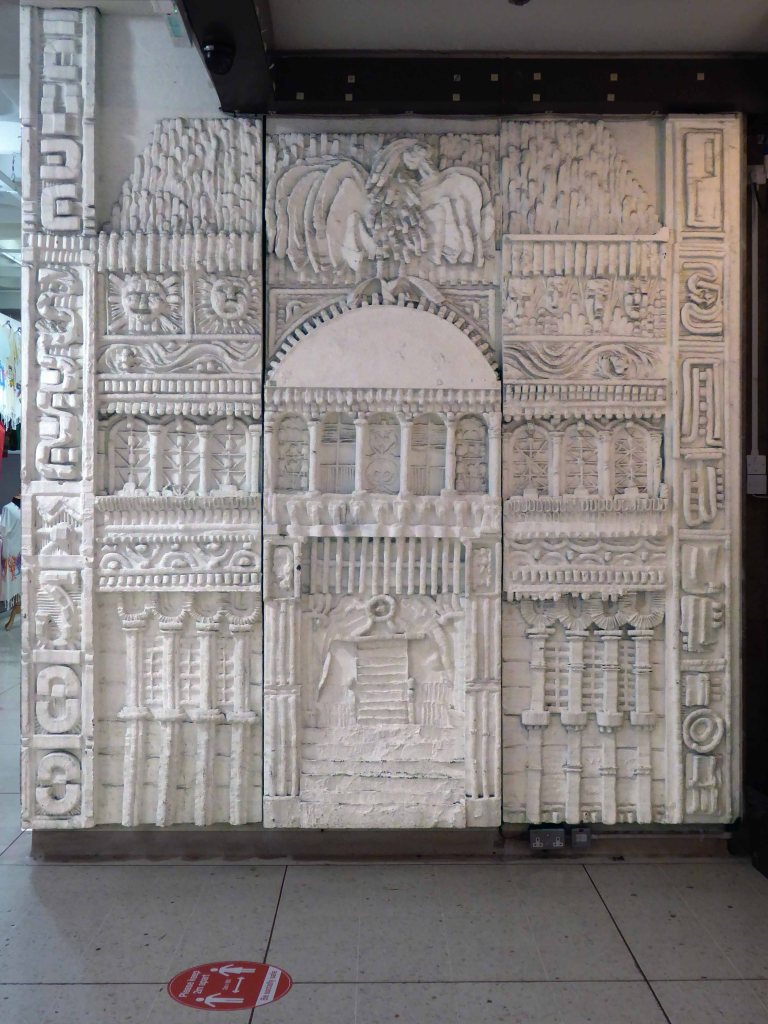
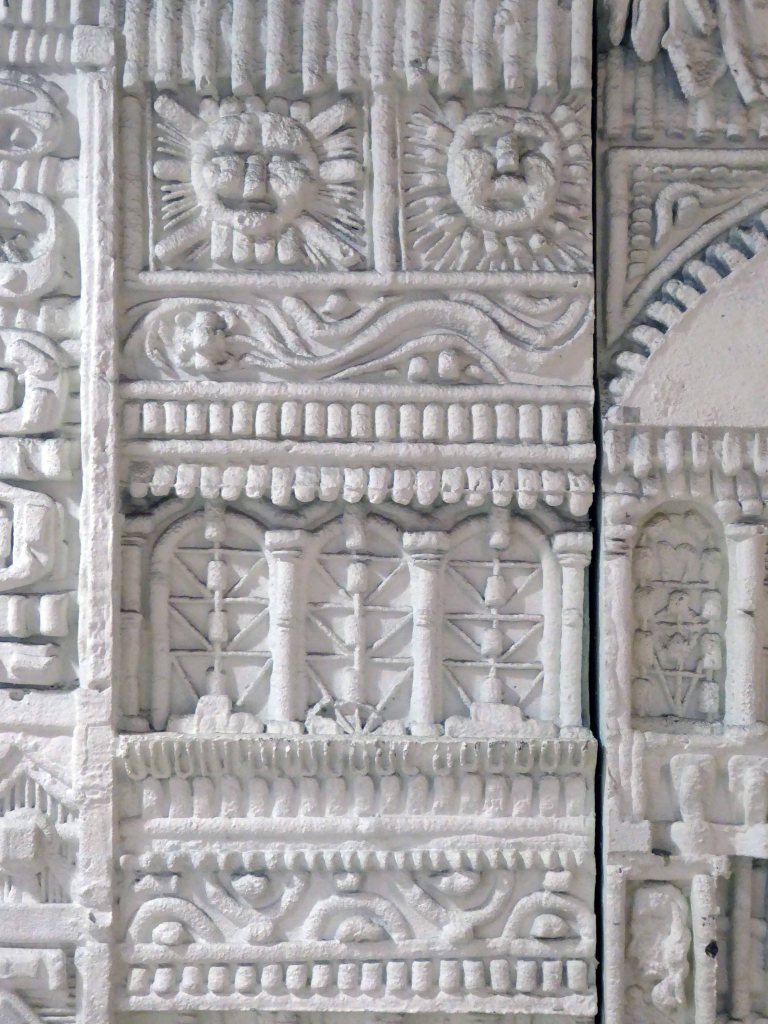
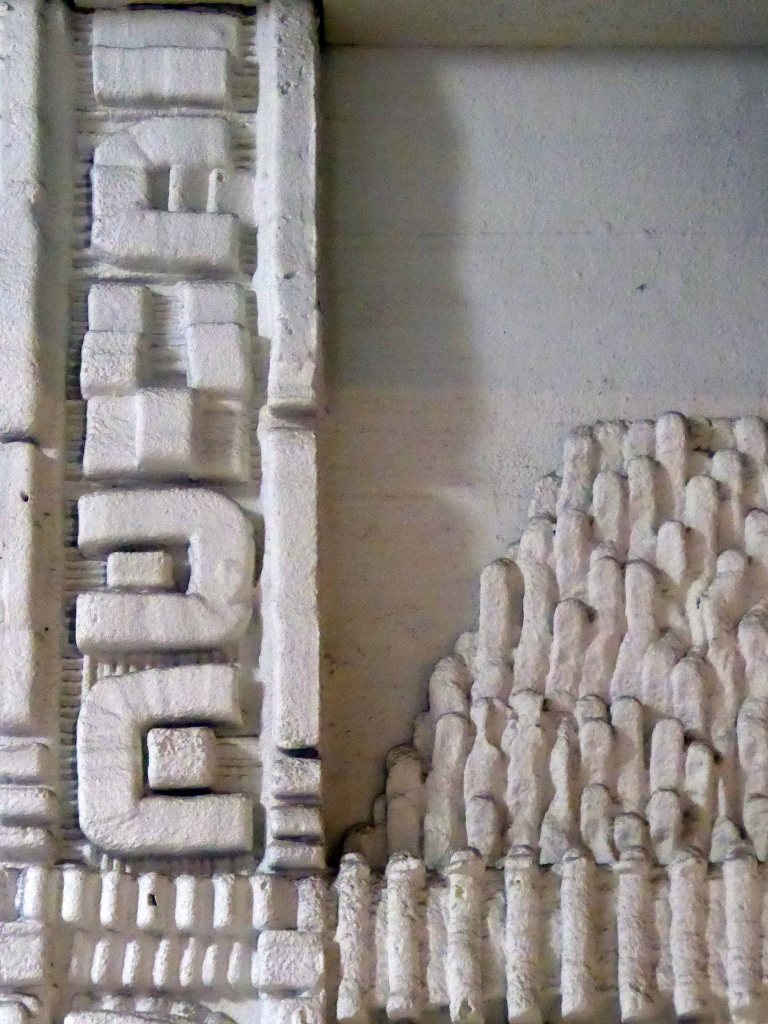
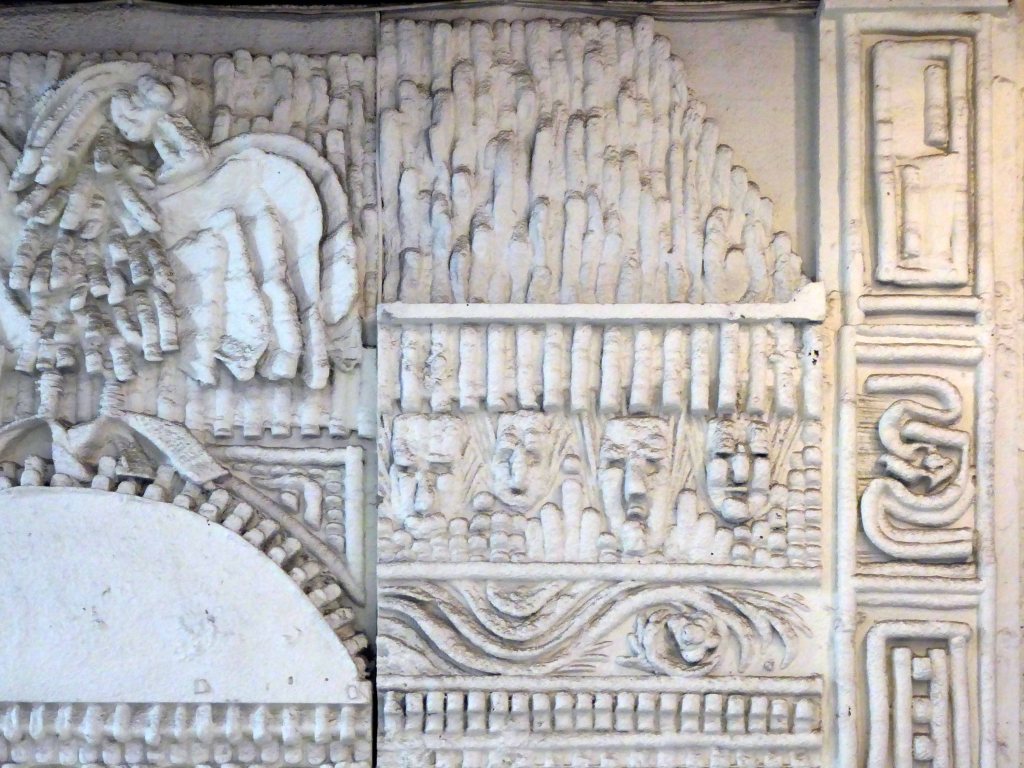
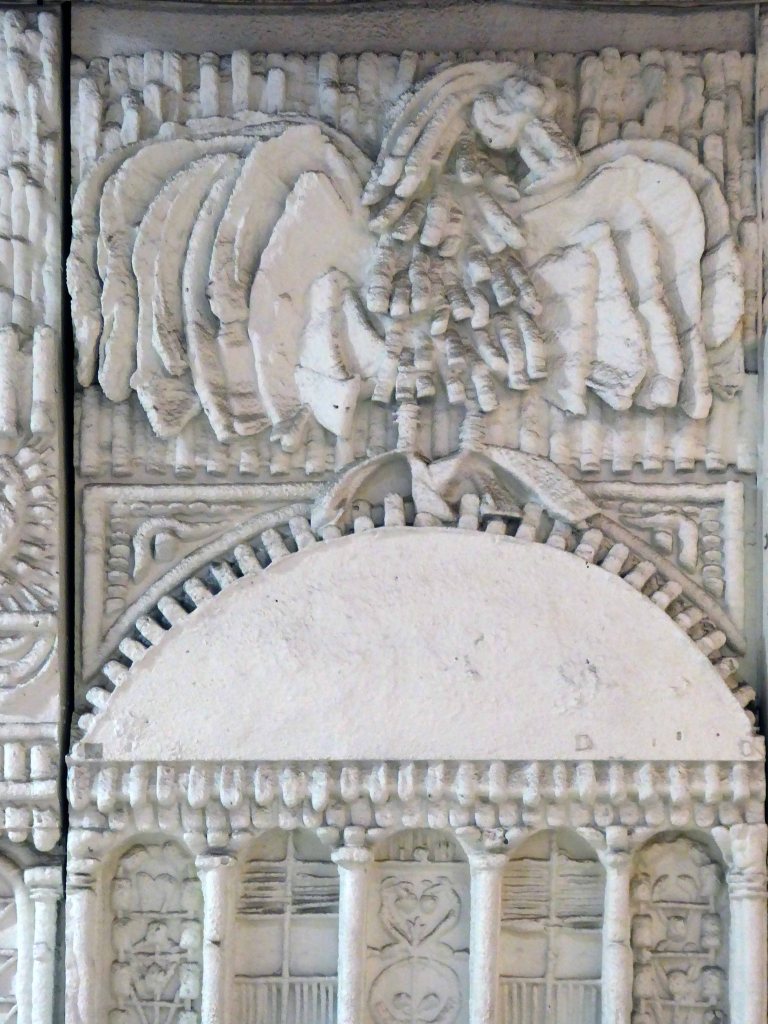
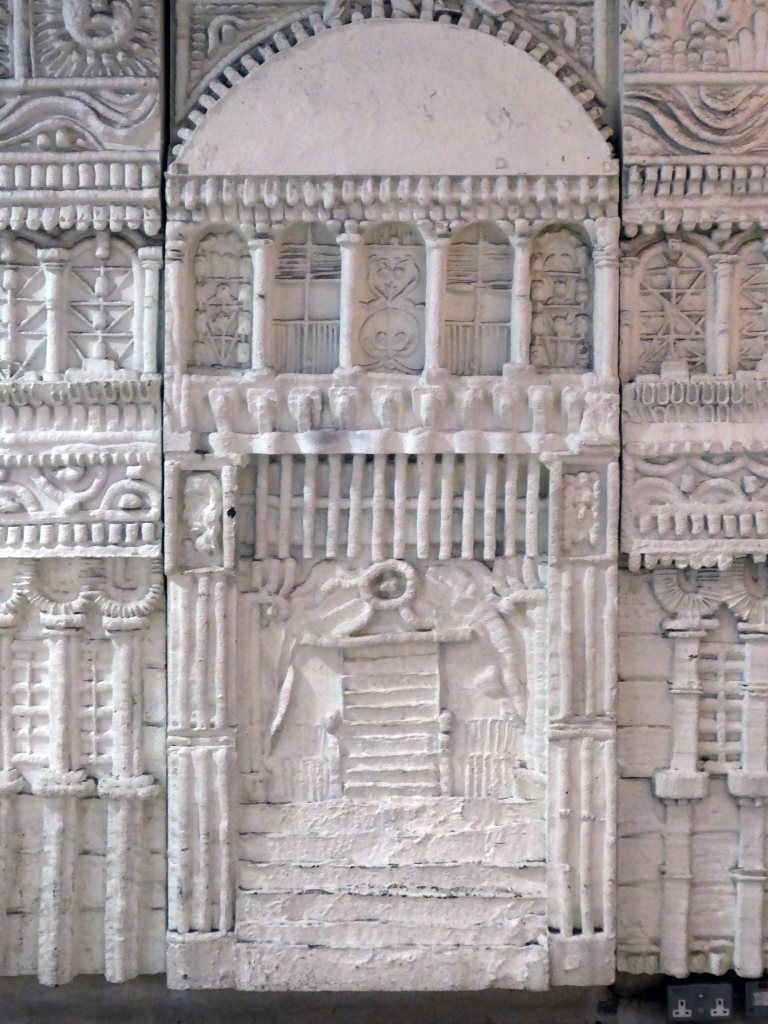
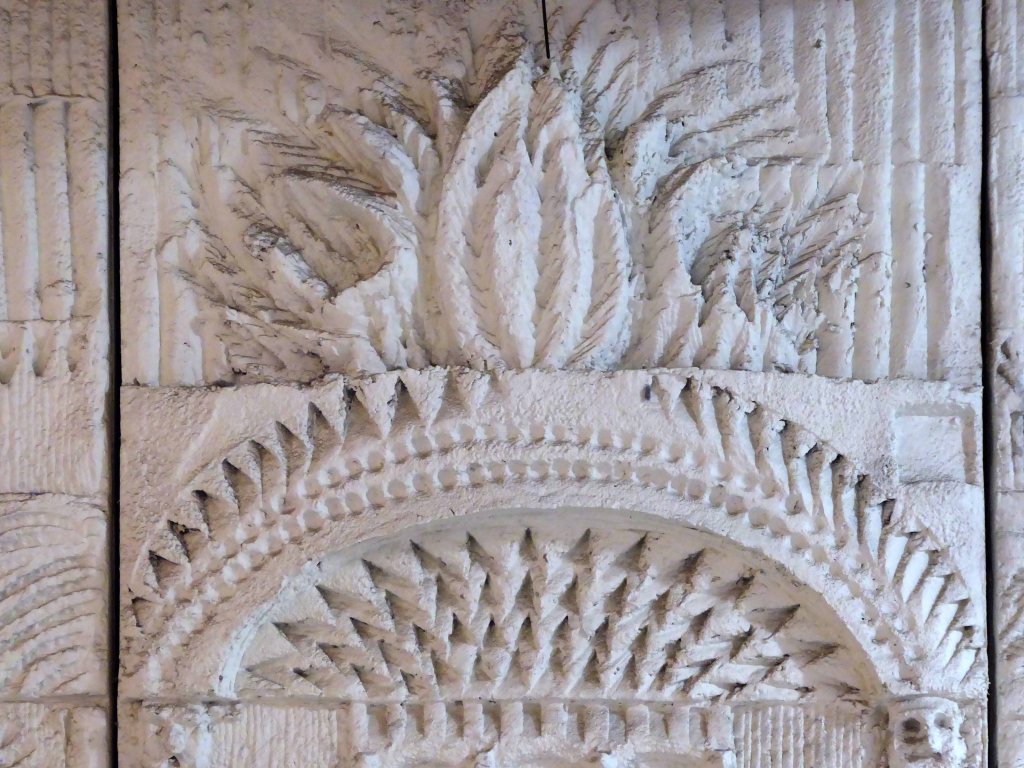
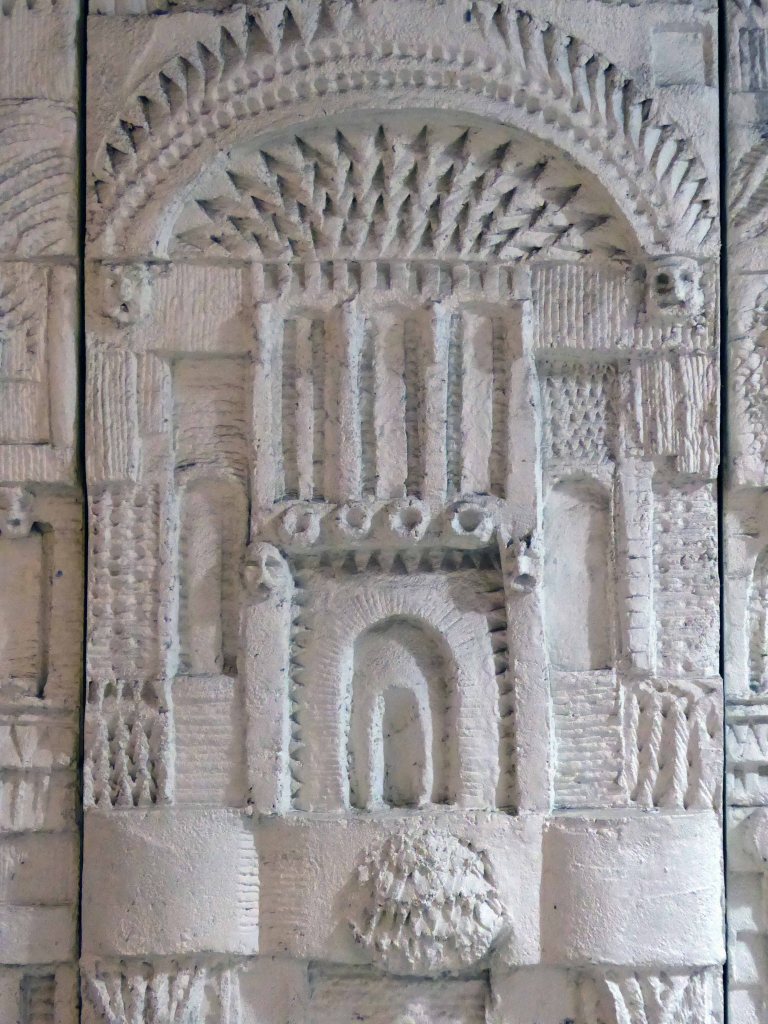
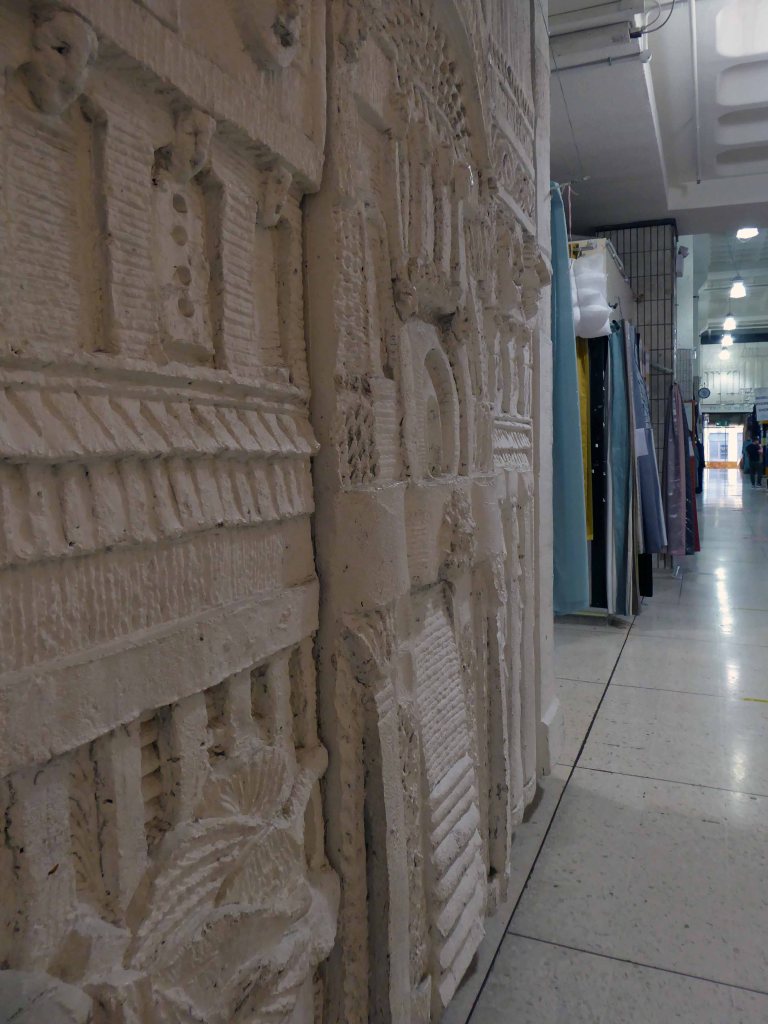
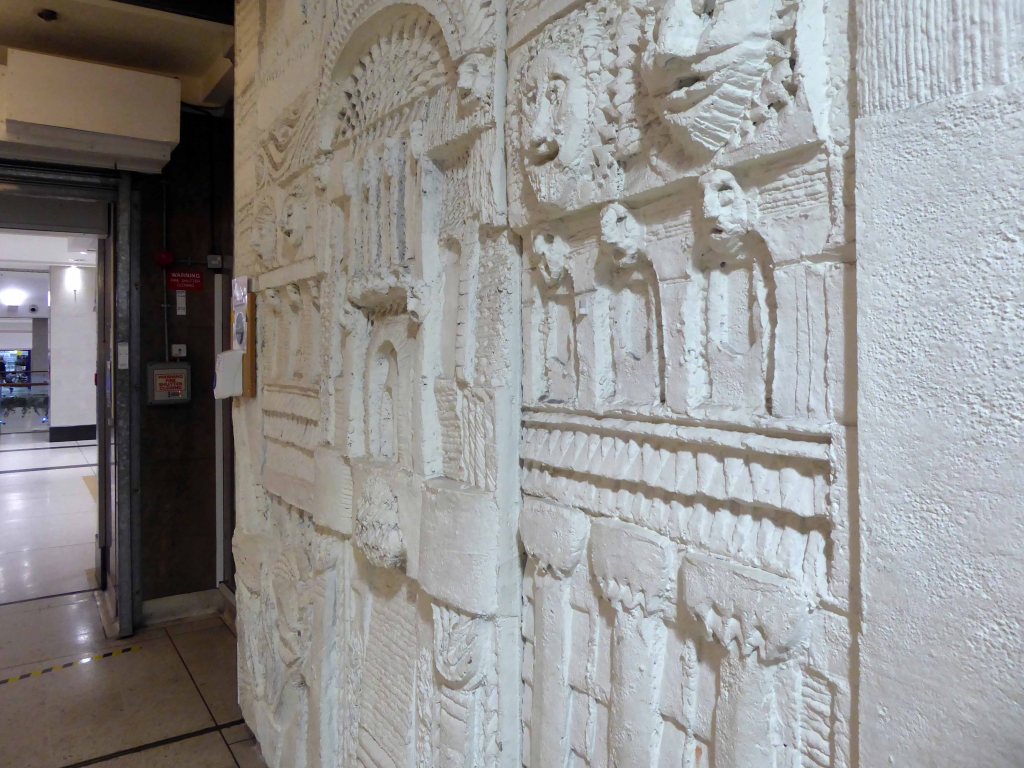
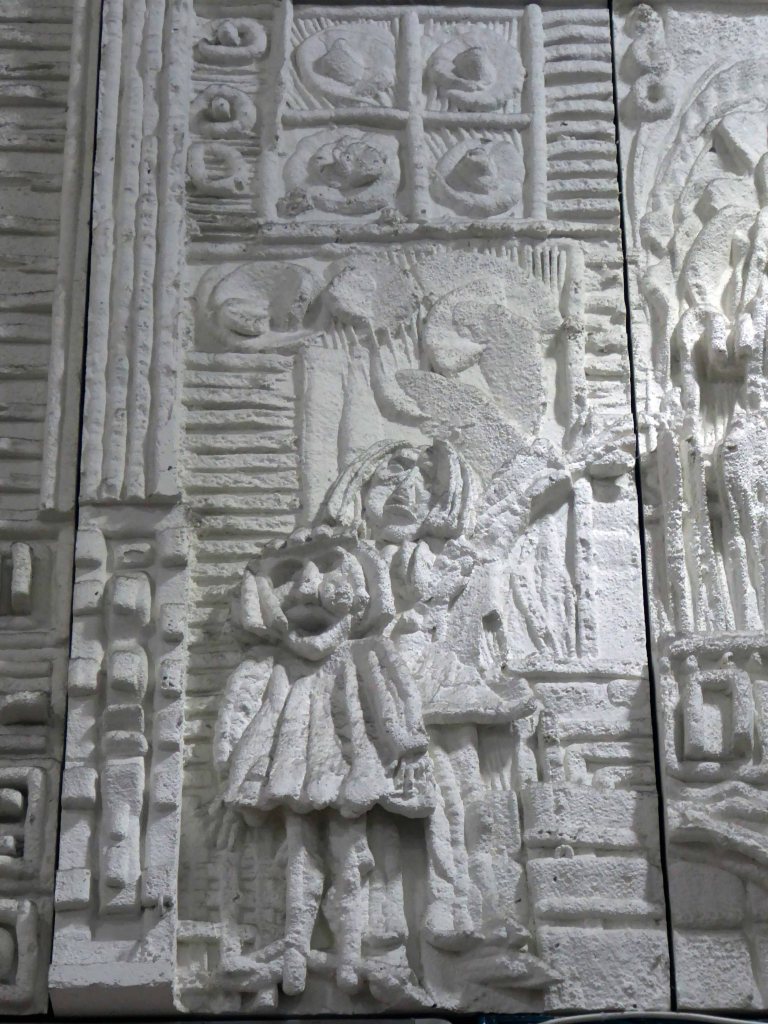
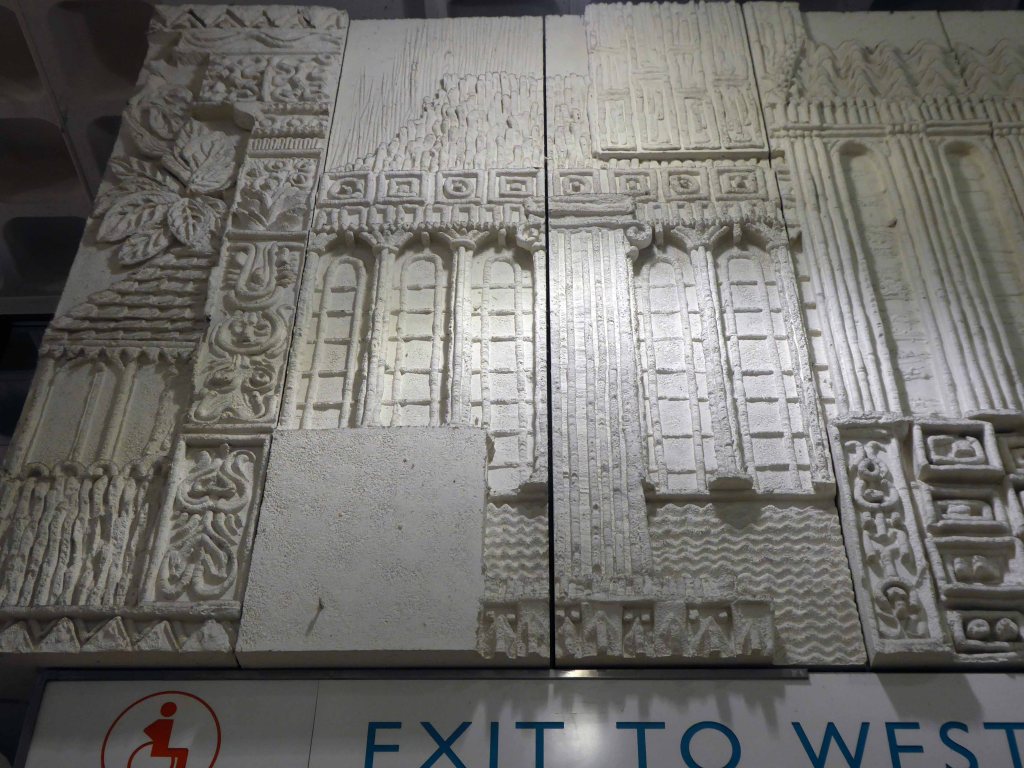
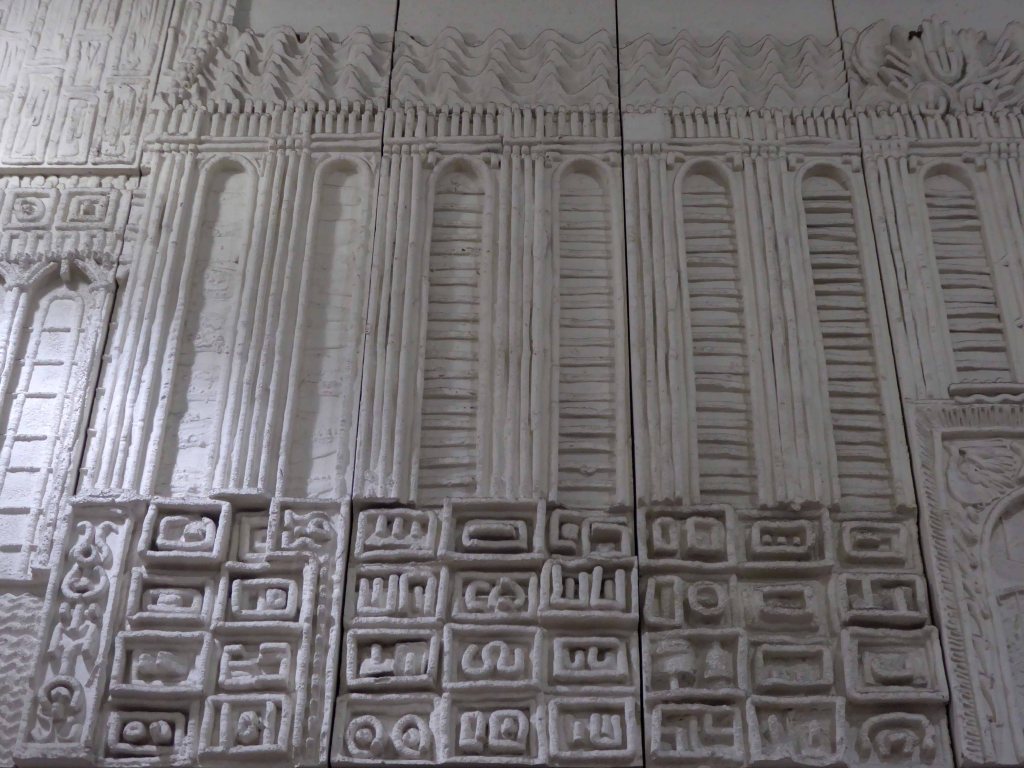
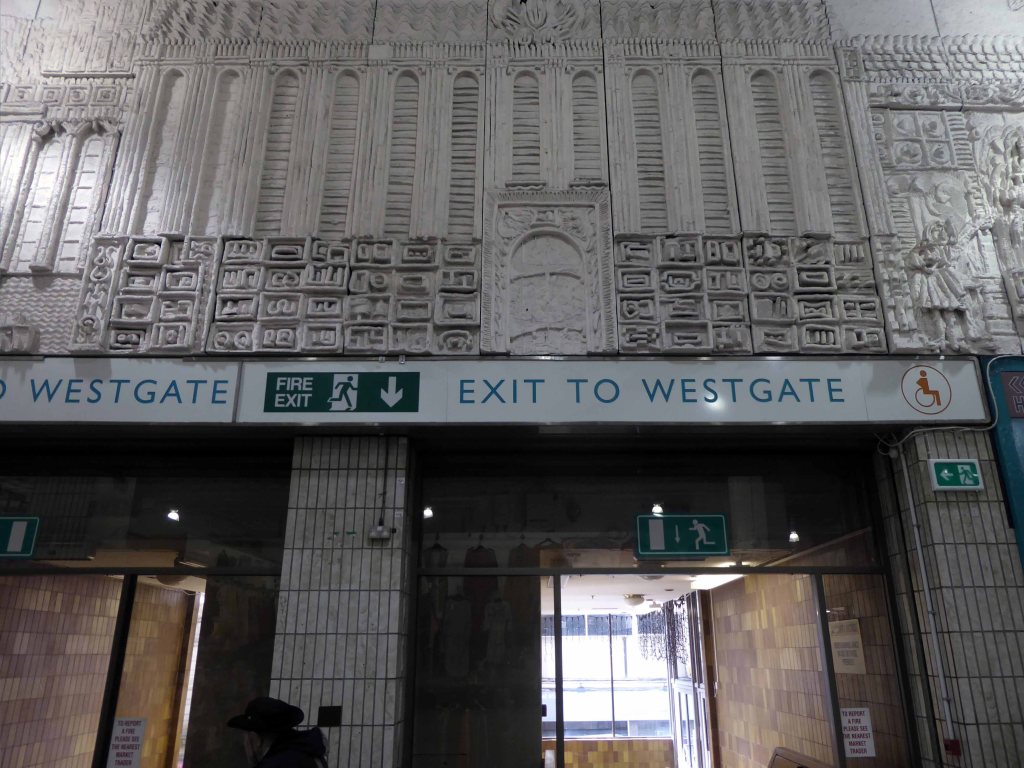
Positioned above the entrance/exit and either side of the exit/entrance.
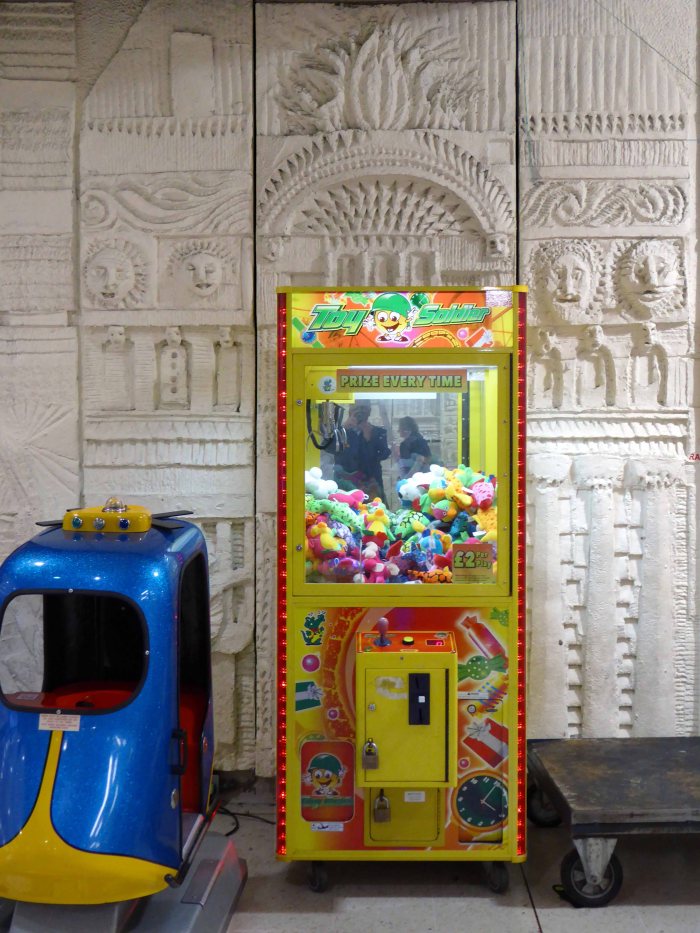
They have had over time various companions to keep them company.
They are currently friendless – the Kirkgate Market is to be closed, its future uncertain – and by inference Big Bill’s public art is under threat too.
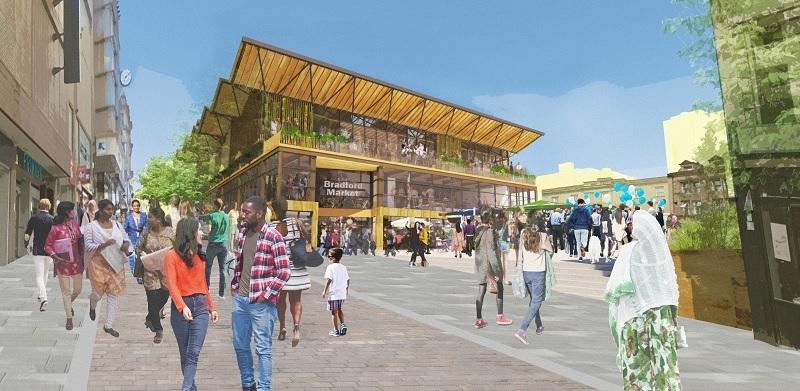
The Council has announced to its traders in Kirkgate Market and the Oastler Centre that it will not be carrying out the proposed refurbishment of Kirkgate Market as the new market in Darley Street will now accommodate non-food sales on one trading floor with the other trading floor being dedicated to fresh foods and the 1st floor for hot food and beverage sales.
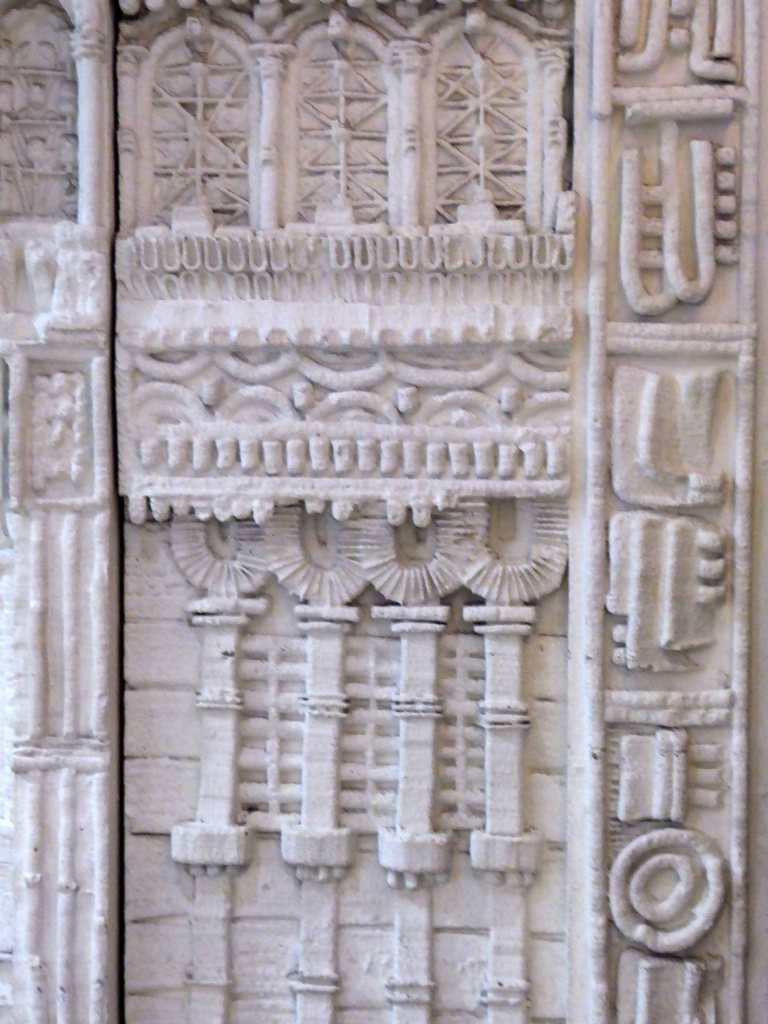
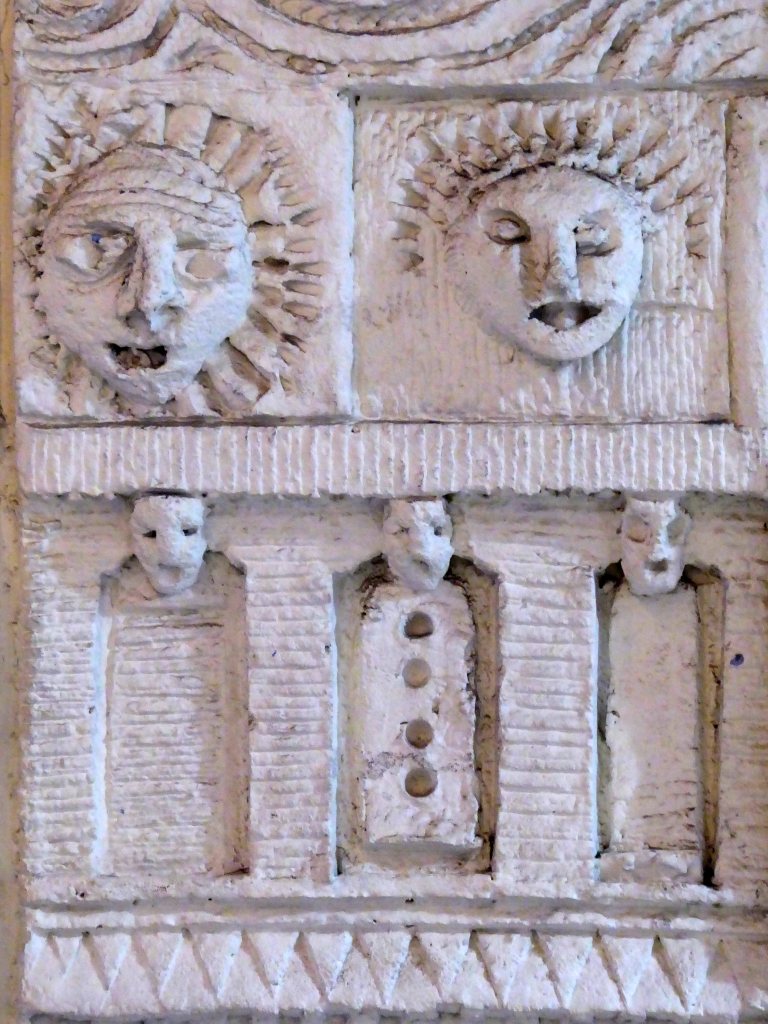
As per they are unlisted, largely unnoticed and as such very vulnerable, get it while you can, take a trip to Bradford real soon.
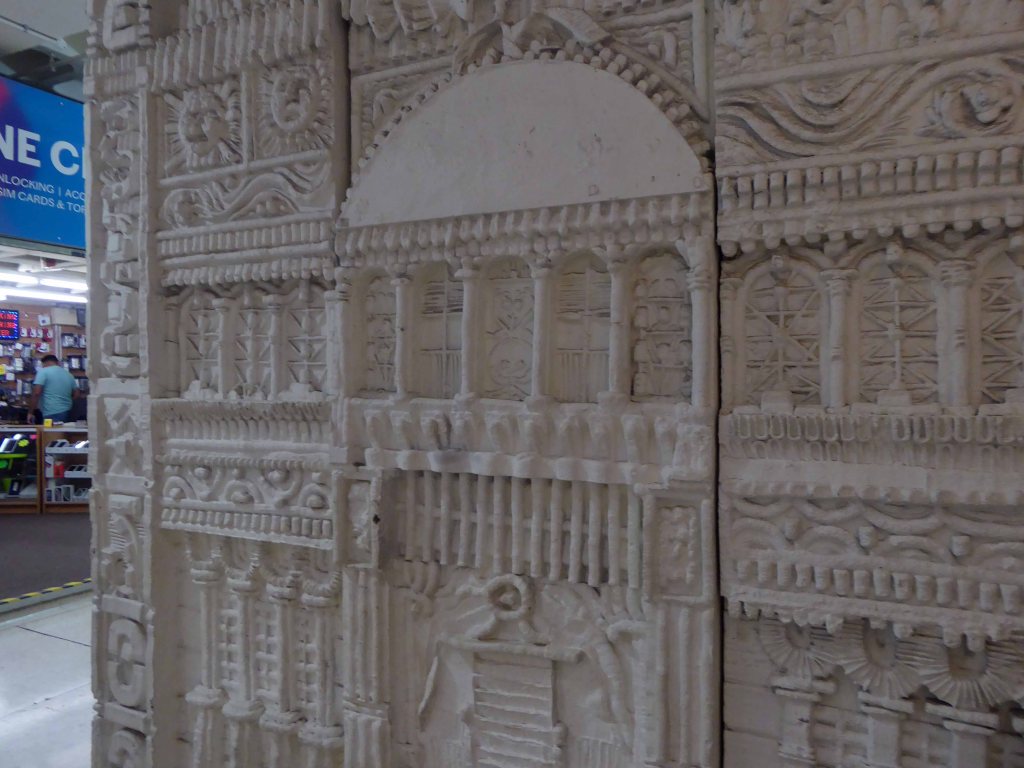
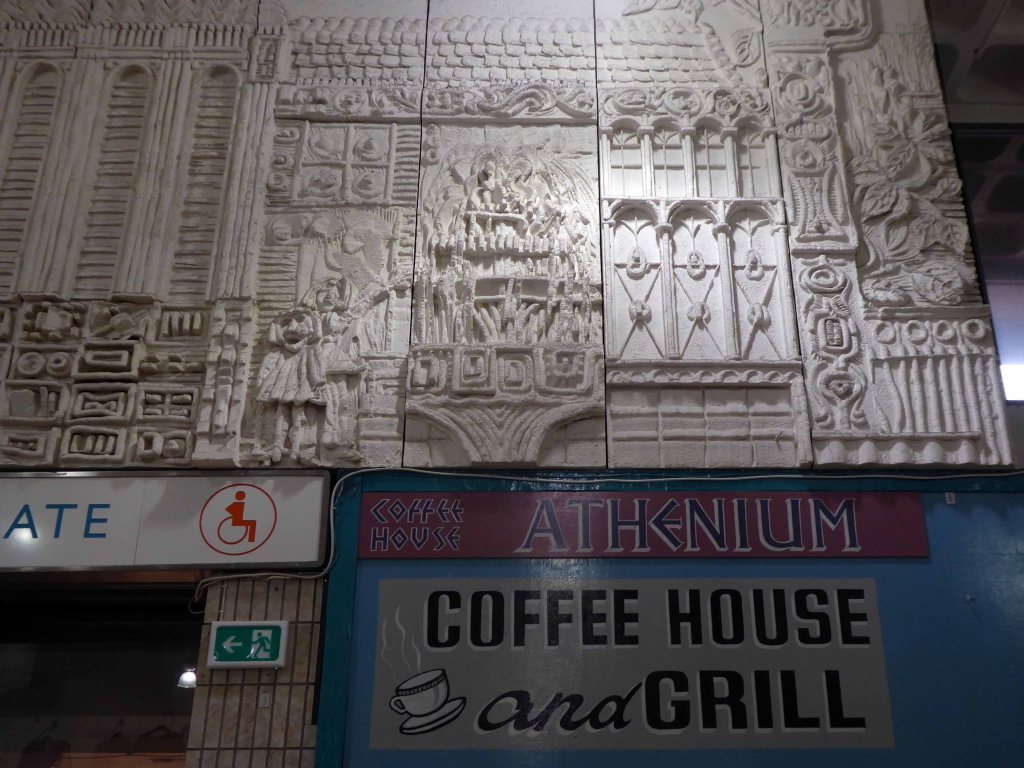
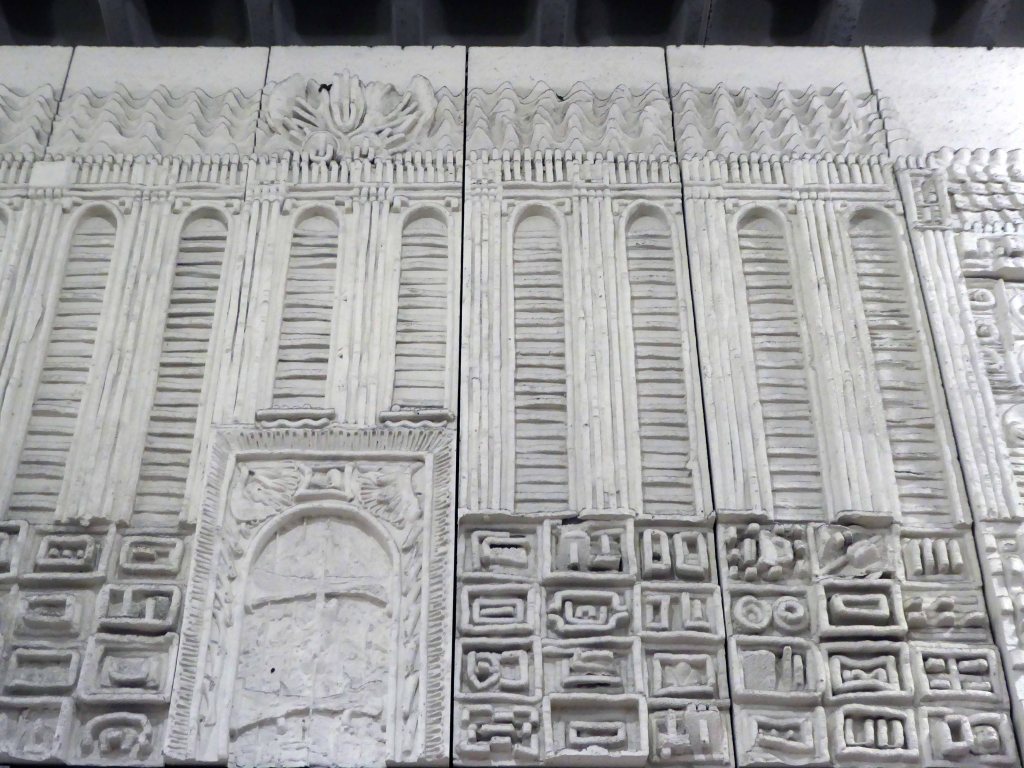
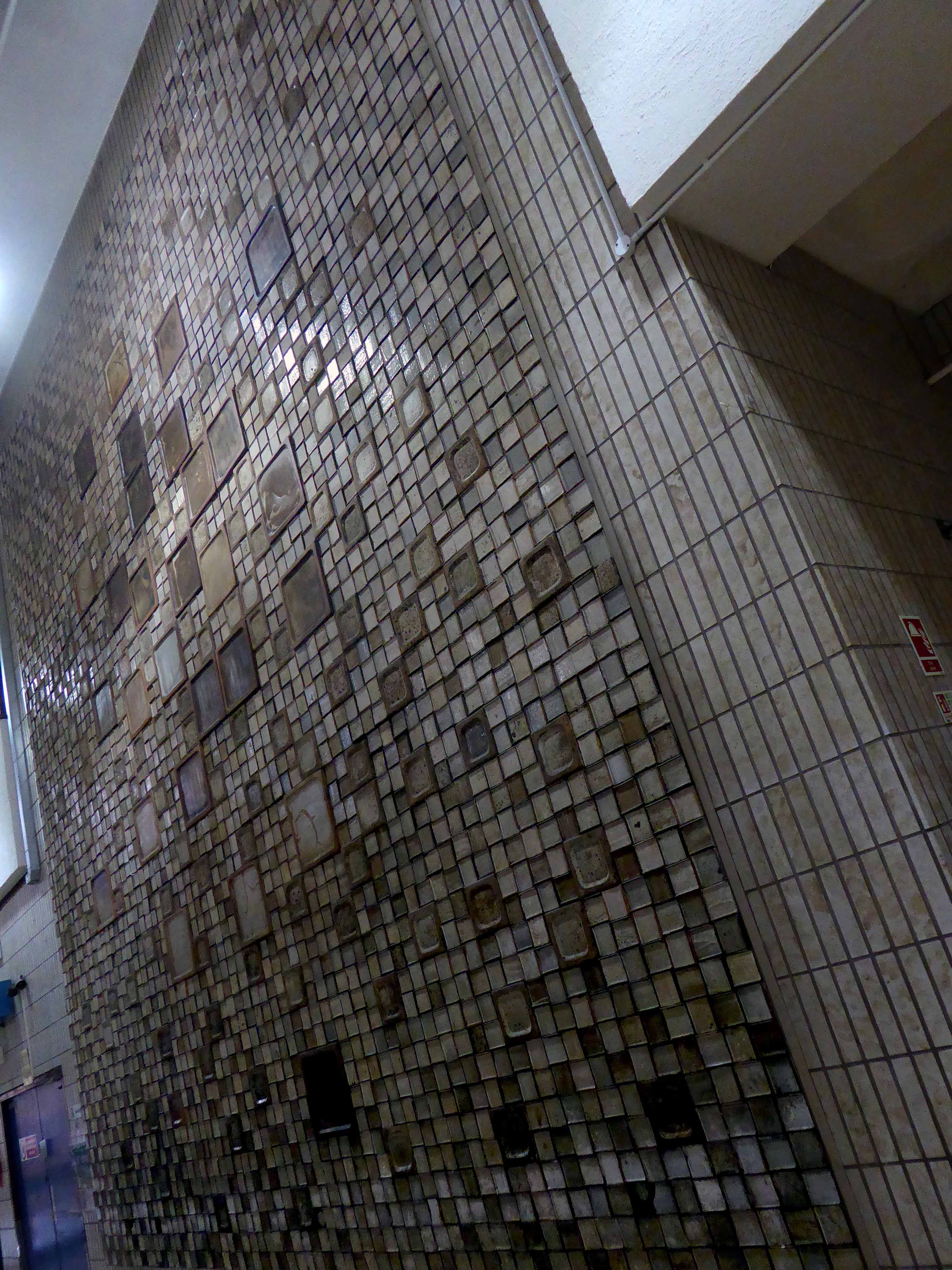
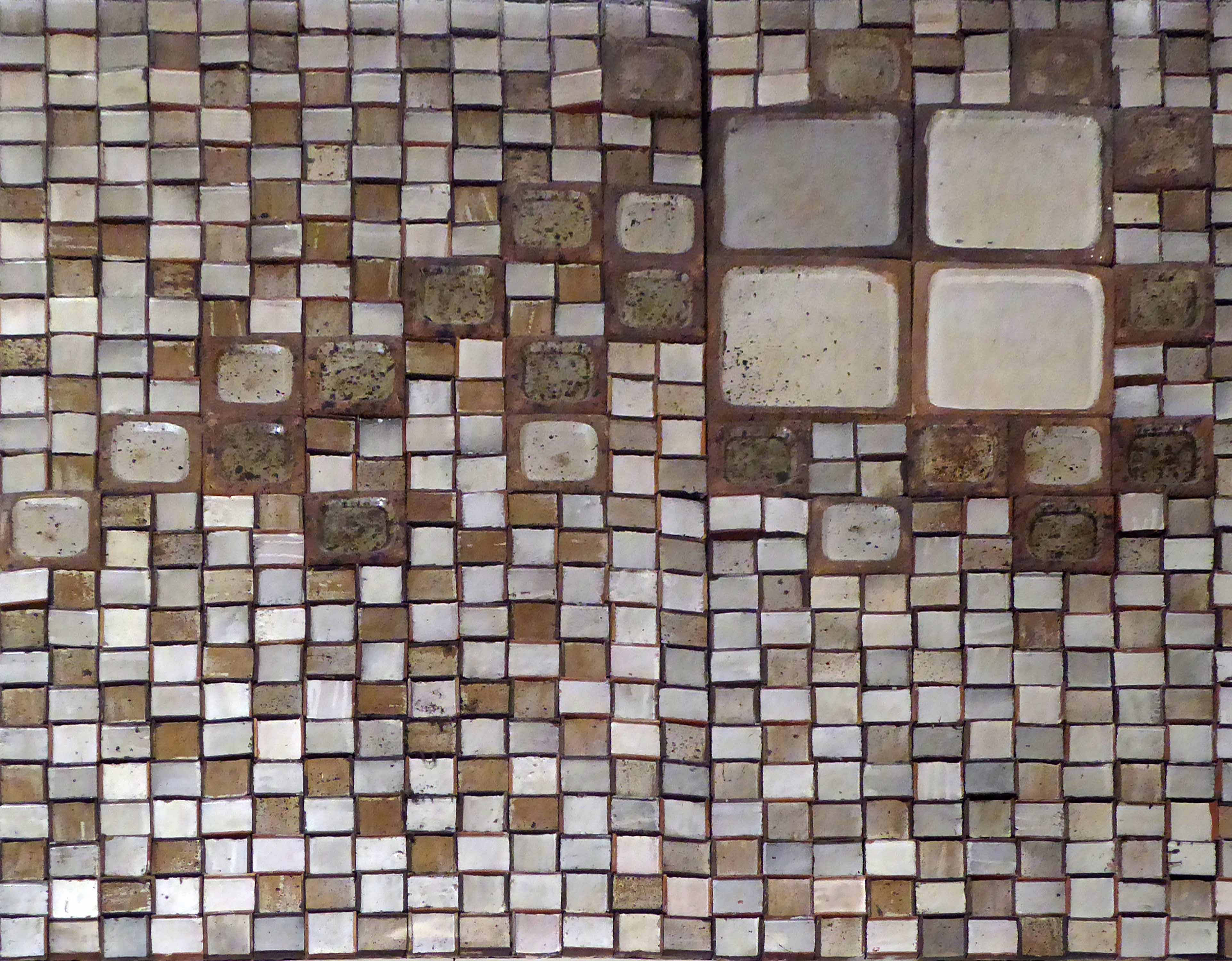
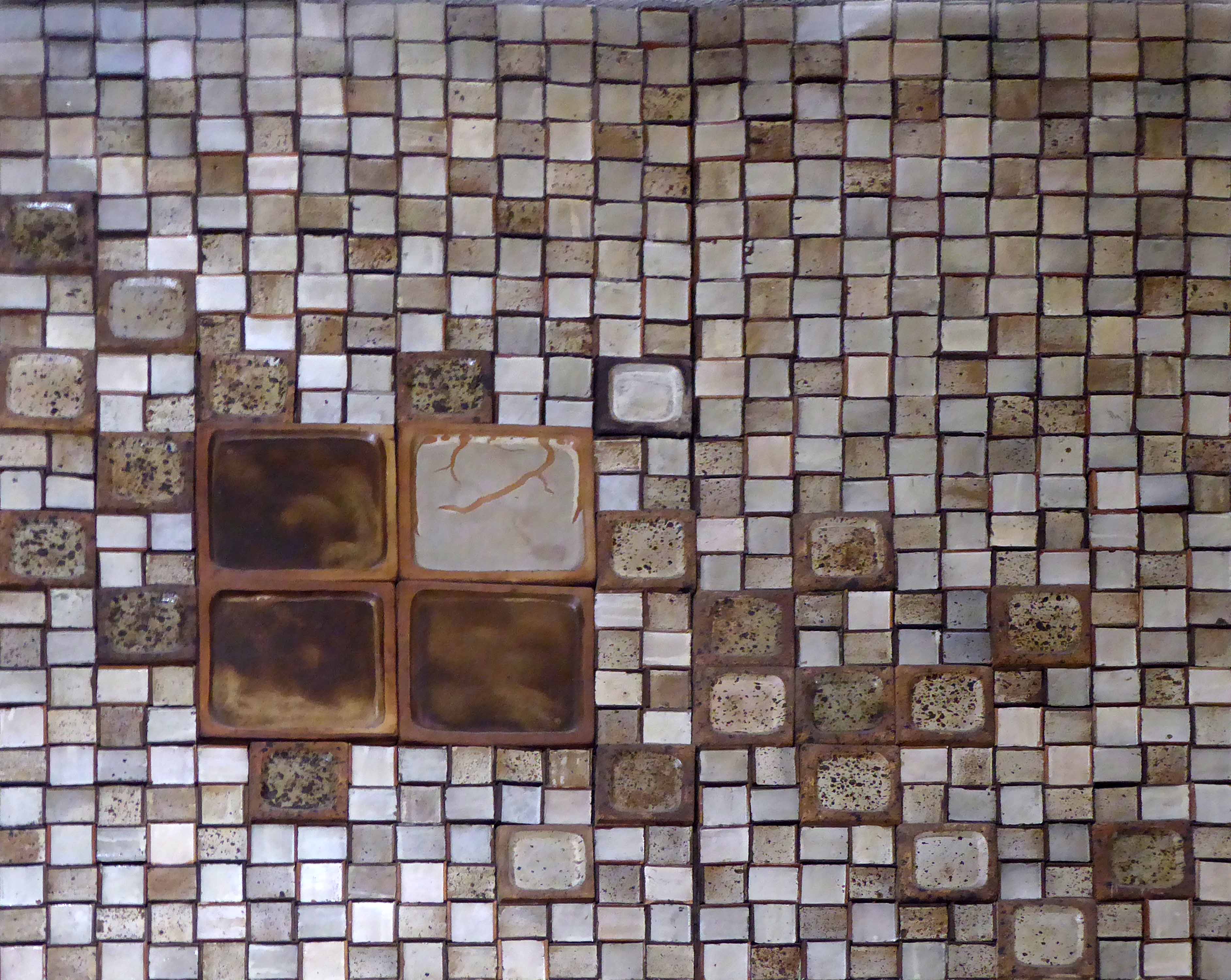
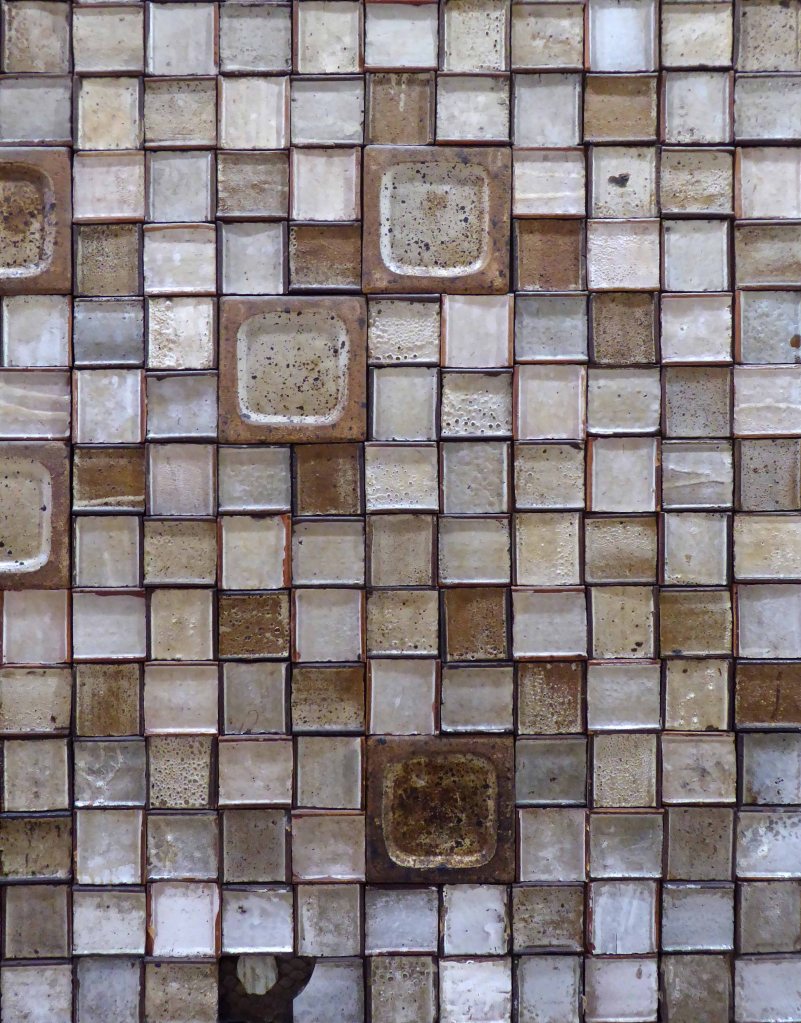
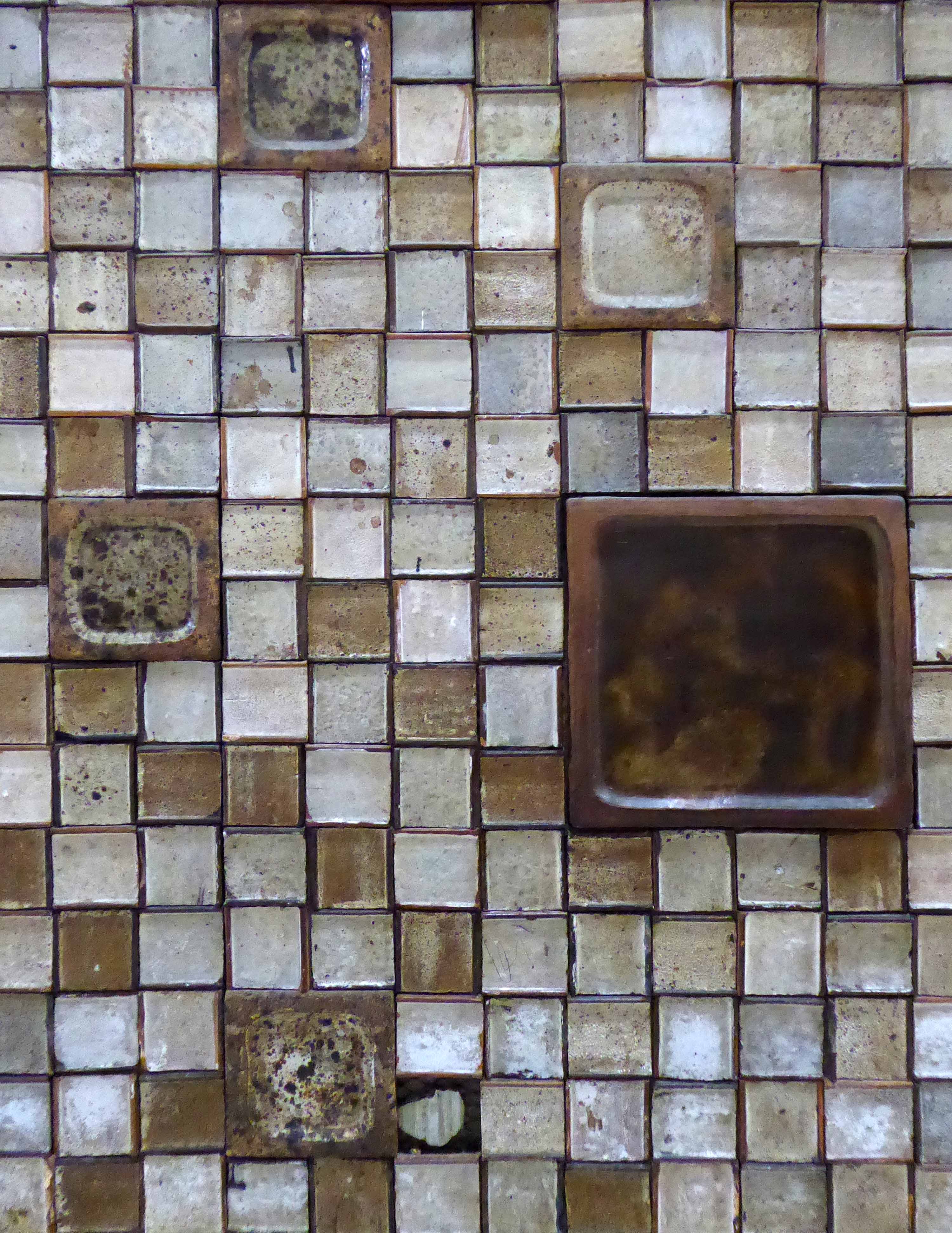
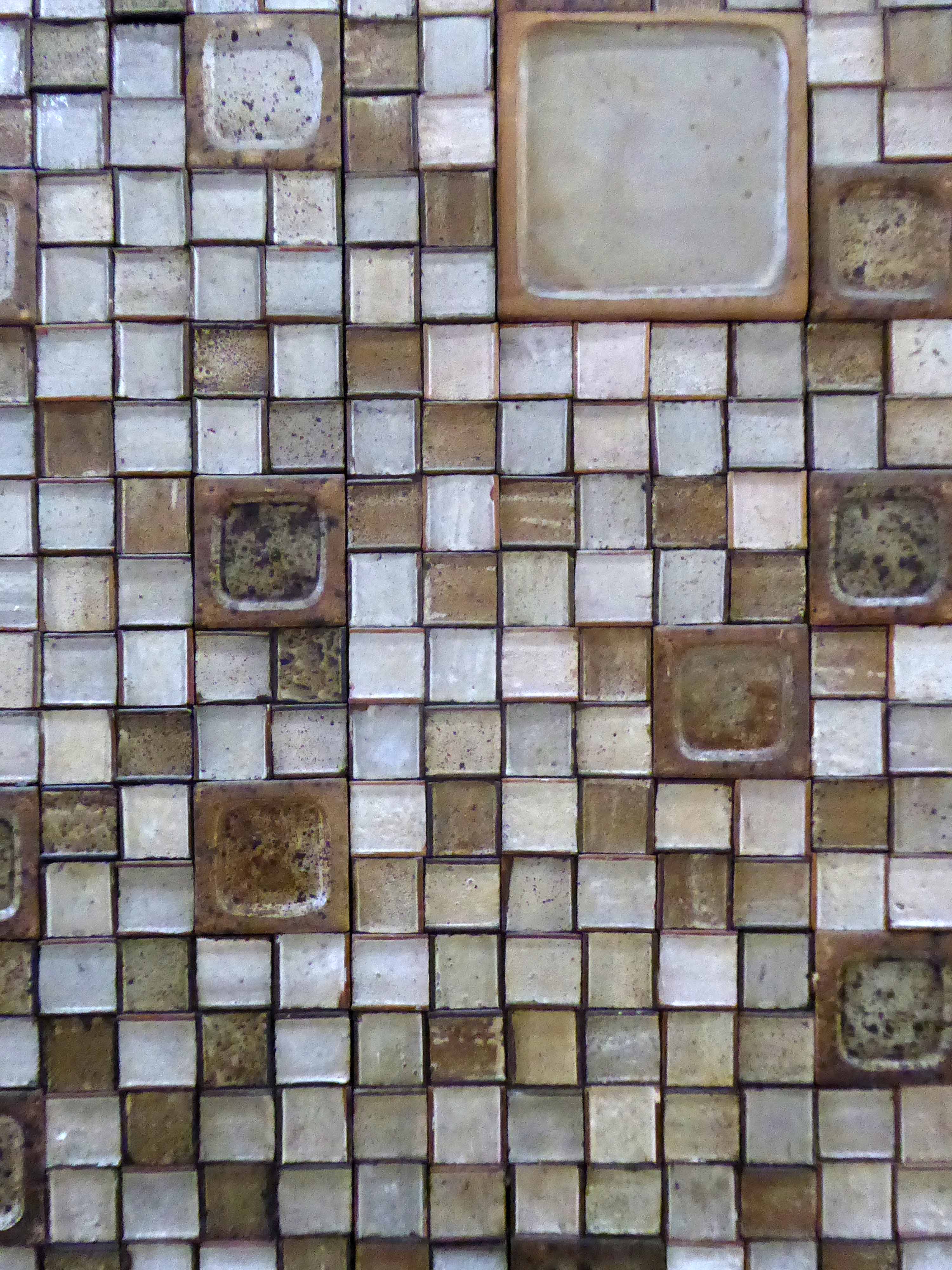
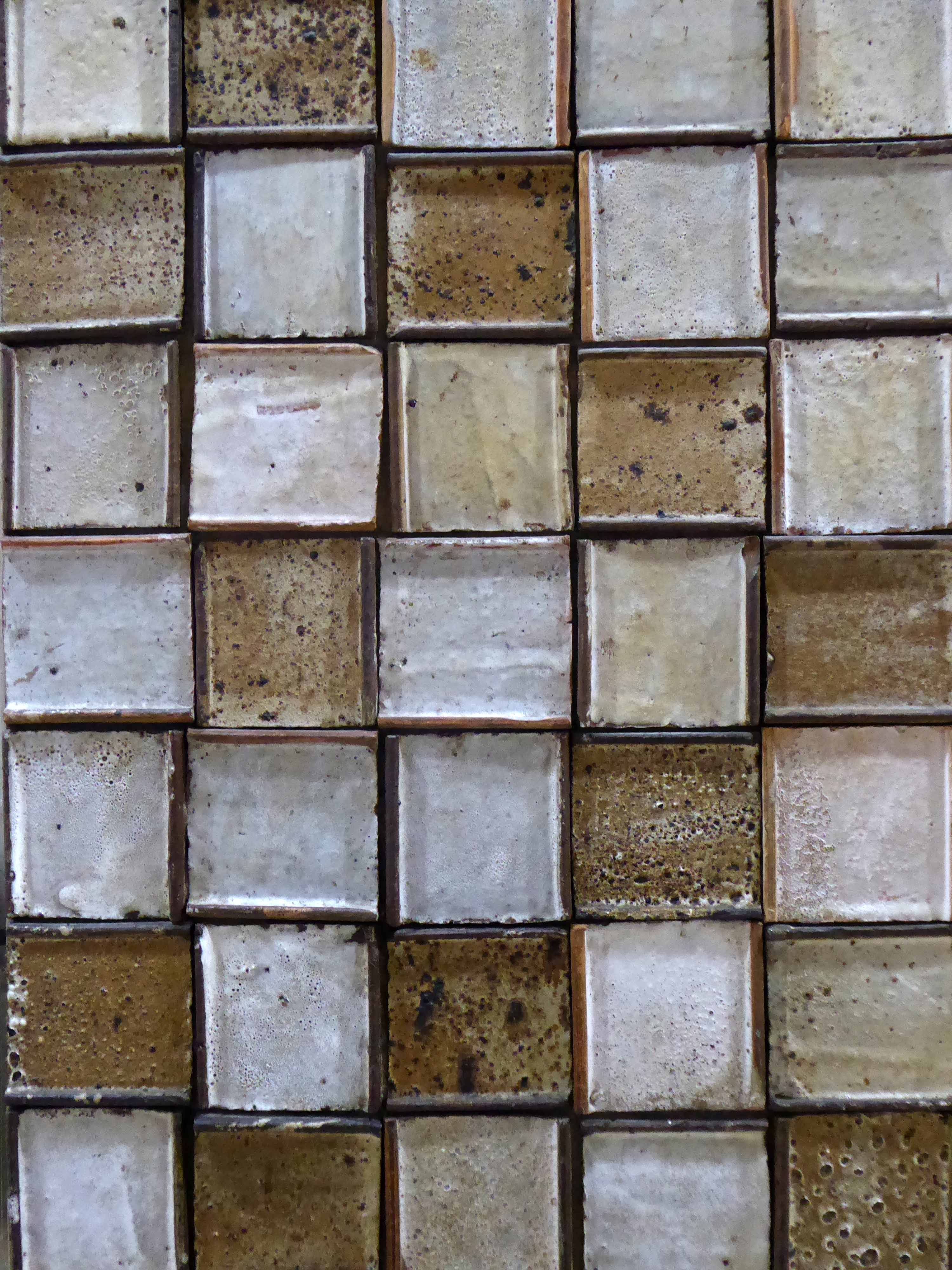
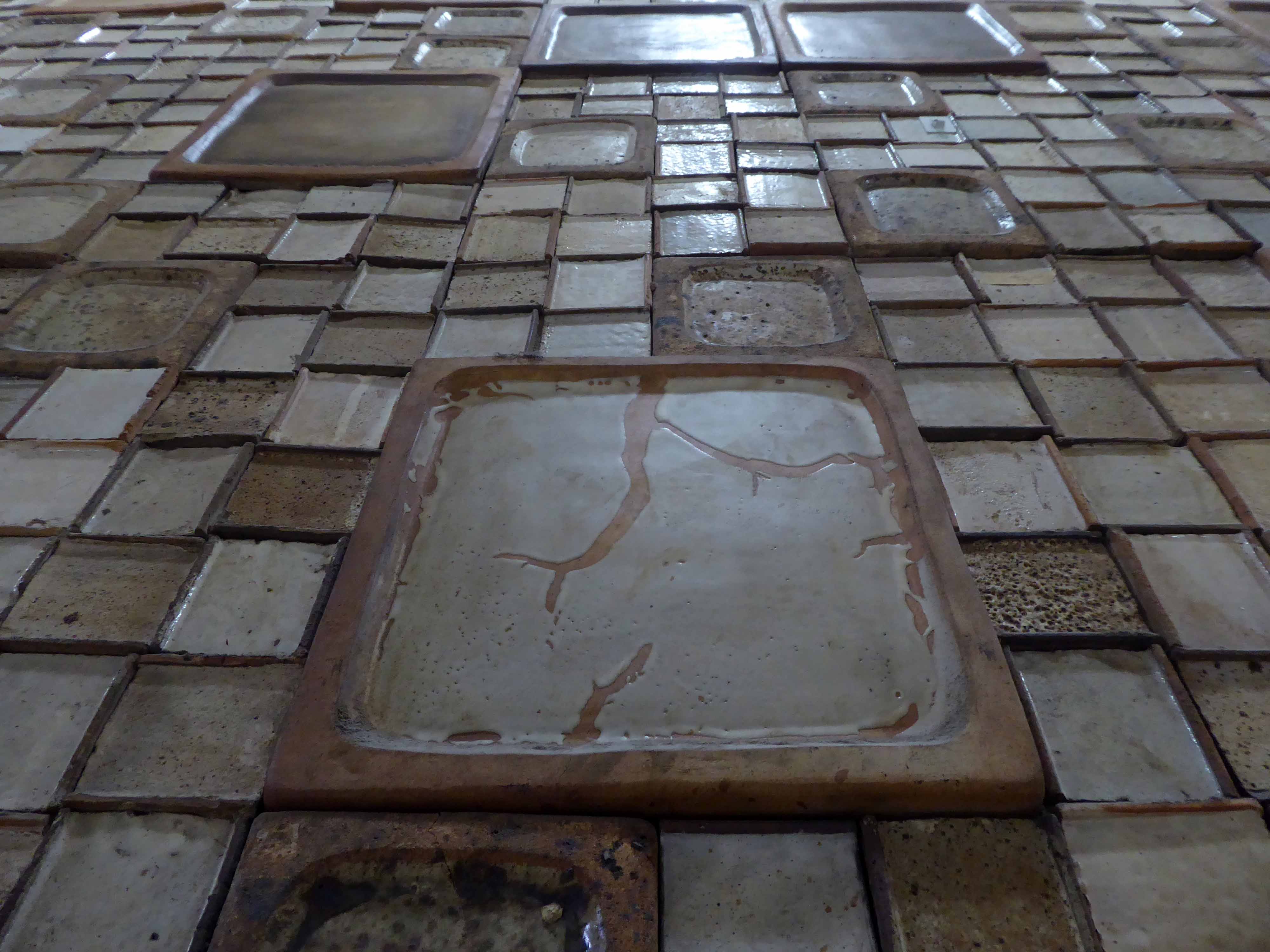
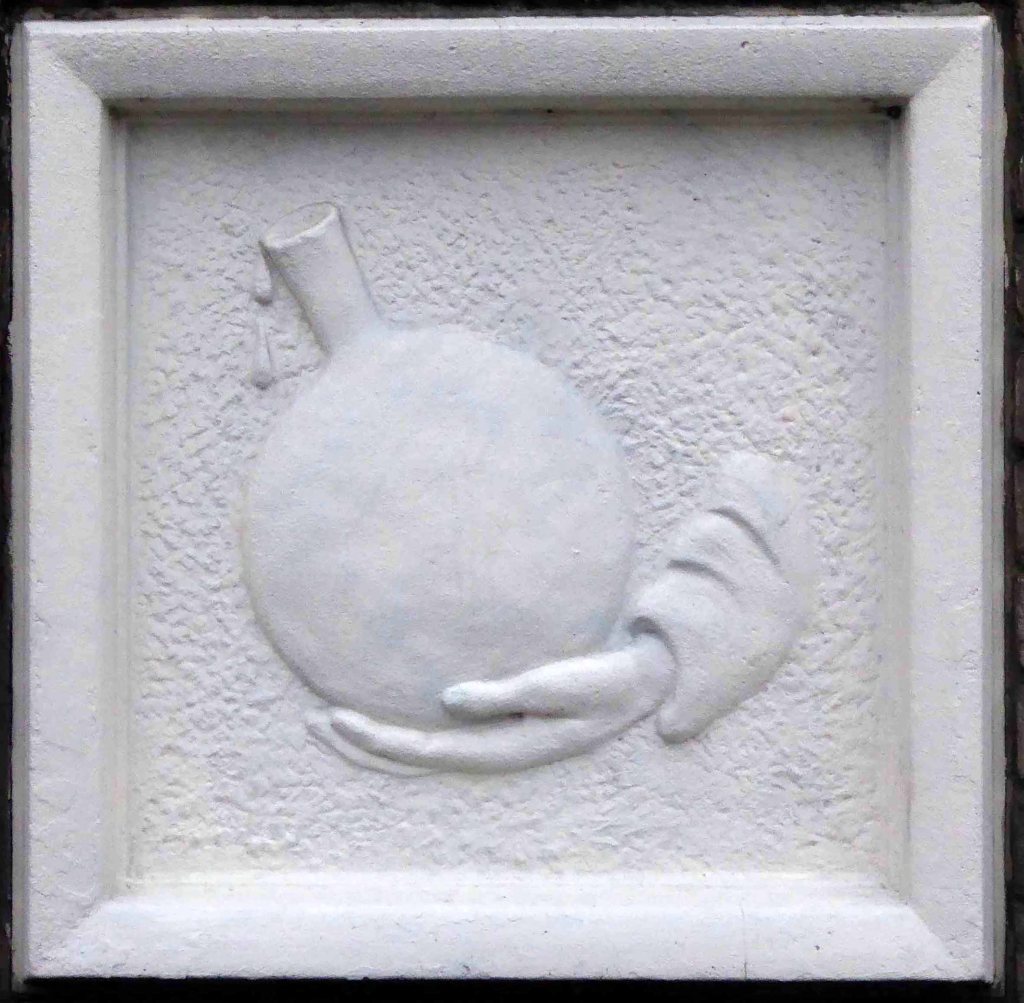
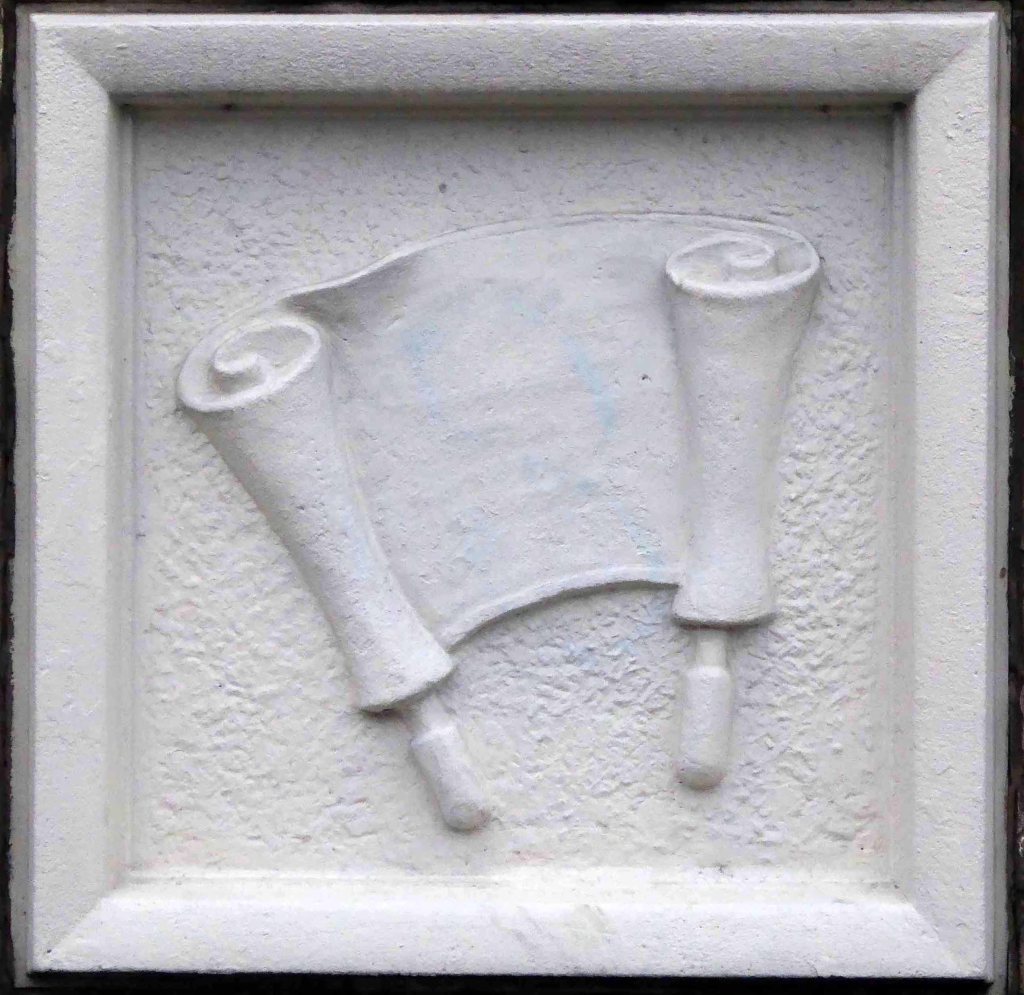
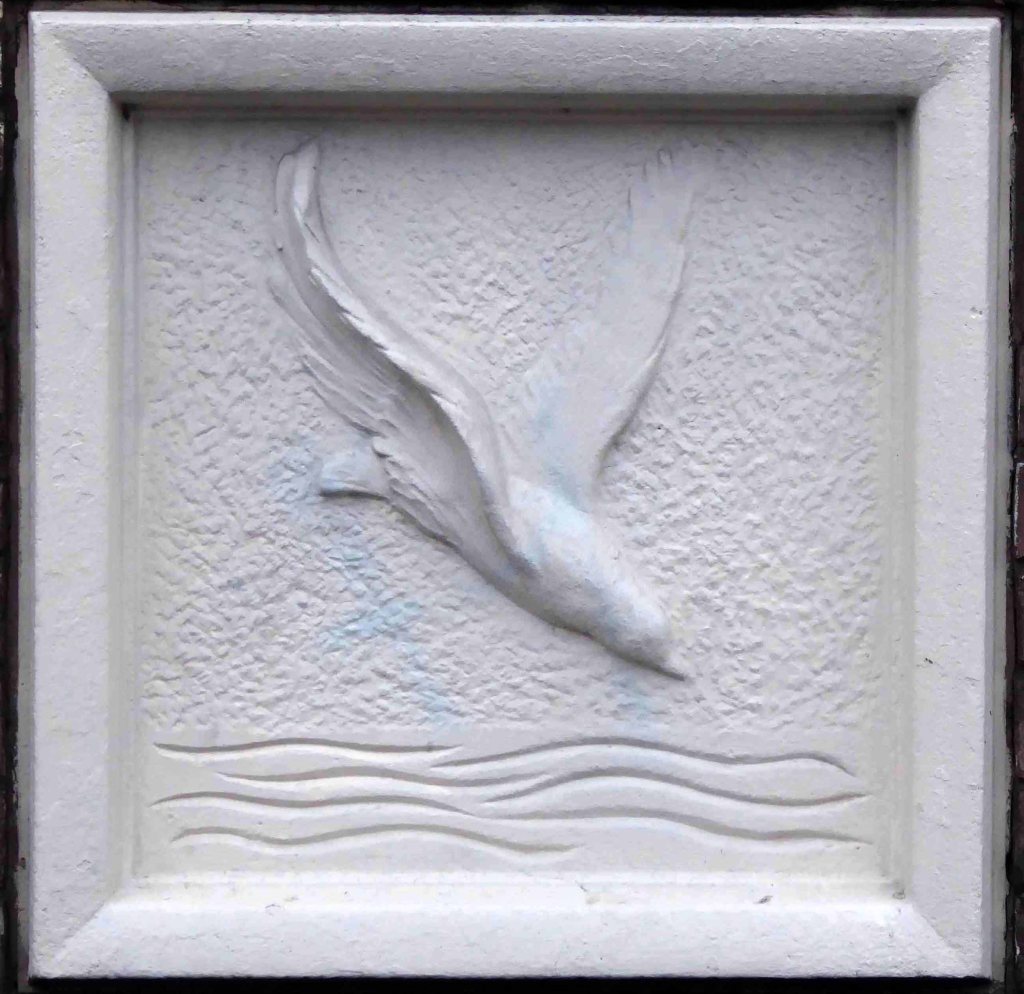
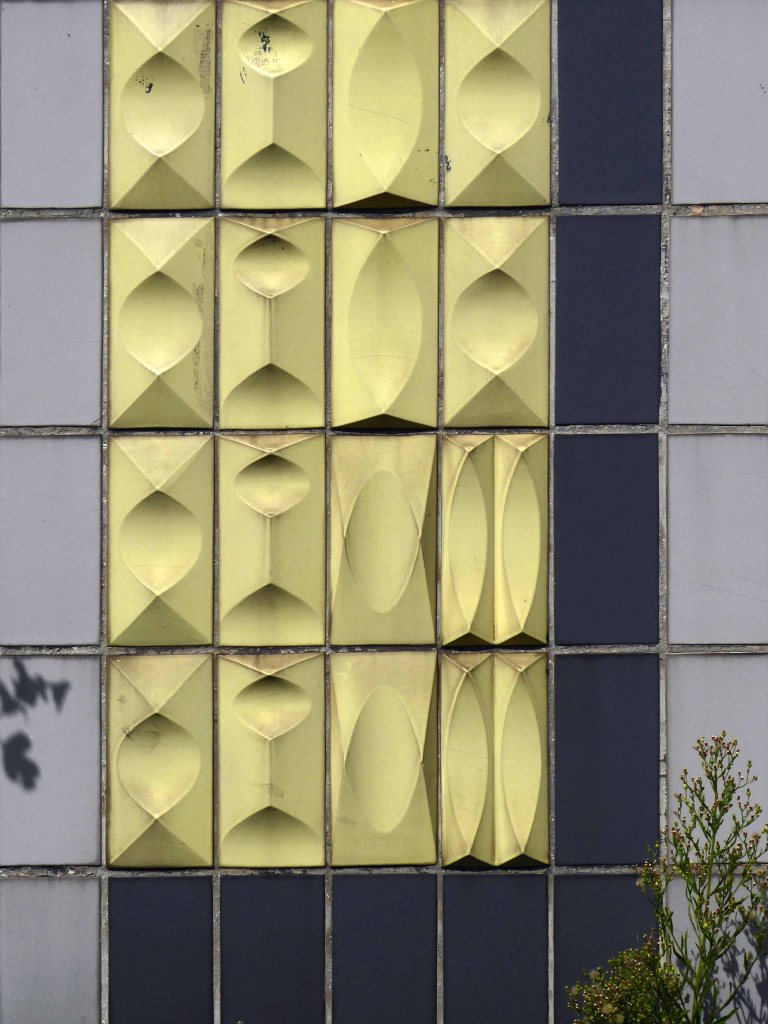
Mention must also be made of the tiled ceramic mosaics which adorn one wall and the three panels on the raised area above the stalls.
Authorship unknown.
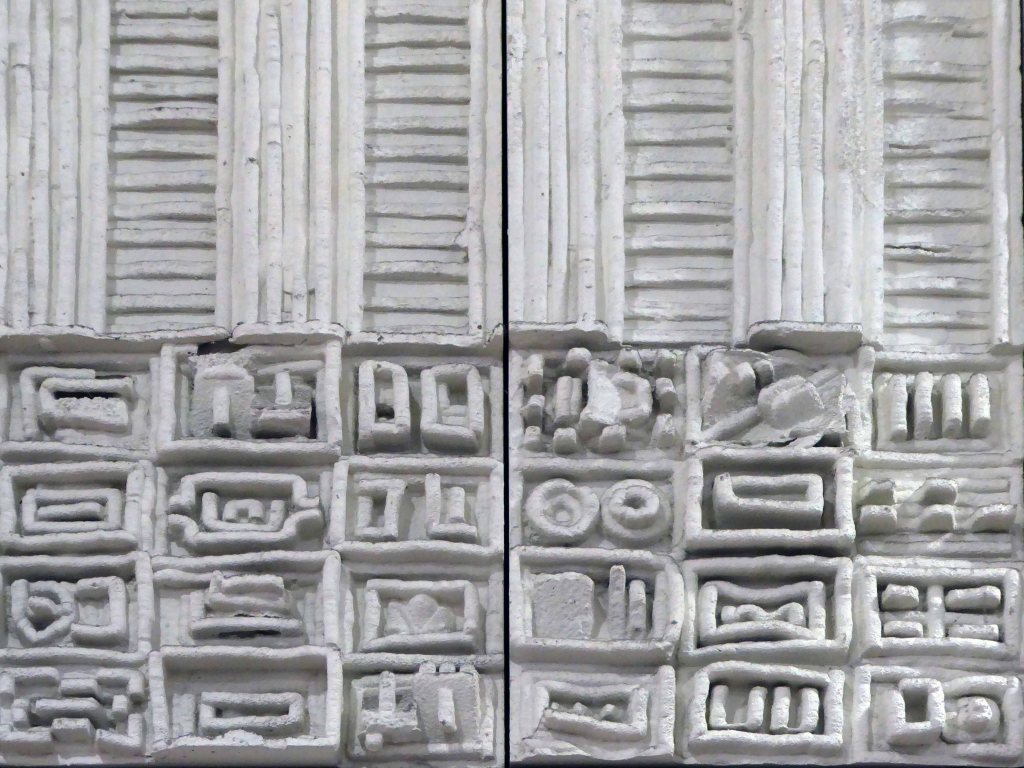
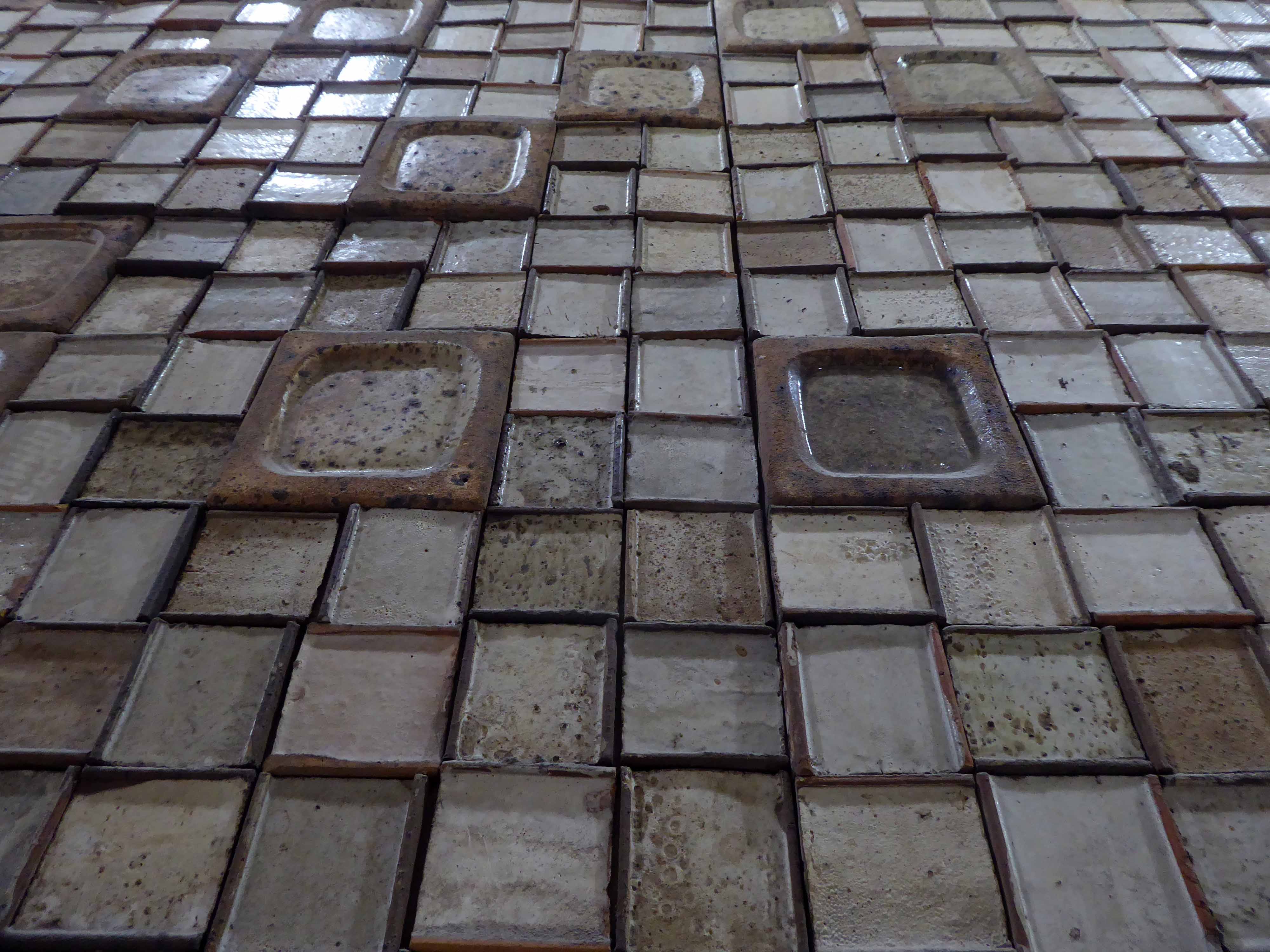
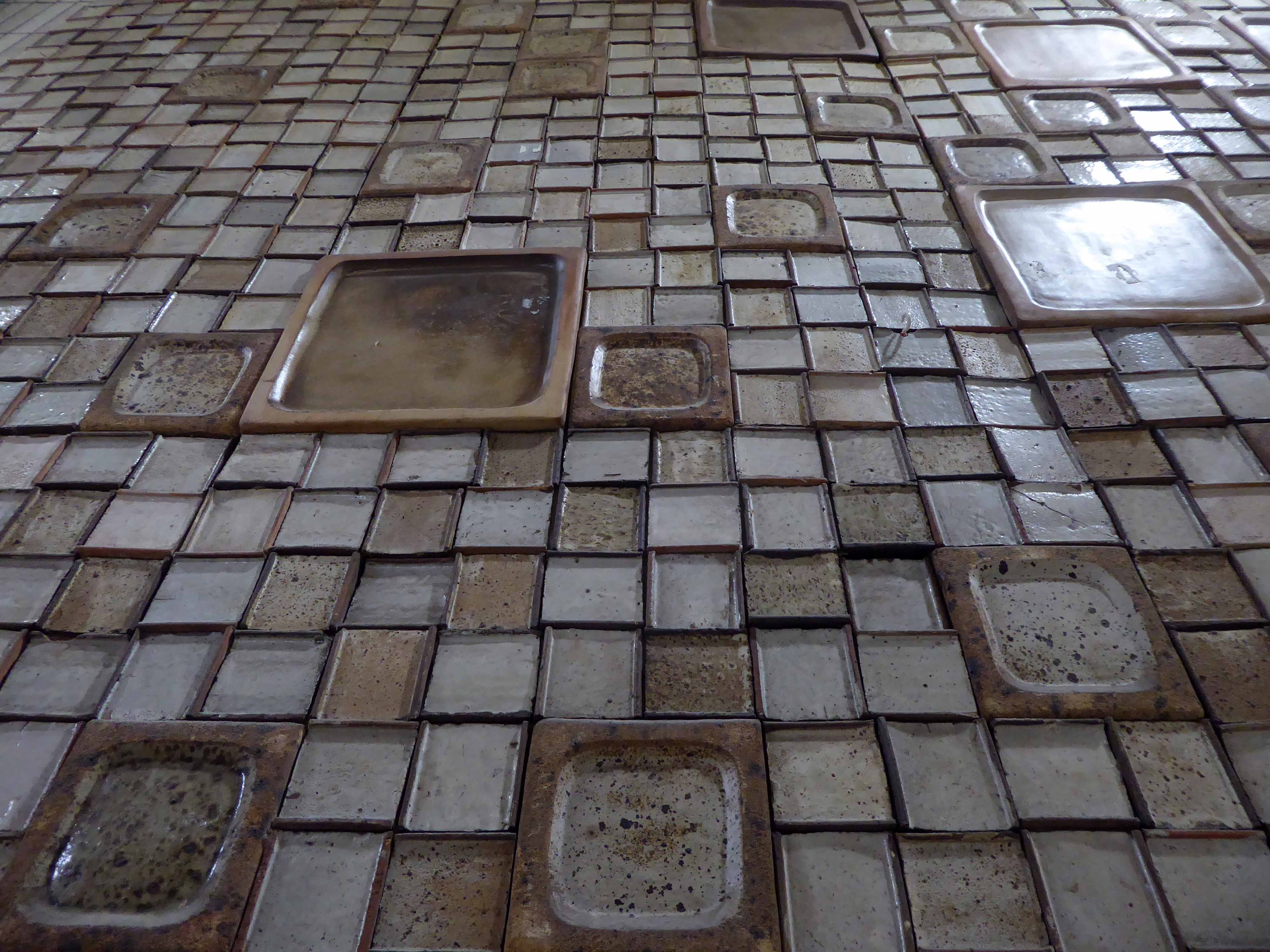
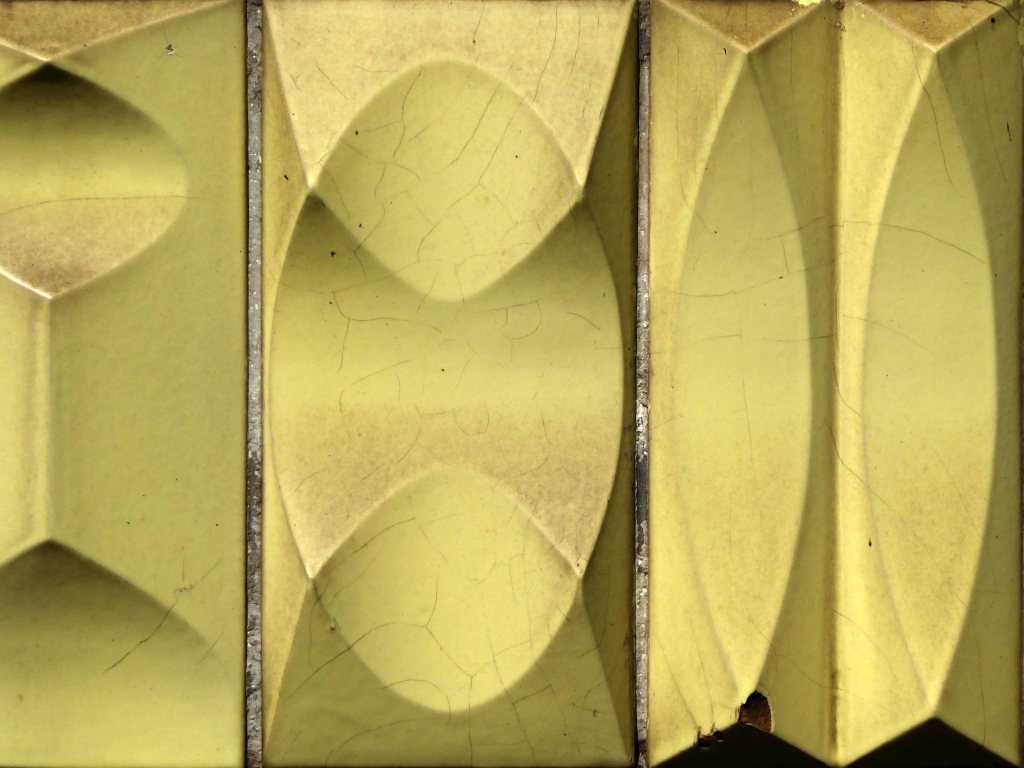
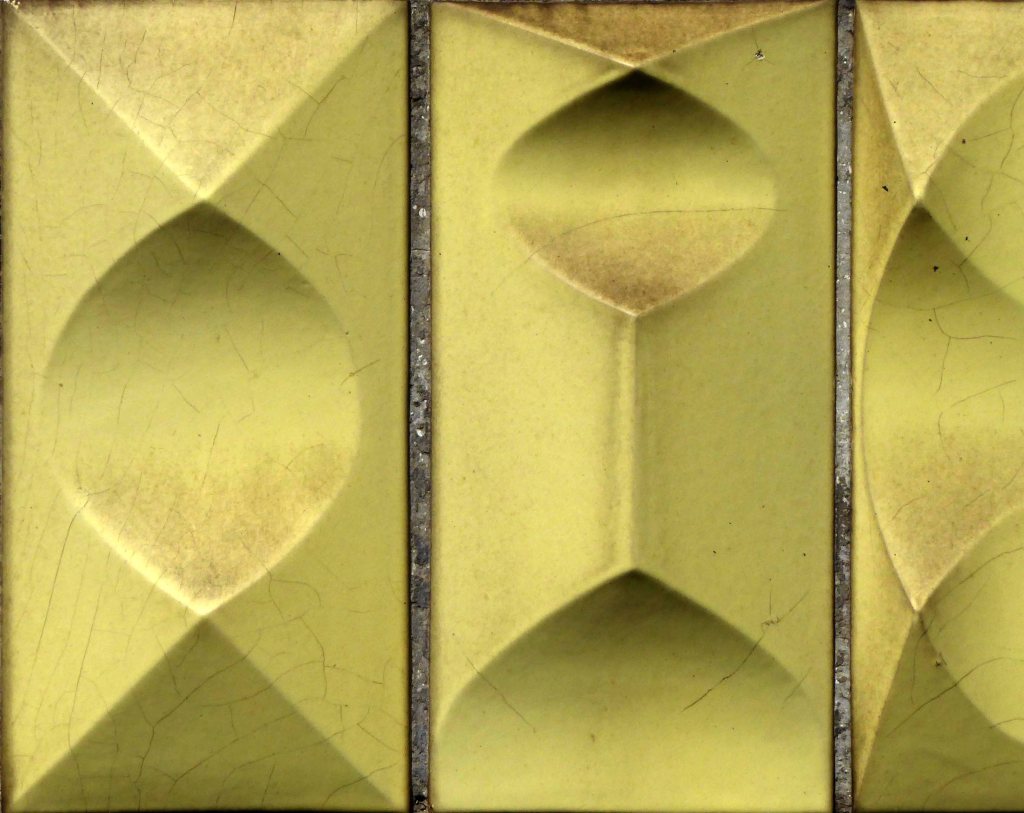
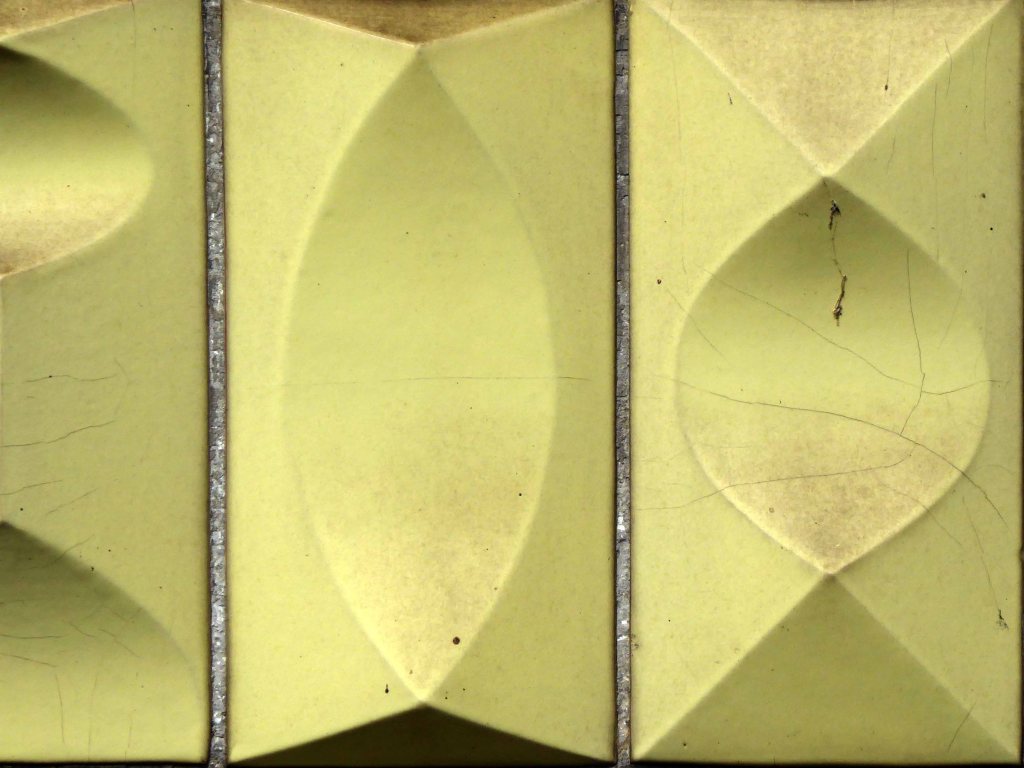
I was most intrigued by these tiles – I have not seen this type before – they have a resemblance to to Transform tiles that were produced in Staffordshire in the 1970s, but they are different in several ways.
The November 1973 T&A microfilm appears to have been stolen from Bradford Library so I can’t check reports and features from the time of the opening of the market on November 22 1973.
There comes a time in everyone’s life, when one simply must go to Rotherham, at least once – so I did.
To keep company with my personal town guide, Sheffield Modernist and local resident, Helen Angell.
I arrived early at Rotherham Central, so went for a solo wander.
The station was originally named Rotherham, becoming Rotherham and Masborough in January 1889 and finally Rotherham Central on 25 September 1950.
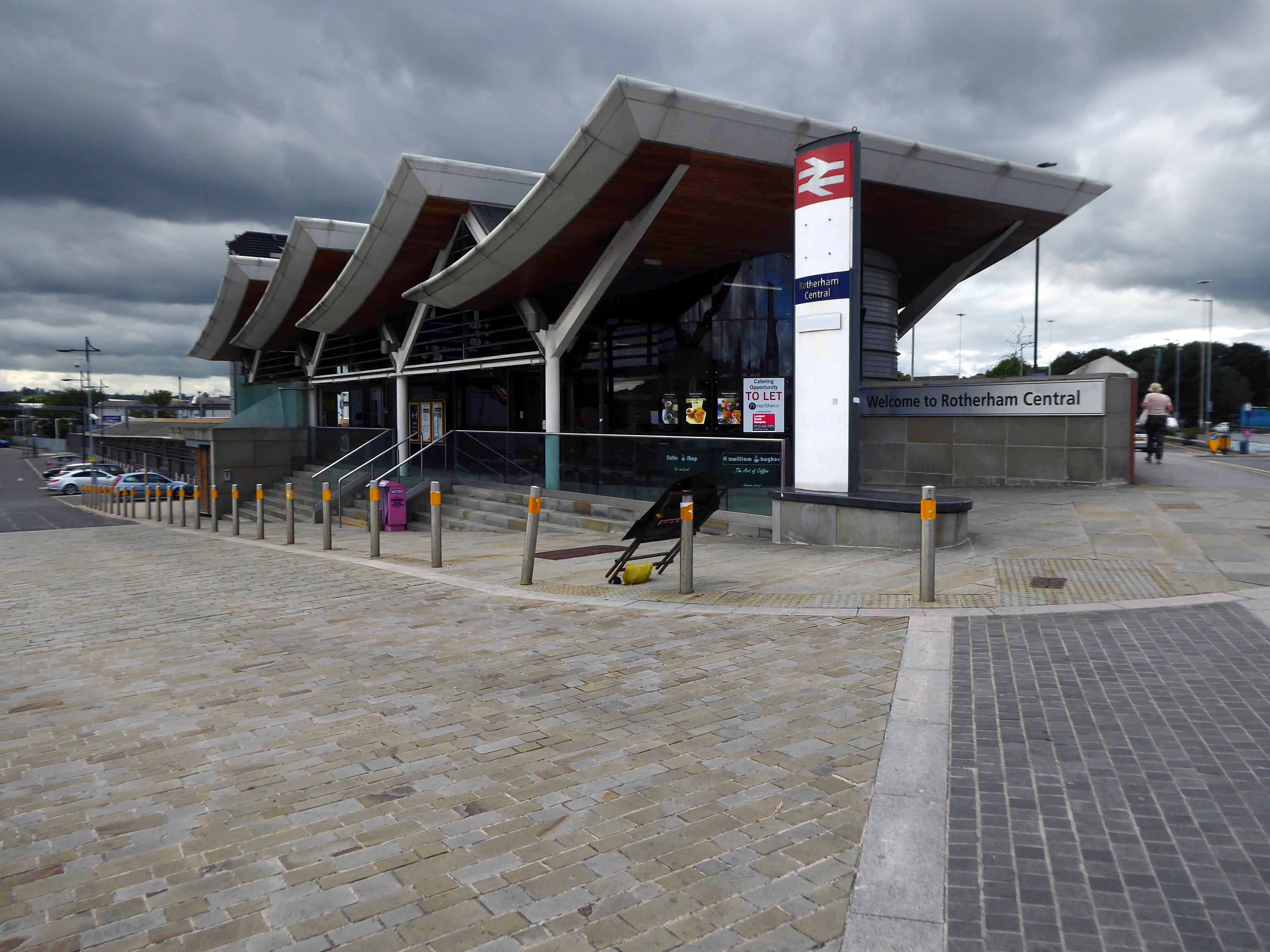
The newish Rotherham Central station was opened to passengers on 11 May 1987, the present iteration on Friday 24 February 2012, as part of the Rotherham Renaissance plans for the regeneration of the town.
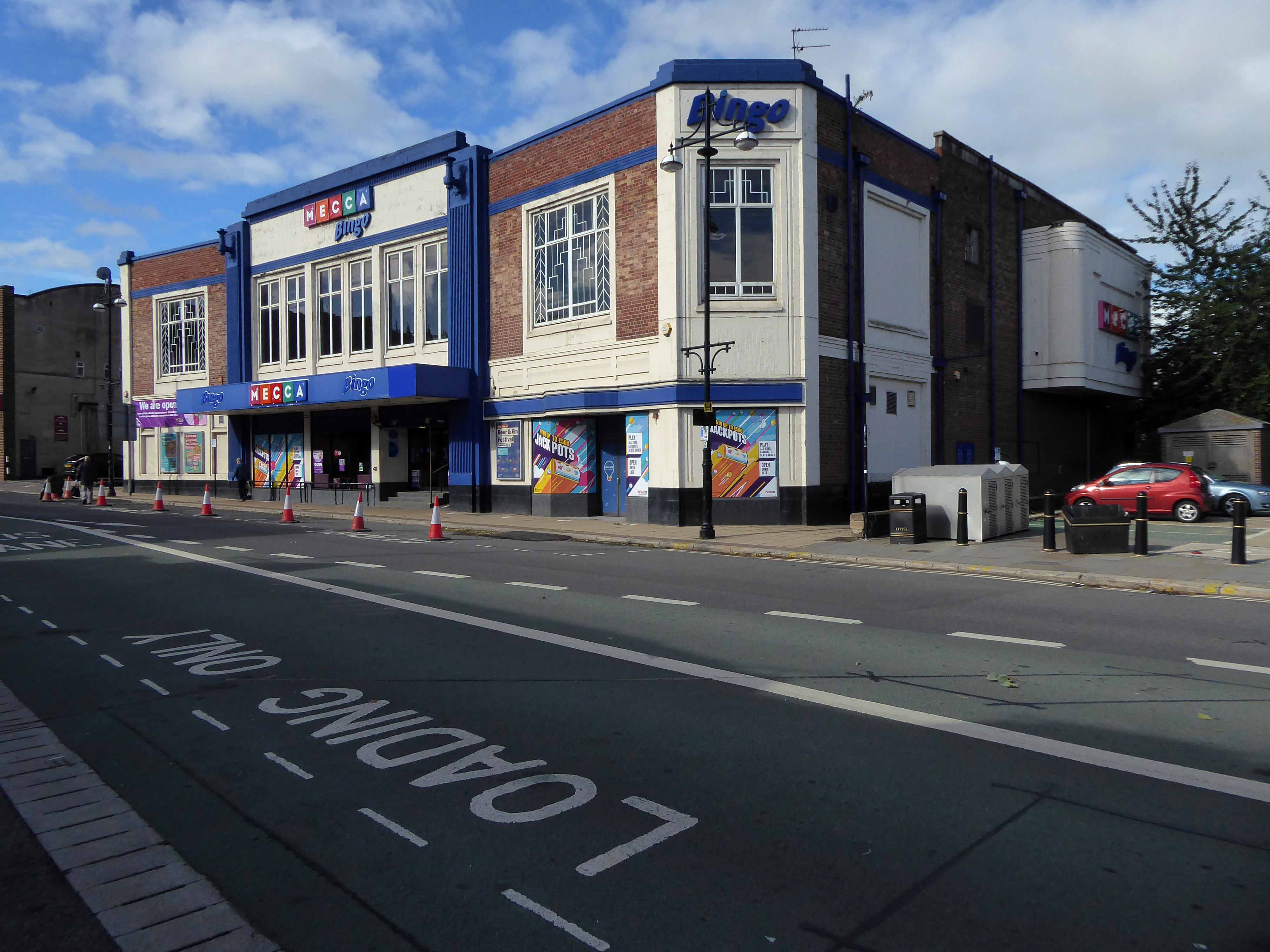
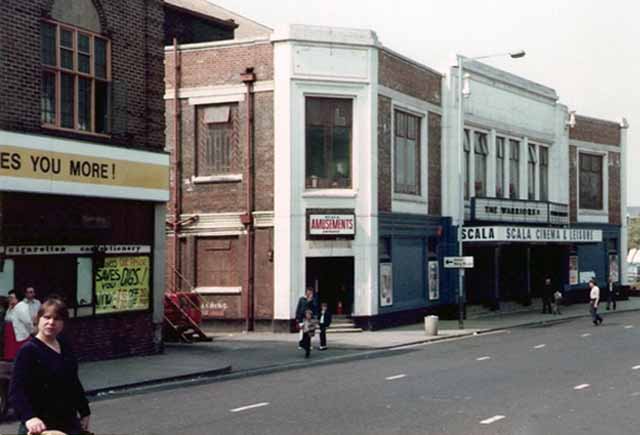
Opened 22 December 1934 as the Regal Cinema with Leslie Howard in Girls Please. Sandy Powell, the famous comedian attended opening night this 1,825 seat. It was designed by the Hull based architectural firm Messrs Blackmore & Sykes for local exhibitor Thomas Wade and was leased to the Lou Morris chain.
By 1937 it was operated by the London & Southern Super Cinemas Ltd. chain. The Regal Cinema was leased to the Odeon circuit in 1946 and was re-named Odeon. It was sold by the Rank Organisation to an independent operator in 1975 and renamed Scala Cinema, by 1981 using the circle only.
Closed 23rd September 1983 with the film Porky’s.
Became a bingo hall initially named Ritz but now Mecca. On 20th February 2020 the building was put up for sale by auction at an asking price of £600,000+, but failed to sell, with the maximum reached £590,000. Mecca bingo continues in the building.
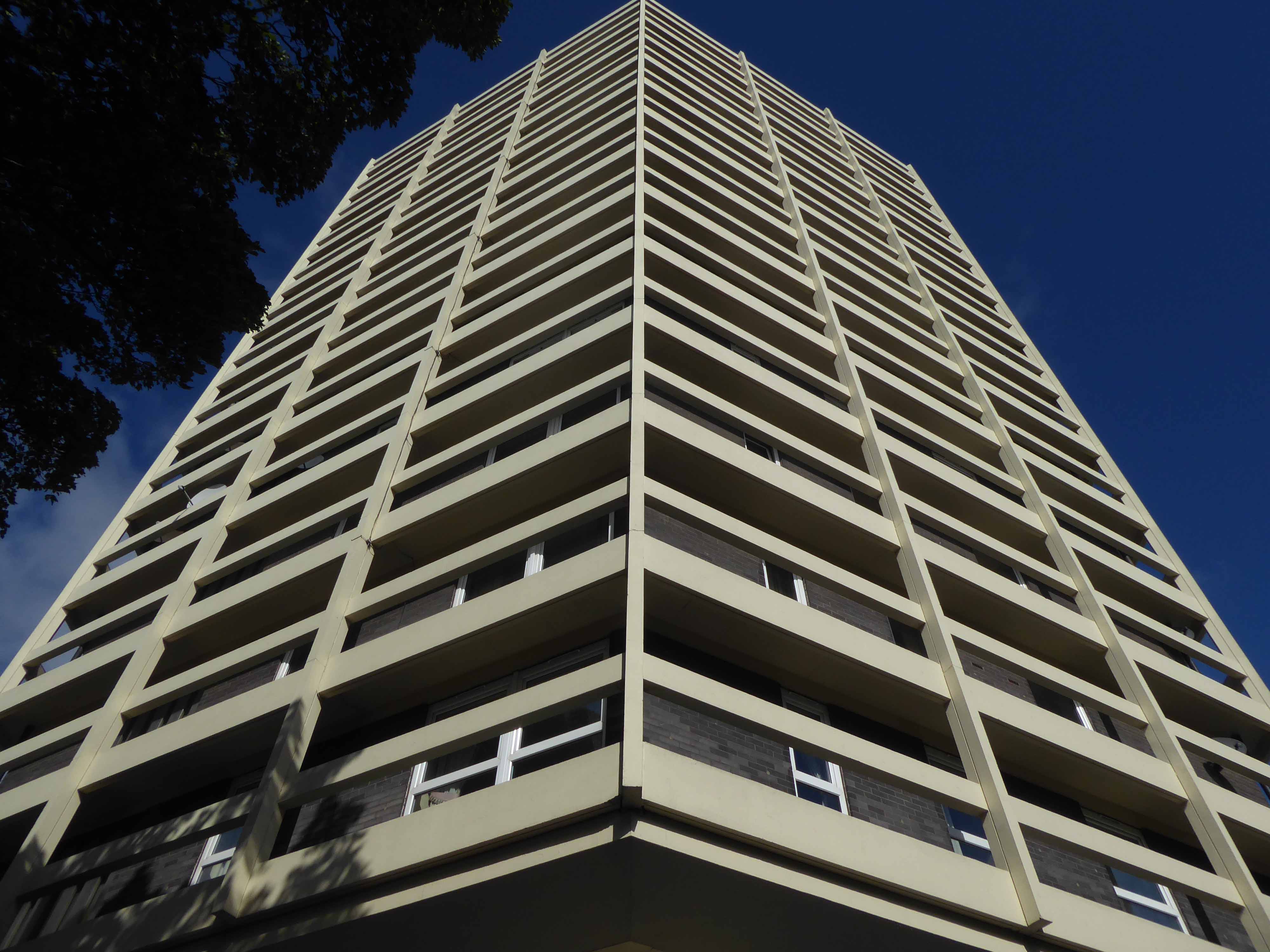
Main contractors J. Finnegan it’s thirteen storeys high – housing forty eight dwellings.
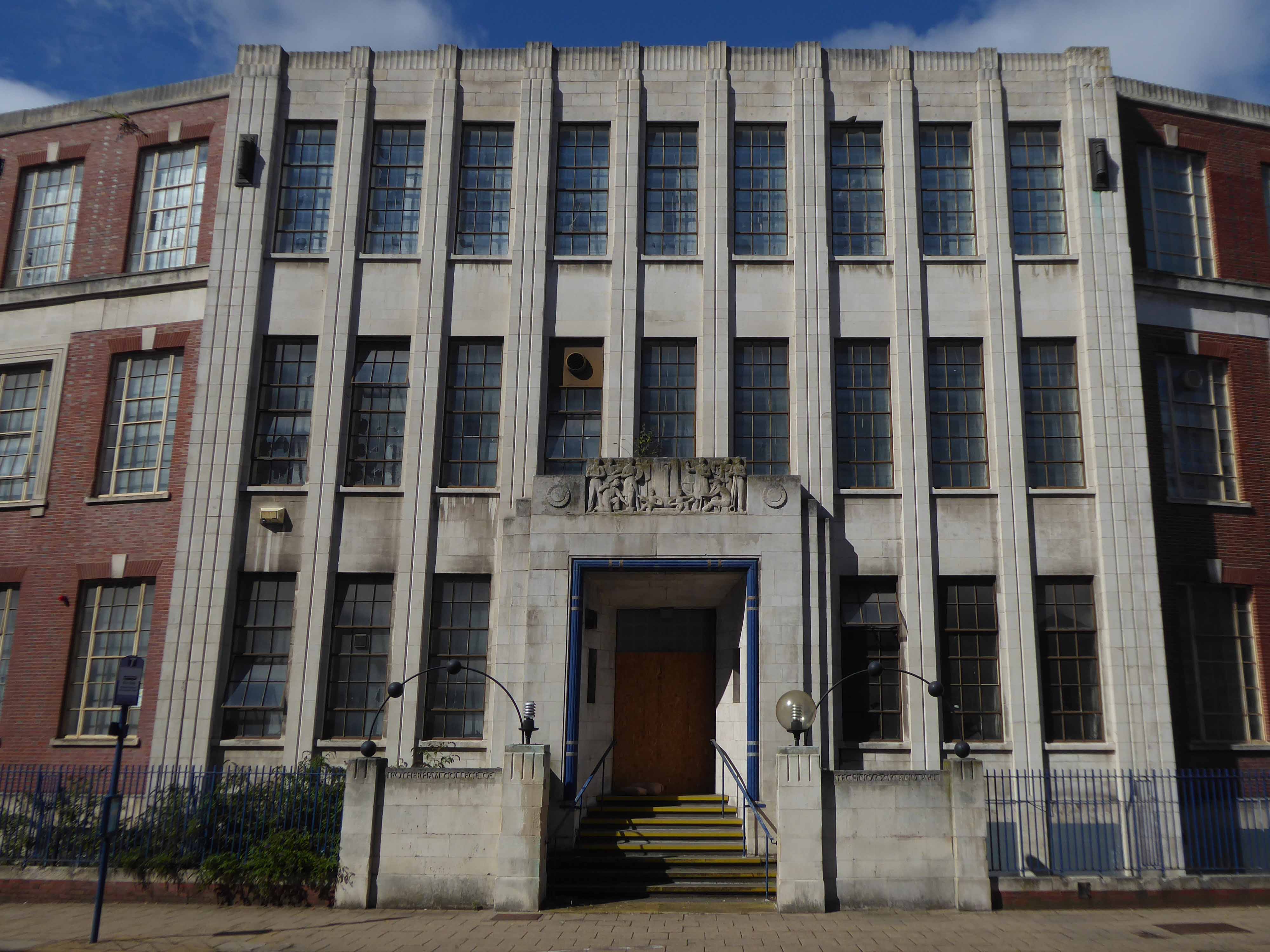
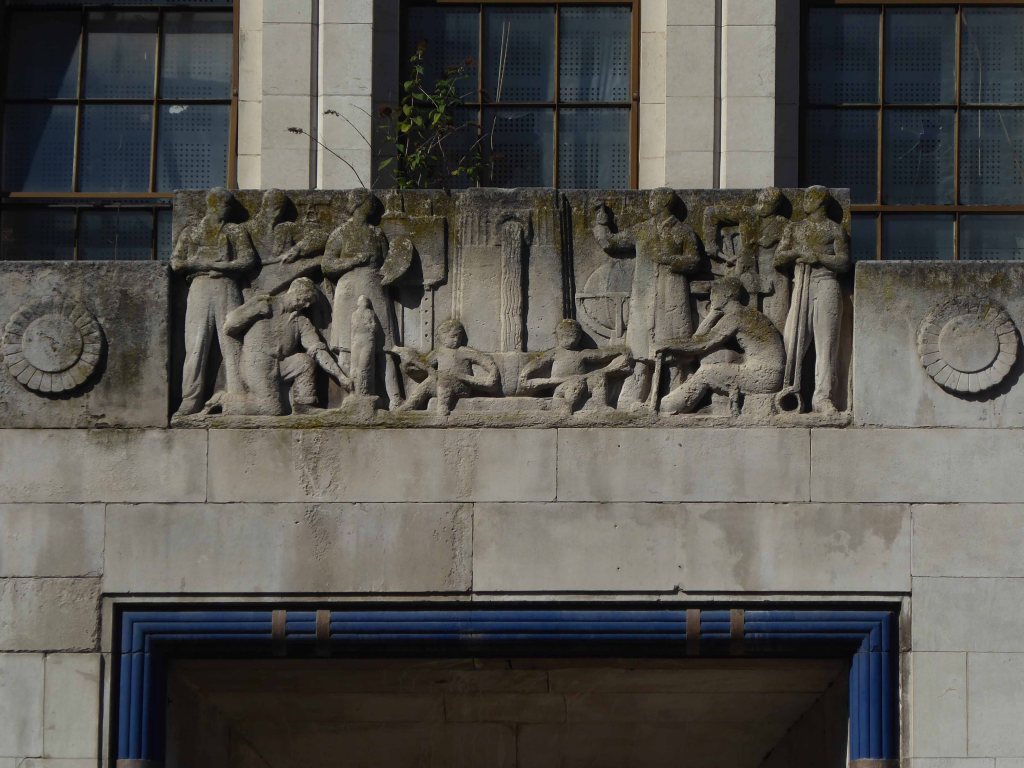
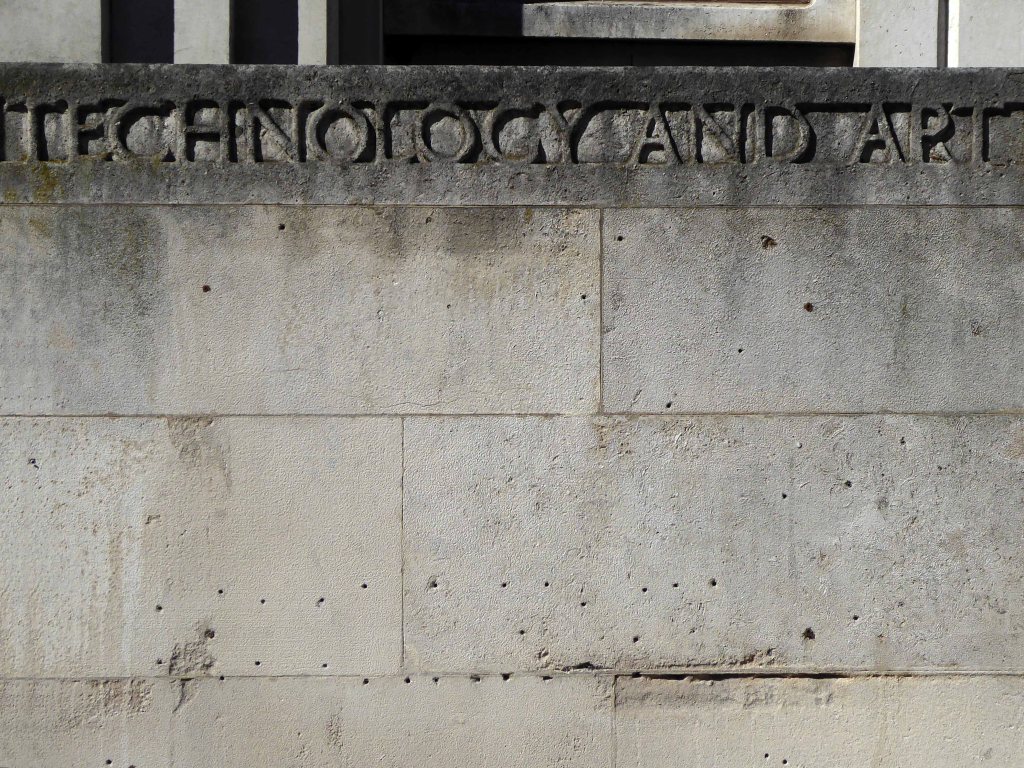
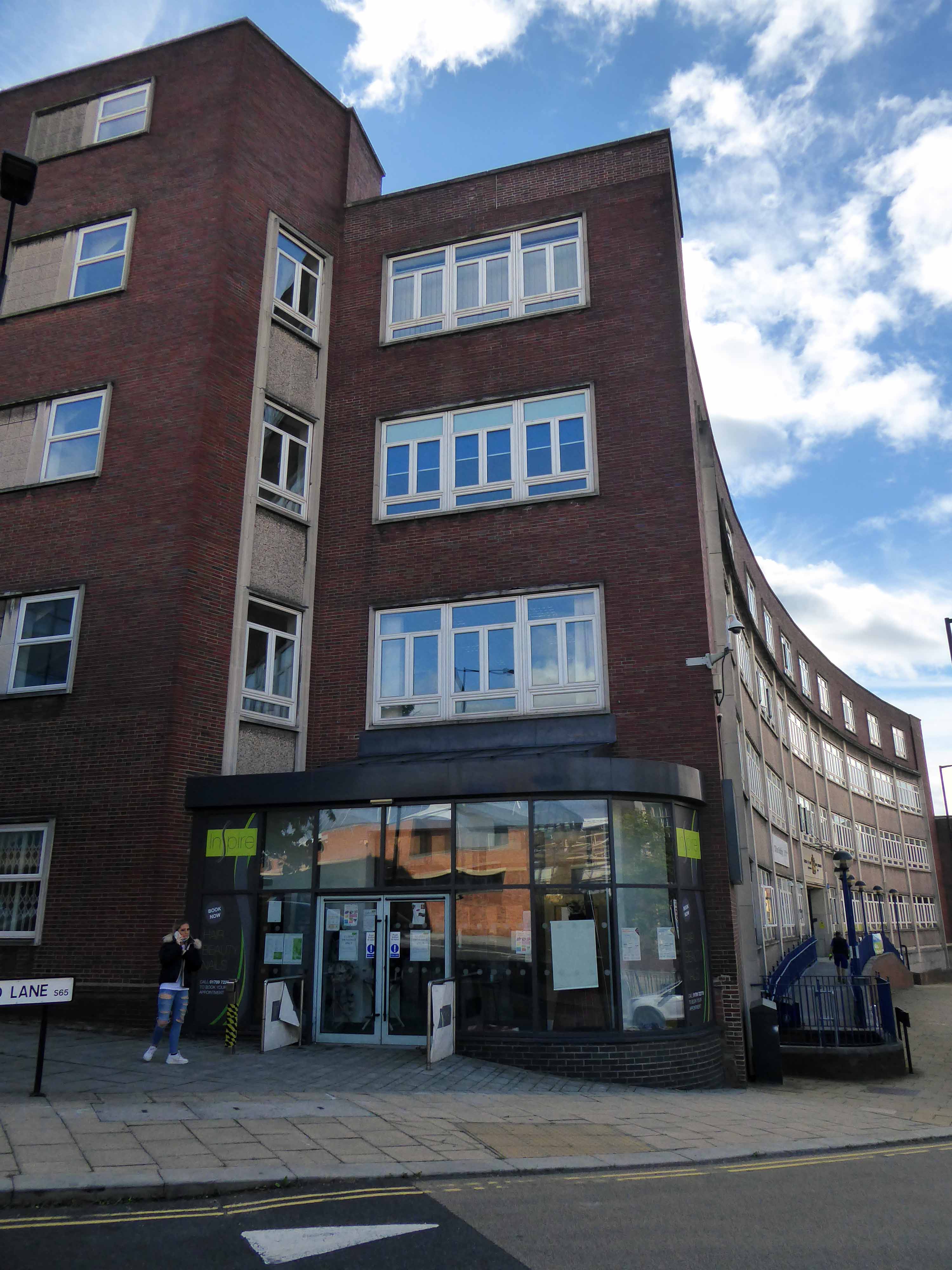
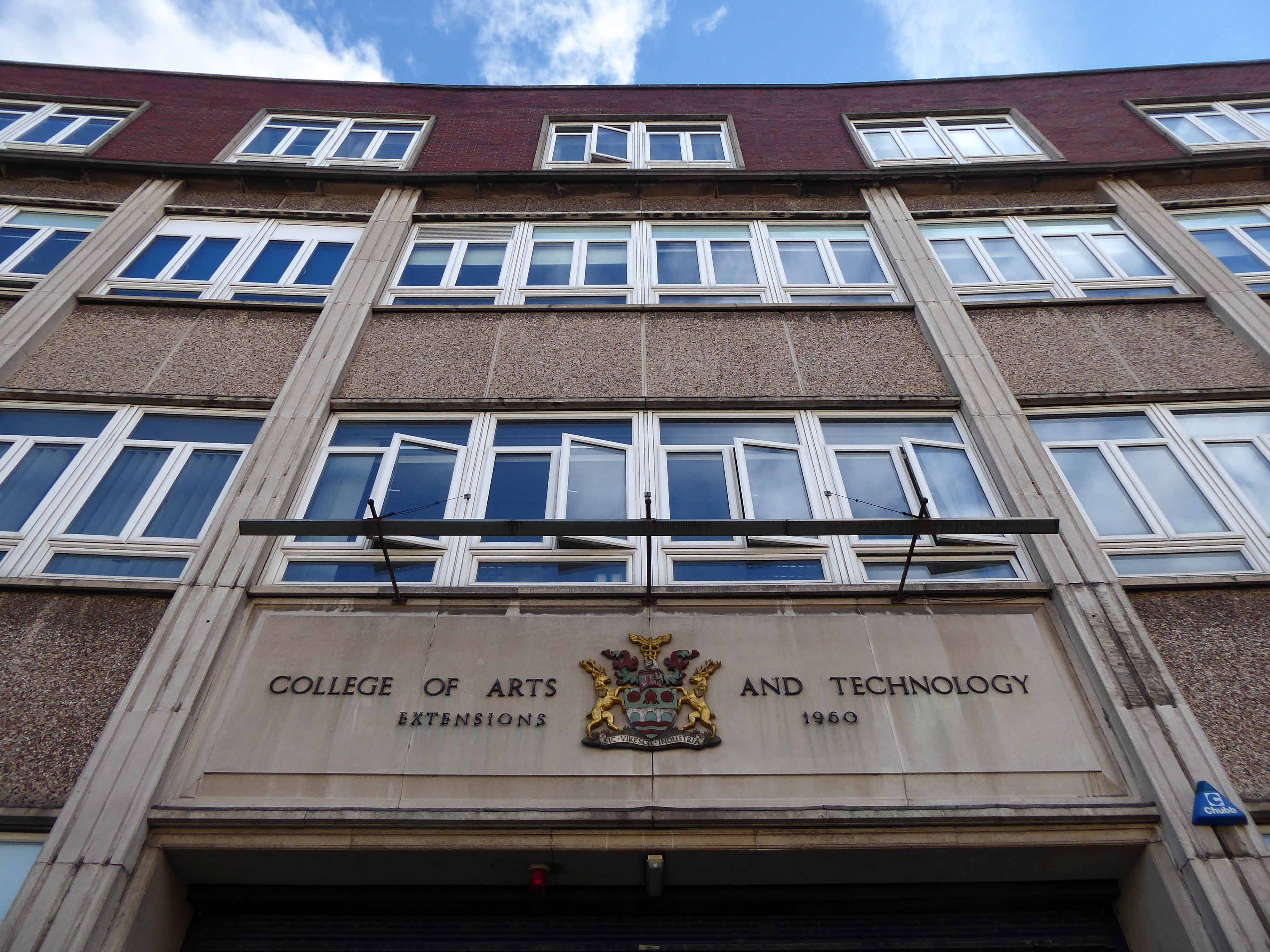
Interwar Technical College – Howard Building
From the 1930s, it provided technical-orientated education from the Howard Building on Eastwood Lane, Rotherham. In 1981, three neighbouring colleges of arts, technology and adult education were merged into one. As a result, the college became known as Rotherham College of Arts and Technology.
Revised plans to convert the historic Howard Building in Rotherham town centre into self-contained studios and apartments have been approved by the planning board at Rotherham Council.
The prominent former college building was sold prior to going to auction last September after it was advertised as a development opportunity and given a guide price of £250,000 by local auctioneers, Mark Jenkinson & son.
A group of rogue property directors with links to a prominent derelict building in Rotherham have been banned for a total of 54 years. The six, of Absolute Living Developments, were found to have misled more than 300 people to invest at least £12 million in residential properties.
The firm was linked through a lender to Avro Developments, which had plans passed in 2015 to renovate former college block the Howard Building in Rotherham town centre.
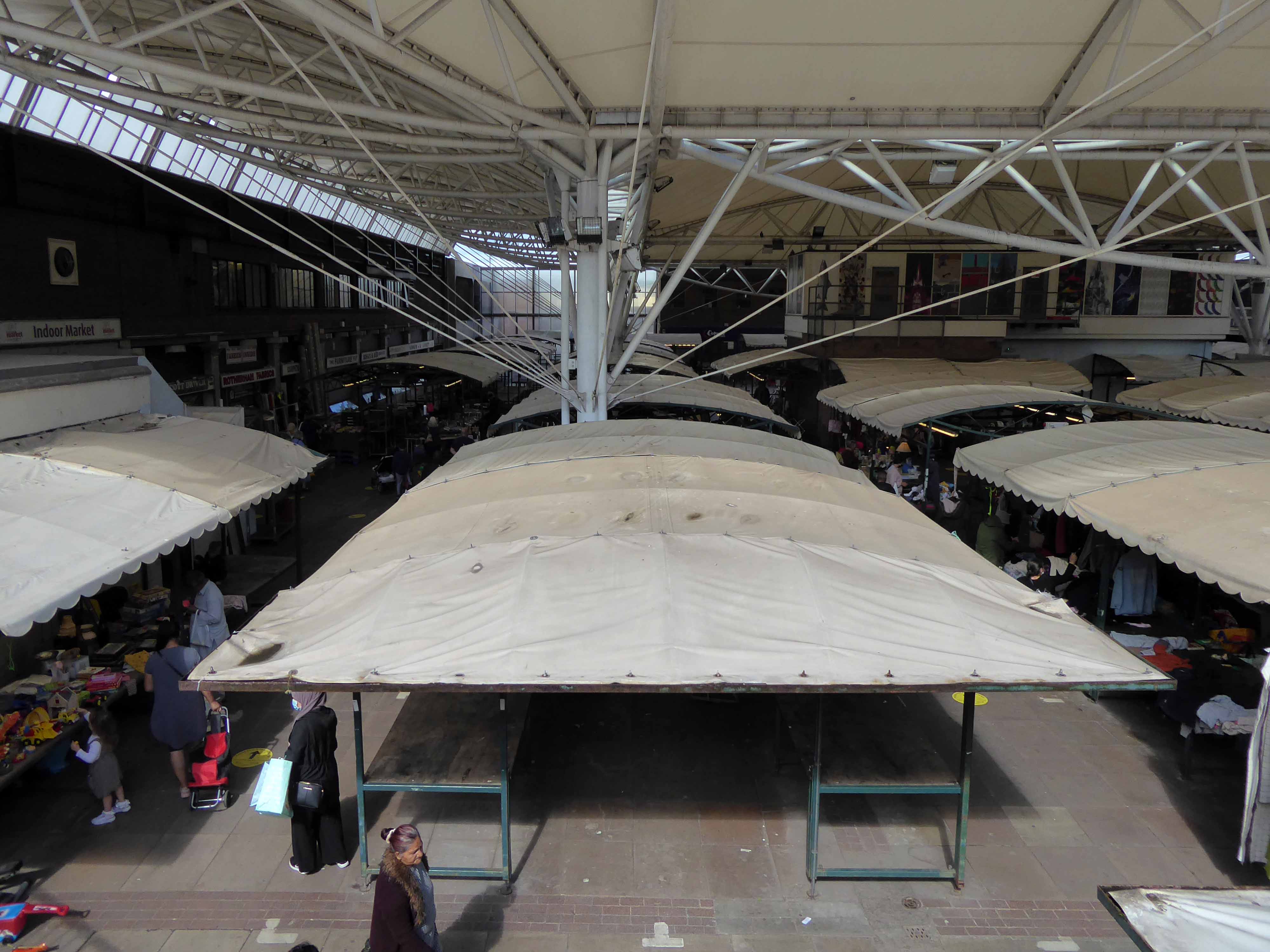
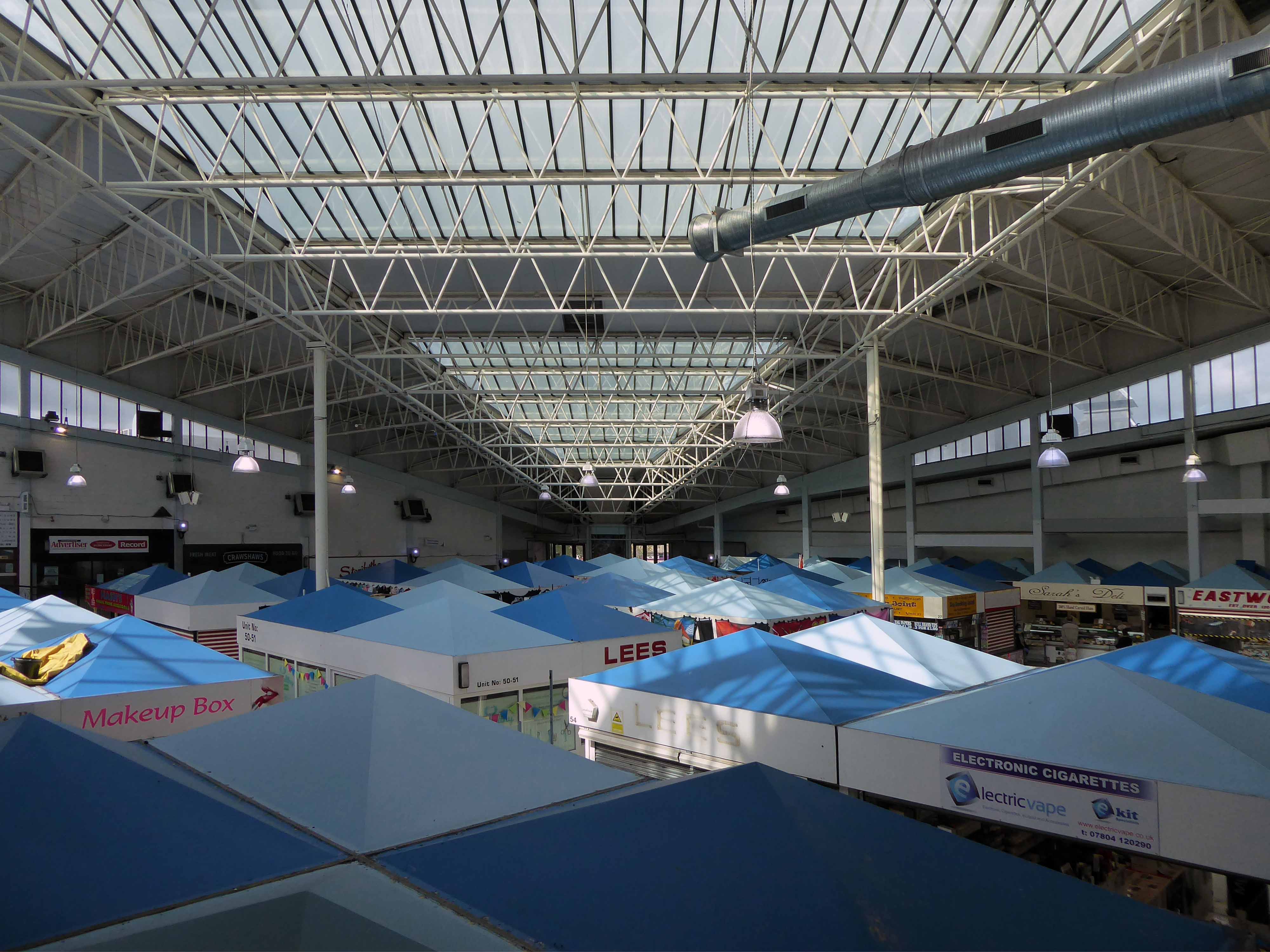
With a strident high tech canopy, very recently added – though Rotherham’s history stems back 800 years when it is thought that the original royal market charter was granted by King John in the year 1207.
There are traces of the 1970’s rebuild.
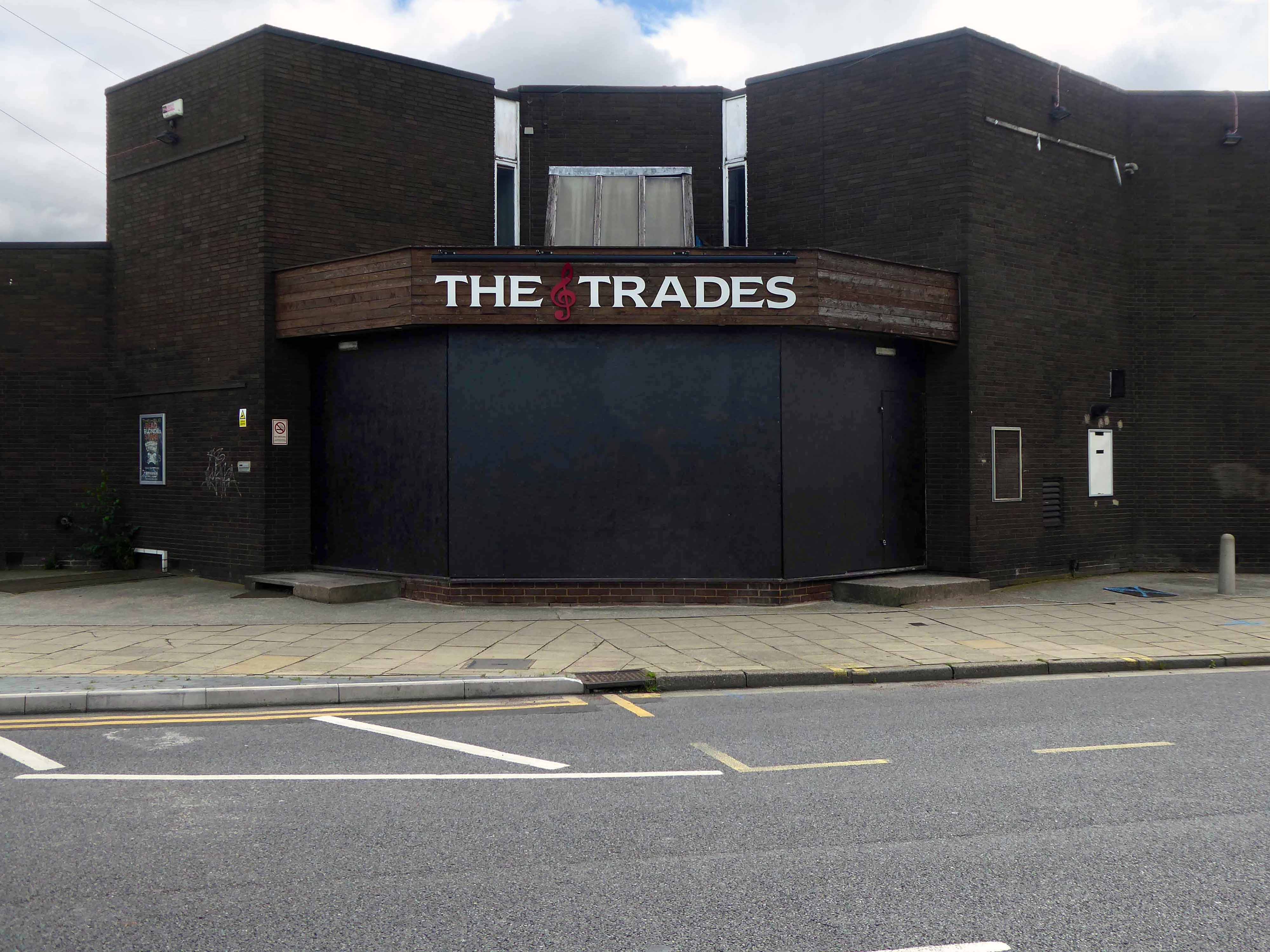
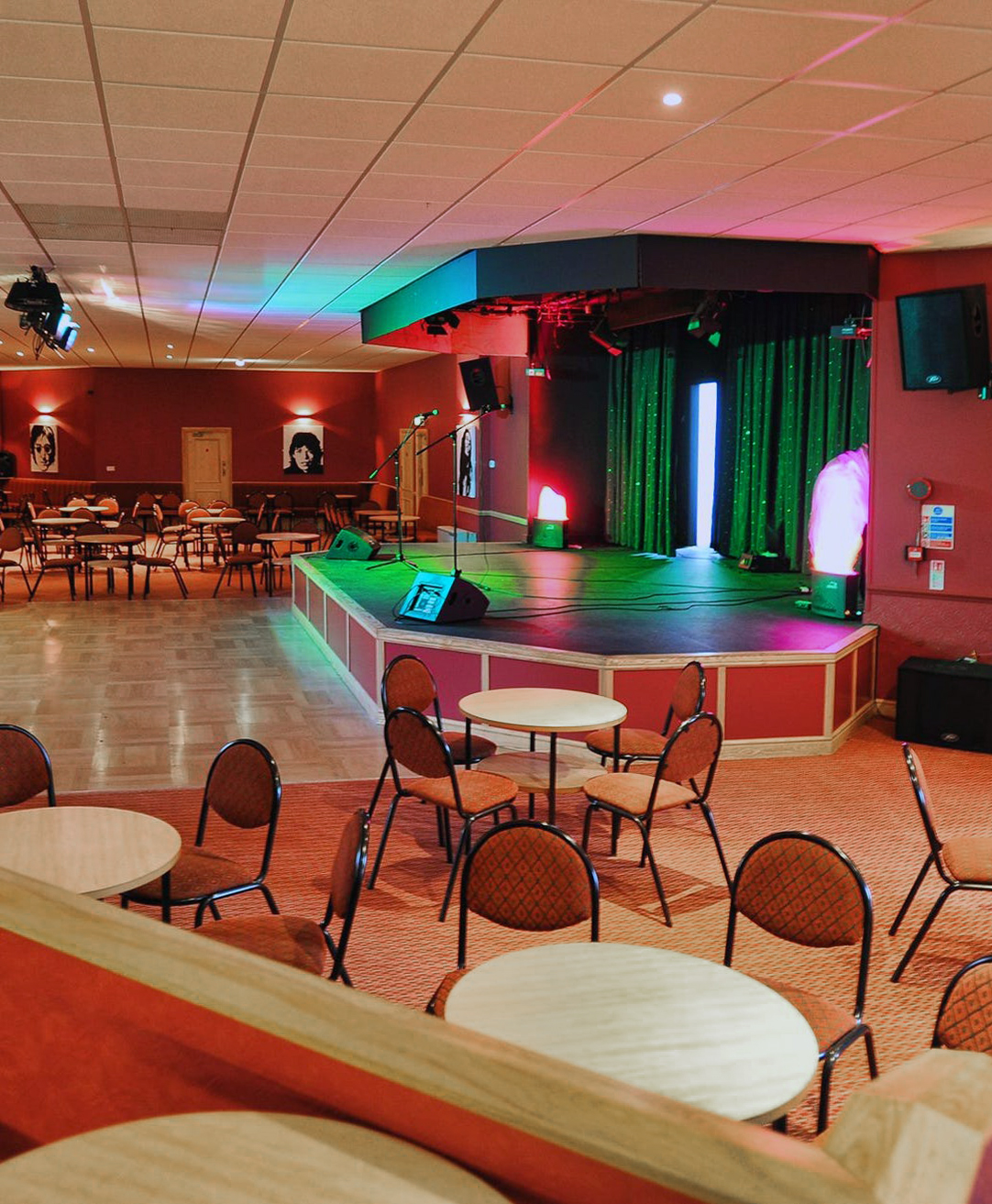
Bunker-like The Trades former music venue/pub, which replaced the former riverside Trades Club.
The PA now silenced.
This was an amazing event. The bands were really good and the drinks offers, while limited, were good. The ceiling in the ladies toilets had fallen through and was dripping, presumably there had been a leak from all the rain, but this didn’t lessen the awesome experience.
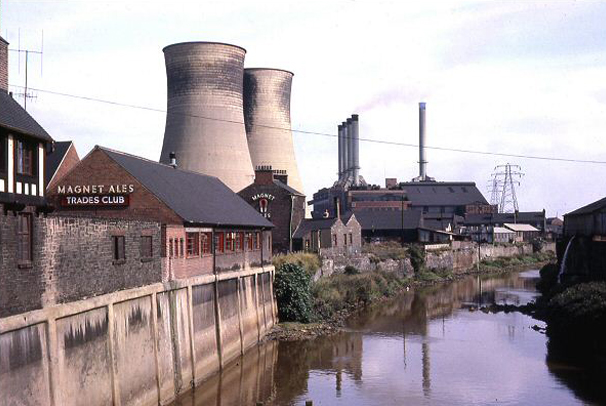
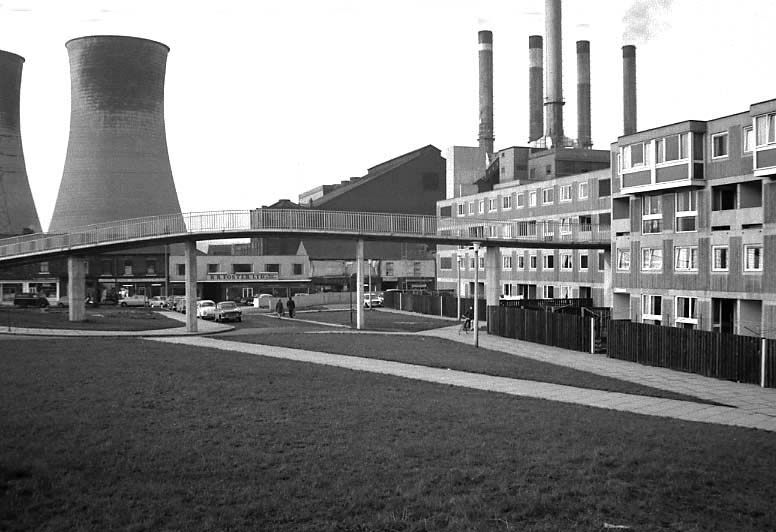
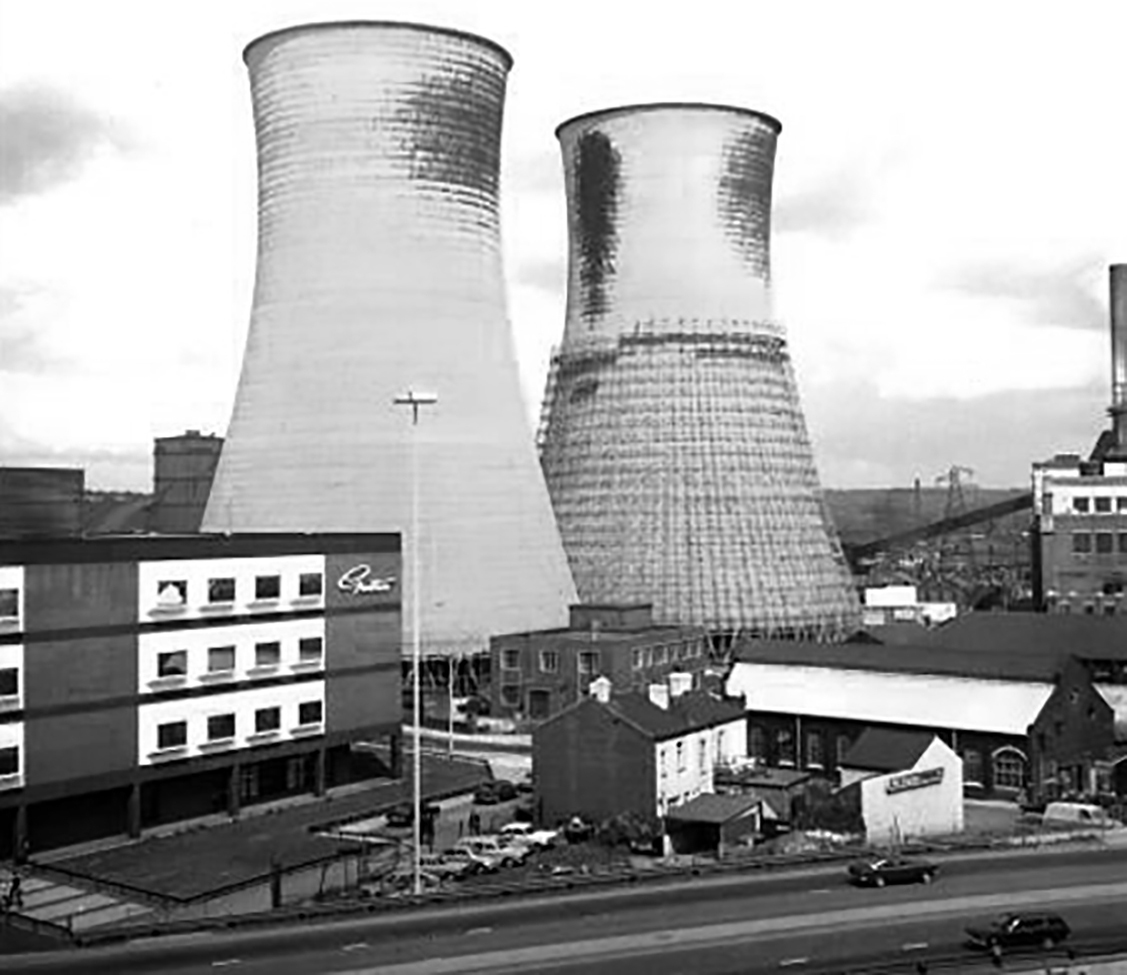
The cooling towers and flats are long gone – the coal-fired power station operated from 1923 until October 1978.
The Prince of Wales Power Station in Rotherham was located on Rawmarsh Road and was opened by the Prince of Wales – the future King Edward VIII.
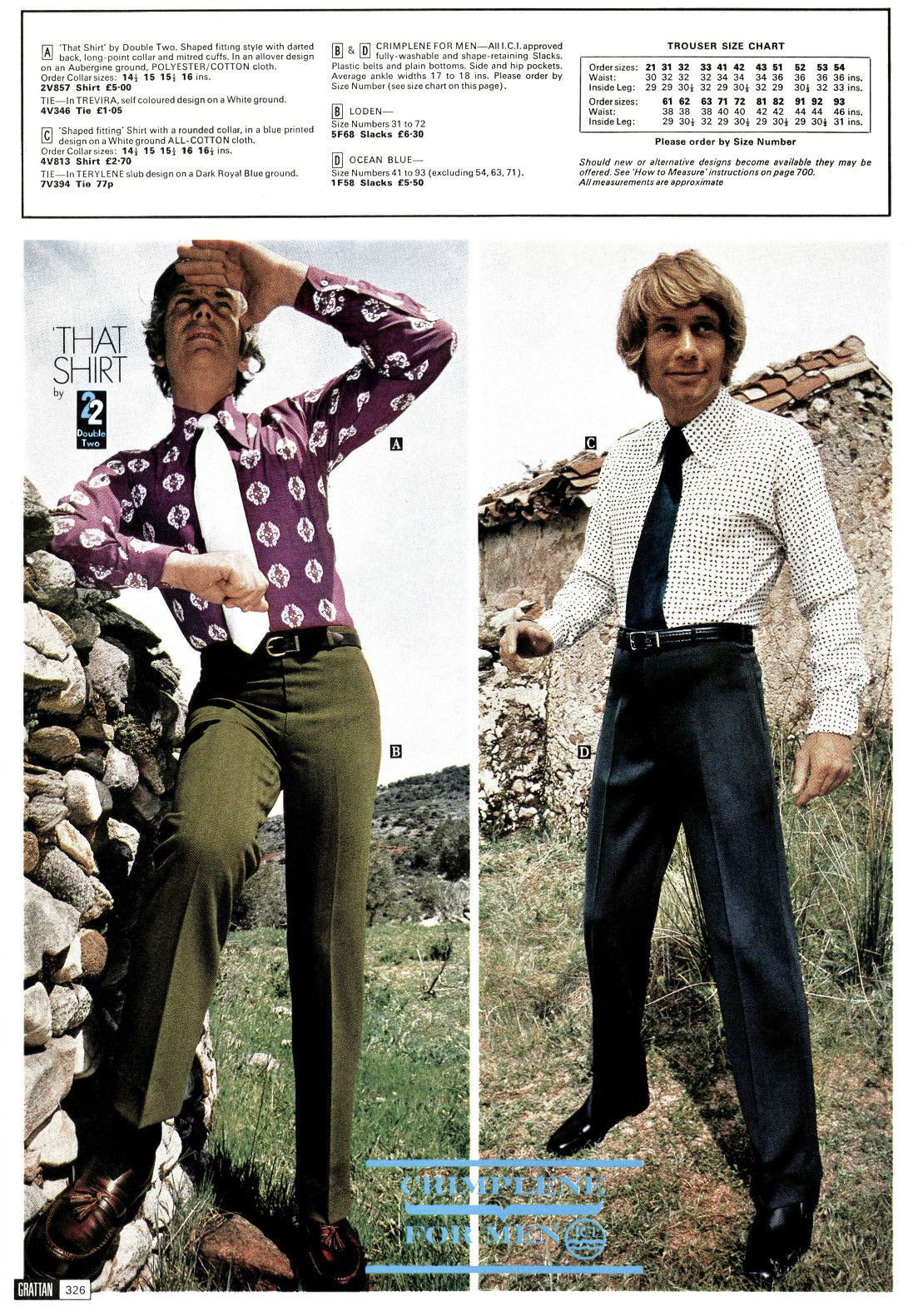
The former Grattans catalogue offices can be seen to the left.
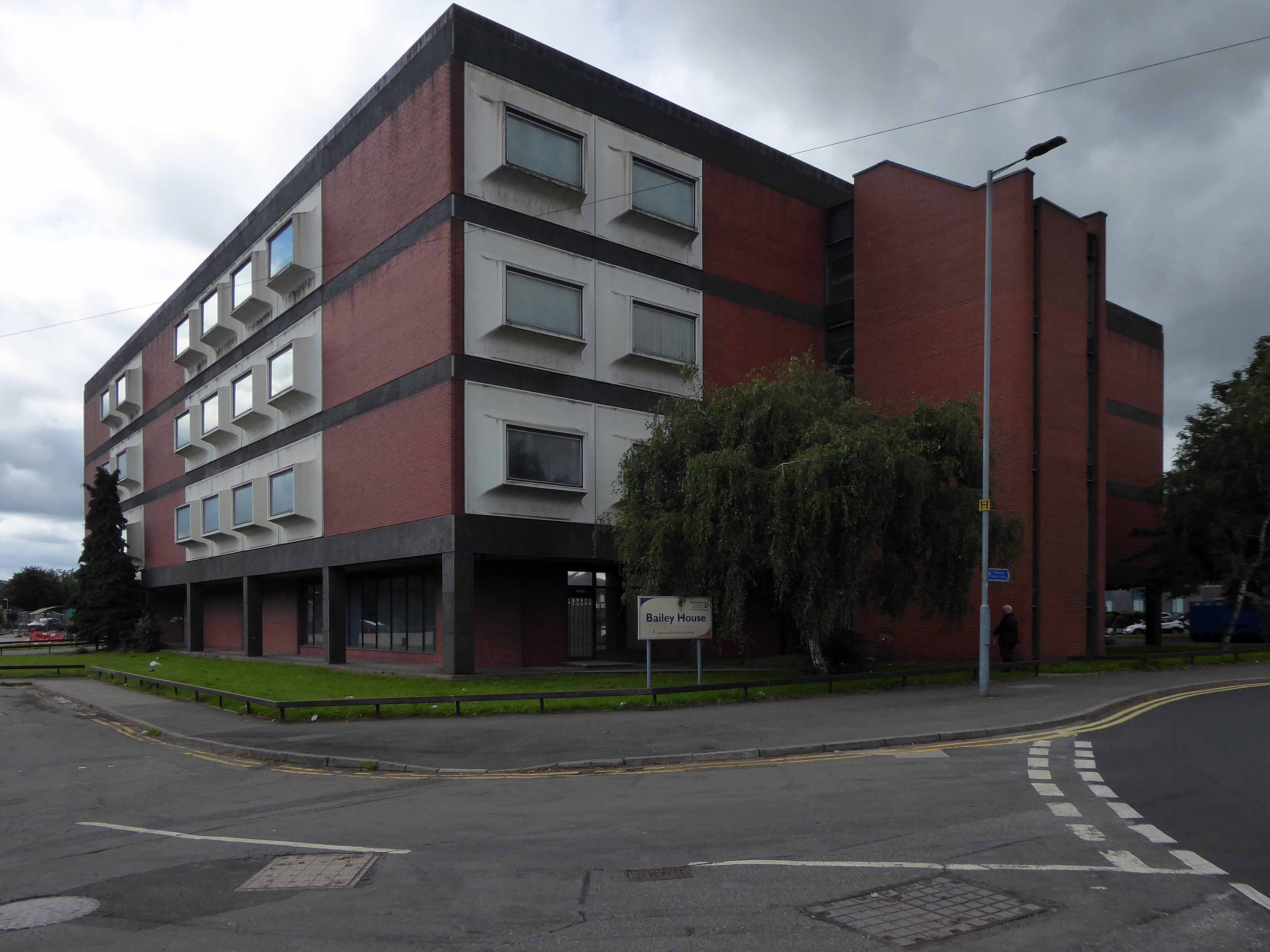
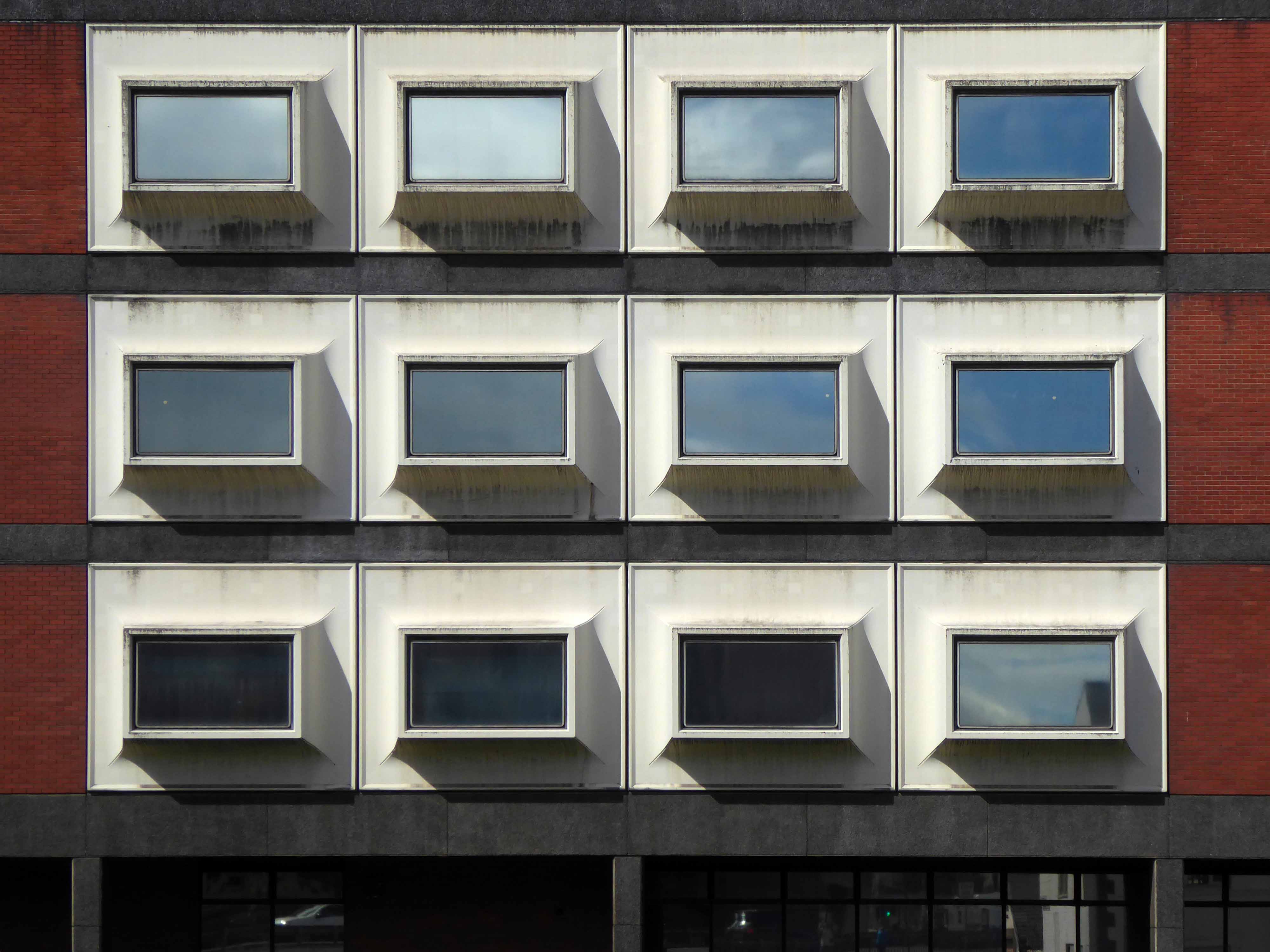
Renamed Bailey House and still in use by the local authority, its days it seems are numbered.
The building is named after Rotherham-born engineer Sir Donald Bailey whose ingenious bridge designs played a key role in shortening World War II, the house in which Bailey was born, 24 Albany Street is still standing.
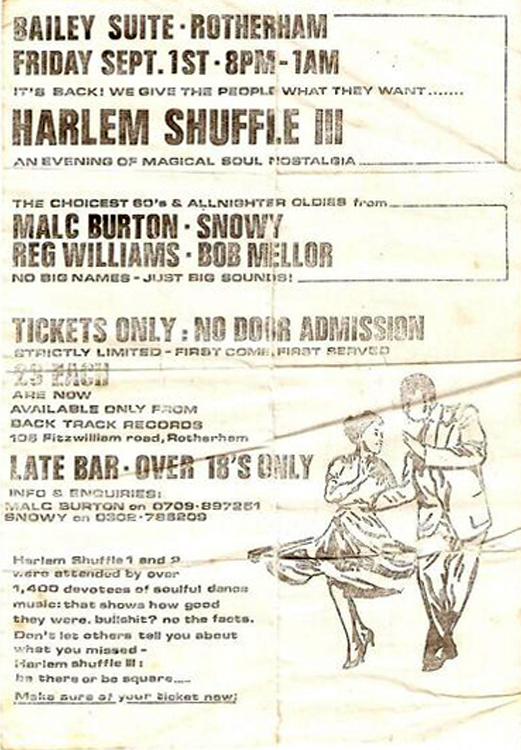
Sadly no longer home to the Harlem Shuffle
No big names – just big sounds.
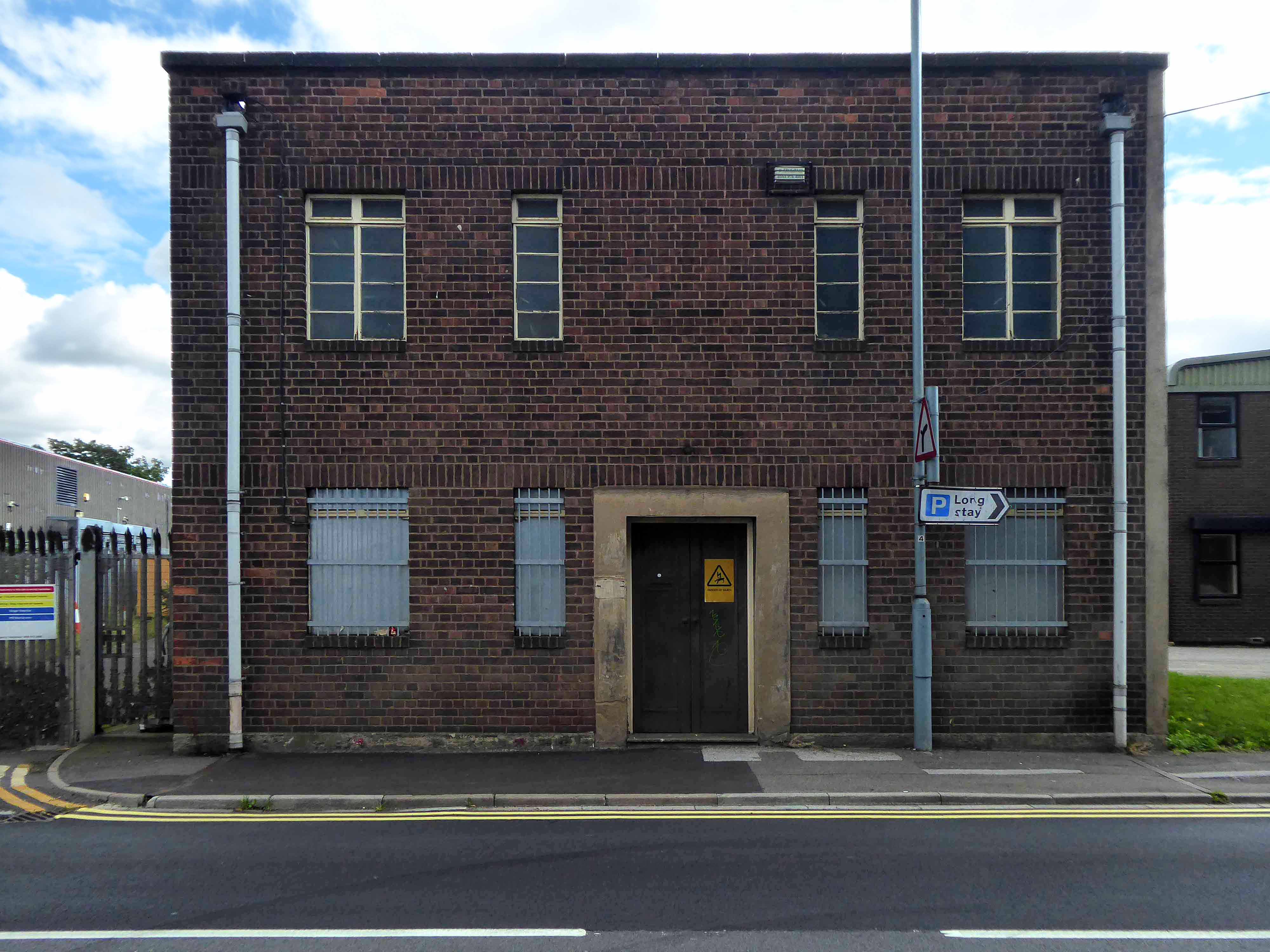
There are some surviving power station buildings.
Along with electrical infrastructure.
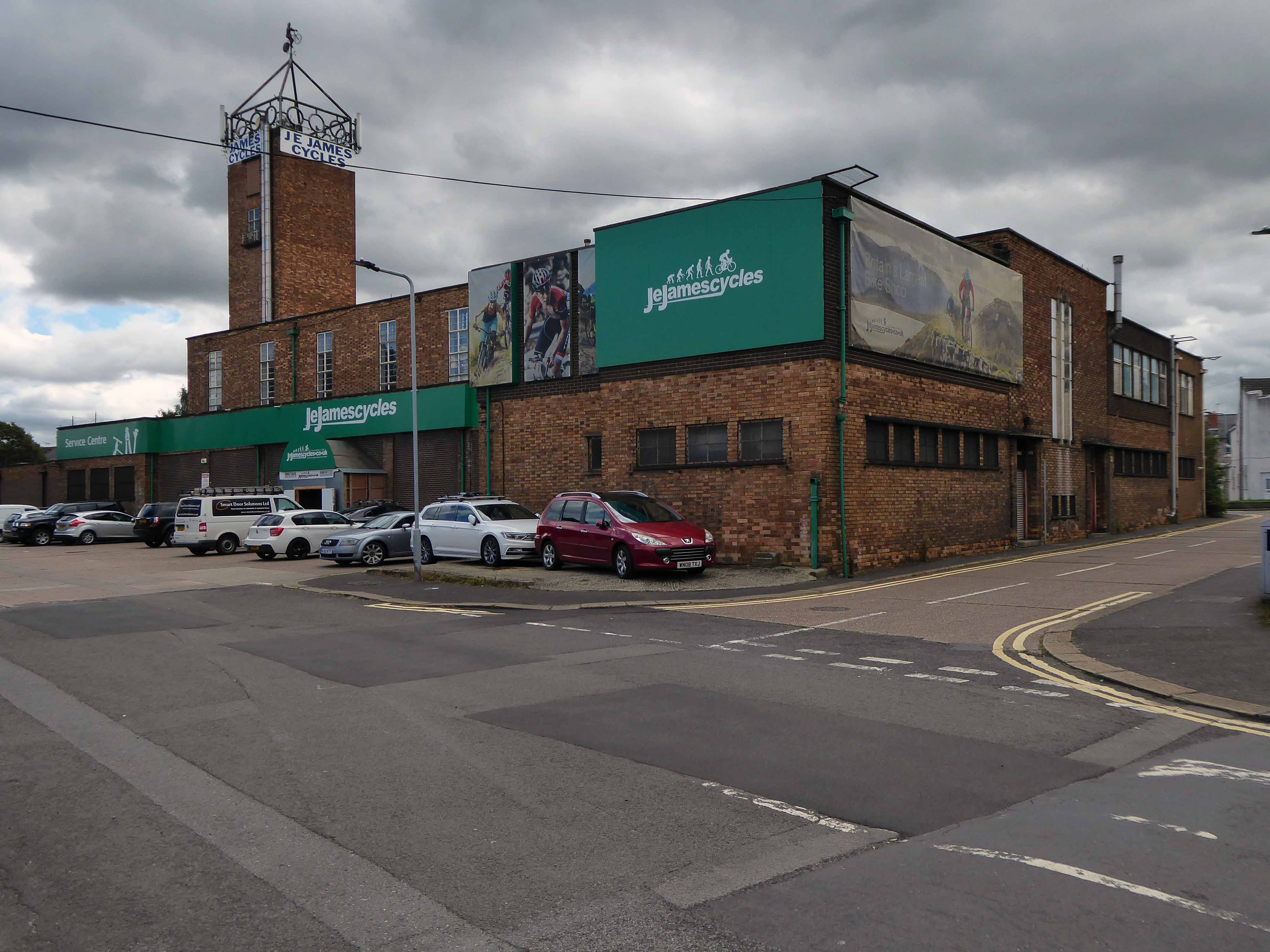
Up the road next, to the former fire station, which now houses J E James Cycles.
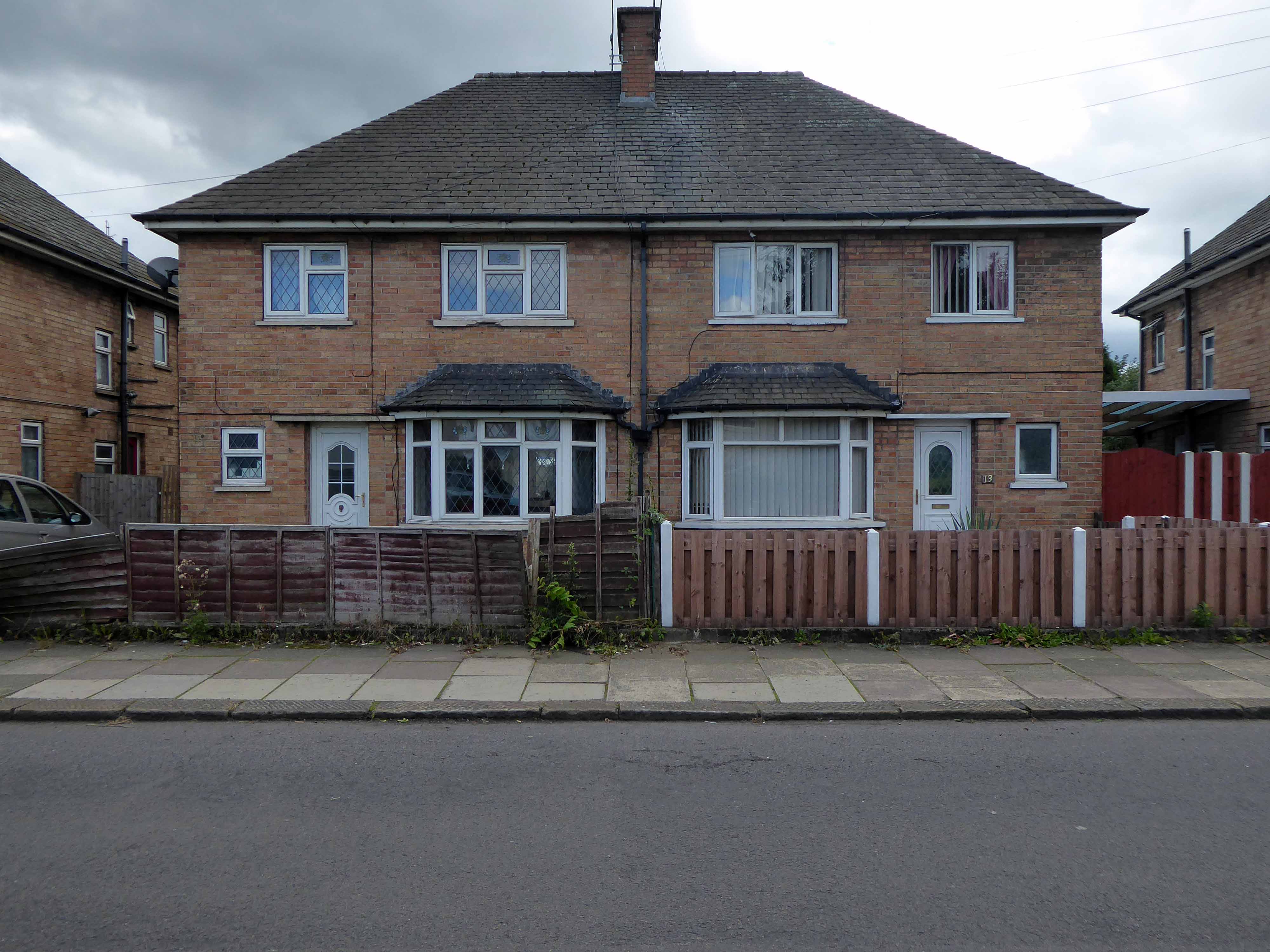
It is surrounded by typically atypical inter war housing.
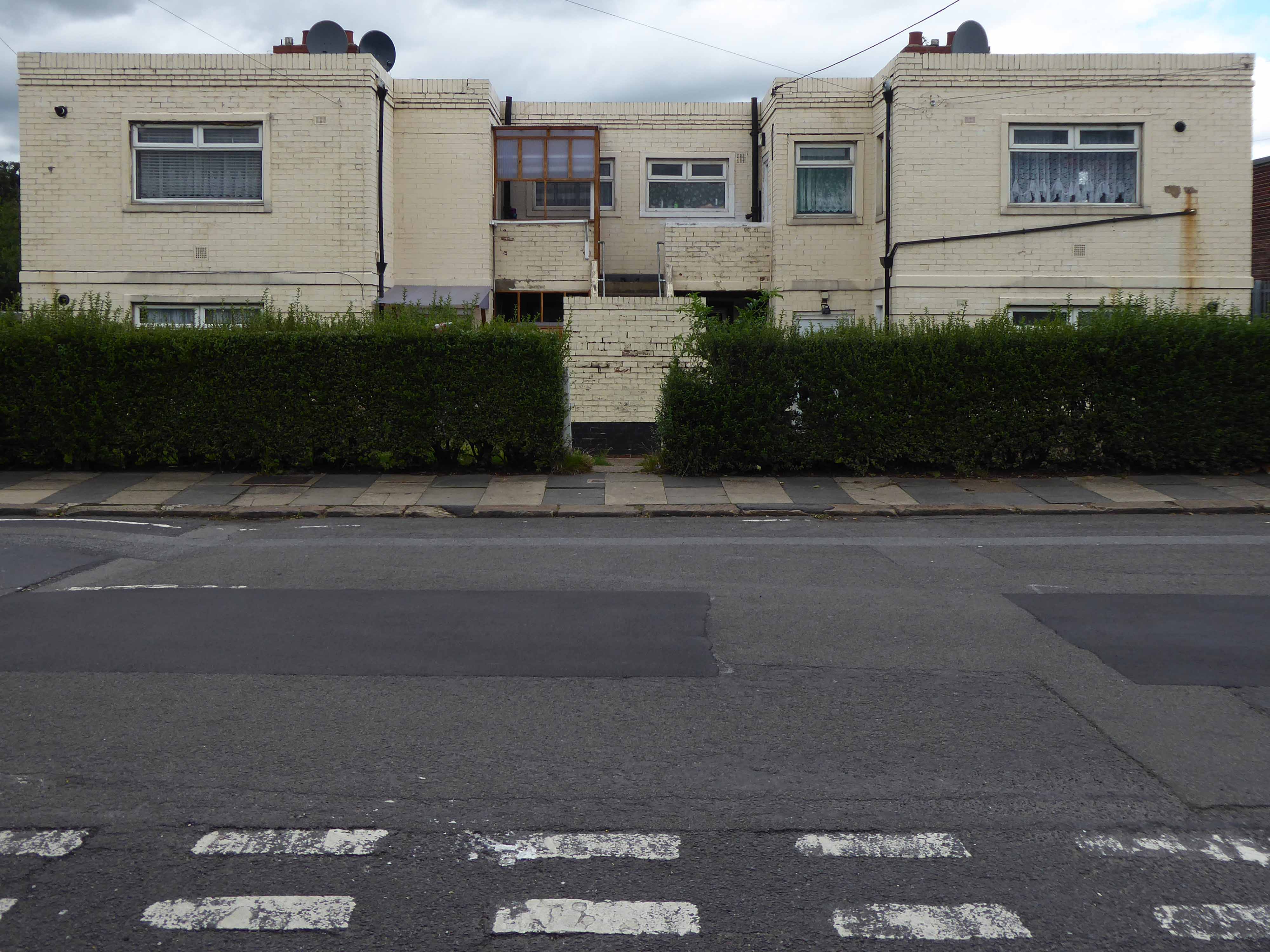
I could make the wild assumption, that these flat roofed maisonettes were originally homes fit for firefighters.
With a final notable note regarding Rotherham’s hand painted council commissioned signage – I’d like to think that they have a sign writer in their employ.
Many thanks to my learned companion Helen – thanks for a fine day out, so much to see and do!
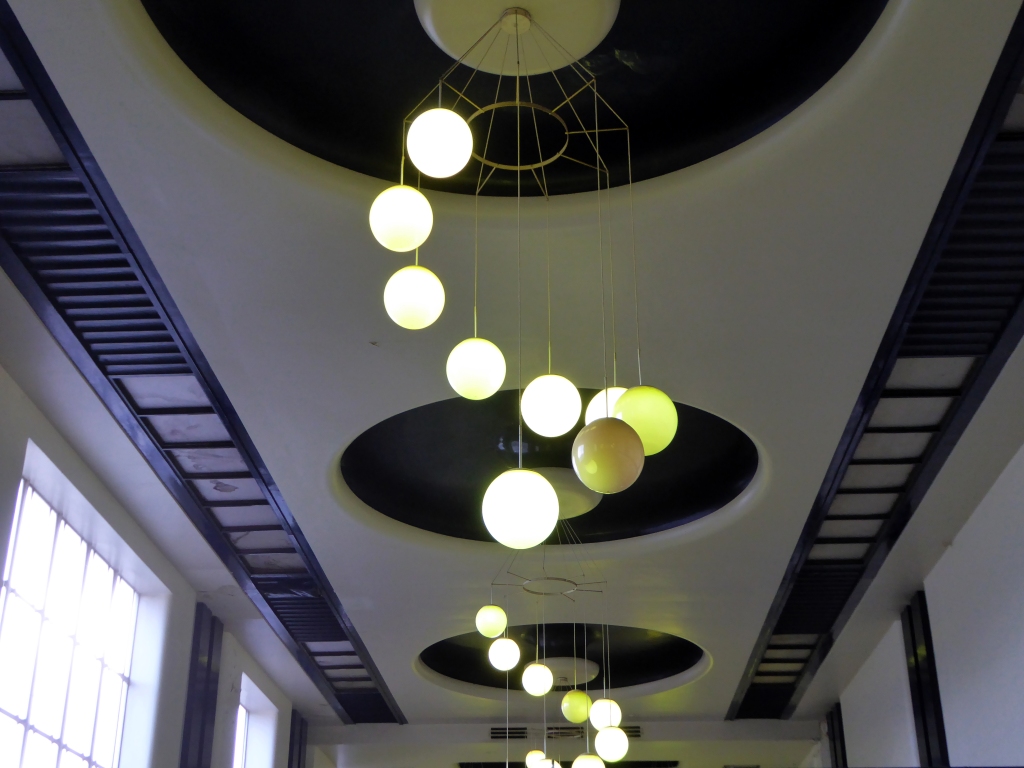
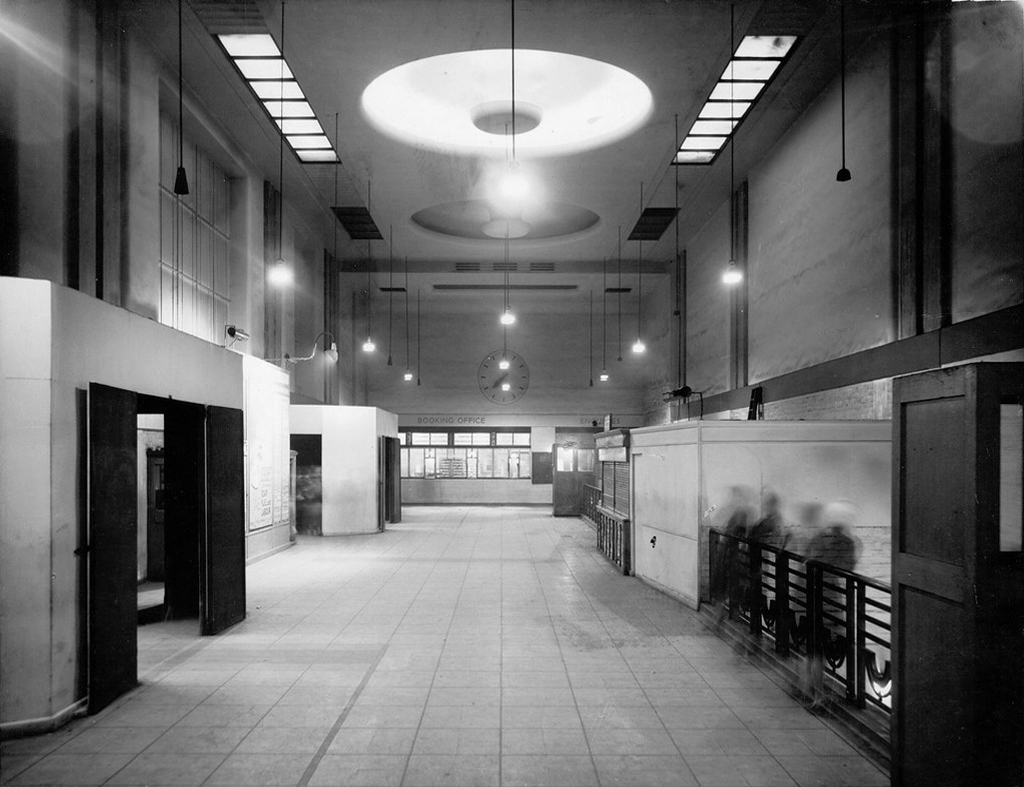
Arriving by train at 8.30, just in time to check out the new lighting scheme in the station foyer.
Replacing the previous lighting.
Which in turn replaced the original Thirties lighting.
The forecourt redevelopment is a work nearing completion.
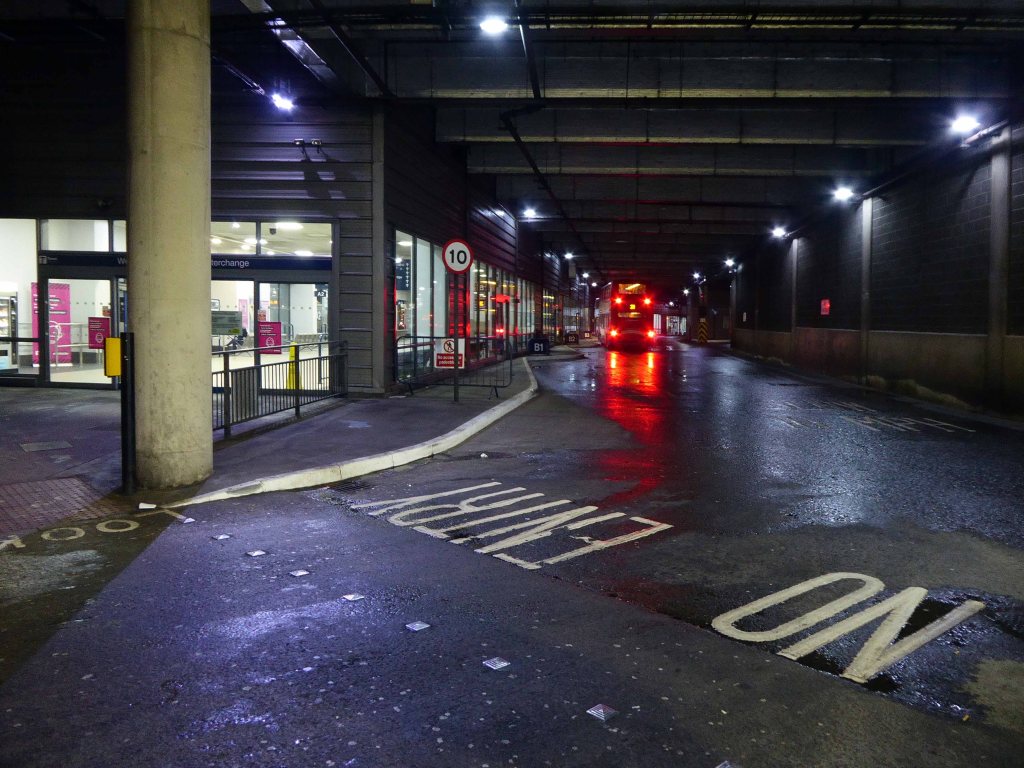
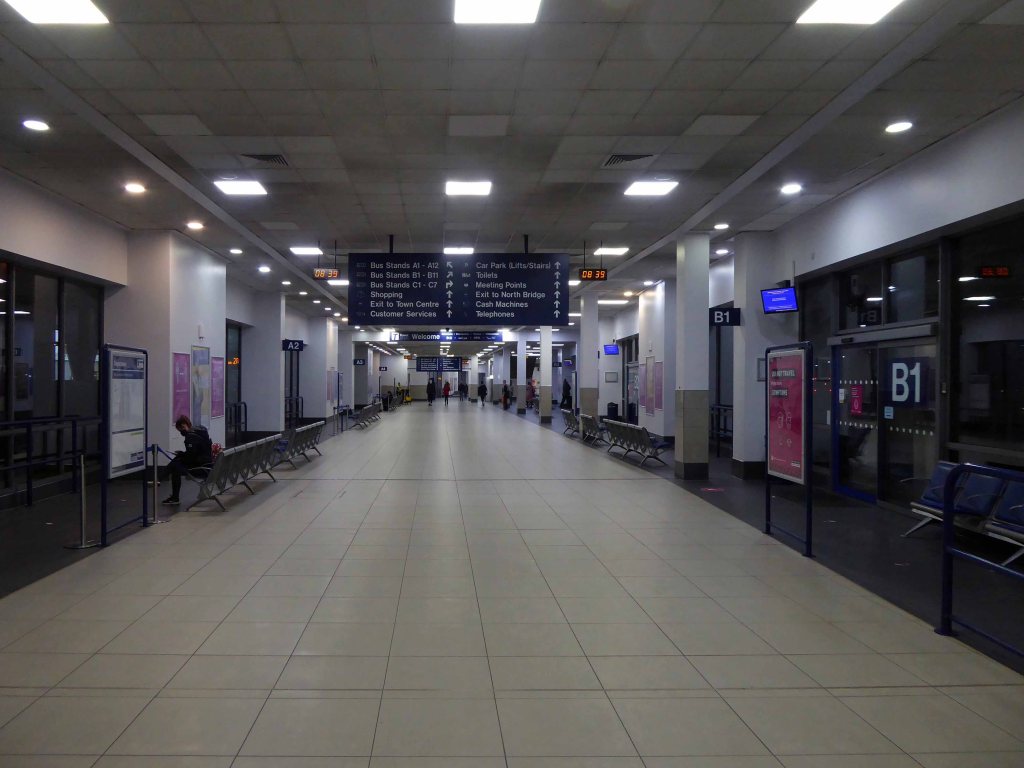
I was on my way to Intake by bus so it’s off on the 66 from the Frenchgate Inetrchange.
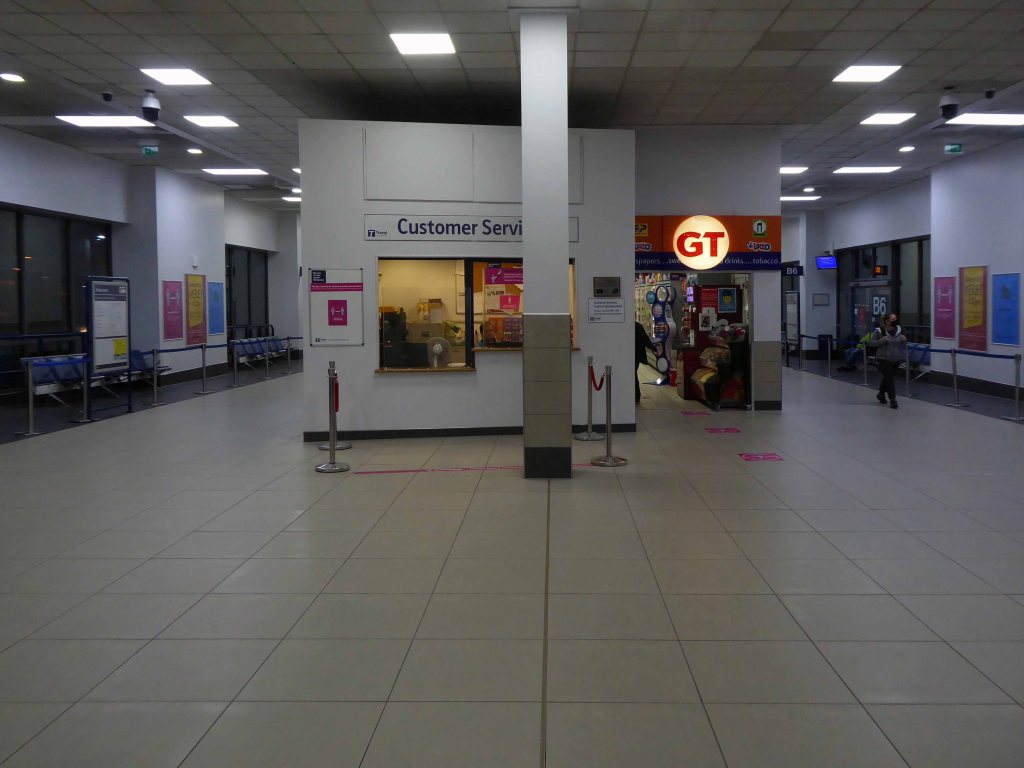
An urban environment so anonymous, that it can only just recognise itself. I was helpfully informed by two radio controlled security guards that photography was illegal.
More Interzone than Interchange.
Here are my transgressive snaps, I made my excuses and left – on the next available 66.
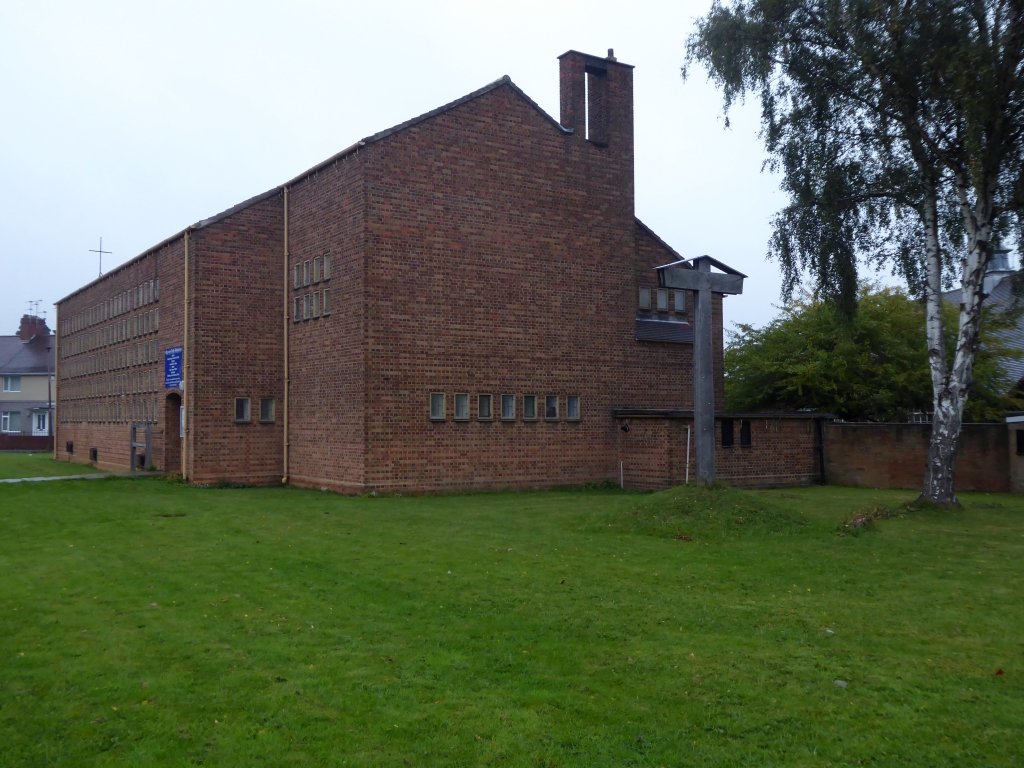
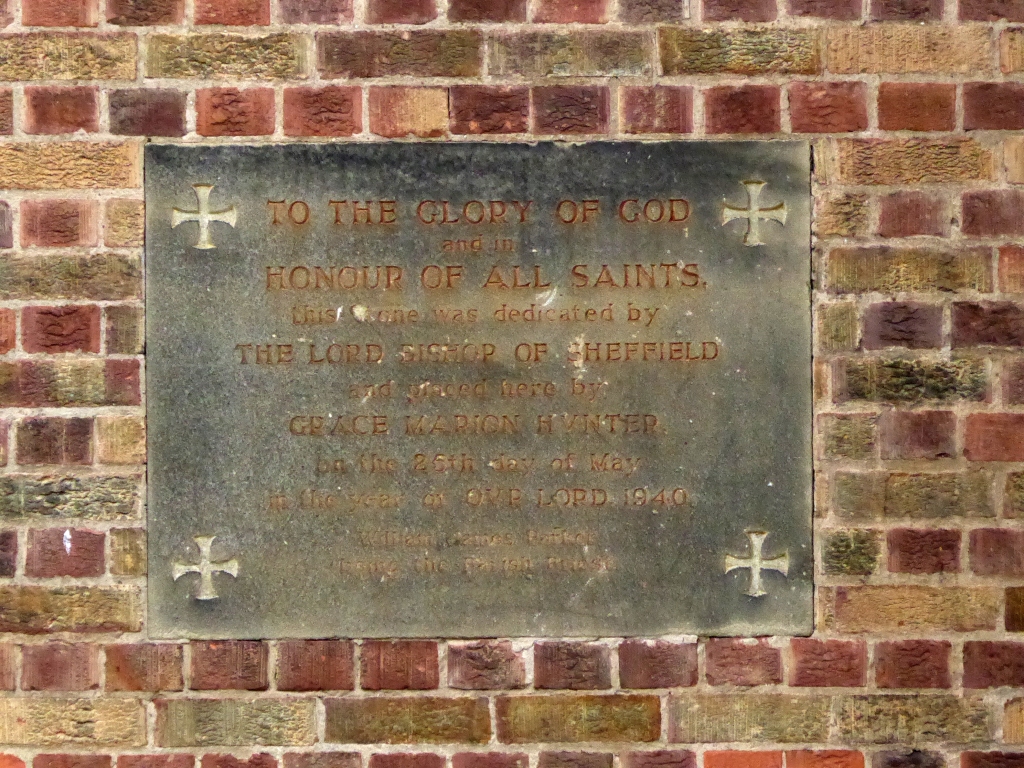
Decanting from the single decker I made my way across the way to All Saints, a George Pace church of 1956.
Built on the foundations of an unrealised Neo-Romanesque church of 1940, but reorientated east/west.
I legged it back to catch the bus back, the returning 66, much to the surprise of the surprised driver, making his return journey.
Jumping the 41A to Scawsby, displaying my risible home-printed map to the driver, requesting a shout when we arrived at the indicated destination, which he was unable to discern, and which I had failed illustrate.
I had contrived to arrive at the end of the line, a bit part player in a non-existent Béla Tarr film.
Following a thorough tour inside and out, I returned promptly to the town centre, on the limited stop express X19.
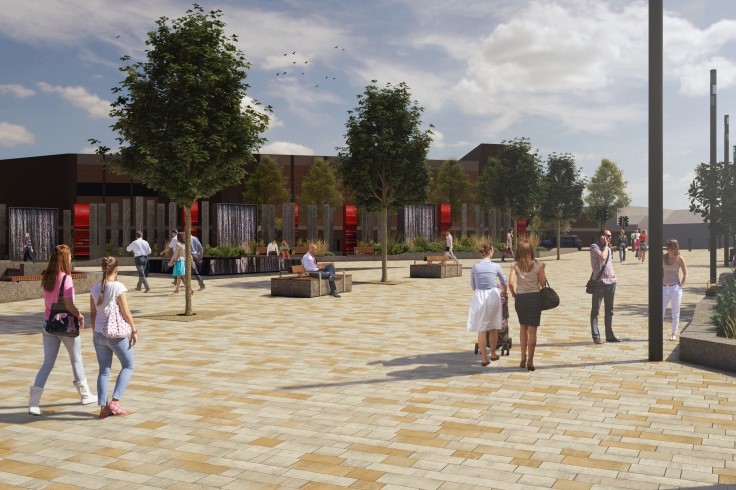
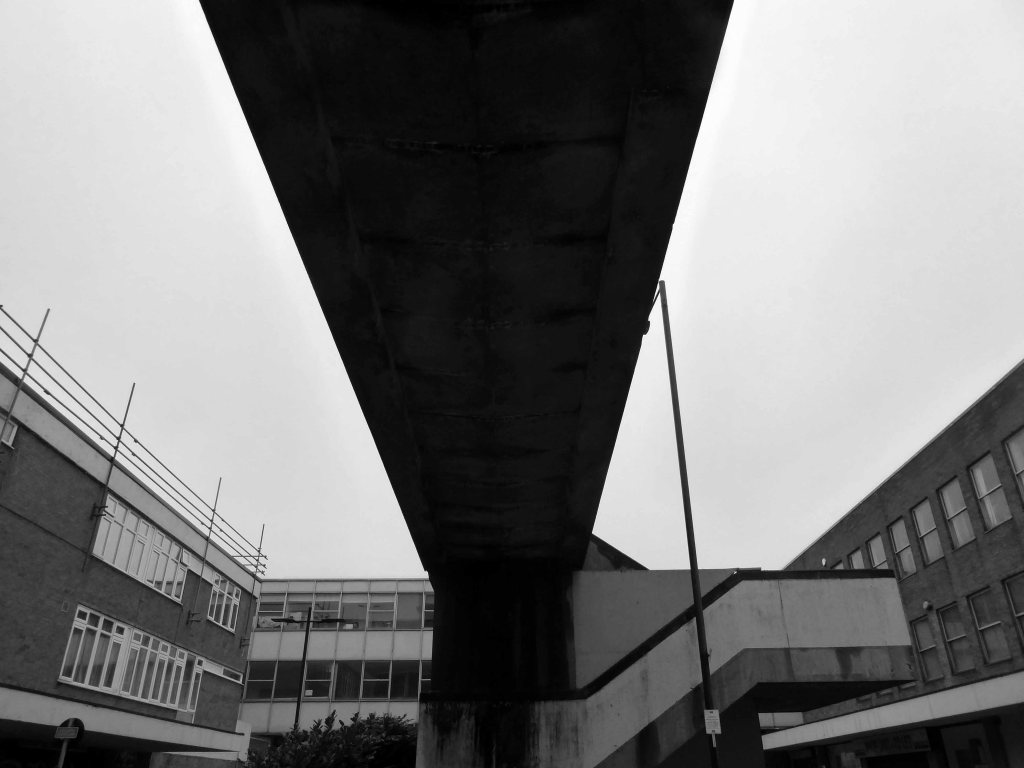
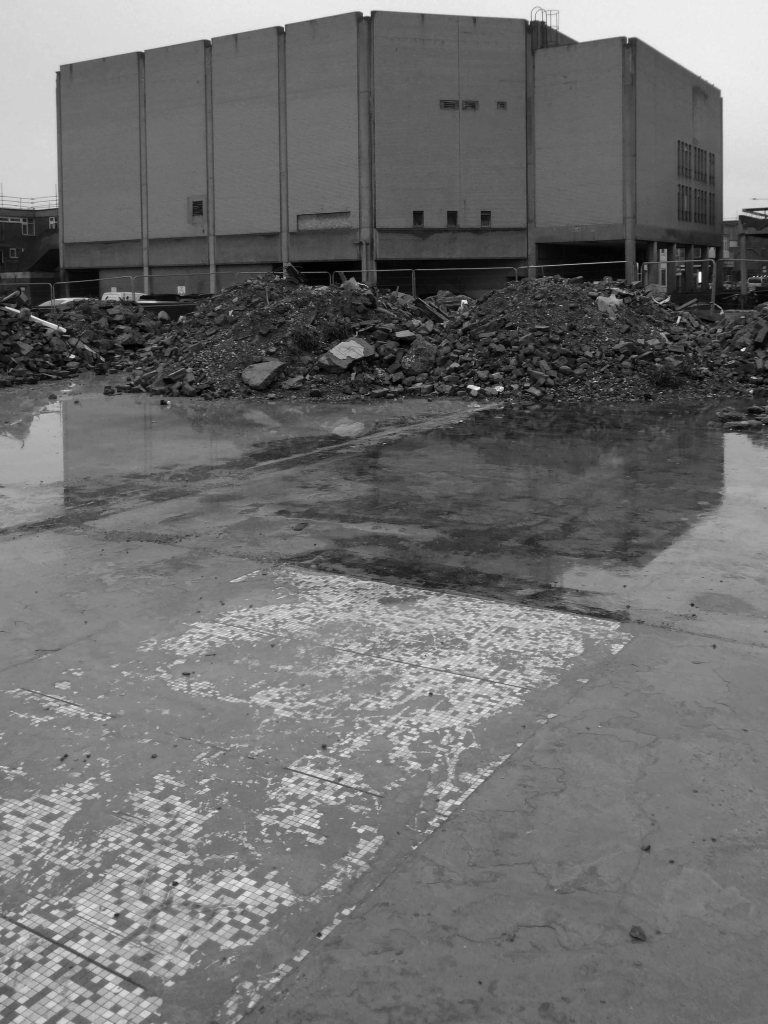
And hotfooted it to the Waterdale Centre, a work in progress, the CGI figures being as yet, a mere figment of the development officer’s fevered dreams.
Doncaster Council documents from the planning application for the demolition say, that while the exact project is not yet fully in place, discussions are taking place with the council on the project and grant funding is being sought to help the future regeneration scheme. But the council has said it supports schemes that would revitalise the Waterdale Centre area for retail, leisure, and tourism uses.
The centre is now owned by the Doncaster-based property firm Lazarus Properties, who bought it from the Birmingham firm St Modwen.
Lazarus director Glyn Smith said his firm had faith in the local economy of Doncaster town centre, even though larger multinationals seemed to be shying away.
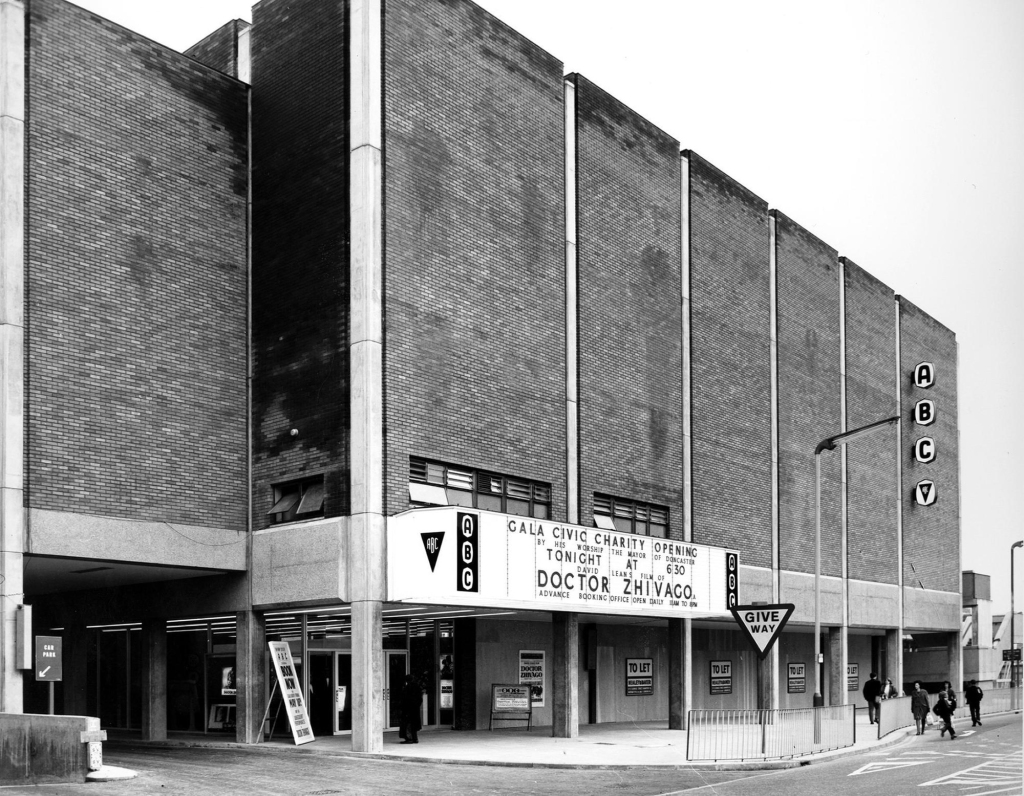
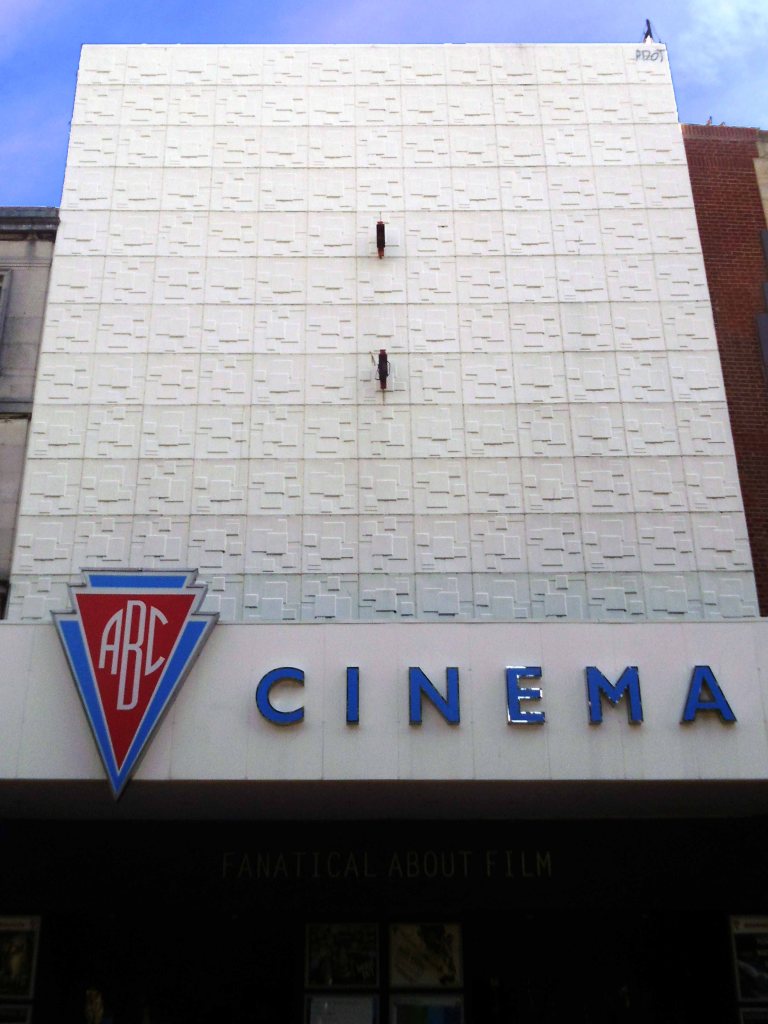
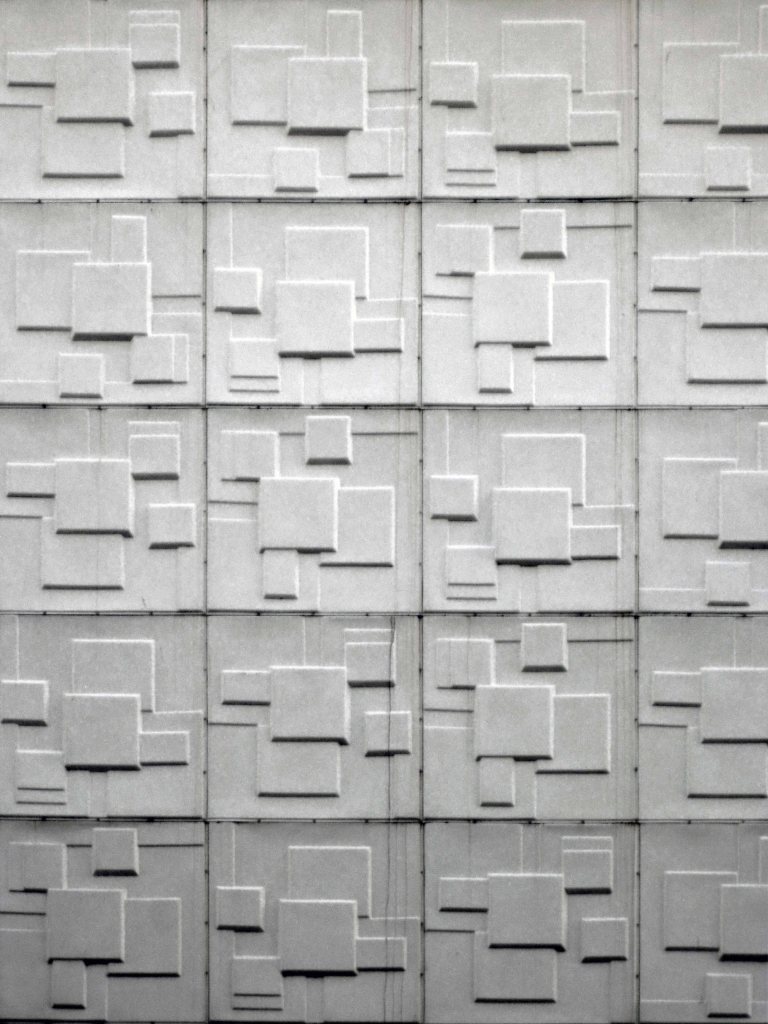
The ABC was built by Associated British Cinemas(ABC) as a replacement for their Picture House Cinema which had opened in 1914. It opened on 18th May 1967 with Omar Sharif in Doctor Zhivago presented in 70mm. Designed with 1,277 seats arranged in a stadium plan by the architectural firm Morgan & Branch, with input by architects C. ‘Jack’ Foster & Alan Morgan. It was decorated in a modern 1960’s style.
Closed in January 1981 for conversion into a triple screen it re-opened on 9th April 1981 with seating in the 3-screens.
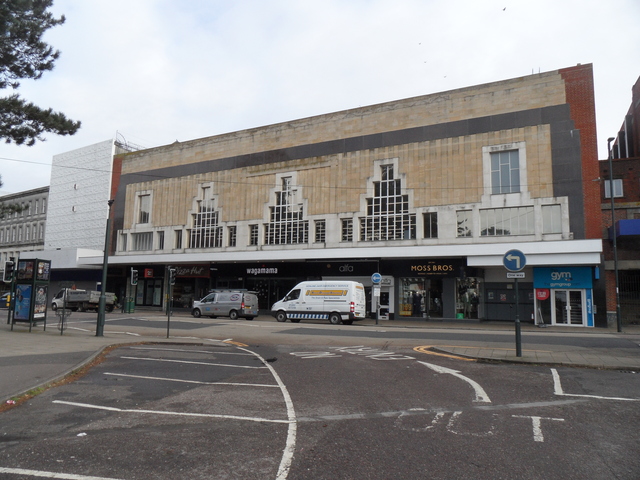
The Cannon Group took control in the mid-1980’s and it was re-named Cannon and it closed on 18th June 1992, screening its opening film “Doctor Zhivago”.
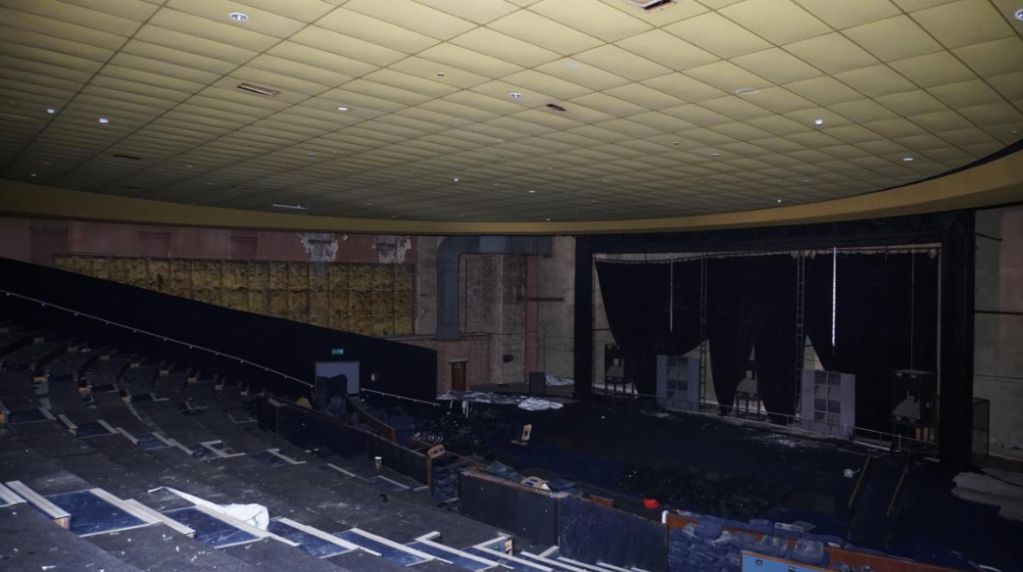
The building has stood empty and unused since then, but in 2007, it was bought by Movie World for just £150,000. It is reputedly being re-modeled with extra screens added, however by 2009, only a clean-up of the interior has been achieved. The building sits empty and unused in 2020.
Cinema Treasures
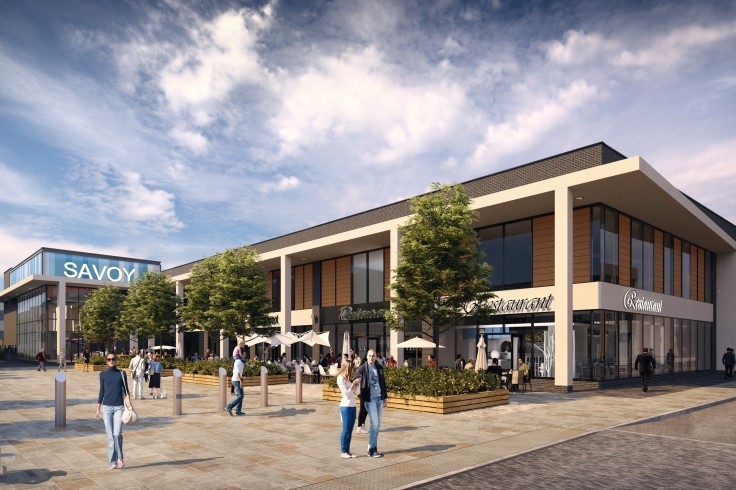
The delayed opening of the new Savoy Complex will no doubt inform the future of the Cannon.
It’s a familiar tale of the local authority, developers, leisure and retail outlets chasing dreams, cash and hopefully pulling in the live now pay later public.
It’s all part of the Doncaster Urban Centre Masterplan which will transform the way Doncaster looks and the way residents and businesses use the city core.
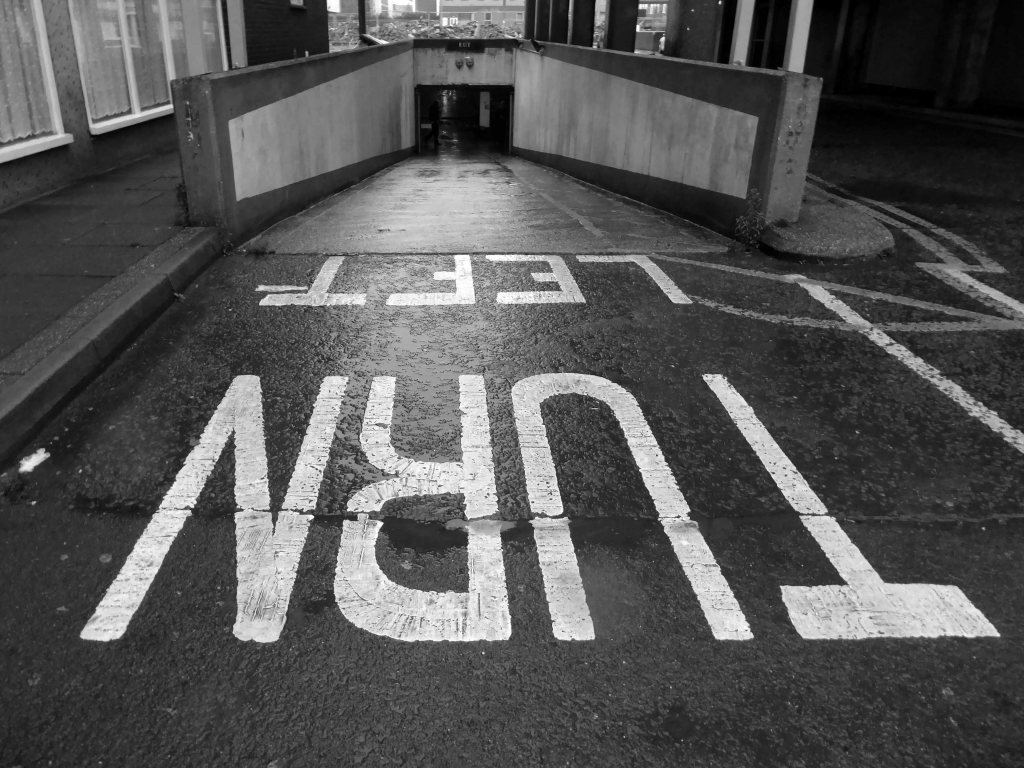
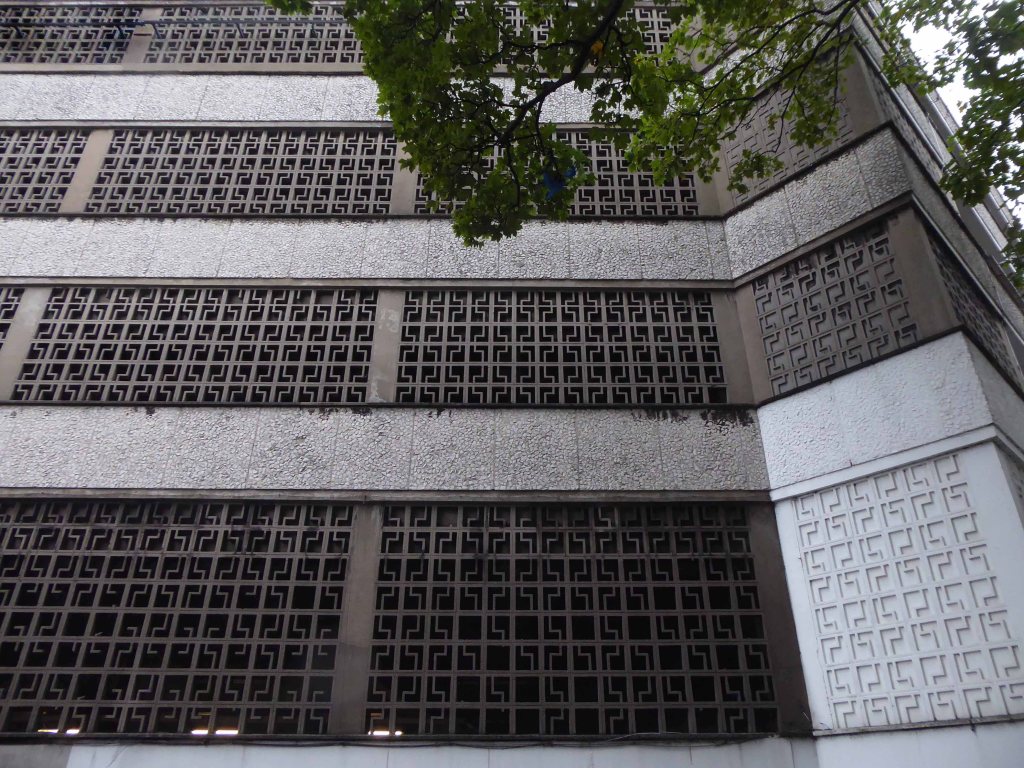
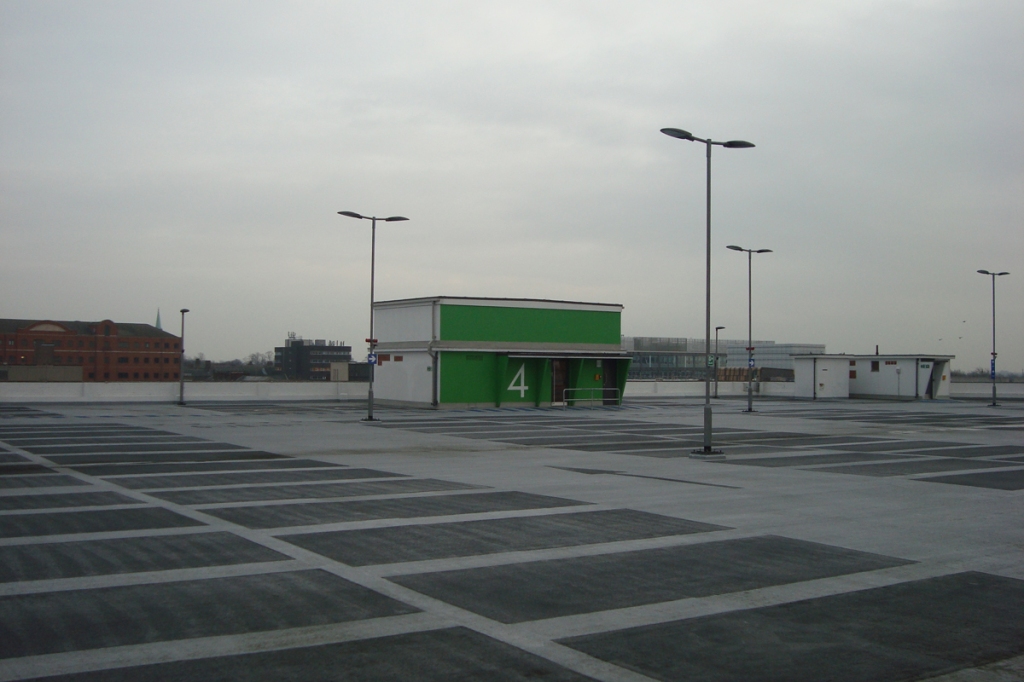
The area is a pivotal point, I sincerely hope that the Waterdale Centre is revived, along with the adjacent Civic Quarter car park.
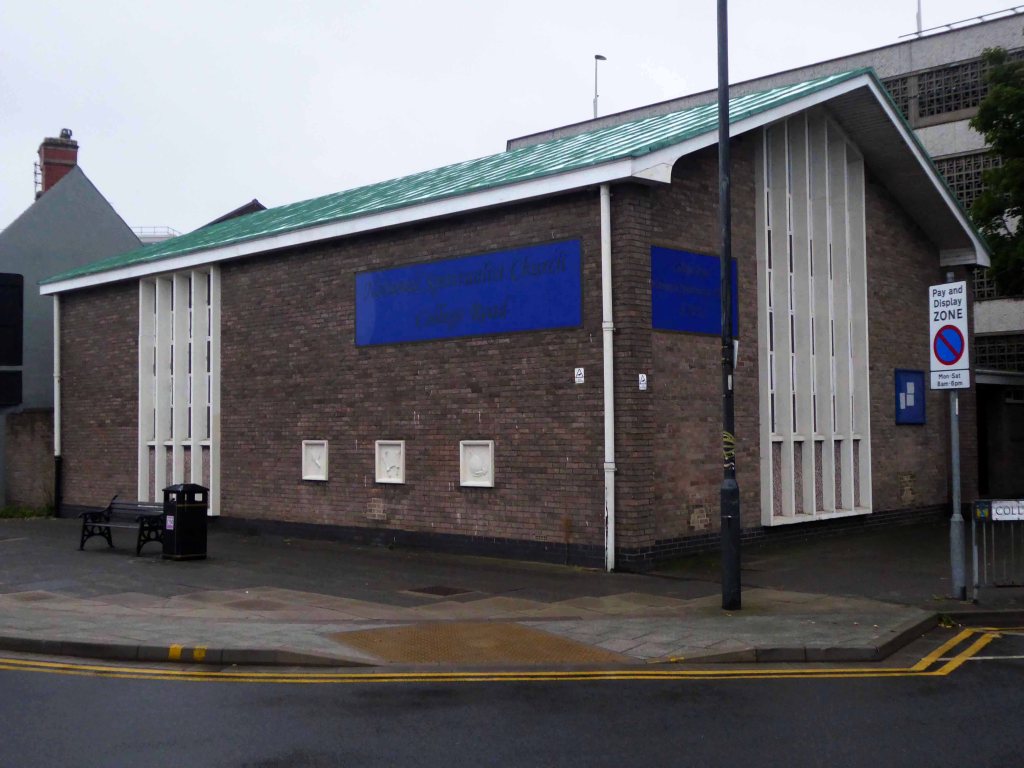
I noted the restrained Modernism of the National Spiritualist Church.
The service begins with a short prayer. The congregation sings three songs during the service using music that most people would recognise. There is usually a short reading or lesson on something to do with spiritualism or events in the world. There is also a talk by the guest medium who use their inspiration or intuition to compose an uplifting address.
Then the business of contacting the spirit world begins.
Along with its curious relief panels.
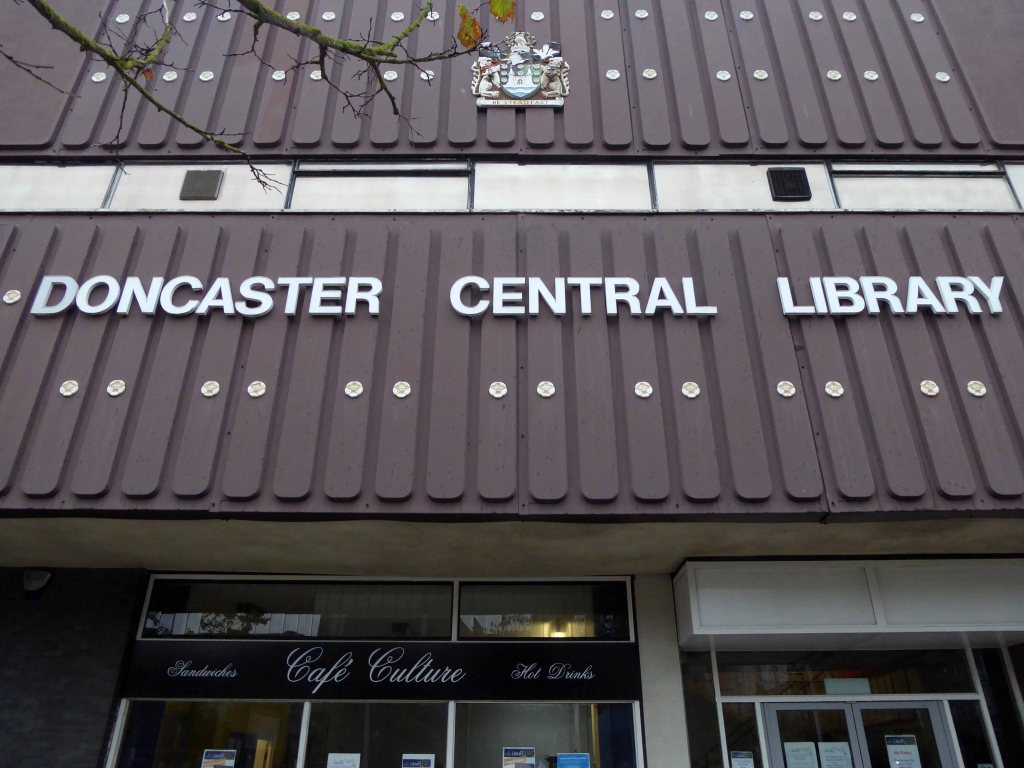
Back around to the back of the Waterdale and the surviving former bank fascia, civic offices and library.
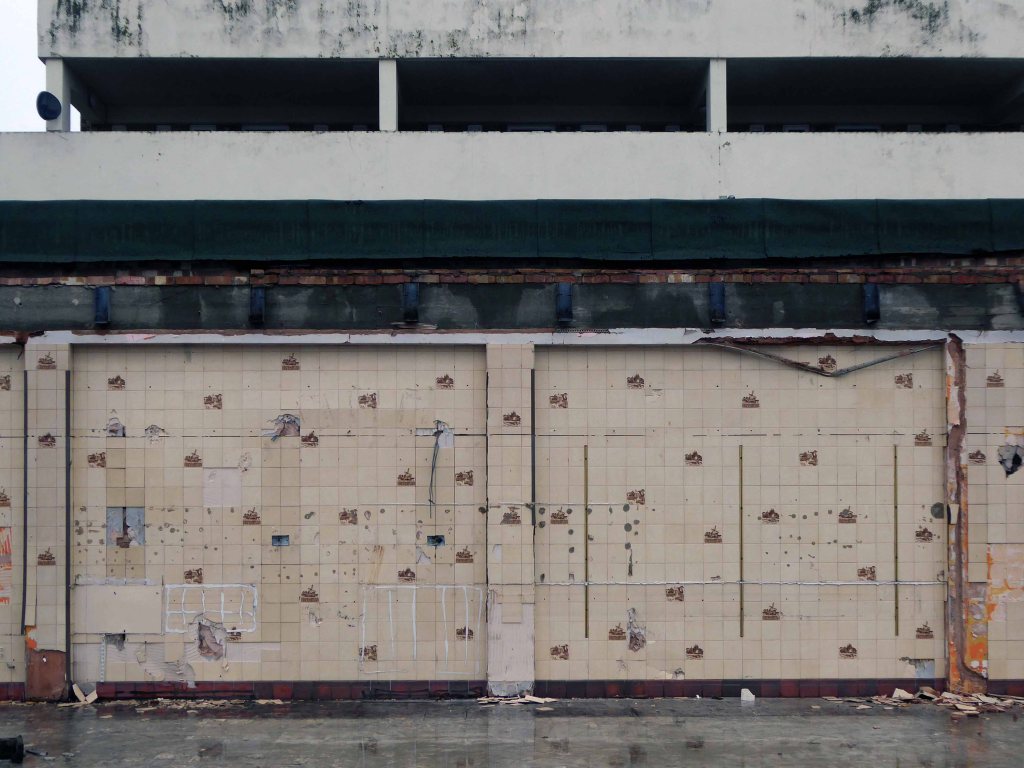
Back through the Waterdale to discover the saddest of retail archeology.
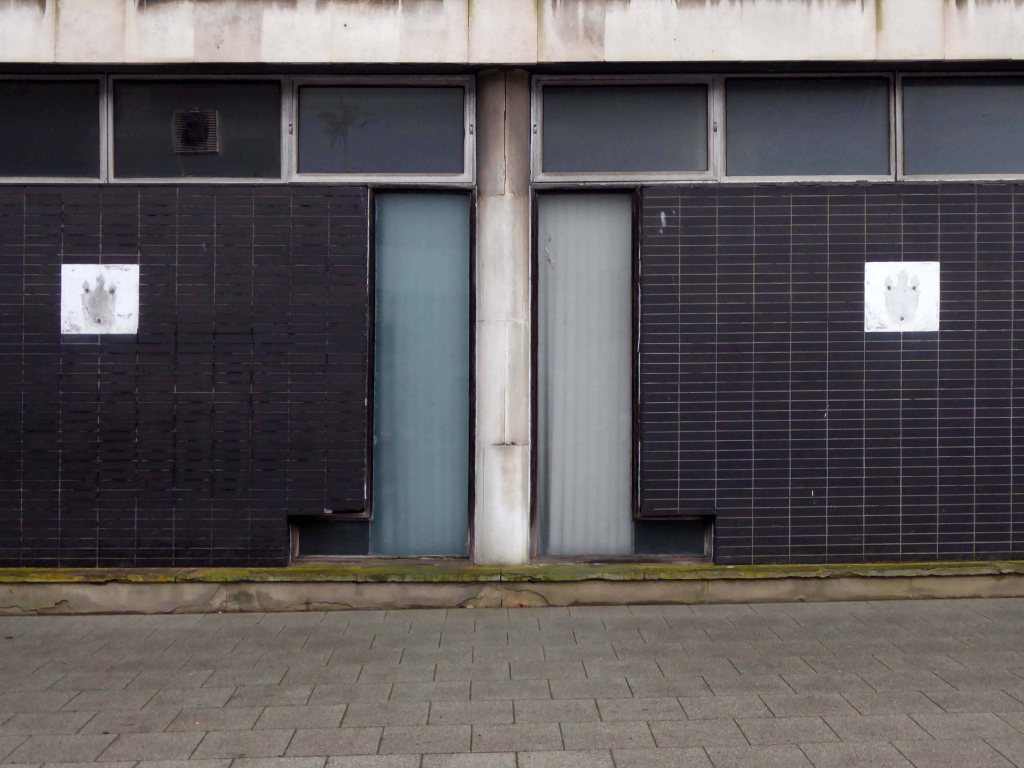
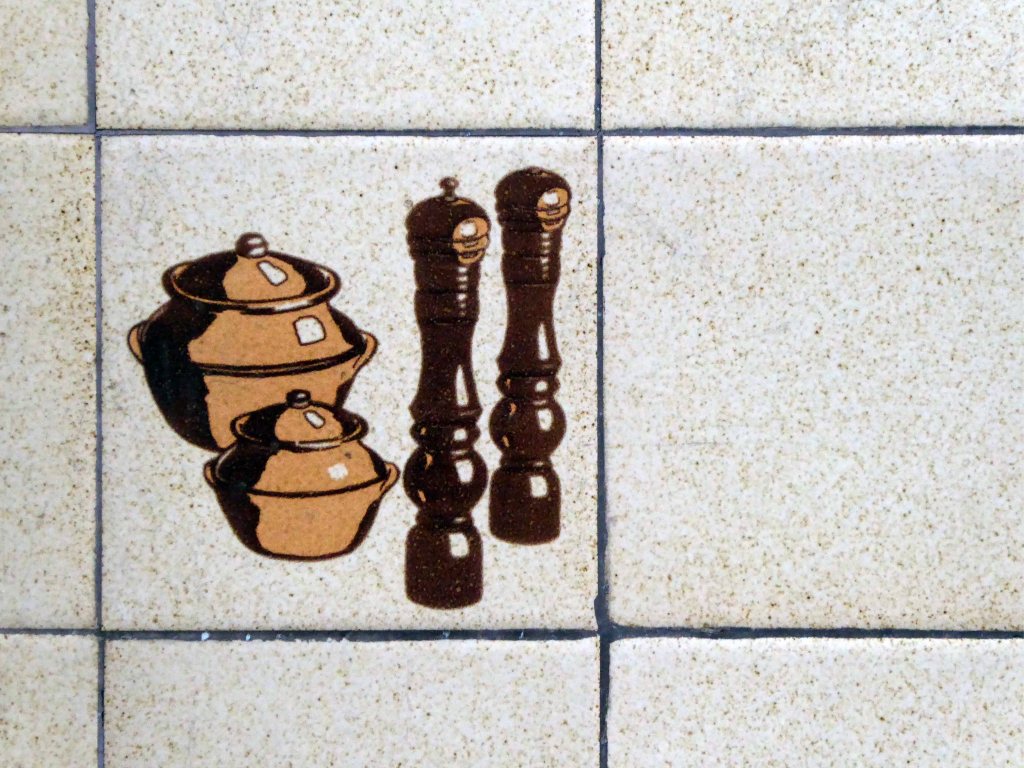
The long lost tiled café wall and a mysterious porch.
29 King Street Bridlington East Riding of Yorkshire YO15 2DN
Supplier of a variety of discounted homewares and DIY products, toys, clothes and stationery.
In 1881 William Boyes opened a small store in Eastborough, Scarborough selling odd lots and remnants from merchants. There was great poverty in the working classes and housewives were even keener for a bargain than they are today. When customers found that they could buy enough material to make a coat or a dress cheaper than anywhere else, they soon spread the word and trade increased to such an extent that William had to look for larger premises.
William rented a large warehouse just off the main street where business continued to grow. By 1886 he purchased further units in Market Street and Queen Street and knocked them into one large store and named it ‘The Remnant Warehouse’. Older customers in Scarborough still refer to the shop as ‘The Rem’. As time went on William expanded his range and bought other clearance lines from merchants developing the warehouse into a department store.
Business continued to grow and go from strength to strength and in 1910 the expansion of the company started. Today W Boyes and Co Ltd operate over 60 stores throughout Yorkshire, the North East, Lincolnshire and Nottinghamshire & Leicestershire.
In 1969 Hammonds of Hull purchased the Carltons department store located in Bridlington, and within a year had demolished and rebuilt the store. The company’s independence did not last much longer, as in 1972 House of Fraser purchased the business for £8 million. The stores were then grouped under the Binns brand. The Bridlington store was closed in 1995 and the store stood empty for three years until Boyes opened in 1998
My sincere thanks to Kate Yorke for her detective work.
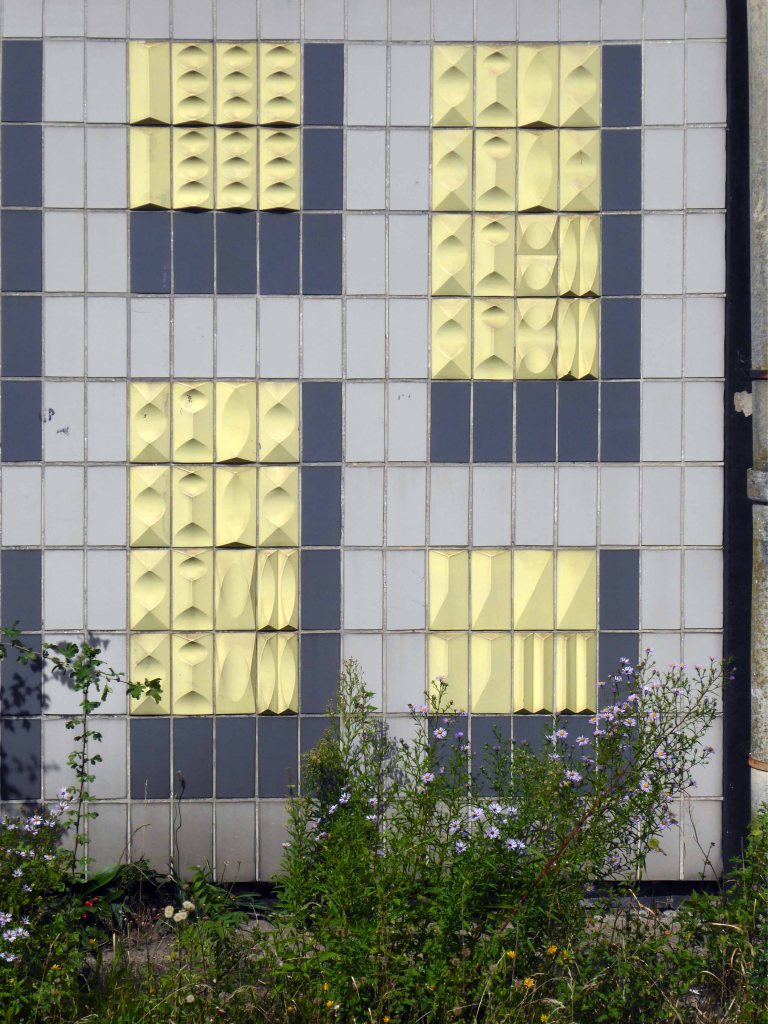
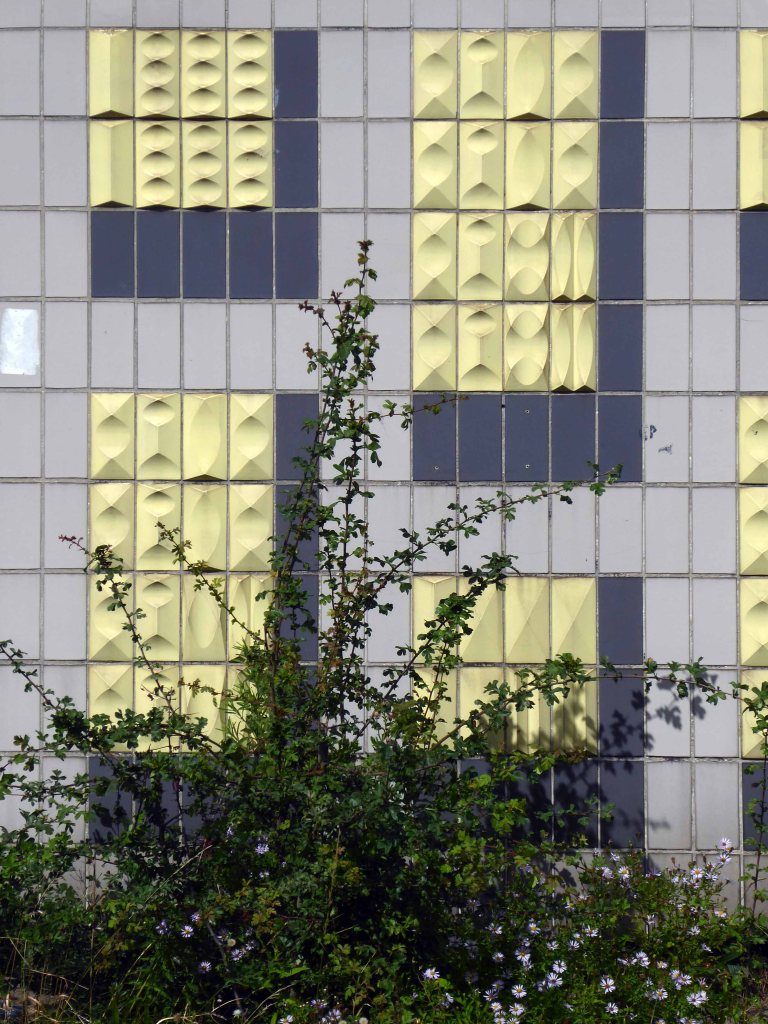
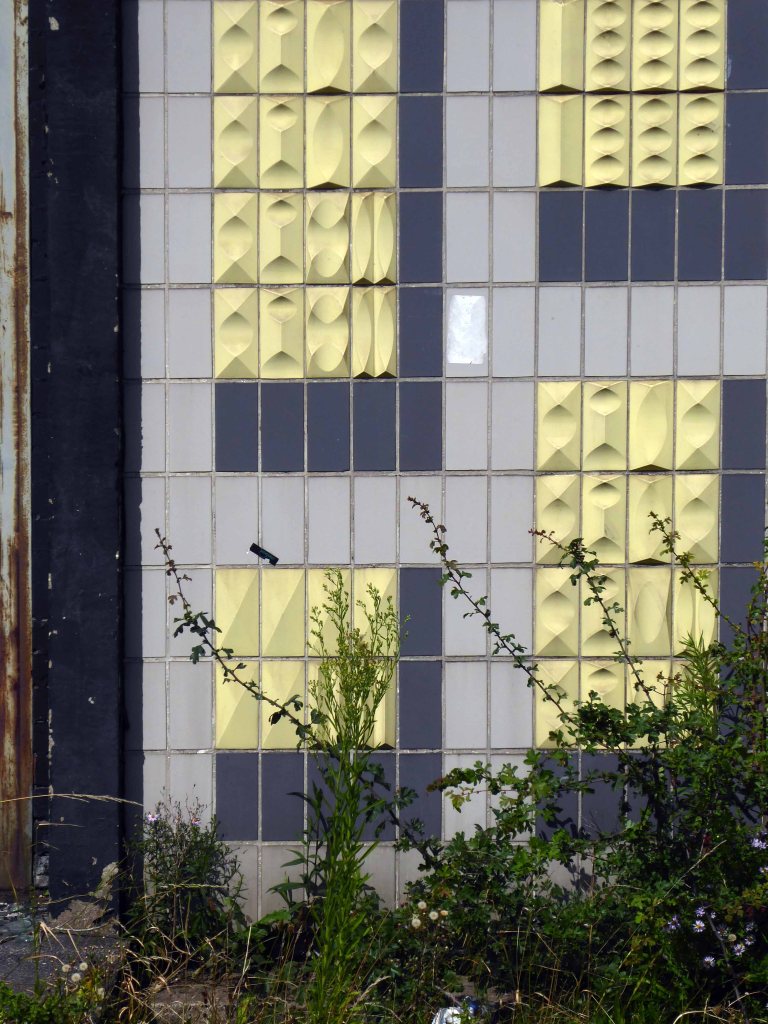
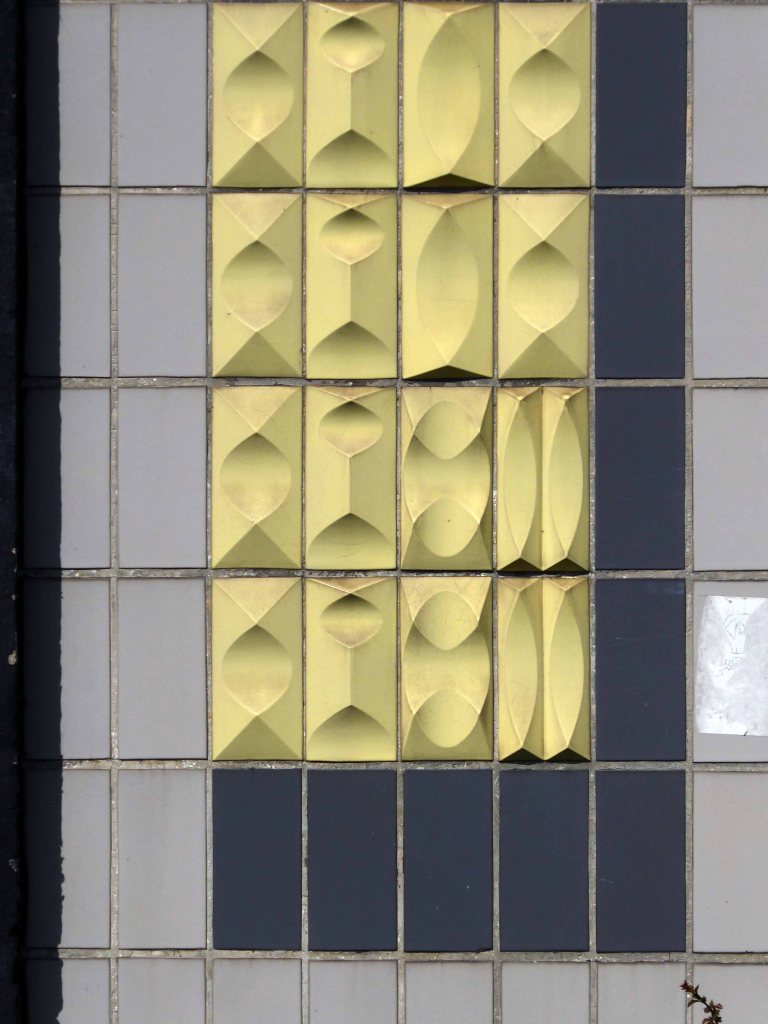
I have been here before, enchanted by the exterior tiles, of unknown origin – yet strongly redolent of William Mitchell’s work.
These are on the southern face of the building.
On the opposing side.
They flow through into the entrance lobby.
Exploring further I encountered these striking ceramic tiles on the stairwells.
With a matching set on the others side of the store.
It’s a constant delight to discover the decorative art of the Sixties preserved in situ. Remnants of a time when investment in original work was de rigueur, reflecting the pride which companies had in their buildings and the respect they held for their customers.
The stores trade as Boyes – pronounced Boys but often mispronounced as Boys-es.
It is still owned and family run with Andrew Boyes and his son Richard as joint managing directors.
The Scarborough store was home to a number of animals in the past, including monkeys, chipmunks and budgies. The animals were used as way of encouraging customers to visit the store and purchase something whilst they visited. Two of the monkeys, Jacko and Dinah, are famous to a generation of Scarborough shoppers.
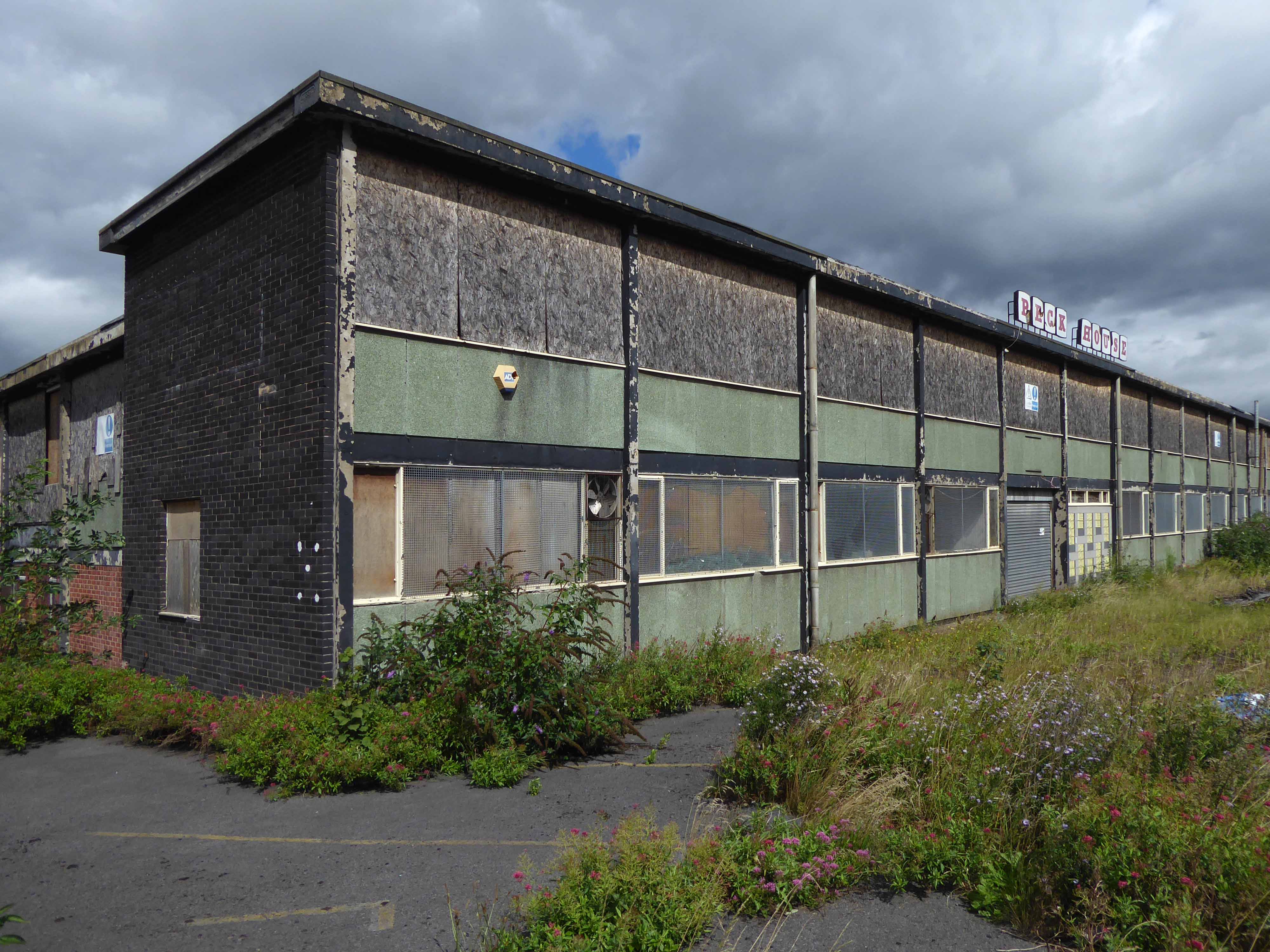
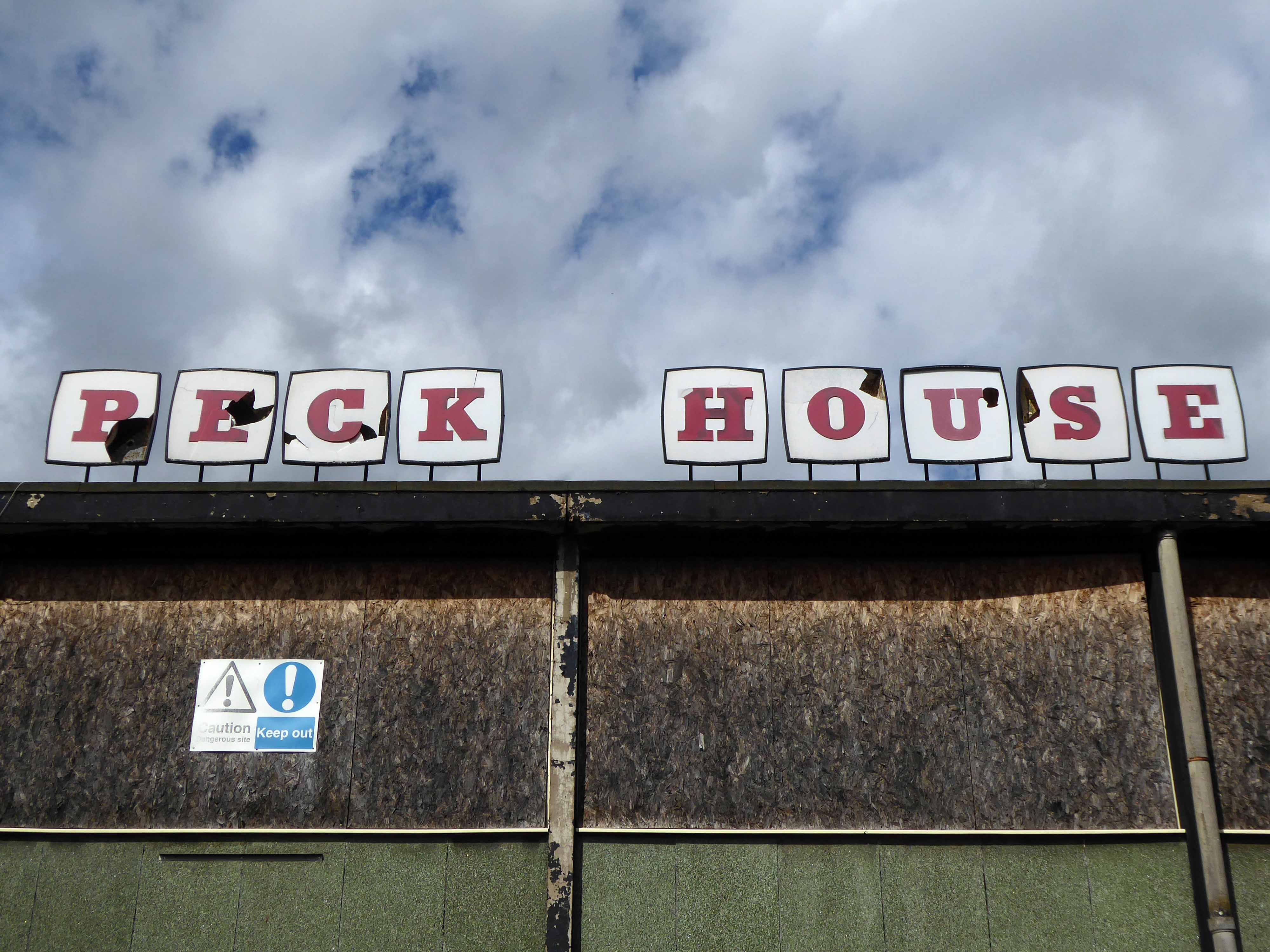
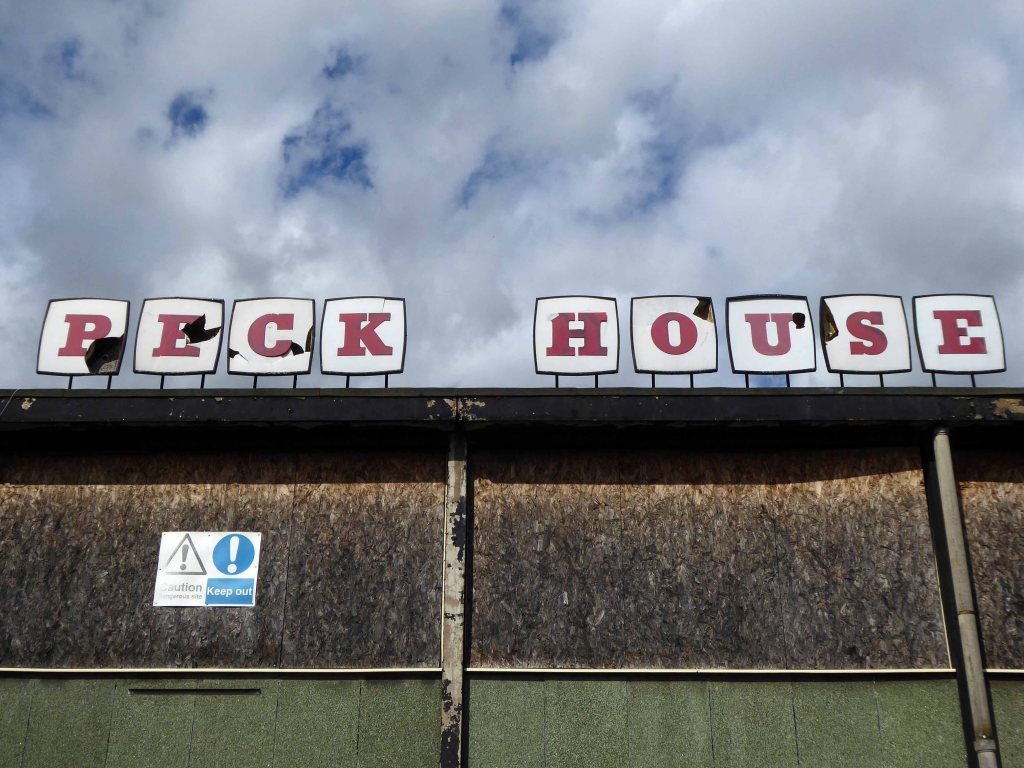
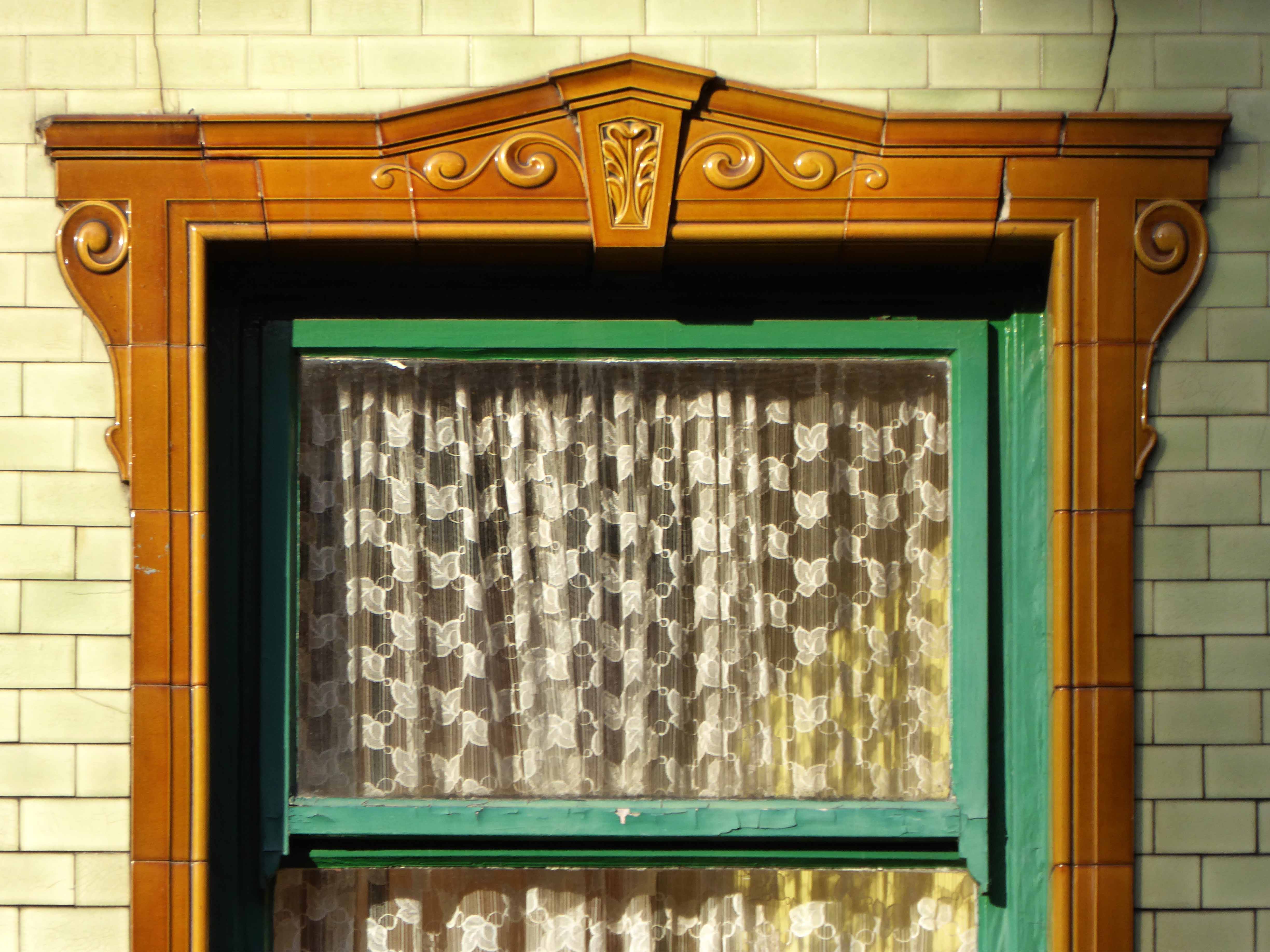
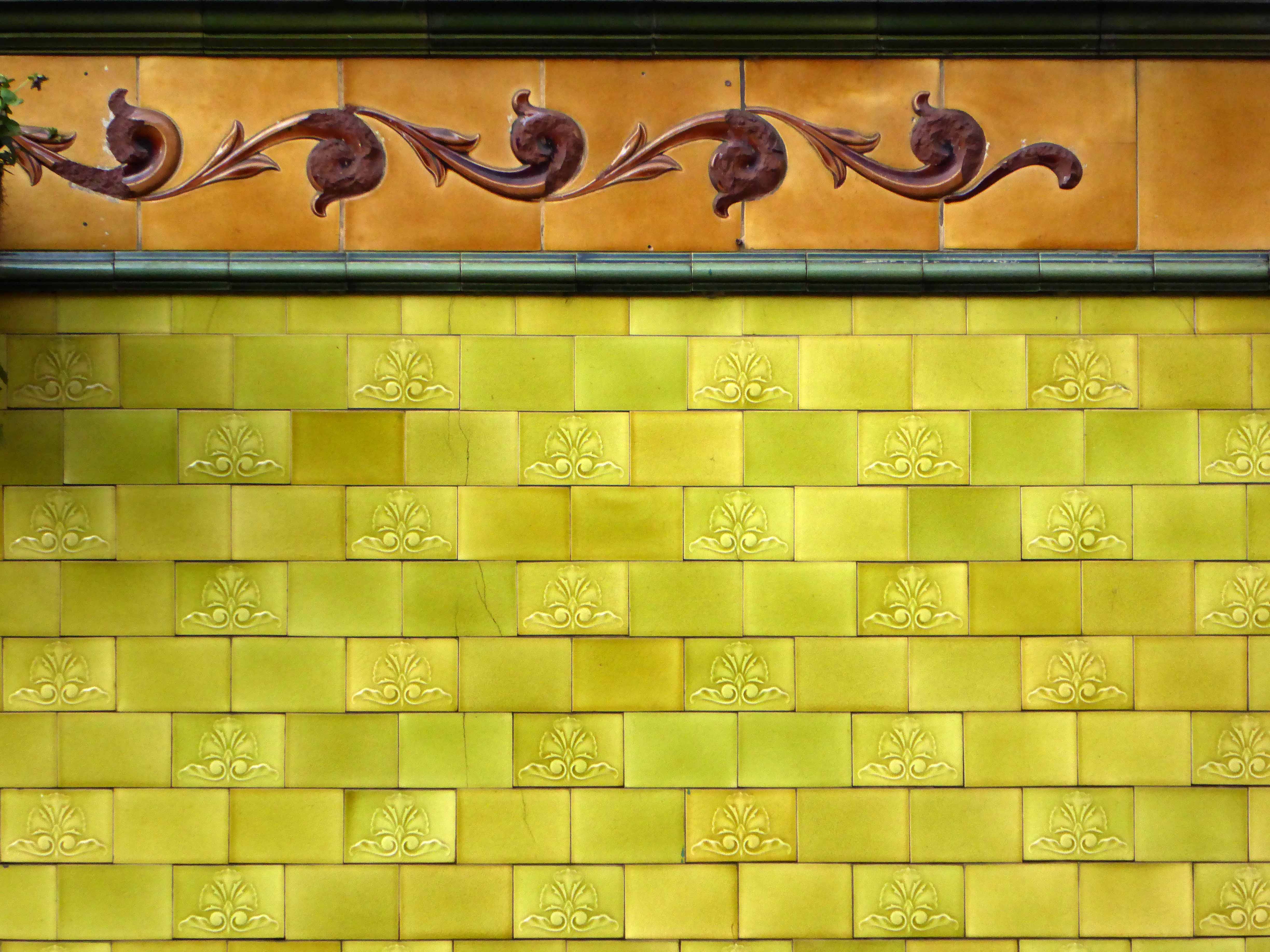
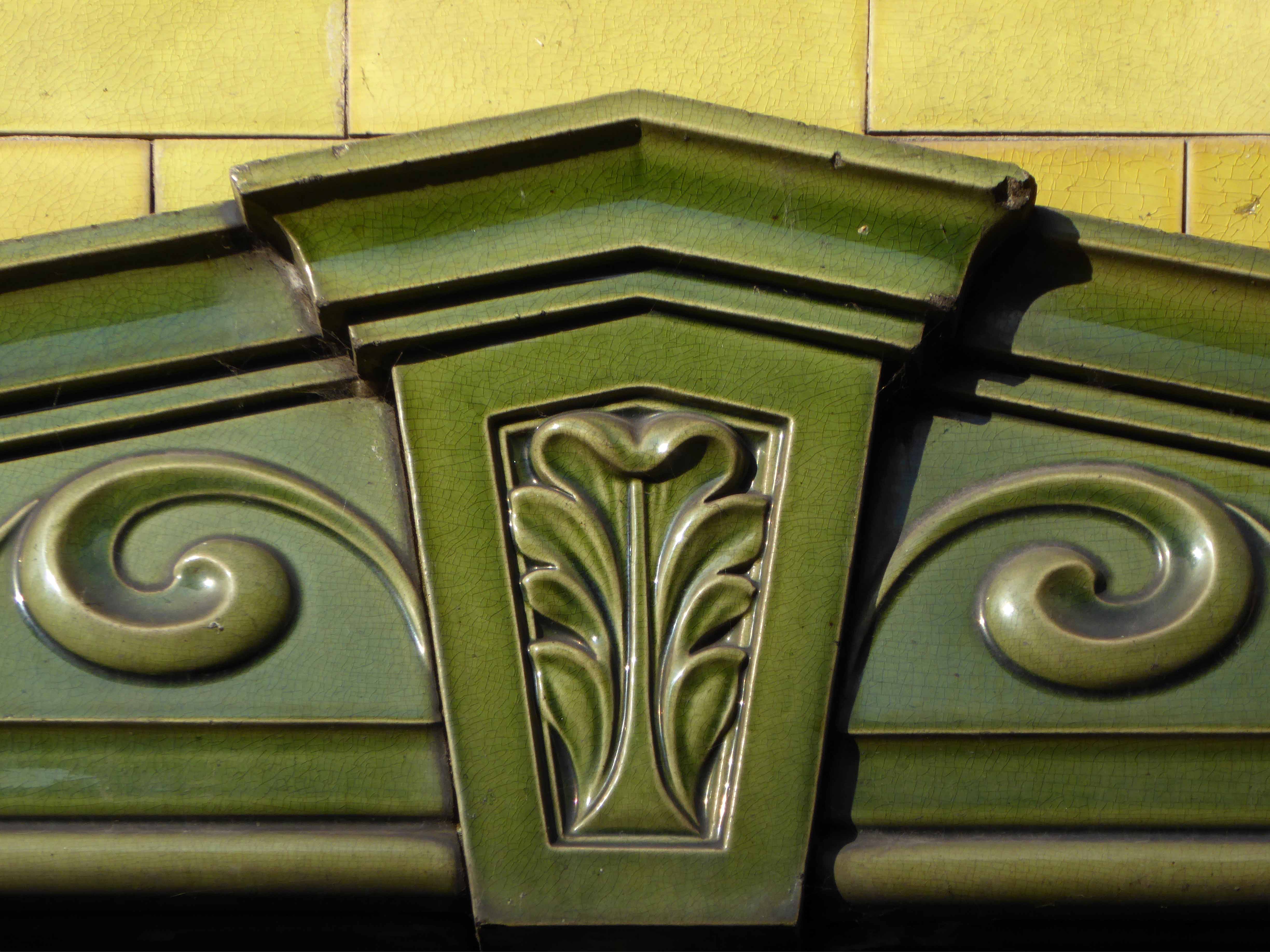
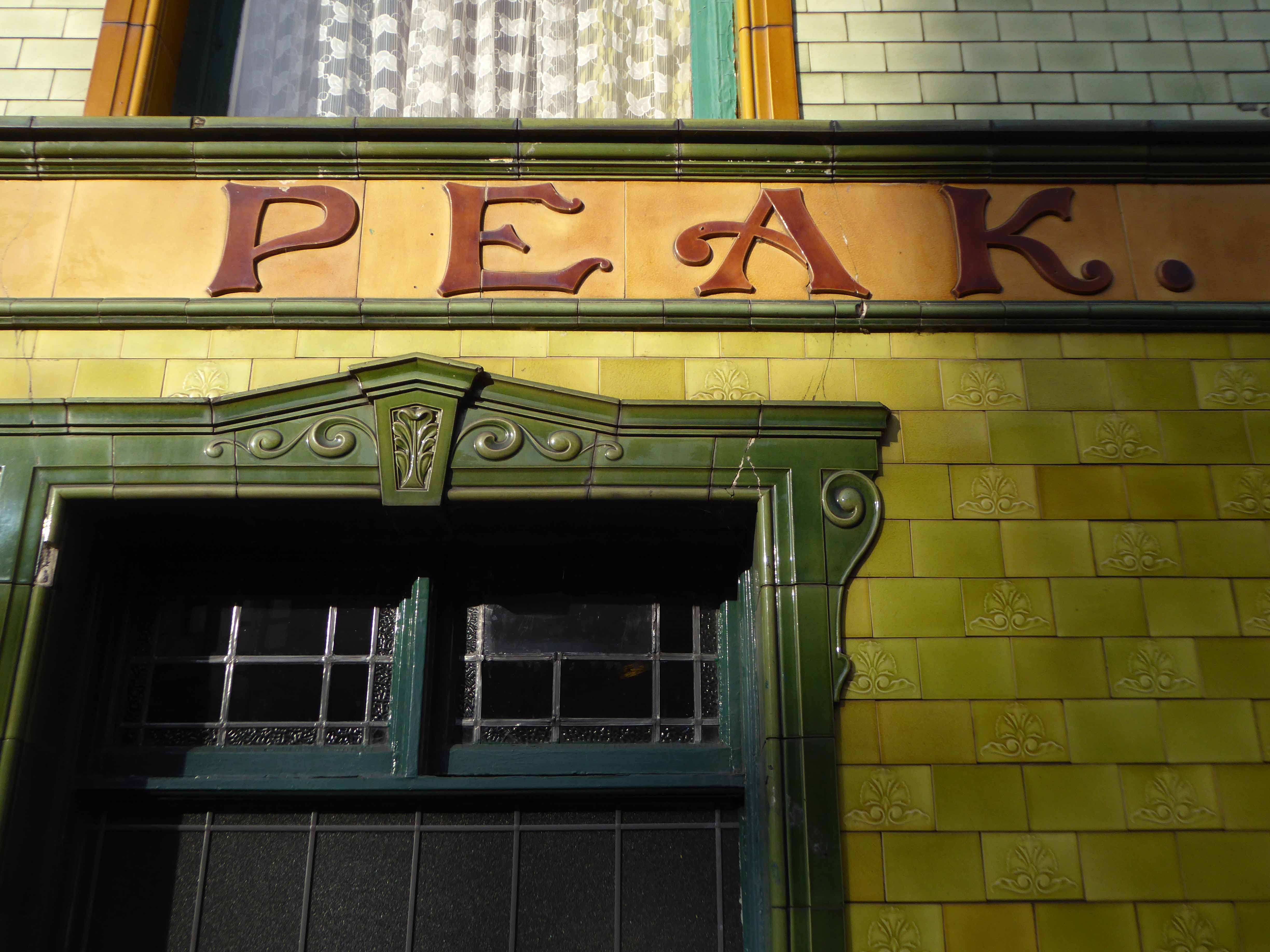
Peck House, a long vacant commercial property on a prominent route into Rotherham, could be flattened for redevelopment as the owners begin discussions with the Council over its future.
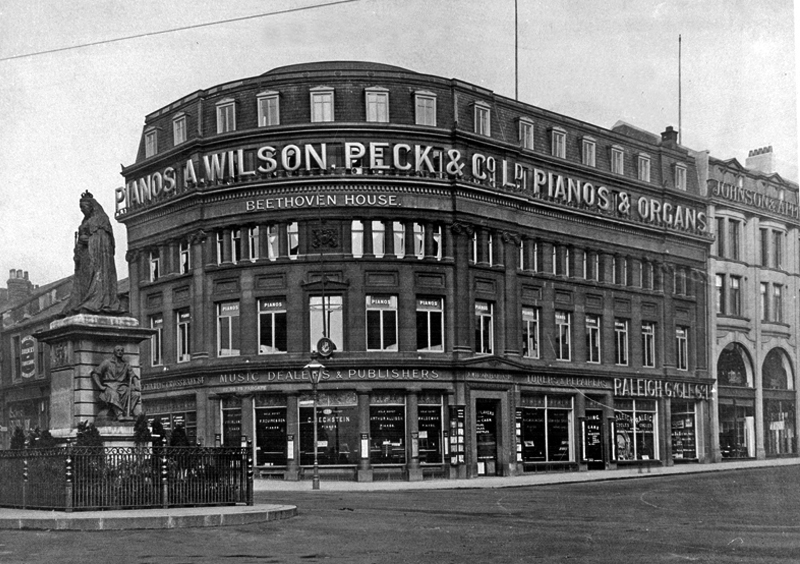
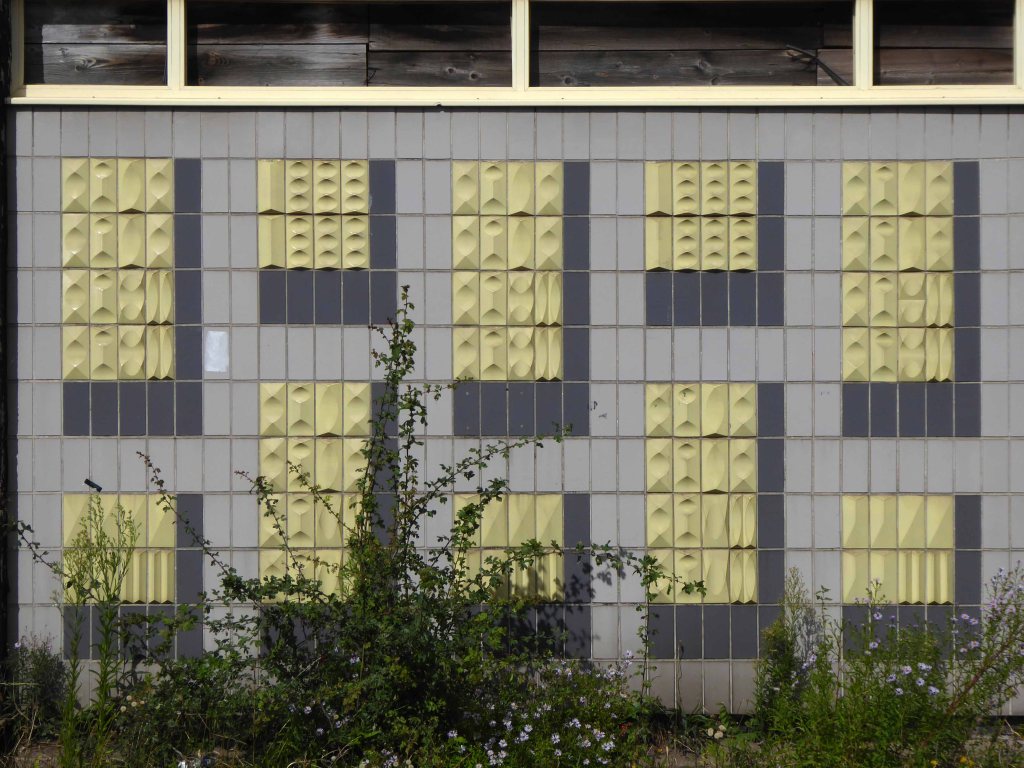
The building on Eastwood Trading Estate, and its unique stylings, was the headquarters of Joseph Peck departments stores.
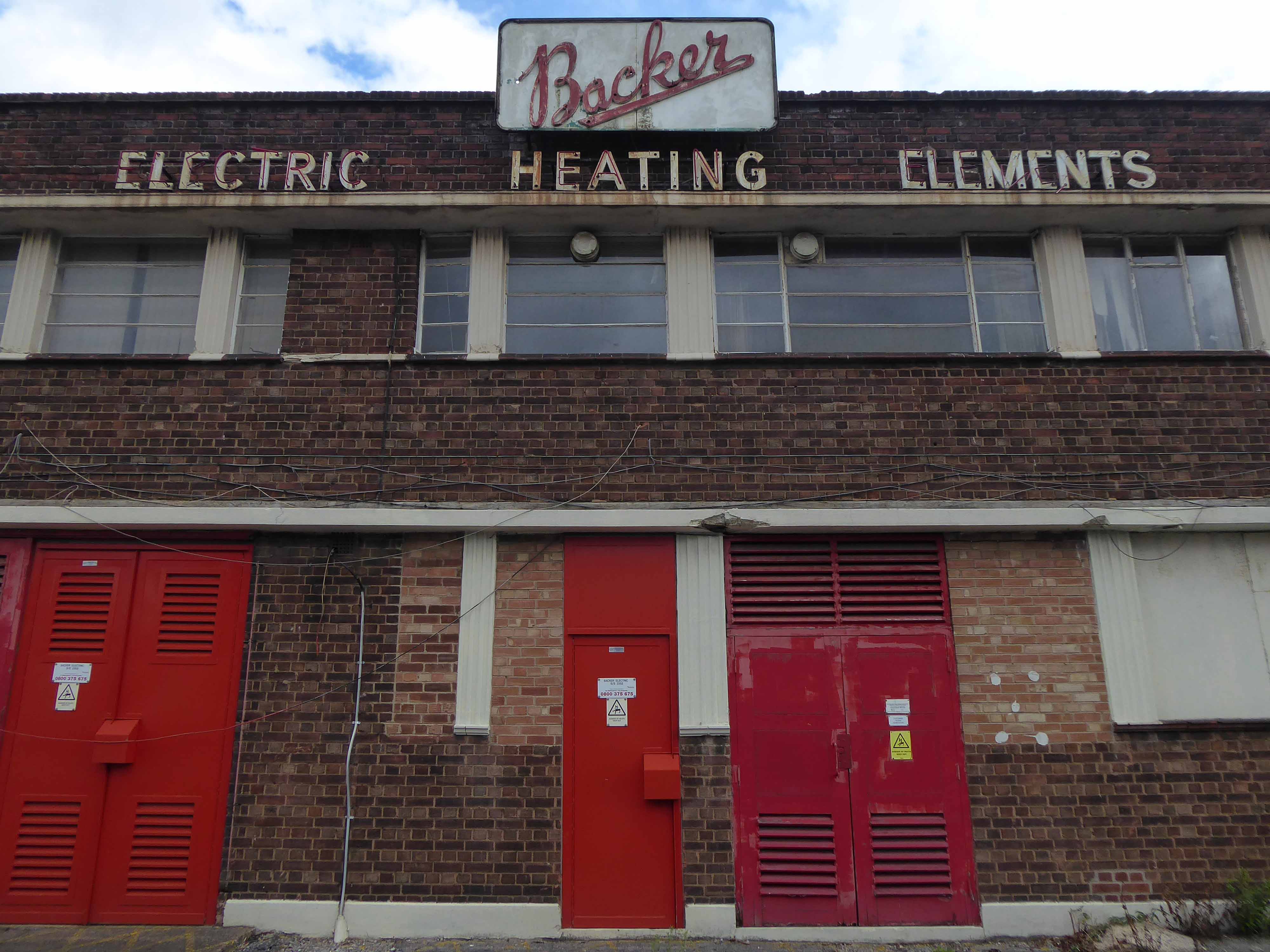
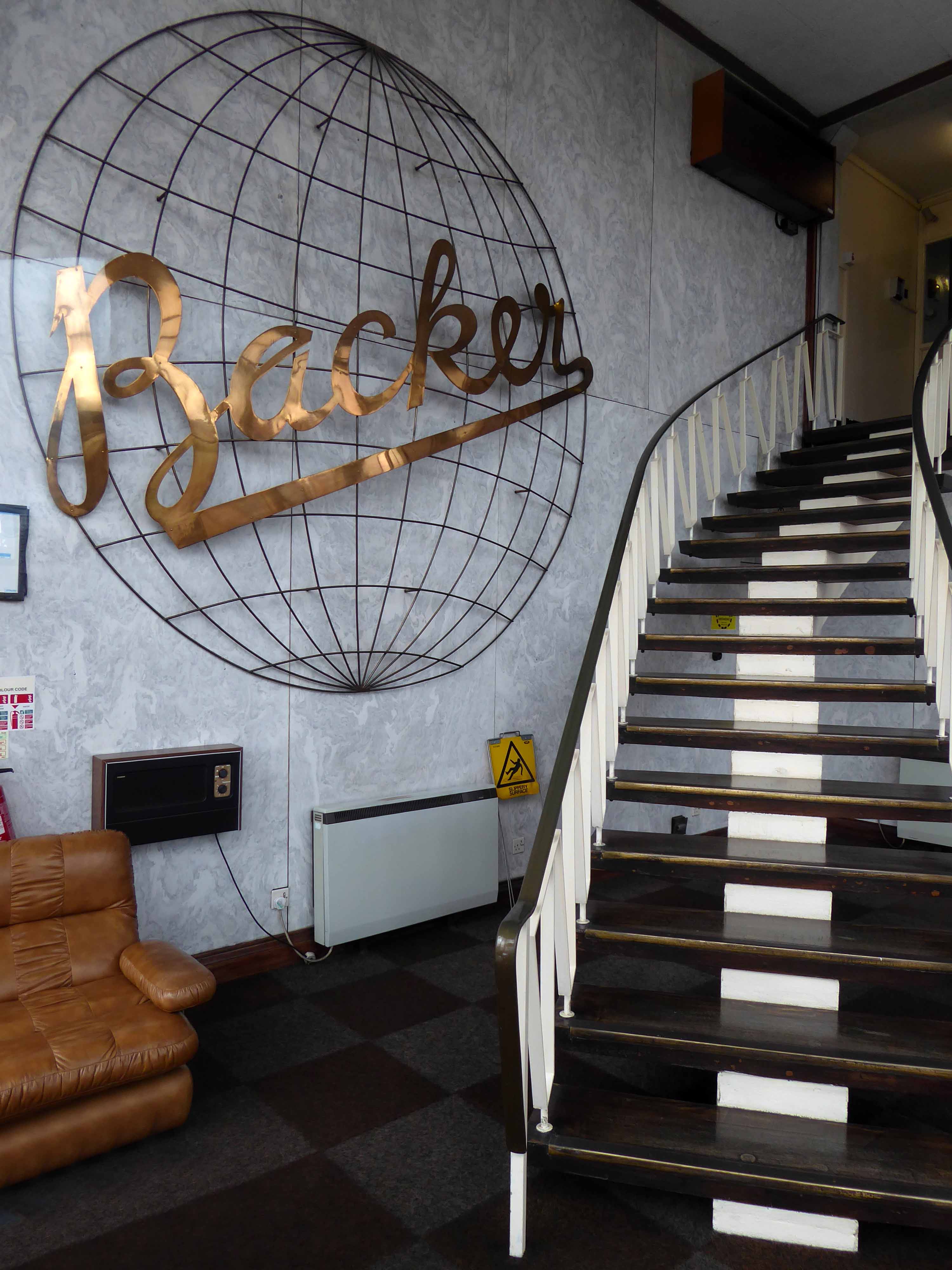
The owners of the site, Backer Electric, occupy the adjacent building where they continue to manufacture heating elements, supplying products in high volume to the majority of household brand names. Options to reuse Peck House and the site have been investigated for a number of years.
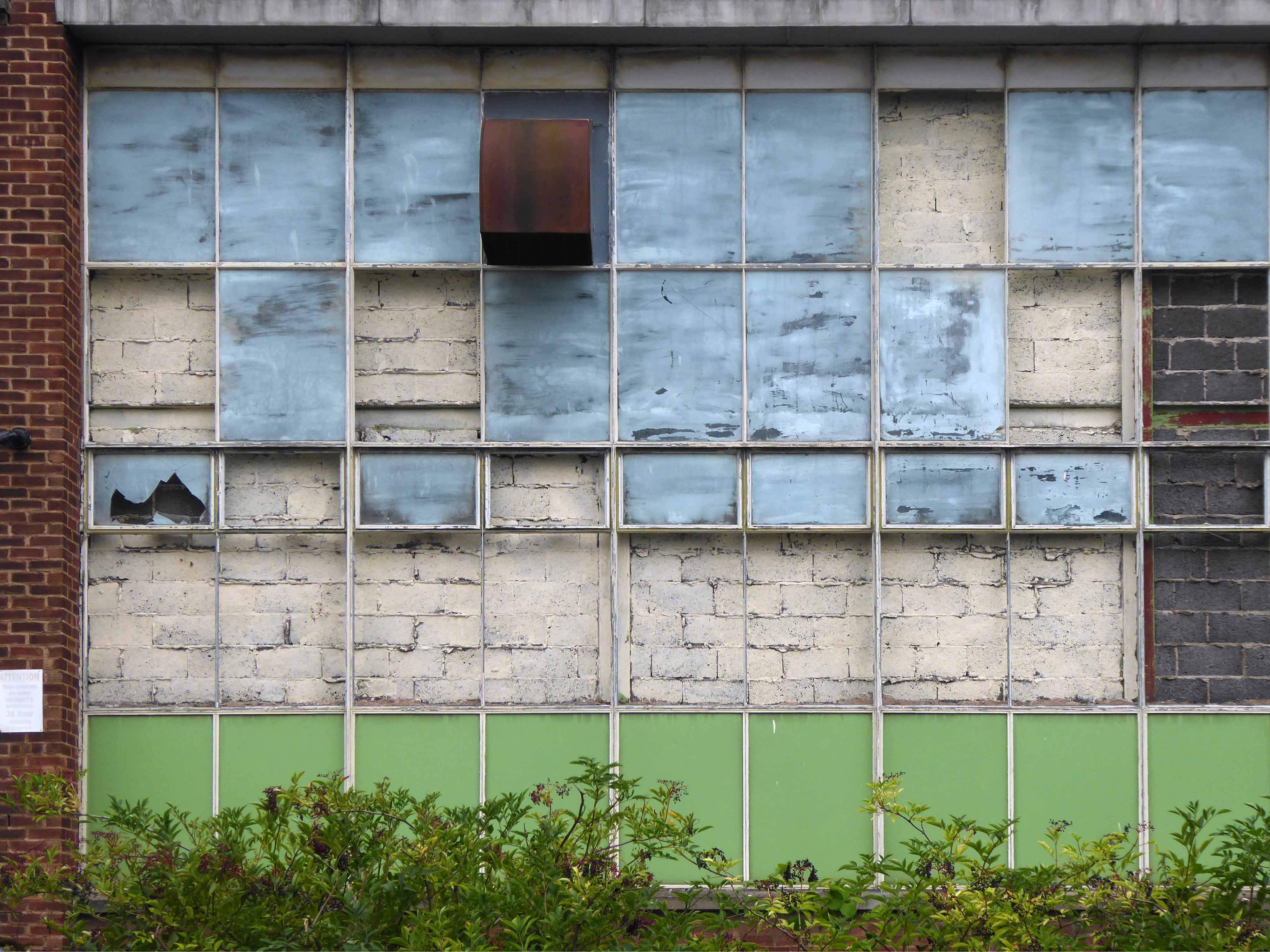
A structural survey was carried out which found the building to be structurally sound and secure and therefore the Council has not been in a position to insist on its demolition.
In 1985, plans came forward to change of use of the retail/wholesale store to a church. In 2004, outline plans were submitted for a development including a hotel, restaurant, hot food takeaway and petrol station for the wider area. In 2014, Peck House was one of a number of sites discounted as the location for a new £5m primary school.
As of Wednesday 26th August 2020 it’s still there underdeveloped and overgrown.
In the company of local resident Helen Angell and having become aware of the site through the paintings of Mandy Payne and the photographs of Sean Madner – I was eager to pay a visit.
Joseph Peck departments stores originated in Rotherham in the late 1800s and had branches in Worksop, Barnsley and Sheffield.
I have only been able to find evidence of the Sheffield store – which may not be linked.
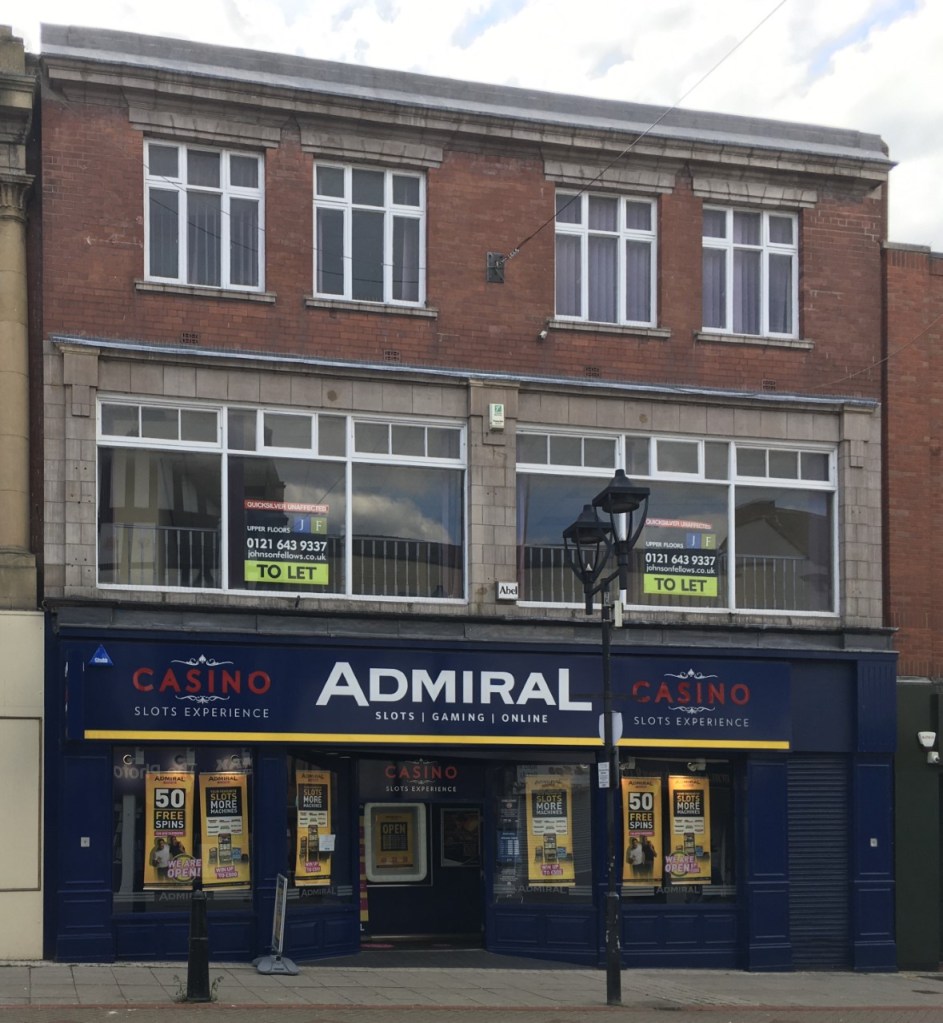
Though there are references to a Rotherham store on Bridgegate.
Joseph Peck was in Bridgegate in Rotherham, and in the late 40’s at Christmas, they had a grotto and a Father Christmas. The queues of parents and children would go down the yard and up Bridgegate. My mum and dad always took my brother and I to see Father Christmas and get a present from him. The store was a department store selling just about everything that was available just after the war. Mum took my brother and I coming up to one Christmas, she was trying to find a bicycle for my brother and I, but they didn’t have one. As we came out of the store, one of old fashioned three wheel railway delivery lorries was just pulling out of the yard. On the back was a blue bike. Mum stopped the driver and asked him where he was taking it. He told her ‘Redgates at the bottom of Ecclesall Road in Sheffield. She shouted ‘Taxi’, and told the driver to ‘follow that lorry’. Just before the lorry arrived on The Moor, she told the taxi driver to overtake the lorry and go to Redgates. We rushed in, she found the manager and asked him about the bike. He hadn’t known that one was being delivered so Mum told him she’d have it without even asking the price. The lorry driver didn’t even have to take it off the lorry, and delivered it to our house next day.
My elder brother had it first, then me, then my younger brother, and finally our young sister. It was still being used when I flew the nest in 1959.
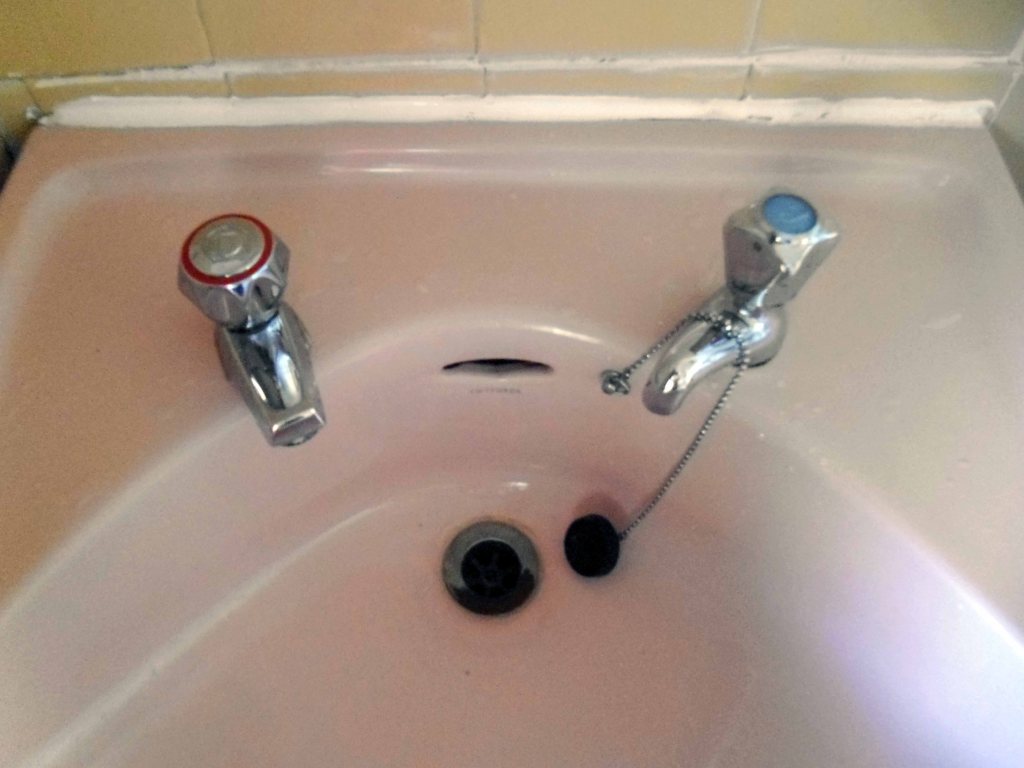
It’s Tuesday 5th August 2015 and the taps don’t match – is this a good omen?
Or simply proprietorial pragmatism?
And why is the sink a funny shape?
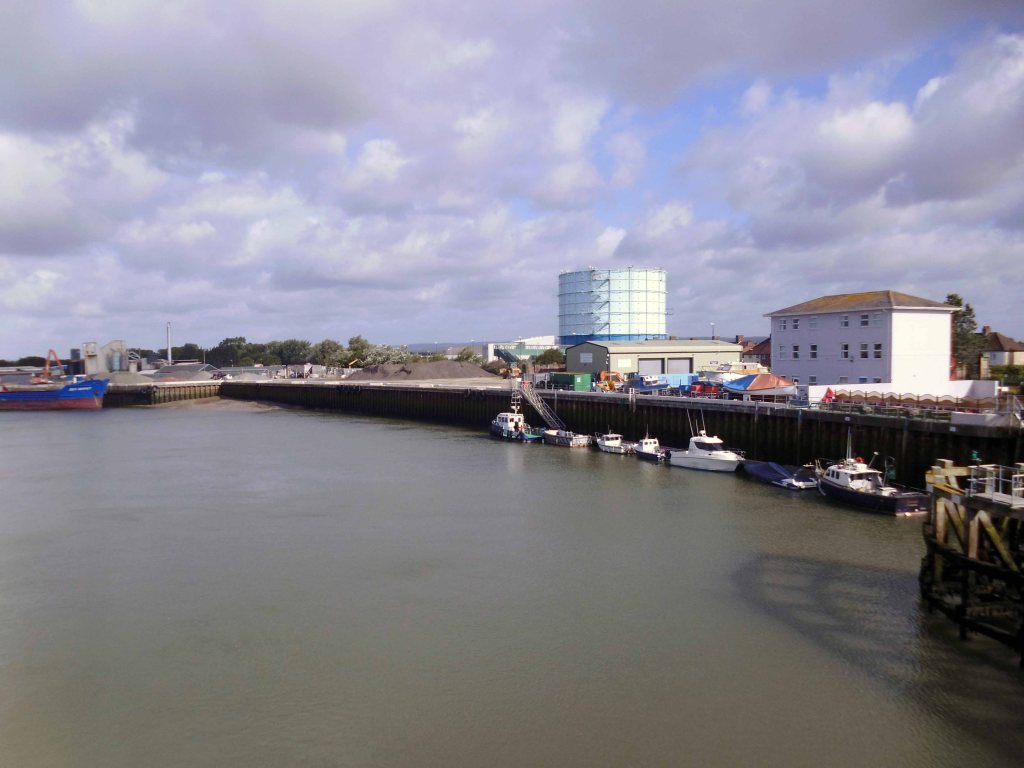
Any road up we’re off up the road, the sun’s a shining and here we are in Littlehampton.
Looking at a pale blue gas holder, some way off in the middle distance.
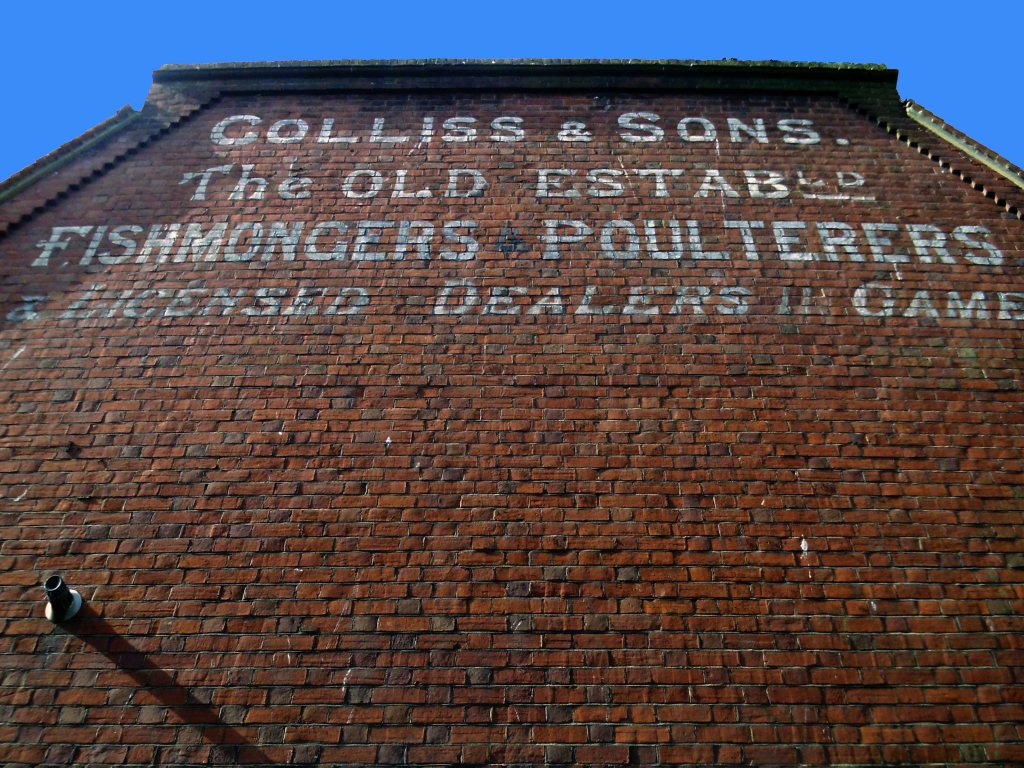
Staring up at a fishmonger’s ghost.
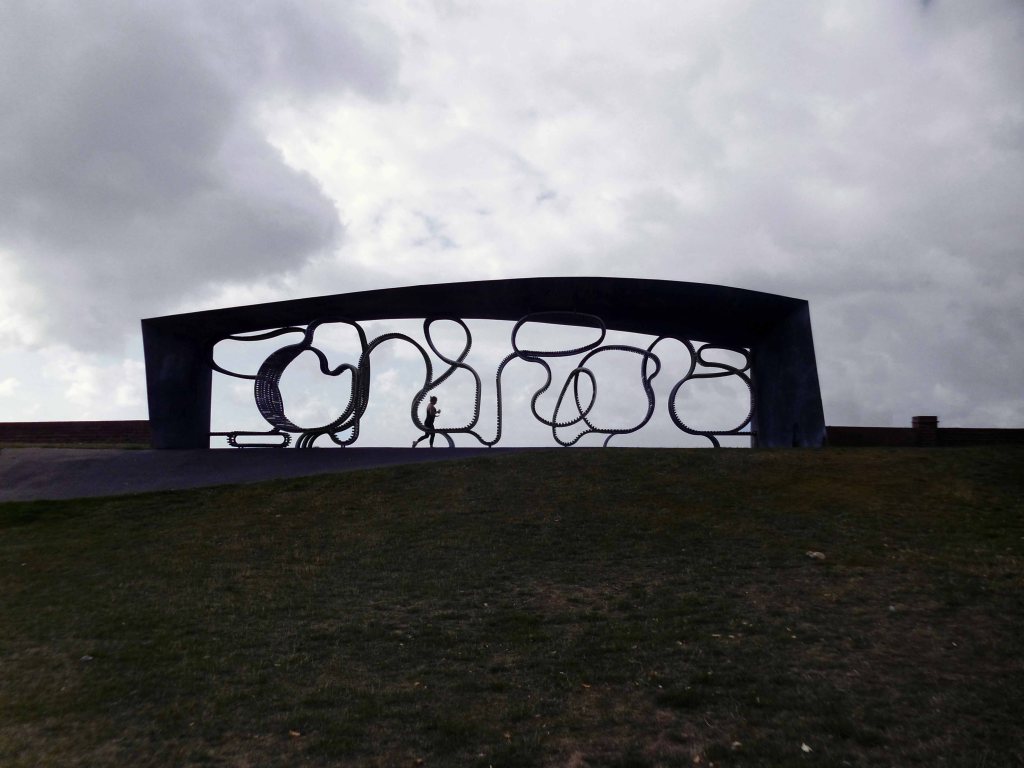
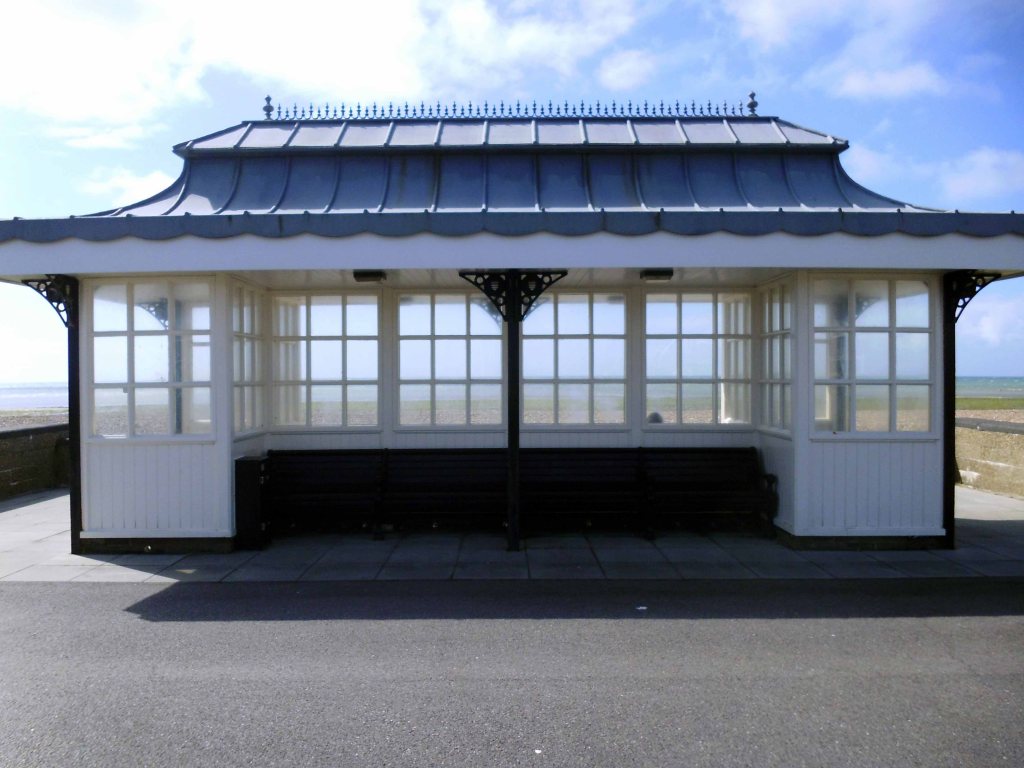
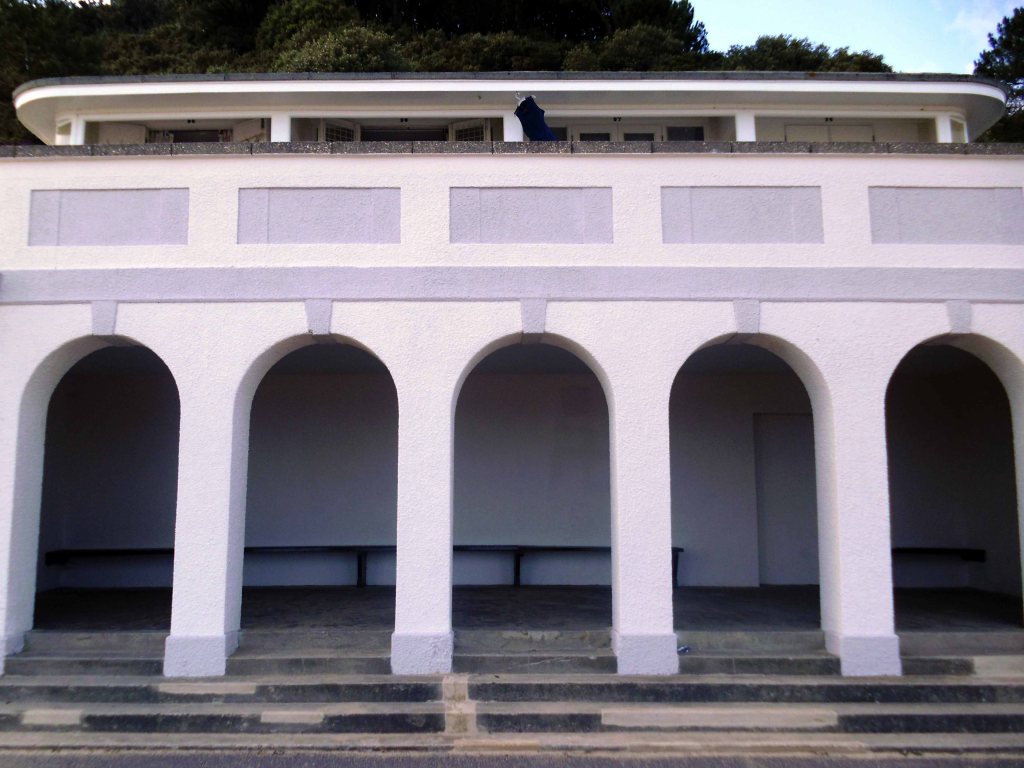
Passing by an ultra-squiggly seaside shelter as a runner passes by.
The Long Bench at Littlehampton is thought to be the longest bench in Britain and one of the longest in the world. The wood and stainless steel bench ‘flows’ along the promenade at Littlehampton in West Sussex – curving round lamp posts and obstacles, twisting up into the seafront shelters, dropping down to paths and crossings.
The bench was opened in July 2010 and can seat over 300 people. It was funded by Arun District Council and CABE’s ‘Sea Change’ capital grants programme for cultural and creative regeneration in seaside resorts. The bench was also supported by a private donation from Gordon Roddick as a tribute to his late wife Anita, the founder of the Body Shop, which first began trading in Littlehampton.
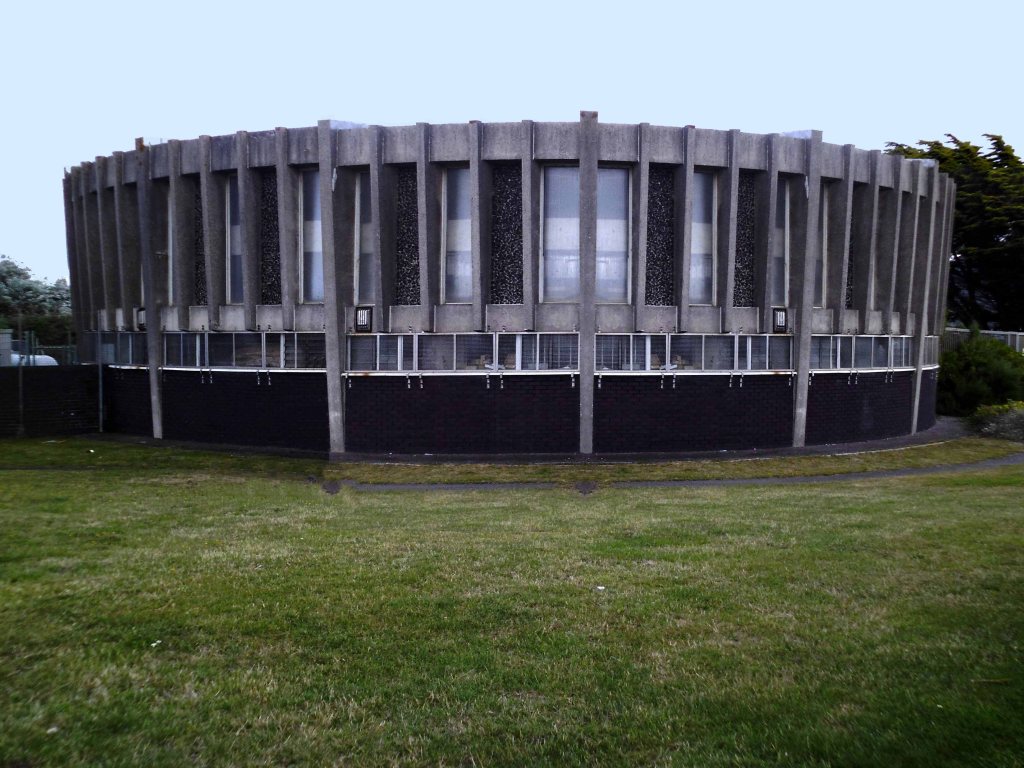
Water treatment plant.
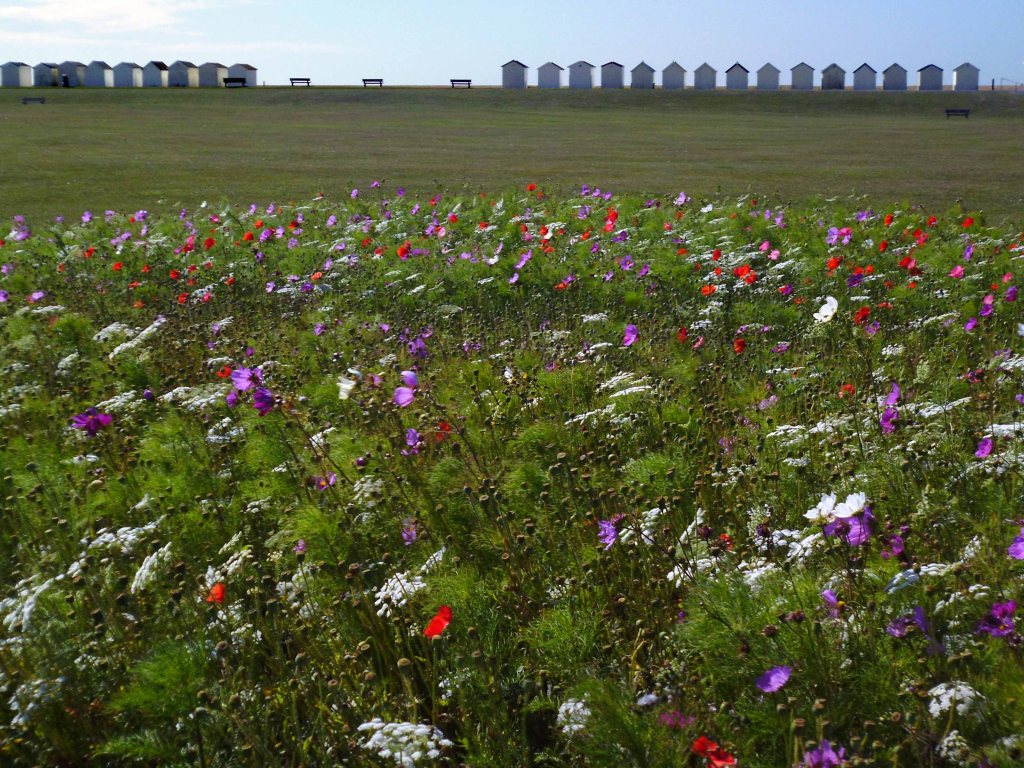
Nothing lifts the spirits quite like a wildflower meadow.
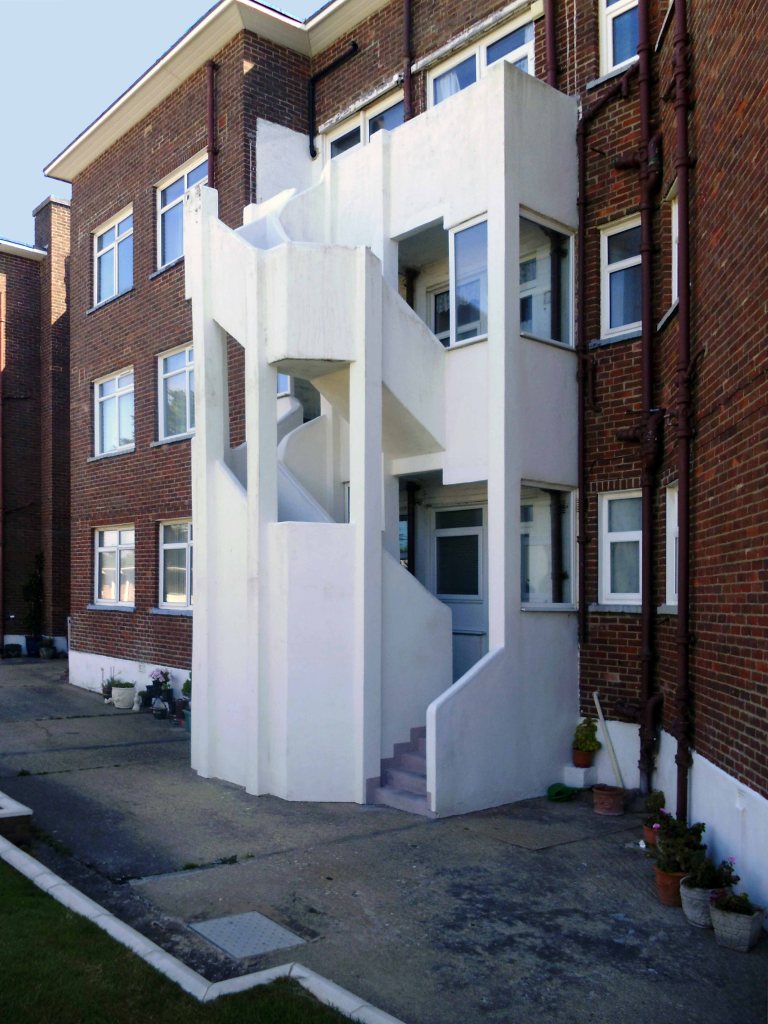
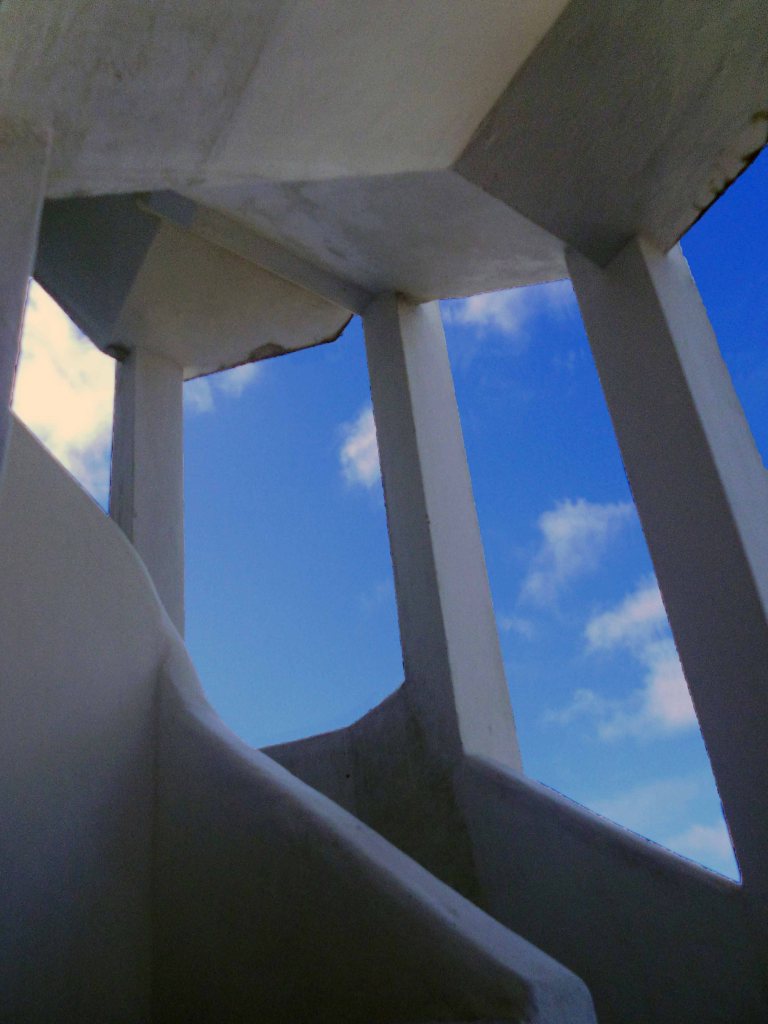
Imagine my surprise having gone around the back – an expressionist concrete spiral stairway.
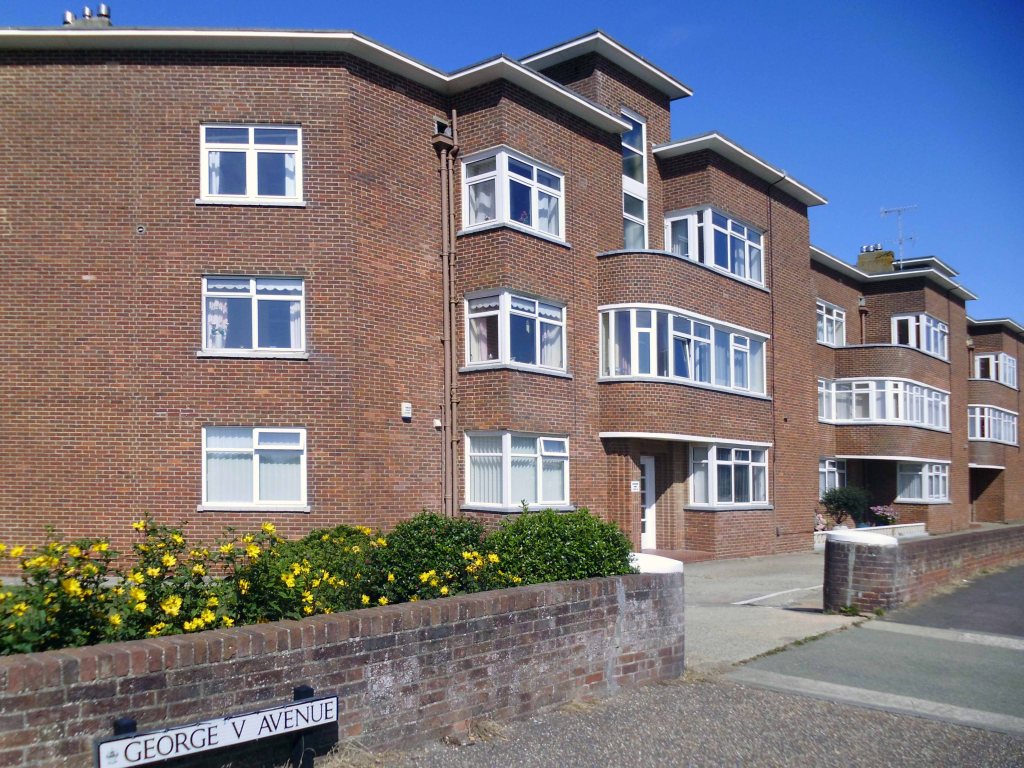
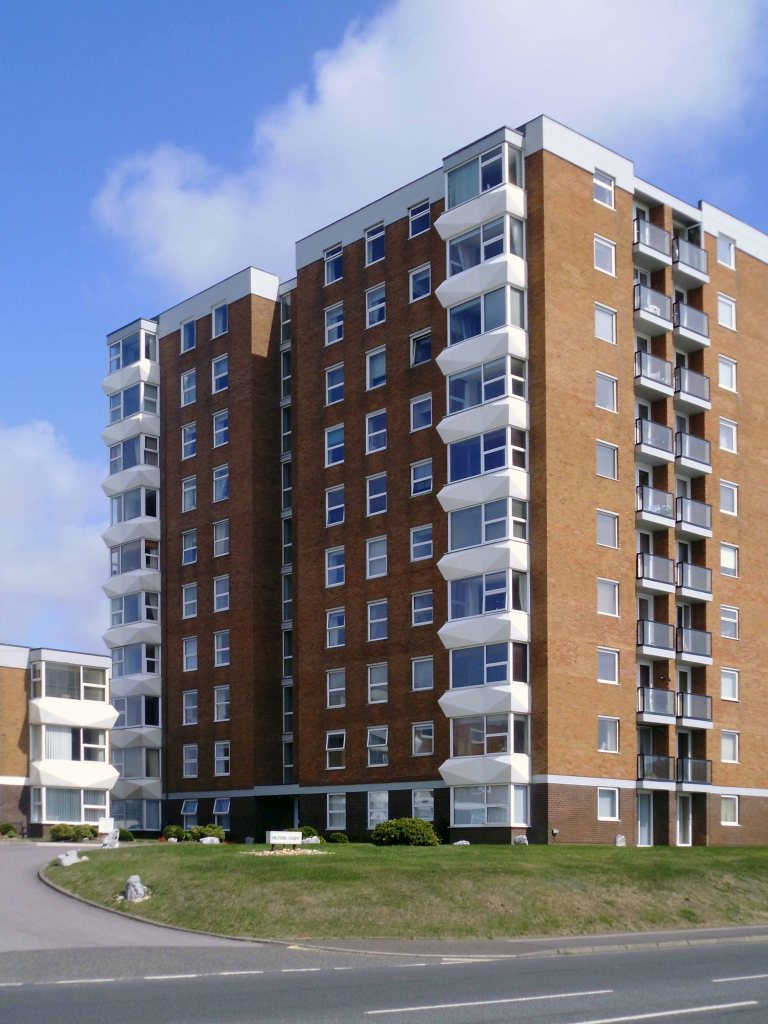
Letting the sky leak in here at Burlington Court in Goring on Sea
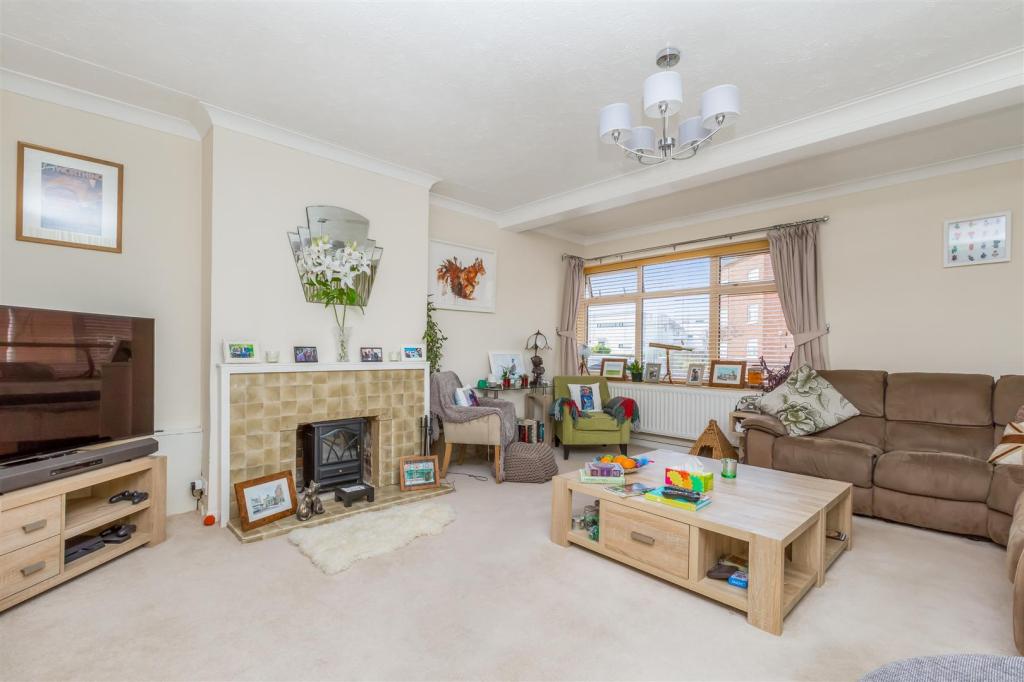
The phrase deceptively spacious is one that is often overused within the property industry, however it sums up this ground floor flat prospectively. Offering a great alternative to a bungalow and providing spacious and versatile living accommodation, this is an absolute must for your viewing list.
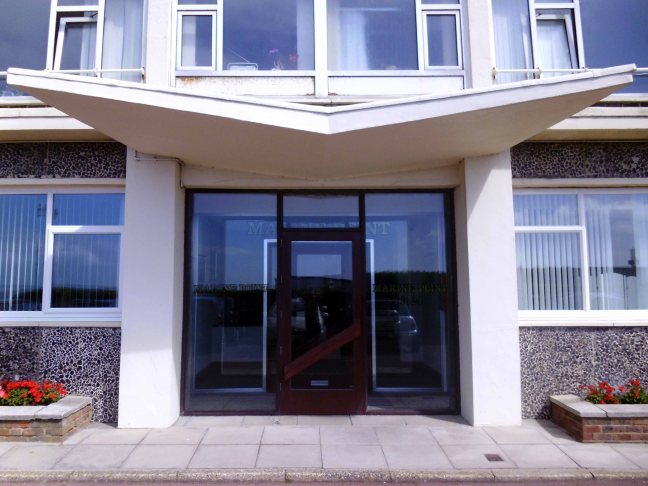
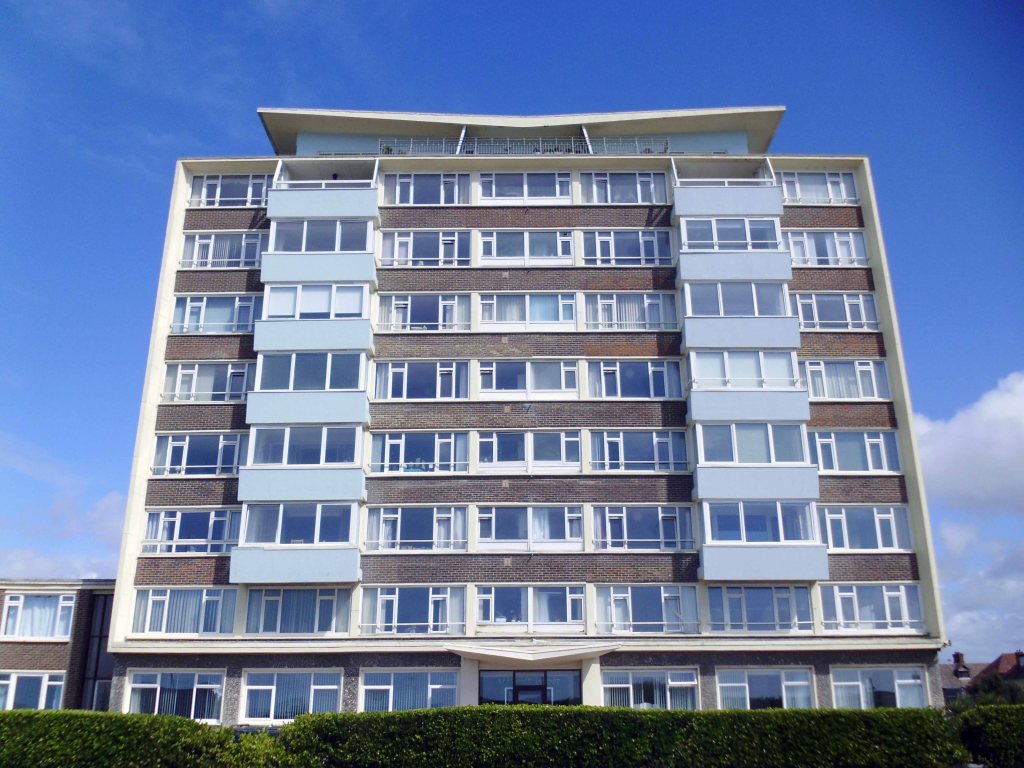
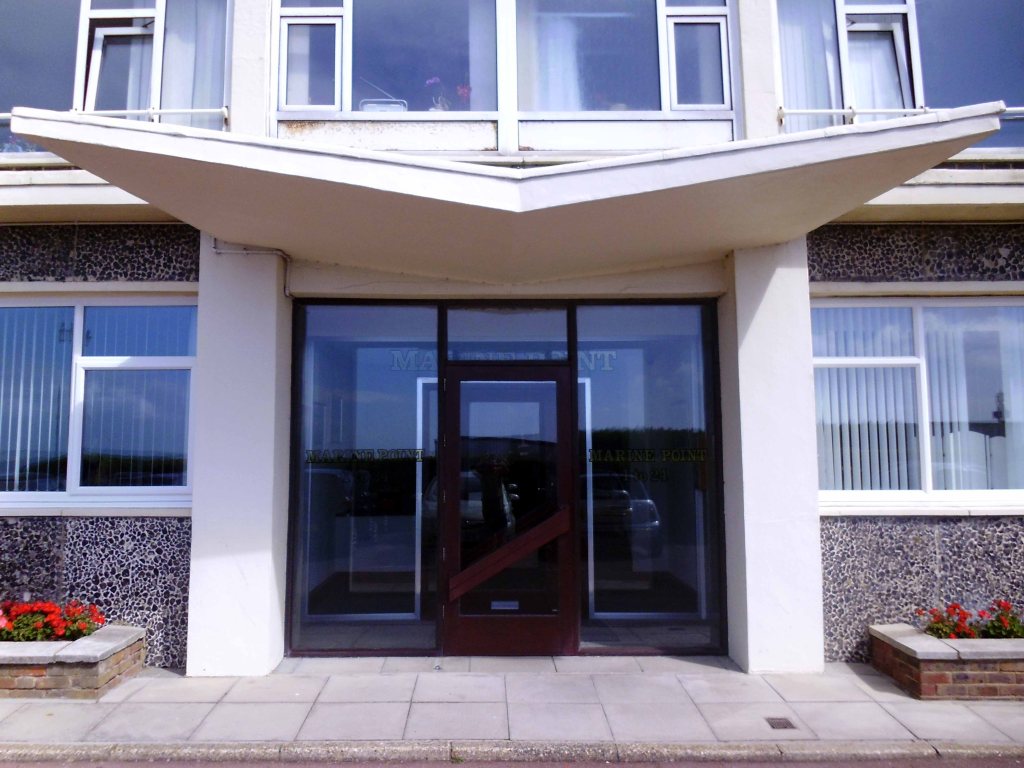
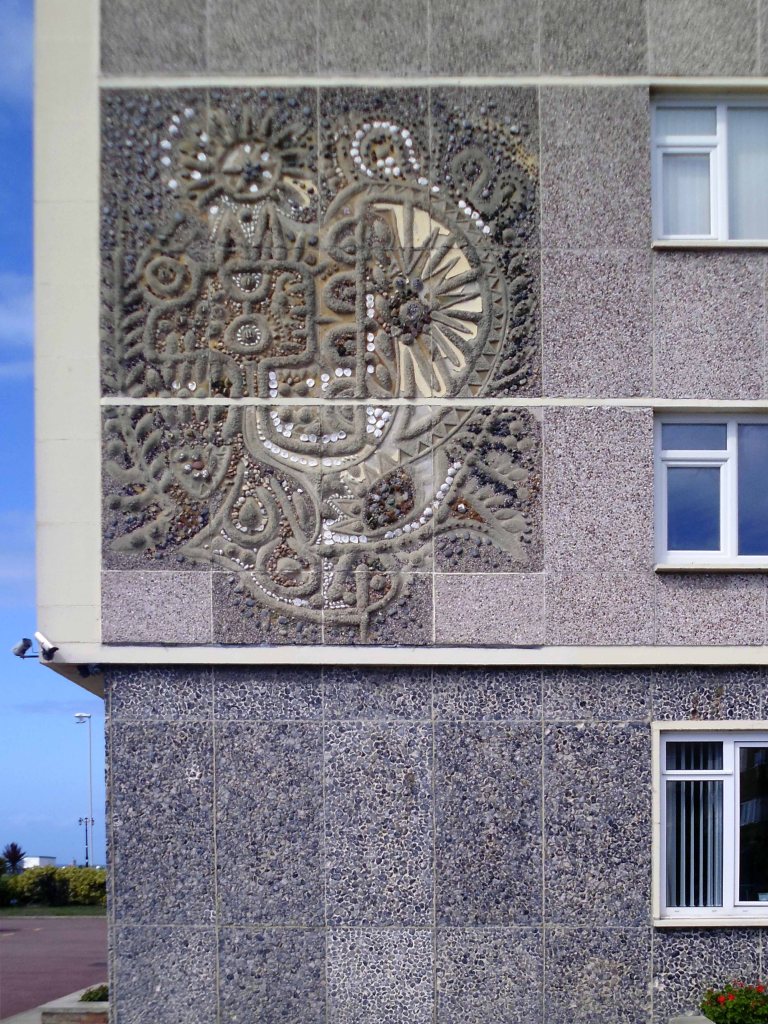
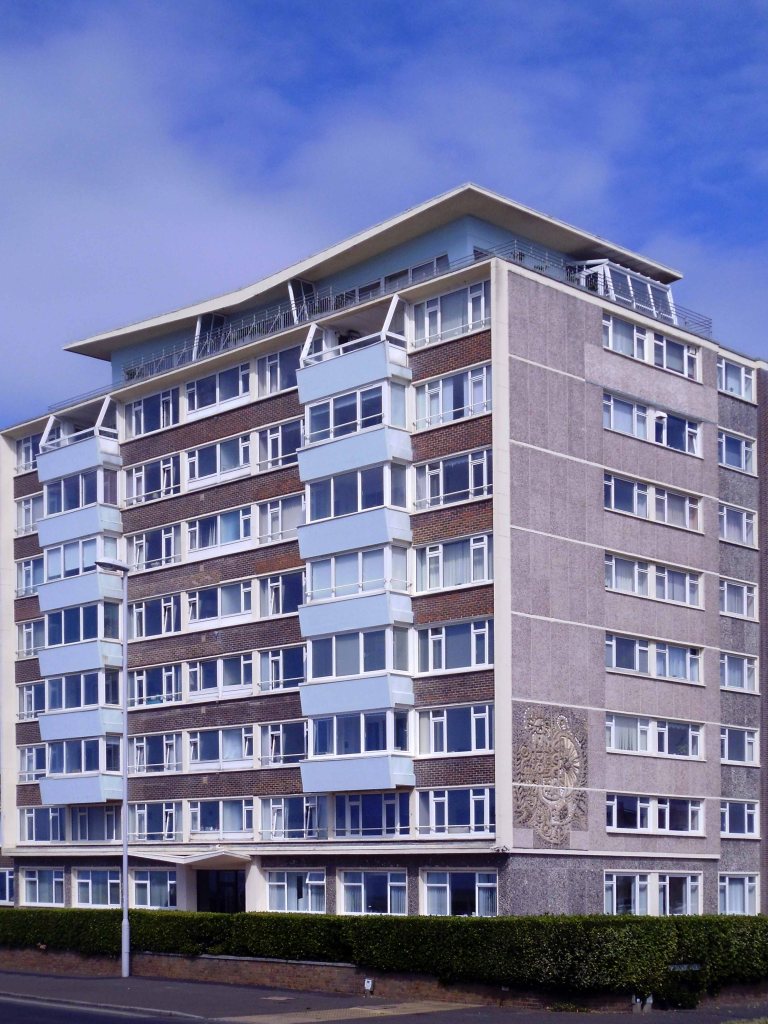
What a delightful Modernist frieze on the side of Marine Point – Worthing!
With lifts to all floors this triple aspect corner apartment is situated on the fifth level and has outstanding panoramic sea views across from Beachy Head to Brighton through to the Isle of Wight. It is also benefits from stunning South Down views to the west and north. The property has been recently refurbished to a high specification and includes features such as: Quick-Step flooring, security fitted double glazed windows, a hallway motion sensor lighting system, extensive storage space and two double bedrooms.
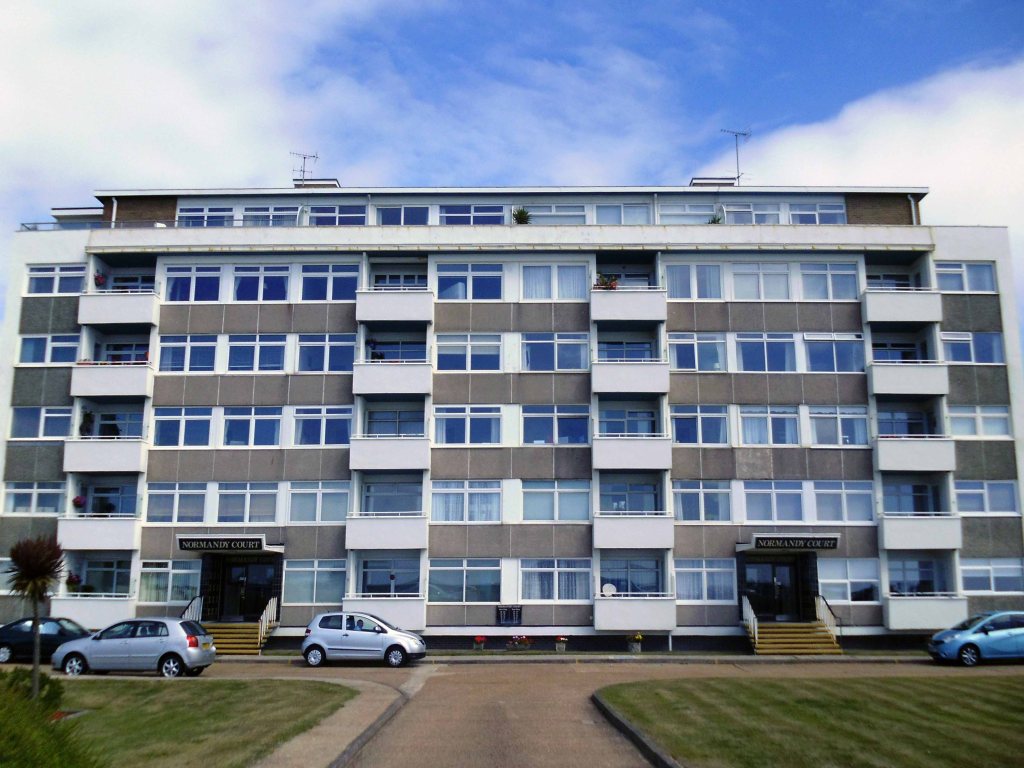
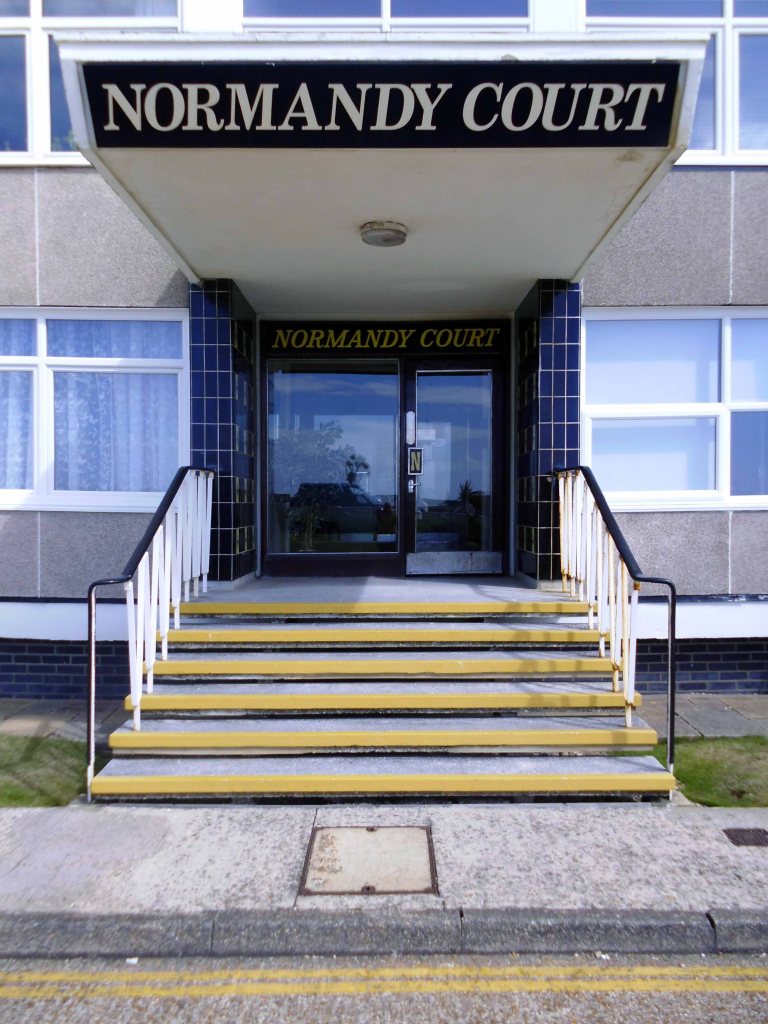
Fox and Sons are delighted to offer For Sale this immaculate seafront penthouse located within the highly desirable Normandy Court situated on the sought after West Parade, Worthing. Upon entry you will notice that the communal areas are kept in good condition throughout.
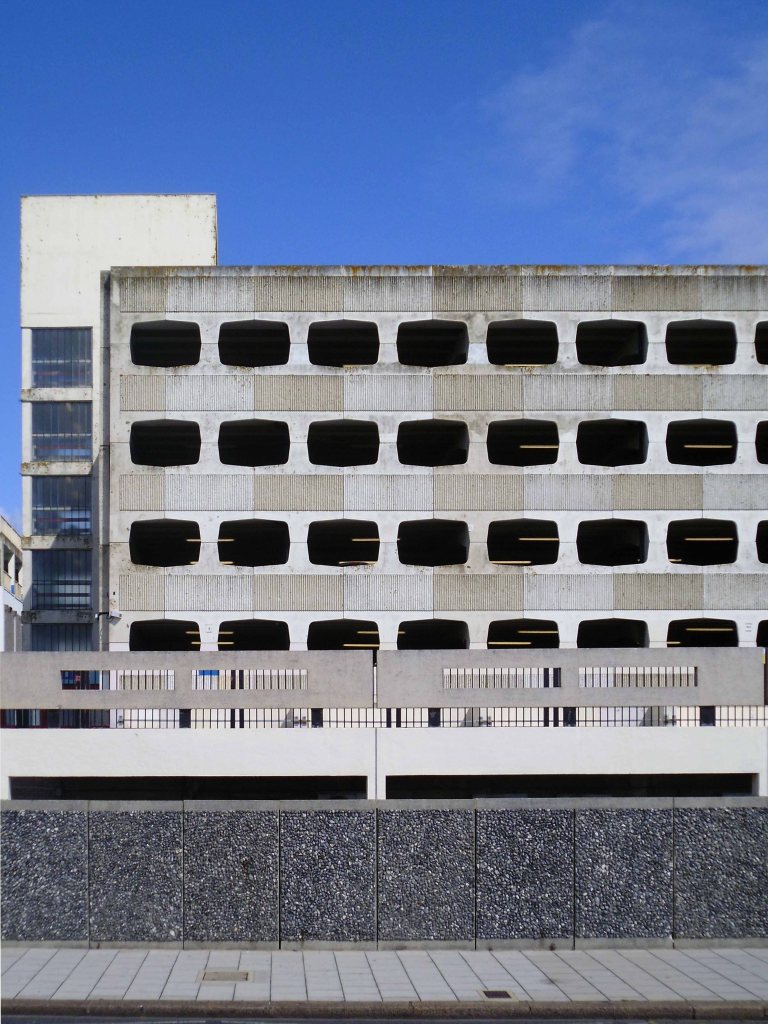
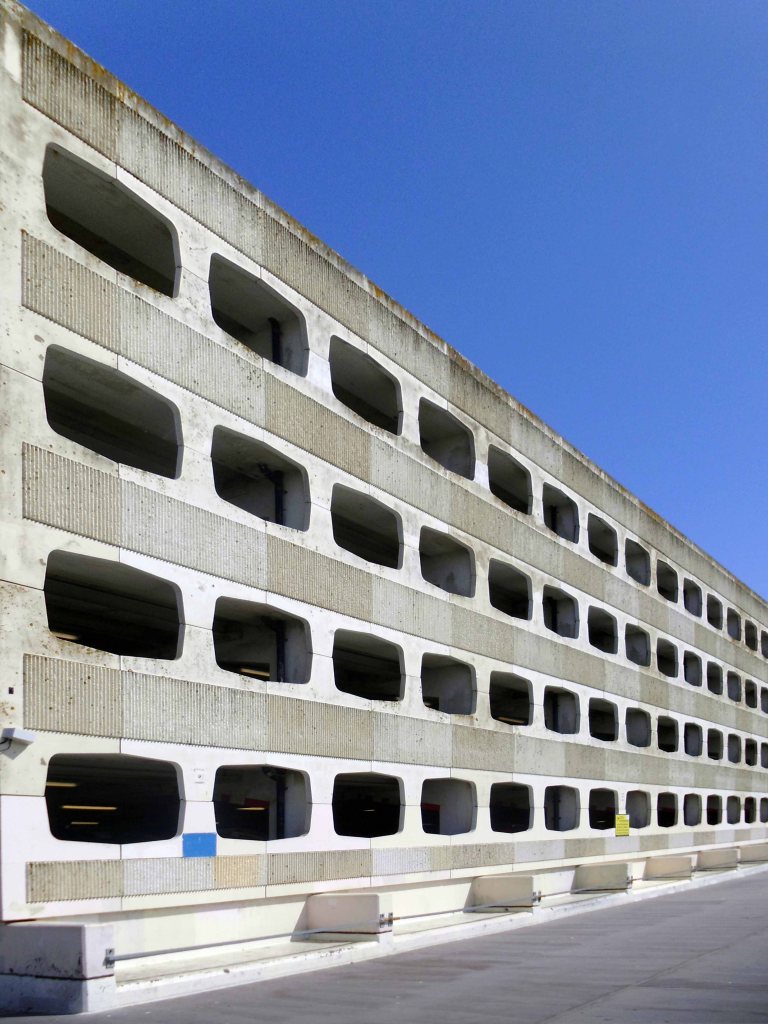
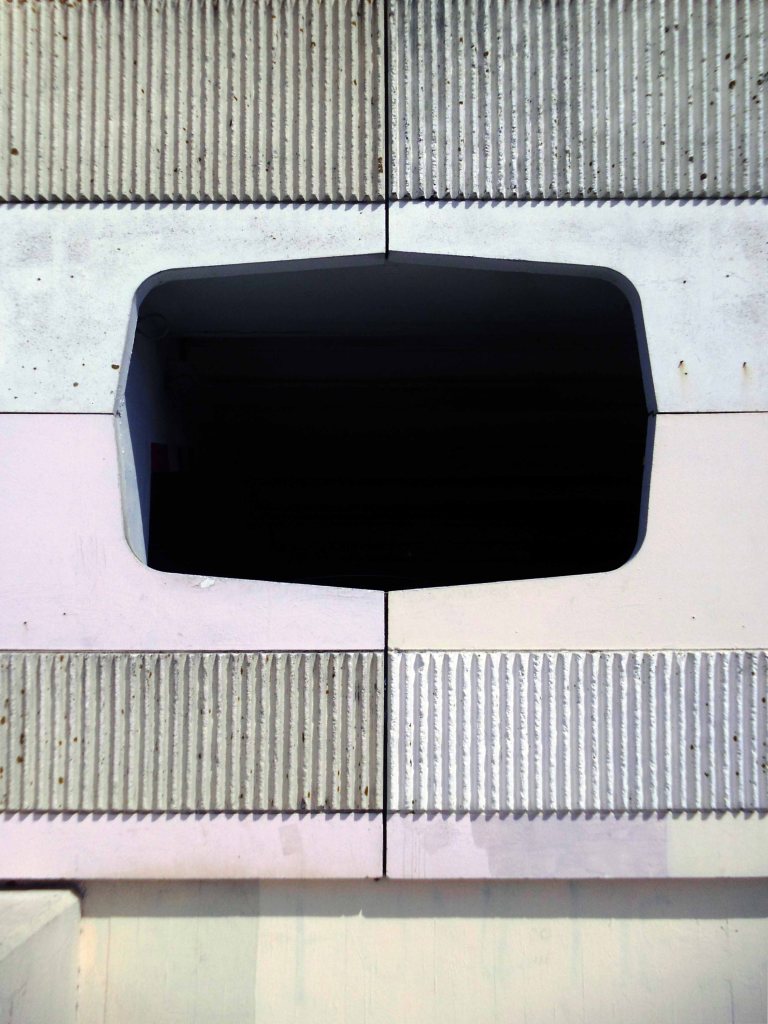
One of the finest modular pre-cast concrete car parks in the land.
Borough council officers have recommended developing the Grafton car park, with a fresh study recommending that building new homes there is key – saying it is important to help revitalise the town centre and bring in new cutlural and leisure activities.
The car park is currently undergoing essential maintenance to be able to keep it open in the short term but the recommendation is that it should eventually be demolished to make way for the new development.
Sunday 2nd August 2015 – you awake and you’re still in Bournemouth and still in one piece, the possibility of late night stag and hen madness passed over without incident.
A quick look around town, then let’s get off to Pompey – where I was very proud to be a Polytechnic art student 1973/76, in good old Lion Terrace.
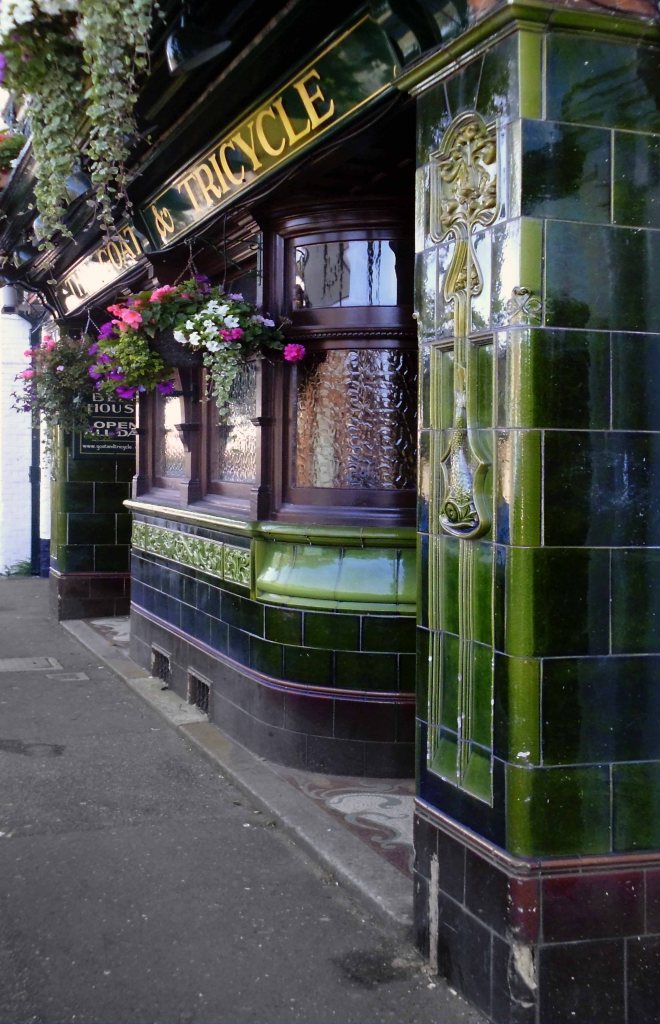
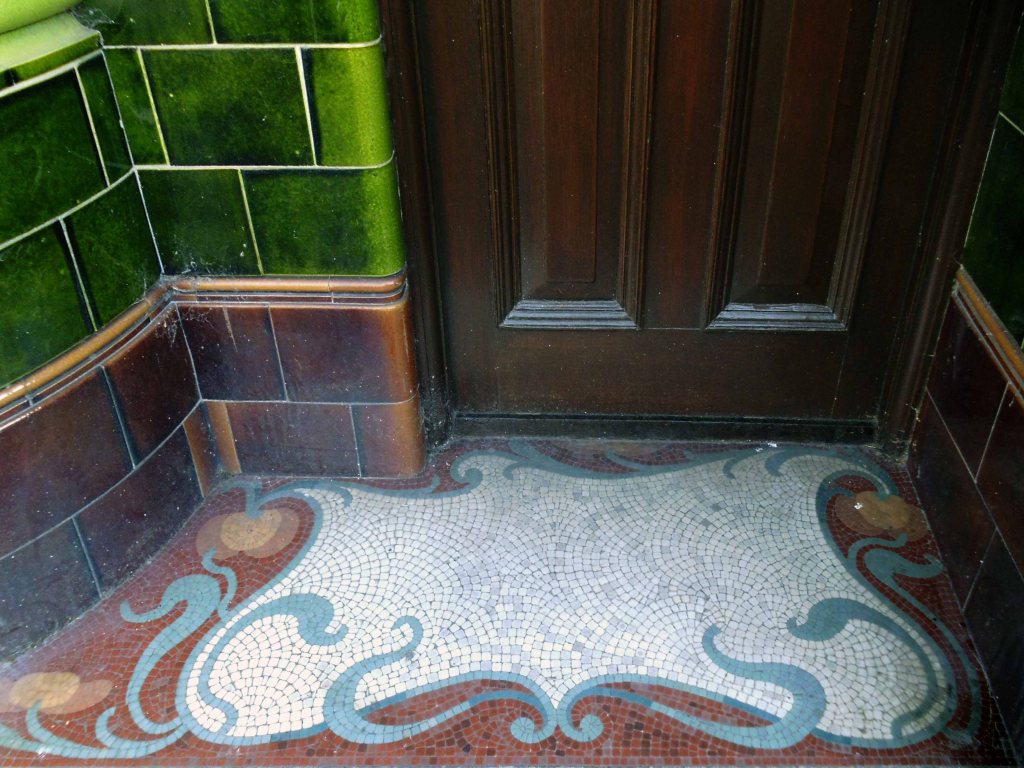
Last night’s late night drinking den with its fabulous faience frontage and doorstep mosaic.
Close by this tiled porch at The Branksome.
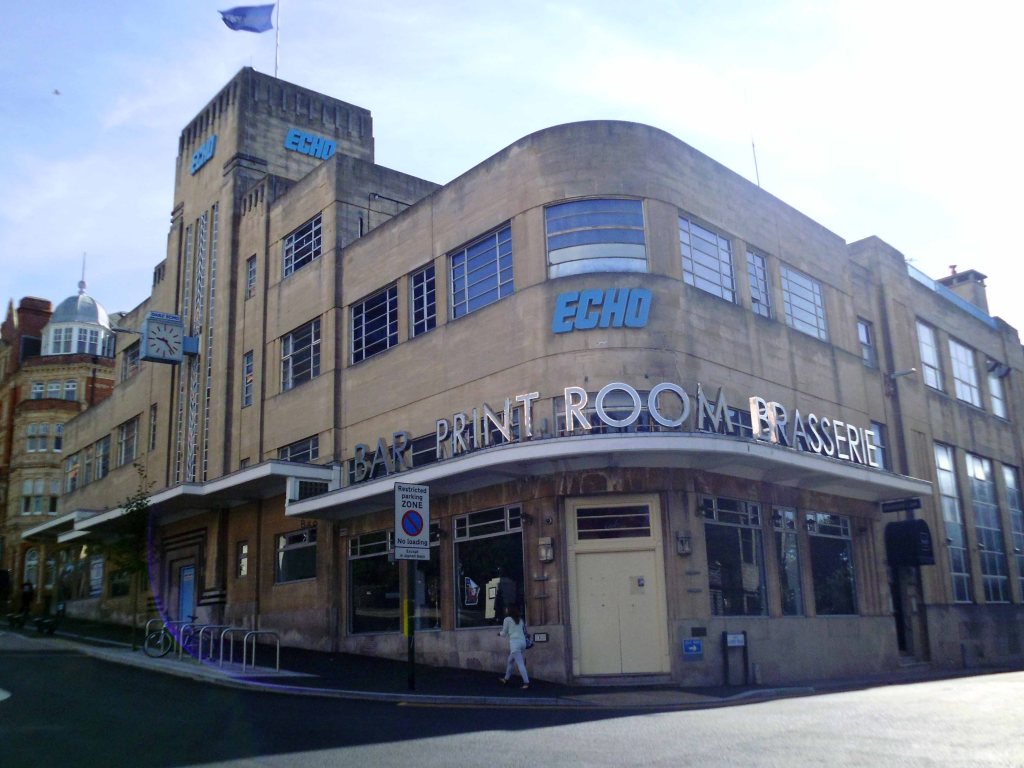
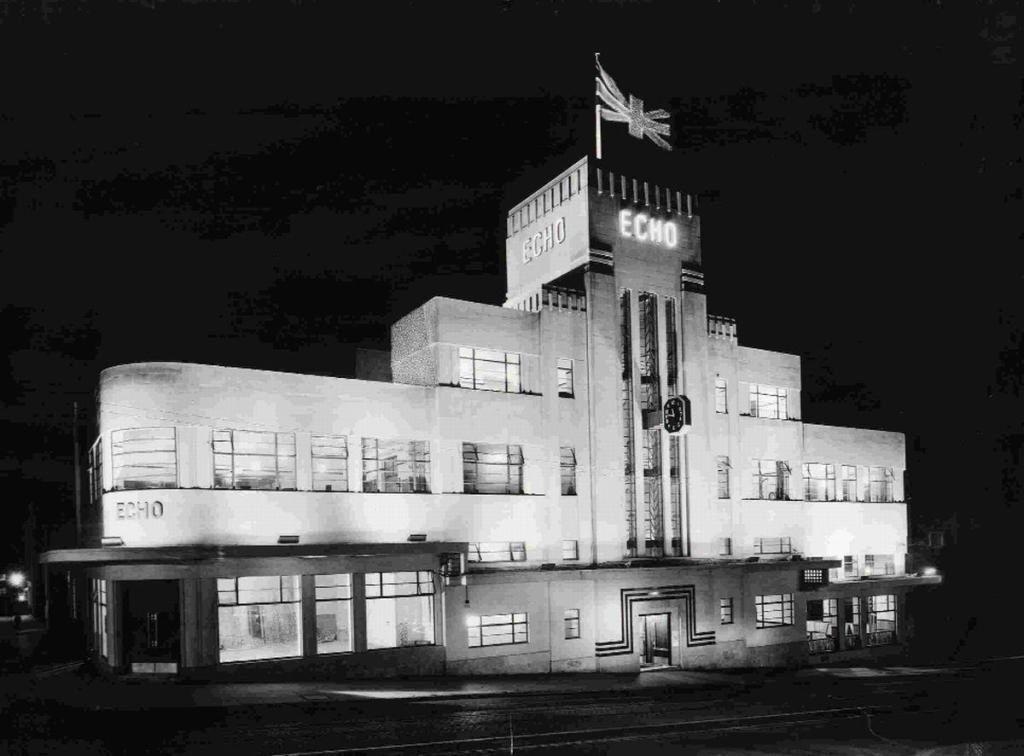
Built 1932 by Seal and Hardy as offices for the Bournemouth Echo, steel-framed, the main elevations faced in Monks Park Bath Stone.
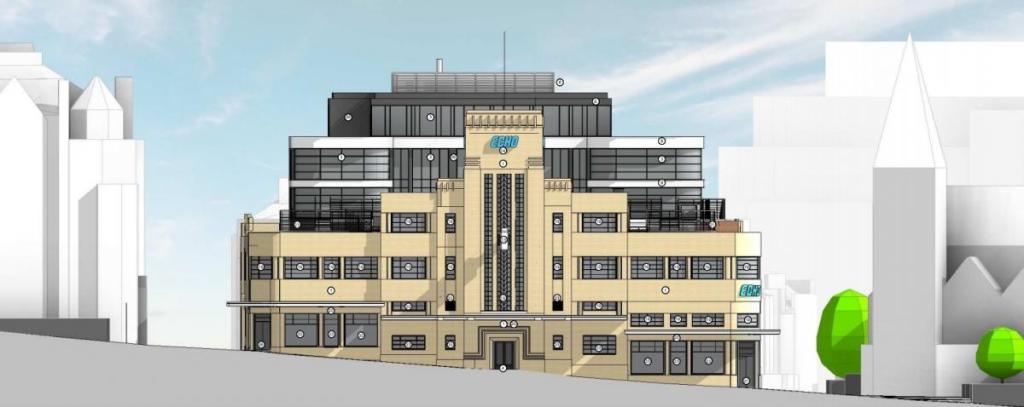
Plans to redevelop the listed Daily Echo offices in Bournemouth were withdrawn shortly before they were due to be discussed by councillors.
That Group’s application to extend the Richmond Hill building to create more work space as well as a 30-bed hotel, café, gym and events space had been recommended for refusal before it was pulled from the agenda for Monday’s meeting.
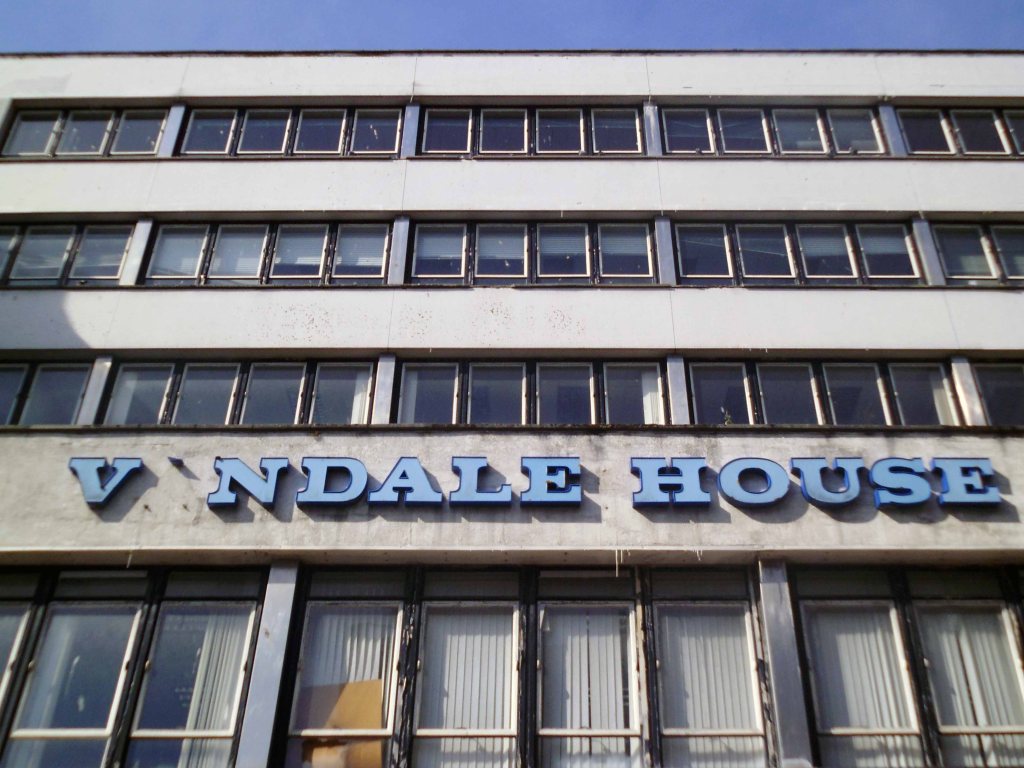
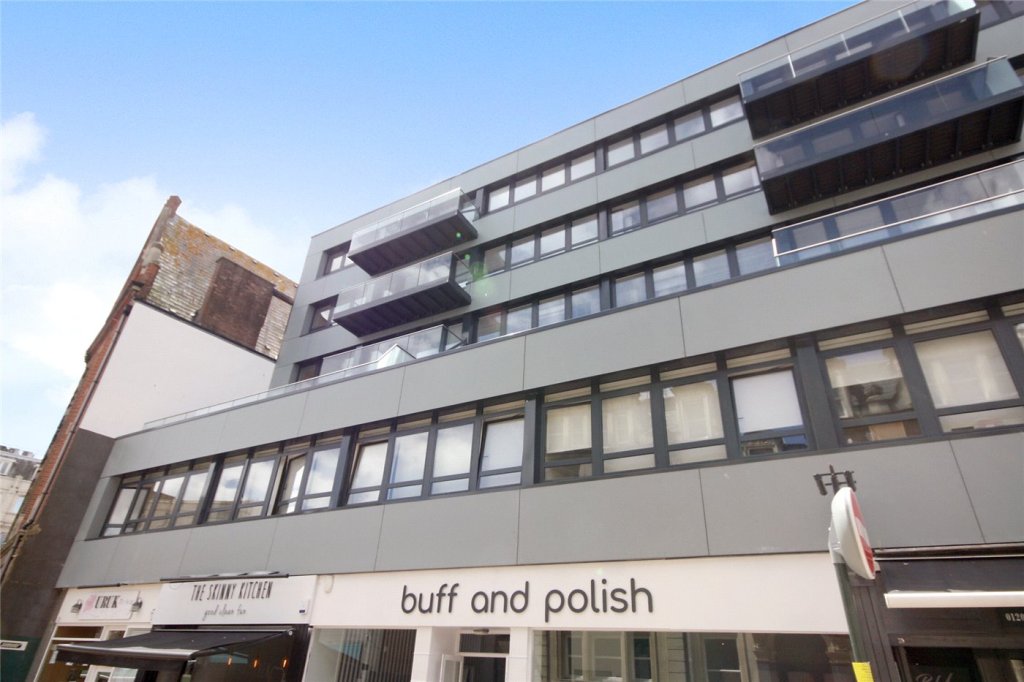
Vandale House appears to have been refurbished as flats, having lost its architectural type.
The property benefits from modern and contemporary décor throughout, large balcony and views over the Town Centre itself.
This art deco cinema was built for ABC and designed by their regular architect William Glen, it opened in June 1937.
The ABC, originally the Westover Super Cinema, entertained audiences for almost 80 years before it was closed in 2017 – along with the nearby Odeon – to make way for a new Odeon multiplex at the BH2 complex.
In its rejected plans for the site, Libra Homes had pledged to restore the cinema’s original Art Deco frontage, if it survives under the cladding that was added in the 1960s.
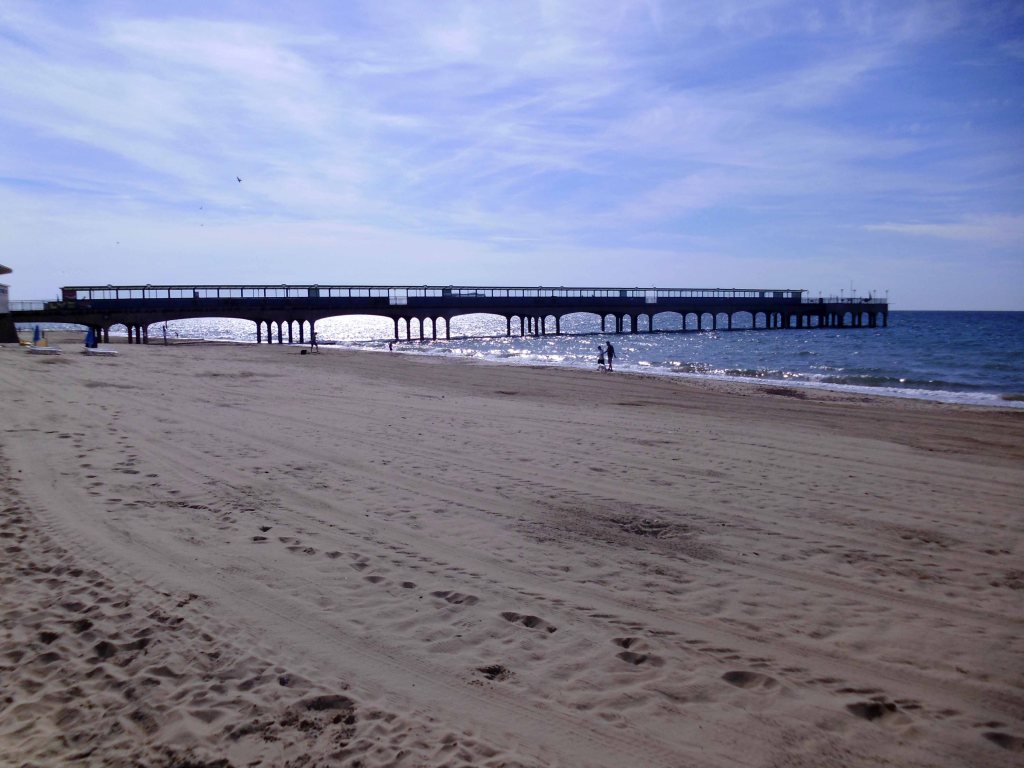
Boscombe Pier – is the perfect vantage point to watch volleyball, table tennis and mini golf. If you are feeling adventurous, try scaling the nearby, purpose built boulders next to the pier or have a go at slacklining!
There are nearby are cafés, takeaways and beach shops all within walking distance from Boscombe Pier.The pier is free to enter and has a plethora of activies that individuals and families can enjoy!
Designed by Archibald Smith, the 600 foot pier opened on 28th July 1889. In 1924/5 and 1927, the head was renewed in high alumina concrete and, between 1958 and 1960, the neck was reconstructed using reinforced concrete.
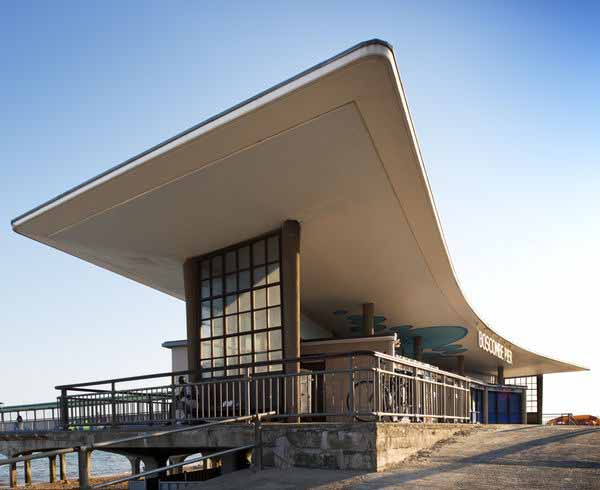
The neck building is a design by the Borough Architects, demonstrating great verve and vivacity. The contemporary style associated with Frank Lloyd Wright’s Usonian houses and made popular with Californian homes in the 1940s was well suited to the requirements of an architecture that combined ‘sun and fun’. The contemporary style made a feature of expressing different elements or planes of a composition with different materials, and here the combination is honest and each element well detailed. The sweep of the cantilevered, boomerang-shaped roof is a particularly joyous feature. It is a building that would have been despised as being exactly of its date until recently; now it is a building that can be celebrated for that very reason, and a rare example of pier architecture from these years.
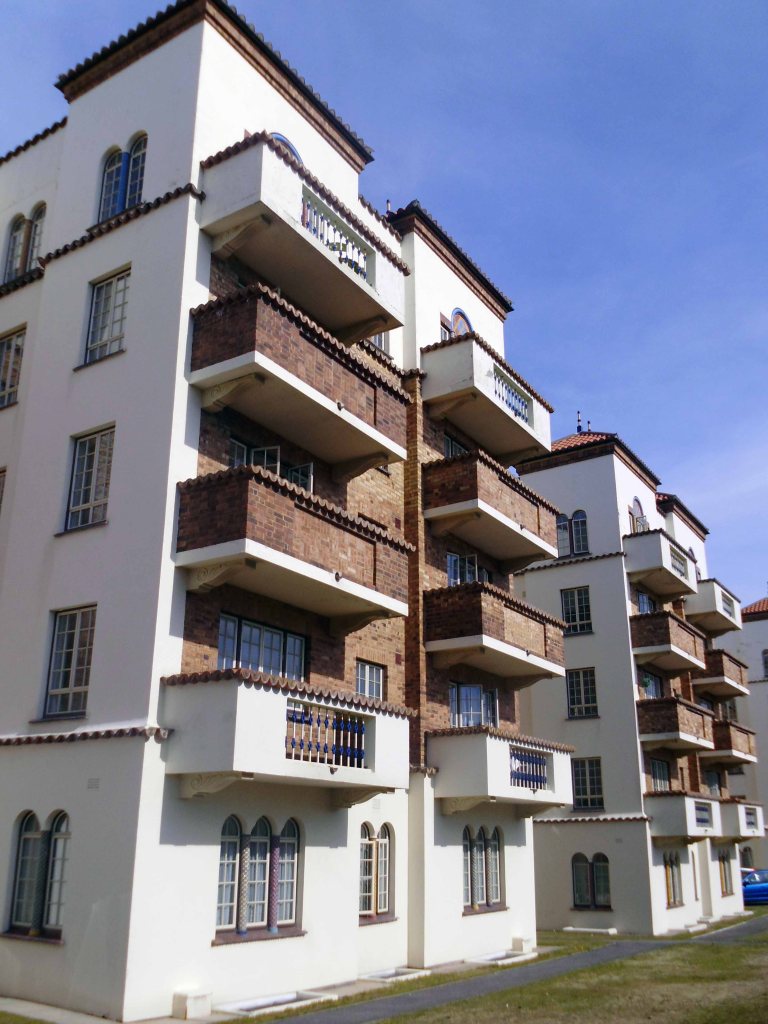
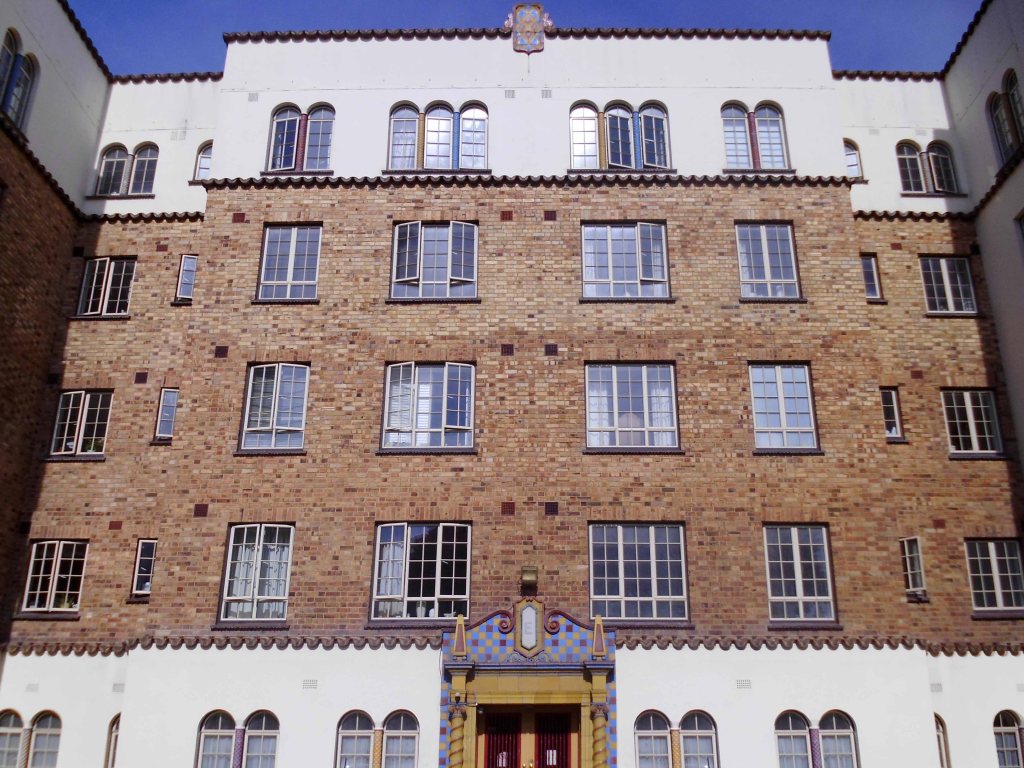
San Remo Towers a block of 164 flats, with penthouse and office, over basement garage. 1935-8 by Hector O’Hamilton.
Facilities offered as inclusive in this price included centralised hot water and central heating, an auto vac’ cleaning system, centralised telephones, a resident manager, a porter, daily maid, boot cleaning and window cleaning services. There was a Residents’ club with a reading room card room, billiard room and library, and a children’s recreation and games room. There were kiosks in the ground-floor lobbies selling tobacco and convenience items, where the staff took orders for the local tradesmen. The fifth-floor restaurant offered a la carte meals, which could be taken at pension rates of 38s per week. A simpler dinner cost 2/6d. The use of an American architect, Hector O Hamilton, may be an explanation for the building’s large range of facilities, including the grand underground car park and sophisticated servicing
Carlinford benefits from commanding views over Poole Bay looking to the Isle of Wight across to the Purbecks. Included in the annual service charge is a Caretaker, Gardener & the communal areas are kept in good order. A fabulous location and a great place to call home.
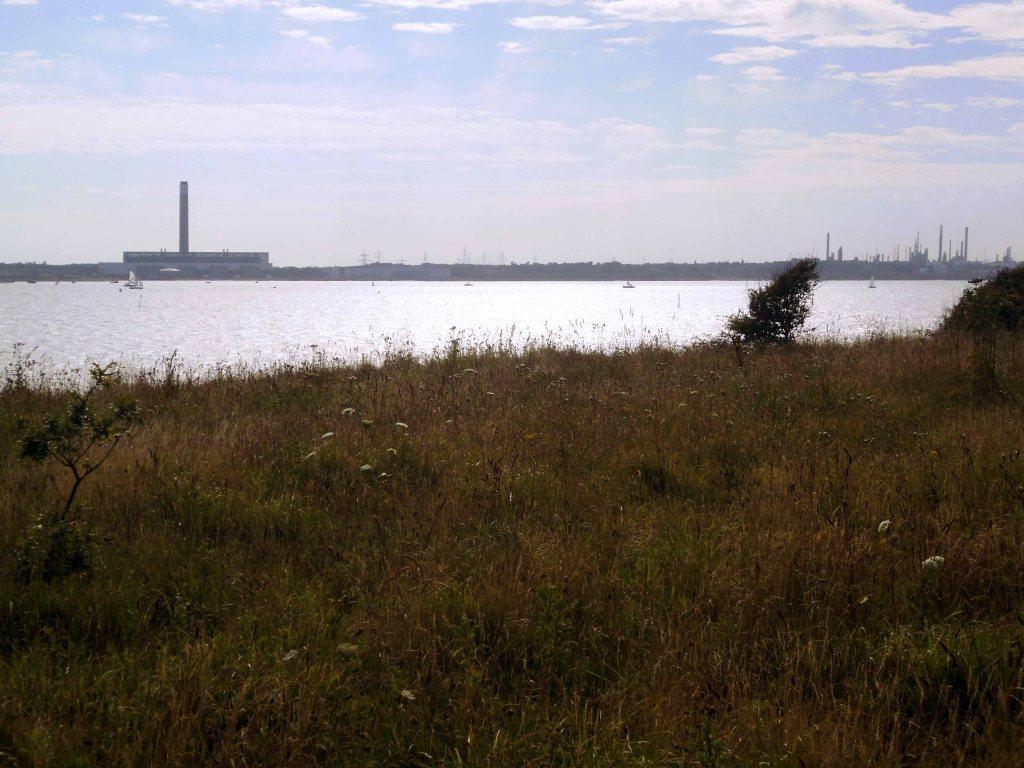
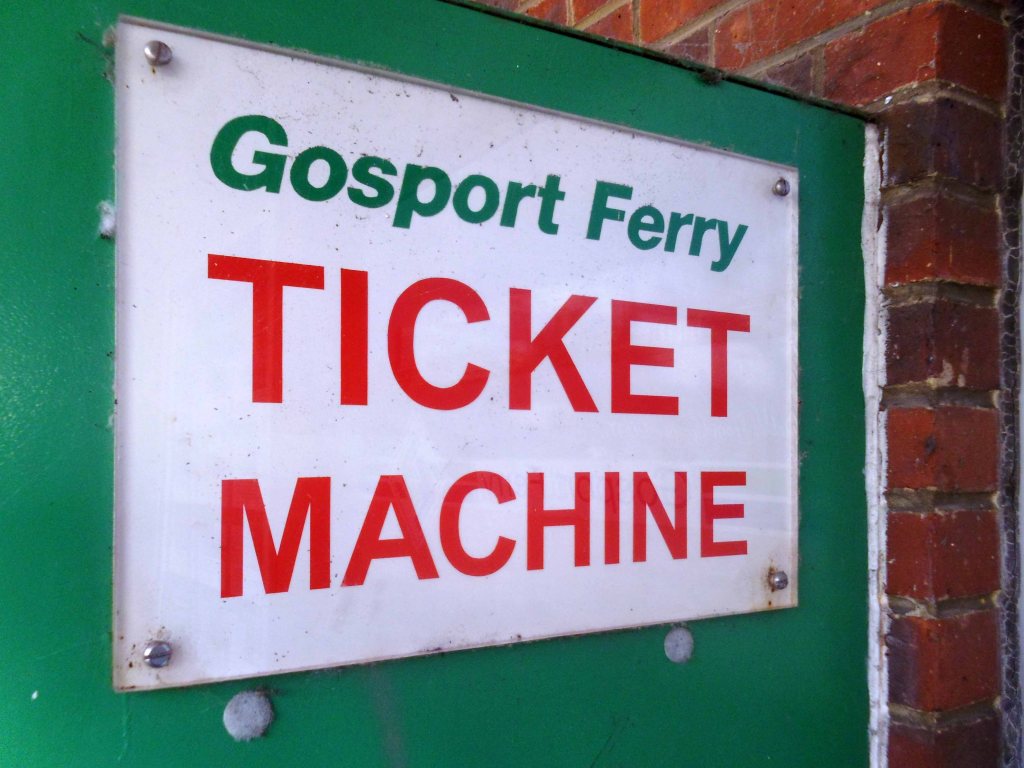
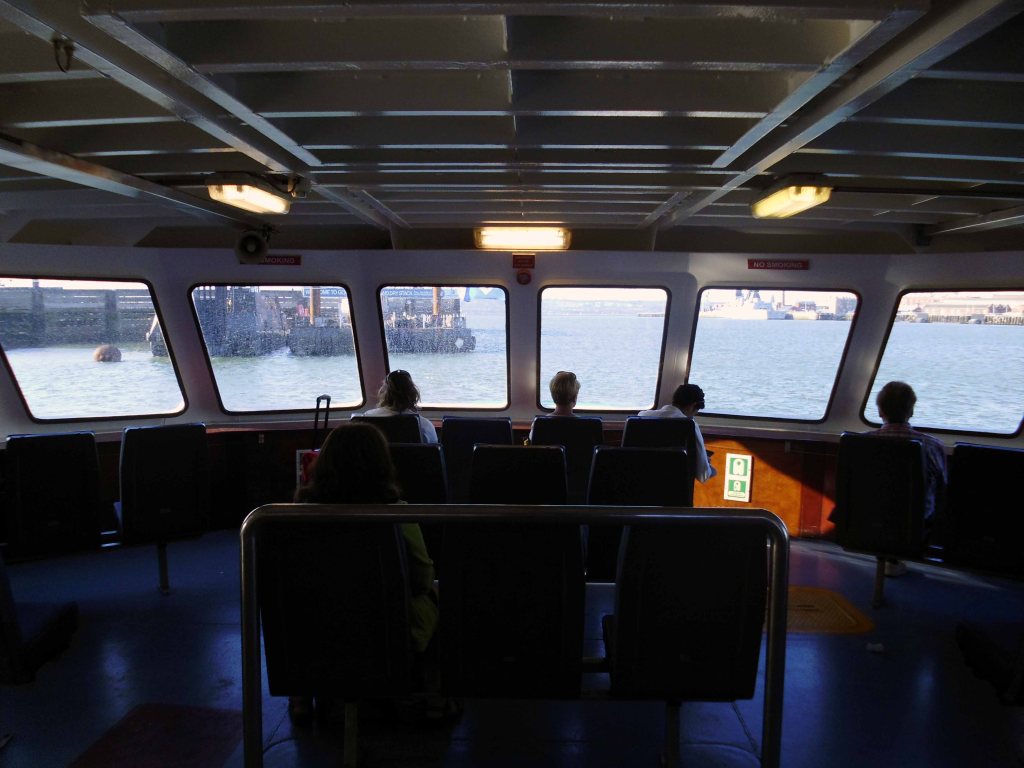
Running the length of the pier to catch the ferry across Southampton Water.
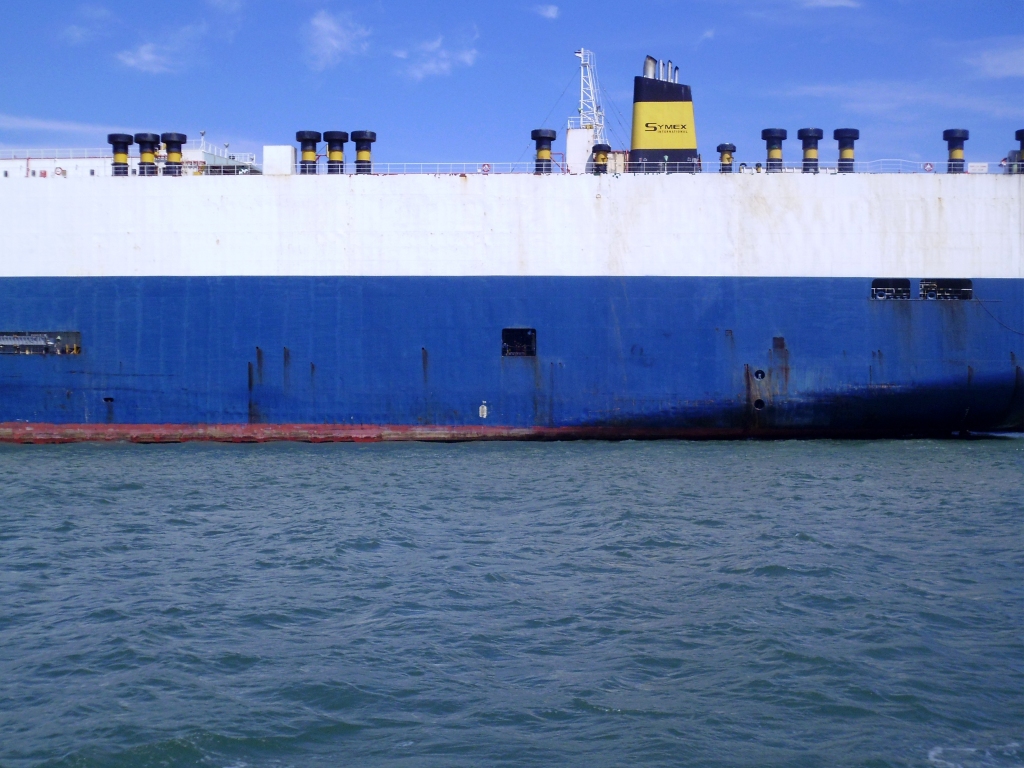
Where one is able to see many large ships.
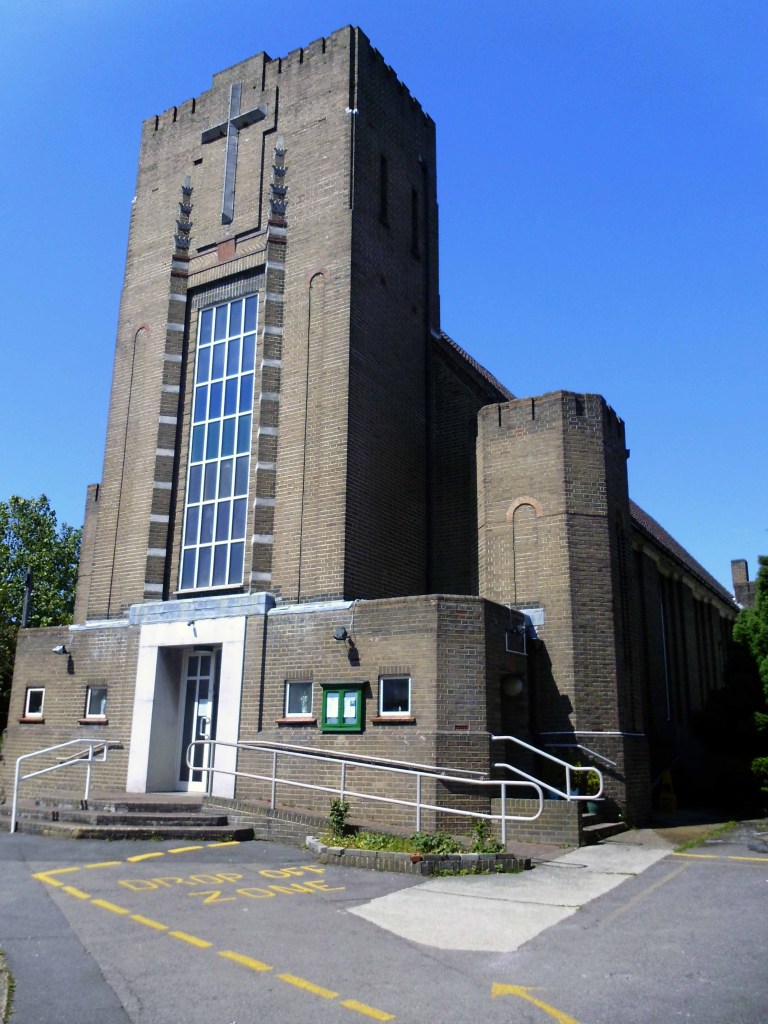
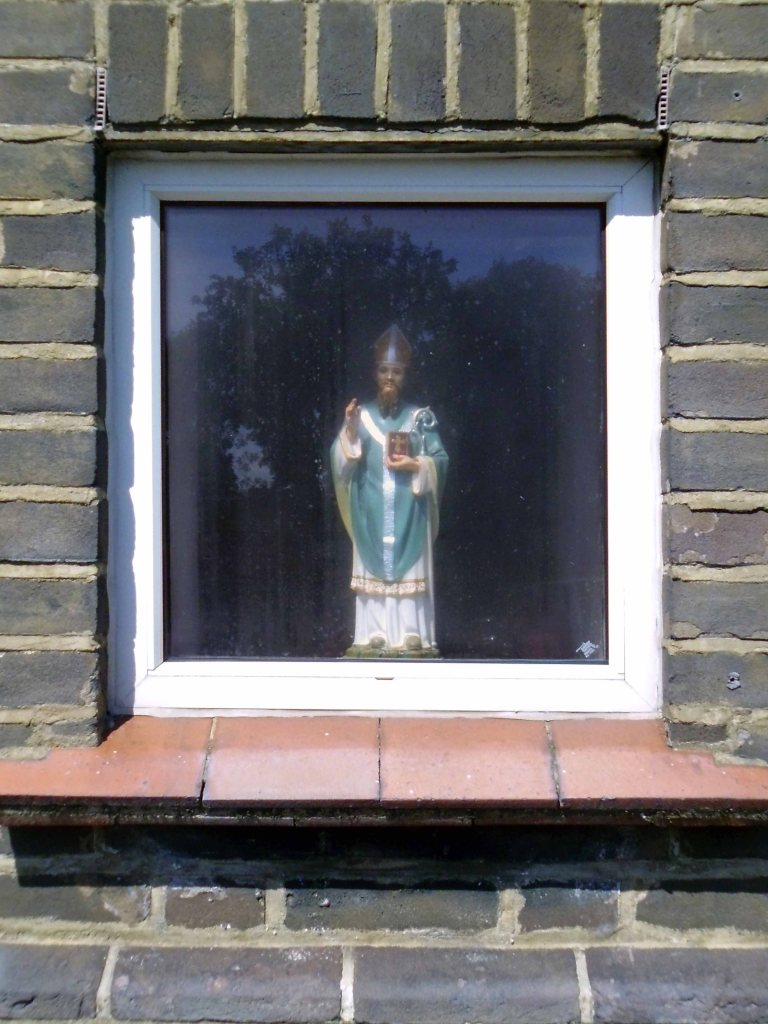
St Patrick’s Catholic Church 1939
W.C. Mangan’s last church in the diocese, with a moderne Gothic character rather than the basilican style he favoured elsewhere. The design is not without character and is in the mainstream of brick church building around middle of the twentieth century.
First siting of Stymie Bold Italic/Profil since Devon
Sadly the Hovercraft Museum was closed – Founded 1987 as a registered charity, the Museum Trust is the worlds greatest collection of Hovercraft archive, film, and historic craft, dating back to to John Thonycroft’s 1870 air lubricated boat models and the then Dr. Cockerell’s 1955 annular jet experiments.
So excited to be boarding yet another ferry.
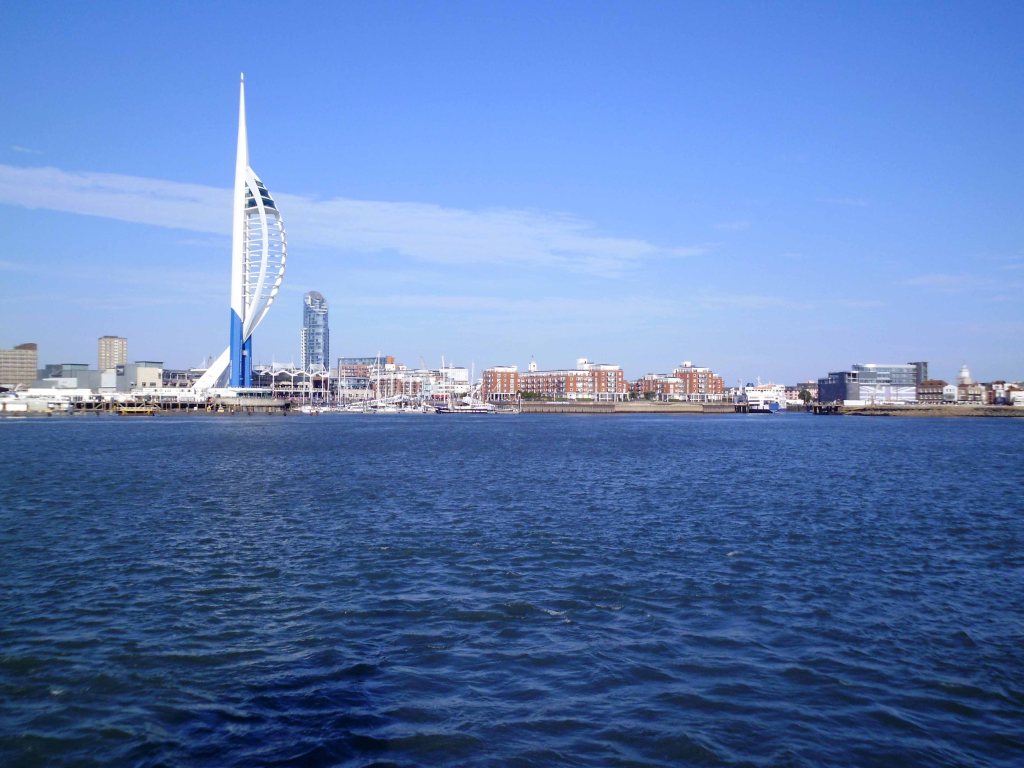
Seeing Portsmouth for the first time in a long time.
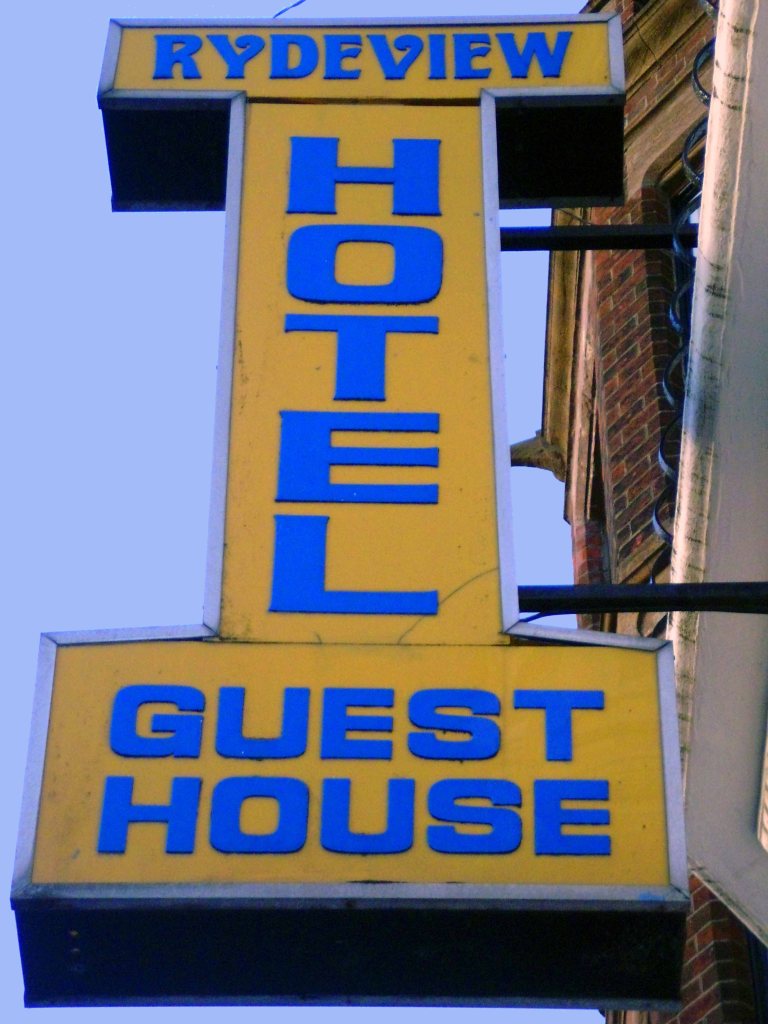
Finding cheap digs at the Rydeview Hotel.
My partner and daughter stayed here recently and the warm reception we received was great, thought it was going to be real value for money however when getting into the family room, which was a decent size, the curtain was half hanging down, iron marks and stains on the carpet, dirty windows, mould on the bathroom ceiling, hole in the bathroom floor and a very random shower head coming from the toilet that was very unpleasant. When we checked in we asked about breakfast and we were told this was going to be an additional £3 – we thought this was great value for money for a full English only to be left hungry and out of pocket! My daughter had one slice of toast, we asked for the full English what we received was cold and hard beans, and un-cooked egg and a rank sausage, the eating area was dirty – cobwebs everywhere.
I too stayed in the Family room with a delightful mouse for company and enjoyed one of the worst meals I’ve ever not eaten.
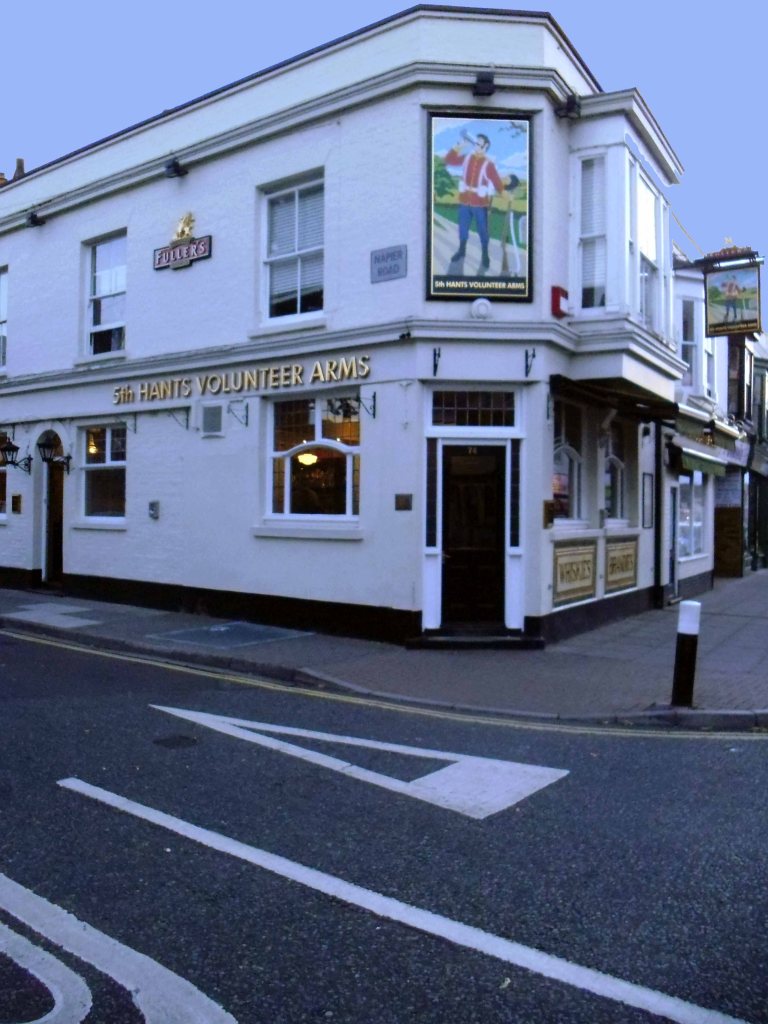
I headed for the 5th Hants Volunteers where I formally kept company with Felim Egan, Norman Taylor and Ian Hunter way back when.
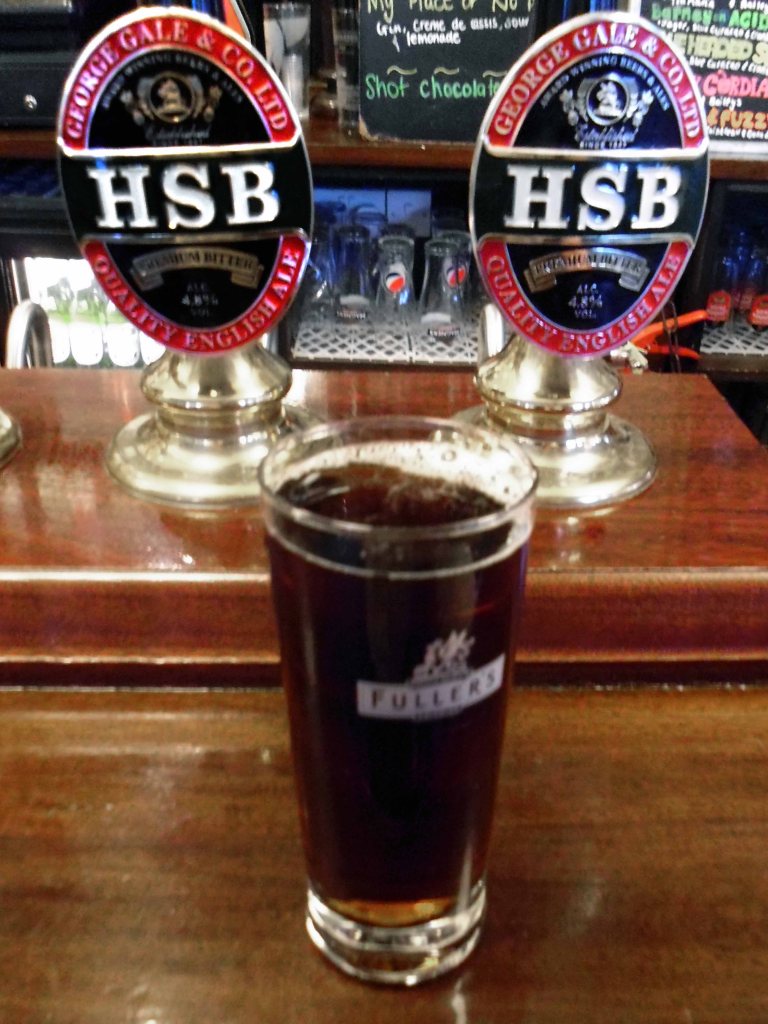
Drinking Gales HSB – formerly a local brew now owned by Fullers
Established in 1847 Gales Brewery (George Gale & Co. Ltd) was an old brewery situated in Horndean, on the edge of Waterlooville. It made the nutty HSB – Horndean Special Bitter and the newer Gales Bitter. It took its water from its own well situated under the brewery which is fed from the South Downs, and the yeast and liquor, coupled with the local brewing style, produced beers with a sparse head, quite dark in colour.
In late 2005 Fuller’s Brewery bought Gales for £92 million. In January 2006, Fuller’s began cutting jobs at the Horndean brewery, and it was announced on 27 February 2006 that the brewery would close at the end of March 2006, although distribution and warehousing would continue in the area.
It didn’t tater the same and the pub had been gutted – gutted.
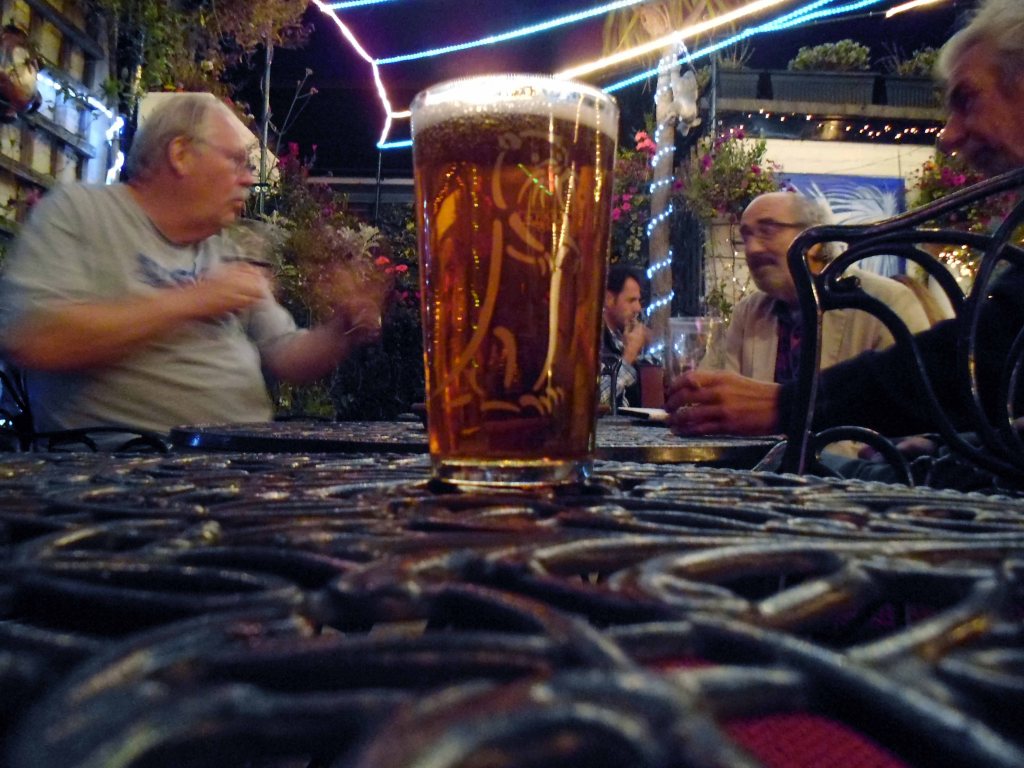
I beat a retreat to the Barley Mow – where I fell in with a gang of former Poly students from the 70s – they had studied and never left.
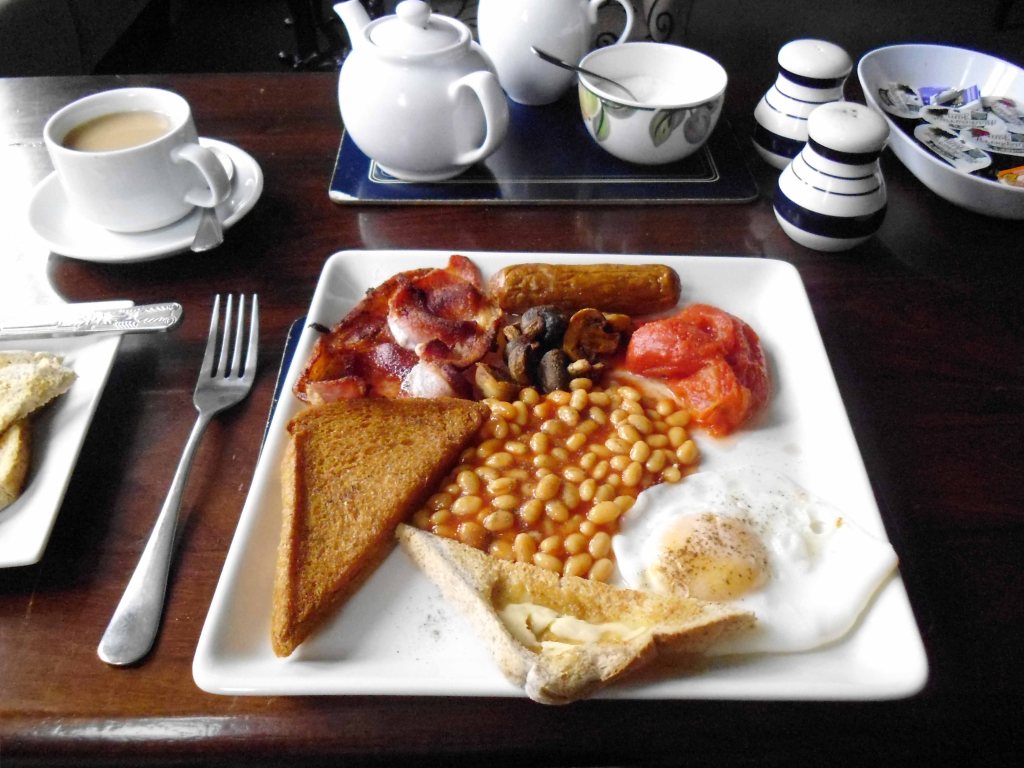
Grub up at the Lord Nelson and saints preserve us, the first sighting of fried bread – not a single hash brownie to be seen. The square plate very much in keeping with the naval nomenclature.
This ‘square plate’ theory is one of the best-known examples of folk-etymology. The phrase exists, the square plates exist, and two and two make five. To be more precise, what we have here is a back-formation. Someone hears the phrase ‘square meal’ and then invents a plausible story to fit it.
Spoil sport!
Anyway it’s Saturday 1st August 2015 and time to make tracks another sunny day in prospect, so much to see and do in Dorset!
The White Horse is a Dorset country inn located in the picturesque village of Litton Cheney in the heart of the Bride Valley. A warm welcome awaits at this traditional rural pub with a roaring log fire, with honest home cooked food using seasonal, locally sourced, produce. Popular with walkers and cyclists, families alike. A perfect place to enjoy good food, great ales, wines and even better company.
My lamb was average but the vegetables were very, very poor, some of the peas were stuck together with ice.
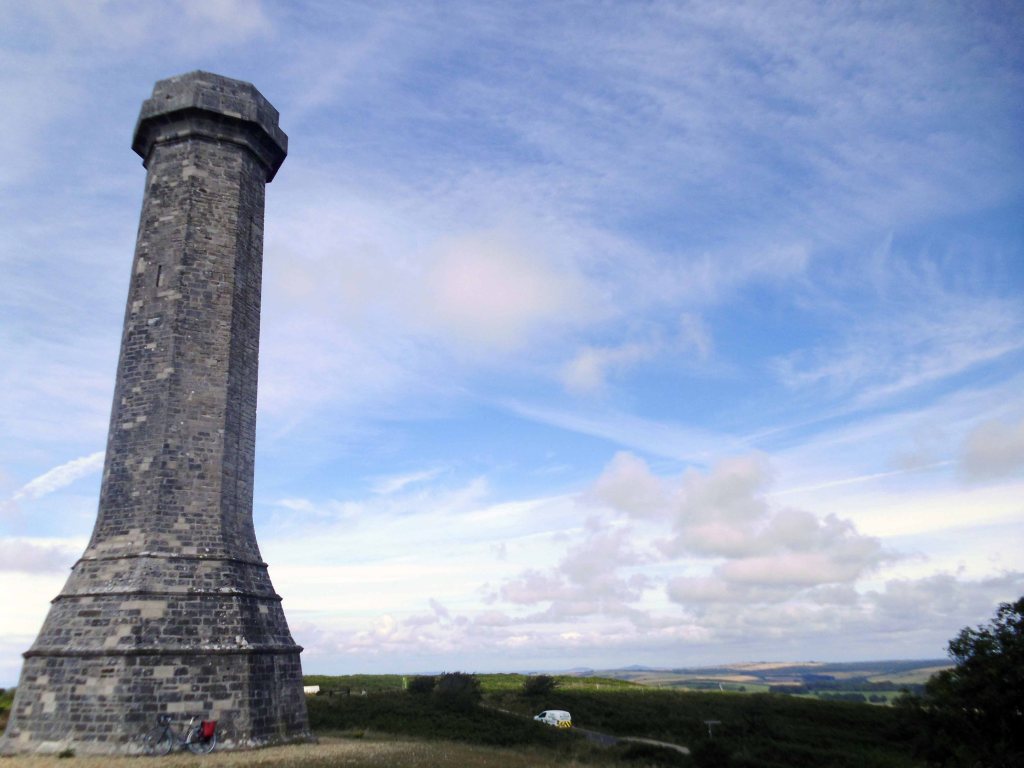
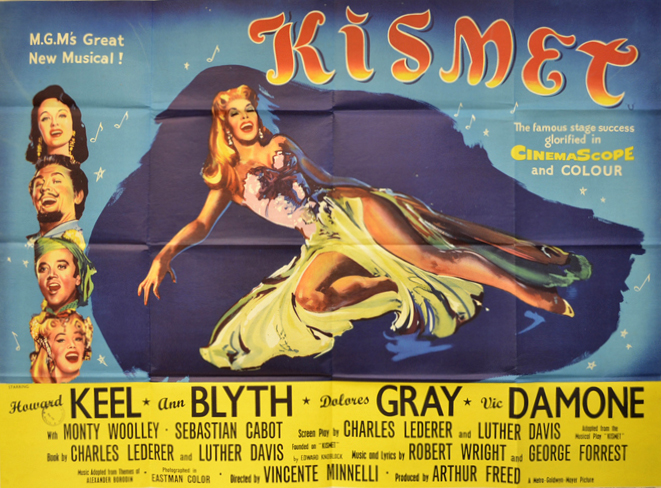
The Hardy Monument stands on an exposed location above the village of Portesham in Dorset. It was built in 1844 in memory of Vice-Admiral Sir Thomas Masterman Hardy, Flag Captain of HMS Victory at the Battle of Trafalgar. Amongst other things, Hardy became famous as it was in his arms that Nelson died, saying the immortal words ‘Kiss me Hardy’.
Contemporary historians argue that this explanation is a Victorian invention, since the earliest recorded use of the term ‘Kismet’ in the English language does not appear until after 1805.
Others also claimed that Nelson had said “Kiss Emma, Hardy”, referring to his mistress and lover Lady Emma Hamilton.
Thomas Hardy was unavailable for comment.
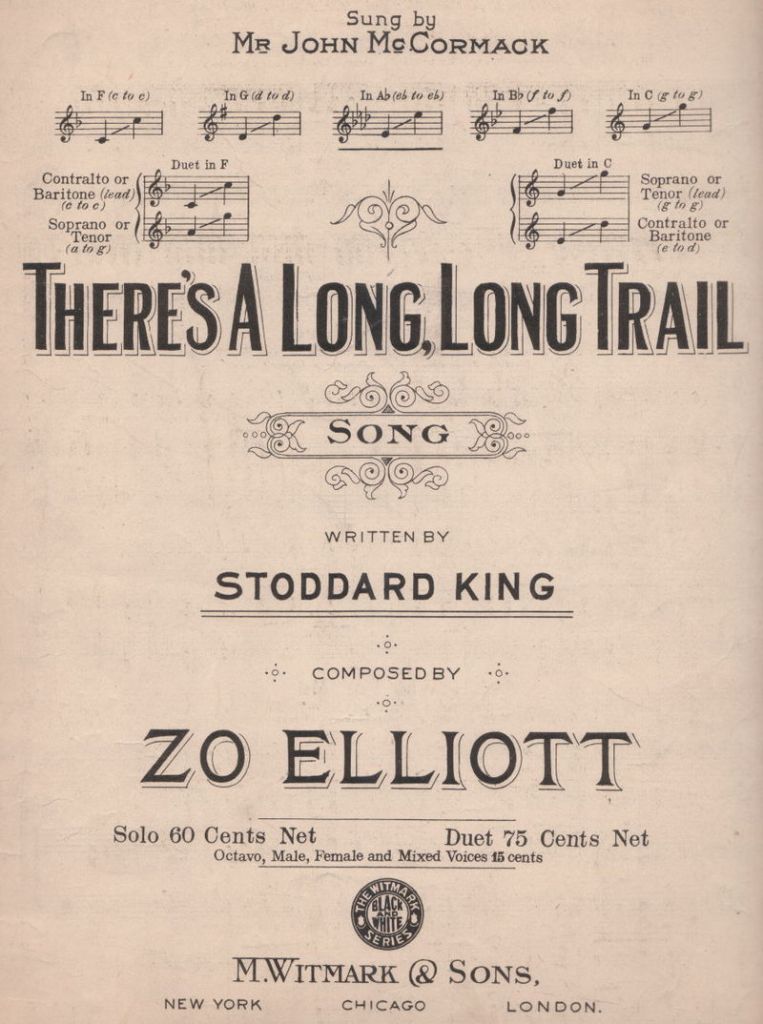
There’s a long, long trail a-winding Into the land of my dreams, Where the nightingales are singing And the white moon beams.
A song my dad would sing me to sleep with, one of my earliest and sweetest memories, his lullabies were often those songs he remembered from his army days.
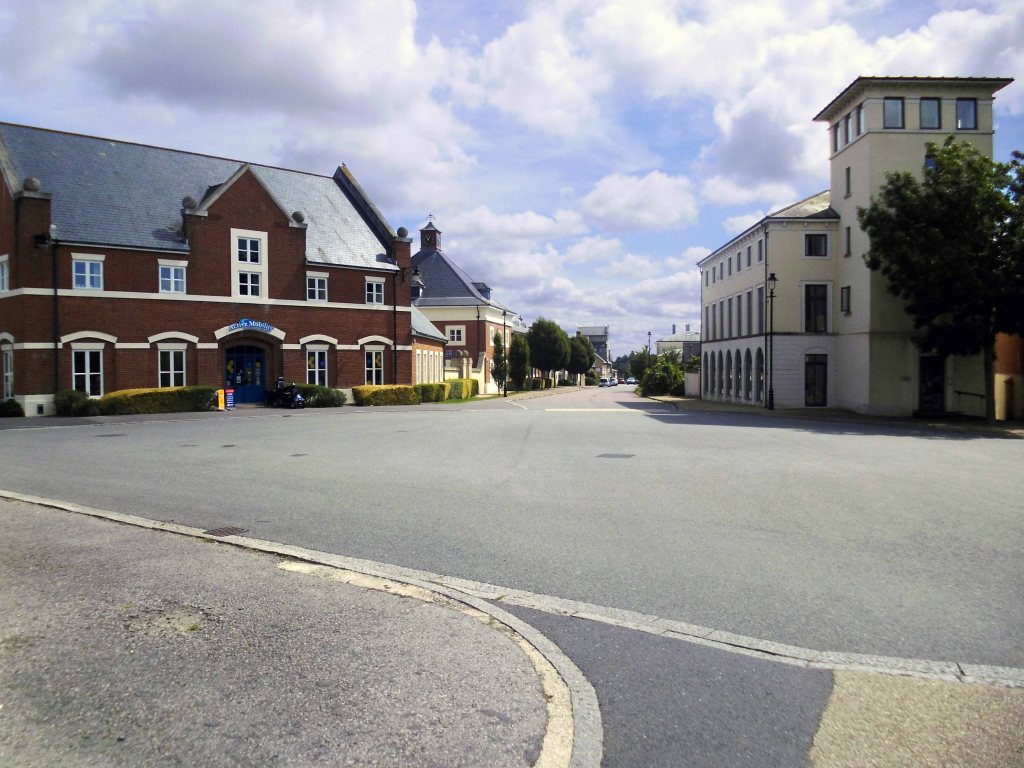
Following a morning of historical and linguistic conjecture we enter a land of architectural and historical conjecture, right here in Poundbury.
Poundbury is an urban extension to the Dorset county town of Dorchester, built on the principles of architecture and urban planning as advocated by The Prince of Wales in ‘A Vision of Britain’.
Poundbury, the Prince of Wales’s traditionalist village in Dorset, has long been mocked as a feudal Disneyland. But a growing and diverse community suggests it’s getting a lot of things right.
Poundbury should be completed by 2025, by which time it will be home to an estimated 4,500 people, increasing Dorchester’s population by a quarter. Then the Duchy will leave it to run itself. Krier, who is writing a book on Le Corbusier, says he and Prince Charles will then embark on their ultimate project: “We are going to build a small modernist town and show them how to do it.”
I myself cycled through in stunned silence, there was nobody about and the overall feel was one of a living filmset, opinion is deeply divided, I remain impartial – ride on.
Dorchester ghost.
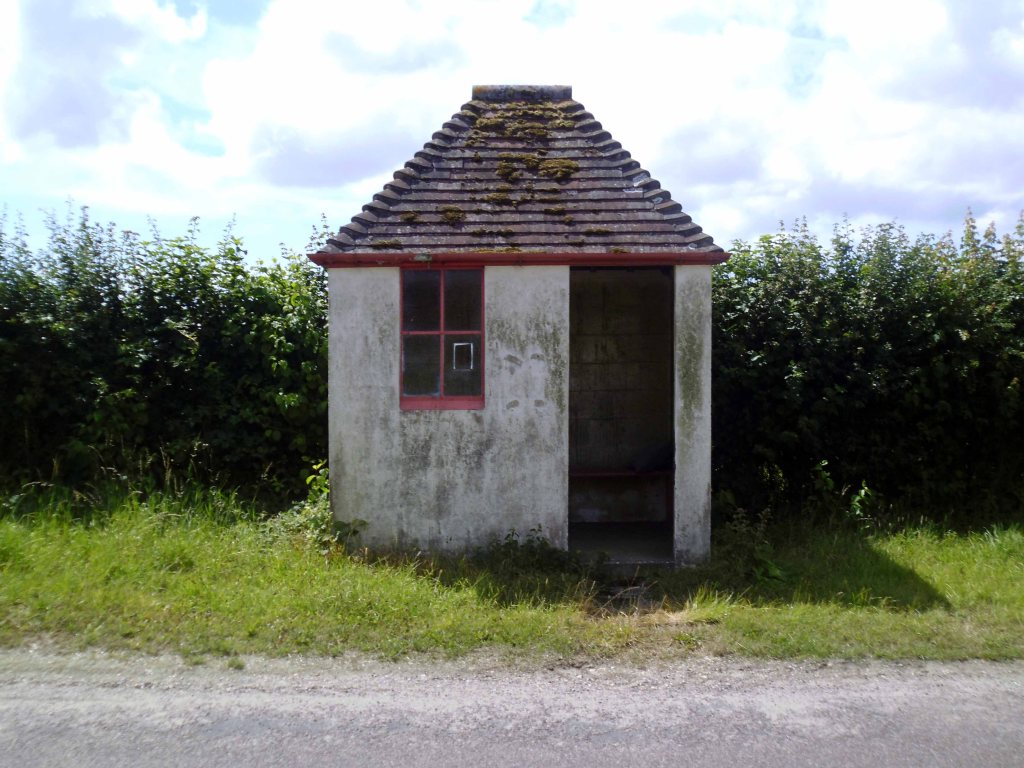
Tiny vernacular bus shelter awaits bus and the sheltered.
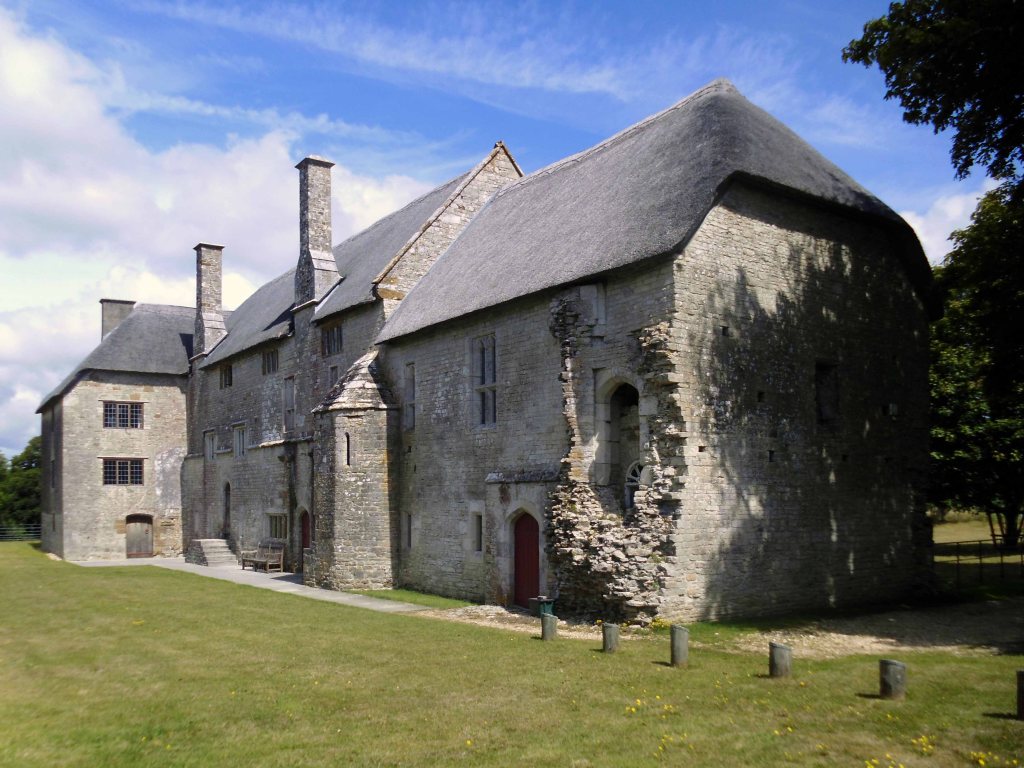
Woodsford Castle is the surviving range of a 14th-century fortified manor house. King Edward III granted William de Whitefield a licence to crenellate in 1335. The house has the largest thatched roof in the county and has been restored by the Landmark Trust.
One of our favourite Landmarks, love the table-tennis, the new decor and carpet, spacious but warm.
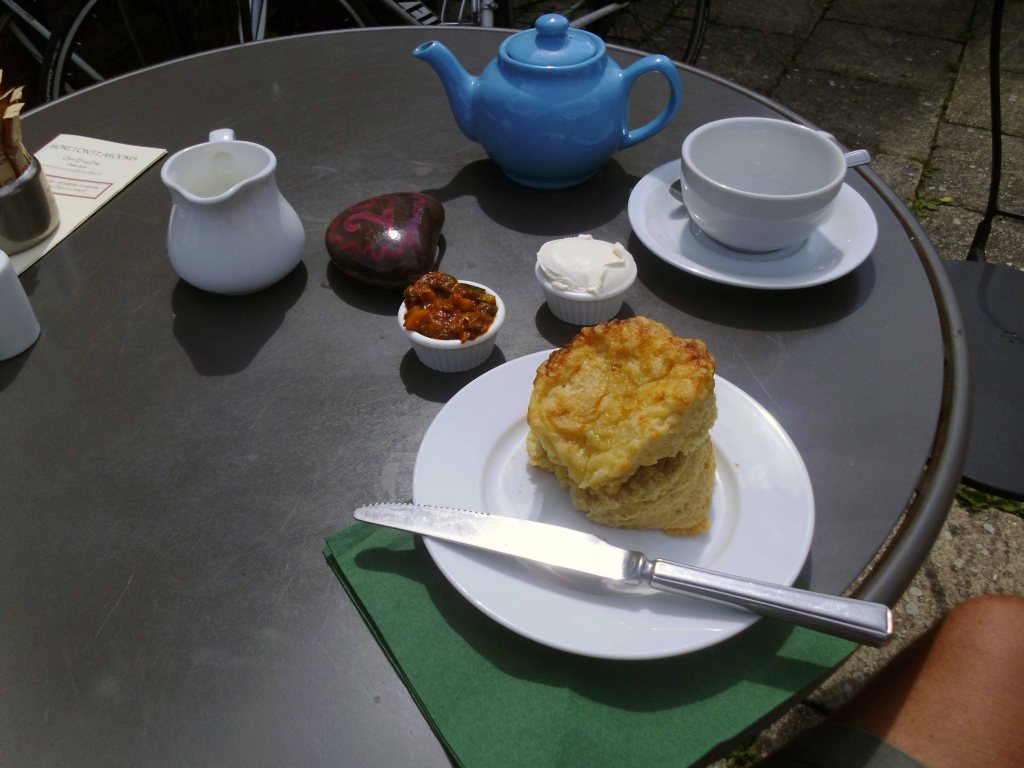
I passed by a delightful café – sorry to say that the name escapes me, and ate the most tasty cheese scone with chutney and cream and a brew, thank you ever so much nameless café.
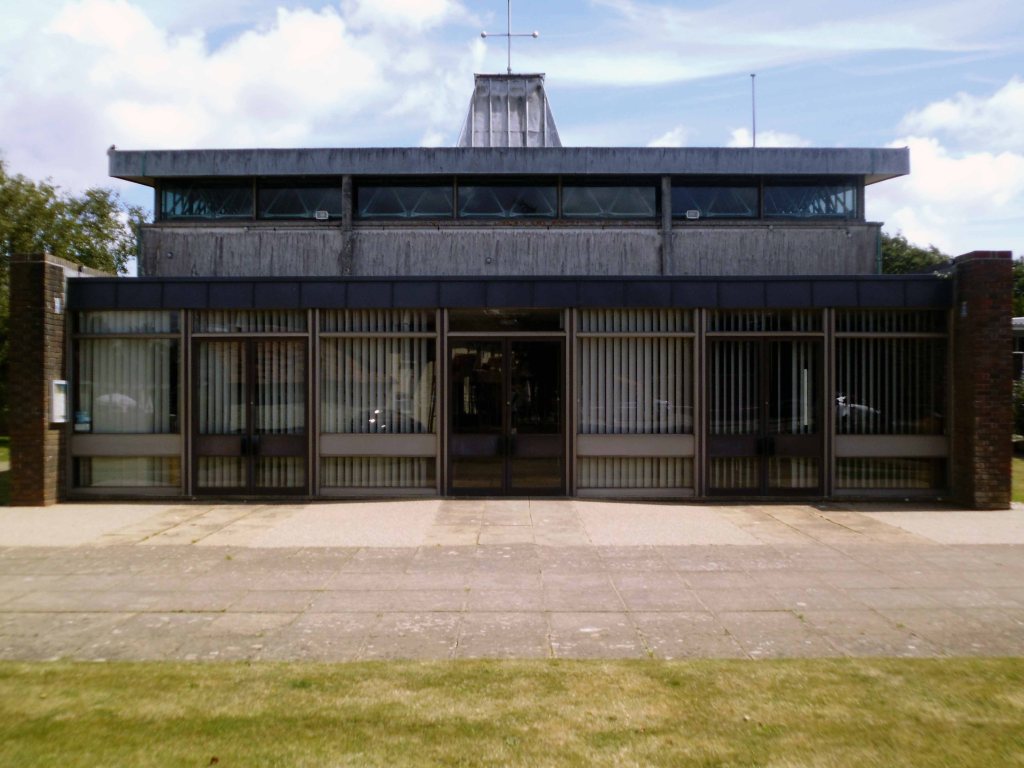
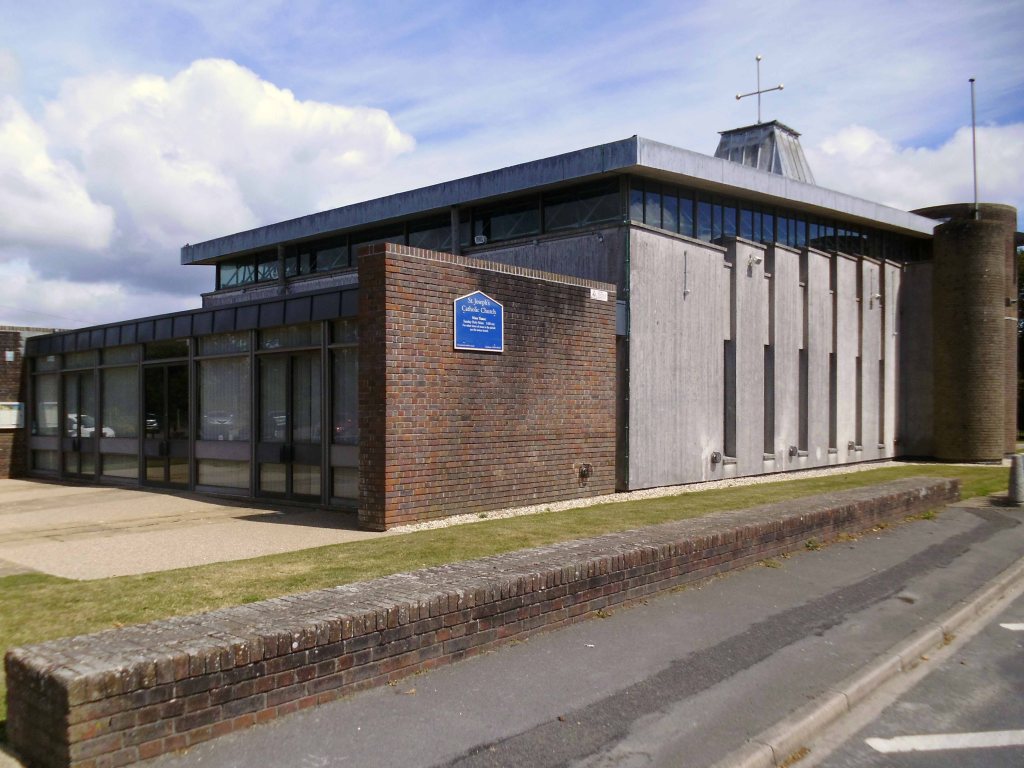
An impressive 1960s church design, responding thoughtfully to the needs of the post-Vatican II liturgy. The function clearly dictates the form, resulting in a building that is visually memorable as well as fit for purpose. Little has been changed since 1971. The Triodetic spaceframe roof structure is not generally associated with churches but enables a large uninterrupted space for the celebration of the Mass. The interior furnishings and fittings are essential to the totality of the design.
The Roman Catholic Church of St Joseph of 1969-71 designed by Anthony Jaggard of John Stark & Partners is listed at Grade II – a bold exterior employing exposed brickwork, a mineral render, vertical glazing and sparse ornamentation.
I fell in love the very moment what I saw it, having climbed over a fence by the railway, as I remember.
Next ting you know I’m in an area of outstanding natural beauty.
Cycling down yet another leafy lane.
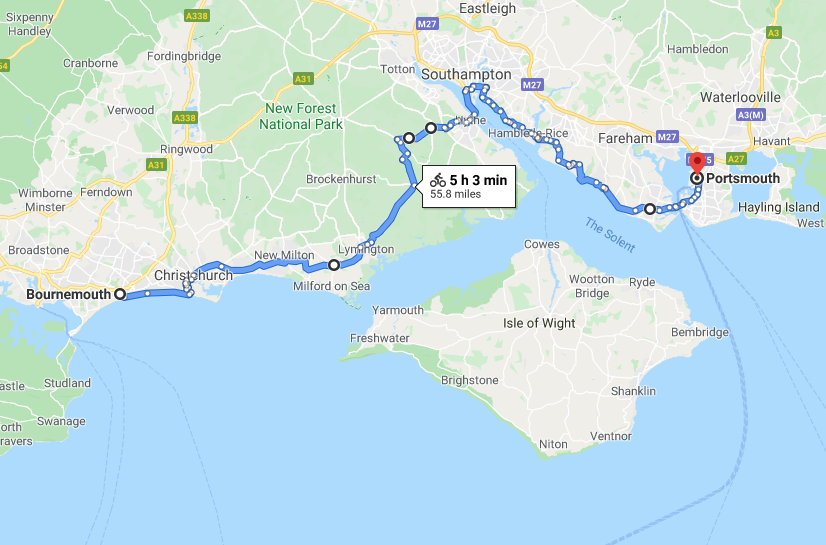
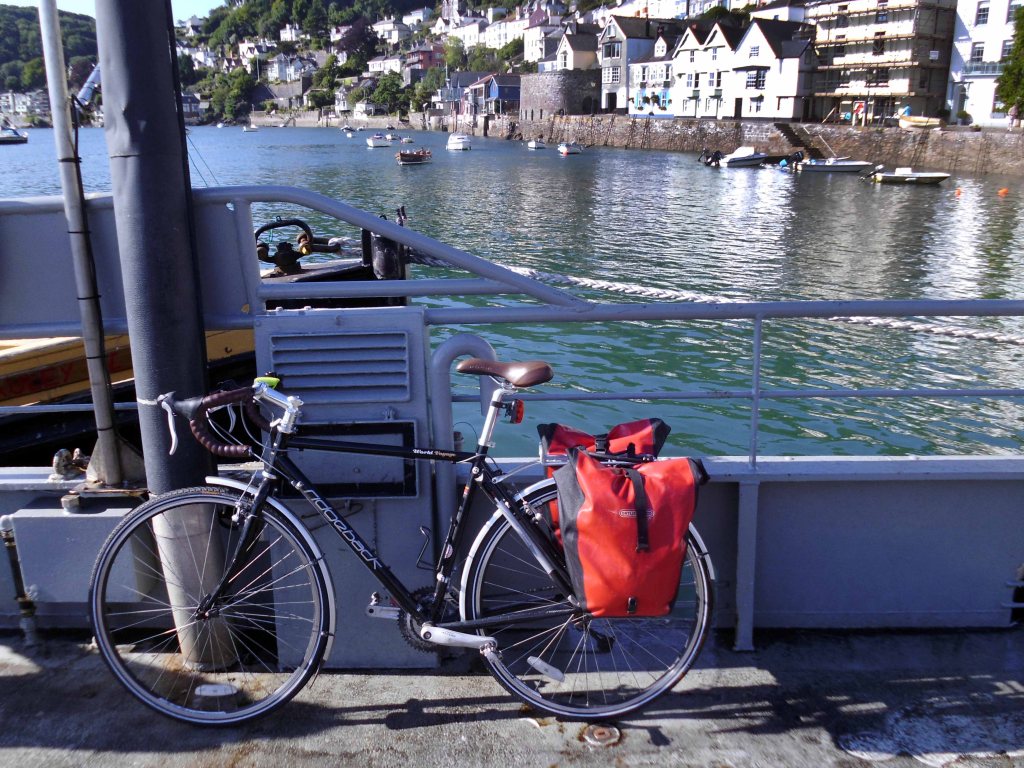
Catching the ferry with several other cyclists on our way to Poole.
Walked the bike along the crowded promenade into Bournemouth.
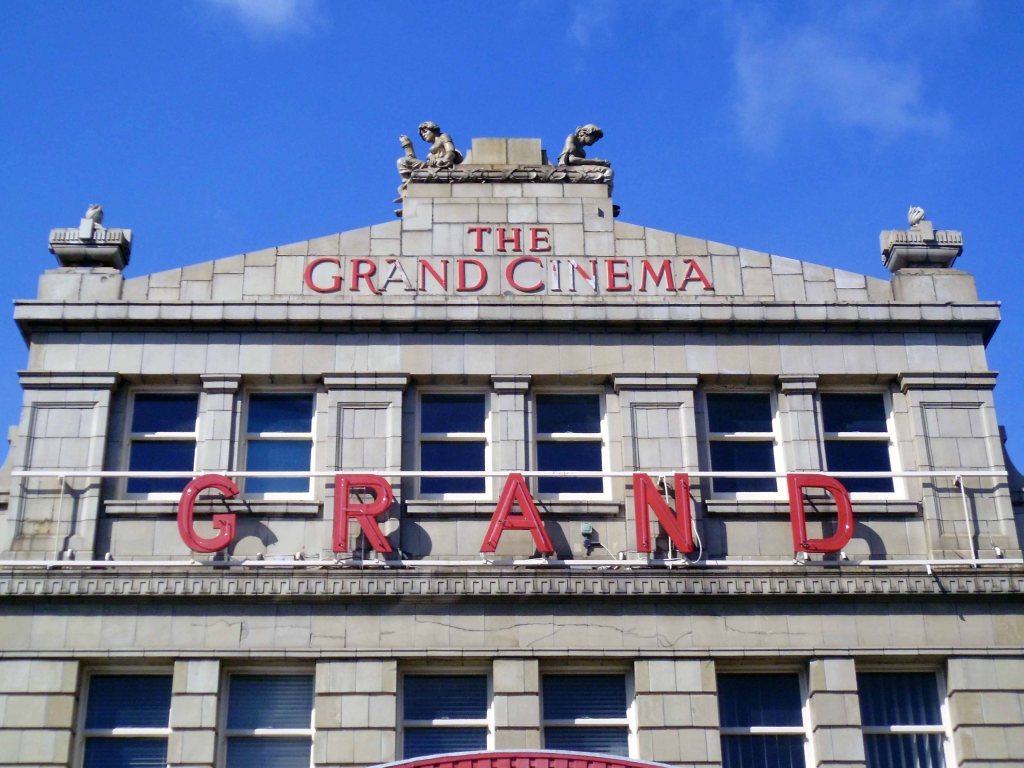
Passed the Grand Cinema.
Located in the Westbourne district of Bournemouth, the Grand Cinema Theatre opened on 18th December 1922 with a production of Anthony and Cleopatra performed on the stage. The following day it screened its first film A Prince of Lovers plus a Harold Lloyd short comedy.
It had a facade coverted with Carter’s Architectural Tiles, manufactured at the Carter pottery in Poole. There was a central bay over the entrance which was topped by a revolving globe, which was illuminated at night. The auditorium had a sliding roof which could be opened in hot summer weather. There was a lift which could be taken instead of the stairs to the balcony level and the cafe. The front of the orchestra pit barrier was also covered in Carter’s tiles.
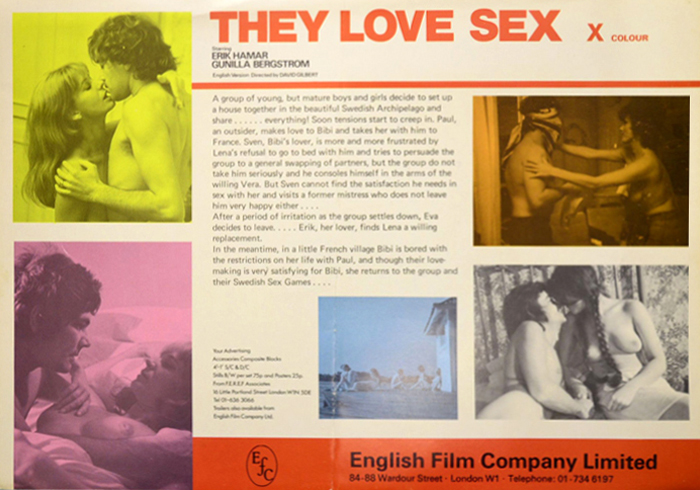
It was taken over by an independent Snape Entertainments from 21st December 1953 and they operated it as a full time cinema until 8th October 1975 when the film They Love Sex was the last regular film shown. It went over to become a full time bingo club, until a mix of part week bingo and films were introduced from 27th March 1976.
Finally found, following another find a room farrago – a less that grand tiny room in a big hotel, full of stag and hen parties – as was the whole town.
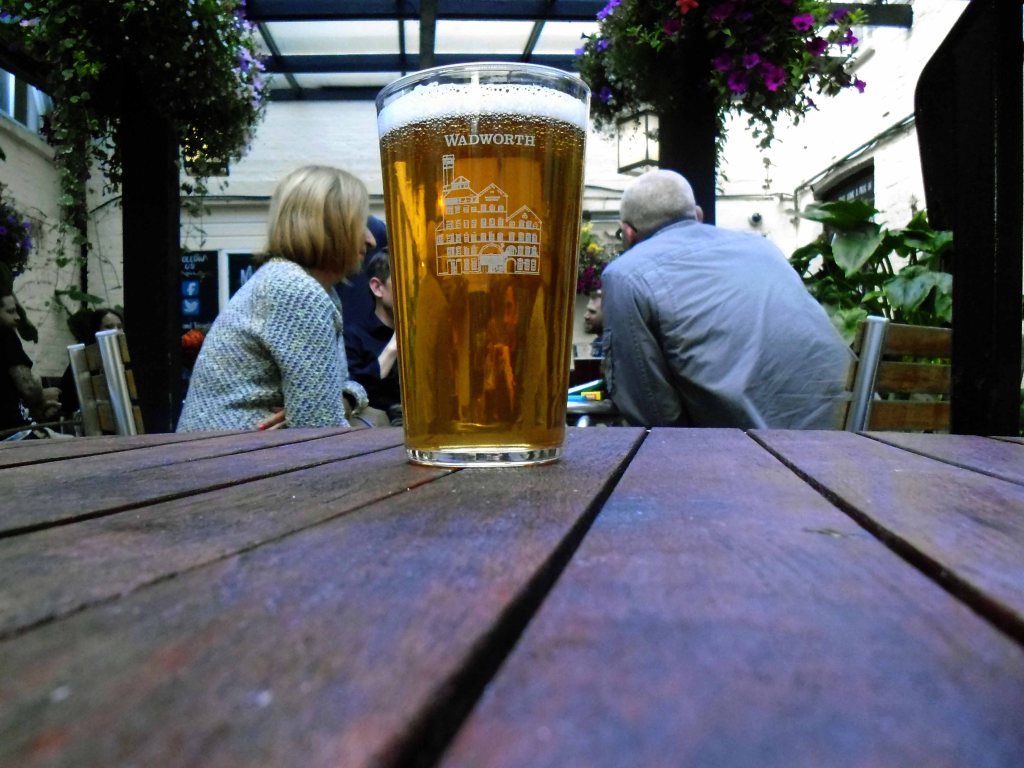
Seeking solace in the Goat and Tricycle – a beer house that boasts a huge range of hand pulled cask ales including Wadworth classics: Horizon, 6X, Swordfish and Wadworth IPA. The pub also has up to six Guest ales which change every few days, so there is always plenty of variety to choose from.
I would have chosen to keep the original names, the recent trend for the comic rebranding is quite literally ridiculous.
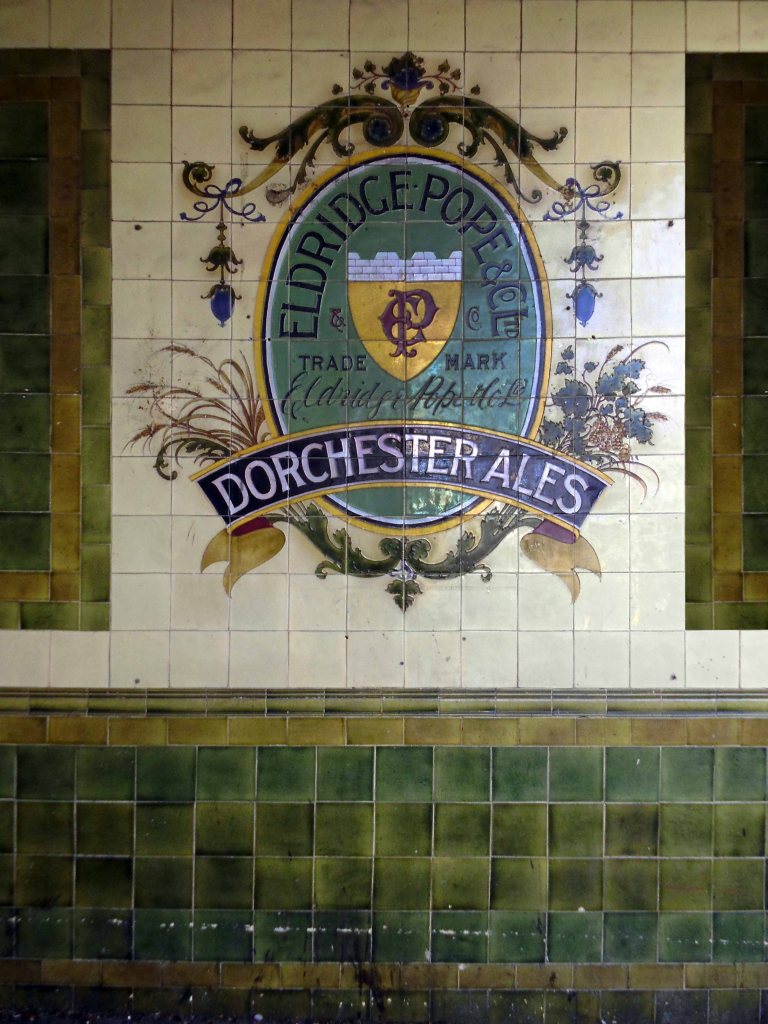
It was originally two separate pubs The Pembroke Arms to the left, it’s old Marston’s Dolphin Brewery tiles intact. The Pembroke Shades where the bar is now, was on the right. The Shades ran a boxing club where Freddie Mills, who lived opposite, is said to have trained, he went on to win the World Light Heavyweight belt.
I worked in the Shades on and off for 8 years. I still see a lot of the old crew, I am about to set up a Shades Re-union – we had one some years ago it was fab!
Do you remember John Bell, he was part time glass collector, full time alcoholic. Mary the Irish Landlady – she ‘s still going strong, unfortunately John Bell passed away.
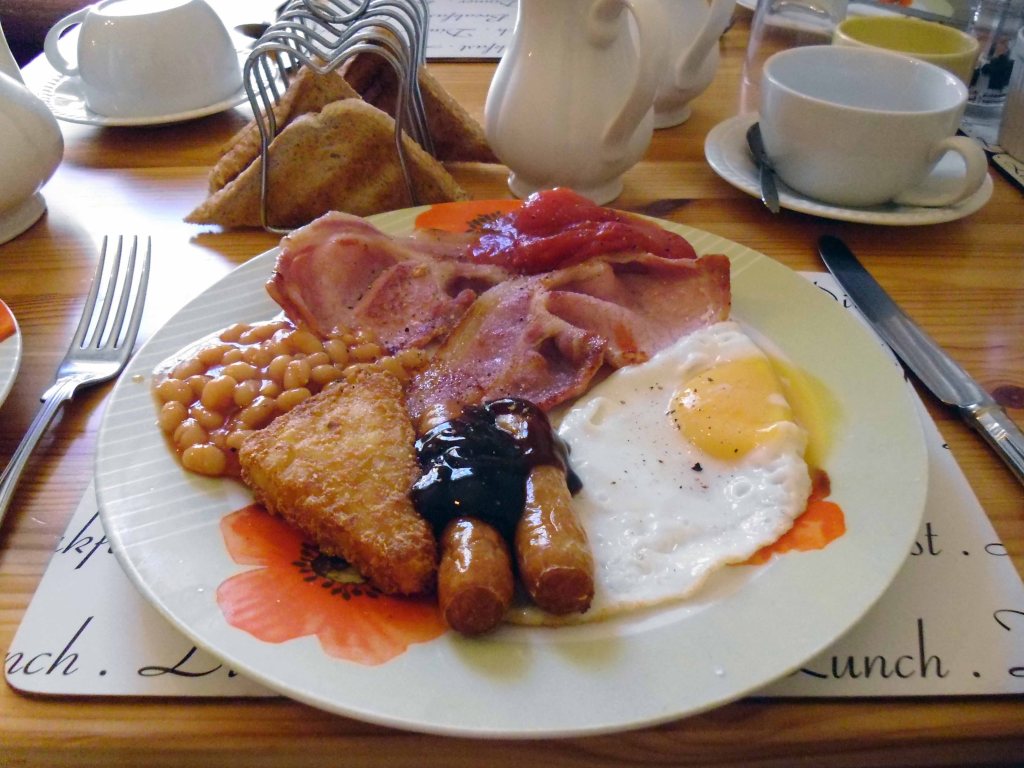
Get down for breakfast – I personally regret the untimely passing of fried bread and the appearance of the so-called hash brown.
Originally, the full name of the dish was hashed brown potatoes or hashed browned potatoes, of which the first known mention is by American food author Maria Parloa in her 1887 Kitchen Companion, where she describes the dish of hashed and browned potatoes as a fried mixture of cold boiled potatoes which is folded like an omelet before serving.
Years later we got them.
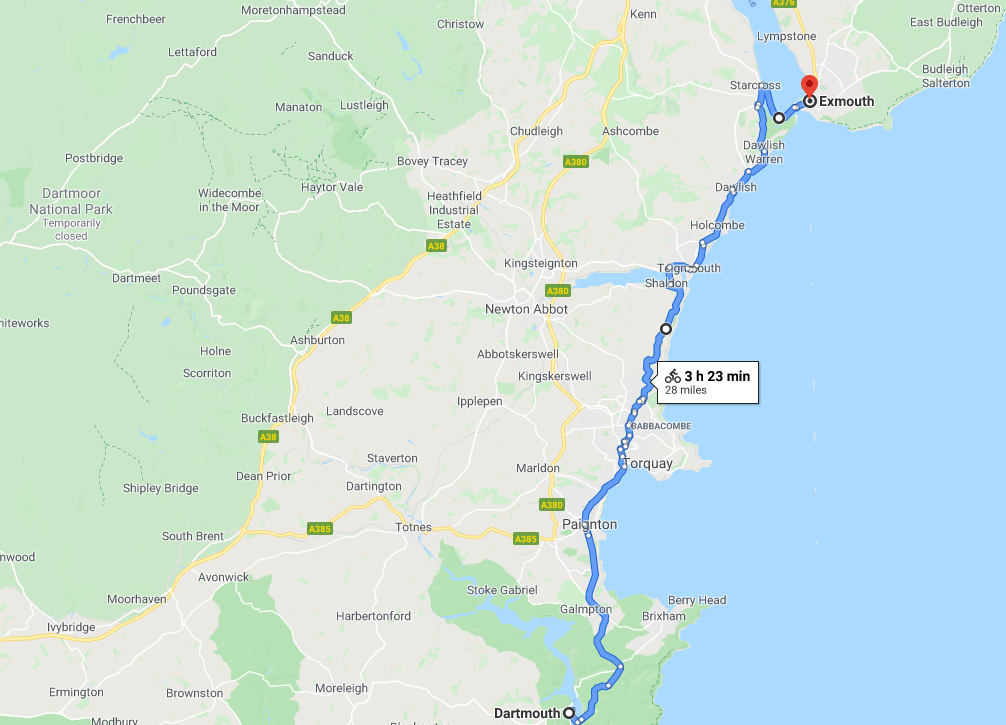
Thursday 30th July 2015 and the sun is a shining brightly on the Dart.
Get on the ferry!
We’re off again.
The Monkey Puzzle tree Araucaria araucana is one of the oldest trees in the business – of being a tree.
It is native to central and southern Chile, western Argentina, and a welcome visitor to the English Riviera.
The hardiest species in the conifer genus. Because of the prevalence of similar species in ancient prehistory, it is sometimes called a living fossil.
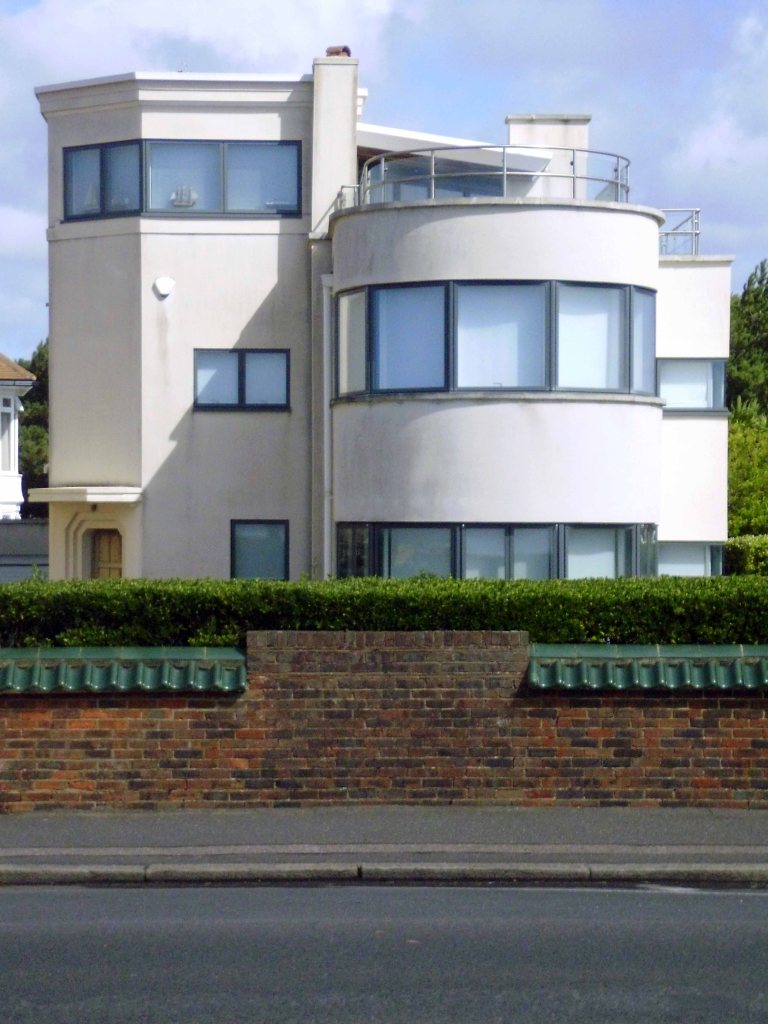
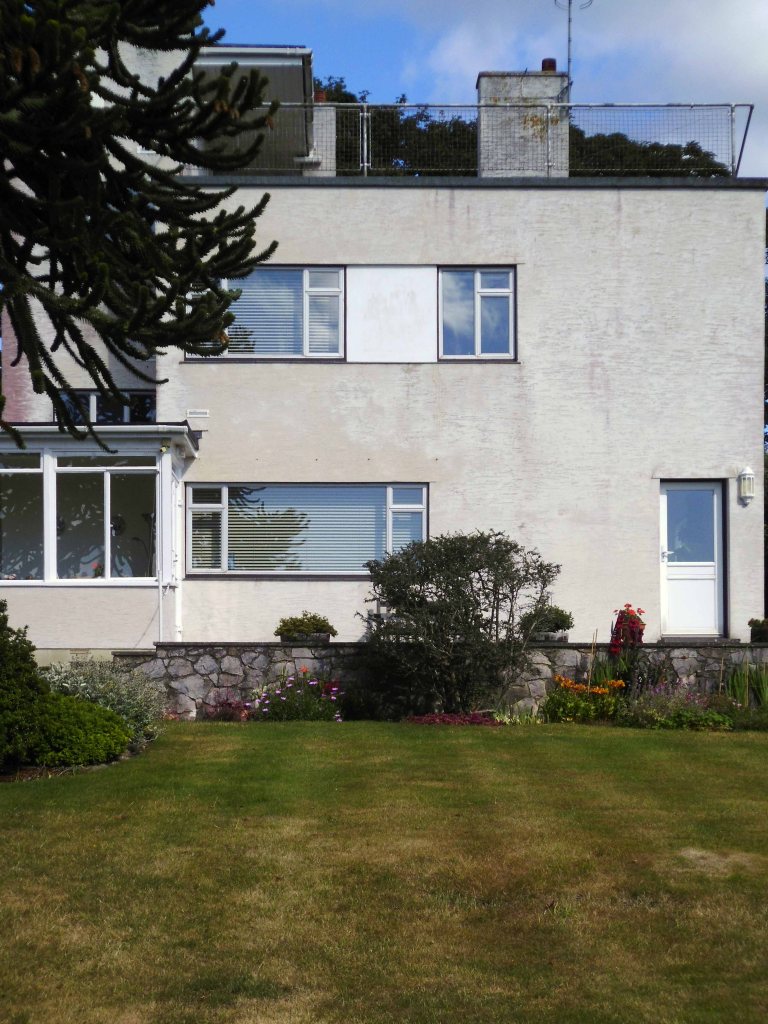
The refined white rectilinear box shaped houses of the genus Seaside Moderne, are an offspring of the International Style, to be found all over the globe.
The sea covers seventy percent and rising, of our planet.
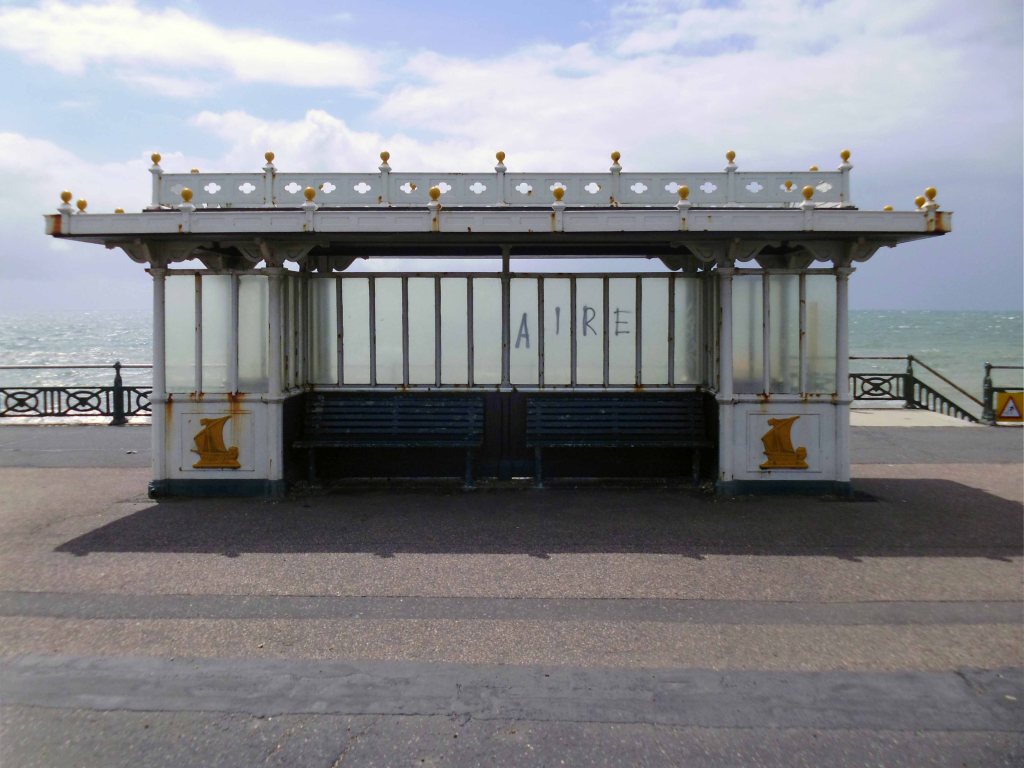
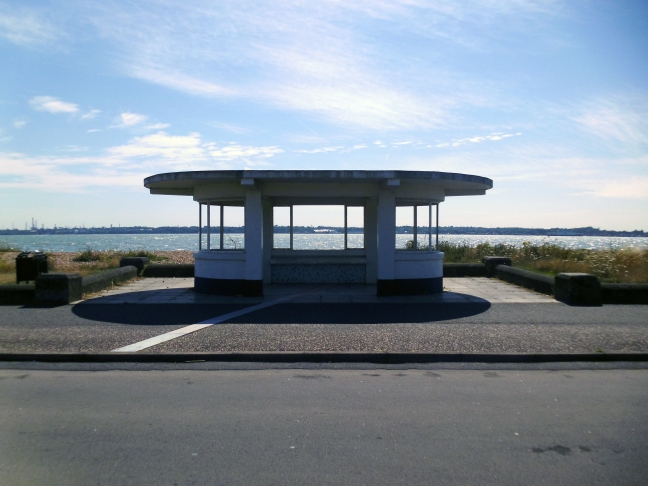
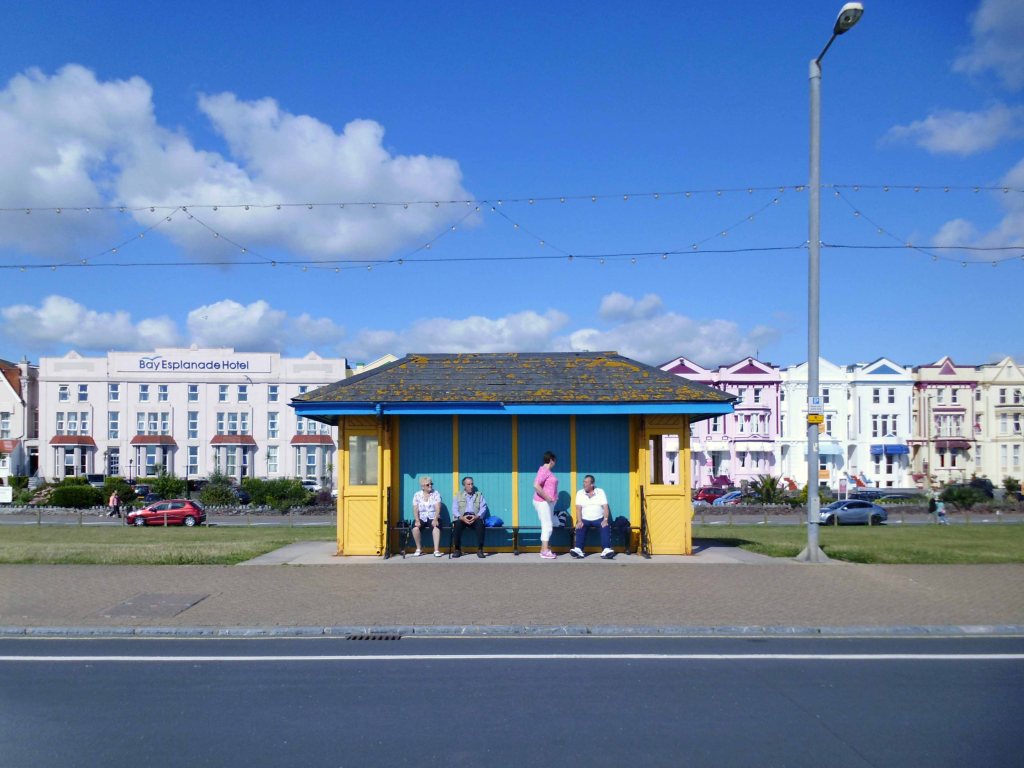
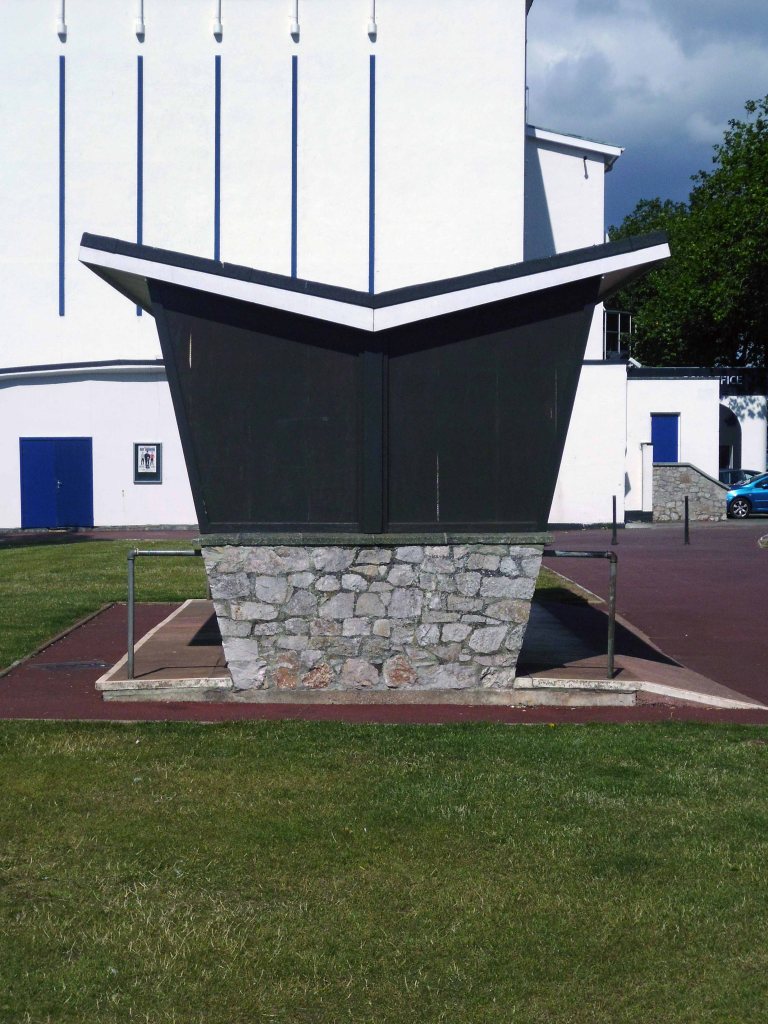
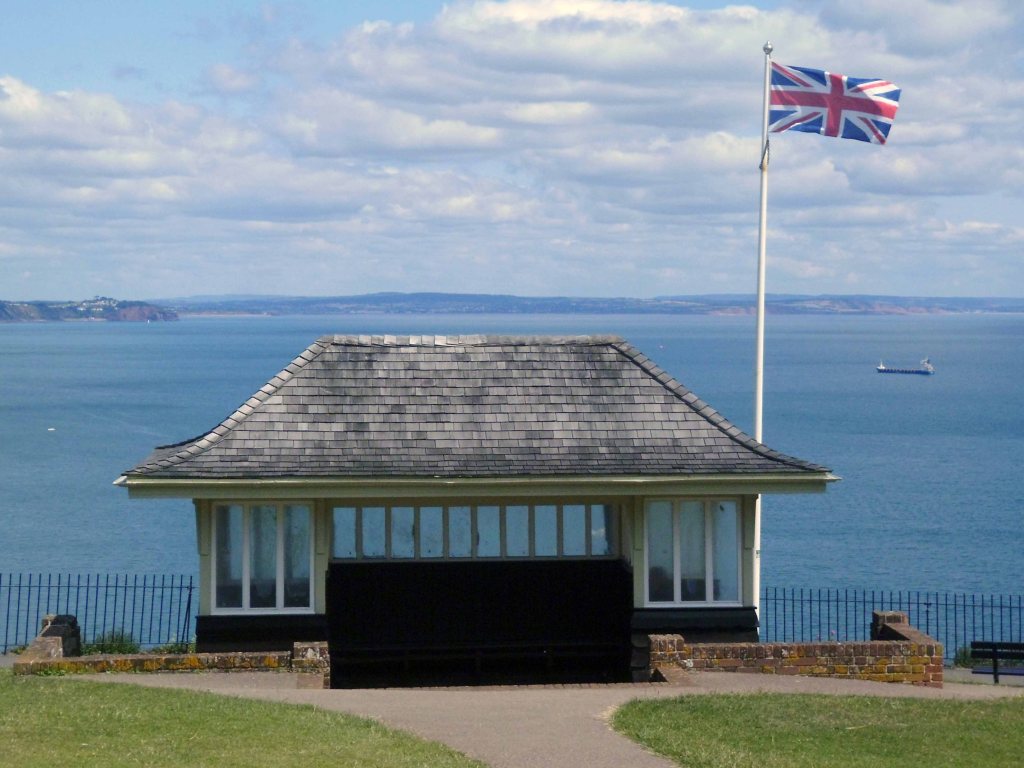
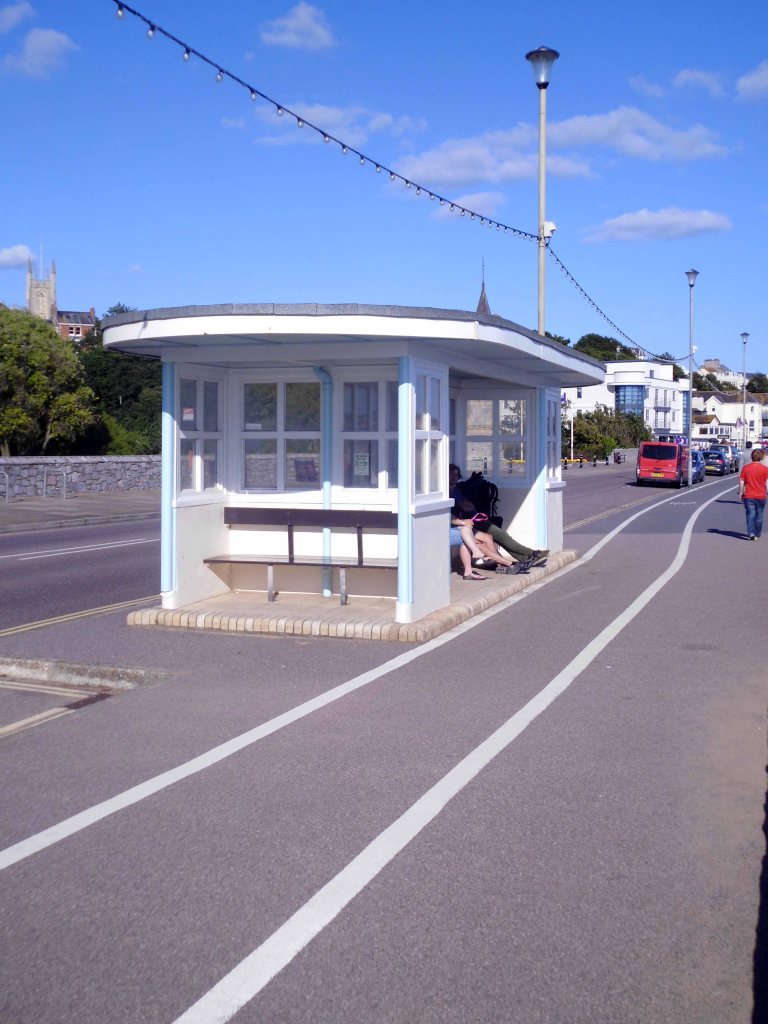
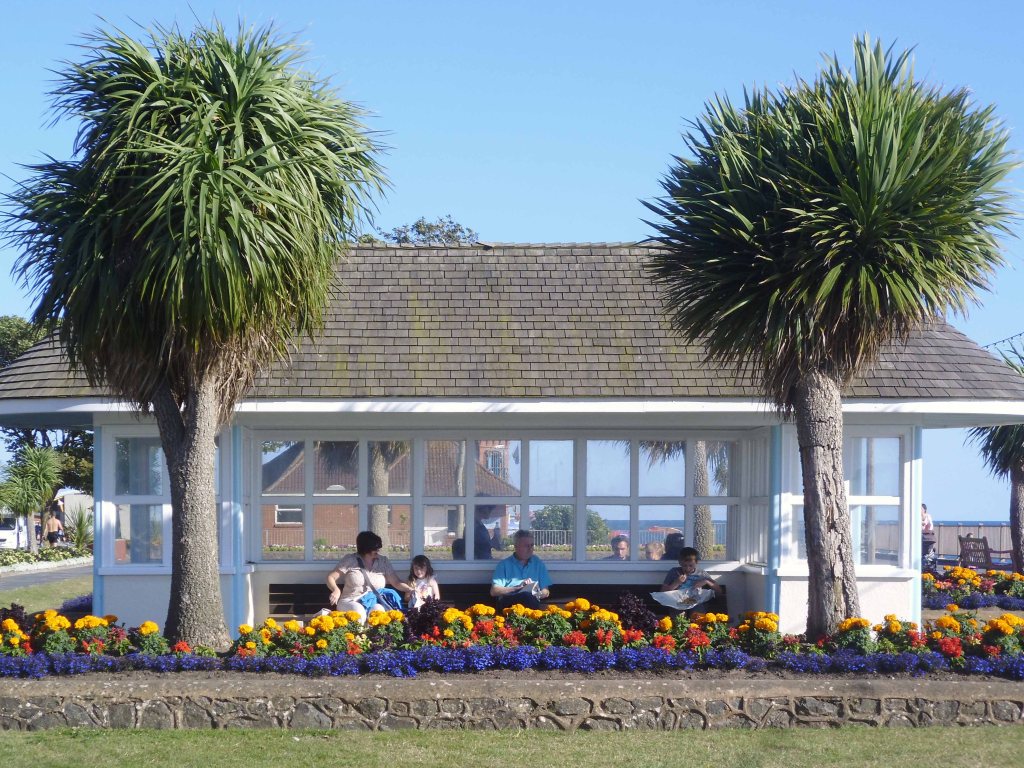
Seaside shelters are ubiquitous along our coast and form a typology determined by a rich variety of wild and wonderful Municipal tastes – flat, broke, baroque, modern and functionalist, hardly two the same.
Electricity is a popular power source both locally, nationally and internationally.
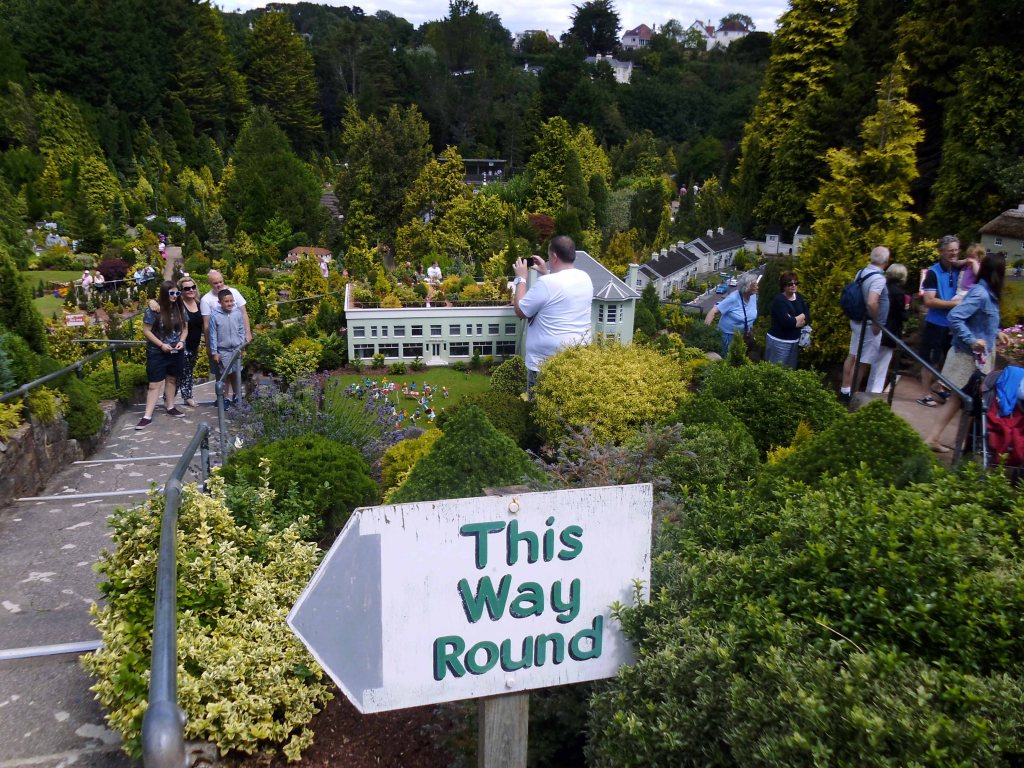
Model villages originated in seventh century China, there is only one way around a model village.
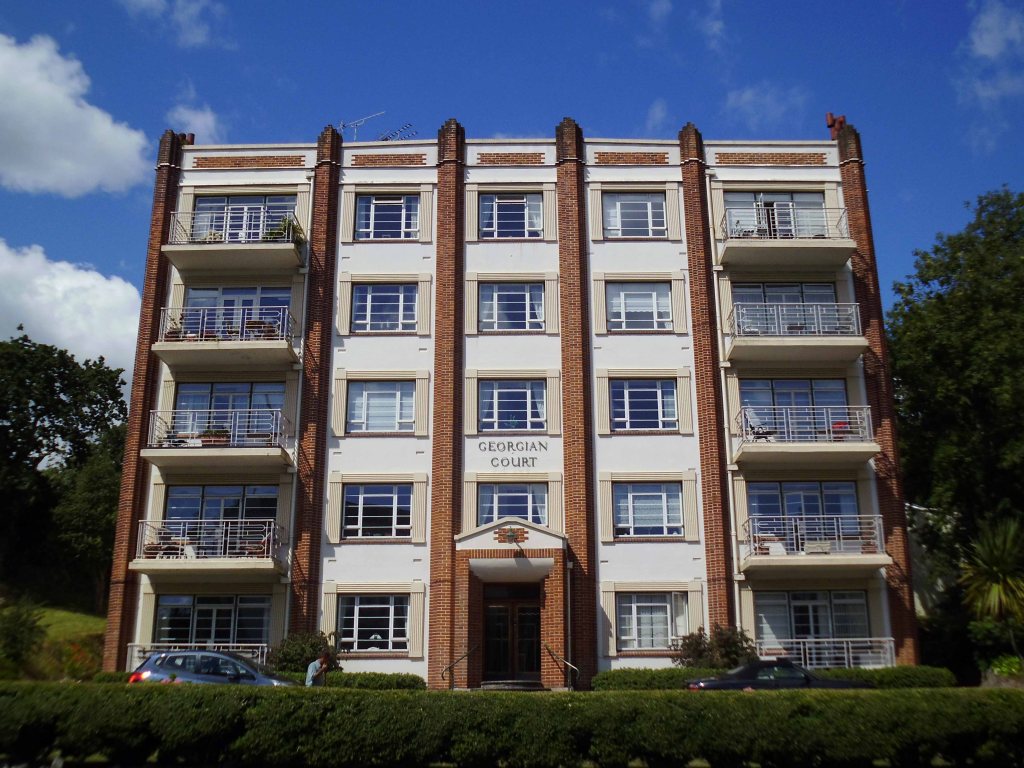
This Georgian Court is situated just outside Torquay, a restrained Neo Classical/Deco brick and render apartment block – the couple I chatted to, very kindly offered to show me around the place.
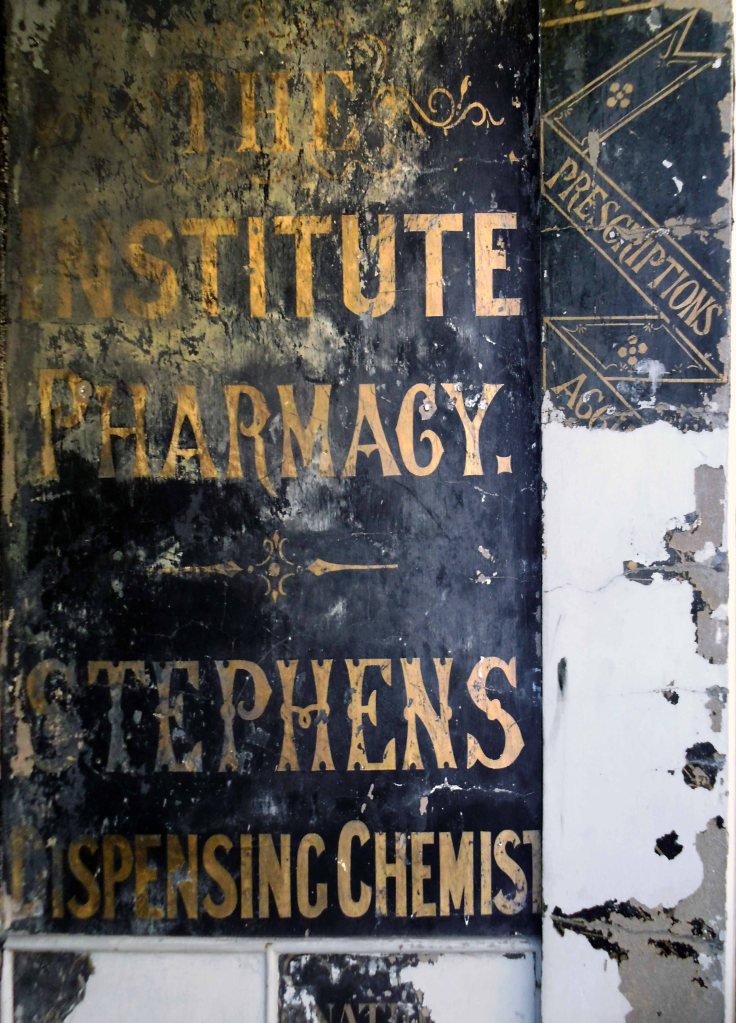
Ghost signs have the habit of disappearing all over the place.
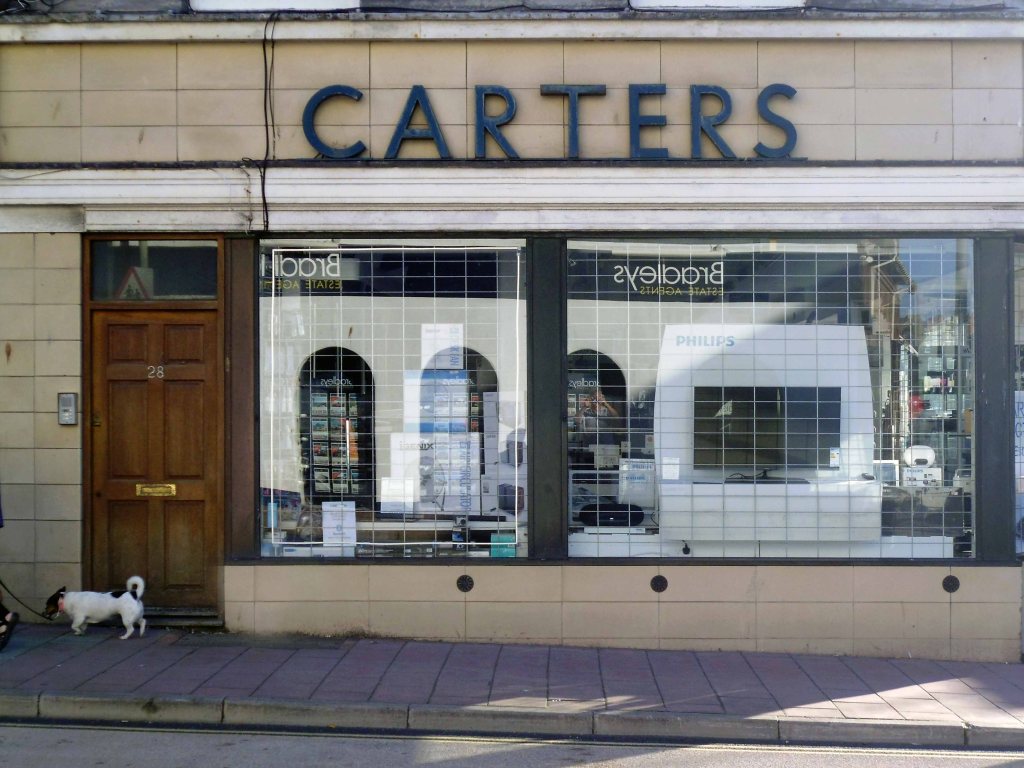
So to shops of all shapes and sizes.
Whilst others prevail.
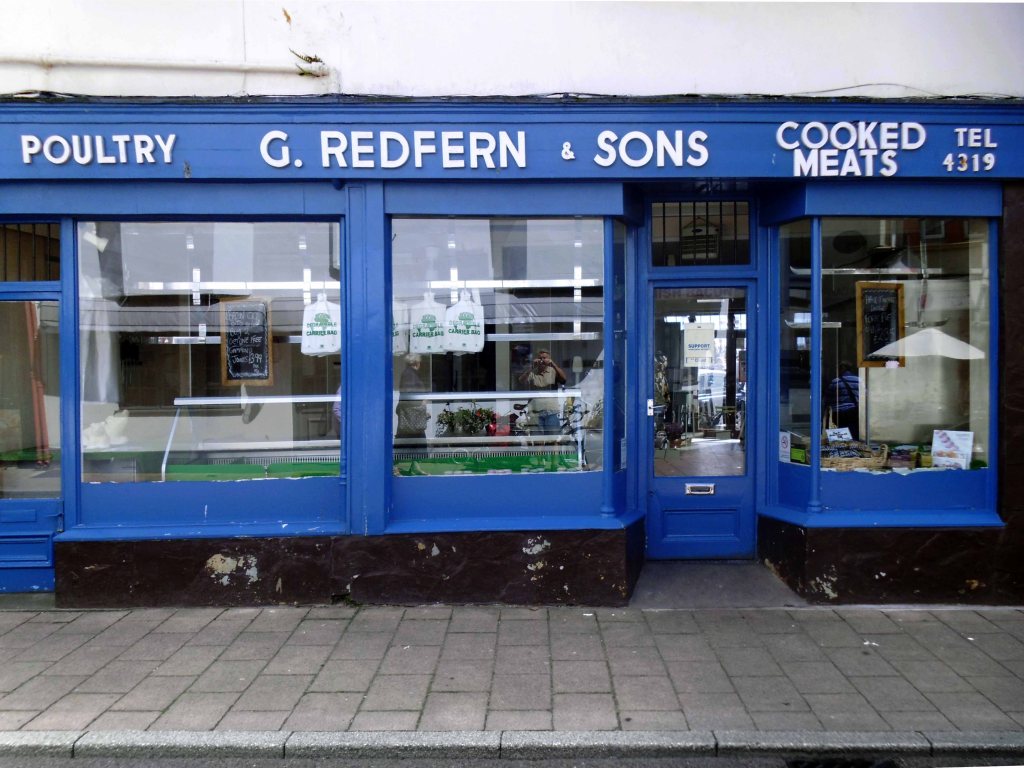
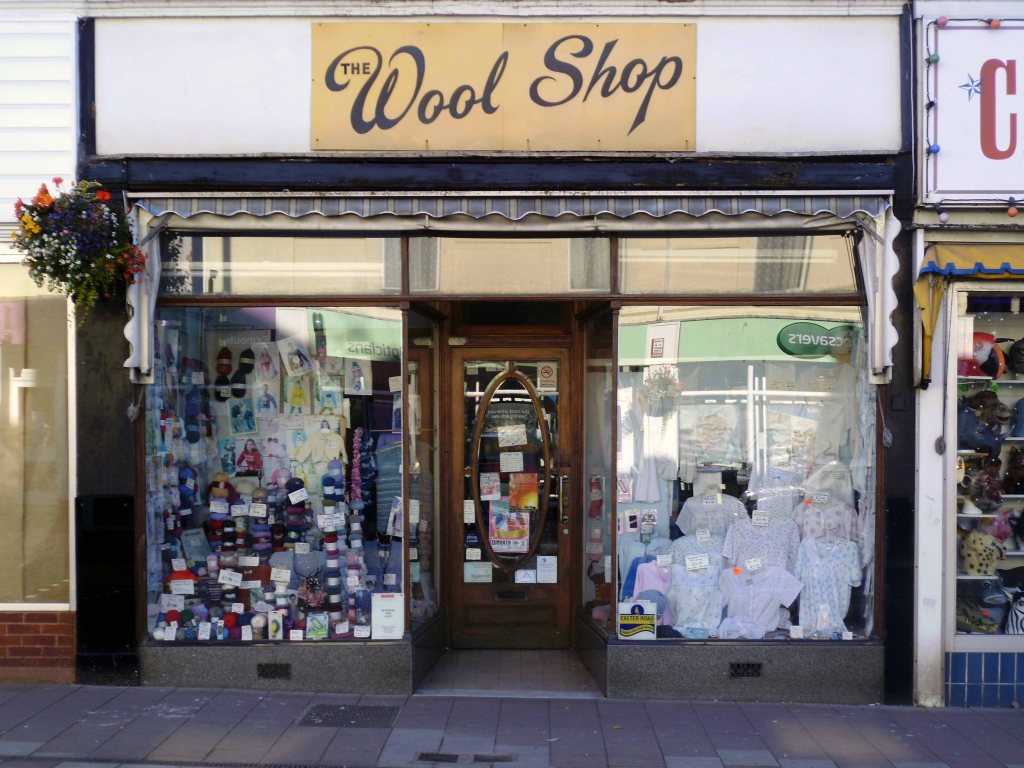
Including this arcane example in Exmouth – The Wool Shop.
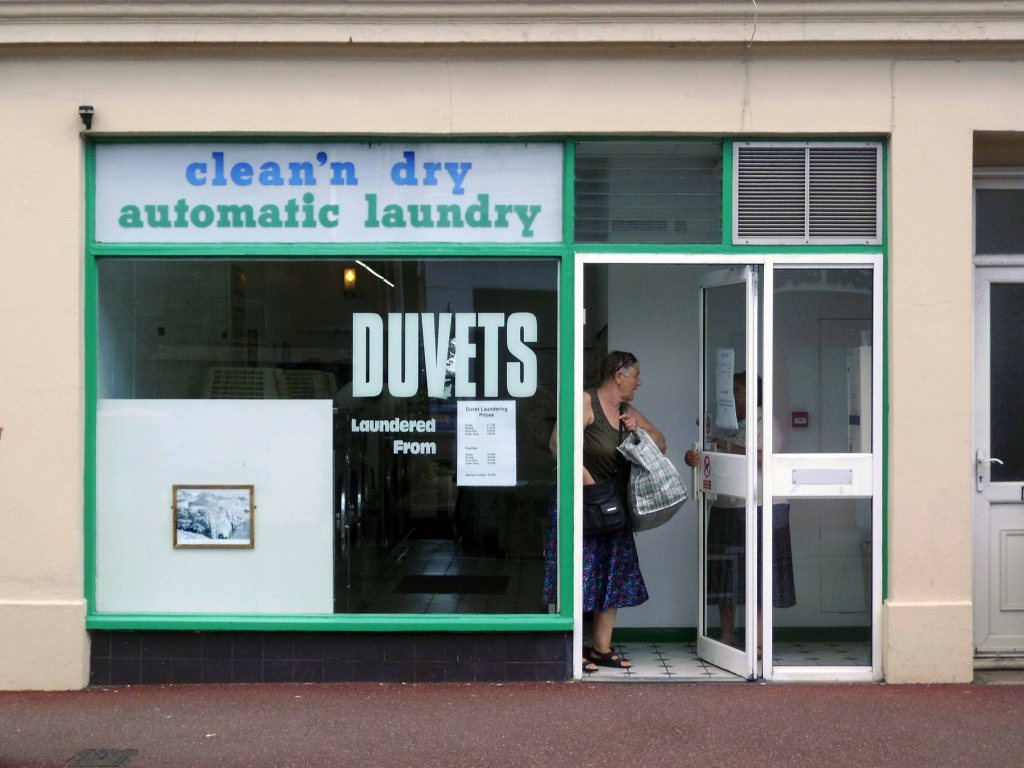
Laundrettes may be on the way out but this gallant knight of the road continues to record them, both online and in print.
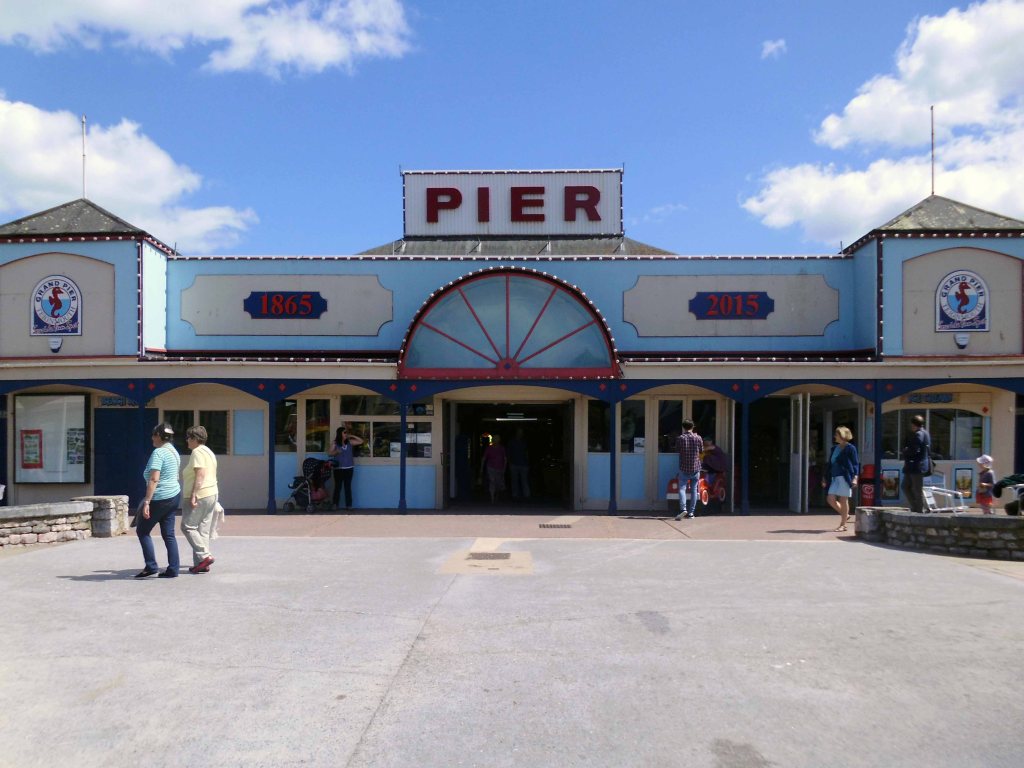
Here in Teignmouth a pier appears not uncommon on certain parts of the coast.
Teignmouth Grand Pier is a great day out for family and friends. There’s something for everyone – from big kids to little ones – it offers you all the traditional attractions and entertainment in the Great British spirit of the seaside.
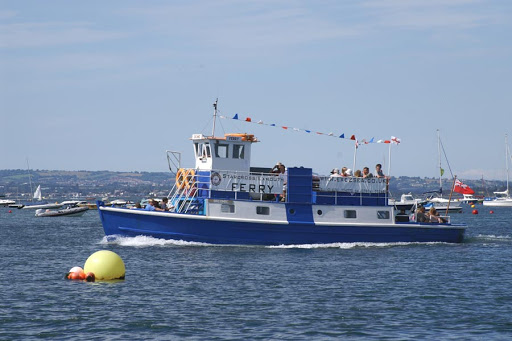
Time to get on the ferry again Steve – crossing the Exe Estuary on the Starcross to Exmouth Ferry.
Bikes carried for a small additional charge.
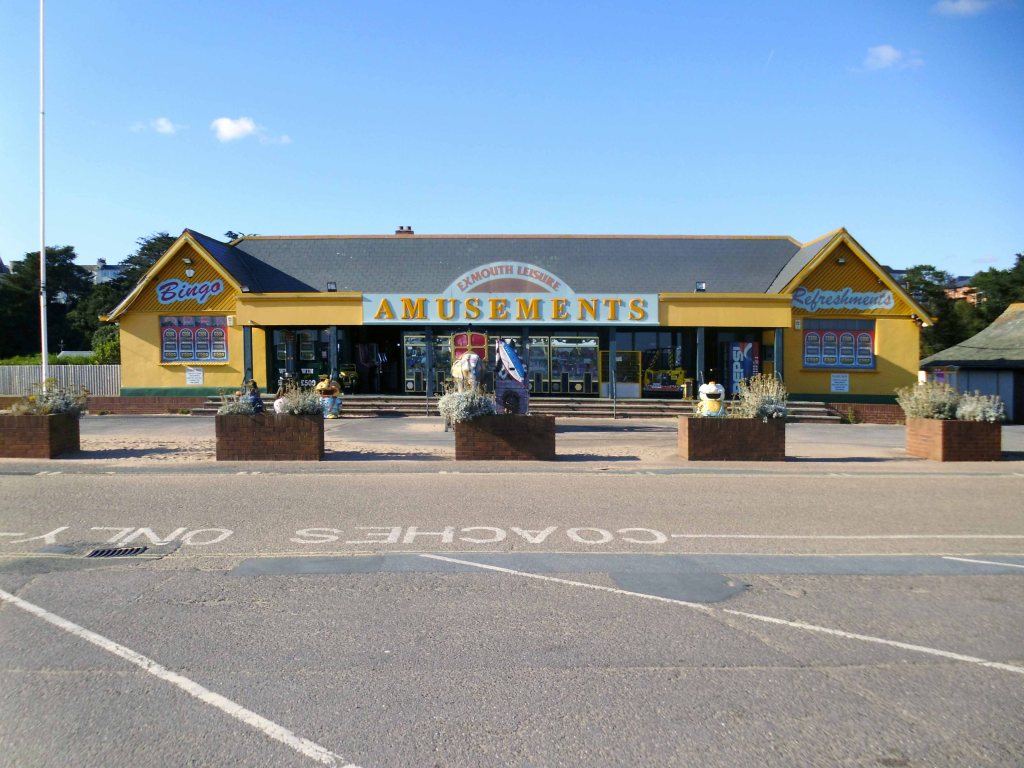
No time for Bingo, reading the local paper or the amusements – time for a pint, in the form of two halves.
Then a wander back to the digs – see you all tomorrow.
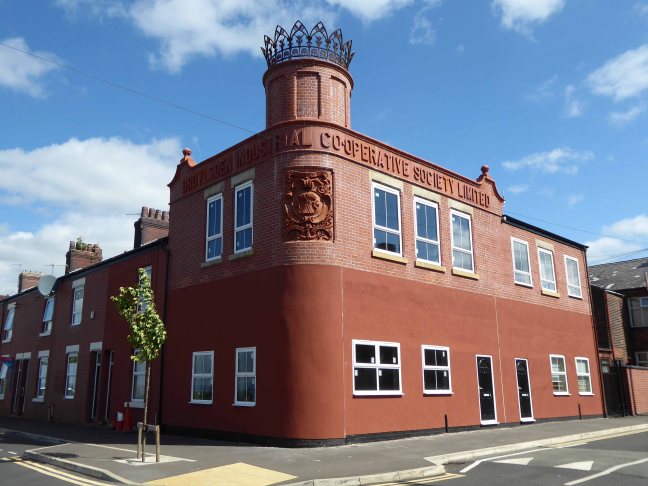
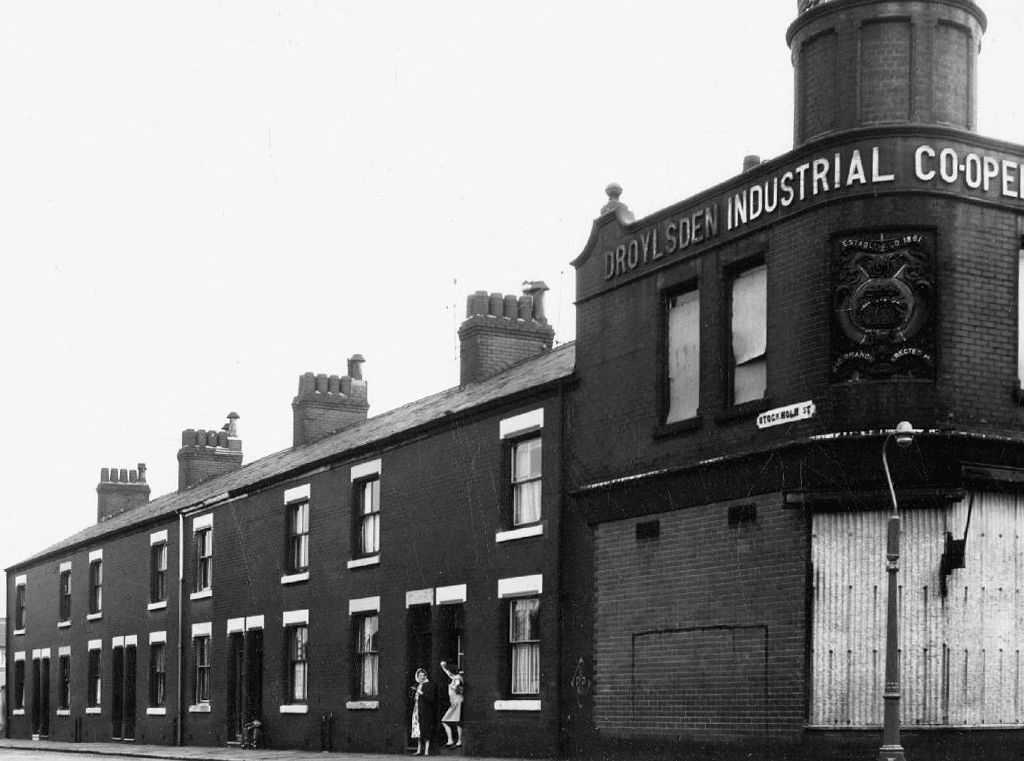
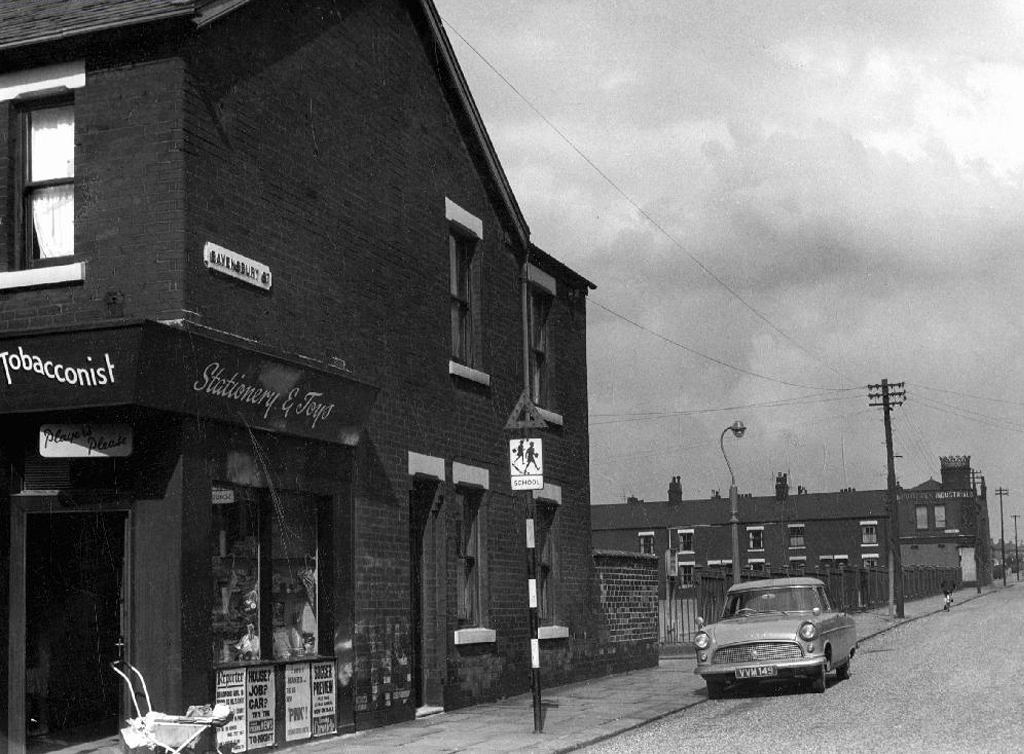
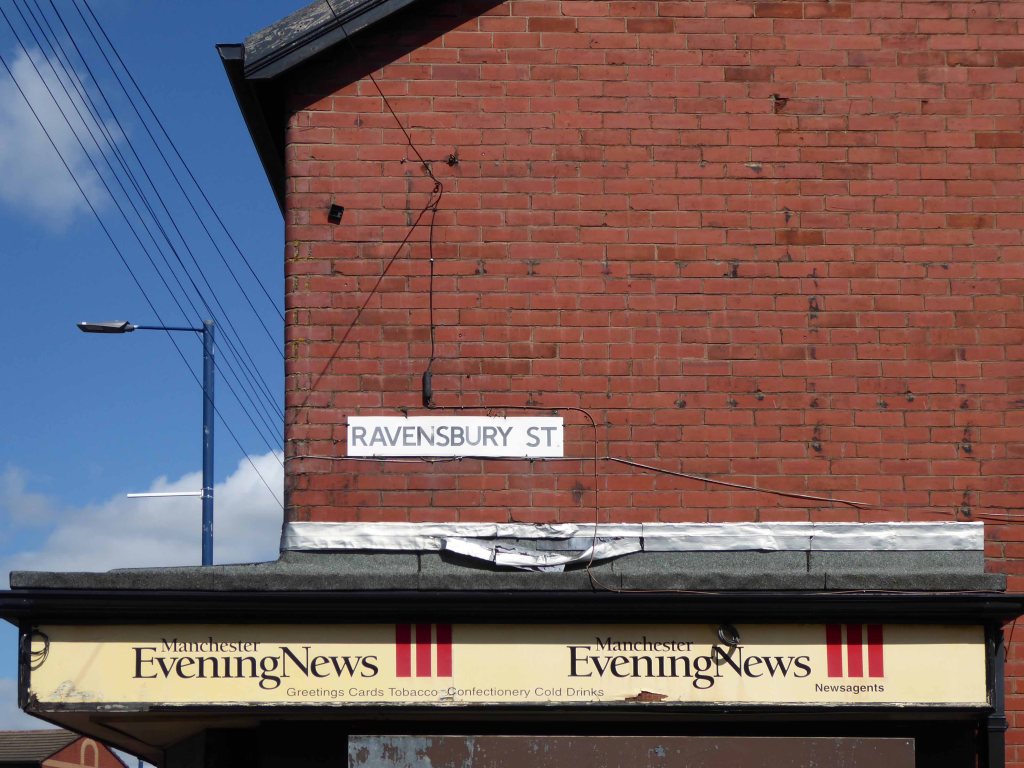
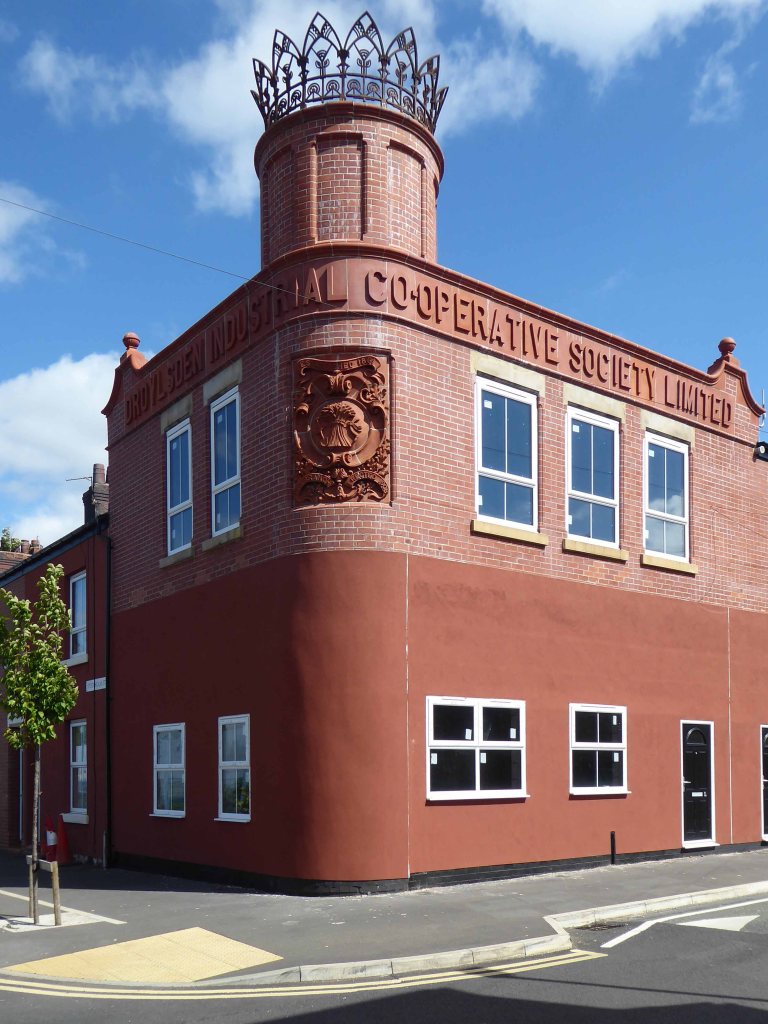
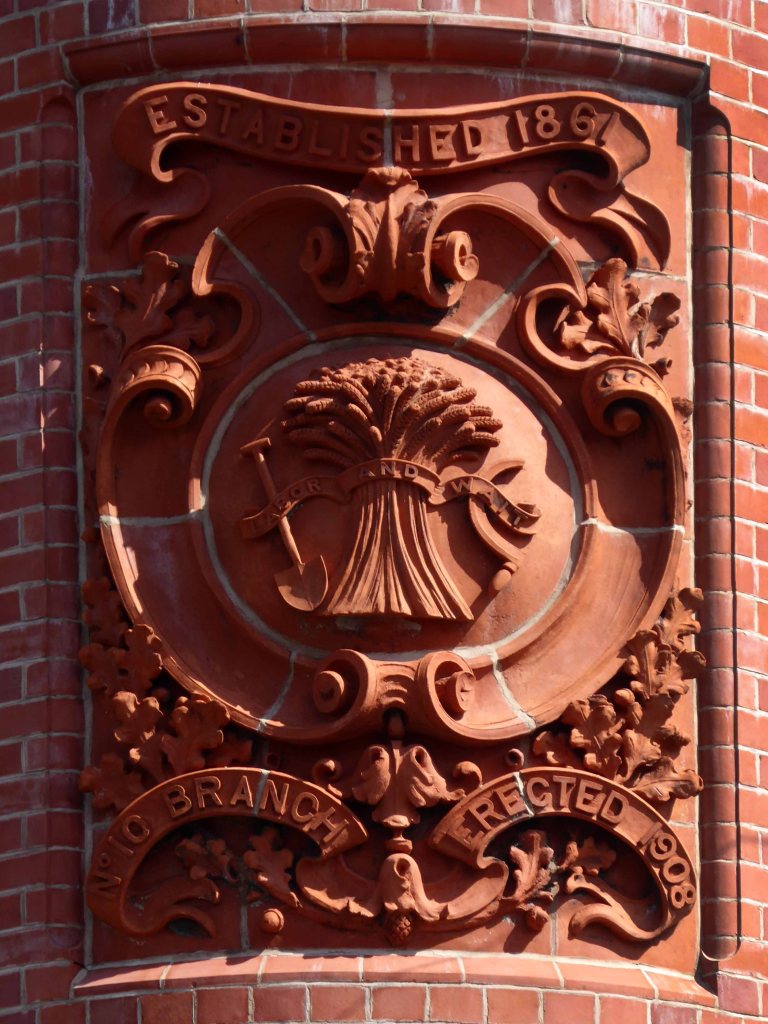
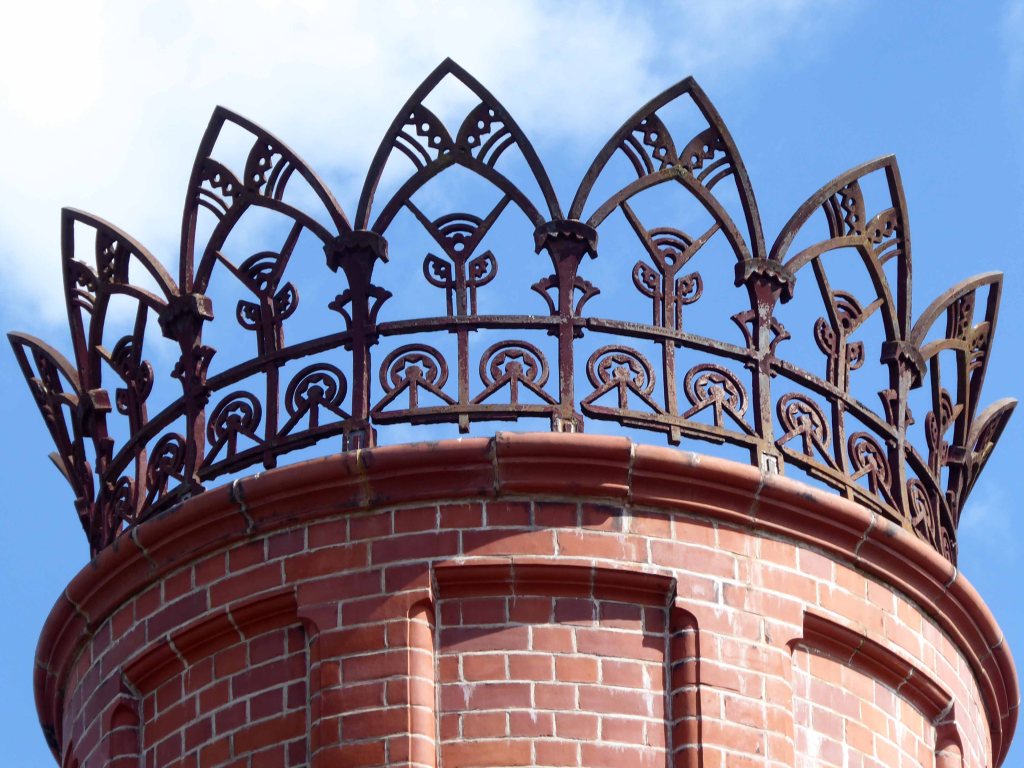
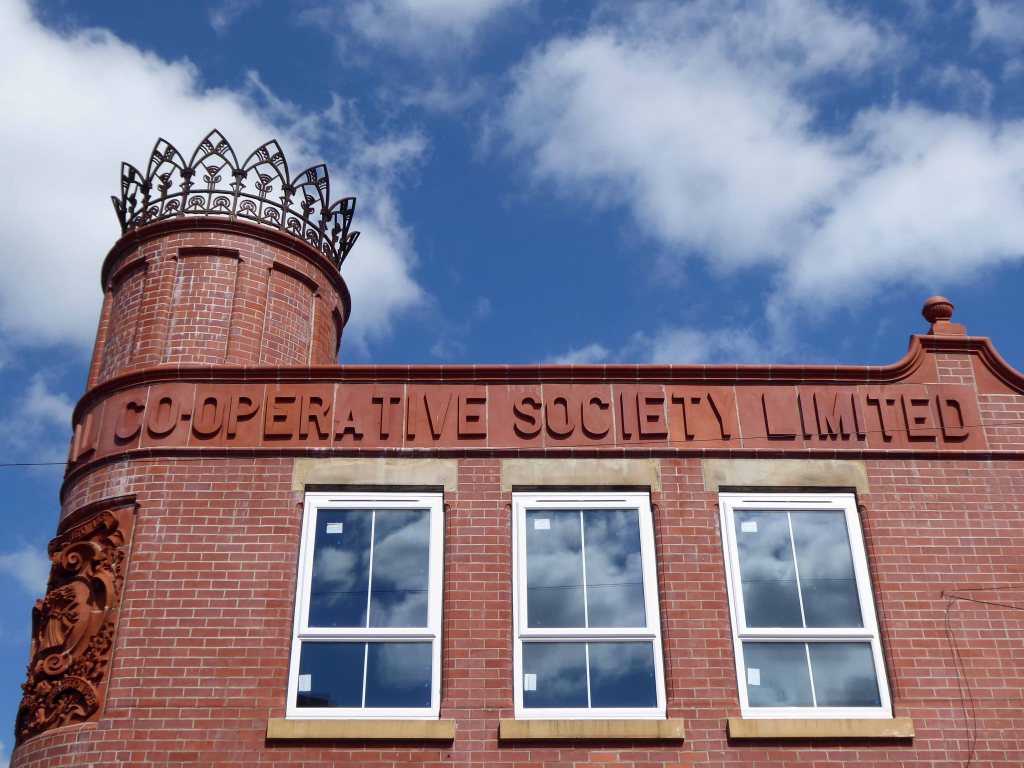
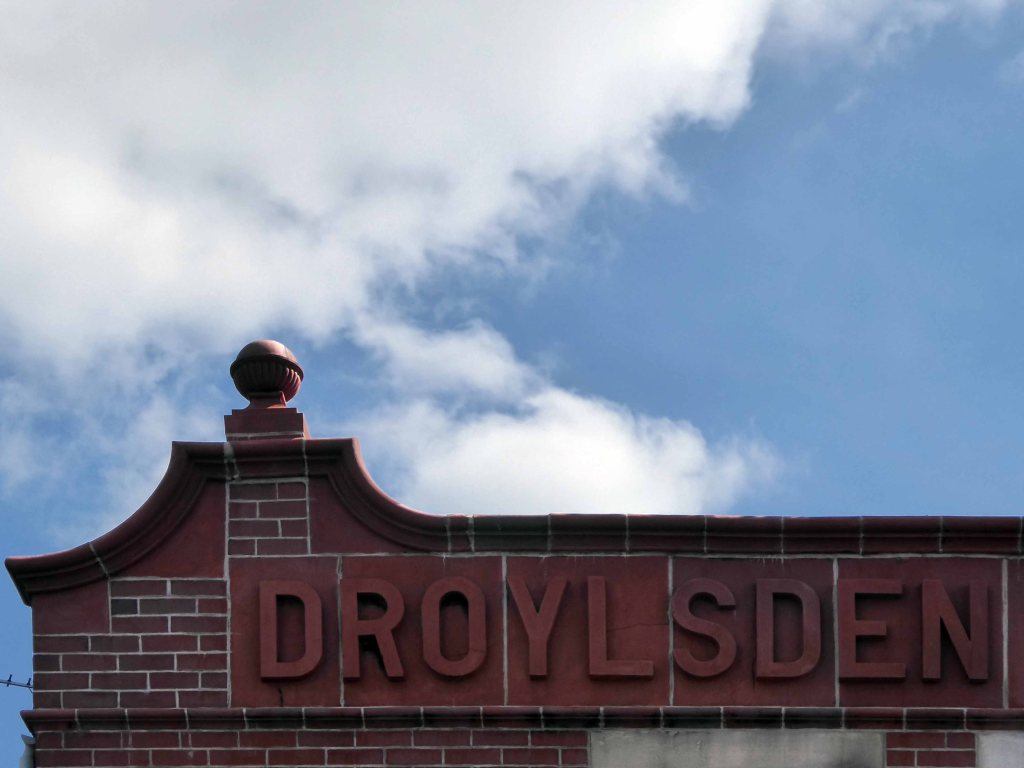
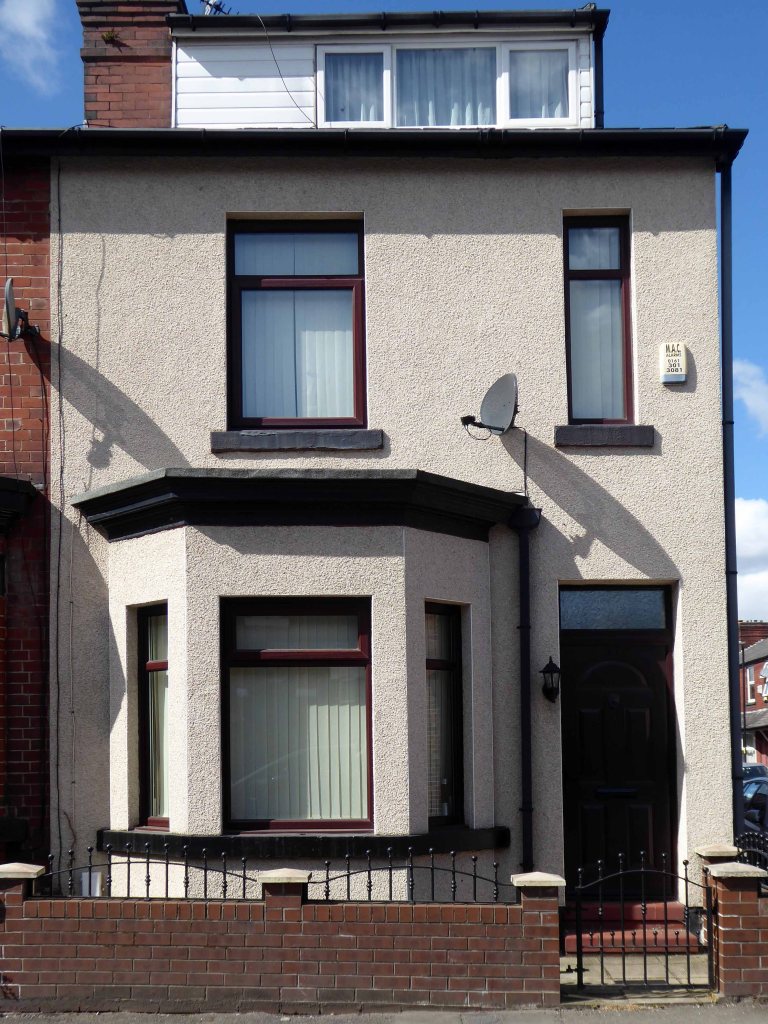
On the corner of Ravensbury and Stockholm Street Clayton Manchester there stands a Cooperative Shop of 1908.
We have previously visited another fine example on Northmoor Road.
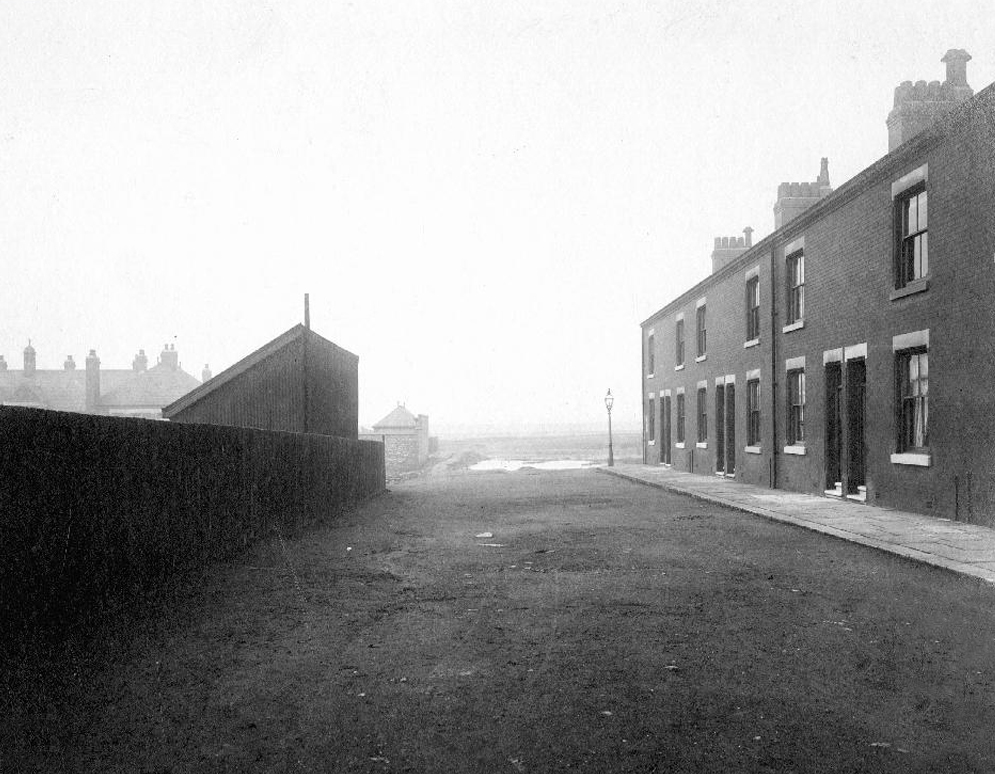
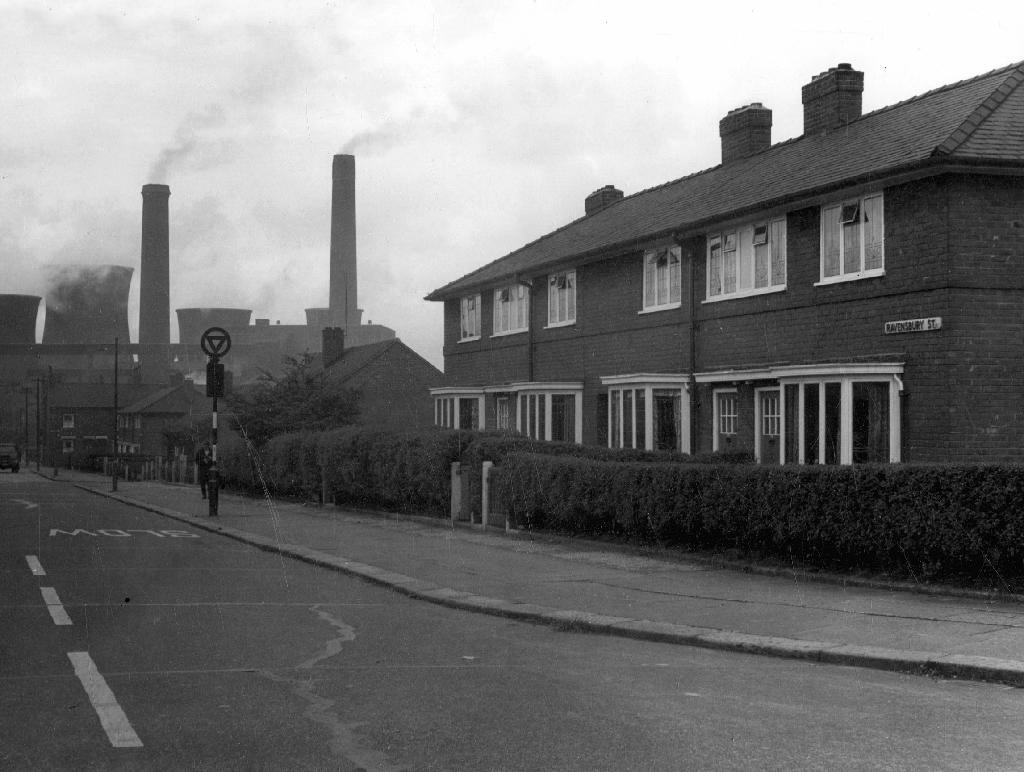
In 1902 the area is still set to open ground.
This Manchester Local Image Collection photograph of 1912 shows new terraced homes emerging to meet the housing needs of the world’s first industrial city.
Changing patterns in shoppers habits sealed the fate of many local and corner shops, as larger supermarkets opened, increased mobility and car ownership became more common.
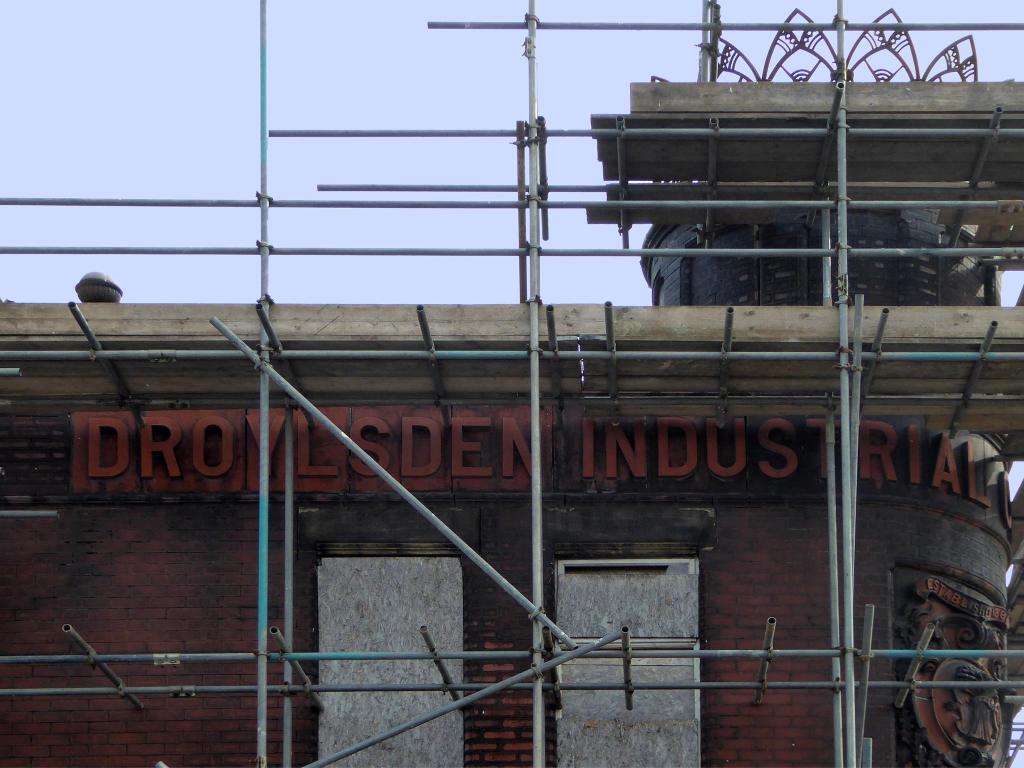
When I first visited the building was undergoing renovation work.
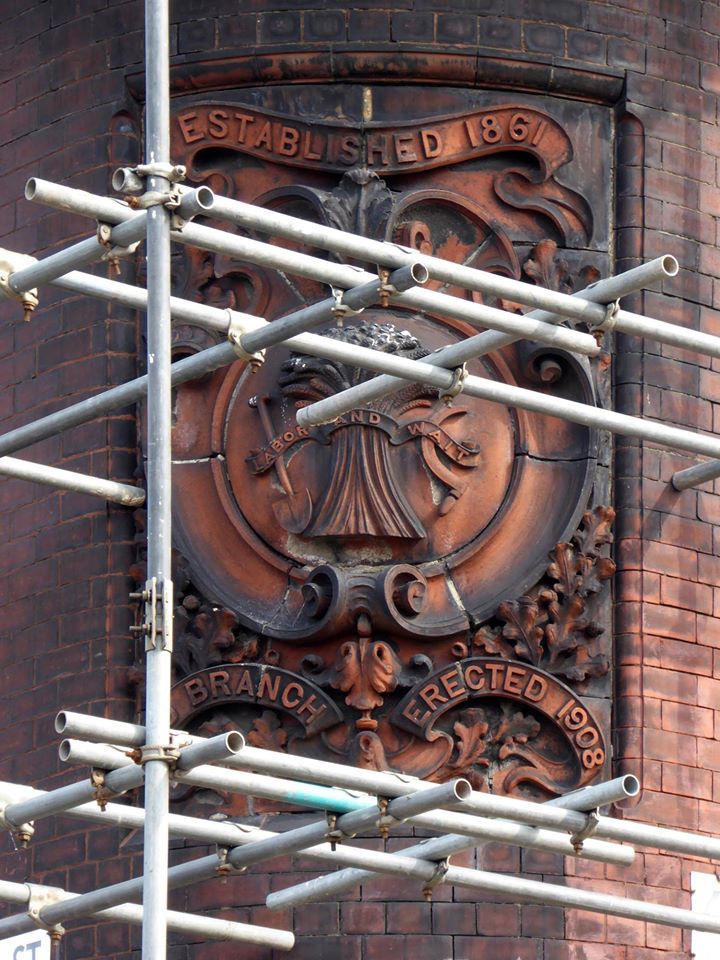
The beautiful terracotta tile work and corona obscured by scaffolding .
I returned last week to find the job almost done – converted to flats, in an area which has seen a great deal of improvement to the general housing stock, paving and street furniture.
A joy to see a fine building almost returned to its former glory, with a much needed social purpose, reviving the city’s western edge.
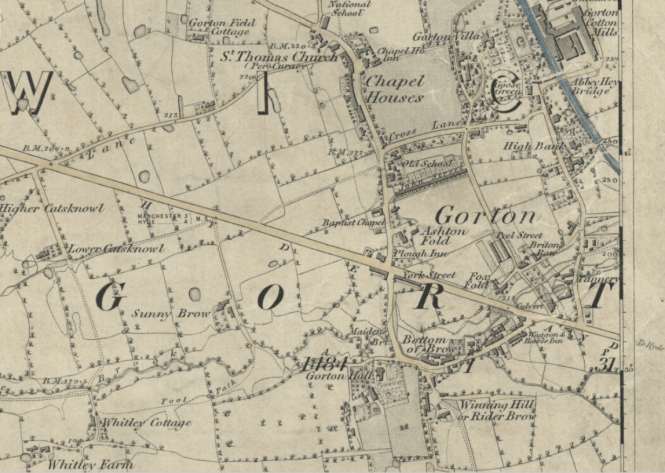
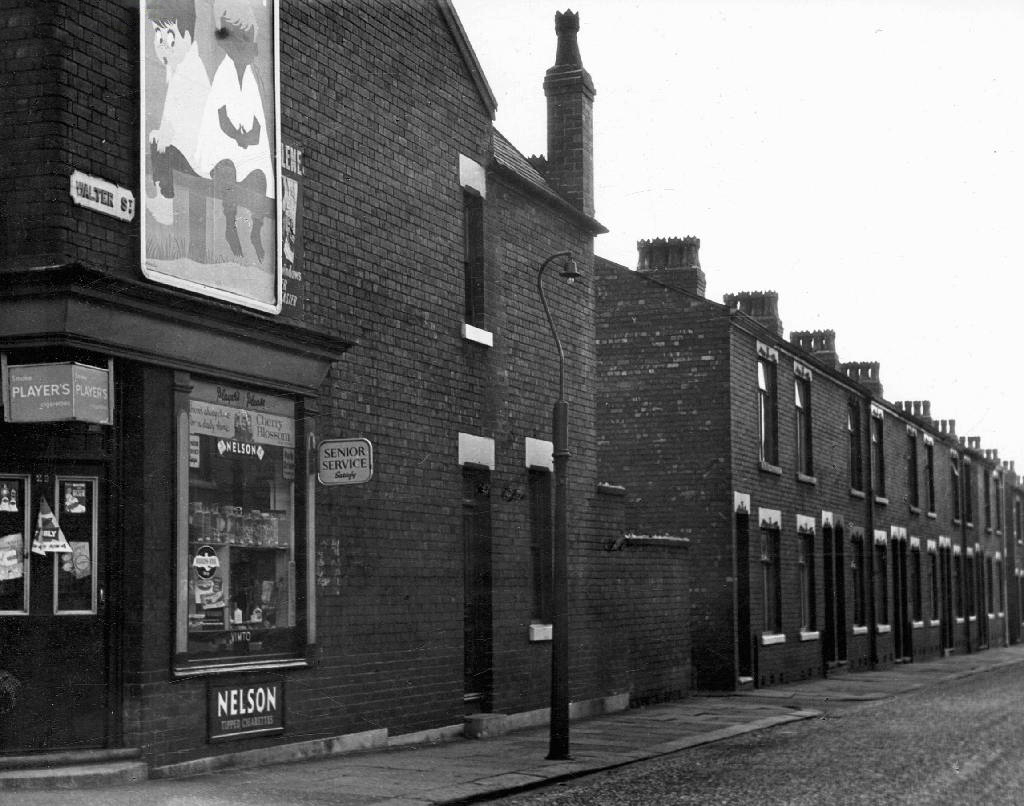
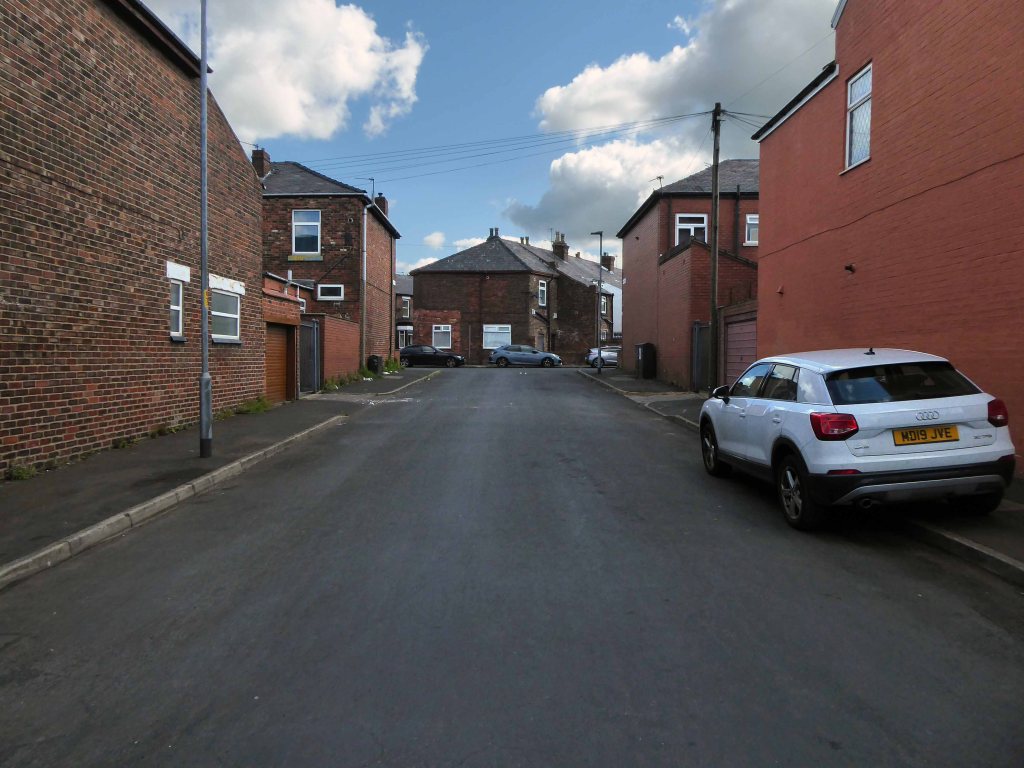
We are travelling backwards and forwards in time – firstly back to 1845 when the street was yet to be built, before the Industrial Revolution created the need for workers’ homes, to house the workers from the newly built workplaces, which also did not yet exist.
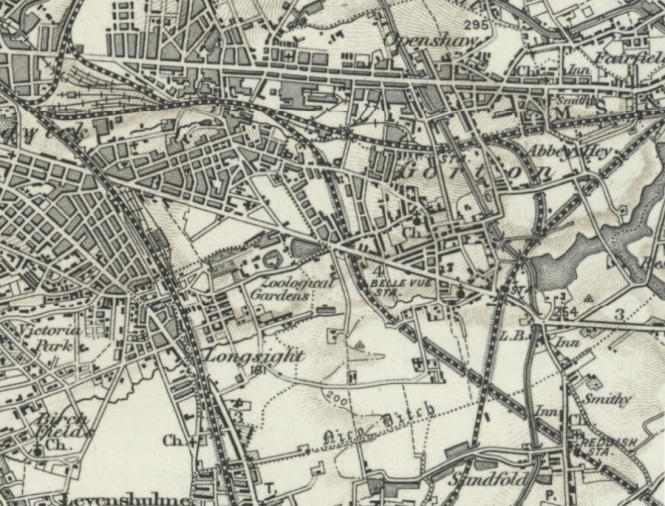
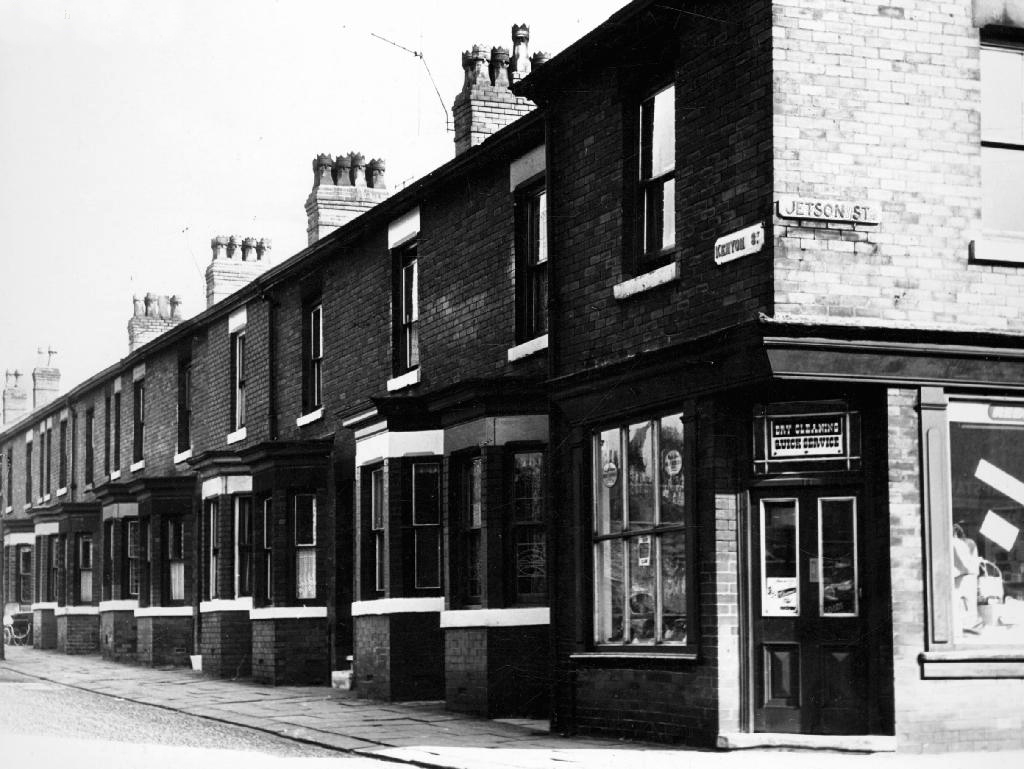
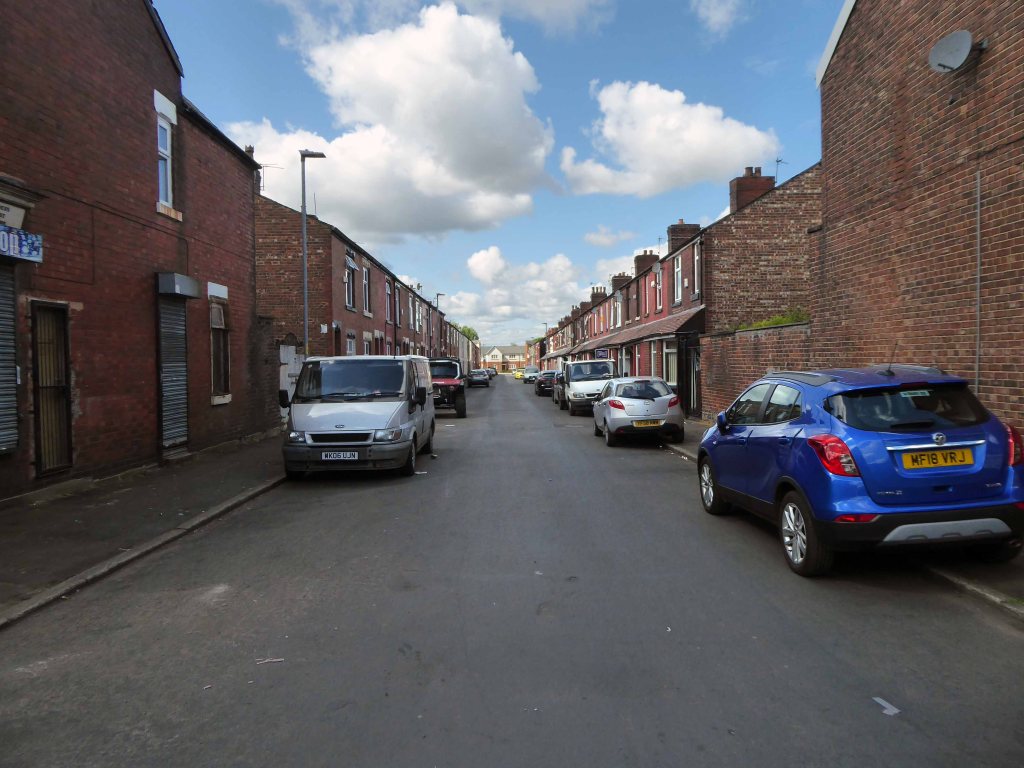
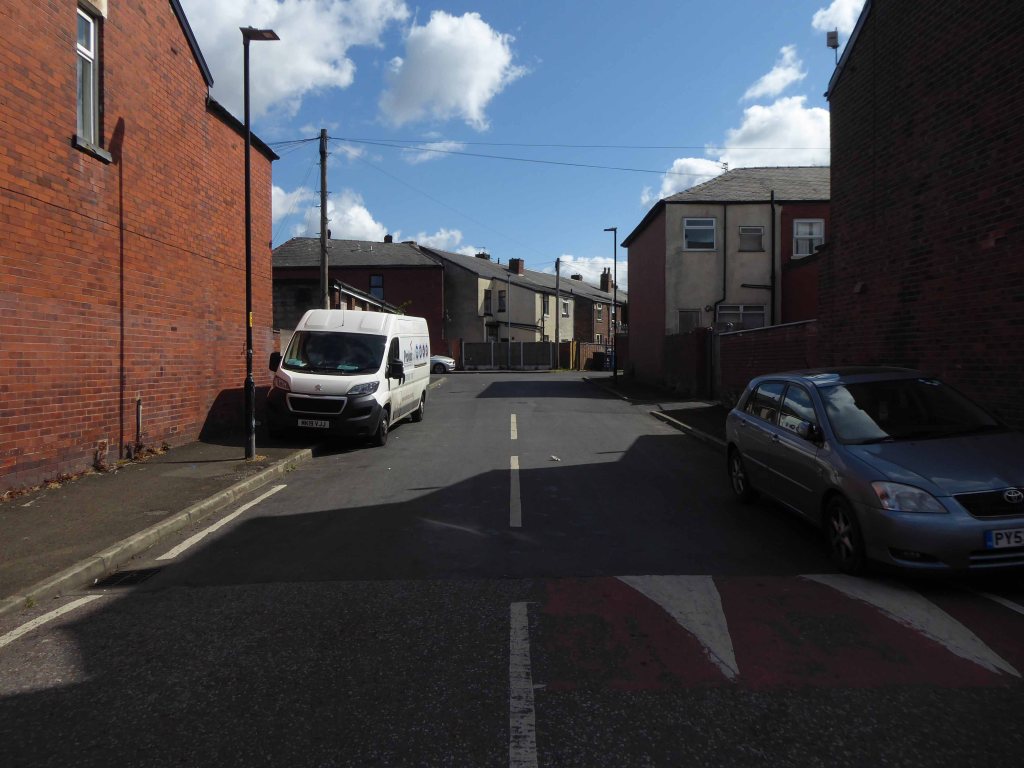
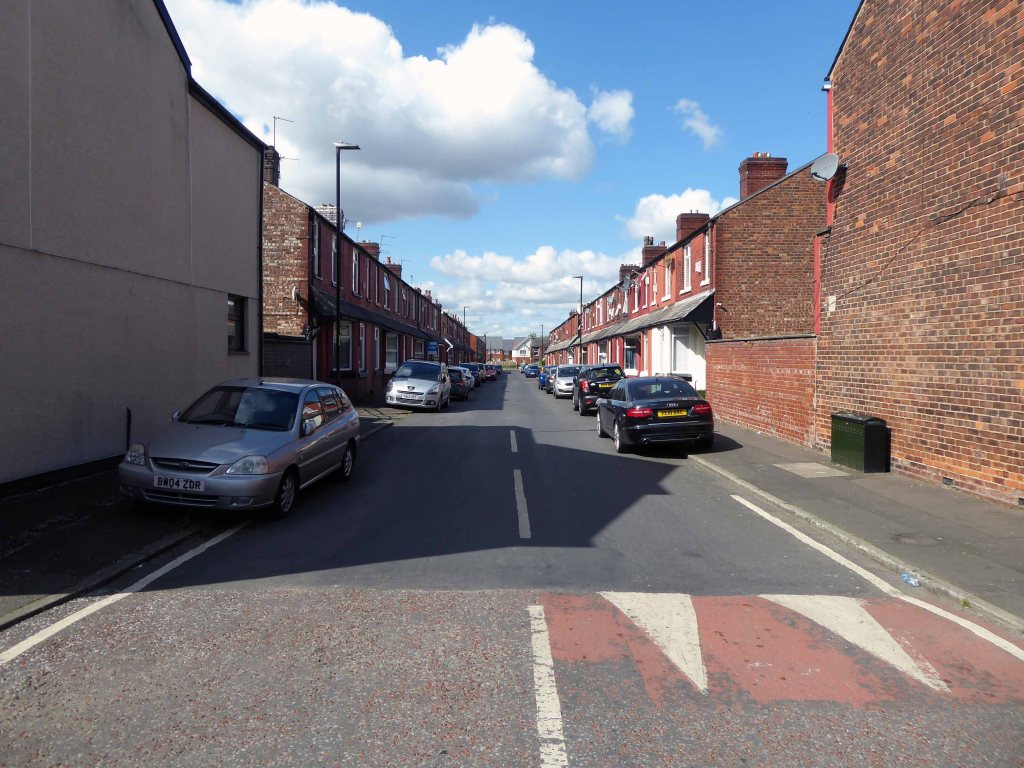
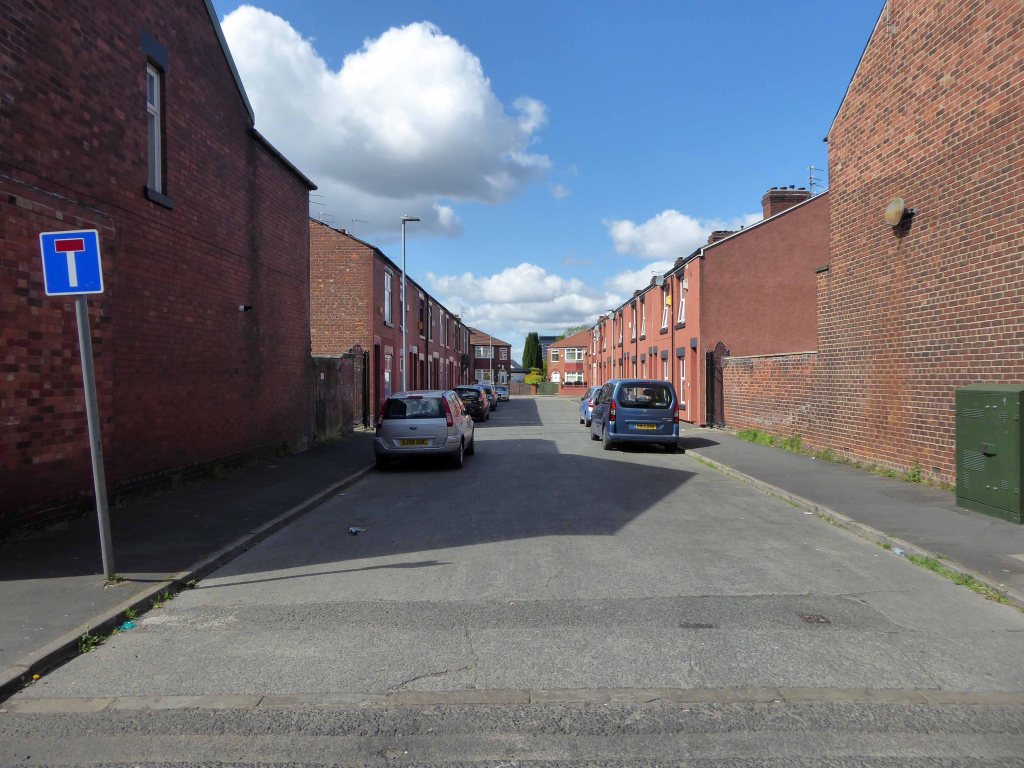
A little further forward to 1896 when Jetson Street has emerged fully formed from the fields, along with rail, road, amusement and industry.
1896
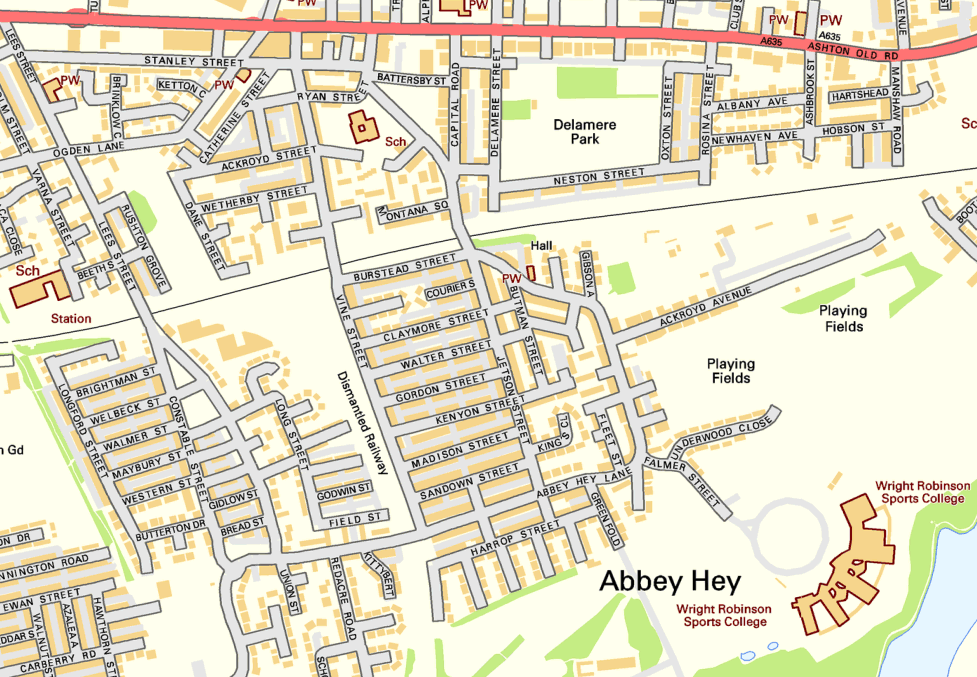
Fast forward to today and it’s all almost still there – though most of the work and the majority of the amusement has evaporated into a cloud of post-industrial, Neo-Liberal economic stagflation.
So why am I here – fast forward to the fictional future!
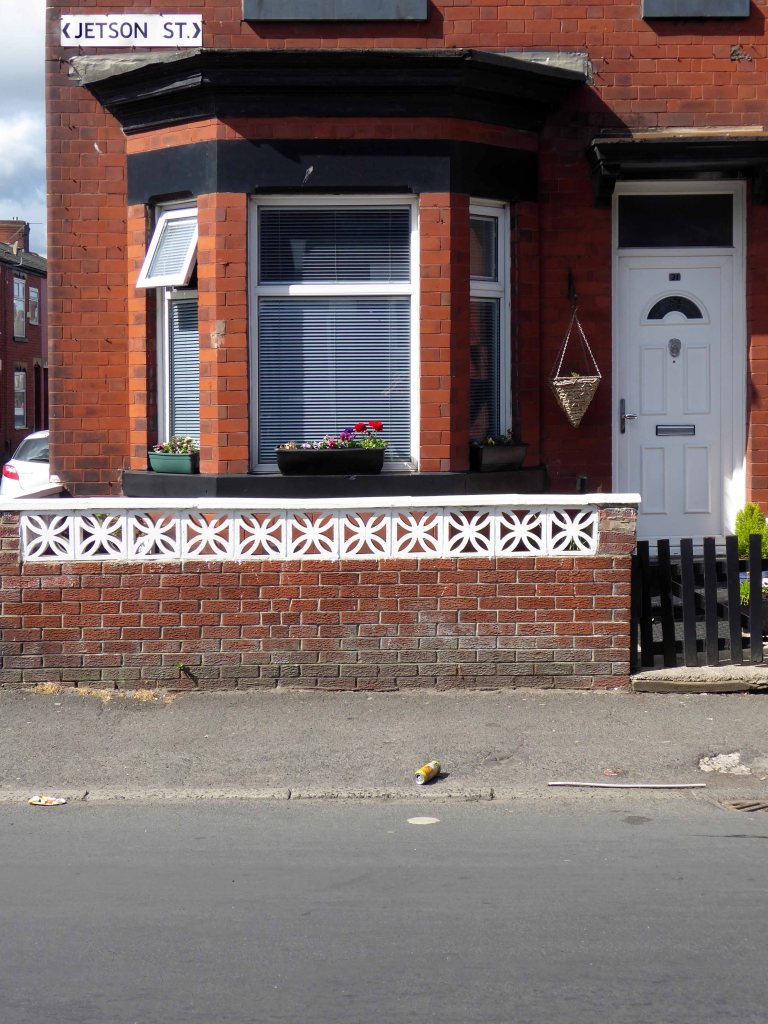
As a kid I watched as the Jet Age emerged before my very square eyes, giving the street a certain cosmic charm – I was curious.
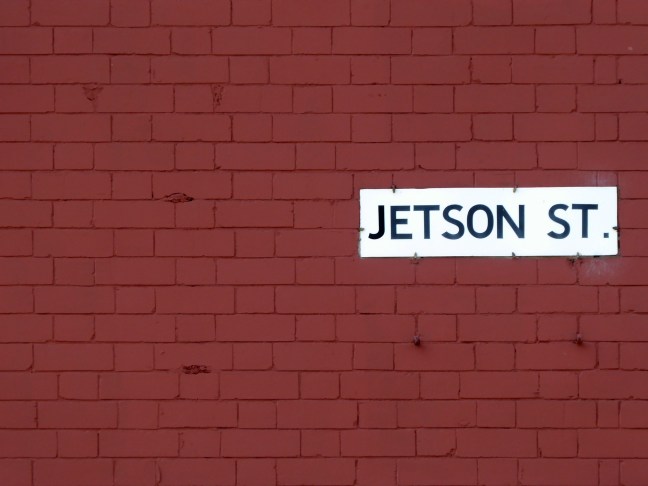
I have searched online – this seems to be the one and only Jetson Street in the whole wide world – I searched online for its origins.
The name Jetson means Son Of Jet and is of American origin.
Which quite frankly seems unreasonably glib.
The name Jetson is from the ancient Anglo-Saxon culture of the Britain and comes from the names Judd and Jutt, which are pet forms of the personal name Jordan. These names are derived from Jurd, a common abbreviation of Jordan, and feature the common interchange of voiced and voiceless final consonants.
The surname Jetson was first found in Hertfordshire where they held a family seat from very ancient times, some say well before the Norman Conquest and the arrival of Duke William at Hastings in 1066 A.D.
Which quite frankly seems unreasonably obscure.
Let’s jet back to 1964.
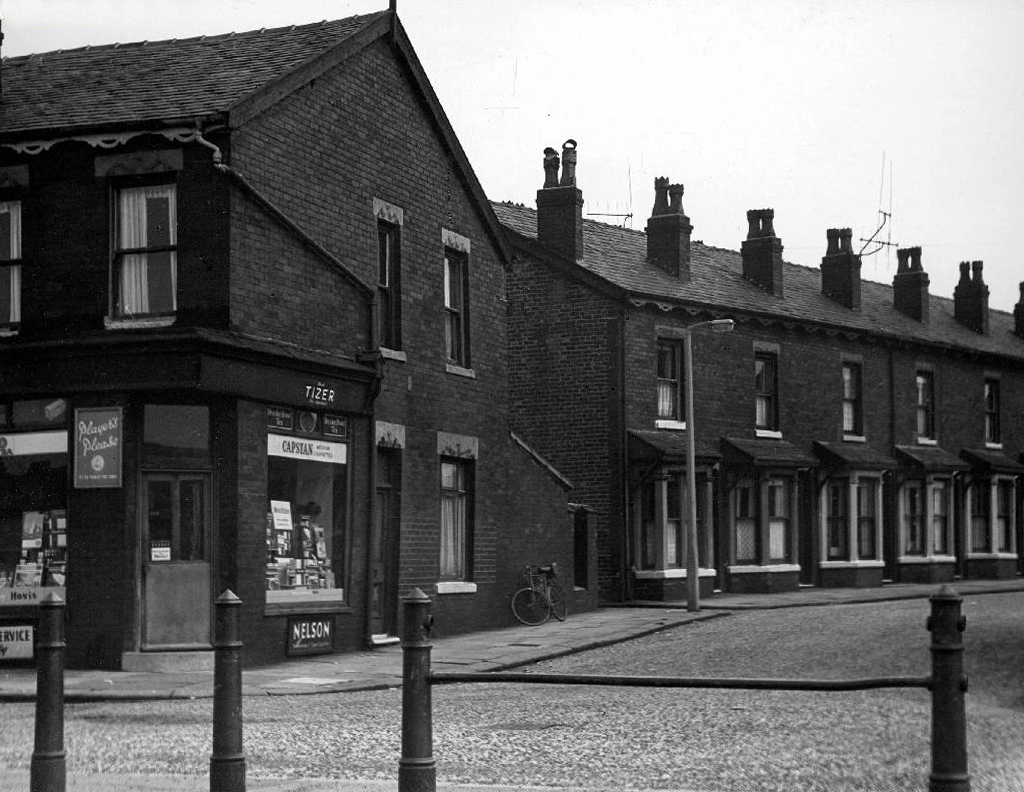
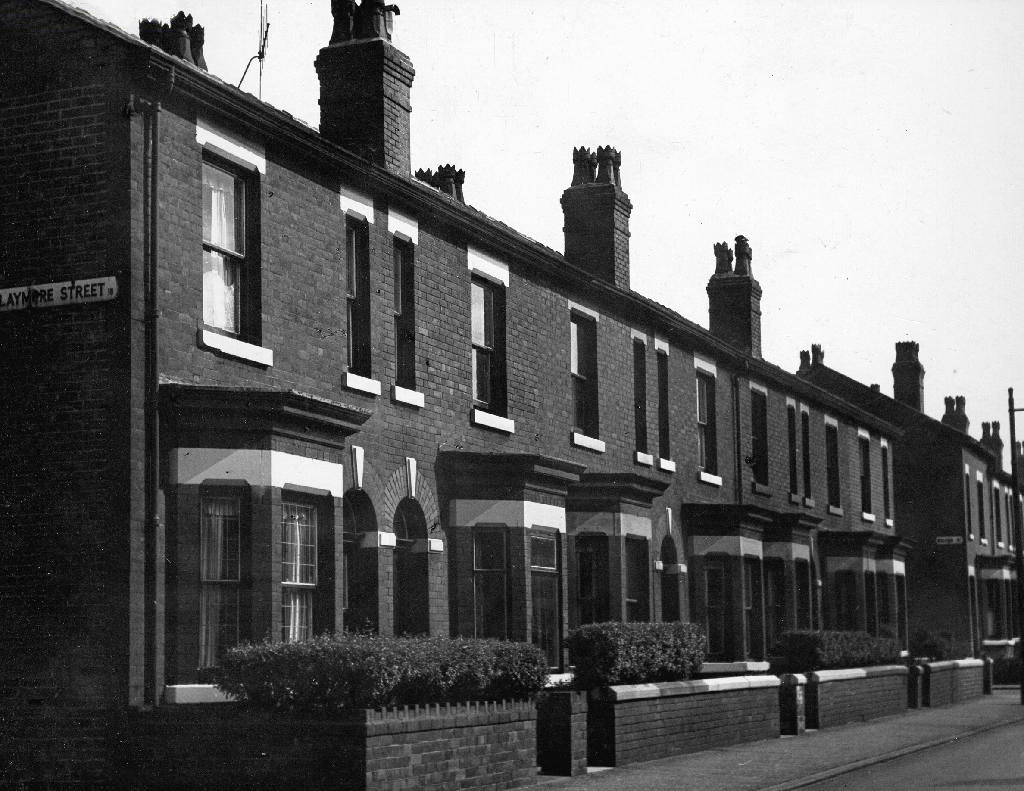
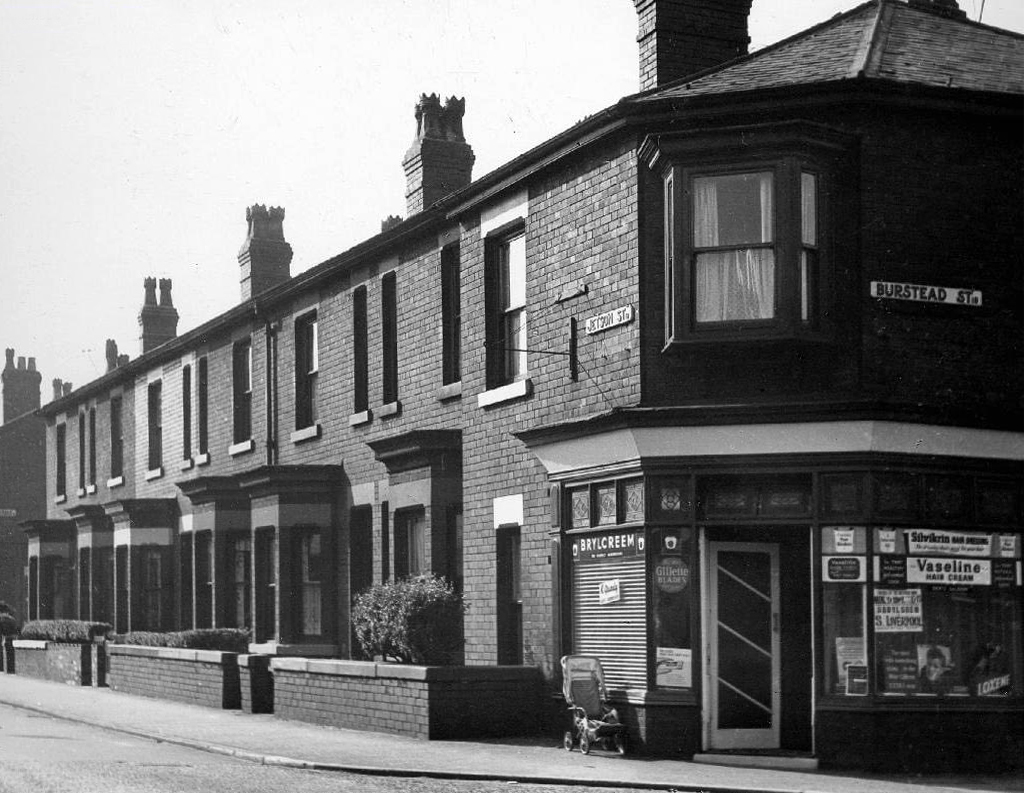
T Brooks wandered these streets taking thousands of photographs for the Manchester Corporation, possibly the housing or highways departments – they all still exist here on the Local Image Collection.
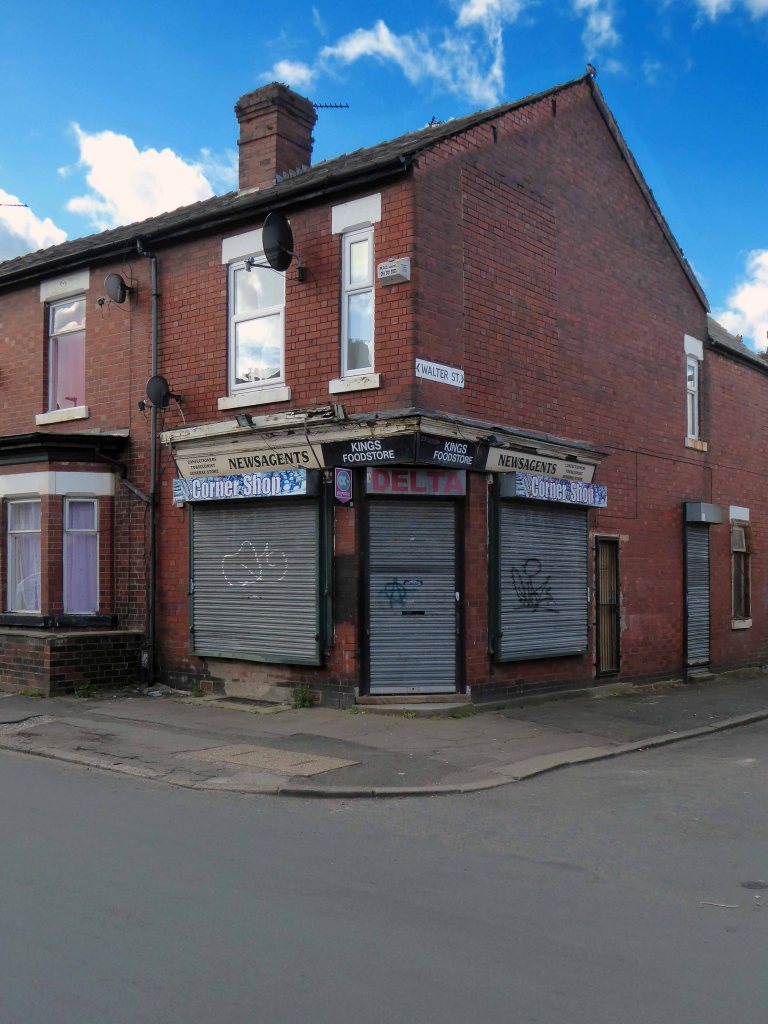
This was a world of corner shops on ever corner, settled communities full-employment, neatly ordered rows of sturdy brick-built homes.
I follow in his hallowed footsteps, what if anything remains of this world – fast forward to 2015 my first fleeting visit.
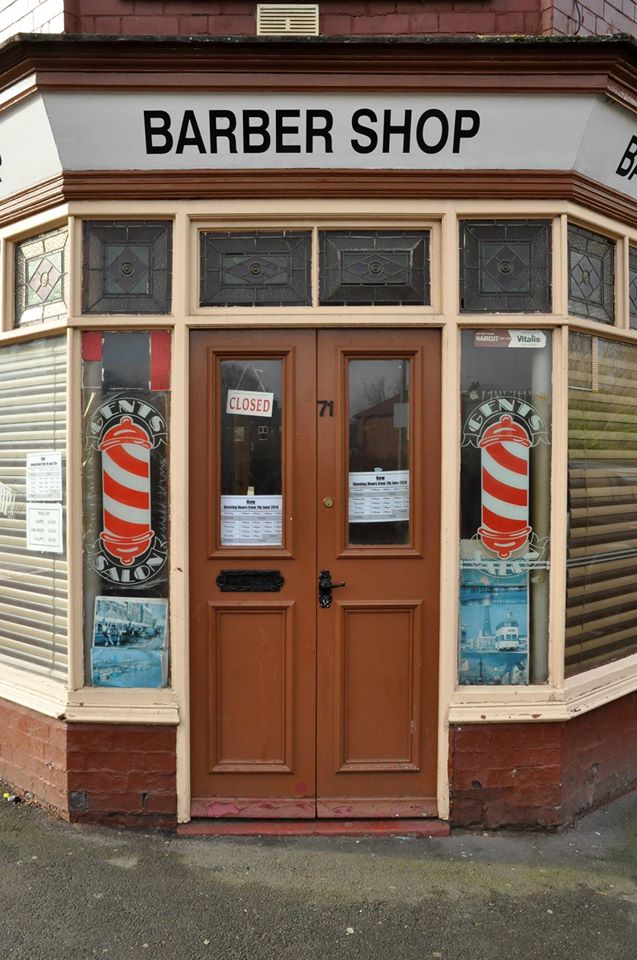
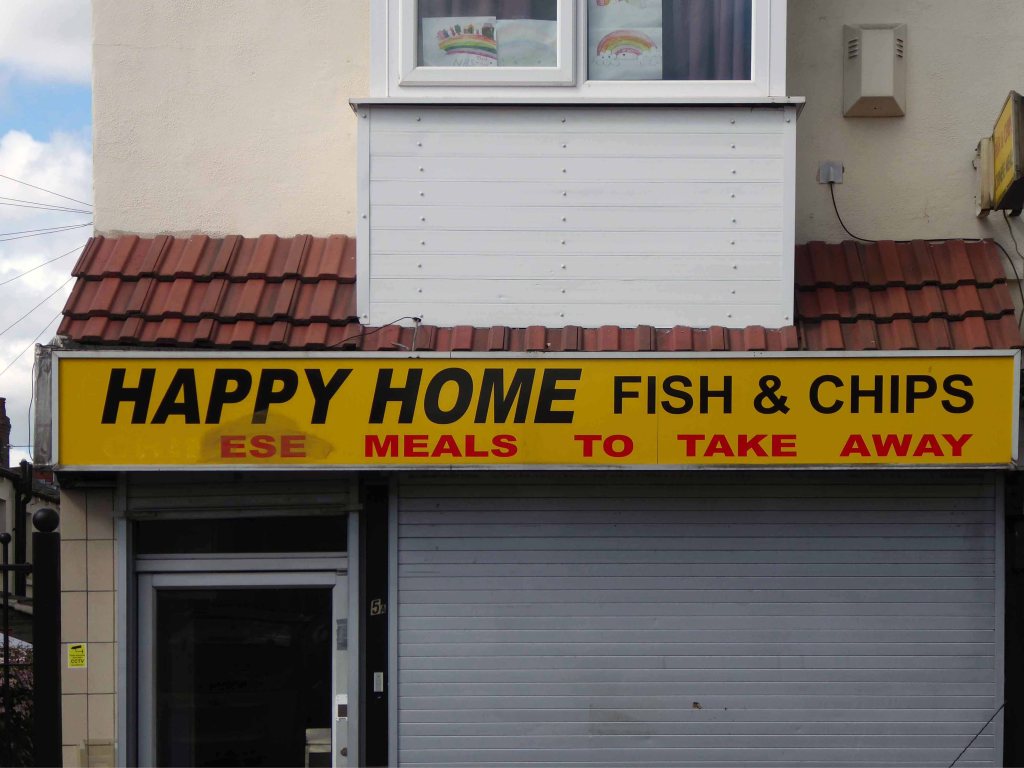
Now trading as Happy HomeA barber shop no more
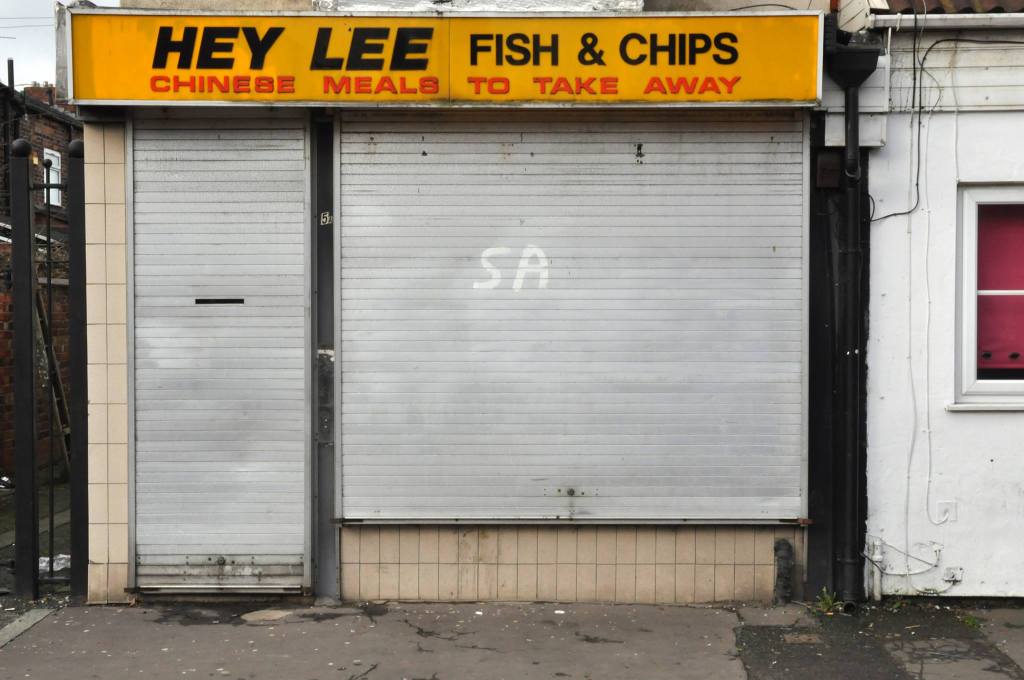
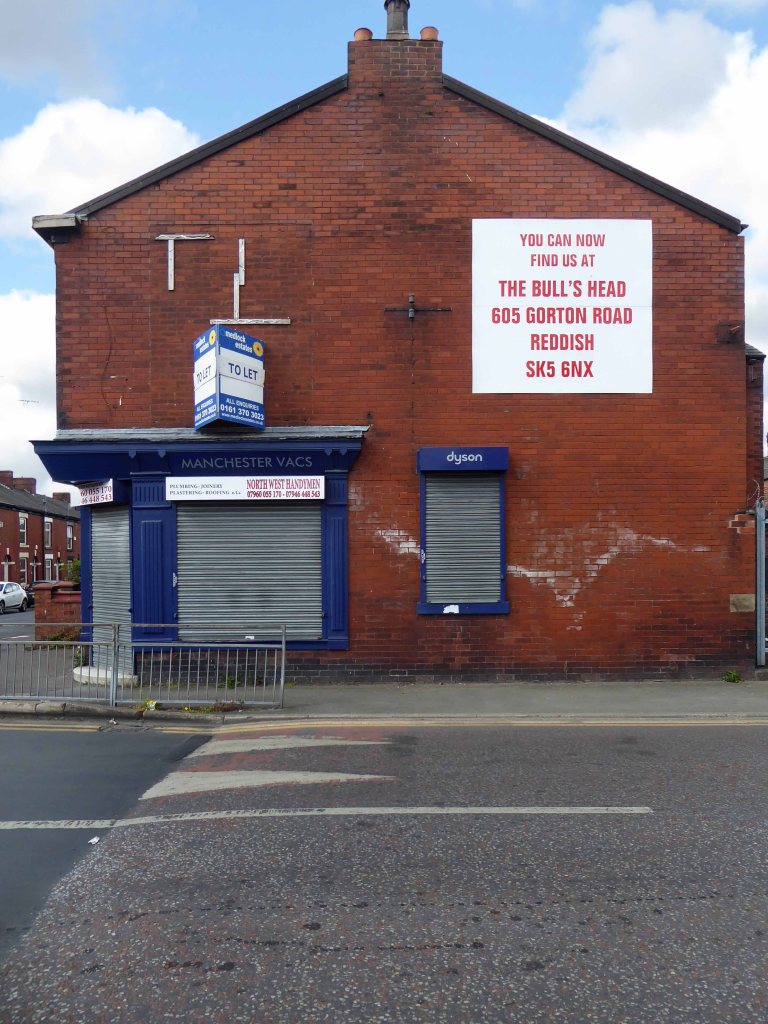
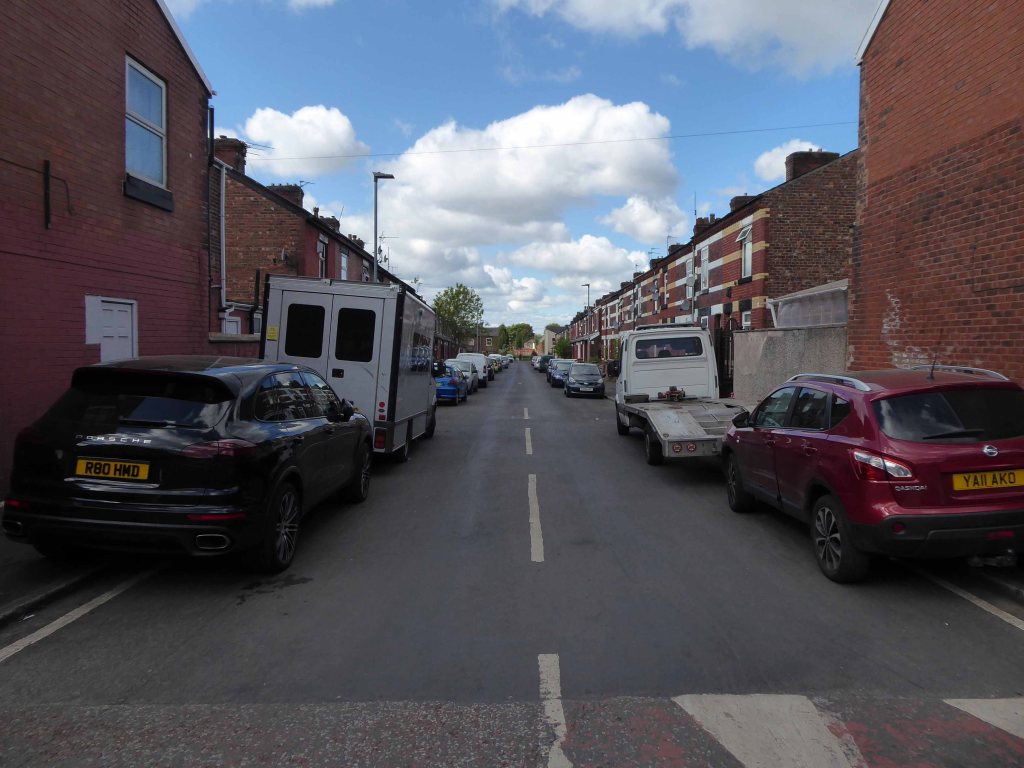
The area now has a richer racial mix – having recently become home to many African and Eastern European families. The architectural consistency of the houses has been swamped by render, window frame replacement, addition and extension, and the arrival of a plethora of motor cars. The majority of shops now long gone, as the once pedestrian community spread their retail wings and wheels elsewhere.
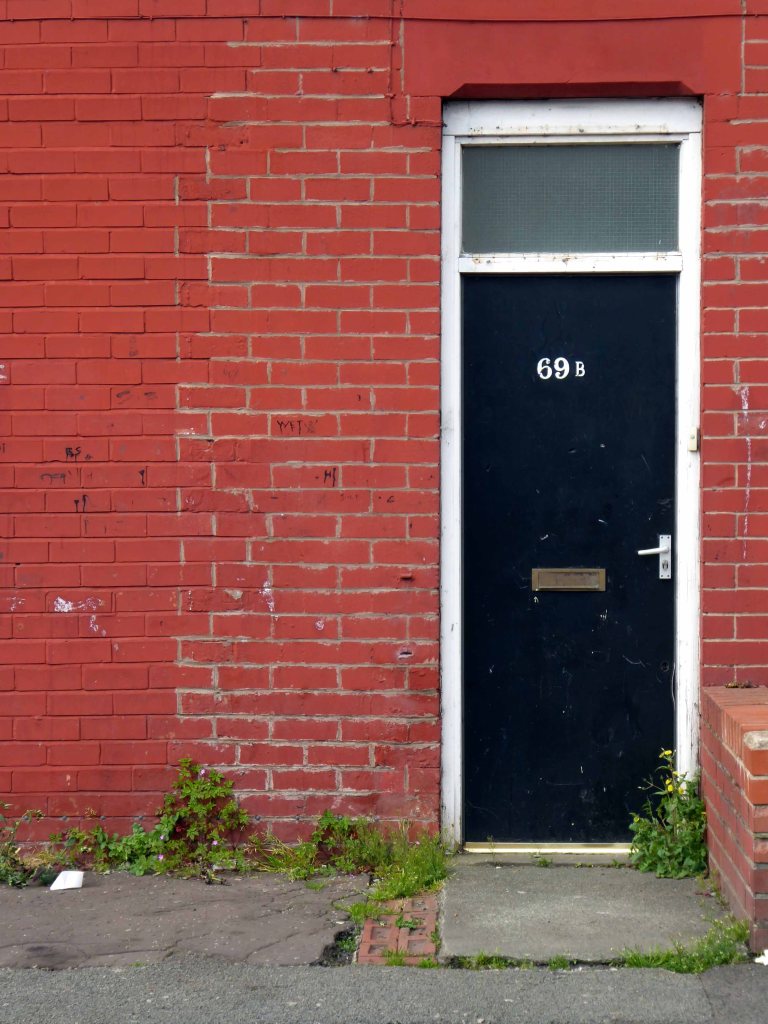
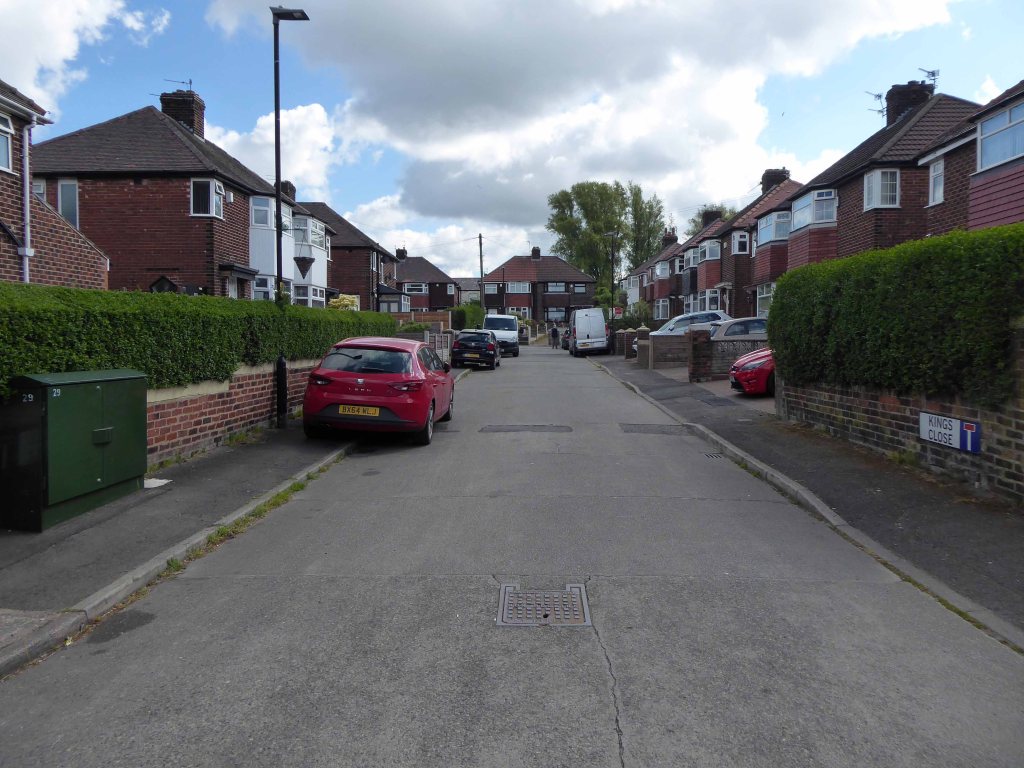
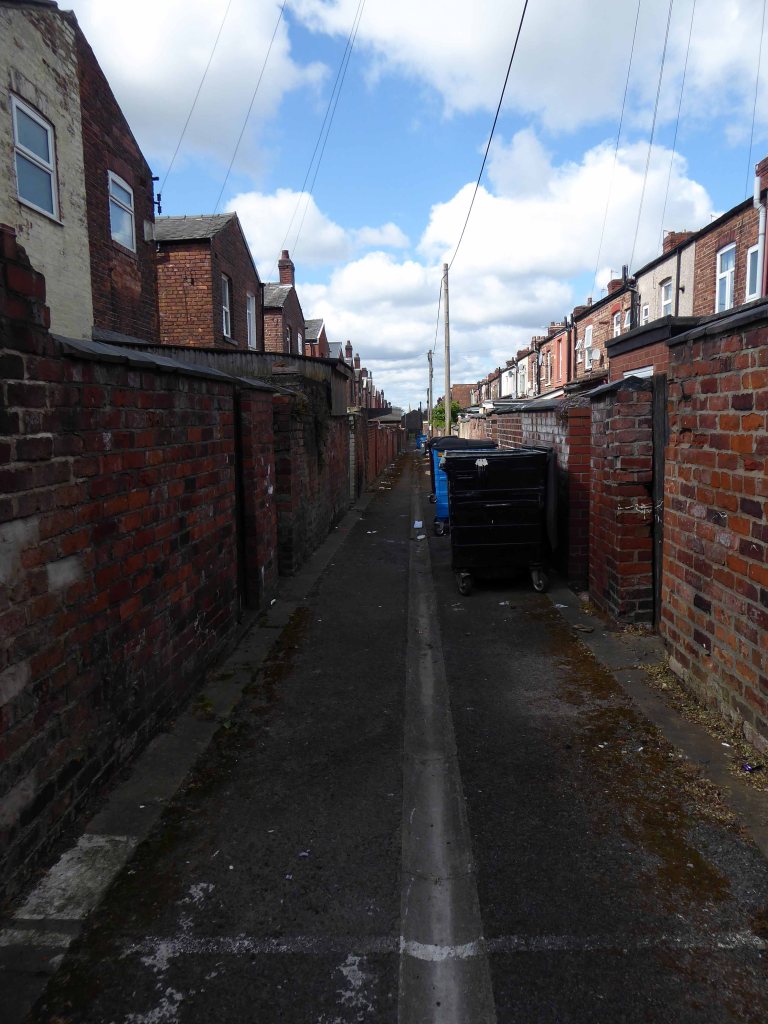
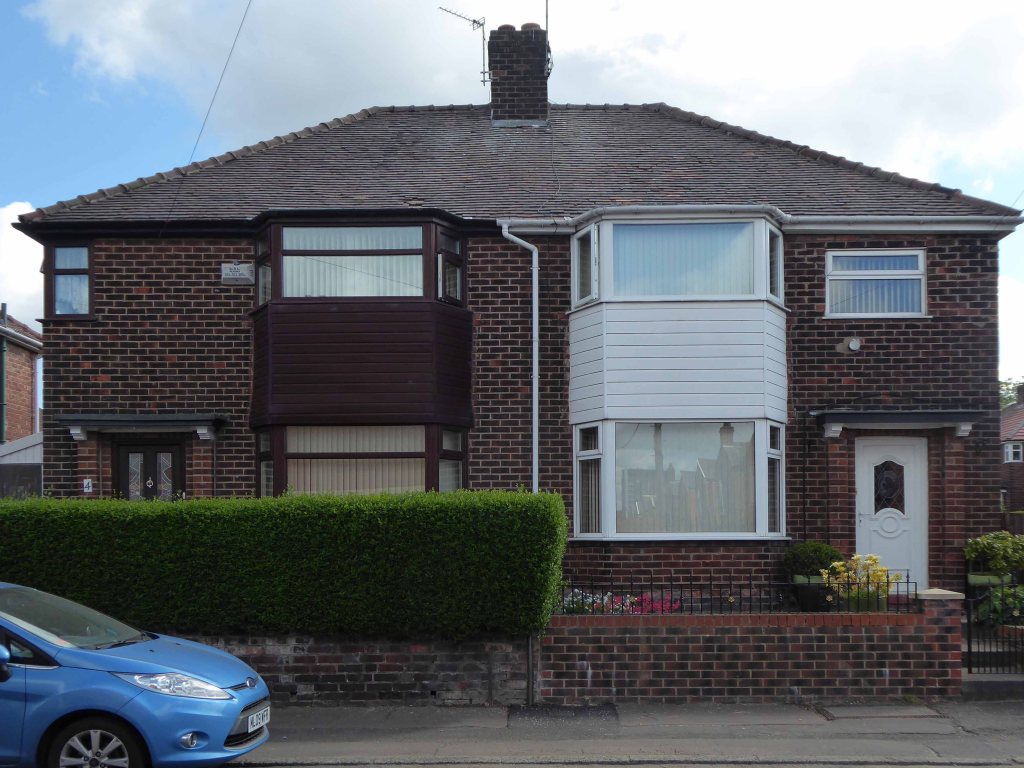
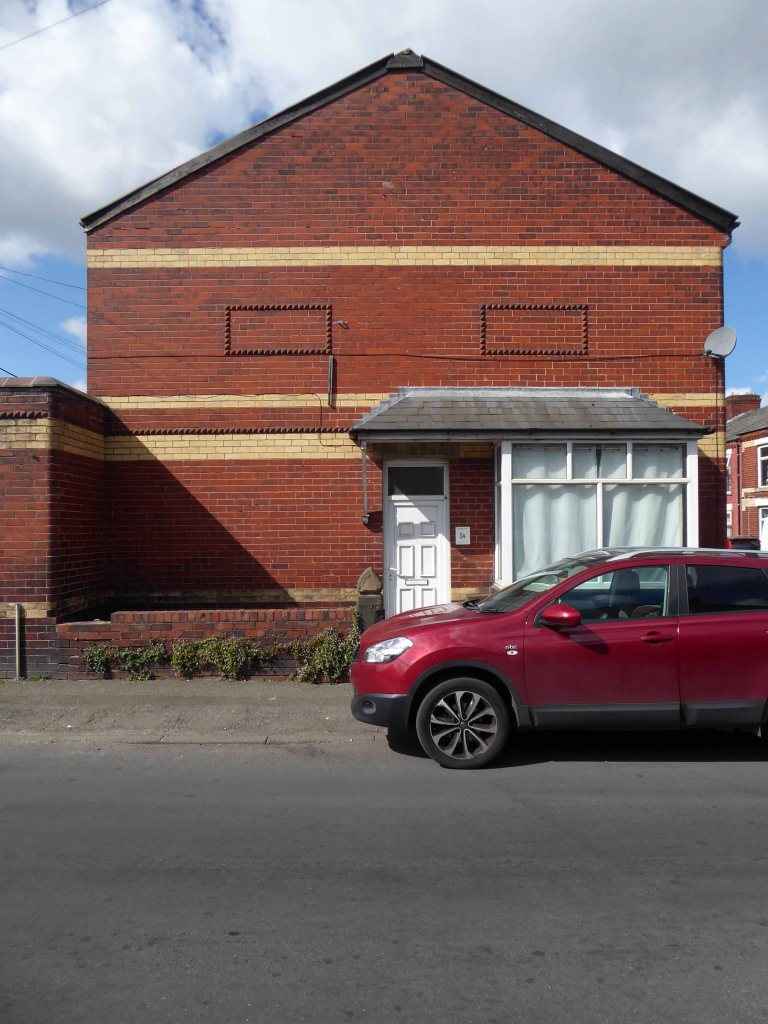
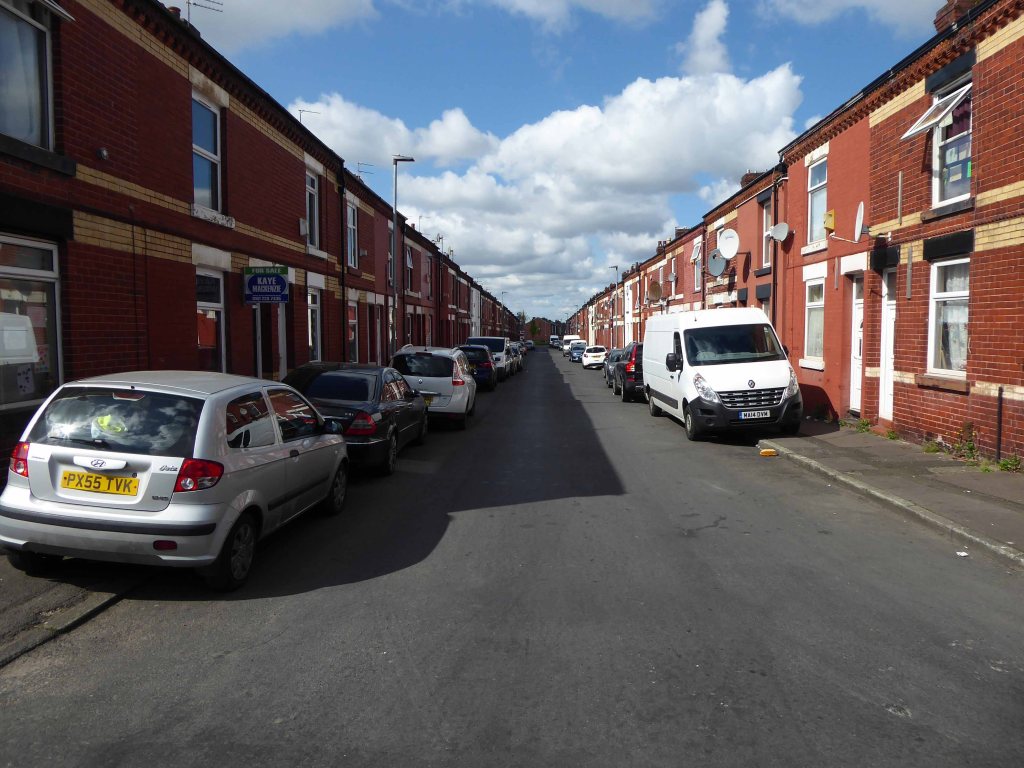
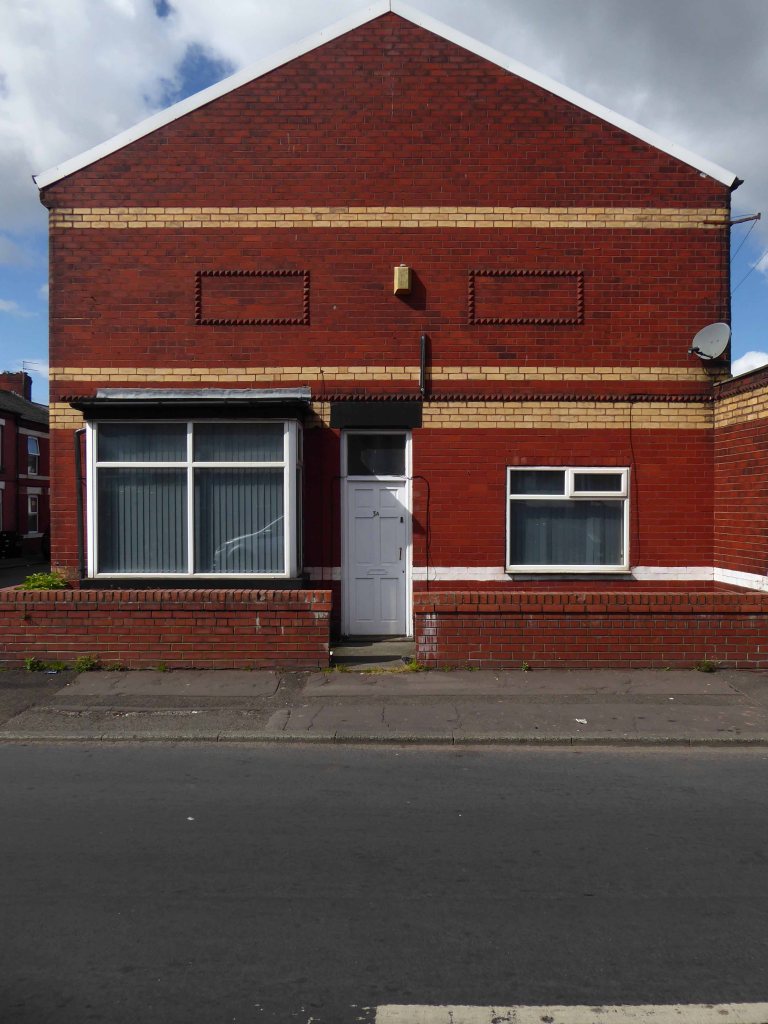
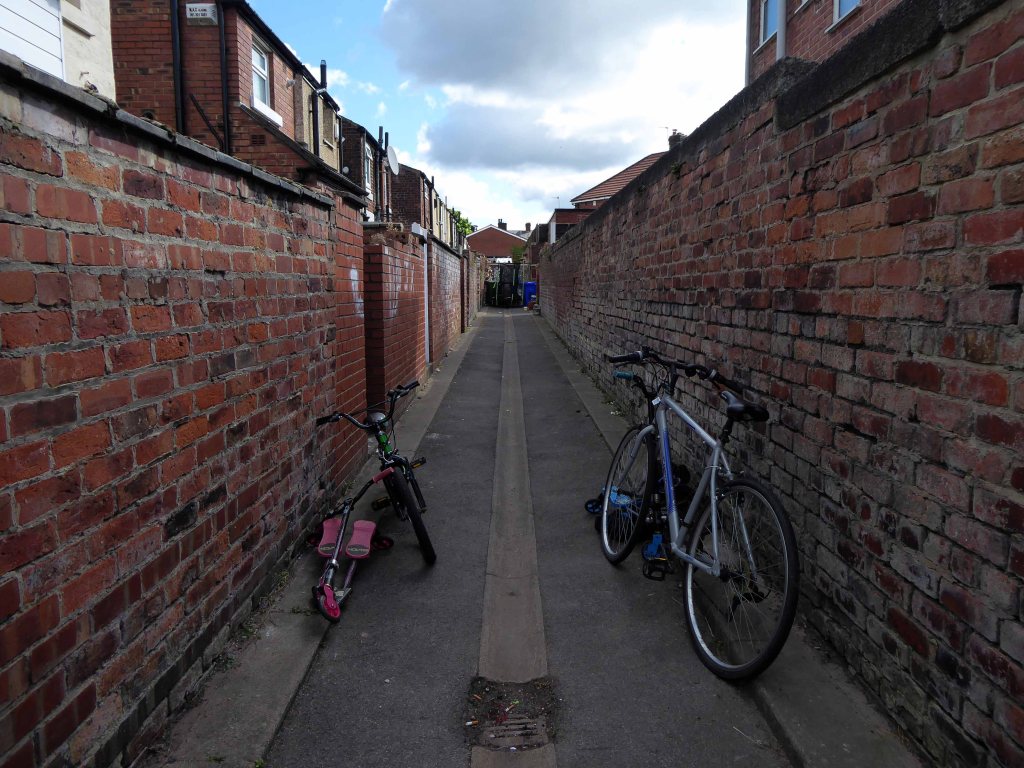
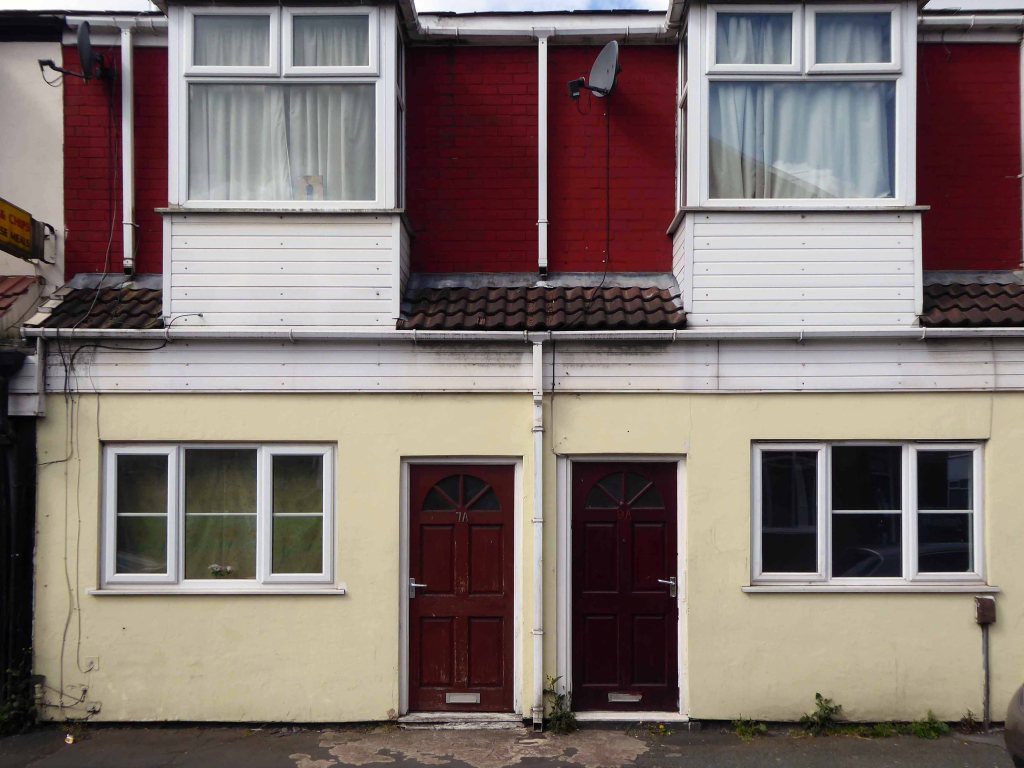
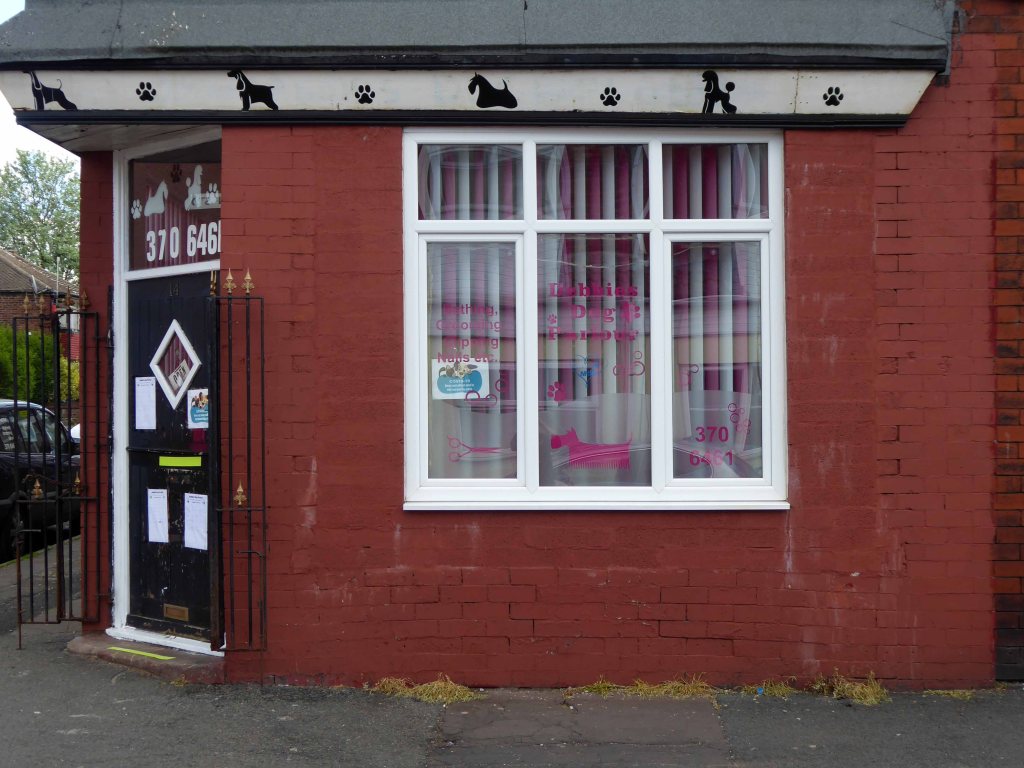
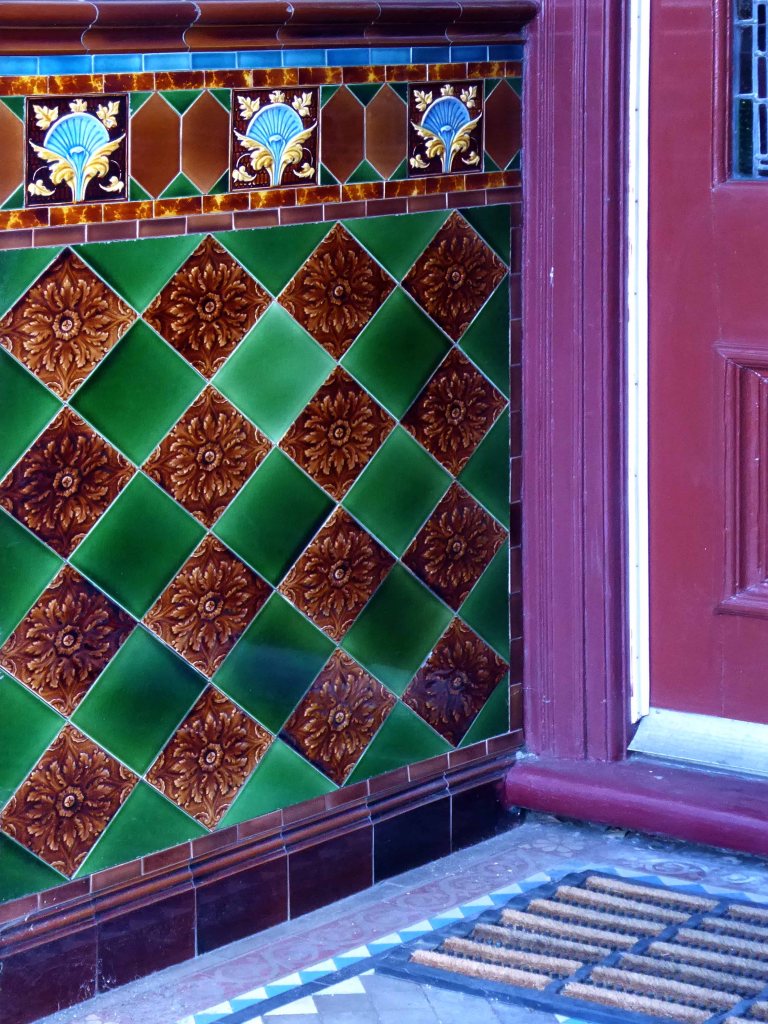
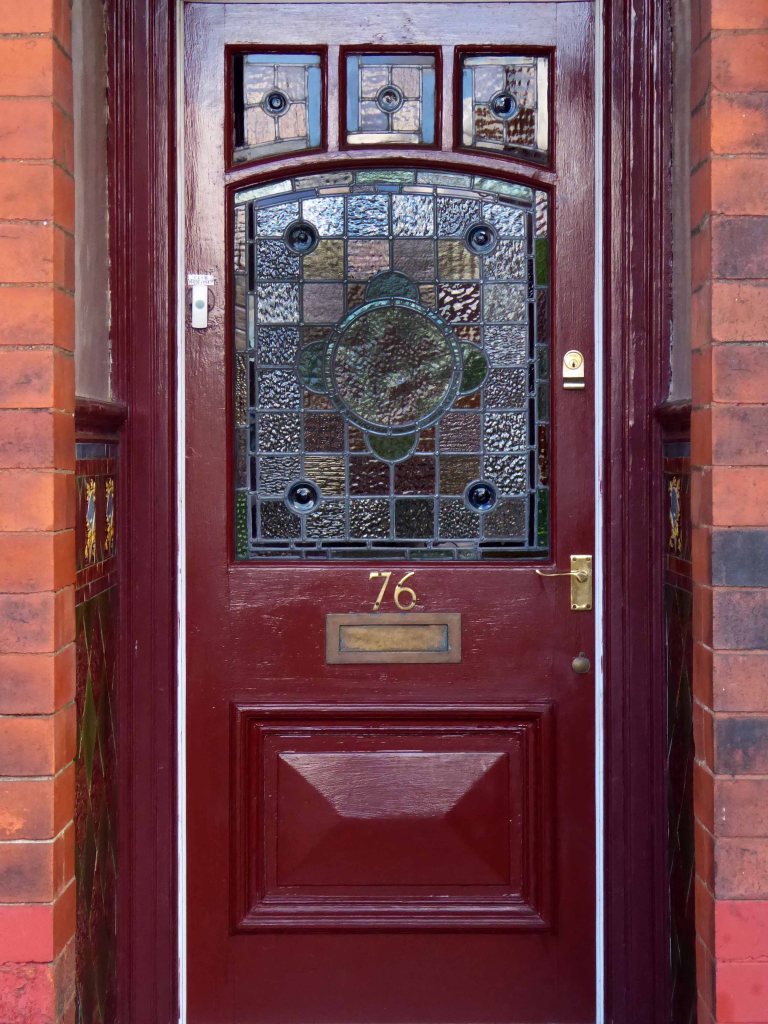
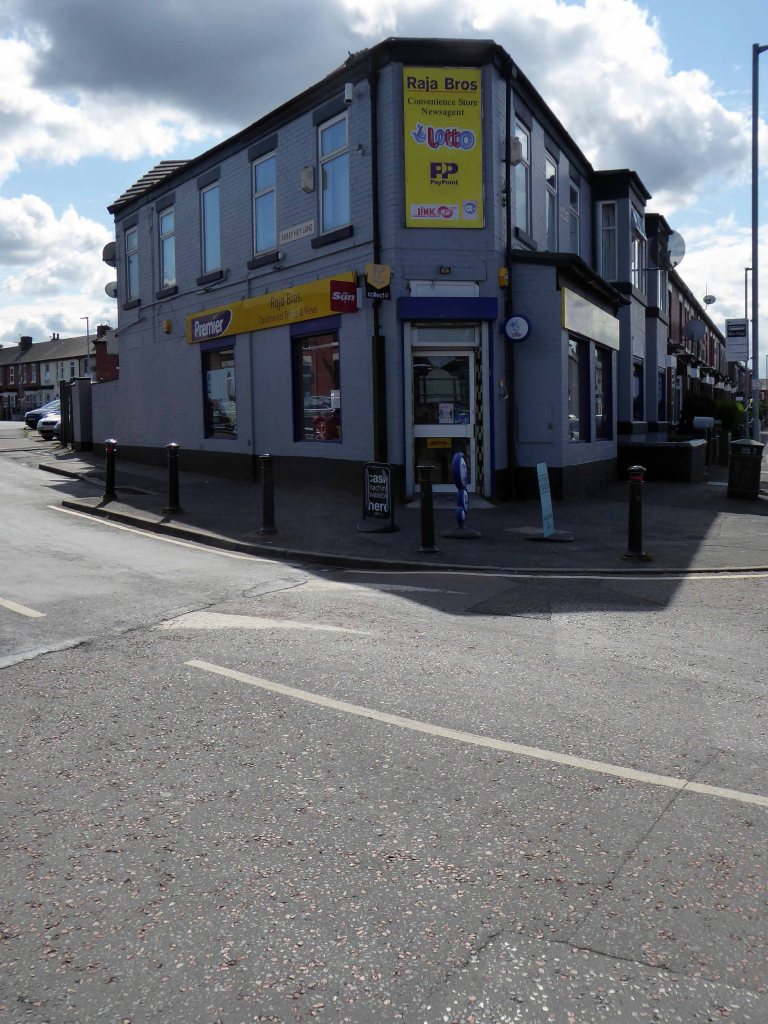
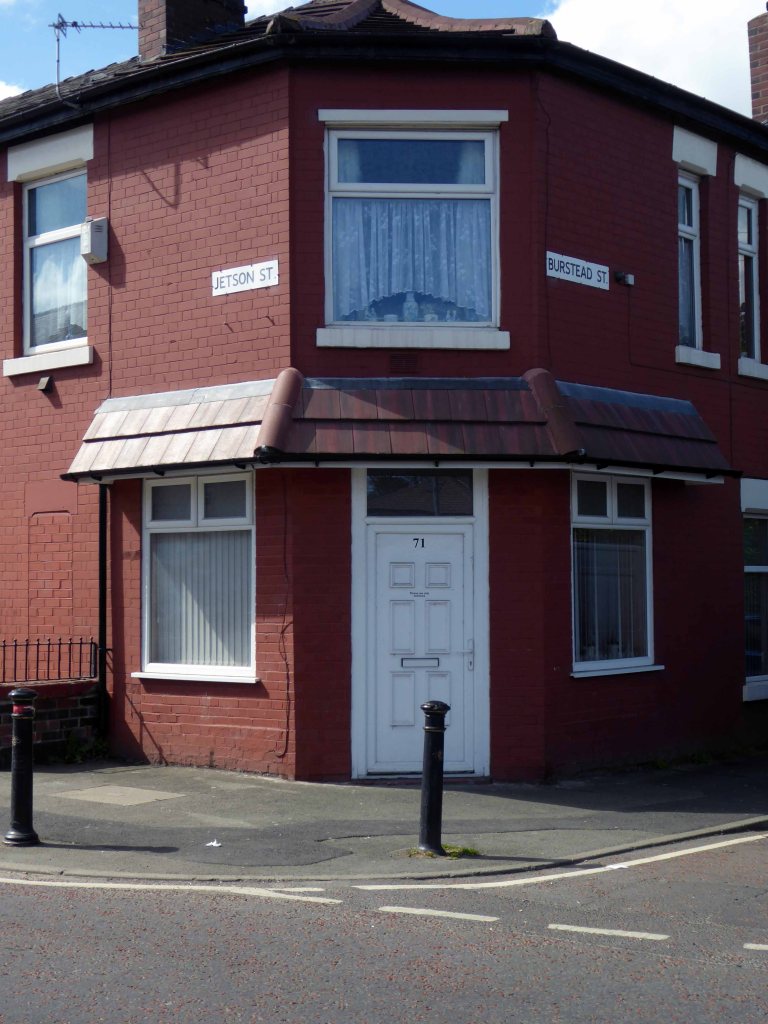
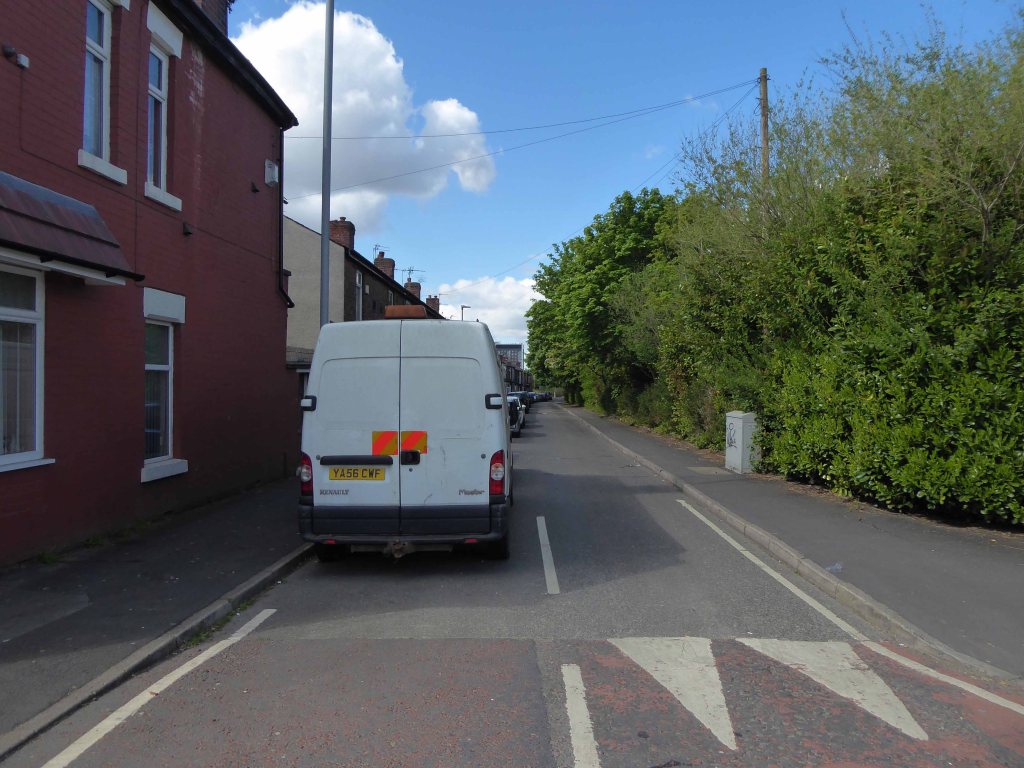
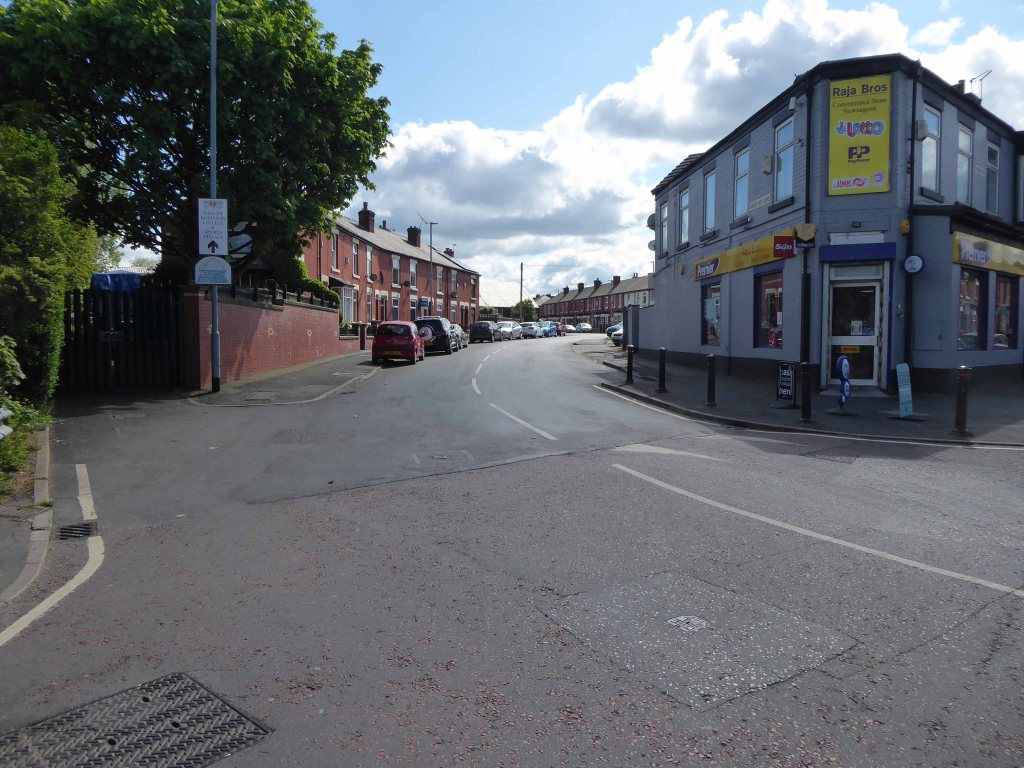
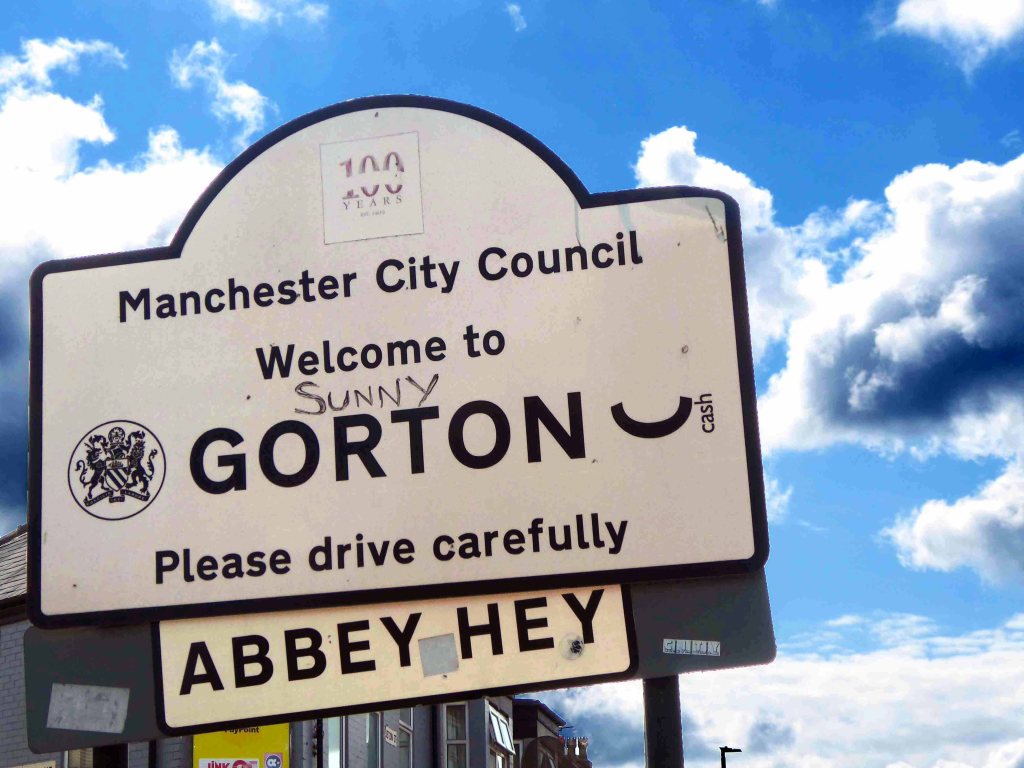
Jetson Street – NorthSandown StreetKings CloseMadison StreetKenyon StreetKenyon StreetSign of the timesGordon StreetJetson Street – NorthJetson Street – SouthWalter StreetWalter StreetClaymore StreetClaymore StreetCourier StreetThe only remaining front doors and tiled porch every other having been given over to the allure of uPVC and the enclosed doorwayMy on street correspondent congratulated the Raja Brothers on the sound service they had provided during these difficult times.Where the barbers wasBurstead StreetAbbey Hey Lane
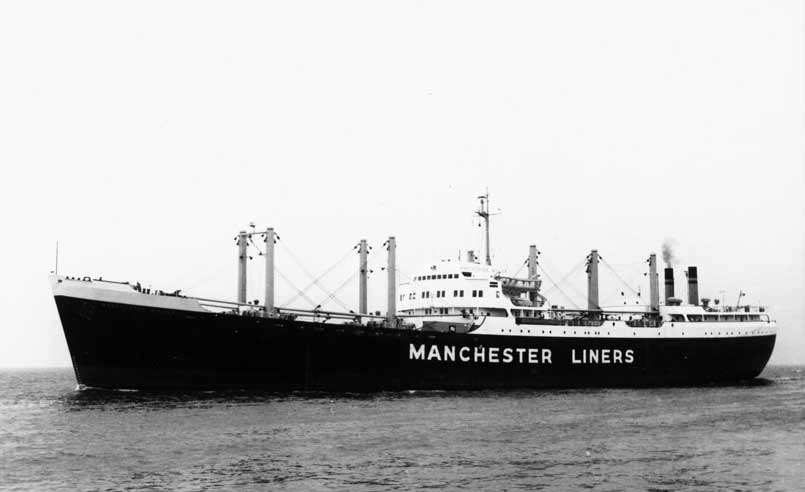
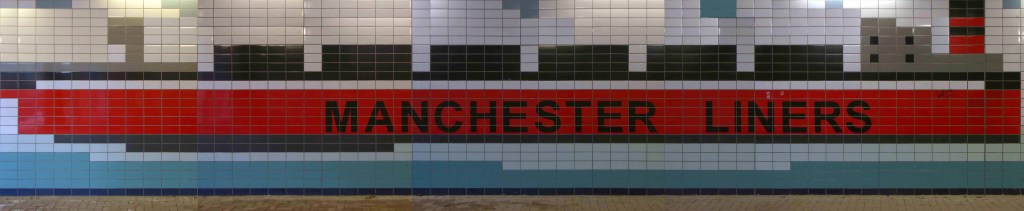
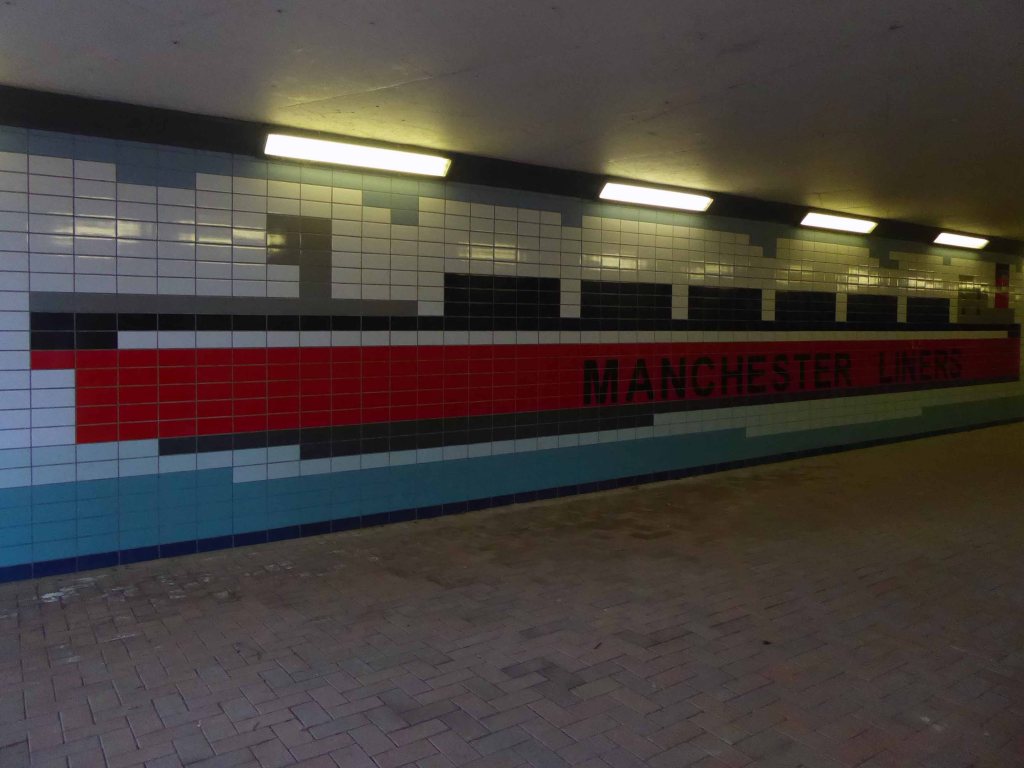
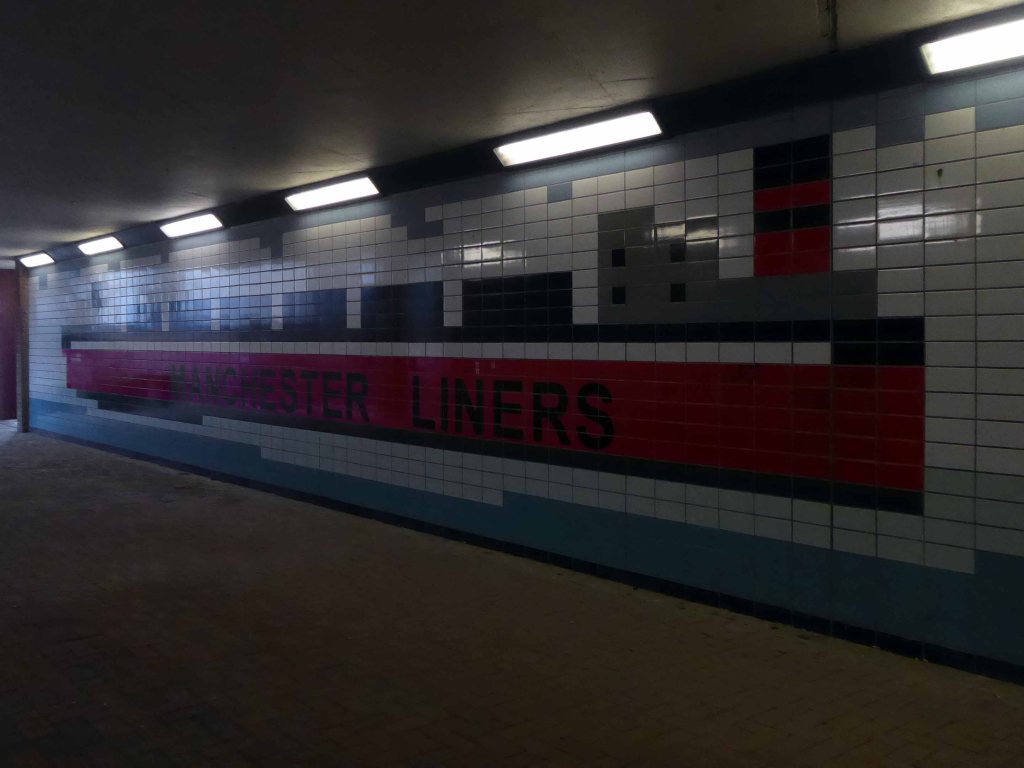
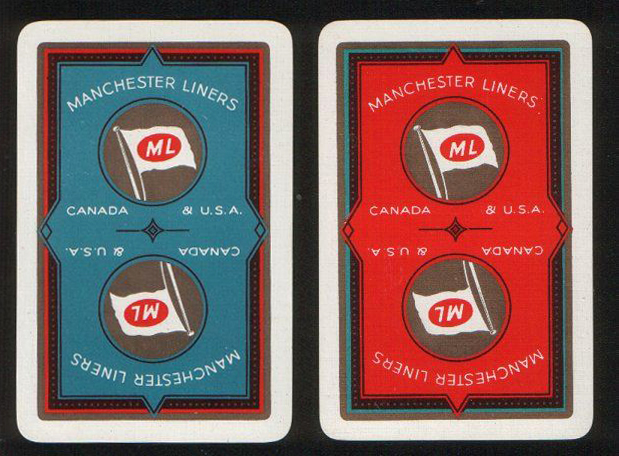
In 1898 Manchester Liners Ltd was launched, four second hand ships were purchased and the company naming policy of applying the prefix Manchester was established.
The company began to operate services to Canada and the USA. Manchester Liners started WW1 with 15 ships in its fleet. During the war 10 ships were lost to enemy action, but because of the purchase of replacements the fleet was at 12 in 1918.At the outbreak of WW2, Manchester Liners had 10 ships in service. War losses were 7 ships, but the delivery of war-standard ships maintained the fleet at 8, which was sufficient to resume a weekly service to Canada.
The Manchester dockworkers strike record became so bad, that in 1973 the company decided to move half of its container services to Felixstowe. Furthermore, to obtain lower costs per unit, container ships were becoming bigger than the Canal limits.
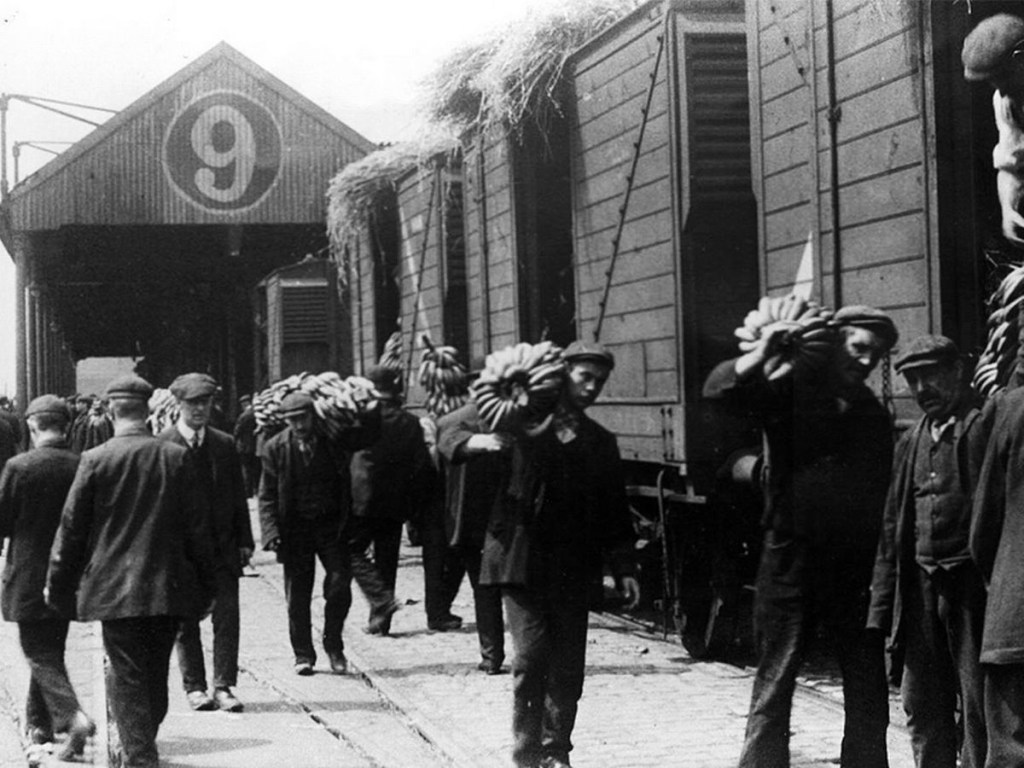
This was a history of economic growth and prosperity, for some. Tangible commerce, the wealth of a nation built on making things, moving things. Cranes, ships, stevedores and sailors, the world and his wife converging at the base of the Manchester Ship Canal.
All this is long gone, containerisation, recession and state engineered shifts in global manufacture and trade.
They took away the cranes.
The area is now awash with intangible activity – what goes on behind the smoked and mirrored glass?
Just who is moving what around, how, where and why?
But hidden away between here and there is a tiled underpass.
A permissive path.
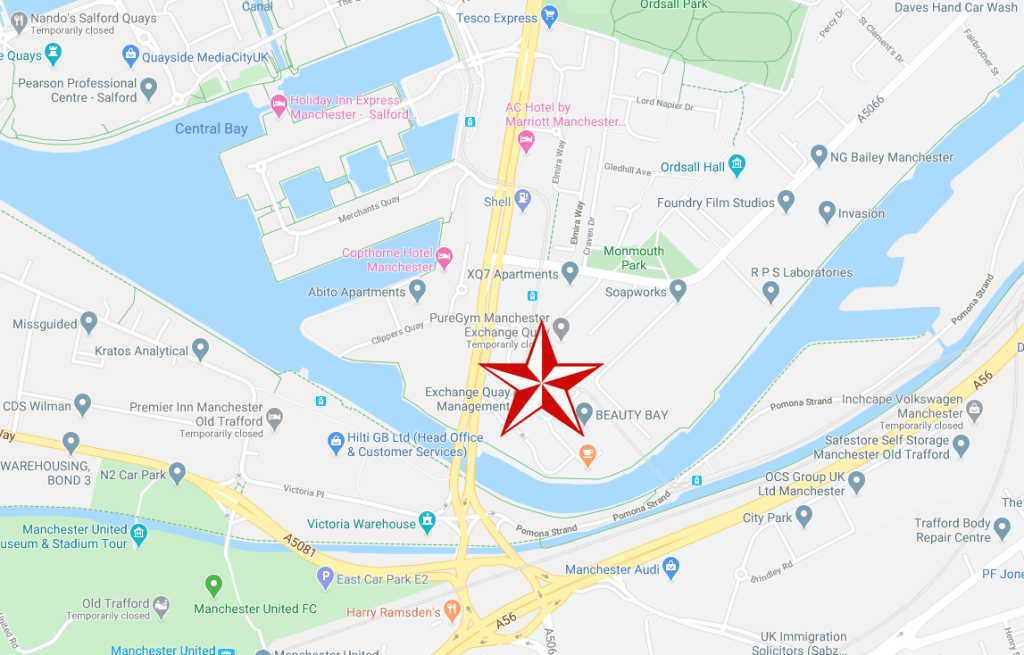
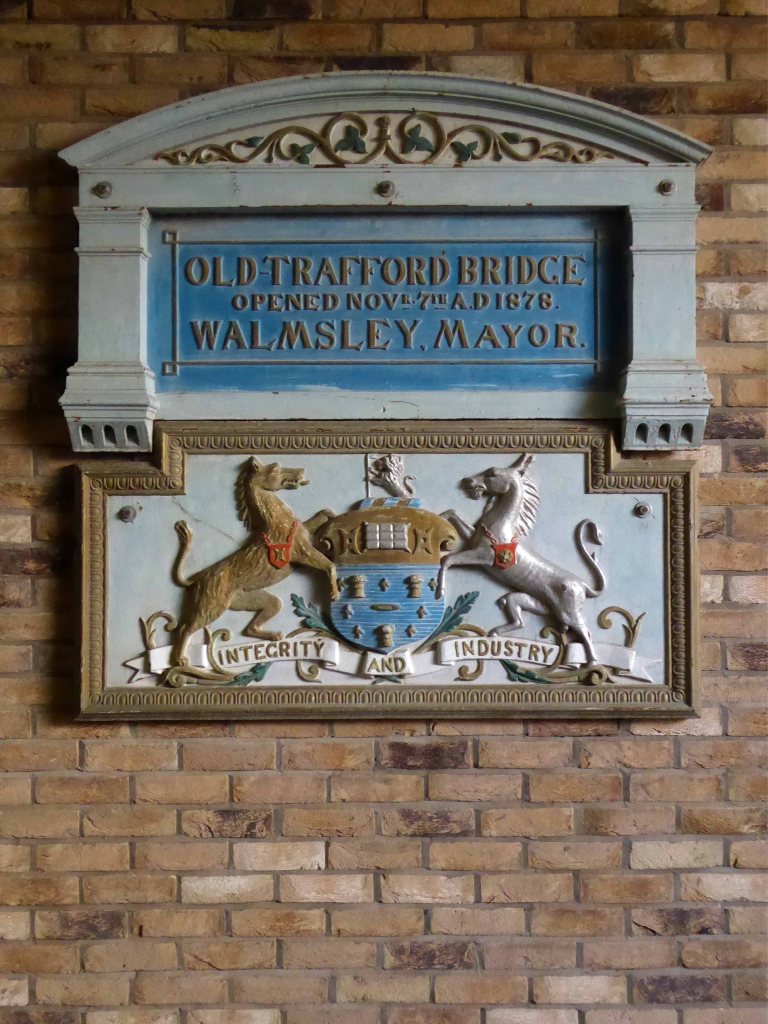
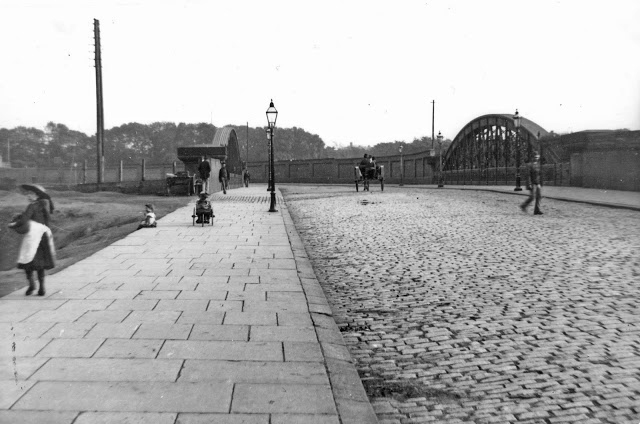
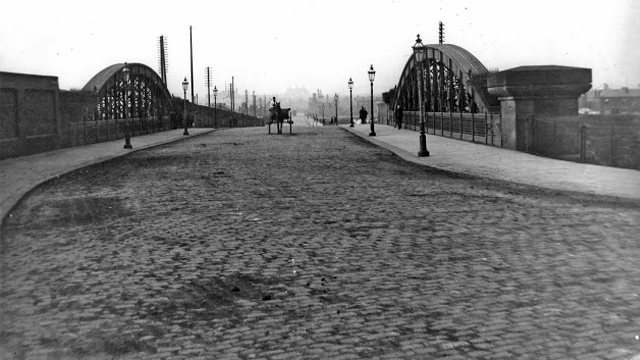
Where once there was a bridge – before the Manchester Ship Canal was built, the course of the River Irwell was approx. 50-100 yards further north of where the Ship Canal now passes under Trafford Road. This plaque is next to a pedestrian tunnel under Trafford Road, roughly on the line of the old navigation.
So here it is a hidden, harshly lit, slightly disabused tribute to the brave souls who sailed the seven seas, stayed ashore, weighed, loaded and shifted stuff.
Whilst walking the length of Hessle Road, up and back – taking the air, snaps, the sights and sounds, I came upon a fine Faience tiled frontage.
I began photographing, wandering dangerously into the space between the slip road and the flyover. A shout rang out, emanating from the boozer, the landlord called me over.
“Do you want to take a look inside?”
“Yes”.
A listed interior the new landlord is working hard along with Historic England to restore the capacious rooms to their former glory, including the entrance mosaic and ceiling – images P Hampel
Inheriting a whole heap of issues and a grey parrot called Sparky.
But the boozer is now up and running serving cask ale to throngs of first class thirsty customers.
The Yorkshire Brewhouse 1904 ended mid week when we’re normally closed but we were asked to open for a group of very thirsty sailors. We moved on to Reet, another Yorkshire Brewhouse beer and thanks to the football that one has gone too. It’s back to the YBH Faithful Stout once again. I’d come quick and get it while you can.
Once two pubs the Hessle Road Inn was subsumed by the Alexandra. The area was once home to the city’s Jewish Community – the cemetery survives next door.
There are Star of David motifs incorporated into the windows, sympathetic to this local heritage.
Built around 1895, designed by Smith, Brodrick and Walker, with late C20 alterations – British Listed Buildings.
It’s a fabulous pub which deserves to thrive – pop in for a pint if you’re passing, just watch out for low flying parrots.
So here we are outside, you and I in 2015 – it seems like yesterday.
Whereas yesterday I was inside not outside, but more of that in a moment.
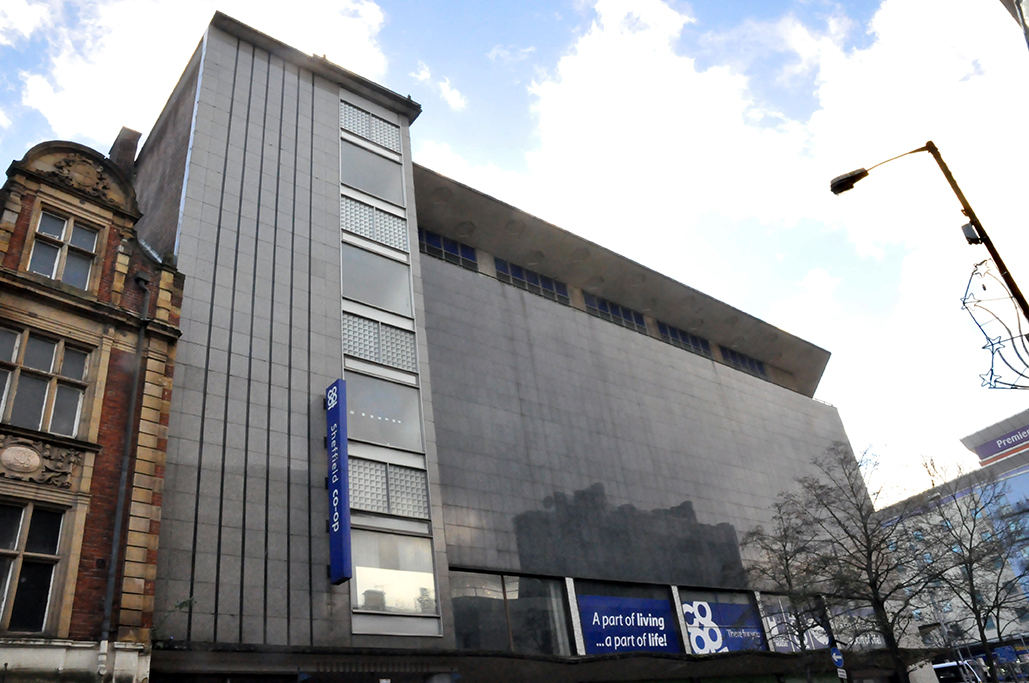
It seems that you were listed in 2009 and deservedly so.
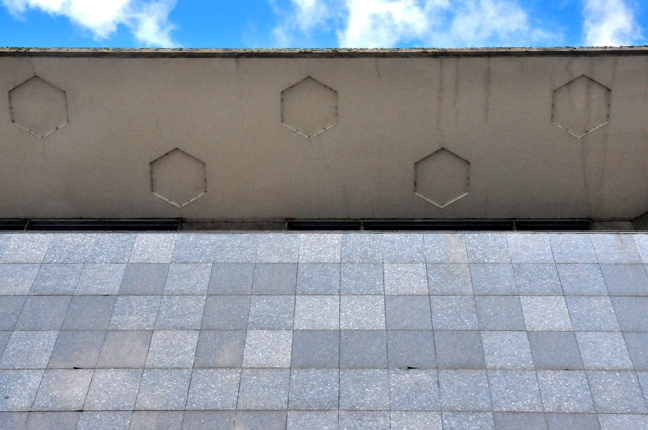
1964 by George S Hay, Chief Architect for CWS, with interior design by Stanley Layland, interior designer for CWS. Reinforced concrete with Blue Pearl granite tiles and veneers, grey granite tiles and veneers, buff granite blocks, glass, and brick.
There’s just so much to stand and stare and marvel at.
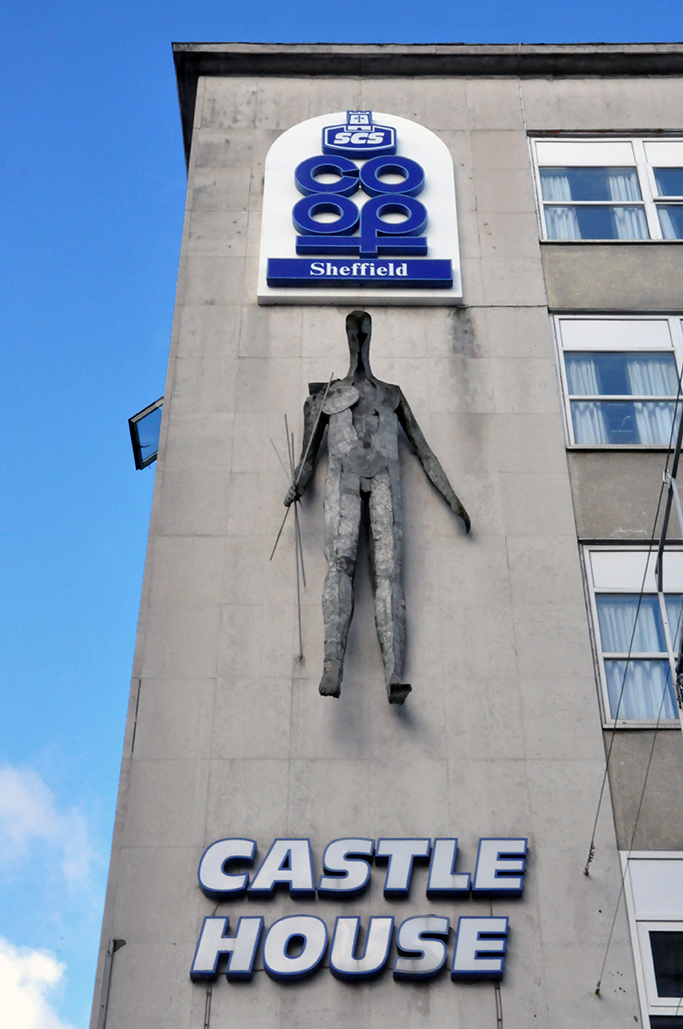
Vulcan by Boris Tietze commisioned by Horne Brothers 1961 for their head office building No. 1 King Street. Glass fibre on a metal armature the 8 foot high figure holding a bundle of metal rods.
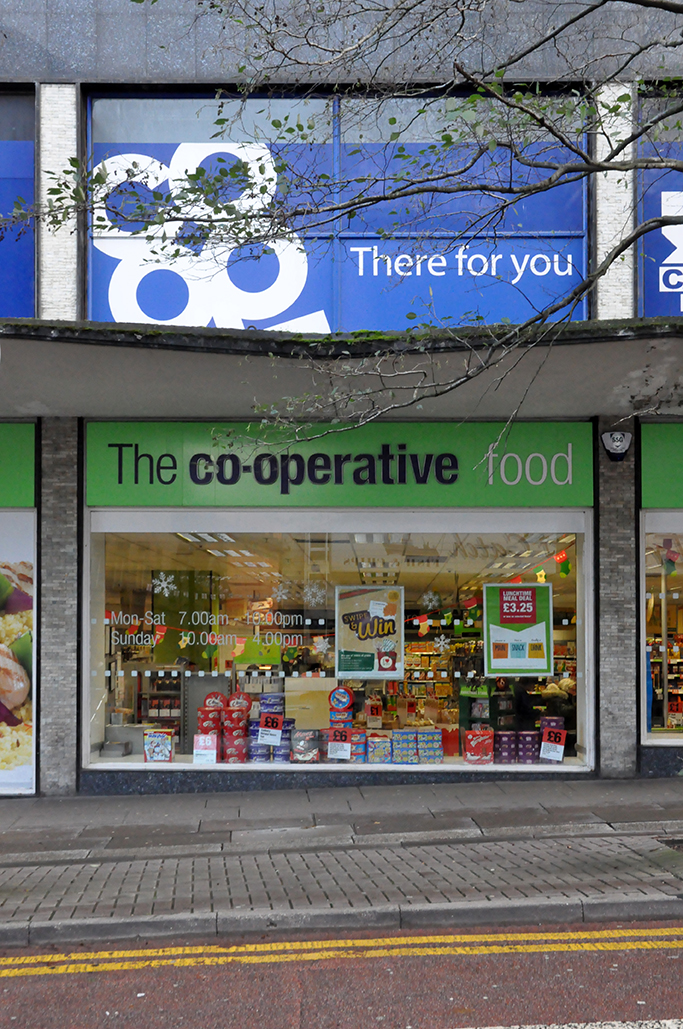
You were just about still open then, then you weren’t, then you were again – but a Co-op no more alas.
Work is underway on plans for a tech hub in Sheffield after a funding package was agreed.
Followed by a casual stroll towards 2019 where we are talking a peep inside courtesy of owners Kollider and book shop La Biblioteka.
I’d never ever seen the interior, save through the photographs of Sean Madner who captured the key features in 2014, prior to refurbishment.
So the Modernists and I pitched up this Sunday afternoon, the conclusion of our Sheffield Walk.
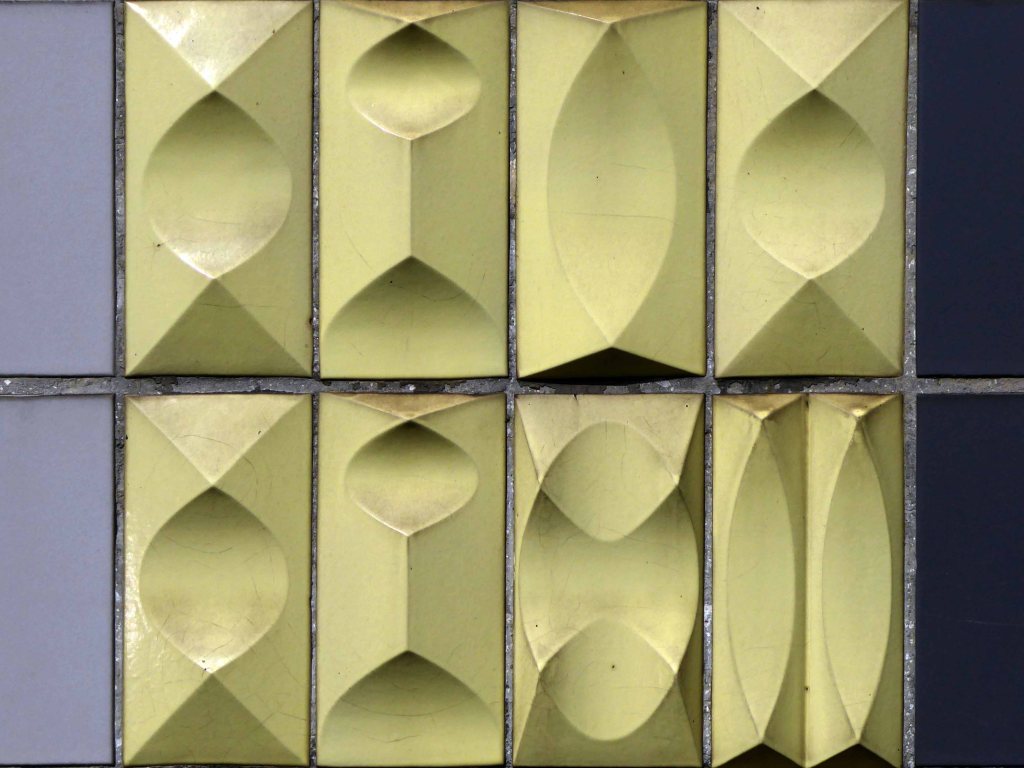
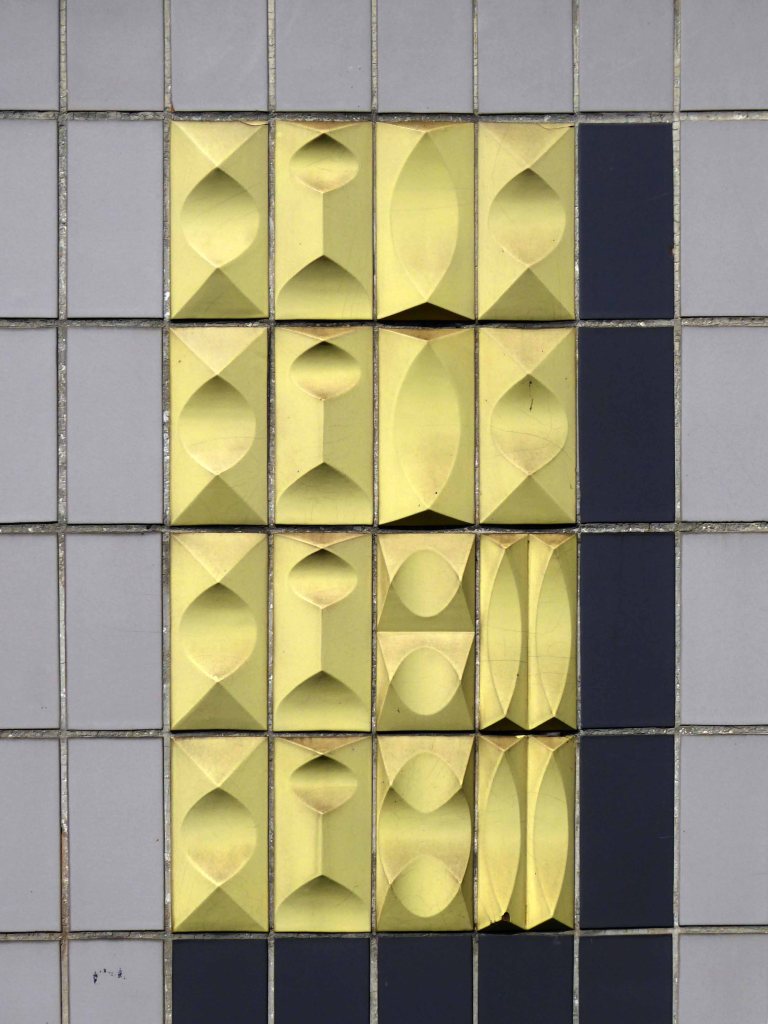
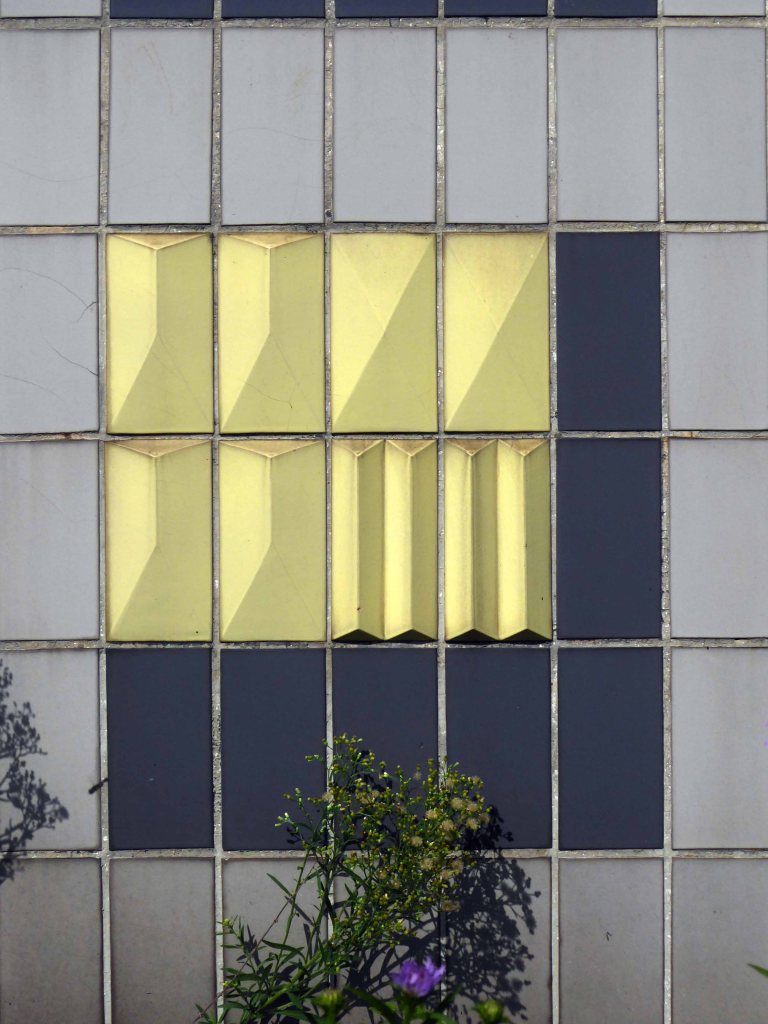
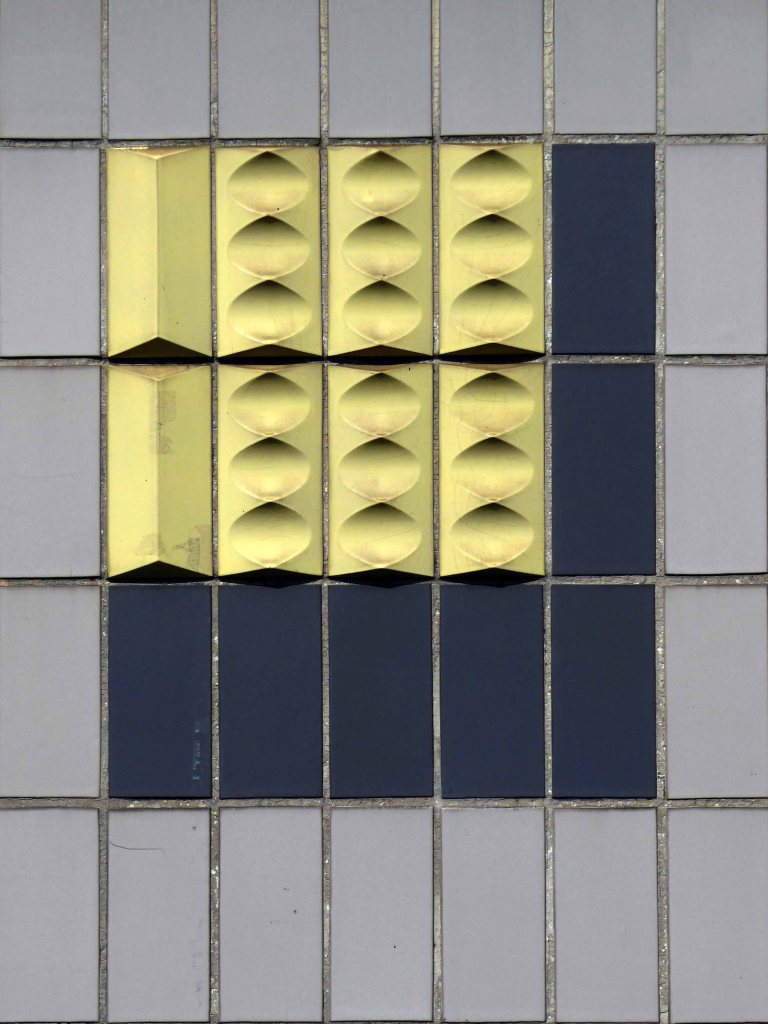
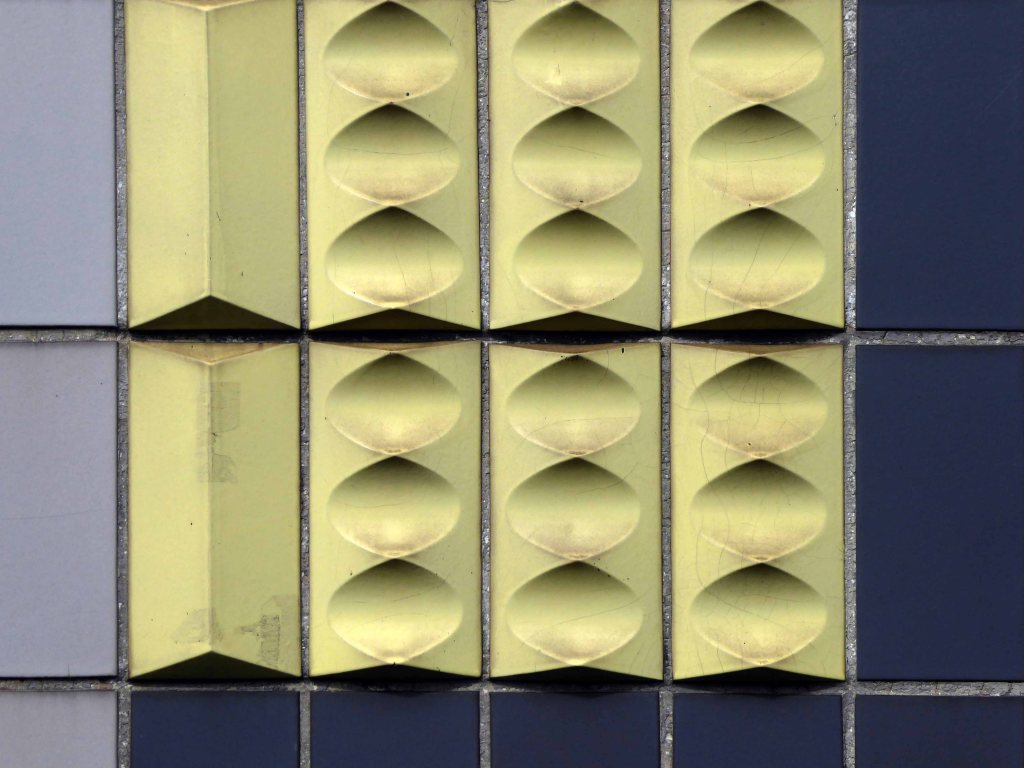
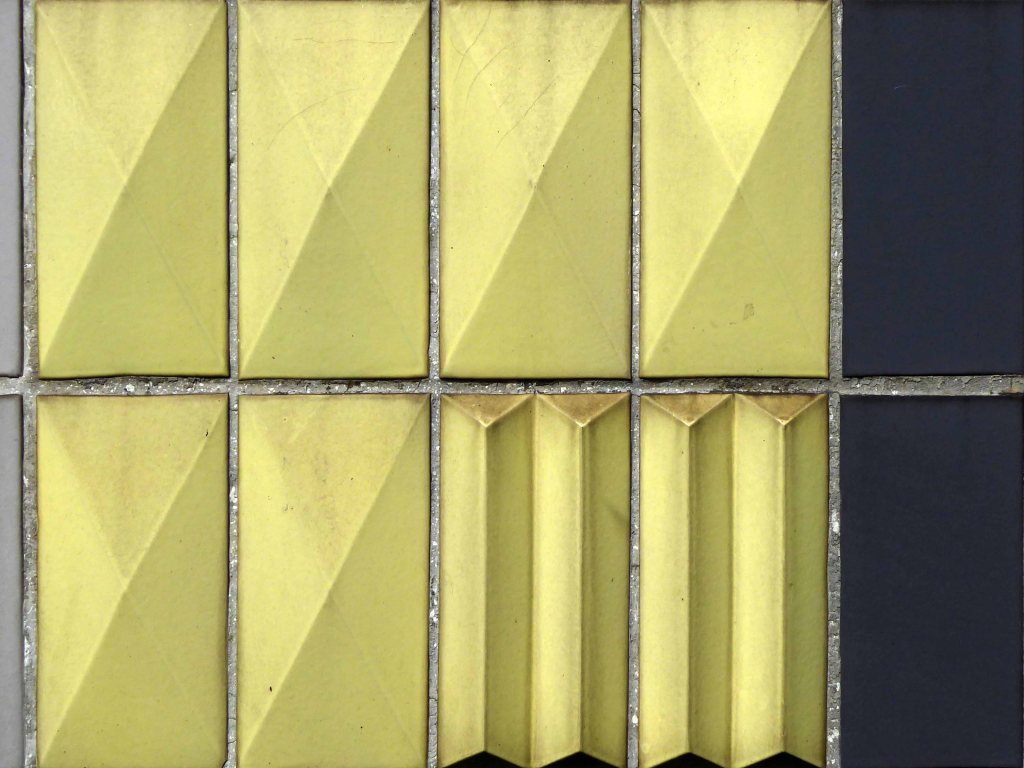
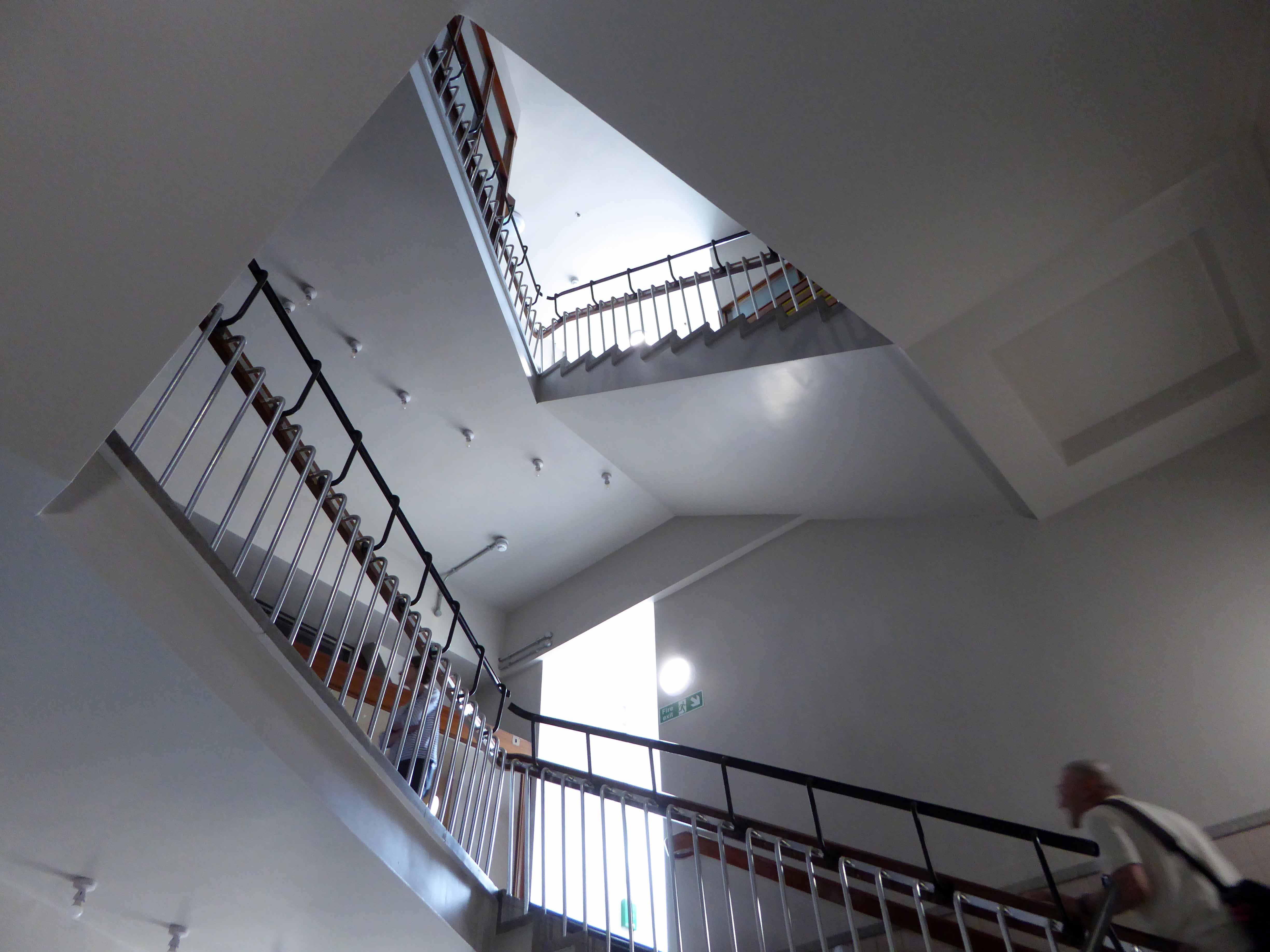
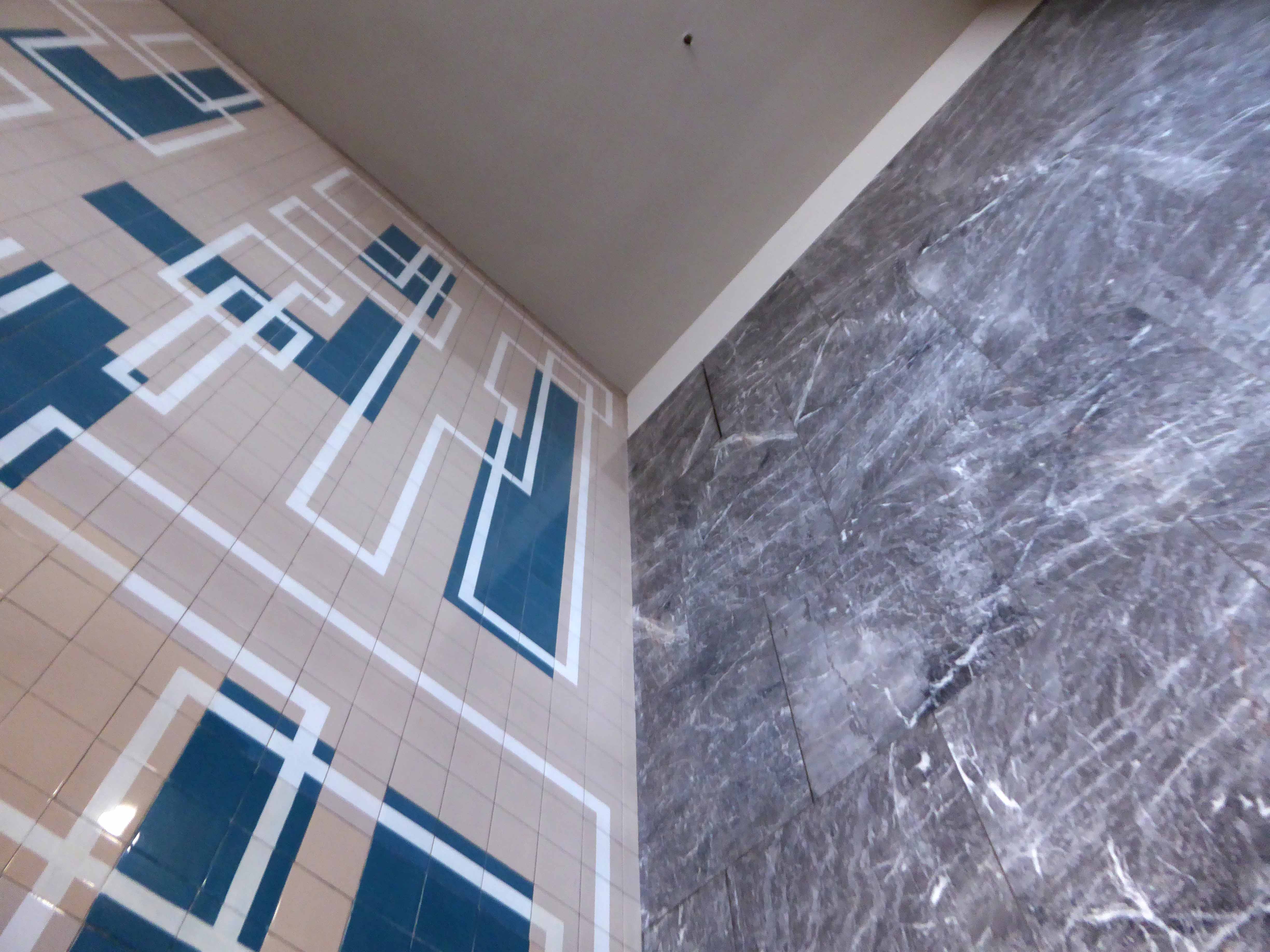
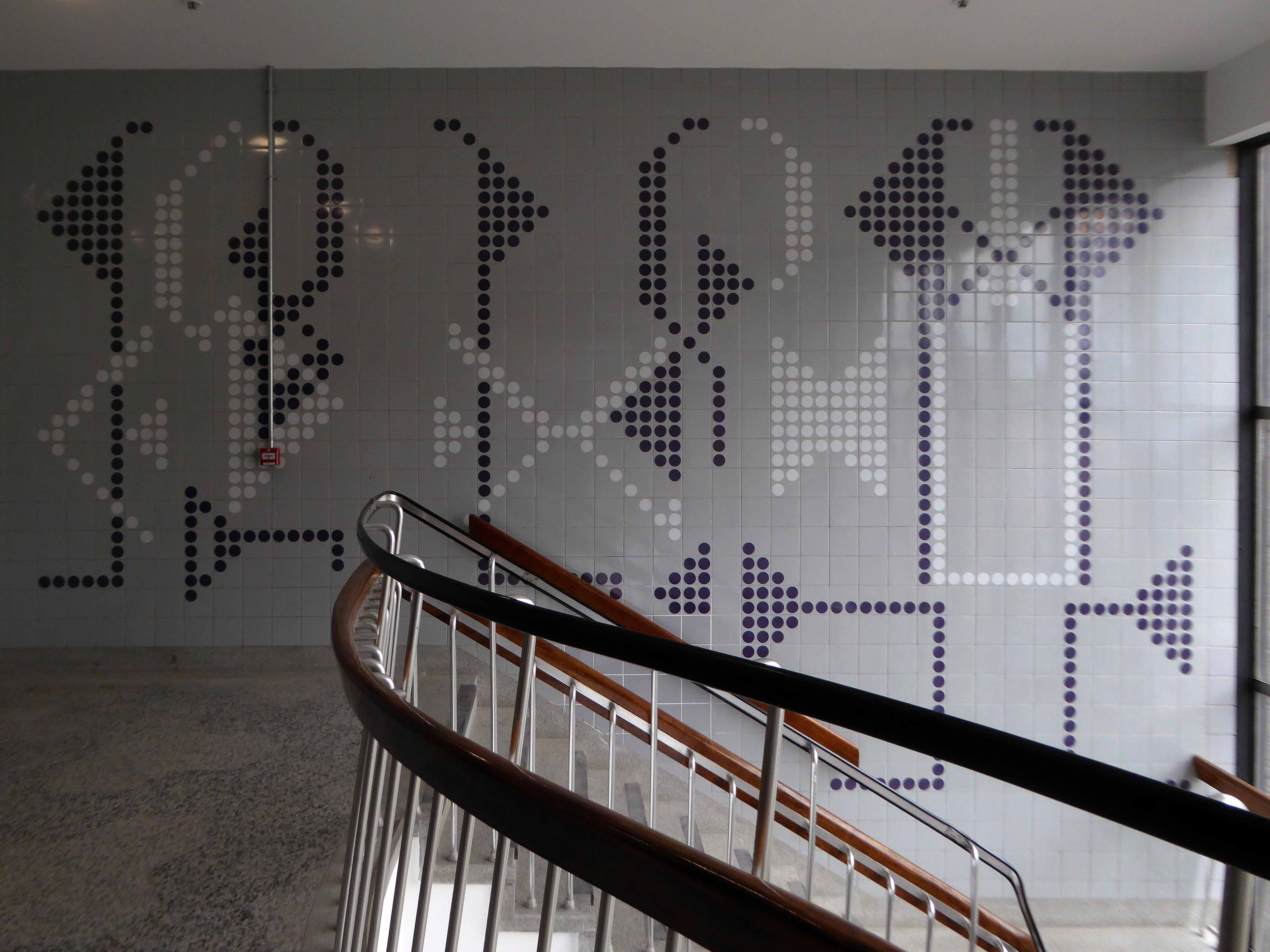
Lets take a look at the end stairwells, two very distinct designs one dotty one linear, both using Carter’s Tiles.
Configured from combinations and rotations of these nine modular units and two plain tiles.
Configured from combinations and rotations of these twelve modular units and two plain tiles.
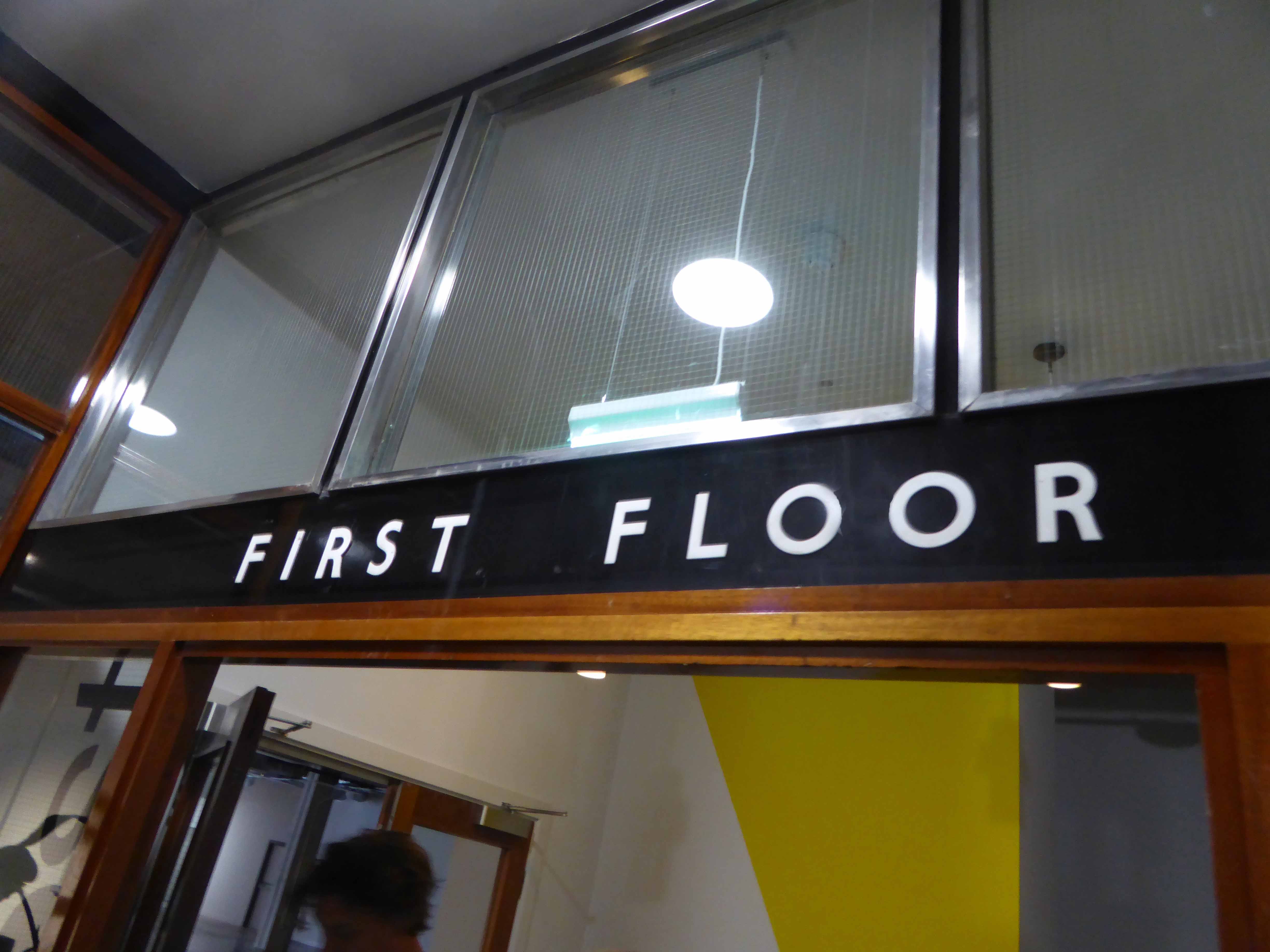
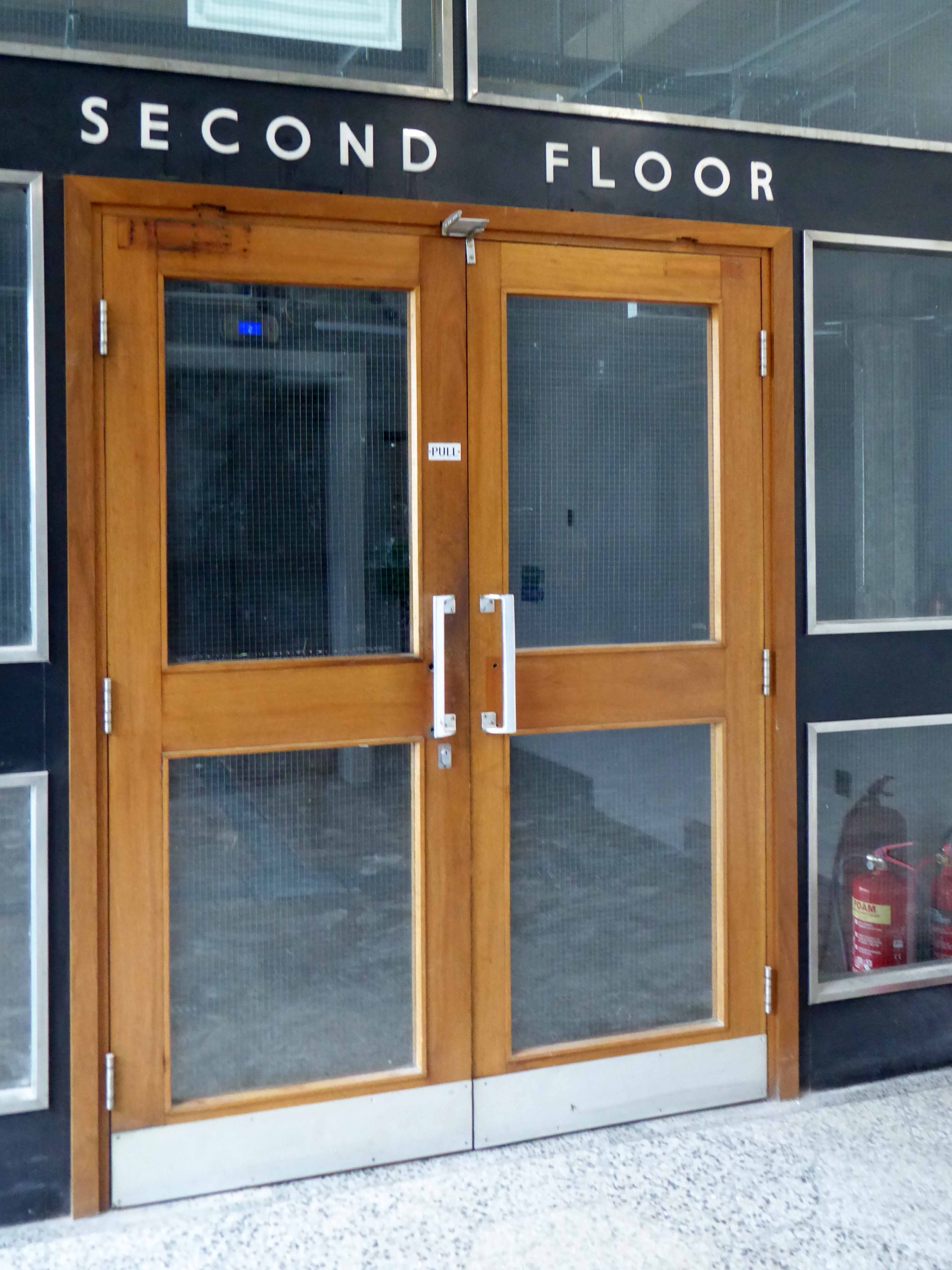
The site has retained some of its original architectural typography.
The former top floor restaurant has a suspended geometric ceiling with recently fitted custom made lighting.
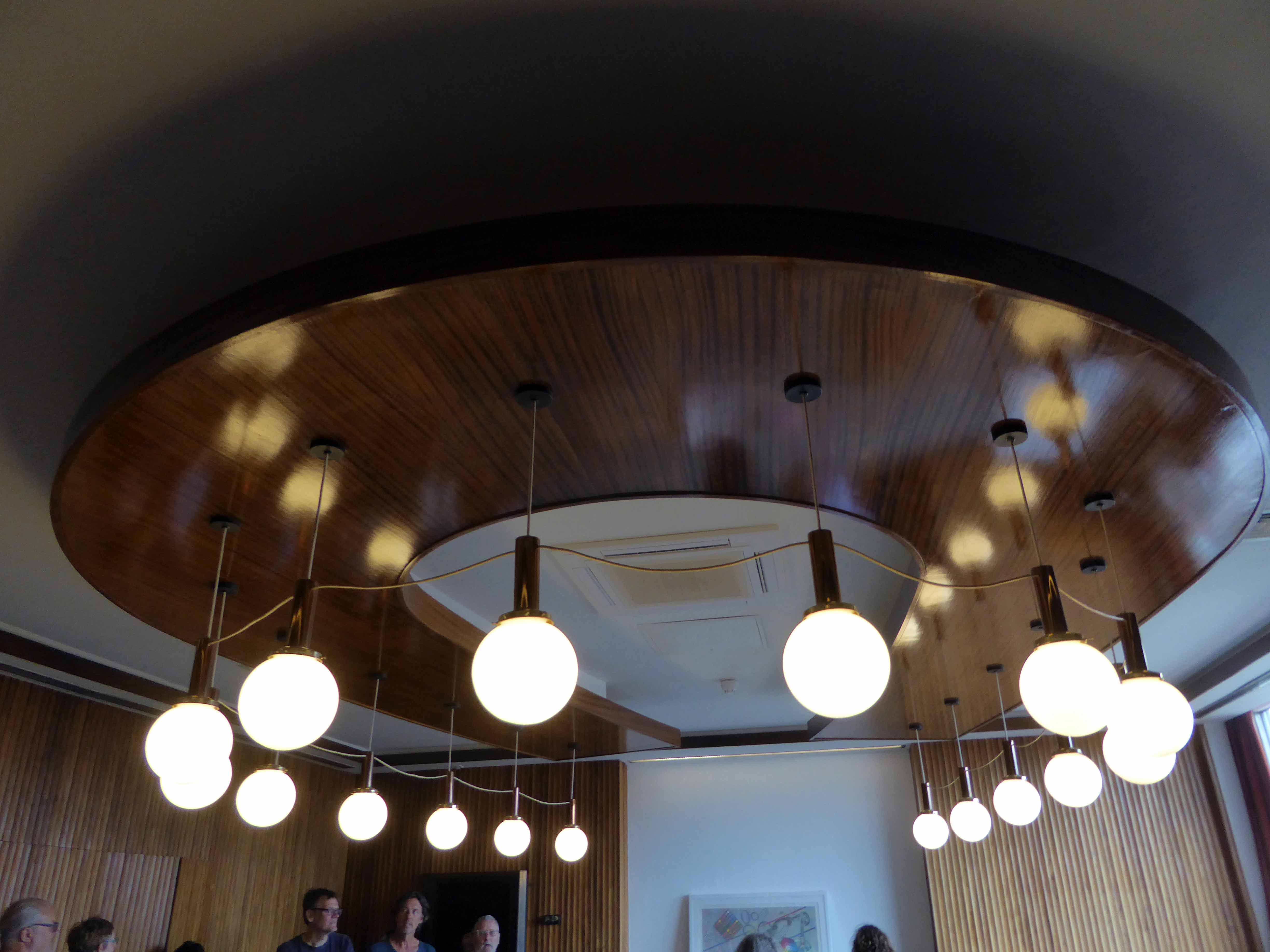
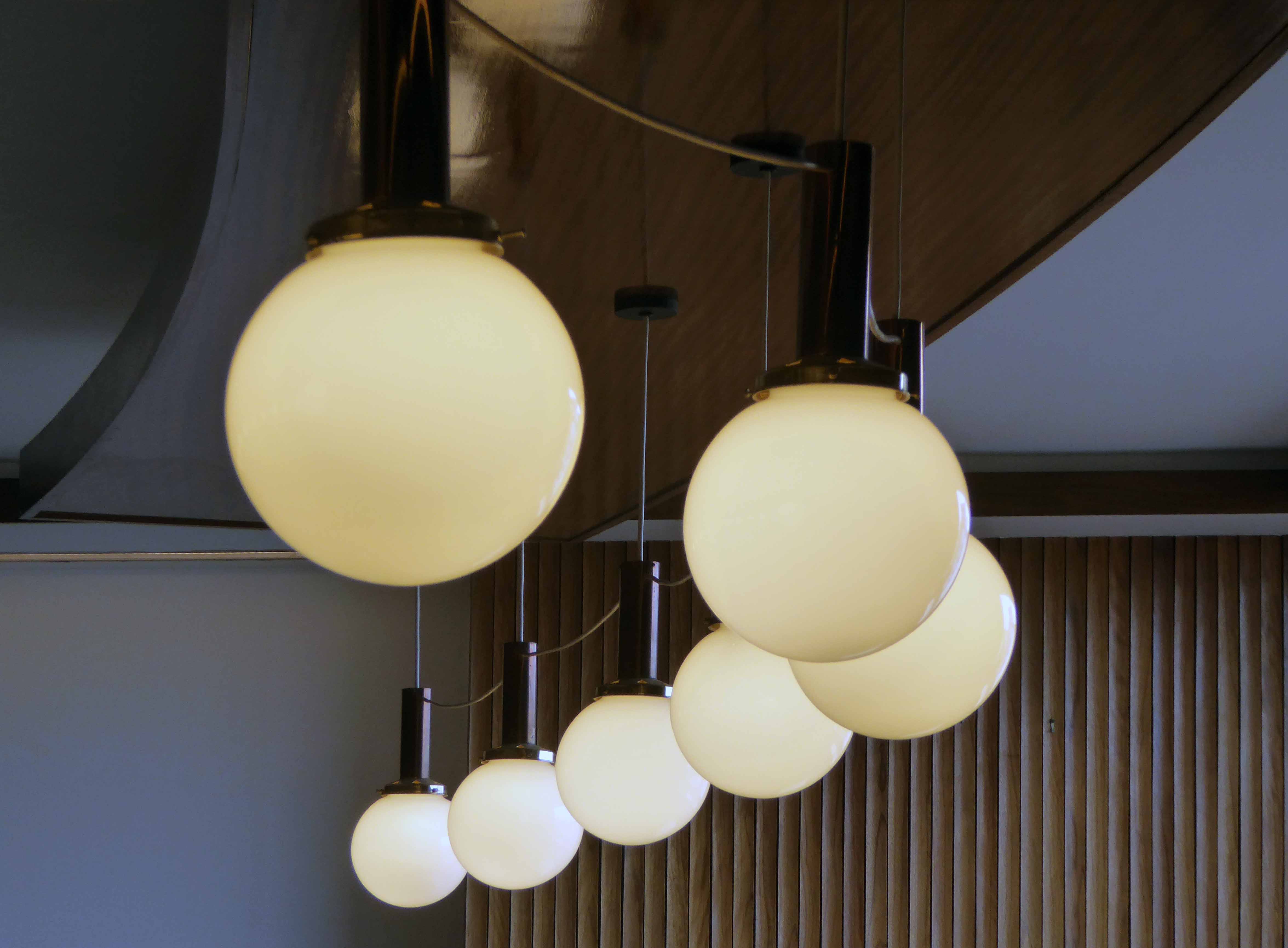
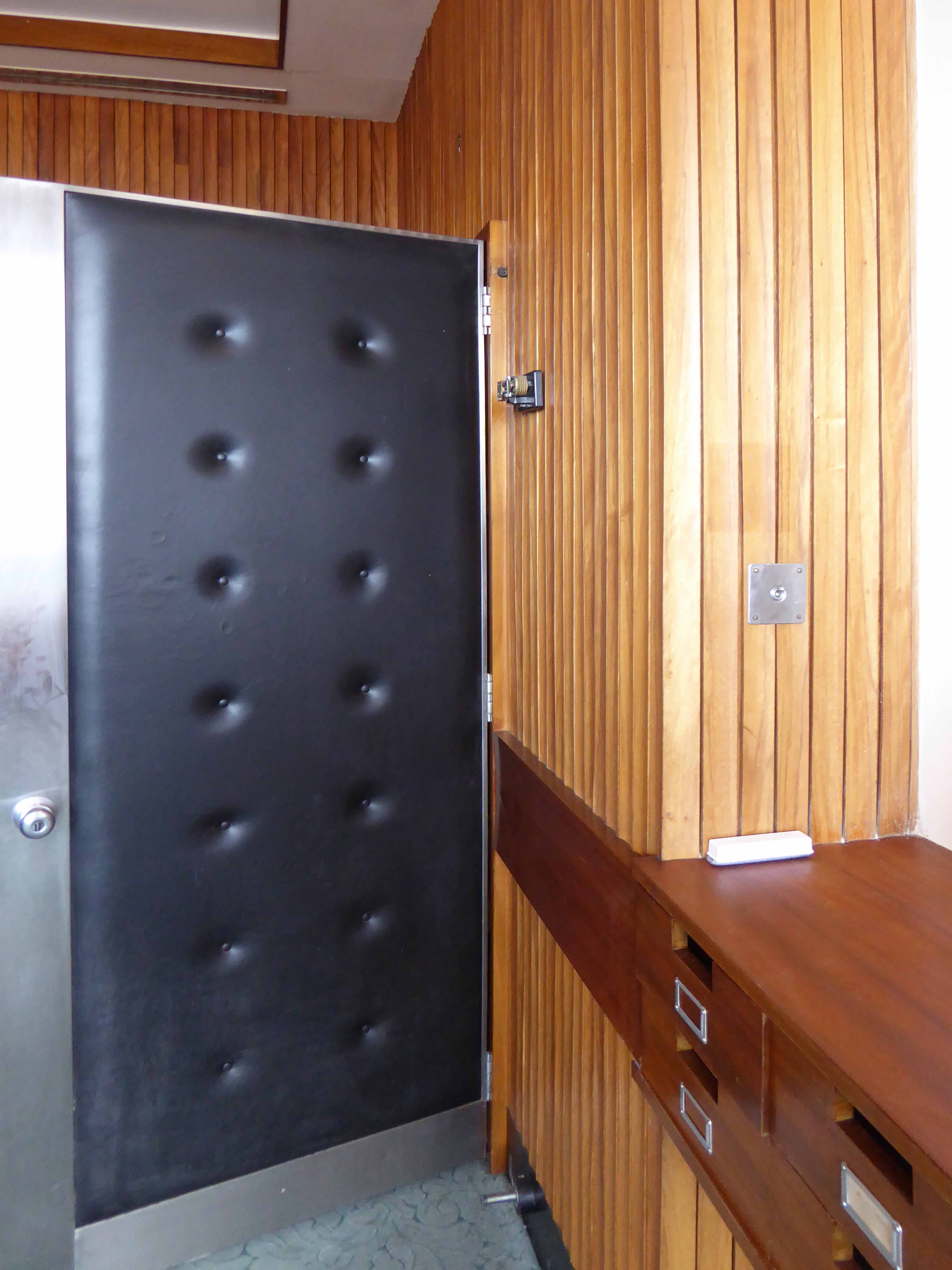
The timber-lined boardroom has a distinctive horseshoe of lighting, augmenting the board room table – which is currently away for repair, oh yes and a delightful door.
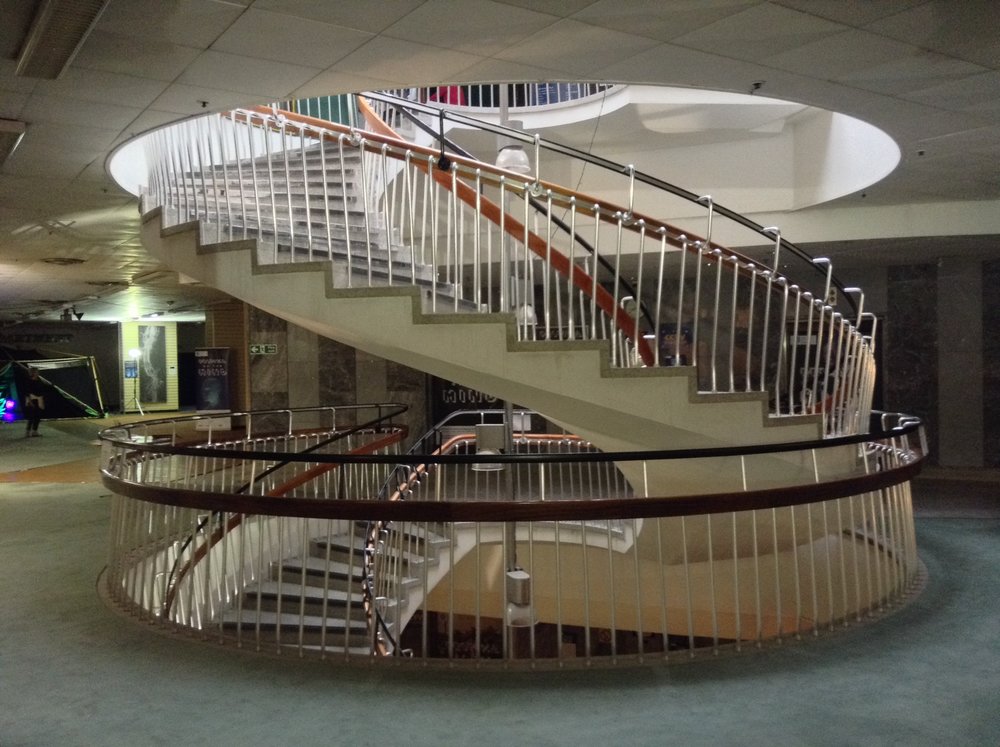
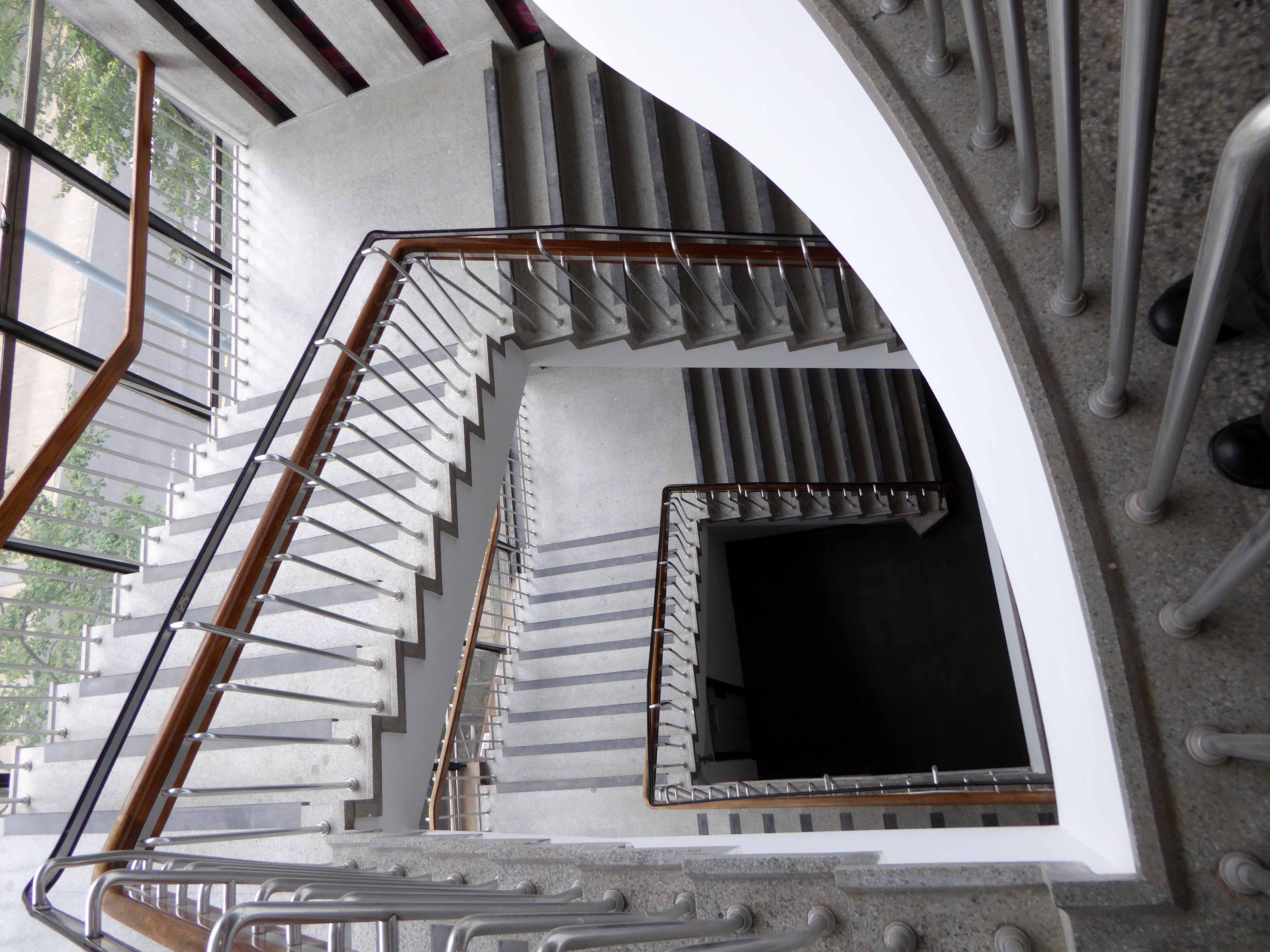
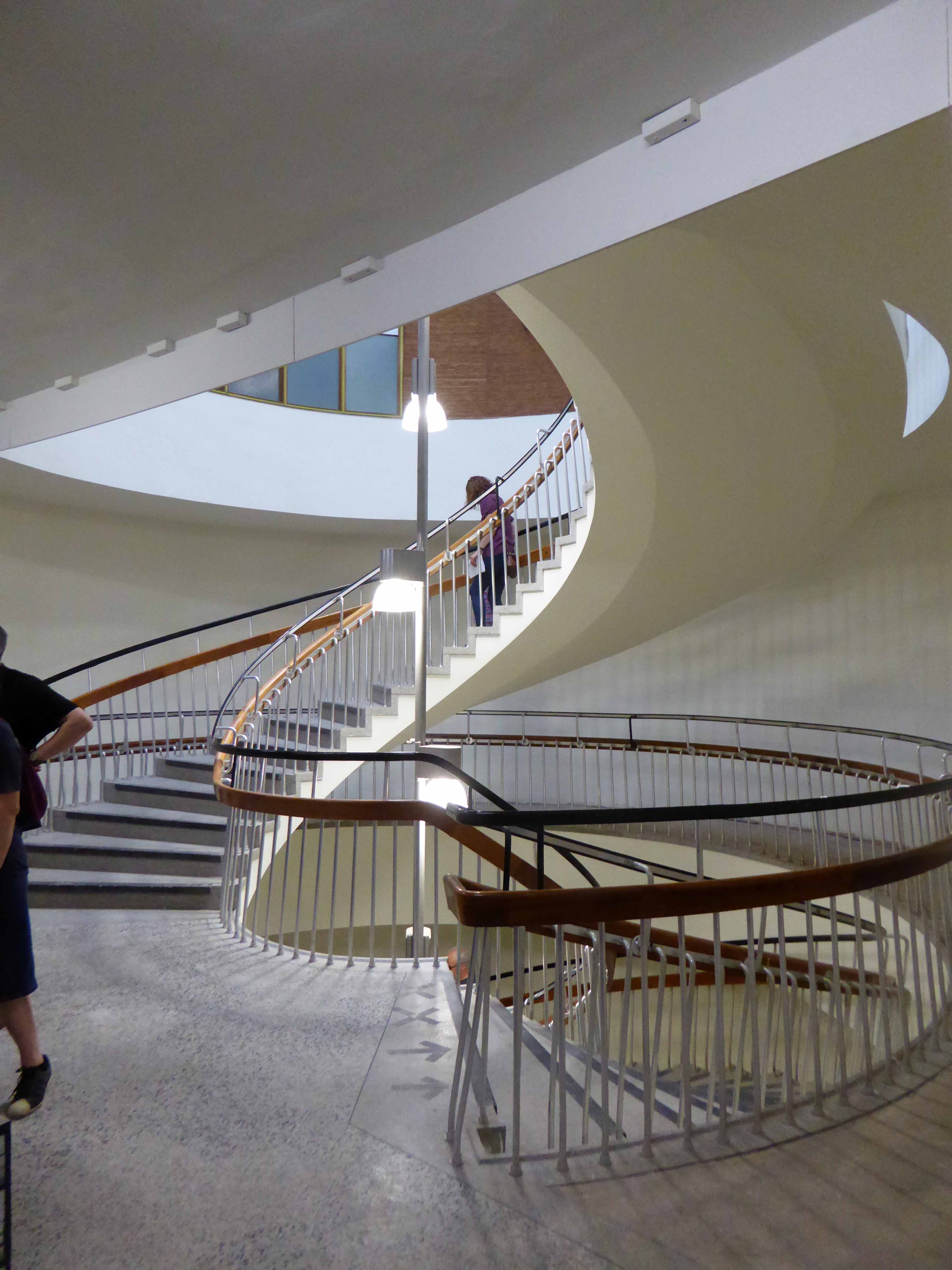
High atop the intoxicating vertiginous swirl of the central spiral stairway is the relief mural representing a cockerel and fish made of aluminium, copper and metal rod, with red French glass for the fish’s eye and cockerel’s comb.
Illuminated from above by this pierced concrete and glass skylight.
Many of the internal spaces have been ready for their new tenants.
This is a fine example of Modernist retail architecture saved from decay and degradation by the timely intervention of a sympathetic tenant.
Long may they and Castle House prosper – Sheffield we salute you!
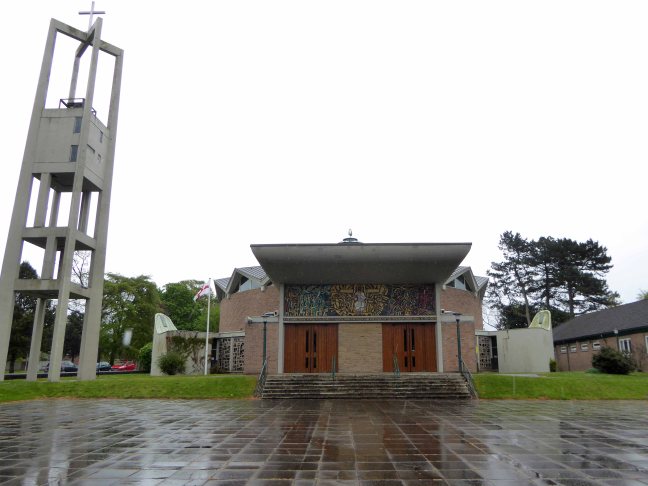
It never fails to surprise, turning the corner of a somewhat anonymous suburban street to find:
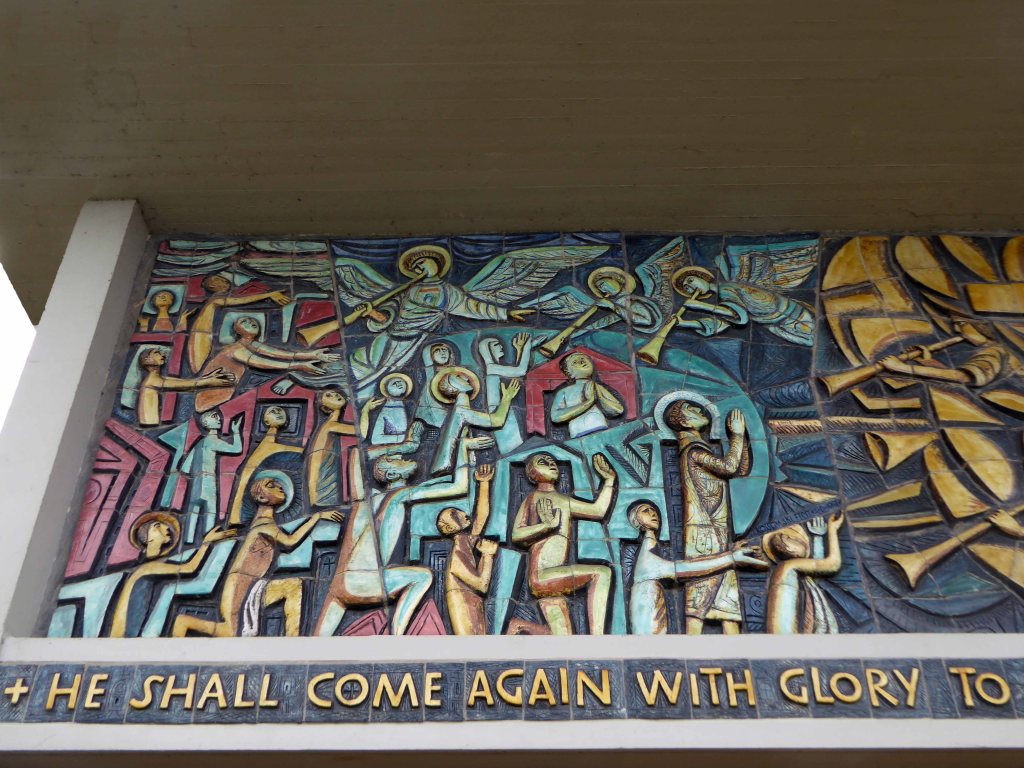
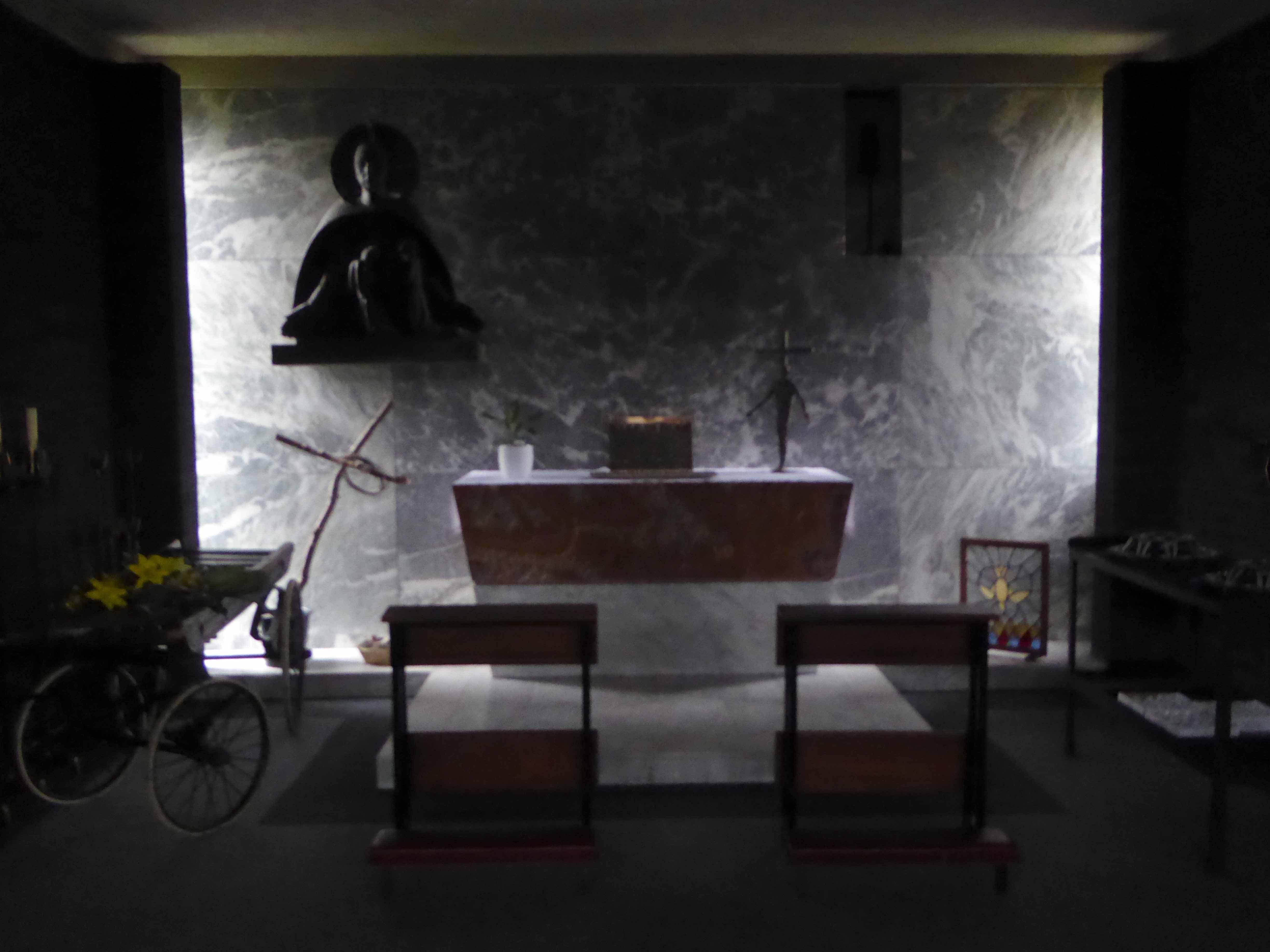
A building of outstanding importance for its architectural design, advanced liturgical planning and artistic quality of the fixtures and fittings.
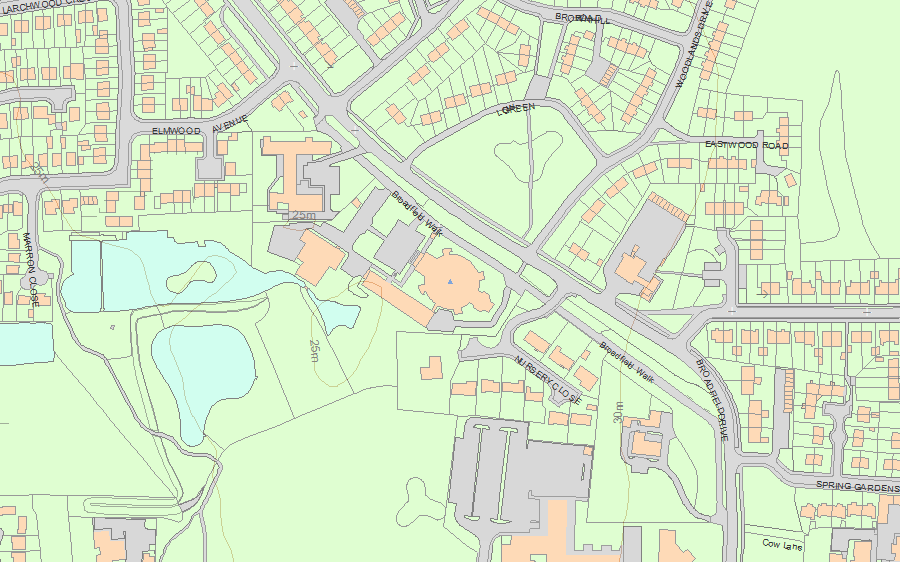
Broadfield Drive Leyland Lancashire PR25 1PD
The Benedictines came to Leyland in 1845 and the first Church of St. Mary’s was built on Worden Lane in 1854. The Catholic population was small at this time, but had grown to around 500 by 1900. Growth was assisted by the industrial development of Leyland and after the Second World War the town was earmarked as the centre of a new town planned in central Lancashire. By the early 1960’s, the Catholic population was 5,000. Fr Edmund Fitzsimmons, parish priest from 1952, was a guiding force in the decision to build a large new church of advanced liturgical design, inspired by progressive continental church architecture of the mid 20th century. The church was designed by Jerzy Faczynski of Weightman and Bullen. Cardinal Heenan blessed the foundation stone in 1962 and the new church was completed ready for its consecration and dedication by Archbishop Beck in April 1964.
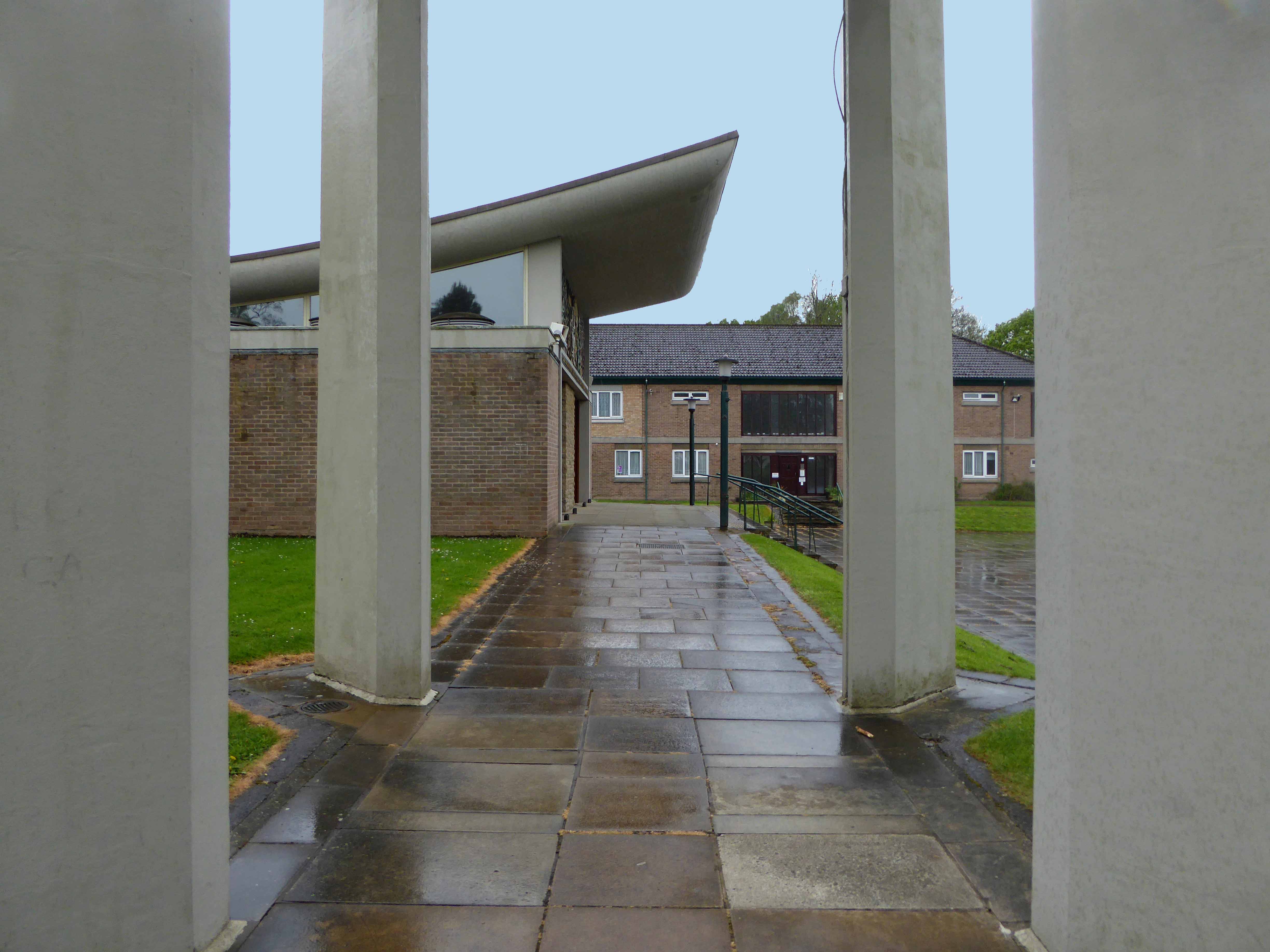
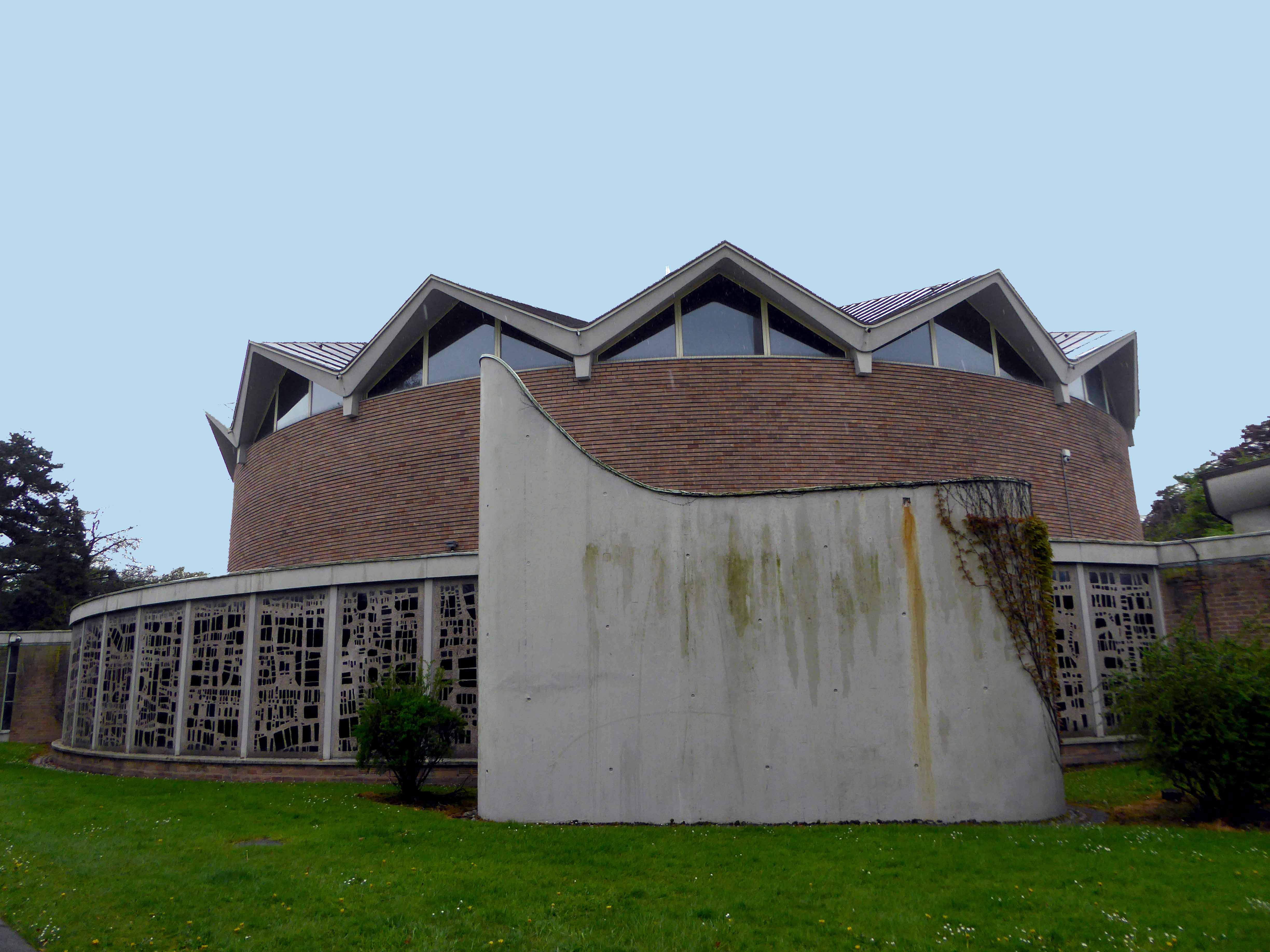
Pink brick, reinforced concrete, copper covered roofs, zig-zag to main space and flat to aisle. Circular, aisled plan with projecting entrance and five projecting chapels.
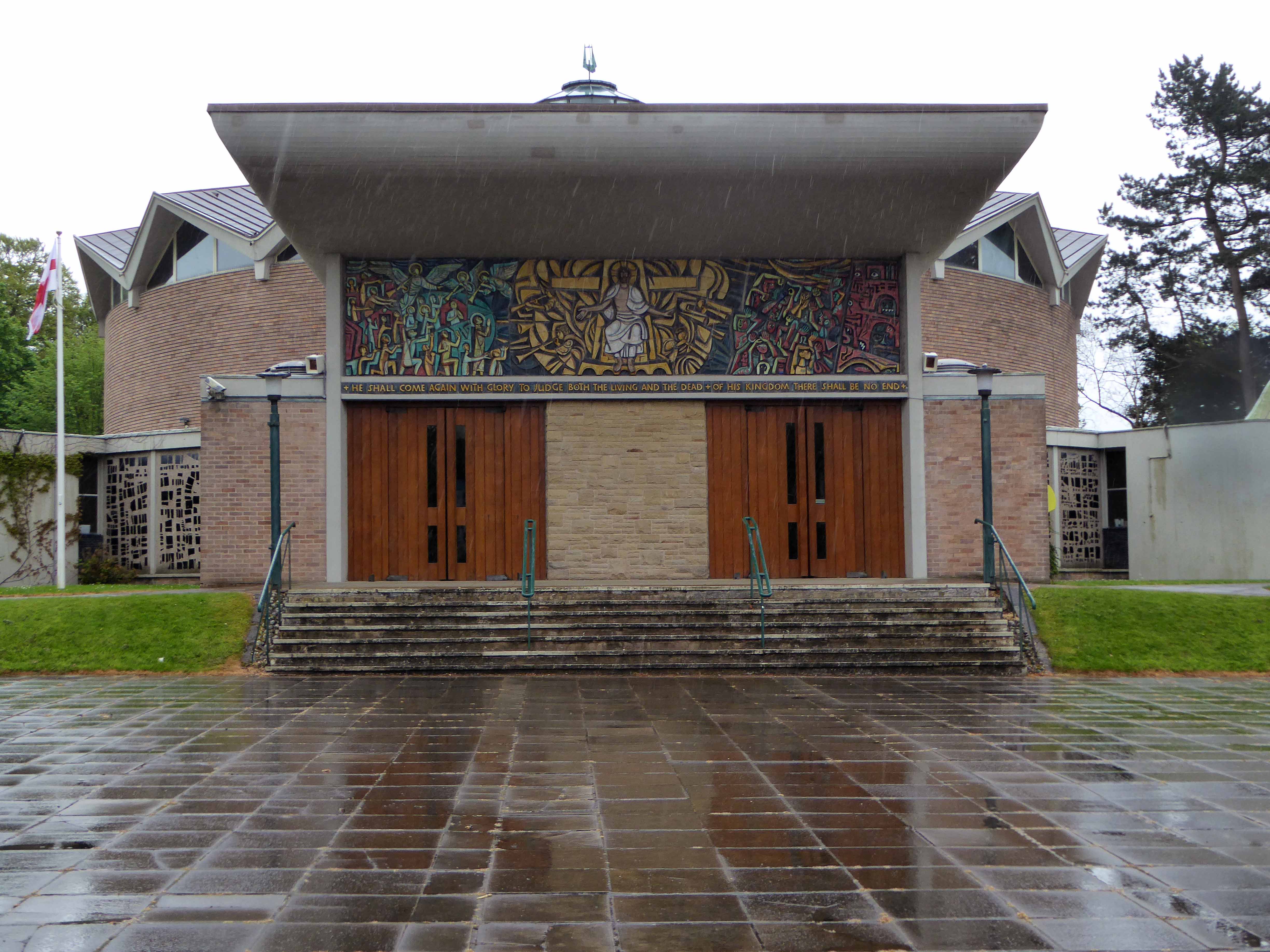
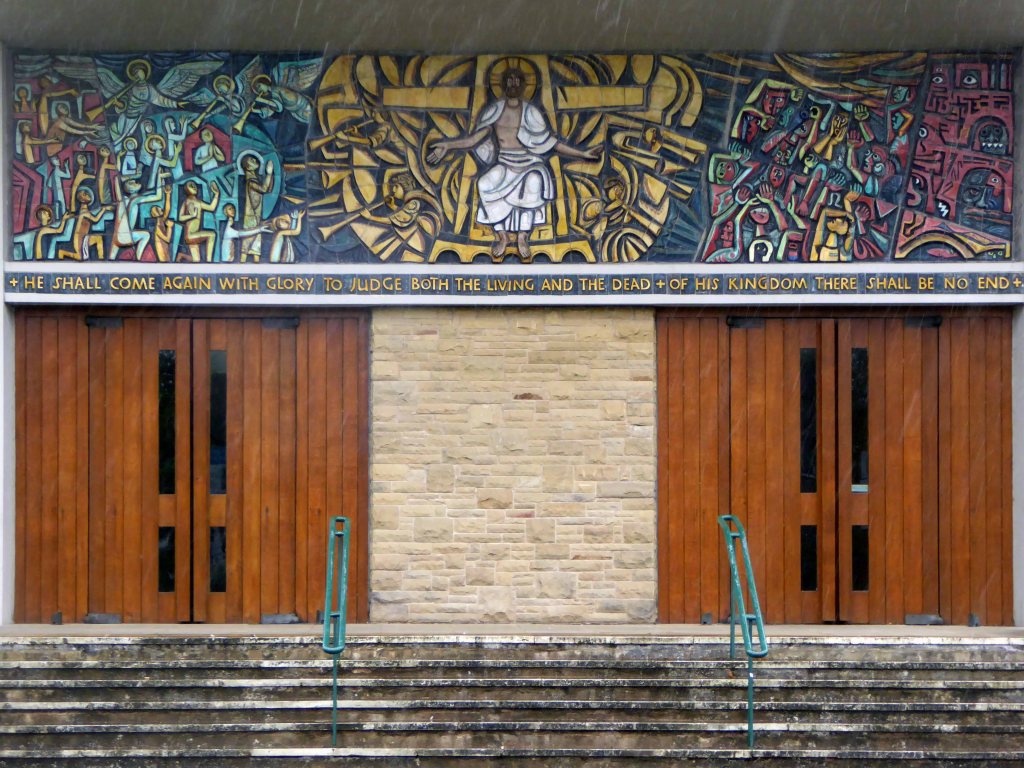
Central altar. Entrance in large projecting porch with roof rising outwards and the roof slab cantilevered above the doors, its underside curving upward.
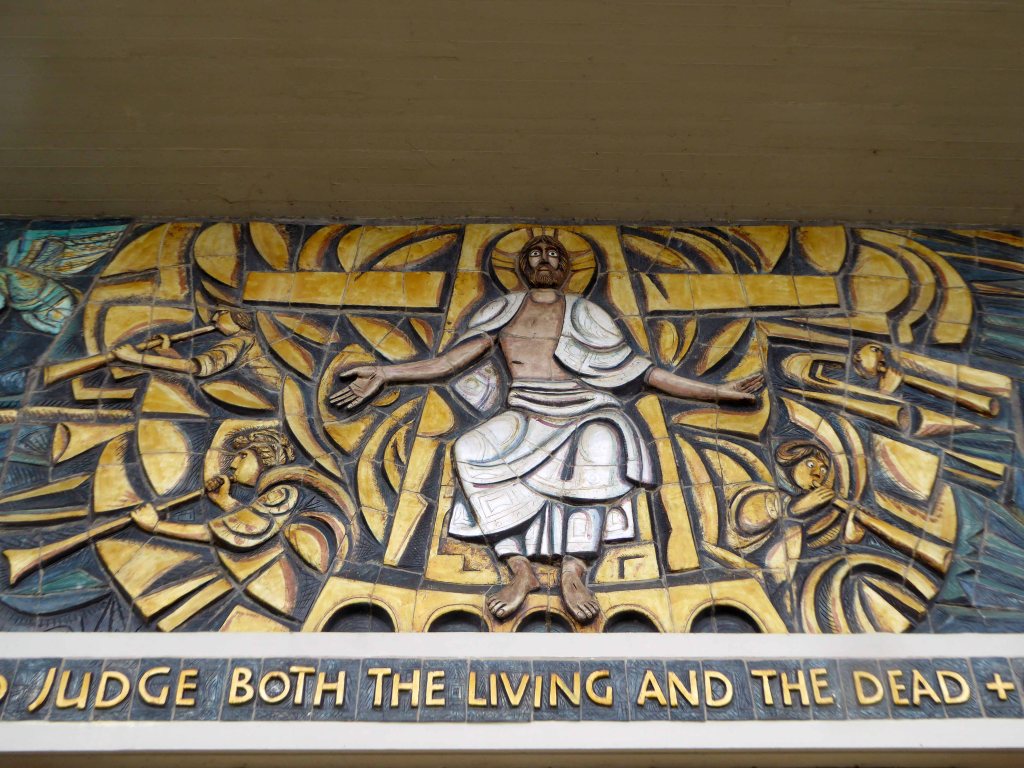
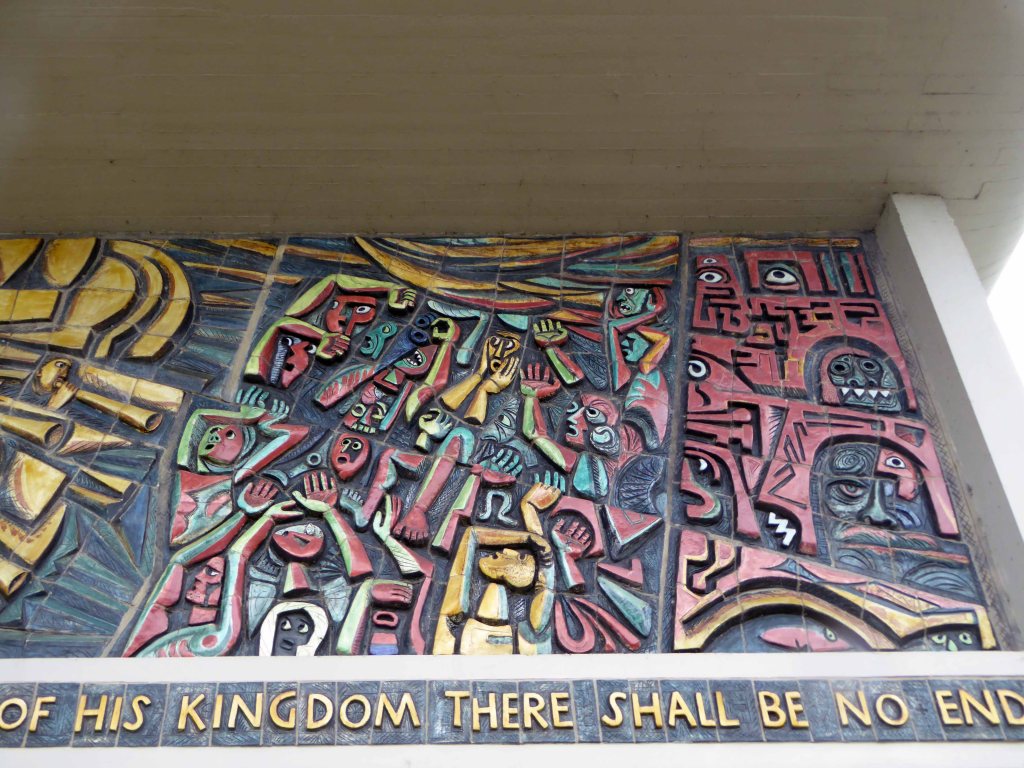
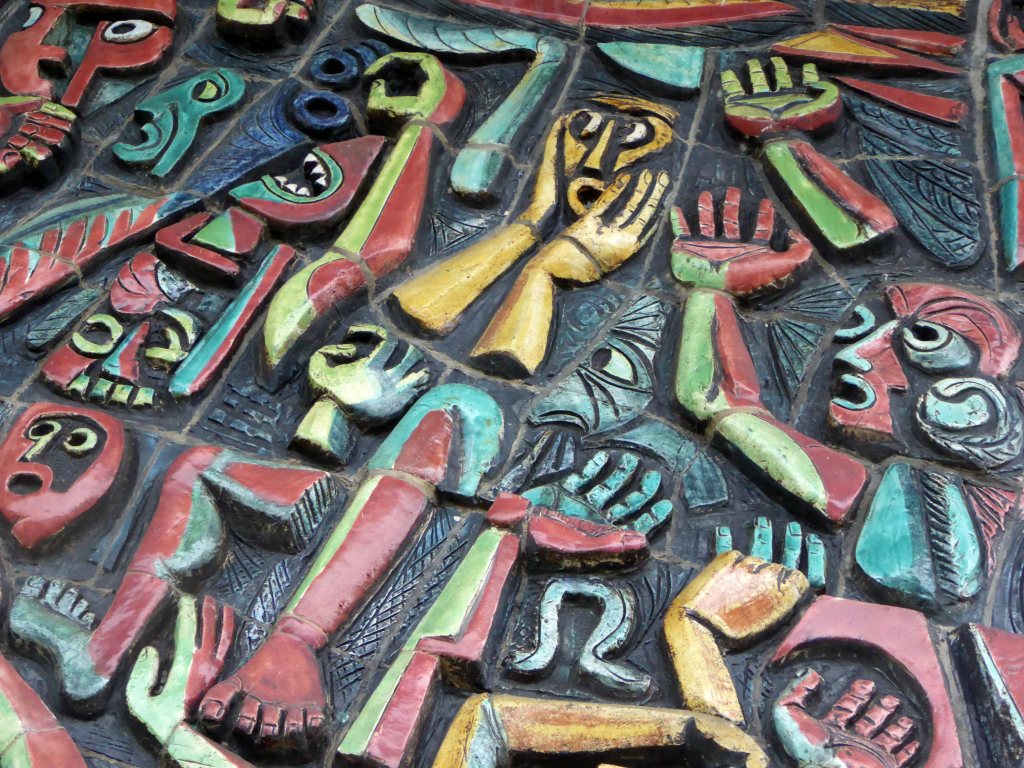
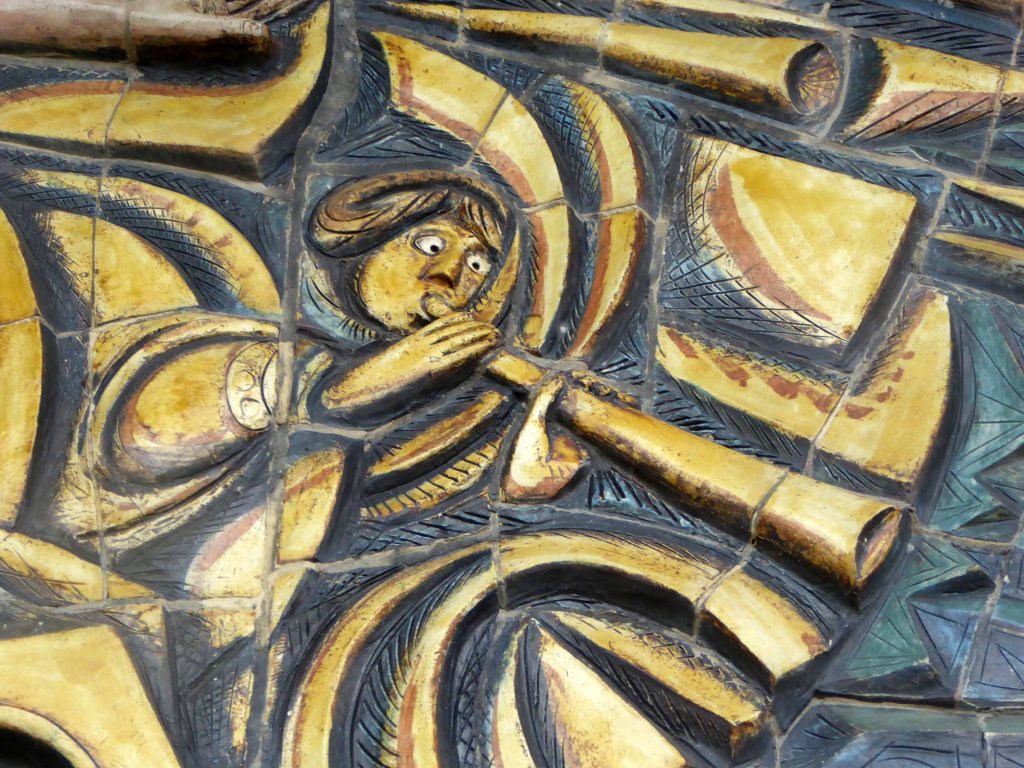
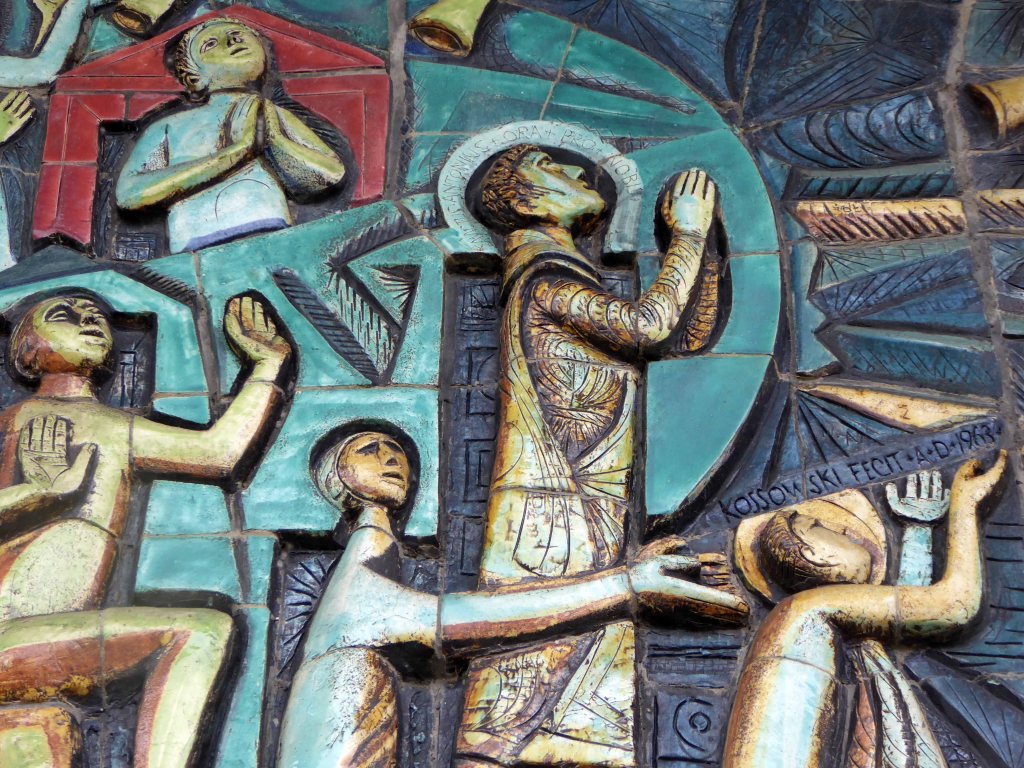
Large polychrome ceramic mural representing the Last Judgment by Adam Kossowski occupies the width of the porch above the two double- doored entrances.
Brick rotunda with projecting painted reinforced concrete chapels to left and right, of organic round-cornered form.
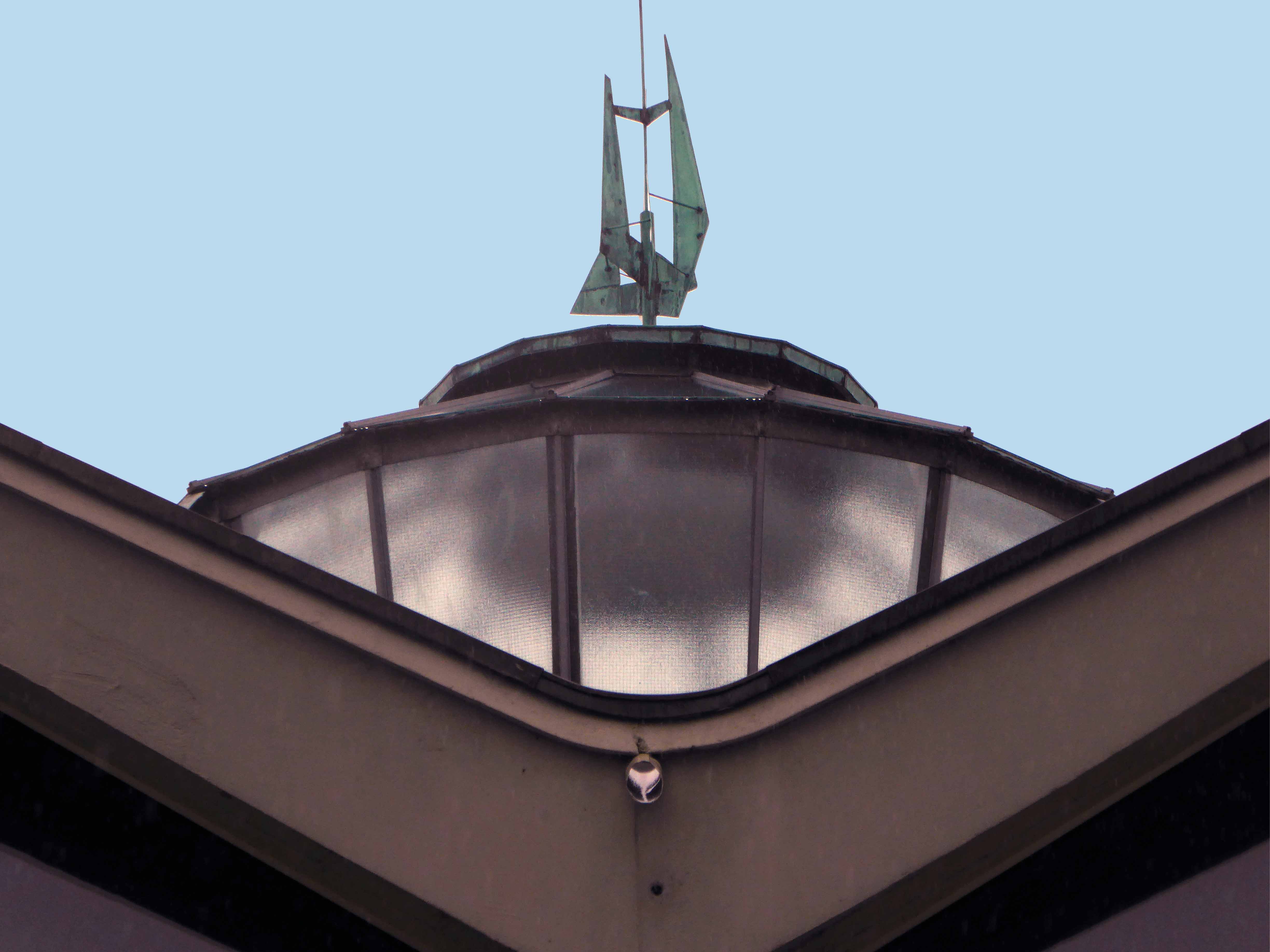
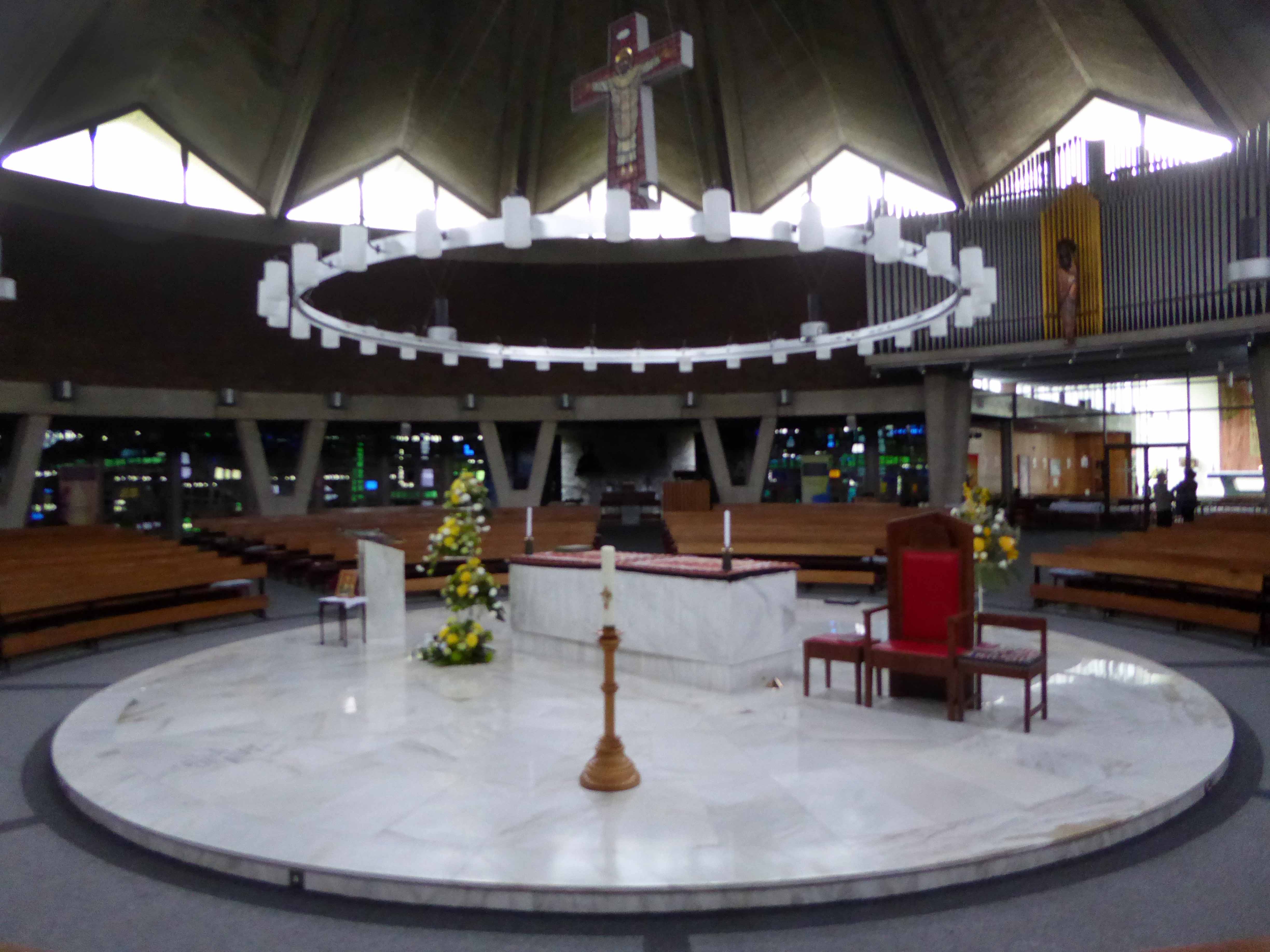
Folded radial roof above main space, leaning outwards to shelter triangular clerestory windows. Circular glazed light to centre of roof, its sides leaning outwards, culminating in a sculpted finial of copper or bronze.
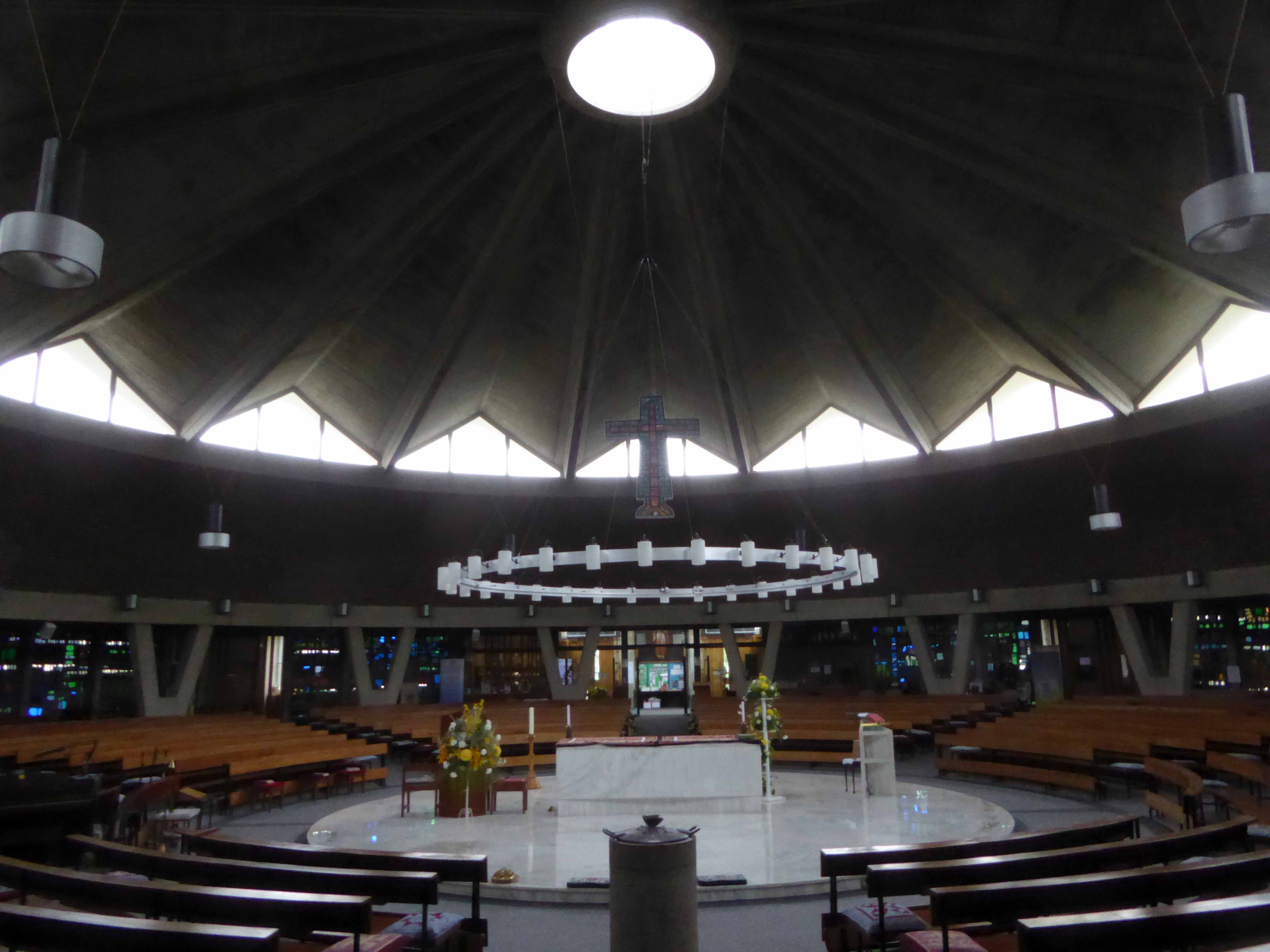
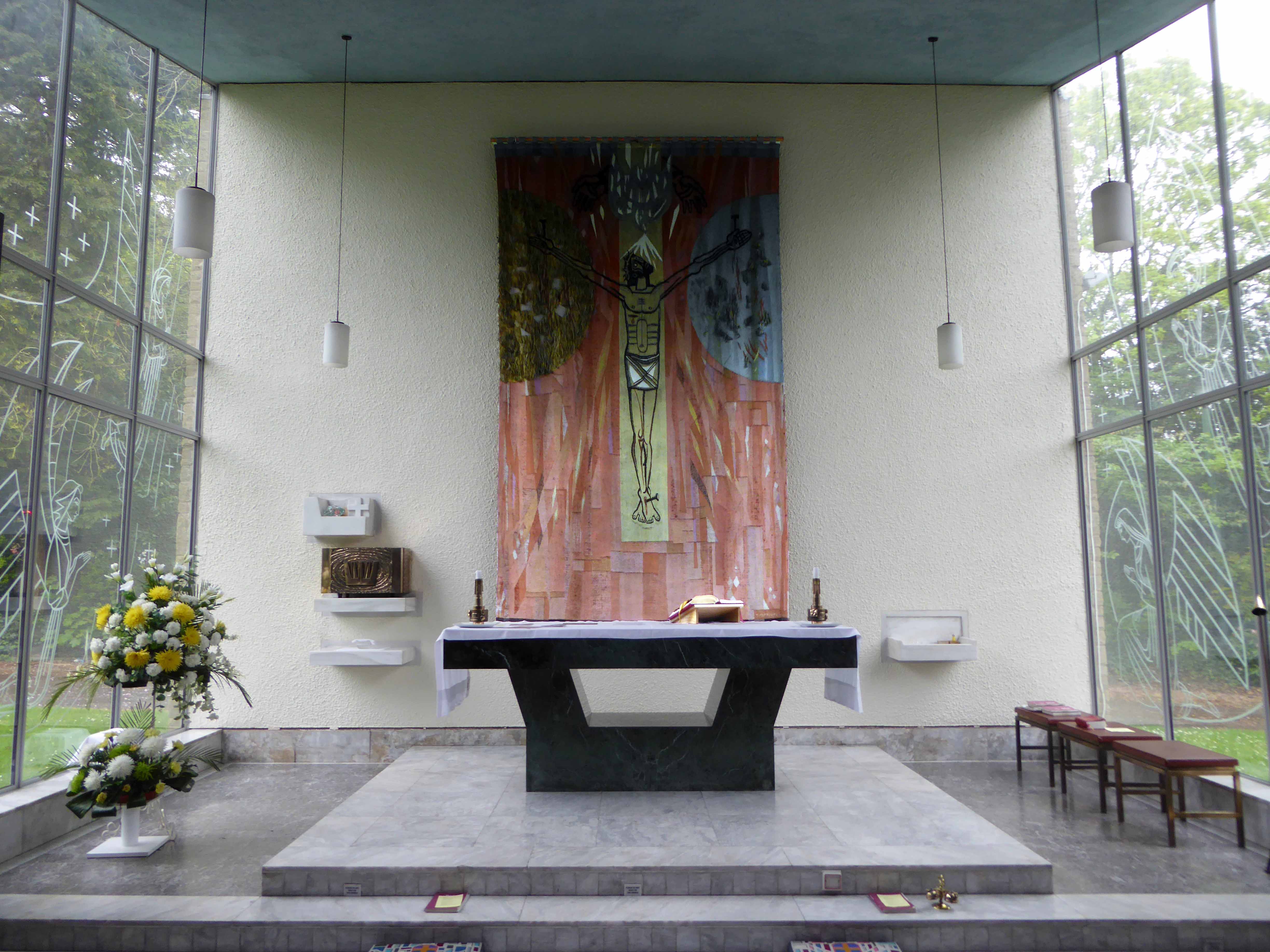
Internally, sanctuary is floored in white marble, raised by a step, and the white marble altar is raised by three further steps.
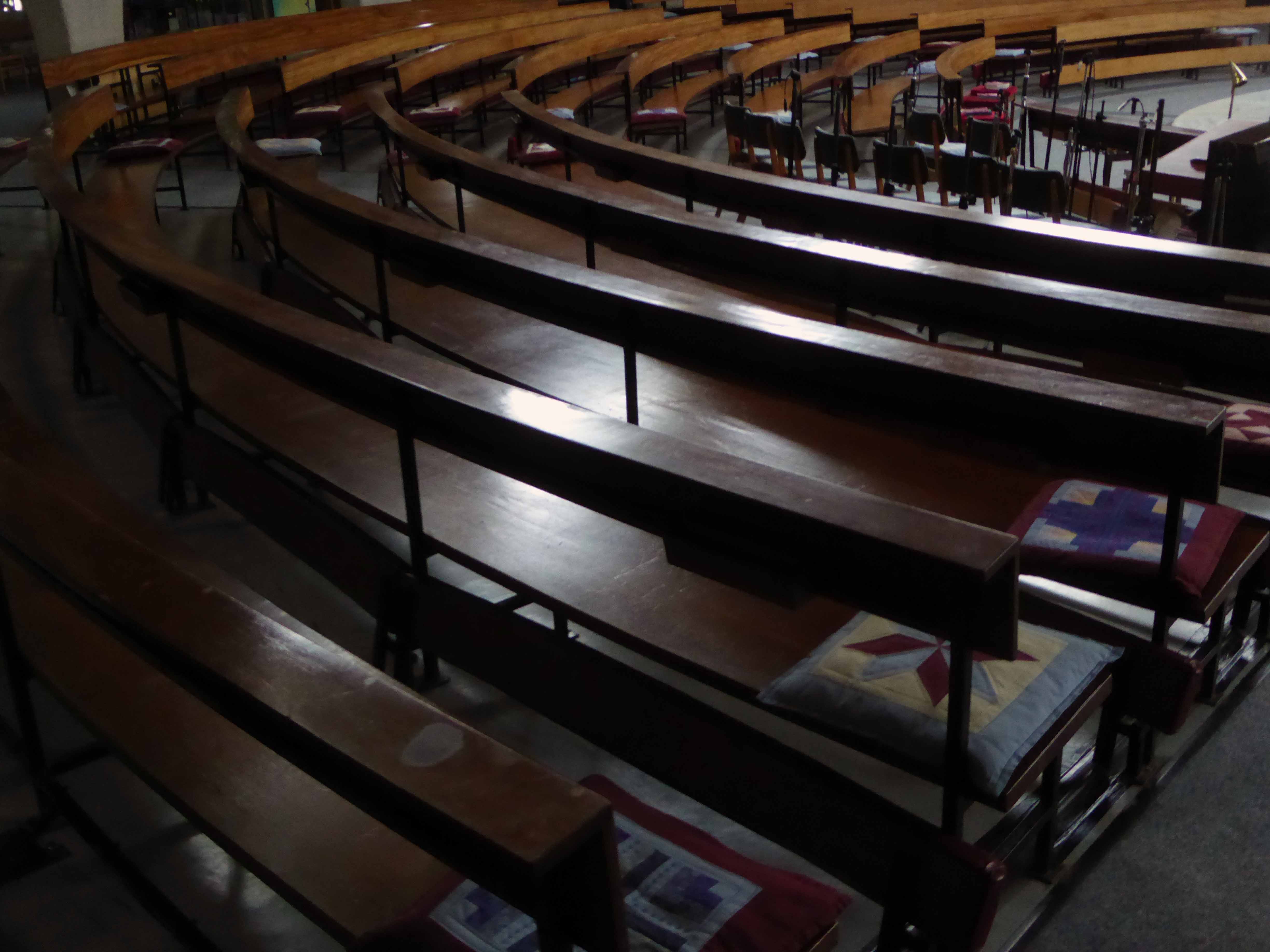
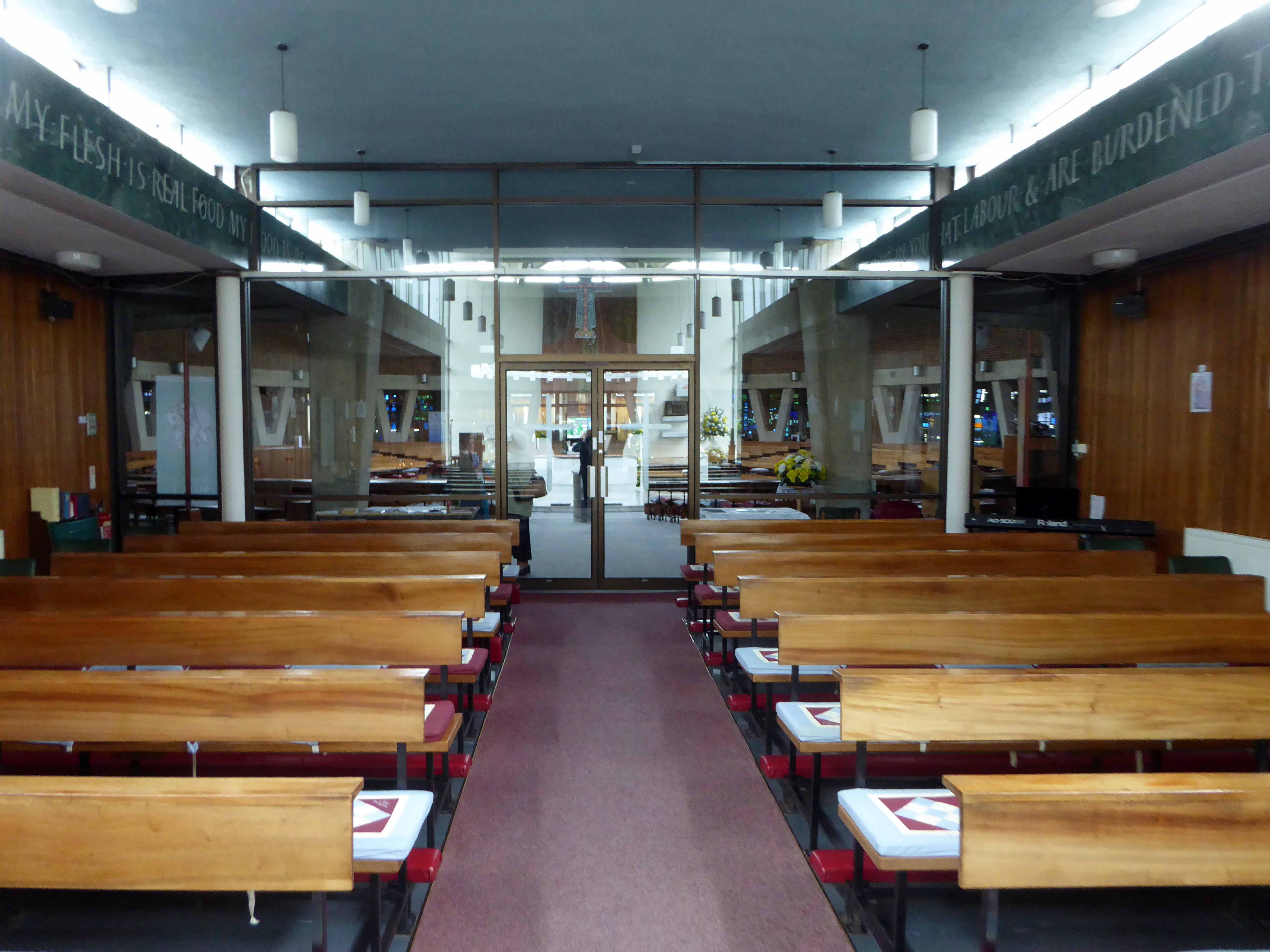
Fixed curved timber benches are placed on slightly raked floor.
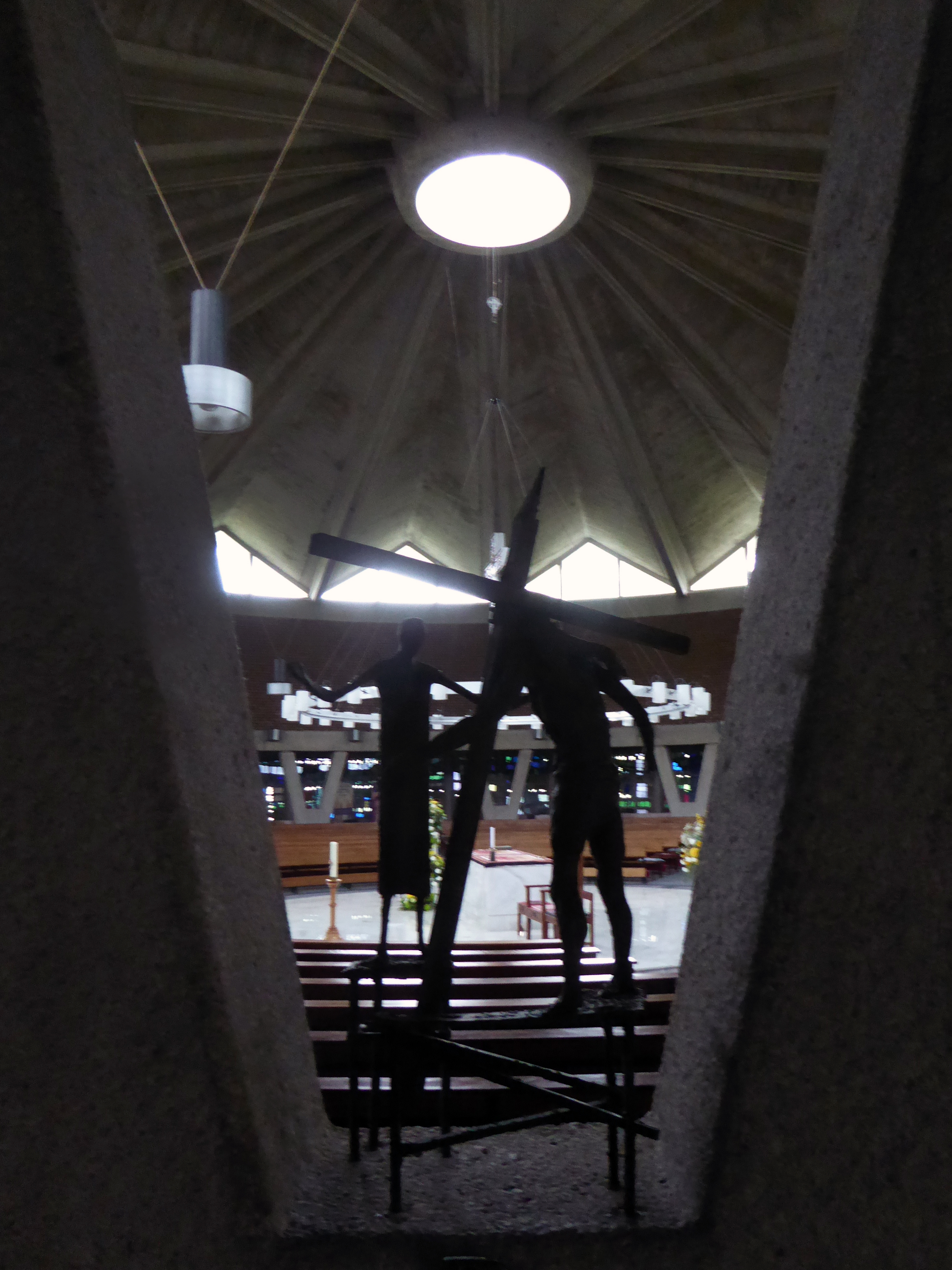
`Y’ shaped concrete aisle posts, designed to incorporate the Stations of the Cross, sculpted by Arthur Dooley.
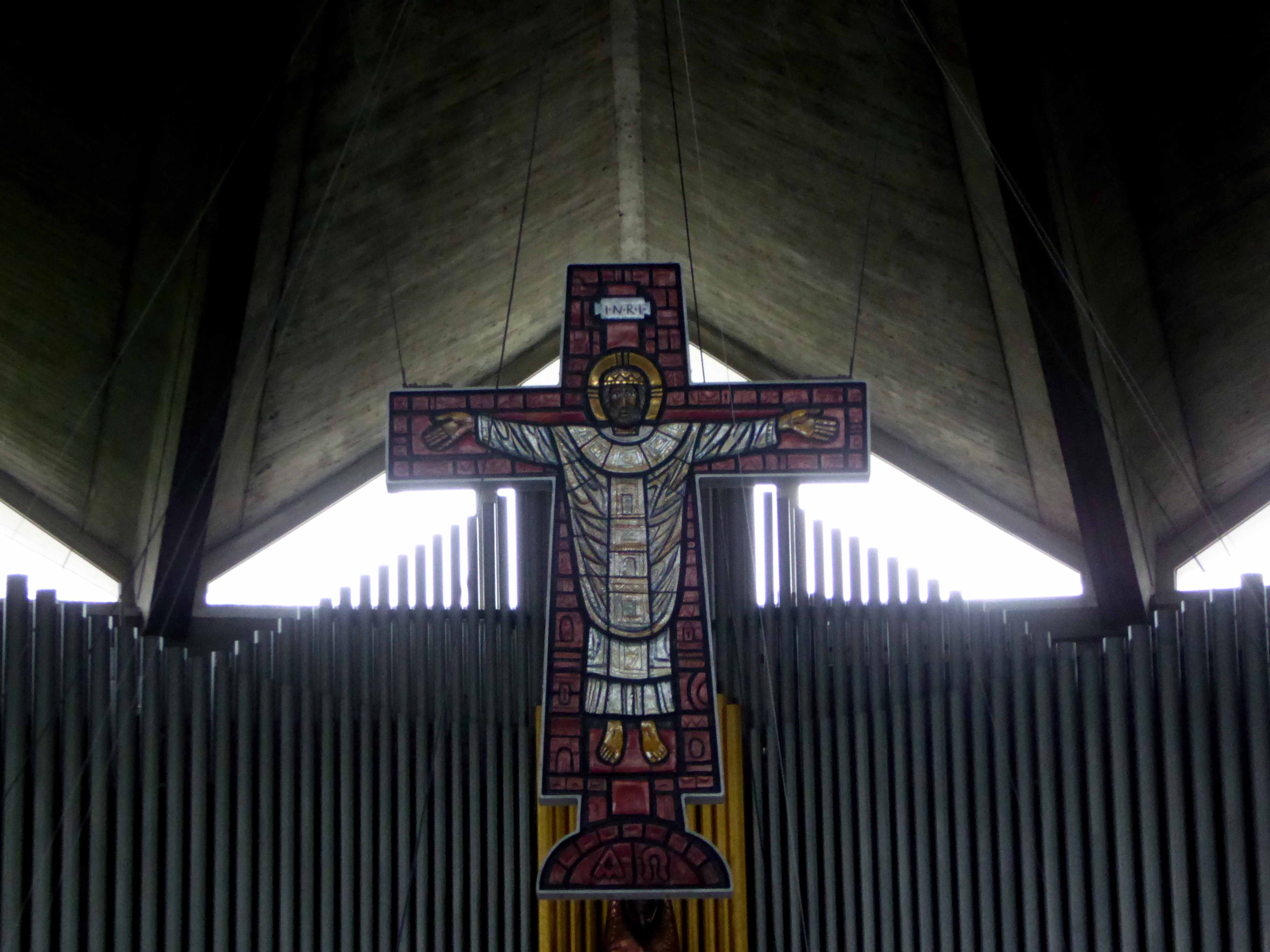
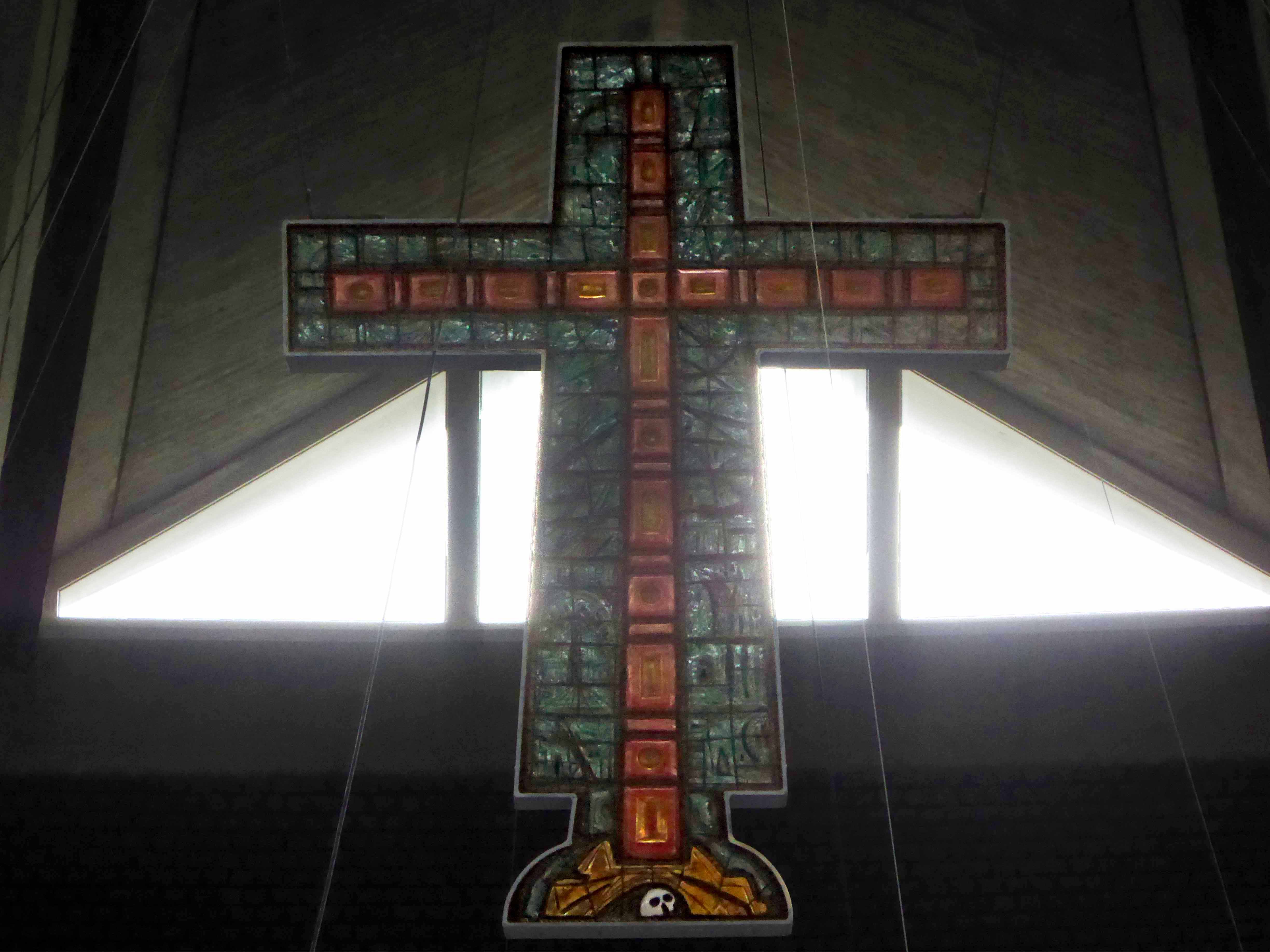
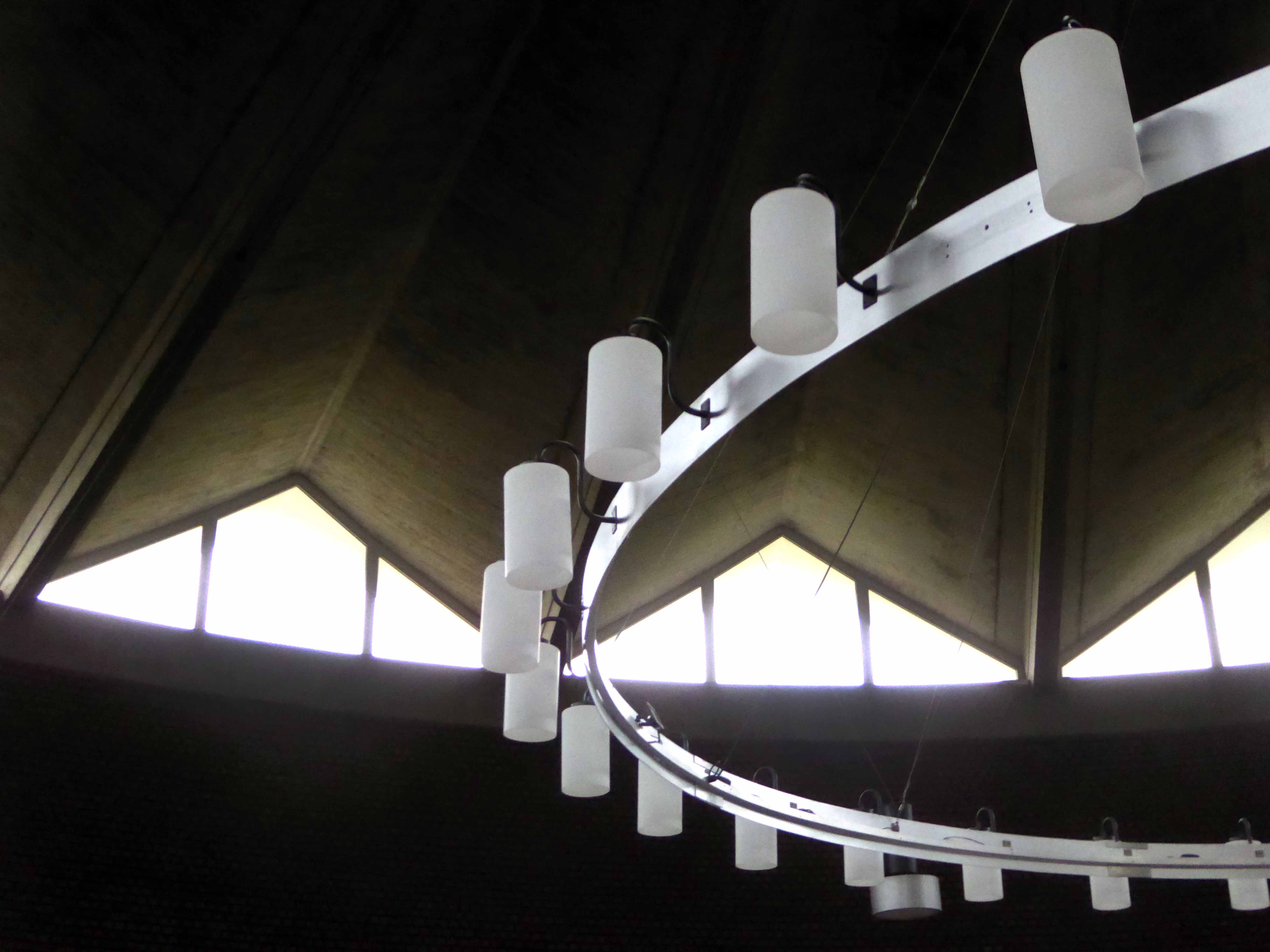
Above these the exposed brick drum rises to the exposed, board-marked concrete folded roof. The aisle walls comprise thirty-six panels of abstract dalle-de-verre stained glass, totalling 233 feet in length, by Patrick Reyntiens, mostly in blues and greens. The theme is the first day of Creation. Suspended above the altar is the original ring-shaped light fixture, and also Adam Kossowski’s ceramic of Christ the King.
Further original light fittings are suspended above the congregation.
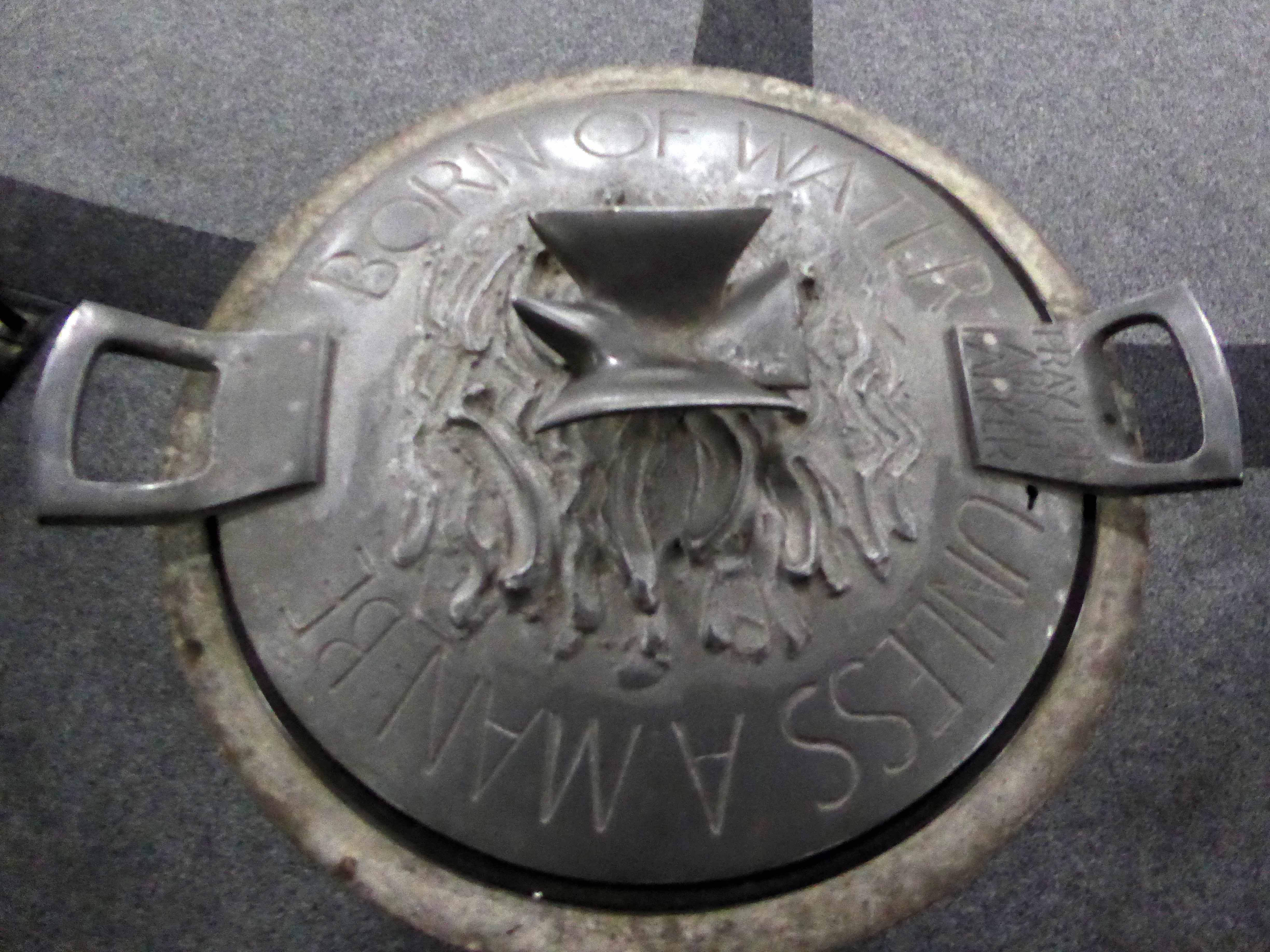
The font is placed in the narthex, in a shallow, marble-lined depression in the floor. It comprises a concrete cylinder with an inscribed bronze lid.
The Blessed Sacrament Chapel, with its rising roof slab, contains a green marble altar with in-built raking supports.
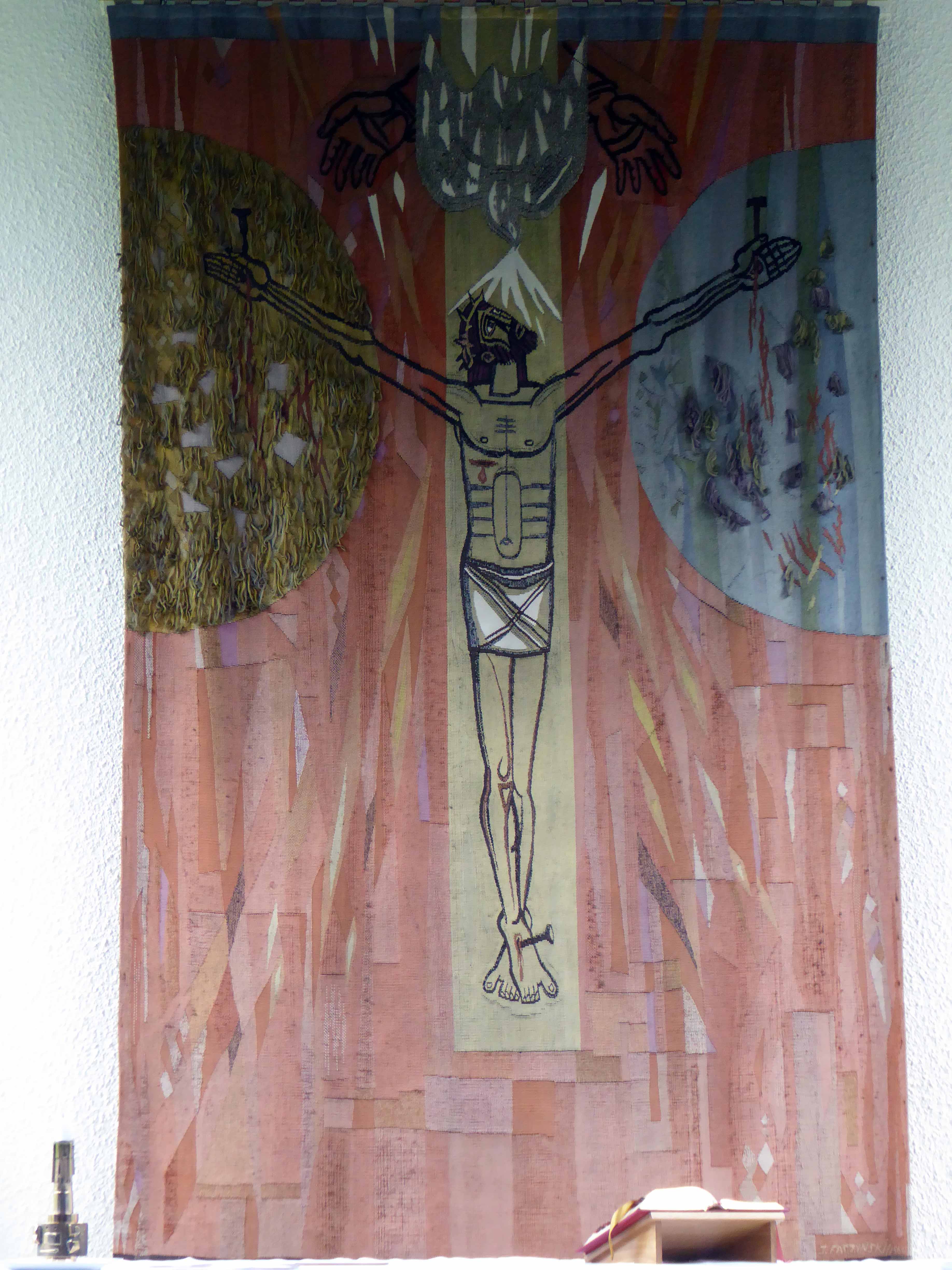
Behind it is a tapestry representing the Trinity, designed by the architect J. Faczynski.
Many thanks to Father John and the members of the congregation for the warm welcome that they extended to us on the day of our visit to their exceptional Grade II Listed church.
Now here I am in Colwyn Bay generally minding my own and everybody else’s business, when all of a sudden I noticed a cast iron glazed awning.
Proudly announcing the proprietors – sadly supported by a distressing modern addition – now I’m not one to decry and debunk the rising tide of modernity, I’m all in favour of unisex clothing and central heating.
But the unchecked encroachment of vacuous vinyl really is the limit.
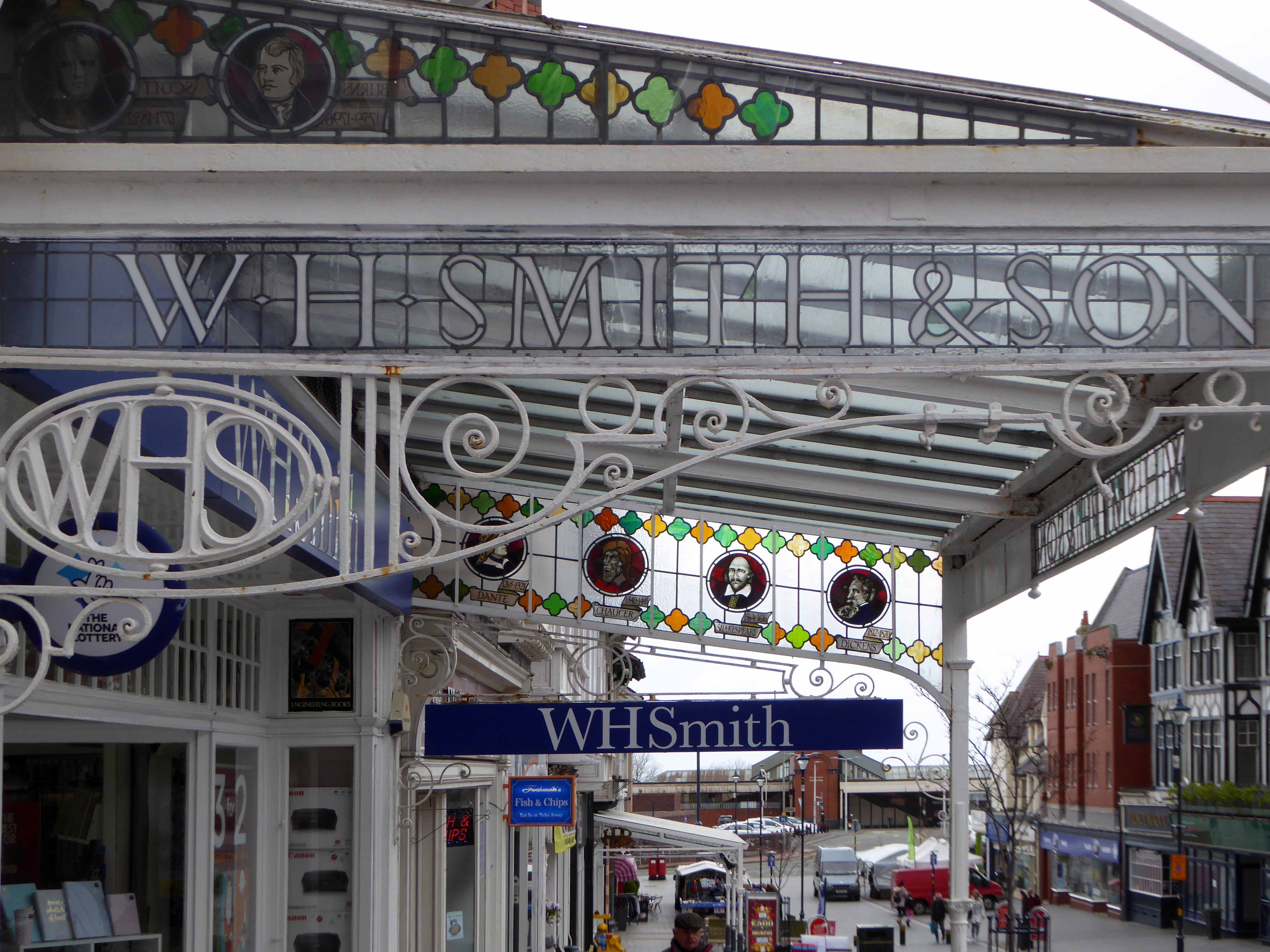
Businesses displayed a degree of dignified permanence unknown to the current high street trader. So here it is writ larger than life in stained glass and Carter’s Tiles.
Loud and proud.
And as an addendum here are the delightful tiles from the Llandudno branch, snapped two years previously.
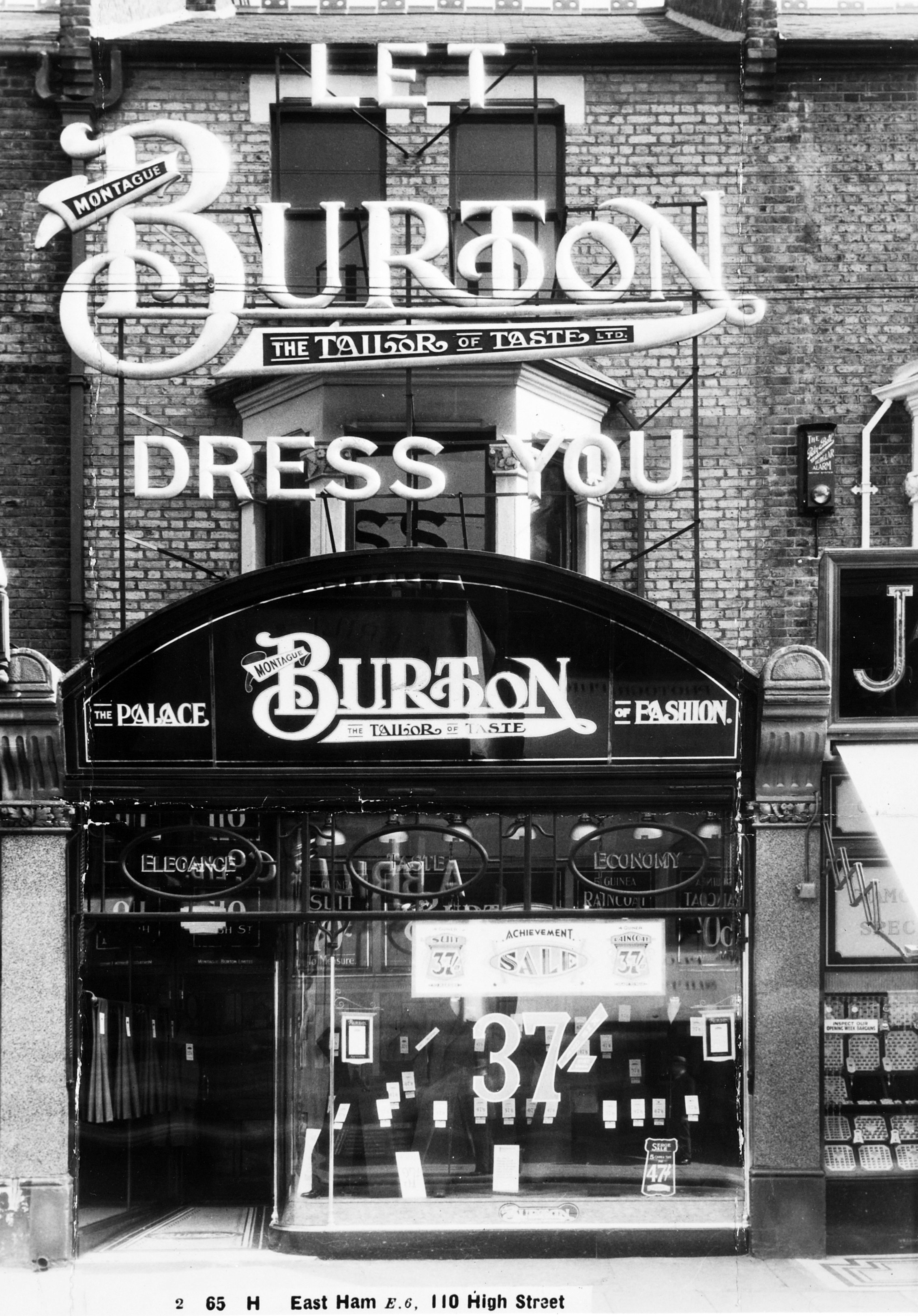
In almost every town or city worth its salt stood a modern white tiled tailor’s shop, almost every man or boy wore a Burton’s suit.
Harry Wilson had become the company architect by the early 1920s, and was responsible for developing Burton’s house style. Montague Burton, however, maintained a close personal interest. The company’s in-house Architects Department was set up around 1932 under Wilson. He was followed as chief architect around 1937 by Nathaniel Martin, who was still in post in the early 1950s. The architects worked hand-in-hand with Burton’s Shopfitting and Building Departments, who coordinated the work of selected contractors. Throughout the late 1920s and 1930s they were kept phenomenally busy: by 1939 many of Burton’s 595 stores were purpose-built.
The very first made to measure gear I owned came from Burton’s in Ashton under Lyne – mini-mod aged fourteen in a three button, waisted, light woollen dark brown jacket, four slanted and flapped side pockets and an eighteen inch centre vent.
The story of the stores begins in the province of Kovno in modern Lithuania – Meshe David Osinsky (1885-1952), came to England where he initially took the name Maurice Burton.
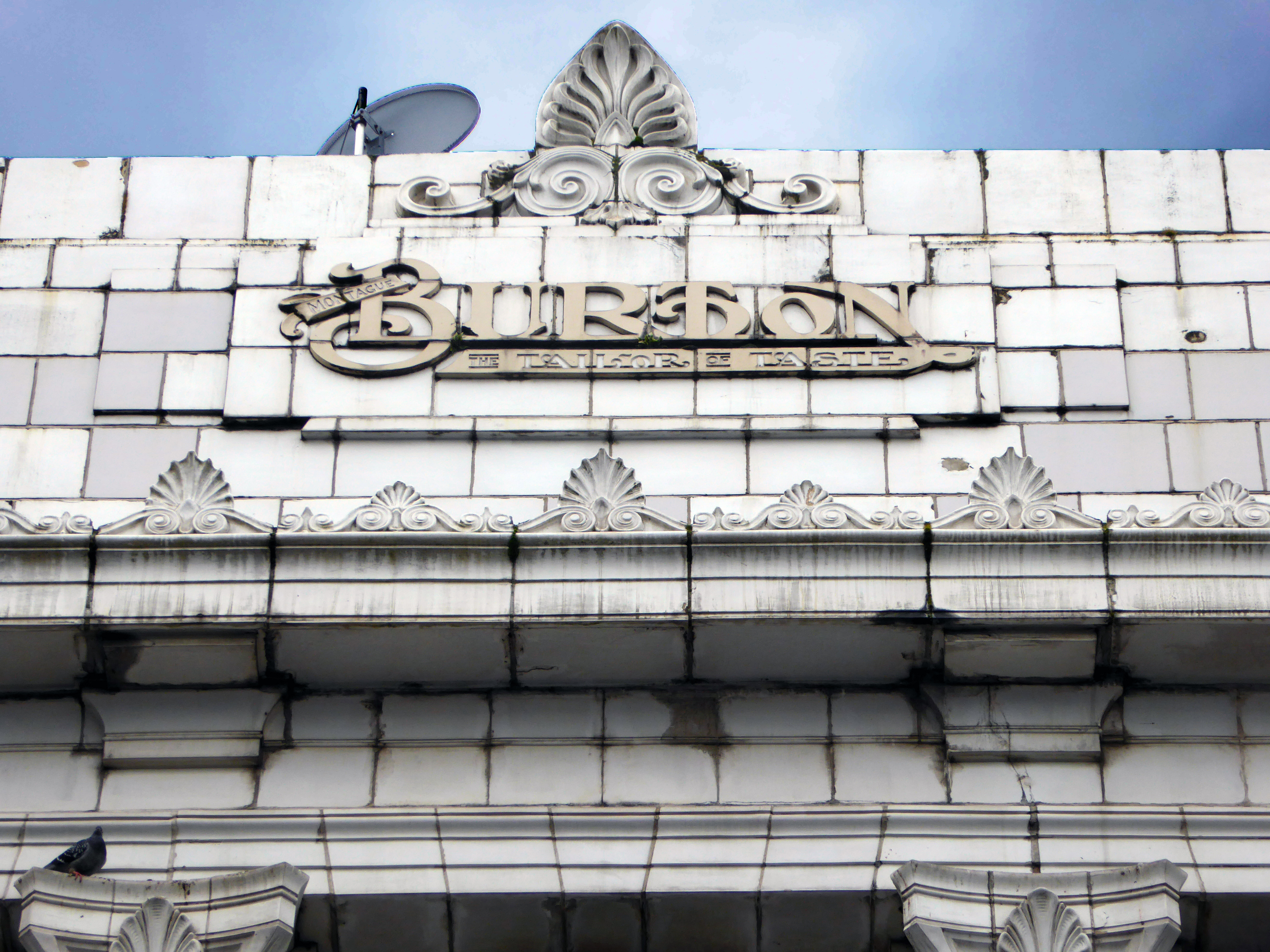
Topped off with the company’s distinctive logotype.
This example in Doncaster is one of the few remaining examples many having been removed – as the stores have changed ownership and usage.
This Neo-Classical Burnley branch is a rare example of a Burton’s which hasn’t gone for a Burton.
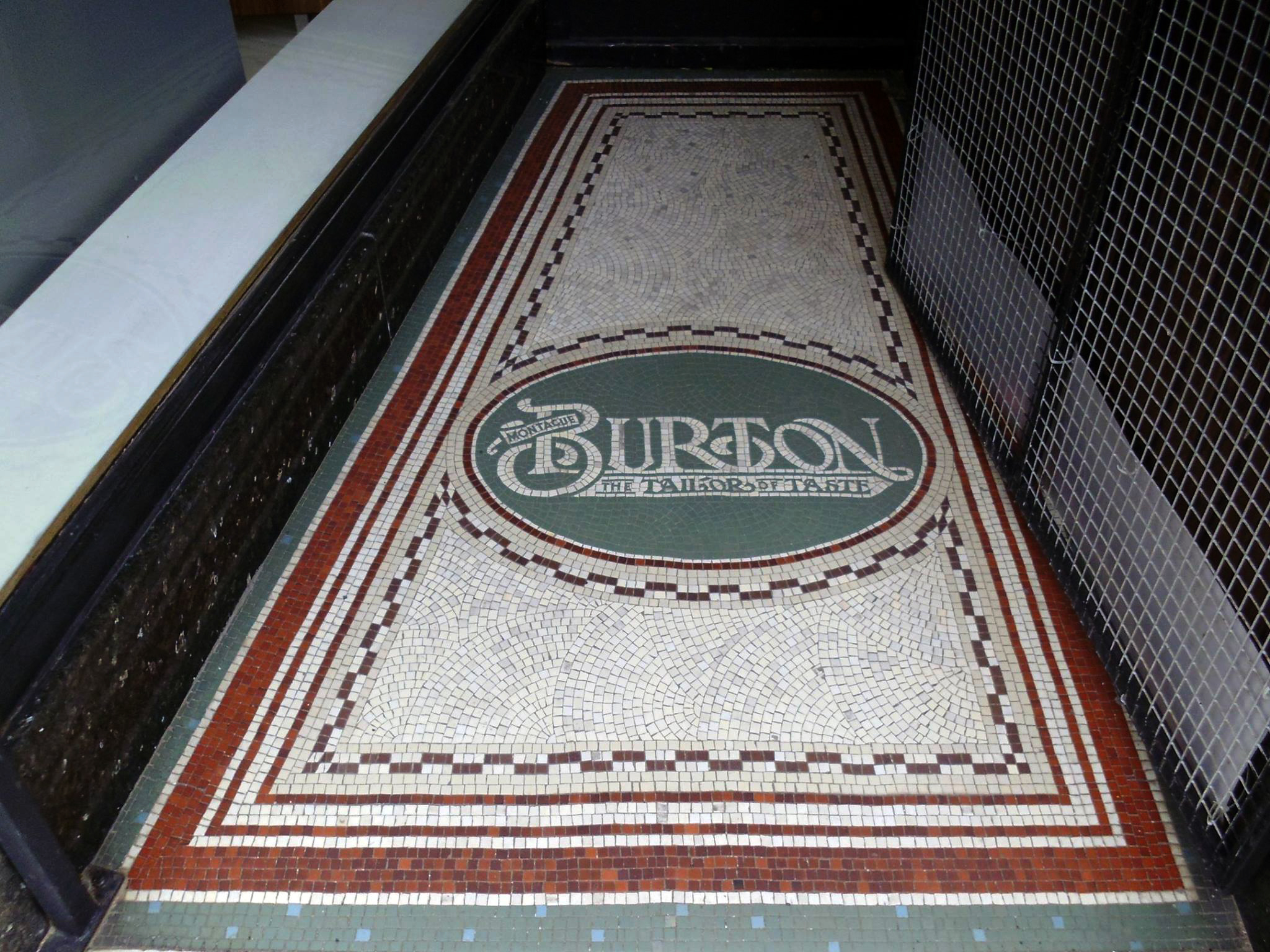
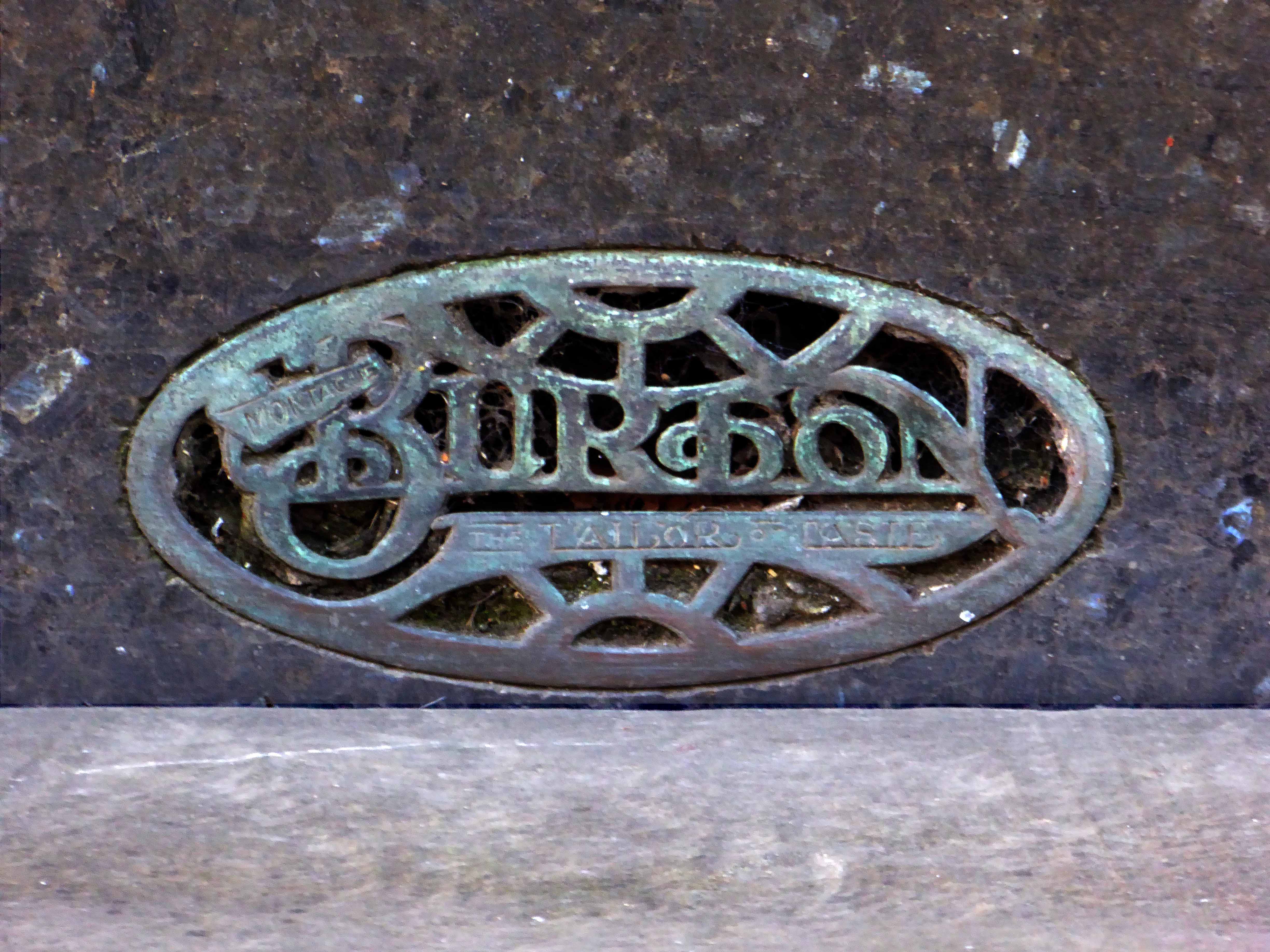
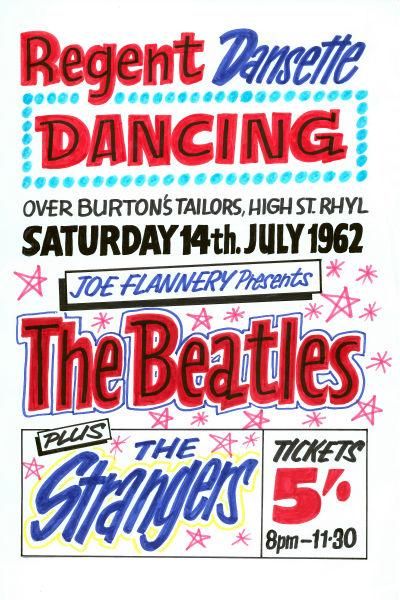
The group maintained a distinctive graphic style in labelling signage and advertisements.
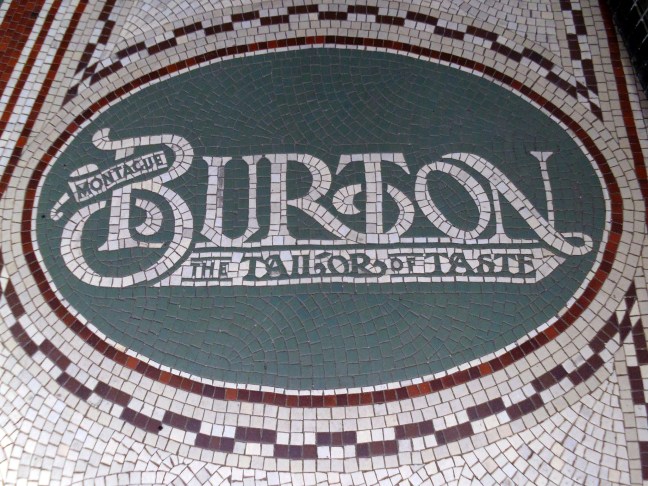
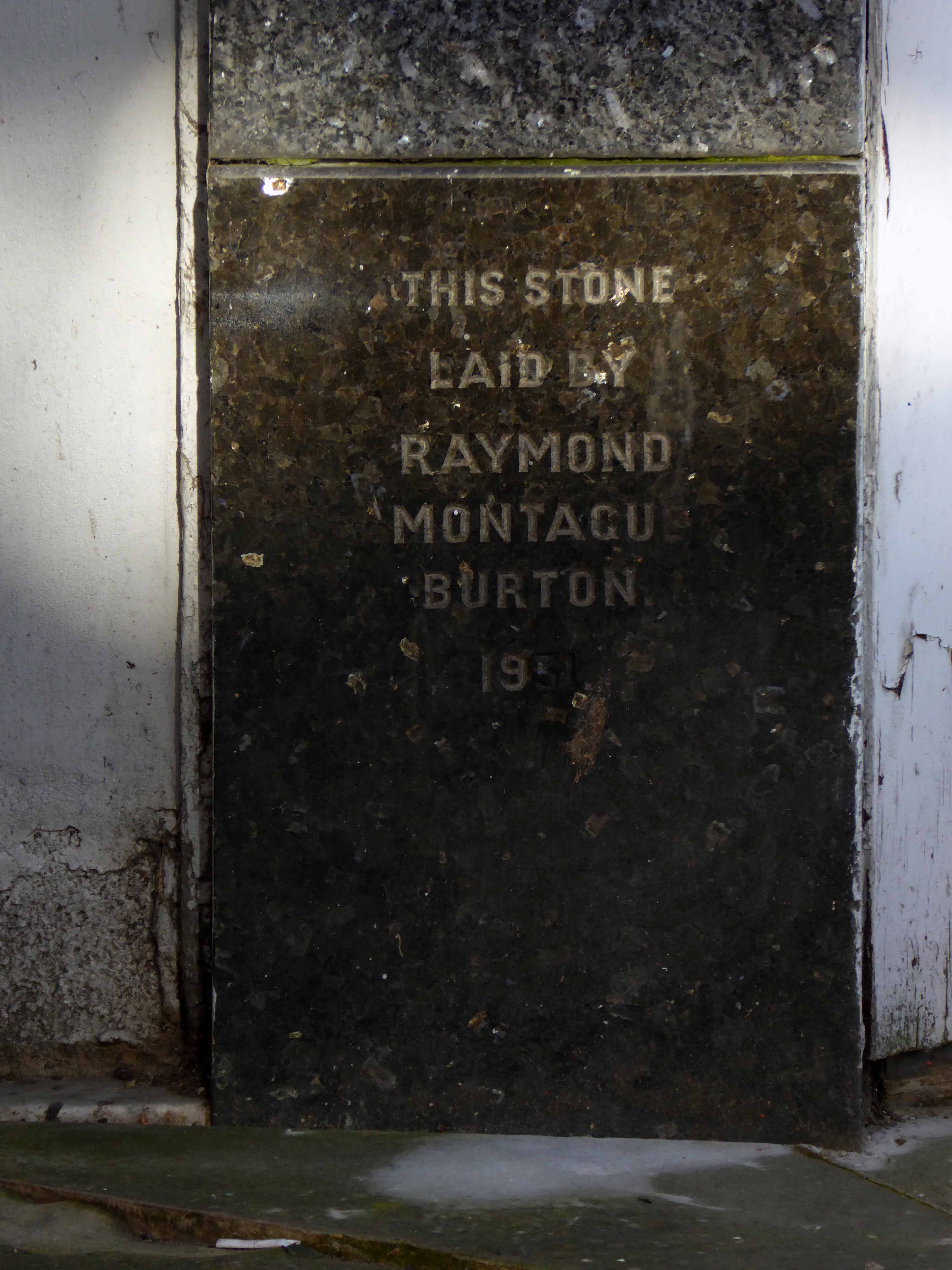
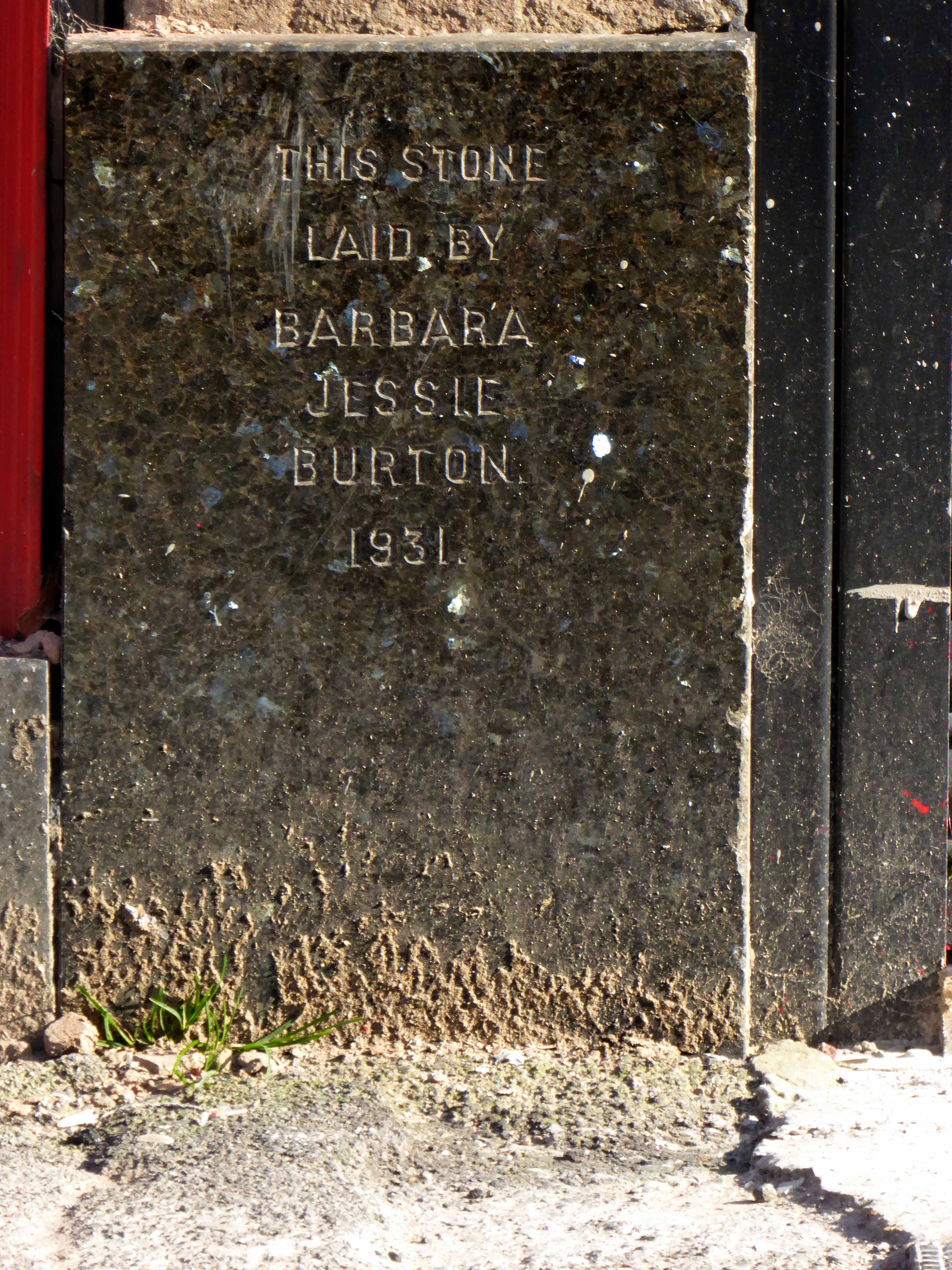
Often including ornate mosaic entrances, ventilation covers and obligatory dated foundation stones – as seen in this Ashton under Lyne branch.
Stores often housed dance halls or other social spaces.
In 1937 Burton’s architect, Nathaniel Martin, collaborated with the architects Wallis Gilbert & Partners on a subsidiary clothing works on the Great Lancashire Road at Worsley, near Manchester. Conceived as a Garden Factory and built in a modern style, this was dubbed ‘Burtonville Clothing Works’. It opened in October 1938 .
Where machinists worked on Ashton built Jones equipment.
Time changes everything and the inception of off the wall unisex disco clothing saw the made to measure suit fall into a chasm of loon pants and skinny rib grandad vests.
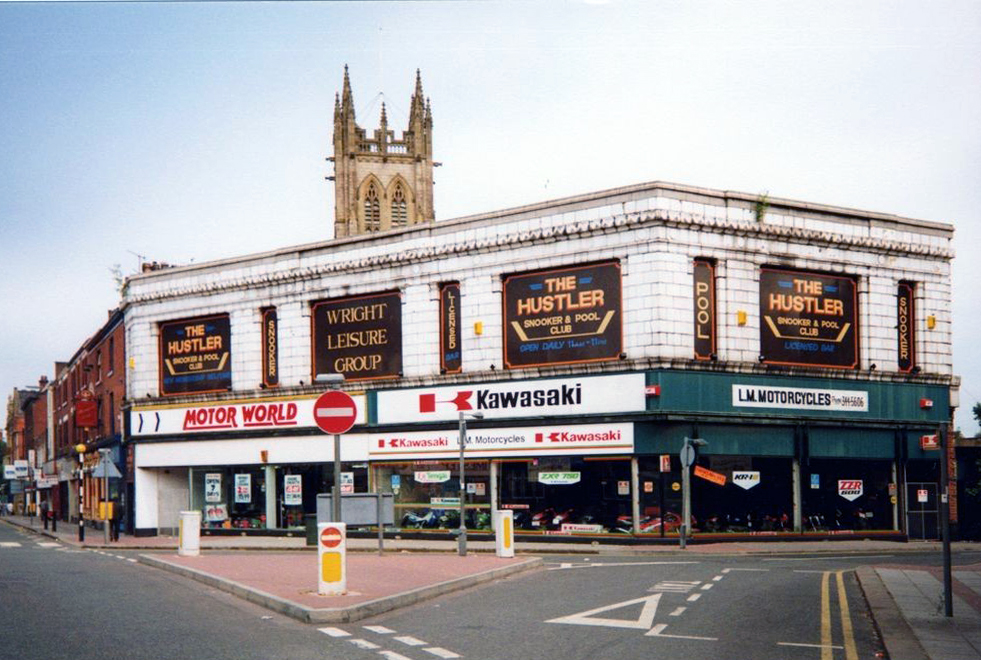
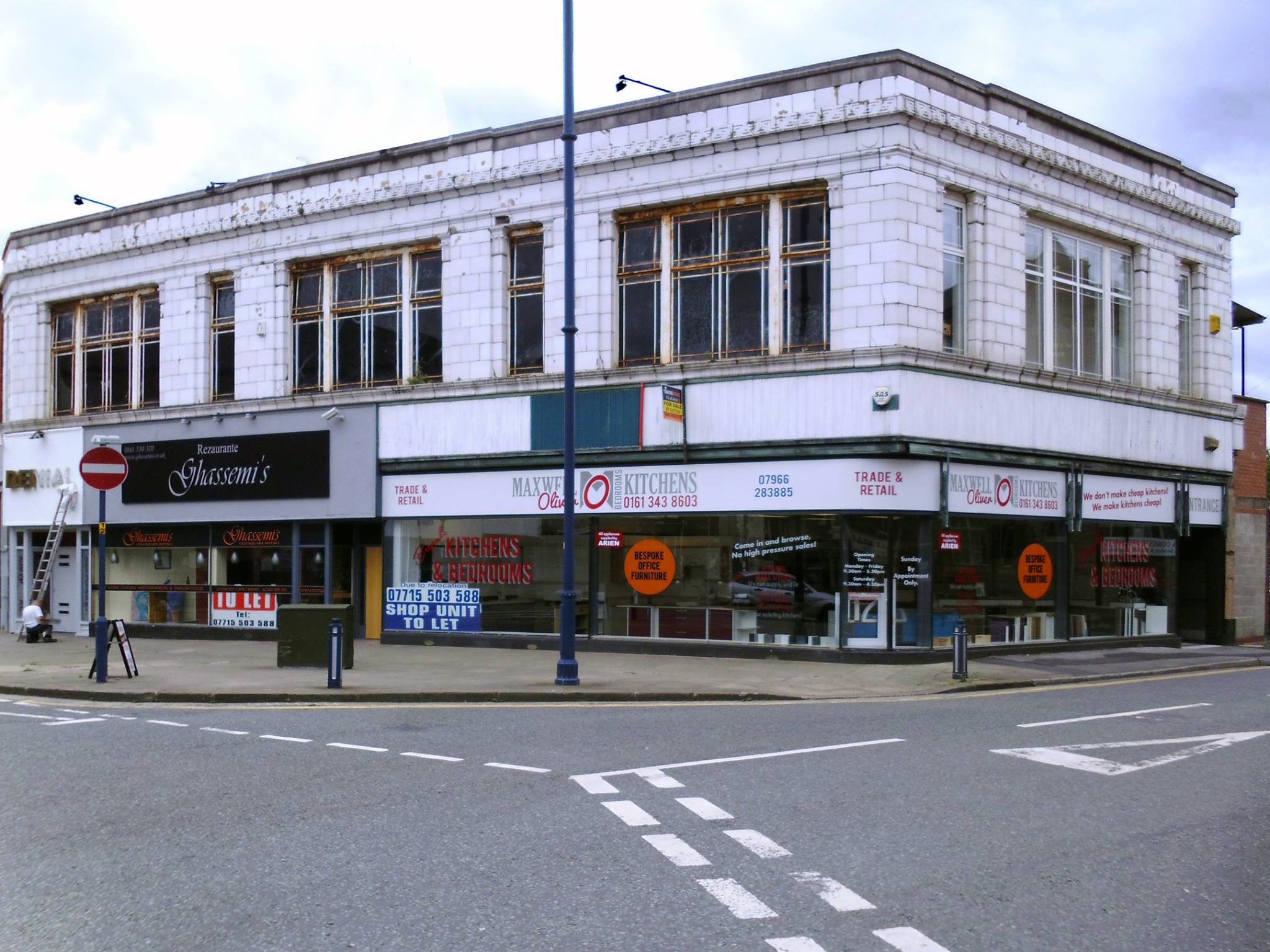
The Ashton branch becomes a motorcycle then fitted kitchen showroom, topped off with a succession of clubs and various other modern day leisure facilities.
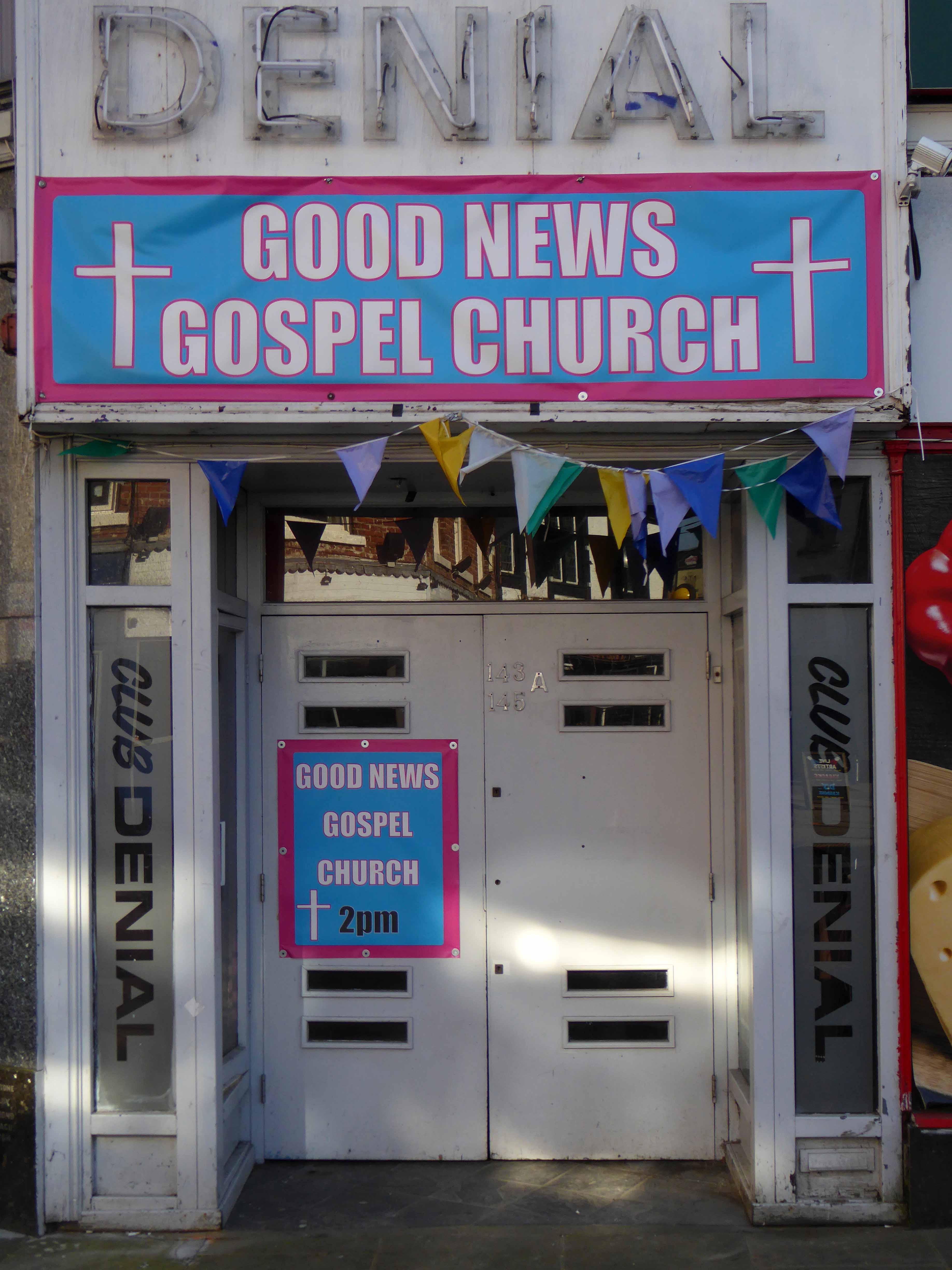
Currently home to the Warsaw Delicatessen and Good News Gospel Church
Formerly Club Denial.
This is the tale of the modern high street grand ideas, architectural grandeur, entrepreneurialimmigrants, style and fashion – disappearing in a cloud of vinyl signage and fly by night operations. Though if you look carefully the pale white shadows of Burton’s are still there in one form or another, however ghostly.
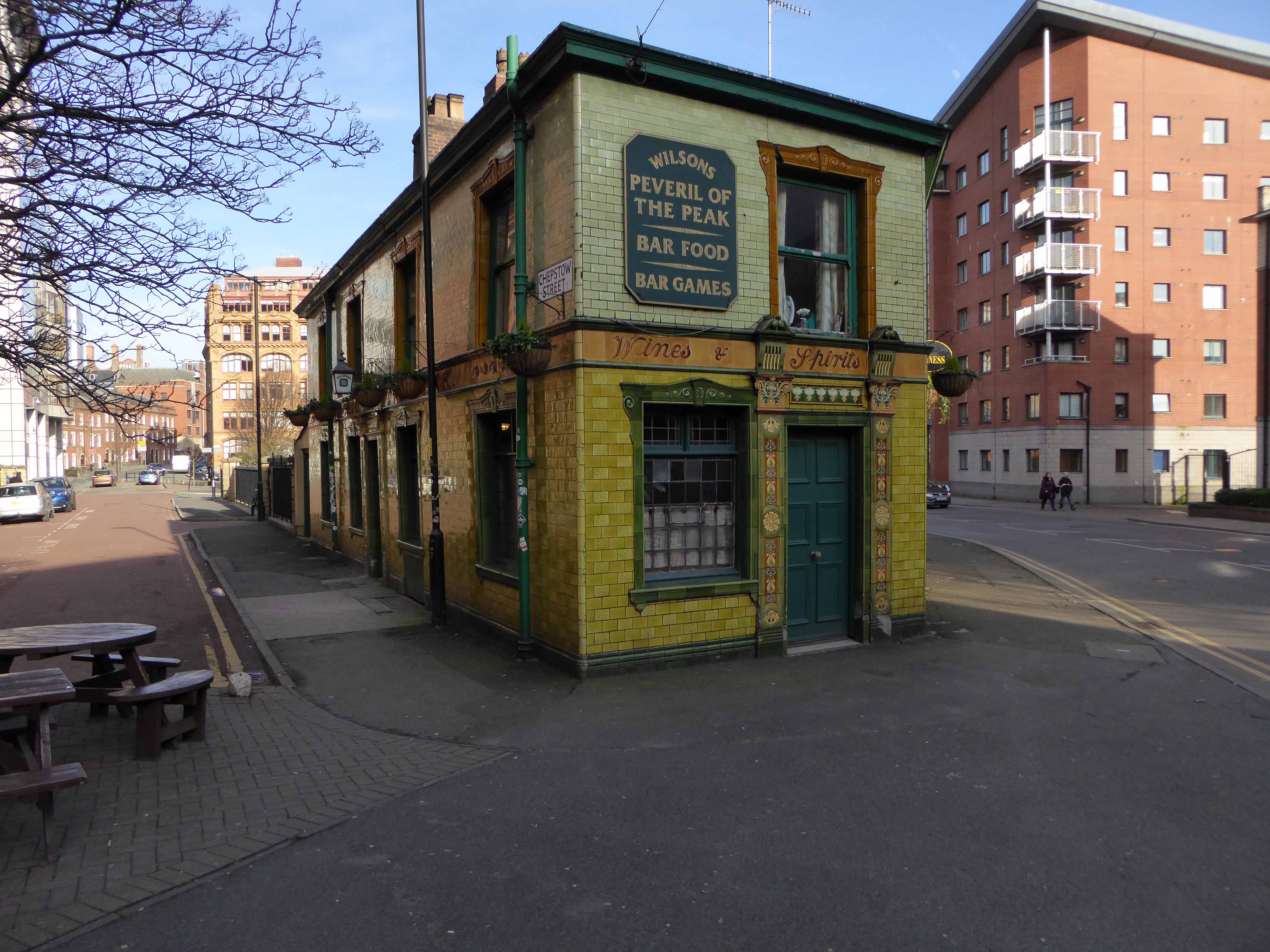
To begin at the beginning or thereabouts, Sir Walter Scott publishes his longest novel Peveril of the Peak in 1823.
Julian Peveril, a Cavalier, is in love with Alice Bridgenorth, a Roundhead’s daughter, but both he and his father are accused of involvement with the Popish Plot of 1678.
Most of the story takes place in Derbyshire, London, and on the Isle of Man. The title refers to Peveril Castle in Castleton, Derbyshire.
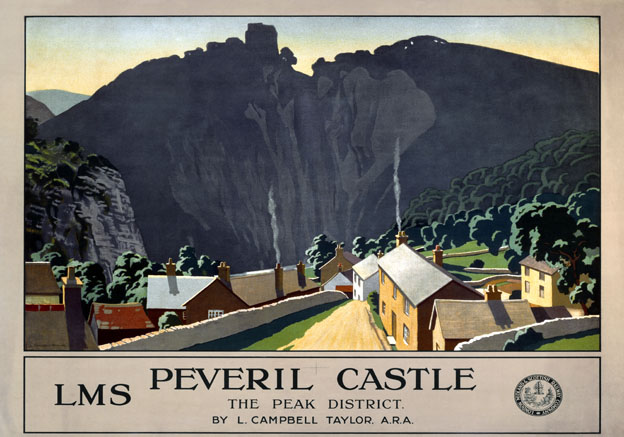
Poster produced in 1924 for London Midland & Scottish Railway – artwork by Leonard Campbell Taylor who was born in 1874 in Oxford and went to the Ruskin School of Art.
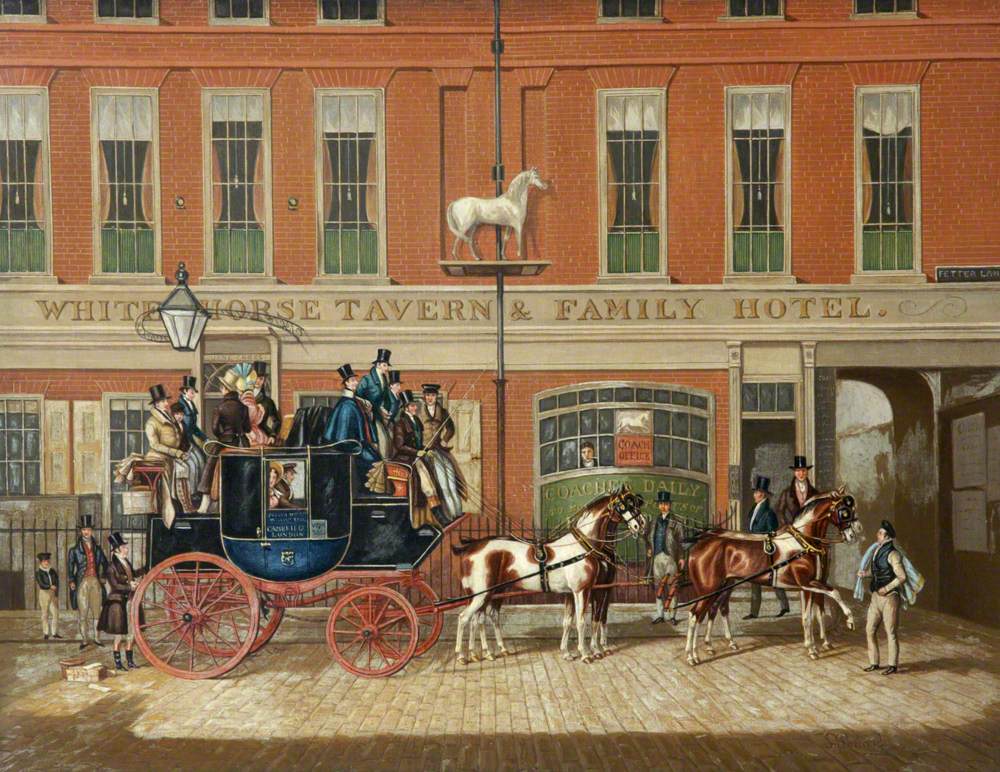
The pub also shares its name with the London to Manchester stagecoach.
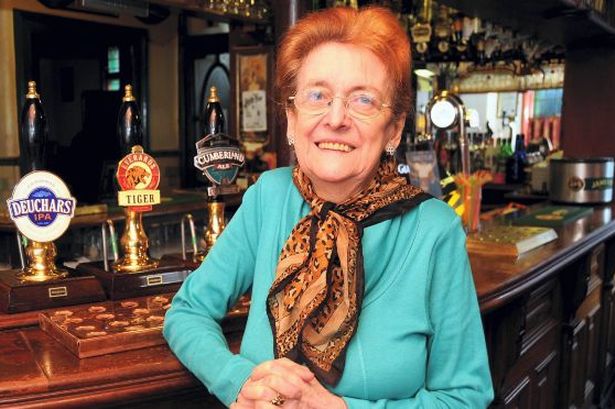
Which is all very well as the pub is largely known locals as The Pev – ably run since January 1971 by Nancy Swanick.
Nancy and son Maurice, who runs the cellar, also say they have shared the pub with a paranormal presence over the years.
Customers have seen pint glasses levitate off the bar and fall into the glass-wash,it’s like having our own ghostly helper!
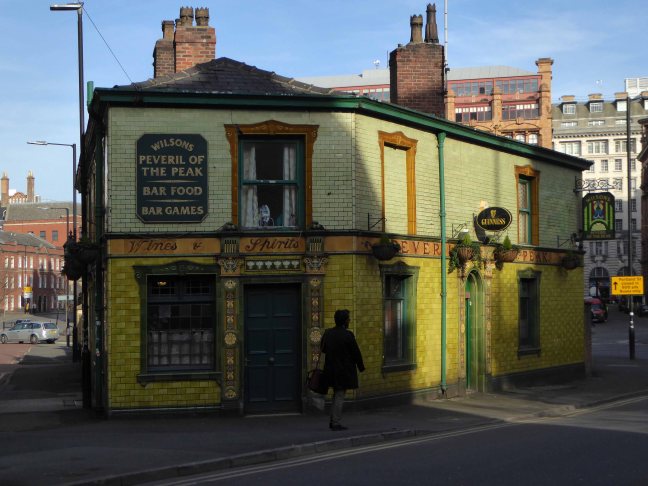
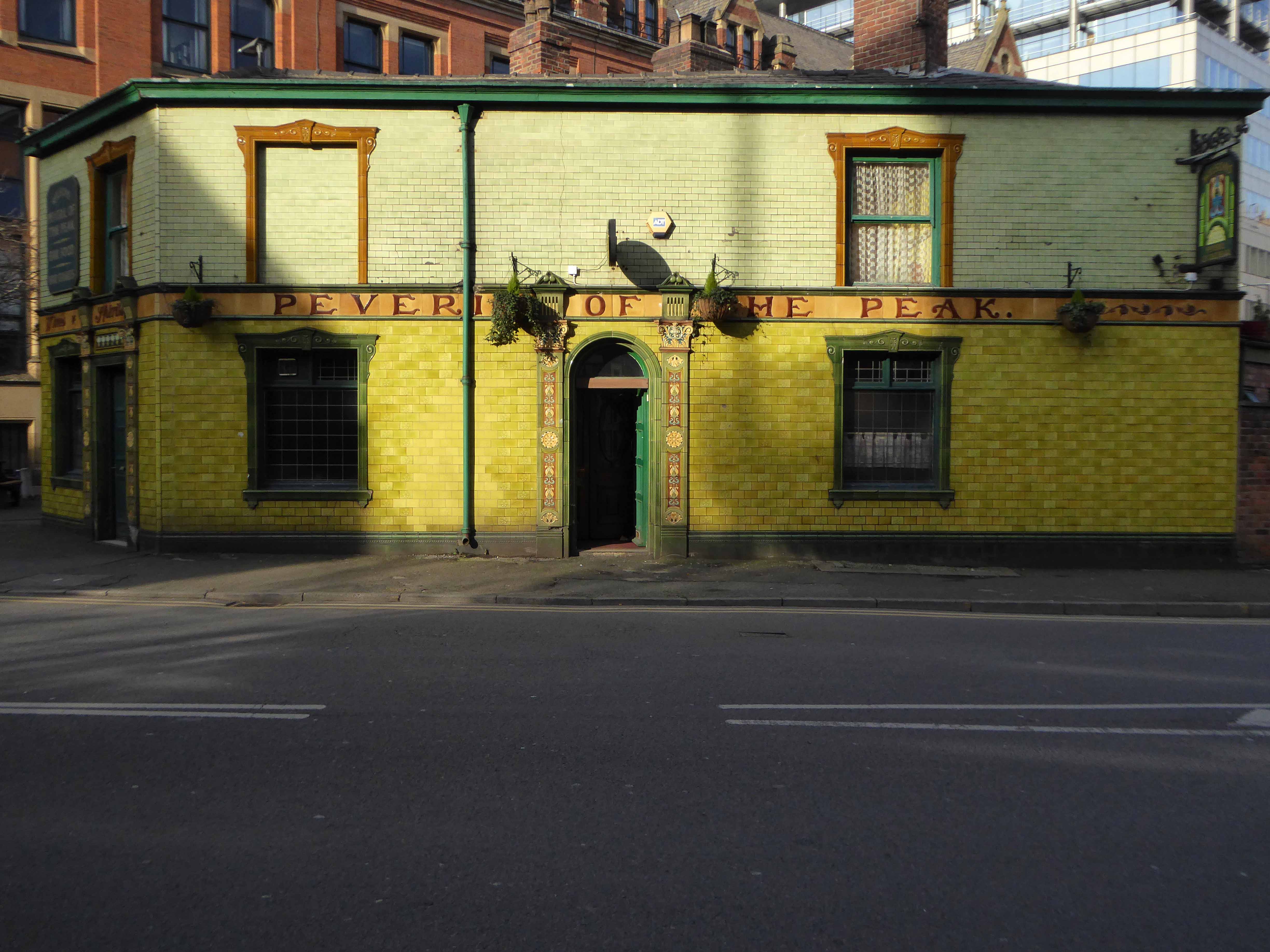
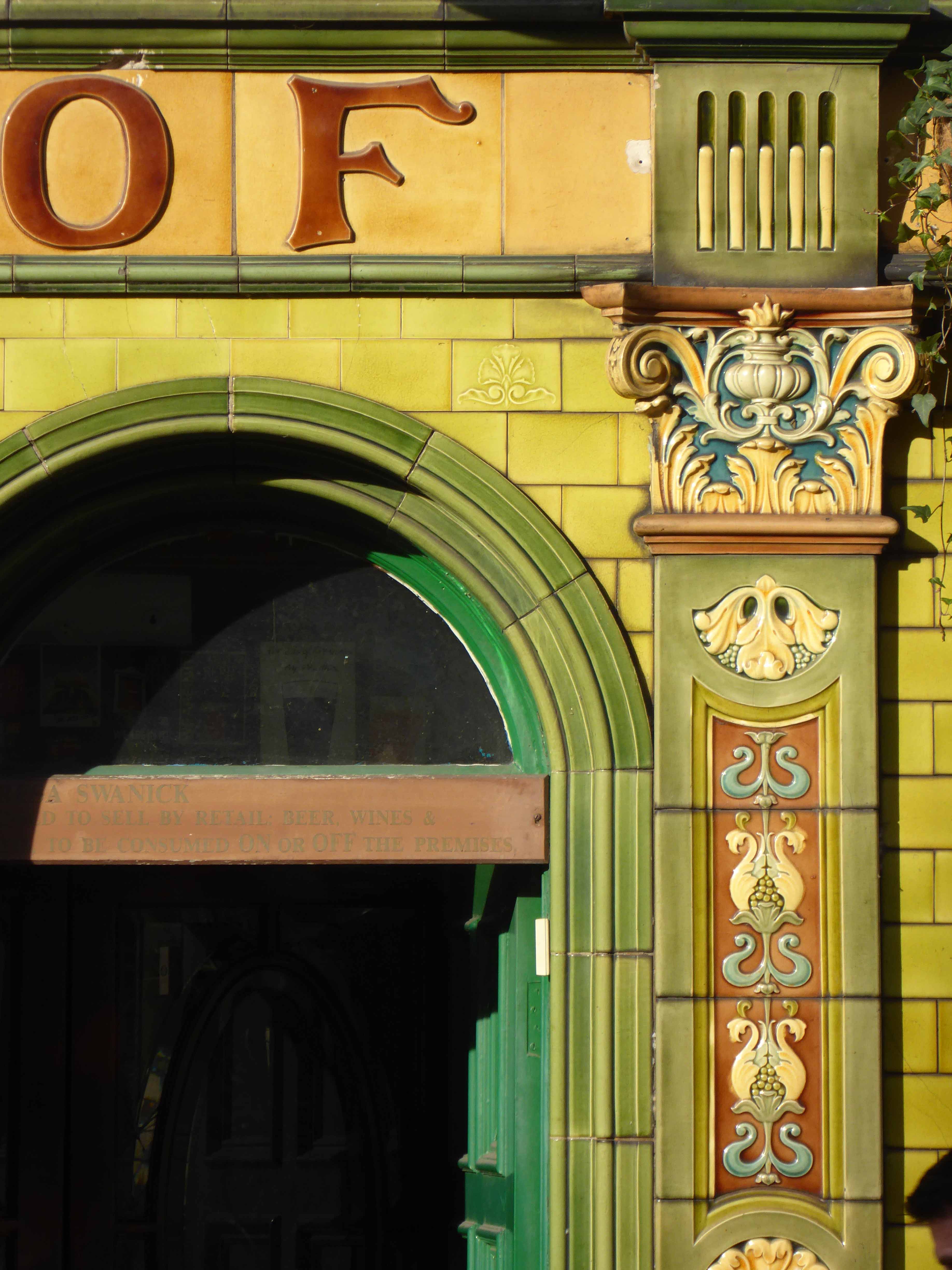
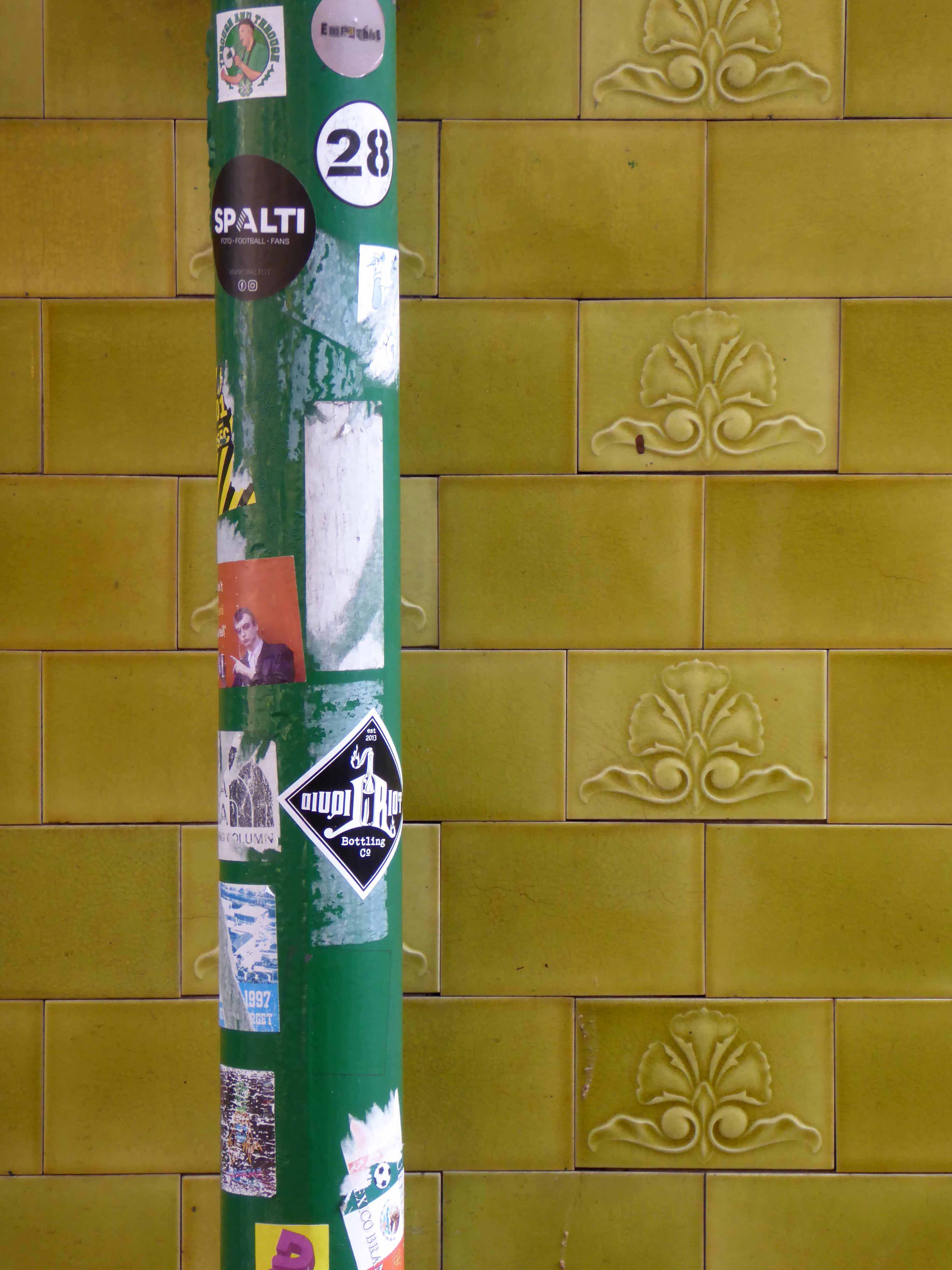
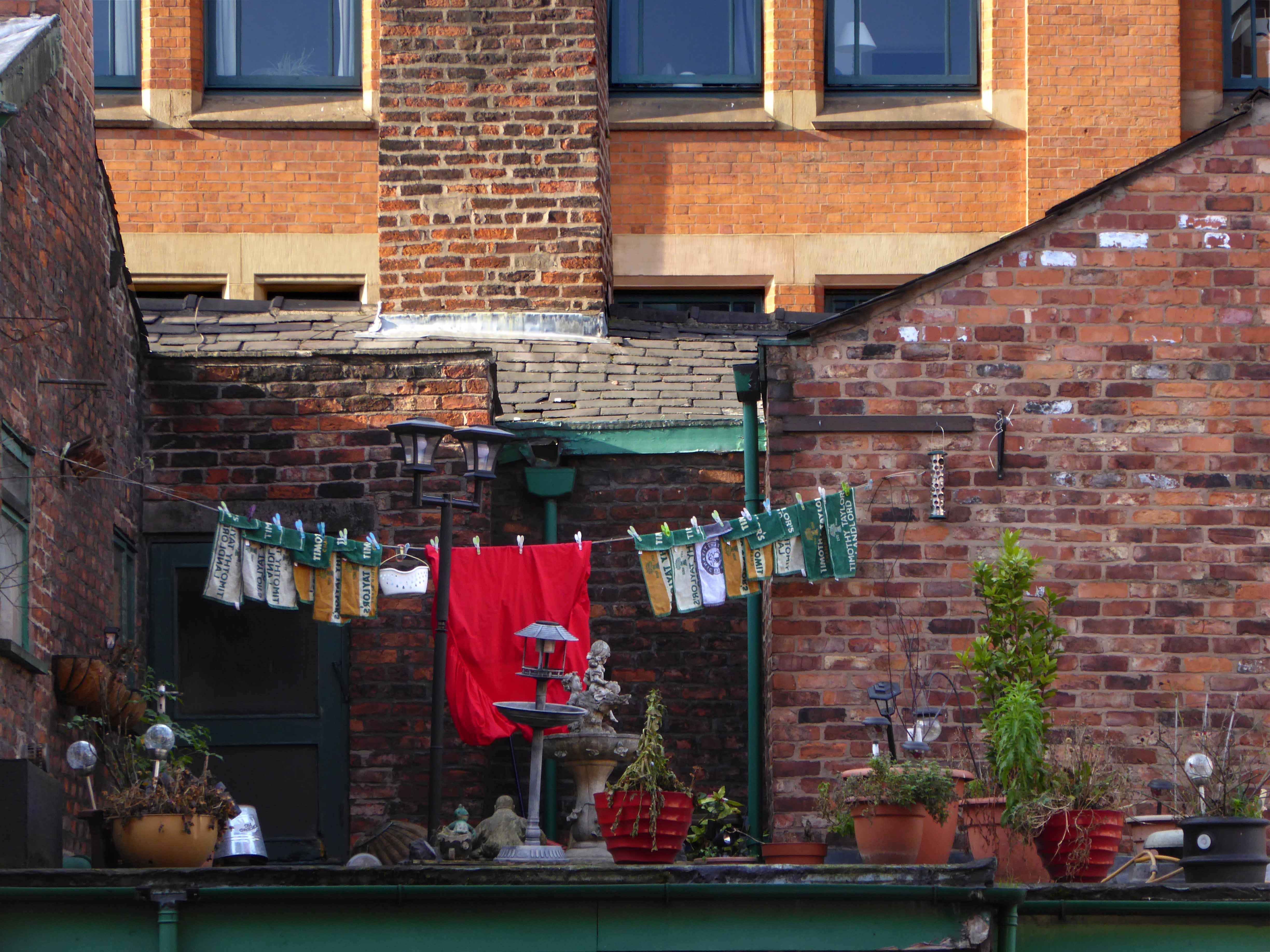
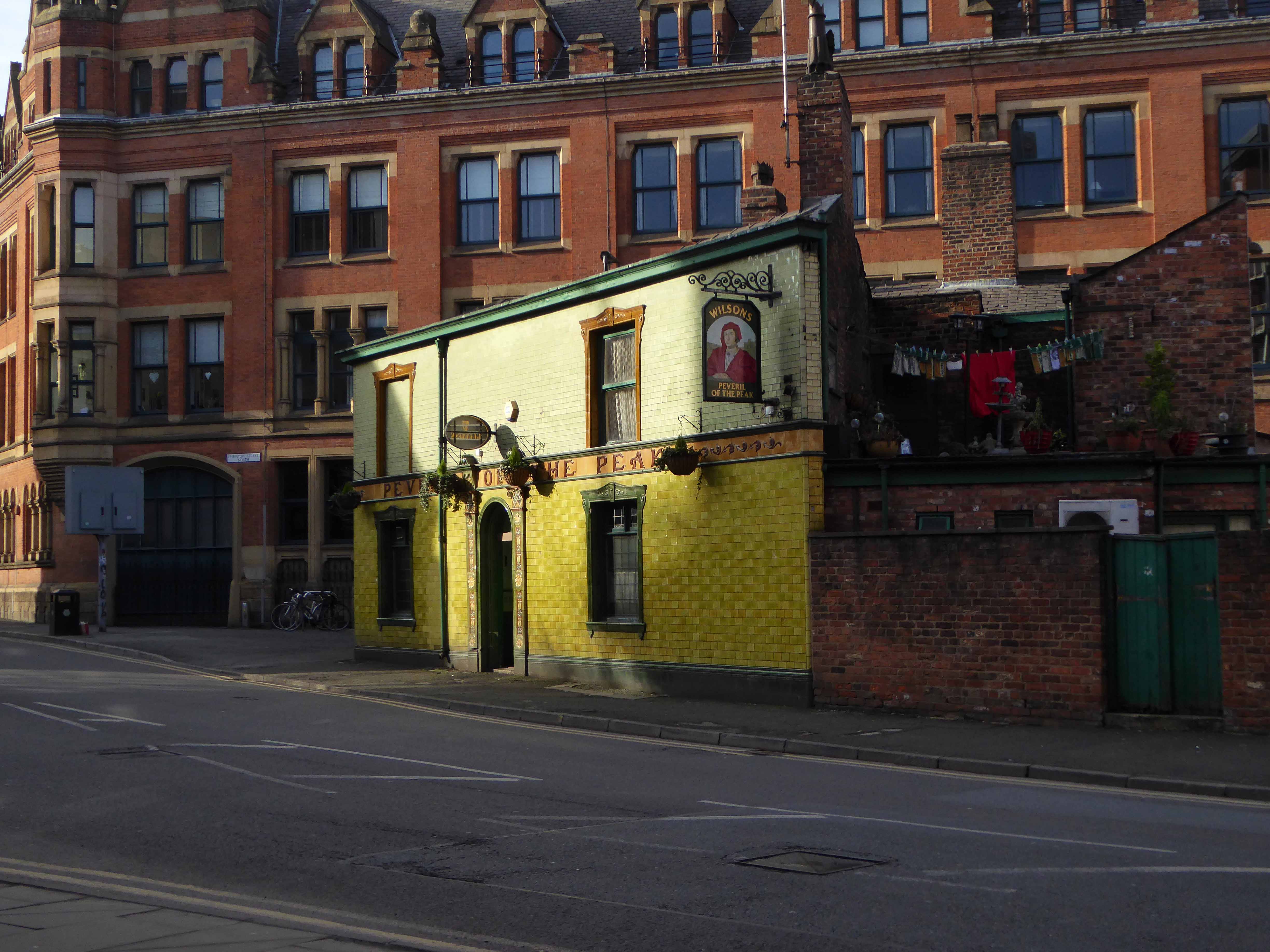
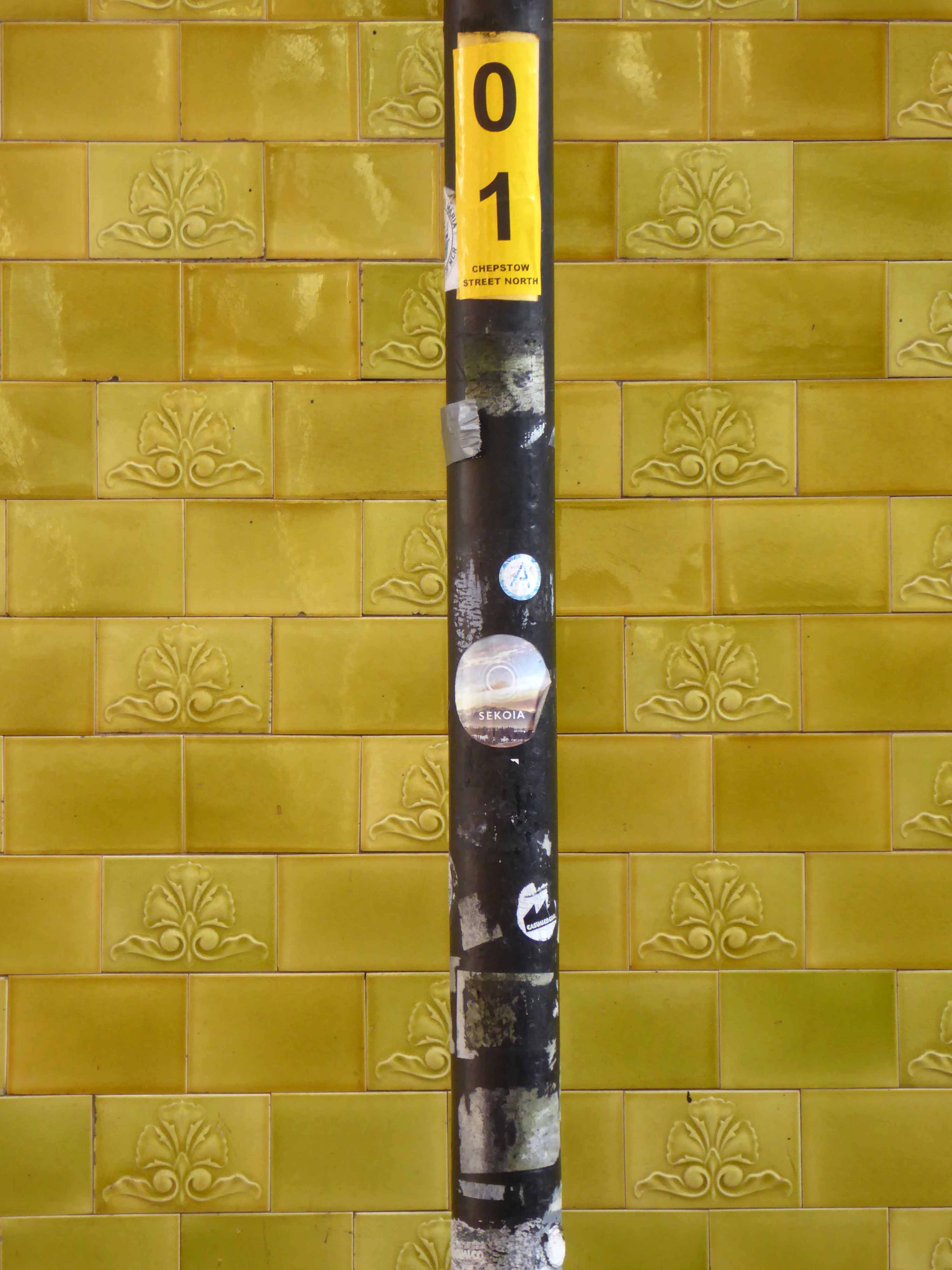
The pub was Grade II listed in June 1988 – a fine tiled exterior and 1920’s interior refit largely untouched, it stands distinctly unattached to anything, decidedly somewhere betwixt and between Chepstow Street and Great Bridgwater Street.
Originally a Wilson’s house – the brewery lantern survives over the door.
I’ve taken a drink or two in here over the past thirty or so years, played pool and table football, watched the half time Hallé musicians swish in and out for a swifty.
I’ve been to the Barbican before, wandering the walkways without purpose.
This is a whole new box of tiles, the search for a re-sited mural, a first time meeting with what would seem at once like an old and well-loved friend.
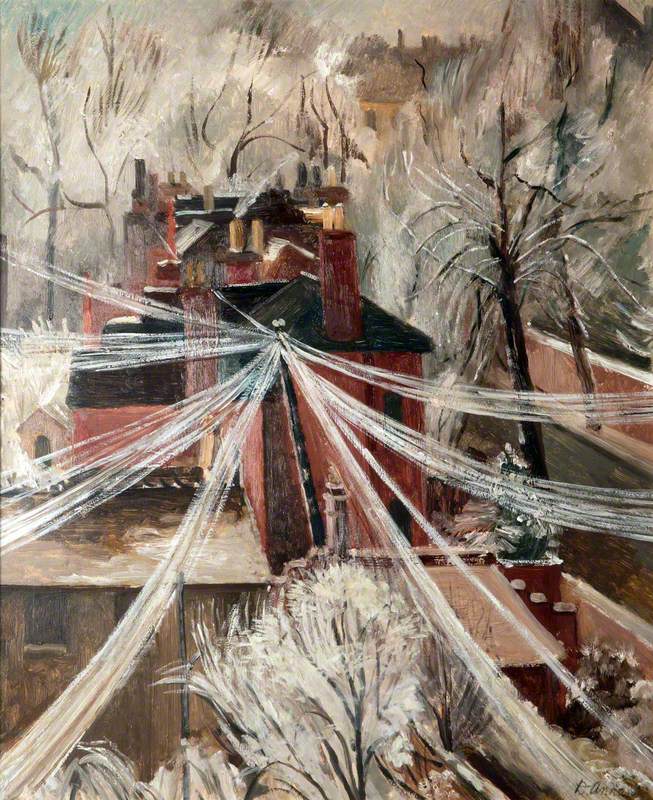
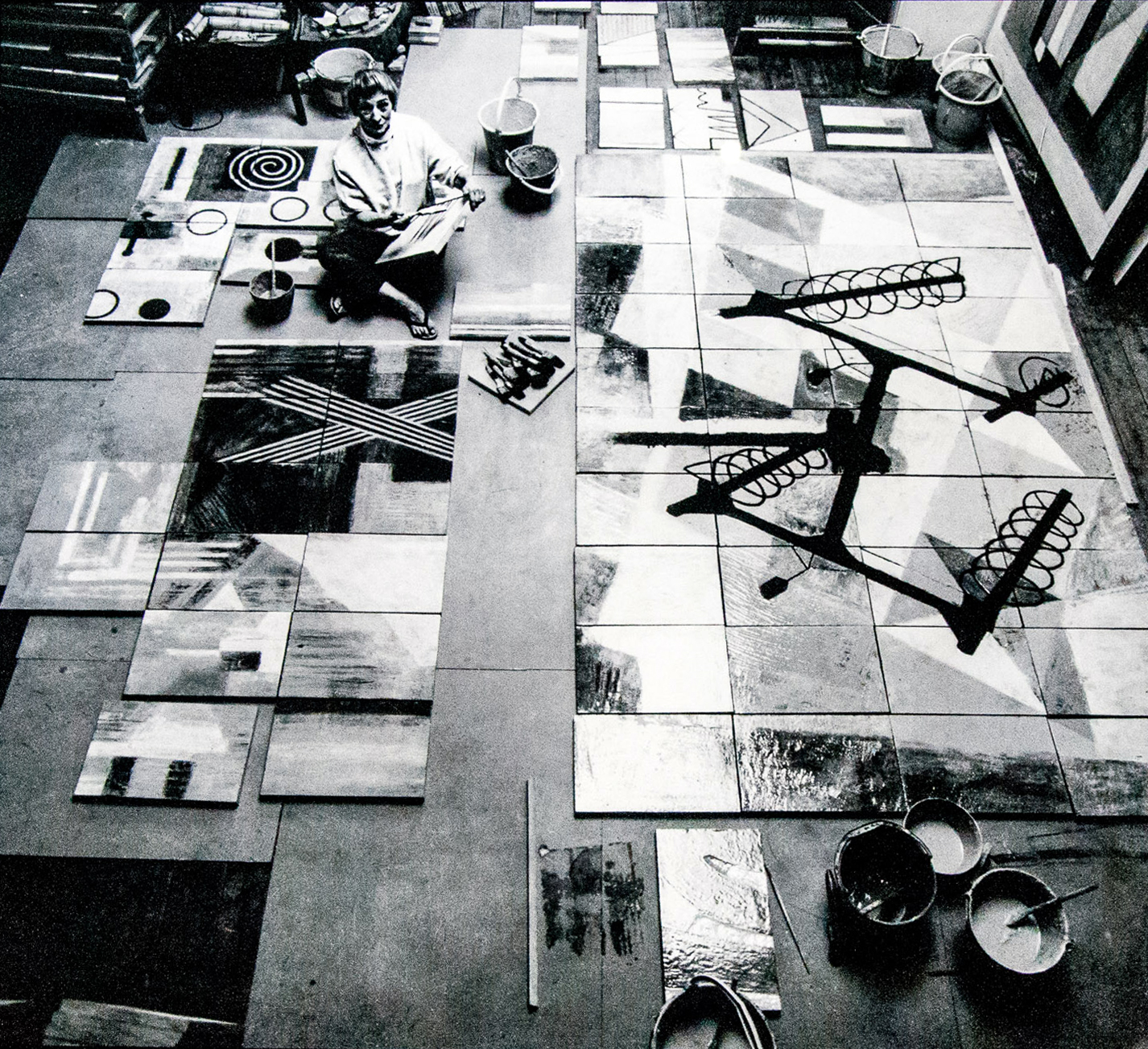
Dorothy Annan20 January 1900 – 28 June 1983
Was an English painter, potter and muralist, married to the painter and sculptor Trevor Tennant. She was born in Brazil to British parents and was educated in France and Germany.
Christmas 1944 – Manchester Art Gallery
Annan’s paintings are in many national collections, she is also known for her tile murals, many of which have been destroyed in recent decades. Only three of her major public murals are believed to survive, the largest single example, the Expanding Universe at the Bank of England, was destroyed in 1997.
Gouache Sketch
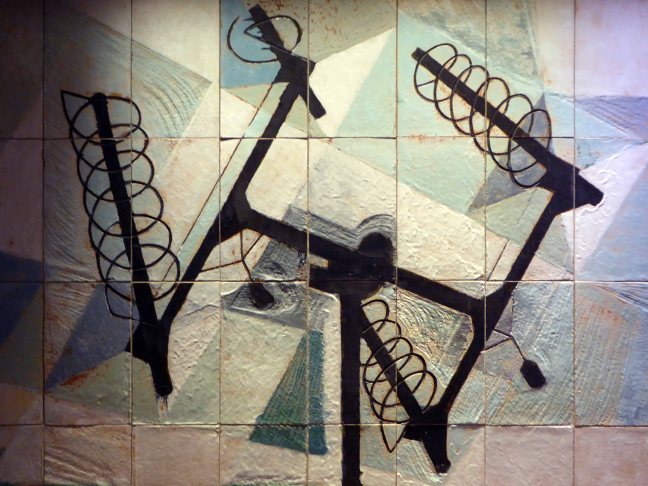
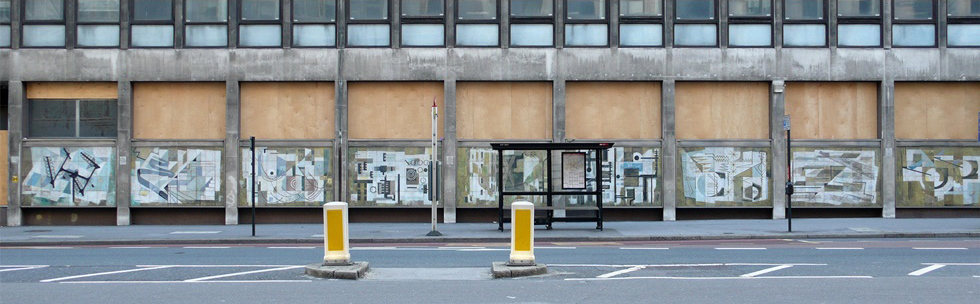
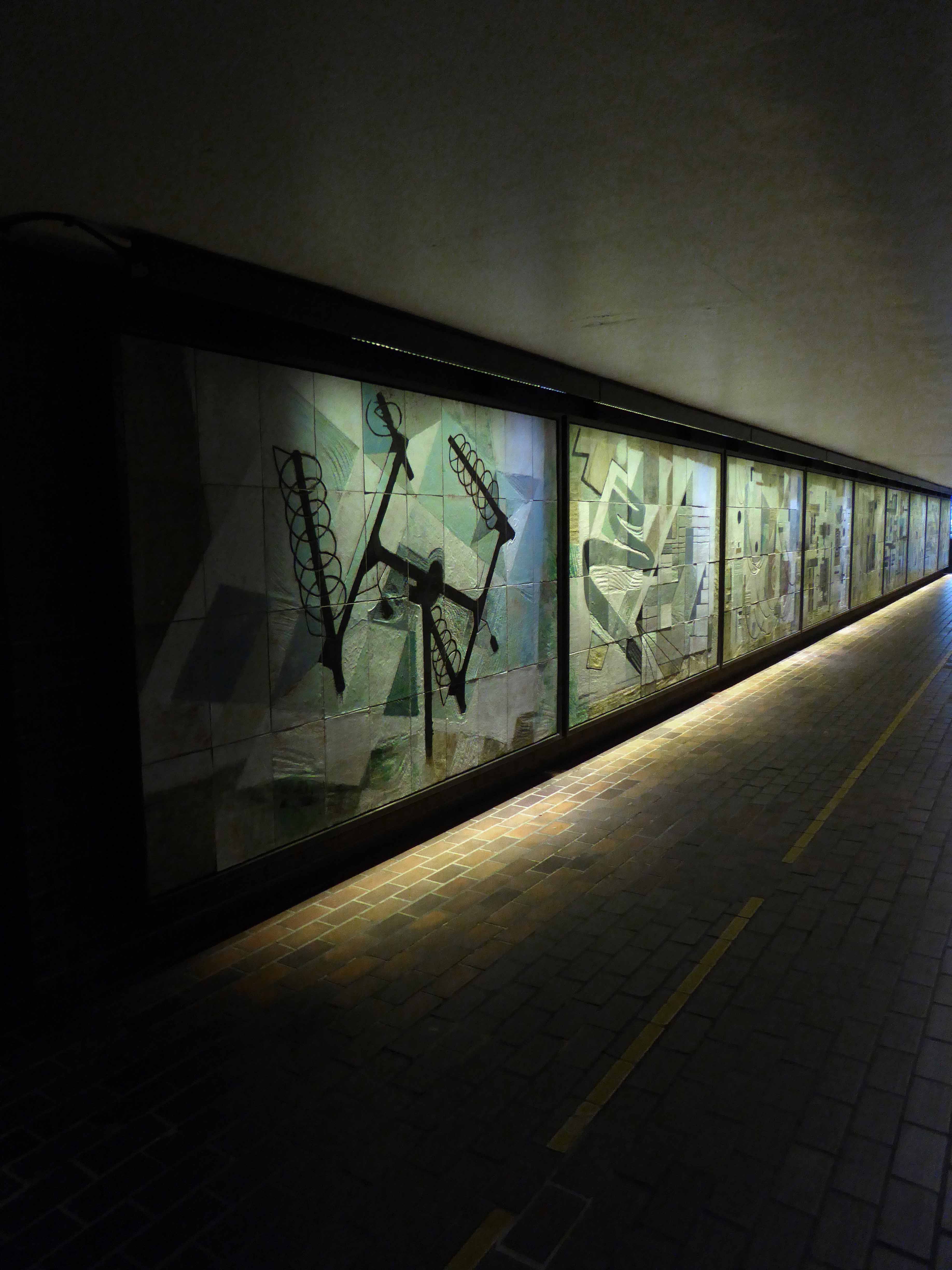
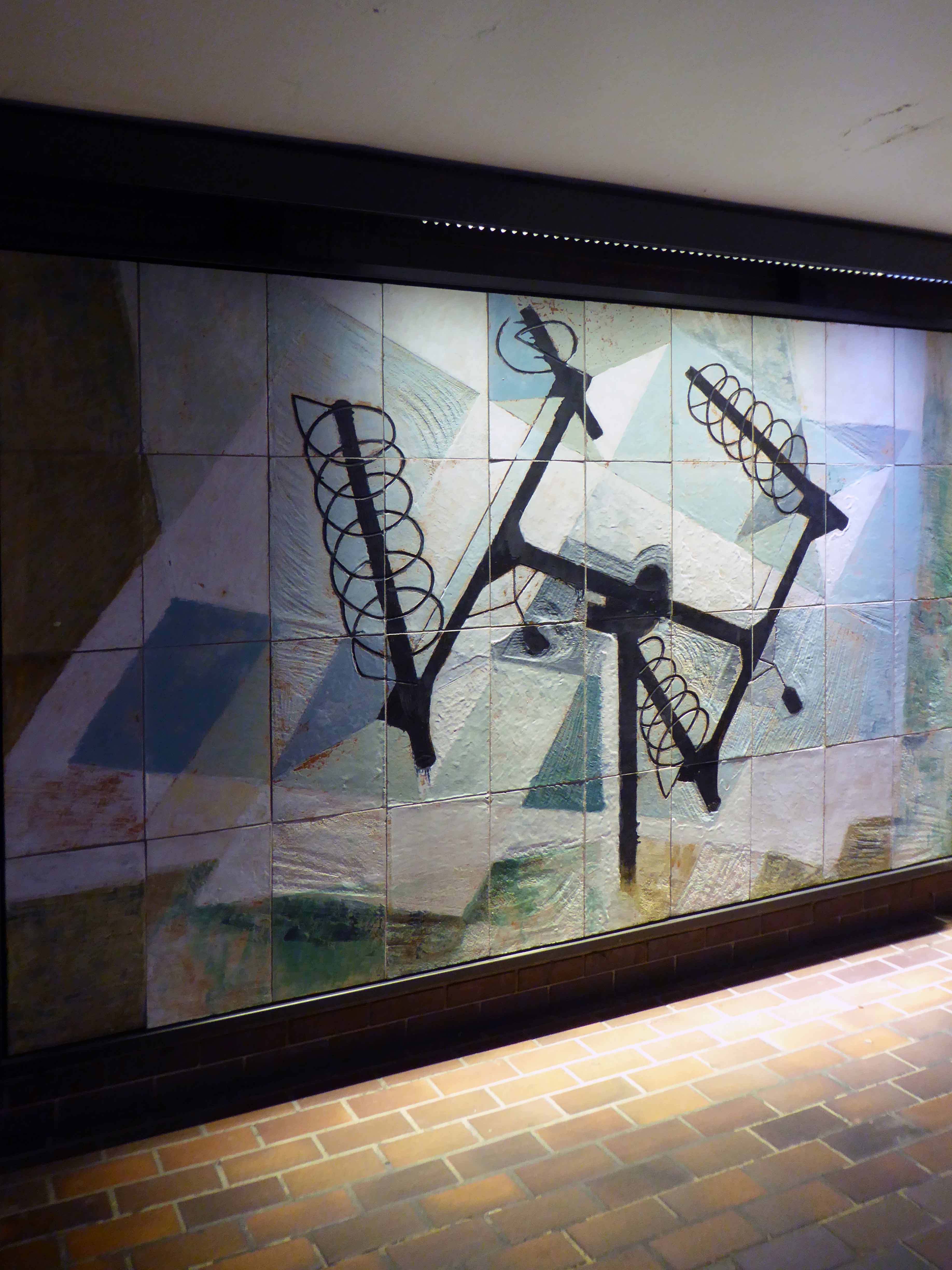
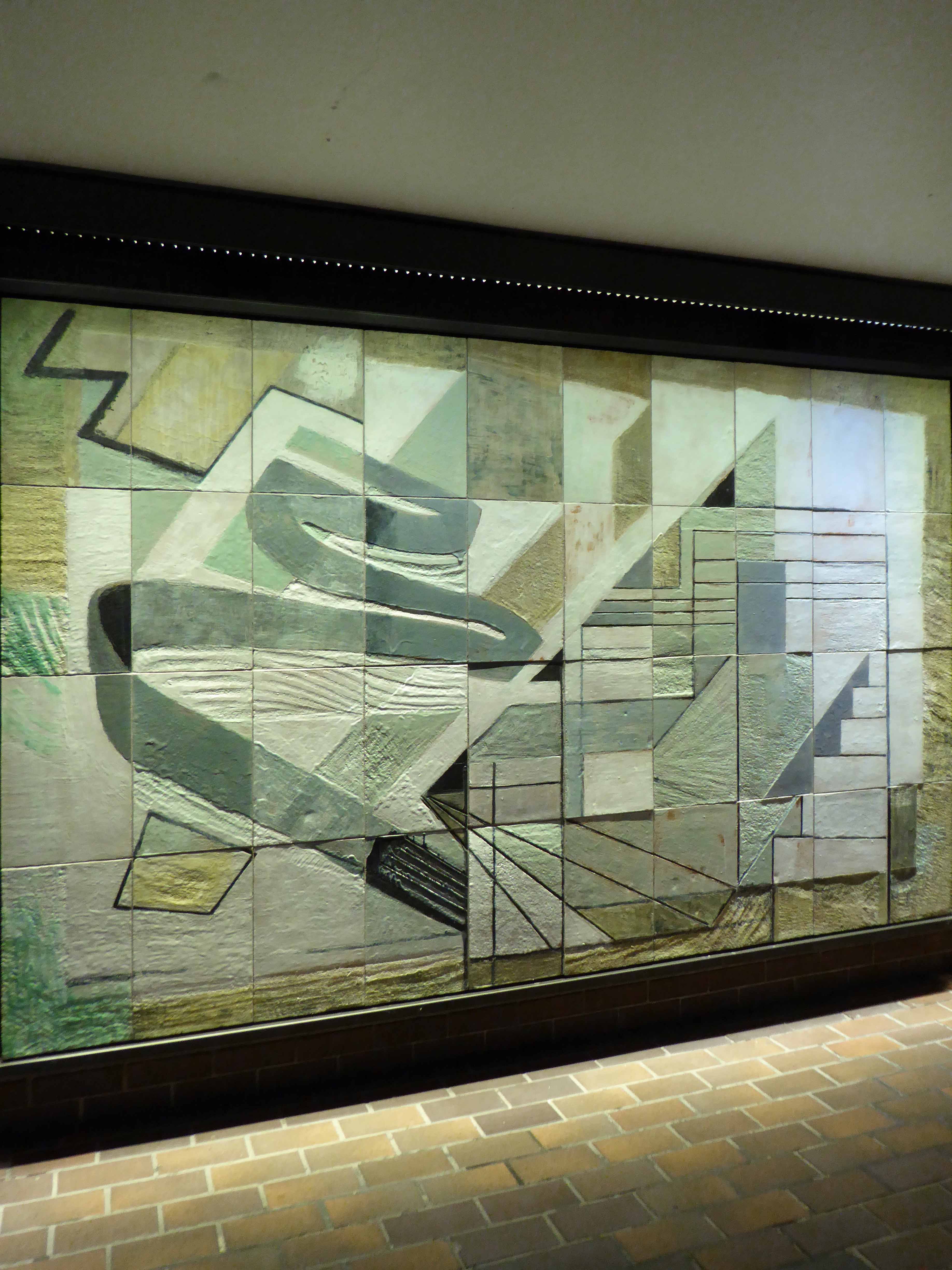
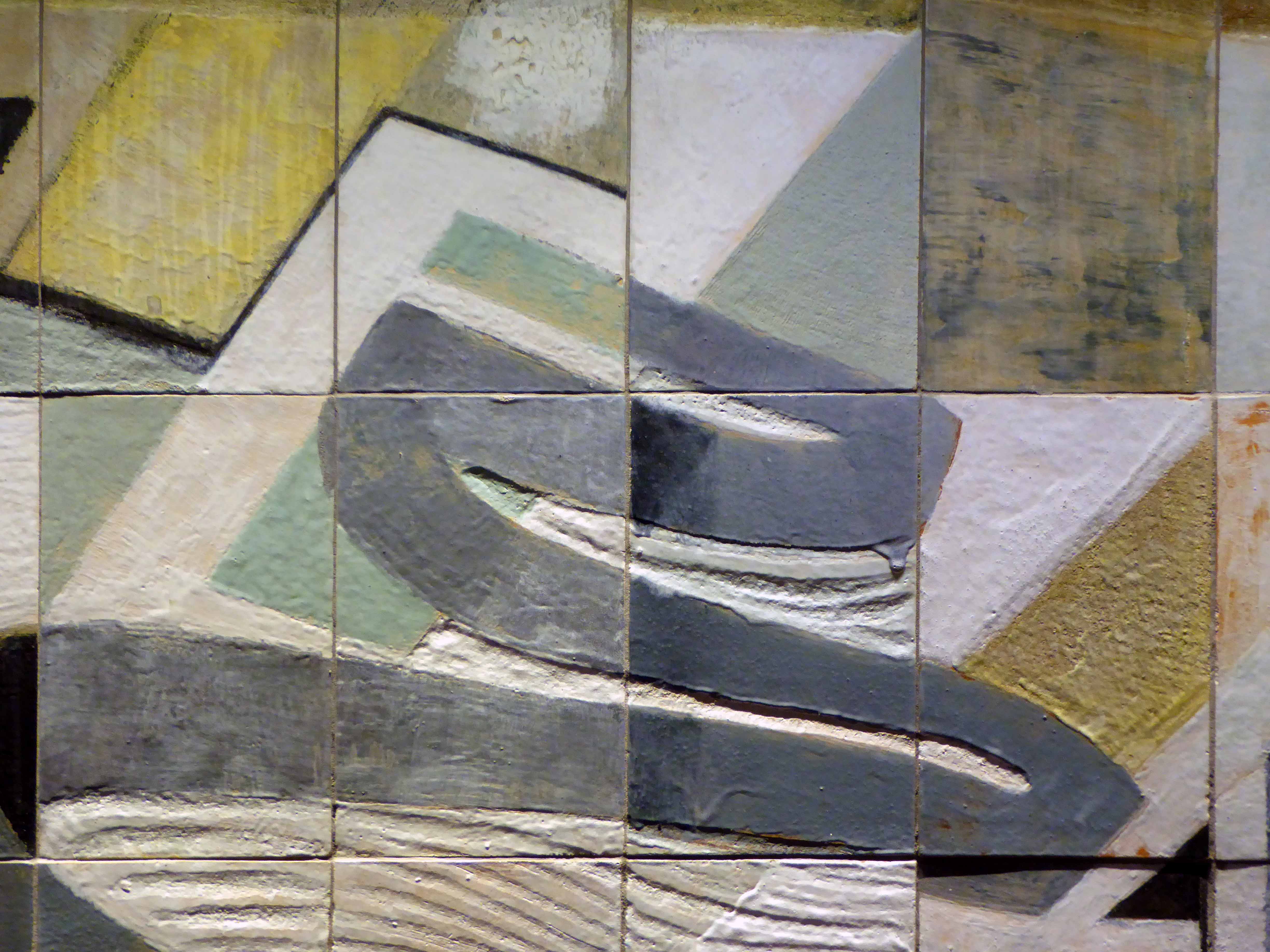
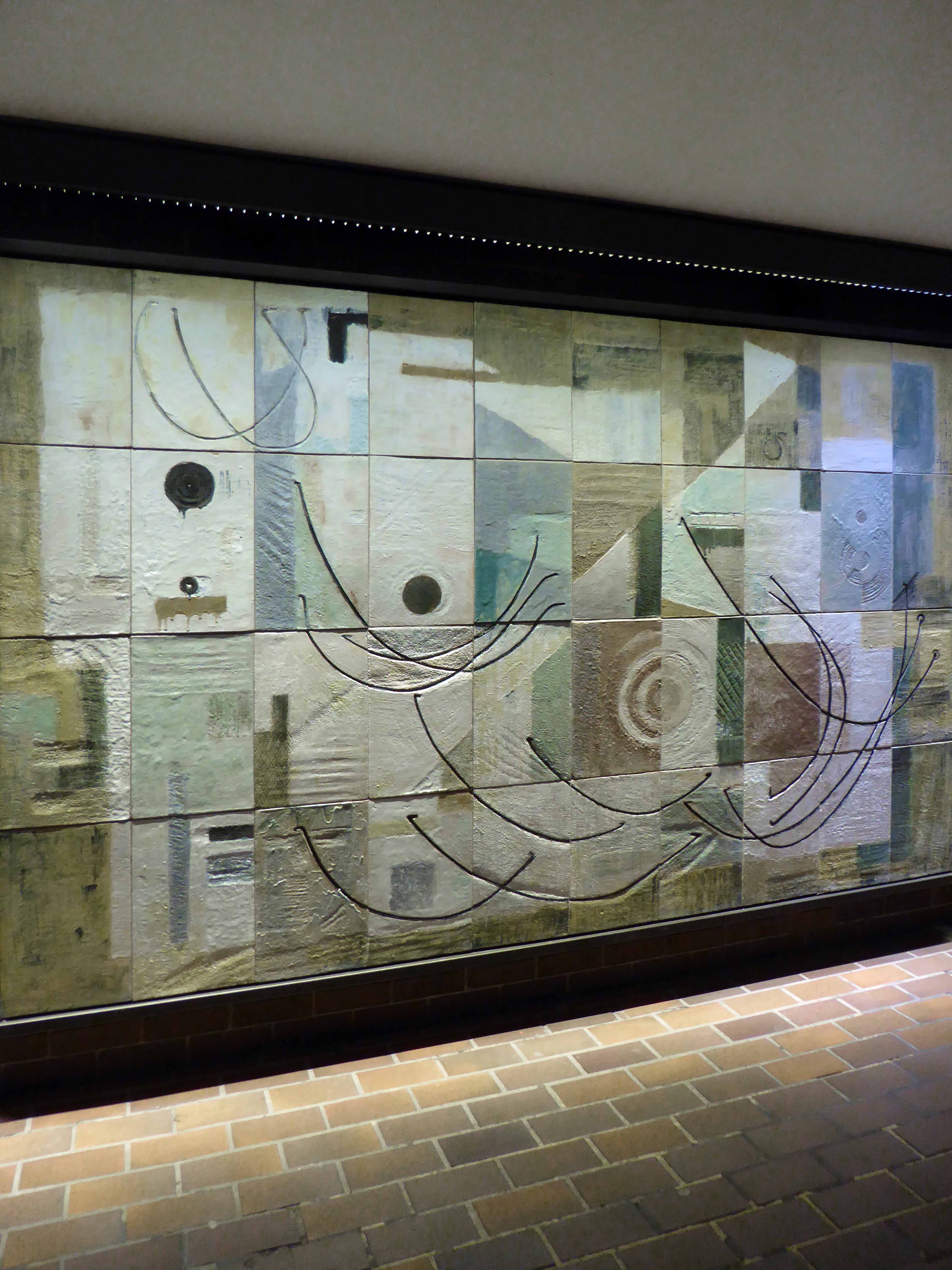
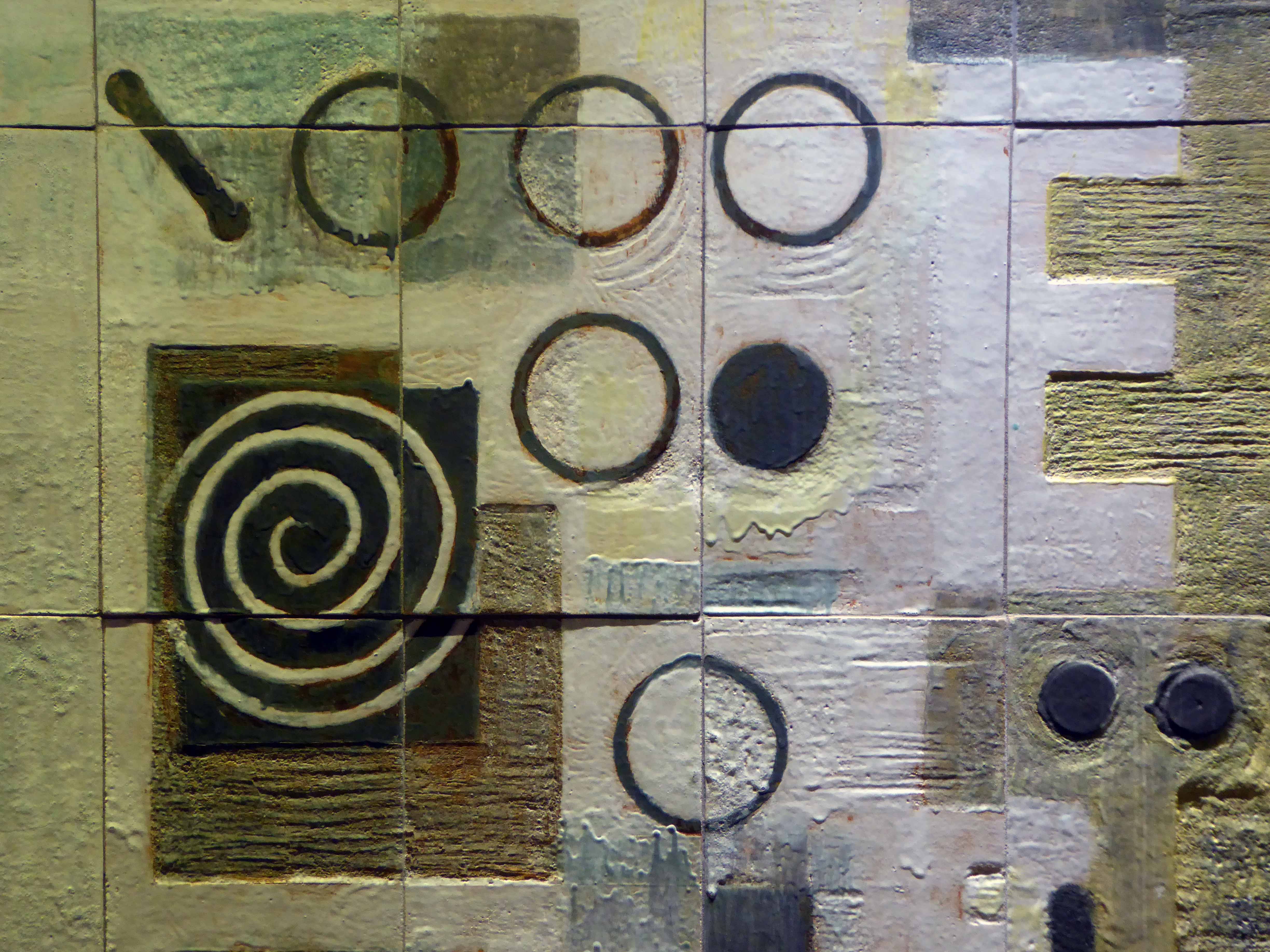
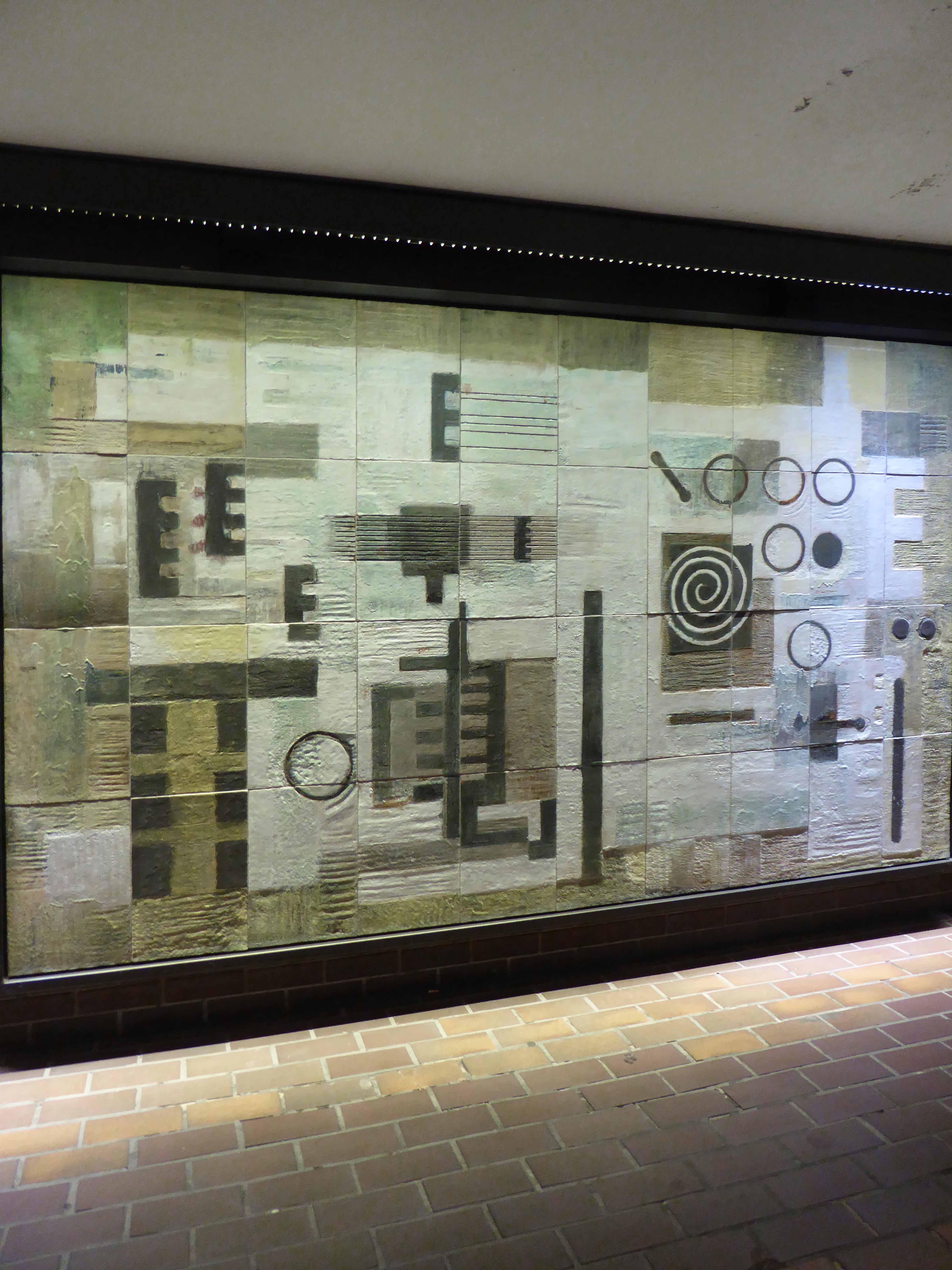
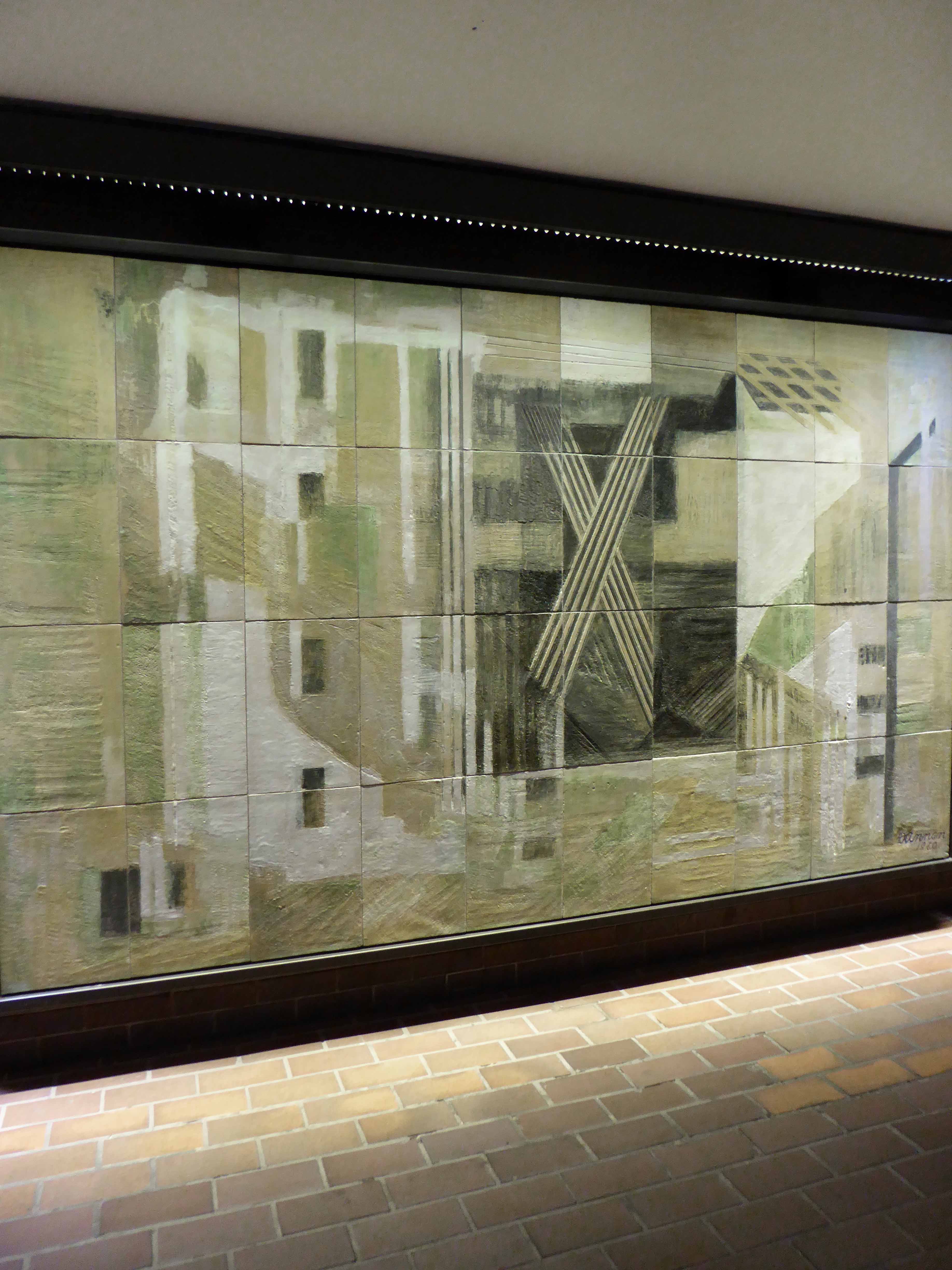
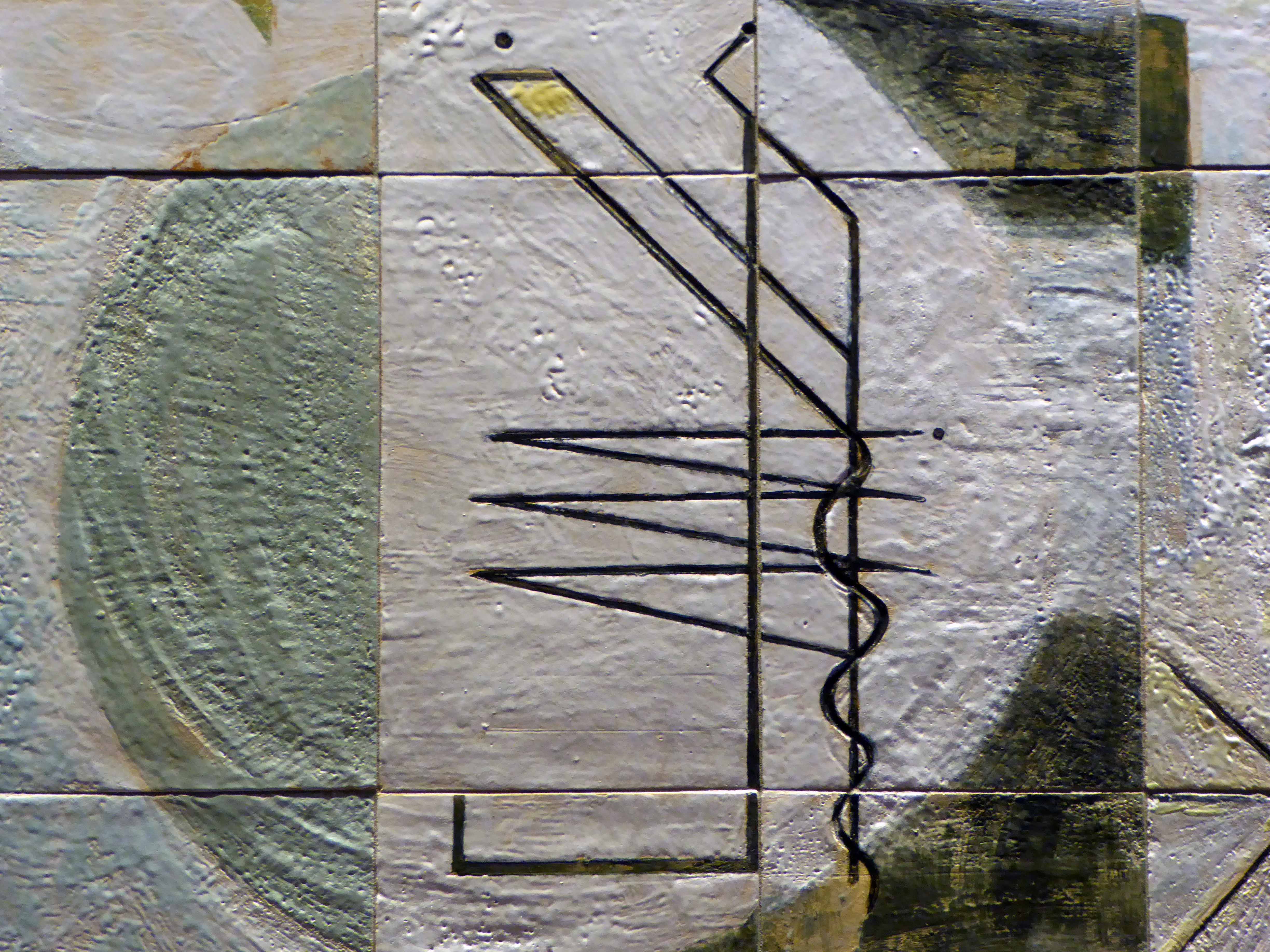
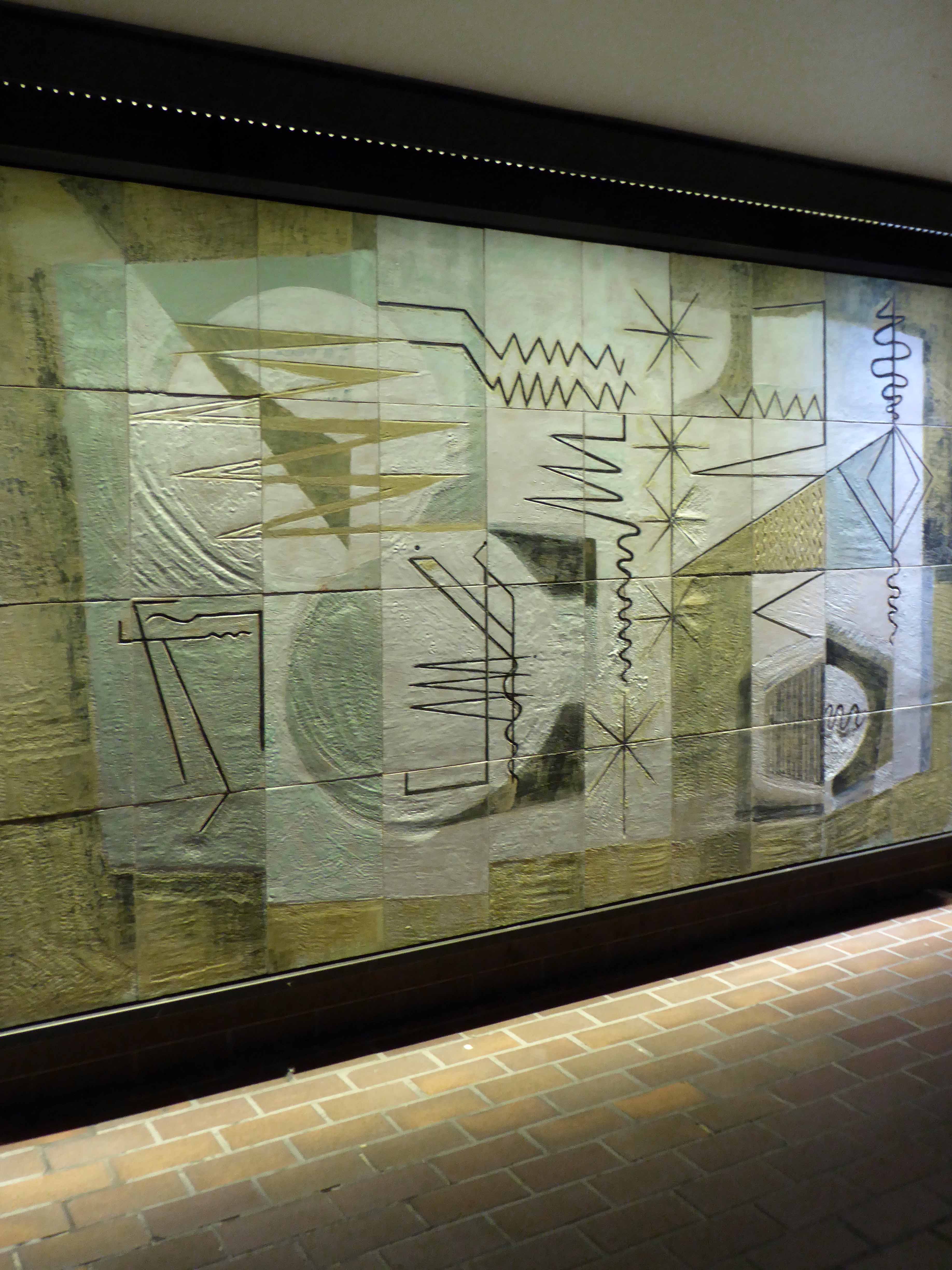
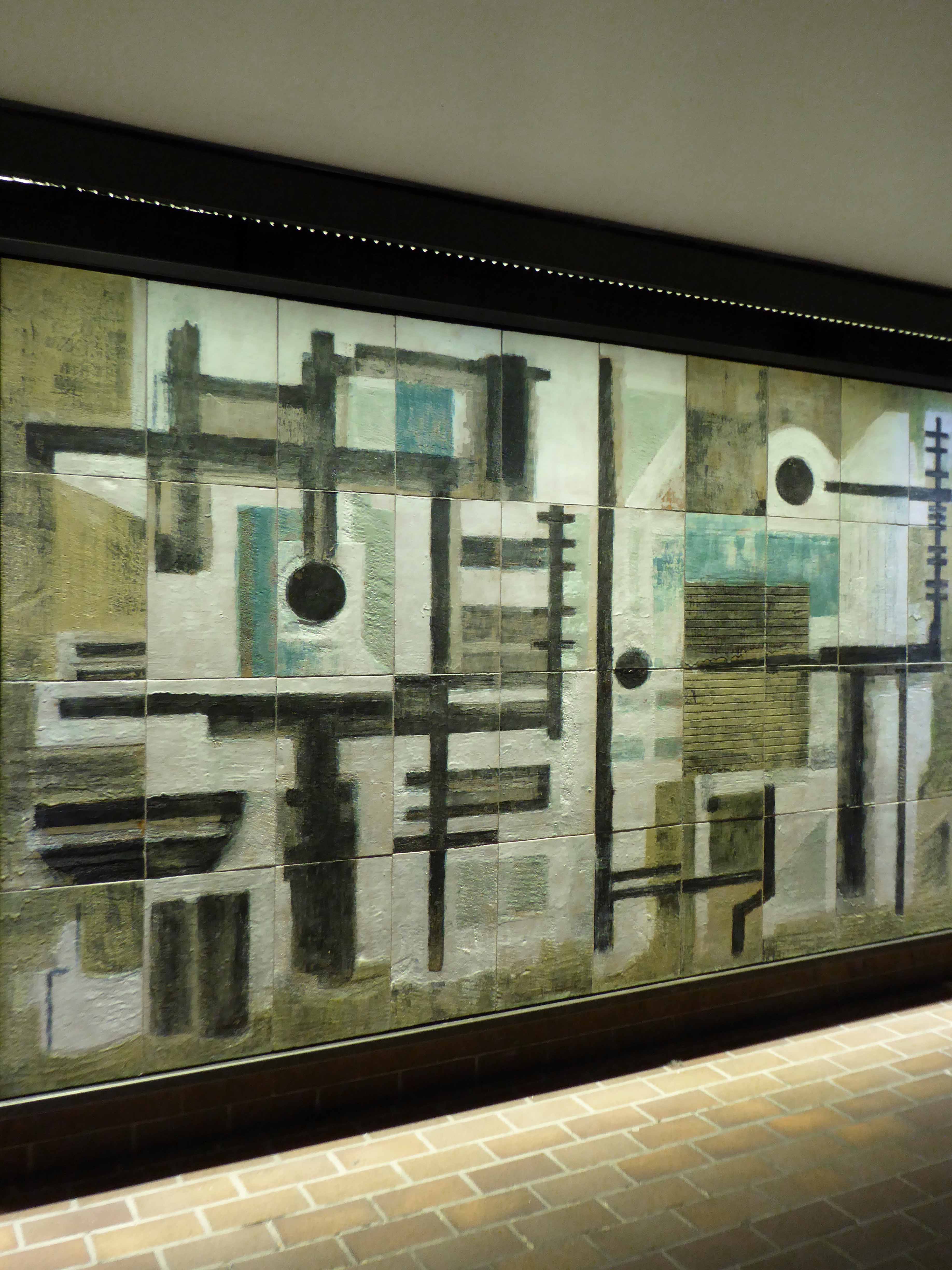
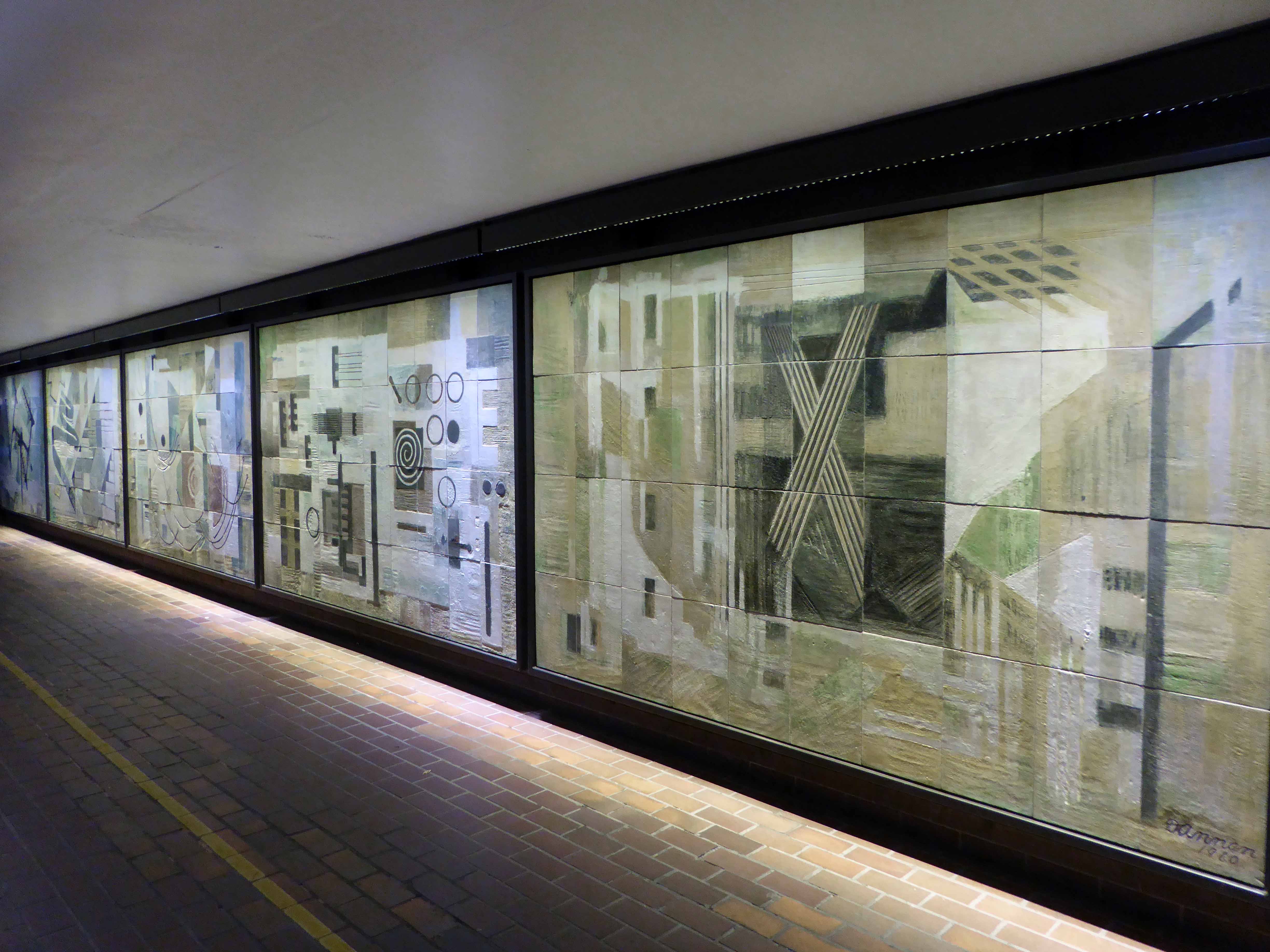
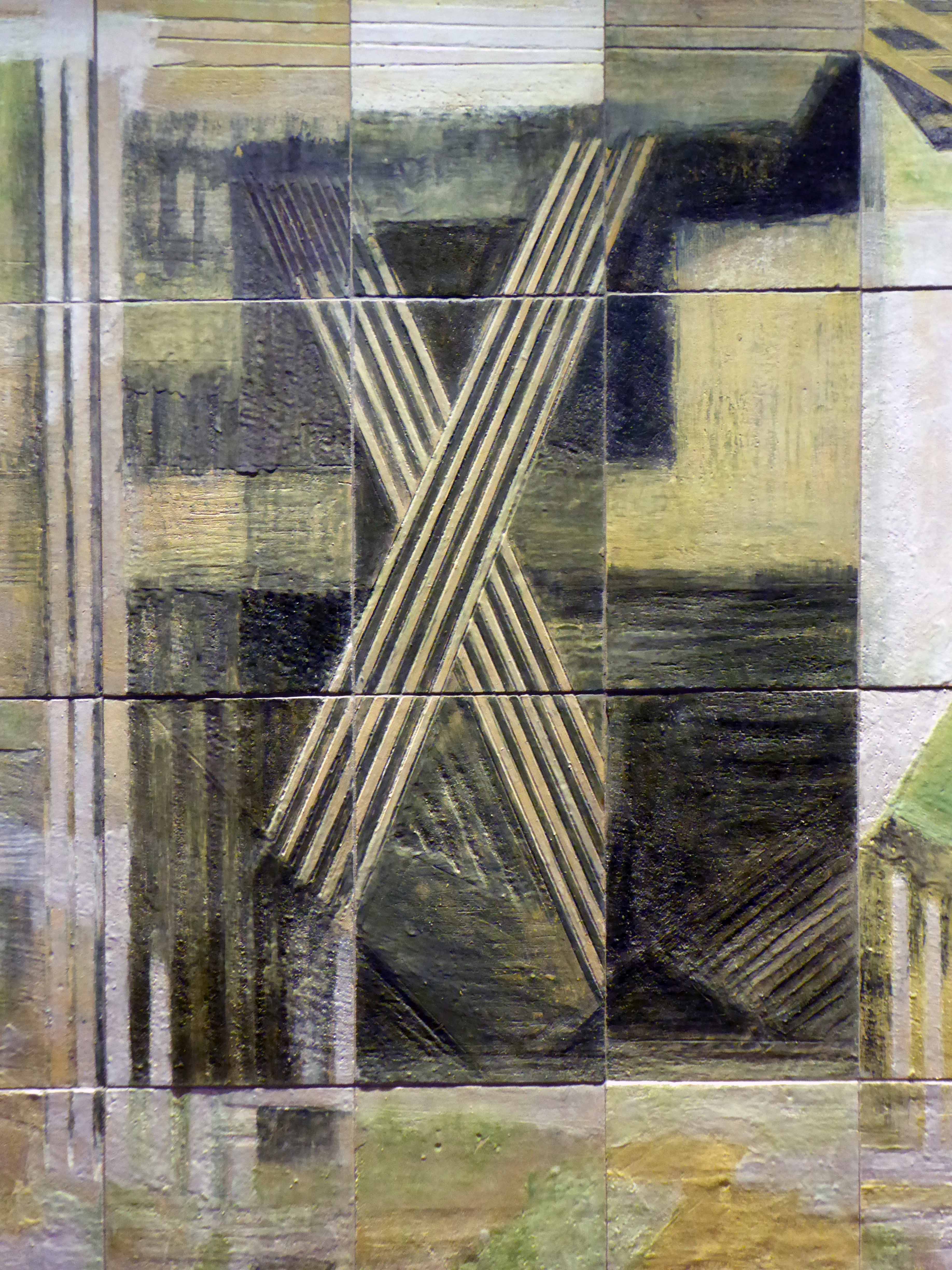
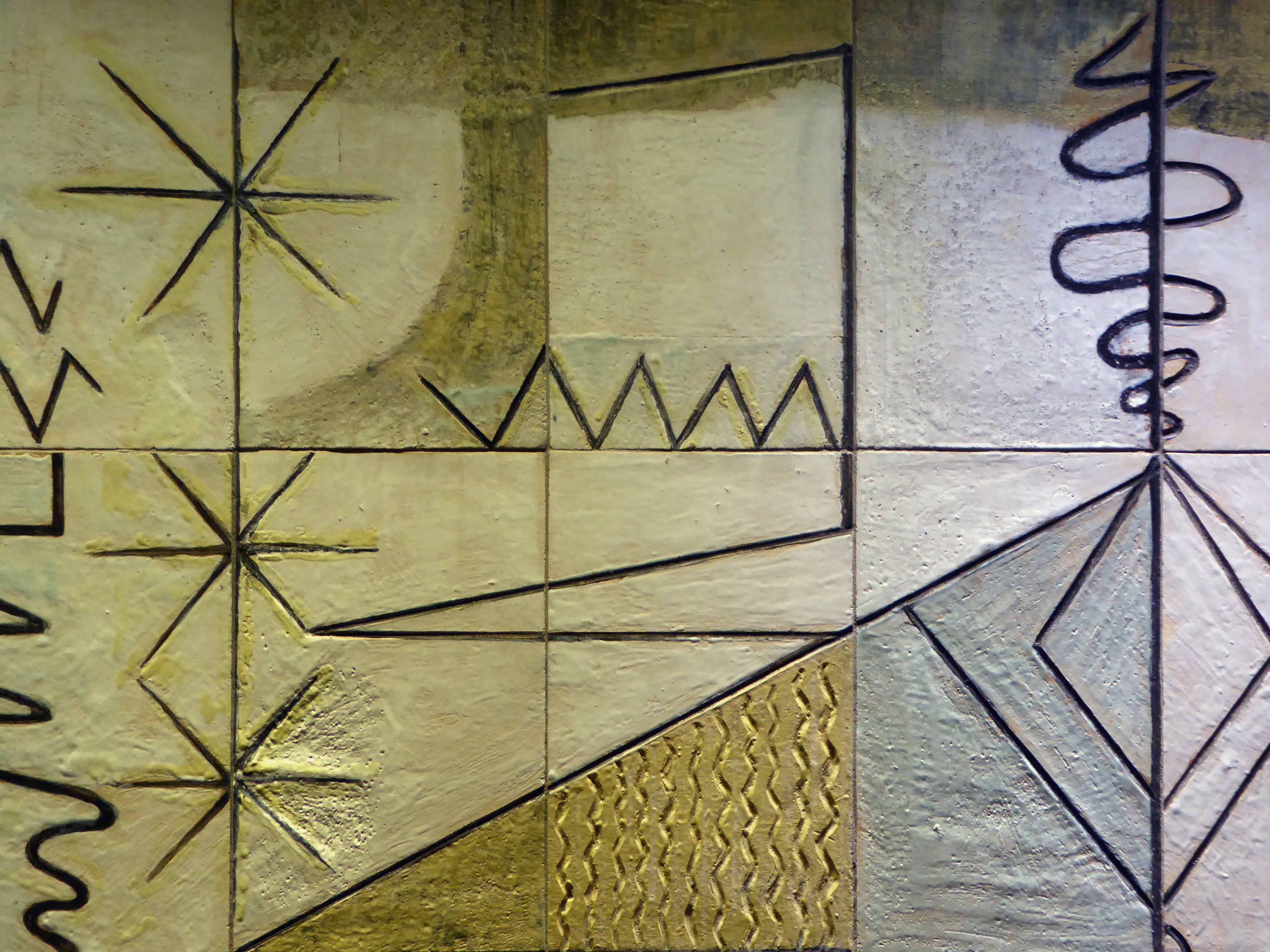
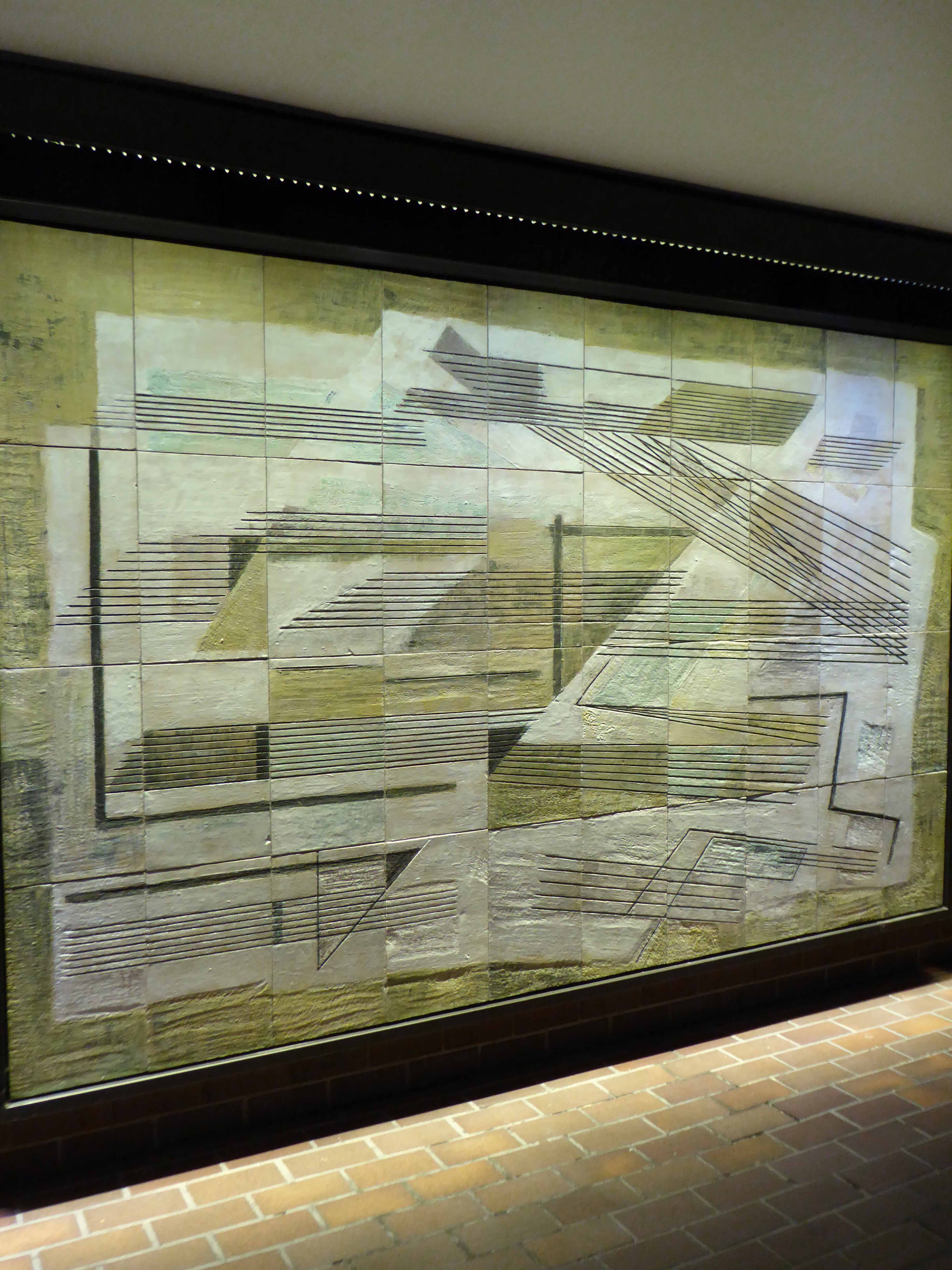
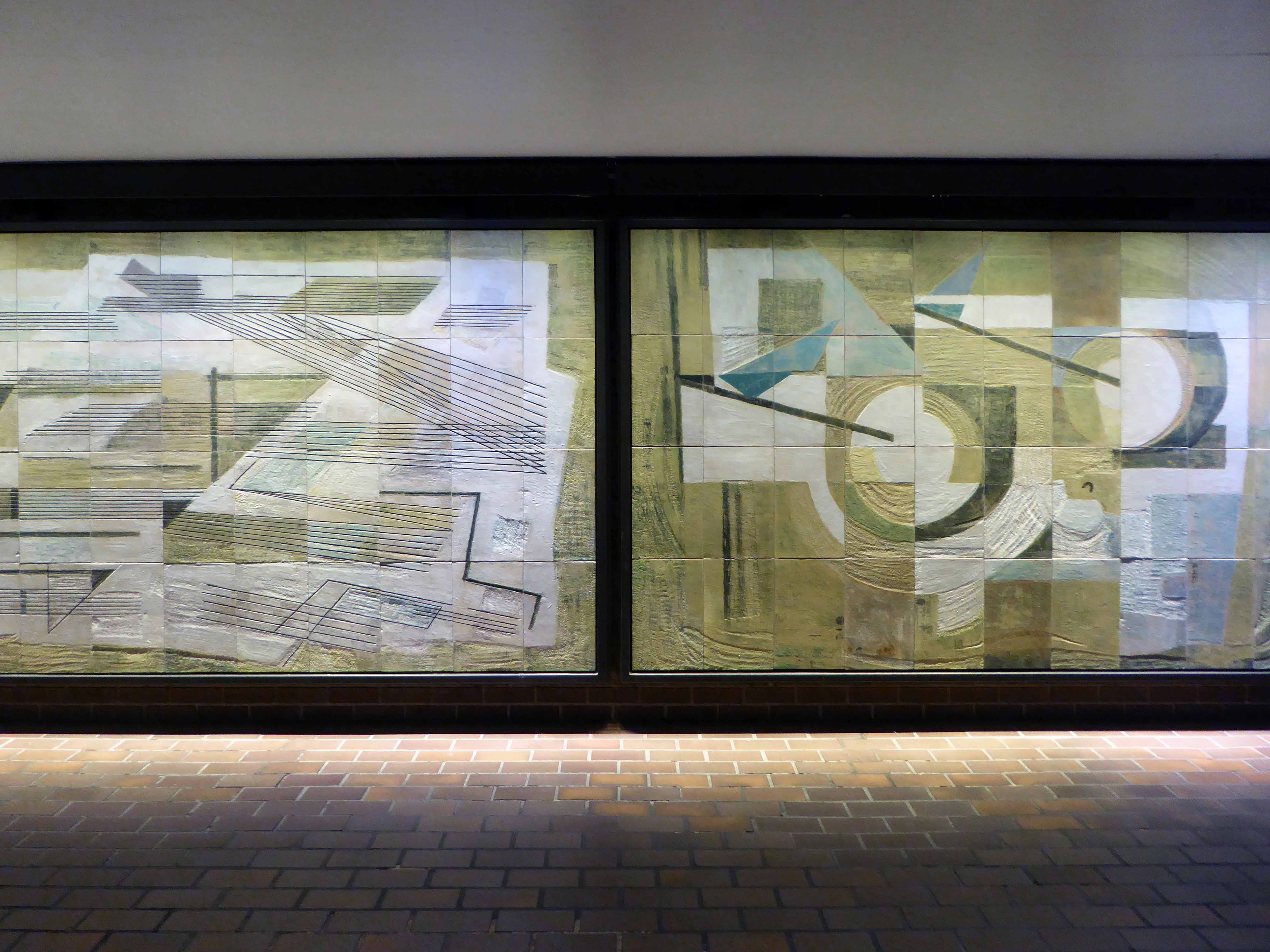
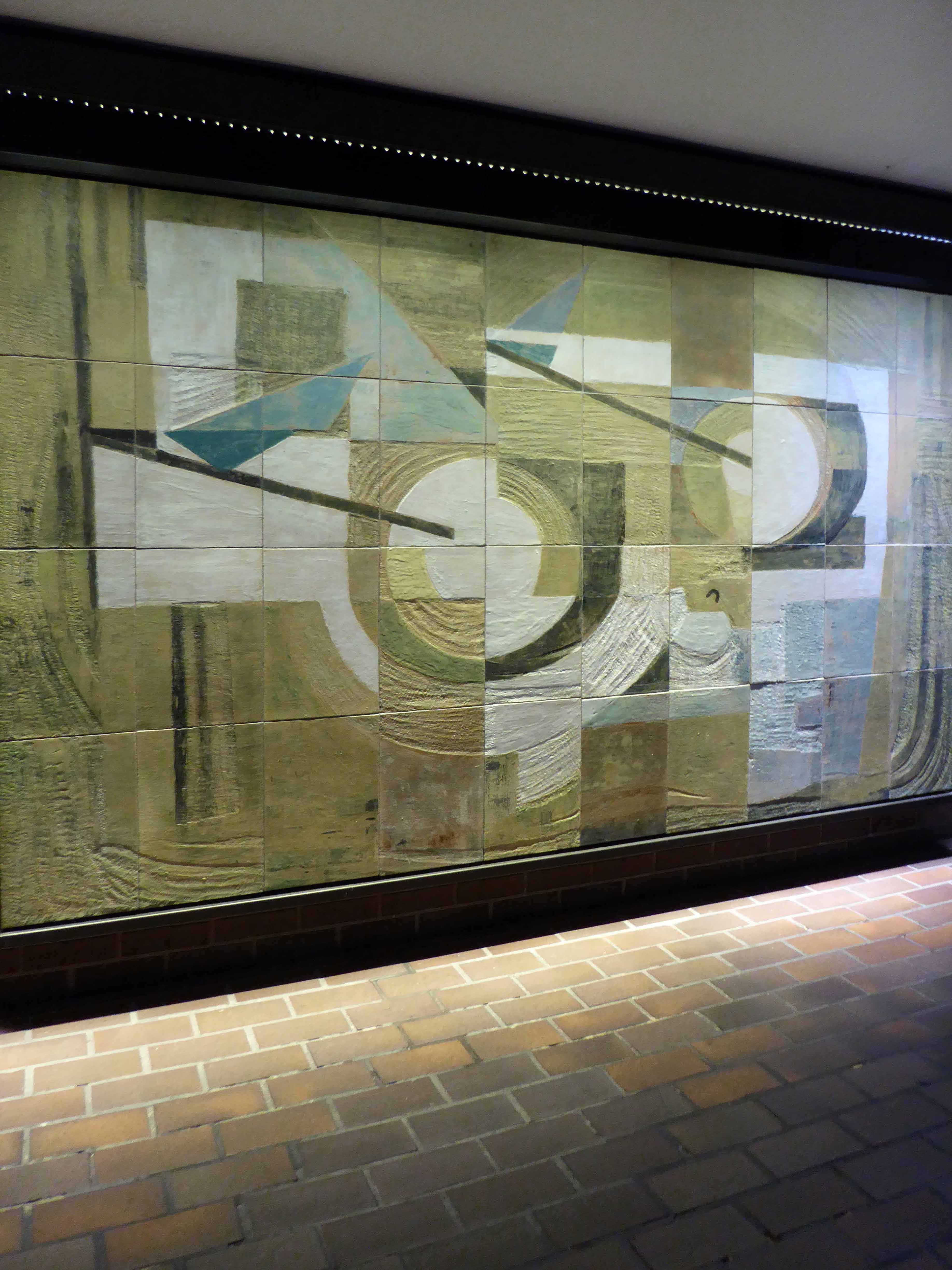
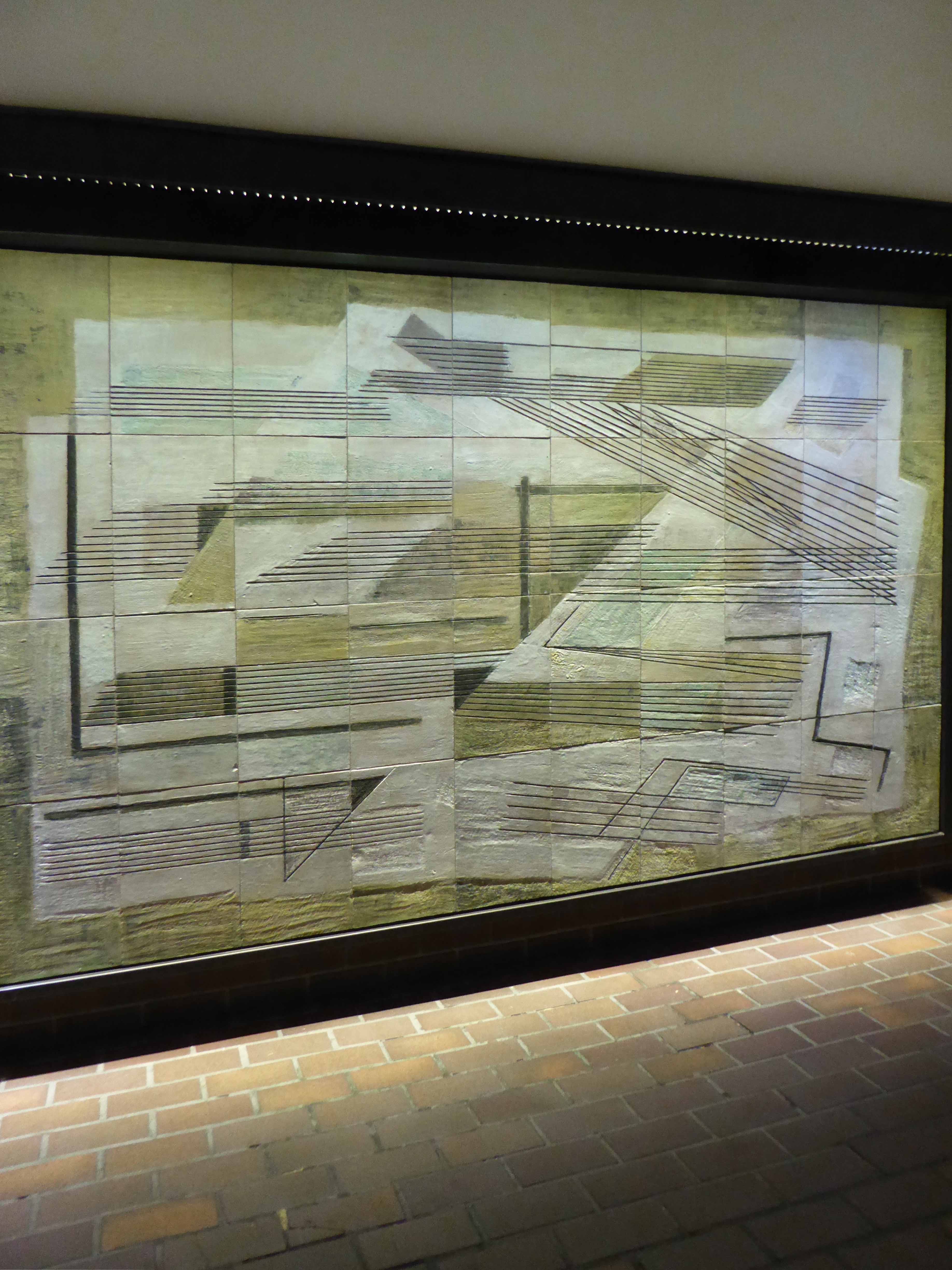
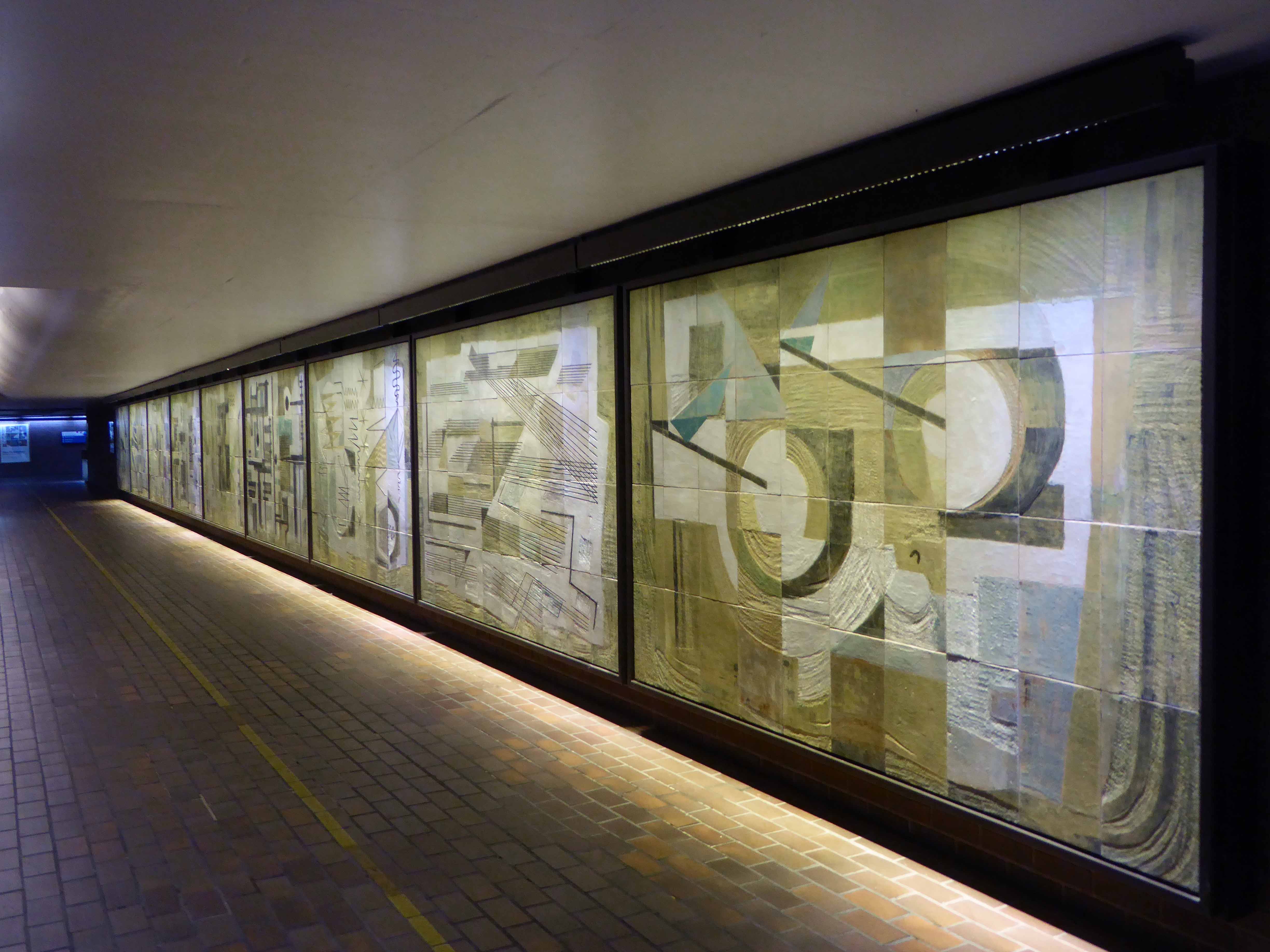
I was looking for her mural which illustrates the telecommunications industry – formerly of the Fleet Building Telephone Exchange Farringdon Road.
Michael Bojkowski
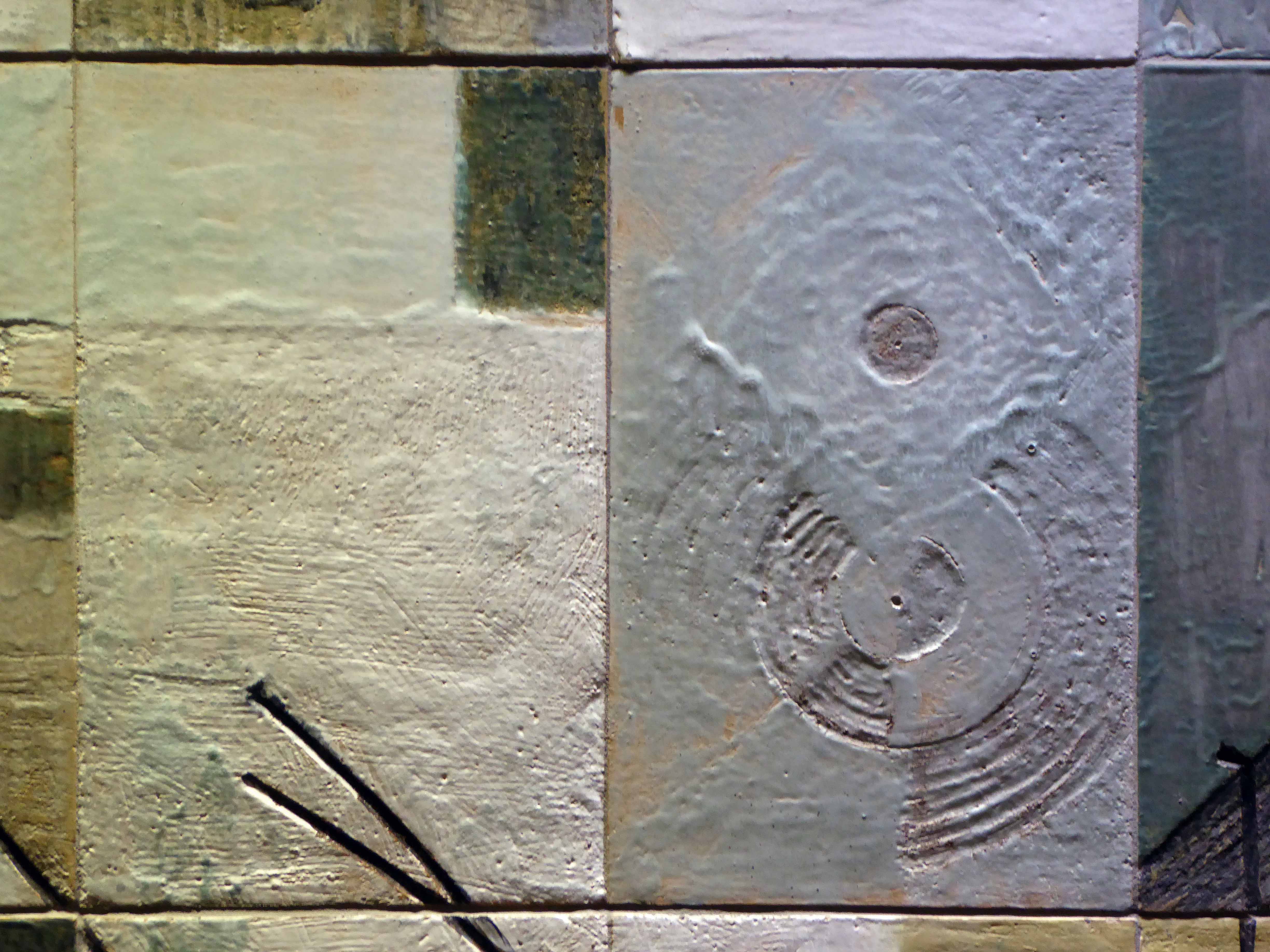
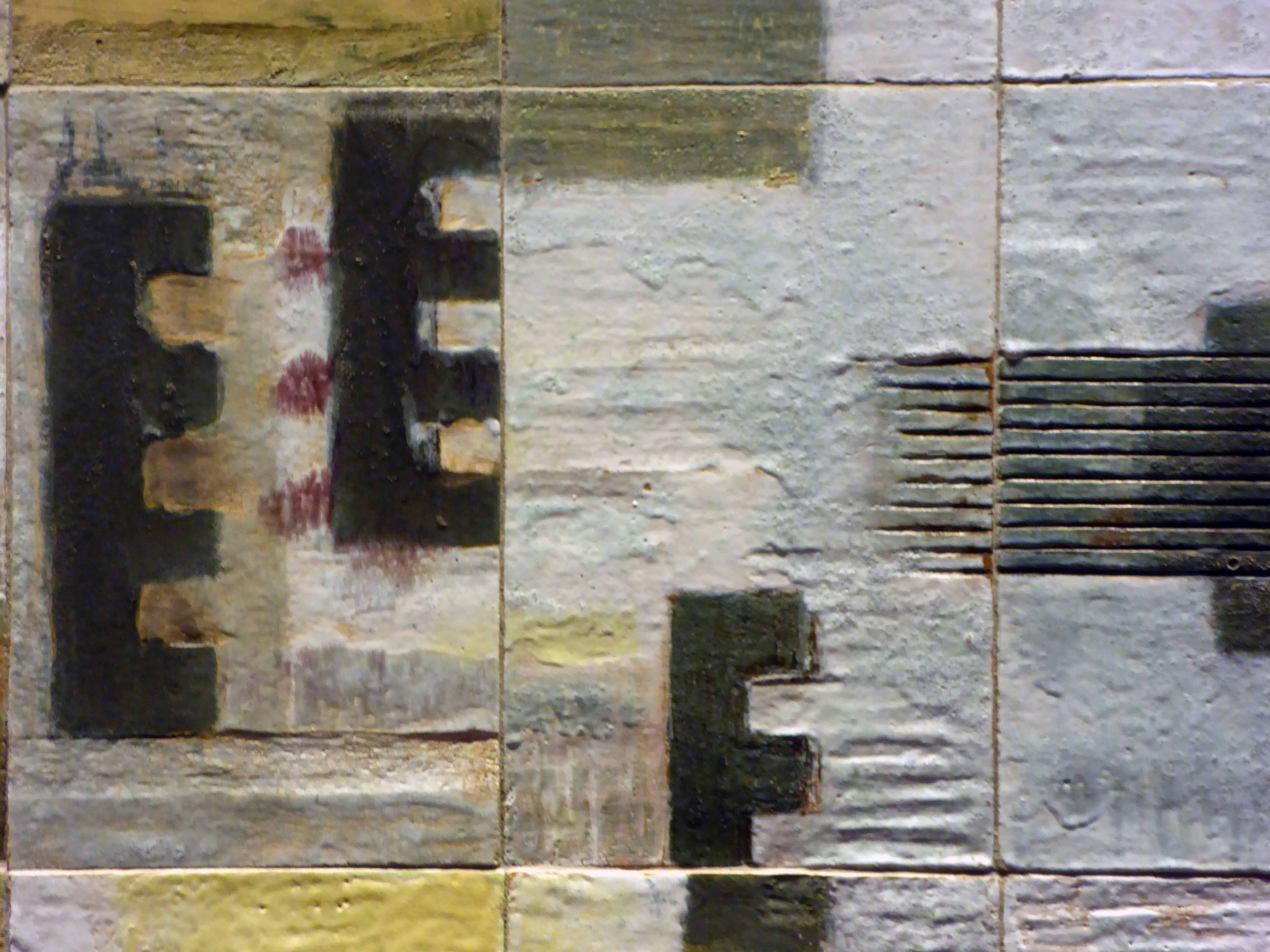
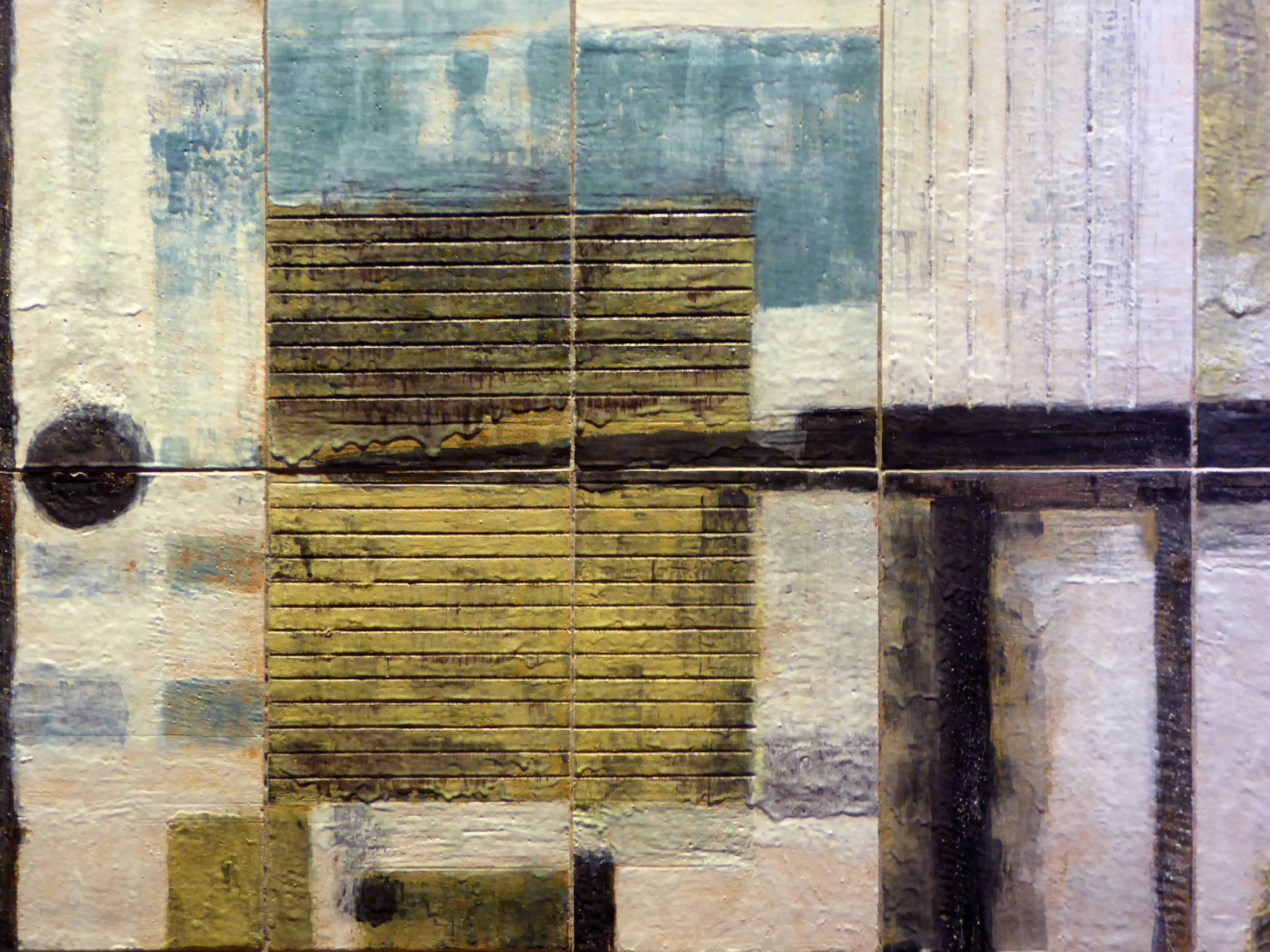
The murals were commissioned at a cost of £300 per panel in 1960. Annan visited the Hathernware Pottery in Loughborough and hand-scored her designs onto each wet clay tile, her brush marks can also be seen in the fired panels.
Charles Trusler
The building was owned by Goldman Sachs, who wished to redevelop the site and opposed the listing of the murals.
In January 2013, the City of London Corporation agreed to take ownership of the murals, and in September 2013 these were moved to a permanent location in publicly accessible part of the Barbican Estate. They are displayed in their original sequence within an enclosed section of the Barbican High Walk between Speed House and the Barbican Centre.
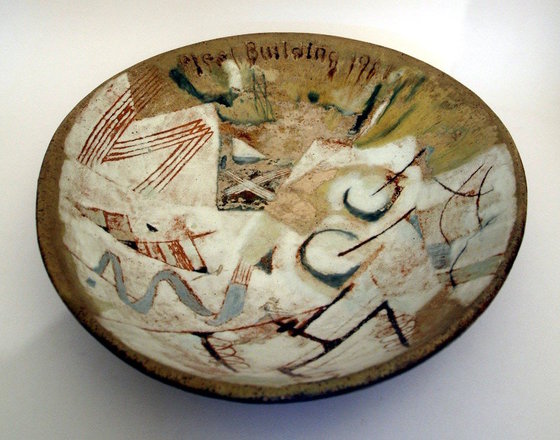
Commemorative Bowl
So following a discursive and somewhat undirected circumnavigation of the Center we were finally united – it only seemed polite to linger a while and take some snaps – here they are.











































































































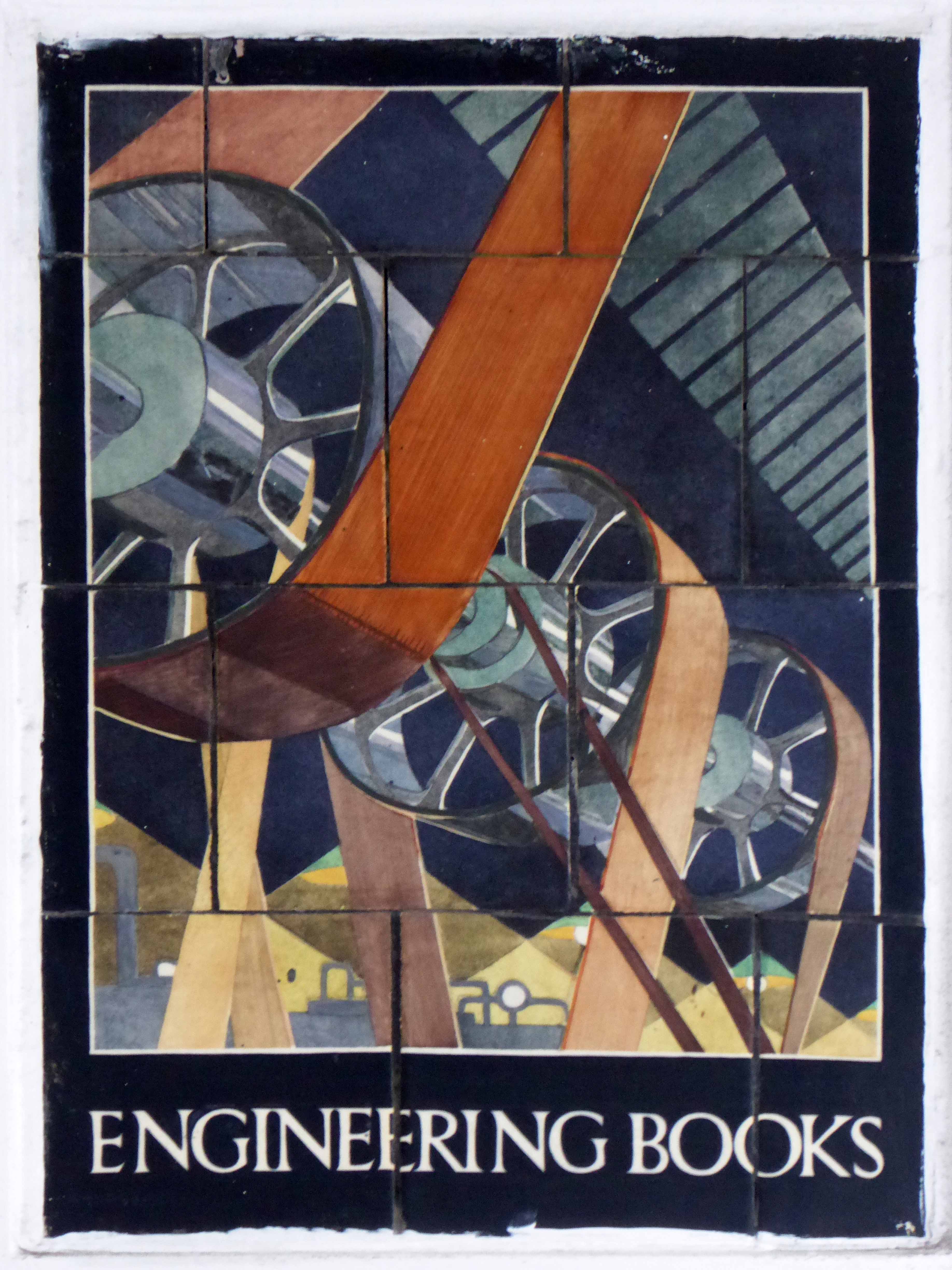
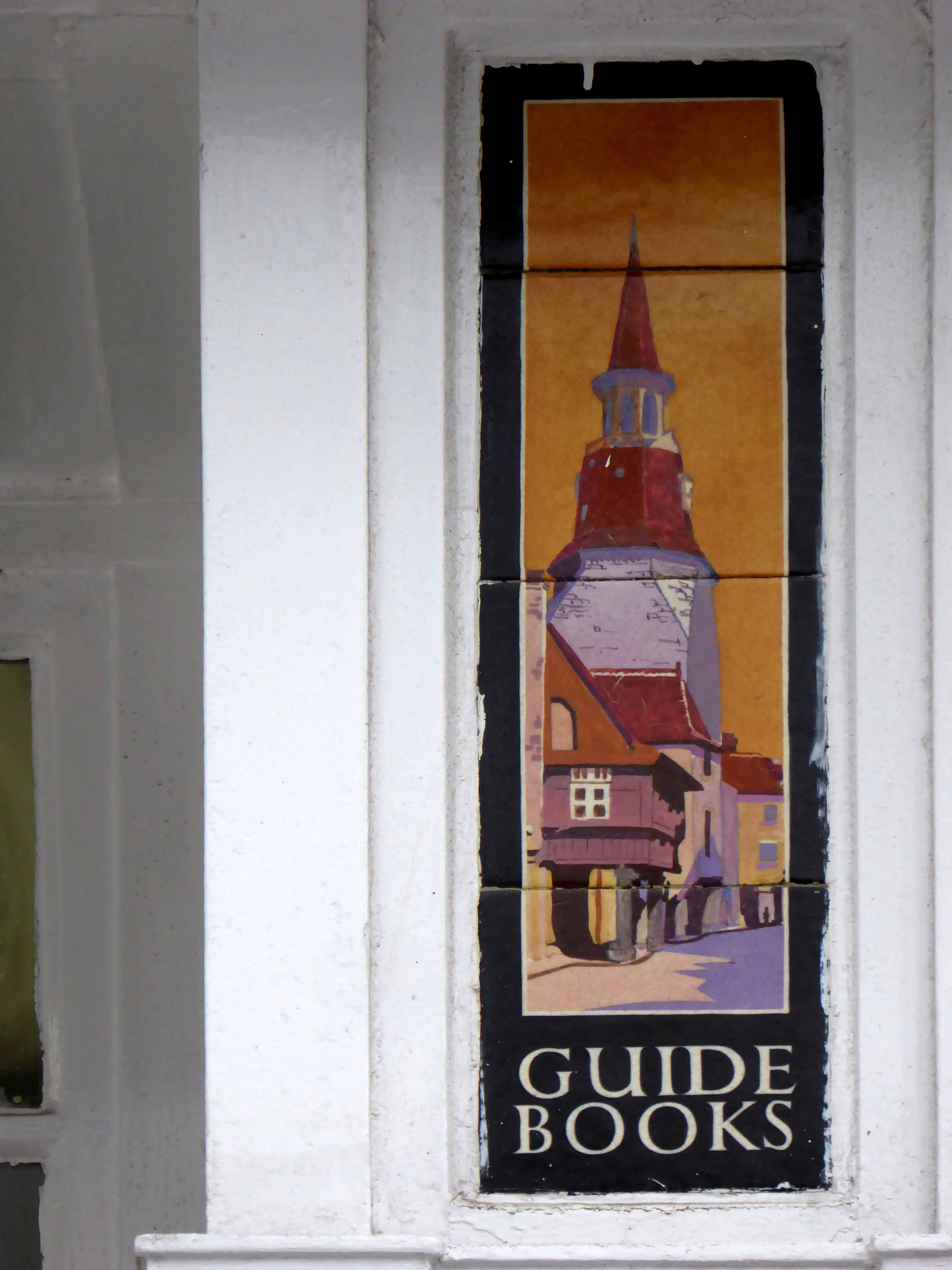
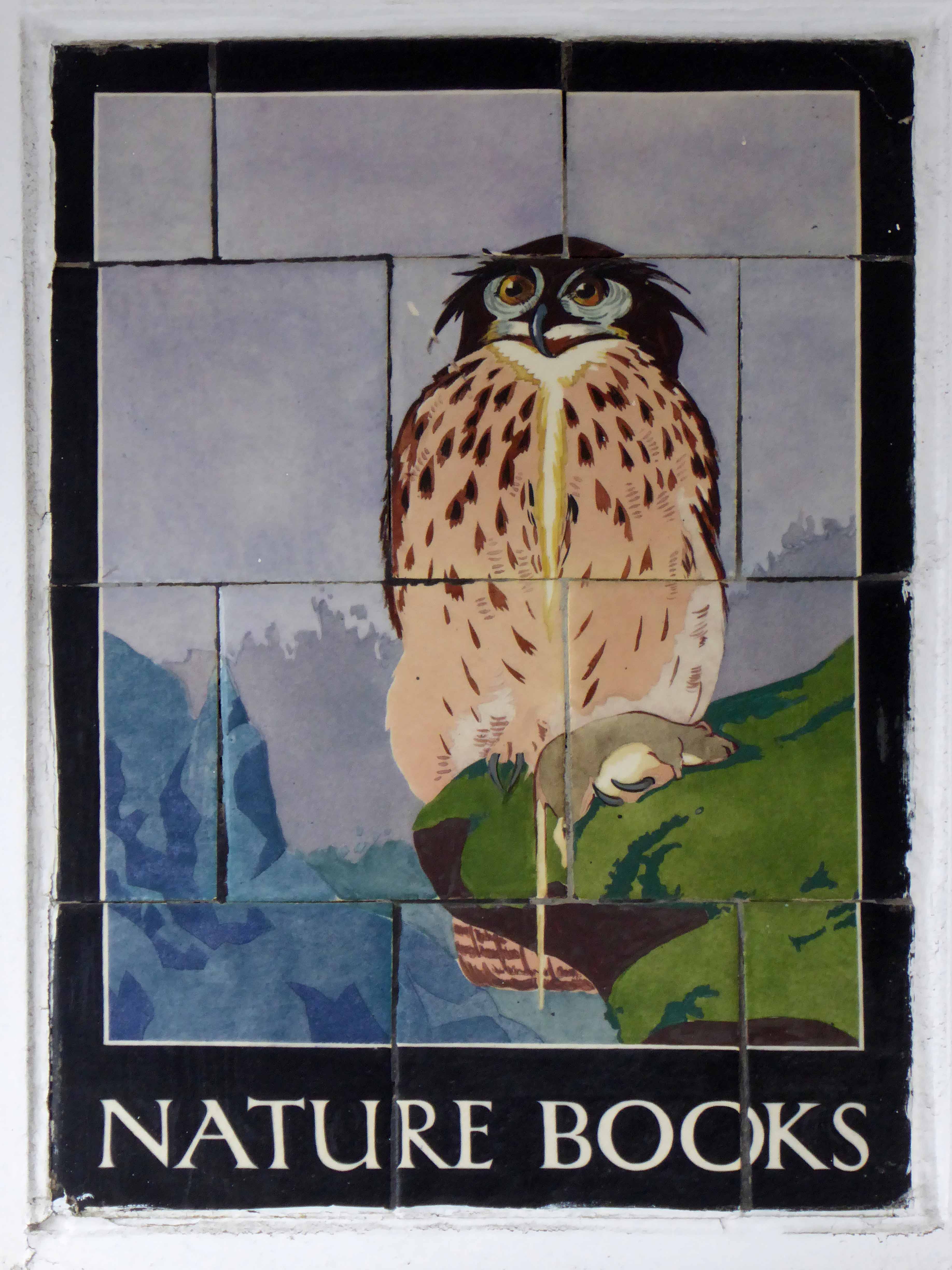
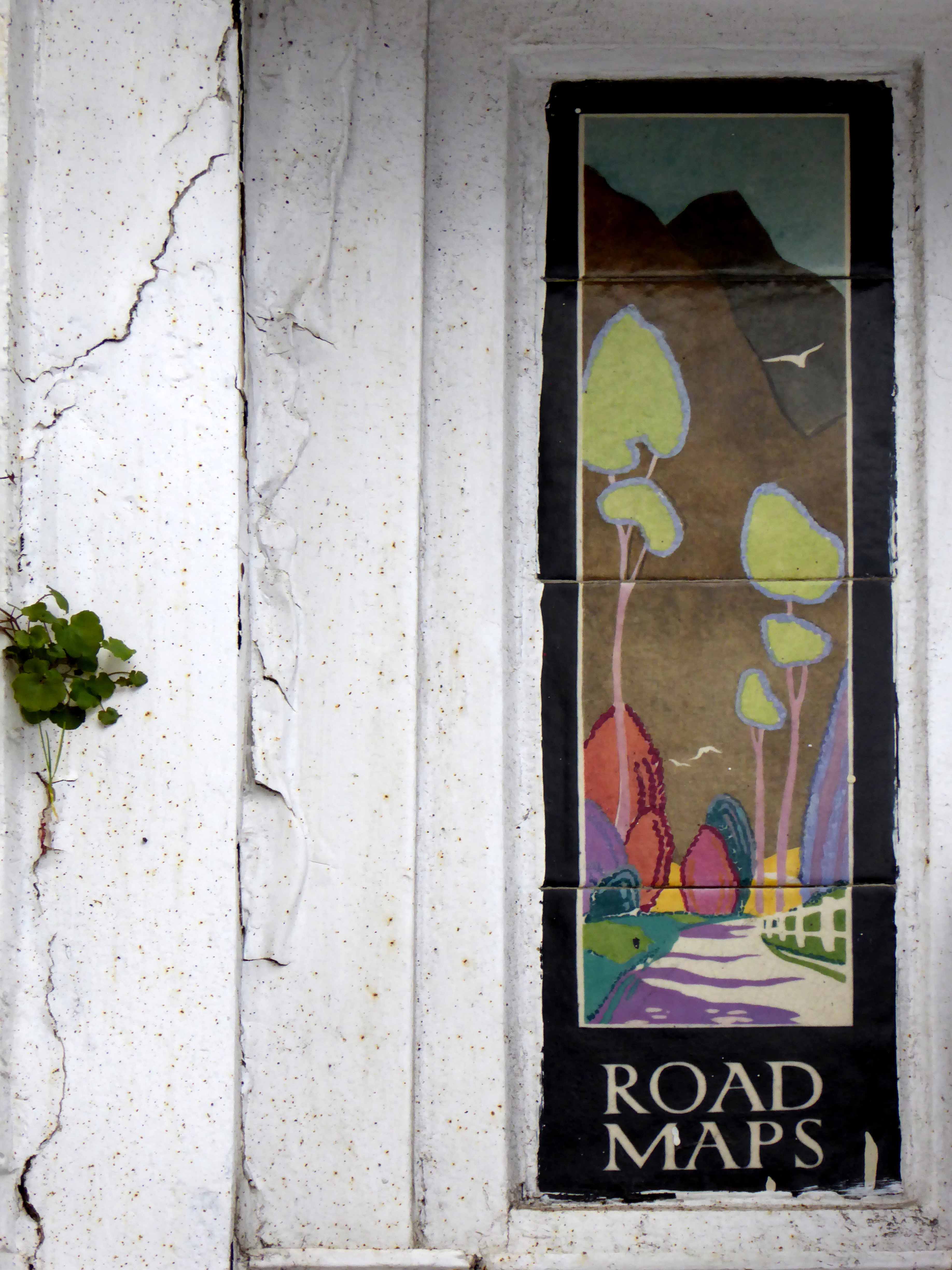









 Modern Mooch