
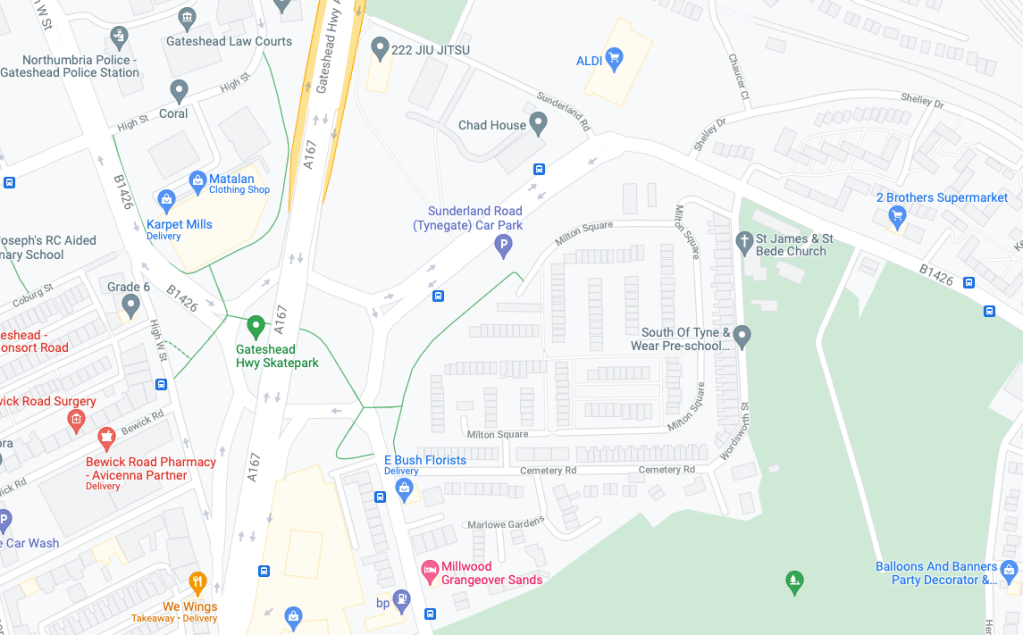
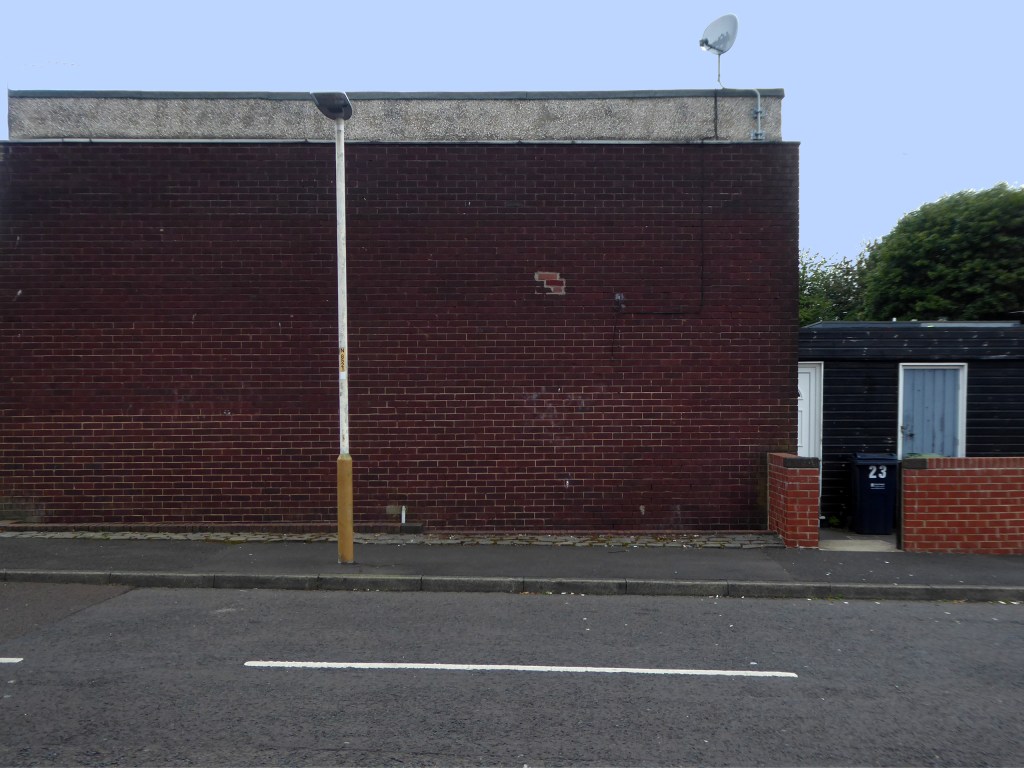
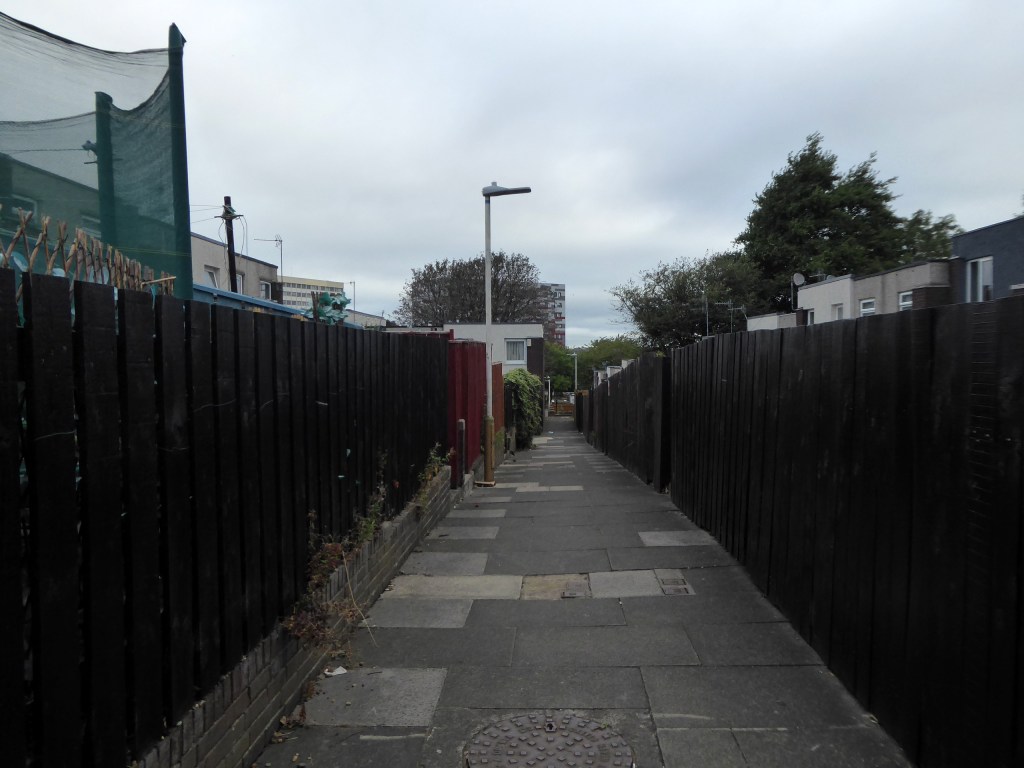
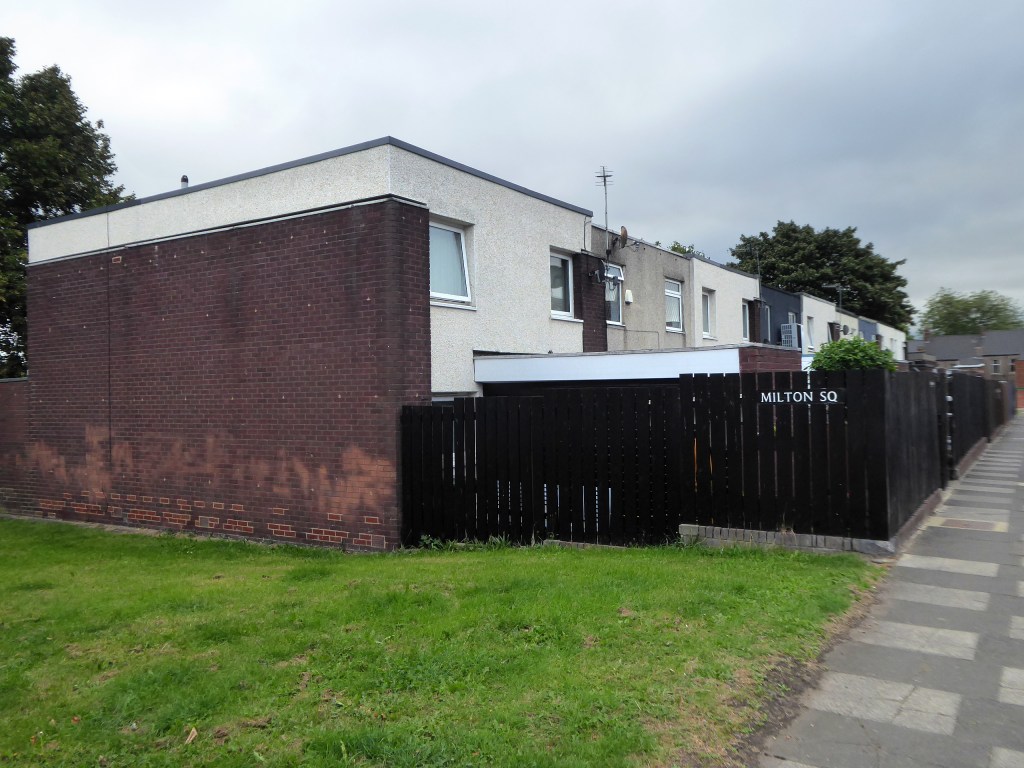
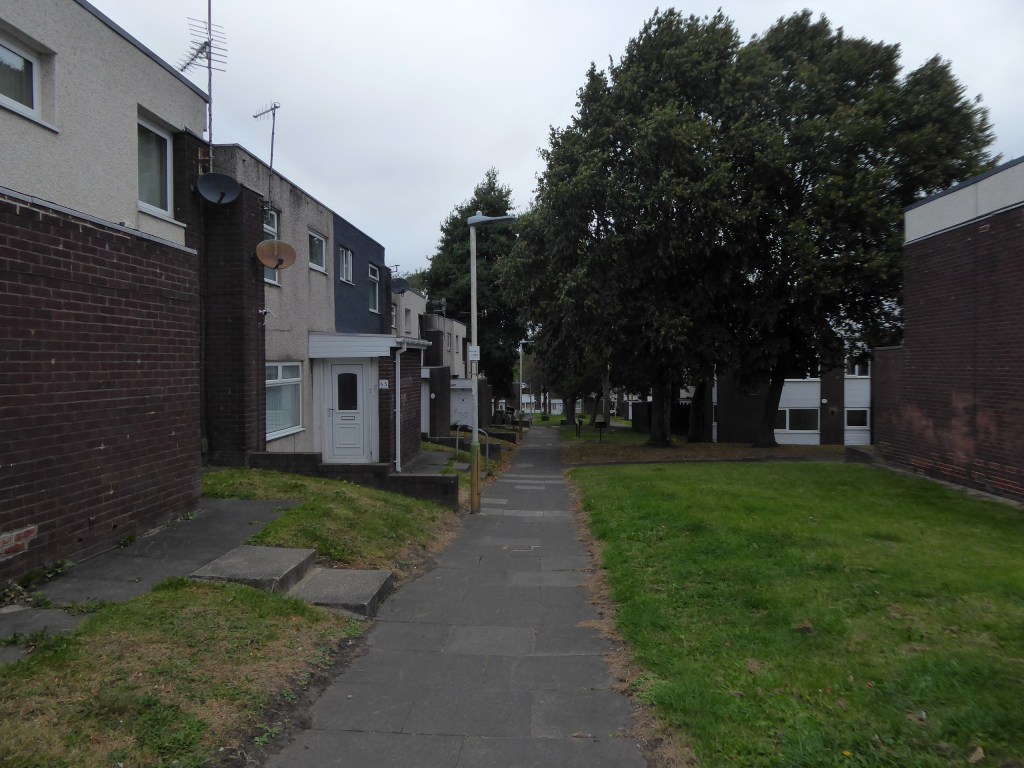
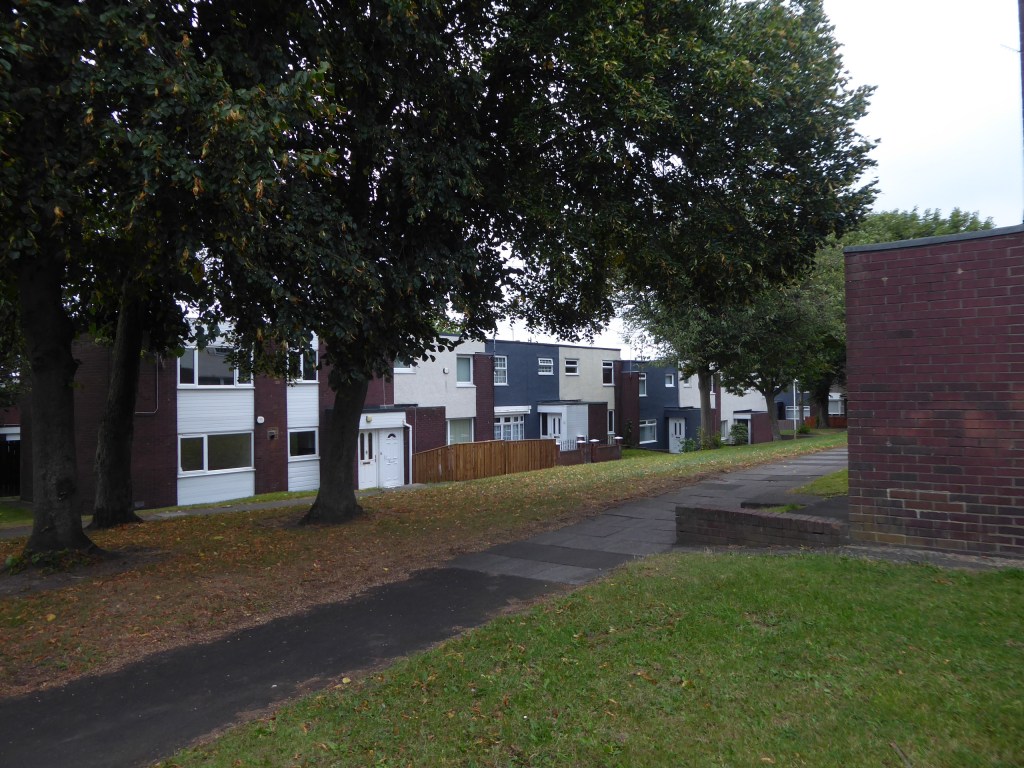
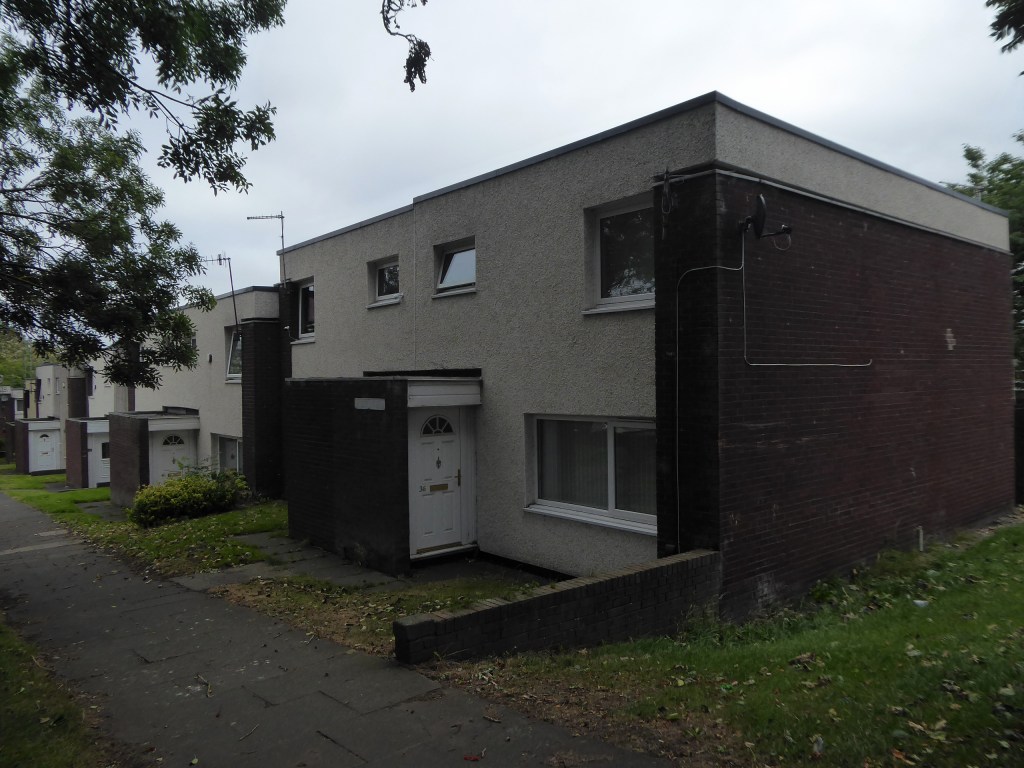
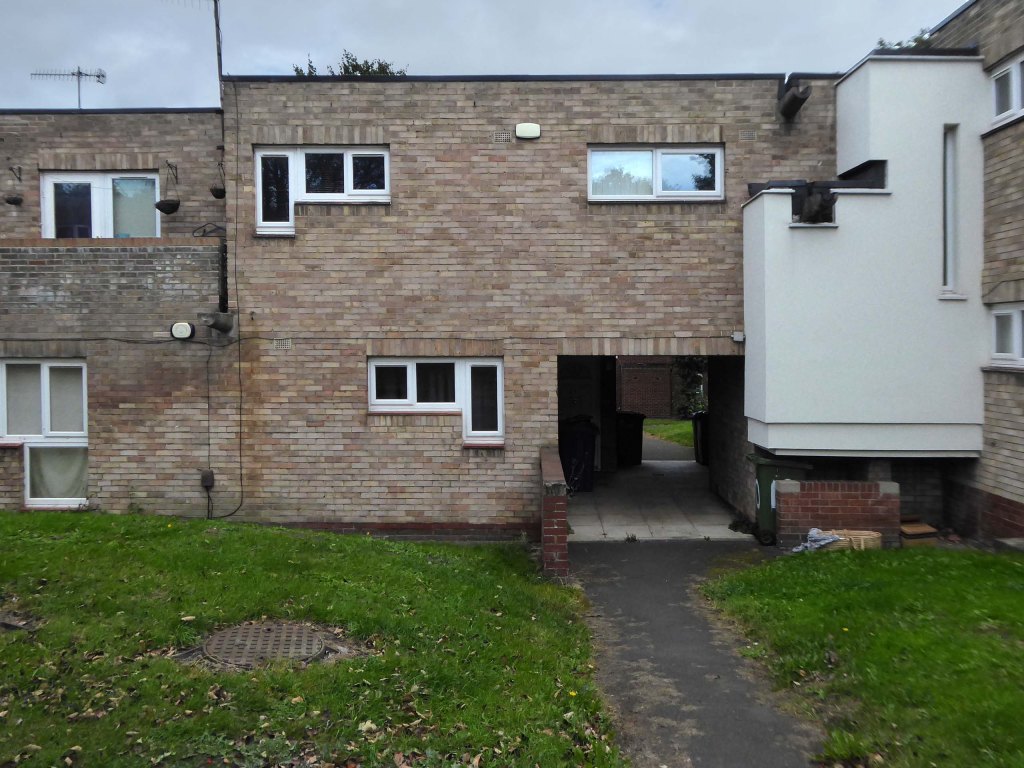
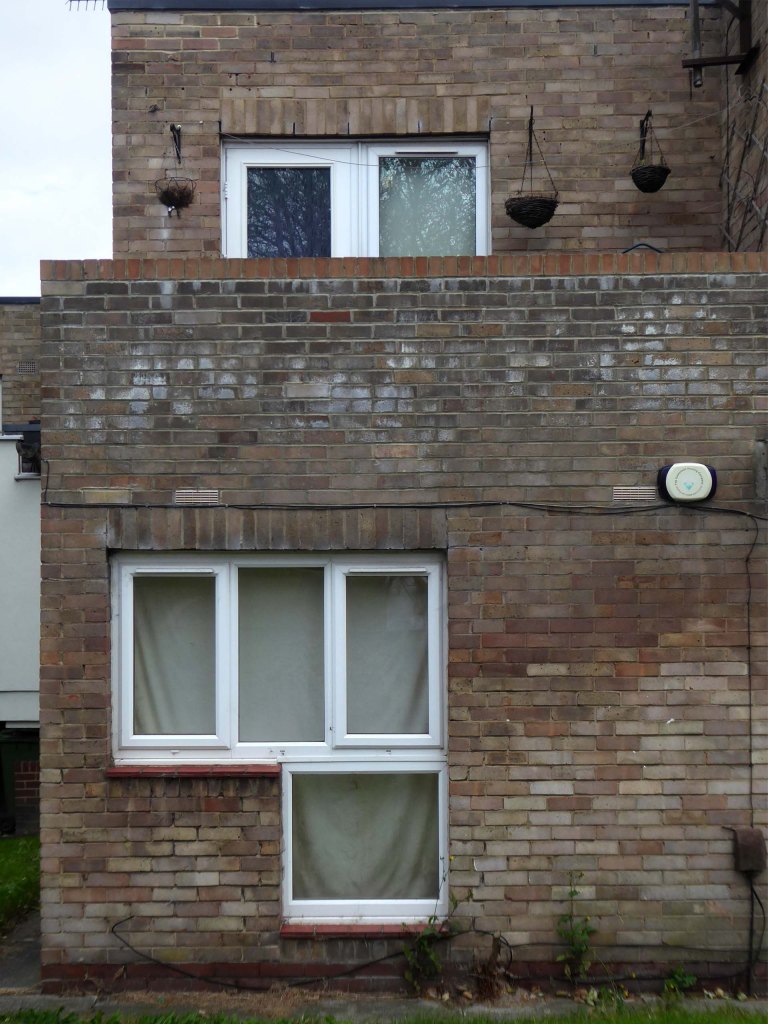
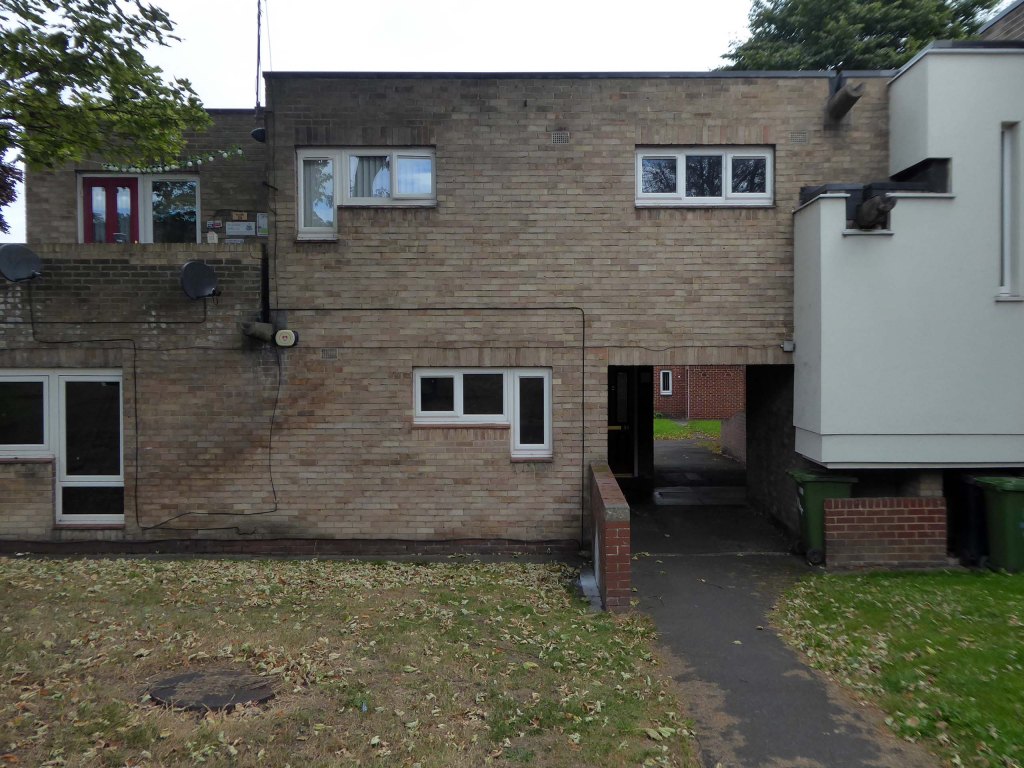
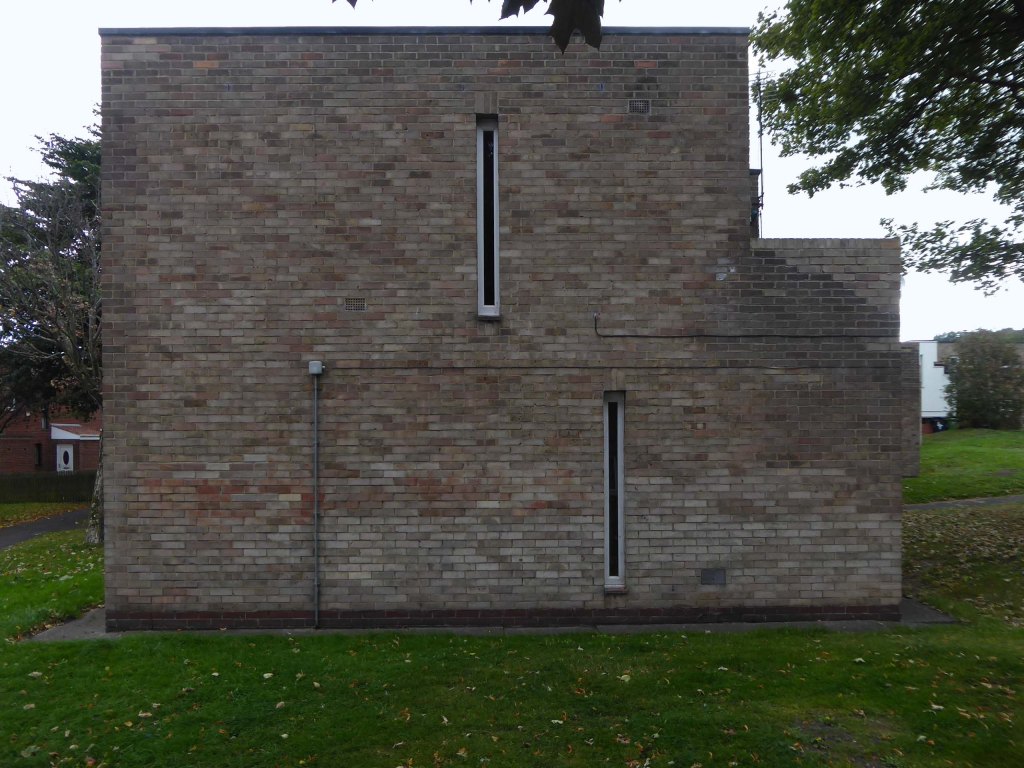
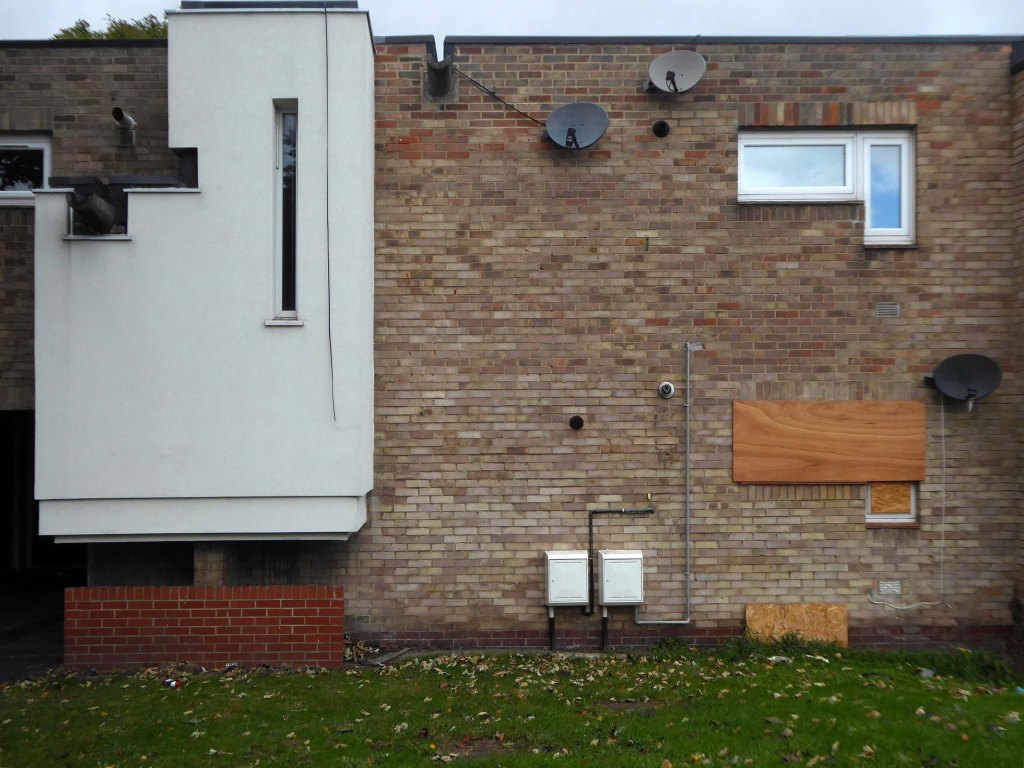
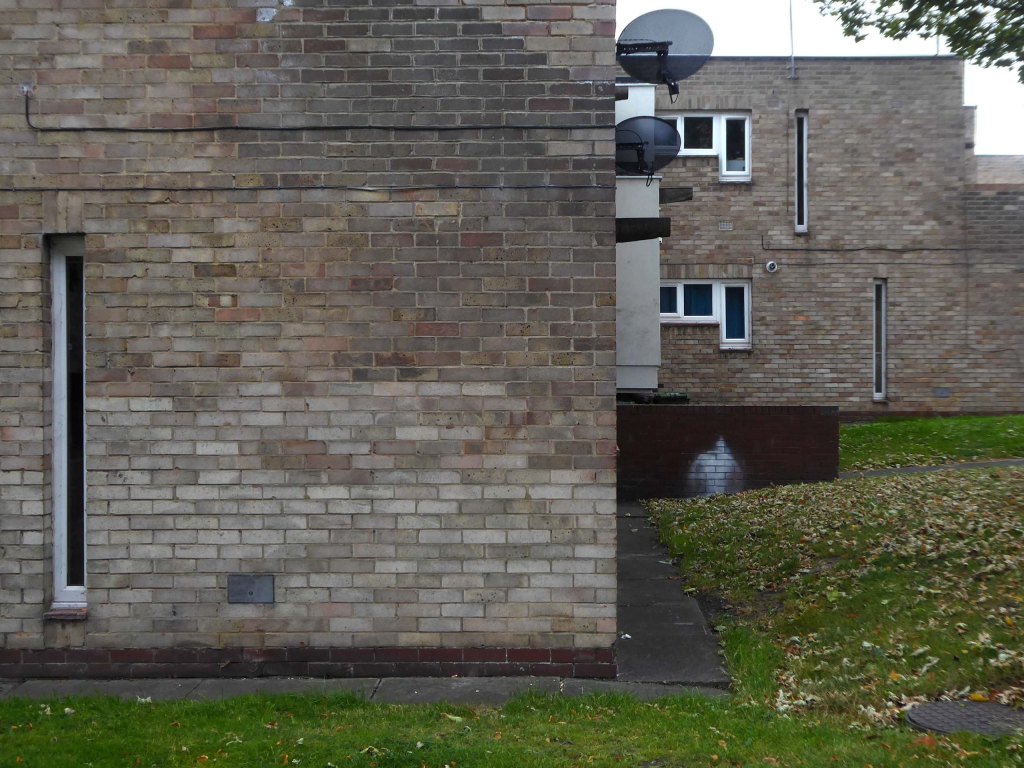
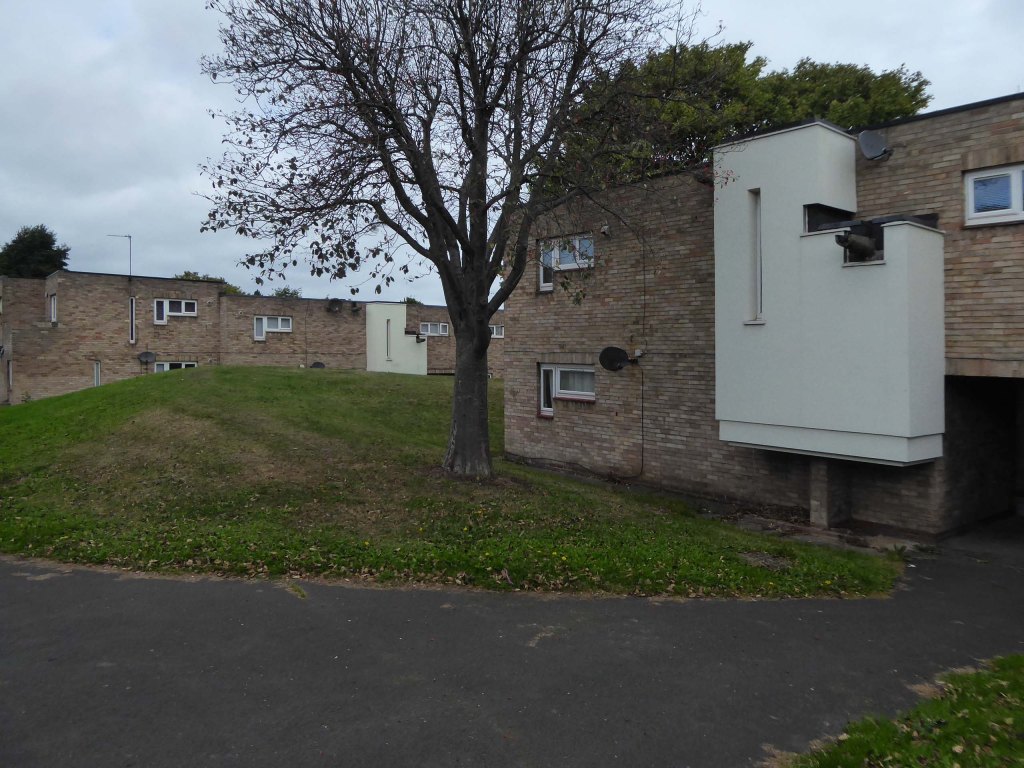
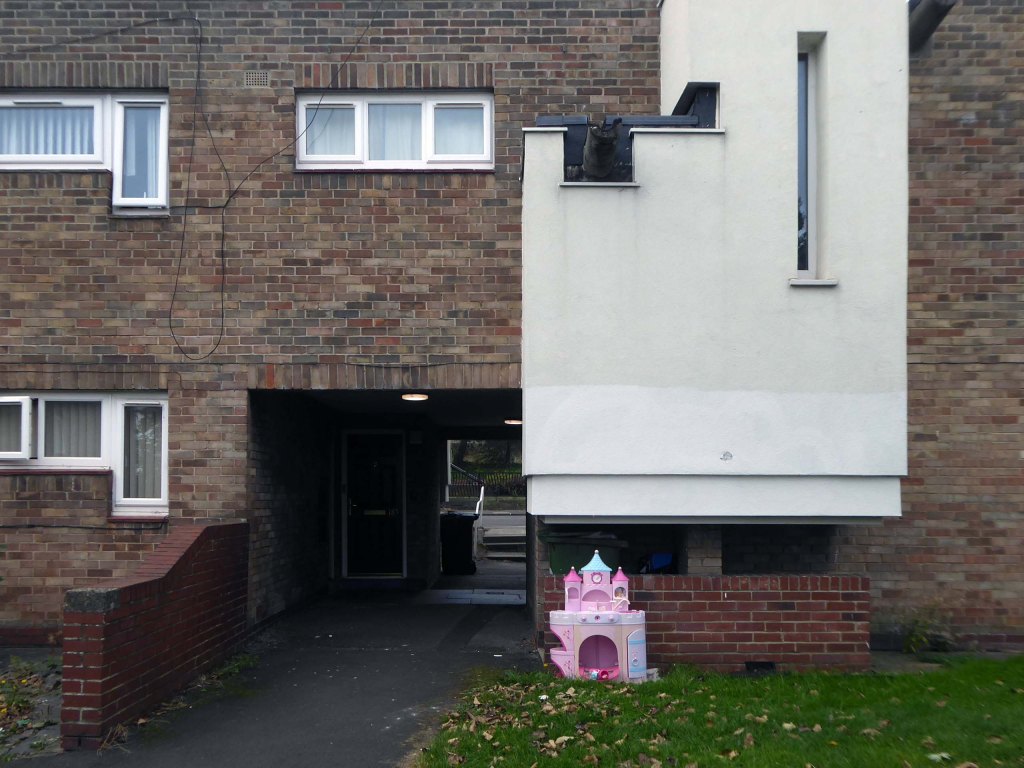
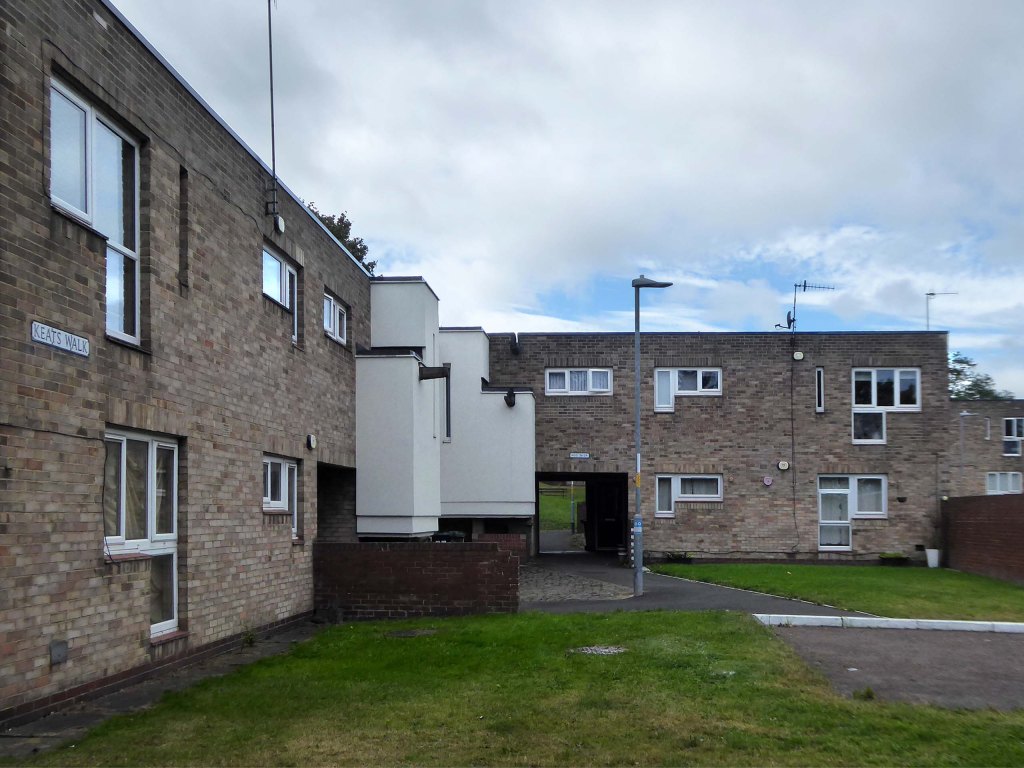
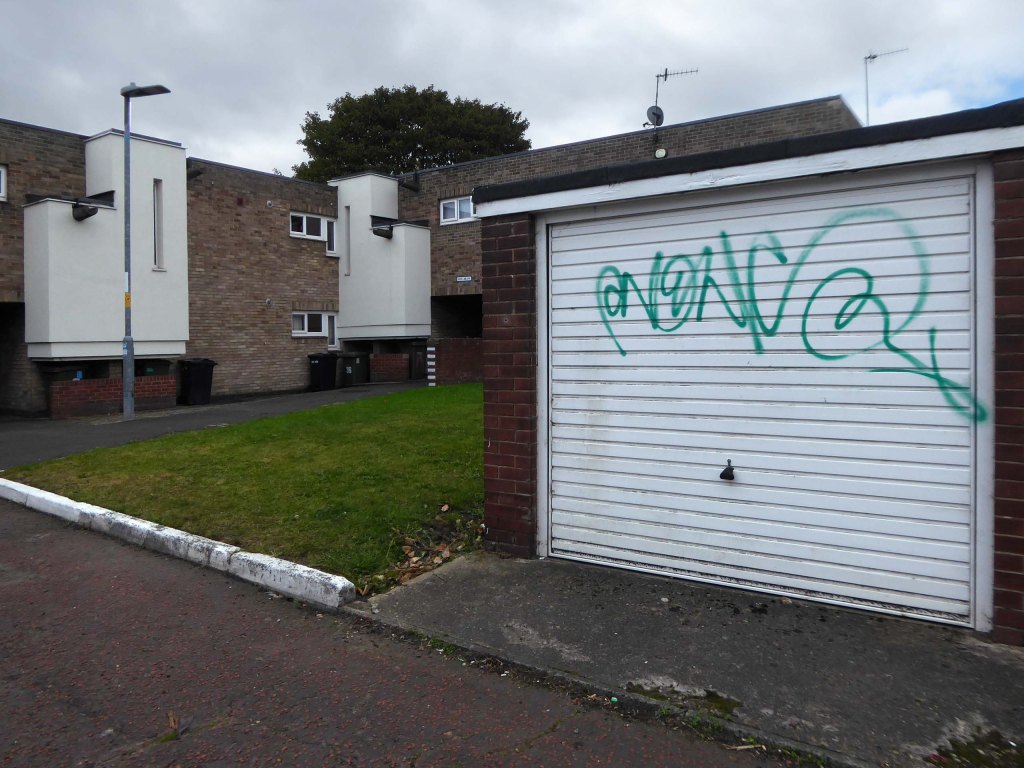
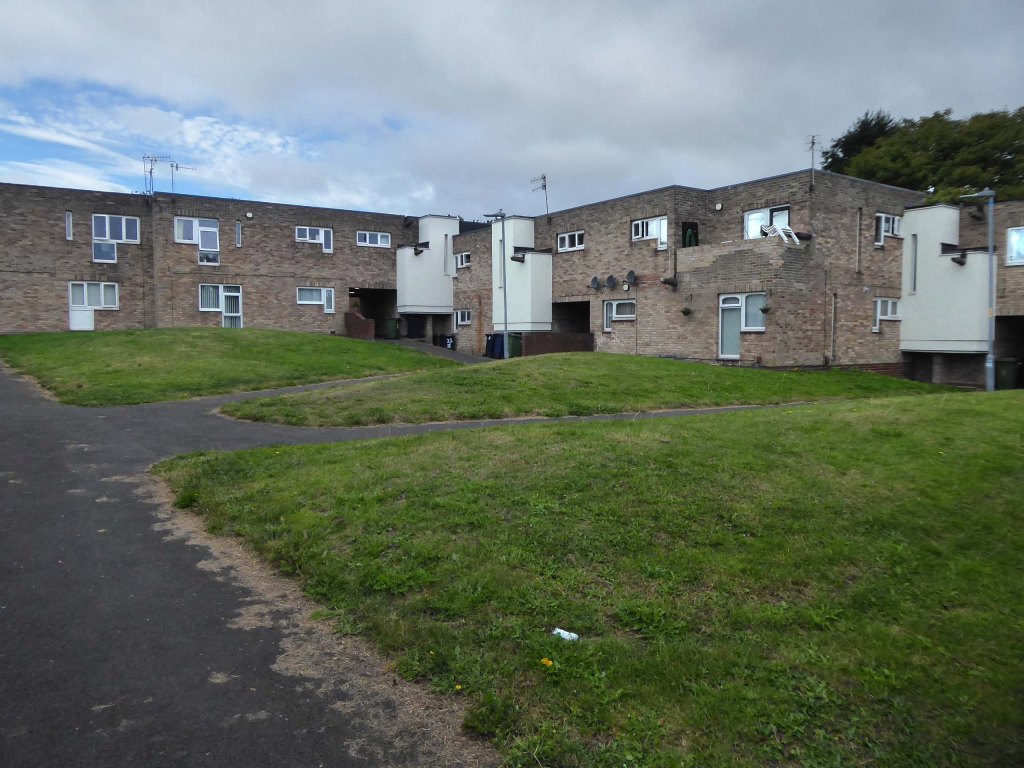
As a companion to the adjacent Poet’s Estate – let’s take a look at Malory, Milton, Masefield and Wordsworth.
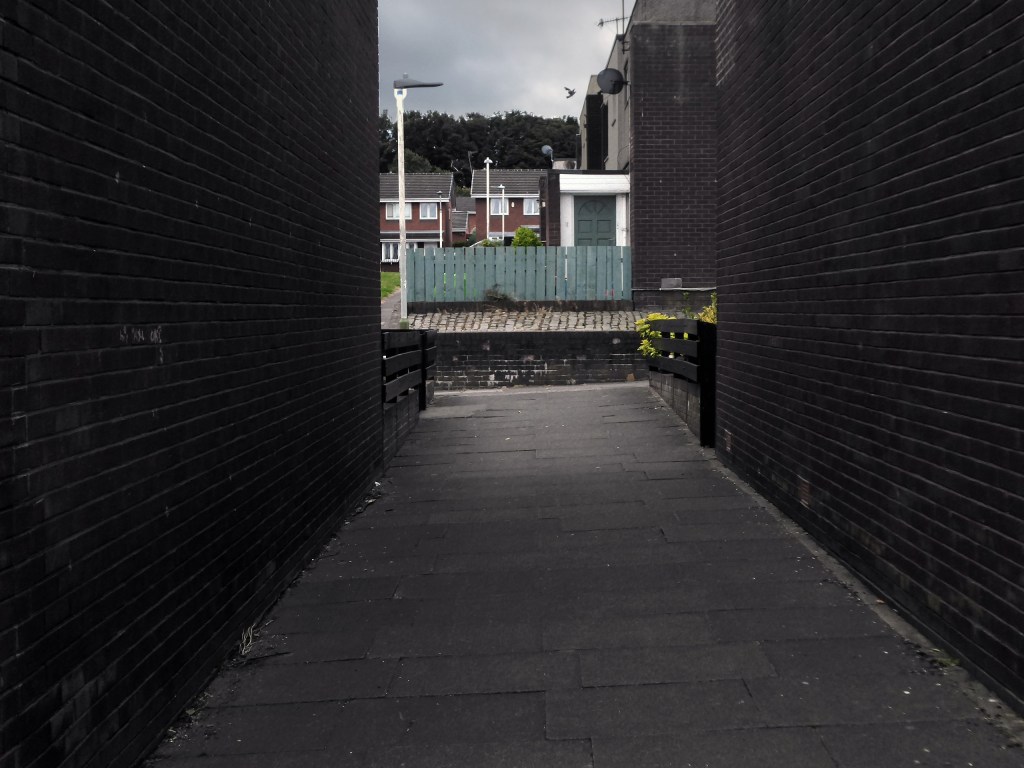
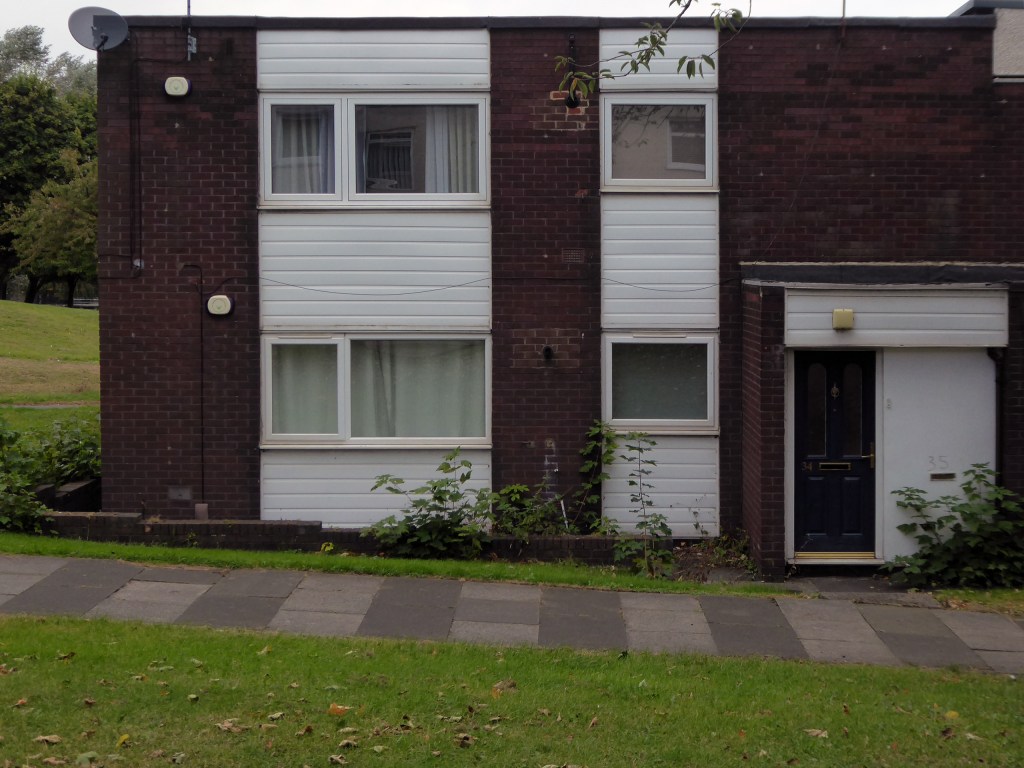
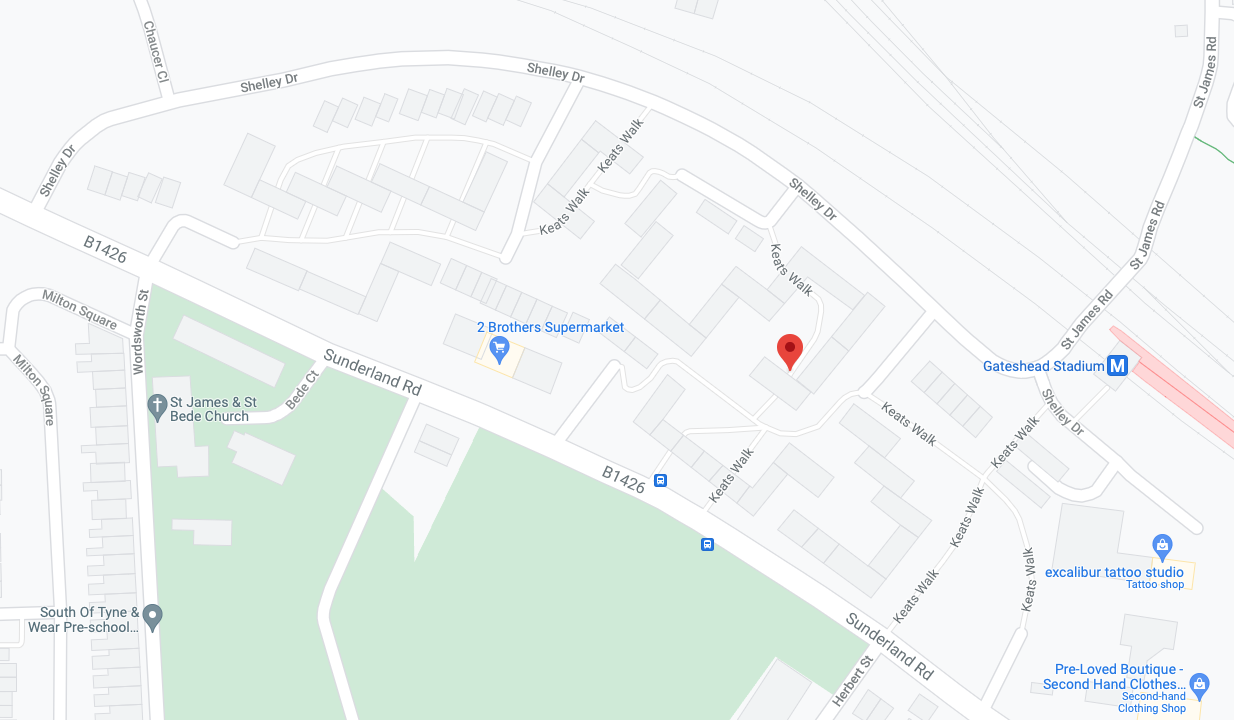
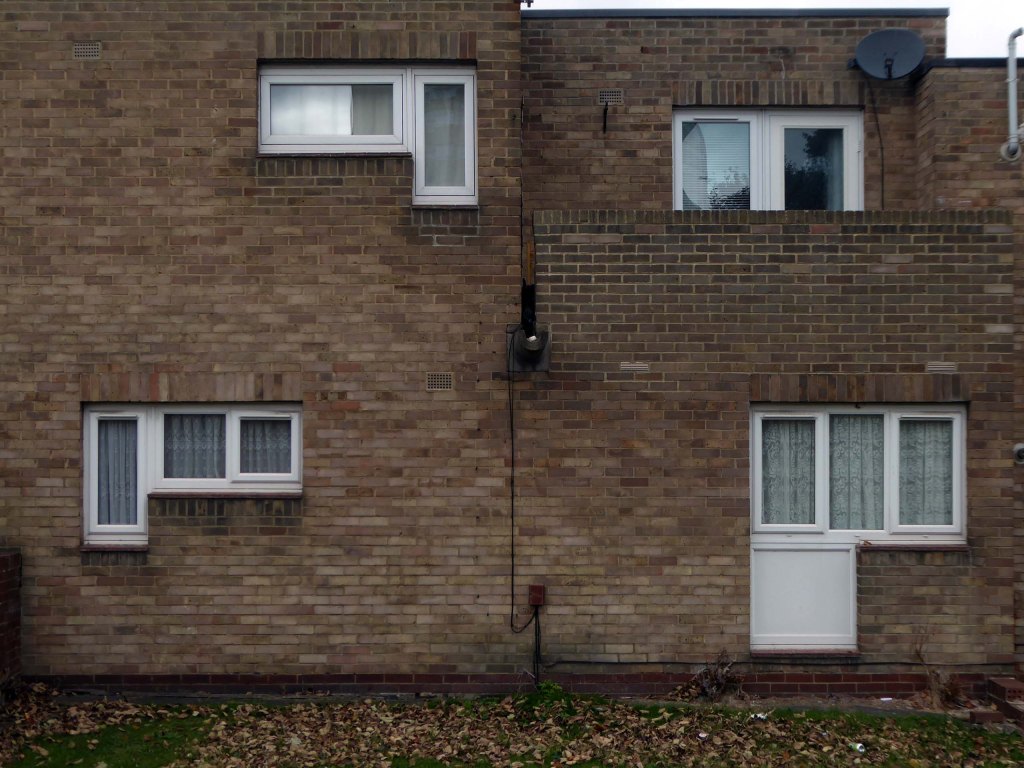
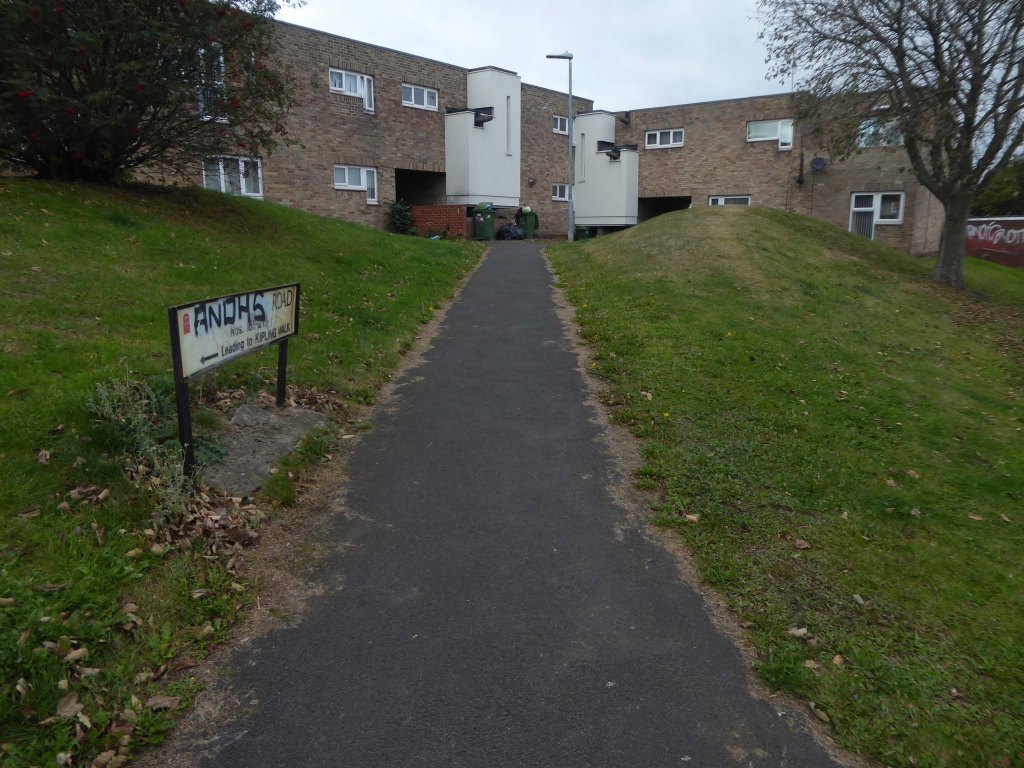
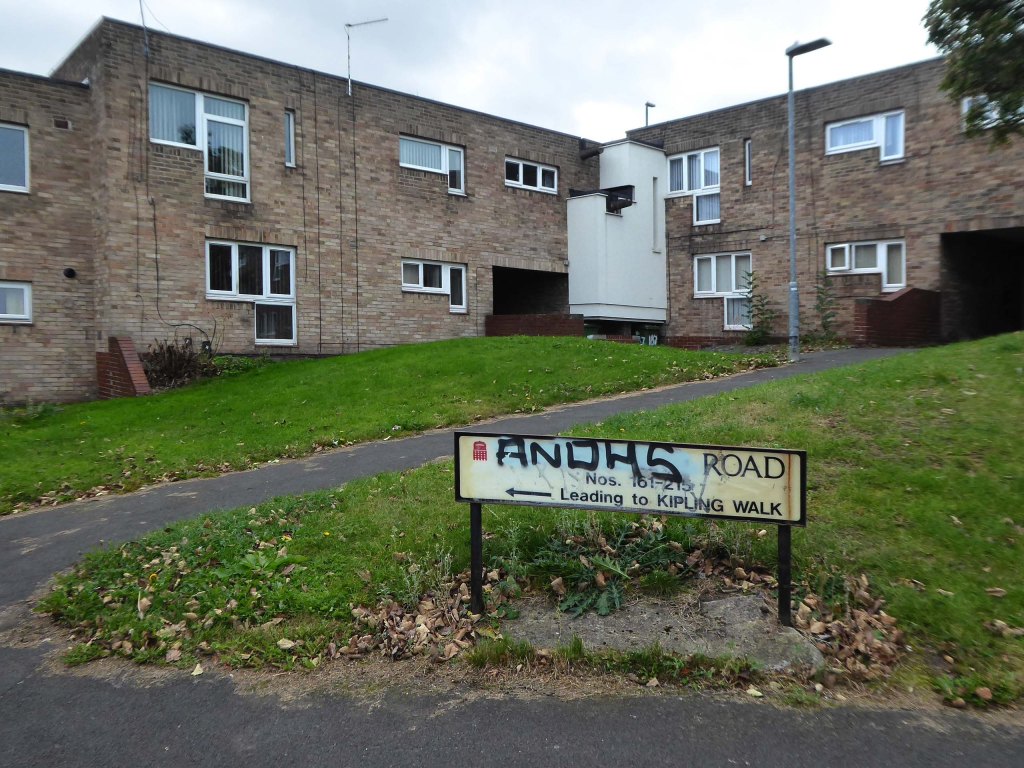
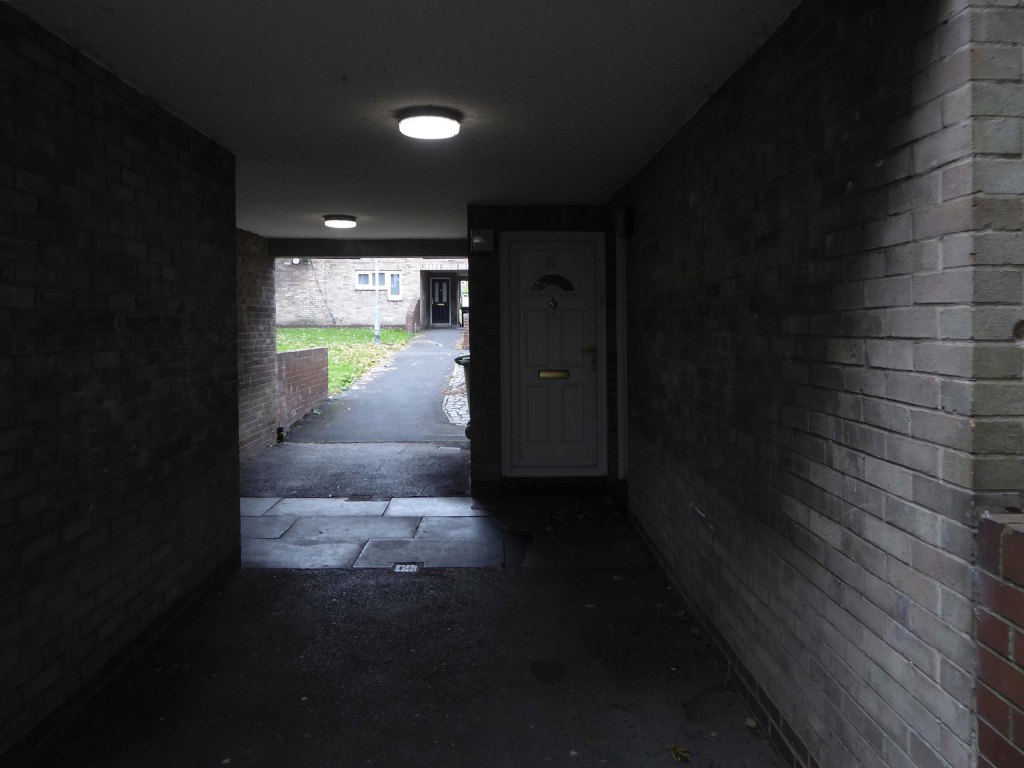
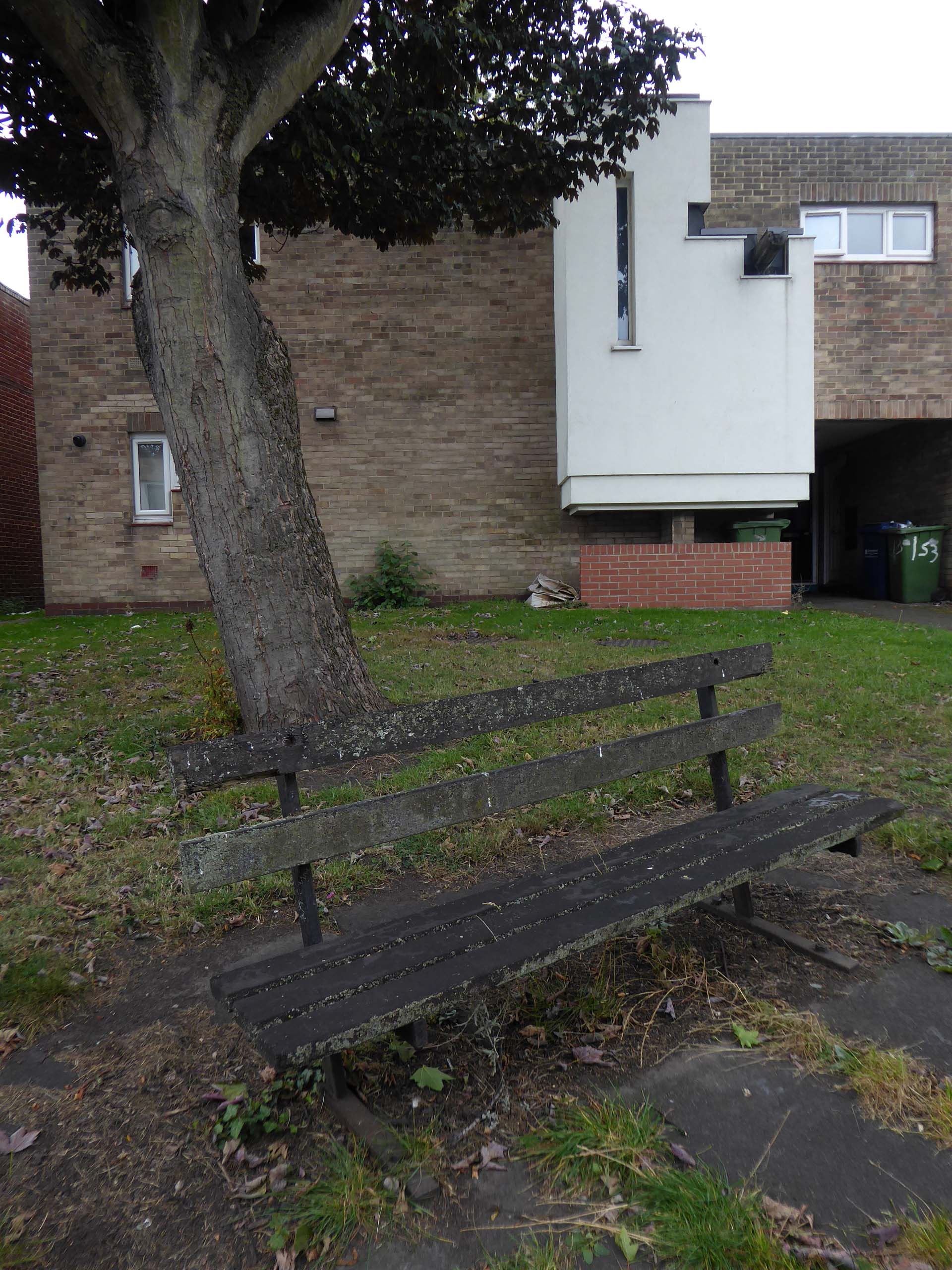
This is a similar mix of boxy terraces and traffic free walkways.
Possibly of a later date.


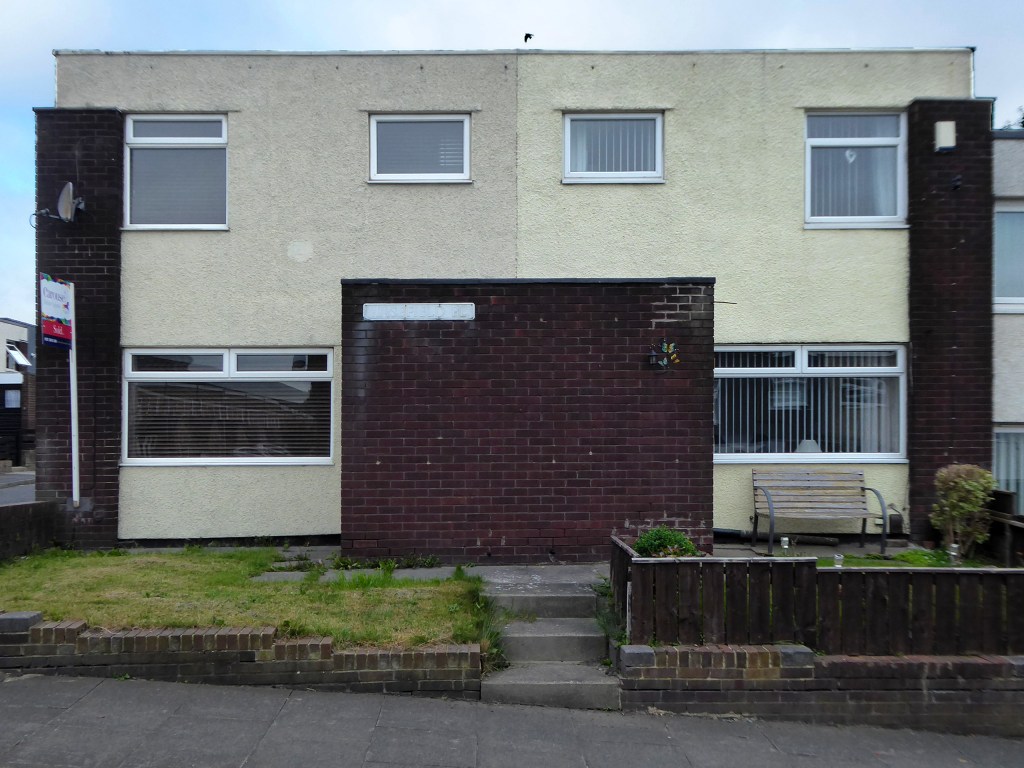
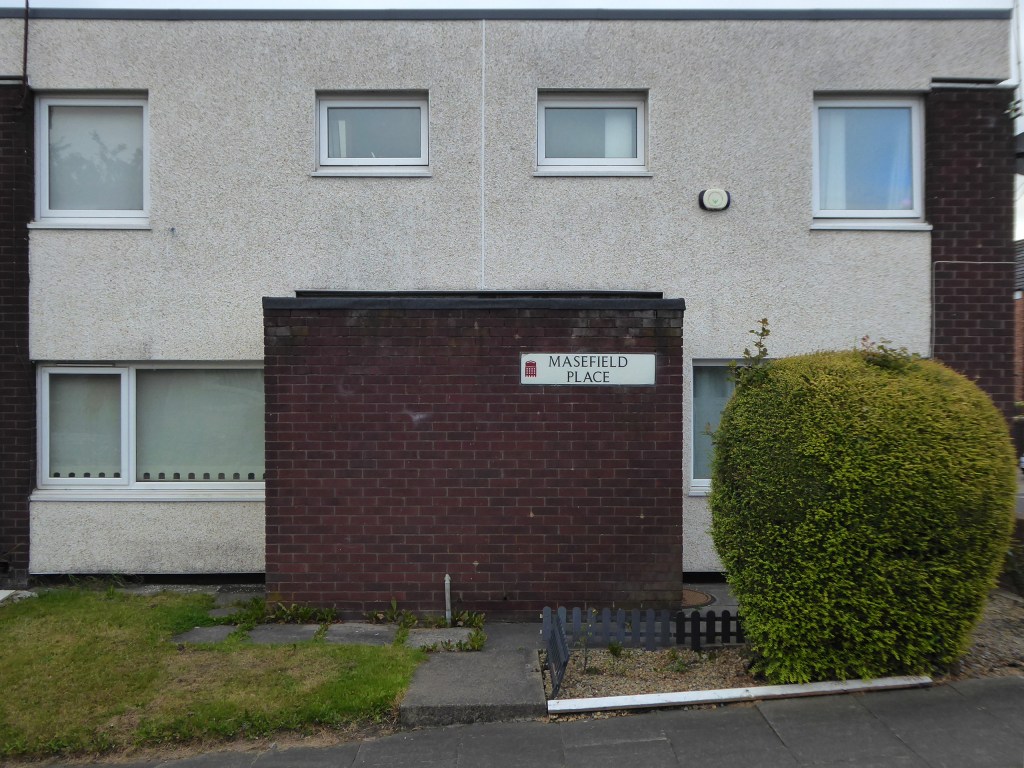
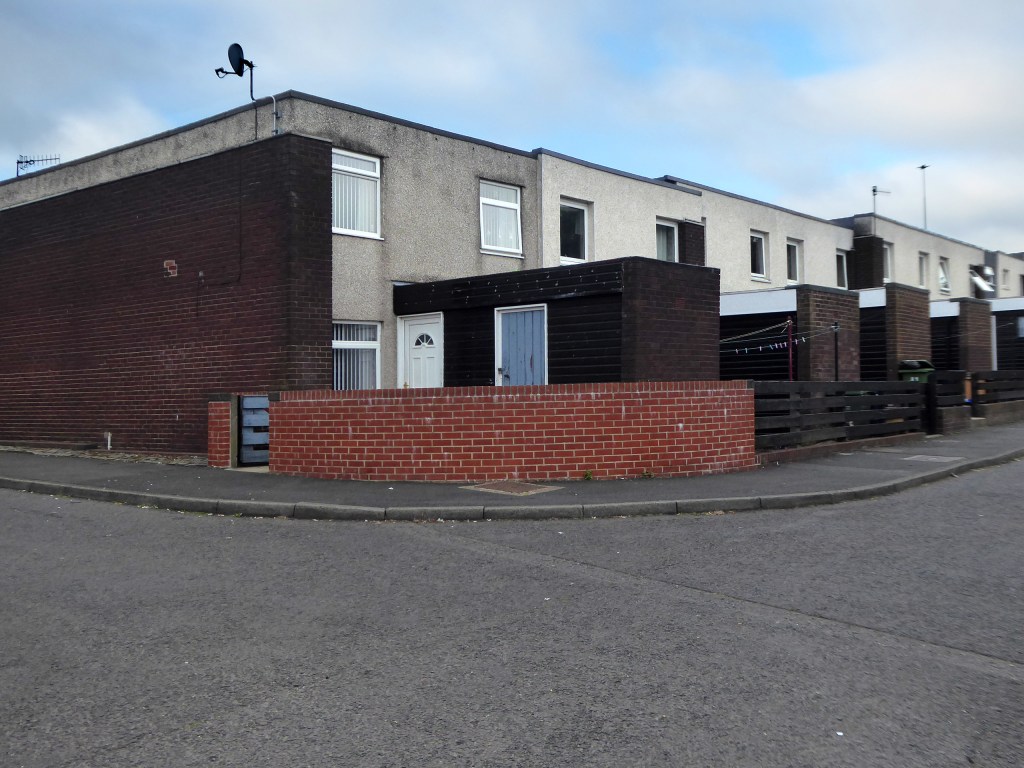






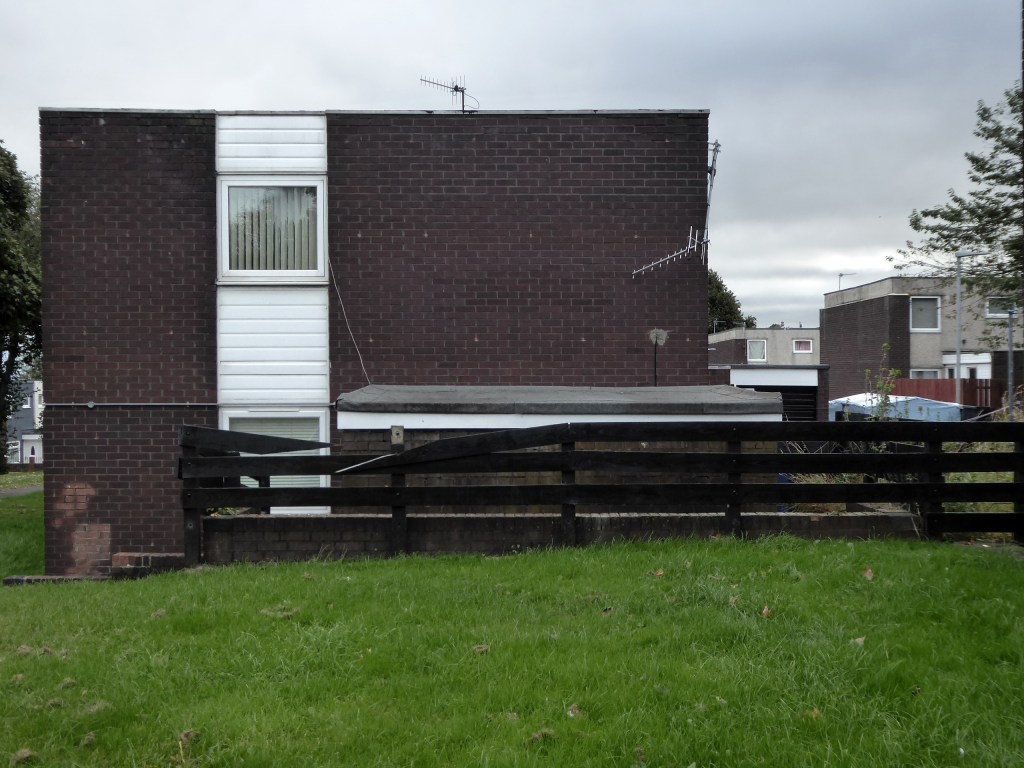
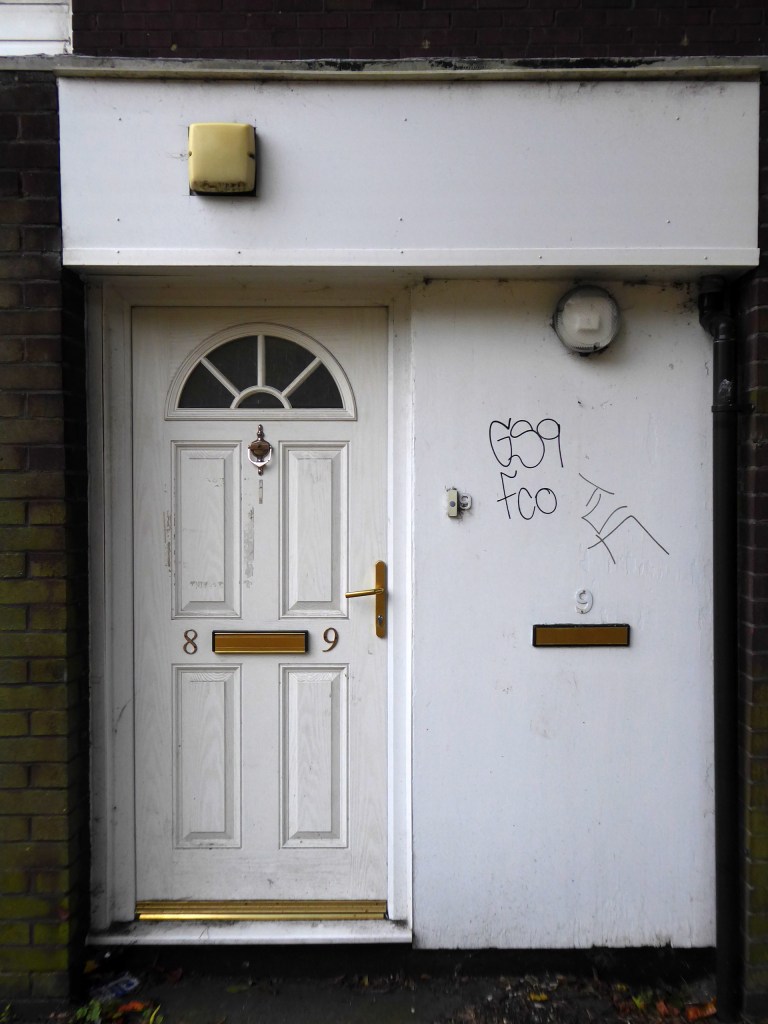

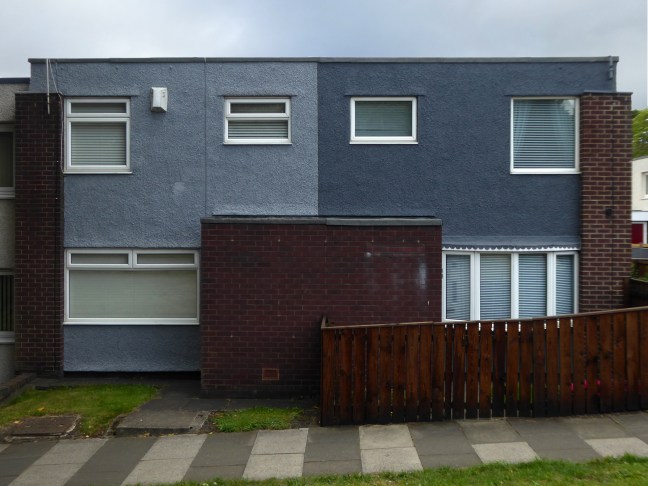
As a companion to the adjacent Poet’s Estate – let’s take a look at Malory, Milton, Masefield and Wordsworth.
This is a similar mix of boxy terraces and traffic free walkways.
Possibly of a later date.
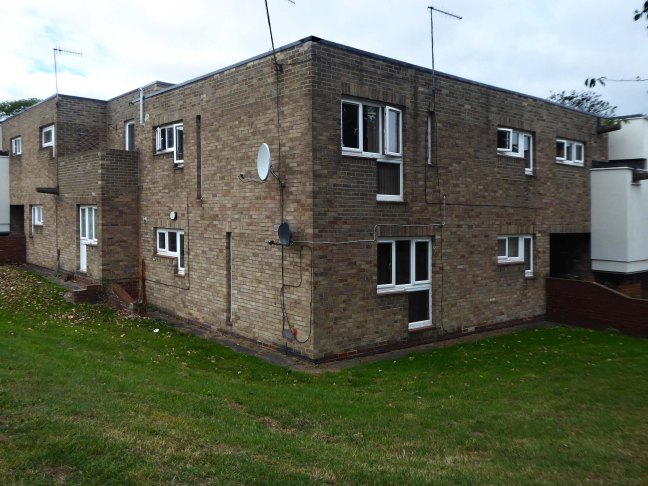
I’d seen these homes from the train.
So I walked from Newcastle to take a look.
They turn their backs on Sunderland Road and the Tyne.
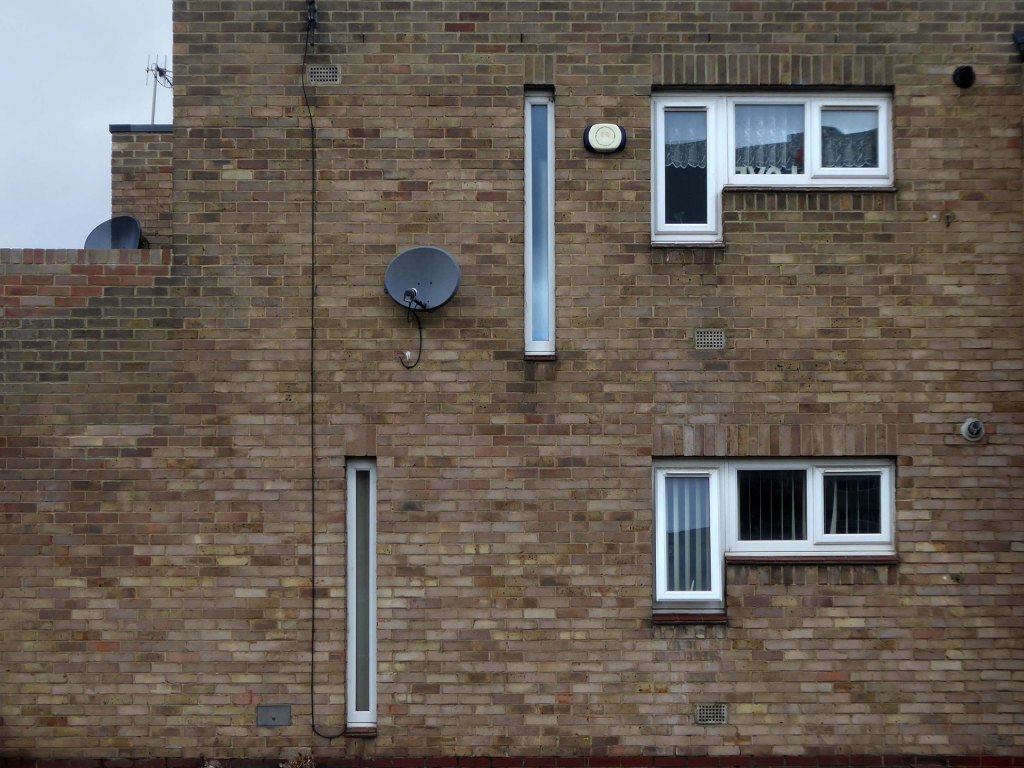
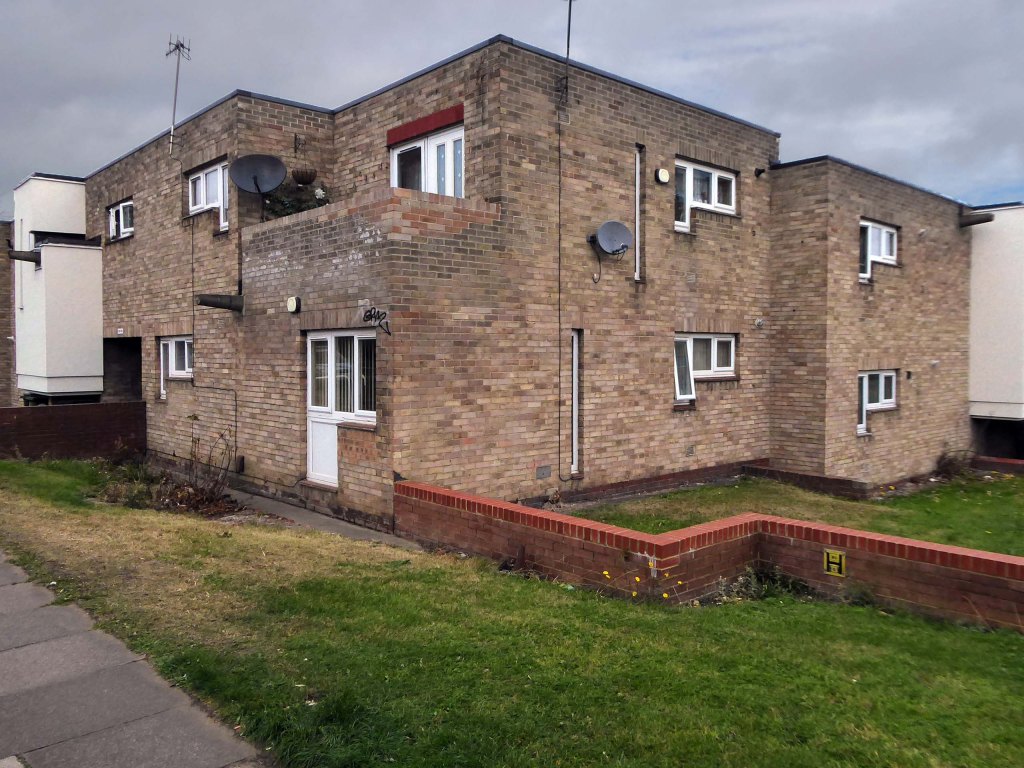
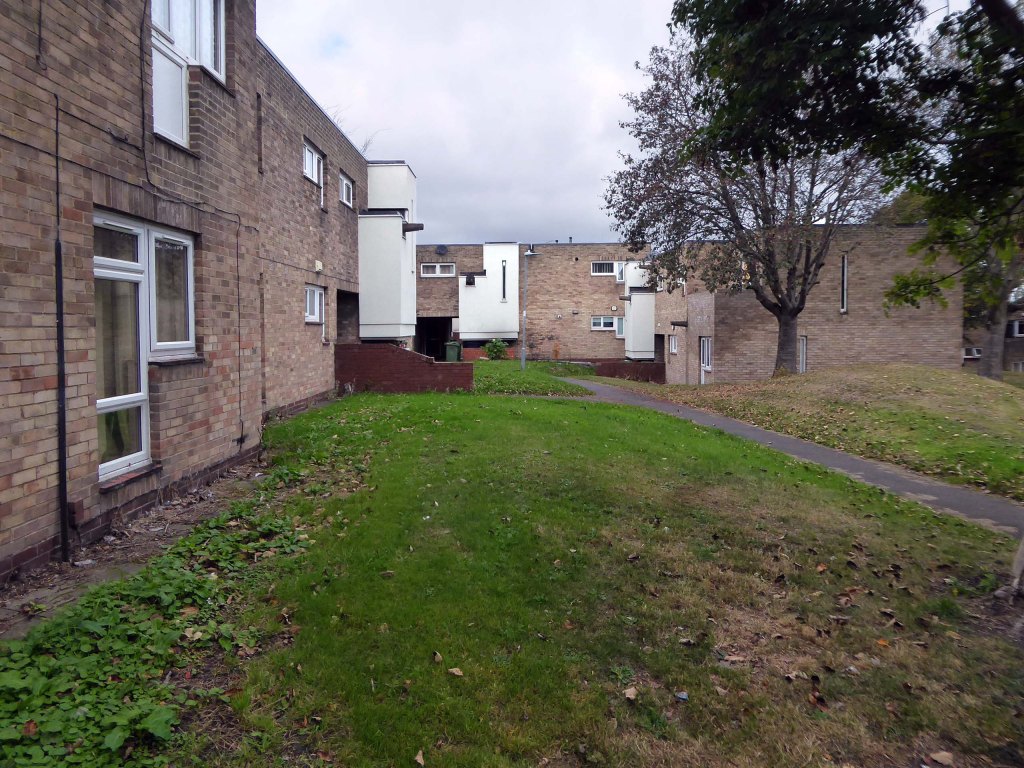
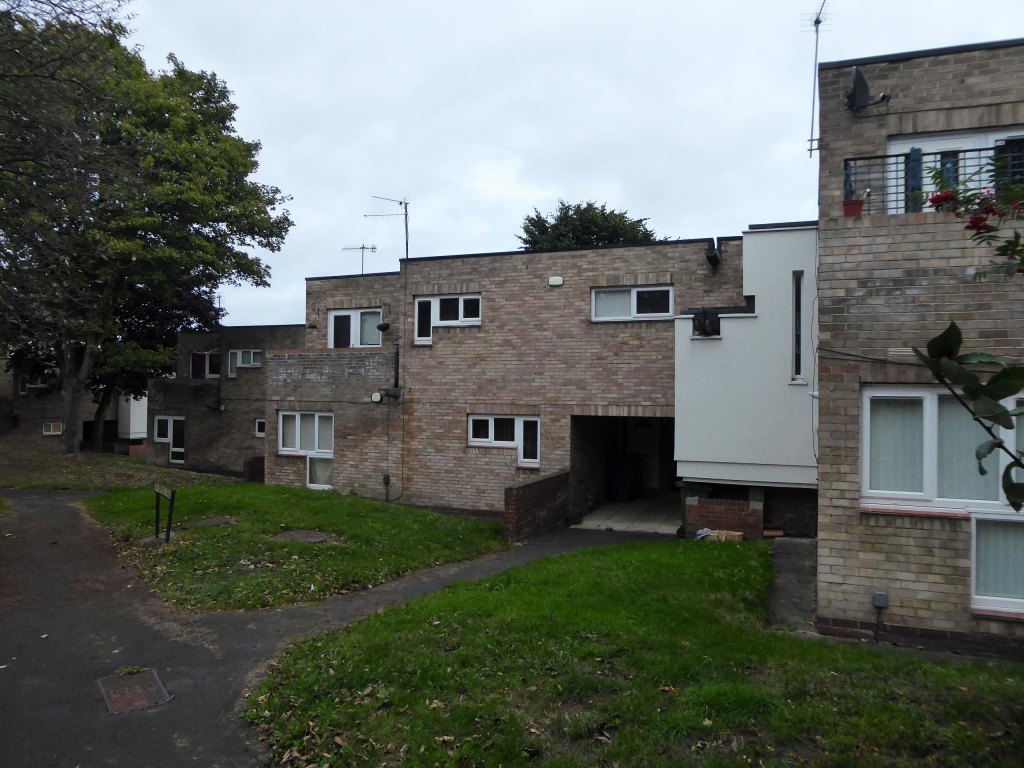
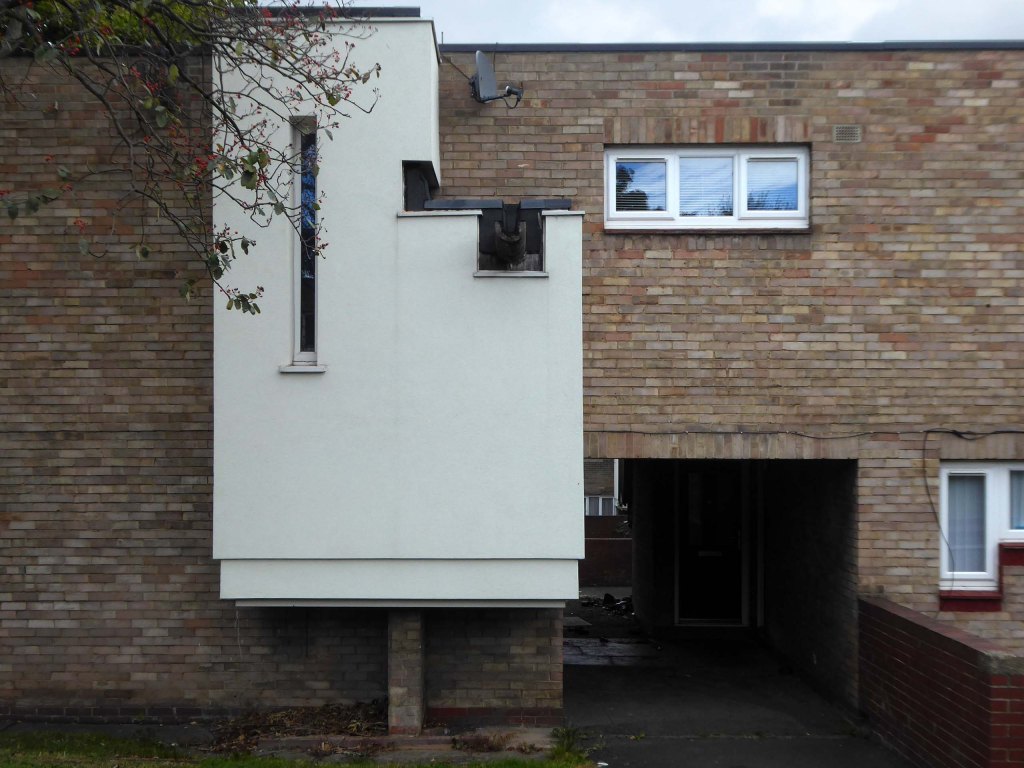
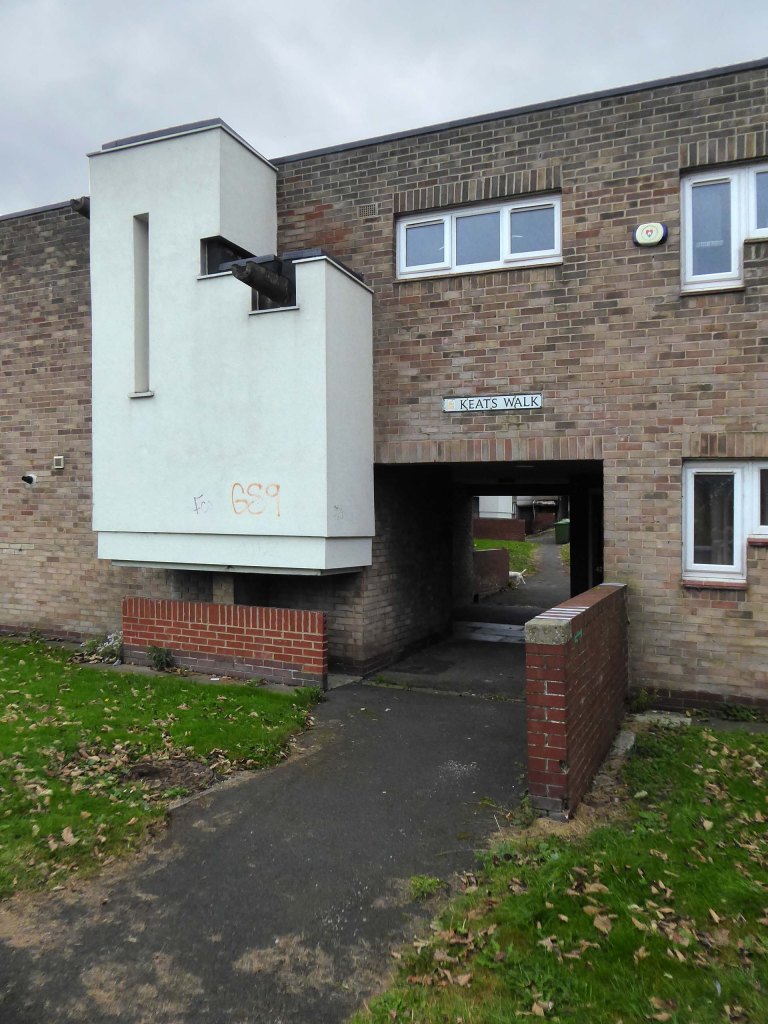
A tight cluster of terraced apartments, set in a grassy rolling terrain, linked by paths and short underpasses.
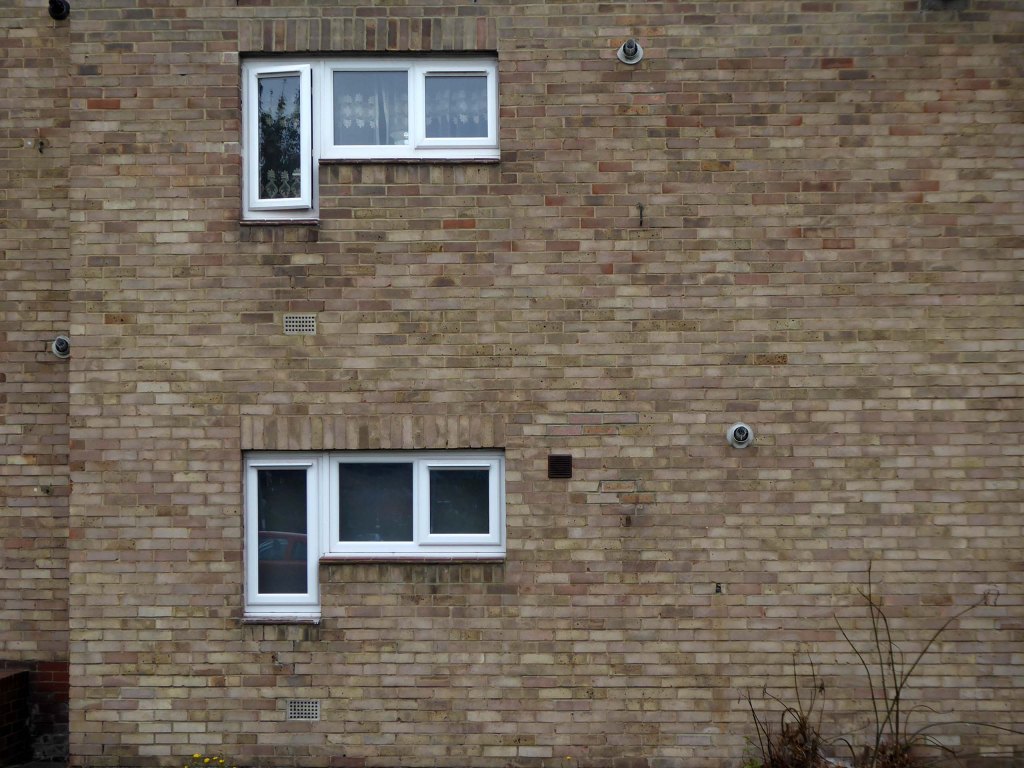
A modern mediaeval, mildly fortified village, rendered in pale brick and white render.
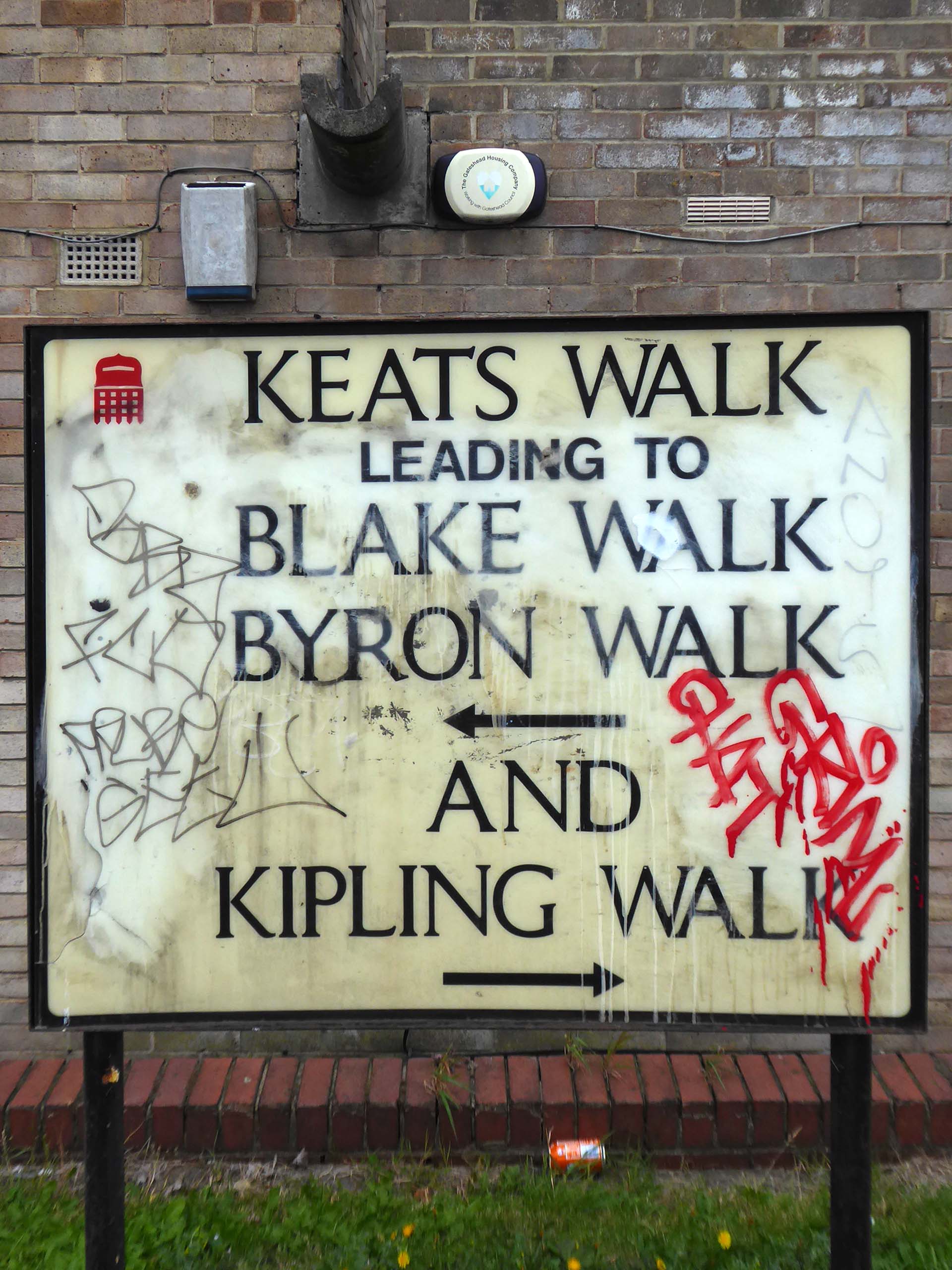
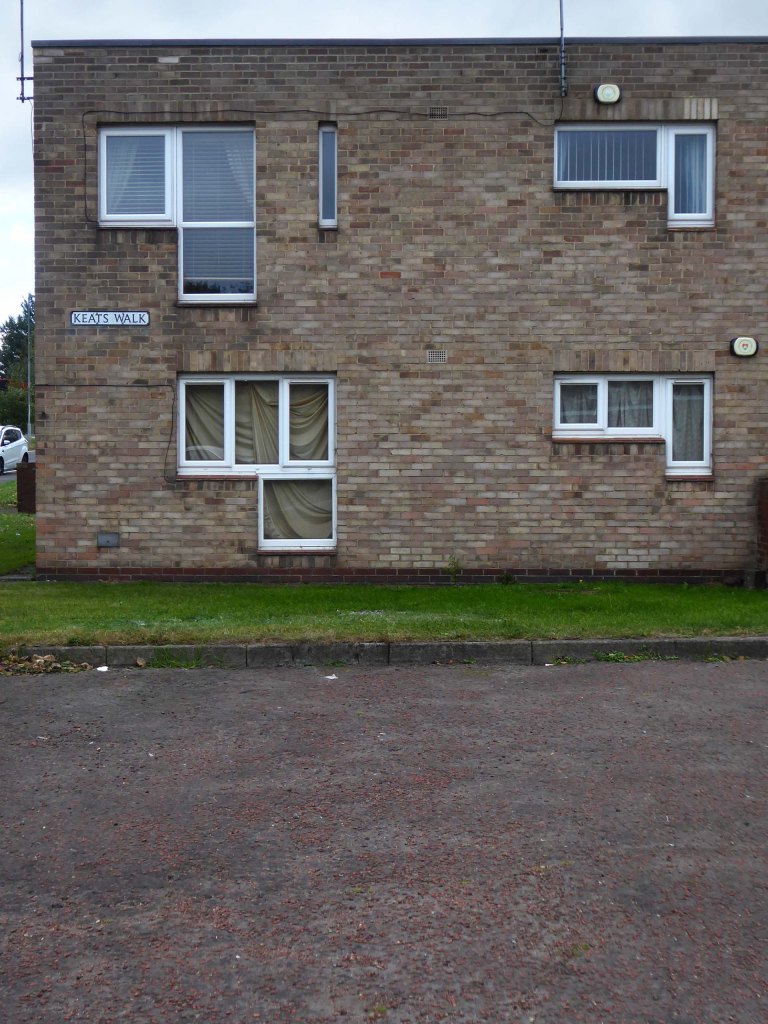
Keats, Kipling, Blake, Byron and Shelley enclosed.
















Take a look around #40
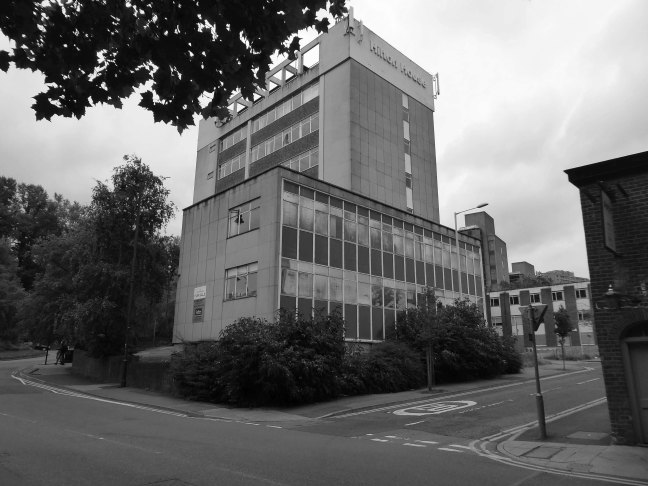
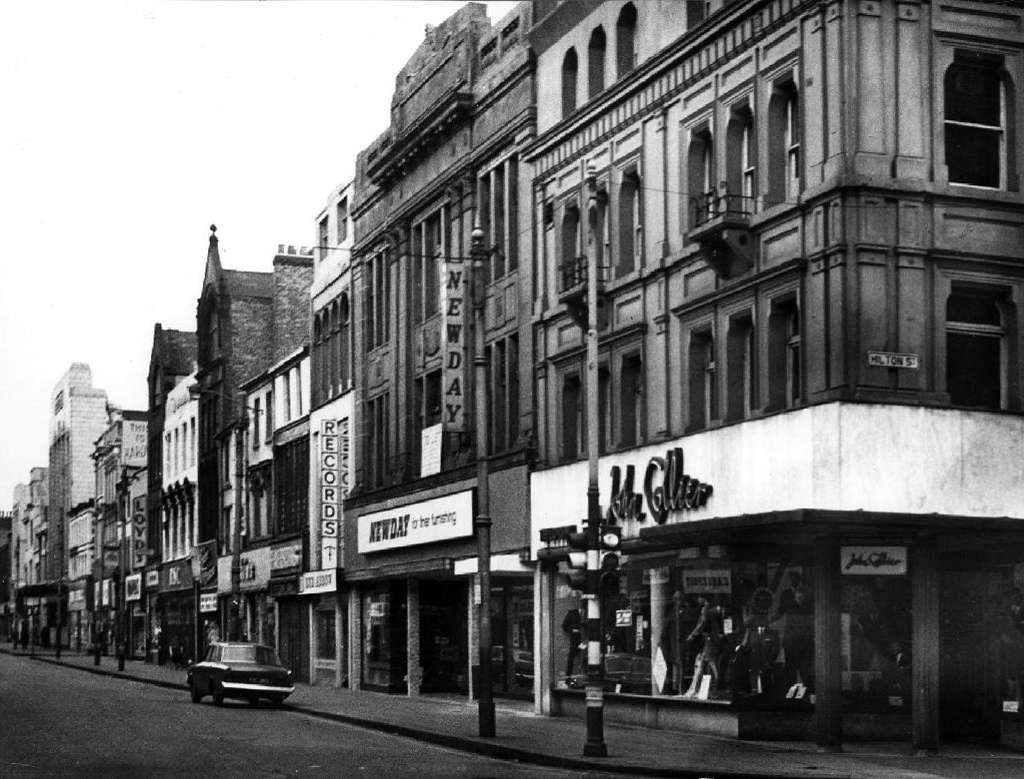
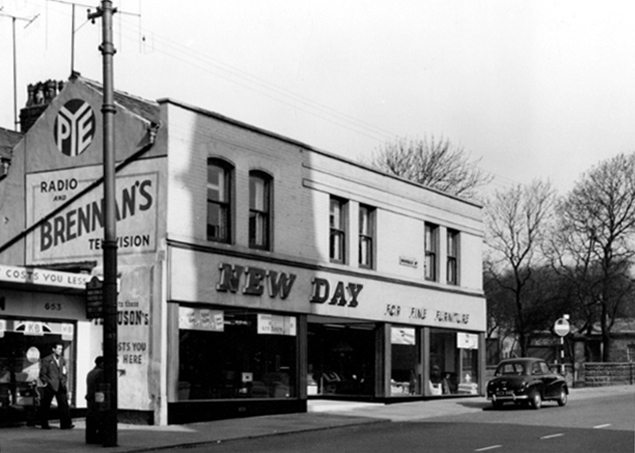
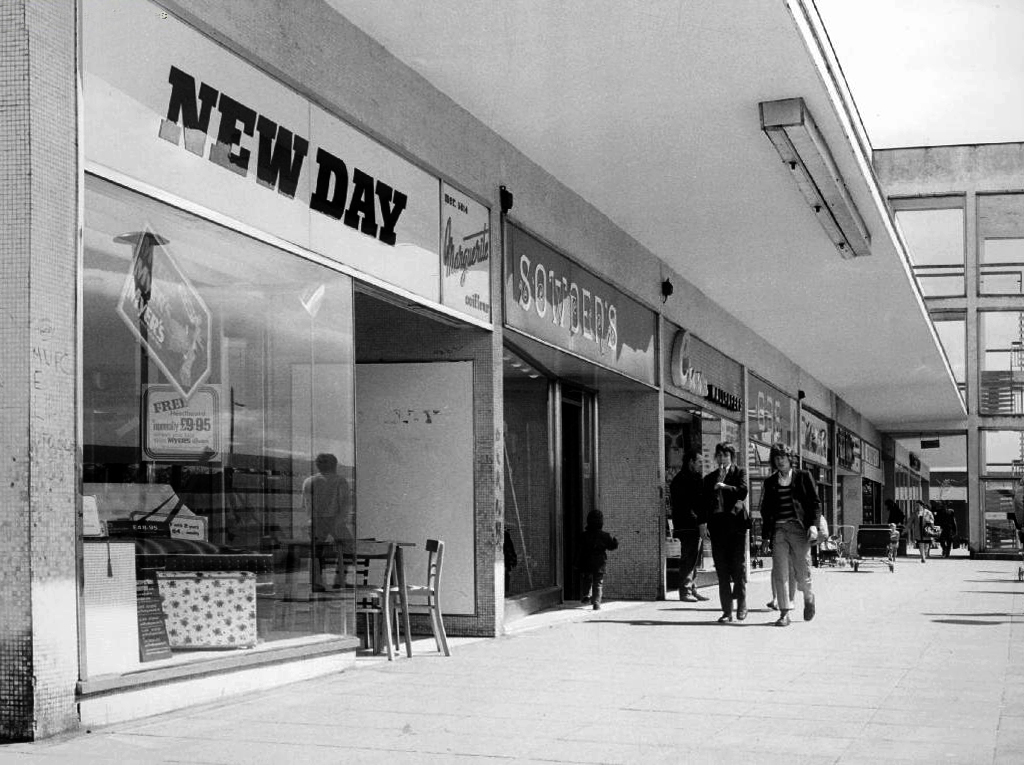
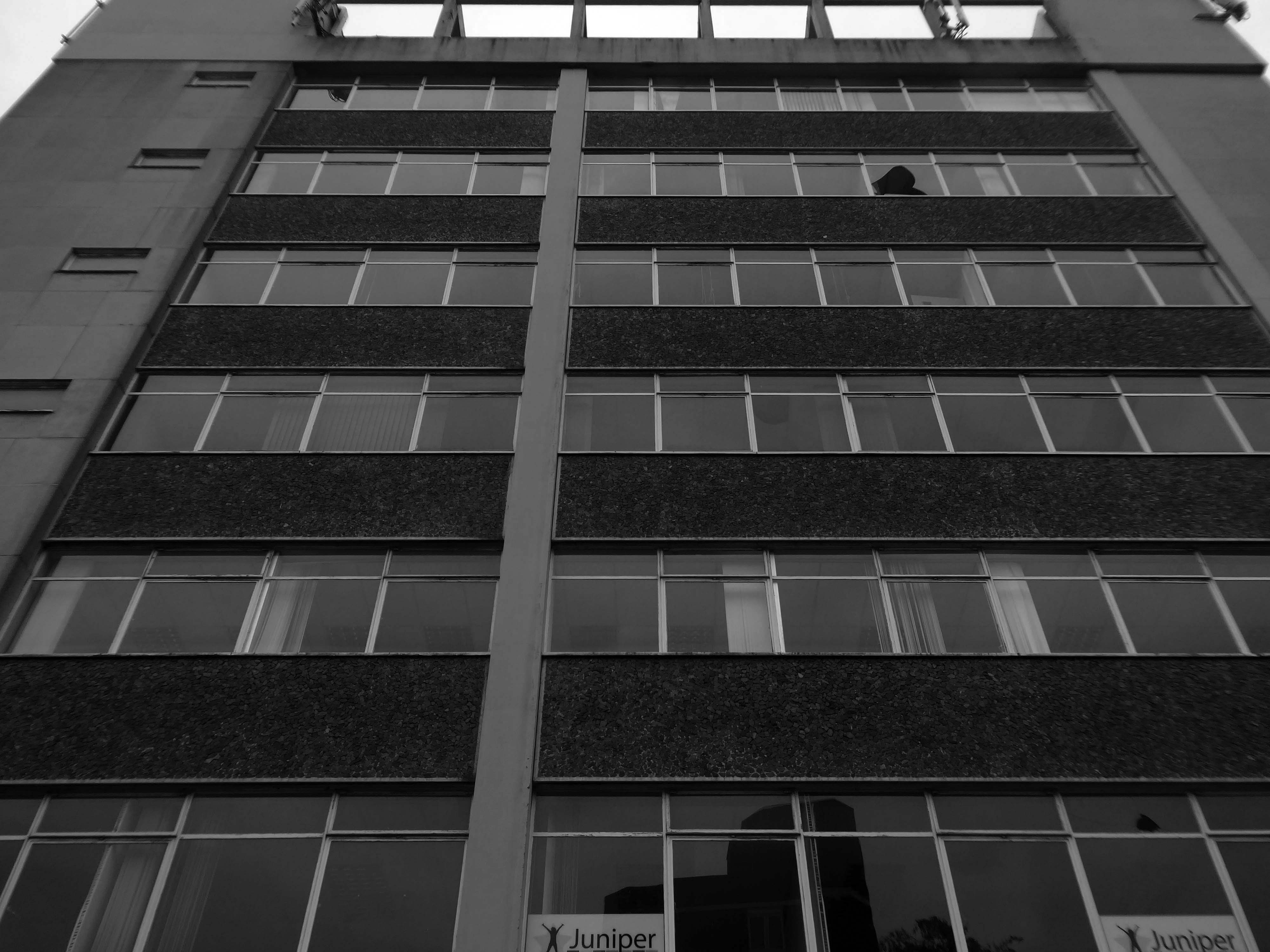
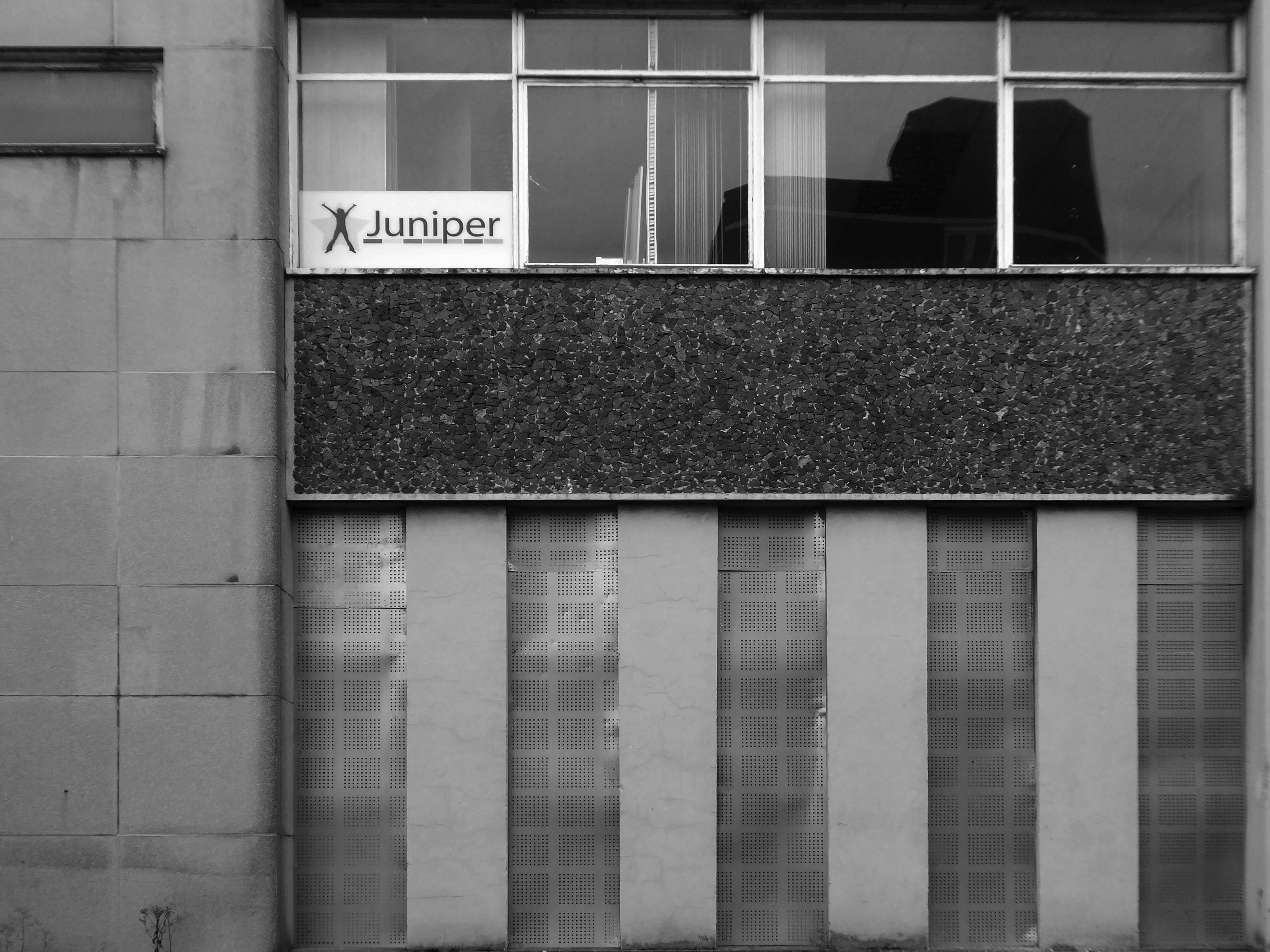
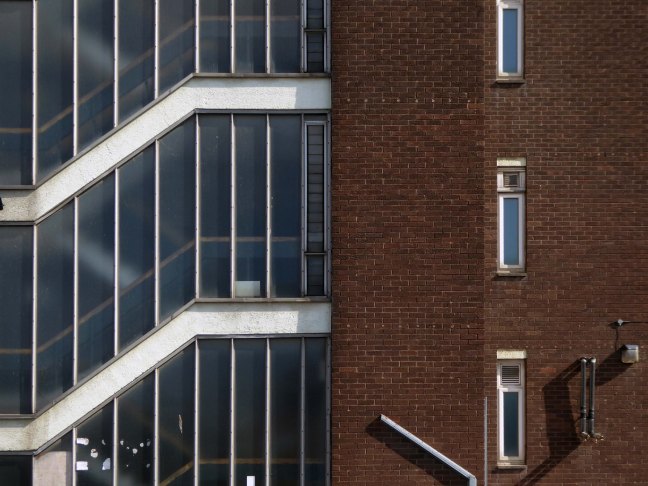
Once the head office of New Day Furniture.
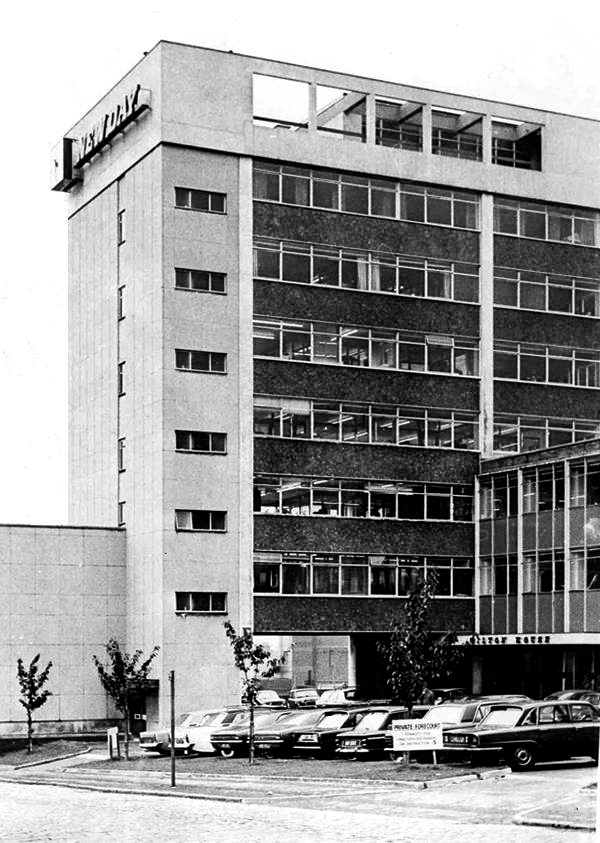
A local company which designed, manufactured and retailed furnishings around the North West.
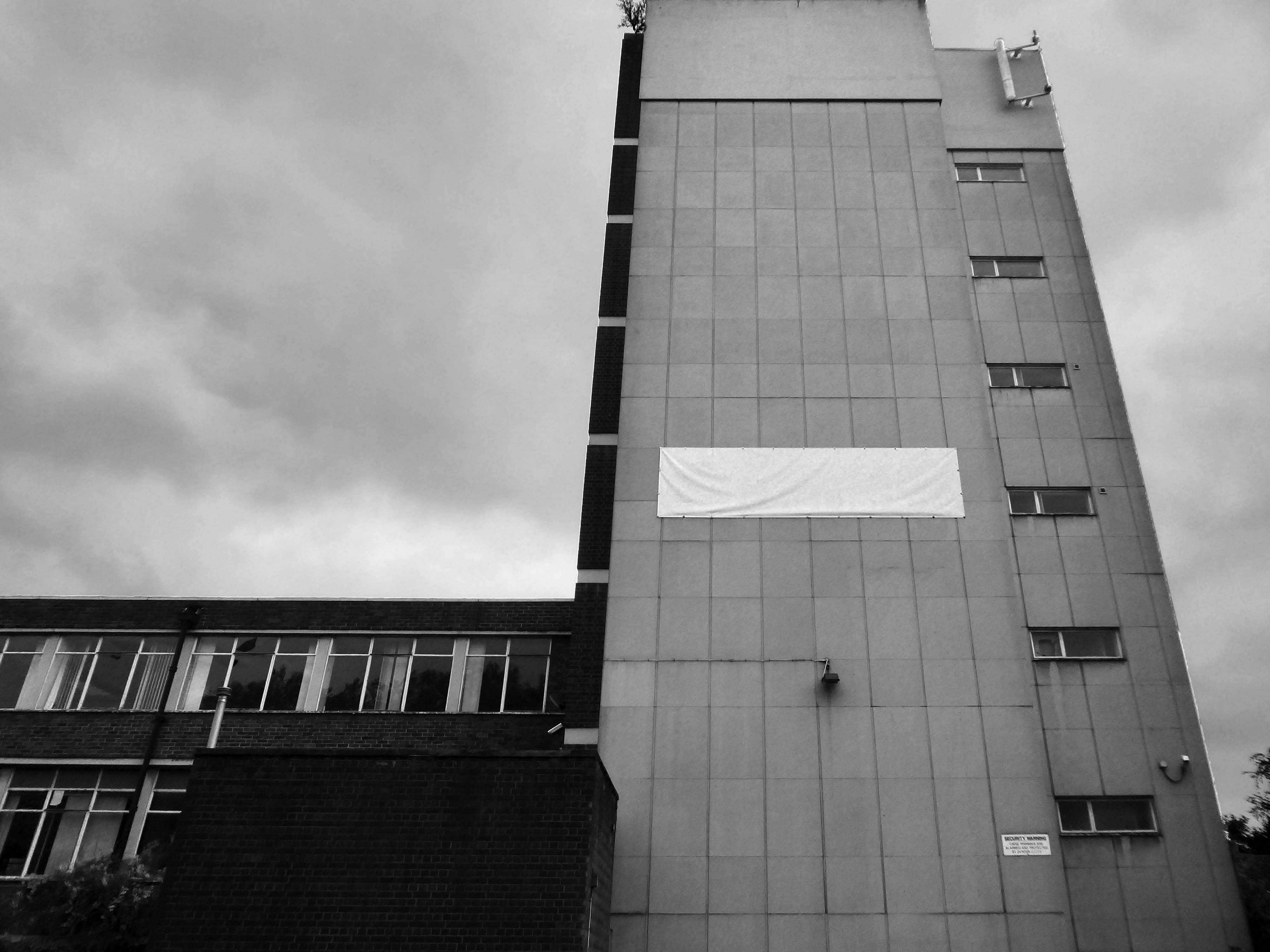
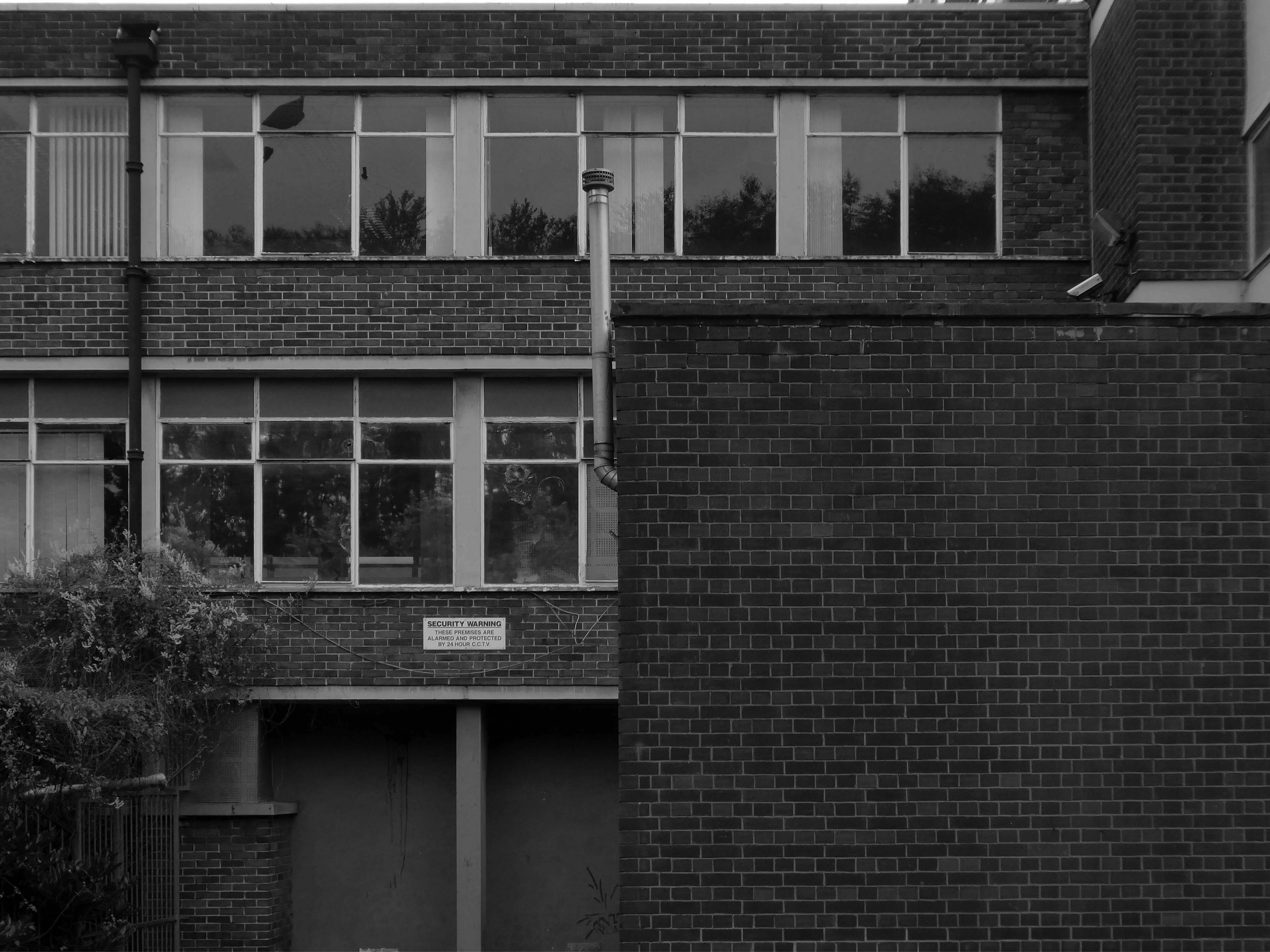
The office building is a highlight of my Stockport Walks – it has a lightness of touch incorporating a partial podium, slab block and lower rise extensions.
There is a sensitive mix of glass, stone, concrete and brick across a variety of scales and volumes.
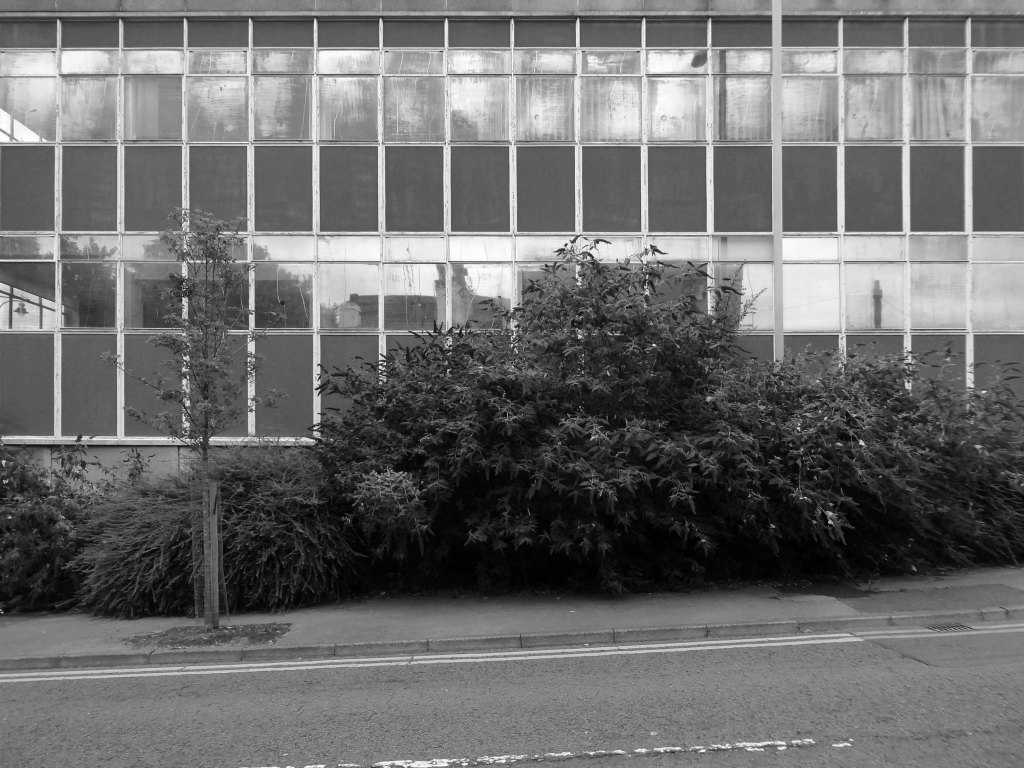
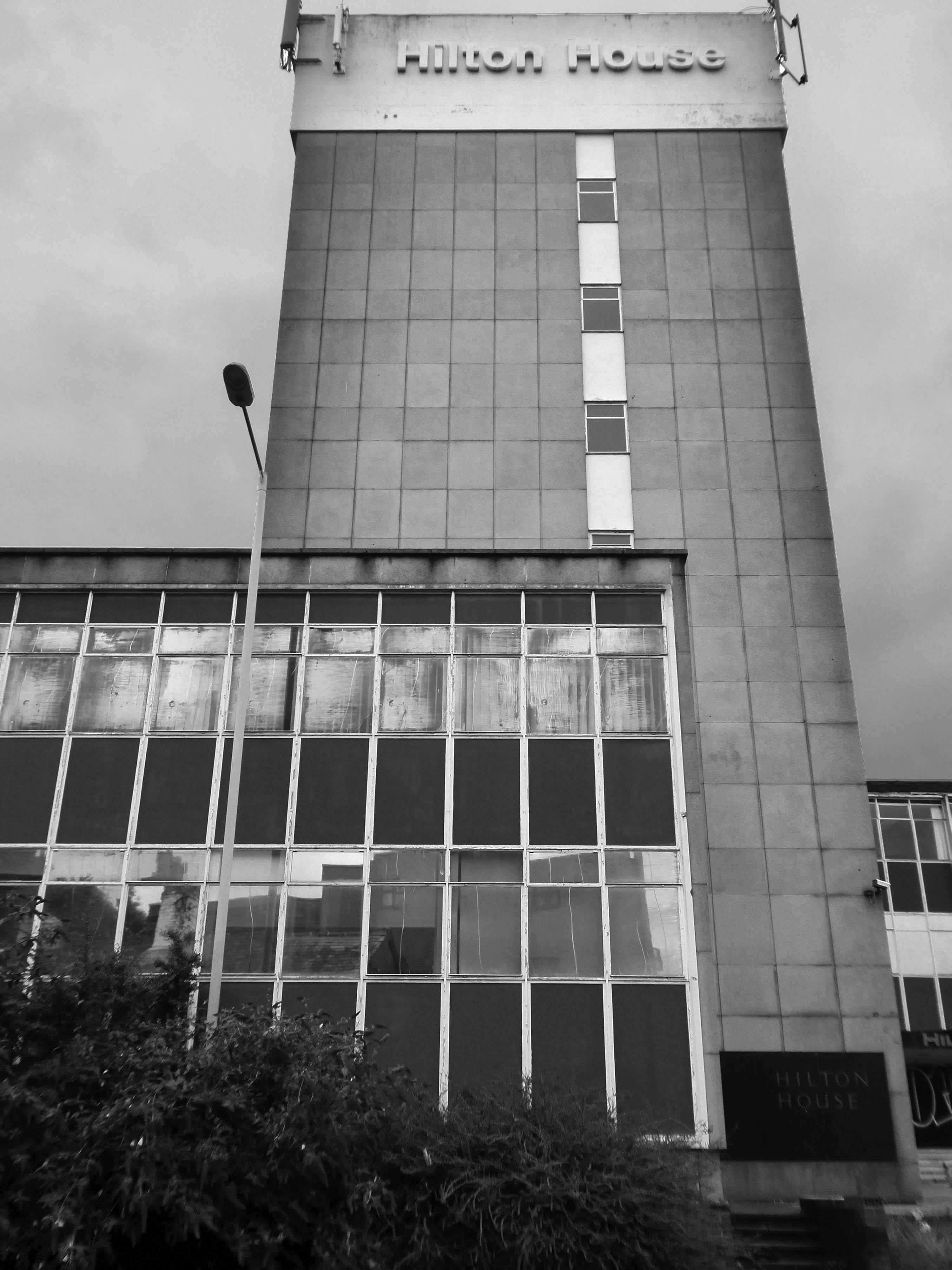

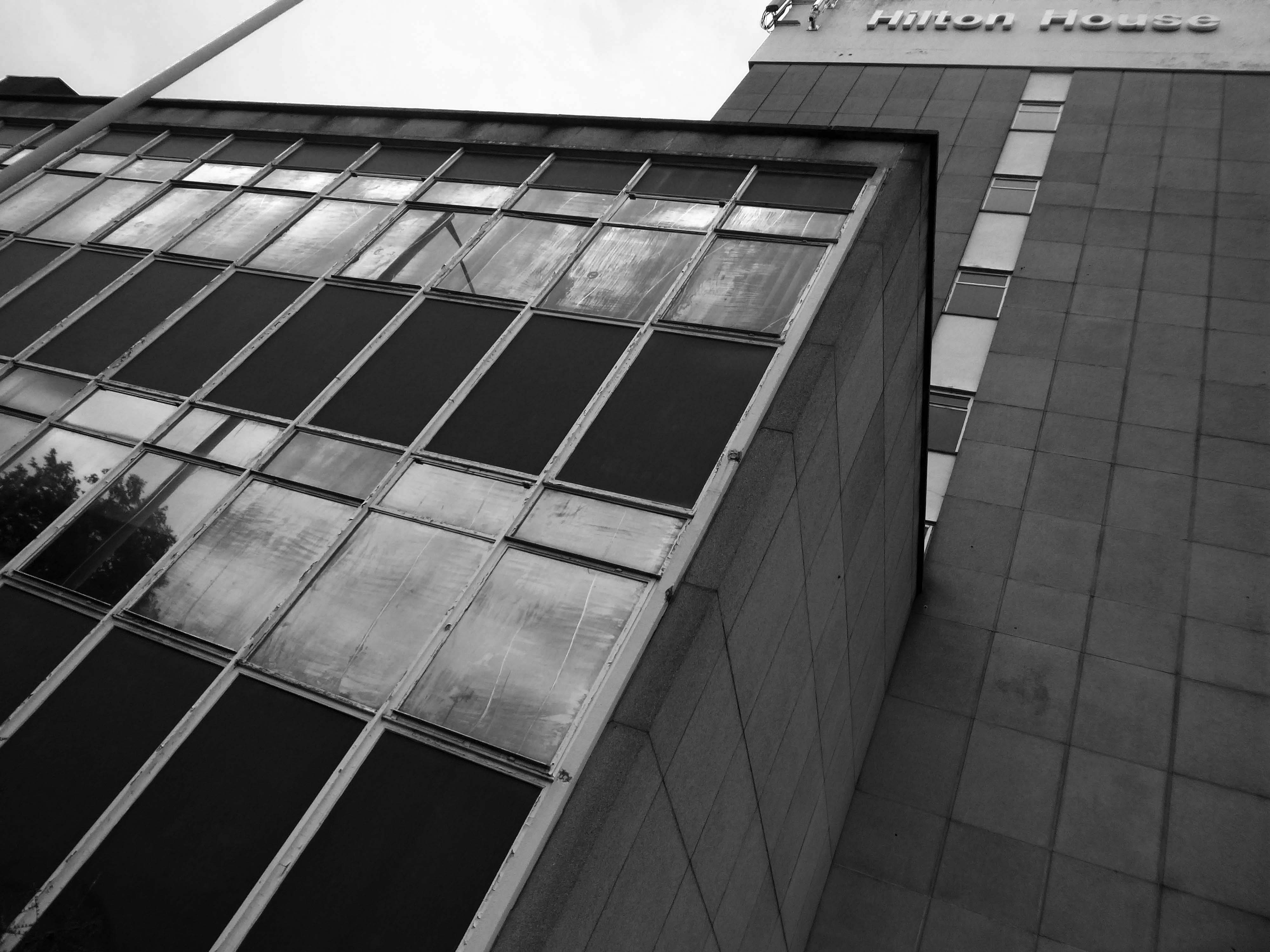
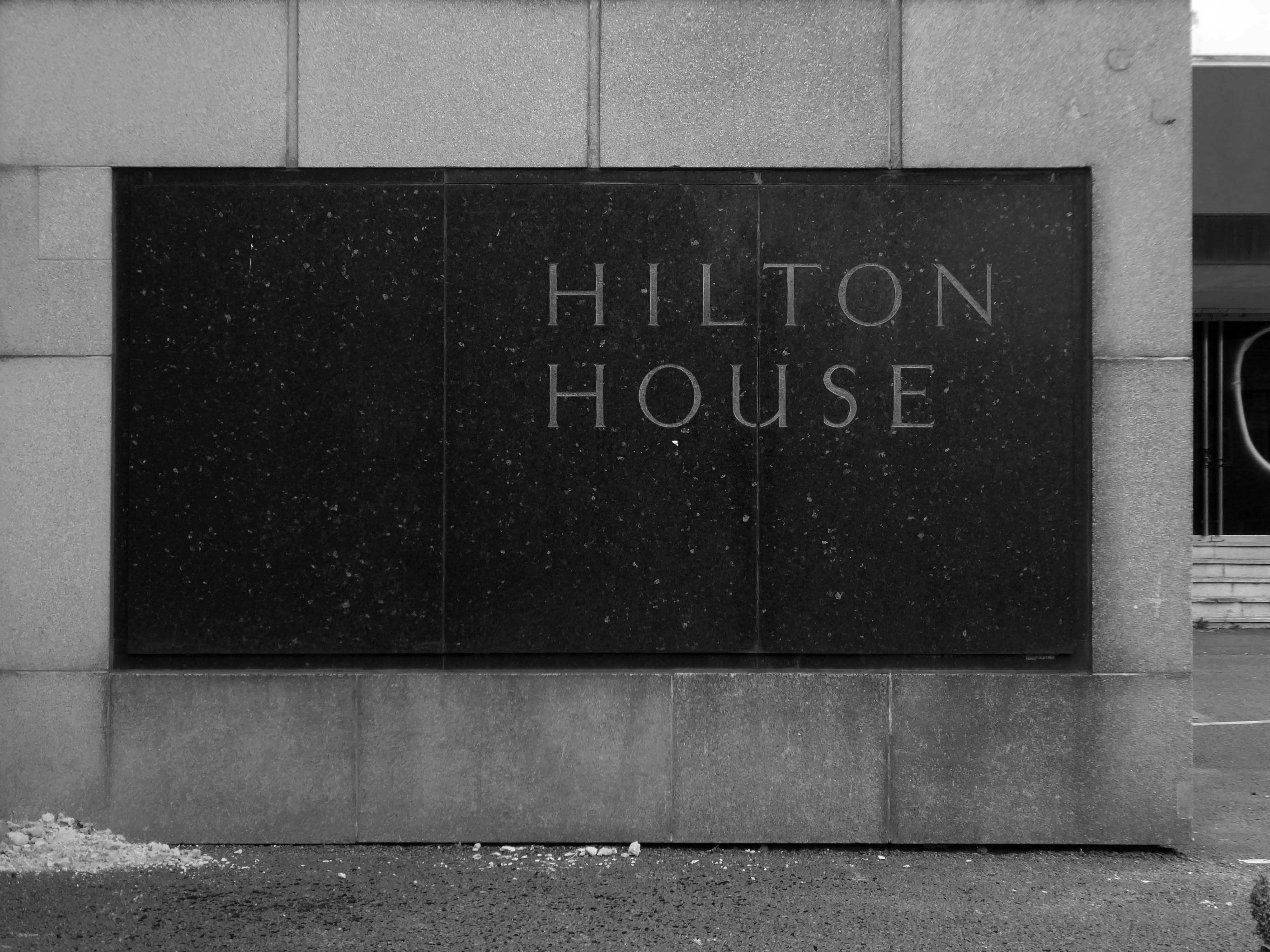
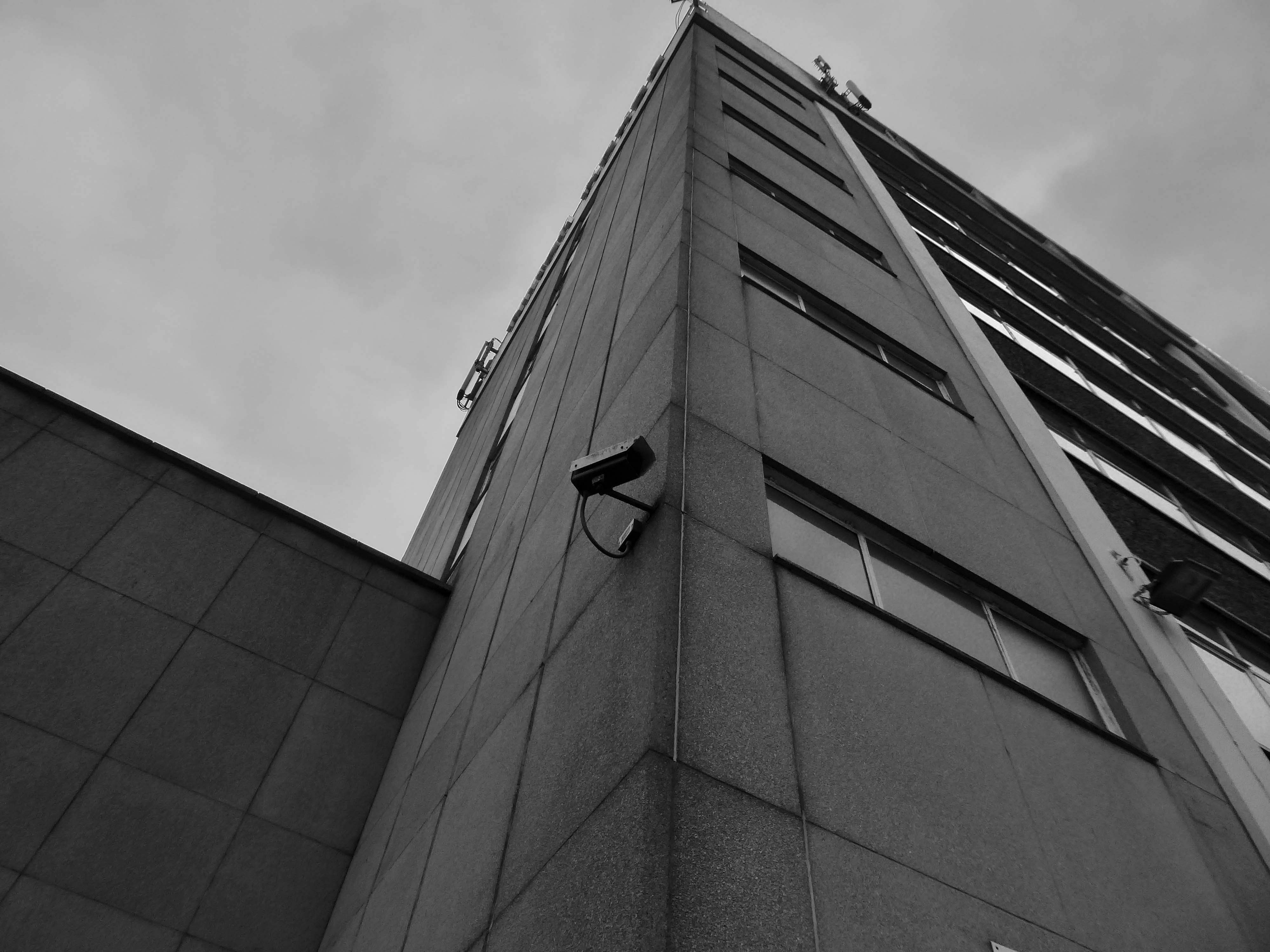
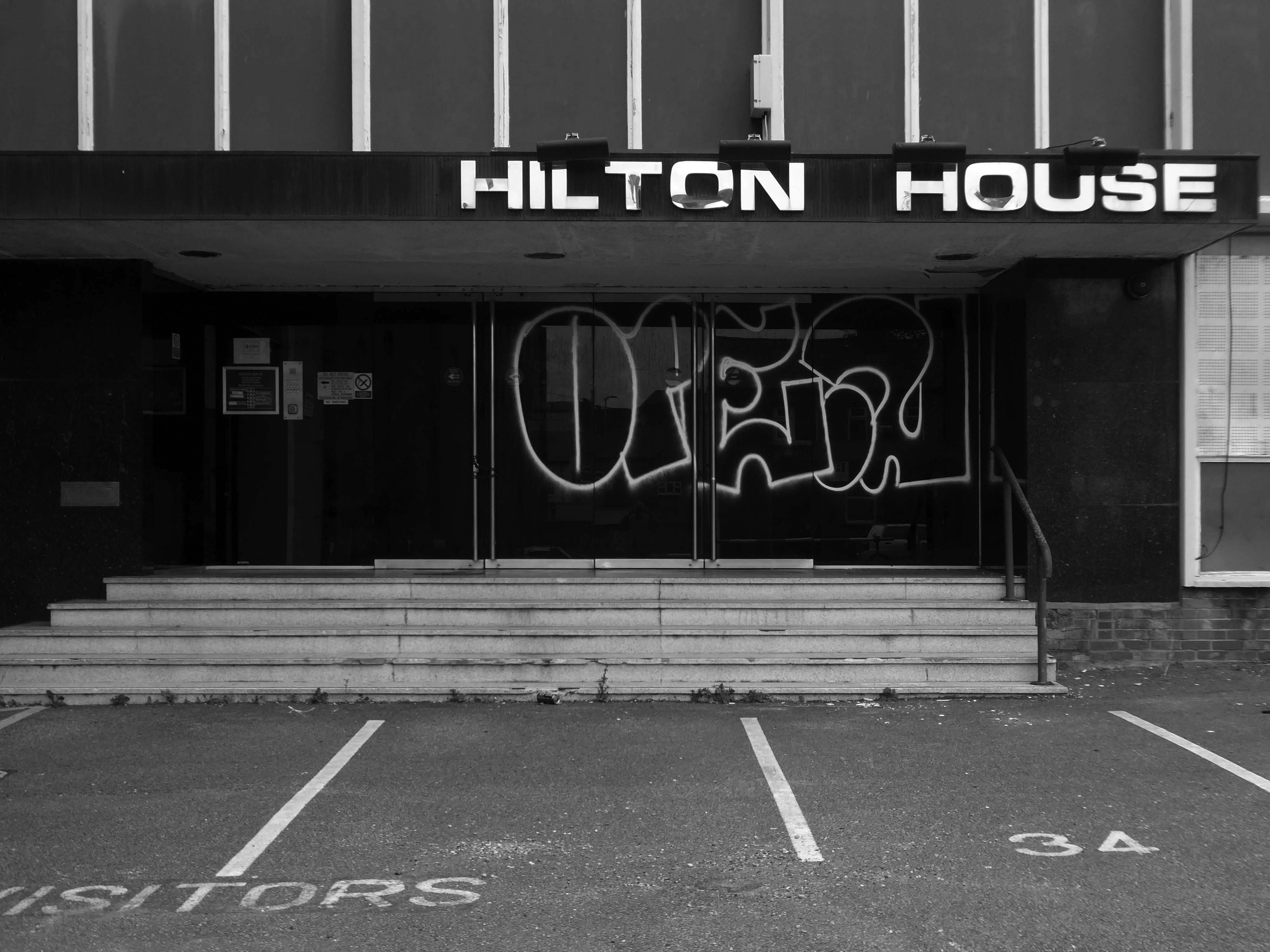
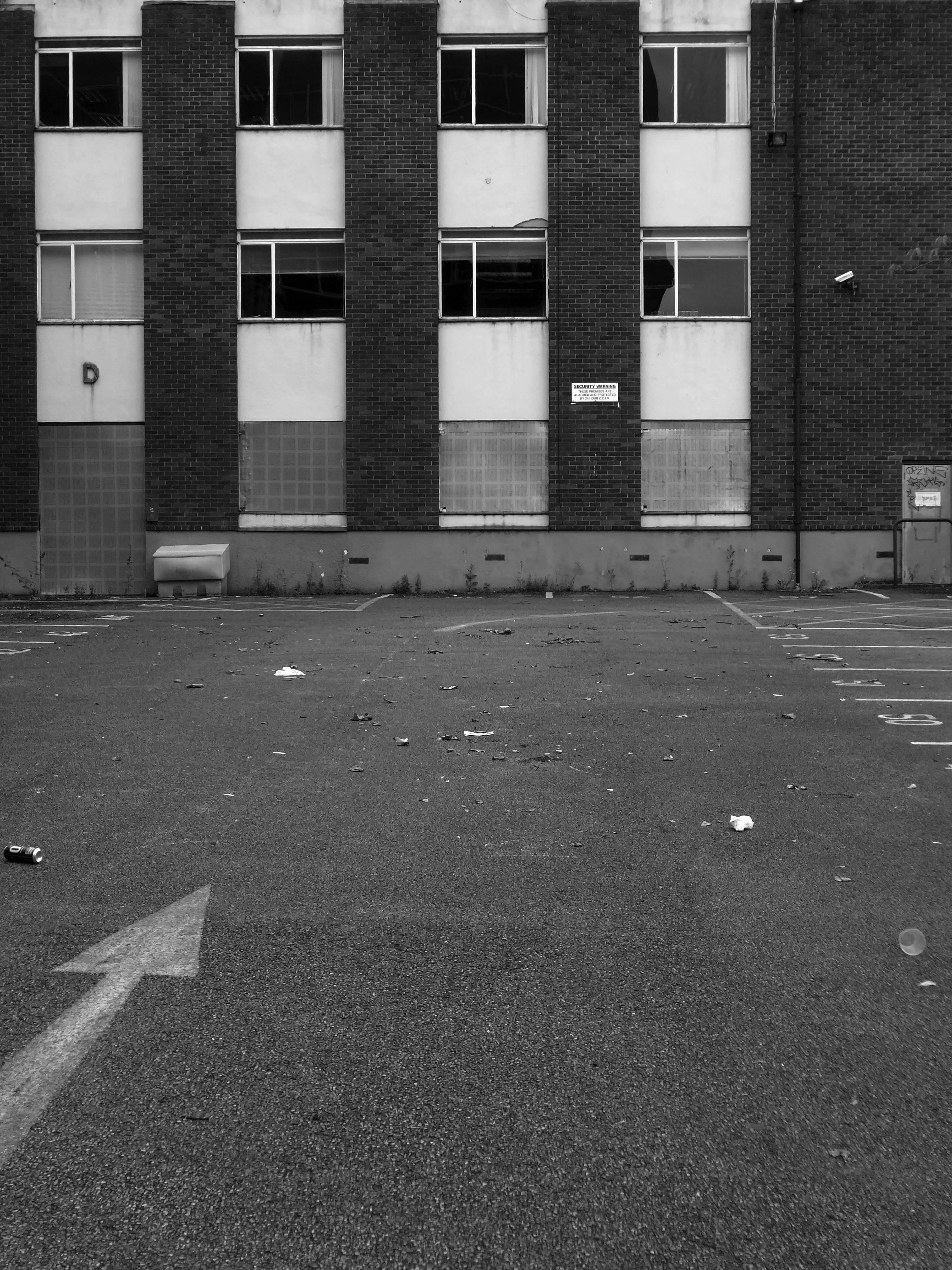
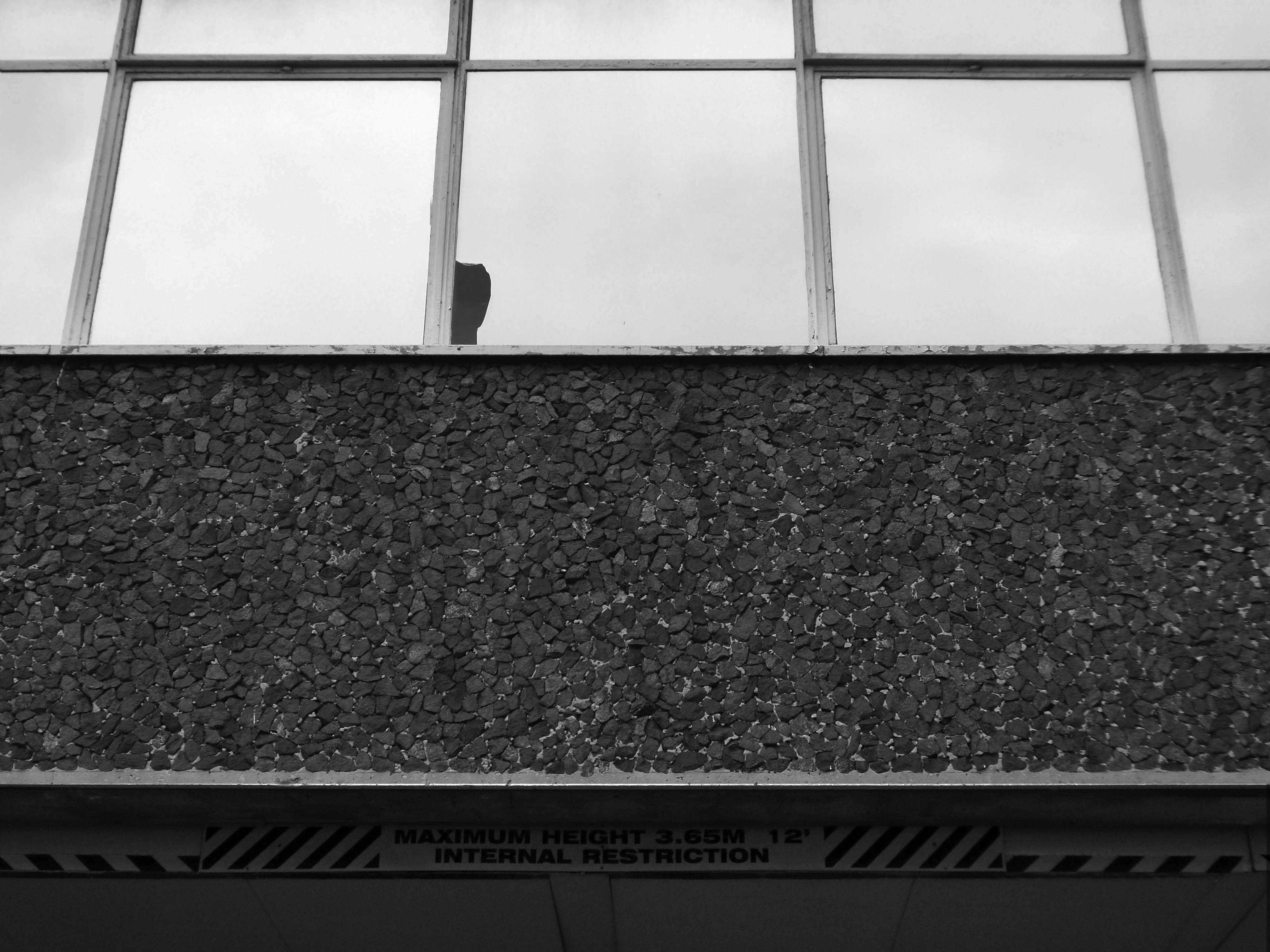
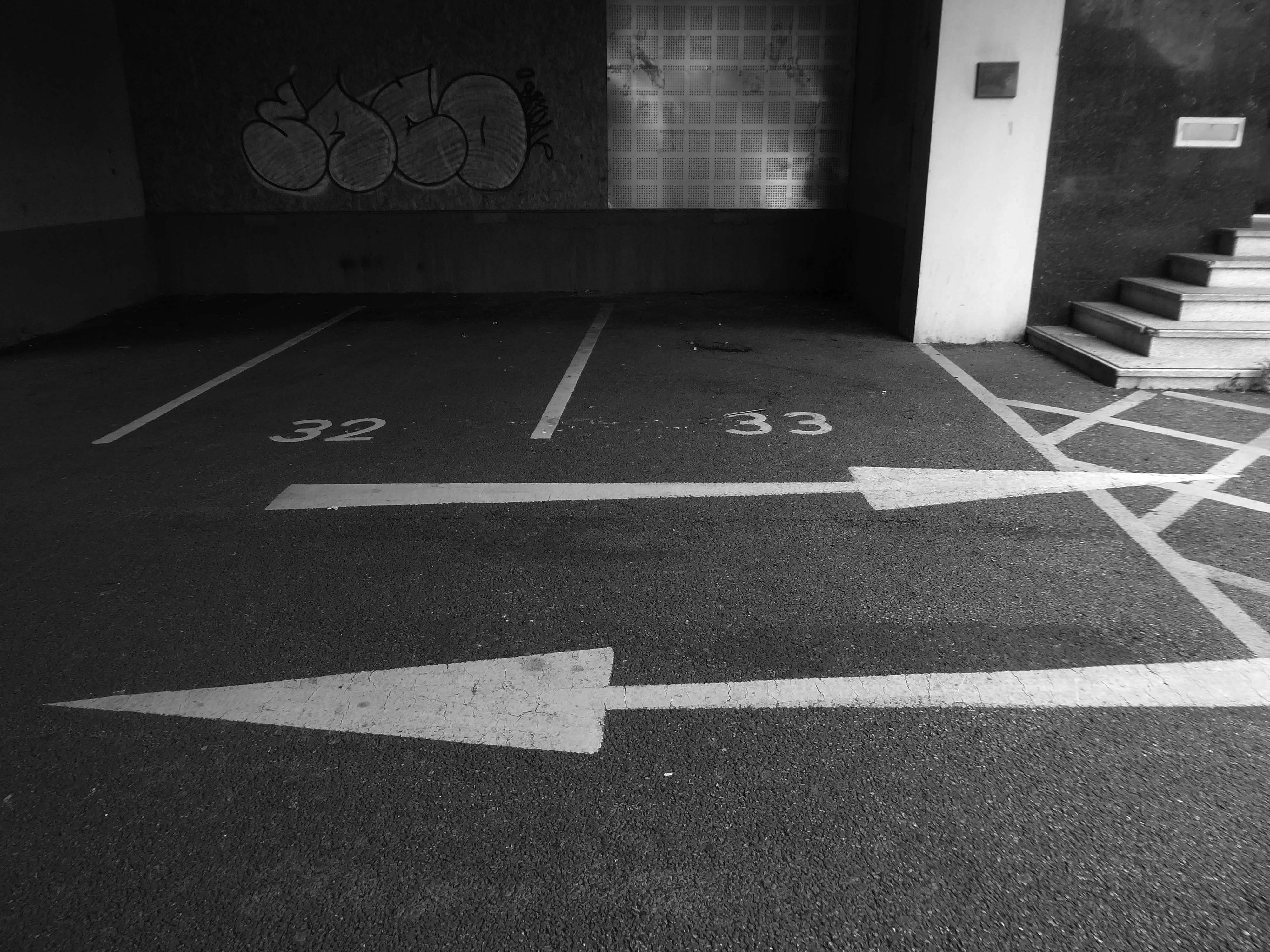
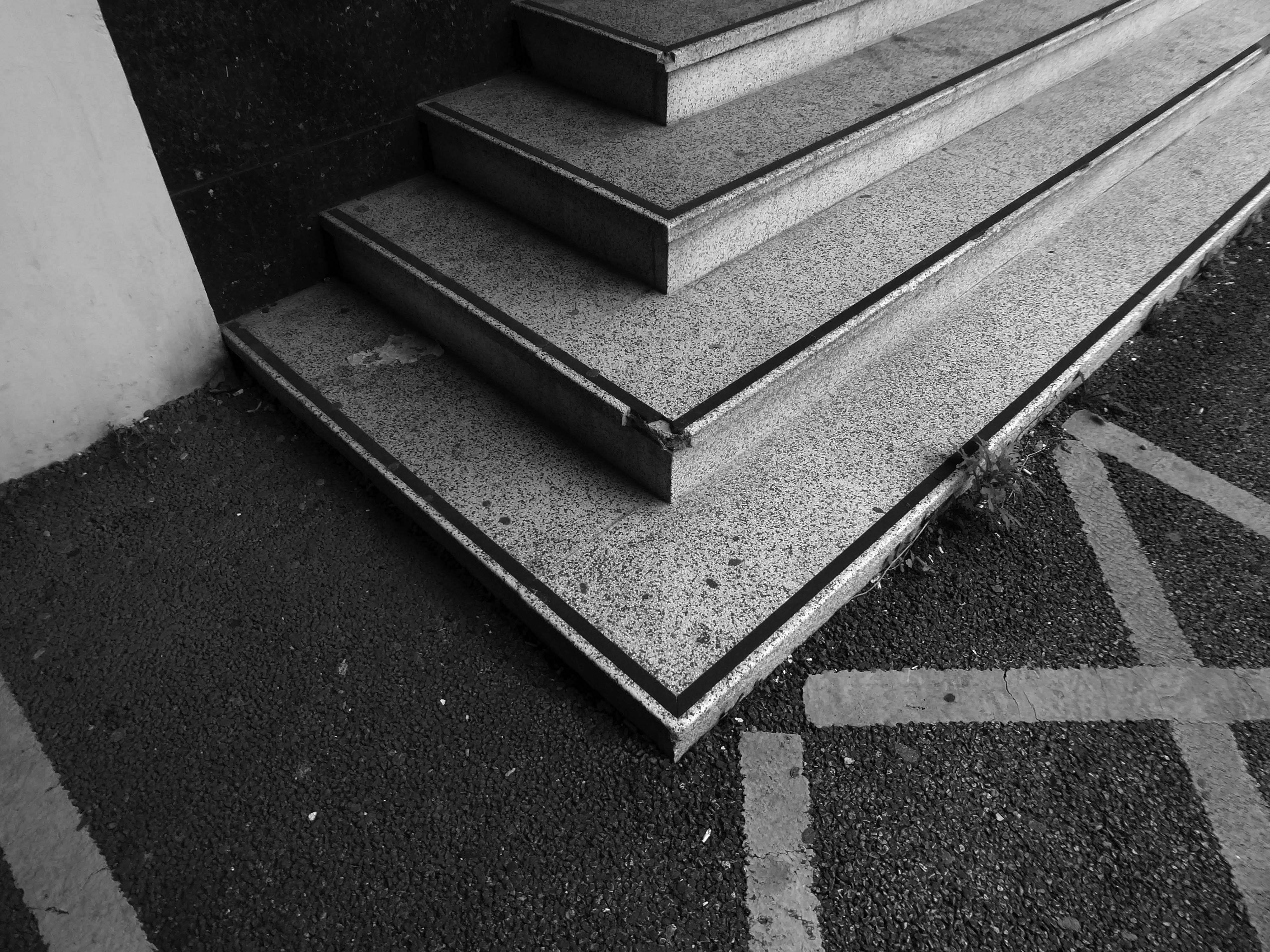
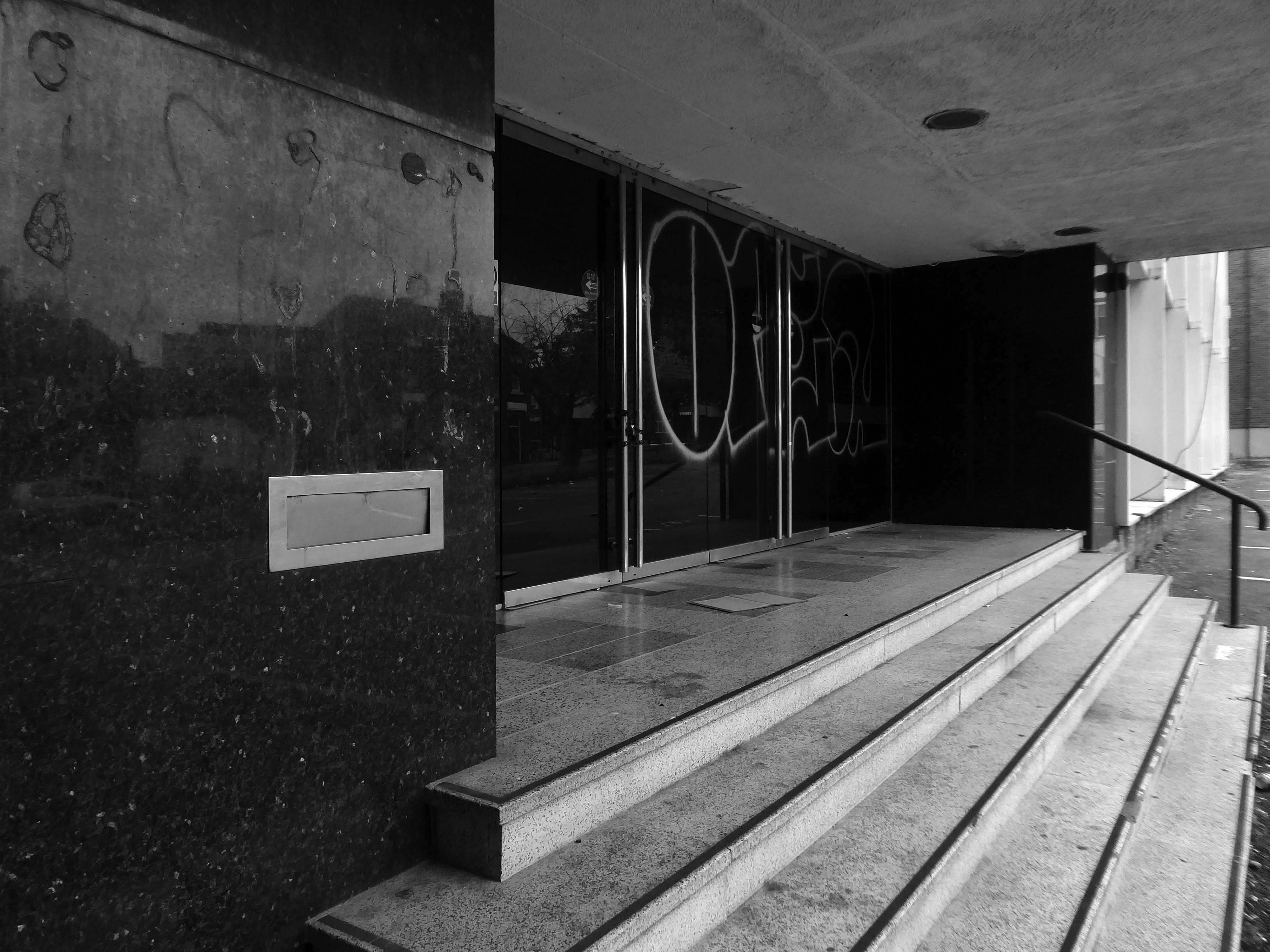
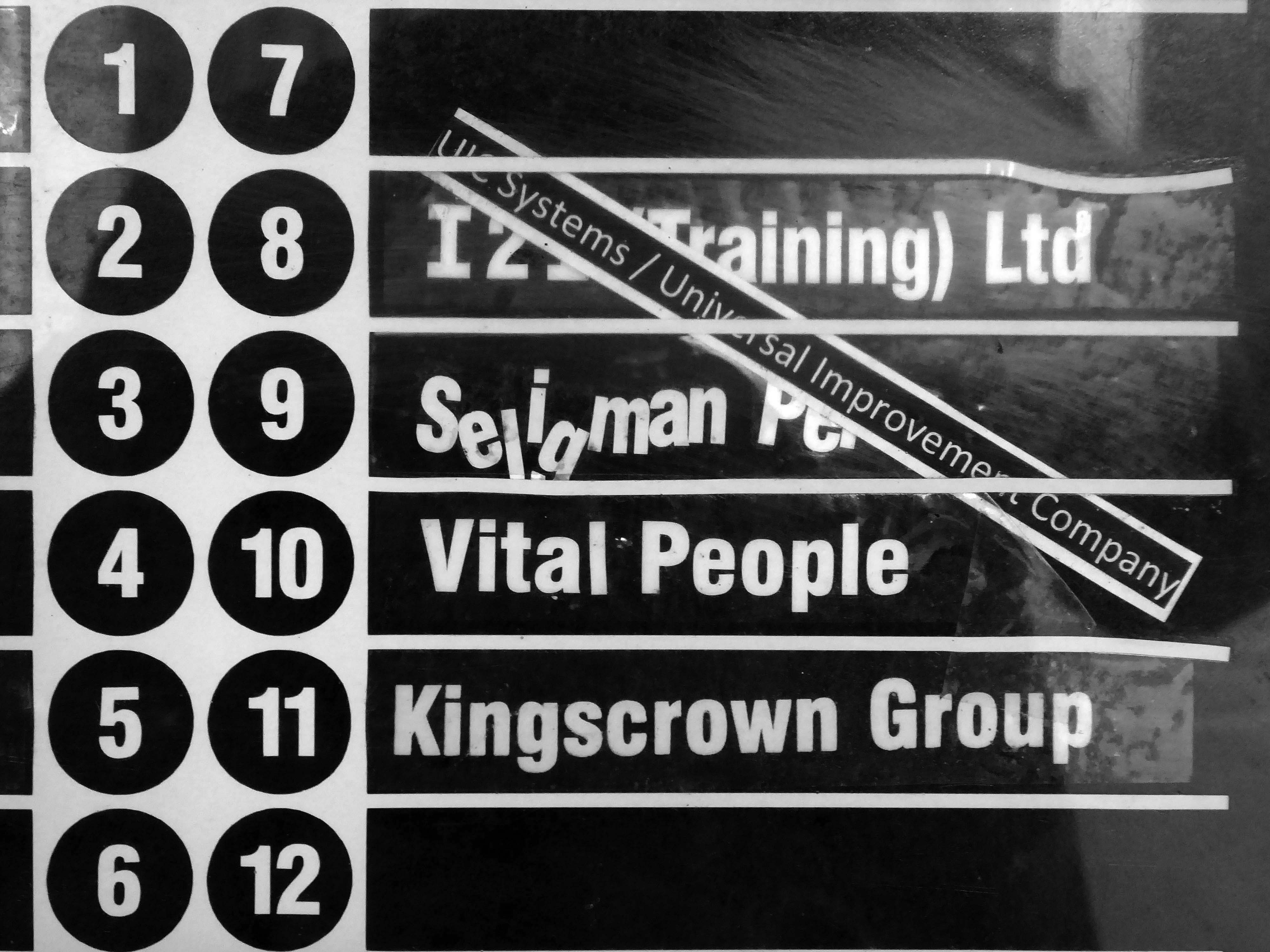
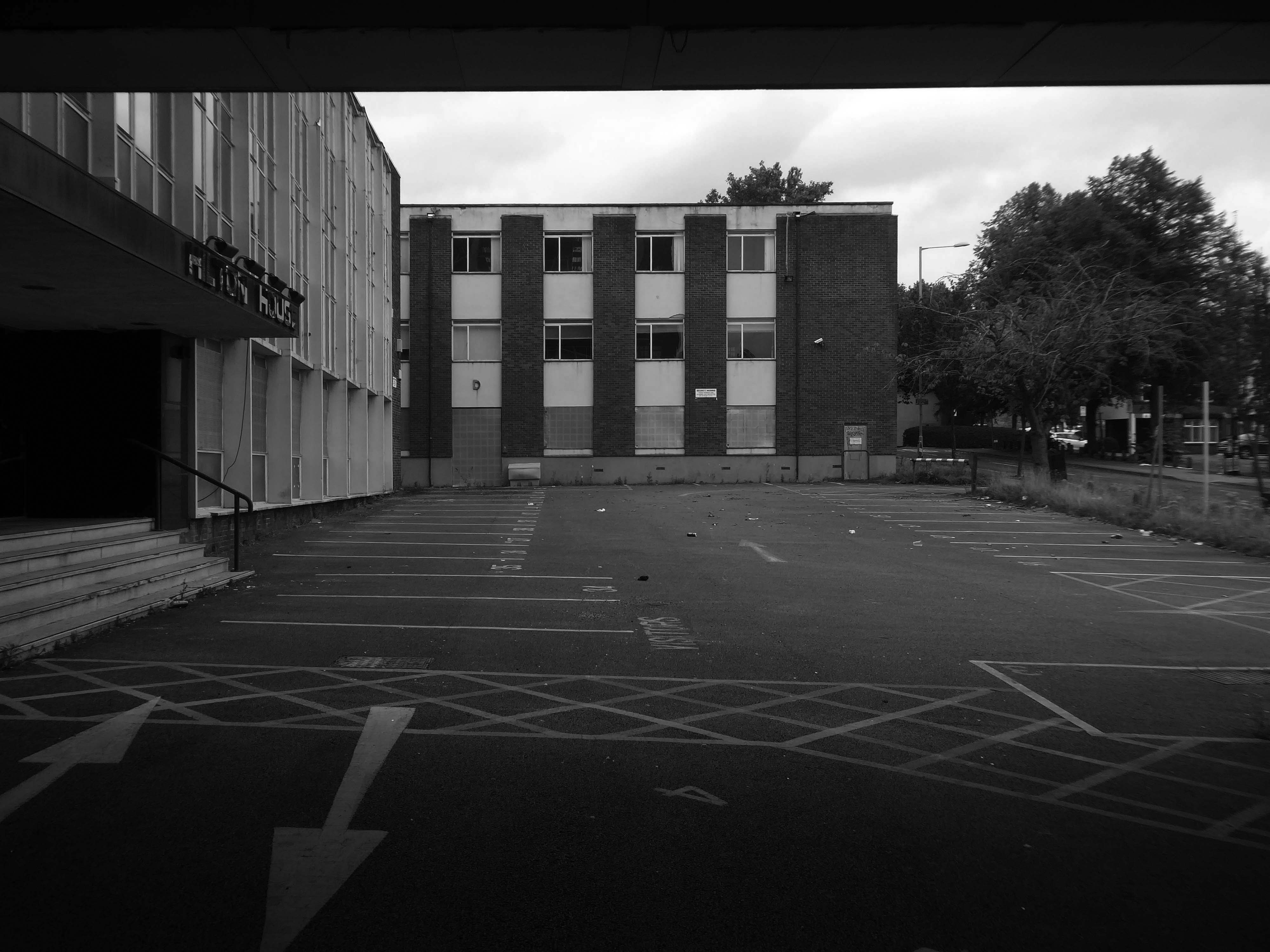
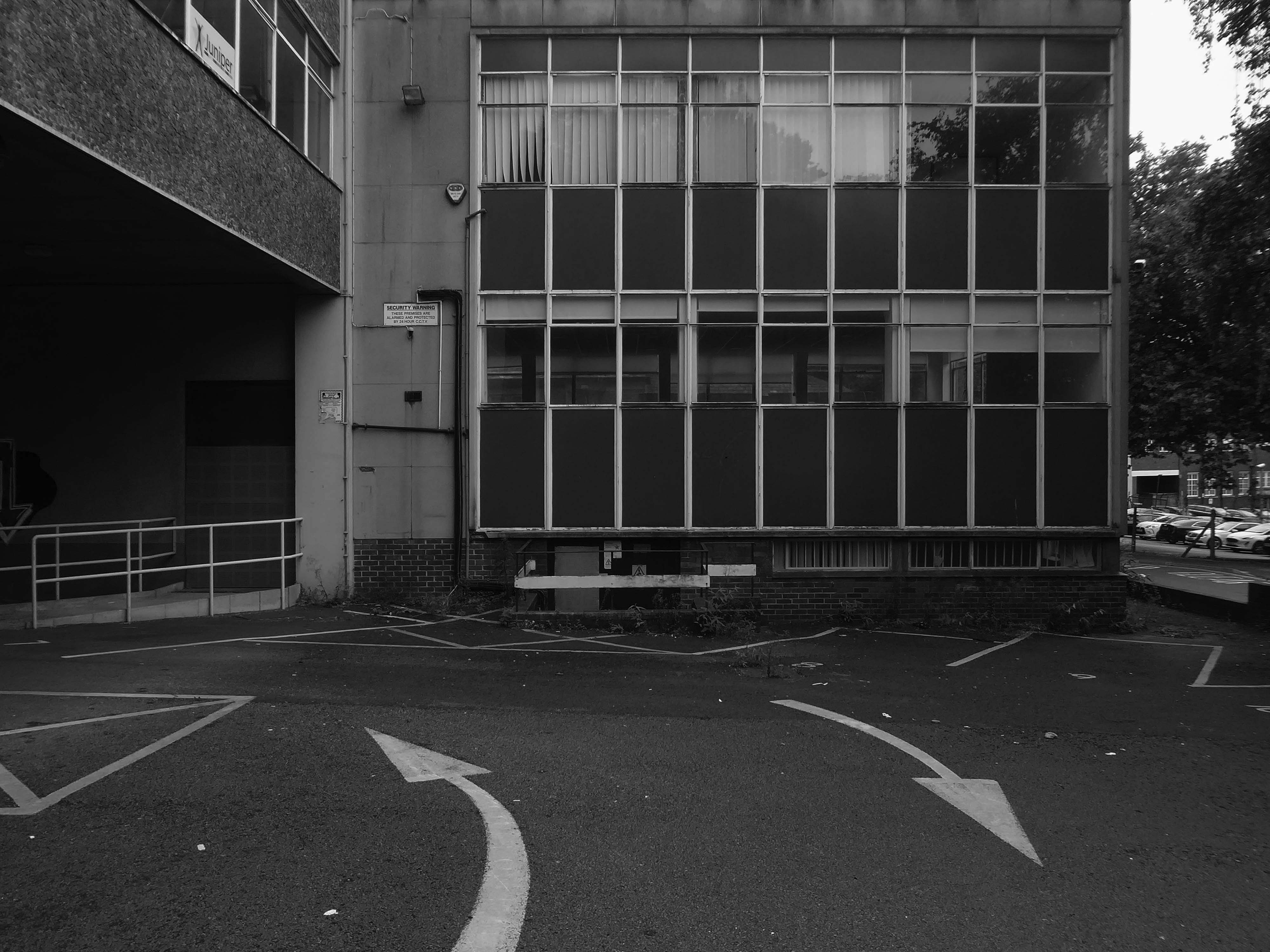
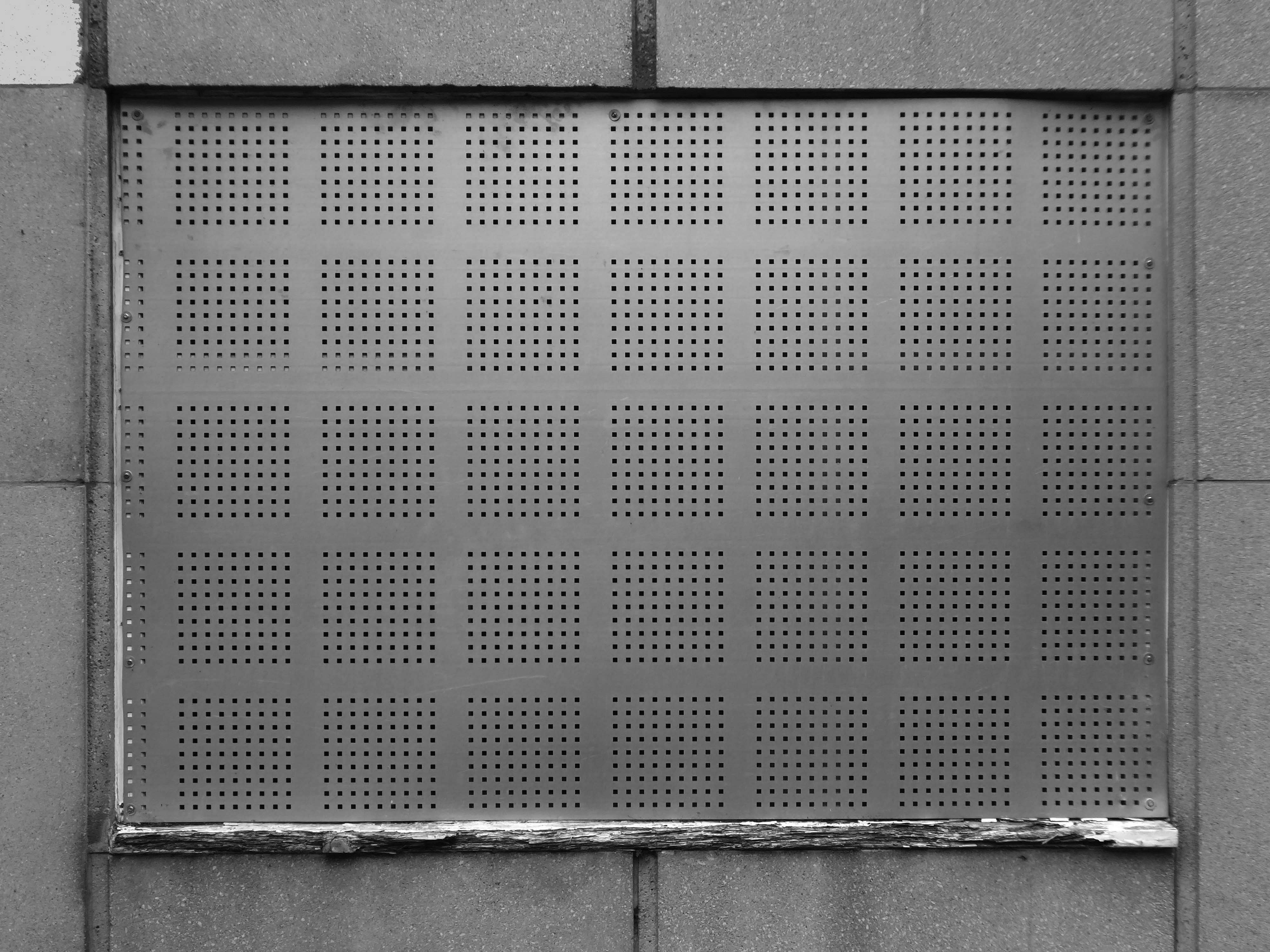
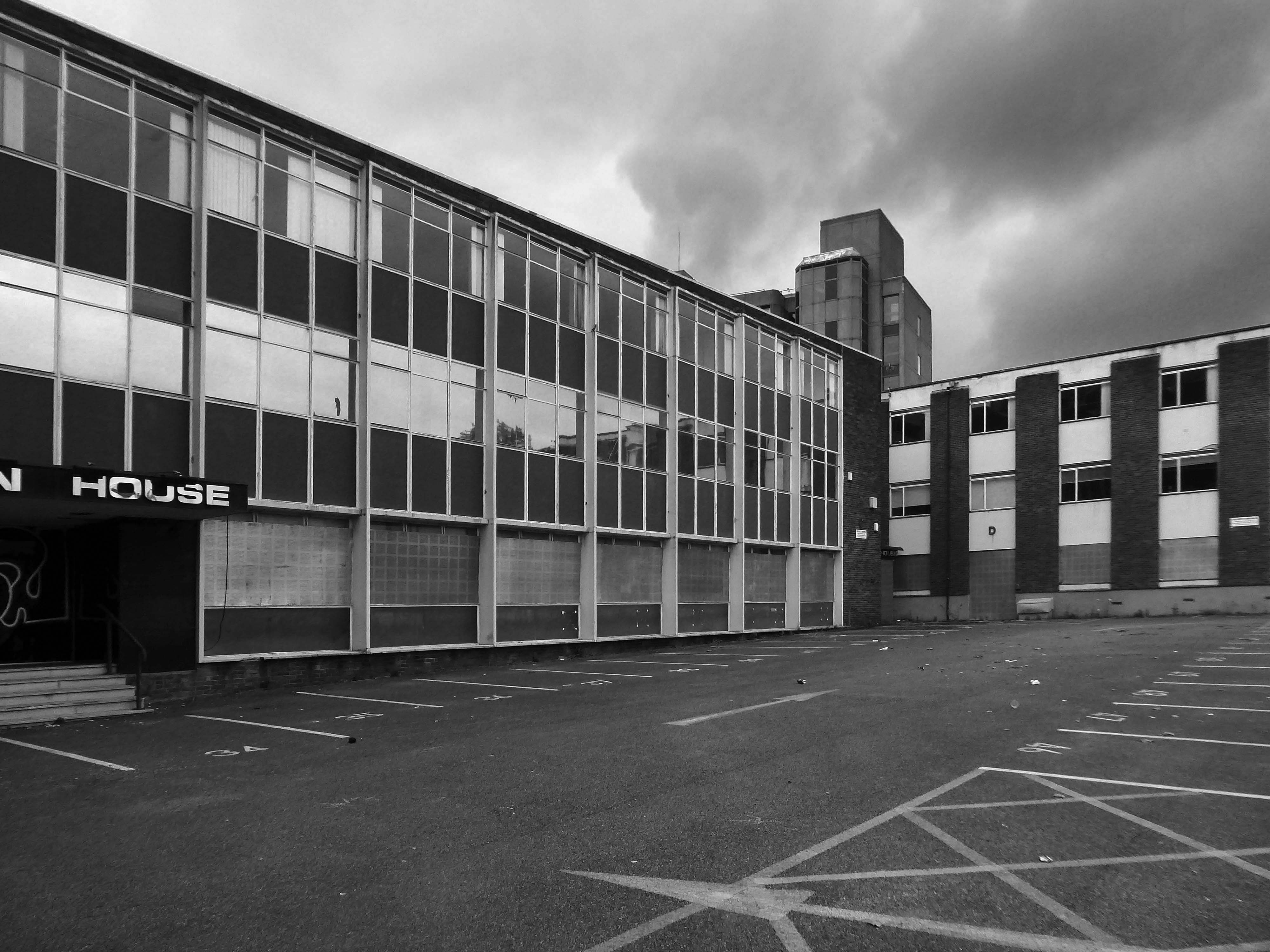
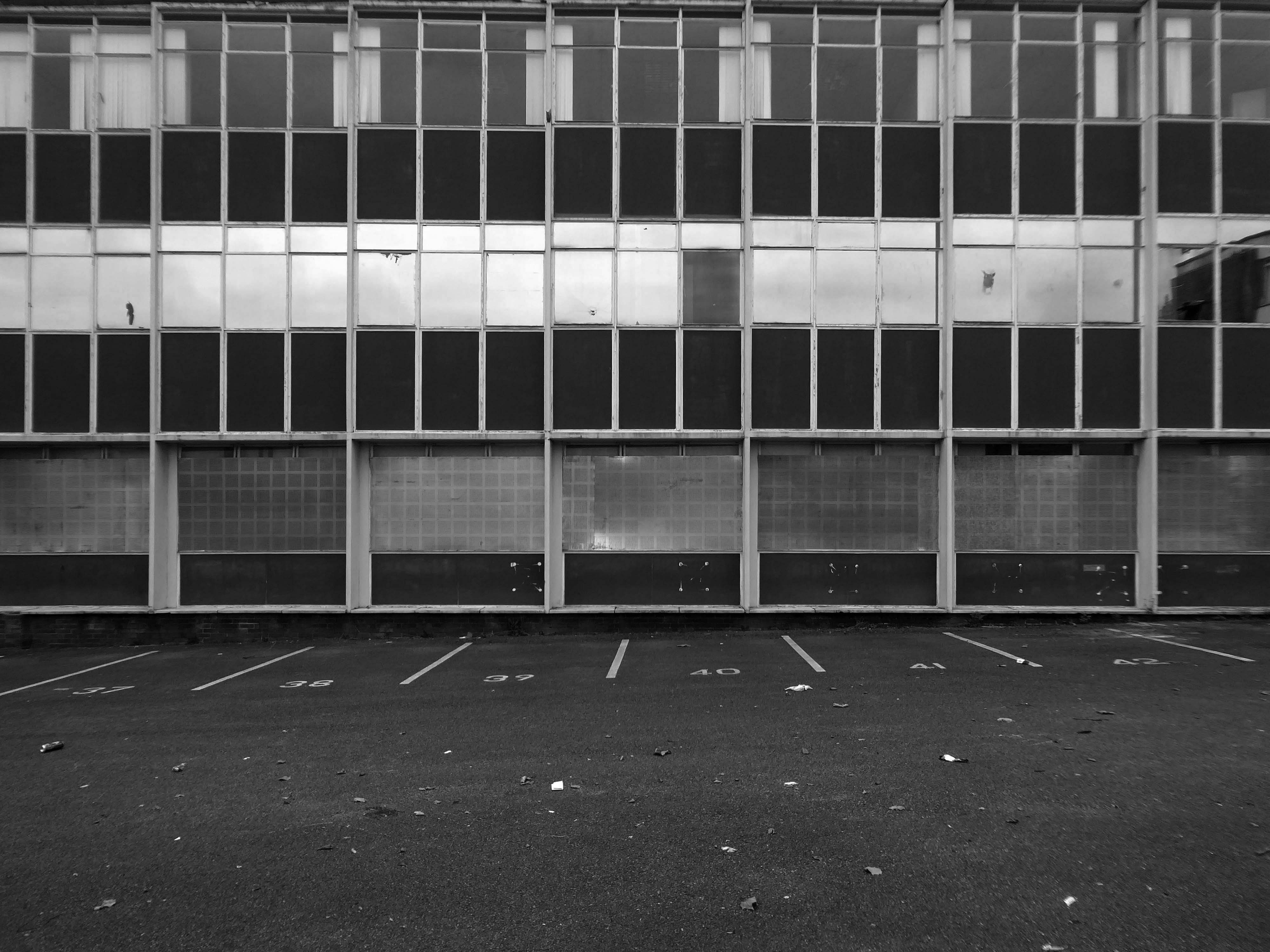
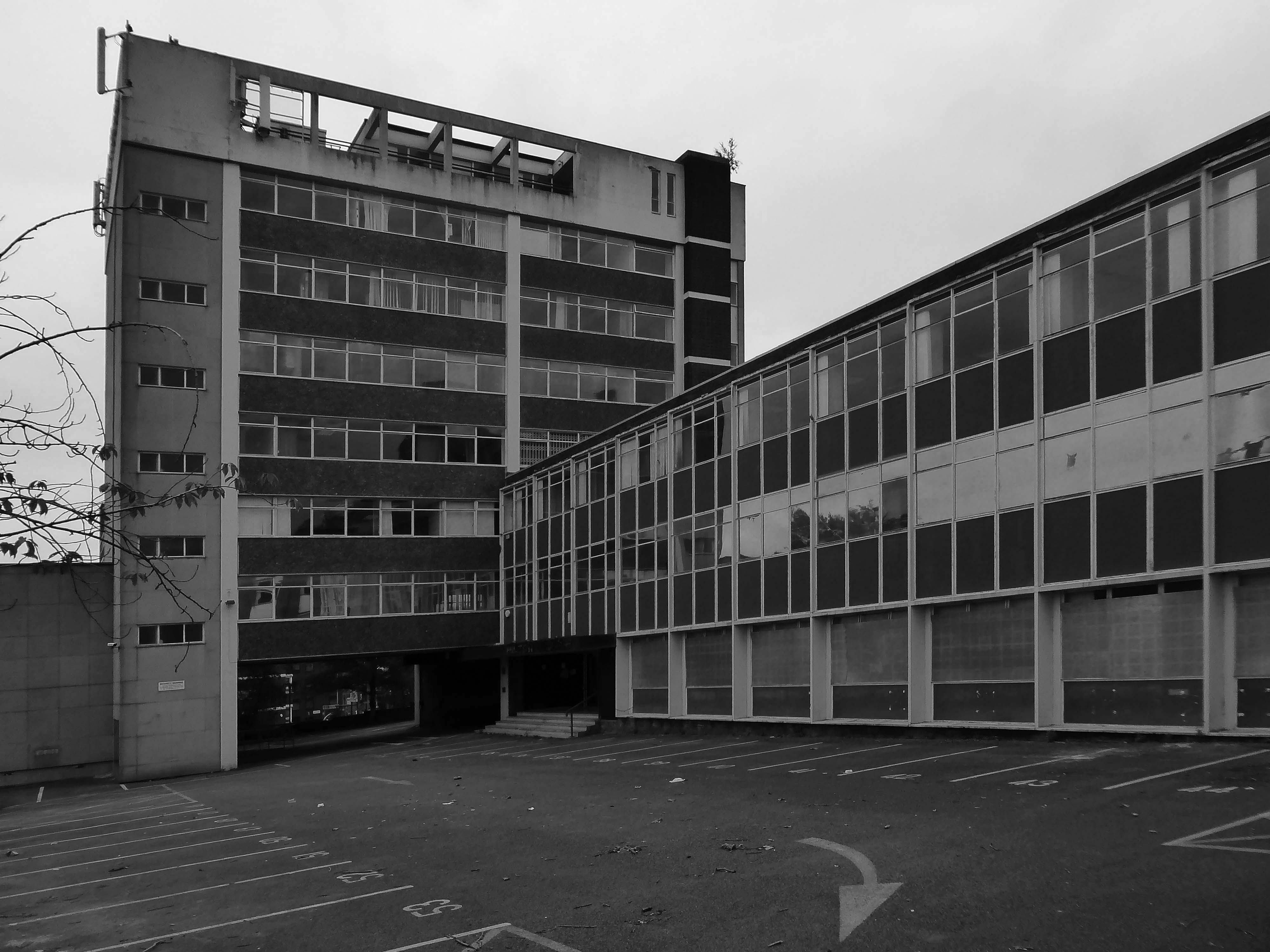
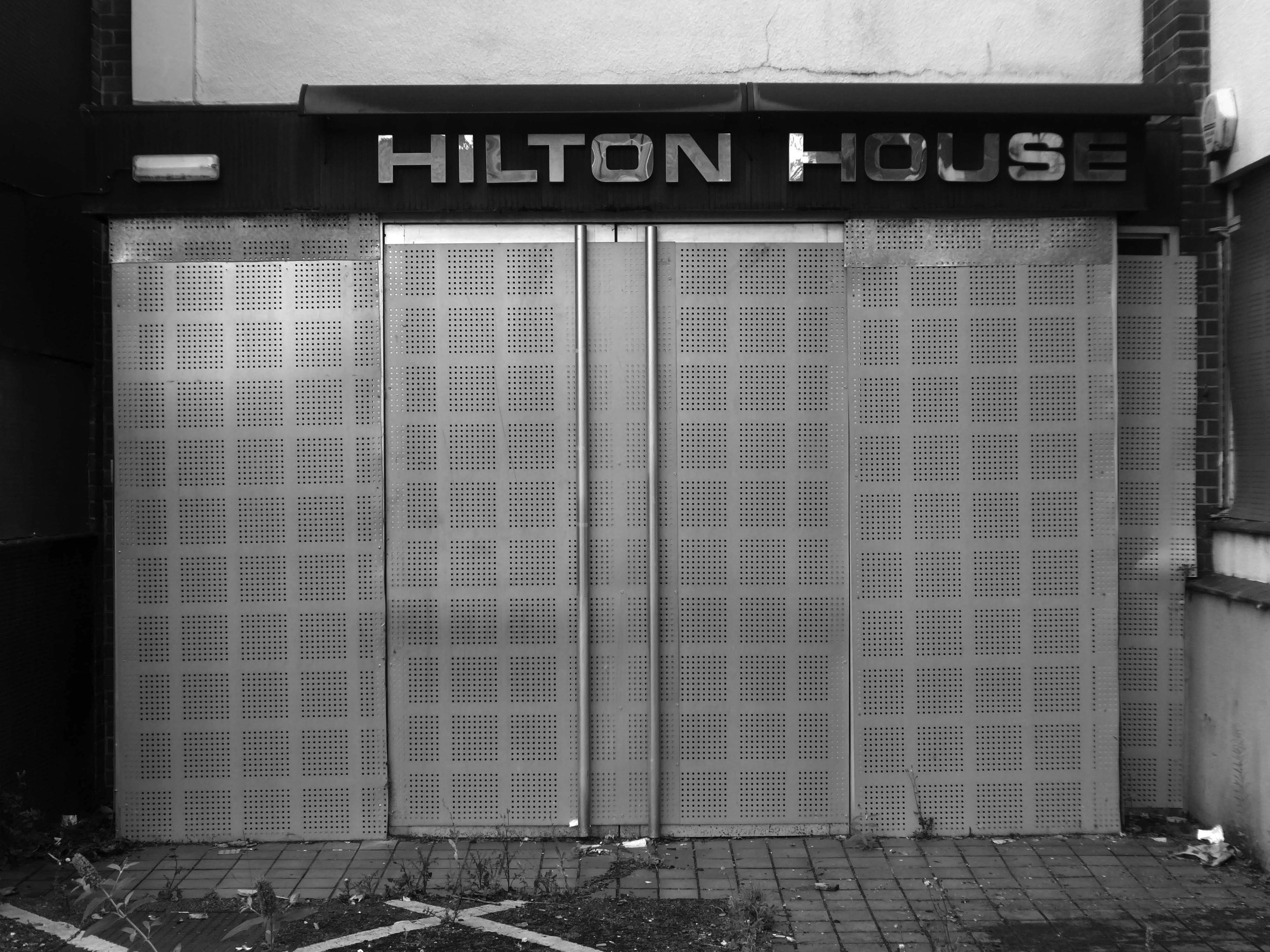
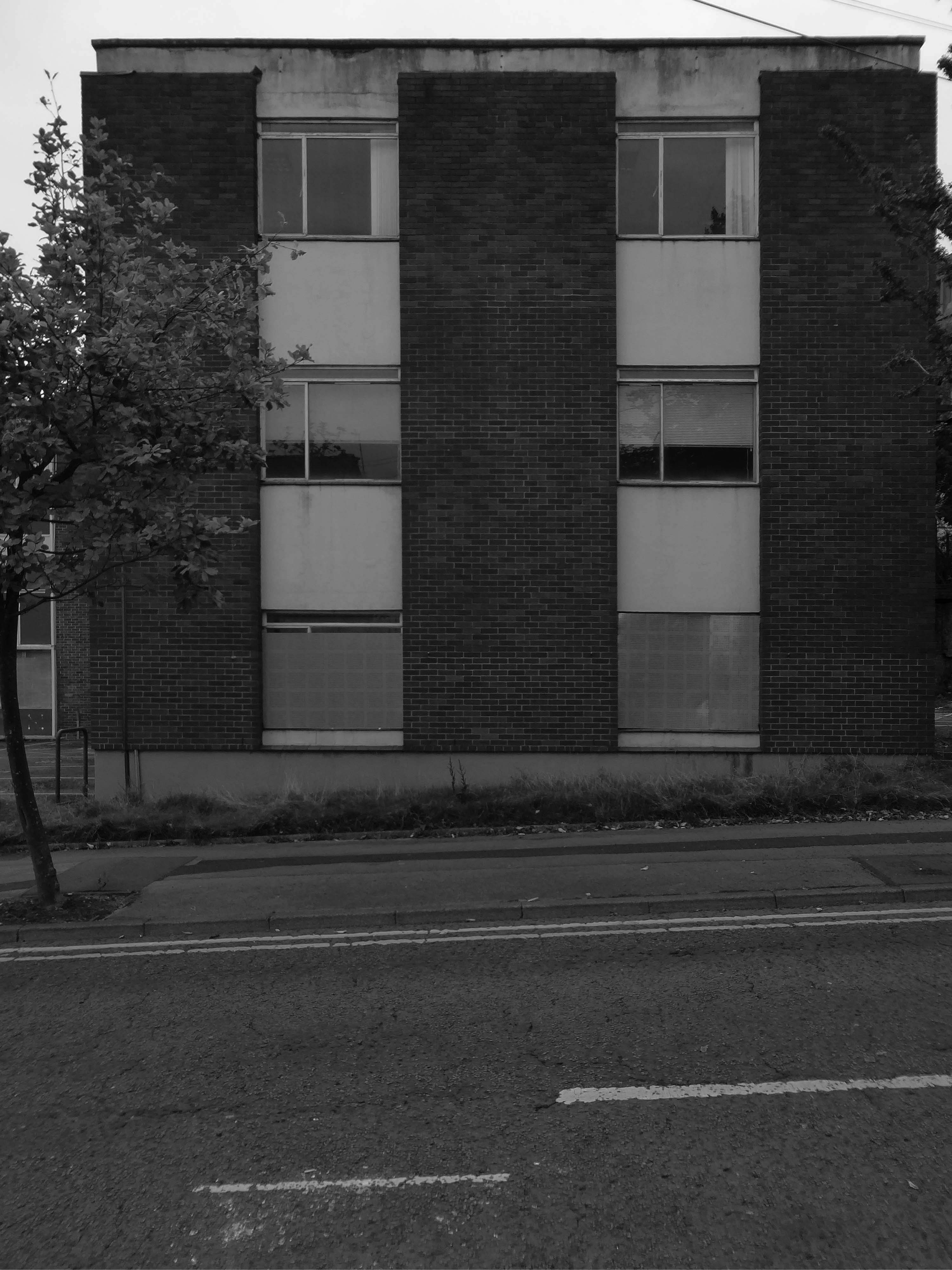
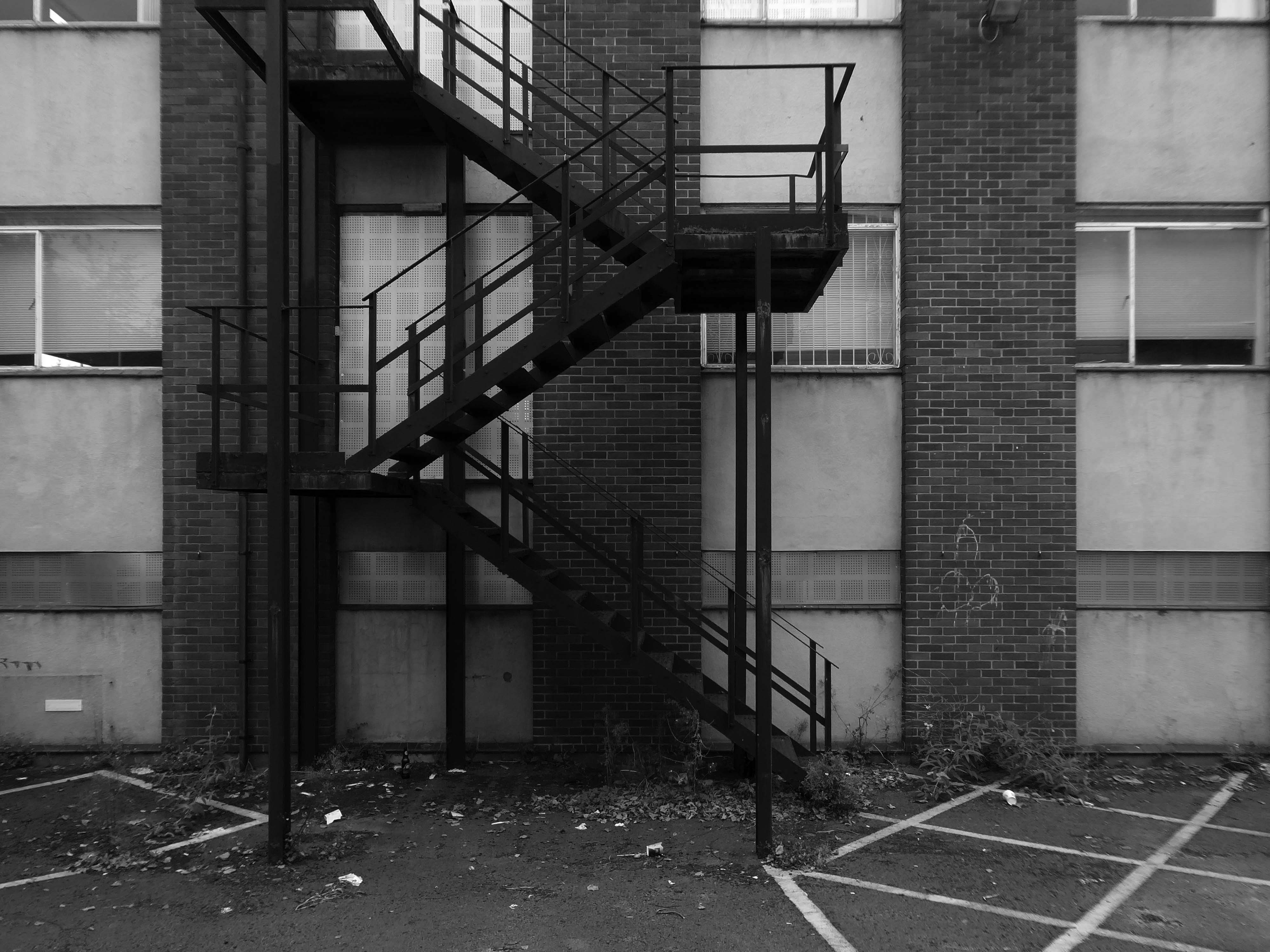
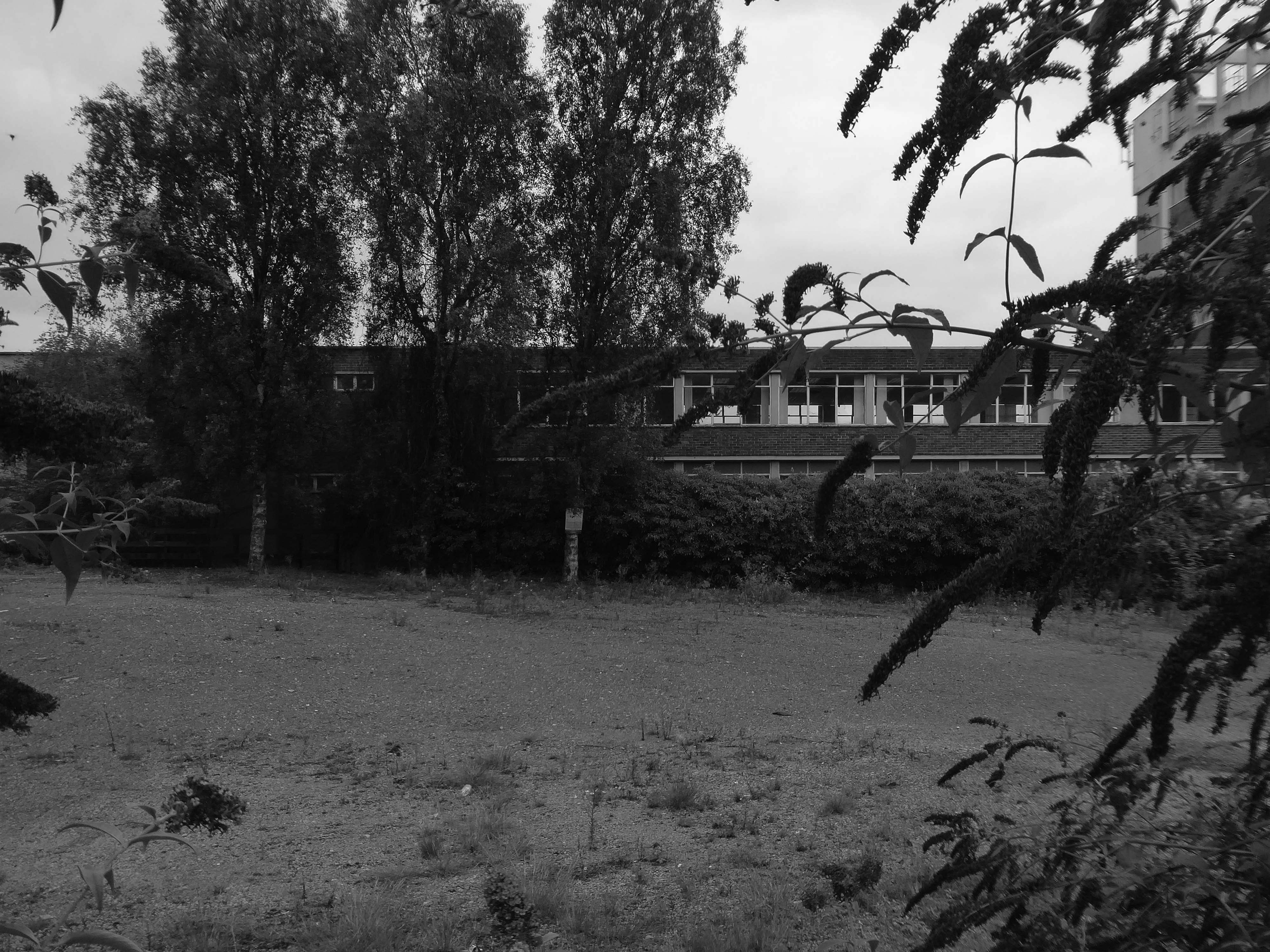
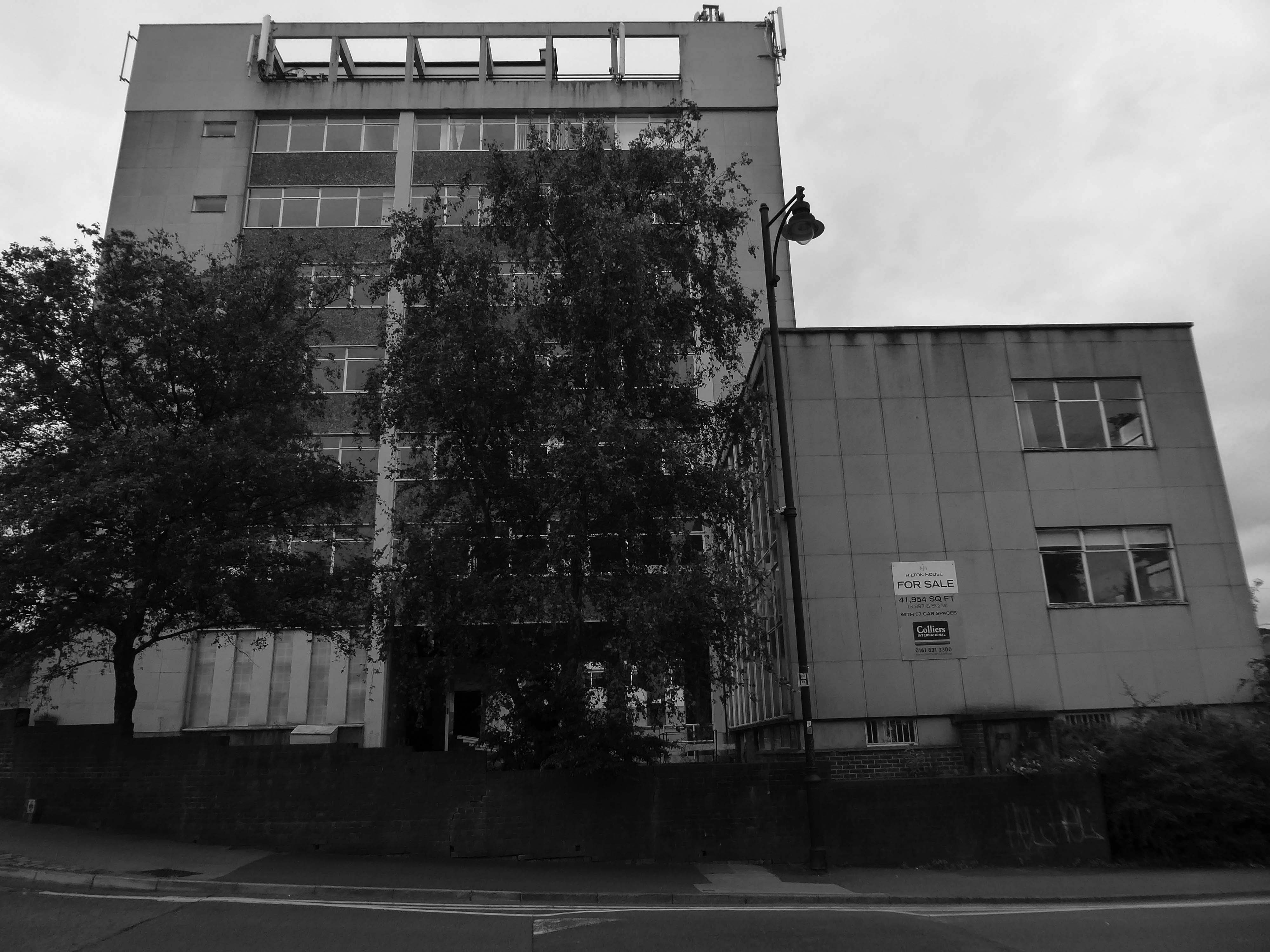
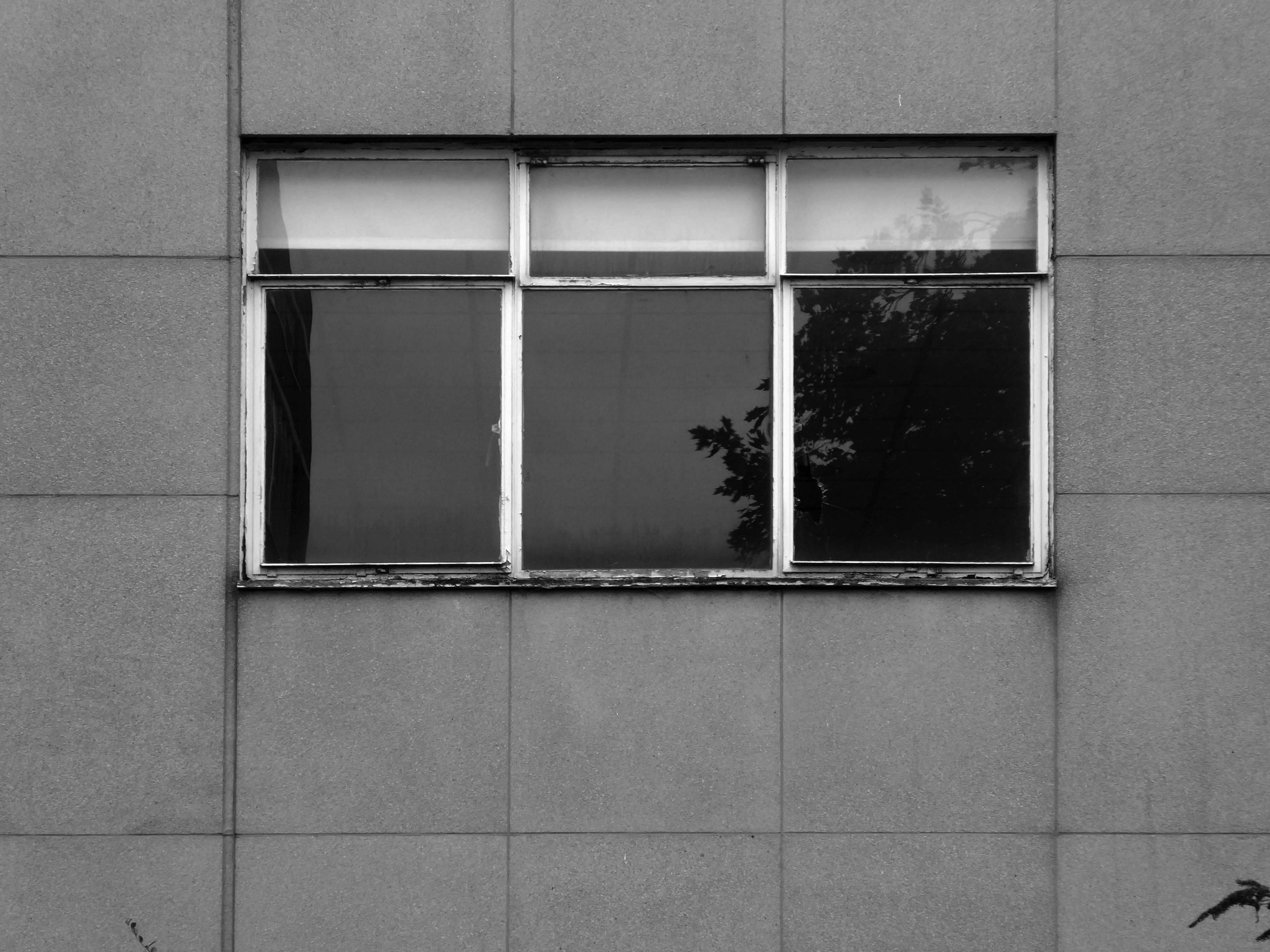
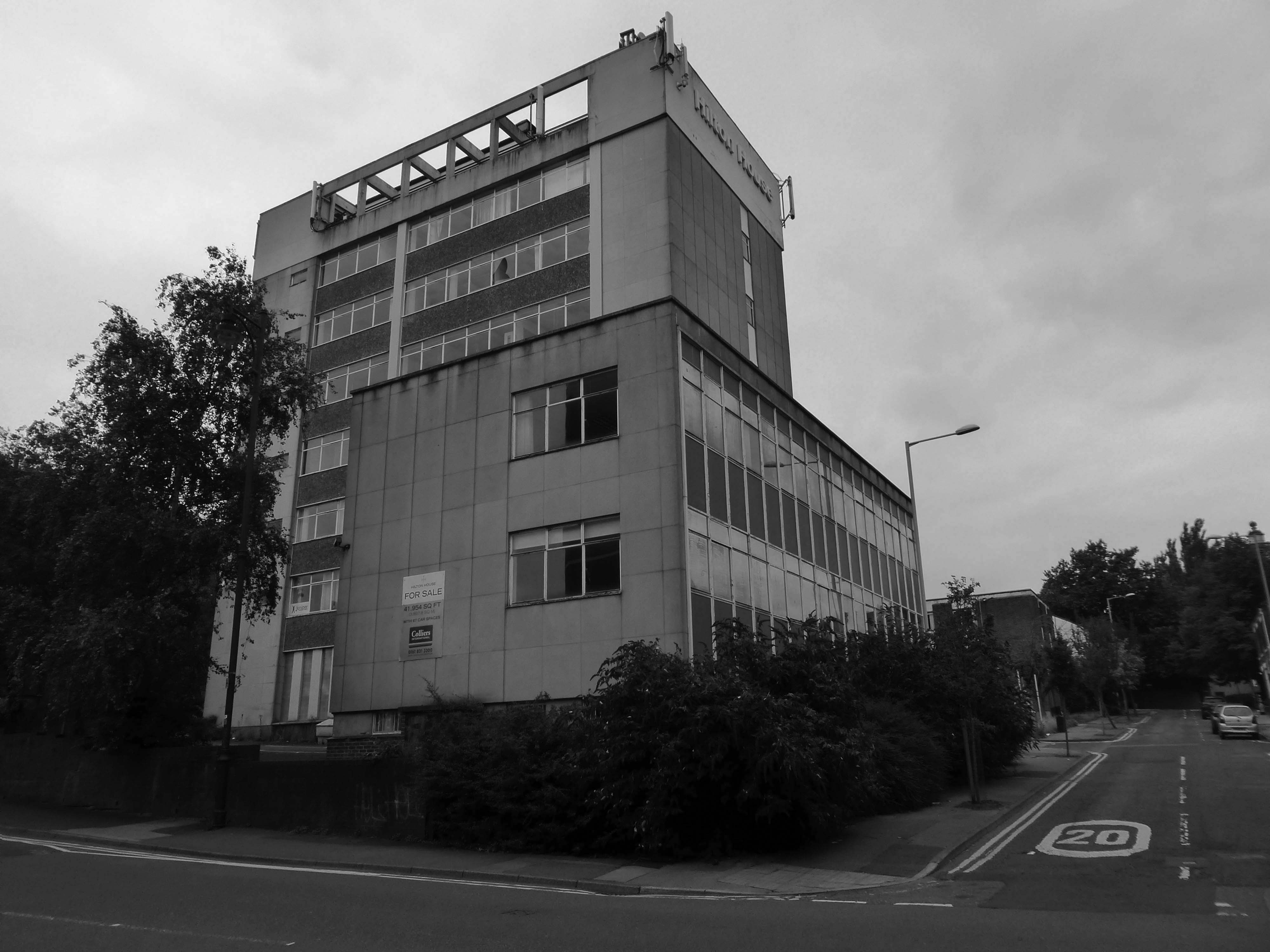
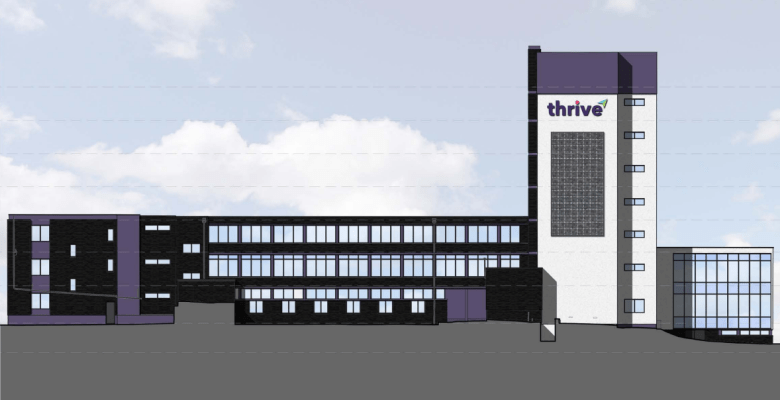
May 2020 – plans are submitted to remodel the exterior of Hilton House
The remodelling of the building include reparations and repainting brickwork, render and cladding as part of wider plans to rejuvenate Hilton House to rebrand as a more attractive and contemporary office location in Stockport town centre.
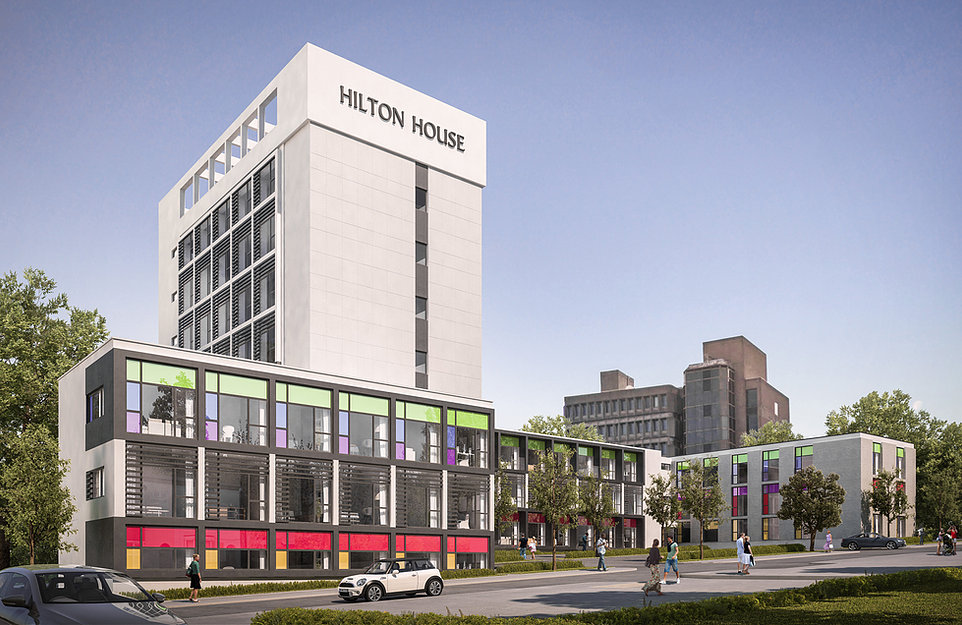
Studio KMA have proposed conversion to apartments.
Conversion of existing 1970s office building to apartments.
A combination of one-bed, two-bed and three-bed units ensure a new sustainable use in Stockport town centre.
The proposal incorporates the use of coloured glass panels to create a modern, fresh aesthetic.
As of July 2021 the property is under offer.
Post-Pandemic it may well be that the demand for office space is in retreat and the conversion to modern living space the more likely end use.
We begin on the Crescent – taking in the former AUEW Building.
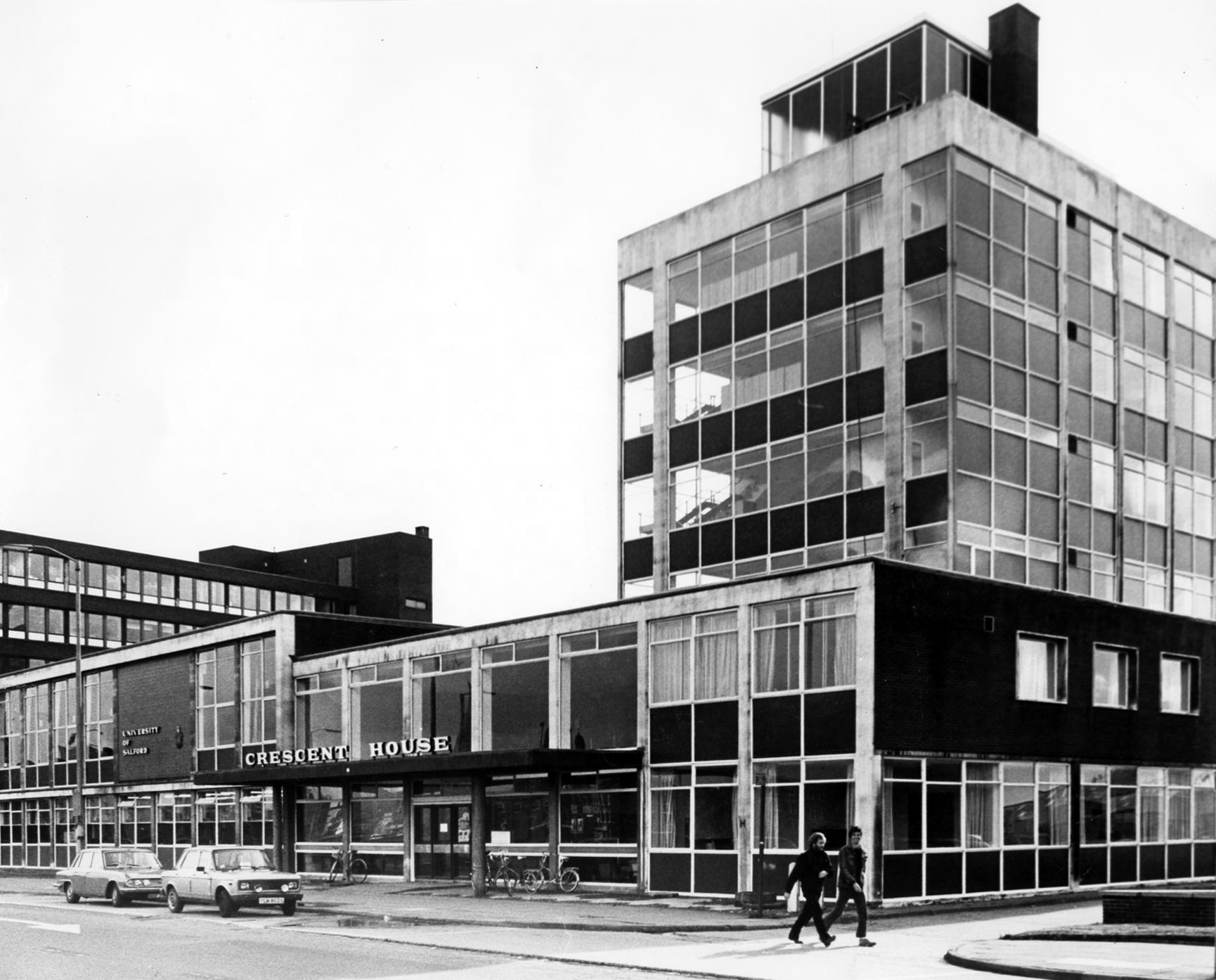
B&W images copyright USIR Archives
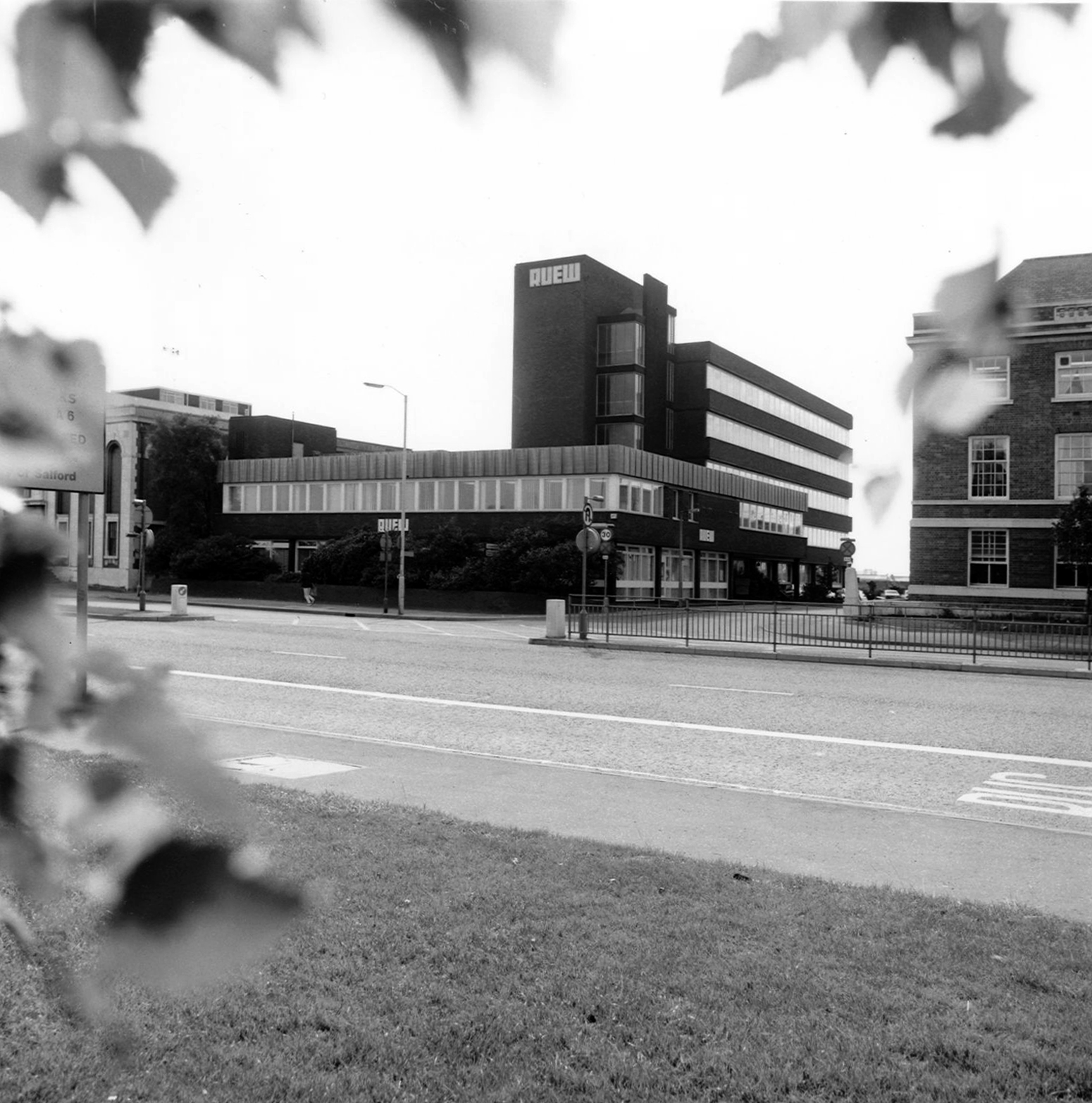
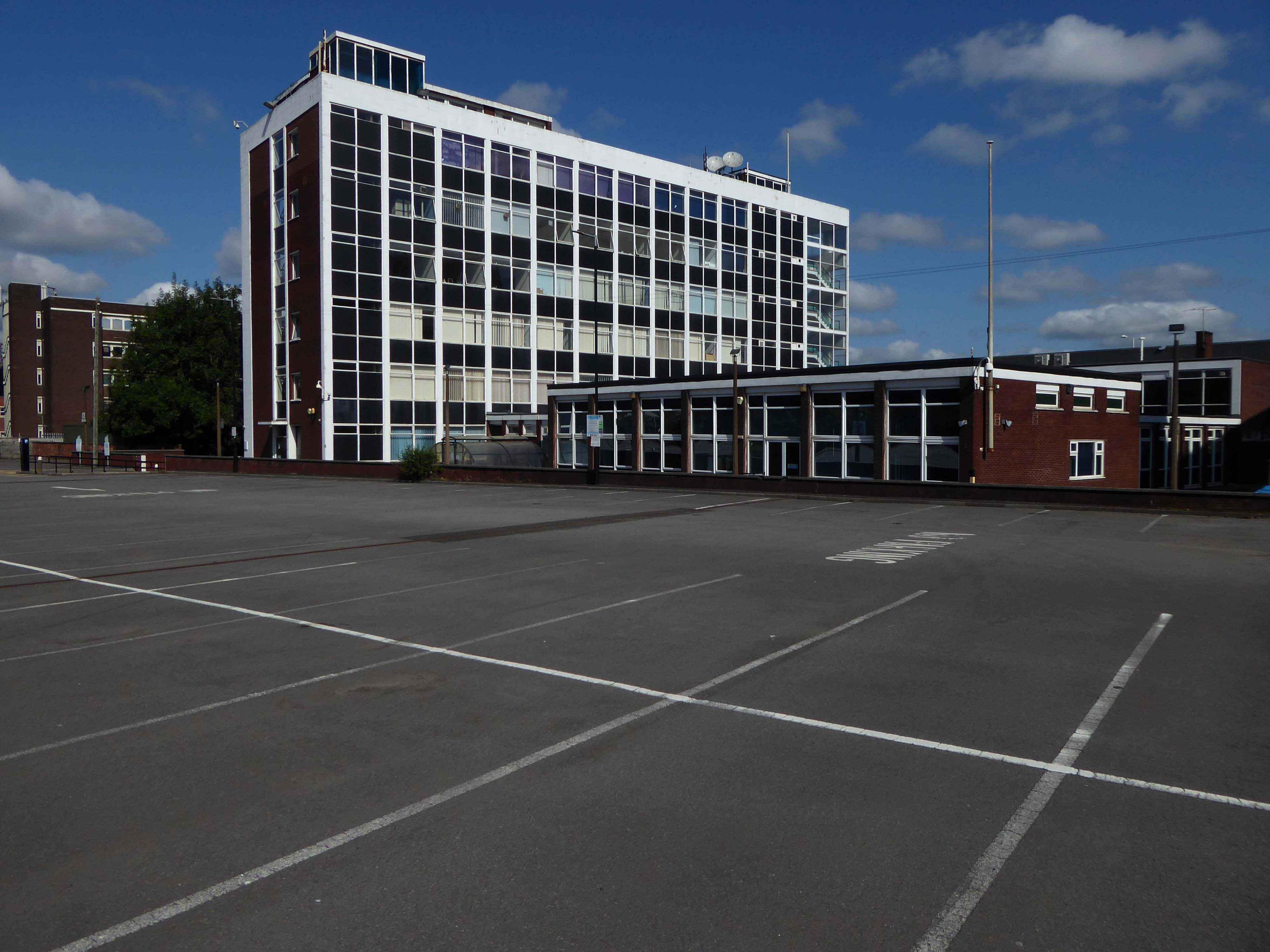
It became part of Salford University’s estate, renamed the Faraday Building.
It is currently unoccupied.
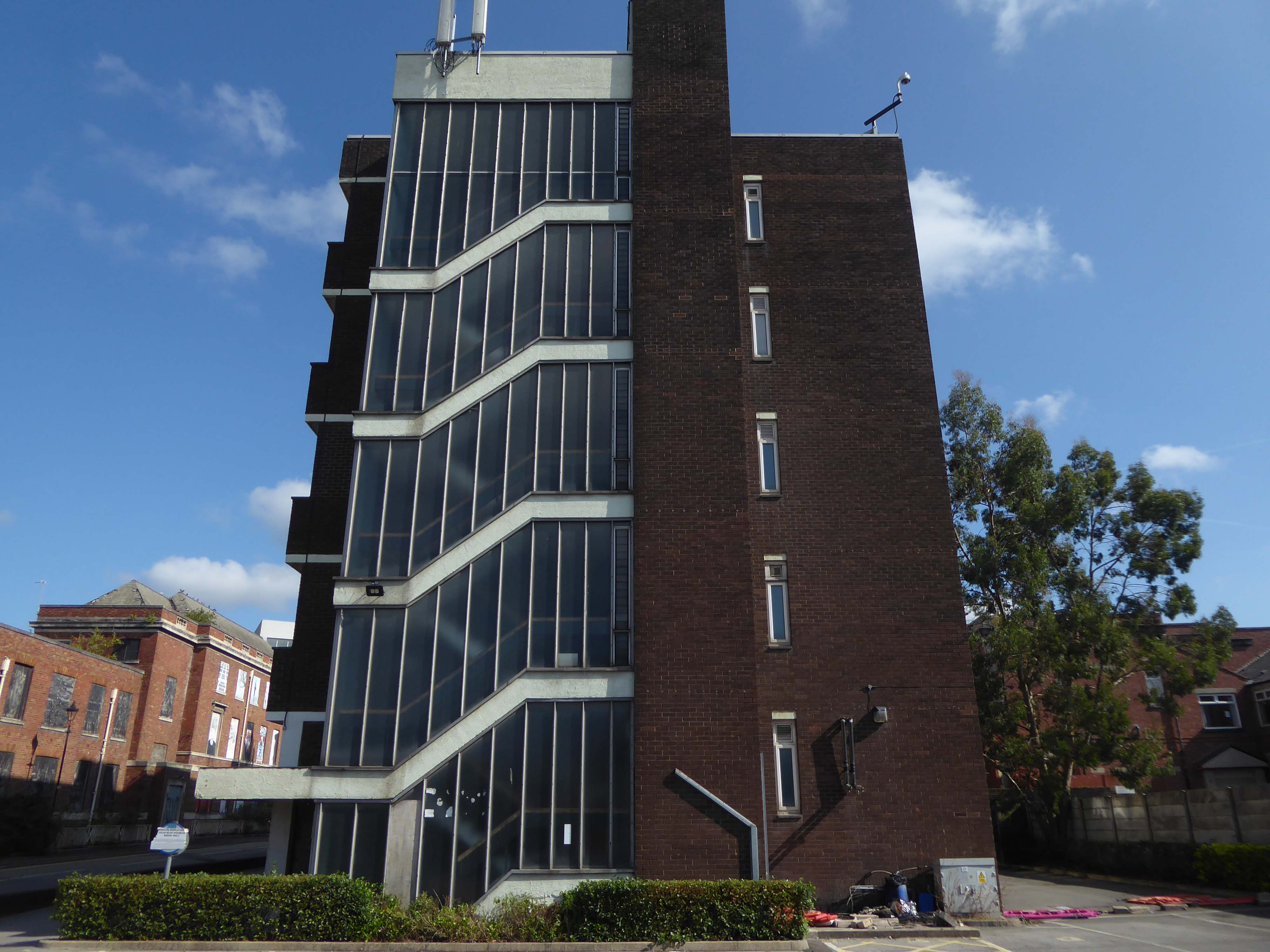
The University’s Masterplan is shifting emphasis to the Peel Park and Media City sites.
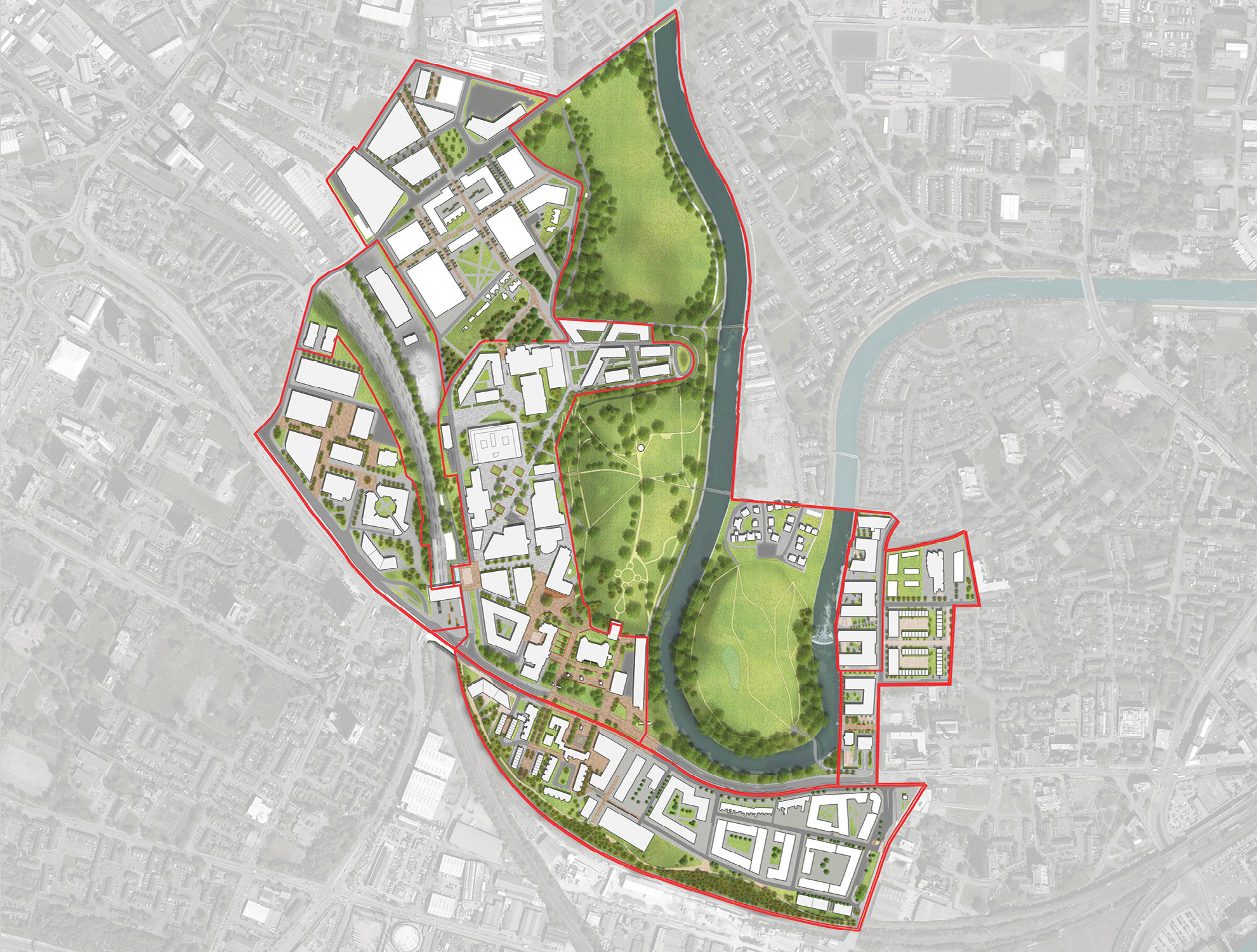
Also leaving Crescent House in limbo.
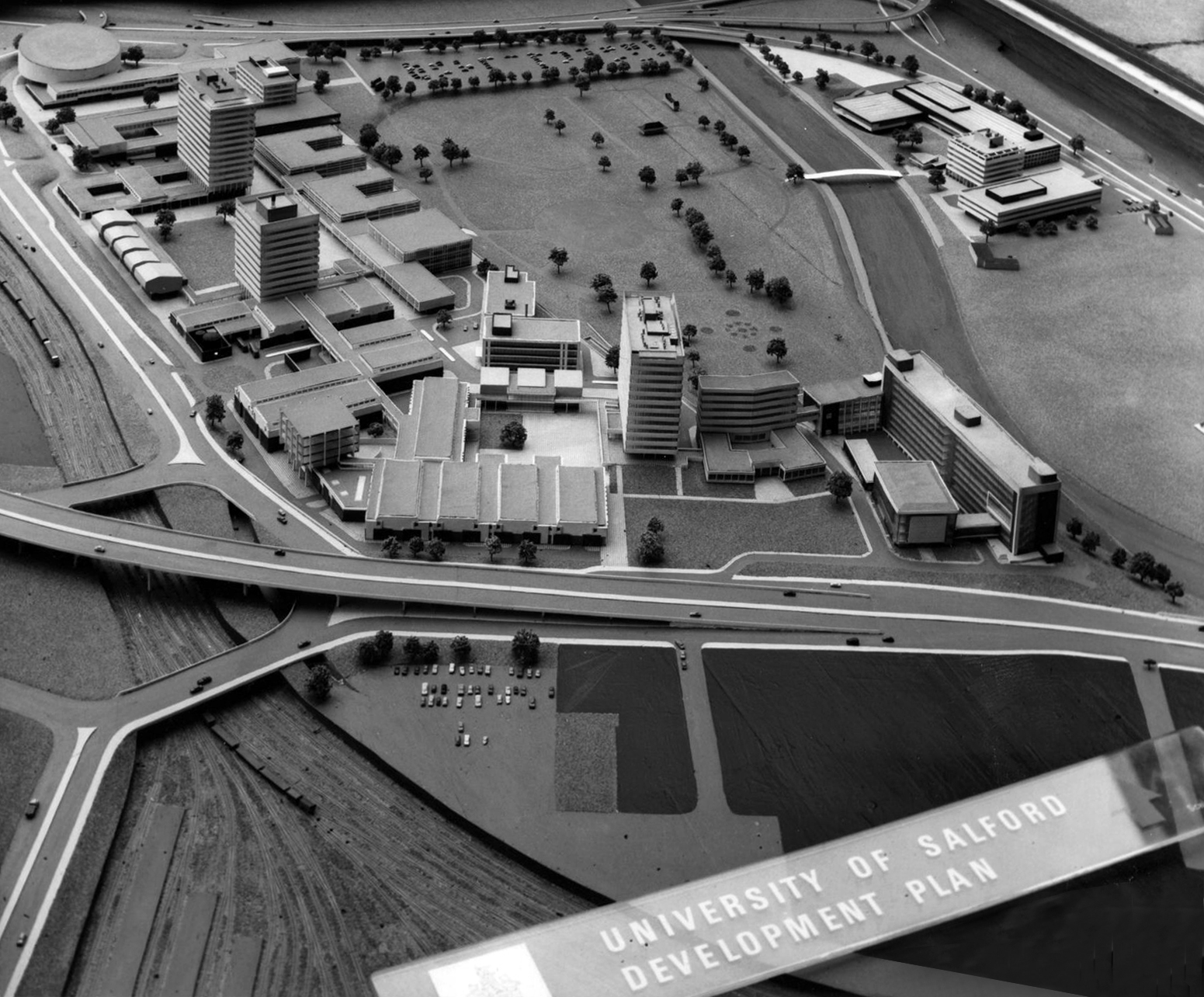
The original master plan would have swept away the Victorian Technical Institute and Salford Art Gallery.
Across the road are the Maxwell Buildings.
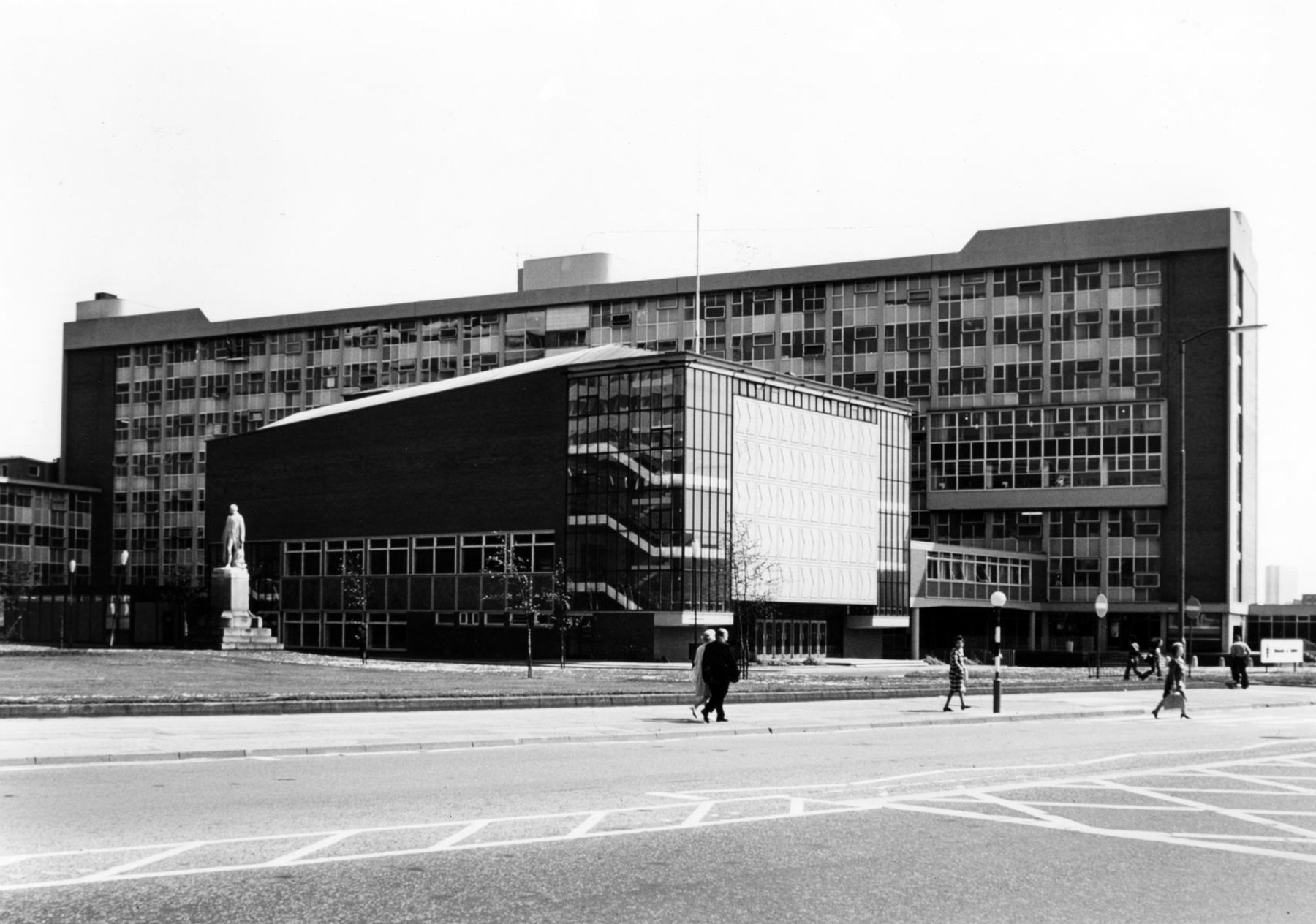
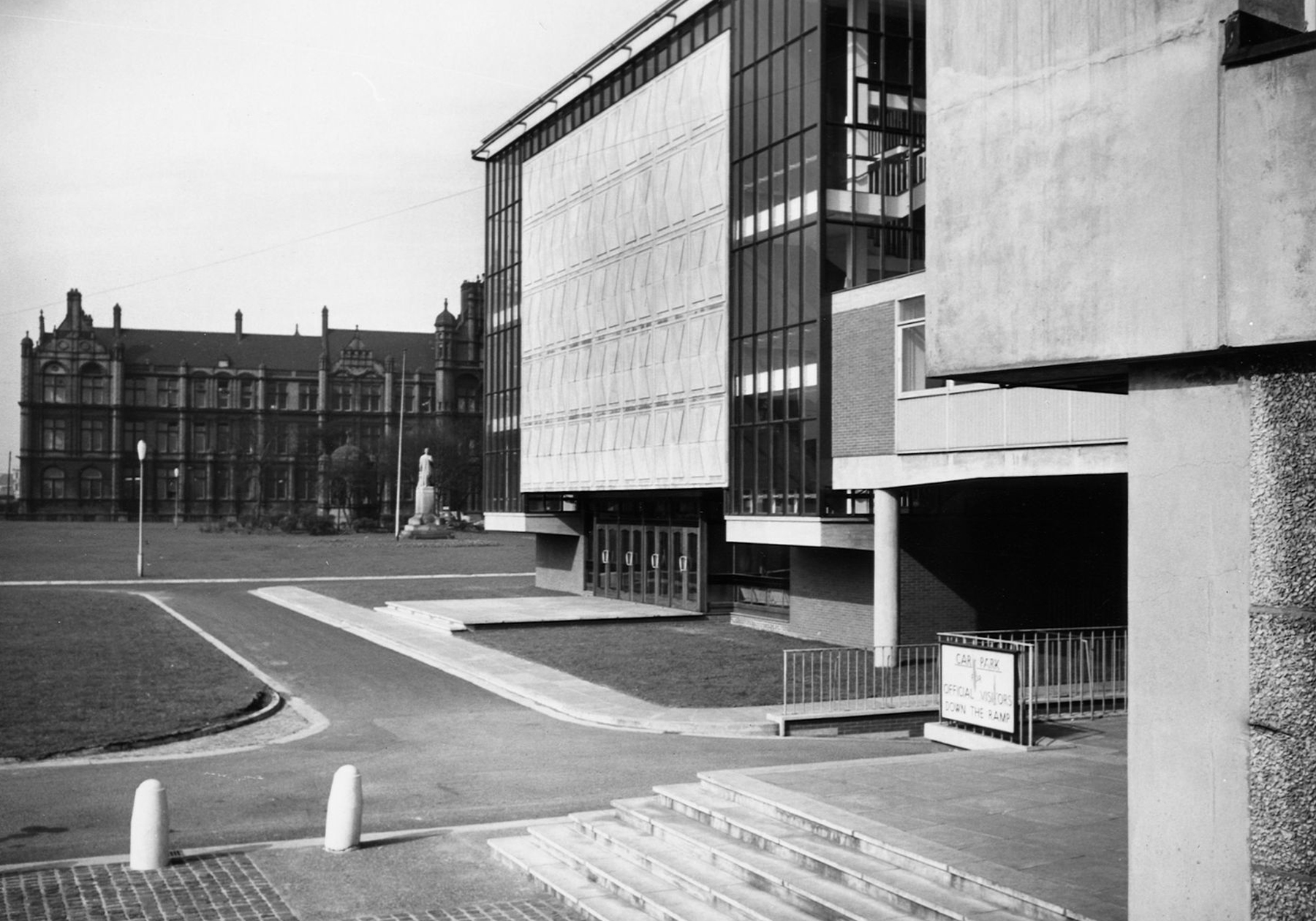
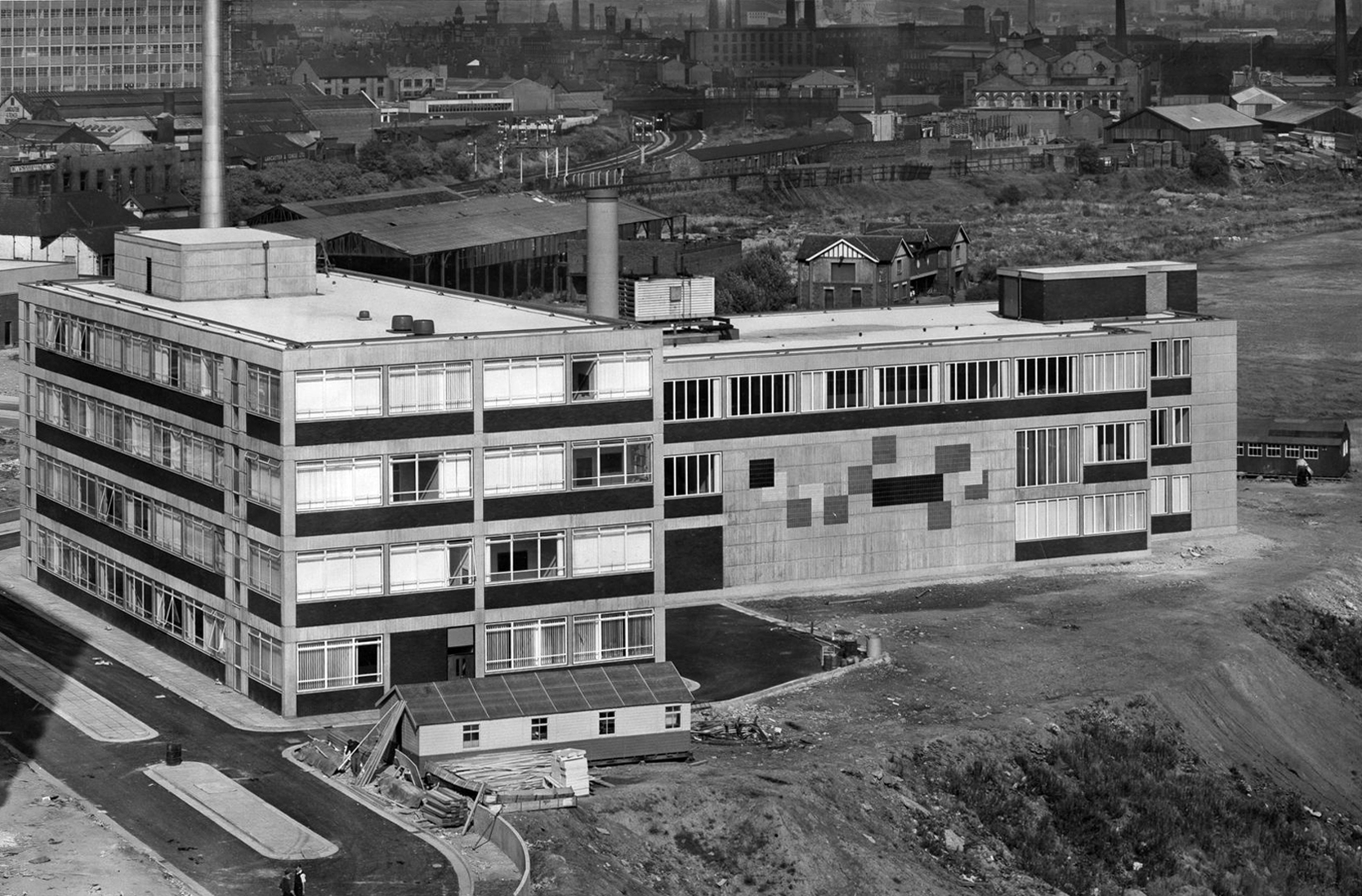
They were built between 1959 and 1960 to a design by the architect C H Simmons of the Lancashire County Architects Department.
The interior decorative order of Sixties’ institutions was integral to the architectural design, sadly this is no longer so.
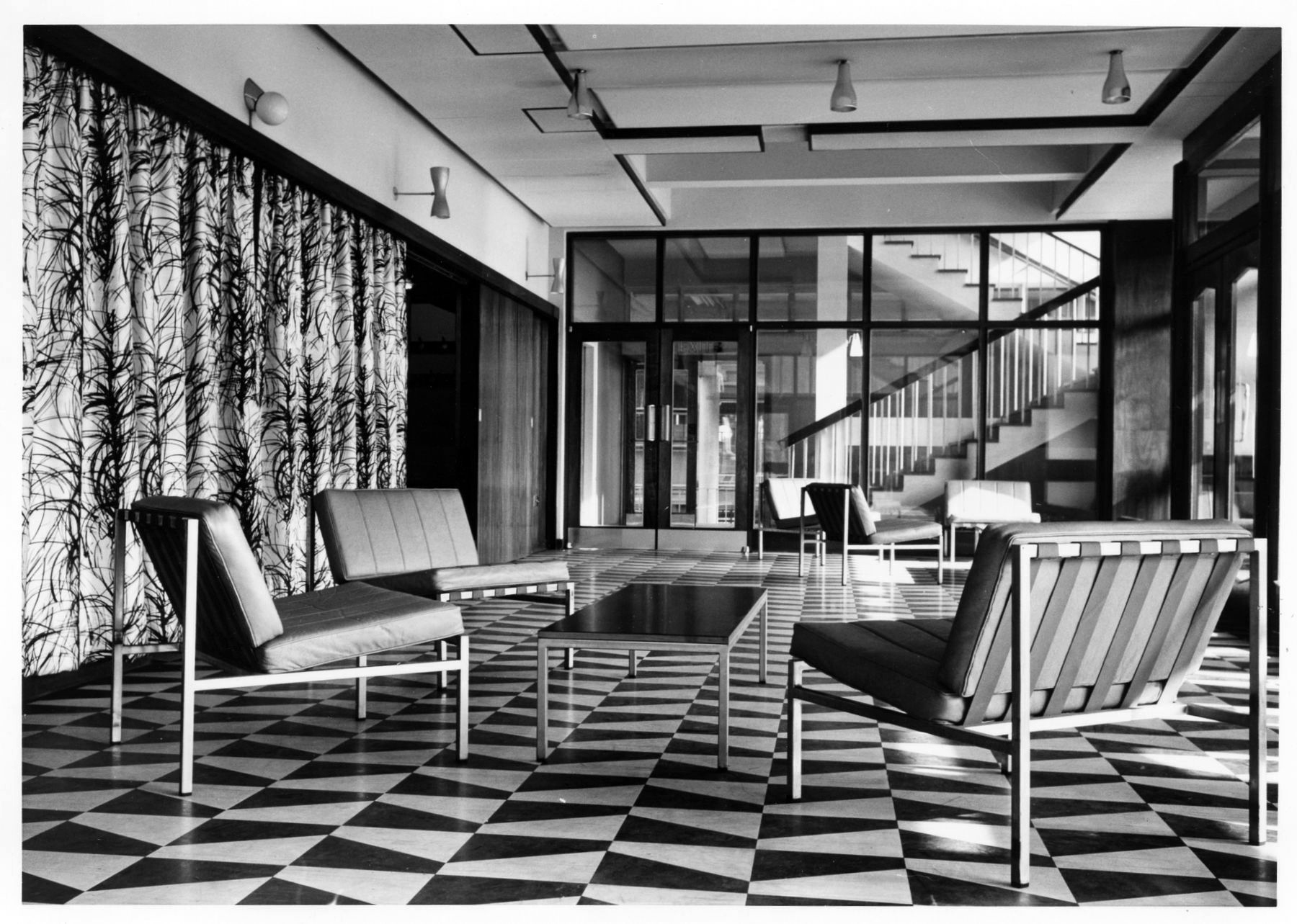
The hall has a great musical heritage.
Featuring the Fast Cars who we have previously encountered in Swinton at the Lancastrian Hall.
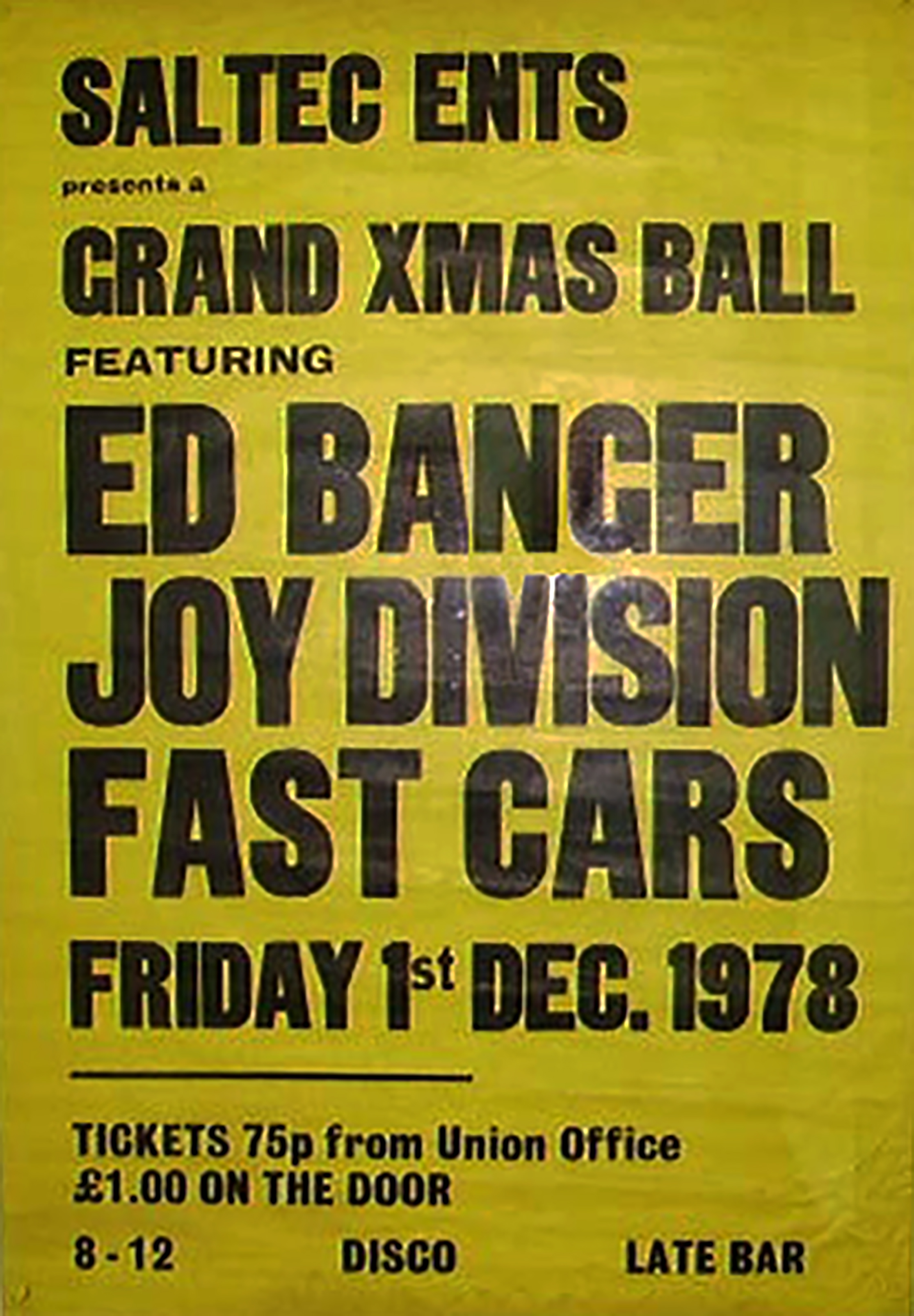
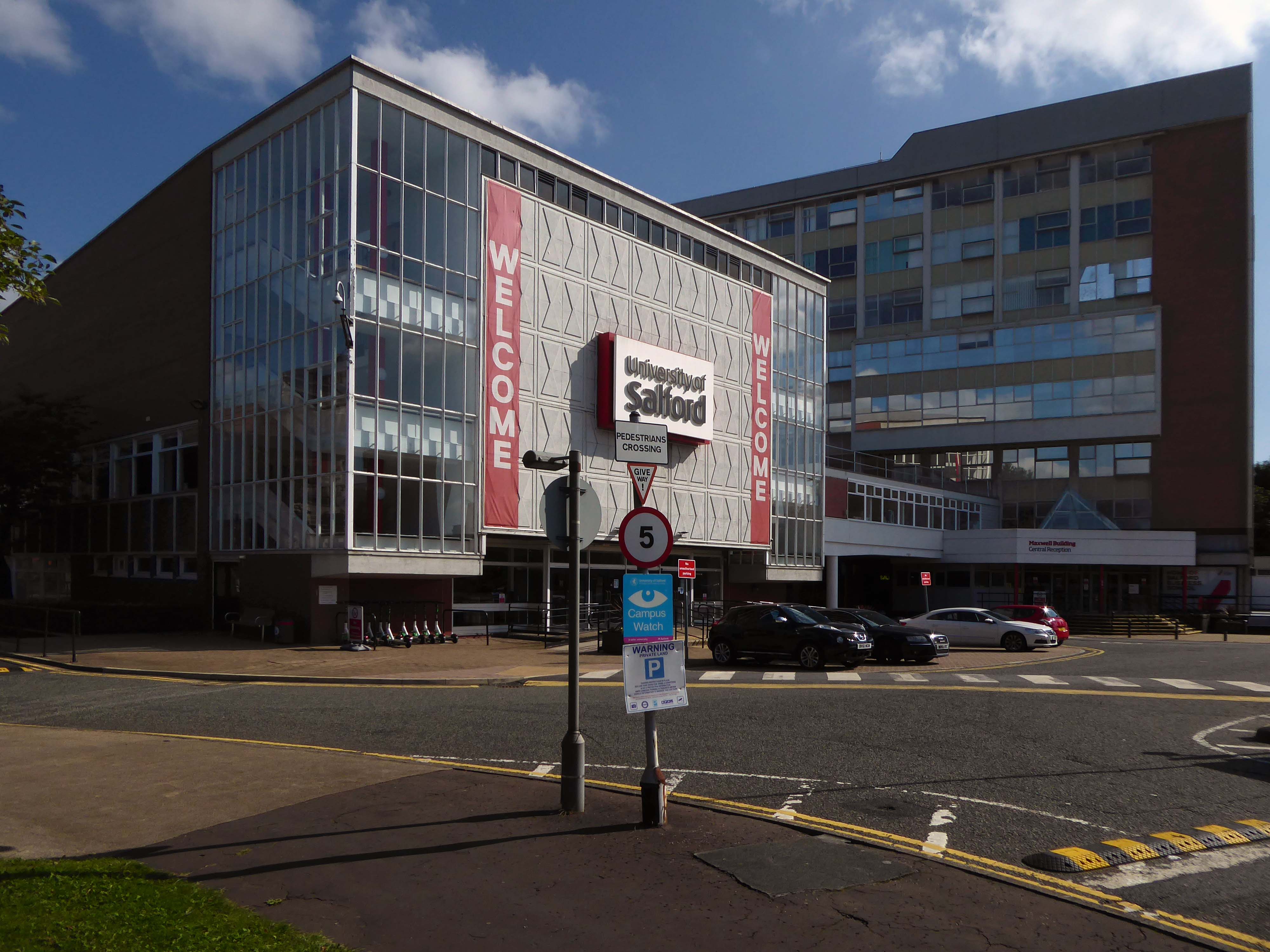
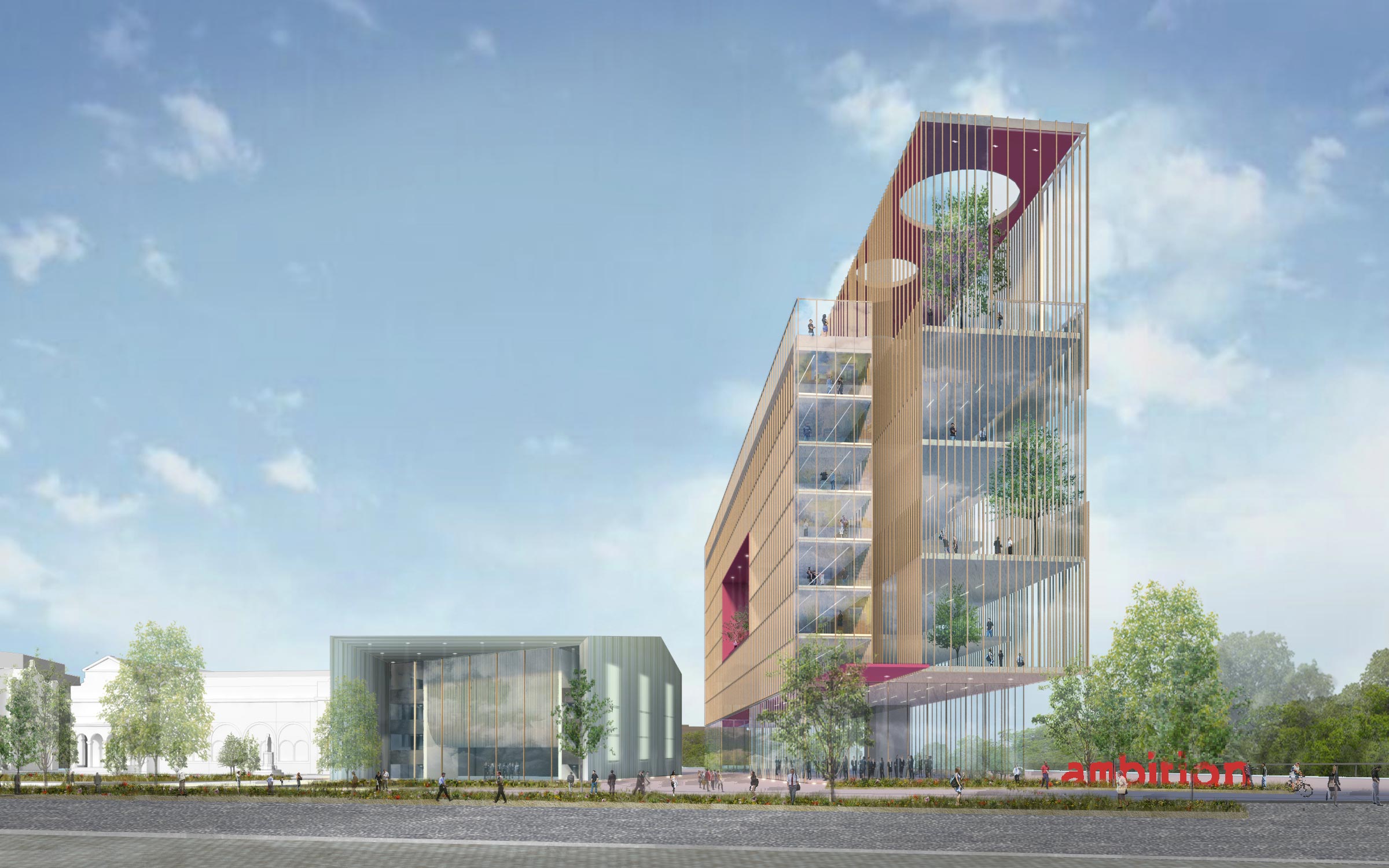
Which may be the subject of ambitious redevelopment.
Take a turn around the corner to the Cockcroft Building.
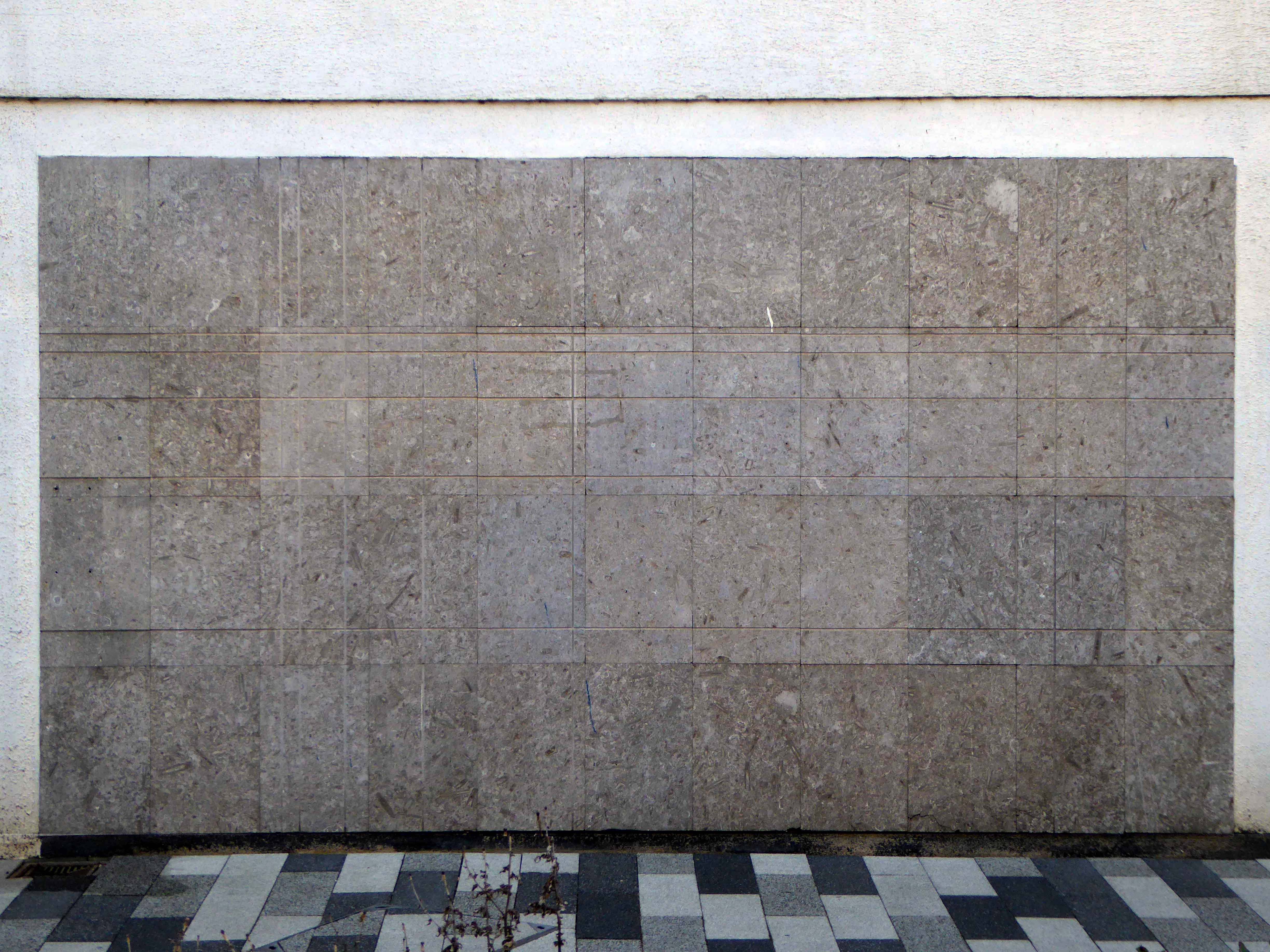
These incised stone panels obscured by plants.
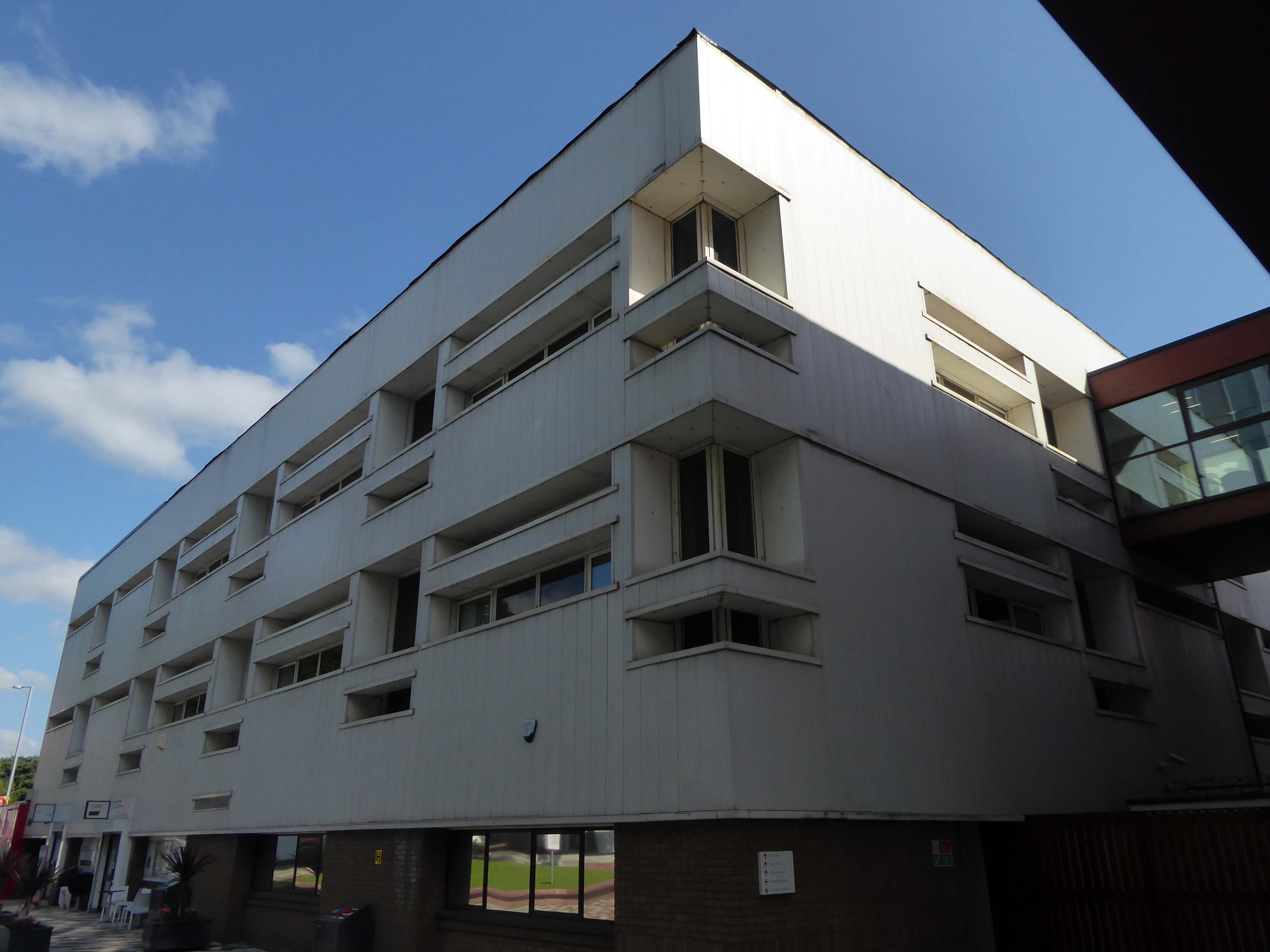
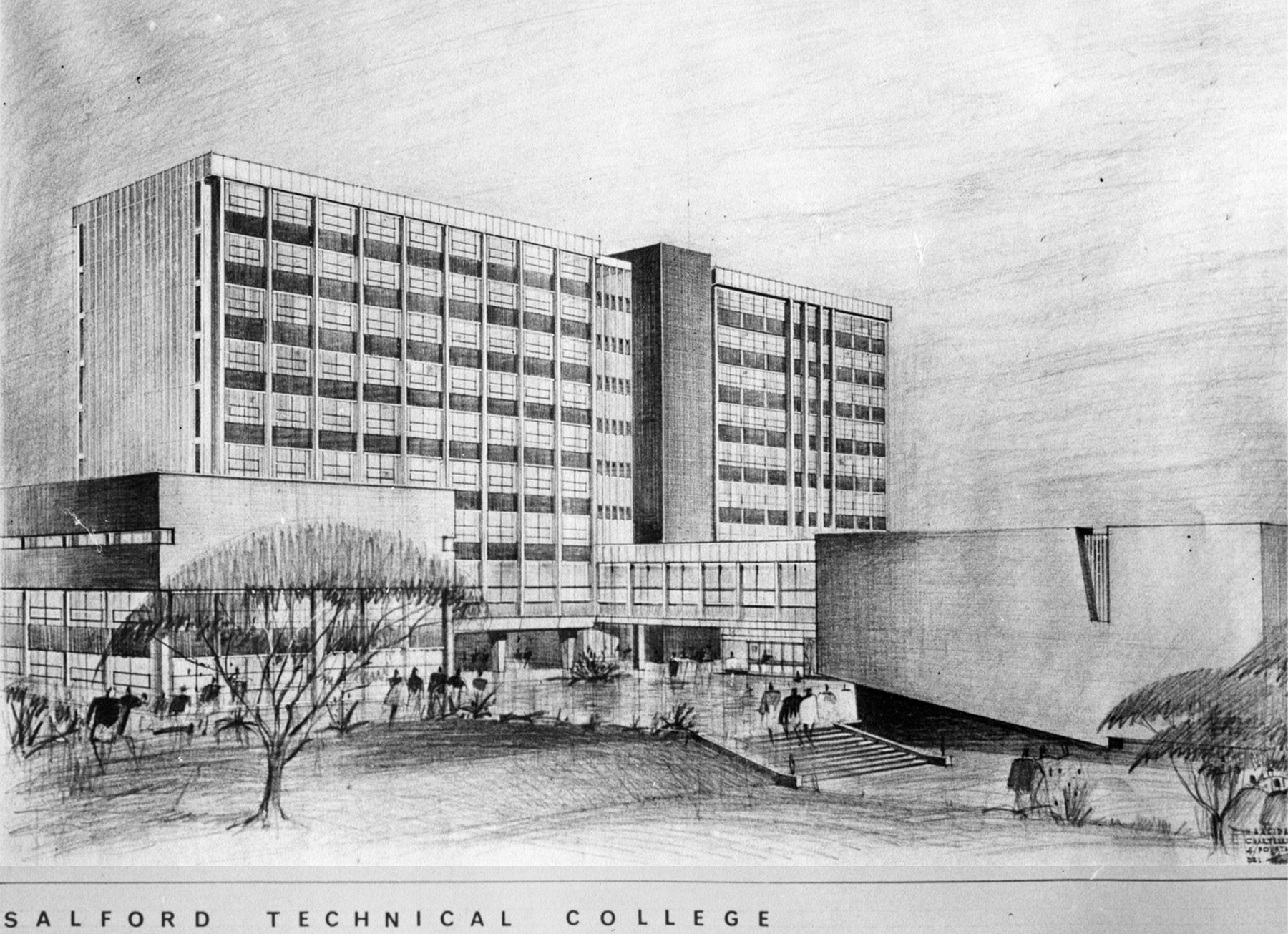
To the left is the Clifford Whitworth Library – this is the original architectural impression – signed Peter Sainsbury.
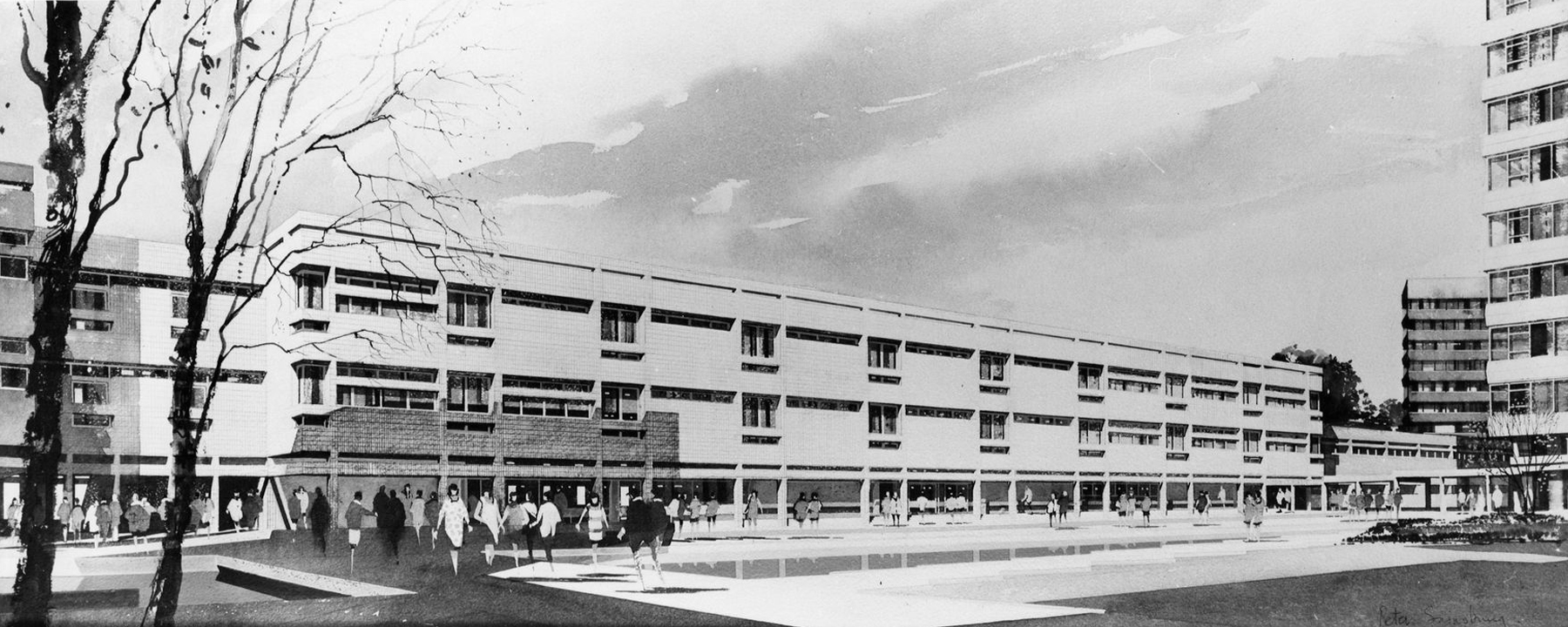
The original fascia was tile clad.
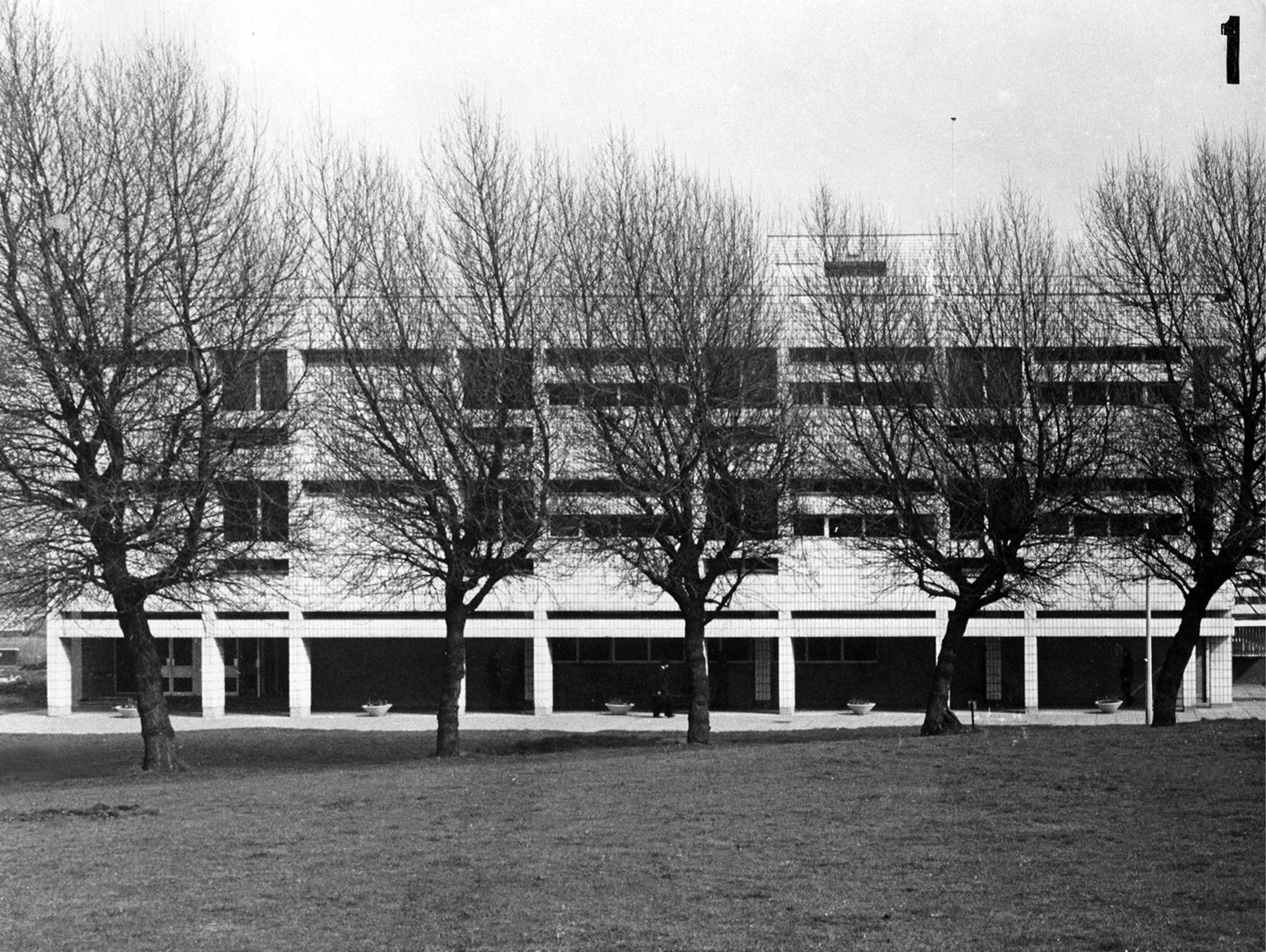
Subsequently replaced by uPVC boards.
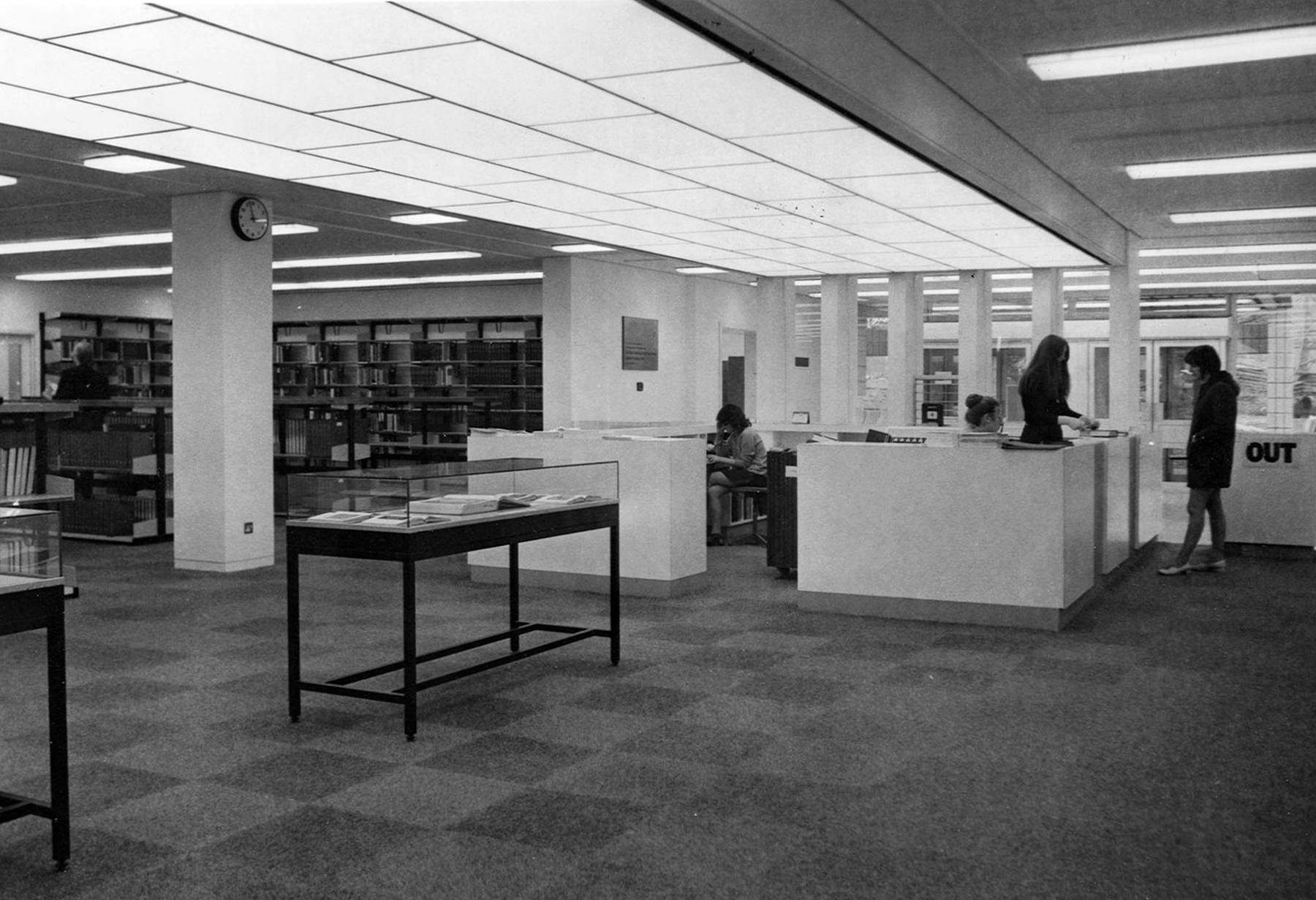
Yet again the original interior was integral too the architectural scheme and period.
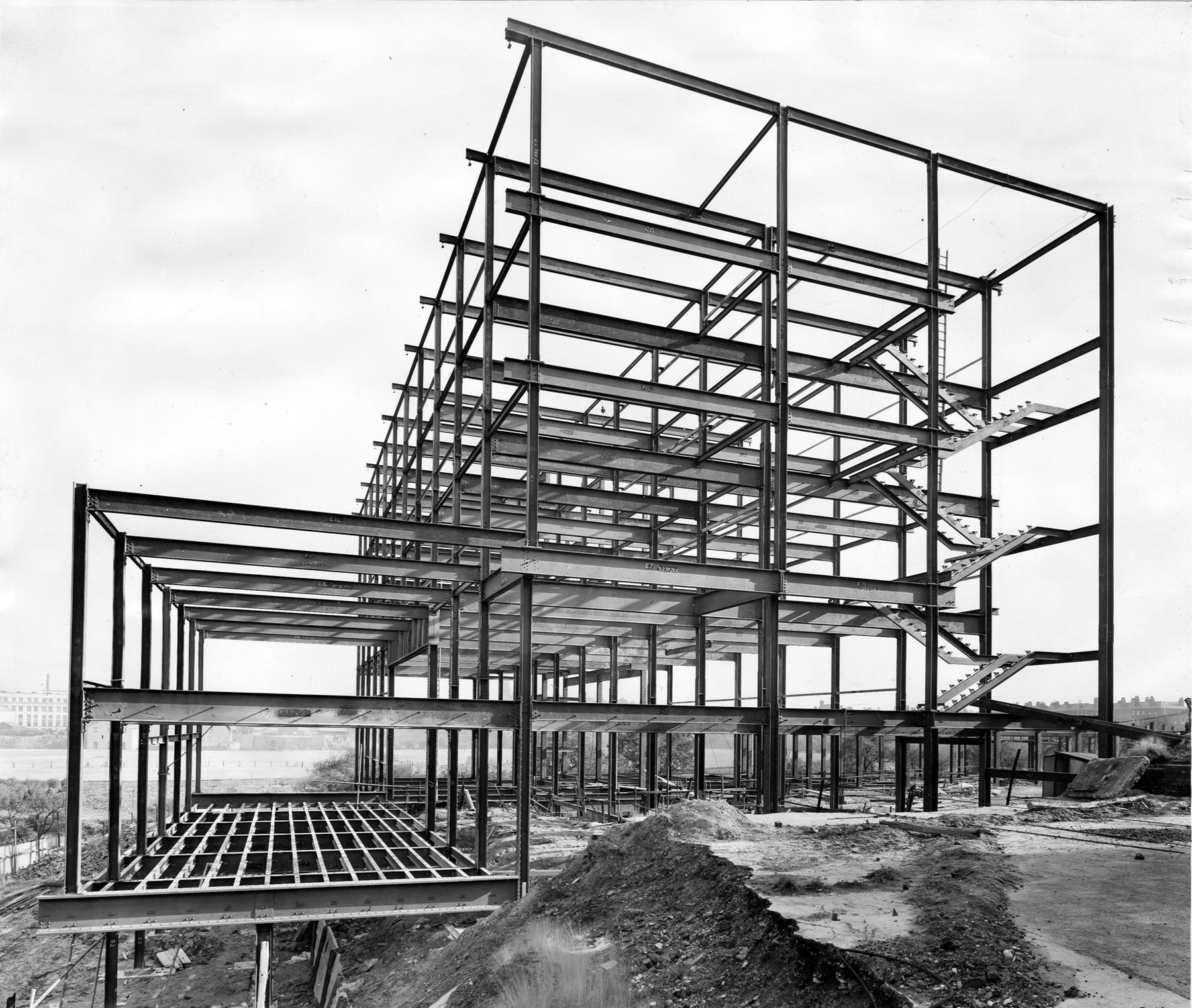
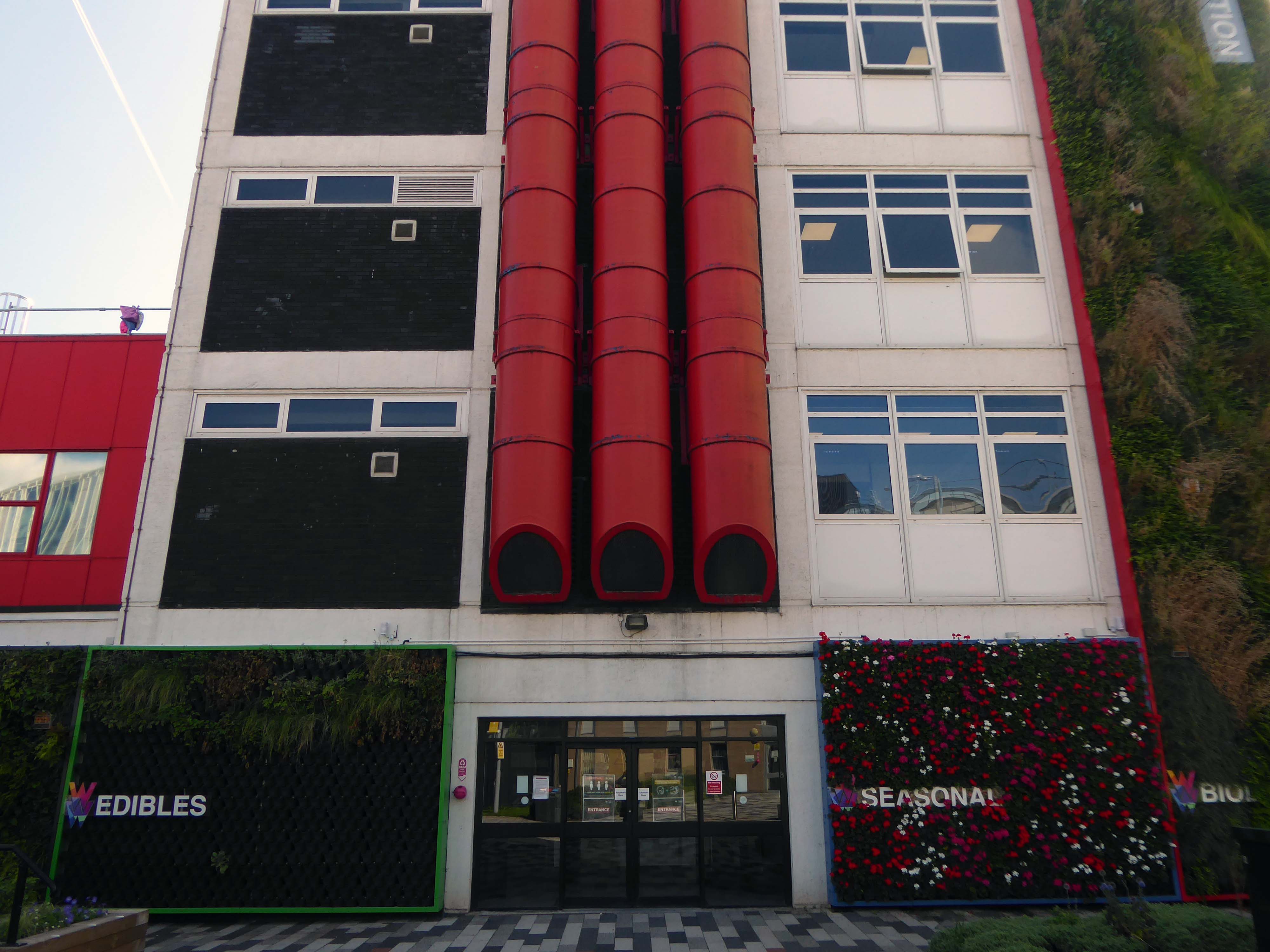
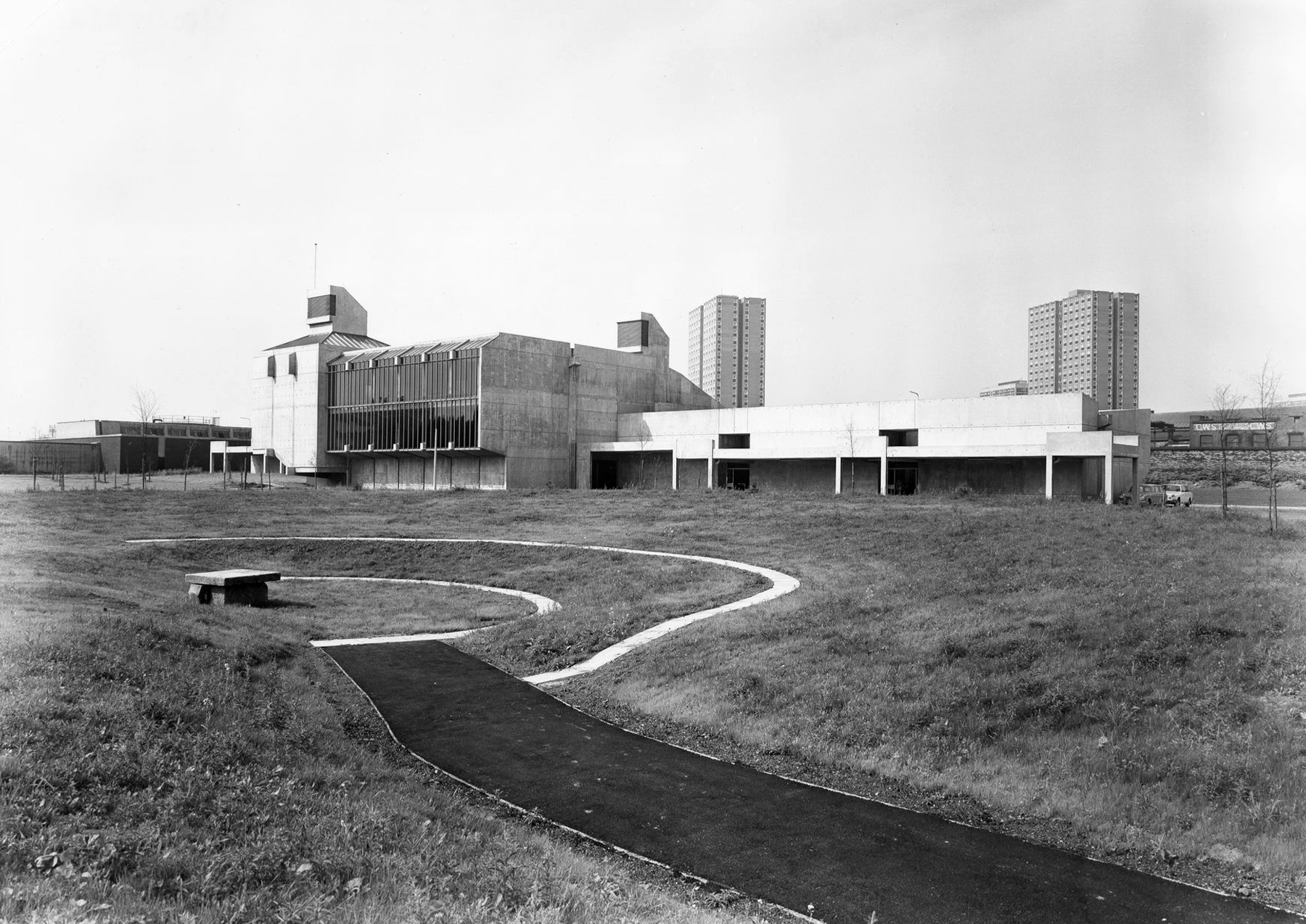
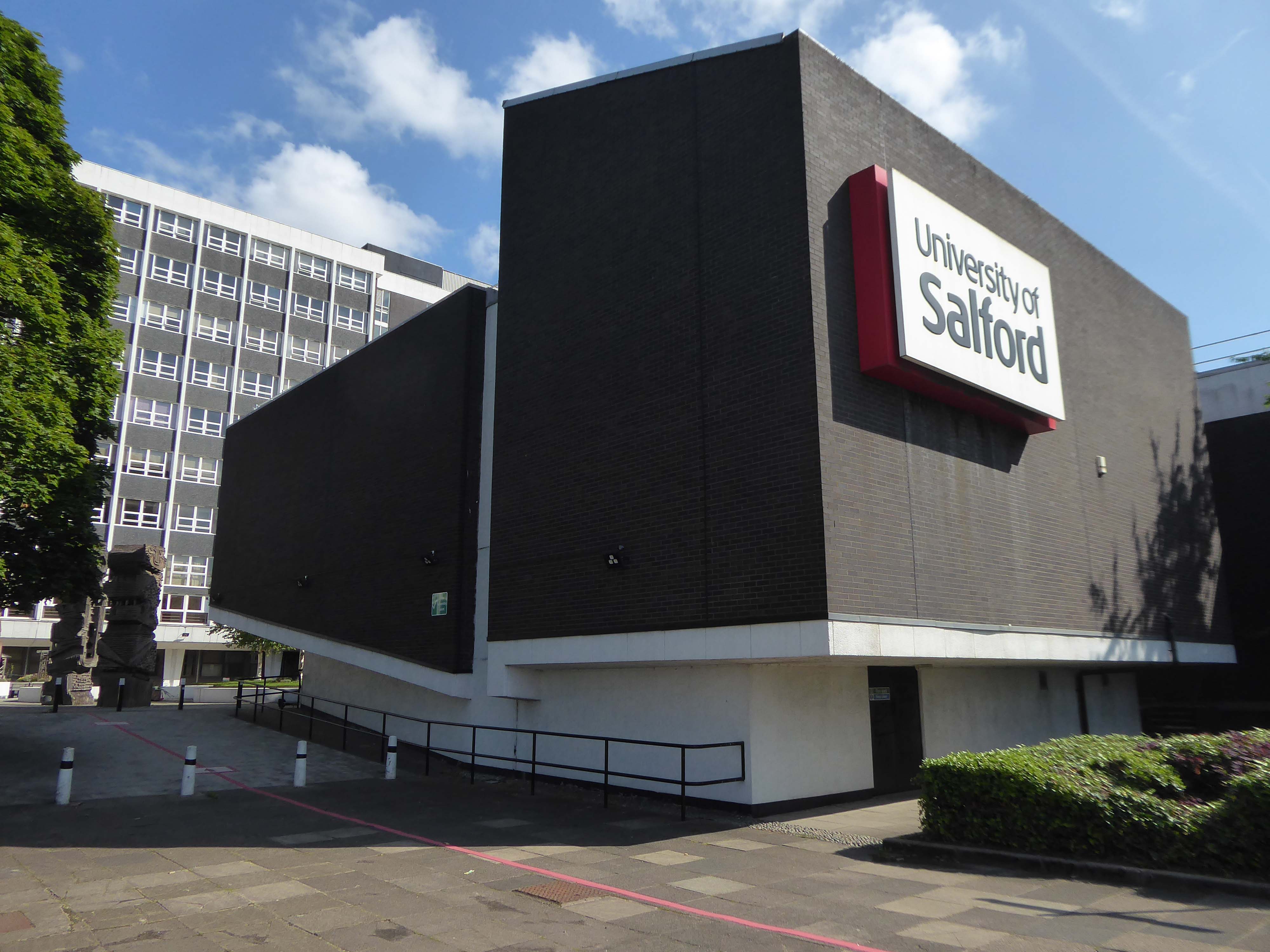
It was designed by WF Johnson and Partners of Leamington Spa, as a lecture theatre block and gallery. It sits with its long axis running parallel to the railway behind. The series of grey volumes, occasionally punctuated by colourful floods of red and green trailing ivy, hang together in a less than convincing composition. The orientation and access to the building seem confused and detached from any cohesive relationship to the rest of the campus, but there is something perversely attractive about the right essay in the wrong language. The reinforced concrete building contained five lecture theatres, communal spaces, an art gallery, AV support areas and basement plant rooms. Following a major refurbishment in 2012, several additions were made to the exterior and its total concrete presence somewhat diminished. It still houses lecture theatres and a number of other learning and social spaces.
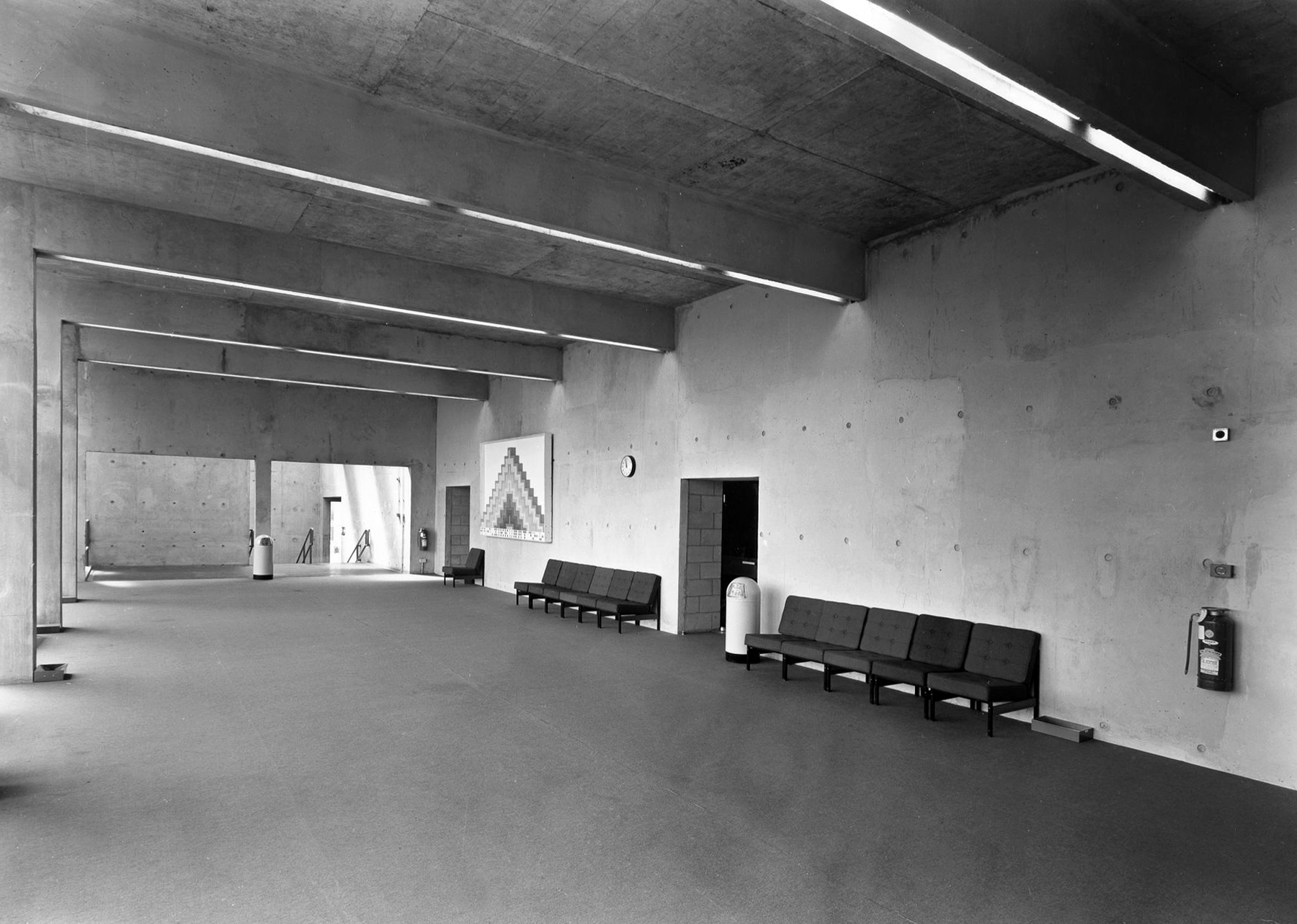
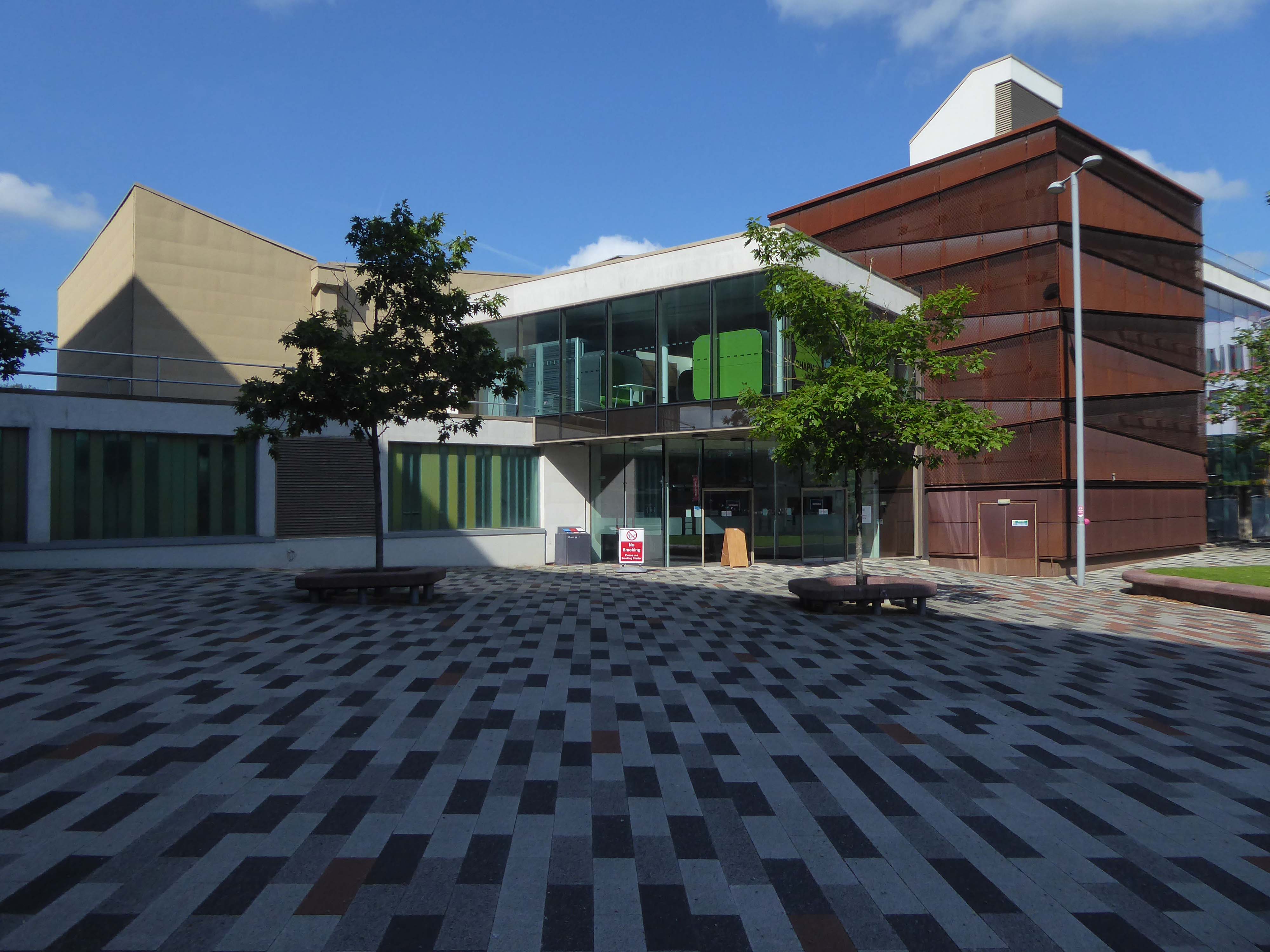
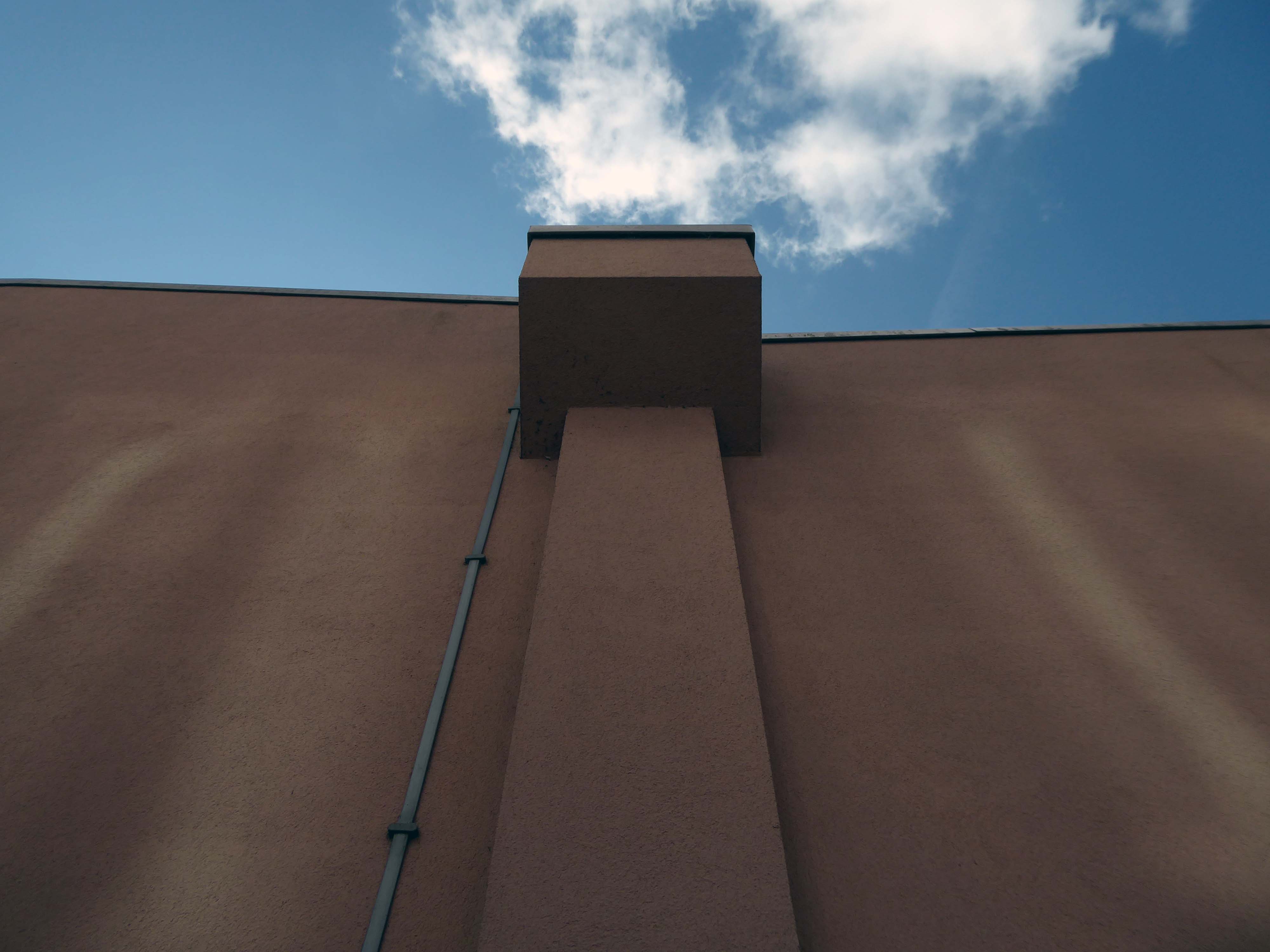
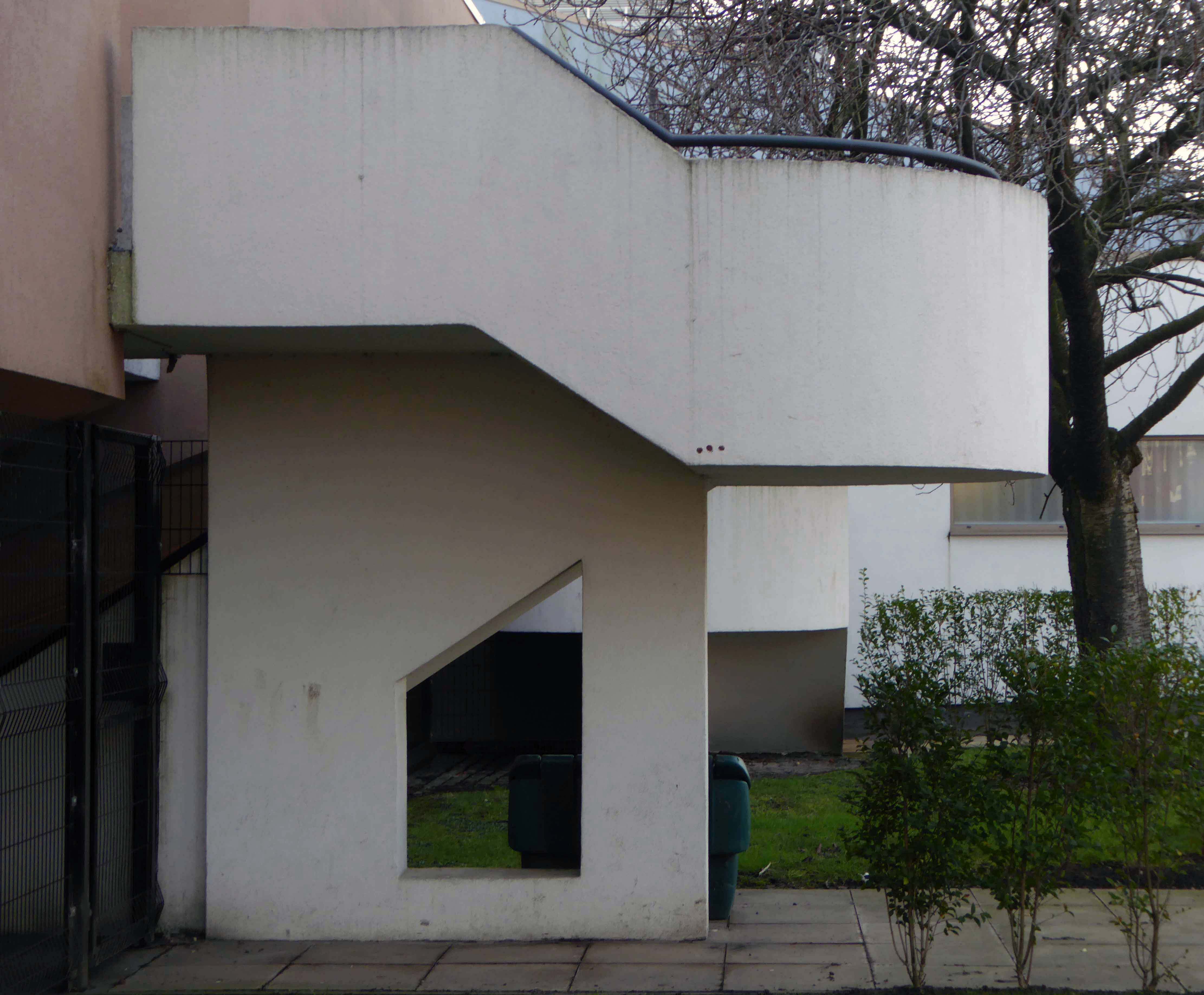
A ways down the road the former Salford Technical College.
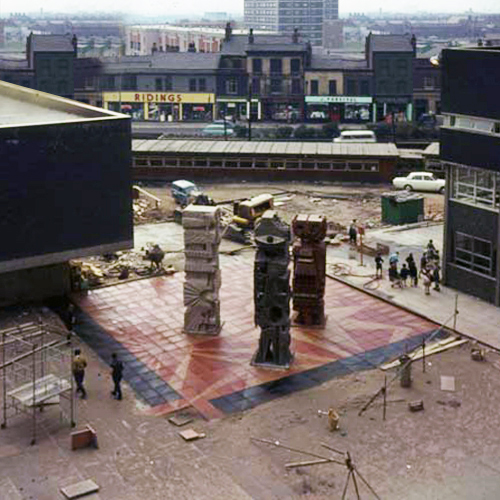
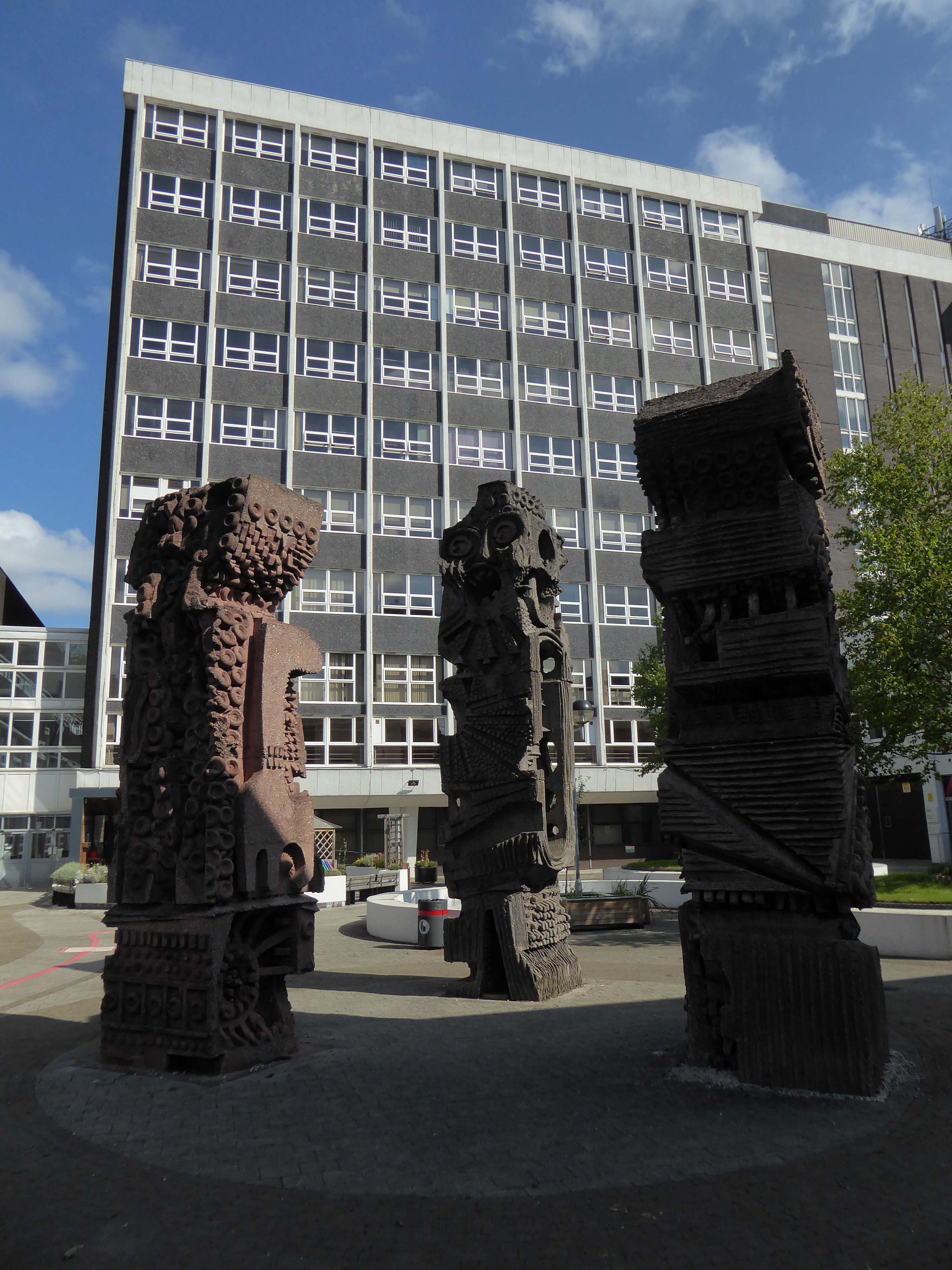
Now the part of the University of Salford, this grouping is probably the most significant work by Halliday Meecham during this period. The blocks wrap to almost enclose a courtyard and they step up in height towards the rear of the site. To the front is a lecture theatre block in dark brick. The multi-storey elements are straightforward in their construction and appearance and have had their glazing replaced. Perhaps the richest elements here are the three totemic structures by artist William Mitchell, which were listed at Grade II in 2011. Mitchell was actively engaged with the experiments of the Cement and Concrete Associations during the 1960s and produced a wide variety of works for public and private clients; other works regionally include the majority of the external art and friezes at Liverpool Metropolitan Cathedral and the Humanities Building at Manchester University. These textured concrete monoliths appear to have an abstract representation of Mayan patterns and carry applied mosaic. They were made on site using polyurethane moulds. There is another Mitchell work hidden behind plasterboard in the inside of the building.
Subsequently assimilated into the University.
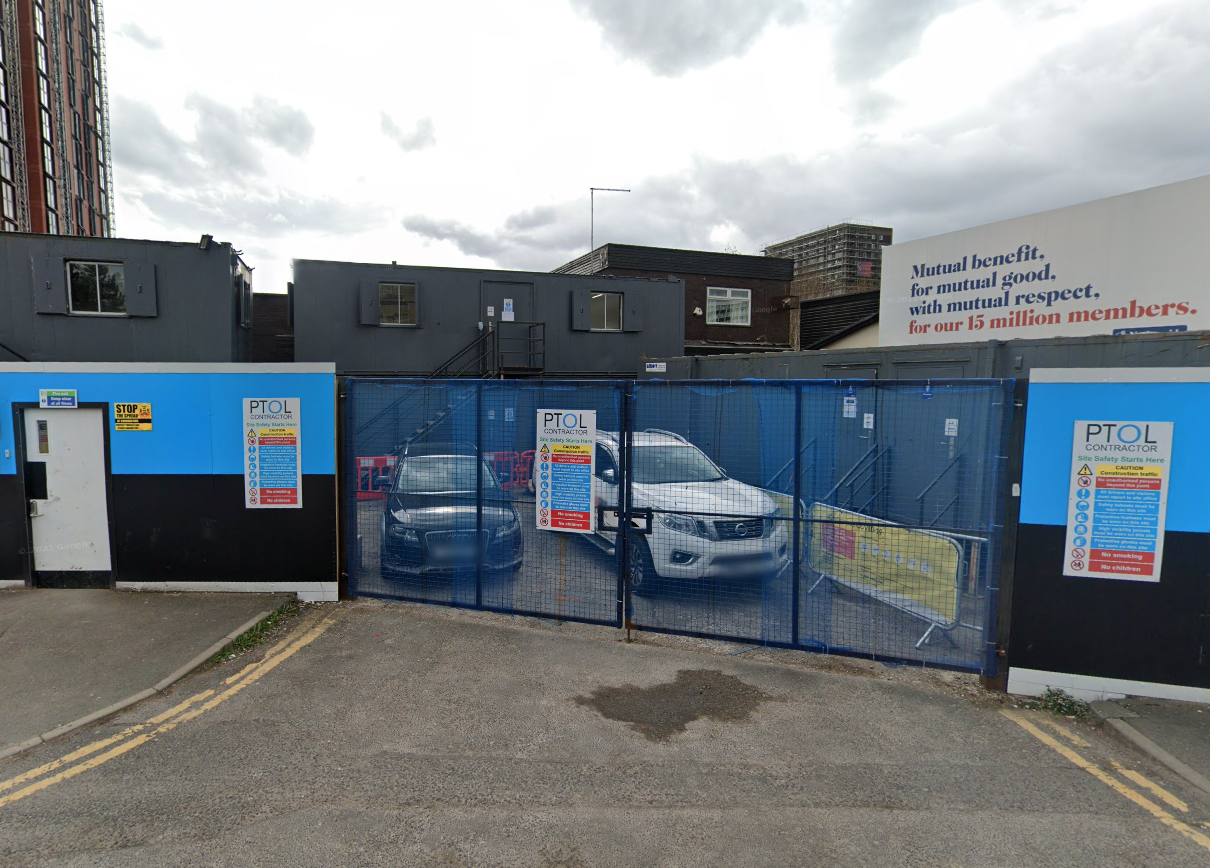
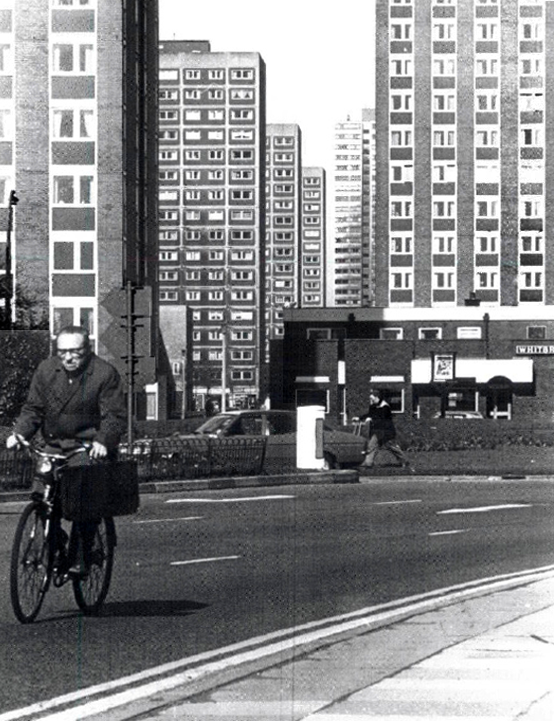
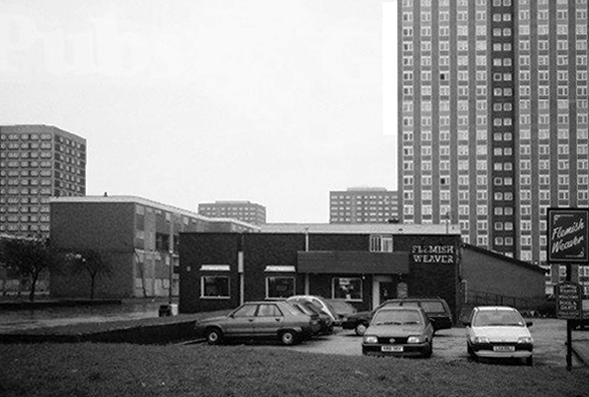
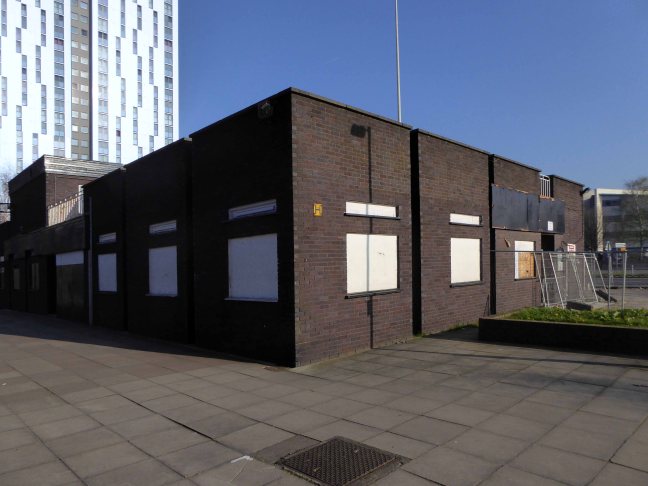
Just down the way The Woolpack is no more.
April 1965 saw the Salford City Reporter proudly boast in an article that
The Ellor Street dream begins to come true – complete with interviews with residents of the newly constructed Walter Greenwood, Eddie Colman and John Lester Courts all which towered some 120 feet above the Hanky Park skyline.
These particular blocks of flats were of special significance because their completion was the end of the first stage of the Ellor Street redevelopment scheme which was to provide 3,000 new homes, the £10 million pound Salford Shopping Precinct and a new civic centre – which never got built – making this A Salford of the Space Age.
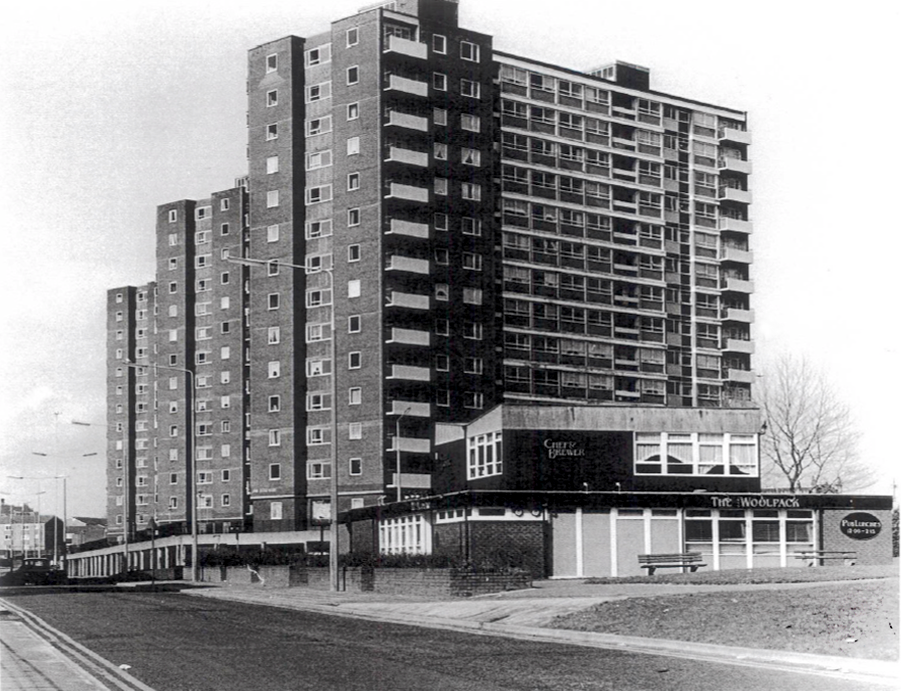
The tower blocks are now clad and the site a construction base for cladders.
Full details of Salford’s complex and extensive redevelopment can be found here at Tower Block.
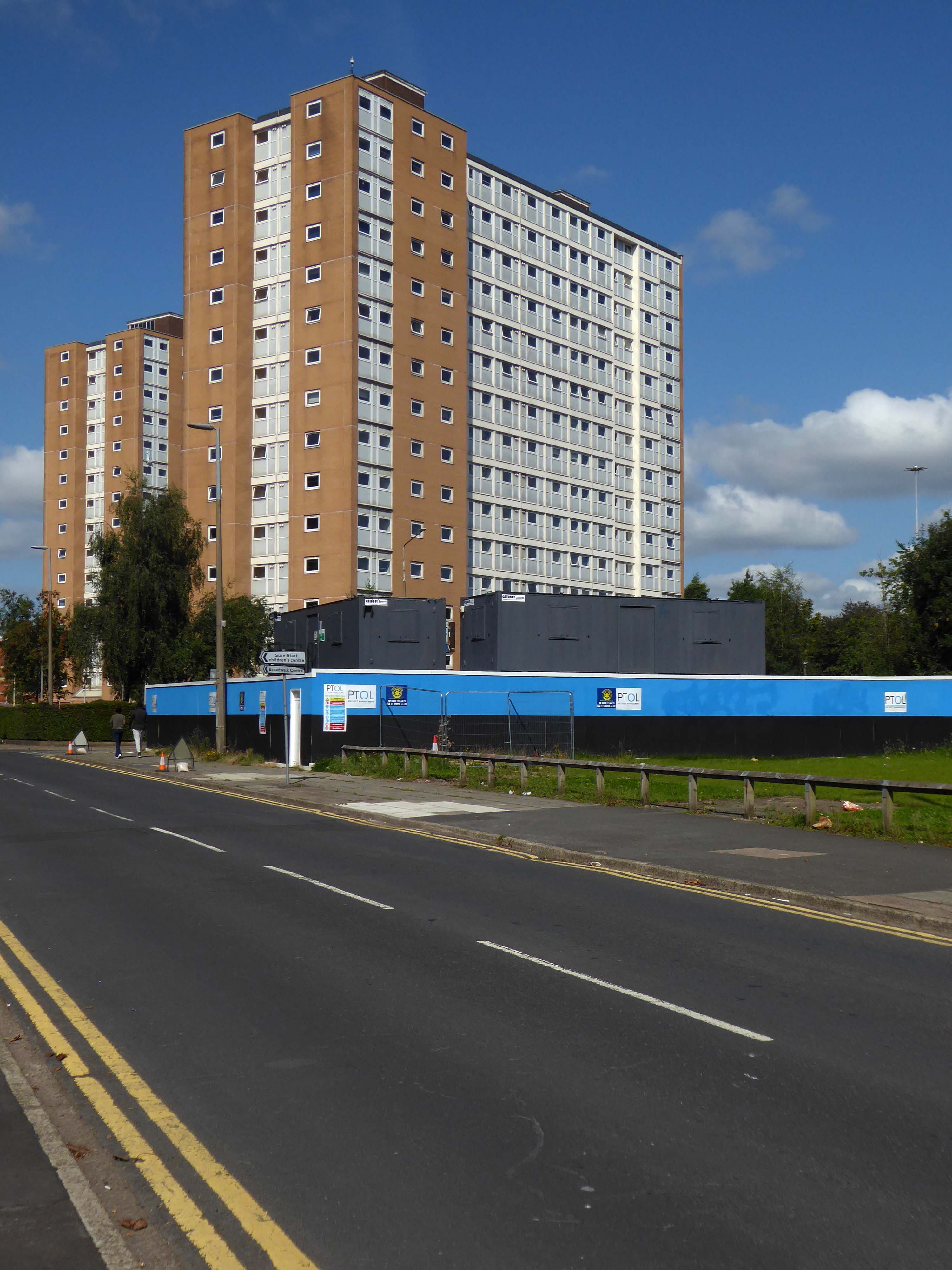
Walter Greenwood Court was demolished in 2000/2001, whilst Eddie Colman and John Lester Court are now student accomodation for the nearby Salford University.
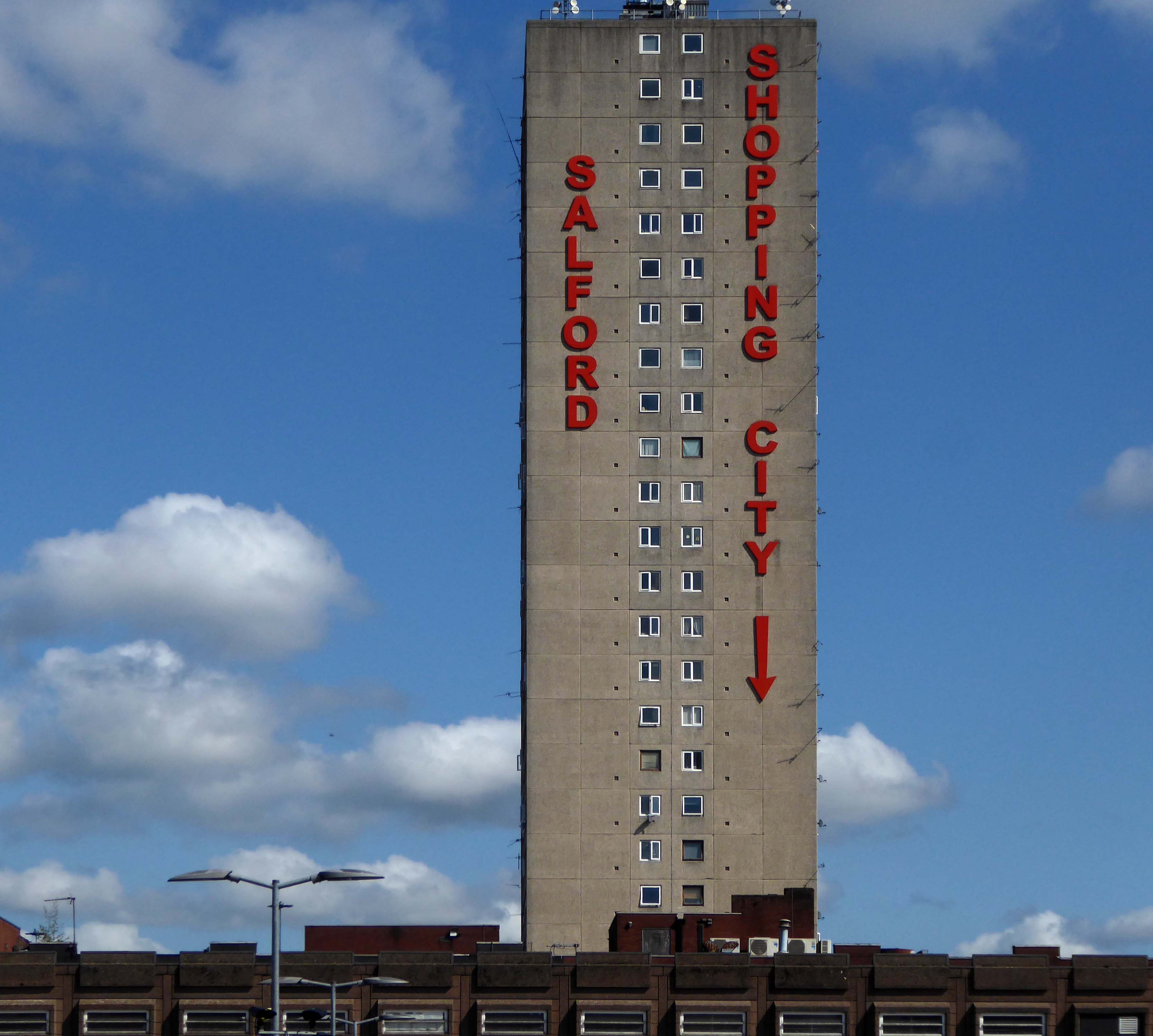
Onwards and underwards towards Salford Shopping City.
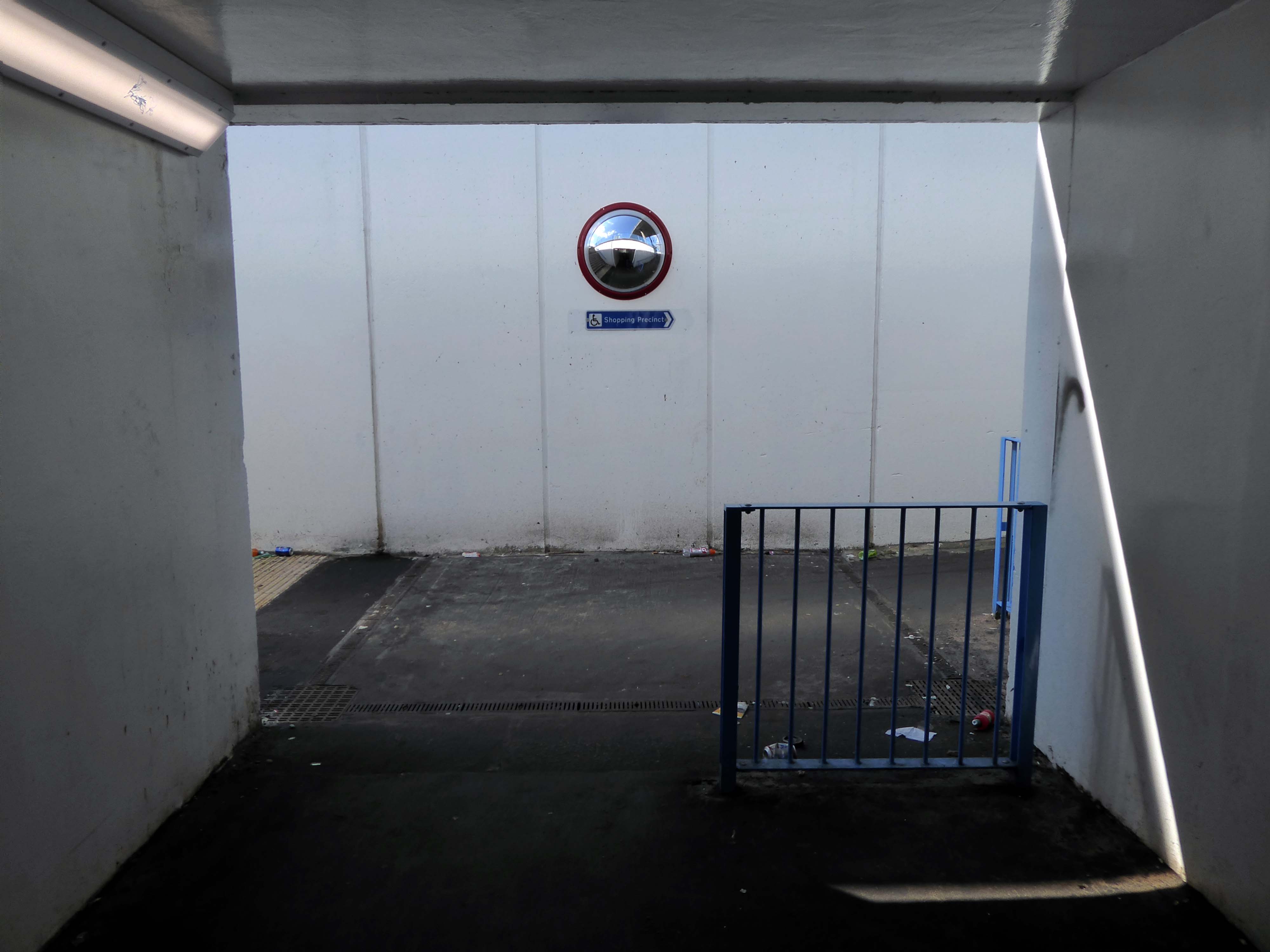
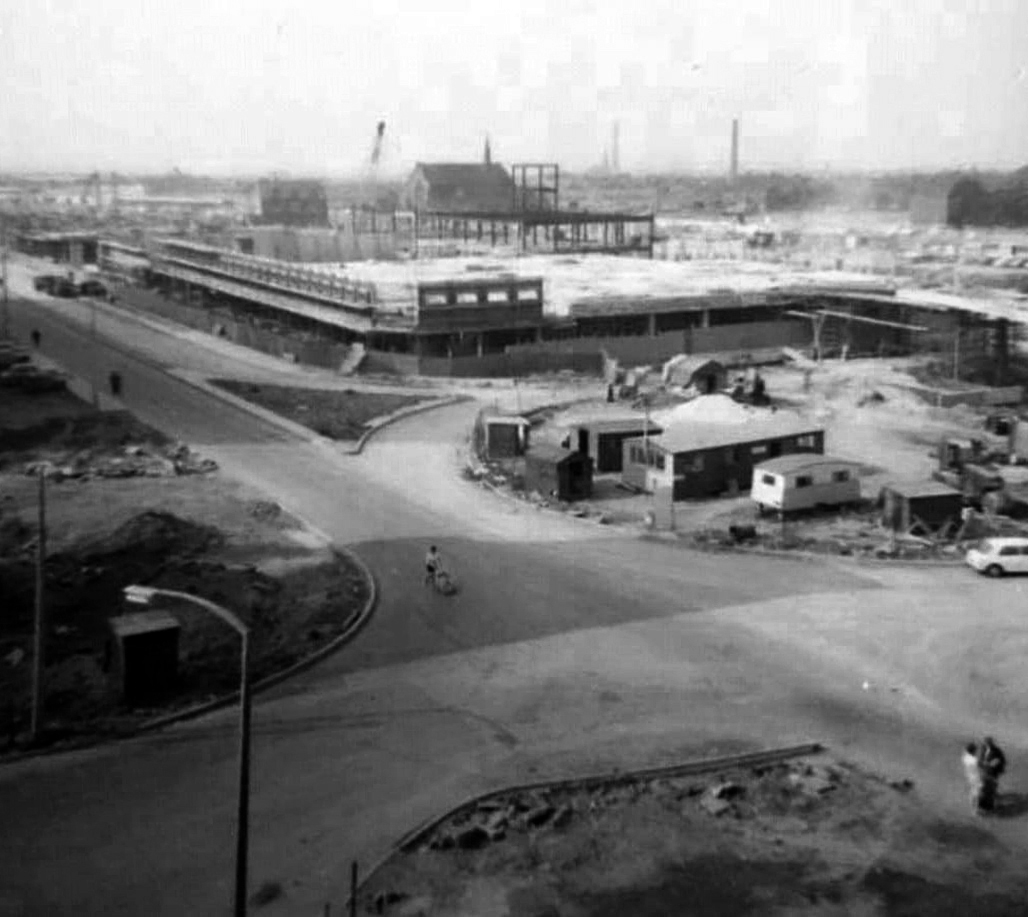
The architectural core of the site has been retained, including the 23 storey Briar Court residential tower.
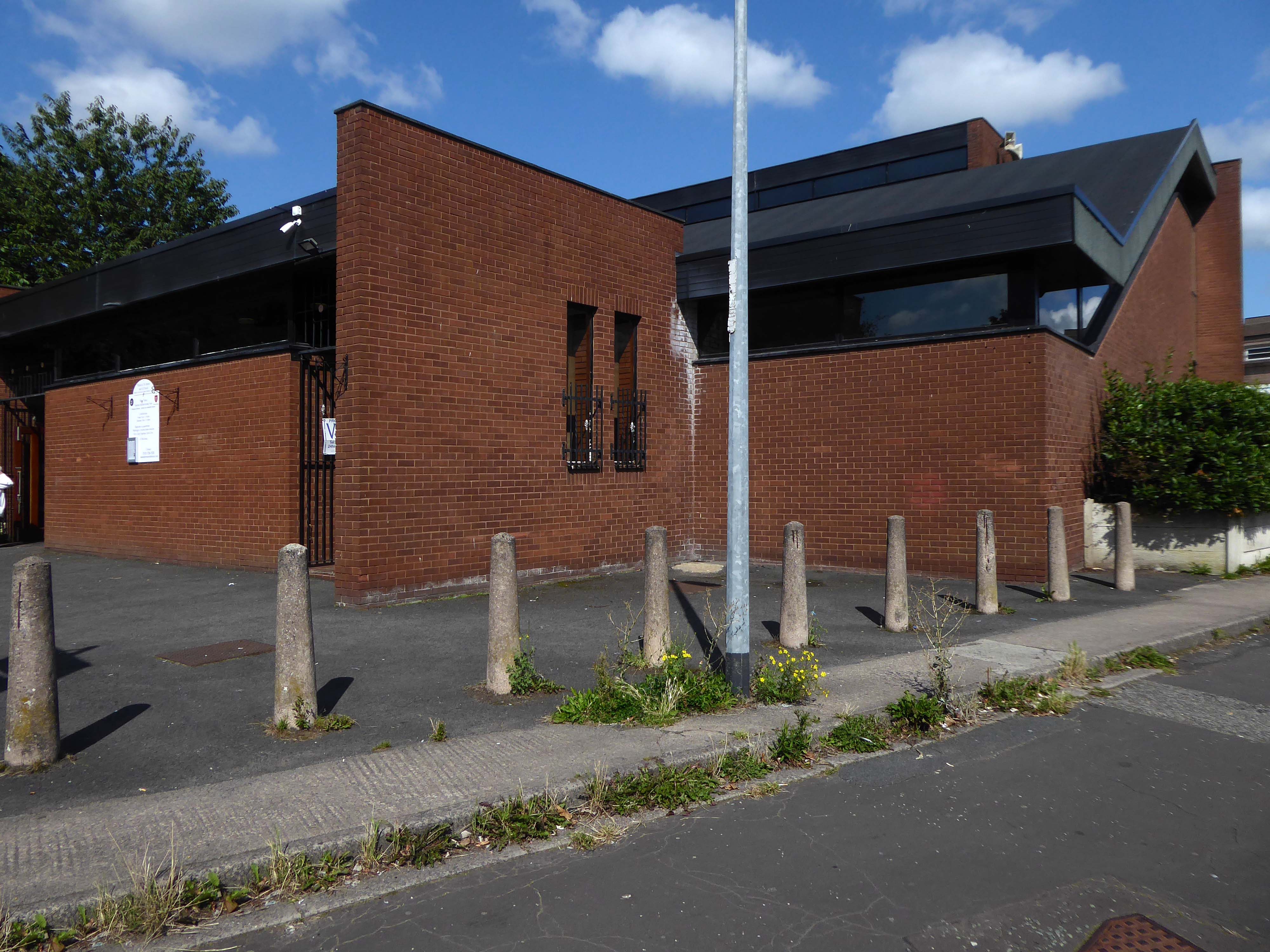
Tucked in behind is Mother of God and St James RC Church.
Clearances took place from the middle of the twentieth century and new high-rise housing blocks were built, as well as a shopping centre.
There was a Catholic presence in the area from 1854, when schools were built. What was described in The Tablet as a beautiful church, an Early English Gothic design by M. Tijou – presumably Herbert Tijou, architect of the chapel to Loreto College, Manchester, was opened by Cardinal Manning, Archbishop of Westminster in 1875.
One hundred years later this church was demolished and replaced by the present building.
The architects were Desmond Williams & Associates, the design bearing some similarity to their St Sebastian, Salford. In 2010 the church of All Souls, Weaste, was closed, and the marble sanctuary furnishings brought to the church.
Description
All orientations given are liturgical. The church is steel framed with brick walls and a monopitch roof (originally covered with copper, now with felt). Bold brick forms create a presence, and the design is somewhat defensive, with few windows. The building is entered from a lower porch which forms a narthex. The slope of the roof and the stepped clerestory lighting create a striking impression inside, and full-height windows towards the east end incorporate stained glass figures said to have originated in the previous church. Marble sanctuary furnishings are presumably those from the church in Weaste and appear to be of later twentieth century date, while the font is of traditional type with a clustered stem and may have come from the earlier church.
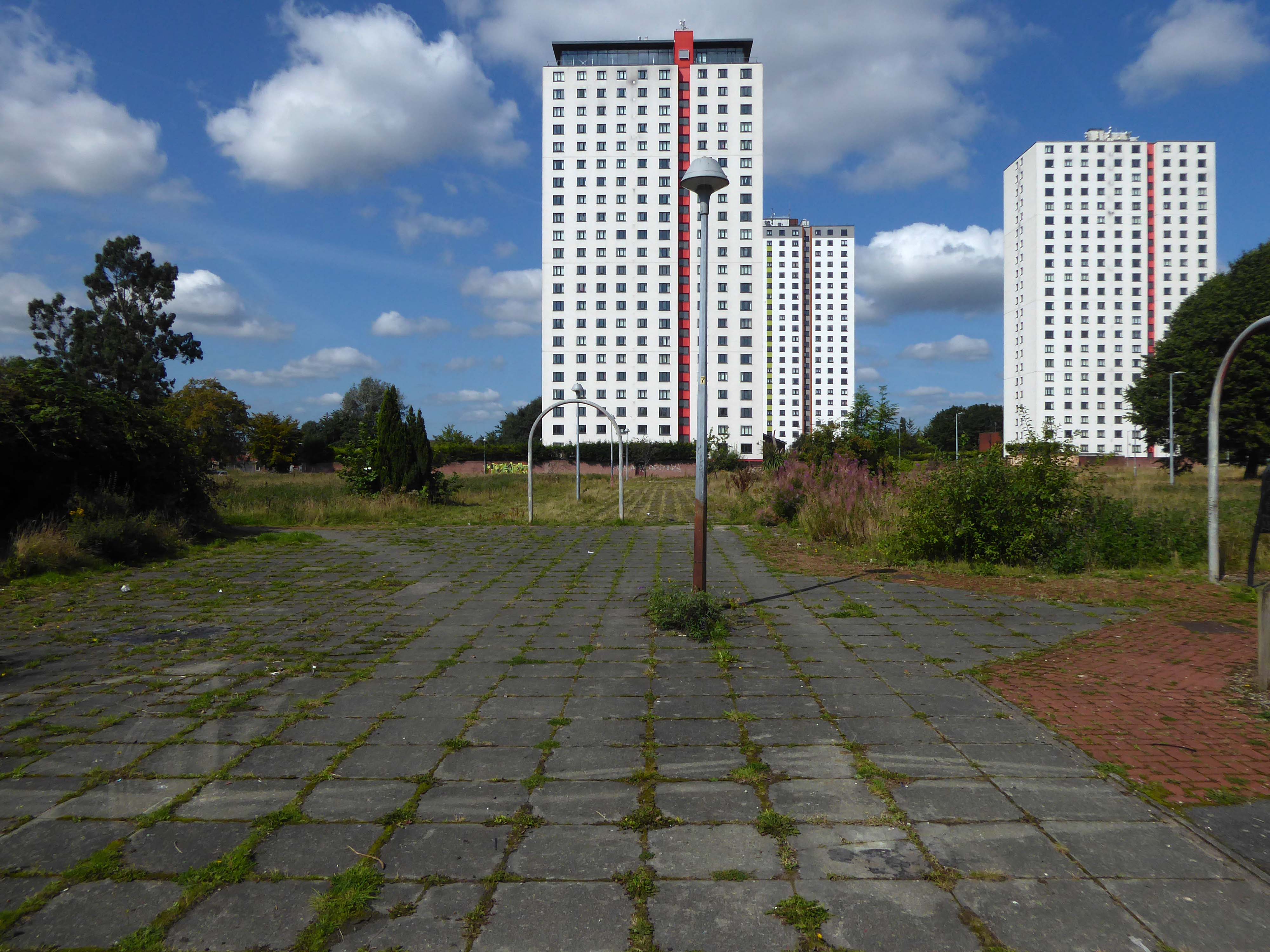
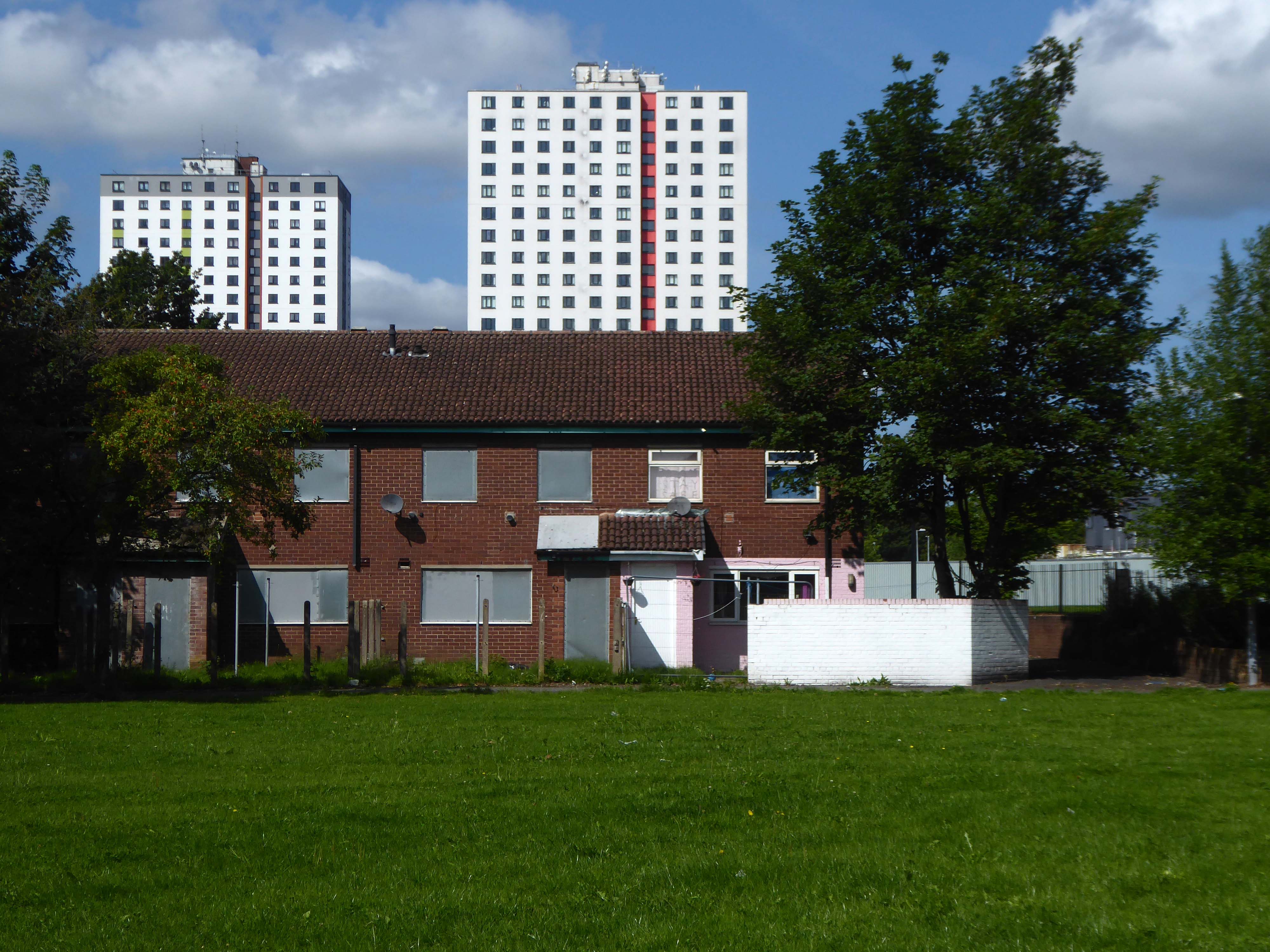
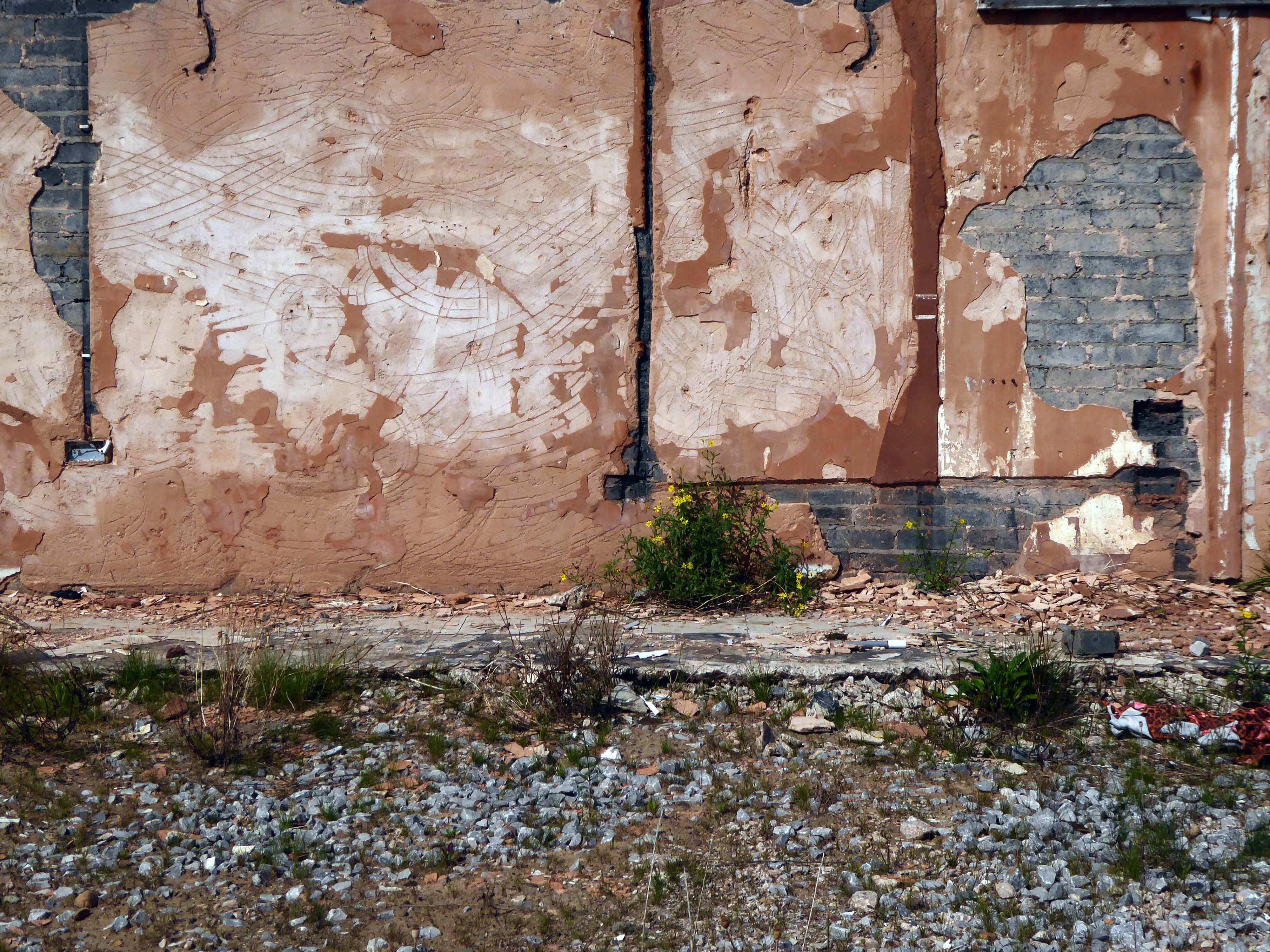
This is an area which has seen a succession of clearances, redevelopment and shifts in demographics during a relatively short and intense period of change.
That process of change continues to hastily unfold.

We have of course been here before – to have a general look around and on a Modernist Mooch.
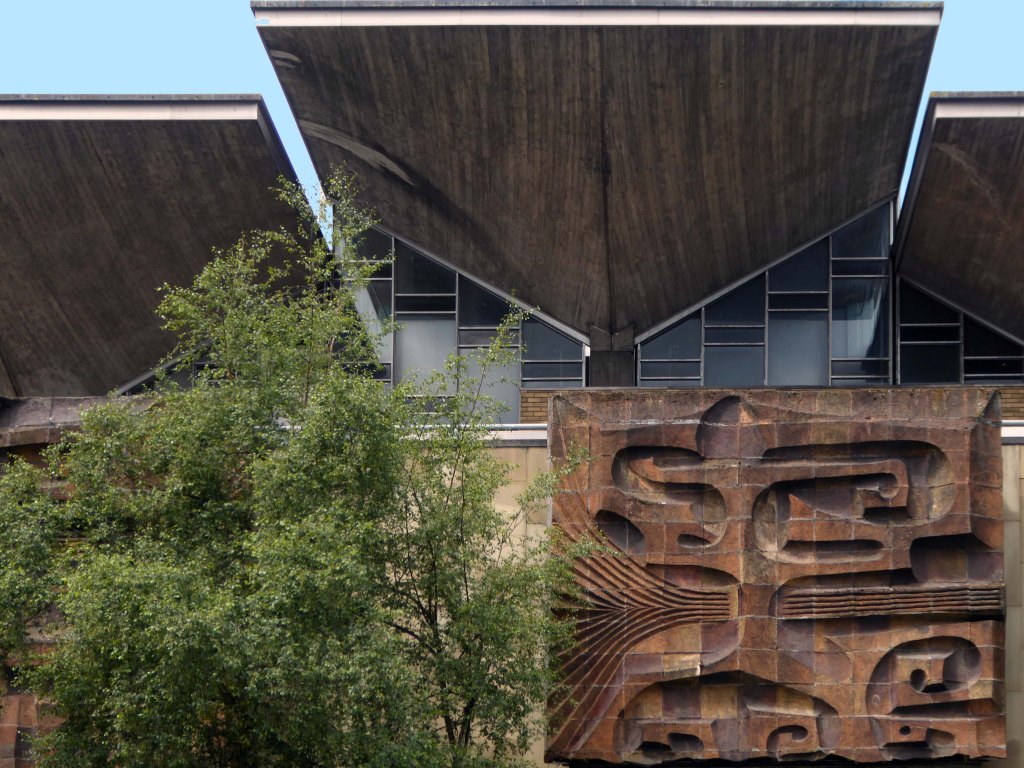
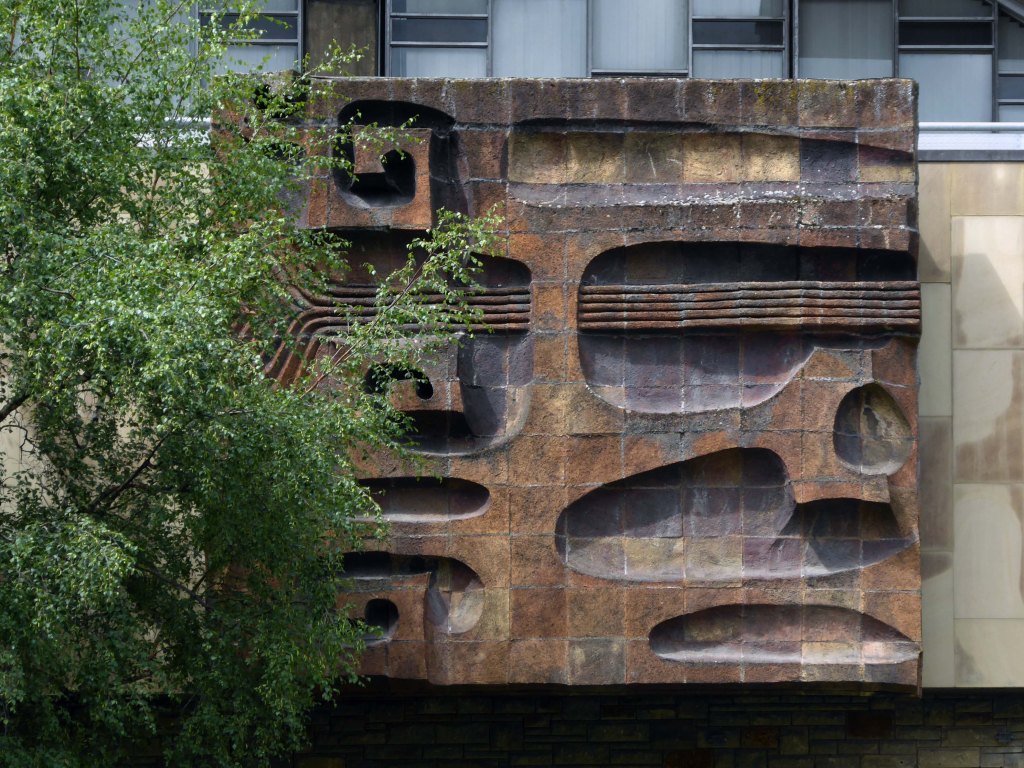
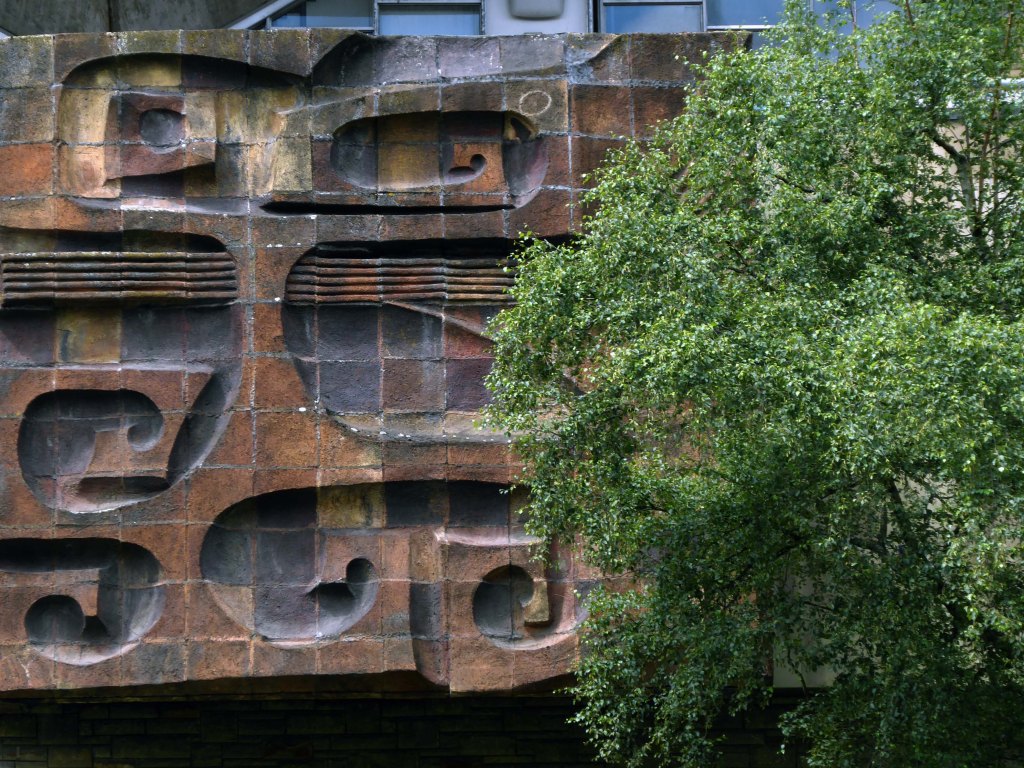
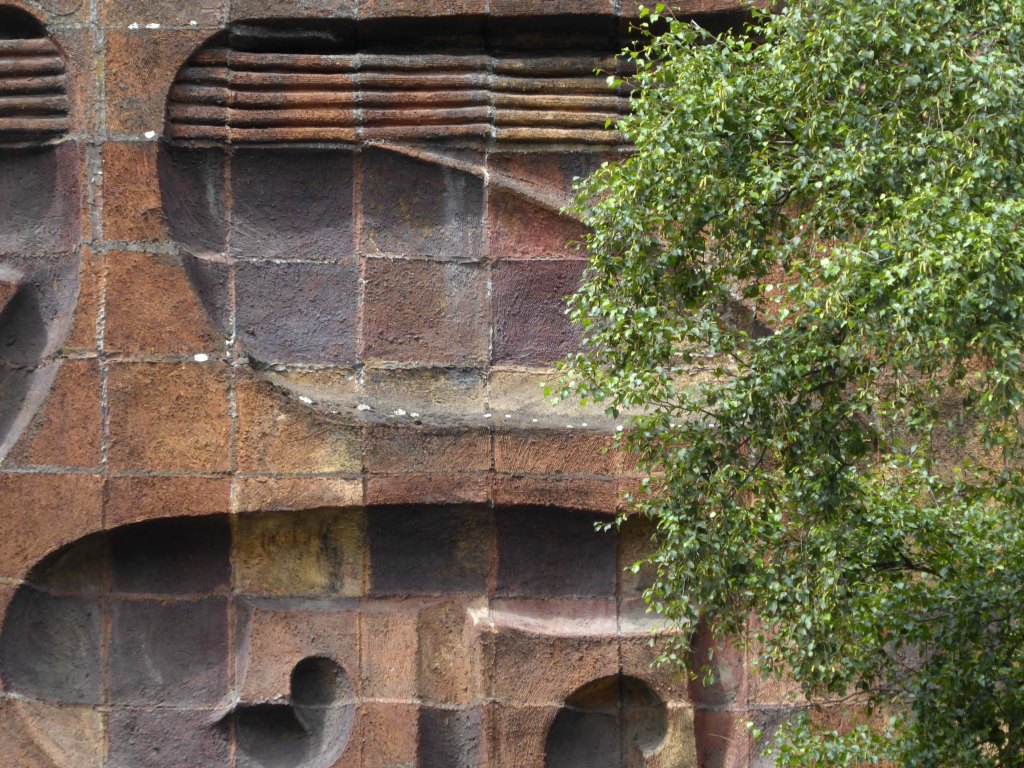
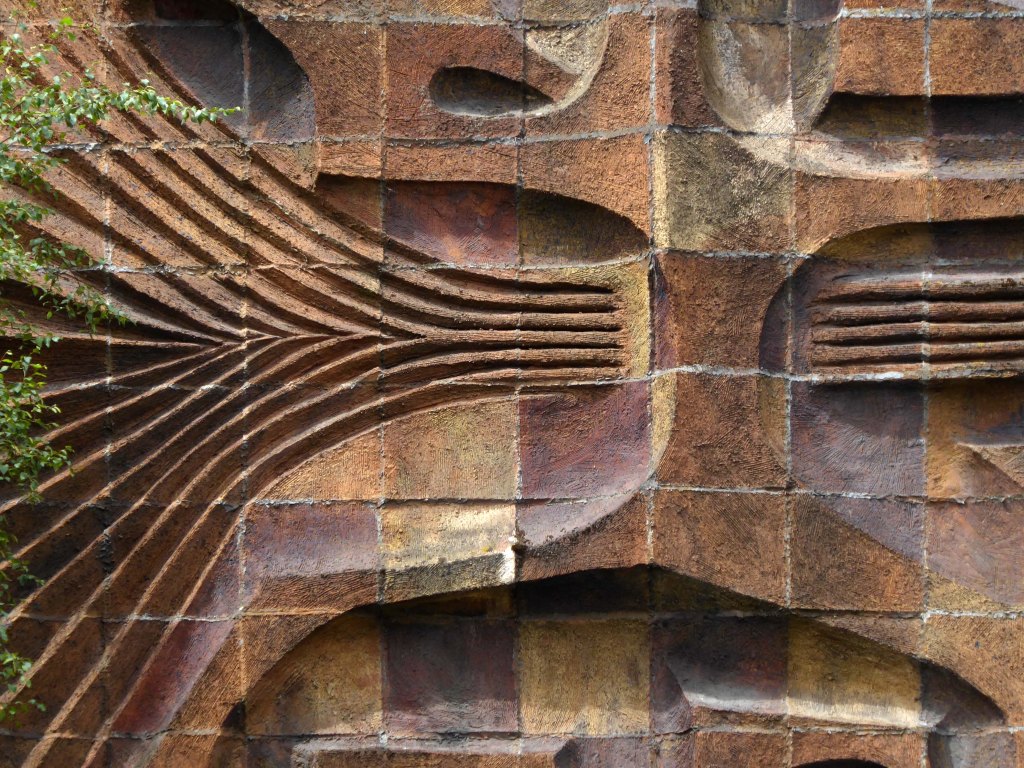
Now I want to look in detail at the exterior ceramic art.
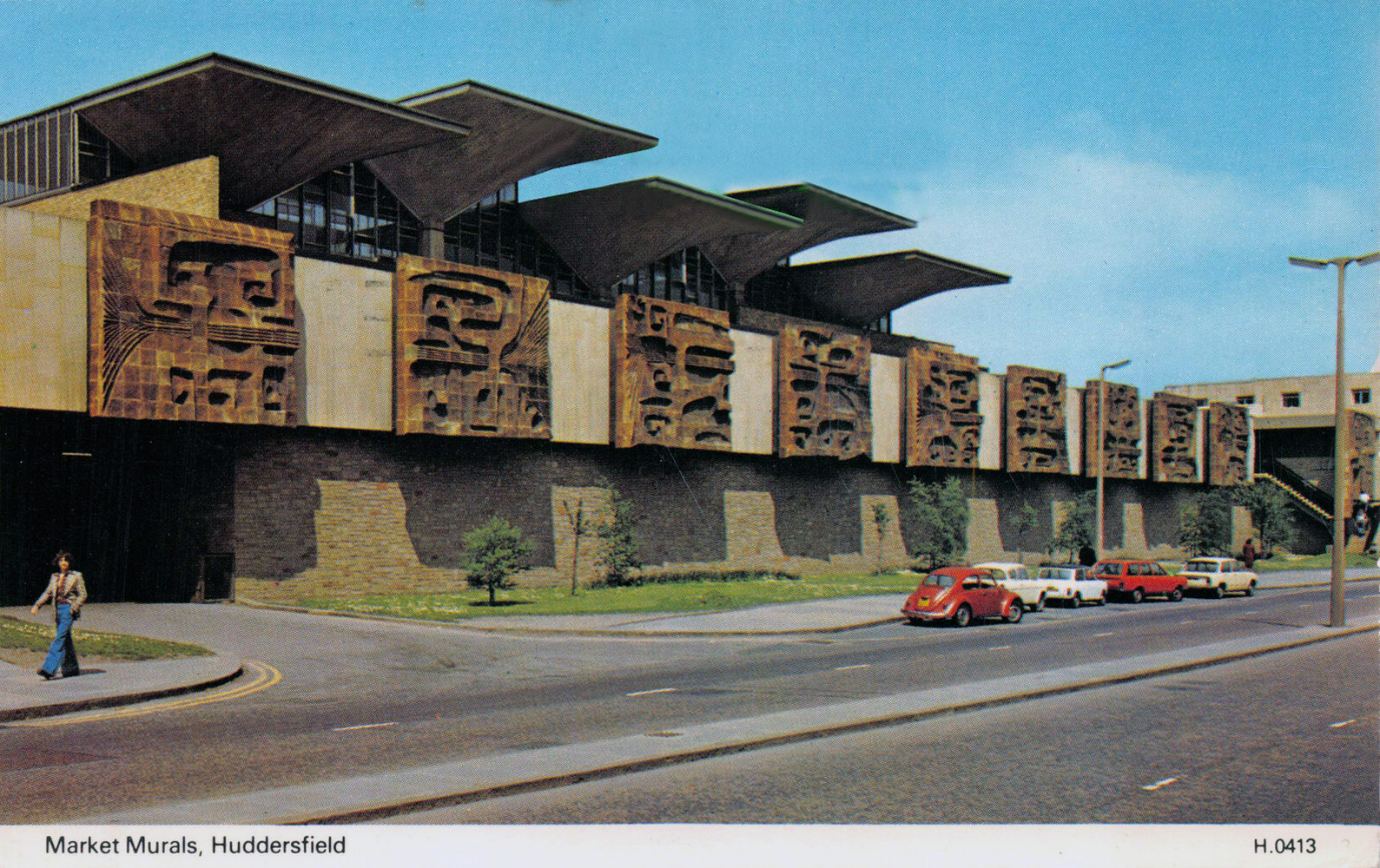
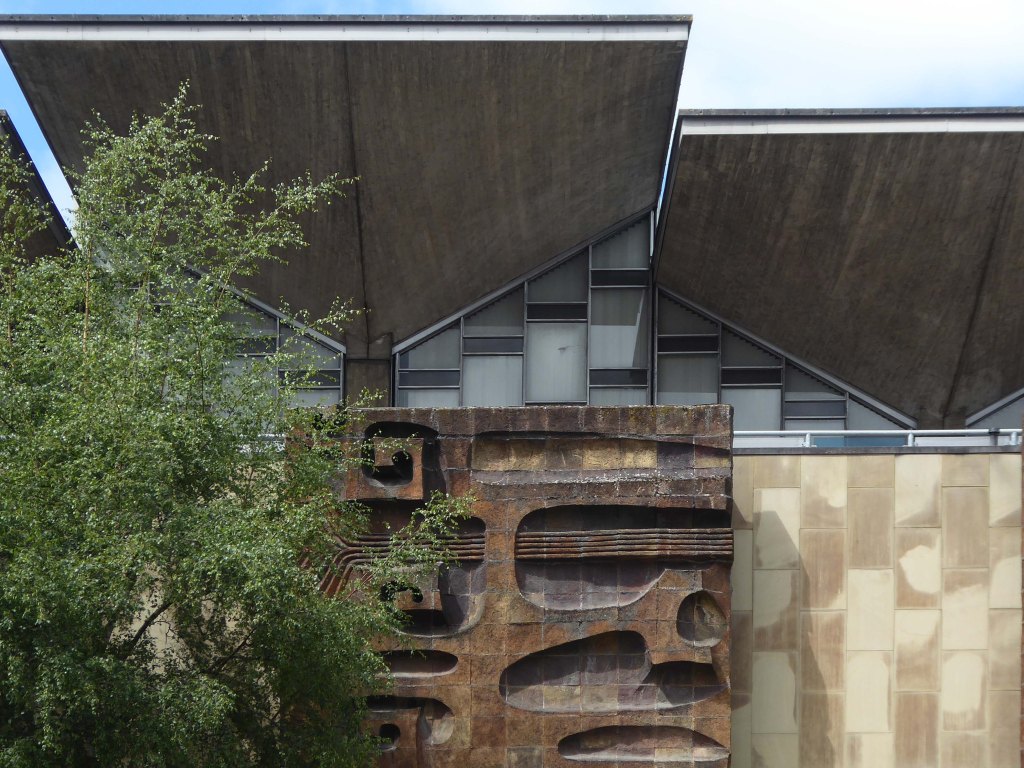
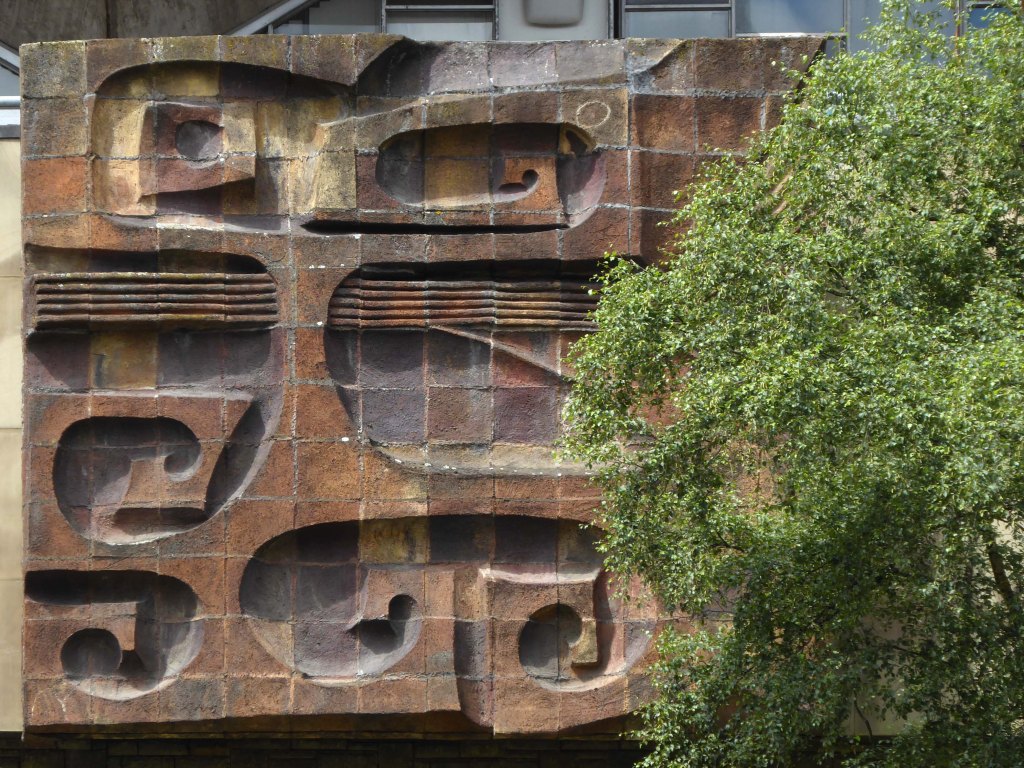
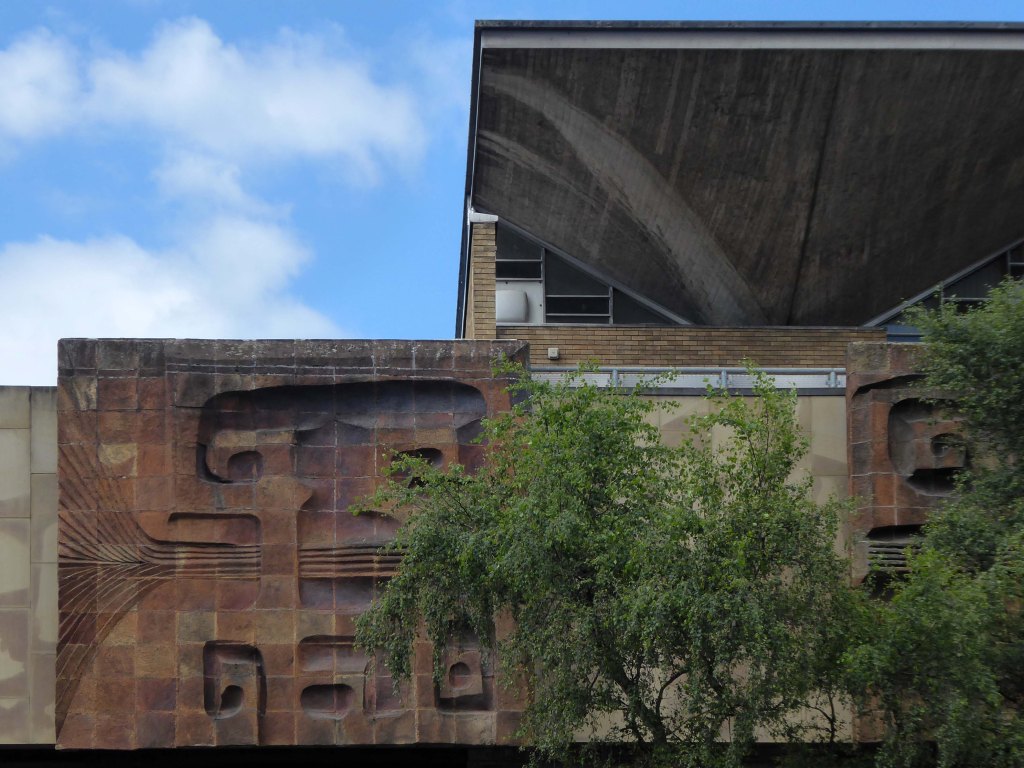
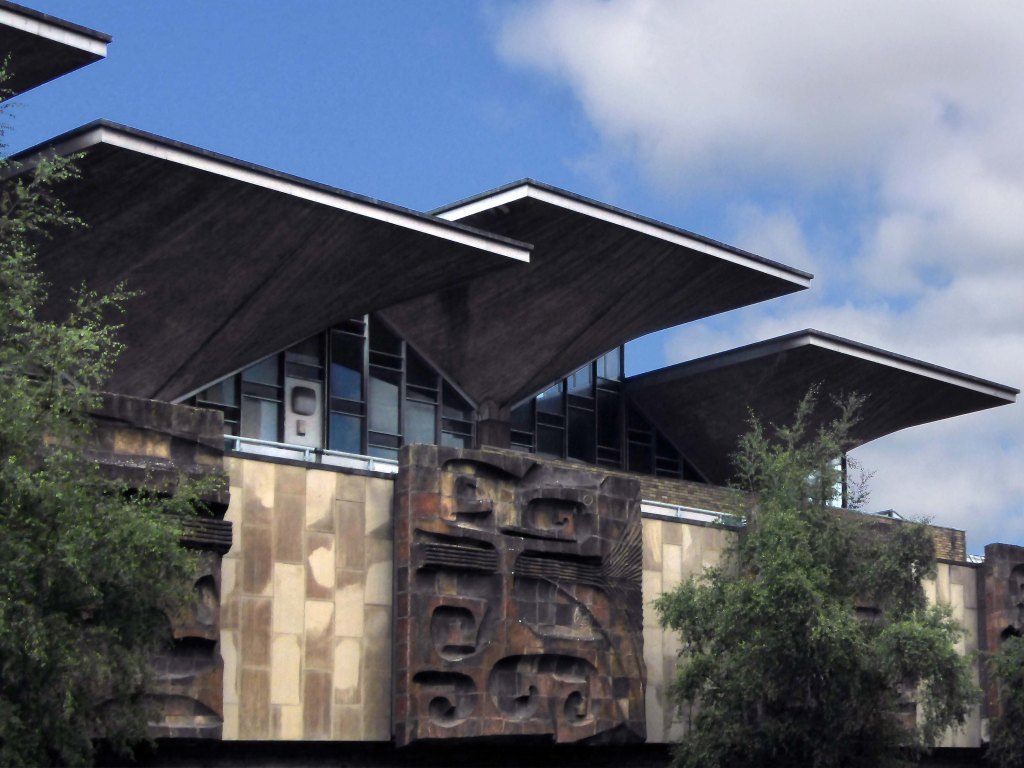
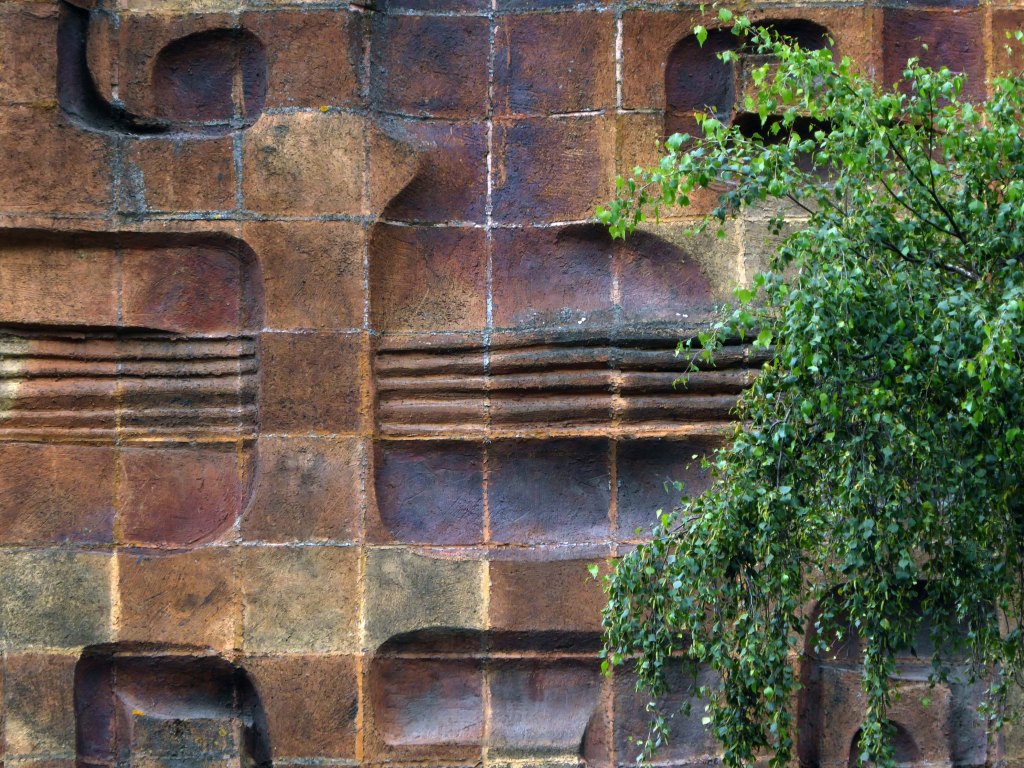
The façade of the market hall on Queensgate incorporates five roof sections with patent glazing and is decorated with square ceramic panels by Fritz Steller, entitled Articulation in Movement, set over natural stone cladding.
These continue across the façade of the adjoining shops, to make nine panels in all, with a tenth larger panel added in 1972, pierced by stairs and an entrance to the market hall from Queensgate.
They have representations of the mushroom shells of the market hall, turned through 90 degrees, with abstract representations of the goods available within.
The enormous abstract art panels weigh almost 50 tons.
Seen here in the 1970s when the trees and cars were smaller – though trousers and lapels were considerably wider.
Fritz Steller
1941 Born in Dresden, Germany.
1959-1964 Studied sculpture and architecture at Birmingham College of Art, Birmingham, UK. Specialised in sculpture.
Until 1969 Head of Art at Sebright School, Wolverley, near Kidderminster, Worcestershire, UK.
1969-1977 Established and led the Square One Design Workshop and Transform Ceramic Company, Snitterfield, near Stratford-Upon-Avon, Warwickshire, UK.
1977 -1980 Established and led ceramic production in Isithebe- Mandini, Kwazulu, South Africa.
1980 Left South Africa due to basic fundamental differences of opinion over the apartheid regime. Established and led an art centre and gallery in Ewzulwini Valley near Mbabane, Swaziland.
1992 After the destruction of the art centre and gallery moved to Germany.
Since 1993 has set up a new business in Empangeni, KwaZulu-Natal.
Fritz now lives and works in South Africa and Germany as an internationally recognised artist.
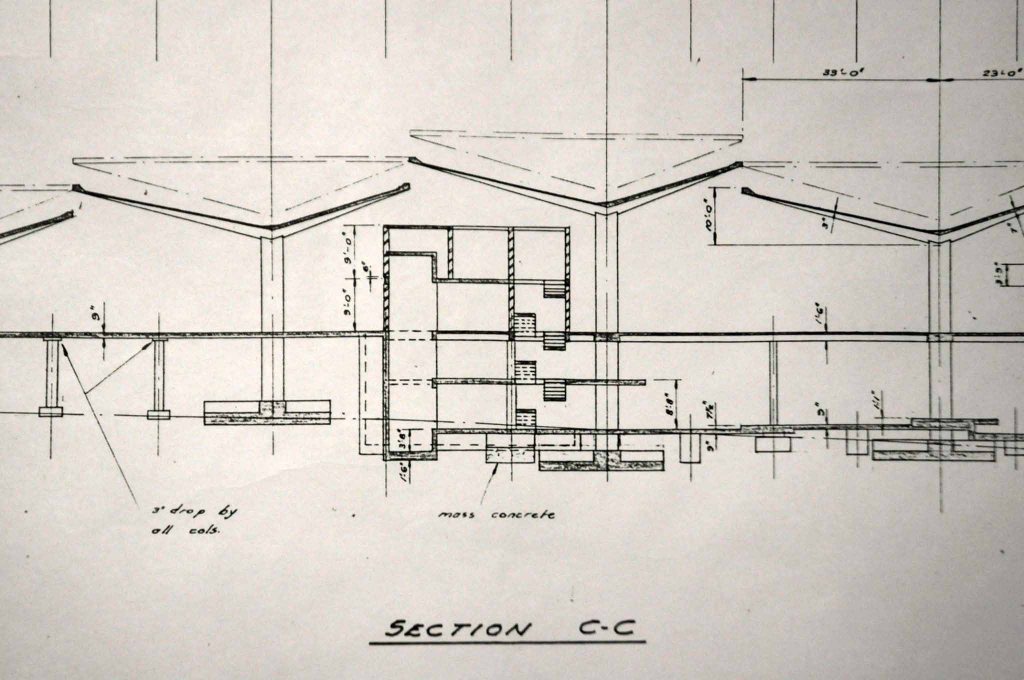
Designed by the J Seymour Harris Partnership – now Seymour Harris Architects, the building was opened on 6 April 1970 and features a roof structure based on 21 asymmetric paraboloid shells.
The practice was inspired by Mexican Felix Candela for the innovative, lightweight concrete roof sections.
Steller met the project’s lead architect Gwyn Roberts while they were both at college in Birmingham.
Roberts was never to see his masterpiece listed, the architect, who left the practice to set up on his own in the early ’70s, died in 2004.
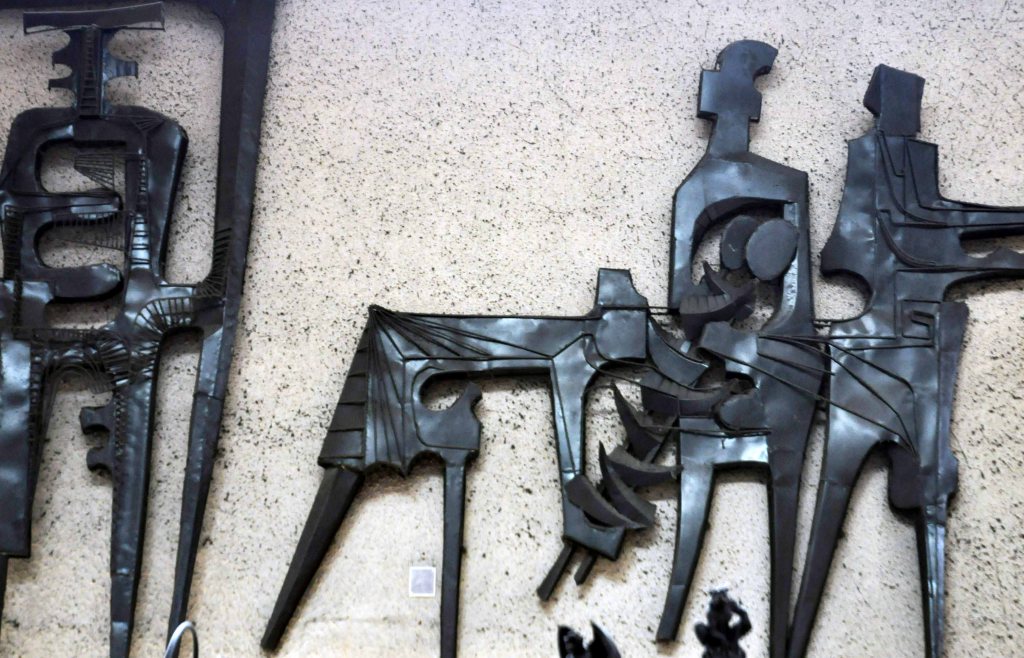
Along the north wall of the hall is a relief sculpture entitled Commerce, in black painted metal with semi-abstract figures representing agriculture, trade and products, also by Fritz Steller.
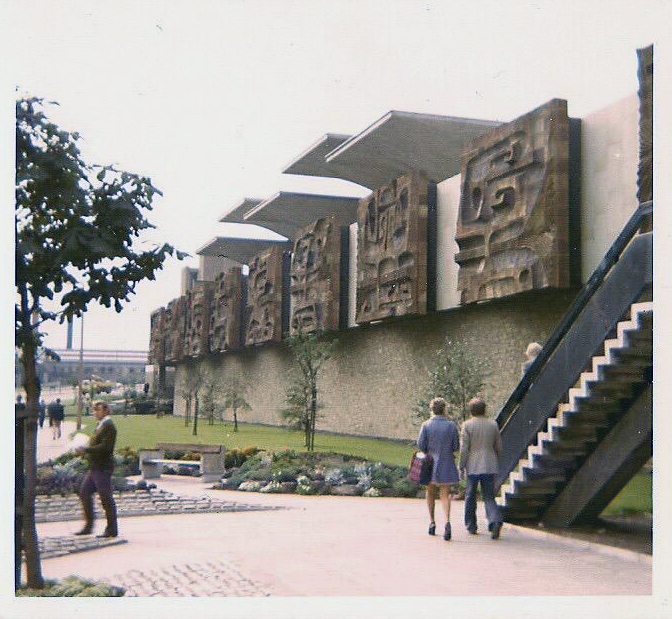
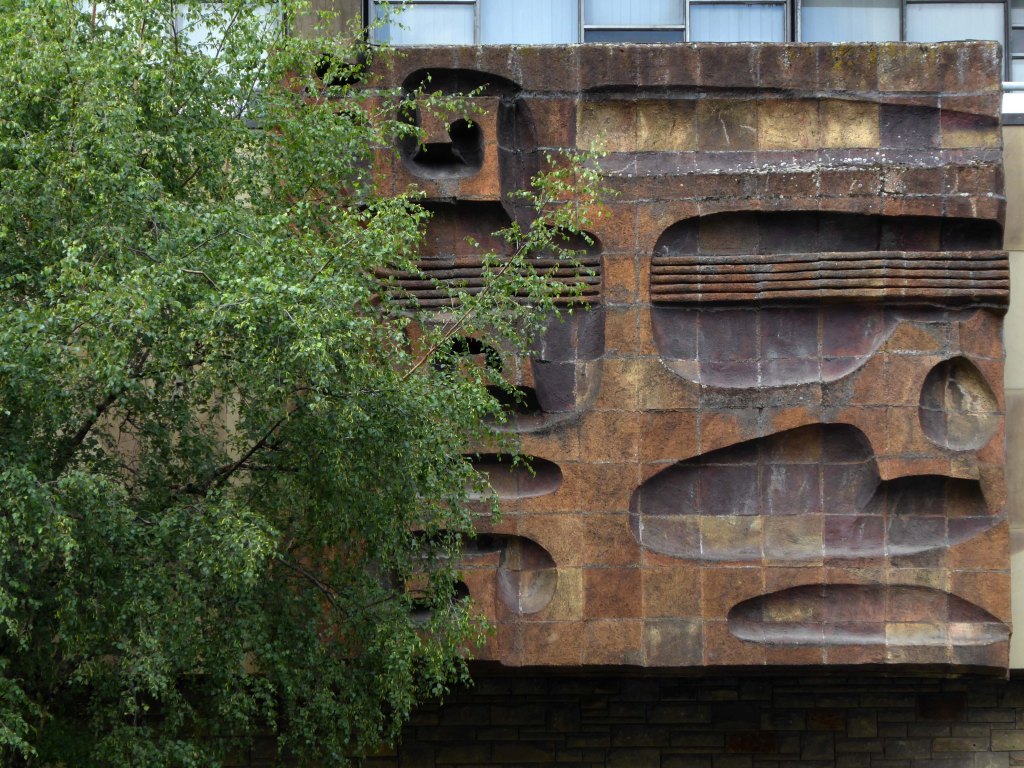
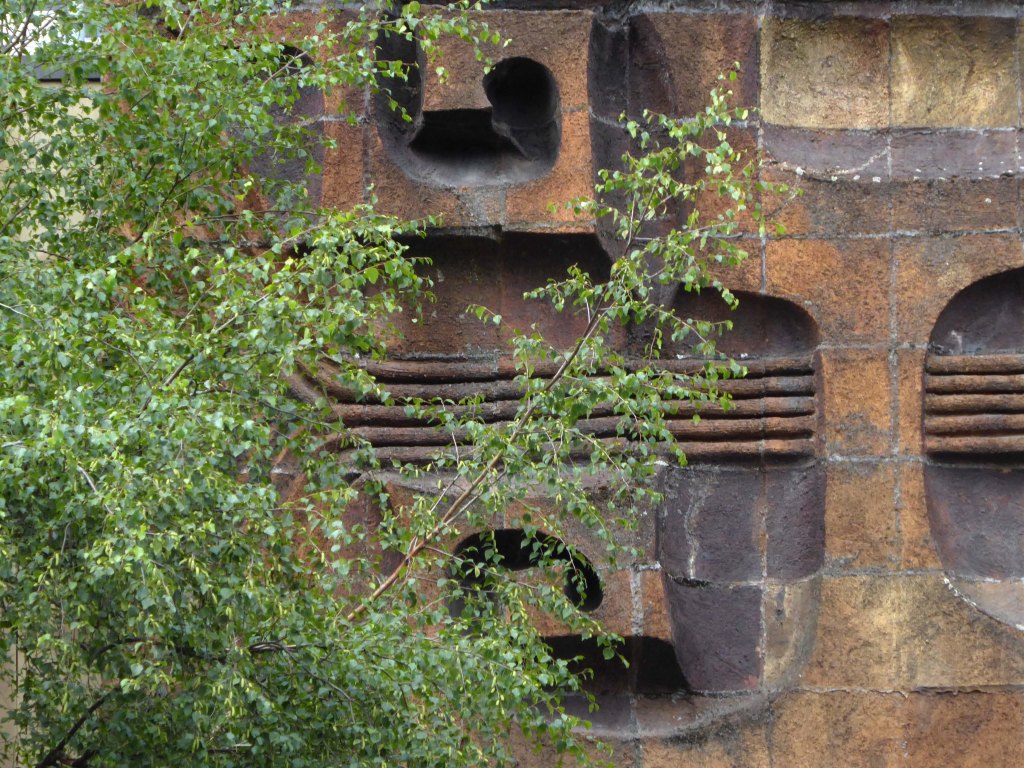
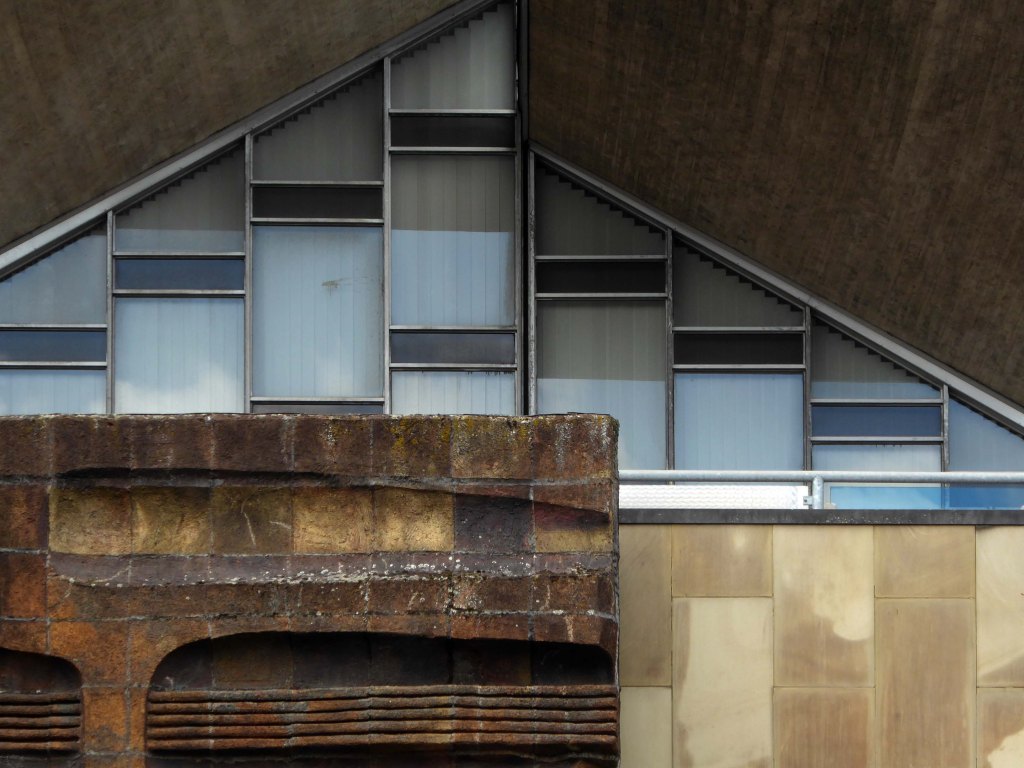
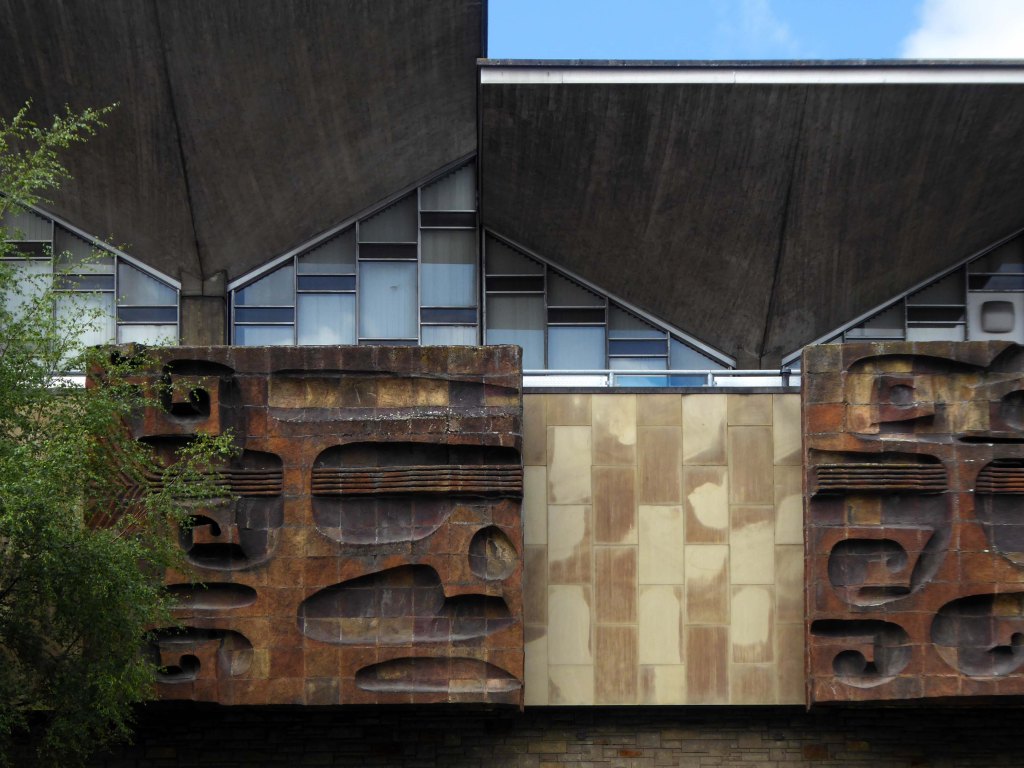
So let’s have a look at the largest ceramic sculpture in the world – partially obscured by trees.

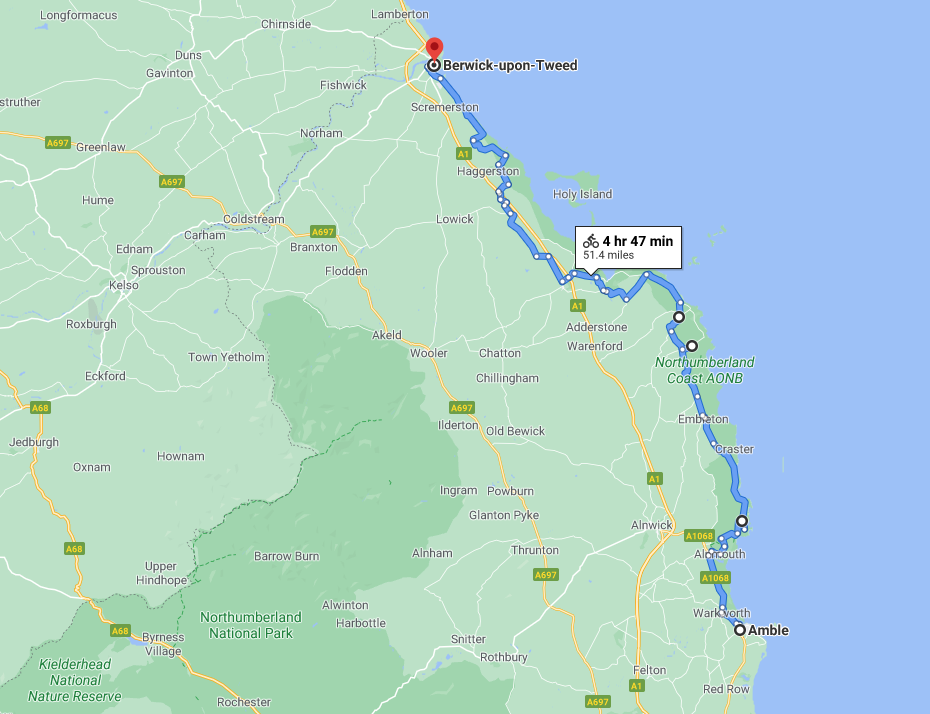
The final day the first sight of cloud and sea mist.
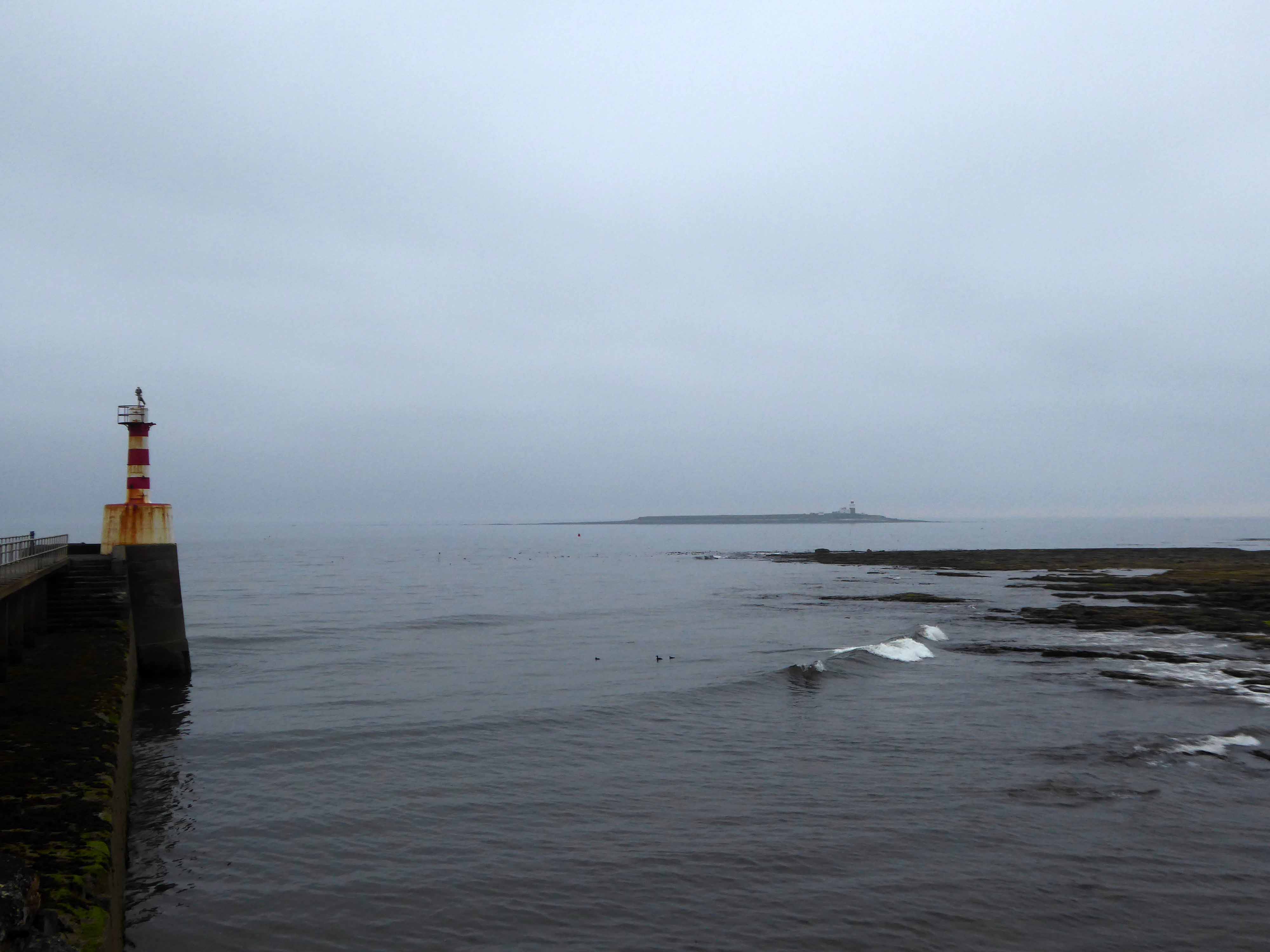
I awoke early and took an amble around Amble.
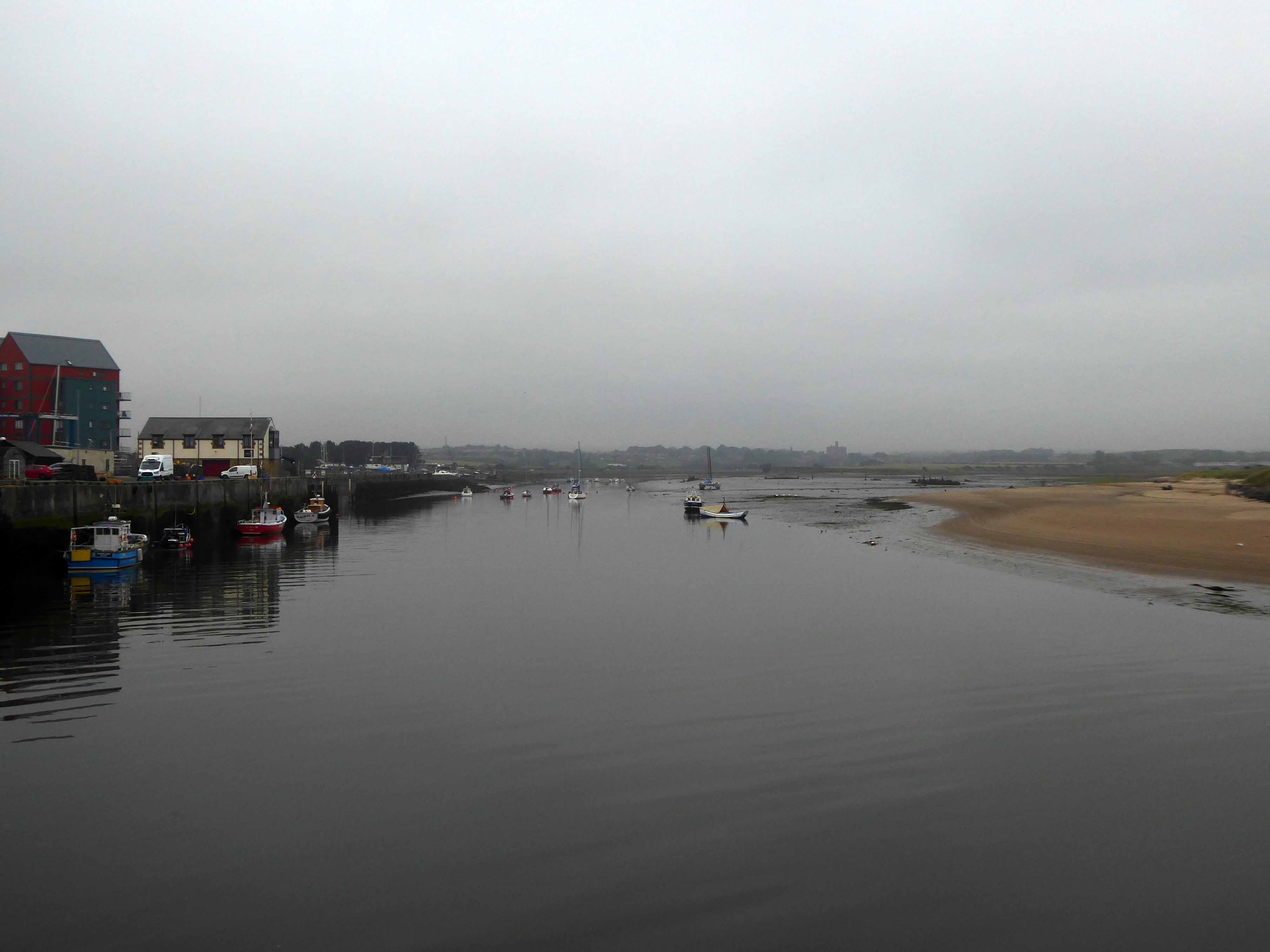
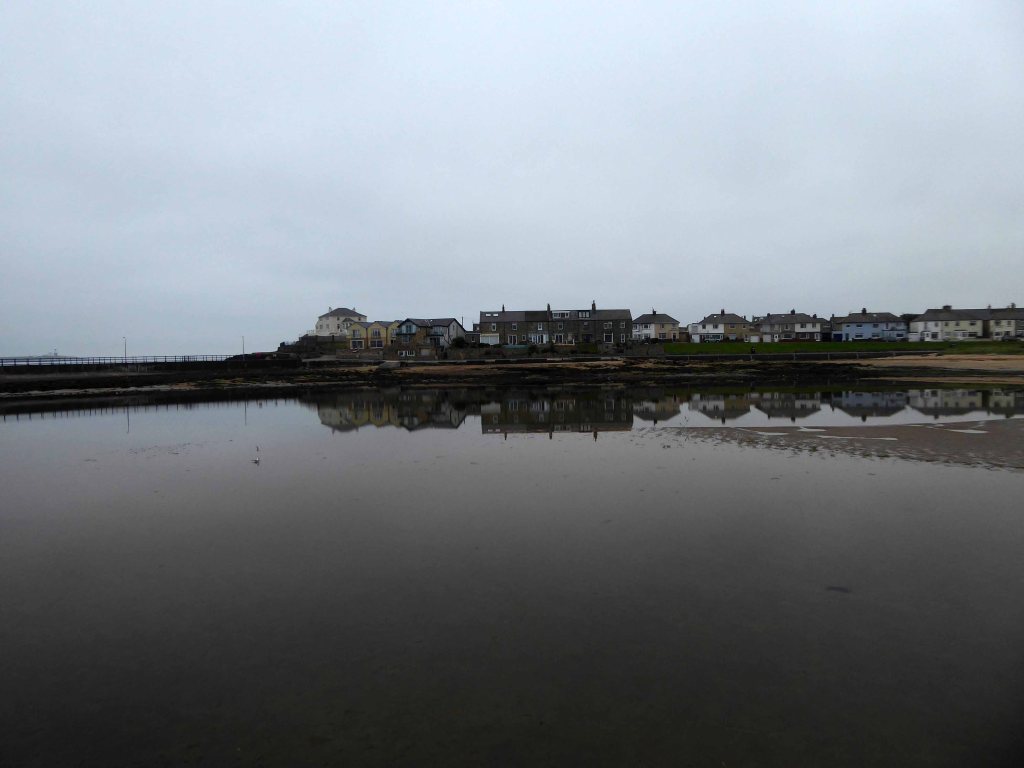
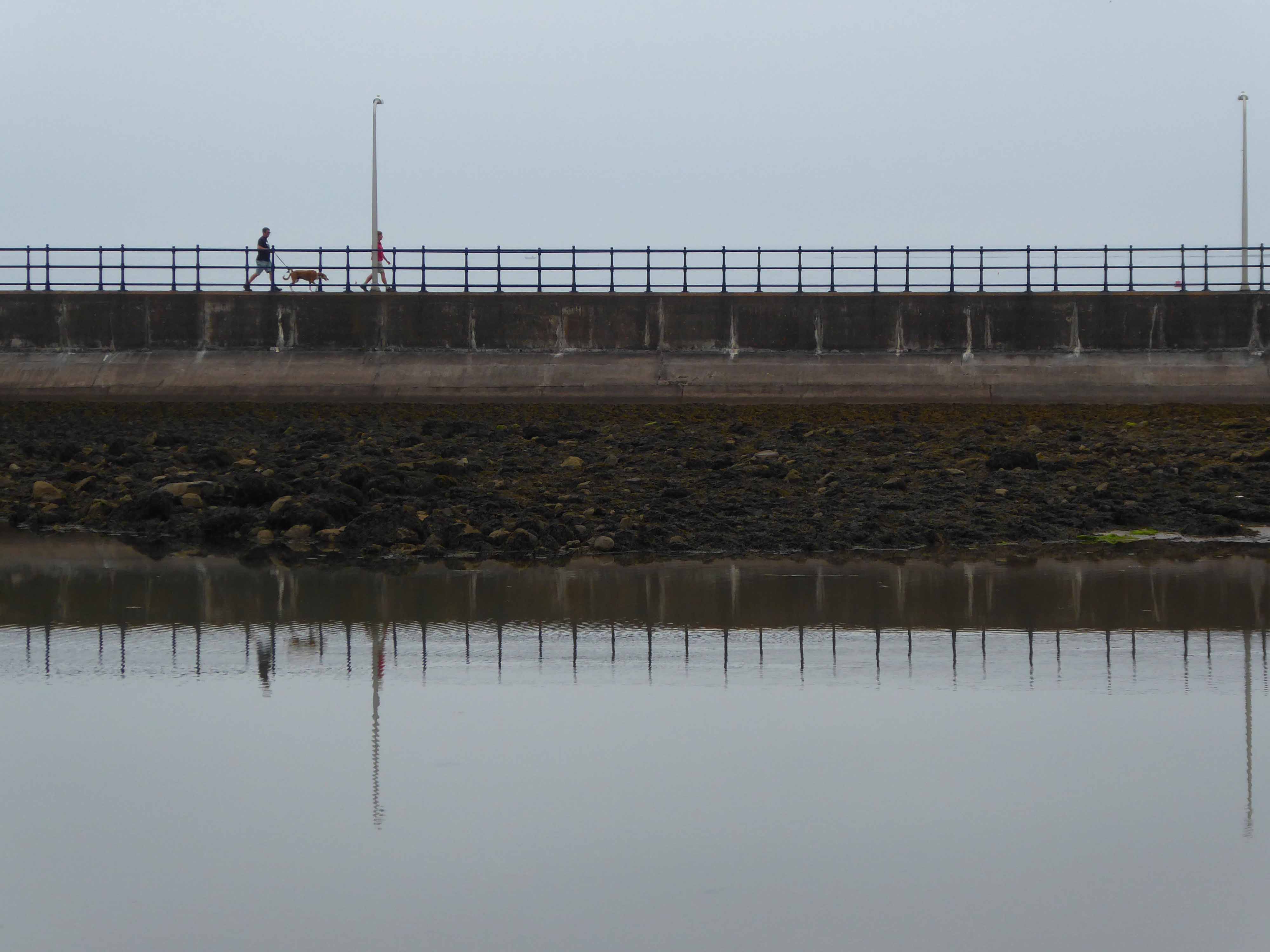
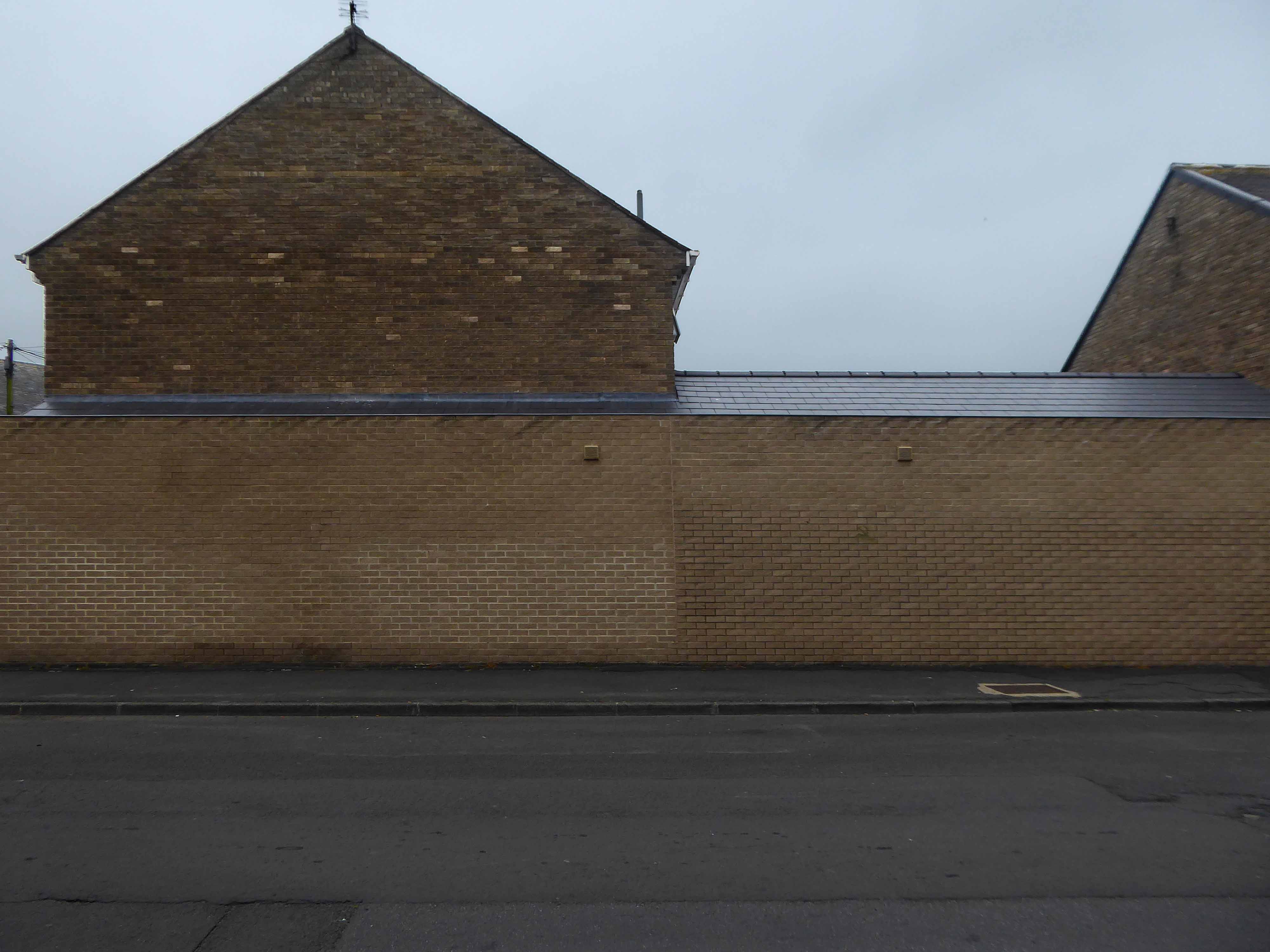
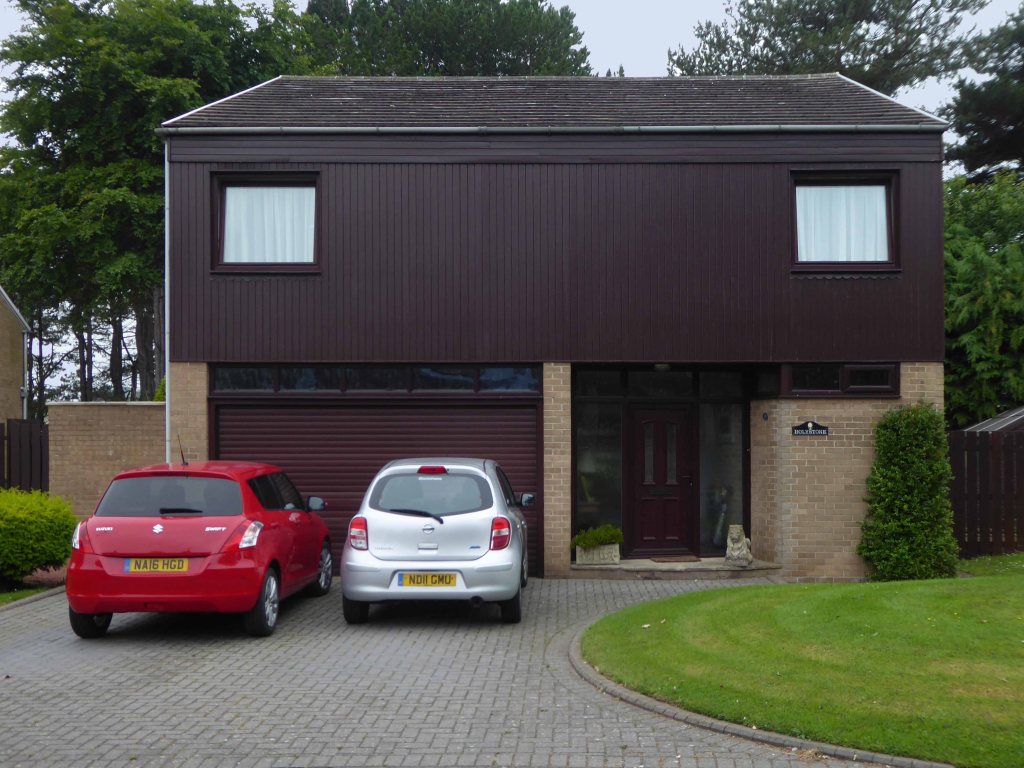
Then off on the road to Warkworth and beyond to Alnmouth – where I revisited a small group of asymmetric post-war dormer bungalows.
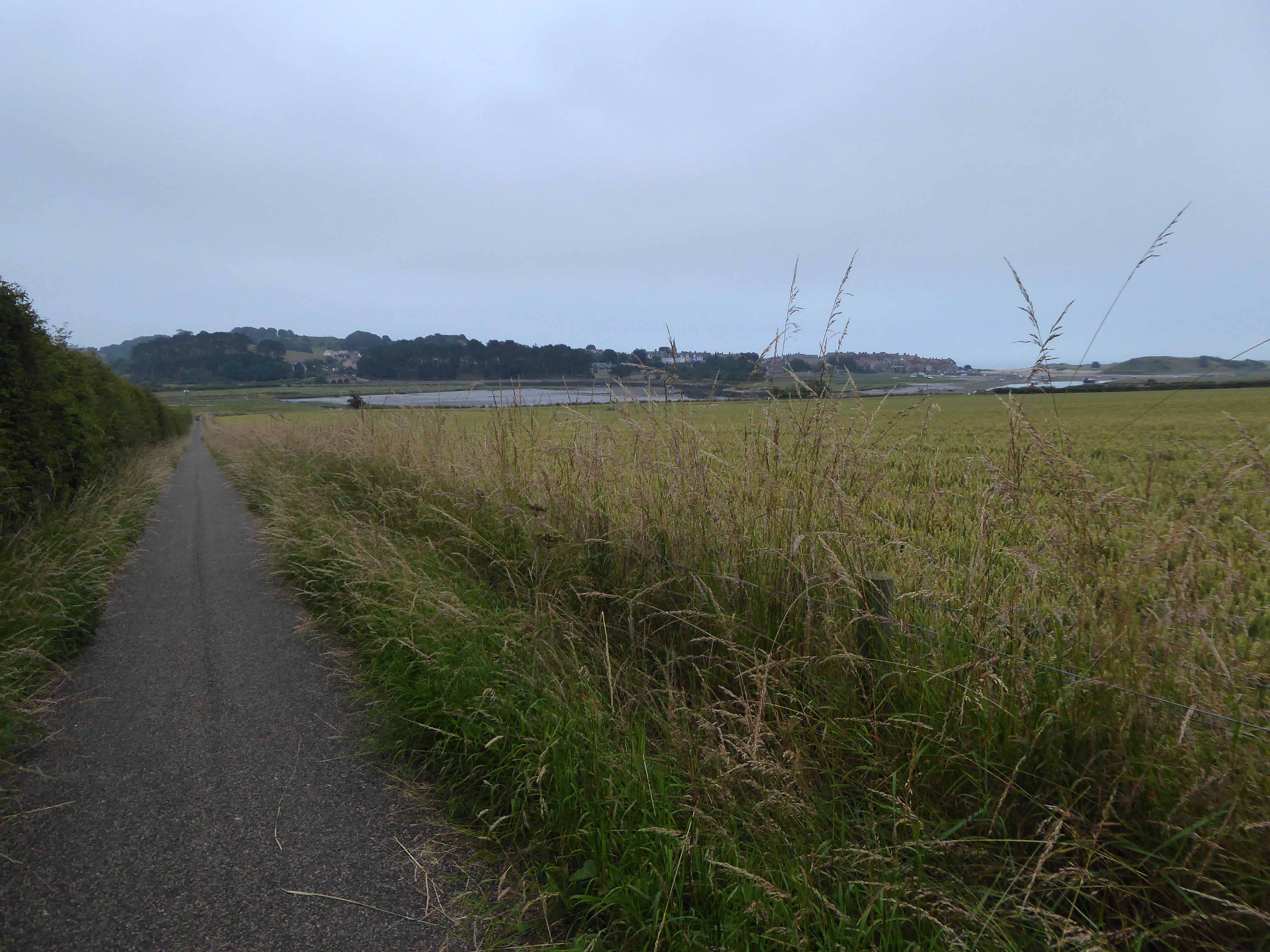


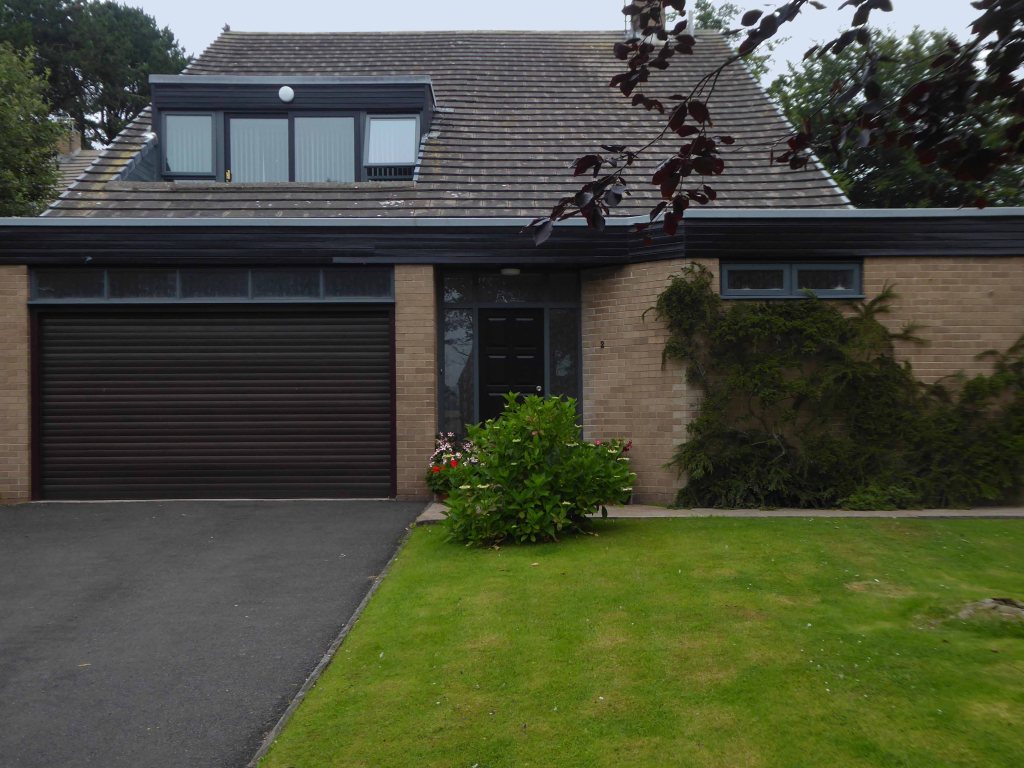
Stopping to view the flood plain of the River Aln, chatting perchance with the local environmental officer.
Who explained how the flood defences had been removed, as this encouraged the natural process of flooding and receding to proceed unhindered, thus preventing property from being interminably sodden.

We also discussed the decline in vernacular architecture and the fashion for all that is New England, much to the detriment of New Northumberland.
One day everywhere will look like a someone else’s vision of somewhere else.
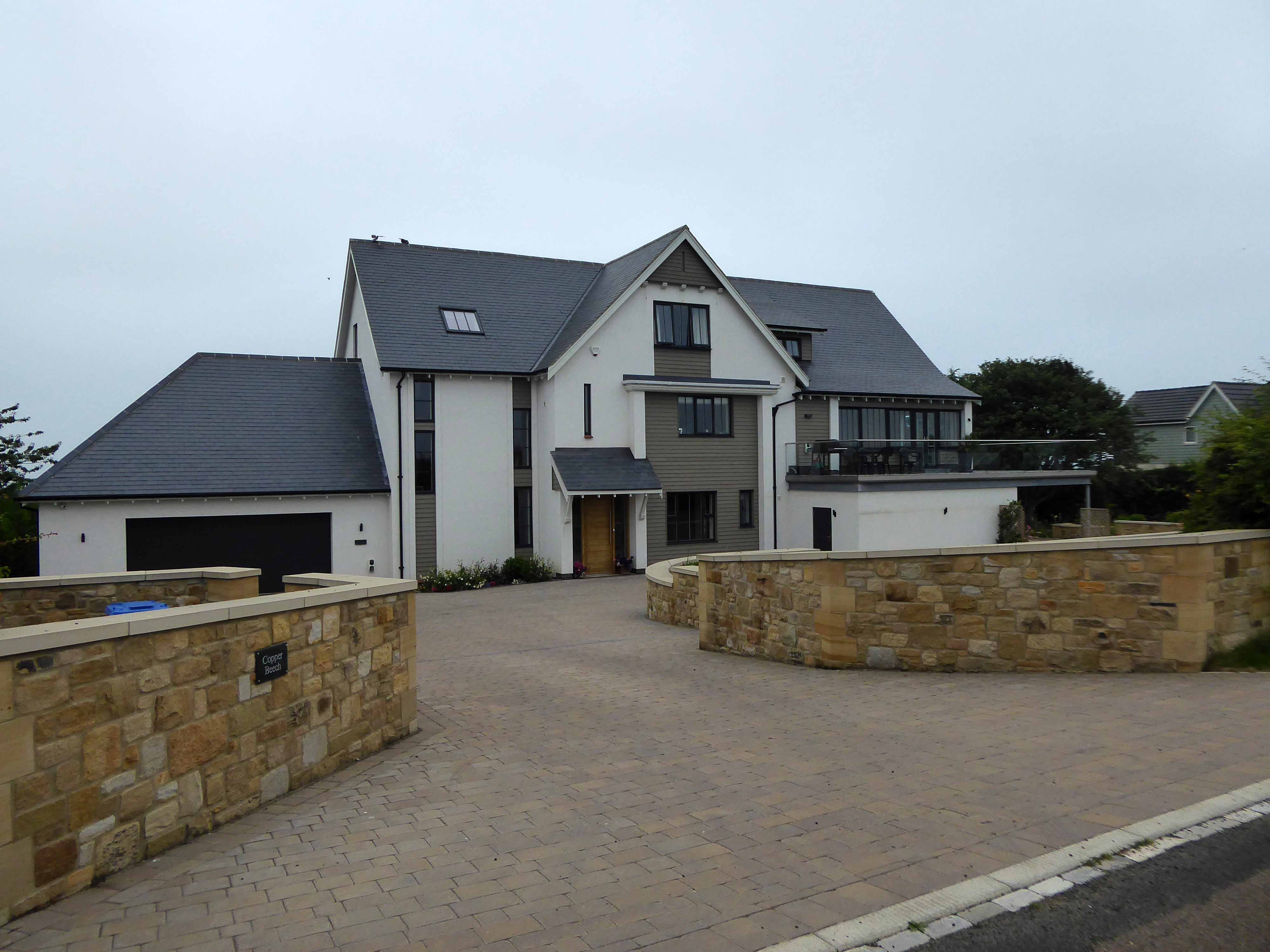
The good folk of Craster have wisely prevented the local bus from entering the North Sea.
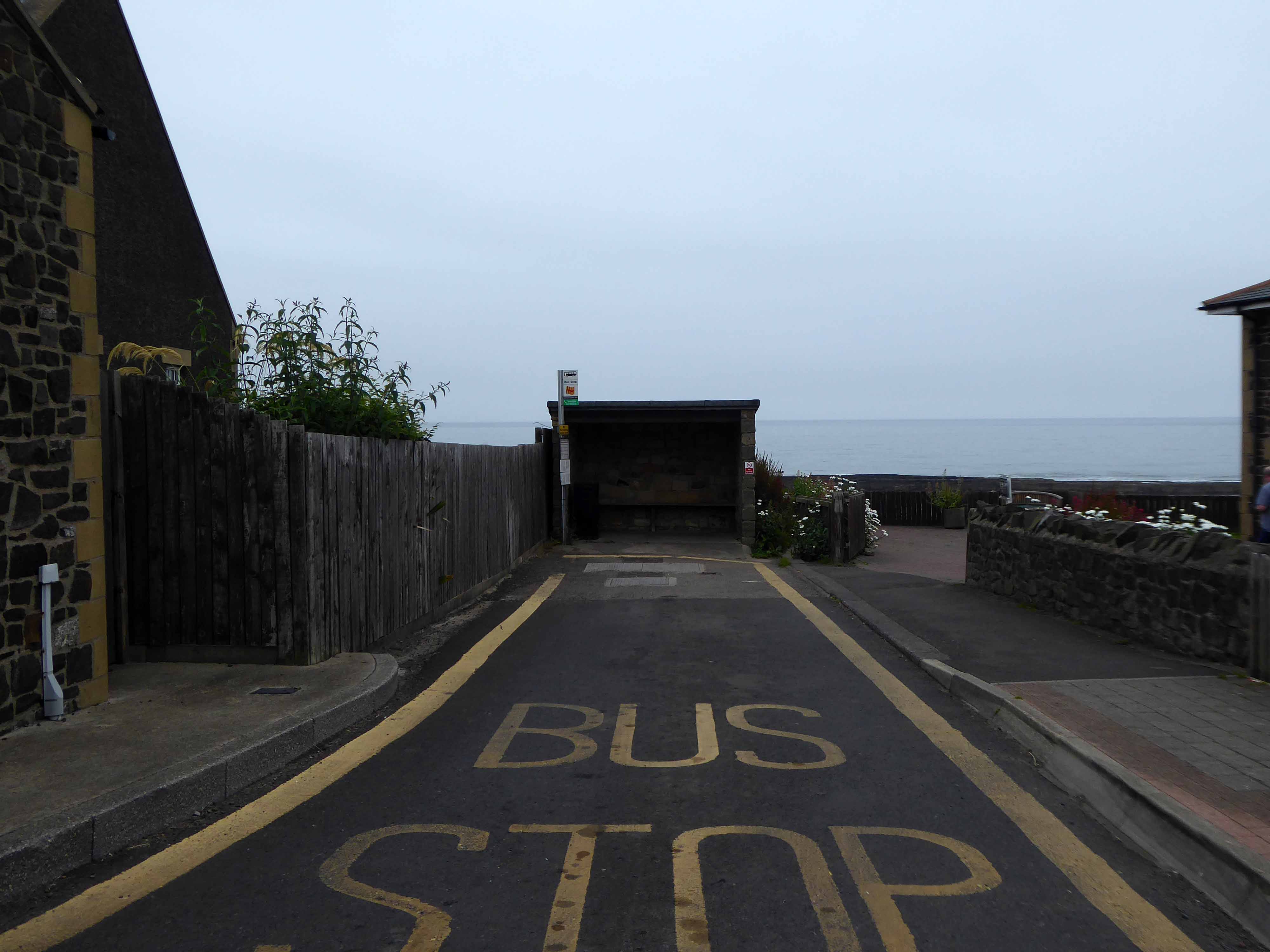
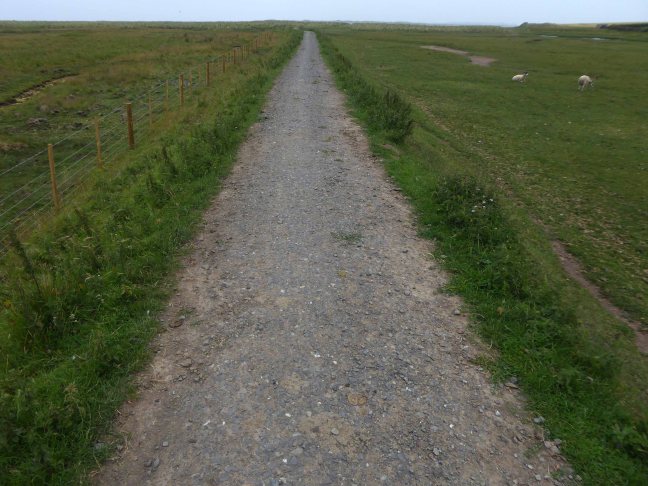
The way north took me over a well laid concrete track.
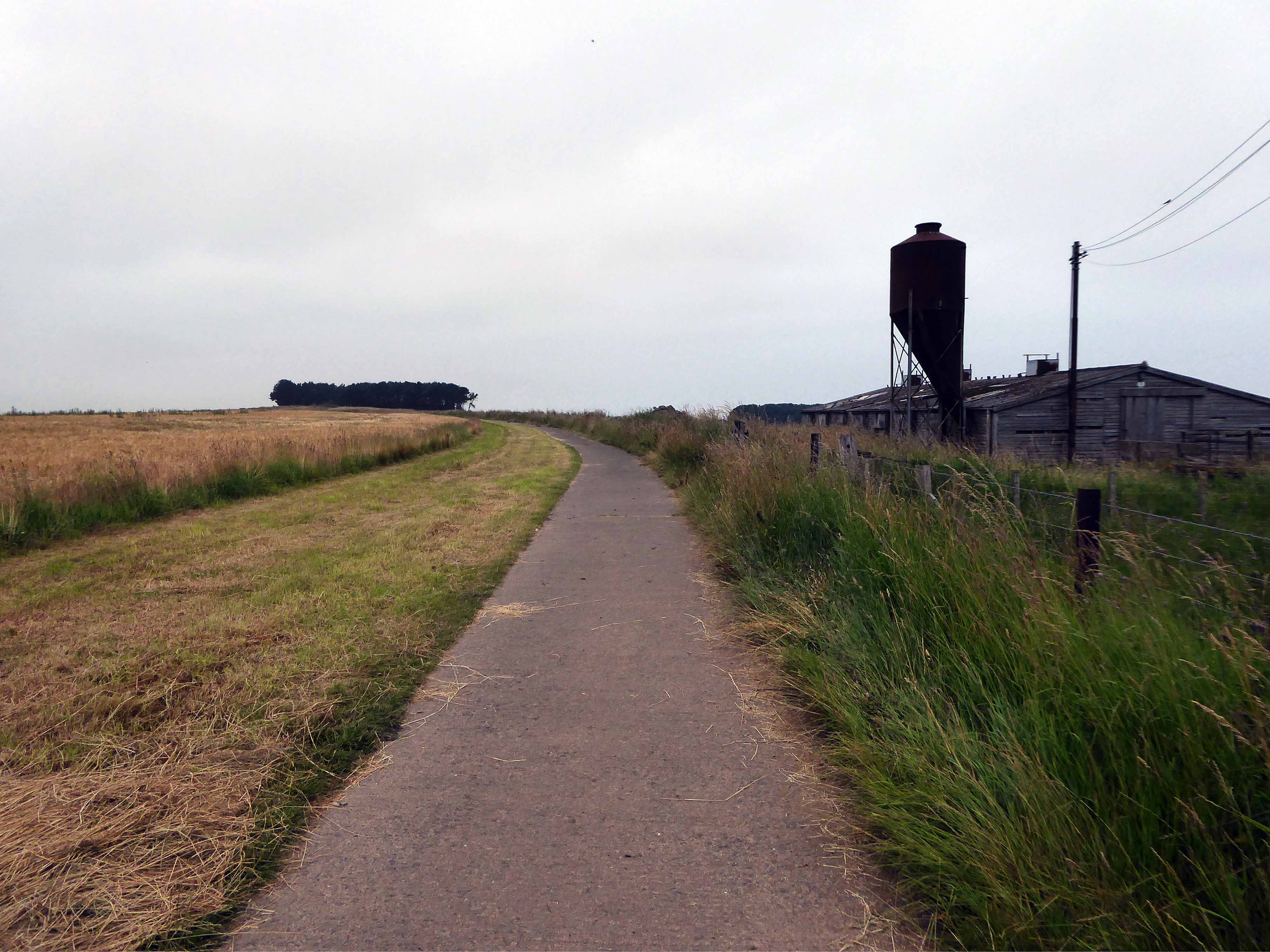
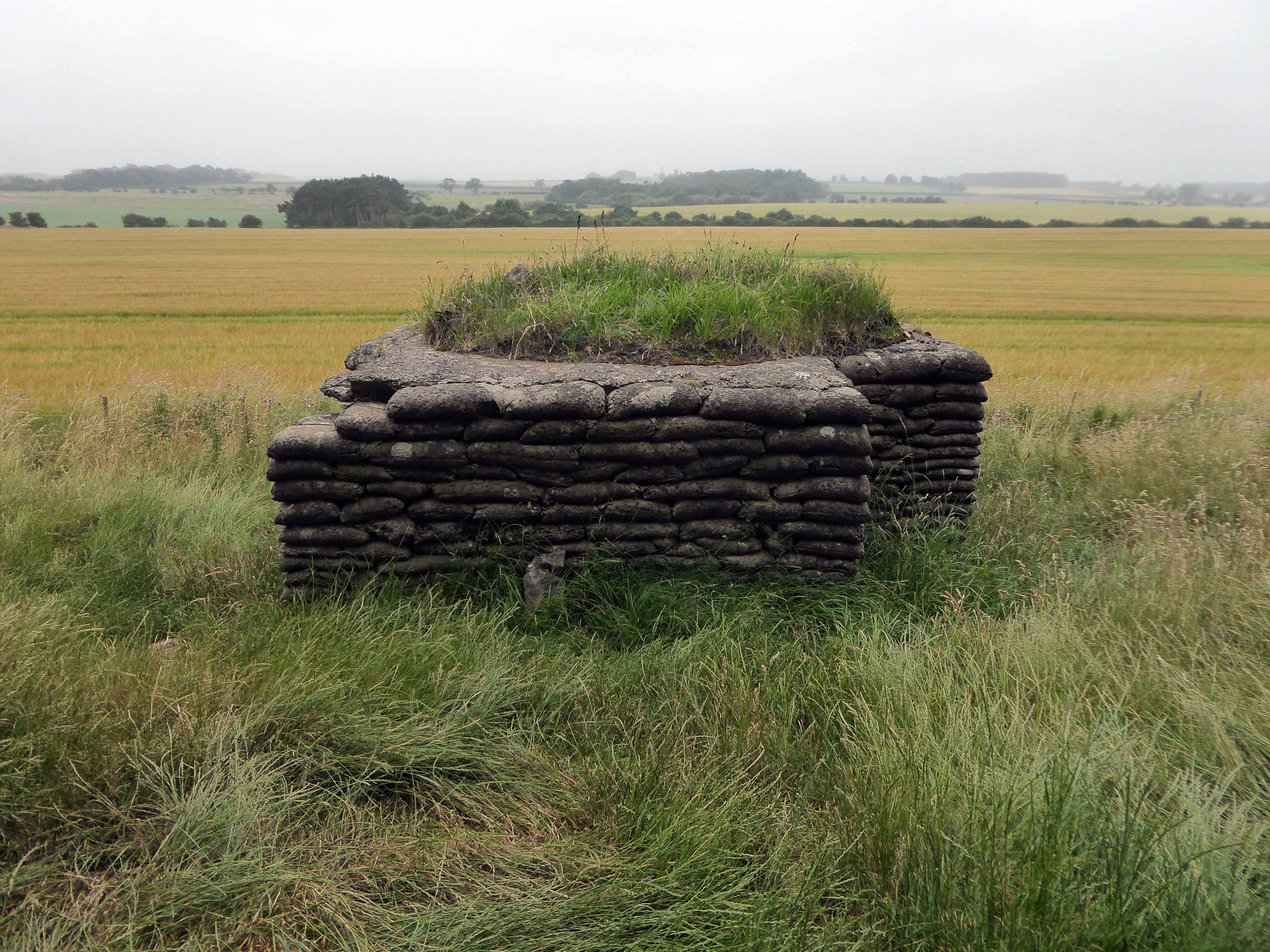
I came upon three wise men from Durham, Rochdale and Doncaster, gathered around a concrete-bag bunker.
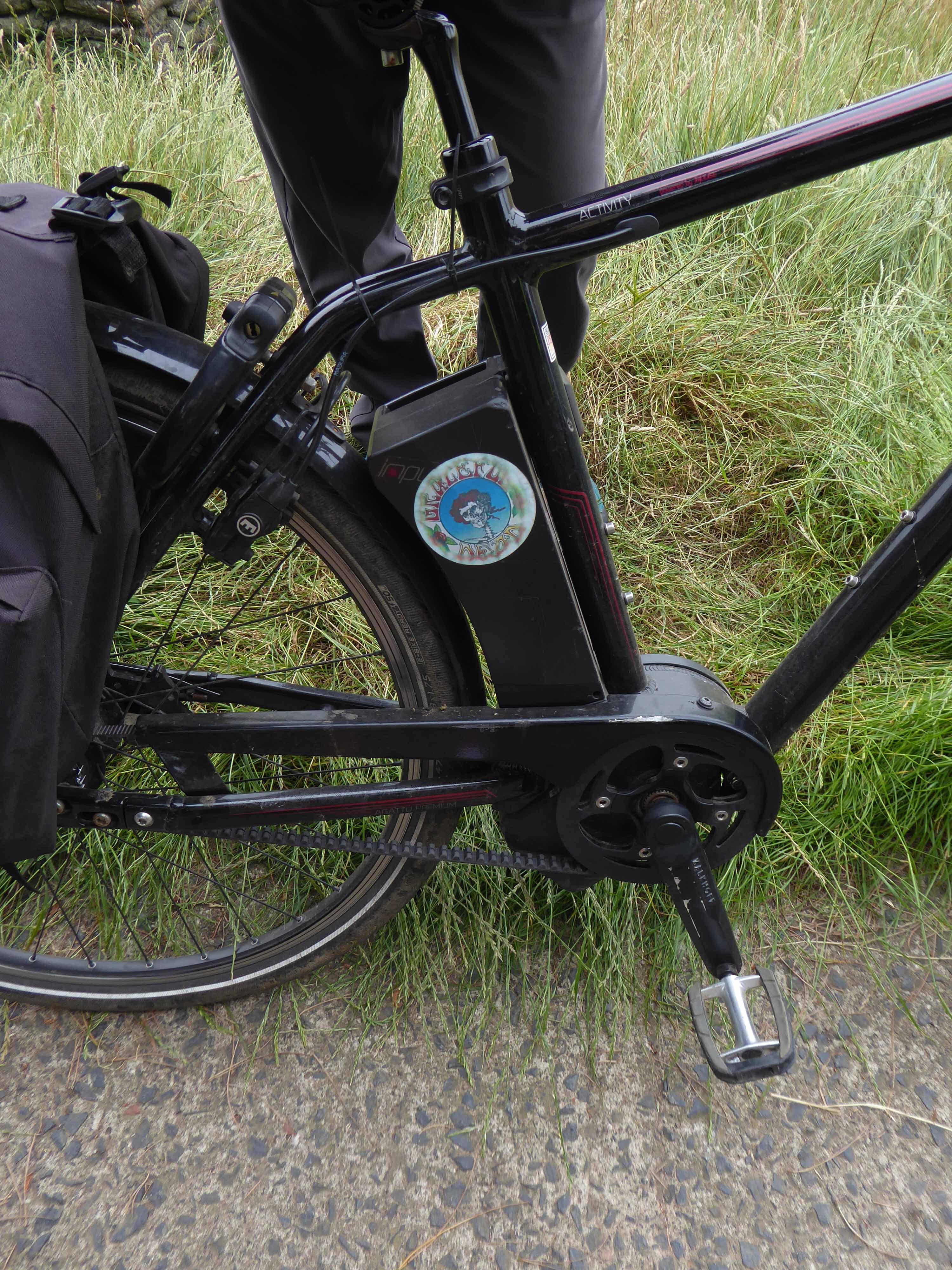
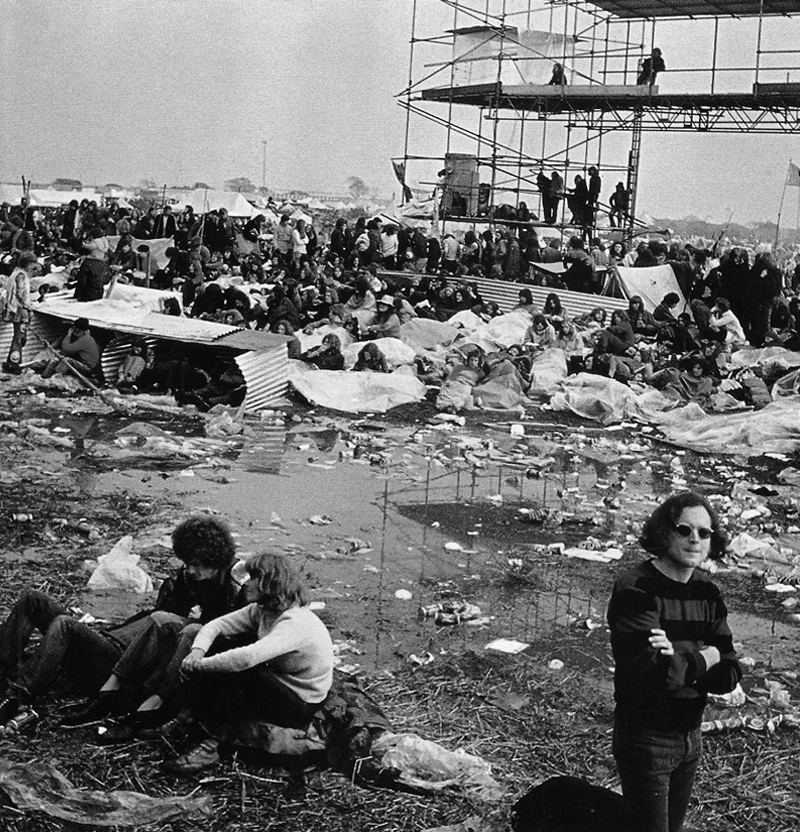
The first and last outdoor festival I ever done attended, unforgettable.
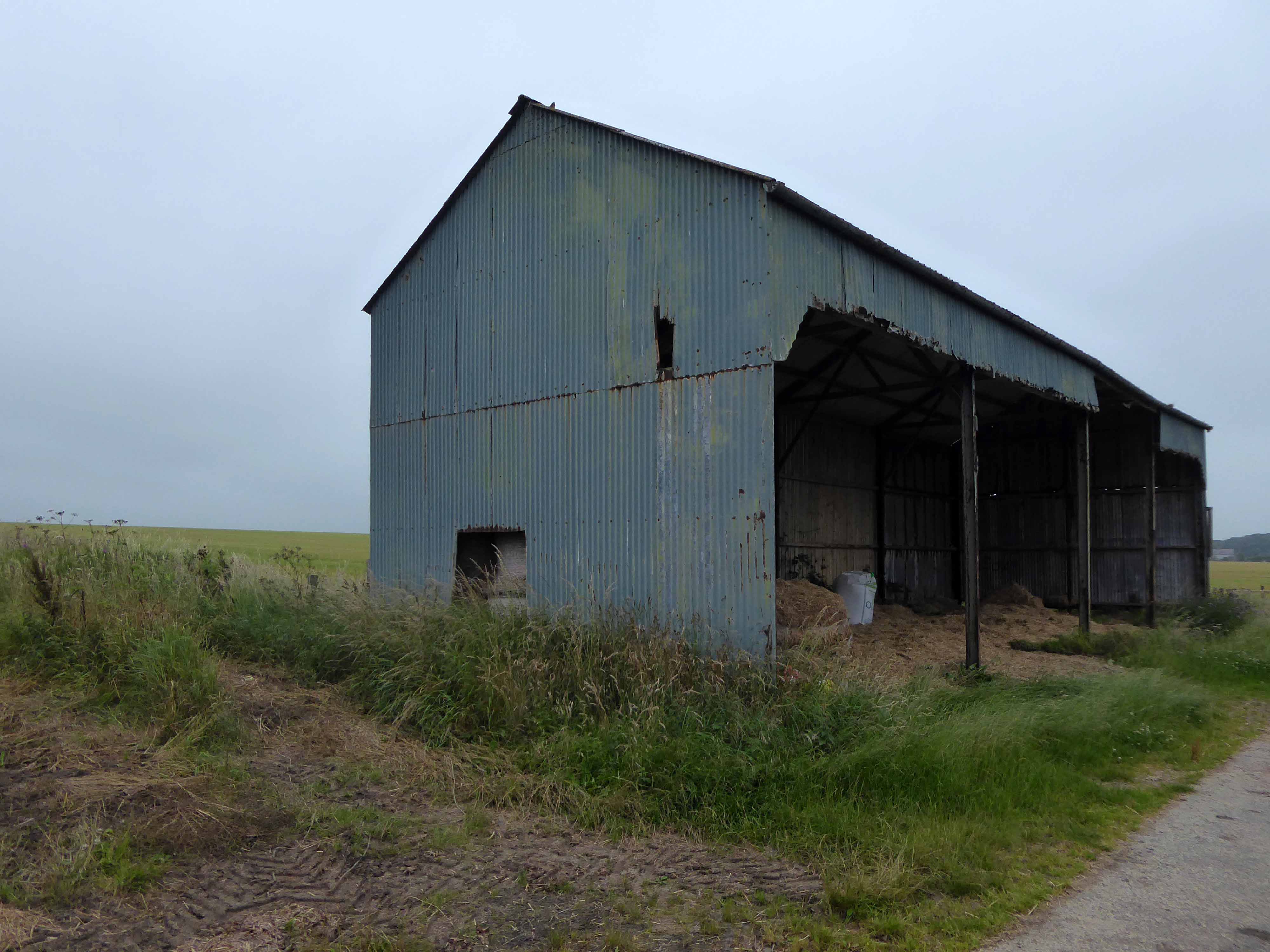
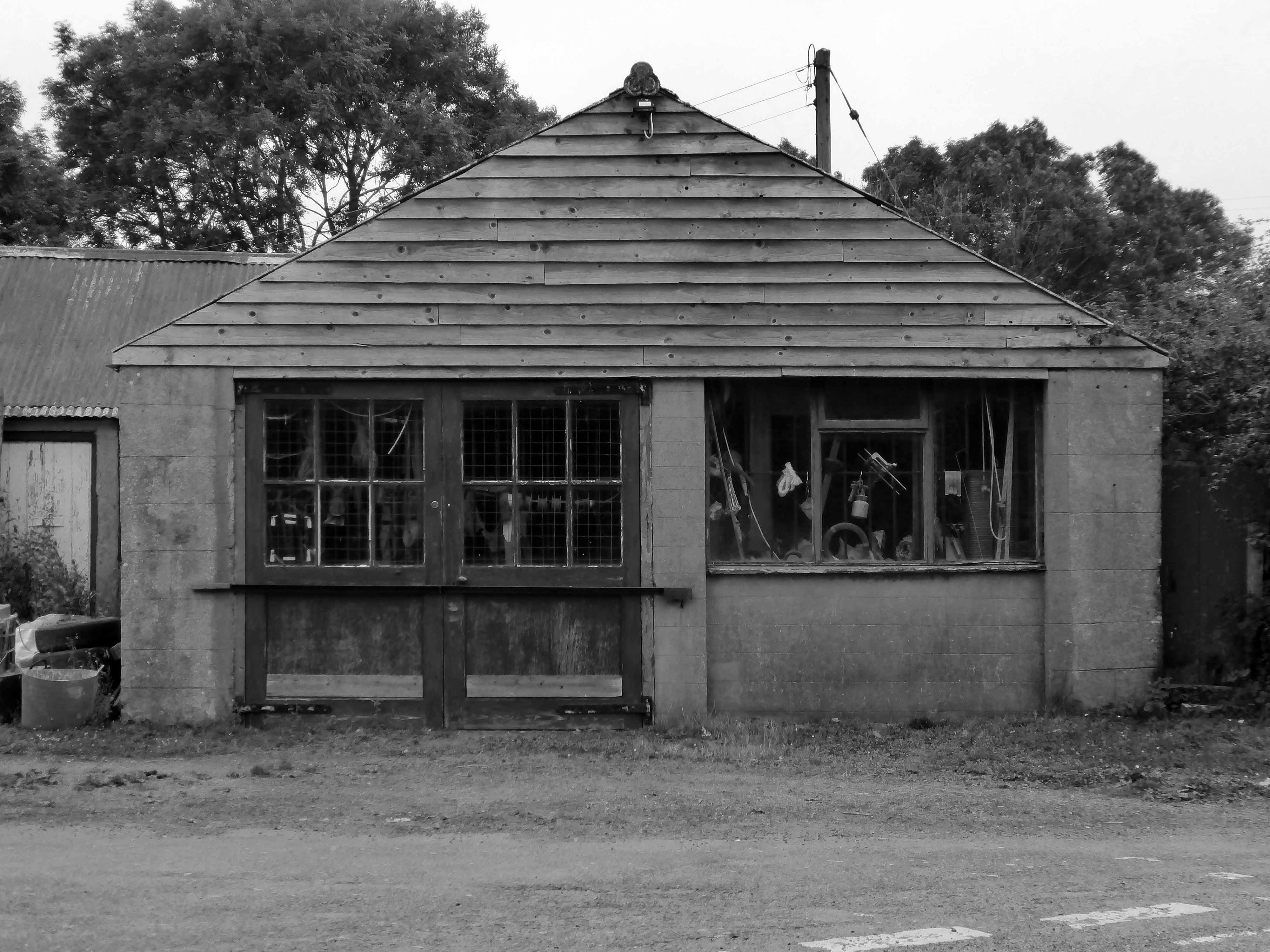
Weaving down and around quiet lanes I encountered this Walker Evans workshop.
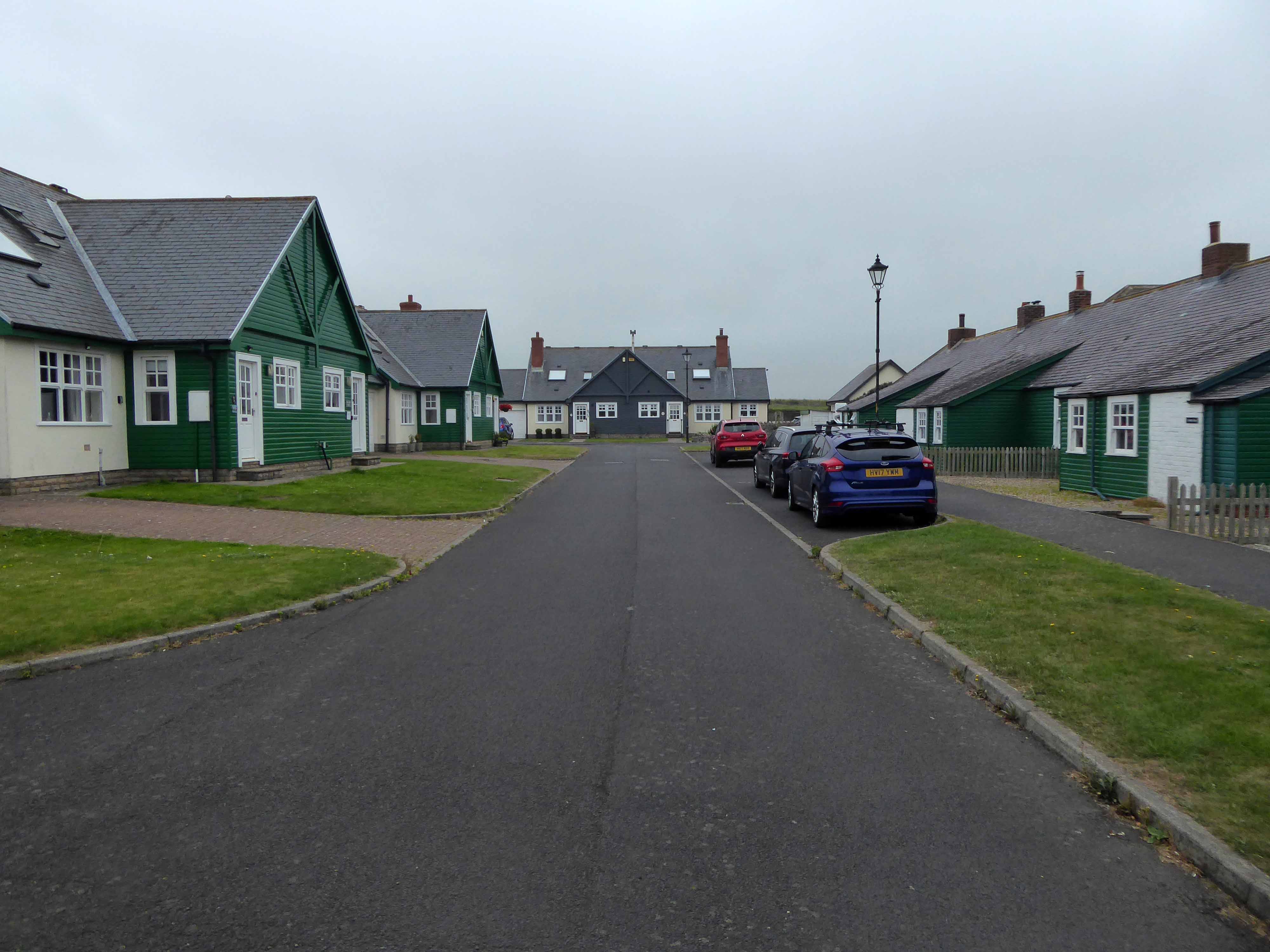
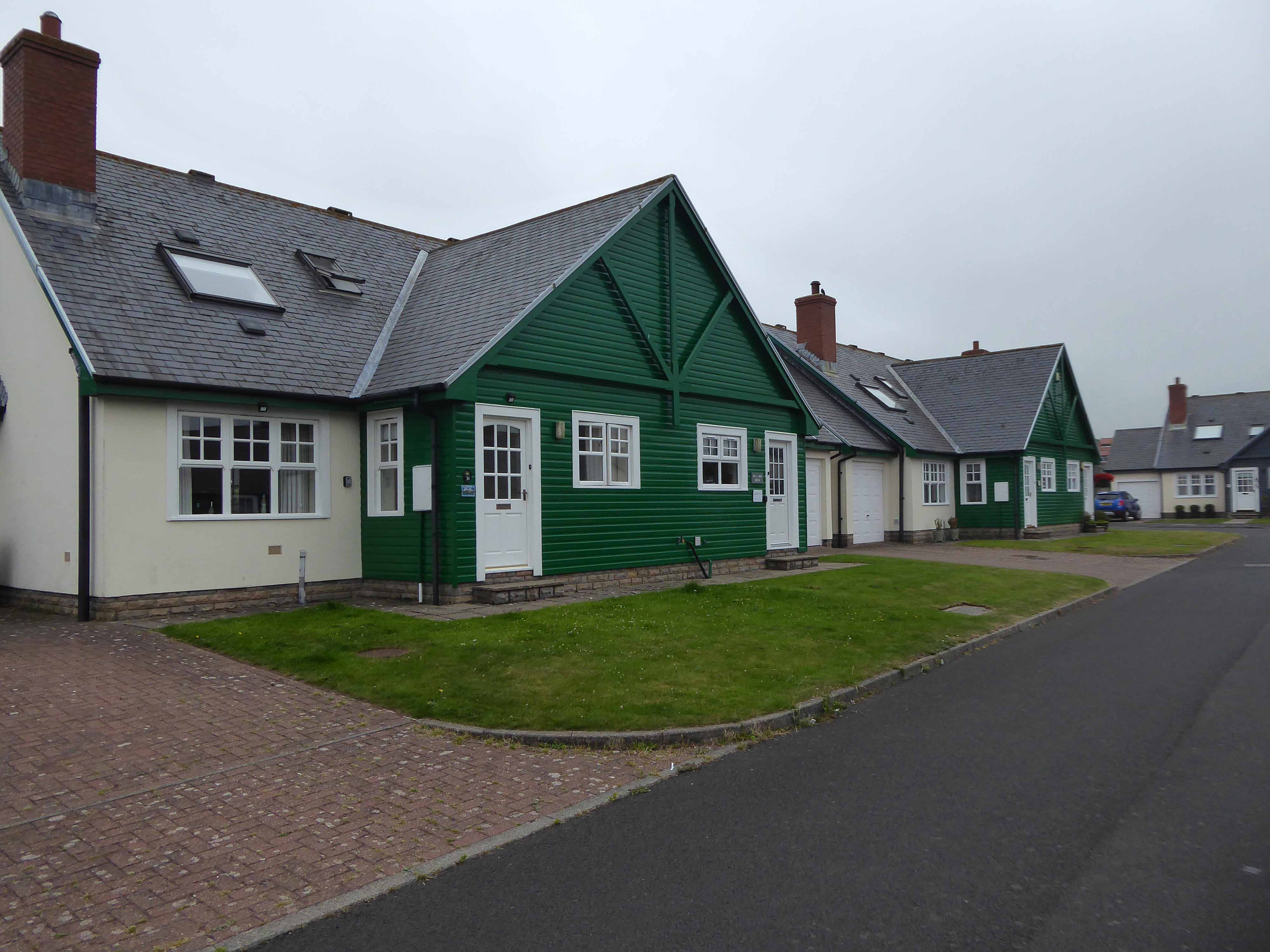
Armstrong Cottages is an estate originally built by Lord Armstrong for the workmen restoring Bamburgh Castle.
The 1901 Census lists the current inhabitants with their provenance and professions.
114 residents are listed for the 19 cottages, of whom 53 are working men employed in the building trade: their professions include stonemasons, joiners, plumbers, rope & pole scaffolders, blacksmiths, and plasterers.
Many come from Northumberland or Scotland, but a significant proportion are from further afield: Cumberland, Westmorland, Lancashire, Durham, Yorkshire, Derbyshire – and one from the Channel Islands.
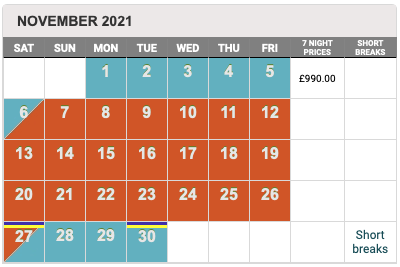
Seven nights in November will now cost you the best part of a thousand pounds.
The Armstrong family the former owners, made millions from the sale of armaments.
If I thought that war would be fomented, or the interests of humanity suffer, by what I have done, I would greatly regret it. I have no such apprehension.
He also said:
It is our province, as engineers to make the forces of matter obedient to the will of man; those who use the means we supply must be responsible for their legitimate application.
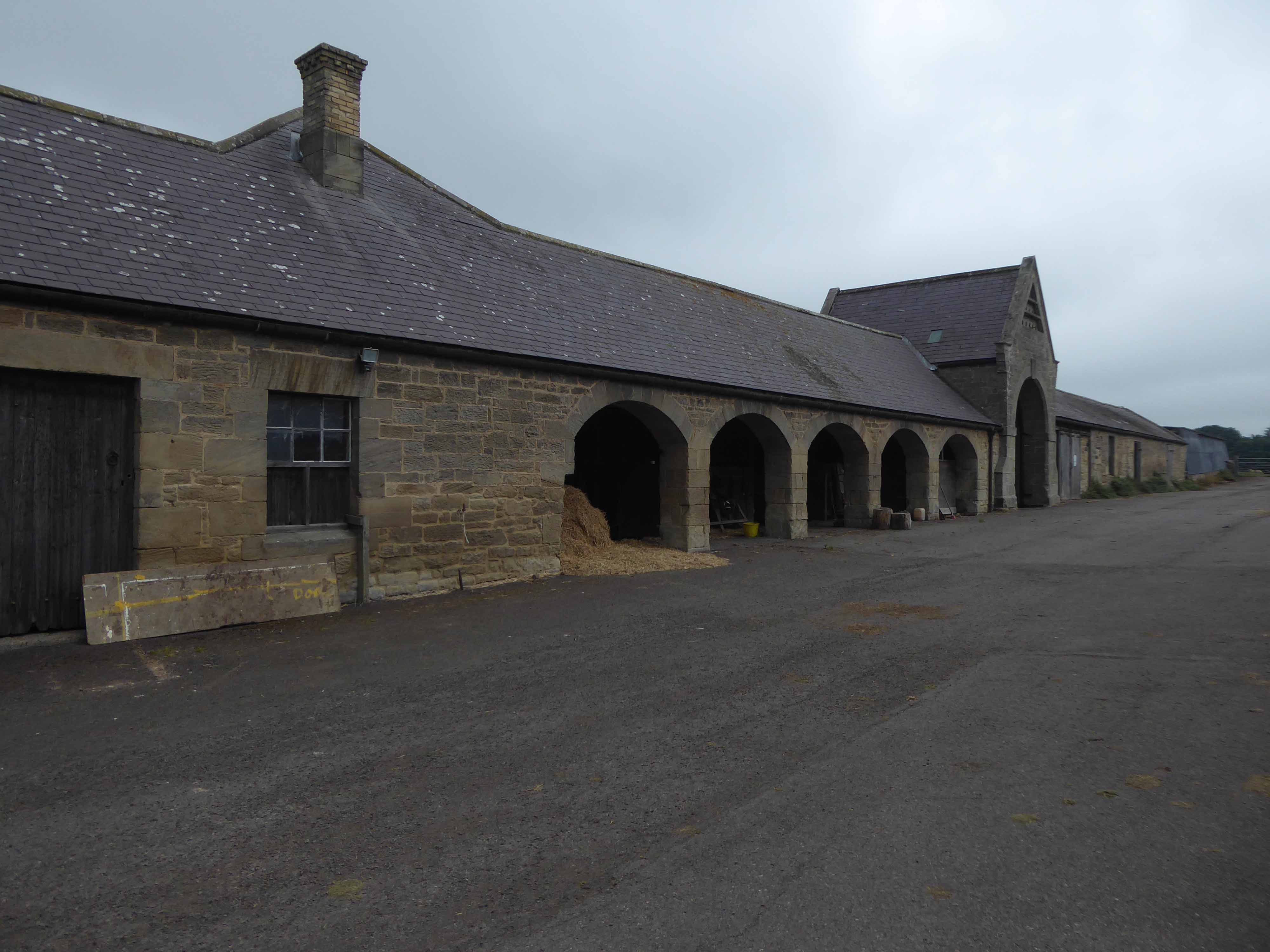
A couple on their bikes stopped to chat, as a babe in arms the lad had been transported by mam and dad, in a sidecar with tandem attached.
Such a delightful and poignant recollection – we wished each other well and went on our way.
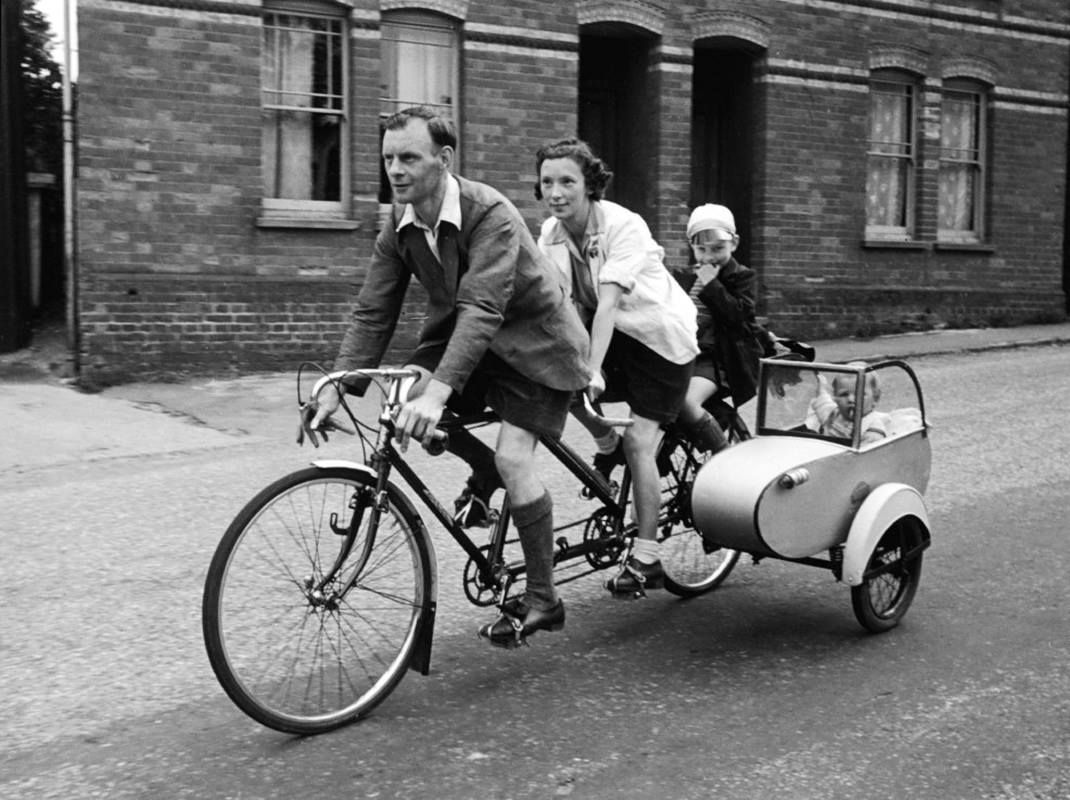
I made my way from the rolling hills back down toward the coast.
Where a permissive path hugged the shore, which I cautiously shared with some equally cautious sheep.
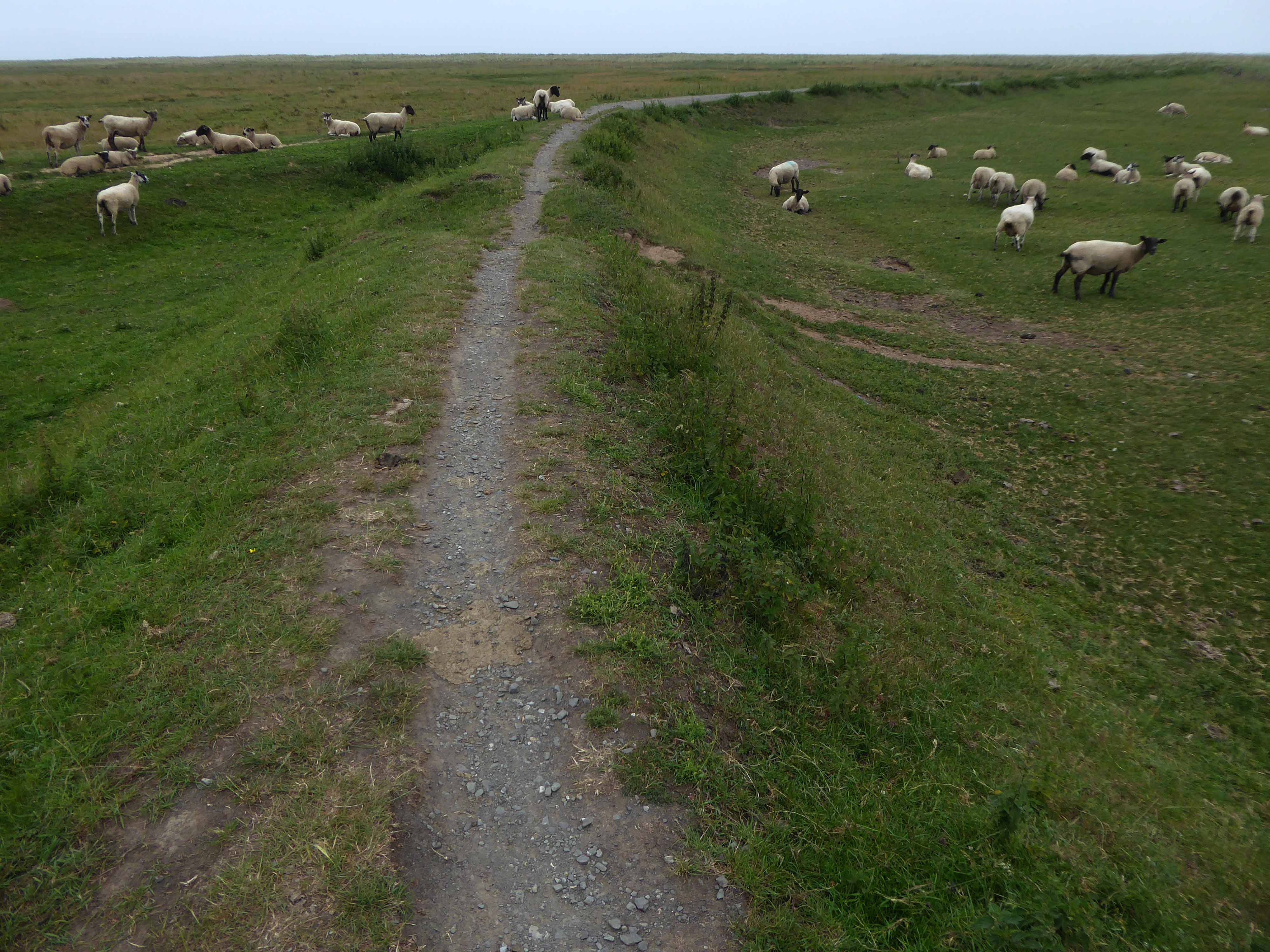
Looking back toward Lindisfarne.
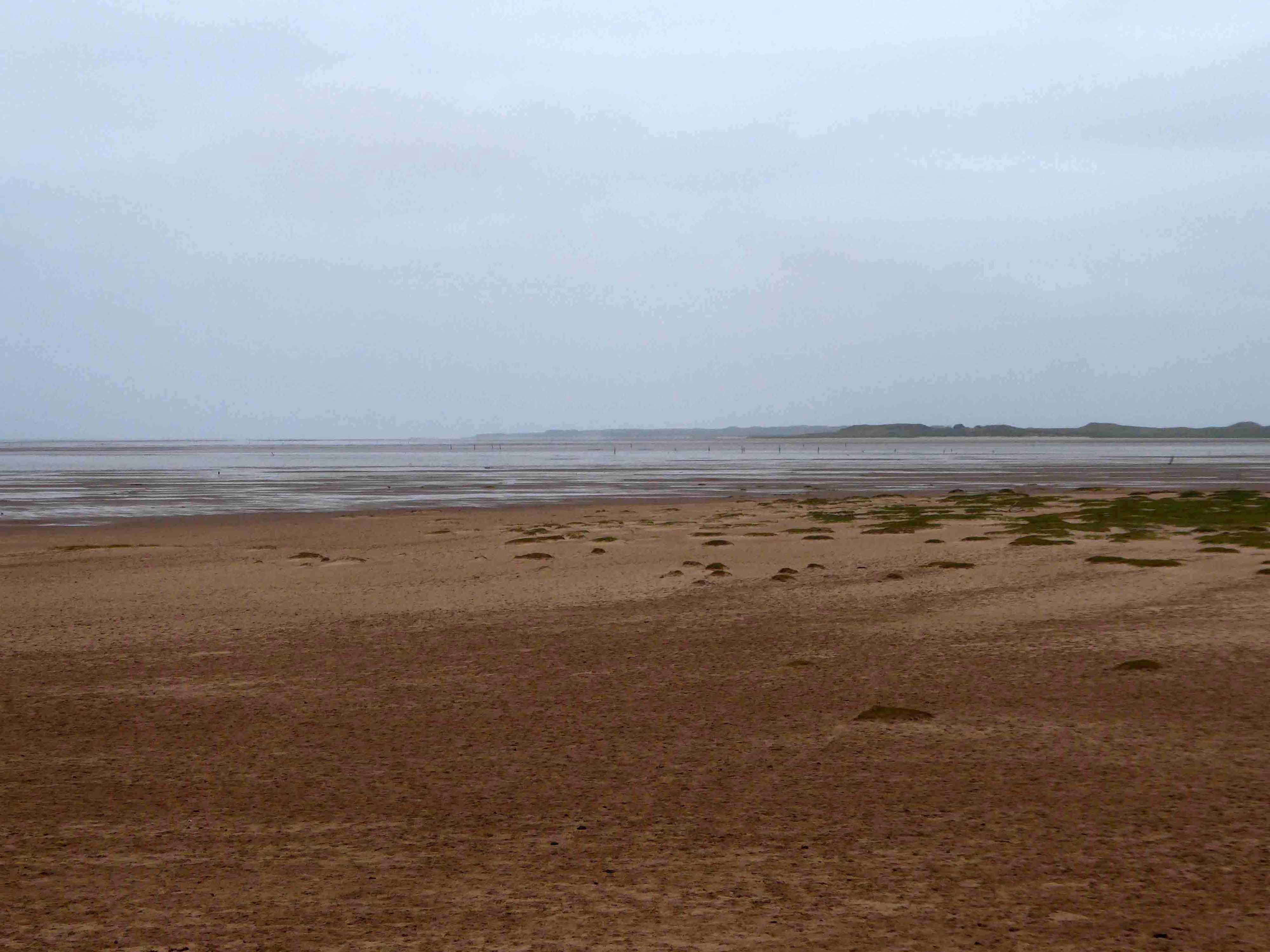
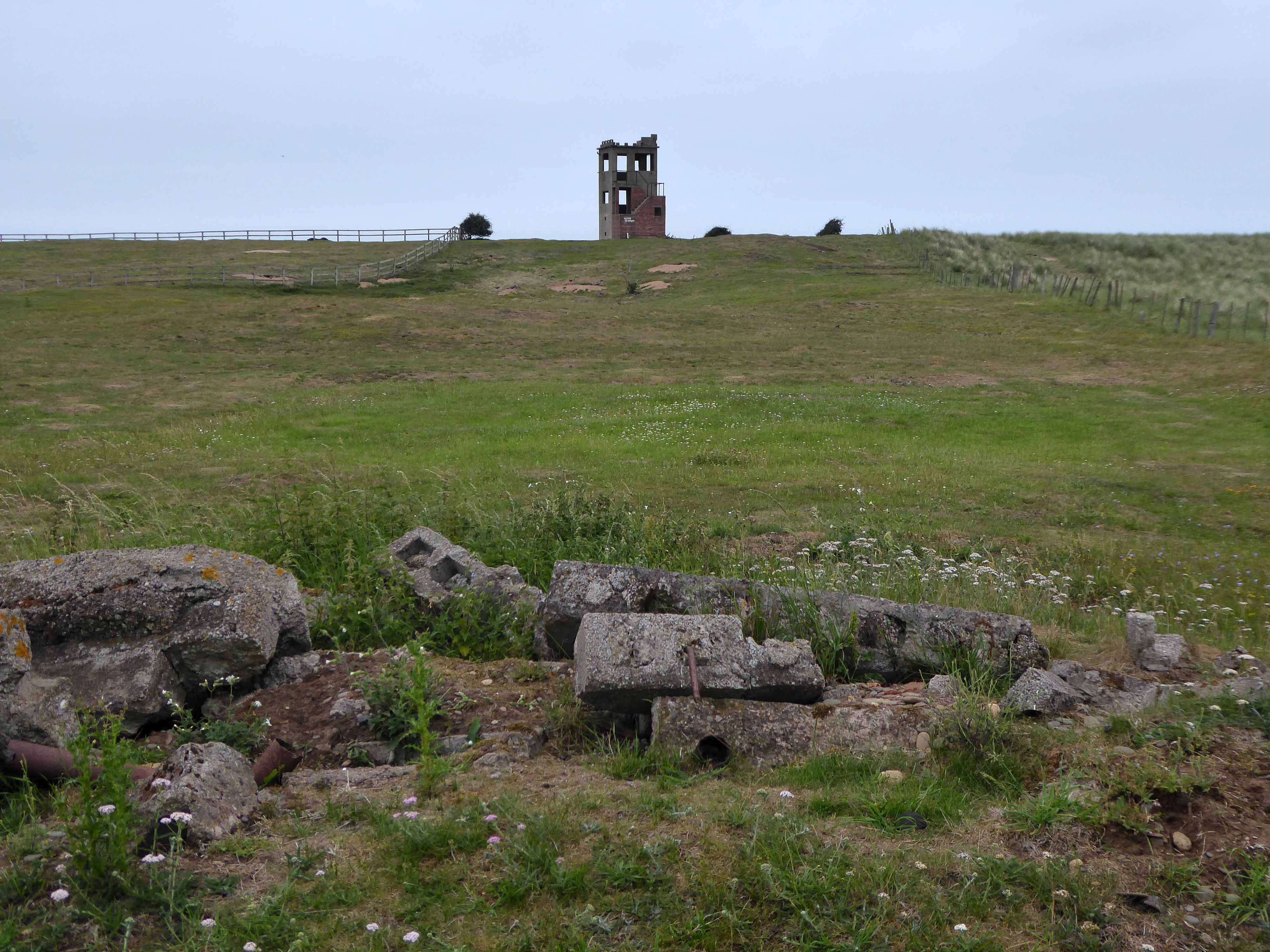
Looking forward to the past.
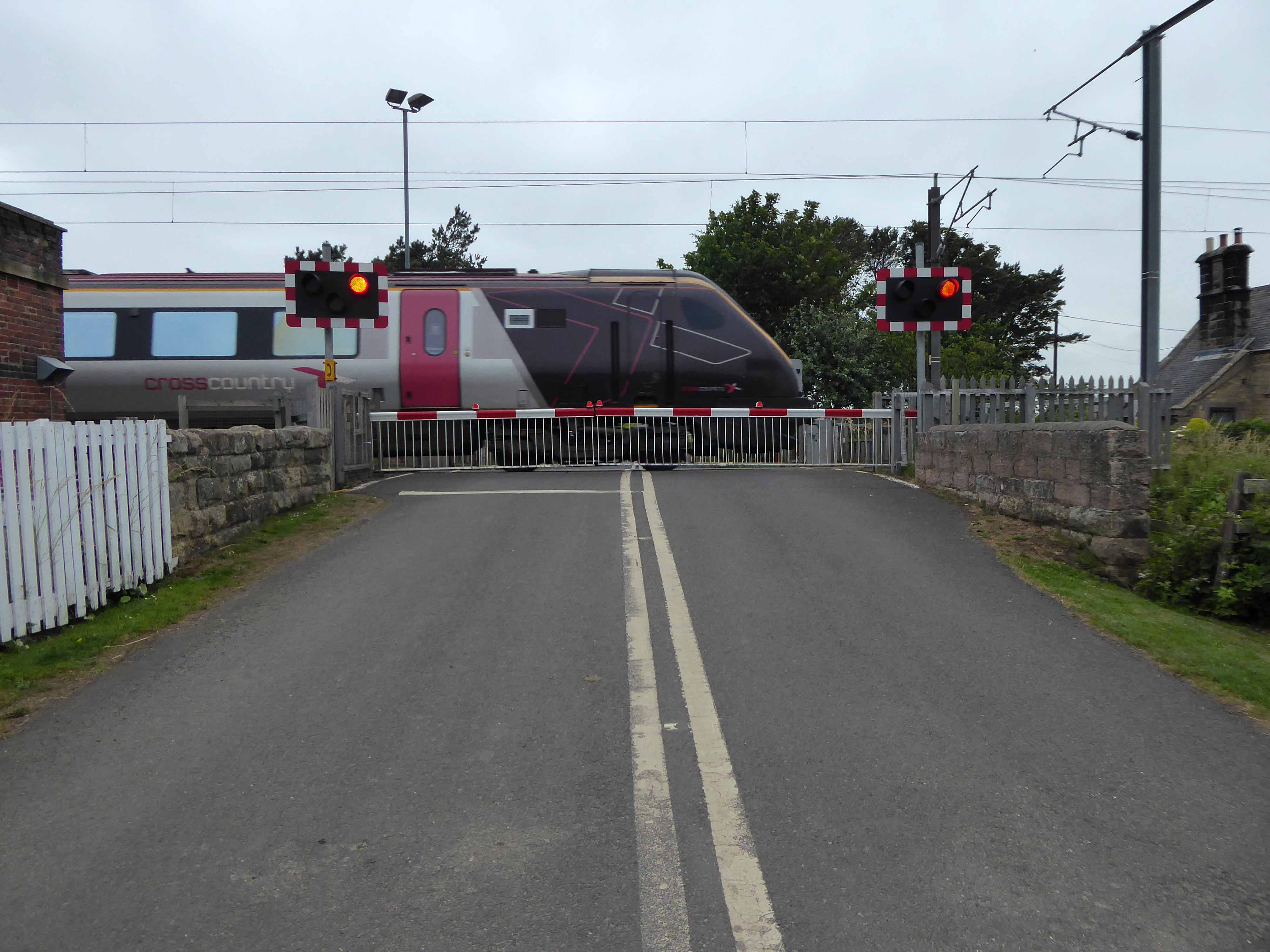
Pausing for the passing of a mainline train.
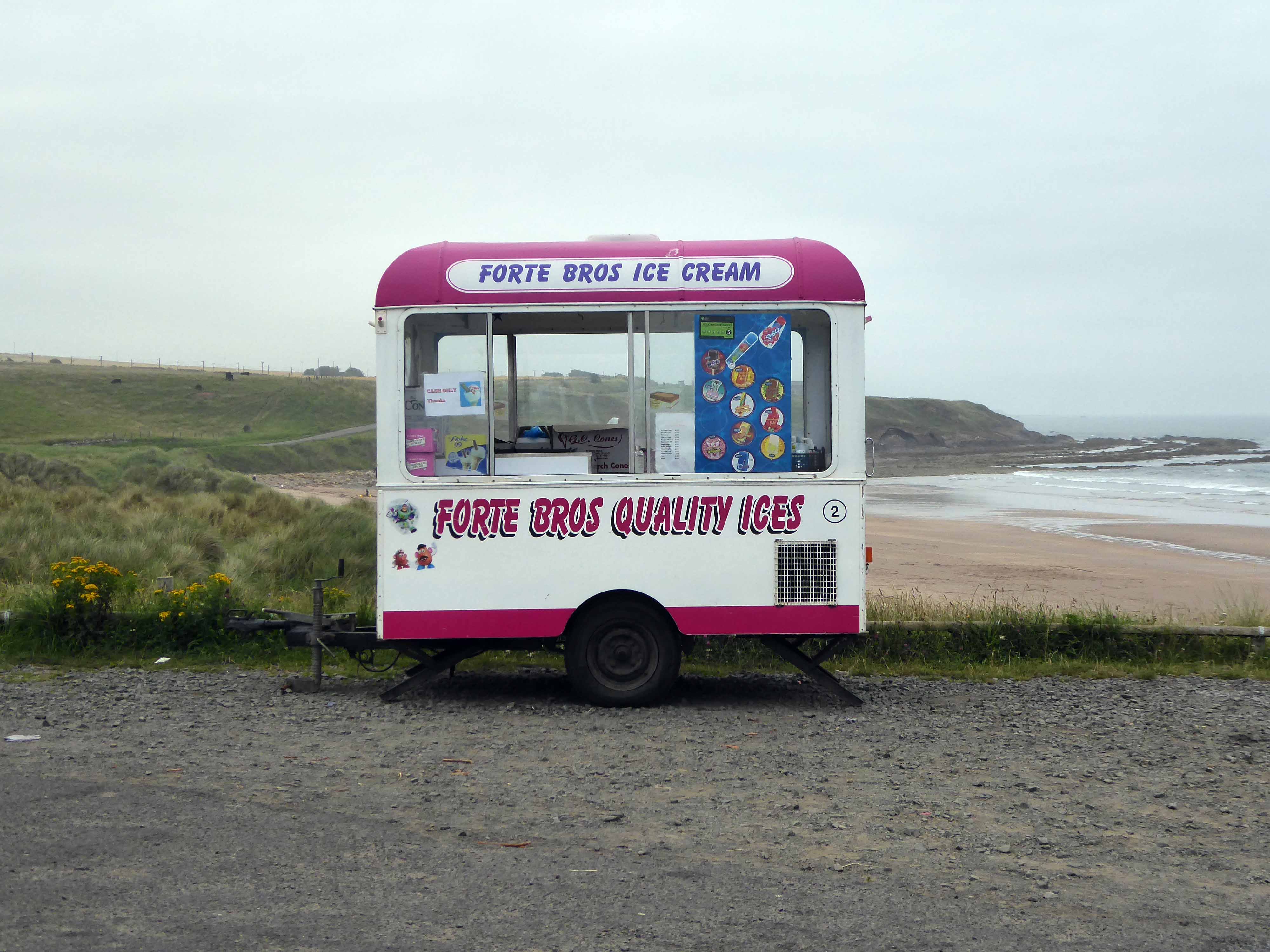
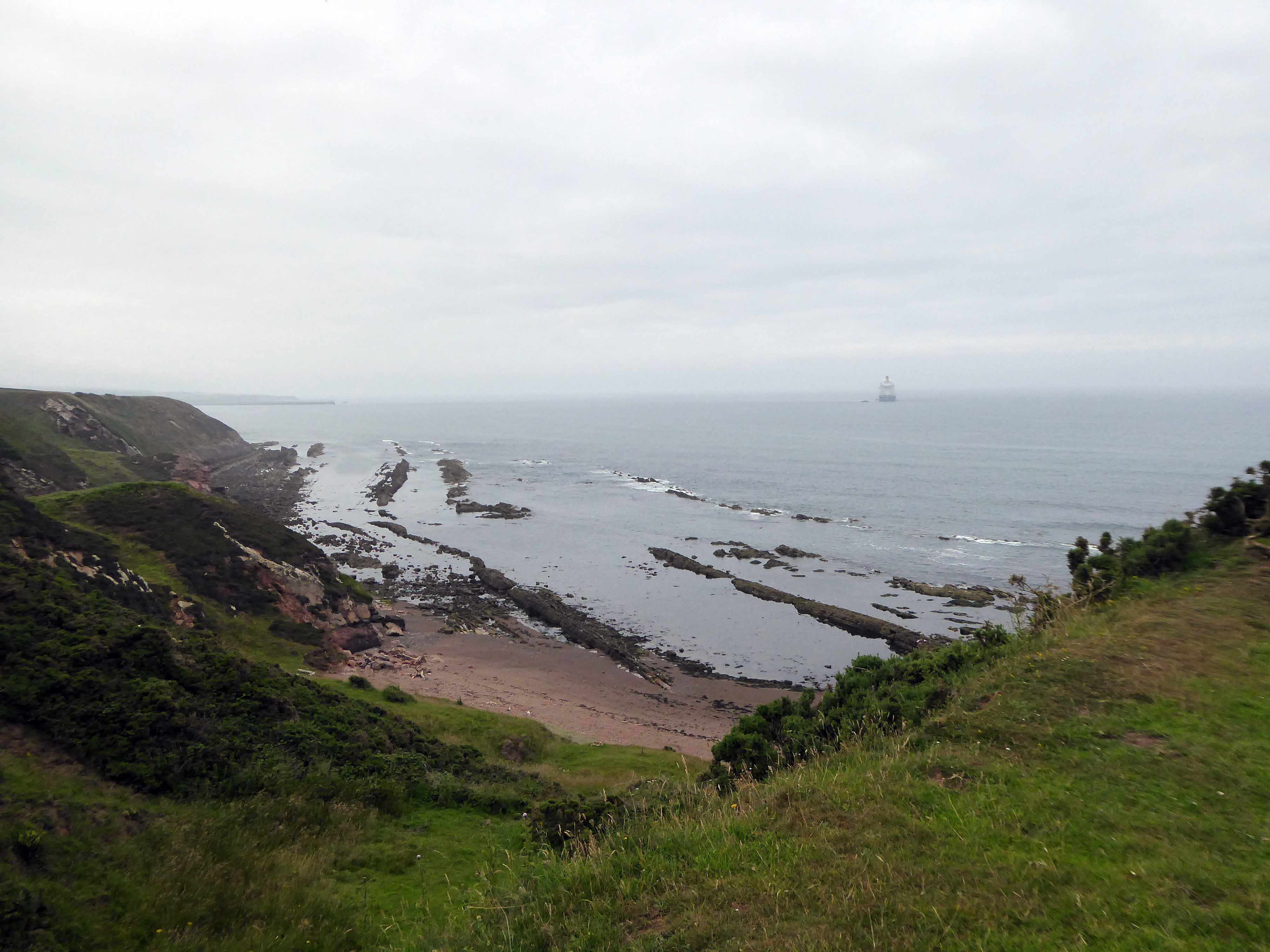
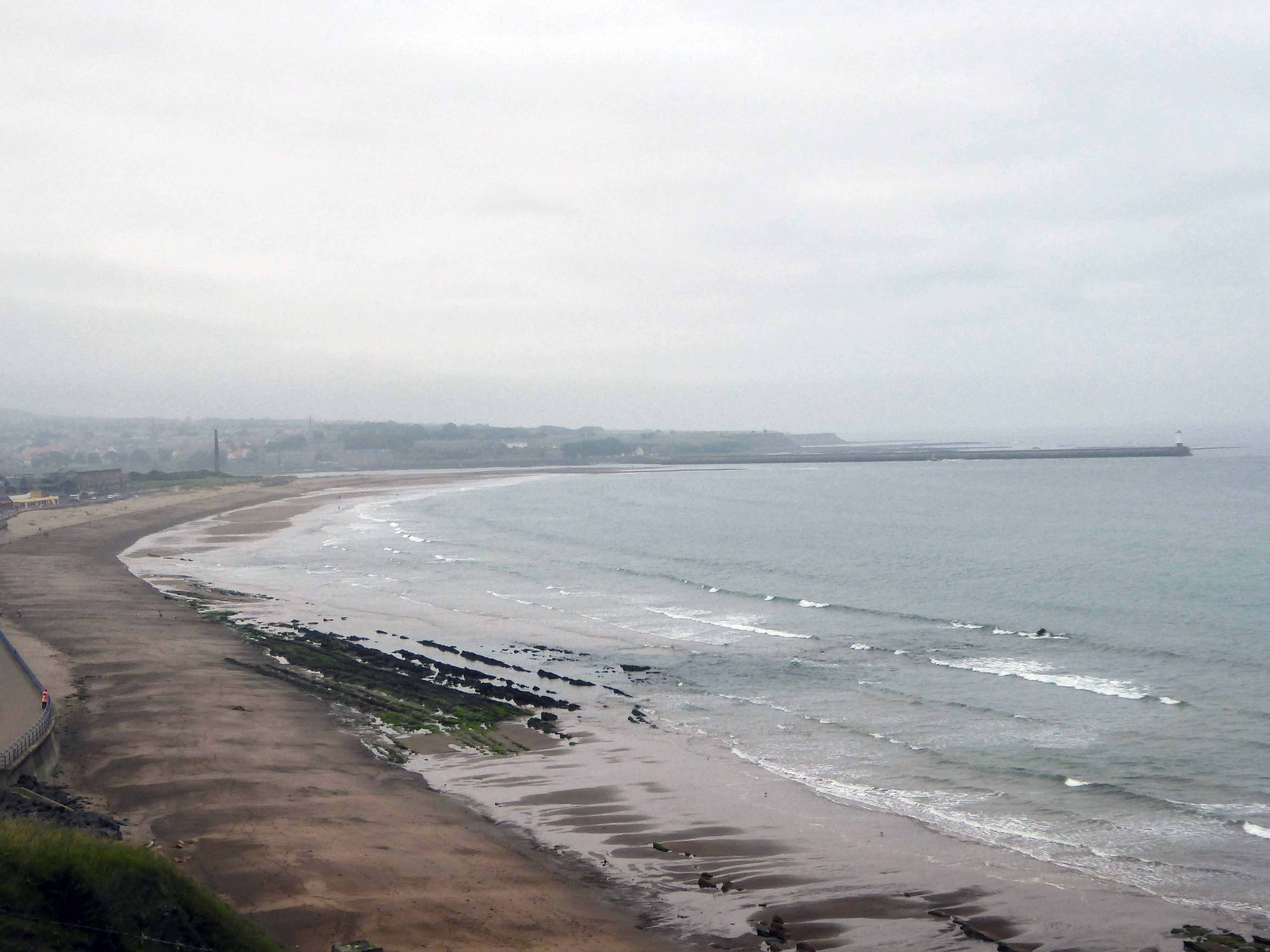
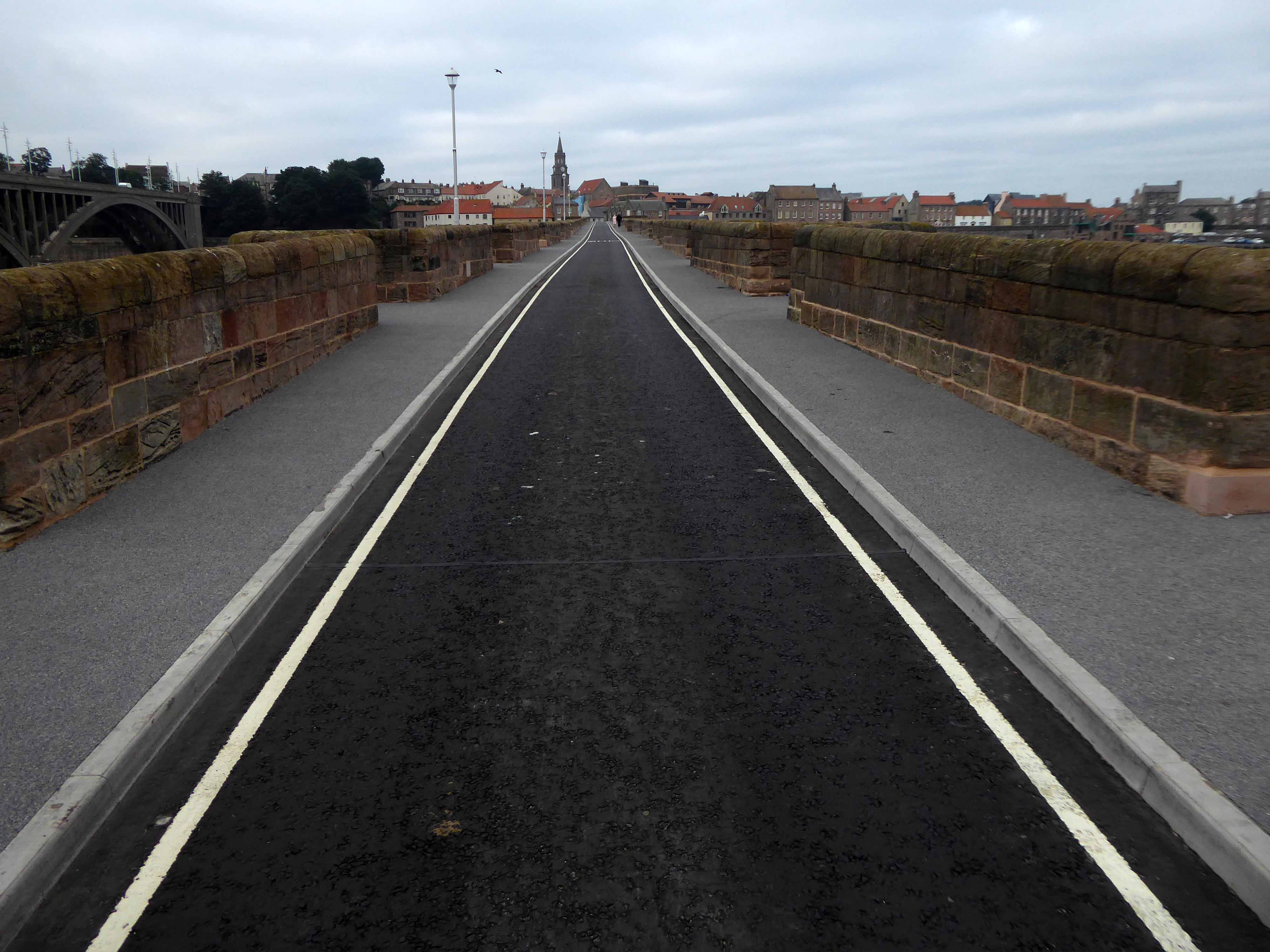
Berwick upon Tweed in view.
Come the evening I spent an hour or two in The Curfew, feasting on fine beer, company, haggis scotch egg and game pie.
Finishing with this well deserved and wonderful, bottle of Oude Geuze.

The final day – so many marvellous miles covered, forever stopping to chat, snap, look and learn.
No finer way to see the world, though so condensed and intense even at touring speed – apologies to all the things that I failed to see.
So long to Amble, Newcastle, Redcar, Scarborough and Hull.
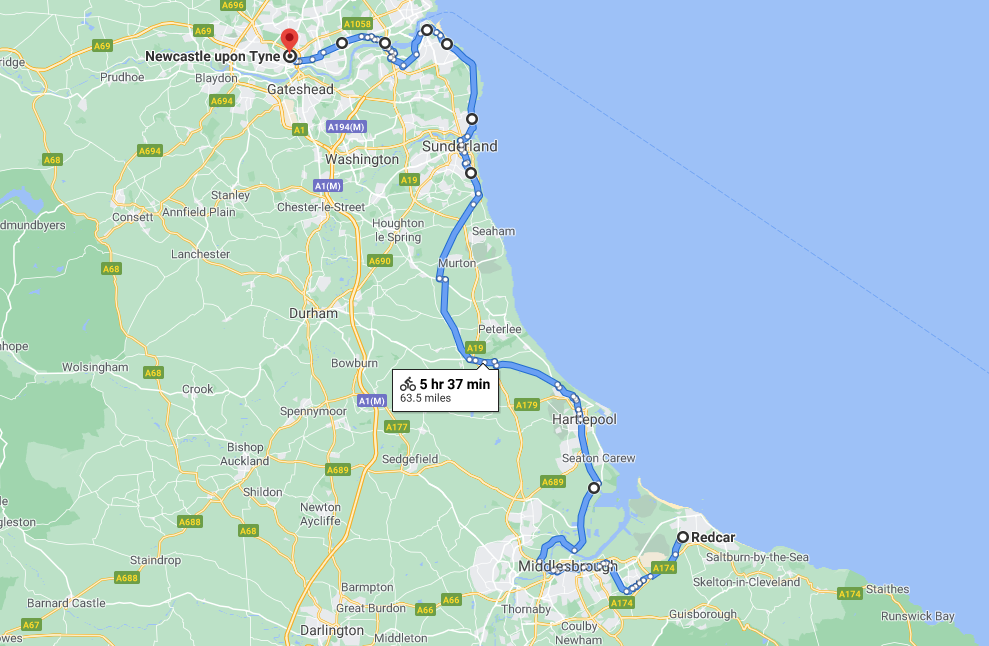
An early start on another sunny day, cycling along long straight roads out of town, towards Middlesborough.
Having previously visited Hull and Scarborough and all points in between.
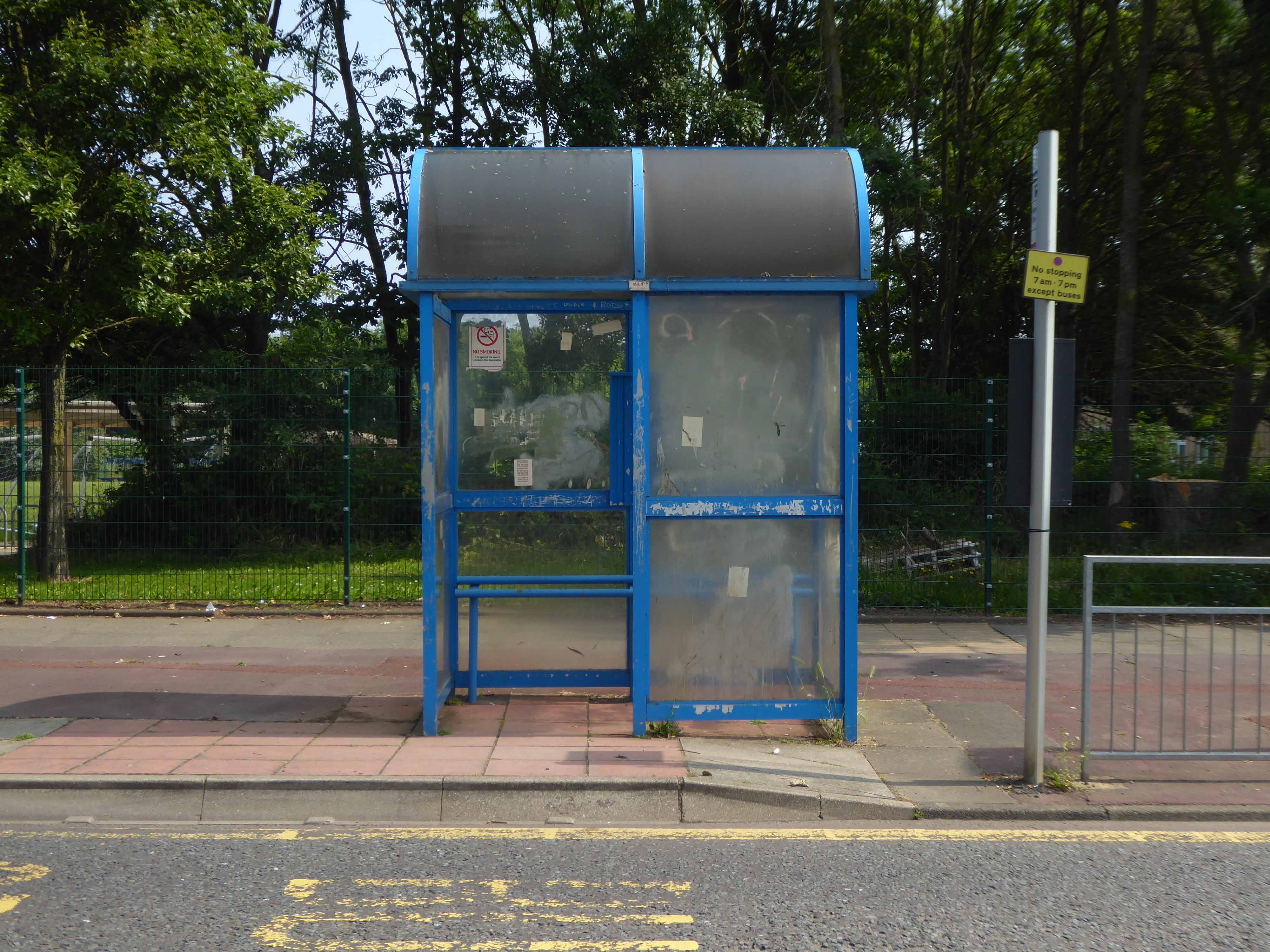
Slowly passing sleepy factories and desolate bus shelters.
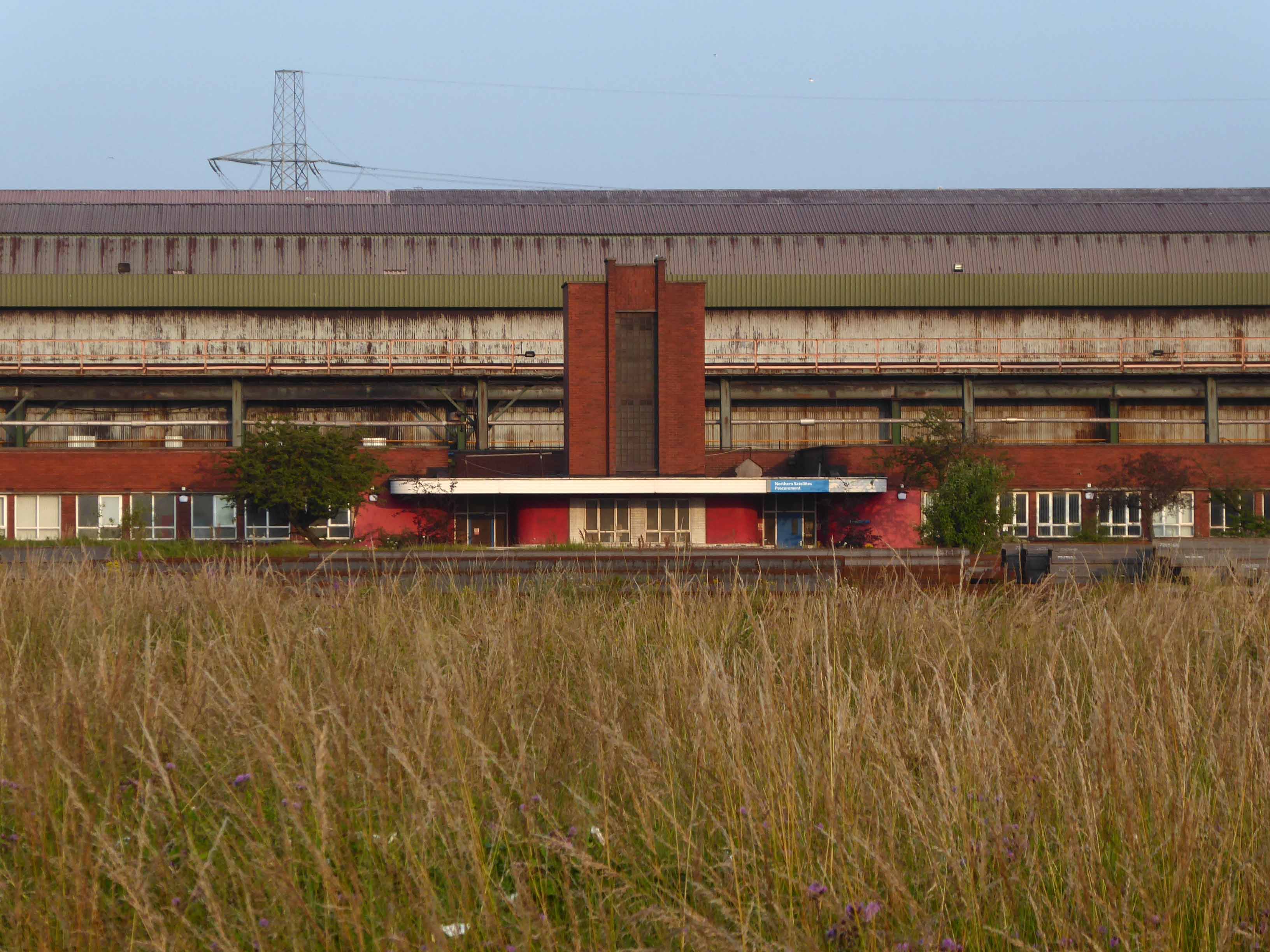
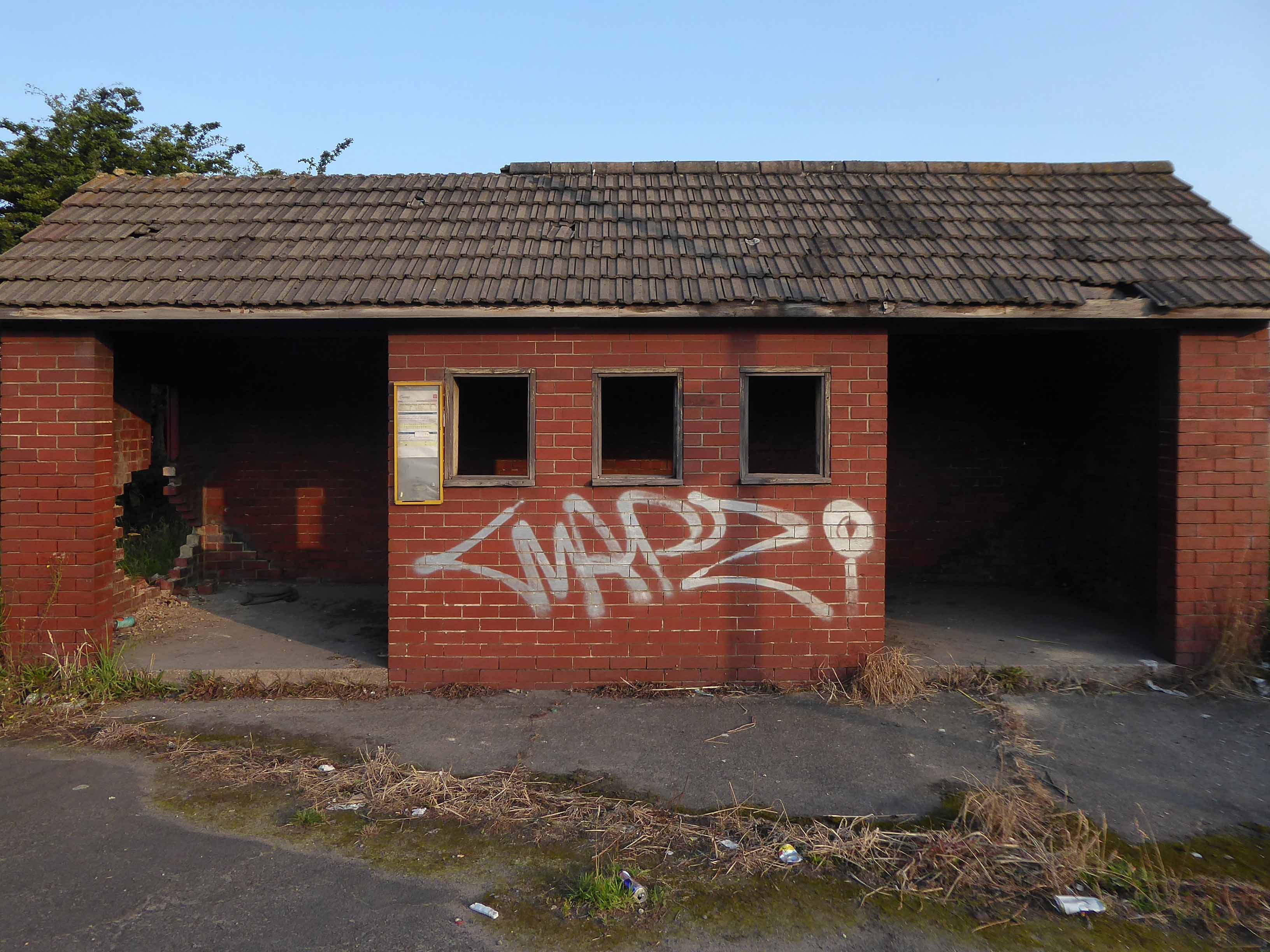
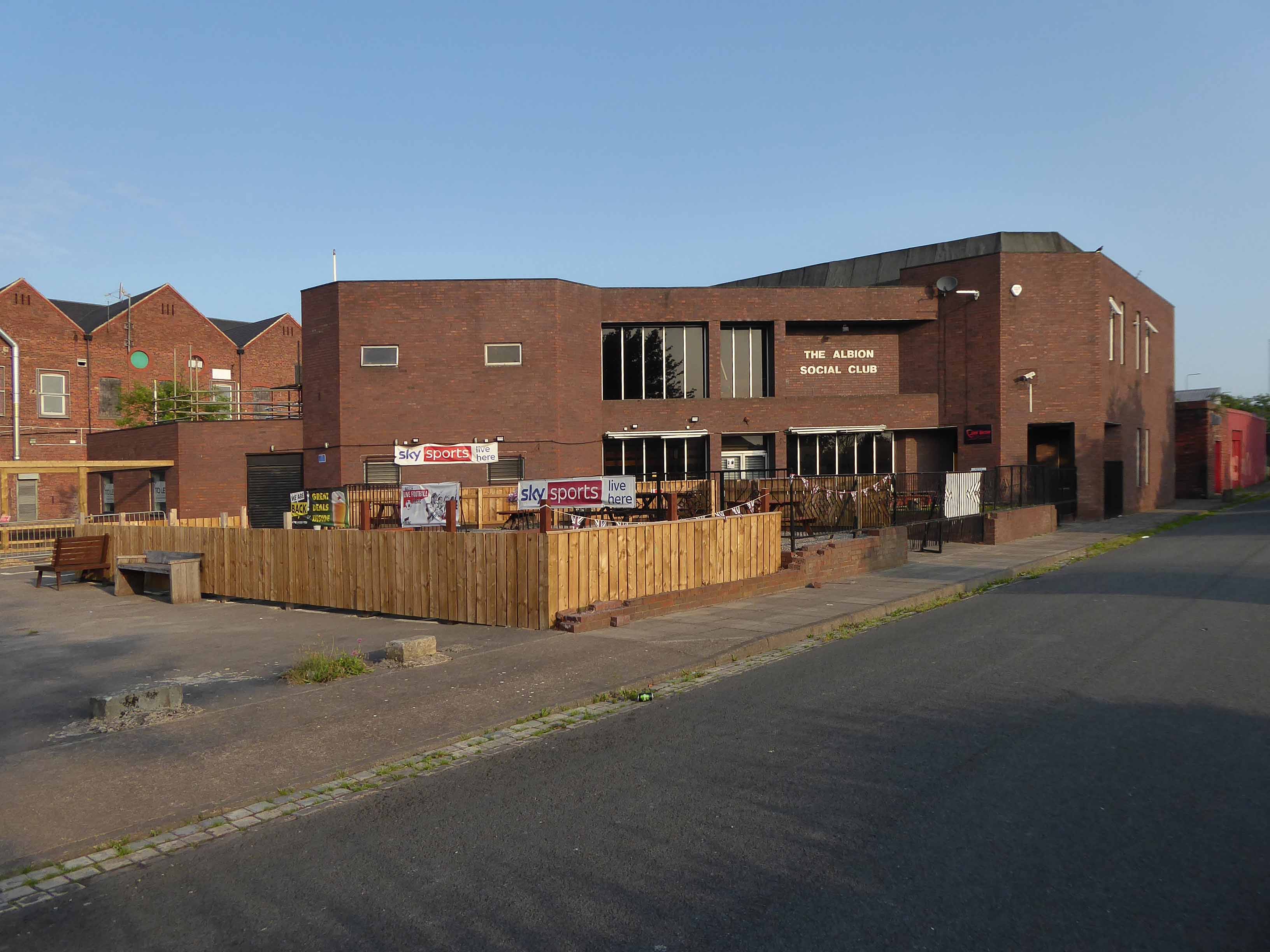
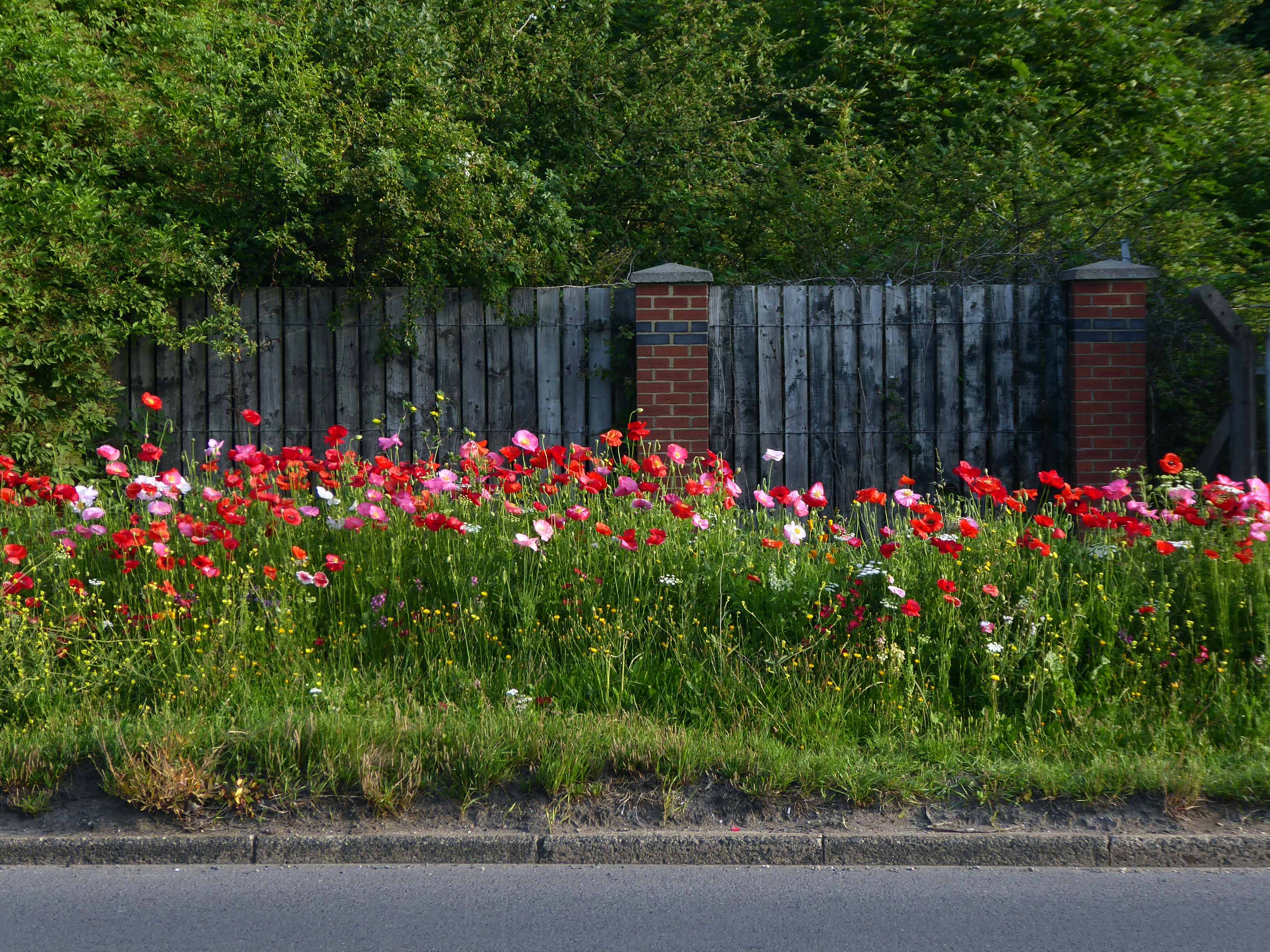
Bunker like social clubs and flower lined roads.
The Albion club in South Bank has stood empty for the last three years.
Now local lad Mark Trainor has the keys – and says opening the doors to the club his own family frequented for years will be a dream come true.
He’s planning to cater for everyone, he says, and it won’t just be all about drinking.
Parents will be able to call in for a coffee after dropping the kids at school, there will be pool nights and Mark’s personal favourite – Pie Day Fridays.
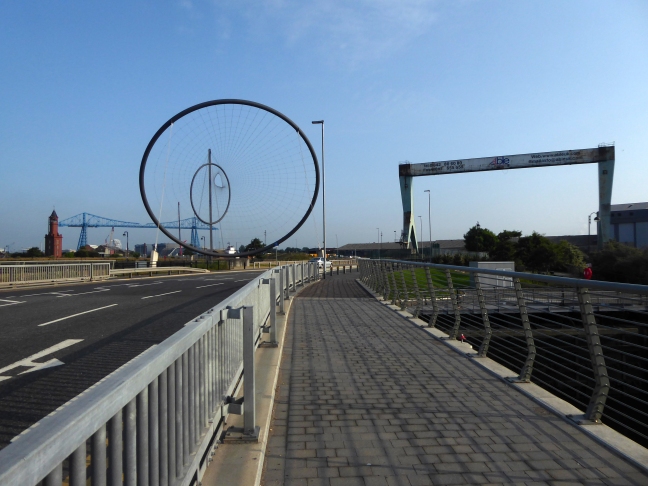
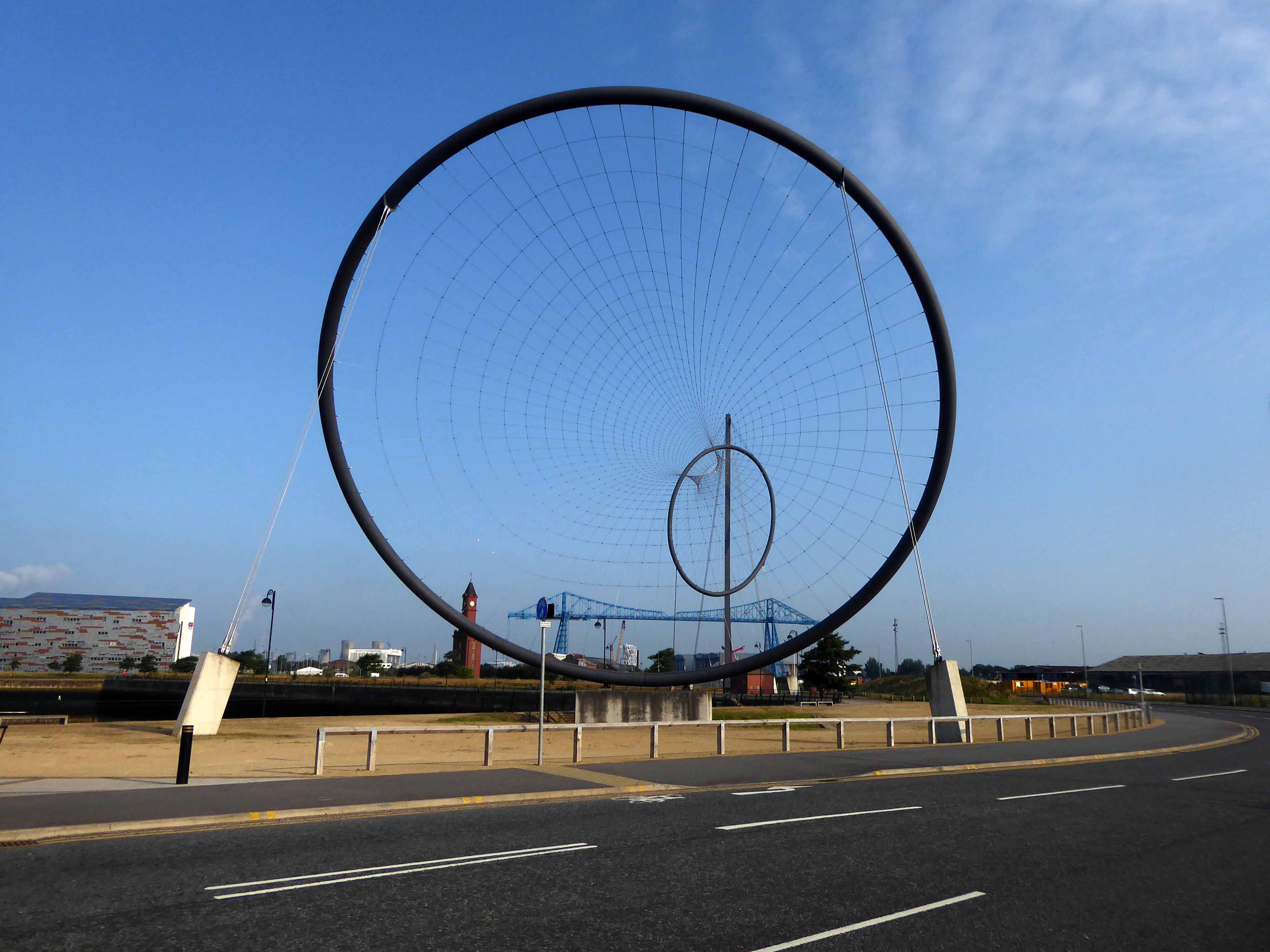
Public art framing the Transporter Bridge.
The £2.7m Temenos structure has taken four months to piece together on the banks of the River Tees near Middlesbrough’s Transporter Bridge.
Thousands of metres of steel wire have been woven between the two steel rings to create the 164ft high and 360ft long sculpture.
It was created by artist Anish Kapoor and structural designer Cecil Balmond.
Temenos is a Greek word meaning land cut off and assigned as a sanctuary or holy area.
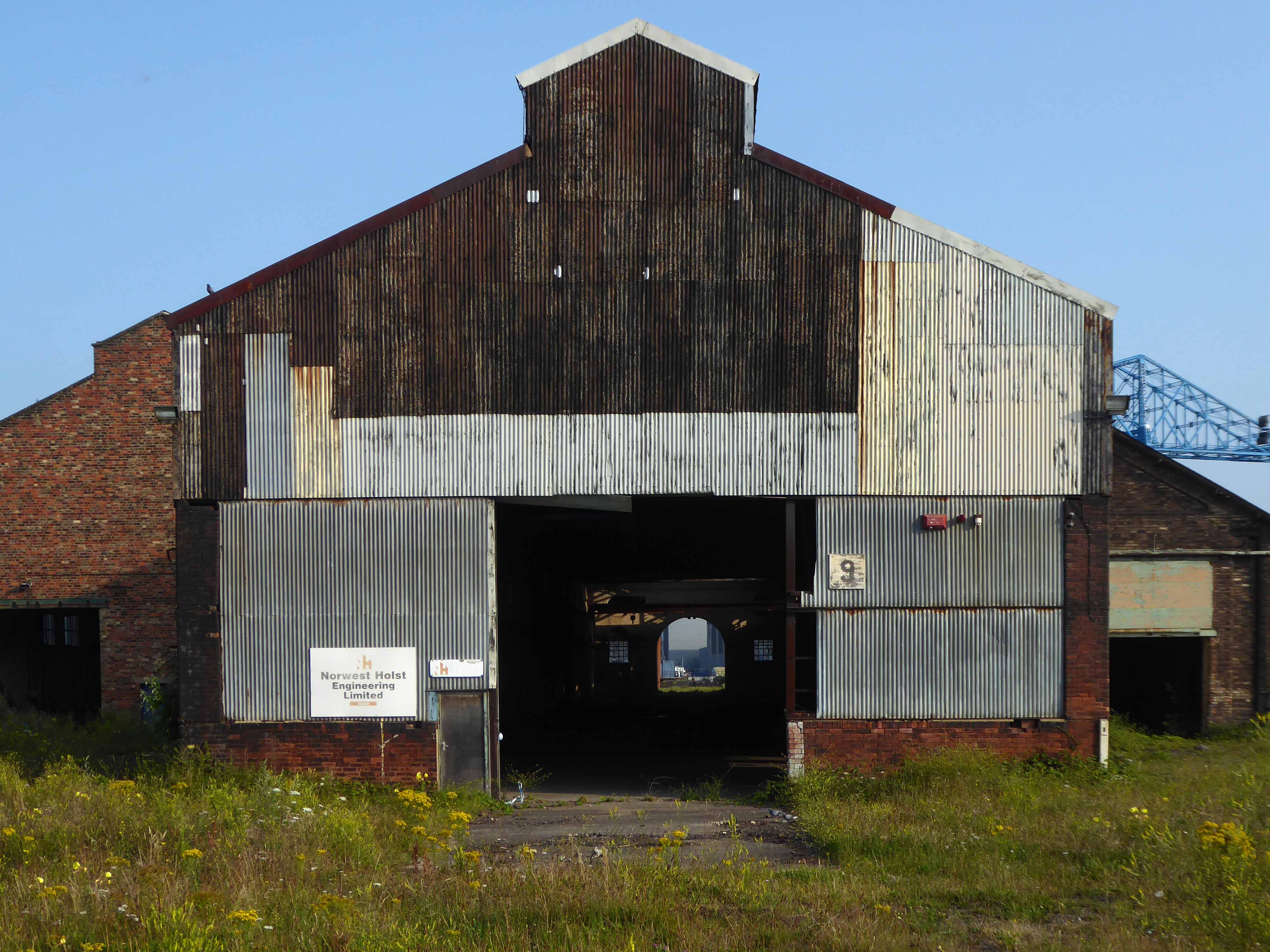
Following a 1907 Act of Parliament the bridge was built at a cost of £68,026 6s 8d by Sir William Arrol & Co. of Glasgow between 1910 and 1911 to replace the Hugh Bell and Erimus steam ferry services. A transporter bridge was chosen because Parliament ruled that the new scheme of crossing the river had to avoid affecting the river navigation.
The opening ceremony on 17 October 1911 was performed by Prince Arthur of Connaught, at its opening the bridge was painted red.
In 1961 the bridge was painted blue.
In 1974, the comedy actor Terry Scott, travelling between his hotel in Middlesbrough and a performance at the Billingham Forum, mistook the bridge for a regular toll crossing and drove his Jaguar off the end of the roadway, landing in the safety netting beneath.
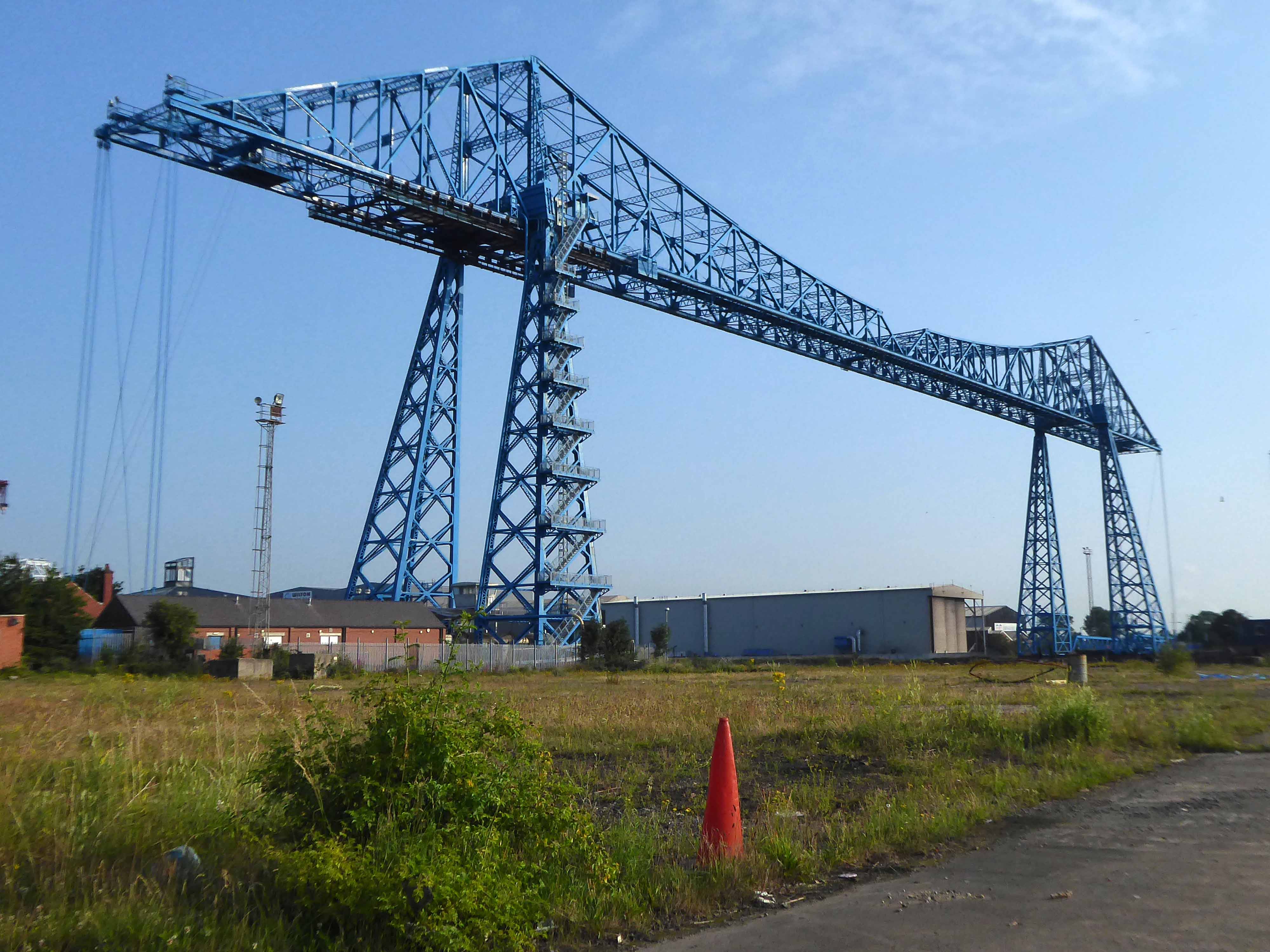
The cycle track followed the river, which sports a fine array of industrial architecture.

Tees Newport Bridge designed by Mott, Hay and Anderson and built by local company Dorman Long who have also been responsible for such structures as the Tyne Bridge and Sydney Harbour Bridge, it was the first large vertical-lift bridge in Britain.
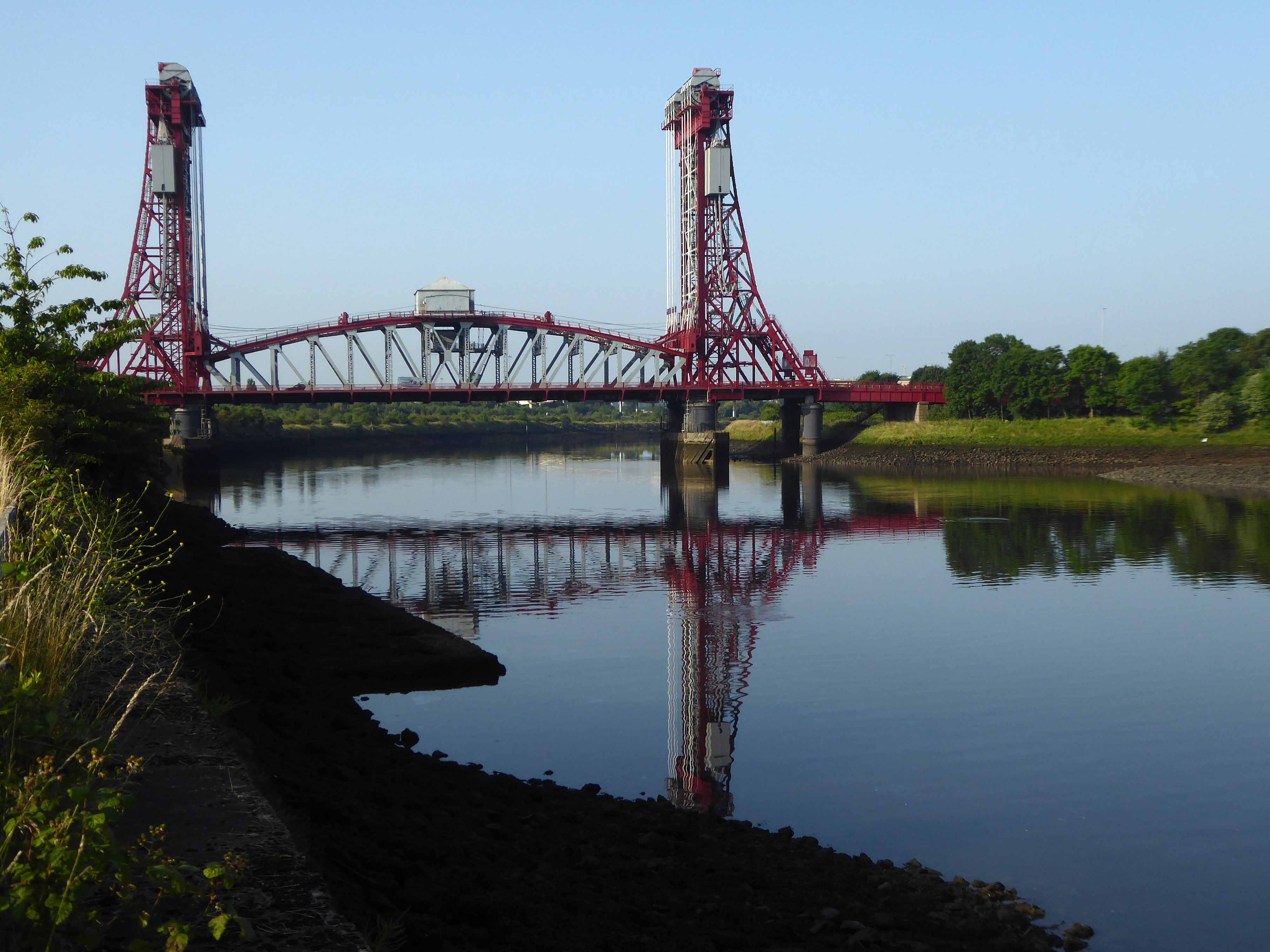
Crossing the river and heading for Hartlepool.

Negotiating underpasses and main road cycle lanes.
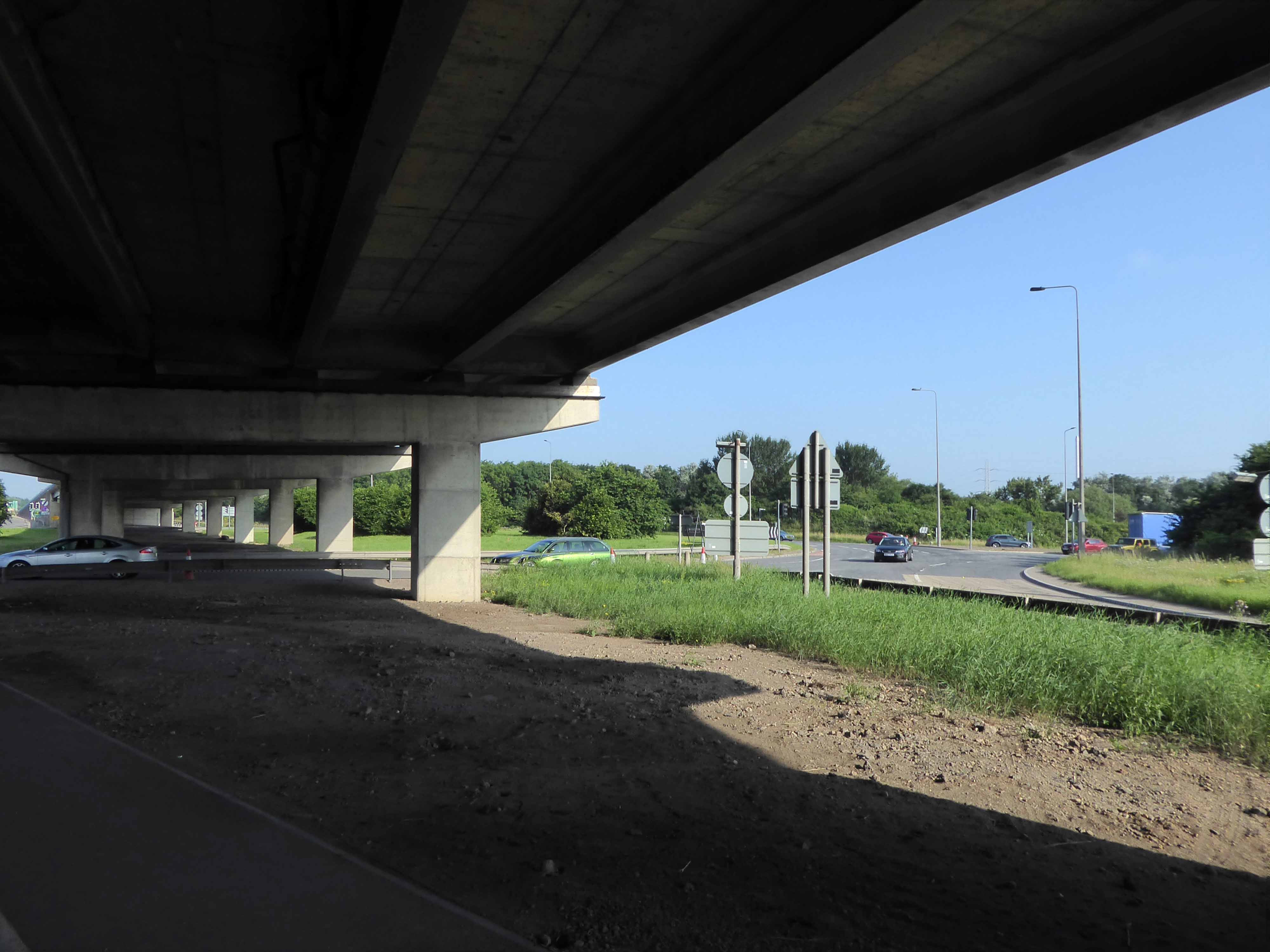
I was delighted to be drawn toward Dawson House here in Billingham.

Austere brick churches.
St Joseph RC Low Grange Avenue Billingham
A prefabricated polygonal structure of the 1970s, with laminated timber frame. The seating came from Pugin & Pugin’s church at Port Clarence.
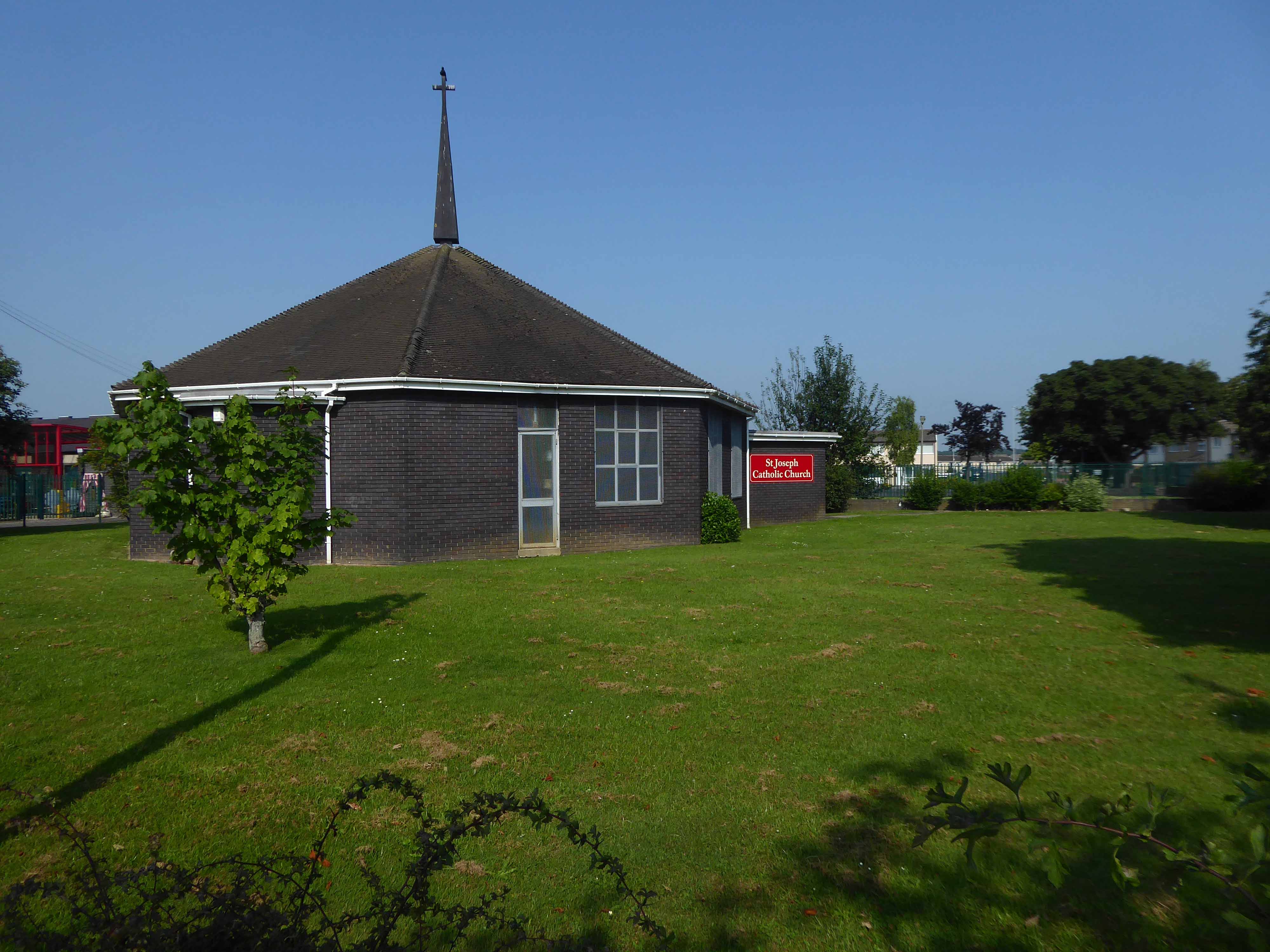
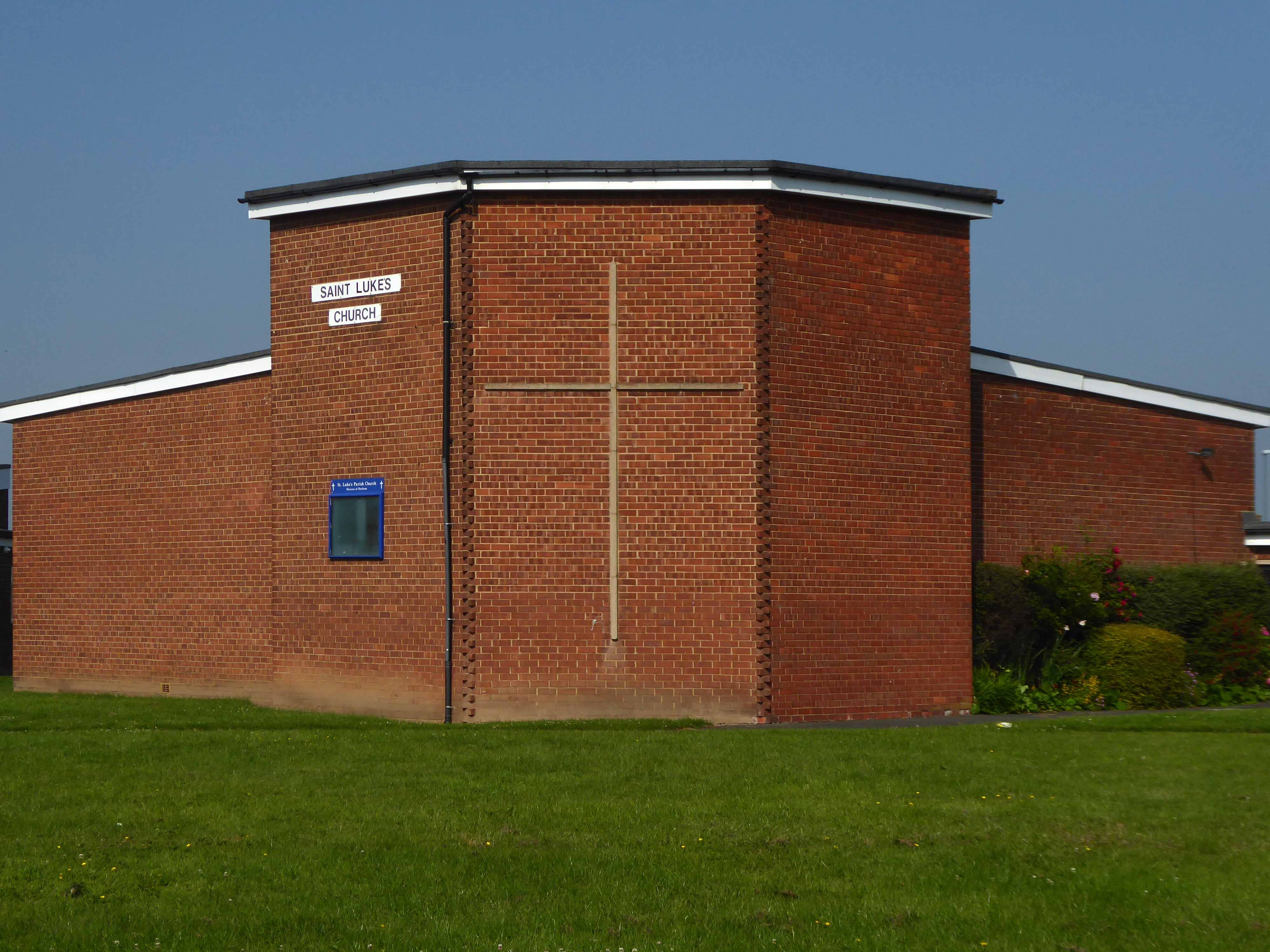
Just along the way Saint Lukes Billingham 1965.
In a slightly more upbeat mode St James the Apostle Owton Manor.

I convinced myself that this building on Station Road Seaton Carew was a former pub, I discovered following consultation with the local studies offices, that it was in fact a former children’s home destined to become a doctors.

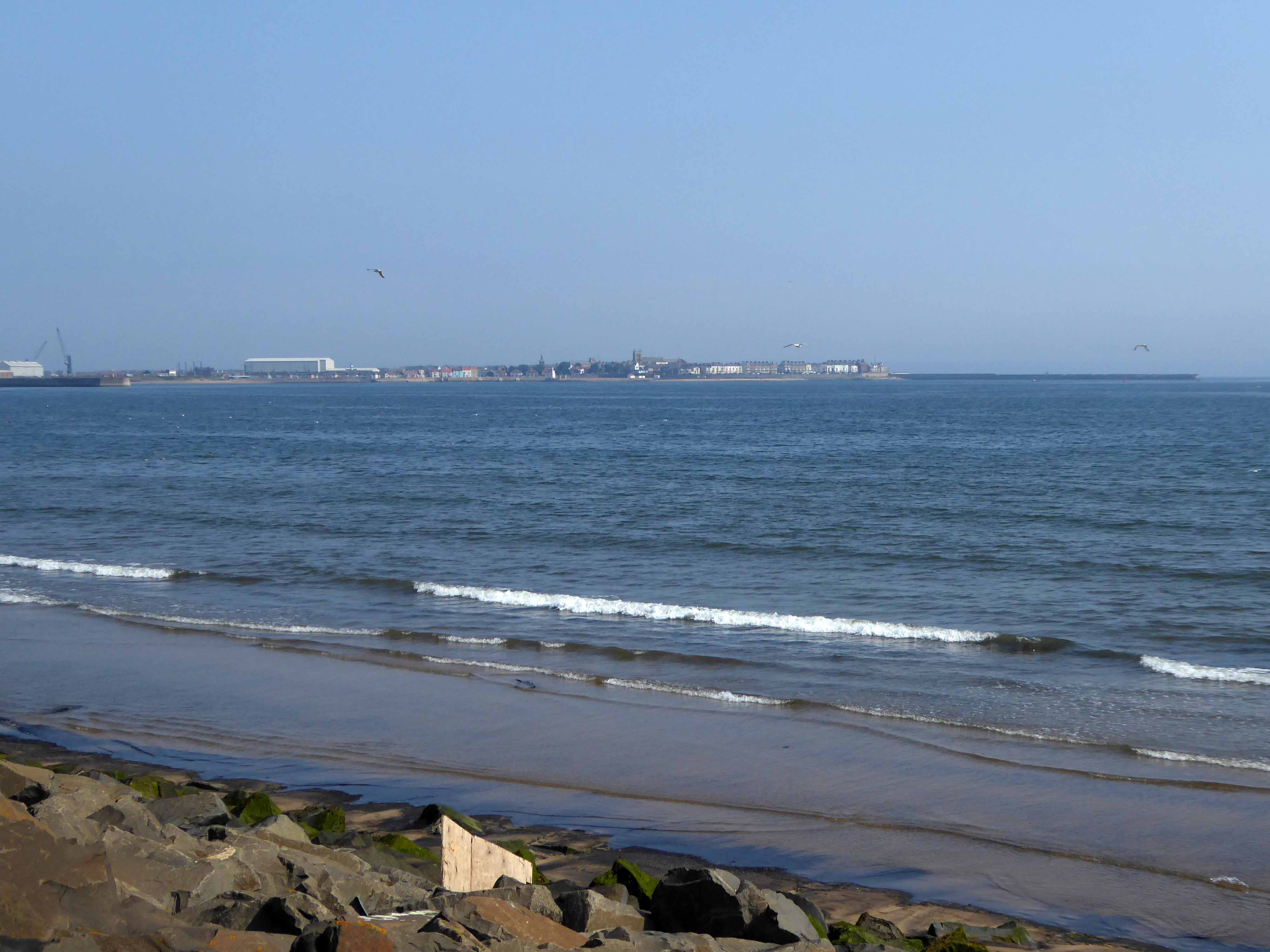
I found myself looking back across the estuary to Redcar.

Northward toward Hartlepool.
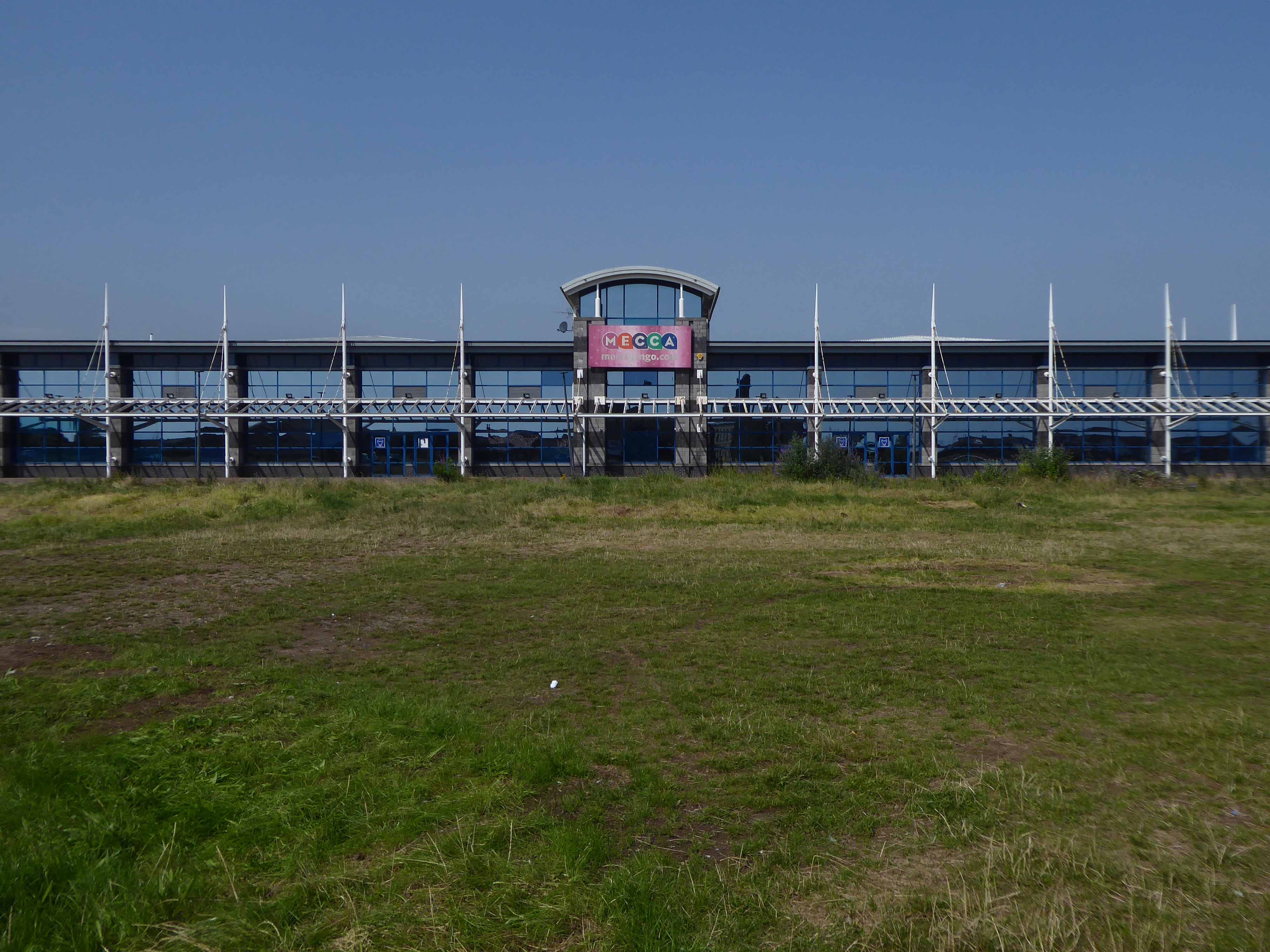
Where the bingo was closed and the circus had left town.

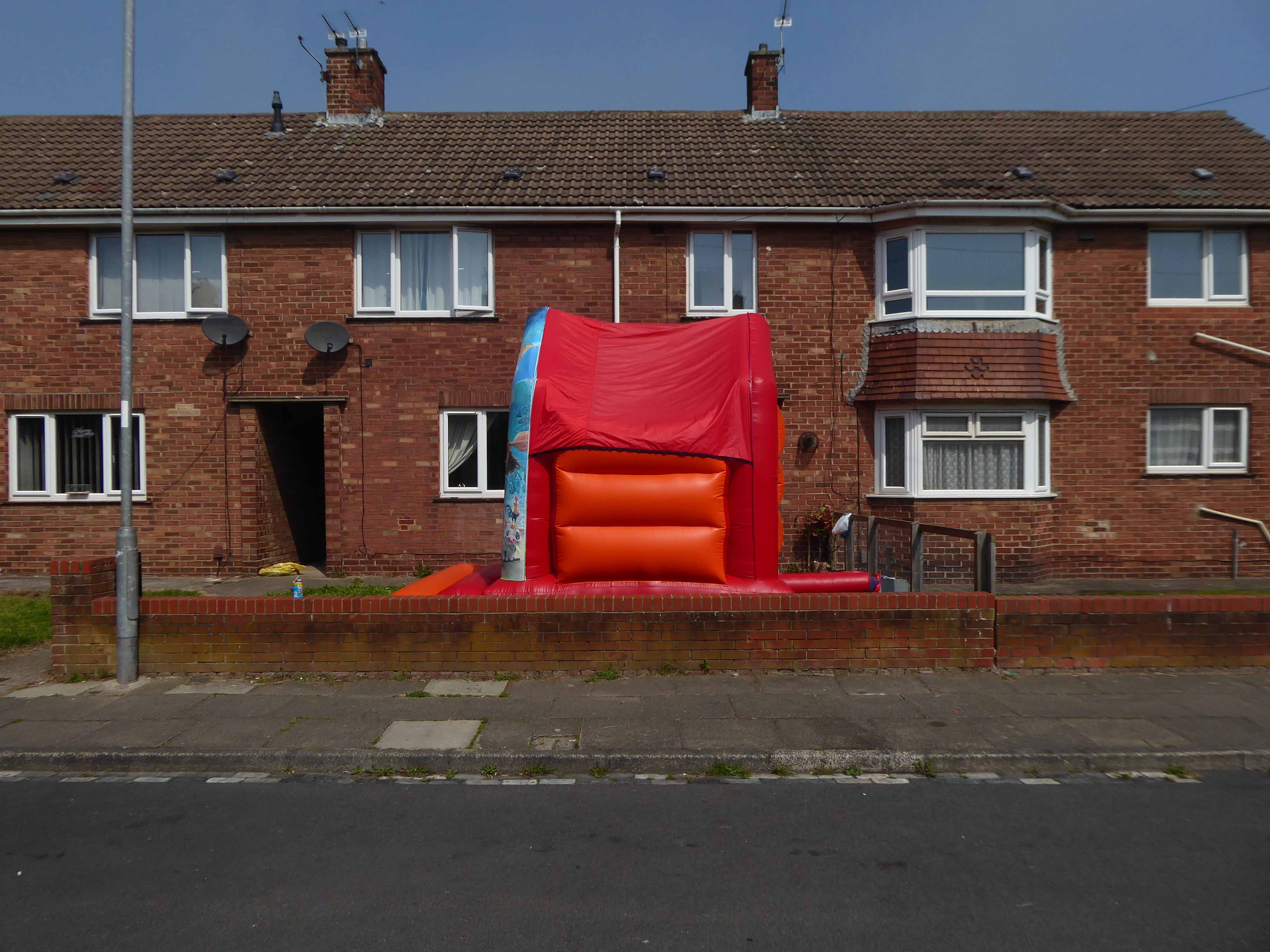
Every Englishman’s home is a bouncy castle.
St John Vianney located on King Oswy Drive West View Estate.
Architect: Crawford & Spencer Middlesbrough 1961.
A large post-war church built to serve a housing estate, economically built and with a functional interior. The campanile is a local landmark.
The parish of St John Vianney was created in 1959 to serve the growing West View Estate, on the north side of Hartlepool. The church was opened by Bishop Cunningham on 4 April 1961. The presbytery was built at the same time.

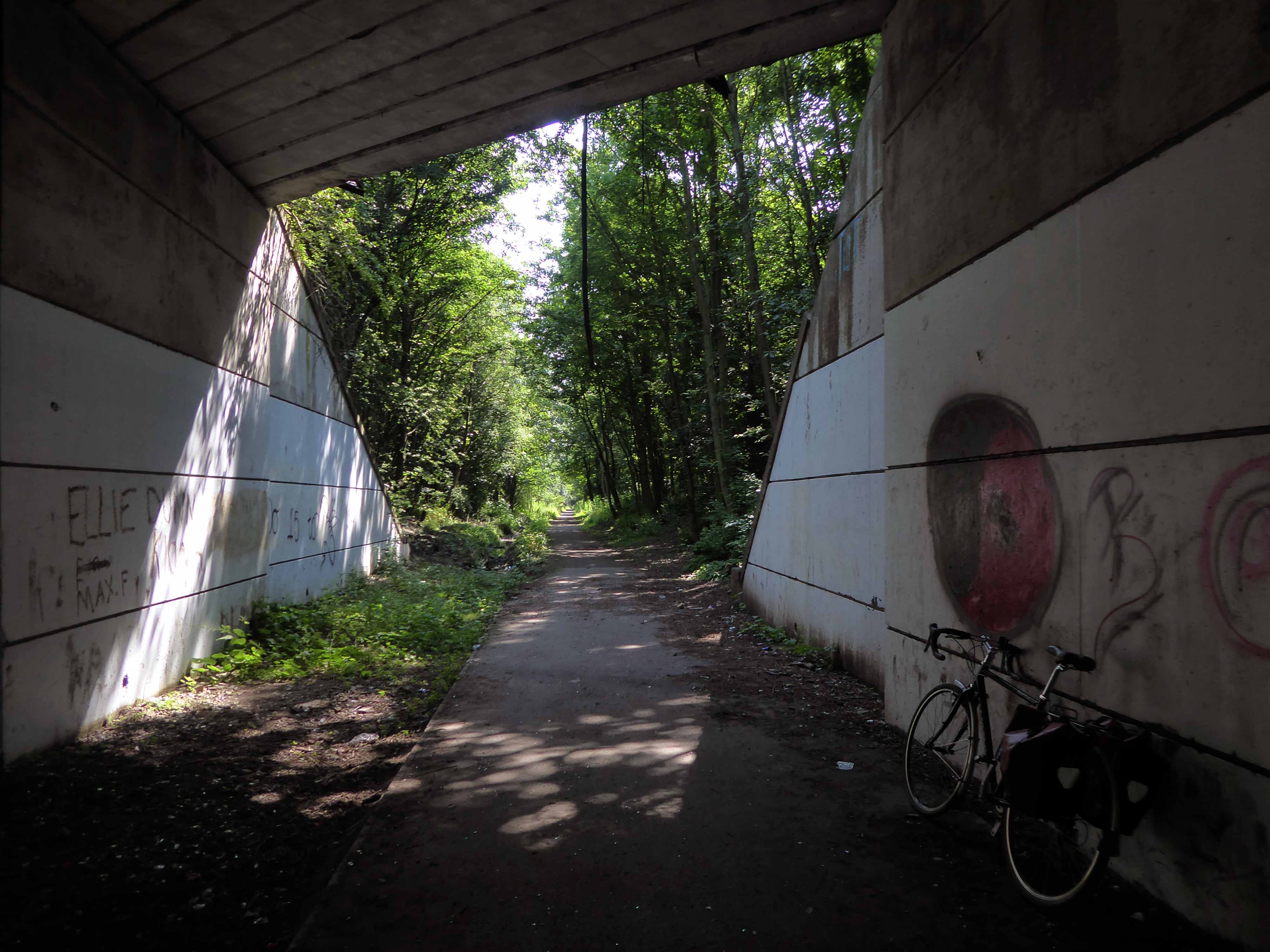
I found myself on yet another former railway line.
The Cycleway was once a railway line designed by George Stephenson to take coal from the Durham coal fields to the docks in Hartlepool, where the coal was then distributed throughout the world.



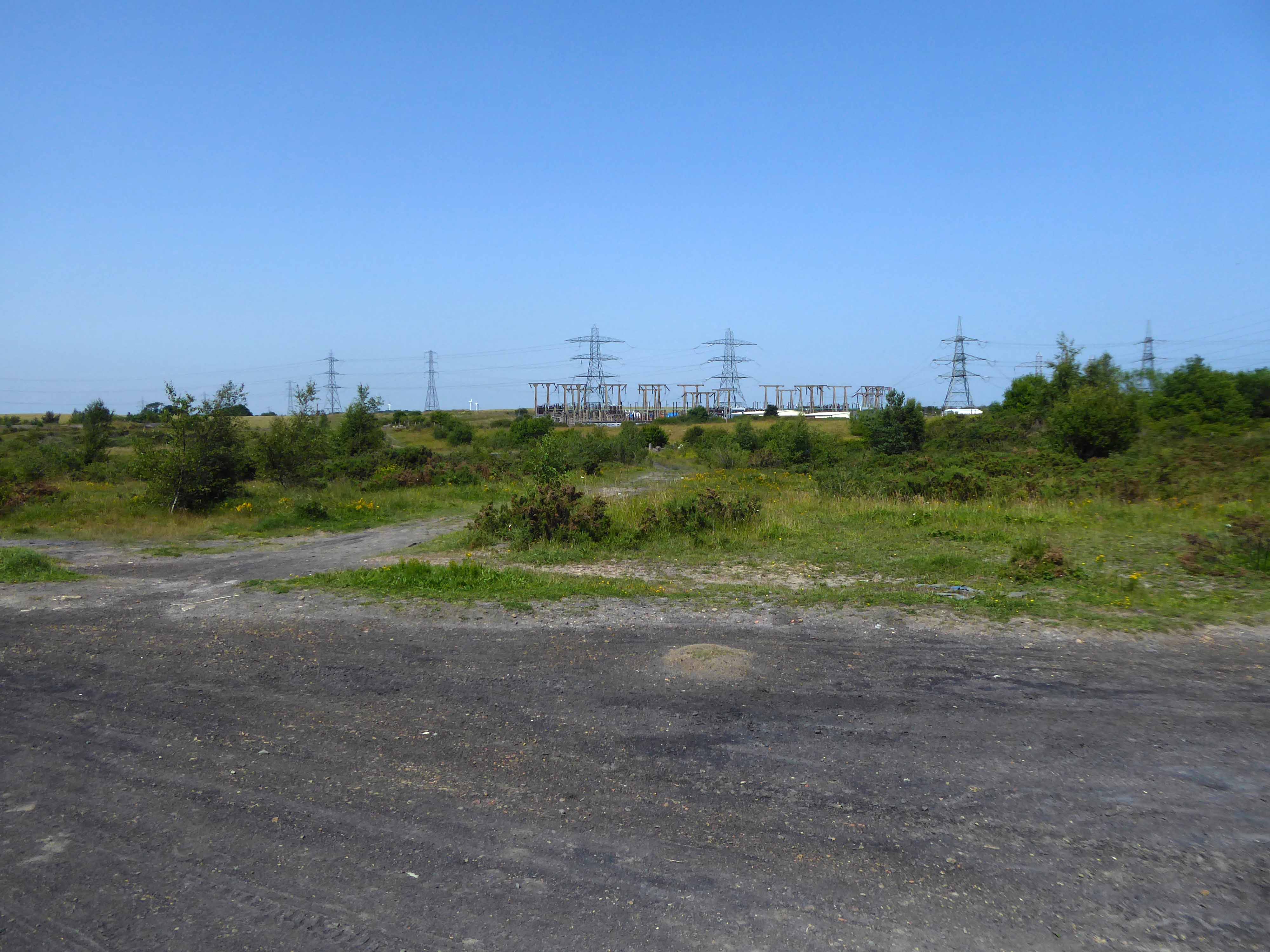
The landscape opened up to coal scarred scrub, I lost the path and found a church, which imposed itself upon the hillside.
St Joseph RC Seaham County Durham
Architect: Anthony J. Rossi of Consett 1964
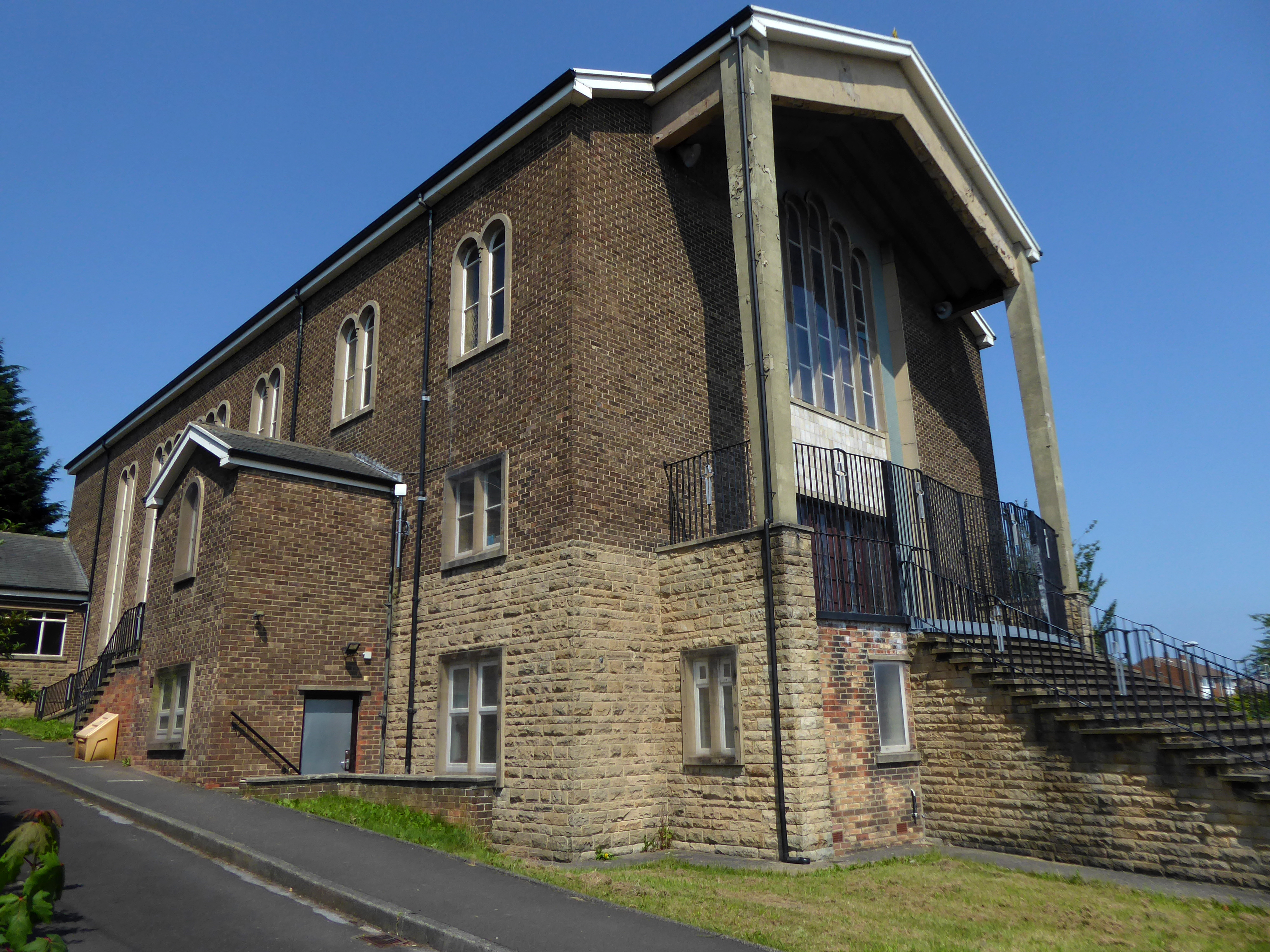
Opening 1964

Seeking assistance from a passing cyclist I negotiated a safe passage to Sunderland.
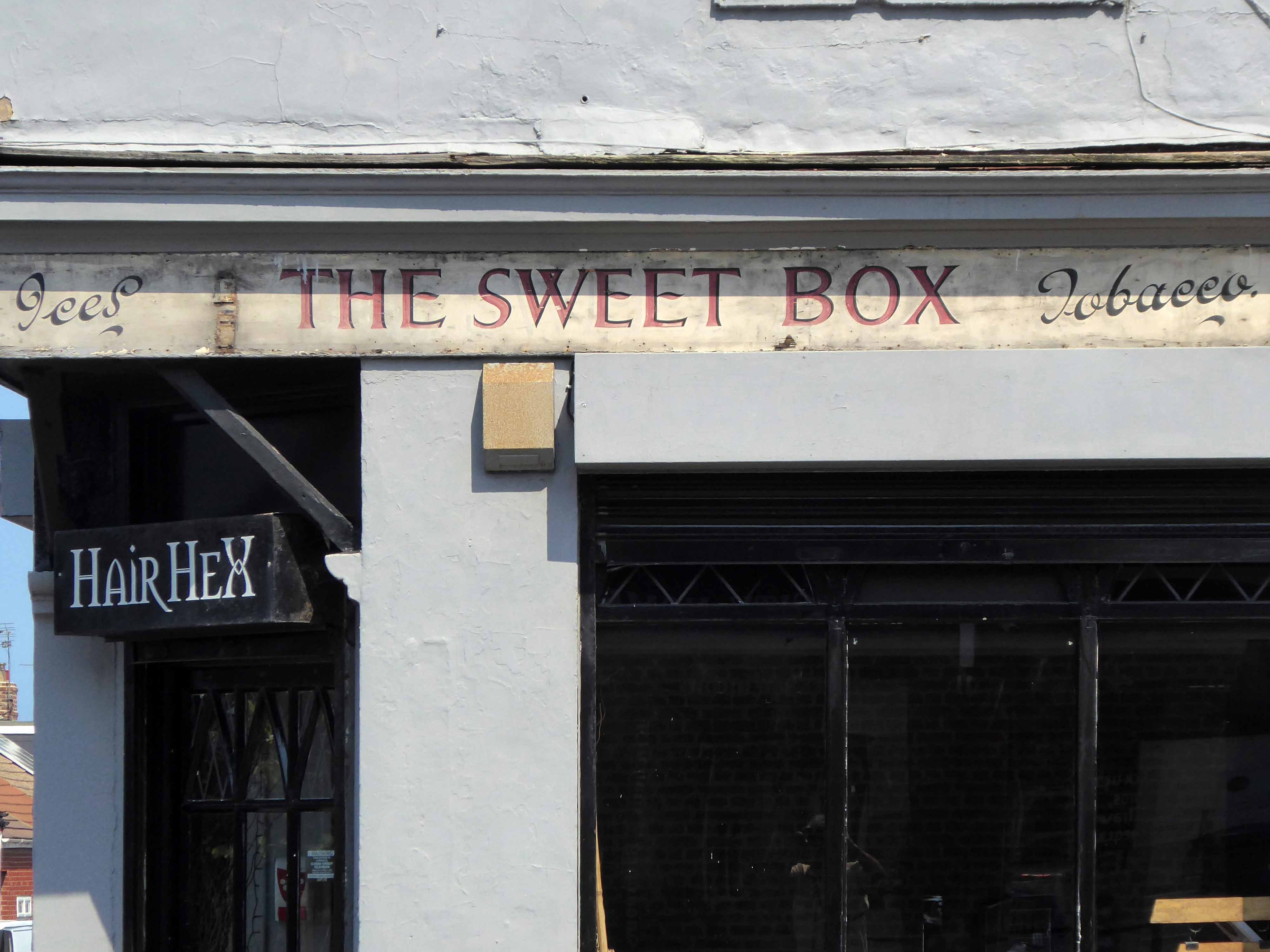
The Sunderland Synagogue is a former synagogue building in Sunderland, England. The synagogue, on Ryhope Road, was designed by architect Marcus Kenneth Glass and completed in 1928. It is the last surviving synagogue to be designed by Glass.
The synagogue was listed as a Grade II historic structure in 1999.

I crossed the Queen Alexandra Bridge
The steel truss bridge was designed by Charles A Harrison – a nephew of Robert Stephenson’s assistant.
It was built by Sir William Arrol between 1907 and 1909 and officially opened by The Earl of Durham, on behalf of Queen Alexandra on 10 June 1909.

I took a right and arrived in Roker, where I saw these well tanned and tattooed cyclists taking a rest.
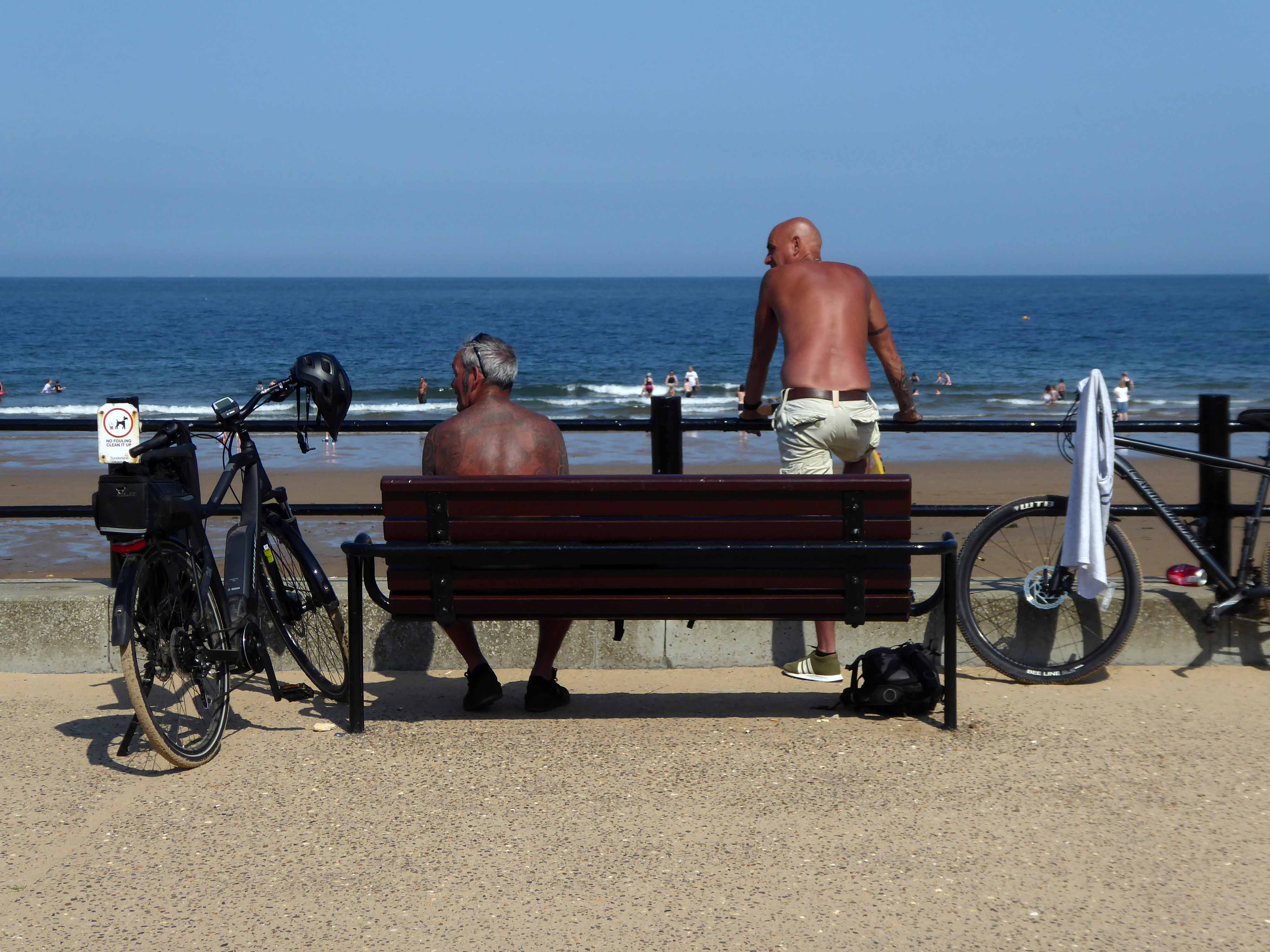
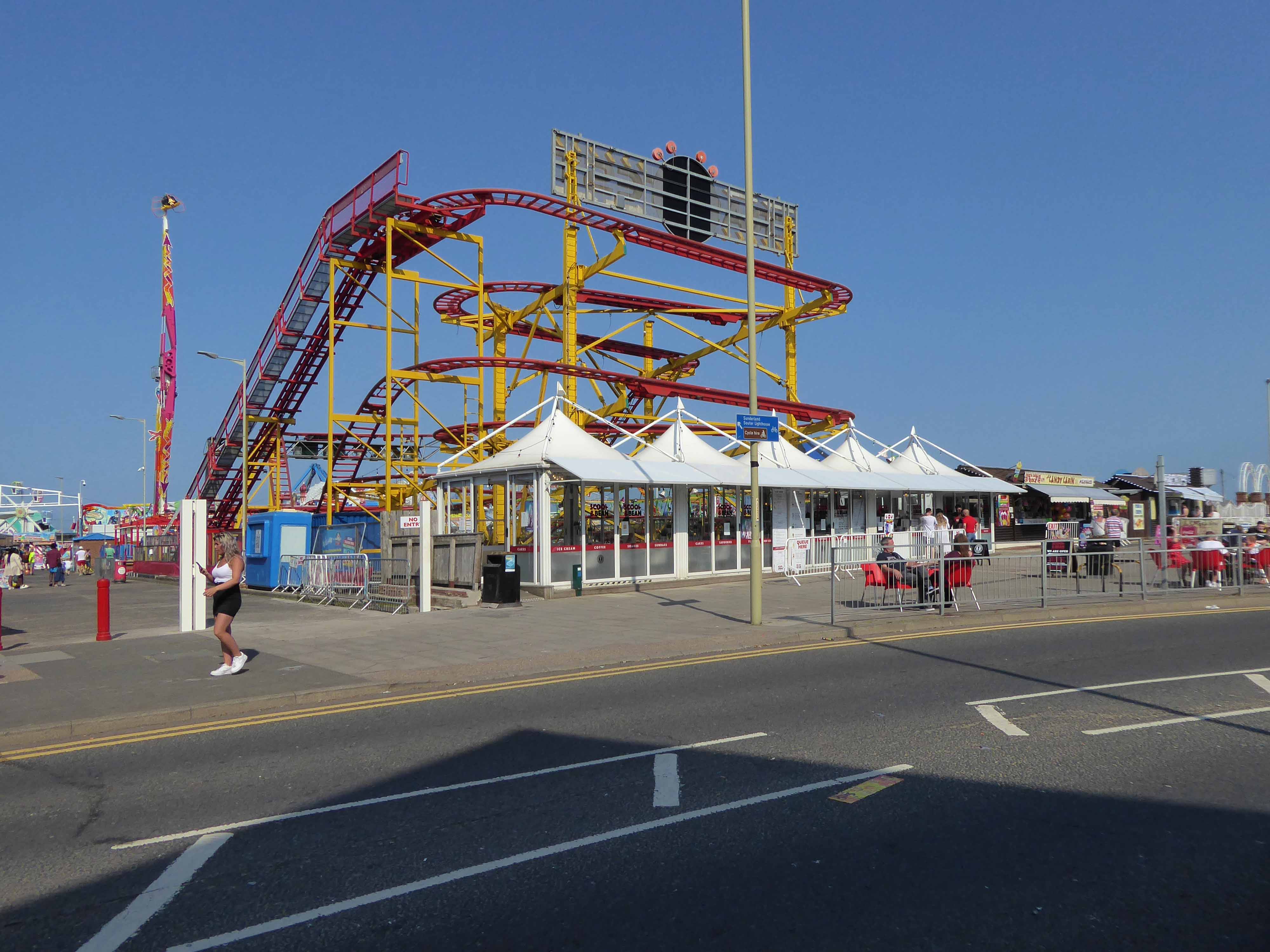
Pressed on, largely alongside the coast to South Shields.

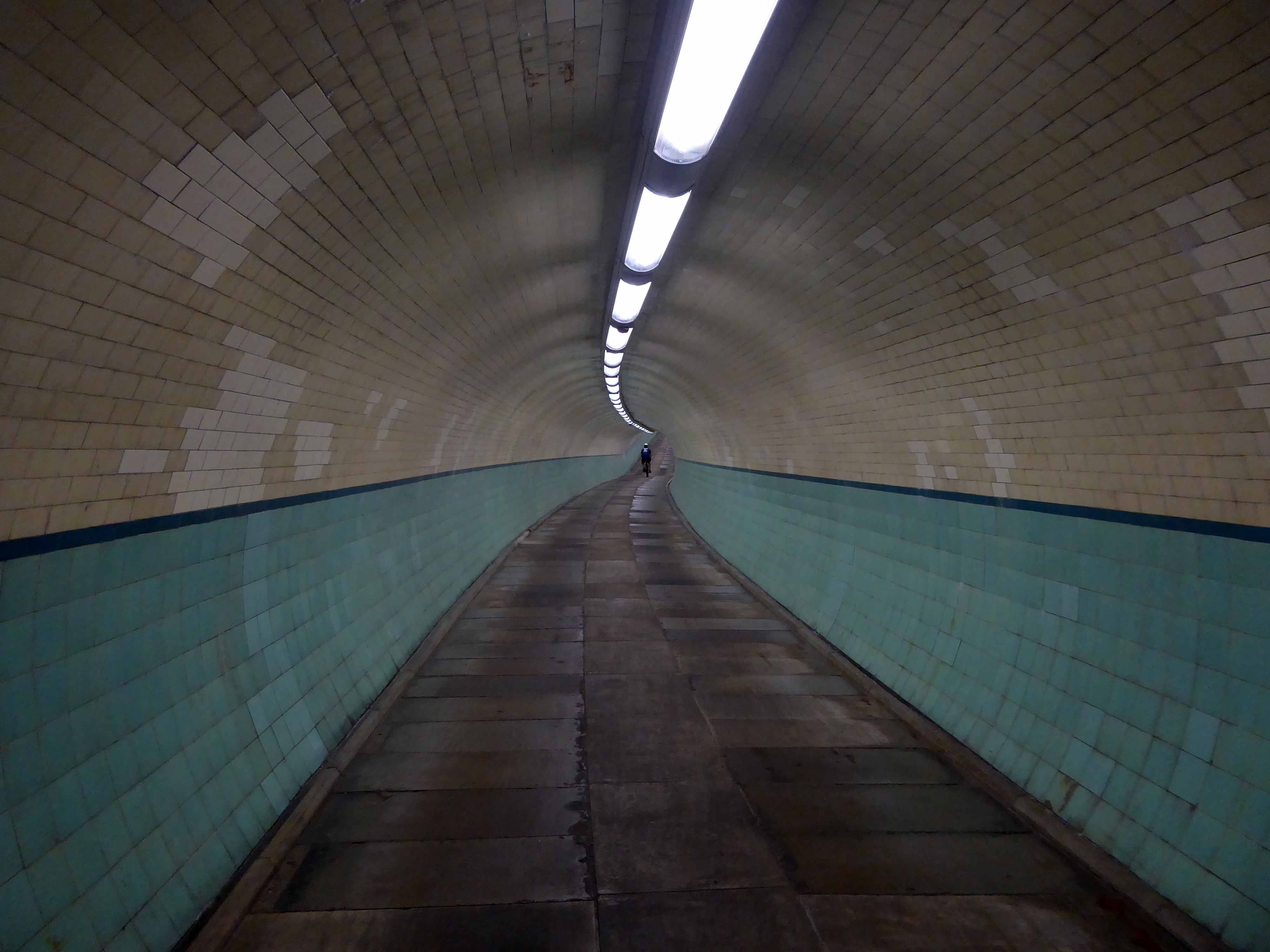
Tyne Cyclist and Pedestrian Tunnel was Britain’s first purpose-built cycling tunnel. It runs under the River Tyne between Howdon and Jarrow, and was opened in 1951, heralded as a contribution to the Festival of Britain.
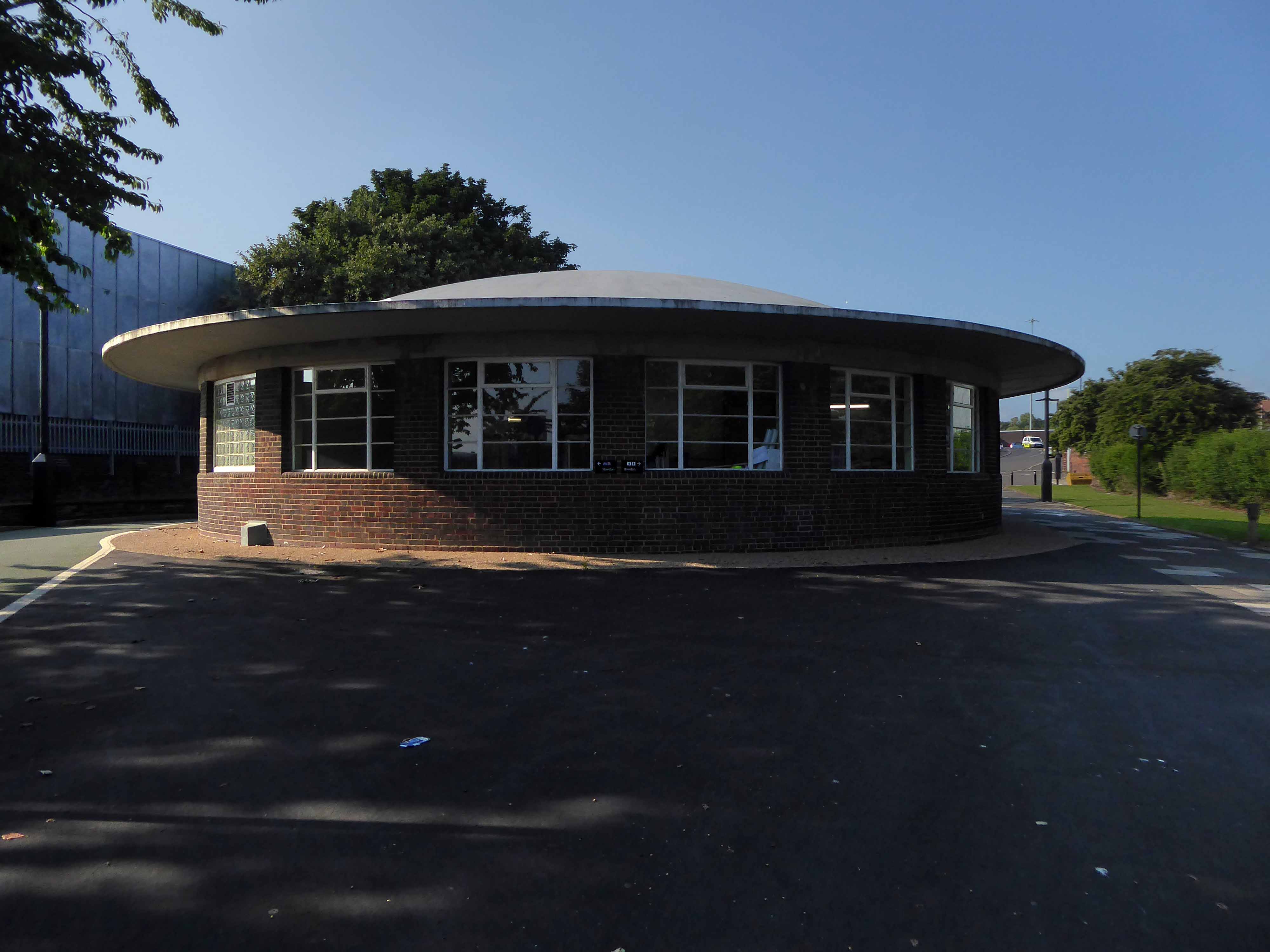
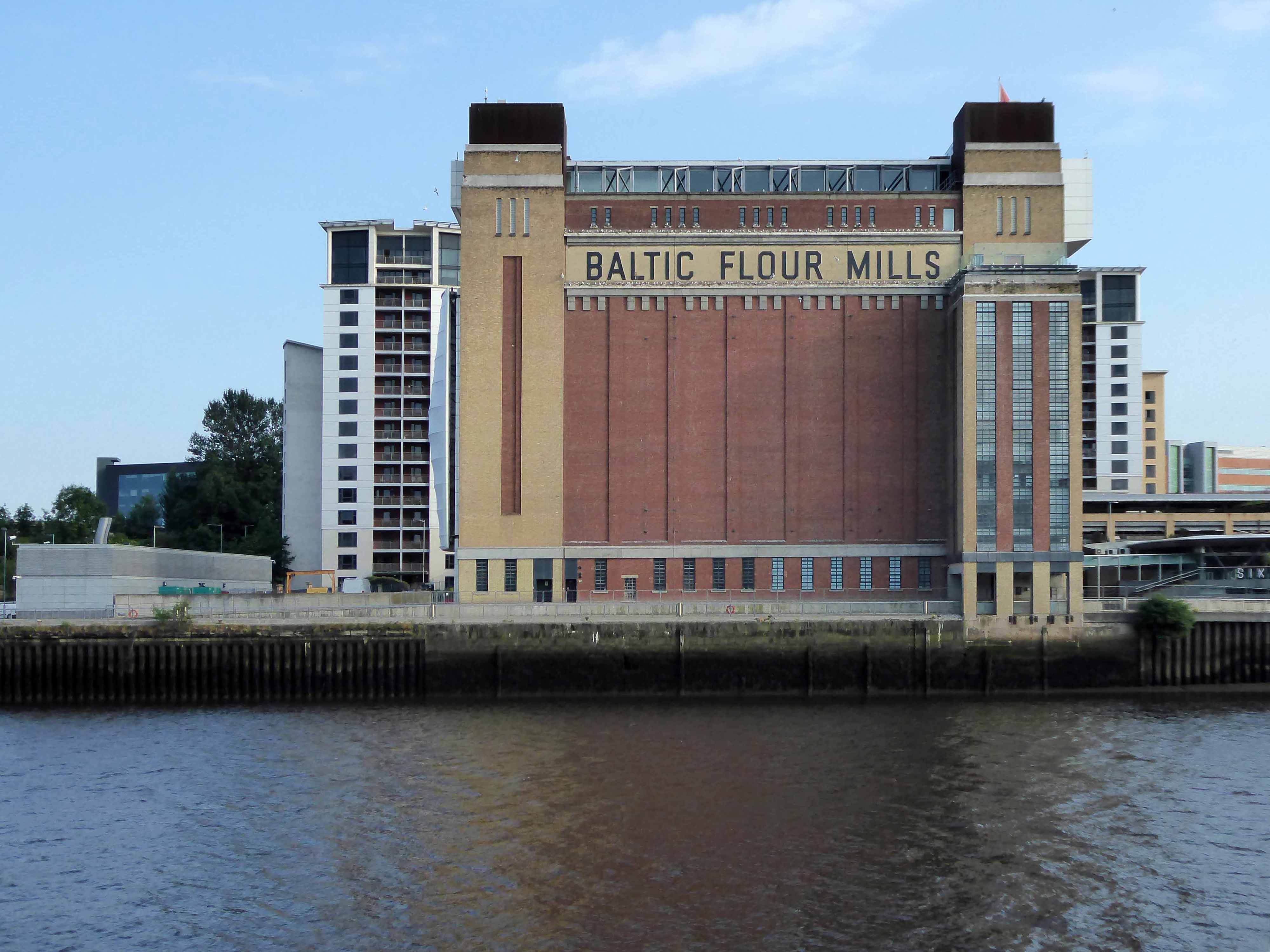
I cycled the banks of the Tyne, fetching up at the Quayside with a fine view of the Baltic.
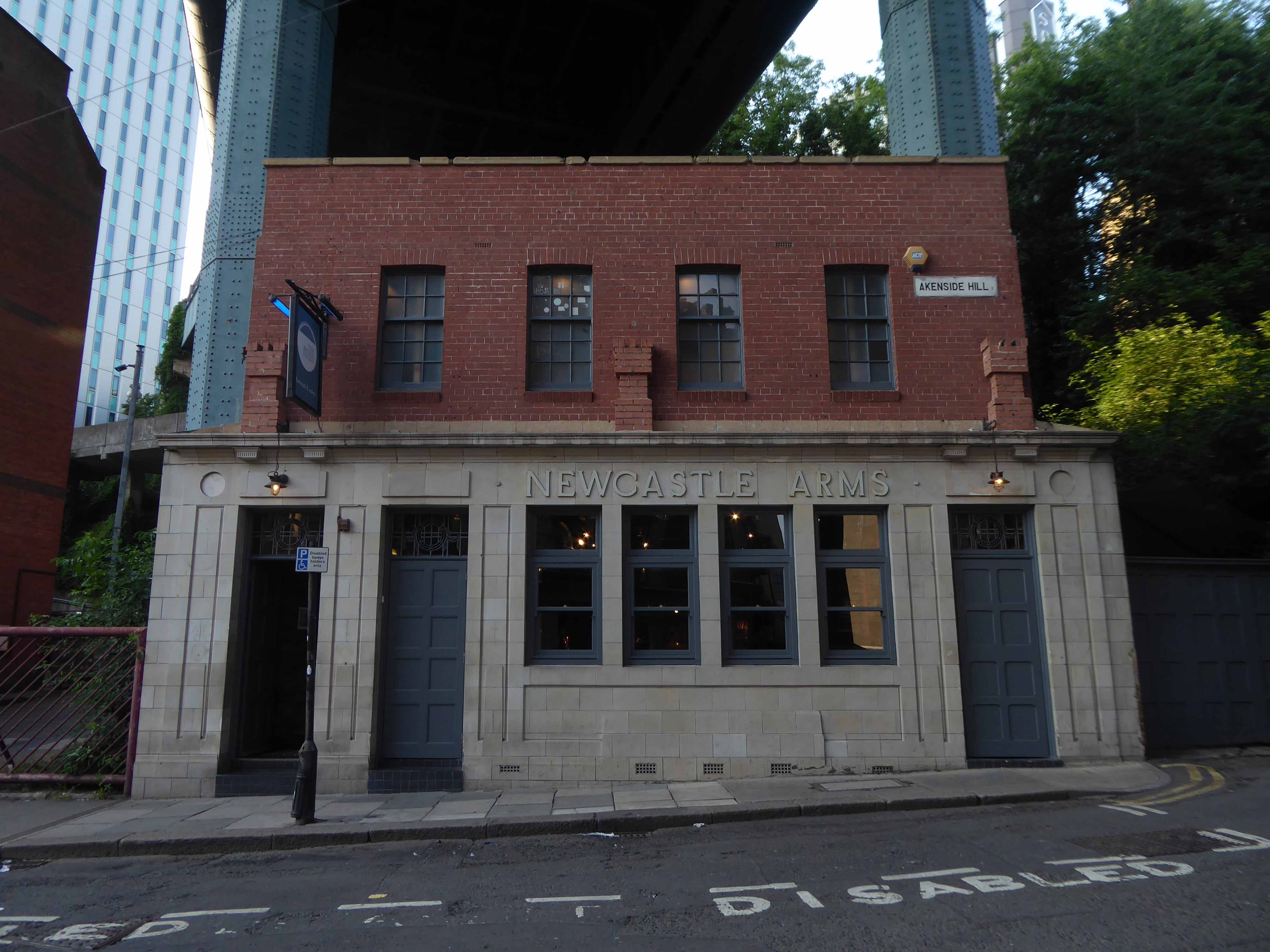
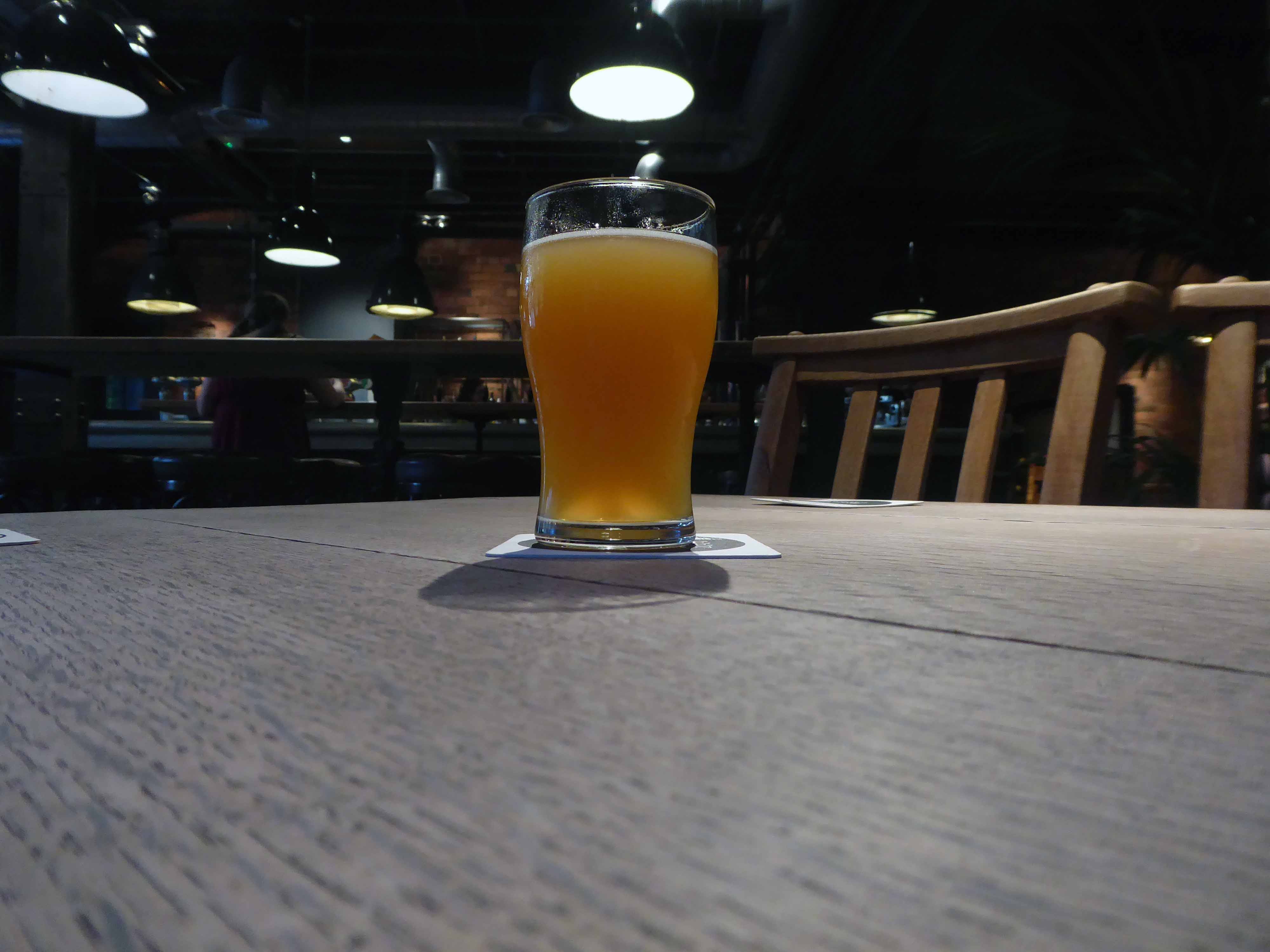
Washed and suitably brushed up I hastened to the Bridge Tavern – to take a glass or two.
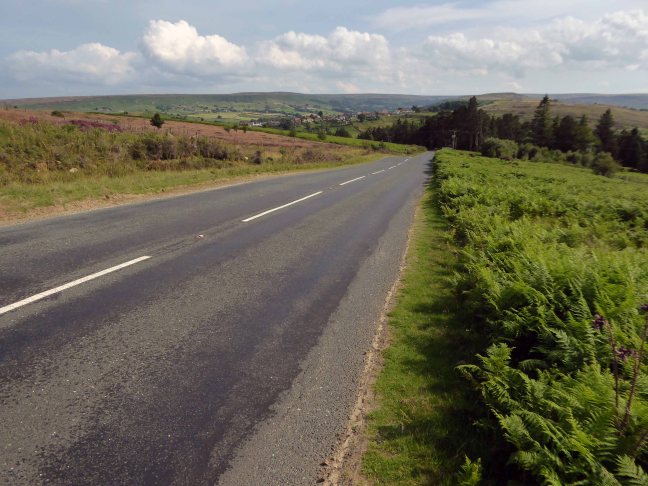
Well it seems that I had already cycled from Hull to Scarborough, so it must be time to head for Redcar.
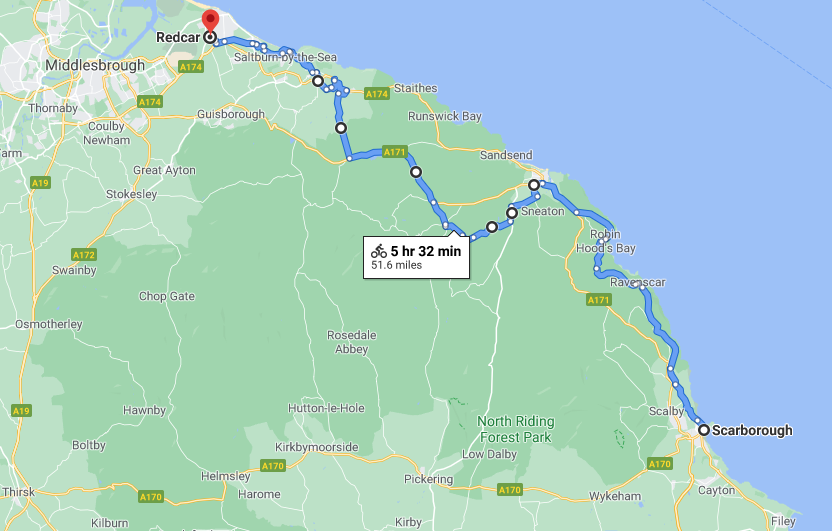
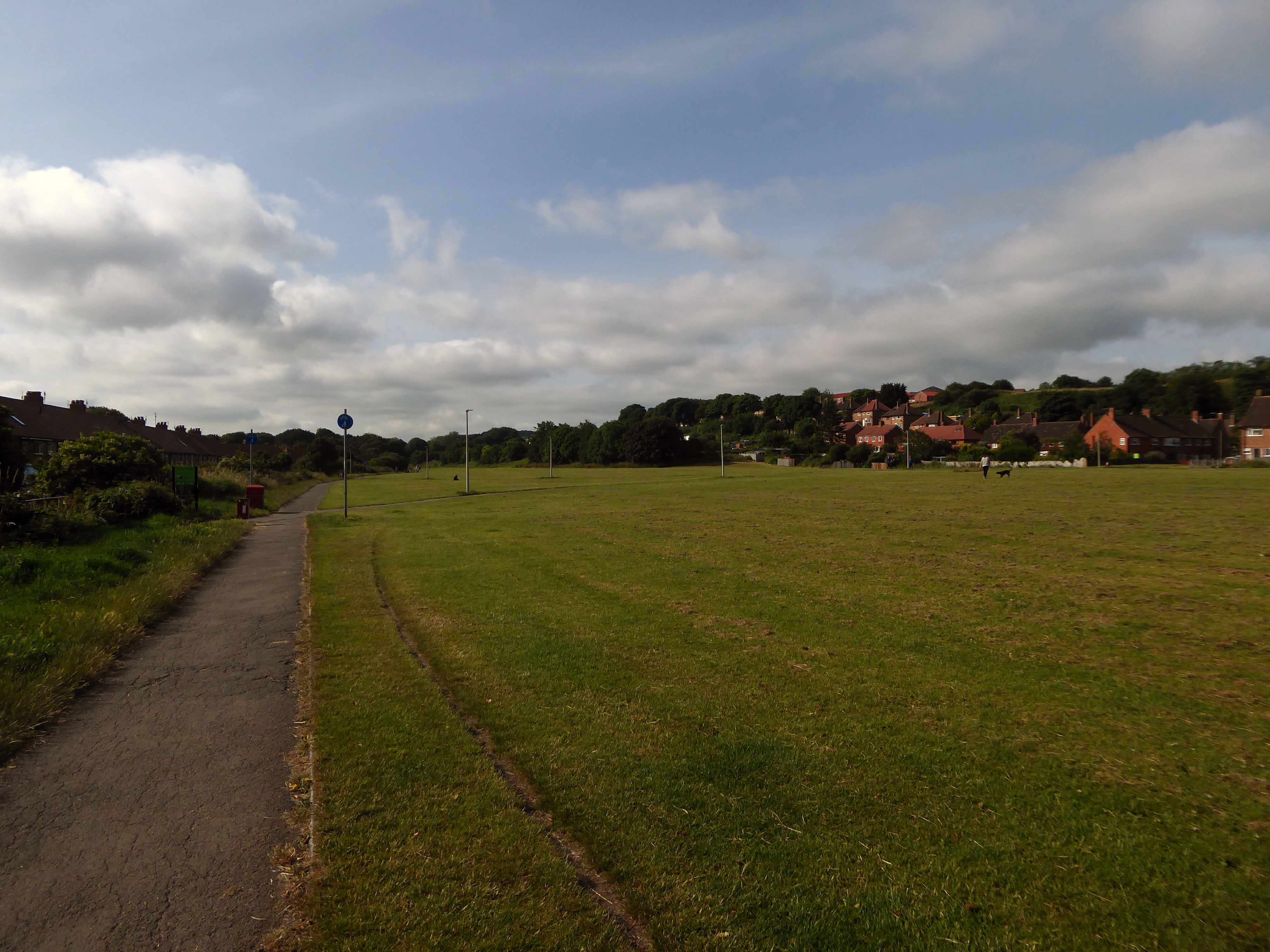
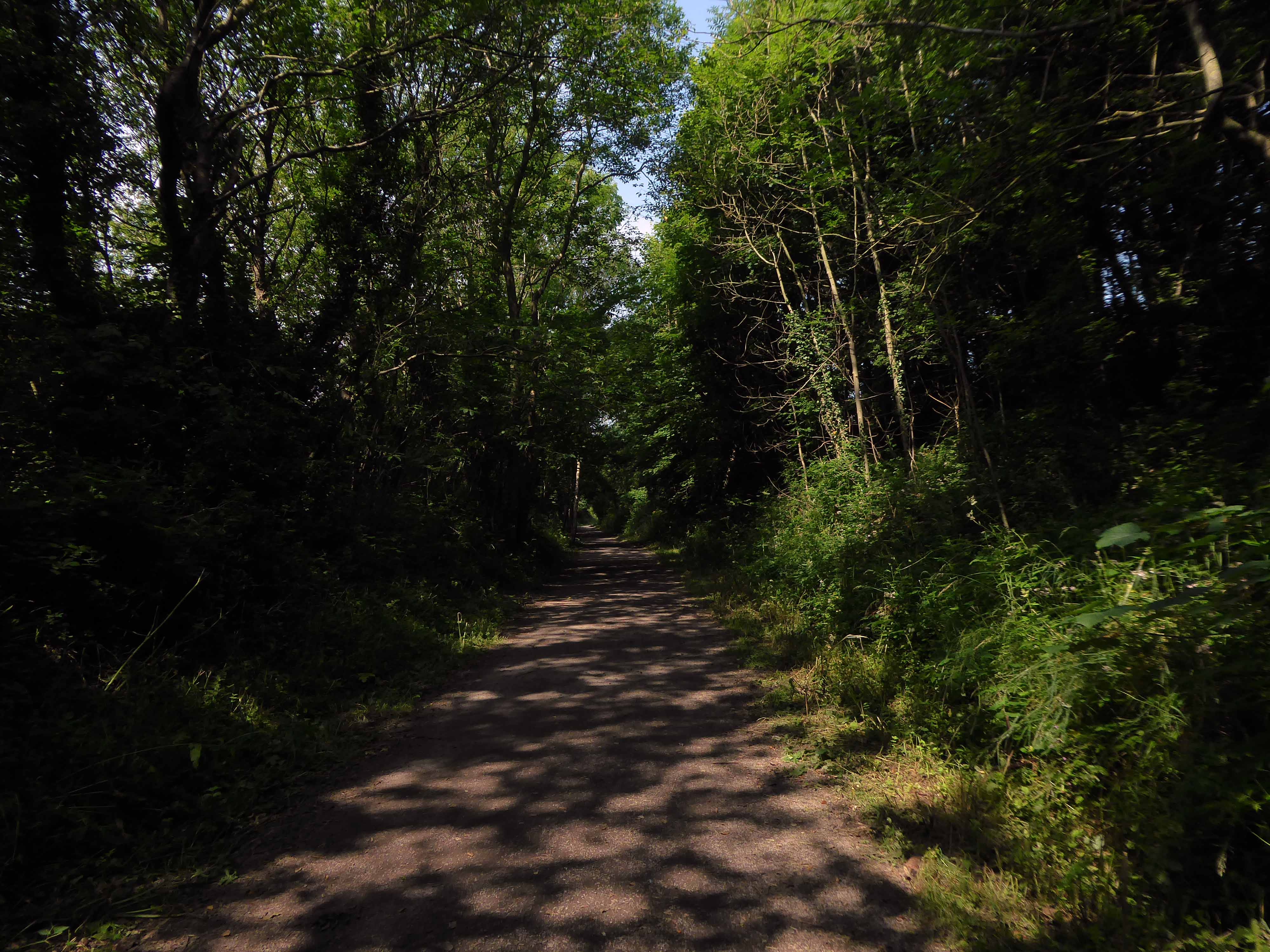
Leaving Scarborough by the Cinder Track under the expert guidance of Mr Ben Vickers.

This was the site of the Gallows Close Goods Yard.
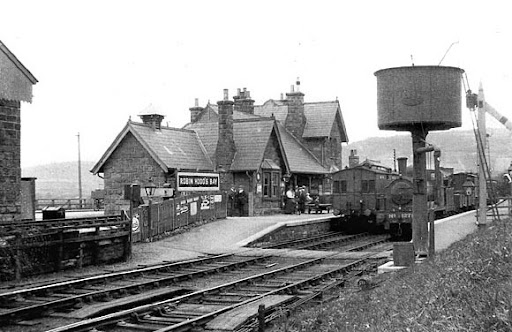
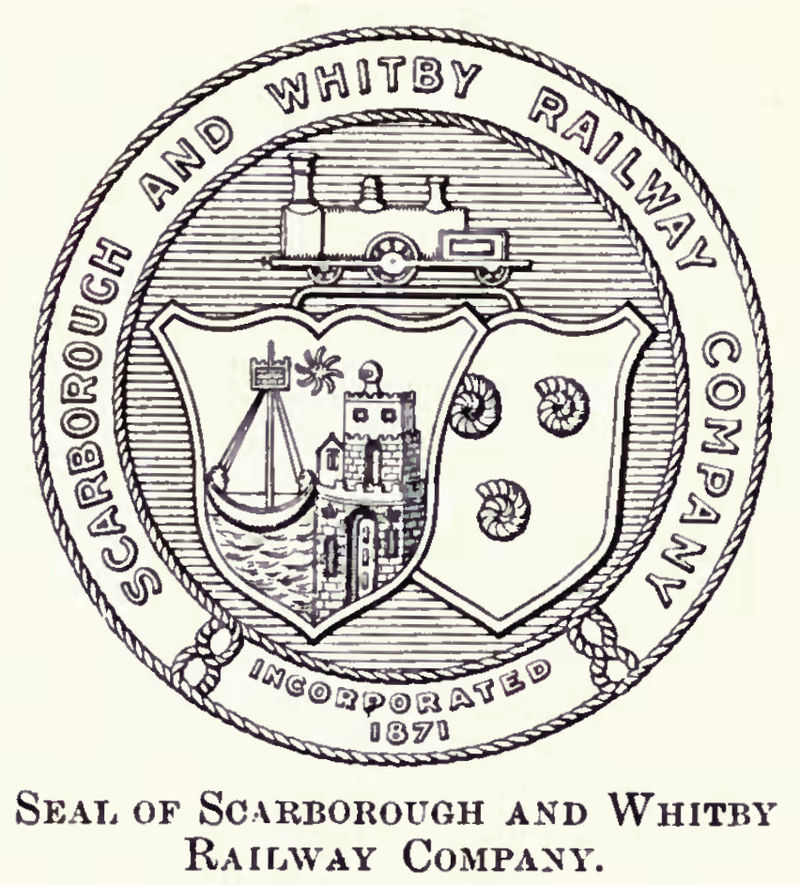
Formerly the Scarbough to Whitby Railway – the line opened in 1885 and closed in 1965 as part of the Beeching Axe.
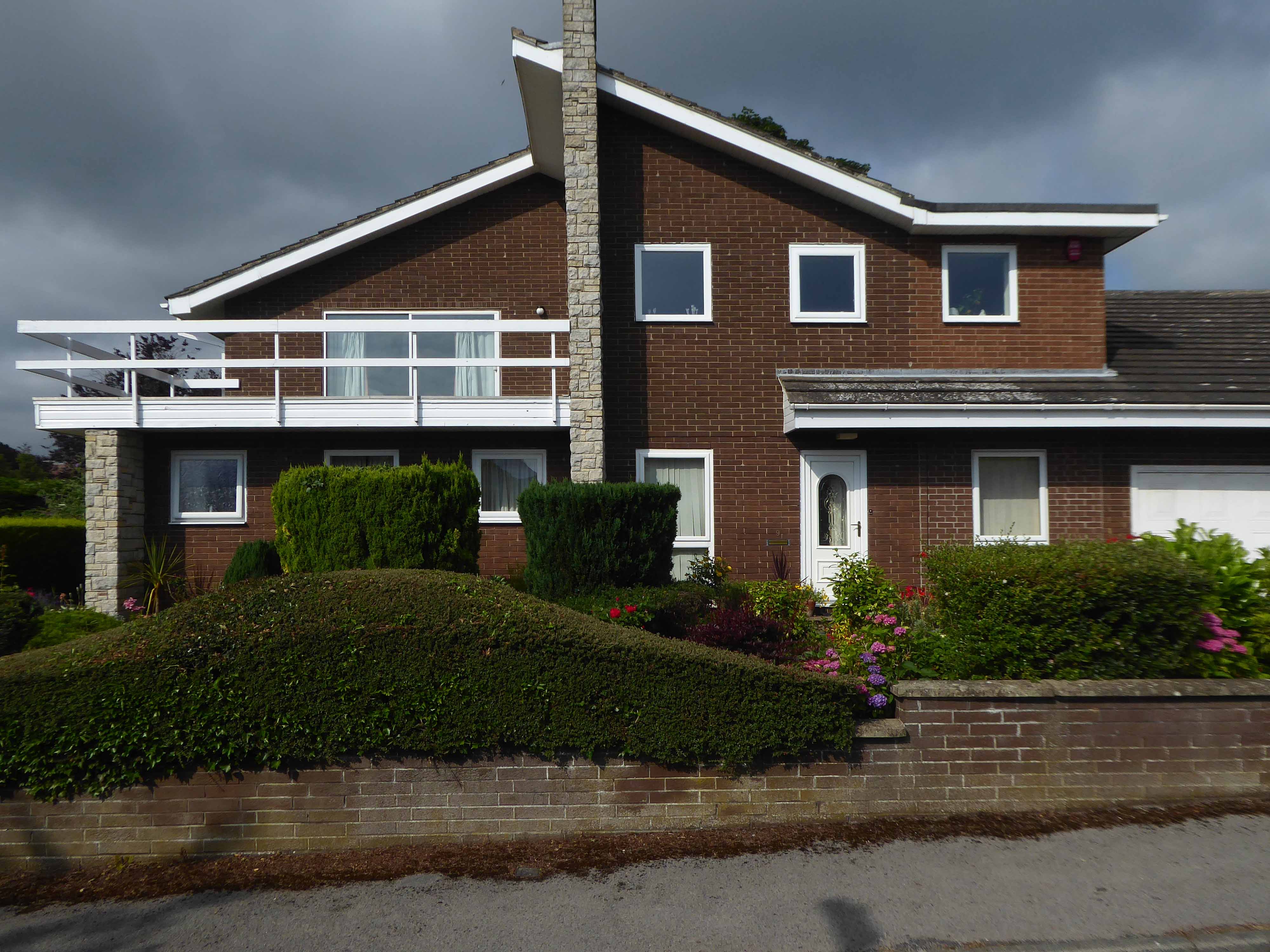
Yet again I chance upon a delightful post-war home.
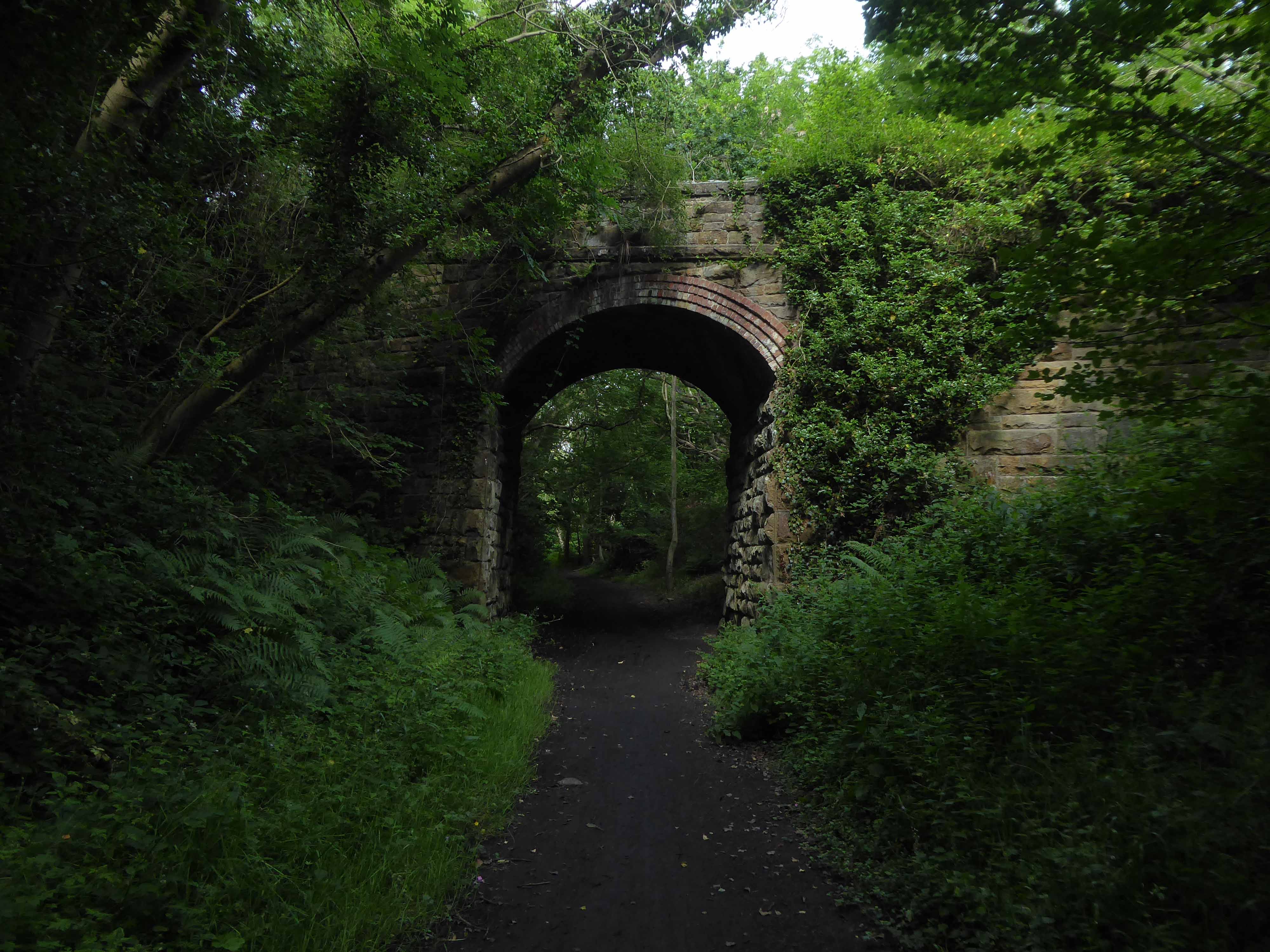


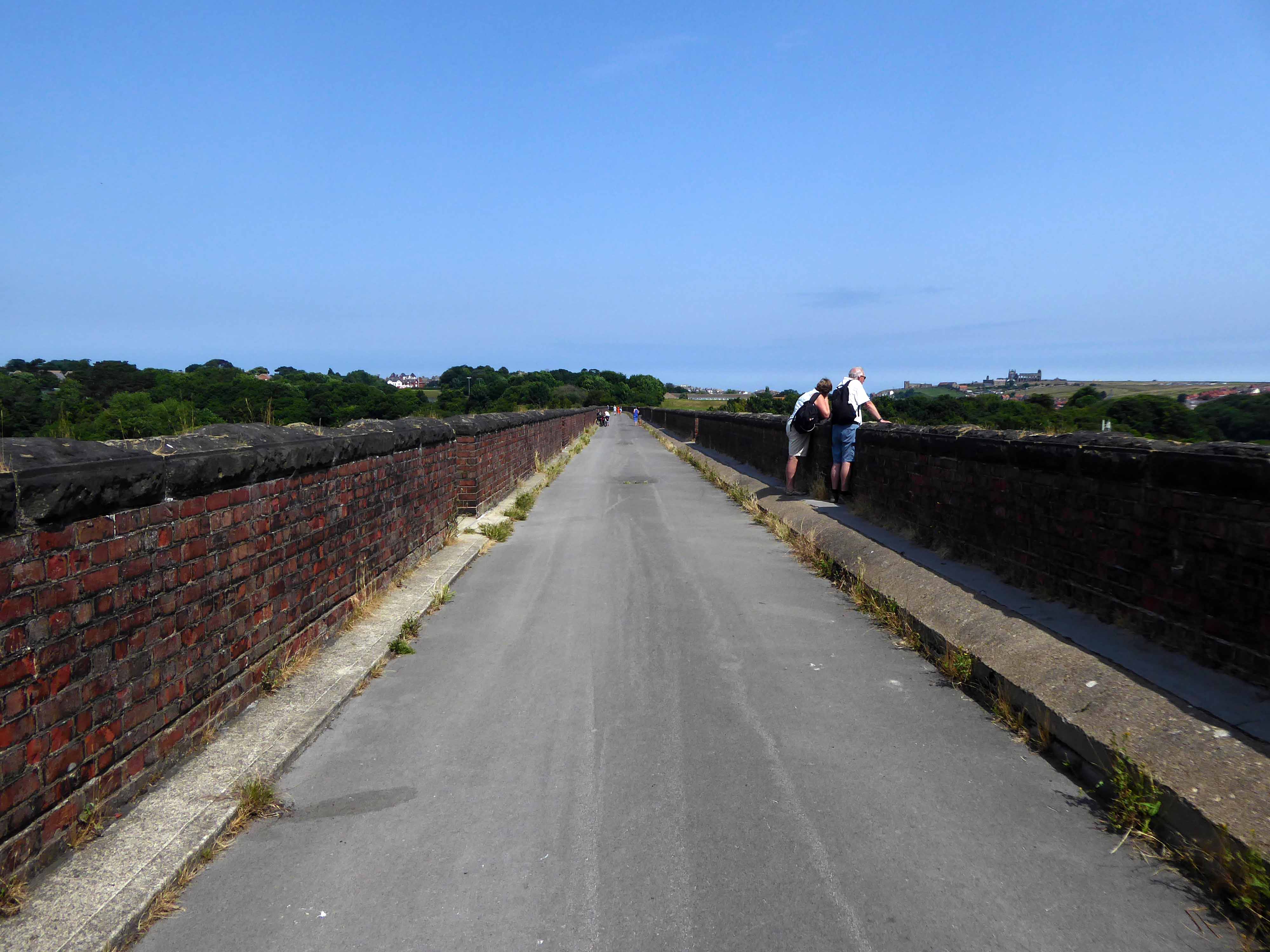
I parted company with the track dropping down to the Esk Valley from the Larpool Viaduct.
Construction began in October 1882 and was complete by October 1884.
Two men fell from the piers during construction, but recovered.
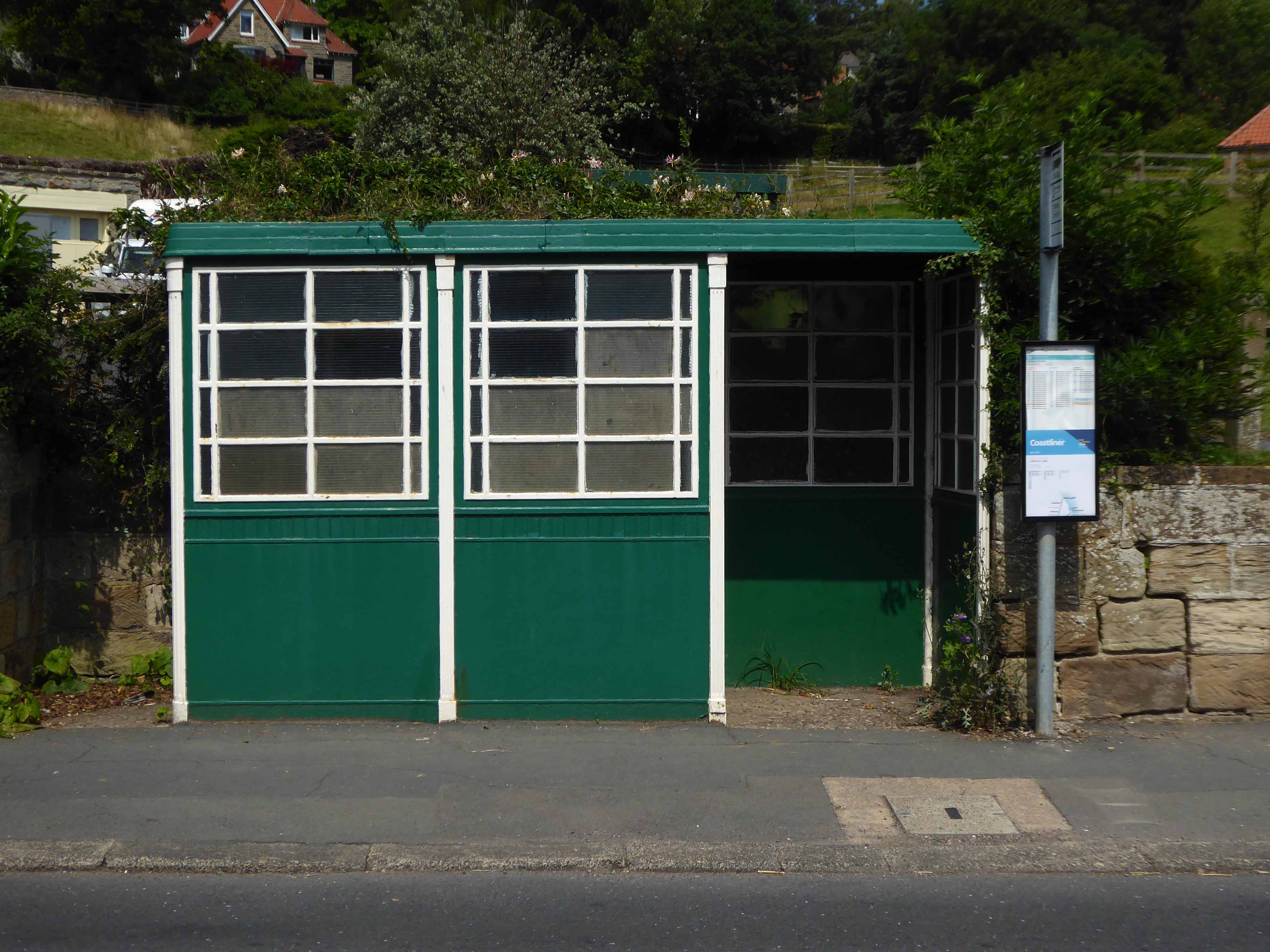
I found myself in Ruswarp, home to this enchanting bus shelter.
I bombed along the main road to Sleights.

There then followed a hesitant ascent, descent, ascent along a badly signed bridleway, fearing that I had climbed the hill in error I retraced, then retraced.
A difficult push ensued, a precipitous path, rough and untended, rising ever higher and higher.
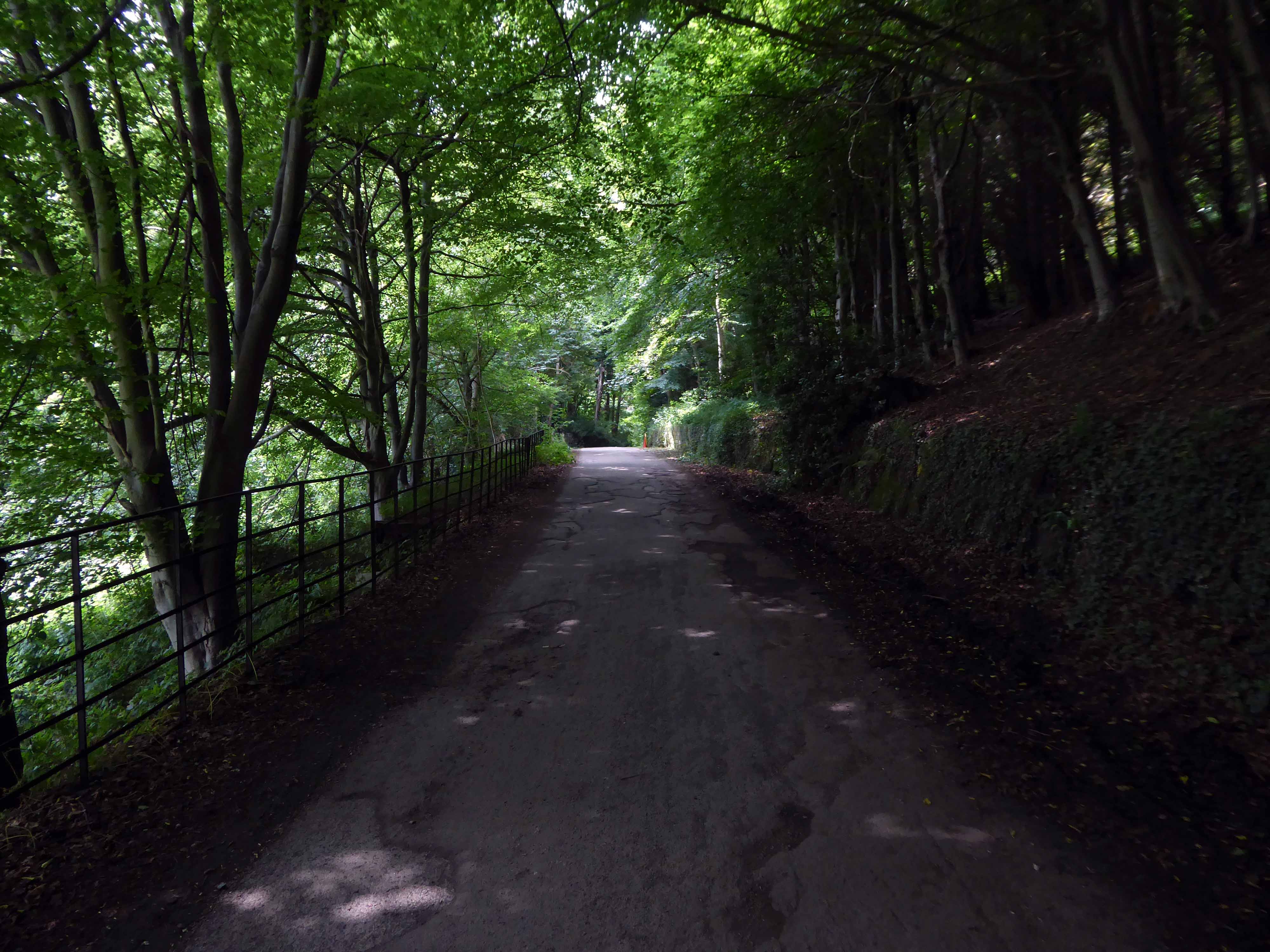
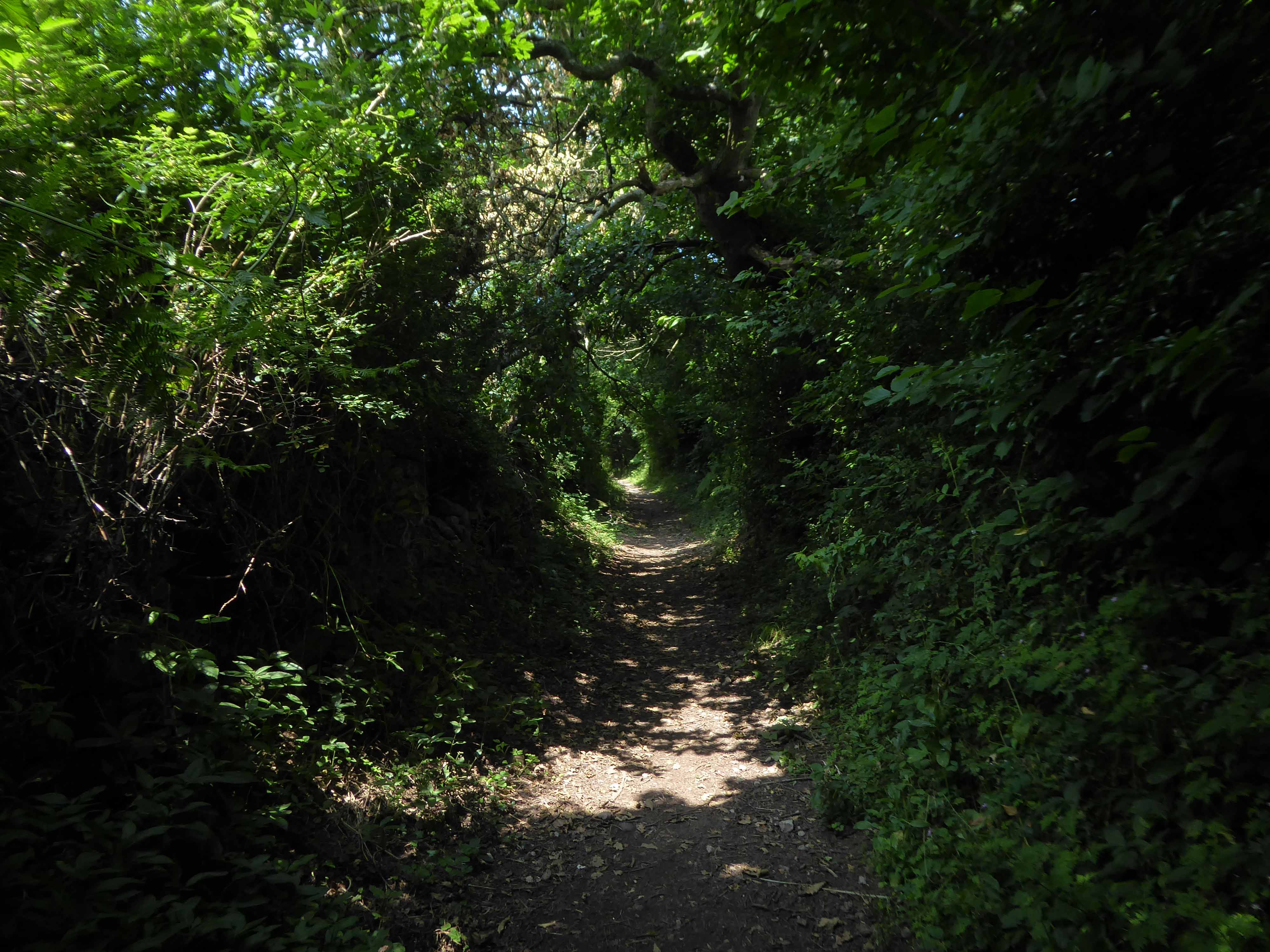
Finally arriving at Aislaby, more than somewhat exhausted – the village is mentioned in the Domesday Book as Asuluesbi.
Pausing to catch my breath I took the wildly undulating road to Egton – along the way I was alerted to the presence of a tea stop by two touring cyclists from Nottingham.
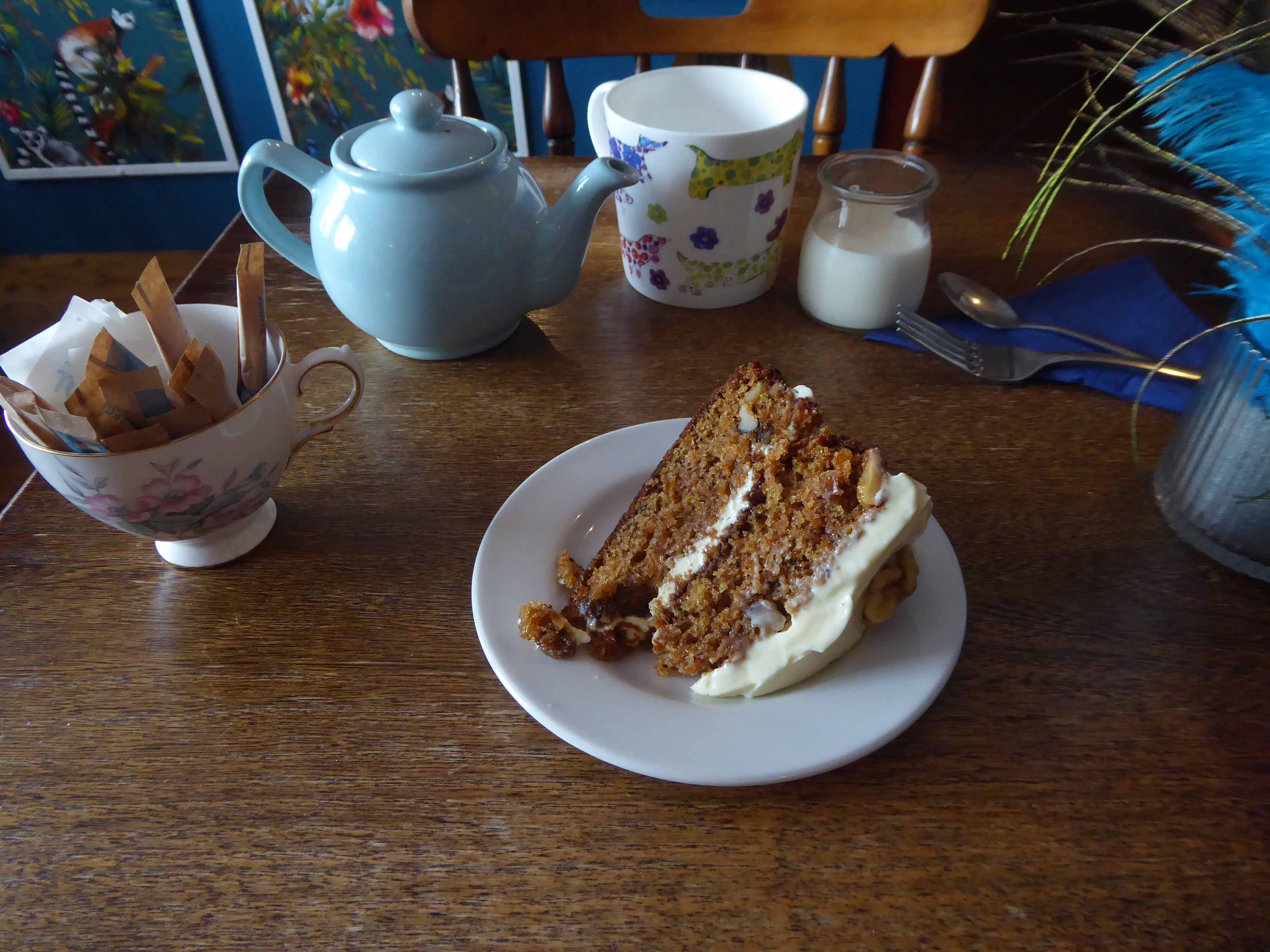
A welcome wet and a hunk of home made carrot cake.
Brewmeister Maria was good enough to suggest route through Castleton Moor and over the tops to Saltburn.
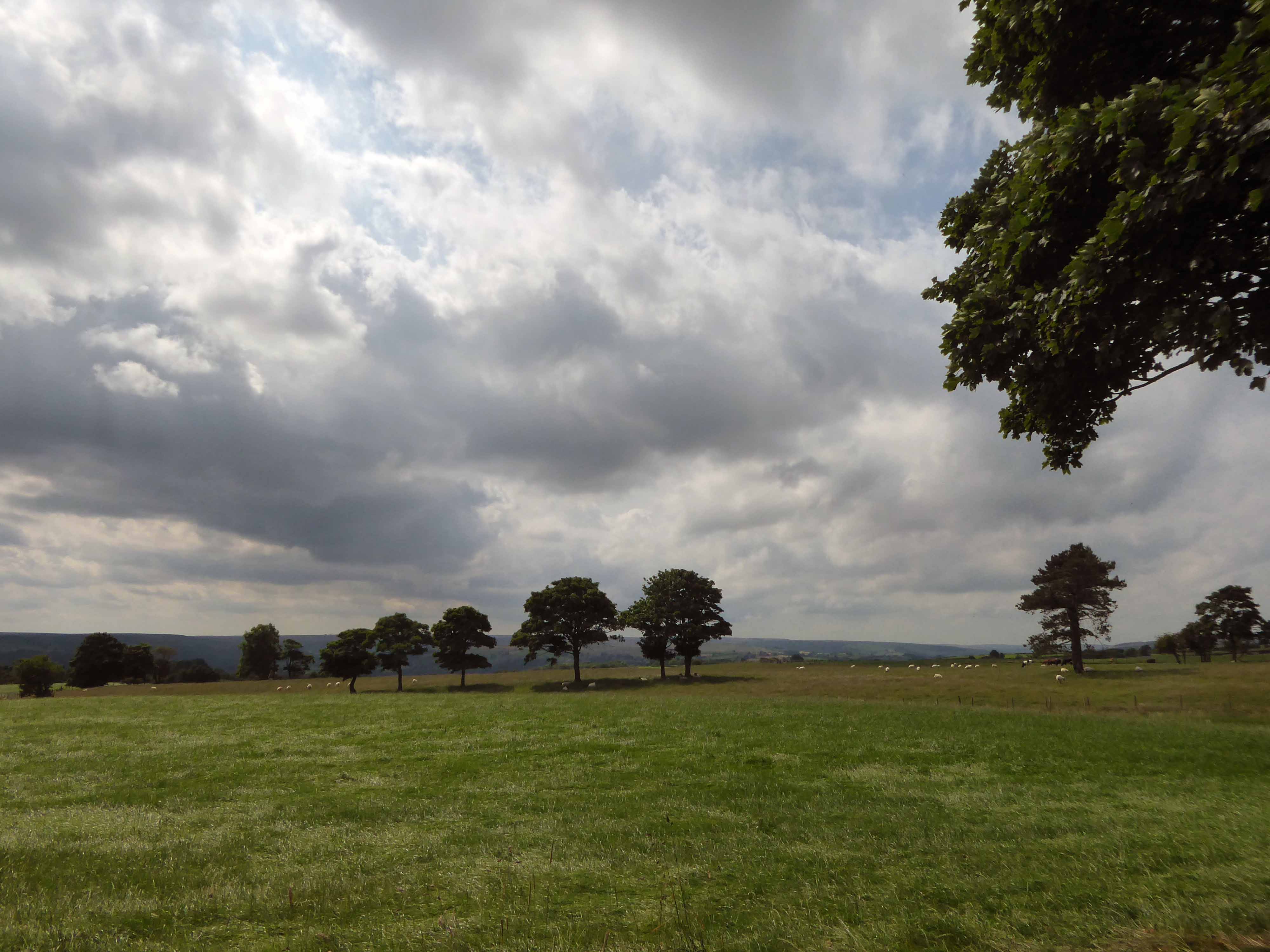
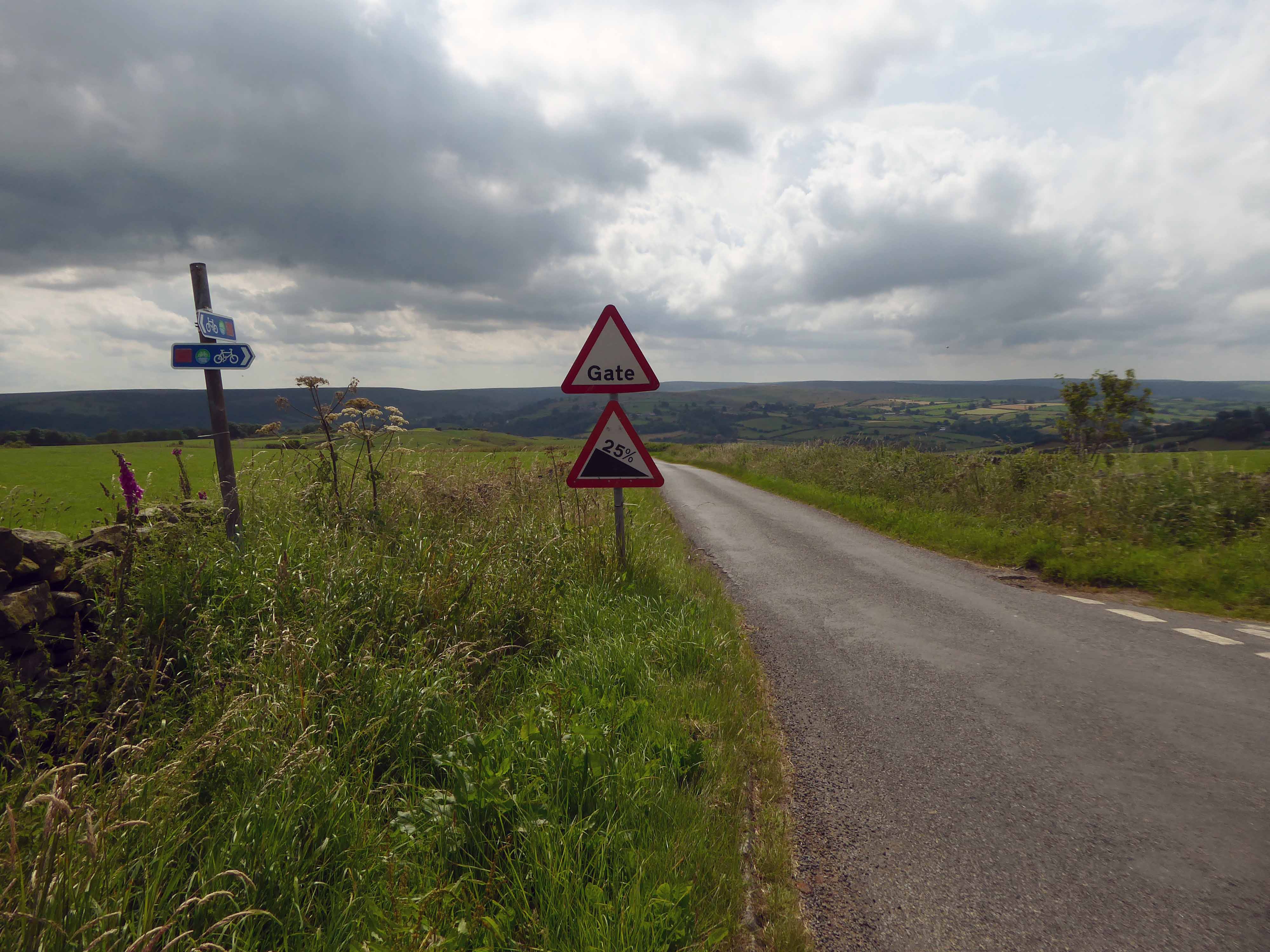
It was too hot a day for a detour to Fryup.
The curious name Fryup probably derives from the Old English reconstruction Frige-hop: Frige was an Anglo-Saxon goddess equated with the Old Norse Frigg; hop denoted a small valley.
An old woman at Fryup was well known locally for keeping the Mark’s e’en watch – 24 April, as she lived alongside a corpse road known as Old Hell Road.
The practice involved a village seer holding vigil between 11pm and 1am to watch for the wraiths of those who would die in the following 12 months.
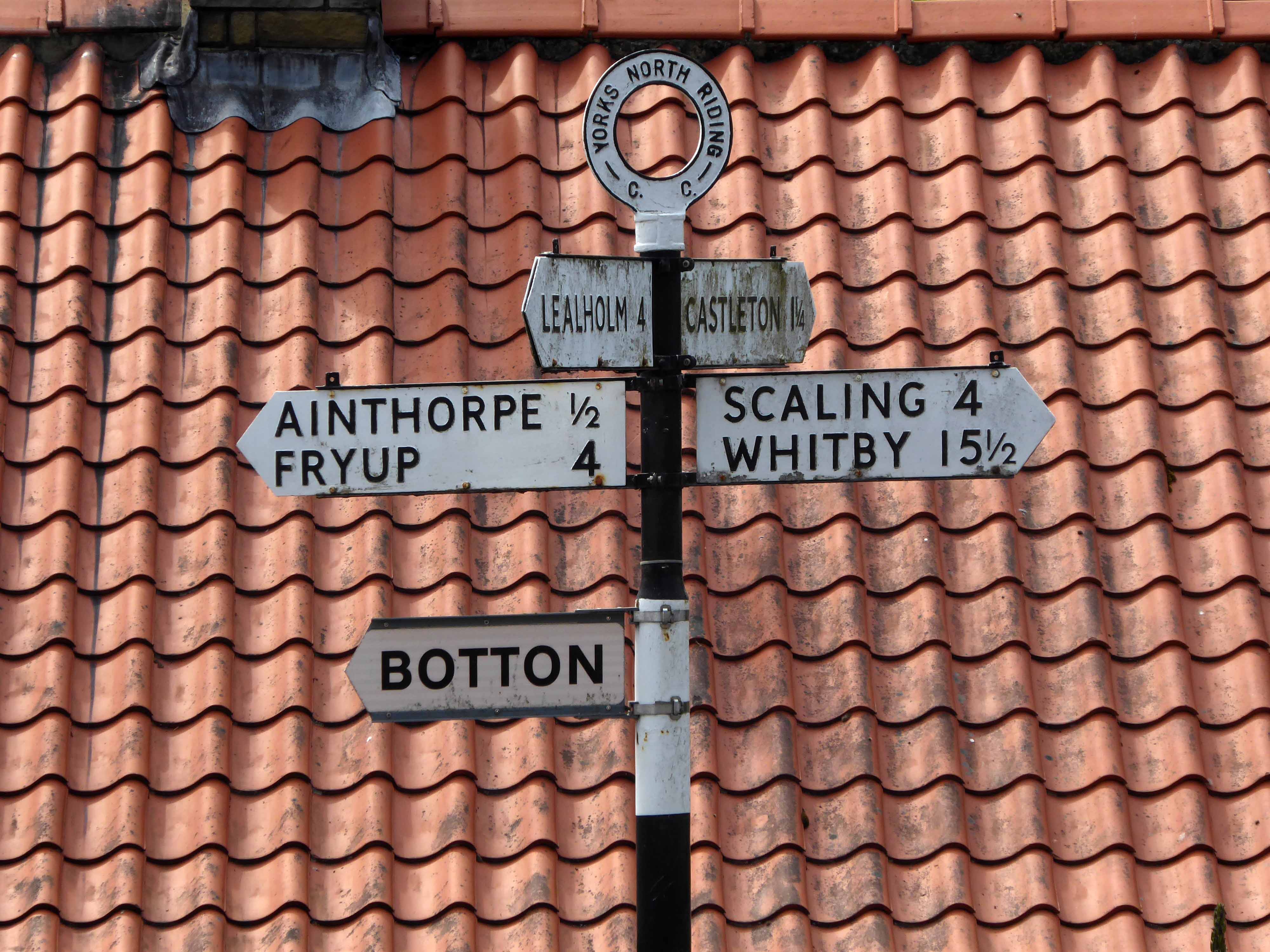
Castleton Moor ghost.
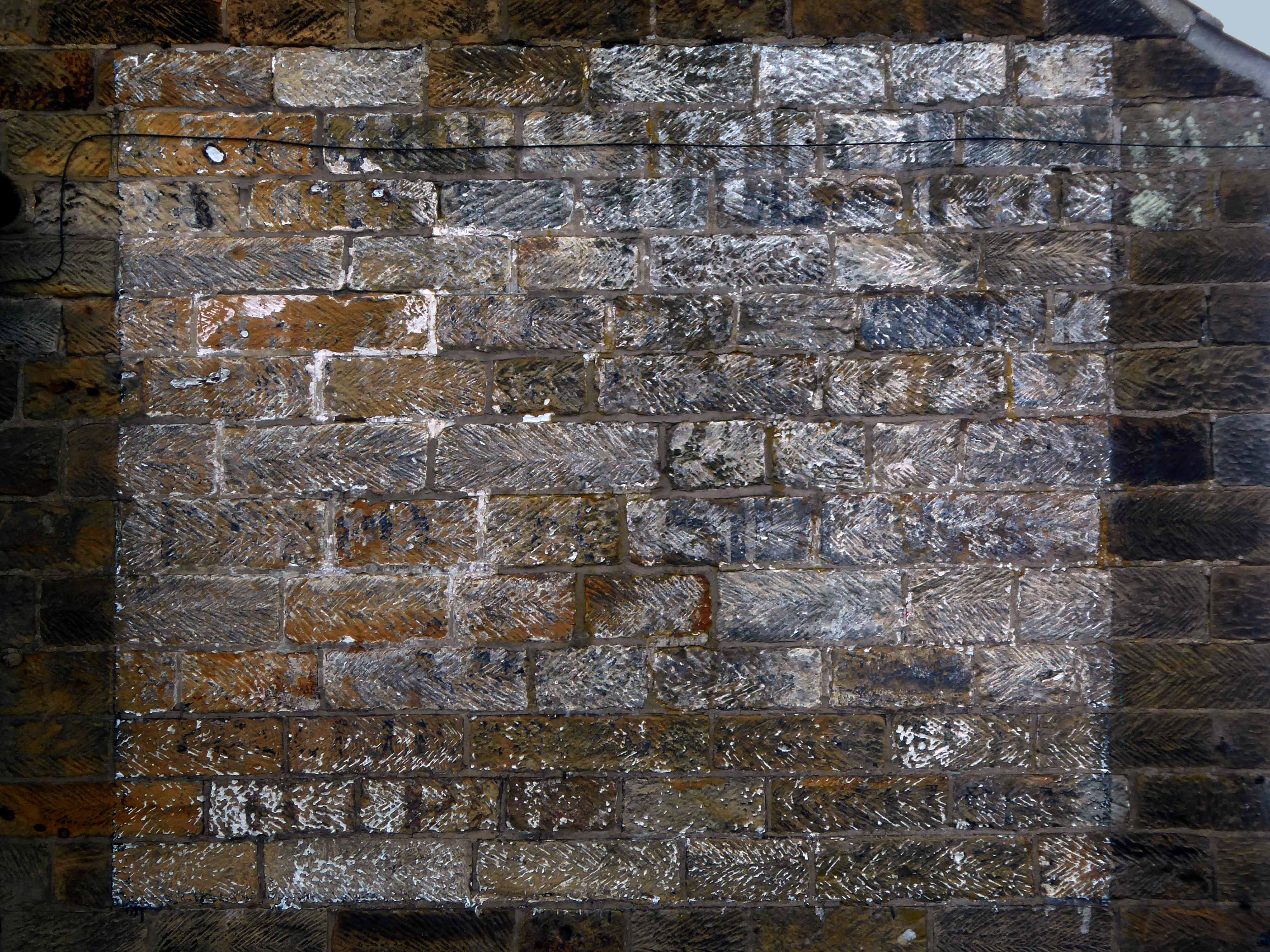
In the village I was given further directions by two elderly gents, who had been engaged in a discussion concerning their long term mapping of acid rain levels in the area.
One was wearing a Marshall Jefferson t-shirt.

I climbed Langburn Bank onto the flatish open moorland.
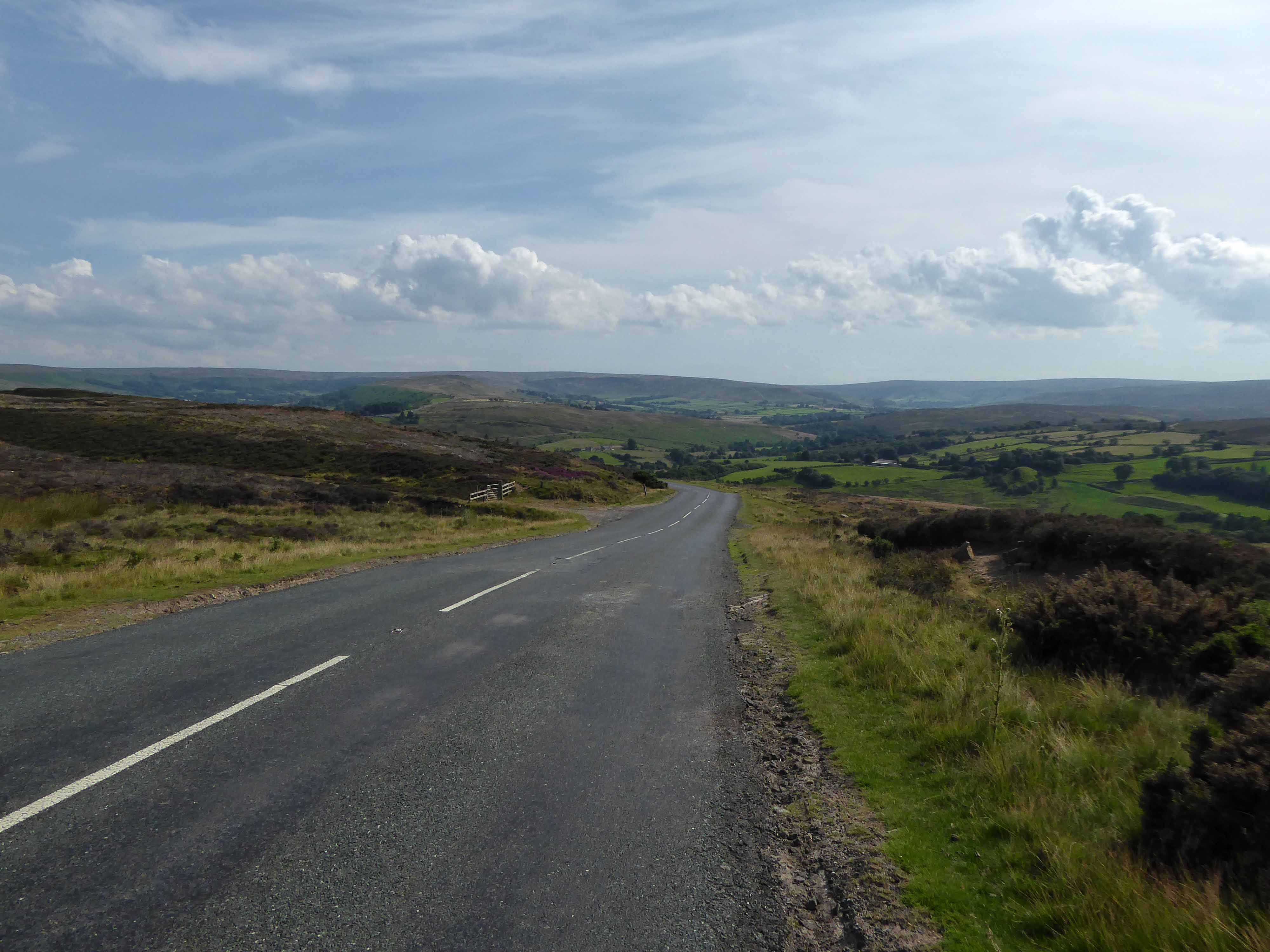
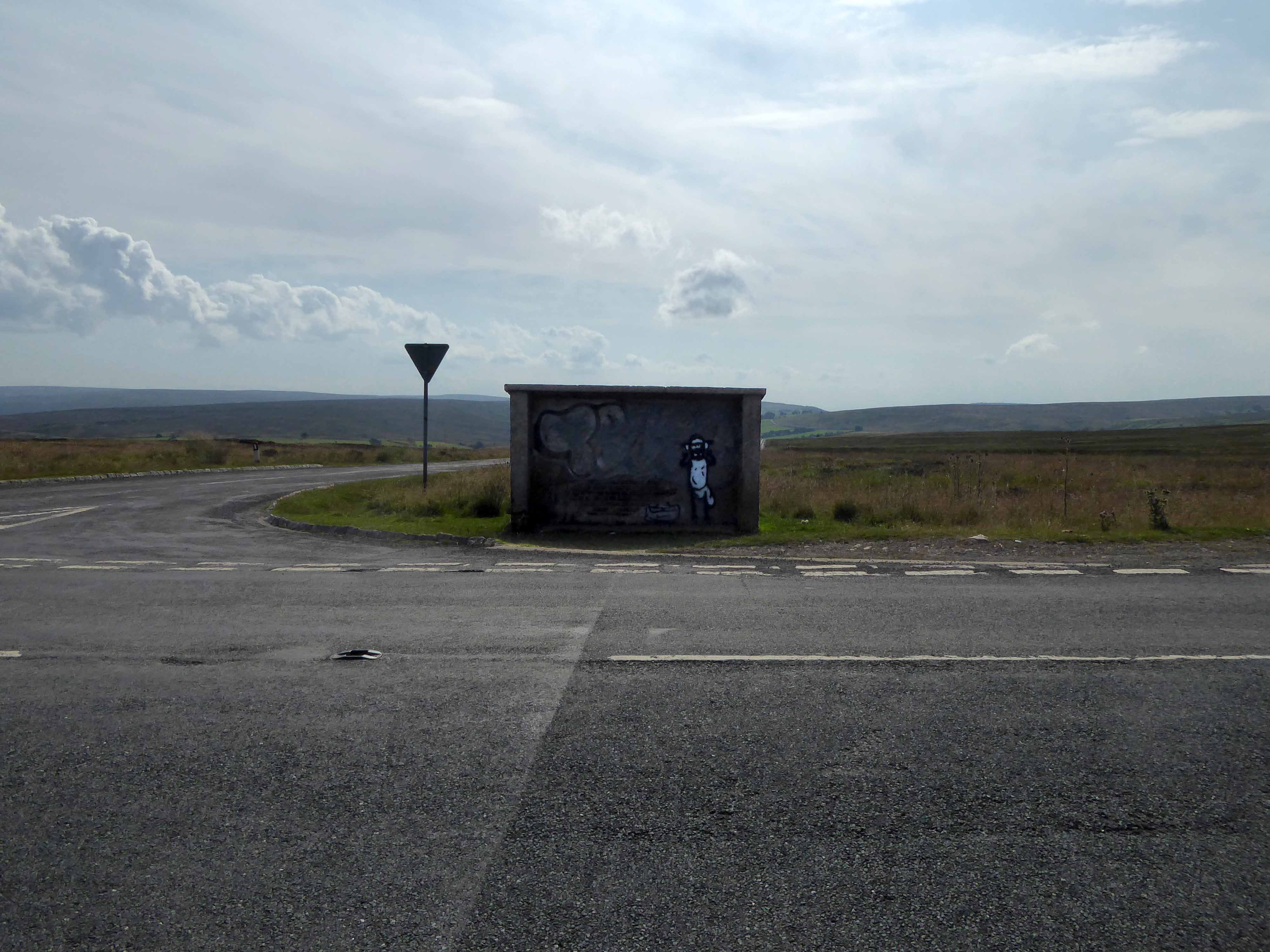
Taking a brief break to snap this concrete shelter.
There then followed a hair stirring series of hairpin descents to the coast at Saltburn.
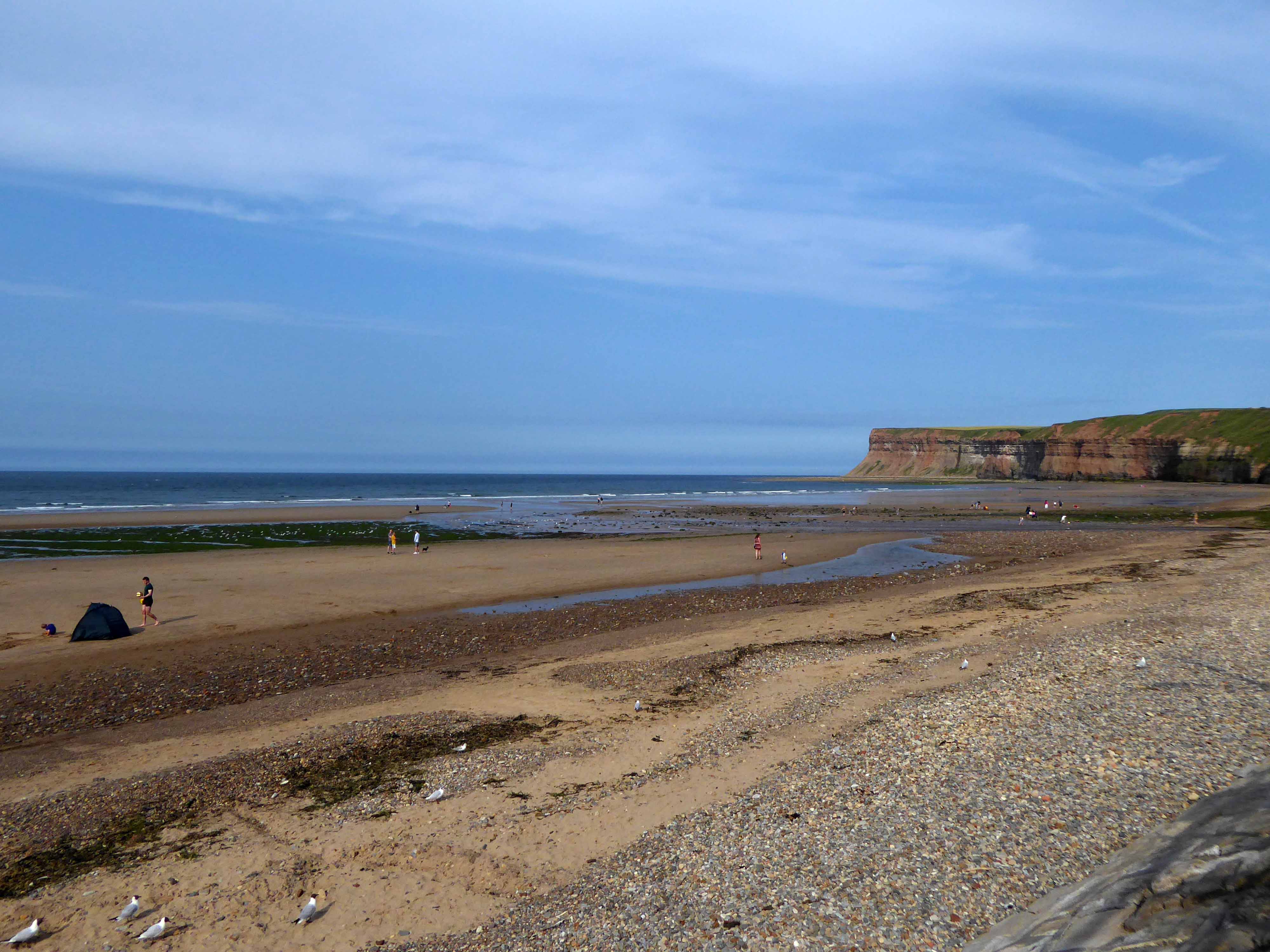
Followed by an off road route to Redcar.
Our Lady of Lourdes – Architect: Kitching & Archibald 1928
Built in 1928, this church was designed with some care and is an attractive, if fairly modest, Lombard Romanesque-style essay in brick. The use of a semi-circular apse, narrow brickwork and use of tile for decorative effect give it a pleasing appearance, typical of restrained but elegant work between the wars.
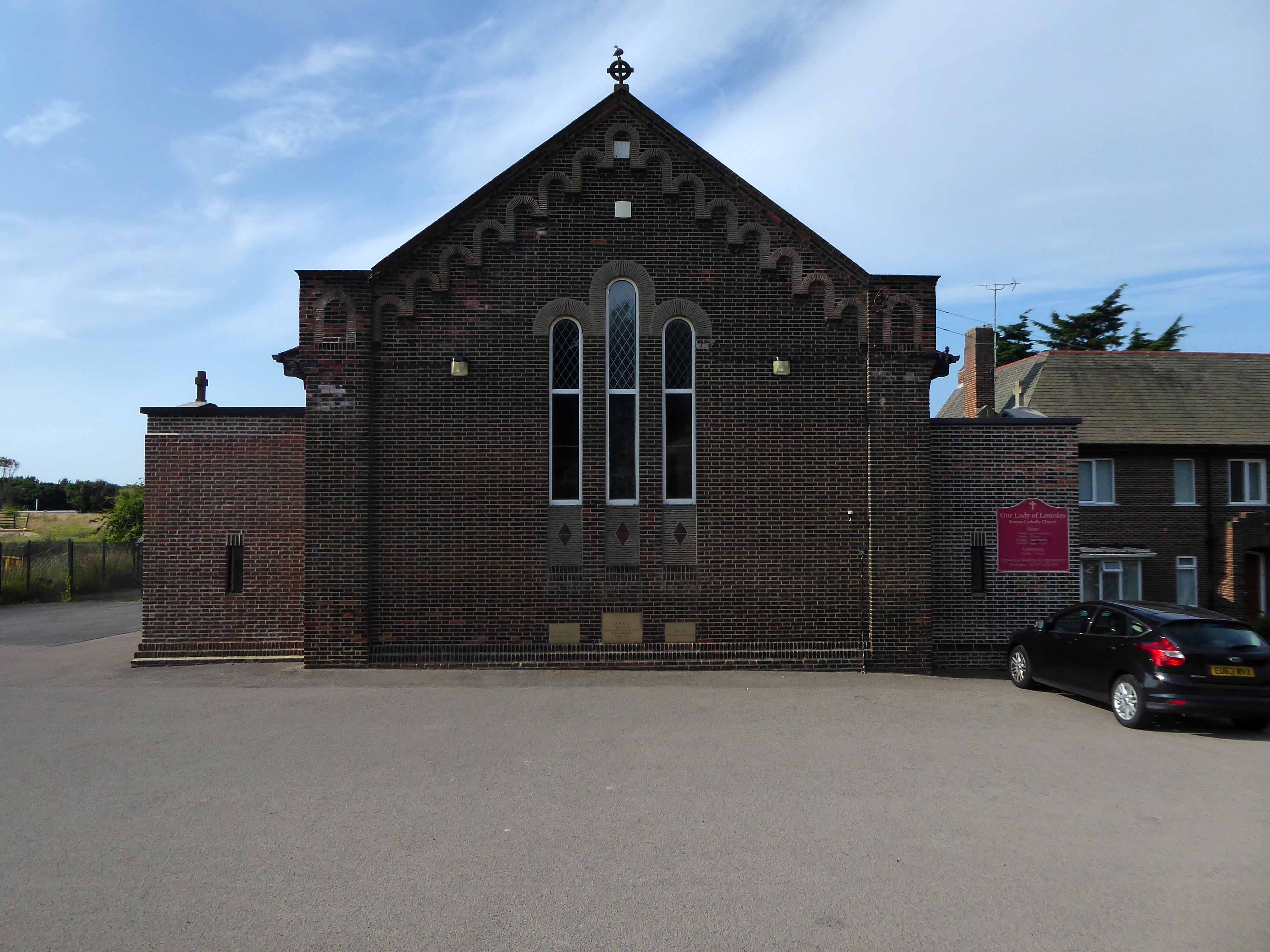
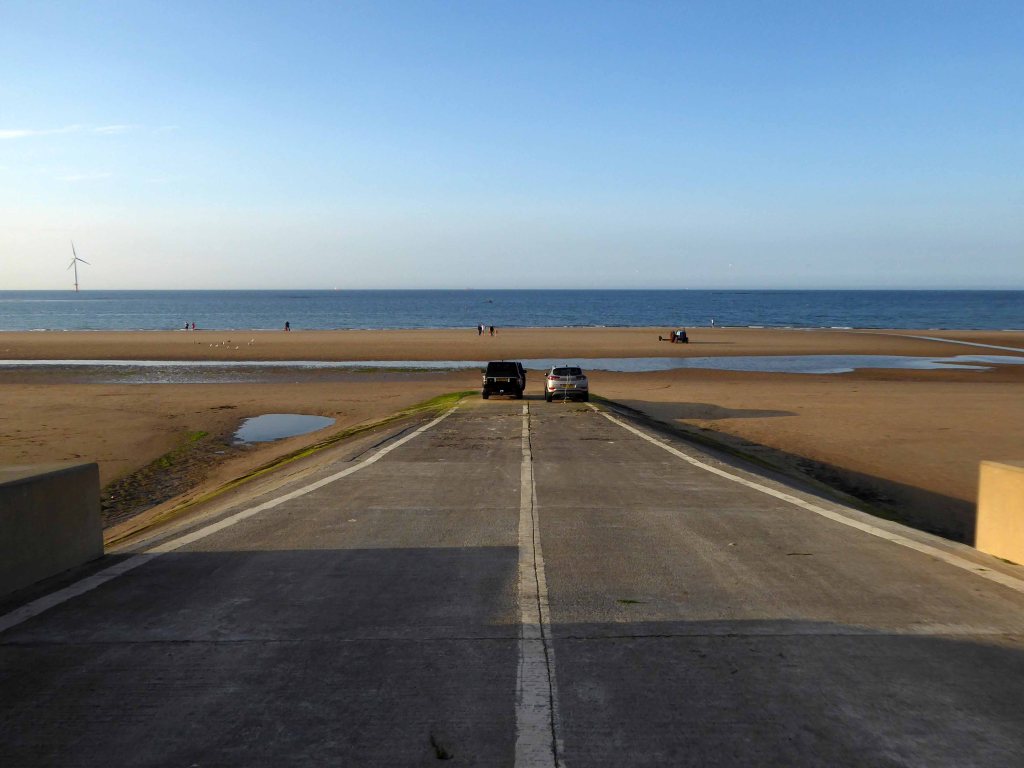
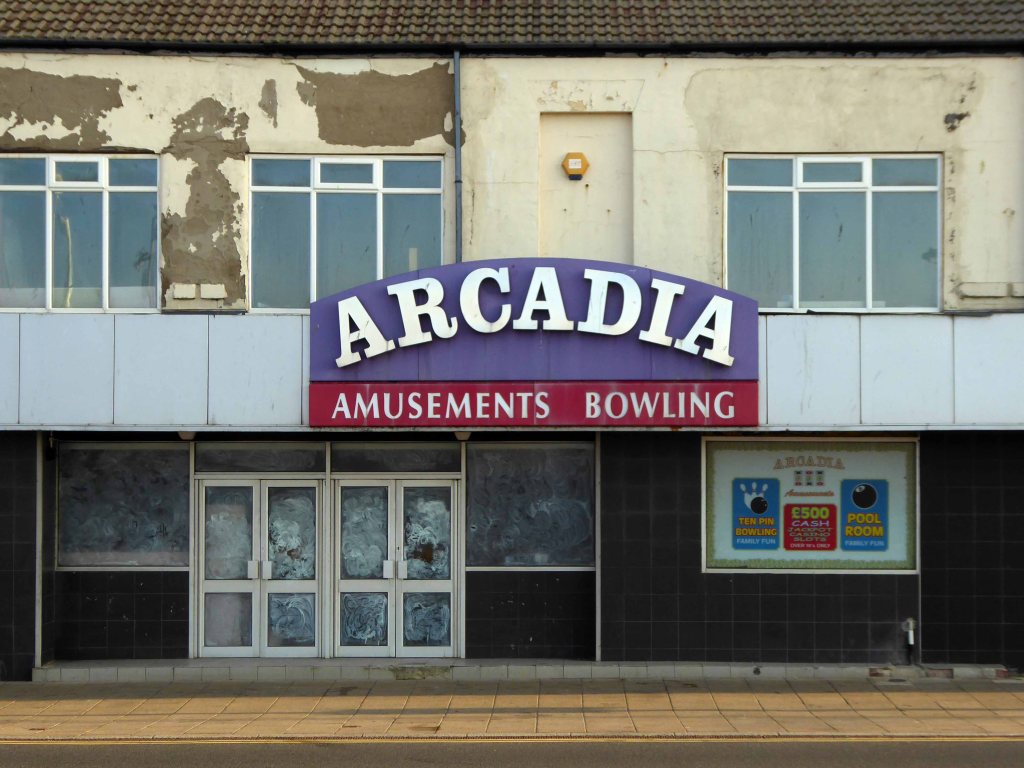
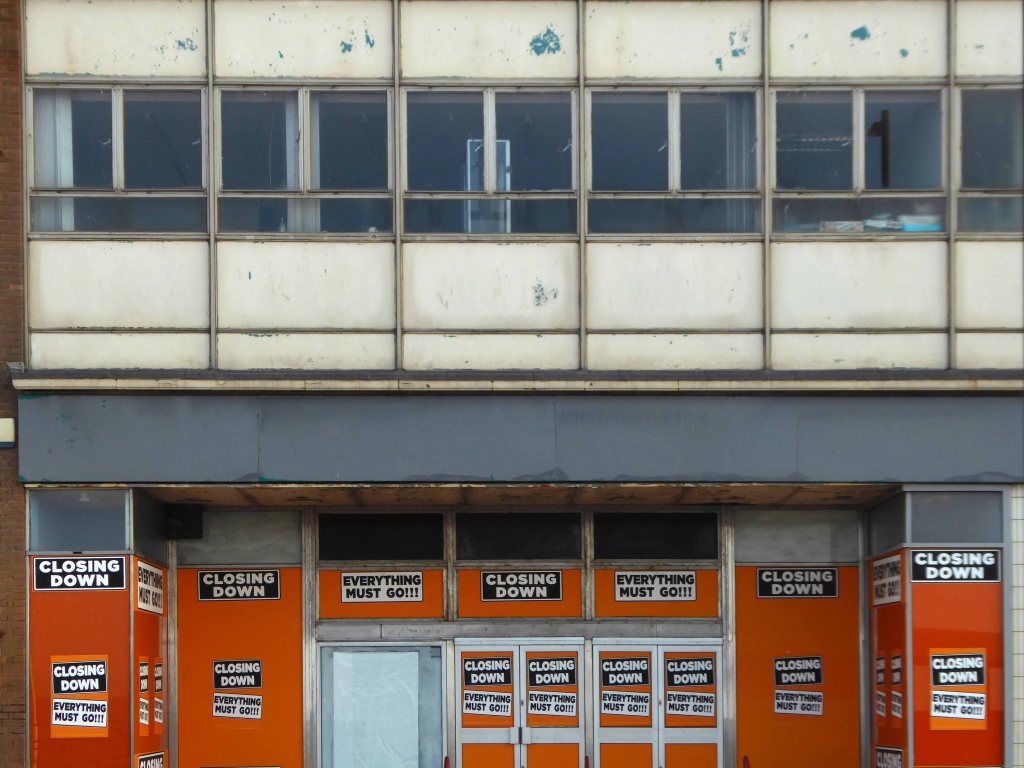
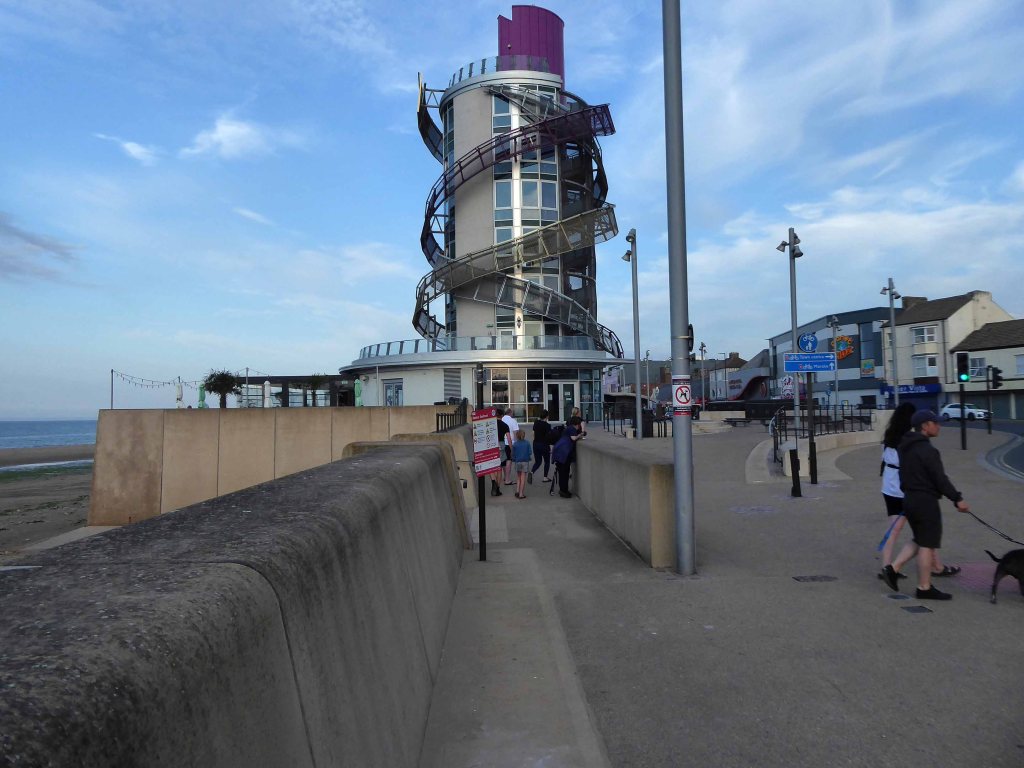
I arrived and took a look around, first time in town, here’s what I found.
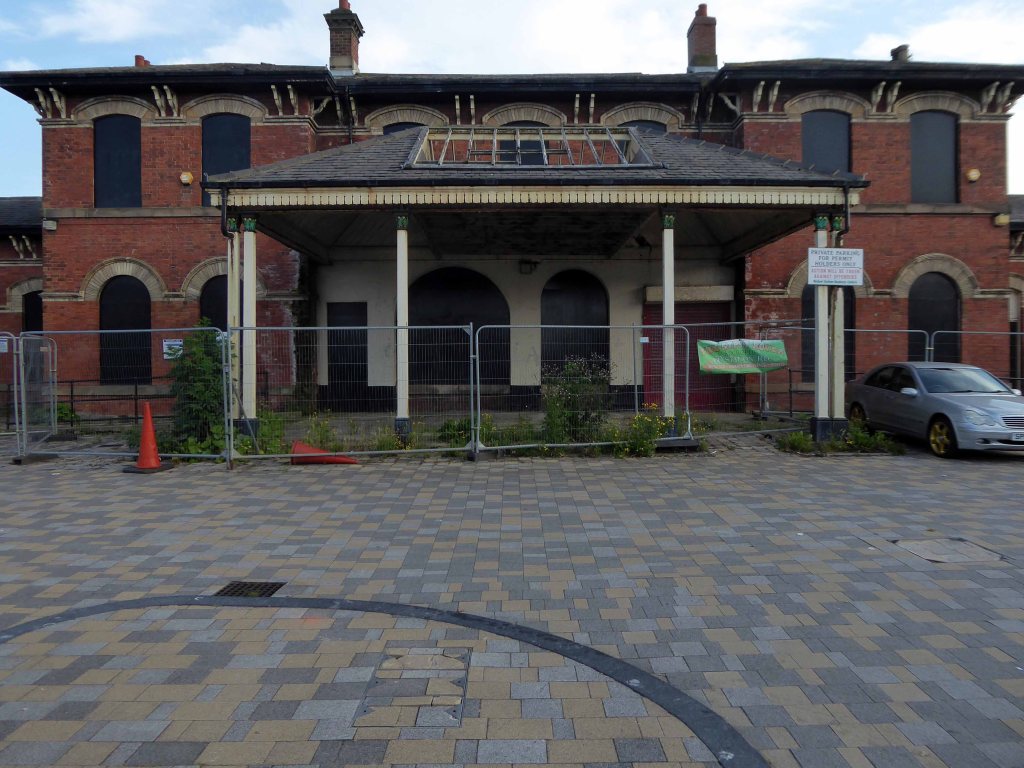
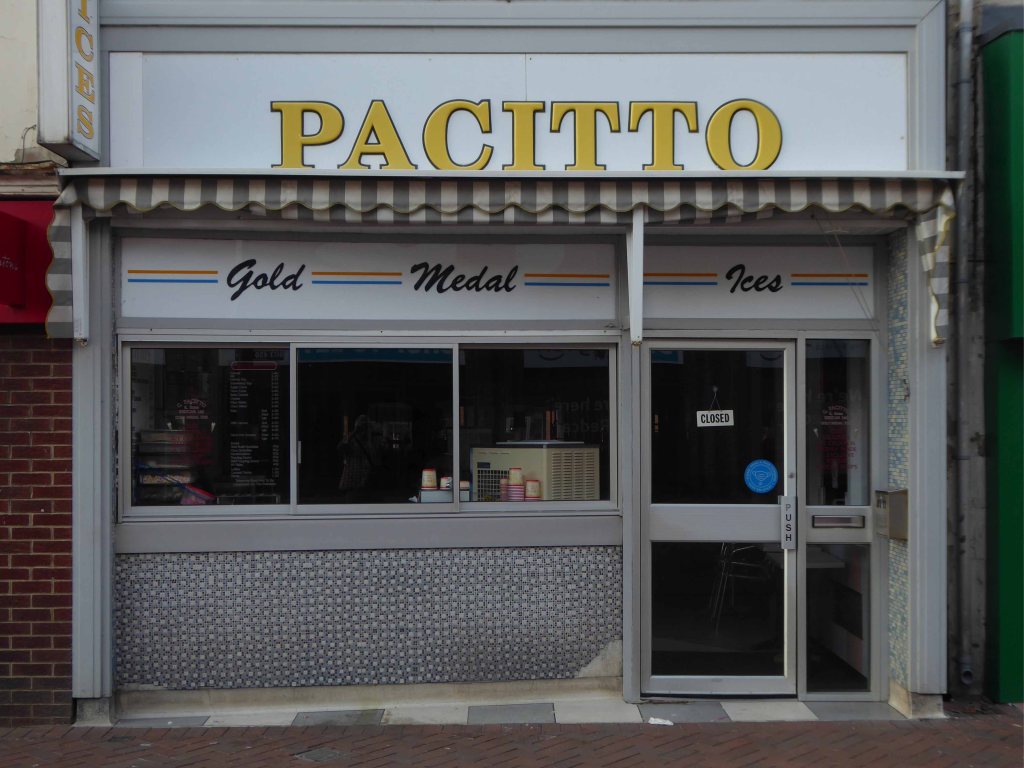
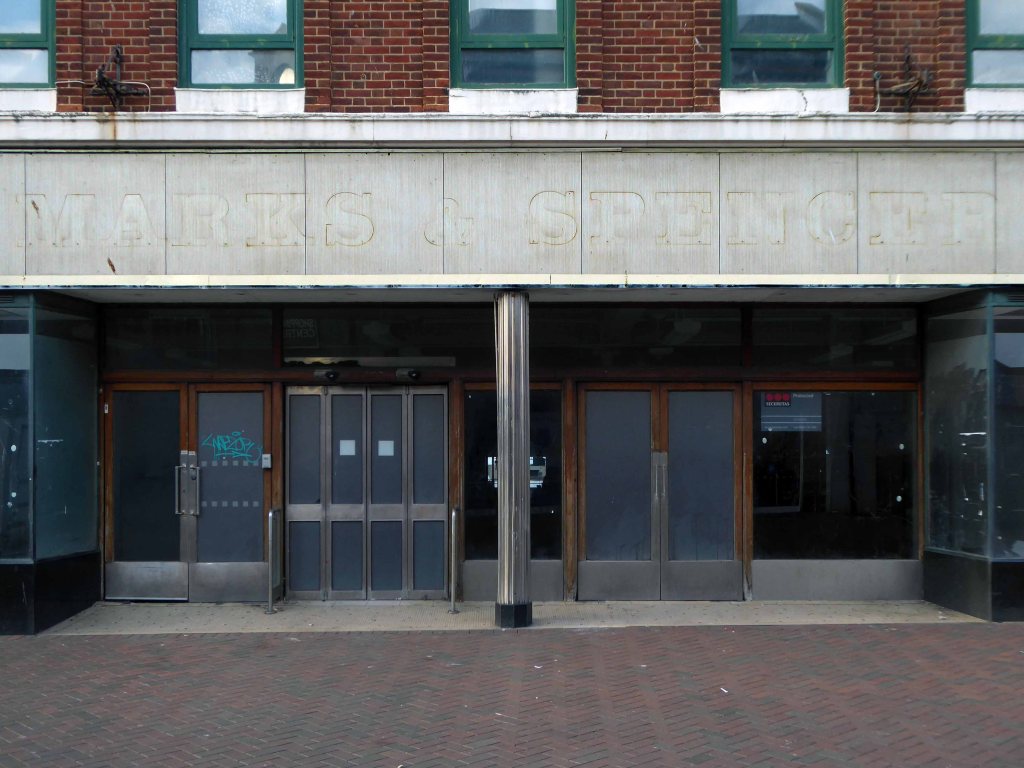
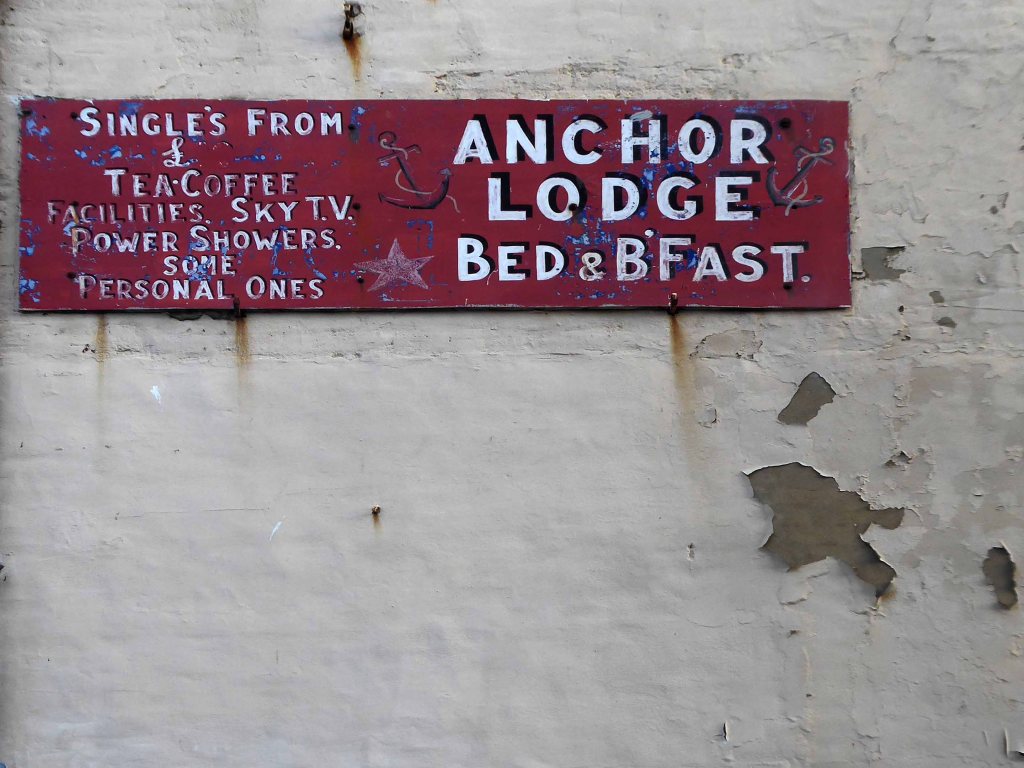
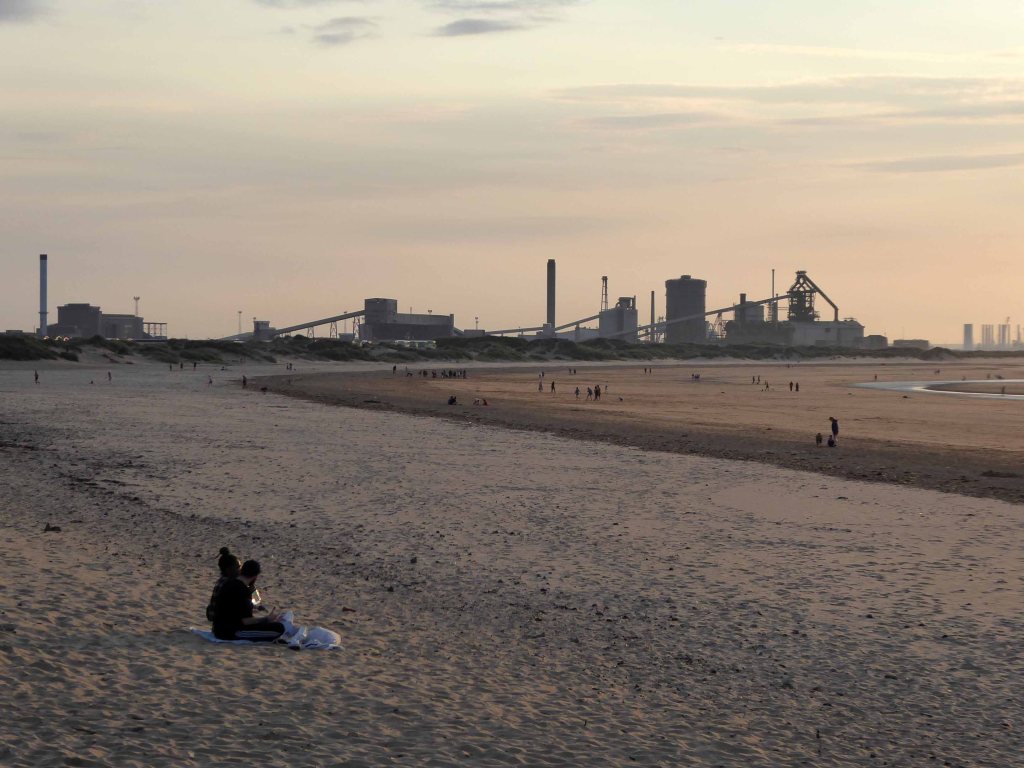
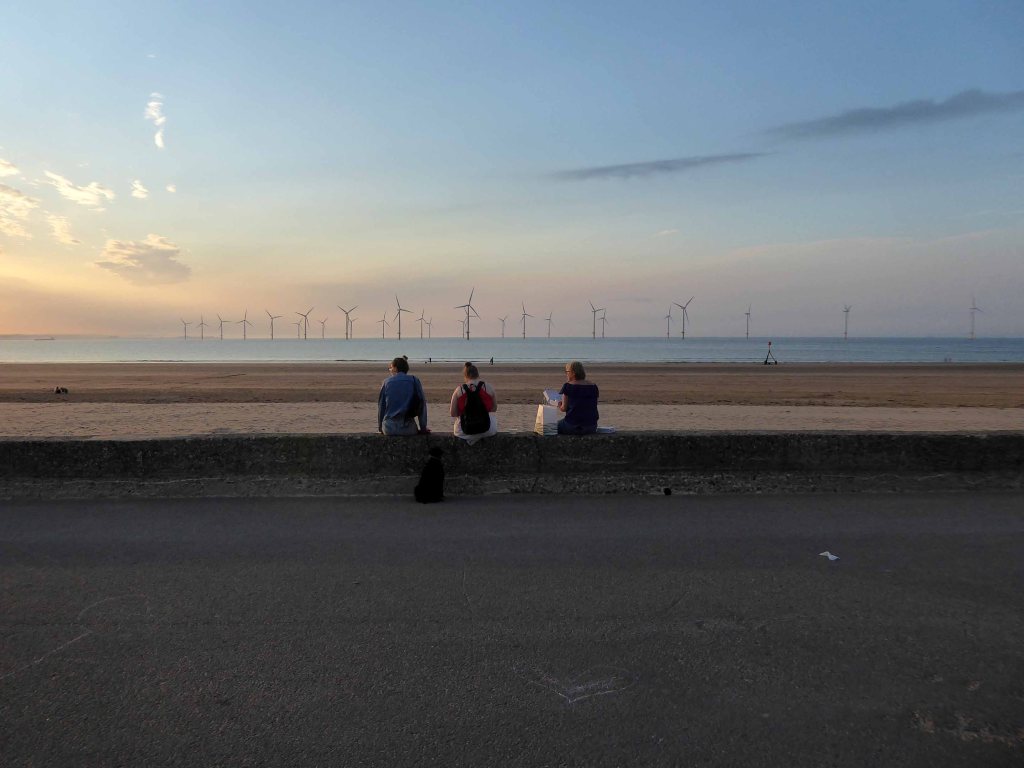

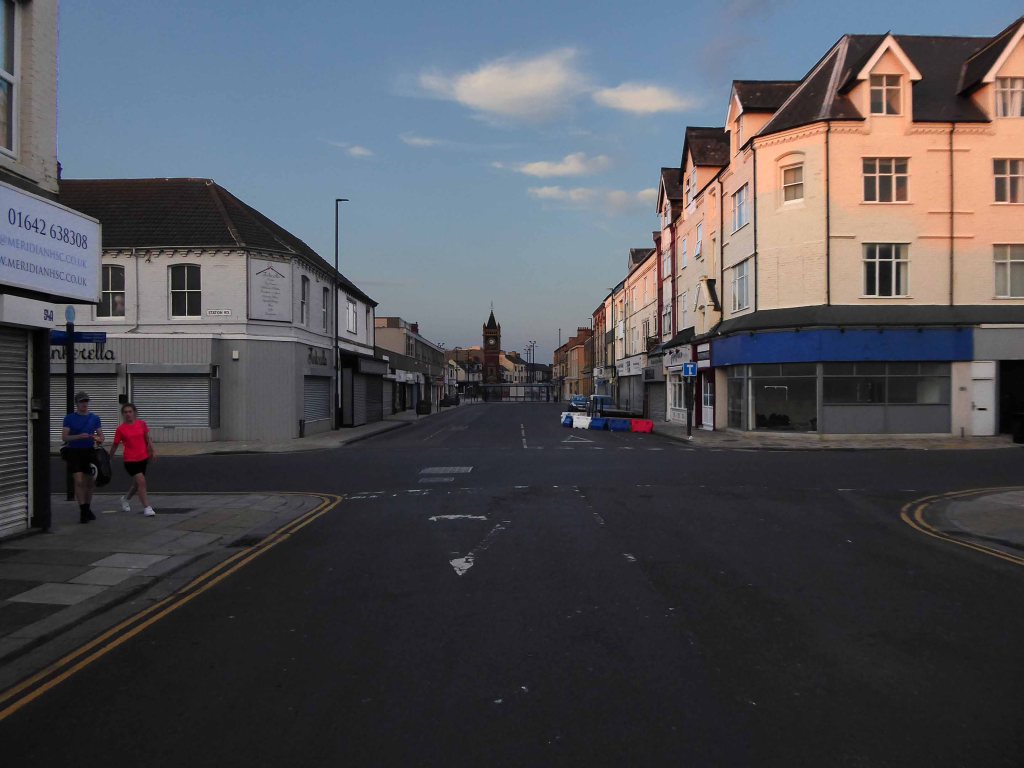
Another long day – I went to sleep.
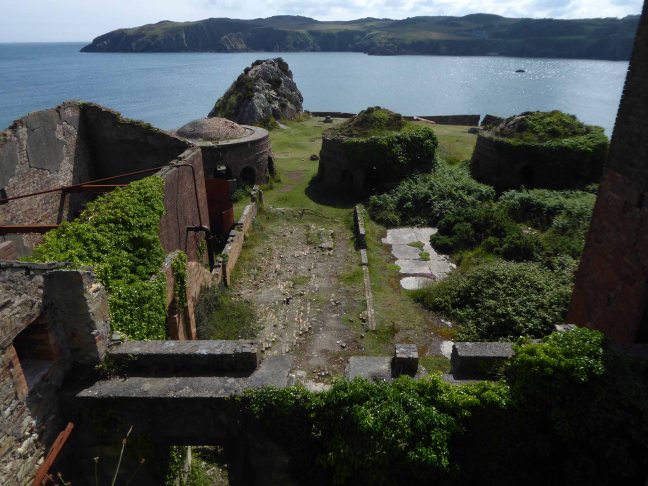
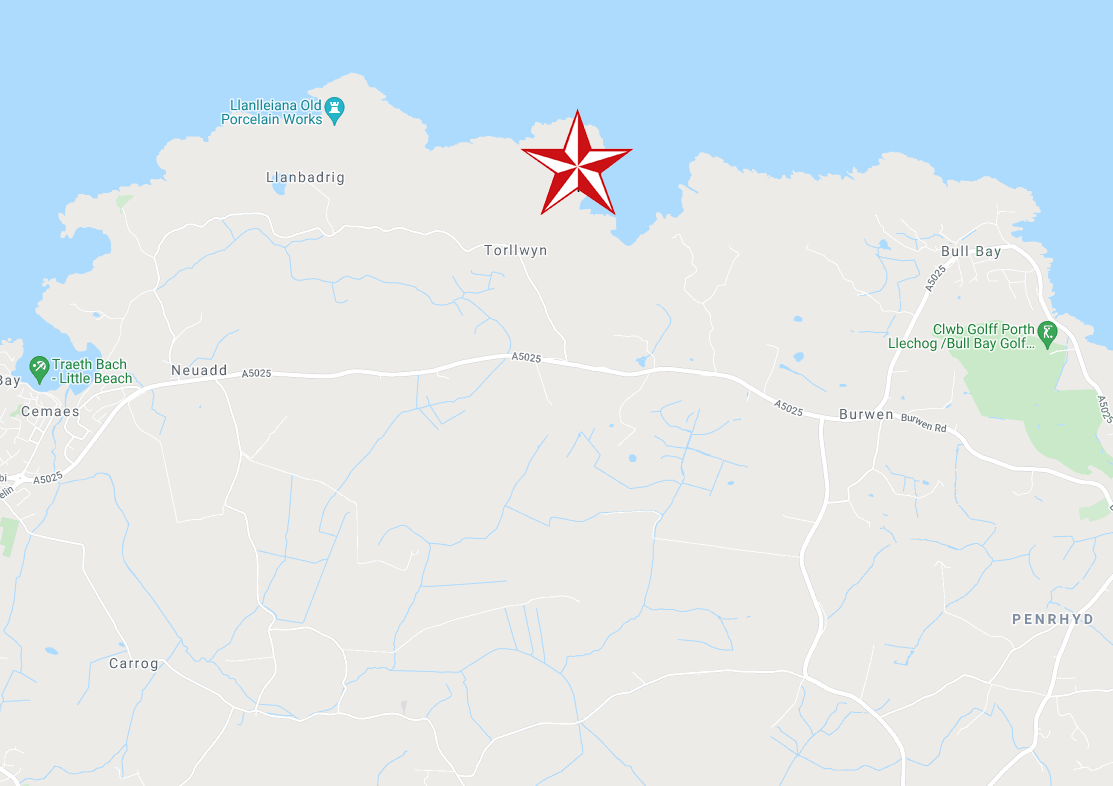
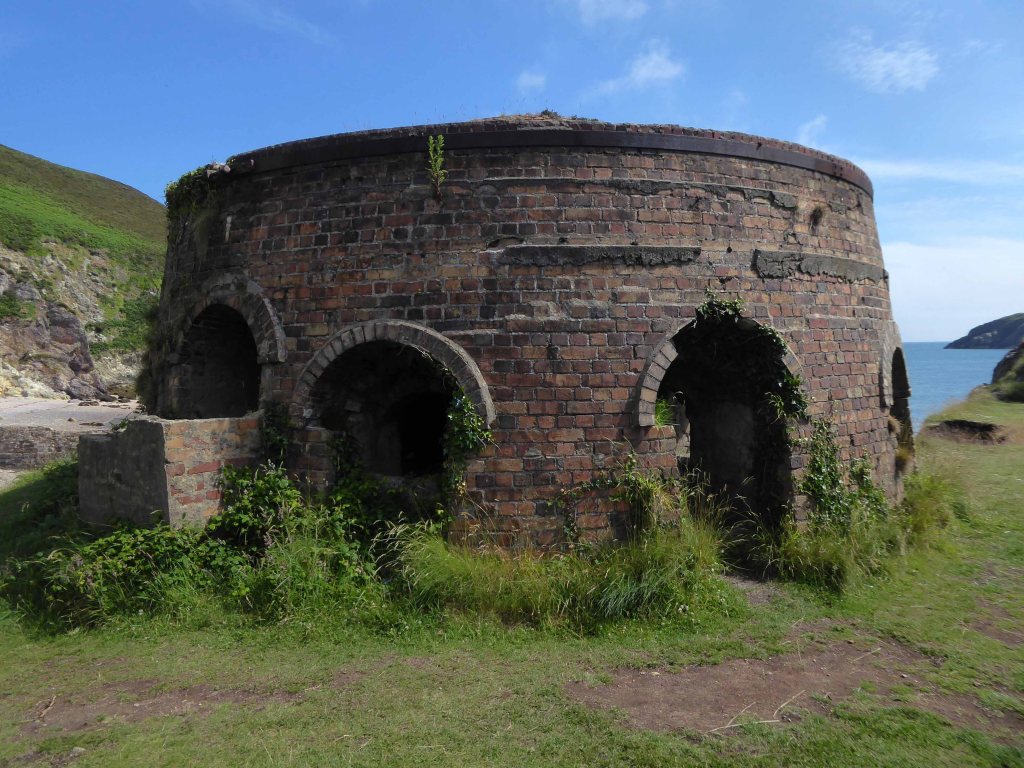
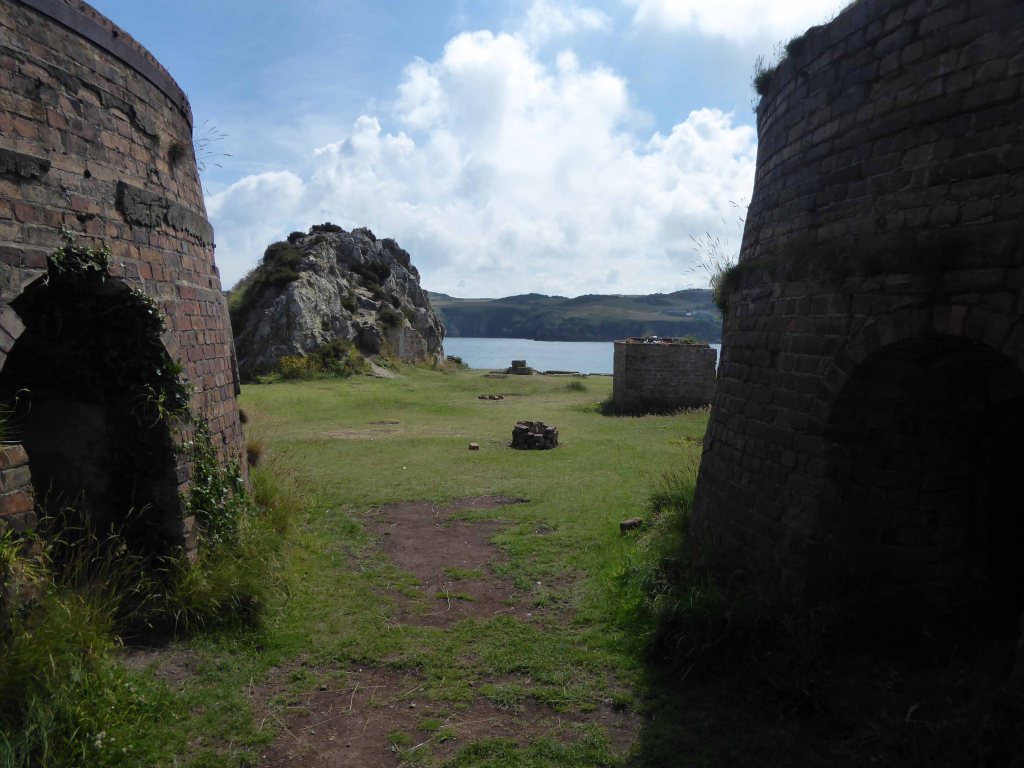
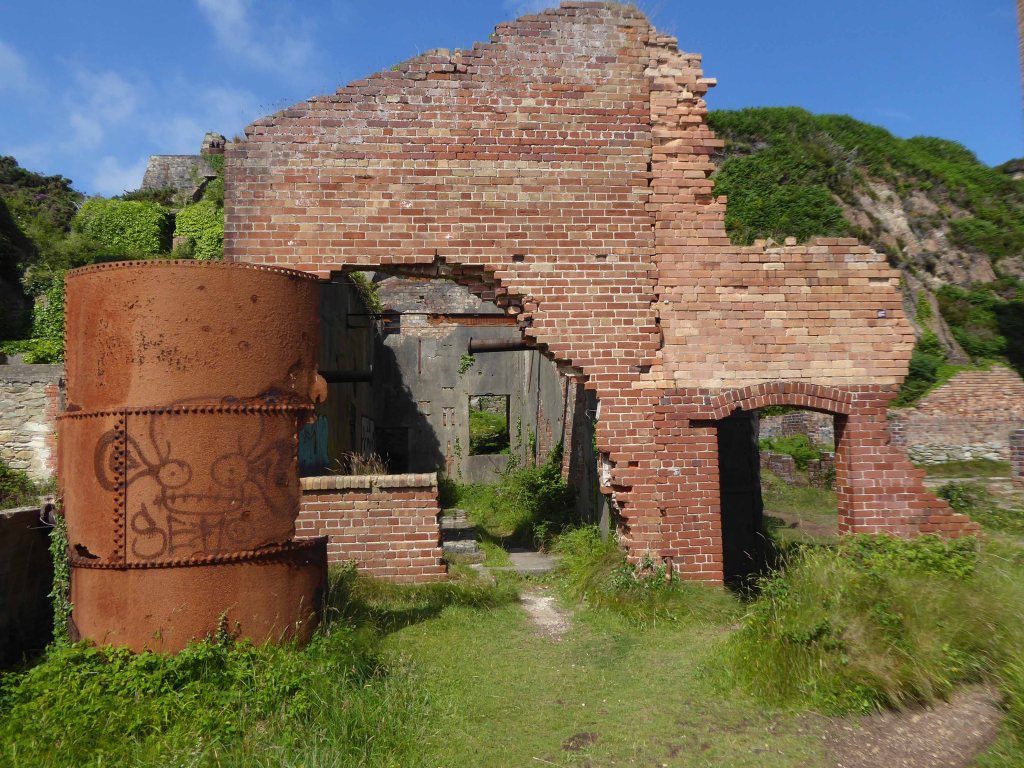
Located twixt Bull Bay and Cemaes Bay, accessed whilst walking the Anglesey Coastal Path.
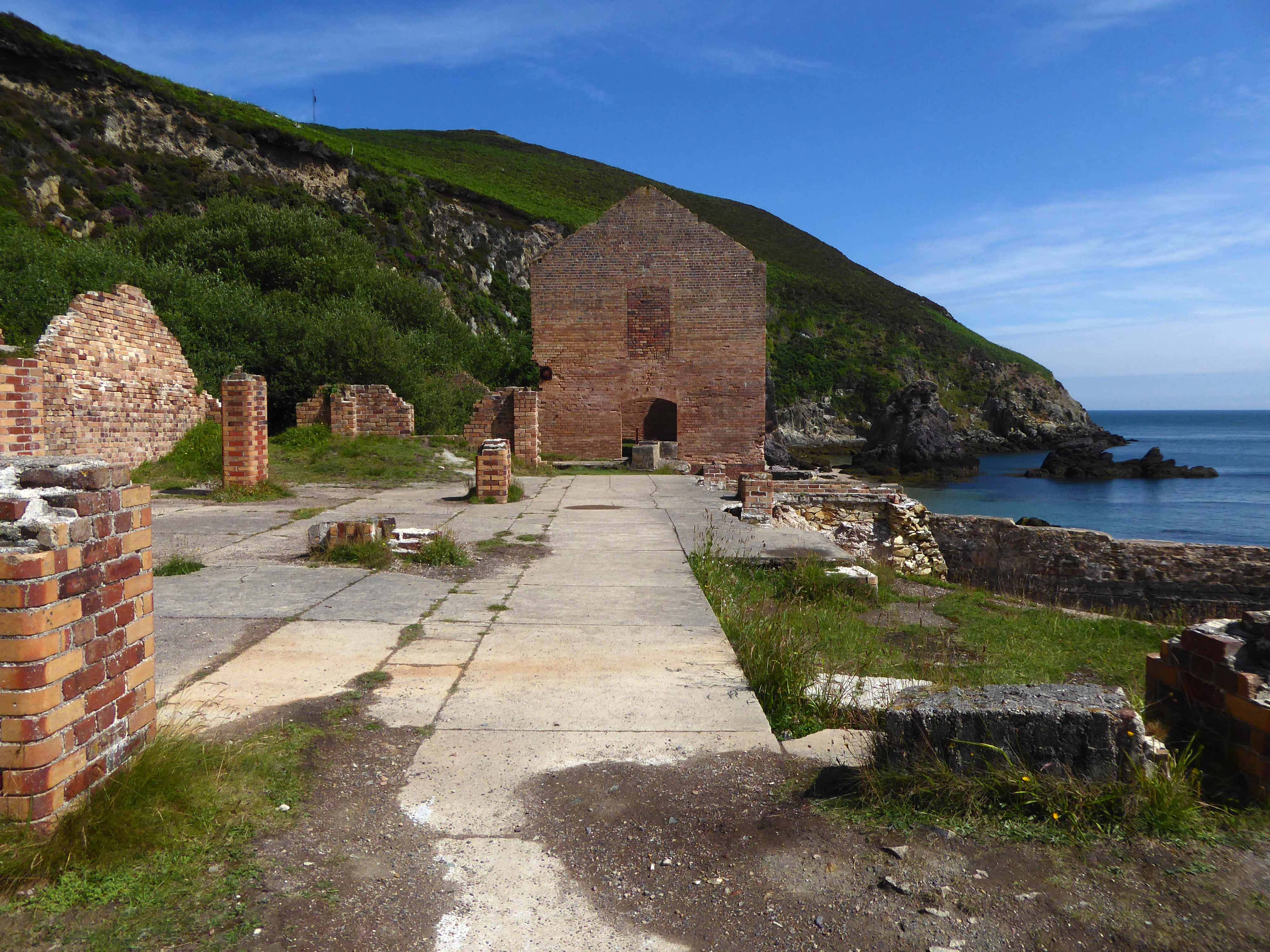
The area is rich in Quartzite, central to the production of Silica Bricks, which are resistant to high temperatures, much in demand at the height of the Industrial Revolution for lining steel furnaces.
The ore on the headland was first mined around 1850, with the ore being hewn out the living rock by hand.
A little railway brought the ore to the cliff above the brick works, then lowered by gravity to the works below, where the rocks would be pummelled and rendered to a size that could be further processed.
Mining by manual endeavour lasted from around 1850 to 1914, the hazardous harbour and alleged poor quality products hastening the enterprises’s demise.
Porth Wen brickworks was designated as a scheduled monument by Cadw in 1986 and classified as a post-medieval industrial brickworks.
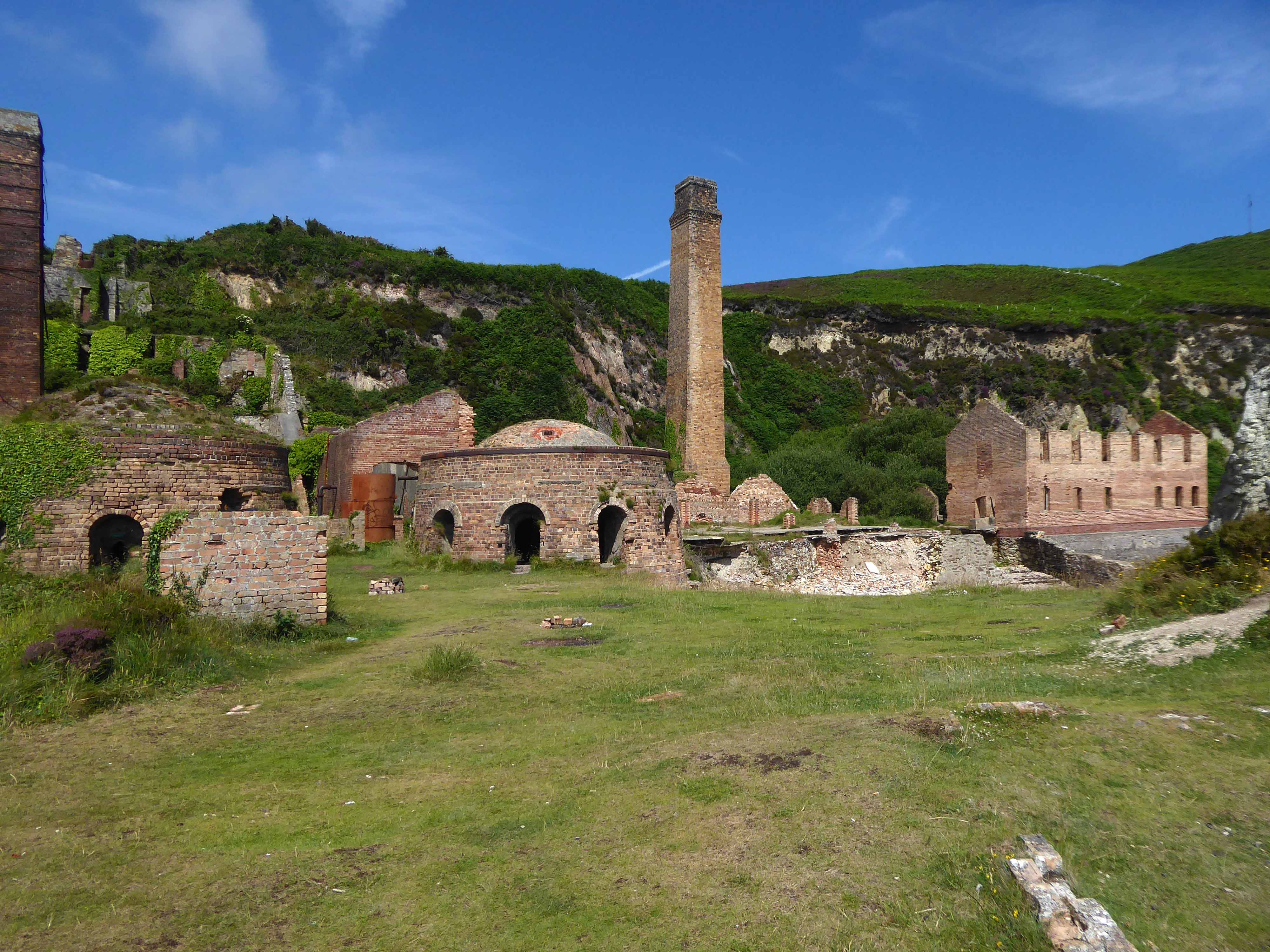
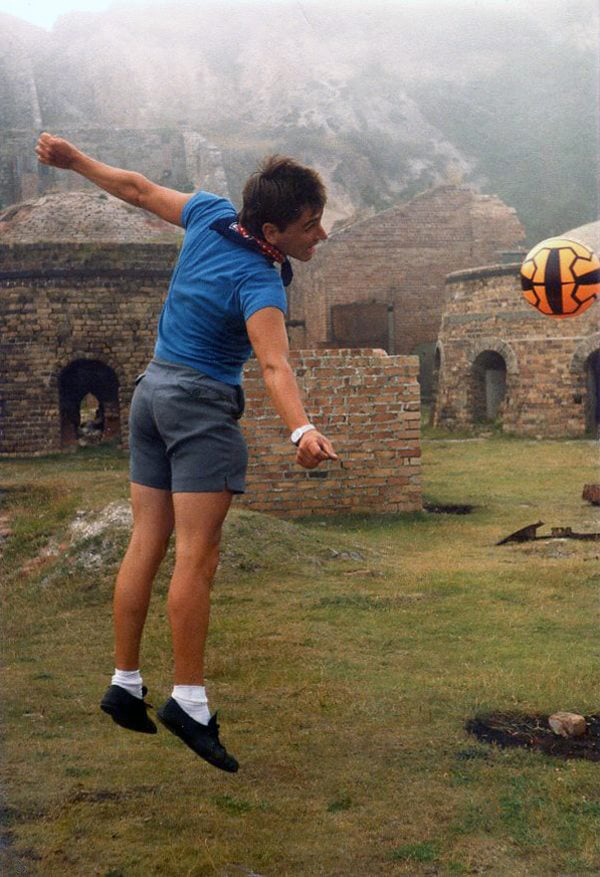
It remains as incongruous today, set amongst coastal agriculture and the shiny sea.
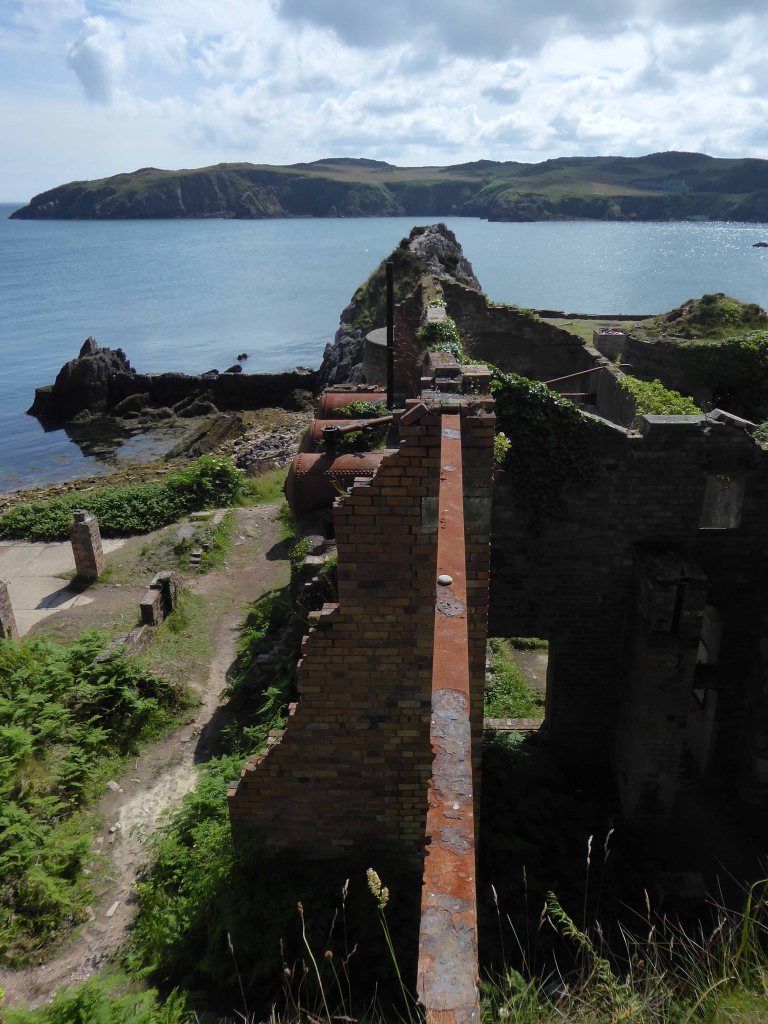
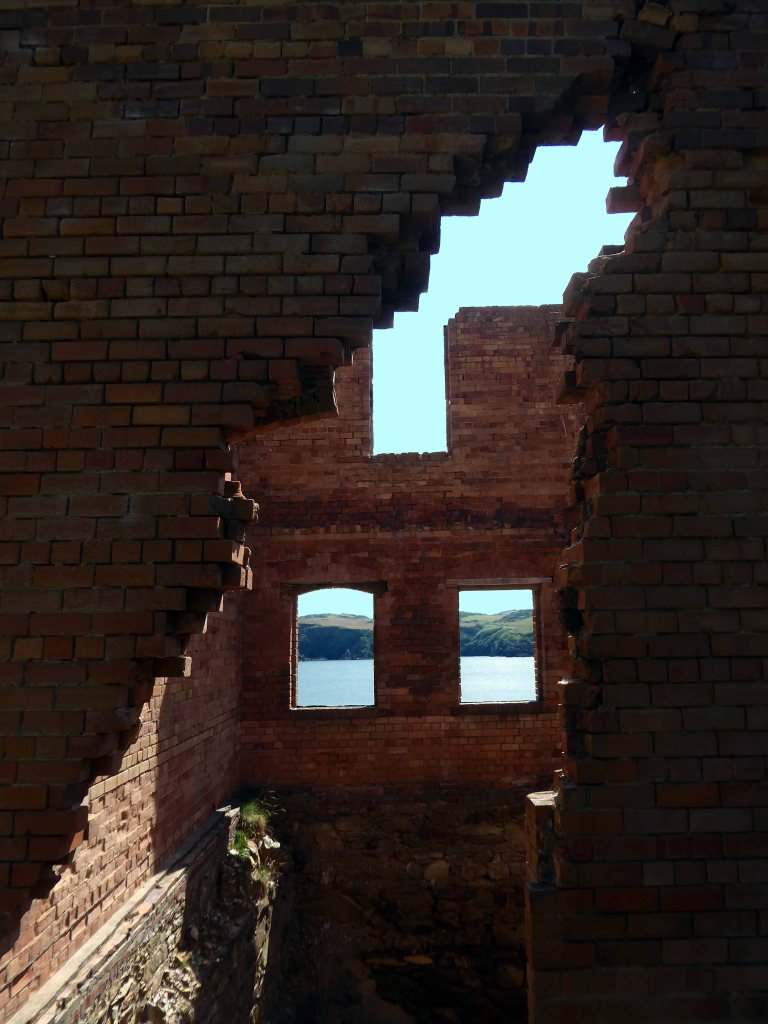
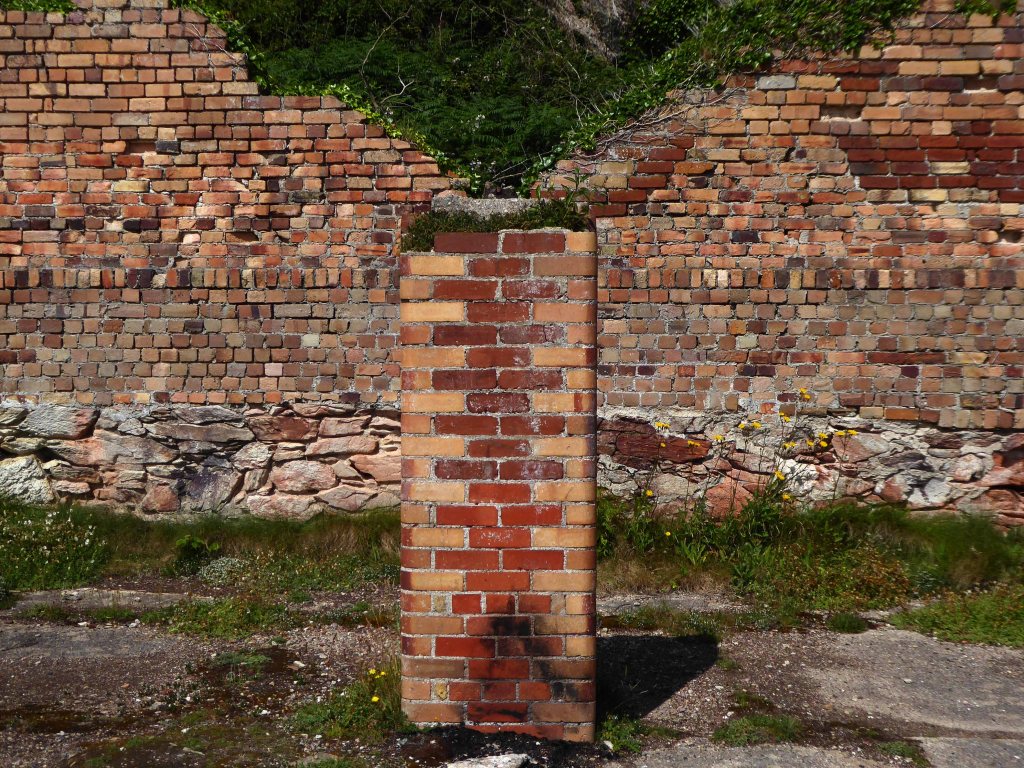
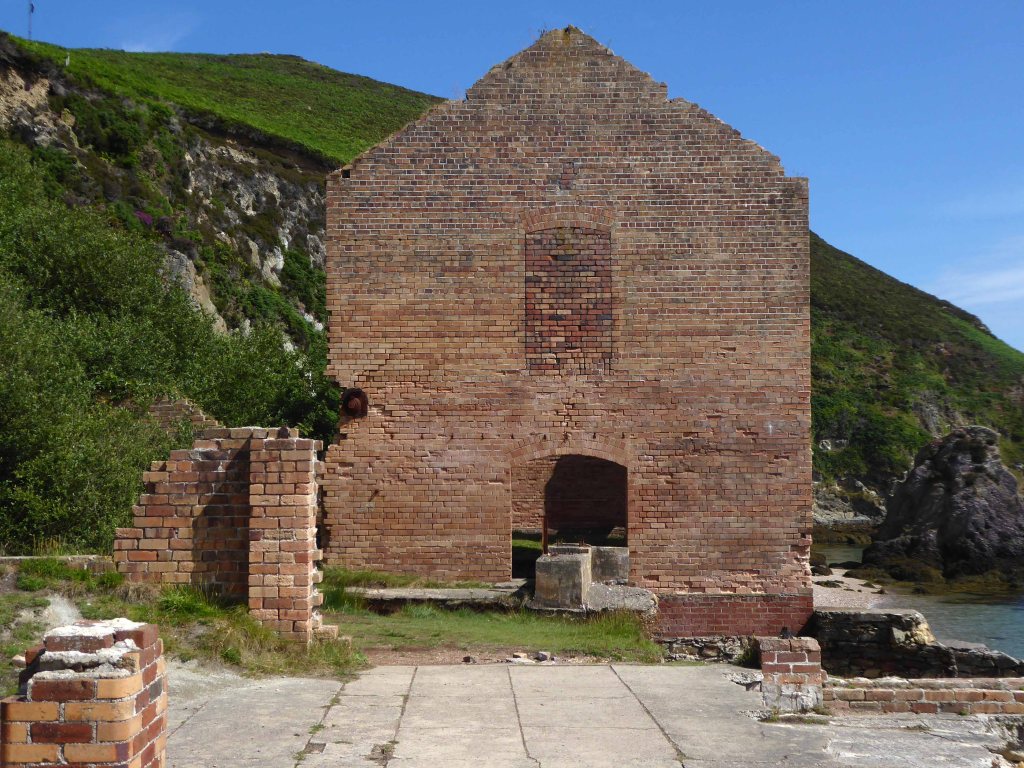
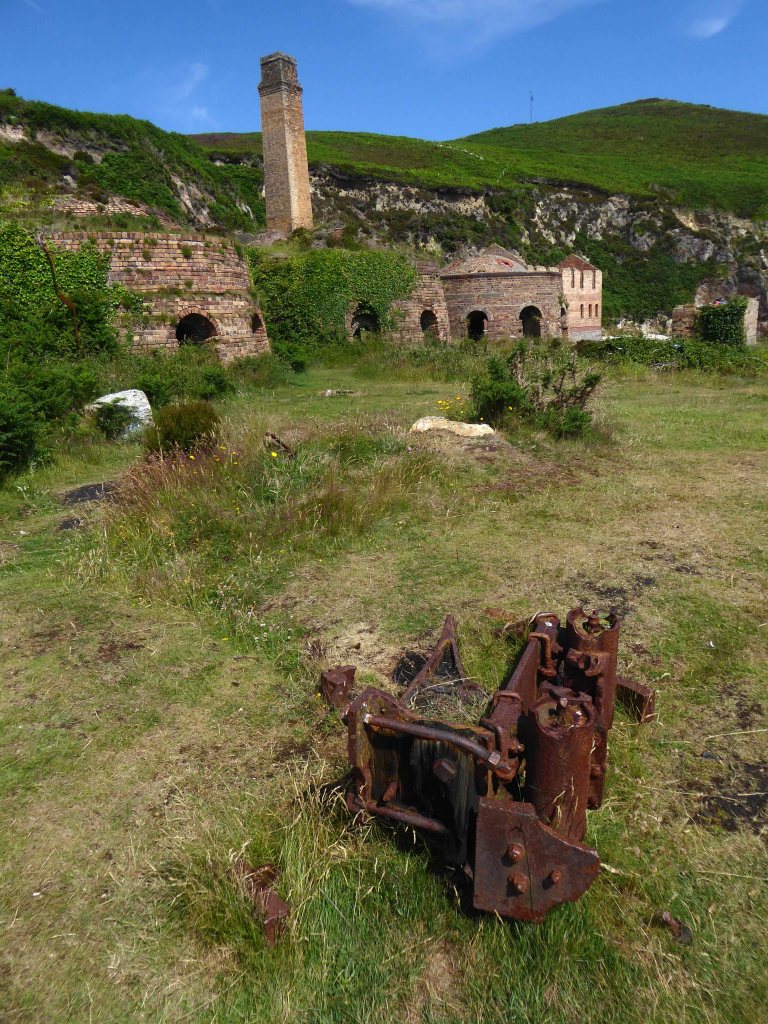
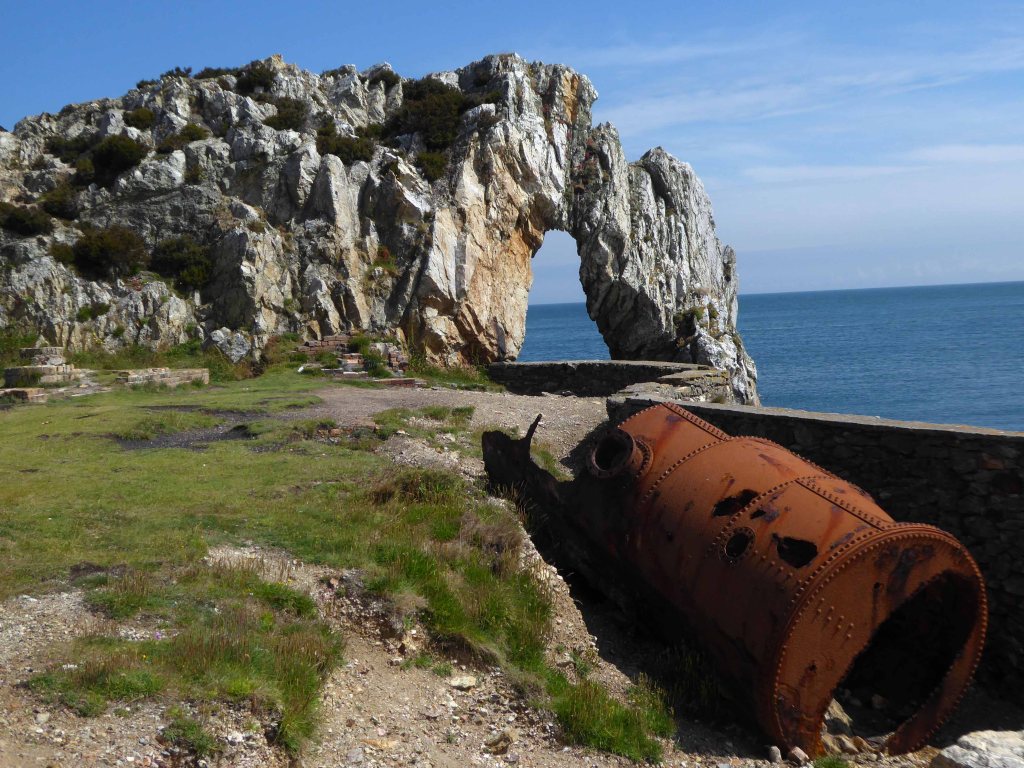
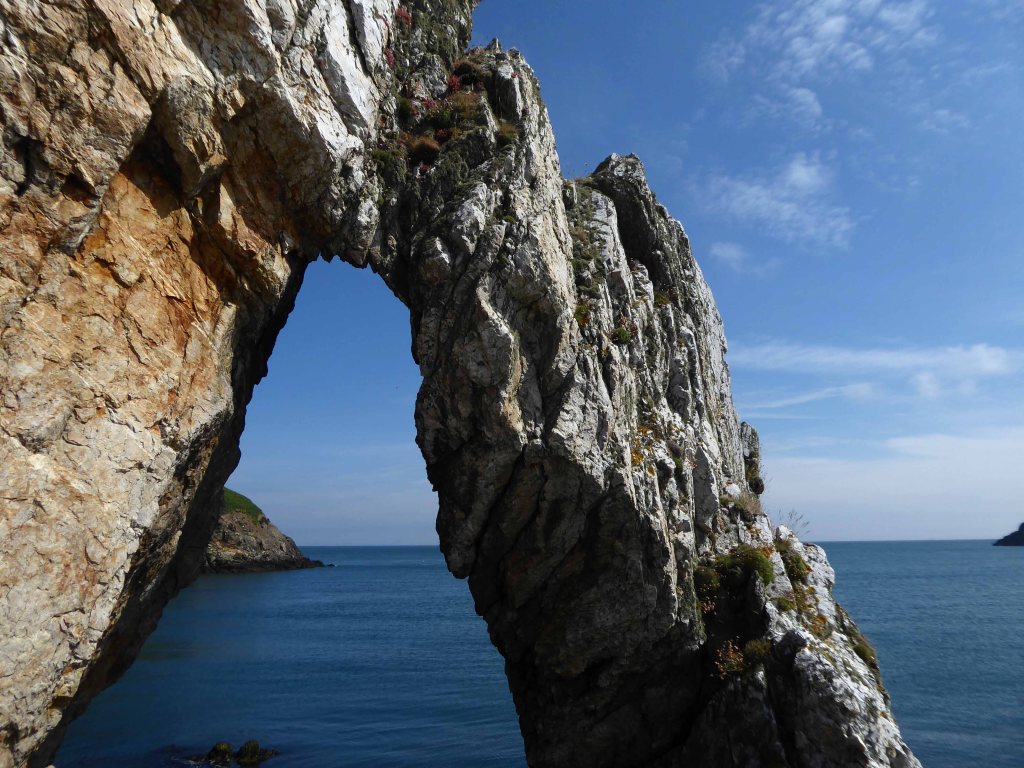
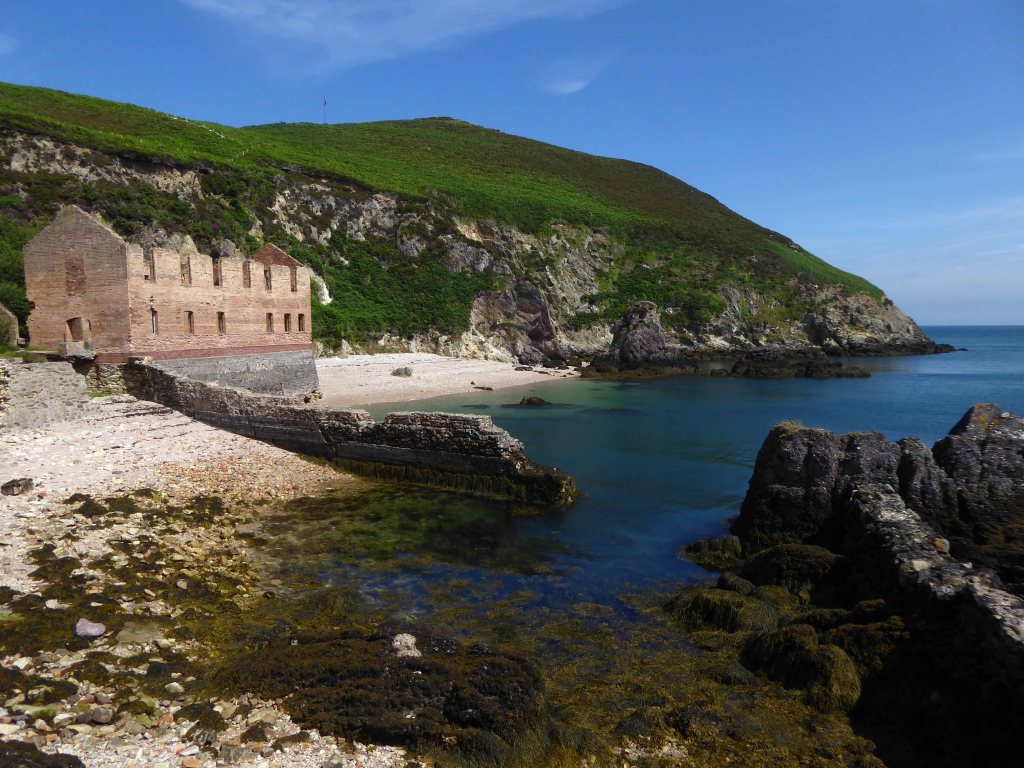
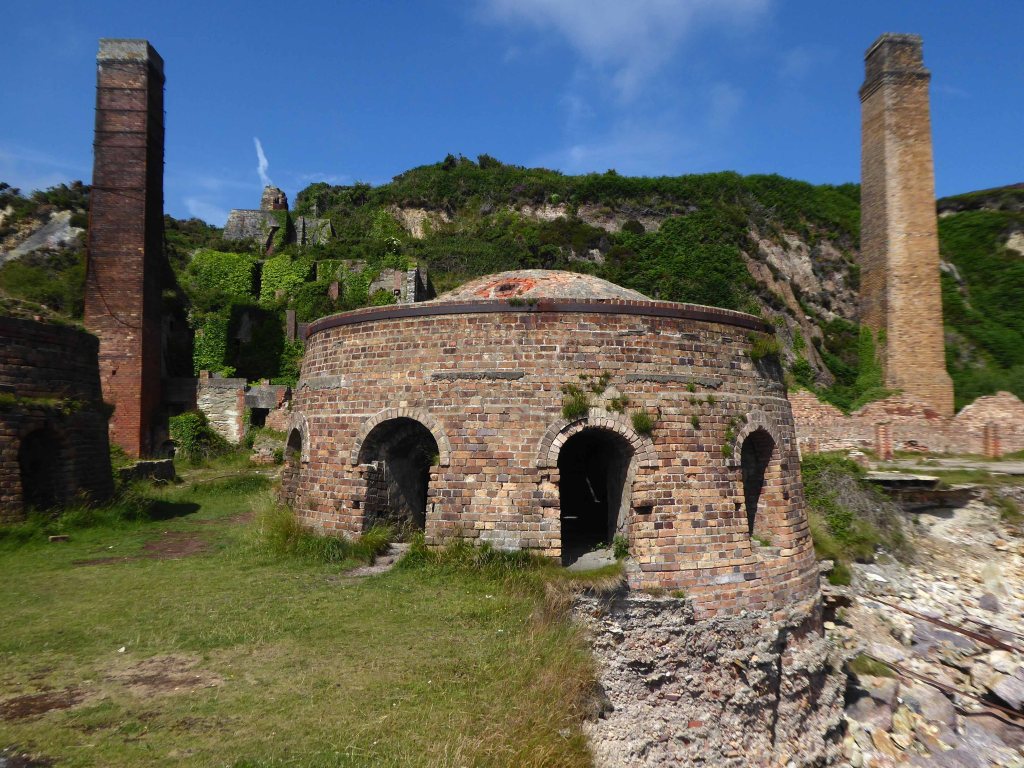
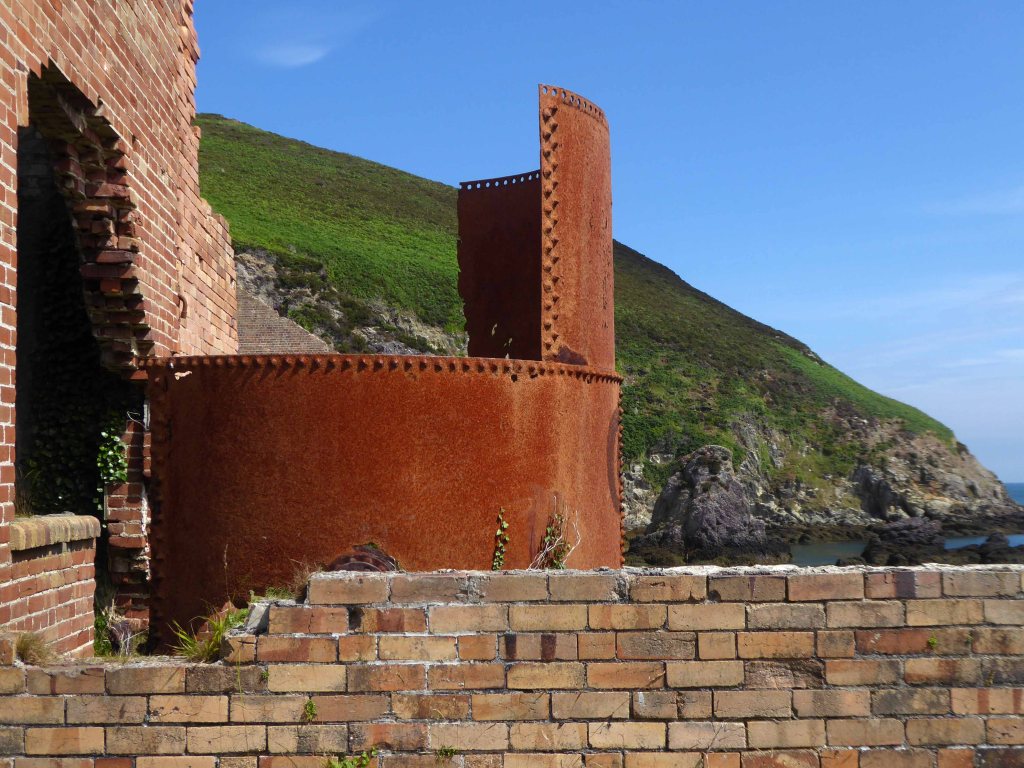
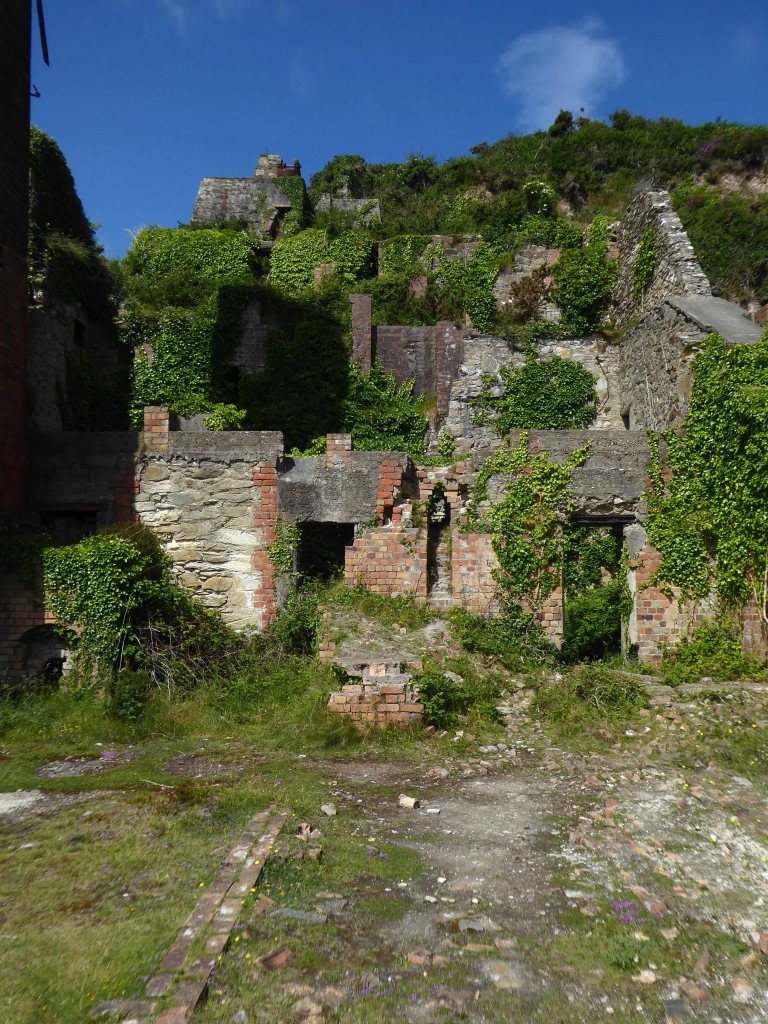

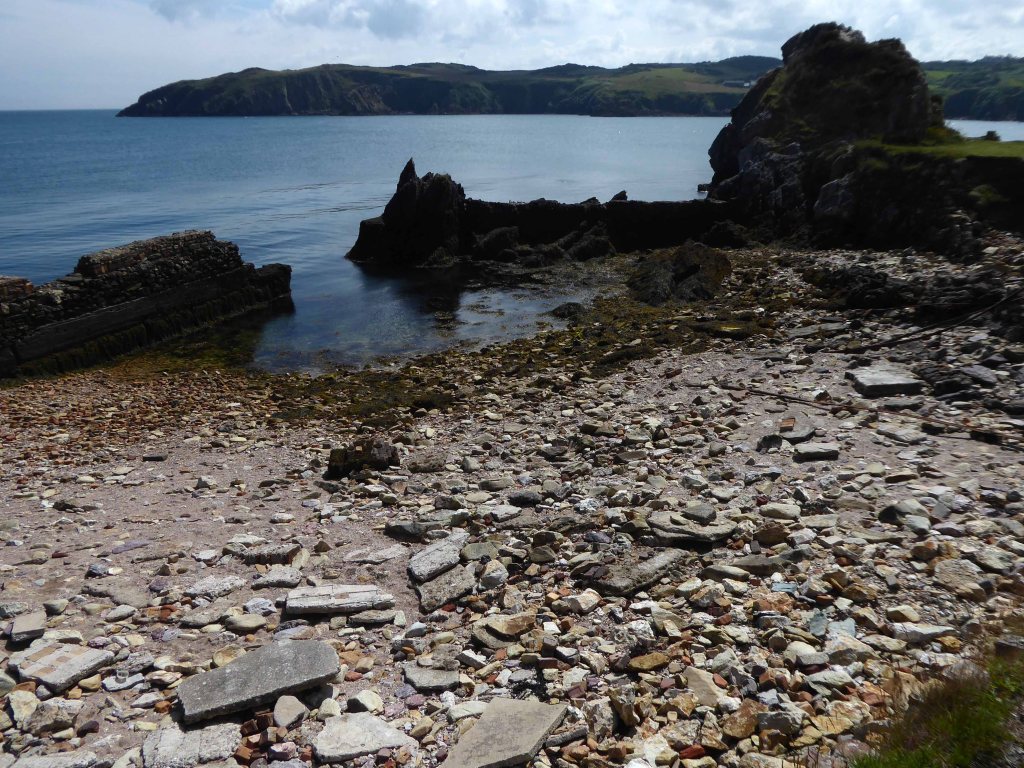
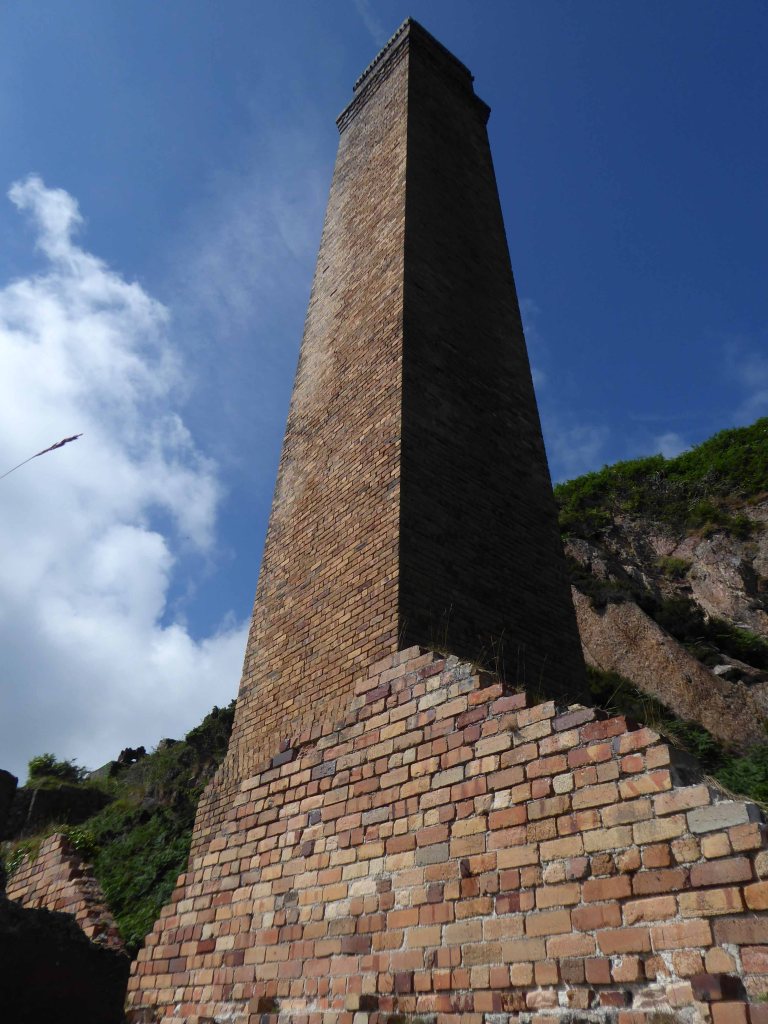
Take care it’s a slippery slope – and the owners forbid access to their private property.

Turn right out of the station toward the Cecil Cinema.
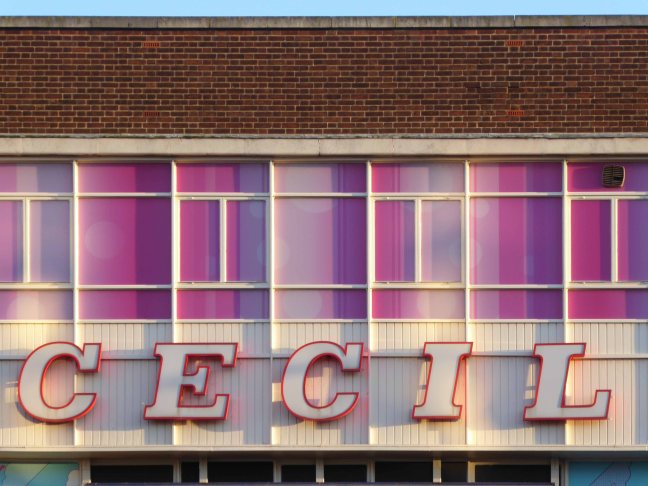
The Theatre De-Luxe was built in 1911 at the corner of Anlaby Road and Ferensway with its entrance in Anlaby Road and its auditorium along the side of the pavement in Ferensway. Kinematograph Year Book of 1914 lists 600 seats and the owners as National Electric Picture Theatres Ltd.
In 1925, the theatre was rebuilt to a radically altered ground-plan and renamed the Cecil Theatre.
The Cecil Theatre’s demise came during bombing on the night of 7/8 May 1941 when German incendiary bombs reduced the building to a shell; and it remained like that until demolition in 1953.
Work on the new Cecil Theatre was begun in April 1955 and it was opened on 28th November 1955 with 1,374 seats in the stalls and 678 in the balcony.
Architects: Gelder and Kitchca
At the time of opening it had the largest CinemaScope screen in the country measuring 57 feet wide, and the first film shown was Marilyn Monroe The Seven Year Itch.
In the 1980’s it was taken over by the Cannon Cinemas chain. The cinema operation was closed on 23rd March 1992 and the cinemas were ‘For Sale and/or Lease. It was taken over by Take Two Cinemas and renamed Take Two Cinema. It was closed on 27th February 1997 and the two screens in the former circle were stripped out and converted into a snooker club.
Whilst bingo continues in the former stalls area of this post war
cinema, the former mini cinemas in the circle still contain the snooker tables, but the space is unused. The screen in the former restaurant/cafe area remains basically intact, but is unused.

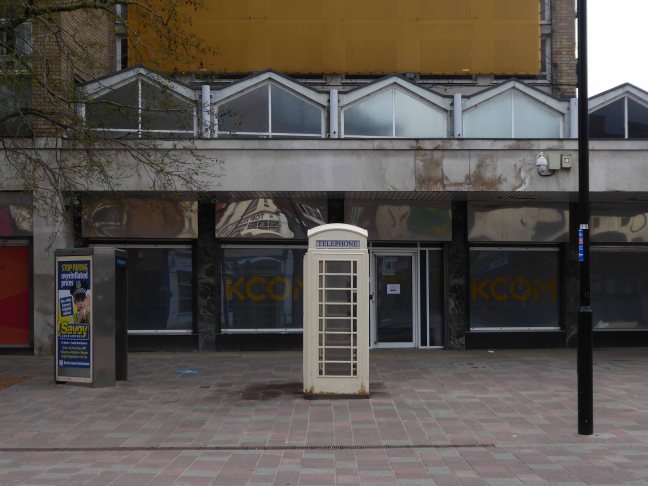
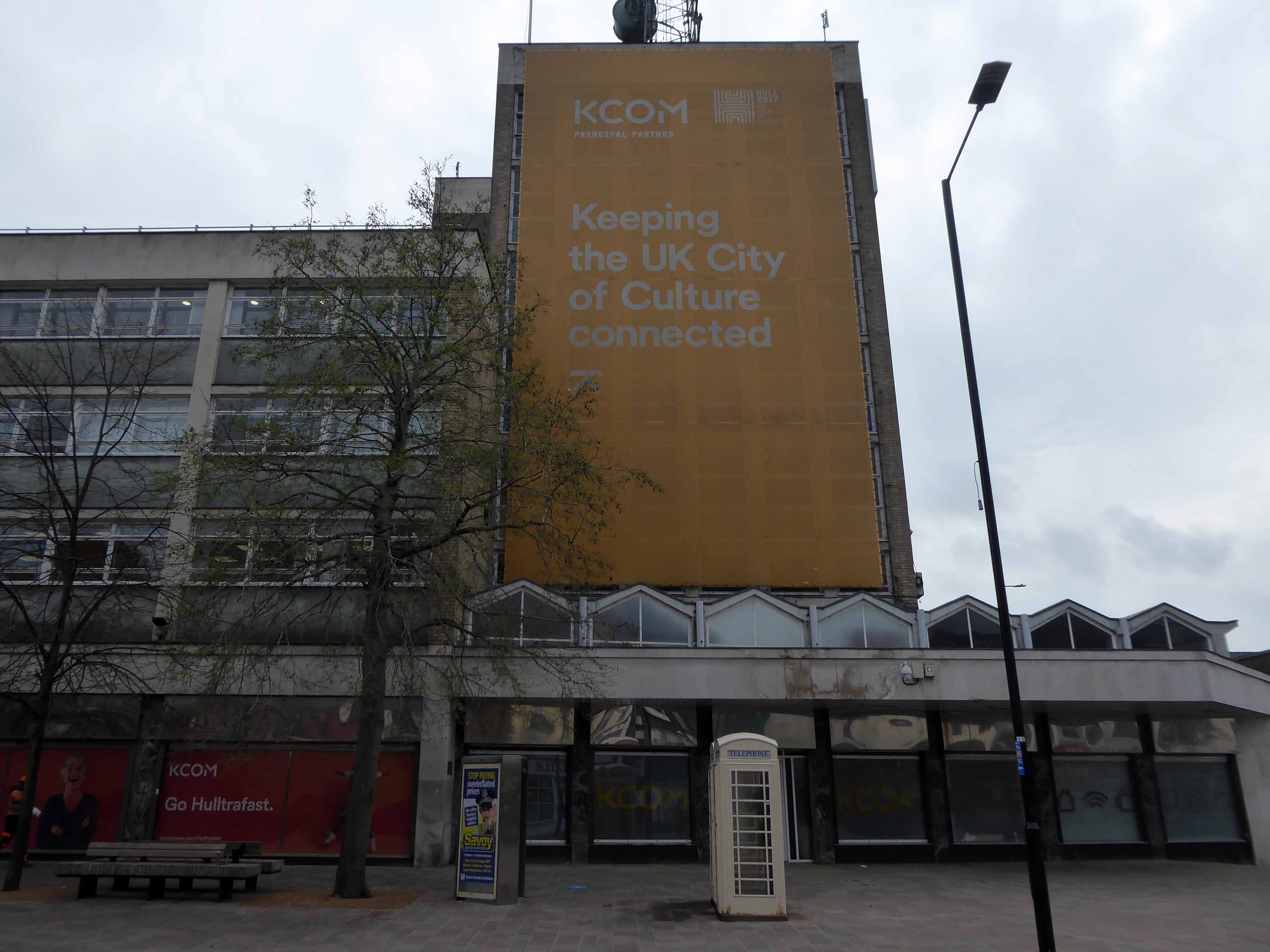
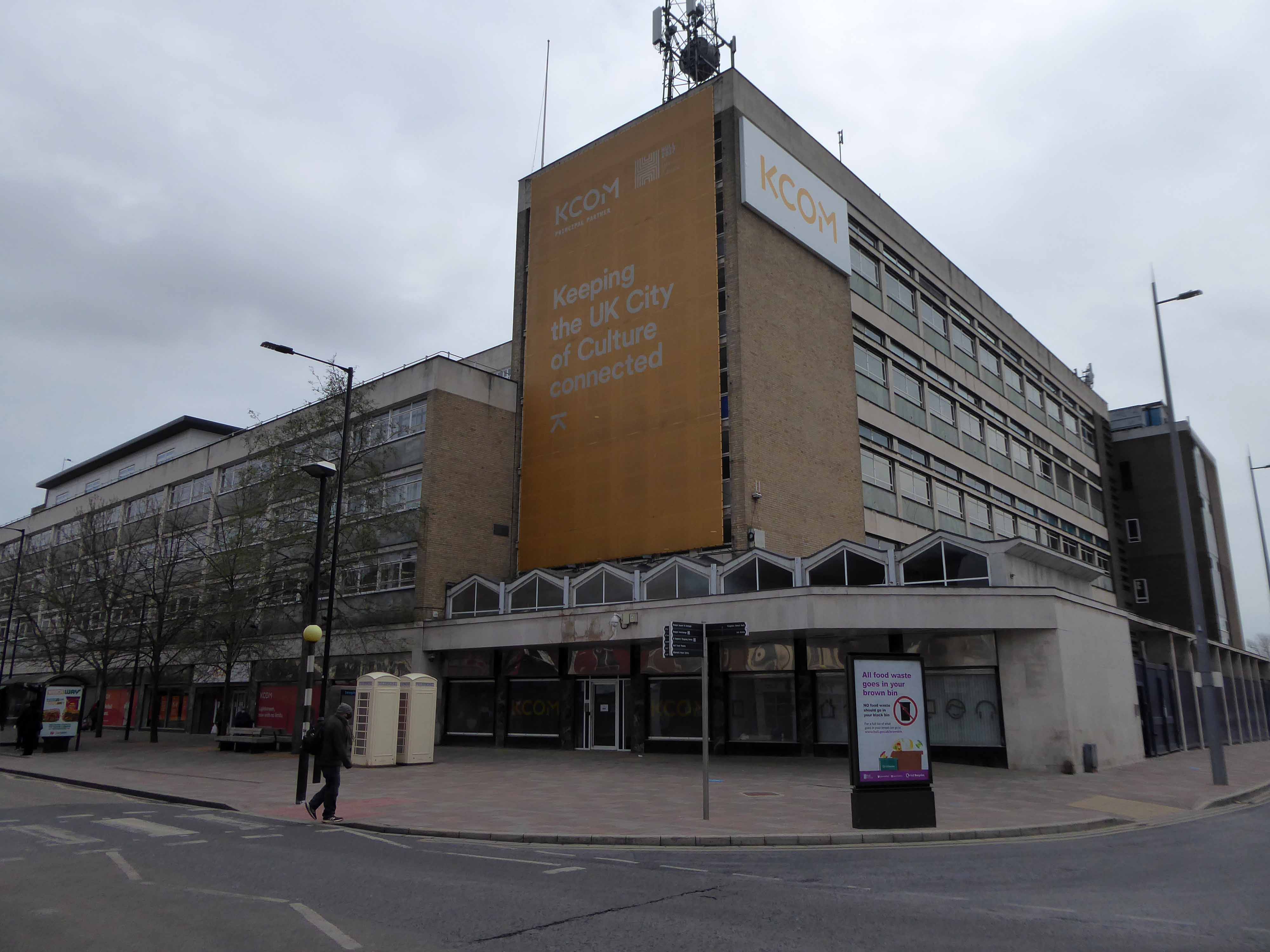
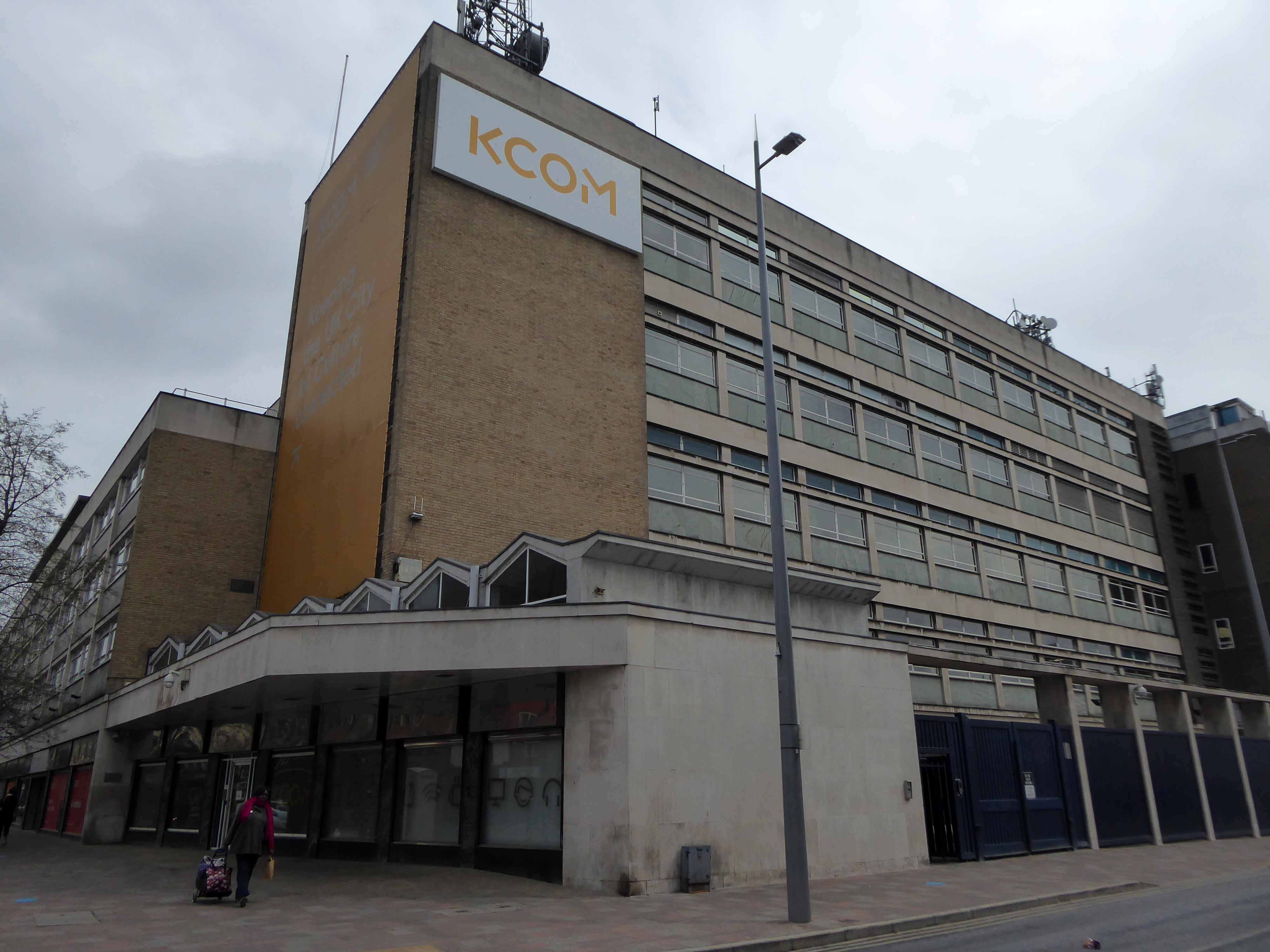
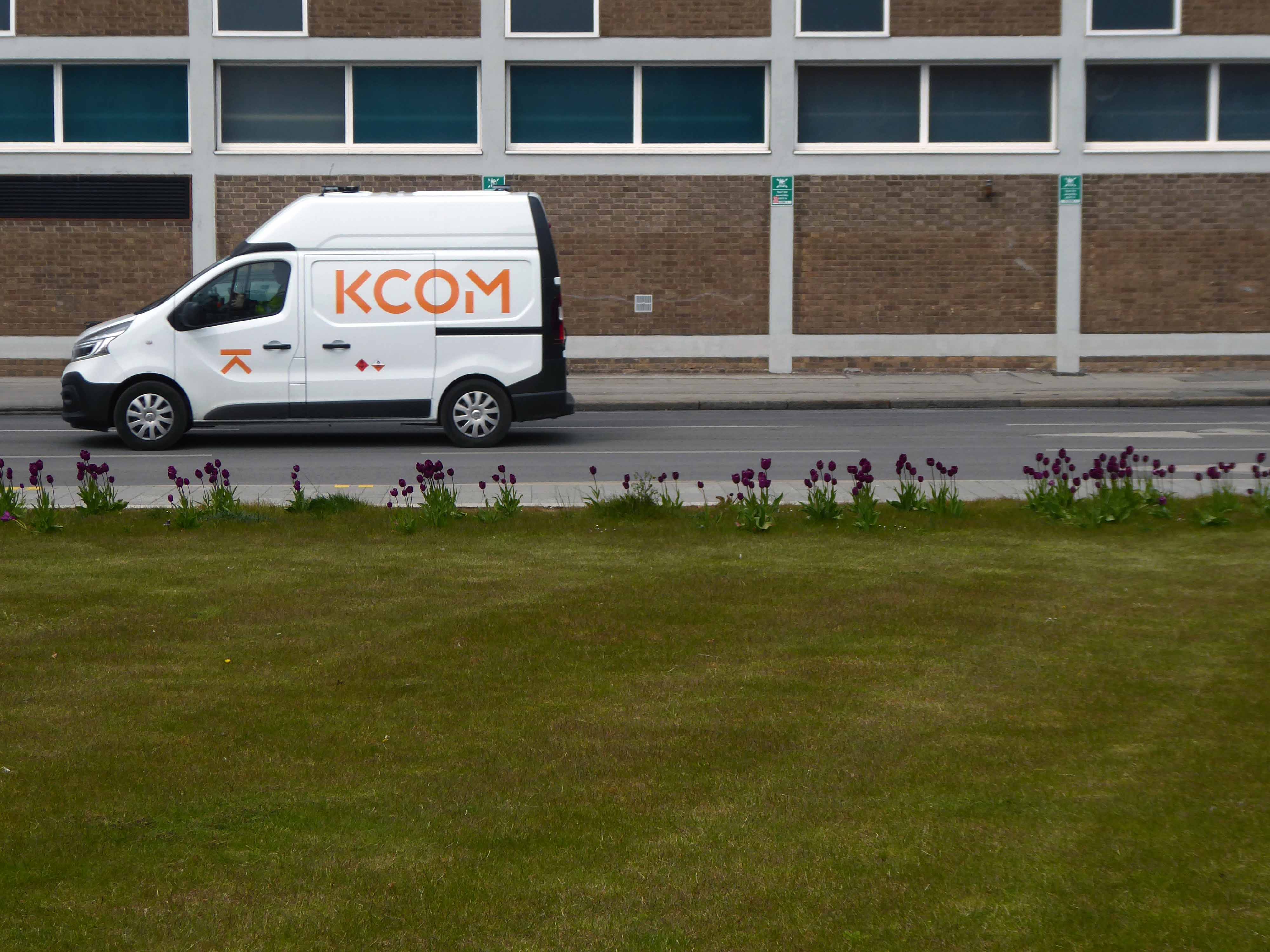
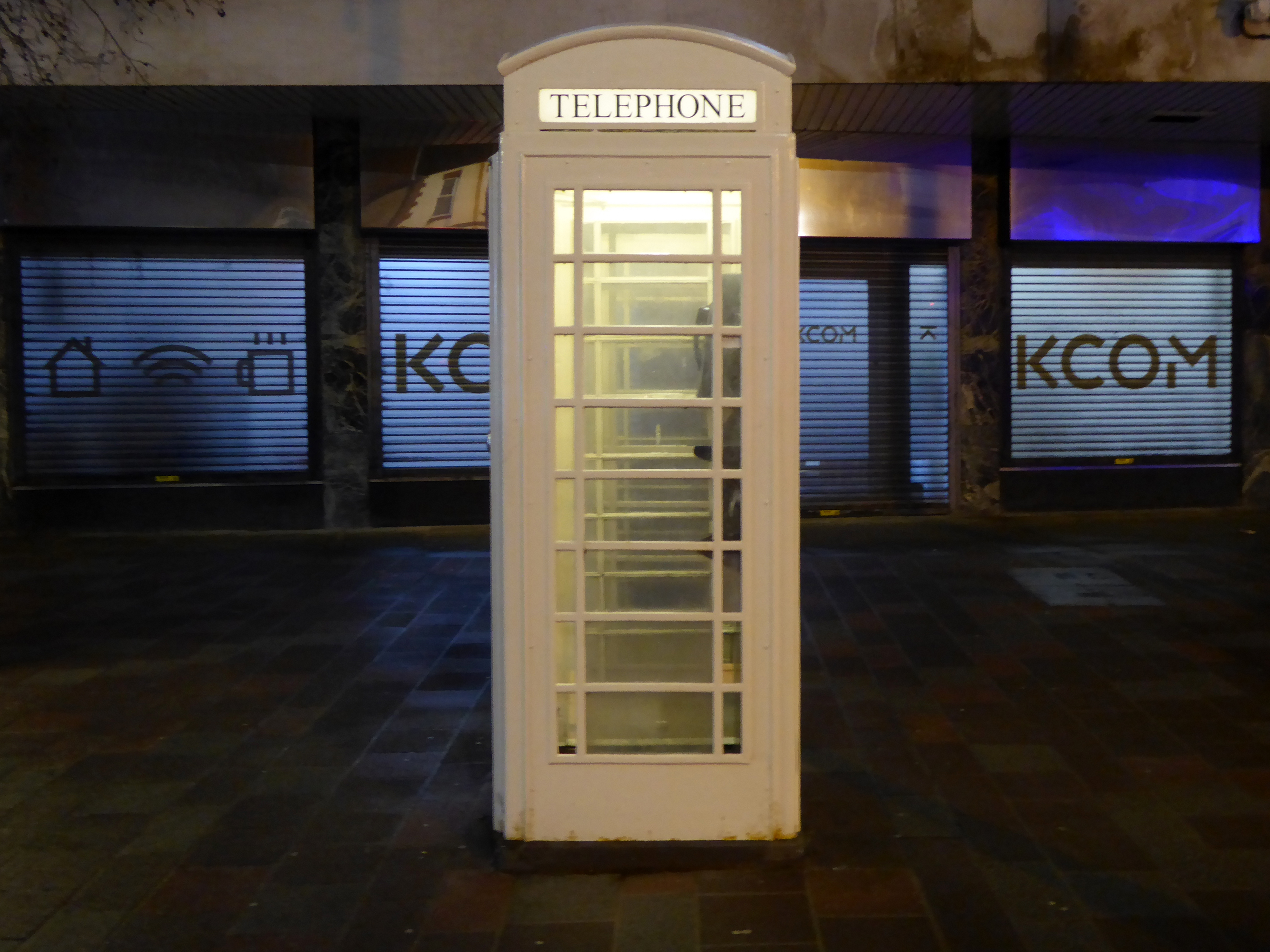
Whilst circumnavigating the Cecil one can’t help but notice the KCOM HQ – and its distinctive white telephone kiosks.
The work of City Architect A Rankine OBE RIBA

When Hull City Council founded KCOM back in 1904, as Hull Telephone Department, it was one of several local authorities across the country granted a licence to run its own phone network.


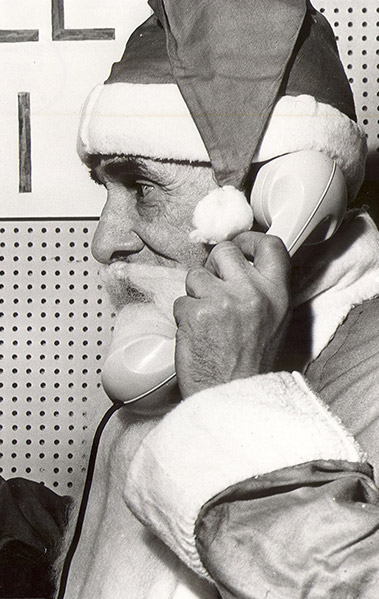
1952 Call Father Christmas service was introduced.
Having heard of a recorded message service in Scandinavia, Hull Councillor J M Stamper suggested the idea of putting Father Christmas on the telephone. The Call Father Christmas service was introduced shortly afterwards, the first of its kind in the UK. By dialling a Hull Central number children could hear recordings of a Christmas story and carol singing.
The success of the Father Christmas service led to the creation of other recorded information lines, such as Bedtime Stories, Teledisc and Telechef.
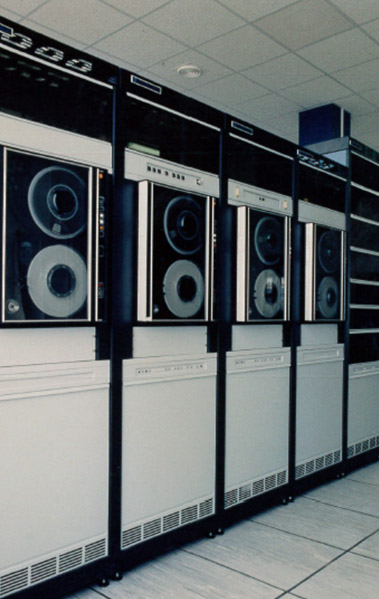
This recipe line was introduced in 1950s and was still going strong until the 1990’s, with 50s recipes such as meat loaf and corned beef with cabbages being replaced by dishes such as Italian Chicken Bake.
Returning to Ferensway we are confronted by the Danish Seaman’s Church.

Sea trade created a large Danish community which Hull’s very own Amy Johnson was descended from. Her grandfather was Anders Jorgensen, who anglicised his name to the more pronounceable Andrew Johnson. A Danish pastor was appointed and an old chapel in Osborne Street was purchased in 1841.
It was on May 9, 1954, that the present church, with its now familiar separate bell tower, was consecrated by the Bishop of Copenhagen.
Around the corner we find Porter Street Housing.

Hull was the most severely damaged British city or town during the Second World War, with 95 percent of houses damaged. It was under air raid alert for one thousand hours. Hull was the target of the first daylight raid of the war and the last piloted air raid on Britain.
Of a population of approximately three hundred and twenty thousand at the beginning of the war, approximately one hundred and fifty two thousand were made homeless as a result of bomb destruction or damage.
Overall almost one thousand two hundred people were killed and three thousand injured by air raids.
Despite the damage the port continued to function throughout the war.
The earliest housing was built just after World War II, starting with what is known locally as Australia Houses.
A circular five storey housing block off Porter and Adelaide Streets, with a communal garden in the middle. These flats consist of deck access flats and some traditional style Art Deco tenements. Some are three bedroom, and have been refurbished over the years.


Porter Street – three six-storey blocks containing seventy dwellings of 1954
Contractor J Mather

New Michael Street and Melville Street aka Upper Union Street one hundred and eight dwellings in three nine-storey blocks of 1958
Contractor Truscon

The designer behind Hull’s tower blocks was Andrew Rankine RIBA, who from 1939 remained City Architect until his retirement in 1961.
Just around the corner:

Over the last three years both companies have worked on undertaking the complex development of an off-site constructed, low carbon, Code 5 housing product. Working with Hodson Architects on the design the project will provide 3-bed family houses on the Thornton Estate in Hull. The scheme will increase provision of suitably sized accommodation in the area for families.
The project will see Premier Interlink manufacture the steel framed modules at the factory in Brandesburton East Yorkshire starting this March. The five houses are to be prefabricated off-site, with each house comprising of four separate units which are then assembled on site. This offers the benefit of reducing construction time, improving efficiency, reducing material wastage and offering an improved thermal envelope.
The Goodwin Trust, a brilliant and pioneering community group, decided the new version of pre-fab, or ‘modular’ housing, was exactly what was needed to provide affordable housing for the people it also cares for in so many other different ways.
Onward to Holy Apostles Church now home to Hull Truck and renamed Thornton Village Hall.


Back toward the station and Hammonds of Hull/House of Fraser – soon to be a food court, artisan everything outlet.
Built in 1952 on Paragon Square to designs by T. P. Bennett, with extensions added in 1954 and 1957. Within a couple of years the business had grown again by opening its own hairdressing salon, and in 1960 added a new warehouse to accommodate their furniture workshops and stock rooms. This itself was extended within four years, while a fourth floor was added to the main store.


On the right a civic building Festival House of 1951.
Architect: John Brandon-Jones.
Apprenticed to Lutyens‘ assistant Oswald Milne and later working with Charles Cowles-Voysey
With his good friend, John Betjeman, he helped found the Victorian Society in 1958.
On 1st May 1951, the foundation stone of Festival House was laid, to commemorate the first permanent building to be built in the city centre since the 1941 Blitz. Placed under the stone was a time capsule containing coins, stamps, a Festival of Britain programme, a copy of that day’s Hull Daily Mail, and a booklet about the city. Festival House was owned by Hull Corporation on behalf of the people of Hull.


Before us Alan Boyson’s Three Ships – now listed and set for preservation.
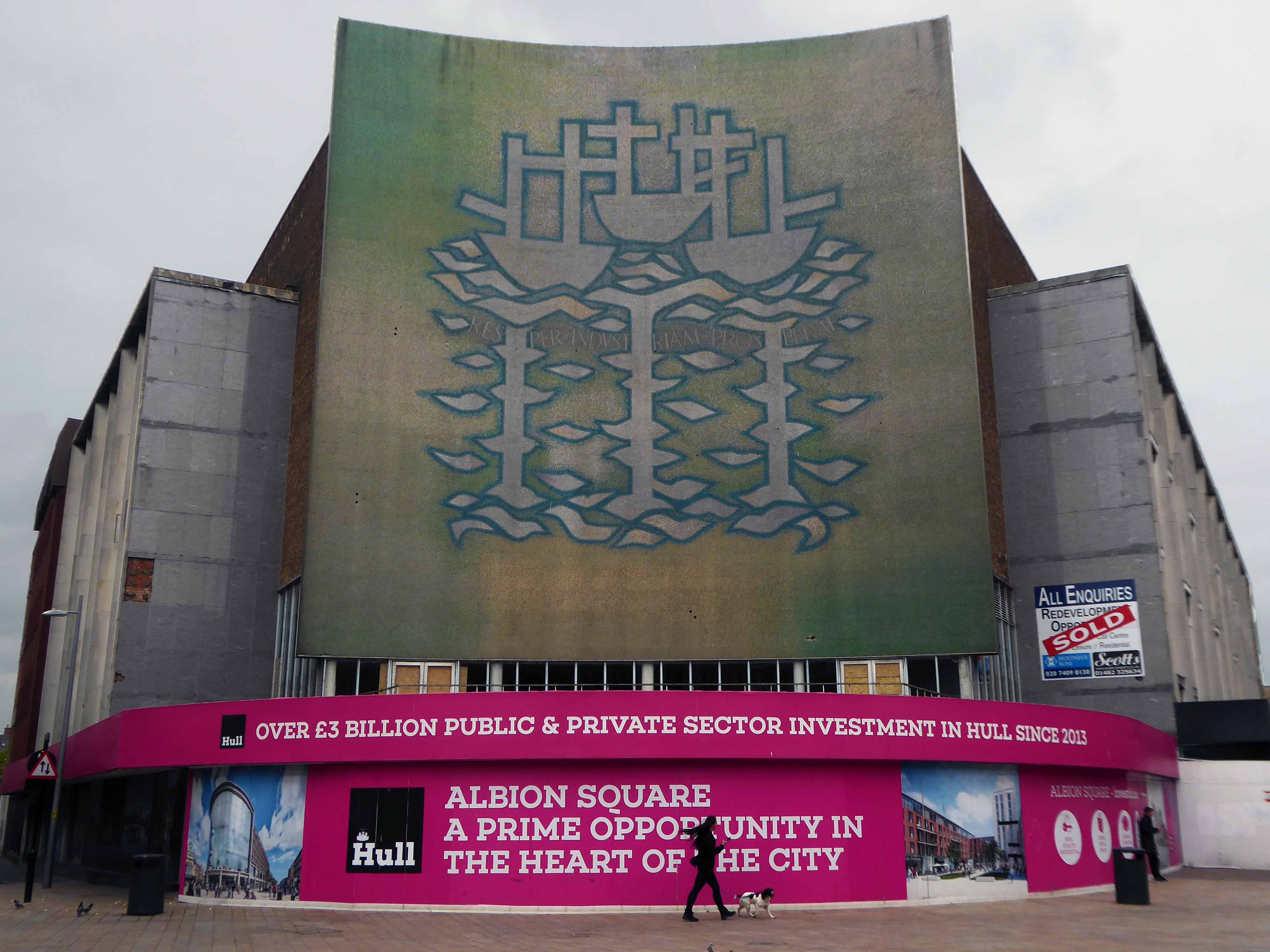
The fate of the attached former CO-OP/BHS is less secure.
Architect: Philip Andrew

Onward to the Queens Gardens the almost filled in former Queens Dock – forever fourteen feet below sea level.
We encounter Tonkin Liu’s Solar Gate – a sundial that uses solar alignment to mark significant times and dates in Hull. The super-light innovative two-shell structure is place-specific, responding to pivotal historic events and to the cultural context of its location in Hull’s Queens Gardens adjacent to the ancient site of Beverley Gate.

Carved stone panels Kenneth Carter 1960 – Ken’s art career began as an inspiring teacher, first at his alma mater, Hull College of Art, and later as principal lecturer at Exeter College of Art.


A number of decorative fountains featured in the ponds; those at the eastern end designed as part of the sculptured panels of 1960, by Robert Adams, described by Herbert Read as belonging to:
The iconography of despair. Here are images of flight, of ragged claws, scuttling across floors of silent seas, of excoriated flesh, frustrated sex, the geometry of fear.


And behind we glimpse Frederick Gibberd’s fine Technical College.

Adorned by the William Mitchell relief.


Having cycled here from Southampton, we now had time to cool our heels and look around.
Tim Rushton and I were Fine Art students here in the 1970’s, eager to take a trip down Memory Lane to Lion Terrace.
We’ll get there in a bit.

We took a look along The Hard discovering pubs that we never went in which are no longer pubs.
This pub was built in 1900, possibly on the site of an earlier pub. For most of its history it was tied to the Brickwood’s Brewery of Portsmouth.
The pub closed in 1970 to become a restaurant, before becoming an estate agents offices.
The pub sign appeared in the 1971 film Carry On At Your Convenience.
Many Brickwoods’ pubs were ever so elegantly tiled, though the beer was largely undrinkable.

Just along the way another pub which we never really knew, though still a pub for all that.

Across the water in Gosport our old pals Harbour and Seaward Towers.

Along the way some high quality hard landscaping.

Beneath our feet the smiling face of Pompey!

We resisted the charming period charms of the Clarence Pier
The pier was originally constructed and opened in 1861 by the Prince and Princess of Wales and boasted a regular ferry service to the Isle of Wight.
It was damaged by air raids during World War II and was reopened in its current form on 1 June 1961 after being rebuilt by local architects AE Cogswell & Sons and R Lewis Reynish.
Mind the Baby Mr. Bean an episode of British TV comedy series Mr. Bean was filmed on location at Clarence Pier.


Tim wisely eschews the Wimpy.
Lyons obtained a licence to use the Wimpy brand in the United Kingdom from Edward Gold’s Chicago based Wimpy Grills Inc. and, in 1954, the first Wimpy Bar was established at the Lyons Corner House in Coventry Street, London. The bar began as a special fast food section within traditional Corner House restaurants, but the success soon led to the establishment of separate Wimpy restaurants serving only hamburger-based meals.
In a 1955 newspaper column, Art Buchwald, syndicated writer for the Washington Post, wrote about the recent opening of a Wimpy’s Hamburger Parlor on Coventry Street and about the influence of American culture on the British.
Buchwald wrote:
Food served at the table within ten minutes of ordering and with atomic age efficiency. No cutlery needed or given. Drinks served in a bottle with a straw. Condiments in pre-packaged single serving packets.
In addition to familiar Wimpy burgers and milkshakes, the British franchise had served ham or sardine rolls called Torpedoes and a cold frankfurter with pickled cucumber sandwiches called Freddies.
During the 1970s Wimpy refused entry to women on their own after midnight.


Moving along eye spy the Isle of Wight Ferry through the Hovertravel window.
Hovertravel is now the world’s oldest hovercraft operator, and this service is believed to be unique in western Europe.
It is the world’s only commercial passenger hovercraft service.
The operator’s principal service operates between Southsea Common on the English mainland and Ryde Transport Interchange on the Isle of Wight: the crossing time of less than 10 minutes makes it the fastest route across The Solent from land to land.
This service commenced operations in 1965, Hovertravel currently operates two 12000TD hovercraft on a single route between Ryde and Southsea.


We took a turn into the back streets to visit our old home 20 Shaftesbury Road, where Catherine Lusher, Tim and I lived in the basement flats.
Liz Bavister and Trish Frowd lived above


The former Debenham’s is to become flats.

Nearby Knight and Lea has been listed
The Knight & Lee building, which is located between two conservation areas on a prominent corner of Palmerston Road and Clarendon Road in Southsea, Portsmouth, was designed by Cotton, Ballard and Blow.

Notable surviving original interior features include spiral staircases with terrazzo flooring in the northwestern and southwestern corner customer entrance vestibules.

A little Stymie Bold Italic aka Profil for your delectation along with a delightful low concrete fence.

A ghostly sign.

The Wheelbarrow where we drank, currently home to Joe and his pizzas.

The former Duchess of Fife in Castle Road long gone Long’s pub

Long & Co Ltd Southsea Brewery
Founded by William Tollervey 1814 and was acquired by Samuel Long in 1839. Registered in March 1924.
Acquired by Brickwoods Ltd 1933 when brewing ceased.

The Barley Mow my favourite local where we would take a drink later.

Later.

The evening was enlivened by the arrival of a drunken wedding party the bride all in white, veil askew.
The besuited groom three sheets to the wind, mayhem ensued, we departed.

The Grade II Listed India Arms – North part 1902 by AE Cogswell; south part formerly Fishmonger and Game shop 1900, which formed the extension to the public house c1980.
Once part of the long gone Gales Brewery estate.
Founded 1847 when Richard Gale acquired the Ship & Bell home brew house.
Registered in April 1888 with 80 public houses.
Acquired by Fuller, Smith & Turner Ltd in 2005 with 111 houses and closed.

Now we is at the Borough Arms and other favourite – purveyors of strong rough cider.
Built in 1899 architect AE Cogswell as the Old Vic now listed but no longer a pub

Along with the adjacent Wiltshire Lamb which since the 1980s this pub has had a variety of names including, Drummond’s, Tut ‘n’ Shive, Monty’s and now Hampshire Boulevard, usually shortened to HB.

The Norrish Central Library: city architect Ken Norrish 1976 – is all that remains this Brutal part of Portsmouth.


It faces the stylish new Civic Centre: Teggin & Taylor 1976 – a piazza completed by the adjacent Guildhall.

Alas no more:
The Tricorn Centre was a shopping, nightclub and car park complex, it was designed in the Brutalist style by Owen Luder and Rodney Gordon and took its name from the site’s shape which from the air resembled a tricorn hat.
Constructed in the mid-1960s, it was demolished in 2004.

Next we are by the former Portsmouth Polytechnic Fine Art block in Lion Terrace.
The ground floor corner housed the print room where I learnt my craft under the tutelage of Ian Hunter who we hooked up with for a pint and a chat.
Thanks ever so Ian for everything.
The happy days came to an end when the department was acrimoniously closed during a Hampshire shuffle.

We also cycled out to Langstone Harbour in search of the Arundel Canal lock gates, where Tim had languidly drawn away the hours, too many summers long ago.
After some circuitous searching we finally found them.

We ended a long day in the Barley Mow sharing yet another pint, one of many in our almost fifty year friendship.


We arrived safely by train from Stockport at Southampton Central.

Following lengthy consideration we headed off on our bikes.
Whilst halting to review our progress, I realised that I had lost the map, a map vital to our further progress.

Returning to the station I found it nestled against the kerb.
Further assessment of our onward journey resulted in yet another retracing of steps.
In the shadow of Southampton Station dwarfed by Norwich House.

Resolute, we confront the fact that we are unsure of the route and following close scrutiny of the map, our environs and the surrounding signage, we proceed eastward towards our destination.
Wyndham Court – architects Lyons Israel Ellis, E.D. Lyons being the partner in charge along with Frank Linden and Aubrey Hume.

Leaving the city and heading along the Weston Shore – Southampton Water.
To our right several Seaside Moderne shelters

Tim feasts on a Mint Club biscuit.


To our left are the tower blocks of Weston Farm Foreshore – L. Berger City Architect 1963
Seen here in 1985 – Tower Block.
In the distance Canberra Towers Ryder and Yates 1967


Residents living on the second floor of 24-floor block Canberra Towers, on Kingsclere Avenue in Weston, were told to evacuate as flames erupted inside a kitchen.
The Daily Echo spoke to the residents of the affected flat, who said the cat knocked paper that was on top of the microwave, which then fell onto the toaster.
Tracey Long said:
I’ve got two cats, and Sponge was the one who knocked the paper.
He knocked paper off the microwave and into the toaster, it was quite scary.
I lost him in the flat but now I’ve found him again.

Arriving just in time to be too late, next thing you know we’re bobbing along on the Hamble Warsash Ferry.
The obliging ferry folk having taken us across the estuary, despite our tardiness.


The village and the River featured in the 1980s BBC television series Howards’ Way.

Sadly little evidence of the successful TV show remains, however happily Henry VIII’s Dock and an Iron Age Fort have prevailed.
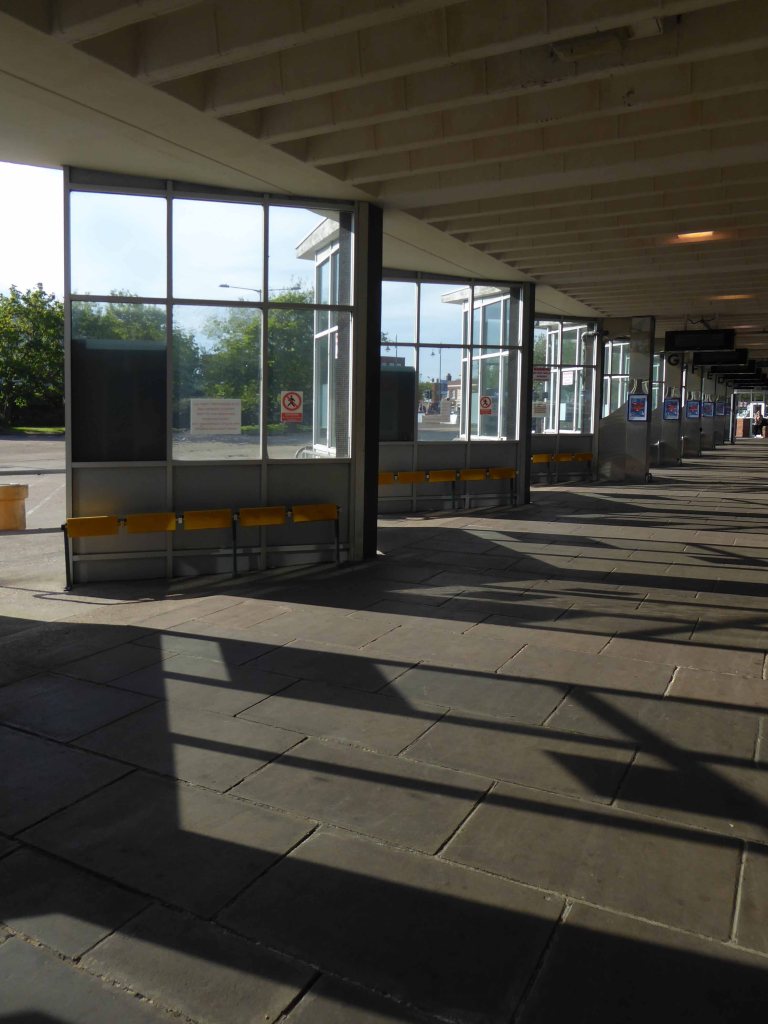
Onward to Gosport where we happen upon a diminutive yet perfectly formed Bus Station.
Originally built in the 1970s, the bus station was described in 2012 as knackered by the council chief executive at the time, Ian Lycett, and an investment plan was drawn up.
Talk of redevelopment then resurfaced in 2015, before the site was put on the market in 2016.
Keith Carter, retiring owner of Keith’s Heel Bar in Gosport Precinct, has described the bus station as a missed opportunity.


The nearby Harbour and Seaward Towers have faired a little better, newly clad and their tiled murals intact.
While working for George Wimpey and Co. Ltd, and together with J E Tyrrell, Chief Architectural Assistant to Gosport Borough Council, Kenneth Barden was responsible for tiled murals on Seaward Tower and Harbour Tower, two sixteen-storey tower blocks built in 1963 on the Esplanade in Gosport.

They really are something they really are.
And so following a ride on the Gosport Ferry we arrive at Portsmouth Harbour.

The land where British Rail signage refuses to die!

I have passed this way before on a Bournemouth to Pompey trip and both Tim and I were students at the Poly here in the 70s – more of which later.
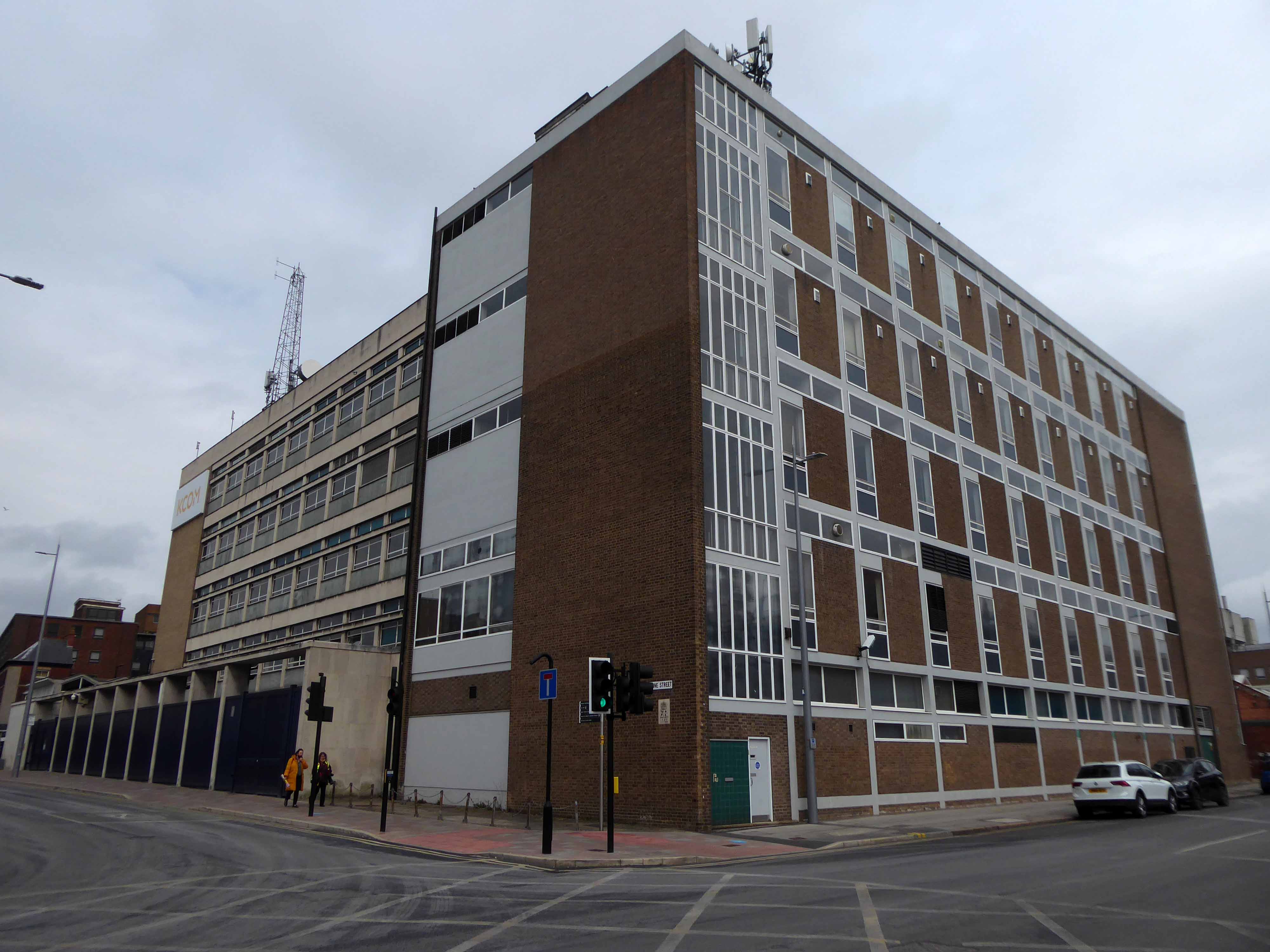
37 Carr Lane Hull HU1 3RB
When Hull City Council founded KCOM back in 1904, as Hull Telephone Department, it was one of several local authorities across the country granted a licence to run its own phone network.
Gradually, over time other authorities gave up control of their networks to the Post Office which wanted to create a single national service, but Hull City Council decided to keep its network and continue to go it alone.
While the Post Office network eventually became BT, Hull’s network, like the city itself, remained fiercely independent. That’s why today Hull has its own distinct cream phone boxes in contrast to the red ones you’ll find elsewhere.
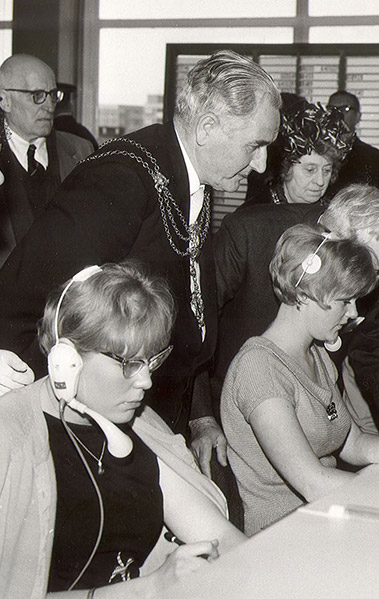
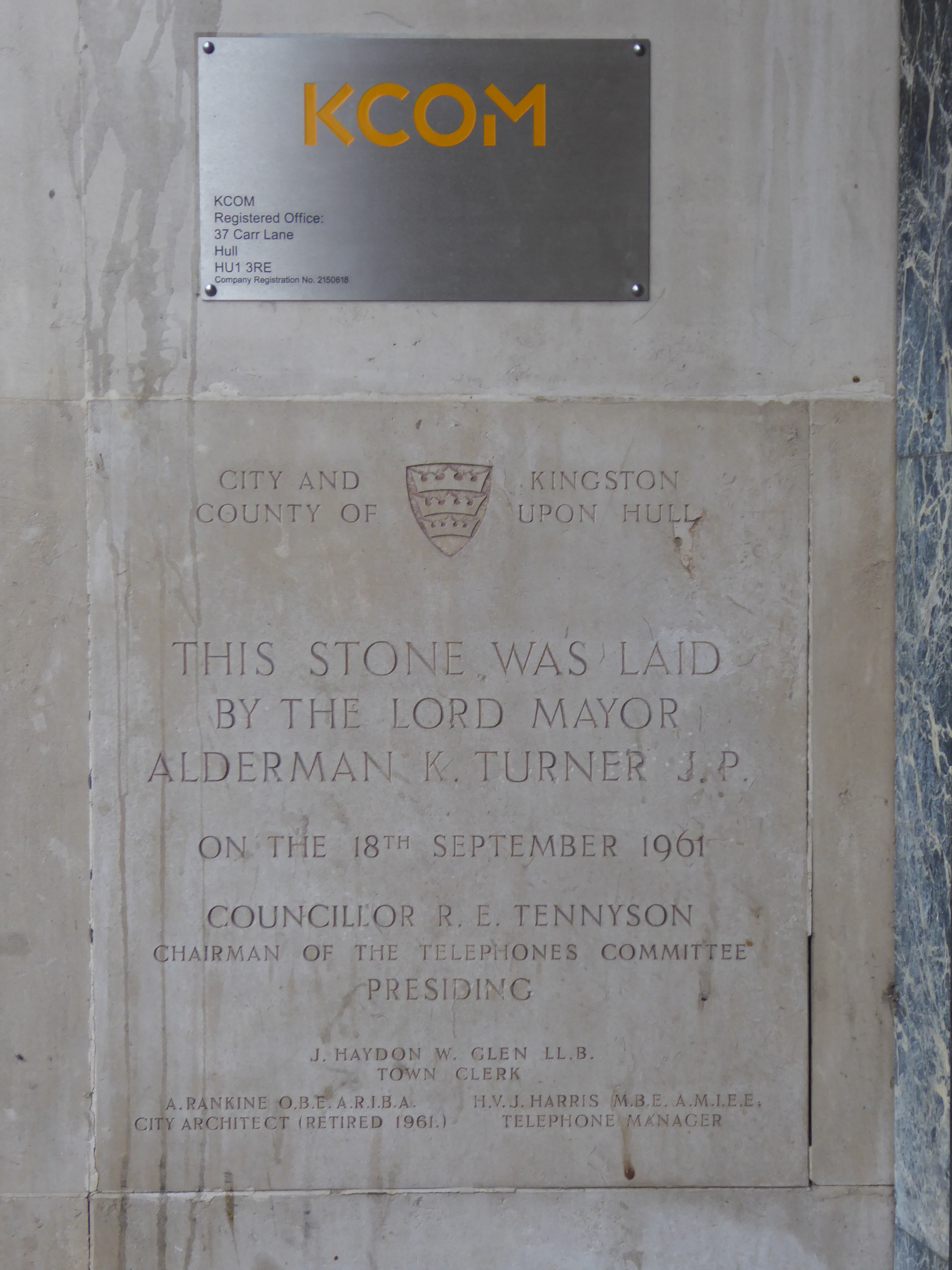
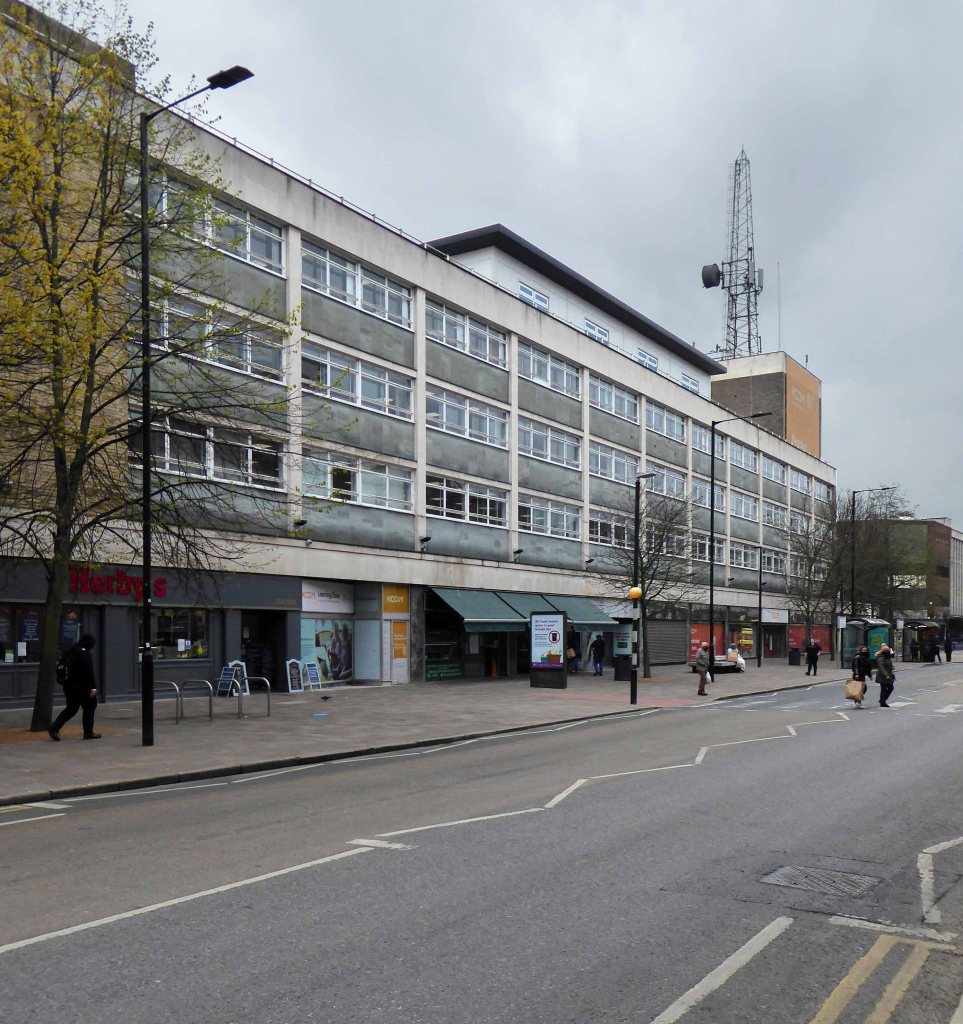
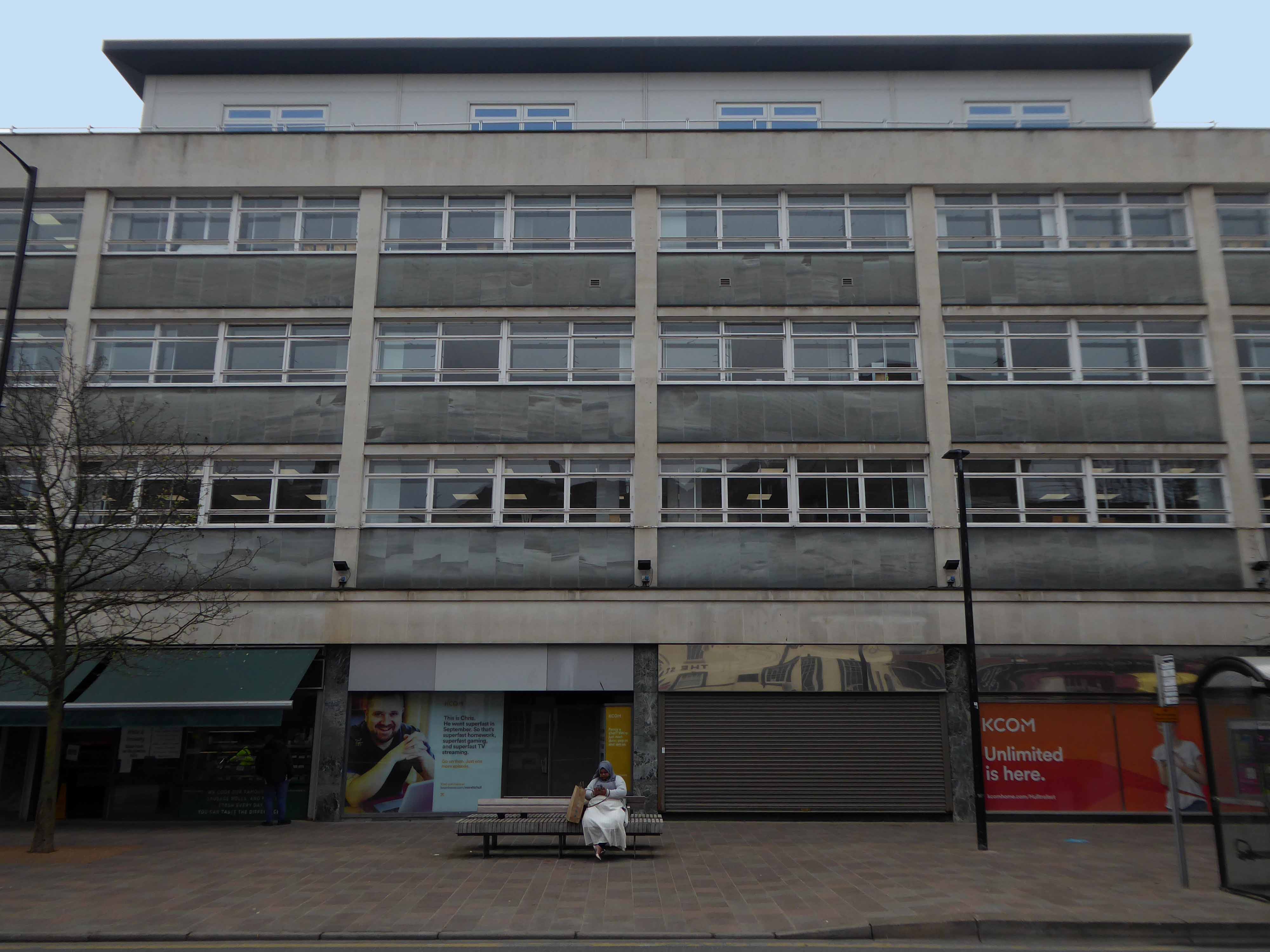
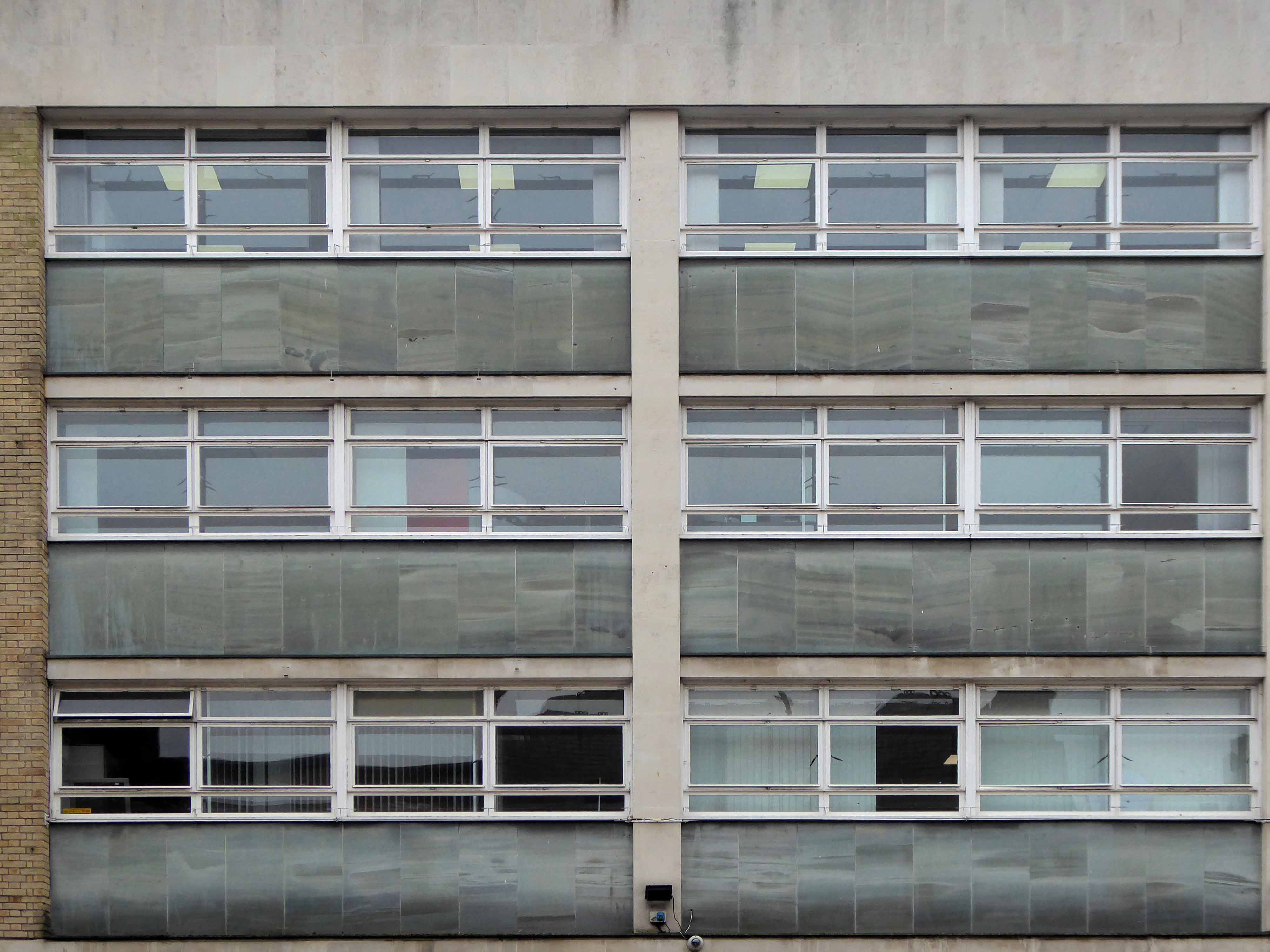
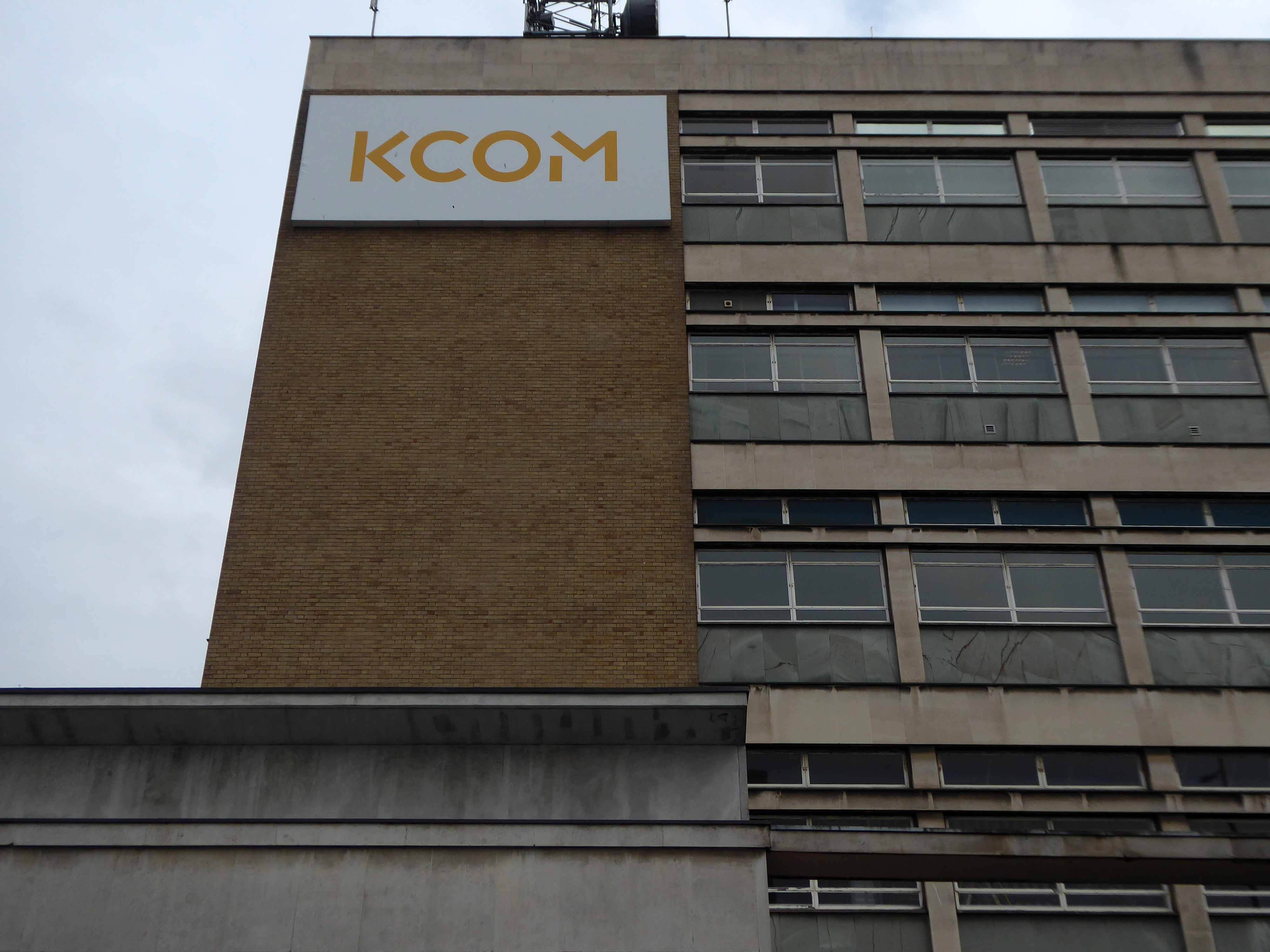
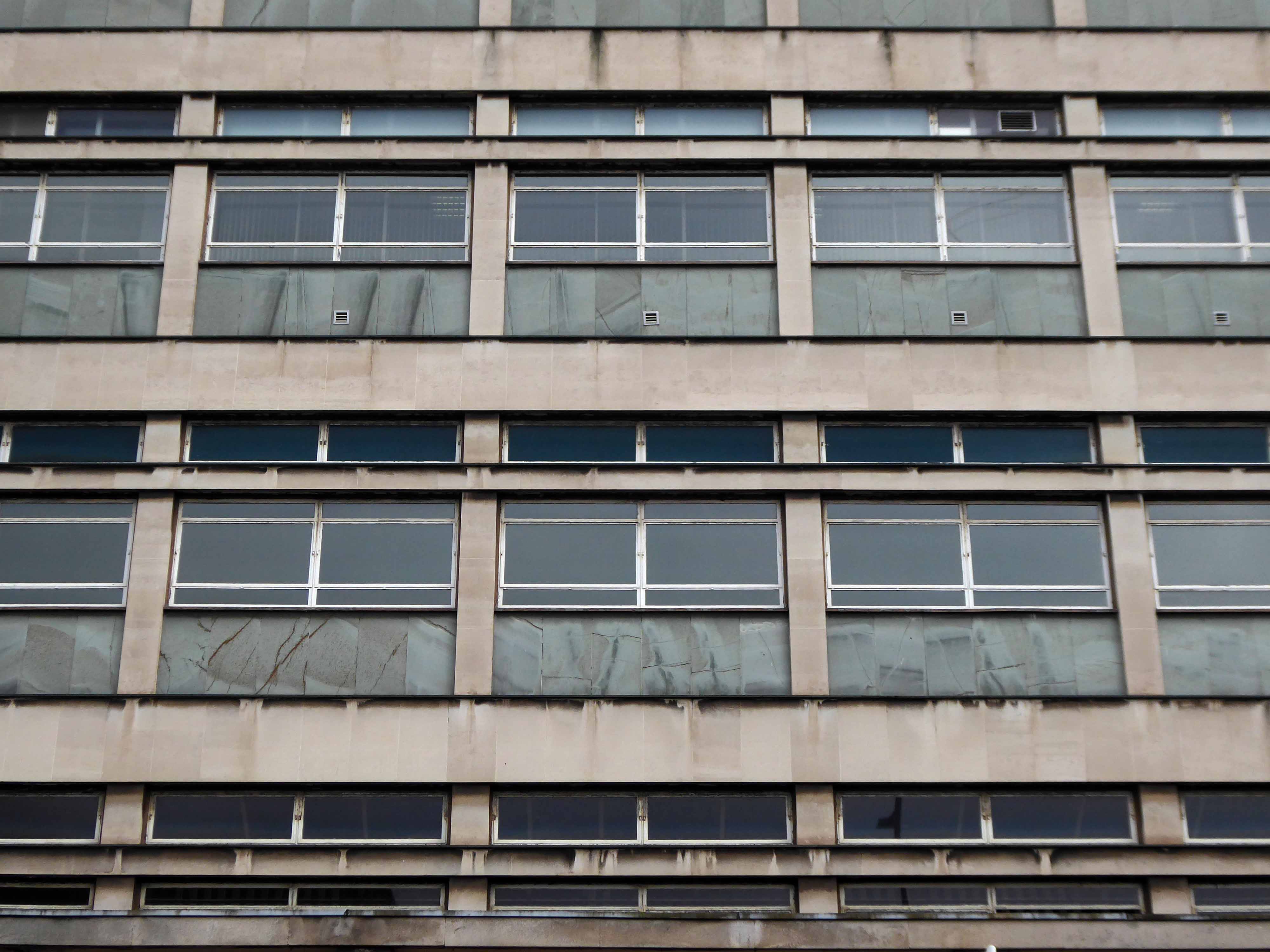
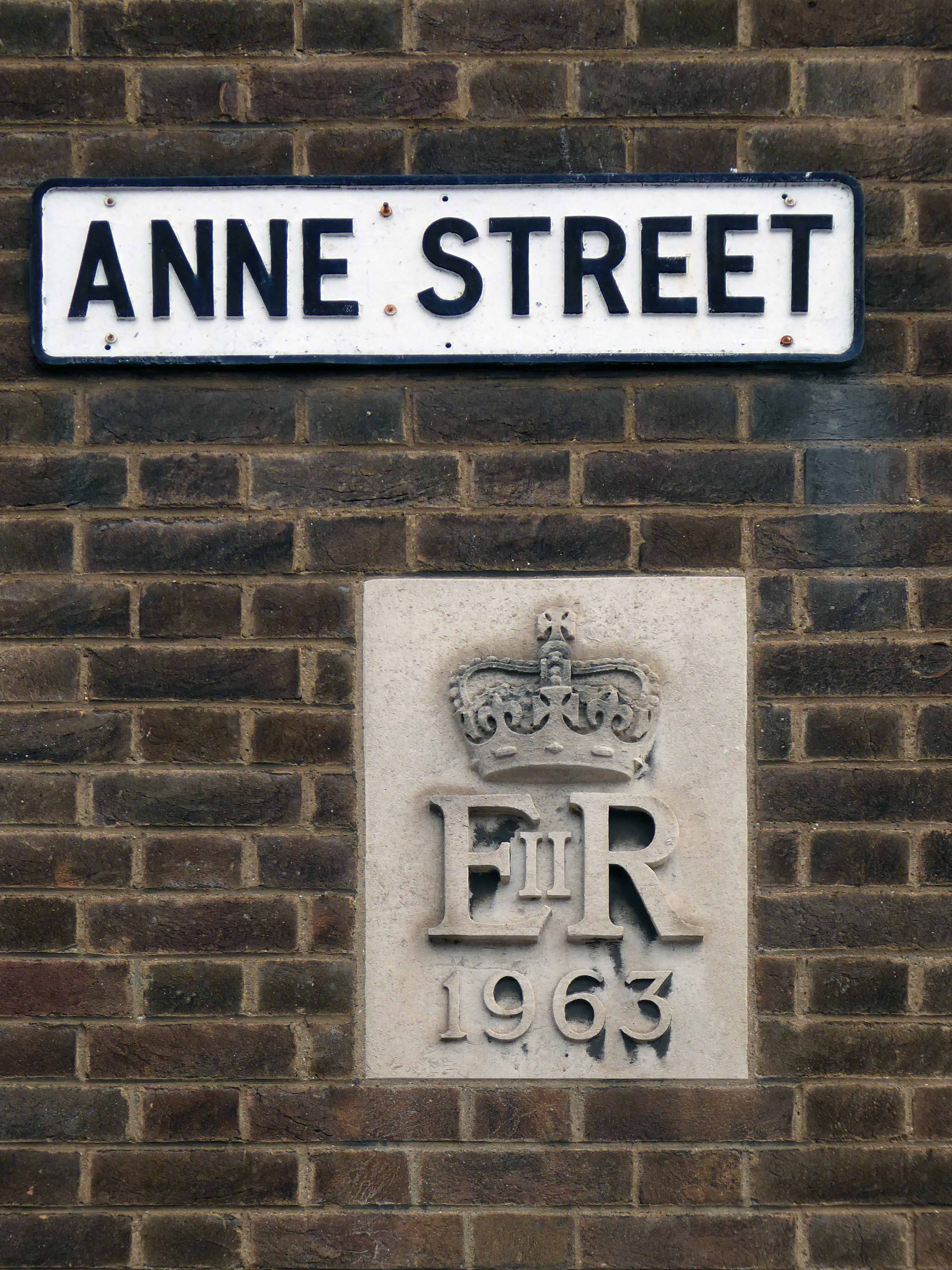
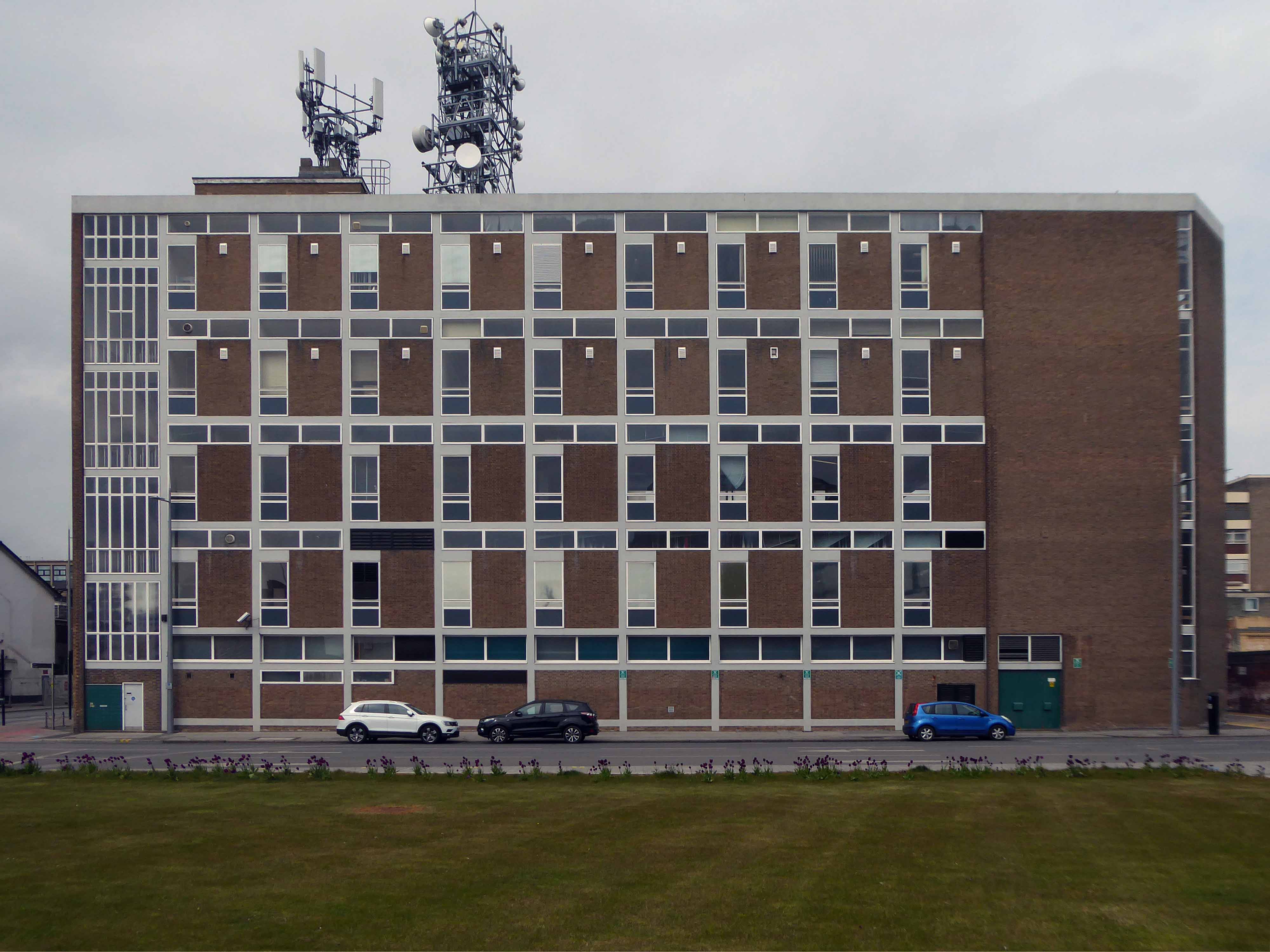
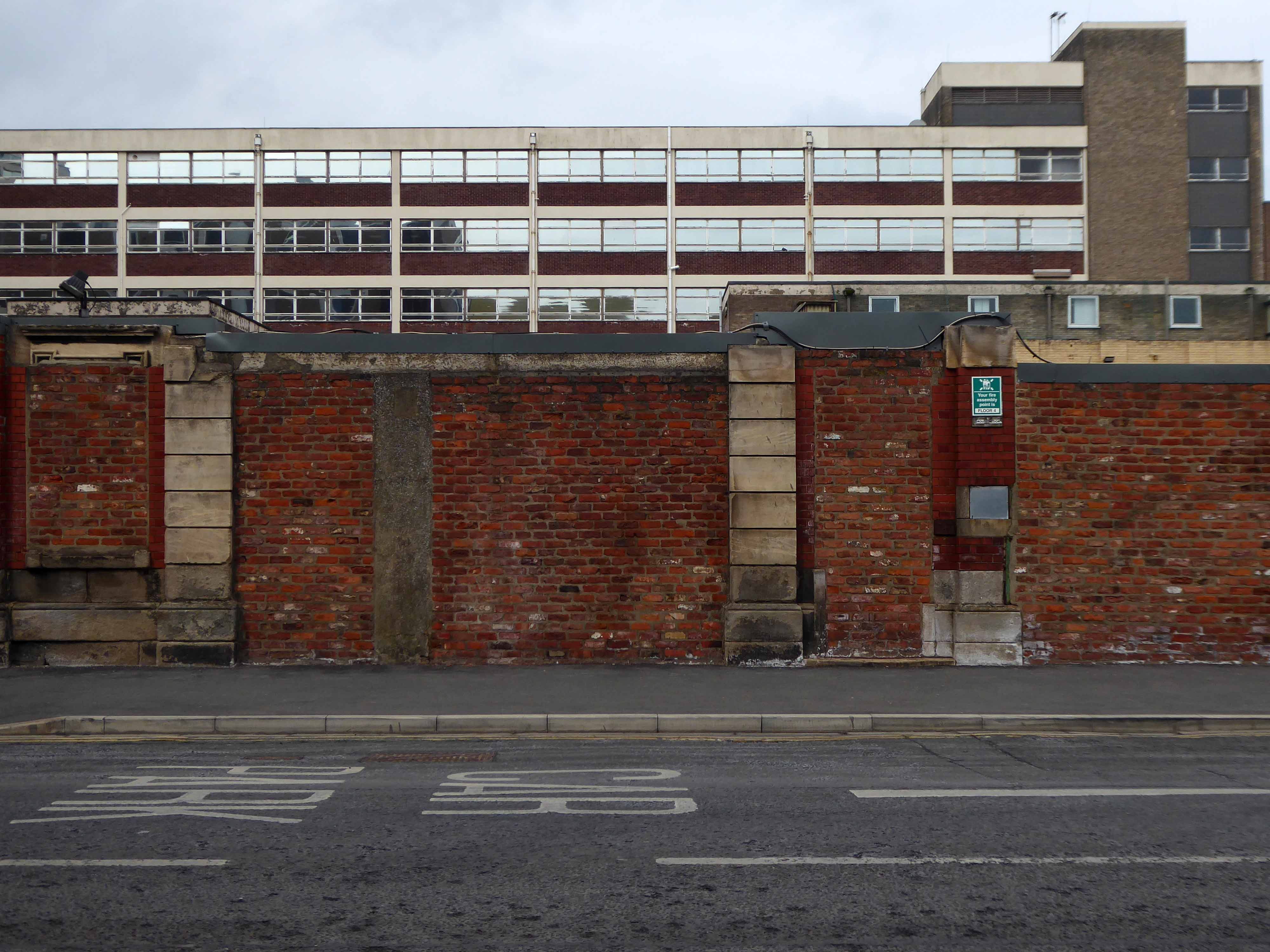
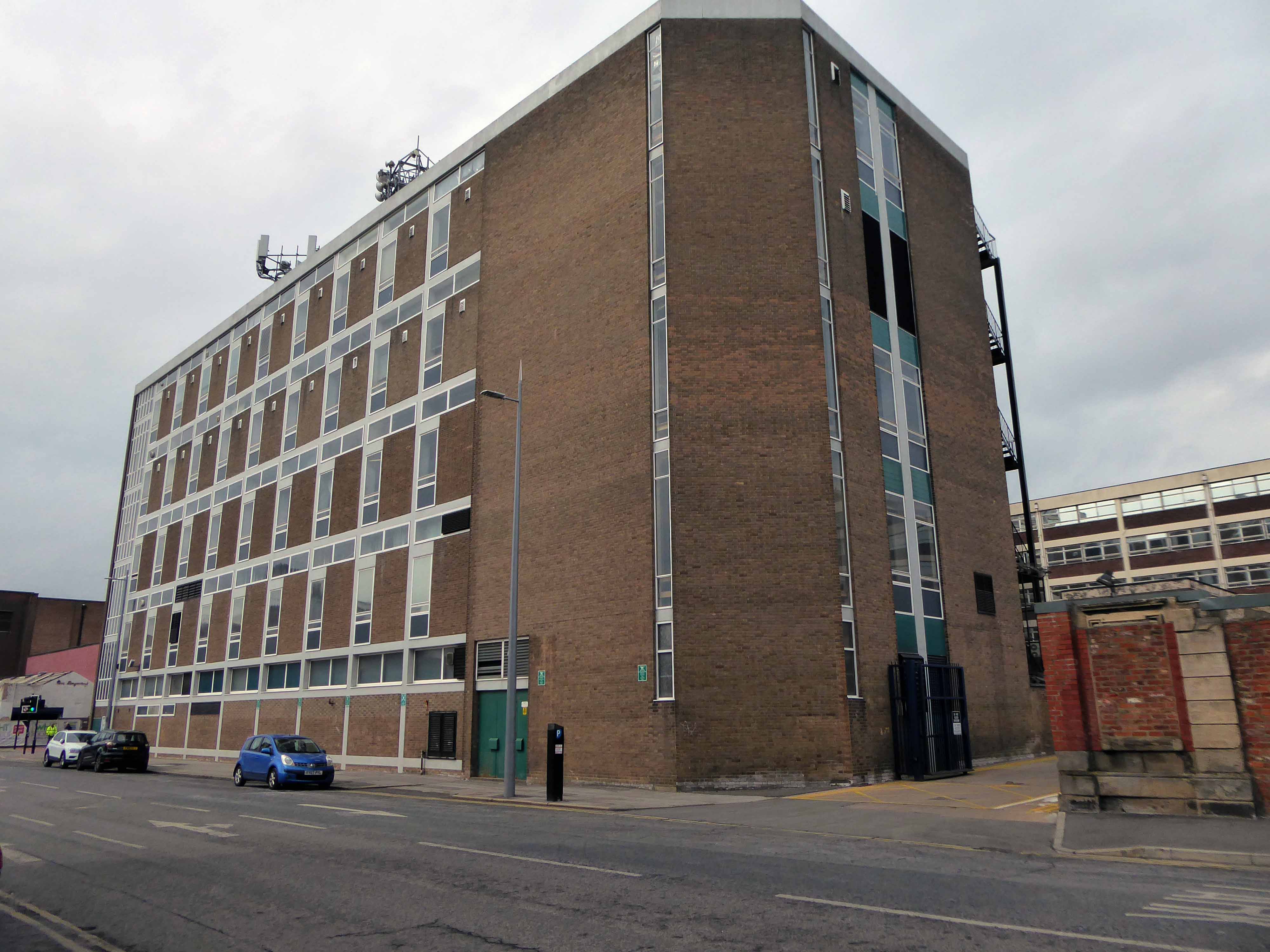
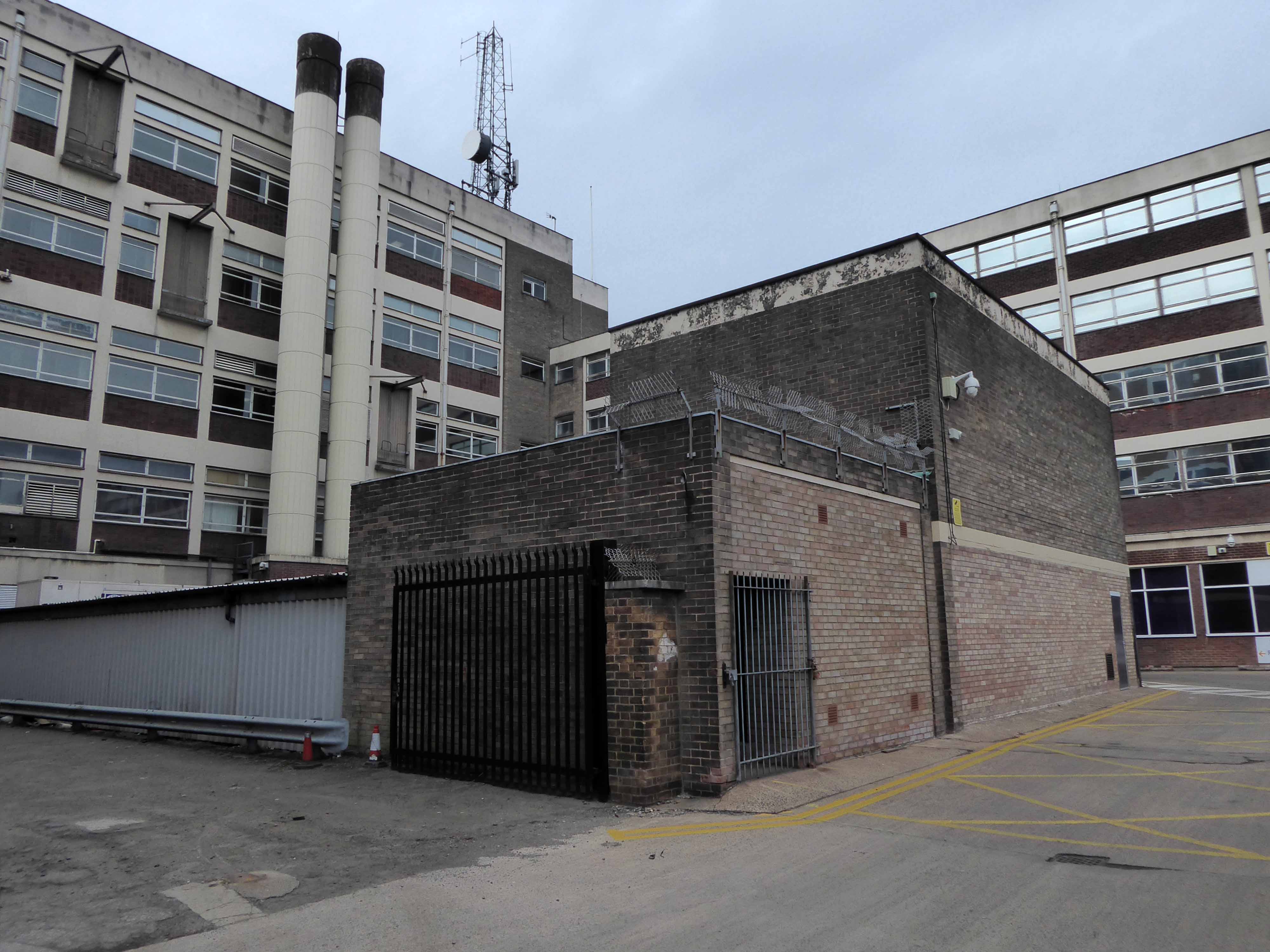
This is a fine building of brick, concrete, stone and steel, a restrained palette and commanding volumes, which asserts itself within the framework of the surrounding post-war architecture.
Well worth a walk around – let’s circumnavigate right now!
Good night all, sweet dreams and don’t forget to call Santa – hope that you all enjoyed your corned beef and cabbage.

Built in 1937 – very much in the civic style of the day, an inter-war classical moderne utilitarian low-rise in brick, steel, stone and concrete.

A three level, level headed essay in resolute local pride, when Droyslden was an independent UDC, prior to the creation of Tameside.

Furnished in the finest manner.


Computerised and digitised – the first library in Tameside to go live.


Droylsden Library Carnival entry – first prize winner in its category.

Closed on March 17th it now faces demolition.
Archive photos Tameside Image Archive

The rising cost of repairs, combined with ‘a desire to progress’ with the regeneration of Droylsden town centre and the inaccessibility of the library’s T shape, three-floor configuration means that a ‘solution for the future of the library’ is now needed, according to the town hall.
Of note are its curved cantilevered concrete balconies, complete with attractive steel balustrades.


Along with its carved relief above the door.

Decorative grille.

Commemorative Communist plaque

Drainpipes

Architectural Type.

And handrail.

I sure will miss the Library – I have walked cycled and bused by for over fifty years.
You are to be replaced by housing and relocated to the new development next door.

North Road Clayton Manchester M11 4WQ
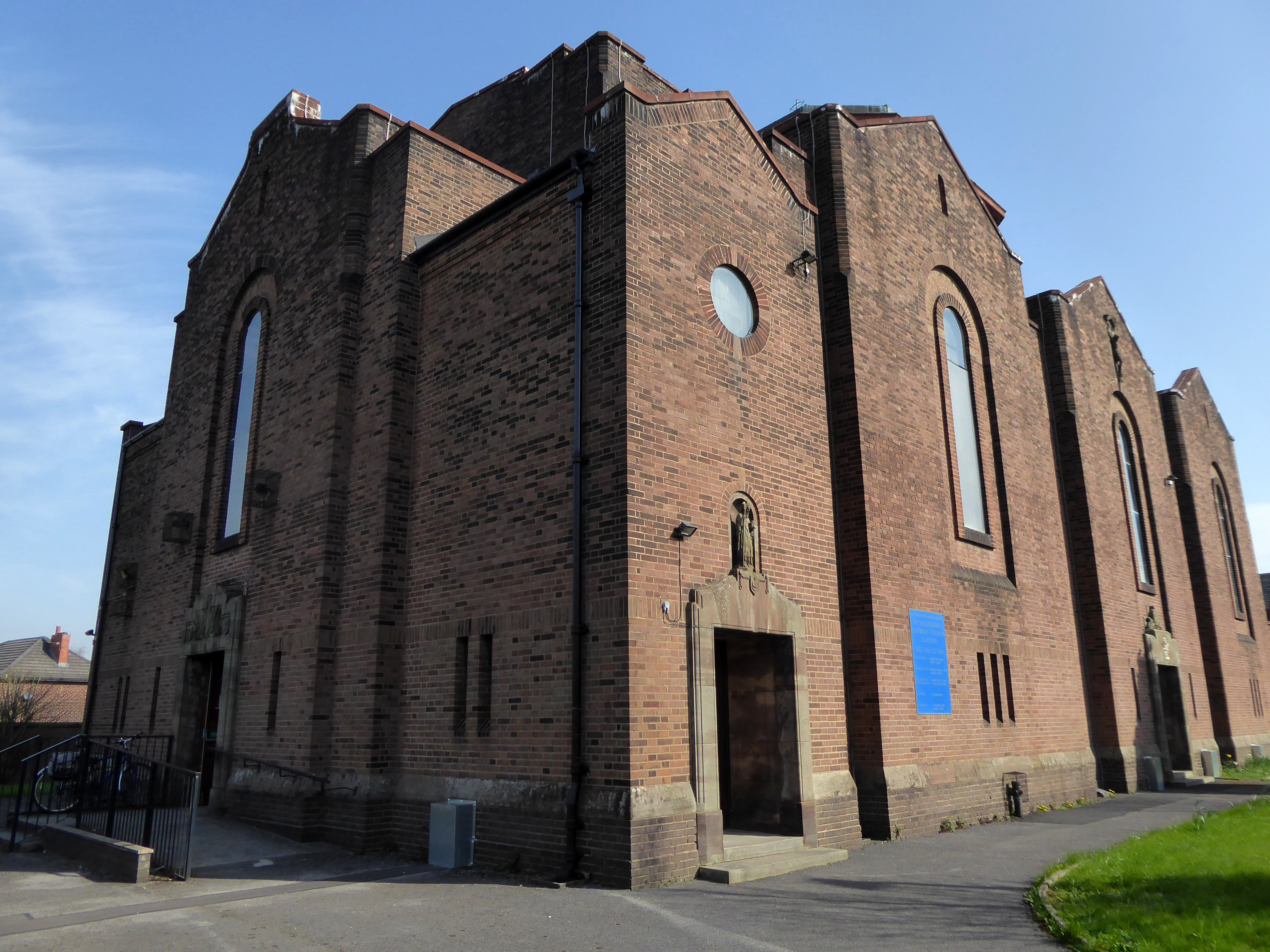
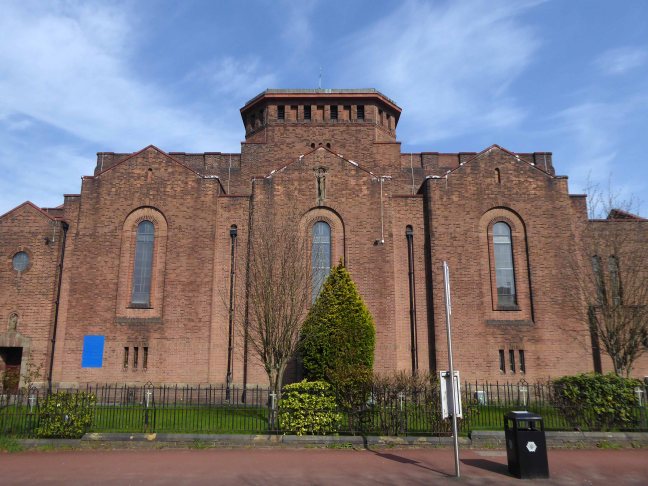
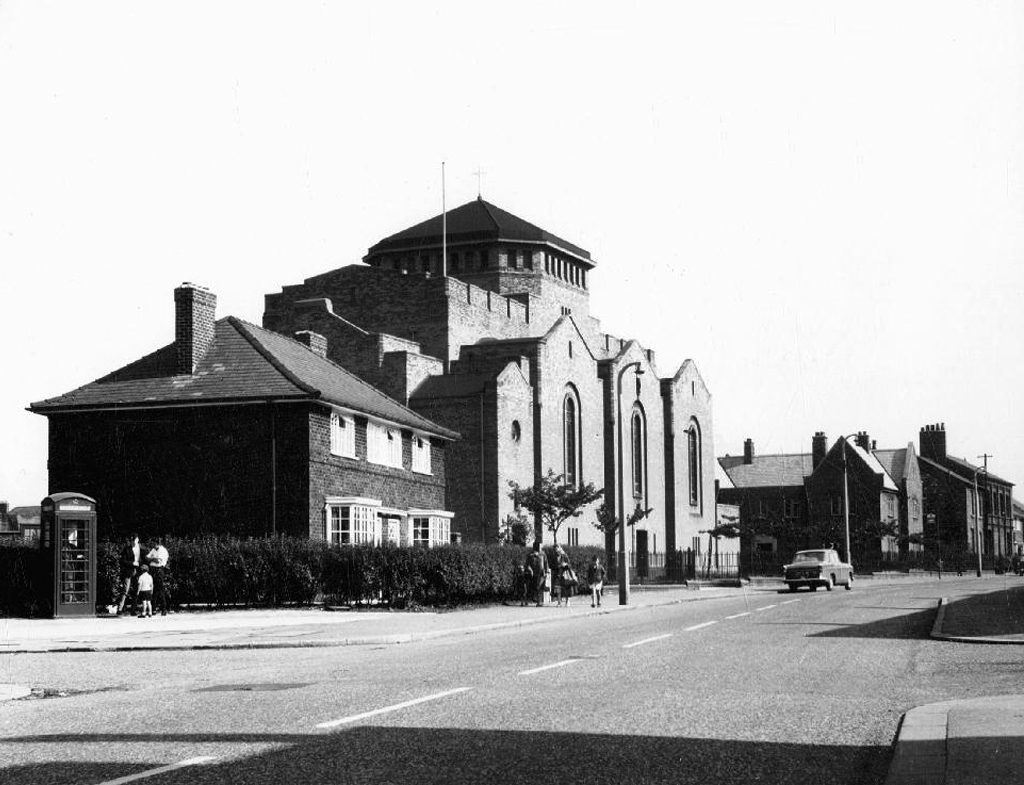
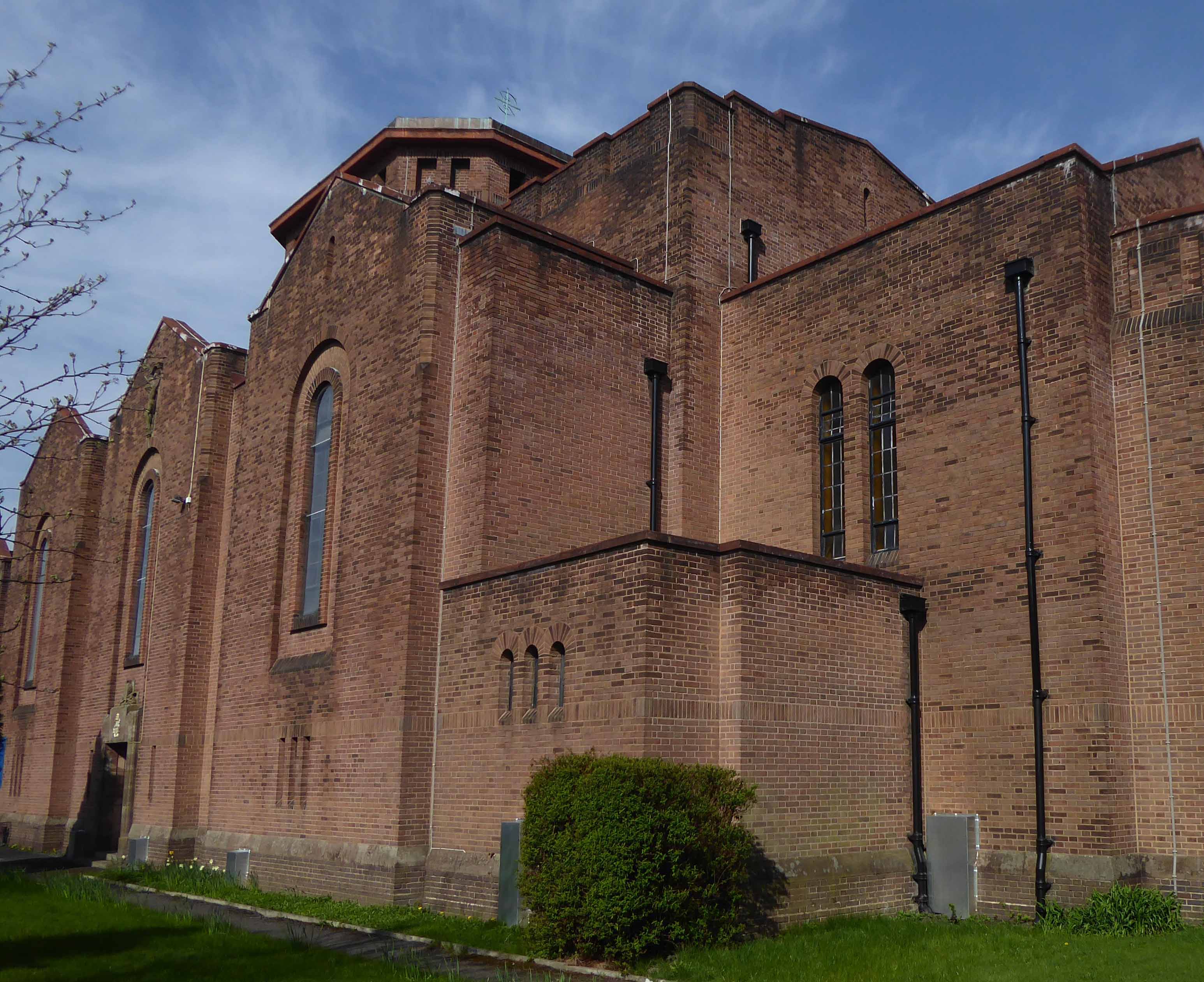
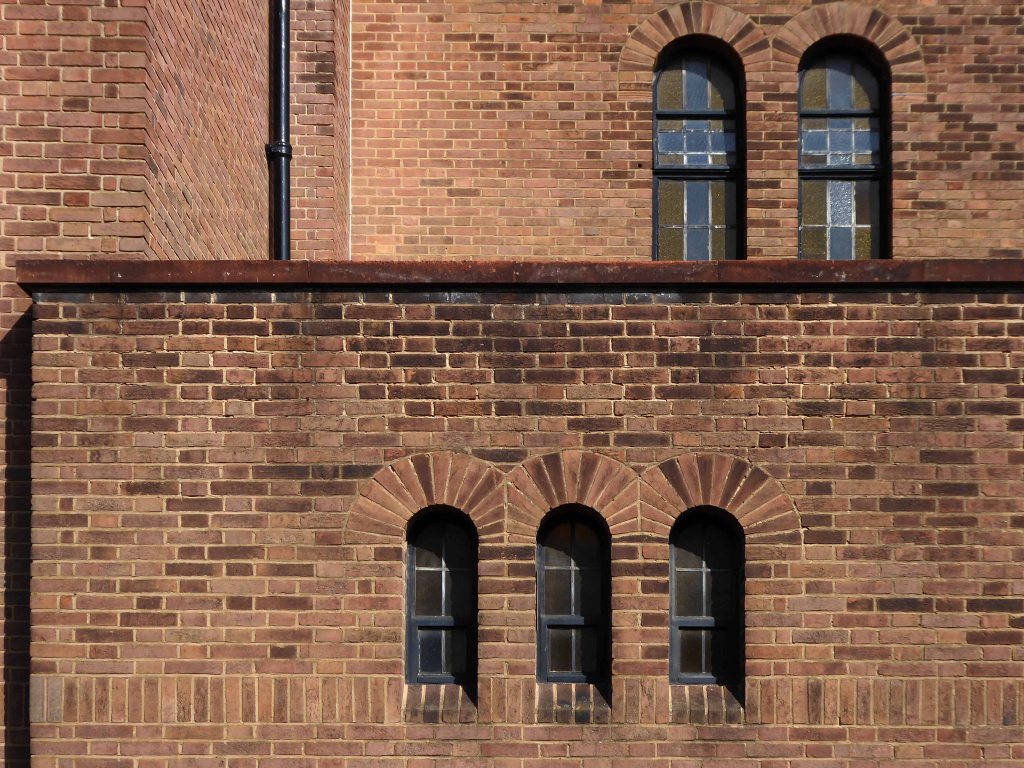
1937-38 by Reynolds and Scott built in buff brick of a Modernist Byzantine style.
The choice of the Apostle of Holland as a patron saint for the parish was that of a Dutch priest, Fr. Sassen, who bought land for the parish from St. Brigid’s in 1905. The new parish was opened in 1906.
Fr. Charles Hanrahan developed the mission in its infancy and was followed by Fr. Richard Mortimer, who laboured here for a long period, devoting most of his priestly life to the parish.
Fr. Patrick Dillon supervised the building of the magnificent new church of unusual design, which was opened in 1938.
The church was Grade II listed in June 1994
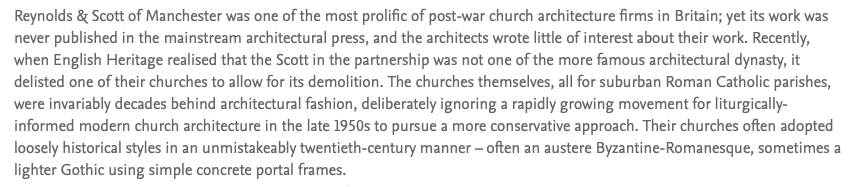
Our Lady and St. Joseph Hanwell 1967
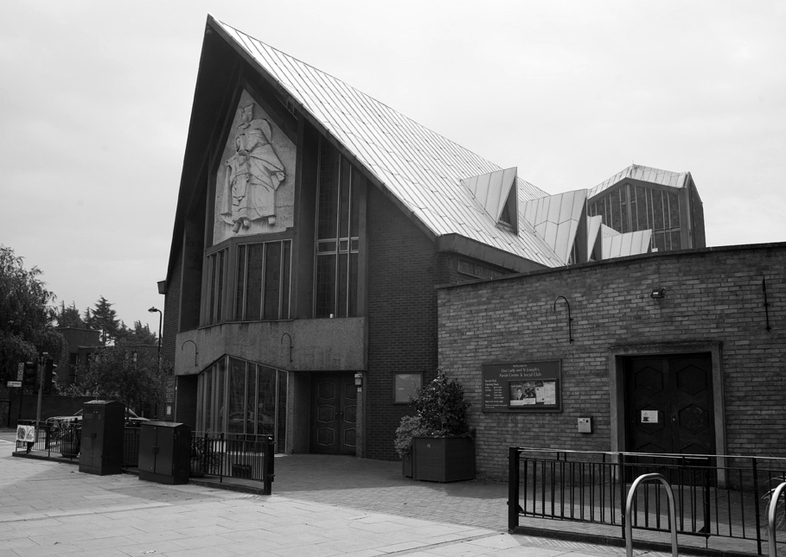
The church is sited in a densely populated area of the city, comprising Victorian terraces and inter-war social housing.
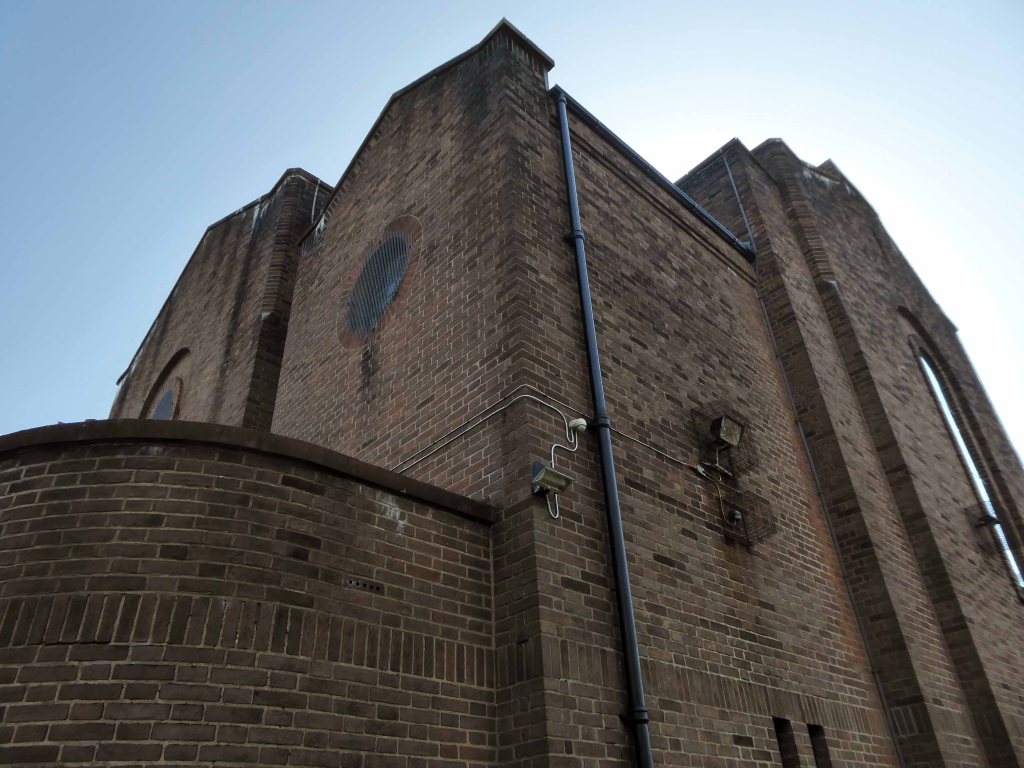
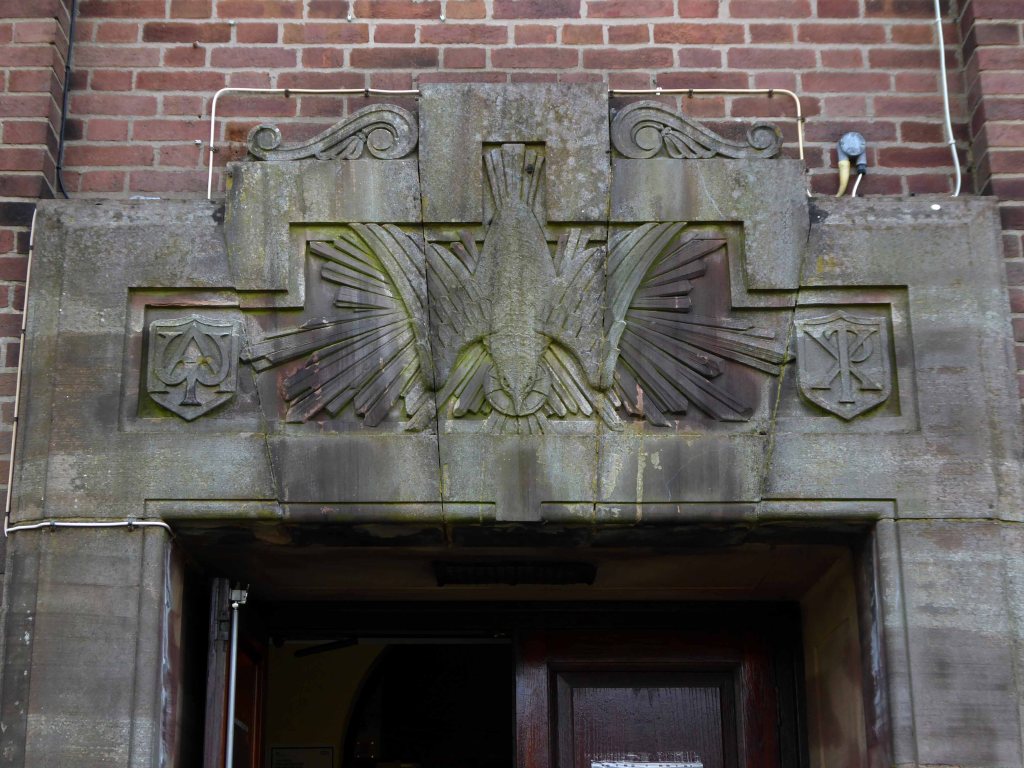
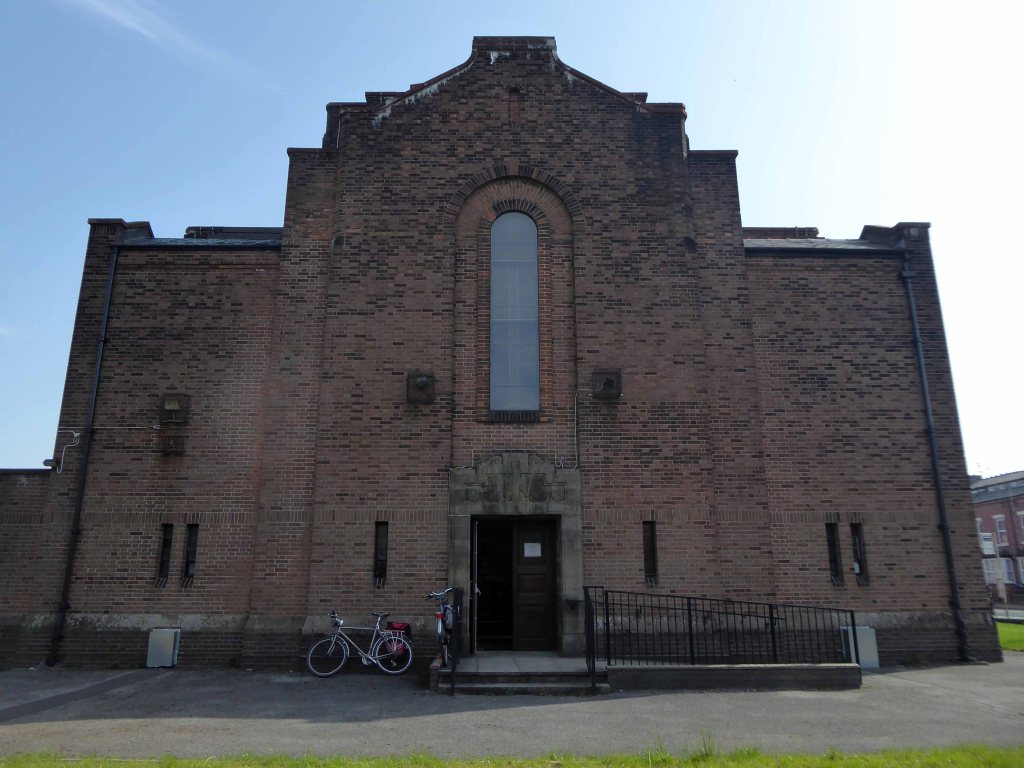
The interior has extensive mosaic work by the Manchester firm Ludwig Oppenheimer – whose work can also be seen in St John the Baptist RC Rochdale.
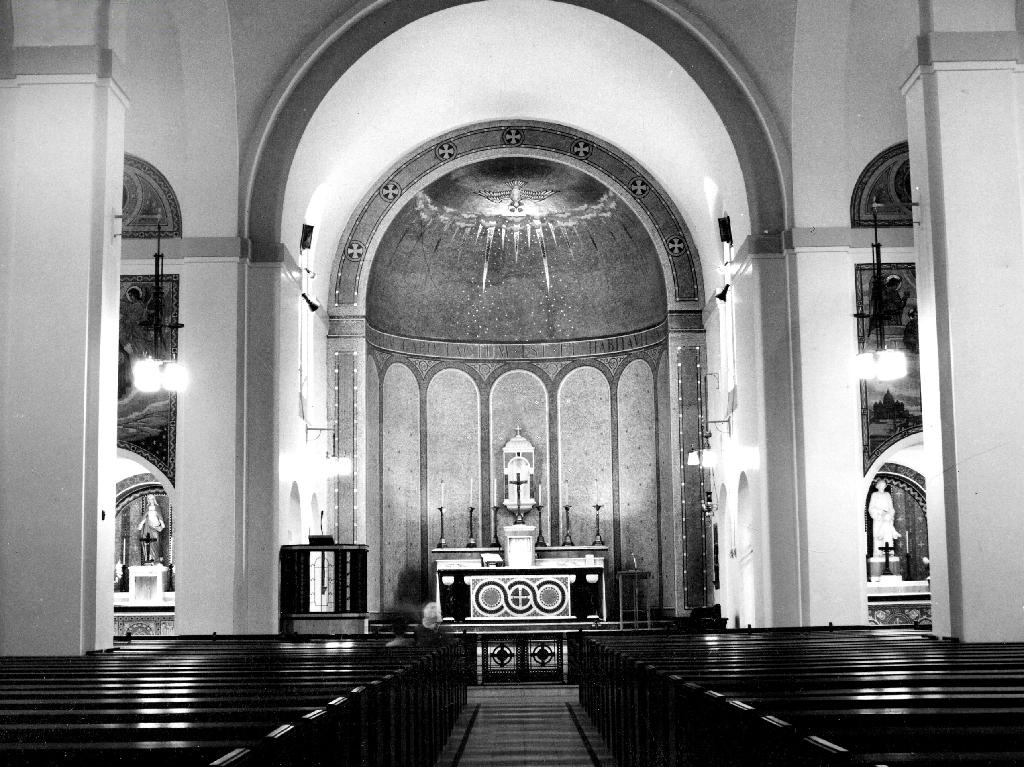
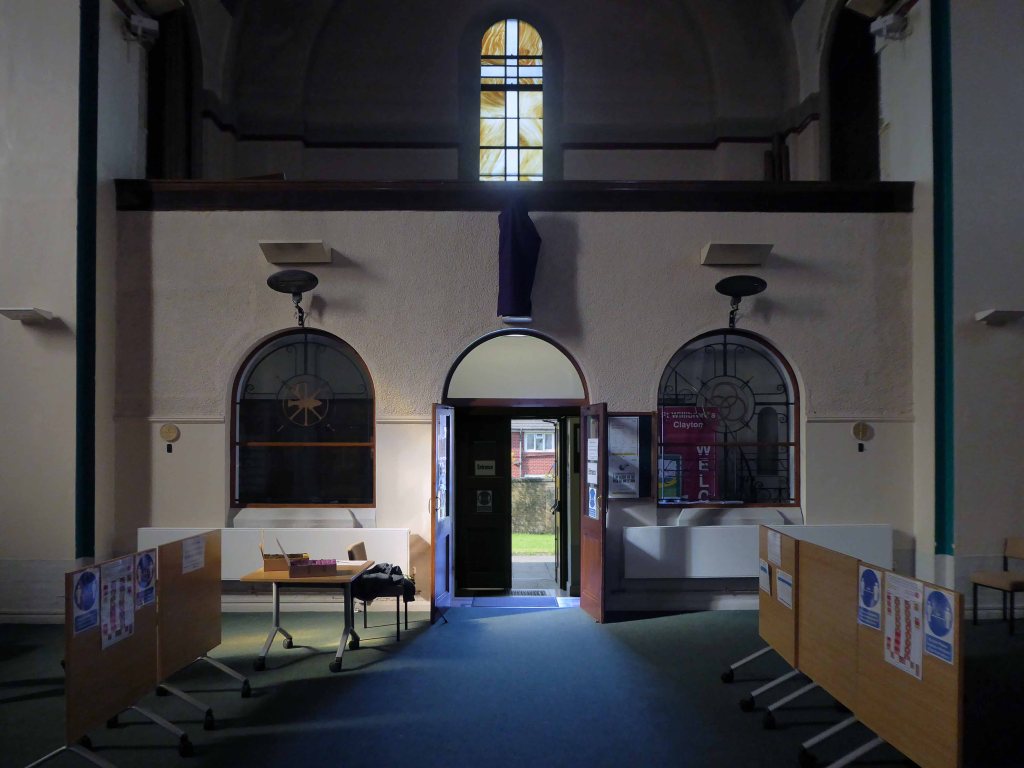
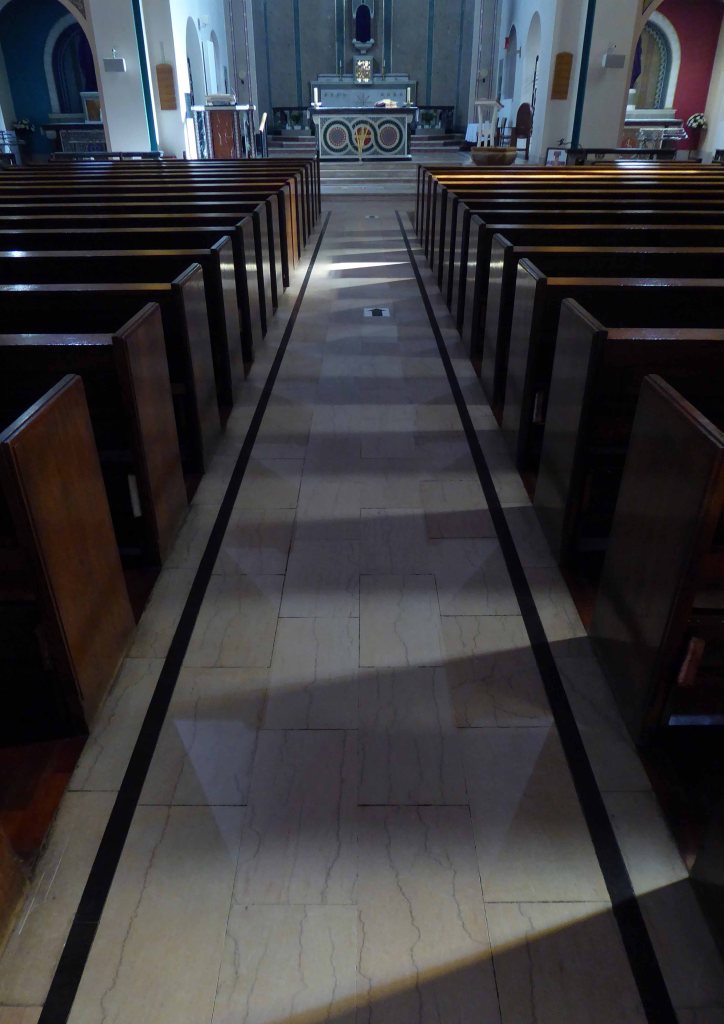
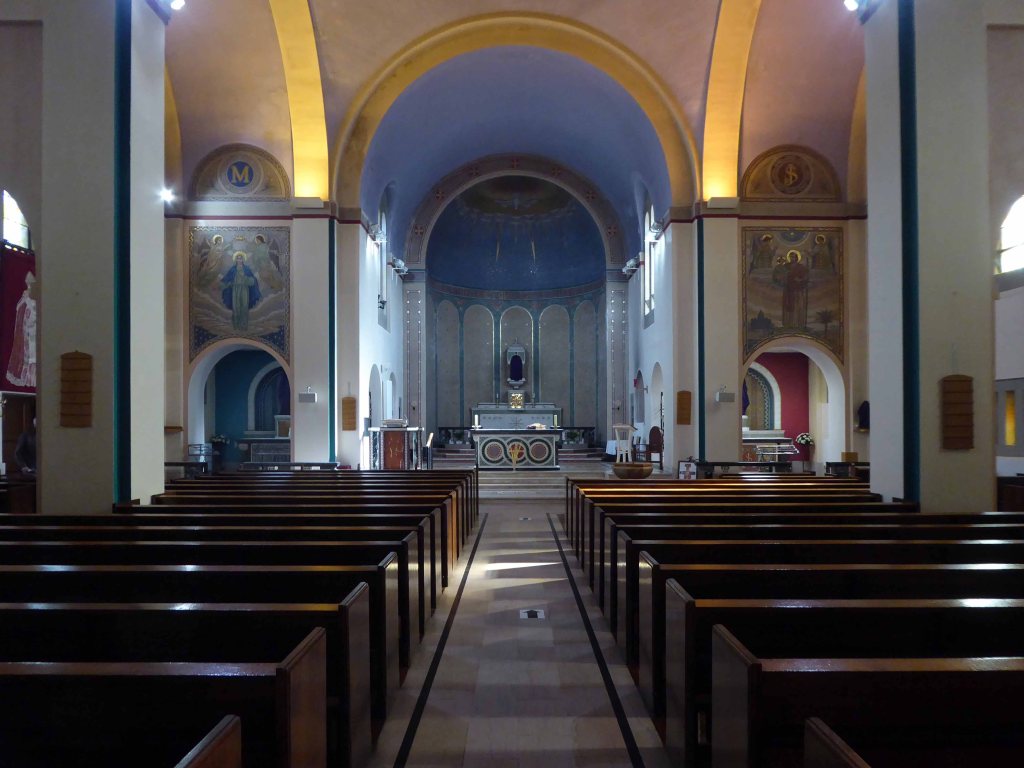
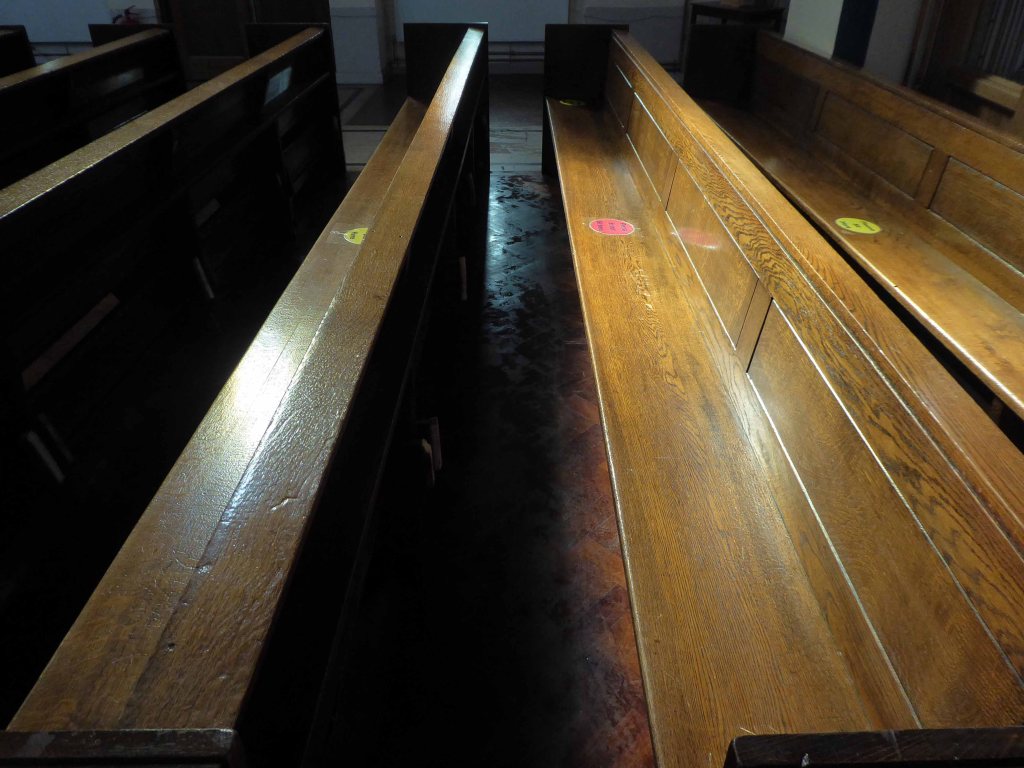
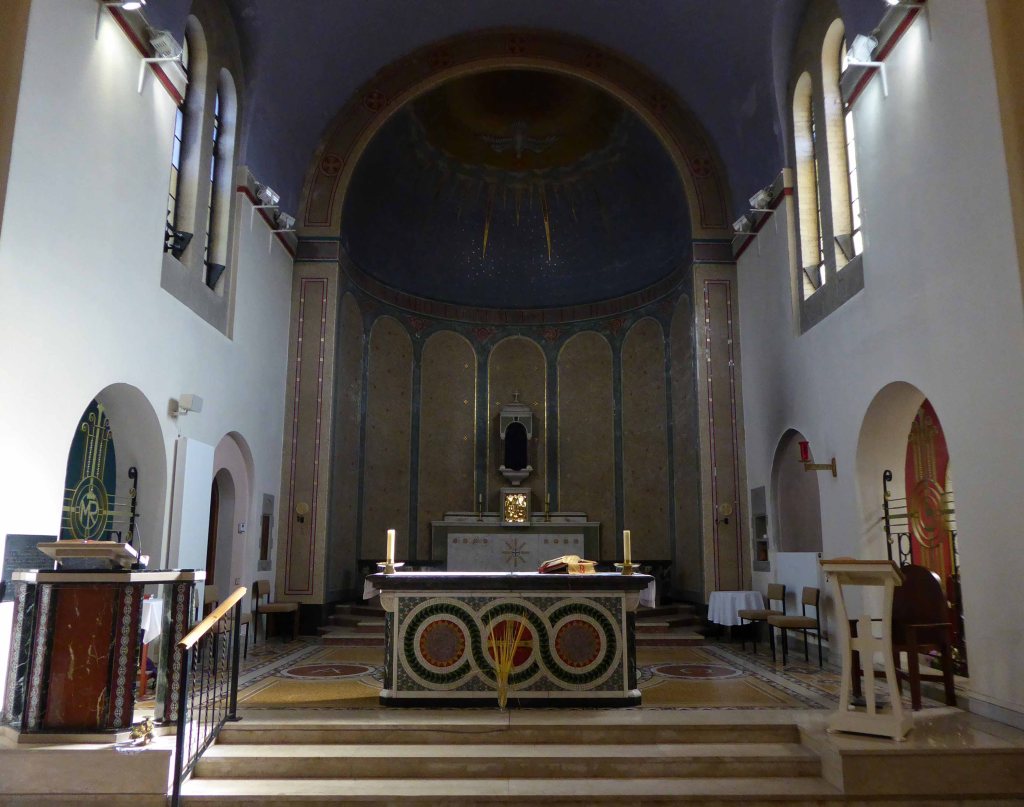
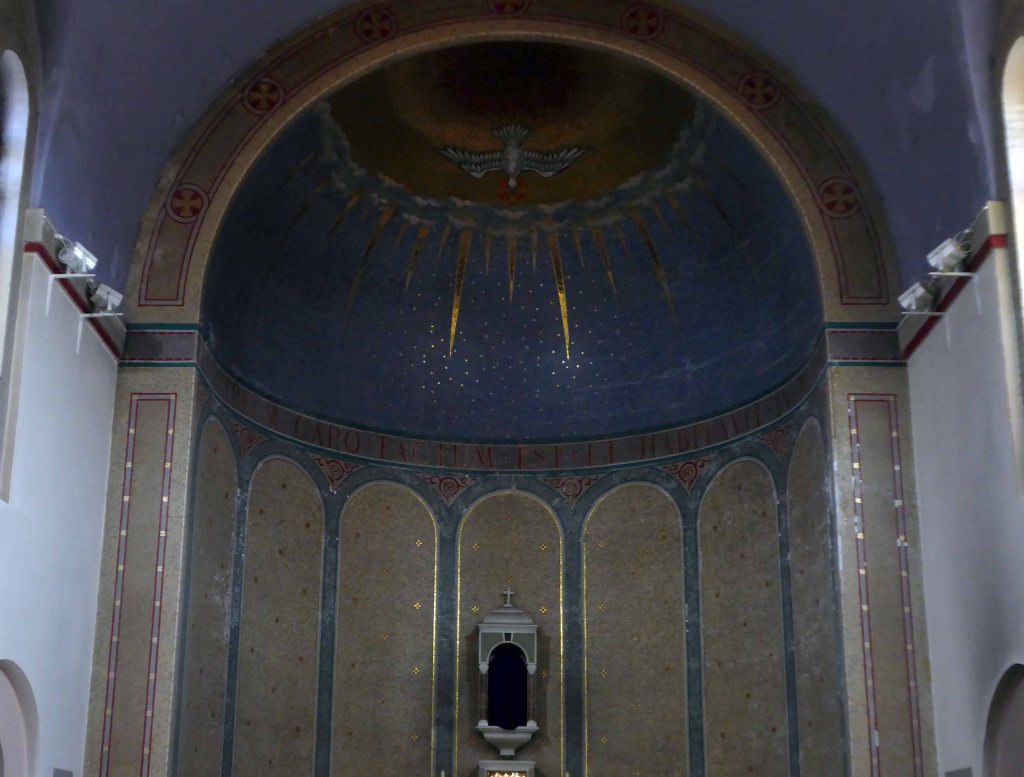
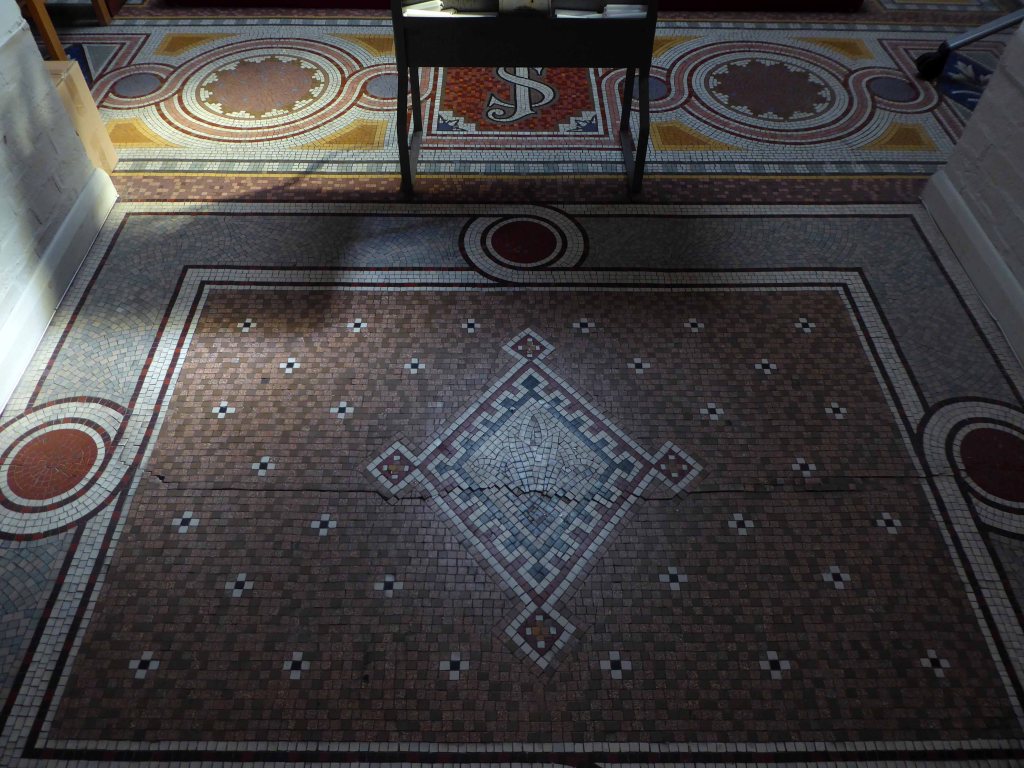
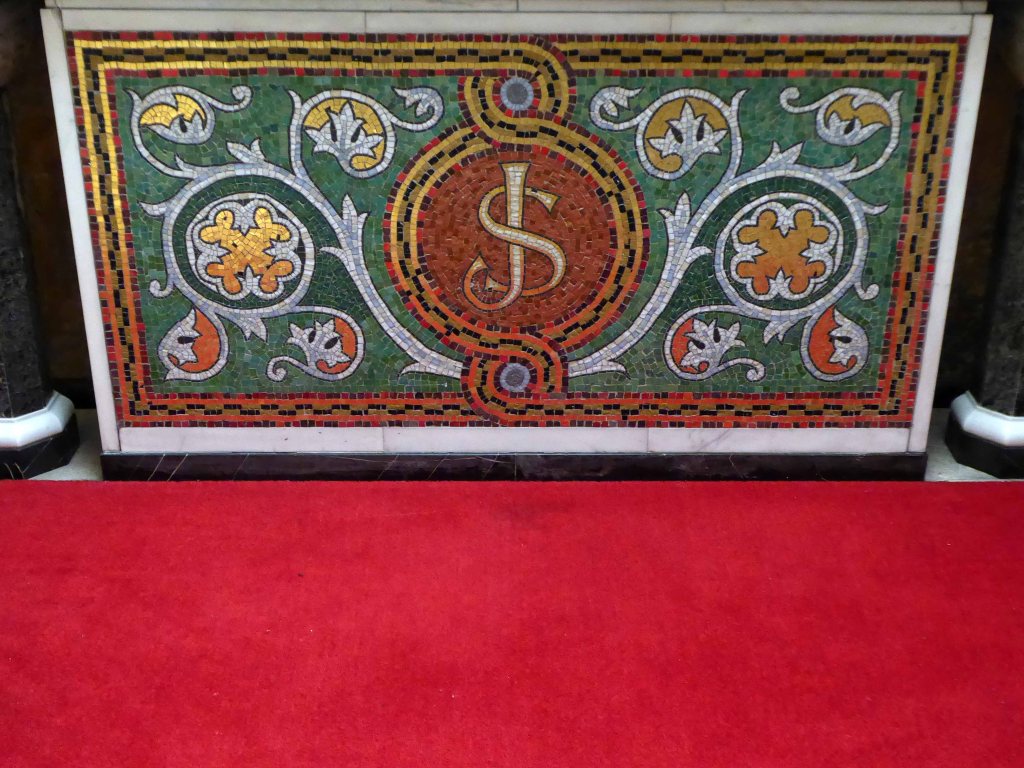
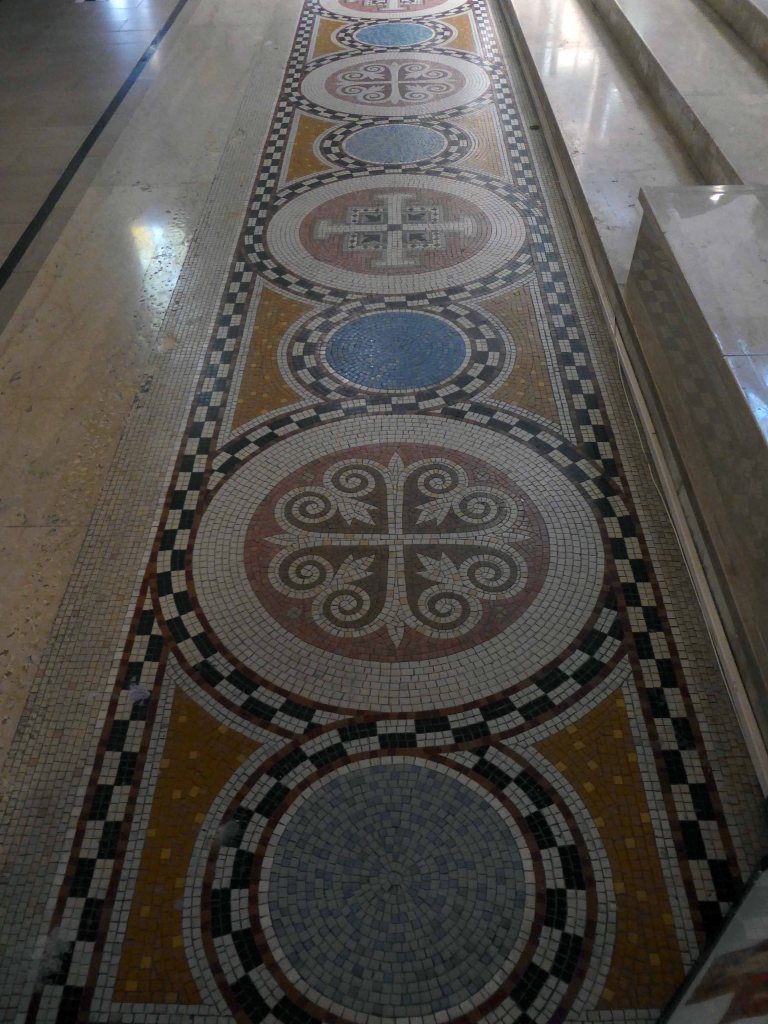
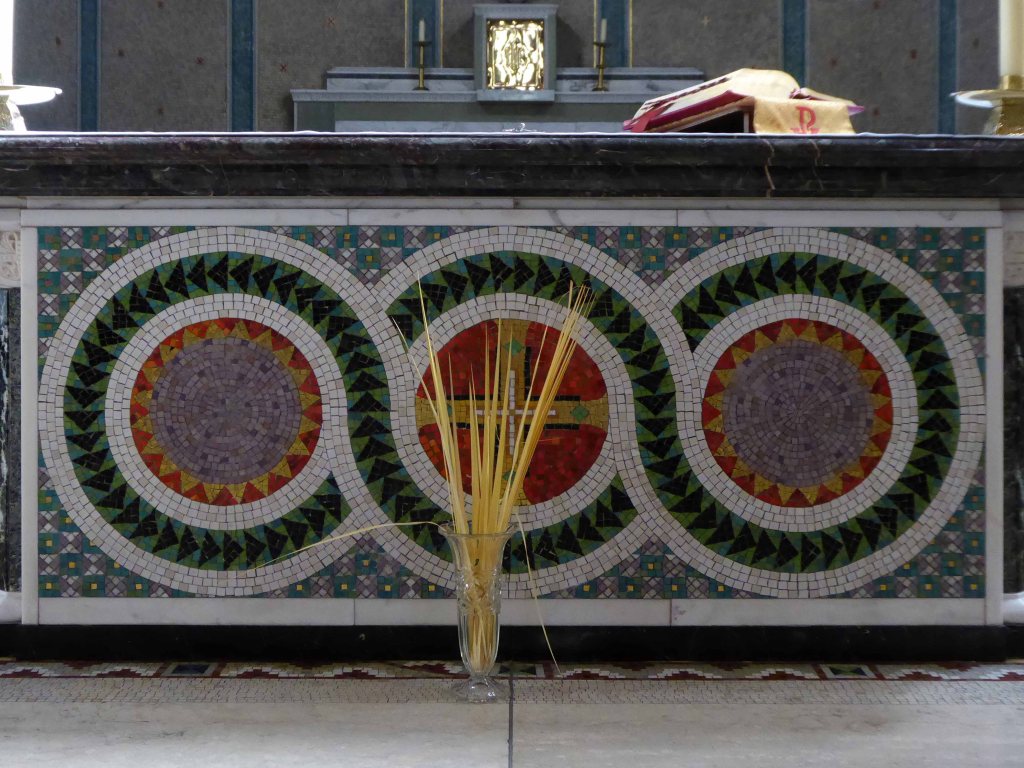
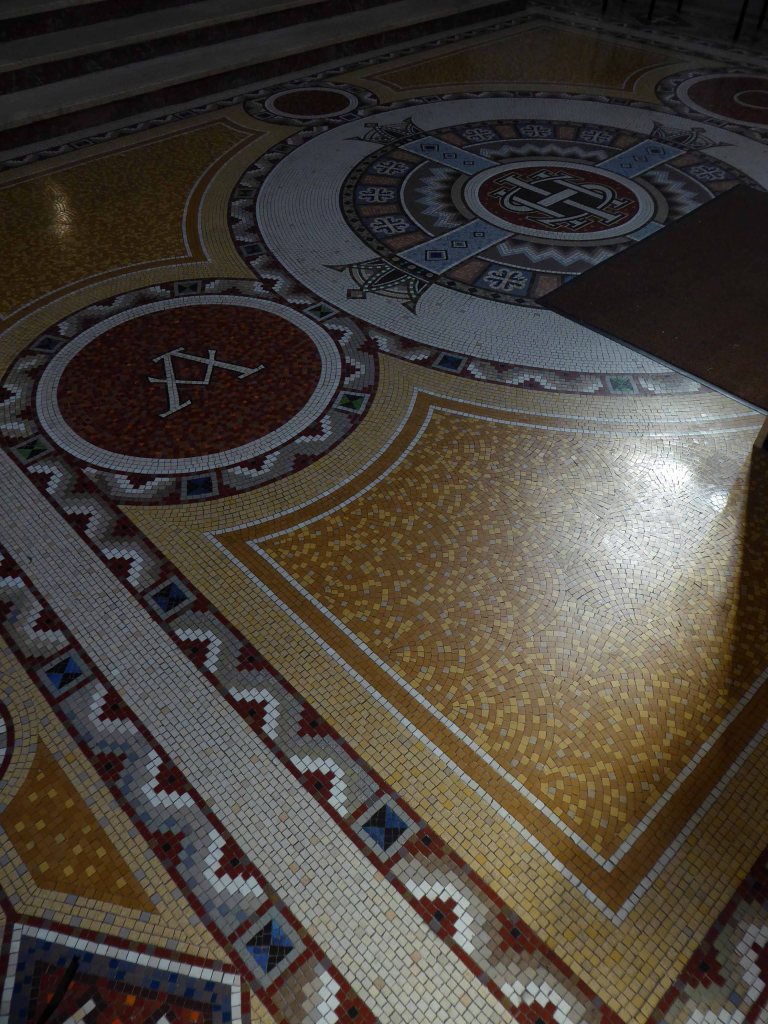
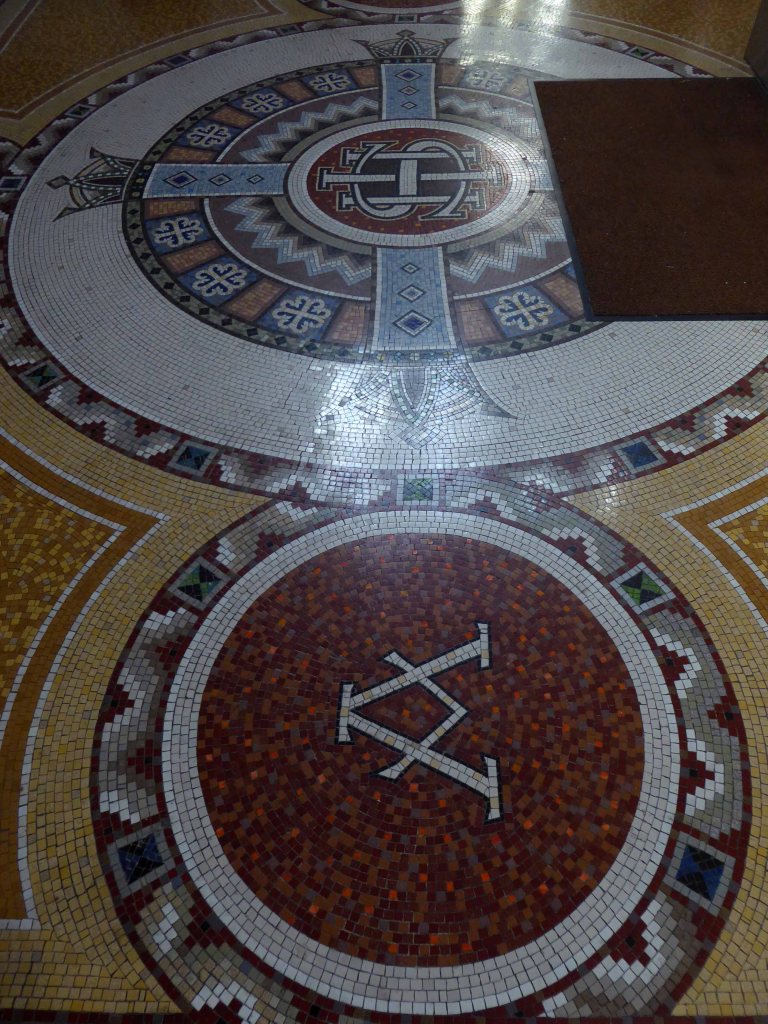
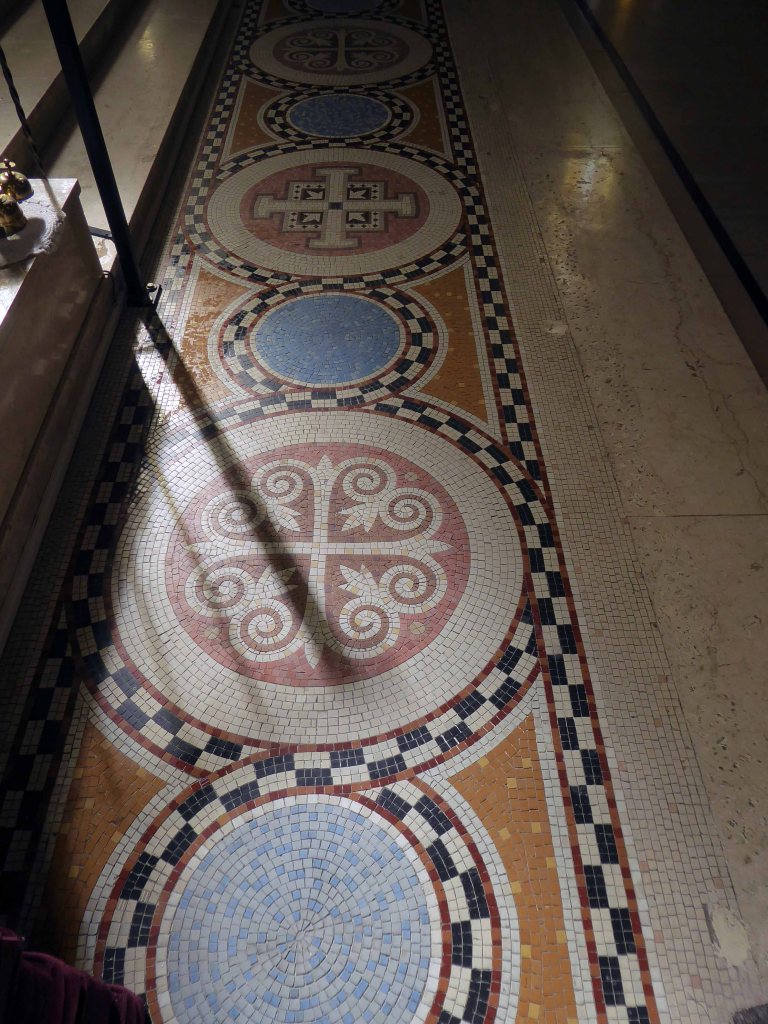
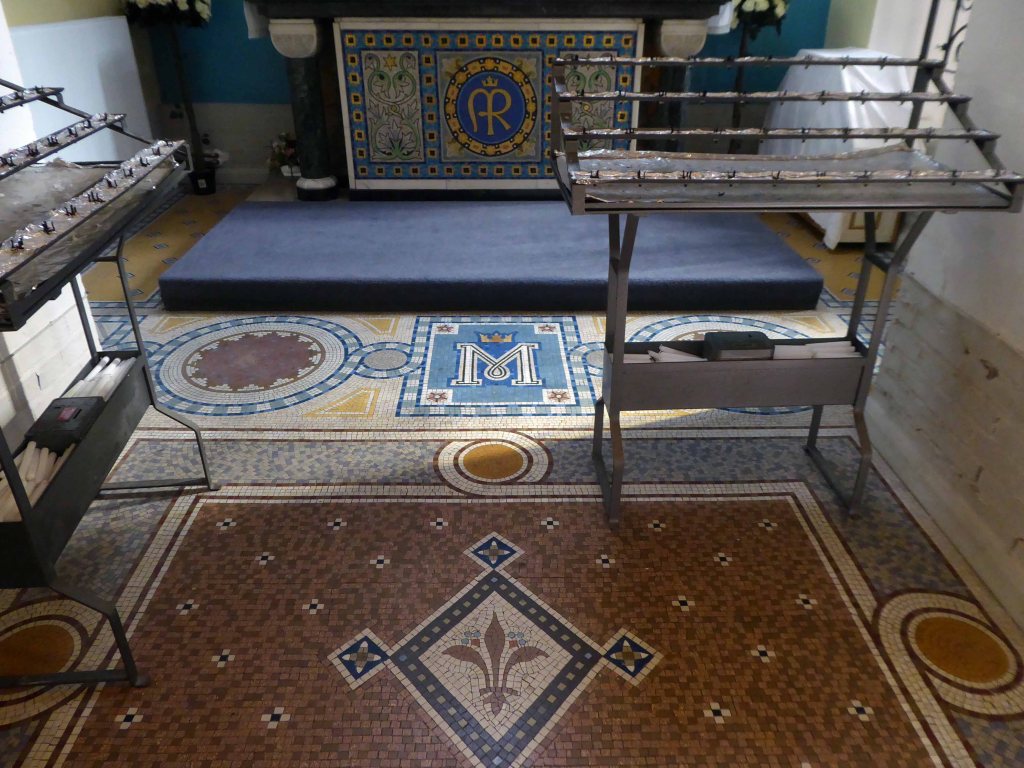
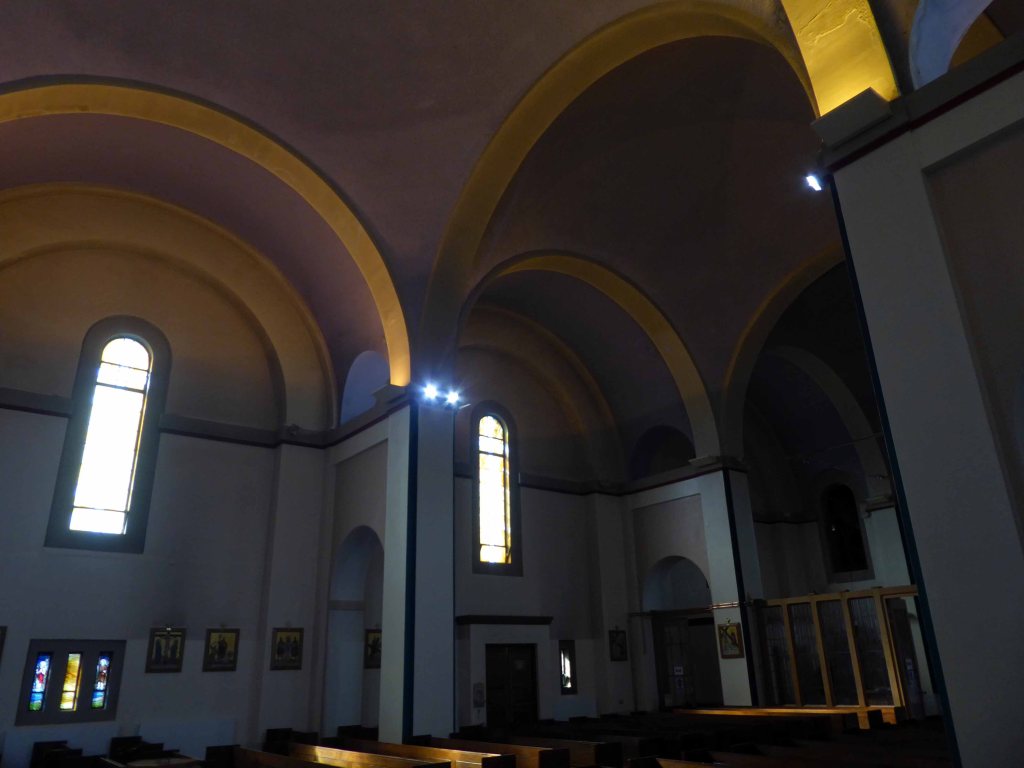
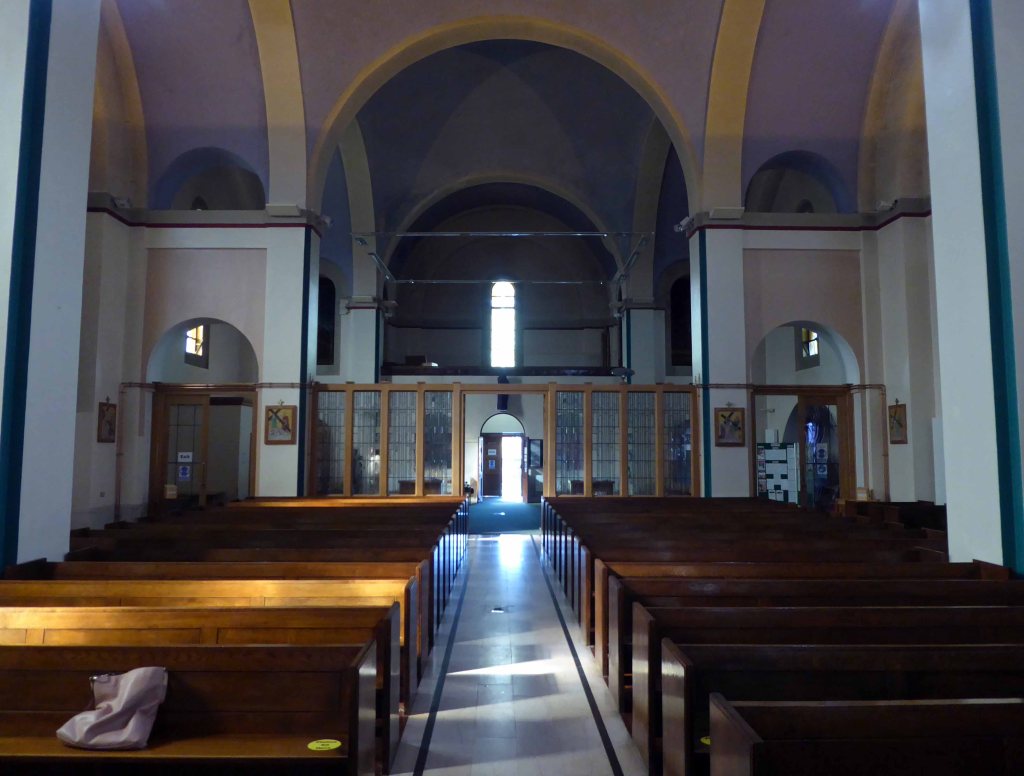
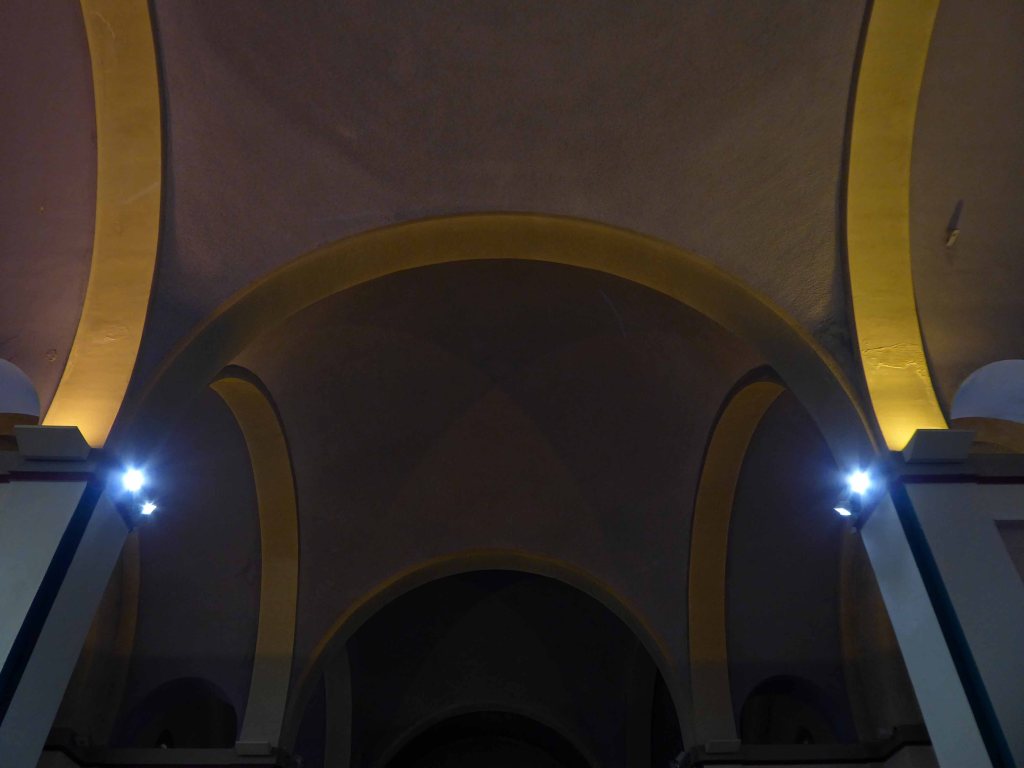
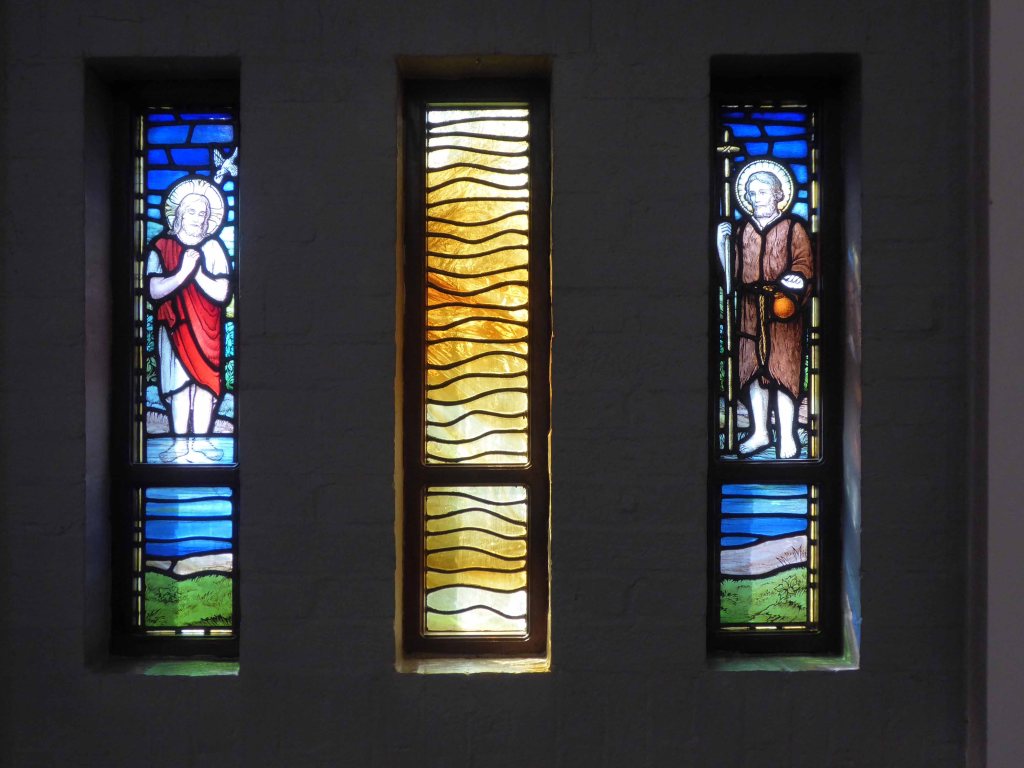
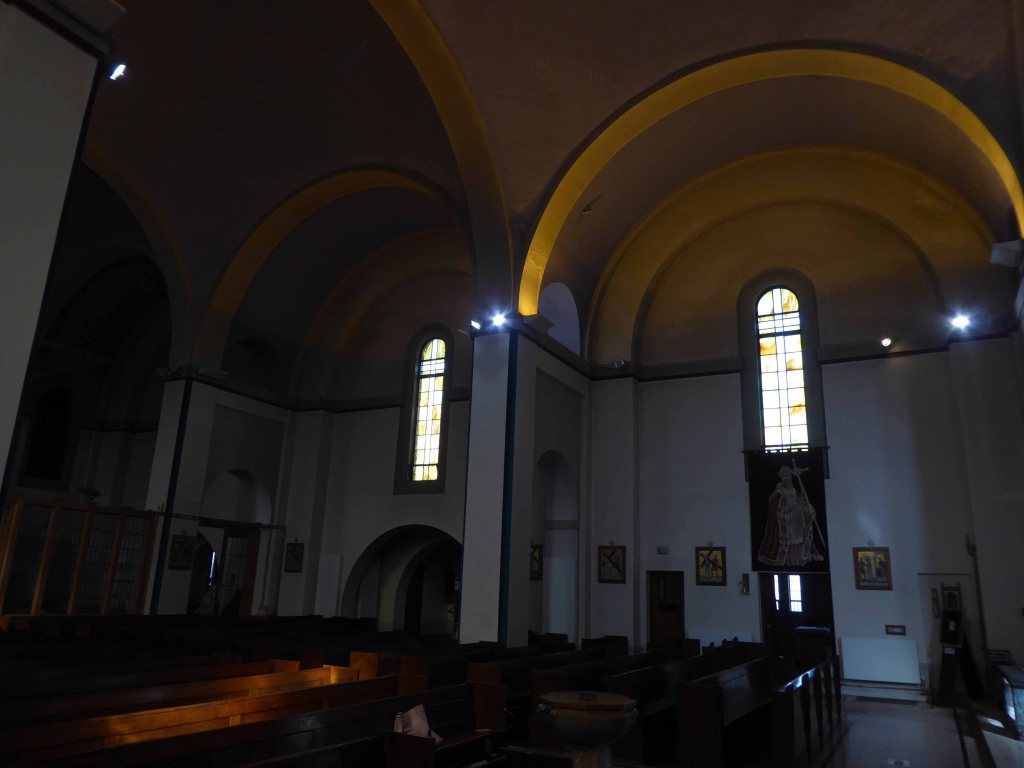
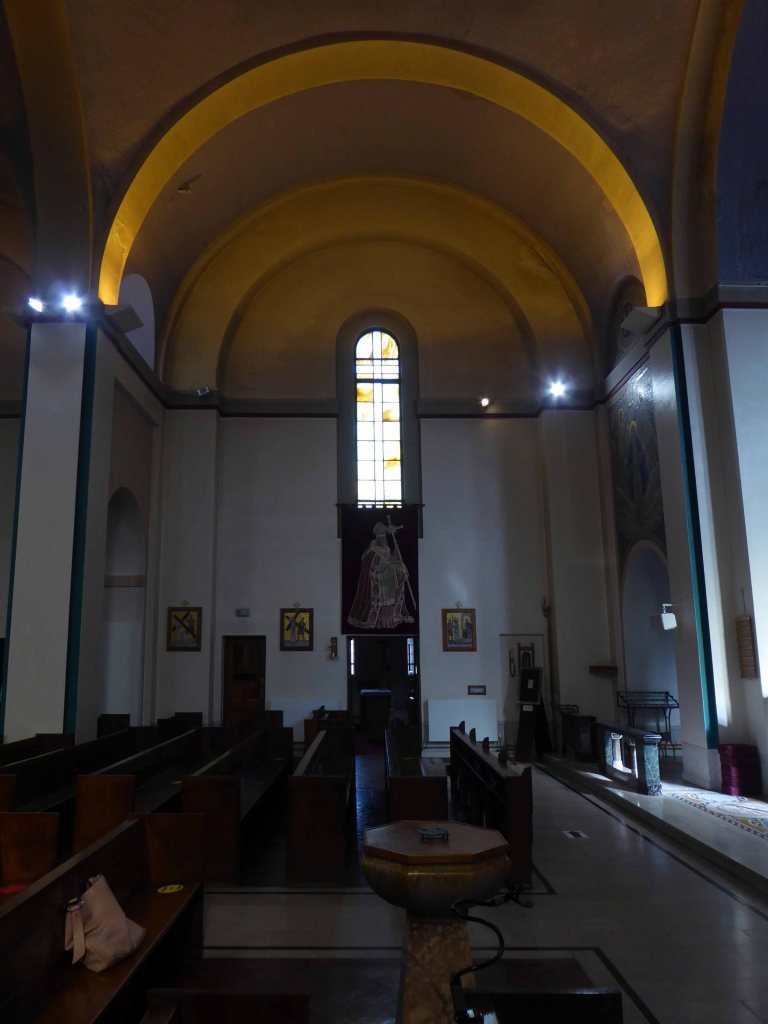
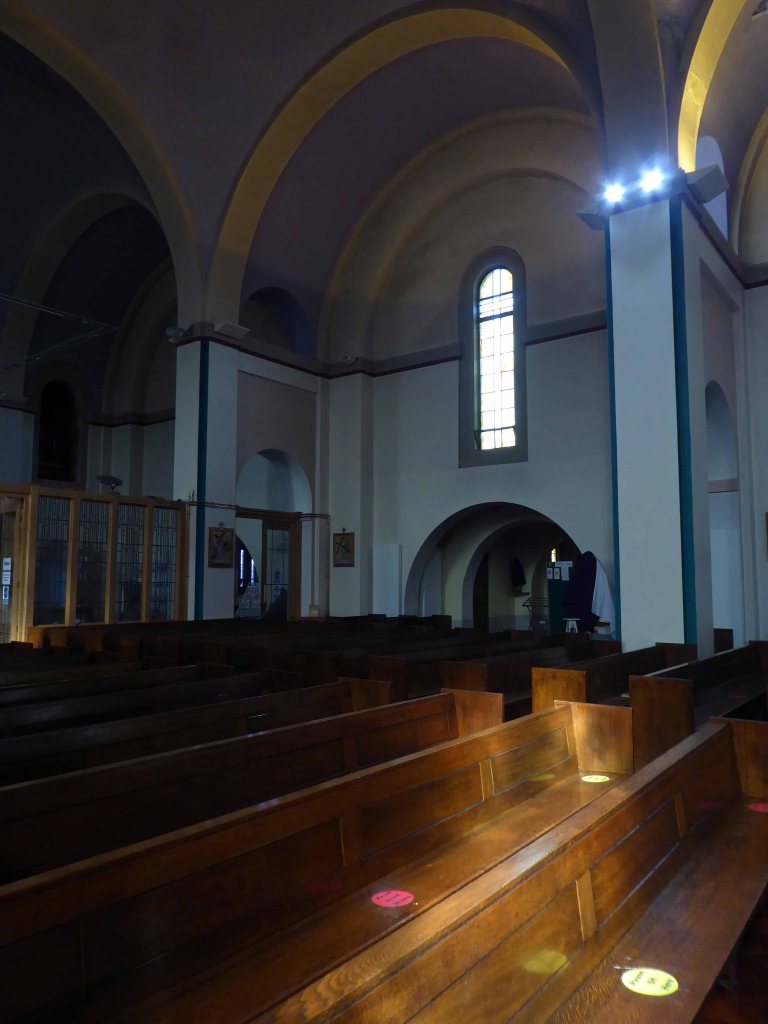
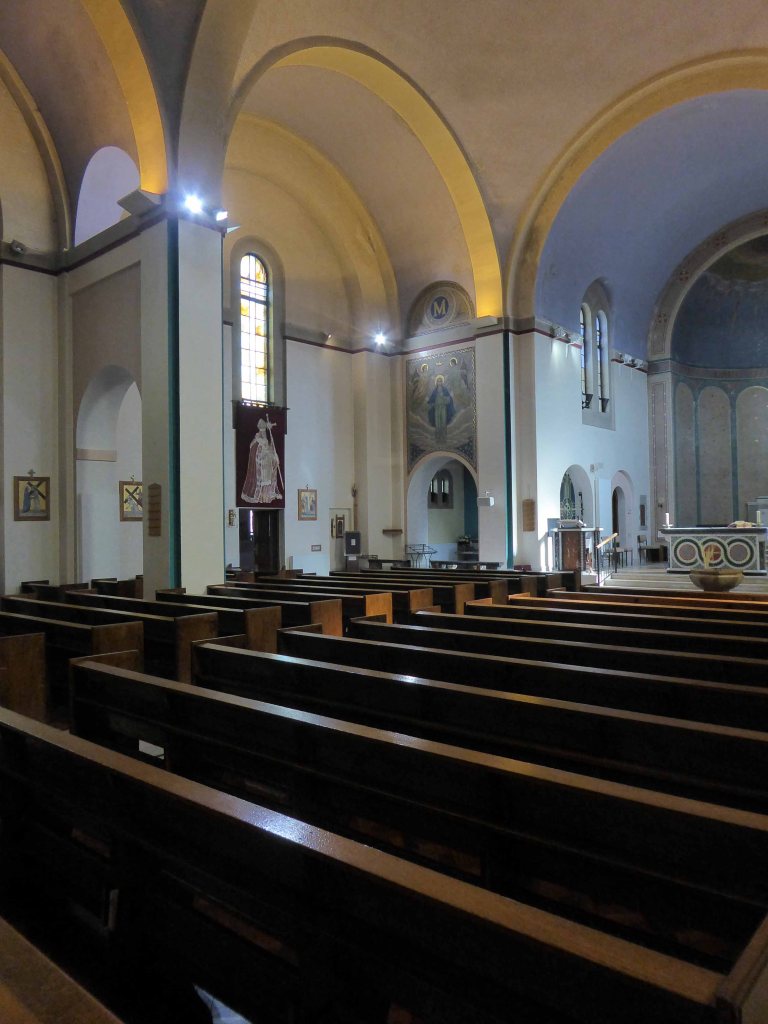
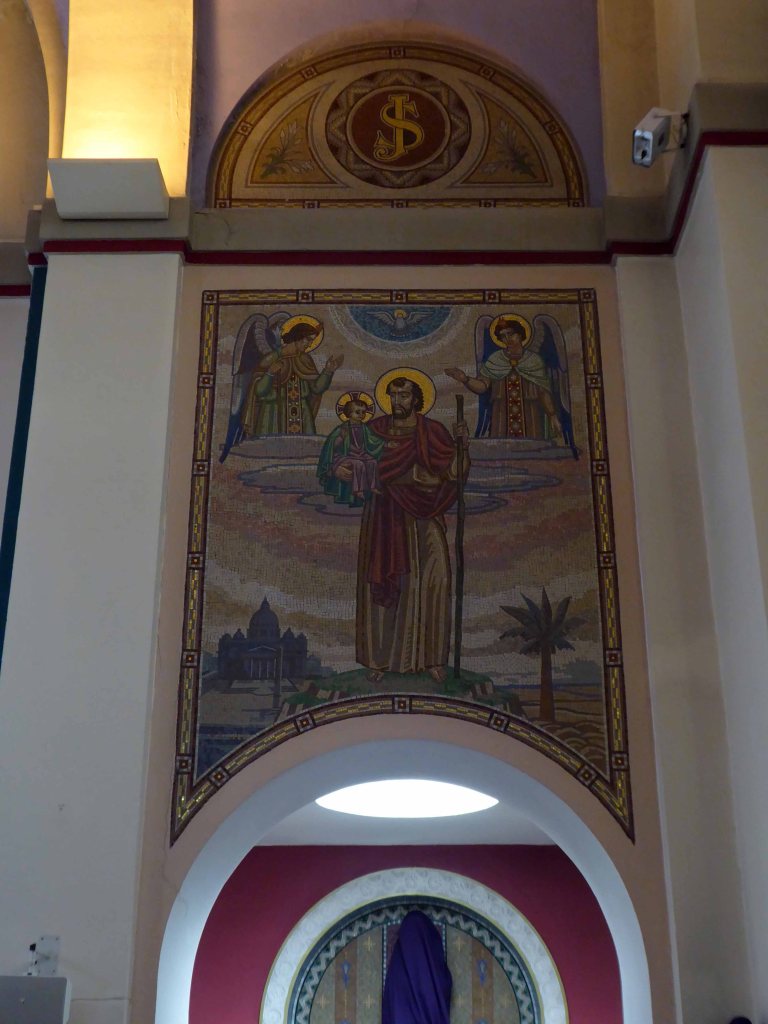
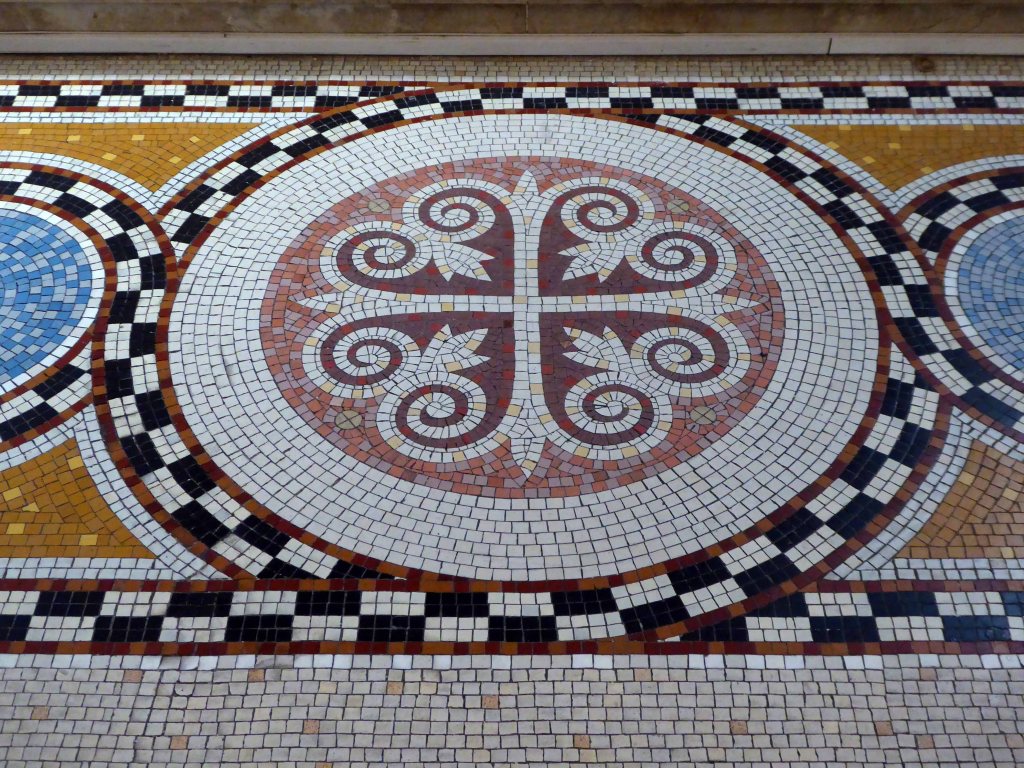
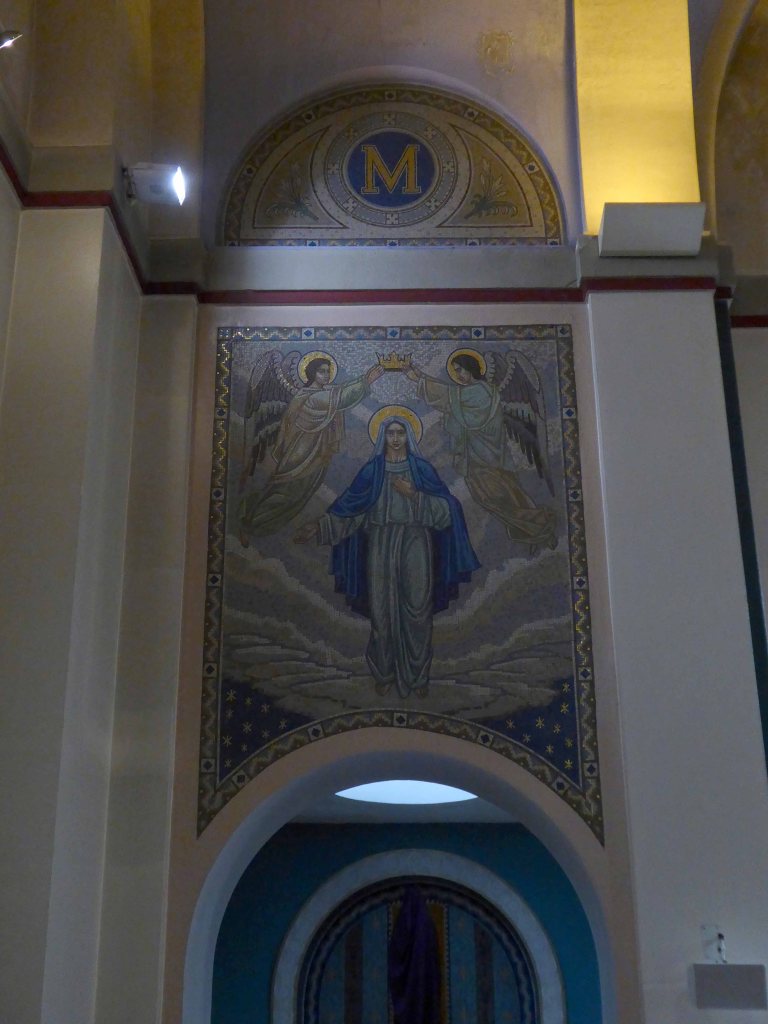
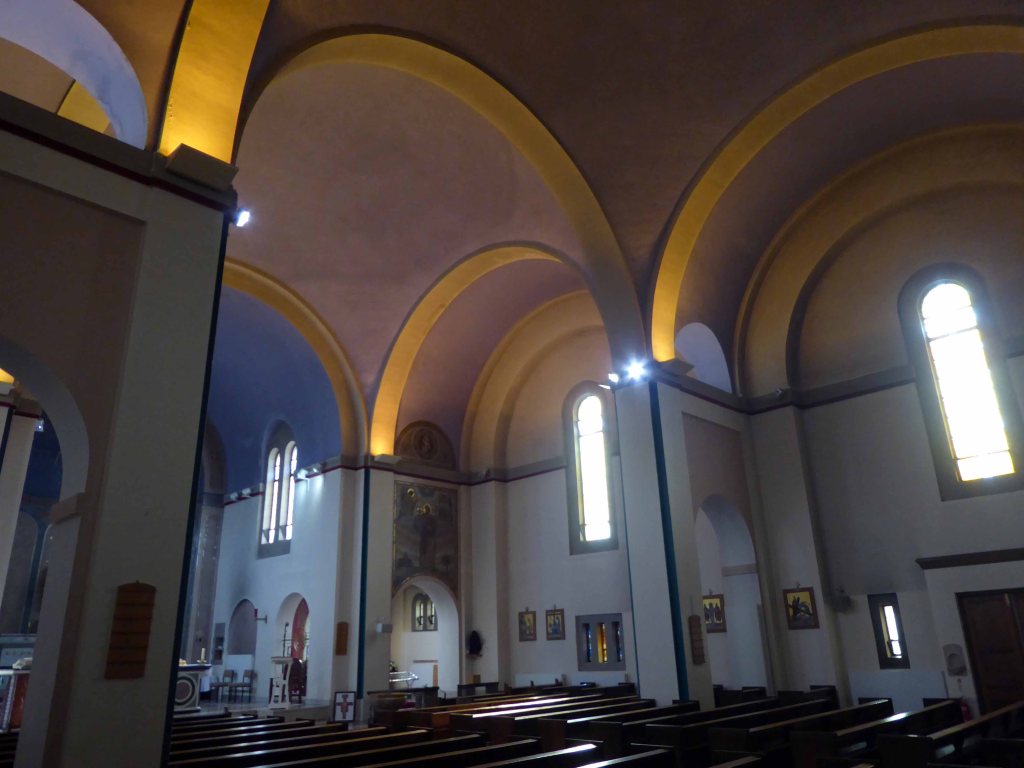
So farewell St Willibords and many thanks to the exceptionally kind and welcoming parishioners who granted me access to this very fine church.
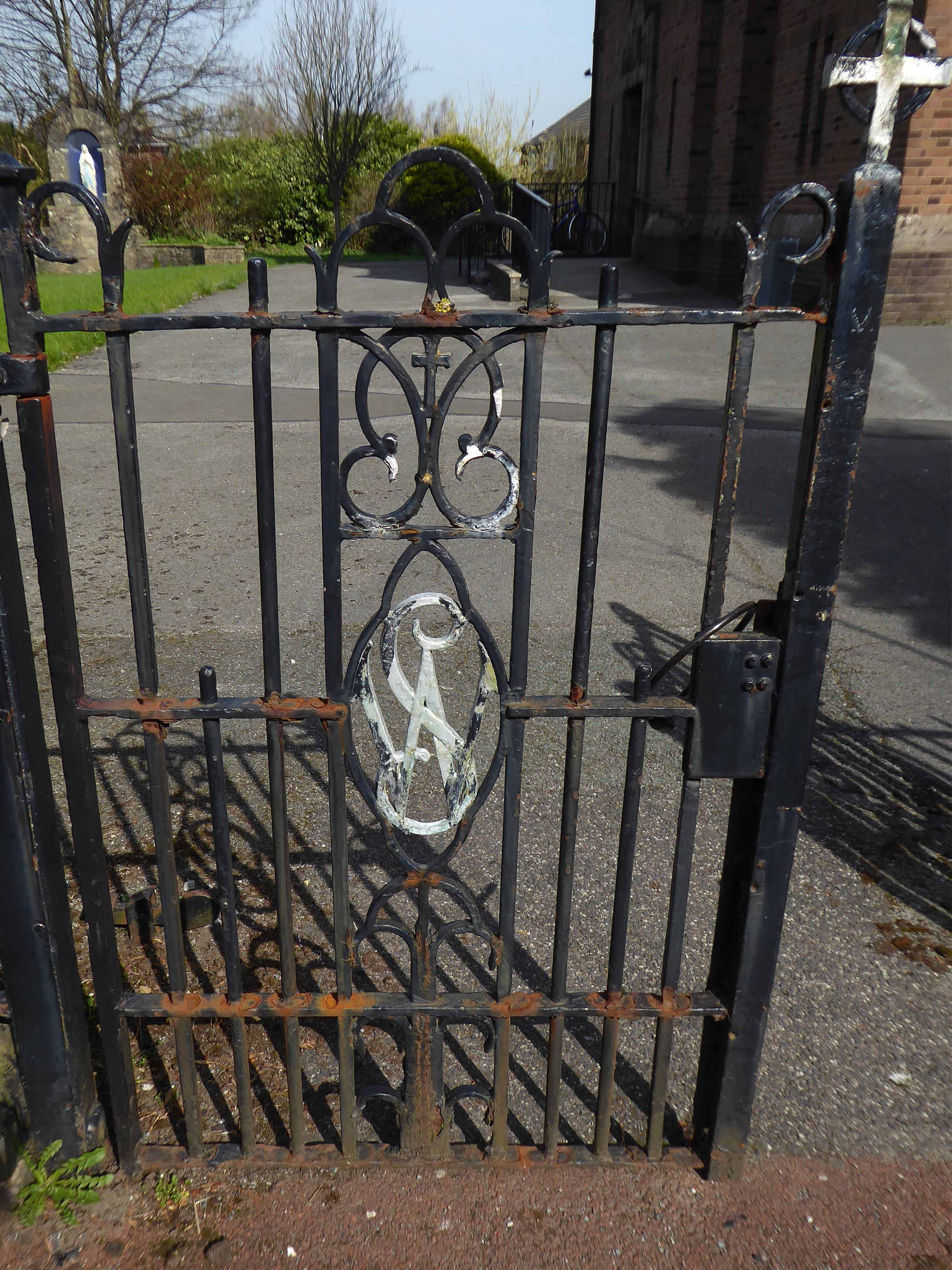
Archive photographs Local Image Collection
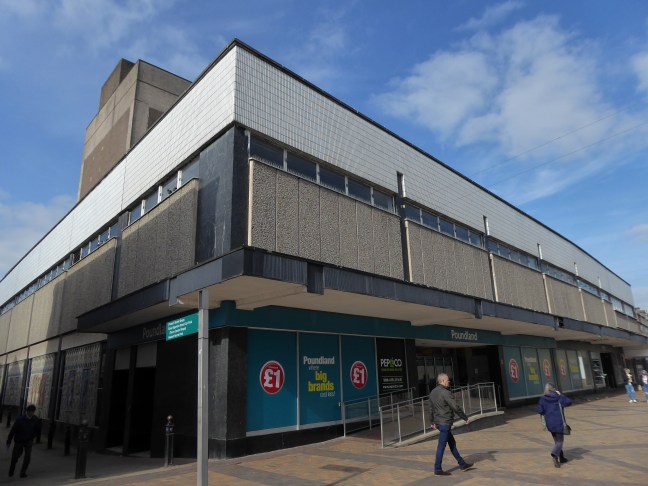
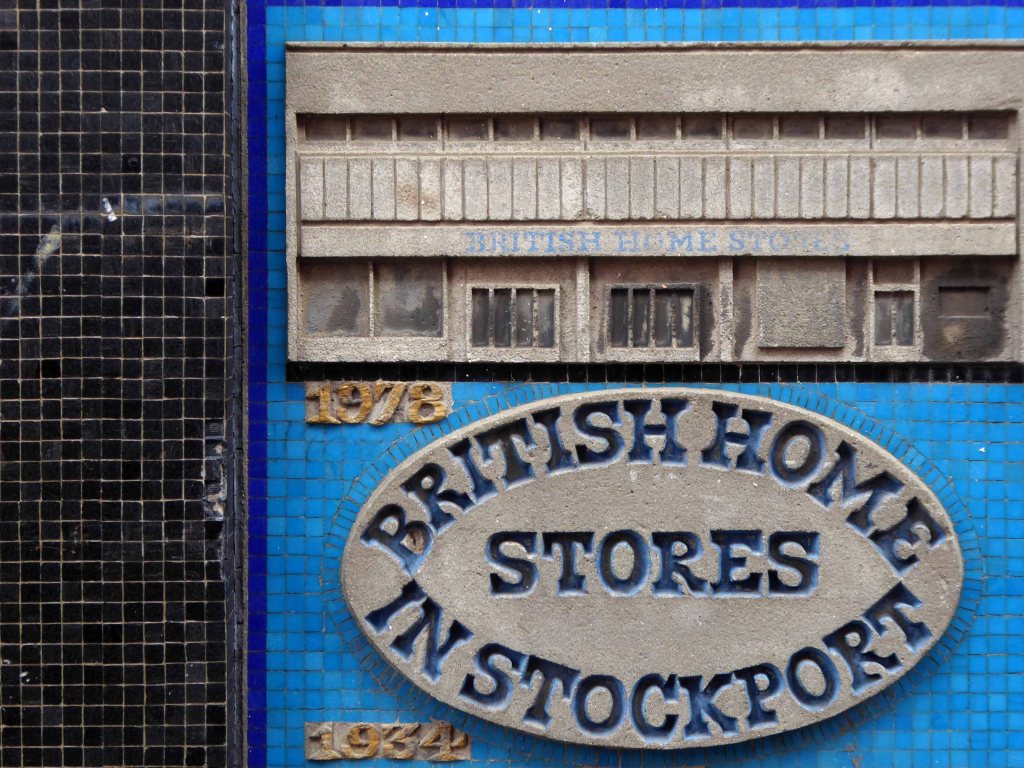
Stockport council bought the building in 2019 following the collapse of BHS three years earlier.
The report says the store is now in a poor condition, looks ‘dated and tired’ and ‘contributes to negative perceptions’ of Merseway.
You were conceived as an integral part of the Merseyway development, which on its inception, was held in the highest regard.
Innovative architecture with confidence, integrity and a clear sense of purpose.
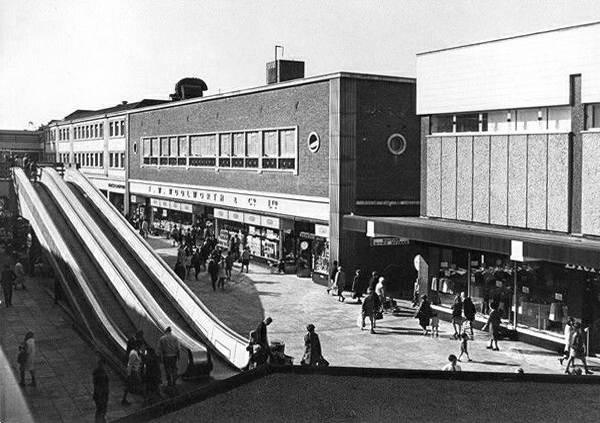
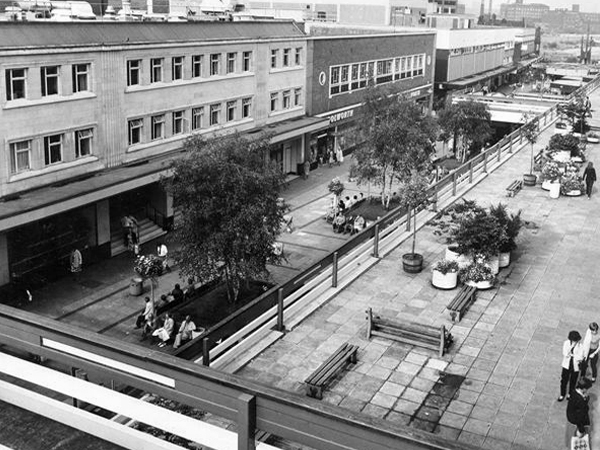
The failure of BHS was a national disgrace, venal management, asset stripping, avaricious, grasping rodents ruled the day.
Dominic Chappell, who had no previous retail experience, bought the high street chain from the billionaire Sir Philip Green for £1 in March 2015. The company collapsed with the loss of 11,000 jobs 13 months later, leaving a pension deficit of about £571m.
A sad end for a company with a long history and presence on the high street.
With an architectural heritage to match:
BHS’s chief architect at this time was G. W. Clarke, who generally worked alongside W. S. Atkins & Partners, as consulting engineers. The stores – like Woolworth’s buildings – were composite structures, with steel frames and concrete floors. Clarke sometimes appointed local architects.
At first, like C&A, BHS retained the narrow vertical window bays and margin-light glazing that had characterised high street façades in the 1930s, but by the end of the 1950s Clarke had embraced a modified form of curtain-walling.
This architectural approach became firmly associated with BHS, with framed curtain wall panels – like giant TV screens – dominating the frontages of many stores.
Of note are the Joyce Pallot and Henry Collins concrete panels on the Deanery Row elevation.
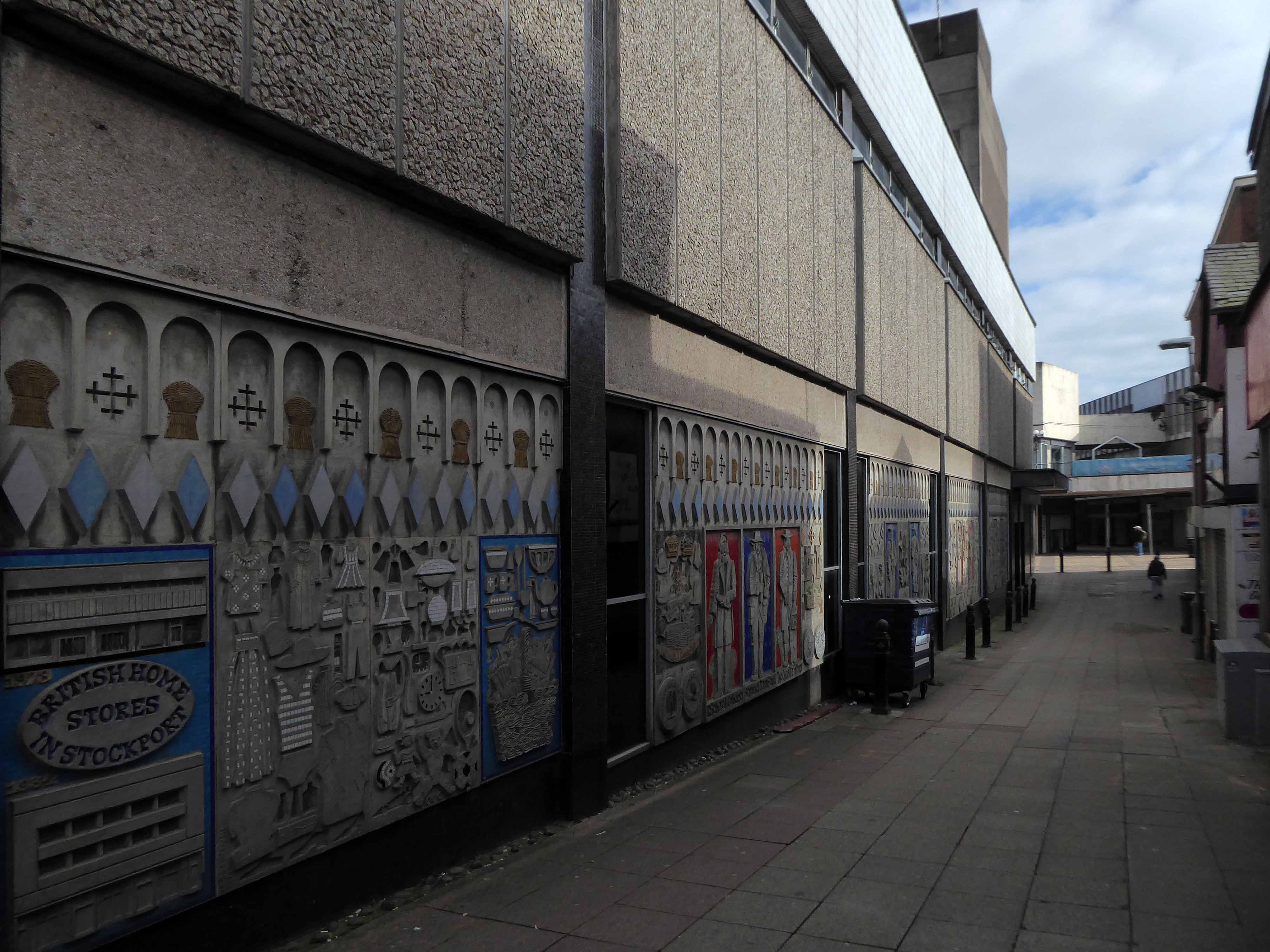
There have been moves to have the work listed, without success.
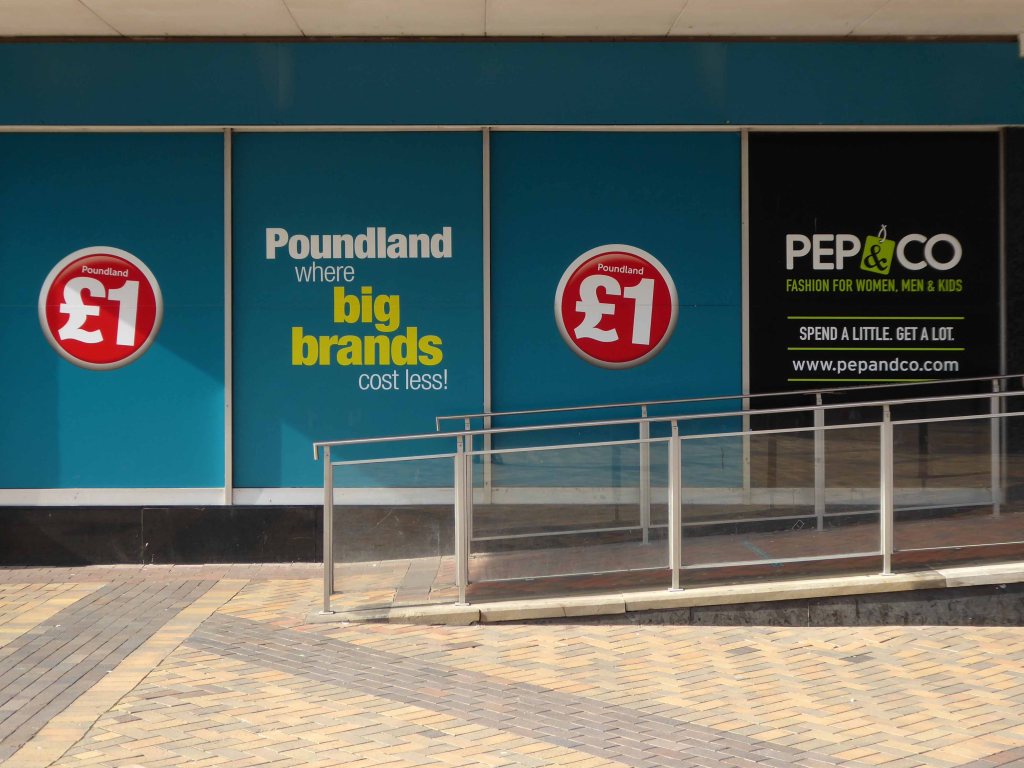
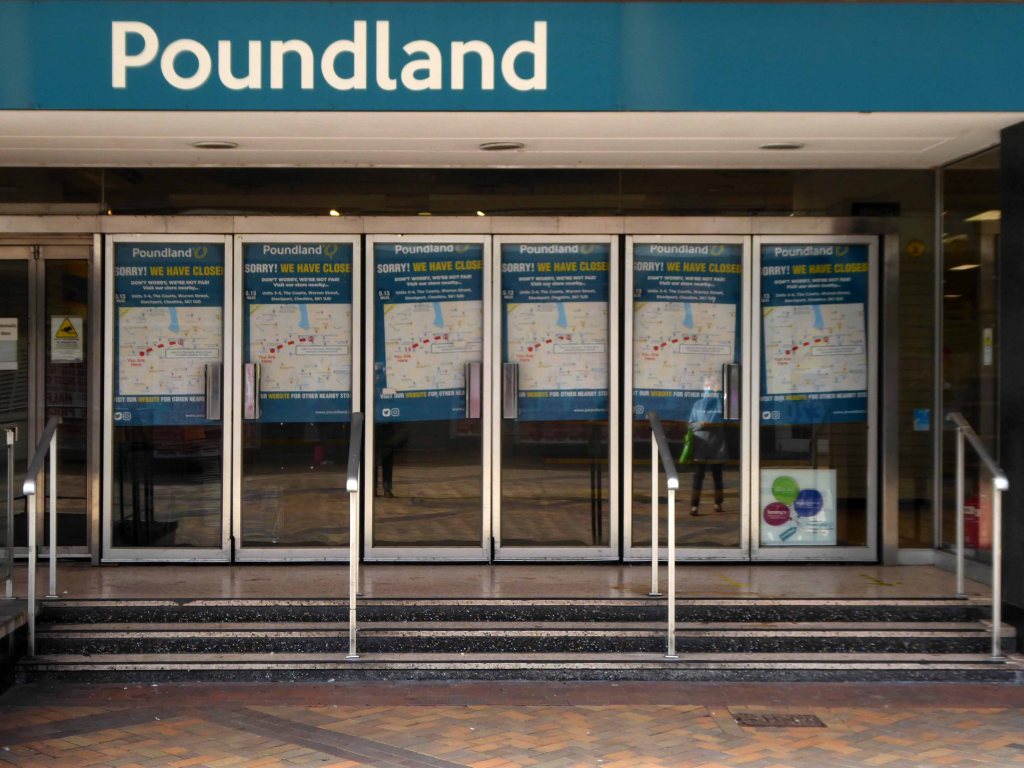
Of late the store has been home to Poundland – though time has now been called.
Poundland’s retailing concept is extremely simple: a range of more than three thousand – representing amazing value for money.
Our pilot store opened in the Octagon Centre, Burton-upon-Trent, in December of 1990, followed by new stores in High Street, Meadowhall and other quality trading locations. Shoppers loved the concept and so did fellow retailers and landlords. The stores proved to be a huge success. Meadowhall’s success was repeated by further stores opening by the end of the year.
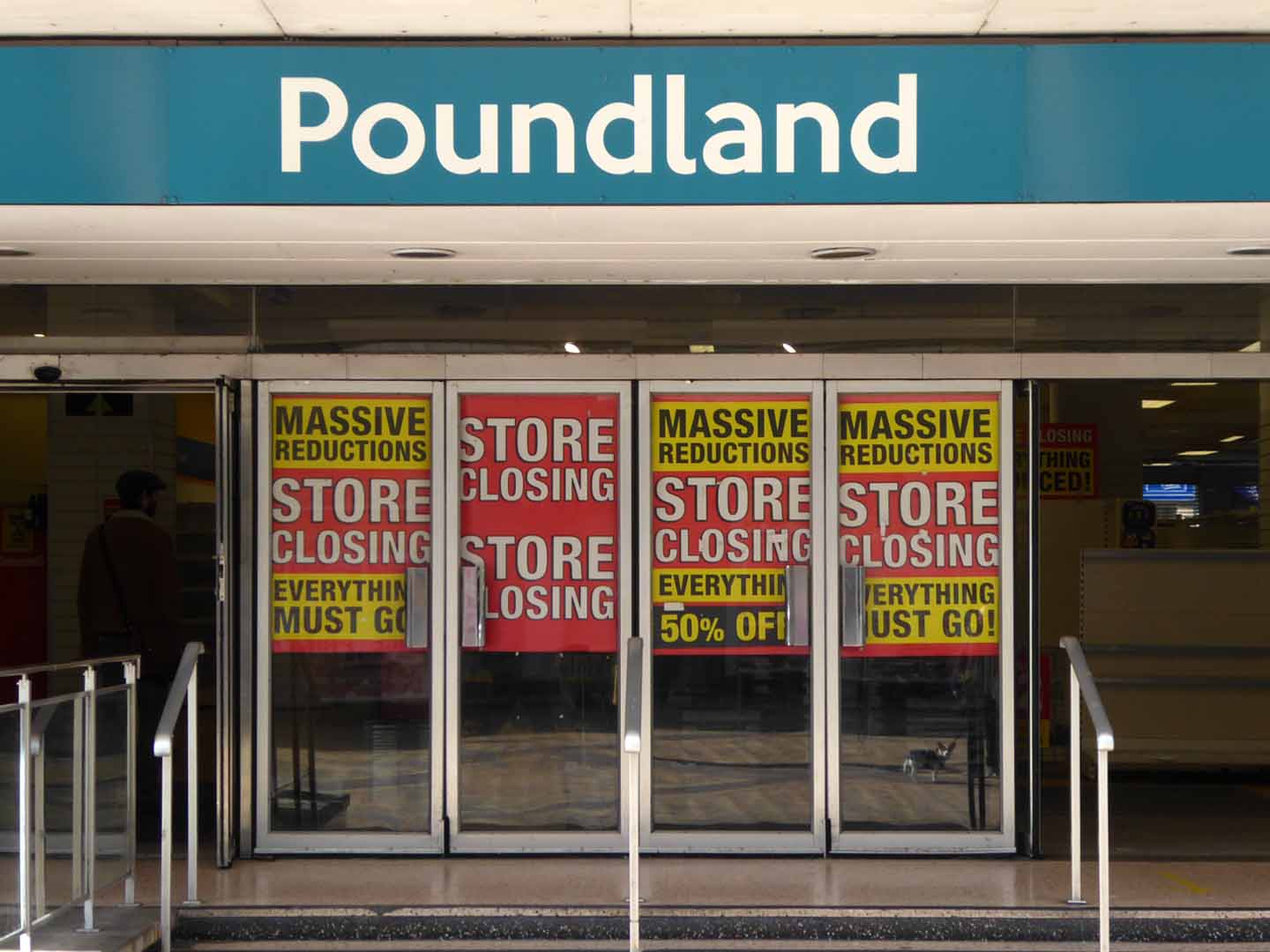
The store has been a success even during COVID restrictions, let us hope that the planned return goes ahead.
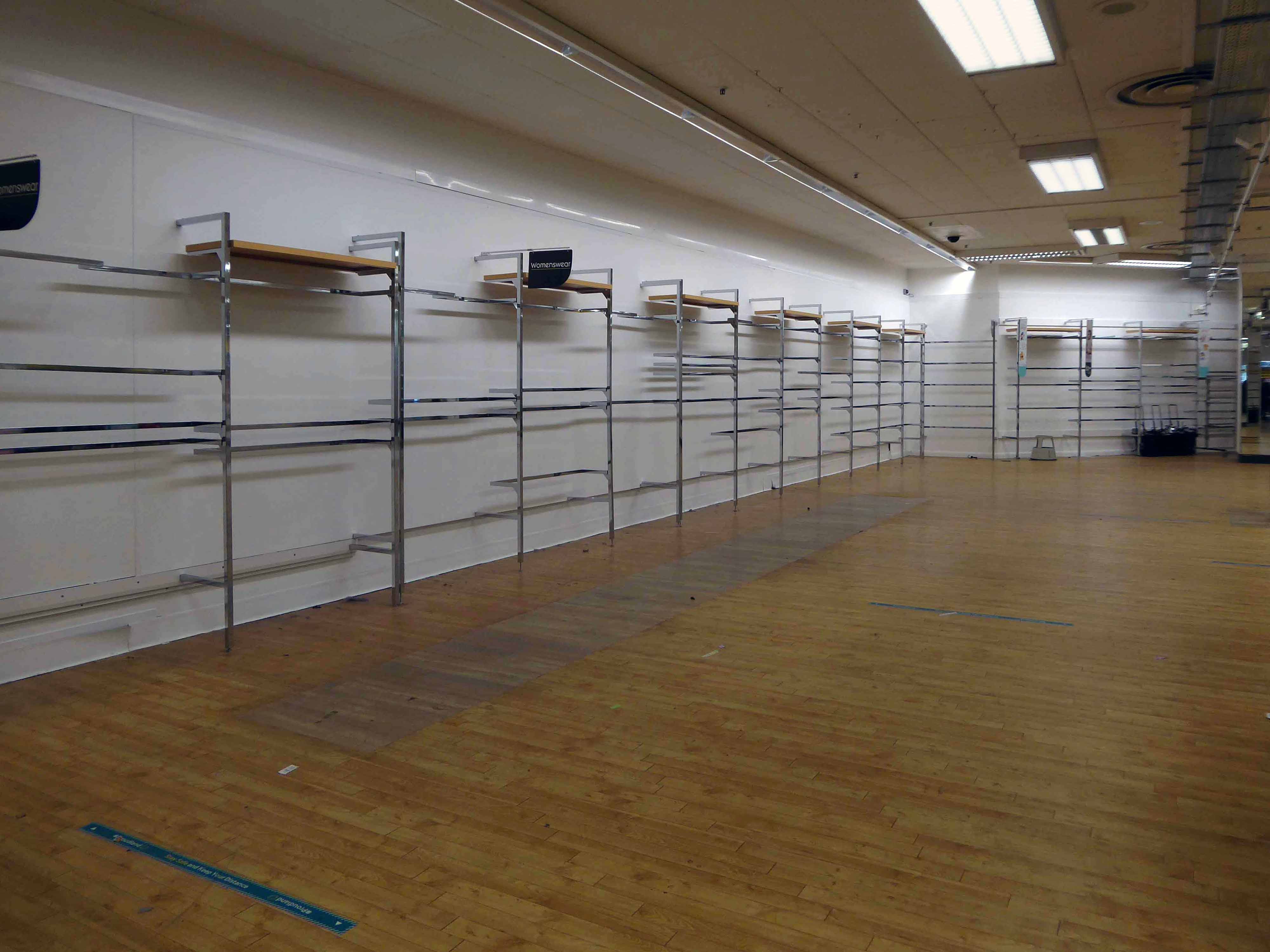
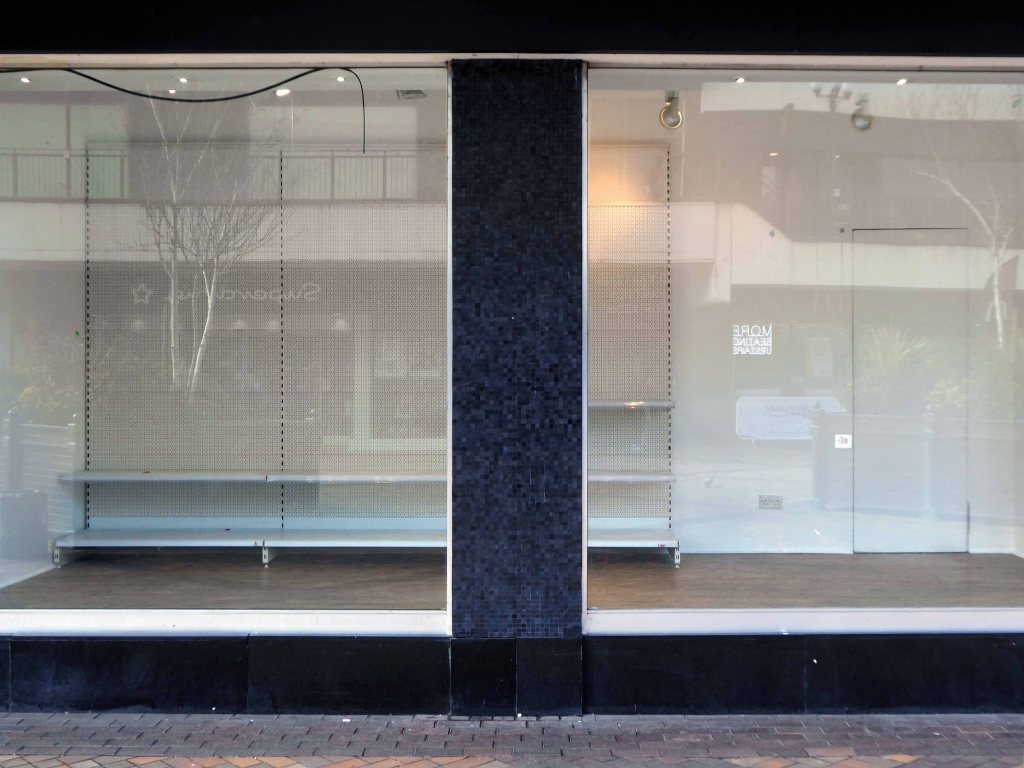
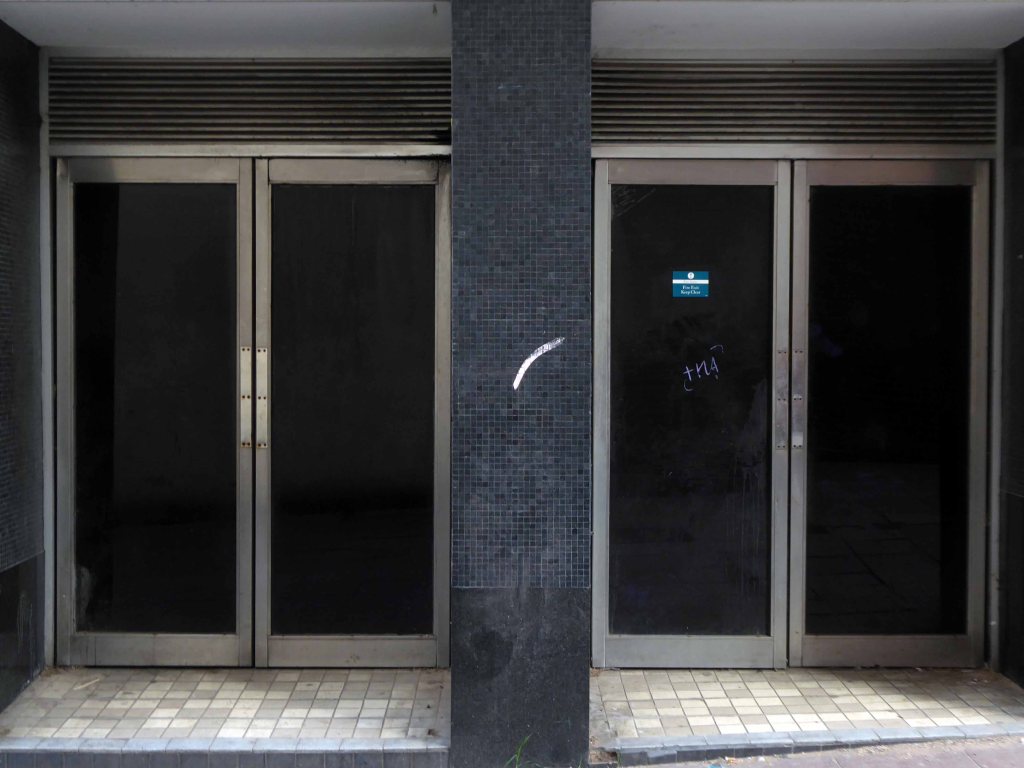
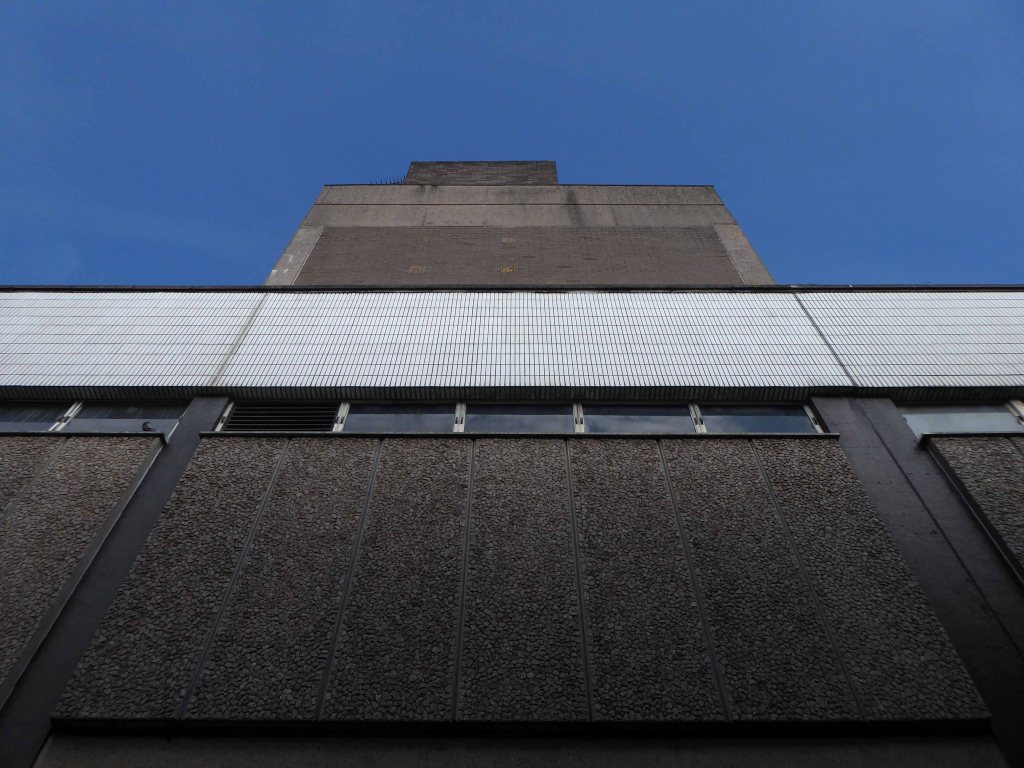
So here is my record of the building as is, a tad tired, but in its day a simple and authoritative amalgam of volumes and materials.
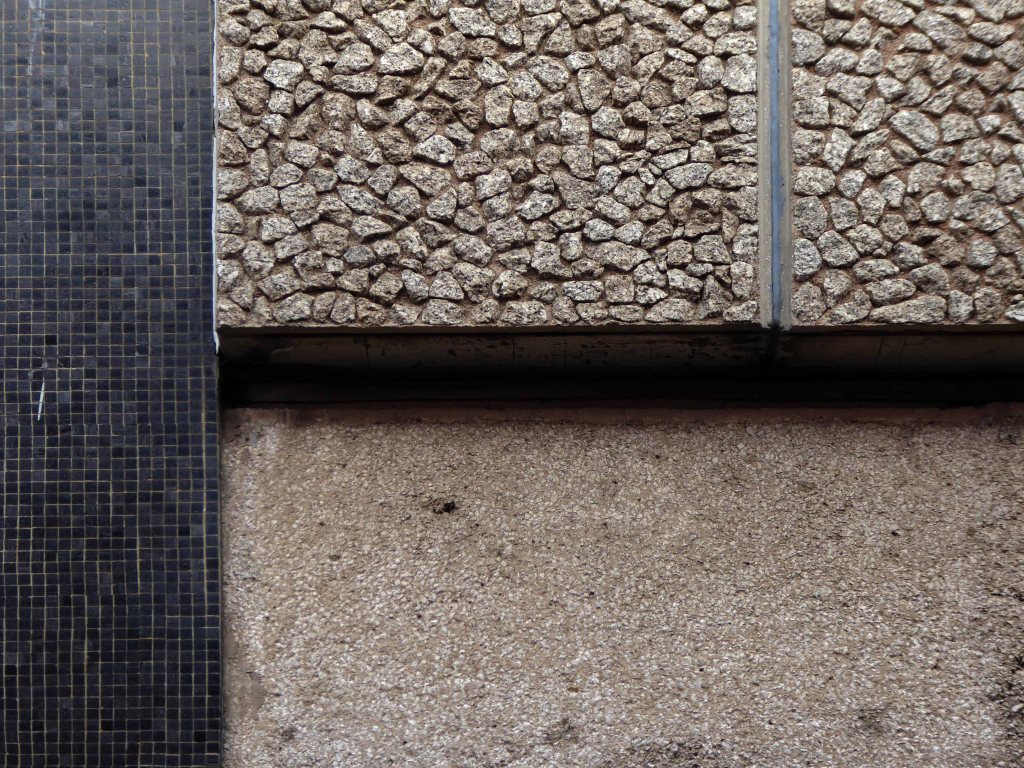
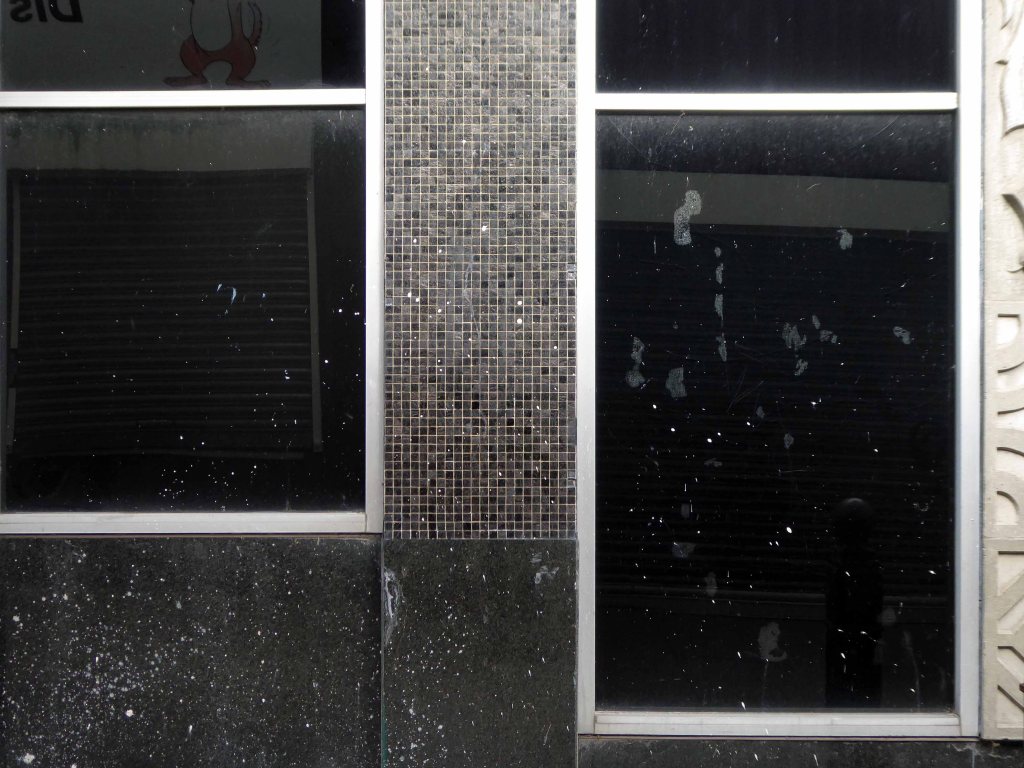
Mixing variegated grades of concrete, tiling, mosaic, brick, steel and glass.
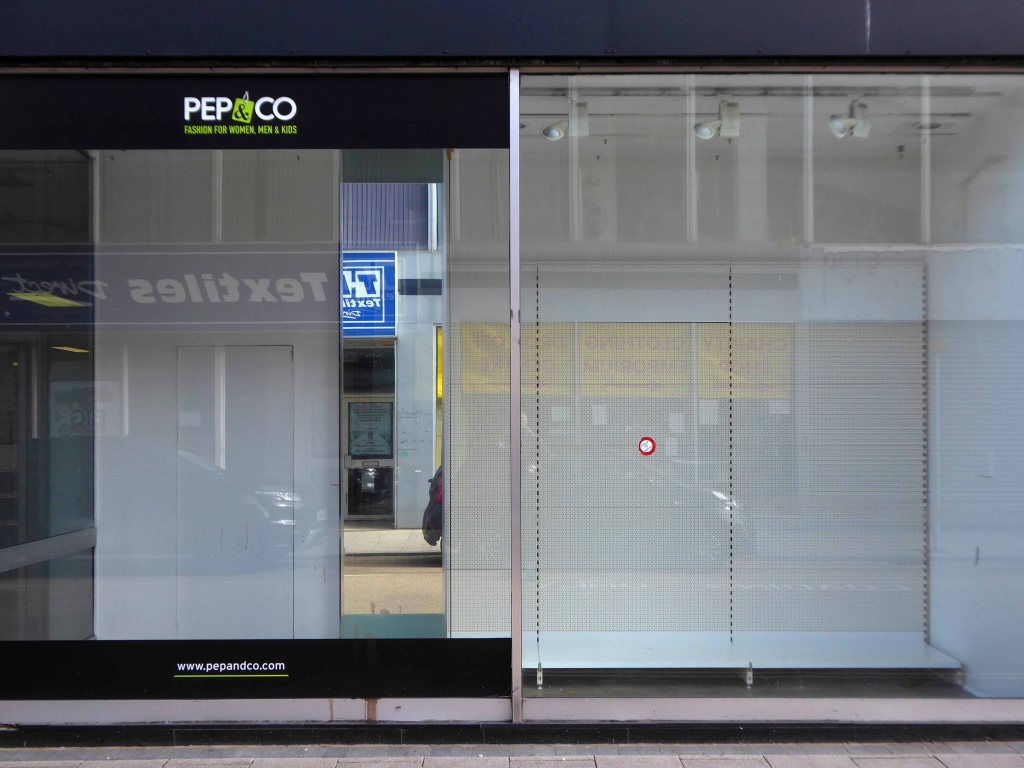
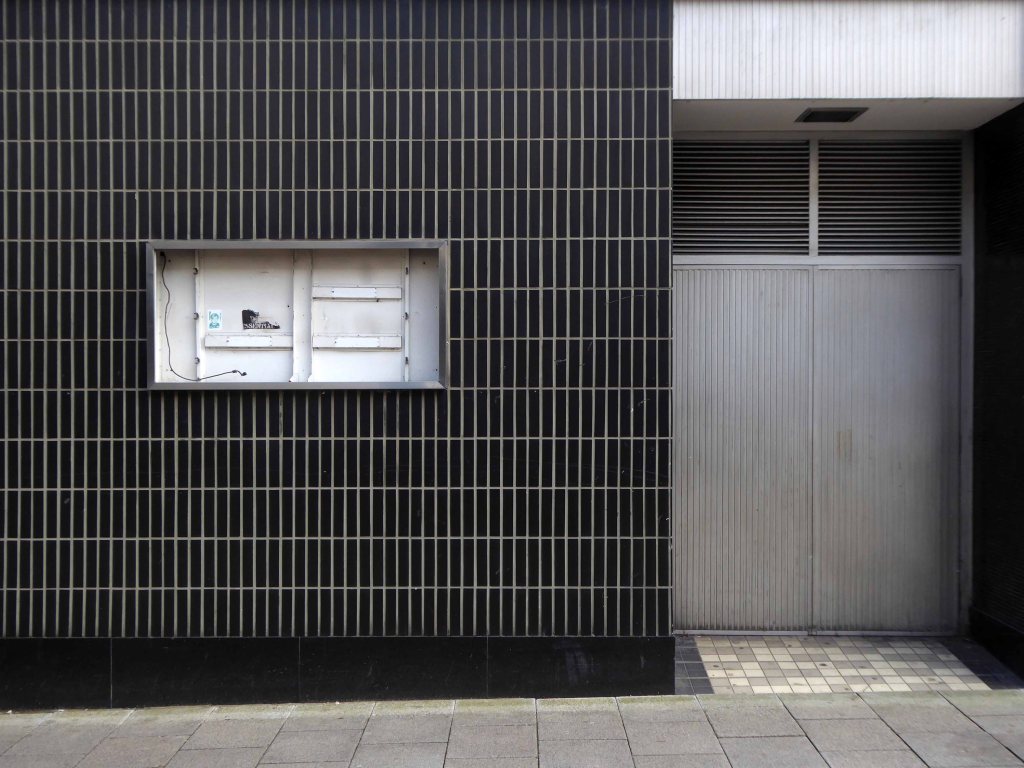
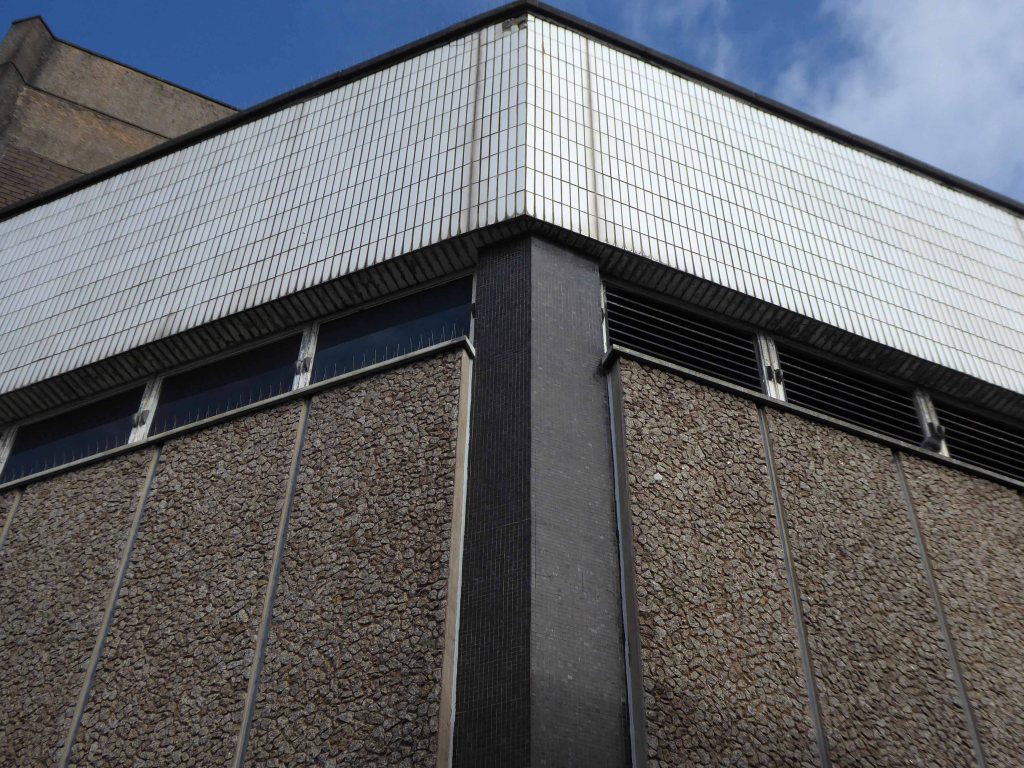
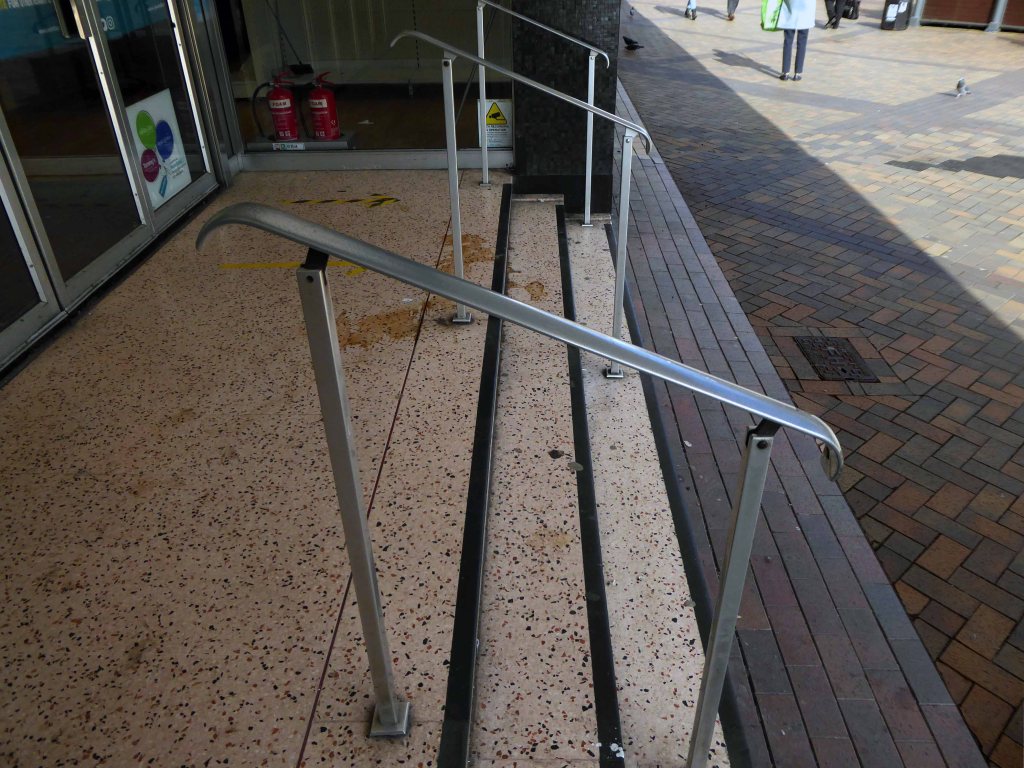
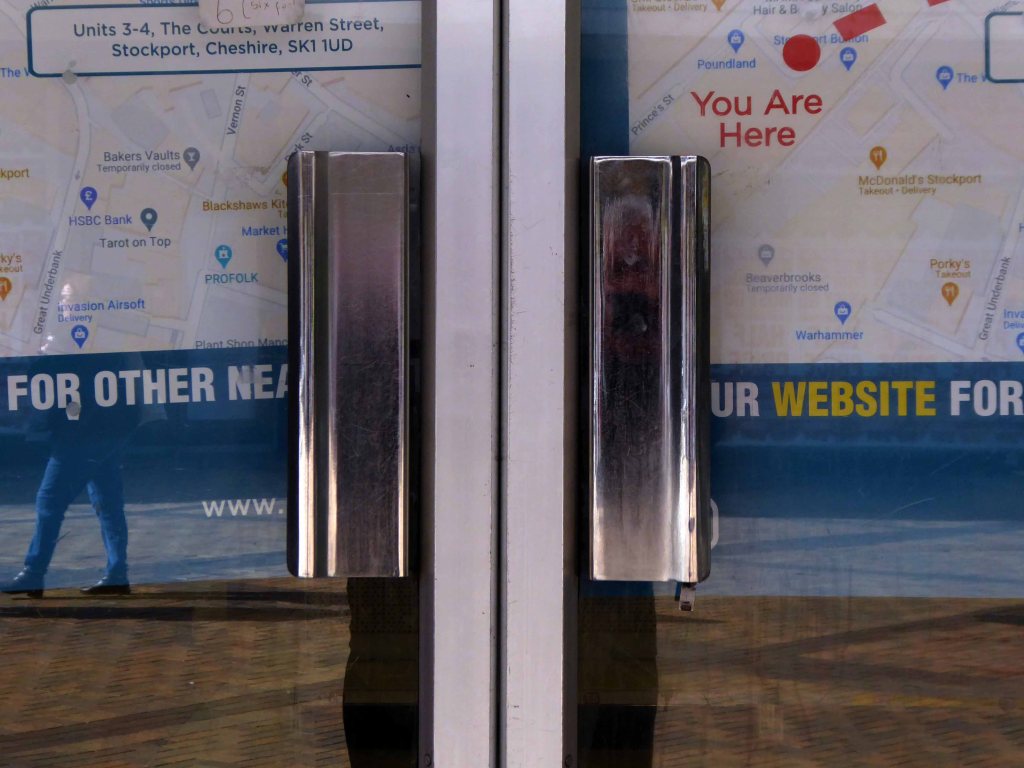
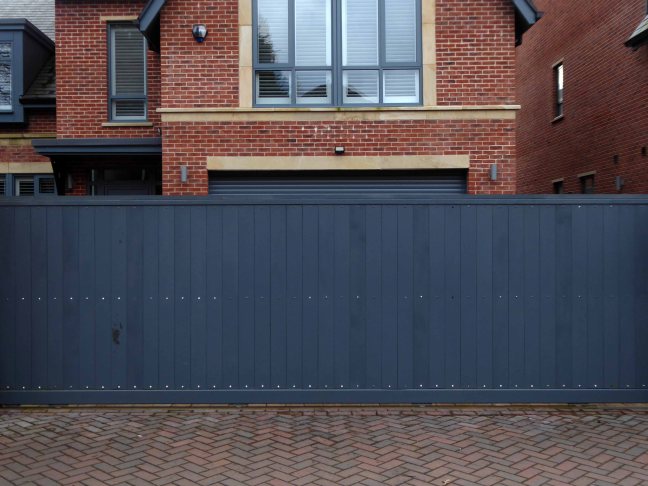
When the figures say crime is falling, why are we more frightened than ever? Could our towns and cities be creating fear and mistrust? More property is being built in Britain than at any time since the Second World War – but it’s owned by private corporations, designed for profit and watched over by CCTV. From the Docklands boom to cities such as Manchester, gated apartment developments, gleaming business districts and plazas have sprung up over the country.
Has this ‘regeneration’ really made our lives better?
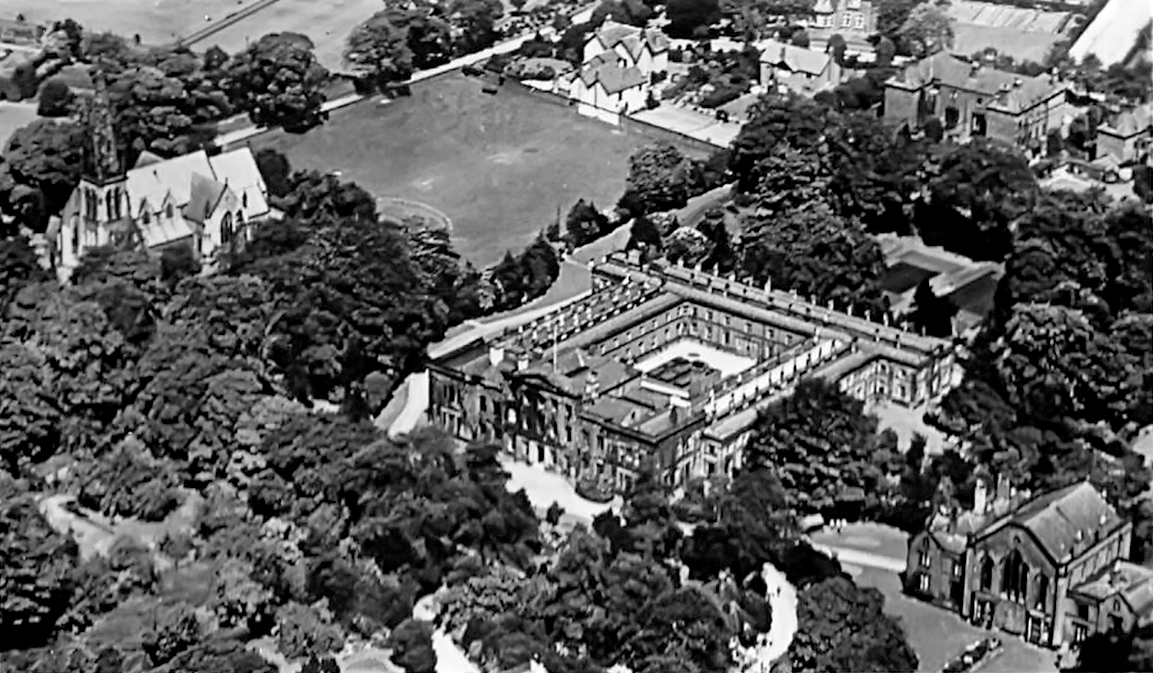
I’m returning to the MMU Didsbury Campus, the site began life as a baronial deer park and estate, in 1740 the site was purchased by the Broome family, and a new house was constructed after 1785 by William Broome, from 1812 owned by Colonel Parker. Following a succession of uses and owners the School of Education is established.
I studied for a PGCE in Art there in 1984.
Subsequently, fun and fashionable free-market economics, have increasingly governed the management of education and its assets.
MMU sold the site for an undisclosed sum to the developers PJ Livesey.
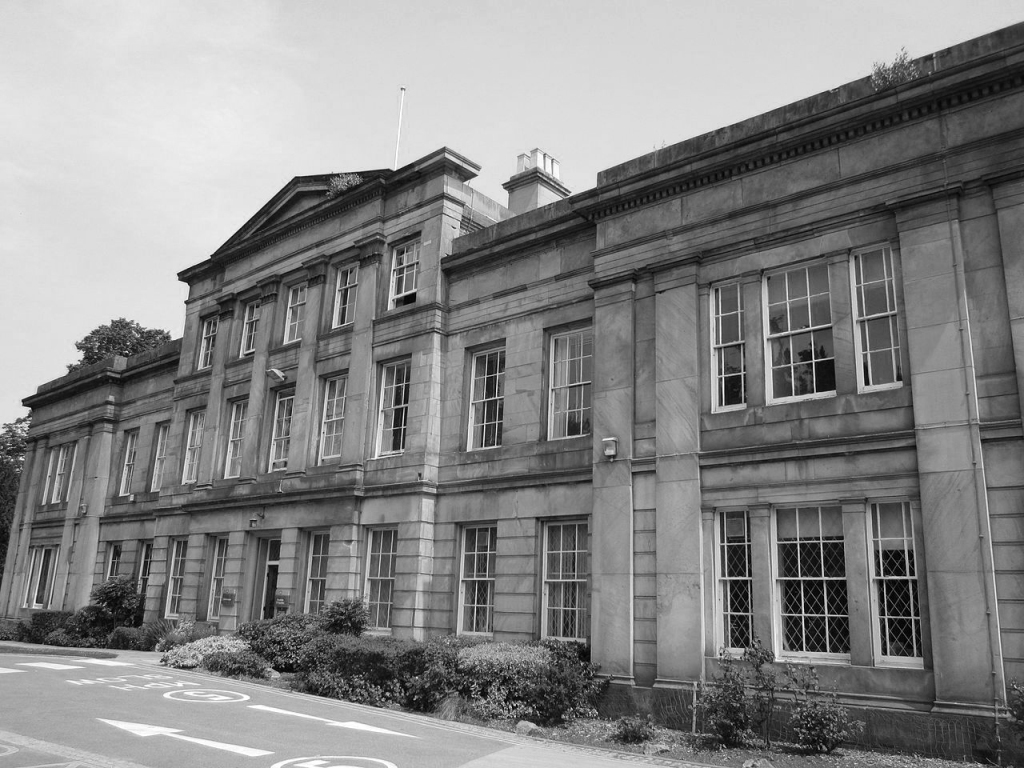
This is Sandown House, formerly the administrative block, redeveloped as private homes, each valued at £675,000 and upwards.
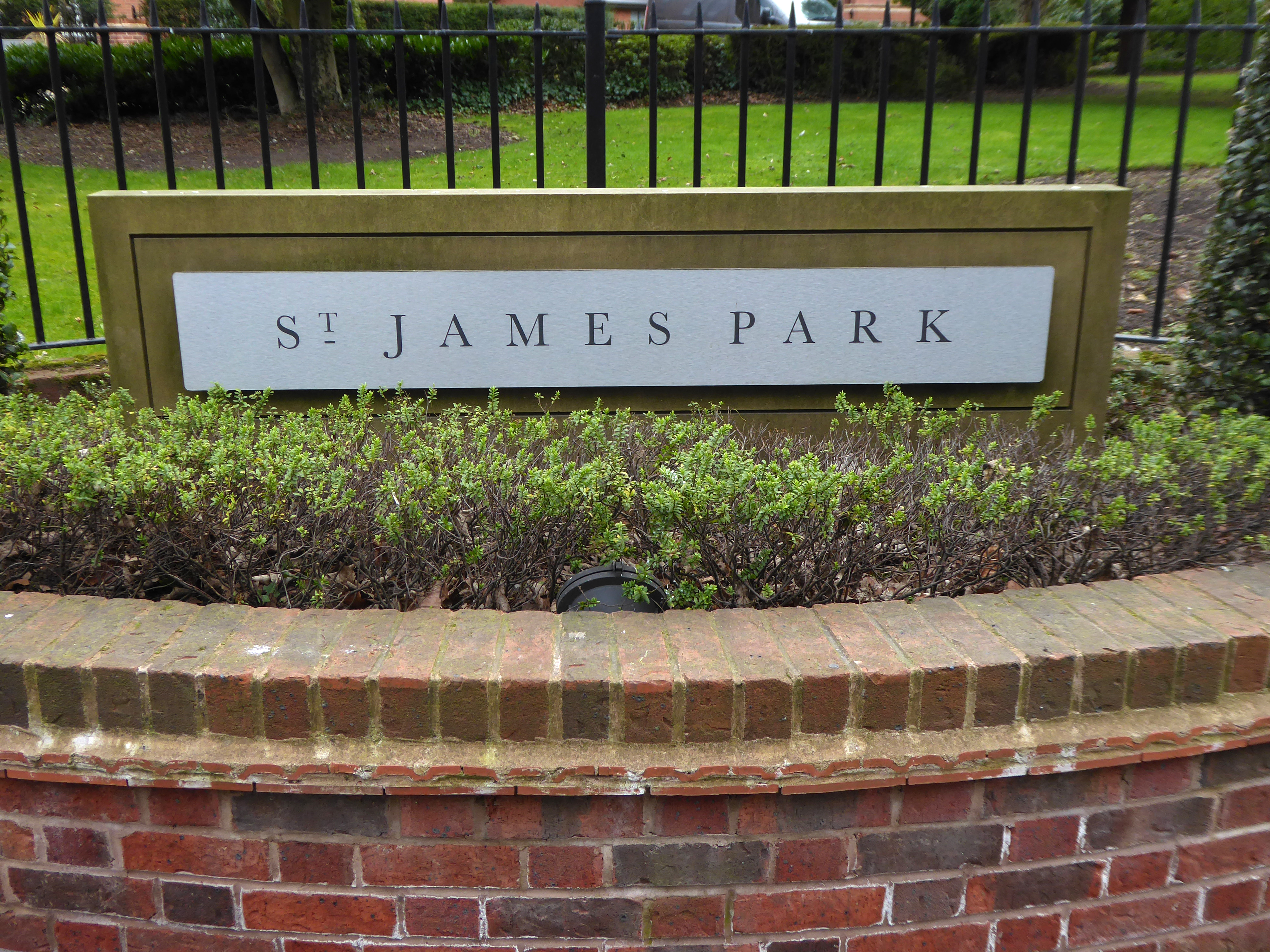
St James Park is an exclusive collection of beautifully converted heritage buildings and individually designed luxury homes offering opulent living accommodation finished to an uncompromising specification. Beautifully styled and perfectly connected, this gated development is located moments away from the heart of Didsbury Village.
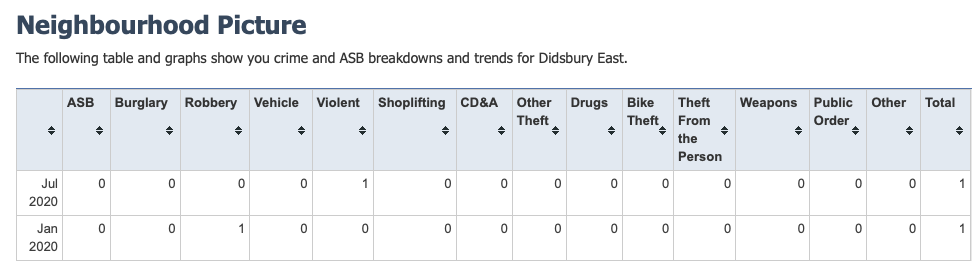
So why choose a gated community?
The fear of fear it would seem, is on the increase, whilst crime itself is decreasing.
Royal Institute of Chartered Surveyors says that although residents feel safer in gated communities, it is more of a perception than a reality. Research in the US suggests that gating may not deter criminals and initial studies in the UK suggest the same.
If they are allowed to develop unchecked, it will breed hostility and threaten the social cohesion of the UK’s cities, the surveyors warn.
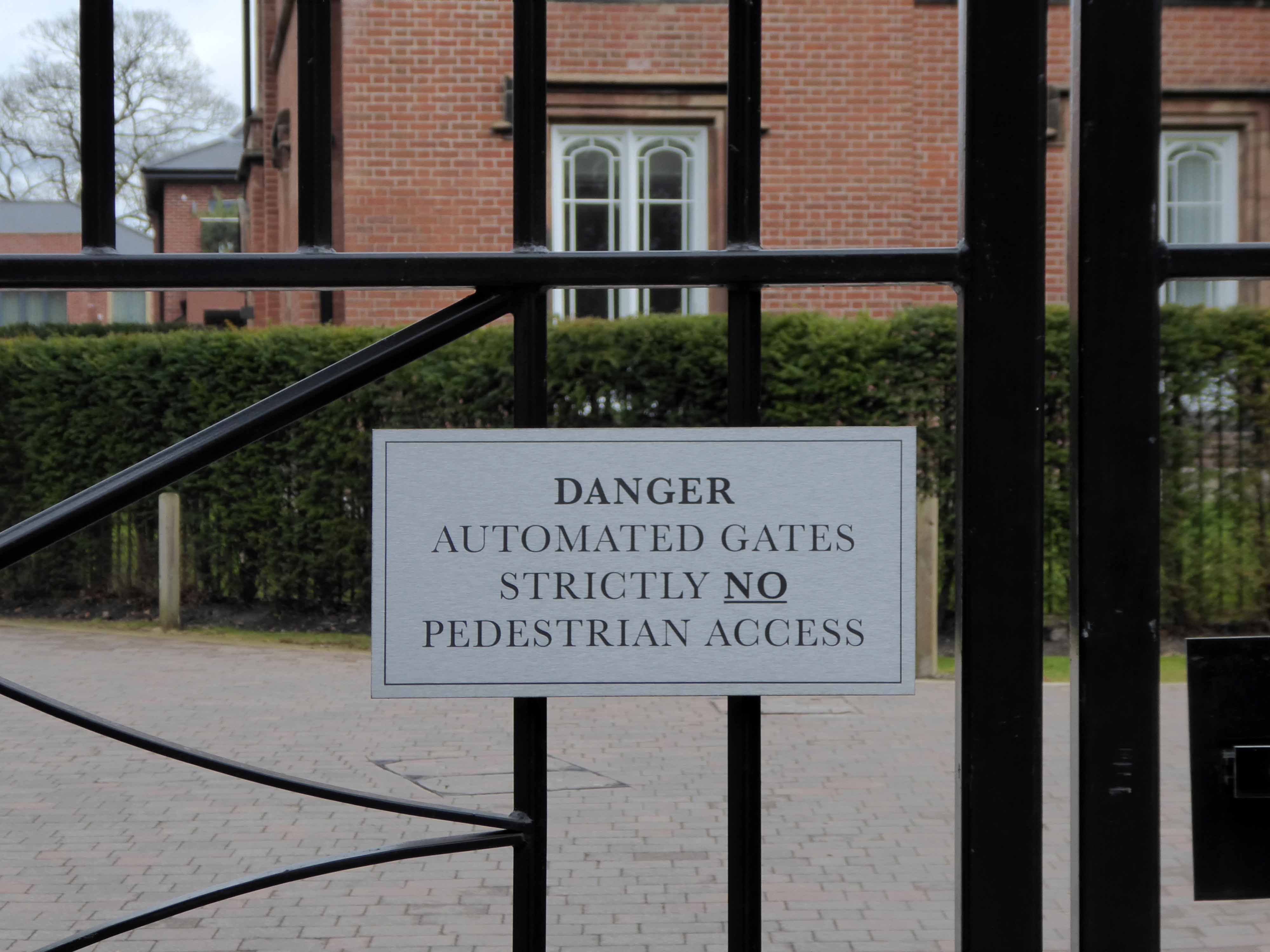
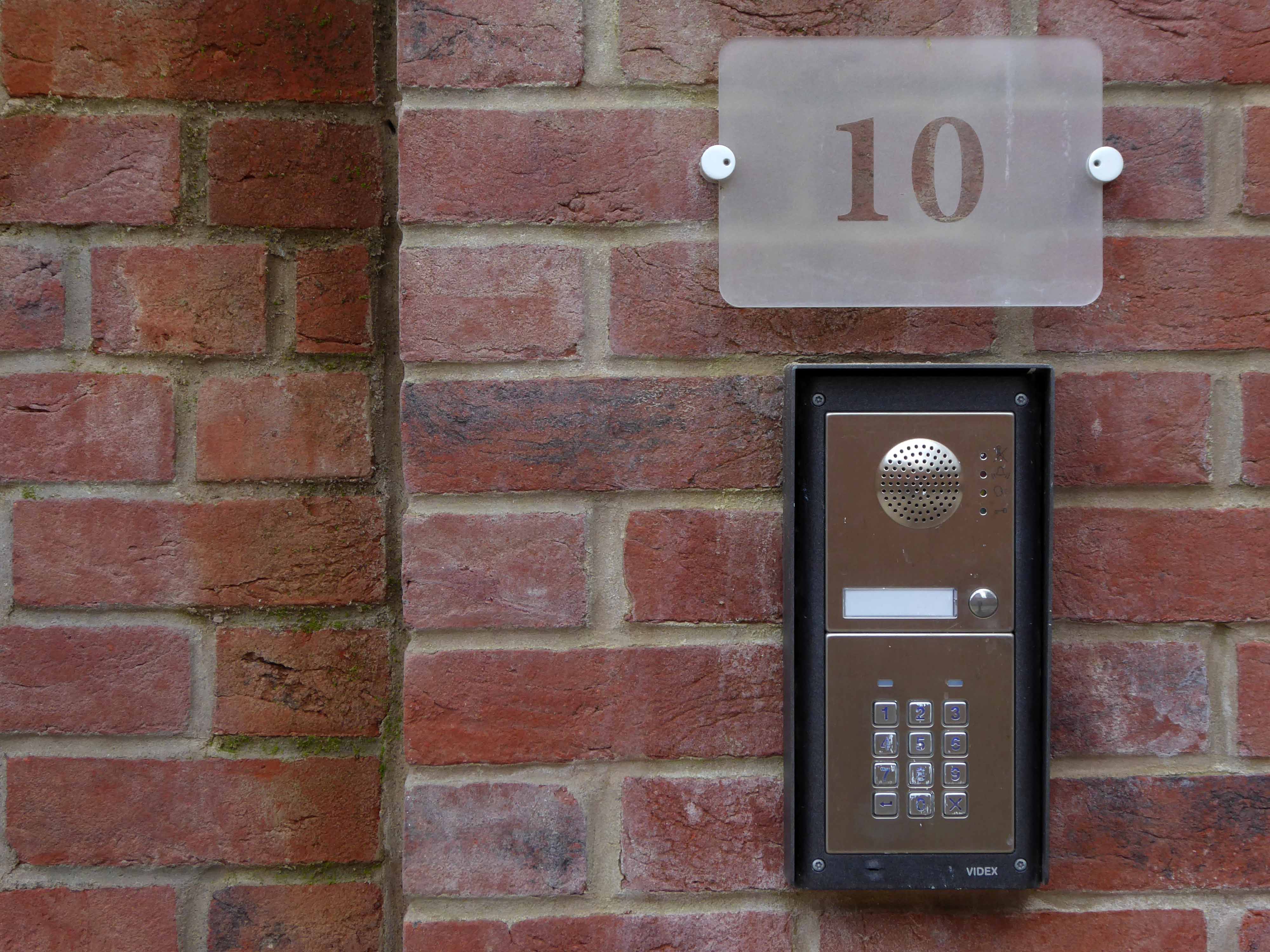
Social exclusion, the bitter taste of economic apartheid is obviously the plat du jour here in St James Place – there is limited pedestrian access and secure gates to inhibit unwanted automotive ingress.

There is an exciting array of CCTV devices, encoded gates and doors, ever higher railings in evidence.
Security for the terminally insecure.
It is possible to live in an open environment in East Didsbury, here on Ford Lane folks come and go, hopefully interacting with friends, neighbours. family and strangers passing idly by.
Though this is one of the most affluent areas of Manchester, and happily one is unlikely to find oneself with an unemployed collier as a neighbour.
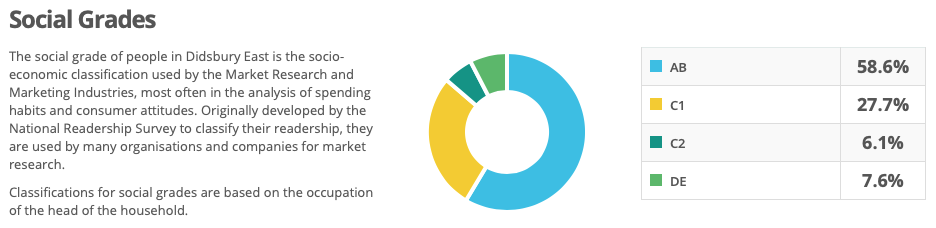
Community minded, demographically diverse cities, will produce safe, secure, healthy places to live.
There is no evidence that gated communities are in any way safer, in fact they may well be socially divisive – this is the never never land of smoked glass Range Rover windows and mirrored wardrobes.
Architectural critic Ian Nairn makes a convincing case for a socially mixed residential development, which still maintains a regard for the area’s heritage.
I visited Lillington Gardens Estate in August 2018 – now a mature development, where those residents I spoke with, seemed happy and content with their homes.
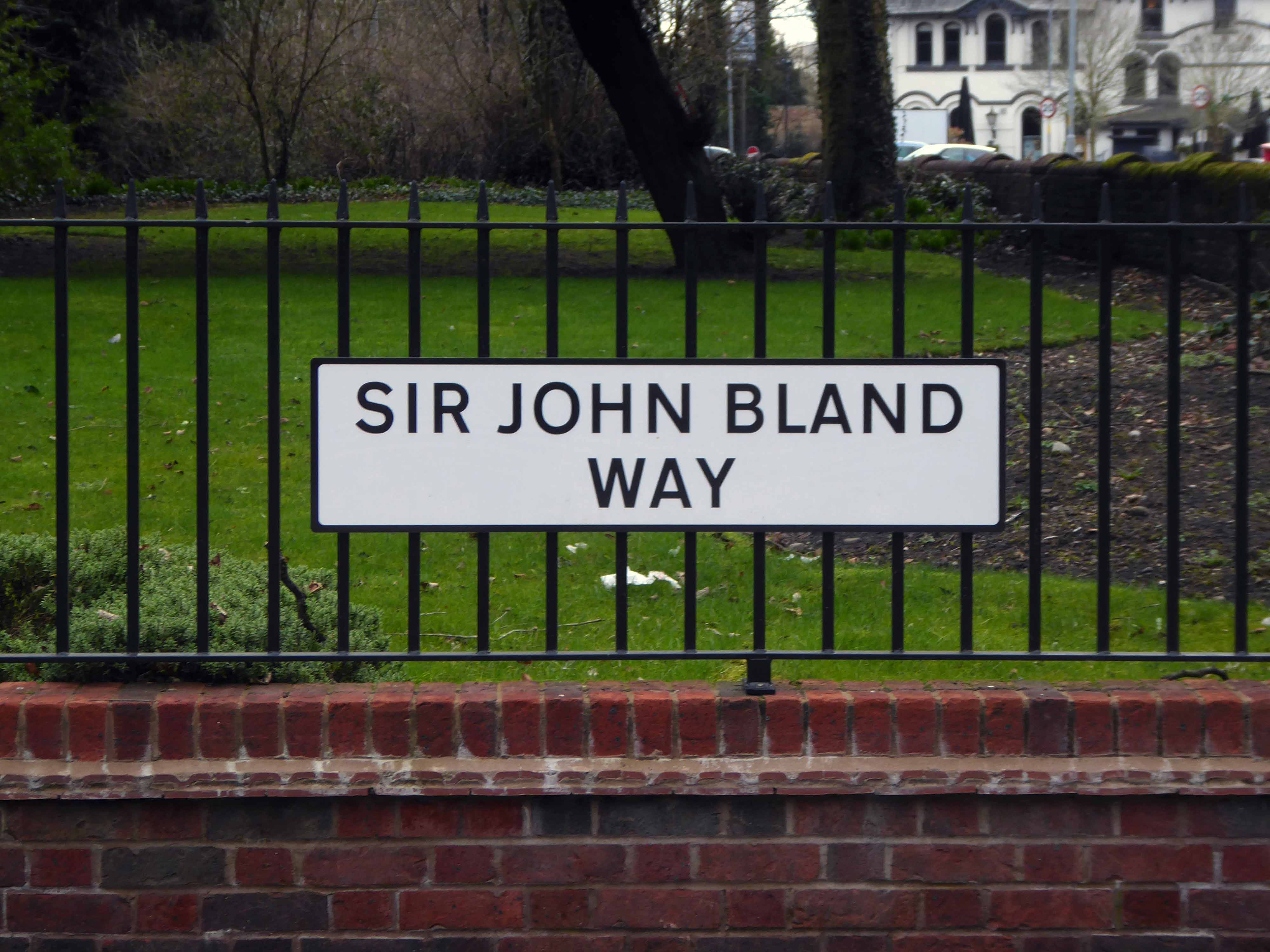
Sir John Bland 5th Baronet 1691 – 1743 of Kippax Park and Hulme Hall, was a British landowner and politician who sat in the House of Commons from 1713 to 1727.
His mother was Anne Mosley, daughter of Sir Edward Mosley of Hulme.
He retired from Parliament aged 35 and moved the focus of his local political activity from Yorkshire to Lancashire, where his mother had inherited Hulme Hall and the Lancashire estates which covered most of Manchester.
This is the celebration of privilege, power and property in pressed aluminium and print, saluting the progenitors of the Mosely Family, who once upon a time, were Manchester’s wealthiest landowners.
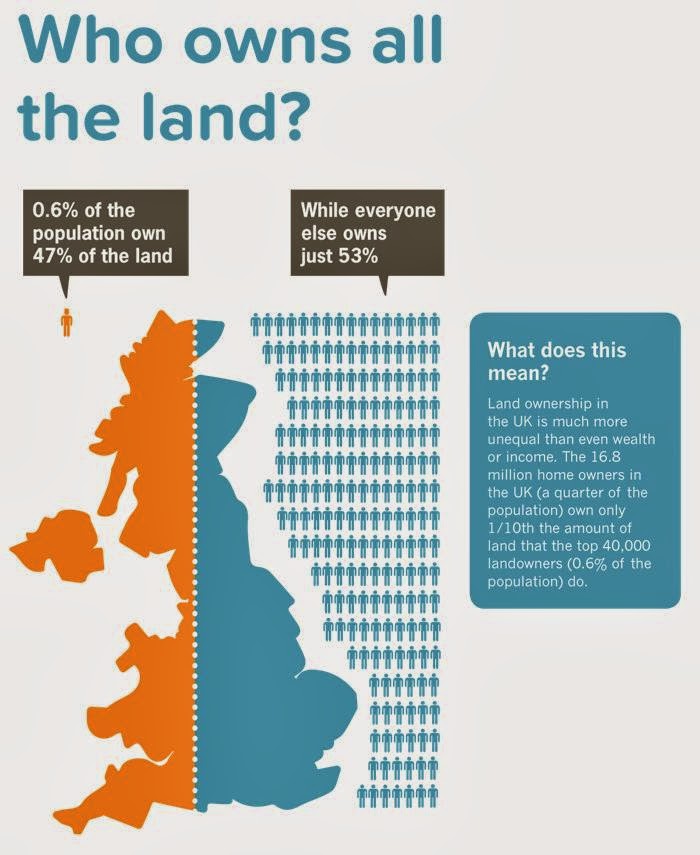
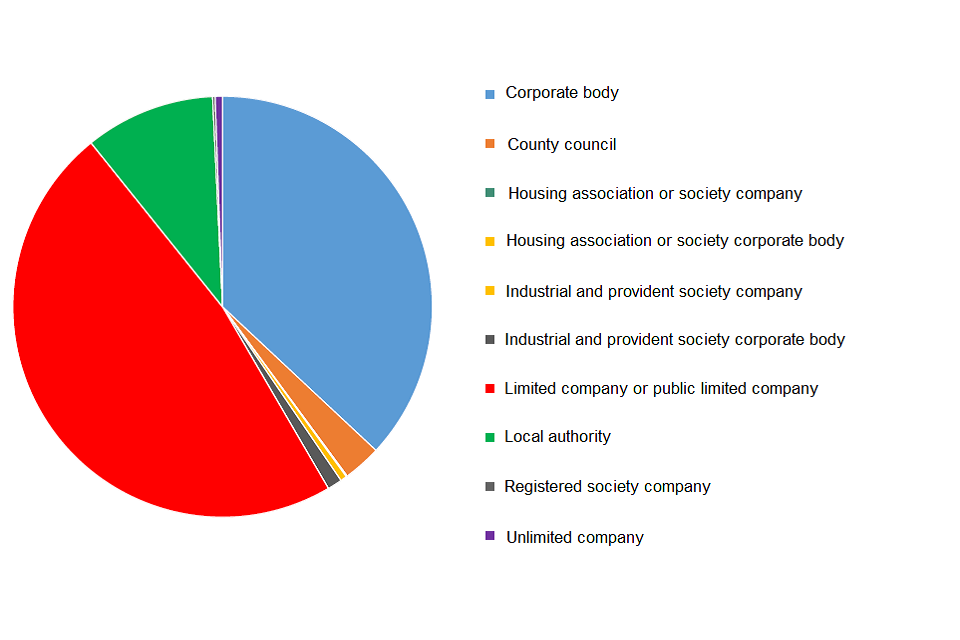
We live in an owned landscape where access is an issue.
Mr and Mrs Andrews would note, that little or nothing has changed, since Gainsborough’s time.
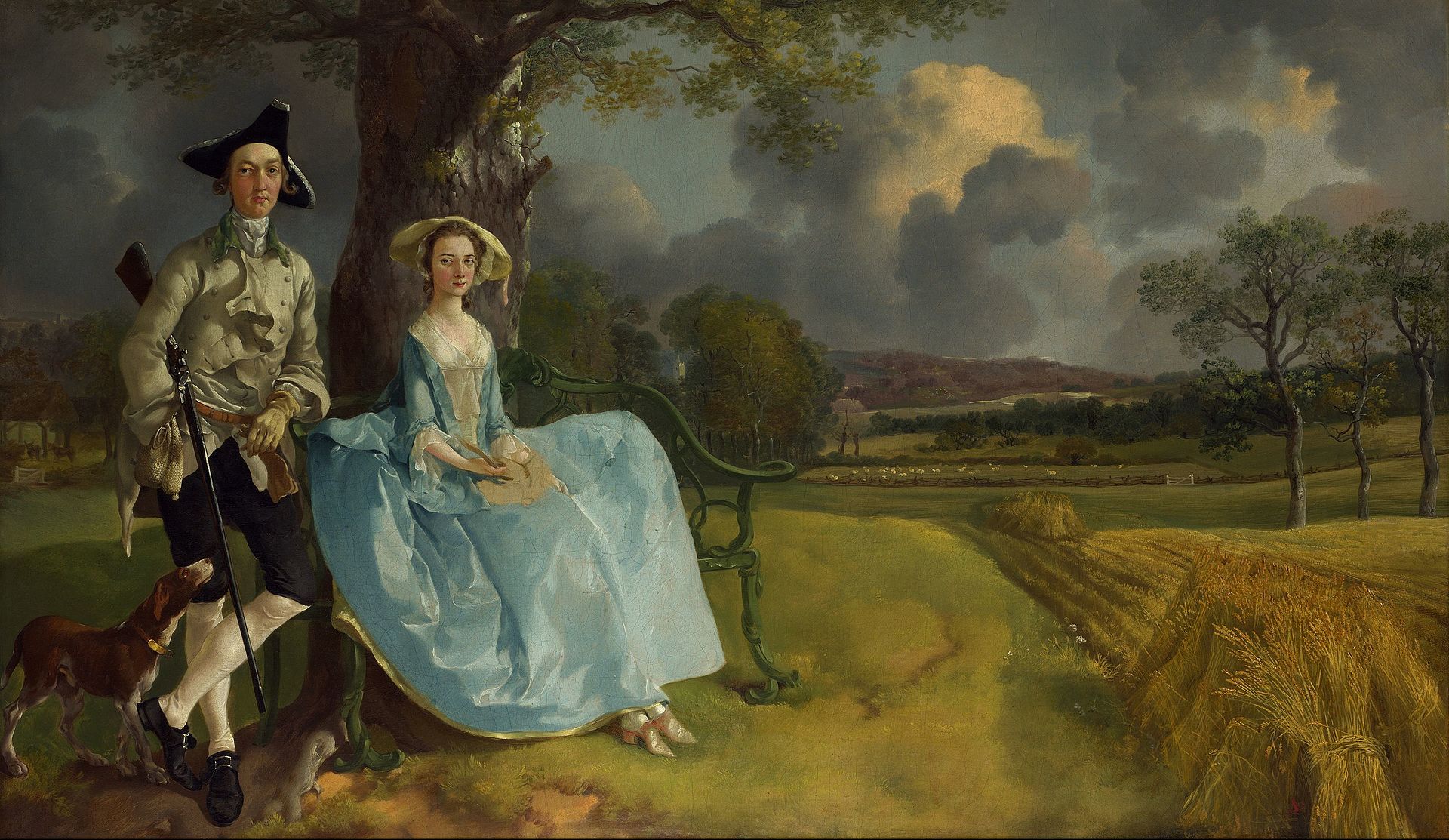
Completed shortly after Mr. Andrews’ marriage to the daughter of a neighbouring gentry, a marriage that enhanced his estate, the image captures the unchanging power of property relations in pre-industrial England.
“They are not a couple in nature as Rousseau imagined nature,” John Berger comments. “They are landowners and their proprietary attitude to what surrounds them is visible in their stance and their expressions.”
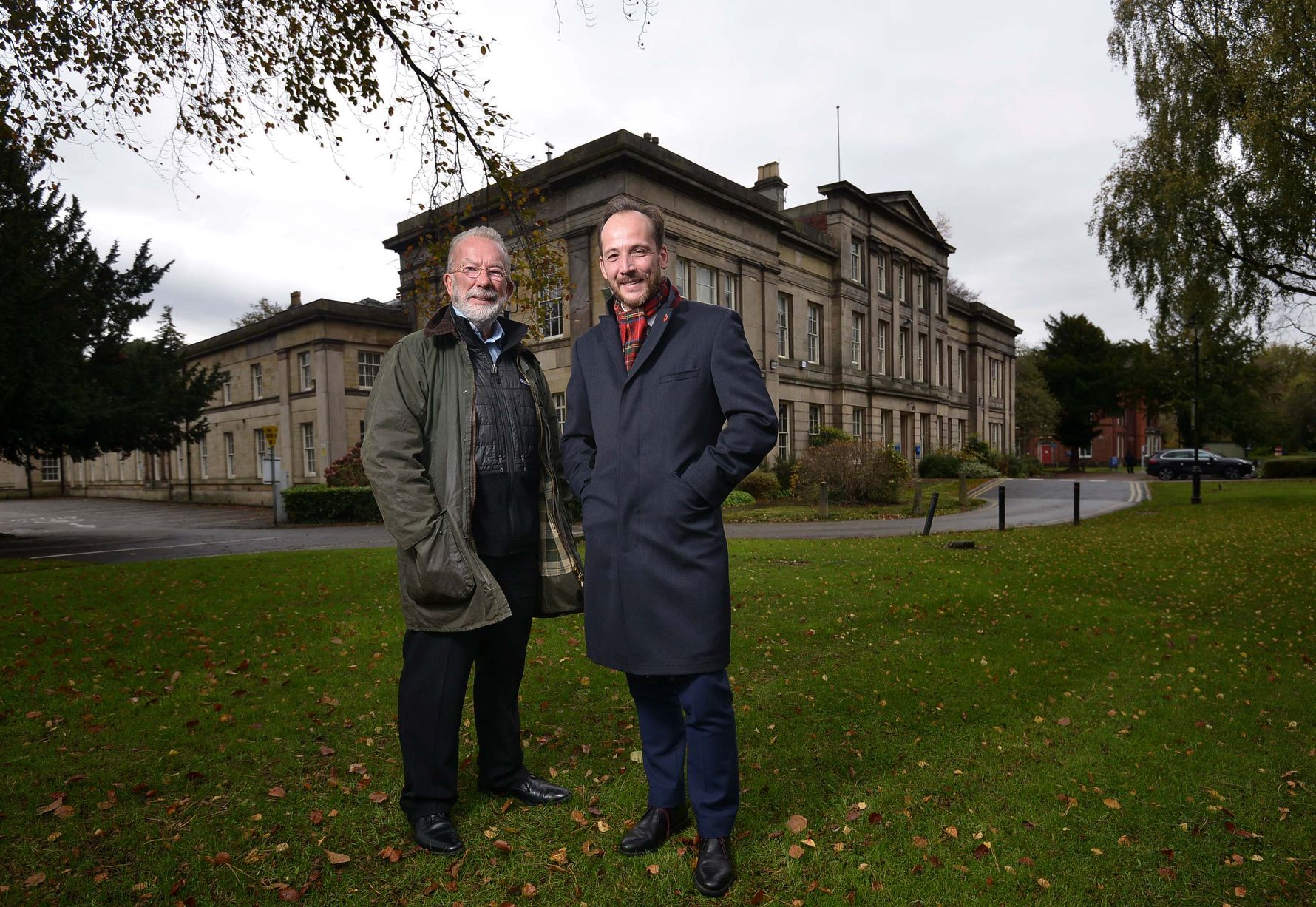
The first thing I’d say is this is going to be an aspirational site within an aspirational area – PJ Livesey
So how did we get here?
Baroness Thatcher makes massive tax cuts for the wealthy, funded by North Sea Oil revenues, impoverishing the public purse, undervaluing the privatisation of public assets, encouraging the right to buy, yet inhibiting the building of social housing, hot housing the property owning democracy.
The term ‘property-owning democracy’ emerges from a discursive history of use. Coined by British MP Noel Skelton in 1920, the concept compounded the terms ‘property-owning’ and ‘democracy’ as a conservative response to left-leaning ideas of liberalism and socialism. At this stage, the term represented the necessity of protecting property rights from democratic organisation.
More recently stamp duty holidays, houses as speculative assets not homes, low interest rates, massive middle-class inheritances, deregulation in the financial sector, all fuel the upwardly mobile housing boom.
Whilst for the lower orders years and years of pay freezes, attacks upon trade unions, the continued decline in manufacturing, small state austerity, zero hour contracts, rent hikes, attacks on the unemployed, universal credit and indexed benefits, have all fuelled reduced social mobility.
Looks like we have a schism on our hands.
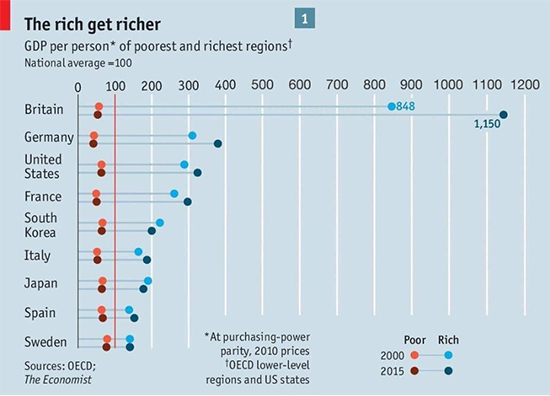
The UK became a much more equal nation during the post-war years. The data available shows that the share of income going to the top 10% of the population fell over the 40 years to 1979, from 34.6% in 1938 to 21% in 1979, while the share going to the bottom 10% rose slightly.
Since 1979 this process of narrowing inequality has reversed sharply, inequality rose considerably over the 1980s, reaching a peak in 1990.
In a community where public services have failed to keep abreast of private consumption things are very different.
Here, in an atmosphere of private opulence and public squalor, the private goods have full sway.
Come, now, you rich men, weep and wail over the miseries that are coming upon you. Your riches have rotted, and your clothing has become moth-eaten. Your gold and silver have rusted away, and their rust will be a witness against you and will consume your flesh. What you have stored up will be like a fire in the last days. Look! The wages you have withheld from the workers who harvested your fields keep crying out, and the cries for help of the reapers have reached the ears of Jehovah of armies. You have lived in luxury and for self-gratification on the earth. You have fattened your hearts on the day of slaughter.
St James Park is an exclusive collection of beautifully converted heritage buildings and individually designed luxury homes offering opulent living accommodation finished to an uncompromising specification. Beautifully styled and perfectly connected, this gated development is located moments away from the heart of Didsbury Village, where residents can enjoy an abundance of independent café bars, restaurants and boutiques, as well as Didsbury Park on the doorstep.
Opulent heritage design, how could one resist?
Tellingly no mention of ever so adjacent Fletcher Moss Park:
Alderman Moss bequeathed the house and gardens to the City of Manchester on his death in 1919 because he wanted the house and its contents to remain, as far as possible, intact “to show what a comfortable house of the olden times was like”.
Everything’s gone grey, in the aspirational race for the neutral high ground of individualism, they have painted you into a corner of dull, monochromatic conformity.
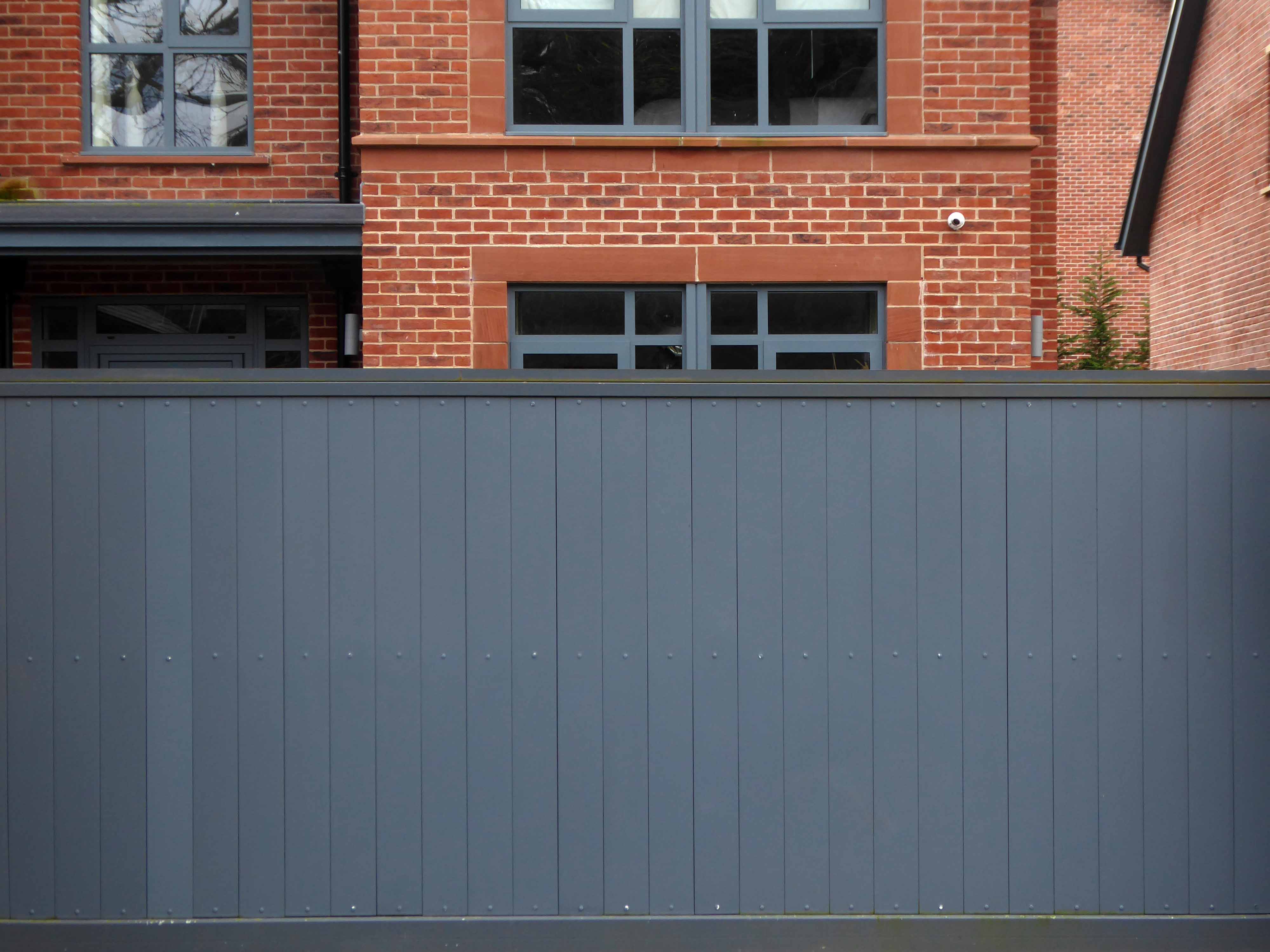
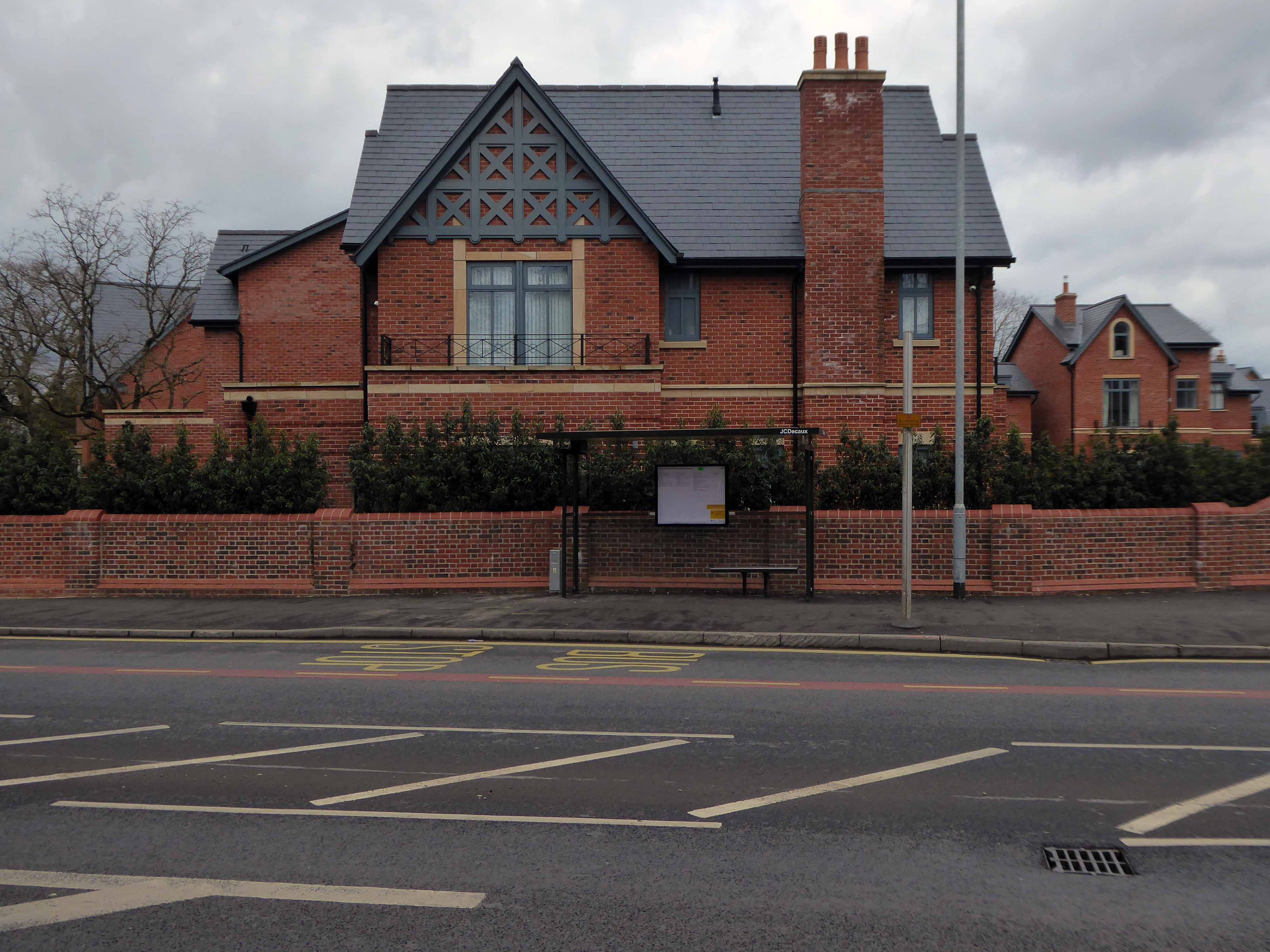
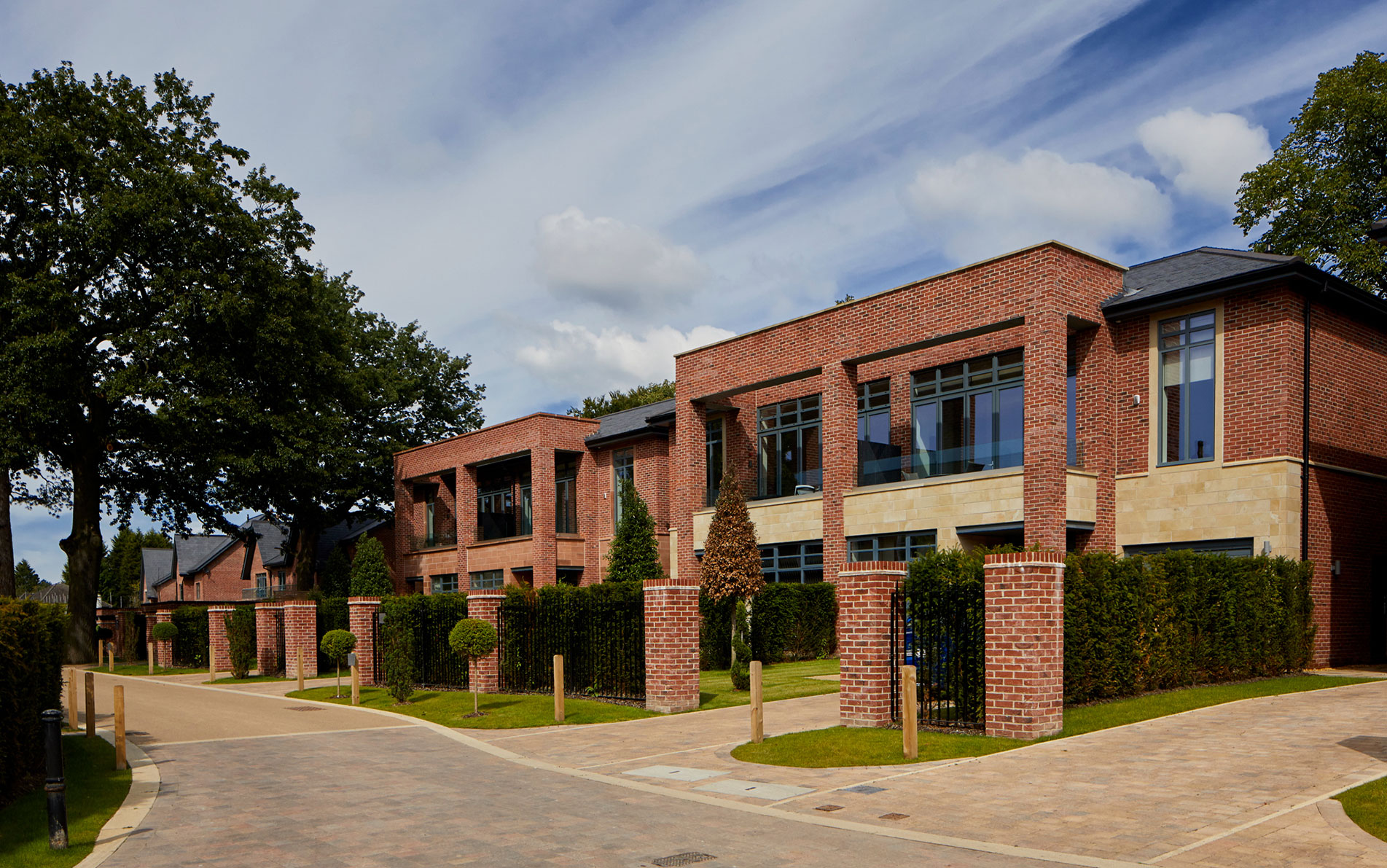
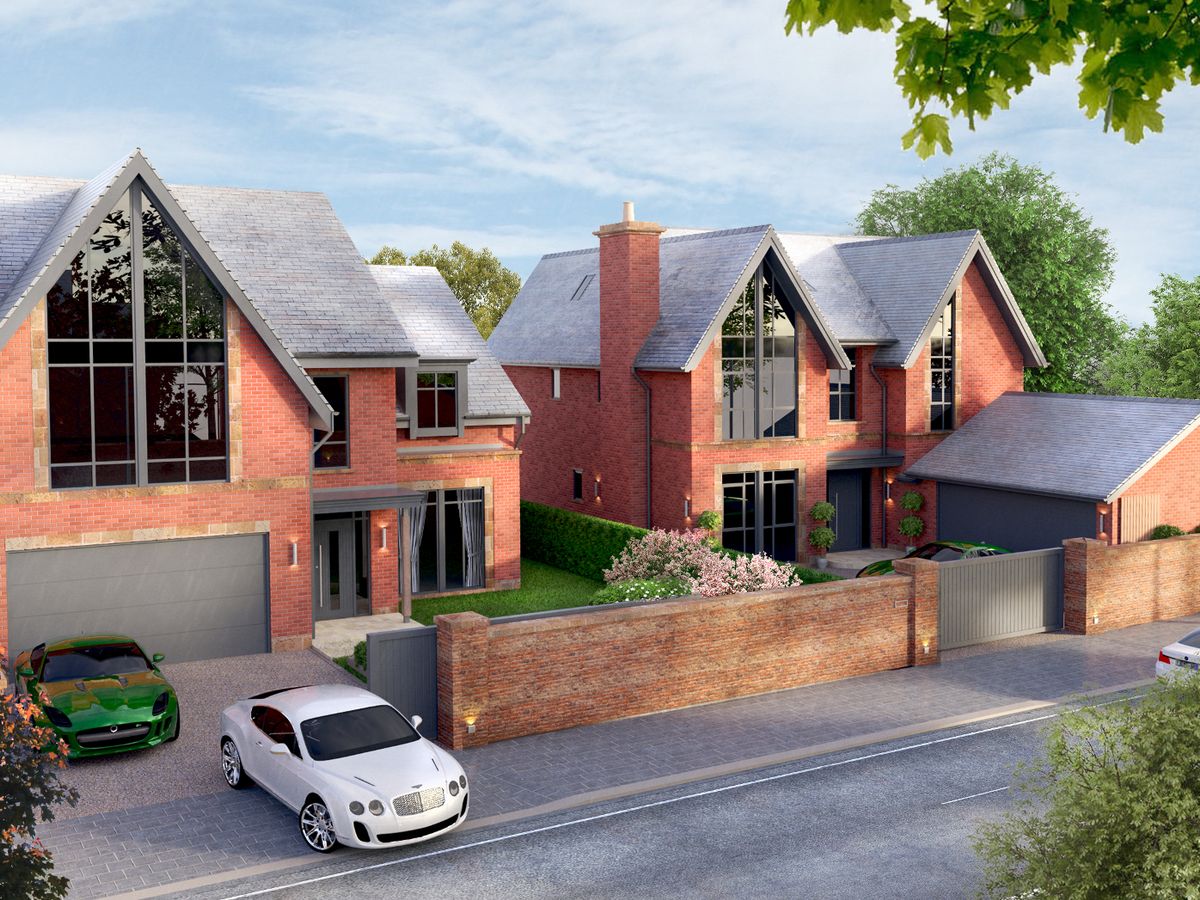
Welcome to the professional world of self interested, low-interest, the get rich quick deregulated go-getter.
Now get out.
I dreaded walking where there was no path
And pressed with cautious tread the meadow swath
And always turned to look with wary eye
And always feared the owner coming by;
Yet everything about where I had gone
Appeared so beautiful I ventured on
And when I gained the road where all are free
I fancied every stranger frowned at me
And every kinder look appeared to say
“You’ve been on trespass in your walk today.”
I’ve often thought, the day appeared so fine,
How beautiful if such a place were mine;
But, having naught, I never feel alone
And cannot use another’s as my own.
John Clare
This is a revamped version of my original post, I was contacted by residents, who had reservations concerning the photographs that I had taken of their homes, whilst on their private roads, without their permission, in contravention of current legislation.
I have replaced these with photographs taken from public roads and also from pictures found on the developer’s website.
Places are different: Subtopia is the annihilation of the difference by attempting to make one type of scenery standard for town, suburb, countryside and wild. So what has to be done is to maintain and intensify the difference between places. This is the basic principle of visual planning. It is also the end to which all the other branches of planning – sociology, traffic circulation, industry, housing hygiene – are means. They all attempt to make life more rewarding, more healthy, less pointlessly arduous.
Ian Nairn again
Welcome to Notopia.
Ground control to Colonel Tom.
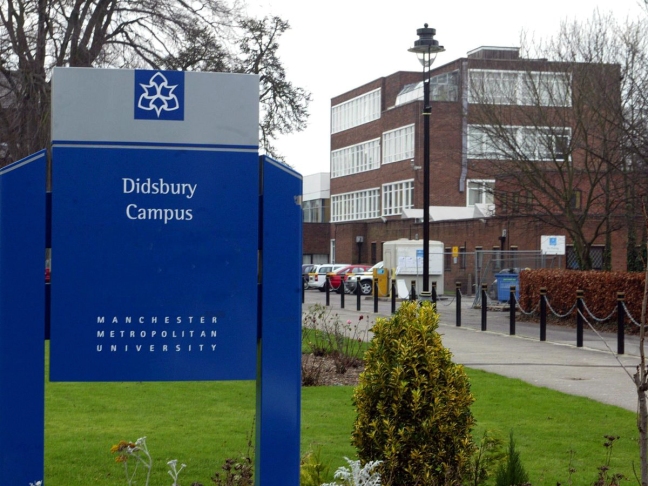
799 Wilmslow Rd Didsbury Manchester M20 2RR
I was here, once upon a time, studying to be an art teacher – which eventually I was, then I wasn’t.
Such is life, things that is eventually isn’t, such is the story of this here site.
Facts courtesy of Wikipedia
According to local historian Diana Leitch, the site has been in use since 1465; the first house was built in 1603 as part of a large estate with a deer park.
In 1740 the site was purchased by the Broome family, and a new house was constructed after 1785 by William Broome, extant today as the front part of the university’s former administration building, now known as Sandhurst House.
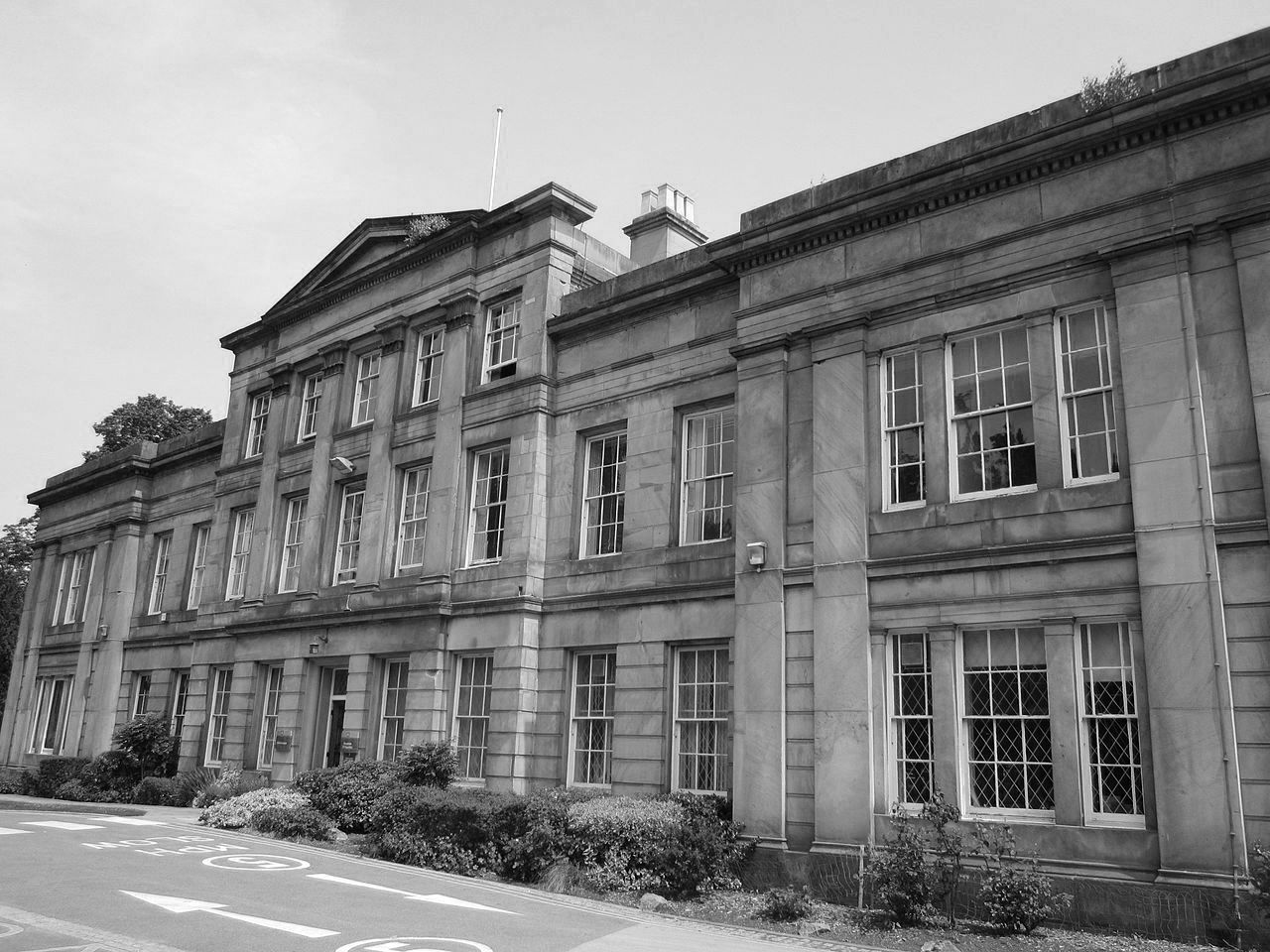
By 1812 the house was occupied by a Colonel Parker, and in the 1820s and ’30s it was a girls’ school.
The site was purchased by the Wesleyan Methodist Church on 18 March 1841 for £2,000, and opened as a theological college on 22 September 1842.
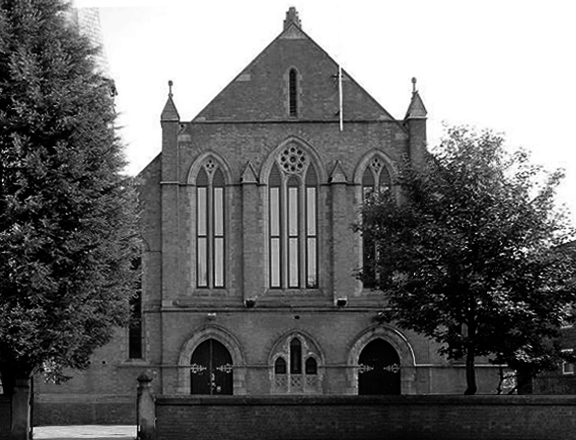
The Old Chapel building, originally the college chapel, is a two-storey building constructed in gothic style, with Flemish bond brickwork, built on a sandstone plinth in 1842. The structure consists of three wings, containing a central hall range, with two domestic wings on each side, initially used as tutor accommodation, forming a symmetrical appearance with the gable end of the upper hall. For many years it was used as a library and lecture theatre.
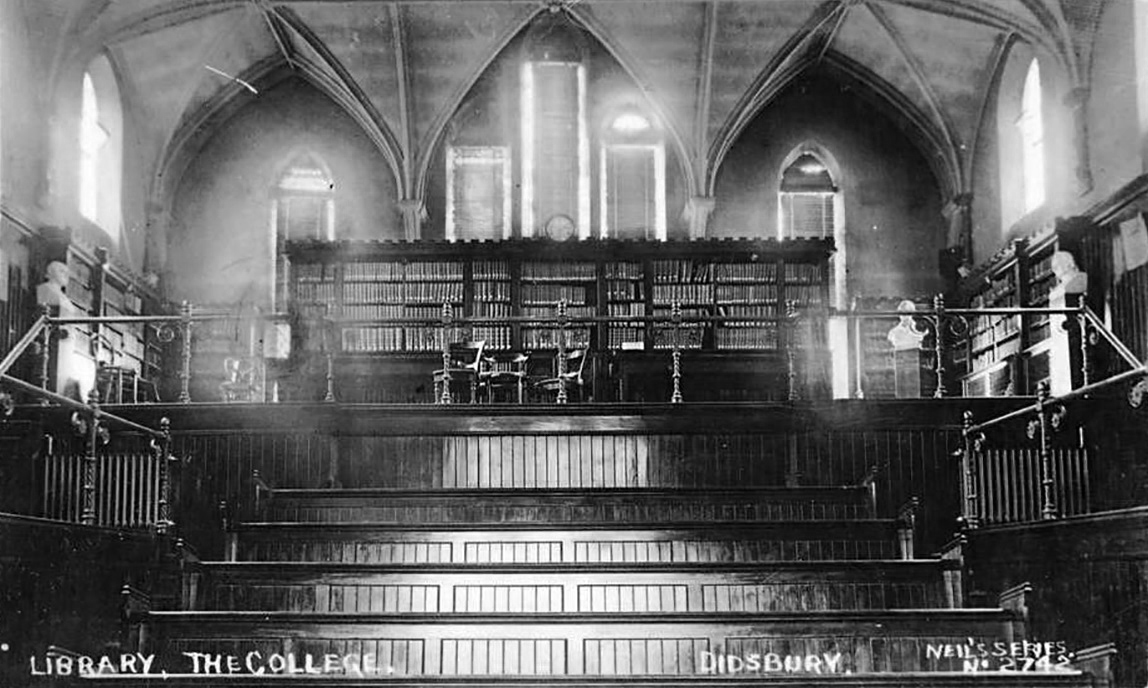
The ground floor eventually became the student union, and contained a bar and café.
During both world wars the site was used as a military hospital. In 1943 the Board of Education had begun to consider the future of education, following reforms that would inevitably come after the war ended. It was estimated that with the raising of the school leaving age, following the 1944 Education Act, about 70,000 new teachers would be needed annually, almost ten times as many as before the war.
In 1944 a report was produced by the Board of Education on the emergency recruitment and training of teachers, and it was decided that there were to be several new training colleges set up. These colleges were to be staffed by lecturers seconded from local authorities, with mature students selected from National Service conscripts. In 1945 the theological college, which was no longer required by the Wesleyans, was leased to the Manchester Education Authority. The new emergency training college was officially opened on 31 January 1946, with Alfred Body as its first principal.
By 1950, the emergency college was purchased by the City of Manchester and made permanent as Didsbury Teacher Training College, with an initial enrolment of about 250 male and female students. As a result of becoming a permanent college, Didsbury became part of Manchester University’s School of Education.
Over the next two decades, numerous buildings were constructed on the site; Behrens, Birley and Simon were all named after prominent local families with ties to the college.
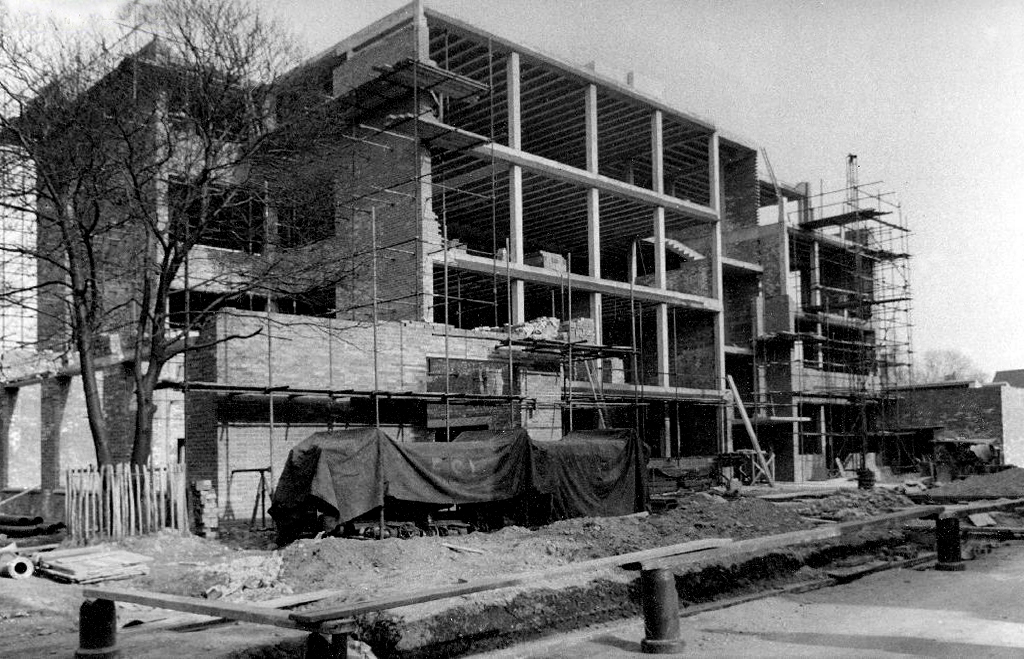
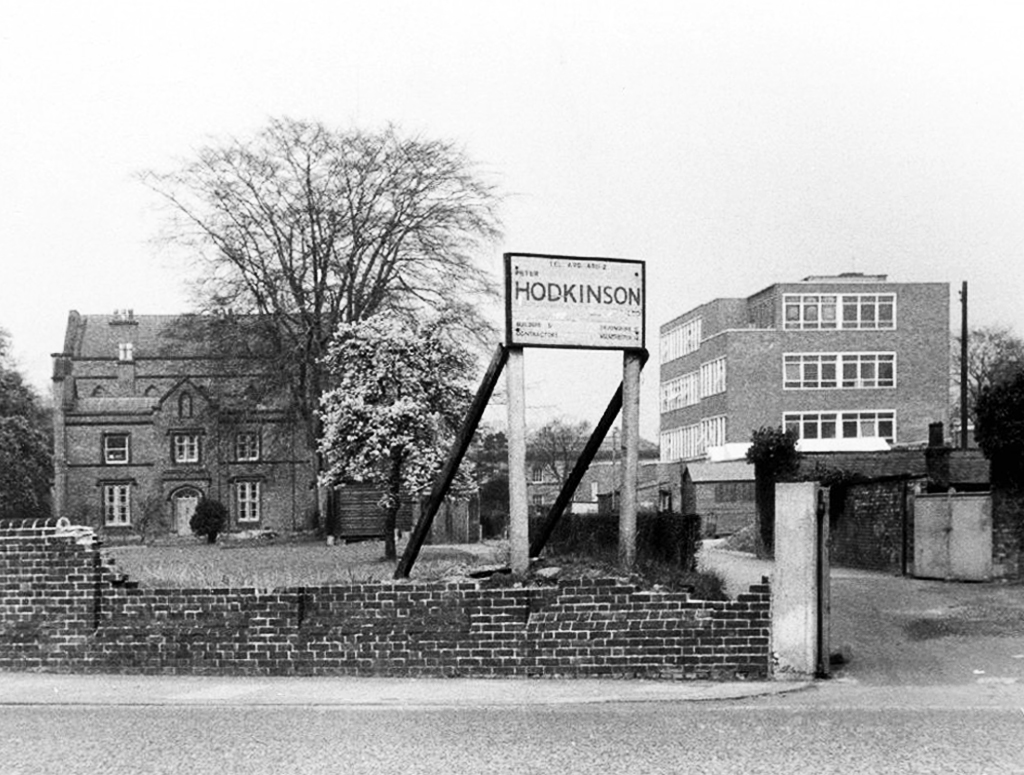
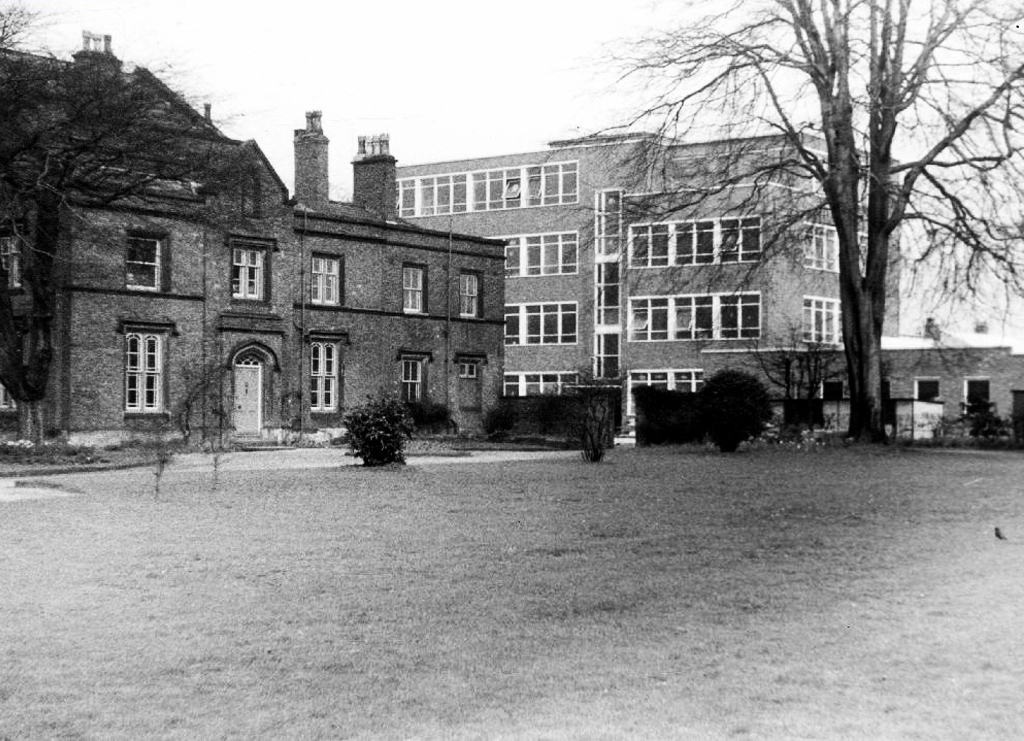
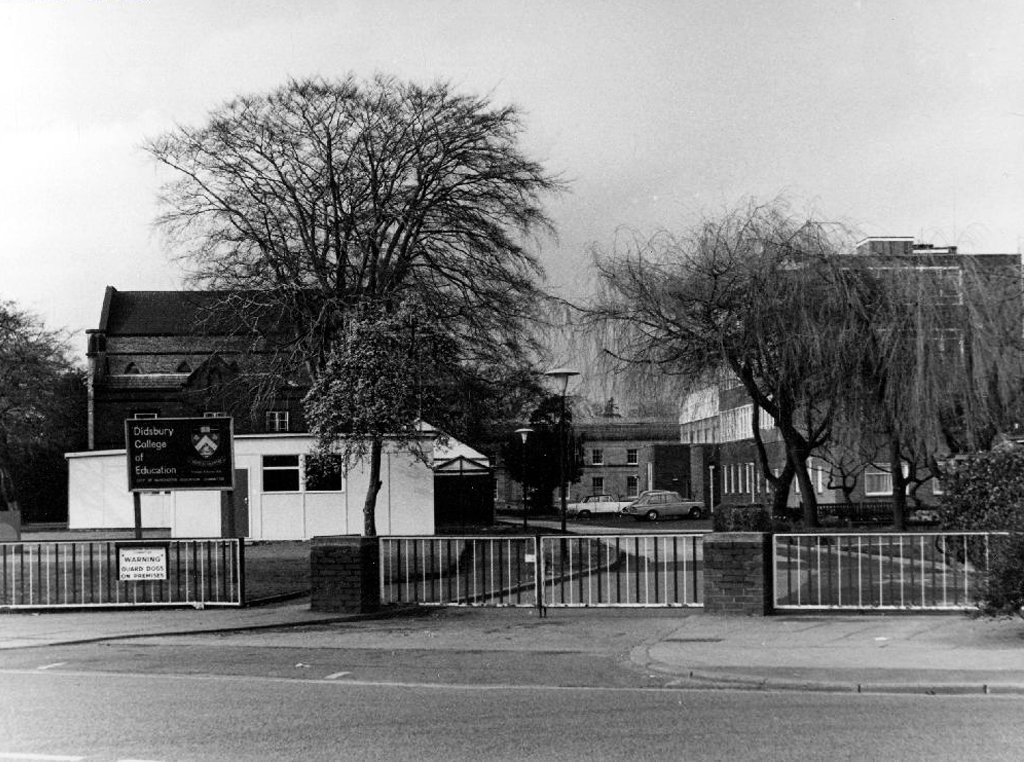
Didsbury became part of Manchester Polytechnic in 1977, renamed Didsbury School of Education.
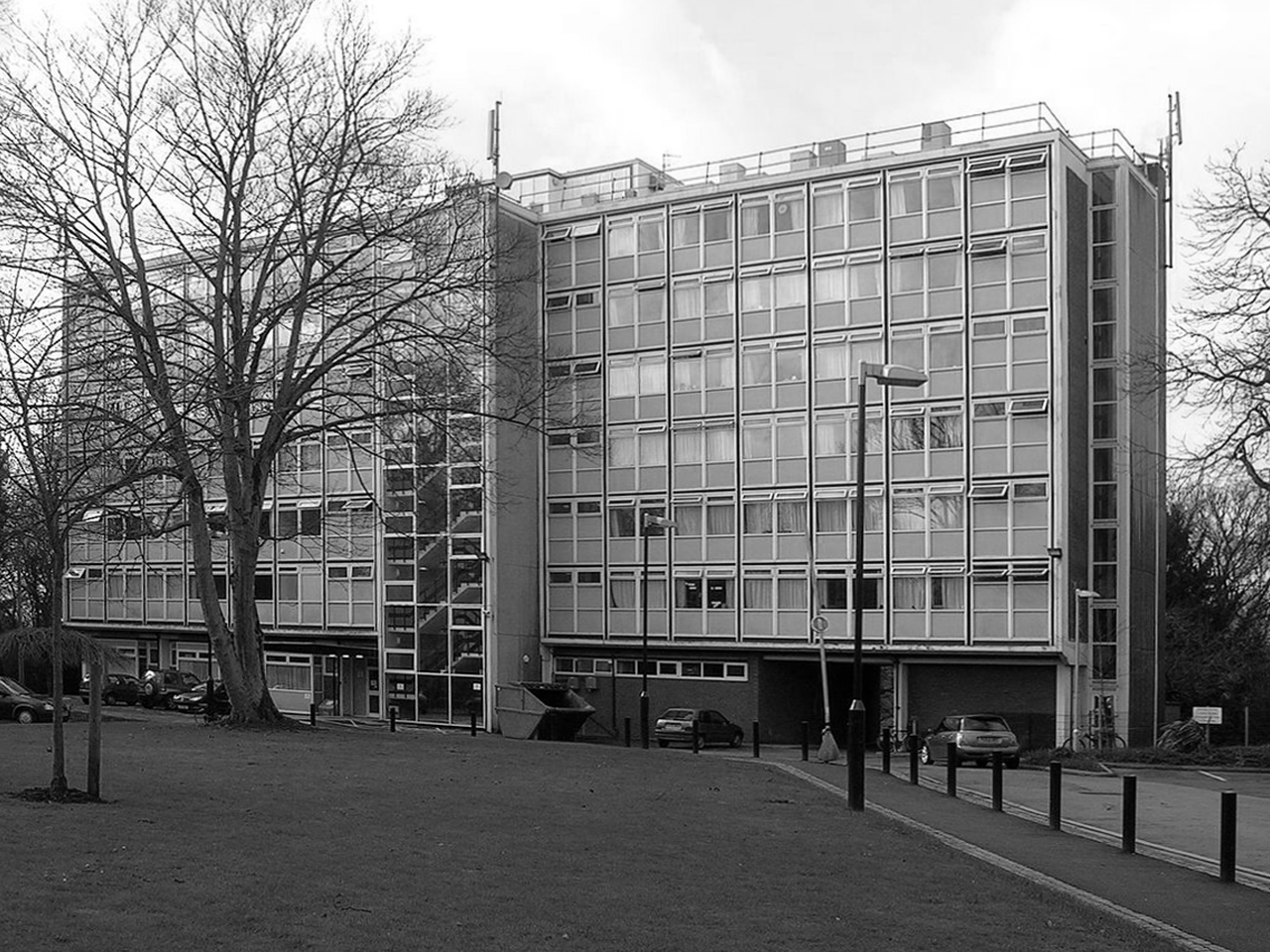
The adjacent Broomhurst halls of residence have since been demolished.
Both Sandhurst House and the Old Chapel are Grade II listed – the architect was probably Richard Lane.
As of 2018 the site is being redeveloped by local architects PJ Livesey, as a residential area of 93 homes, with the listed buildings being retained.
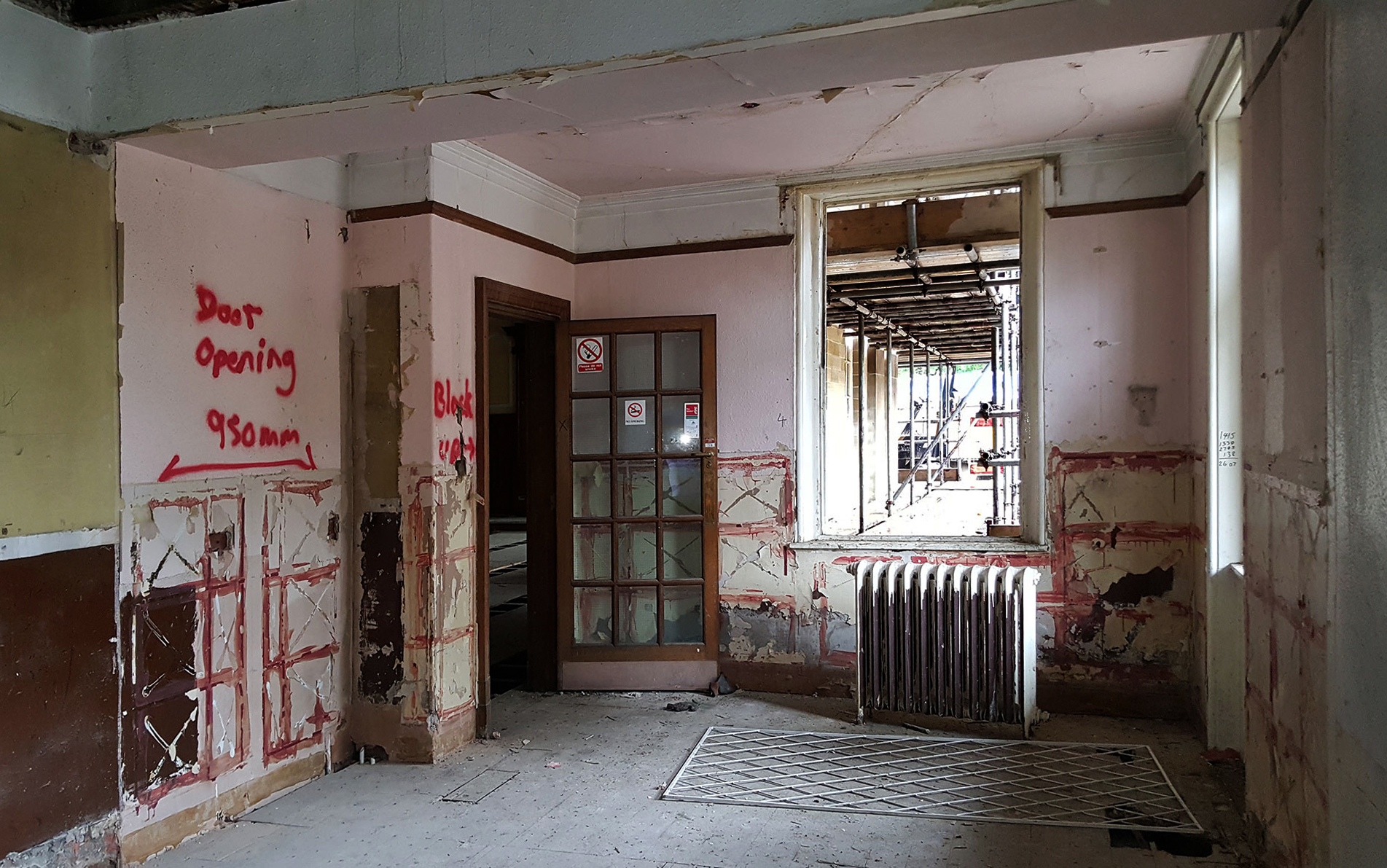
Here’s a record of my visit, to the soon to be demolished site, in April 2015.
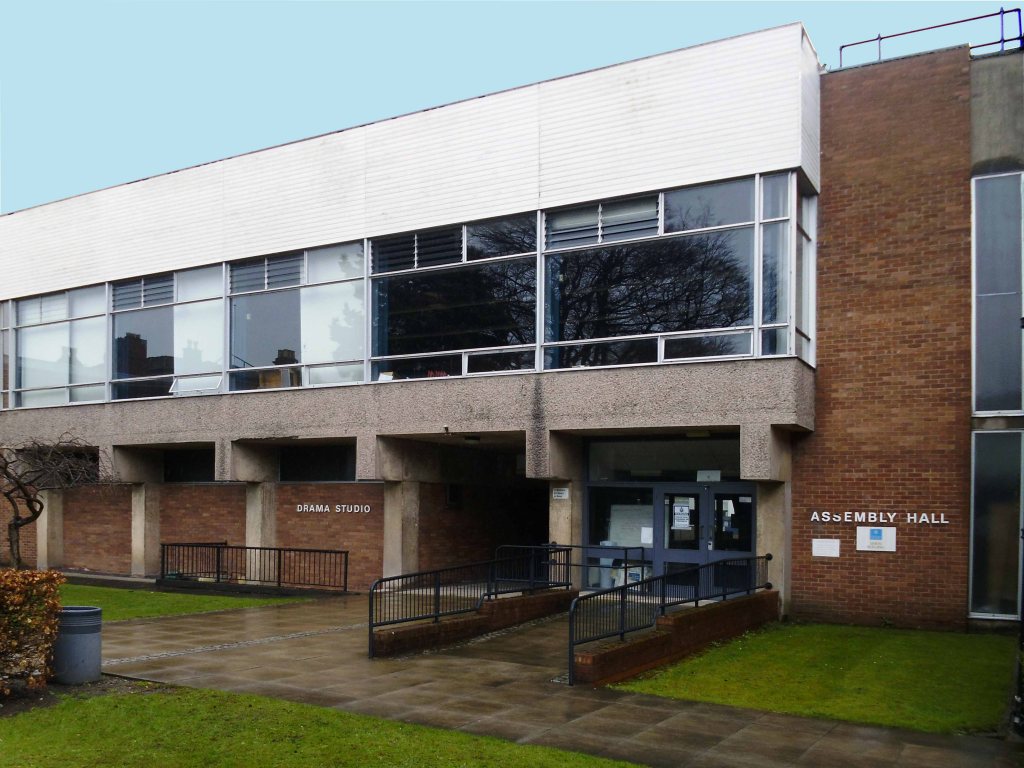
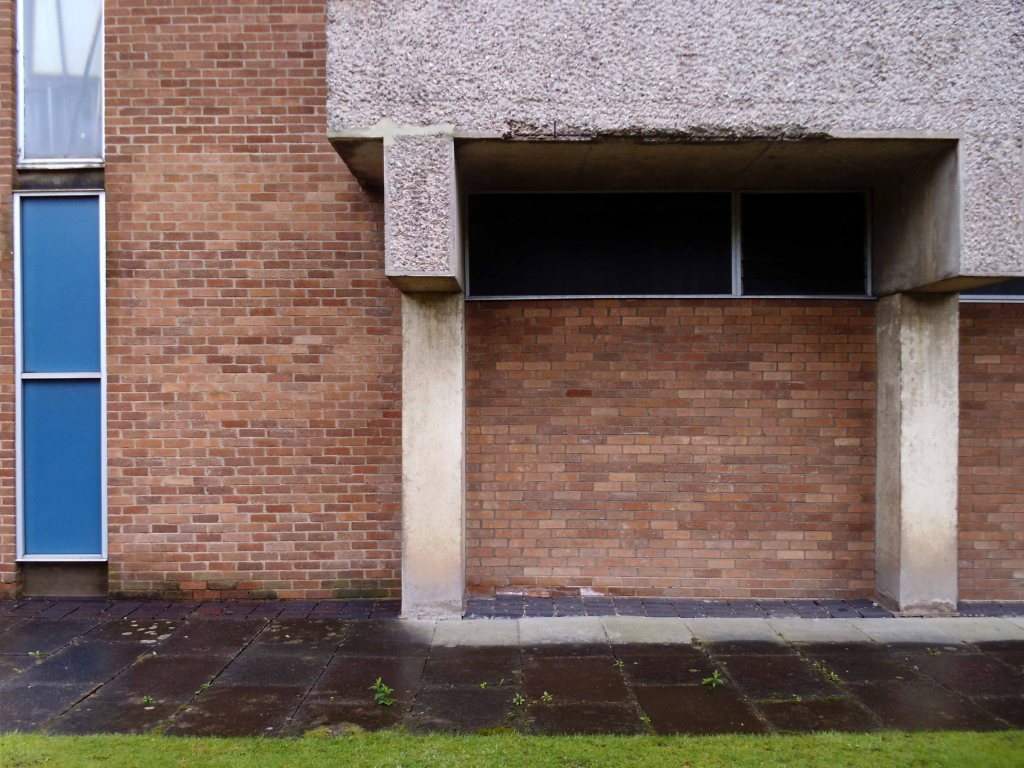
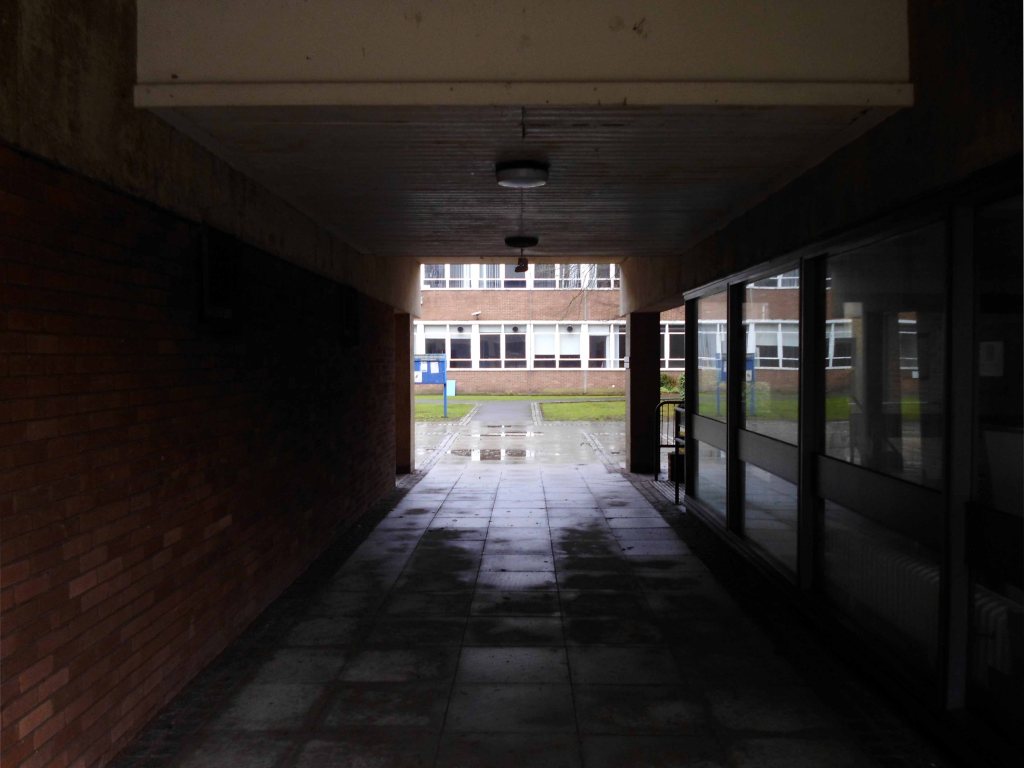
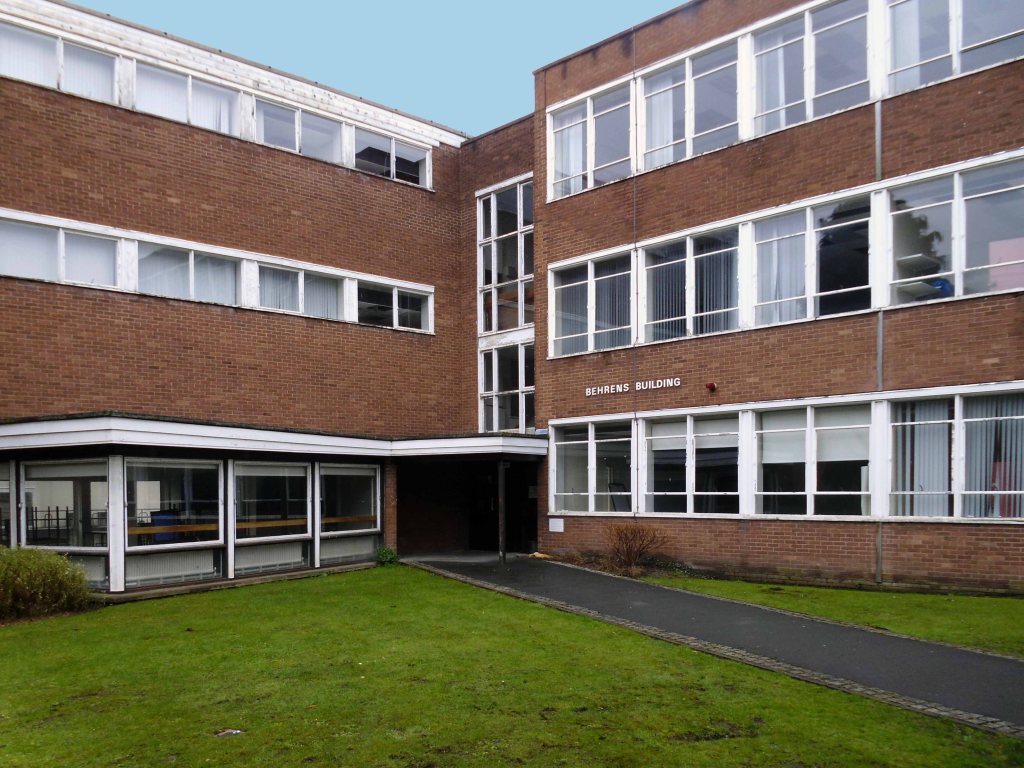
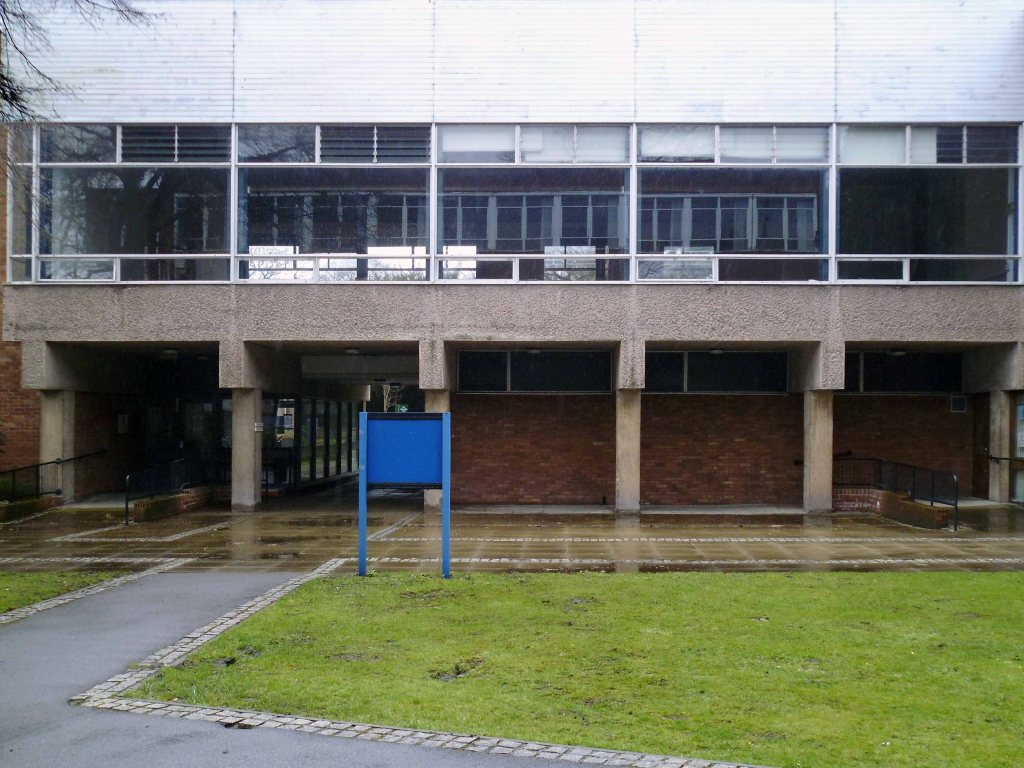
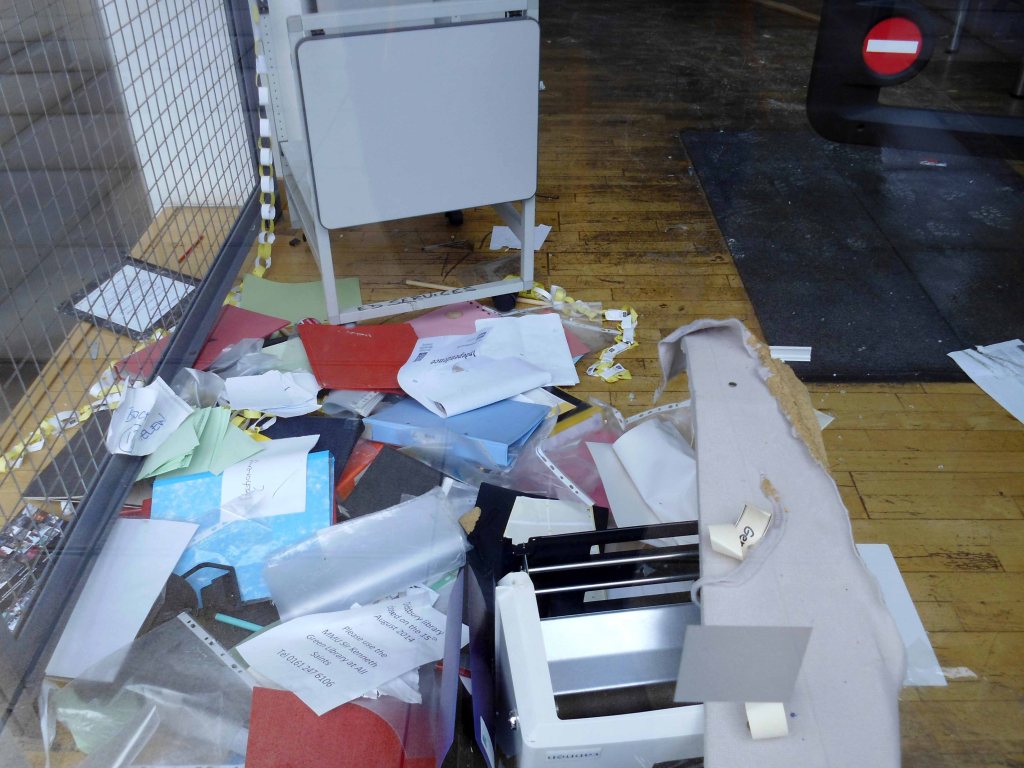
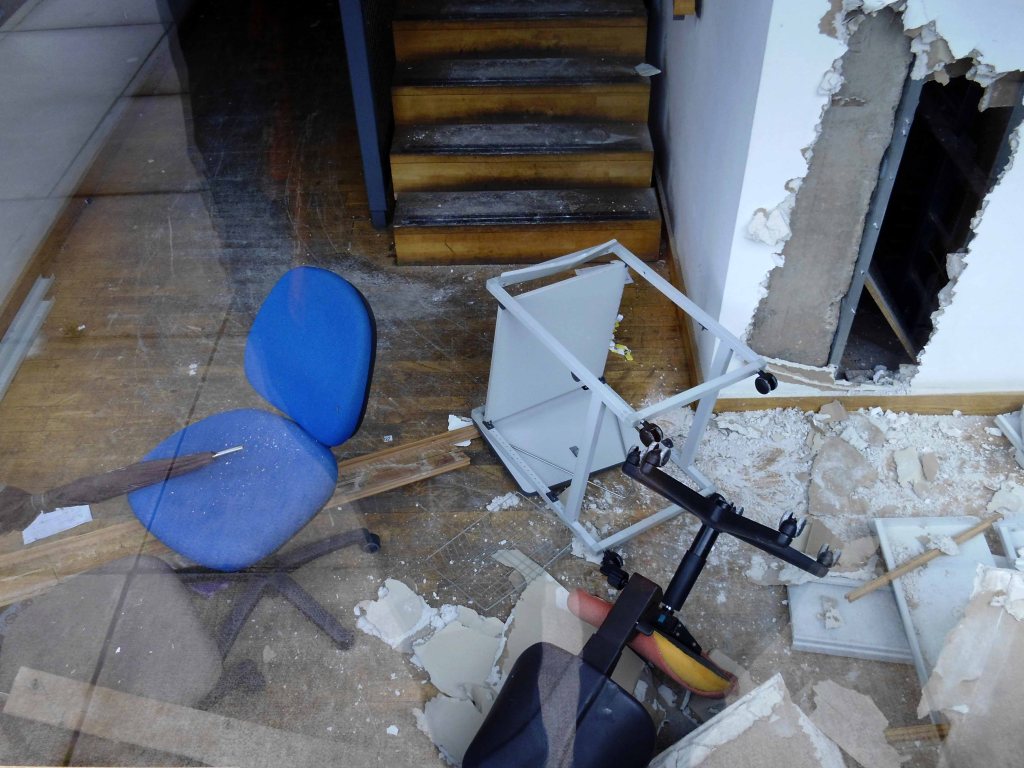
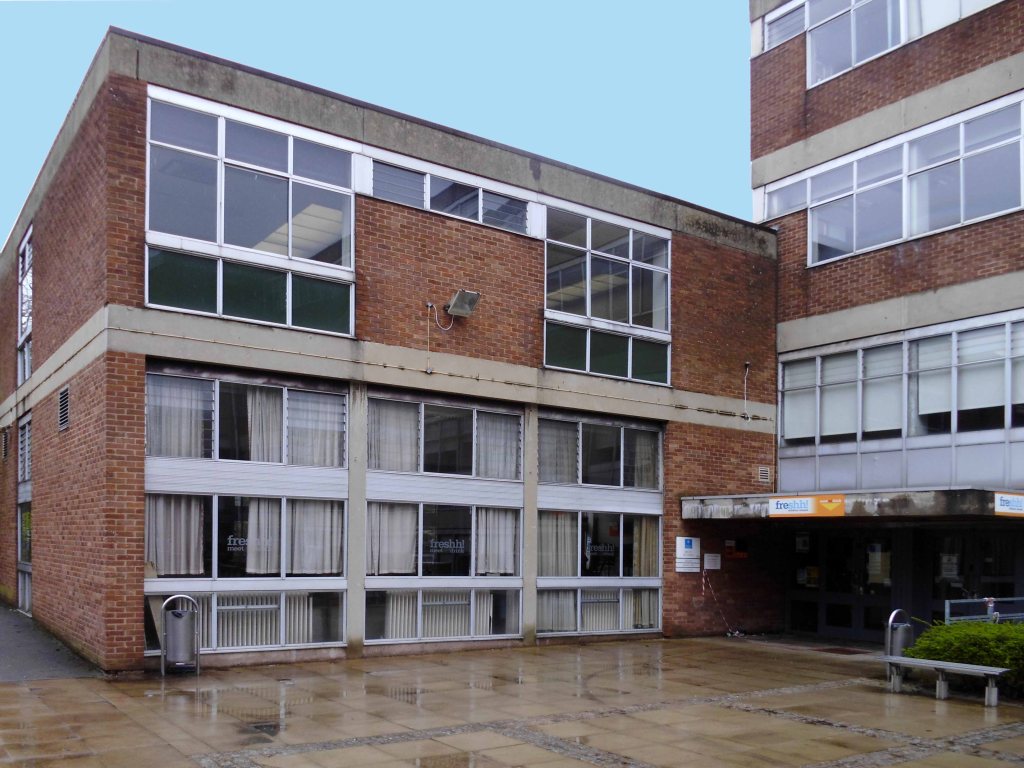
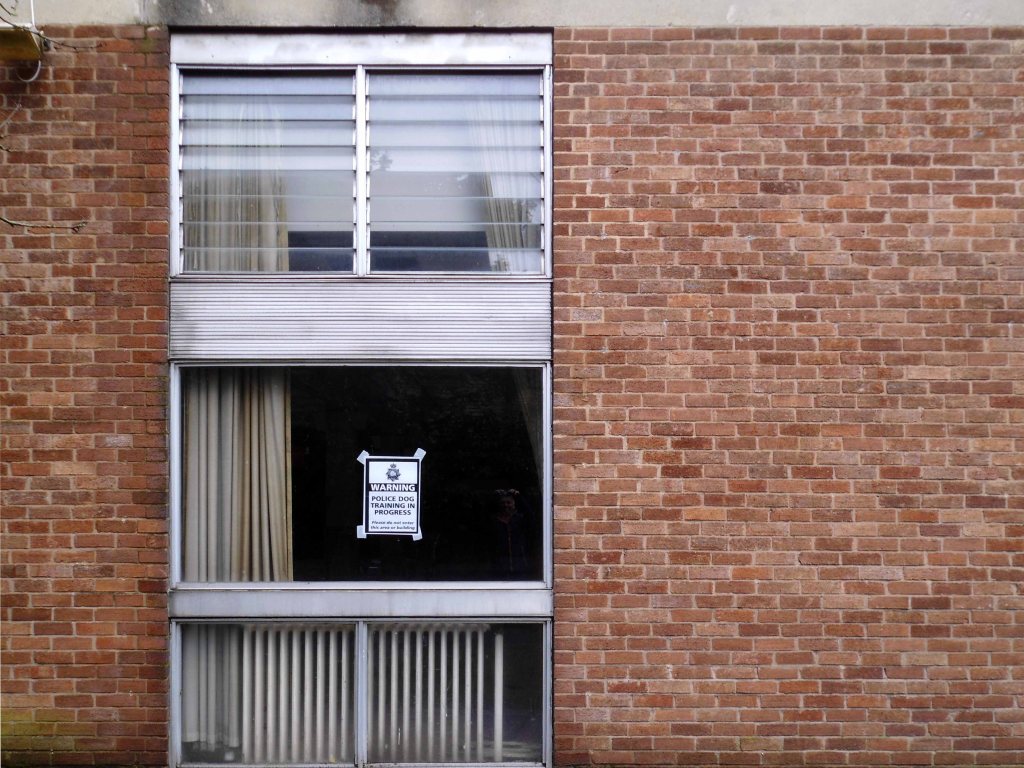
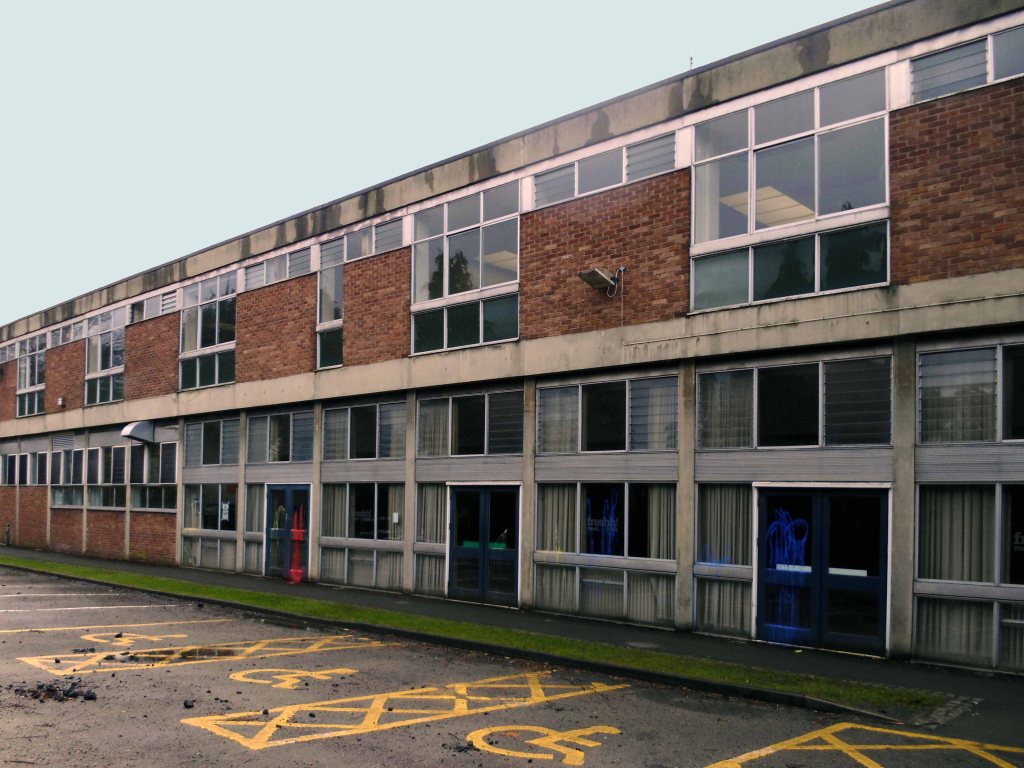
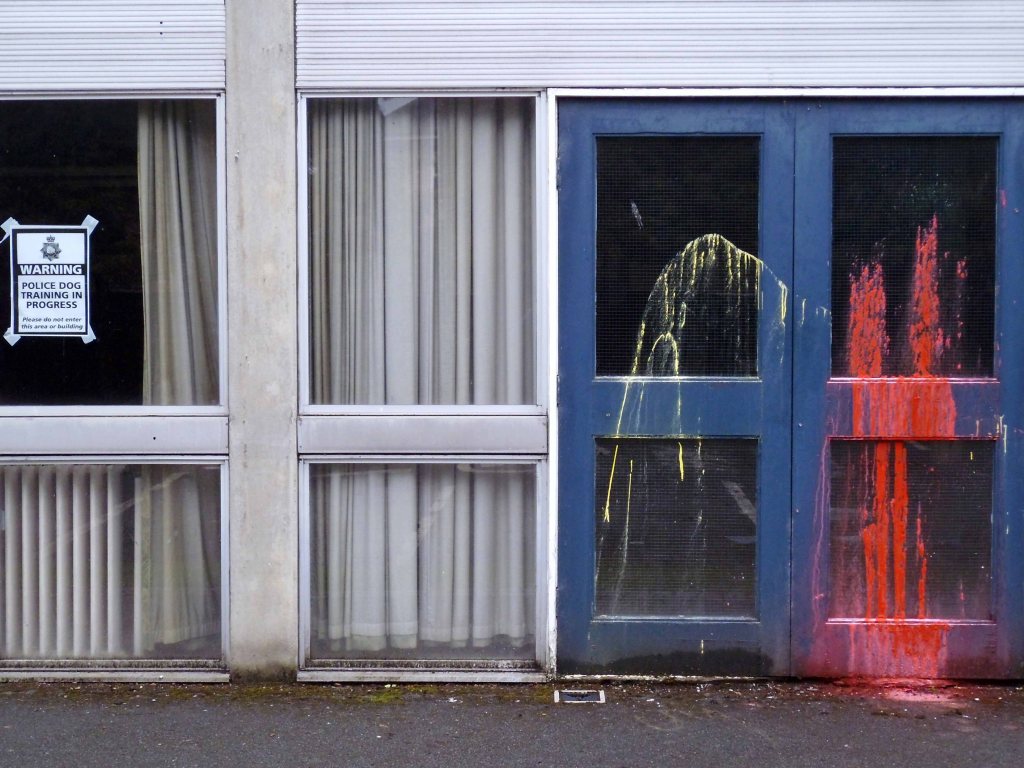
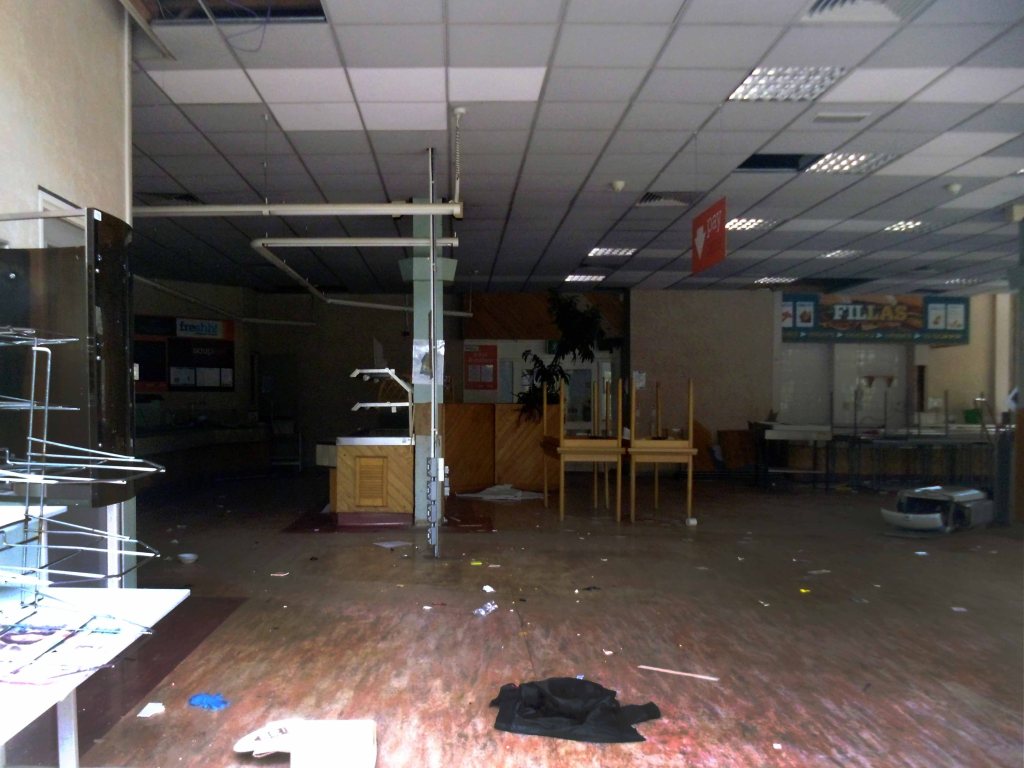
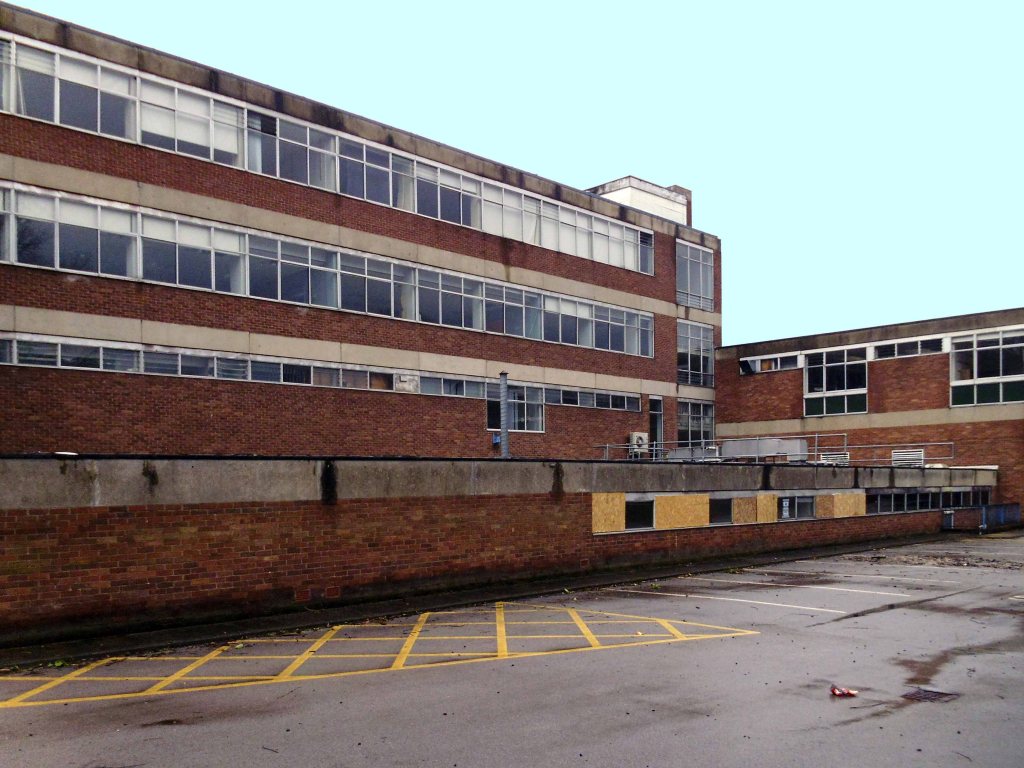
Archive photographs Local Image Collection.
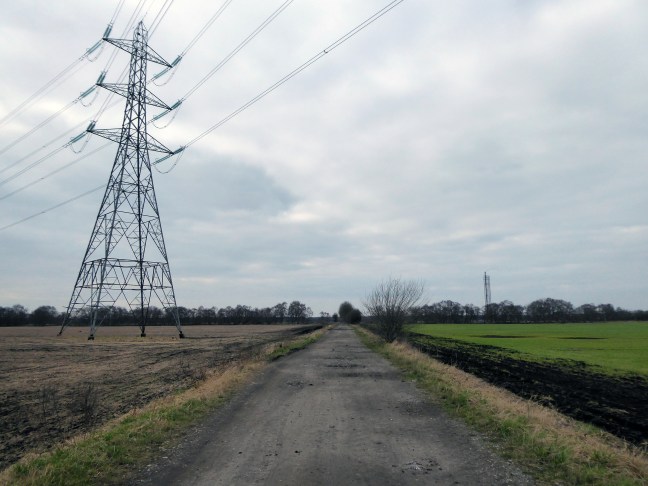
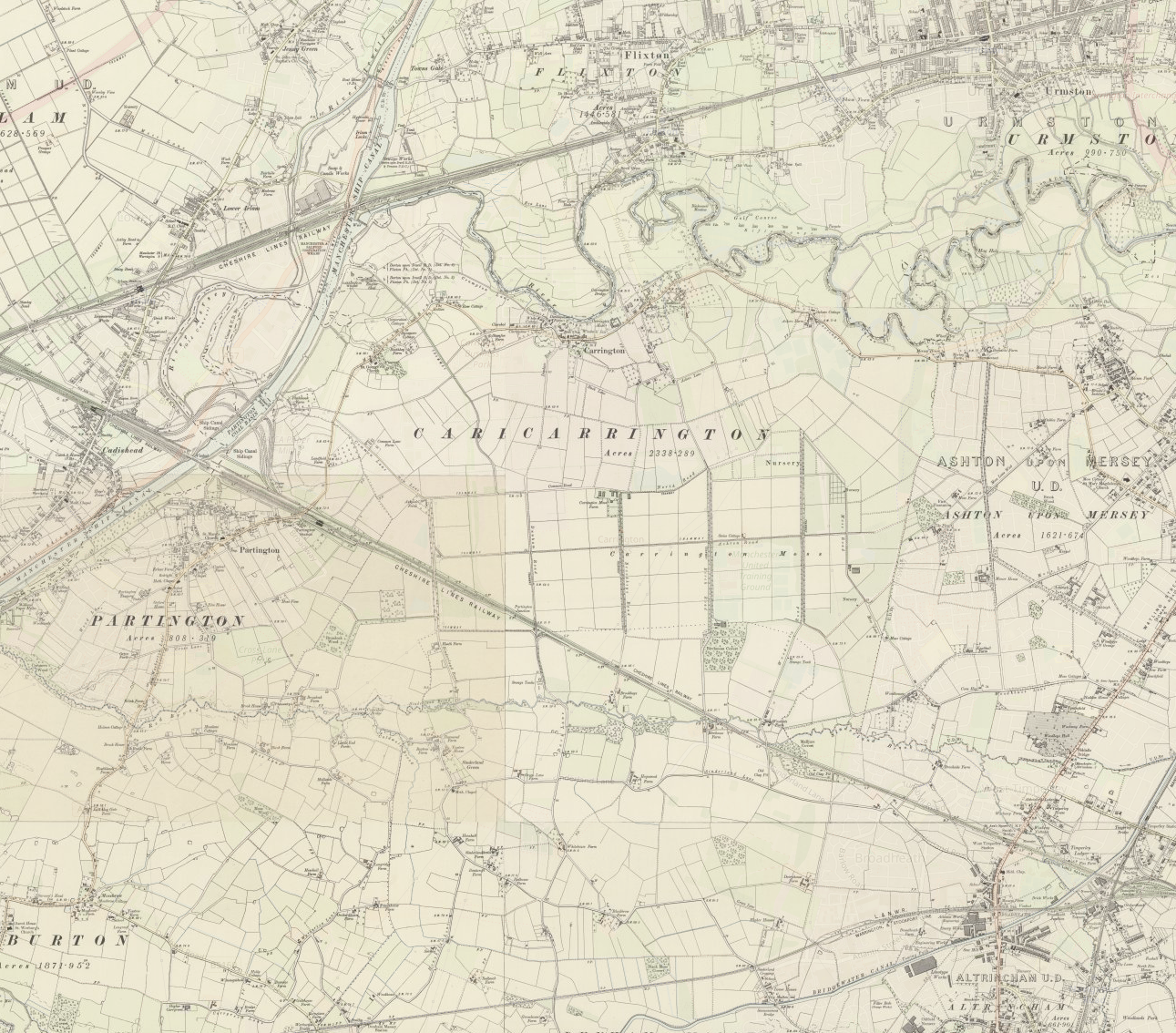
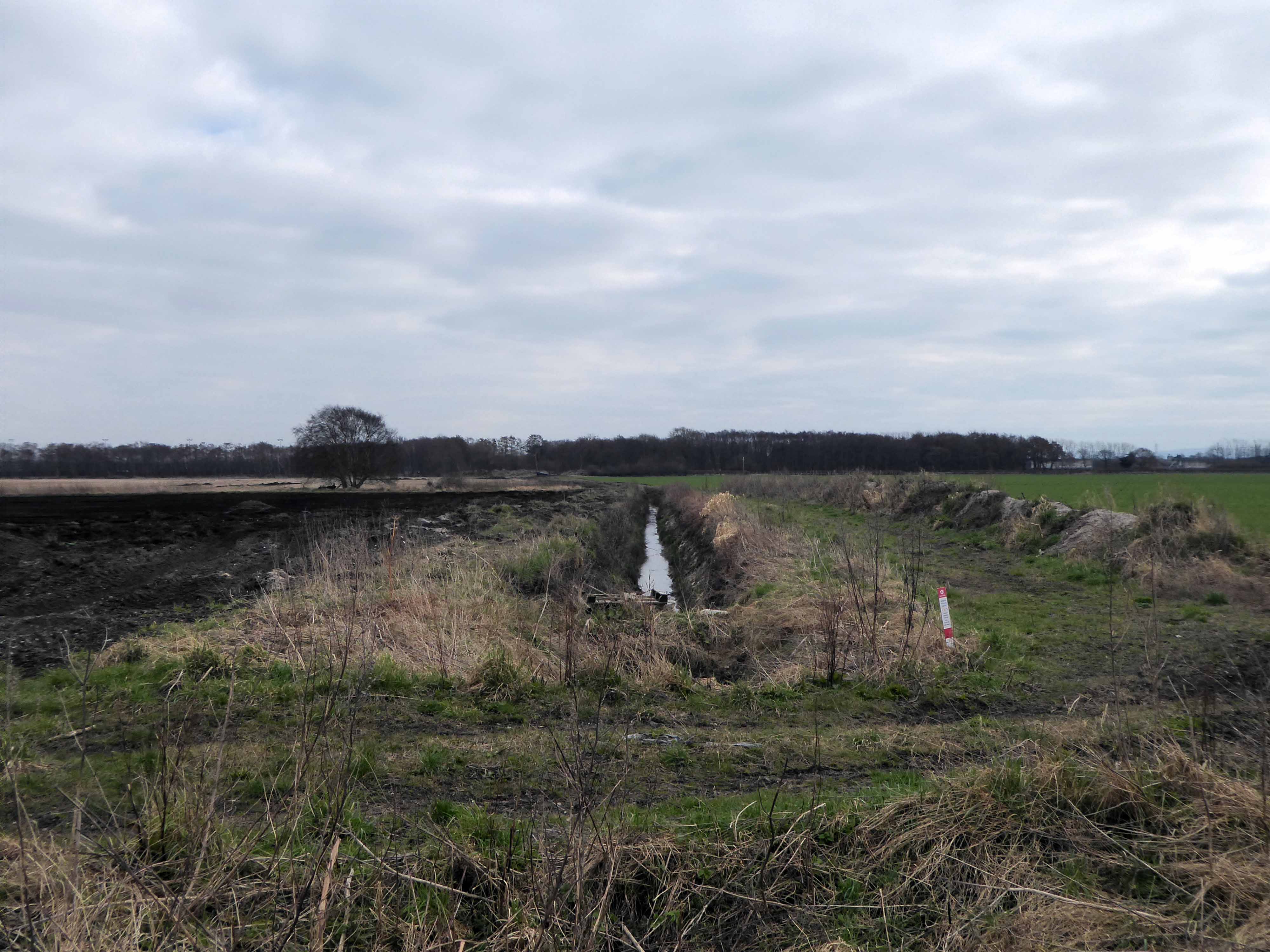
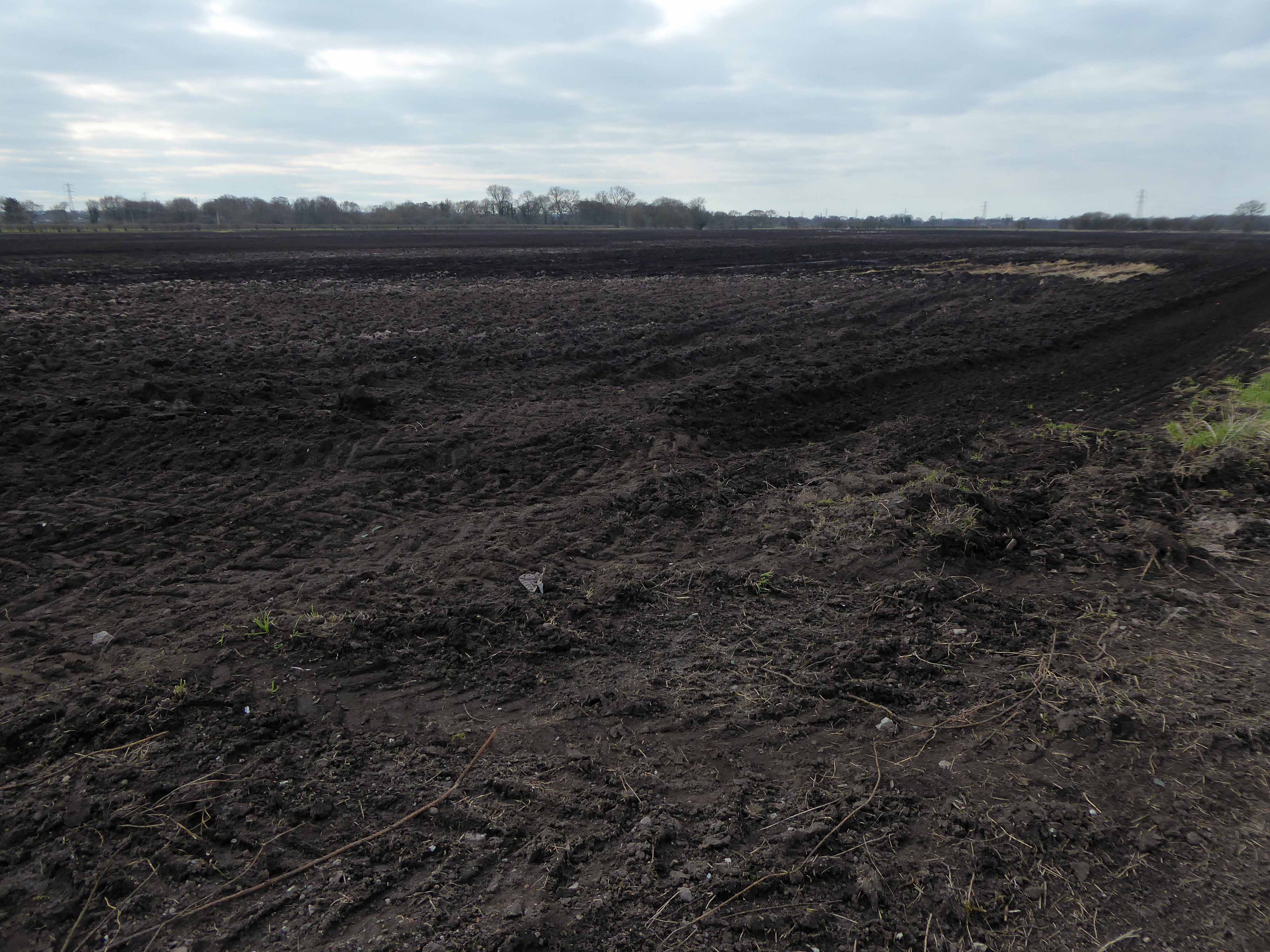
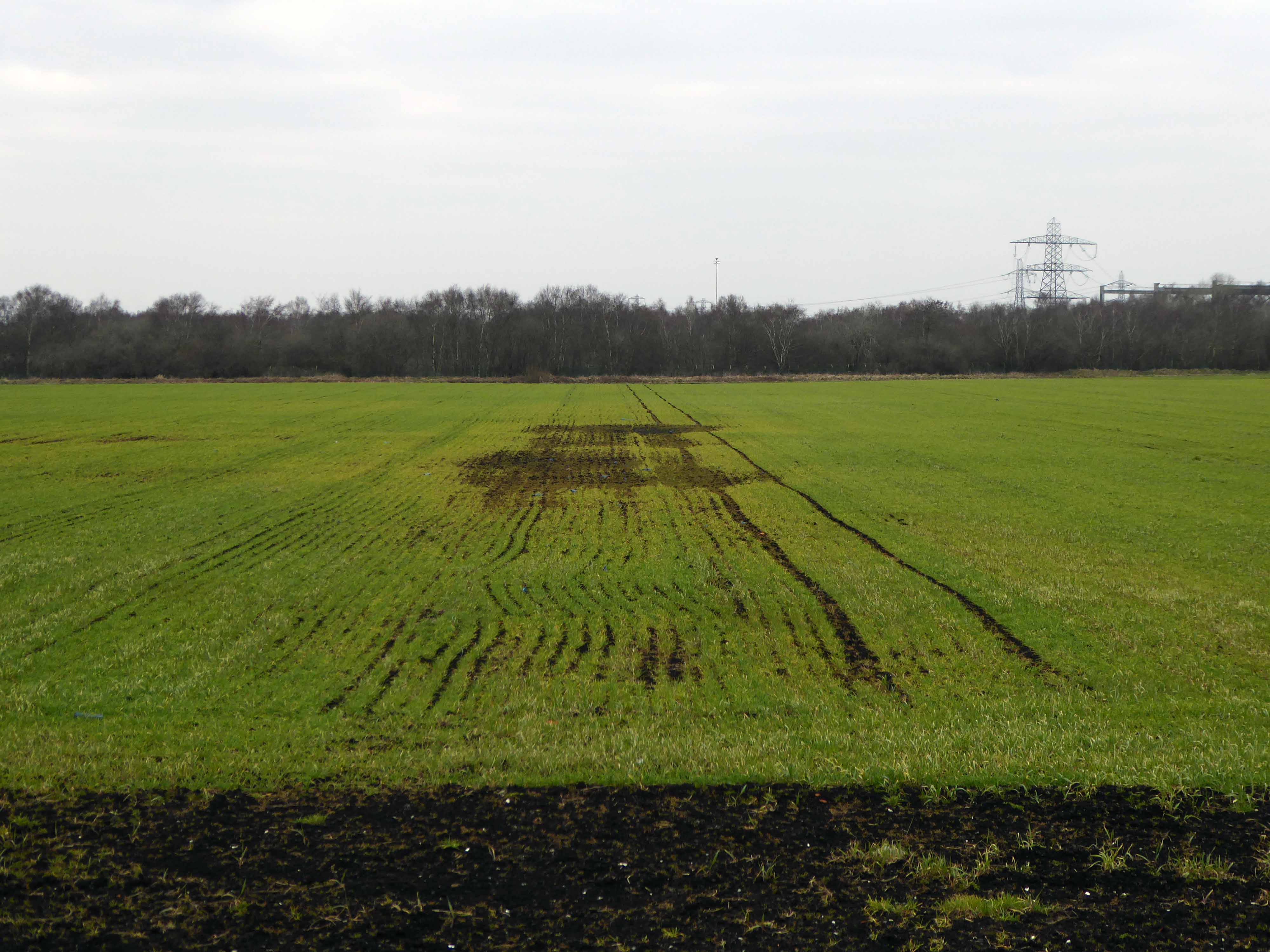
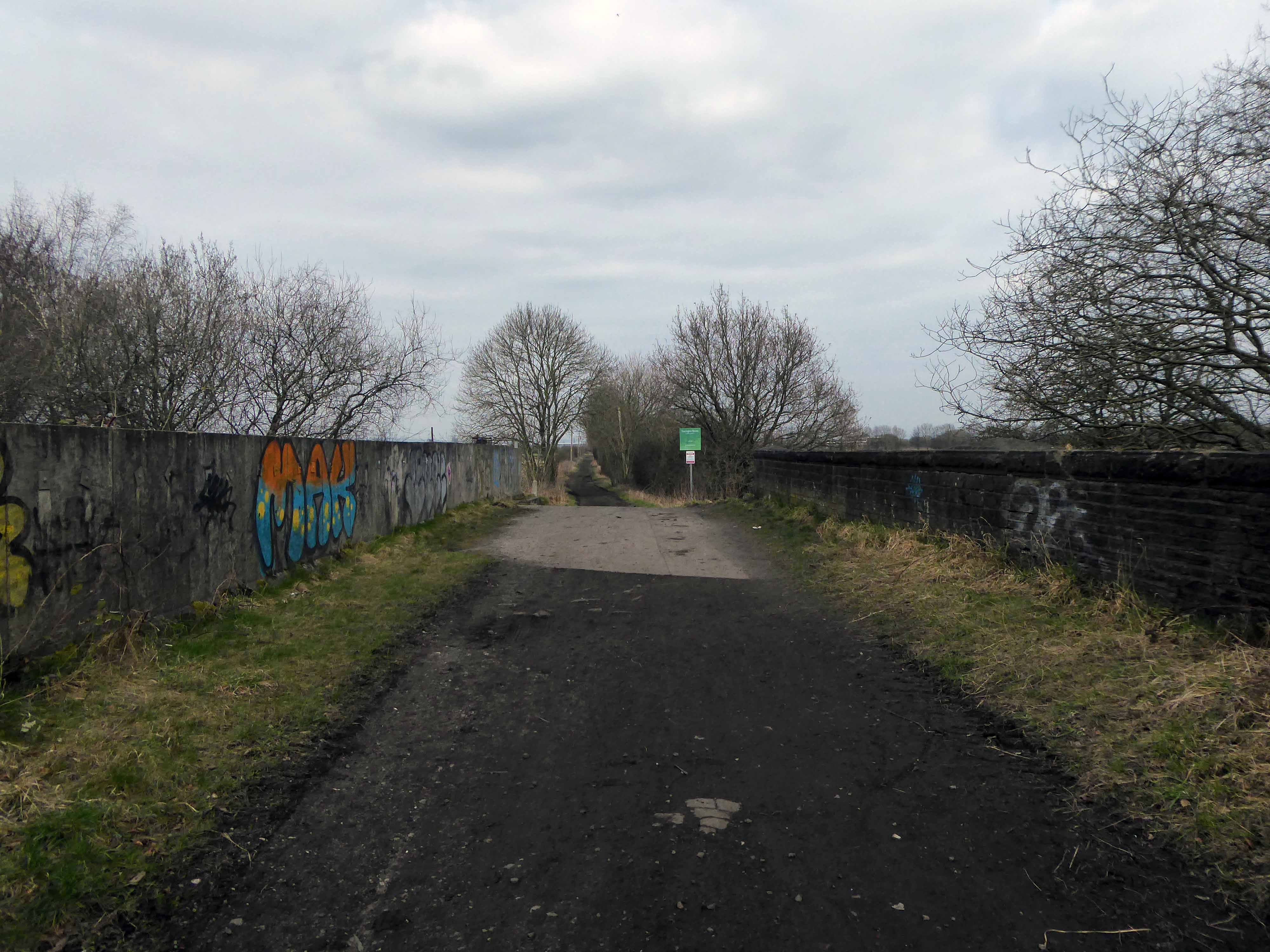
Flat as can be, between rail and river, flat.
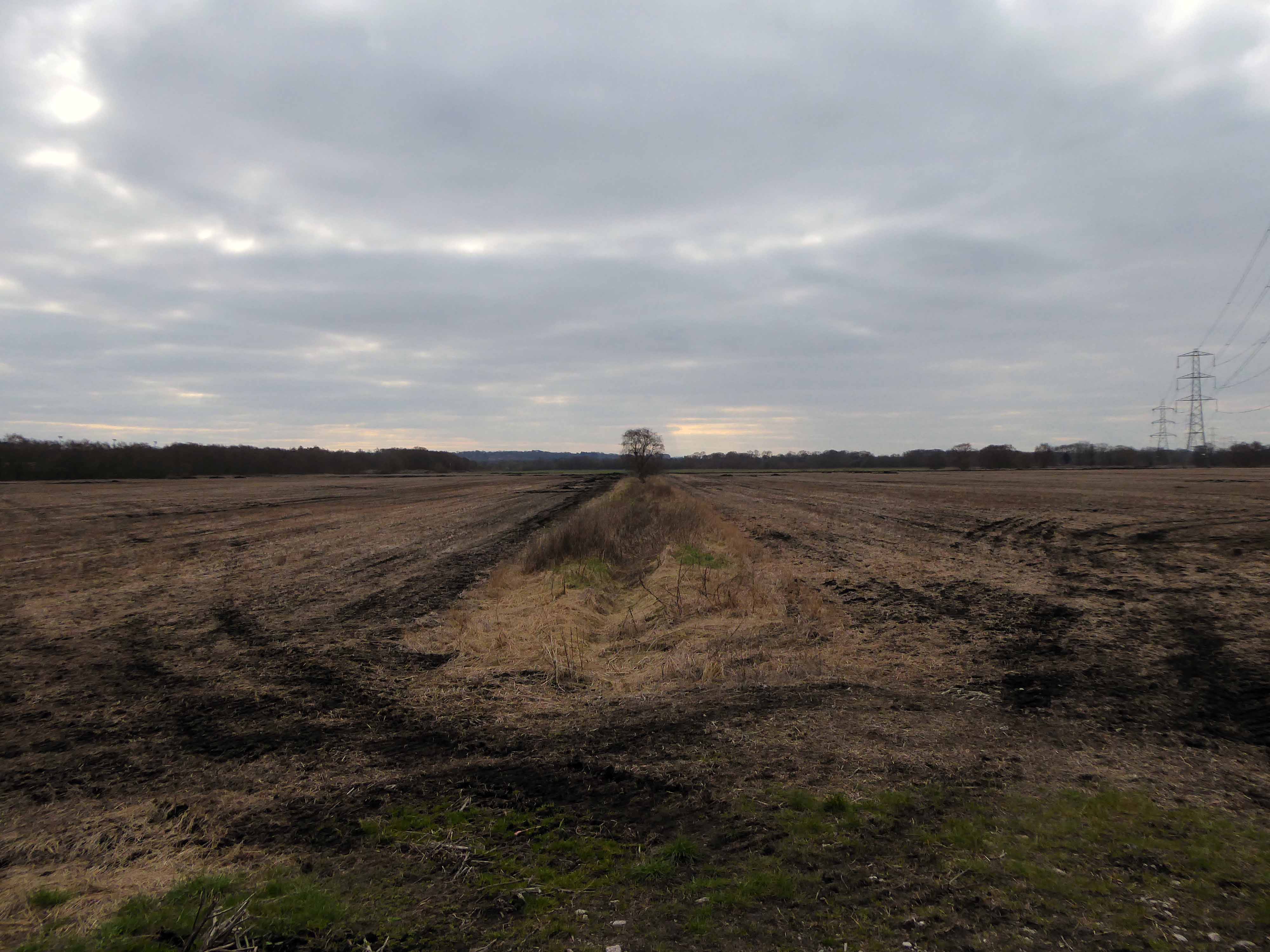
Crisscrossed by tramways and drainage ditches.
Carrington Moss is a large area of peat bog near Carrington in Greater Manchester, England. It lies south of the River Mersey, approximately ten miles south-west of Manchester, and occupies an area of about 1,100 acres..Originally an unused area of grouse moorland, the moss was reclaimed in the latter half of the 19th century for farming and the disposal of Manchester’s waste. A system of tramways was built to connect it with the Manchester Ship Canal and a nearby railway line. During the Second World War the land was used as a Starfish site and in the latter half of the 20th century, a large industrial complex was built along its northern edge. More recently, several sporting facilities have been built on Carrington Moss. Today, the land is still used for farming and several nature reserves have been established within its bounds.
Parts of Carrington Moss are accessible to the public over several rights of way.
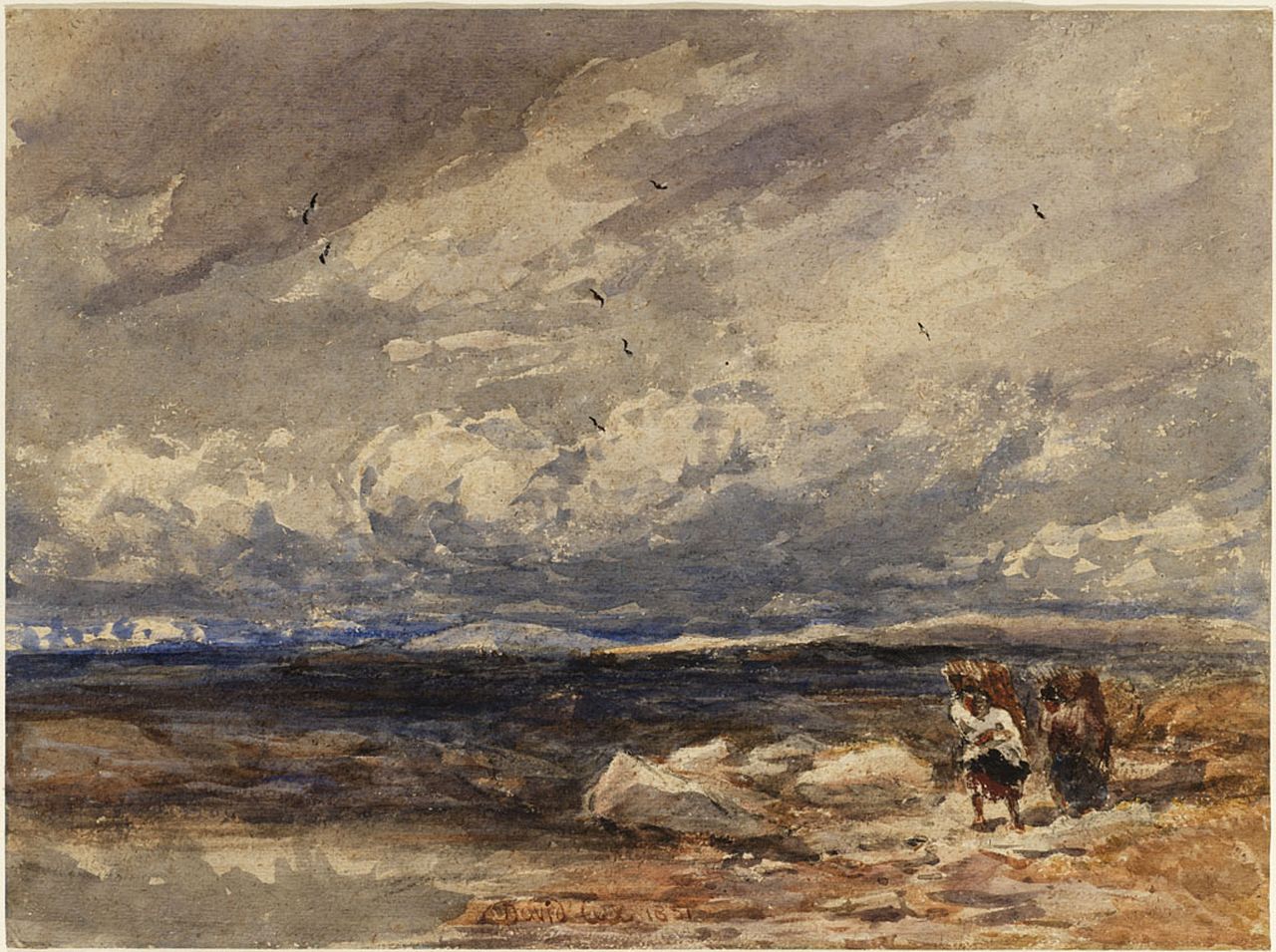
On Carrington Moss 1851 David Cox

Industrialisation of the moss took place from 1947–1952 when Petro-Carbon ltd began to build what would later become known as the Shell Site. The estate was leased on 1 October 1968 to Shell Chemicals, who in 1957 had purchased a propylene oxide plant along the moss’s northern edge. Shell had built an ethylene oxide plant in 1958 and began to produce polyether polyols the following year. Council housing was built nearby, at Carrington and Partington, for workers and their families. By 1985 the Shell plant had a turnover of about £200M and employed 1,150 people, but a major restructuring of the business reduced the workforce to less than 500 by 1986. By 1994, four distinct plants operated on the 3,500-acre (14 km2) site, producing a range of chemicals, and materials including polystyrene, polyethylene and polypropylene. In 2005 it was reported that Shell would close their polyols and ethoxylates units, a decision which came into effect in 2007. The estate is currently managed by chartered surveyors Bell Ingram. Lyondell Basell operate the last remaining chemical plant on site.
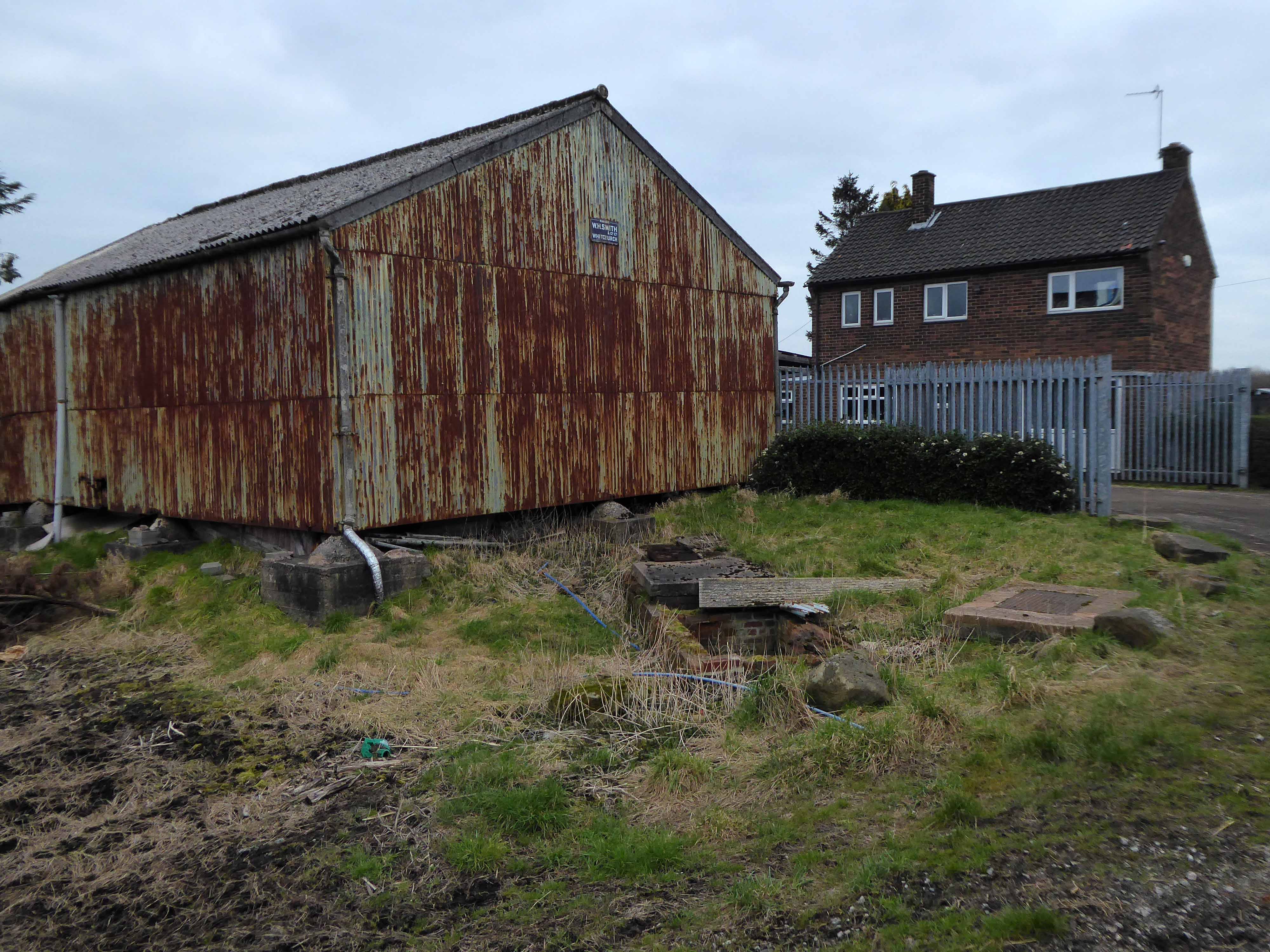
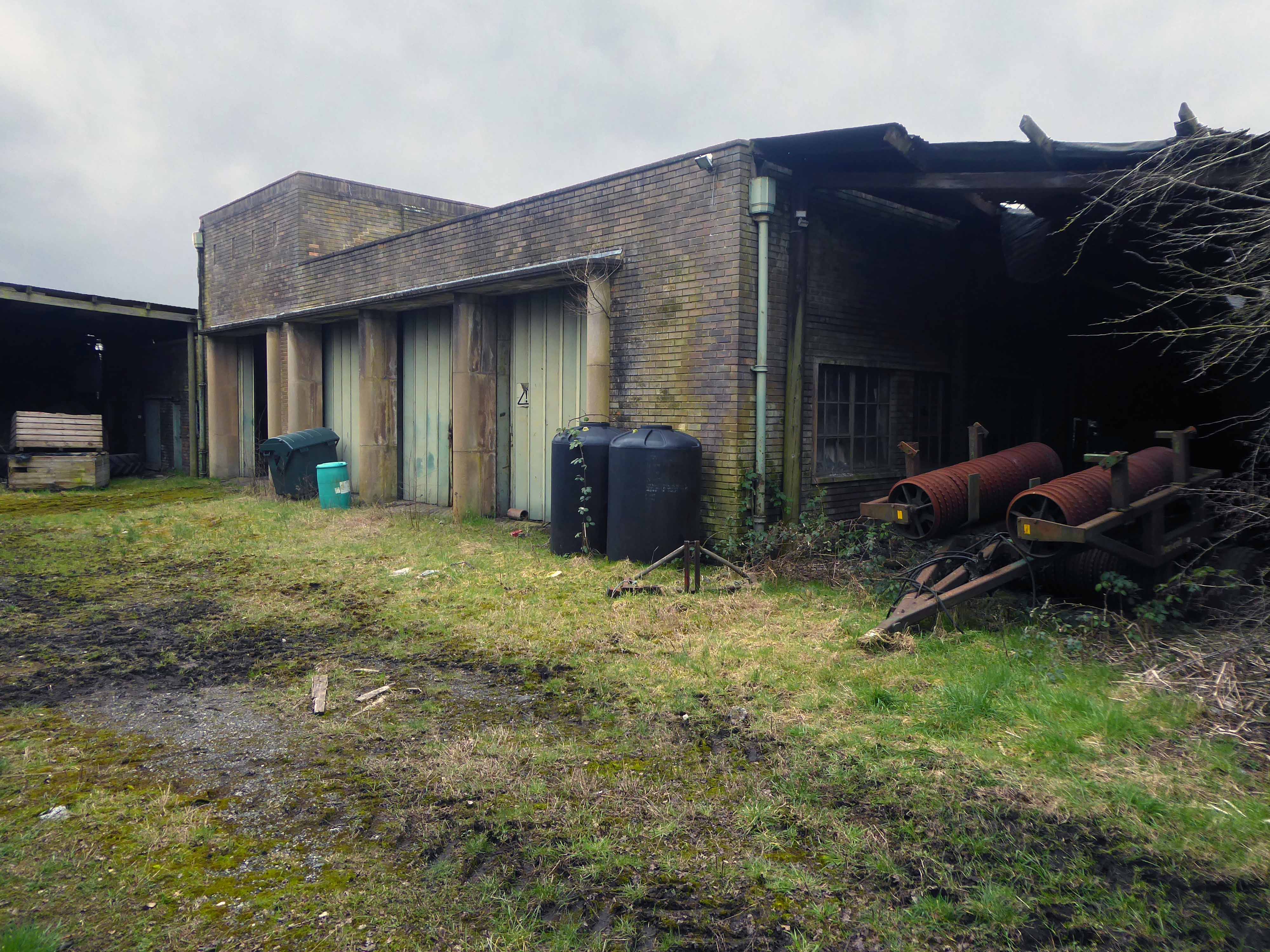
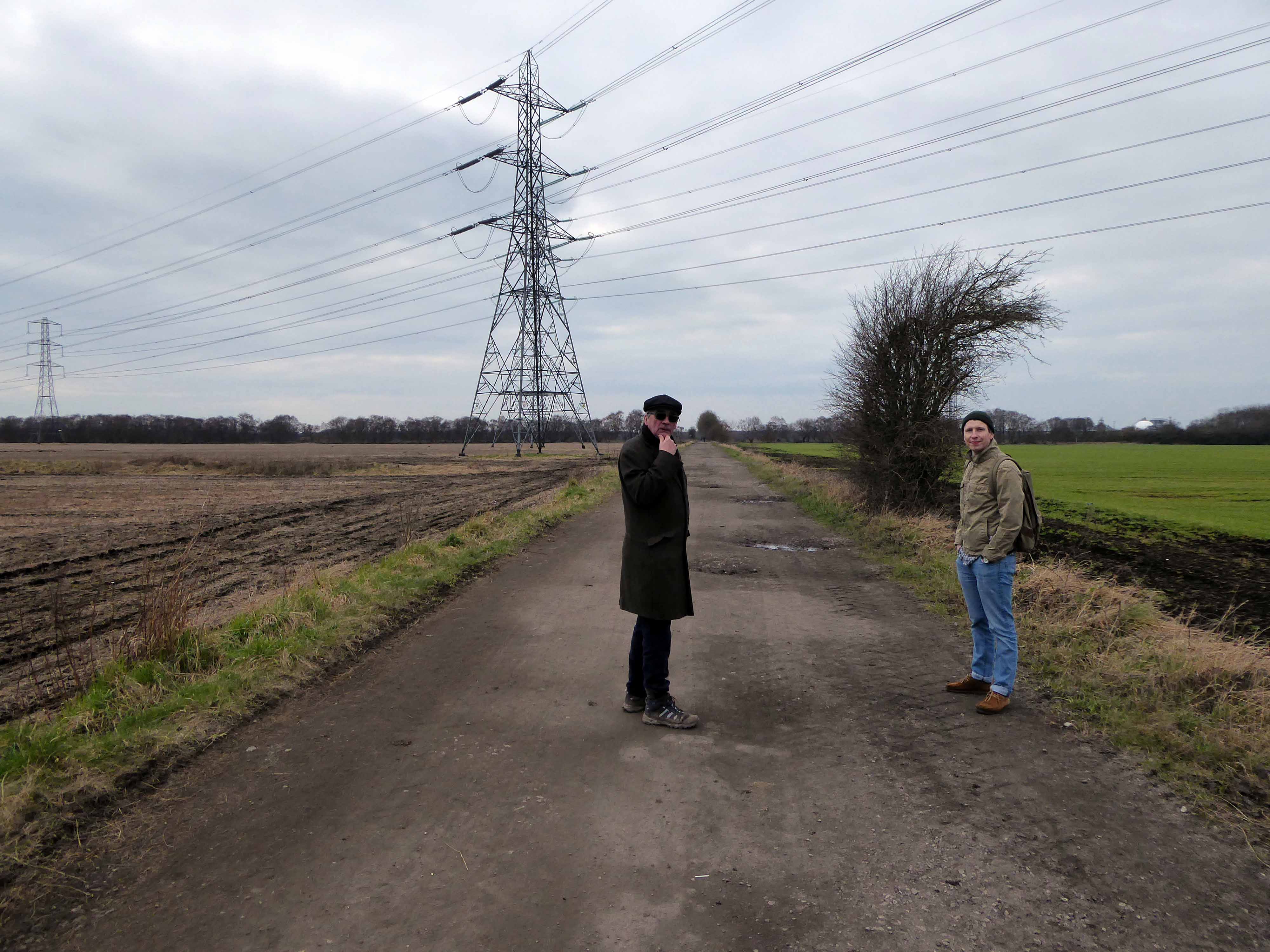
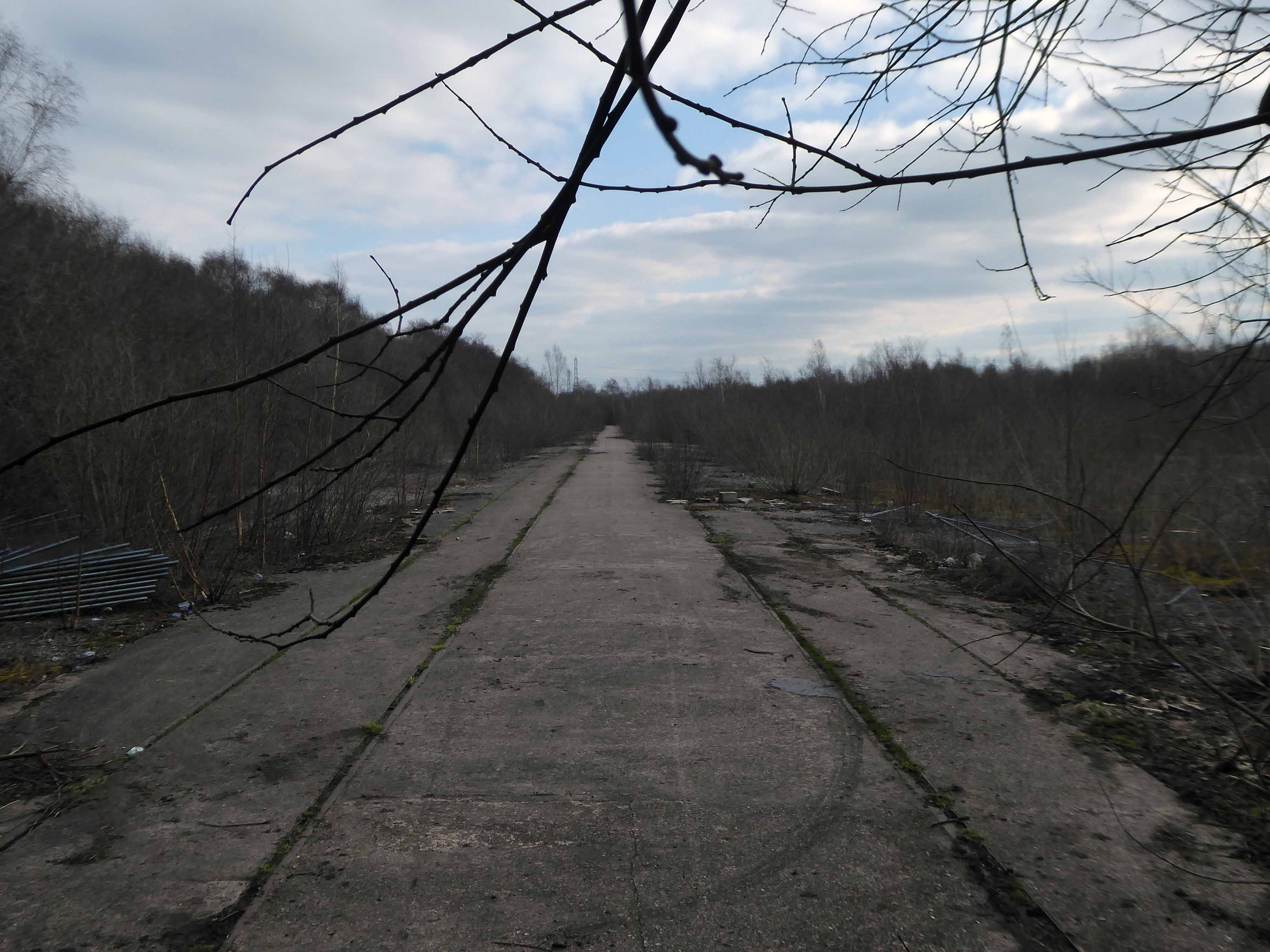
This is the beleaguered site, still farming, remnants of rail, traces of tipping and vestiges of industry.
Plans are afoot – including of course indicative multi-modal routes.
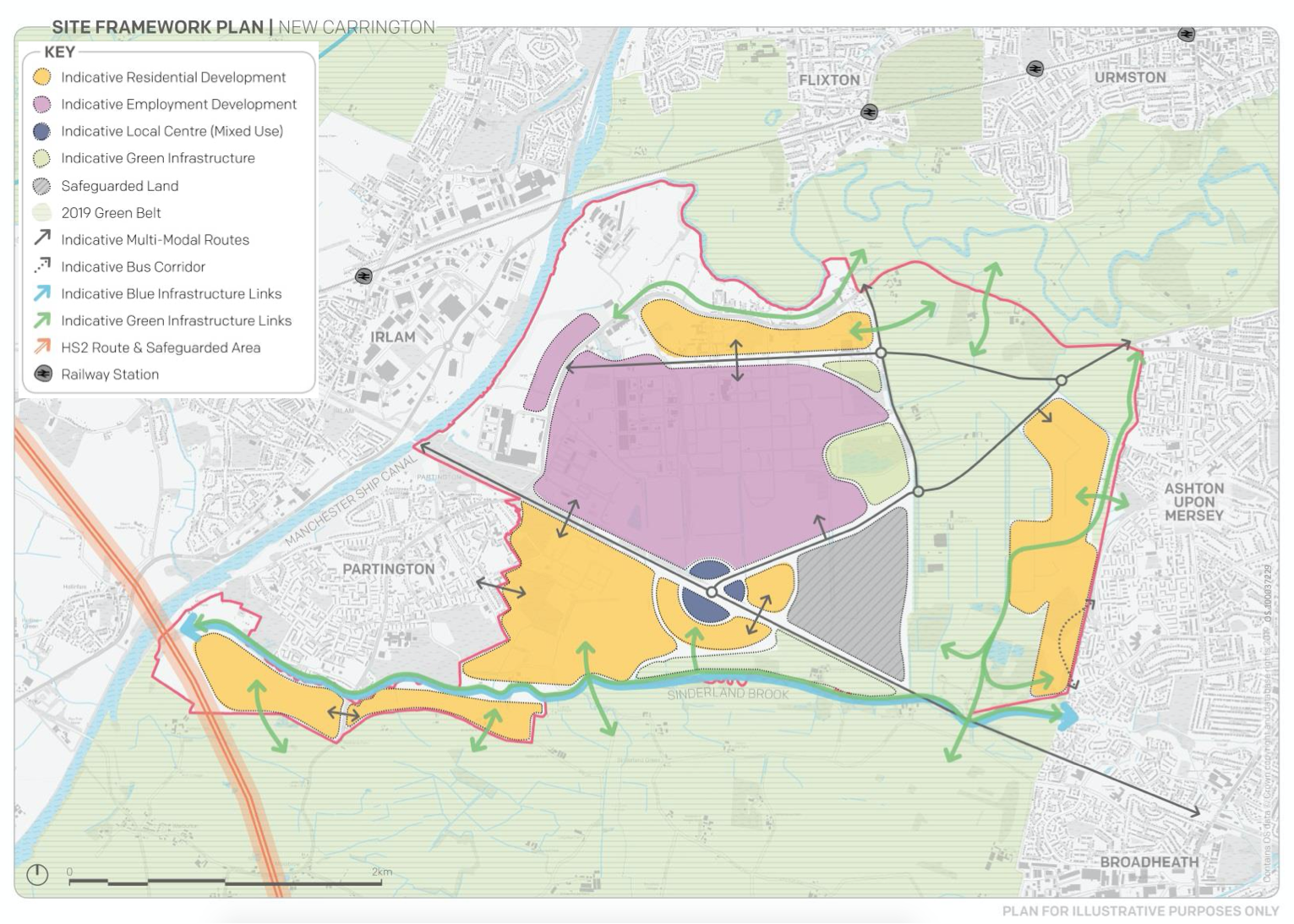
Hundreds of campaigners fear endangered wildlife at Carrington Moss will be ‘decimated’ if plans to build a new town on green belt land go ahead.
They also argue the development would be ‘catastrophic’ in terms of how it would impact the environment.
Storm Christoph showed that Manchester is susceptible to the adverse effects of extreme weather events, which are forecast to become more regular occurrences.
Greater Manchester Labour for a Green New Deal argue that we must abandon the idea of developing on greenbelt, and instead embrace bold alternatives which reflects the urgency of the climate crisis﹣starting with sites like Carrington Moss.
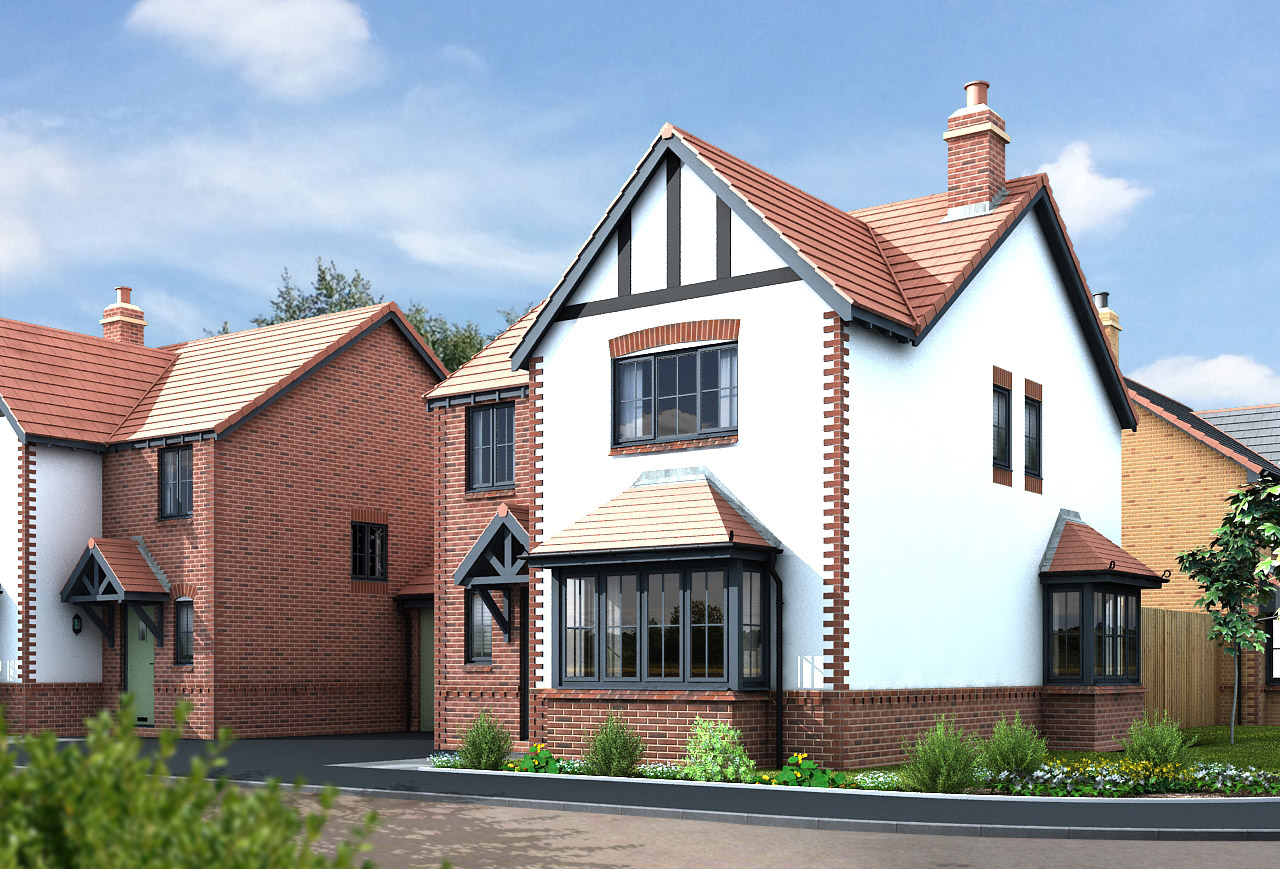
This is an area in liminal limbo, the pressures of the modern world leaning on its very being, as ash, alder, badger, field mouse, and kestrel give way to Wainhomes.
Where then will the wanderer wander, in search of solace?
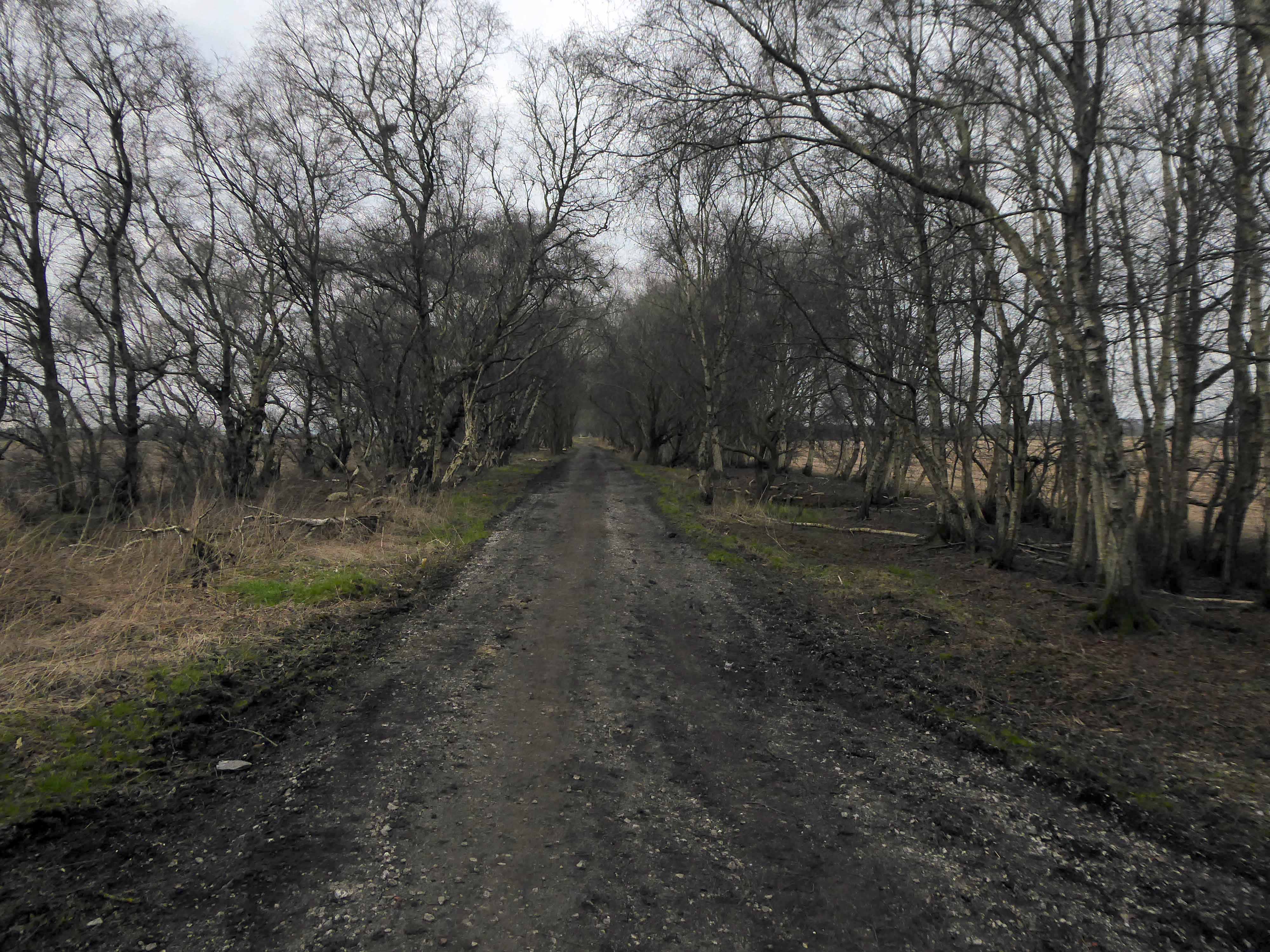
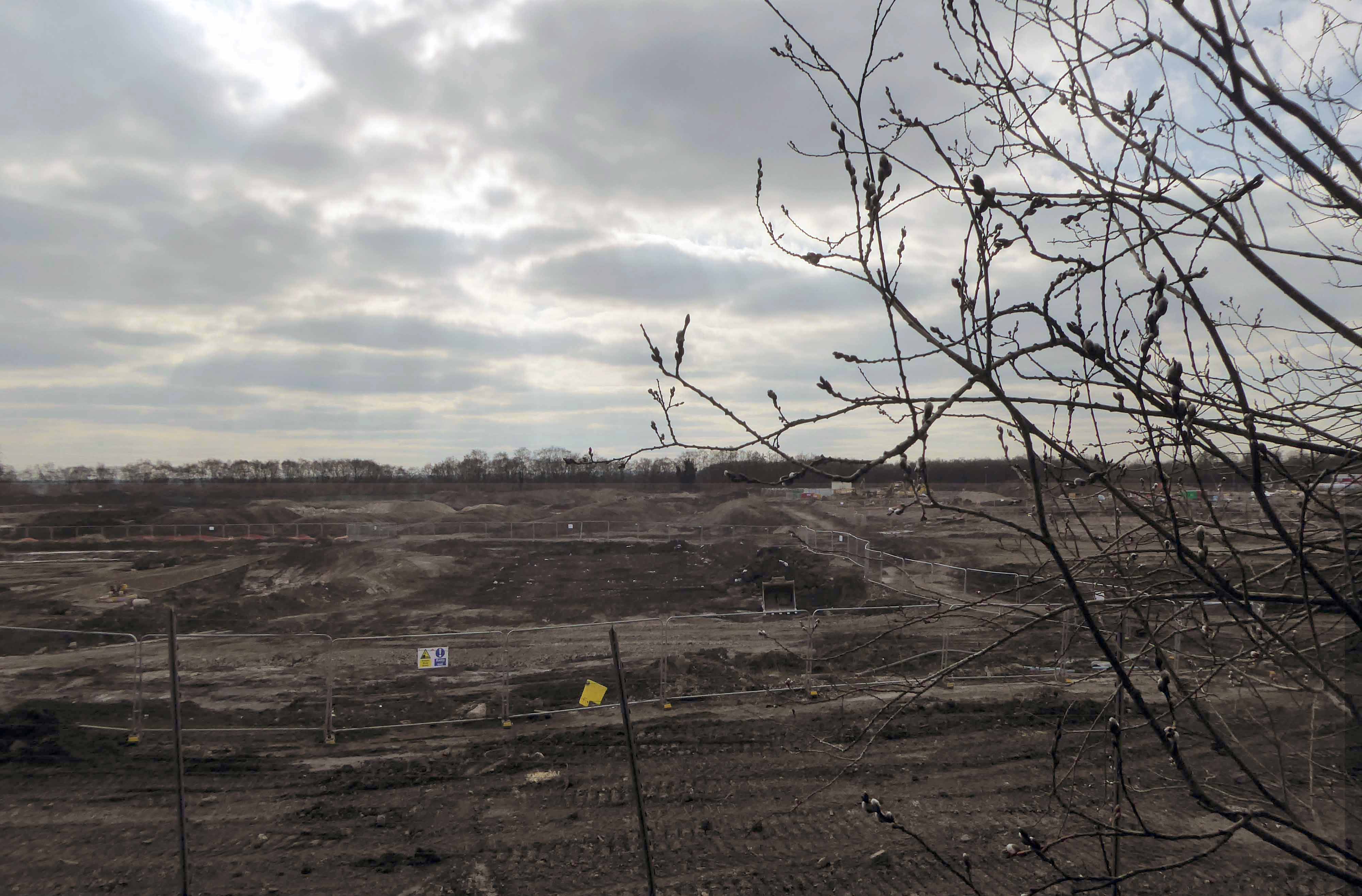
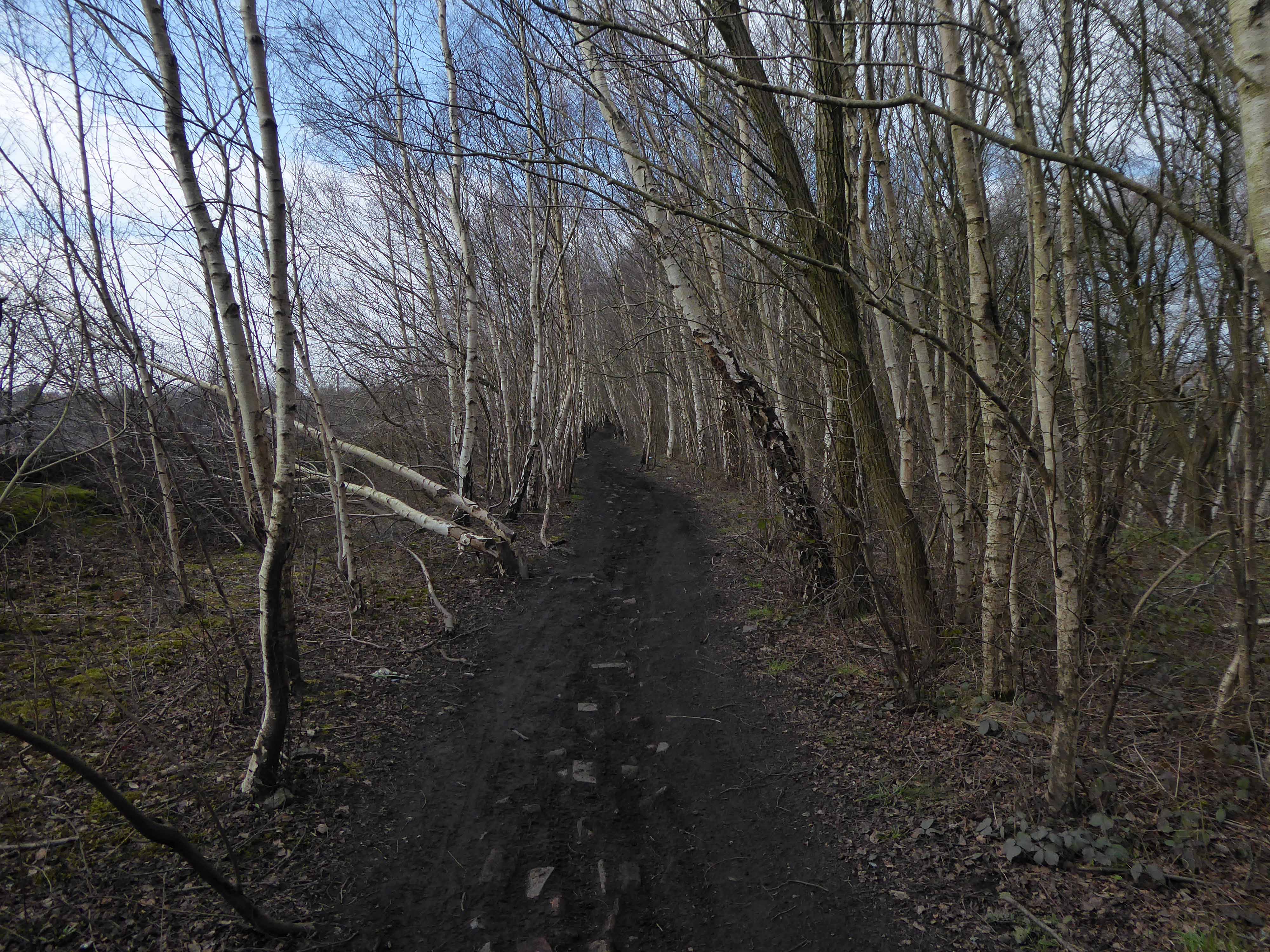
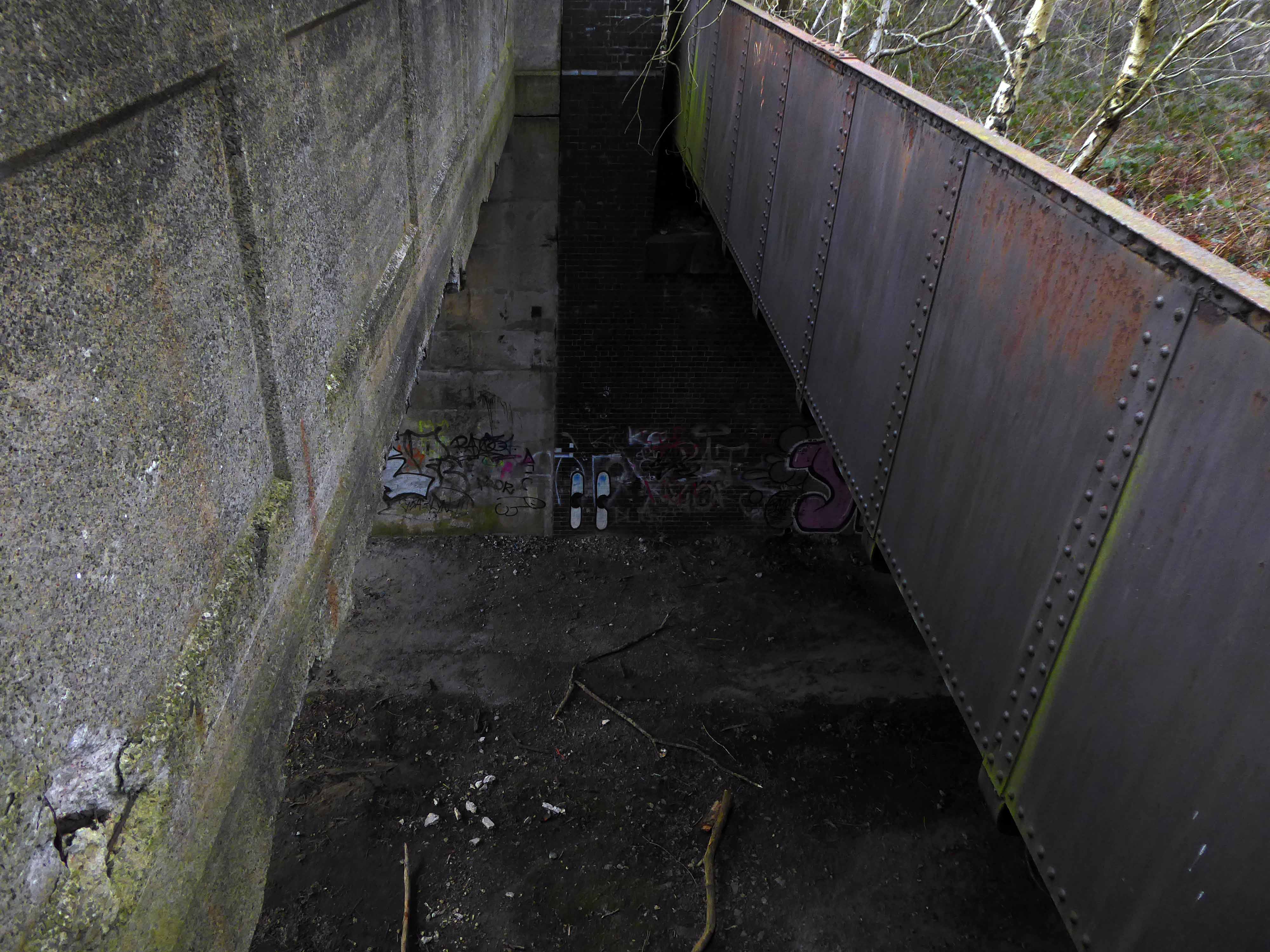
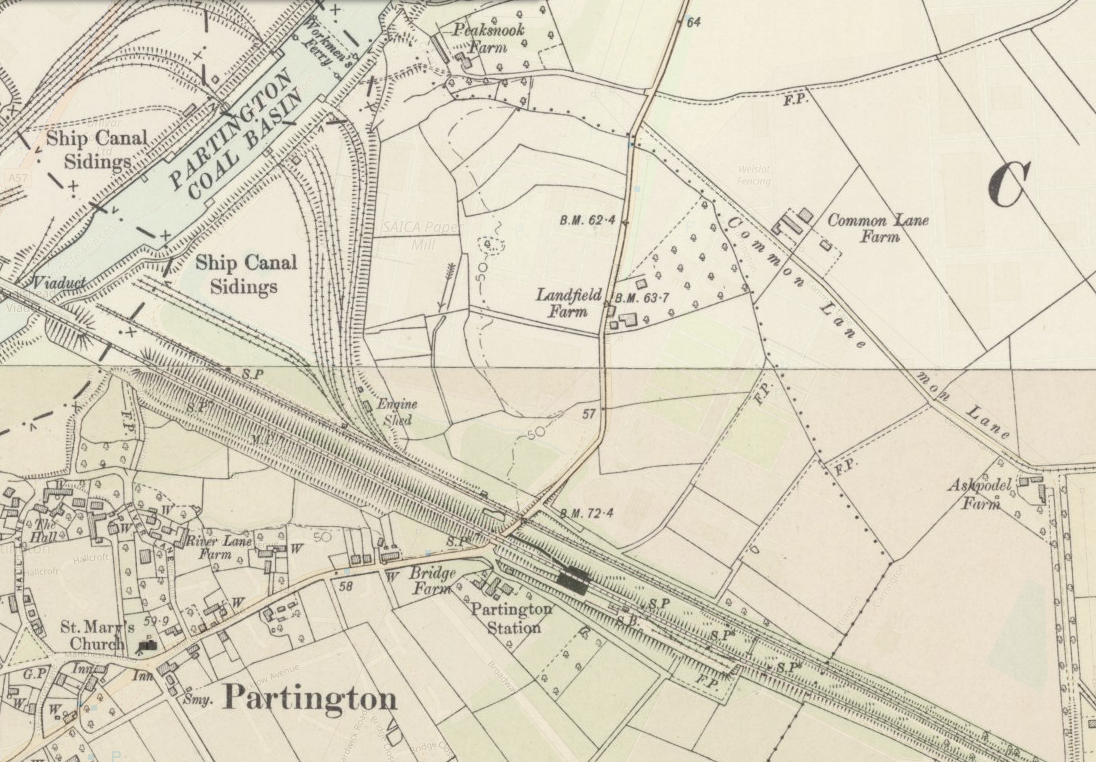
Ending our journey at the long gone Partington Station
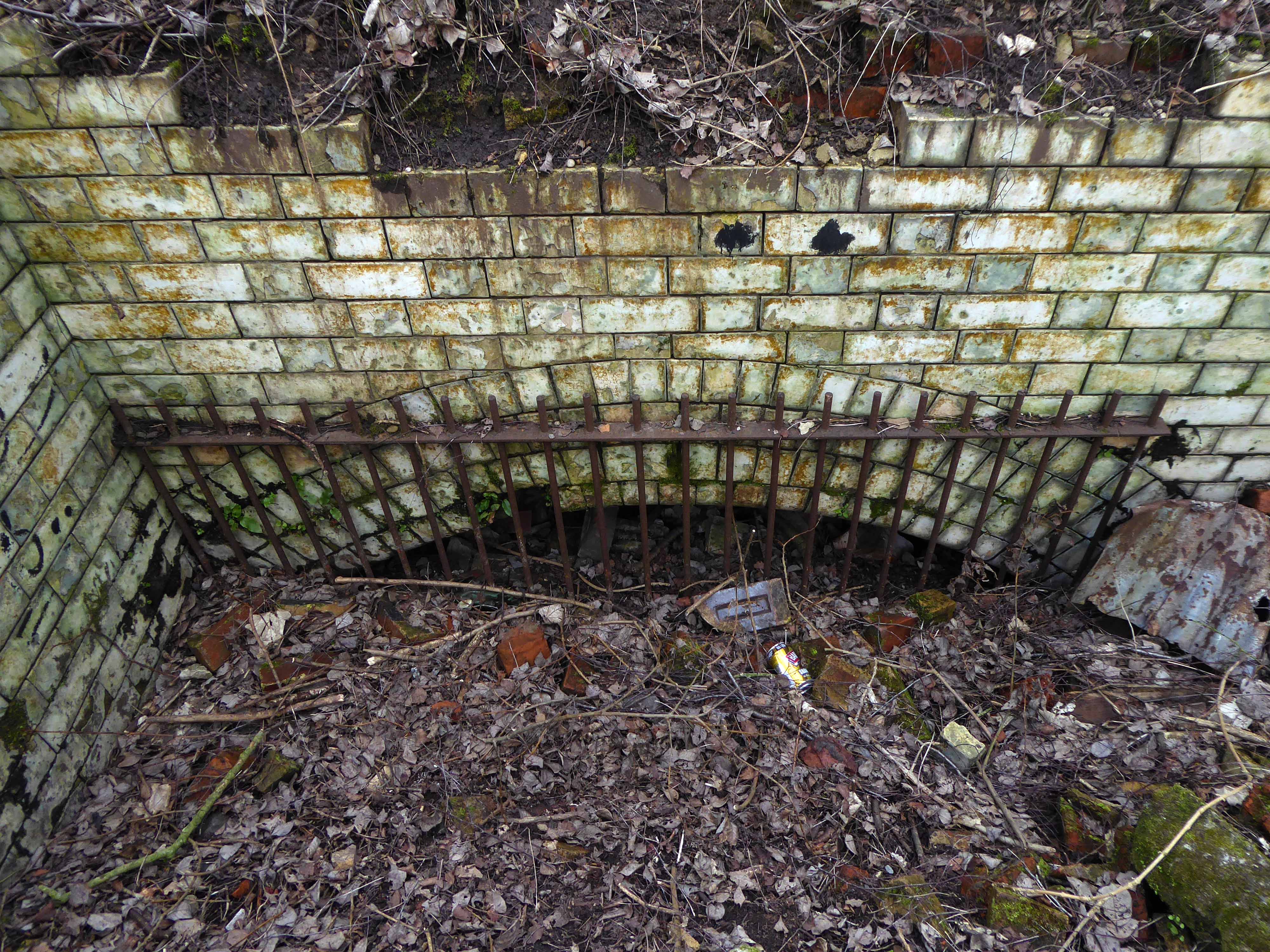
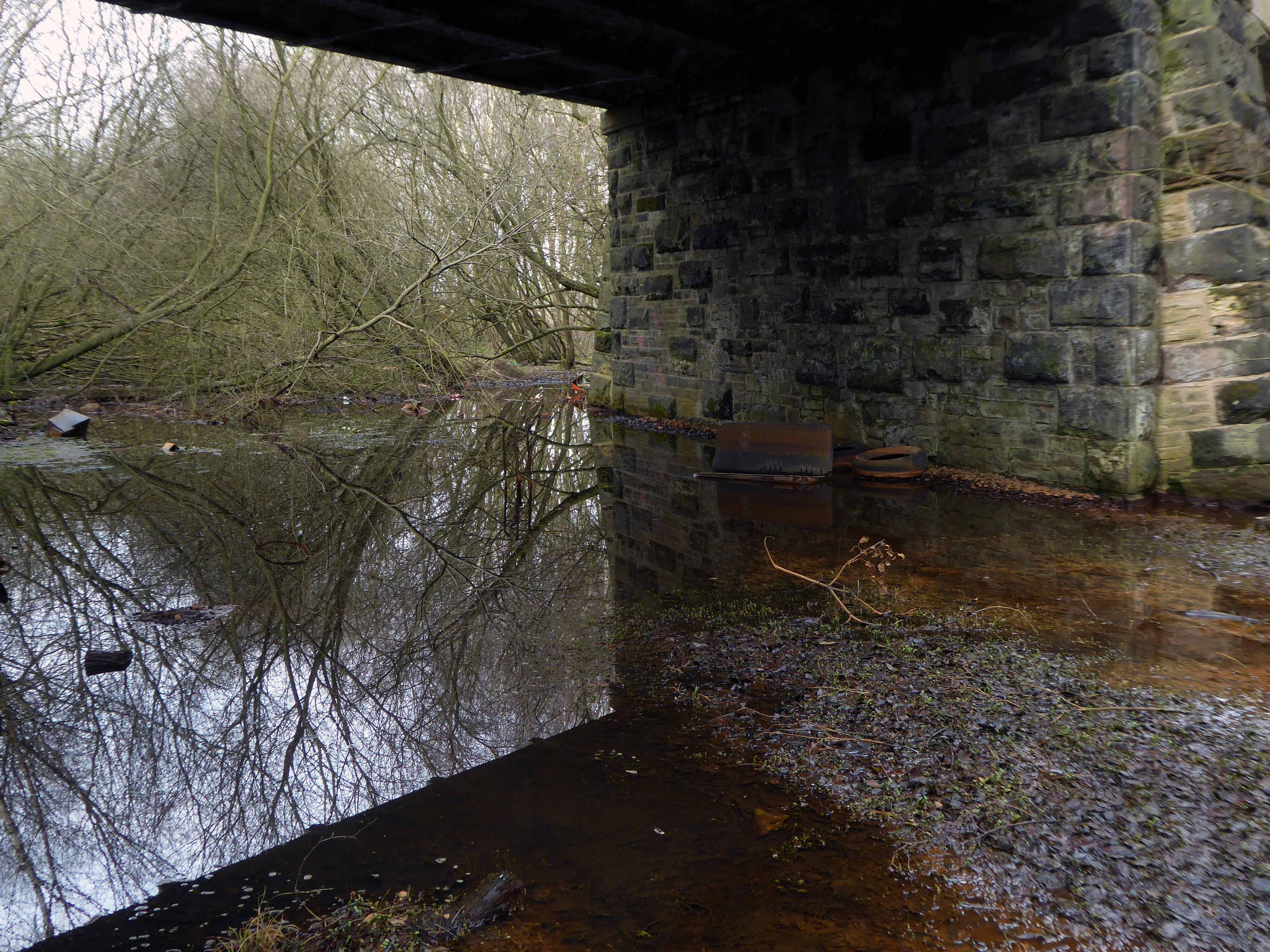
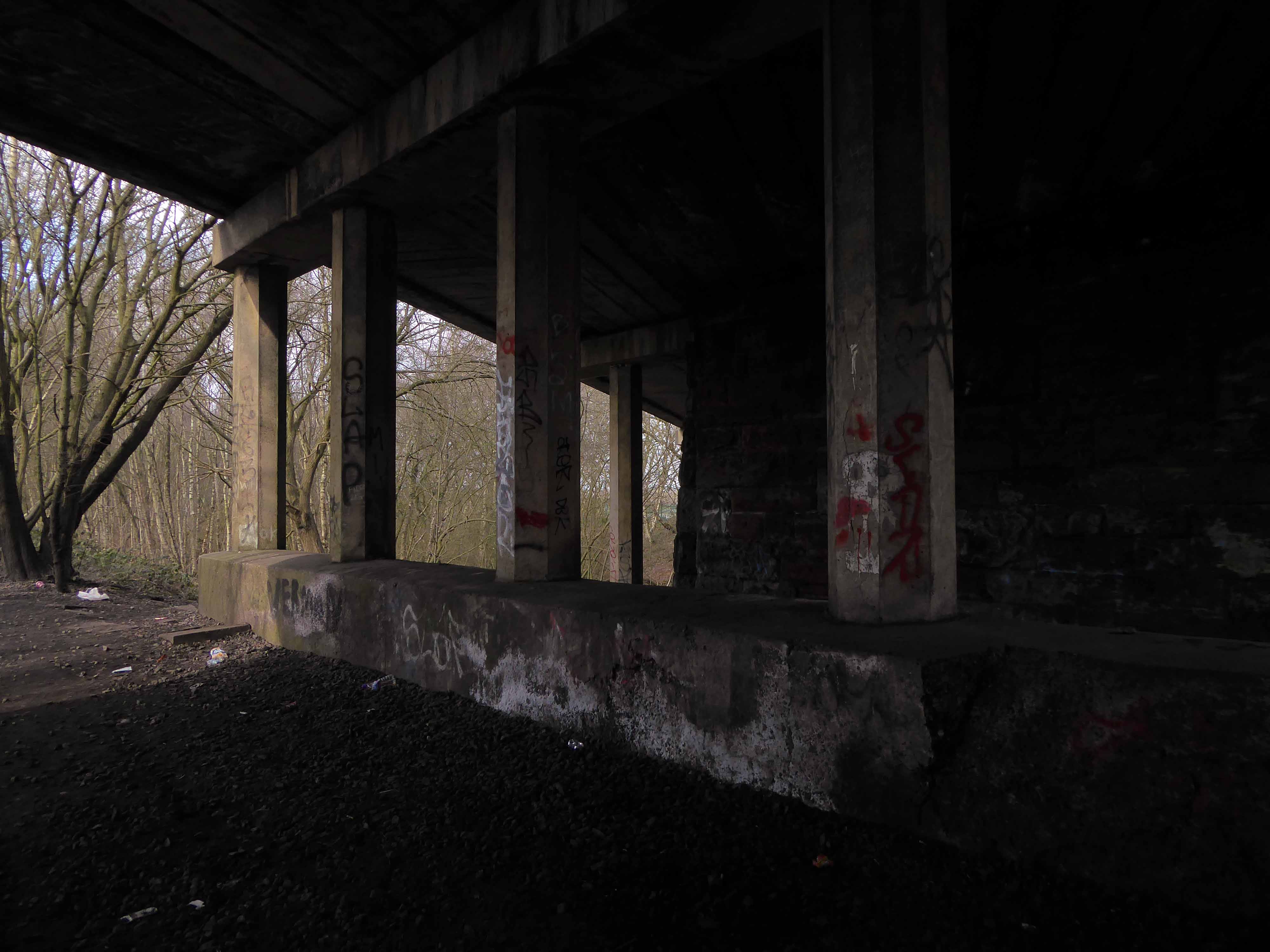
The remains of the subway.
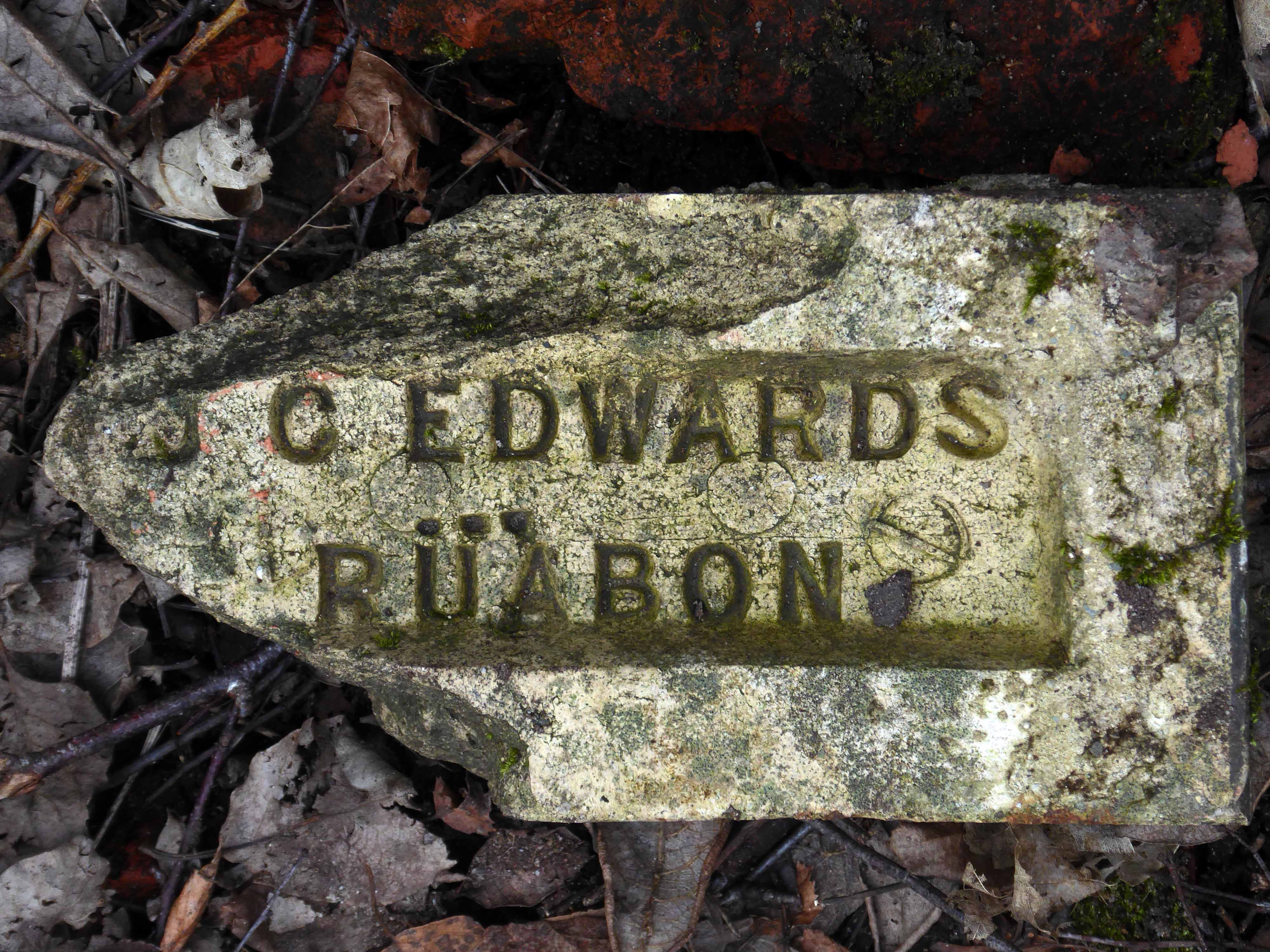
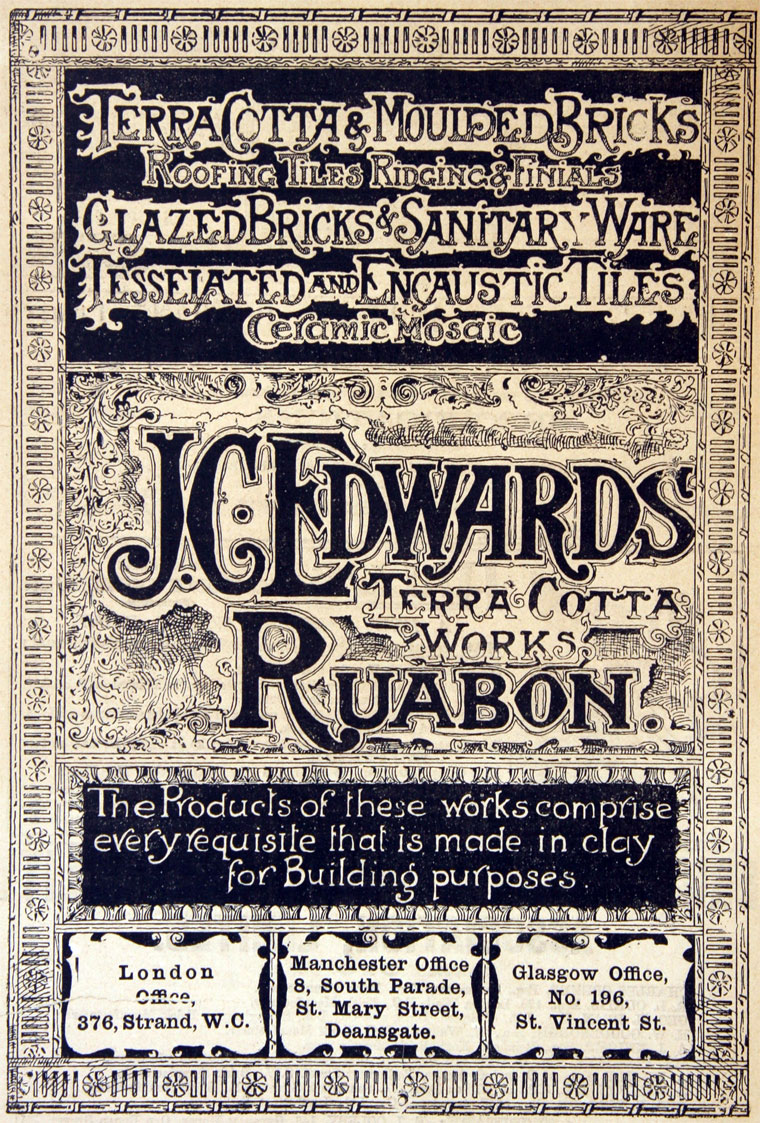
The company of J. C. Edwards Ruabon Ltd, was based in Ruabon, Denbighshire, and was active from 1903 to 1956 as a brick, tile and terracotta manufacturer from its works at Tref-y-Nant, Acrefair, Albert Works, Rhosllannerchrugog, and Pen-y-bont, Newbridge, Denbighshire.
James Coster Edwards (1828-1896) founded the company; it was sold in 1956.
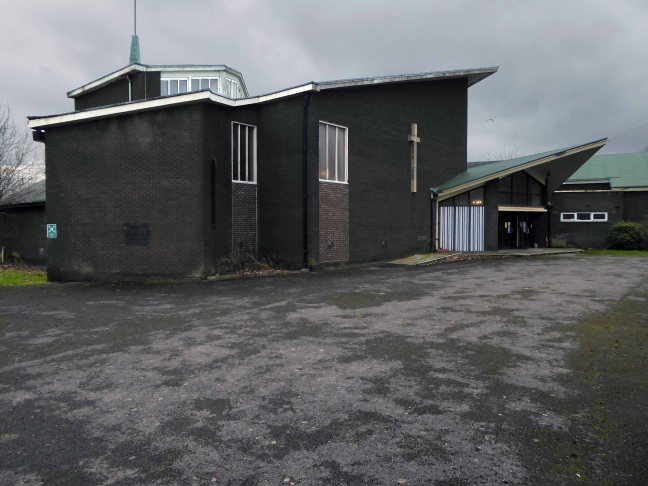
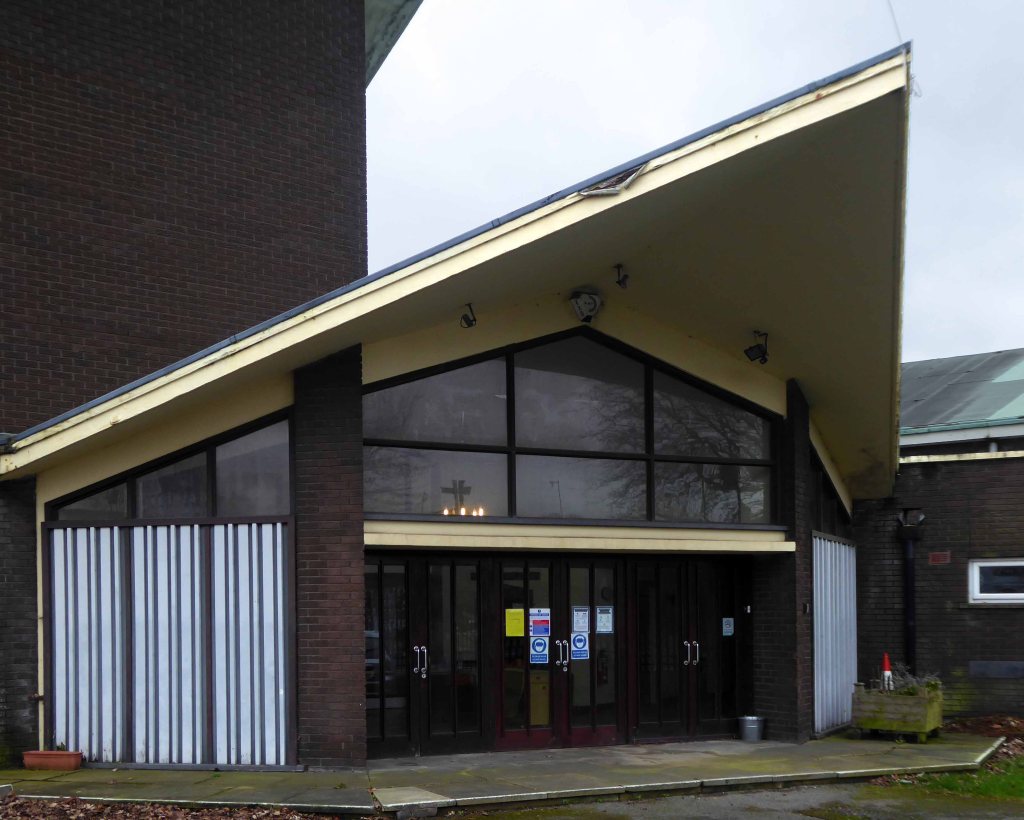
Junction of Fir Road and Oldham Road
One fine day, I chanced to walk by just as the service was finishing.
I asked Assistant Curate Rev. Peter Scott if it would be possible to photograph the interior of the church, he kindly consented.
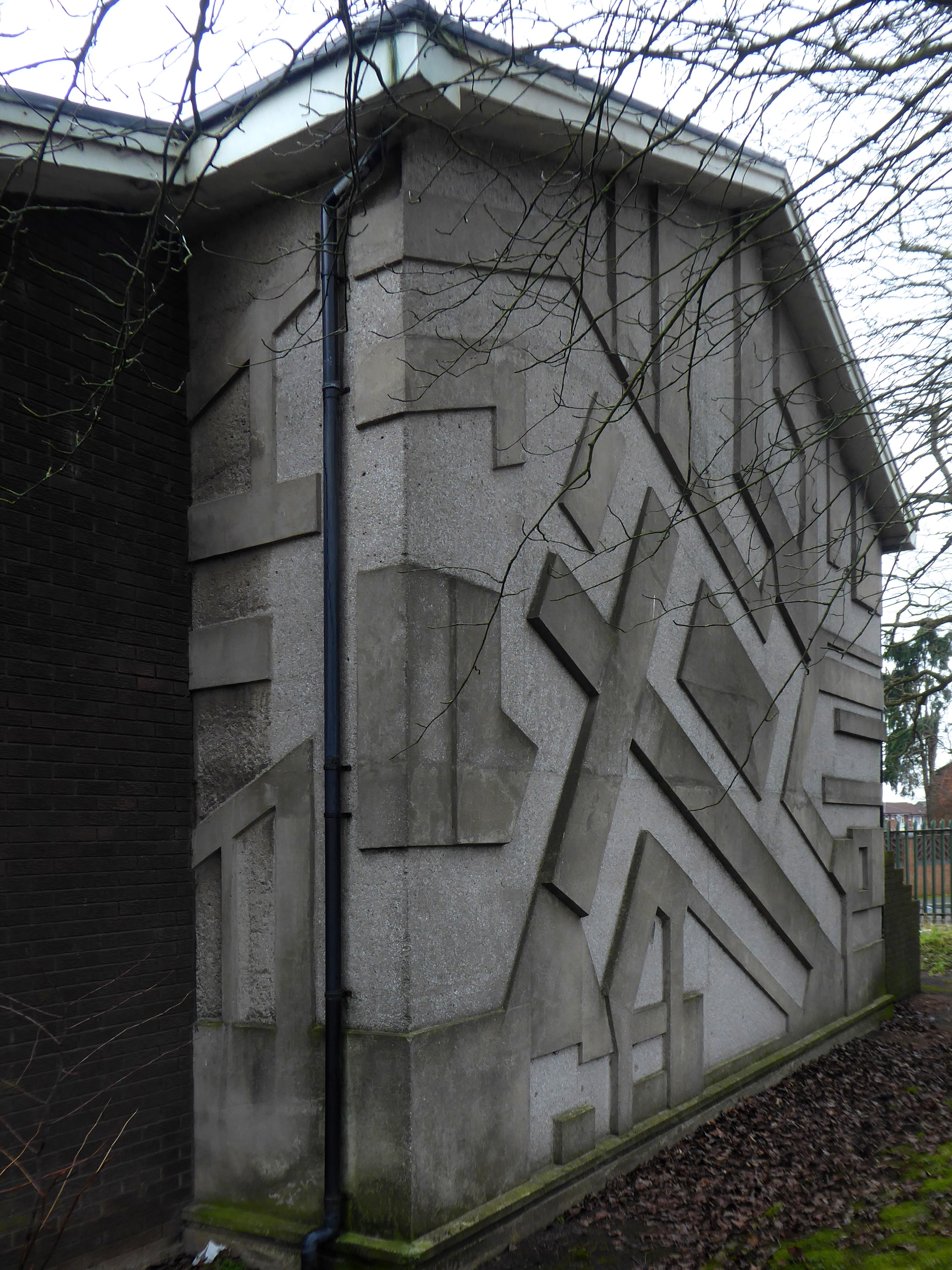
Here are the results, along with shots of the excitingly angular exterior.
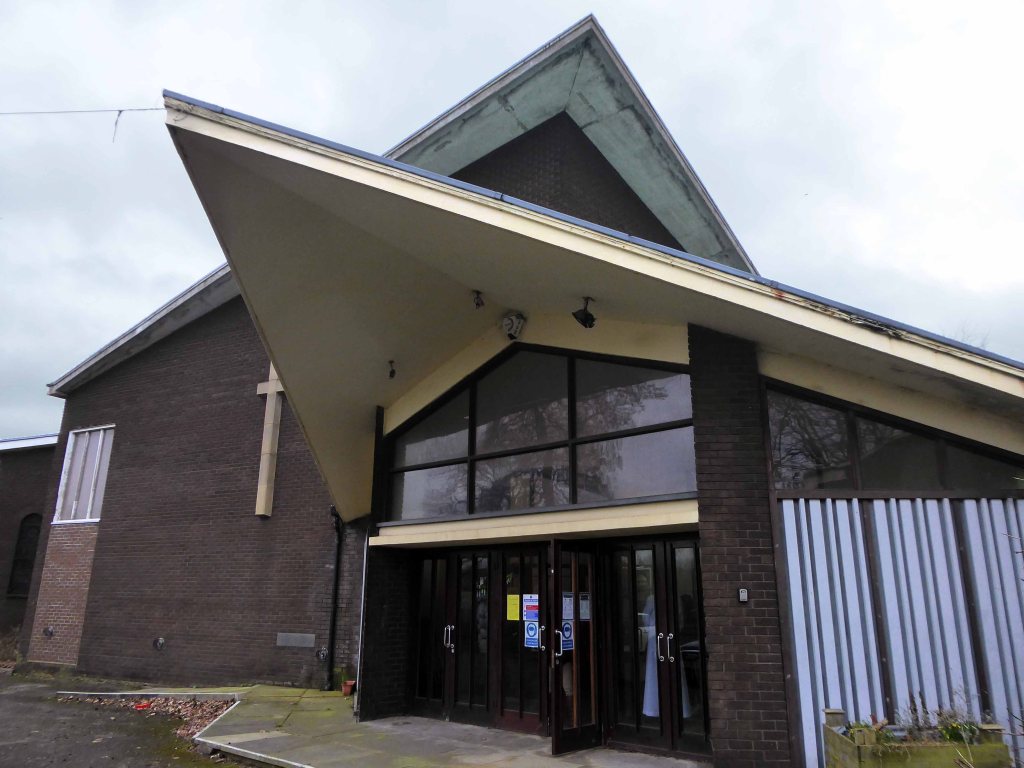
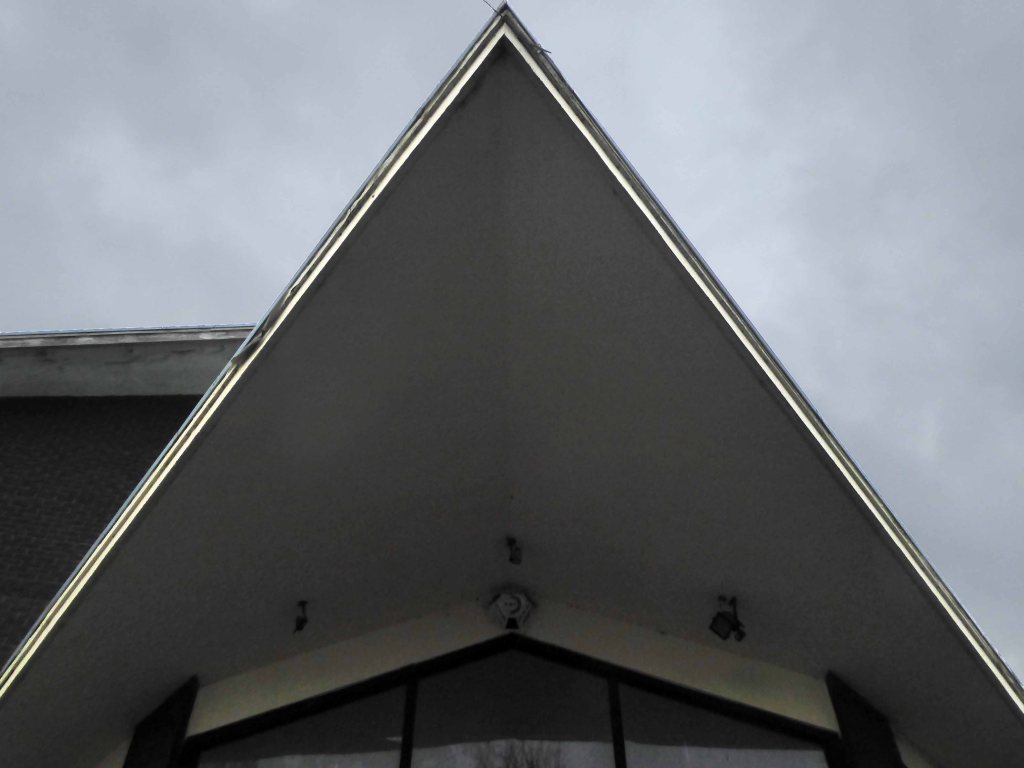
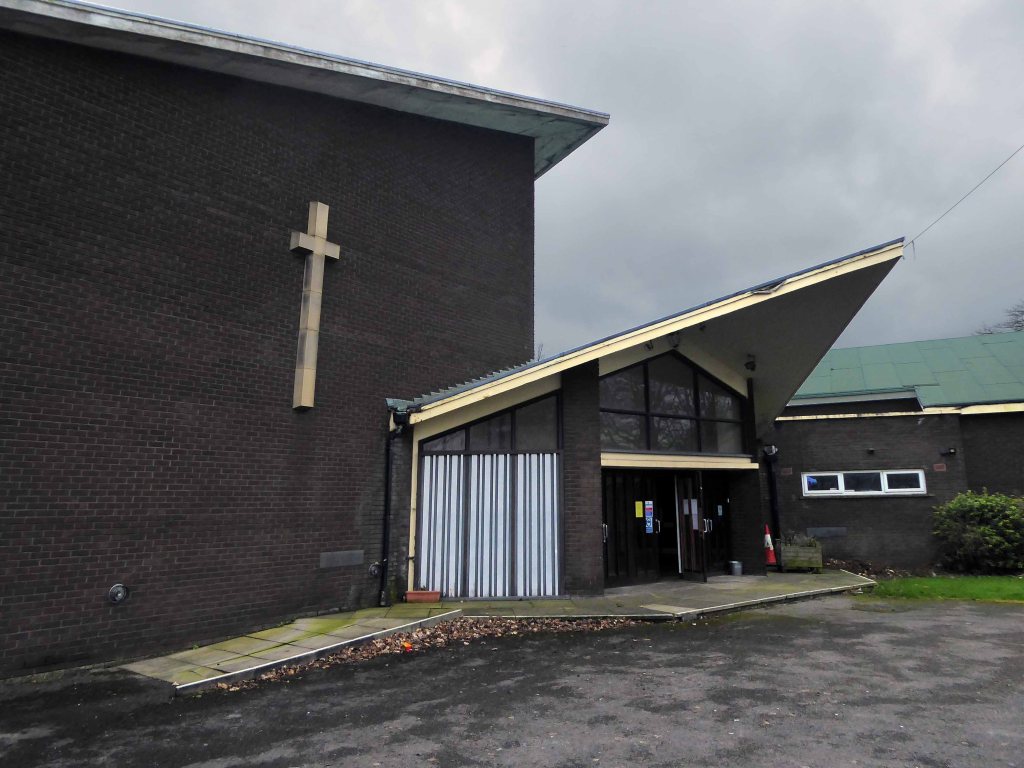
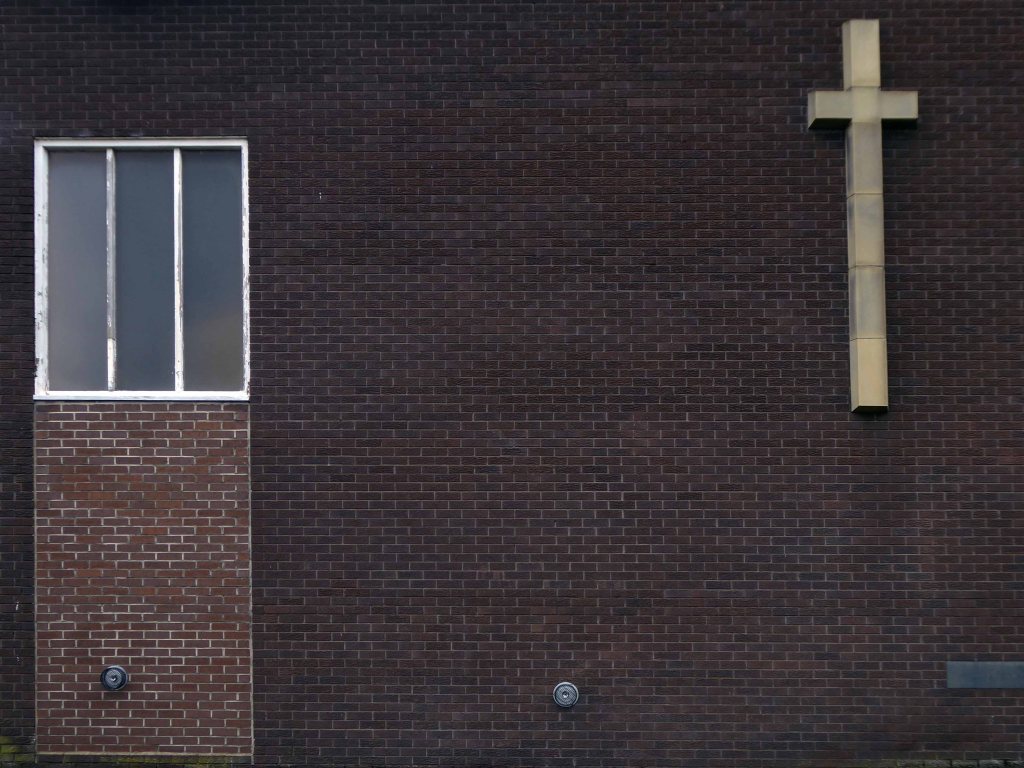
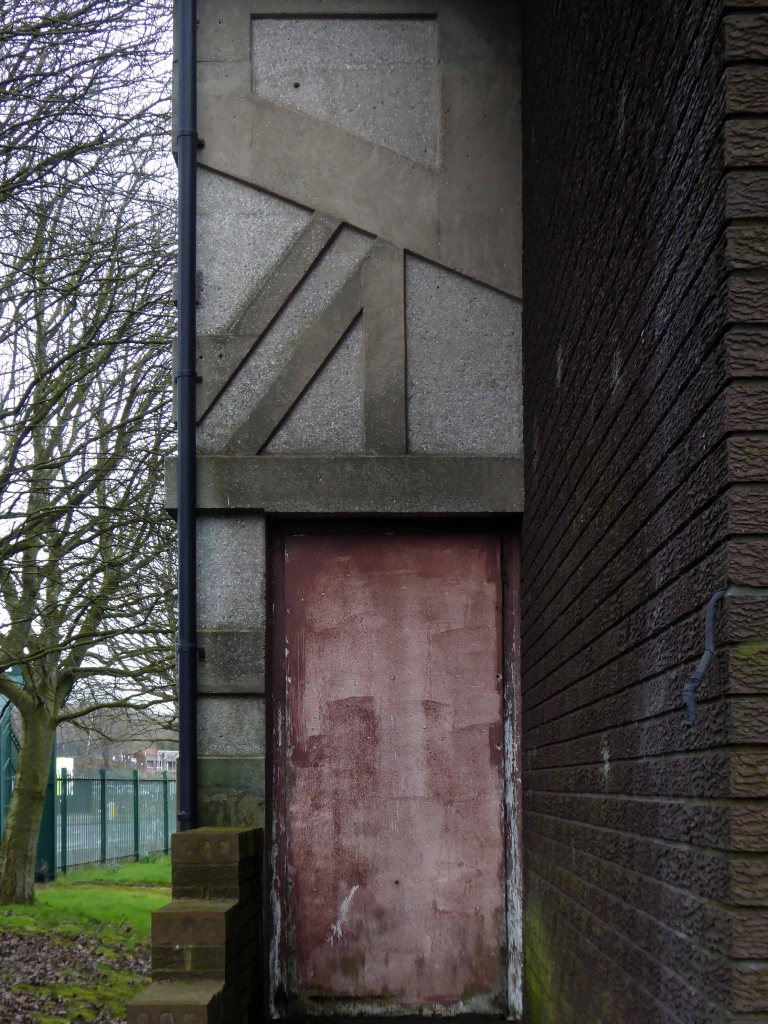
The church’s exterior is home to a dramatic concrete relief.

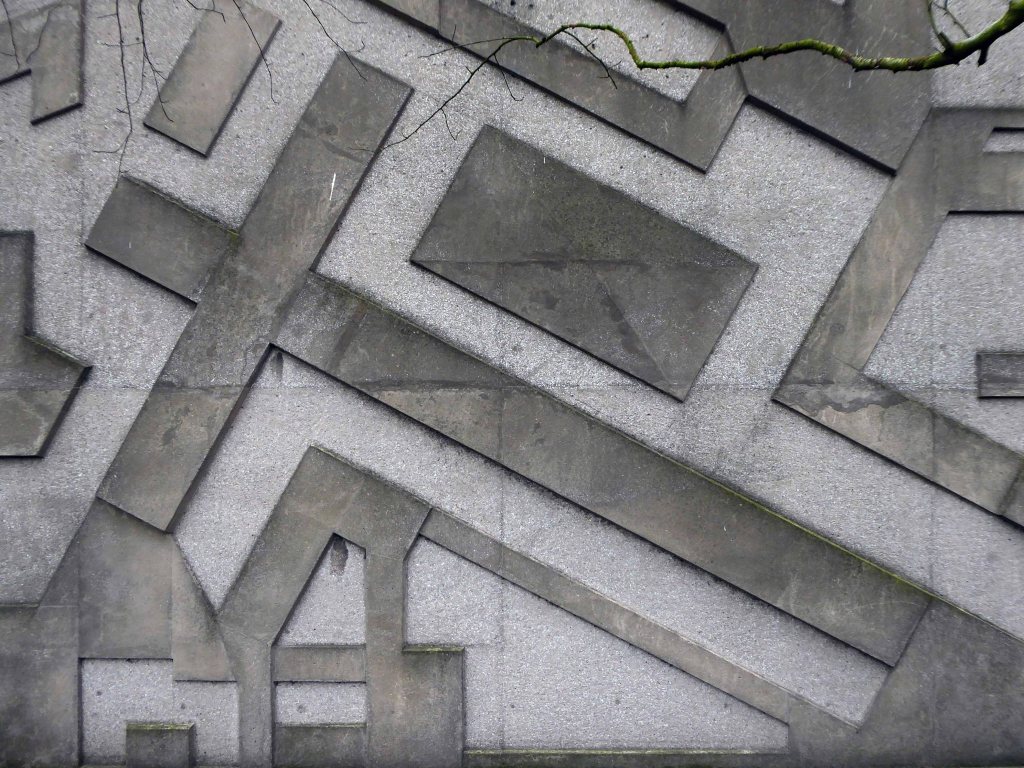
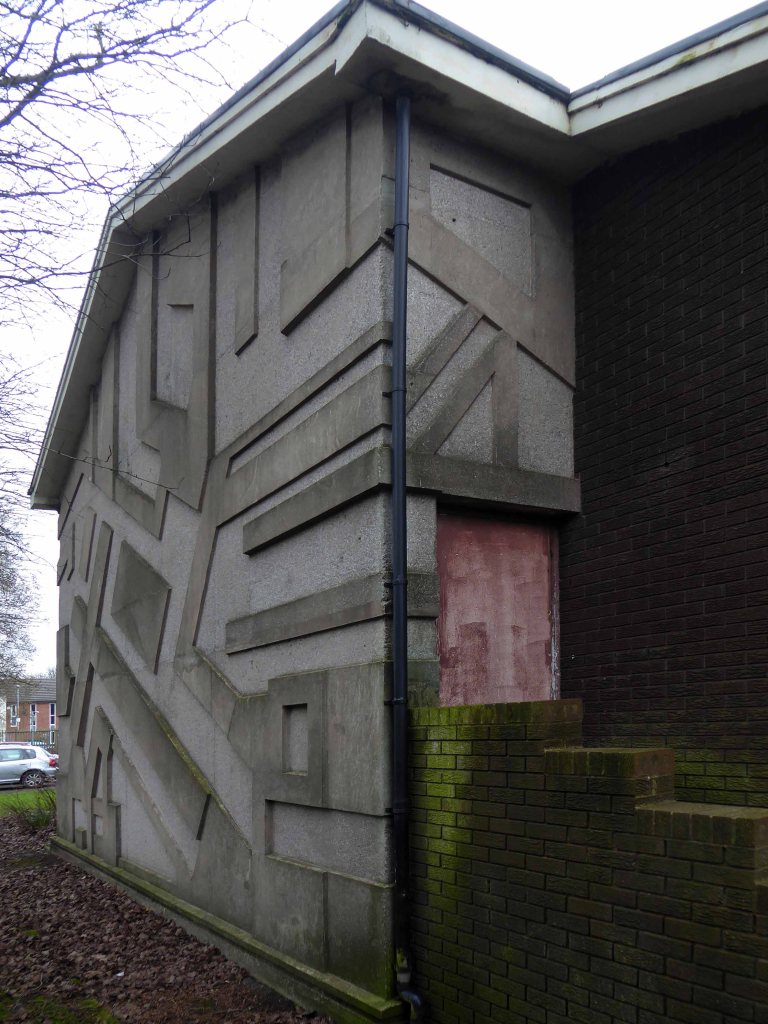
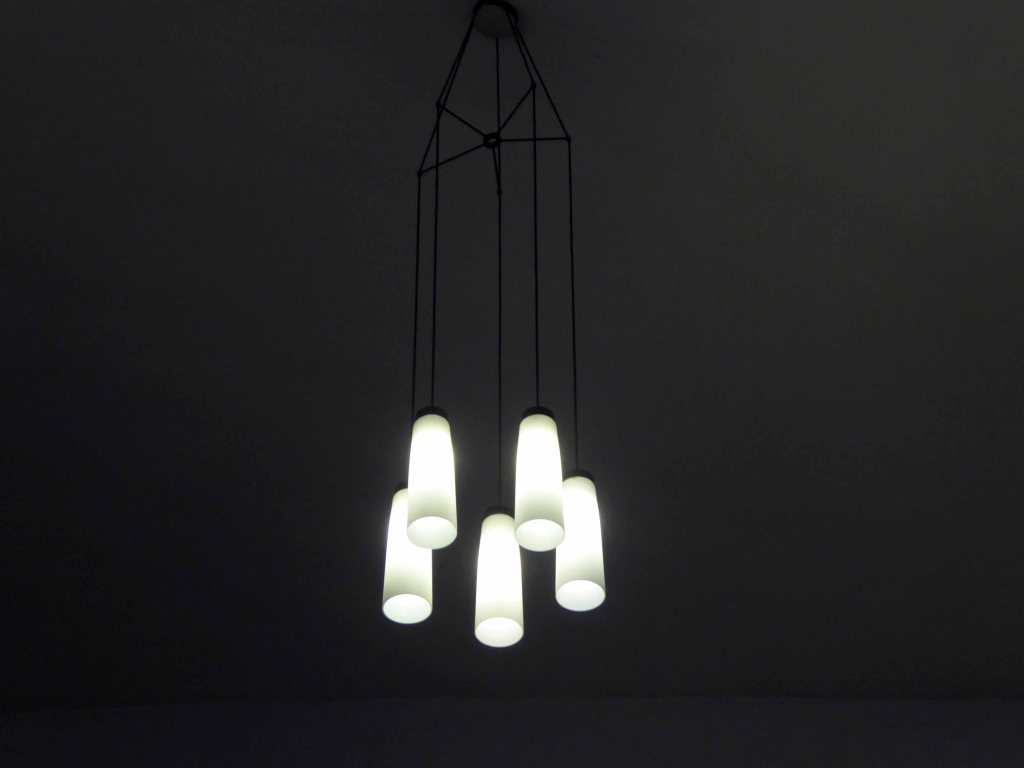
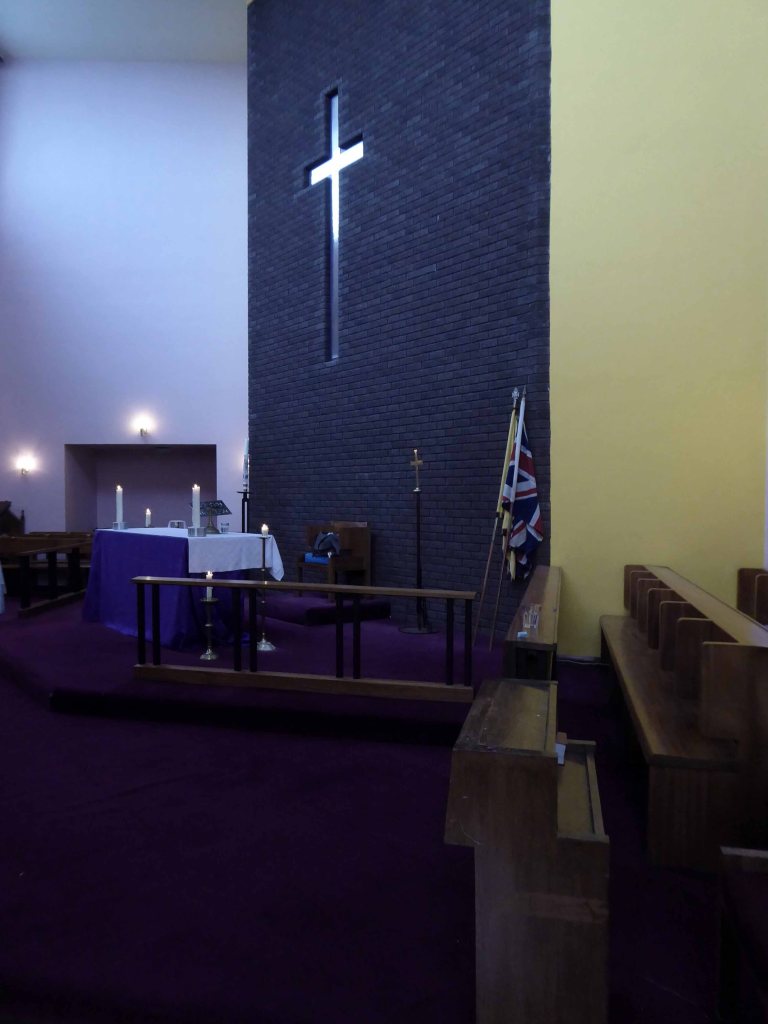
Let’s take a look inside, complex volumes and multiple window-lighting points, along with simple decorative order.
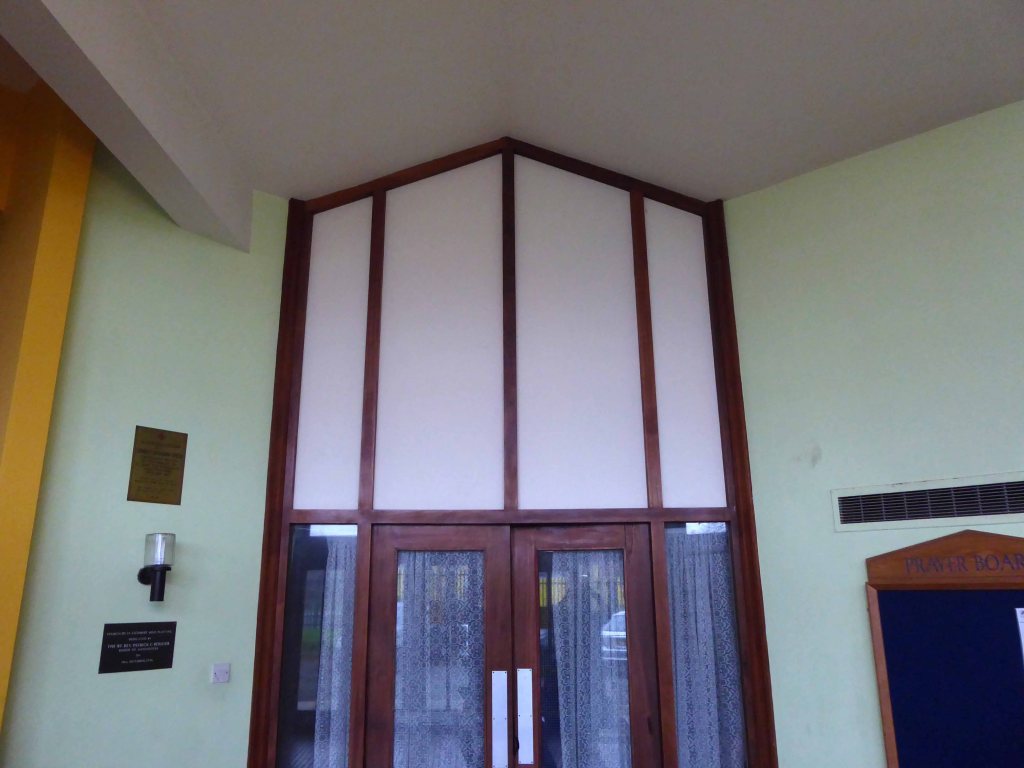
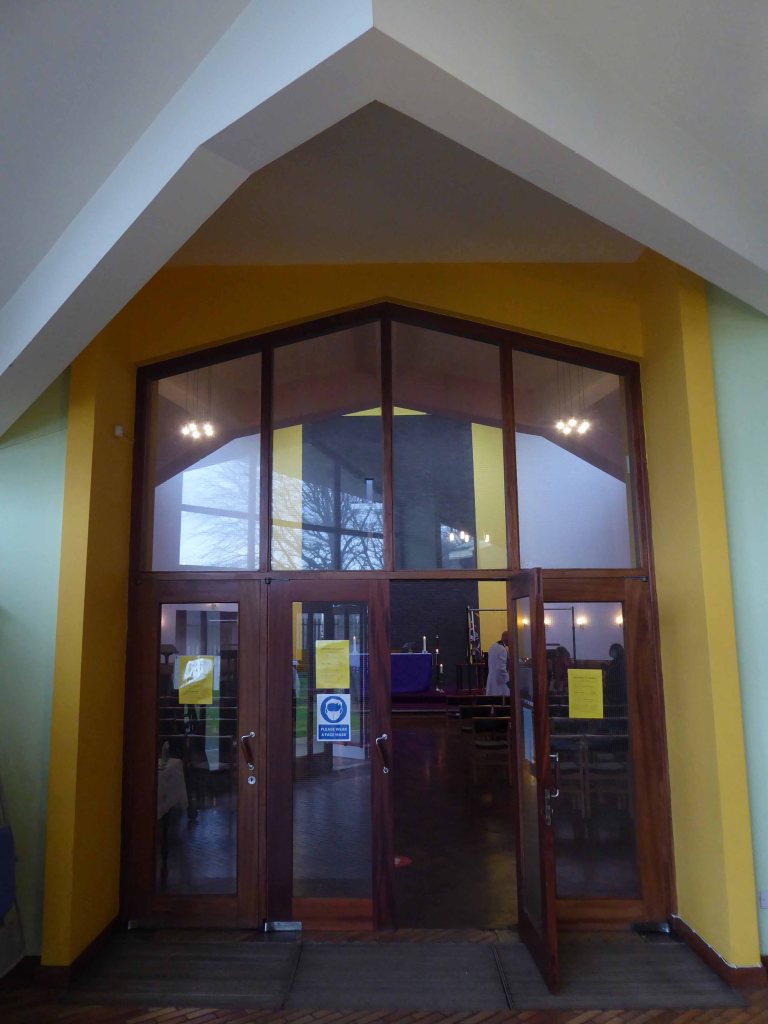
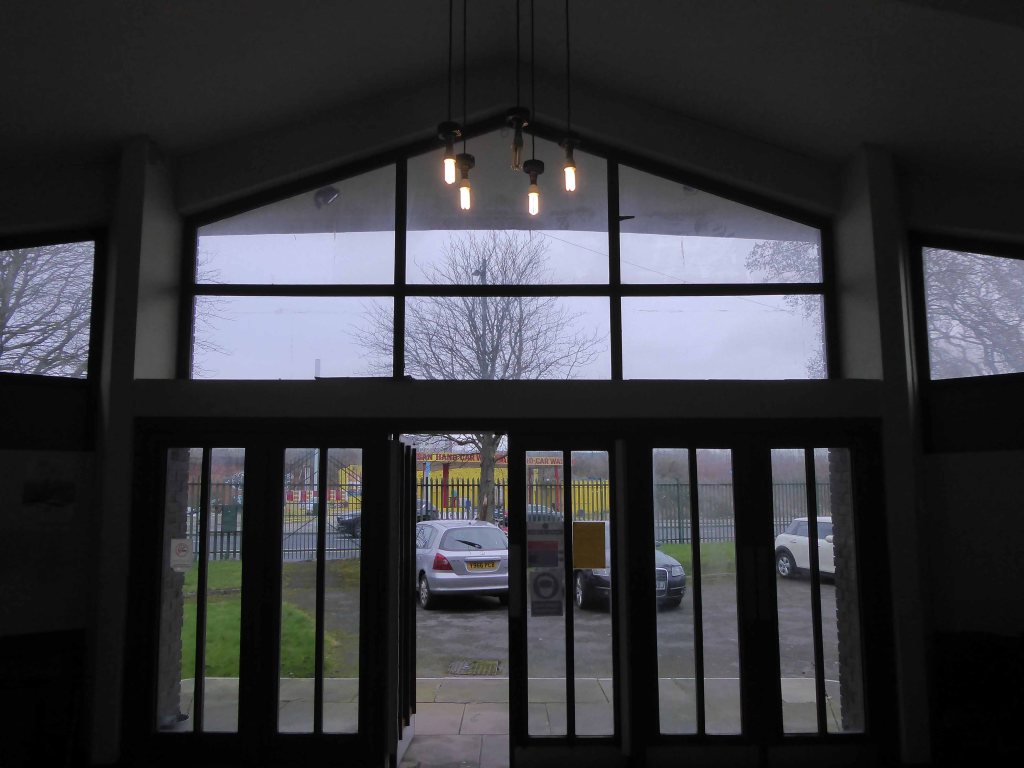
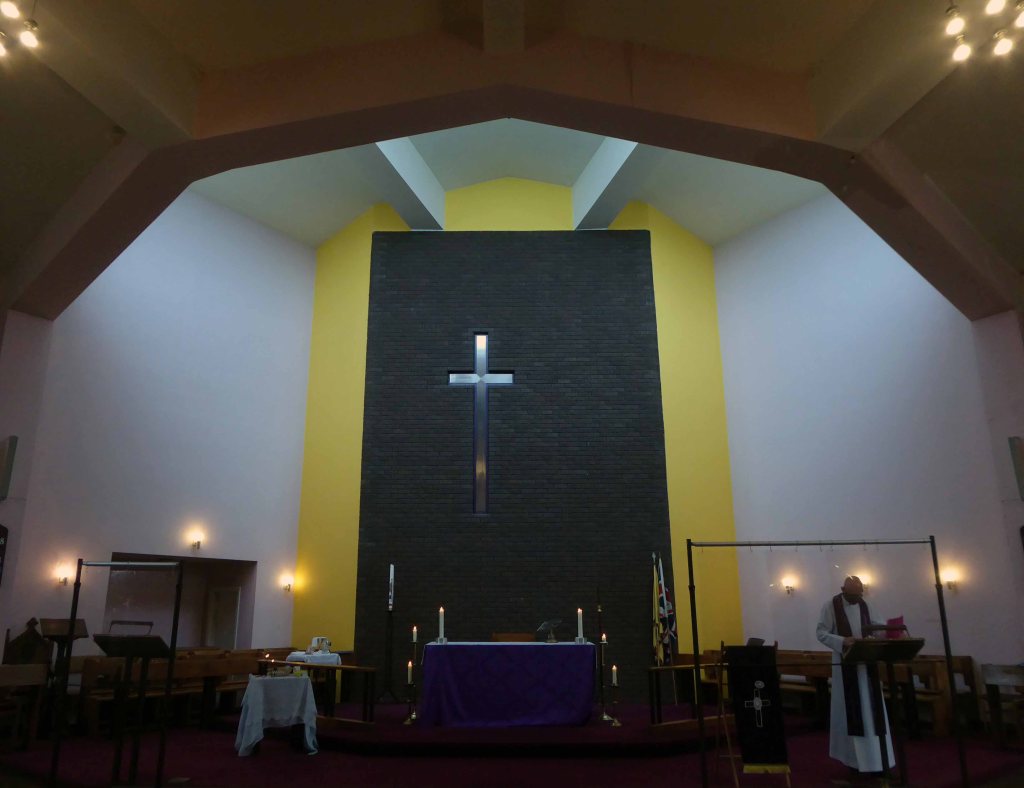
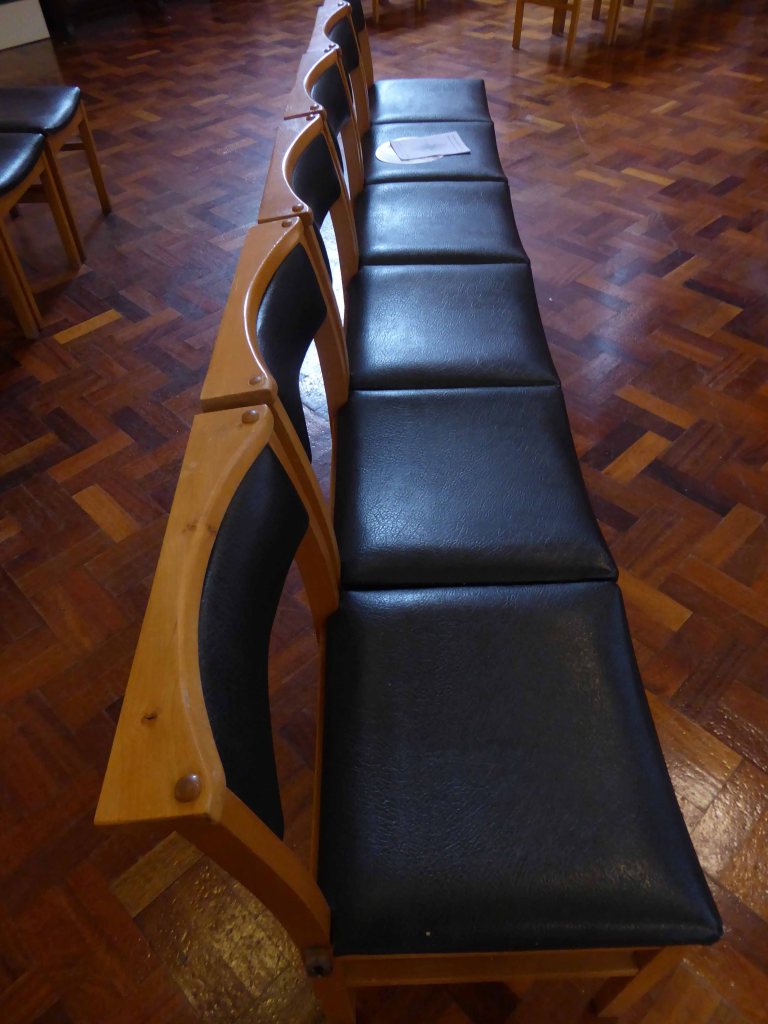
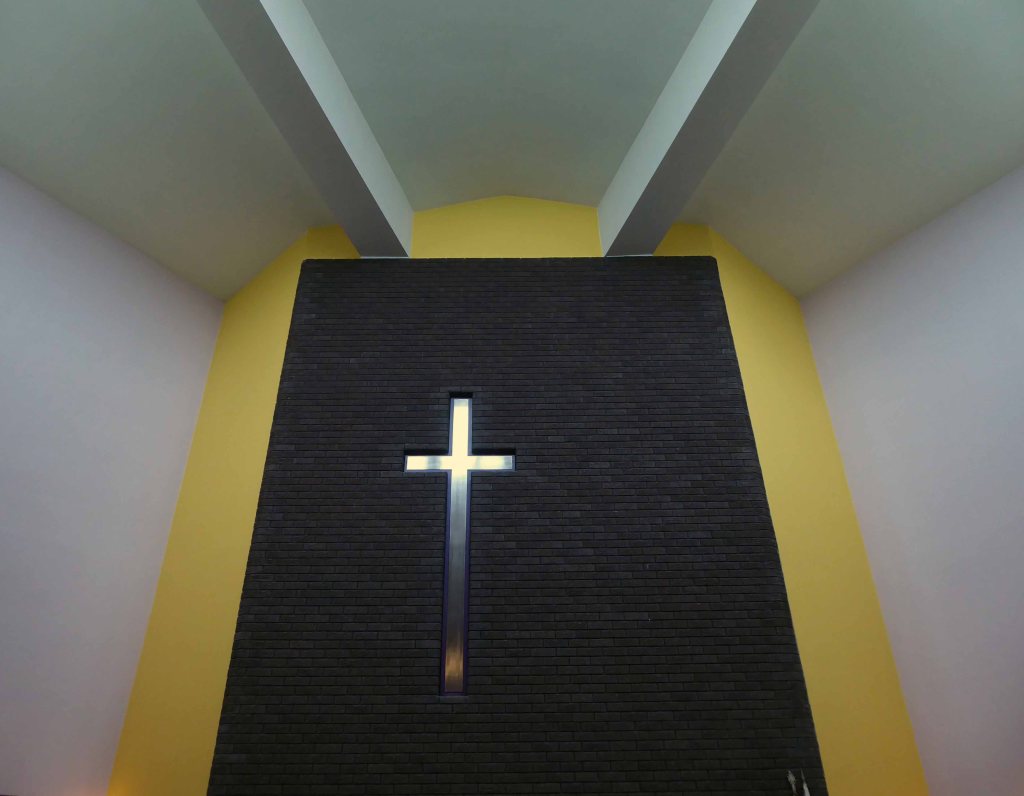
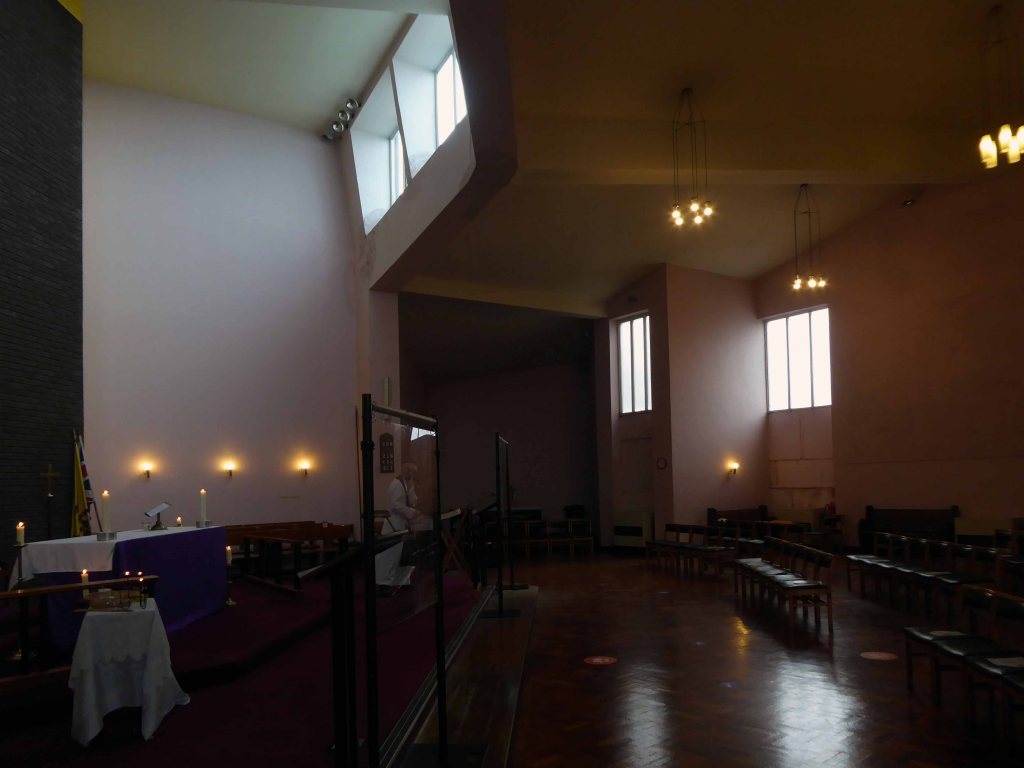
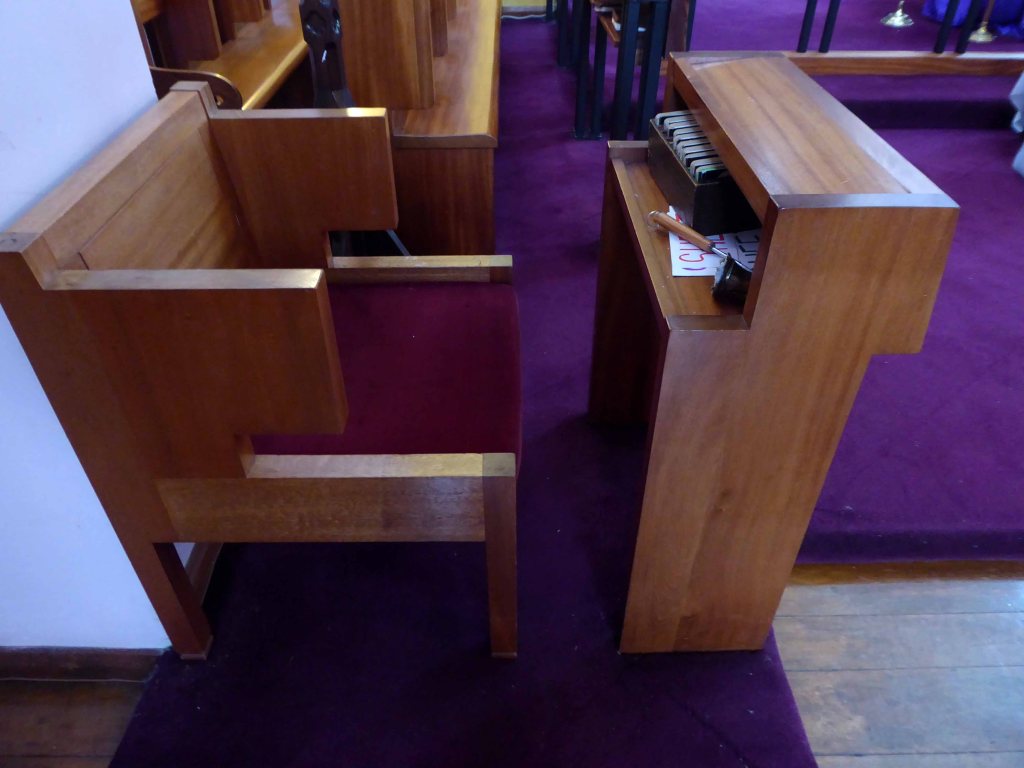
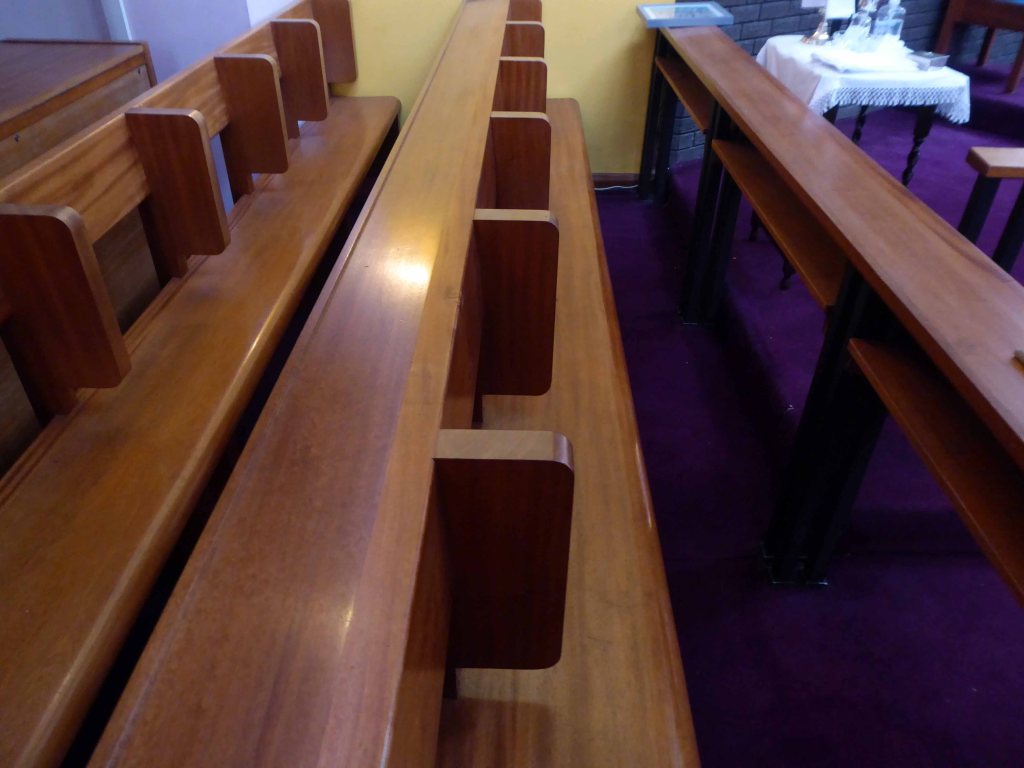
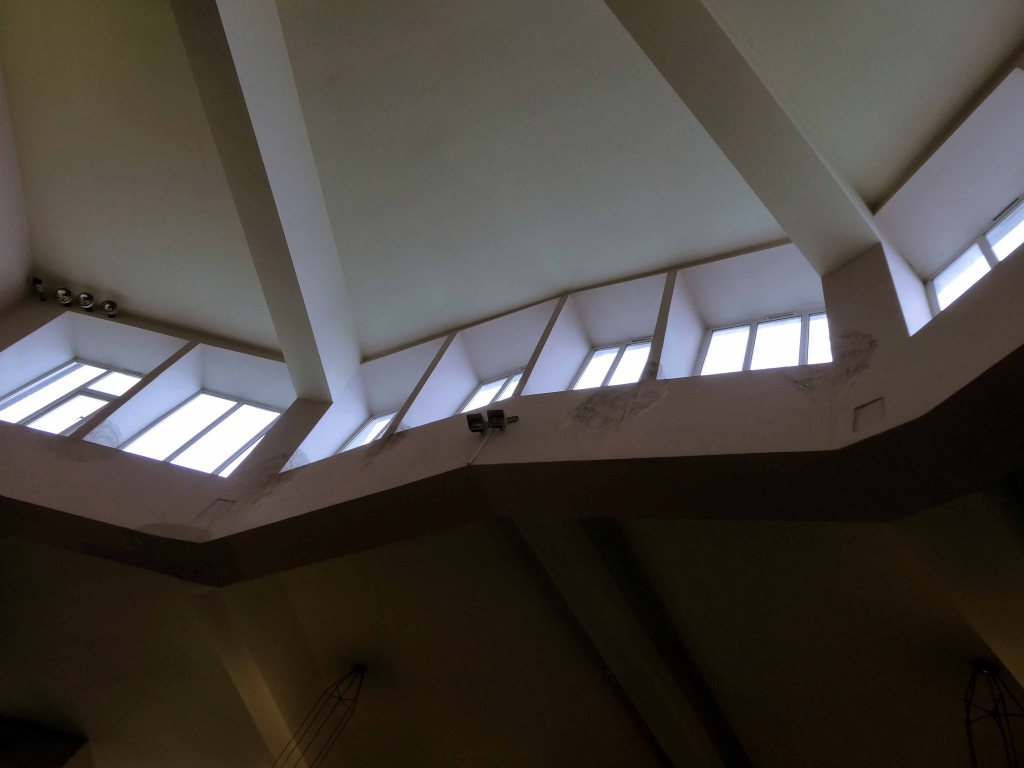
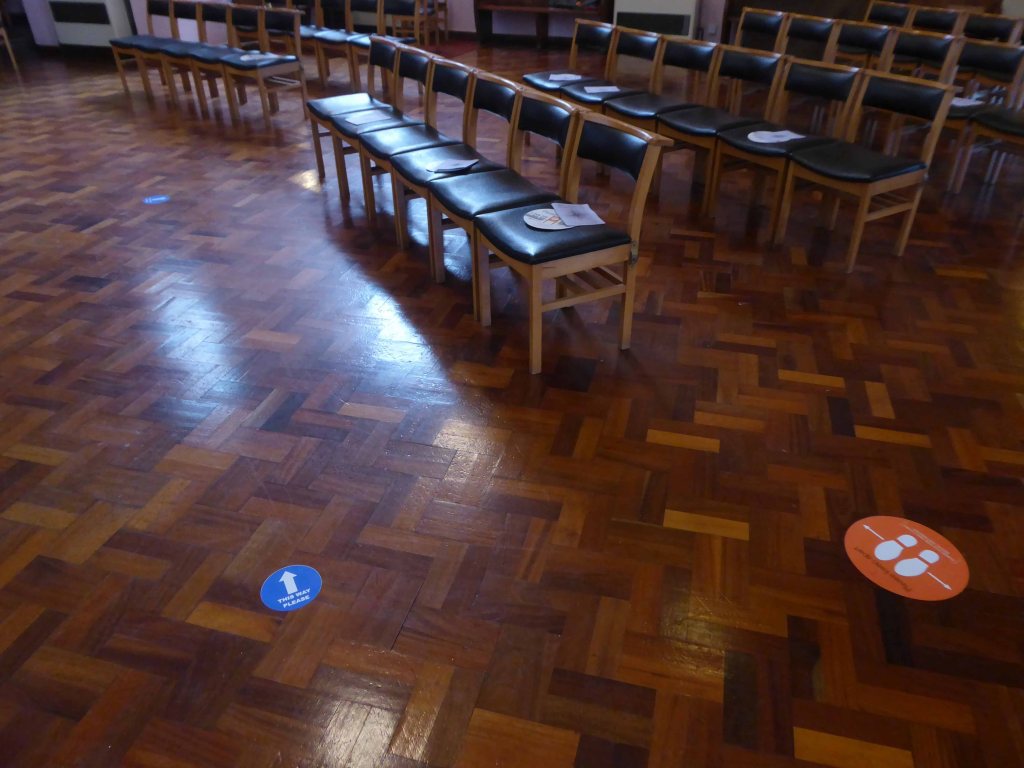
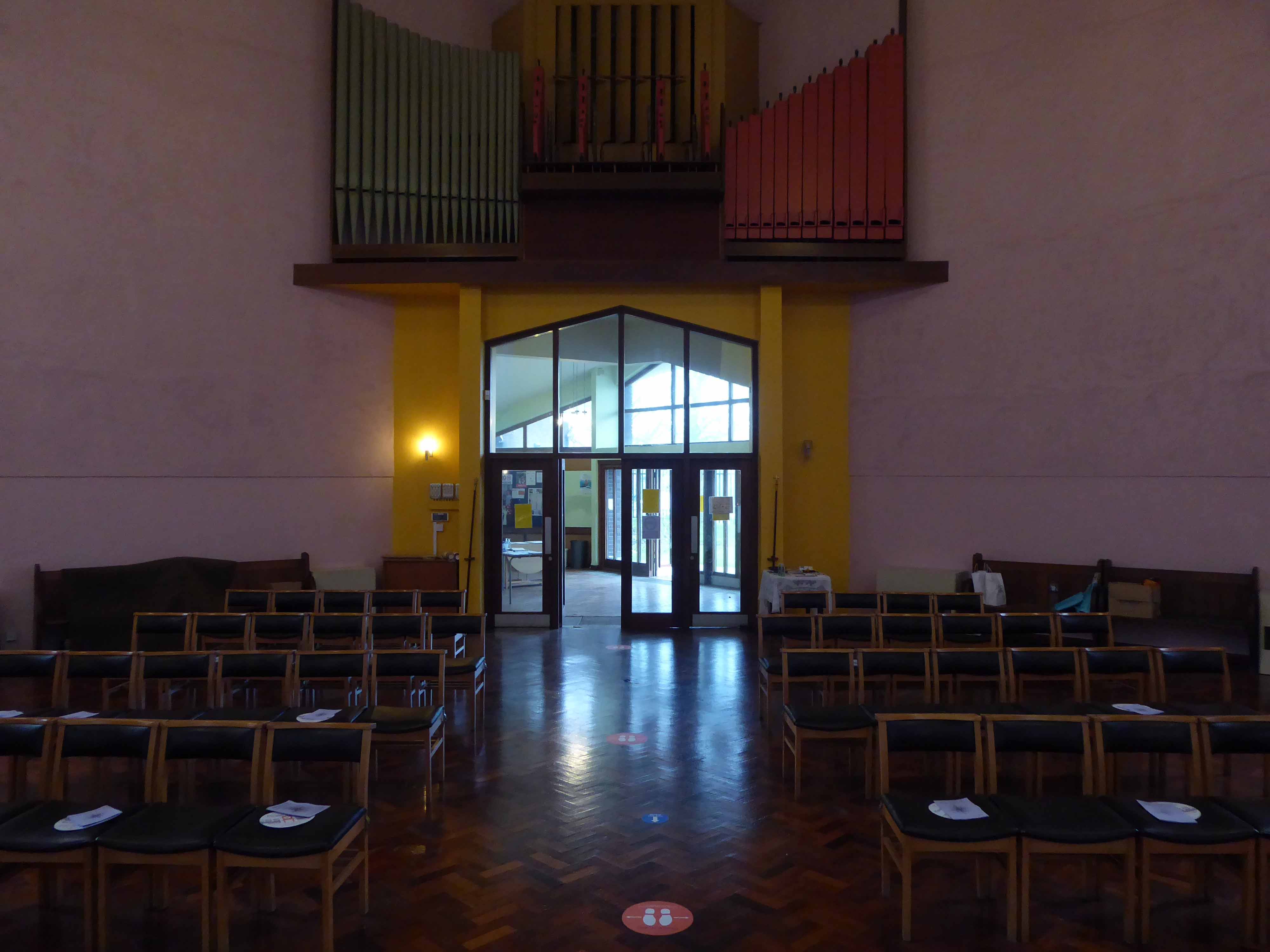
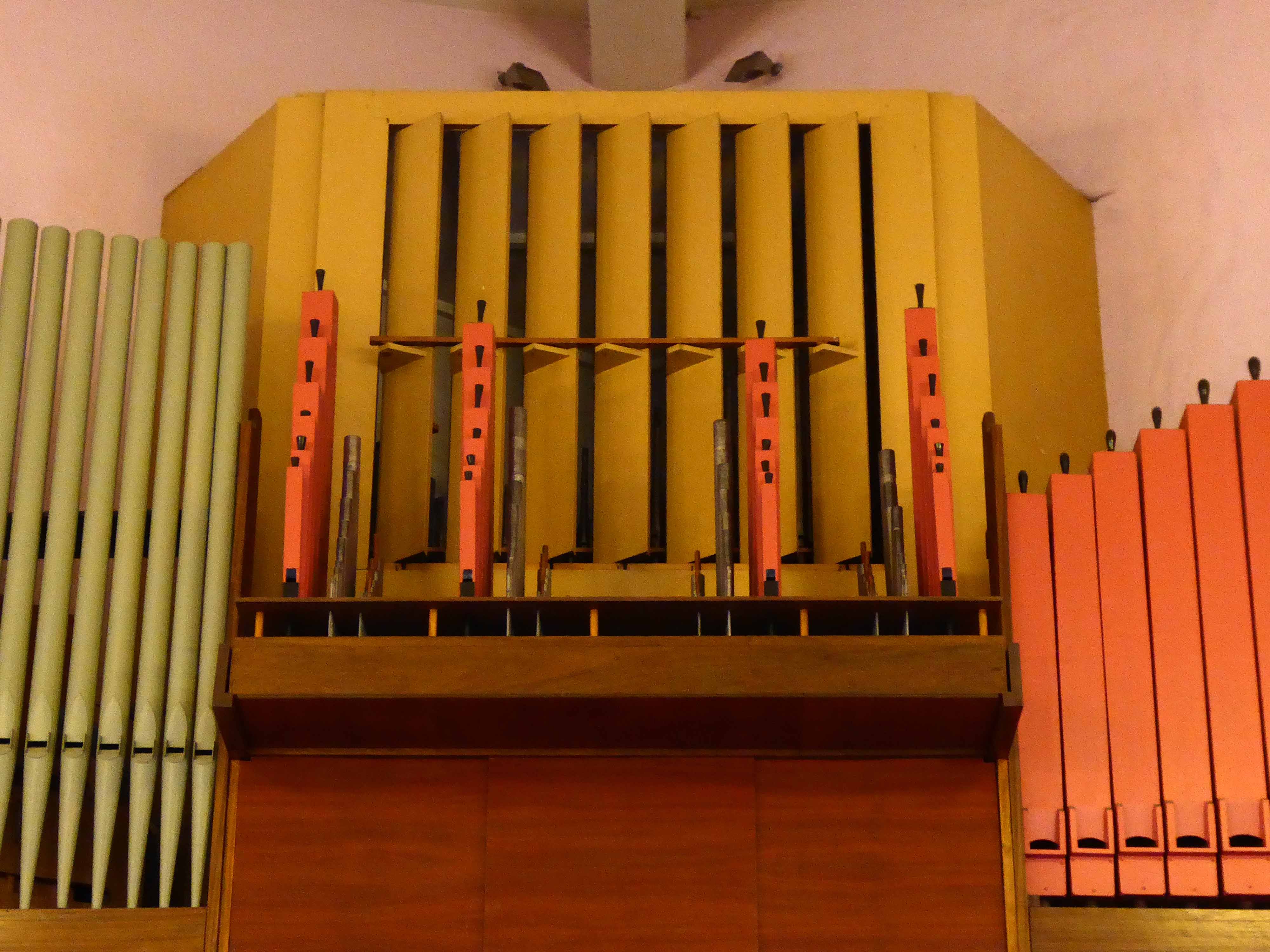
Of particular note – the organ pipes located above the main entrance.
Once again I can’t thank Rev. Peter Scott enough for giving us access to this beautiful church, serving the parishioners of Miles Platting.
 Modern Mooch