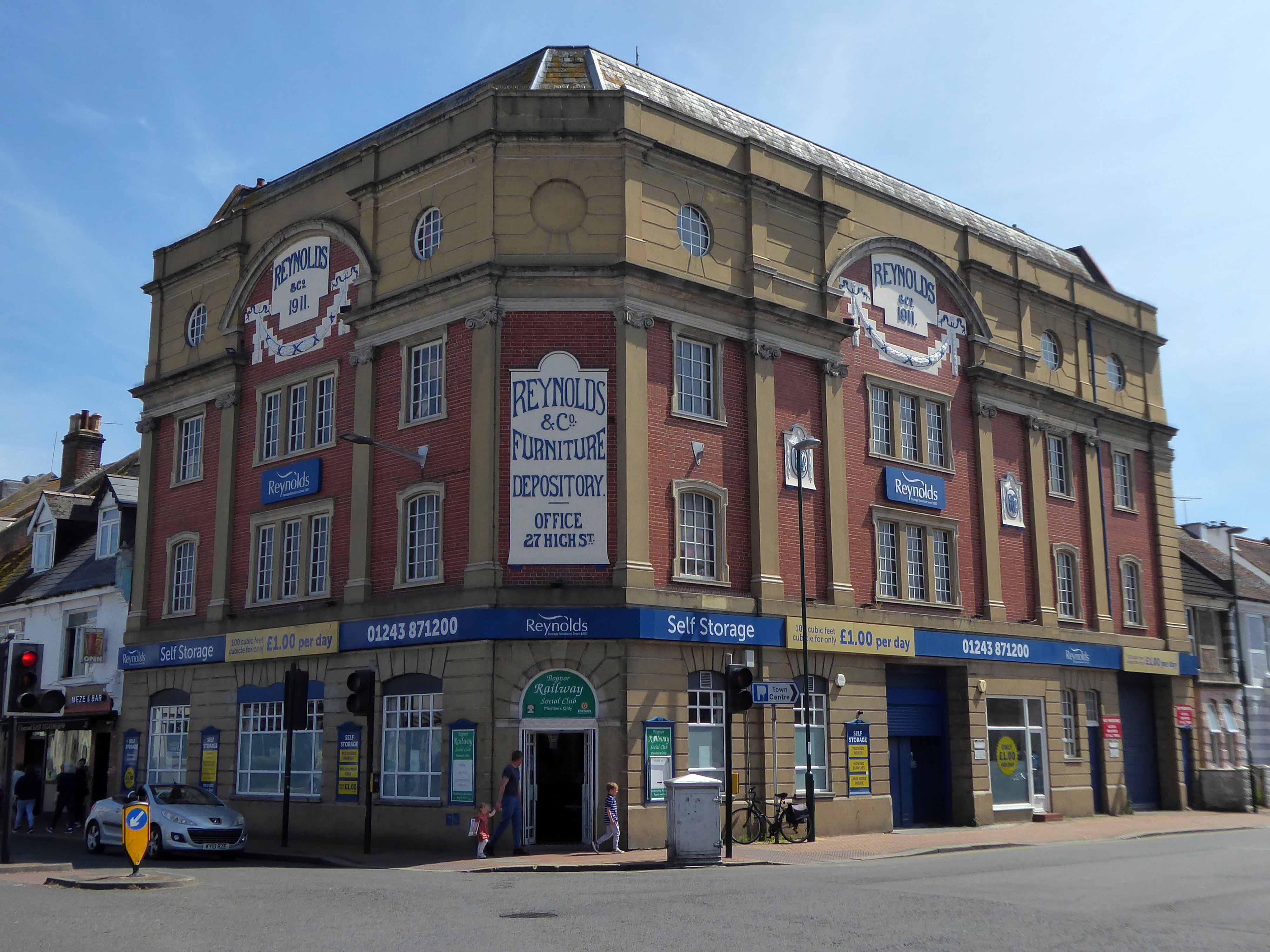
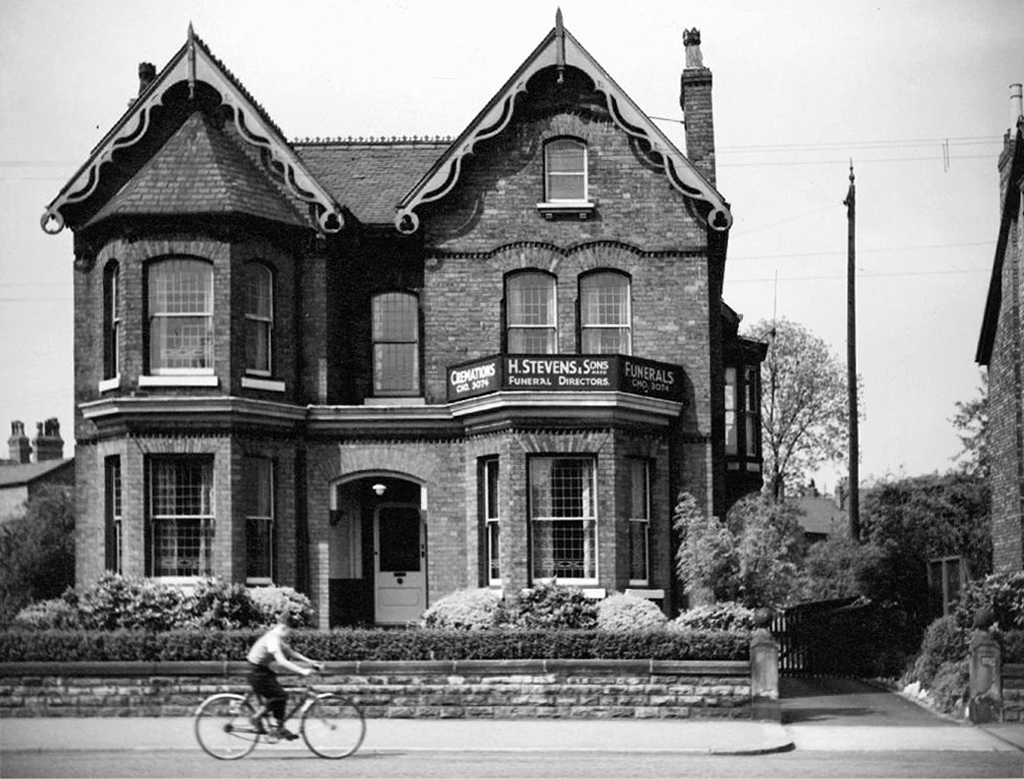
Since 1867 Reynolds has grown from a small shop to the largest furniture store in Sussex, with over 30,000 sq ft on four floors.
The Funeral Service now has three offices in Bognor Regis, Chichester and Littlehampton and the purpose built storage facility in Canada Grove continues to thrive.
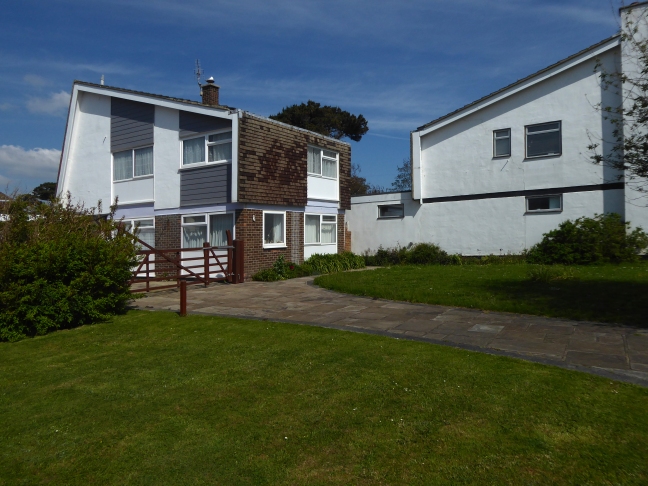
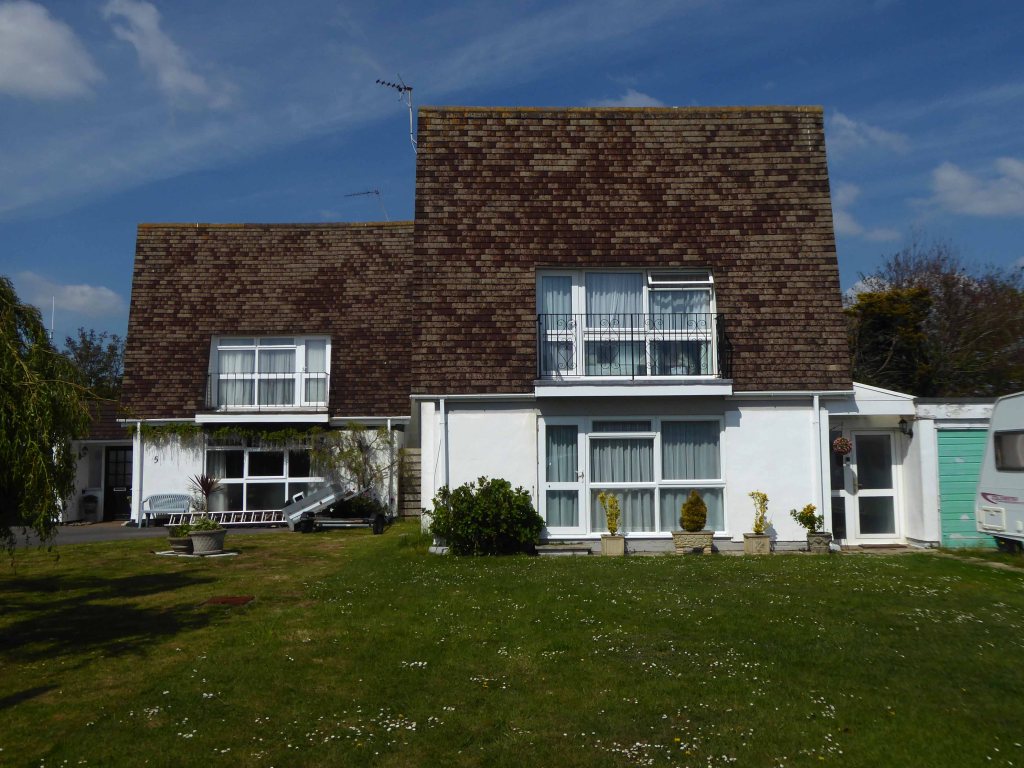
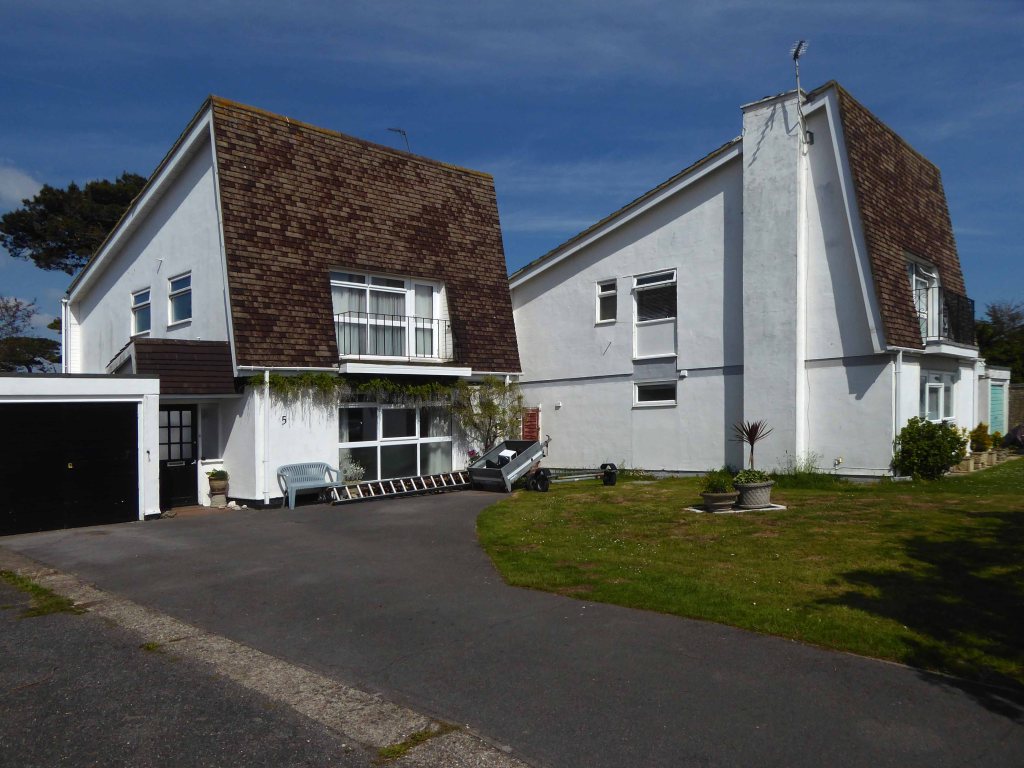
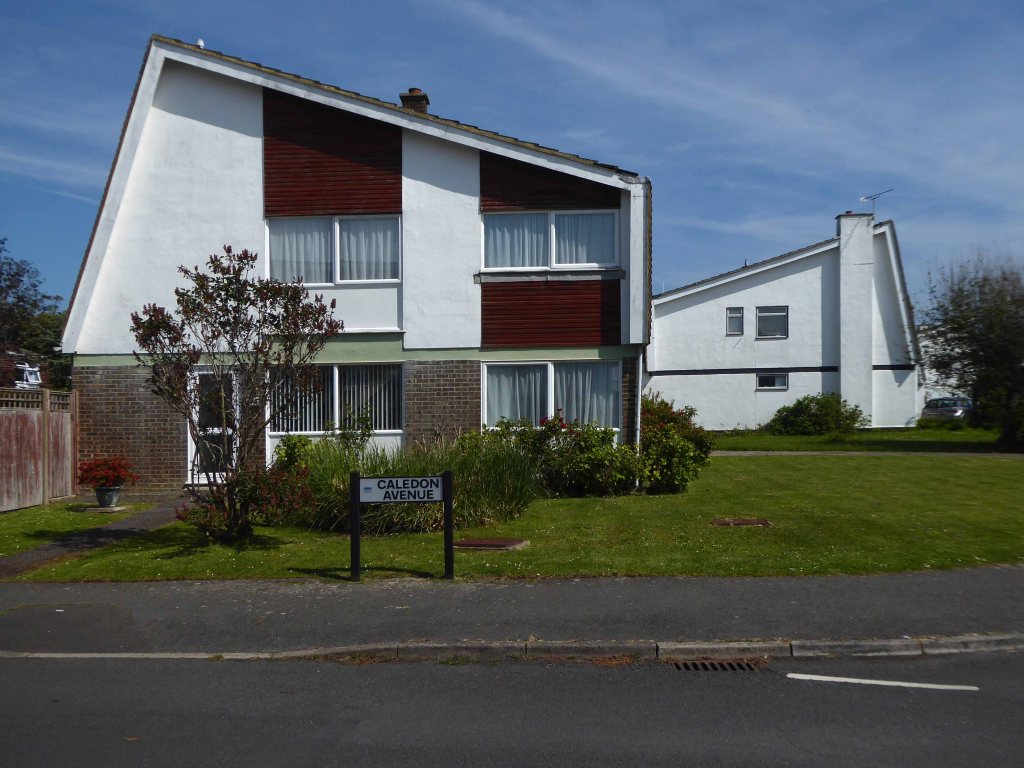
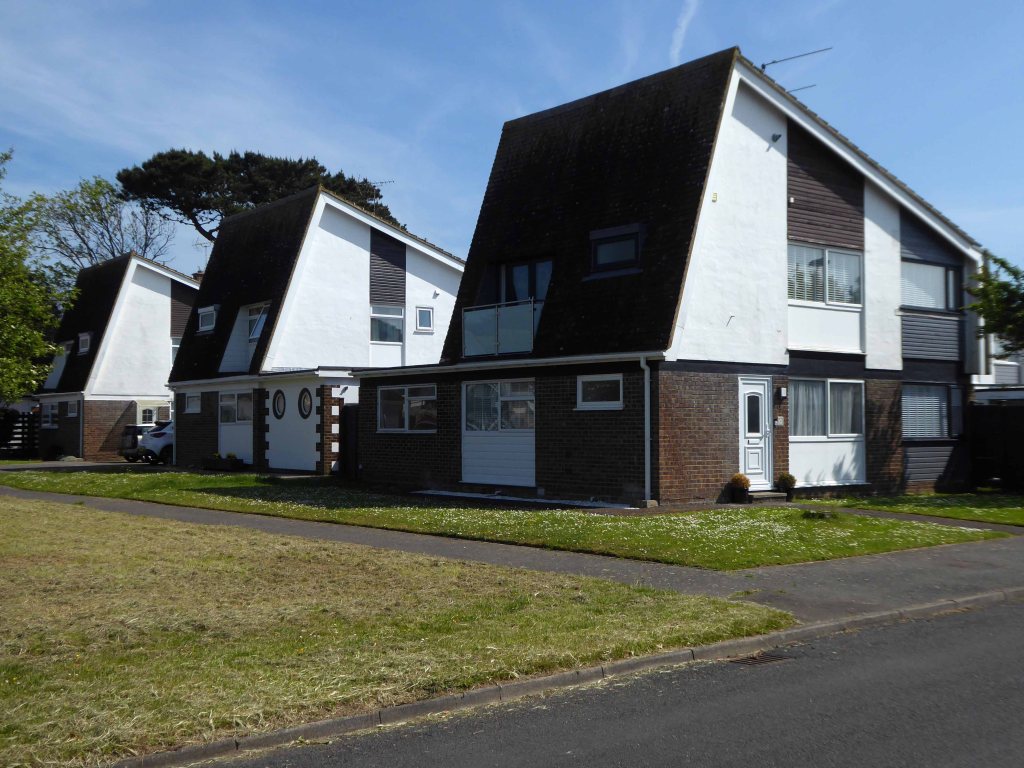
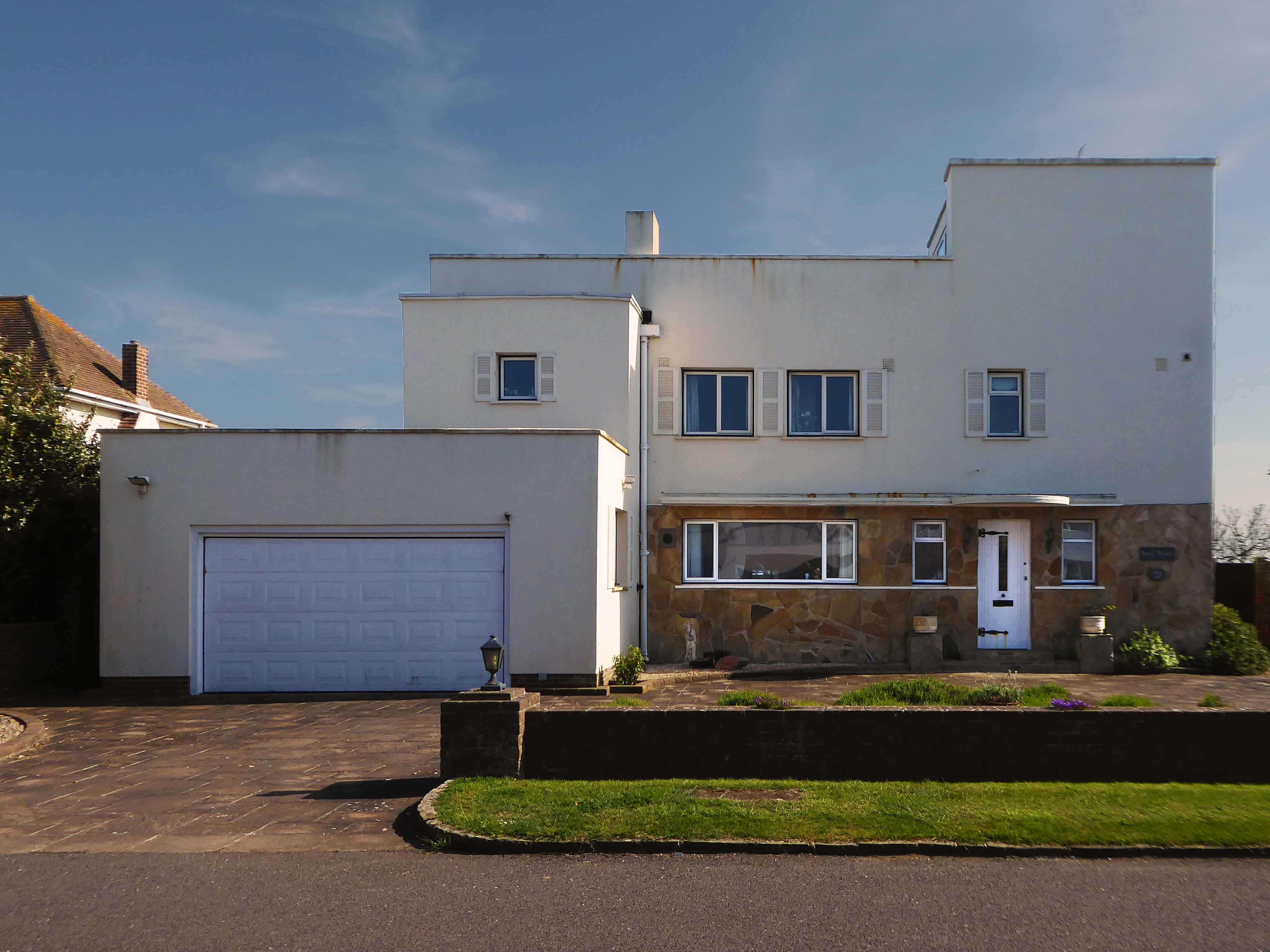
We soon found ourselves in Felpham, amongst yet more interesting housing.
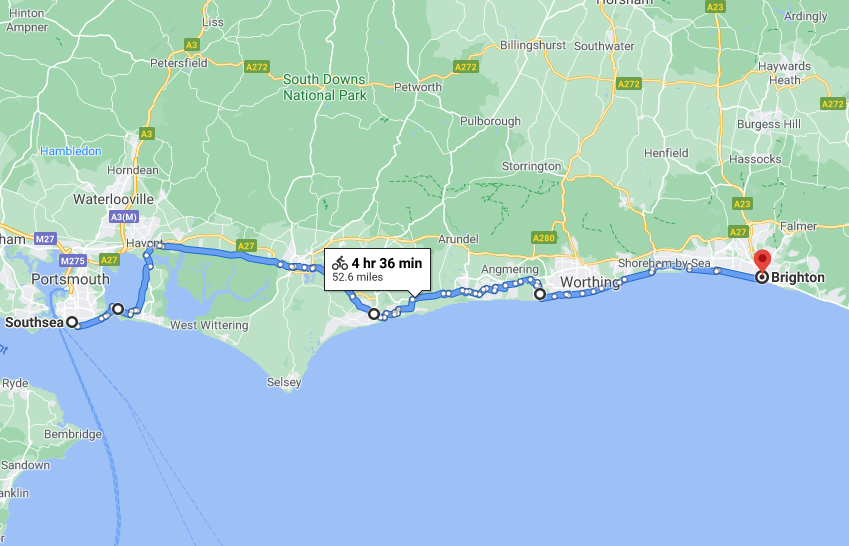
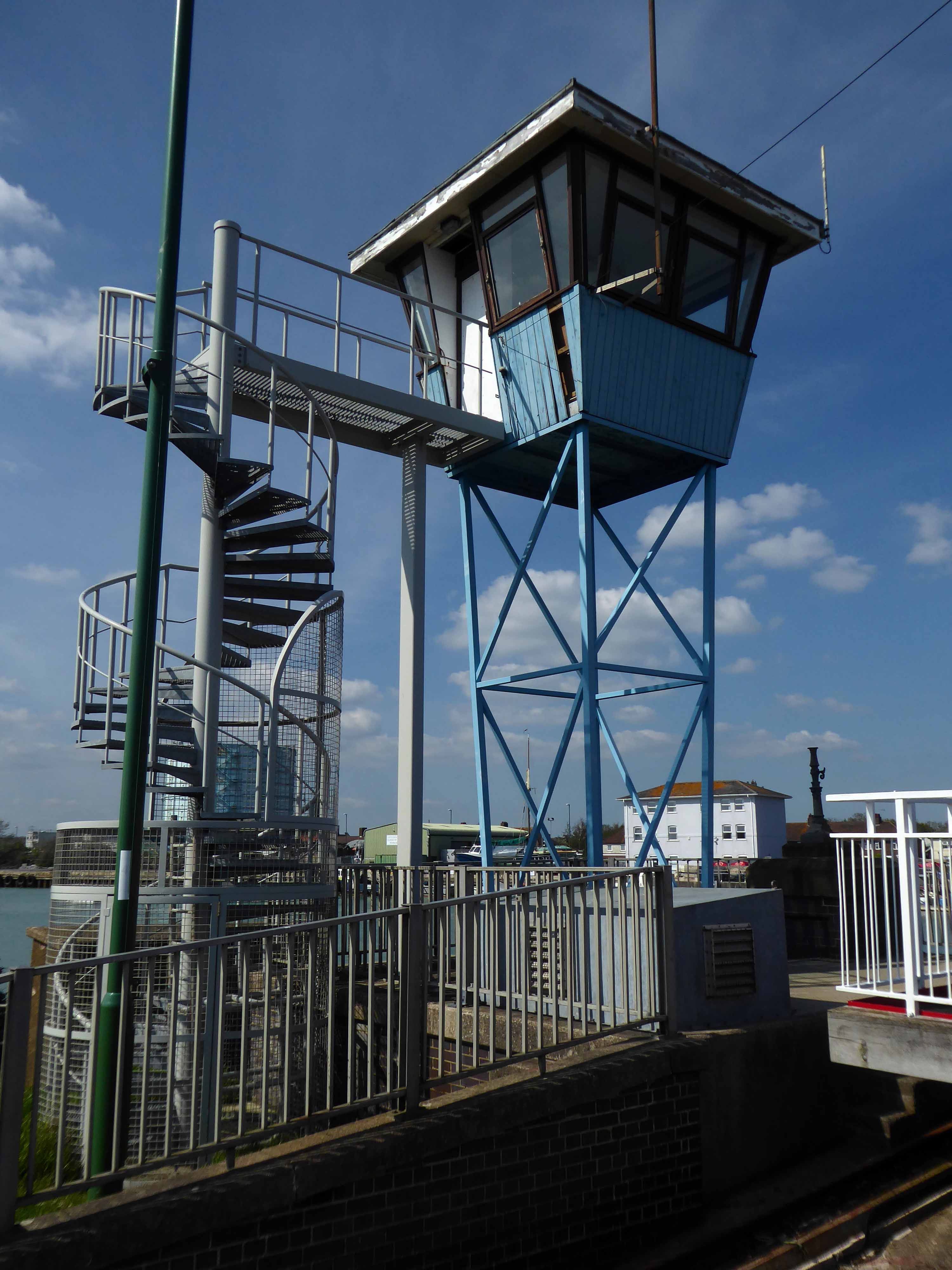
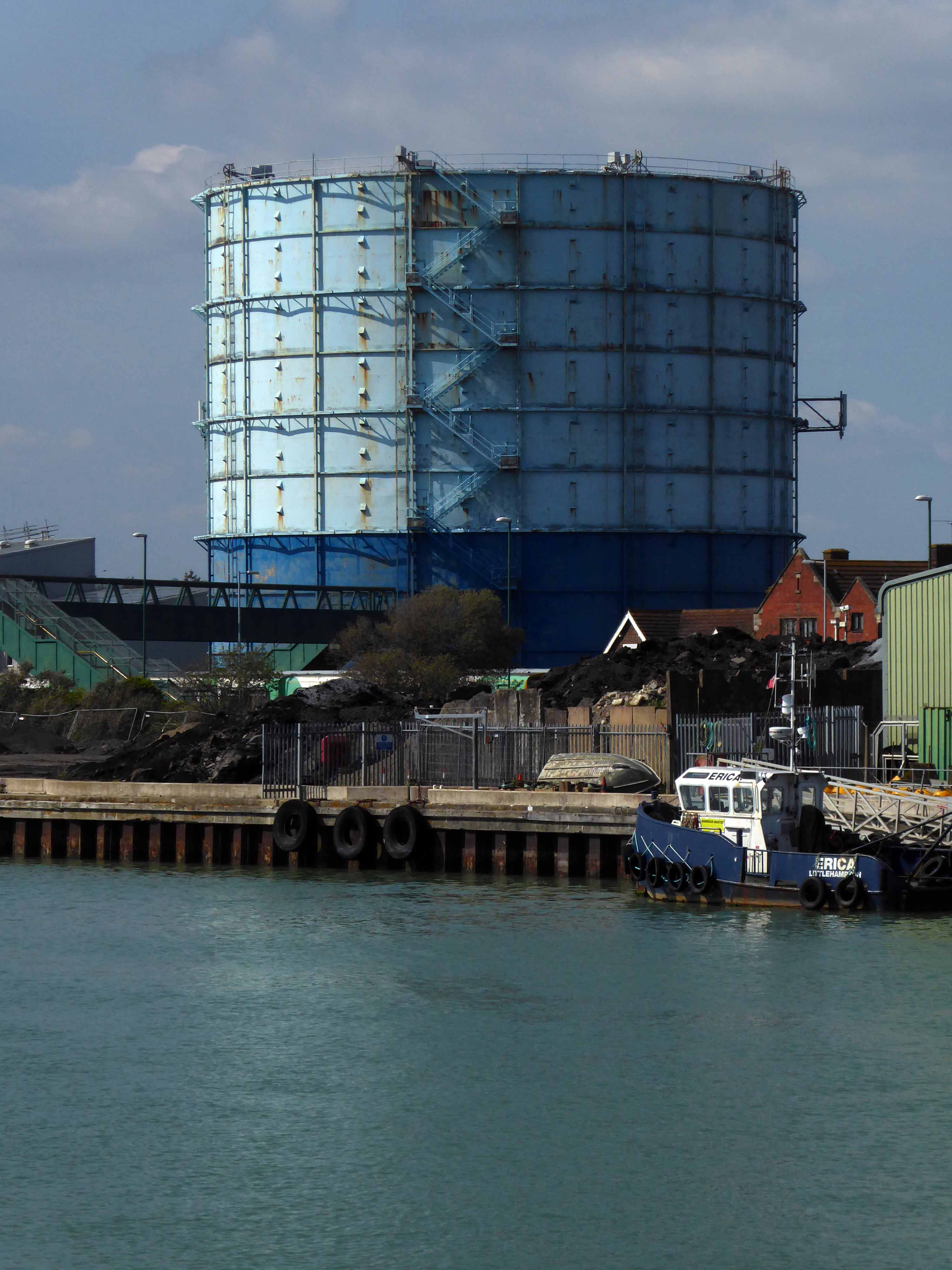
We traversed the River Arun at Littlehampton.
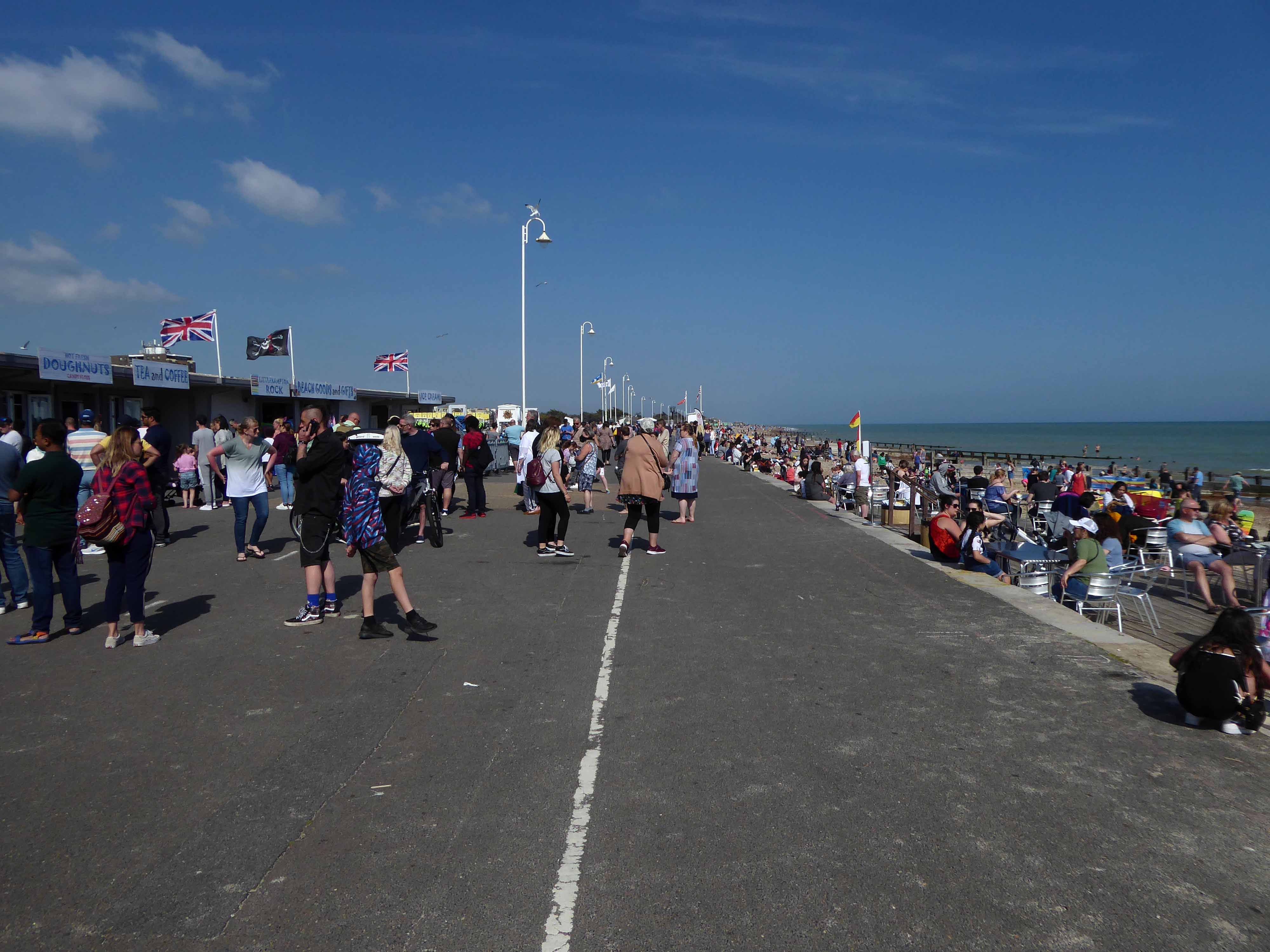
Then meshed with the milieu on the prom.
The day grew much hotter and we grew ever so slightly loster.
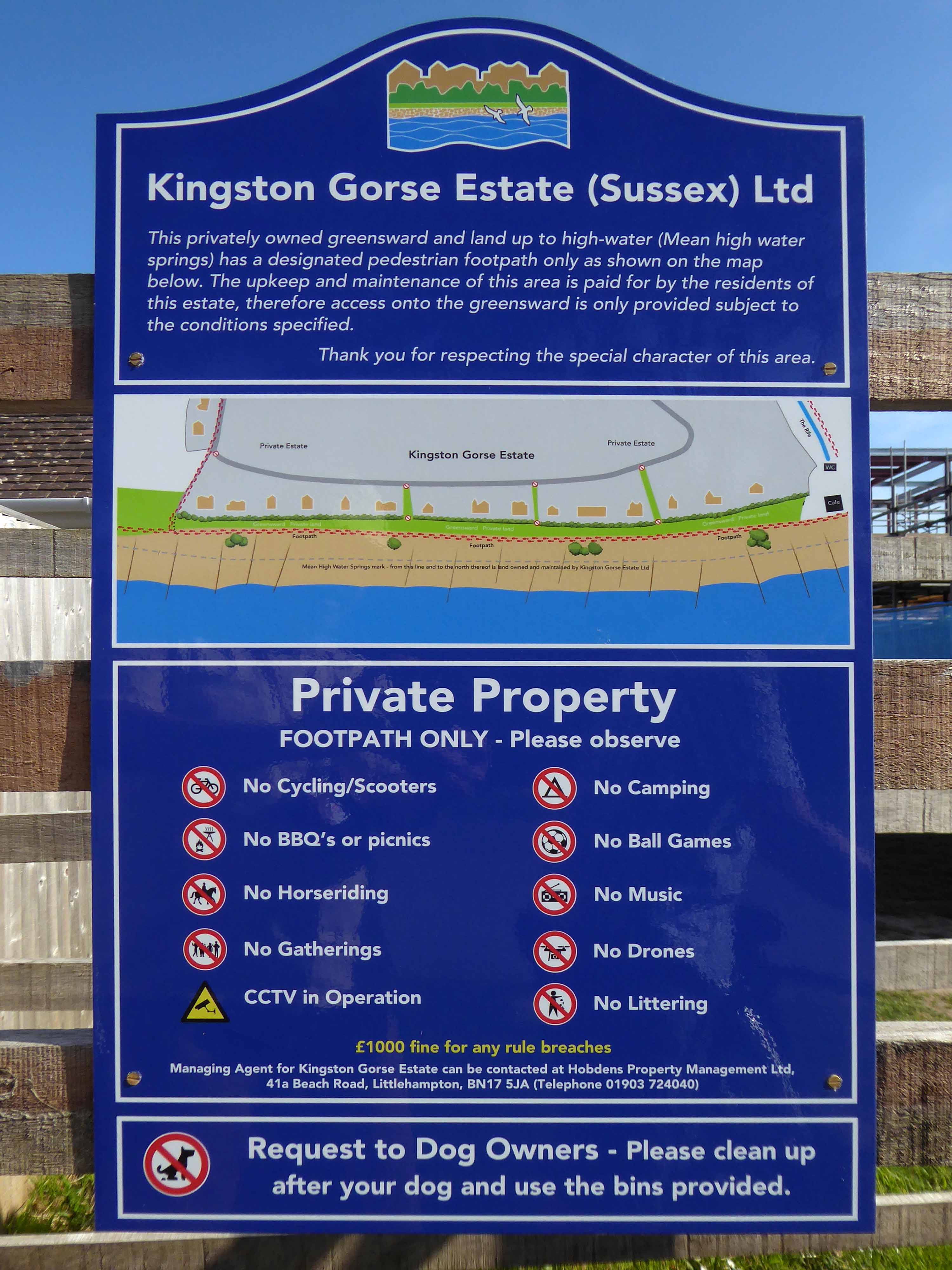
Finding our way back to the coast through the Kingston Gorse Estate – where almost everything is comprehensively prohibited.
Kingston Gorse is a beautiful seaside location close to Goring-by-Sea in West Sussex. In Kingston Gorse, there is a gorgeous housing development with a number of three, four and five bedroom homes.
In 1918 JA Candy, who owned East Kingston Farm, sold the land on which Kingston Gorse now stands to the local builder G Pesket.
In the 1920s he constructed the infrastructure and developed approx. 30 plots including Imray, which he occupied.
We arrived safely by train from Stockport at Southampton Central.
Following lengthy consideration we headed off on our bikes.
Whilst halting to review our progress, I realised that I had lost the map, a map vital to our further progress.
Returning to the station I found it nestled against the kerb.
Further assessment of our onward journey resulted in yet another retracing of steps.
In the shadow of Southampton Station dwarfed by Norwich House.
Resolute, we confront the fact that we are unsure of the route and following close scrutiny of the map, our environs and the surrounding signage, we proceed eastward towards our destination.
Wyndham Court – architects Lyons Israel Ellis, E.D. Lyons being the partner in charge along with Frank Linden and Aubrey Hume.
Leaving the city and heading along the Weston Shore – Southampton Water.
To our right several Seaside Moderne shelters
Tim feasts on a Mint Club biscuit.
To our left are the tower blocks of Weston Farm Foreshore – L. Berger City Architect 1963
In the distance Canberra Towers Ryder and Yates 1967
Residents living on the second floor of 24-floor block Canberra Towers, on Kingsclere Avenue in Weston, were told to evacuate as flames erupted inside a kitchen.
The Daily Echo spoke to the residents of the affected flat, who said the cat knocked paper that was on top of the microwave, which then fell onto the toaster.
Tracey Long said:
I’ve got two cats, and Sponge was the one who knocked the paper.
He knocked paper off the microwave and into the toaster, it was quite scary.
I lost him in the flat but now I’ve found him again.
Arriving just in time to be too late, next thing you know we’re bobbing along on the Hamble Warsash Ferry.
The obliging ferry folk having taken us across the estuary, despite our tardiness.
The village and the River featured in the 1980s BBC television series Howards’ Way.
Sadly little evidence of the successful TV show remains, however happily Henry VIII’s Dock and an Iron Age Fort have prevailed.
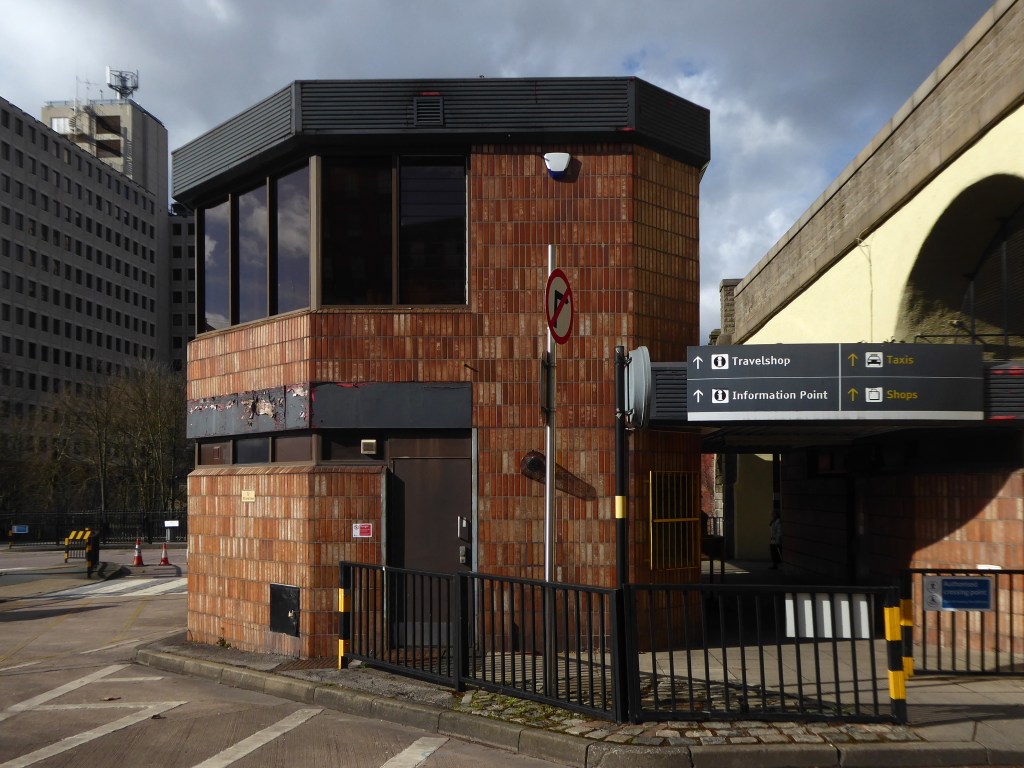
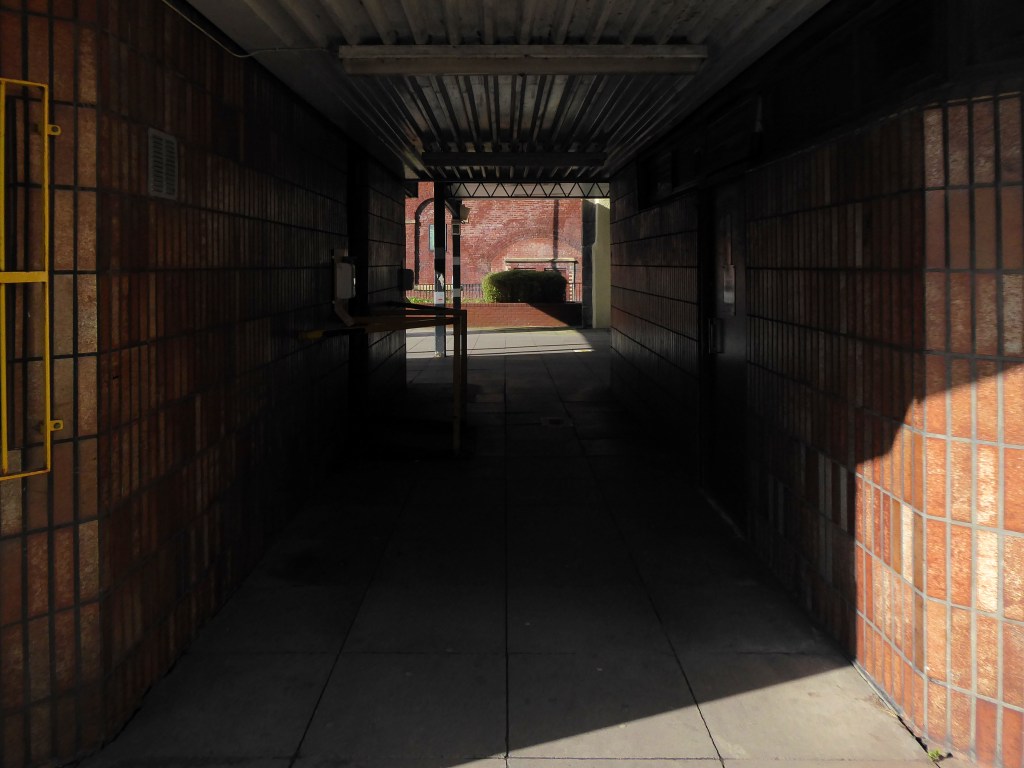
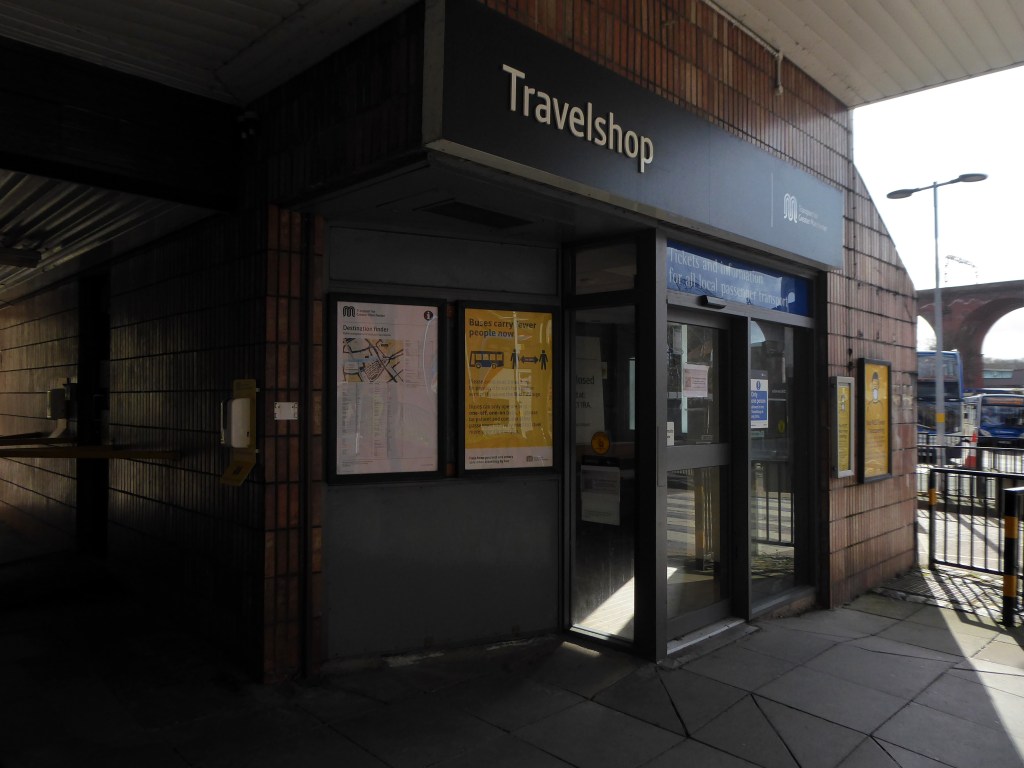
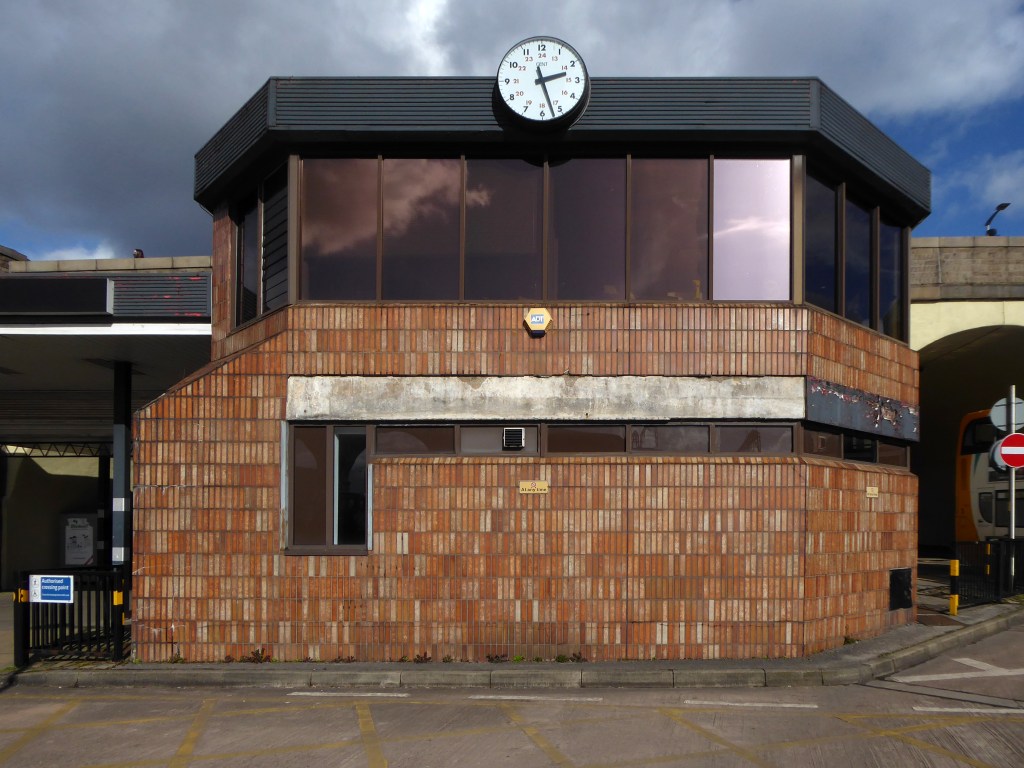
Onward to Gosport where we happen upon a diminutive yet perfectly formed Bus Station.
Originally built in the 1970s, the bus station was described in 2012 as knackered by the council chief executive at the time, Ian Lycett, and an investment plan was drawn up.
Talk of redevelopment then resurfaced in 2015, before the site was put on the market in 2016.
Keith Carter, retiring owner of Keith’s Heel Bar in Gosport Precinct, has described the bus station as a missed opportunity.
The nearby Harbour and Seaward Towers have faired a little better, newly clad and their tiled murals intact.
While working for George Wimpey and Co. Ltd, and together with J E Tyrrell, Chief Architectural Assistant to Gosport Borough Council, Kenneth Barden was responsible for tiled murals on Seaward Tower and Harbour Tower, two sixteen-storey tower blocks built in 1963 on the Esplanade in Gosport.
They really are something they really are.
And so following a ride on the Gosport Ferry we arrive at Portsmouth Harbour.
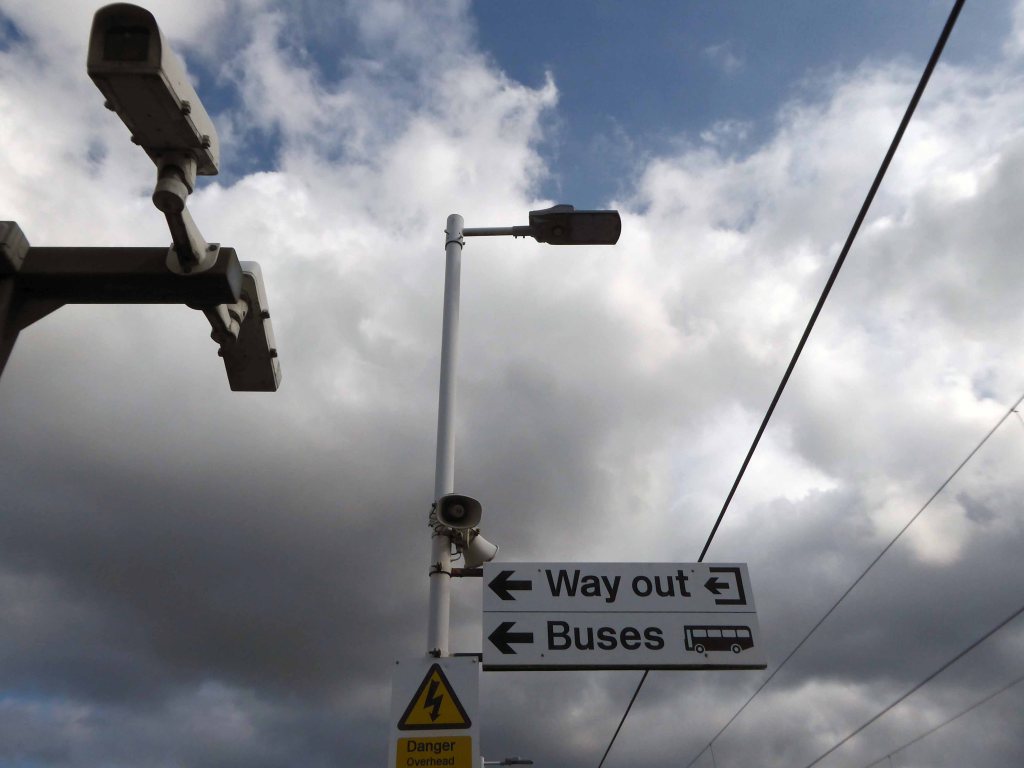
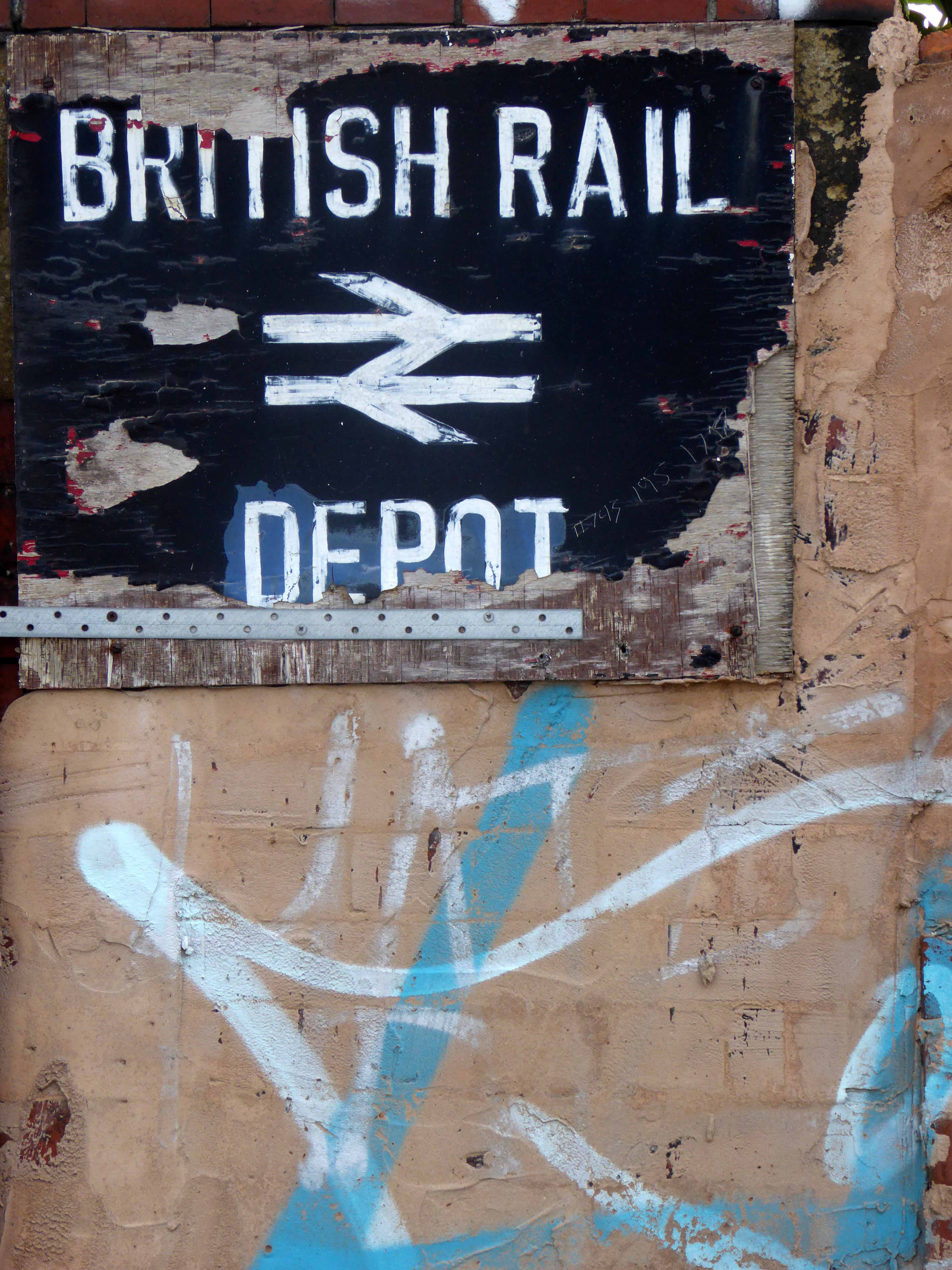
The land where British Rail signage refuses to die!
I have passed this way before on a Bournemouth to Pompey trip and both Tim and I were students at the Poly here in the 70s – more of which later.
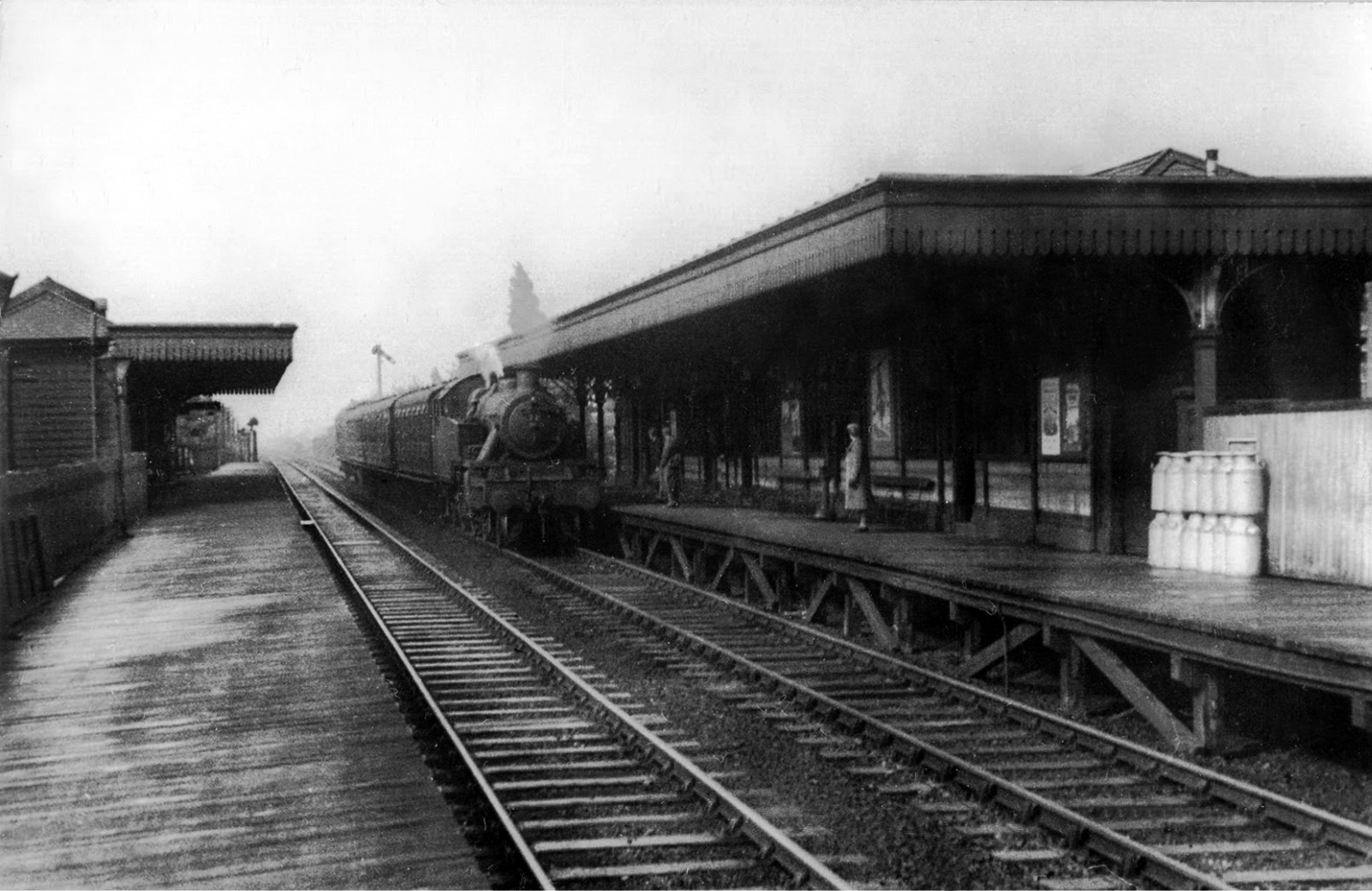
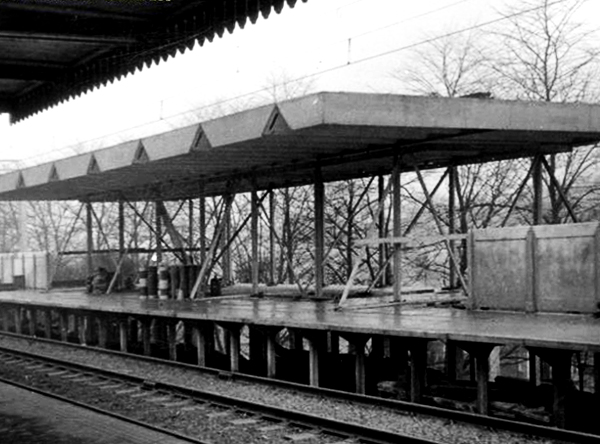
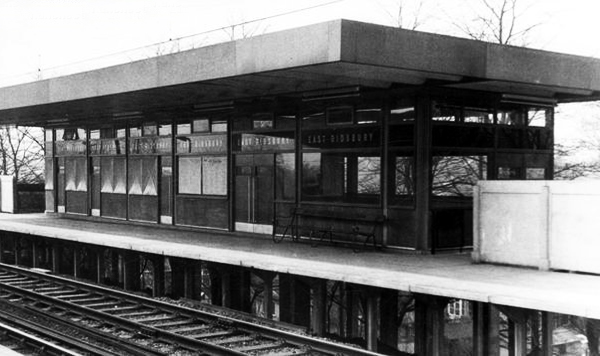
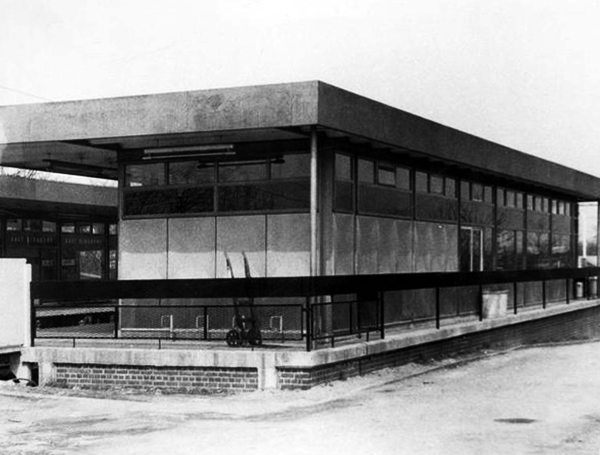
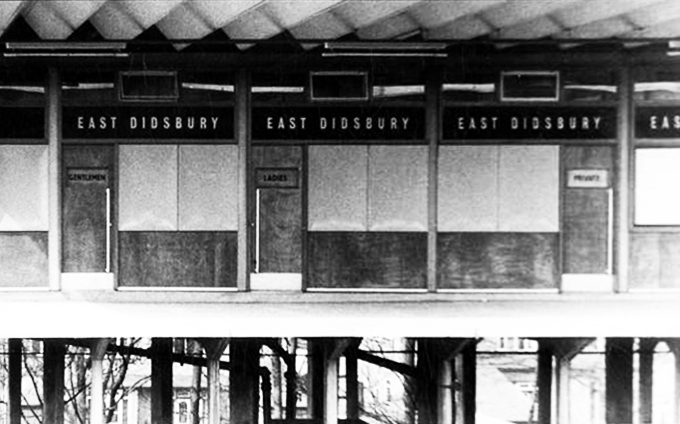
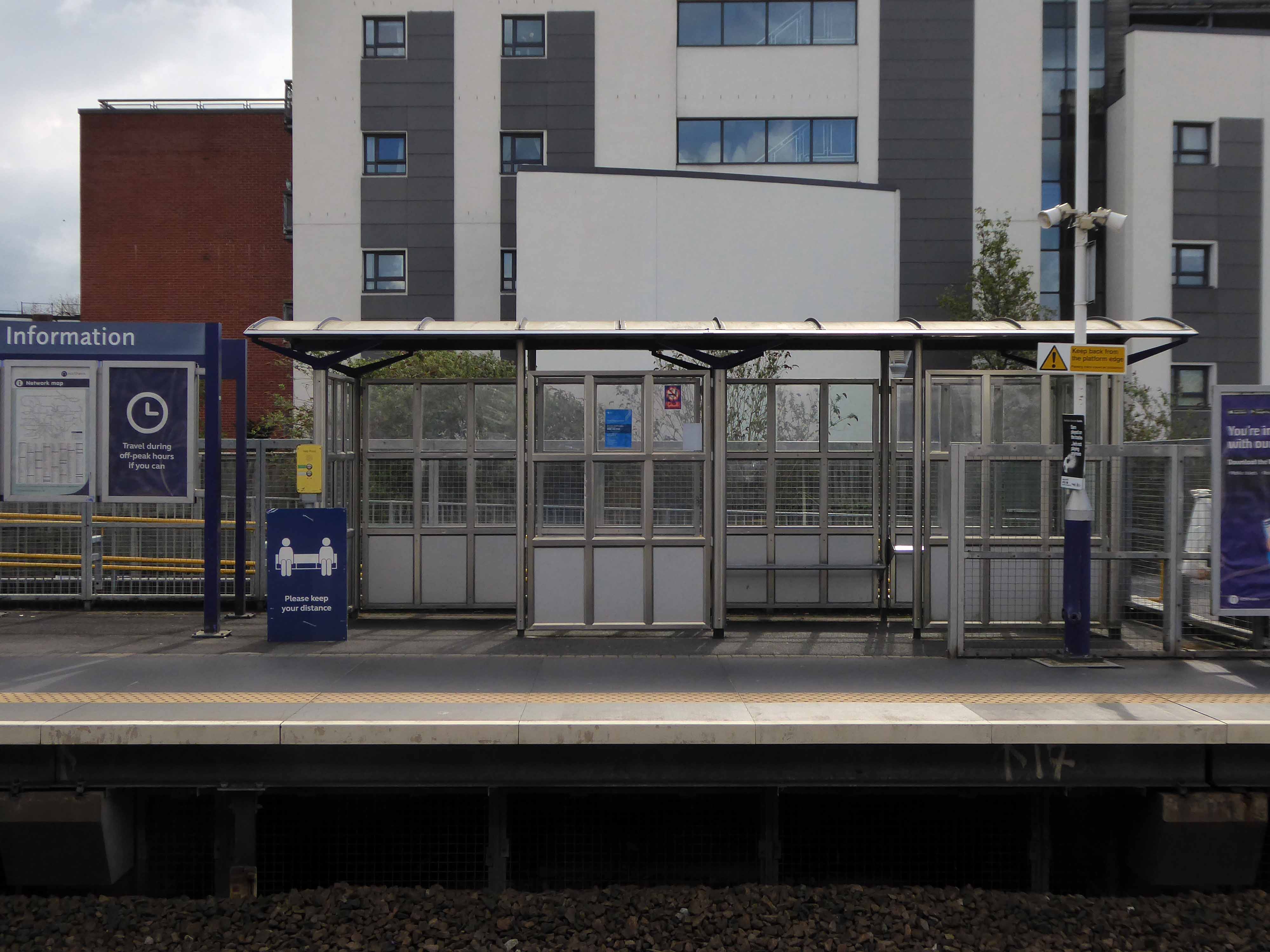
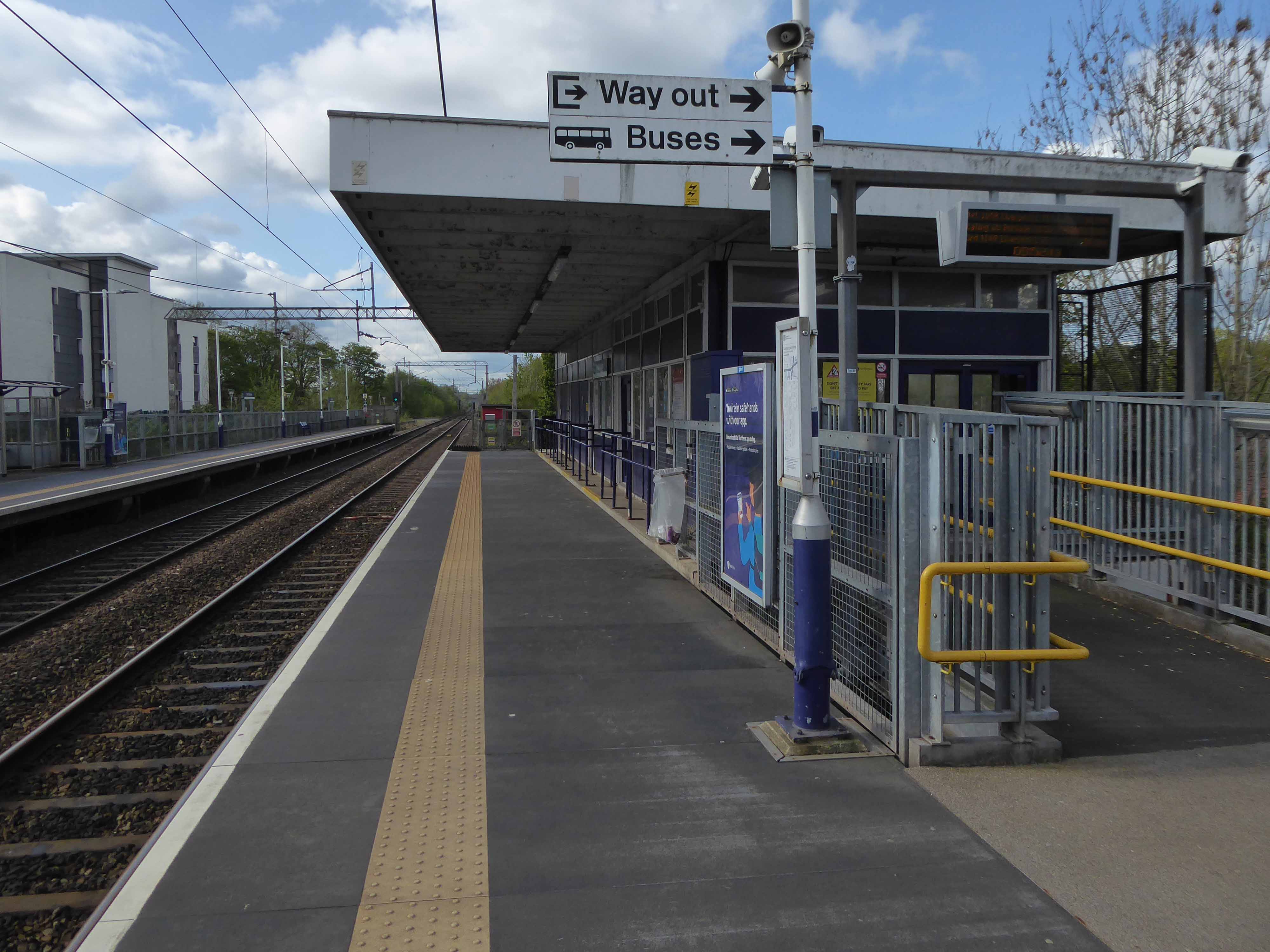
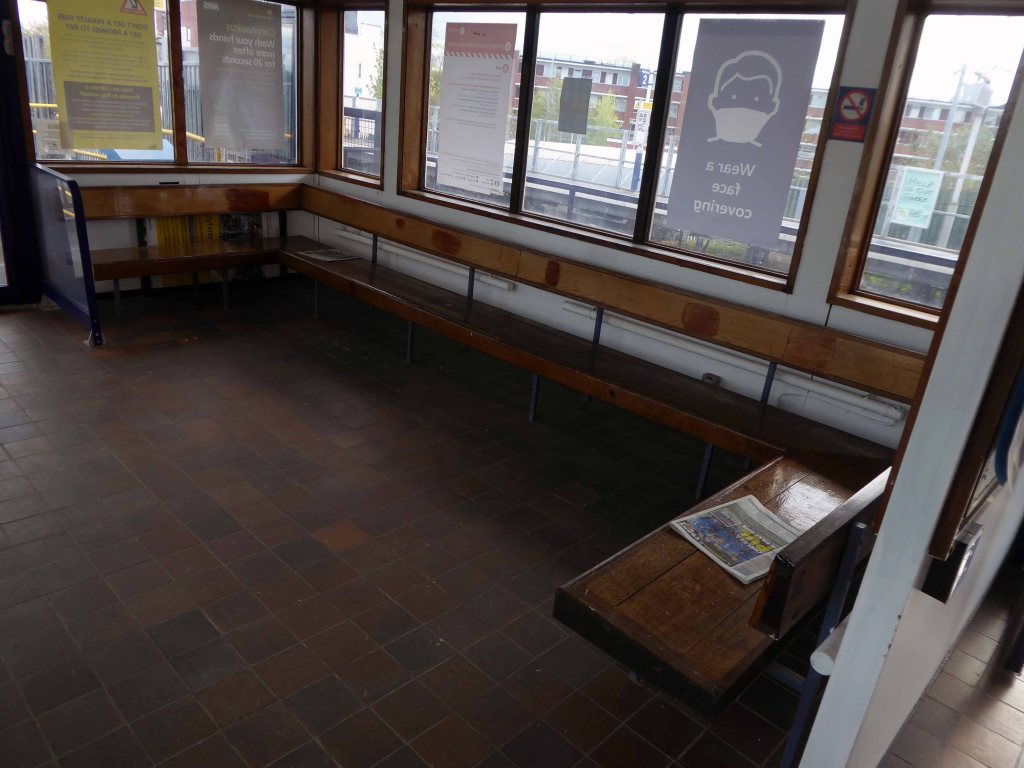
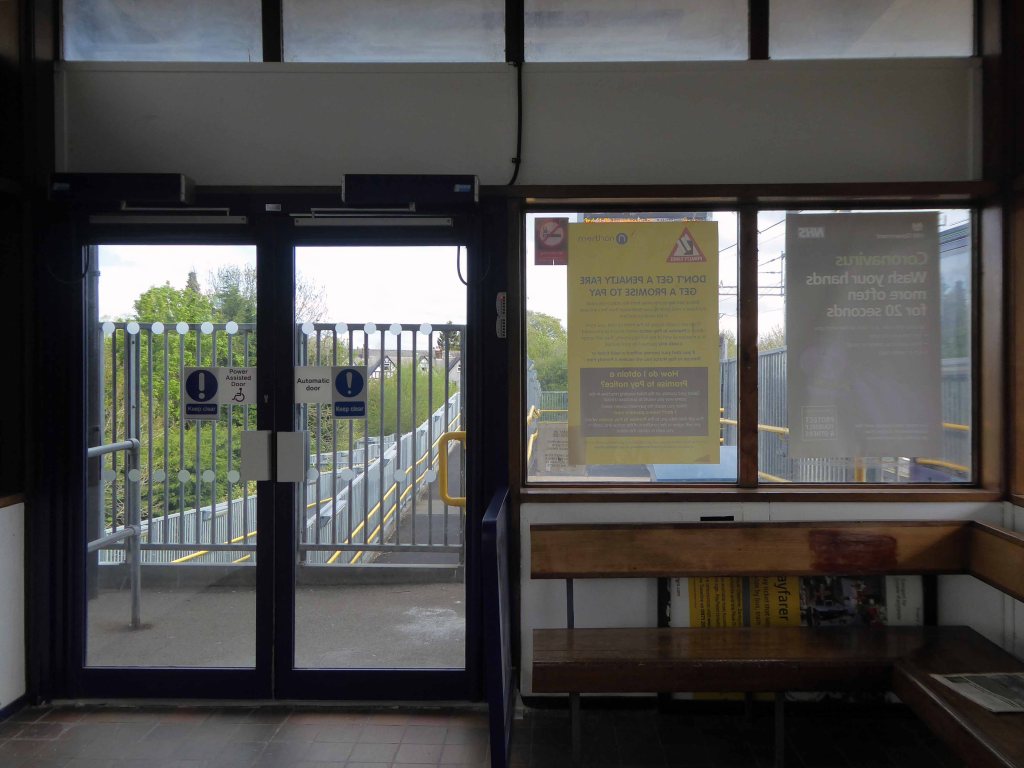
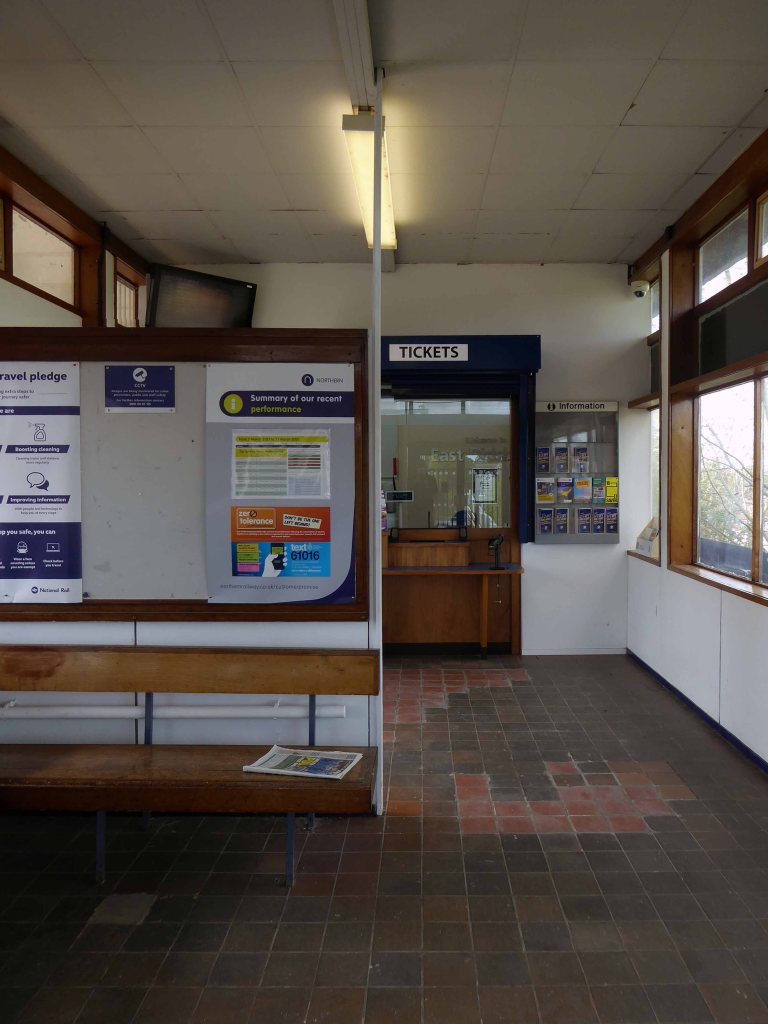
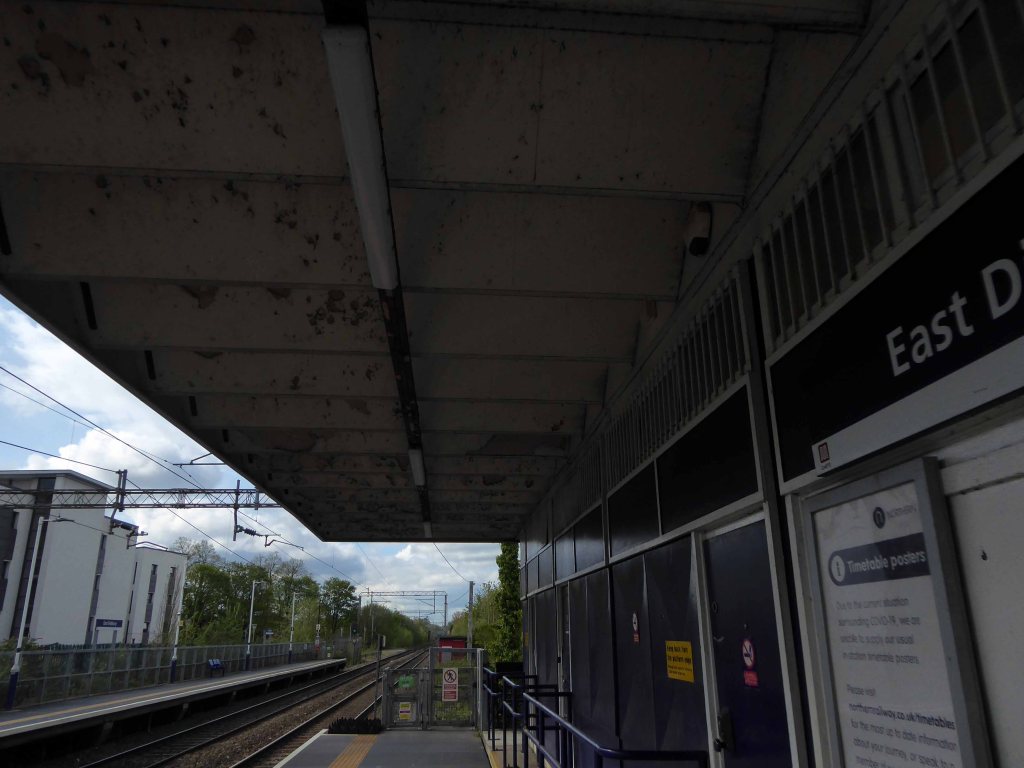
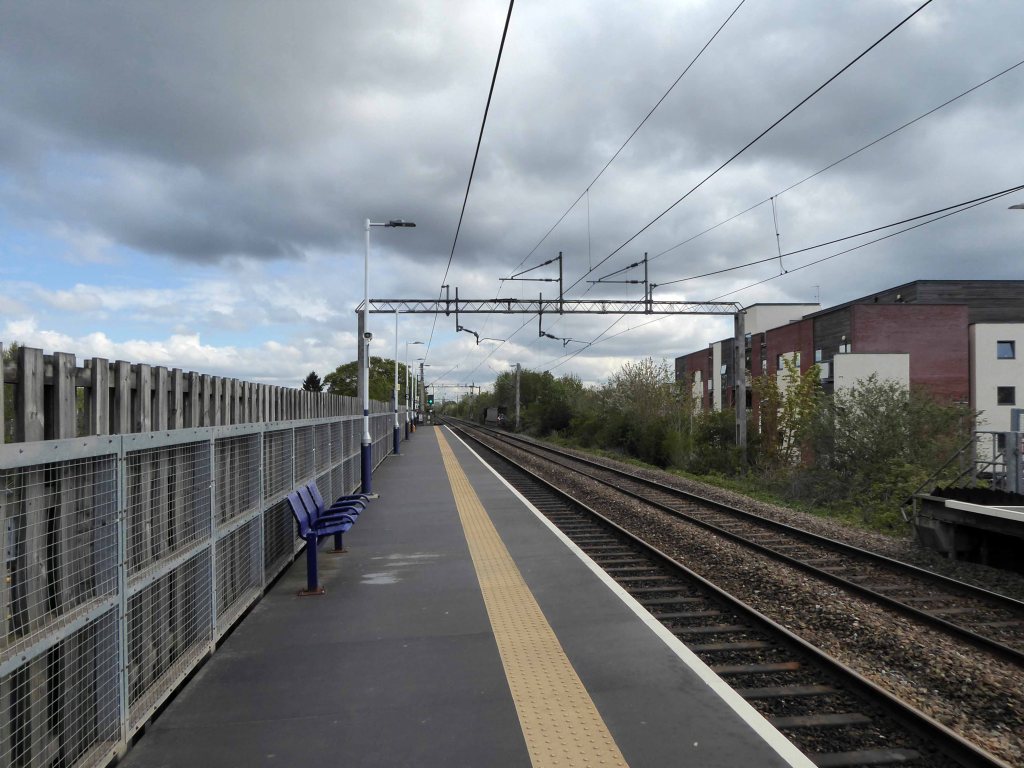
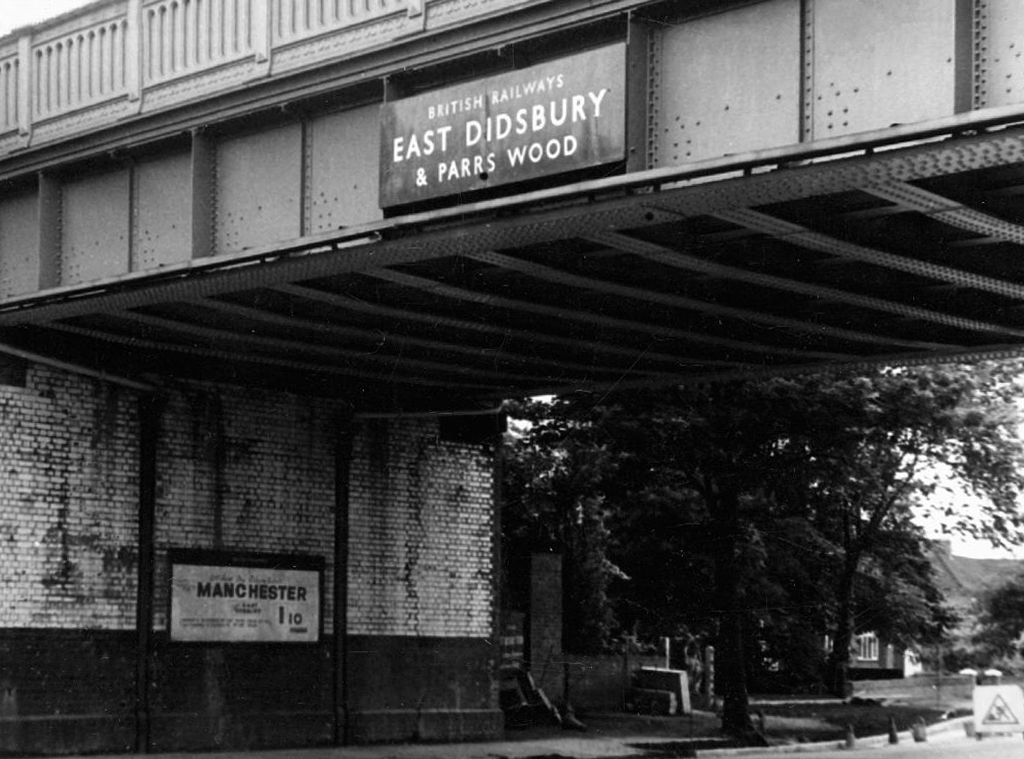
East Didsbury Station was opened in 1909 by the London and North Western Railway and, until 6 May 1974, was called East Didsbury and Parrs Wood.
From 1923, the line was operated by the London Midland and Scottish Railway. Following the formation in 1948 of British Rail, rail services were operated by the London Midland Region of British Railways, then North-Western Regional Railways.
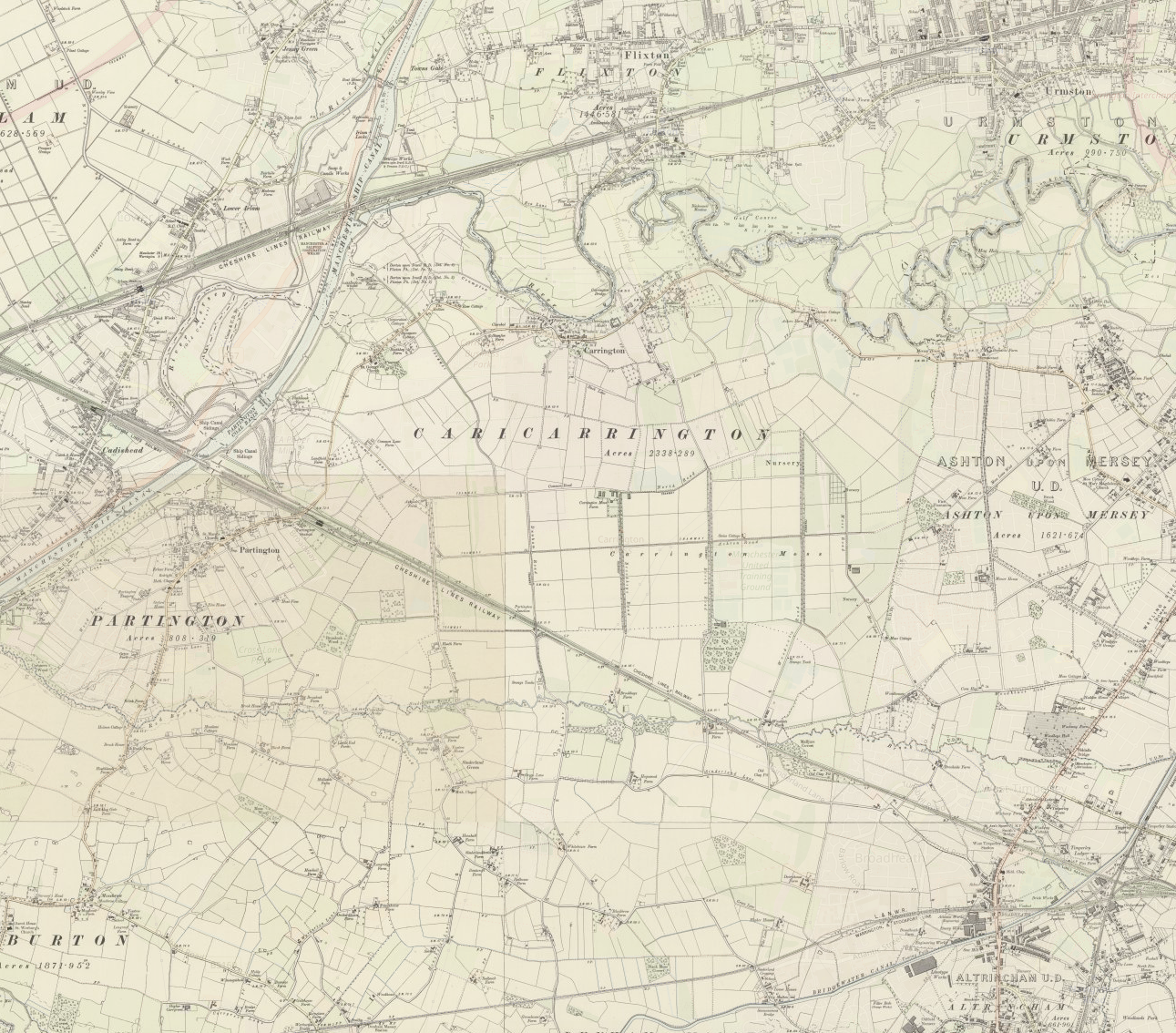
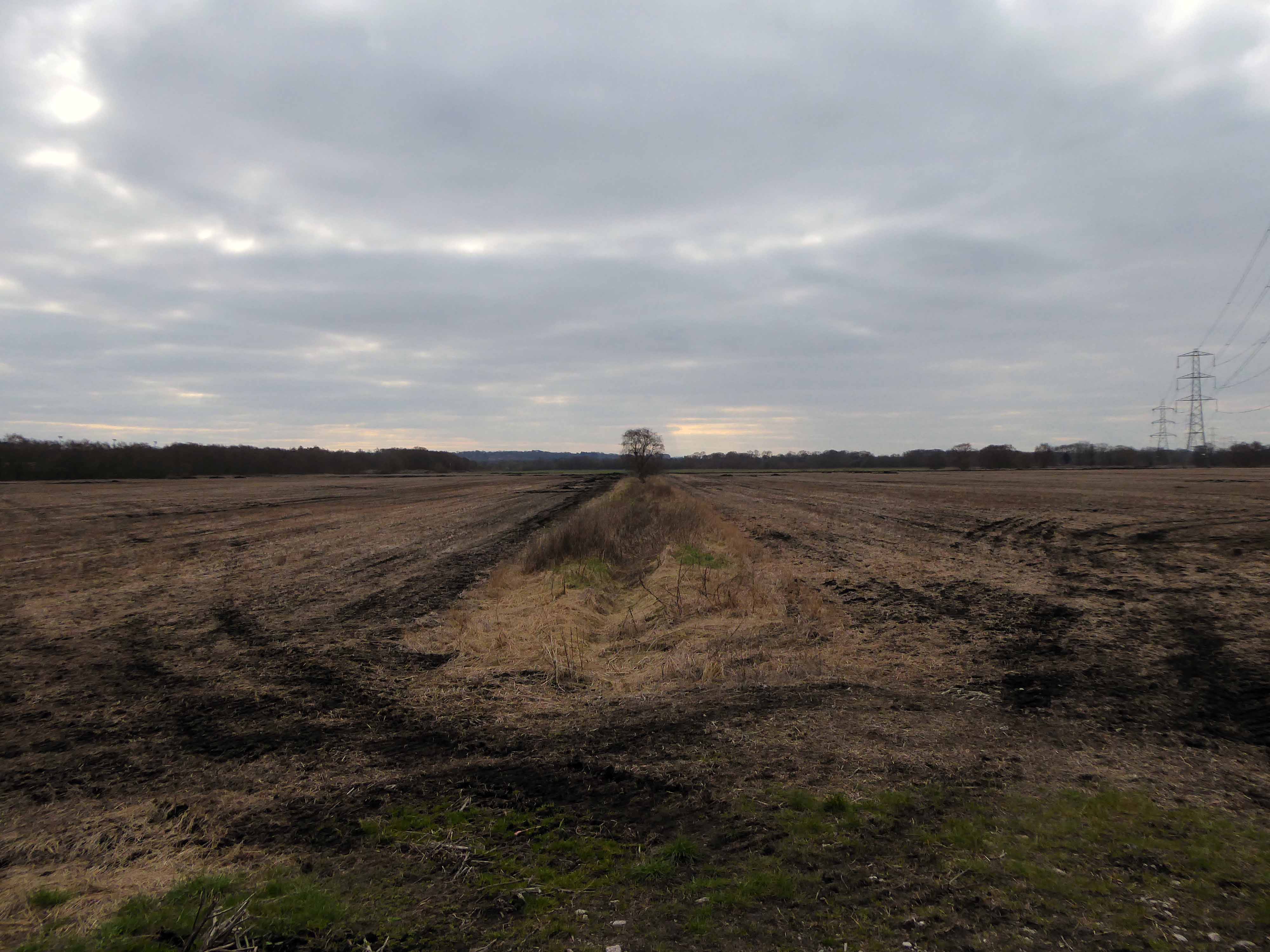
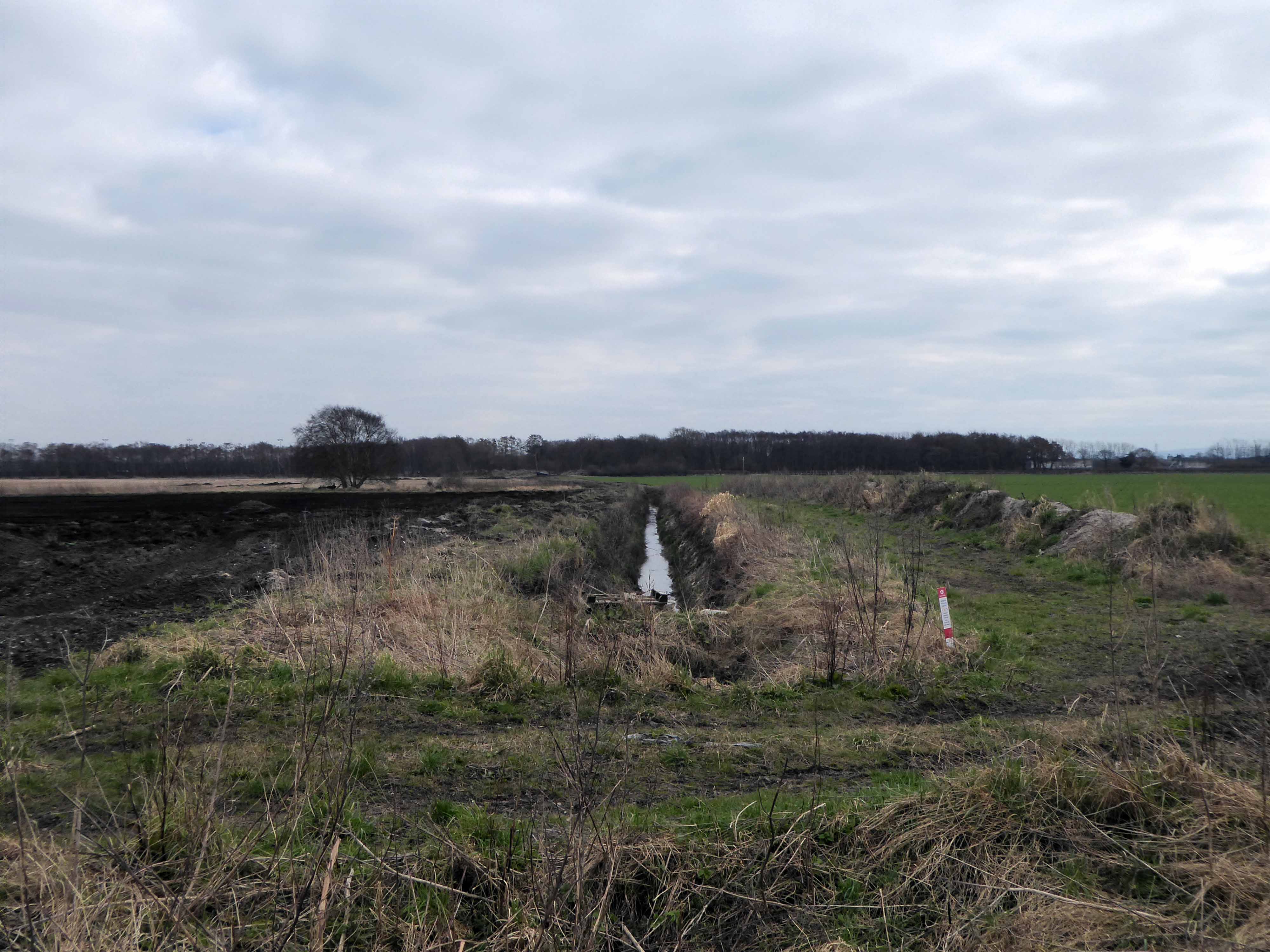
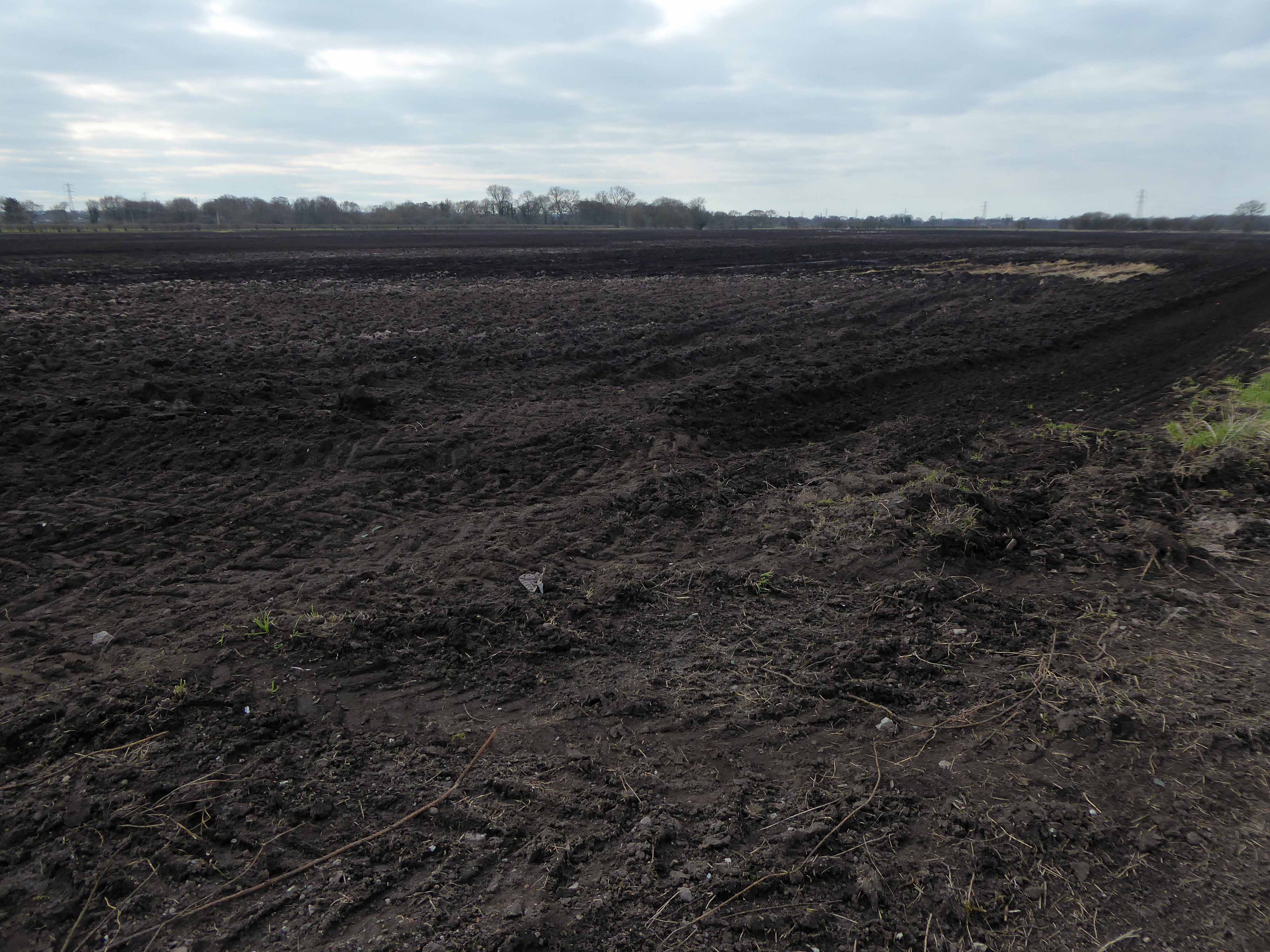
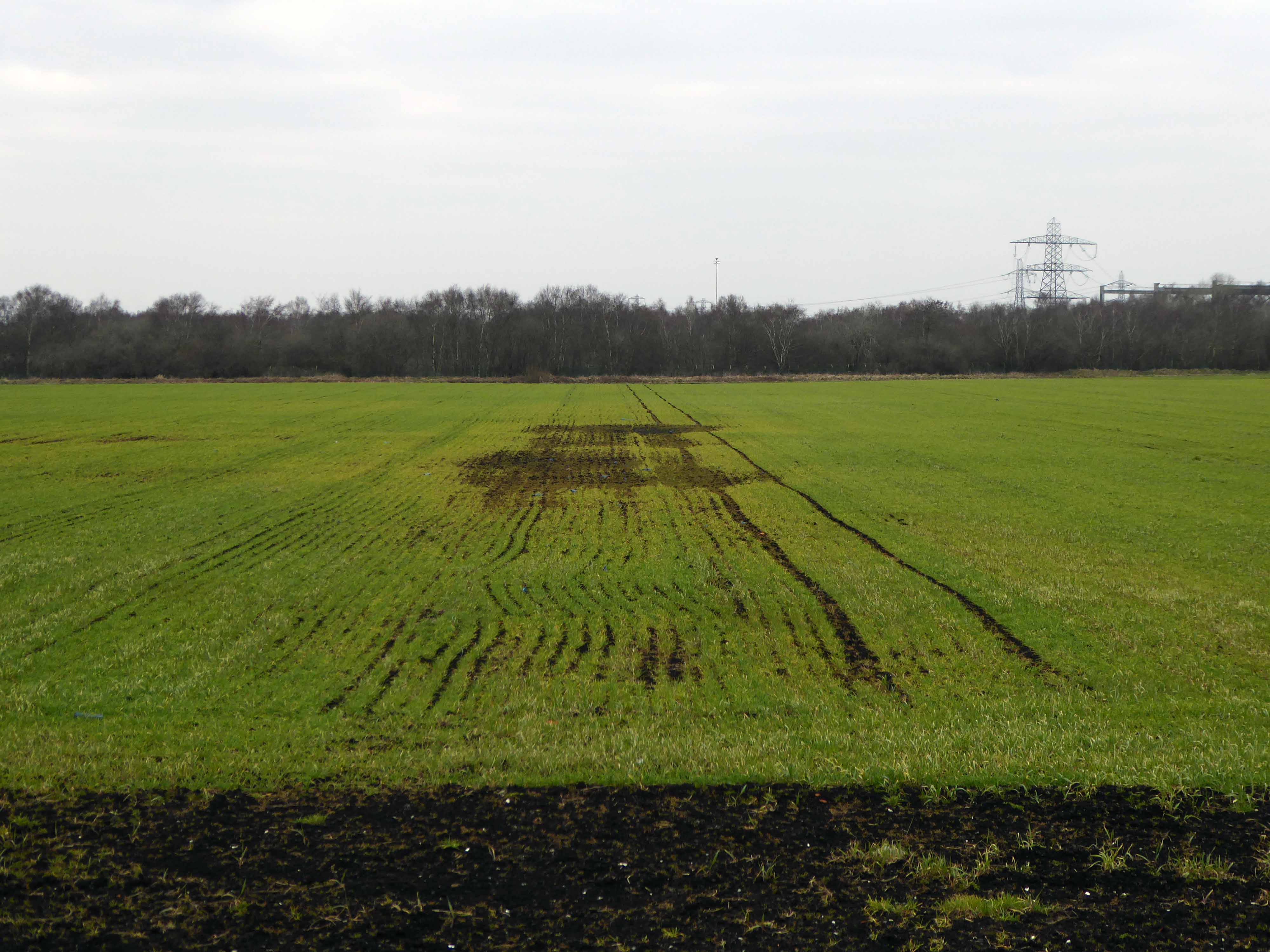
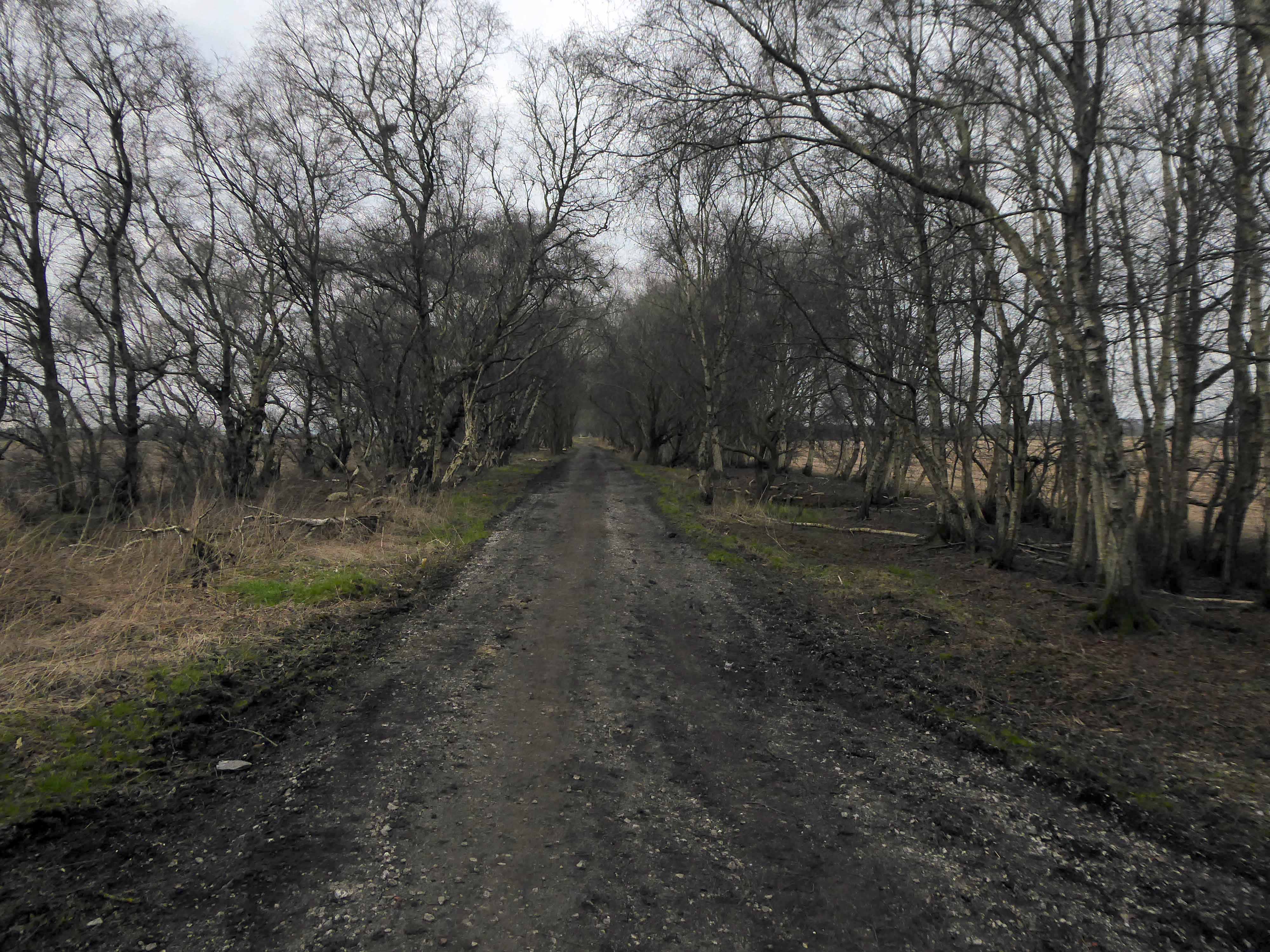
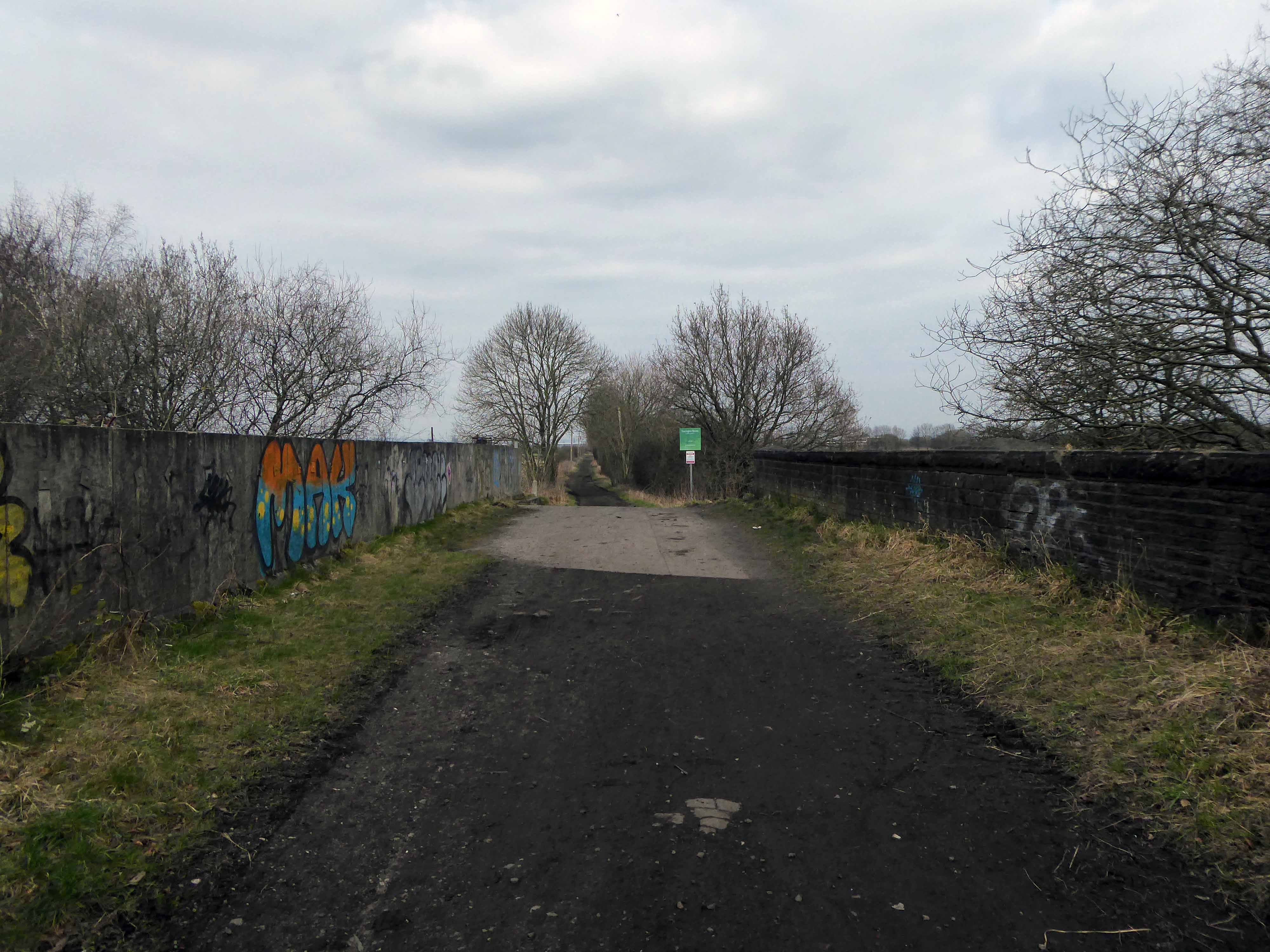
Carrington Moss is a large area of peat bog near Carrington in Greater Manchester, England. It lies south of the River Mersey, approximately ten miles south-west of Manchester, and occupies an area of about 1,100 acres..Originally an unused area of grouse moorland, the moss was reclaimed in the latter half of the 19th century for farming and the disposal of Manchester’s waste. A system of tramways was built to connect it with the Manchester Ship Canal and a nearby railway line. During the Second World War the land was used as a Starfish site and in the latter half of the 20th century, a large industrial complex was built along its northern edge. More recently, several sporting facilities have been built on Carrington Moss. Today, the land is still used for farming and several nature reserves have been established within its bounds.
Parts of Carrington Moss are accessible to the public over several rights of way.
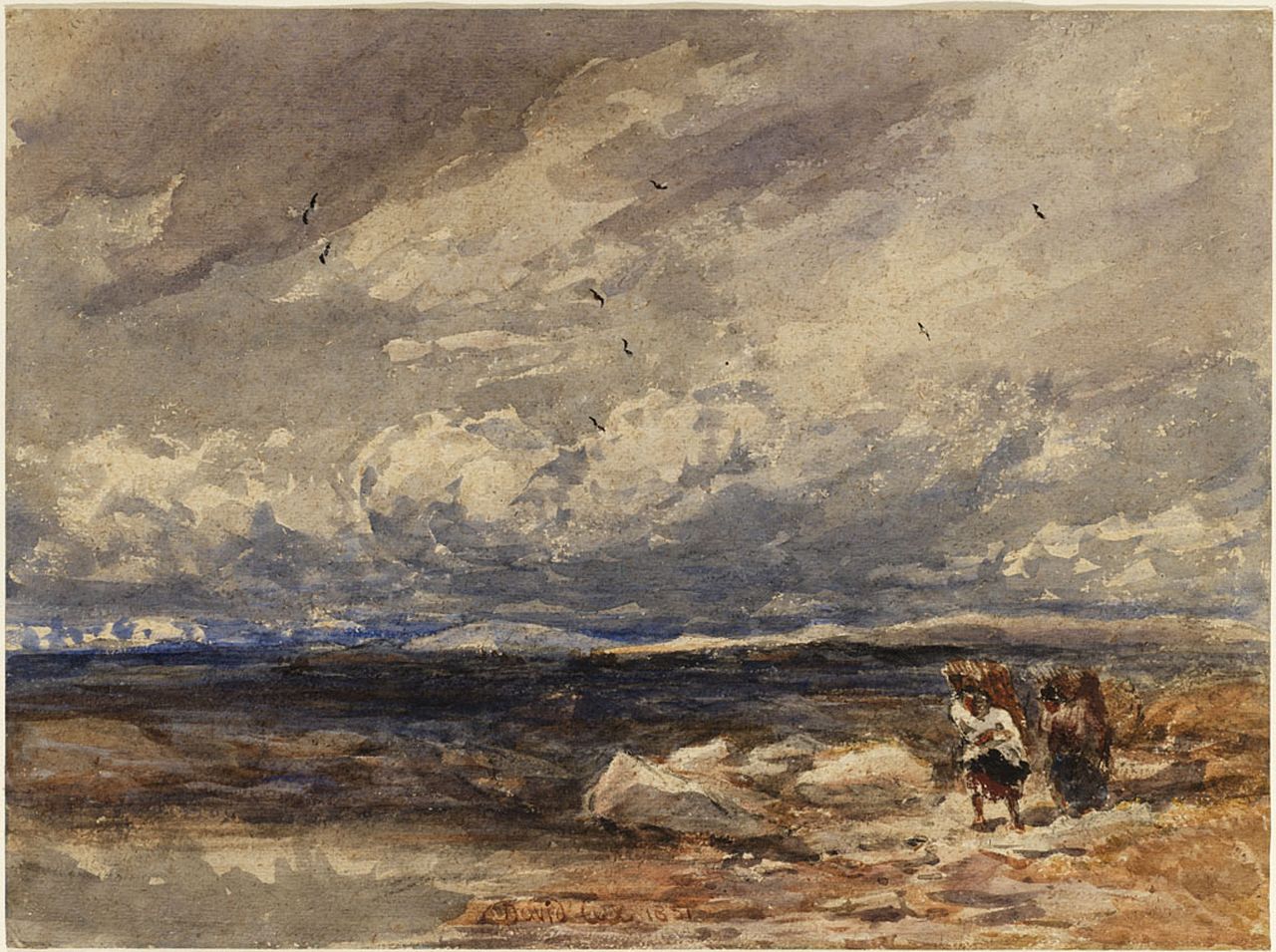
On Carrington Moss 1851 David Cox
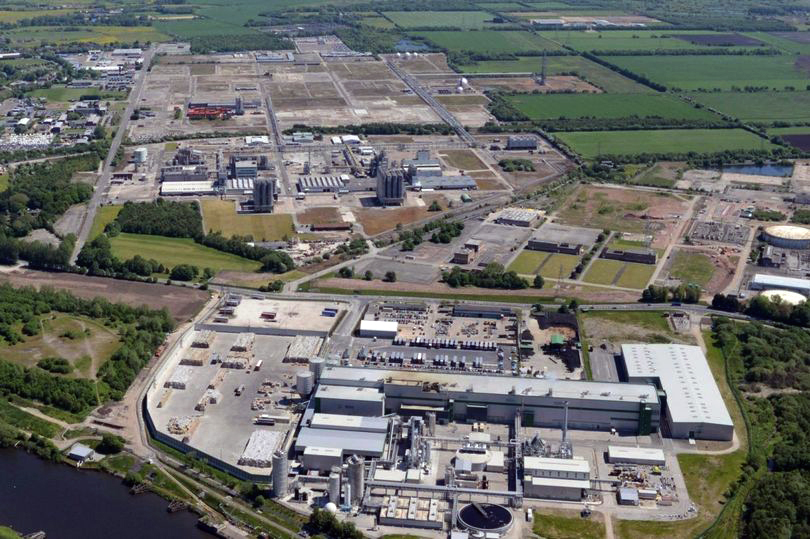
Industrialisation of the moss took place from 1947–1952 when Petro-Carbon ltd began to build what would later become known as the Shell Site. The estate was leased on 1 October 1968 to Shell Chemicals, who in 1957 had purchased a propylene oxide plant along the moss’s northern edge. Shell had built an ethylene oxide plant in 1958 and began to produce polyether polyols the following year. Council housing was built nearby, at Carrington and Partington, for workers and their families. By 1985 the Shell plant had a turnover of about £200M and employed 1,150 people, but a major restructuring of the business reduced the workforce to less than 500 by 1986. By 1994, four distinct plants operated on the 3,500-acre (14 km2) site, producing a range of chemicals, and materials including polystyrene, polyethylene and polypropylene.In 2005 it was reported that Shell would close their polyols and ethoxylates units, a decision which came into effect in 2007. The estate is currently managed by chartered surveyors Bell Ingram. Lyondell Basell operate the last remaining chemical plant on site.
Storm Christoph showed that Manchester is susceptible to the adverse effects of extreme weather events, which are forecast to become more regular occurrences.
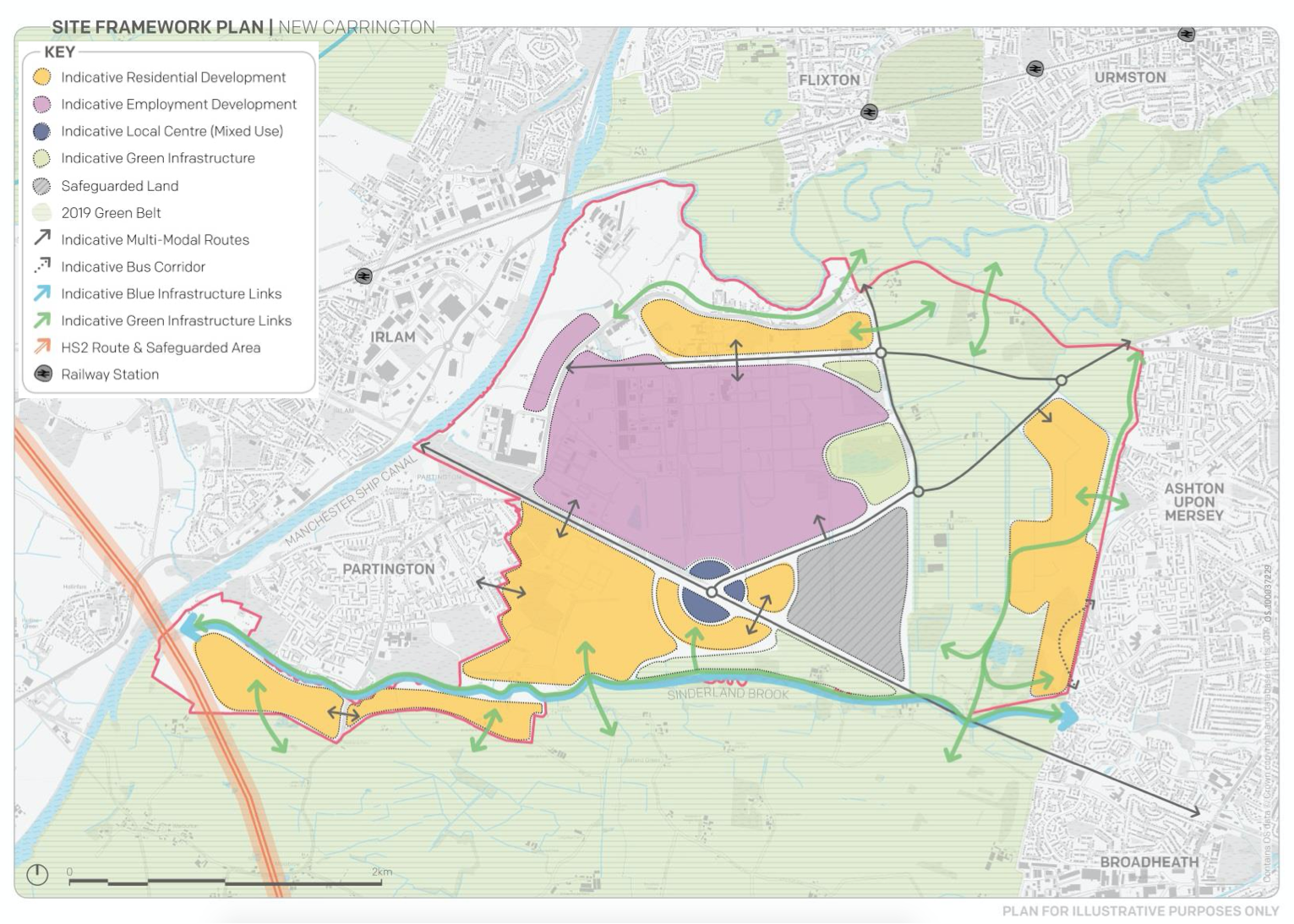
Greater Manchester Labour for a Green New Deal argue that we must abandon the idea of developing on greenbelt, and instead embrace bold alternatives which reflects the urgency of the climate crisis﹣starting with sites like Carrington Moss.
This is an area in liminal limbo, the pressures of the modern world leaning on its very being, as ash, alder, badger, field mouse, and kestrel give way to Wainhomes.
Where then will the wanderer wander, in search of solace?
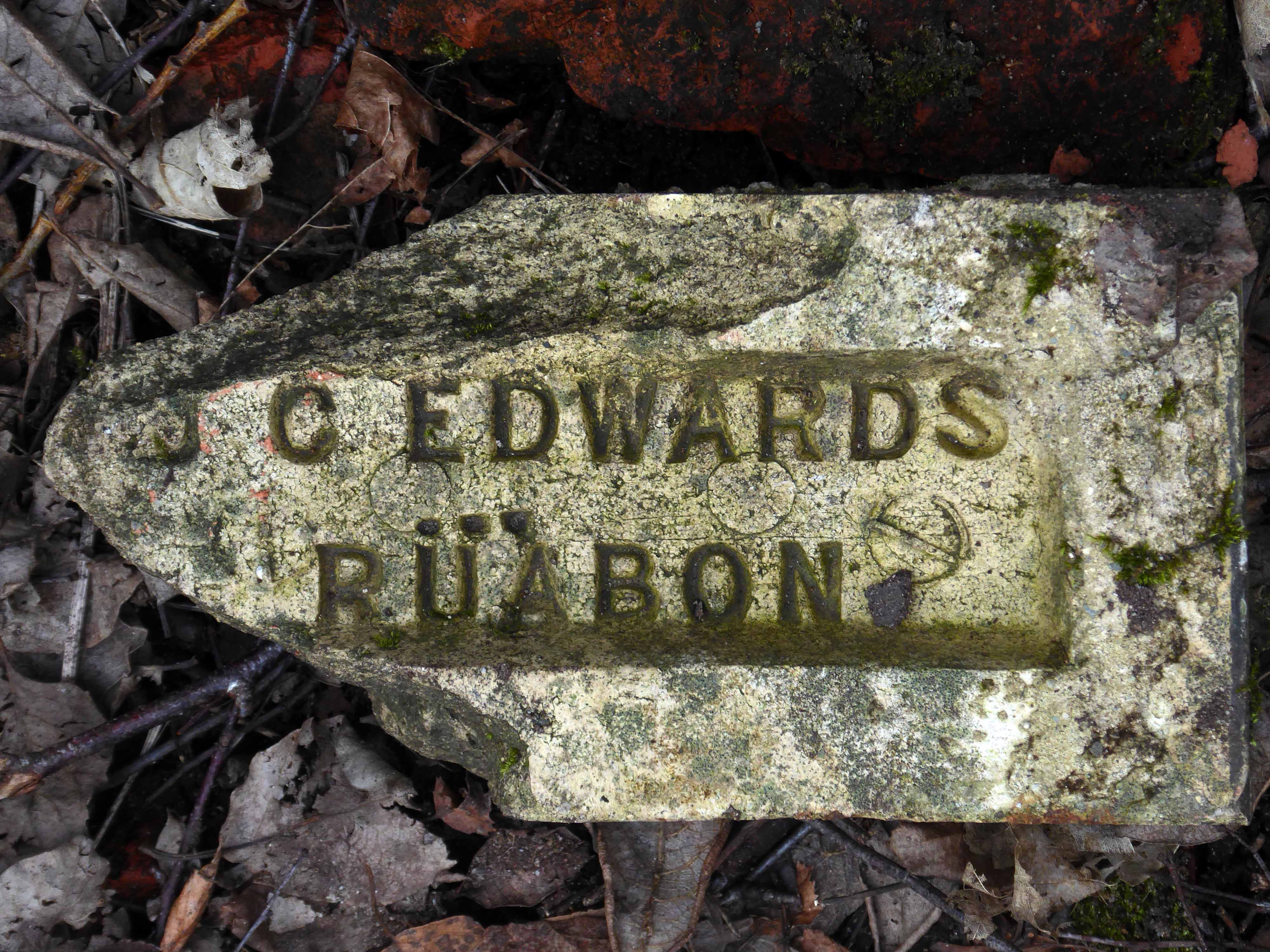
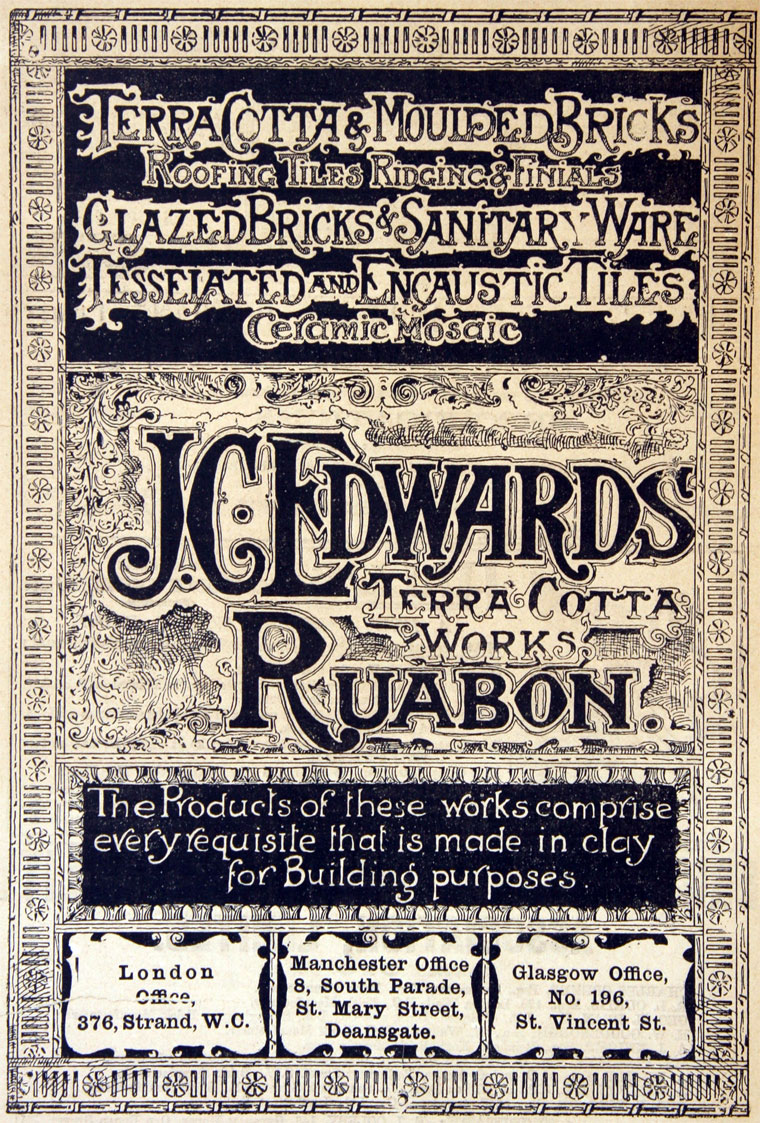
The company of J. C. Edwards Ruabon Ltd, was based in Ruabon, Denbighshire, and was active from 1903 to 1956 as a brick, tile and terracotta manufacturer from its works at Tref-y-Nant, Acrefair, Albert Works, Rhosllannerchrugog, and Pen-y-bont, Newbridge, Denbighshire.
James Coster Edwards (1828-1896) founded the company; it was sold in 1956.
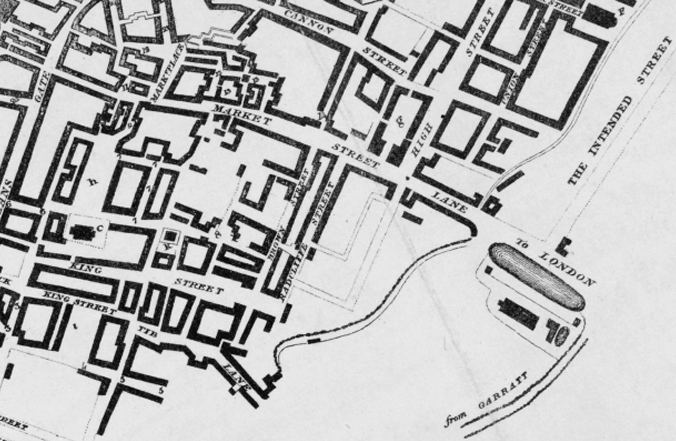
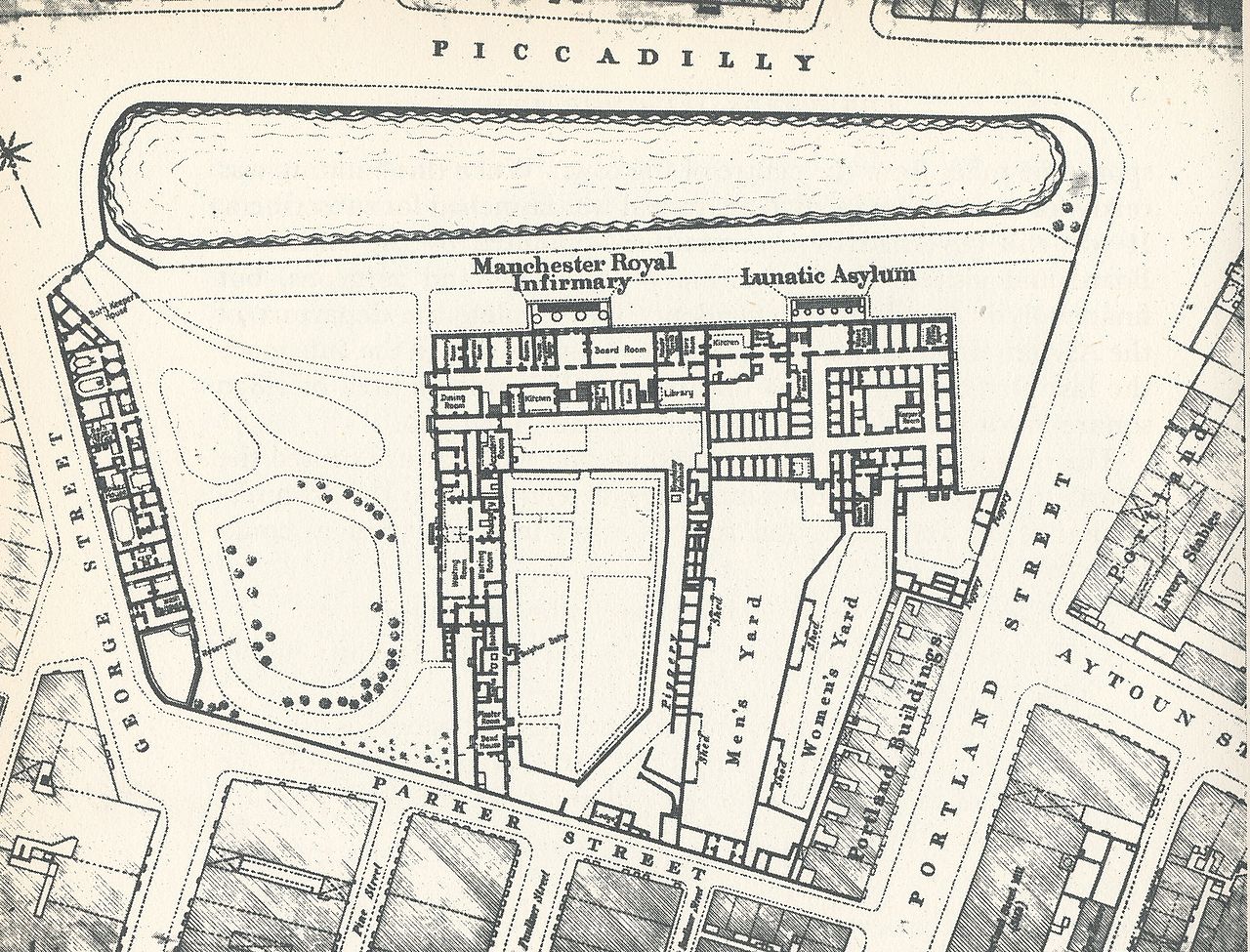
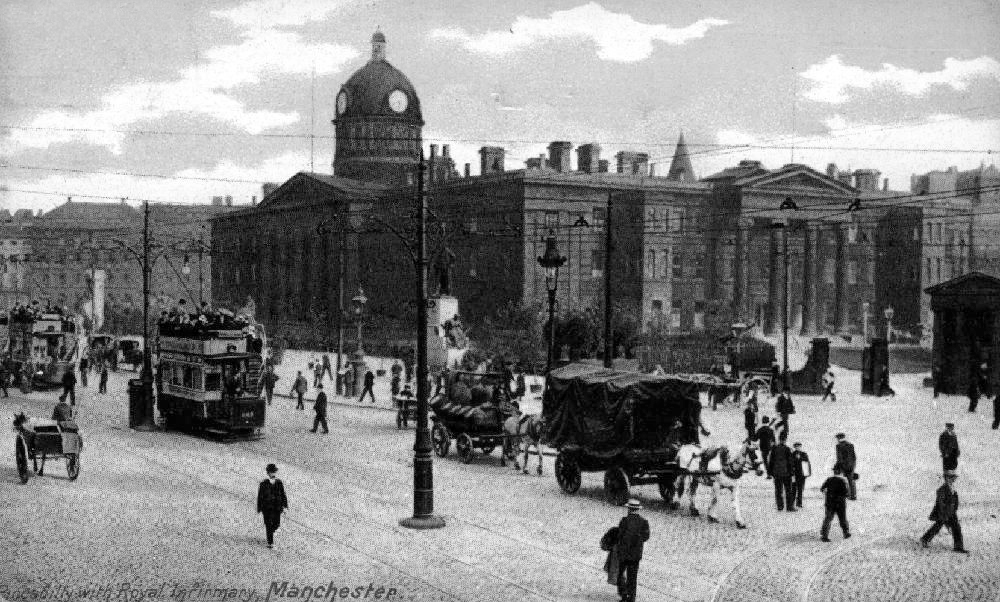
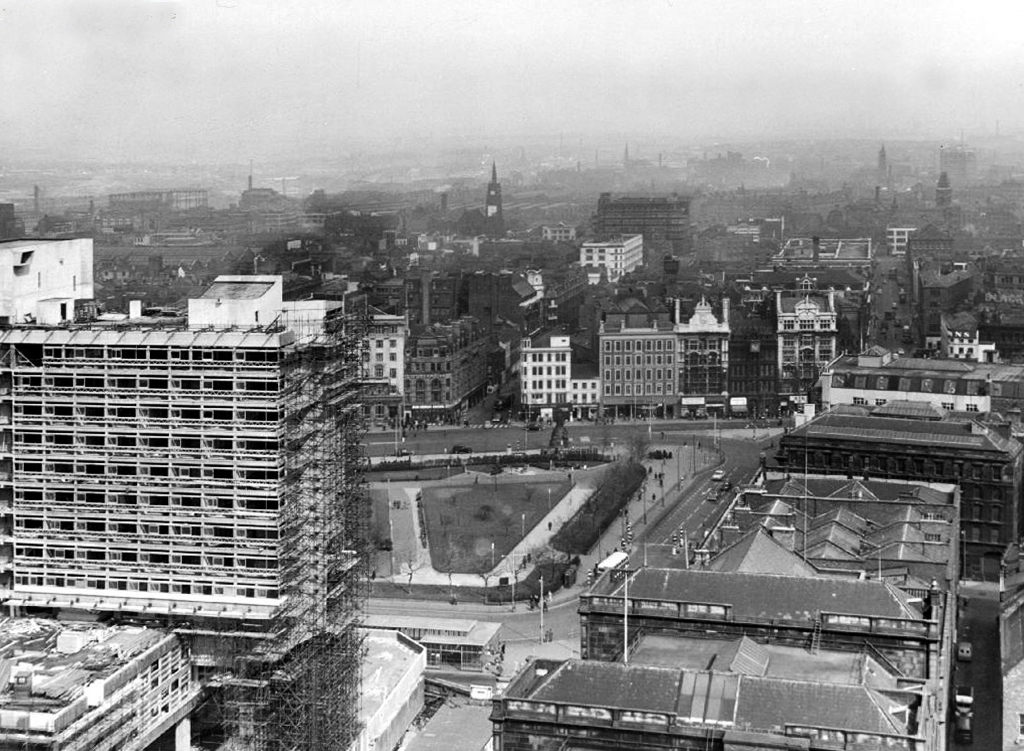
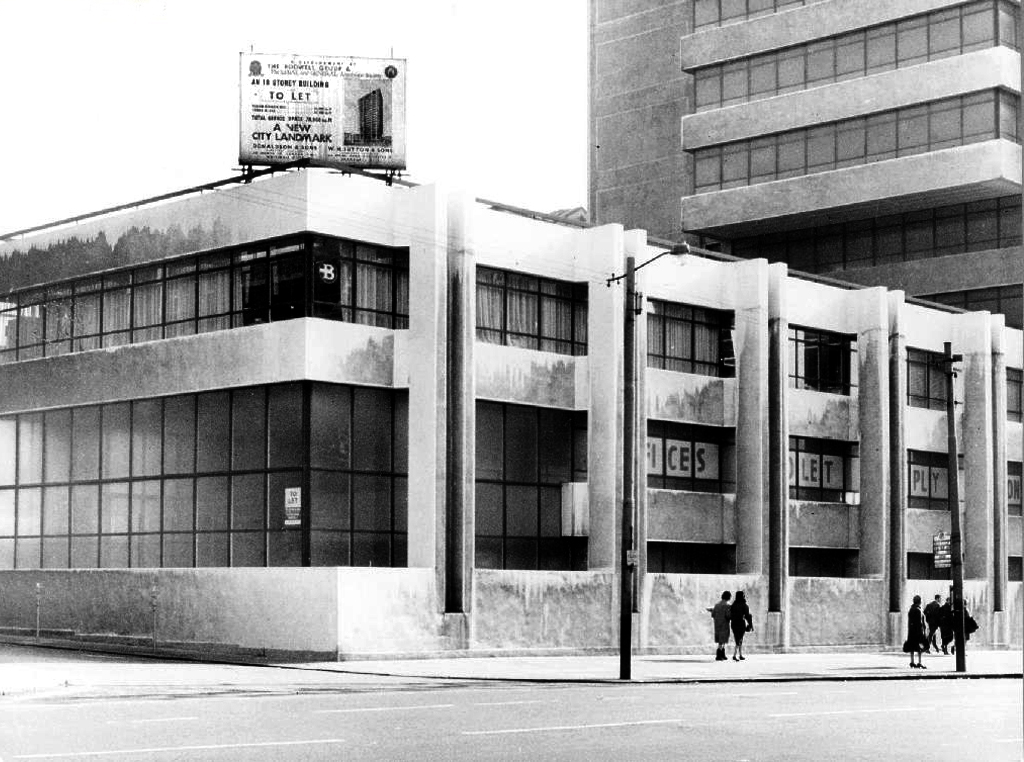
Well not a great deal, it’s 1772 and the Gardens and Plaza, are as yet undreamt of – the area was occupied by water-filled clay pits called the Daub Holes, eventually the pits were replaced by a fine ornamental pond.
In 1755 the Infirmary was built here; on what was then called Lever’s Row, in 1763 the Manchester Royal Lunatic Asylum was added.
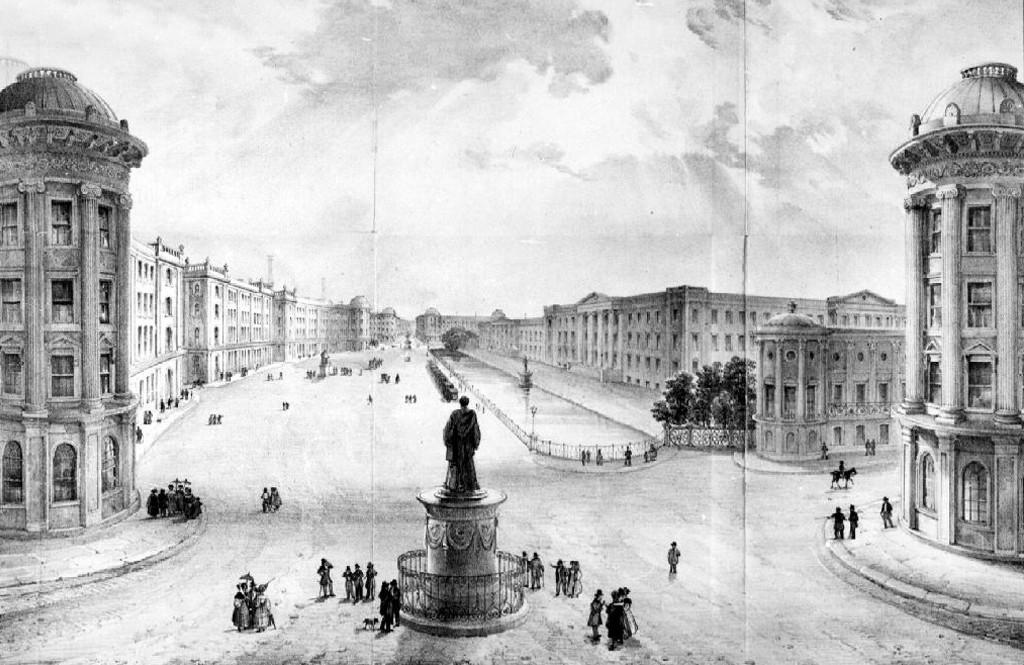
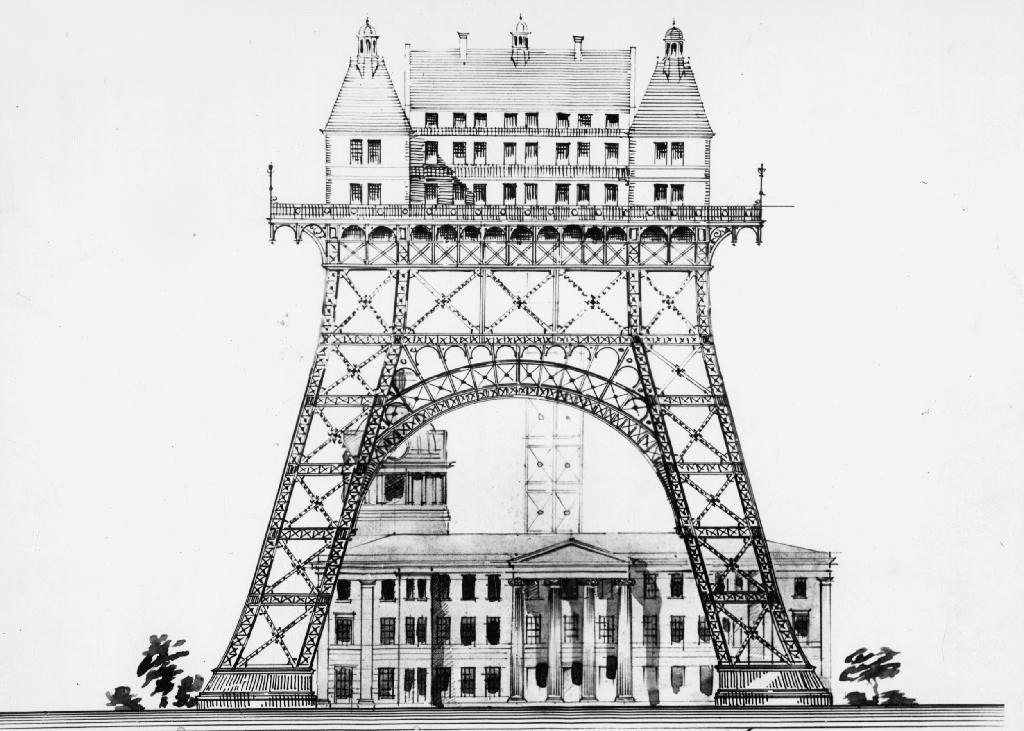
There were grander unrealised plans.
Including an aerial asylum.
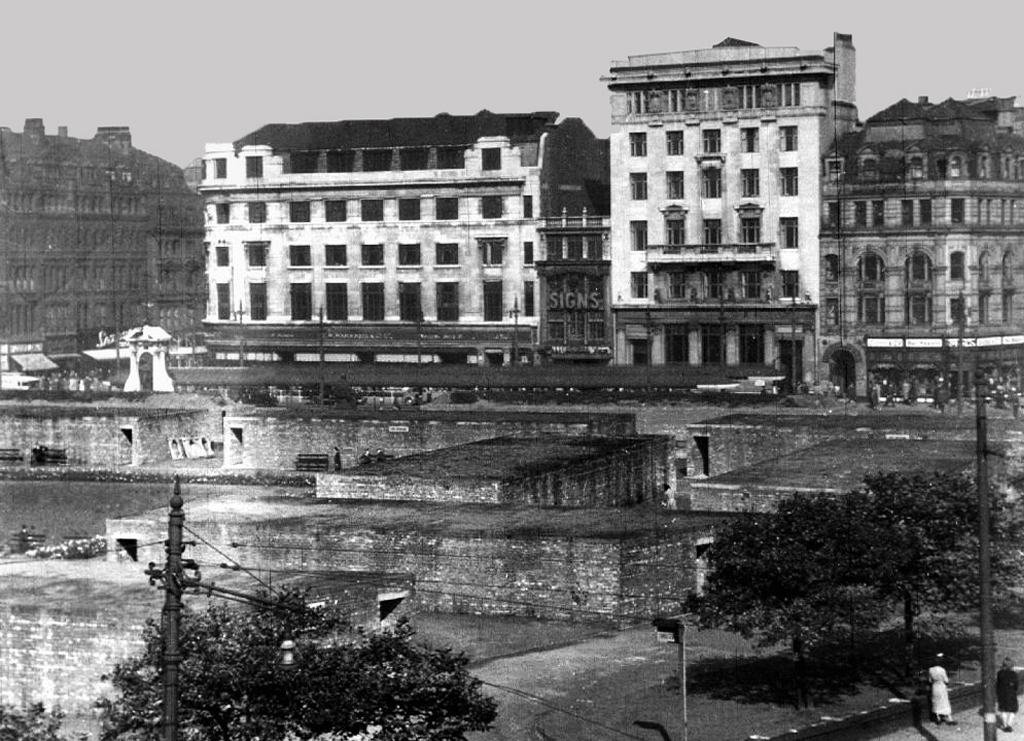
The Manchester Royal Infirmary moved to its current site on Oxford Road in 1908. The hospital buildings were completely demolished by April 1910 apart from the outpatient department, which continued to deal with minor injuries and dispense medication until the 1930s.
After several years in which the Manchester Corporation tried to decide how to develop the site, it was left and made into the largest open green space in the city centre. The Manchester Public Free Library Reference Department was housed on the site for a number of years before the move to Manchester Central Library.
The sunken garden was a remnant of the hospital’s basement.
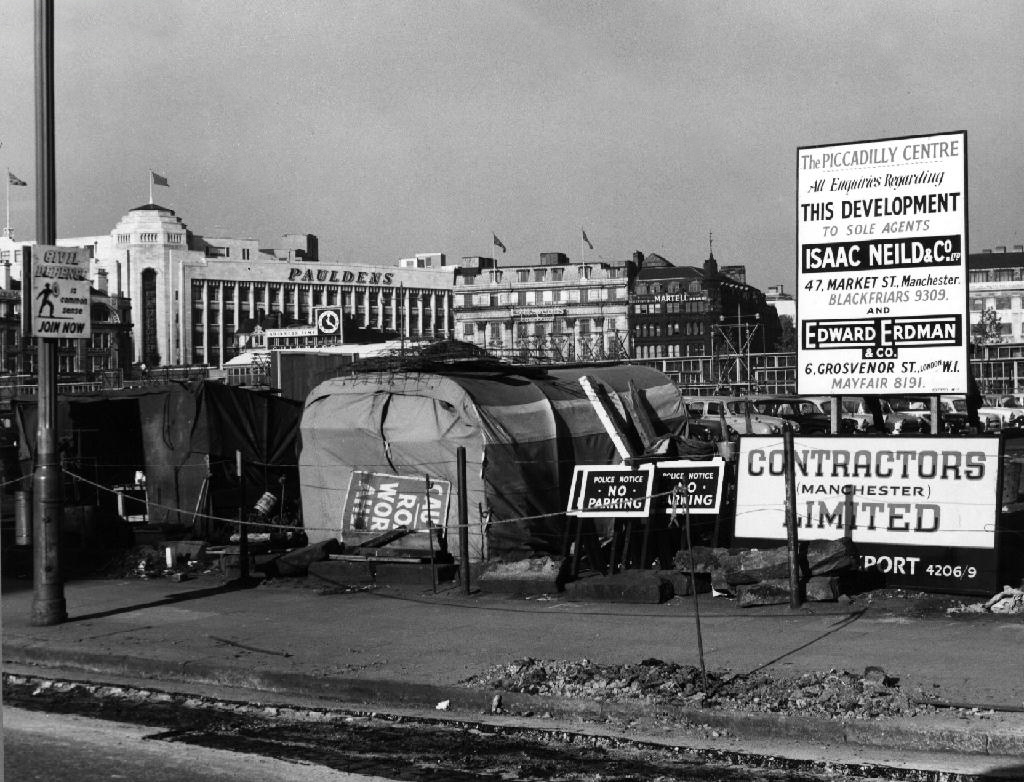
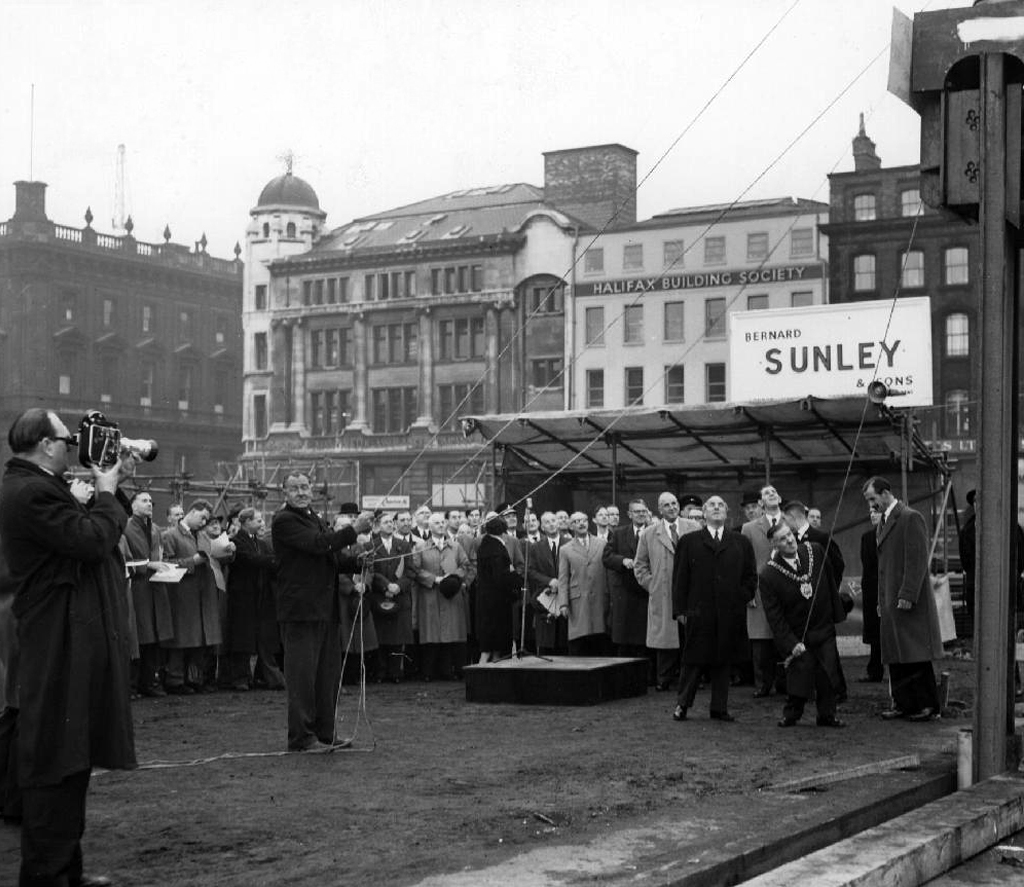
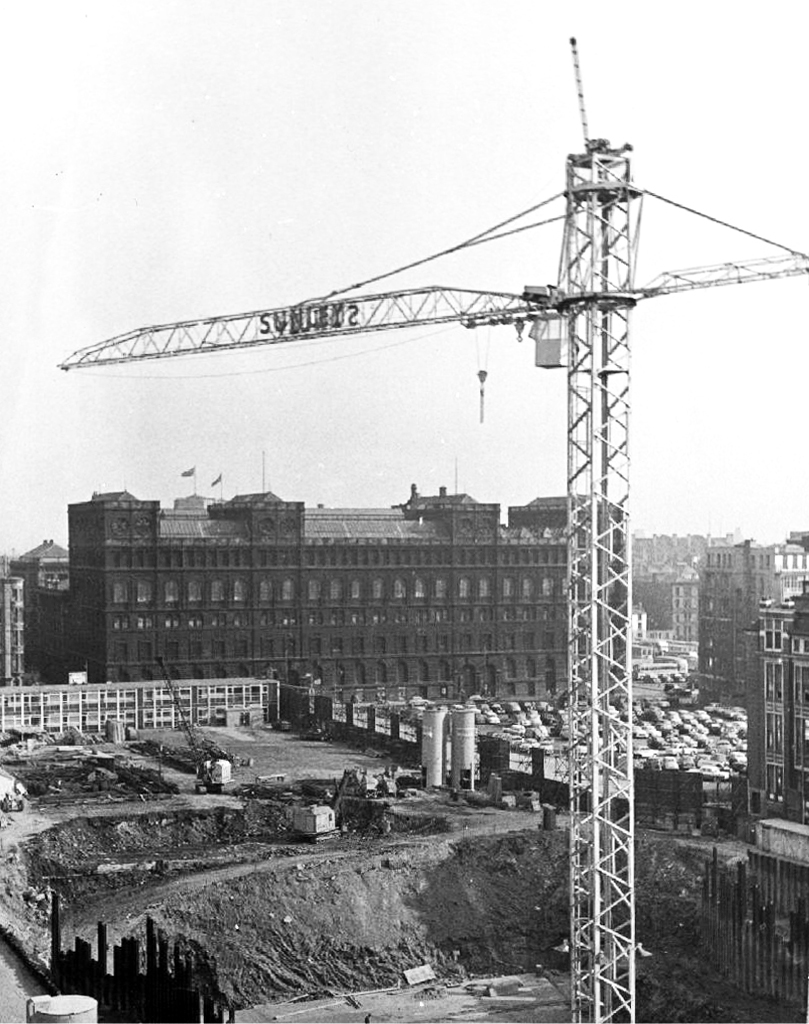
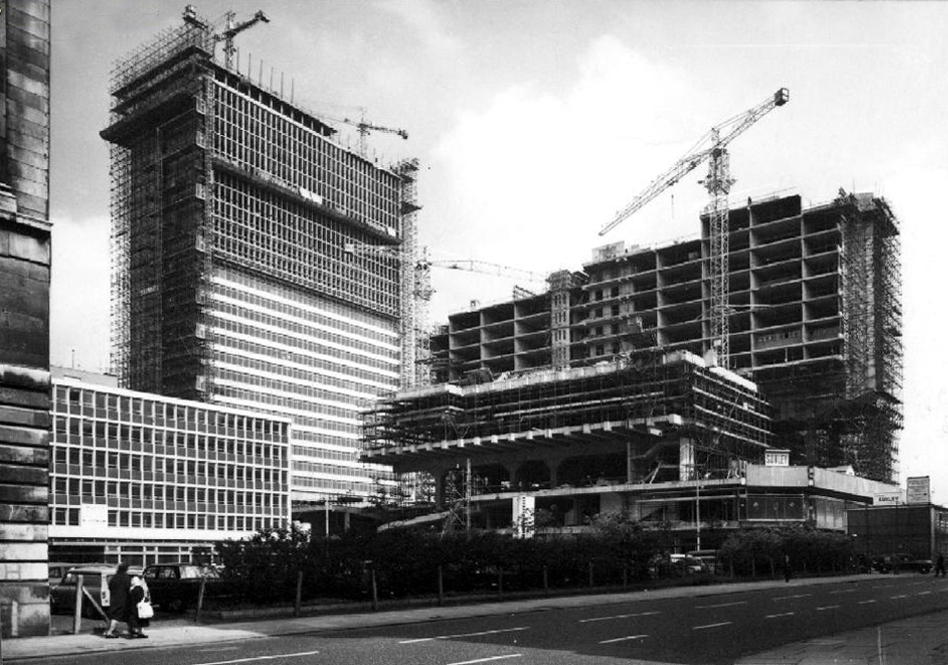
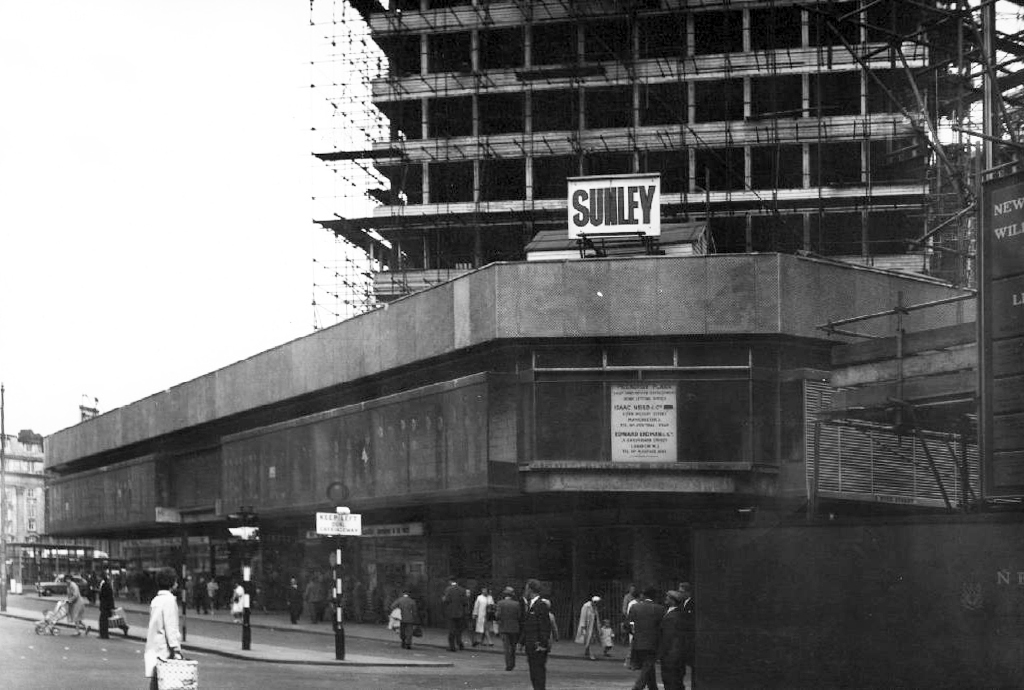
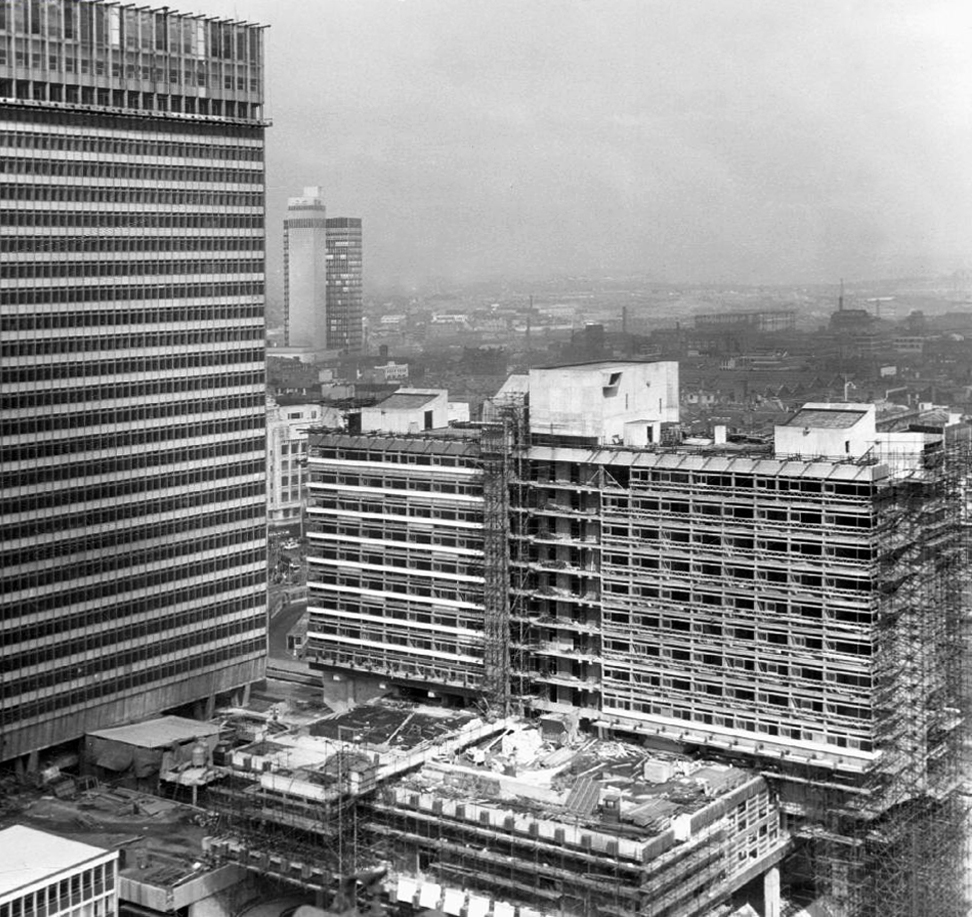
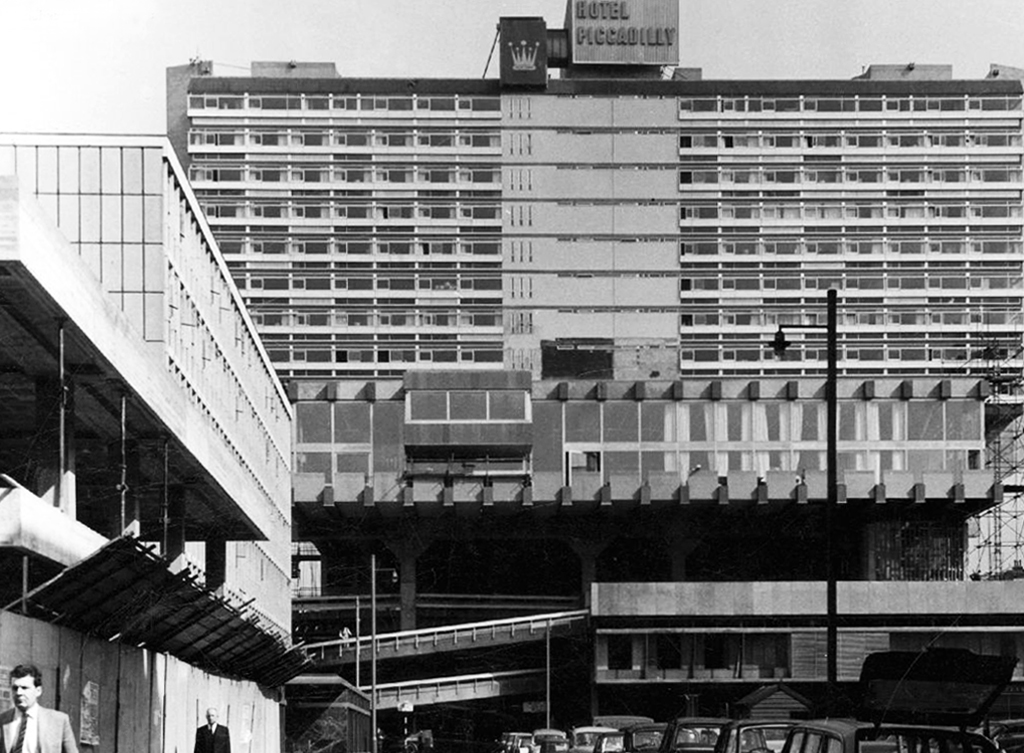
Towering cranes tower over the town, deep holes are dug with both skill and alacrity.
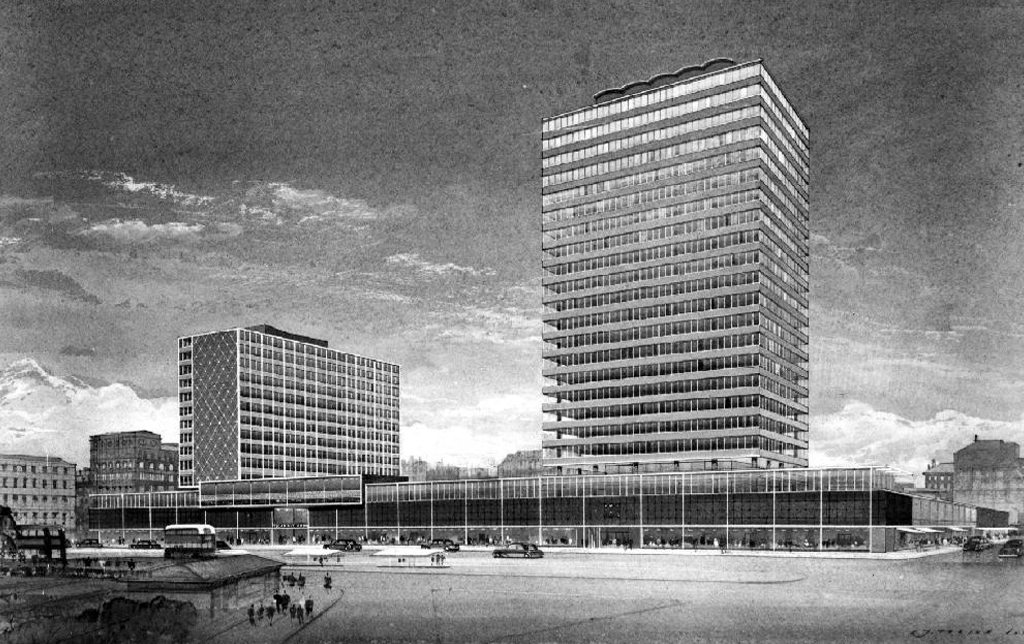
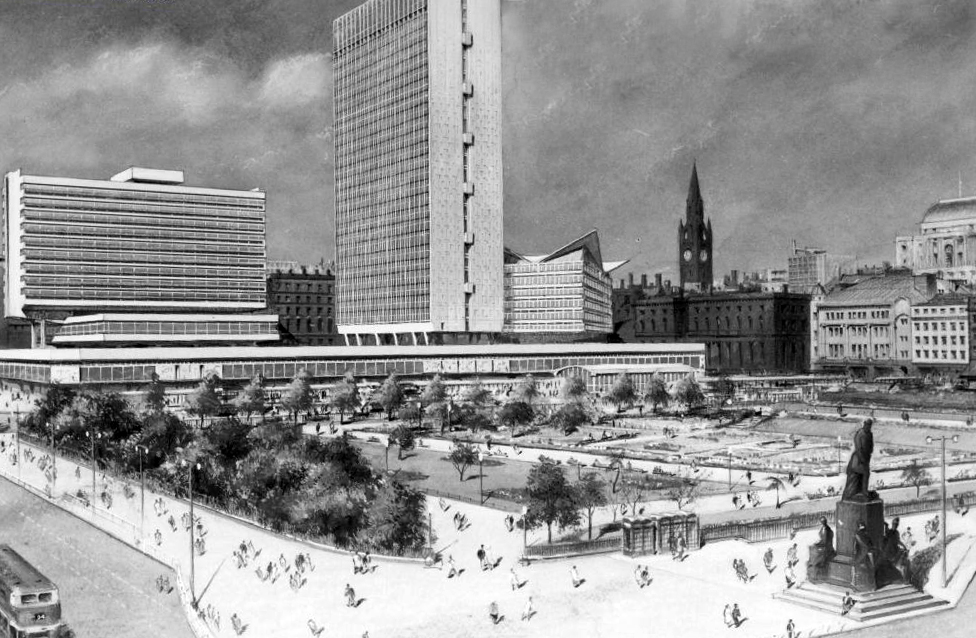
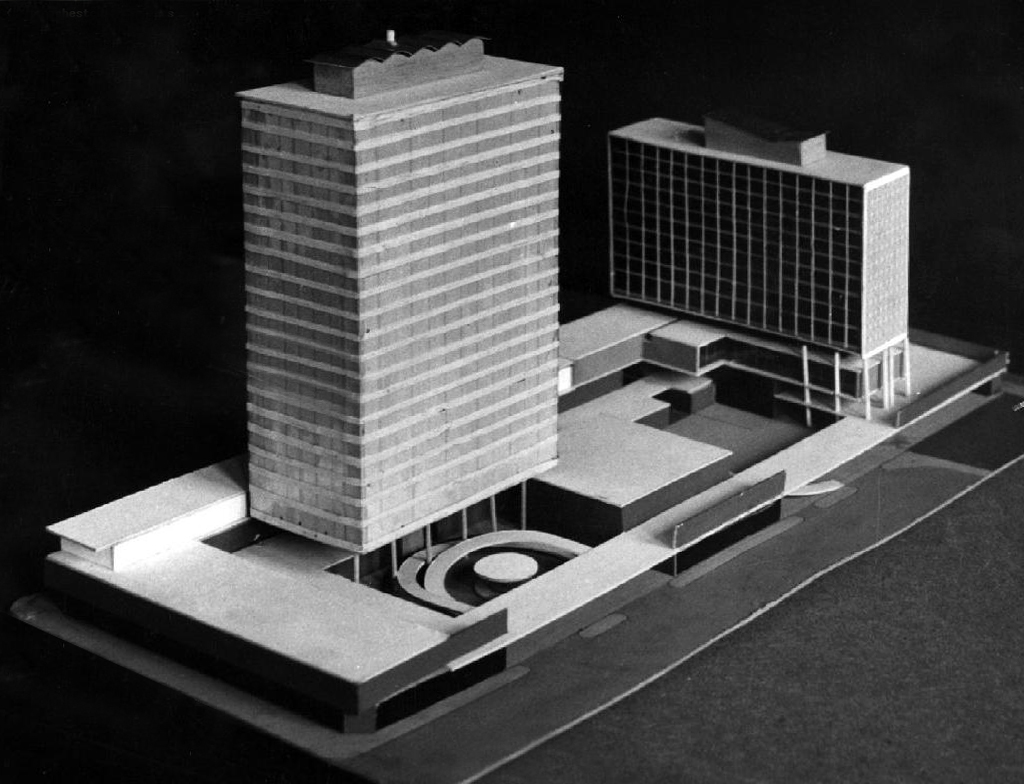
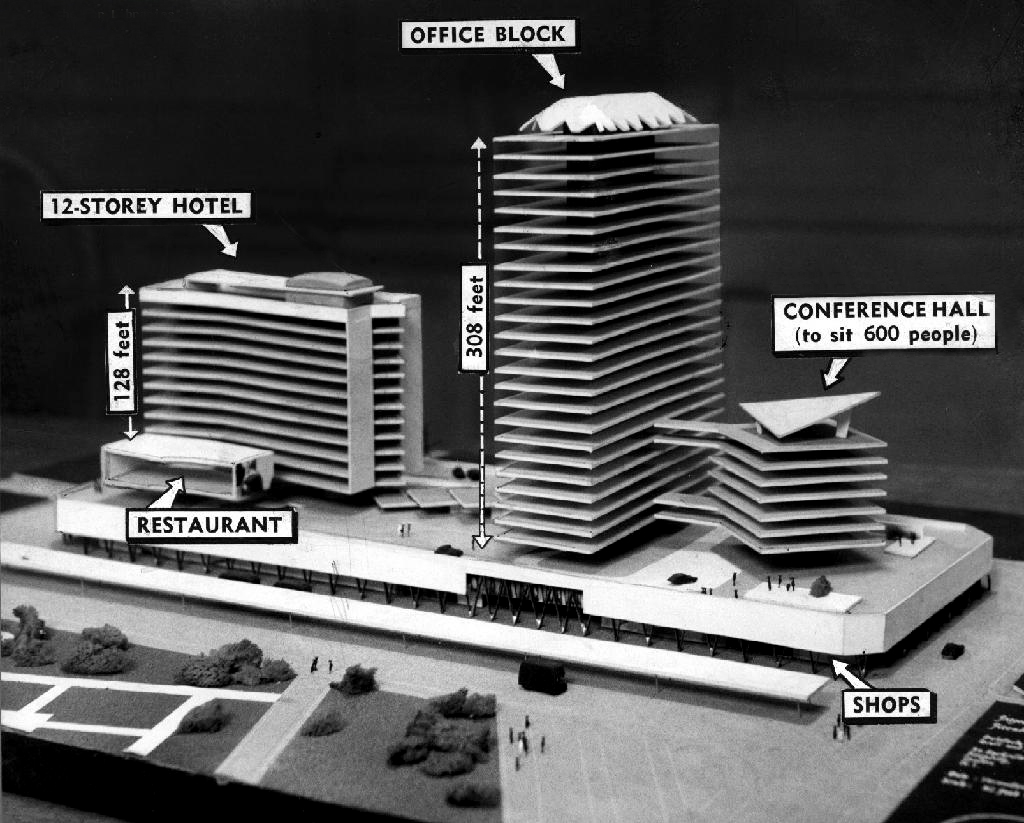
A Plaza begins to take shape, take a look.
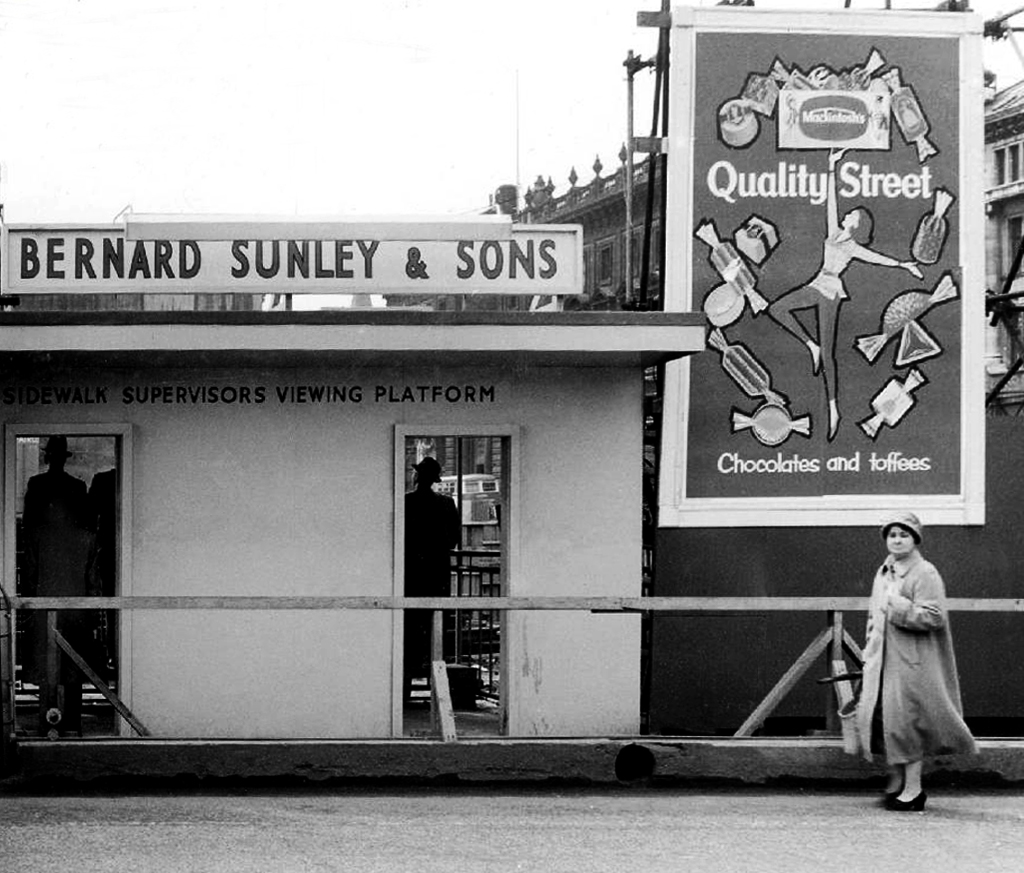
Nearly done.
All we need now are tenants.
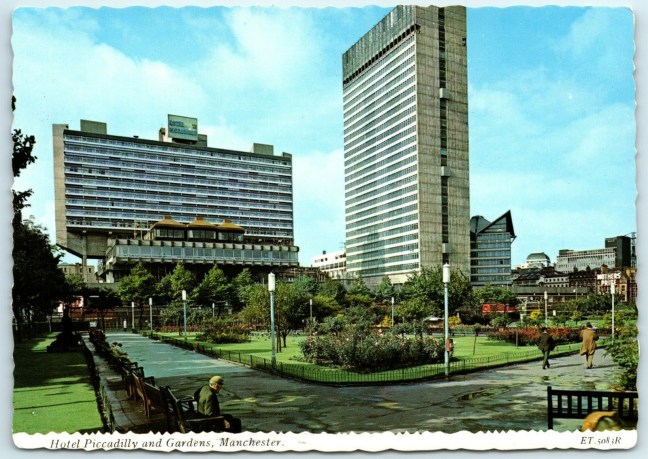
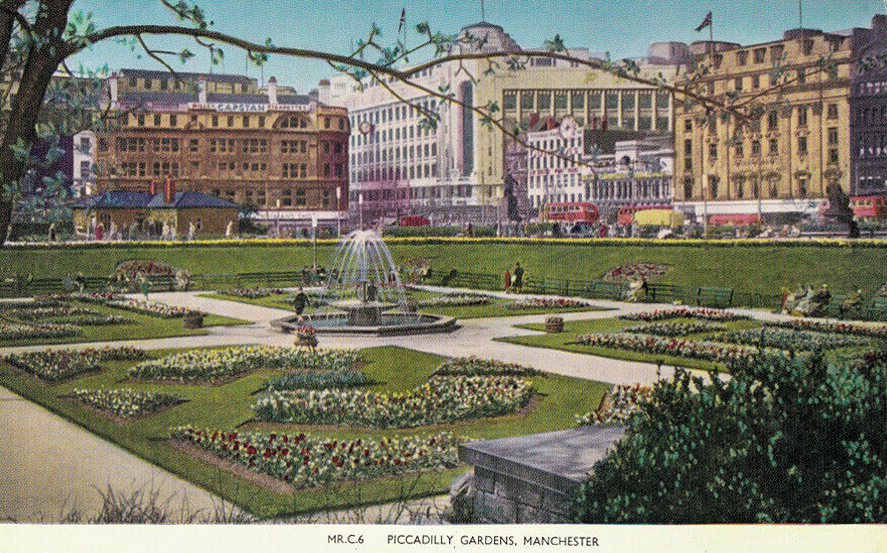
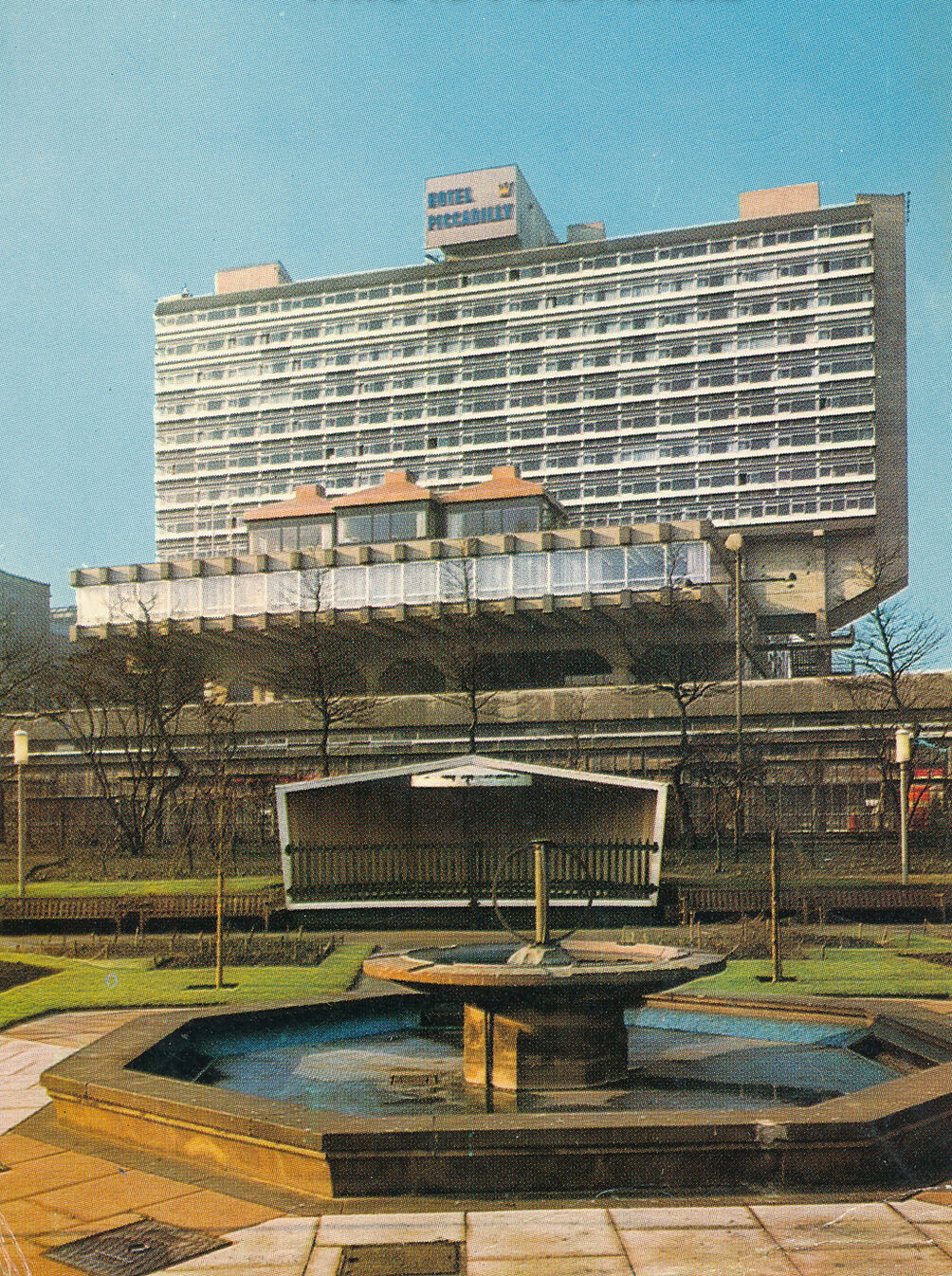
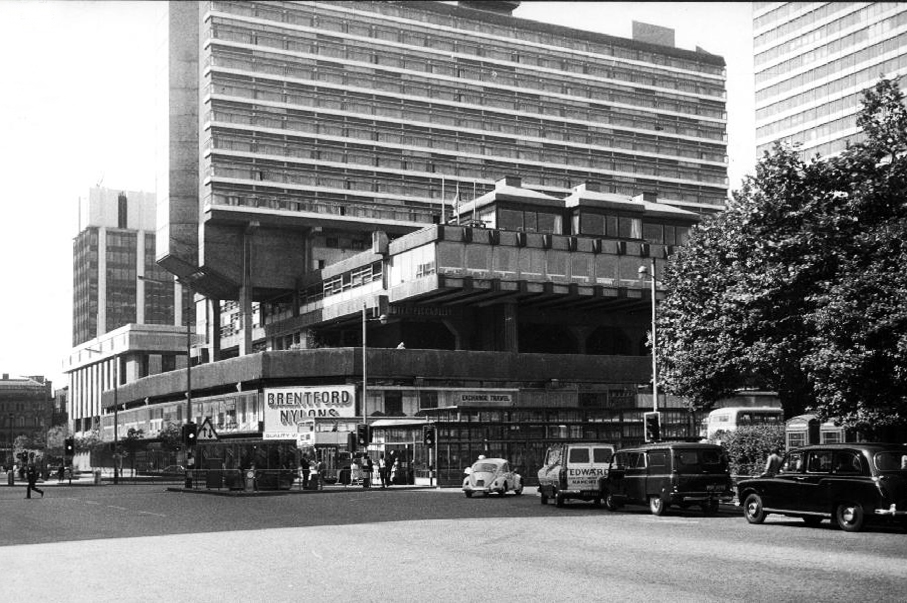
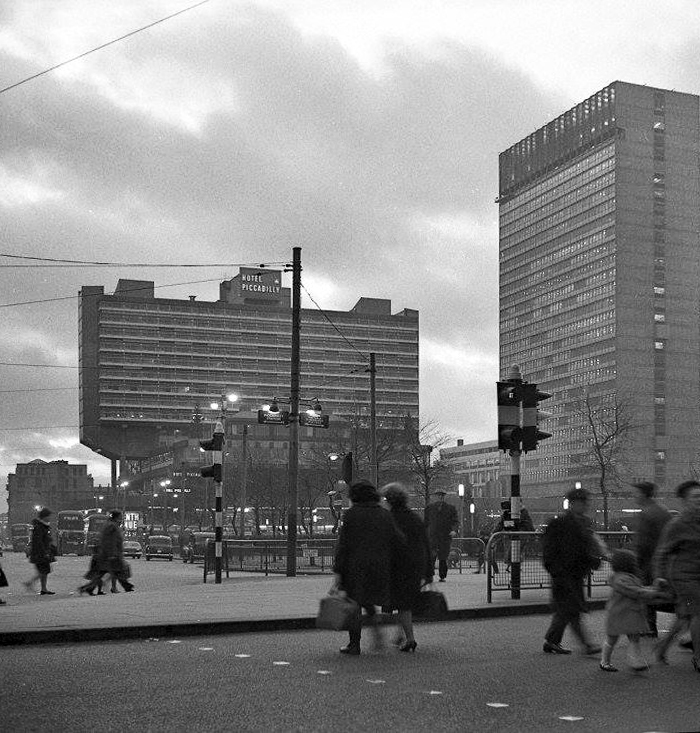
Piccadilly Plaza now contains the renovated Mercure Hotel it was formerly known as the Ramada Manchester Piccadilly and Jarvis Piccadilly Hotel; the refurbishment was completed in 2008.
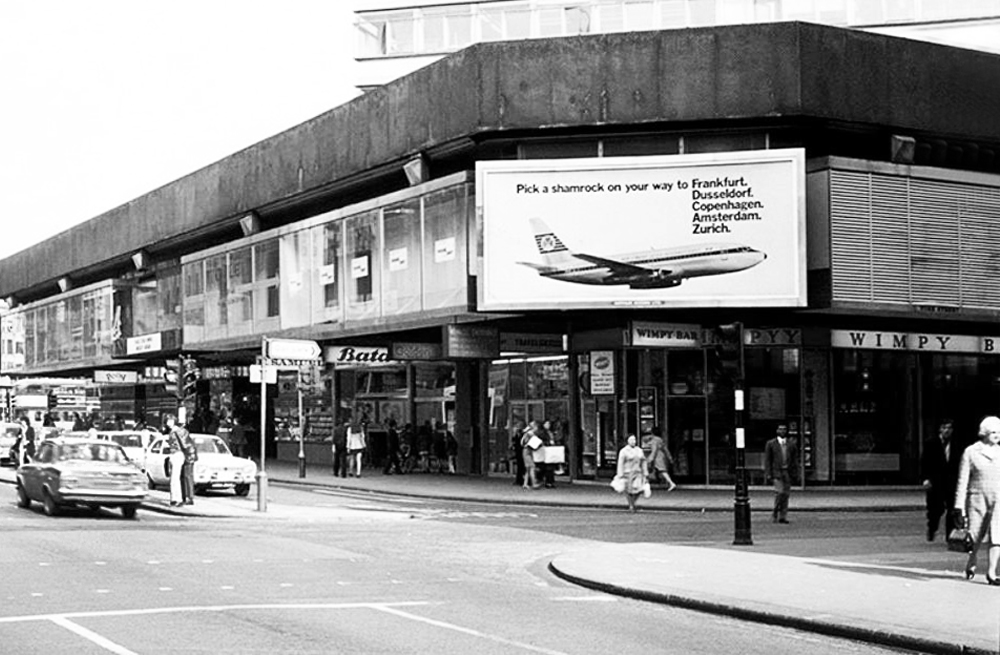
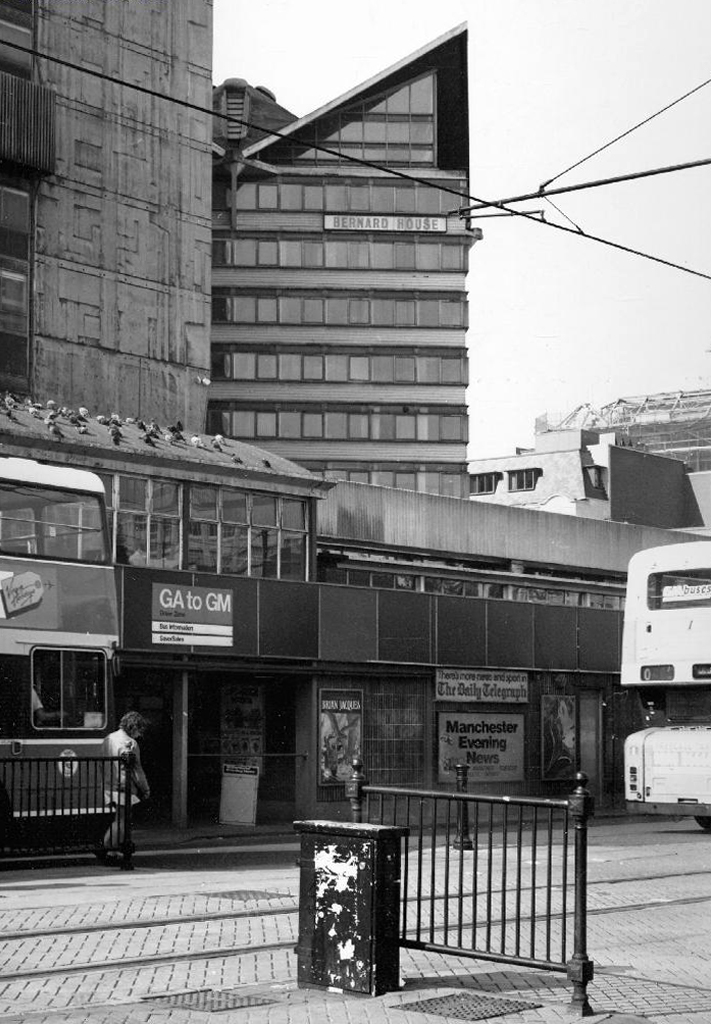
The retail units famously contained Brentford Nylons.
The company was eventually sold at a knock-down price and the new owner did not think the name worth having.
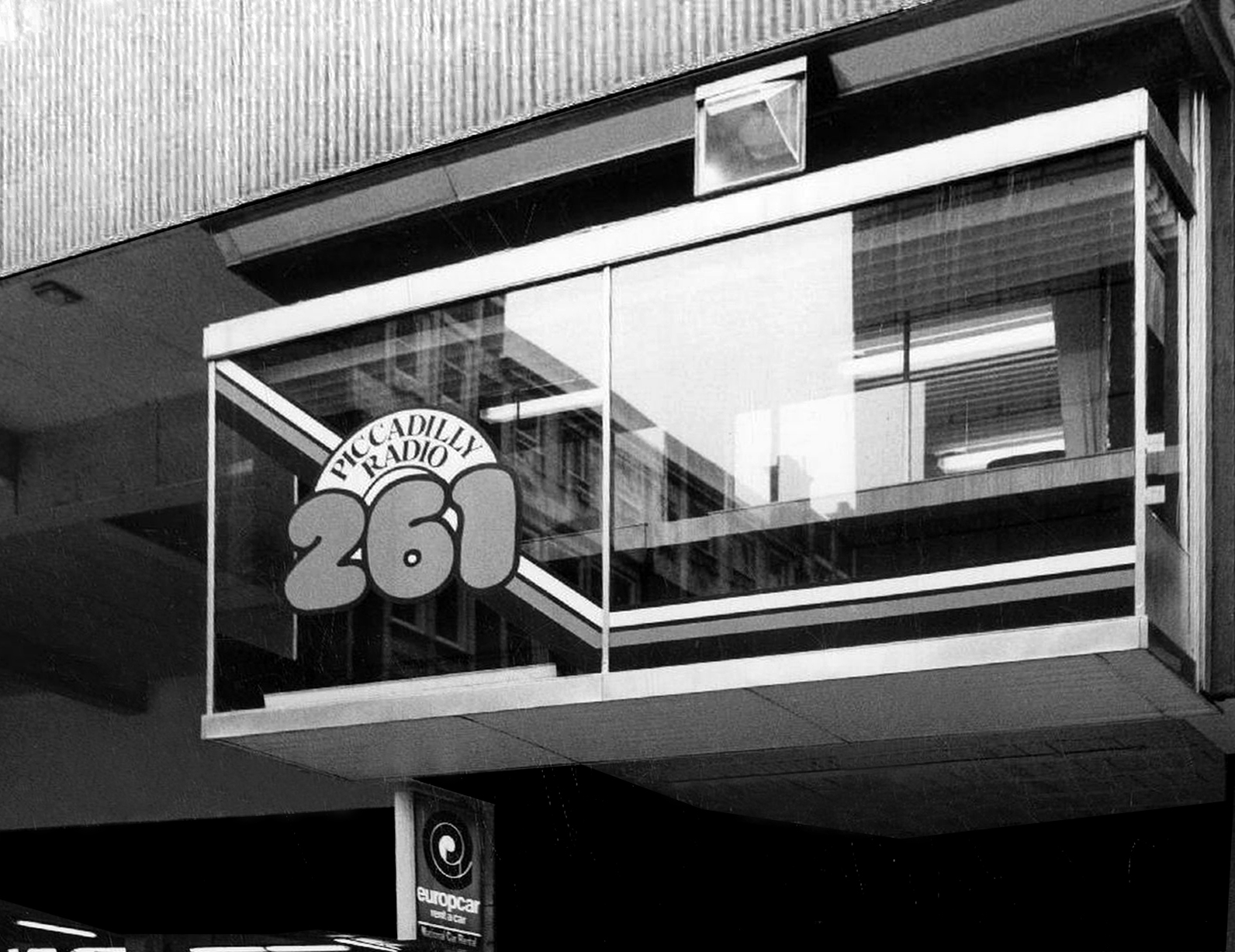
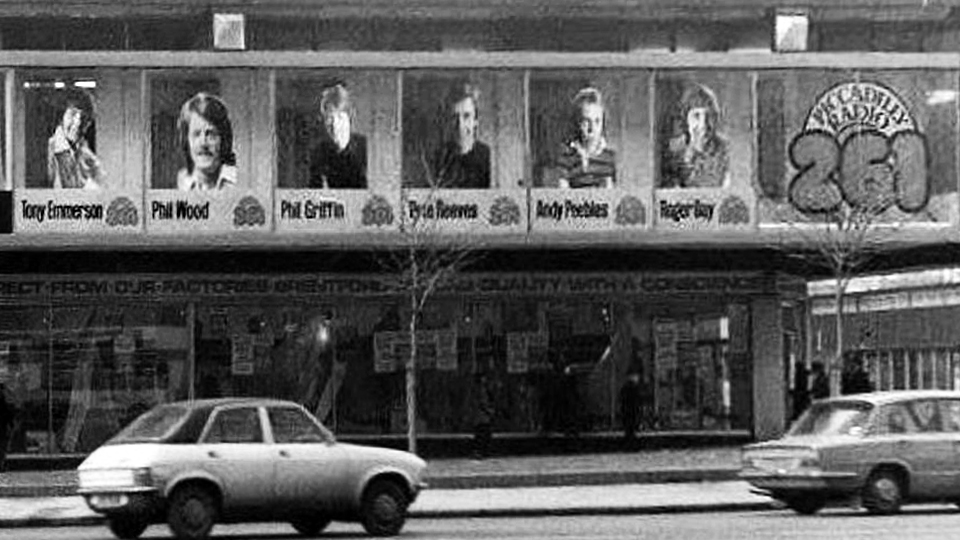
The noisy upstairs neighbours were Piccadilly Radio.
The first broadcast was at 5am on April 2nd 1974, it was undertaken by Roger Day, with his first words to the Manchester audience: “It gives me great pleasure for the very first time to say a good Tuesday morning to you… Hit music for the North West…we are Piccadilly Radio” before spinning Good Vibrations.
It was the first commercial radio station to broadcast in the city, and went on to launch the careers of a host of star DJs, the likes of Gary Davies, Chris Evans, Andy Peebles, Timmy Mallett, Mike Sweeney, Pete Mitchell, James Stannage, Steve Penk and James H Reeve.
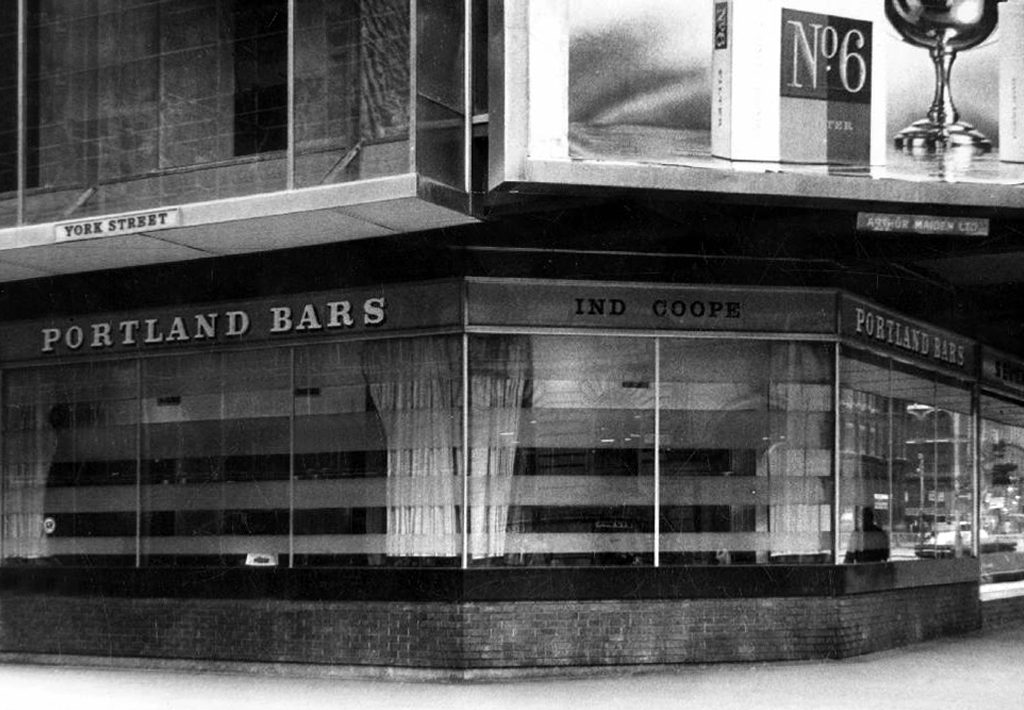
Waiting for a mate who worked at Piccadilly Radio we ventured down the stairs next door to get a drink and because of our clothes/leather jackets we were chucked back up the steps. We should of stood our ground like one of my mates who was told he could stay if he turned his jacket inside out, thinking he wouldnt do it, but he did and had a drink with his red quilted lining on the outside.
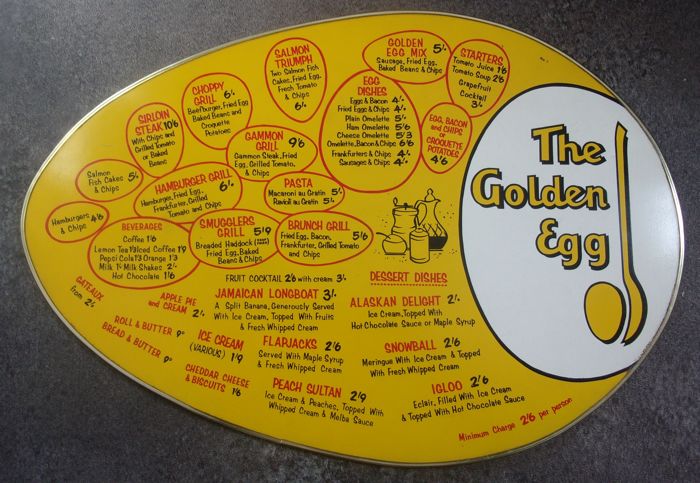
“Food served at the table within ten minutes of ordering and with atomic age efficiency. No cutlery needed or given. Drinks served in a bottle with a straw. Condiments in pre-packaged single serving packets.”
In addition to familiar Wimpy burgers and milkshakes, the British franchise had served ham or sardine rolls called torpedoes and a cold frankfurter with pickled cucumber sandwiches called Freddies.
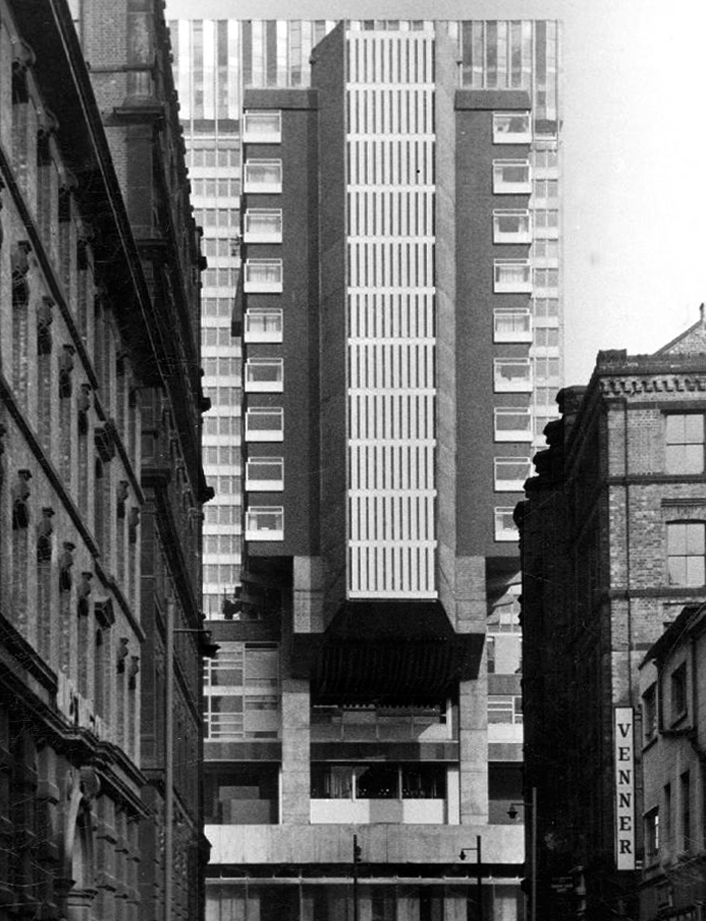
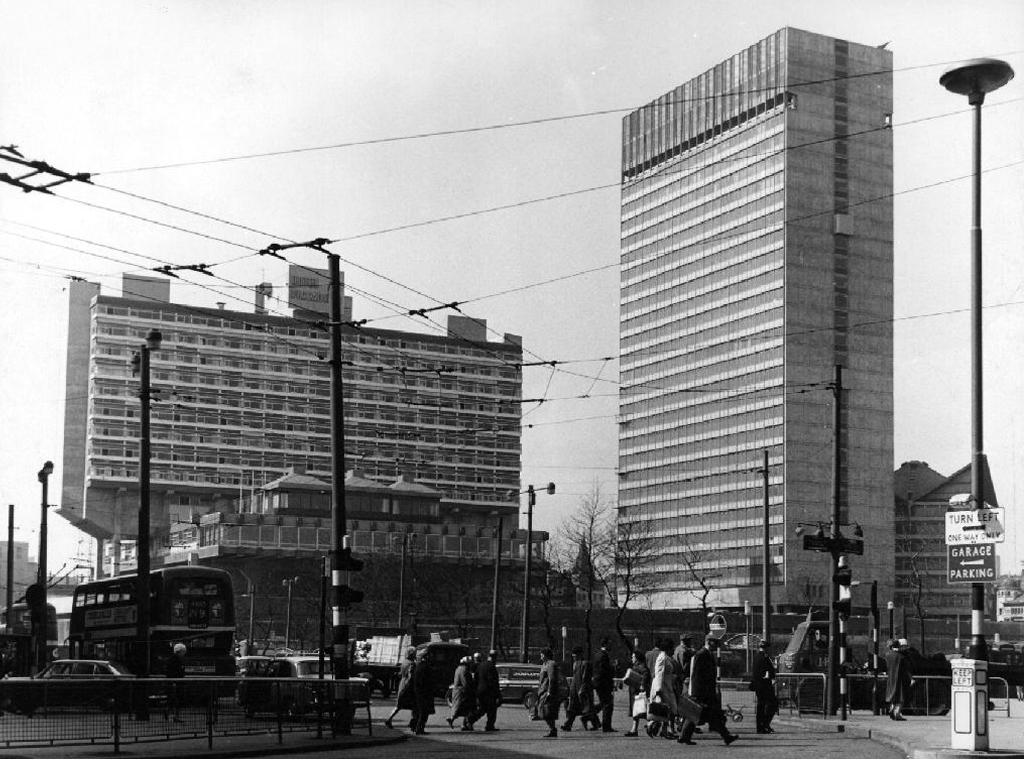
Even on the greyest days the Plaza was a beacon of Modernity.
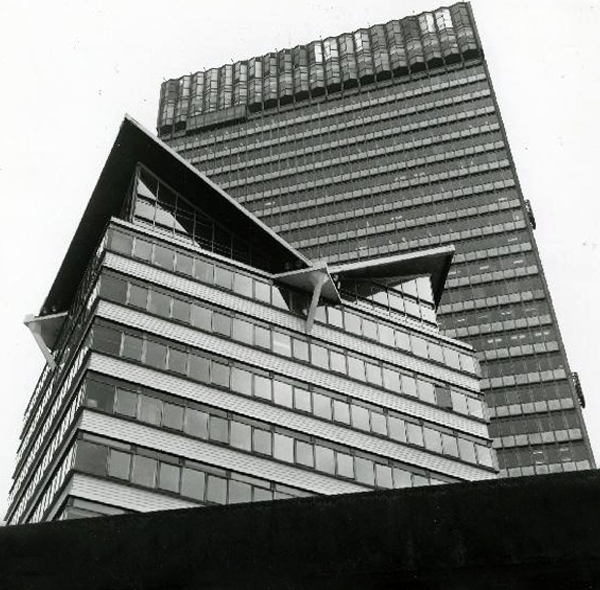
Though sadly we eventually lost Bernard House.
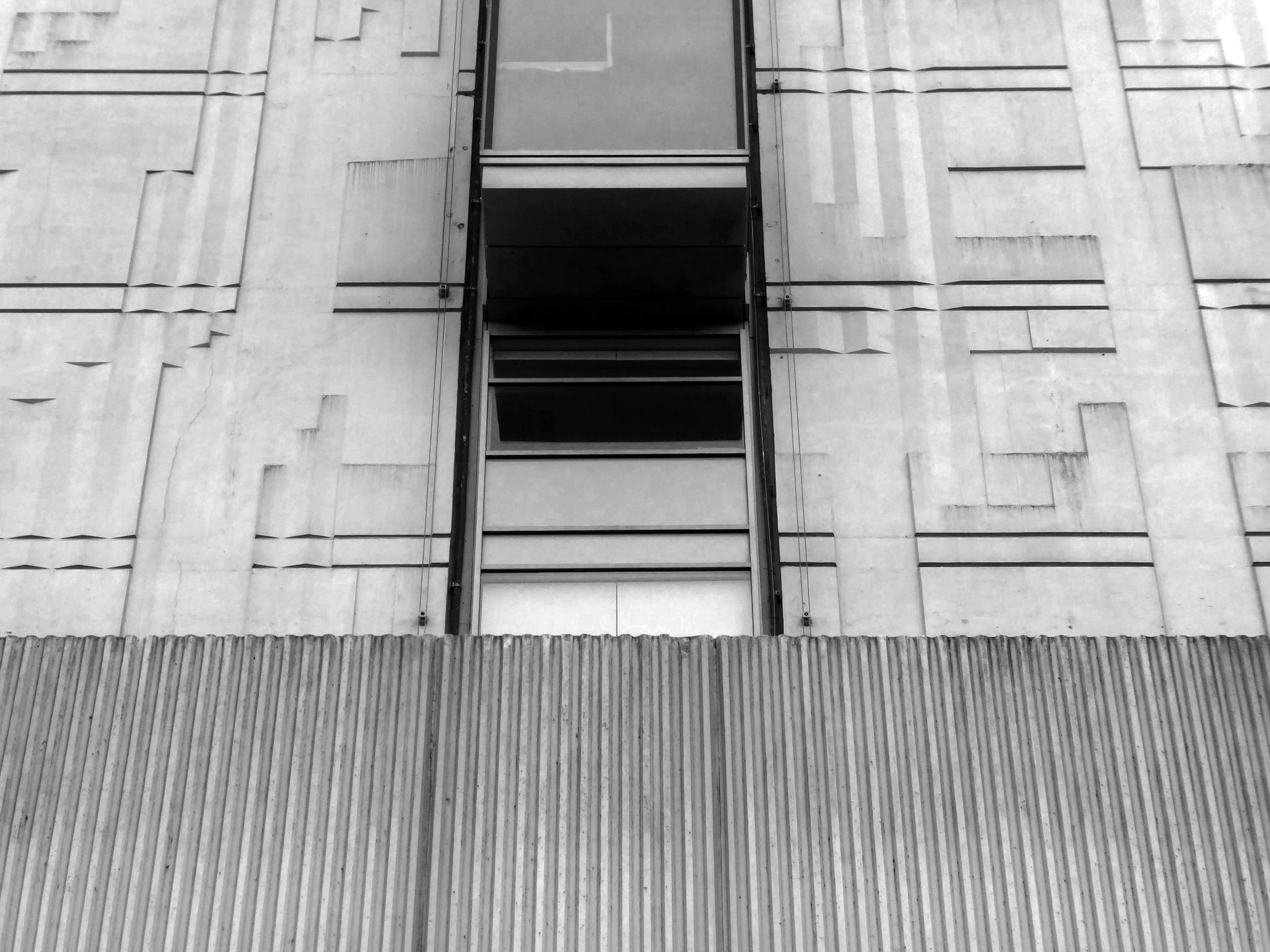
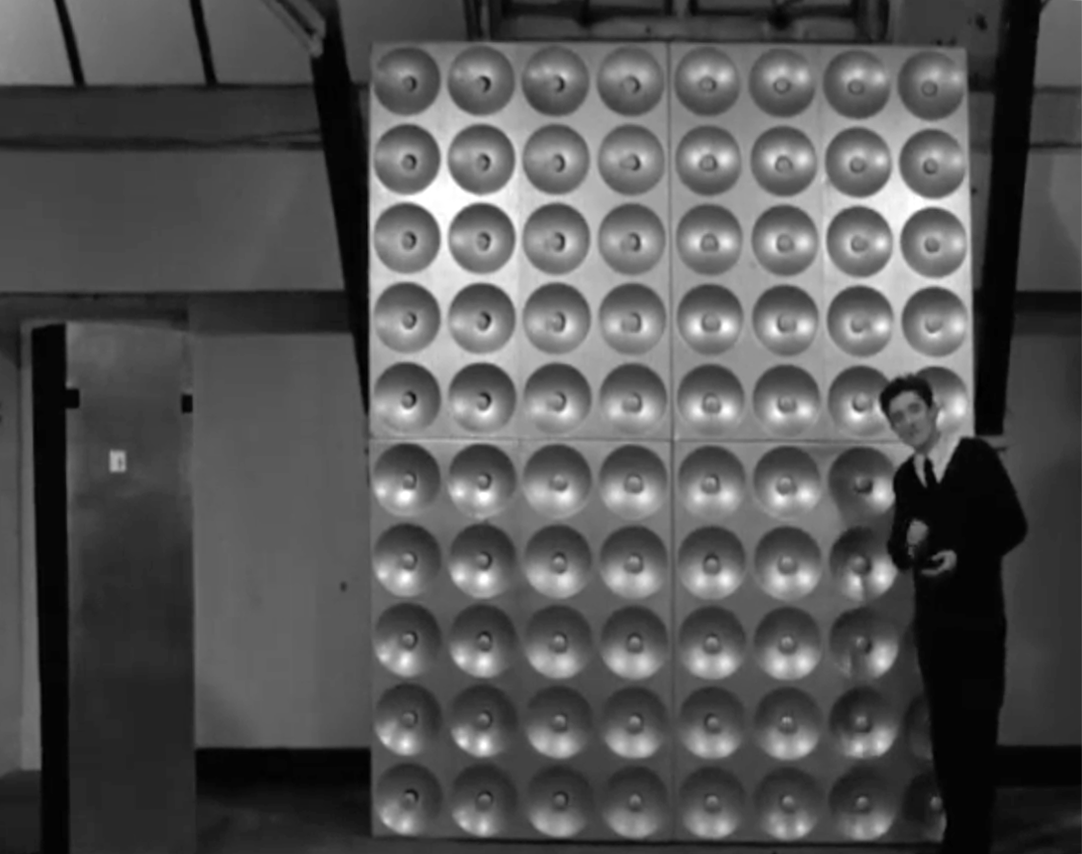
However, City Tower still prevails as a mixed use office block, adorned east and west with big bold William Mitchell panels.
Which were to be illuminated by ever changing images, produced by photo electric cells – sadly unrealised.
So goodbye Piccadilly – farewell Leicester Square? – it’s a long, long way to the future, and we’re barely half way there.
While we’re in the vicinity take a quick trip up and down the car park ramp.
Notably the entrance to the Hotel Piccadilly was on the first floor, accessed by non-existent highways in the sky – sweet dreams.
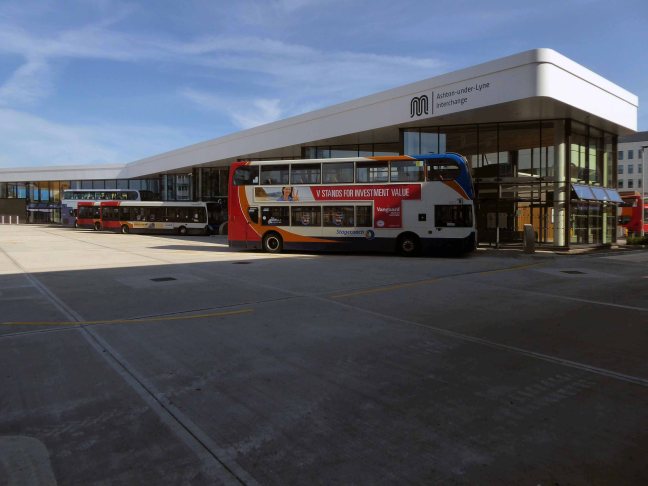
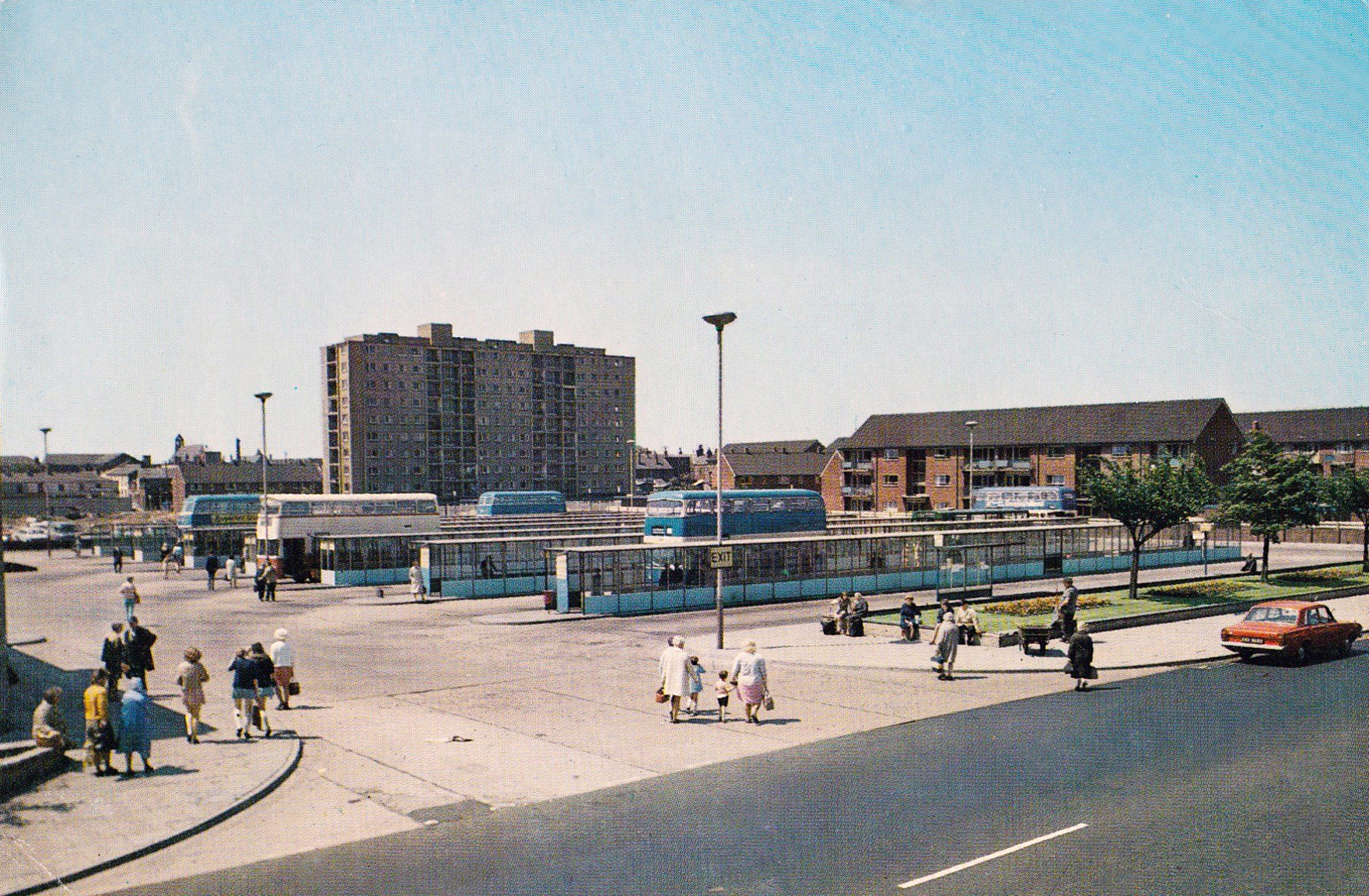
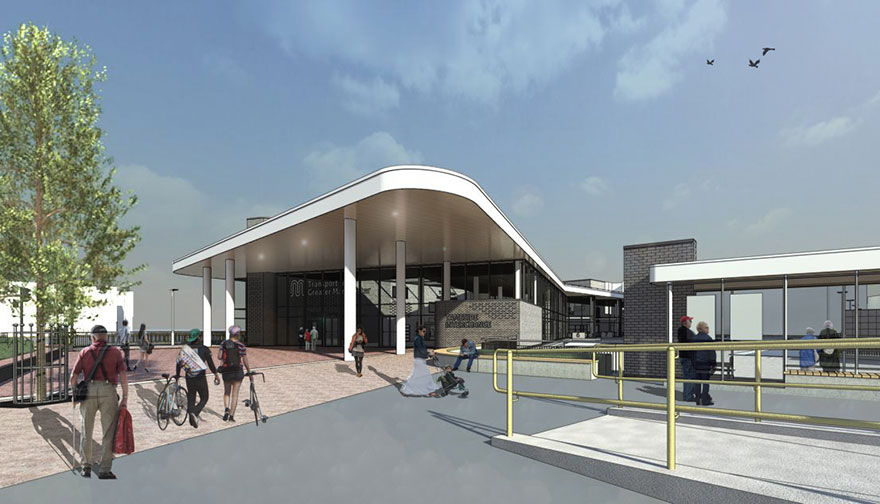
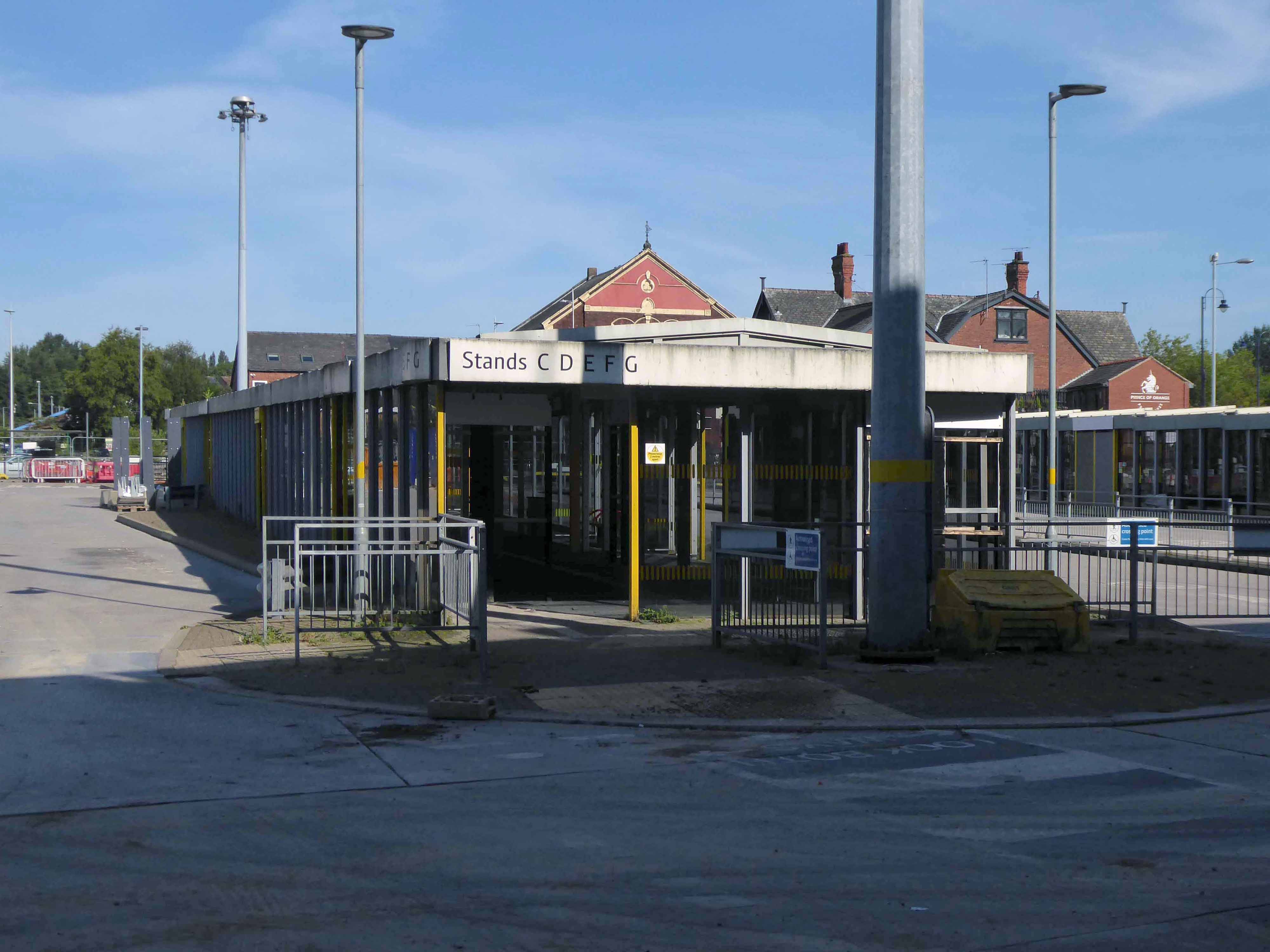
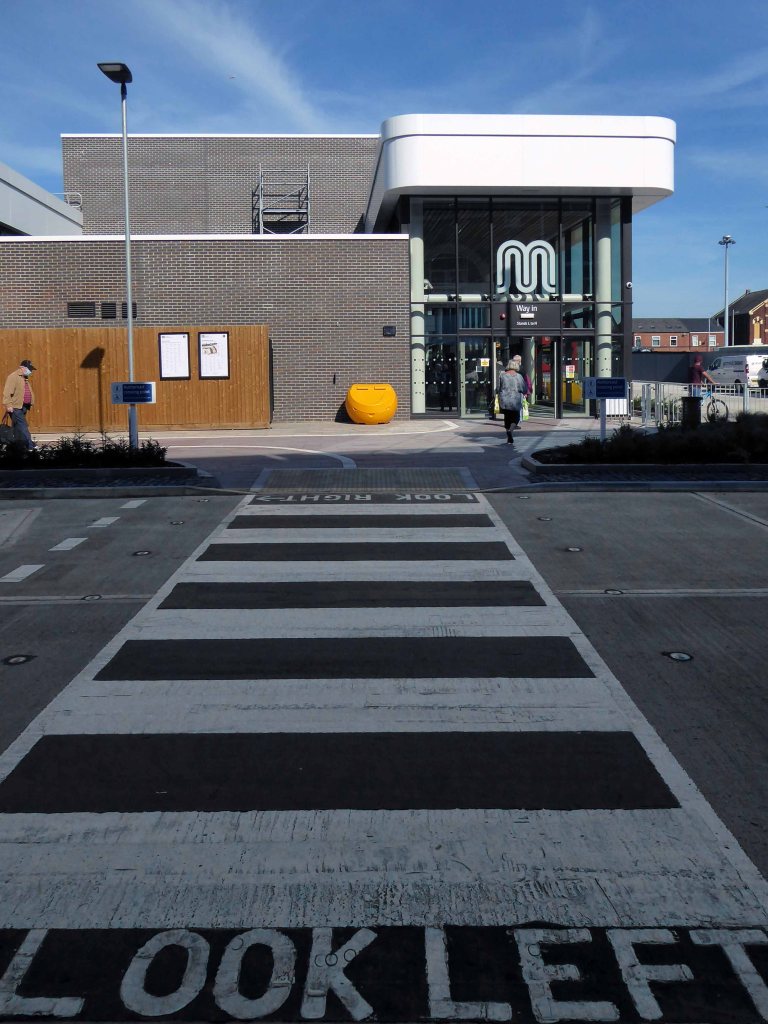
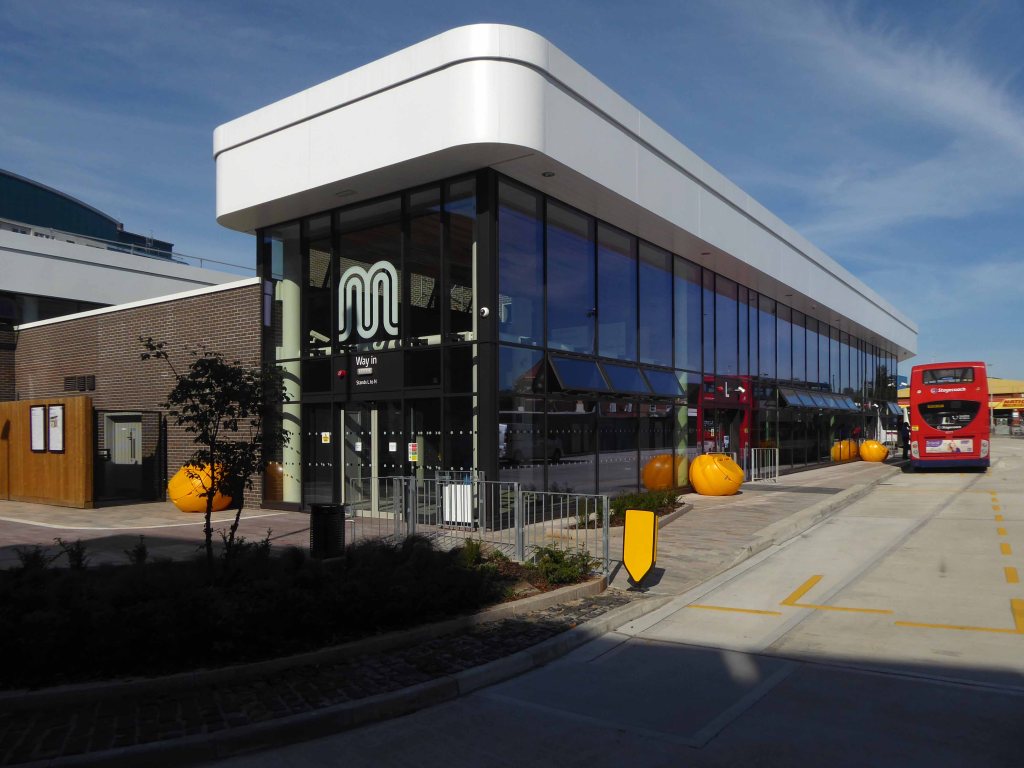
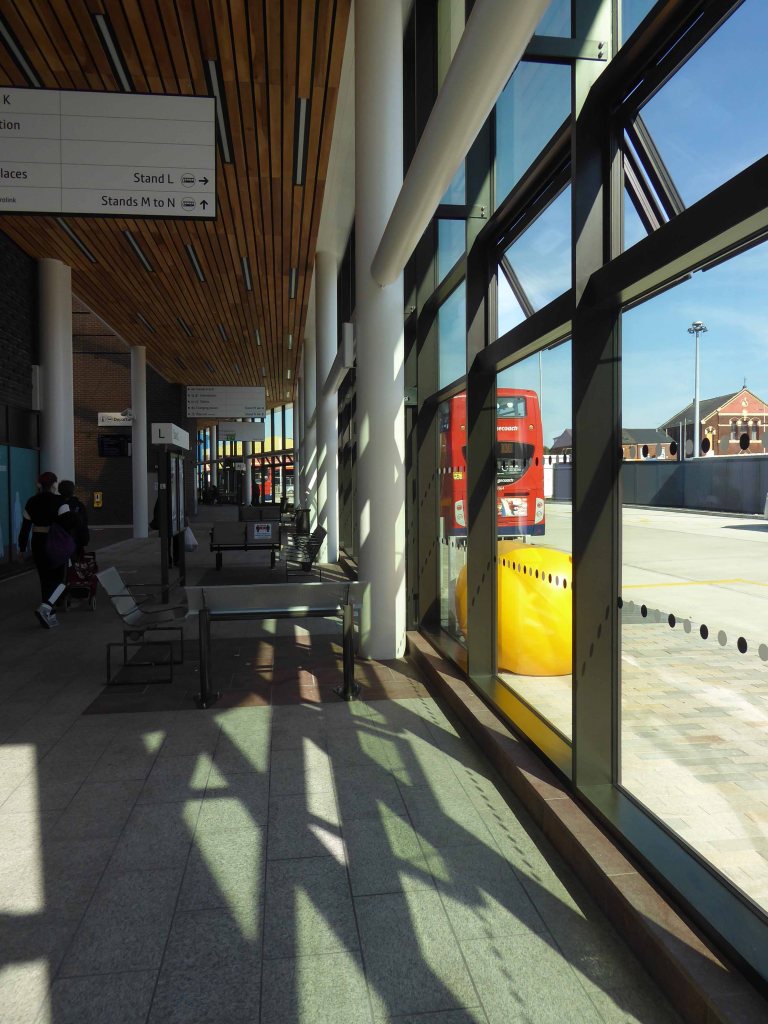
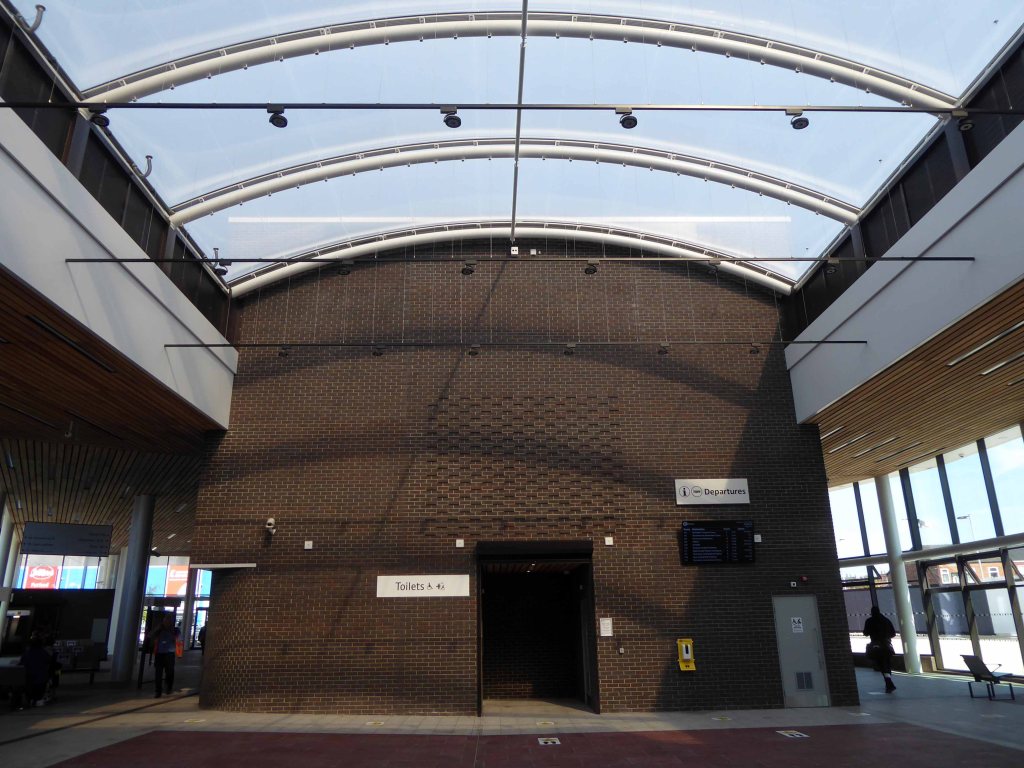
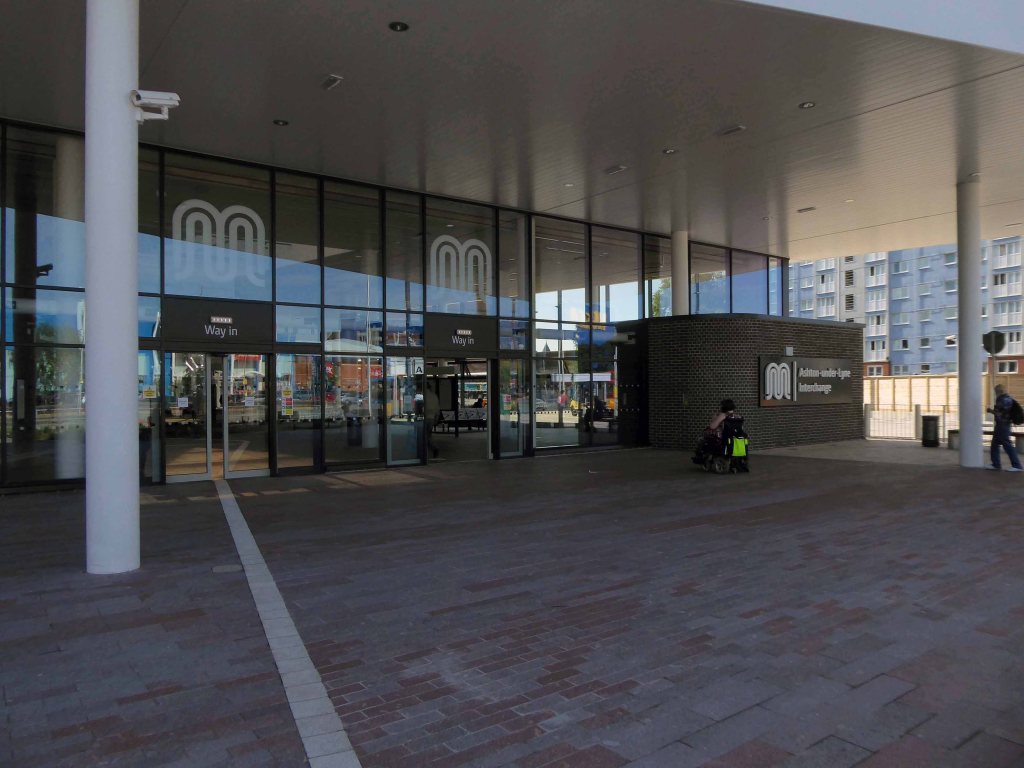
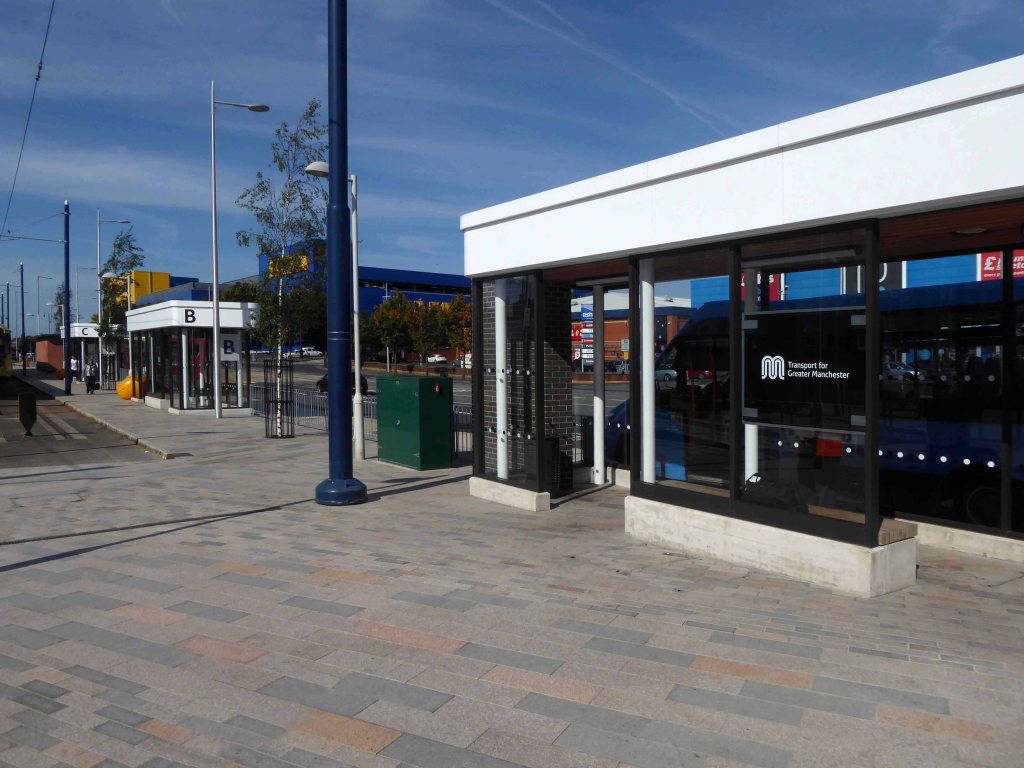
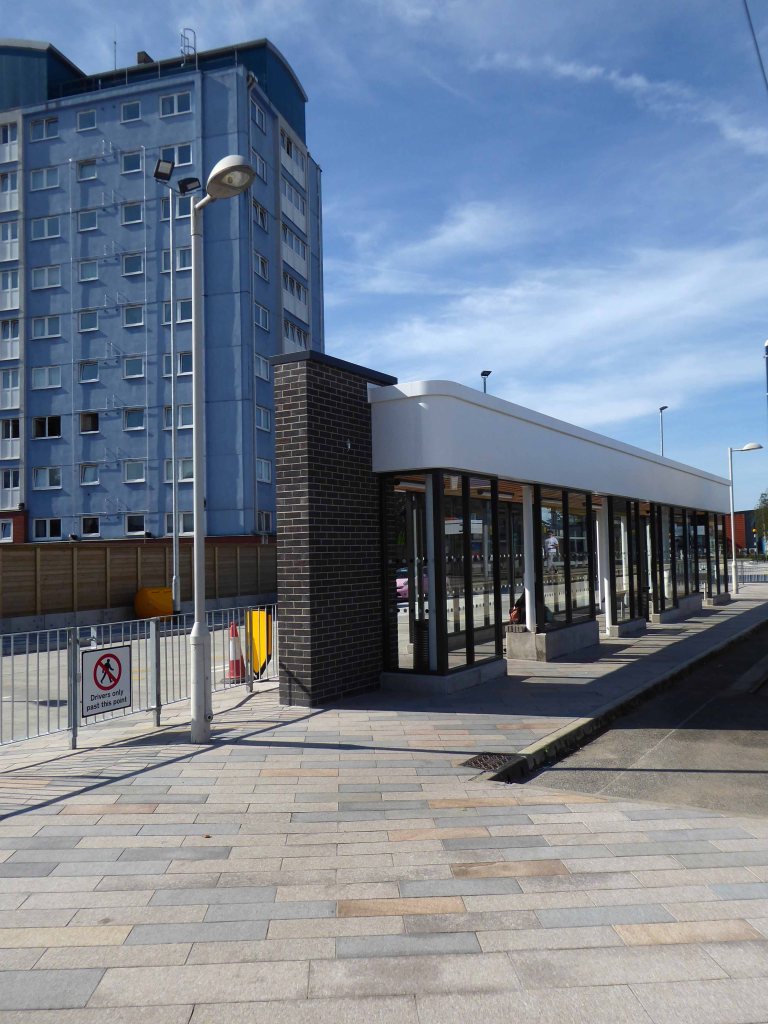
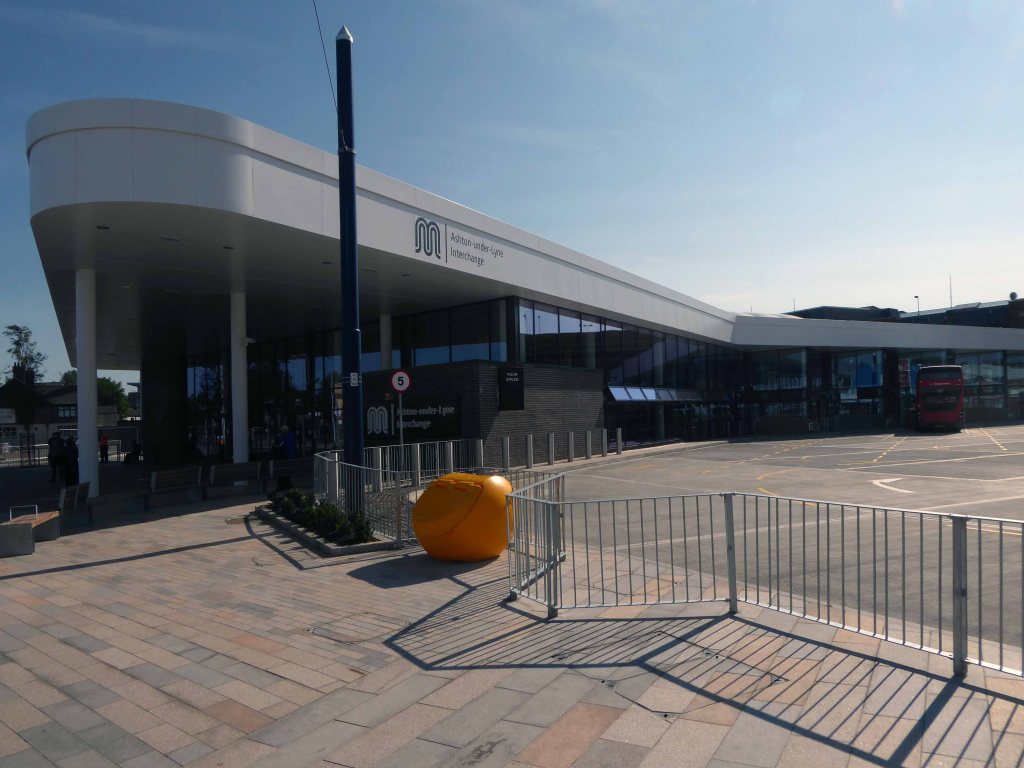
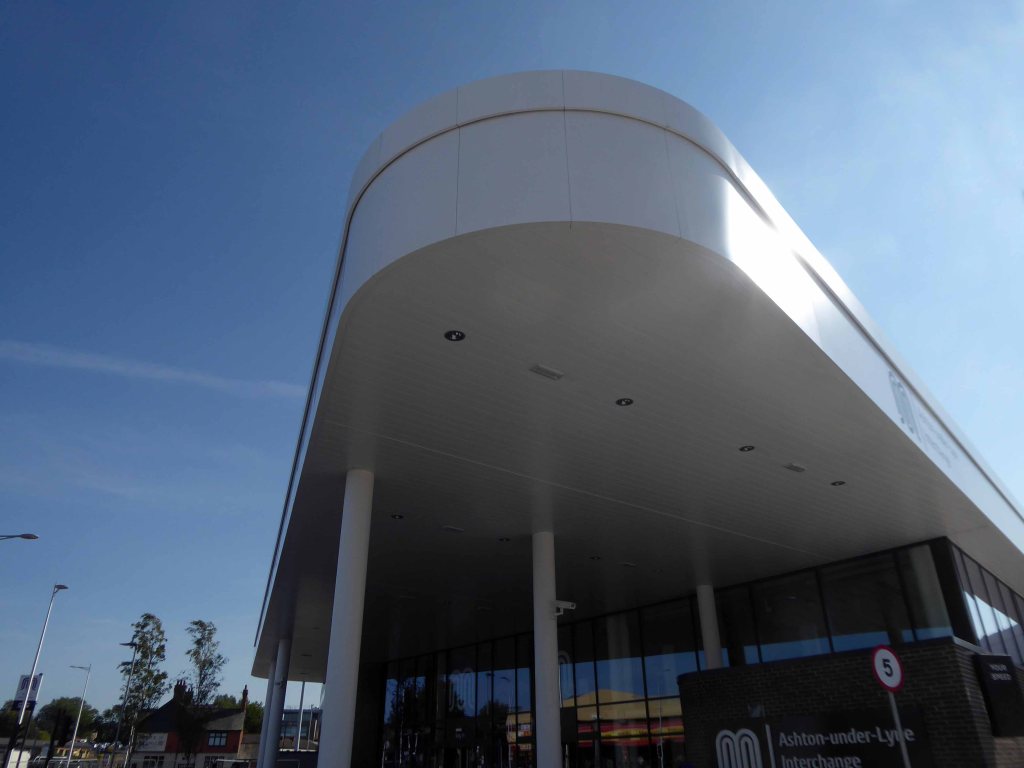
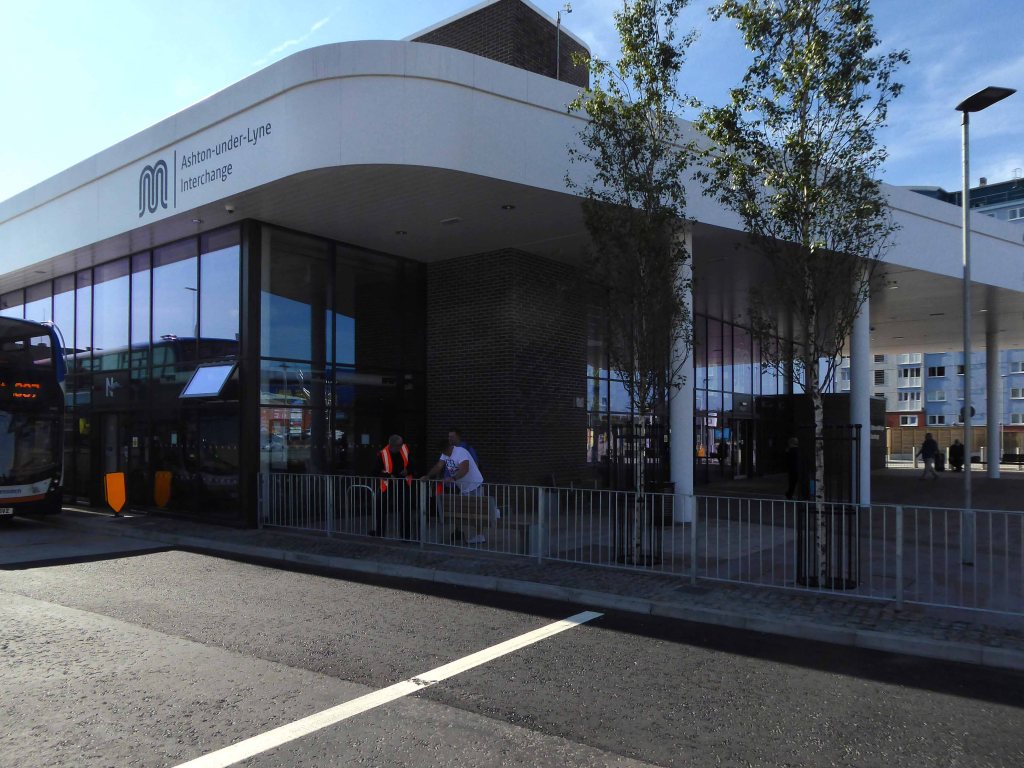
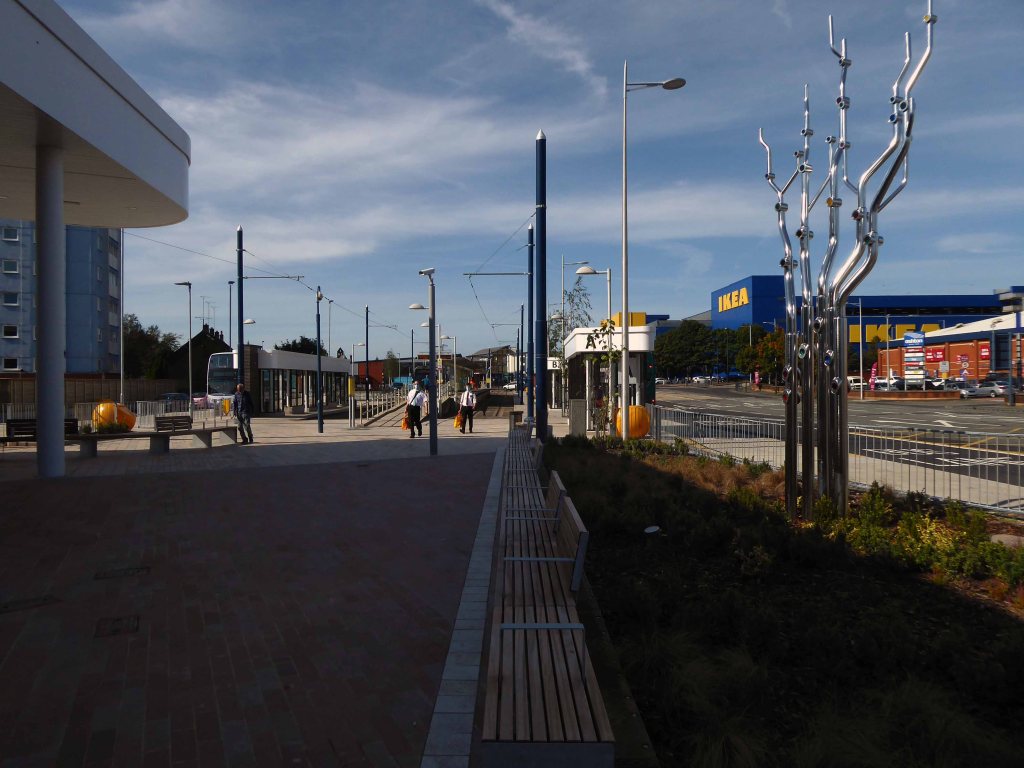
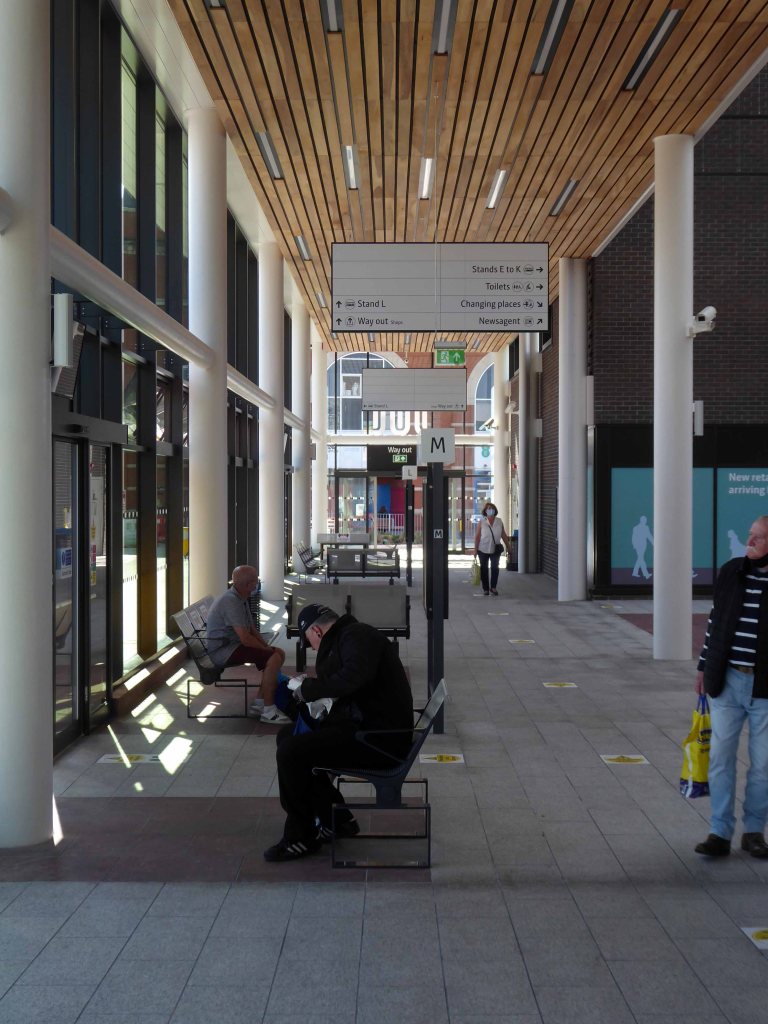
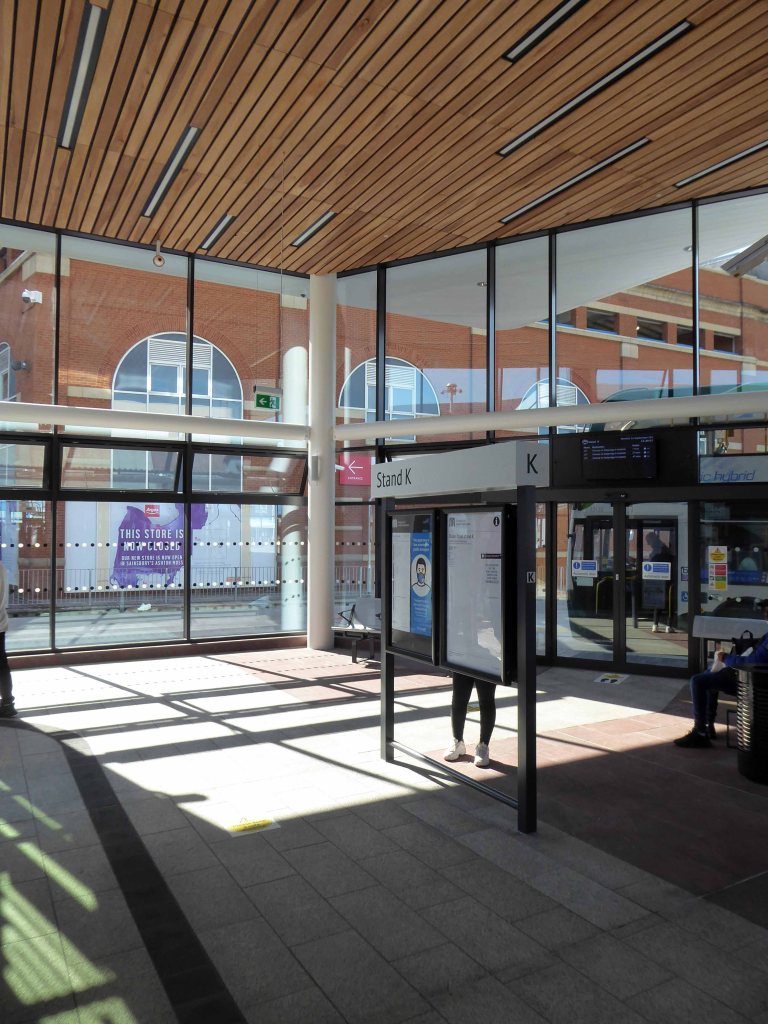
This time as an interchange, where bus, tram and train converge – the most modern of modern ideas.
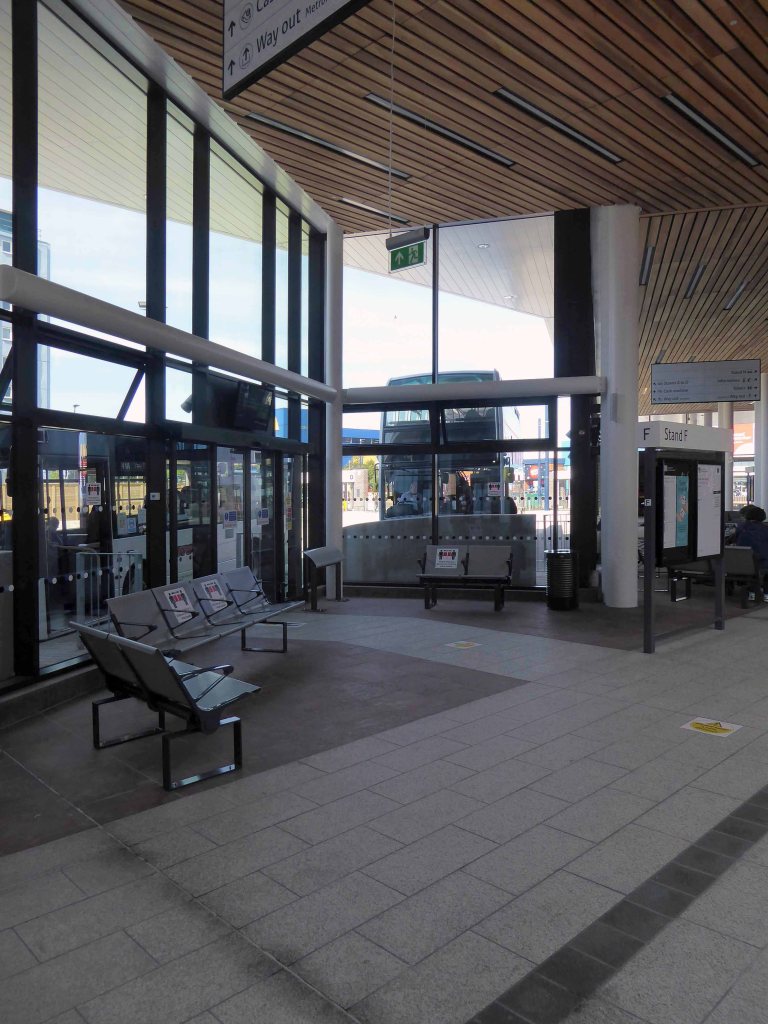
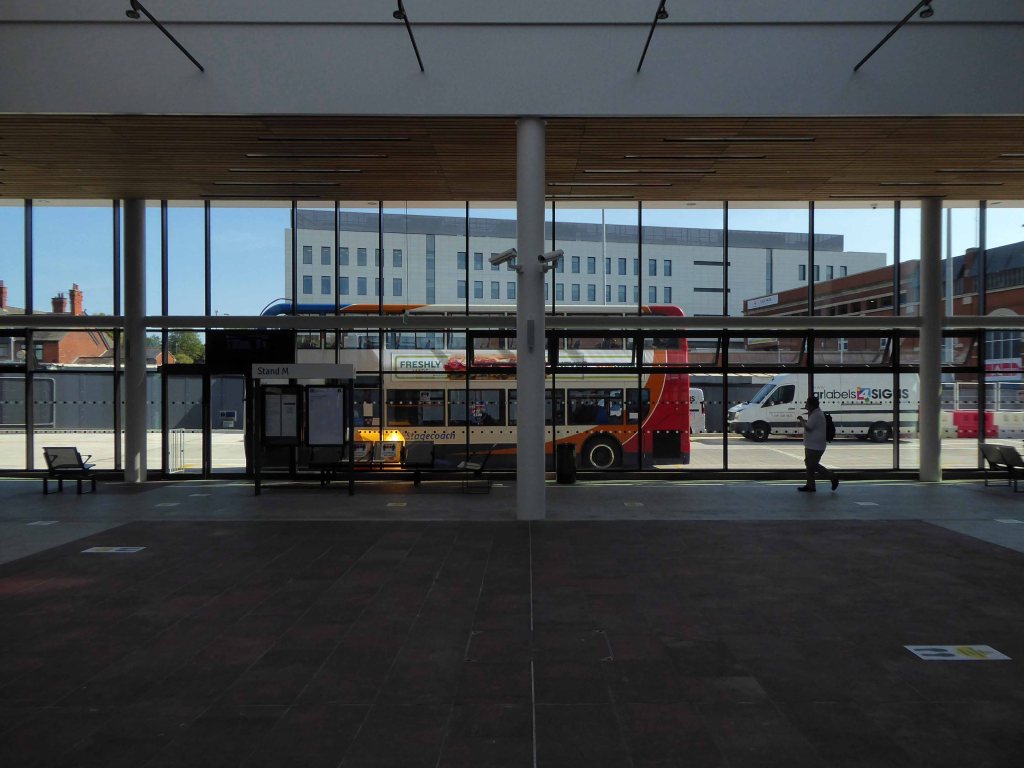
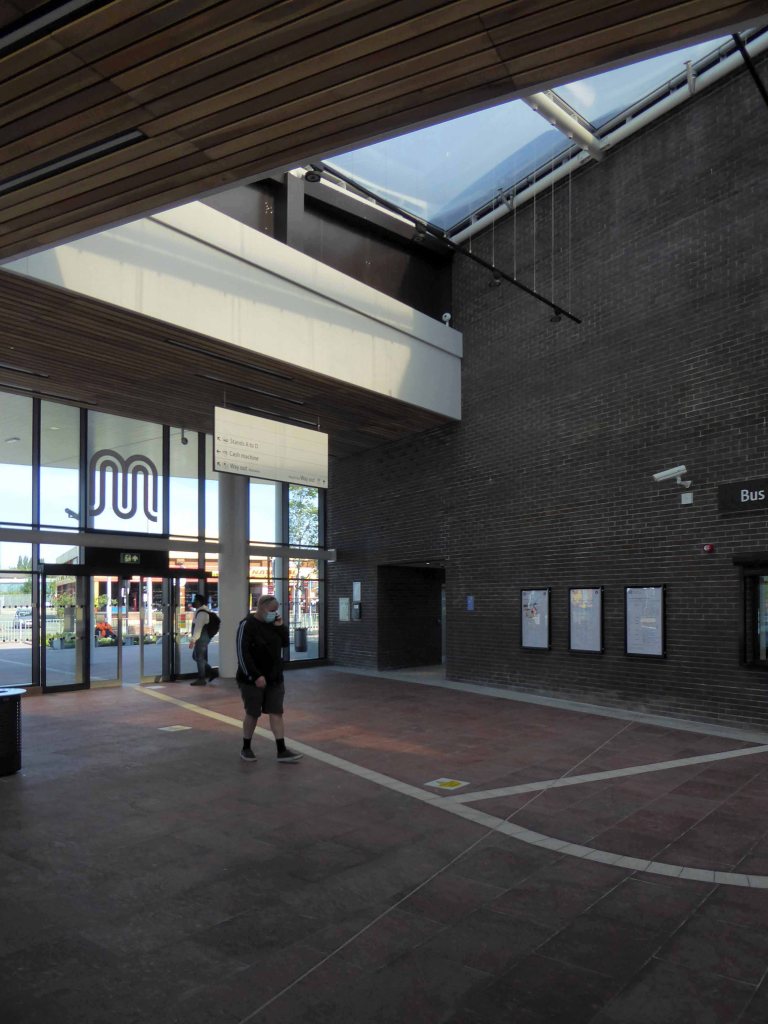
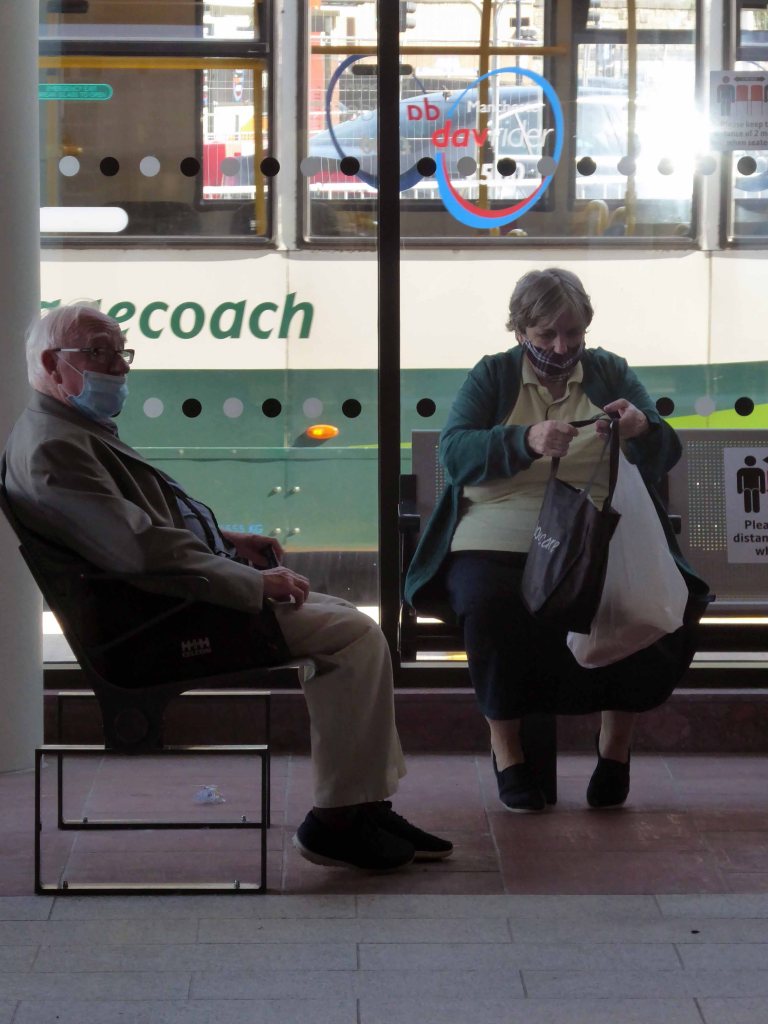
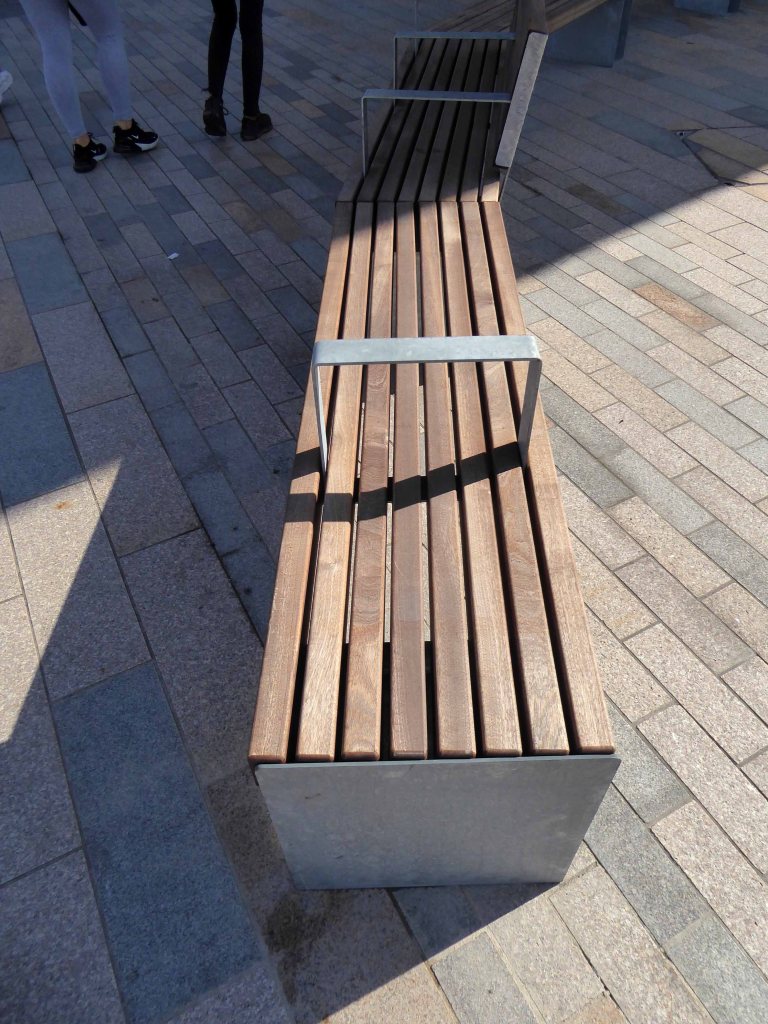
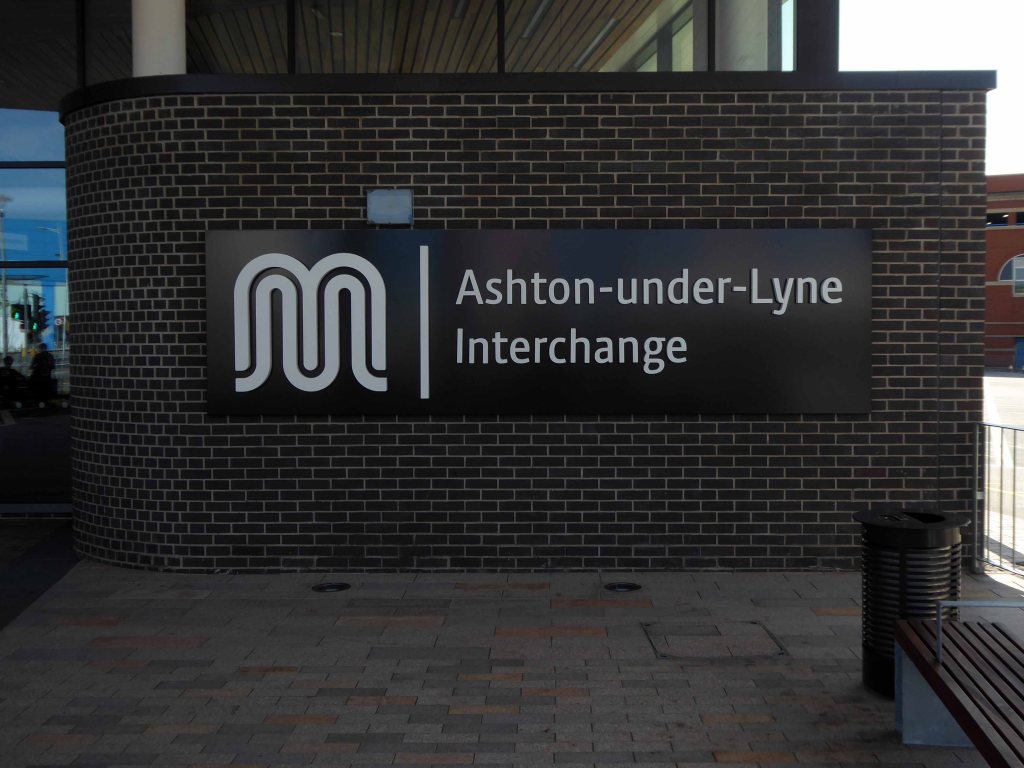
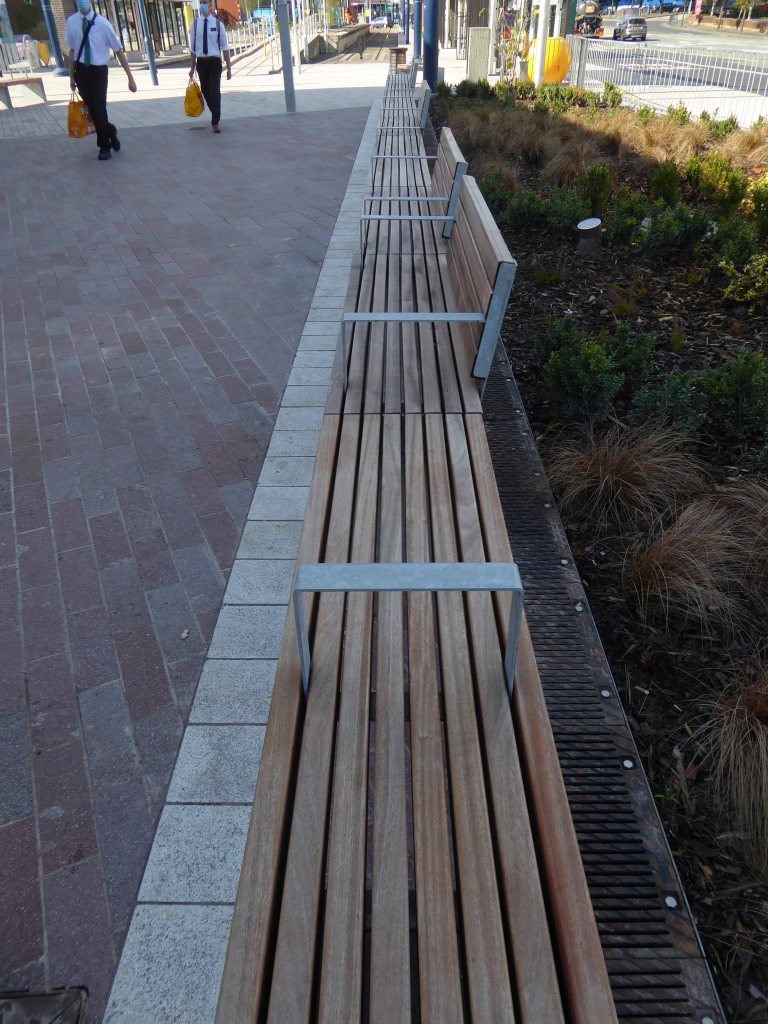
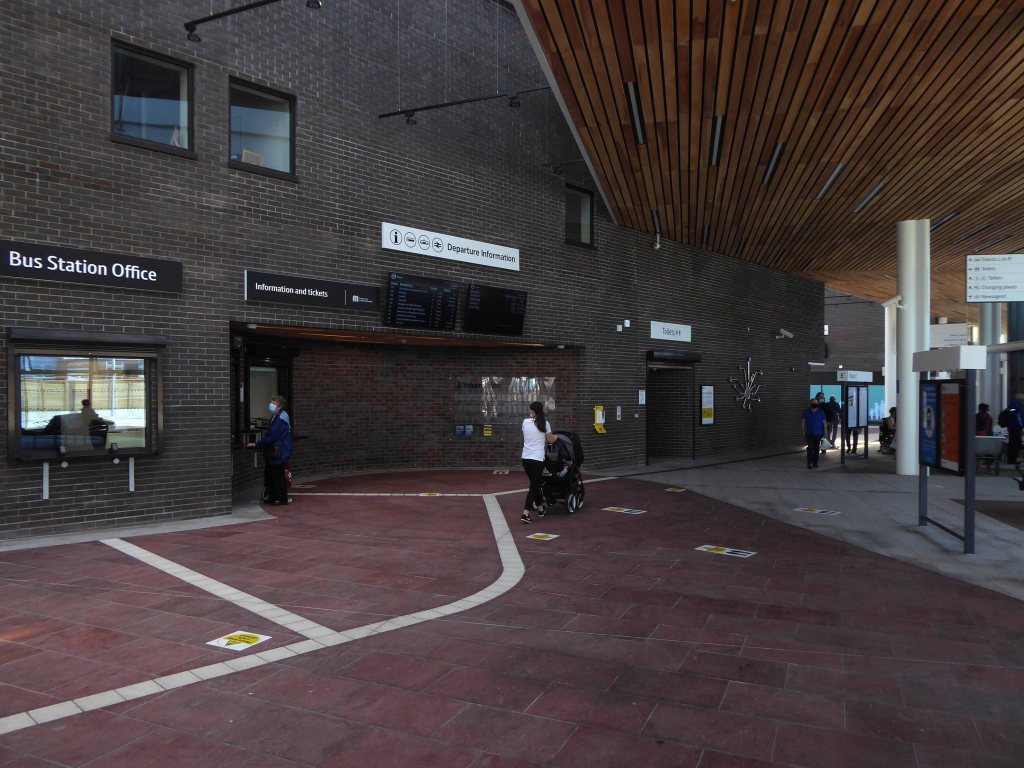
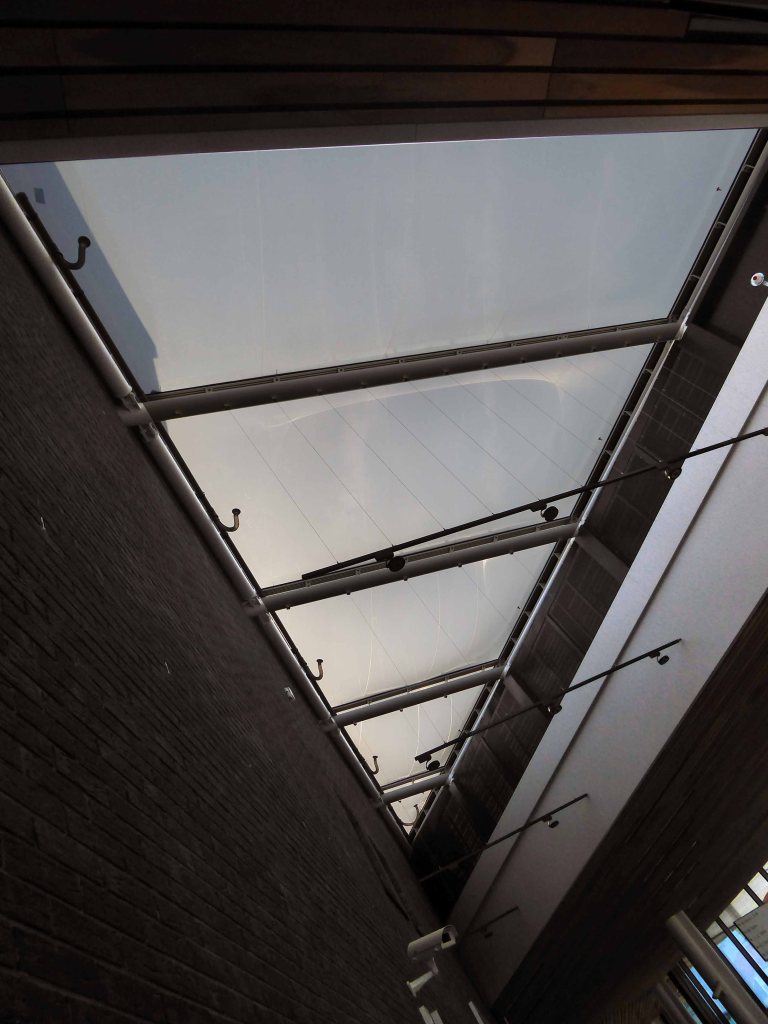
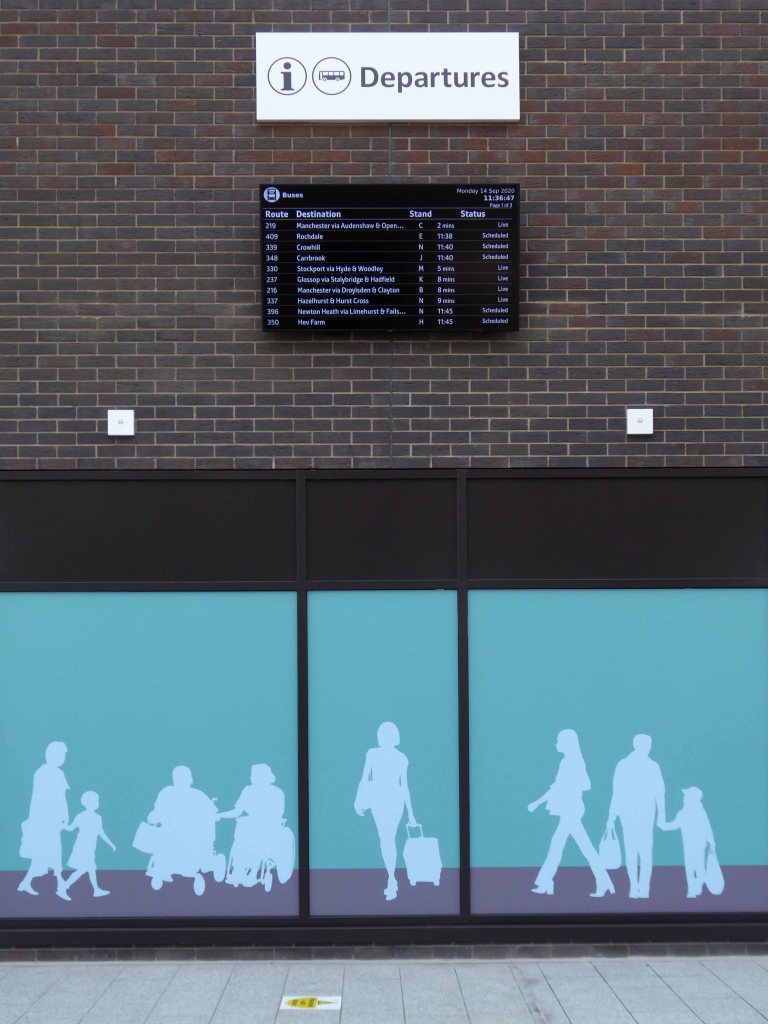
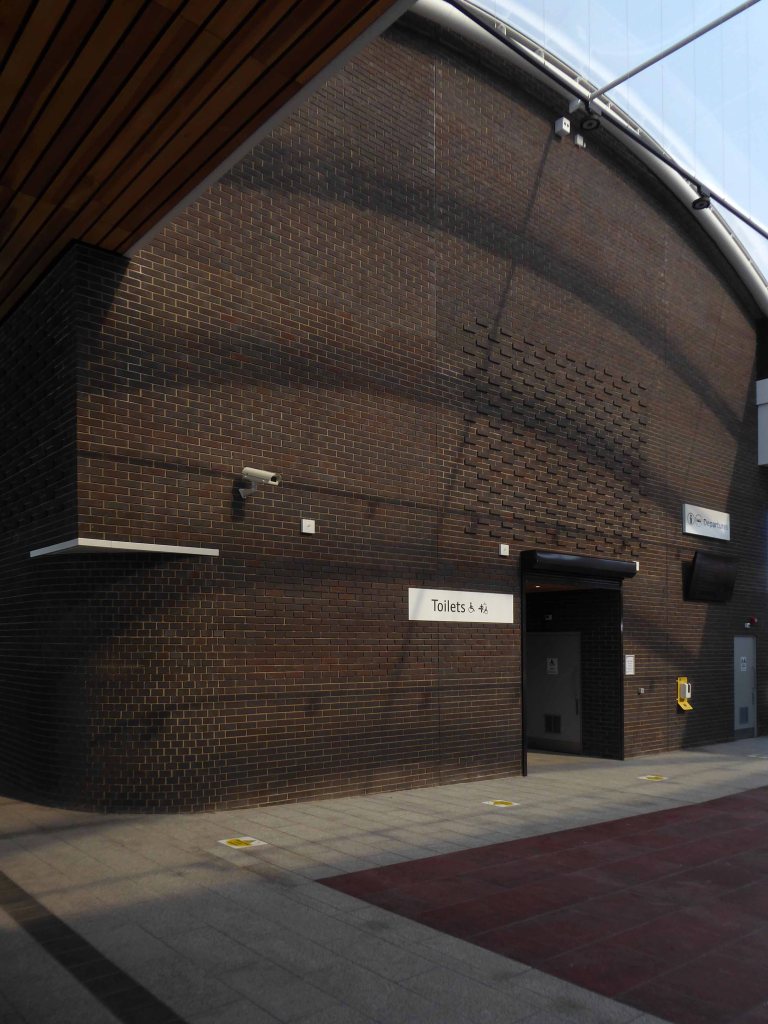
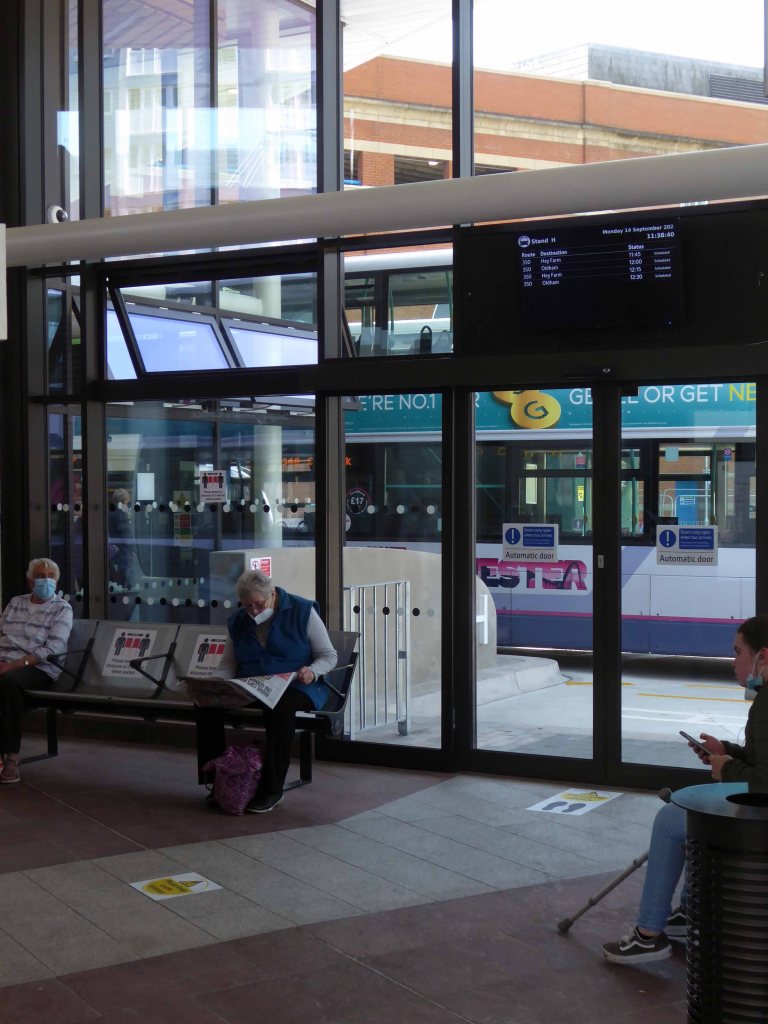
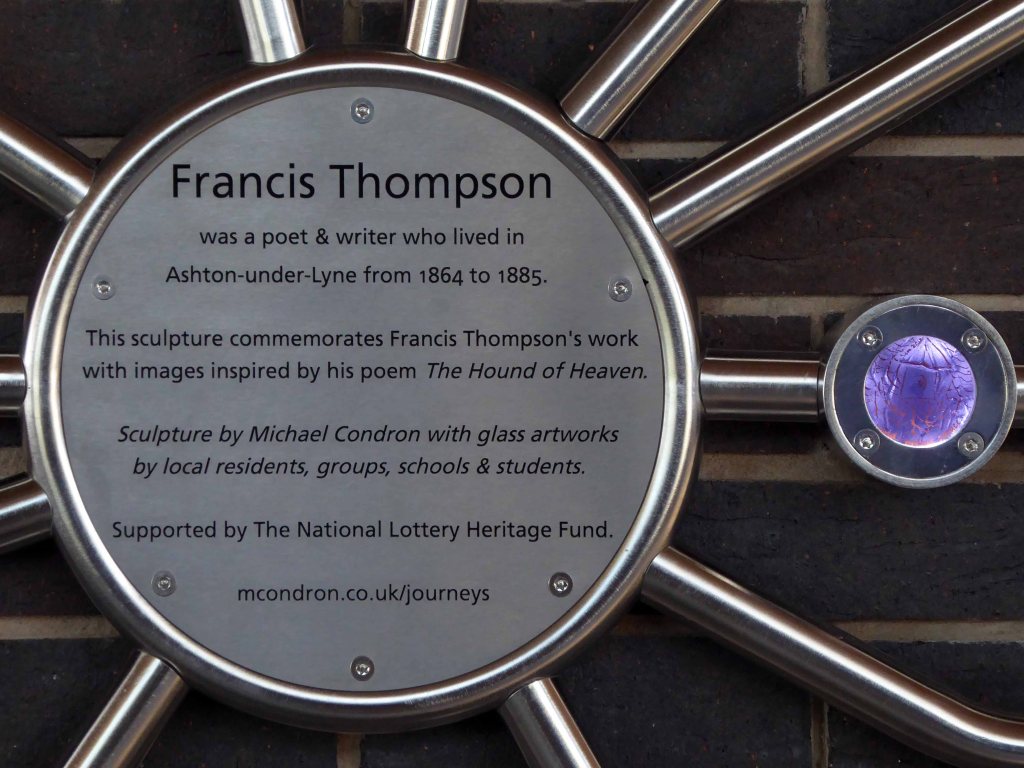
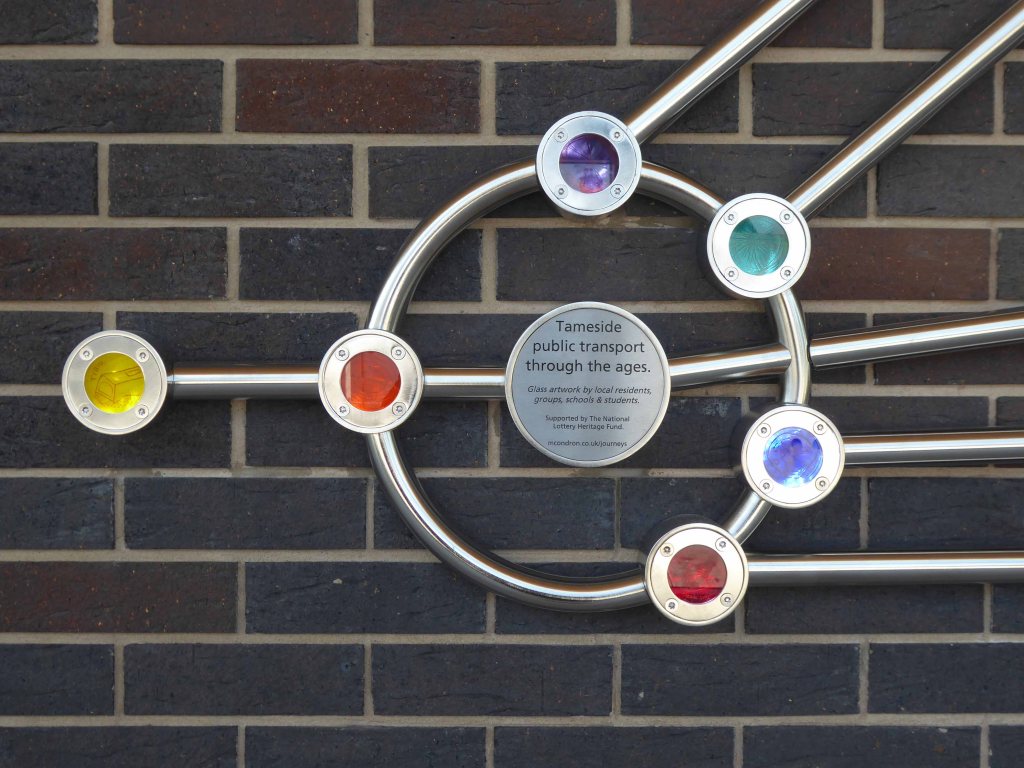
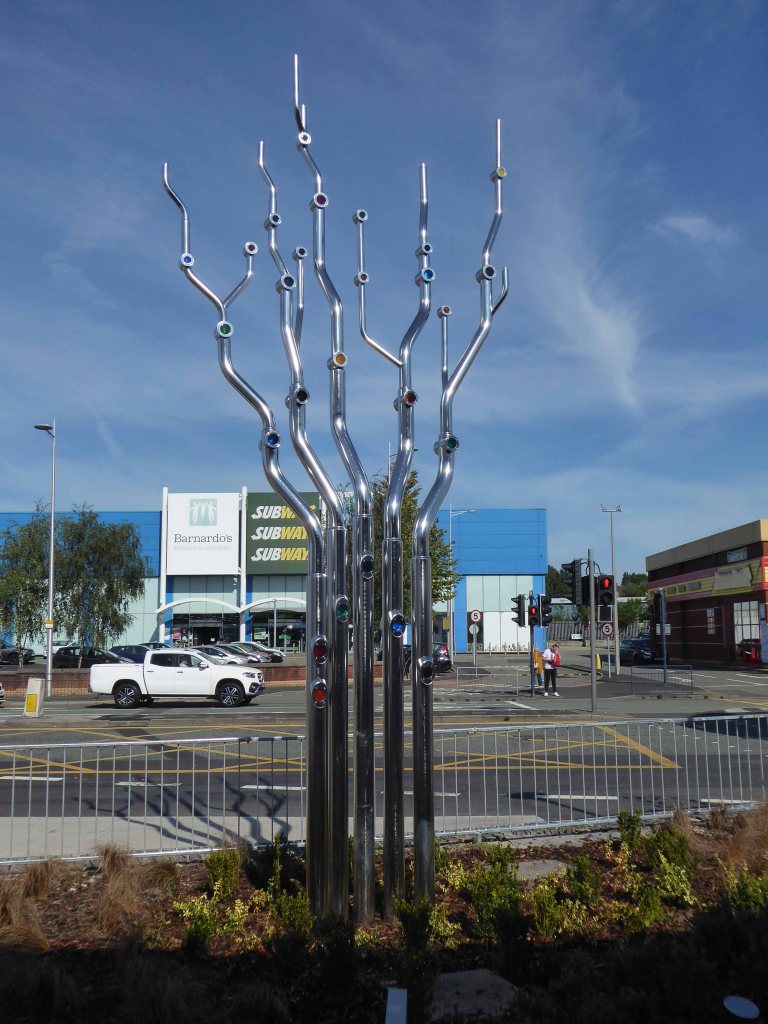
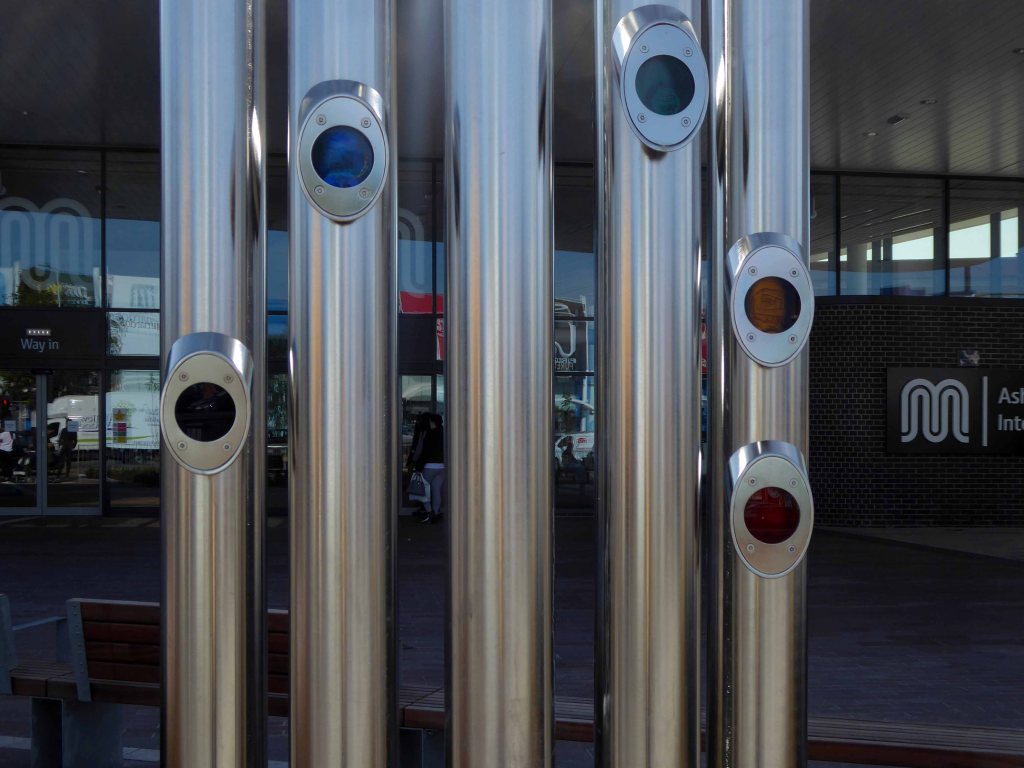
The brand-new Ashton-under-Lyne Interchange is now open, providing passengers with much-improved facilities and a modern, accessible gateway to the town.
The Interchange supports the economic growth of the town and helps people to get to and from their places of work as well as Ashton’s great shops, markets, restaurants and bars in a modern, safe and welcoming environment.
The Interchange has been developed by Transport for Greater Manchester in partnership with Tameside Council and funded with support from central government’s Local Growth Deal programme.
The building contractor was VINCI Construction UK.
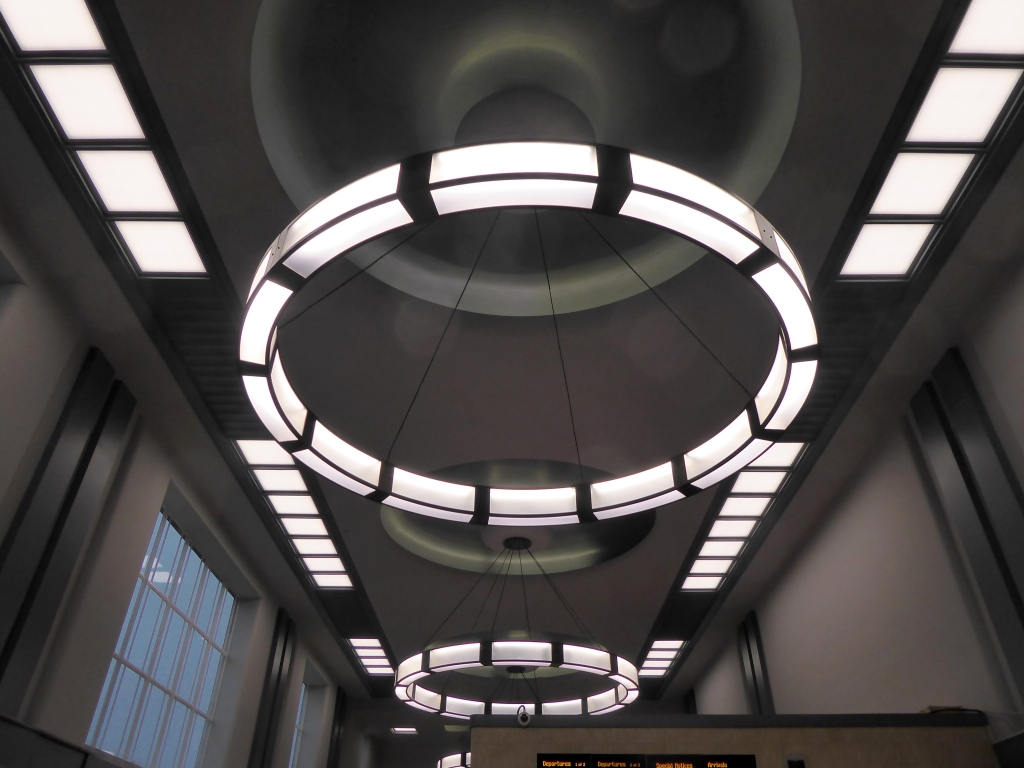
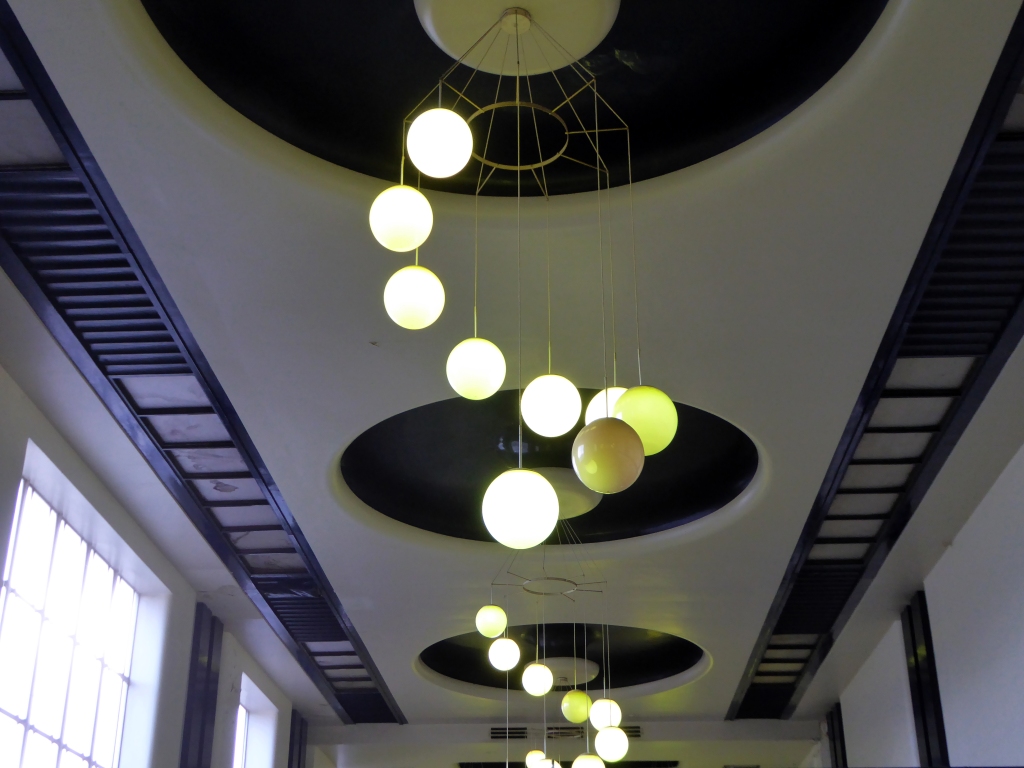
Arriving by train at 8.30, just in time to check out the new lighting scheme in the station foyer.
Replacing the previous lighting.
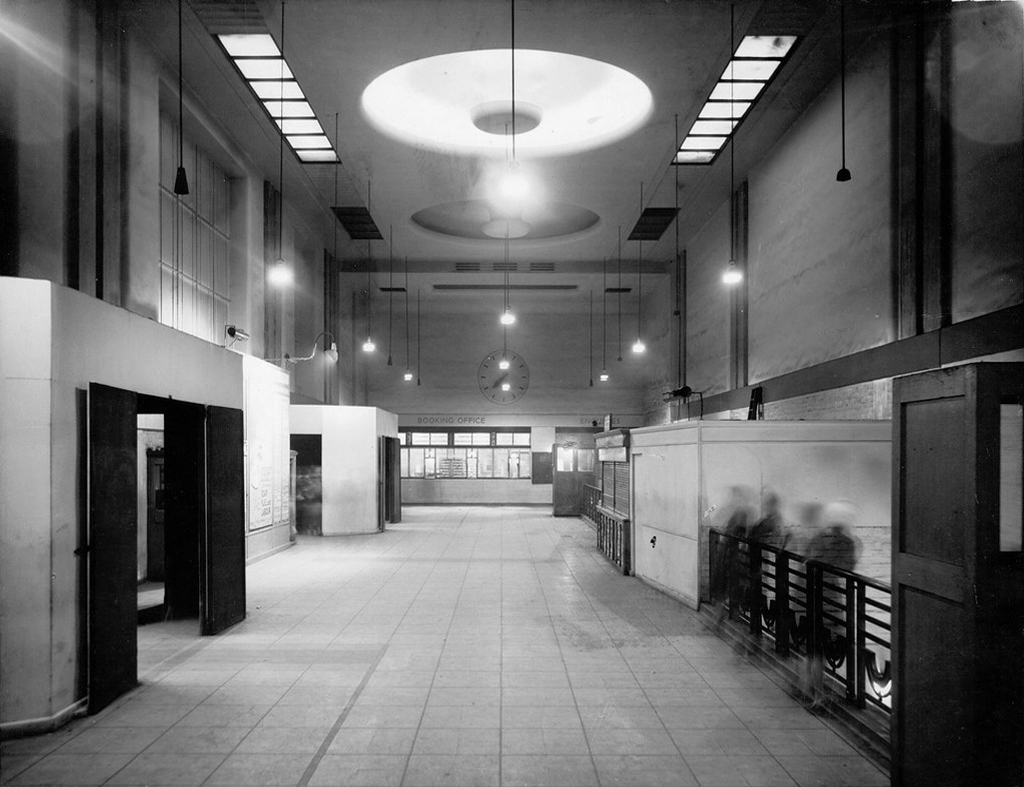
Which in turn replaced the original Thirties lighting.
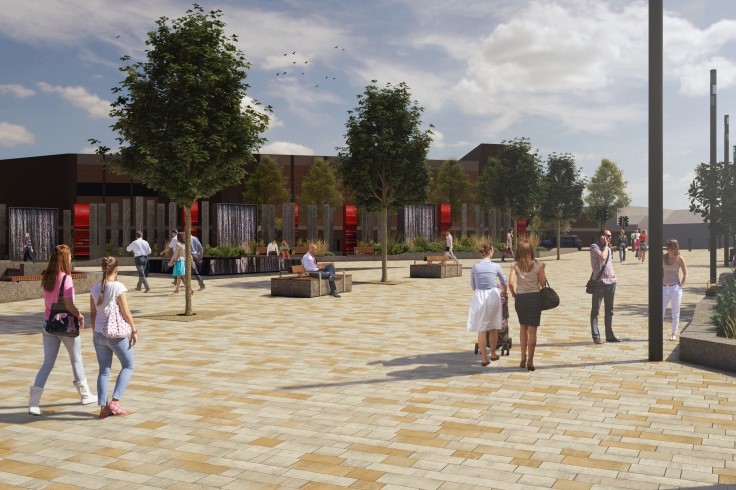
The forecourt redevelopment is a work nearing completion.
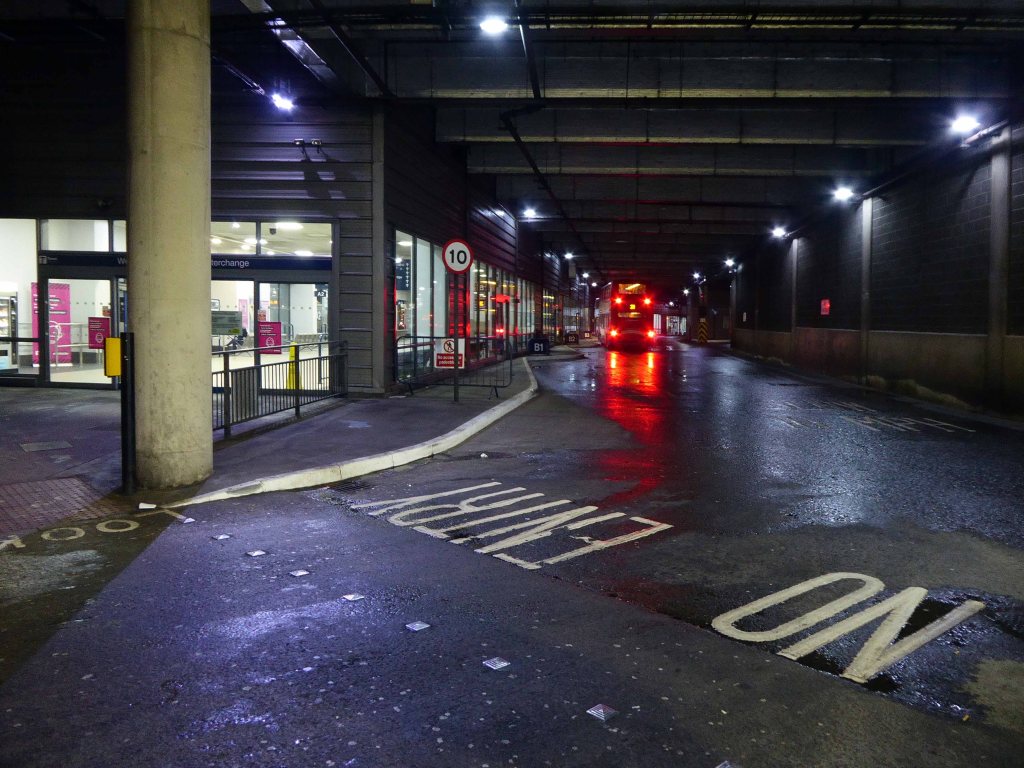
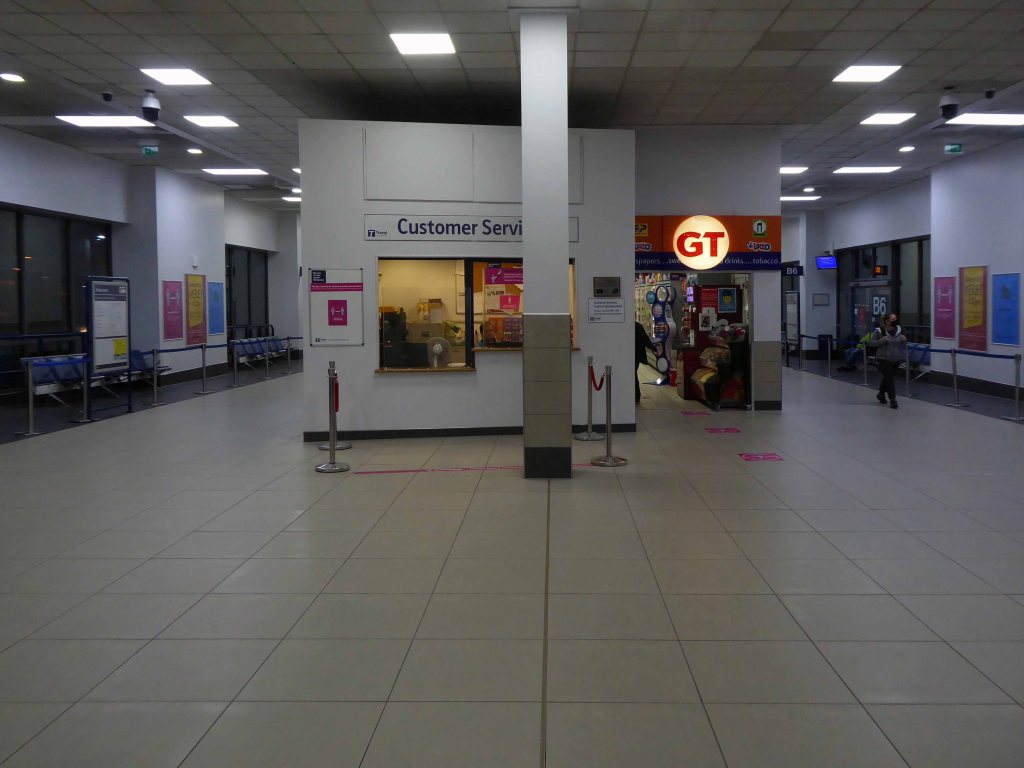
I was on my way to Intake by bus so it’s off on the 66 from the Frenchgate Inetrchange.
An urban environment so anonymous, that it can only just recognise itself. I was helpfully informed by two radio controlled security guards that photography was illegal.
More Interzone than Interchange.
Here are my transgressive snaps, I made my excuses and left – on the next available 66.
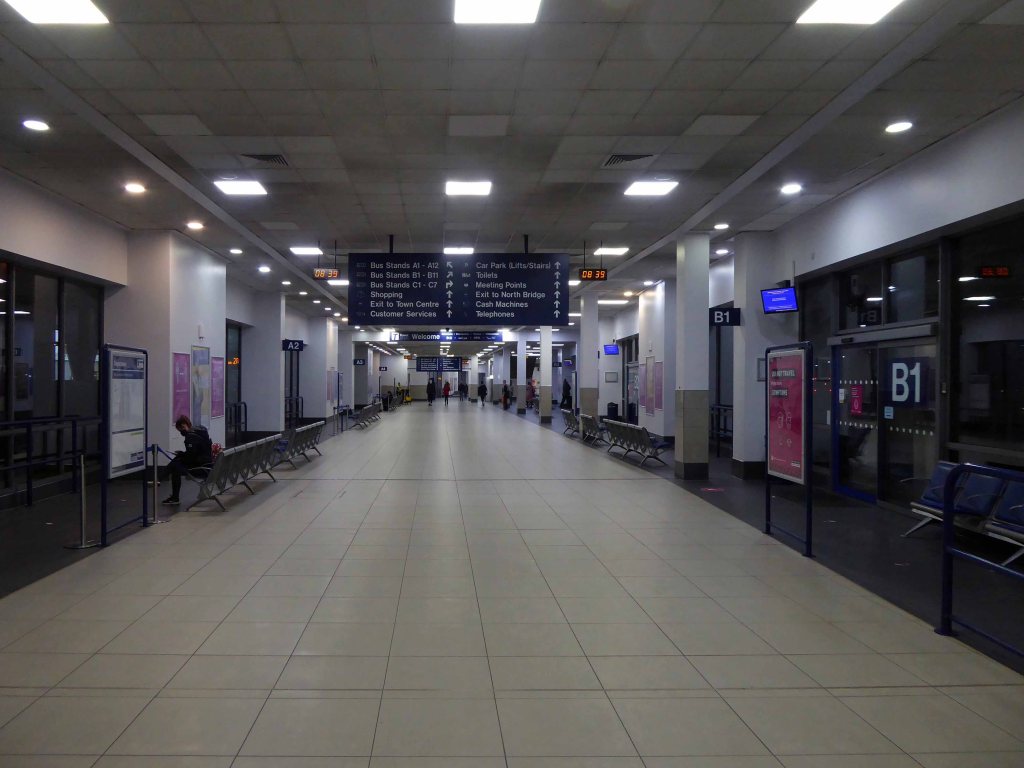
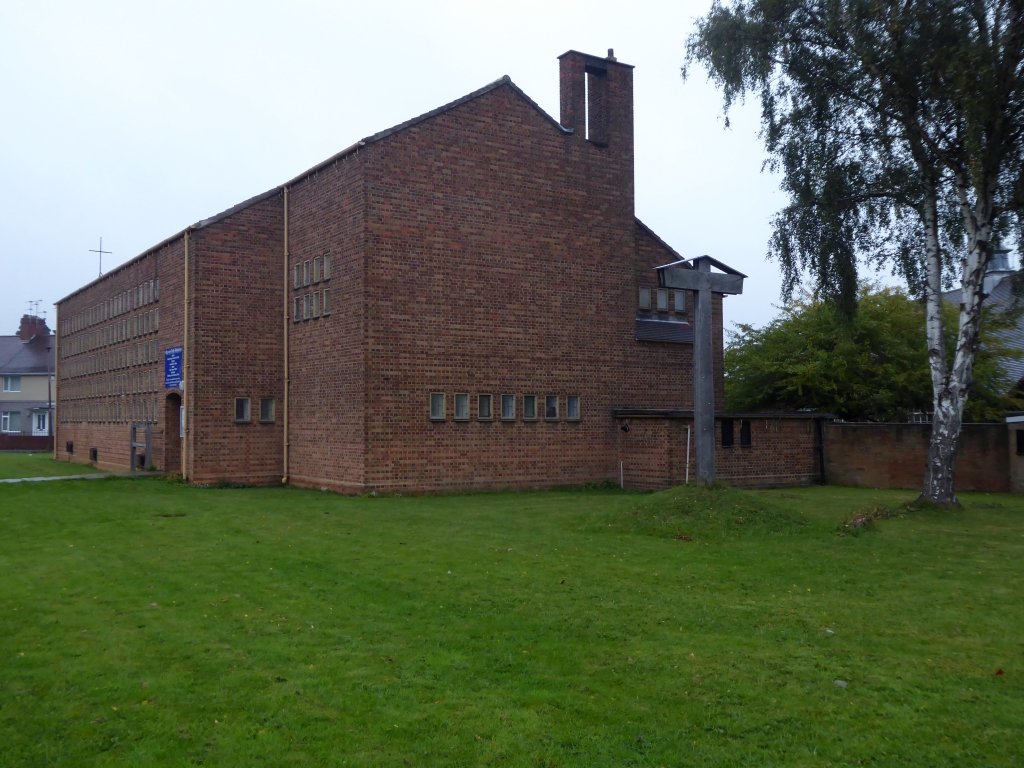
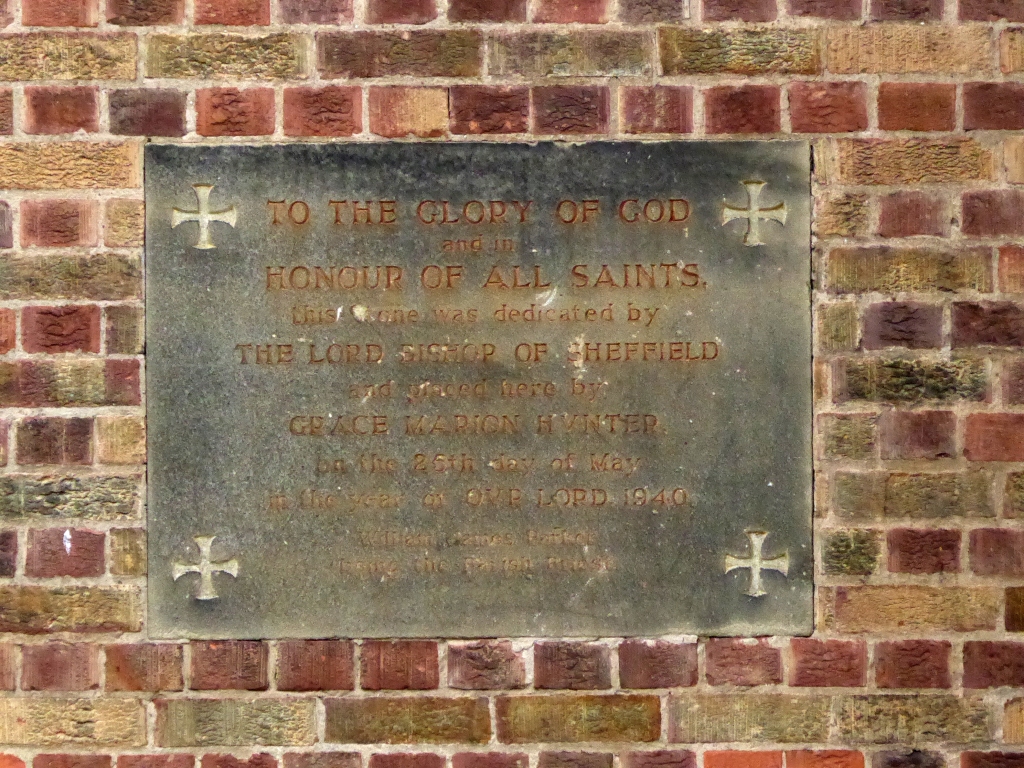
Decanting from the single decker I made my way across the way to All Saints, a George Pace church of 1956.
Built on the foundations of an unrealised Neo-Romanesque church of 1940, but reorientated east/west.
I legged it back to catch the bus back, the returning 66, much to the surprise of the surprised driver, making his return journey.
Jumping the 41A to Scawsby, displaying my risible home-printed map to the driver, requesting a shout when we arrived at the indicated destination, which he was unable to discern, and which I had failed illustrate.
I had contrived to arrive at the end of the line, a bit part player in a non-existent Béla Tarr film.
Following a thorough tour inside and out, I returned promptly to the town centre, on the limited stop express X19.
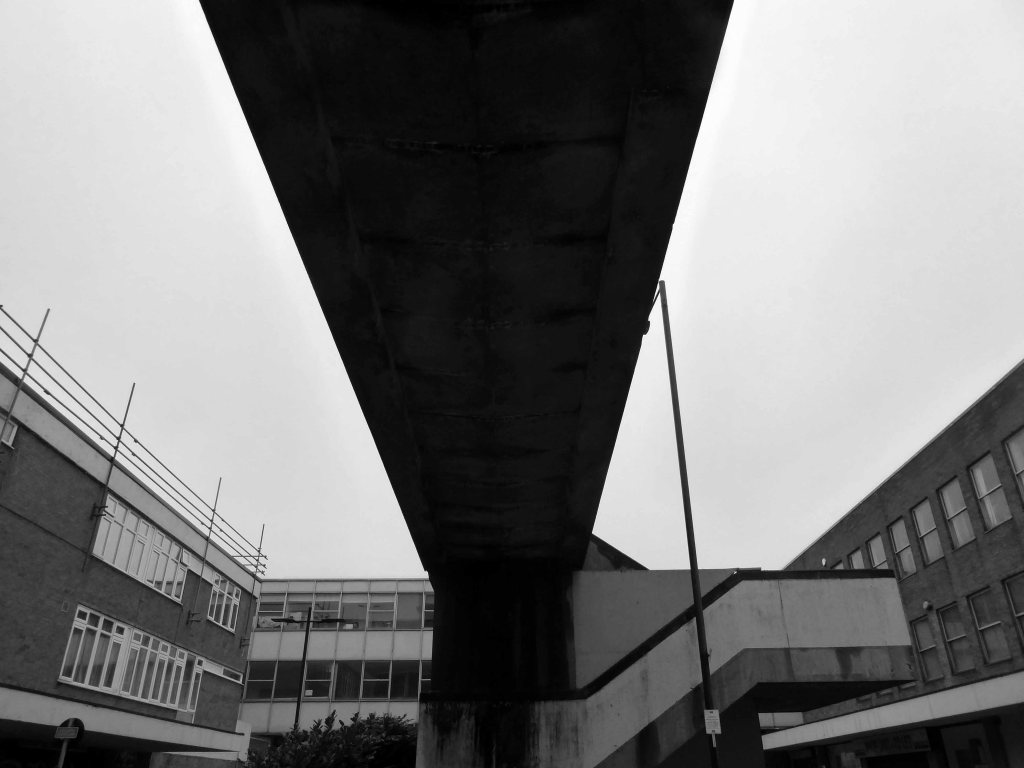
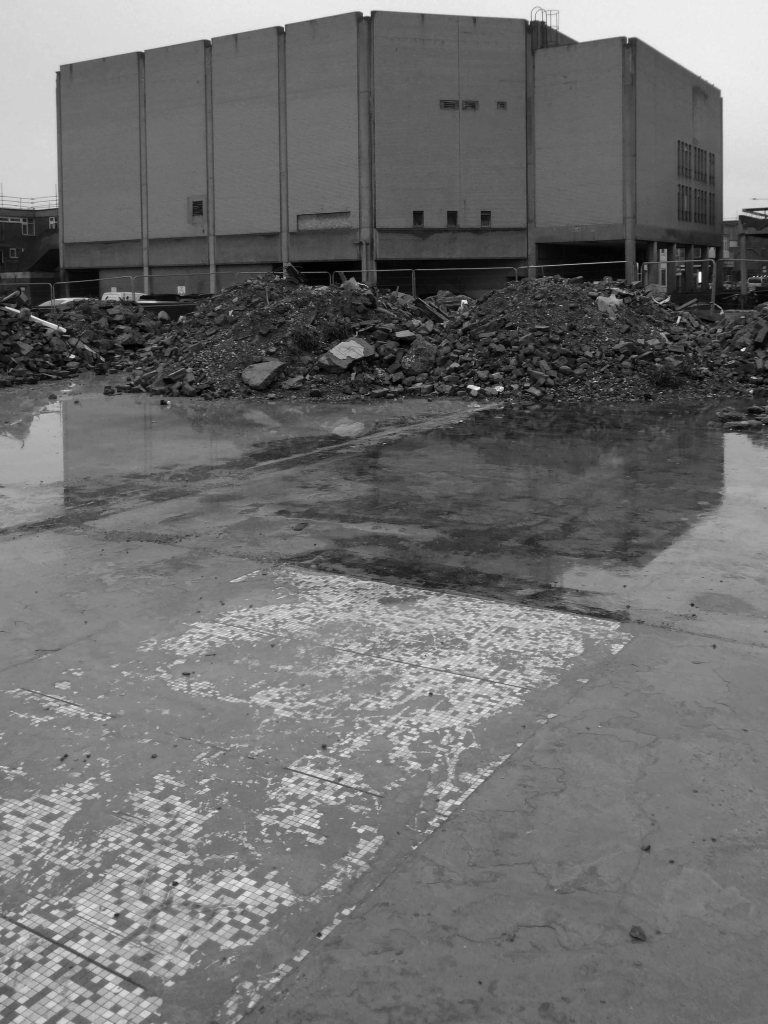
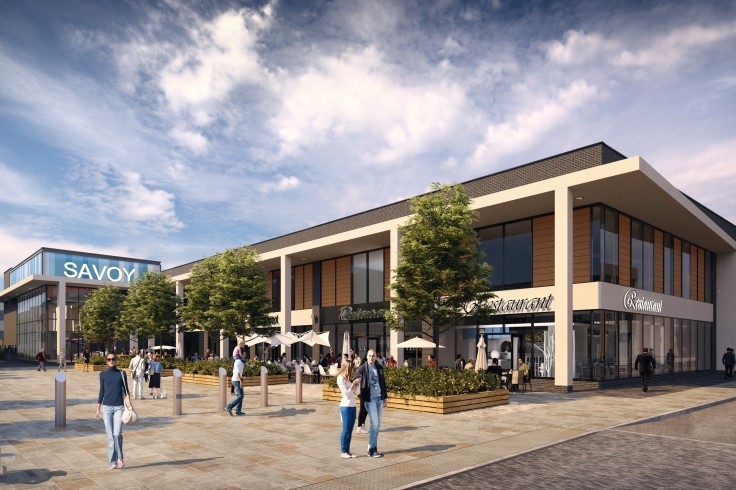
And hotfooted it to the Waterdale Centre, a work in progress, the CGI figures being as yet, a mere figment of the development officer’s fevered dreams.
Doncaster Council documents from the planning application for the demolition say, that while the exact project is not yet fully in place, discussions are taking place with the council on the project and grant funding is being sought to help the future regeneration scheme. But the council has said it supports schemes that would revitalise the Waterdale Centre area for retail, leisure, and tourism uses.
The centre is now owned by the Doncaster-based property firm Lazarus Properties, who bought it from the Birmingham firm St Modwen.
Lazarus director Glyn Smith said his firm had faith in the local economy of Doncaster town centre, even though larger multinationals seemed to be shying away.
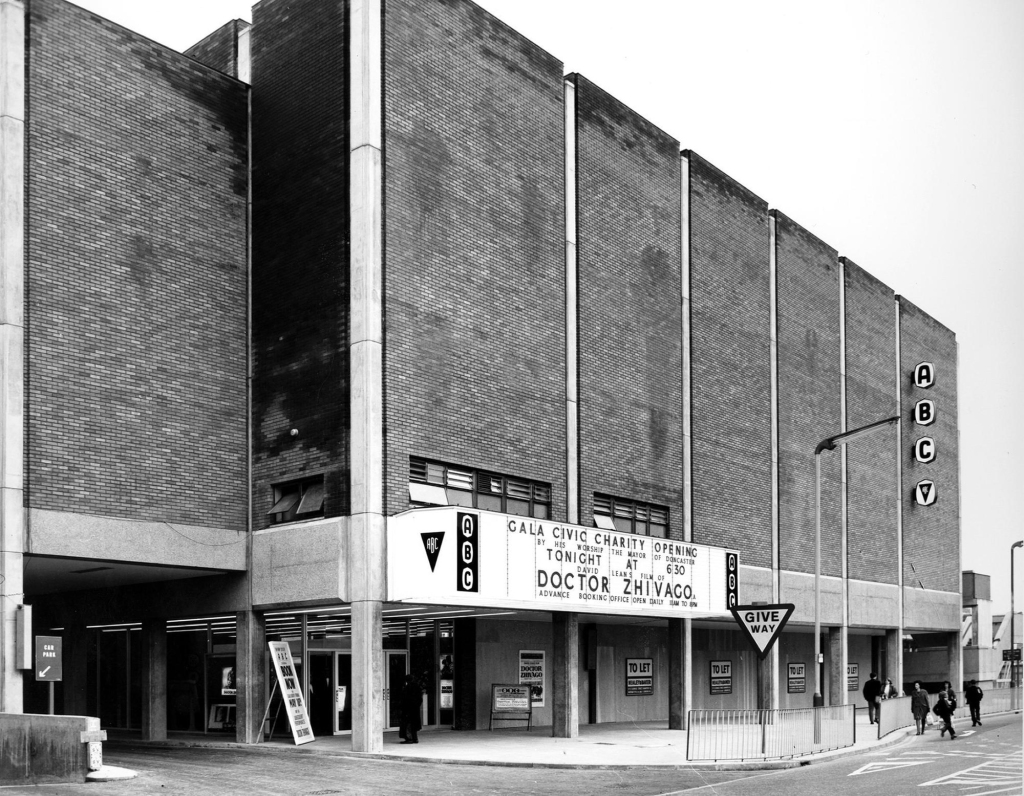
The ABC was built by Associated British Cinemas(ABC) as a replacement for their Picture House Cinema which had opened in 1914. It opened on 18th May 1967 with Omar Sharif in Doctor Zhivago presented in 70mm. Designed with 1,277 seats arranged in a stadium plan by the architectural firm Morgan & Branch, with input by architects C. ‘Jack’ Foster & Alan Morgan. It was decorated in a modern 1960’s style.
Closed in January 1981 for conversion into a triple screen it re-opened on 9th April 1981 with seating in the 3-screens.
The Cannon Group took control in the mid-1980’s and it was re-named Cannon and it closed on 18th June 1992, screening its opening film “Doctor Zhivago”.
The building has stood empty and unused since then, but in 2007, it was bought by Movie World for just £150,000. It is reputedly being re-modeled with extra screens added, however by 2009, only a clean-up of the interior has been achieved. The building sits empty and unused in 2020.
Cinema Treasures
The delayed opening of the new Savoy Complex will no doubt inform the future of the Cannon.
It’s a familiar tale of the local authority, developers, leisure and retail outlets chasing dreams, cash and hopefully pulling in the live now pay later public.
It’s all part of the Doncaster Urban Centre Masterplan which will transform the way Doncaster looks and the way residents and businesses use the city core.
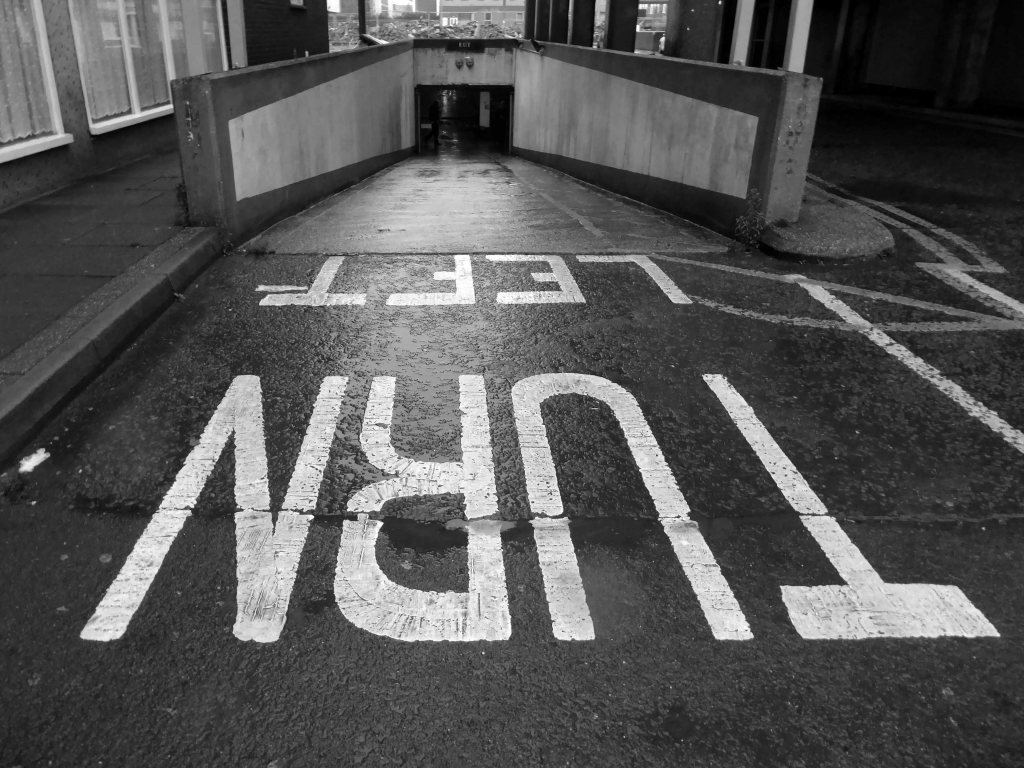
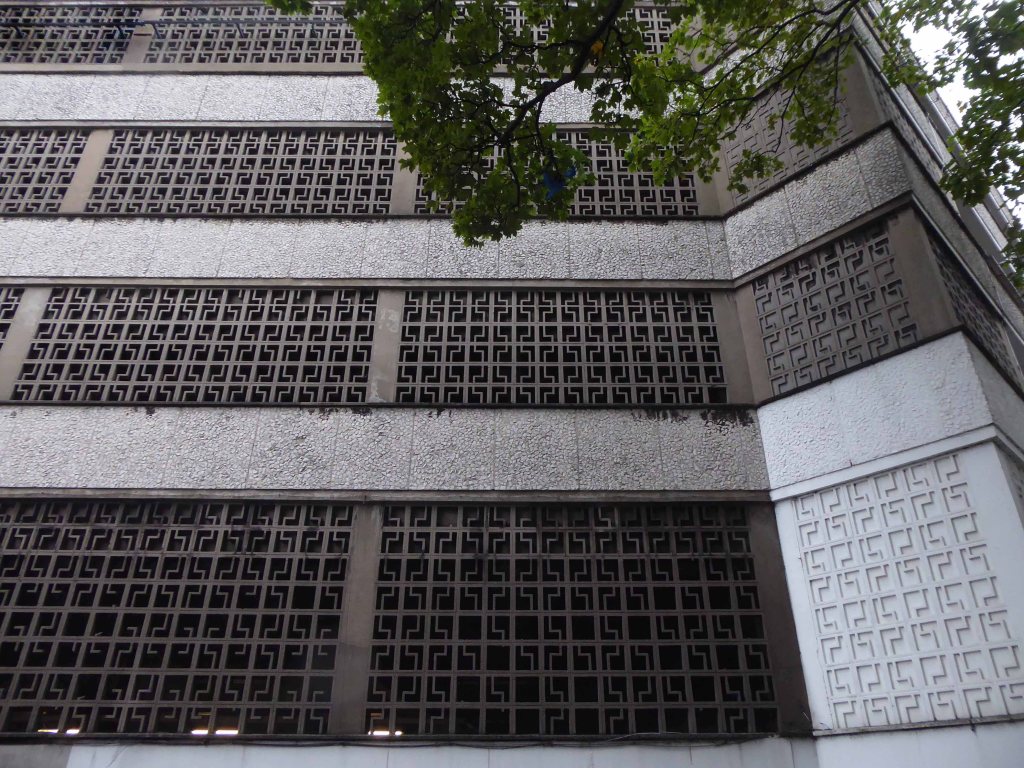
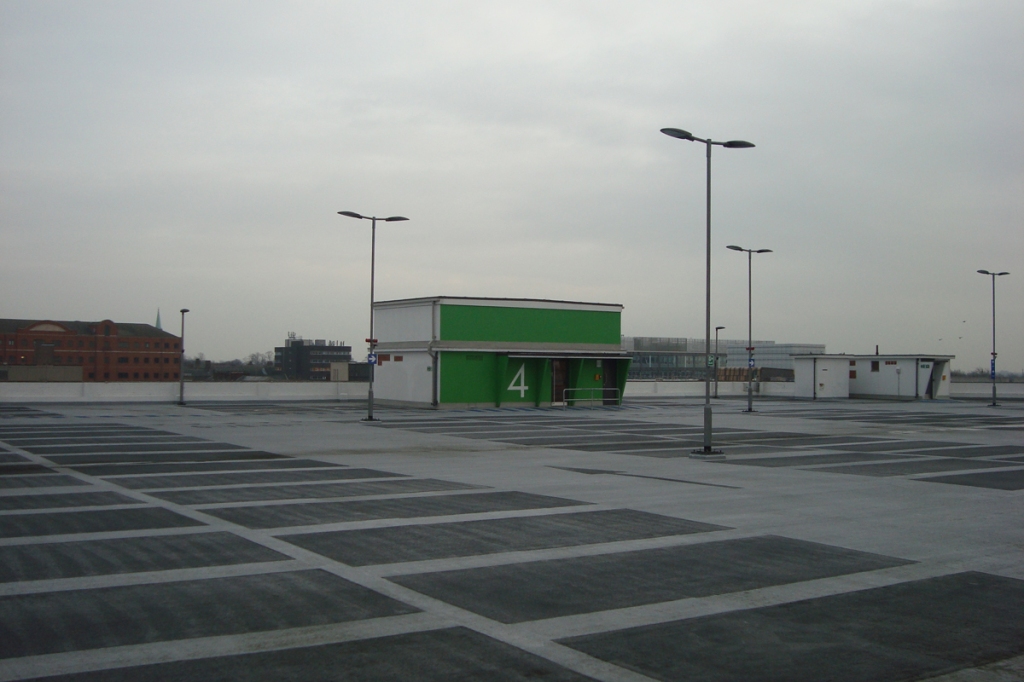
The area is a pivotal point, I sincerely hope that the Waterdale Centre is revived, along with the adjacent Civic Quarter car park.
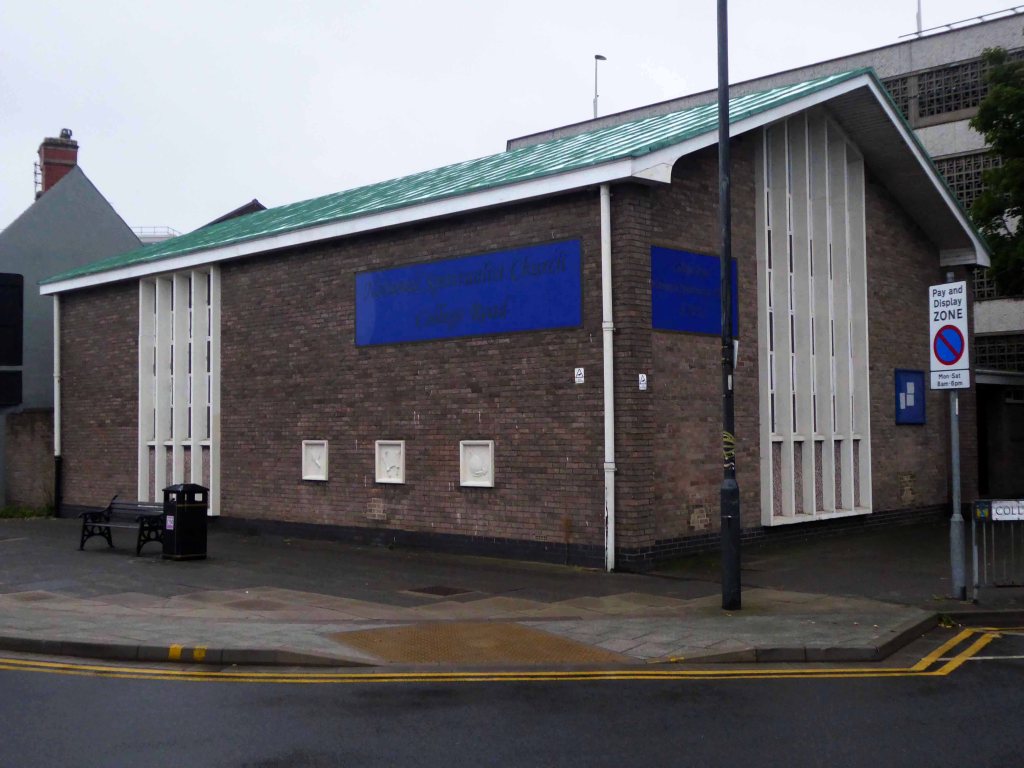
I noted the restrained Modernism of the National Spiritualist Church.
The service begins with a short prayer. The congregation sings three songs during the service using music that most people would recognise. There is usually a short reading or lesson on something to do with spiritualism or events in the world. There is also a talk by the guest medium who use their inspiration or intuition to compose an uplifting address.
Then the business of contacting the spirit world begins.
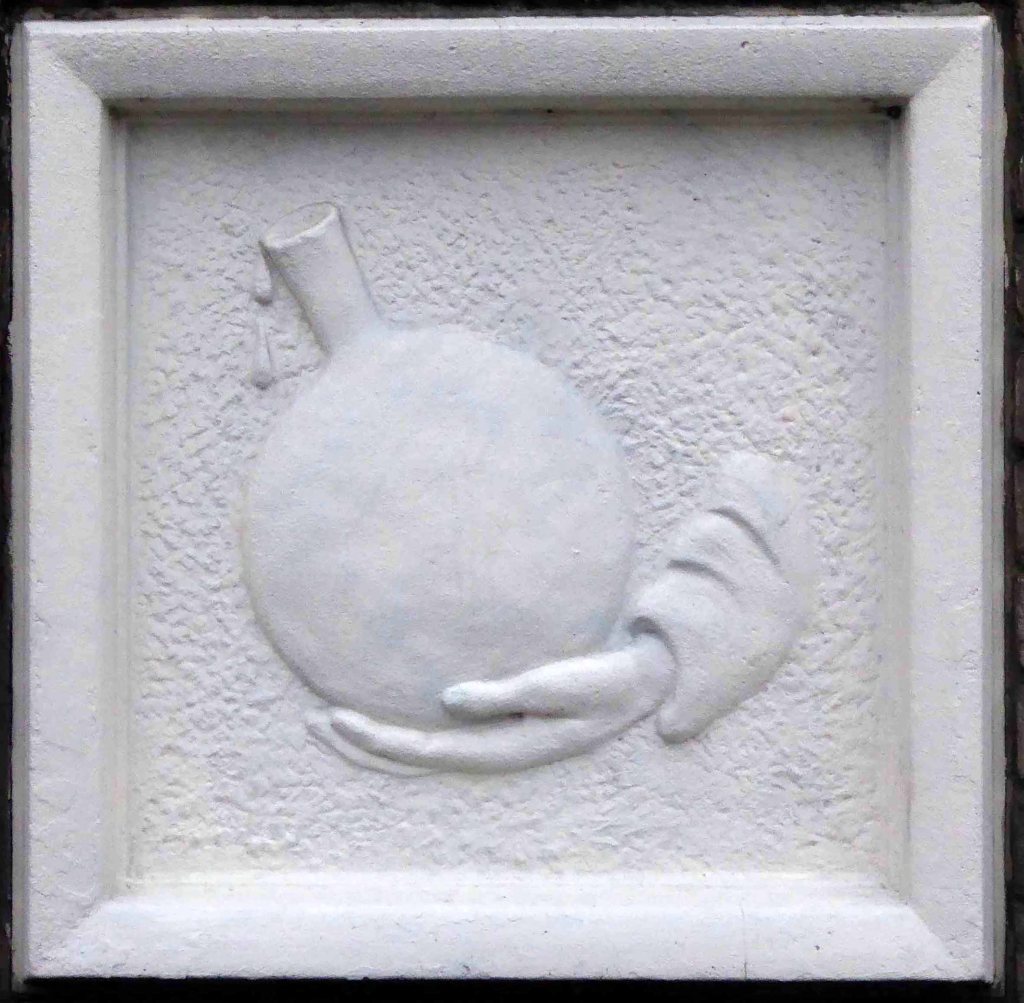
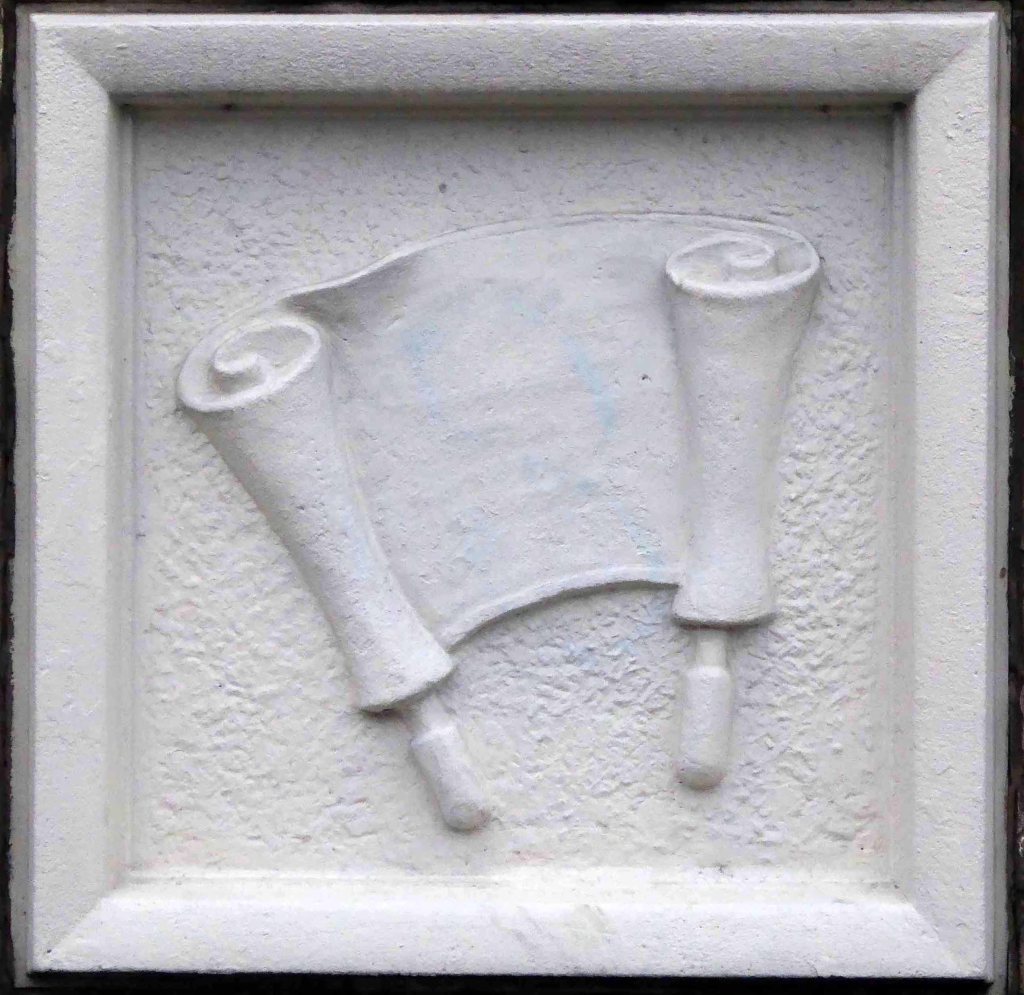
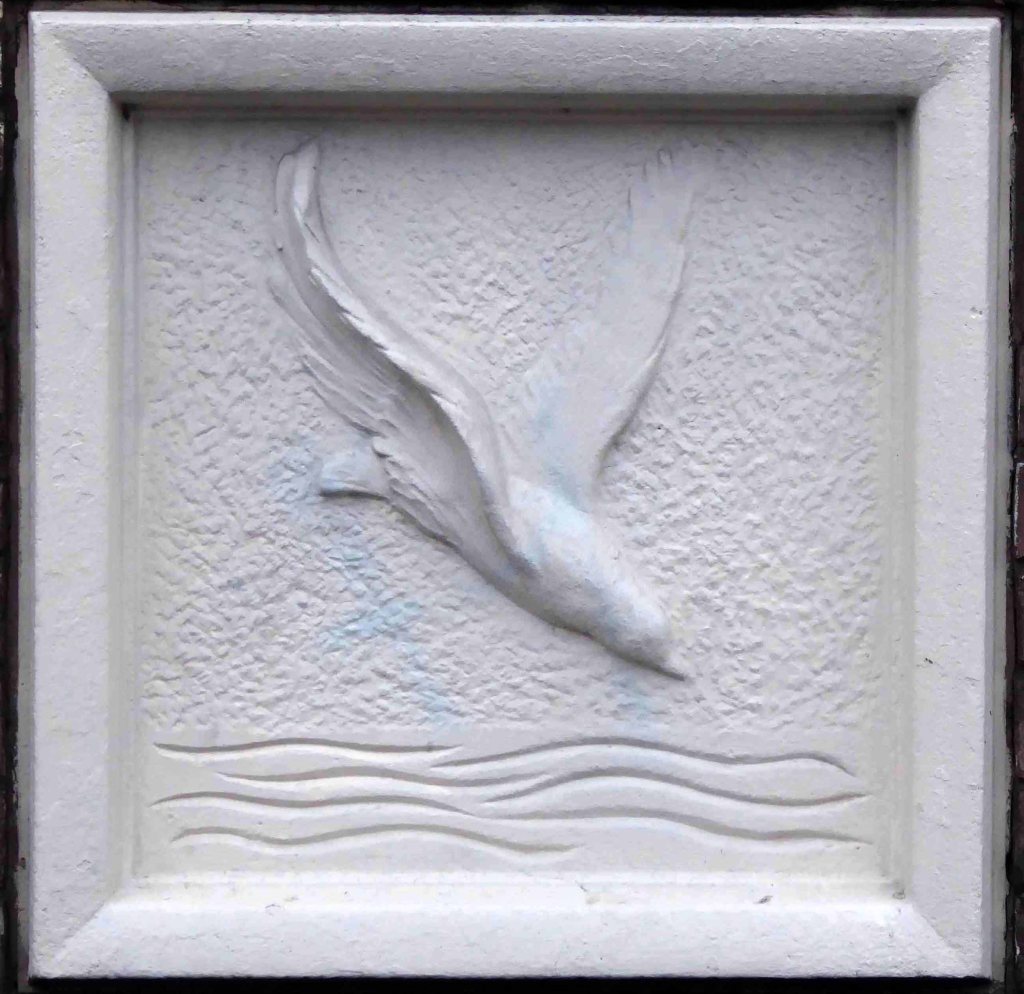
Along with its curious relief panels.
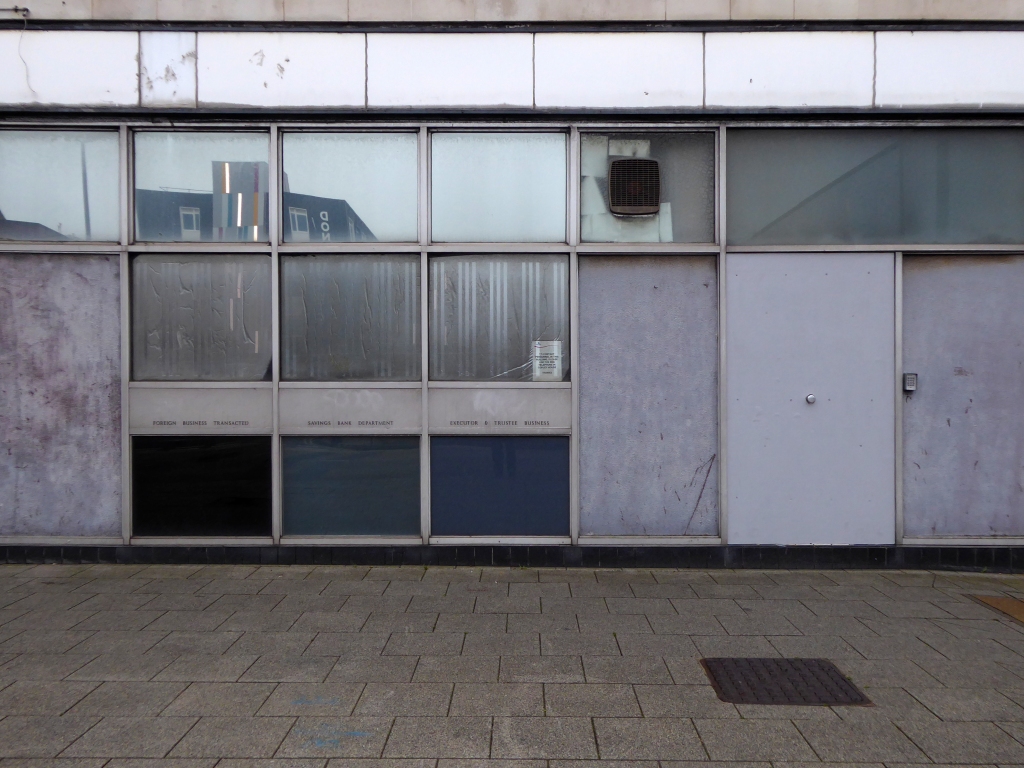
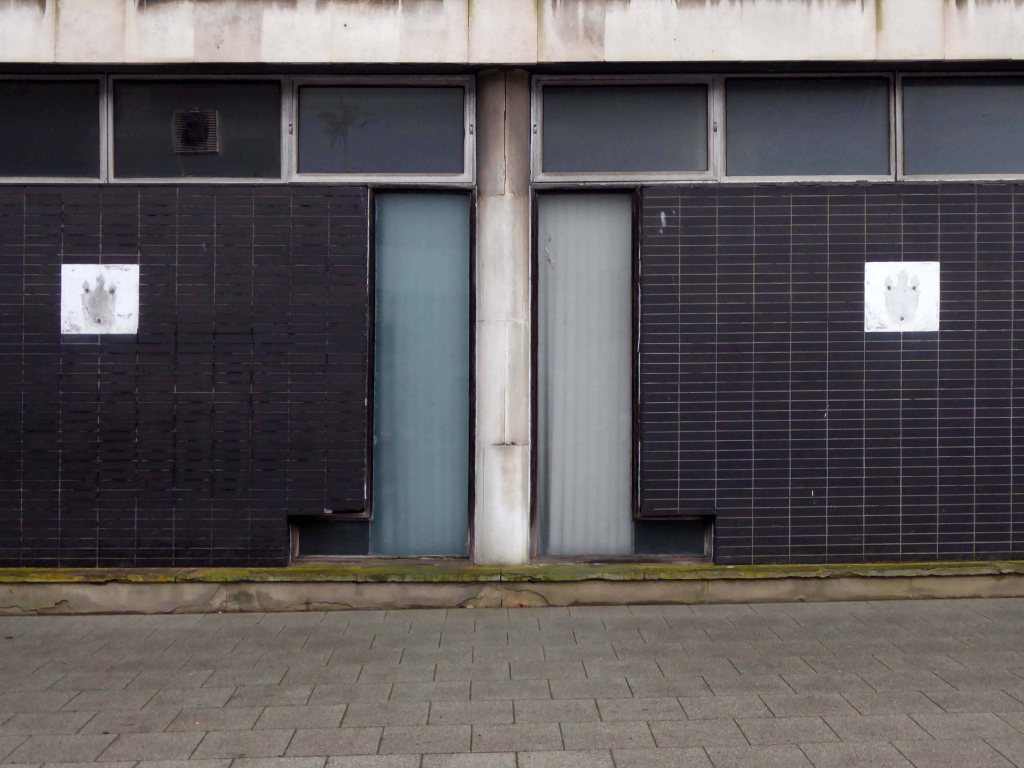
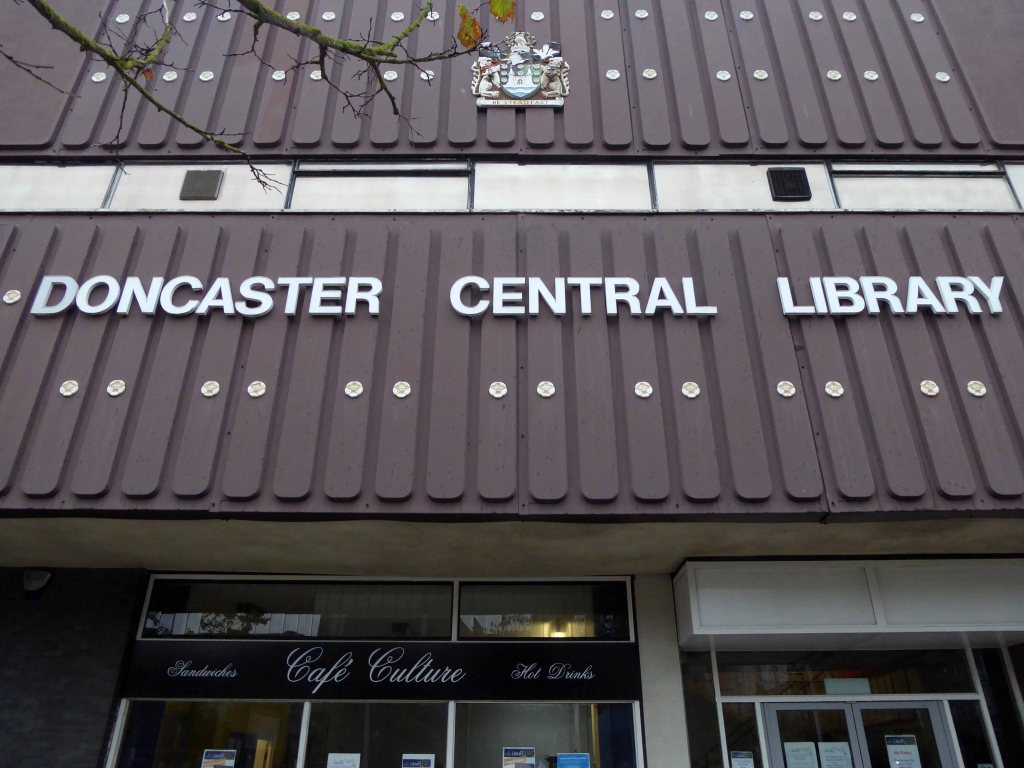
Back around to the back of the Waterdale and the surviving former bank fascia, civic offices and library.
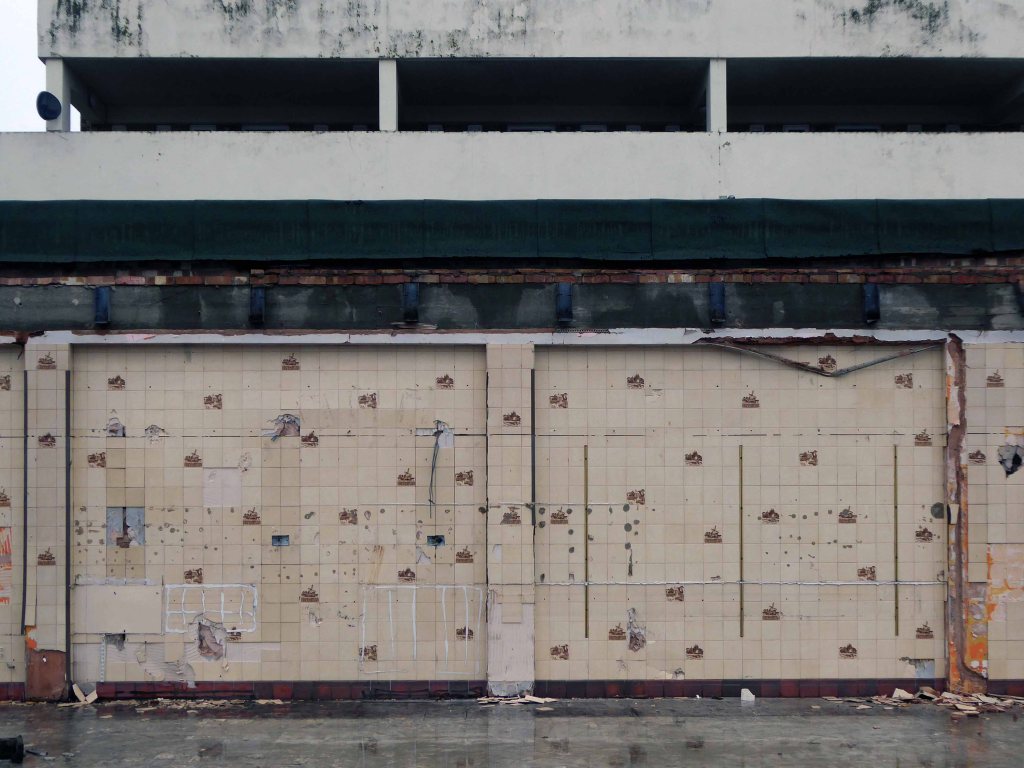
Back through the Waterdale to discover the saddest of retail archeology.
The long lost tiled café wall and a mysterious porch.
Having started in the middle, let’s fast forward to the end – the beginning will have to wait.
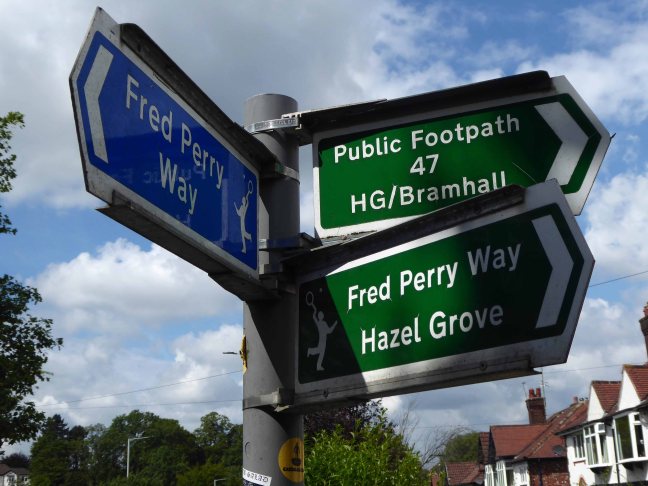
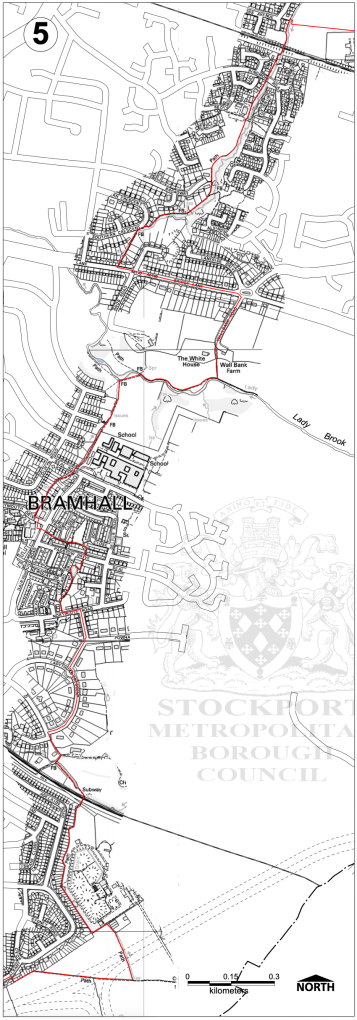
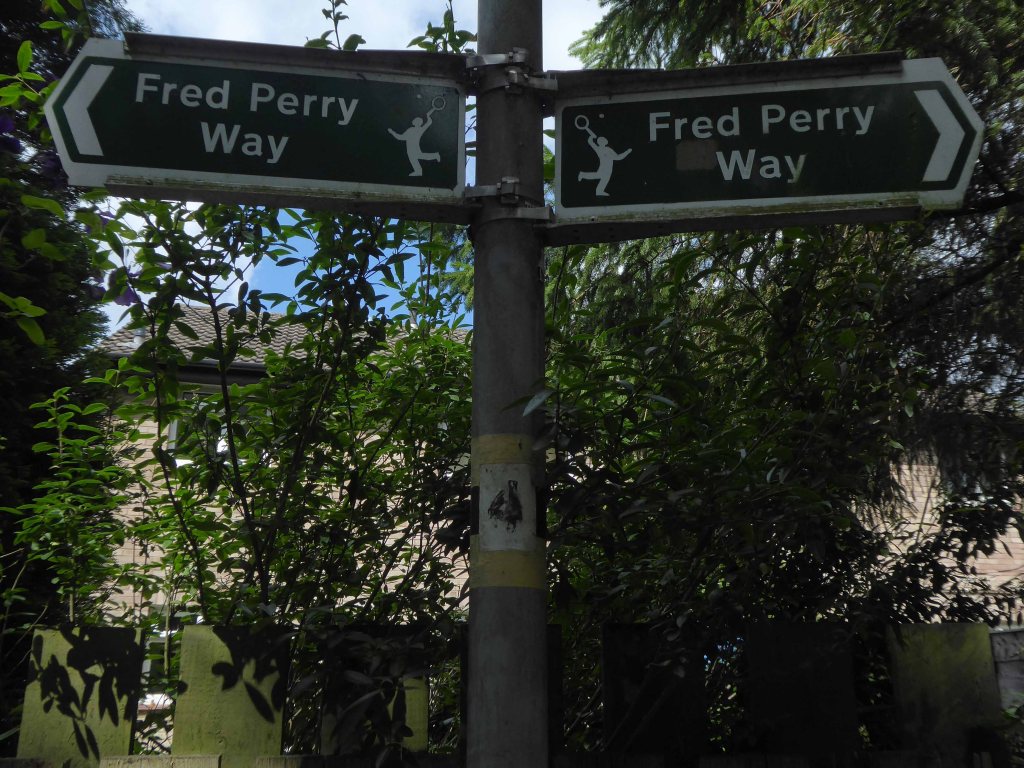
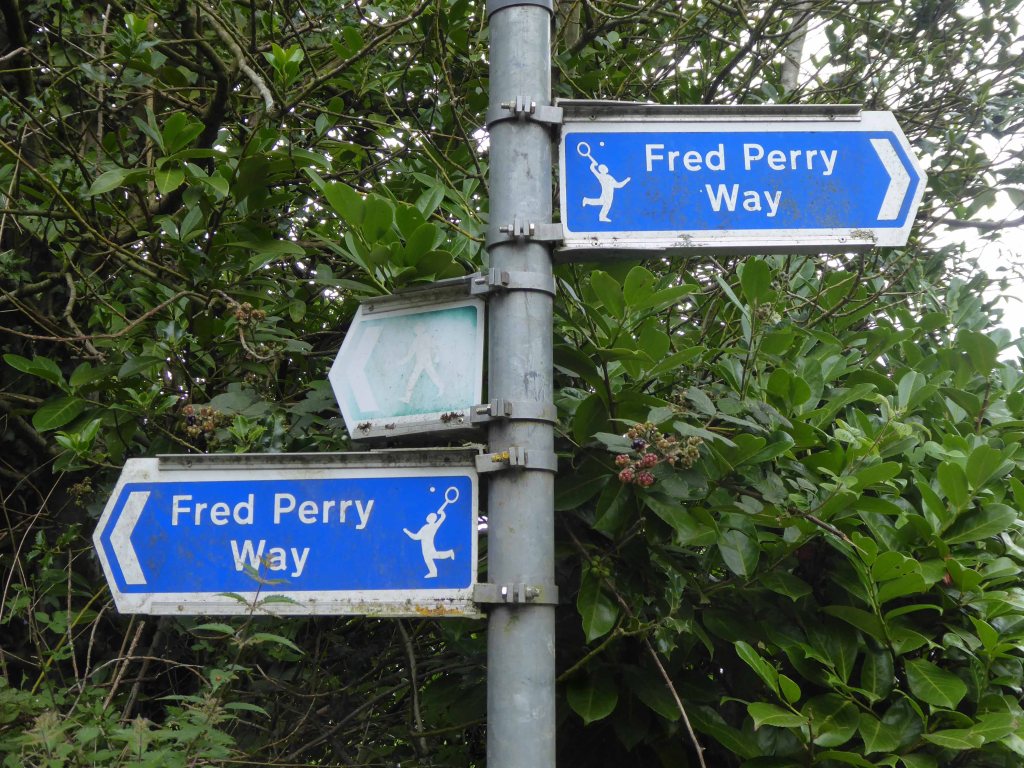
We take up our walk along Fred’s Way once more by Mirrlees Fields.
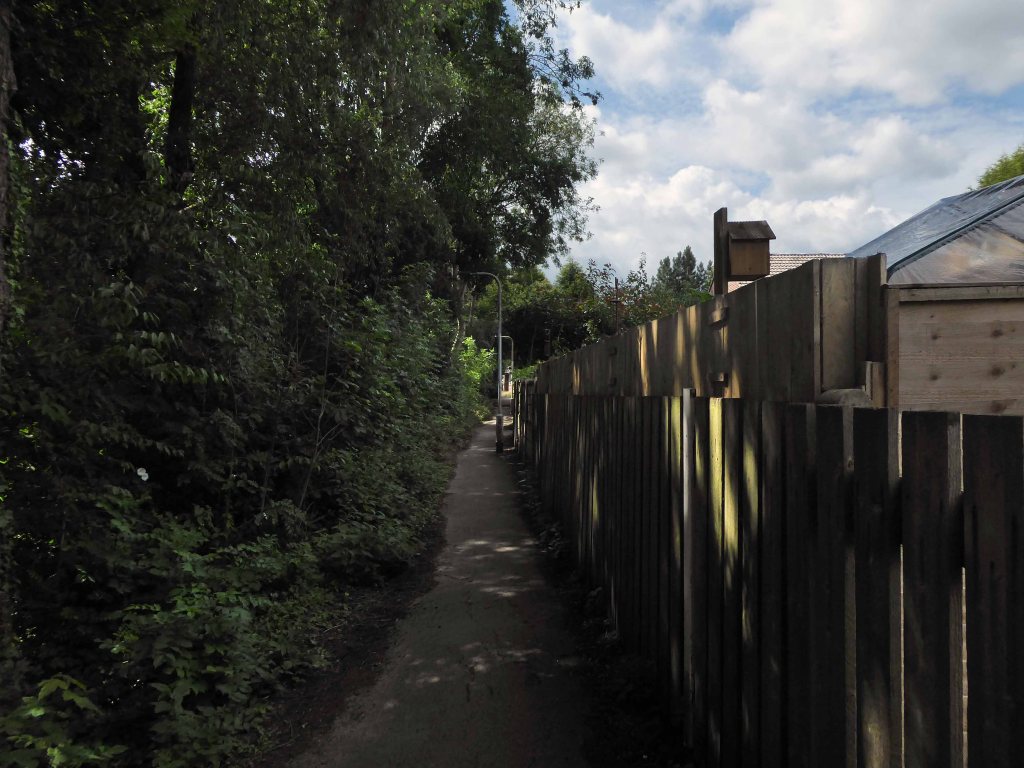
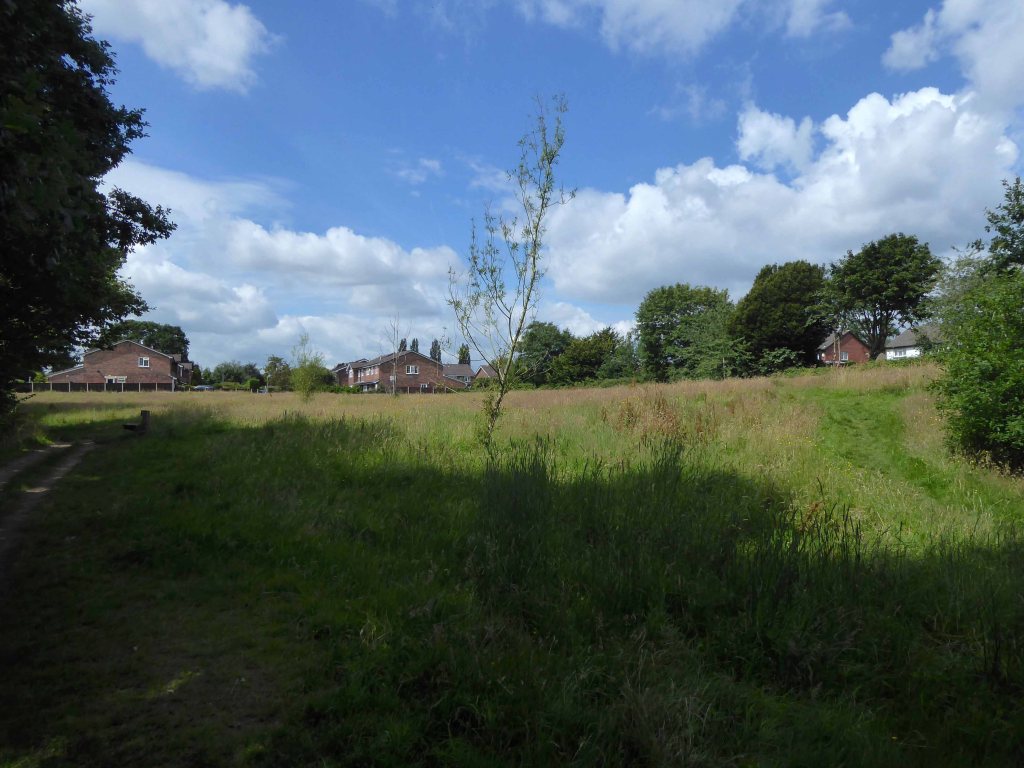
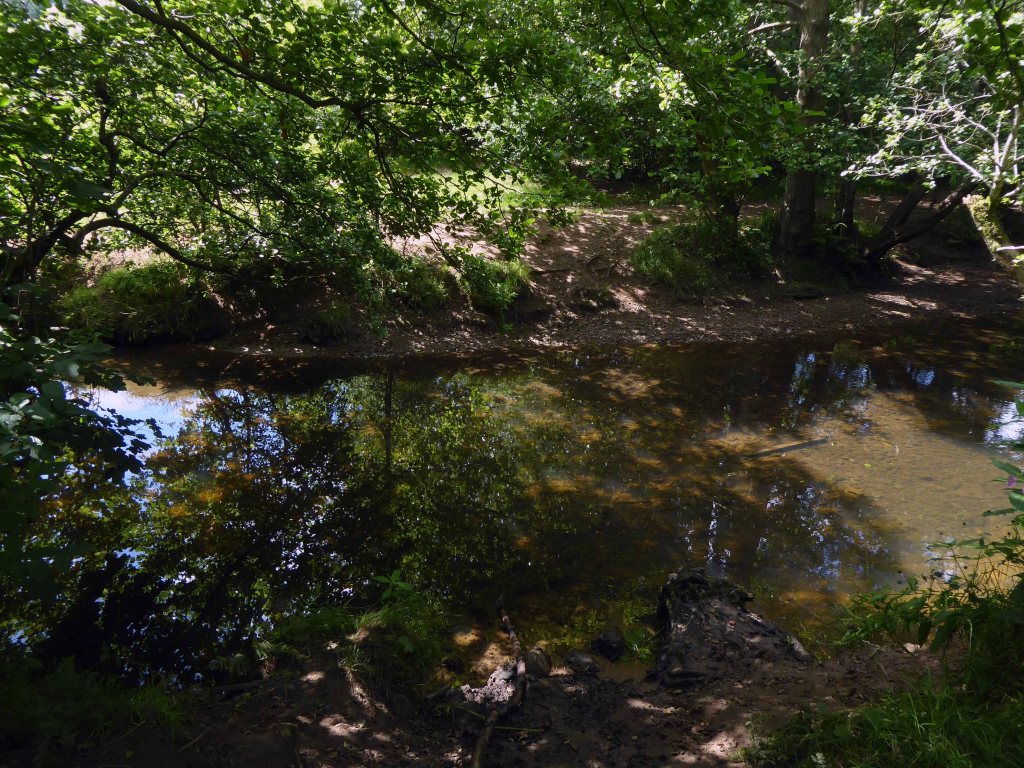
Following the brook along the narrow shallow valley, betwixt and between houses.
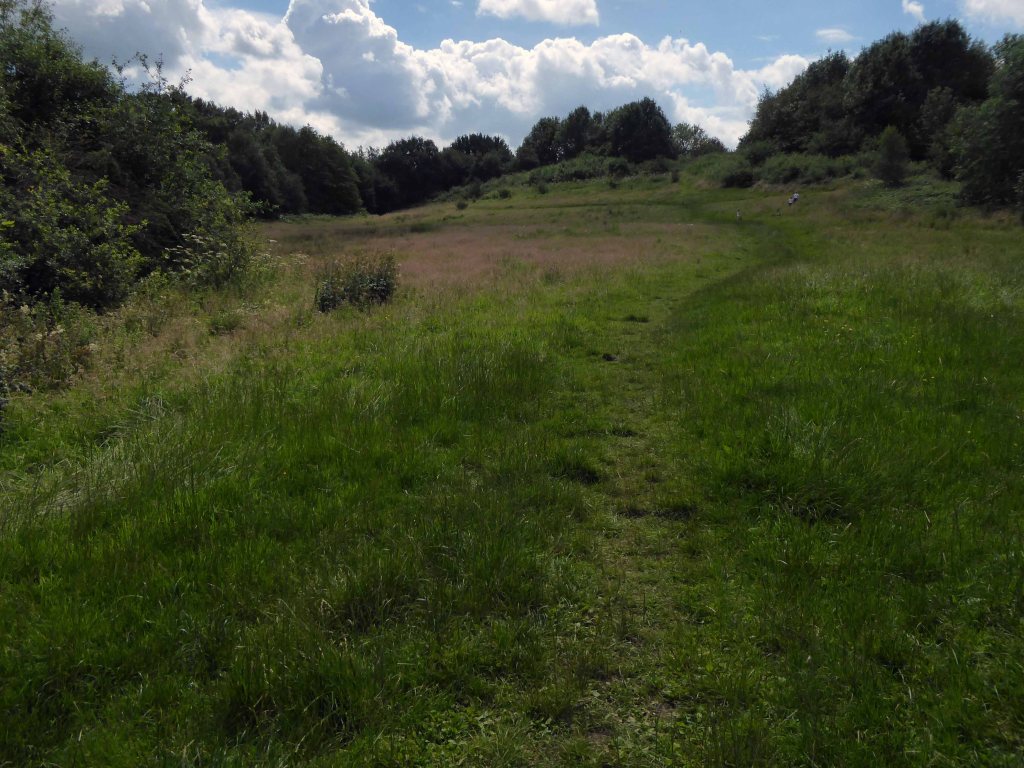
Briefly opening out into green open space.
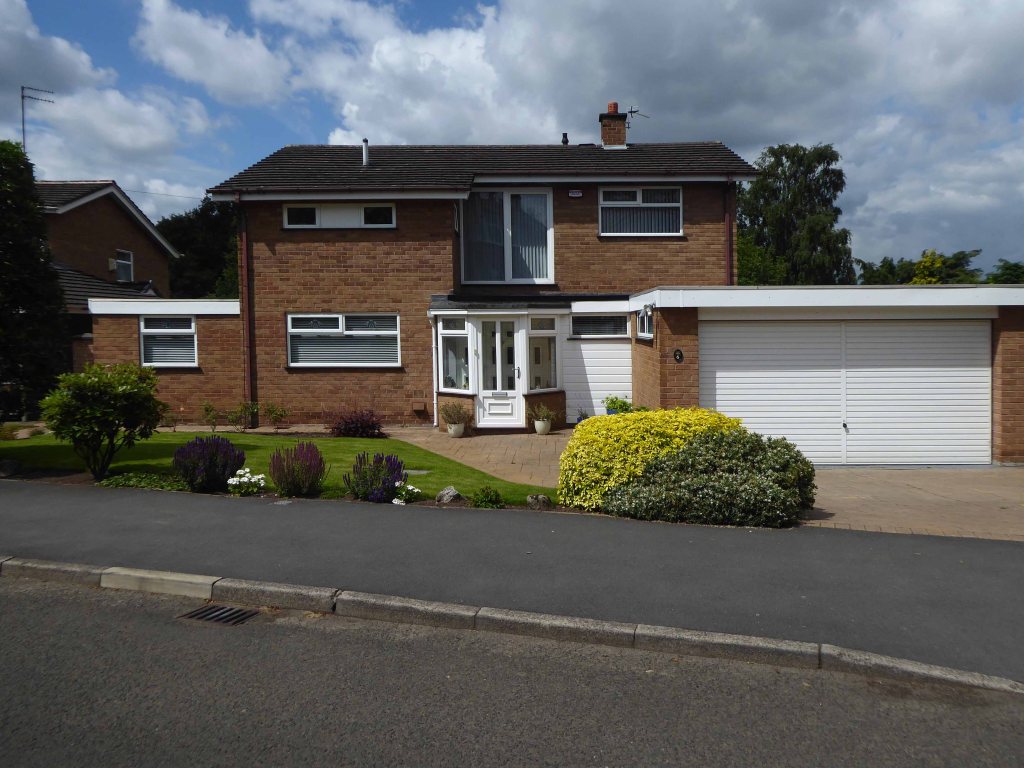
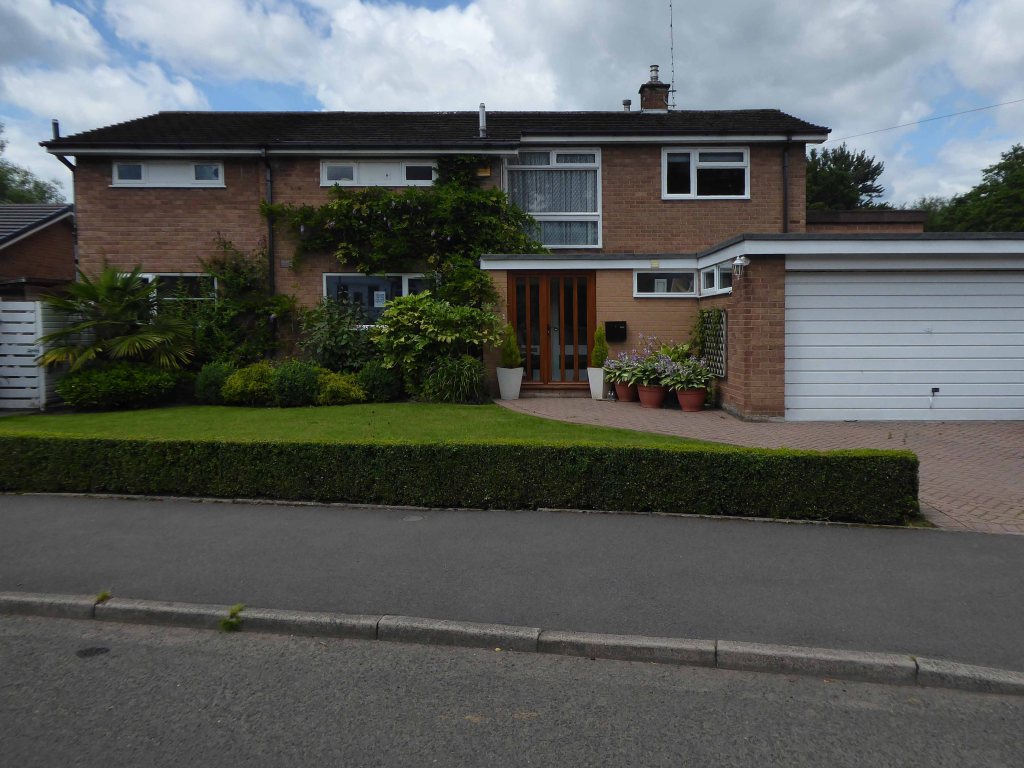
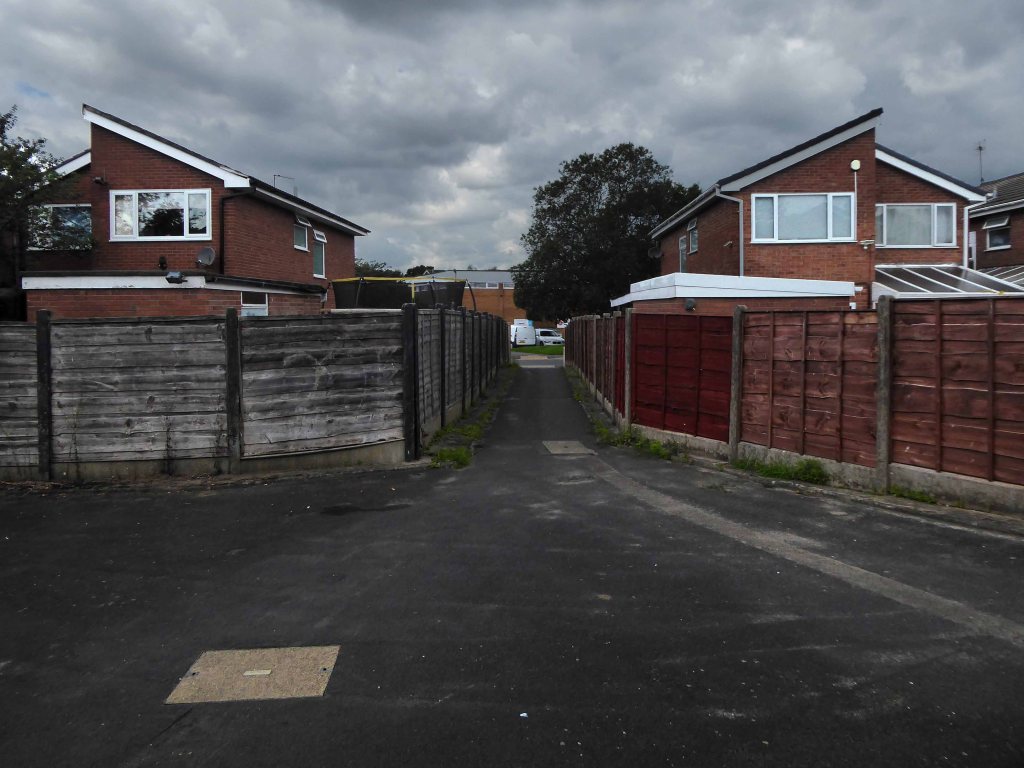
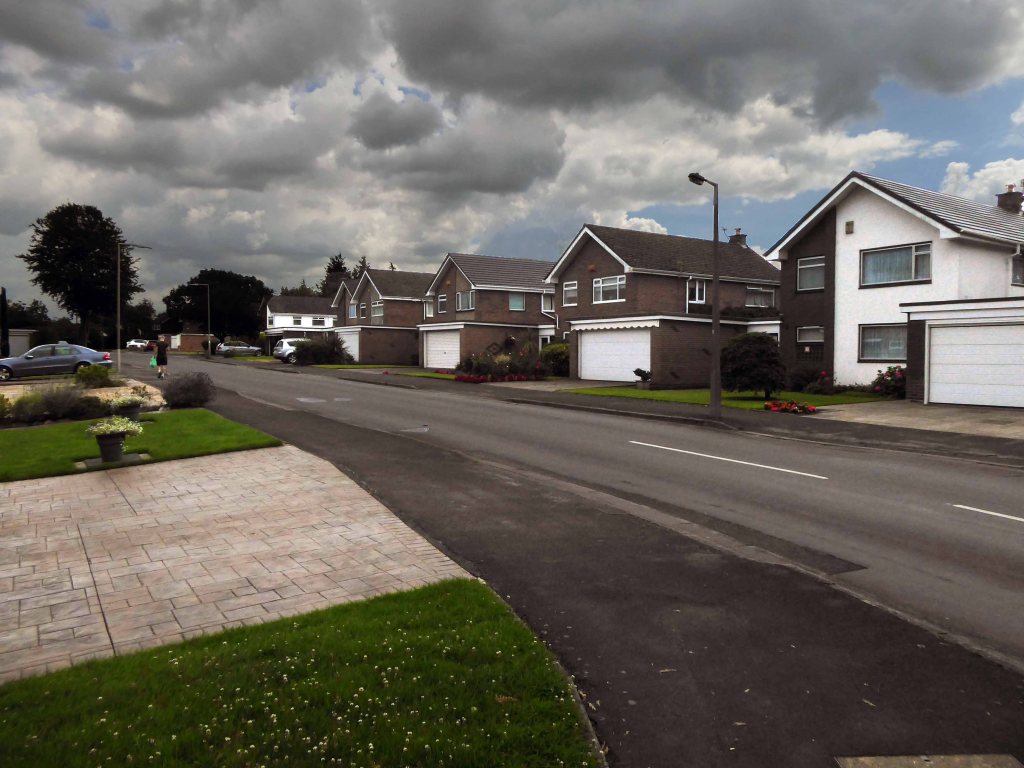
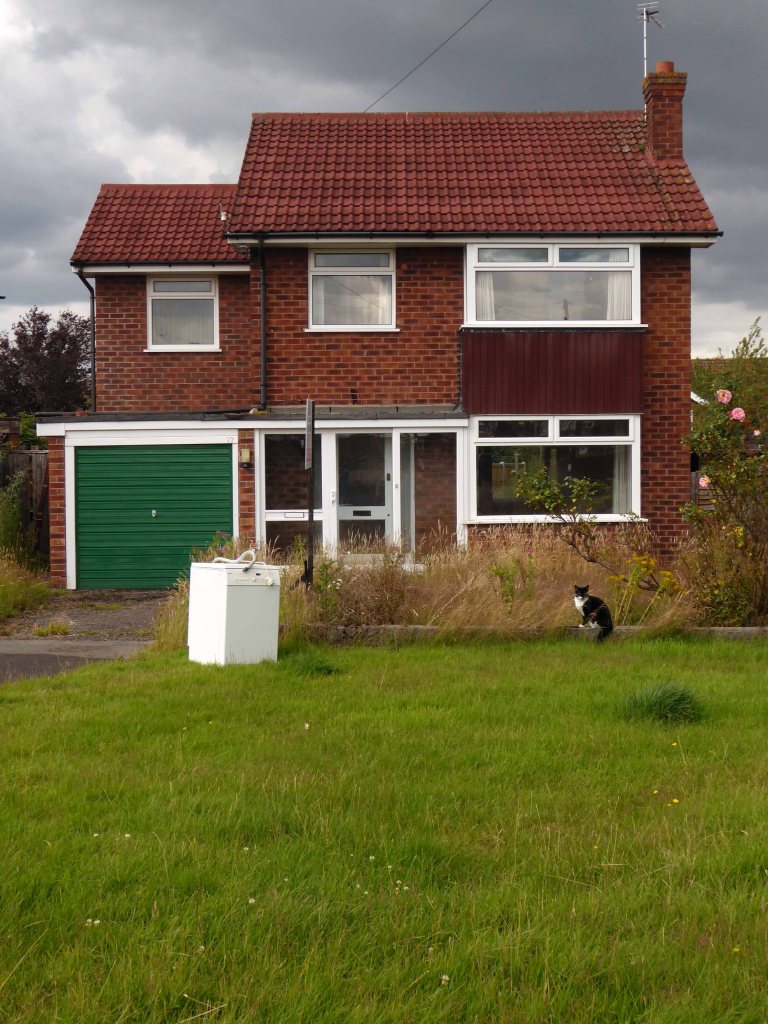
Crossing the road and entering the detached world of the detached house.
No two the same or your money back!
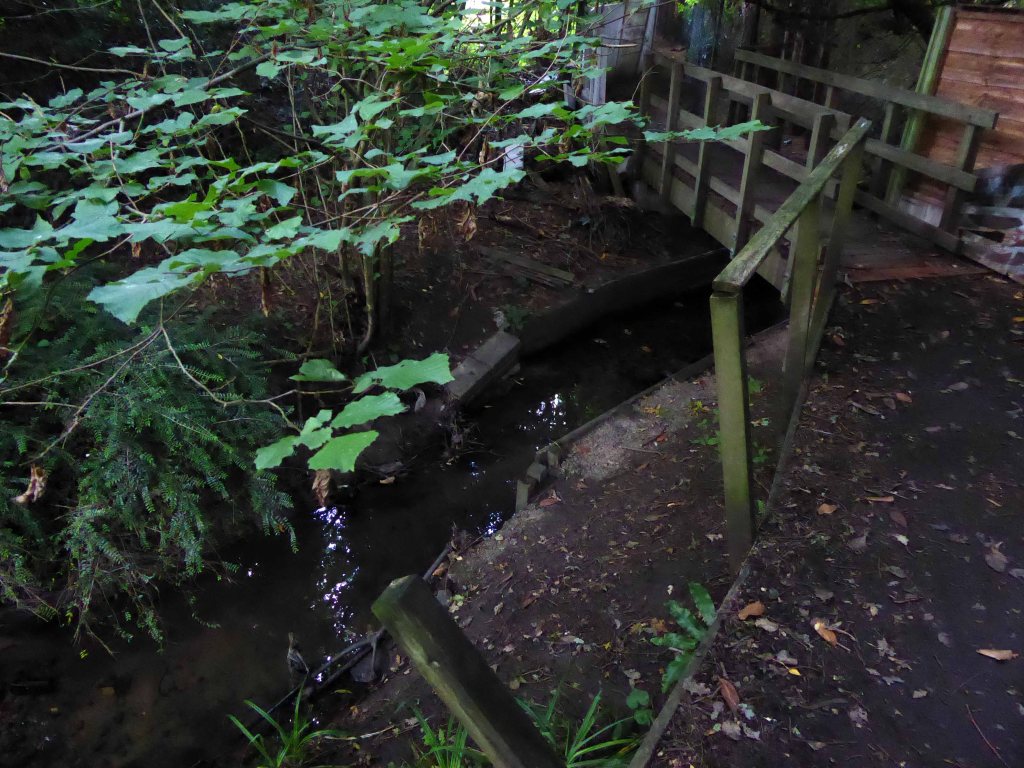
Diving feet first into Happy Valley, home to the Lady Brook stream.
And quickly out again.
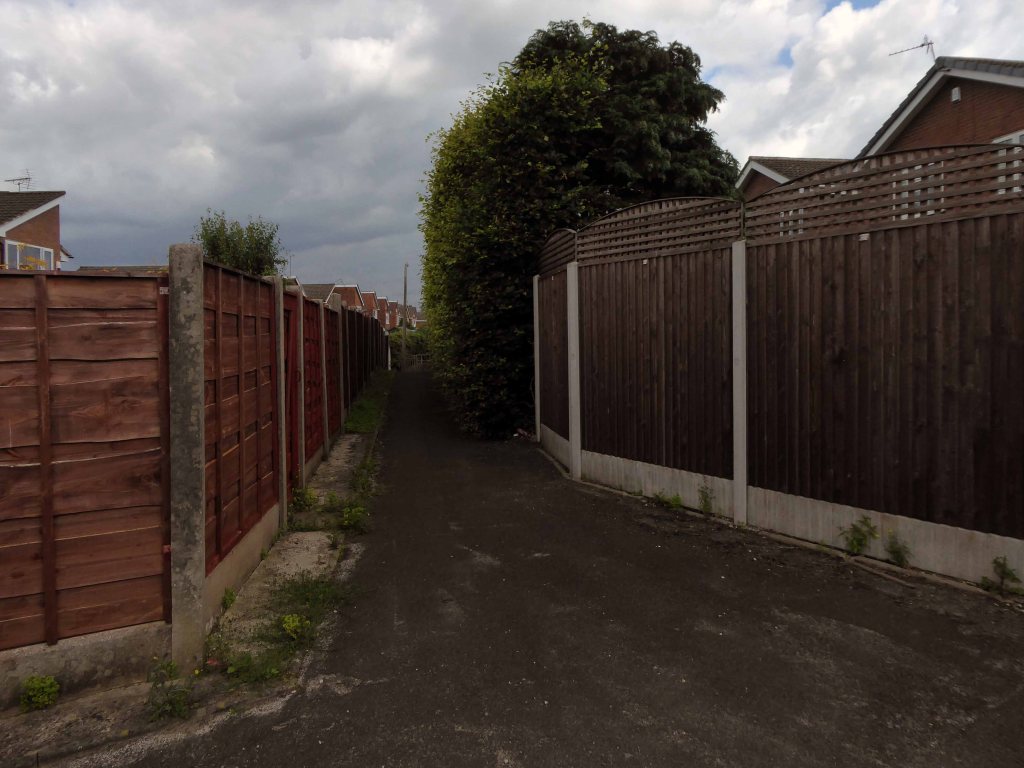
Emerging once again into the space between spaces.
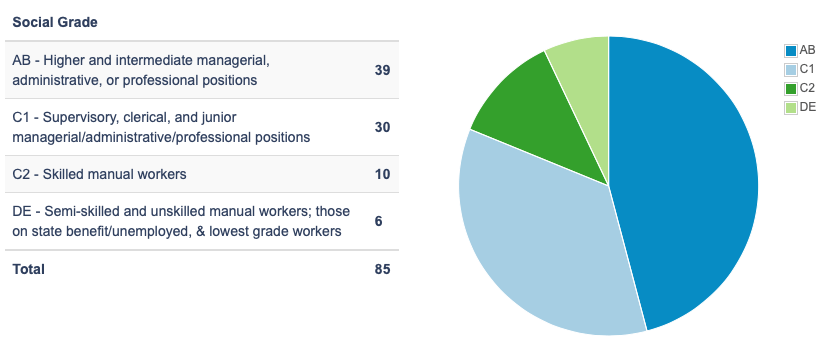
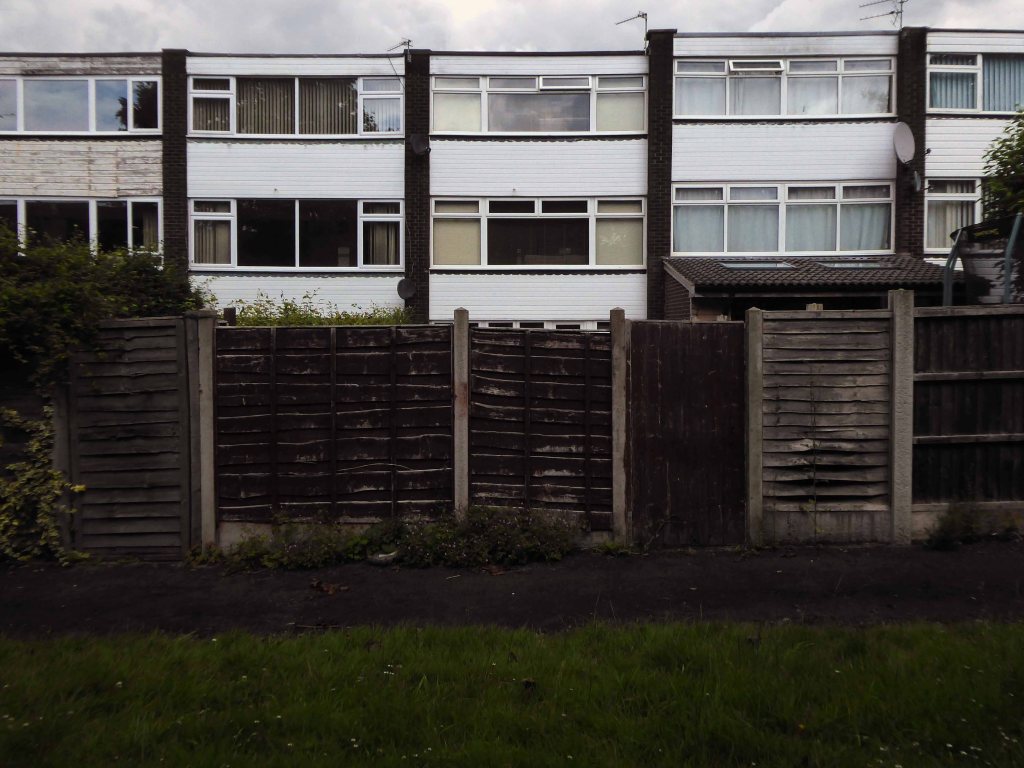
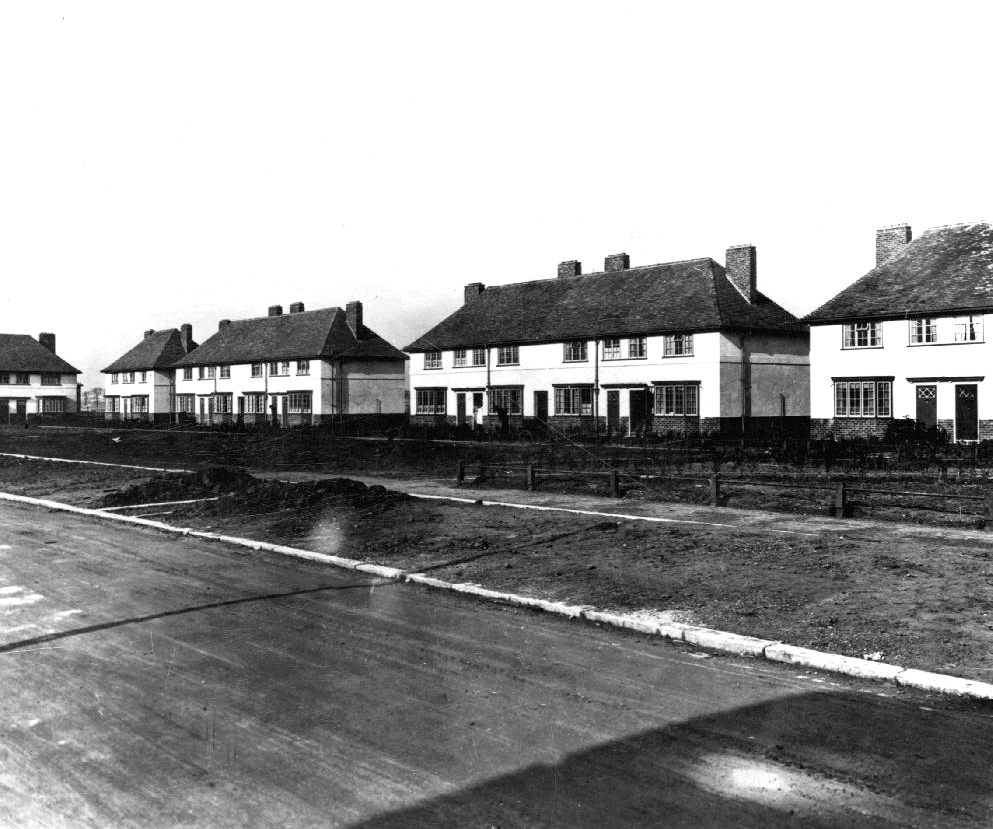
The suburban idyll of the Dairyground Estate home to very few semi-skilled and unskilled manual workers; those on state benefit/unemployed, and lowest grade workers.
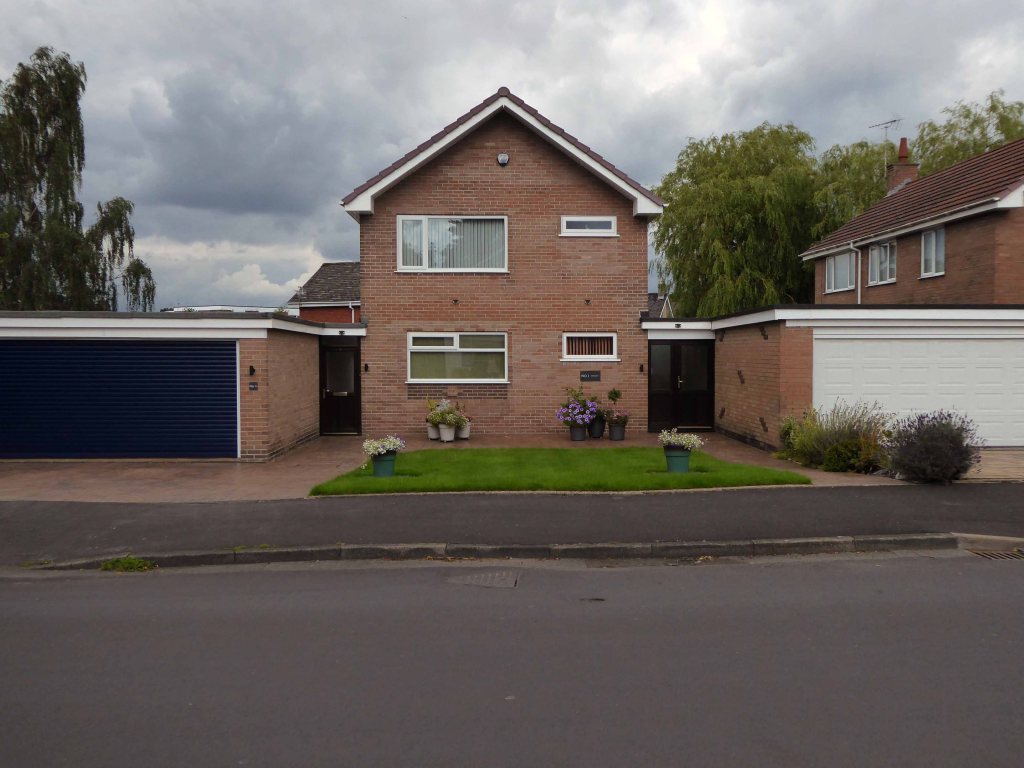
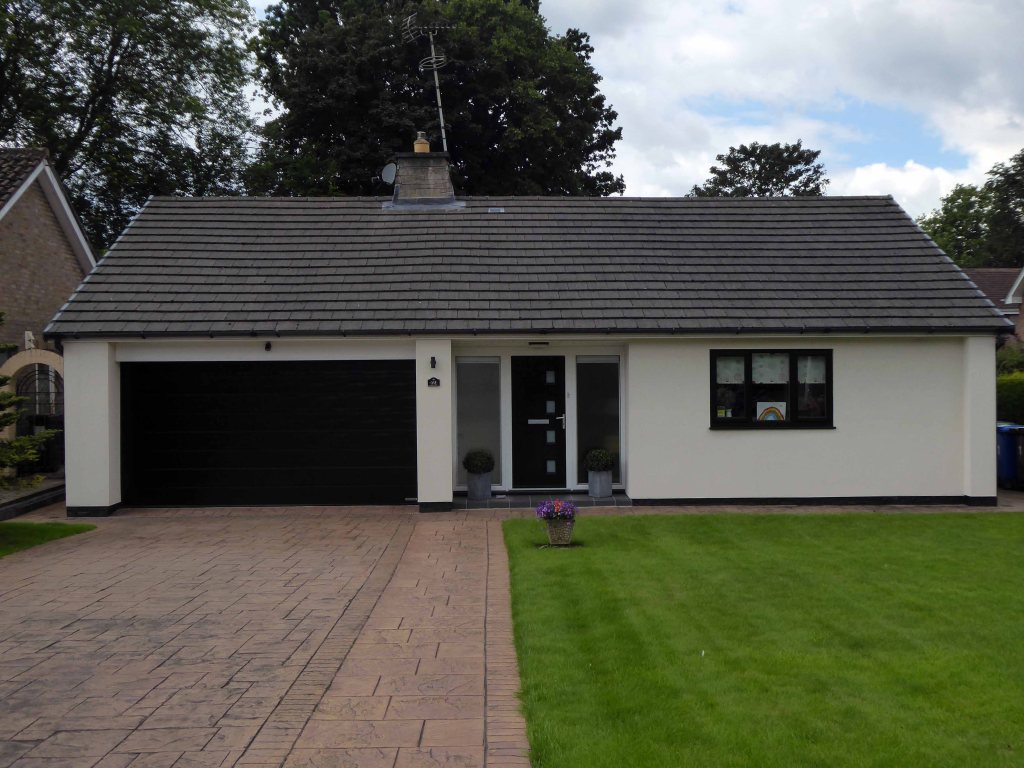
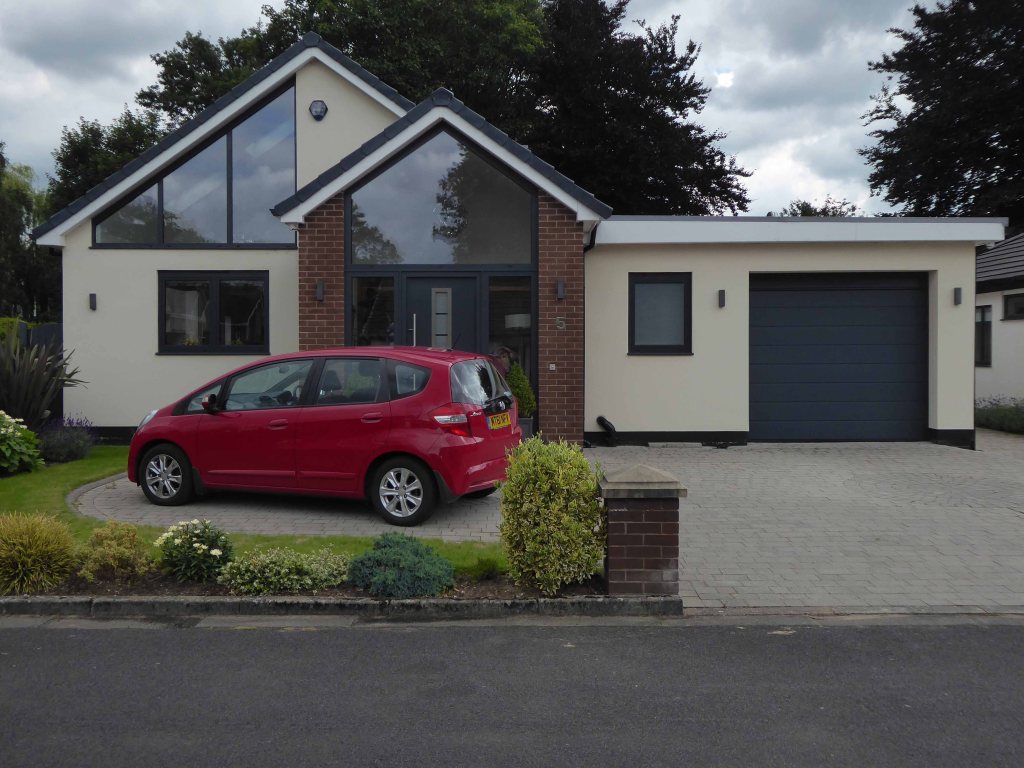
But home to an interesting array of Post War housing.
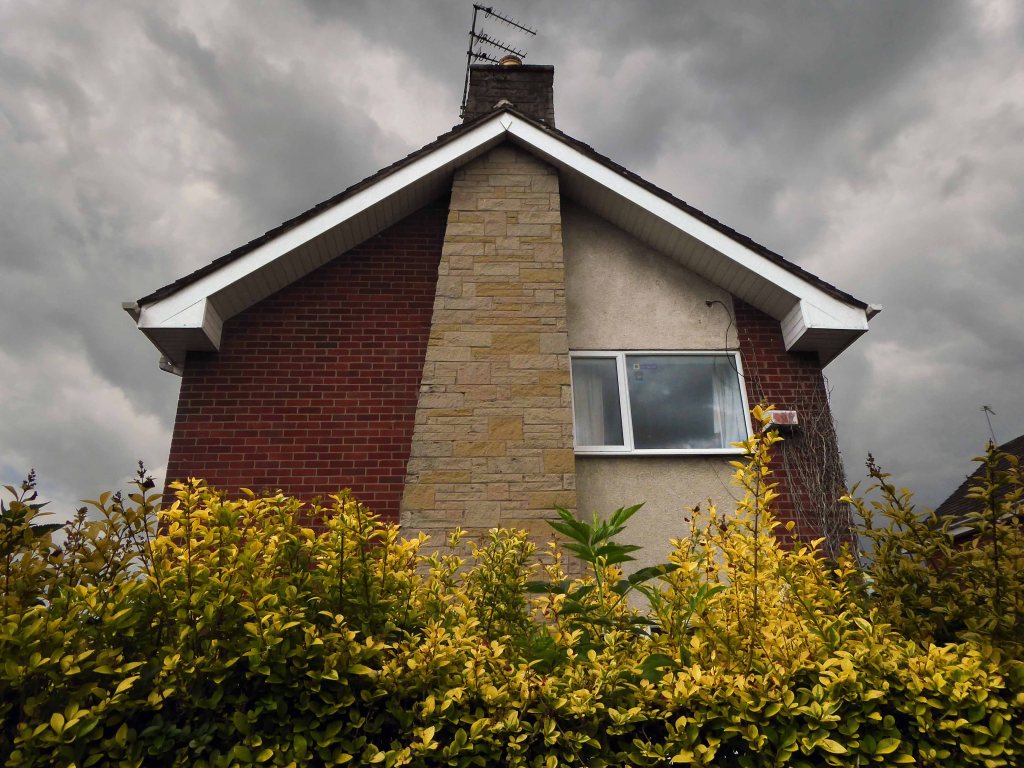
Including examples of the style de jour, à la mode conversions and updates extended and rendered, black, white and grey symbols of success or extensive extended credit facilities.
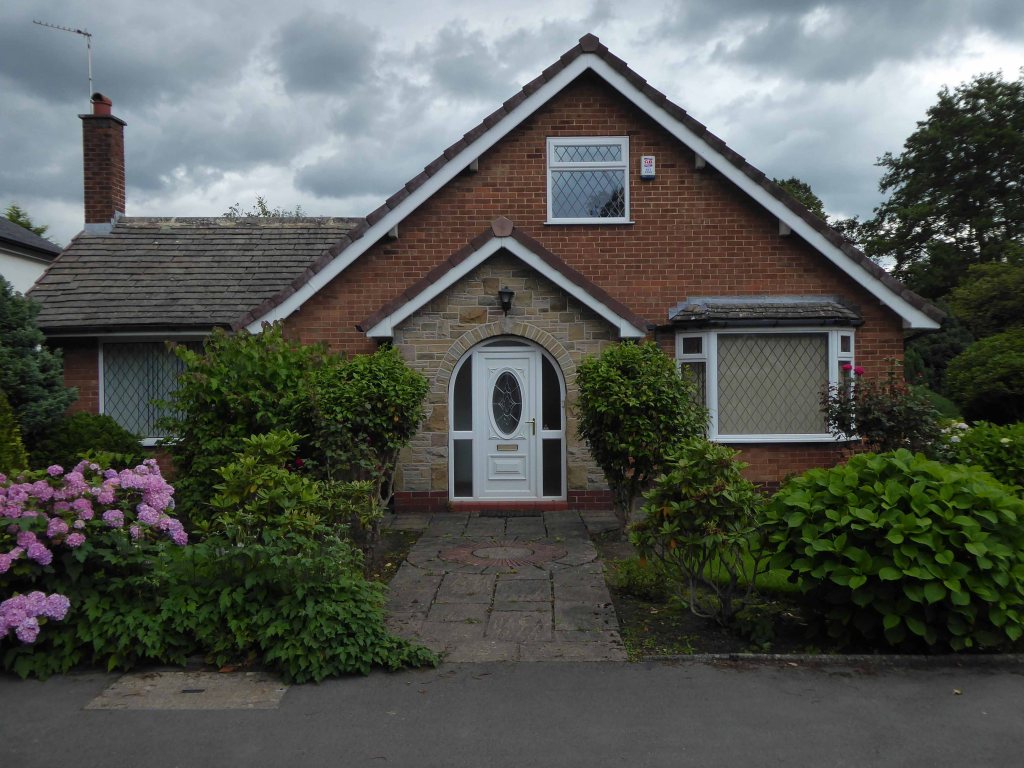
Though the more traditional fairy tale variant still has a space and place, in the corner of some well behaved cul de sac.
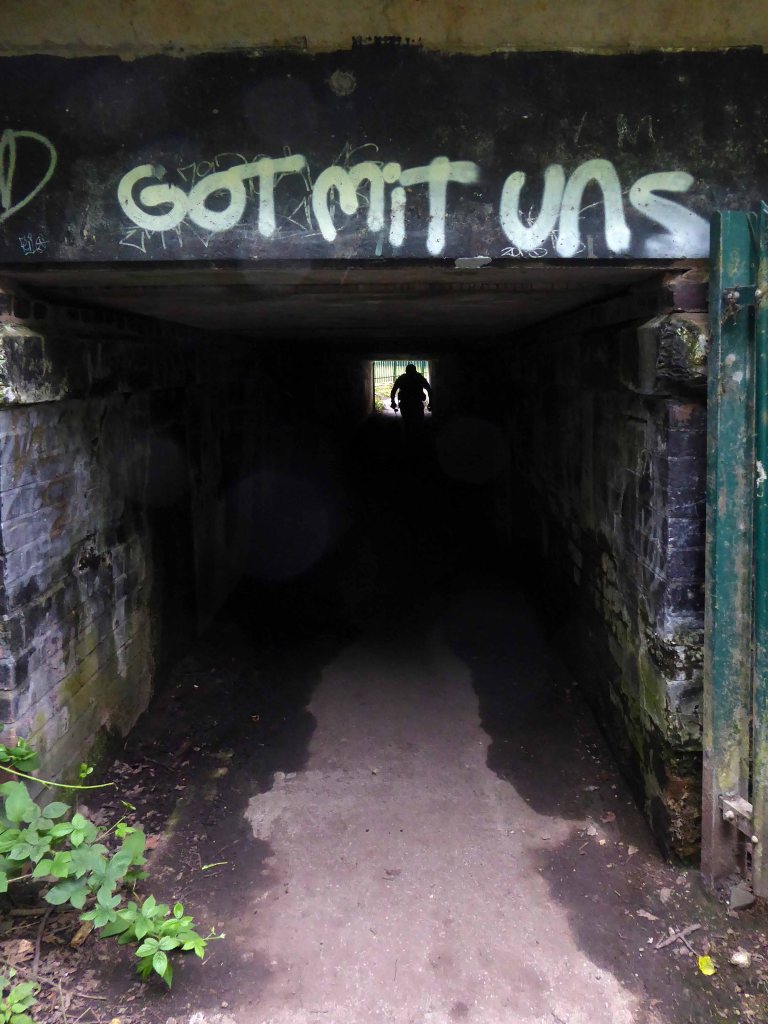
Under the railway – through a low tunnel darkly.
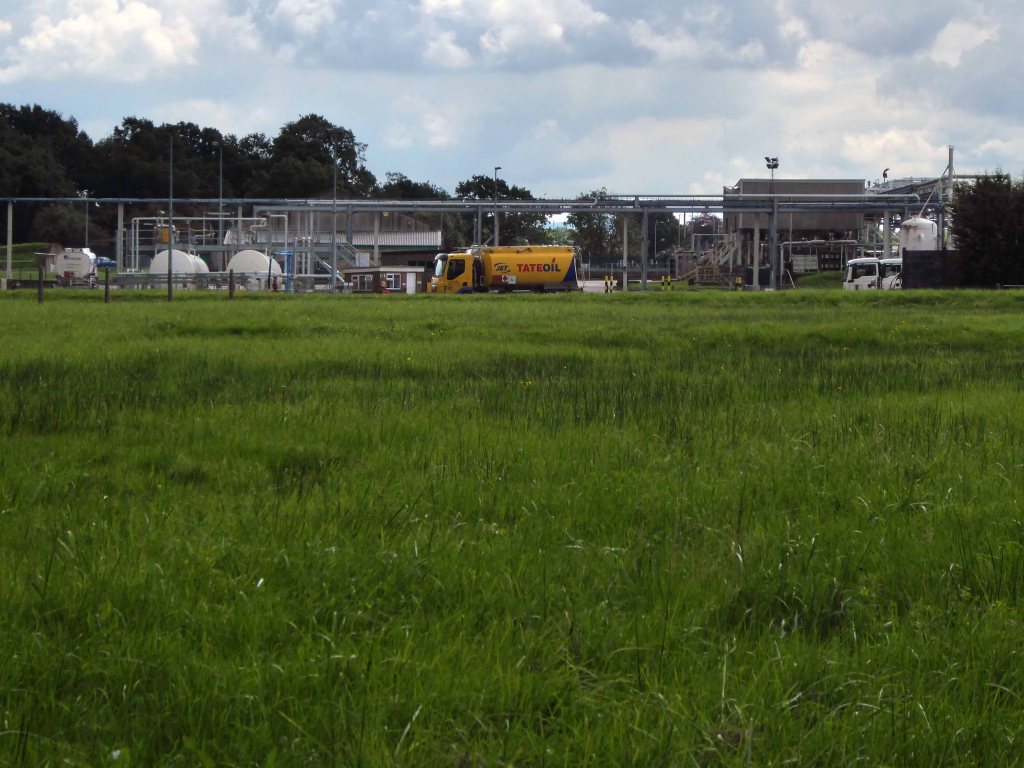
We struck oil, black gold, Texas Tea – Tate Oil.
The area of Little Australia – so called as all the roads are named after towns in Australia, is bordered by the West Coast Main Line to the north, the Bramhall oil terminal to the east, Bramhall village centre to the west and Moorend Golf Club to the south.
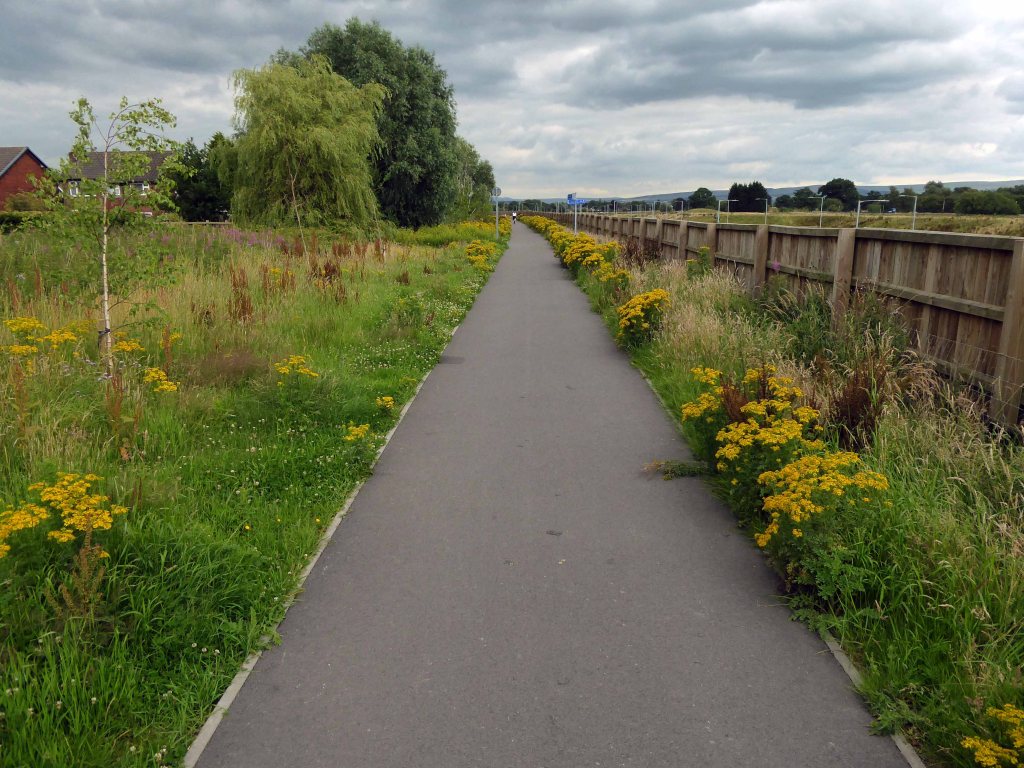
We emerged into a warren of obfuscation, dead ends and conflicting signs, having made enquiries of the passing populace, we realigned with the new bypass.
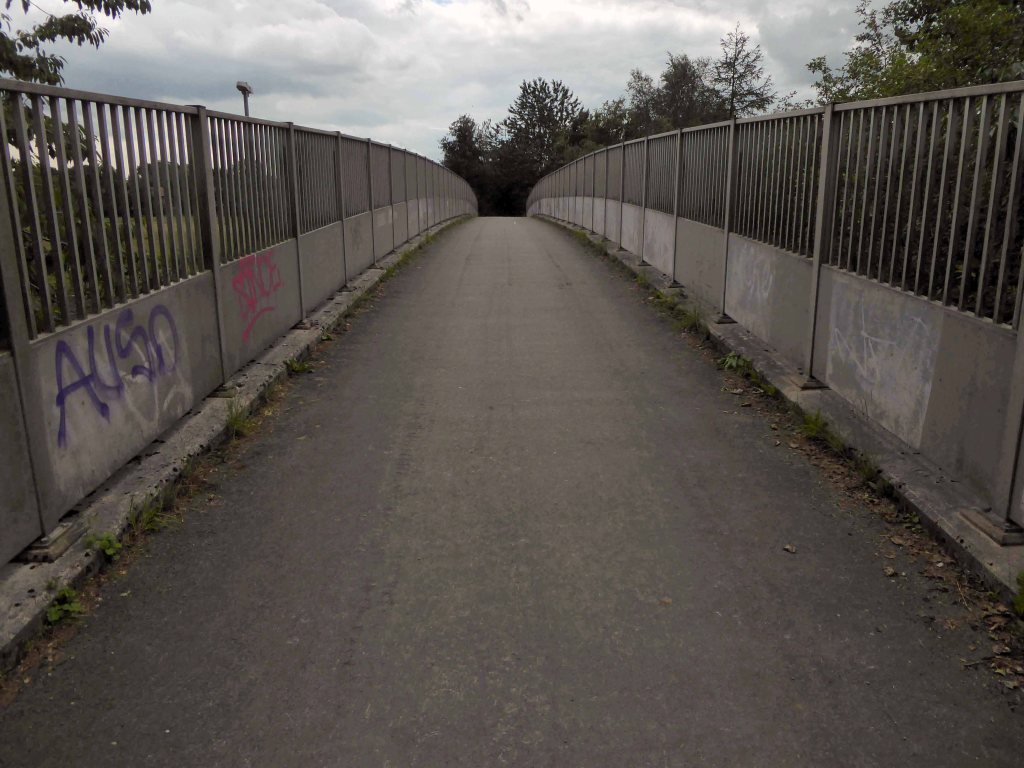
Passing over the conveniently placed footbridge over the bypass and beyond.
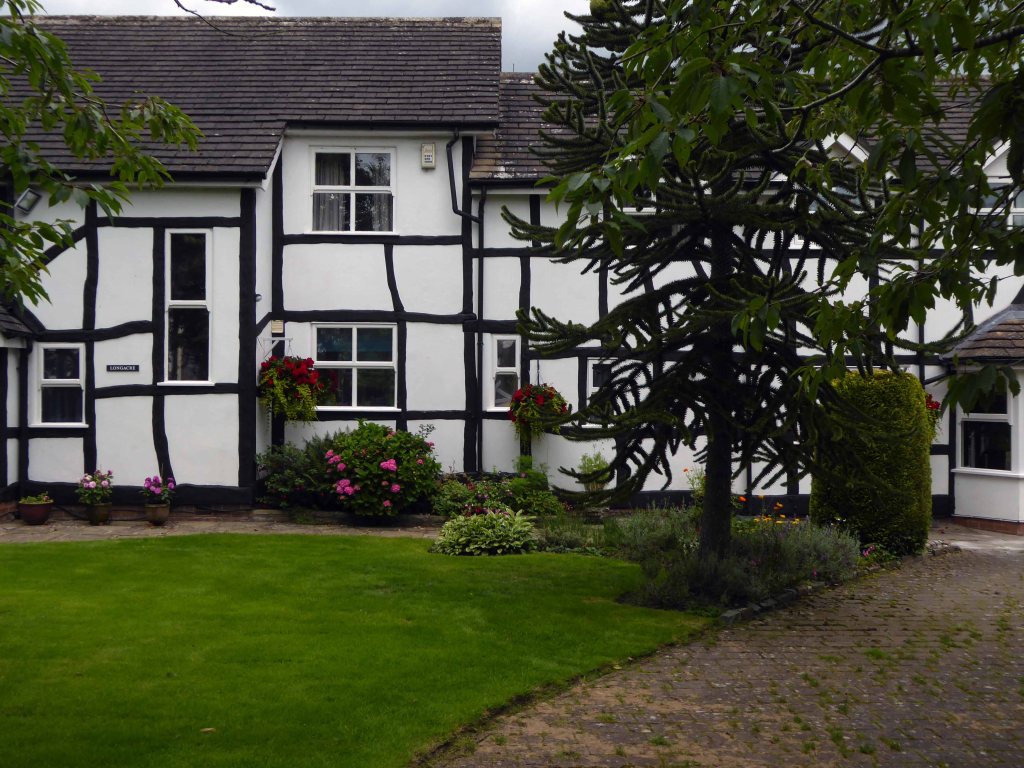
Emerging amongst faux beams and real Monkey Puzzles.
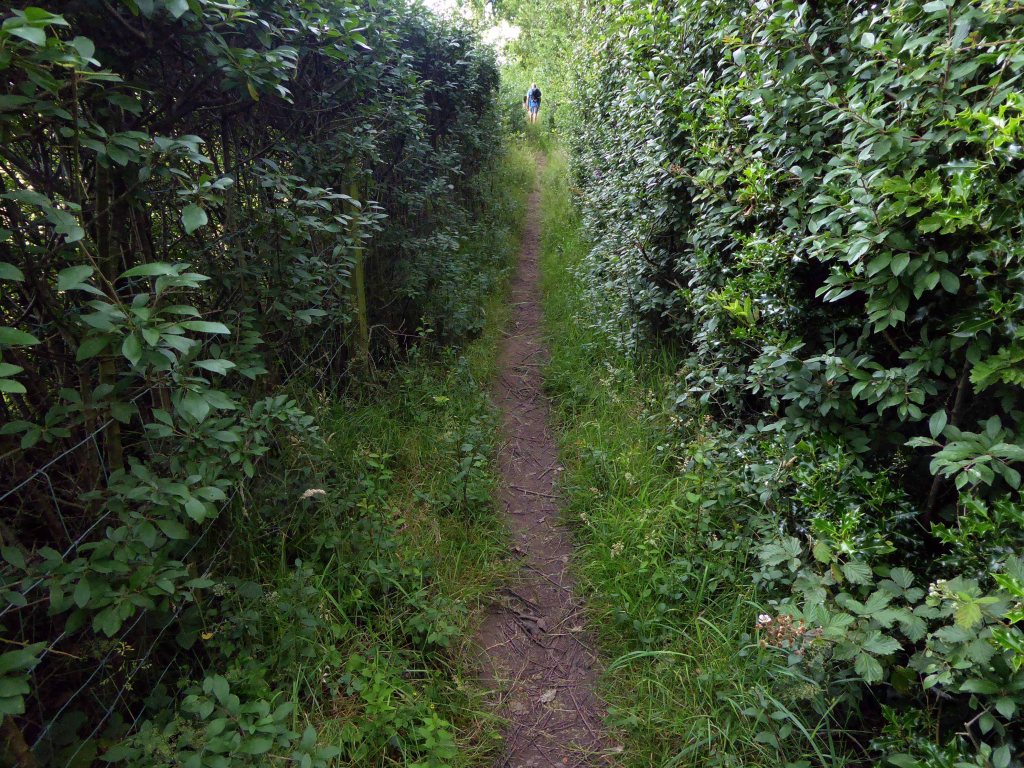
It was at this point that, unbeknownst to us, we followed a twisted sign, misdirecting us along an overgrown path – to Handforth.
We failed, in the end we failed to arrive to arrive at the end.
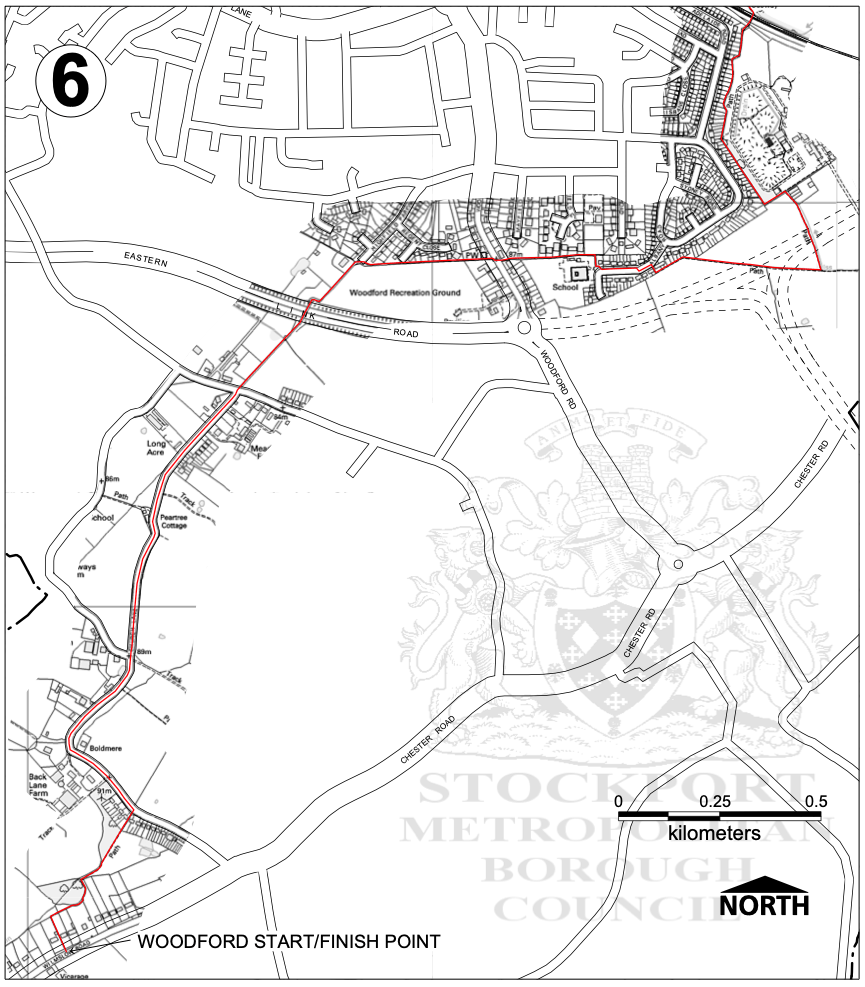
Heading west like headless chickens towards the Turkey Farm.
Making our way mistakenly to Handforth Dean Retail Park – rear of.
Crossing slip roads with no pedestrian access and the forbidden territory of an industrial sized gymnasium car park.
Woodford will just have to wait, another day another dolorous excursion.
The Cheshire Lines Committee CLC operated Stockport, Timperley and Altrincham Junction Railway line from Portwood to Skelton Junction, a section of what became the Woodley to Glazebrook line.
It remained a part of the CLC, which was jointly owned from 1923 by the London and North Eastern Railway and the London Midland and Scottish Railway , until 1948 when it became part of the British Railways London Midland Region.
Closed in 1982, following the demise of the Woodhead route; the track was subsequently lifted in 1986.
in the age of steam mainline St Pancras trains and local stoppers flew by.
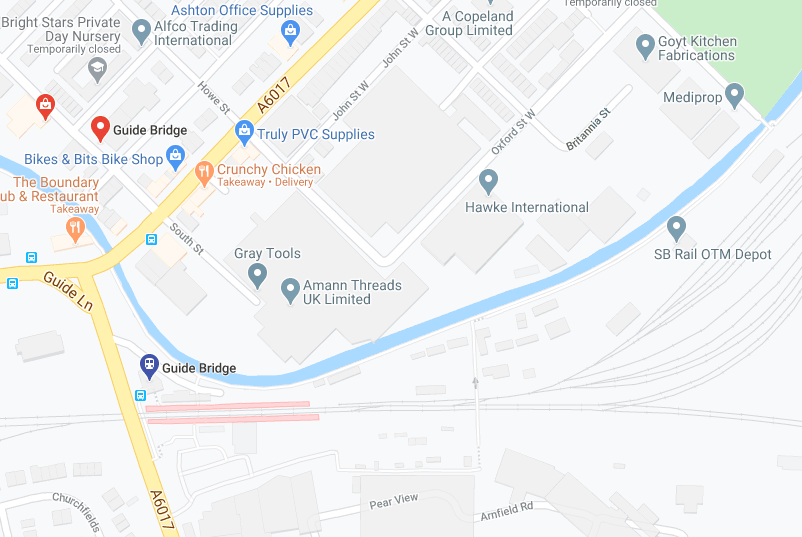
My interest lies in the small portion of track at the end of Georges Road – I worked as a Guide Bridge goods guard in and out of the scrap yard there, in the Seventies.
Now I walk past almost every day and it’s almost all gone.
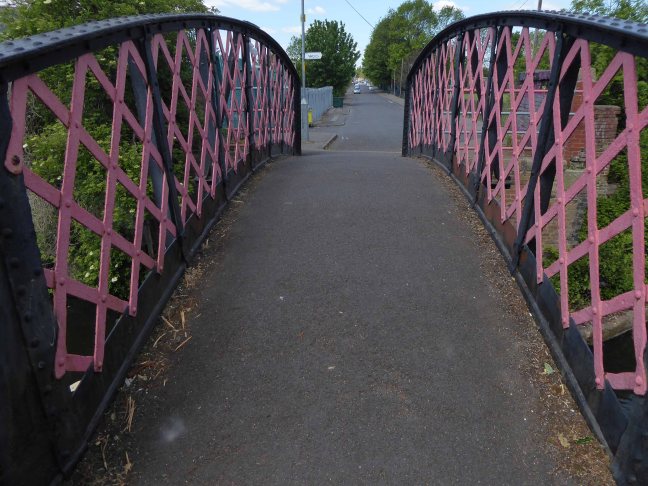
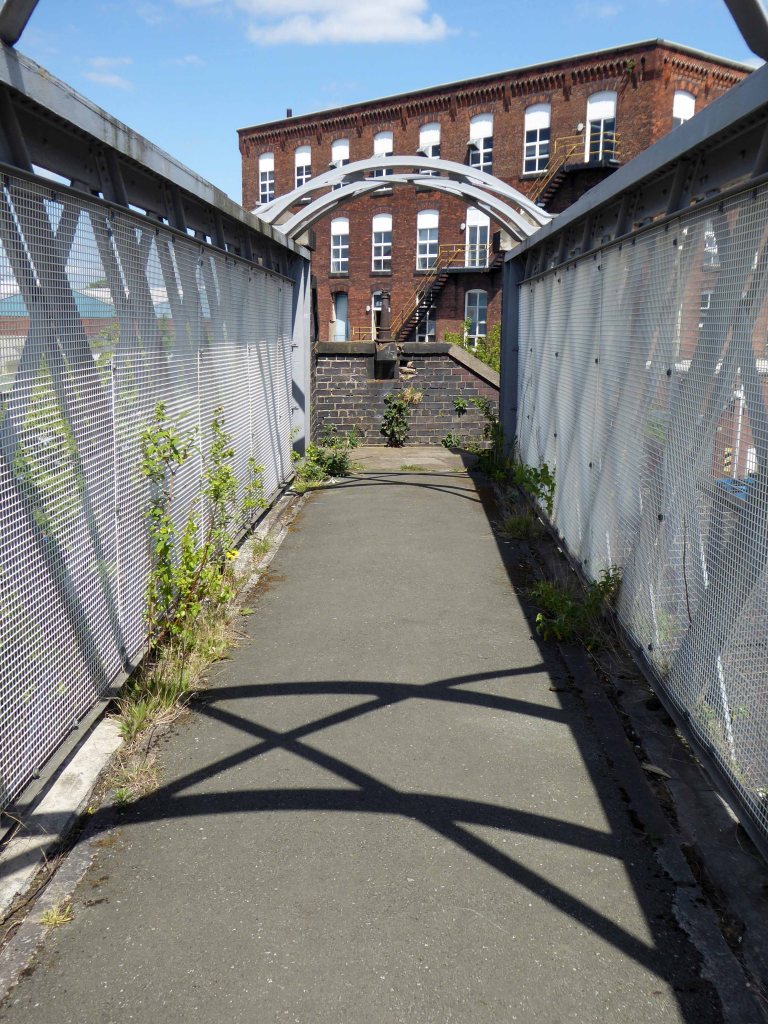
The bridge which it supported now demolished, time called long ago in the long lost Gardeners Arms – originally a Bell’s Brewery pub latterly a Robinsons house.
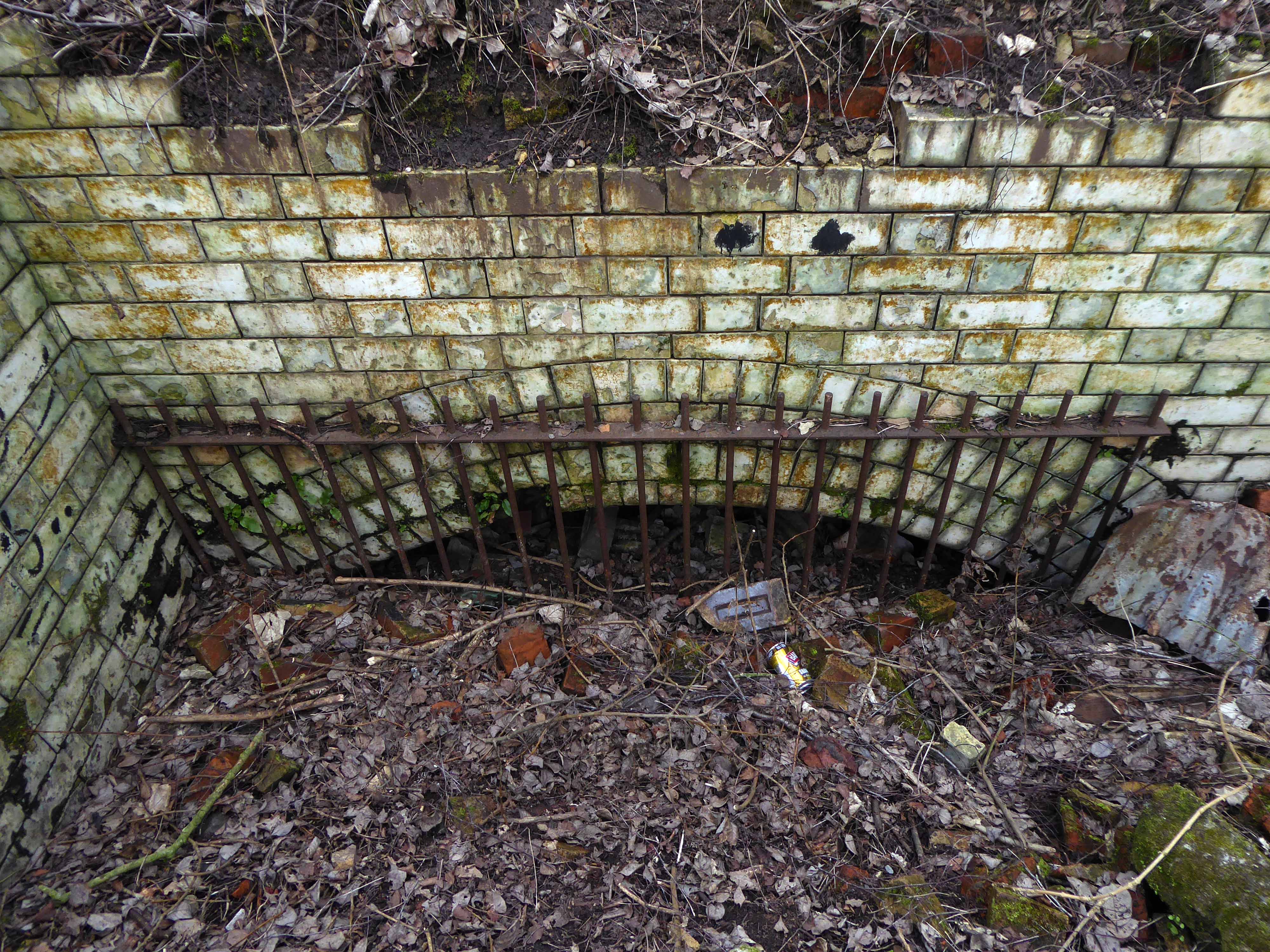
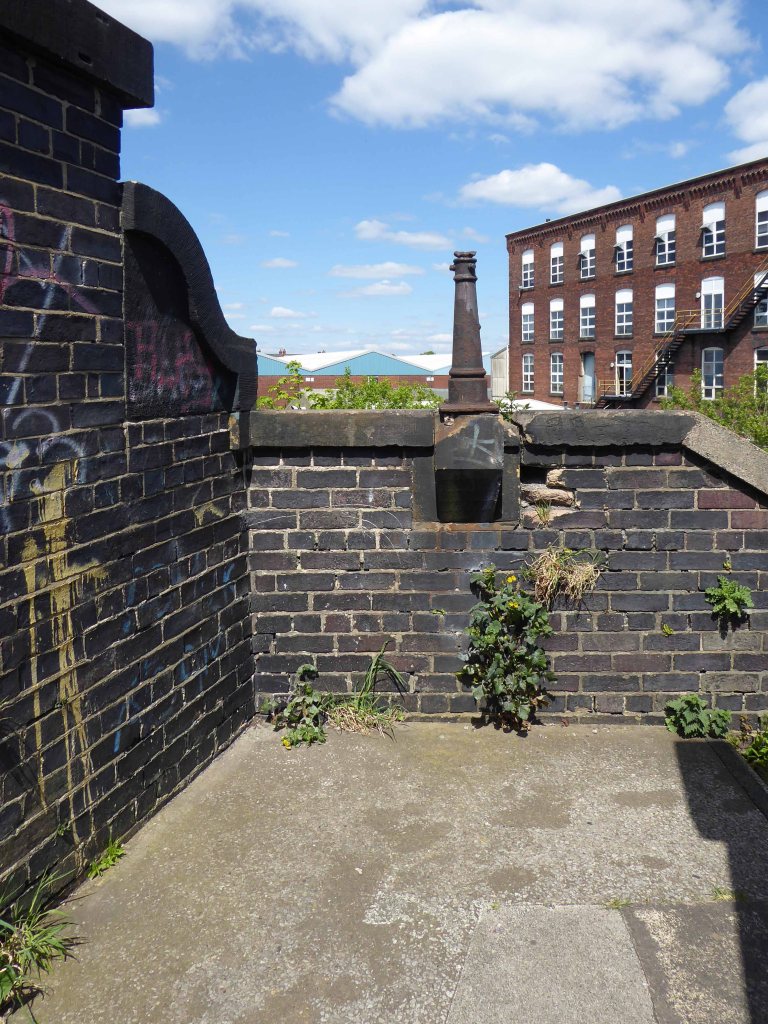
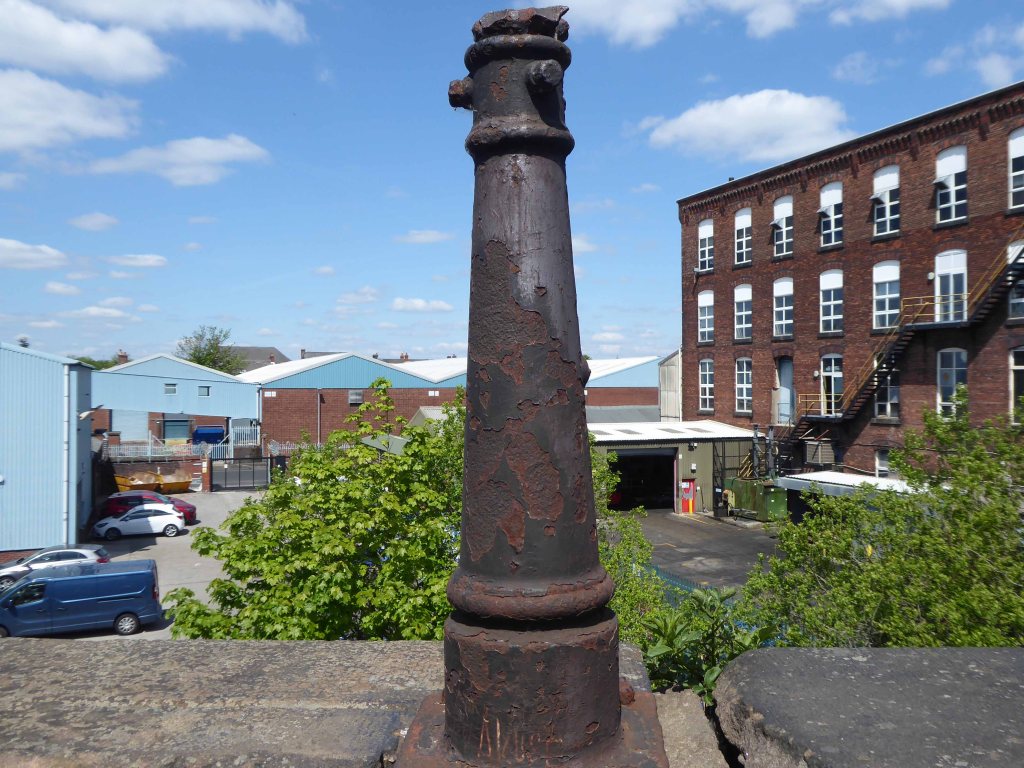
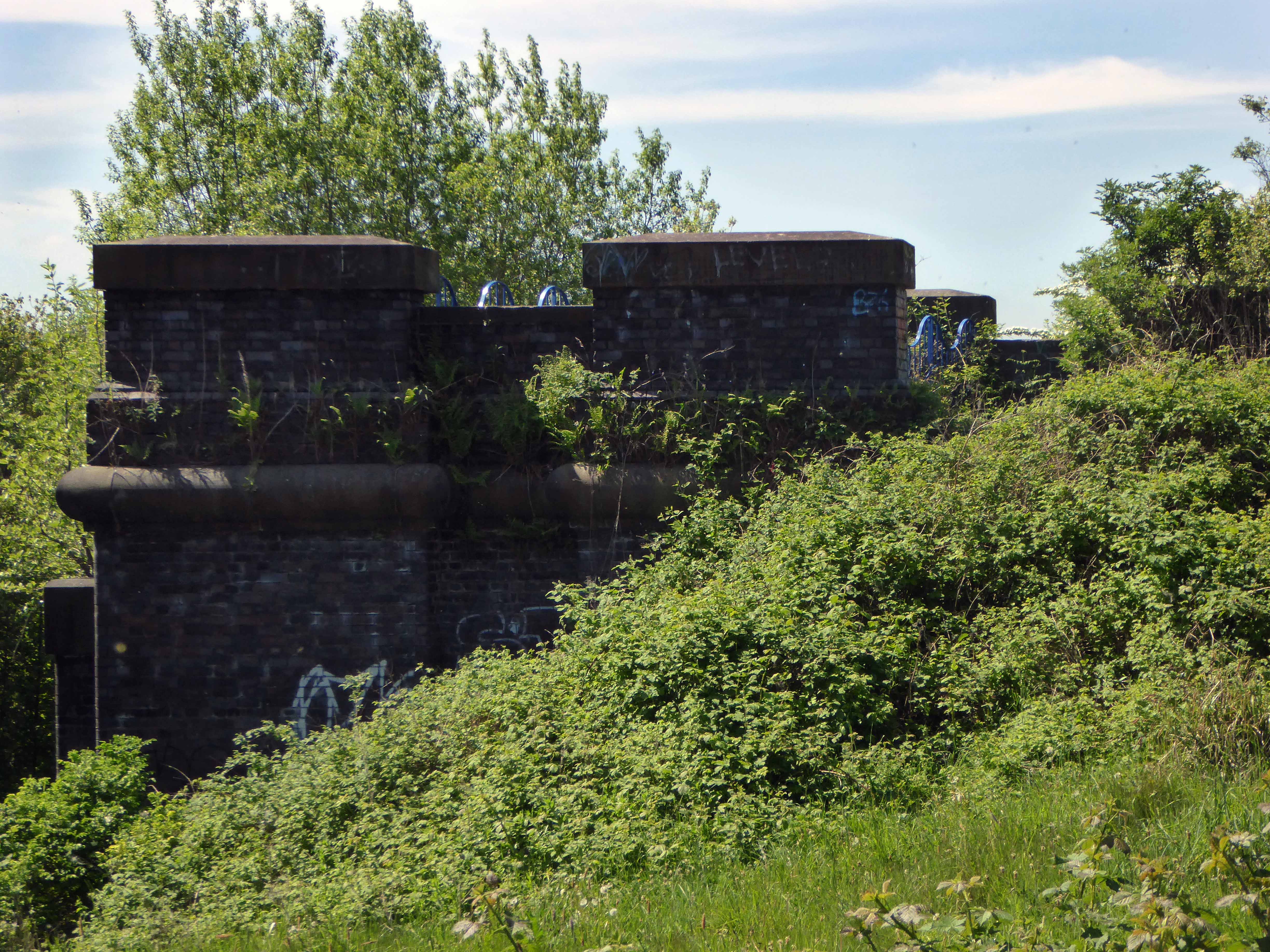
What remains is a triangular island faced in glazed and blue engineer’s brick, topped out with trees.
I have entertained the idea of accessing the area by ladder, exploring and possibly setting up camp – though I think the proximity to an almost constant flow of traffic, would prove less than commodious.
It evokes for me an elevated affinity with Ballard’s Concrete Island.
He reached the foot of the embankment, and waved with one arm, shouting at the few cars moving along the westbound carriageway. None of the drivers could see him, let alone hear his dry-throated croak, and Maitland stopped, conserving his strength. He tried to climb the embankment, but within a few steps collapsed in a heap on the muddy slope.
So here it is as is complete with tags, signs, cracks and all.
It remains as a monument to those who built and worked on the railway.
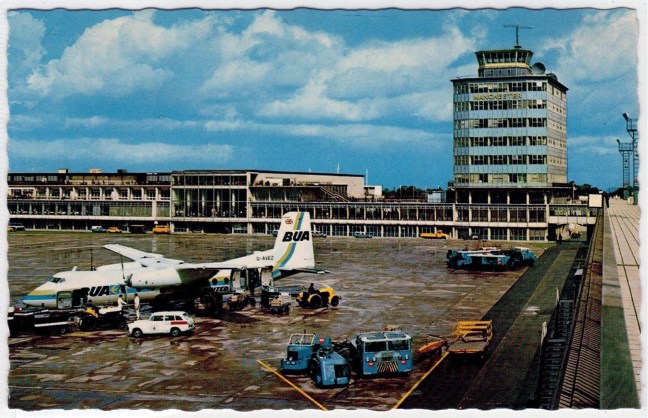
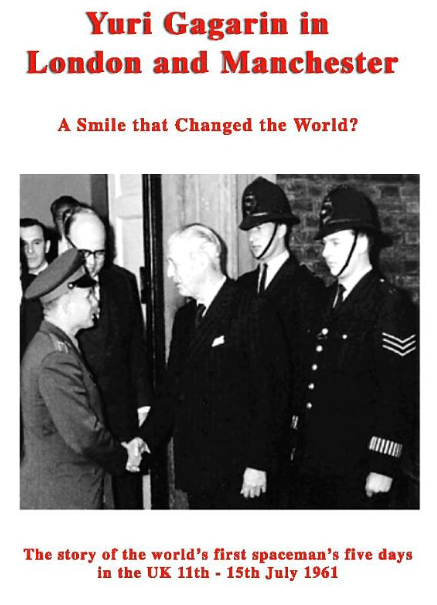
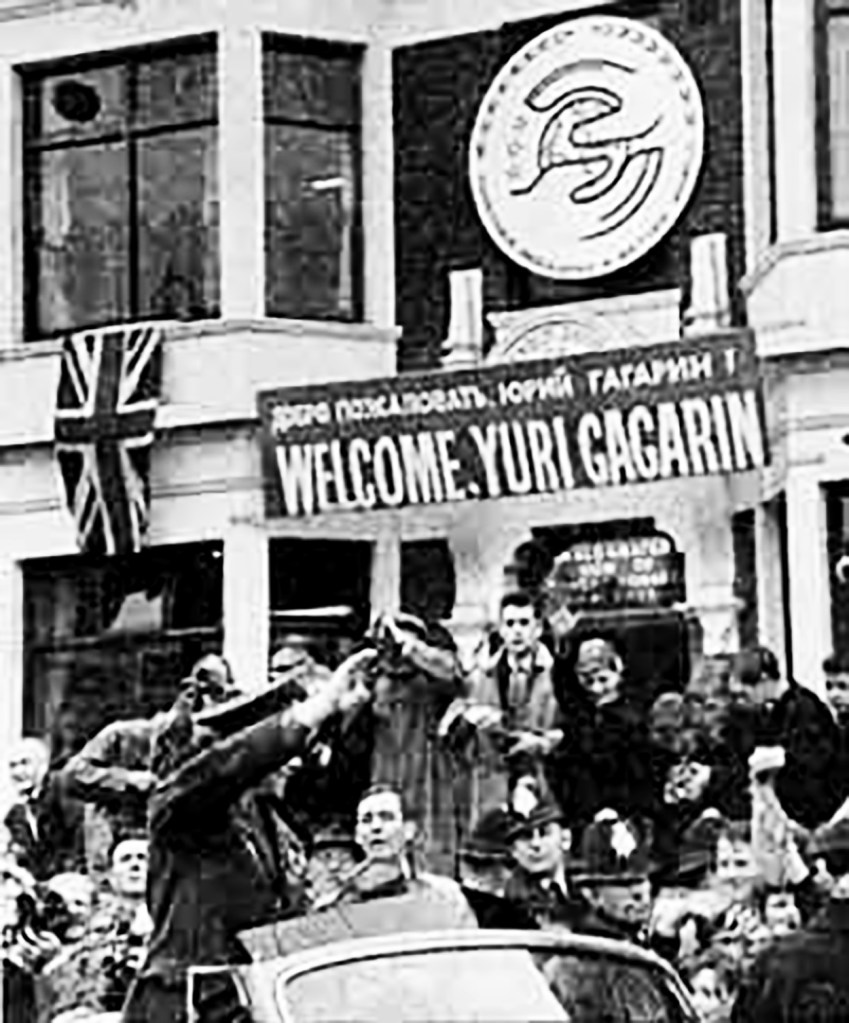
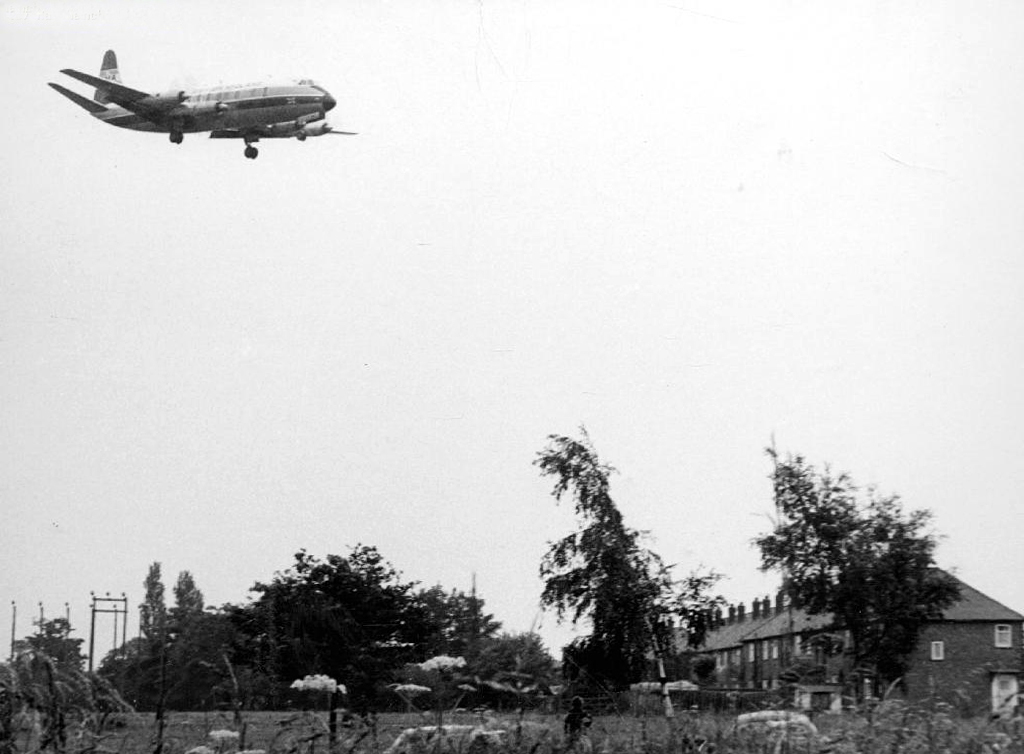
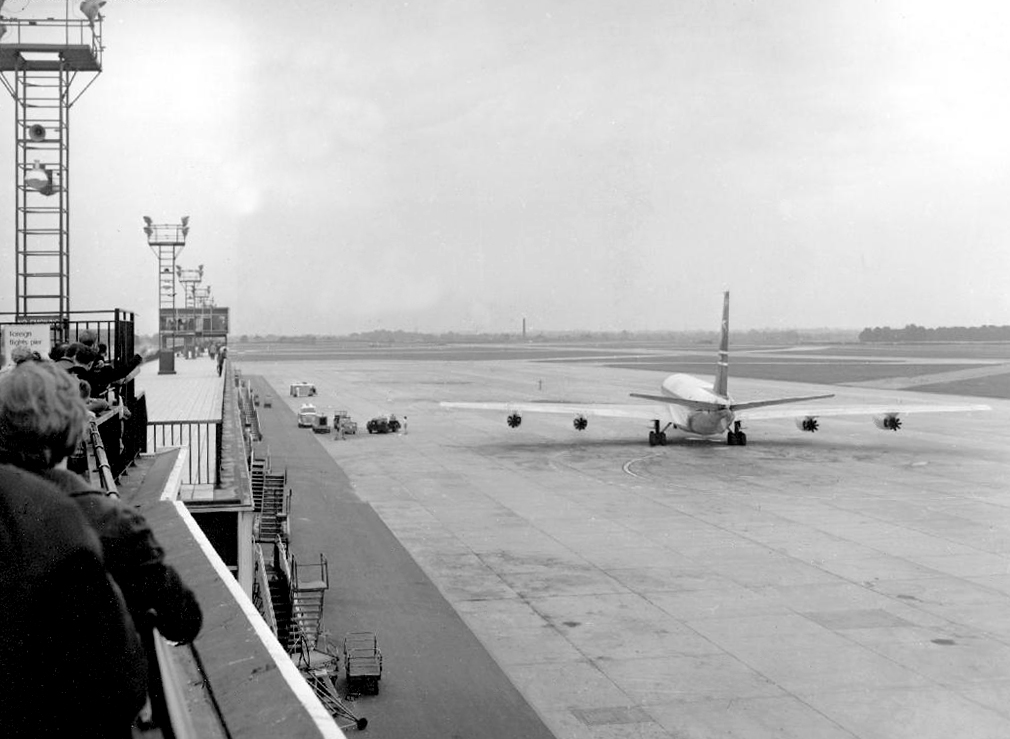
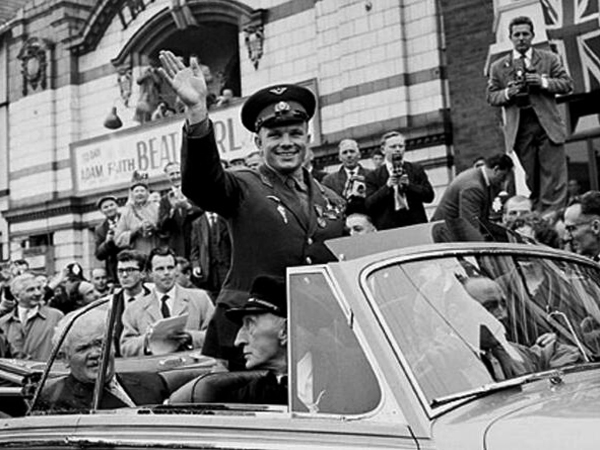
Exactly three months to the day after his flight in Vostok I had ushered in a new age of space exploration, on 12 July 1961, the trim figure of Yuri Gagarin strode down the gangway of a British Viscount airliner and walked briskly out across the runway of Manchester airport towards a sea of expectant faces, and flashing camera bulbs.
A loose approximation of what he may have see on that day in 1961.
We were allowed out of Brownley Green school to line the road as he passed, great memories.
I stood on Chester Road with my mum, I was 4 years old, but still remember it.
At that time, I was a student, working my socks off in the Central Library, I went outside into St. Peter’s Square to watch him pass, he gave everyone a big smile.
Still tell my children, tiny at the time – you saw the first man in space, I remember his smile.
Worked in an office in Albert Square – had a grandstand view of him arriving at the Town Hall.
I can remember a police escort taking Yuri to Albert Square via Princess Parkway through Withington, Fallowfield and Moss side, there were hundreds of people lined up watching a waving at him.
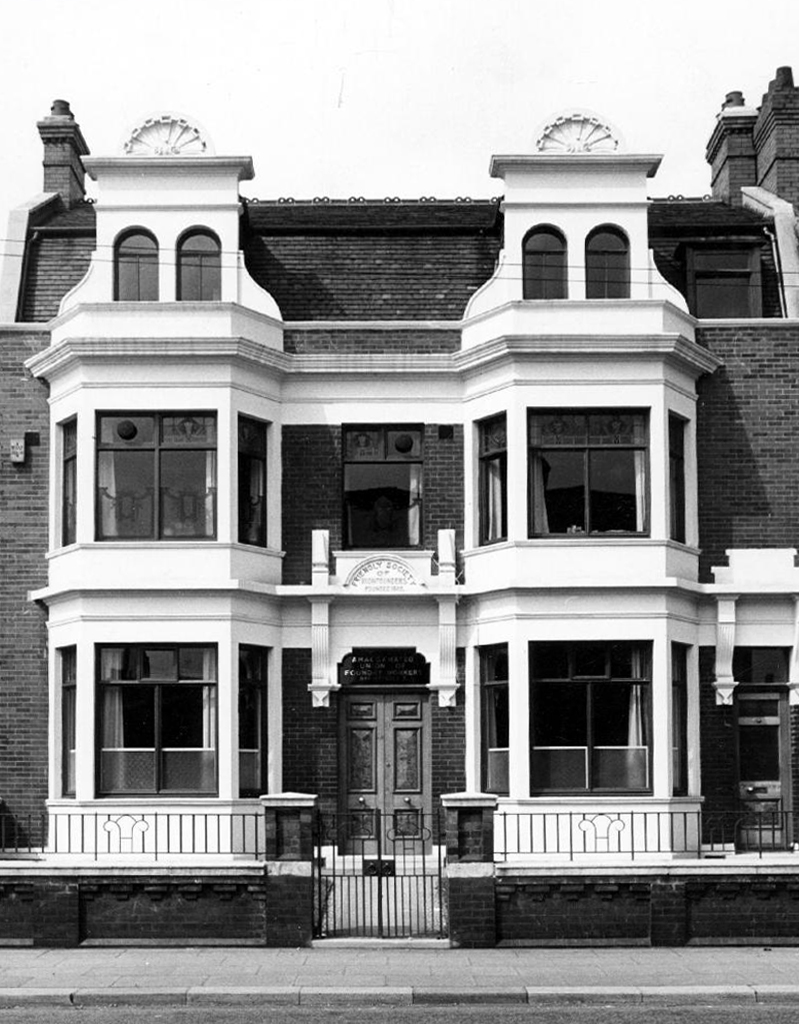
When Gagarin visited Manchester he was given a bronze bust of Lenin made by the Amalgamated Union of Foundry Workers. Four were made in total and my Dad owns one of them.
My Grandad’s funeral was on the day he came, as we passed down Altrincham Rd onto the Parkway policemen who were holding back the crowds saluted, he would have loved it.
Yeah I seen him stood up in a big car with a green uniform on. It was going down Brownley Rd passing Meliden Crescent heading for the Airport in Wythenshawe, I was about 6 years old.
Working for Manchester Parks as a 20 yr old on Princess Parkway and he came past me as I was mowing the grass, in an open top Rolls or Bentley, he saluted me personally as he passed, of course I stood to attention and returned the salute – Magic Moment
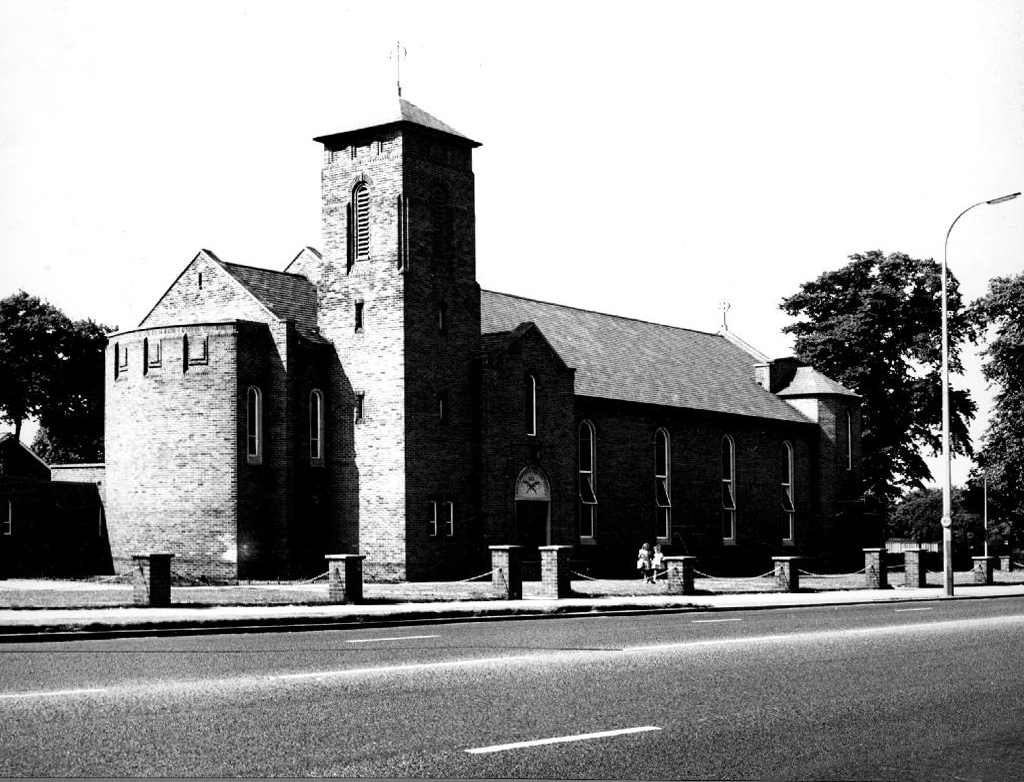
St AmbroseA well-detailed, relatively modest post-war design by Reynolds & Scott, with an impressive and largely unaltered vaulted interior. The dedication relates to St Ambrose Barlow, a Catholic martyr from nearby Barlow Hall.
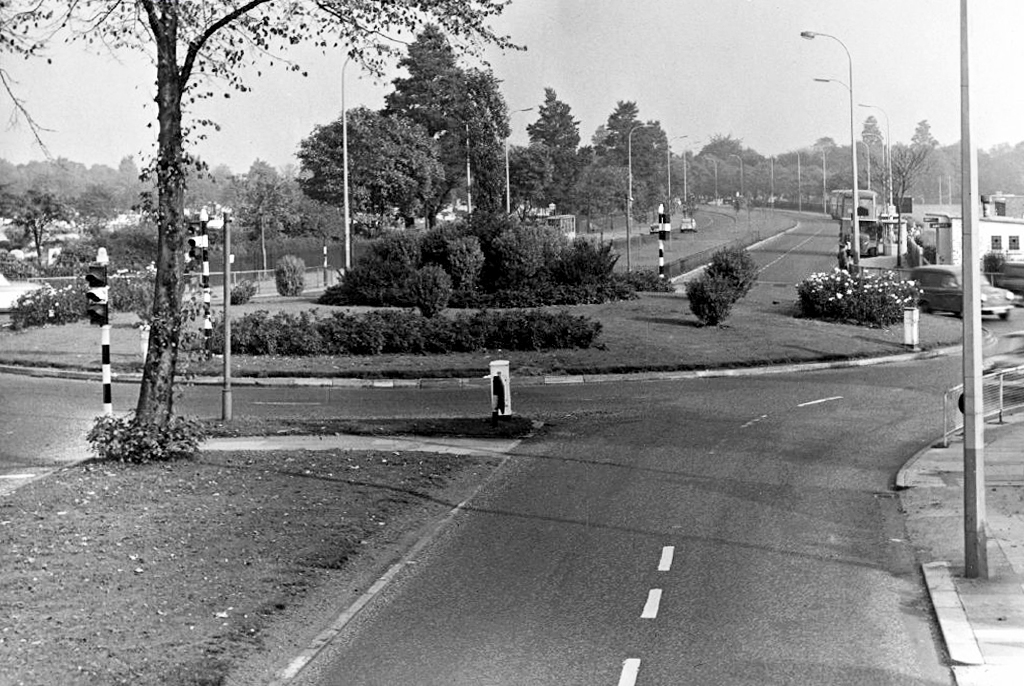
Barlow Moor Road
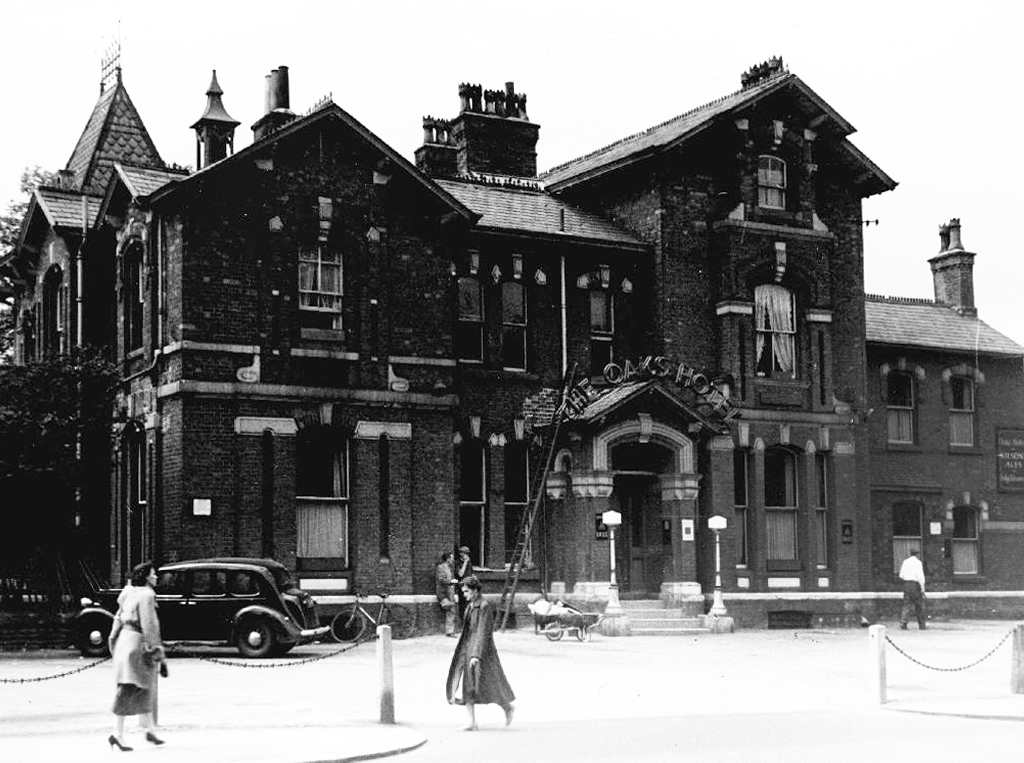
The Oaks demolished in the early 1990s following a brief life as the Sports Bar
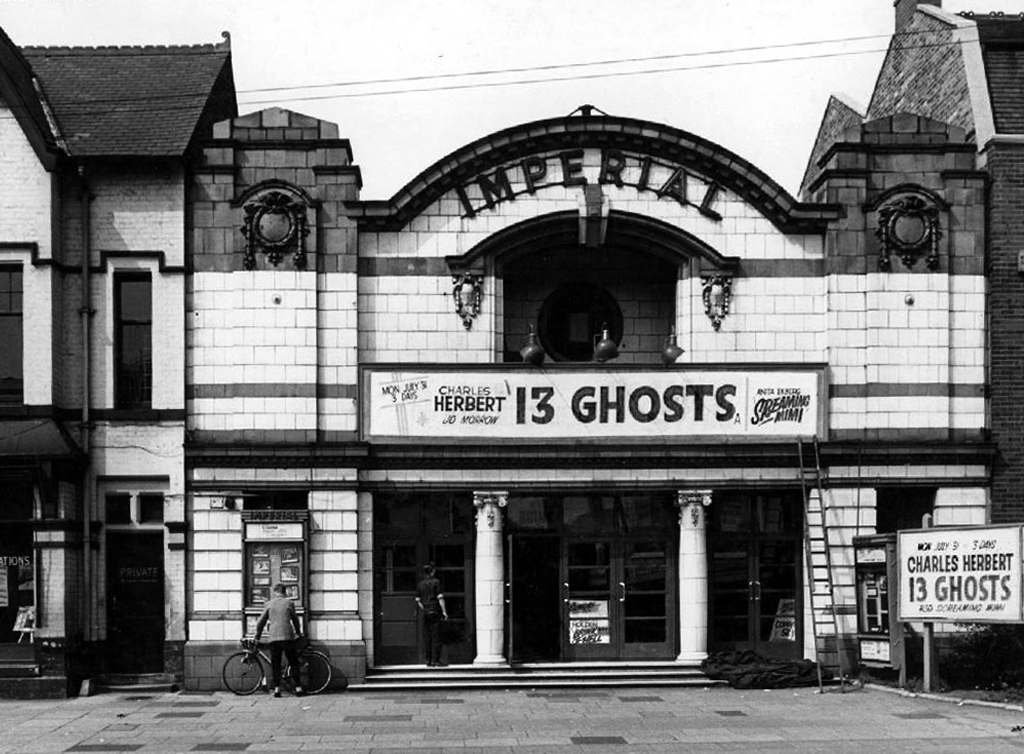
Imperial Picture Theatre – was opened in 1914. Seating was provided in stalls level only. It had a 5 feet deep stage and two dressing rooms. There was also a café in the cinema. Around 1929 it was equipped with a Western Electric sound system.
Architect W.H. Matley
The Imperial Picture Theatre was closed on 15th January 1976 with Charlotte Rampling in Caravan to Vaccares and Jean-Claude Brialy in A Murder Is a Murder Is a Murder.
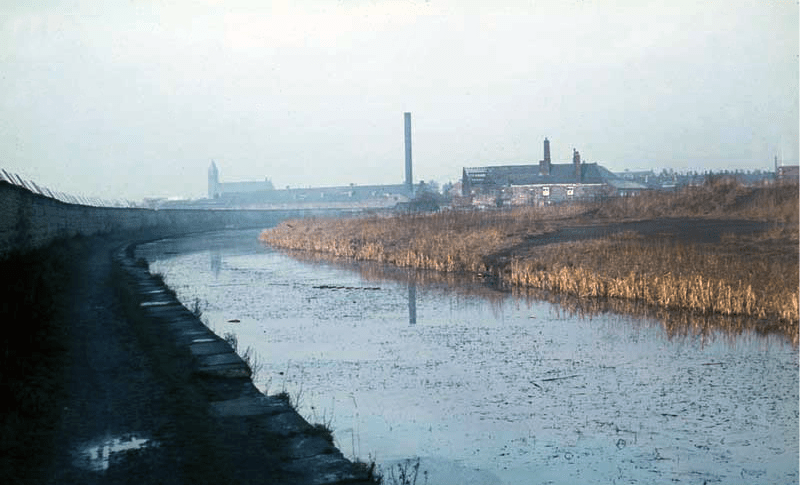
The canal received its Act of Parliament in 1792. It was built to supply coal from Oldham and Ashton under Lyne to Manchester. The first section between Ancoats Lane to Ashton-under-Lyne and Hollinwood was completed in 1796.
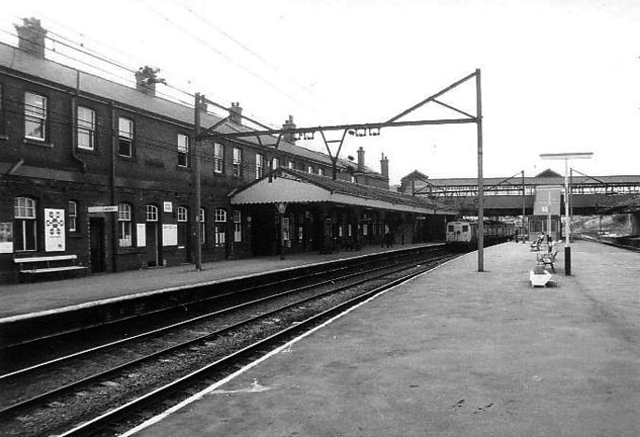
The Great Central Railway in England came into being when the Manchester, Sheffield and Lincolnshire Railway changed its name in 1897, anticipating the opening in 1899 of its London Extension. On 1 January 1923, the company was grouped into the London and North Eastern Railway.
I had walked beside the elevated path, alongside the canal coming home from school, rode by it whilst working as a Guide Bridge goods guard.
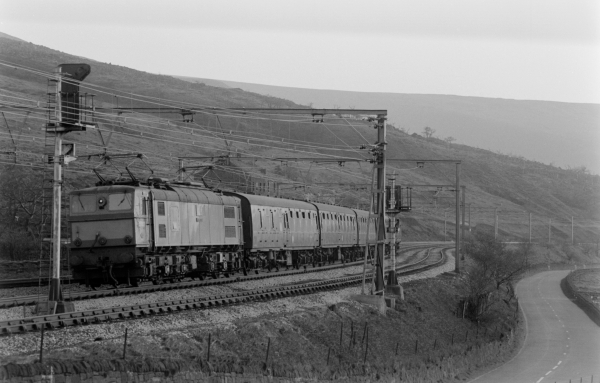
This was busy railway, steel coal, oil and people hurtling back and forth across the Pennines, under the DC wires of the Woodhead Line.
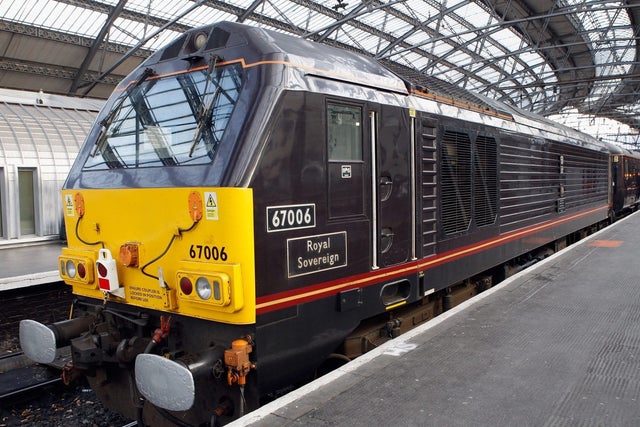
One memorable night the Royal Train stayed overnight, in what are now the SB Rail OTM sidings.
Toffs in dinner jackets were leaning from the windows, as we gazed in awe from the platform.
Swietelsky is one of Austria’s leading construction companies with international contracts encompassing highways, tunnelling, residential and commercial developments, alpine construction and railways.
The journey ends by the seriously depleted station buildings, the buffet bar, depot and engine shed long gone.
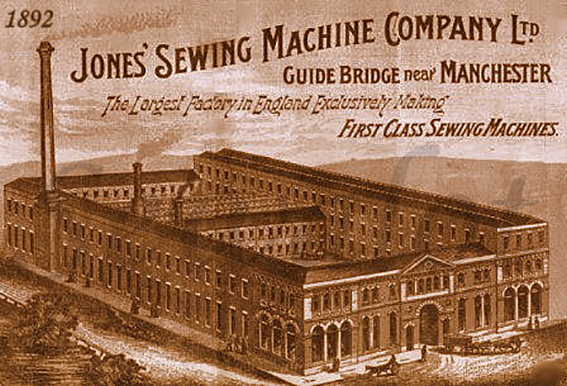
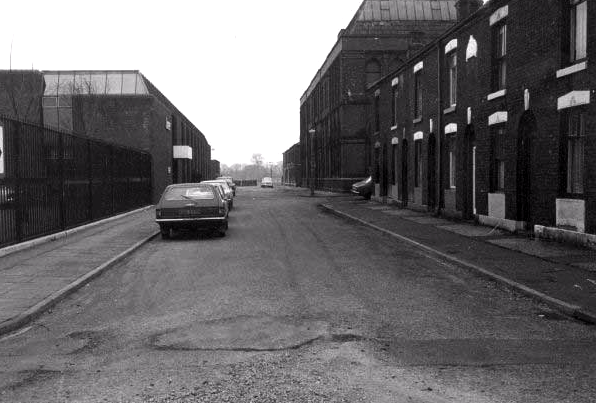
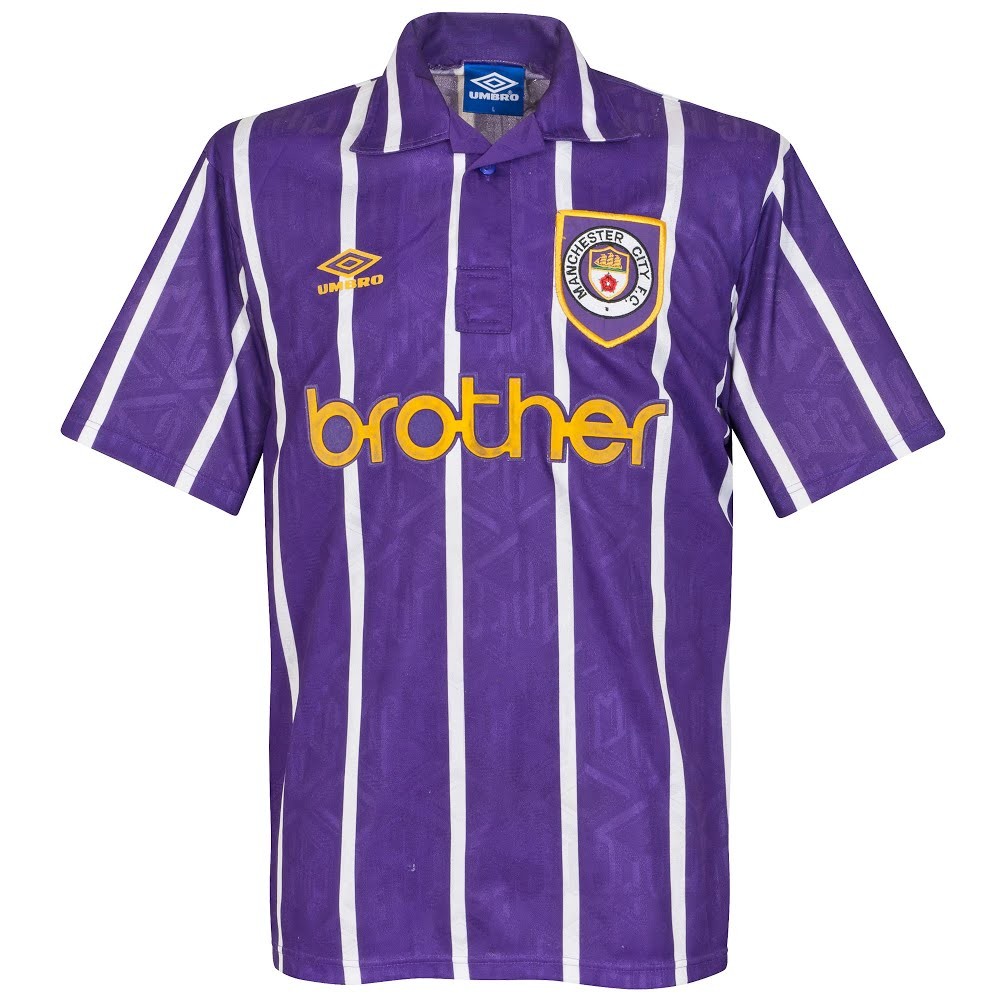
Thomas Chadwick later joined Bradbury & Co. William Jones opened a factory in Guide Bridge, Manchester in 1869. In 1893 a Jones advertising sheet claimed that this factory was the – Largest Factory in England Exclusively Making First Class Sewing Machines. The firm was renamed as the Jones Sewing Machine Co. Ltd and was later acquired by Brother Industries of Japan, in 1968. The Jones name still appeared on the machines till the late 1980s.
The site is now home to new homes and homeowners, as the area seeks to capitalise on the spread of wealth from Central Manchester.
Arnfield Woods is an exclusive development offering two, three and four bedroom homes, located adjacent to the Guide Bridge train station, which provides direct access into Manchester City Centre and direct access into Glossop.
The world turns:
Time changes everything except something within us which is always surprised by change.
Several trains from Stockport later, along the length of the East Lancs Line, I arrived at Burnley Manchester Road Station via the reinstated Todmorden Curve.
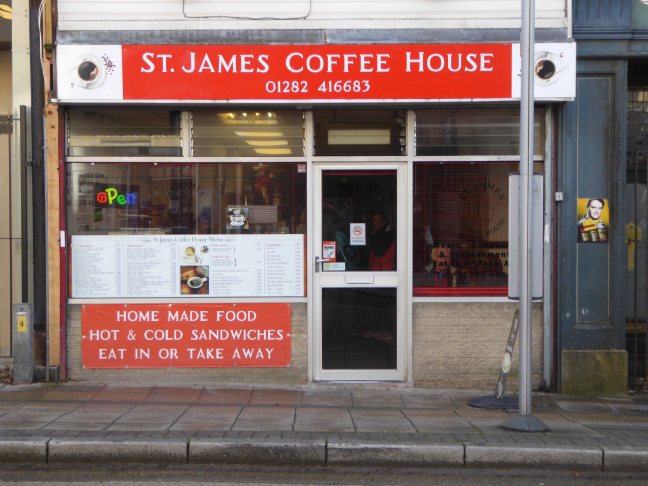
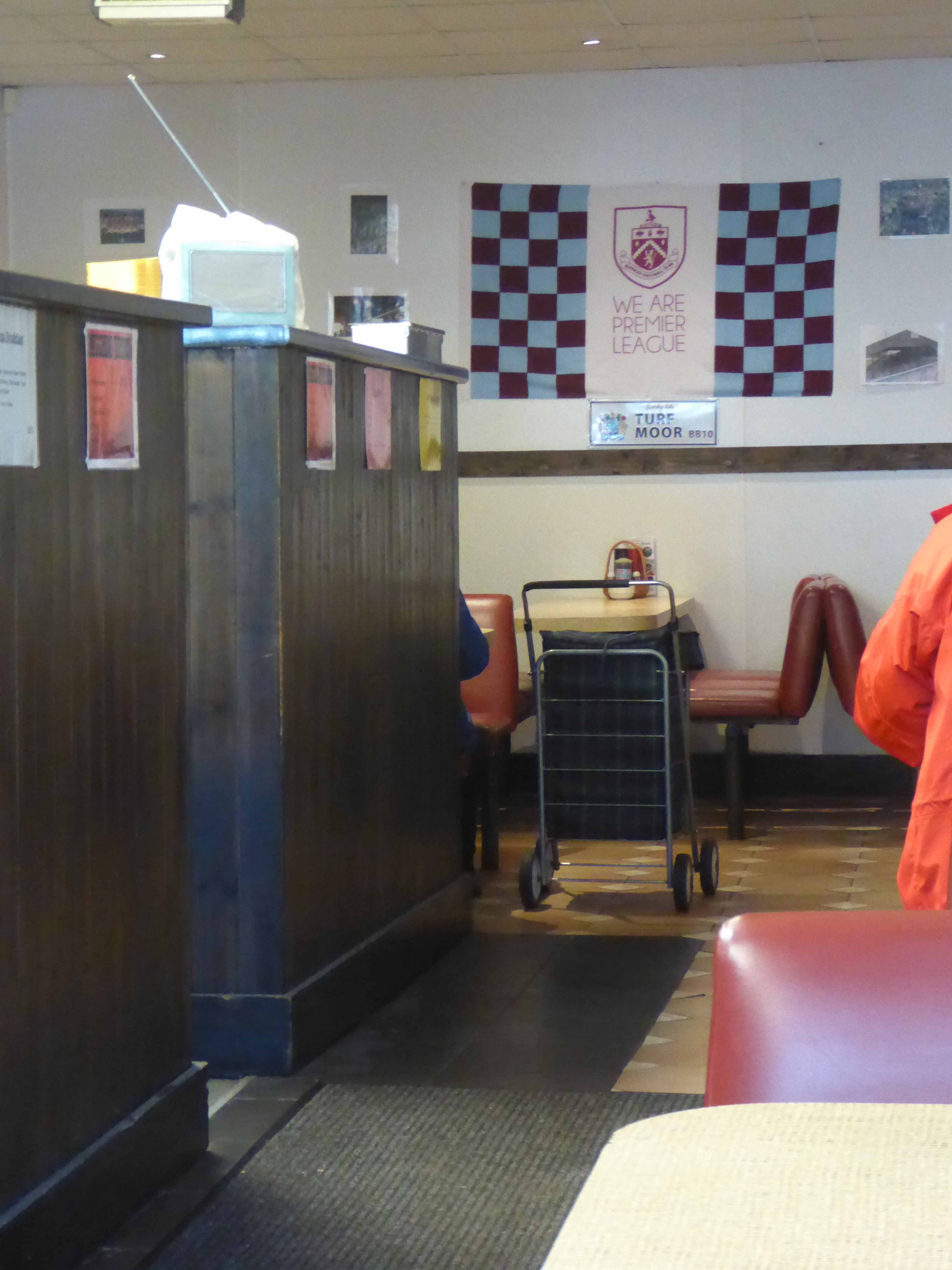
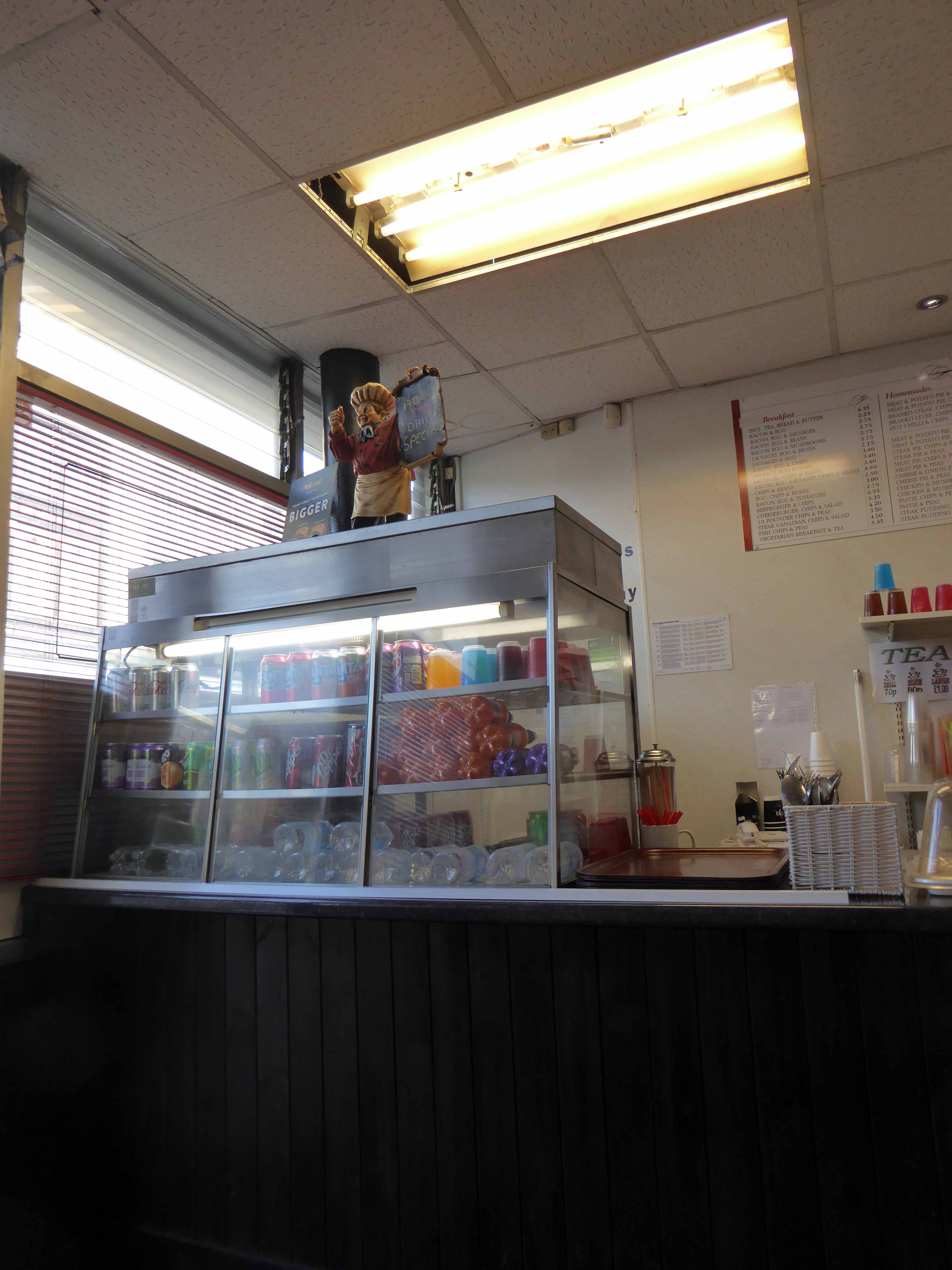
Having wandered aimlessly awhile, it was time for a spot to eat – and there it was a vision to behold before my very eyes.
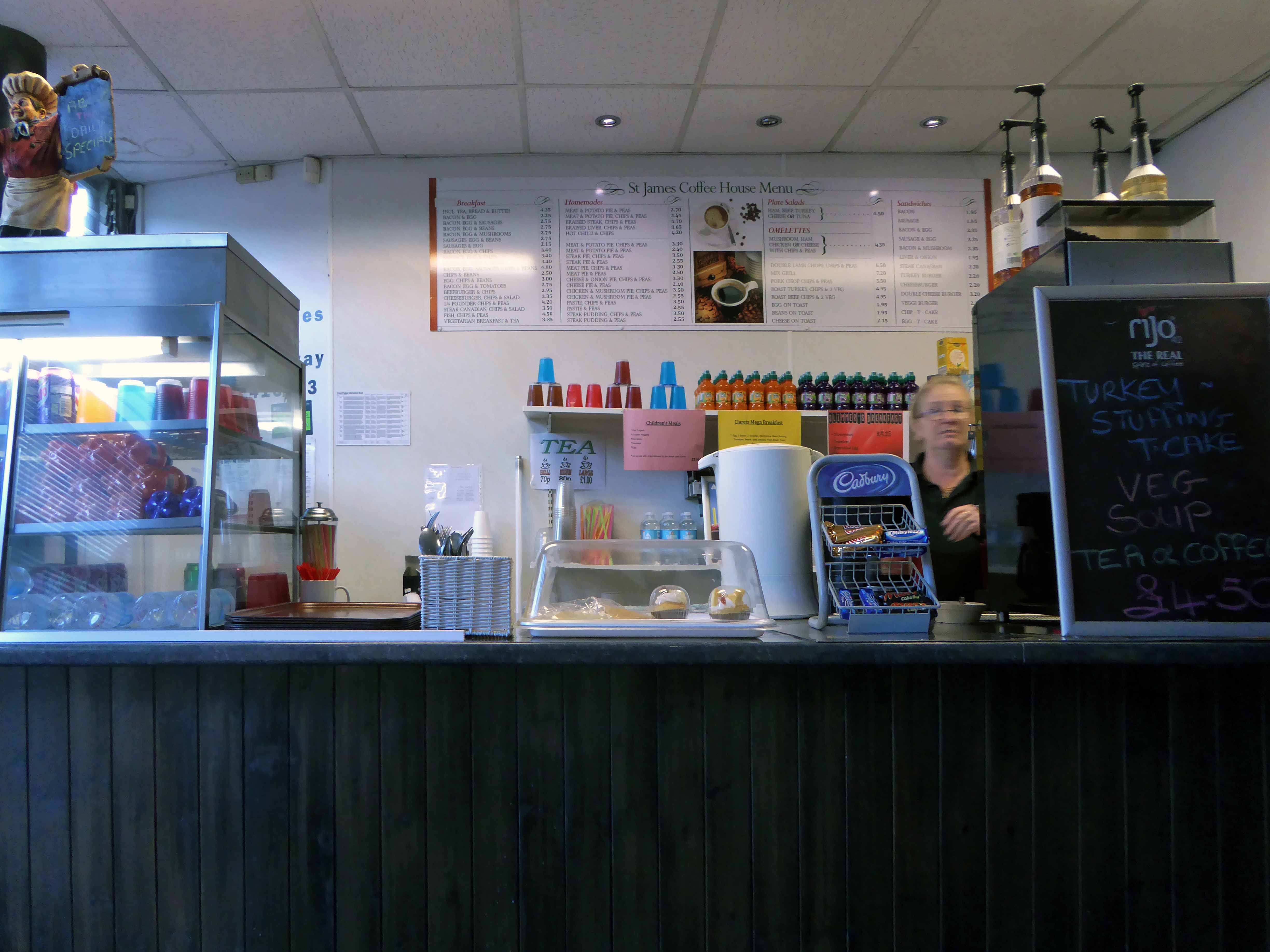
We’re situated in the town centre on St James’ Street, just a little bit further down from DW Sports – the old JJB store and next to the entrance to the old Empire Theatre, when you get to the art gallery you’ve gone too far!
The menu had caught my eye – pie!
To get in and get some grub was my sole and urgent imperative.
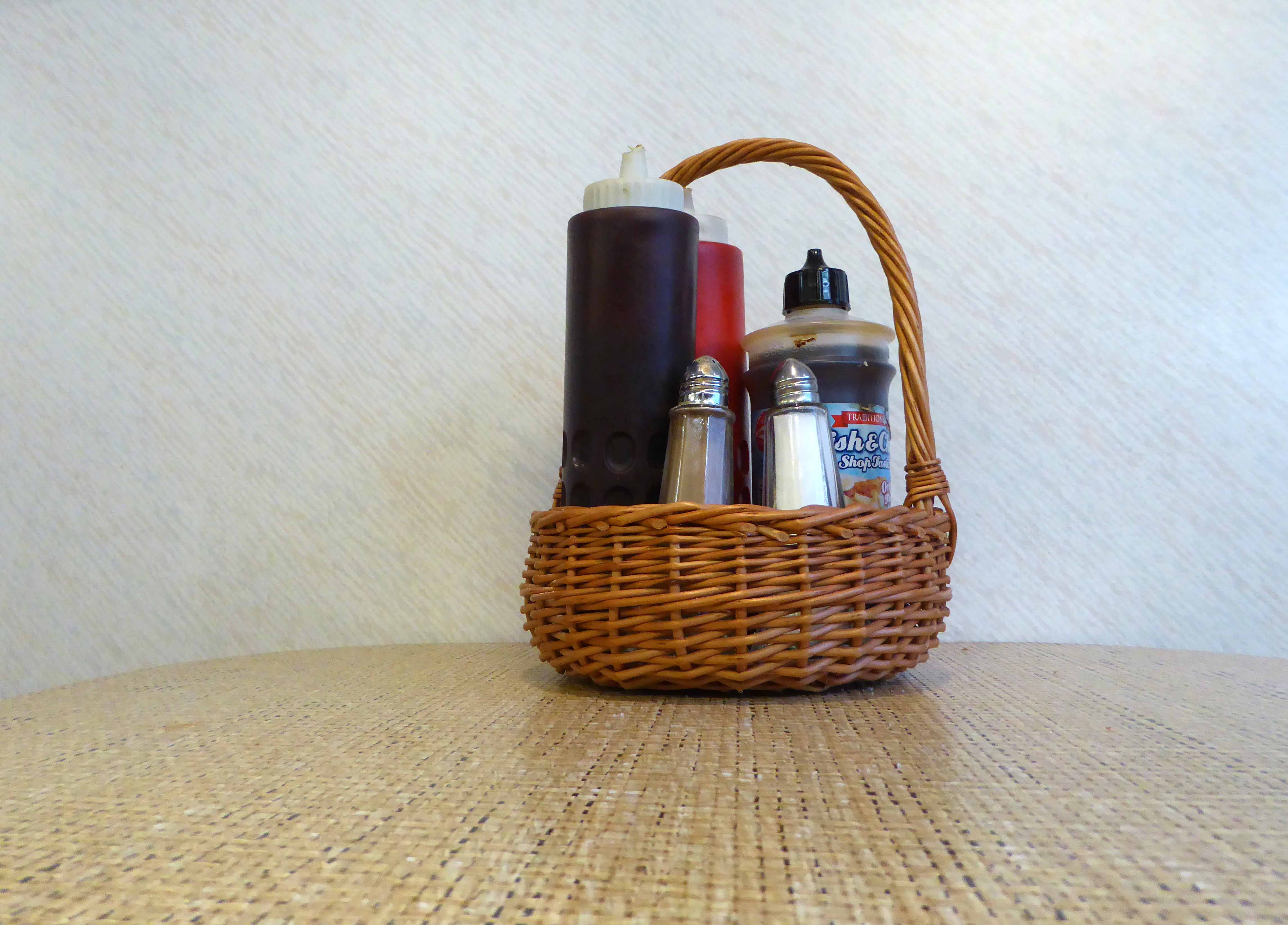
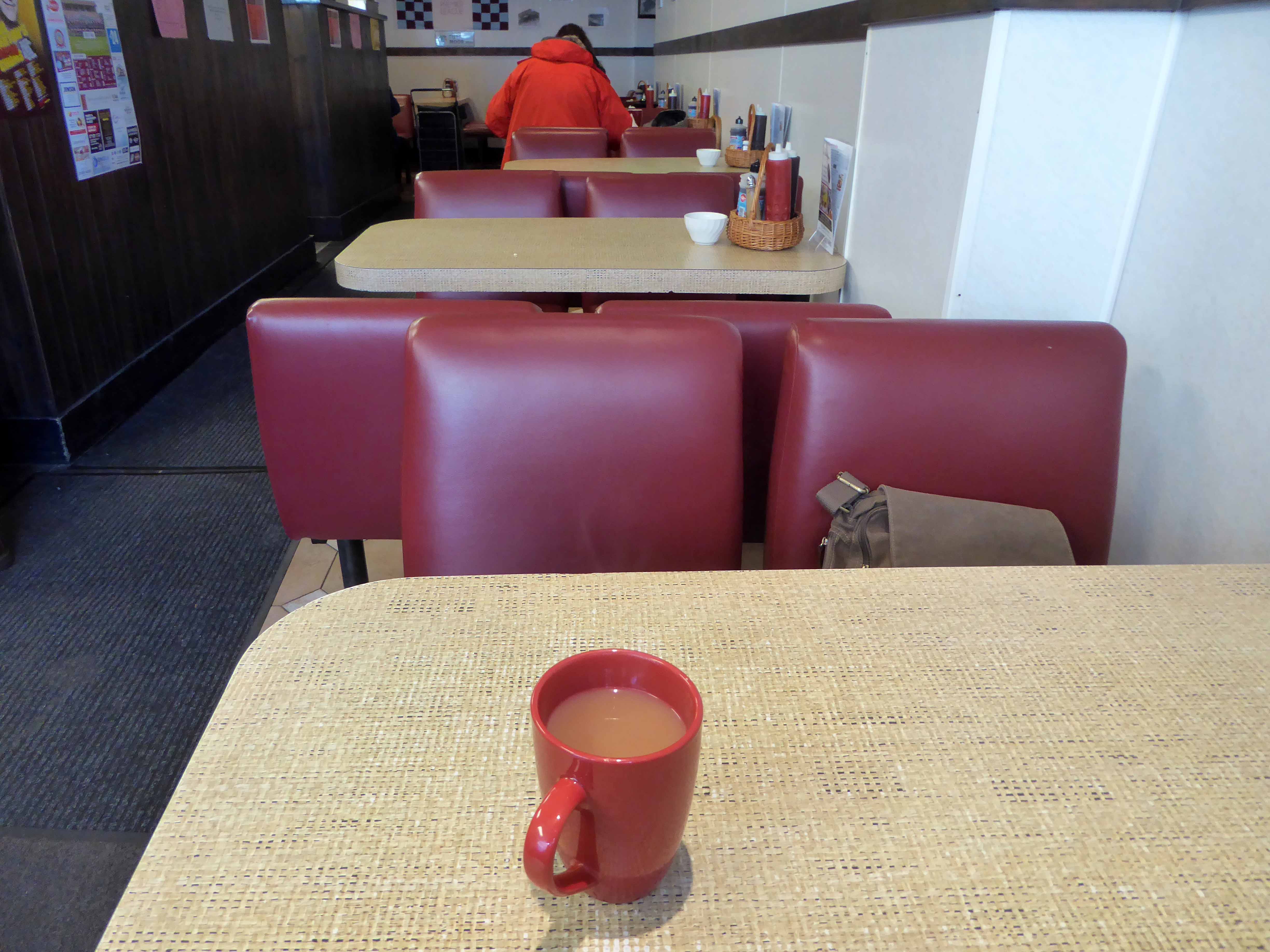
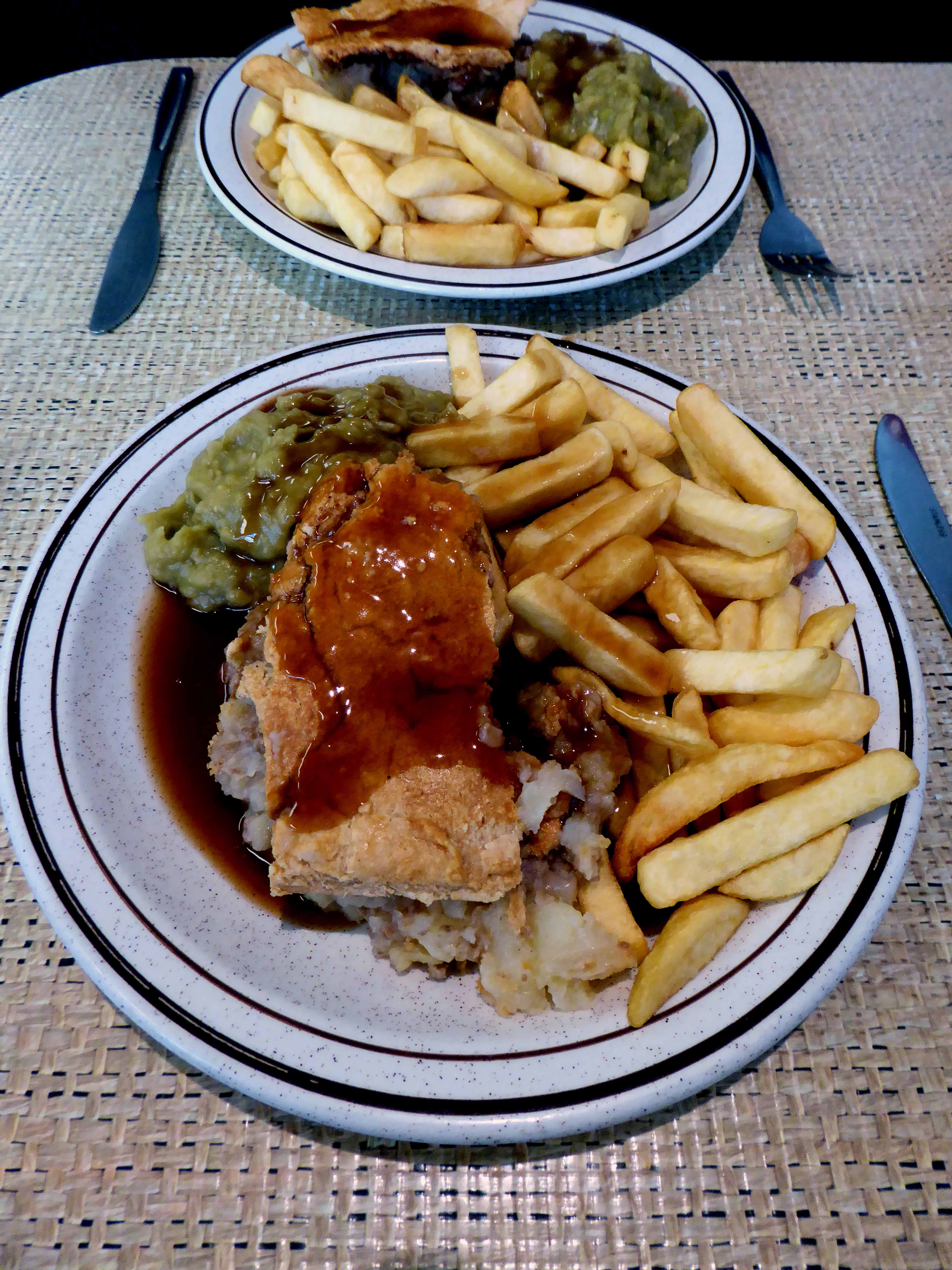
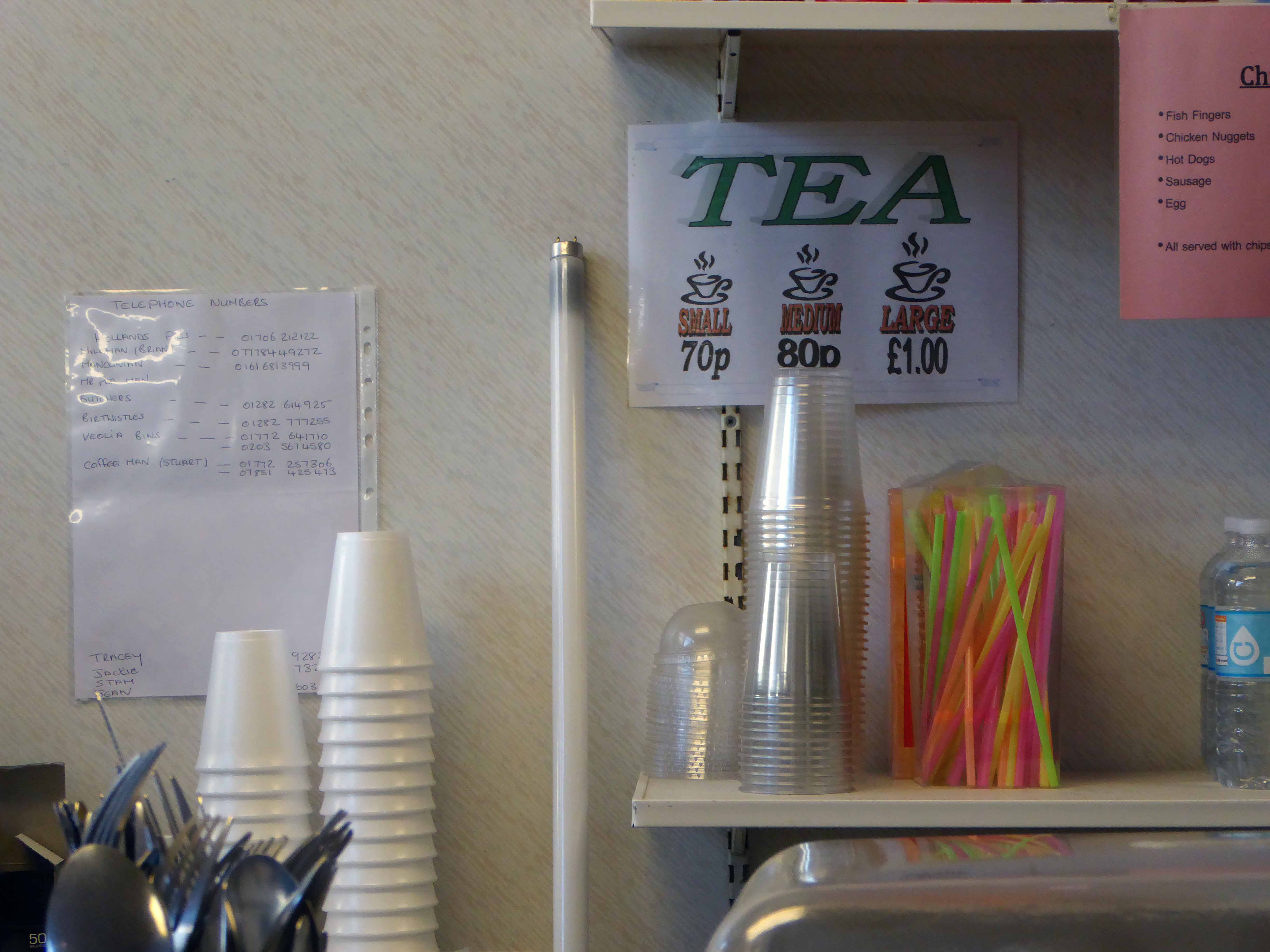
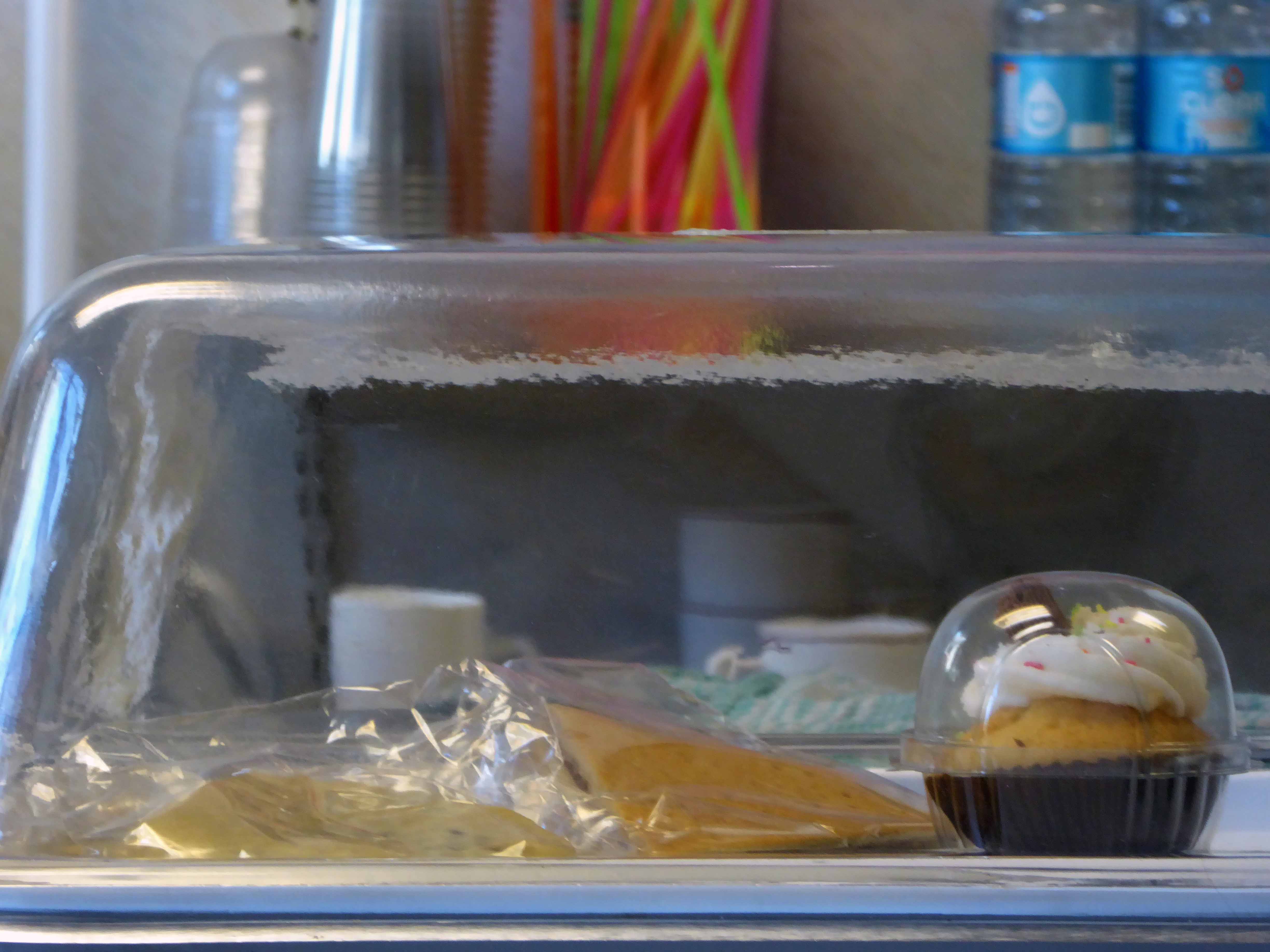
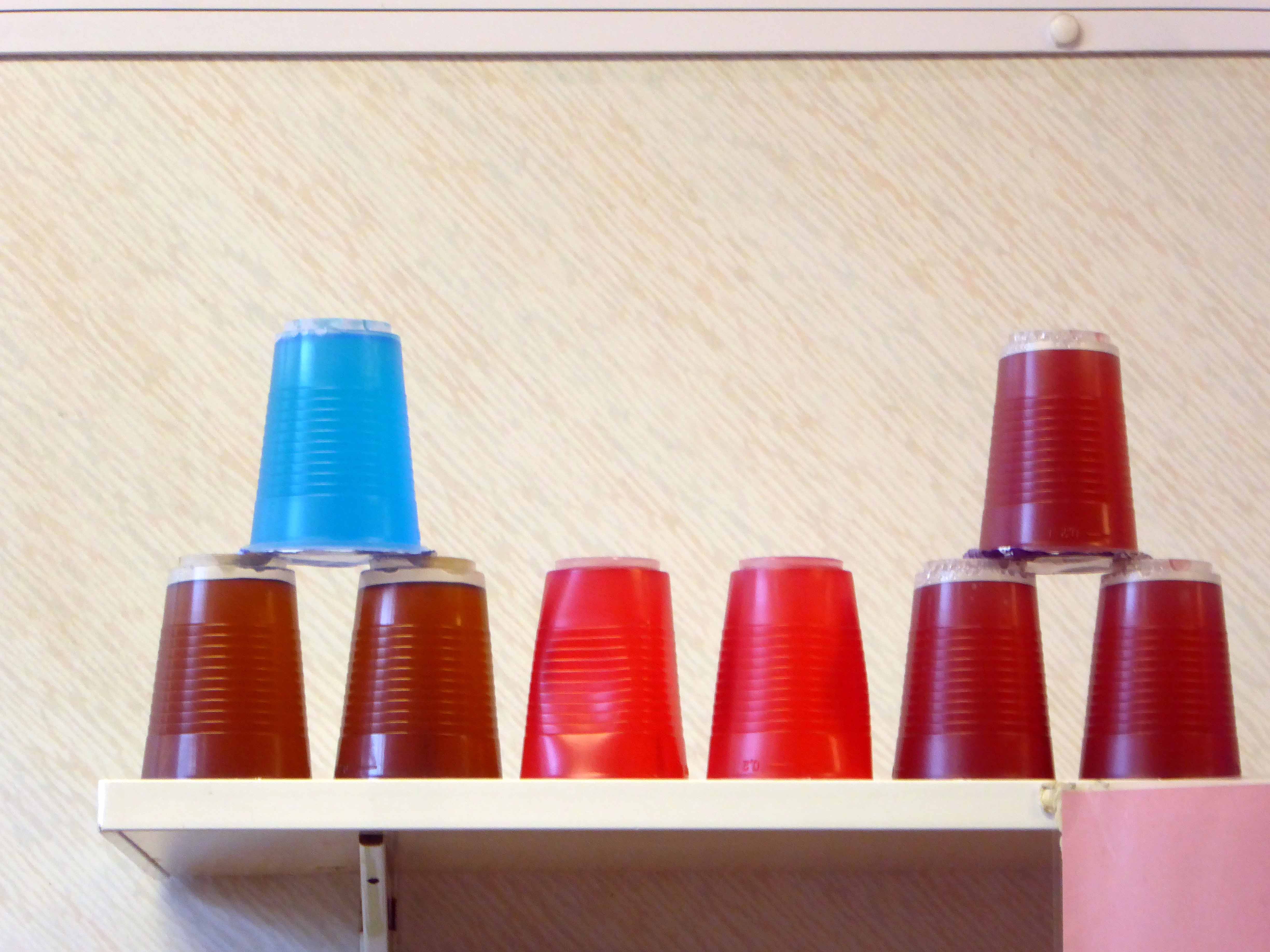
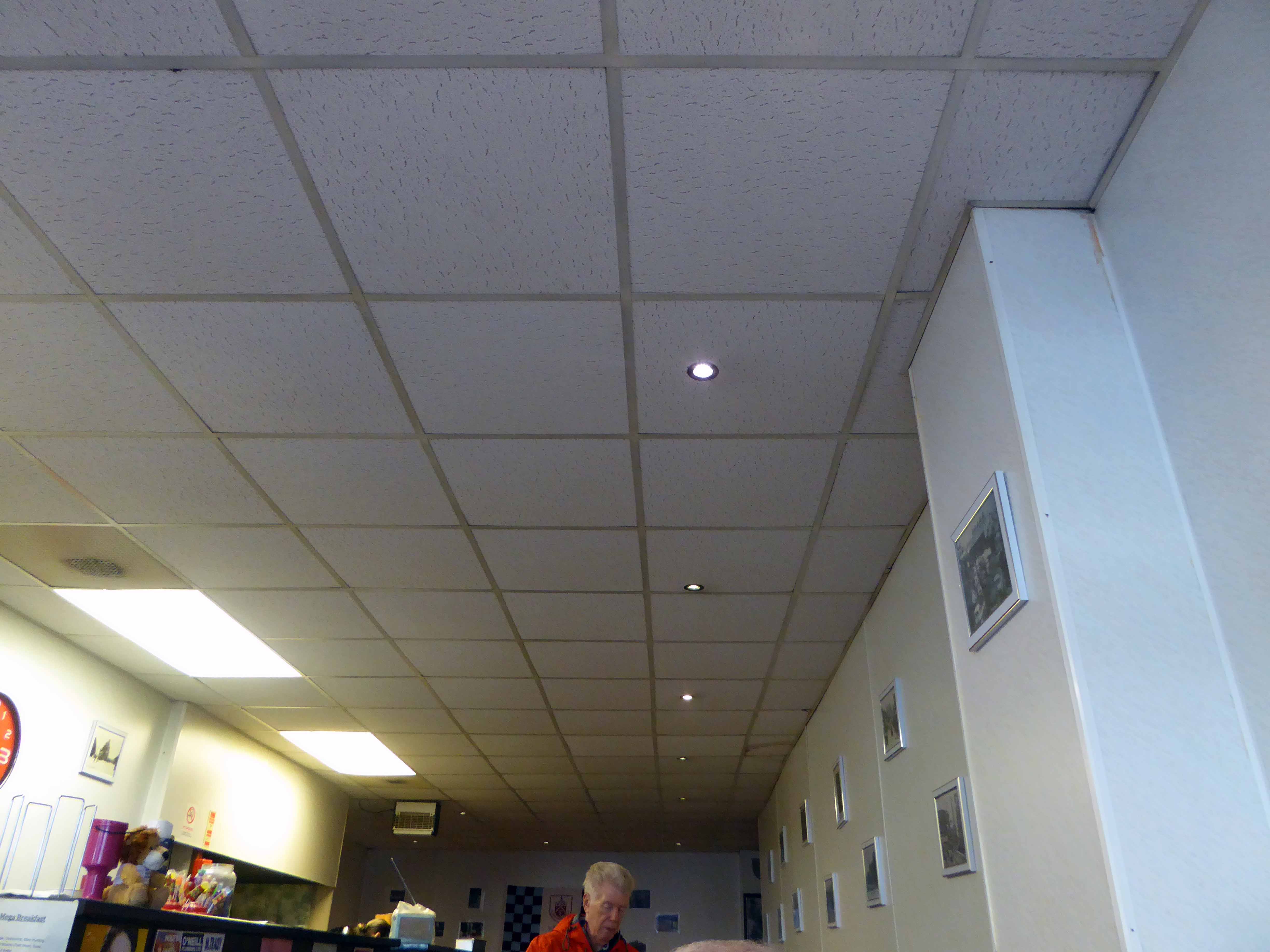
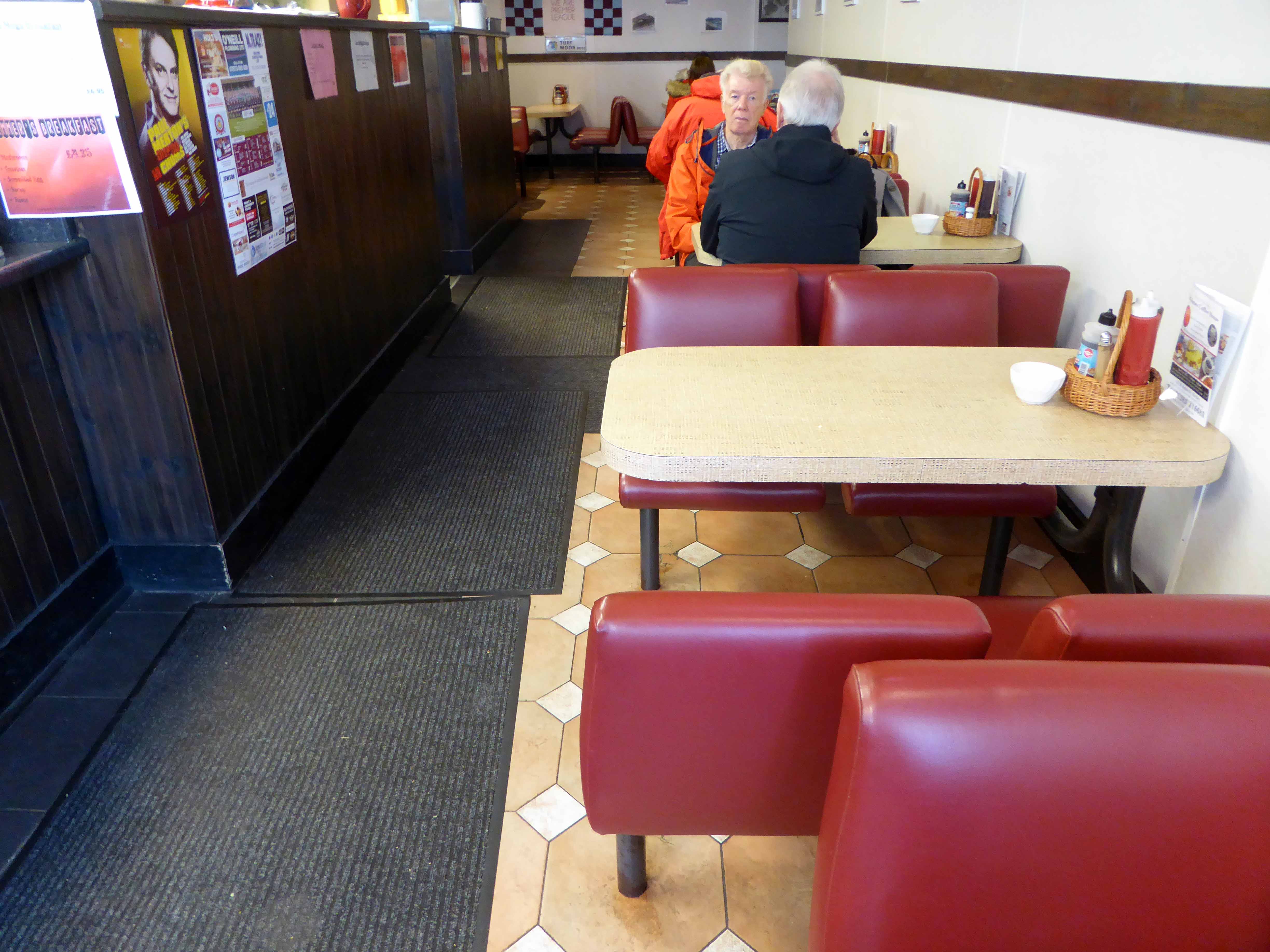
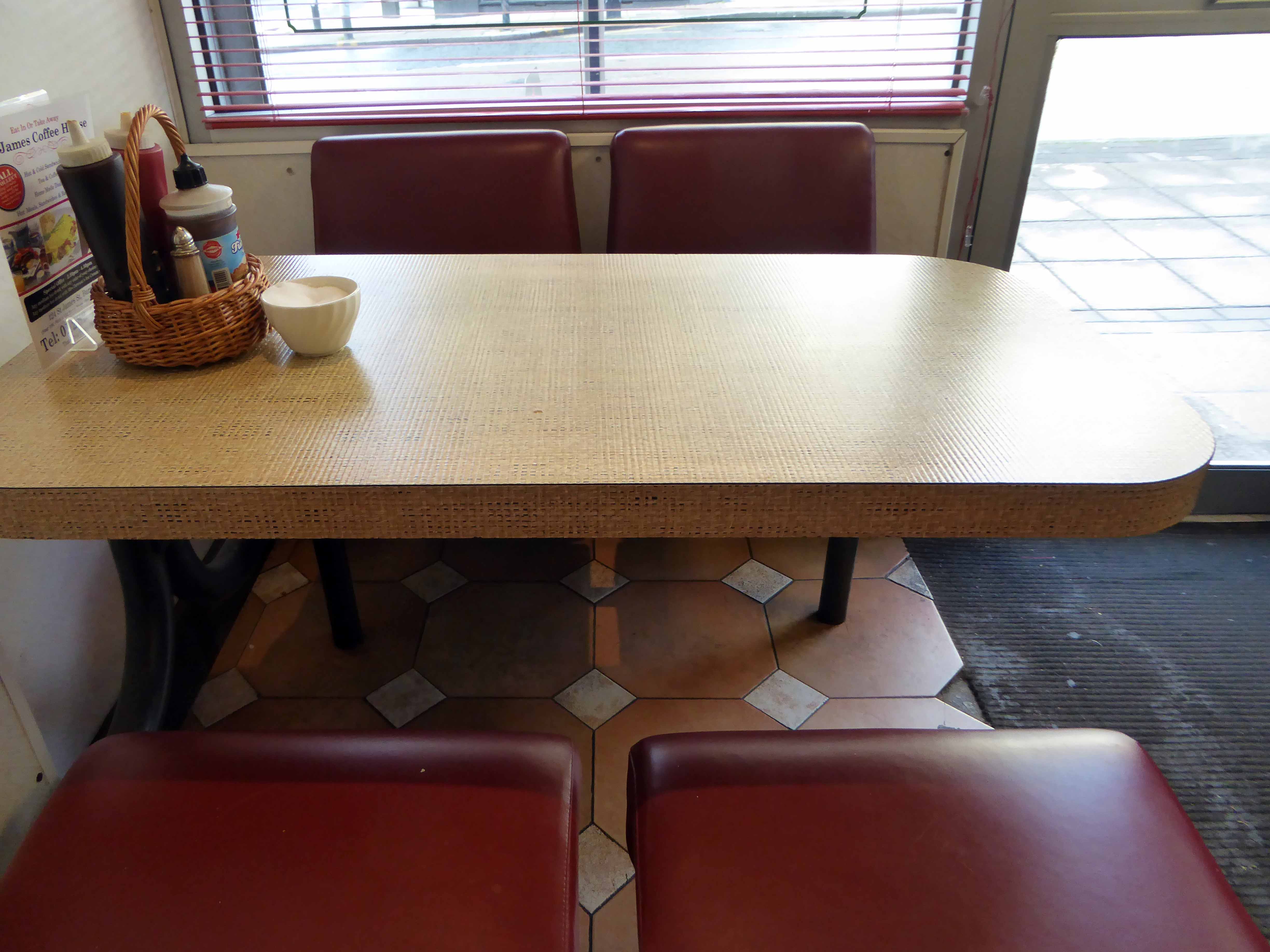
A warm welcome awaited, and even warmer food, served with alacrity and aplomb – tasty homemade meat and potato pie, chips, peas and gravy. A soft light crust and mushiest mushy peas – a real delight, seen off in no time and all washed down with a piping hot mug of tea.
£4.40 all in – service with a smile, in cosy, comfortable, traditional café surroundings.
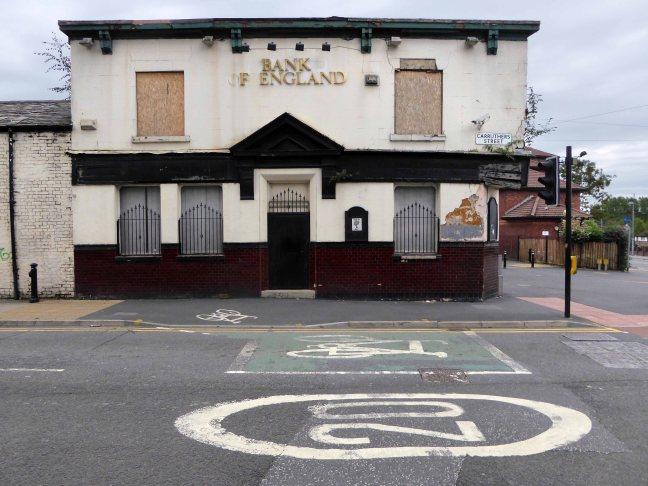
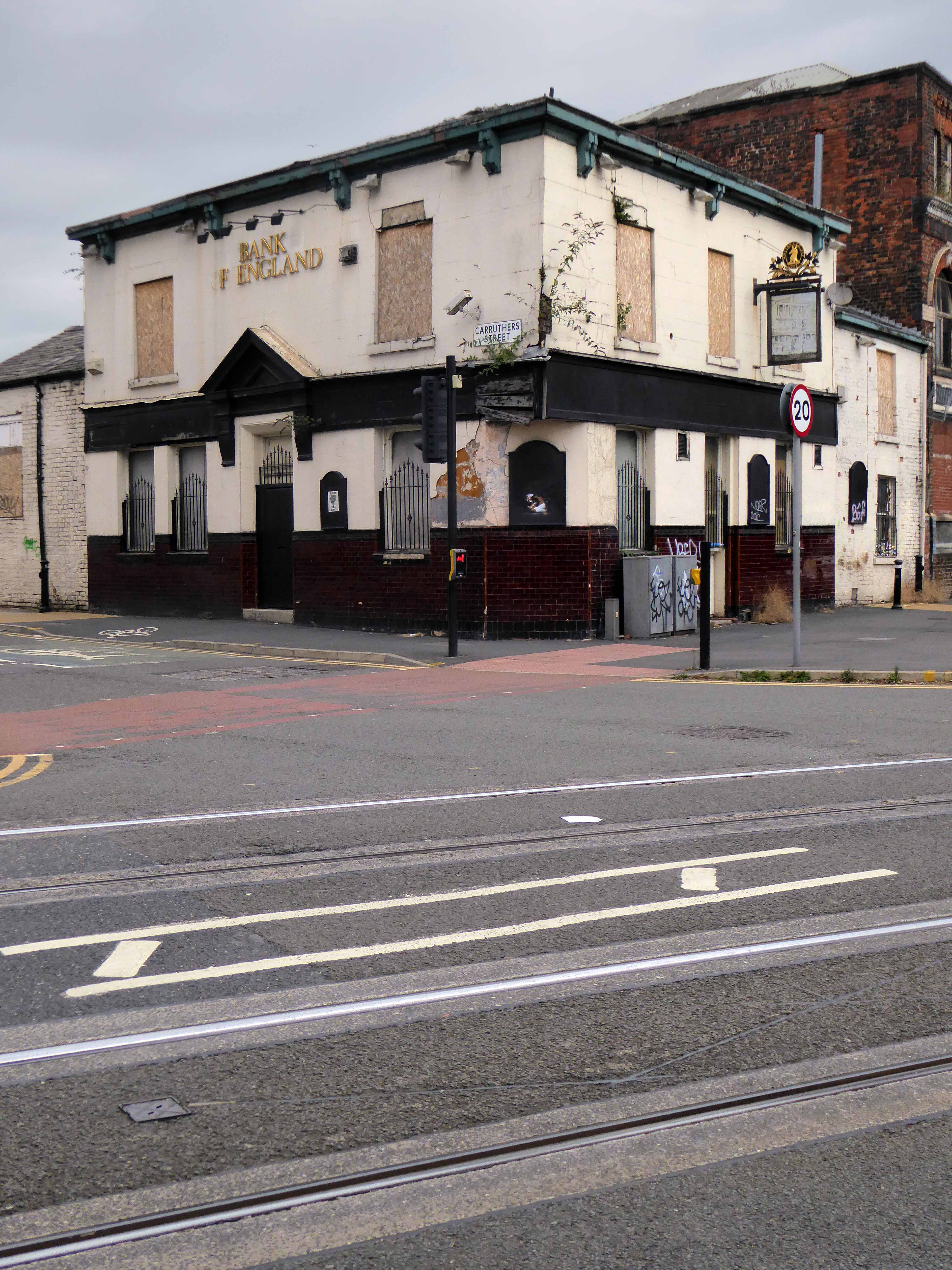
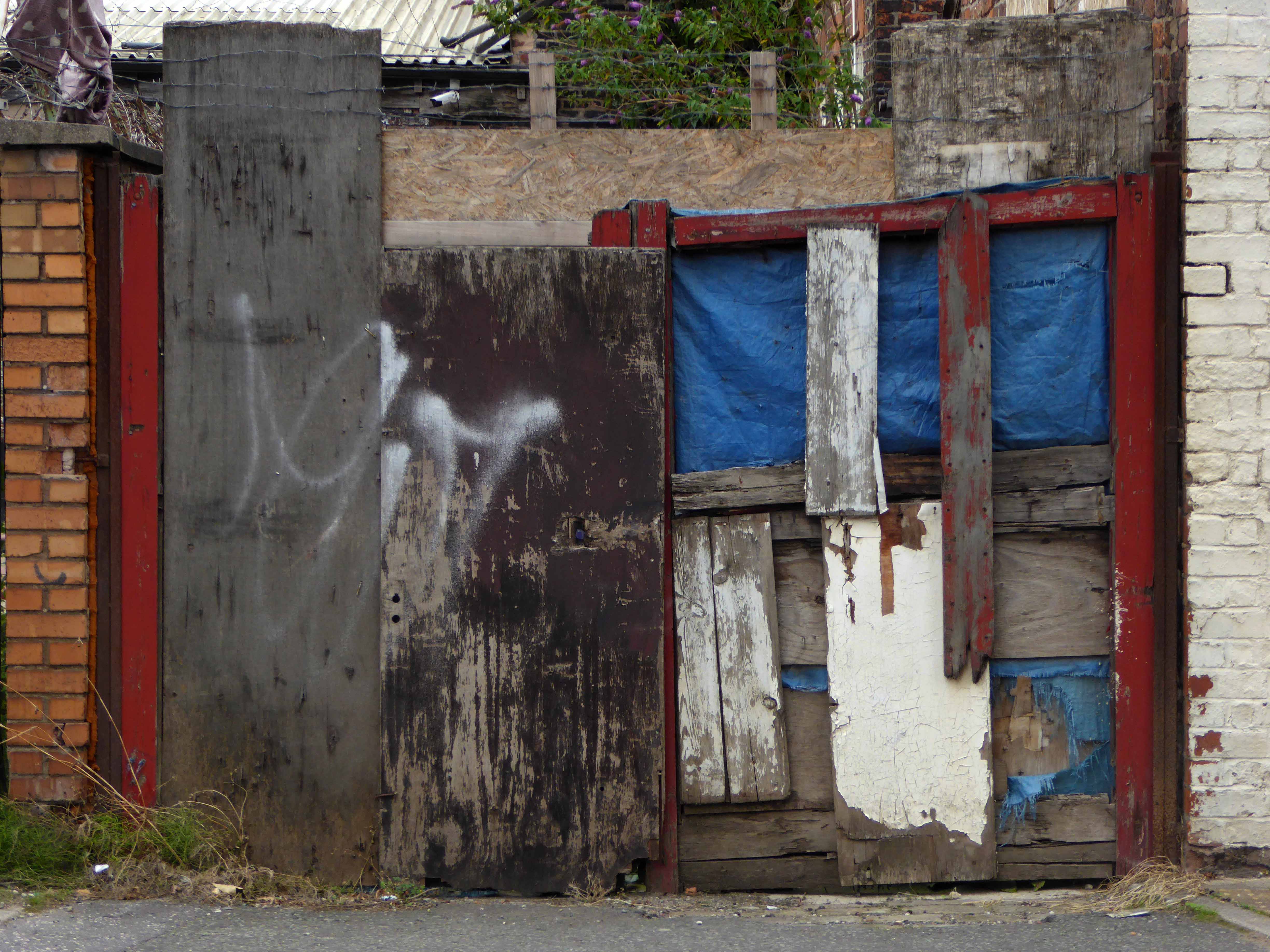
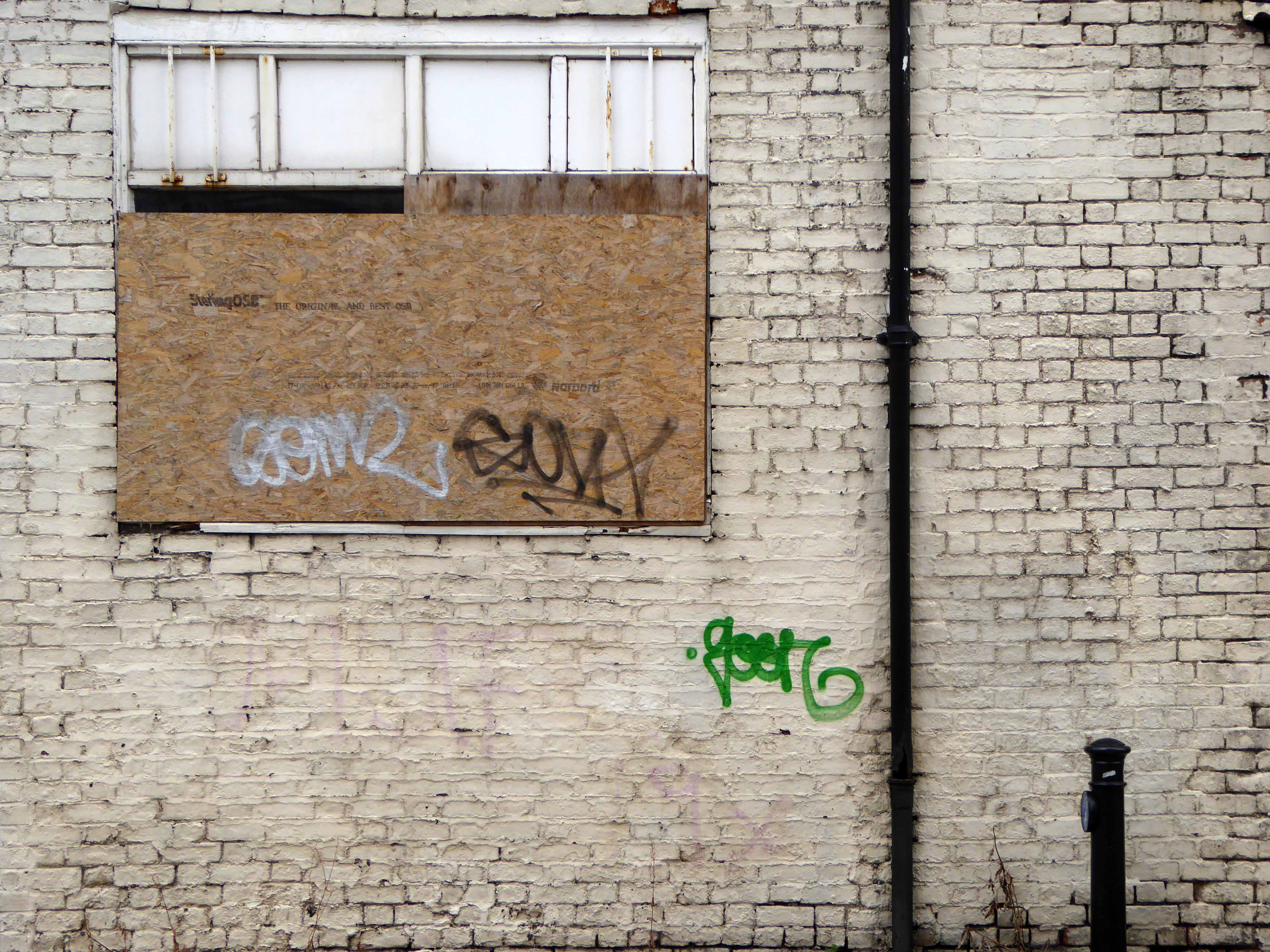
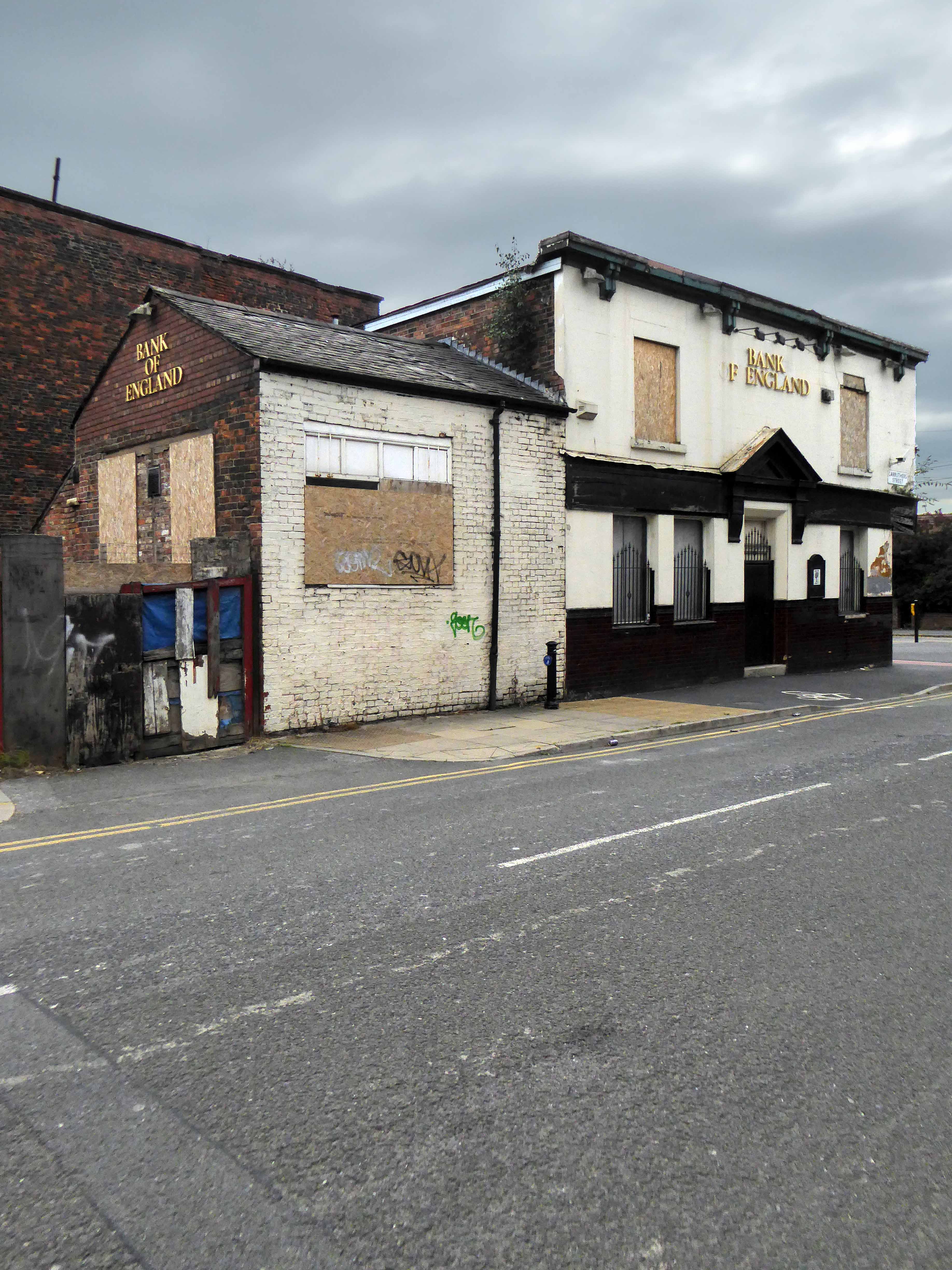
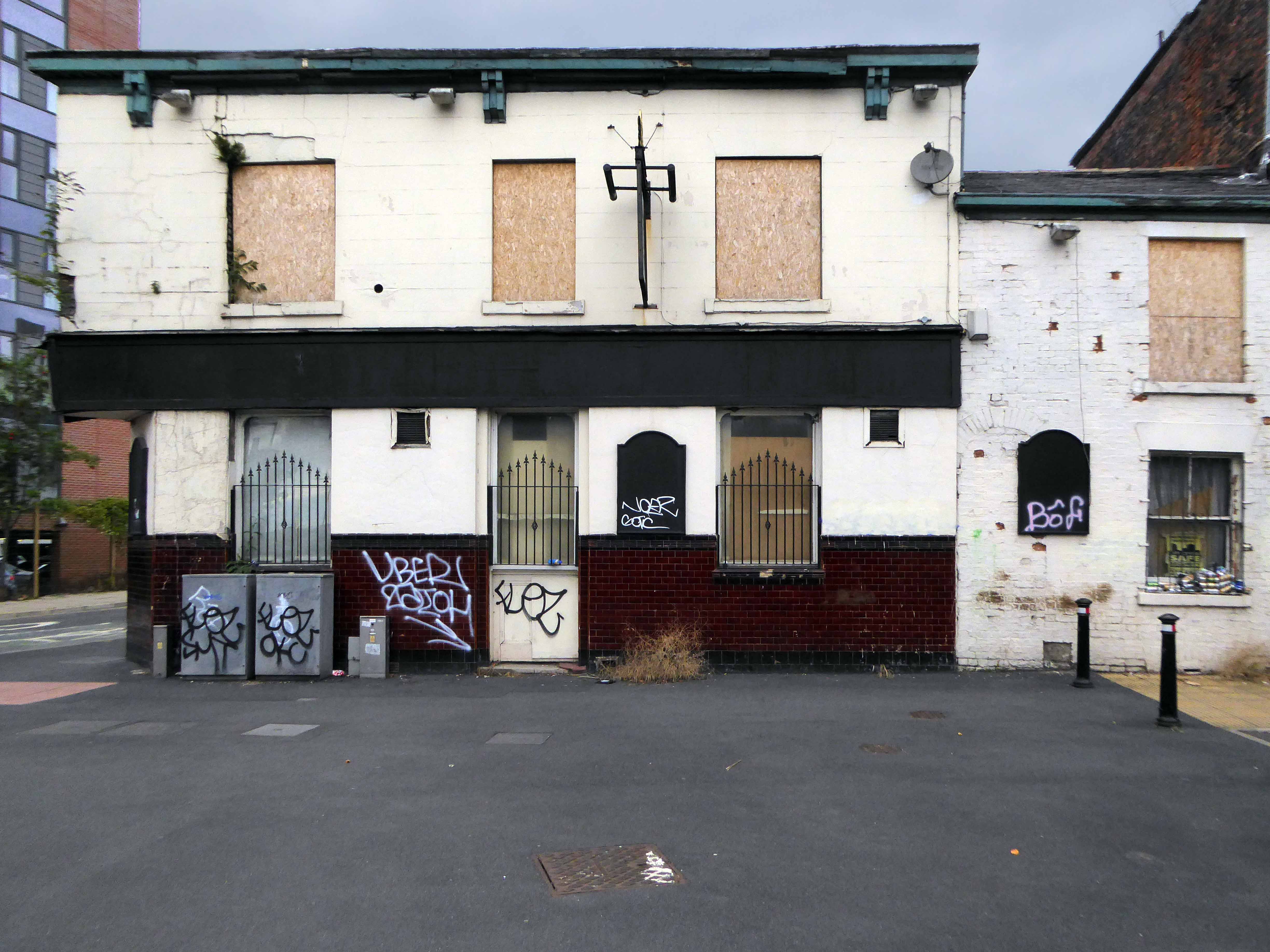
Standing stately on the corner of Carruthers and Pollard Street, safe as houses.
As safe as the houses that are no longer there, along with the other public houses, along with the jobs, along with the punters – all long gone, it’s a long story.
Look out!
Mind that tram, full of the boys and girls in blue, off to shriek at a Sheikh’s shrine.
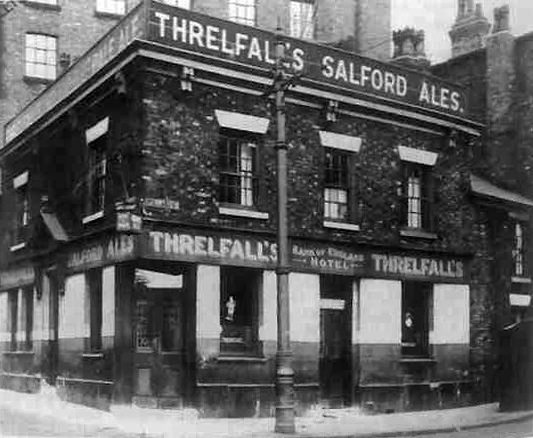
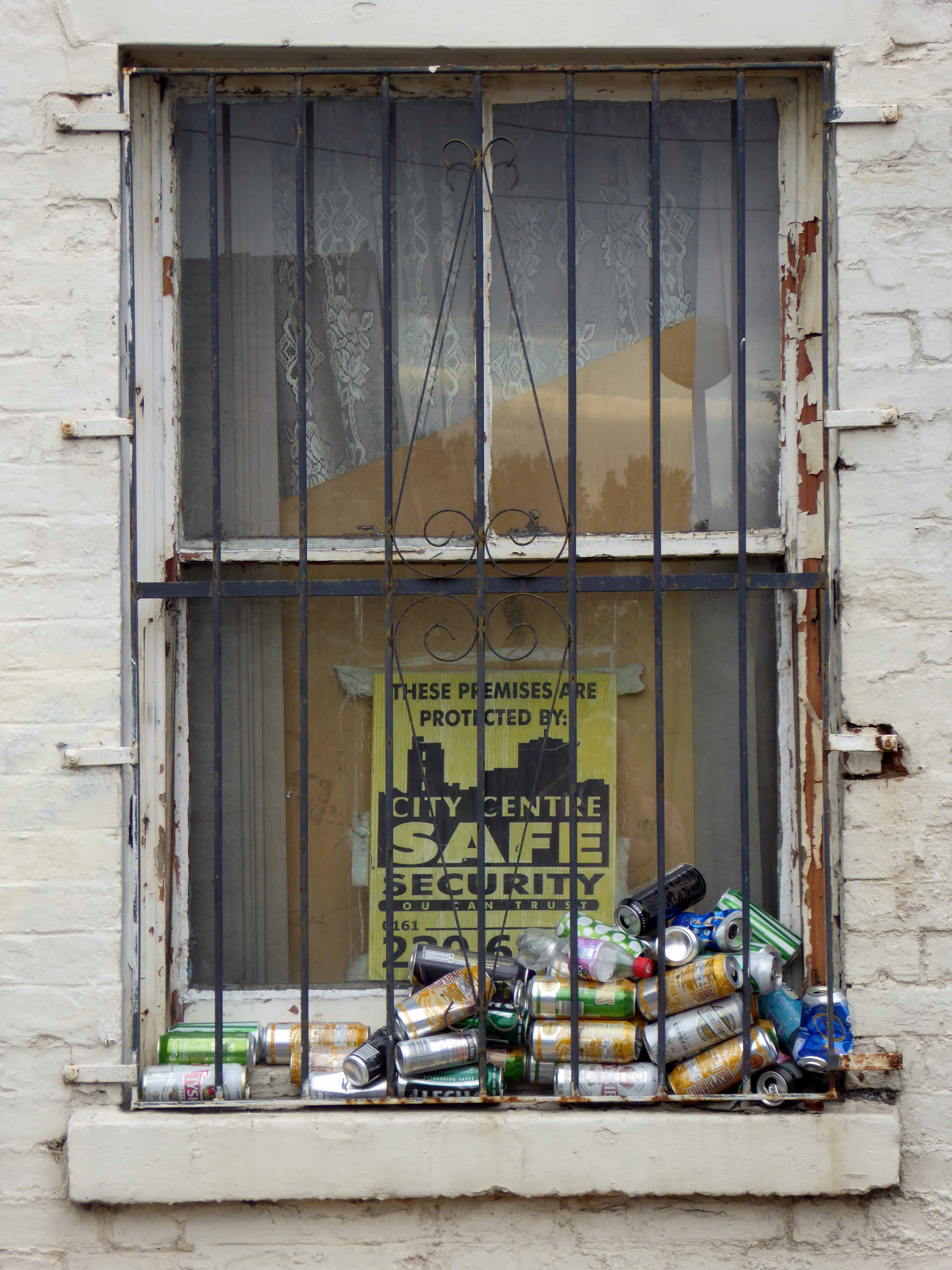
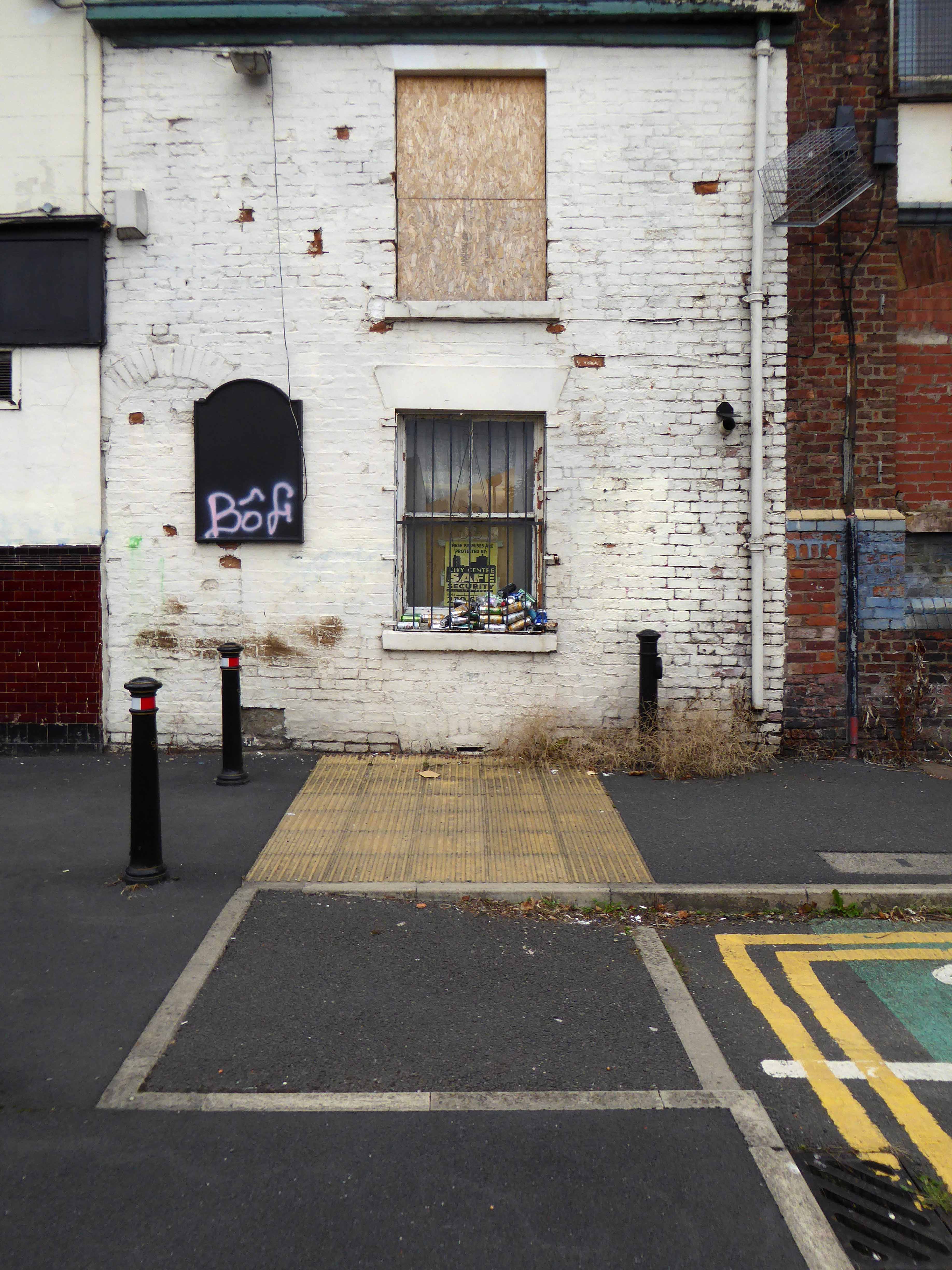
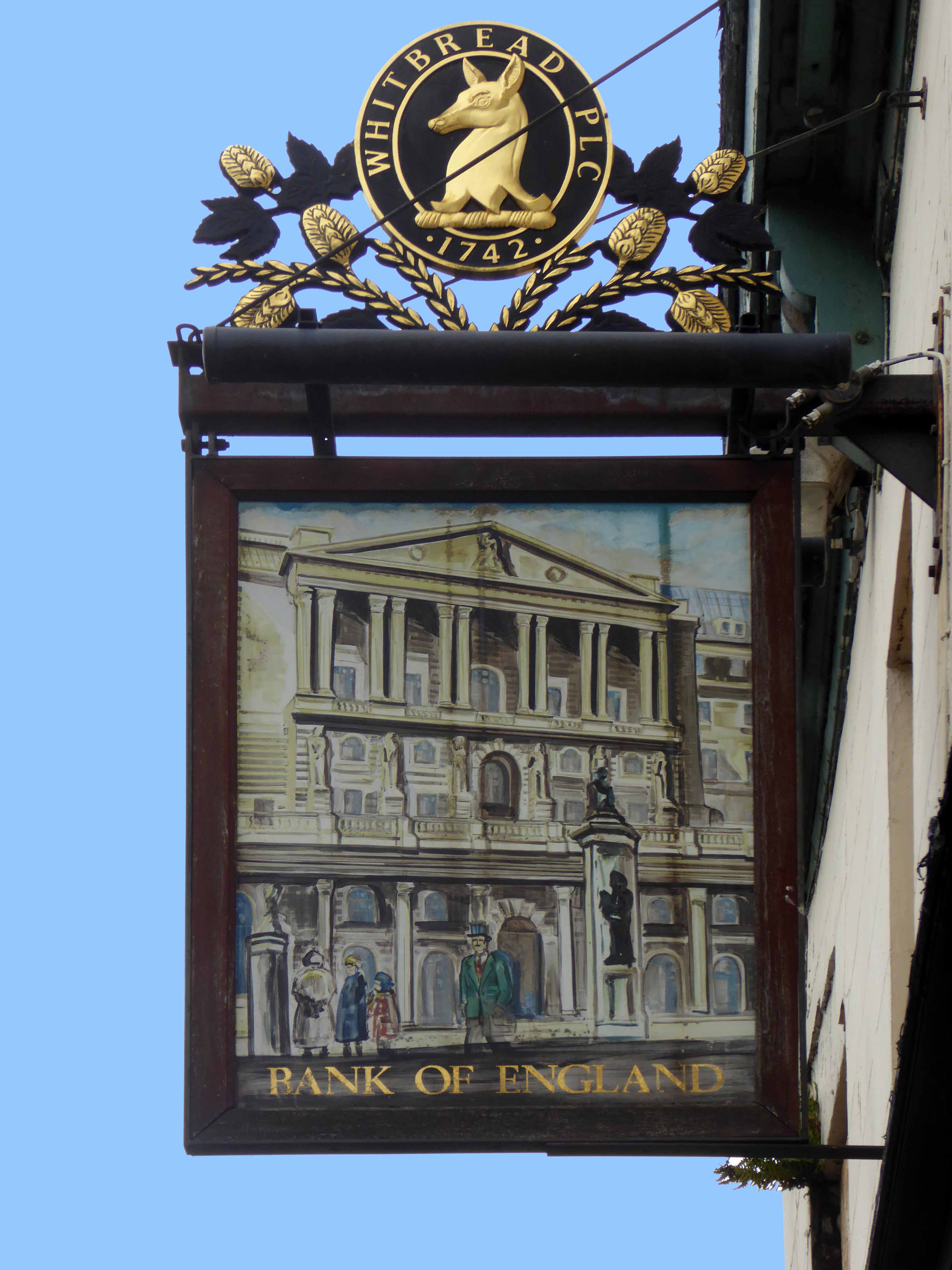
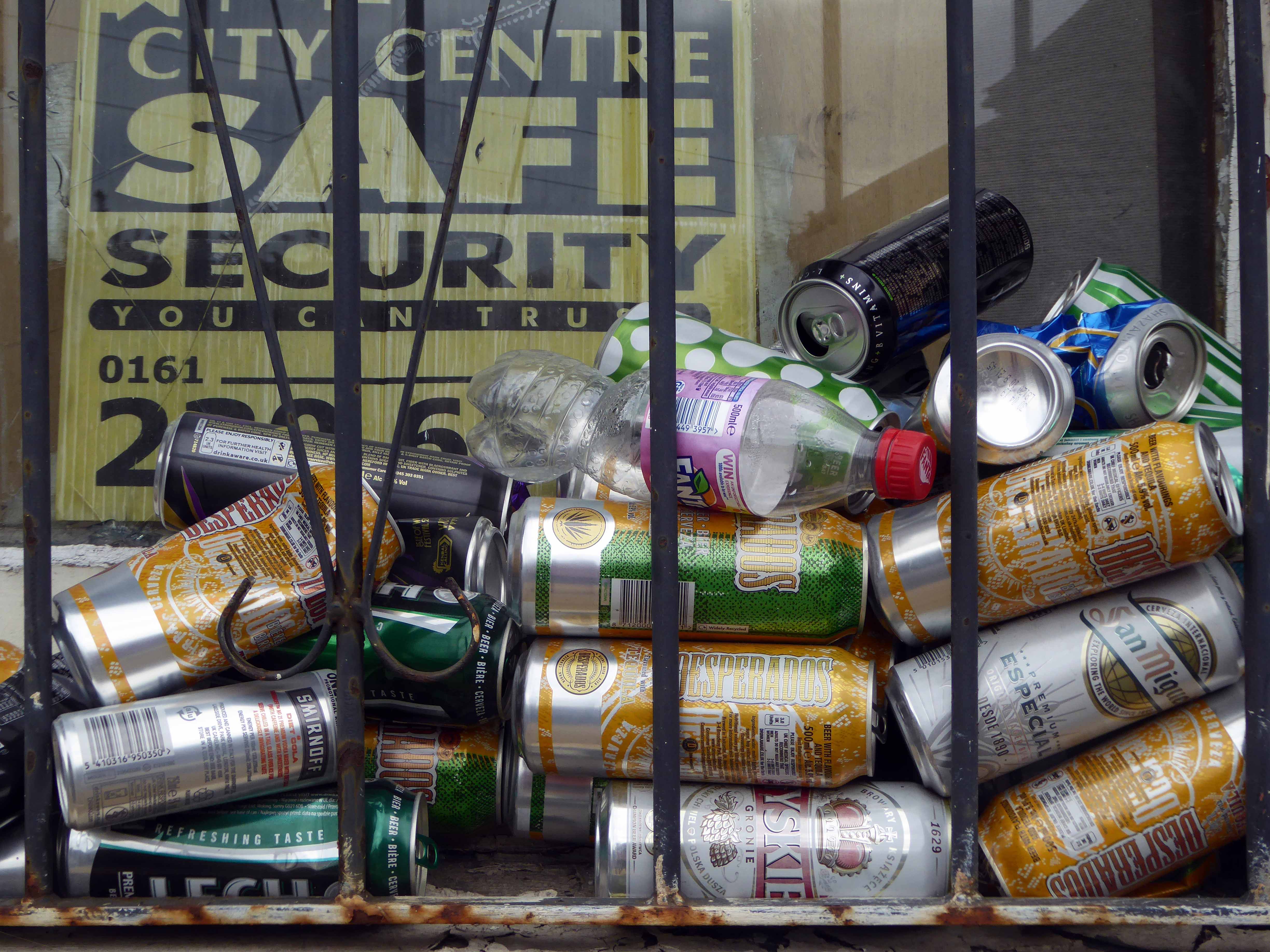
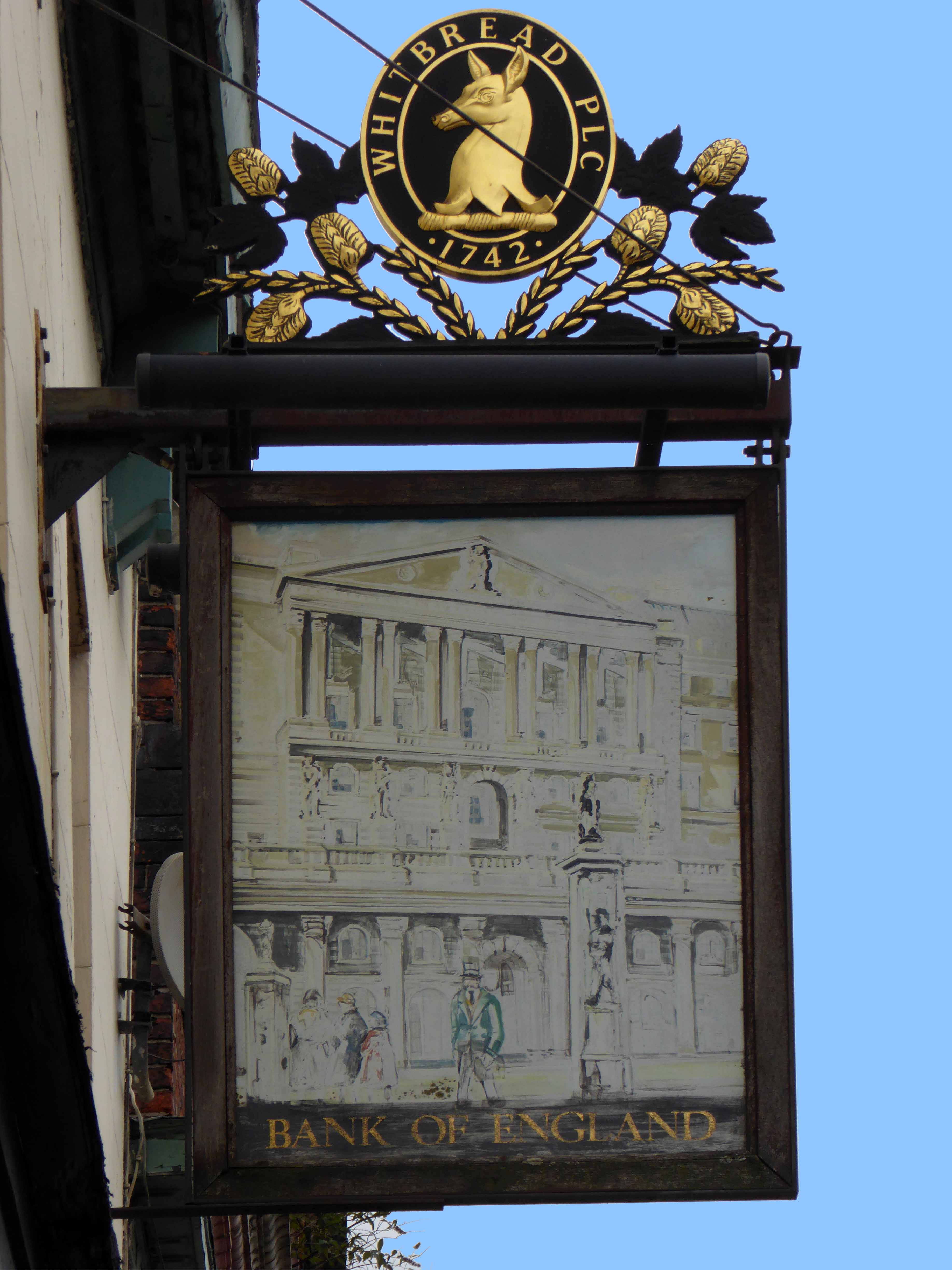
The Bank of England was one of Ancoats’ first beerhouses, licensed from 1830 and ten years later it was fully licensed with attached brewhouse. The brewery did well, in fact it had another tied house, the Kings Arms near Miles Platting station nearby. The brewery was sold off in the 1860s but continued as a separate business for a few years.
Ancoats, the core of the first industrial city, a dense cornucopia of homes, mills and cholera – its citizens said to find respite from disease, through the consumption of locally brewed beer.
Once home to a plethora of pubs, now something of a dull desert for the thirsty worker, though workers, thirsty or otherwise are something of a rarity in the area.
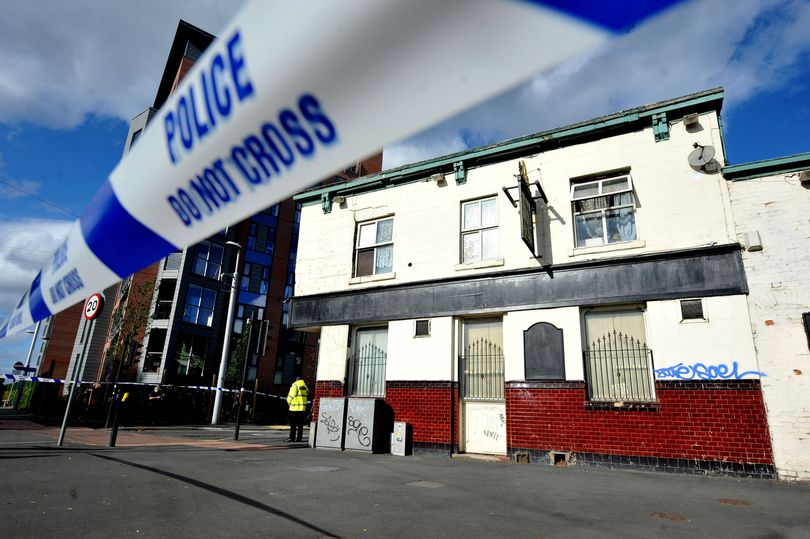
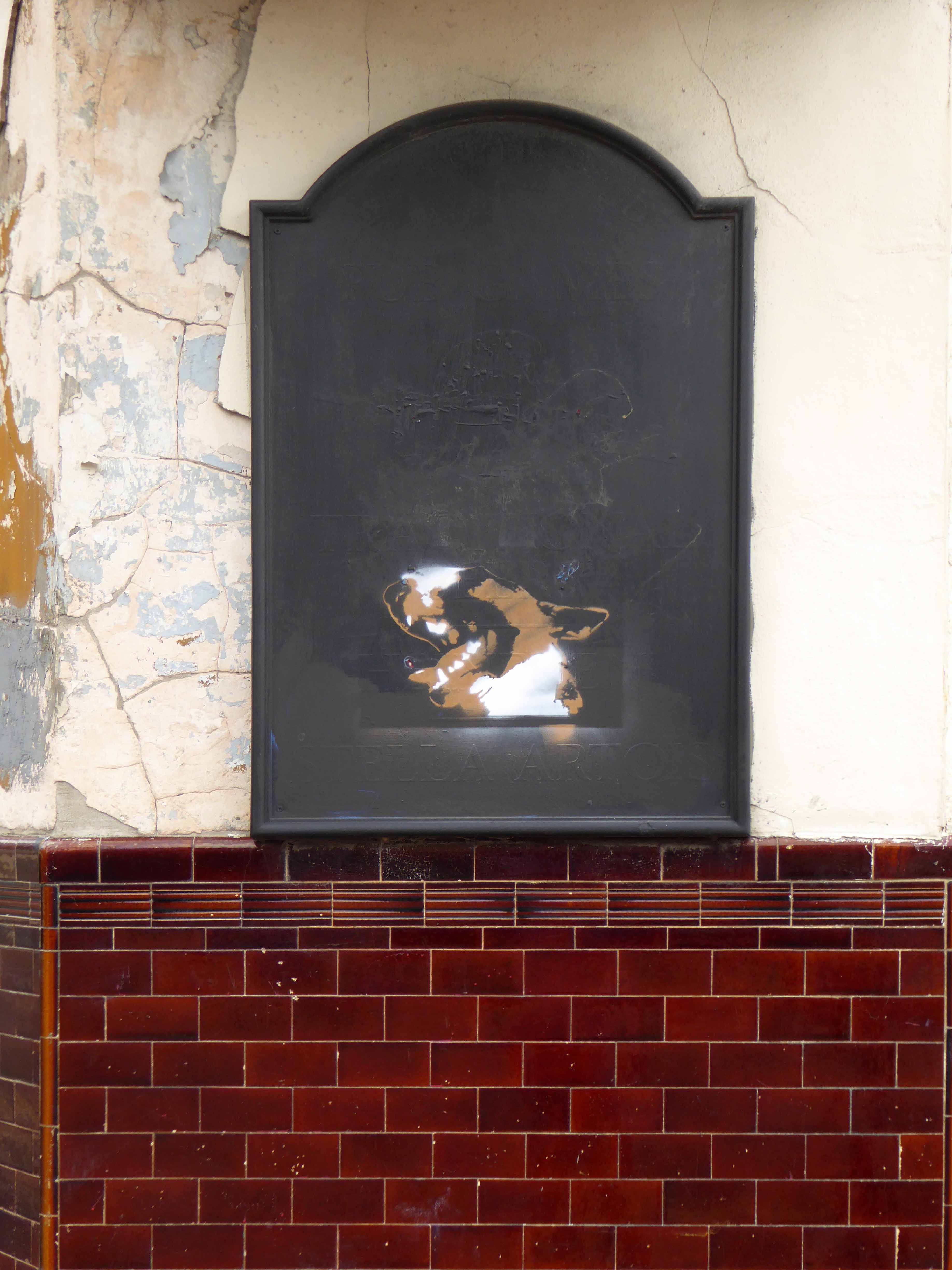
One worker went missing, some twenty years ago Martin Joyce was last seen on the site, the pub grounds were excavated – nothing was found.
Where the Victorians modelled their stations on cathedrals, temples and palaces.
Modern Man models his on shopping centre and office blocks.
Richards and MacKenzie – The Railway Station
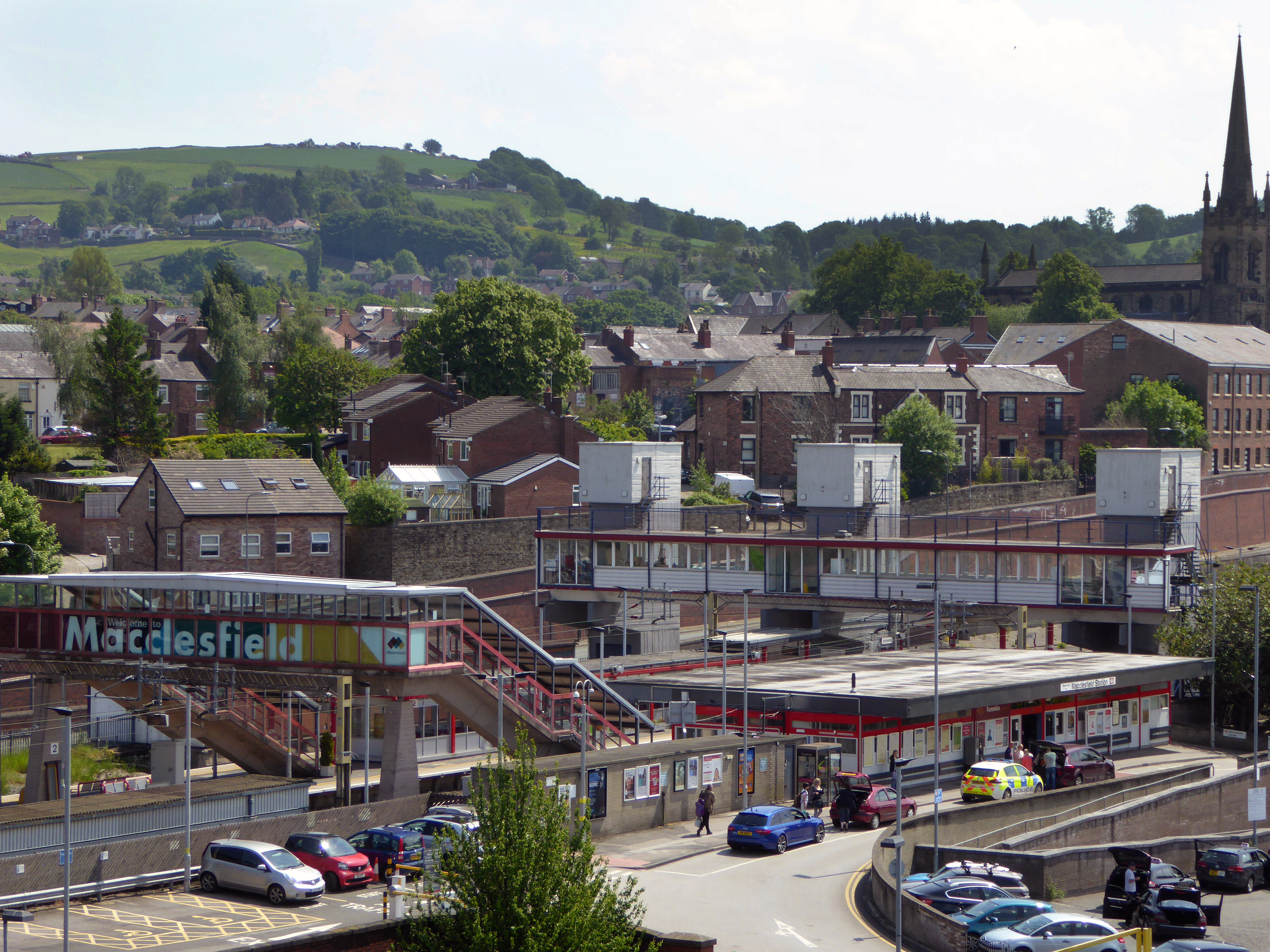
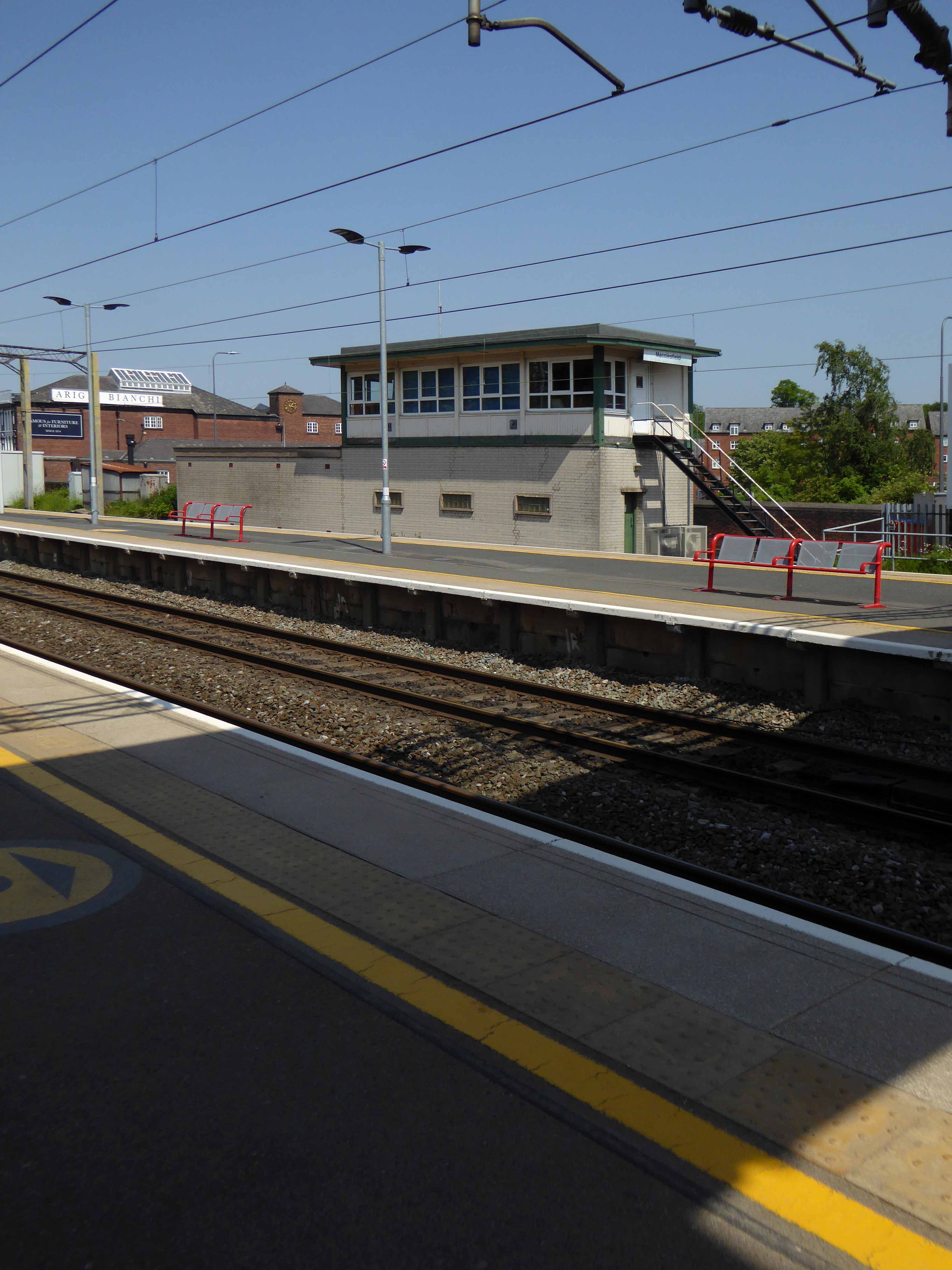
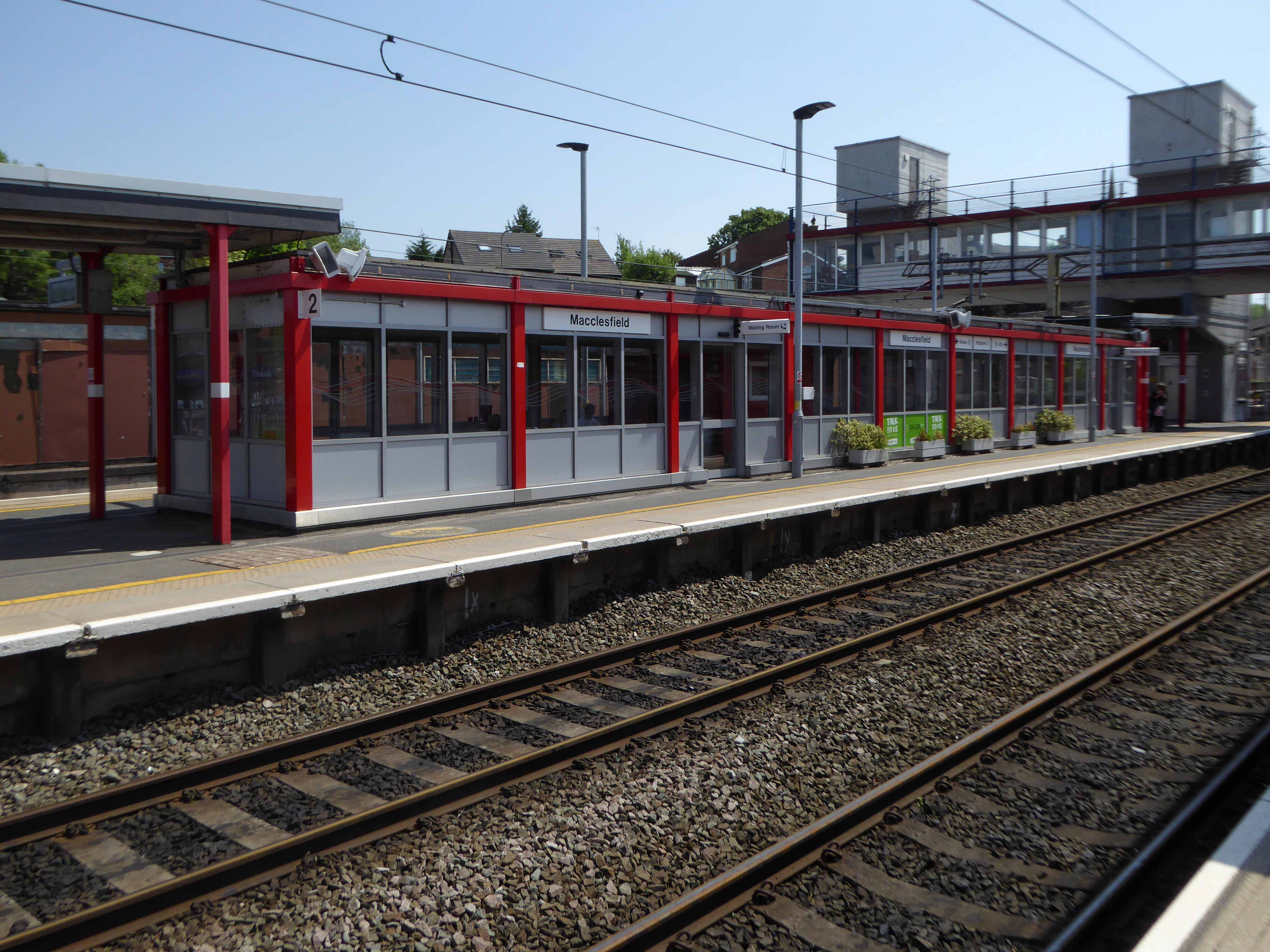
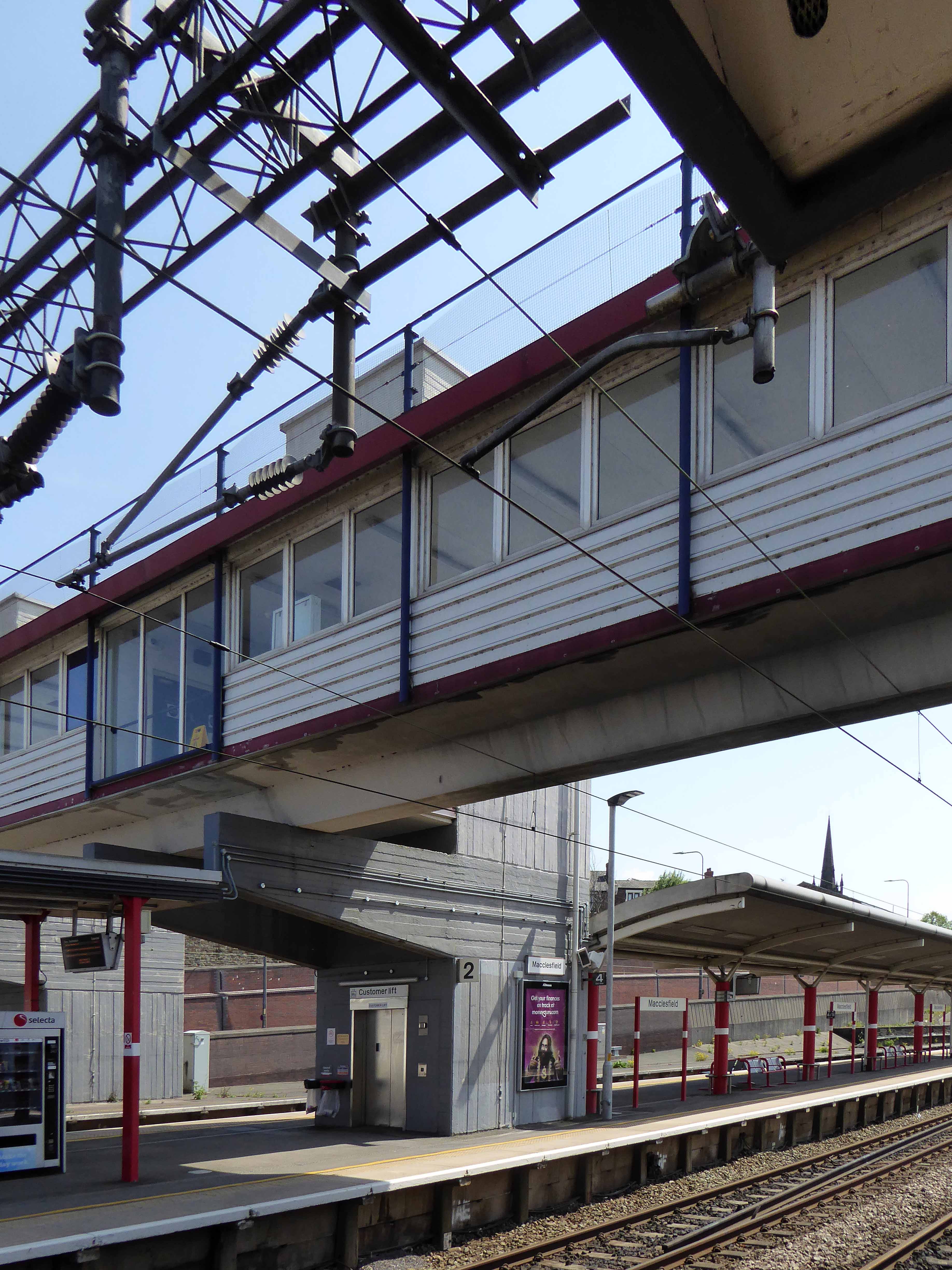
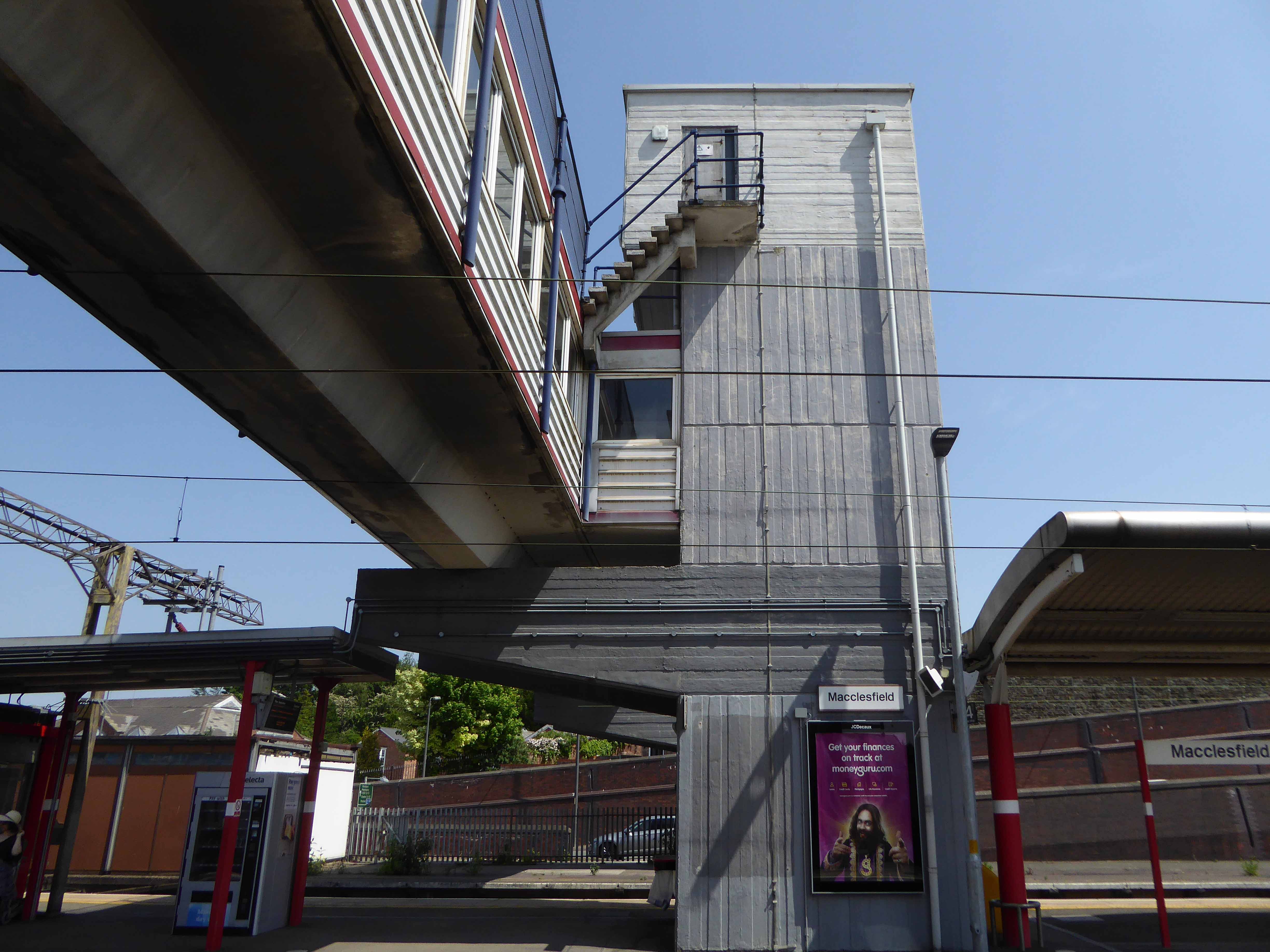
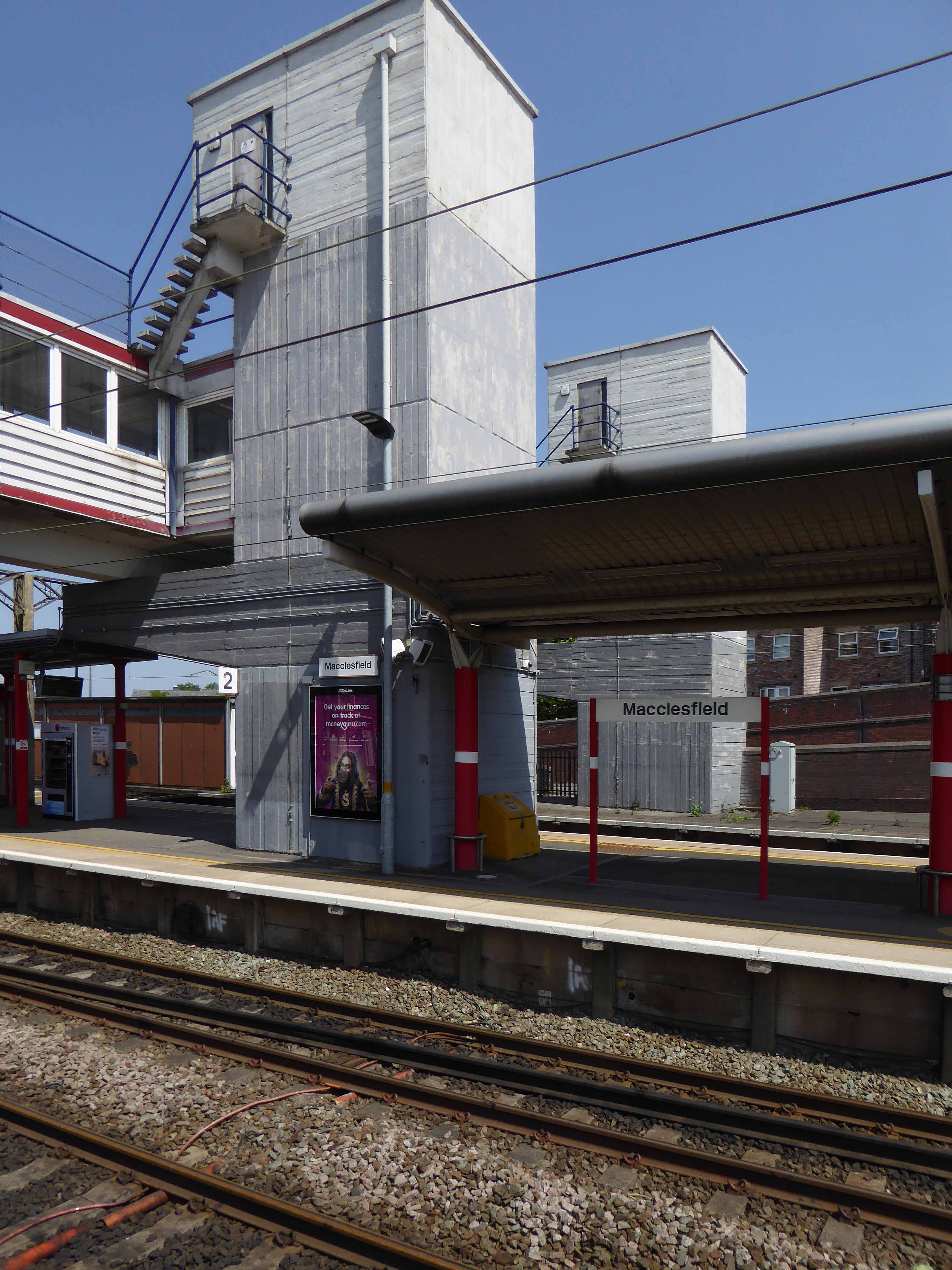
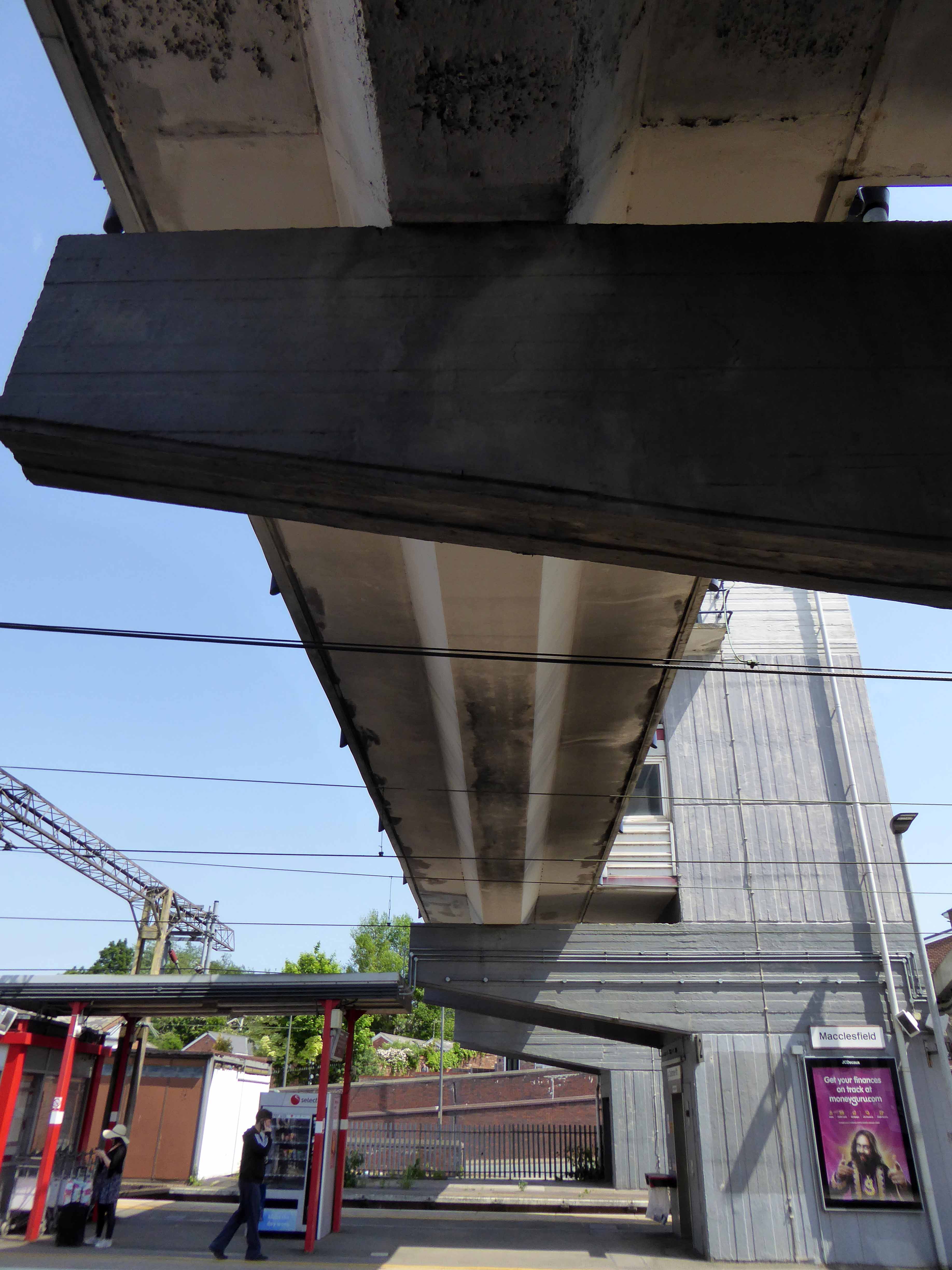
Though it seems to me that Macclesfield Station, in its earlier and current states, refuses to dovetail neatly into either of these sloppy binary paradigms.
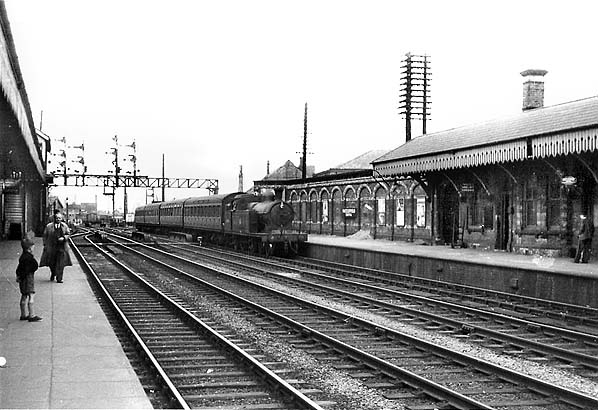
The former – single storey buildings, fitting unostentatiously into the topographic and practical constraints of the site. A neat, tightly packed rhythm of brick arches with a compact and bijou porch welcoming the expectant traveller.
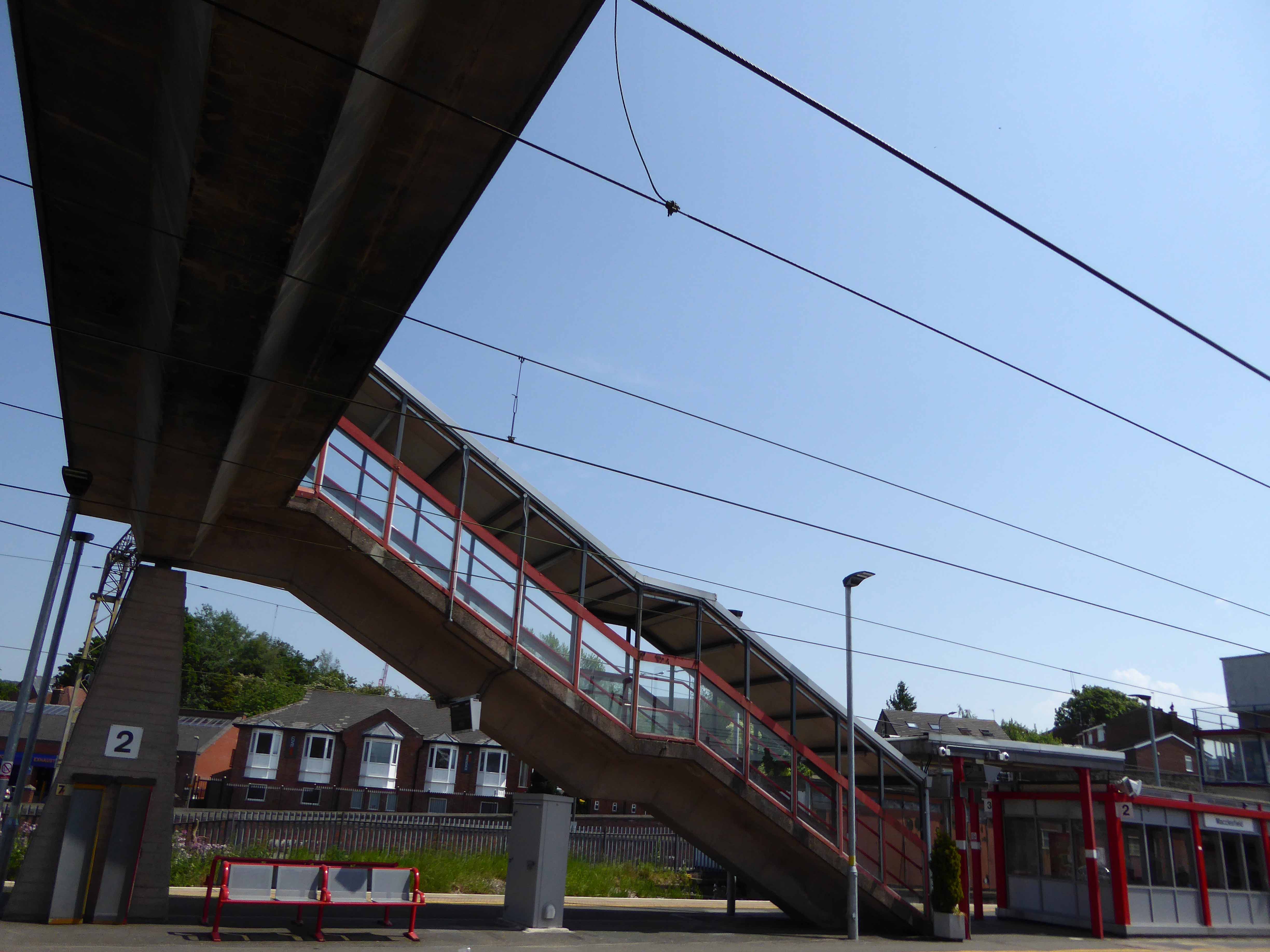
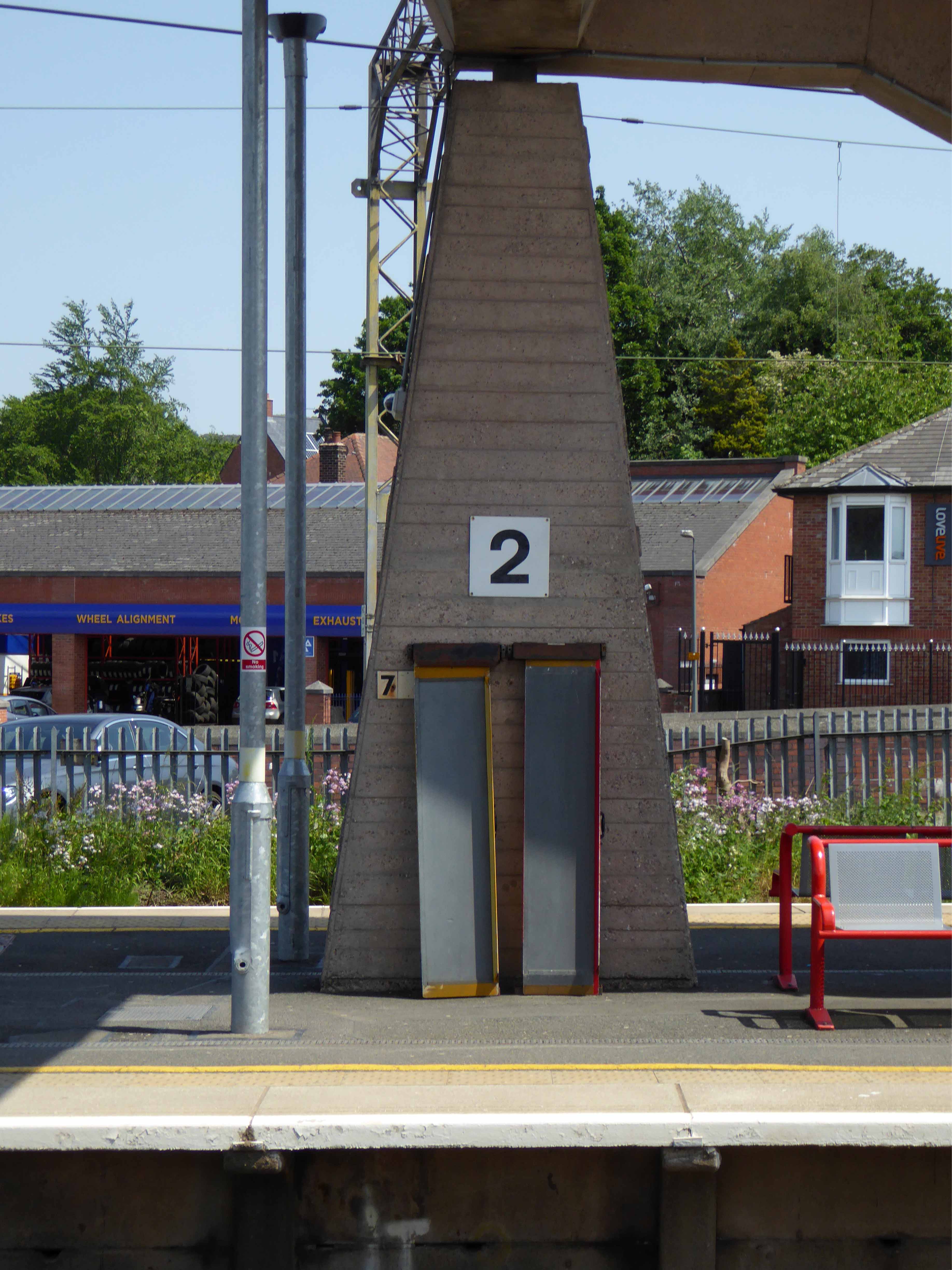
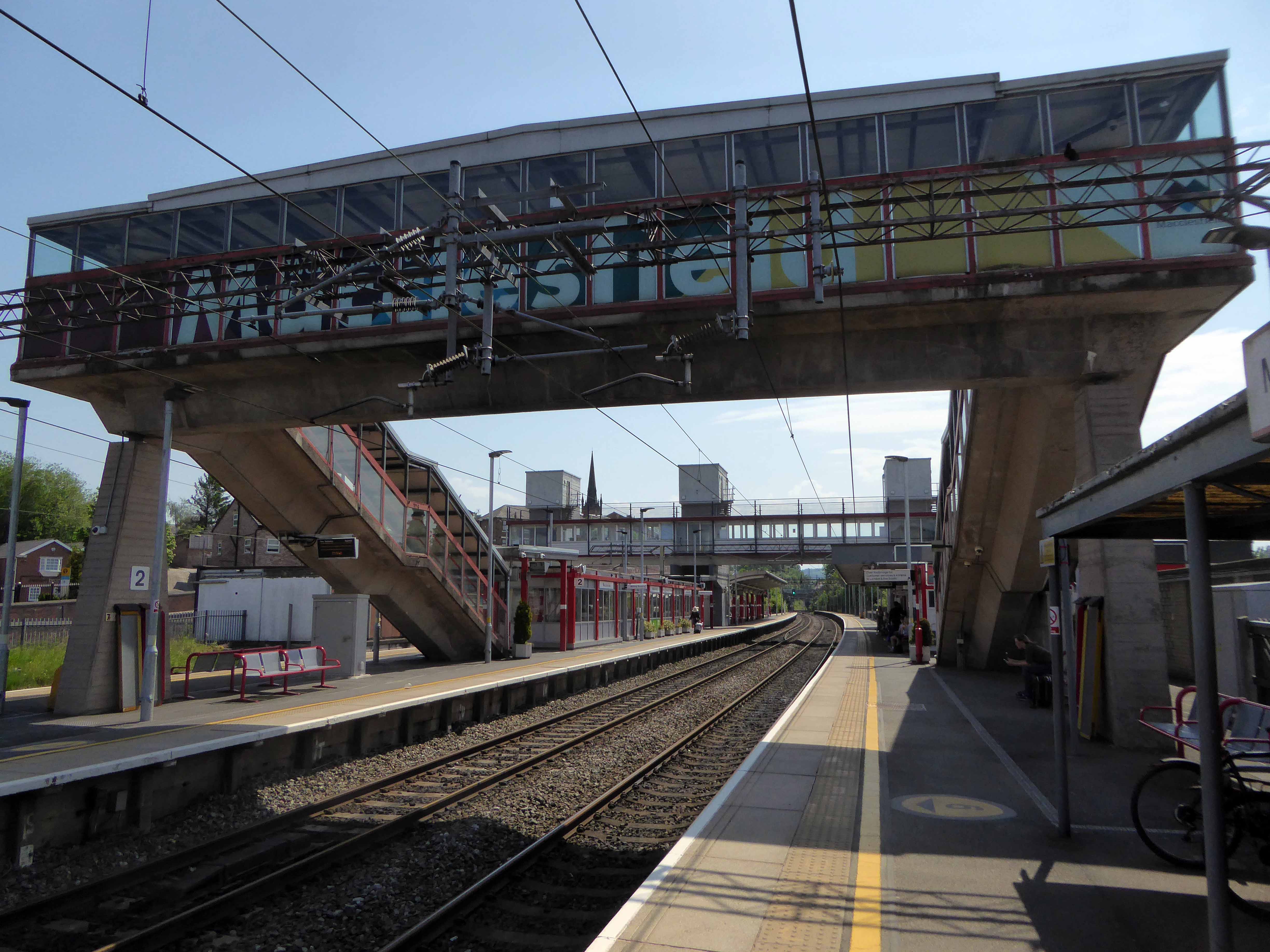
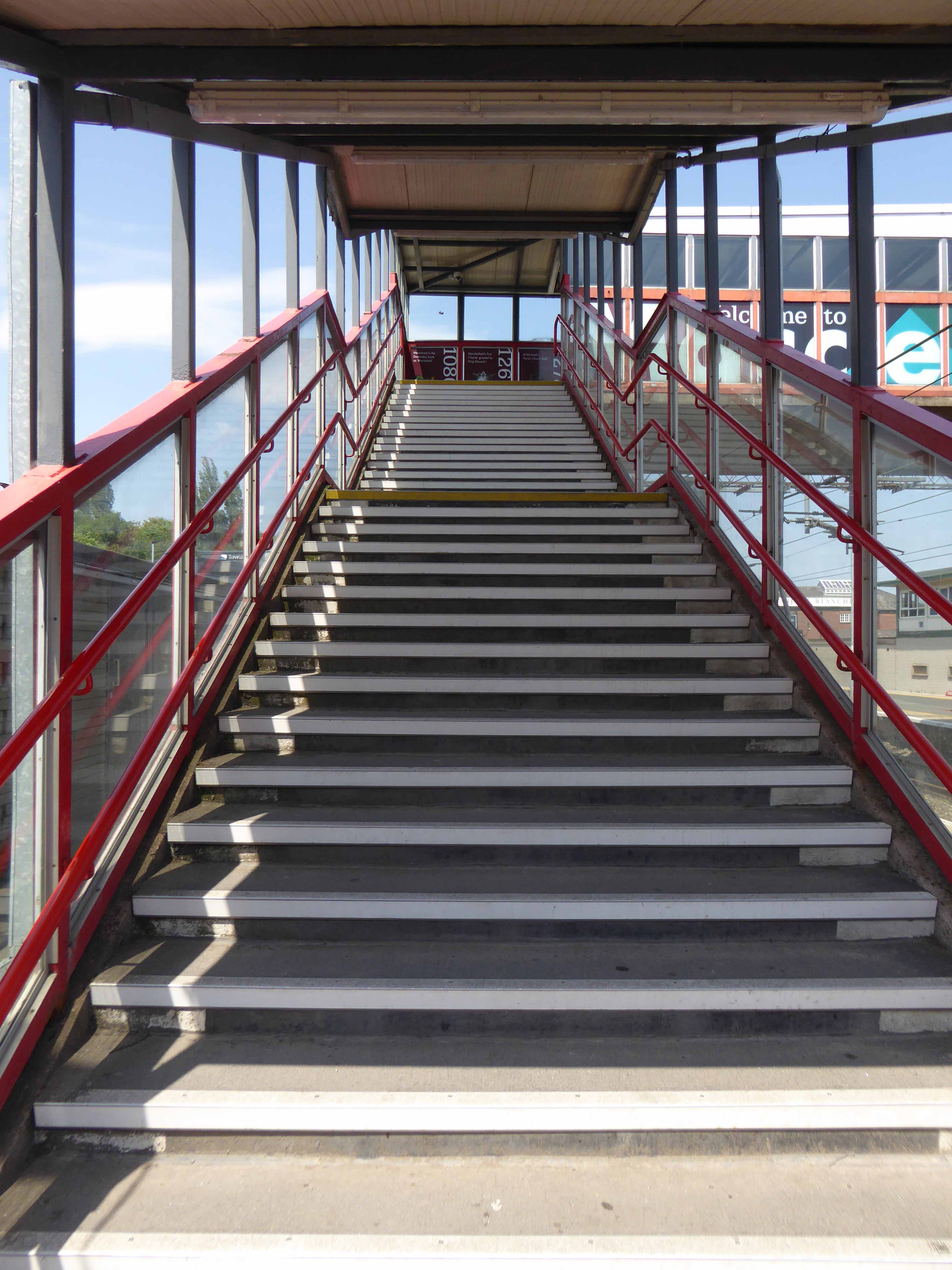
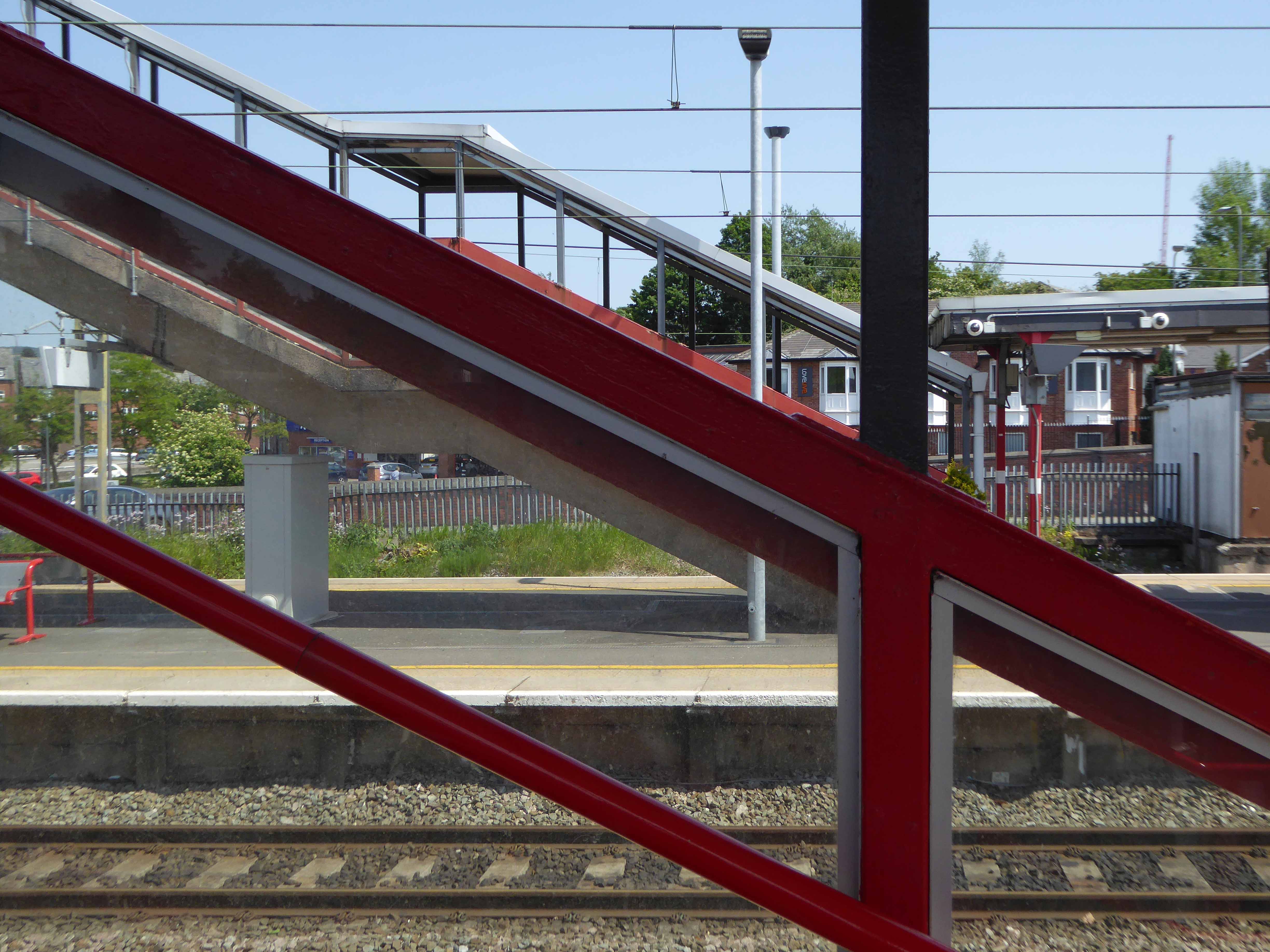
The latter a functionalist block, fully utilitarian crossings with lift access columns, embodying a particularly industrial demeanour.
From the golden age of steam to the moribund years of diesel, Macclesfield sits comfortably somewhere, betwixt and between ugly duckling and fully fledged swan.
Nestled in the lea of the East Cheshire Highlands, offering practical everyday transport solutions to the beleaguered commuter.
No frills, no thrills.
The London and North Western Railway opened the line between Manchester and Macclesfield on 19 June 1849 – Macclesfield Central was born. Later it would become a key station on the Stafford branch of the West Coast Main Line, remodelled in 1960 and rebranded as the much snappier Macclesfield Station.
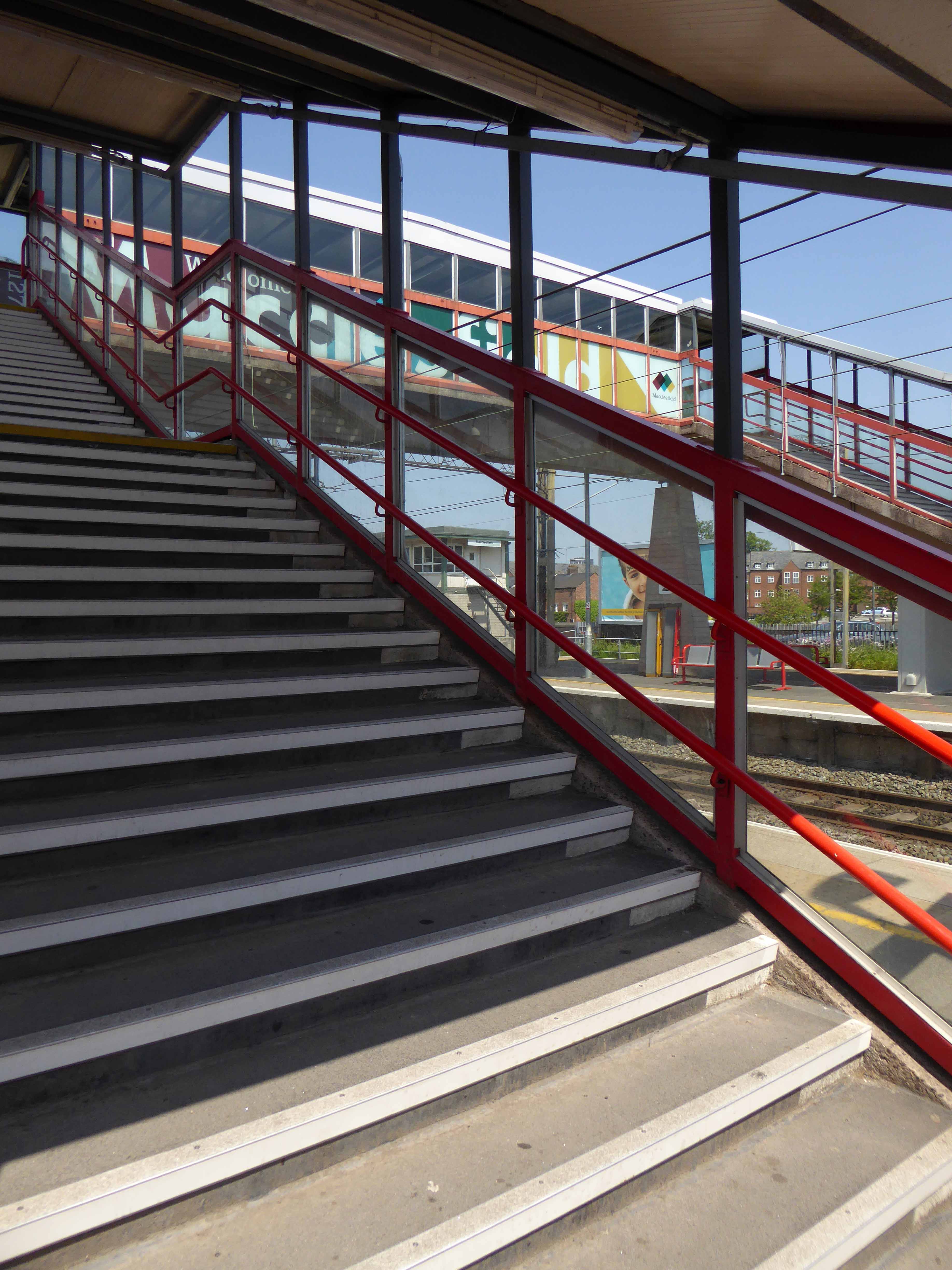
Which it proudly announces topically and typographically to the world.
Welcome to Macclesfield a town that is clearly going places, and so are you.
The station won the Best Kept Station in Cheshire Award for 2007, but was reported in summer 2011 to be distinctly shabby, with peeling paintwork.
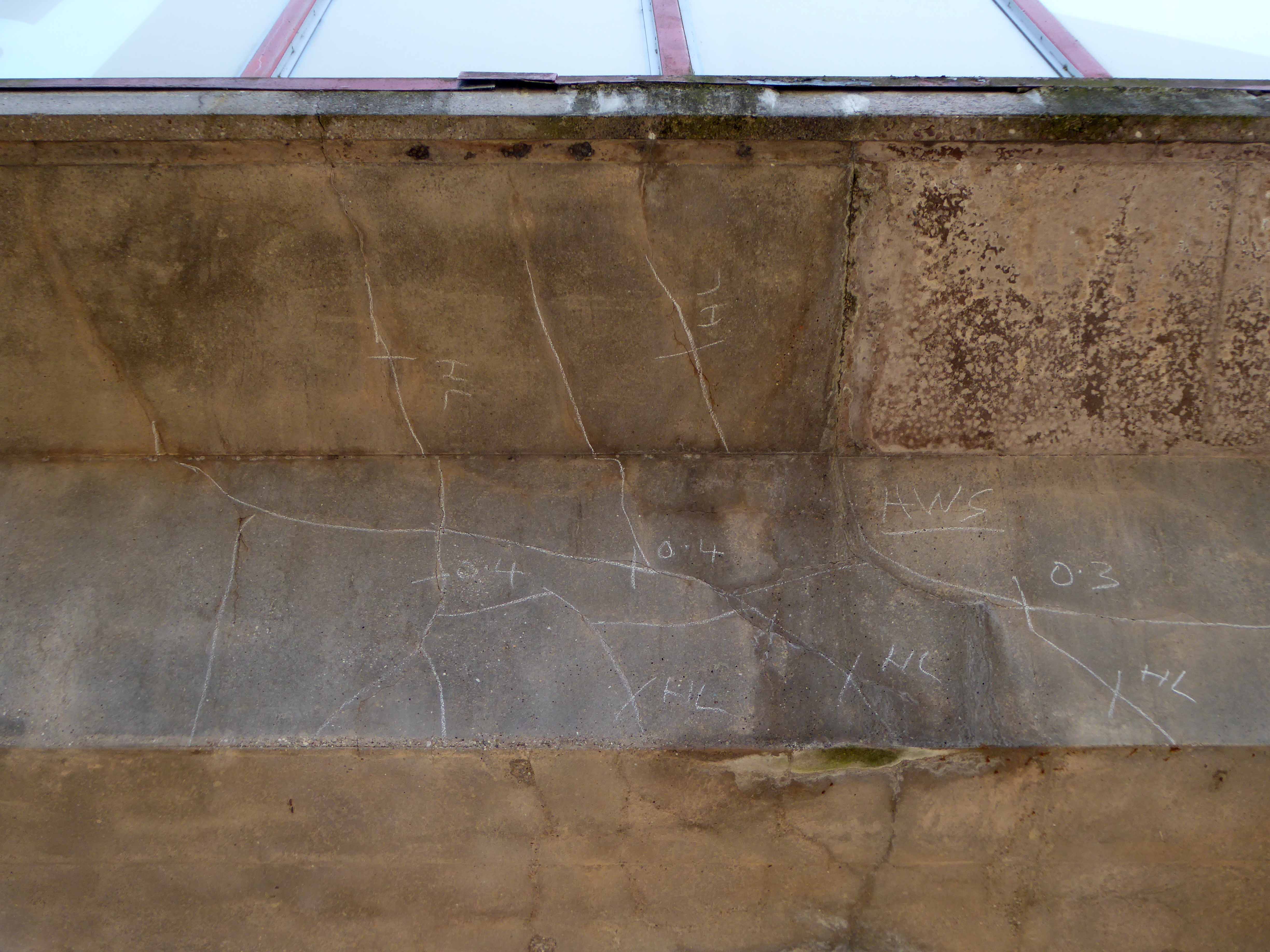
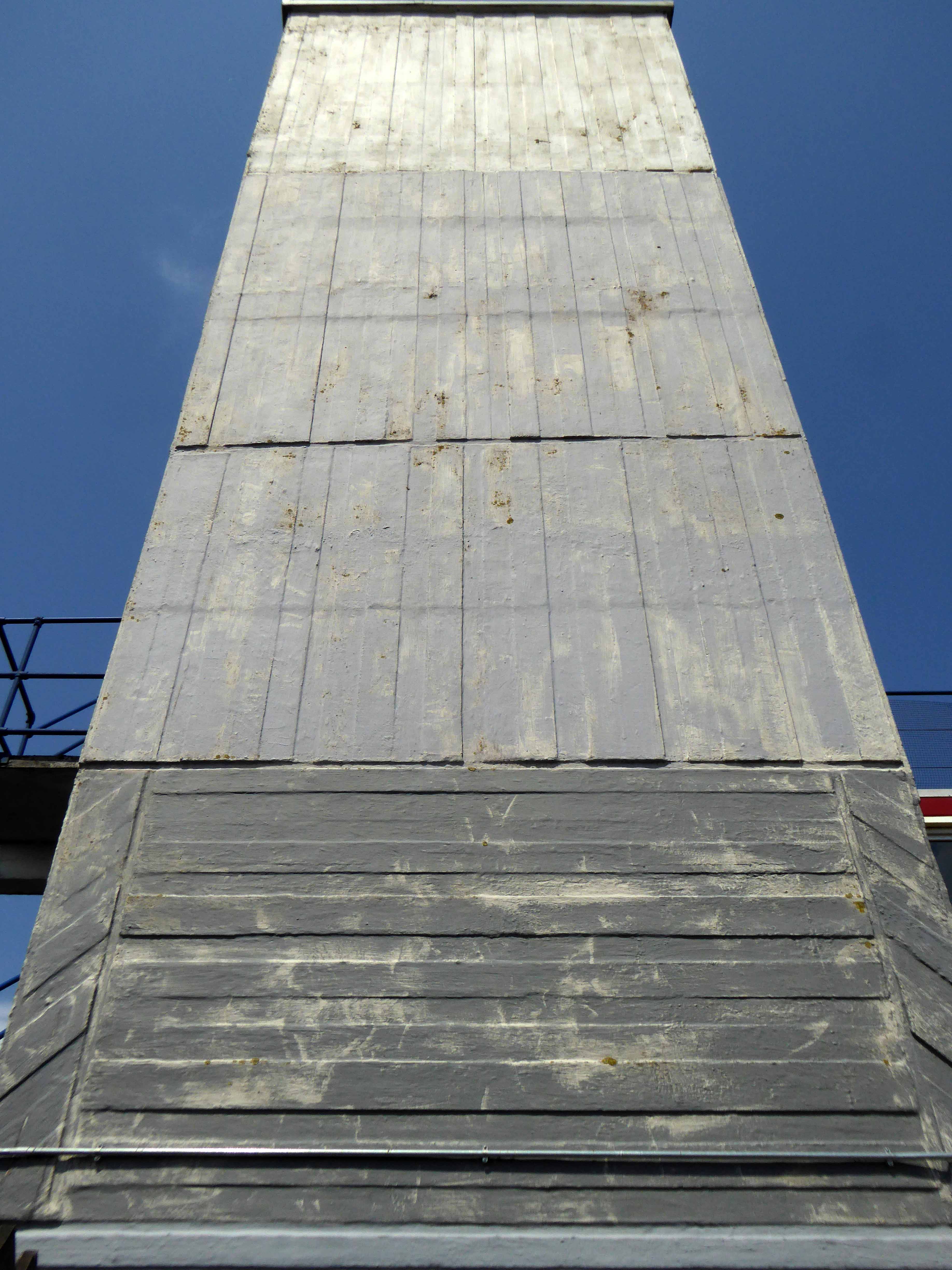
And yet there is something in the constituent Platonic steel, glass and concrete forms that never ceases to amuse and amaze me, this is Brutalism on a human and provincial scale.
The raw concrete softened with three or four shades of grey, as a concession to the delicate suburban sensibilities of this once silk-fuelled town.
Take a trip with me – join the Cheshire train set.
A mighty river valley was formed in the second Ice Age, as the glaciers receded and rushed seaward.
The mighty River Mersey was formed on the eastern edge of Stockport, at the confluence of the Tame and Goyt/Etherow rivers.
Thousands of years in the making, as the water-powered mills of the adjacent Pennine Hills migrate to the lower reaches of the towns, in search of water, workers and steam, the full force of the Industrial Revolution takes shape in the west.
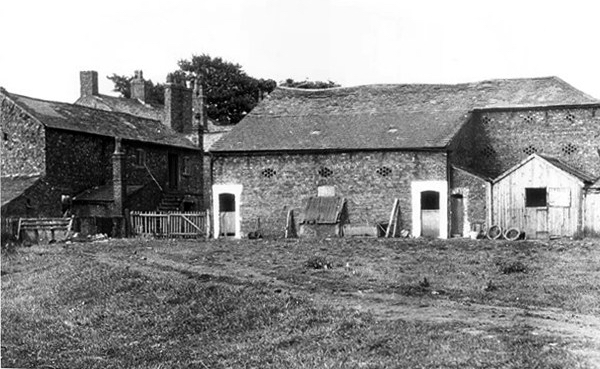
The mixed farming of the alluvial valley, which opens up onto the Lancashire and Cheshire Plains, meets and greets the incursion of dye and brick works, mills and manufacturing.
Fred Schofield’s farm 1930
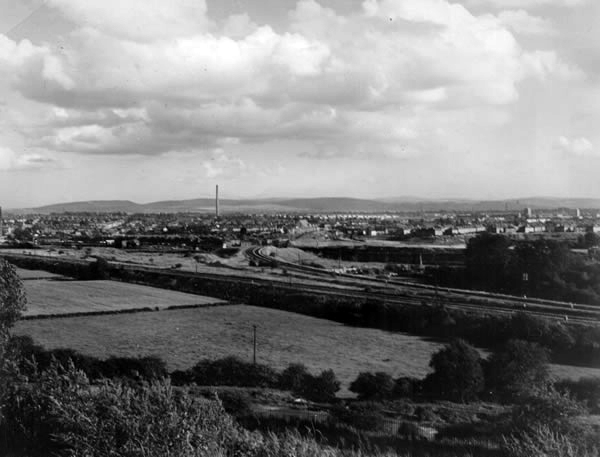
View towards Stockport from Heaton Mersey Park
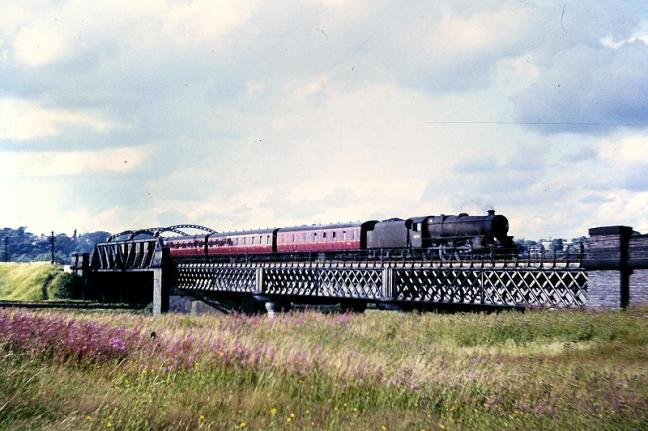
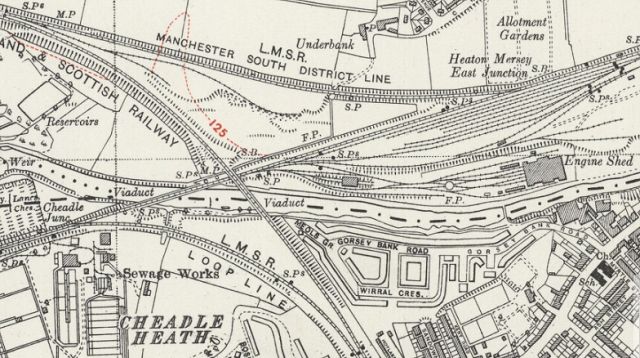
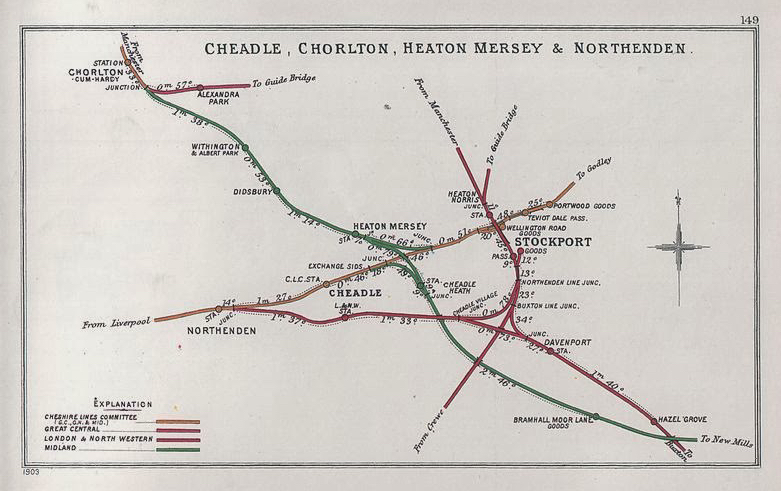
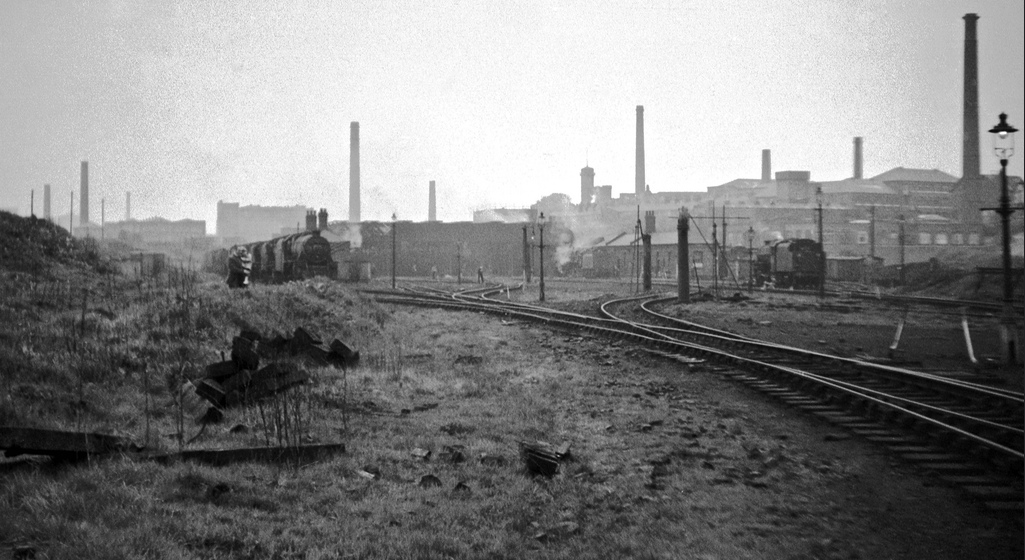
Serviced by a complex and competing rail system based around Heaton Mersey Shed.
Opened in 1889 and served until May 1968 operating steam locomotives to the end -Coded 9F.
Here we were at the centre of a rail hub spreading out in all directions, to and from the ports, cities and resources of the country and beyond.
Great movements of steel, cotton, coal, people and manufactured goods.
Fireman Eddy “Ned” Kelly
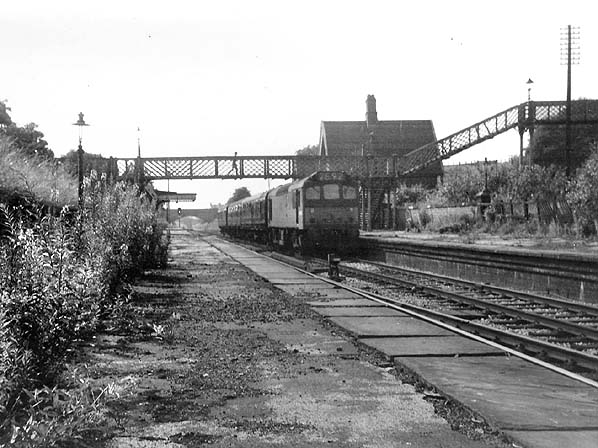
Heaton Mersey railway station was opened on 1 January 1880 by the Midland Railwayand lay on the newly opened line which ran from Heaton Mersey East Junction to Chorlton Junction and on to Manchester Central station.
The station was situated at the southern end of Station Road which still exists. The station was later operated by the London Midland and Scottish Railway and was closed by the London Midland Region of British Railways on 3 July 1961.
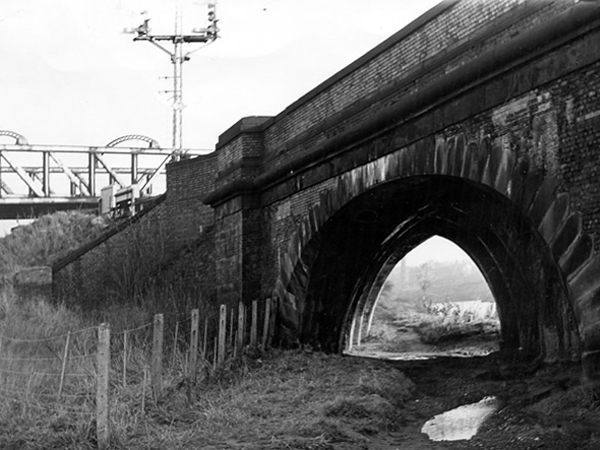
The area was criss-crossed by railways – its bridges traversing the roads, fields and river, dominating the landscape in a wild flurry of steam and smoke.
The end of steam – as drivers, fireman and staff were transferred to Newton Heath, was followed by the slow demise of the rail network, freight moved to road and passengers purchasing their first cars and a passport to illusory freedom.
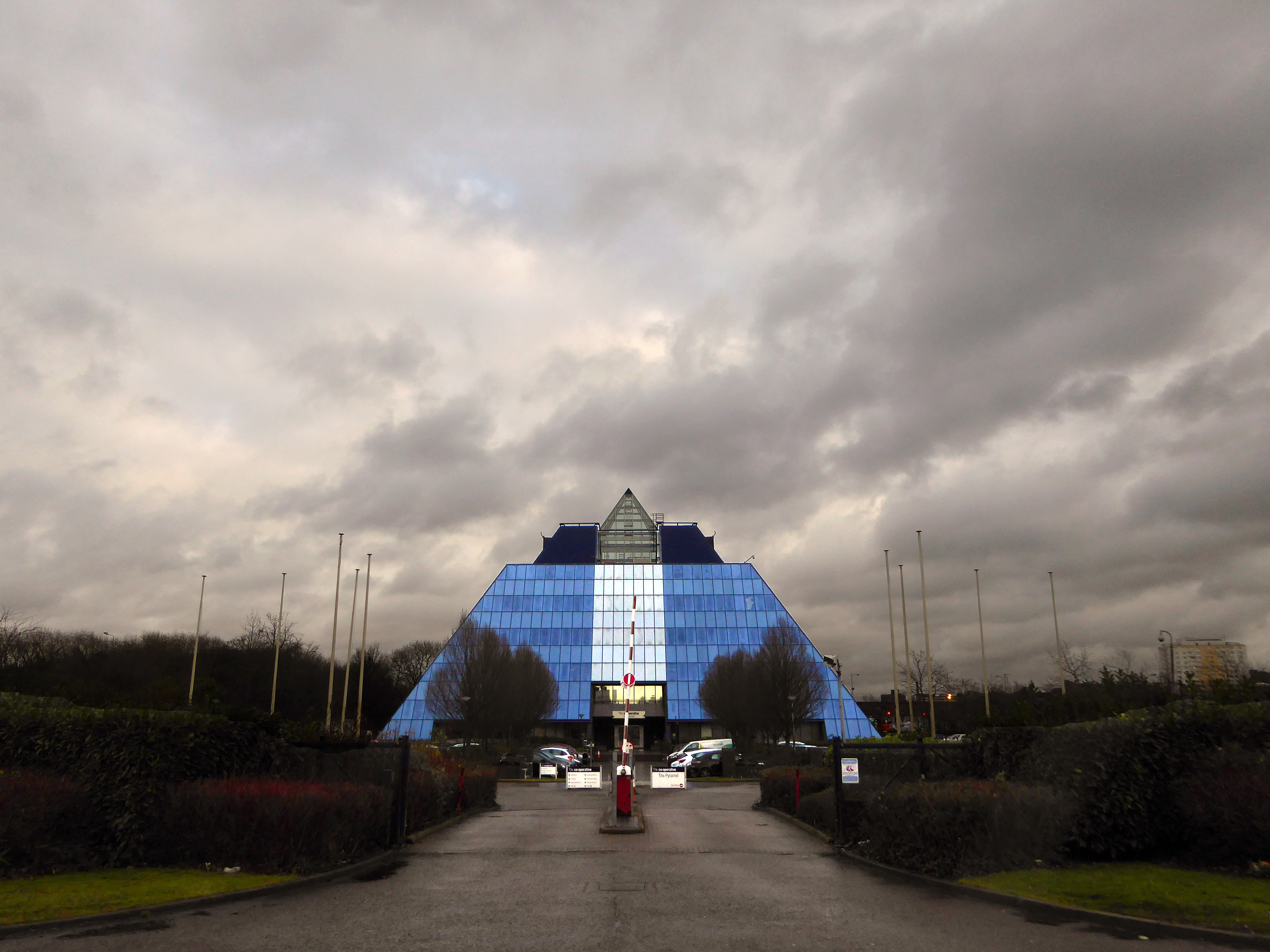
The mighty Mersey is now flanked by newer neighbours, a shiny blue administrativepyramid, business park, car showrooms and nature reserve, the only certainty is change.
Great volumes of earth are moved to from a new topography a topography of leisure – the gentle stroll, jog and cycle replaces the clank of fire doors and shovel on coal.
But take a look around you and you will see the remnants of the industrial age, shrouded in fresh hawthorn and enshrined in birch and beech.
To walk this landscape is to traverse geological, agrarian, industrial and post-industrial time – they all coexist and coalesce. Have an eye, ear and heart open to their resonance and presence, transcend time and space in the Mersey Valley today, you’re part of the leisured generation.
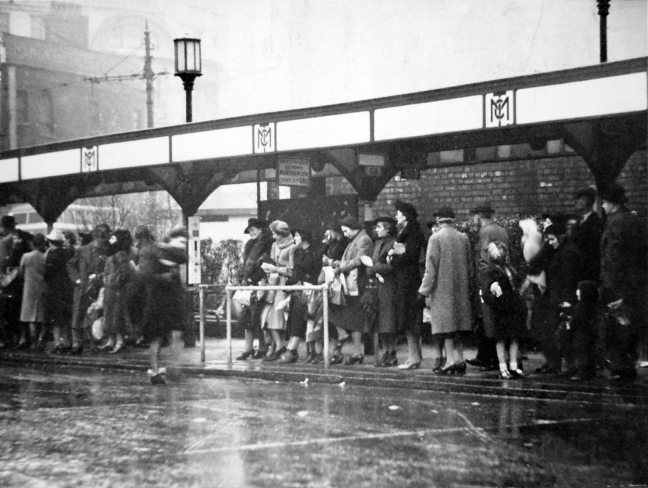
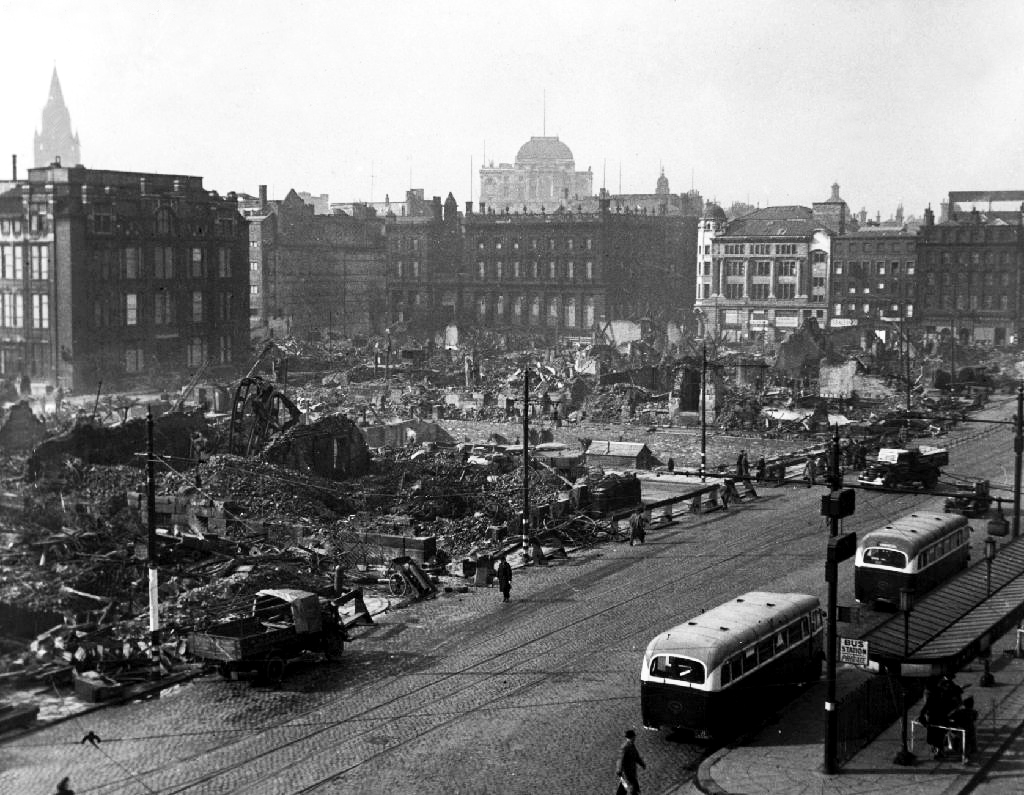
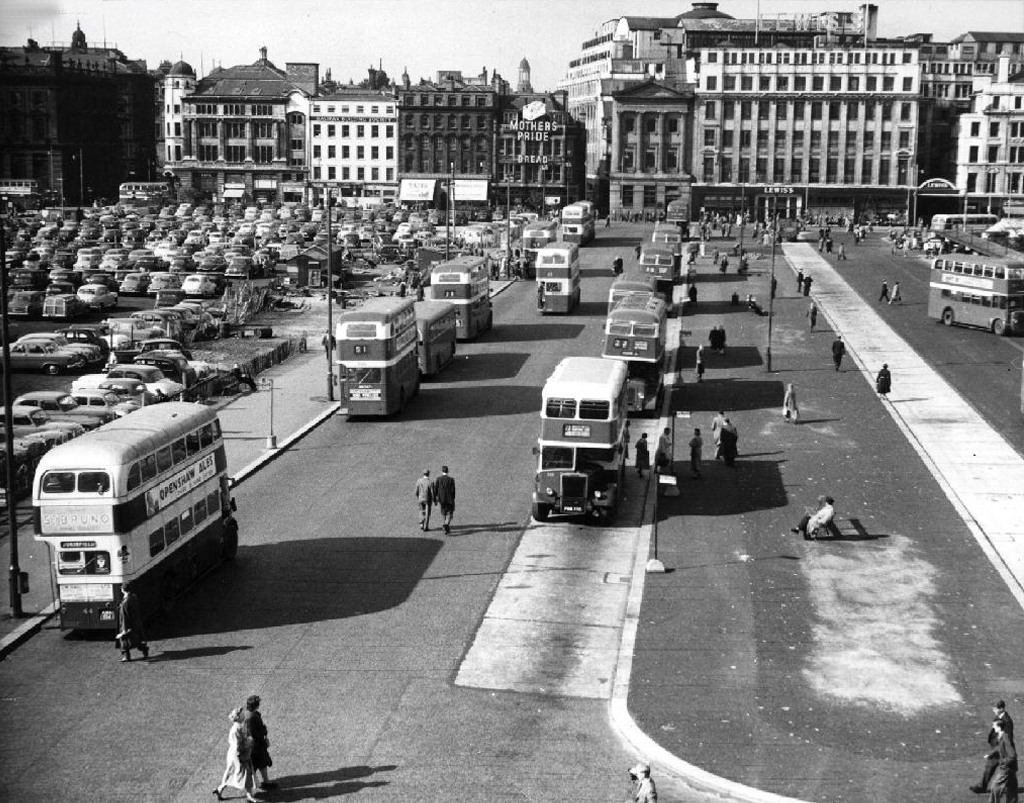
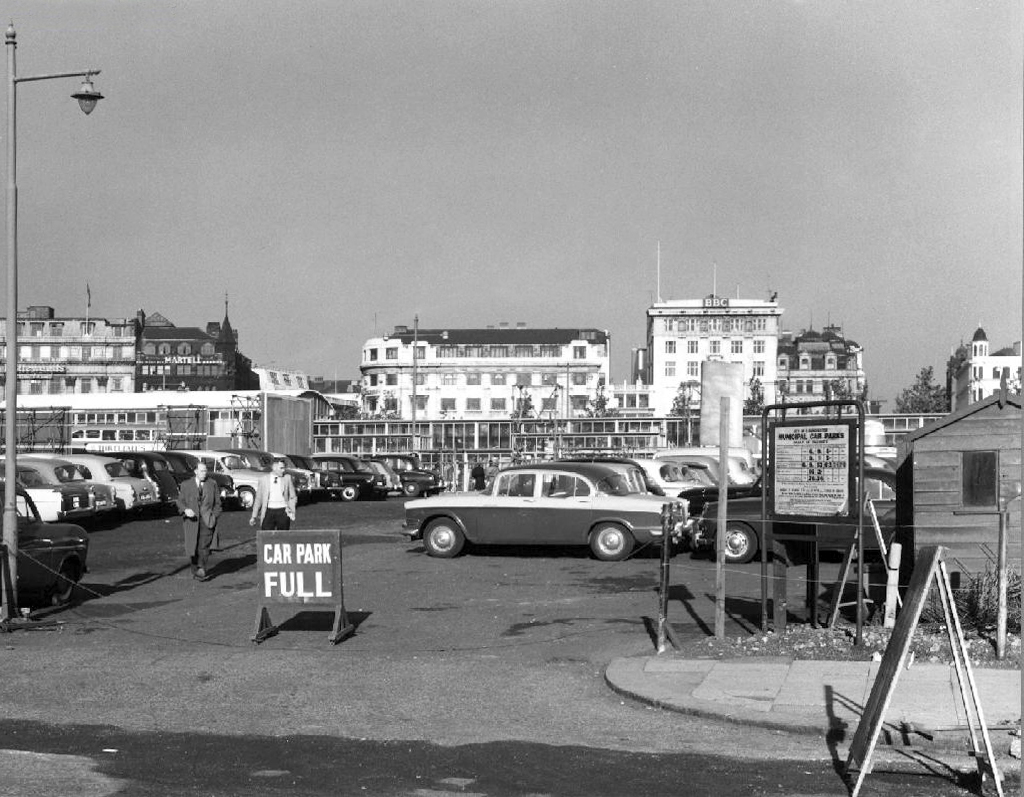
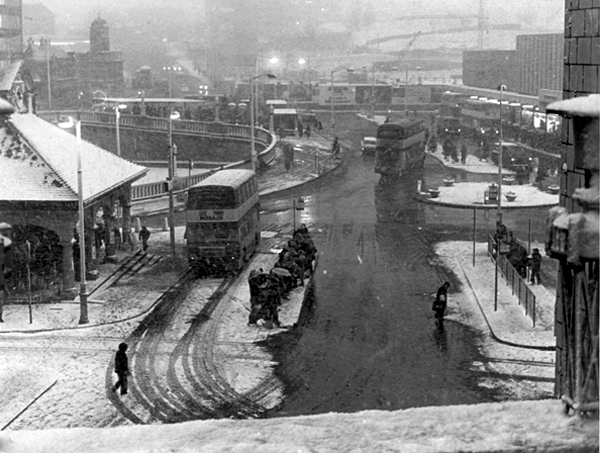
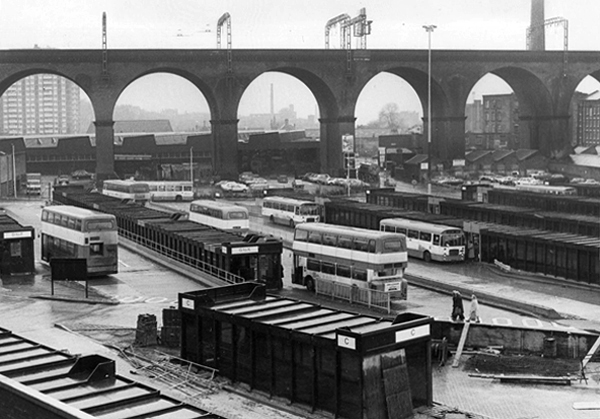
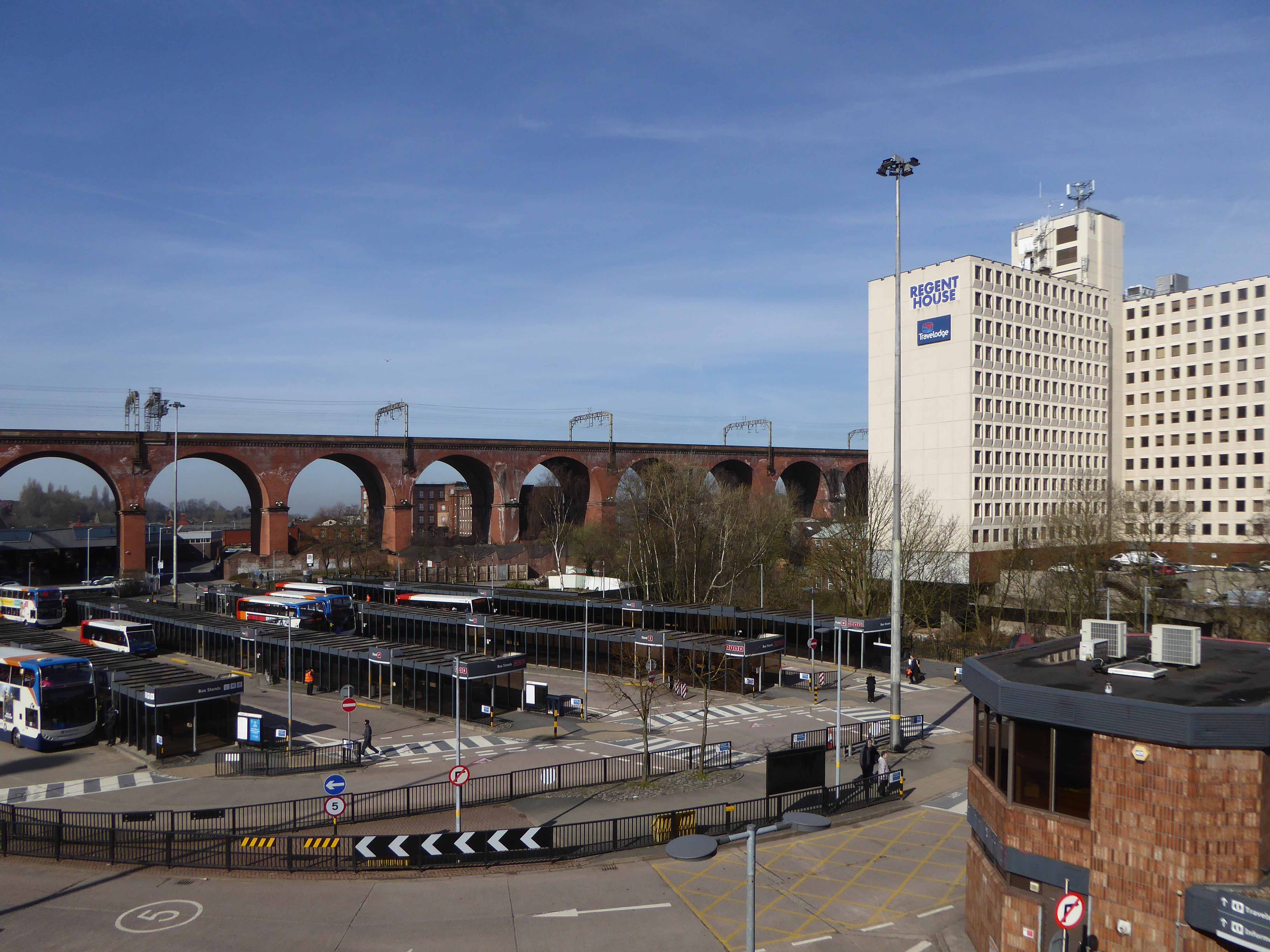
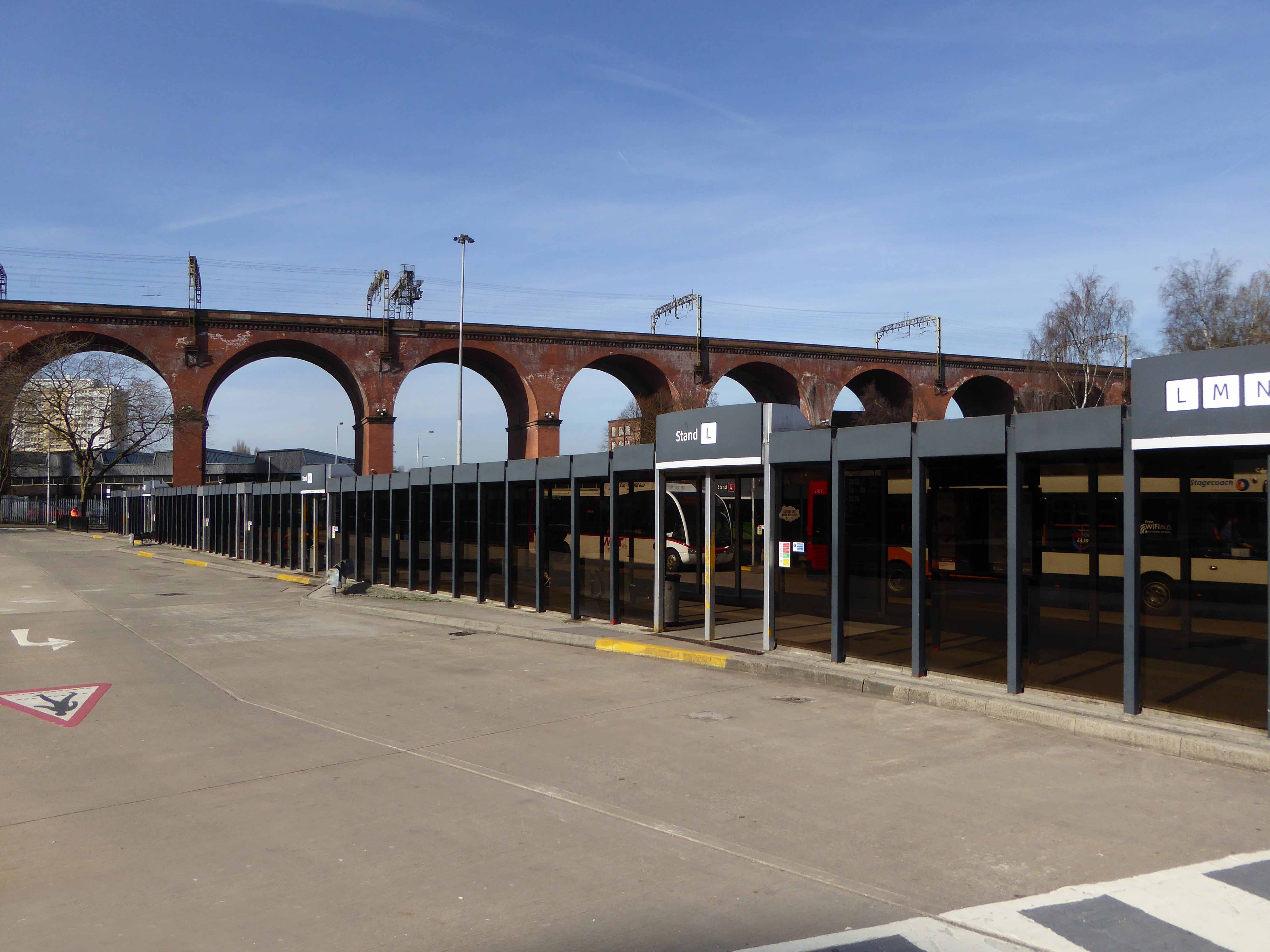
From the early part of the Twentieth Century trams and then buses stopped and started in Mersey Square, affording limited succour, space or shelter for the weary traveller.
View from the Fire Station Tower.
View from the Plaza Steps.
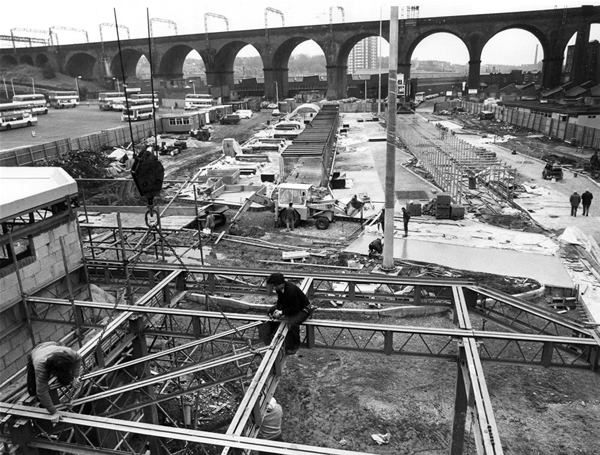
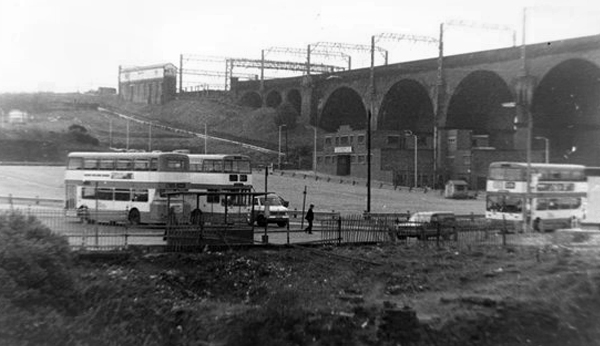
The land where the bus station currently stands was then owned and used by North Western Buses – a rather large and uncultivated plot.
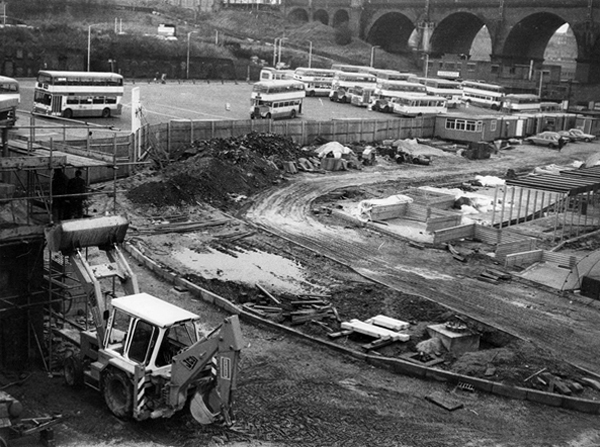
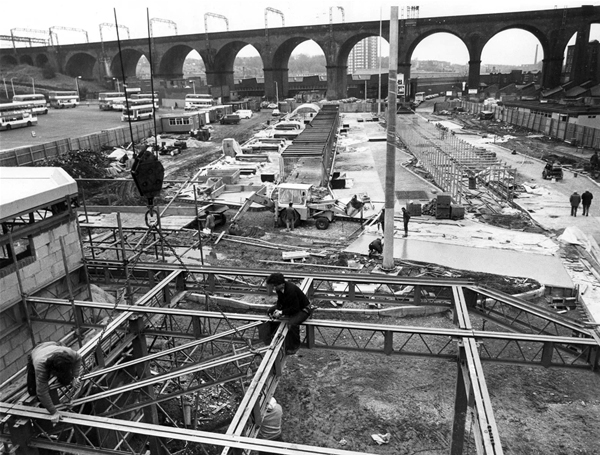
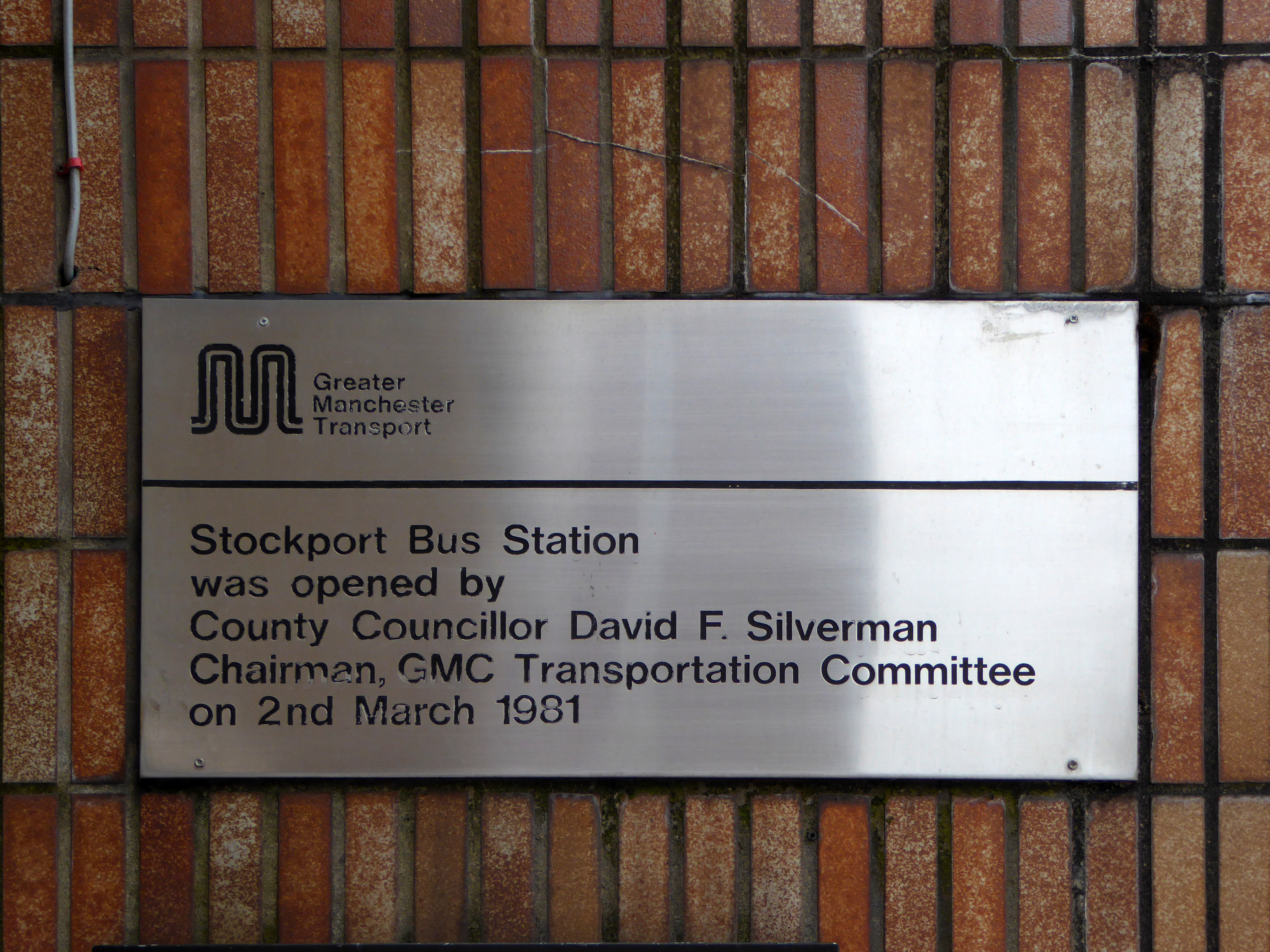
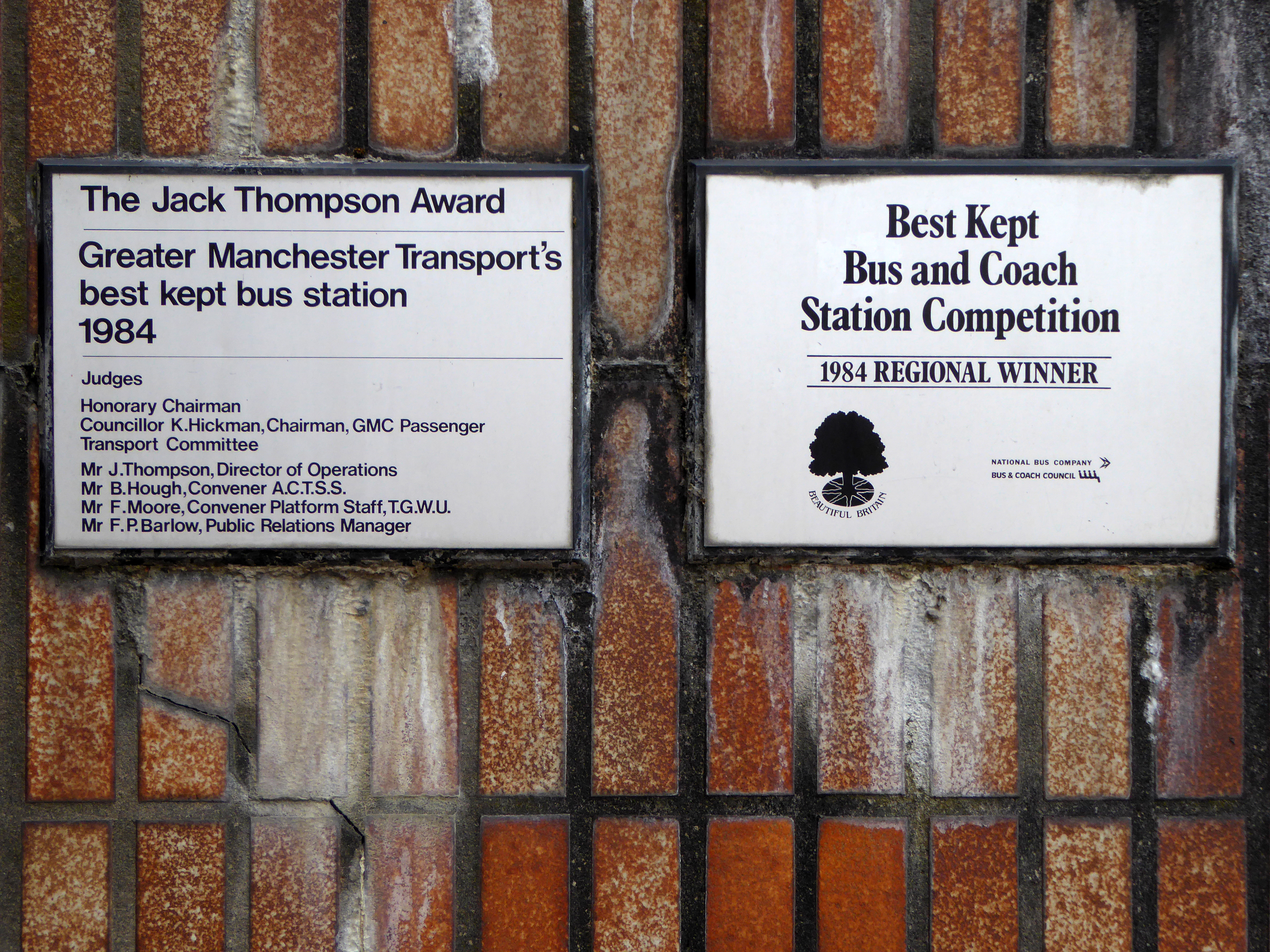
Work began in April 1979 on a brand new bus station, the first stage finally opening on March 2nd 1982.
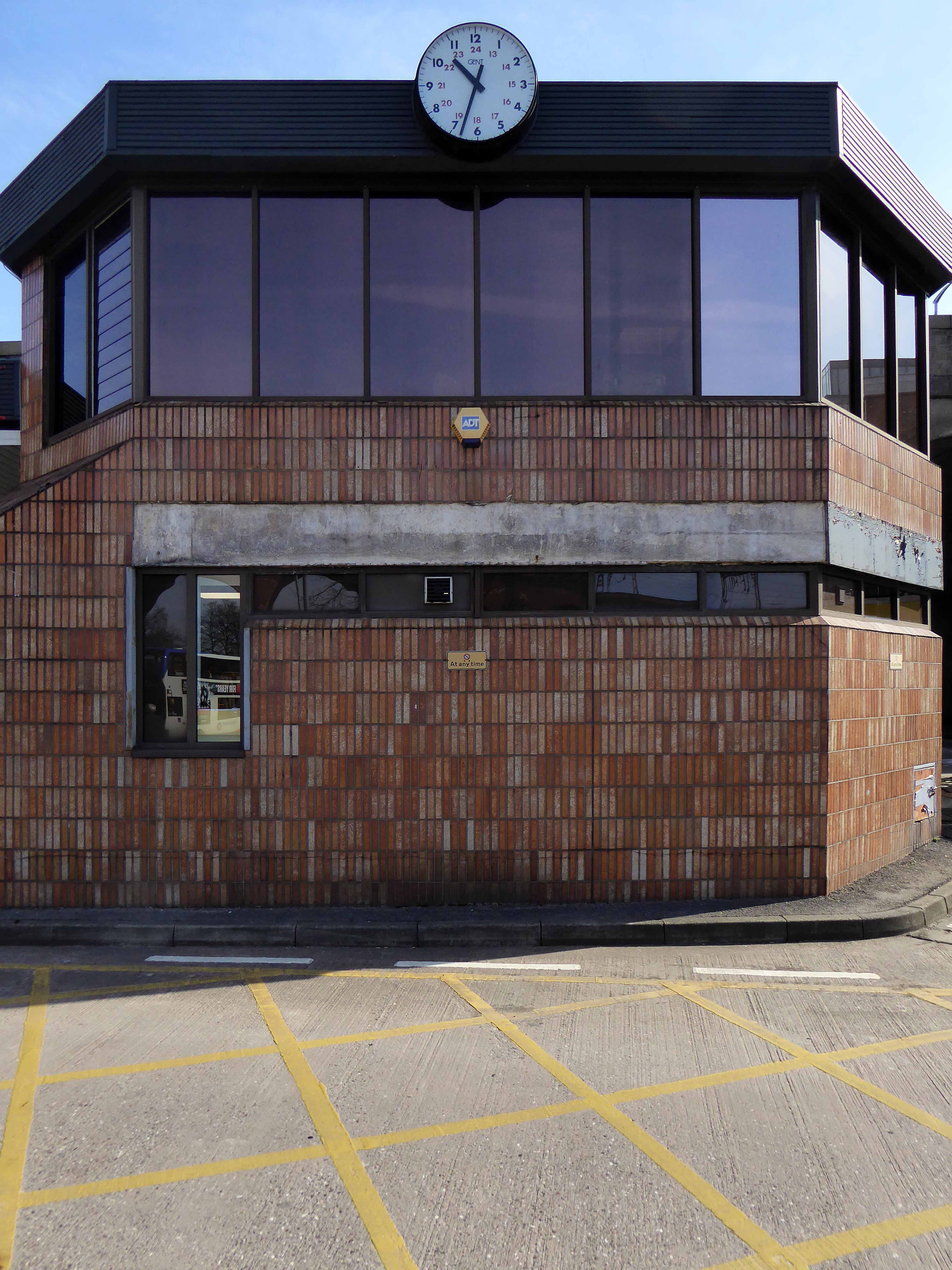
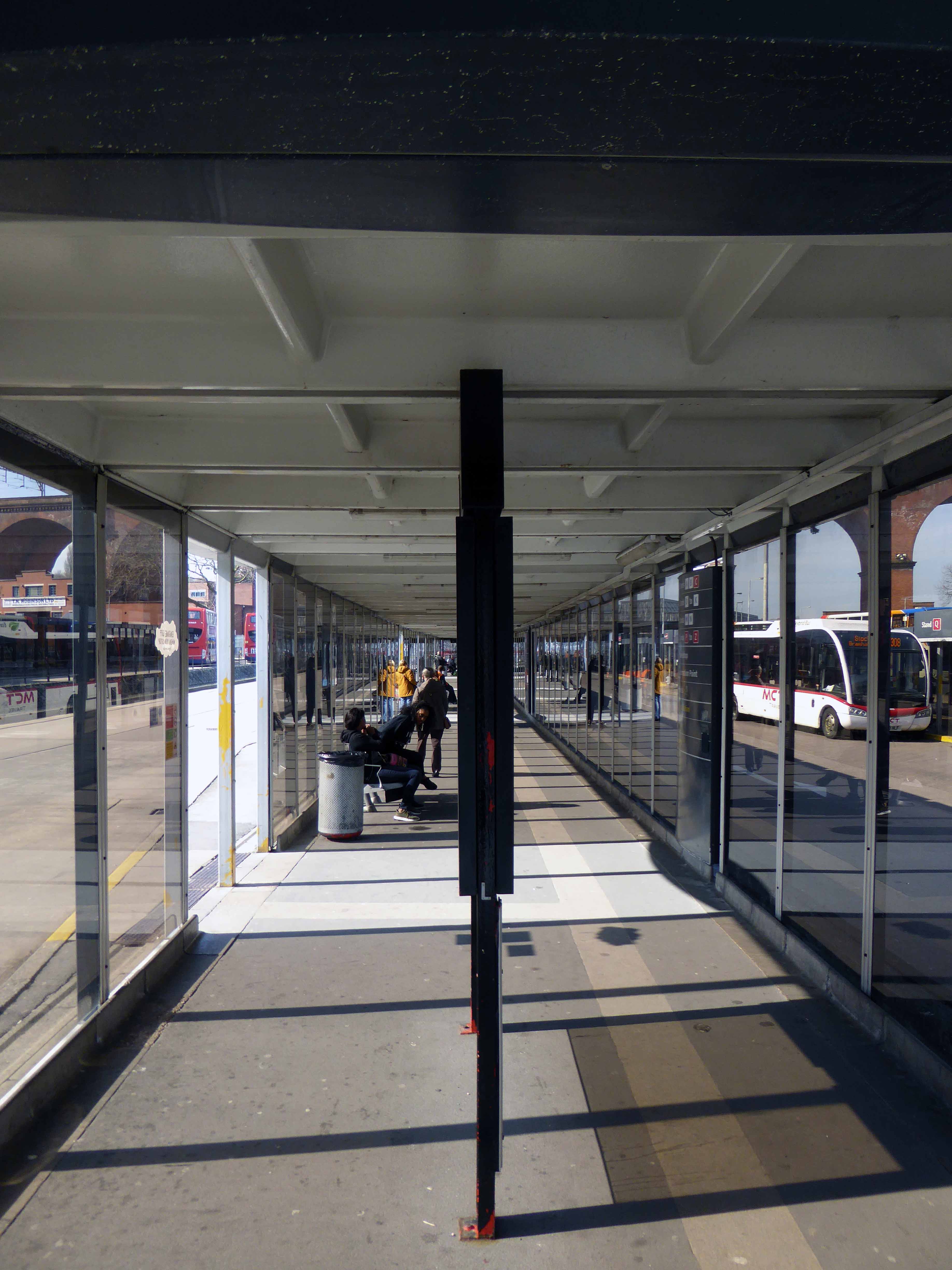
Slowly emerging from the rough ground – a series of glass and steel boxes worthy of that master of minimalism Ludwig Mies van der Rohe, a Neue Nationalgalerie in miniature.
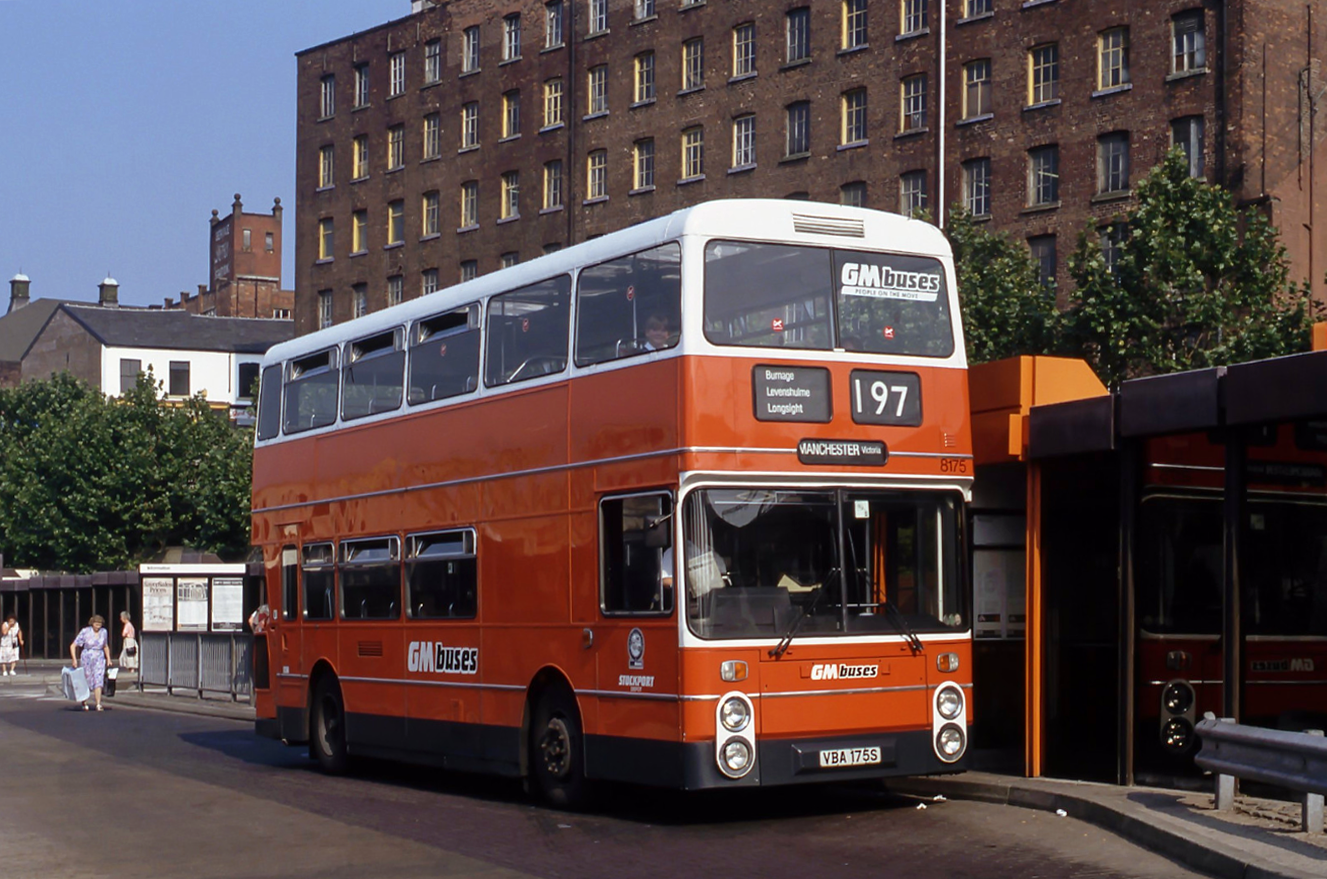
It has stood and withstood the winds of change and perfidious public transport policy, the privatisation of the service, snatched greedily from local authority control.
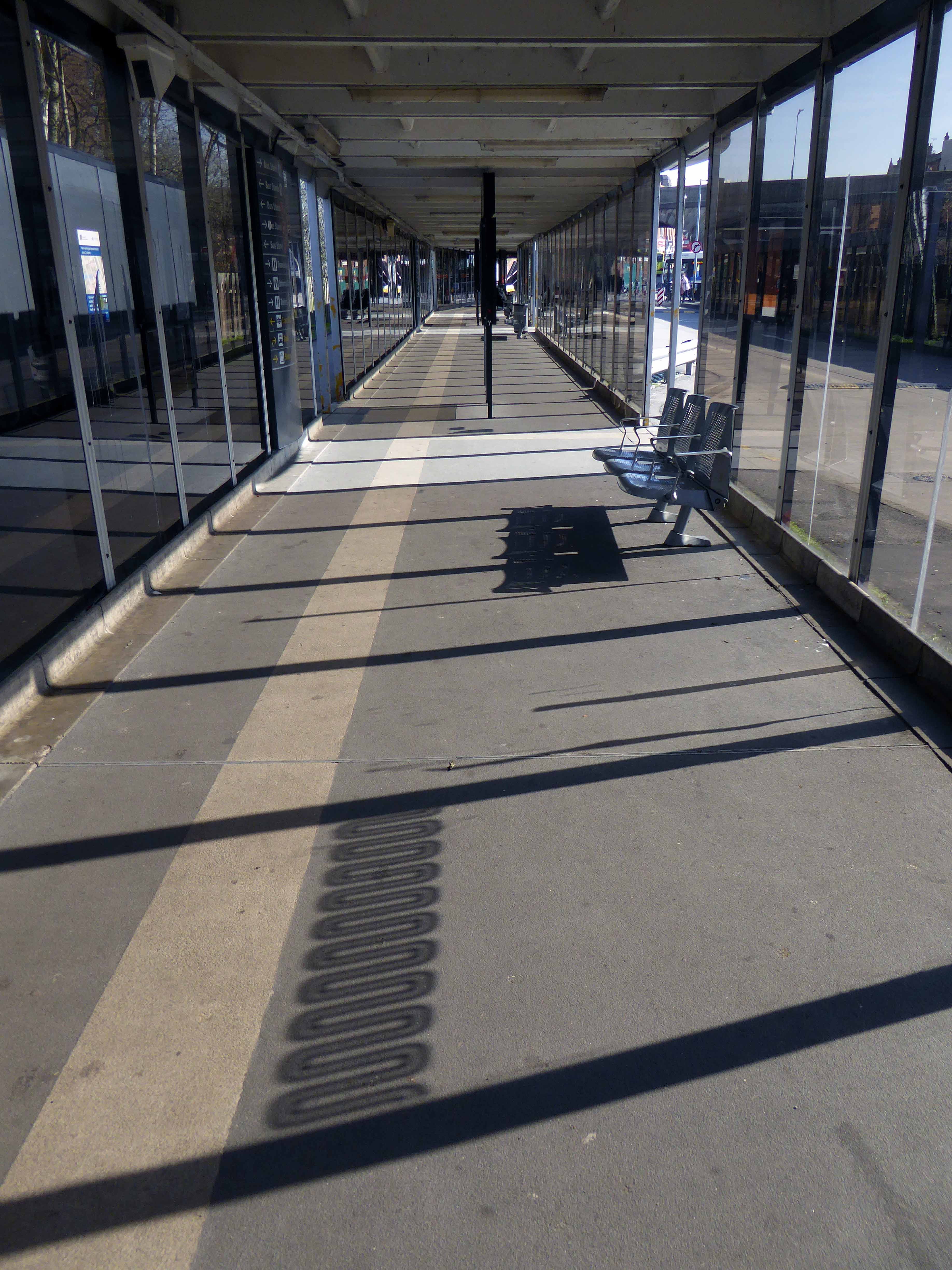
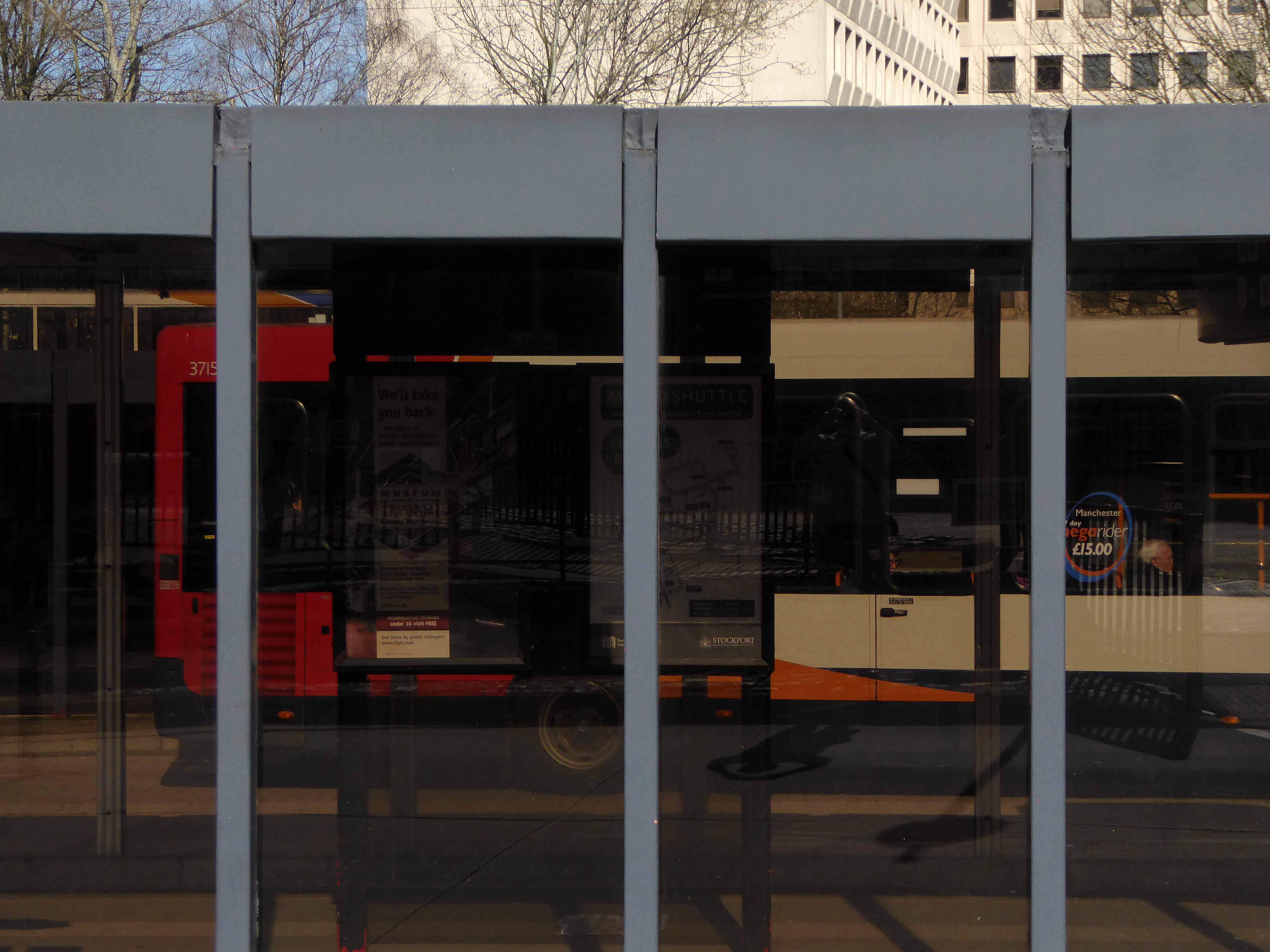
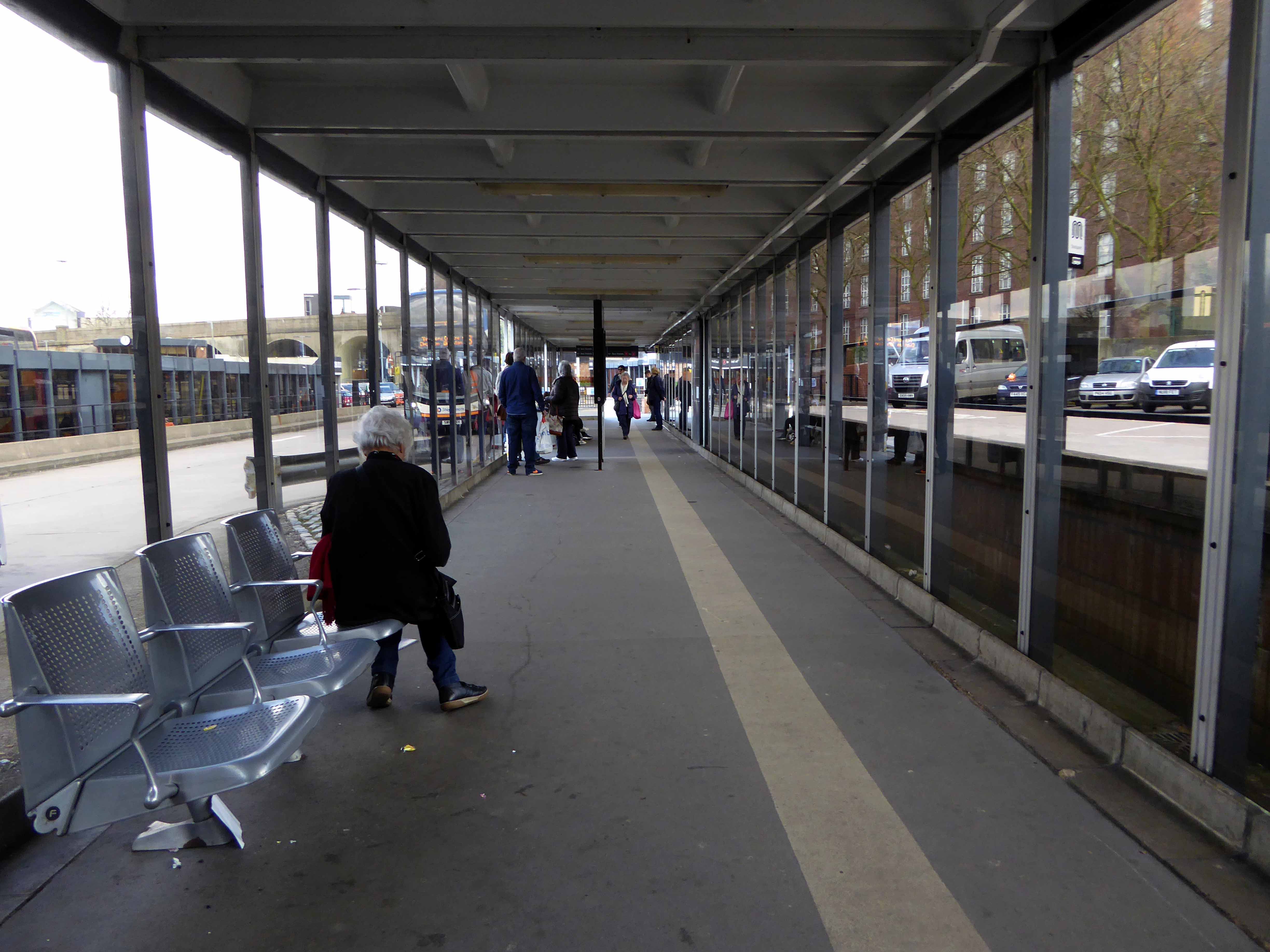
Passengers have met and parted, whilst buses of every hue and stripe have departed from these draughty boxes.
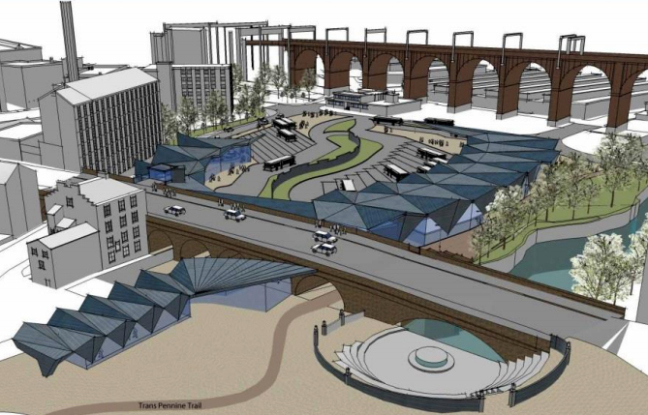
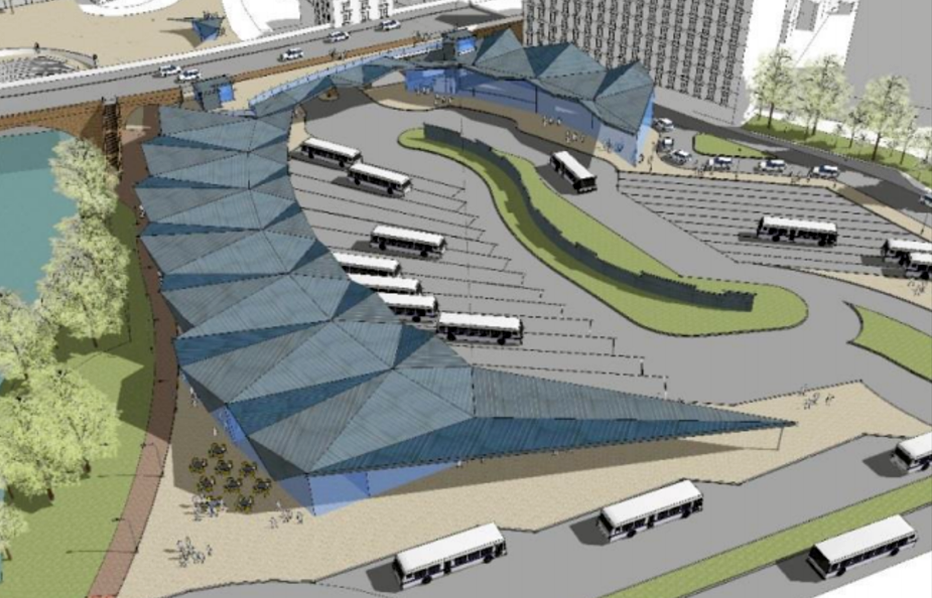
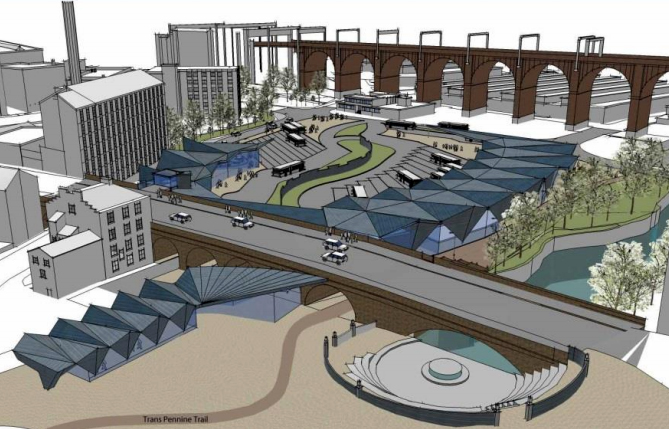
There are now plans for imminent demolition and rebuilding – shaping a transport hub fit for the Twenty First Century – Space Age forms for a brave new world.
A new £42m transport interchange in Stockport town centre has taken a step forward after the local council agreed key measures to back the project.
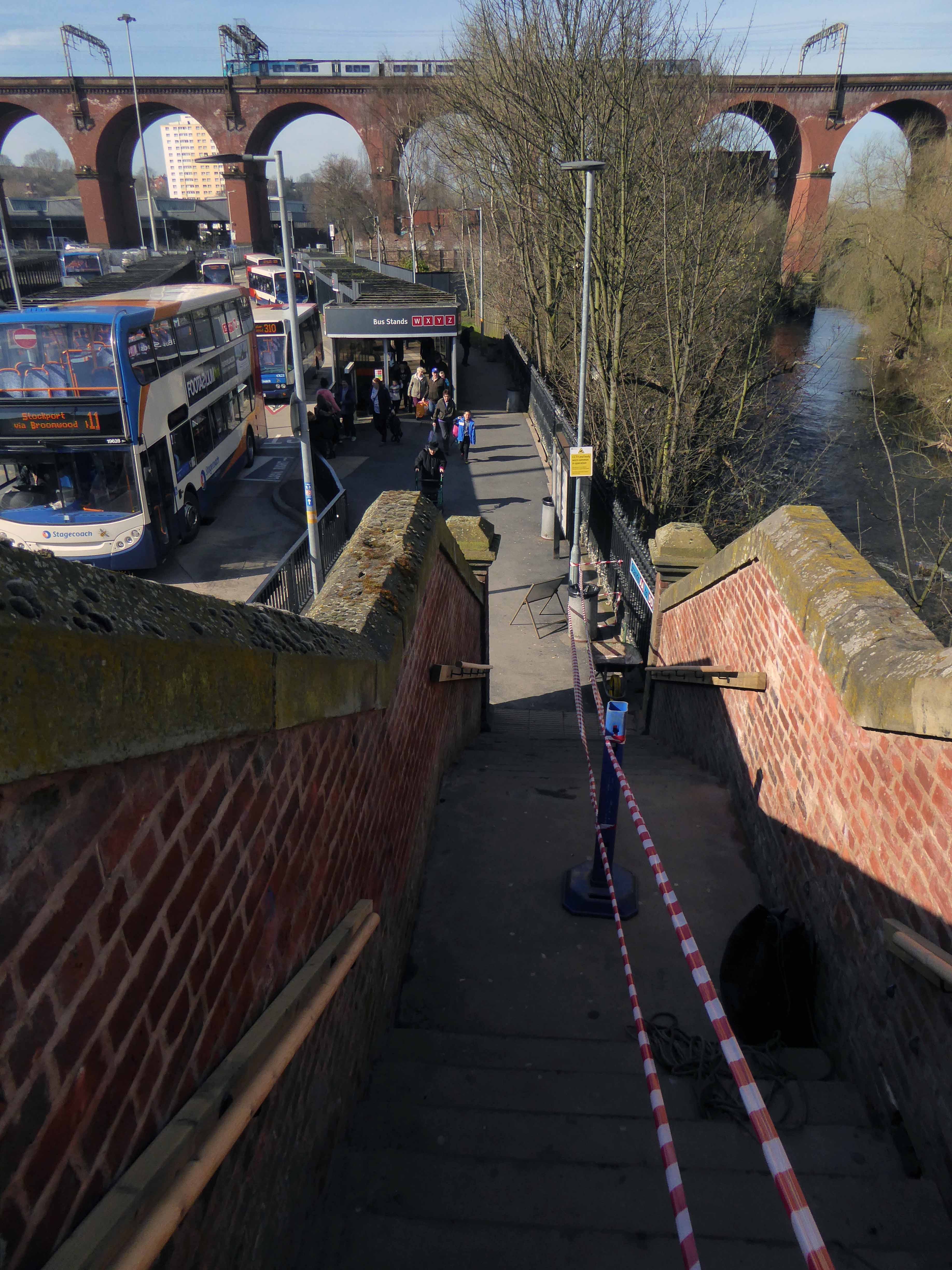
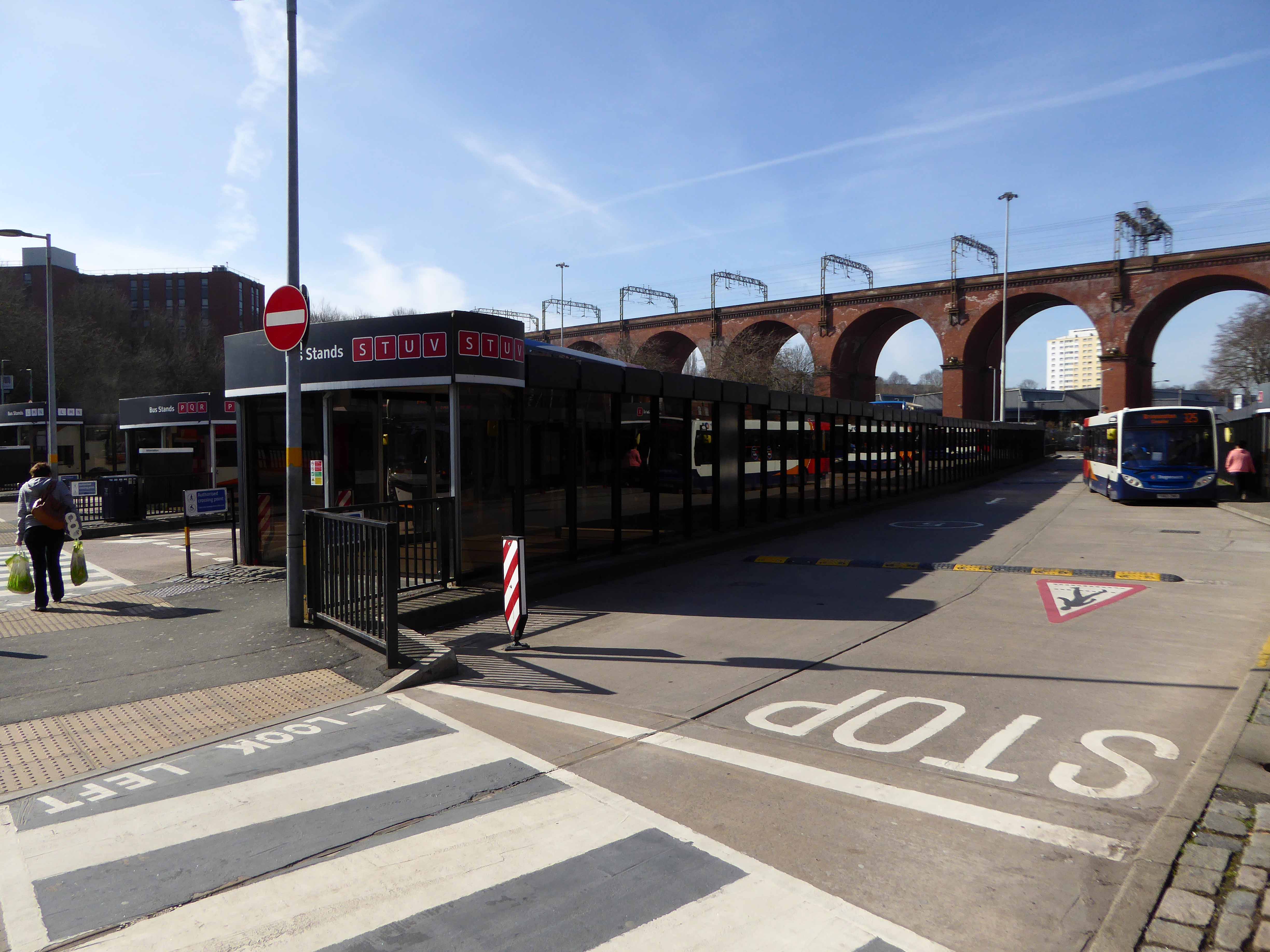
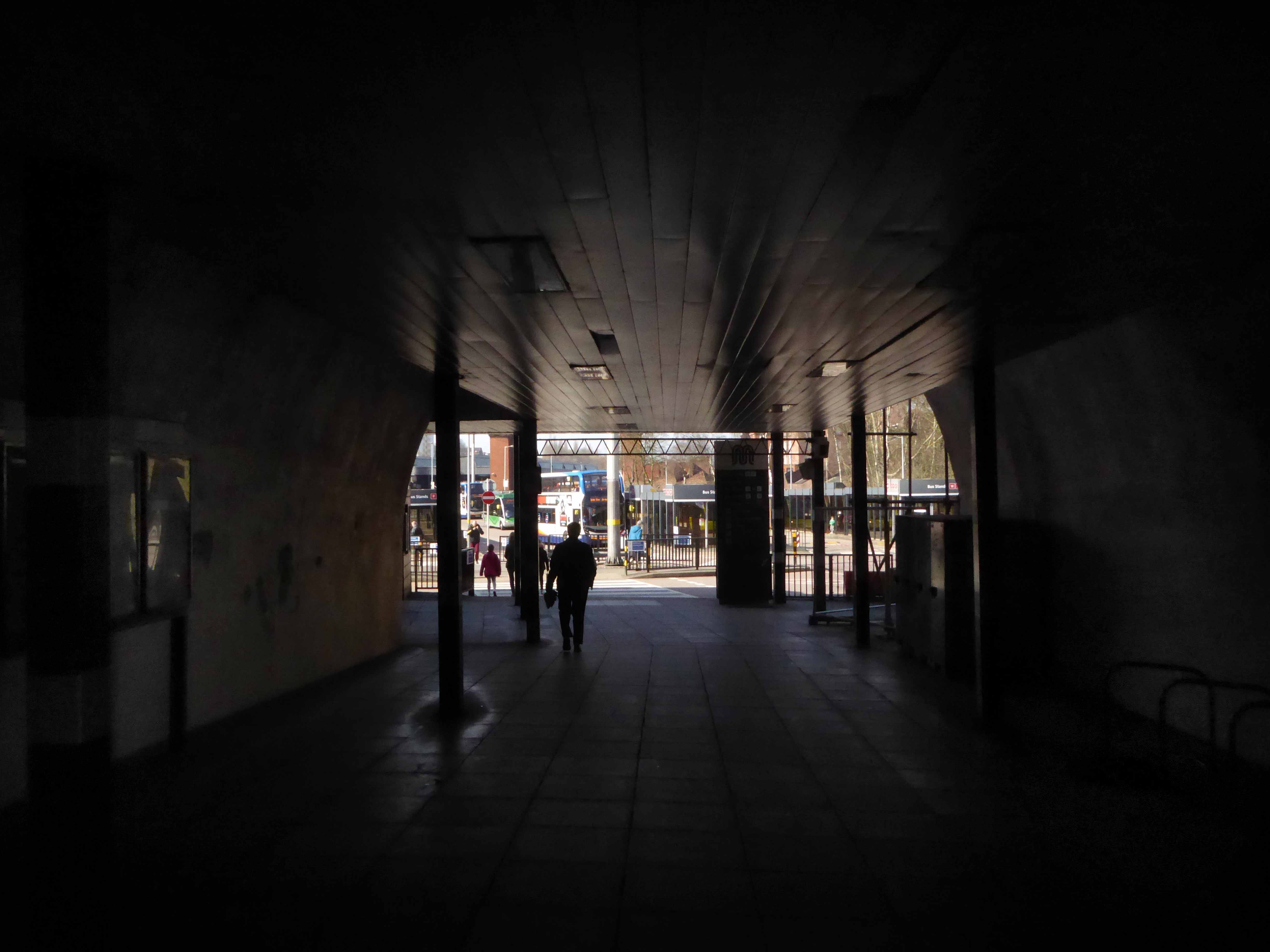
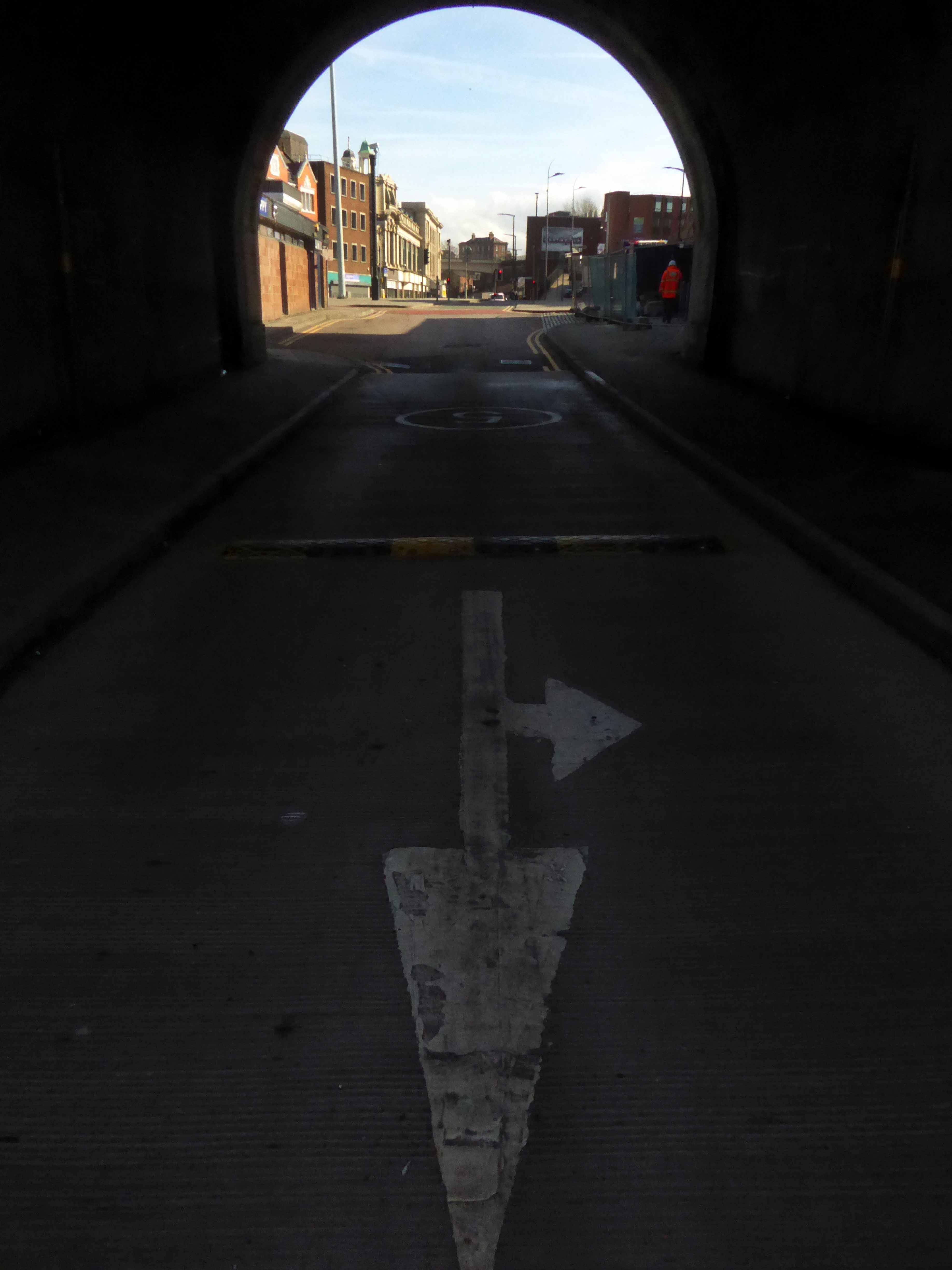
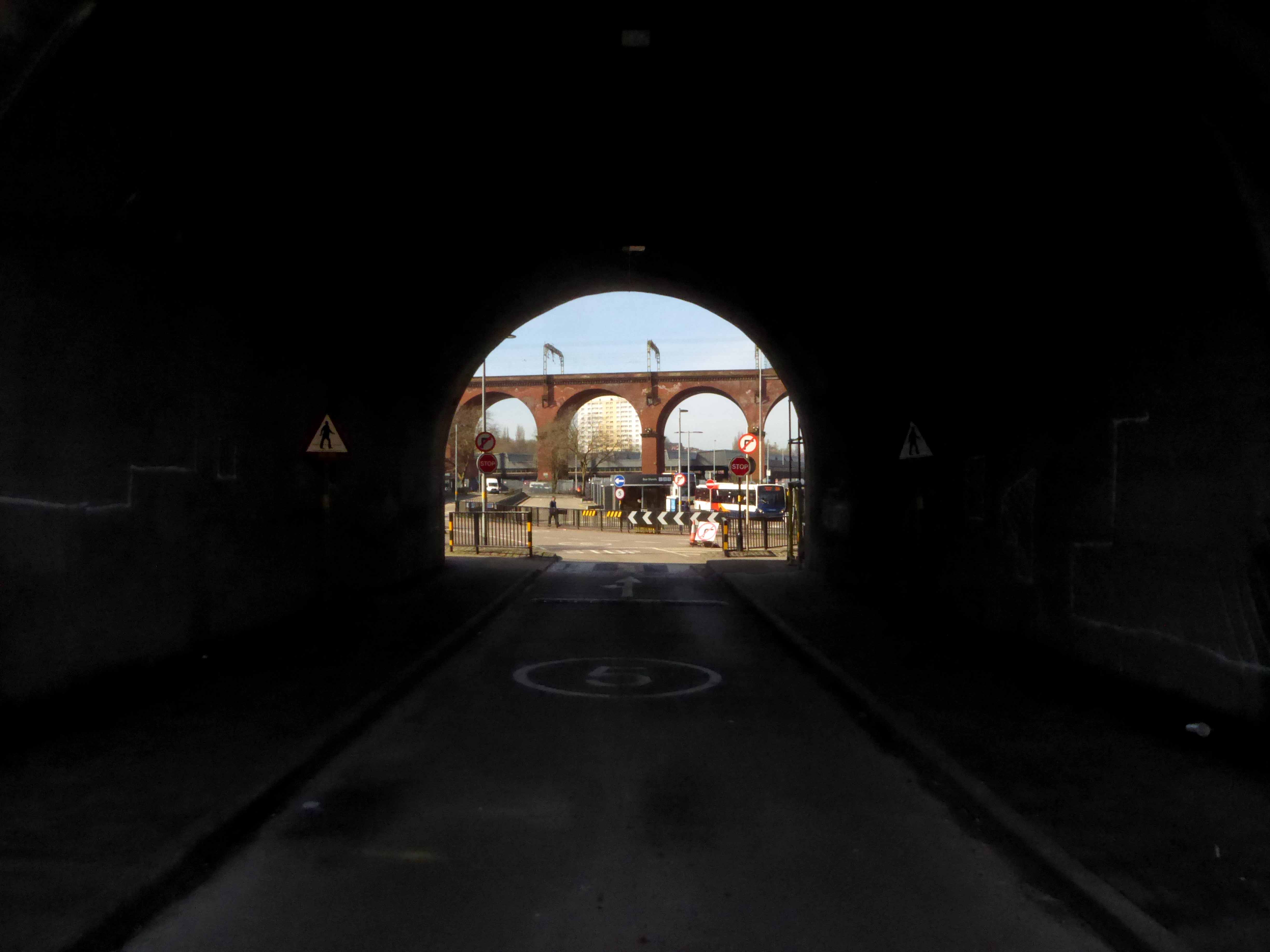
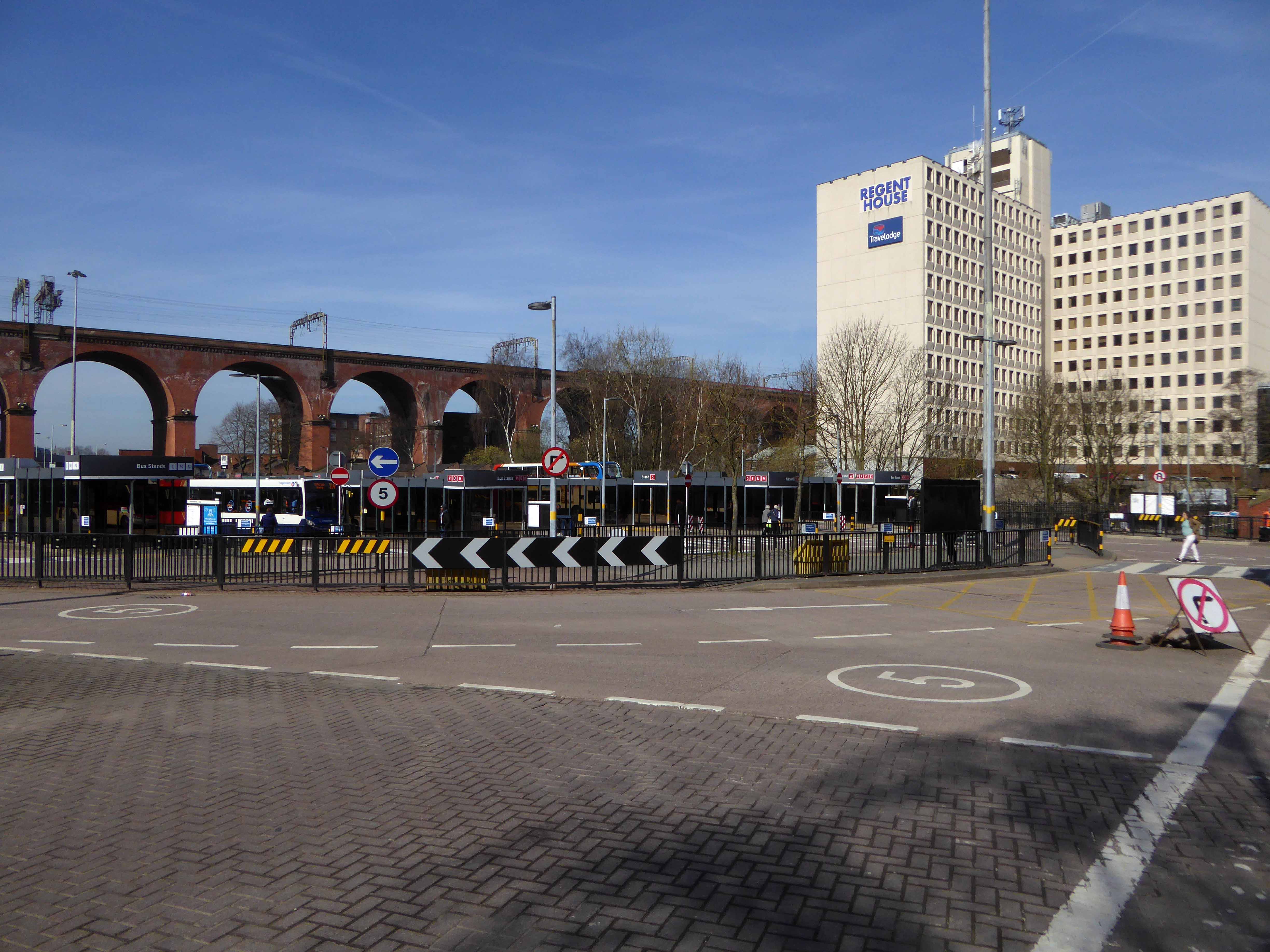
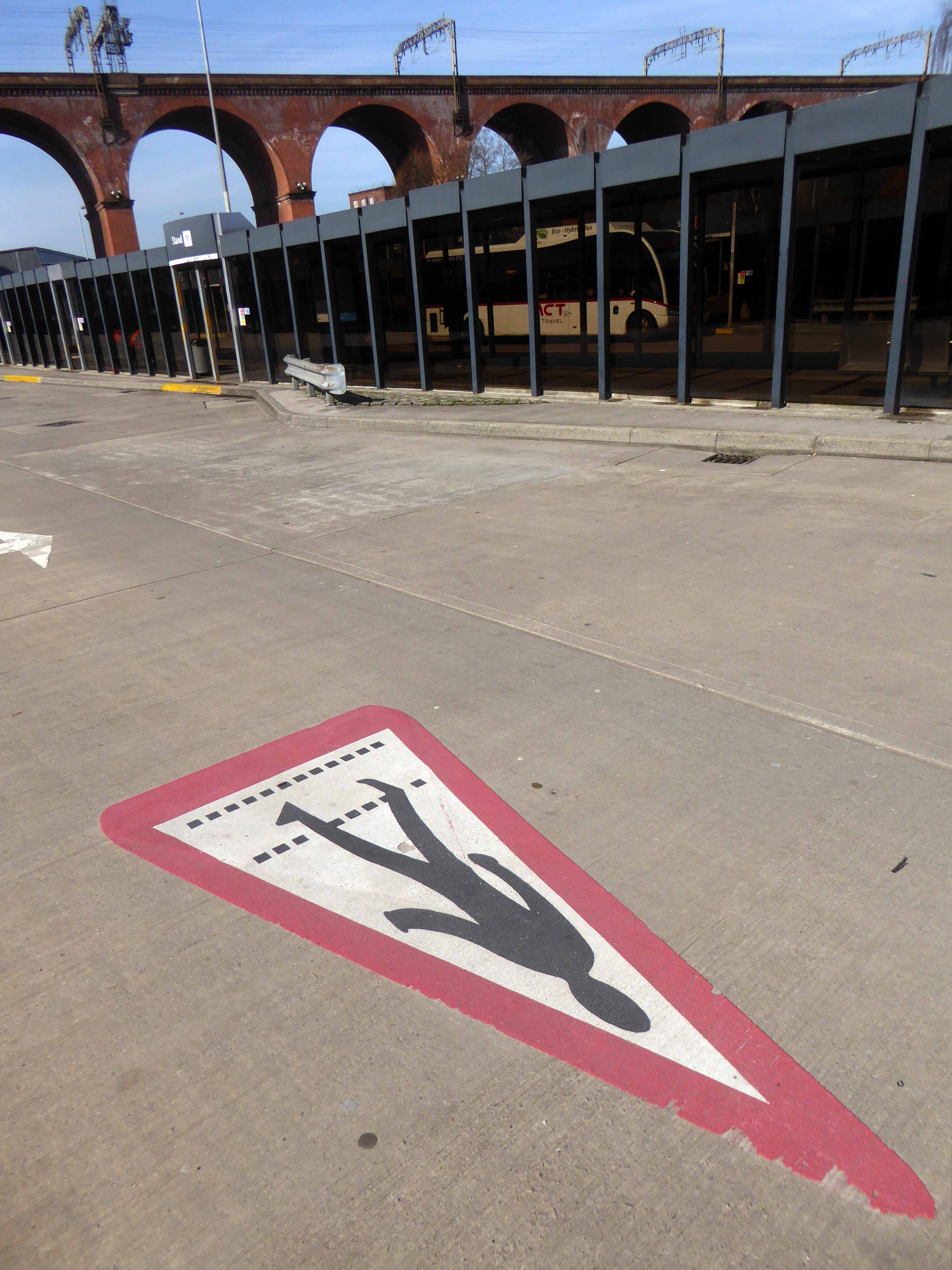
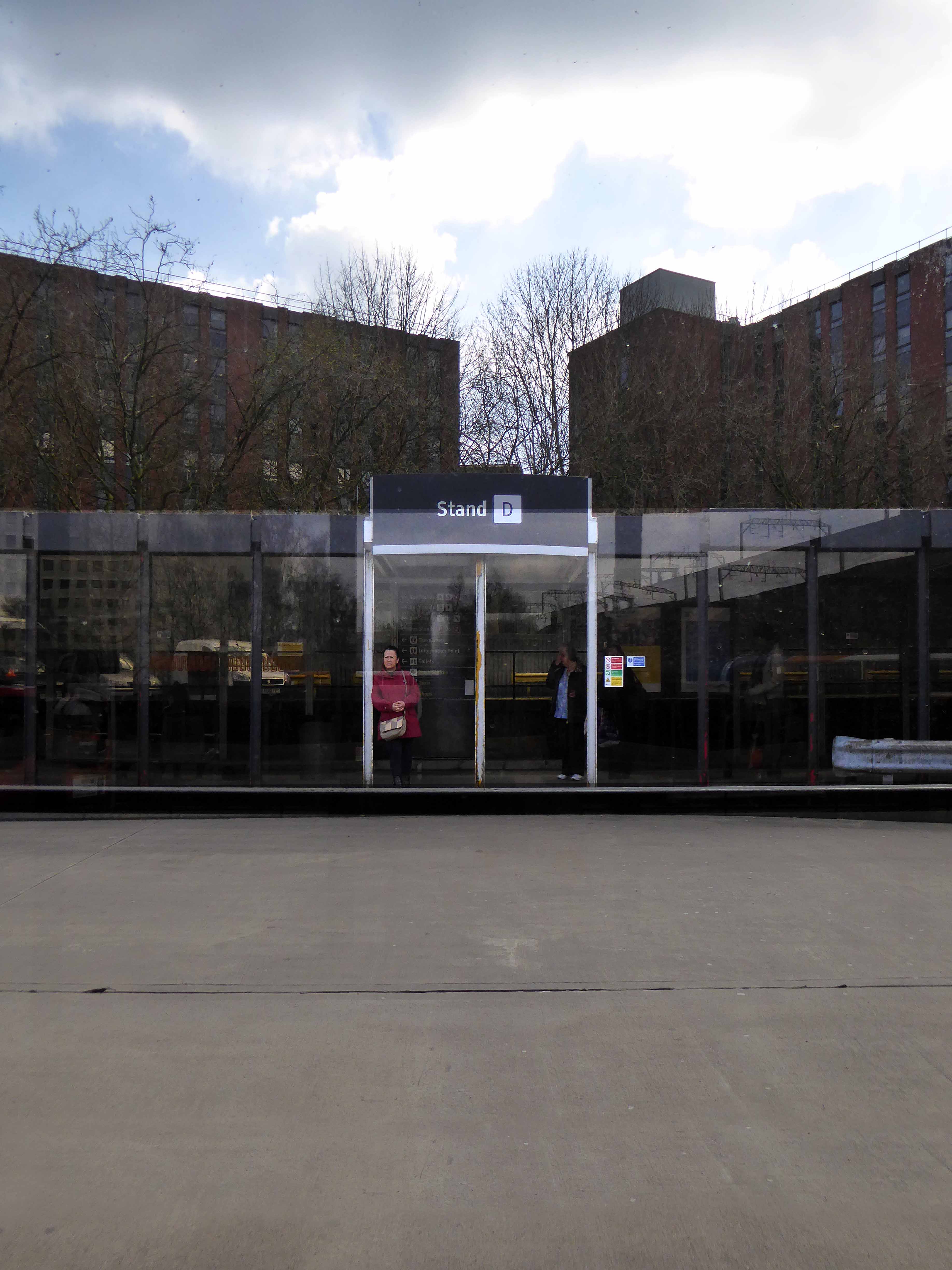
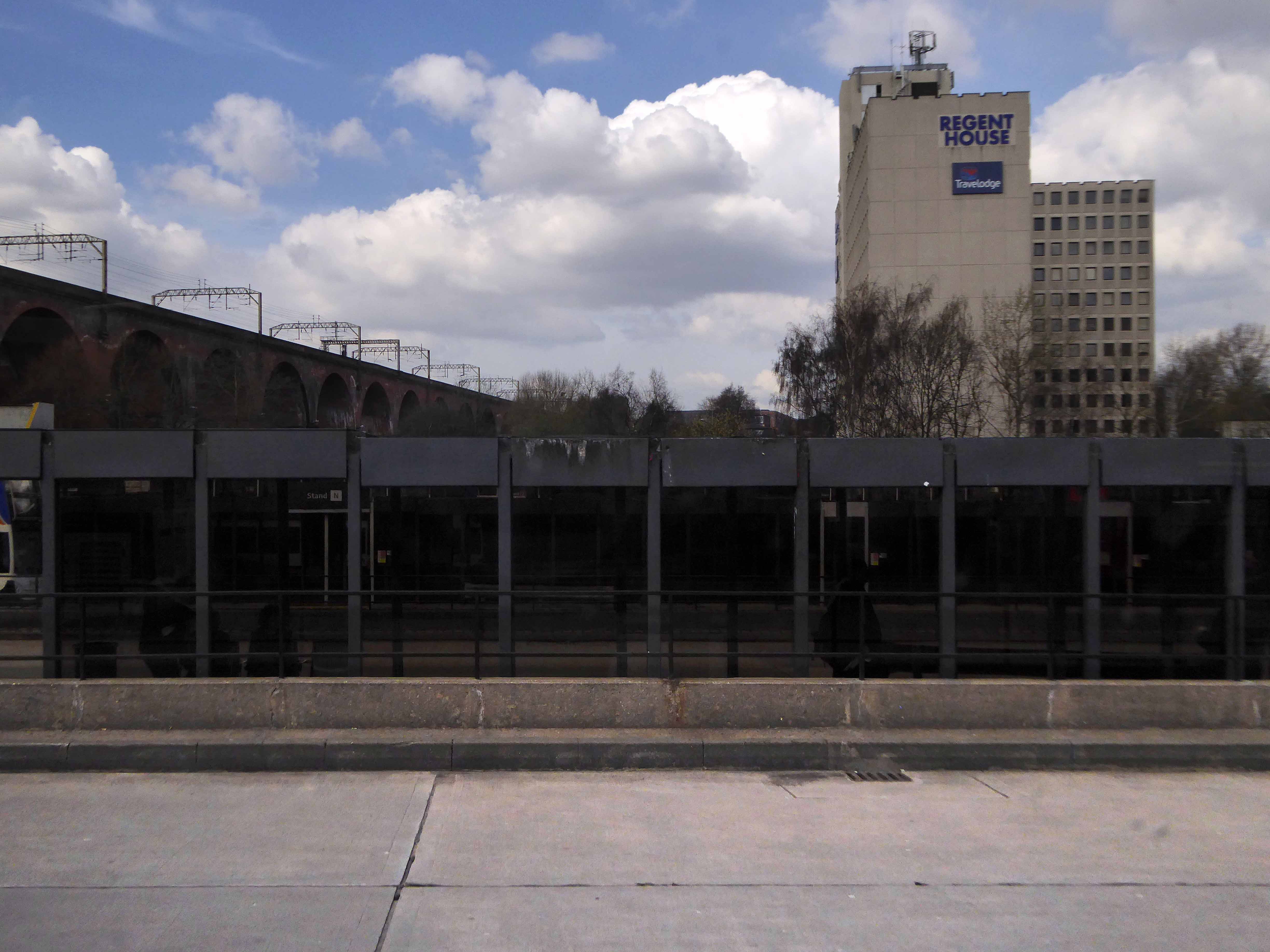
April 9th 2017 here is my photographic record of the Bus Station, I’ve been, gone and come back again countless times through the years.
On my most recent visit the most distant shelter was receiving a wash and brush up, a brand new coat of paint or two, restored to bright red and white shipshape order, this land locked delight looked ready to set sail across the adjacent Channel to who knows where.
Offering a somewhat occluded view of blue skies and faraway shores, the bus stops here and goes on forever and forever.
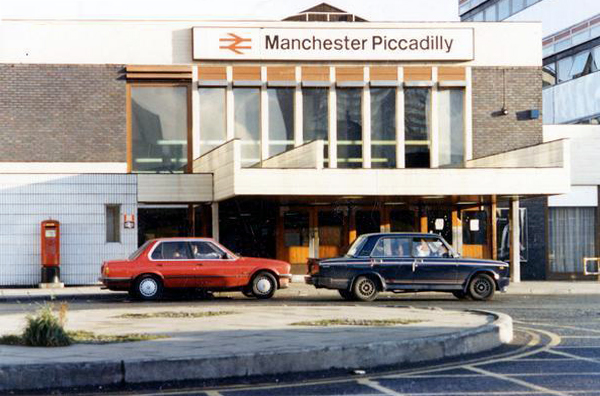
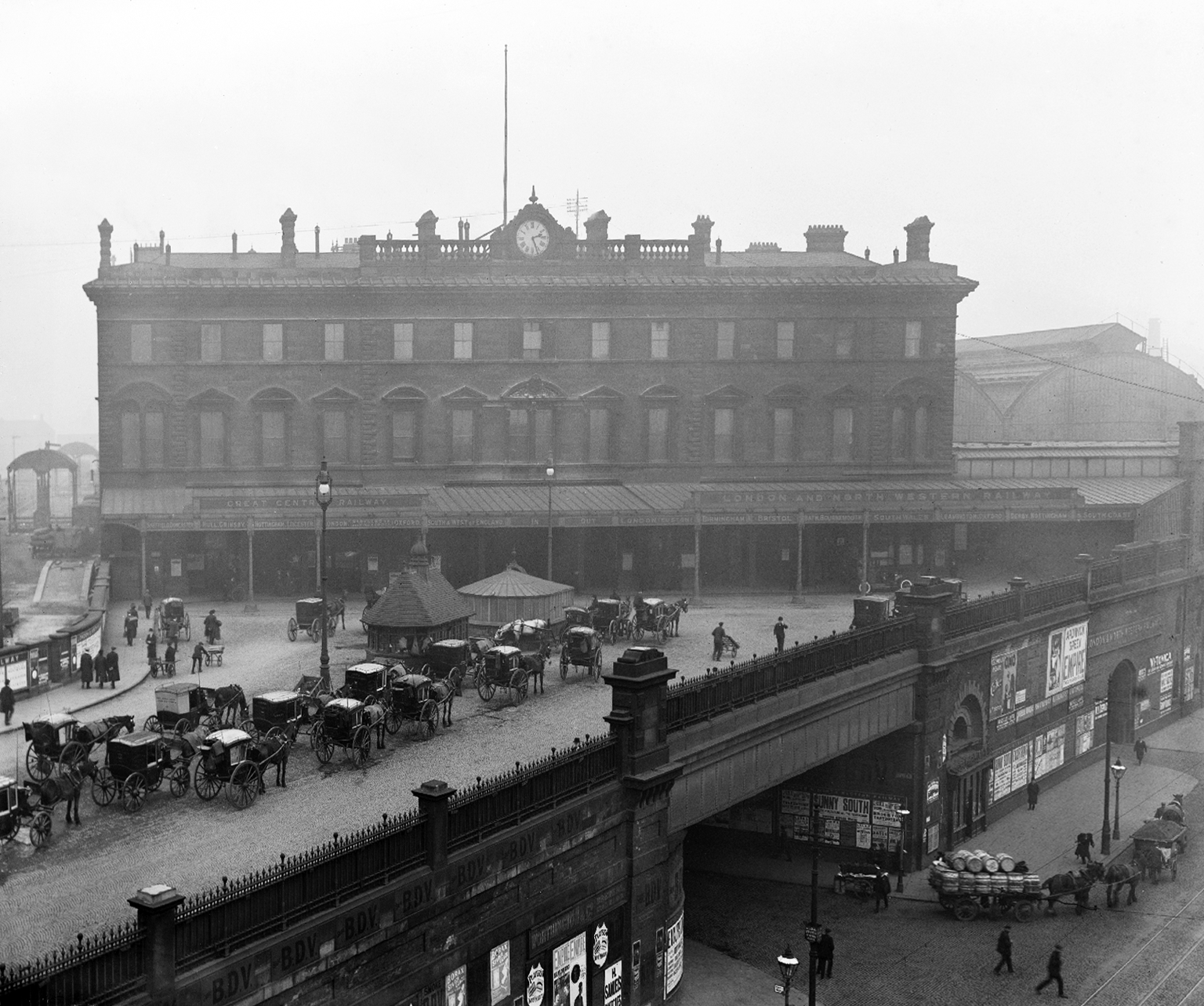
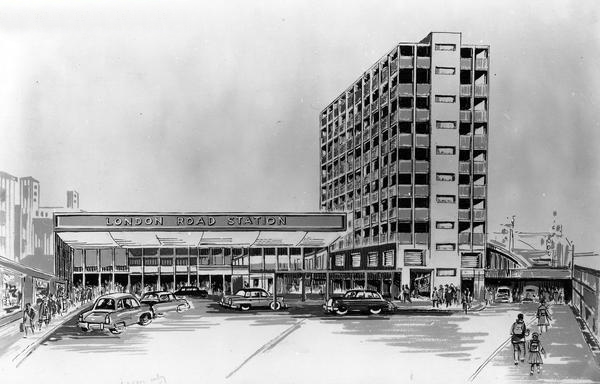
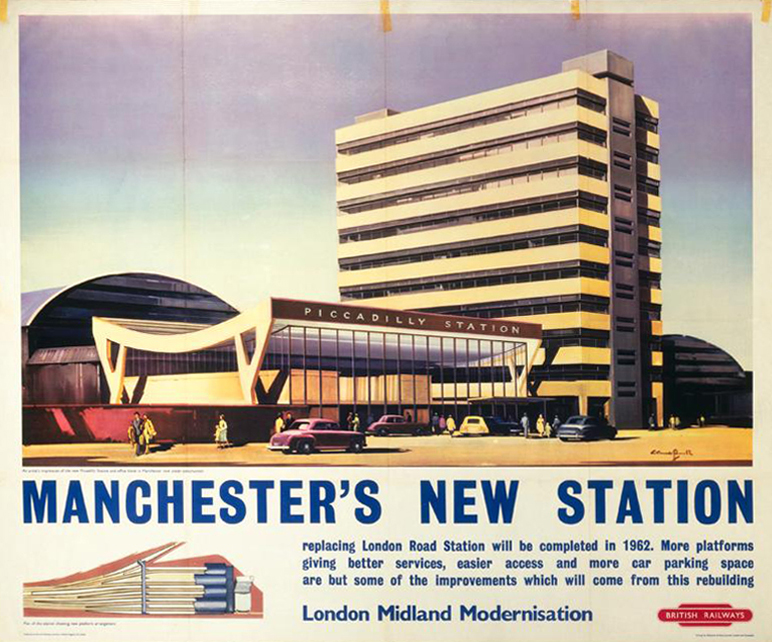
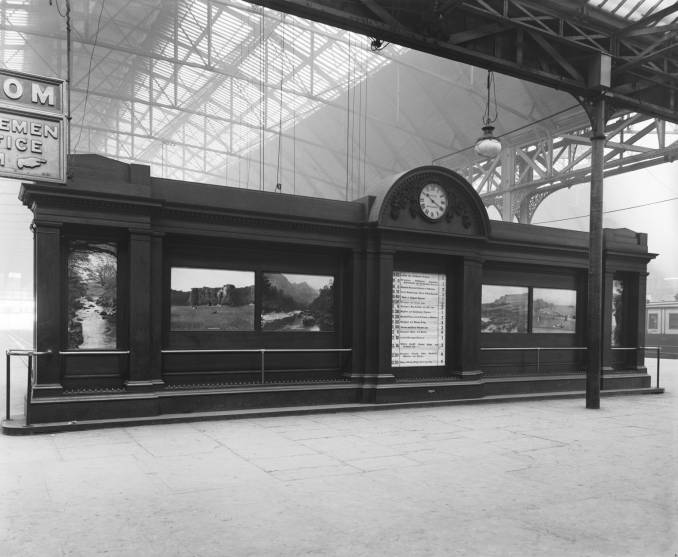
The station was originally built as Store Street Station by the Manchester and Birmingham Railway in 1842, before being renamed London Road Station in 1847. It was shared by the Sheffield, Ashton-under-Lyne & Manchester Railway and it has been rebuilt and added to a number of times, with two news spans added to the train shed roof in 1881 and island platforms added linking to Manchester Oxford Road in 1882 (replacing two old Manchester, South Junction and Altrincham Railway platforms which were built next to the station).
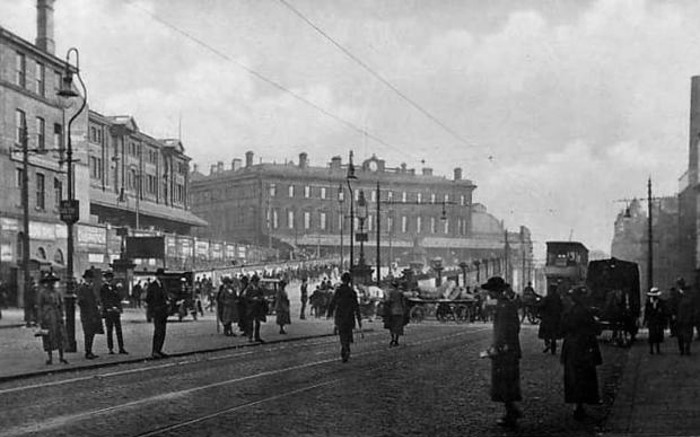
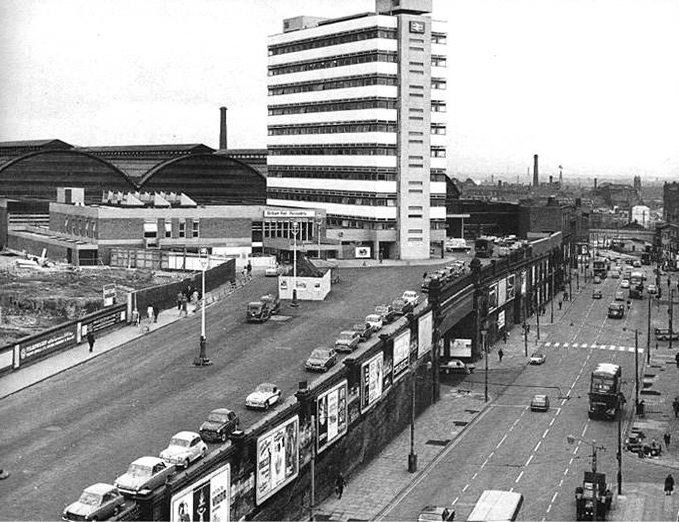
An imposing classical façade with a substantial cast iron and glass train shed, the approach sloping up to the frontage, as of necessity the line entered the city on a raised trackbed.
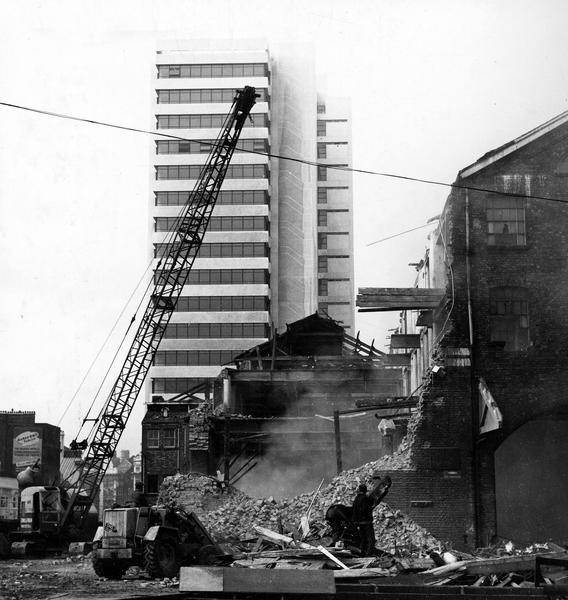
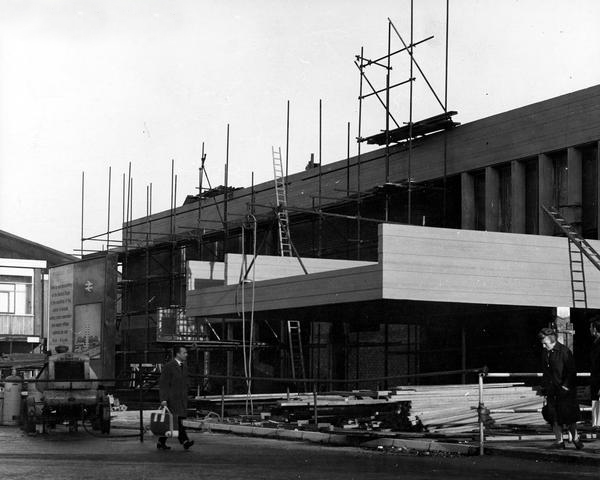
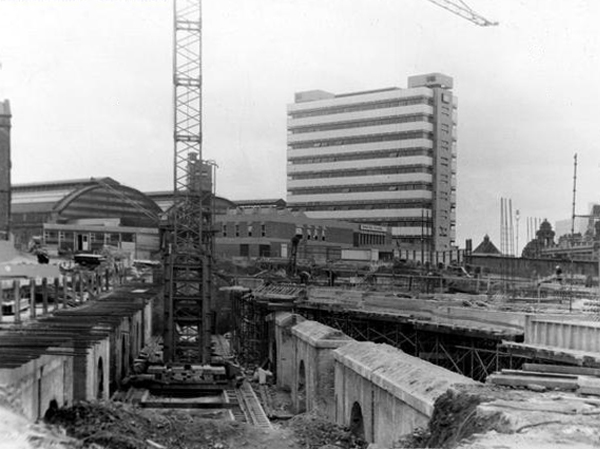
Initially the approach was lined with railway warehousing, subsequently demolished to make way for the redevelopments of the 1960s.
Detailed plans are made to reshape the station concourse and entrance.
Dreams are turned into reality, as near as makes no difference.
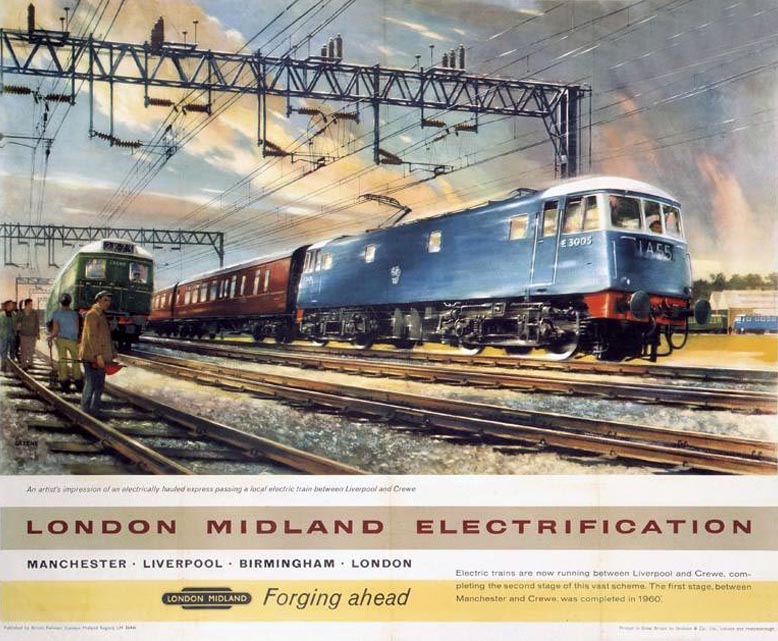
The newly electrified lines opening up the city to a world of high speed intercity travel.
The Krays it seems were deemed to be unwelcome visitors, everyone else came and went, met with equanimity and a bright new modernist vista.
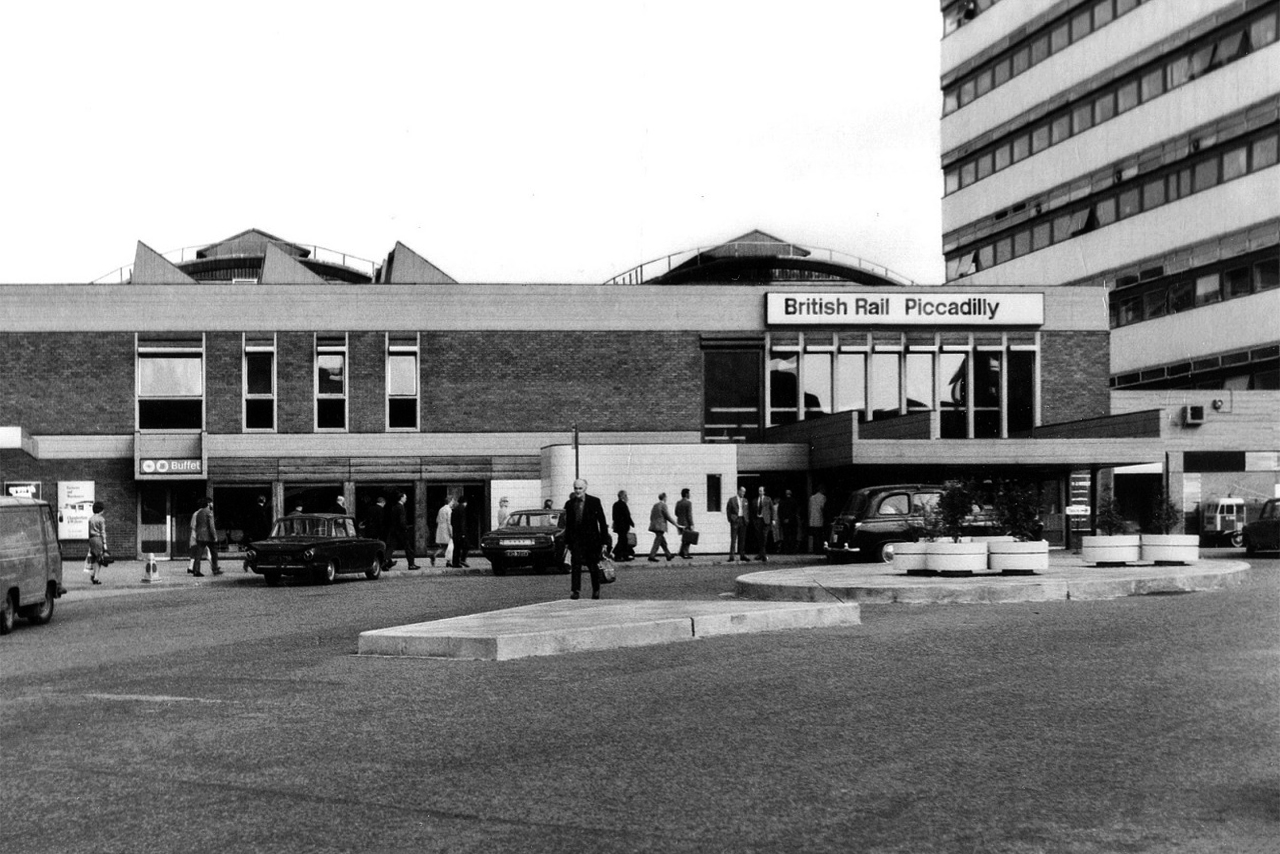
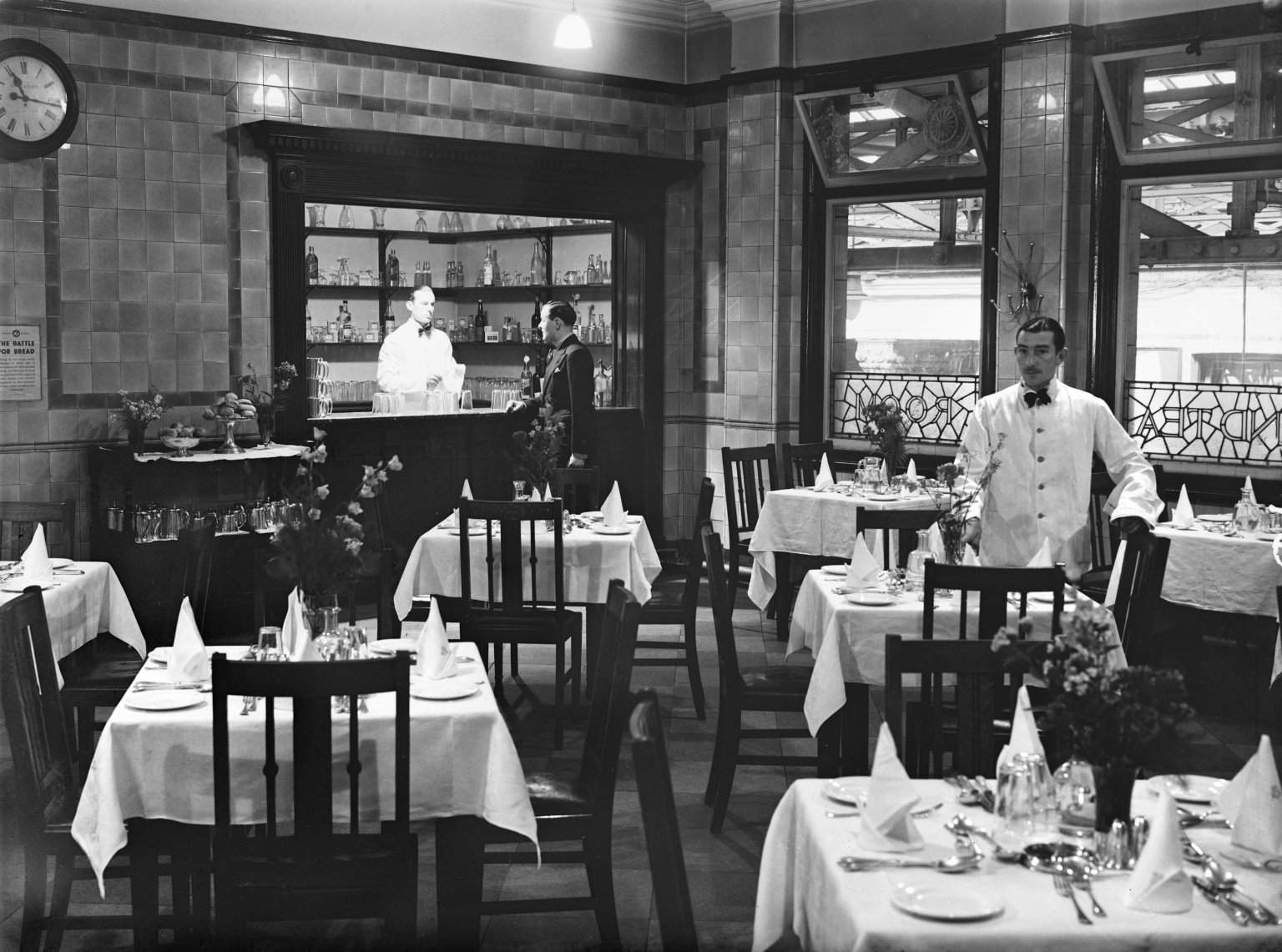
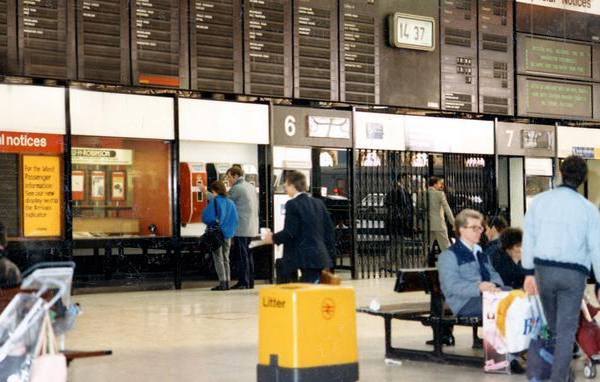
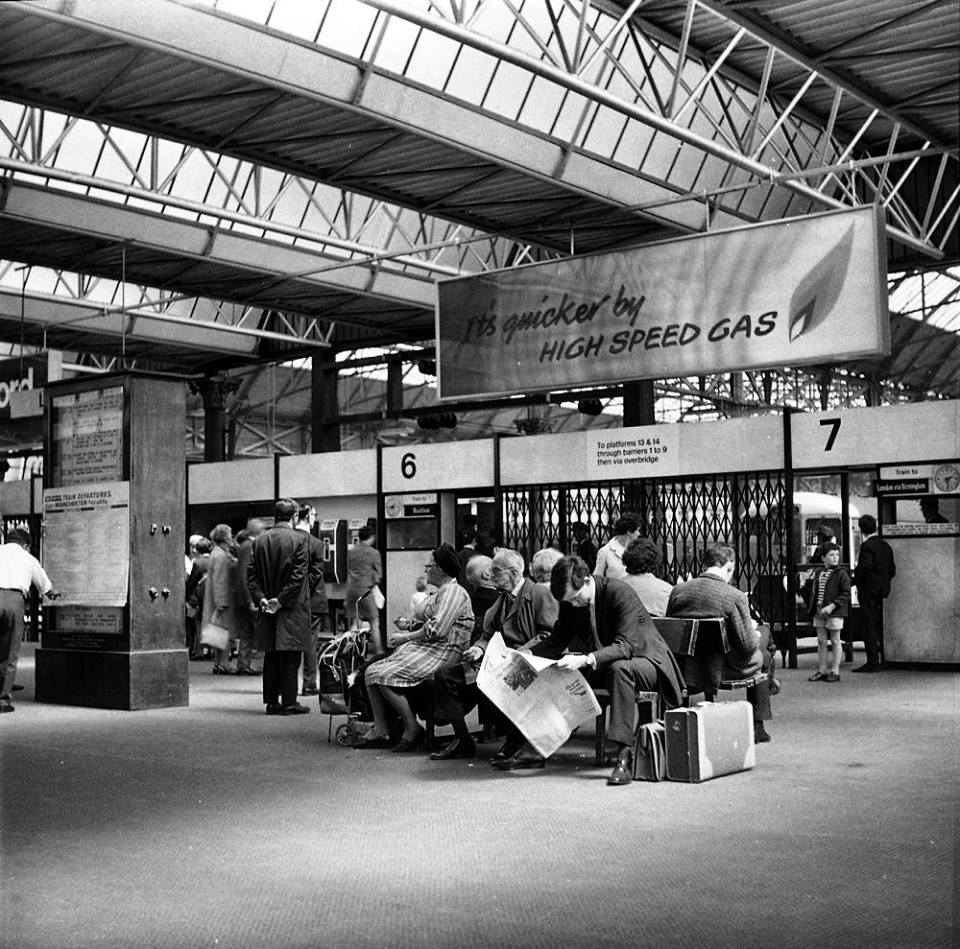
The brand new shiny buffet replaces the archaic dining rooms, as Brylcreemed, bow tied and moustachioed waiters are consigned to the scrapheap of history.
Likewise the gloomy destination boards – out with the old!
And in with the new.
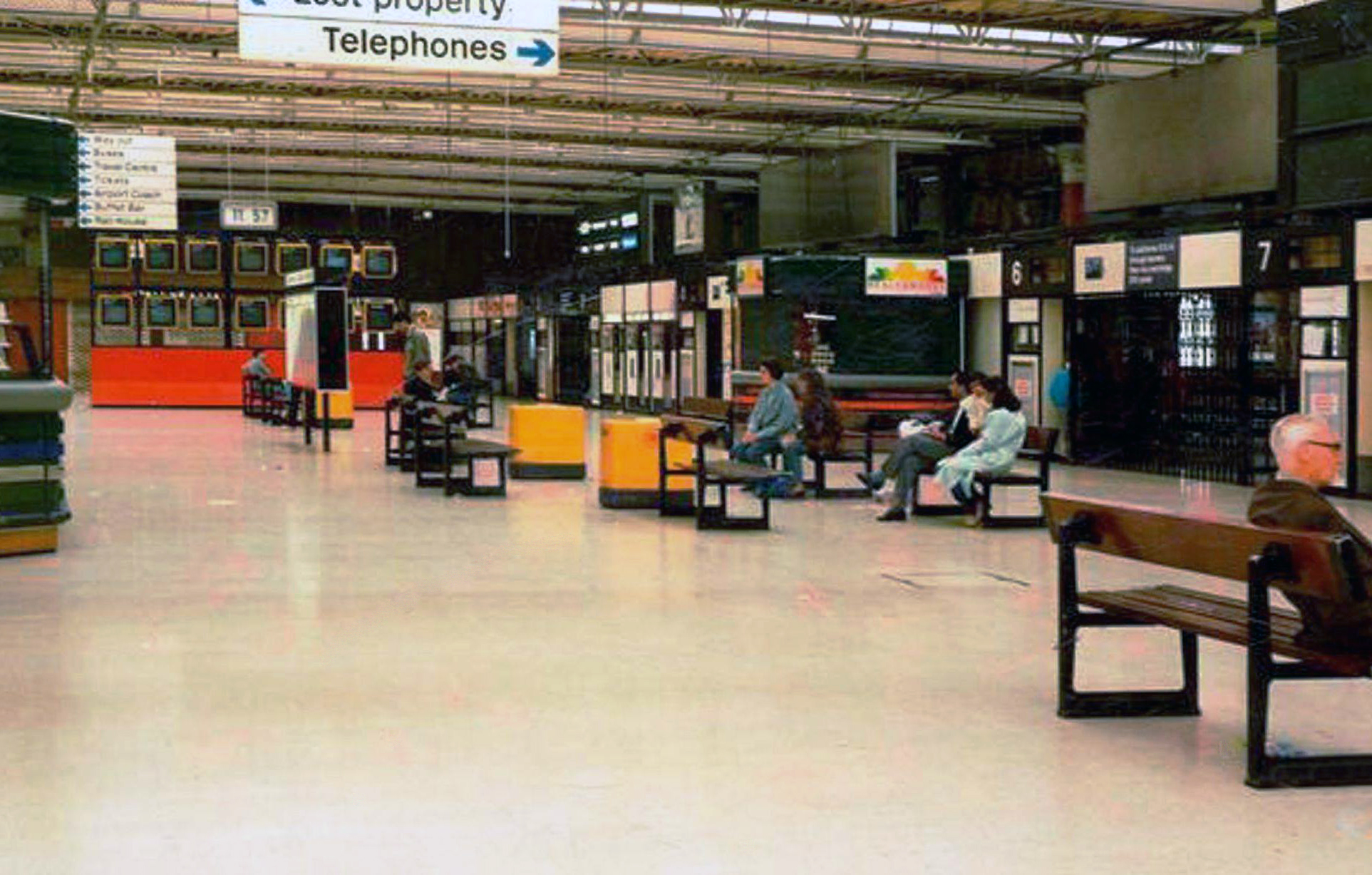
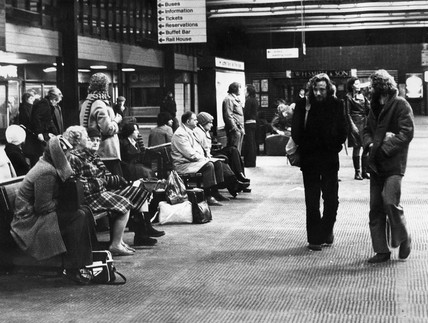
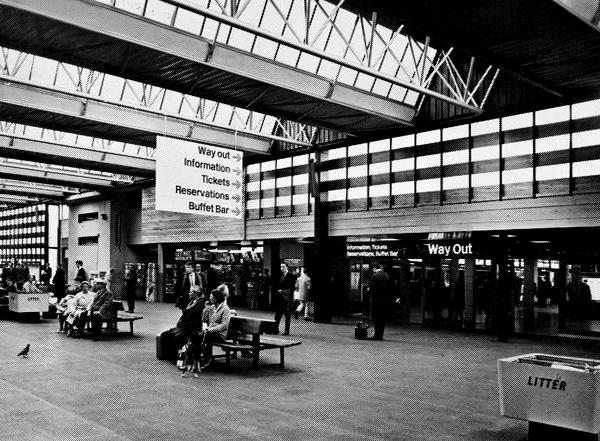
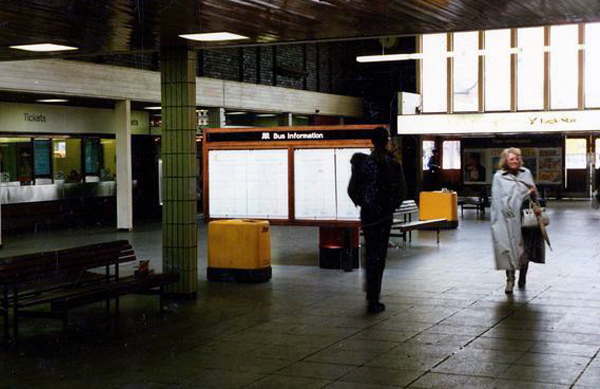
We have a fully integrated modern interior to deal with the modern passengers’ every need – including crystal clear signage, seating and bins.
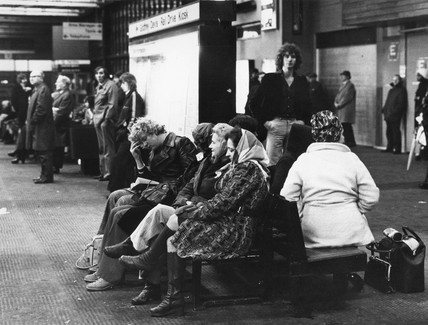
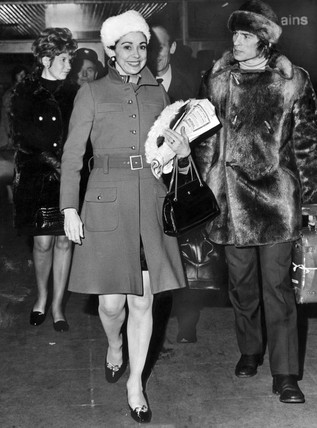
Stars of screen and stage are guided through with consummate ease, Margot Fonteyn and Rudolf Nureyev in his brand new baby seal skin coat arrive in 1968 to dance Swan Lake at the Palace.
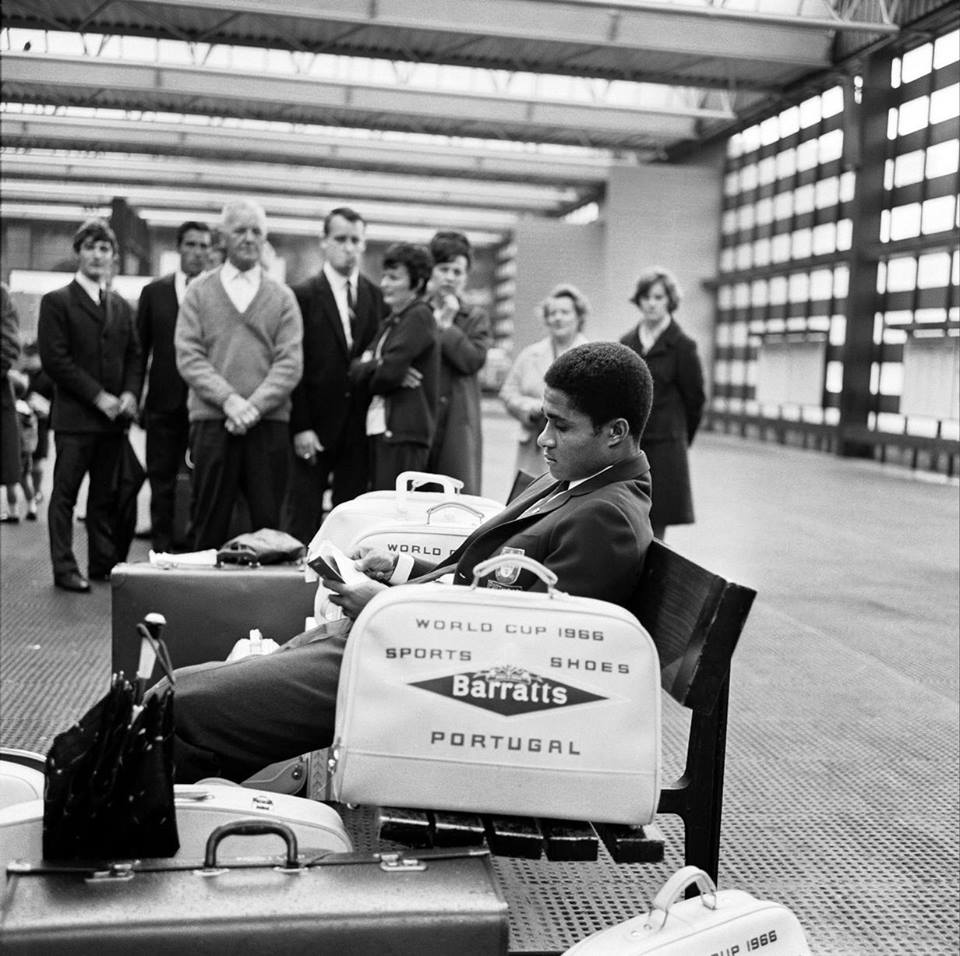
Esteemed footballer Eusebio on his travels during the 1966 World Cup.
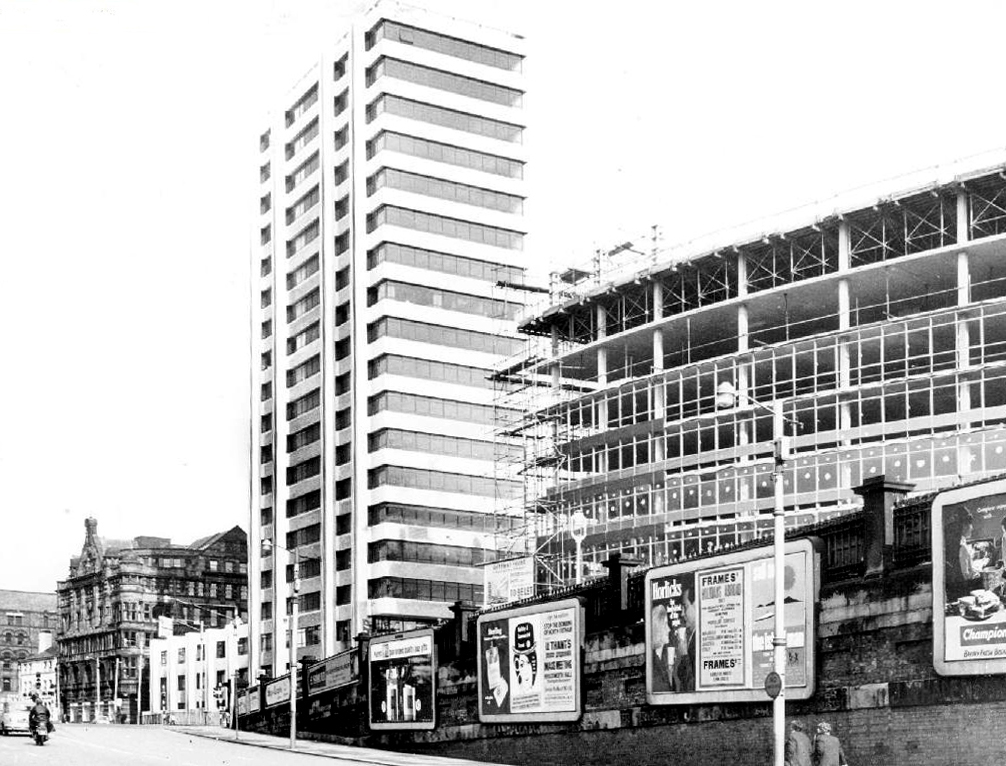
In 1969 Gateway House arrives, Richard Sieffert & Partners wavy hello and goodbye to Manchester’s premier railway station.
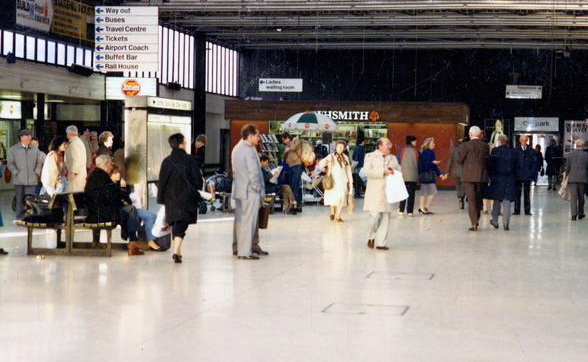
Piccadilly has now seen several revamps, the concourse an exercise in contemporary cluttered retail/airport chic, a 125mph Pendolino journey away from the carefully considered internal order of yesteryear.
Who knows what the future holds?
HS2 to name but one – sit back let the train take the strain.











































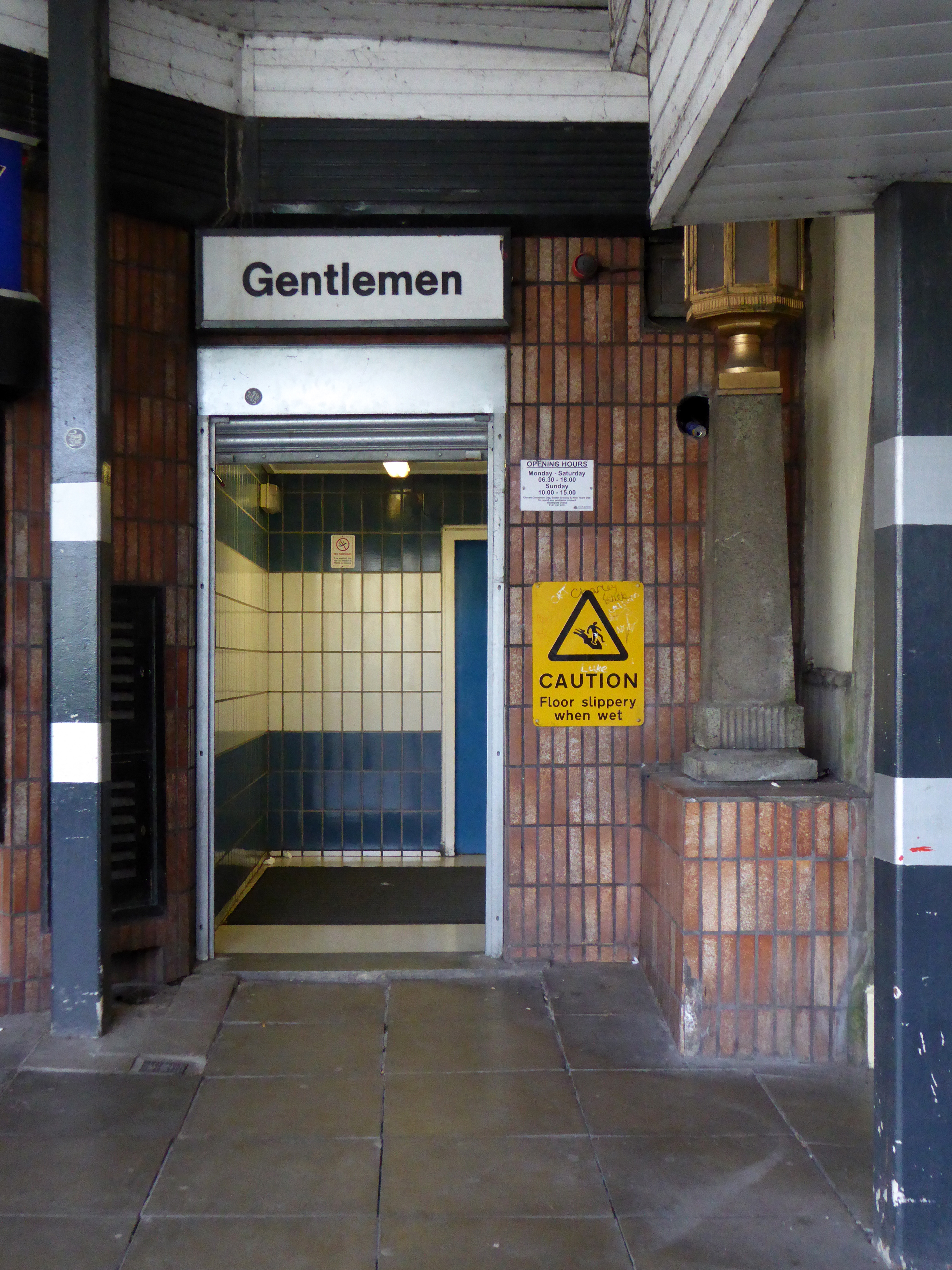
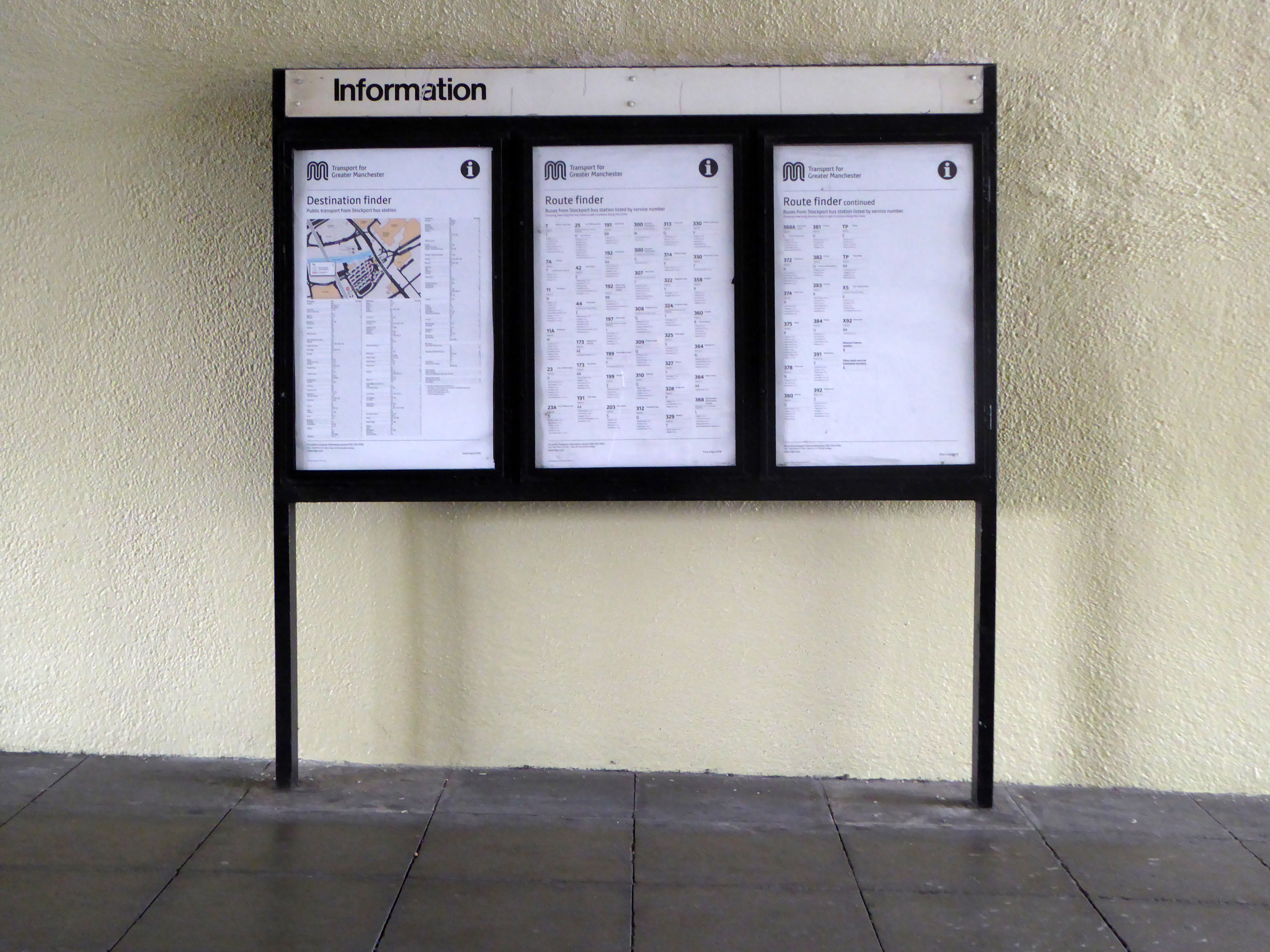
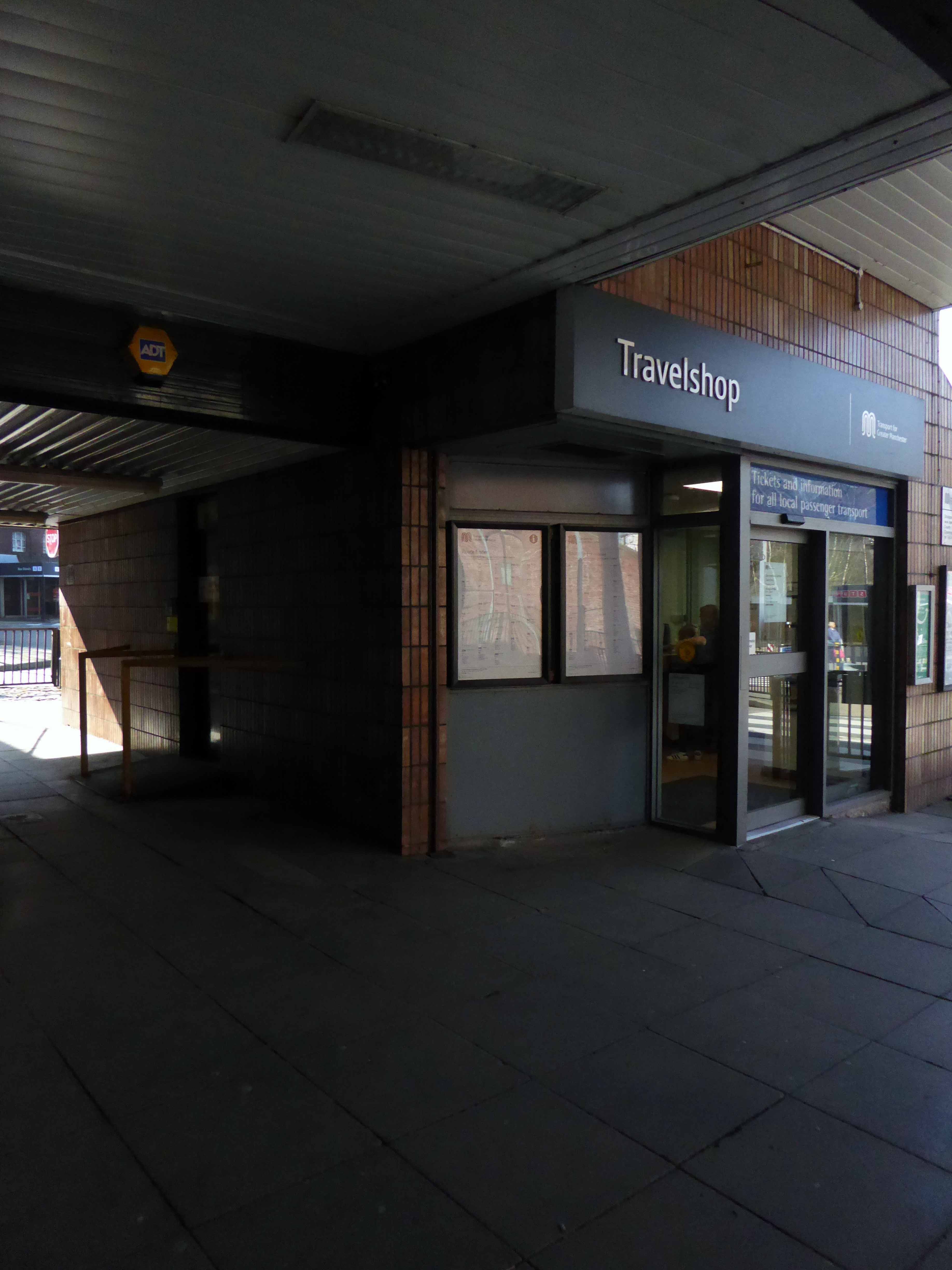
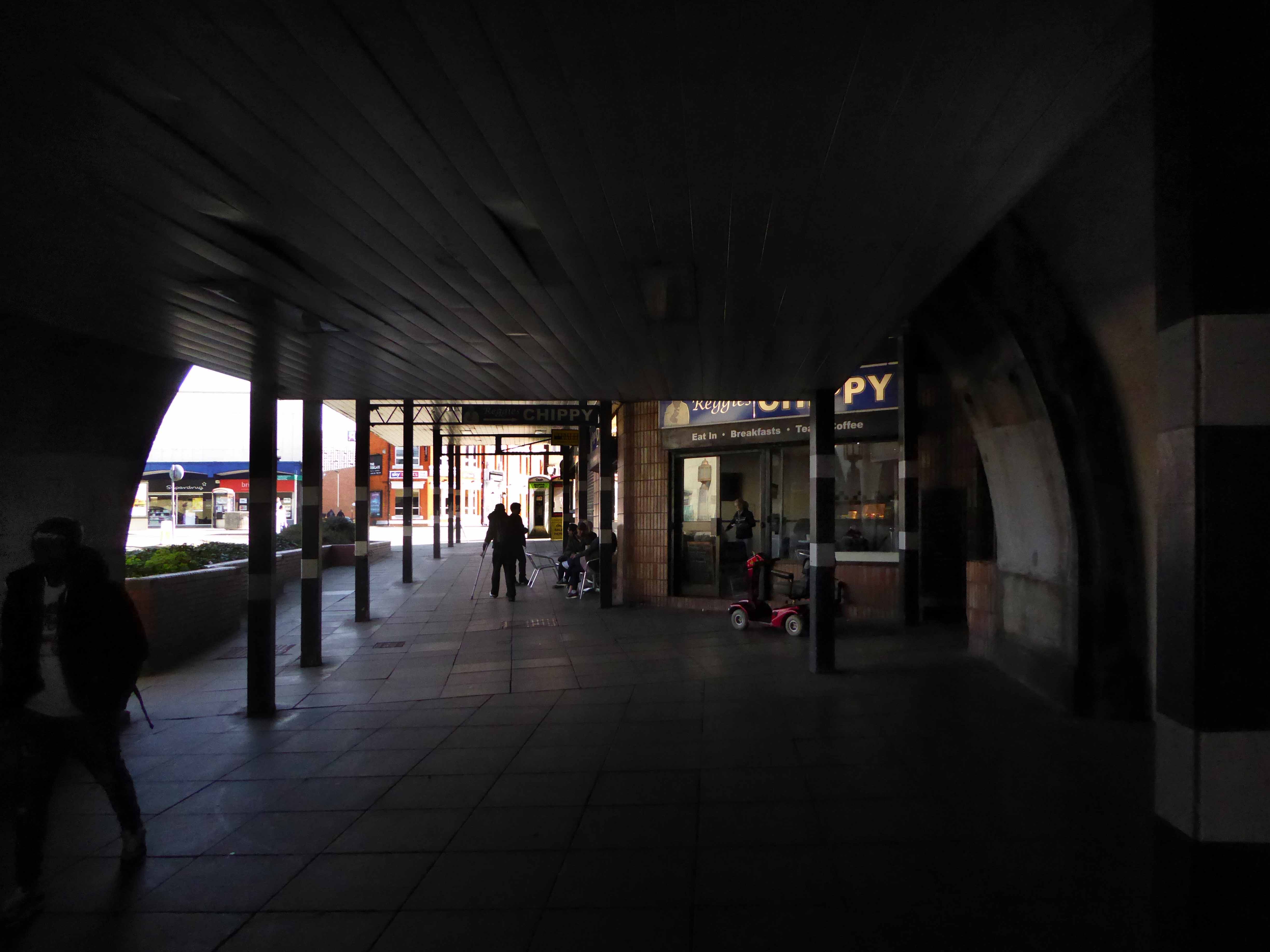



 Modern Mooch