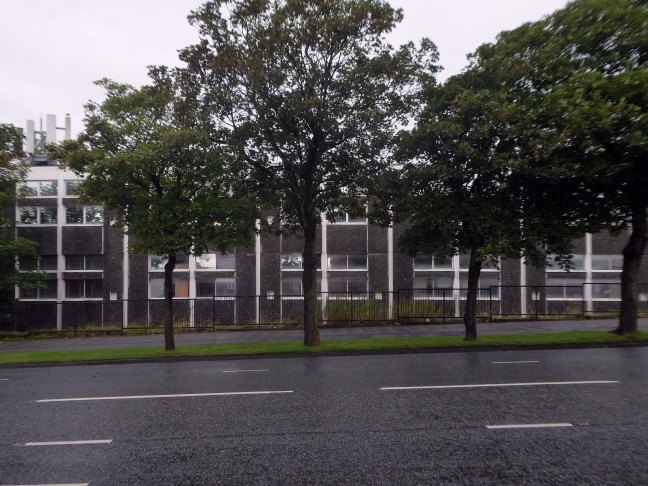
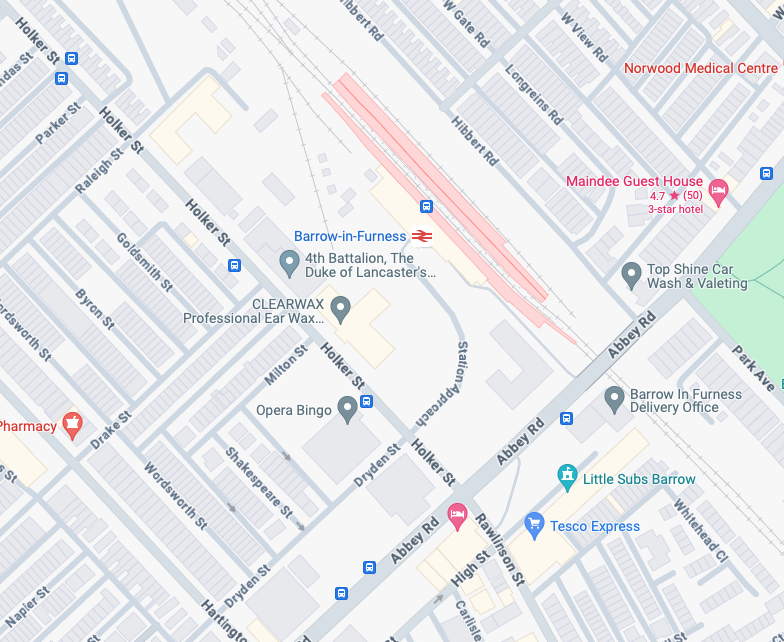
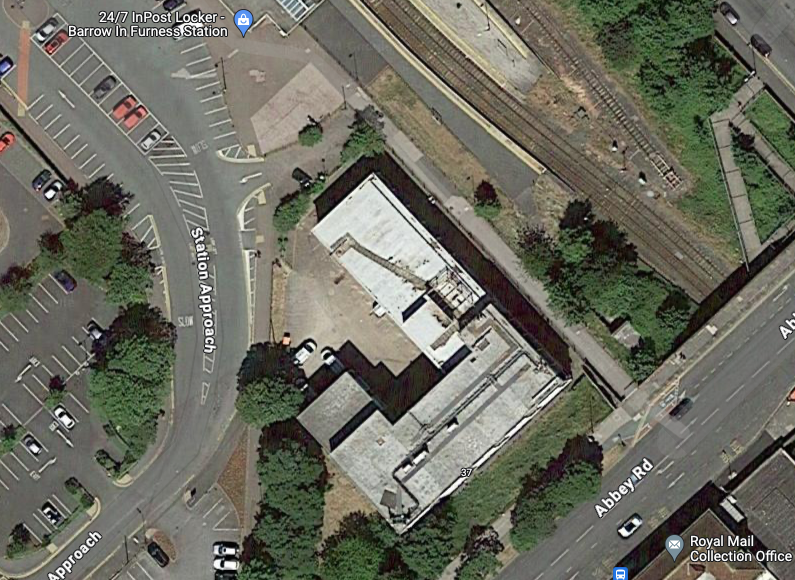
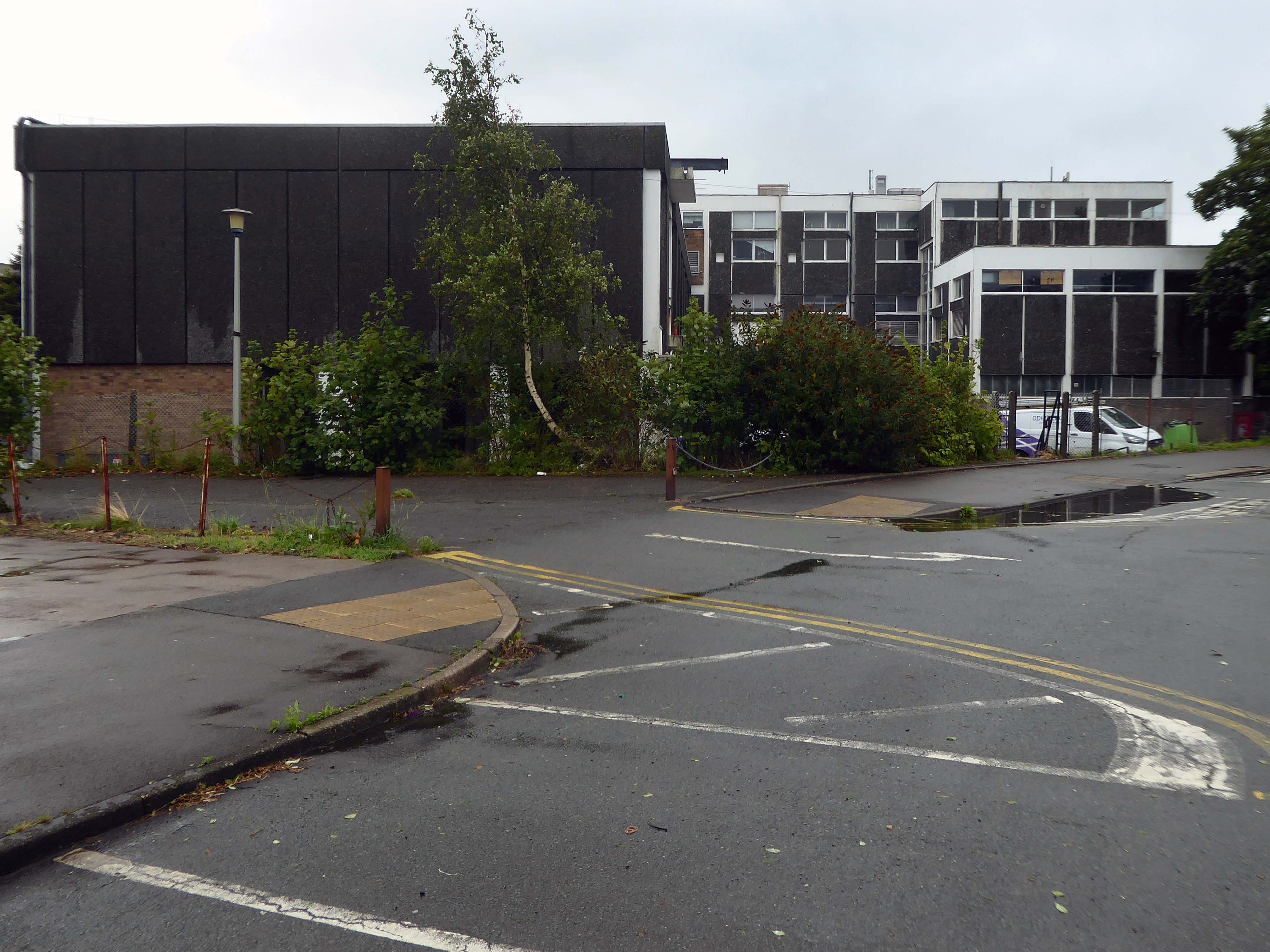
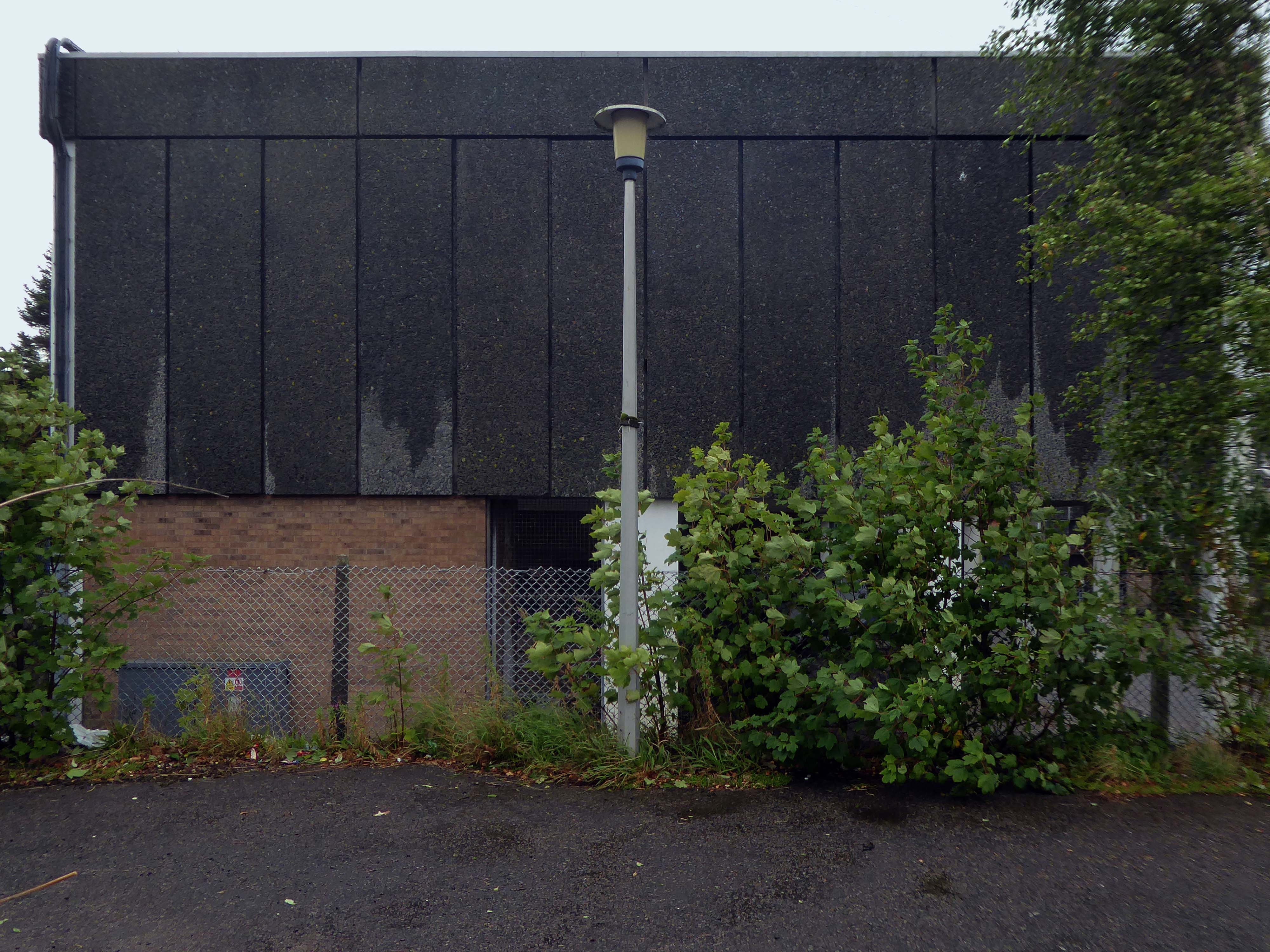
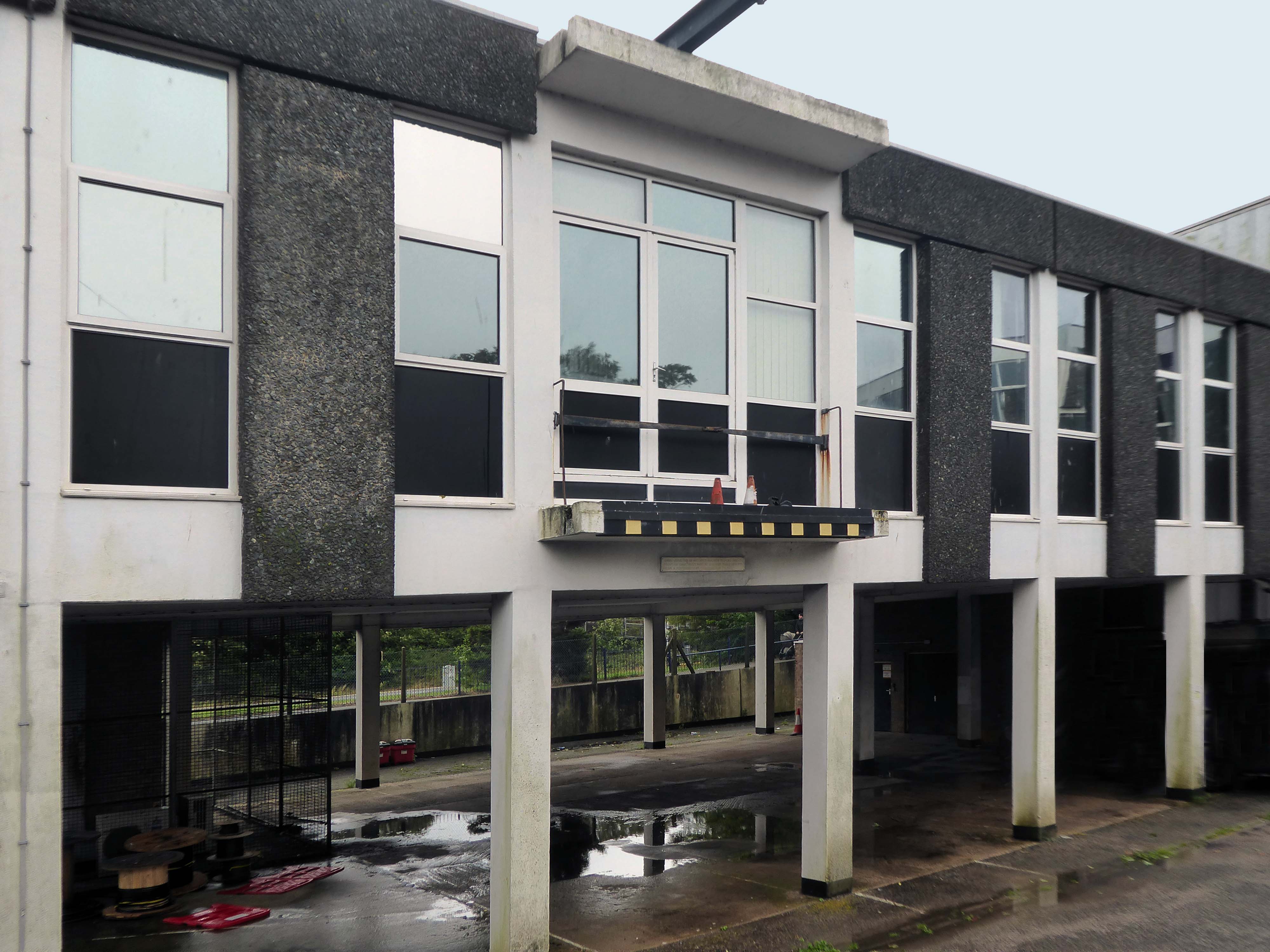
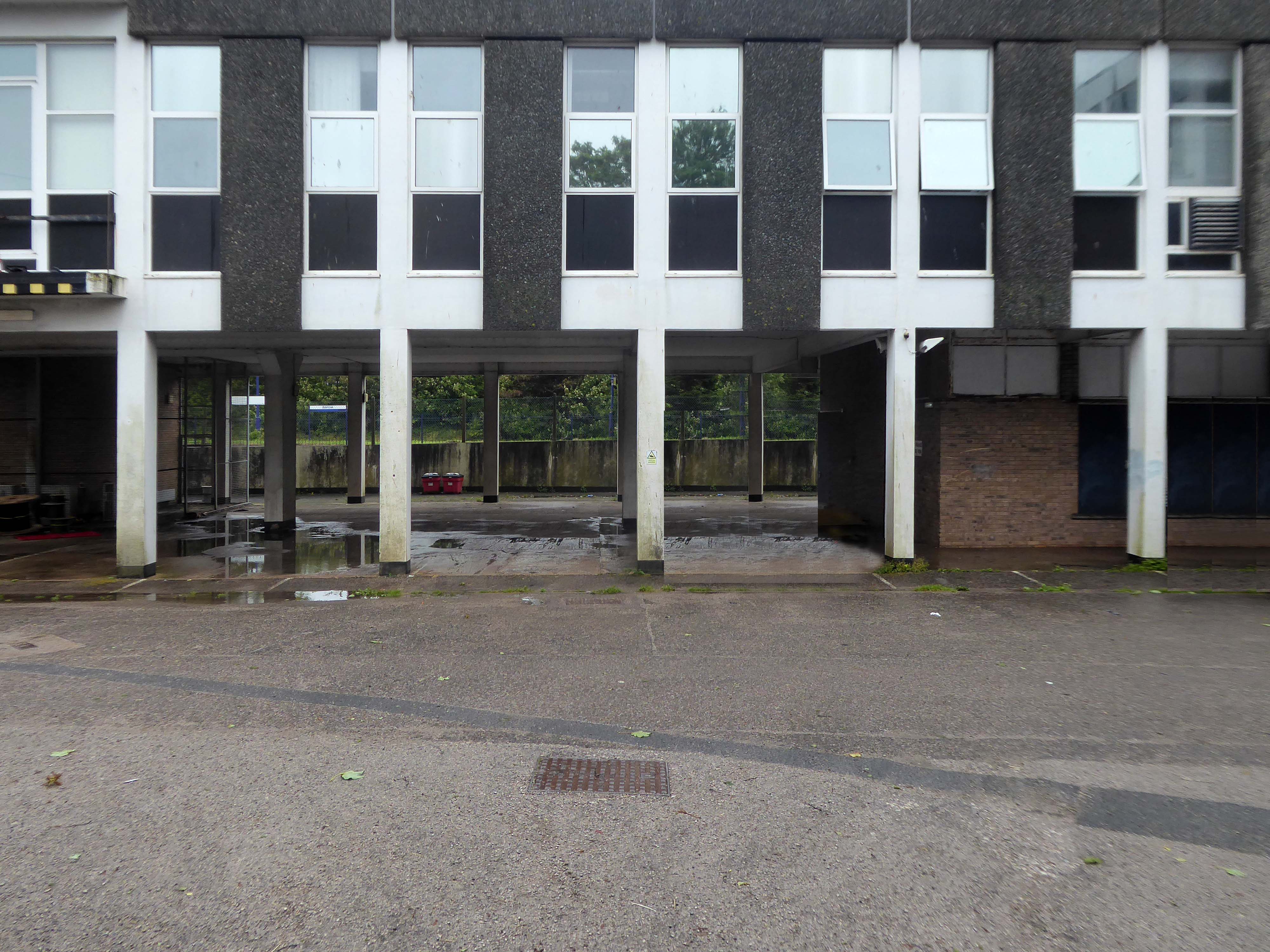
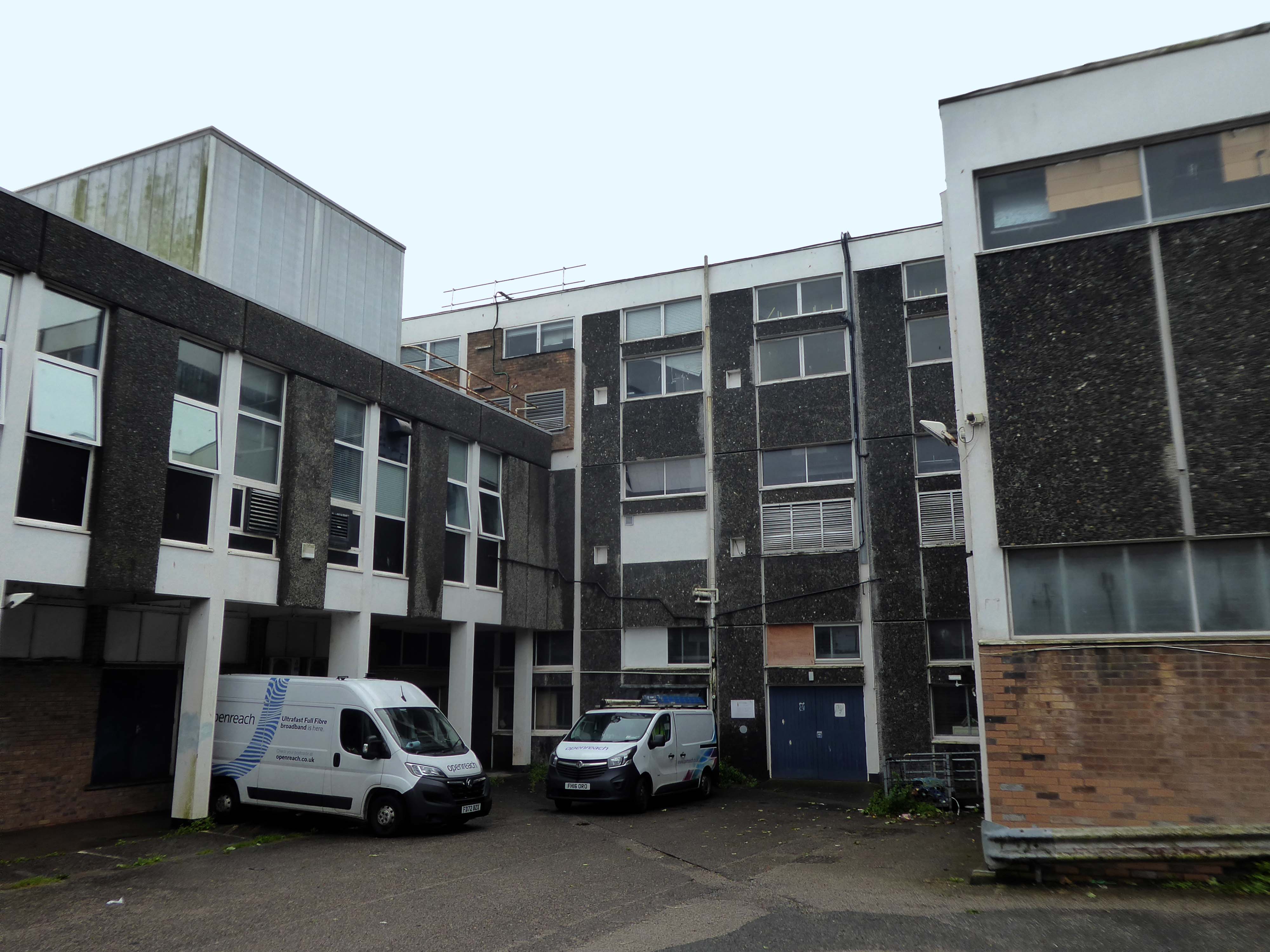
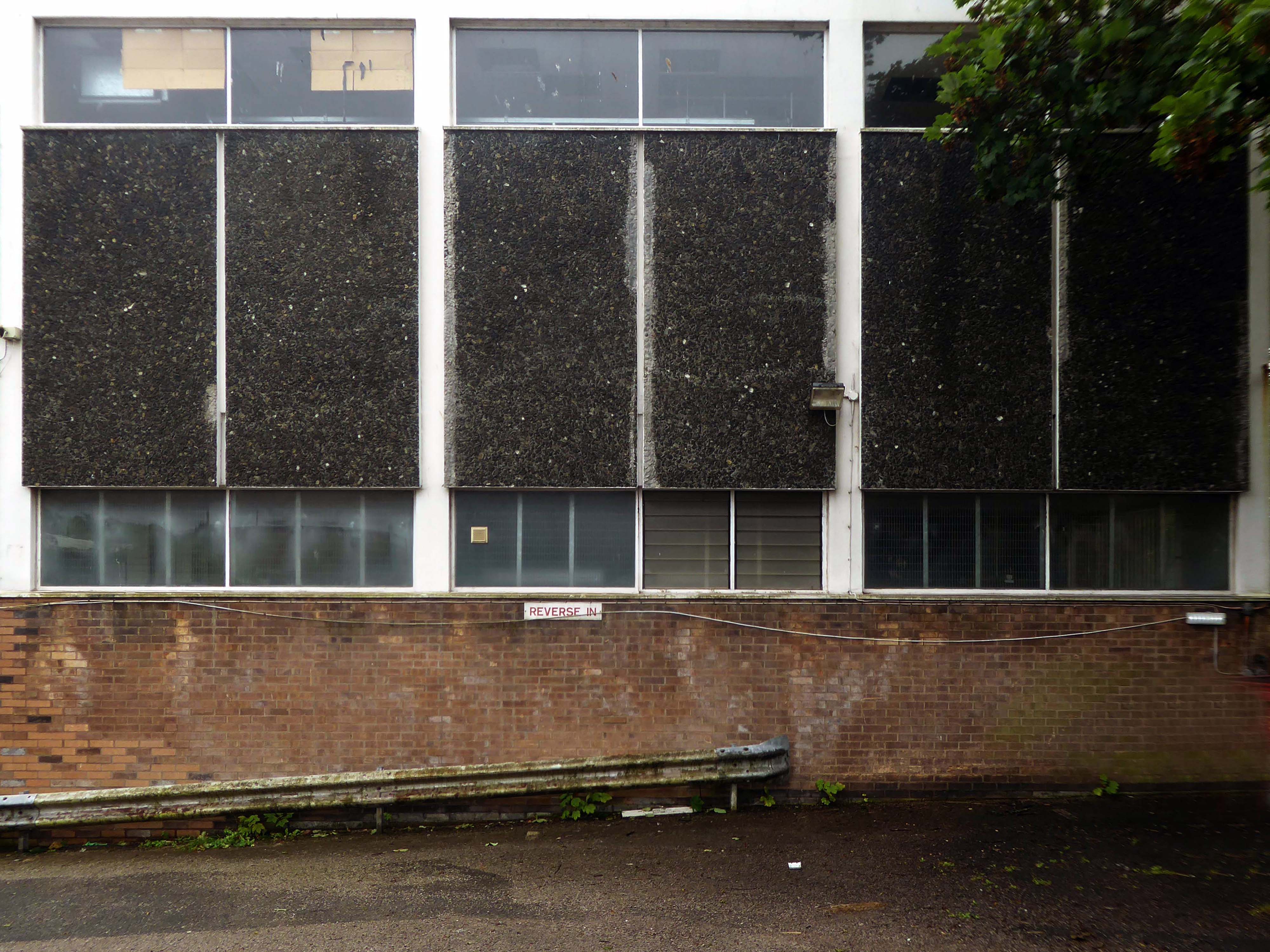
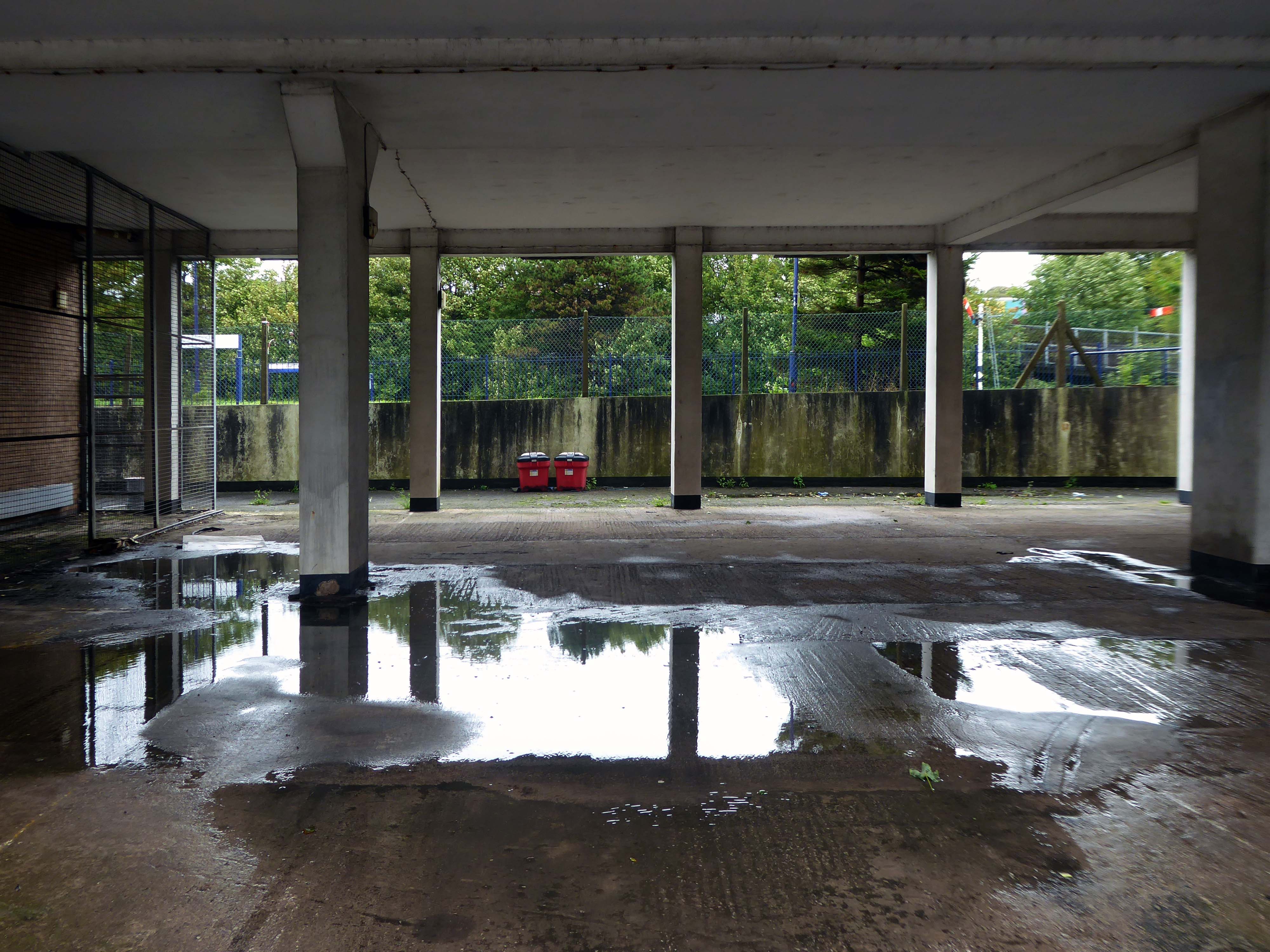
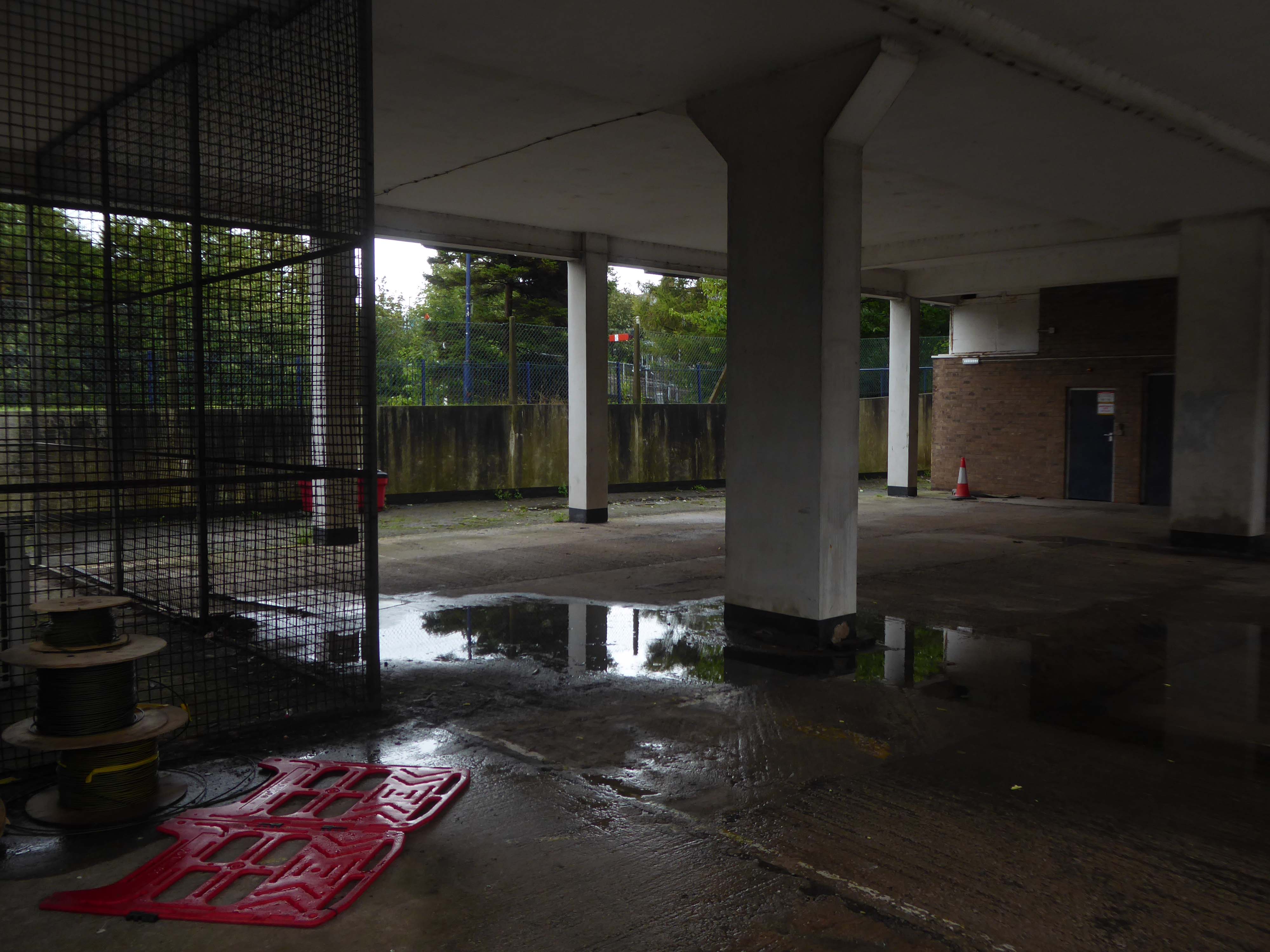
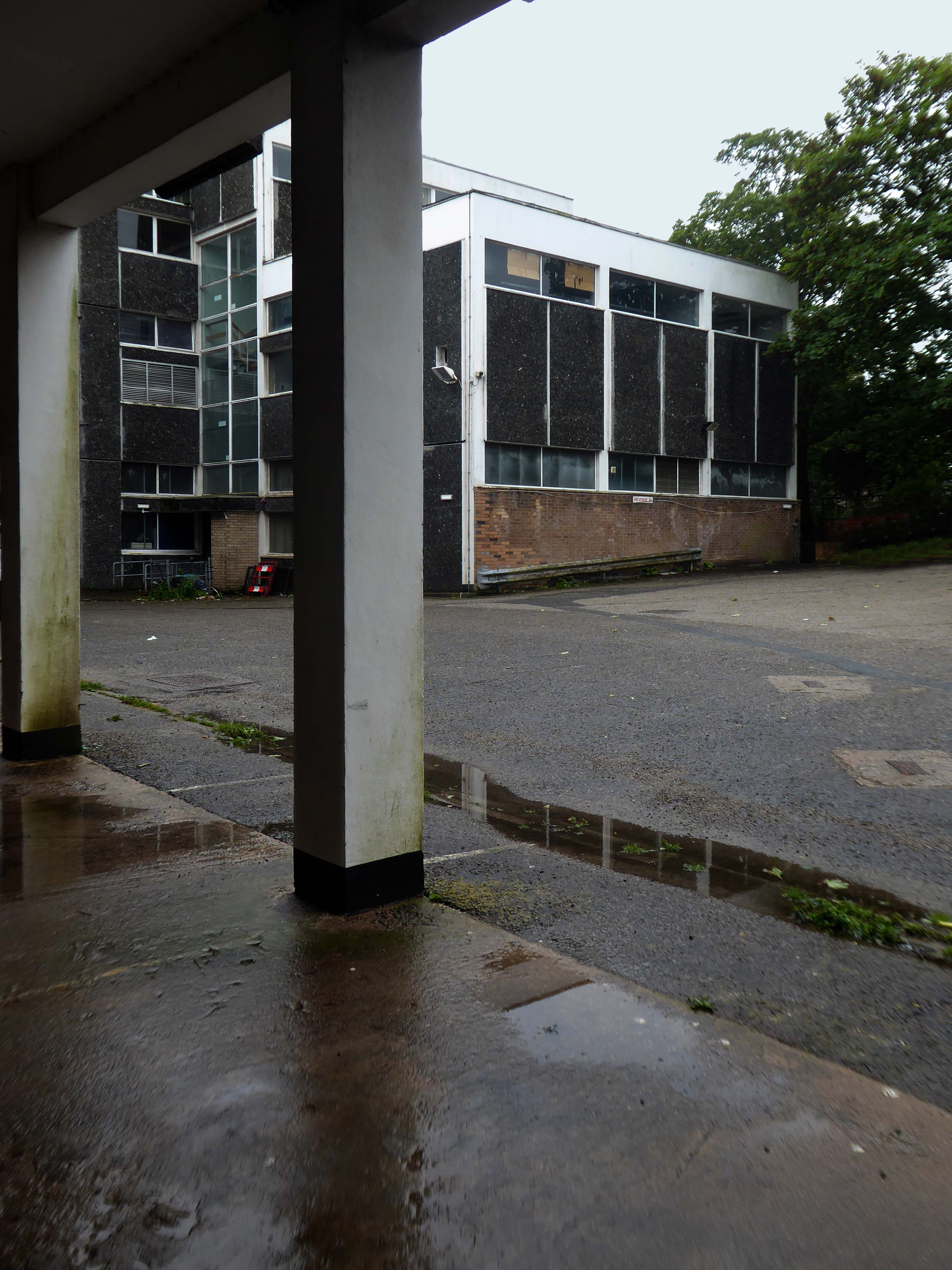
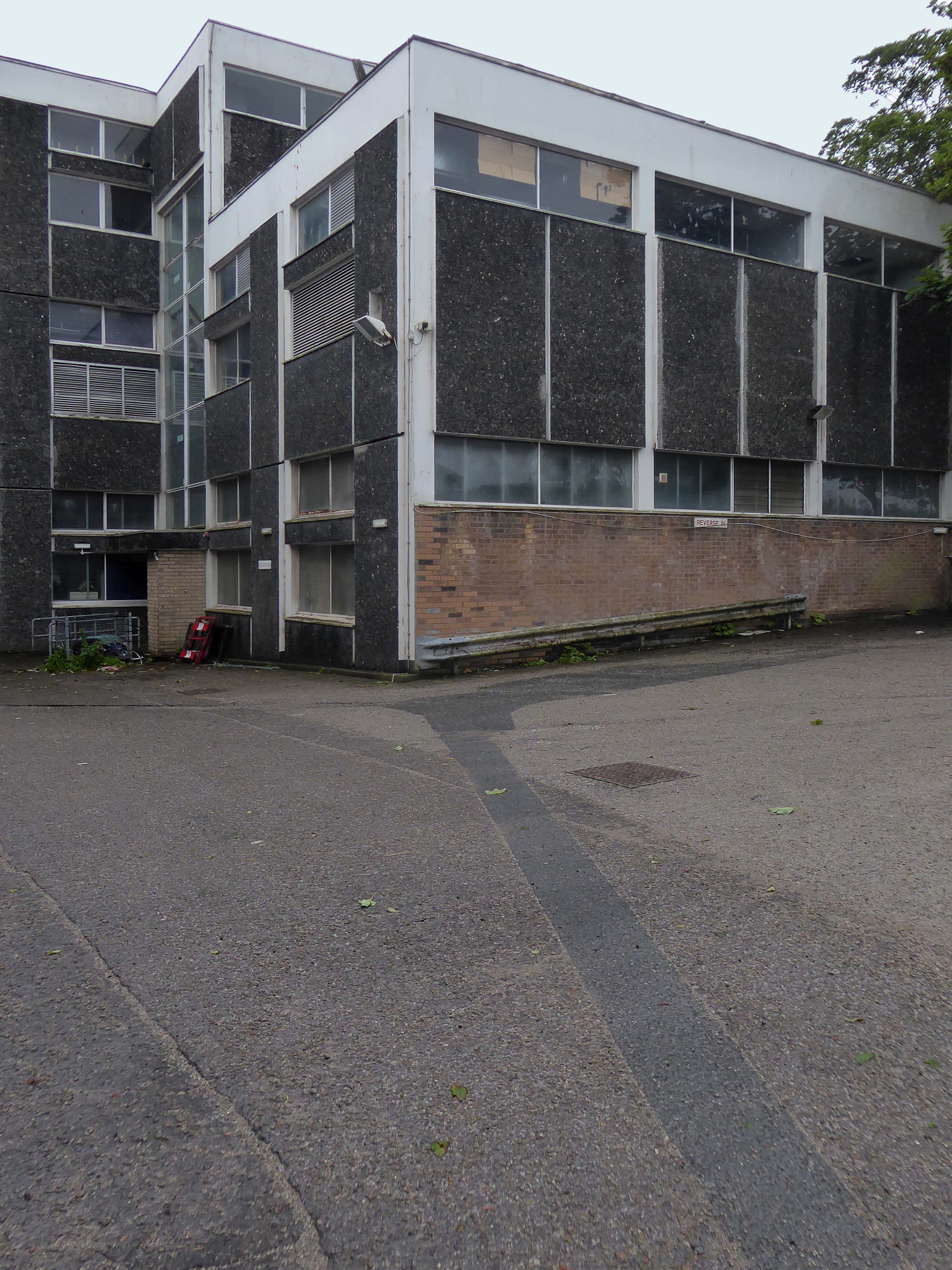
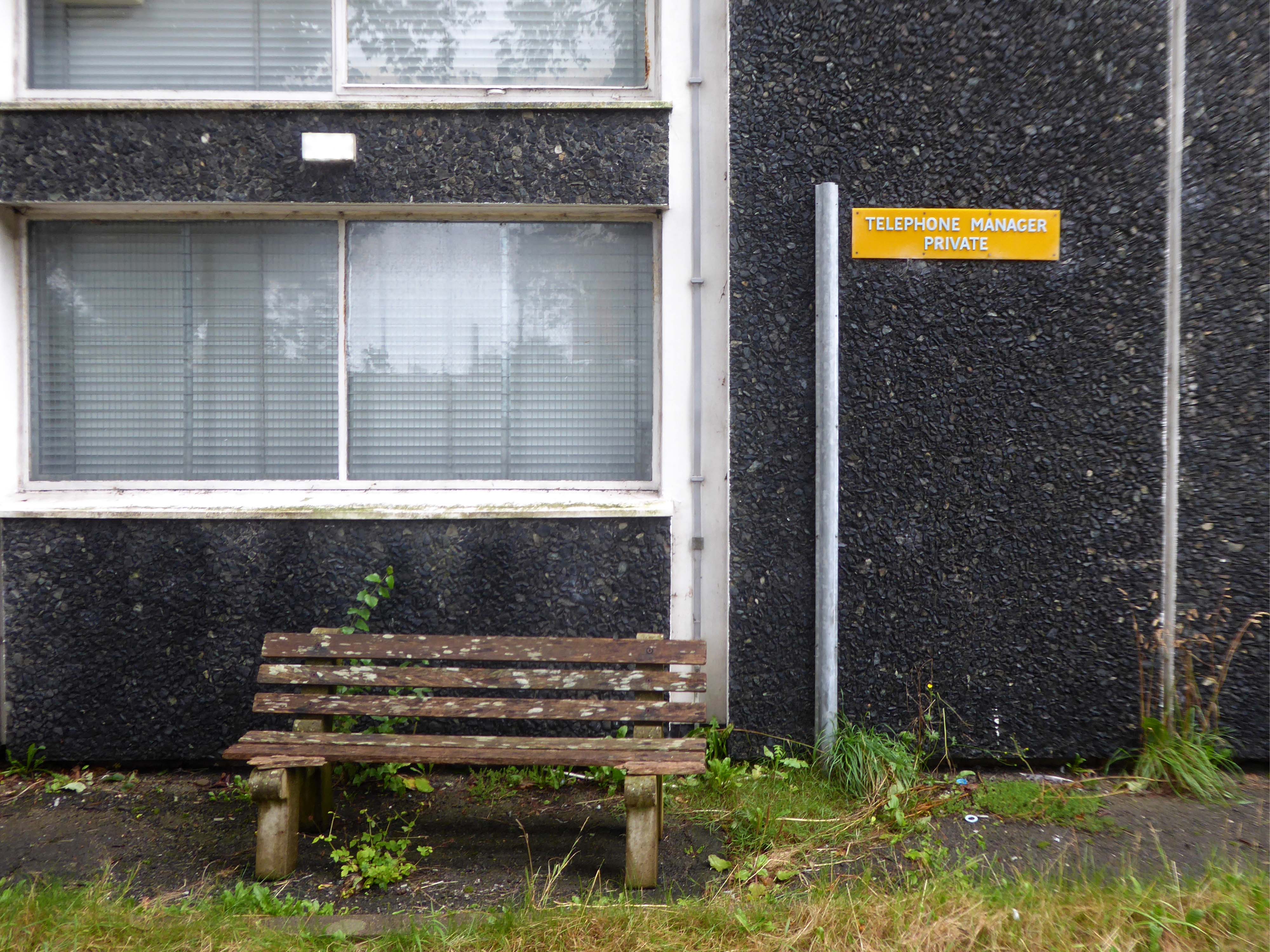
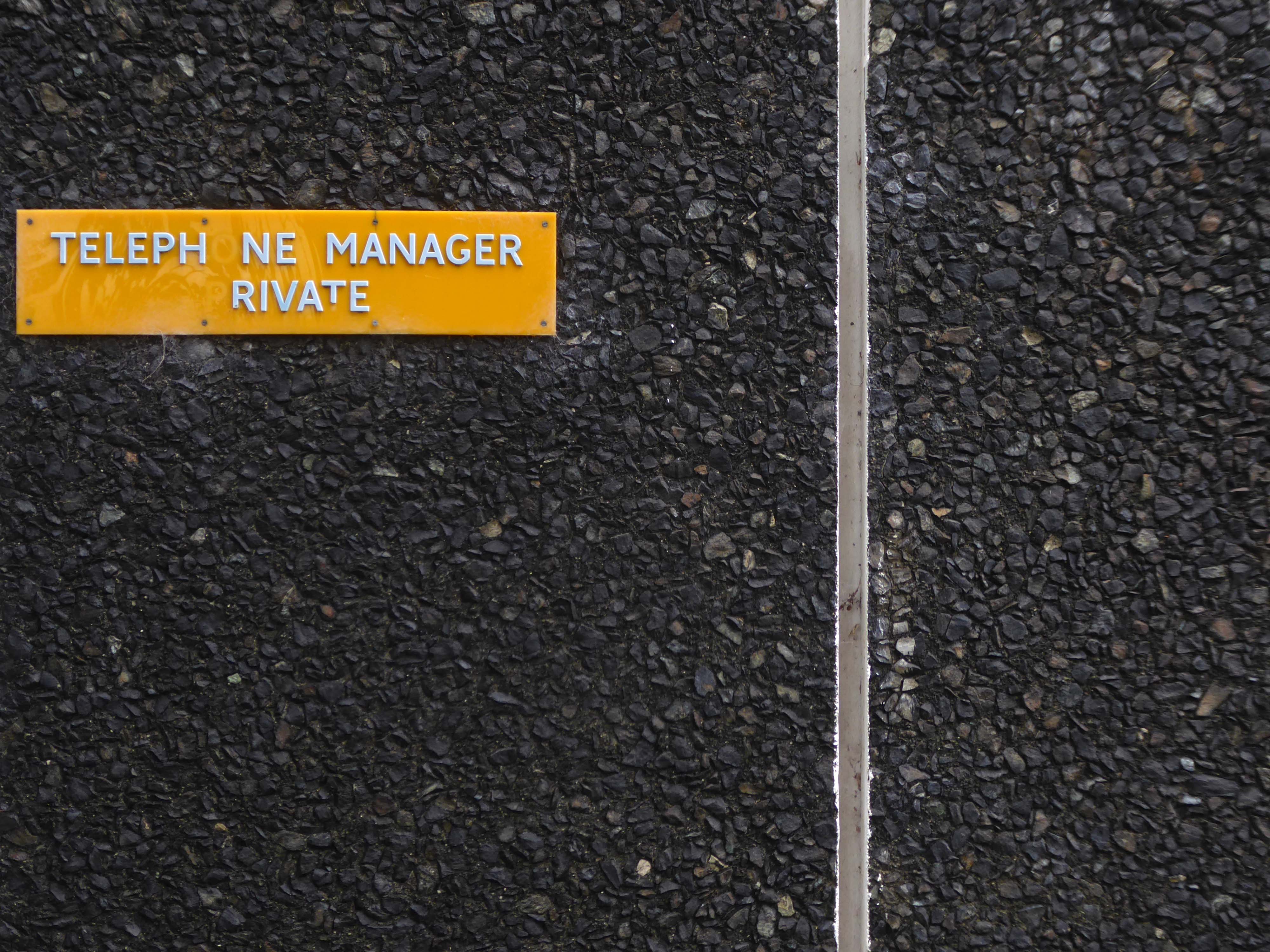
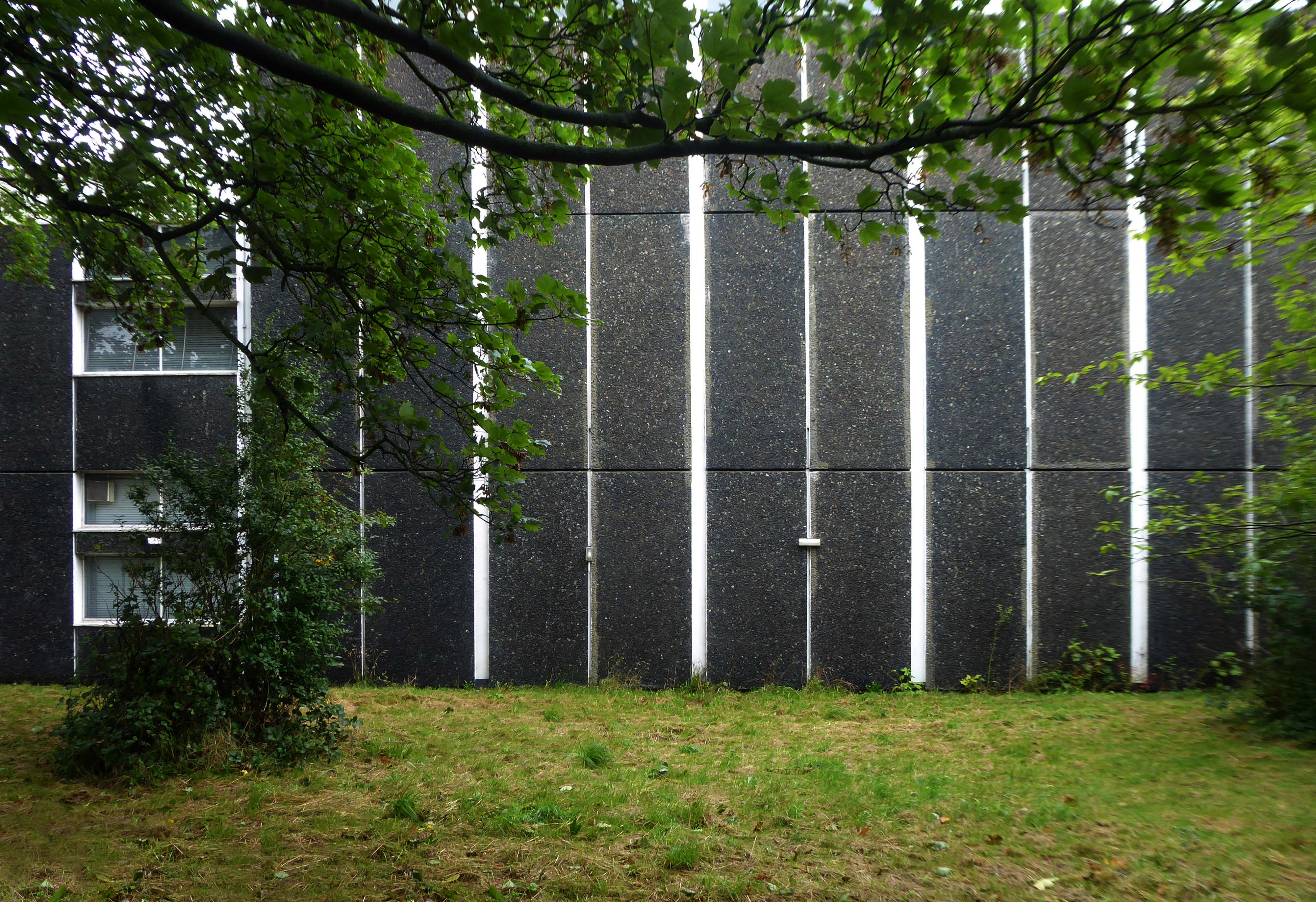
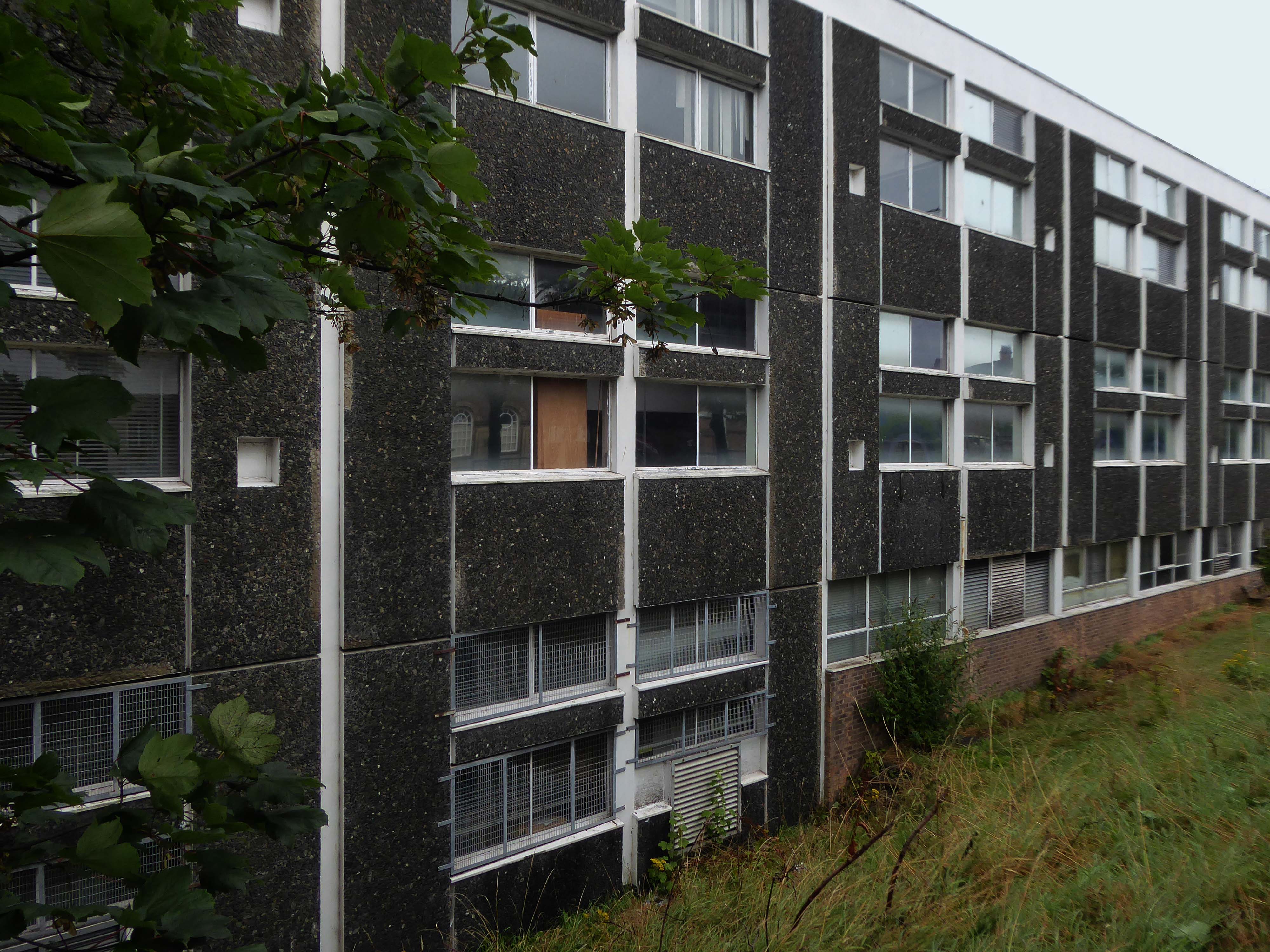
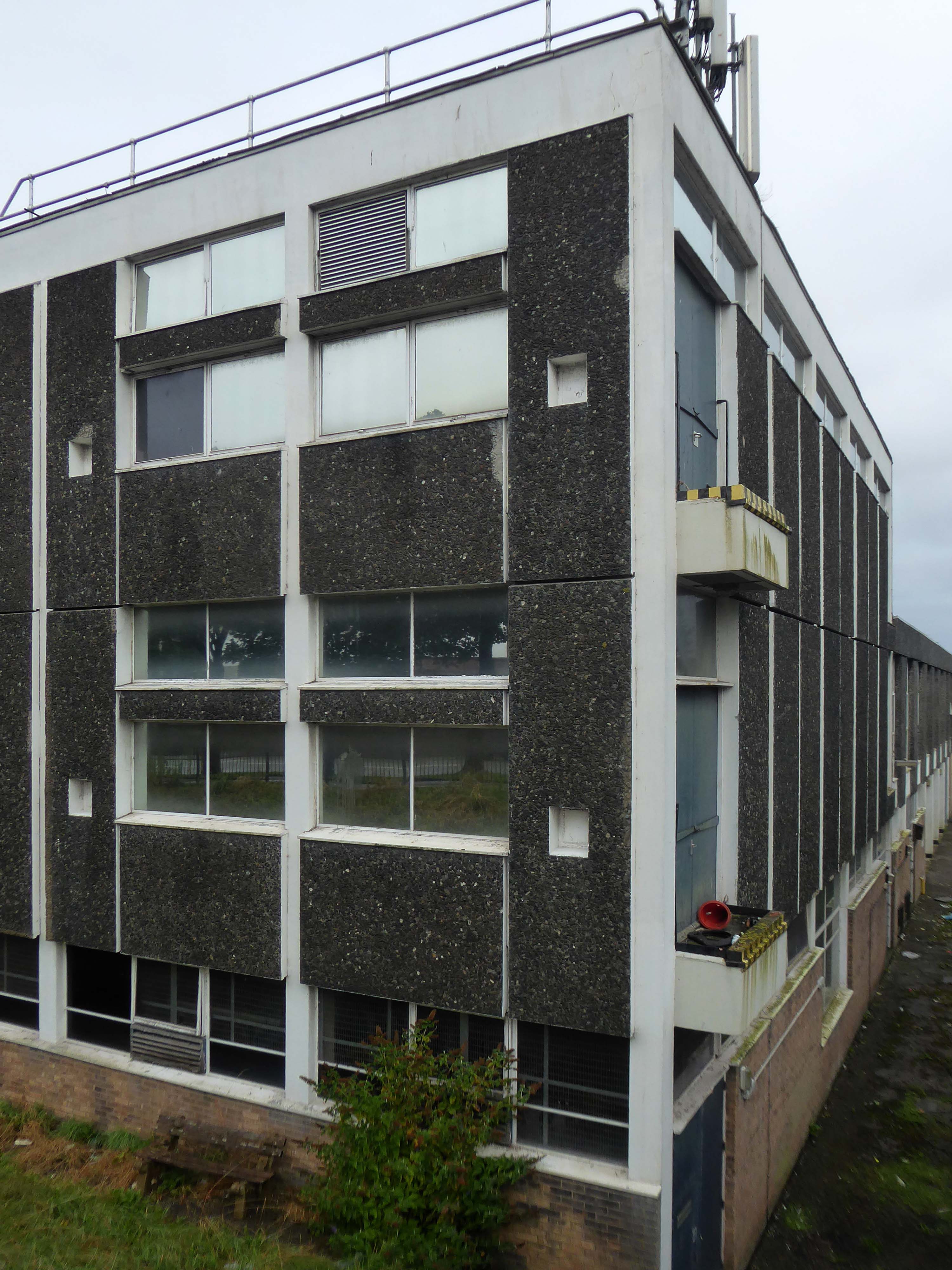
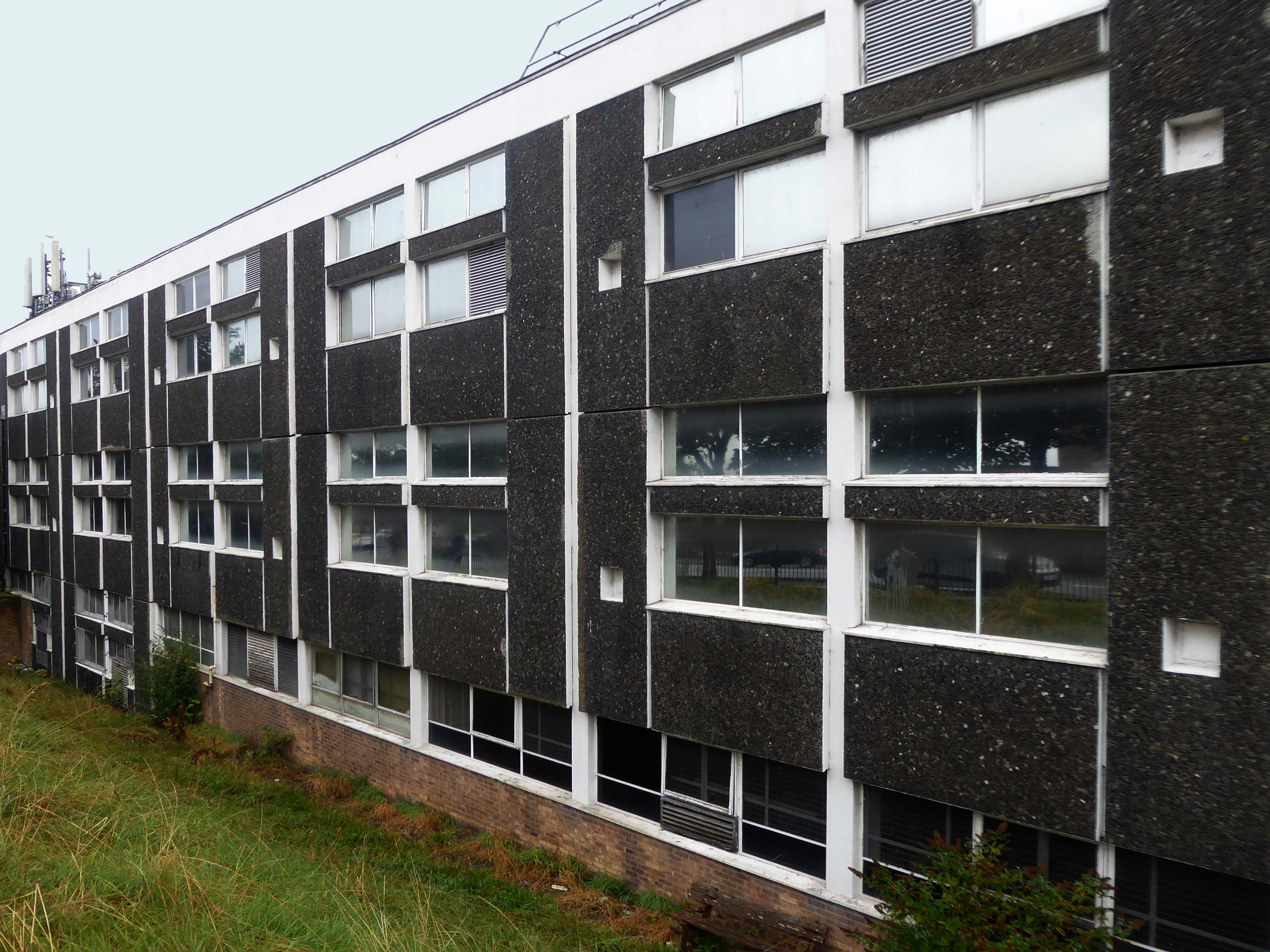
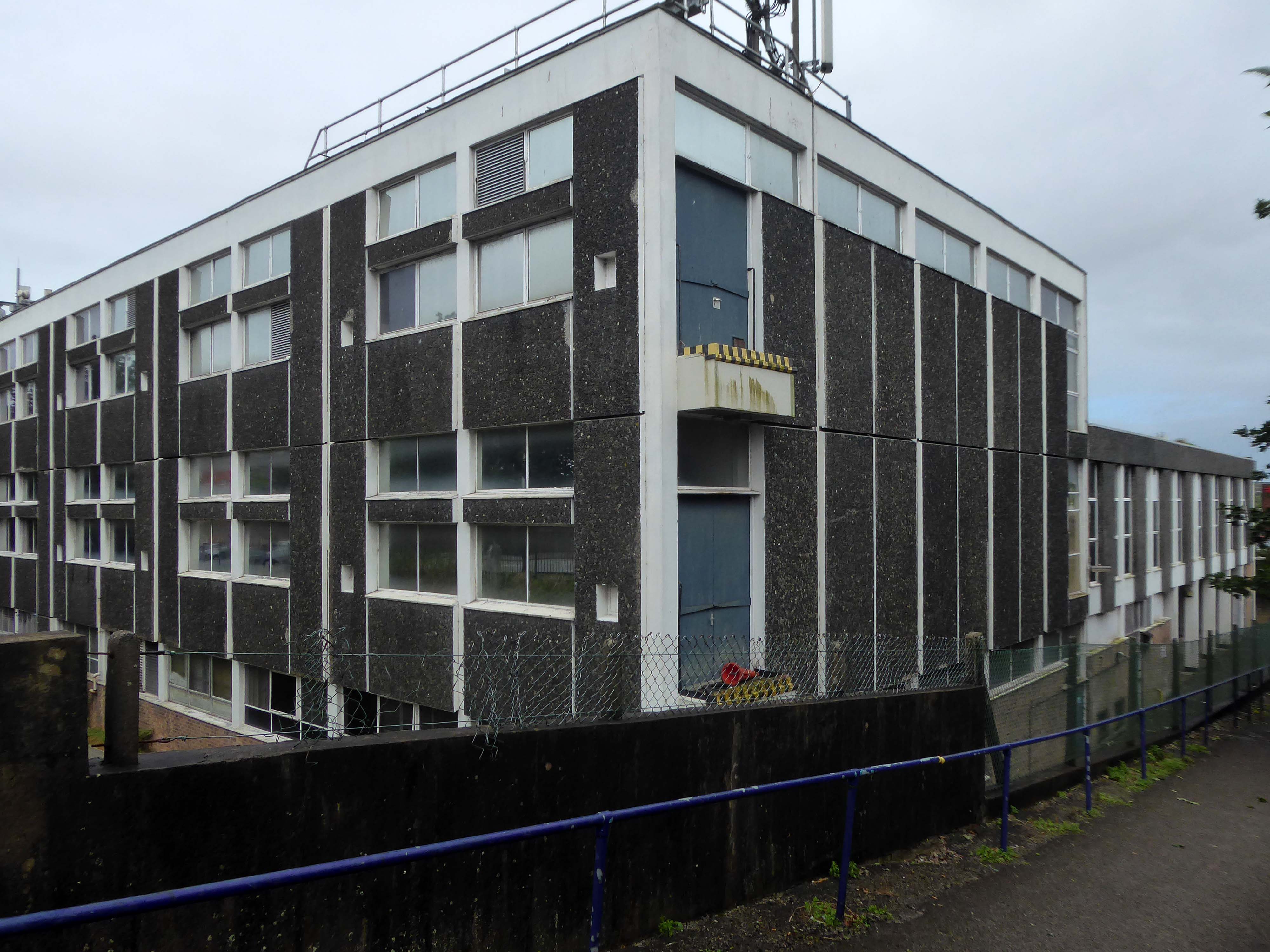
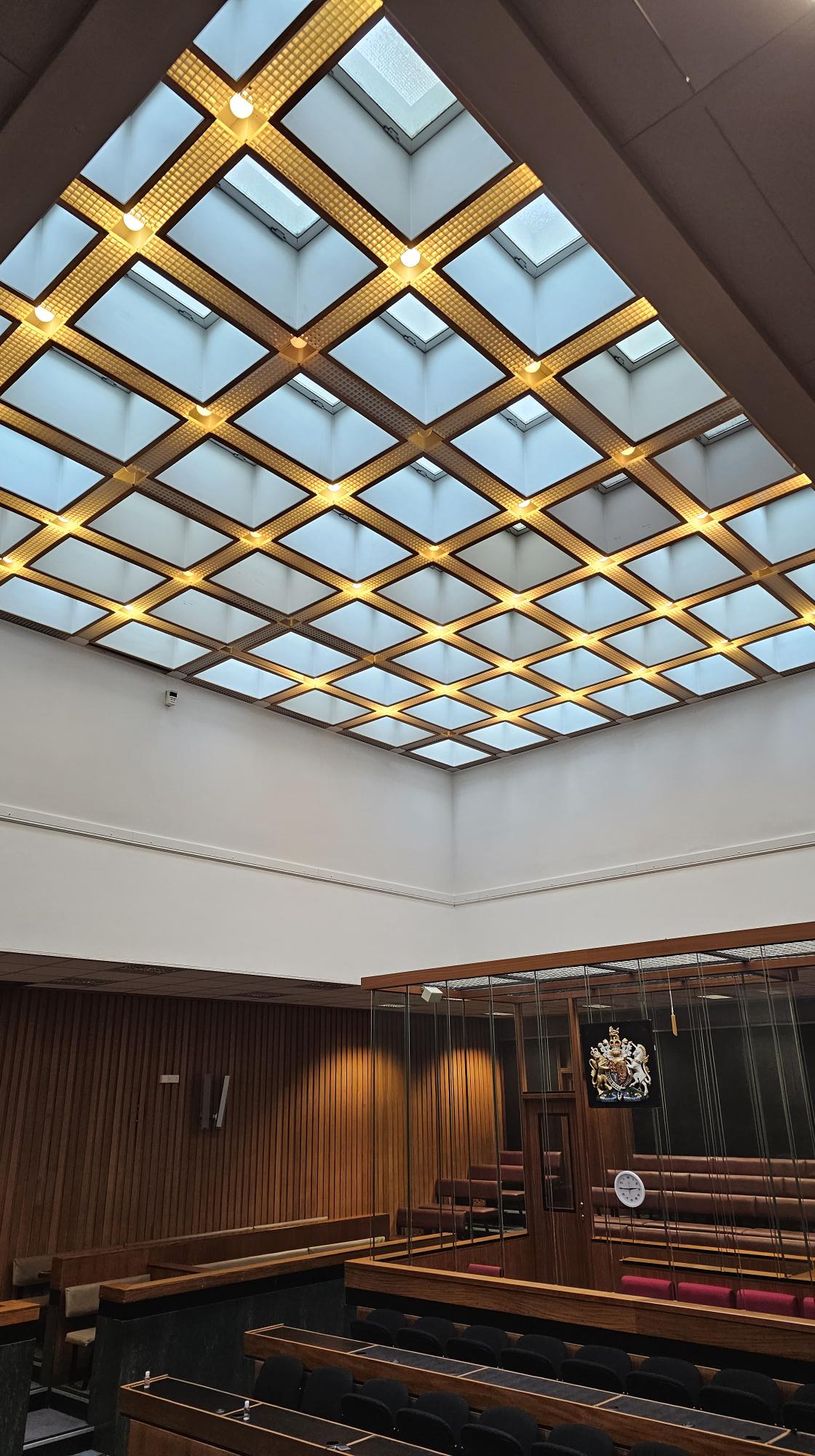
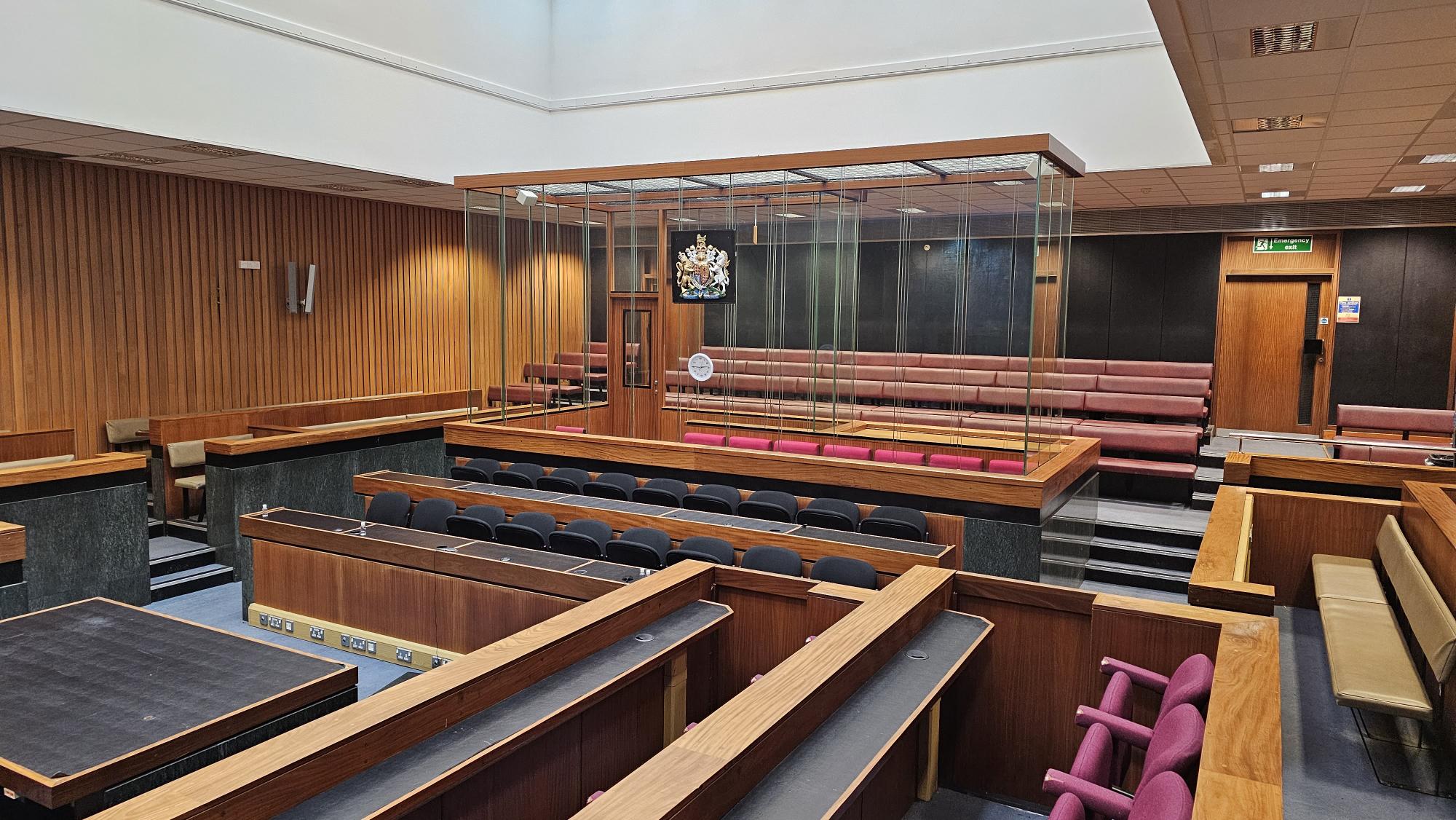
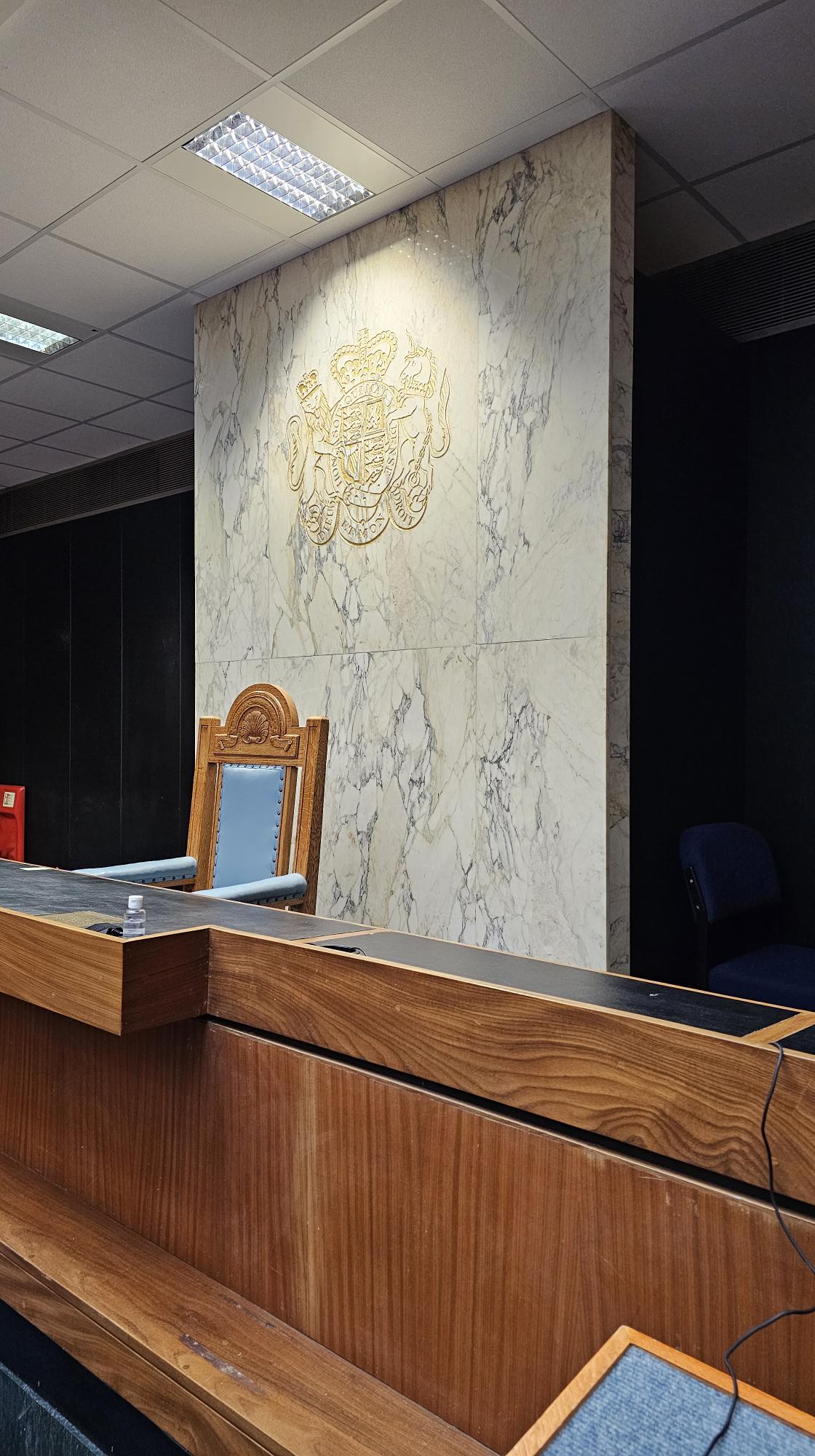
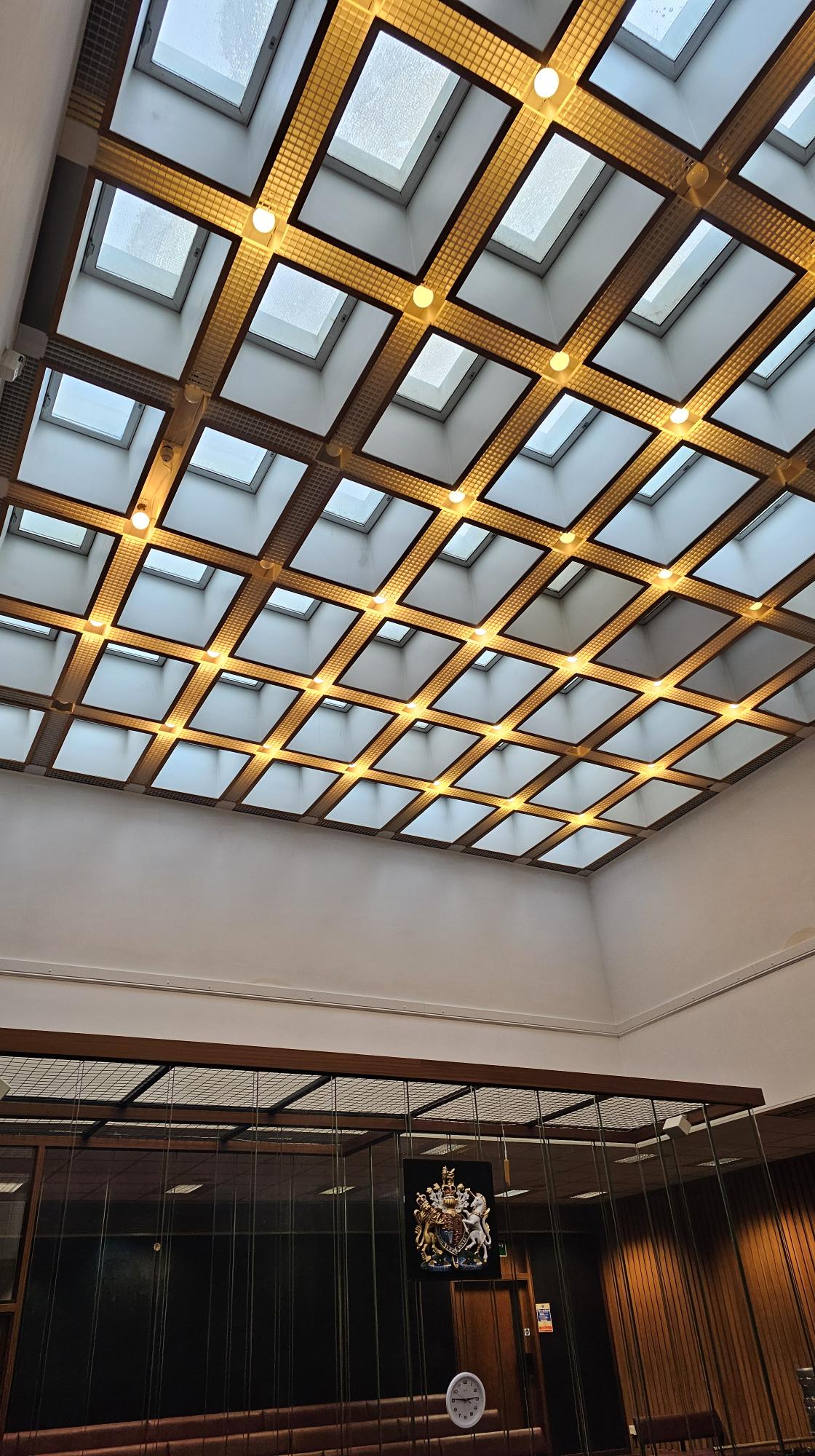
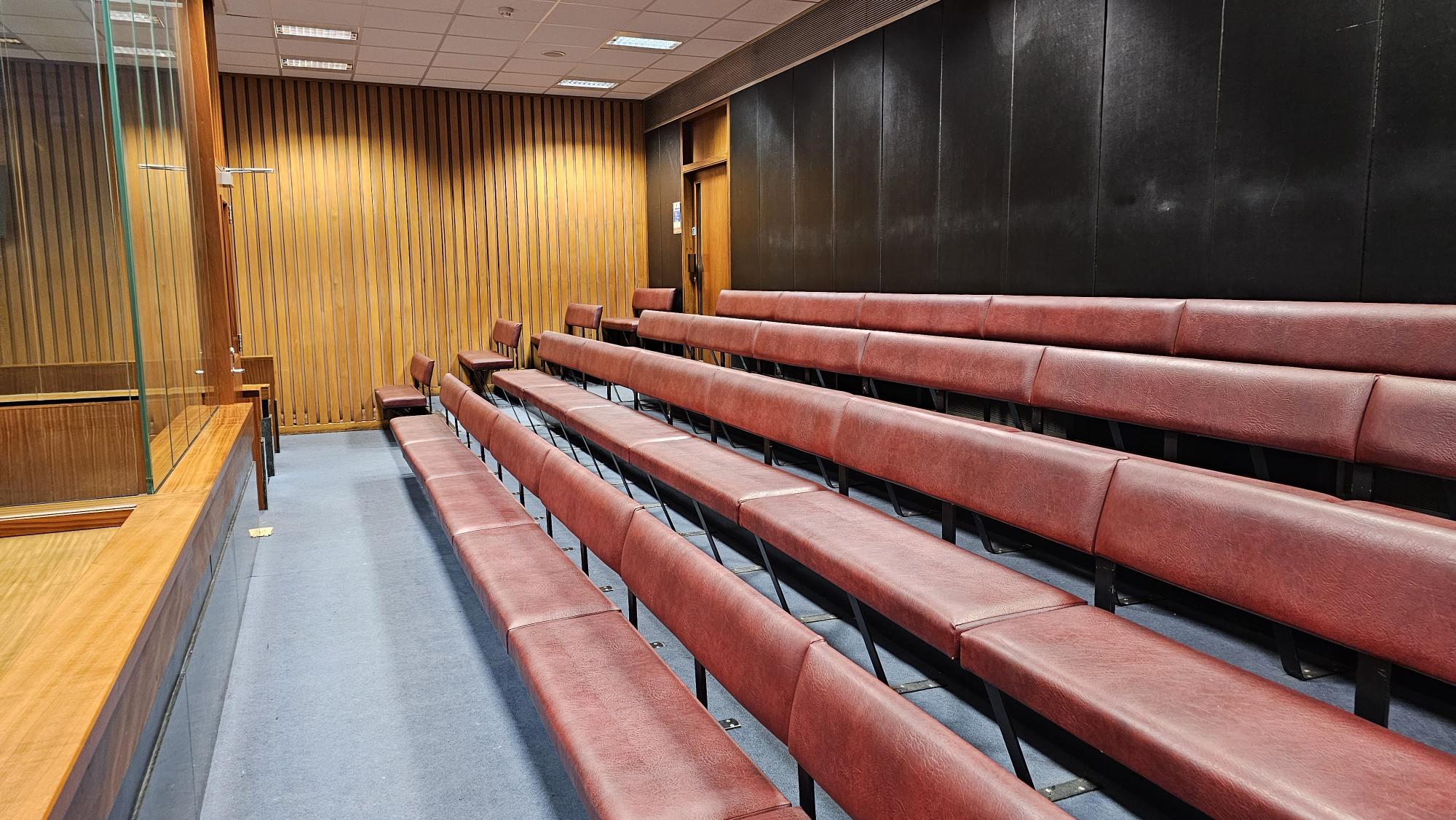
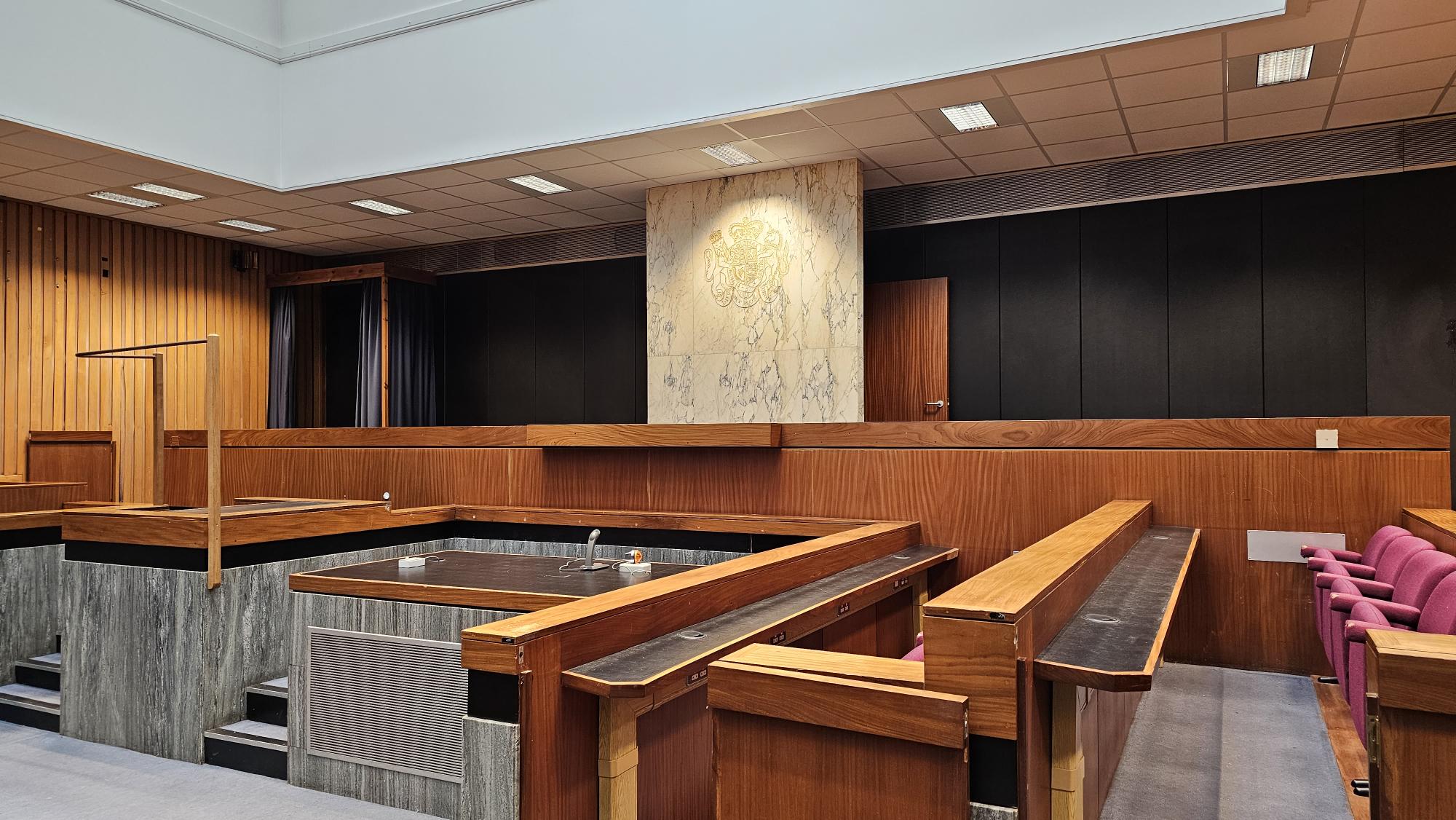
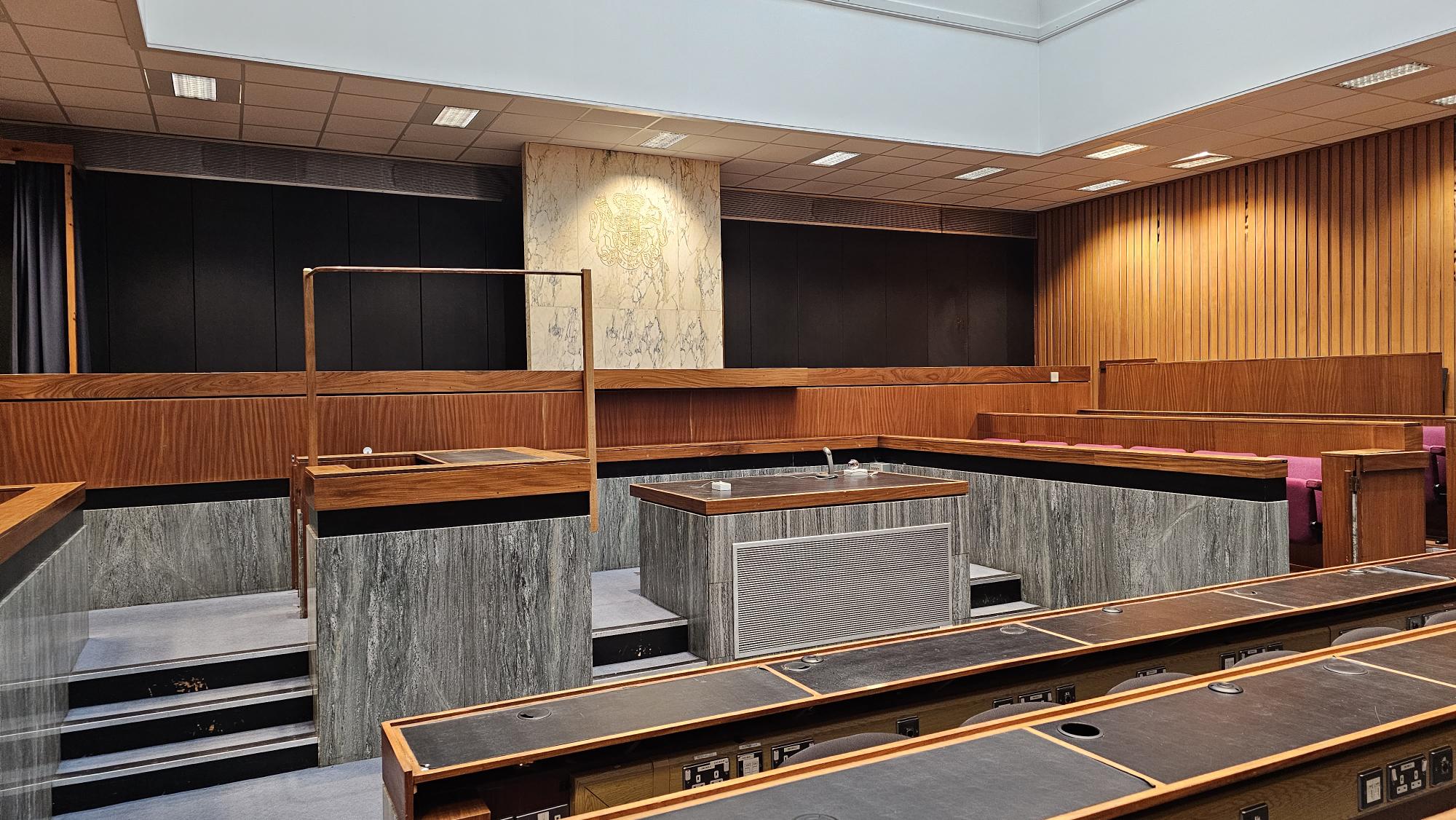
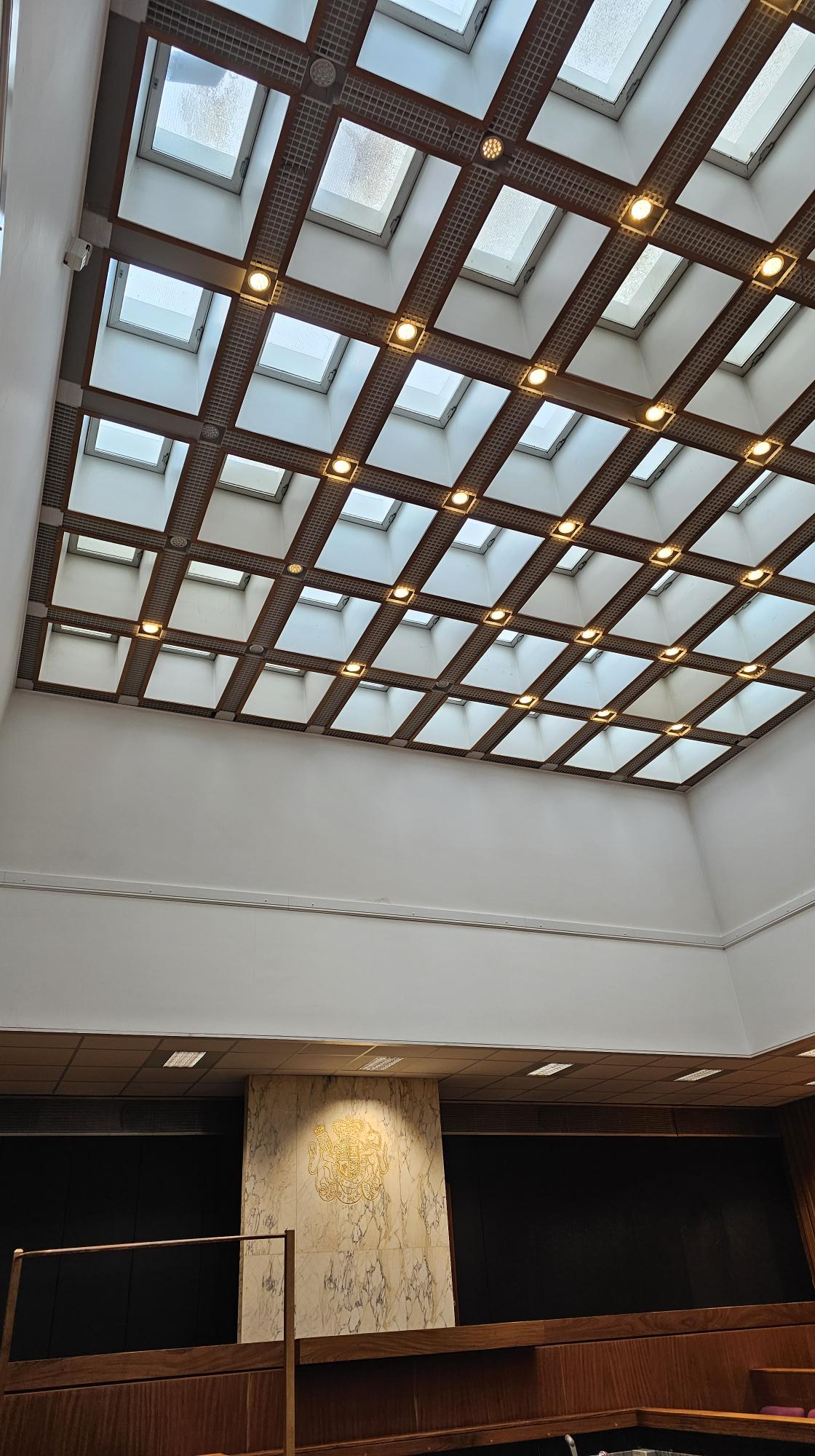
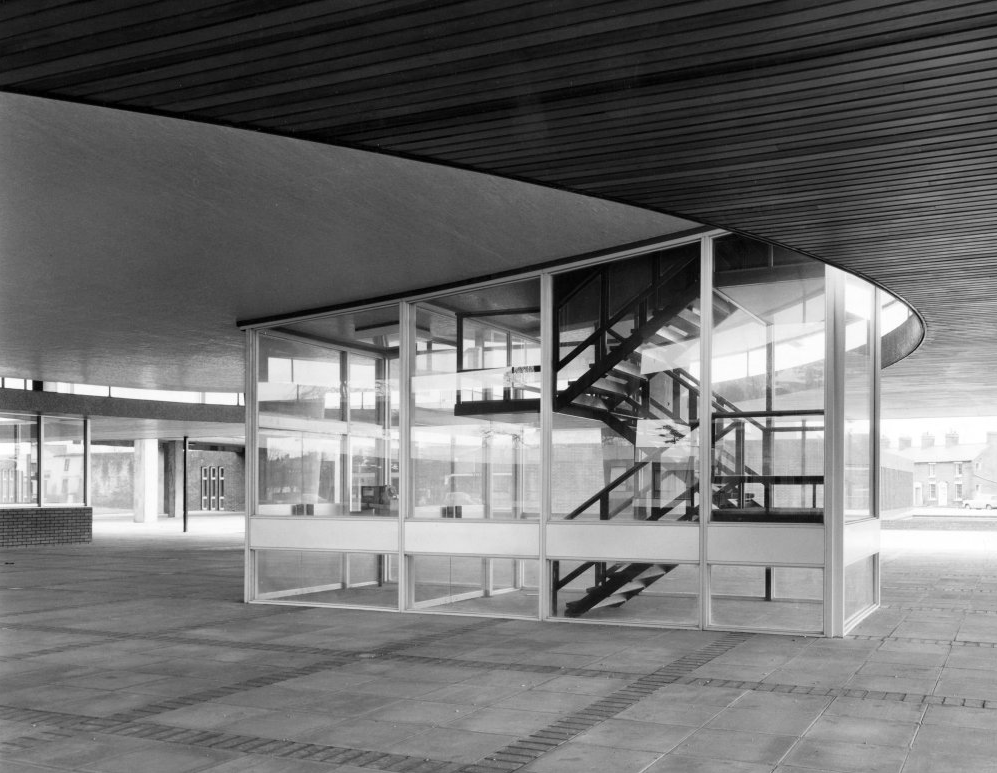
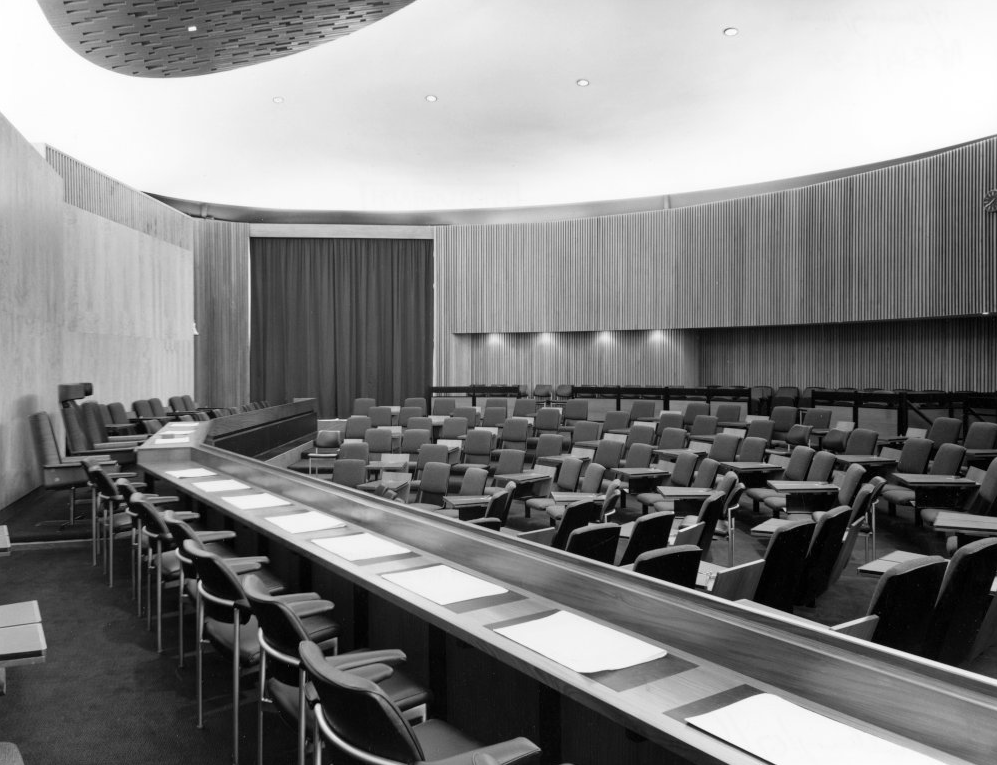
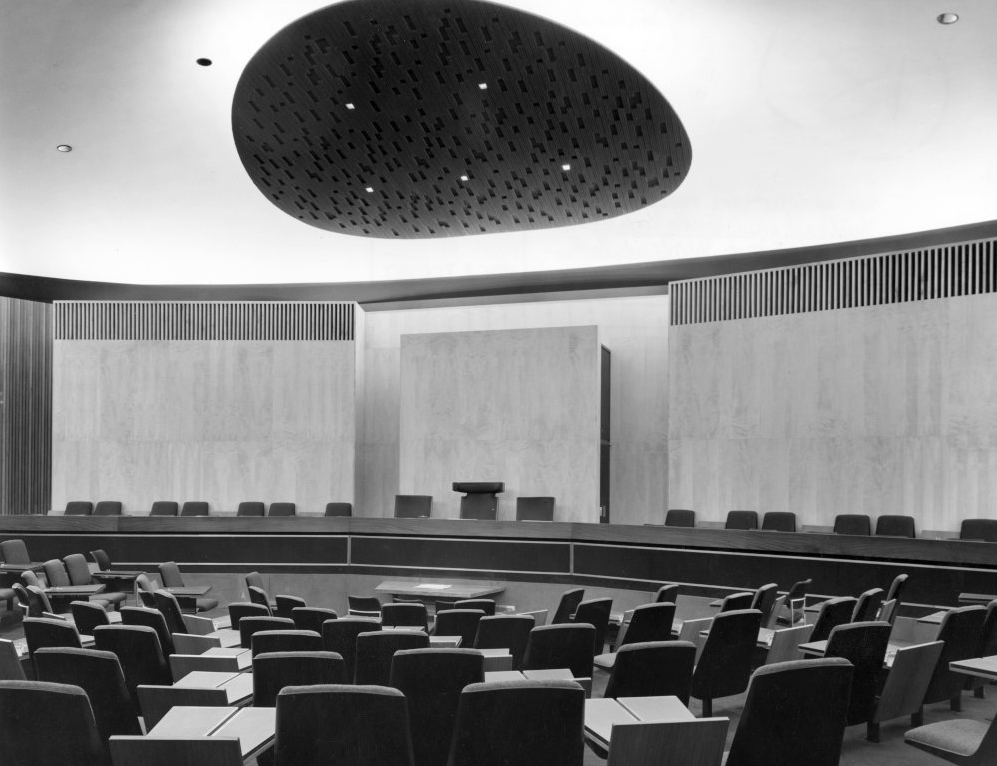
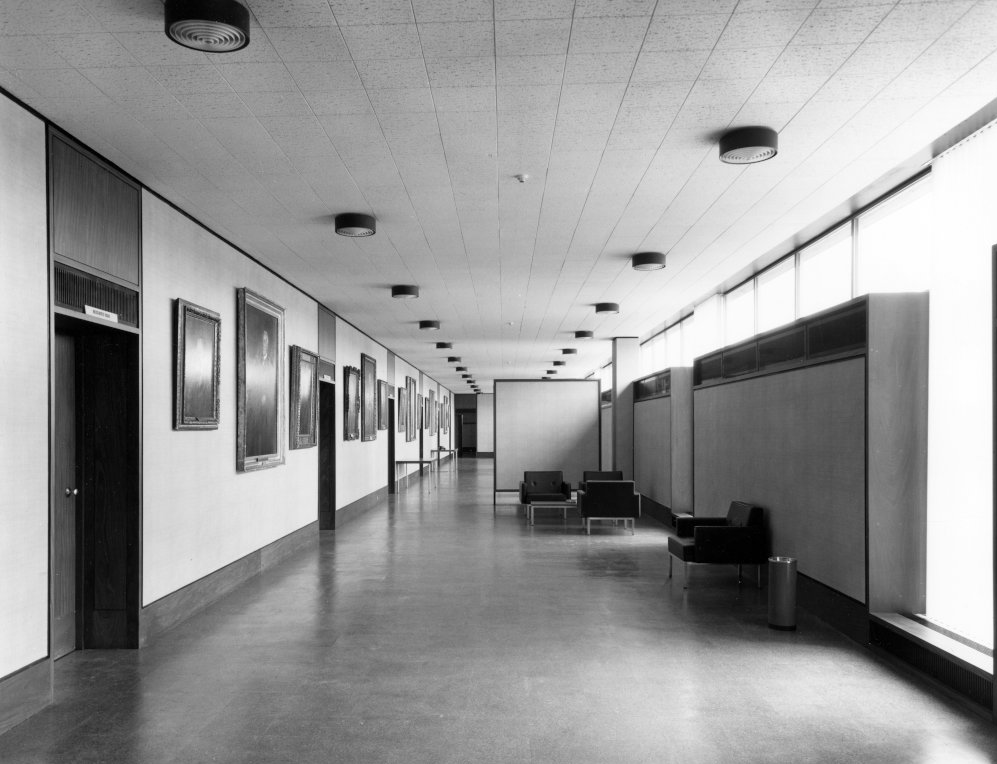
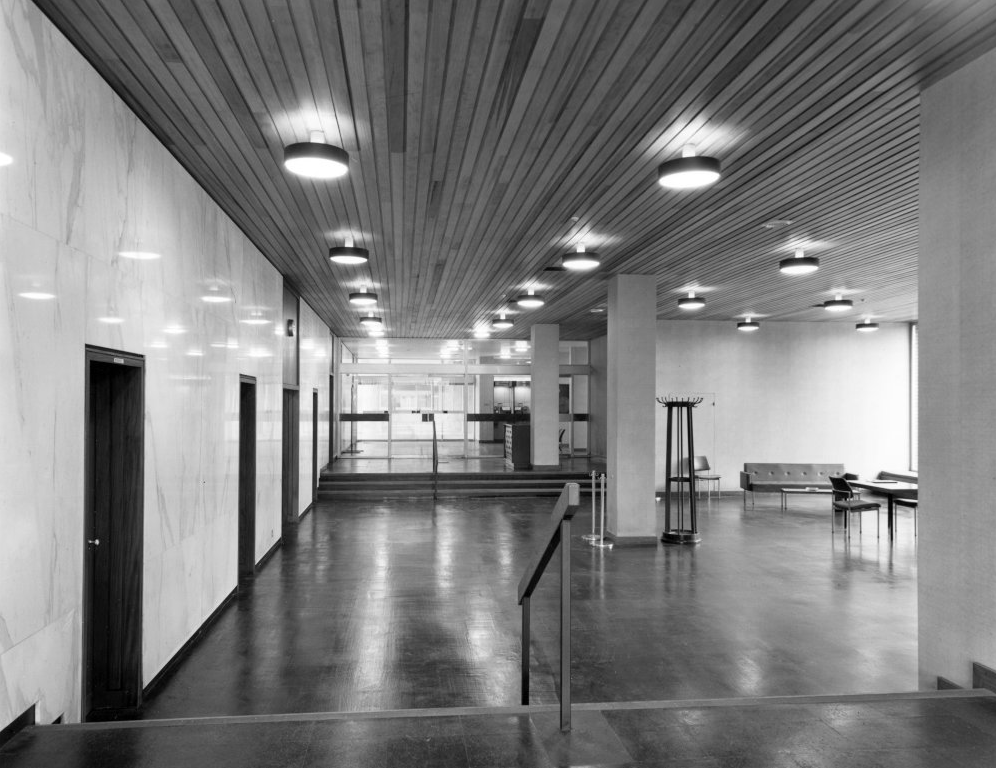
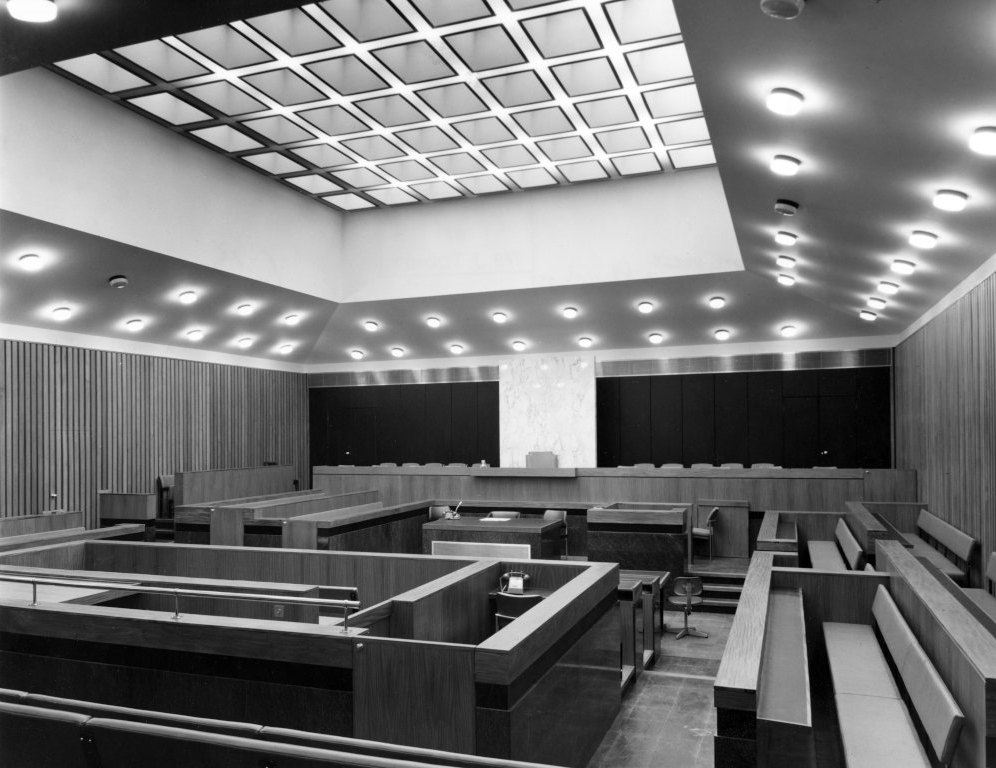
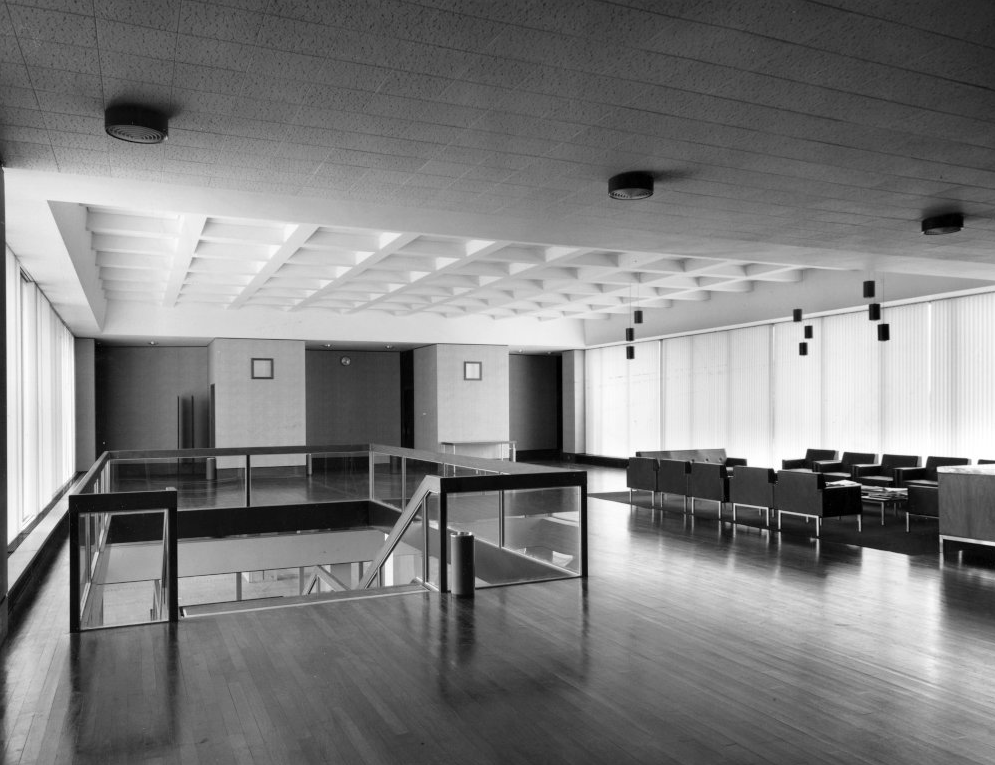
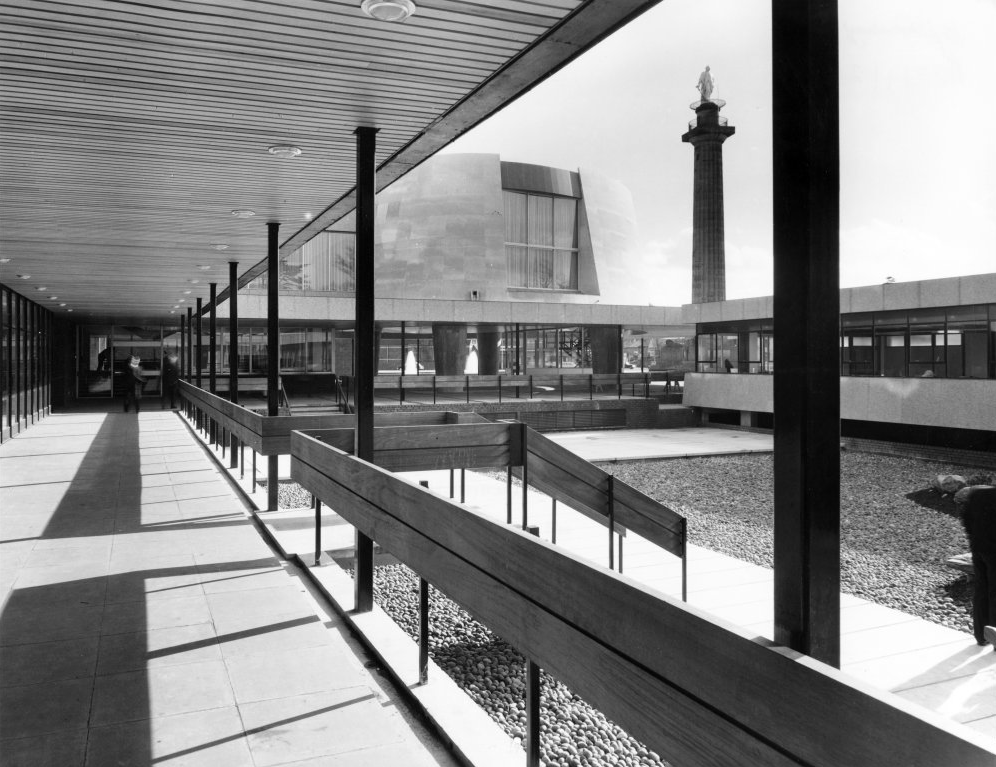
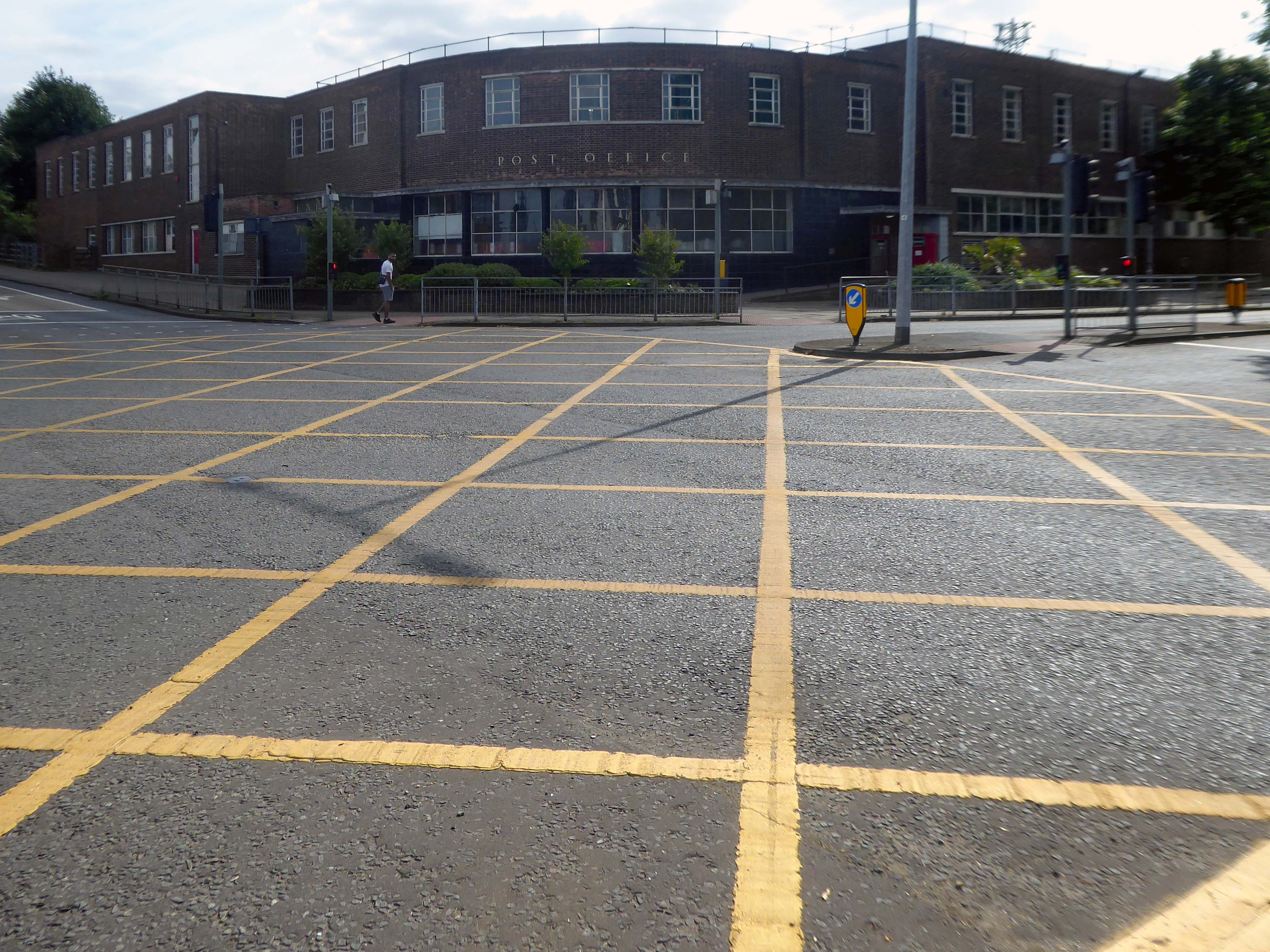
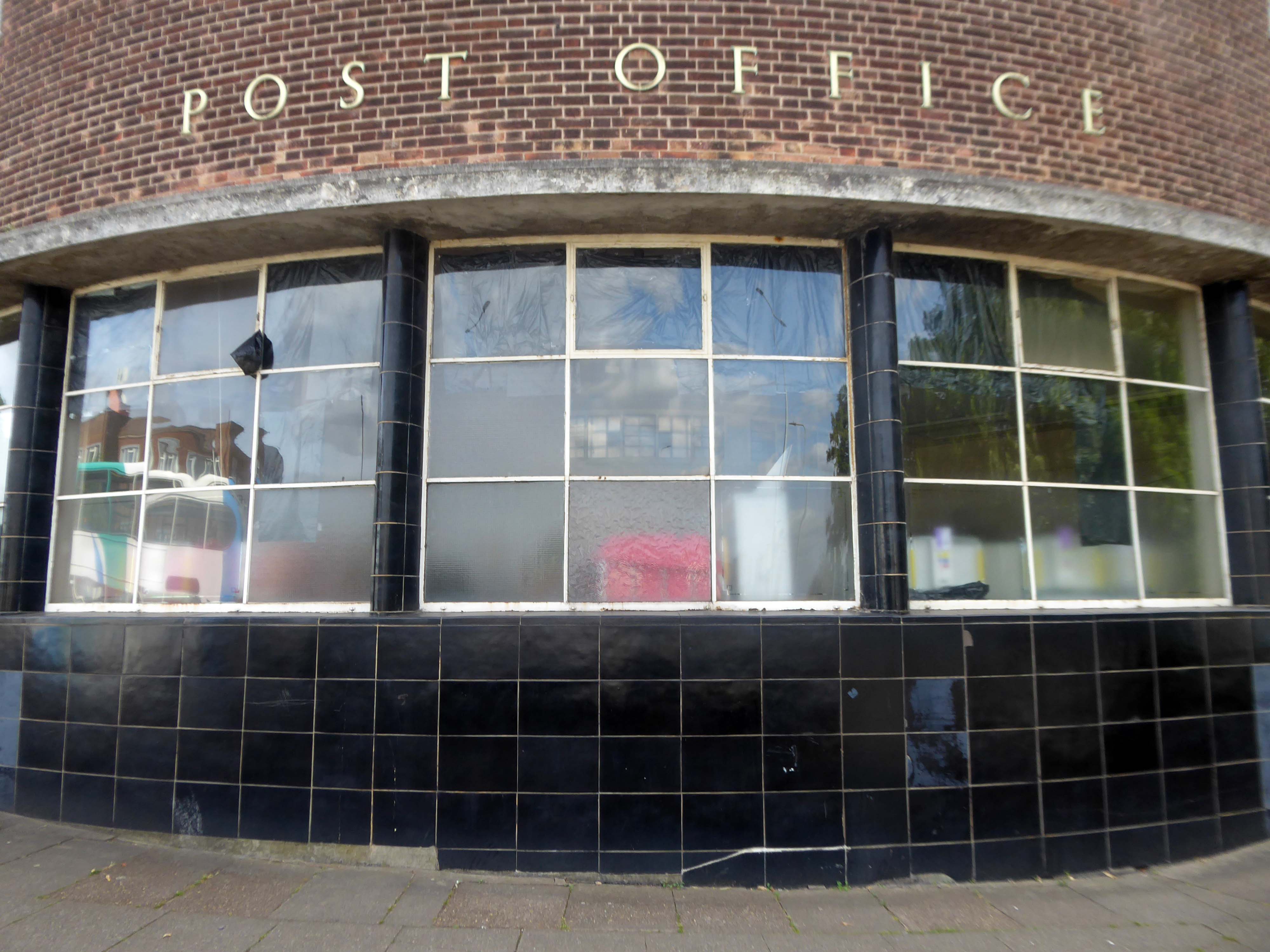
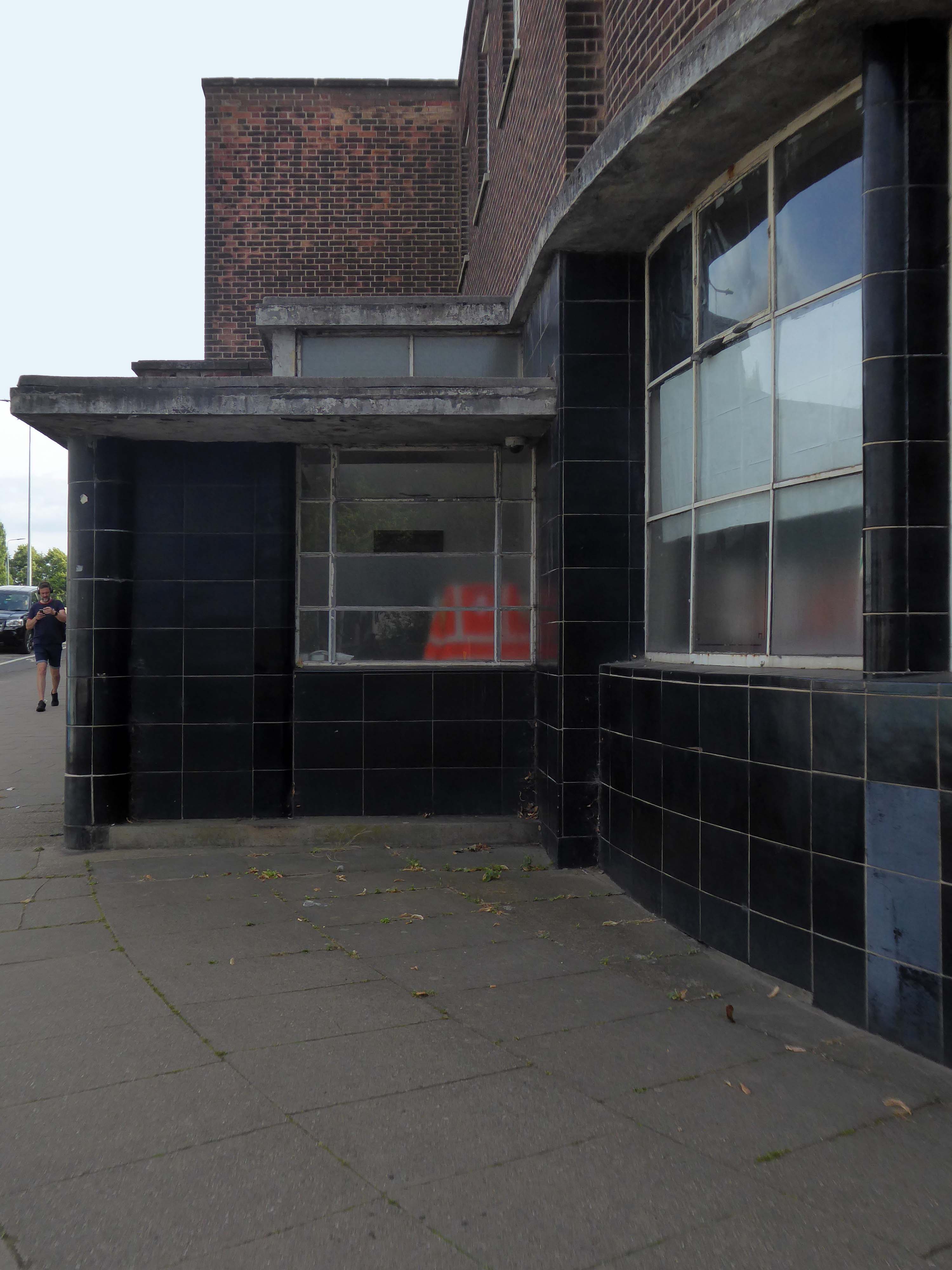
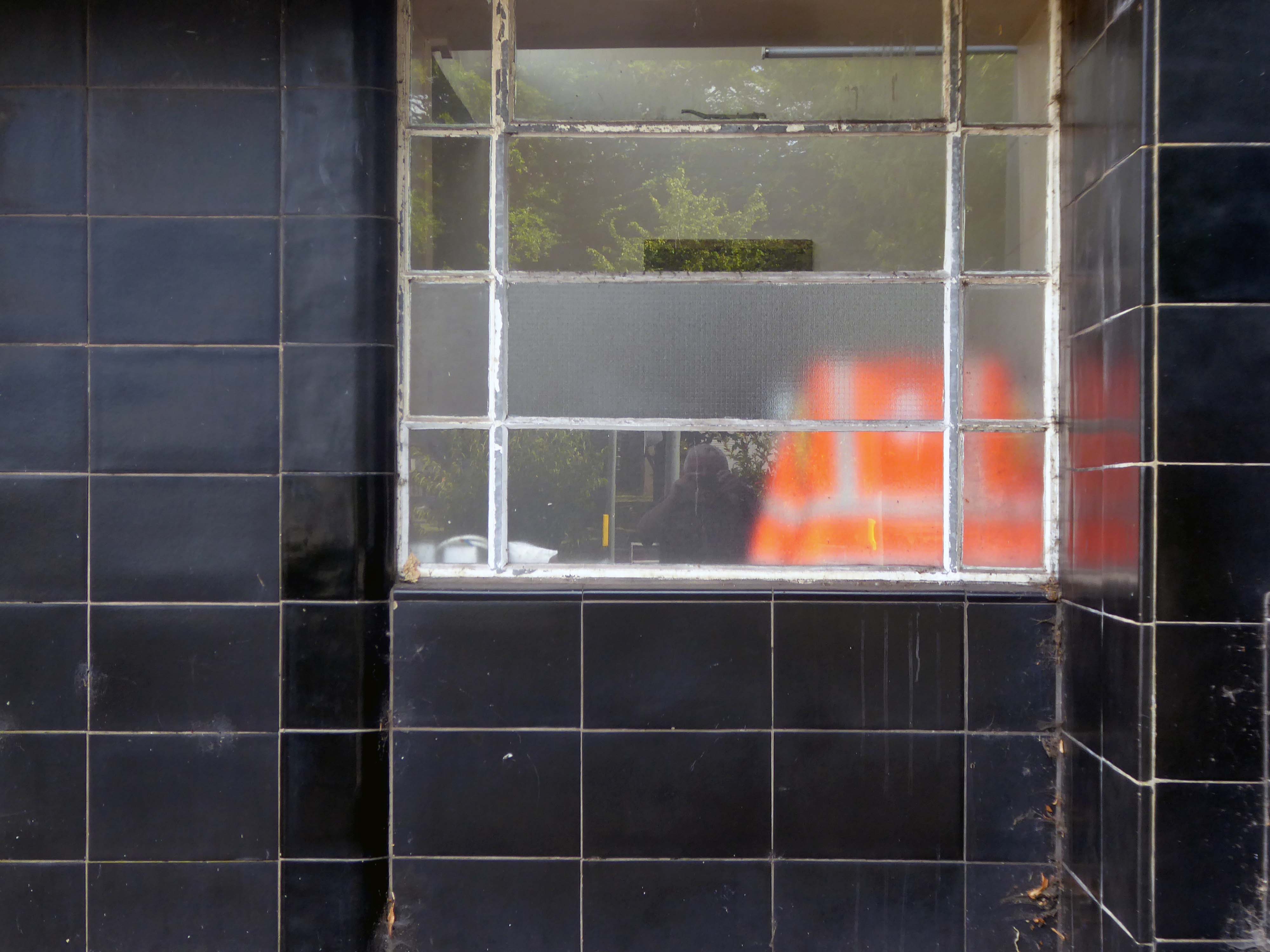
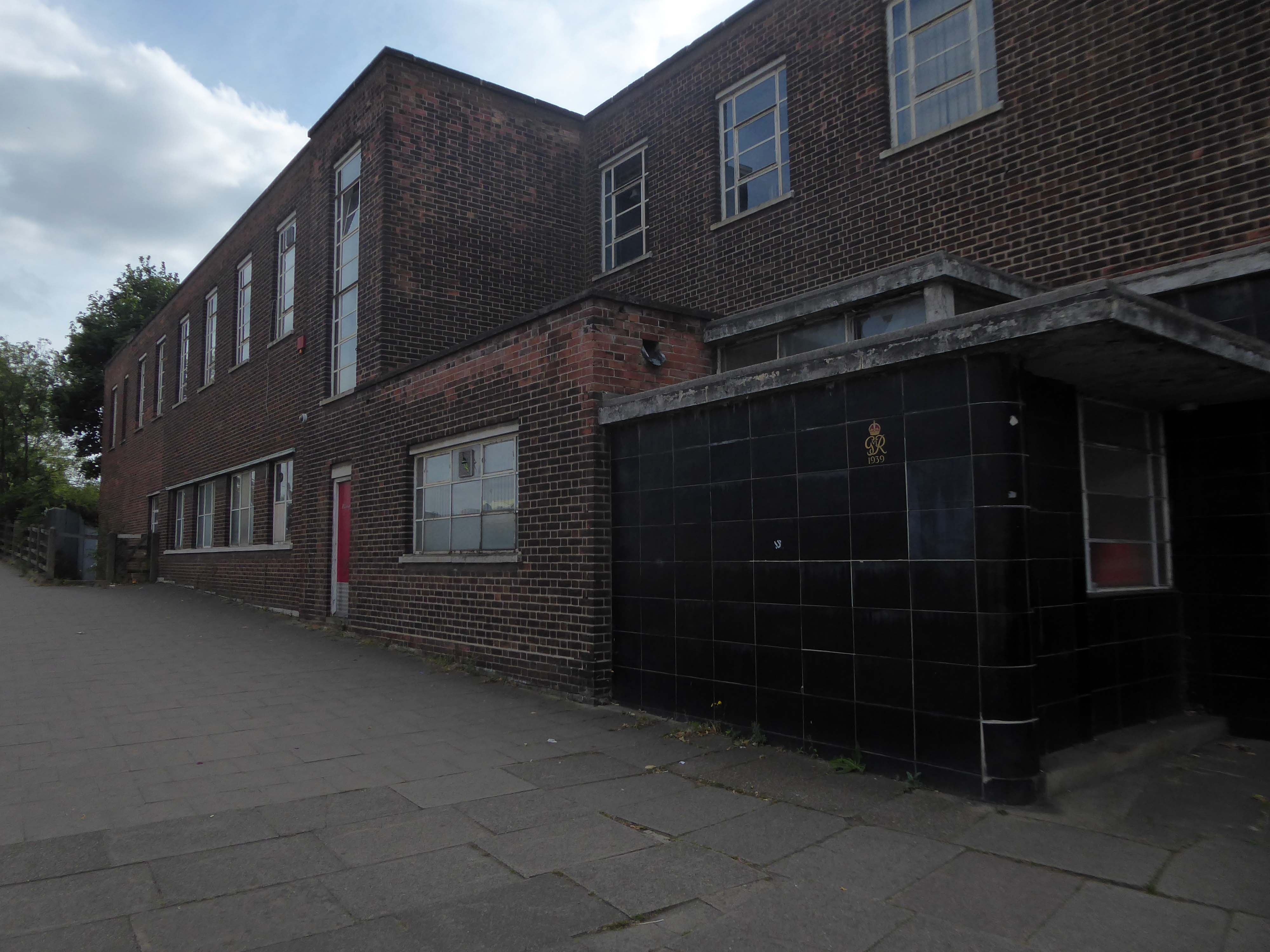
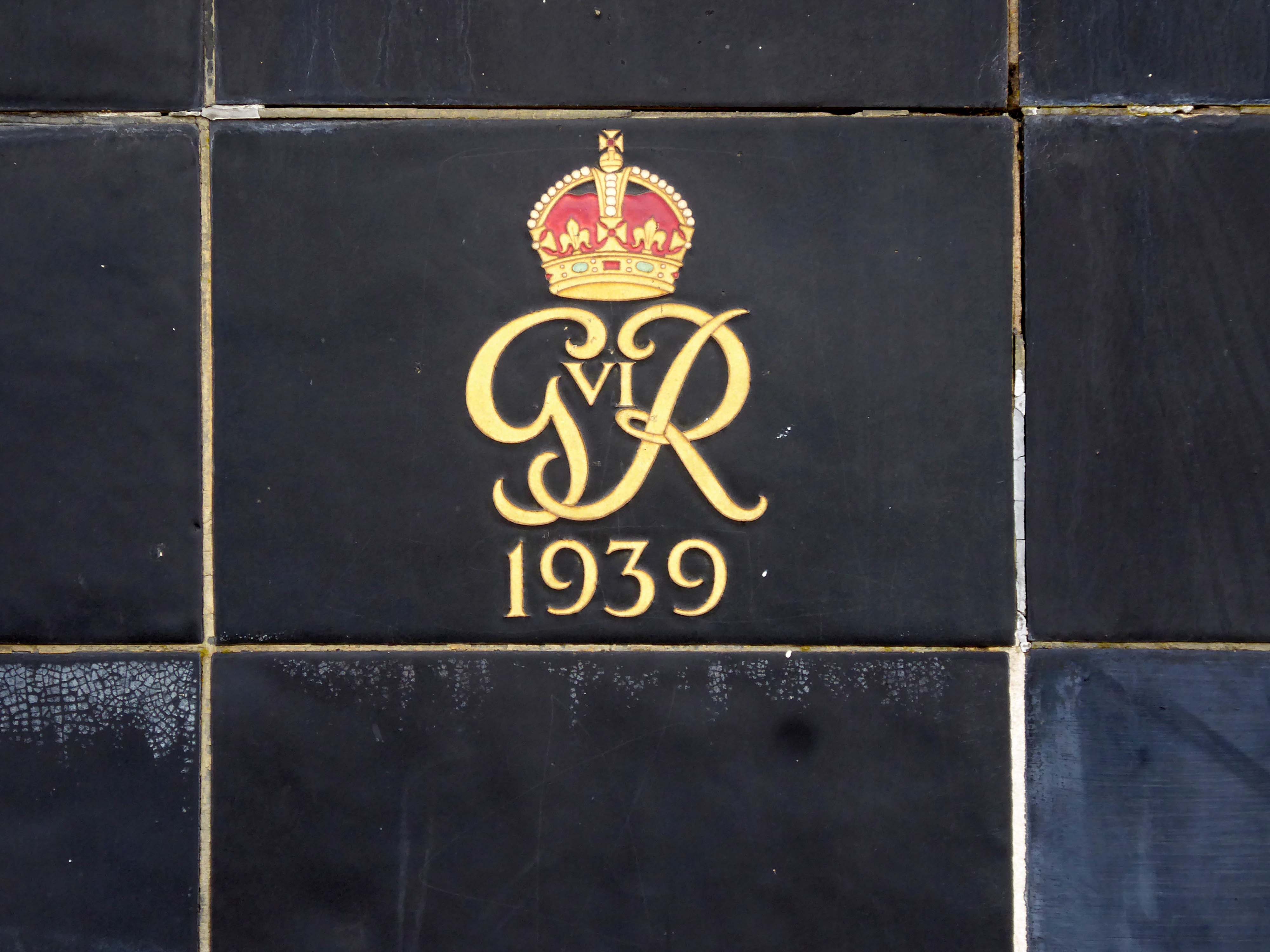
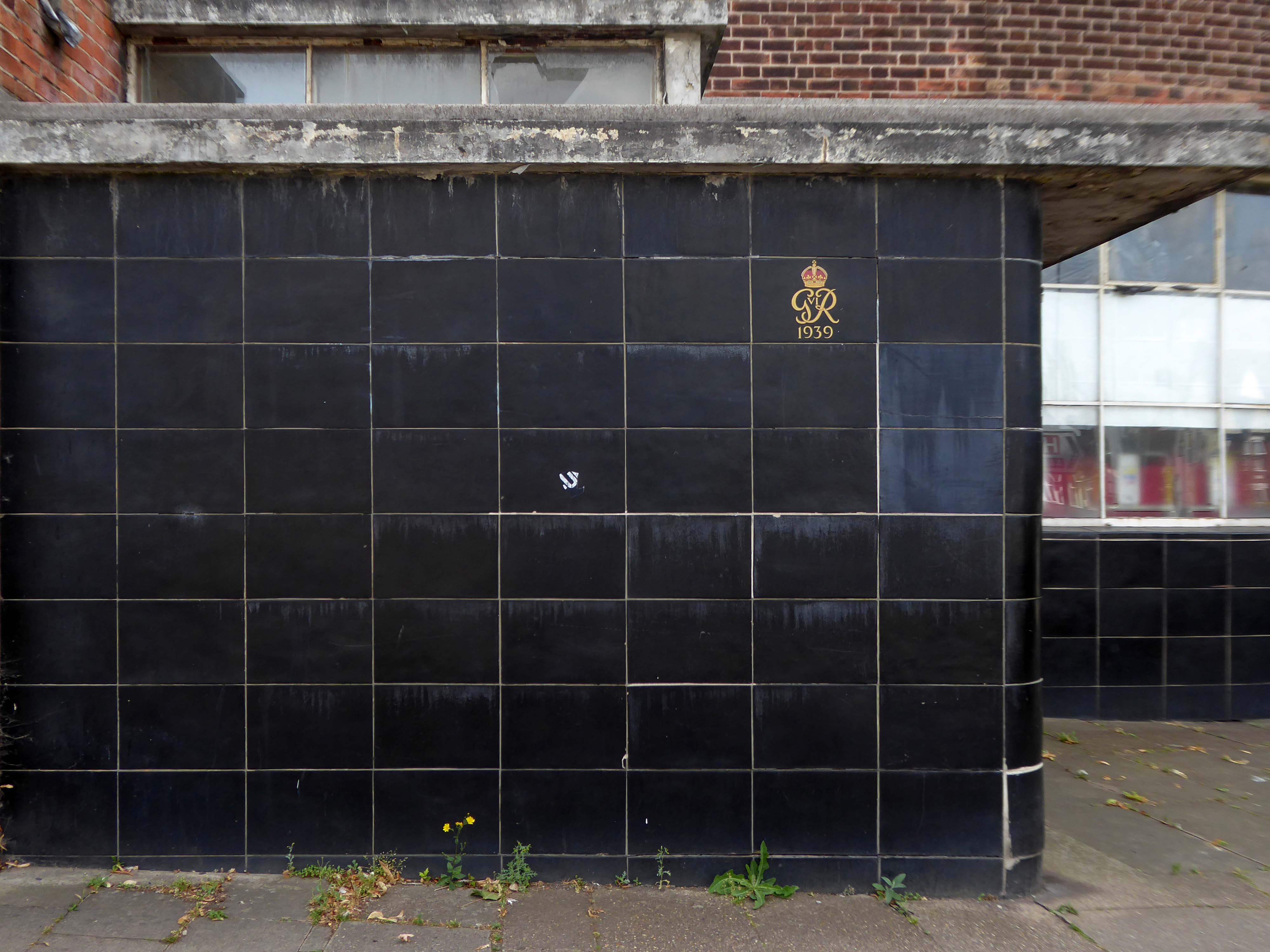
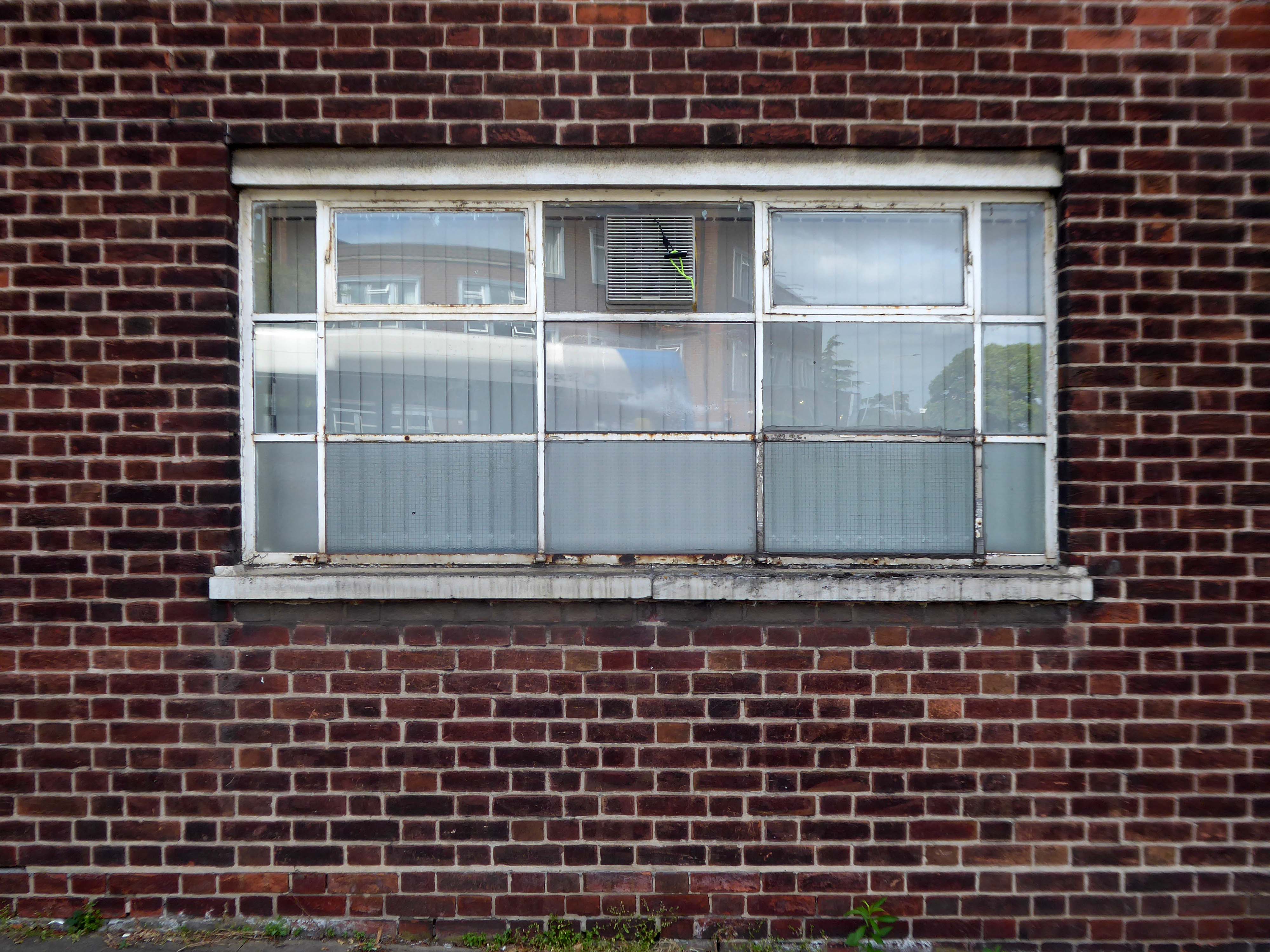
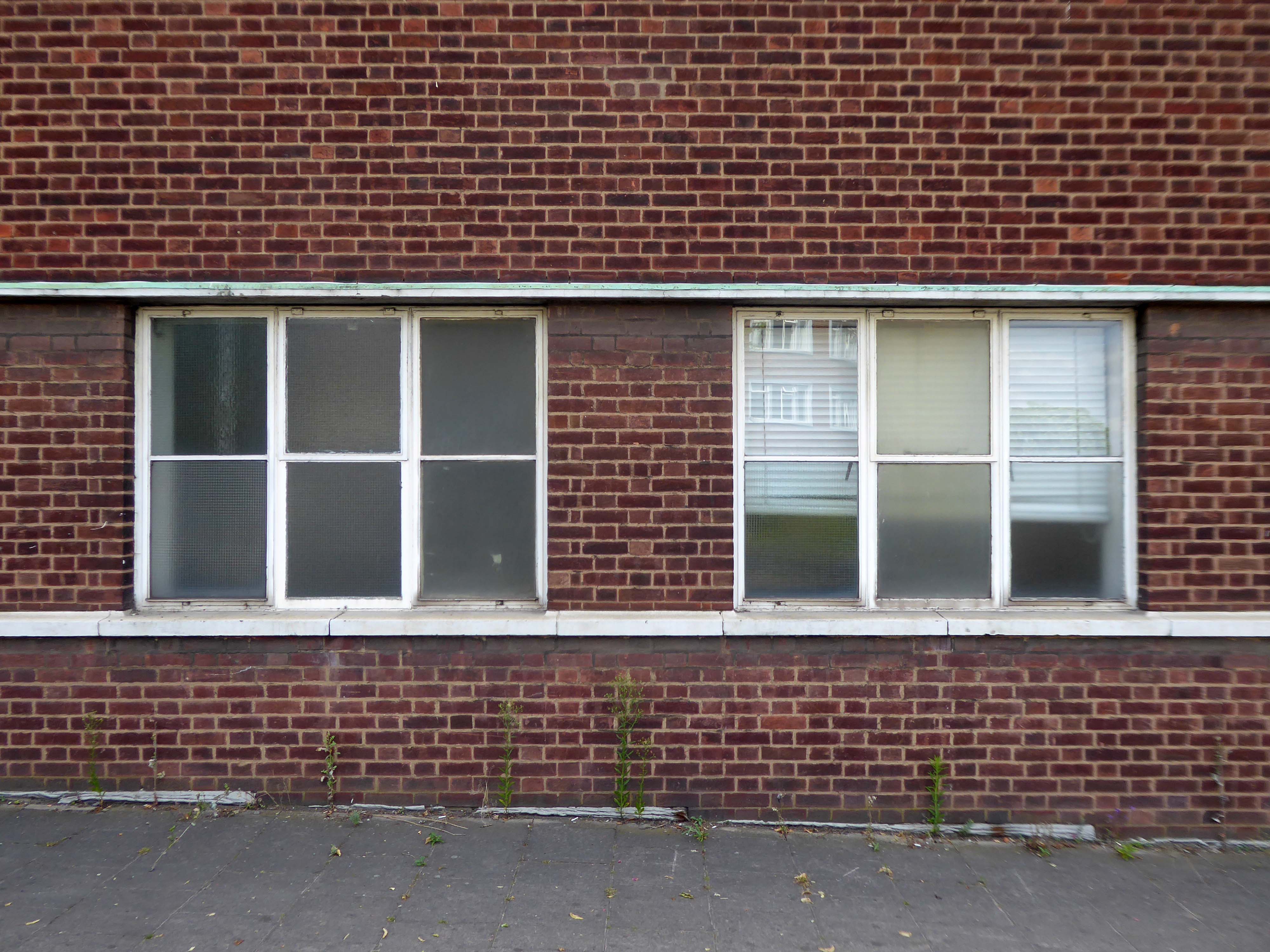
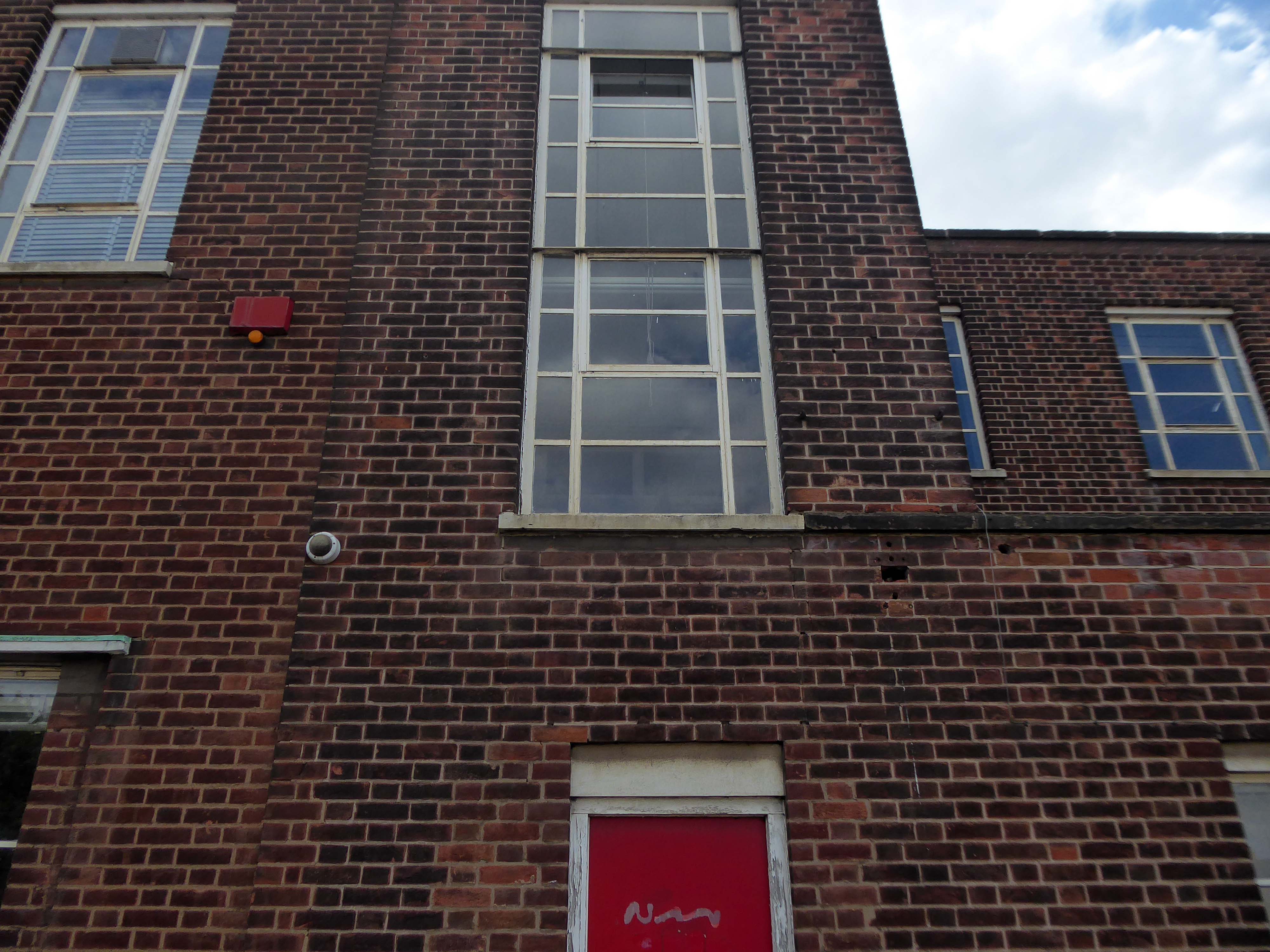
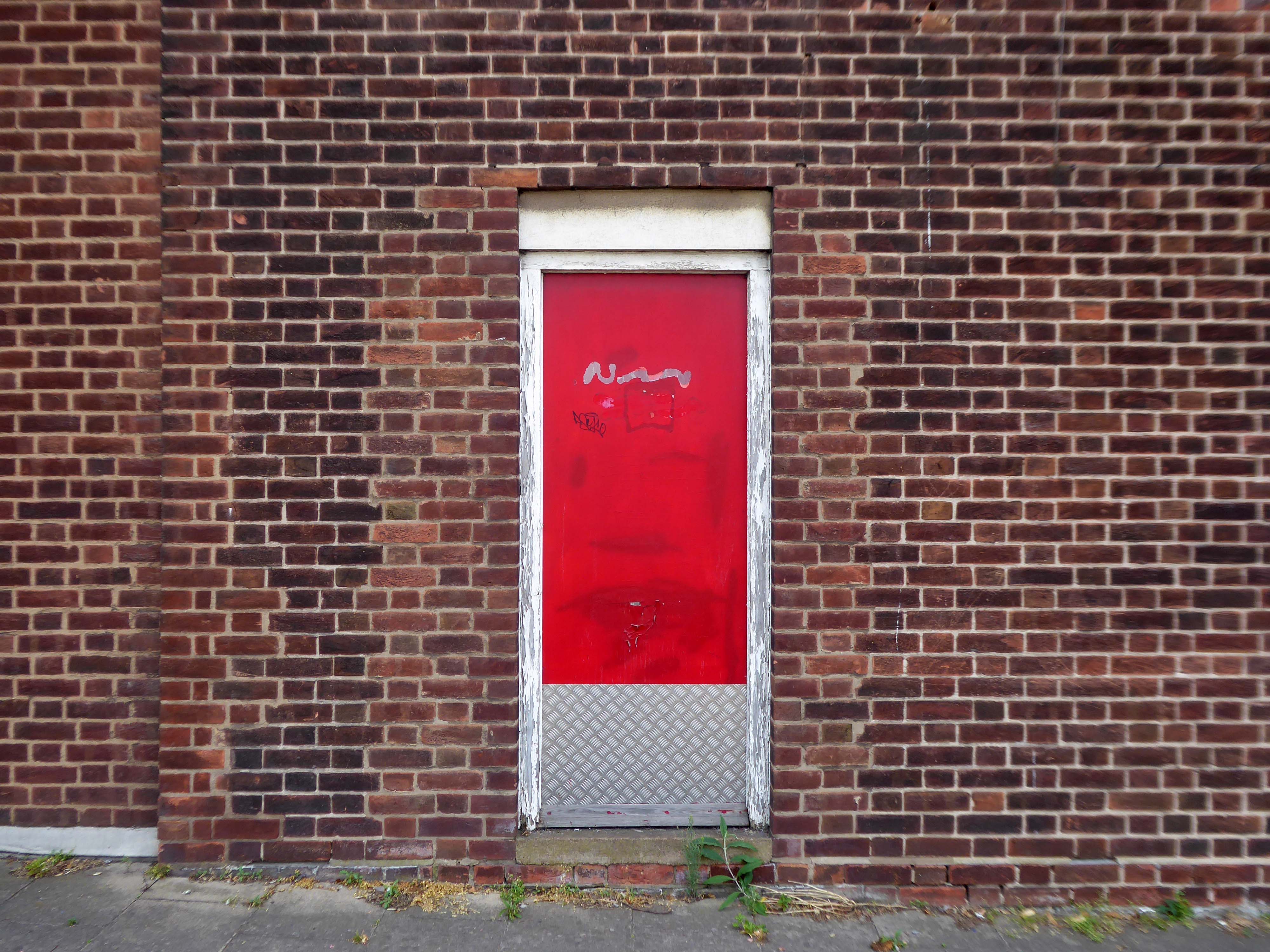
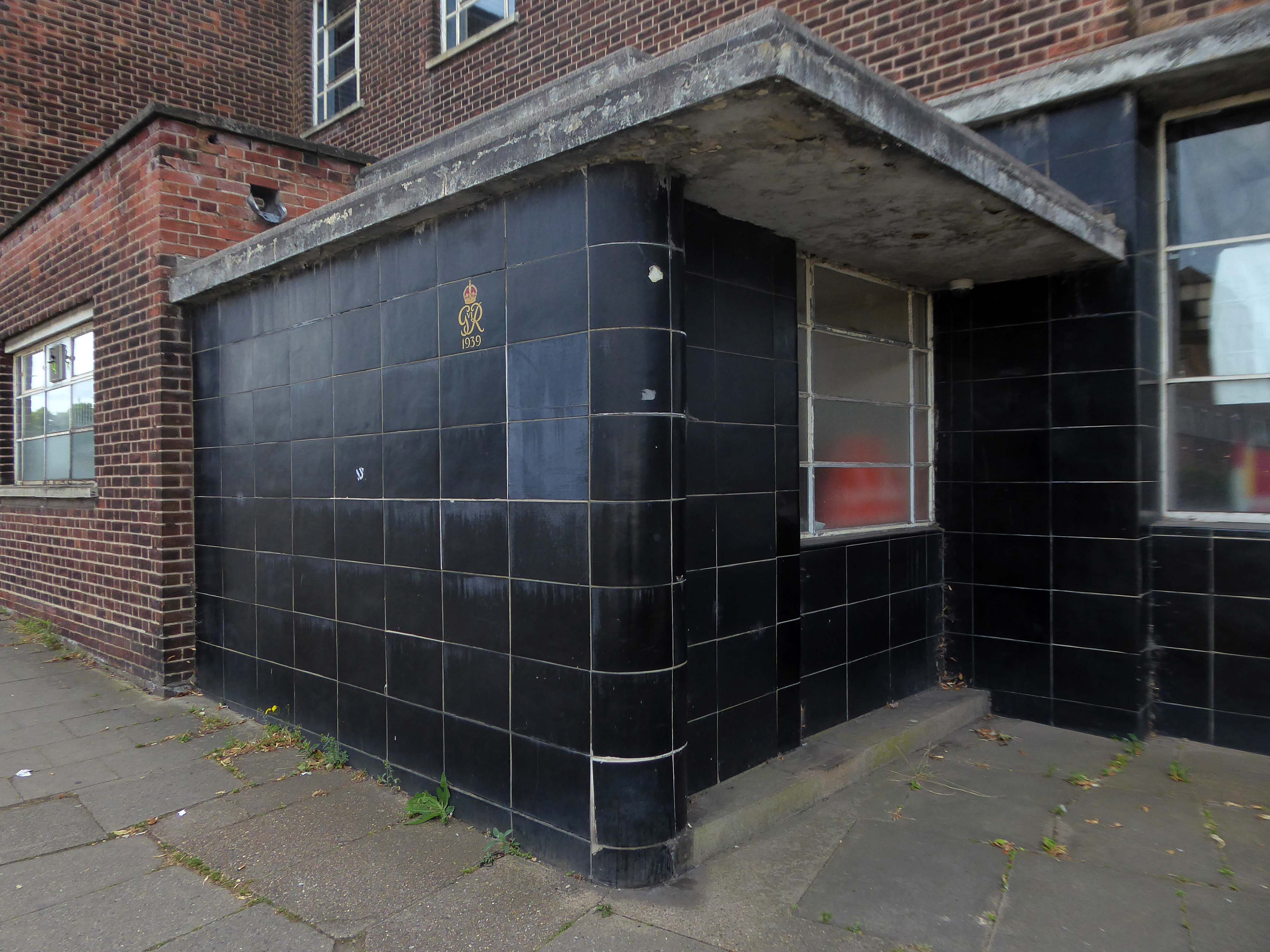
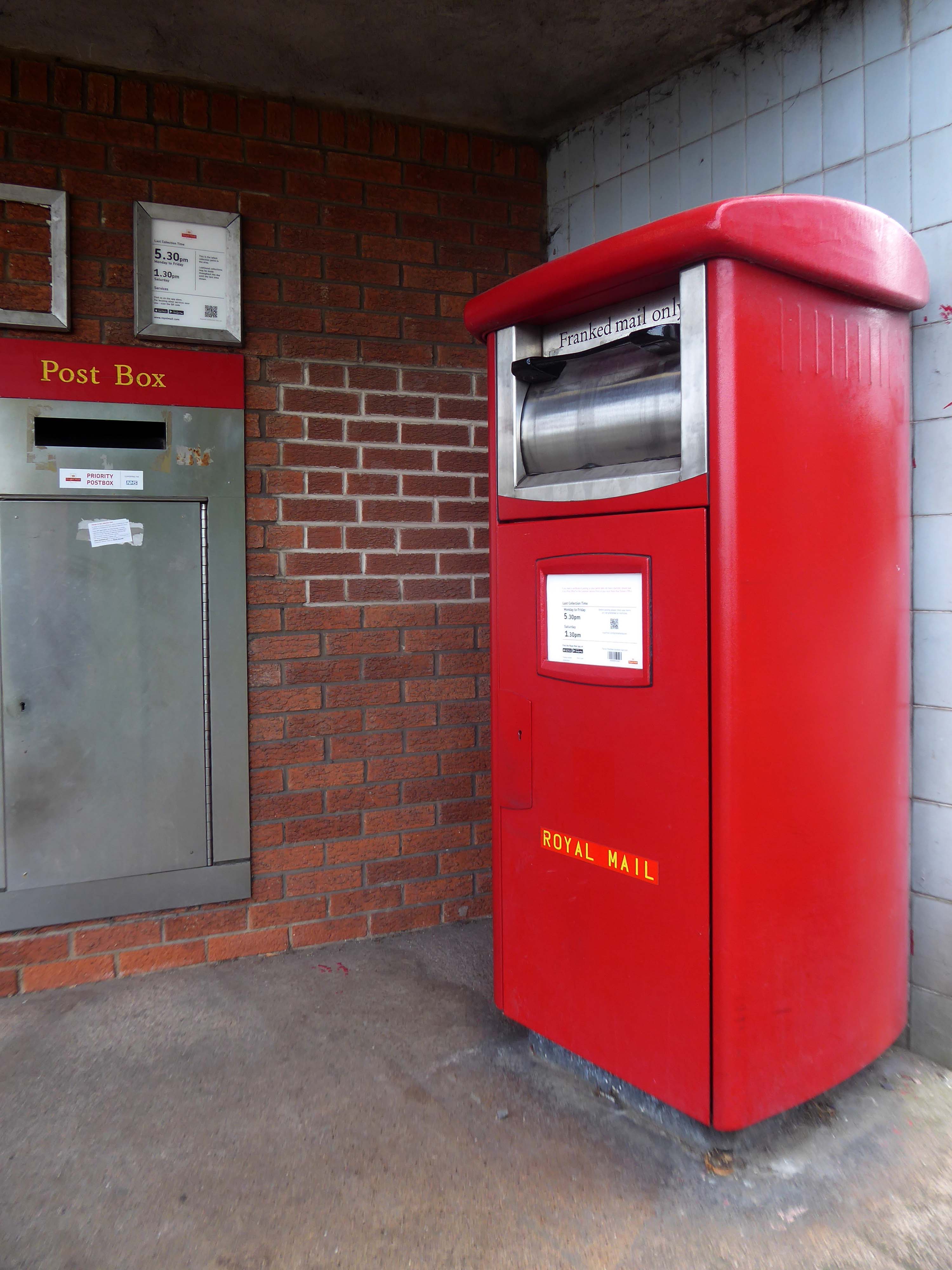
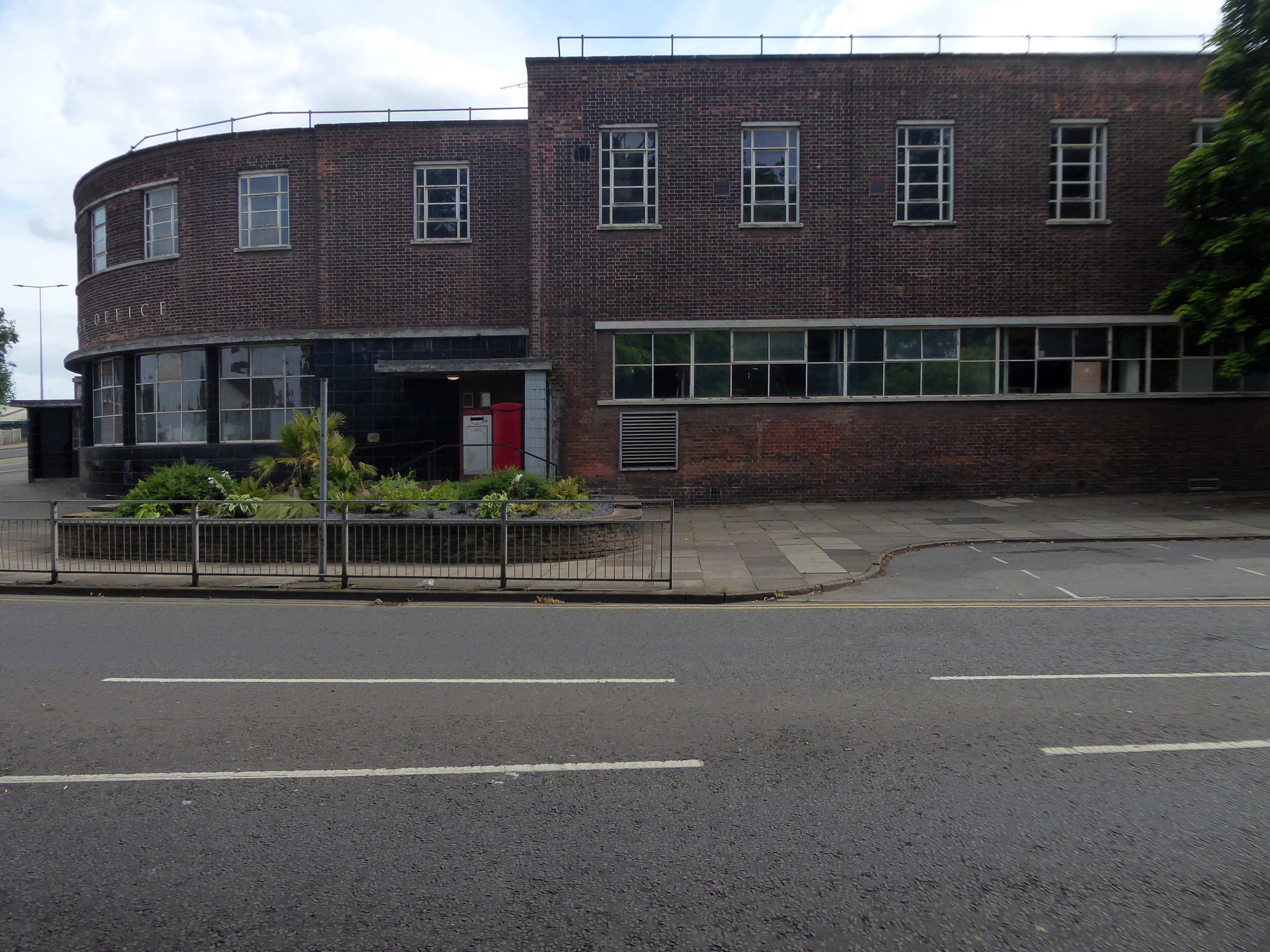
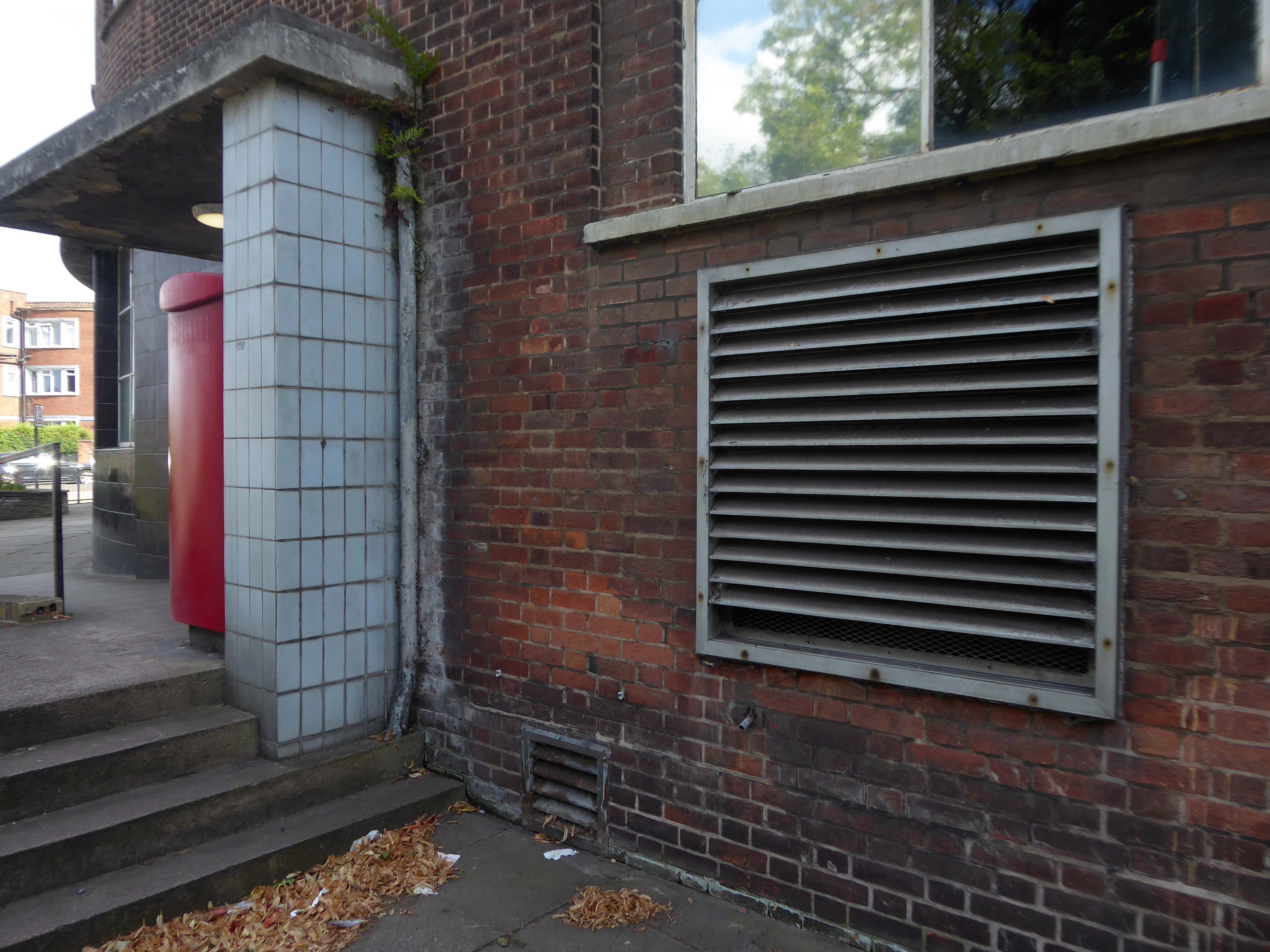
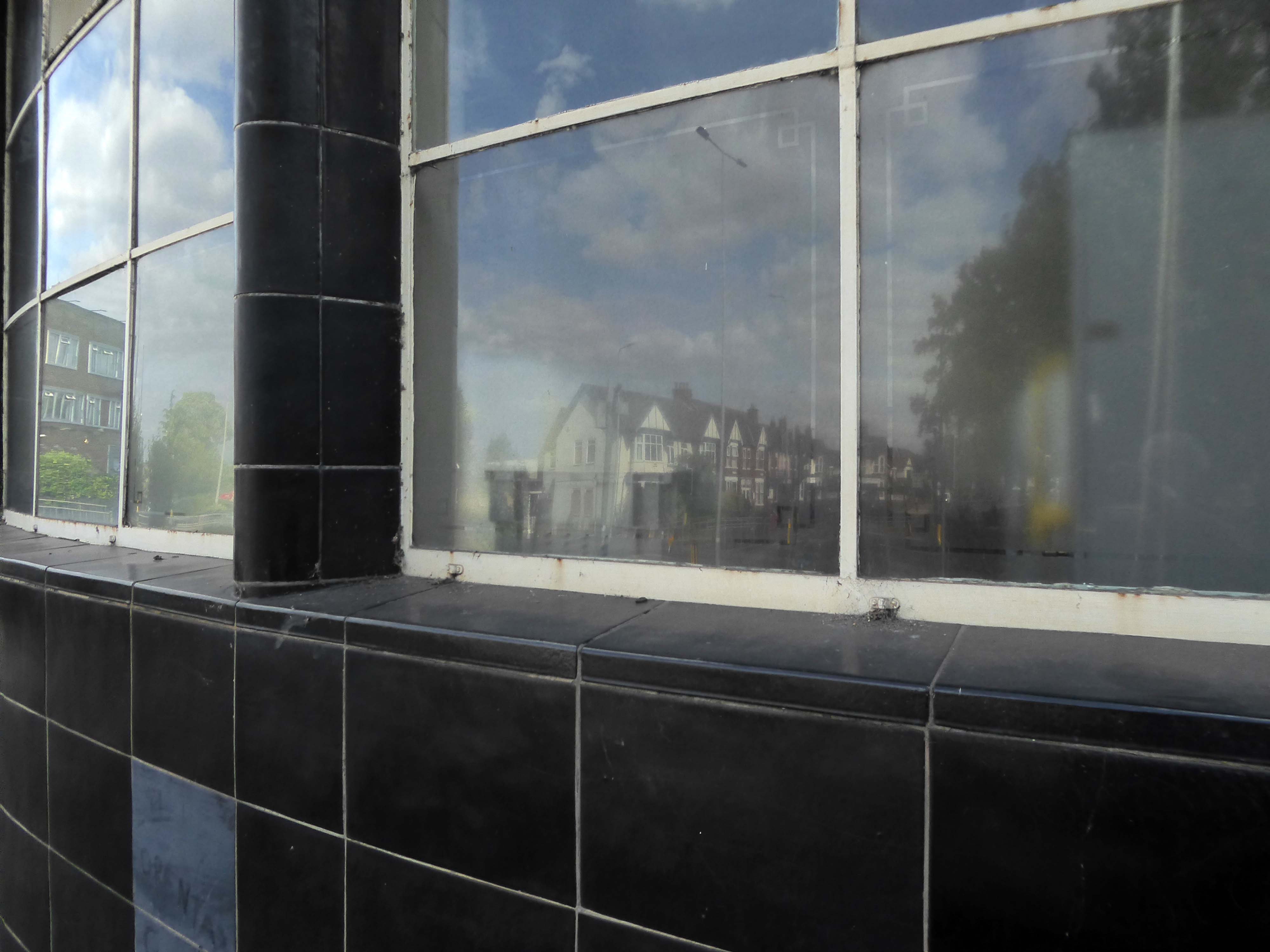
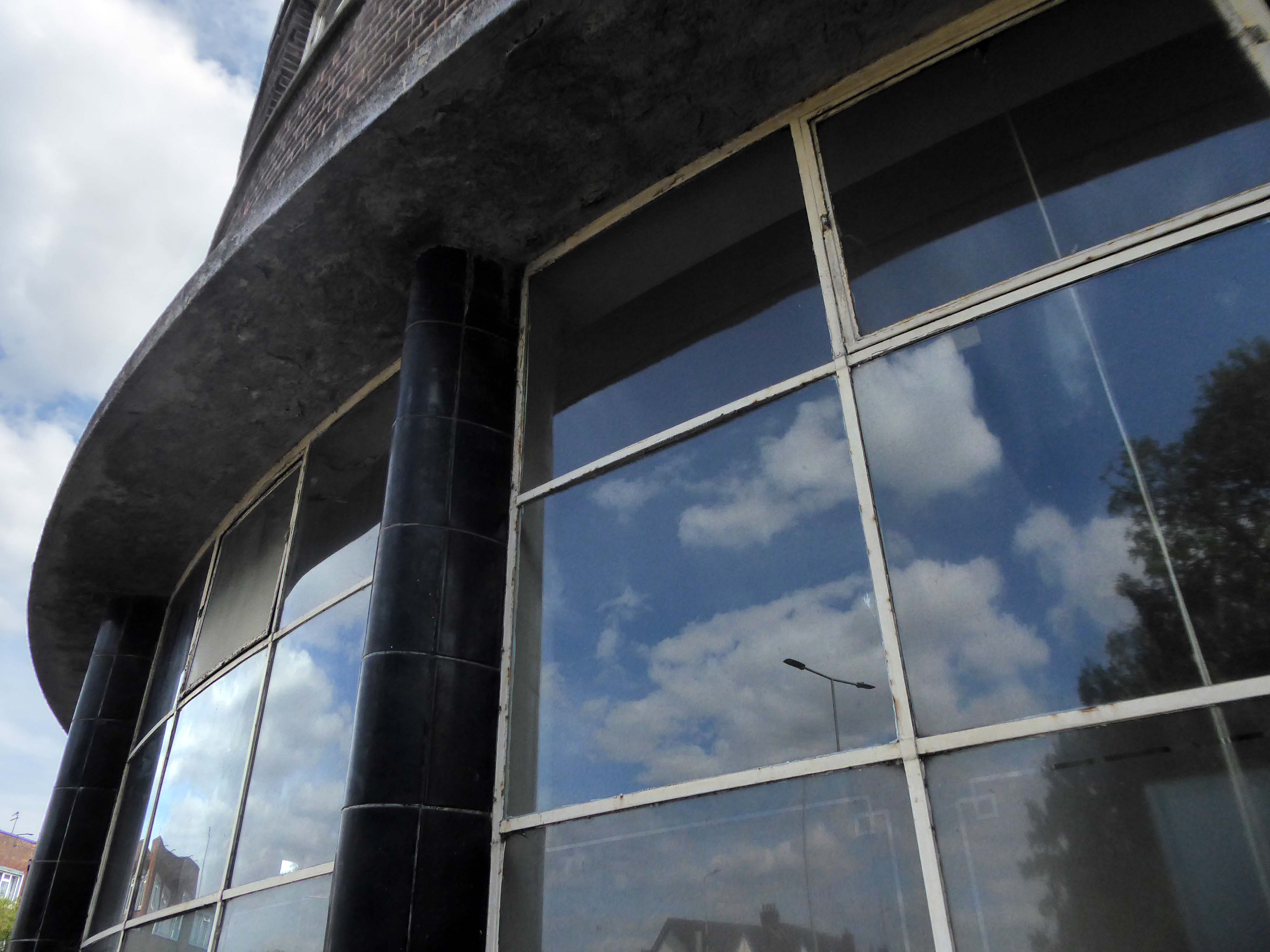
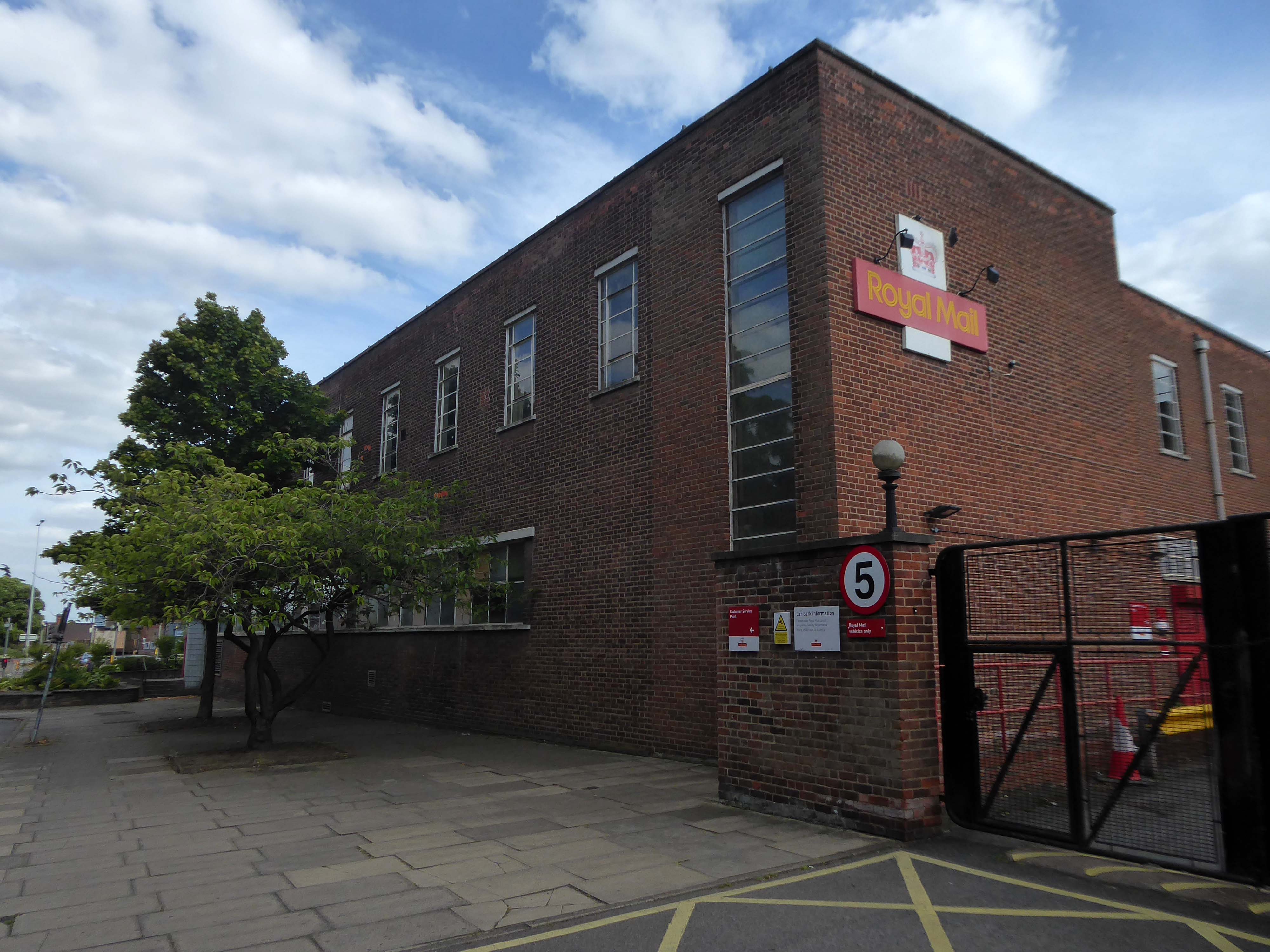
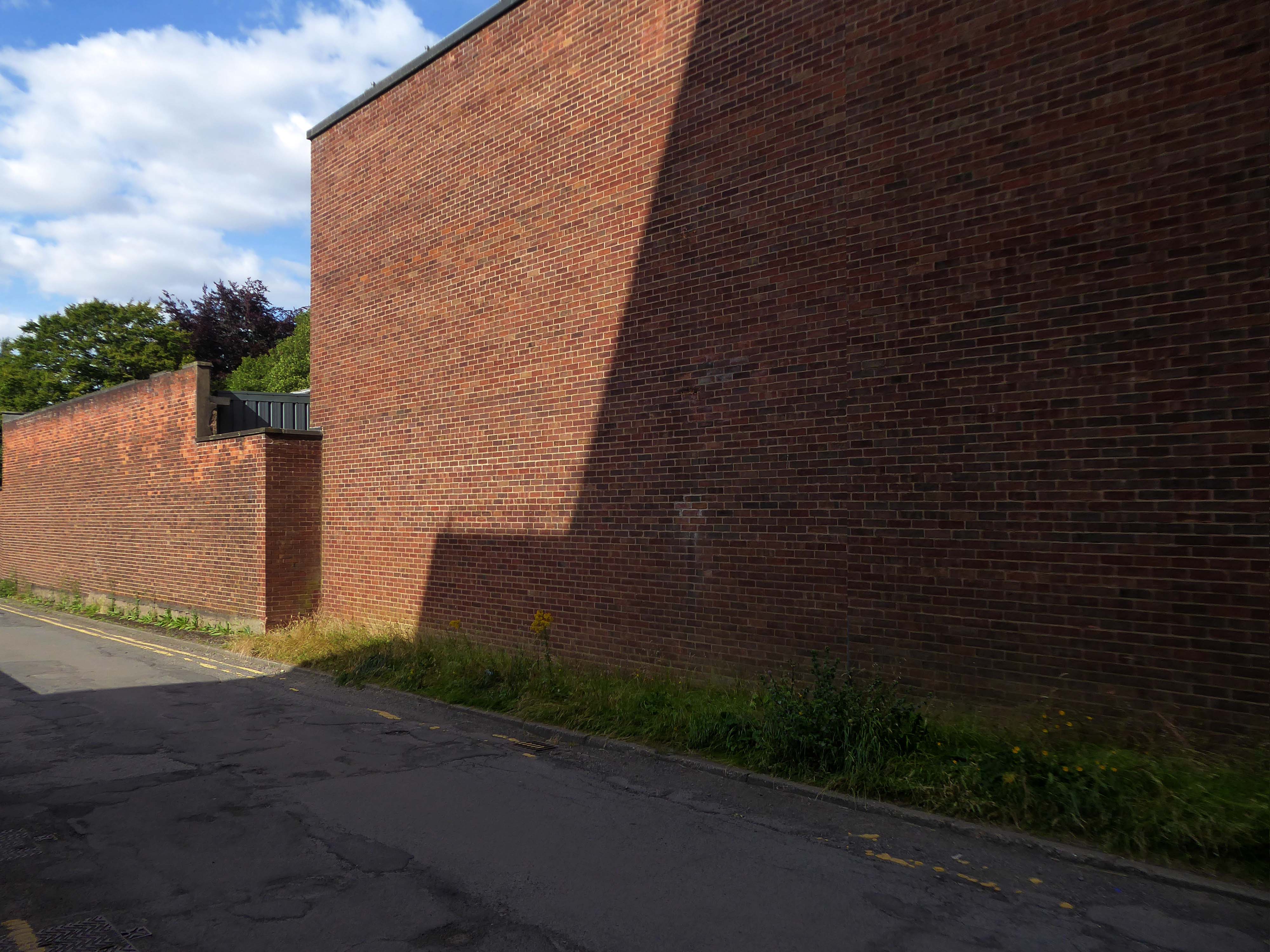
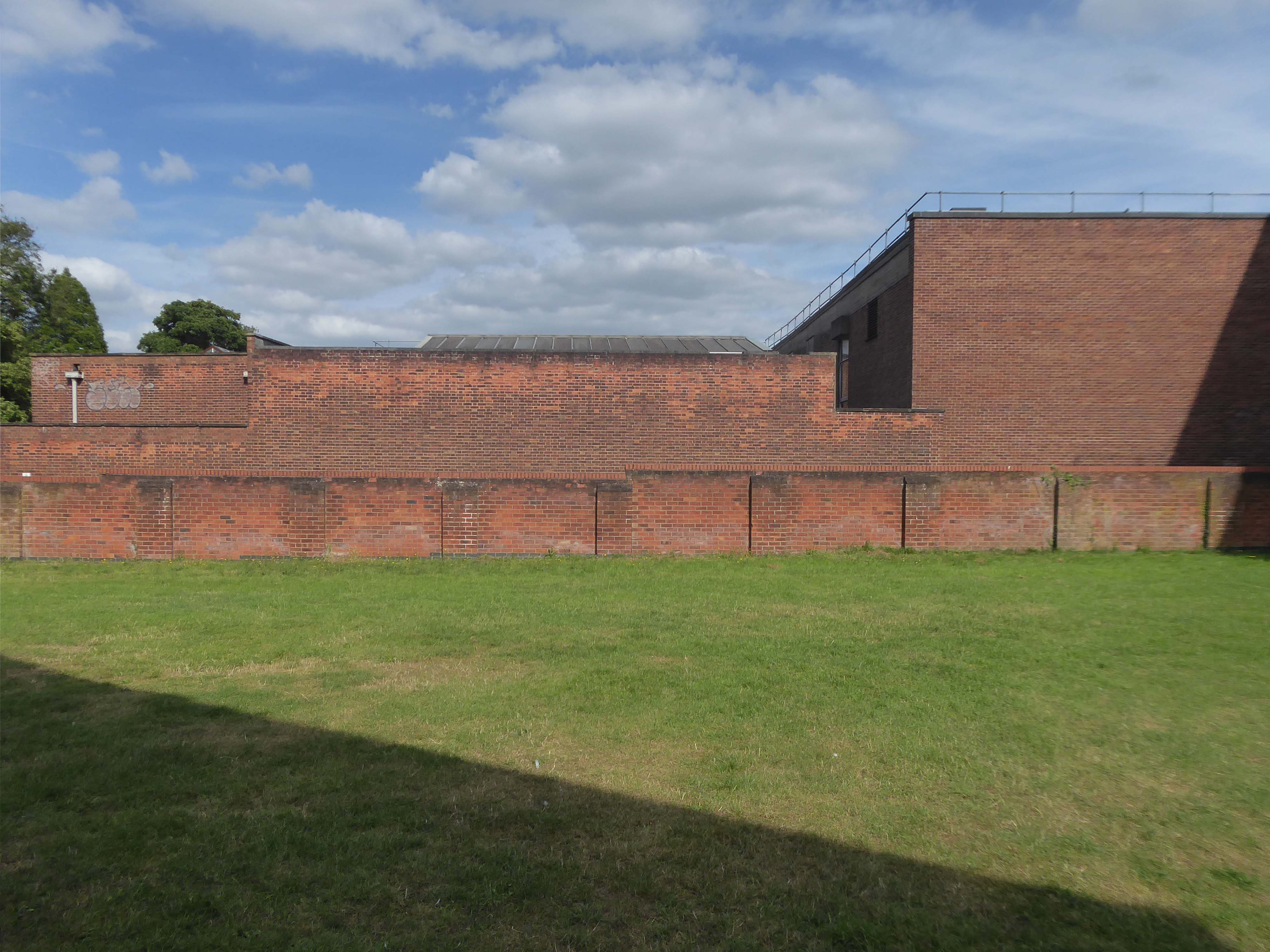
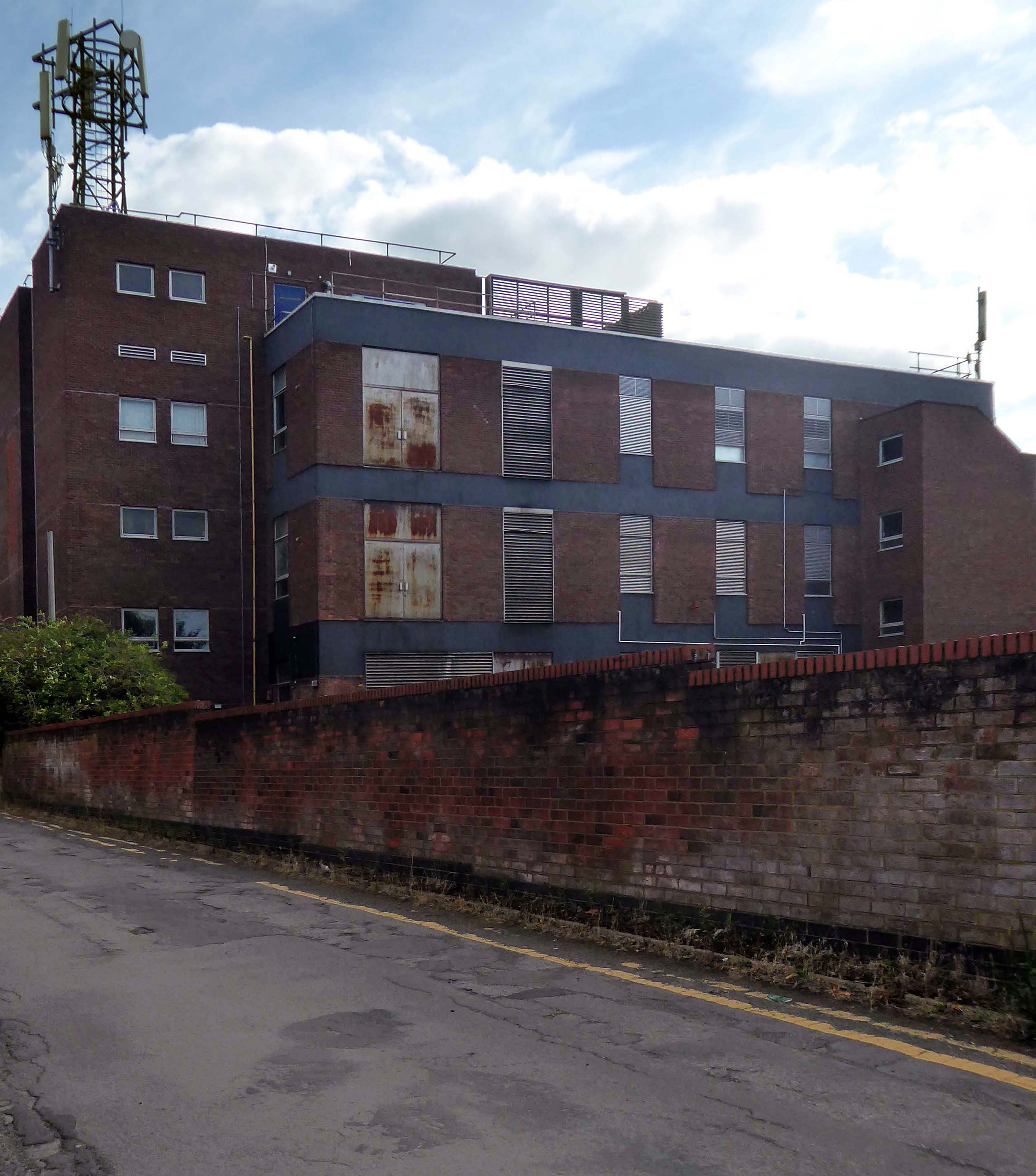
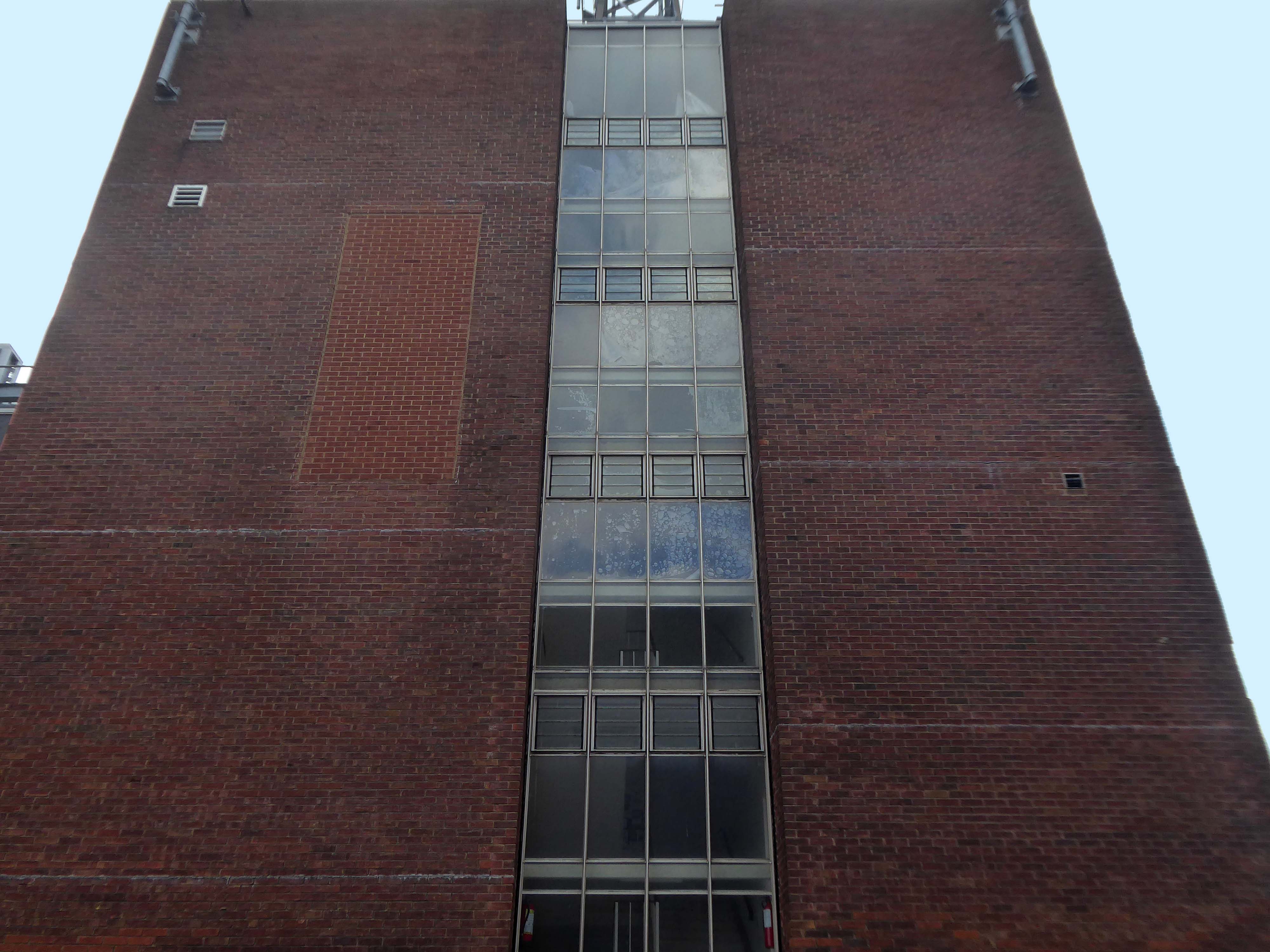
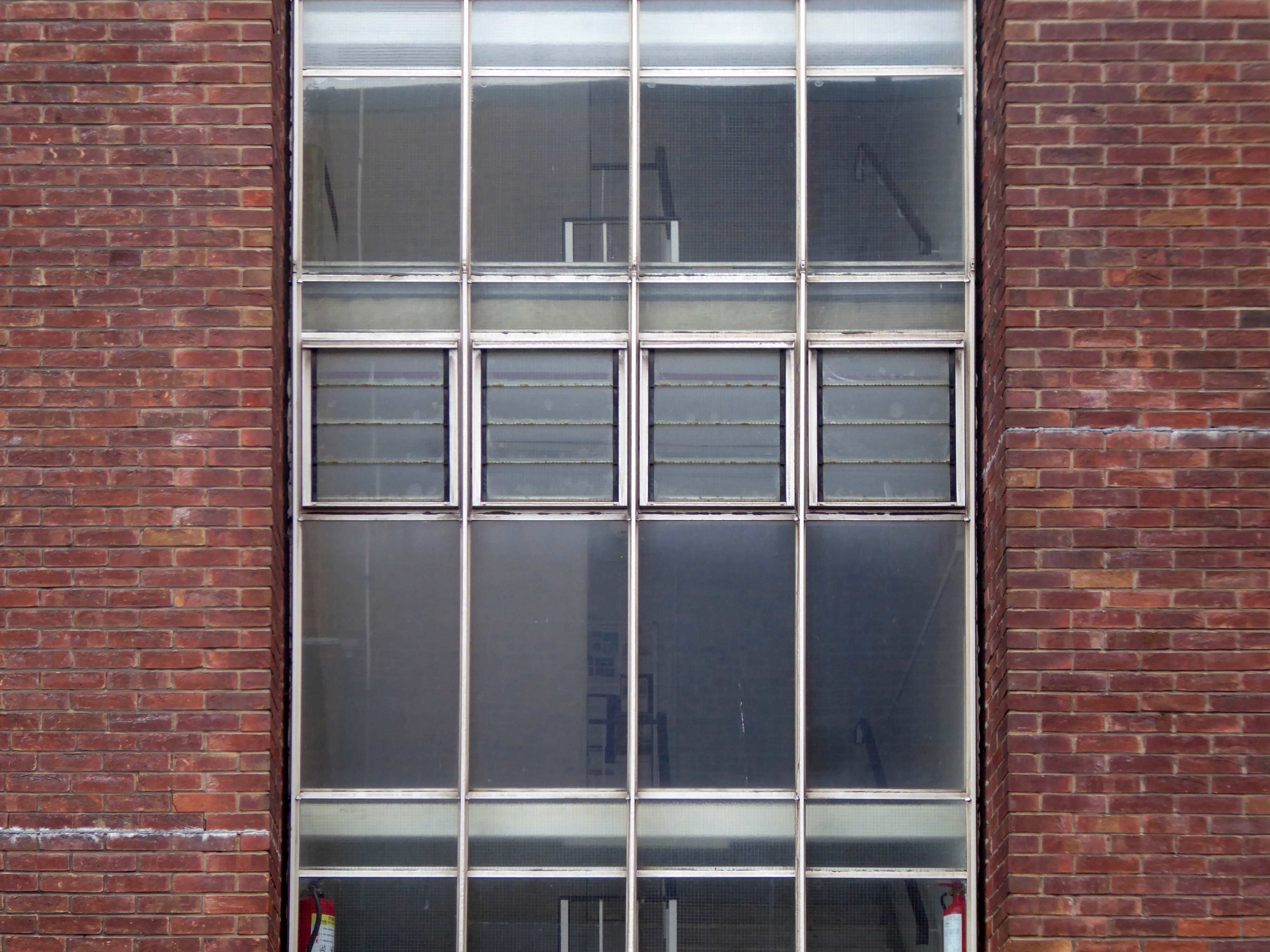
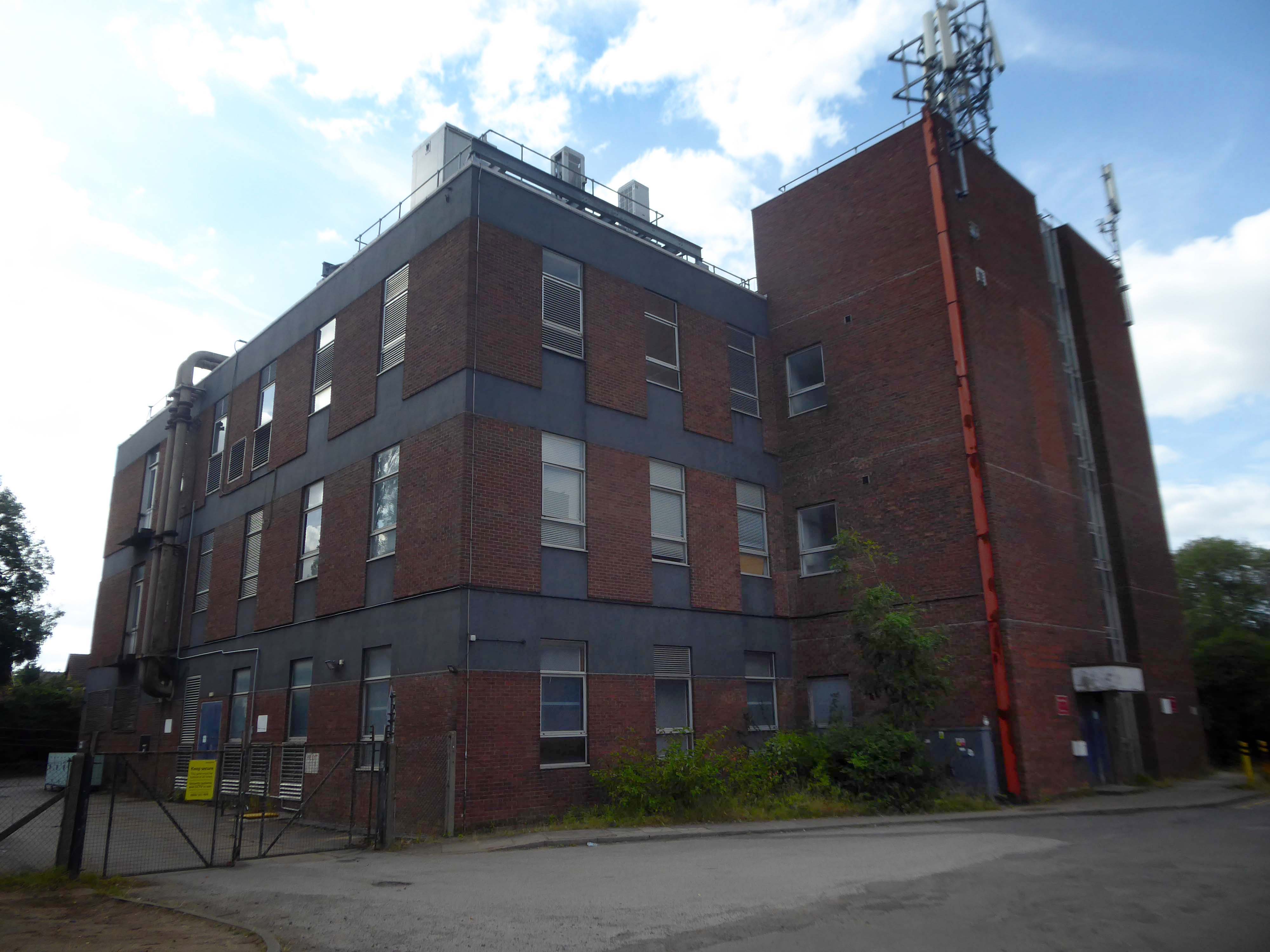
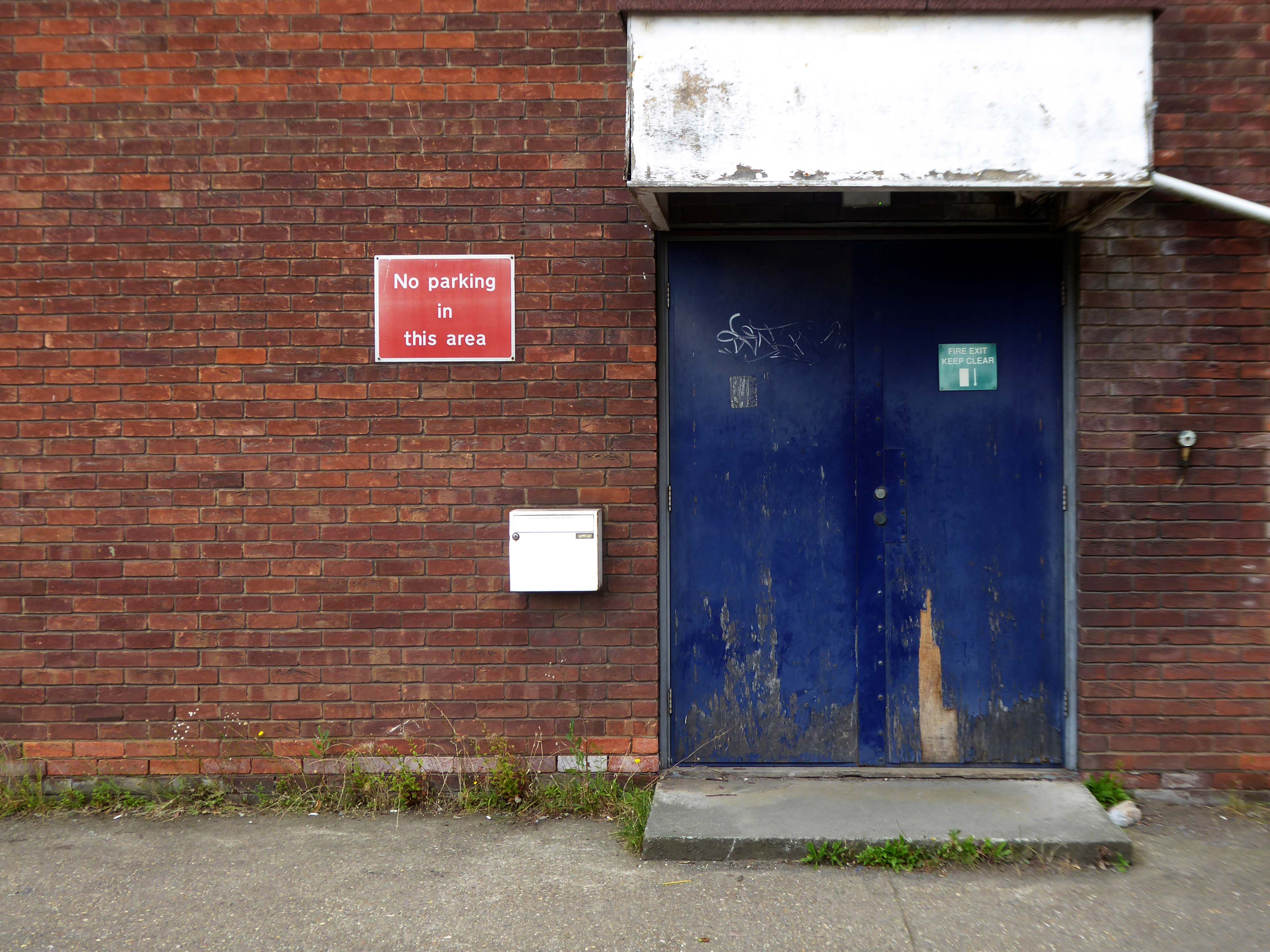
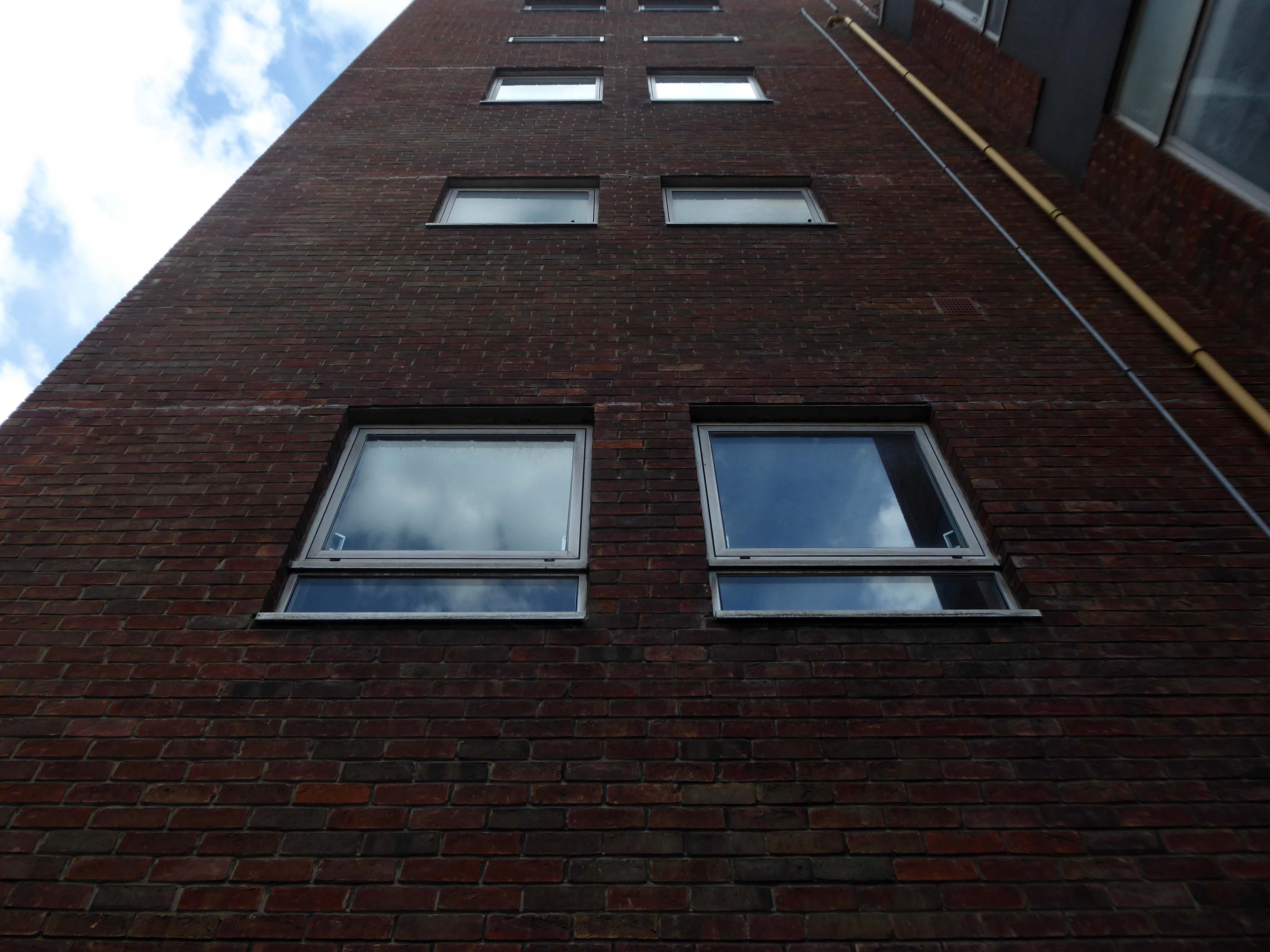
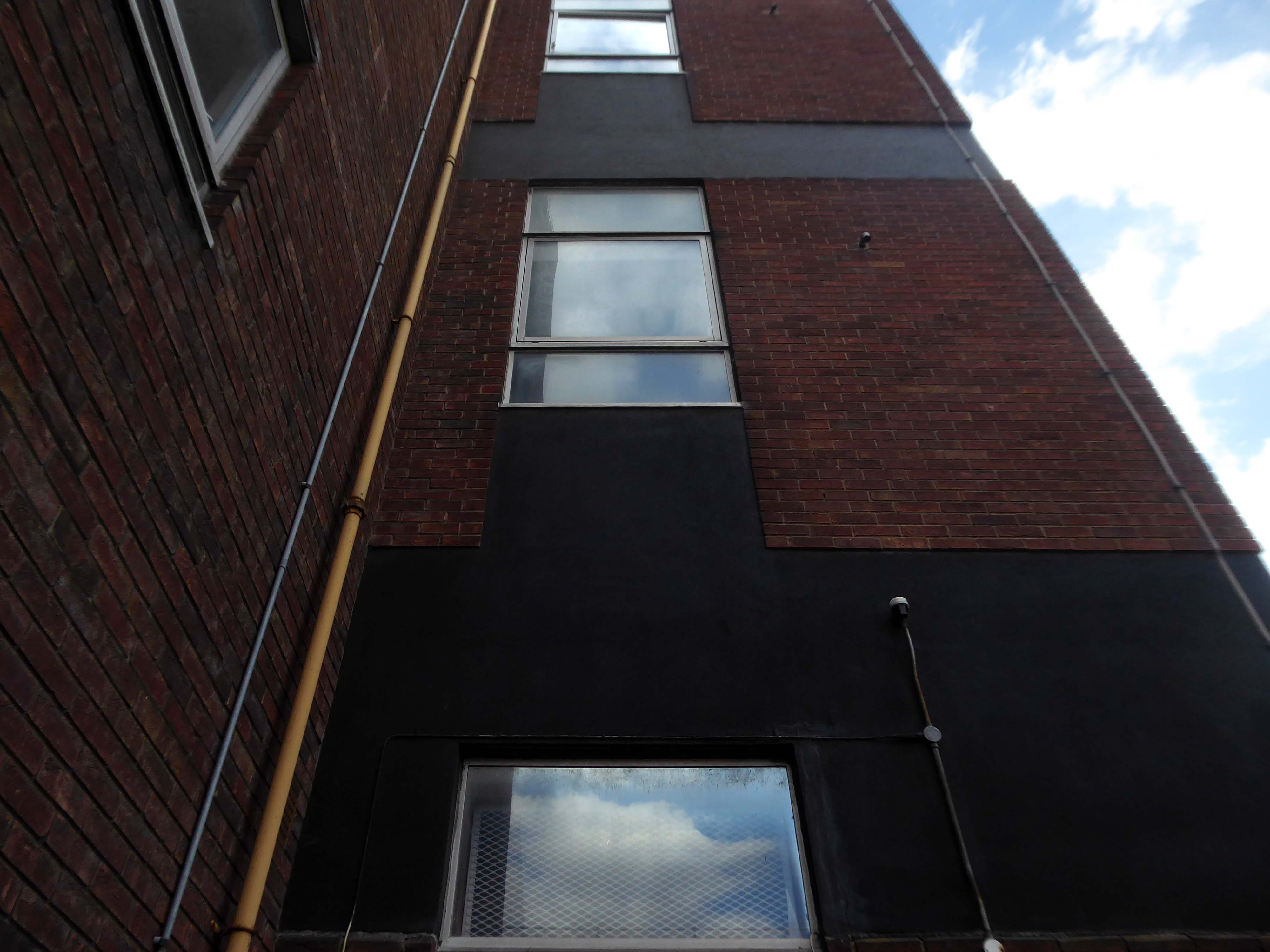
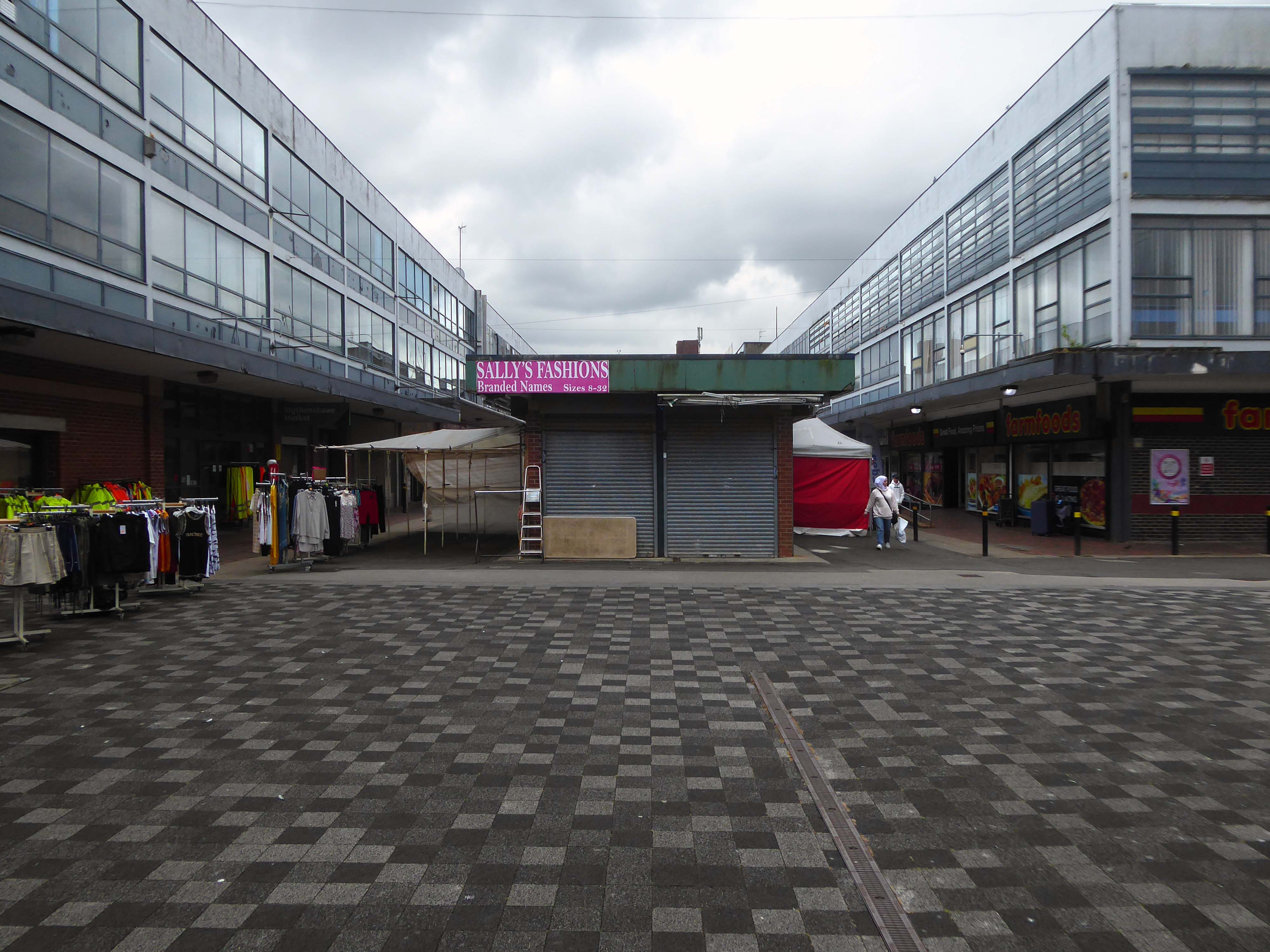
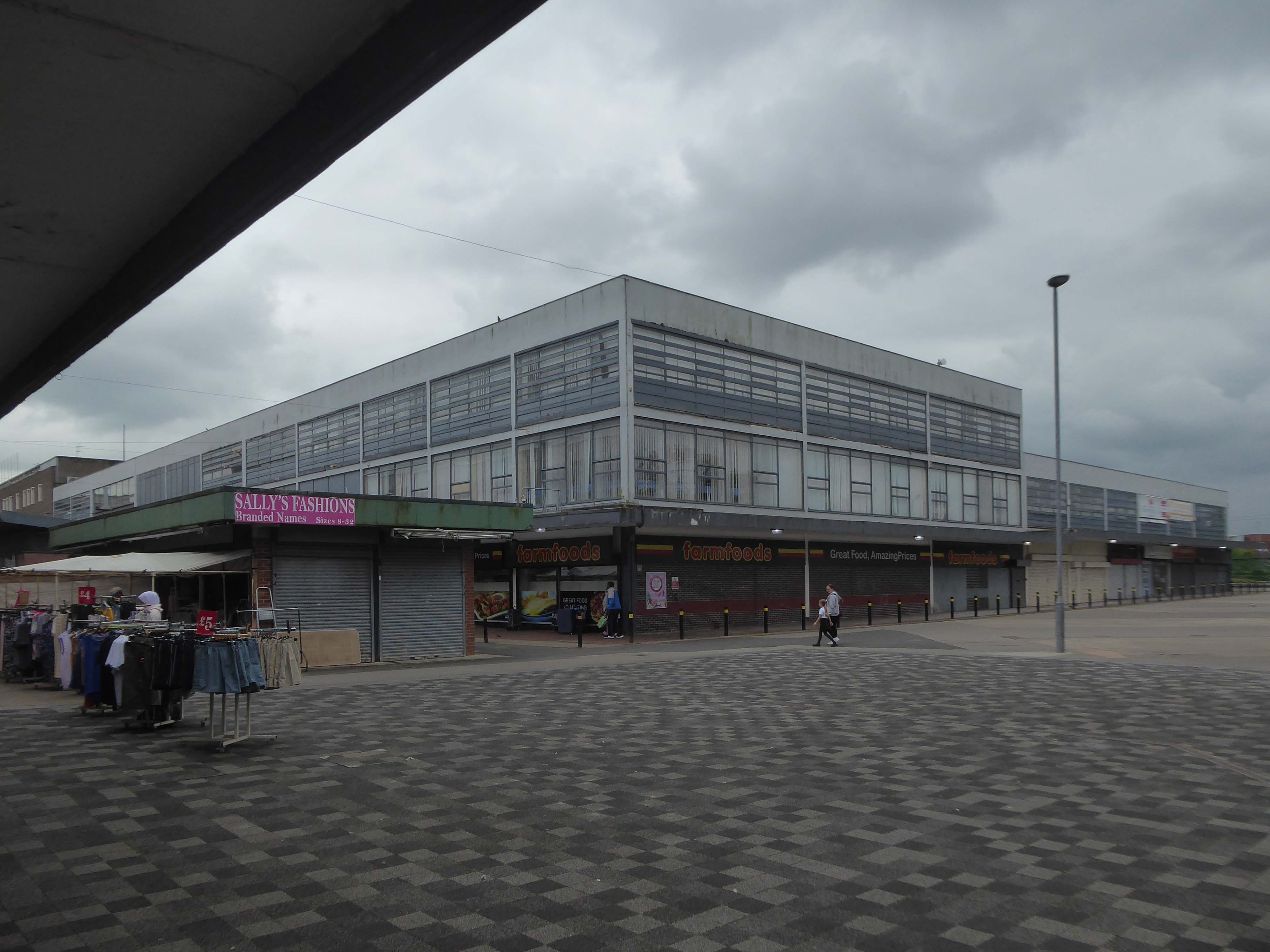
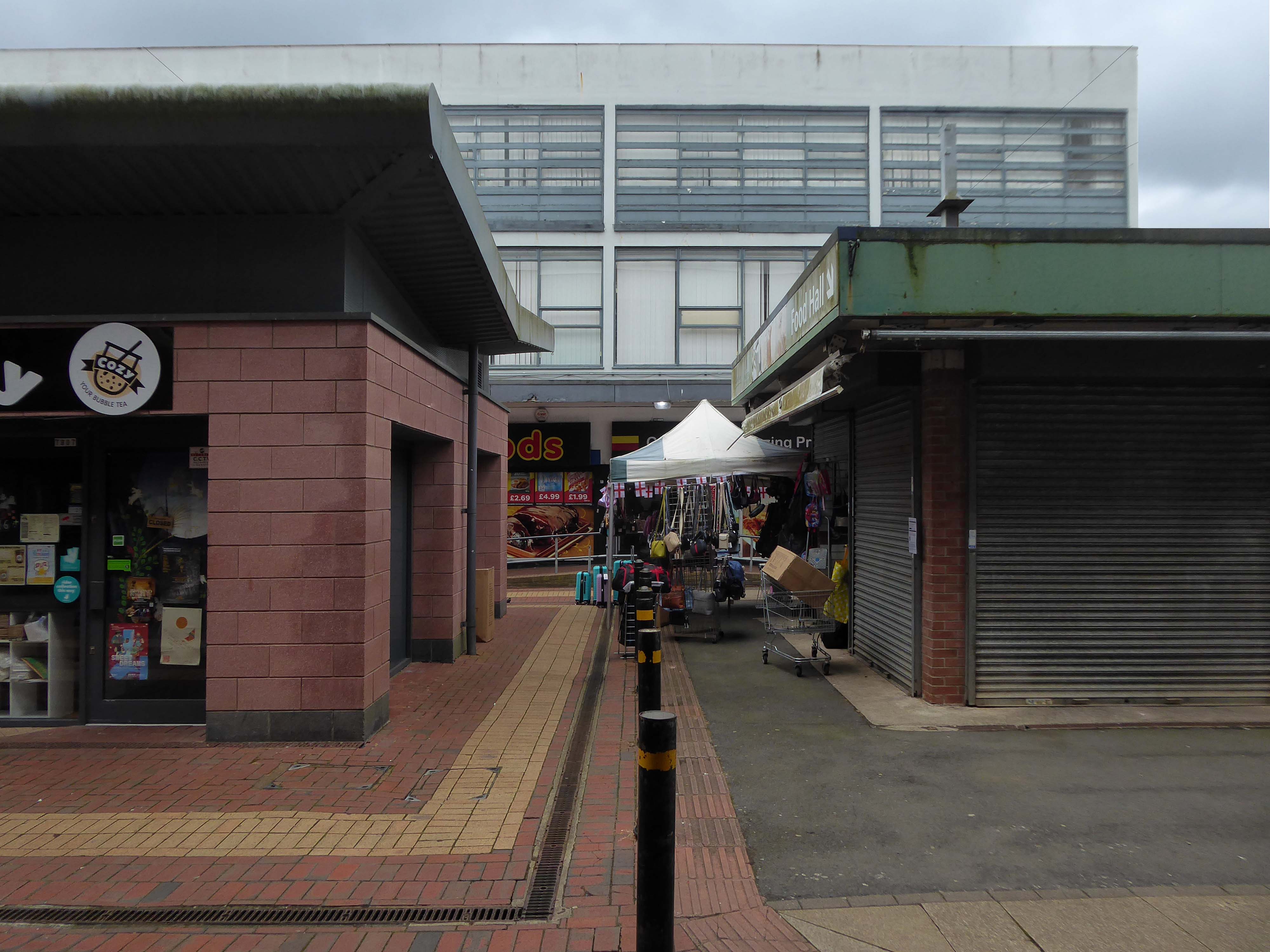
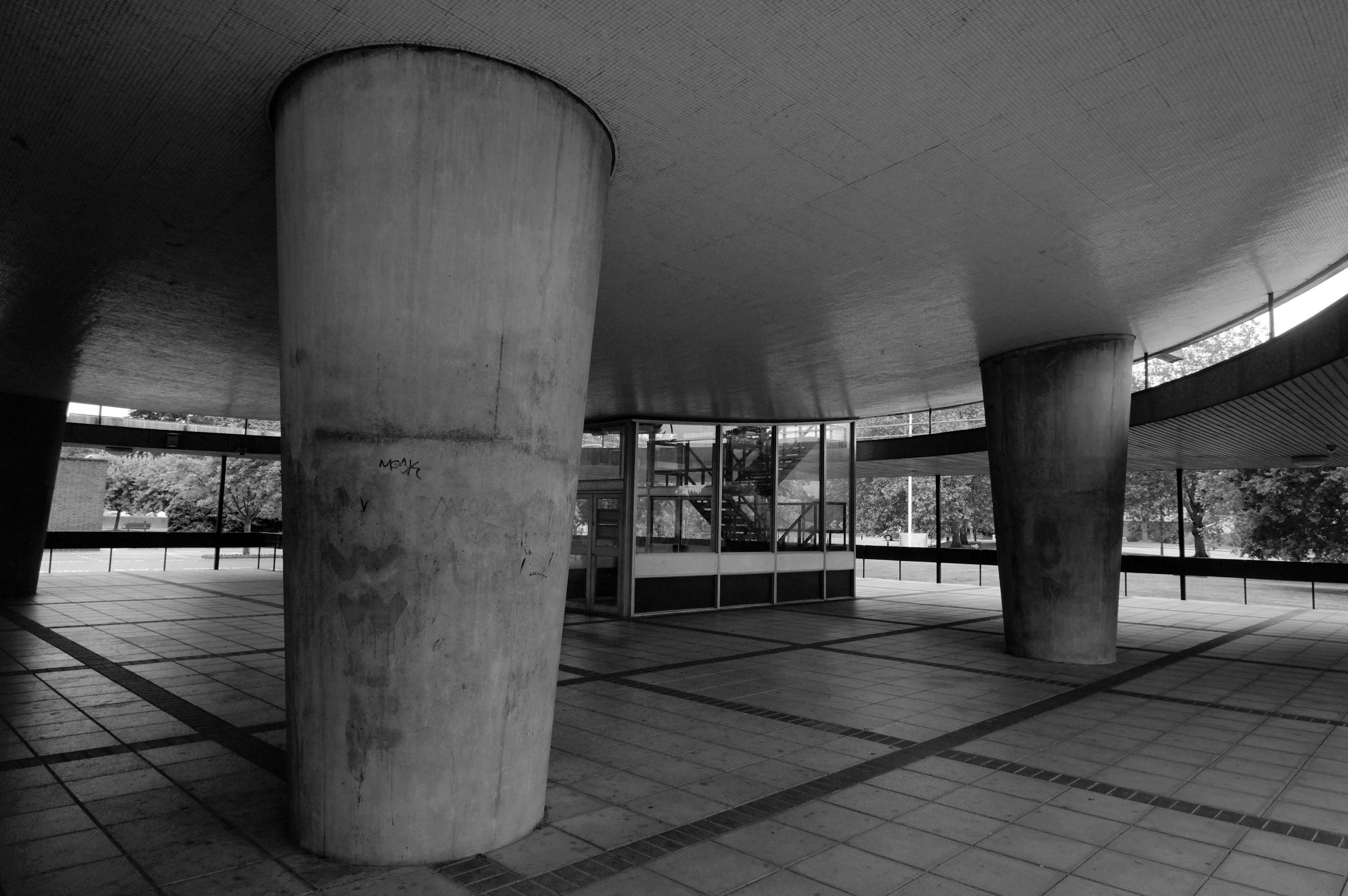
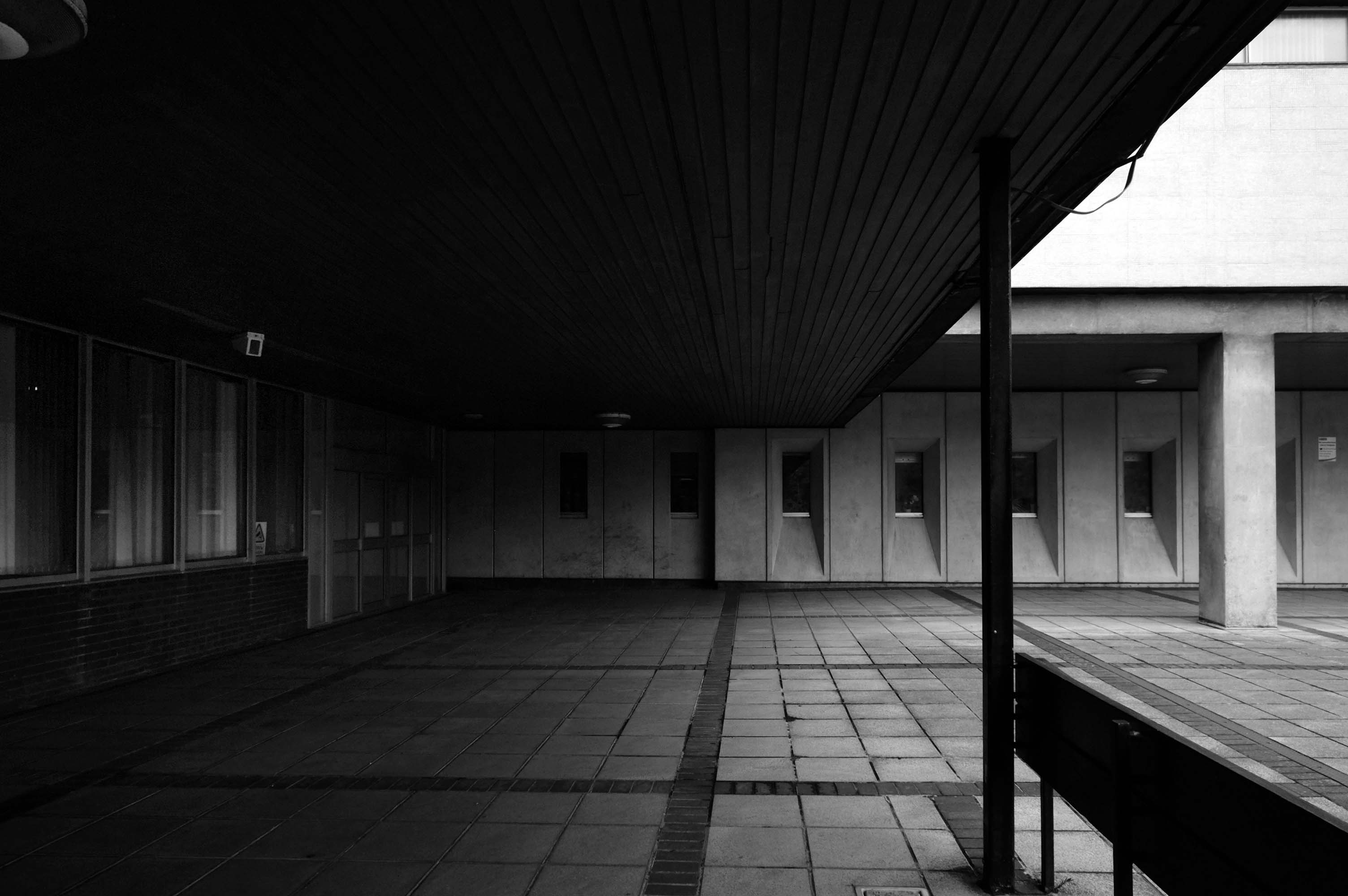
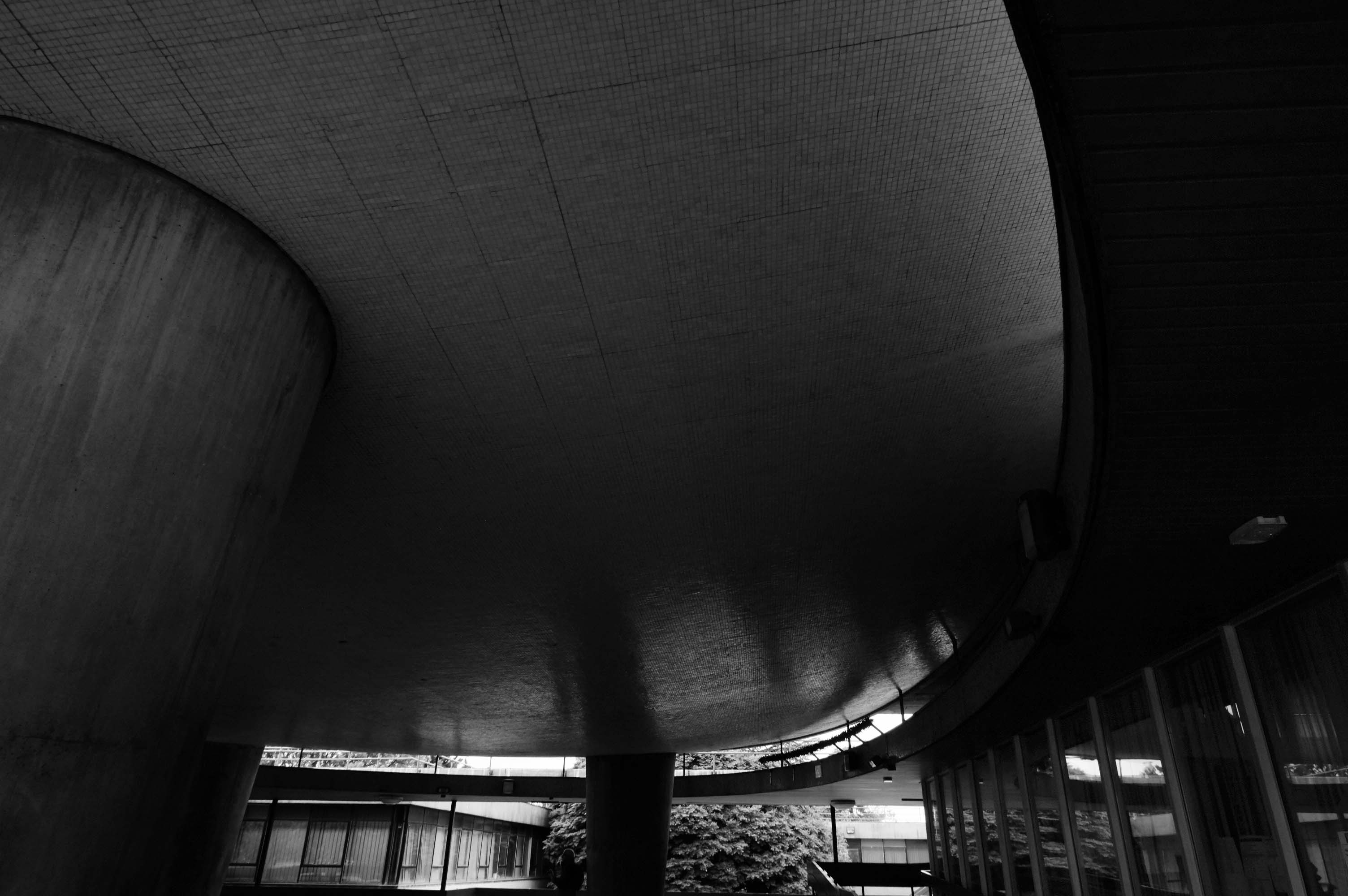
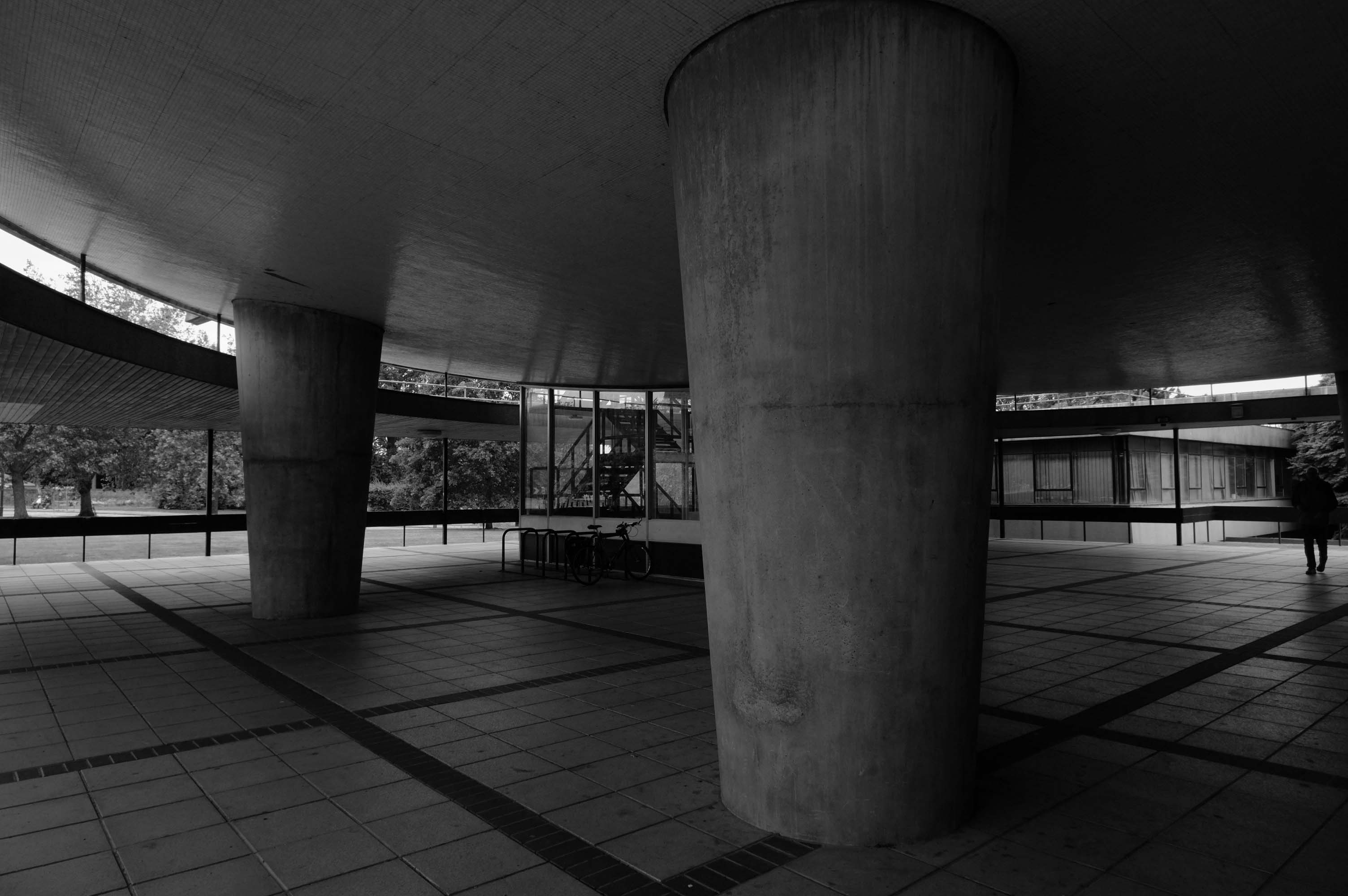
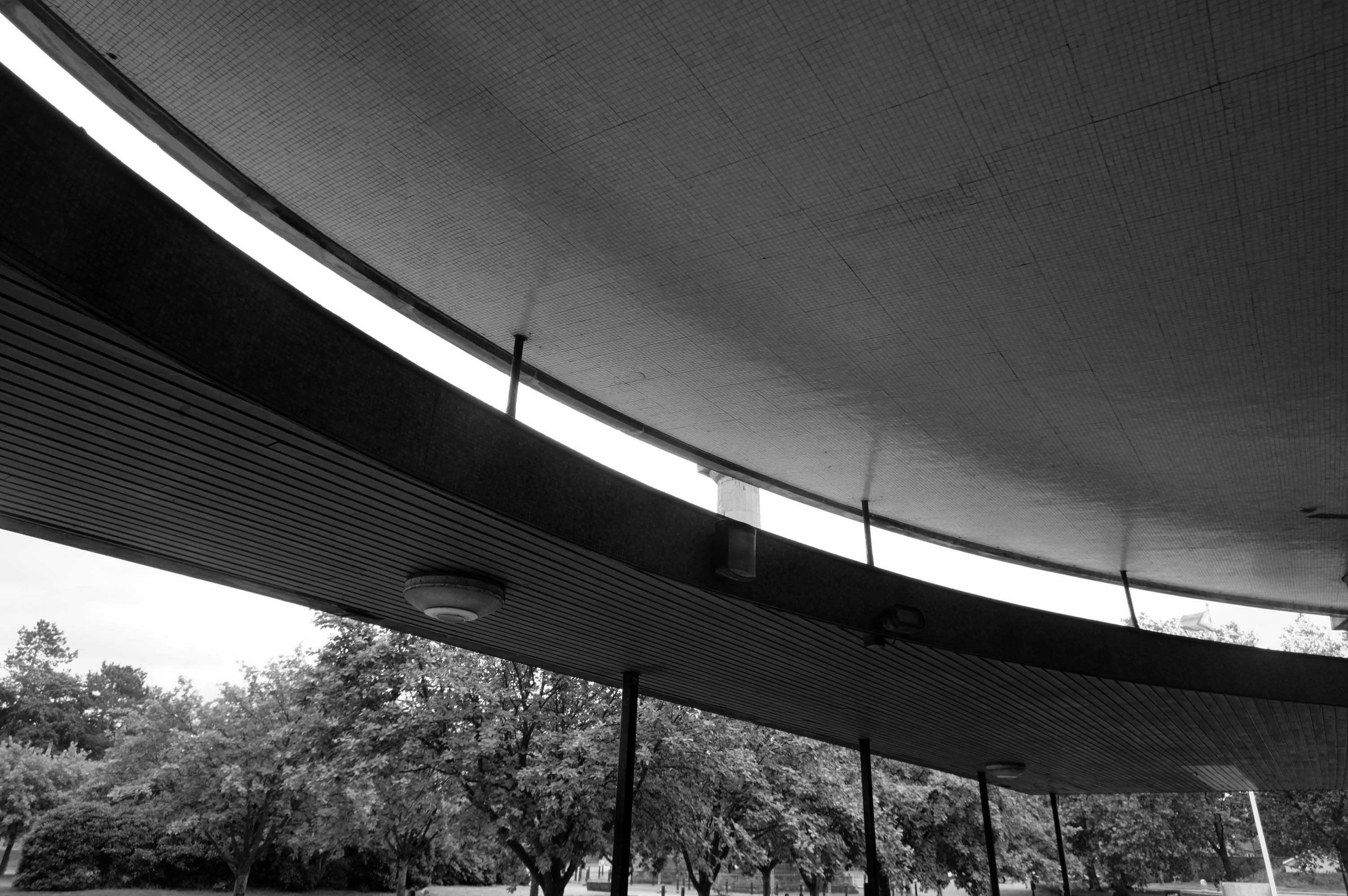
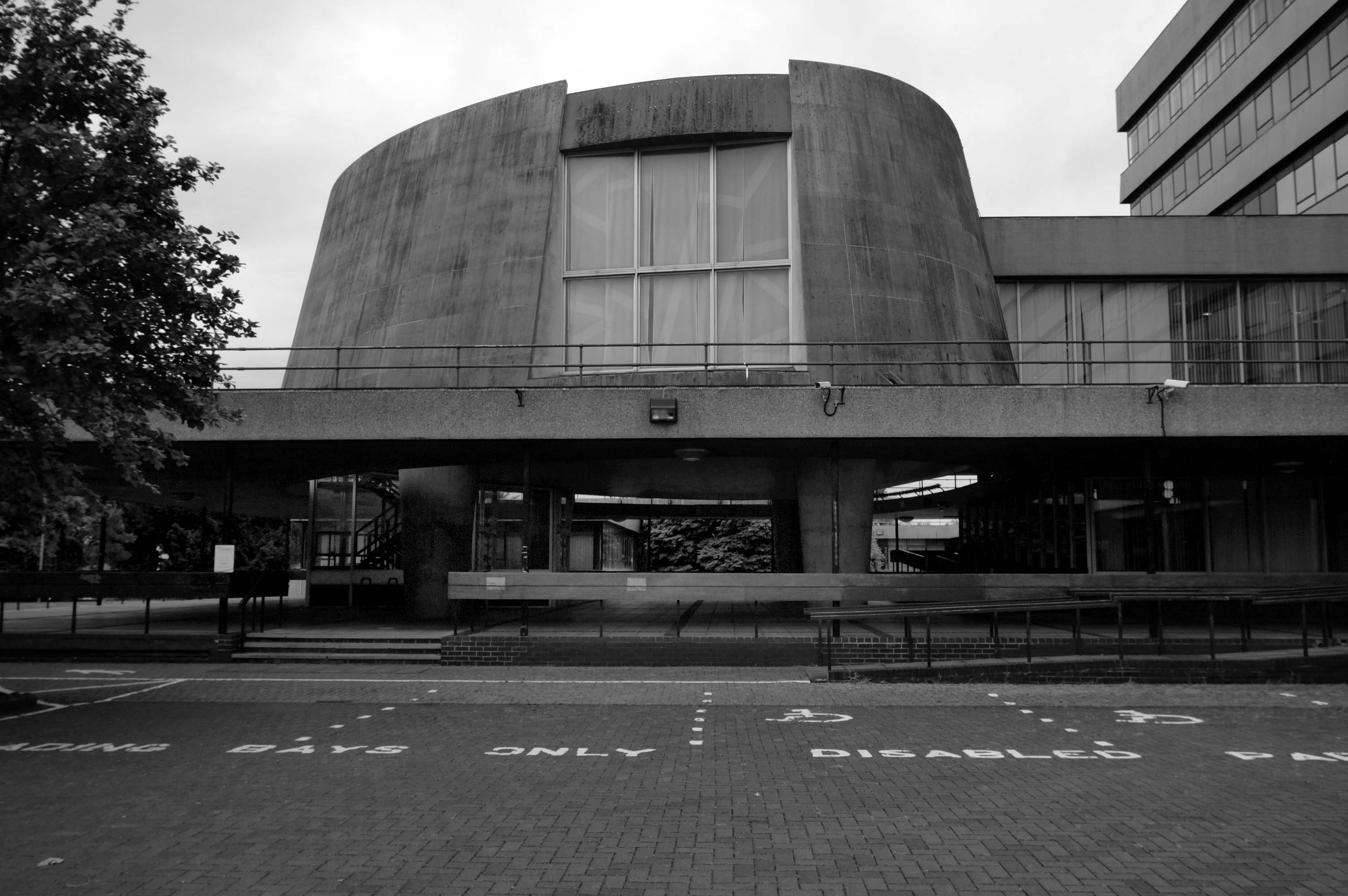
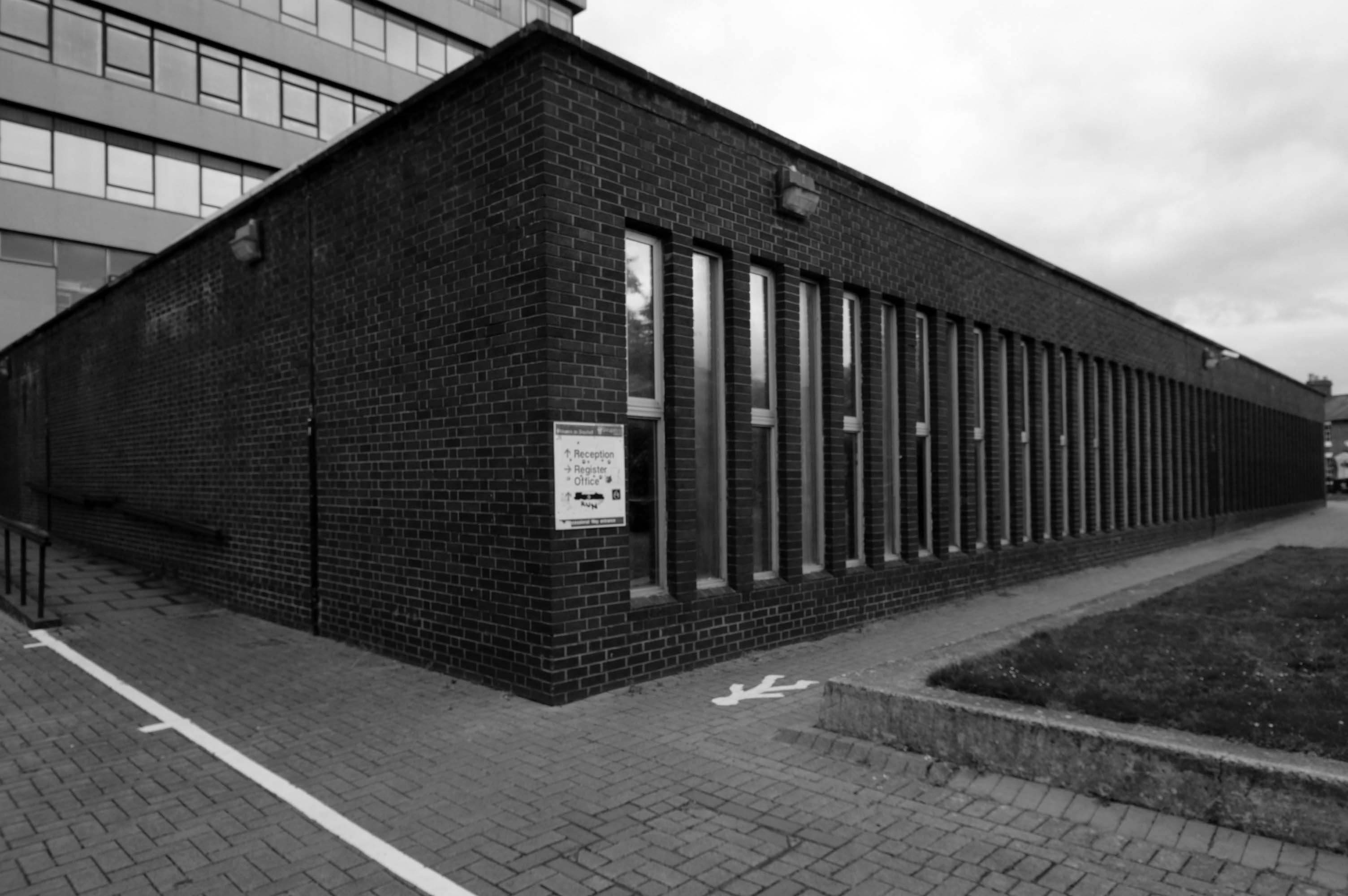
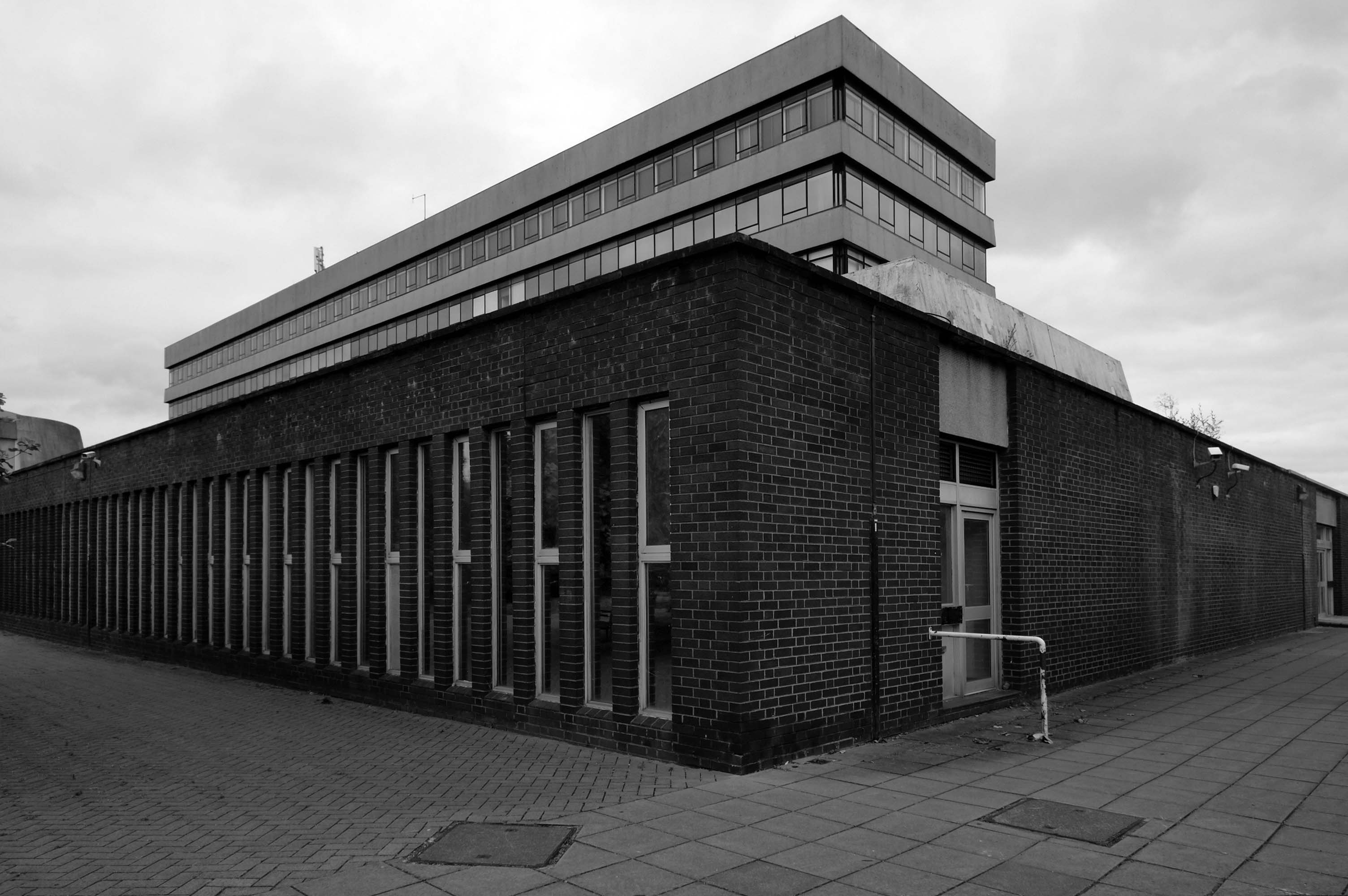
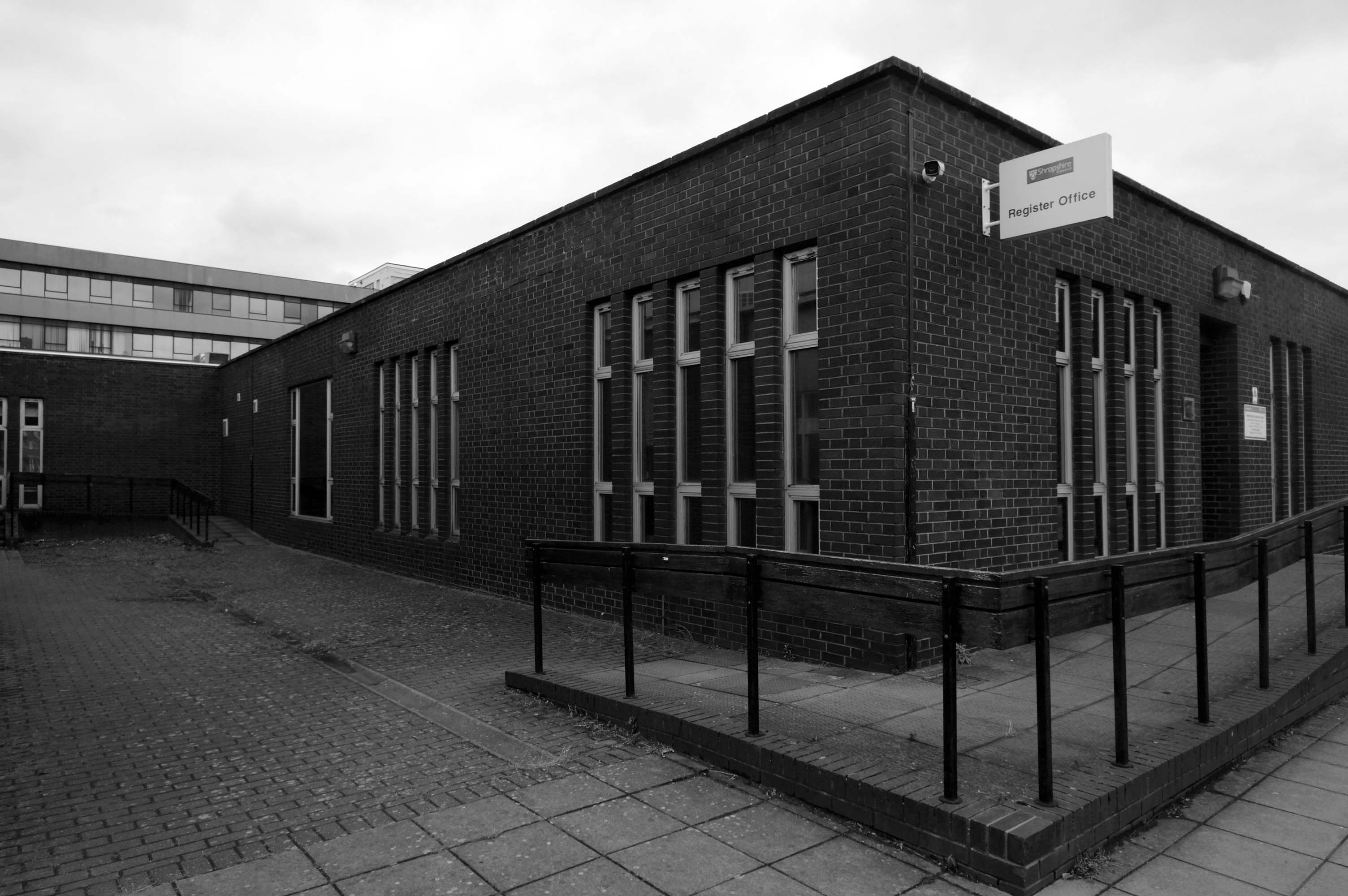
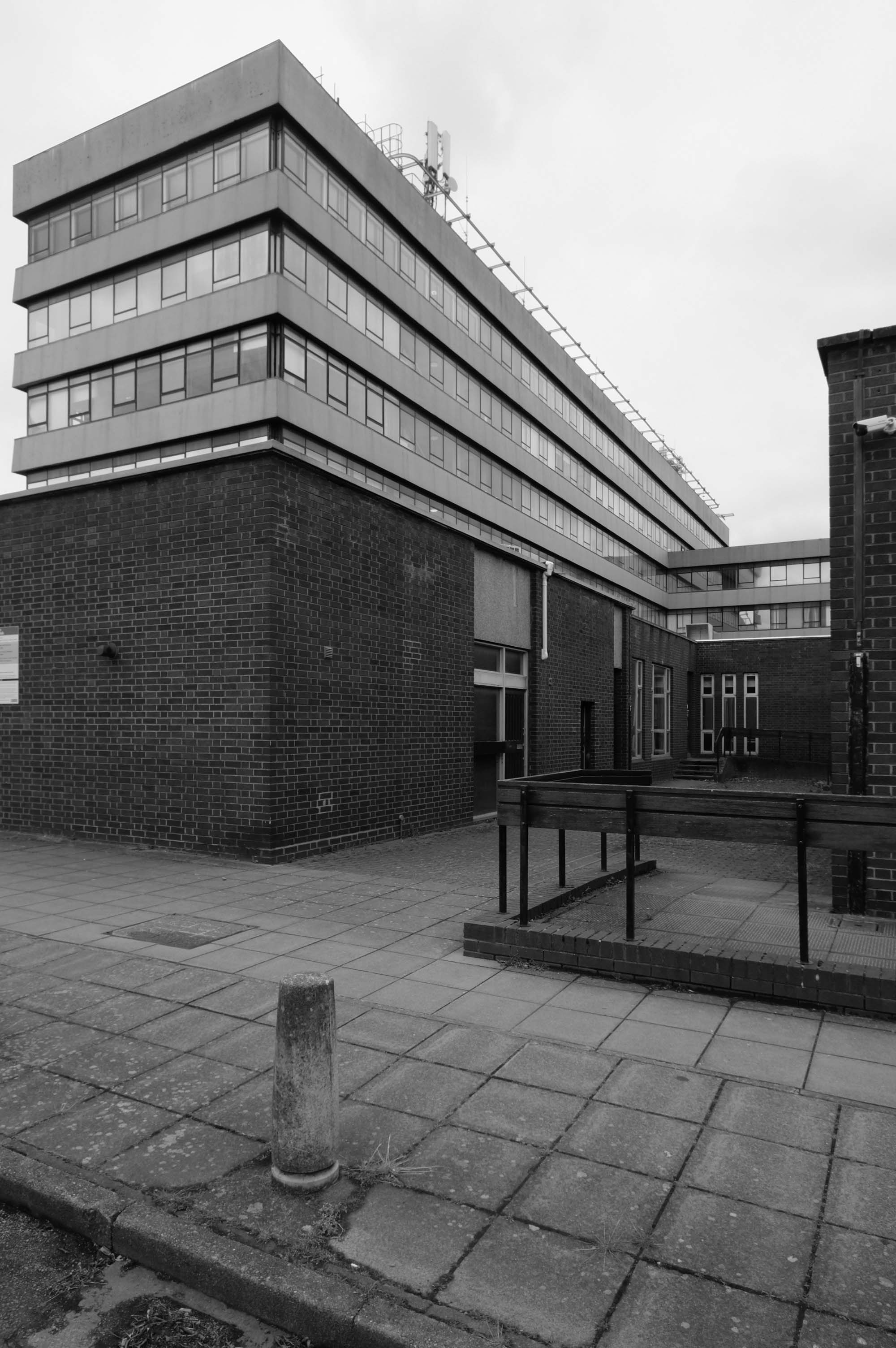
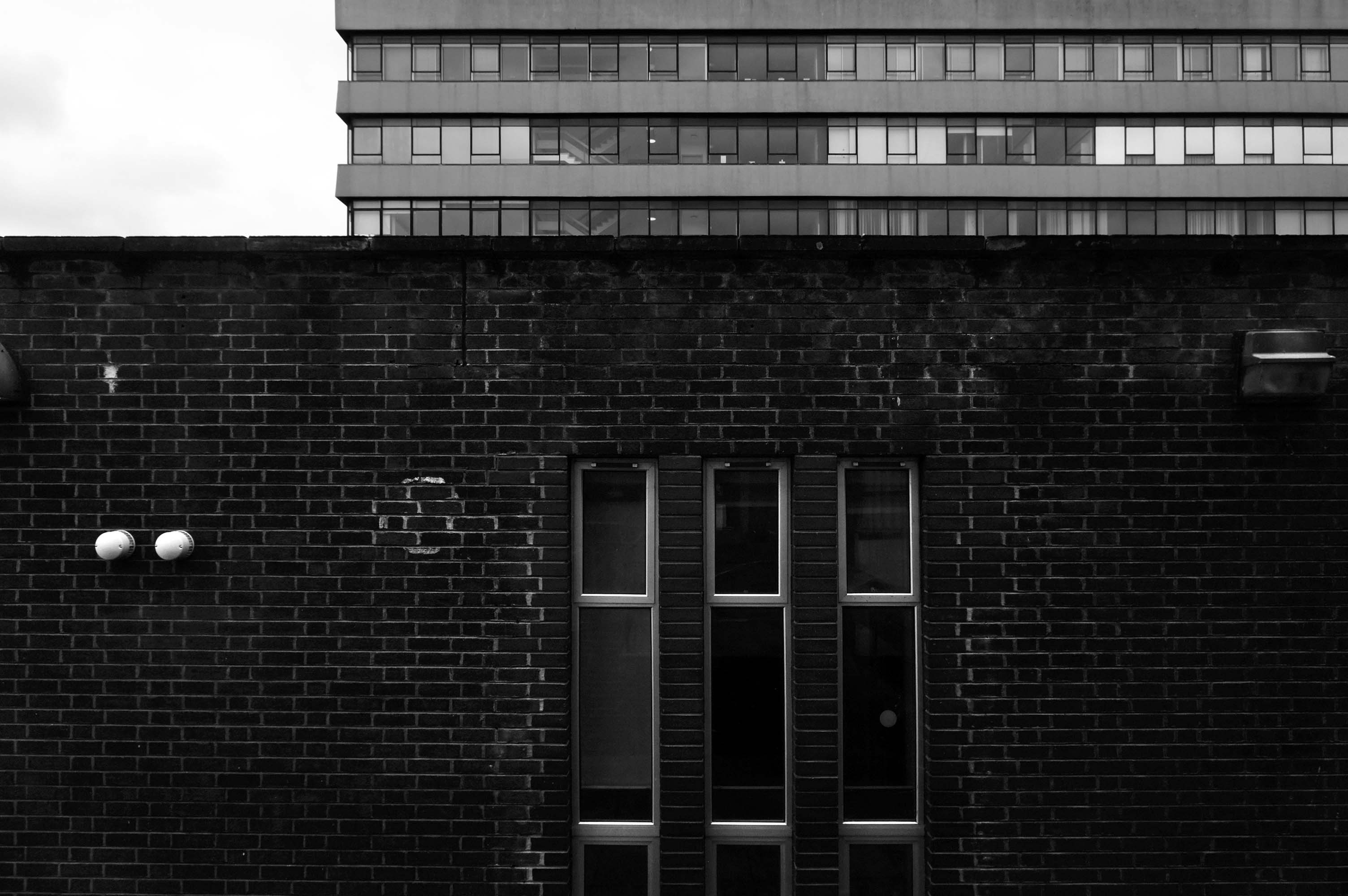
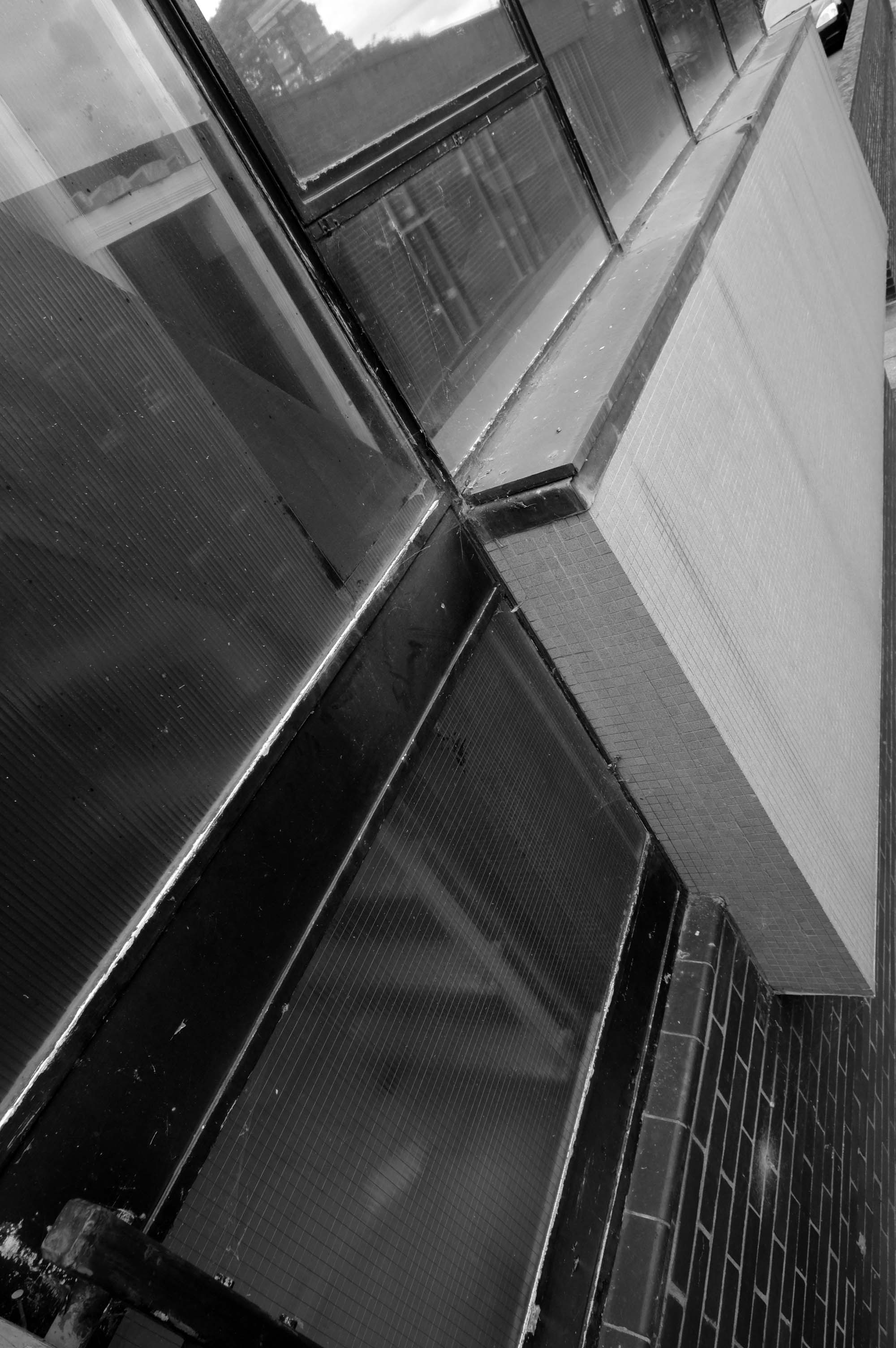
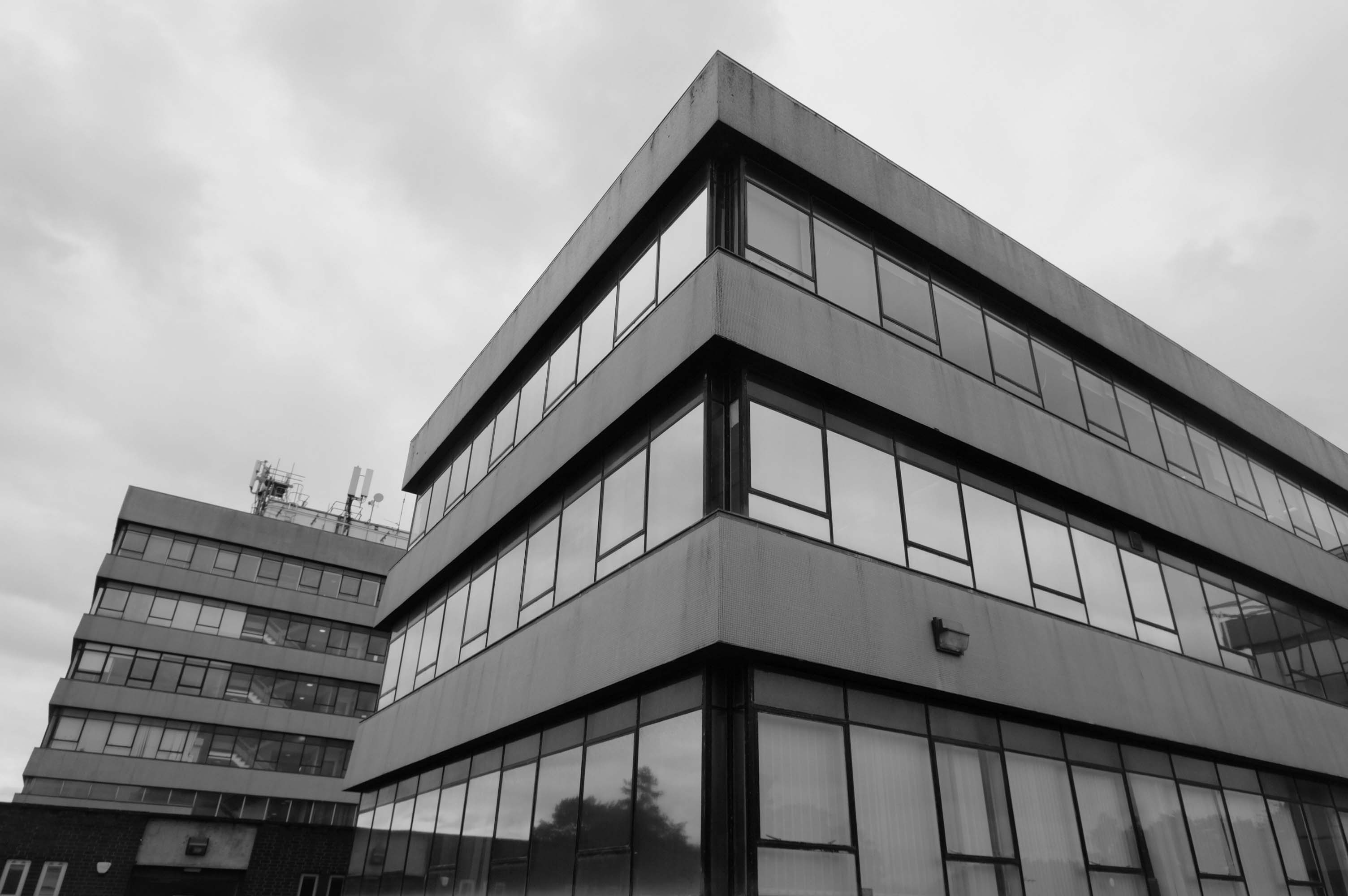
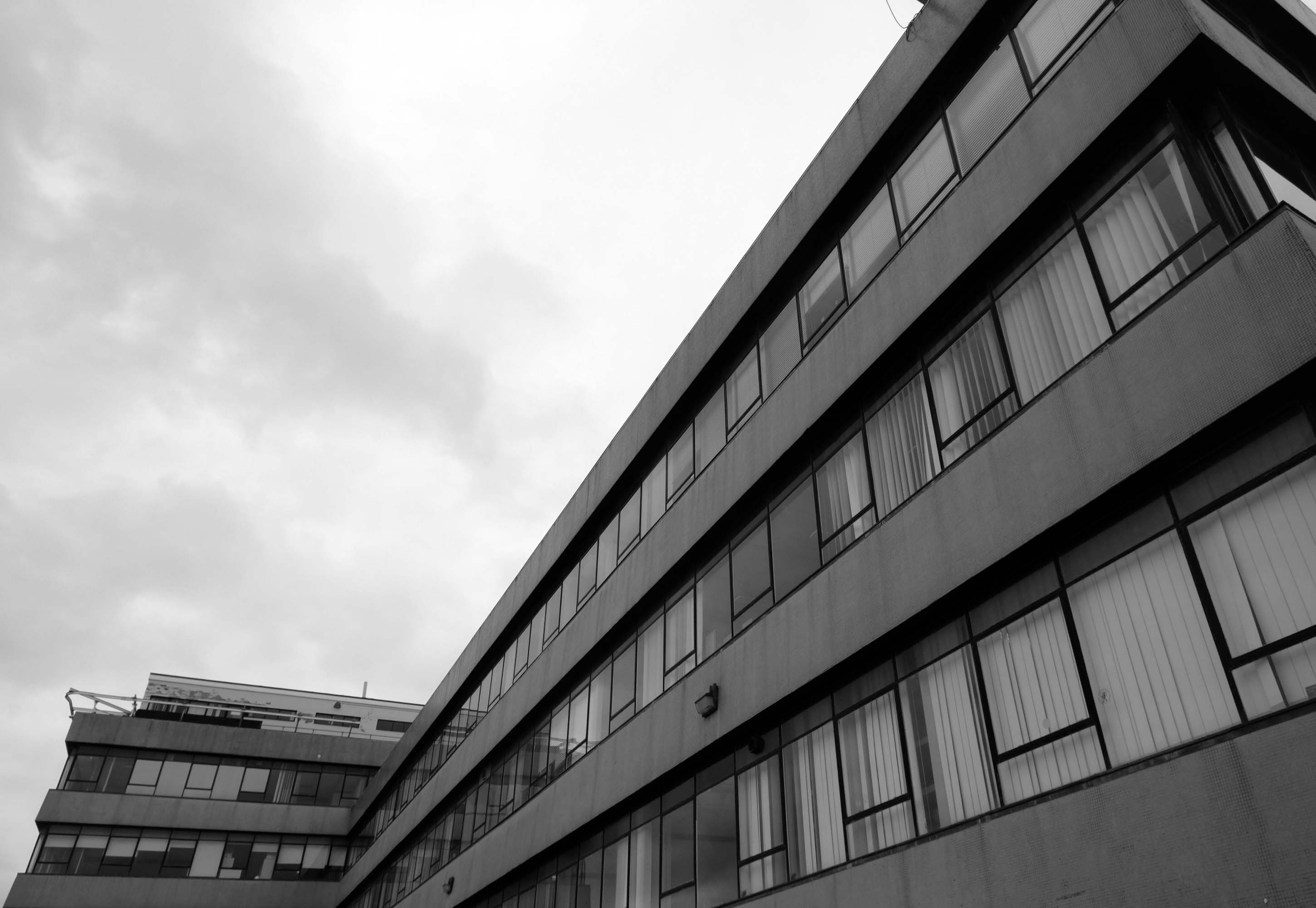
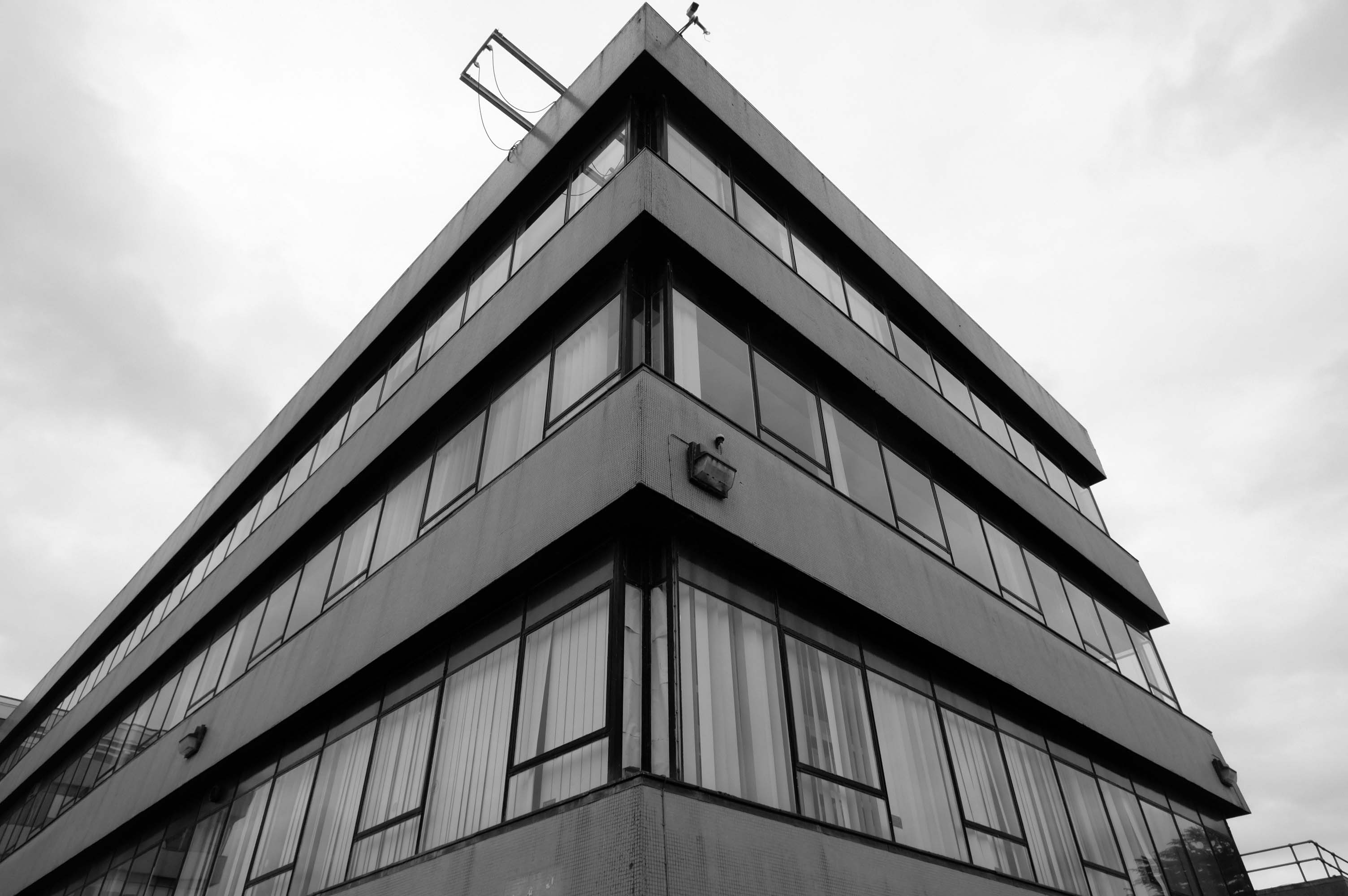
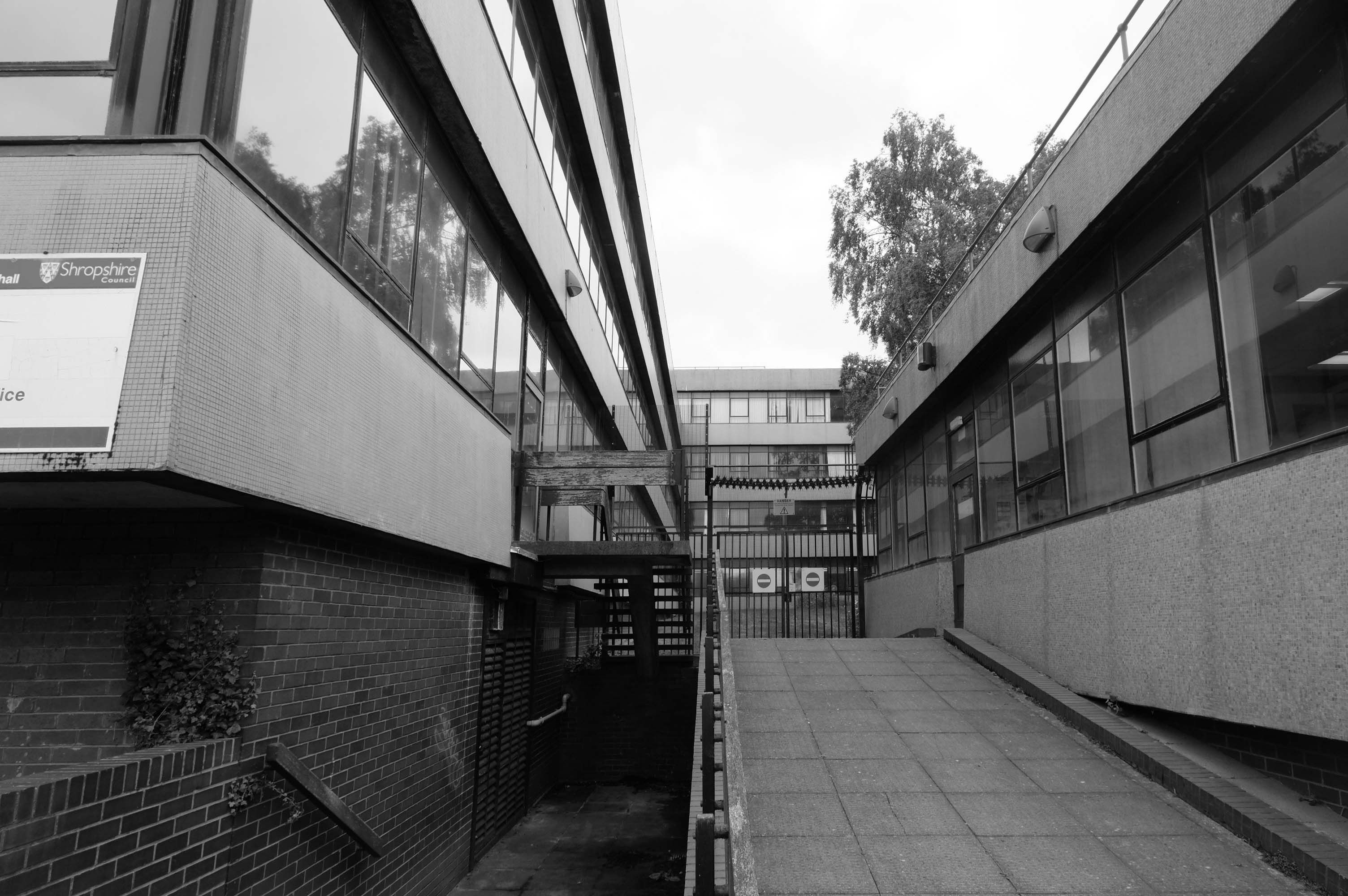
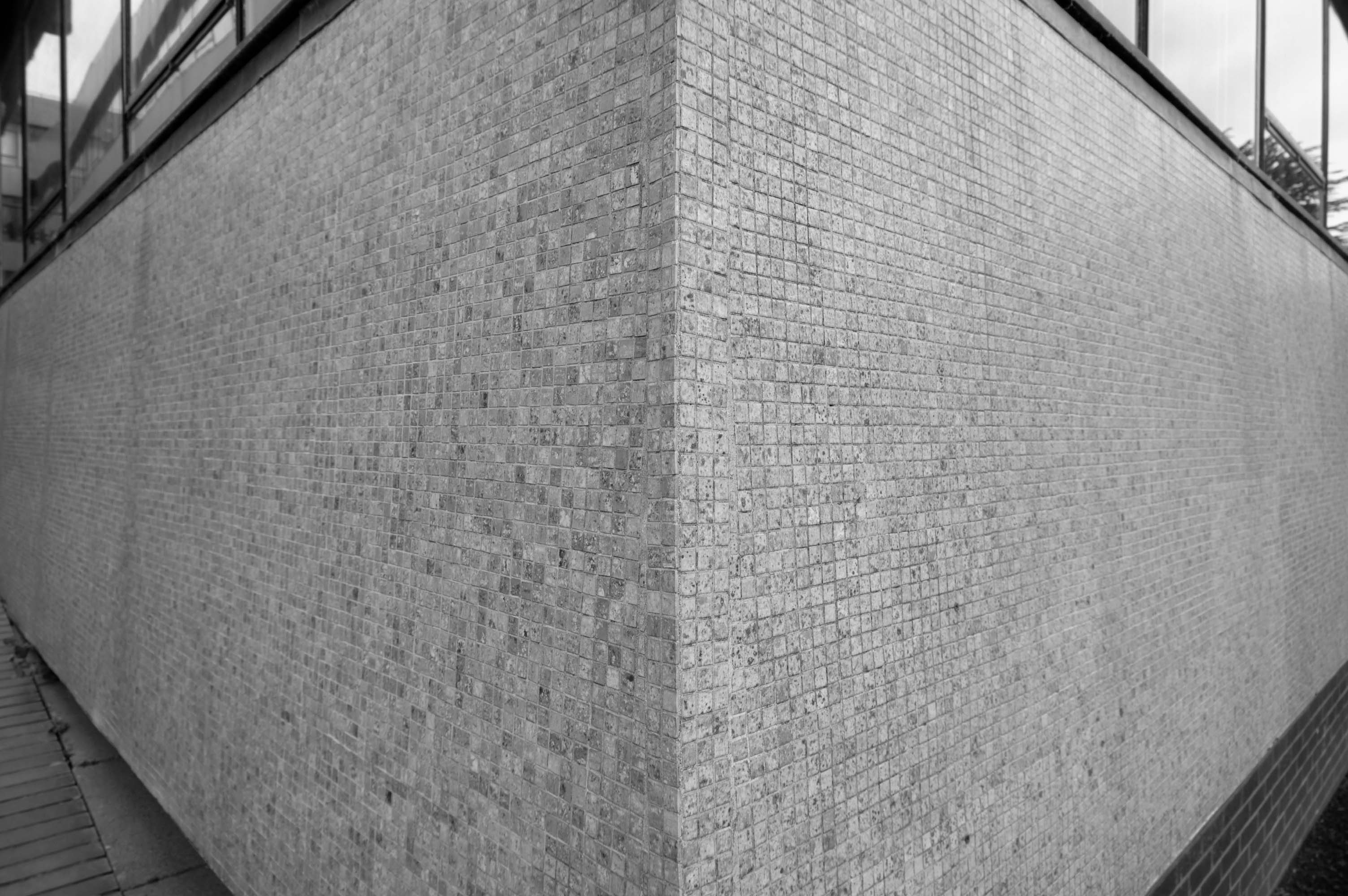
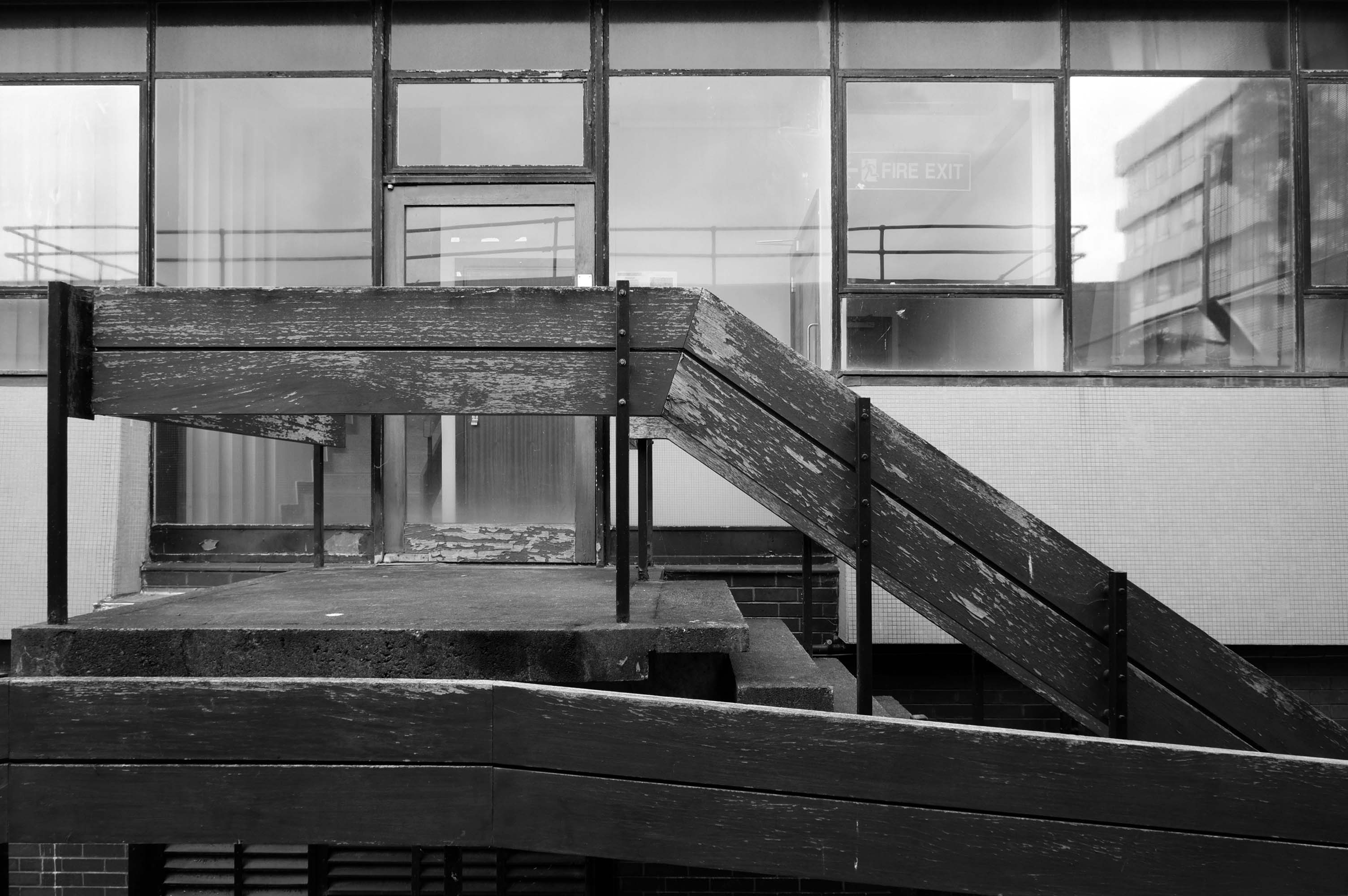
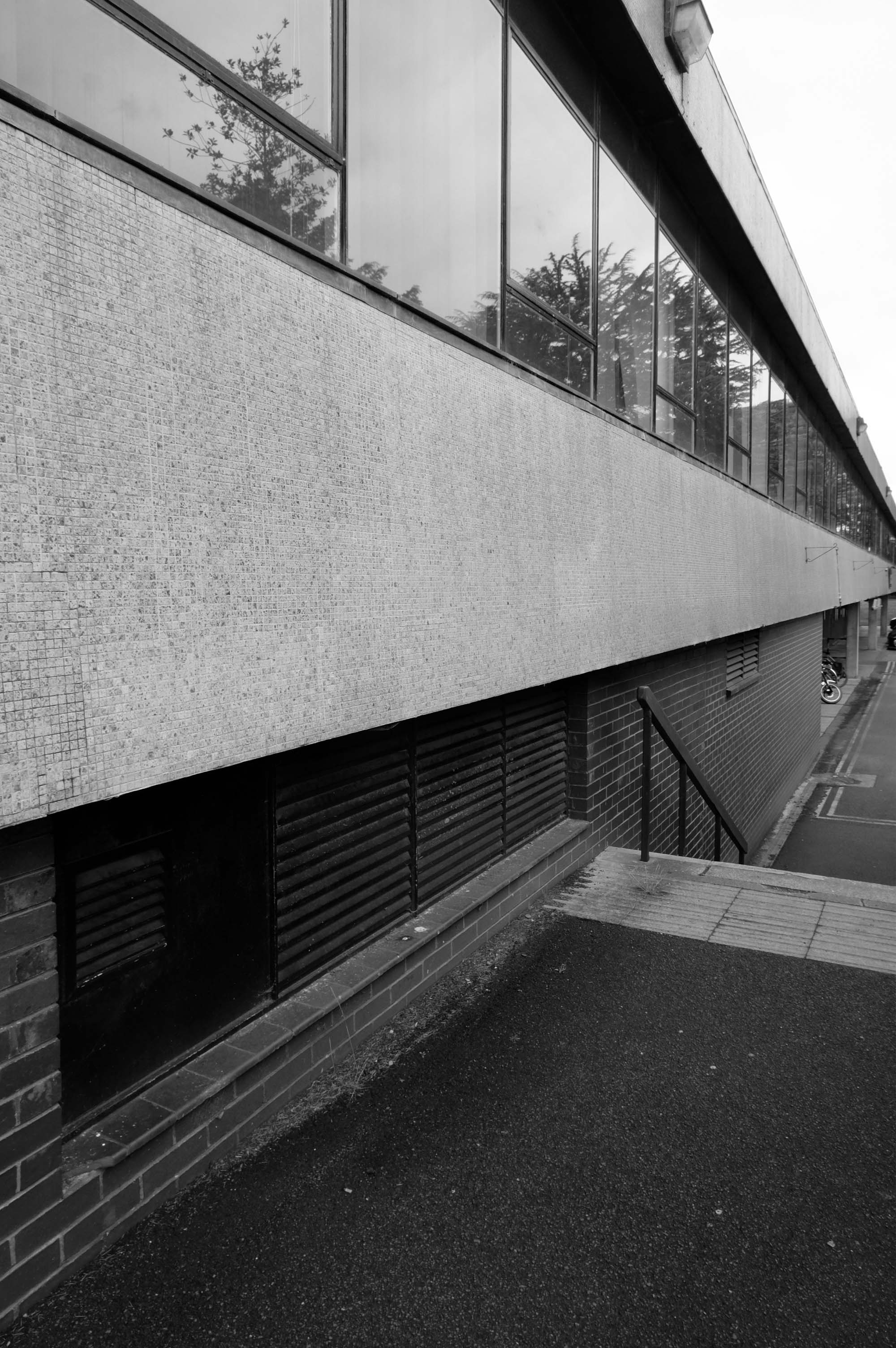
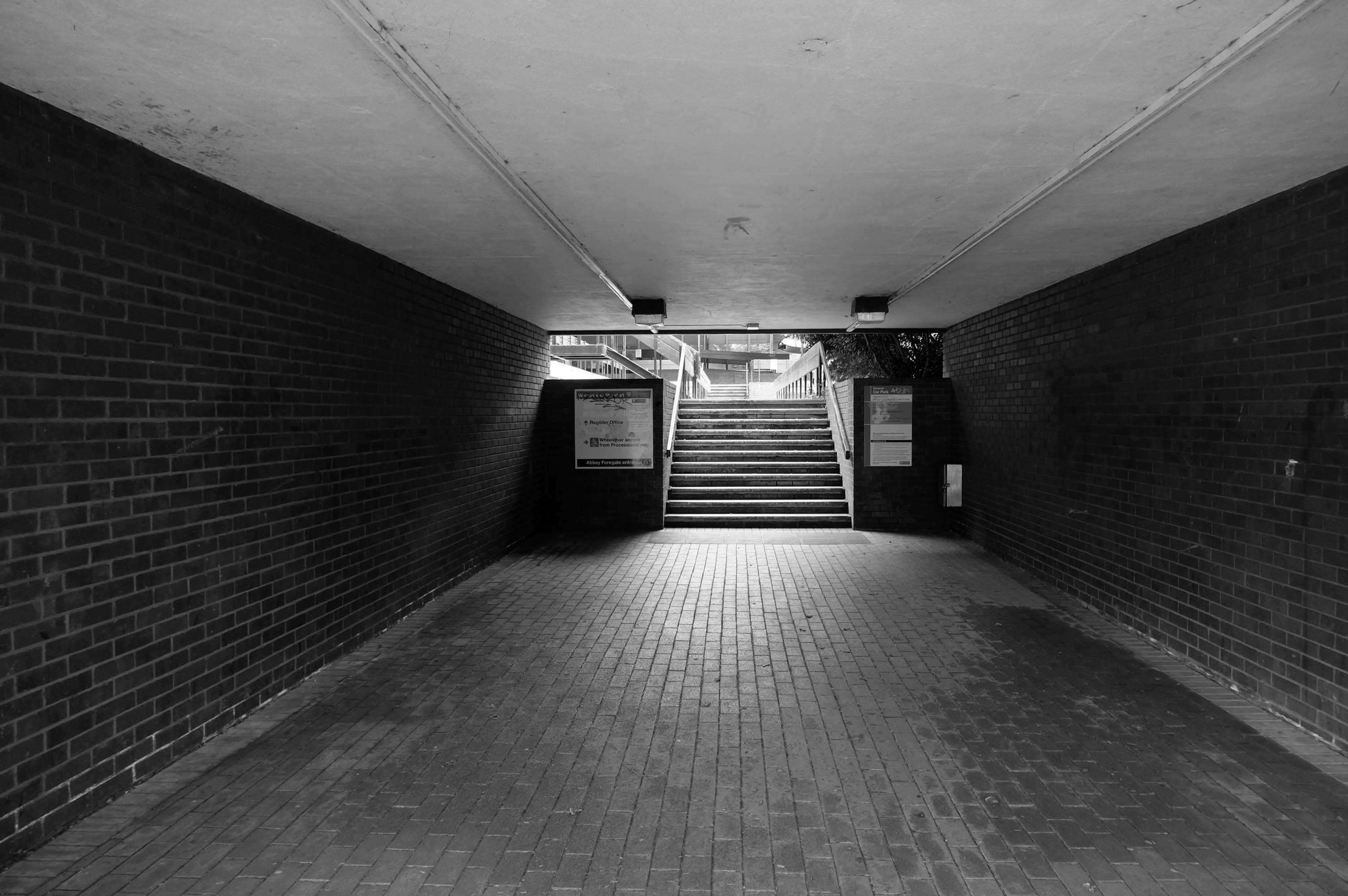
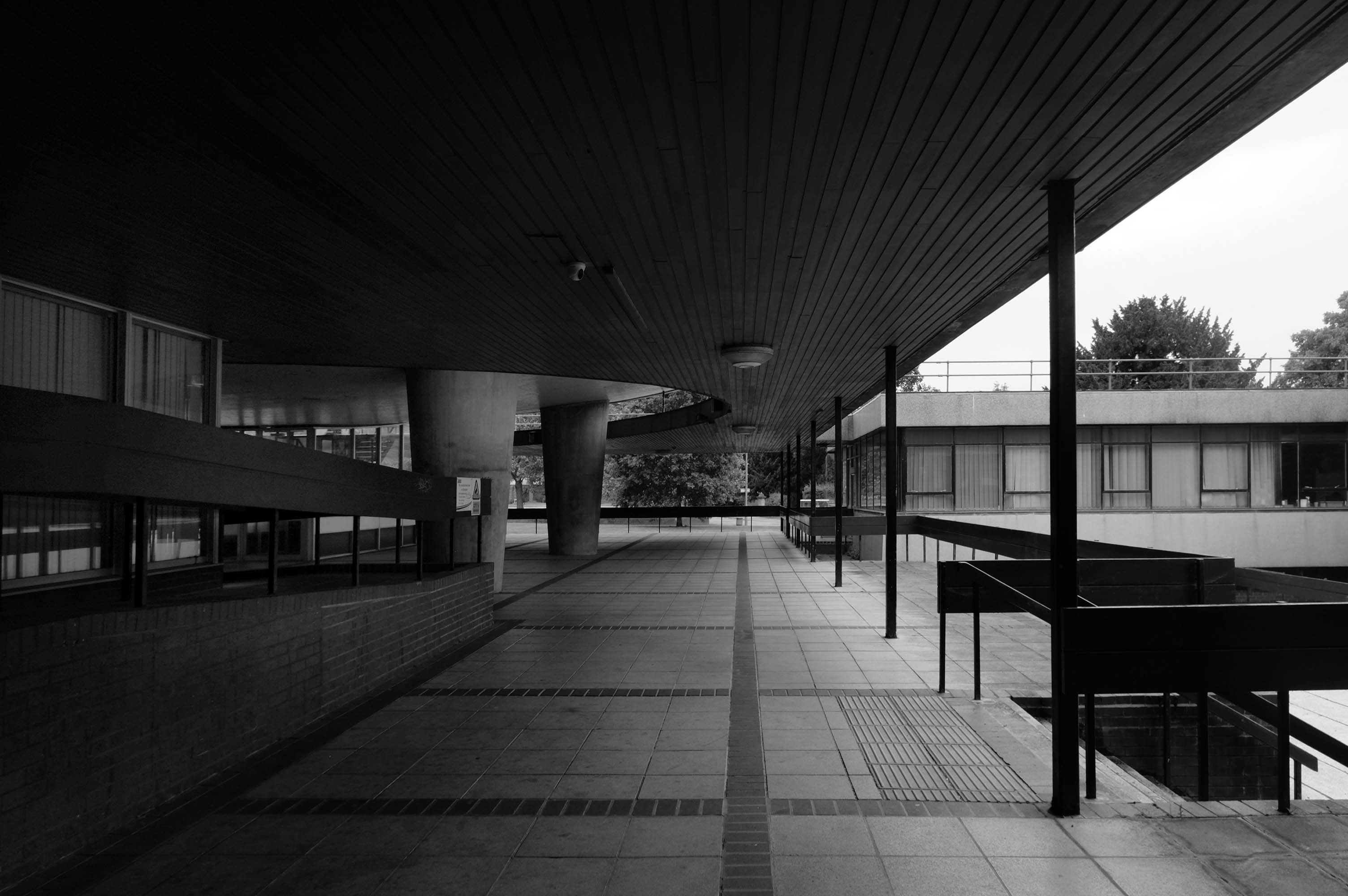
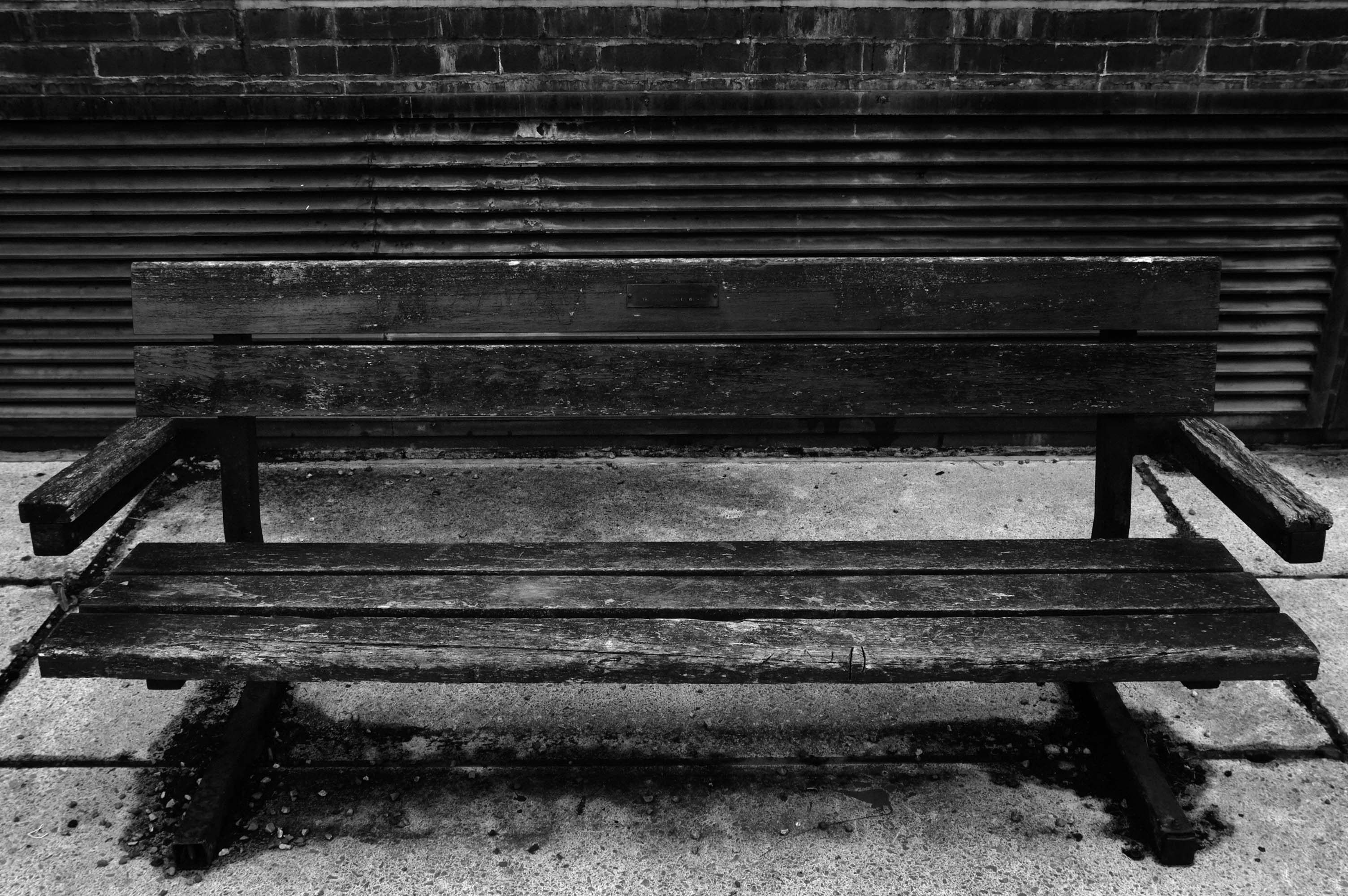
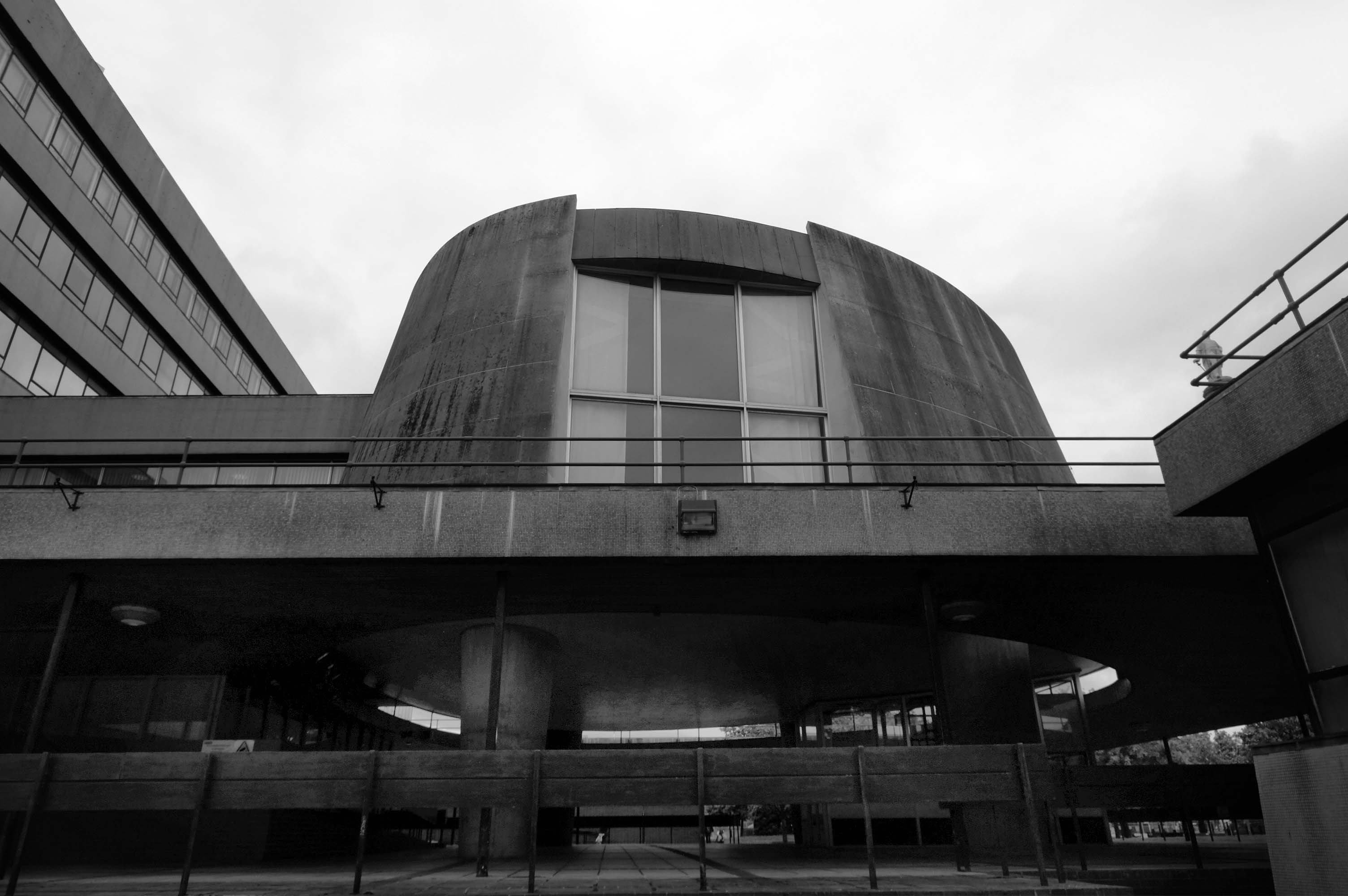
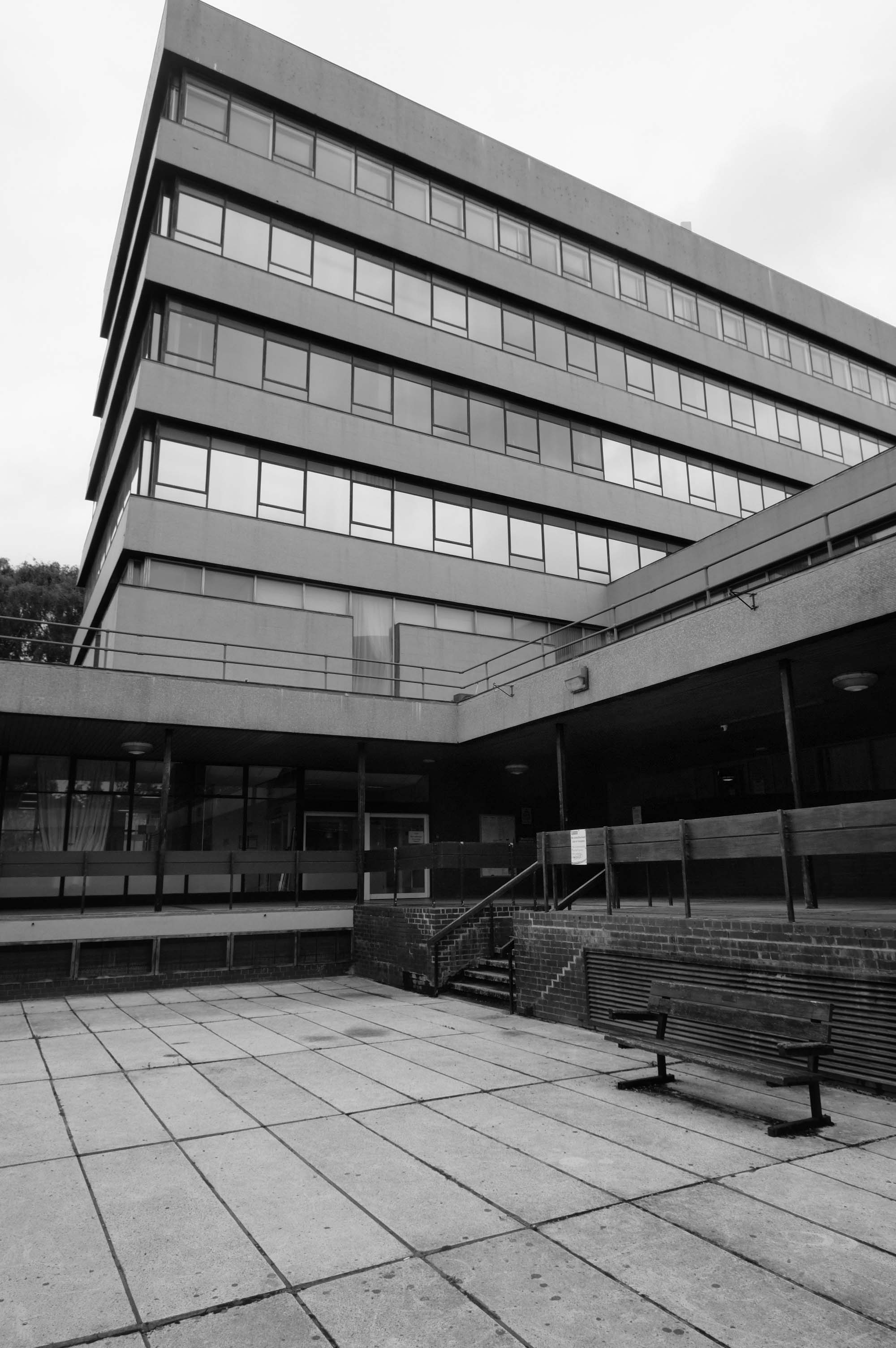
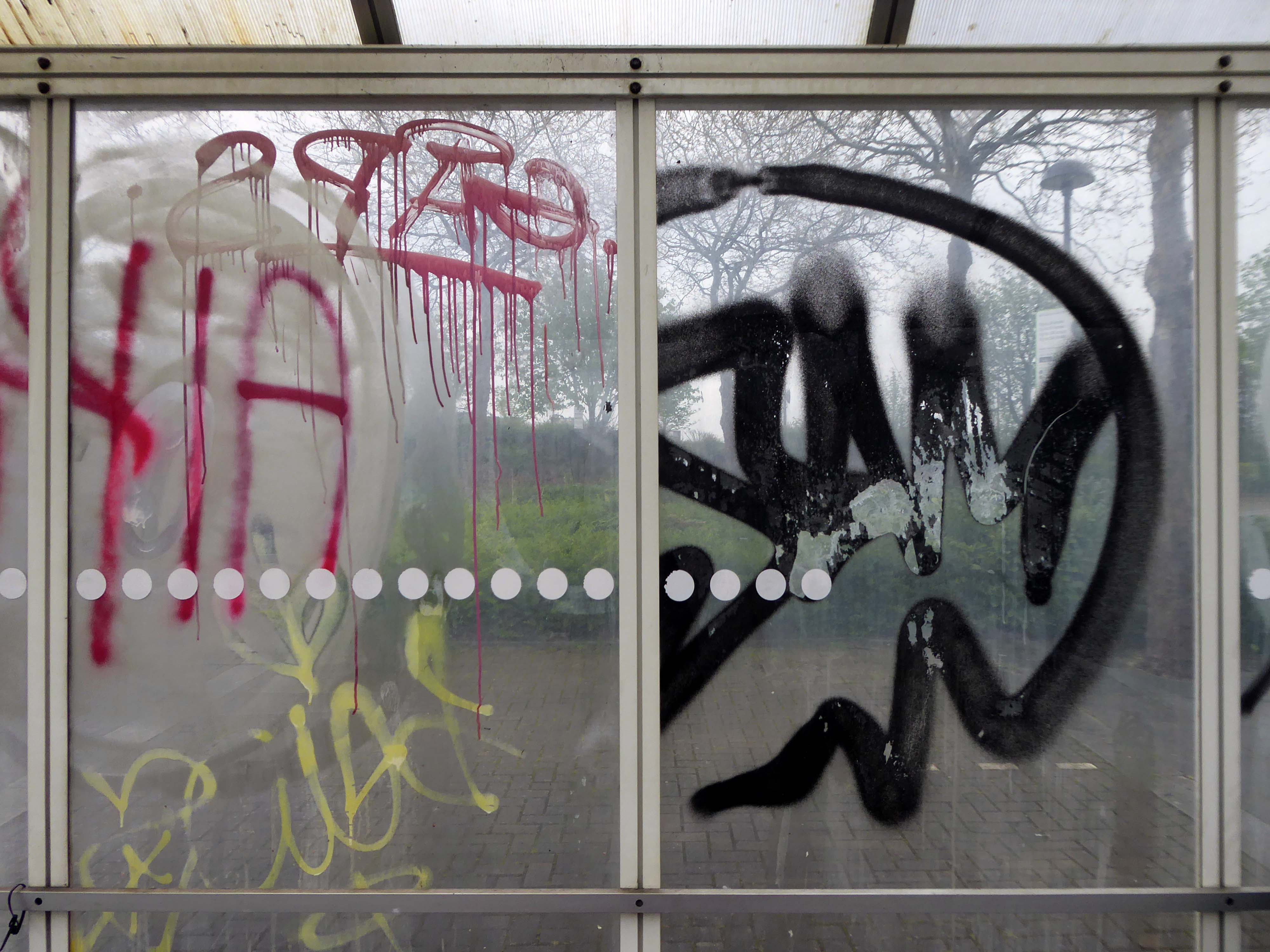
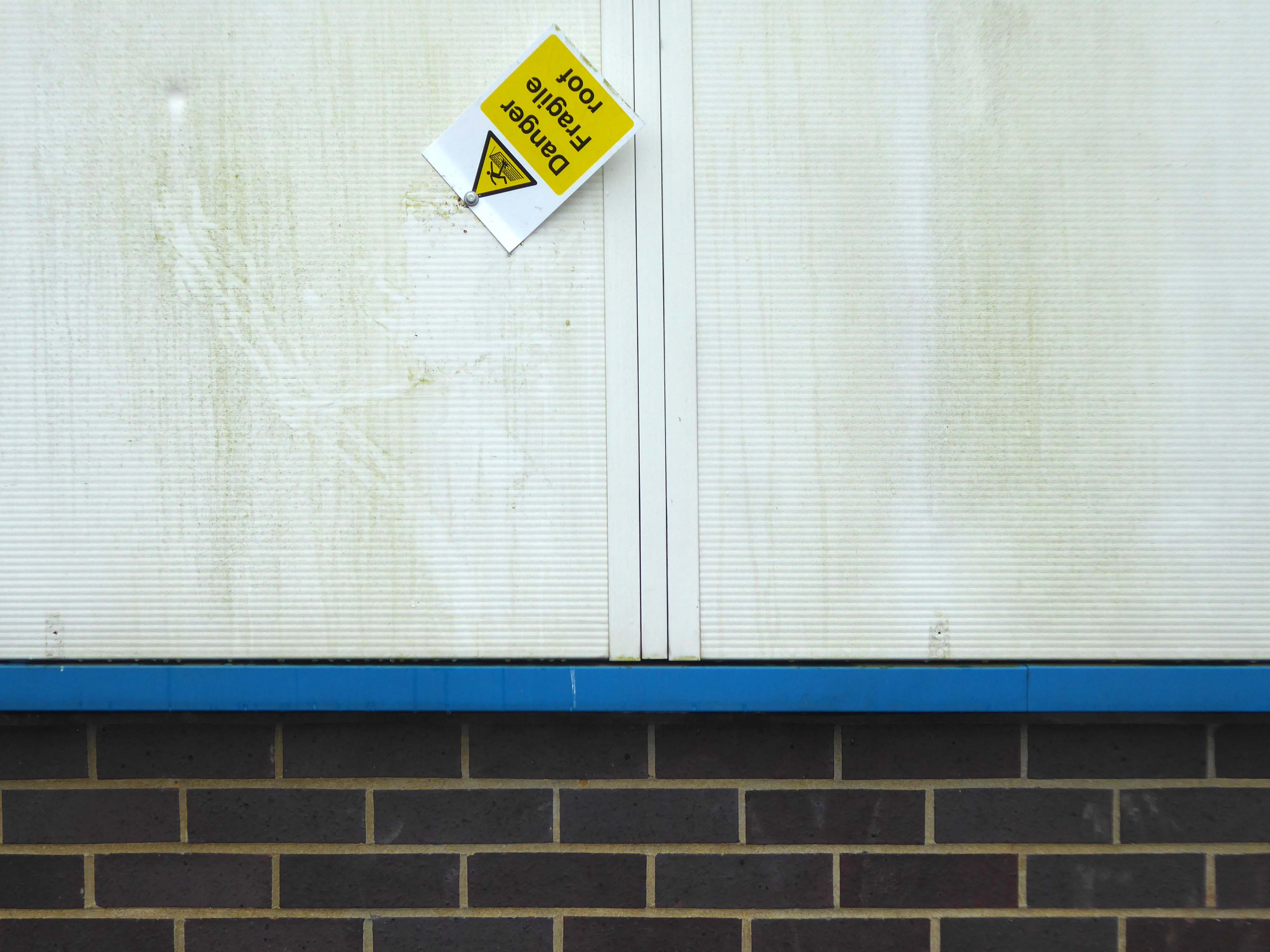
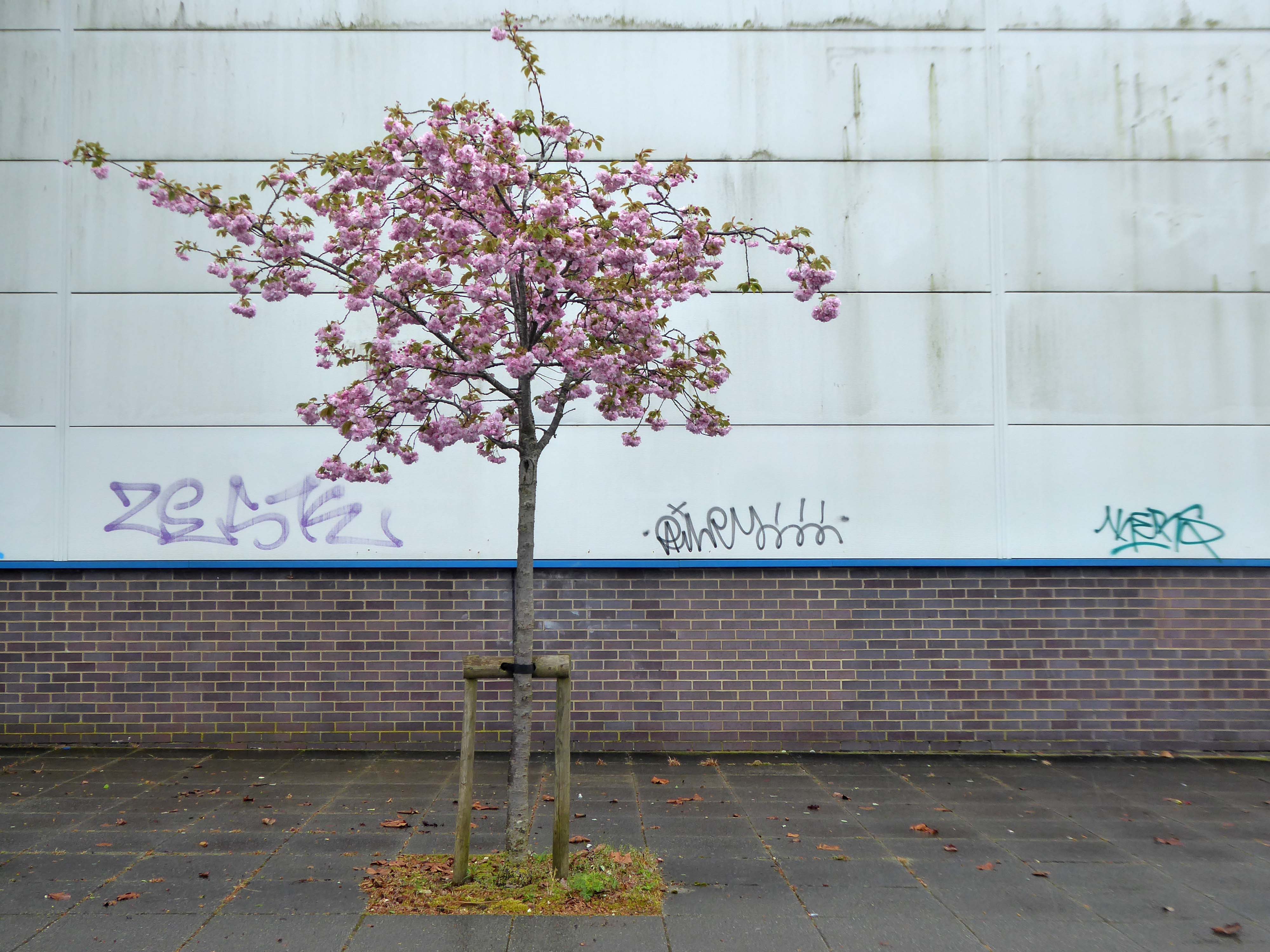
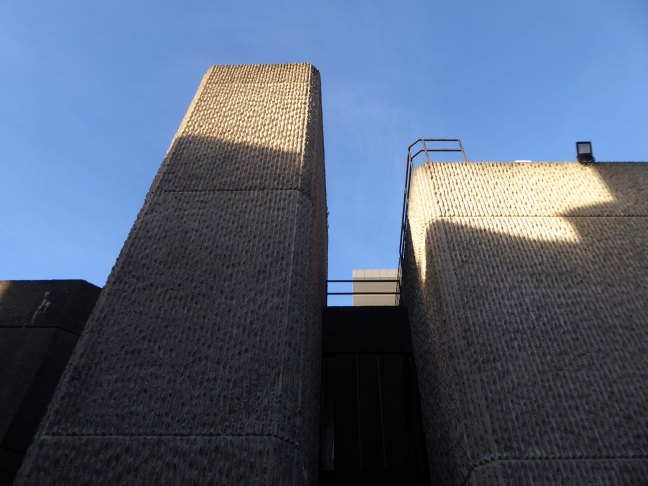
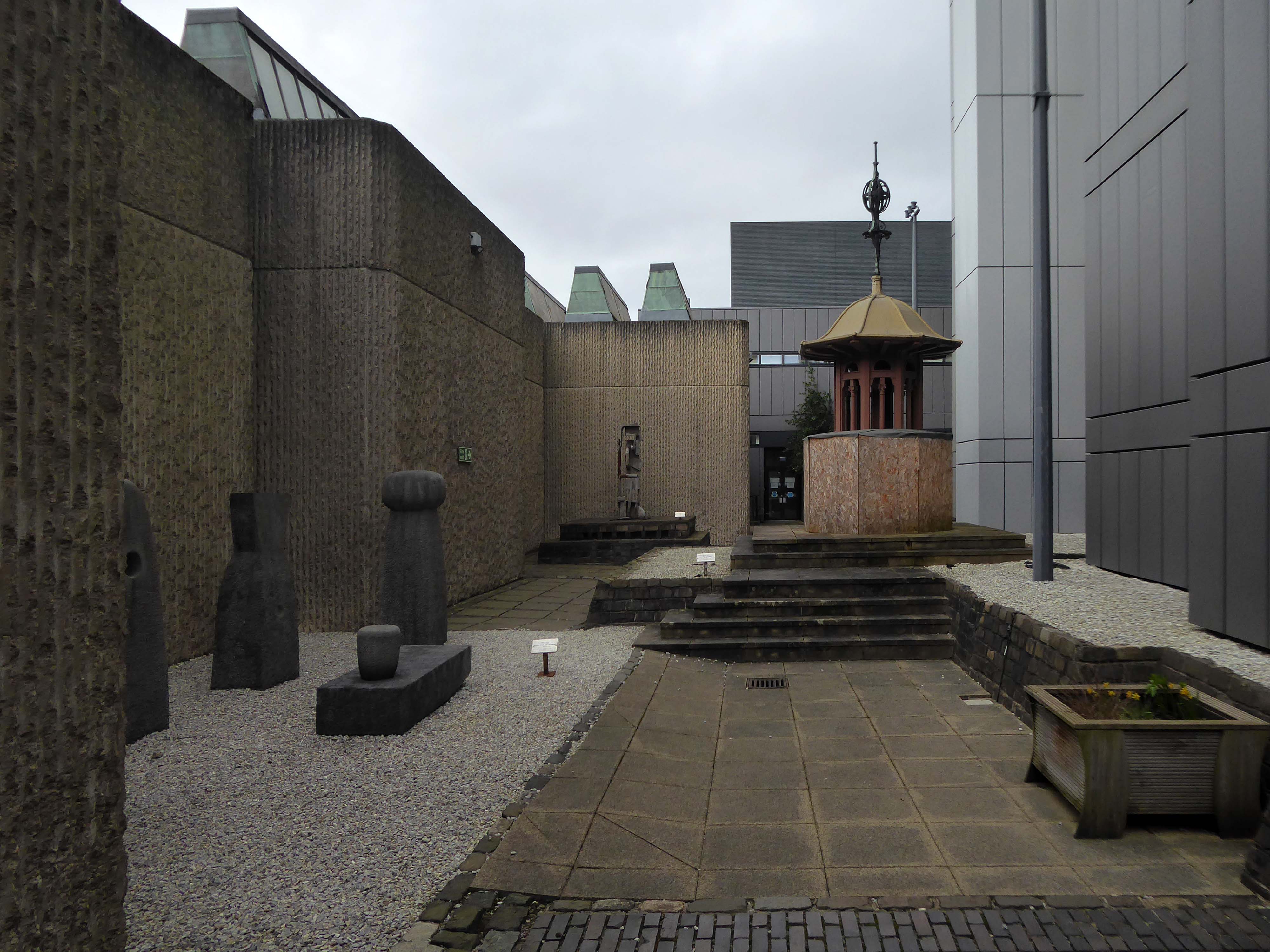
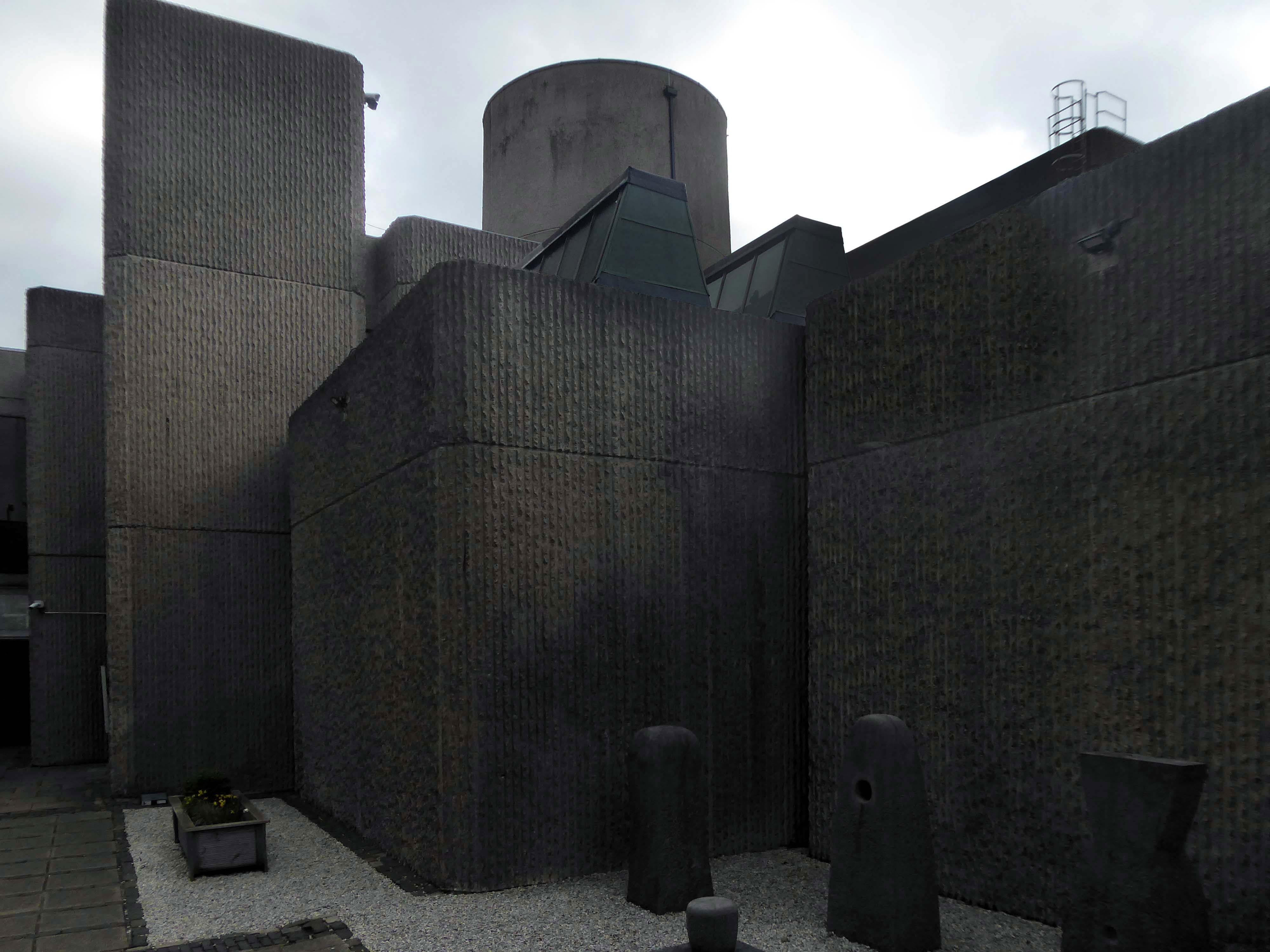
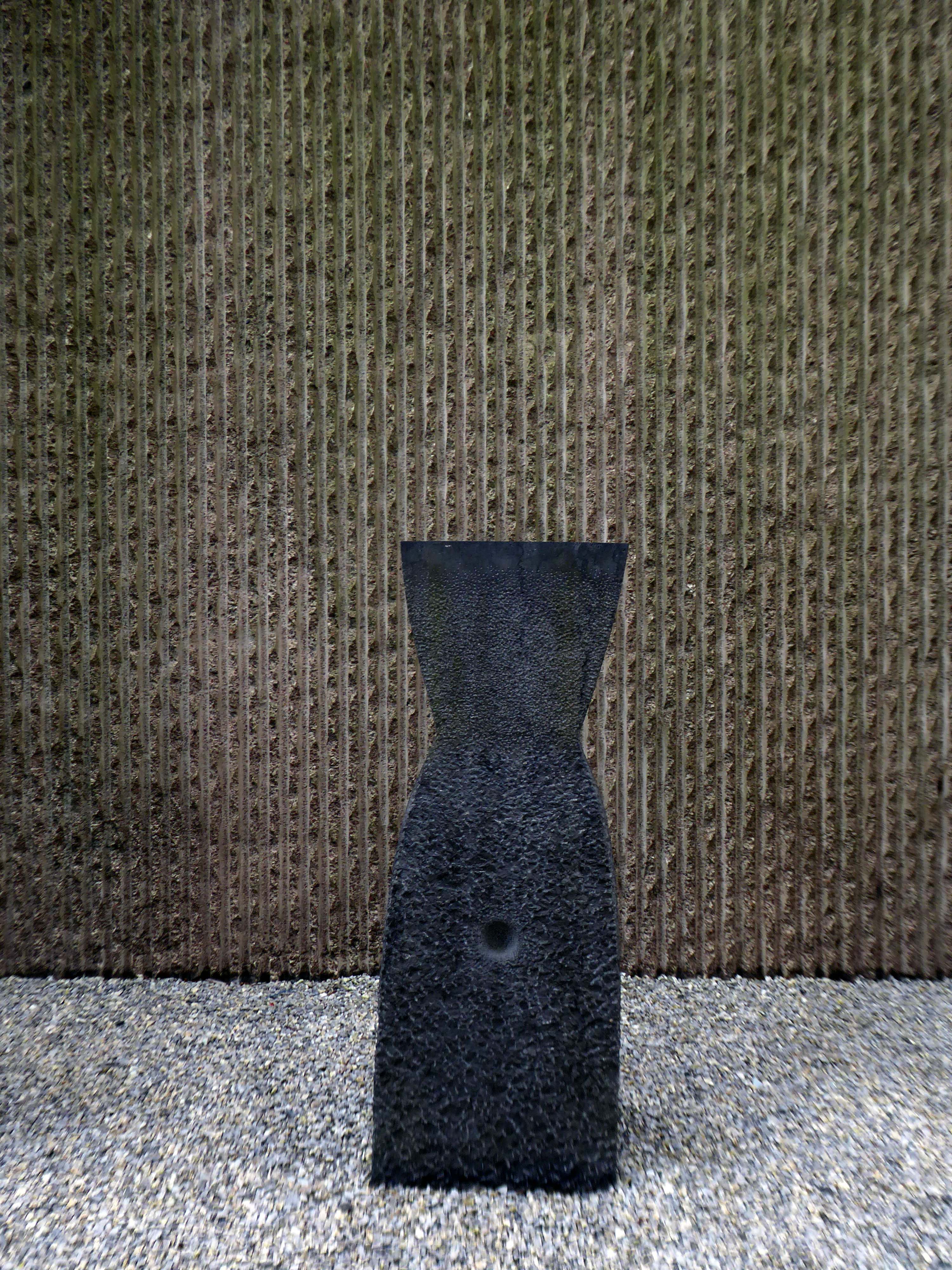
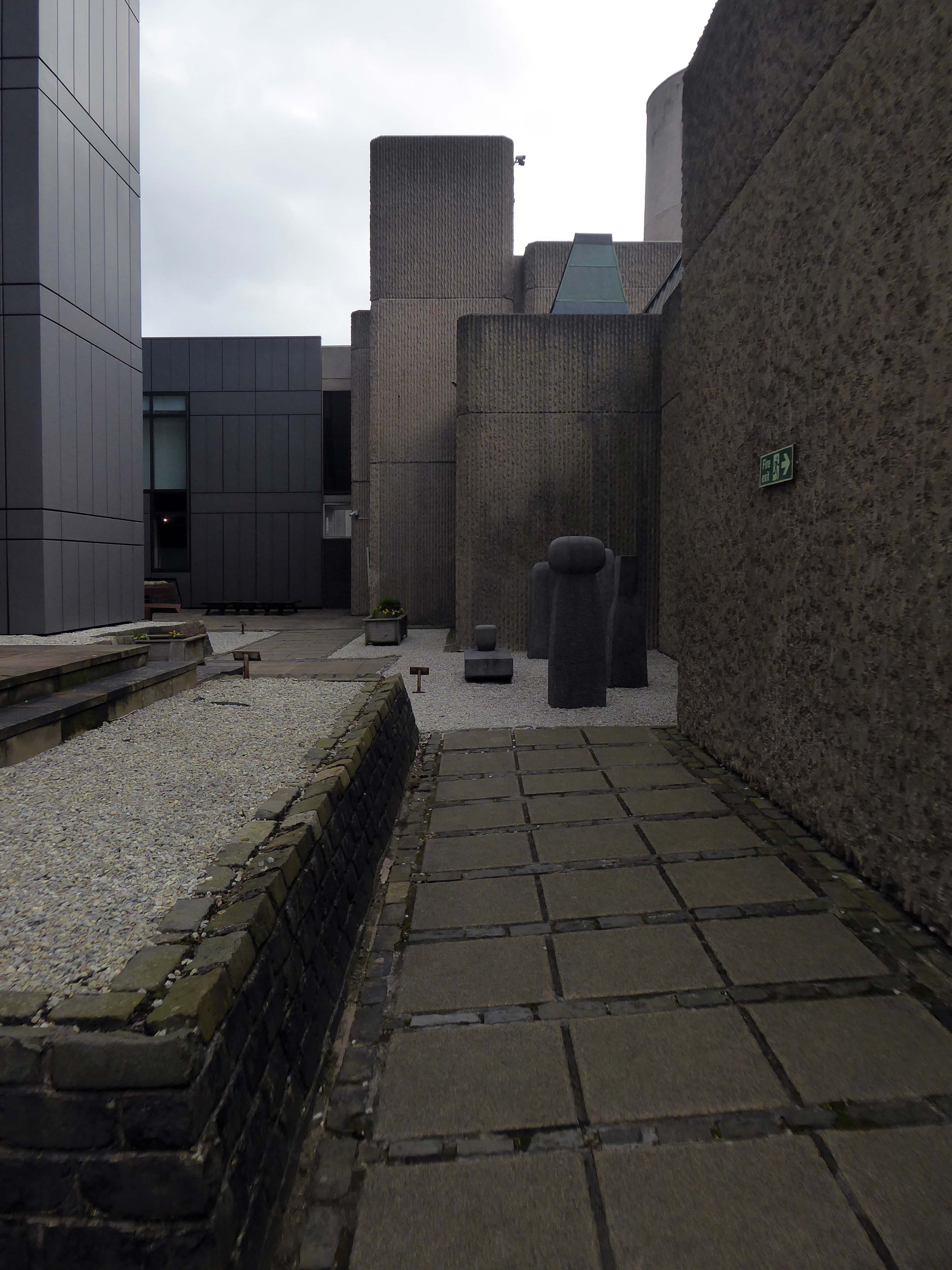
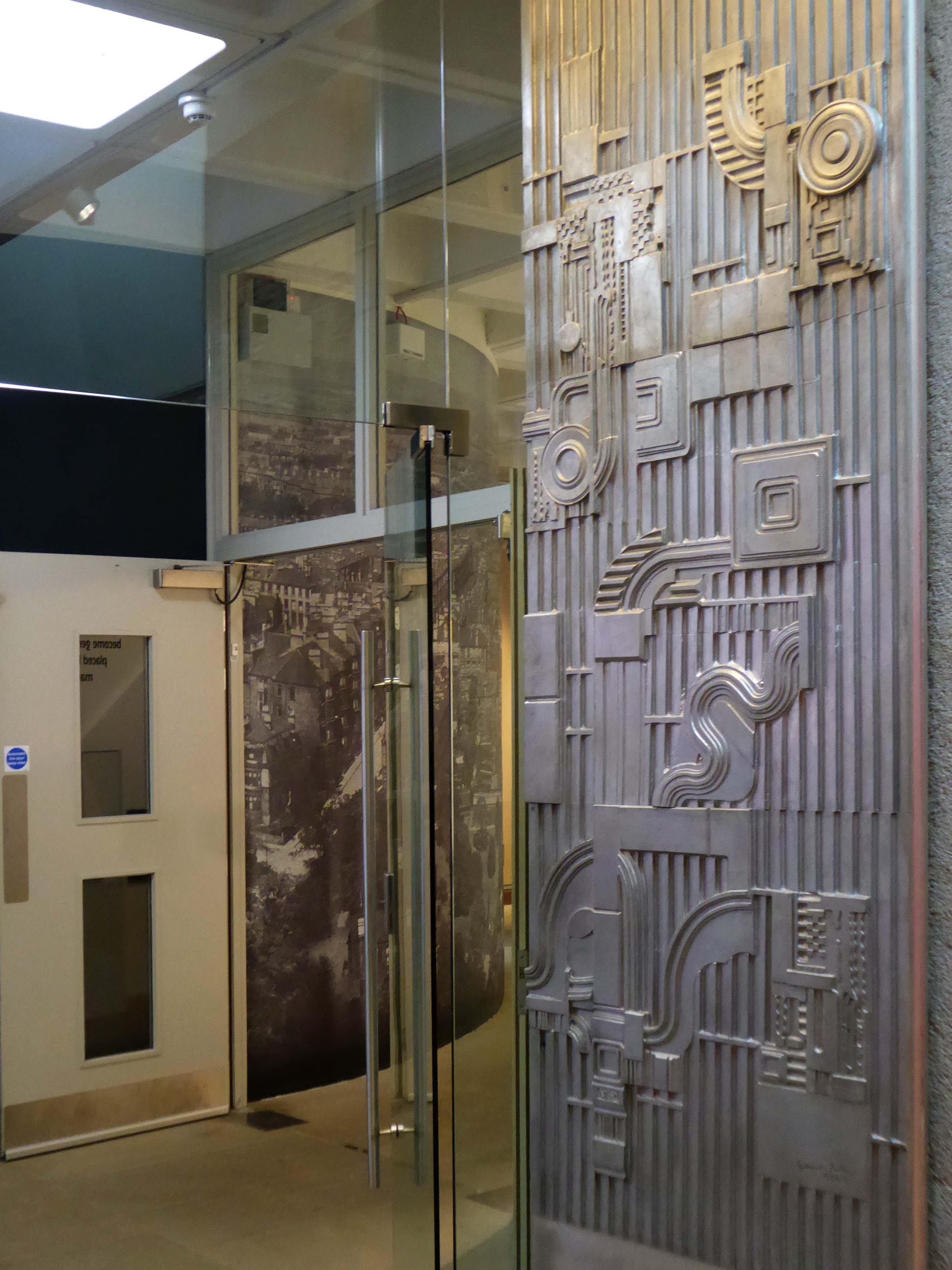
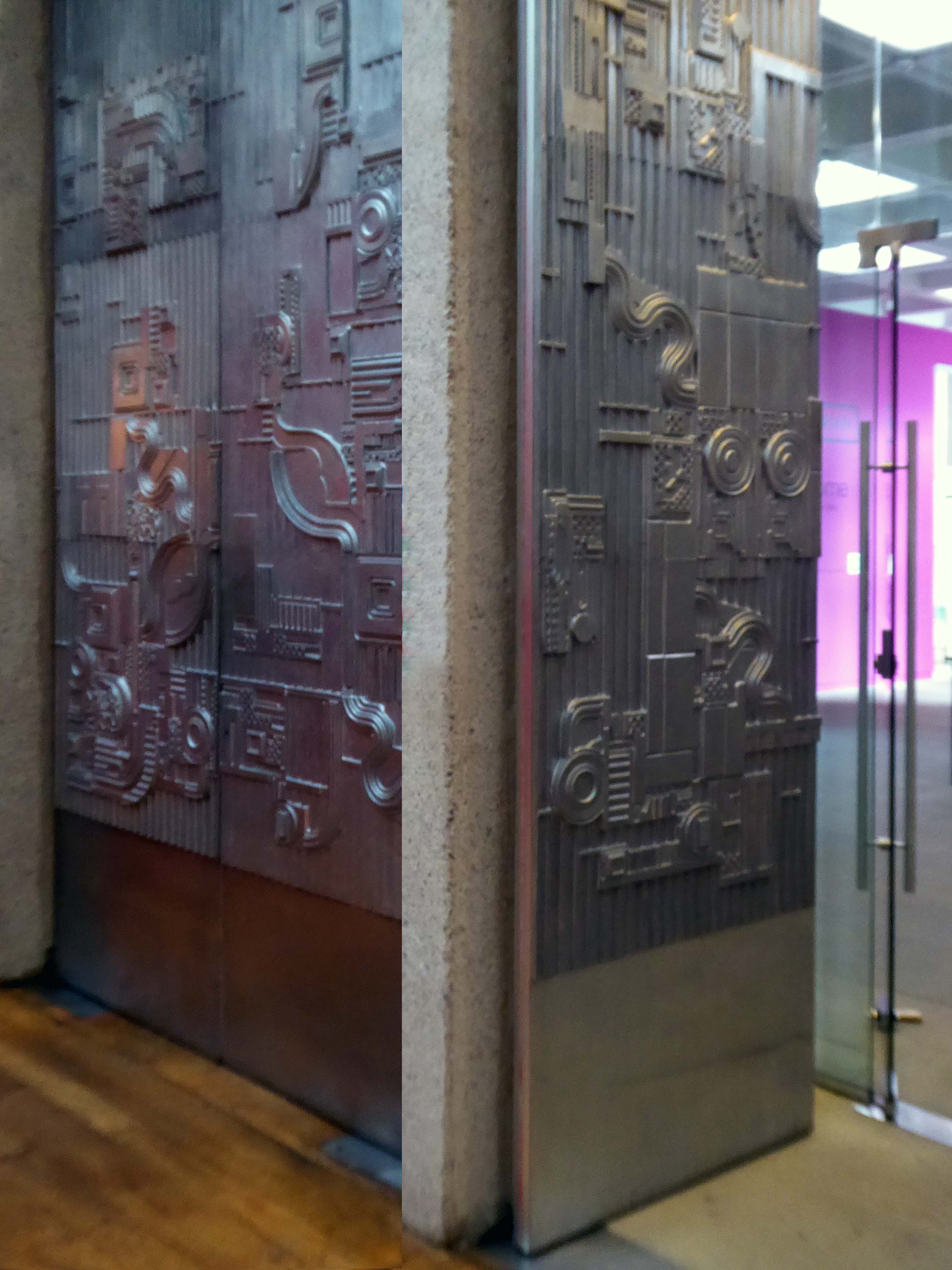
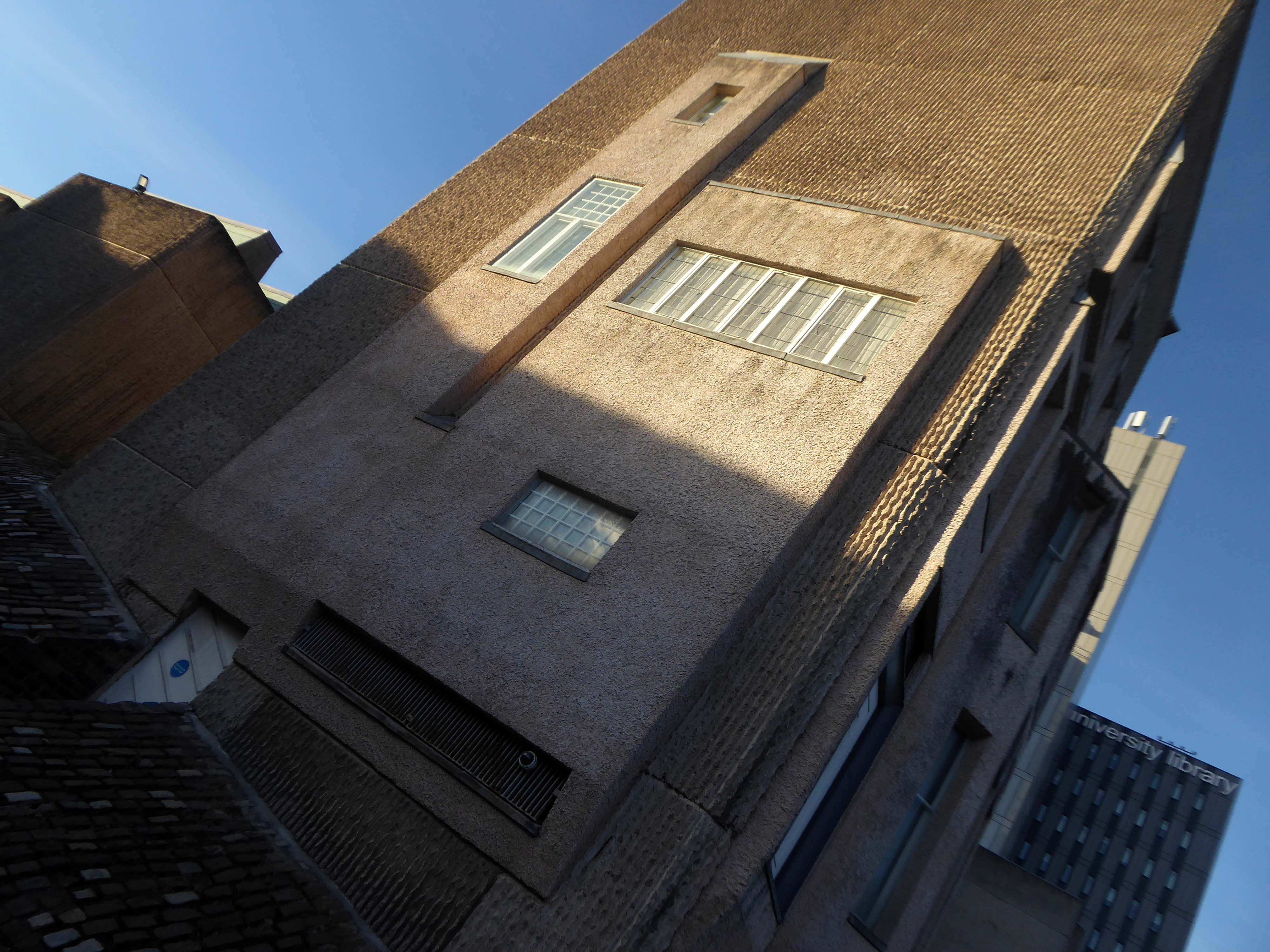
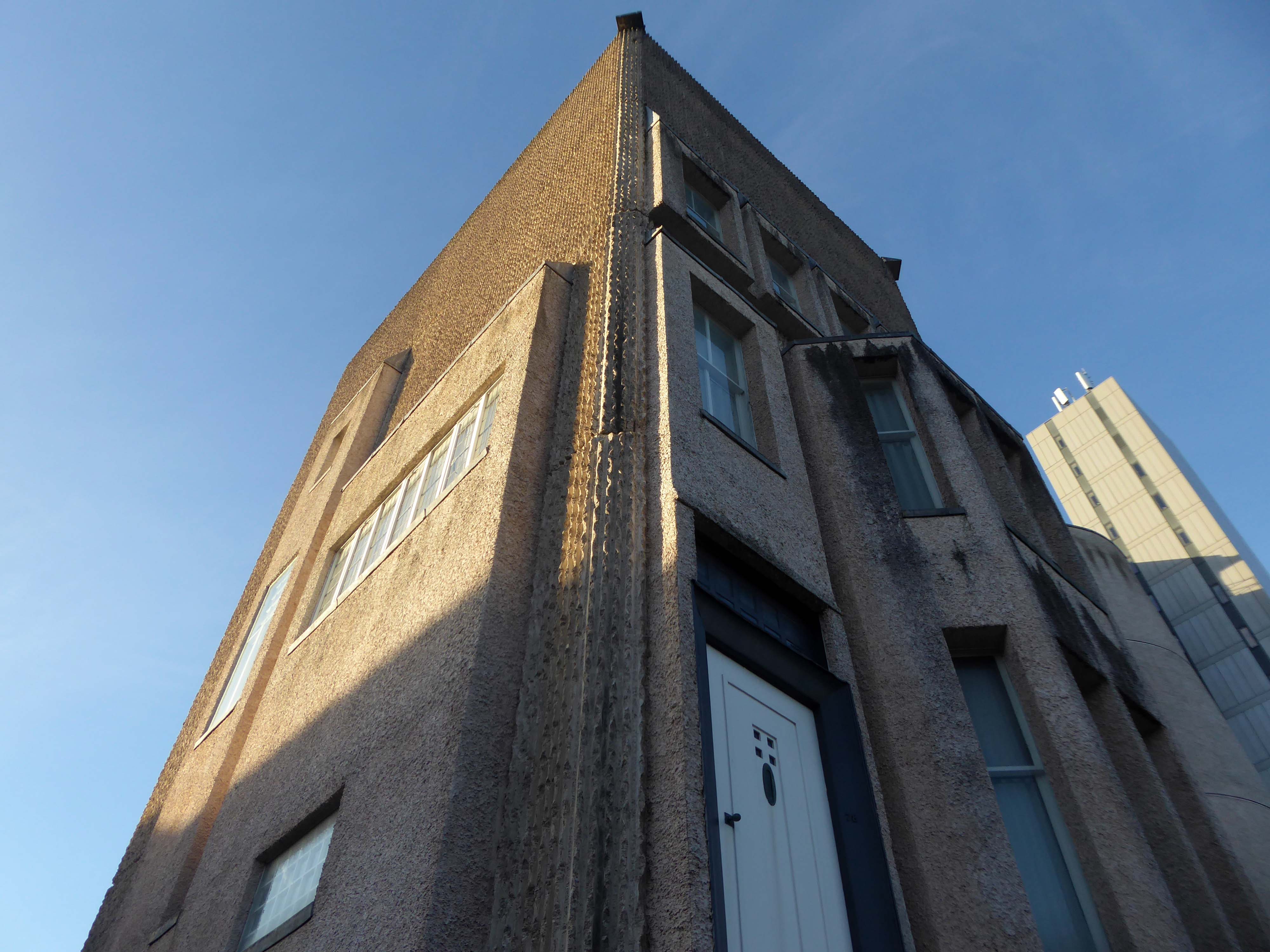
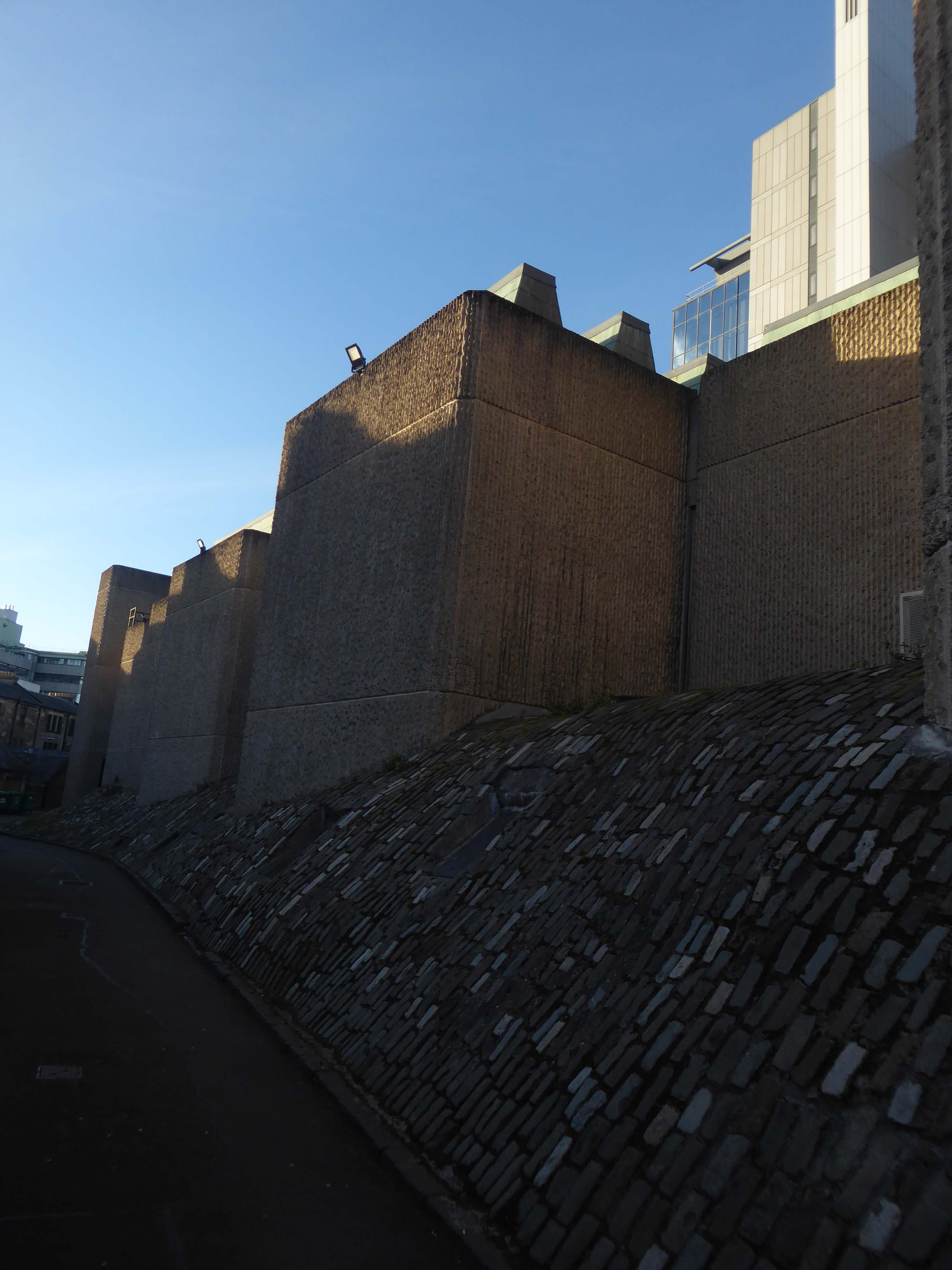
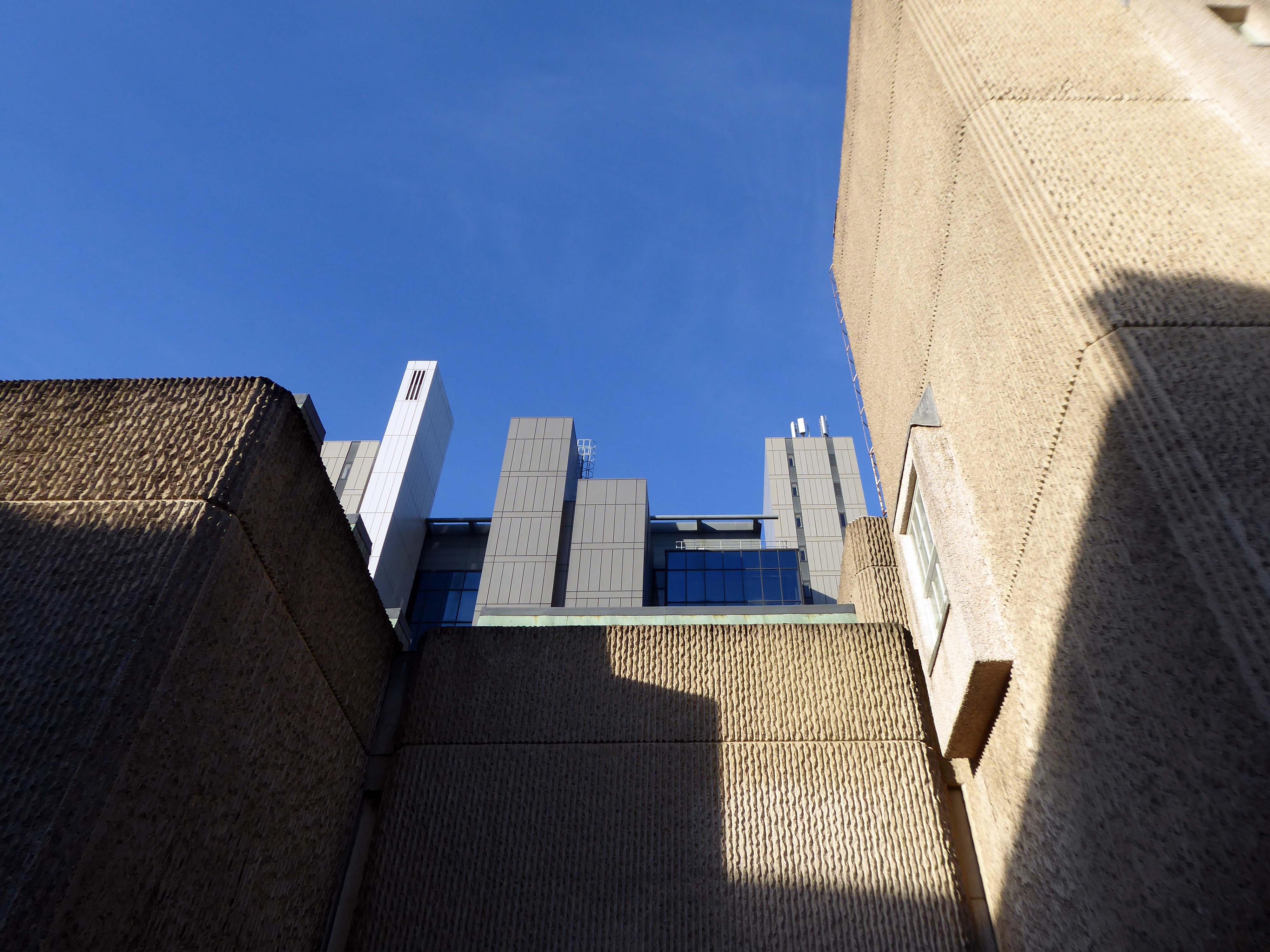
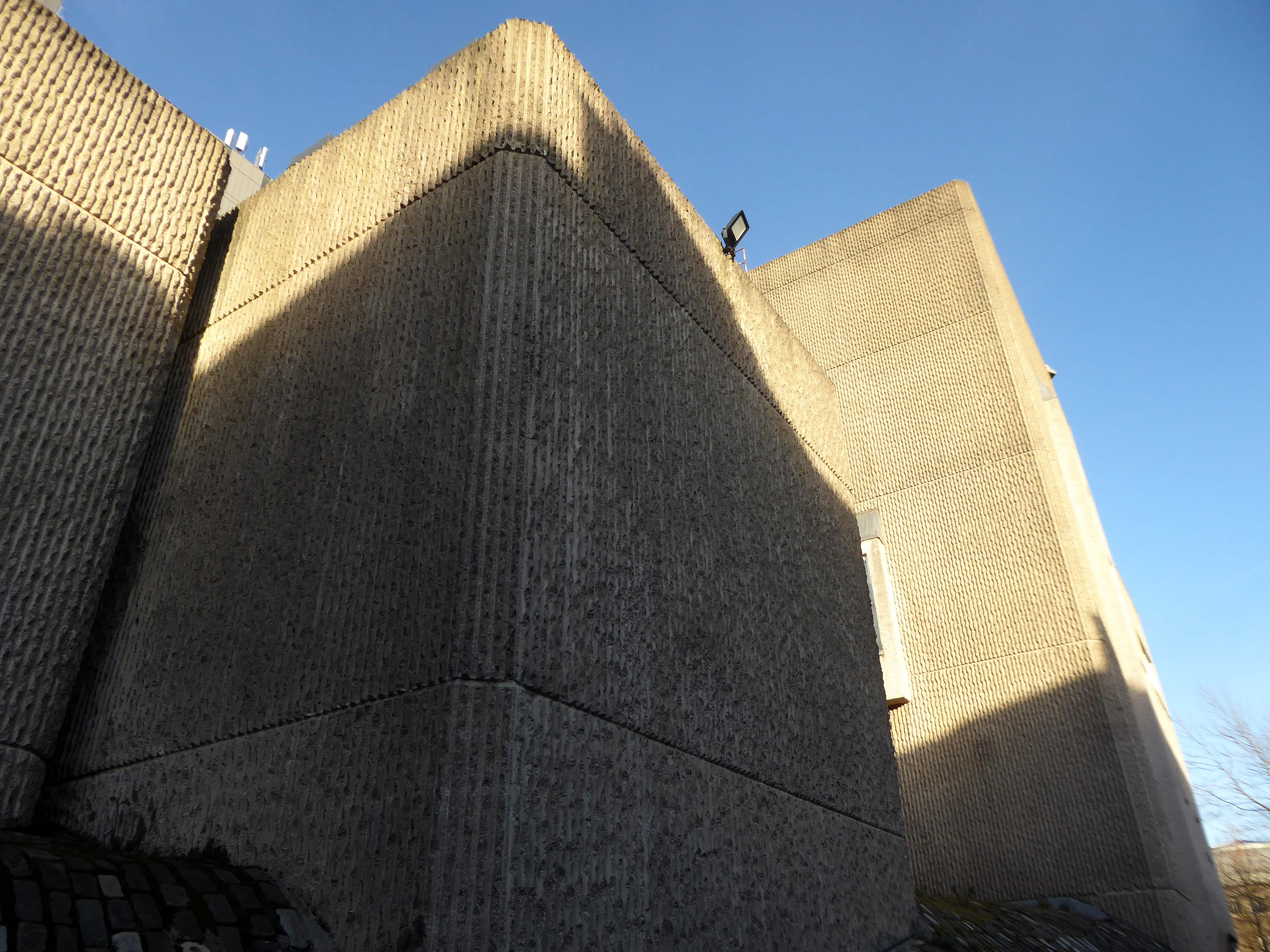
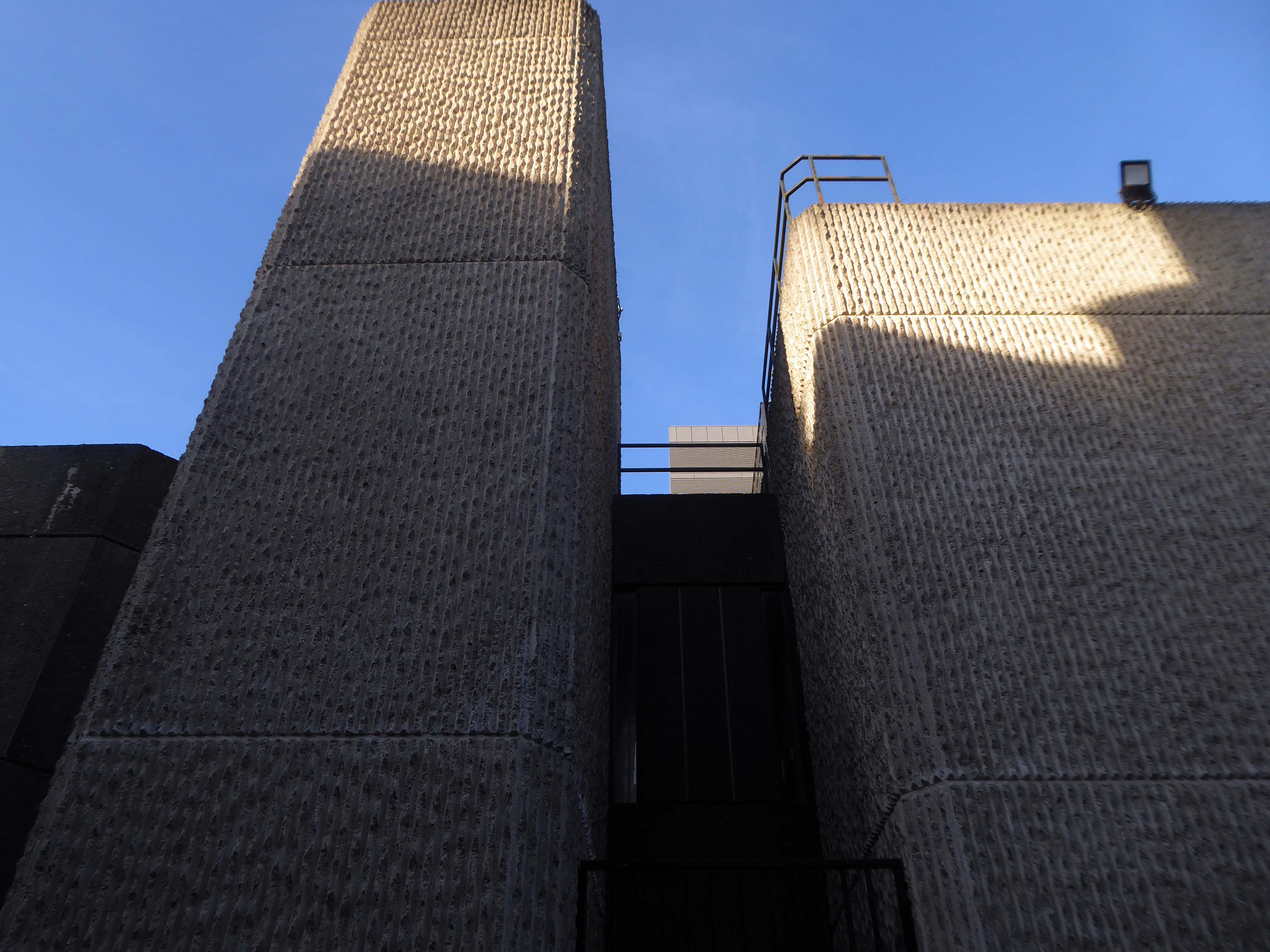
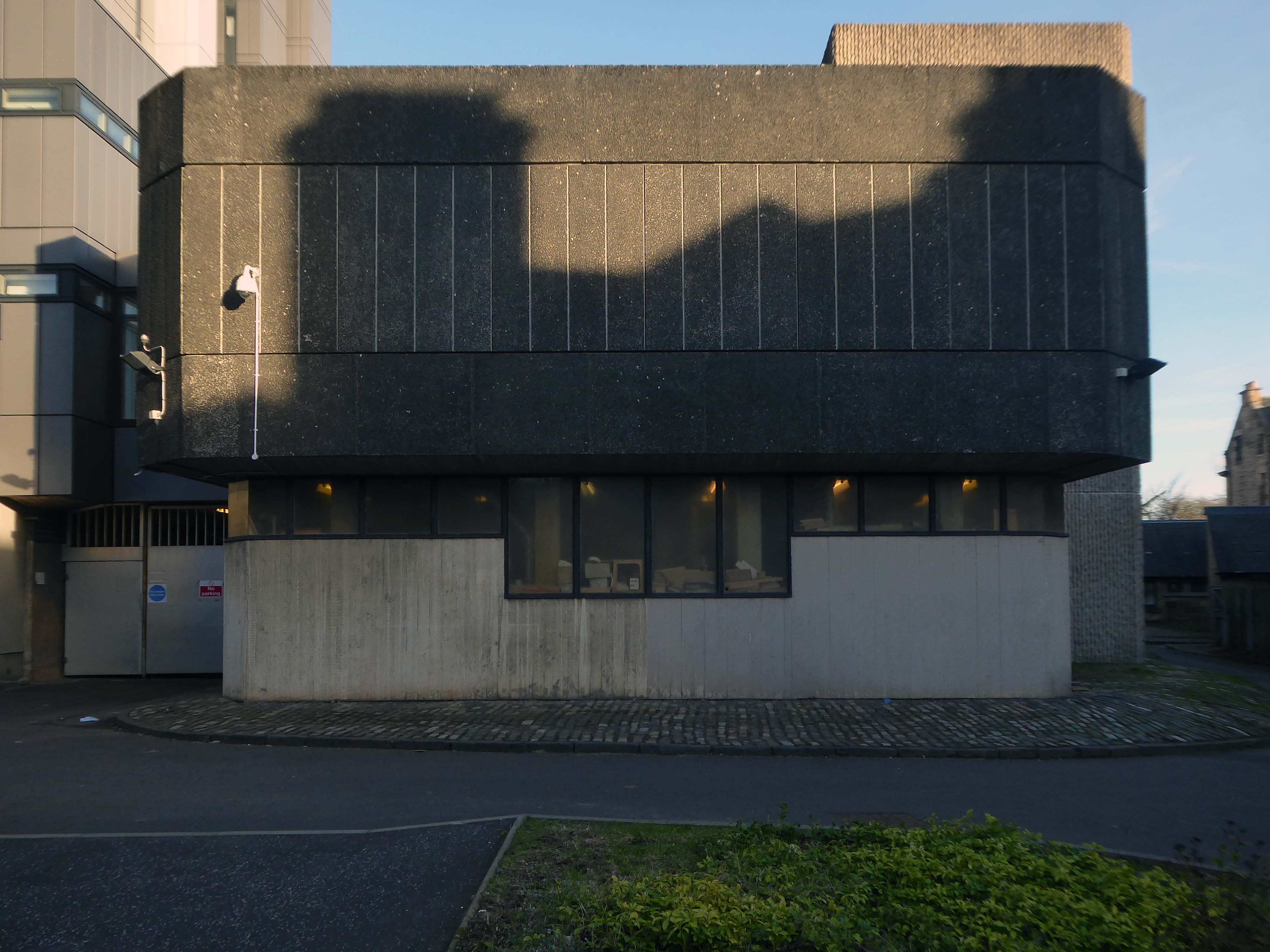
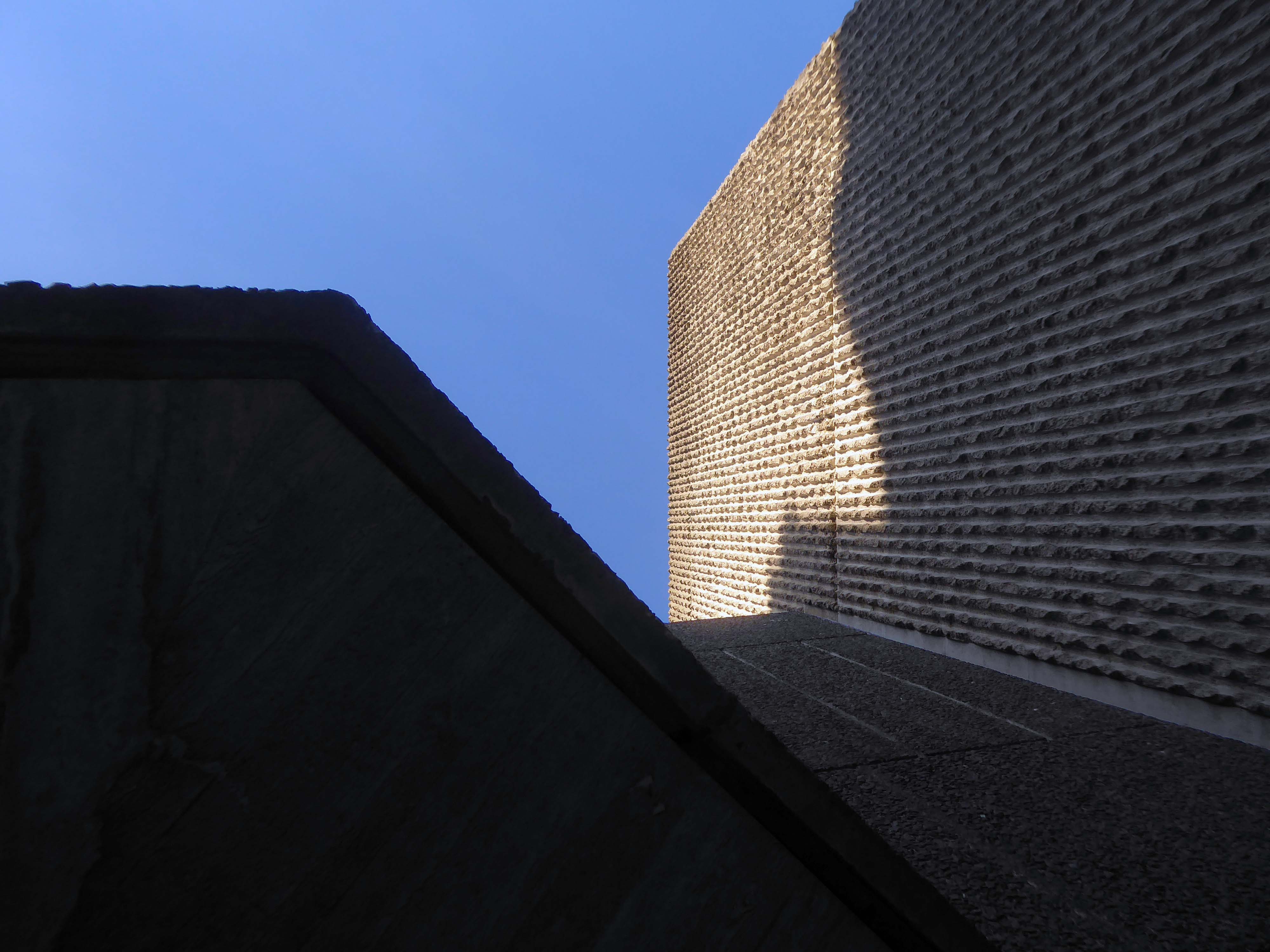
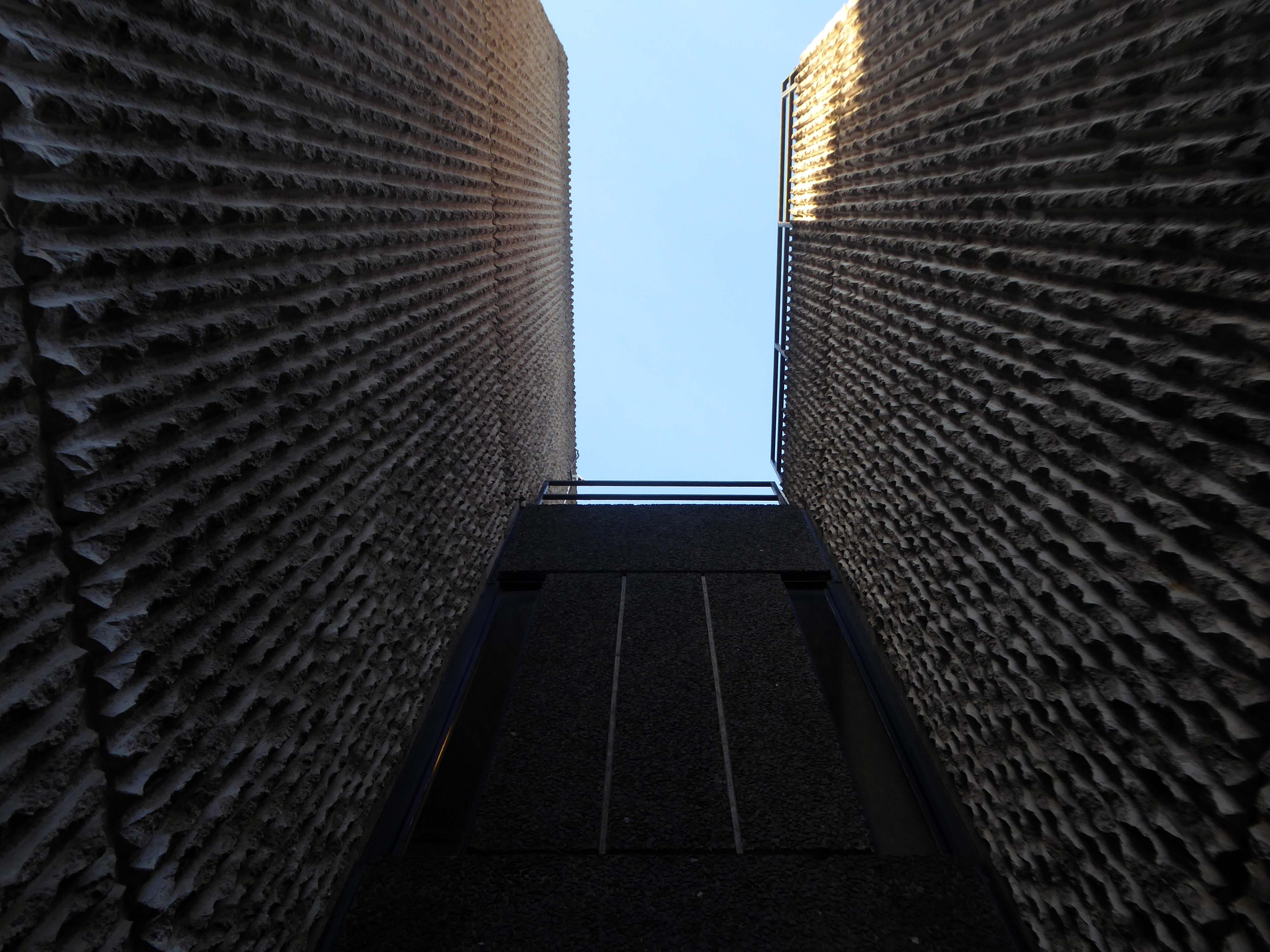
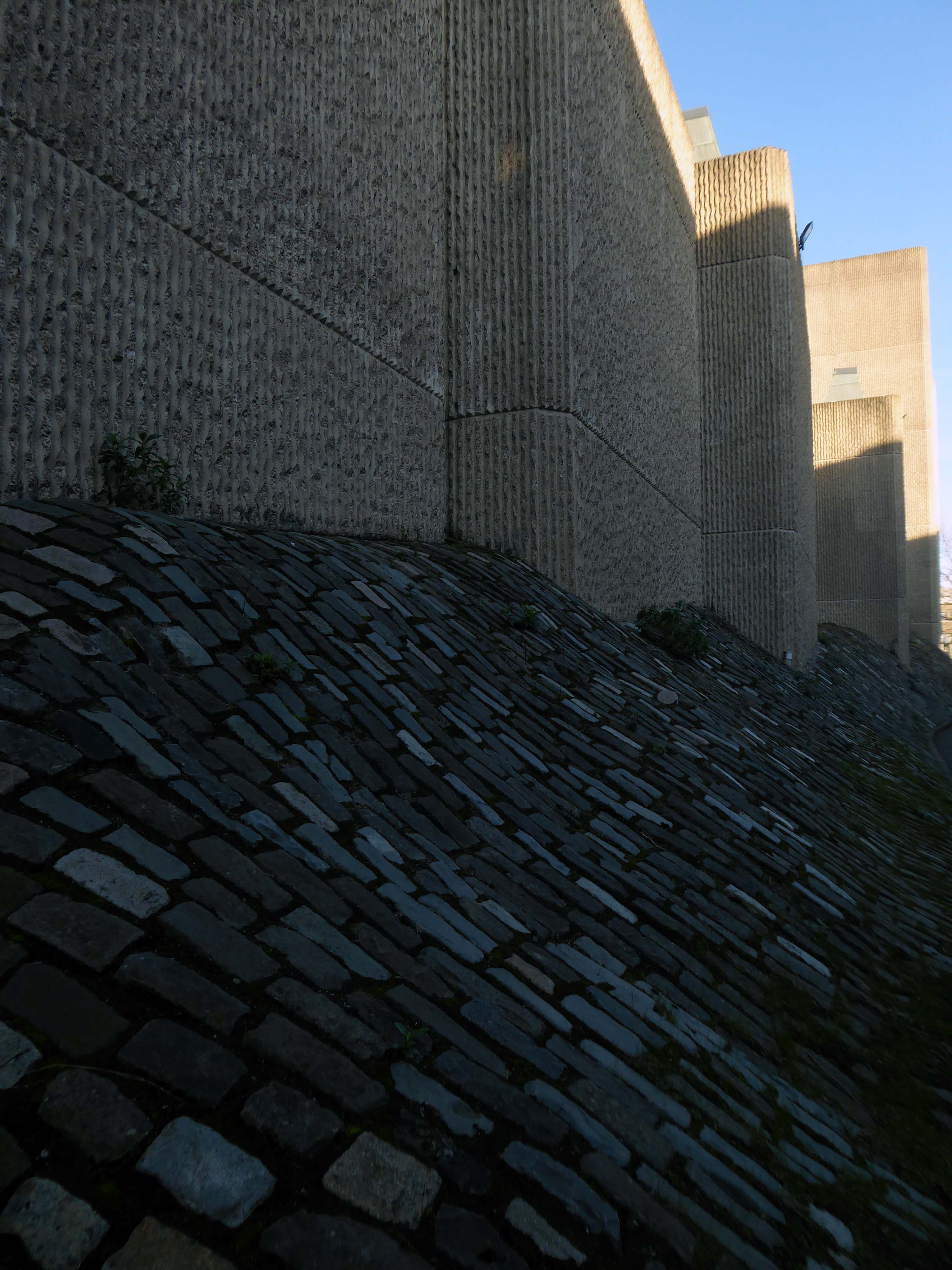
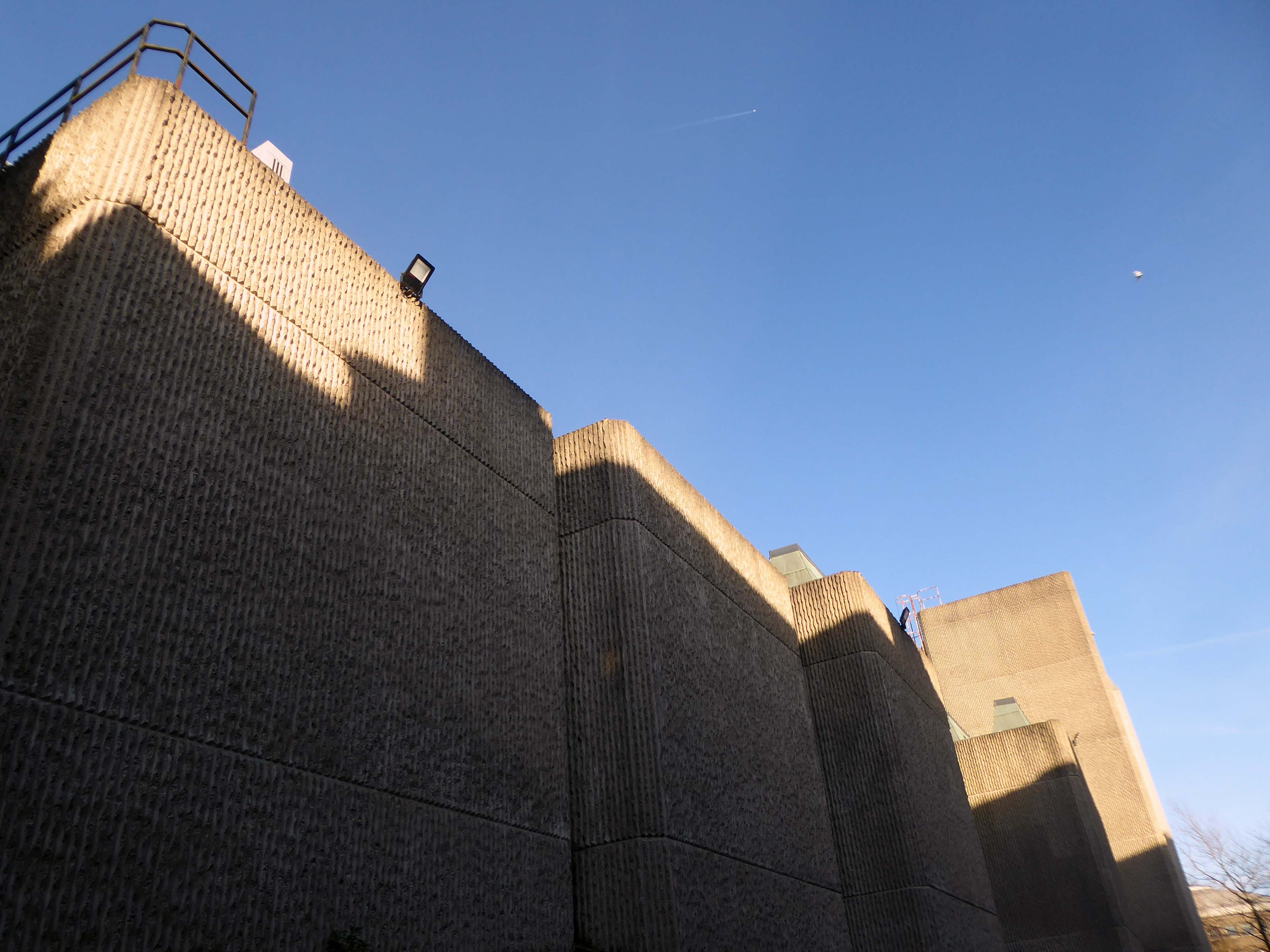
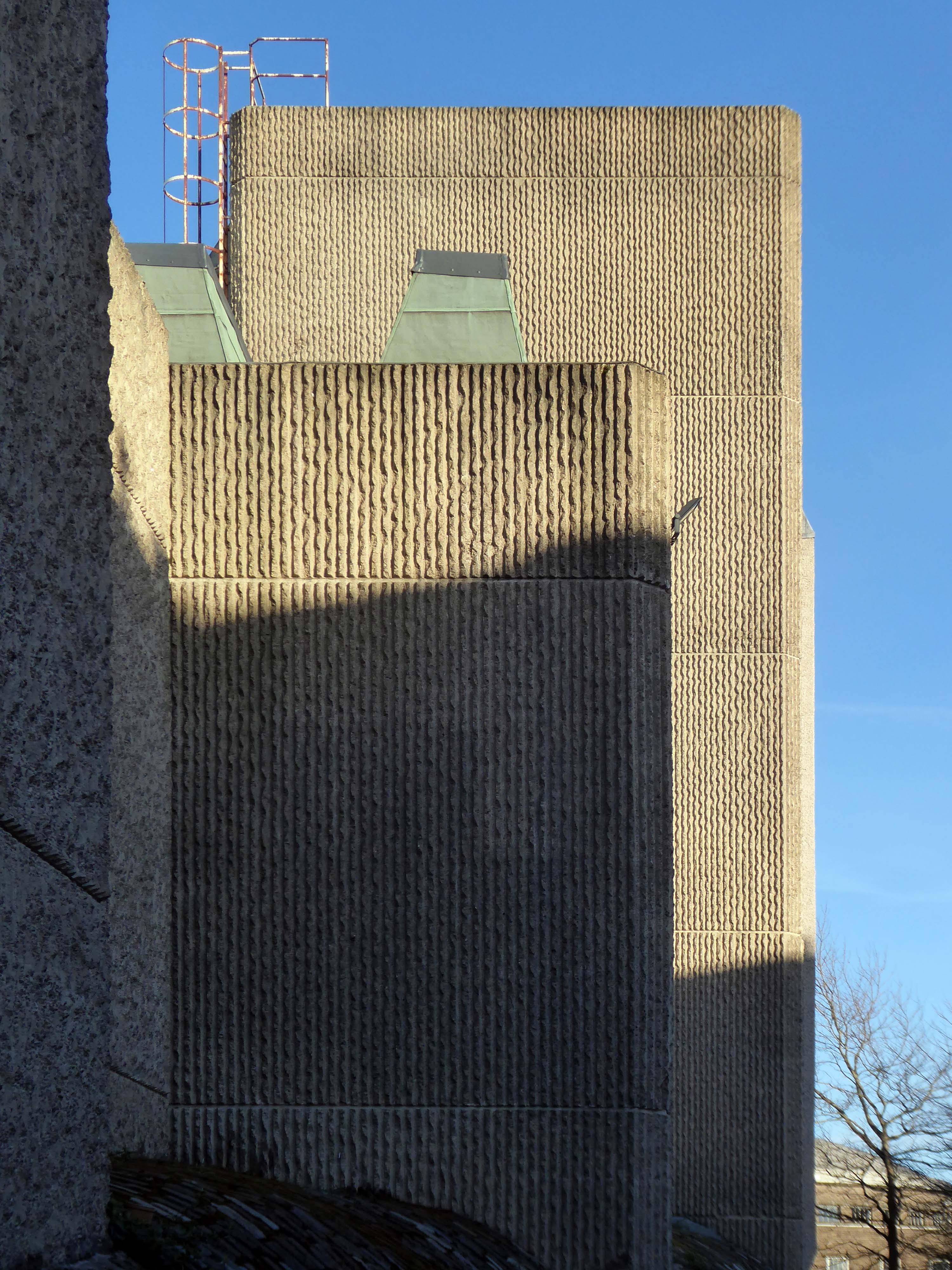
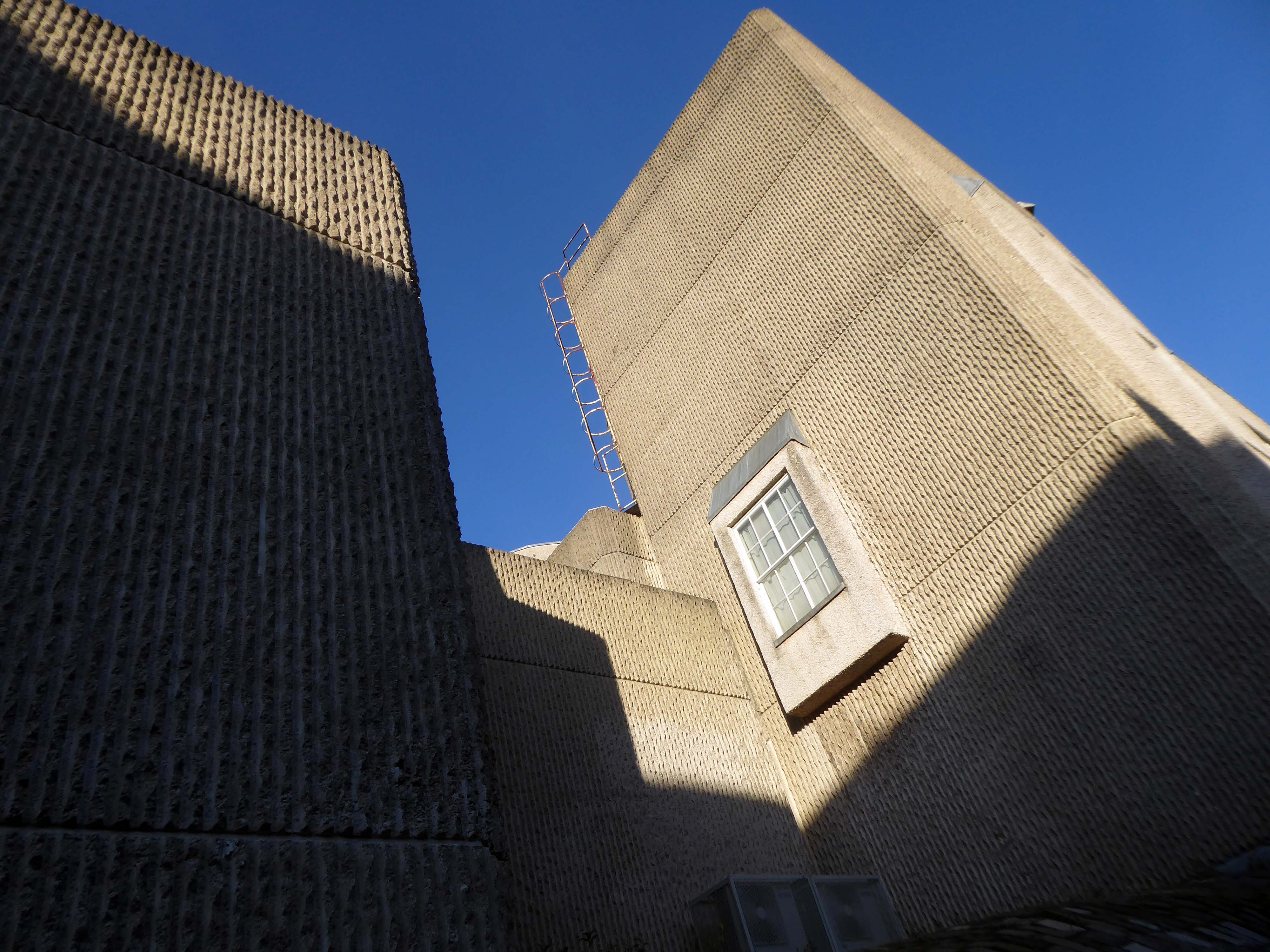
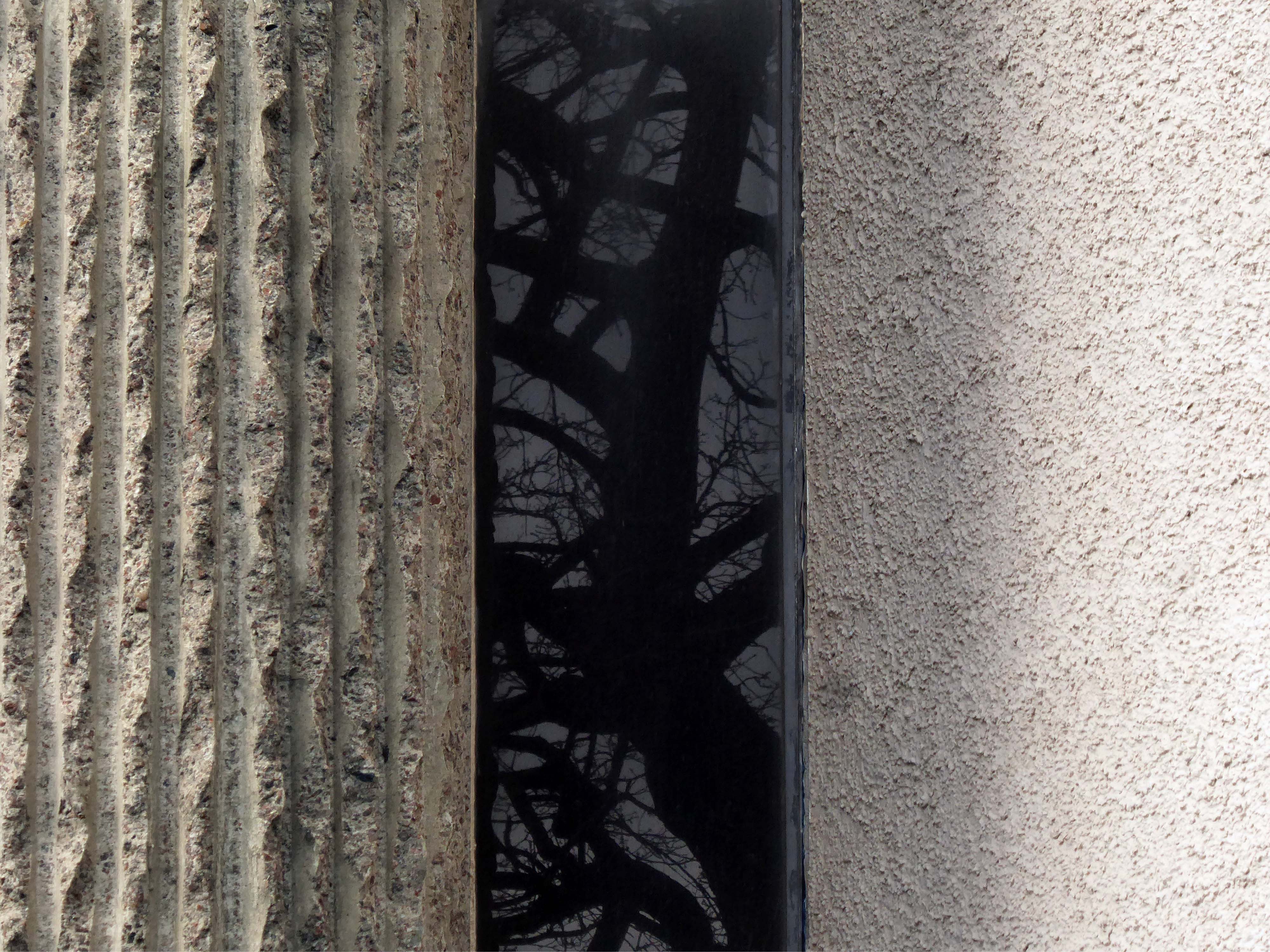
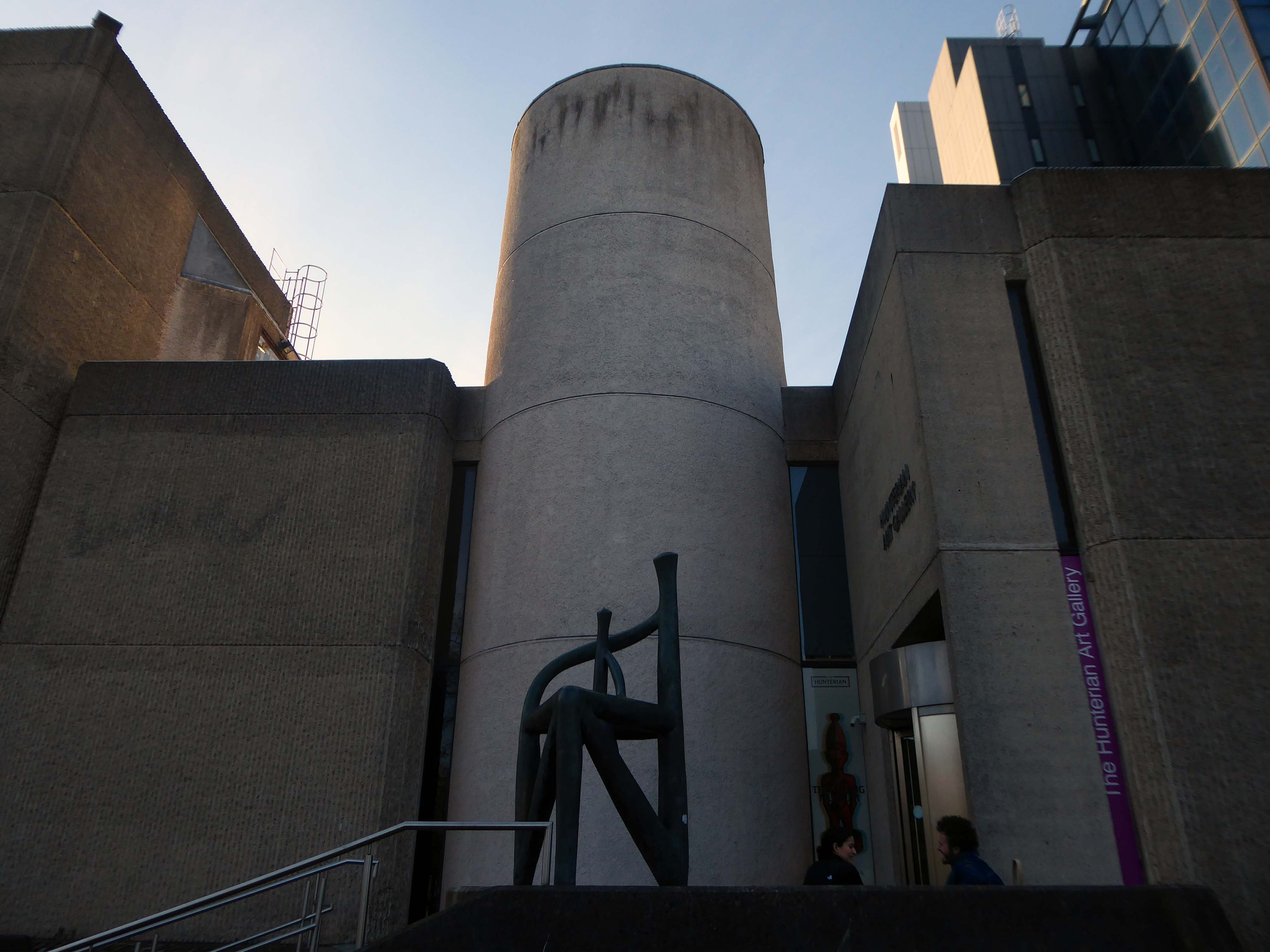
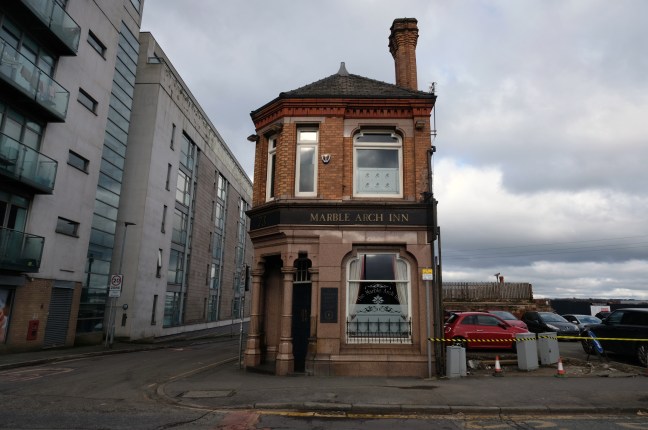
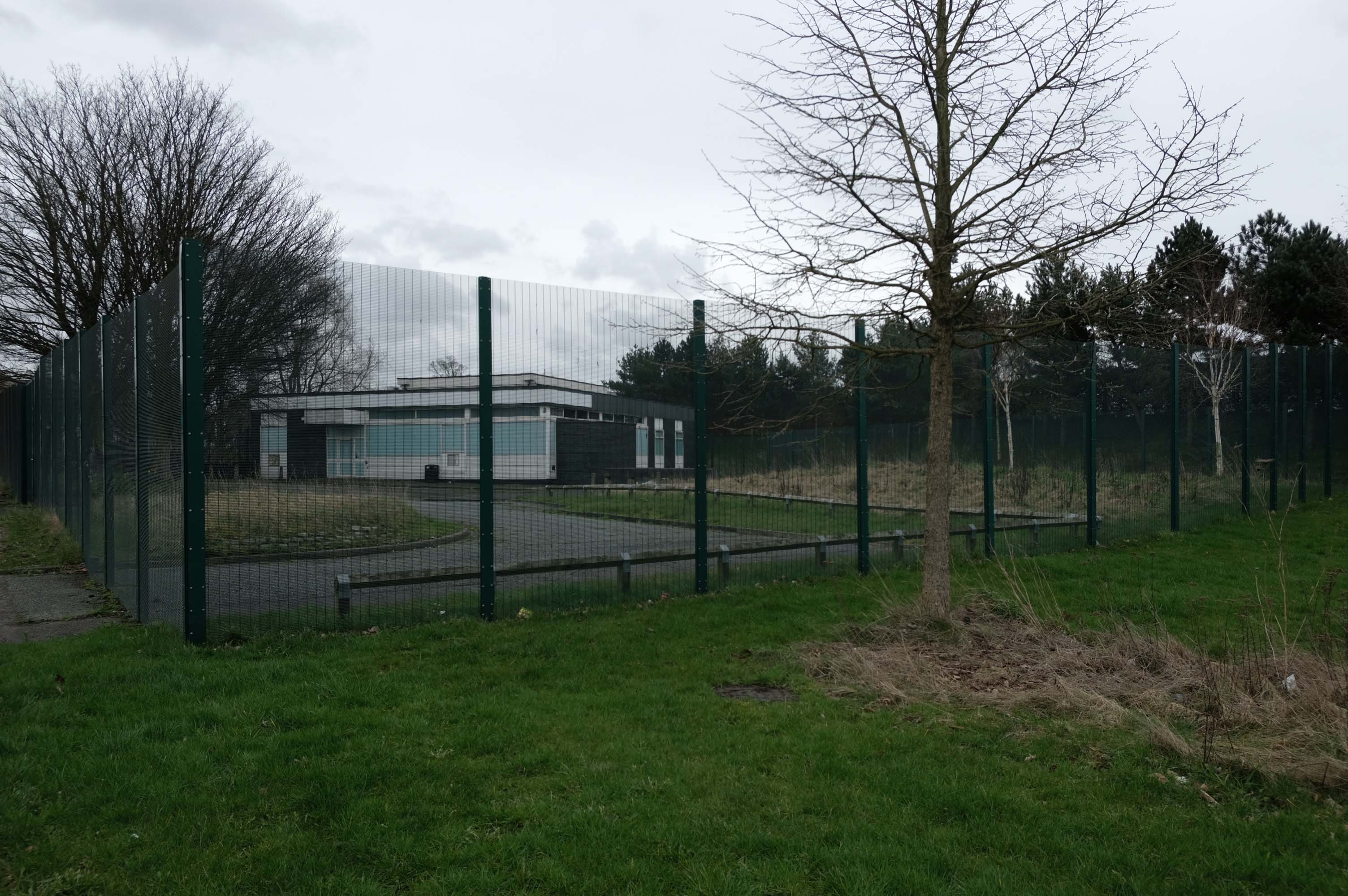
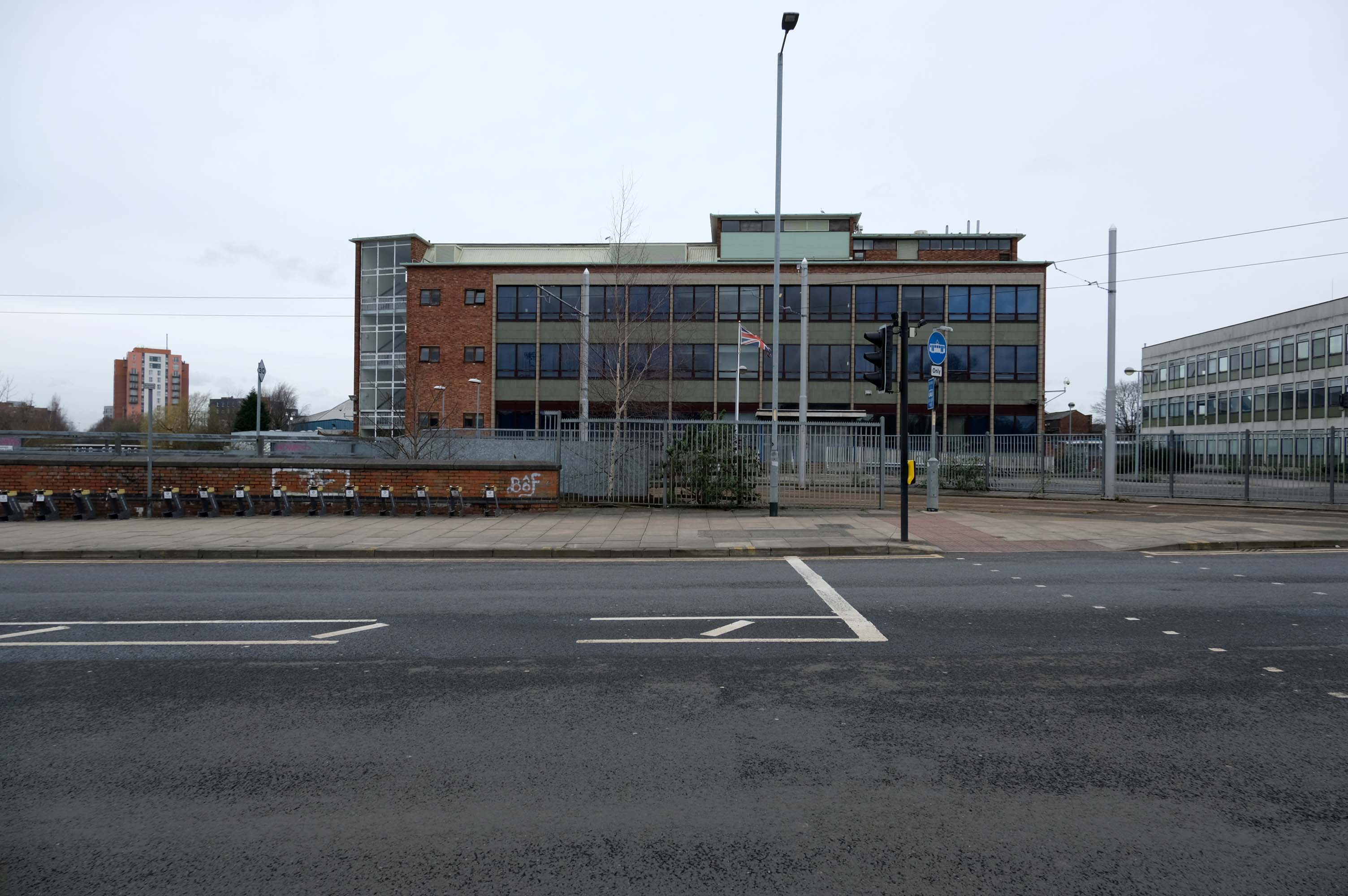
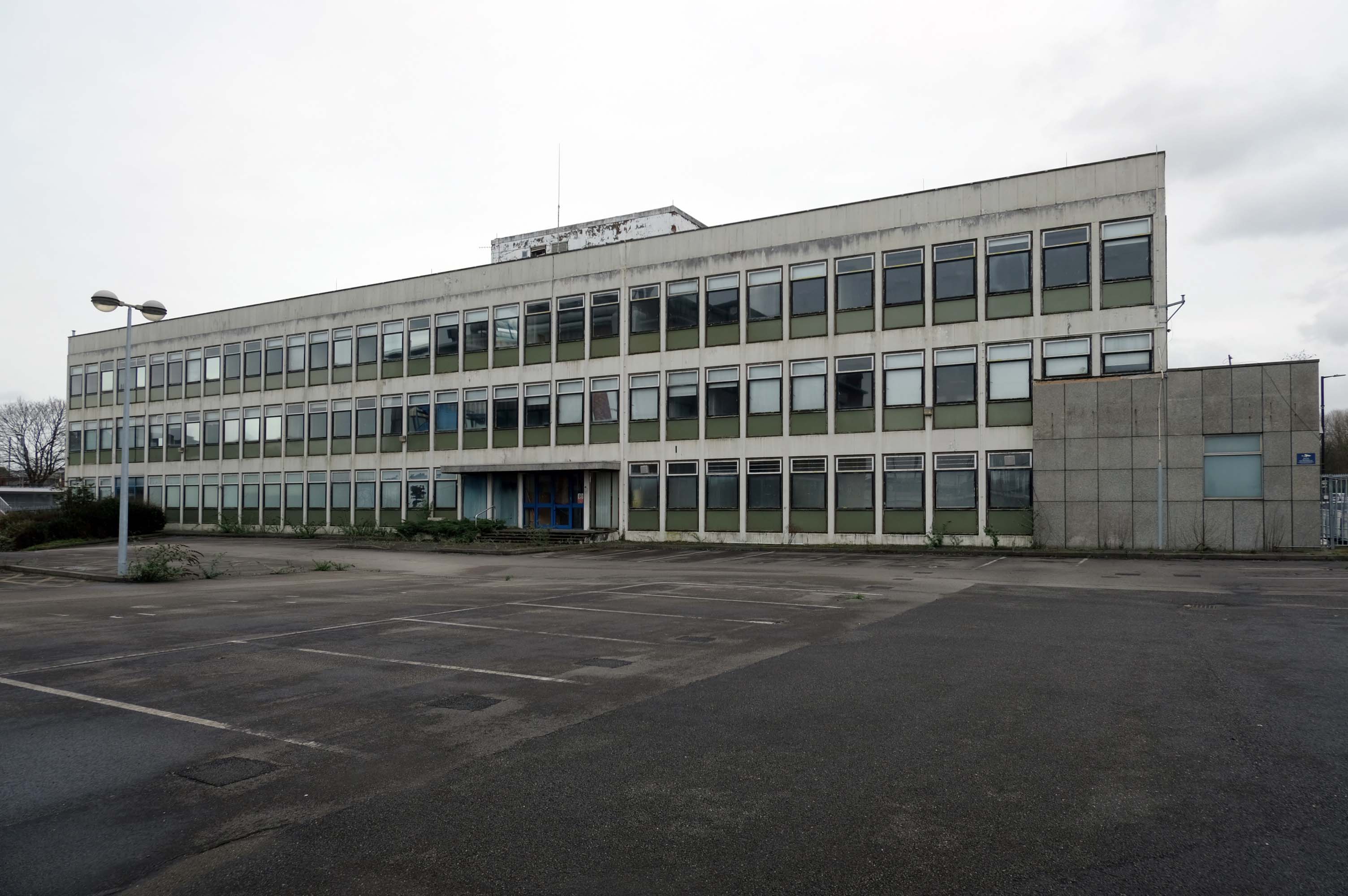
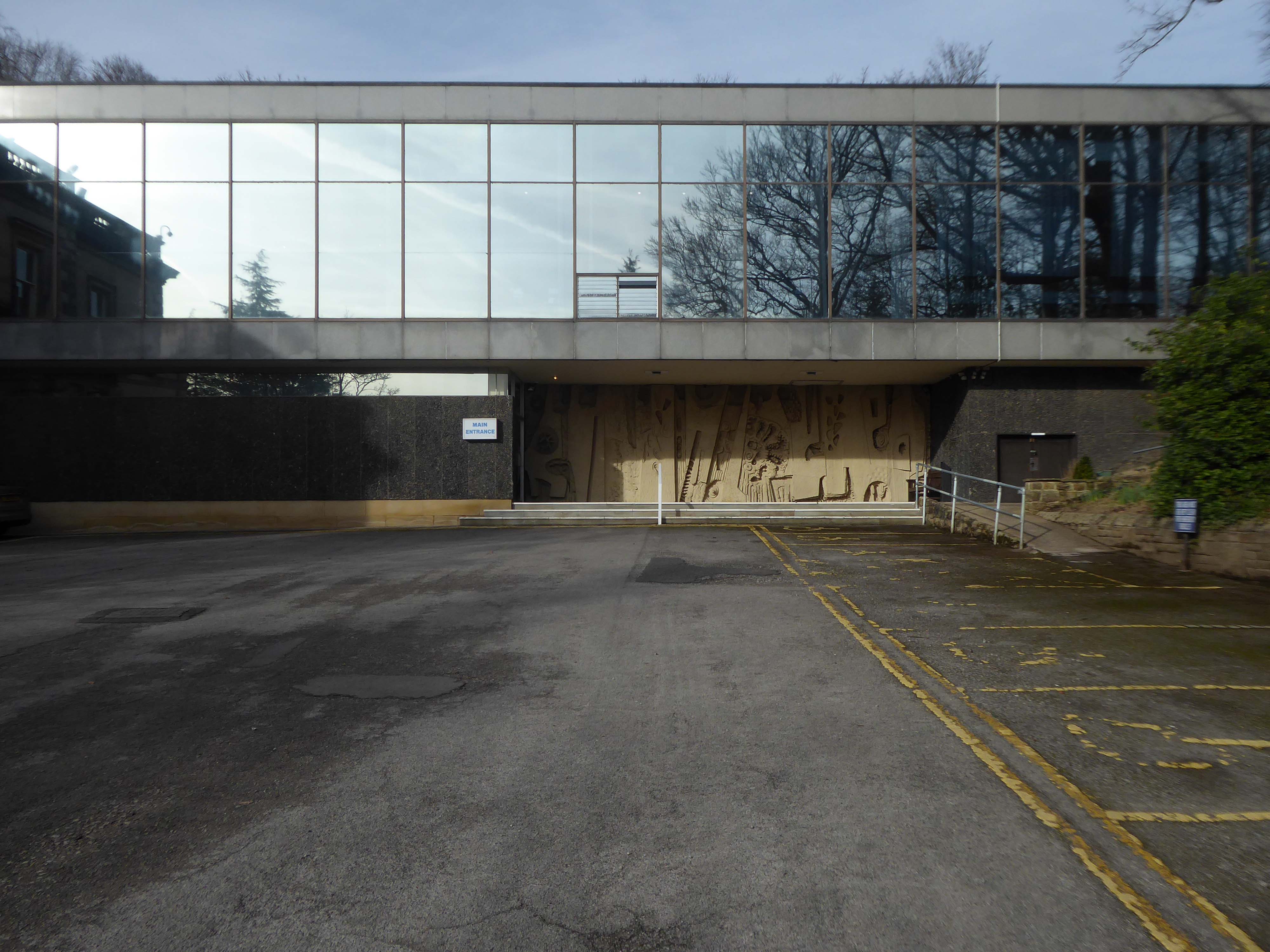
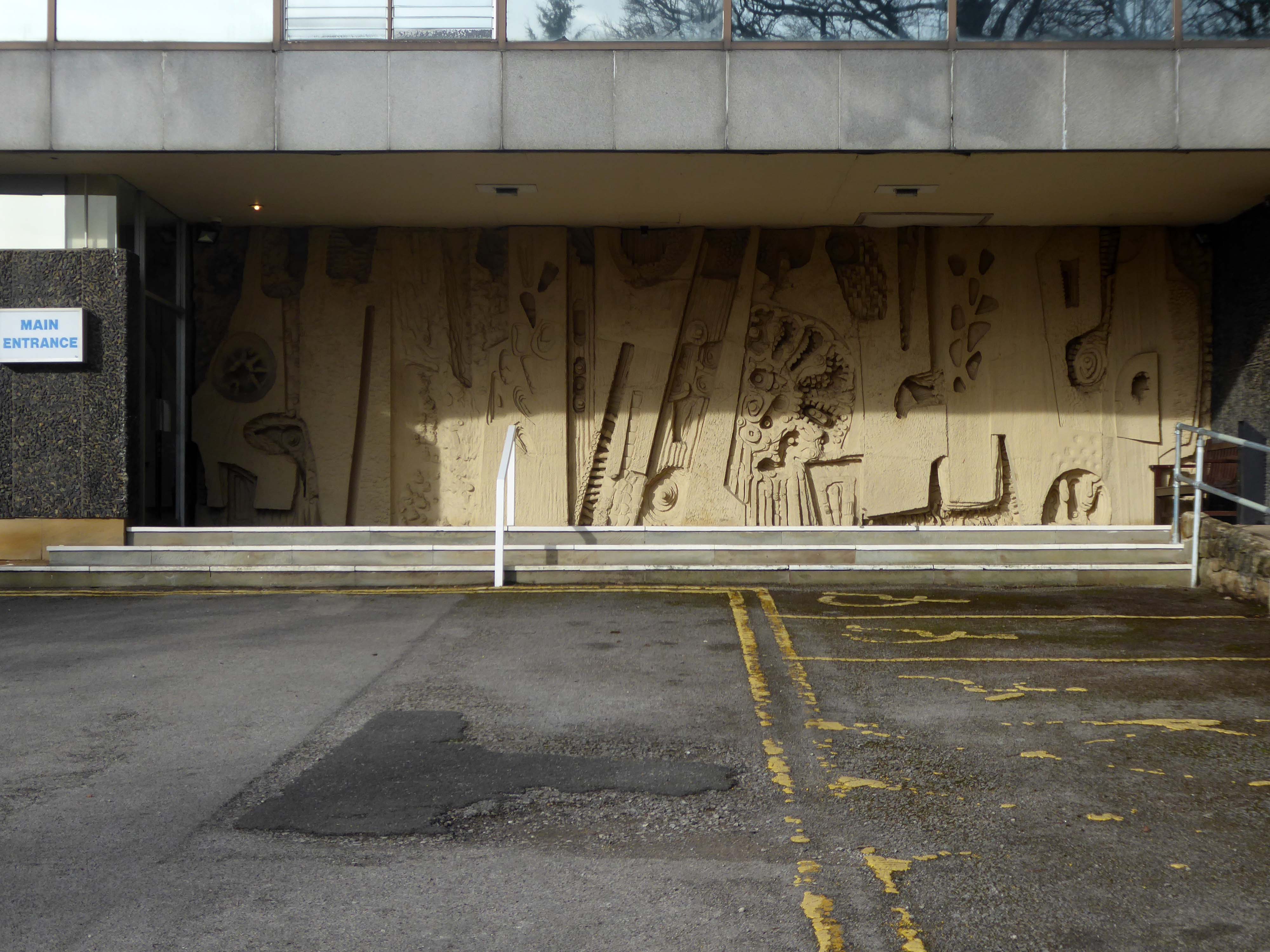
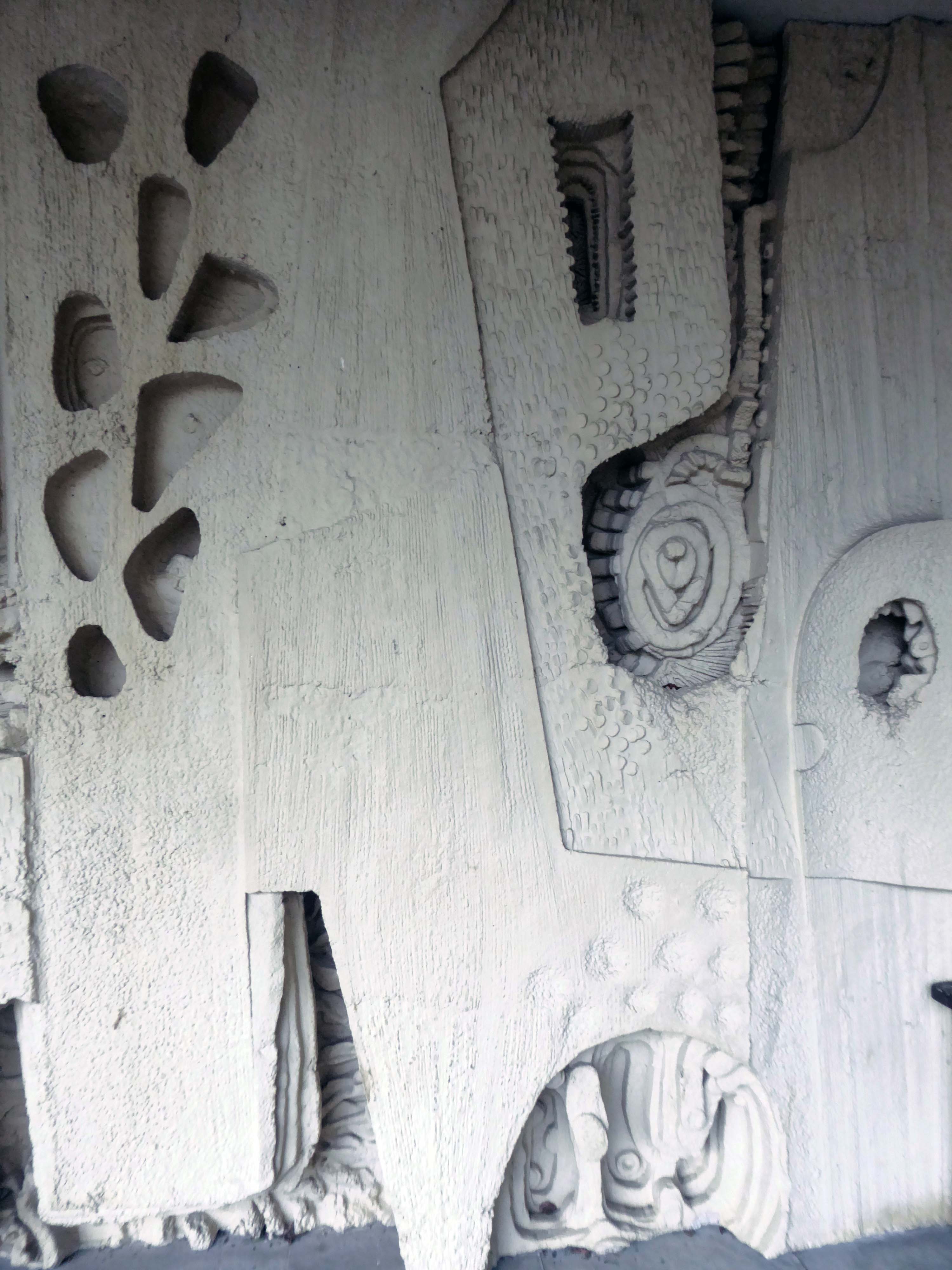
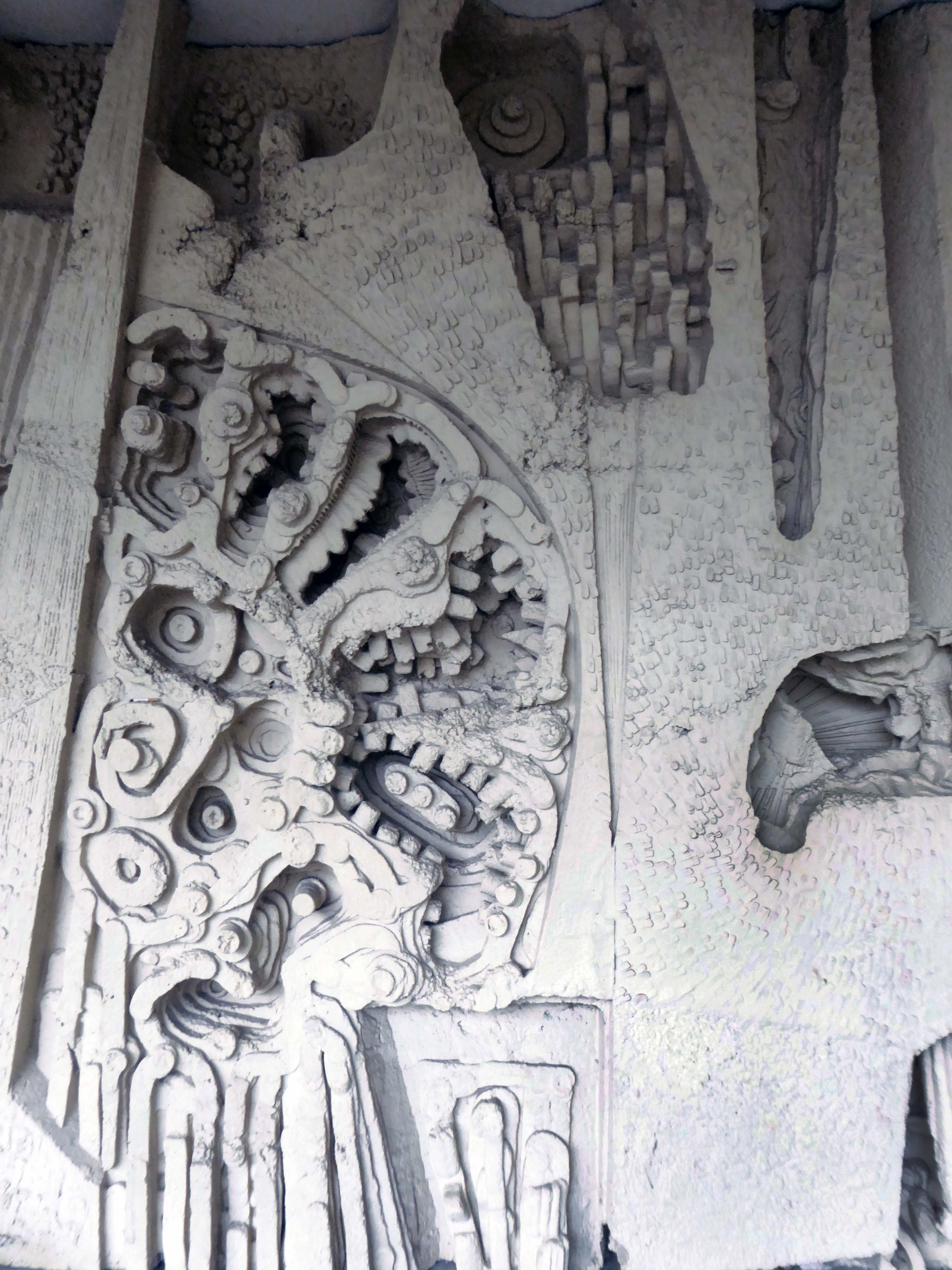
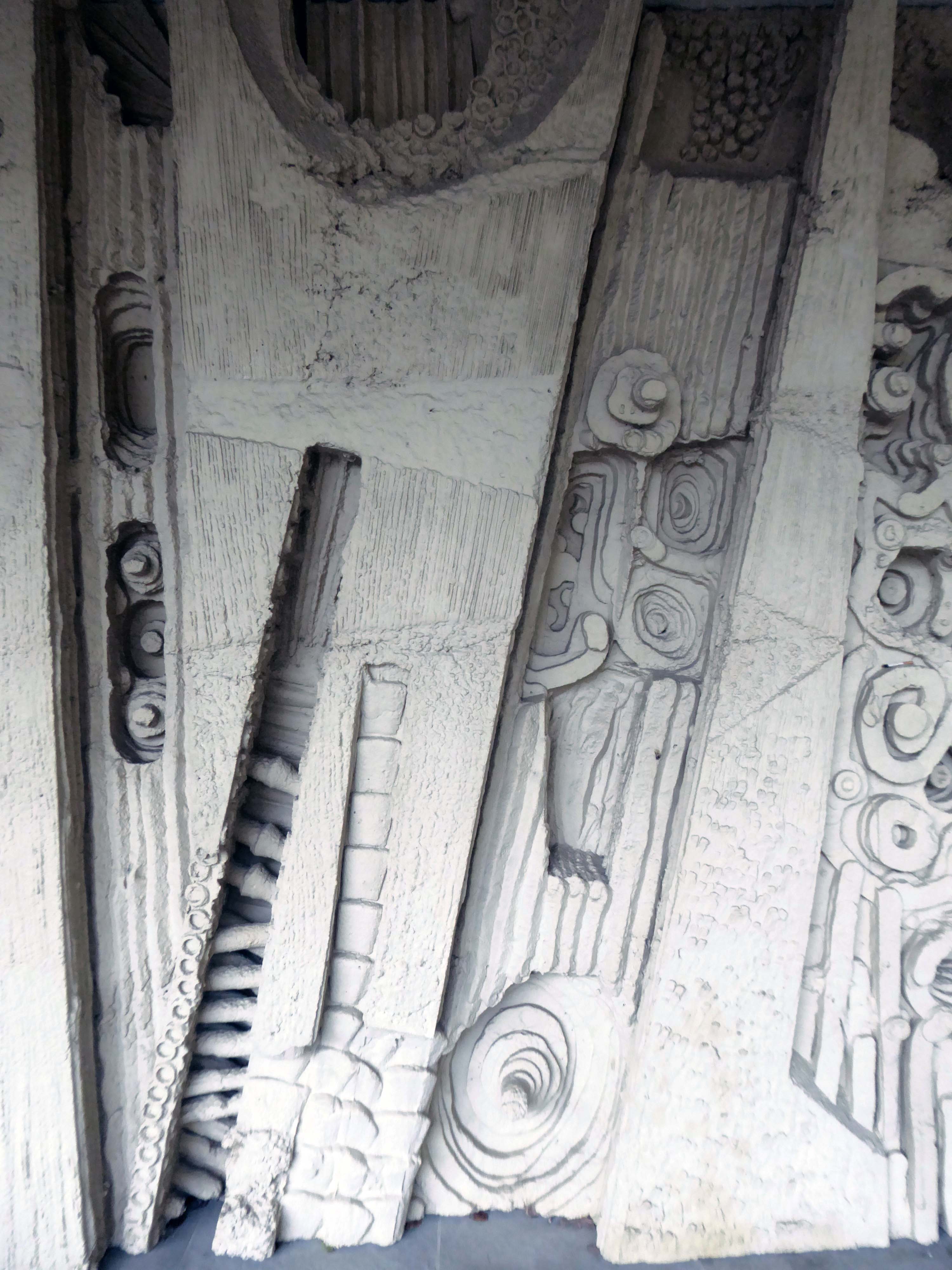
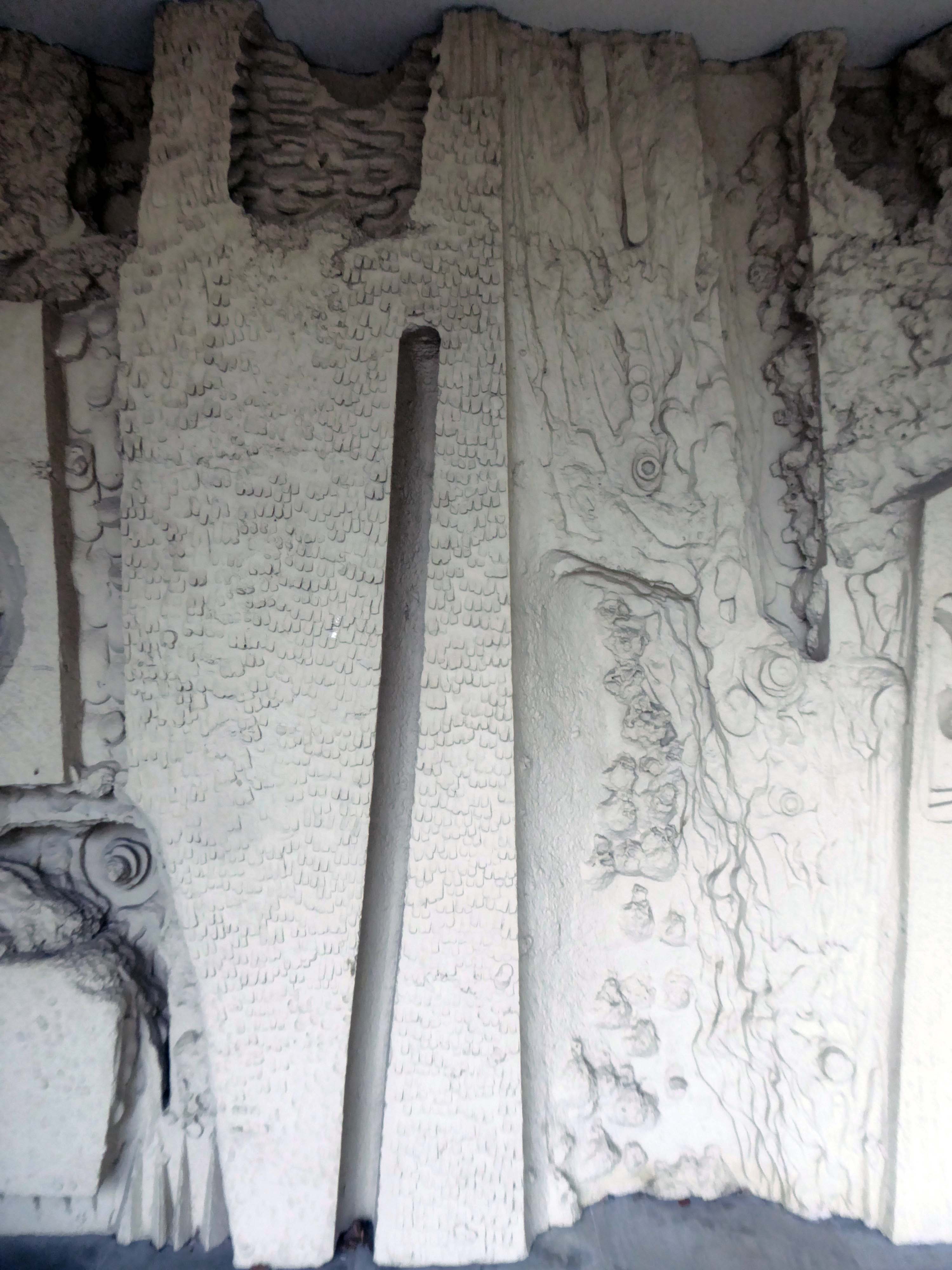
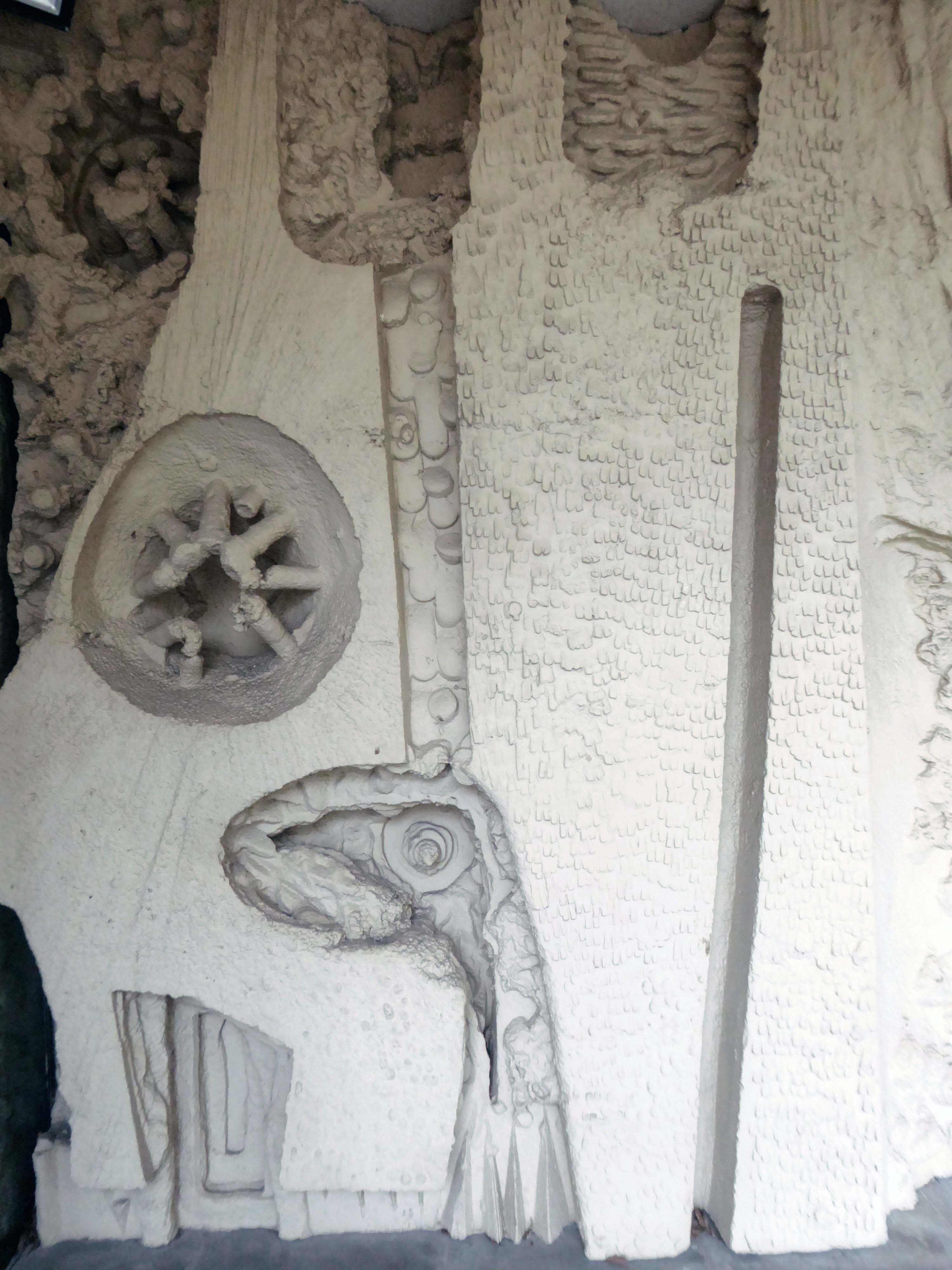
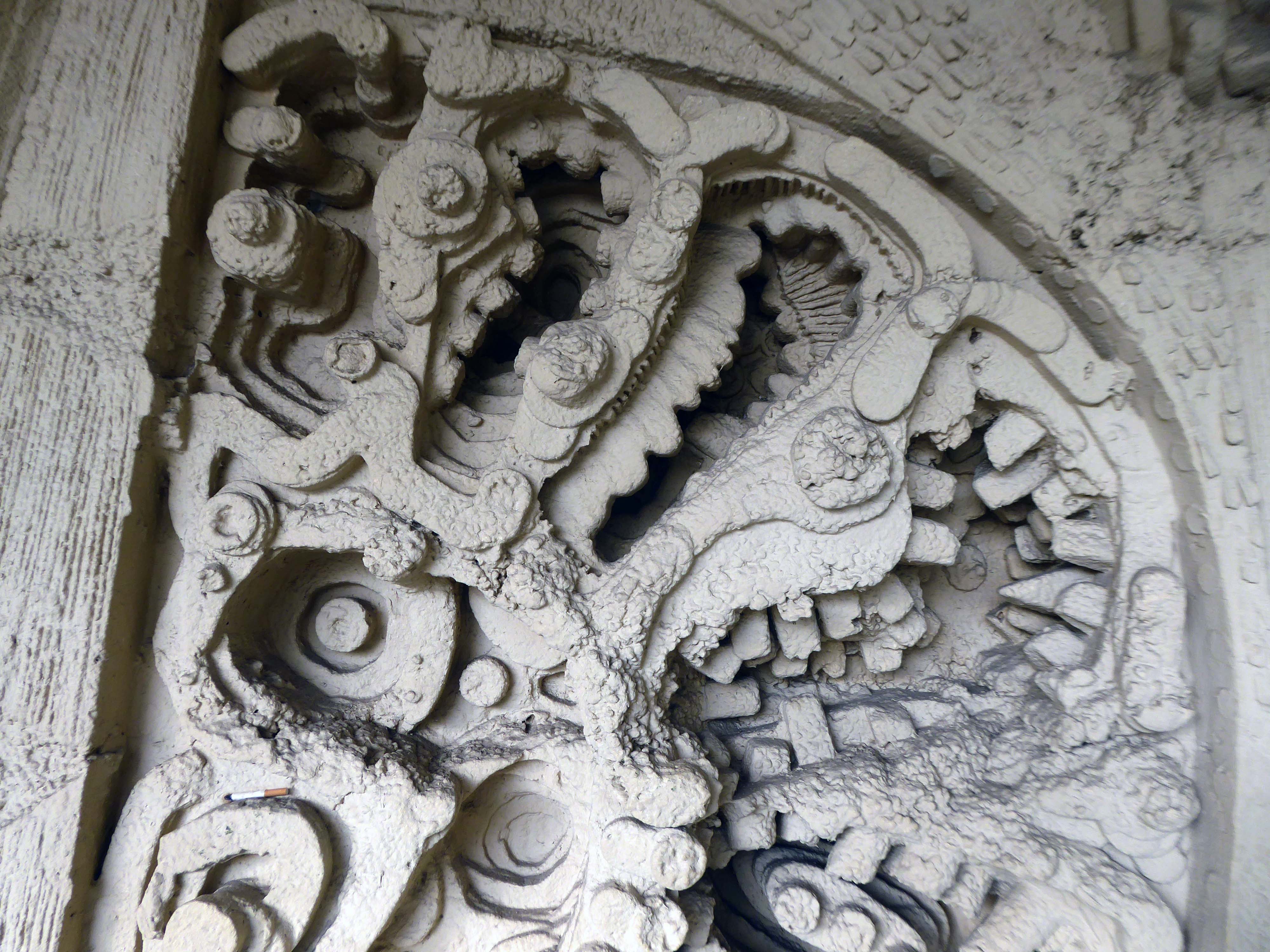
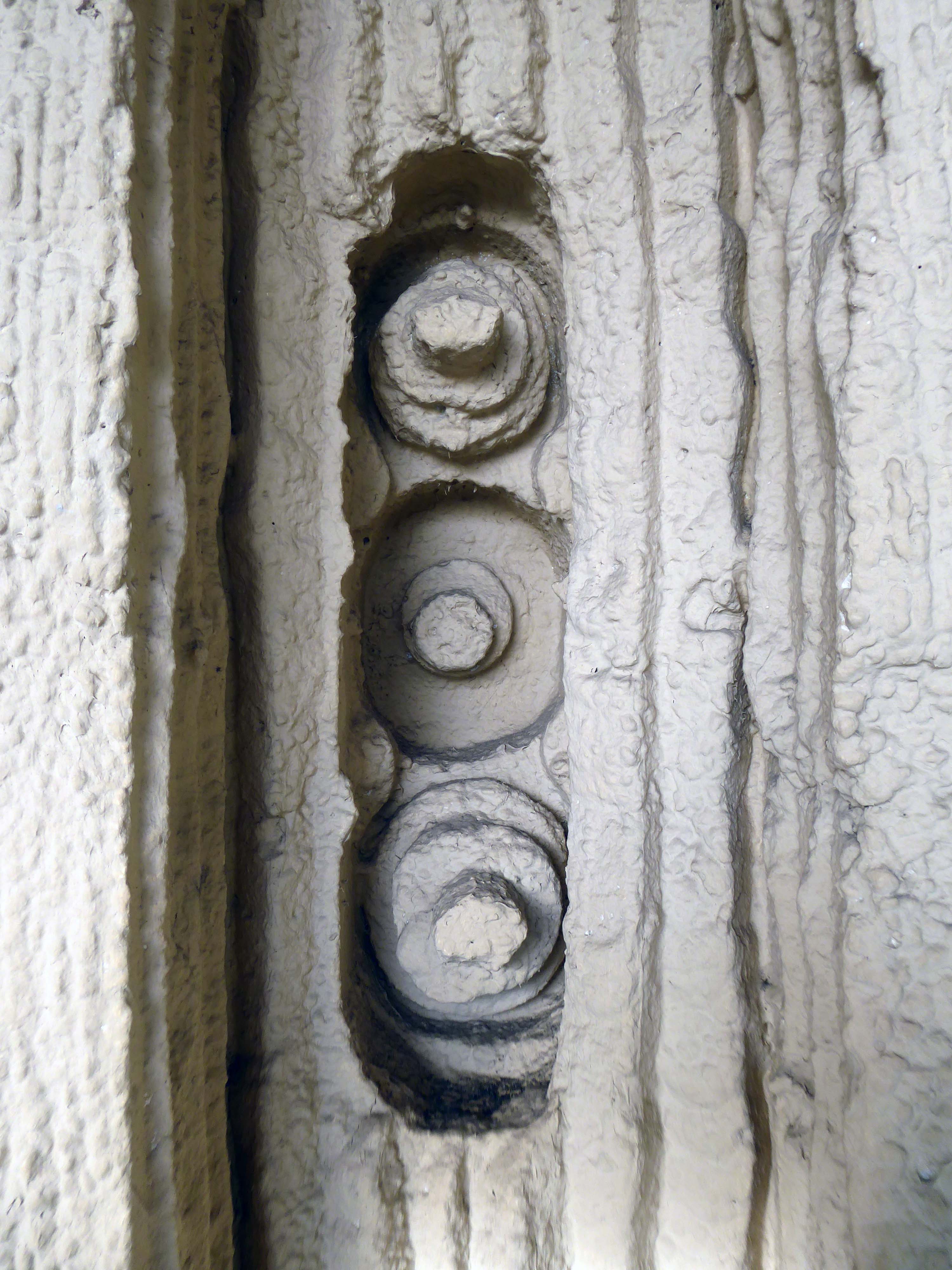
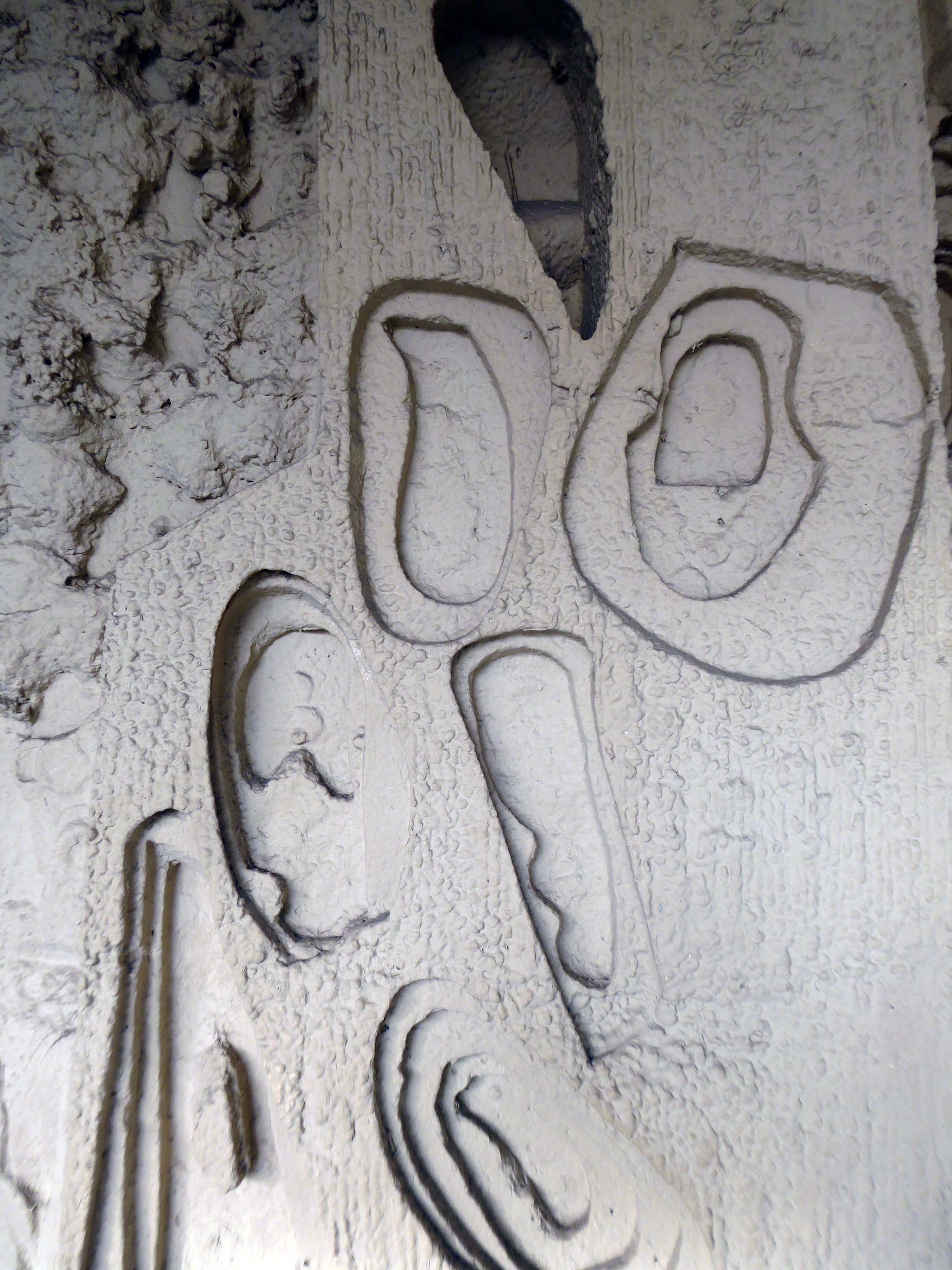
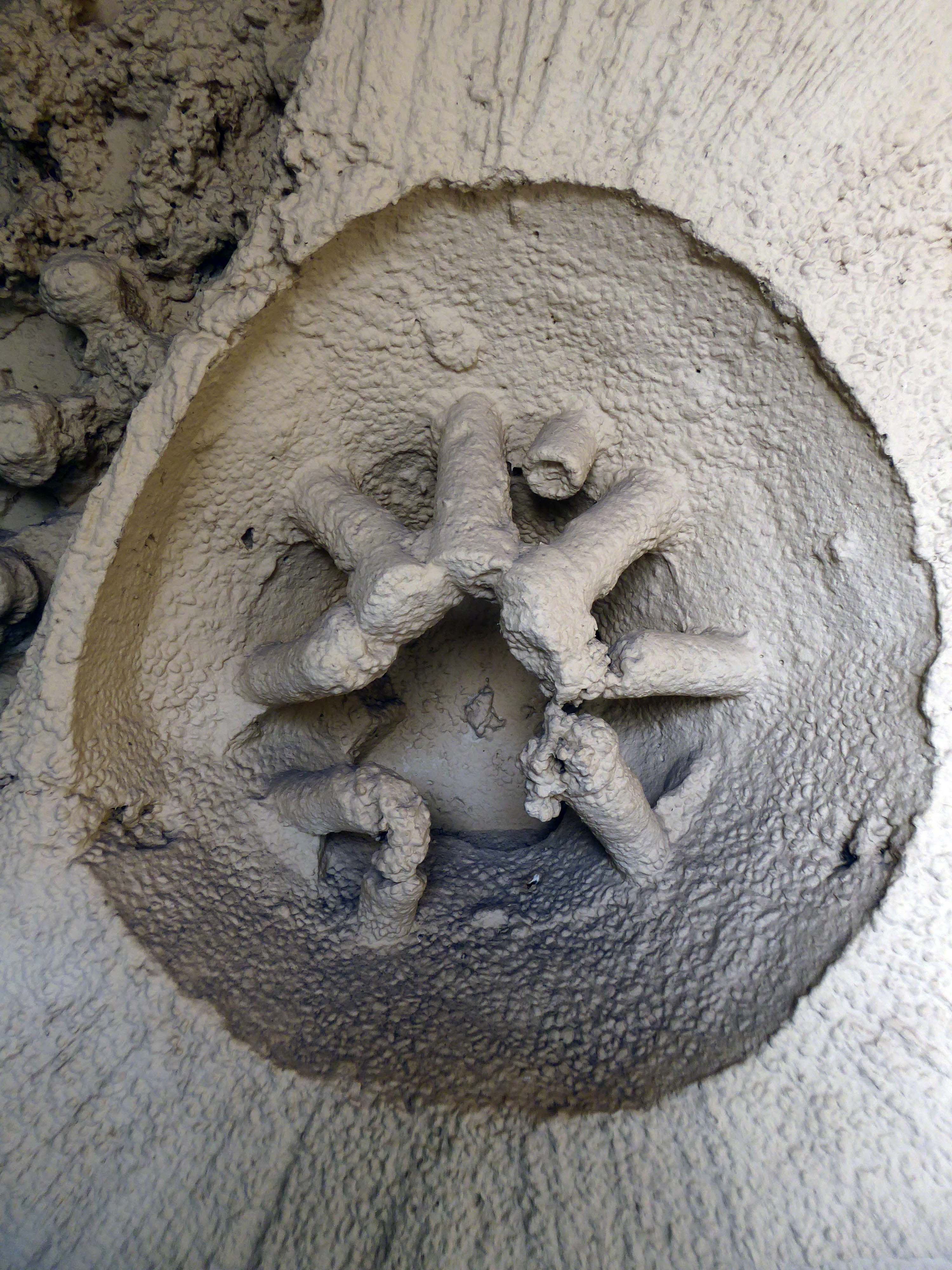
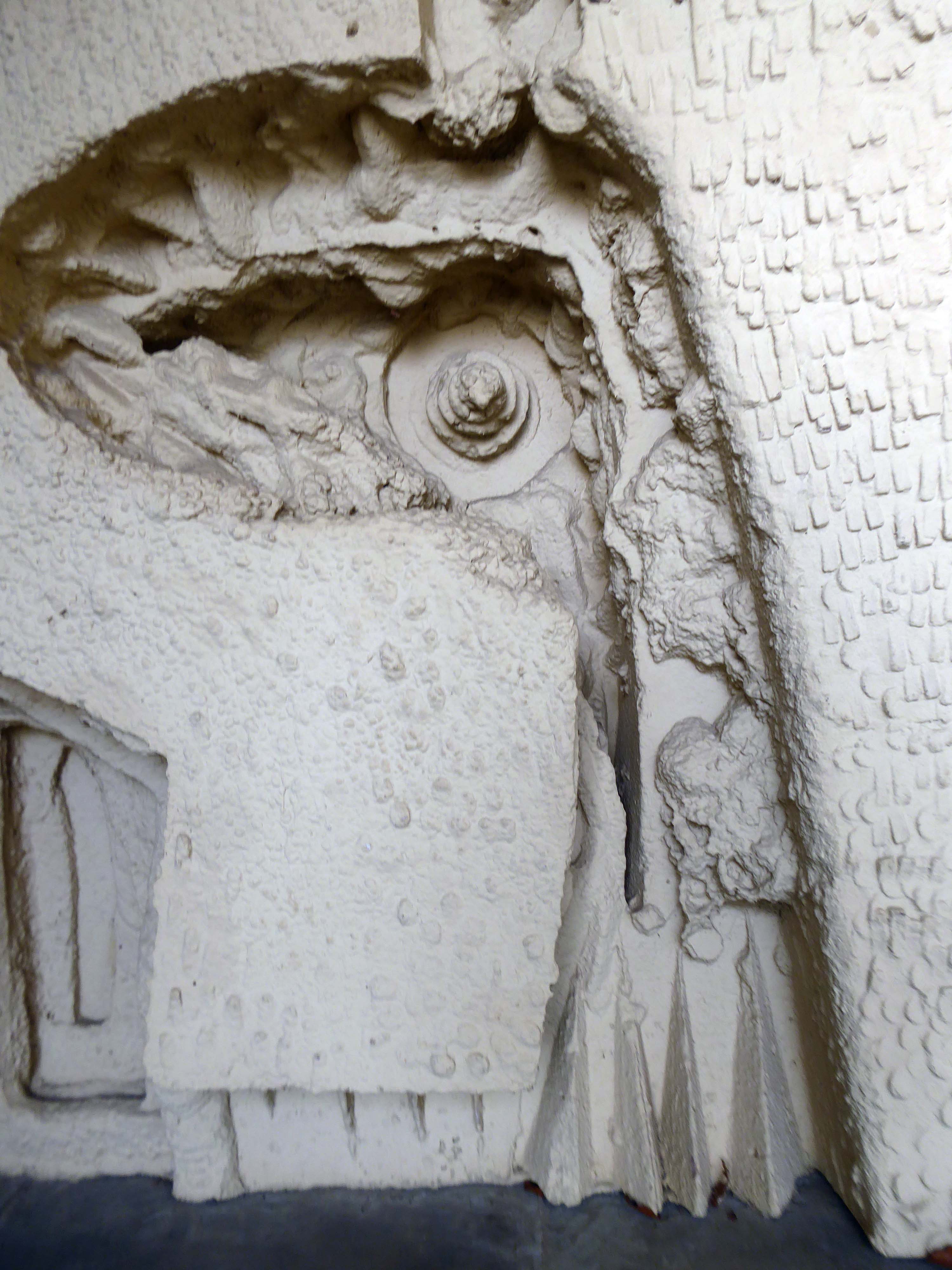
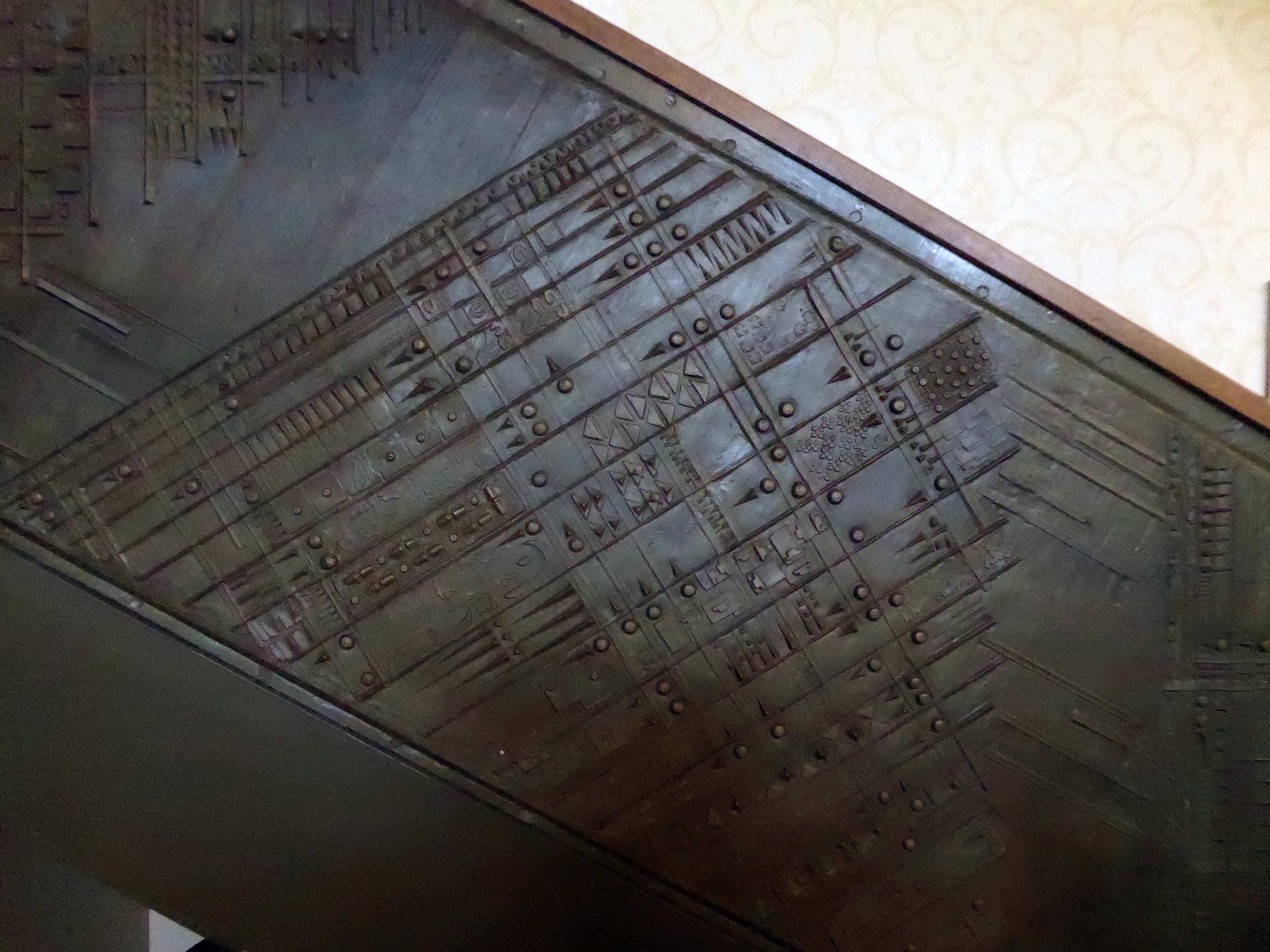
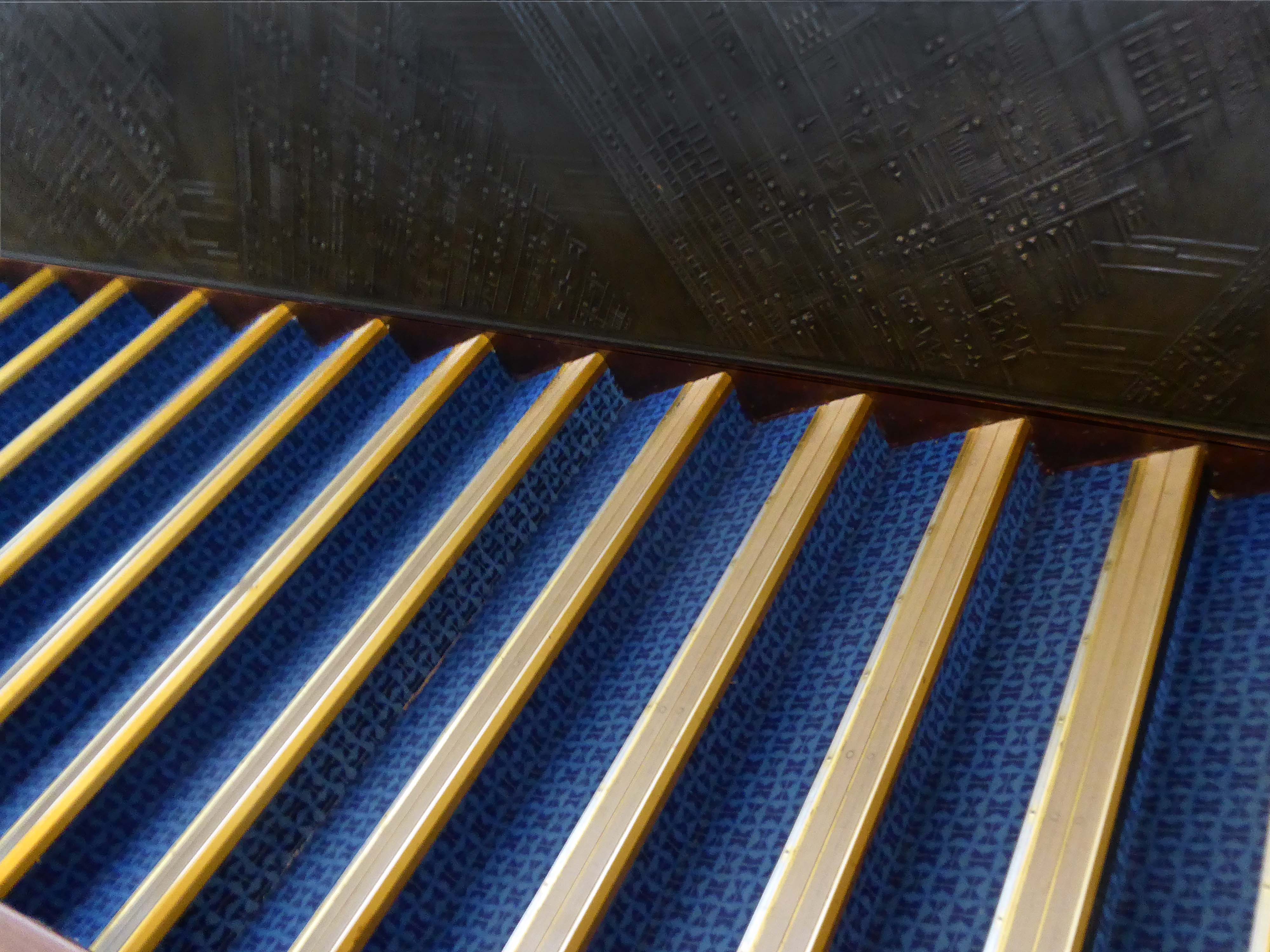
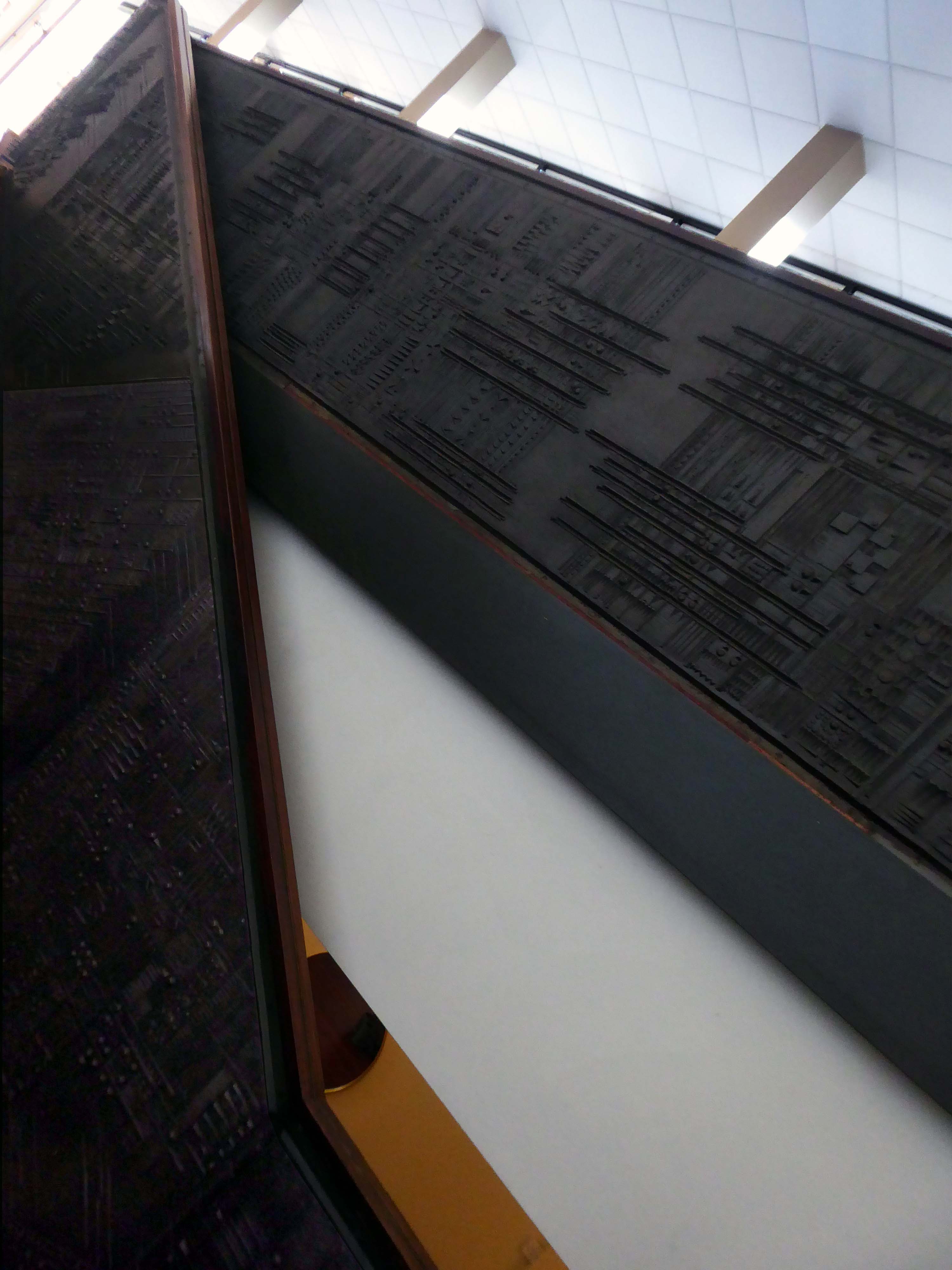
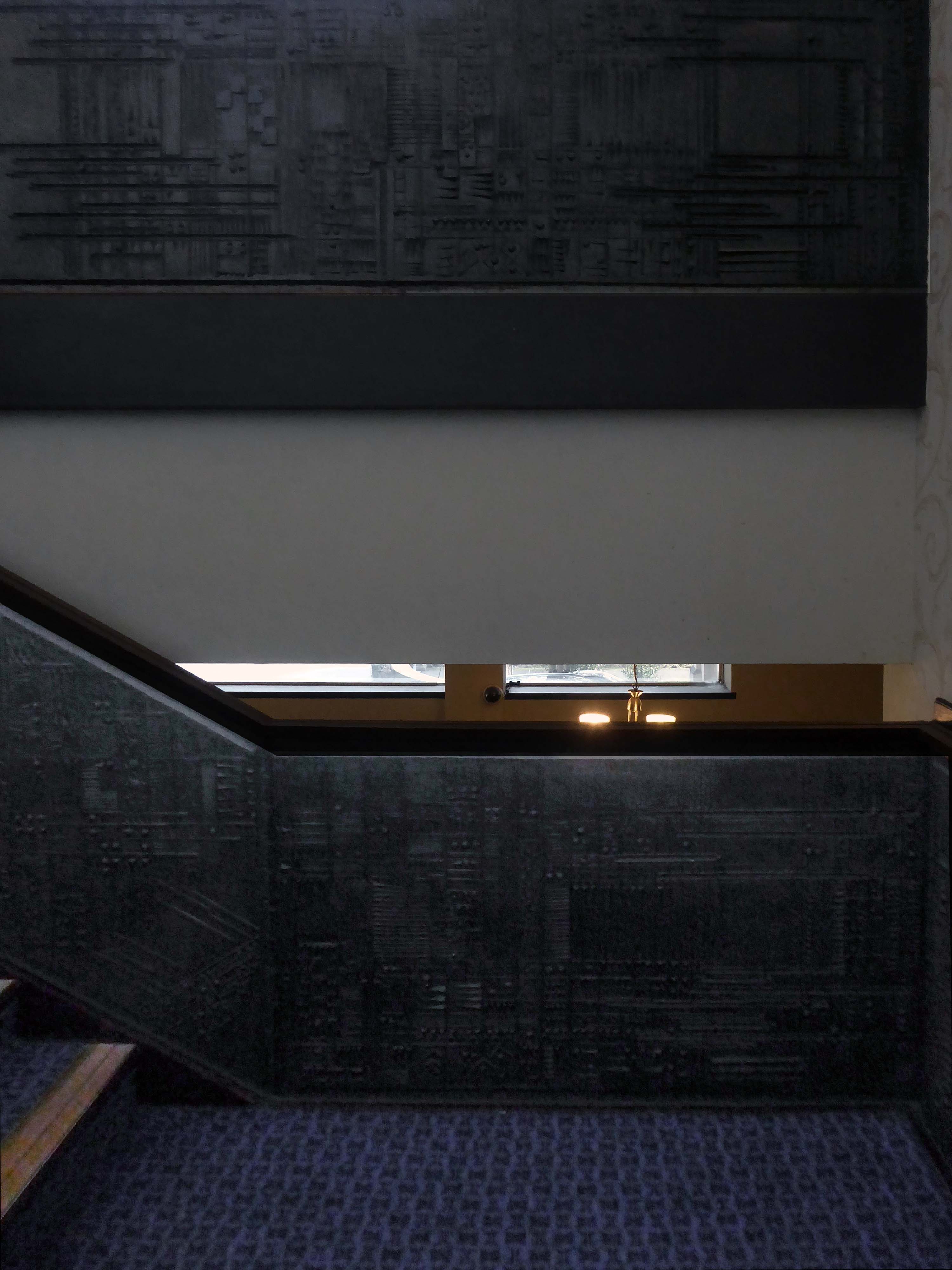
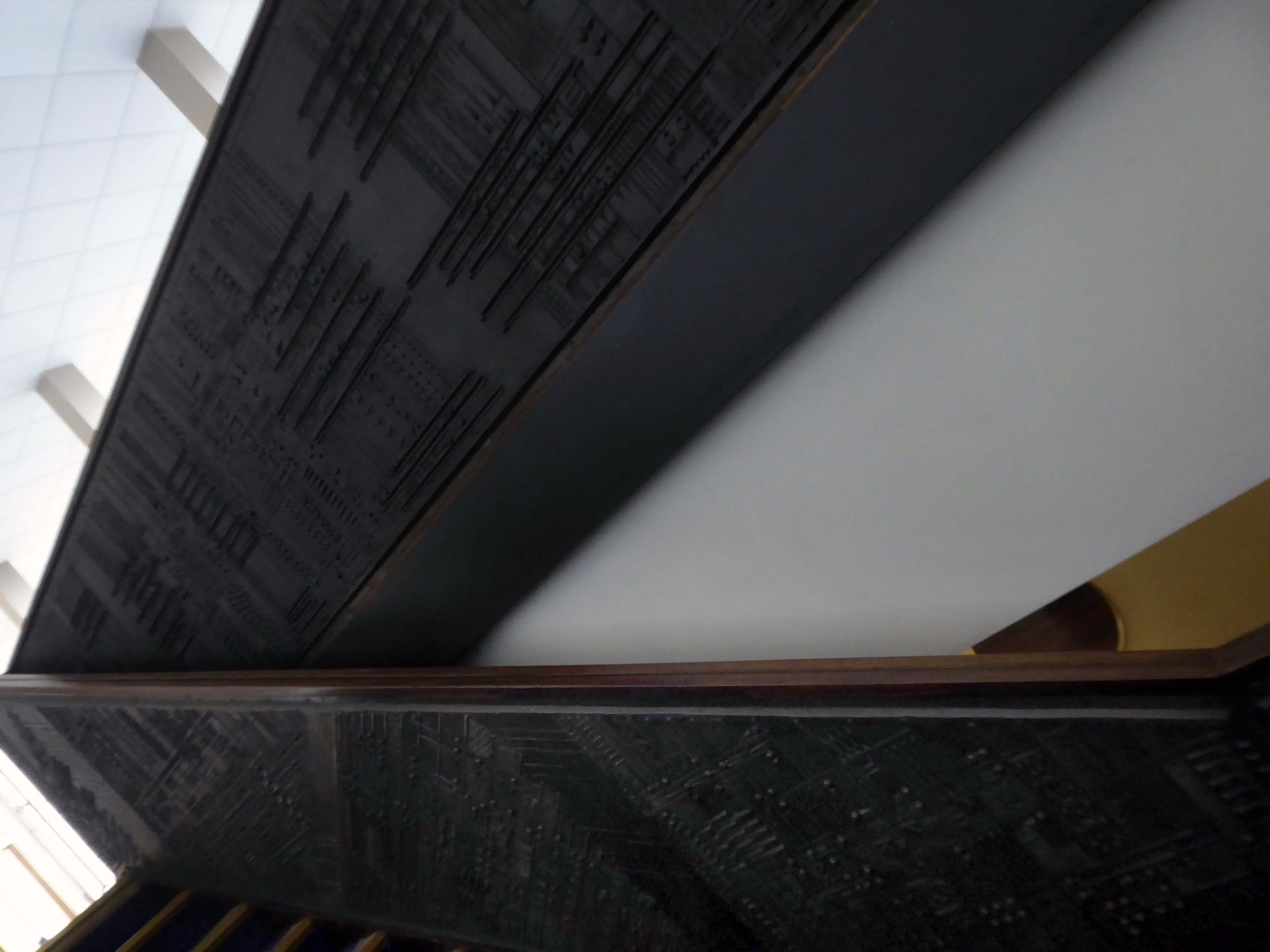
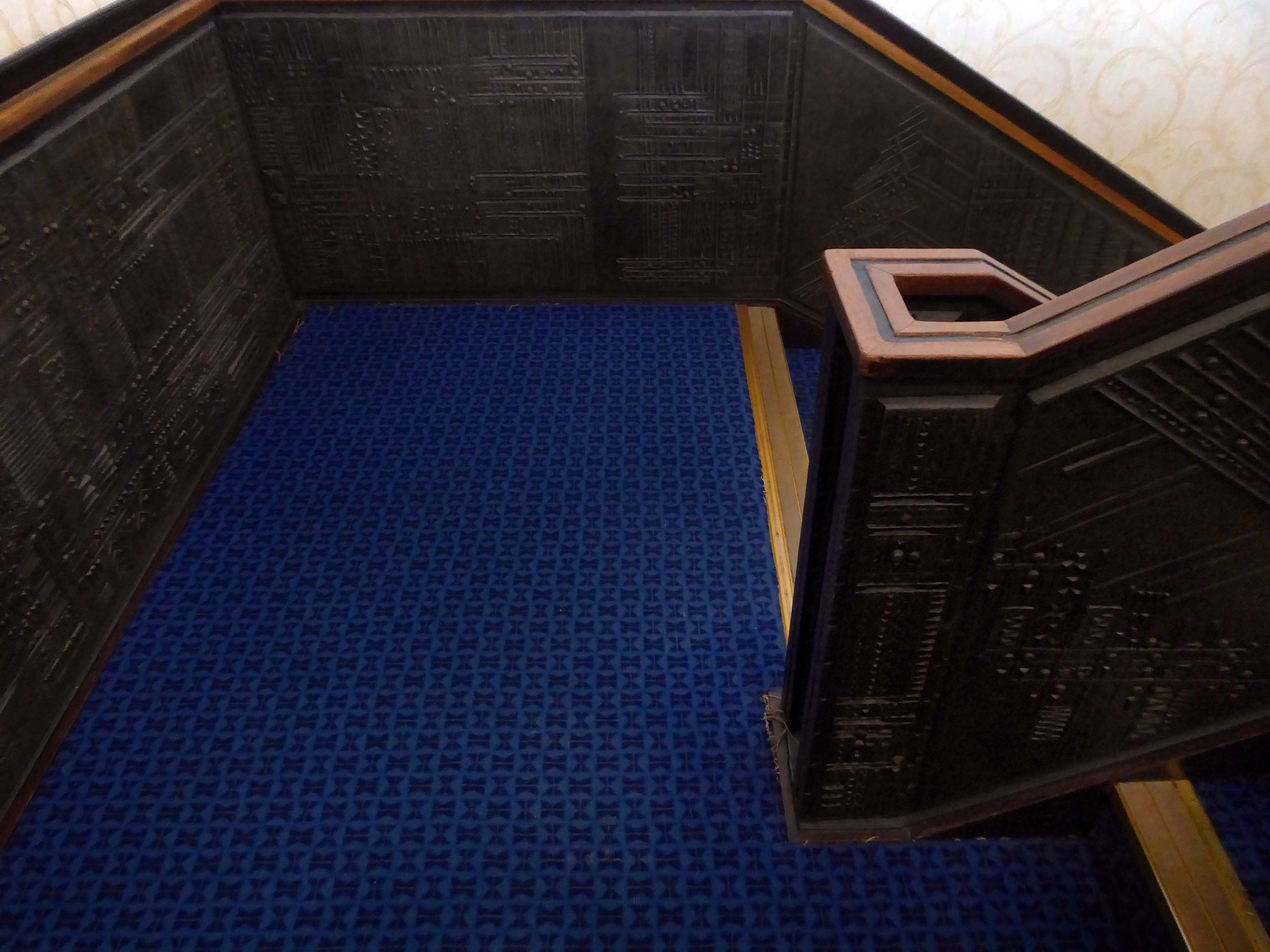
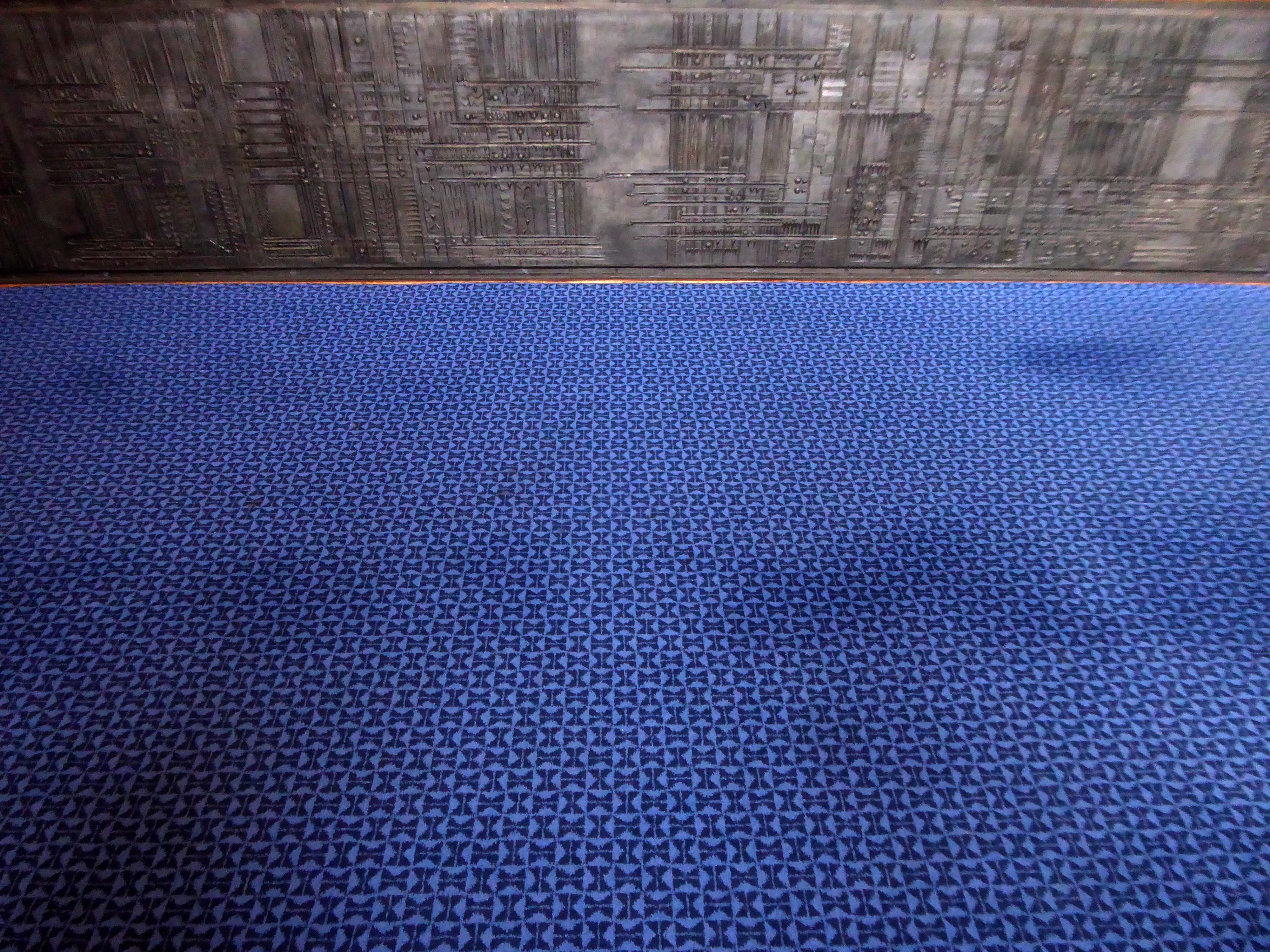
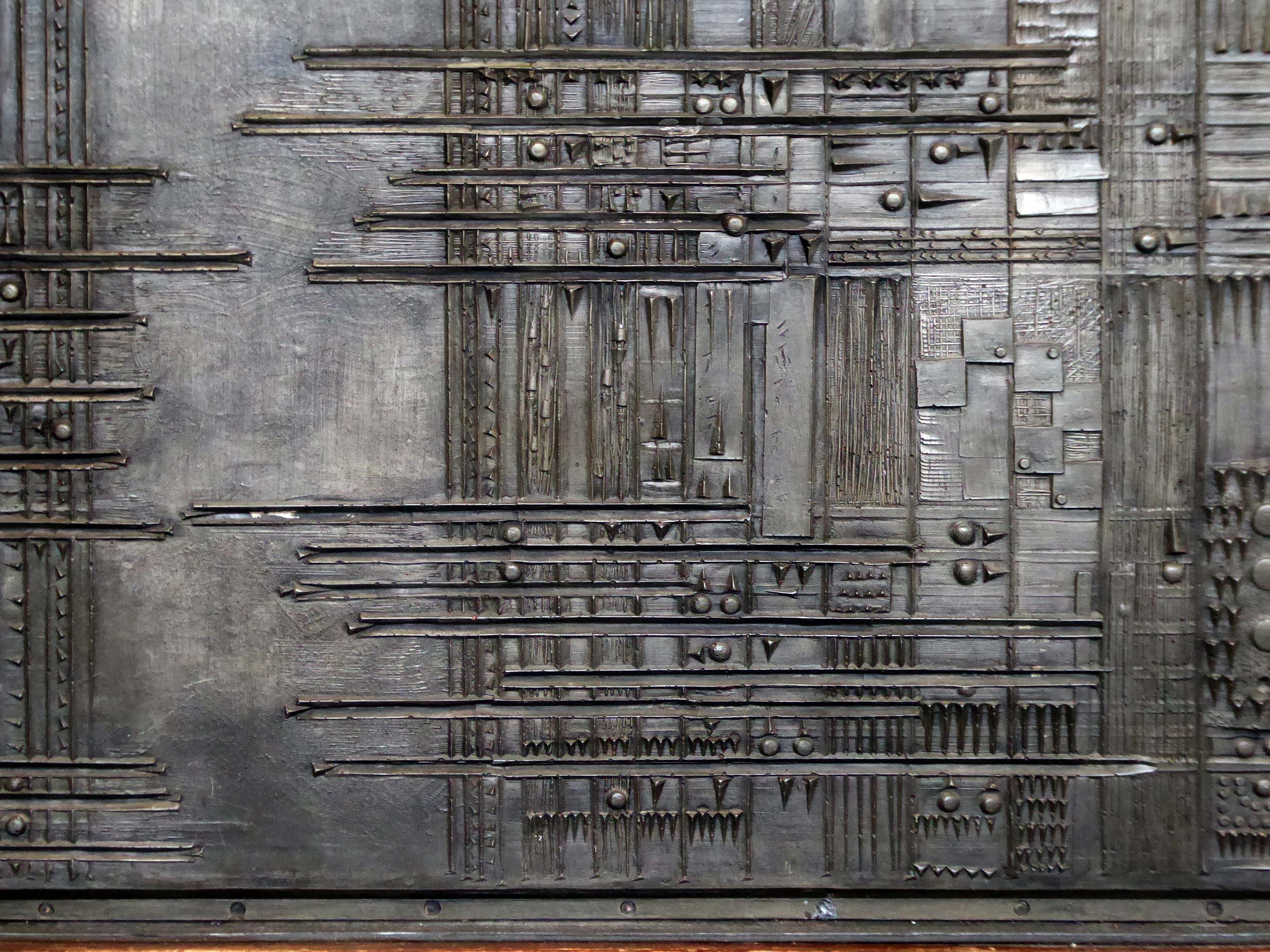
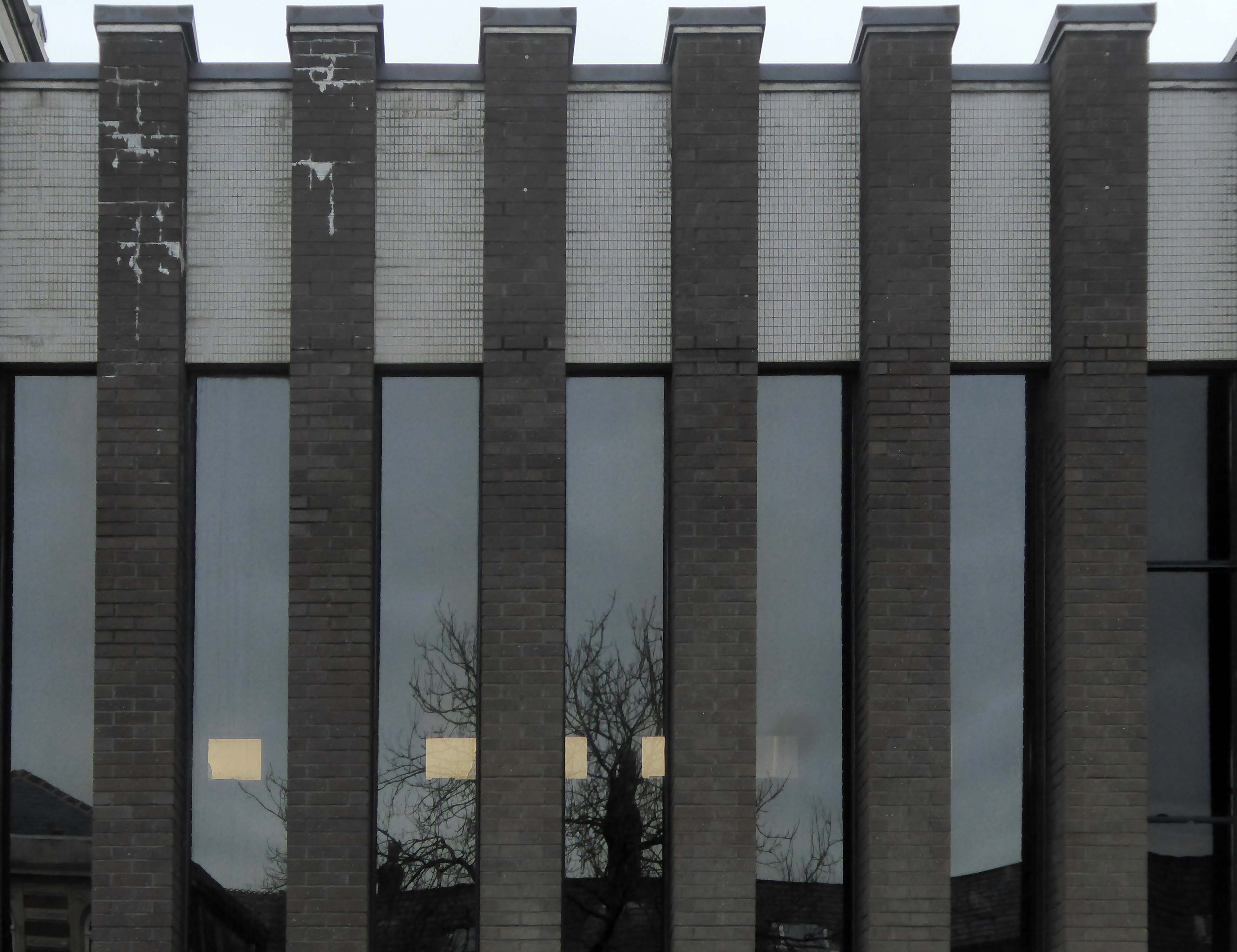
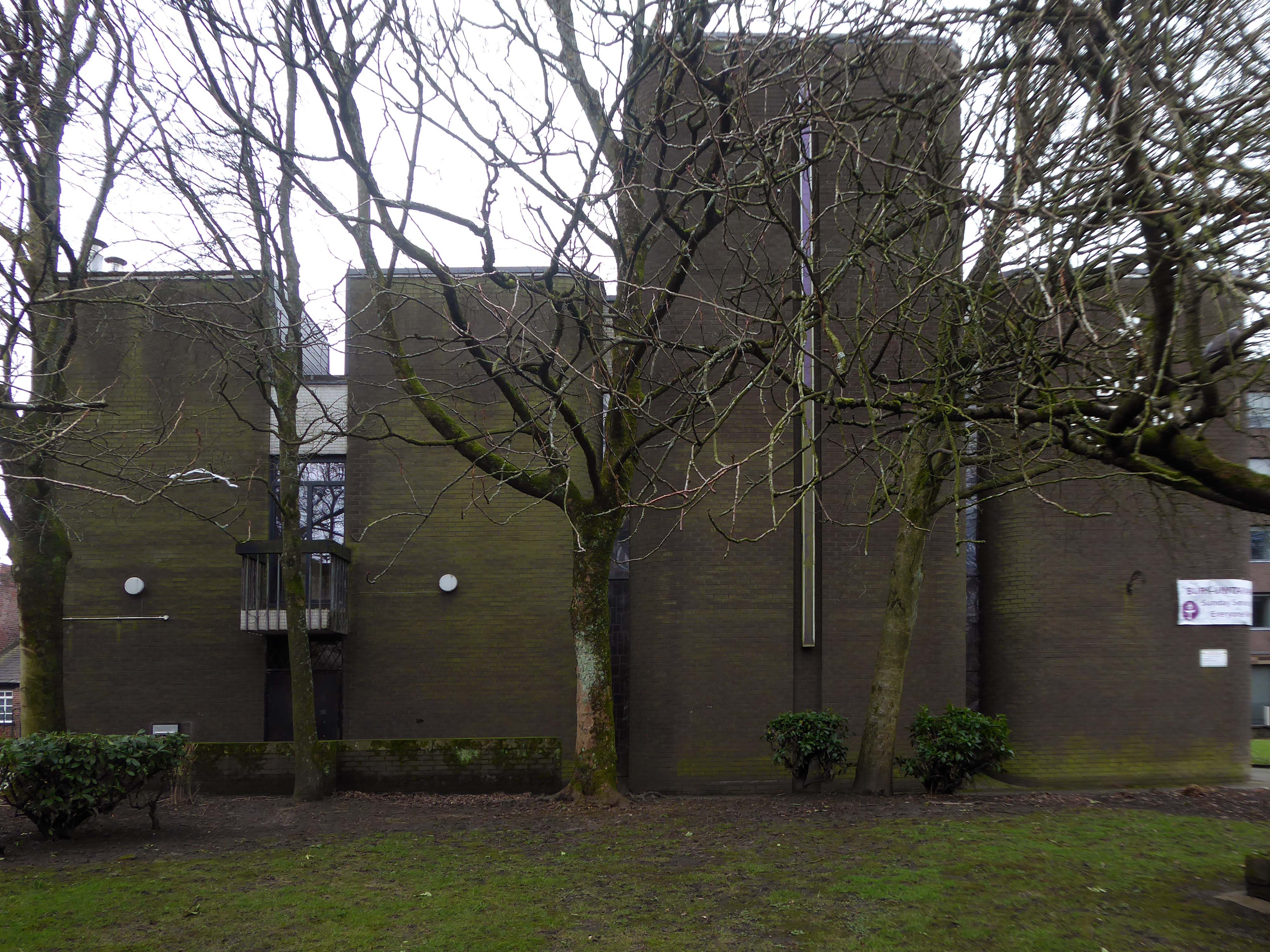
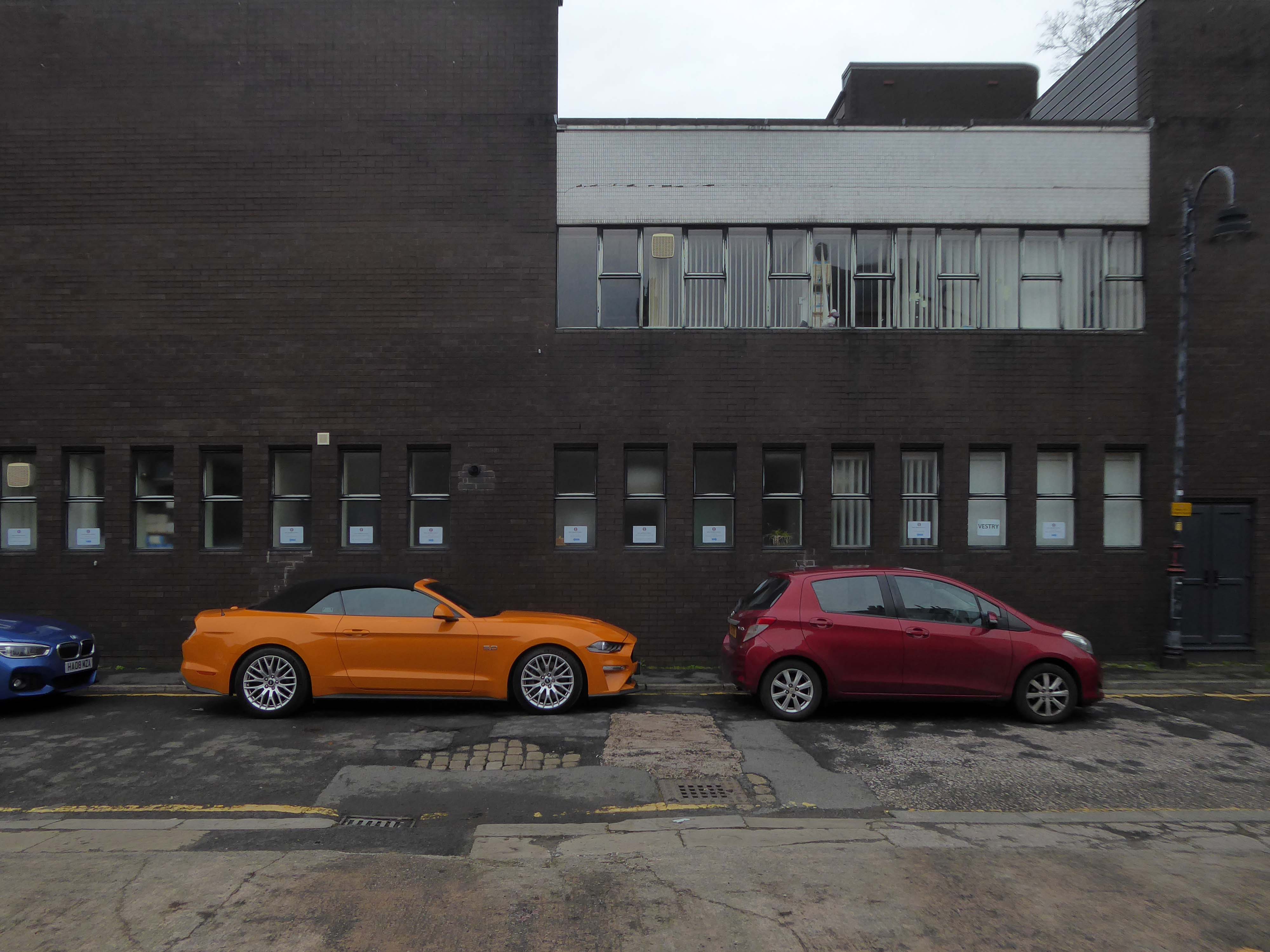
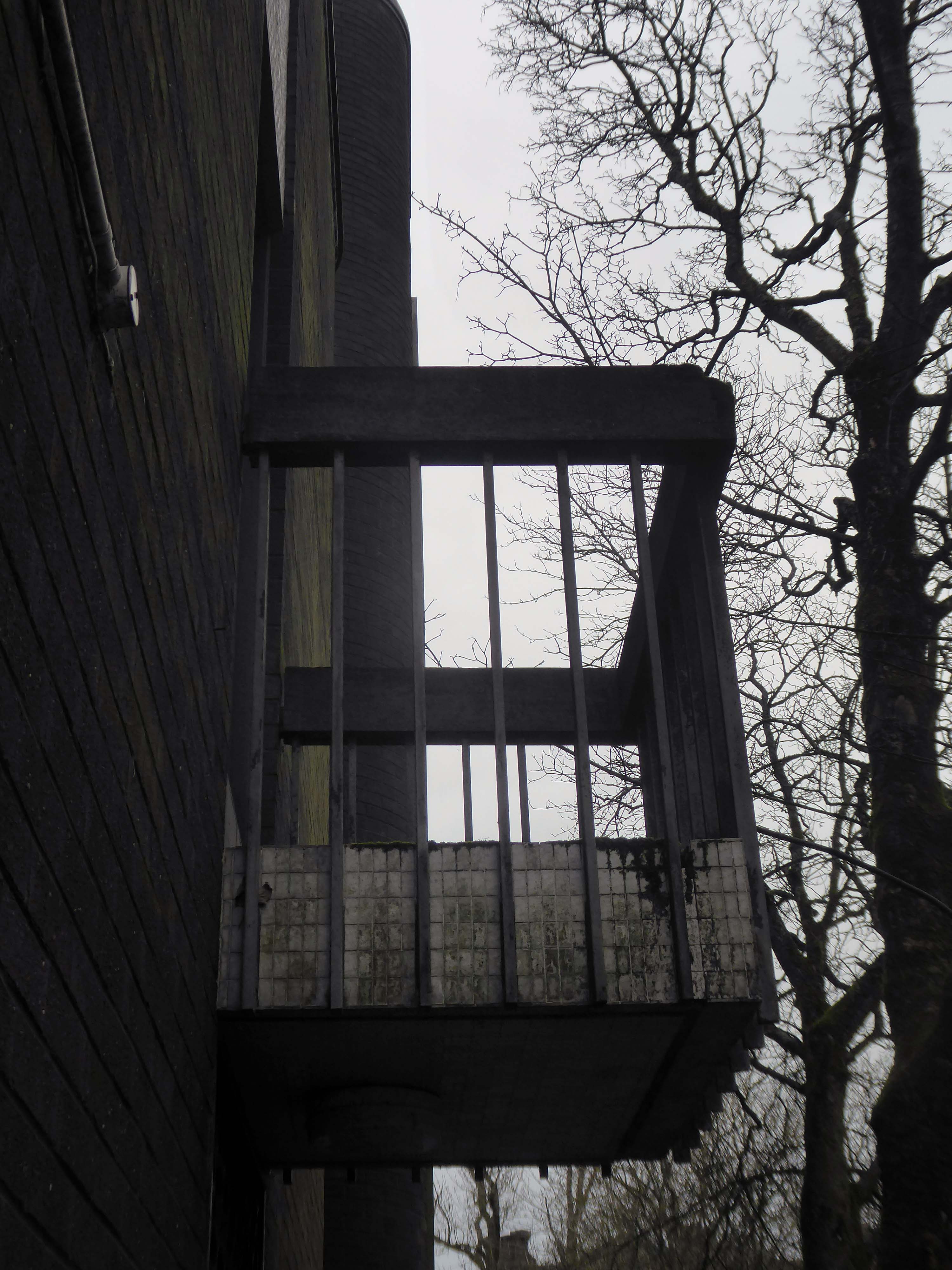
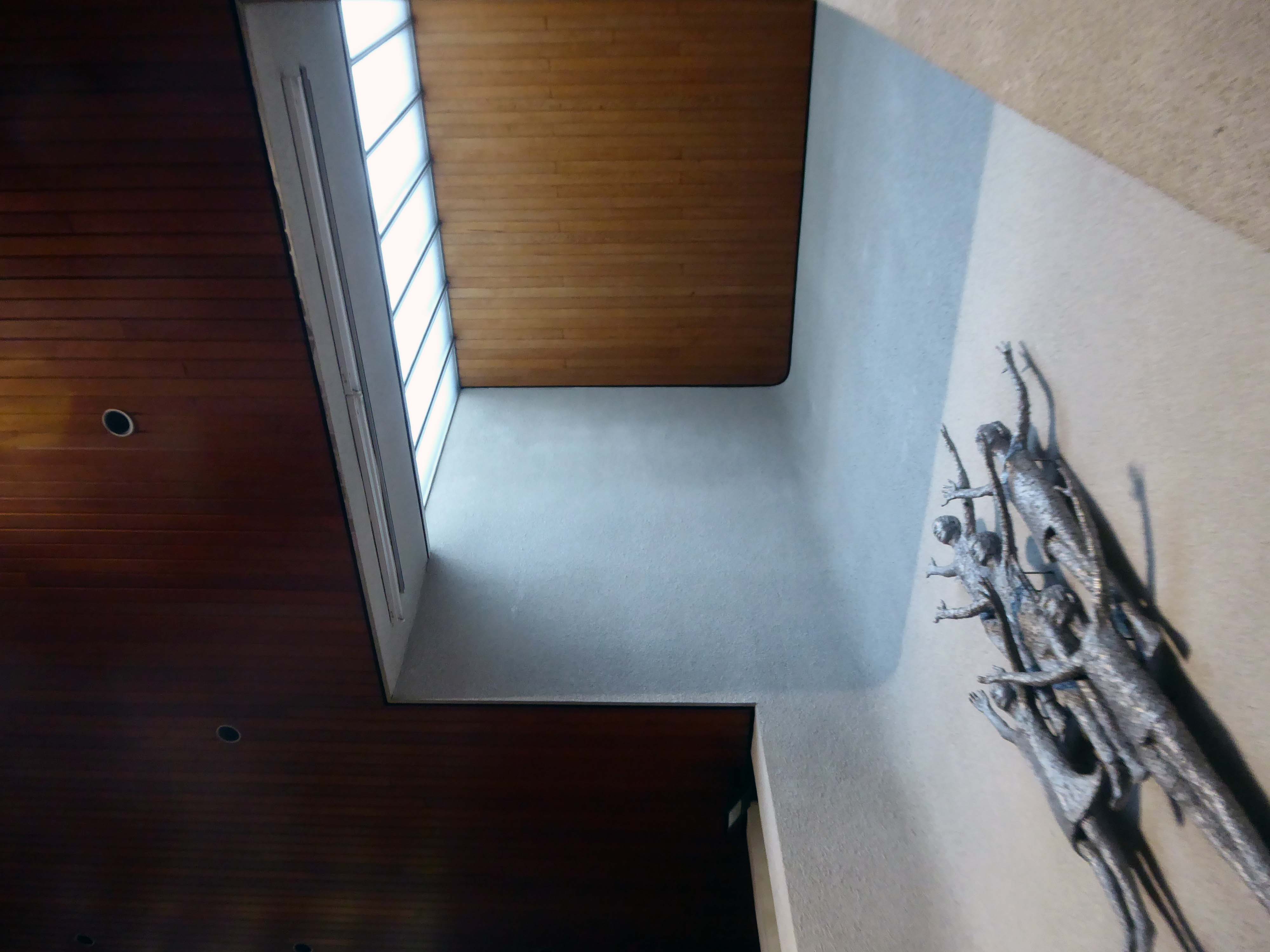
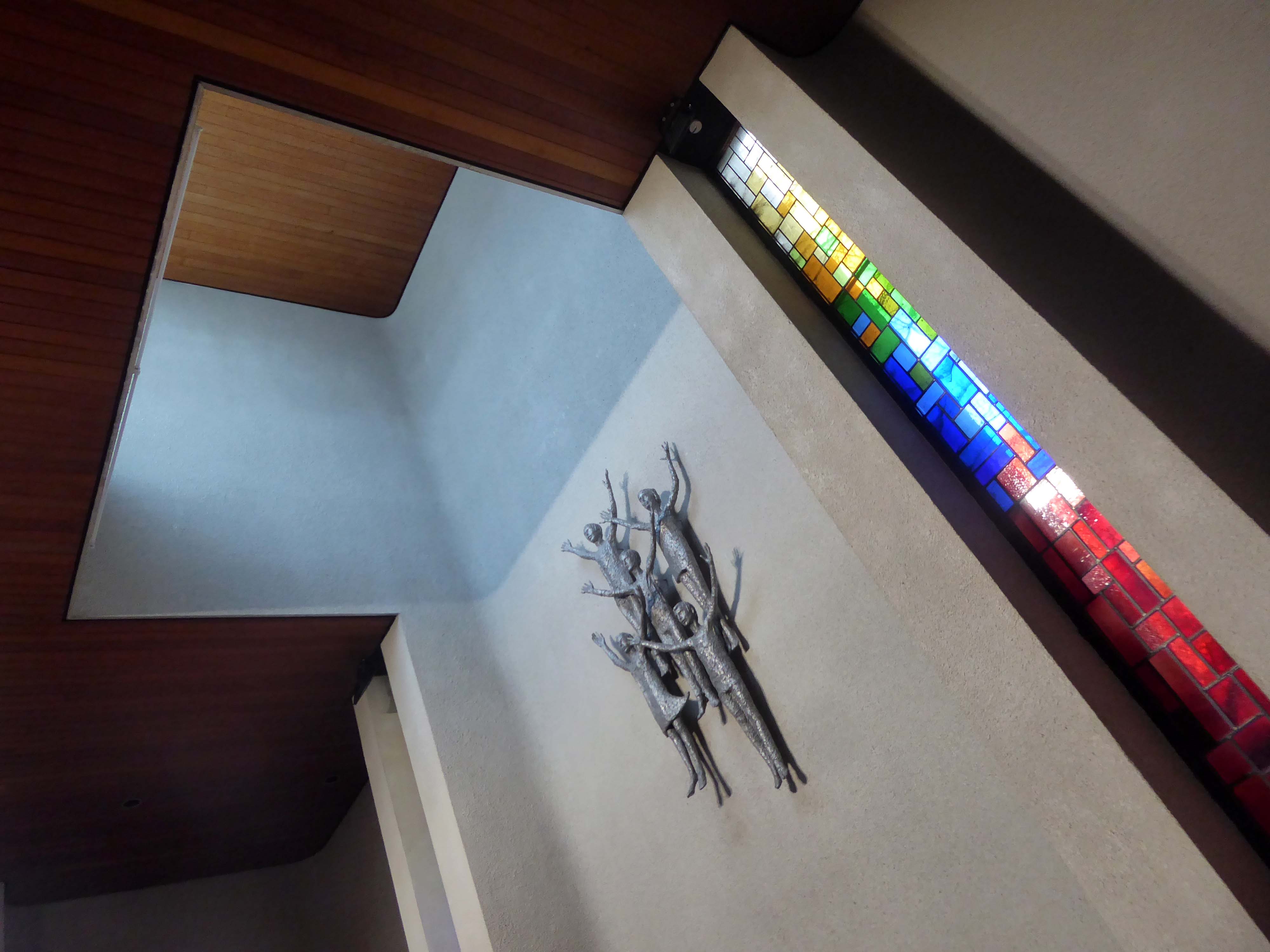
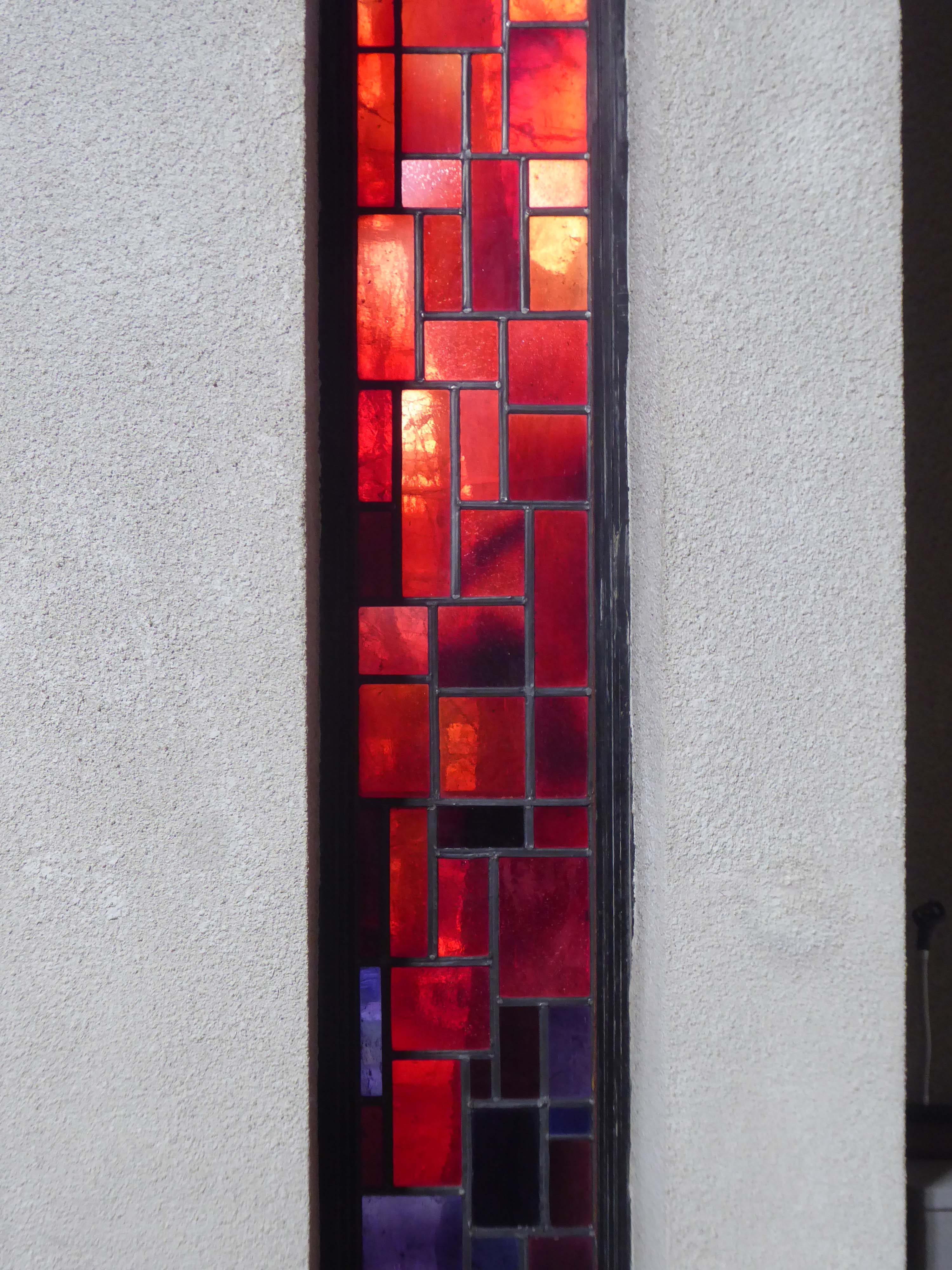
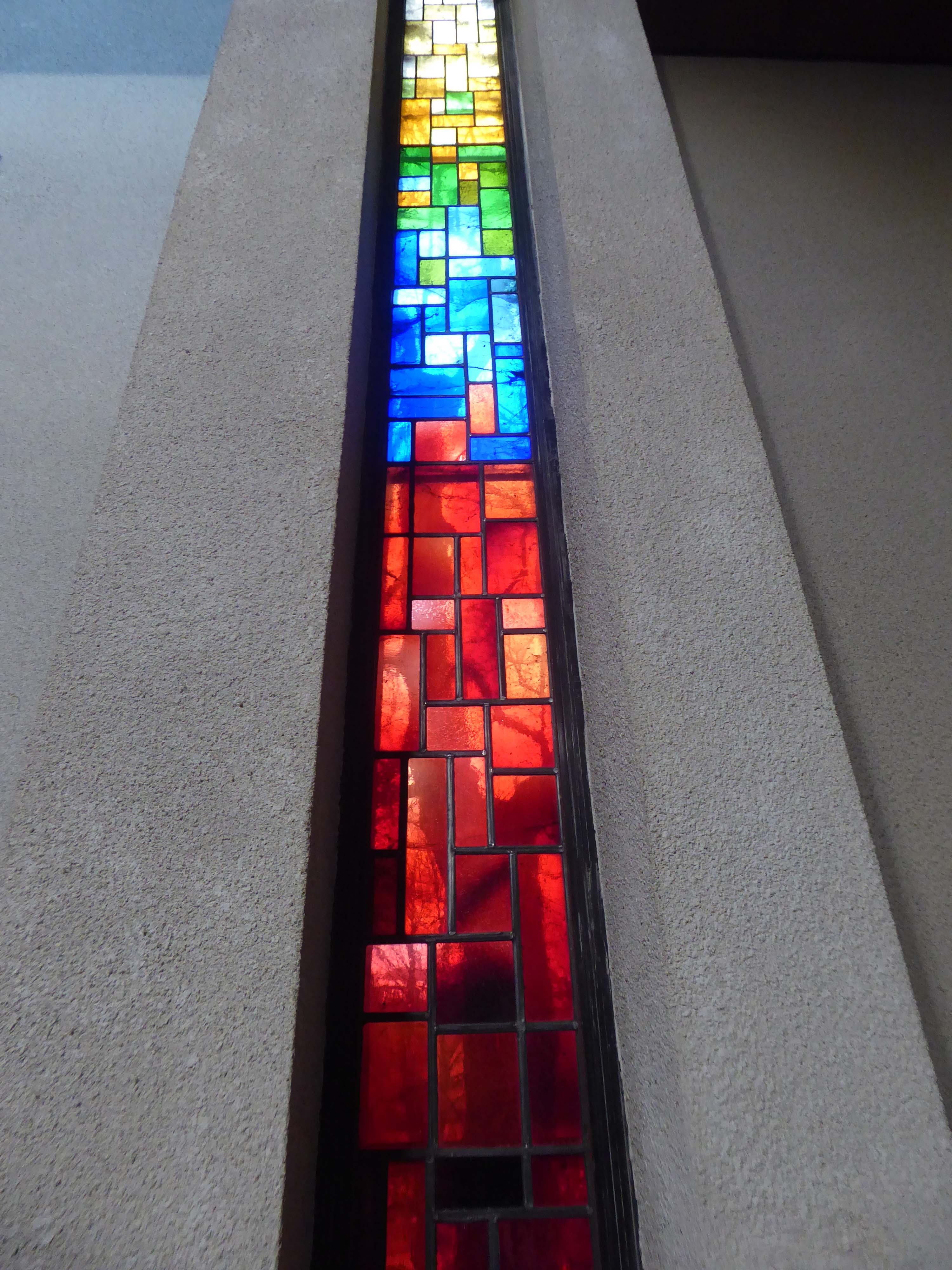
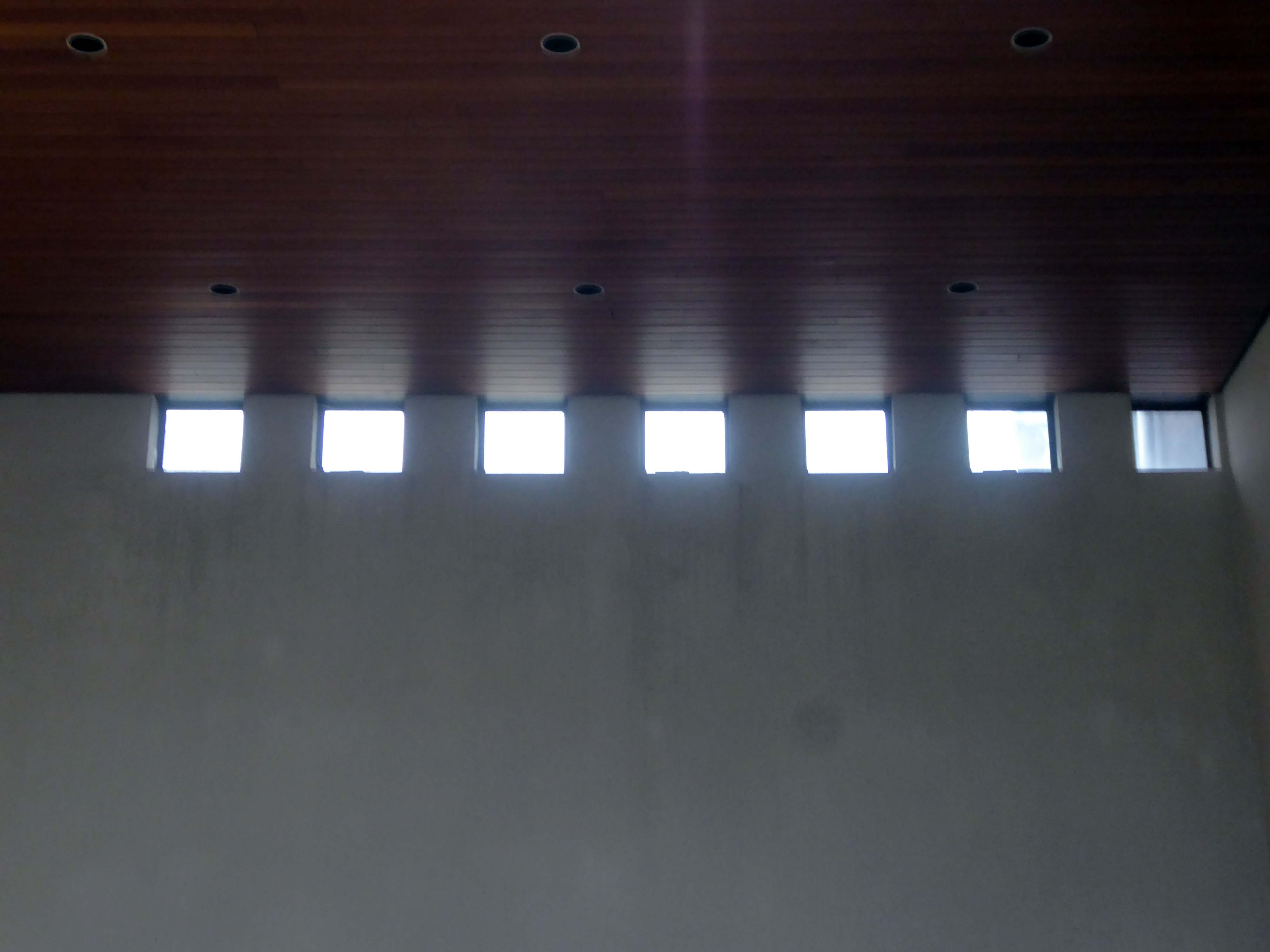
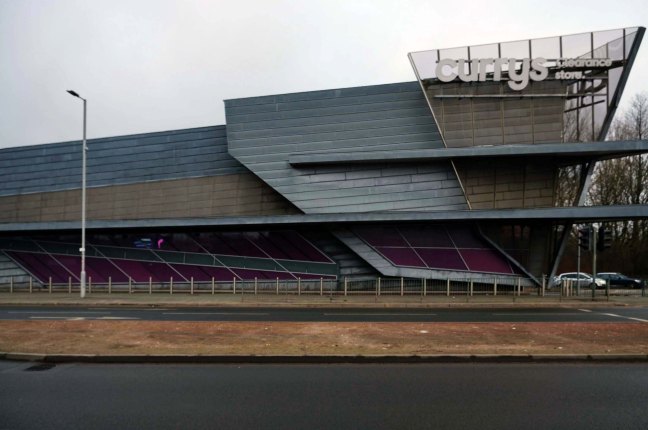
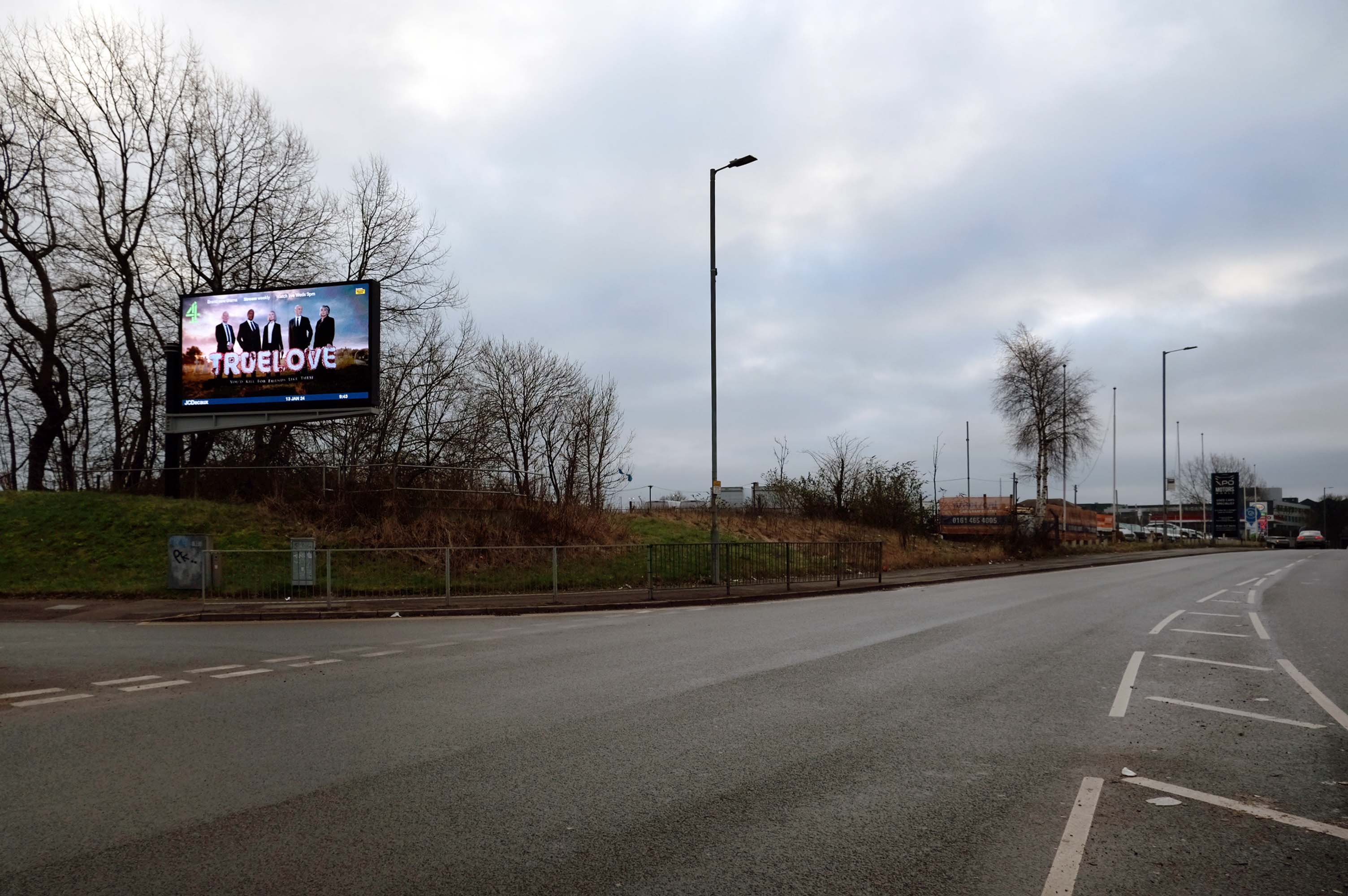
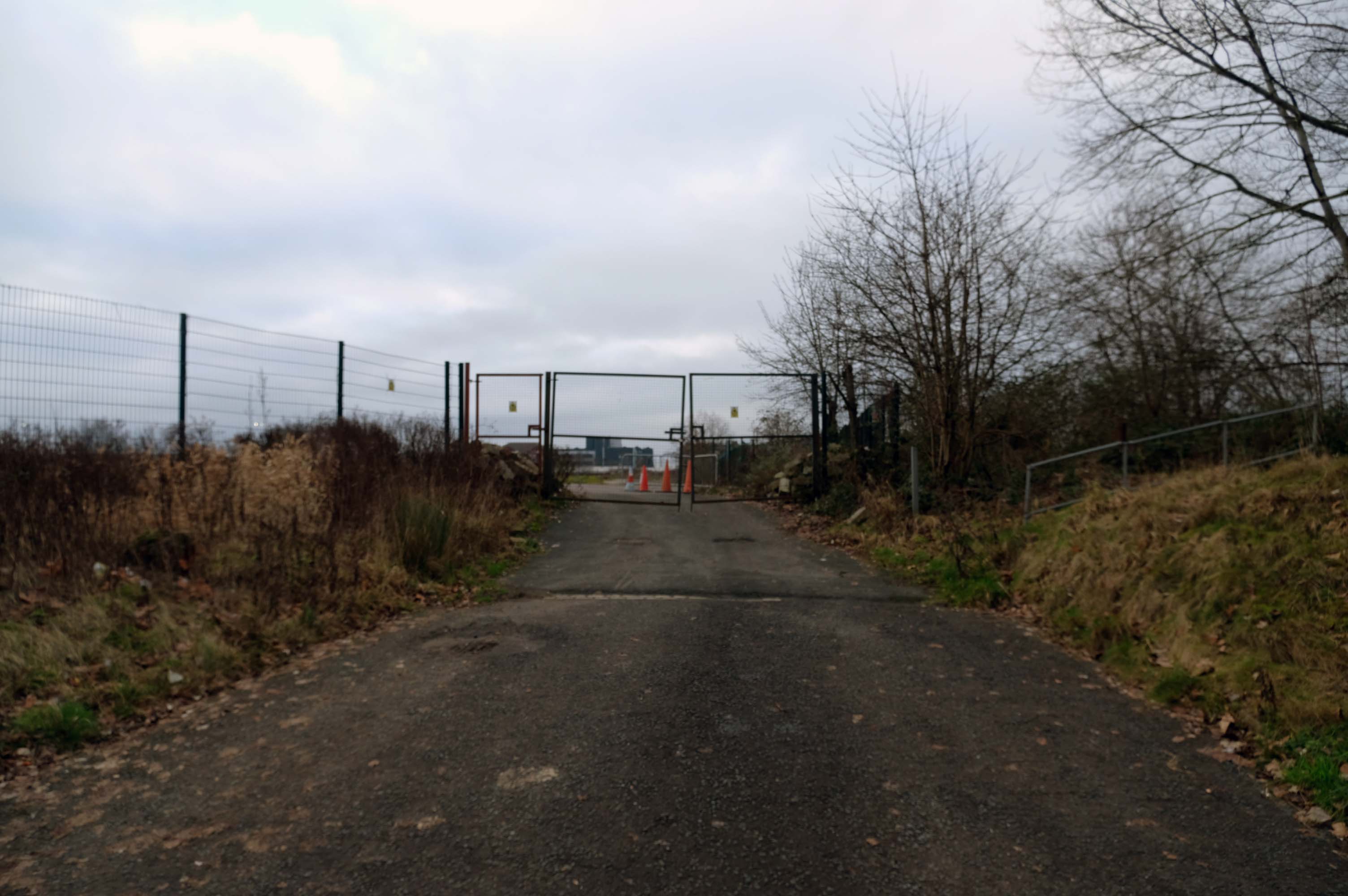
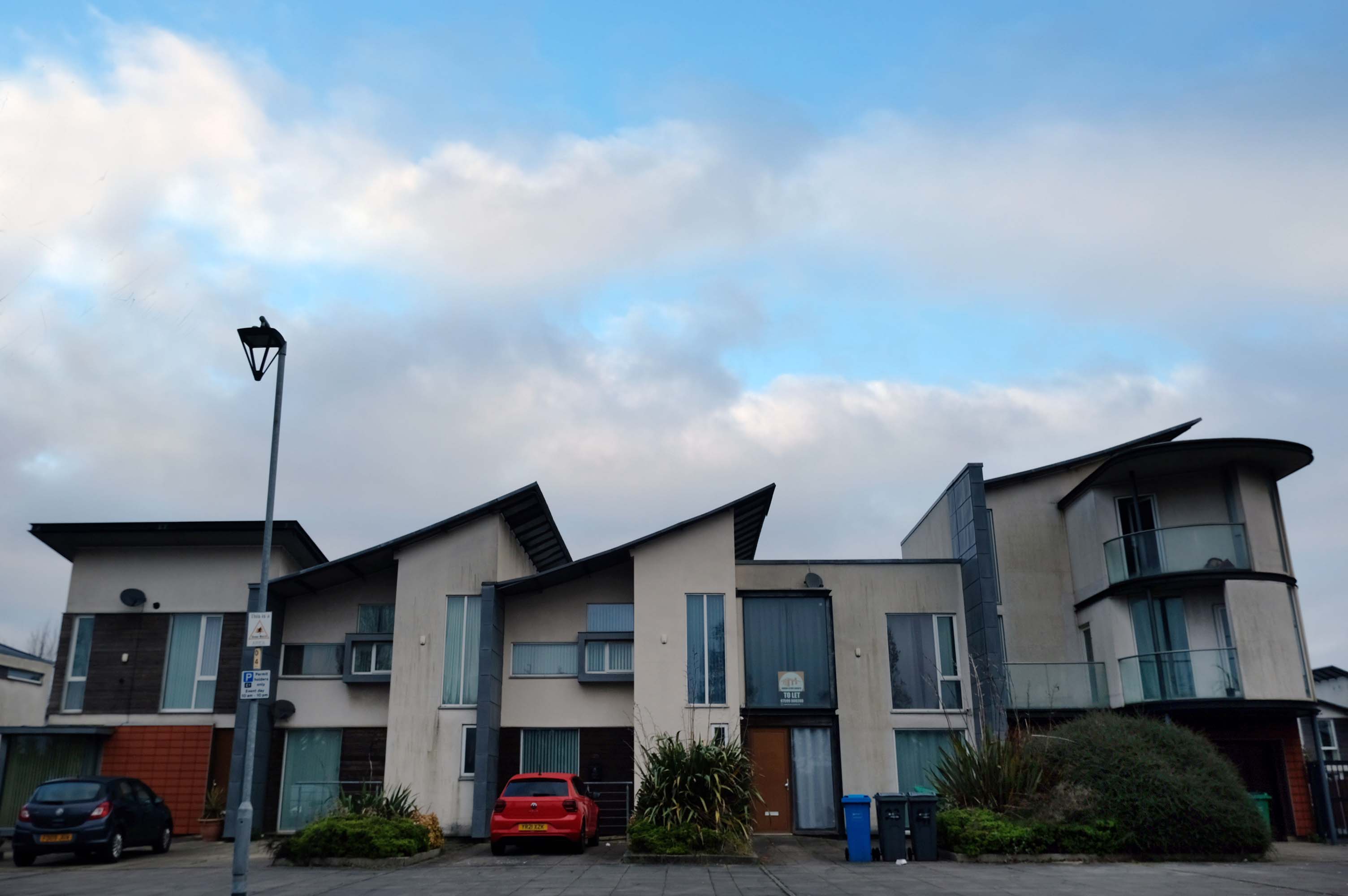
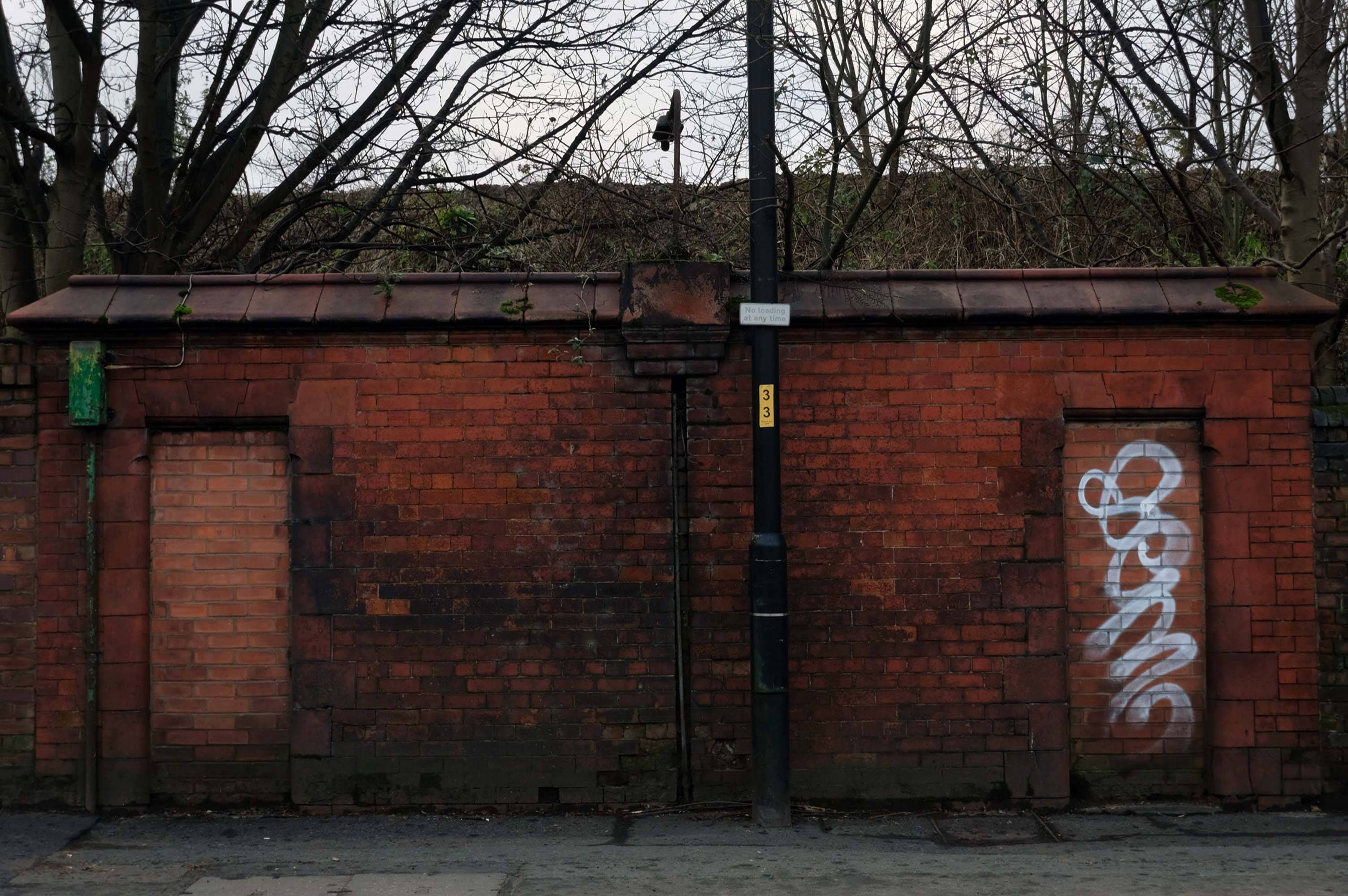
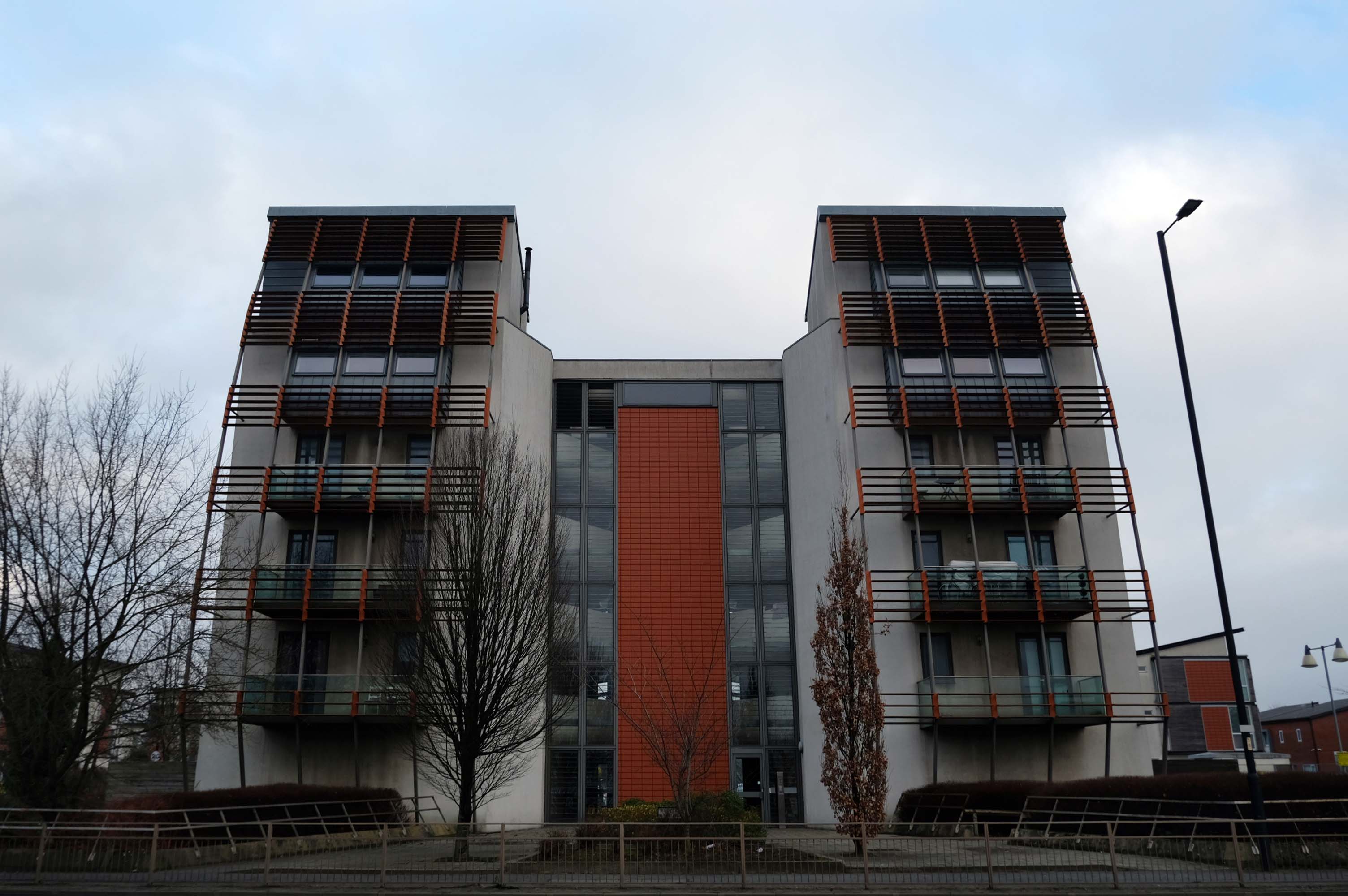
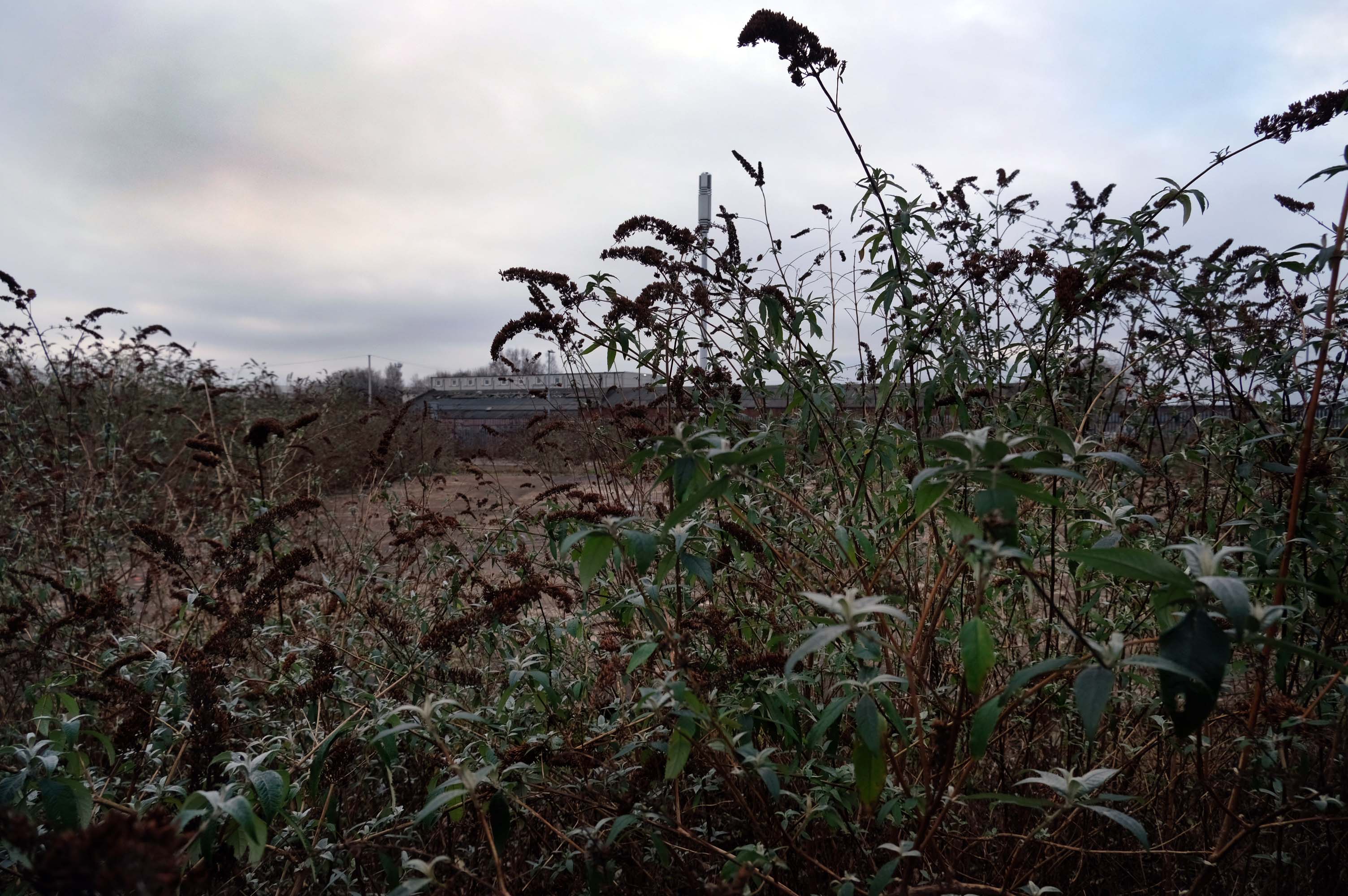
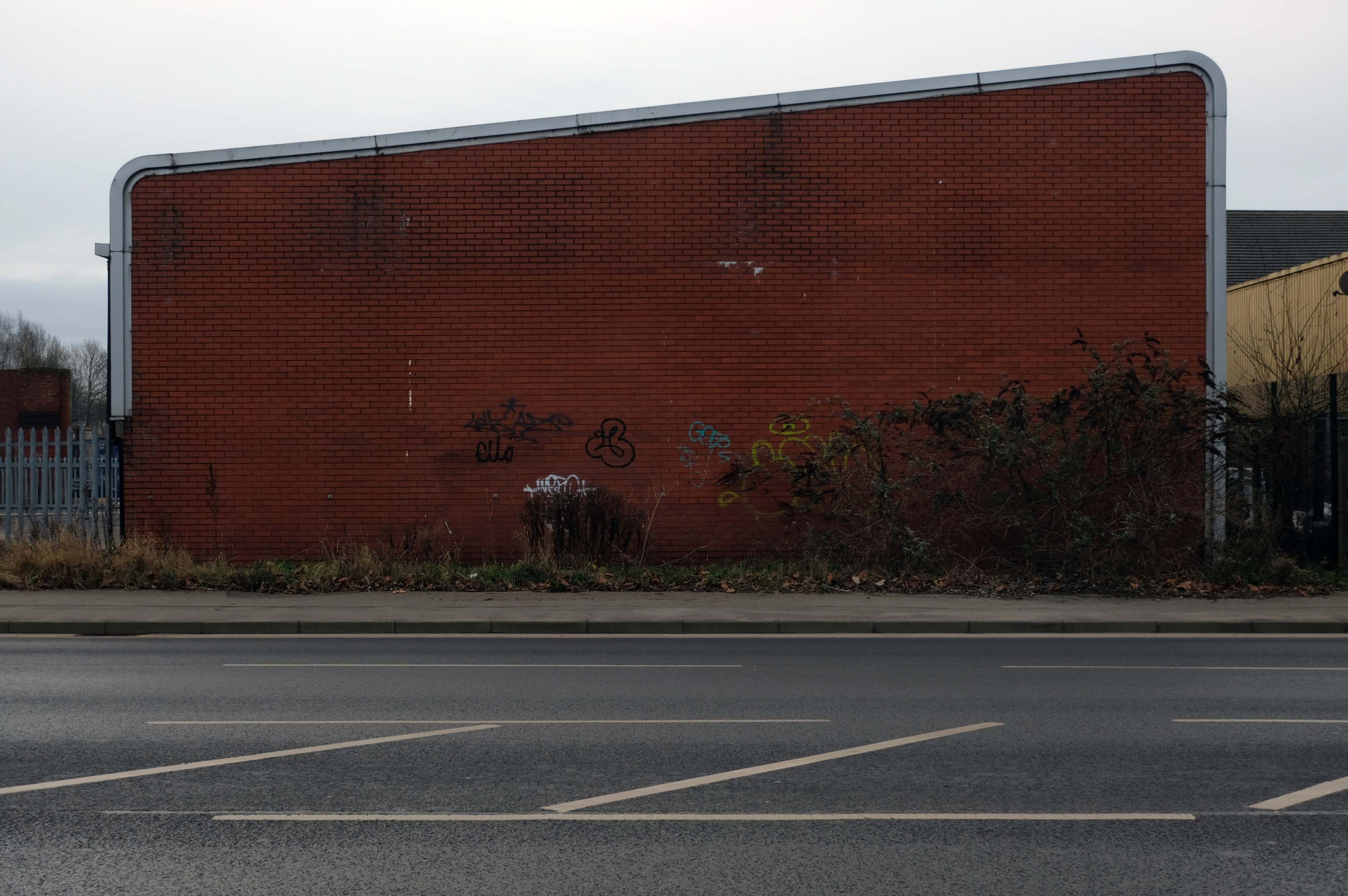
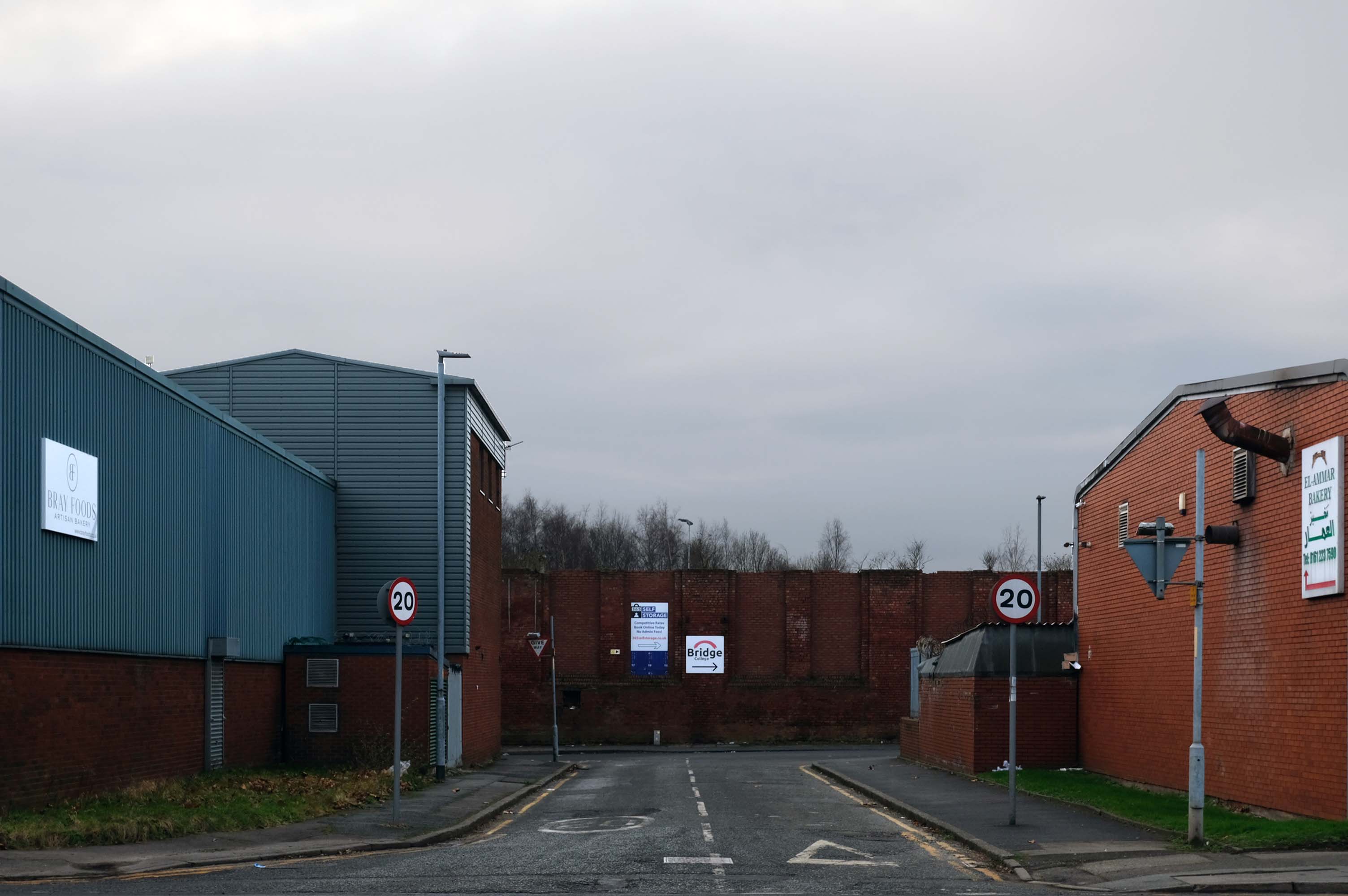
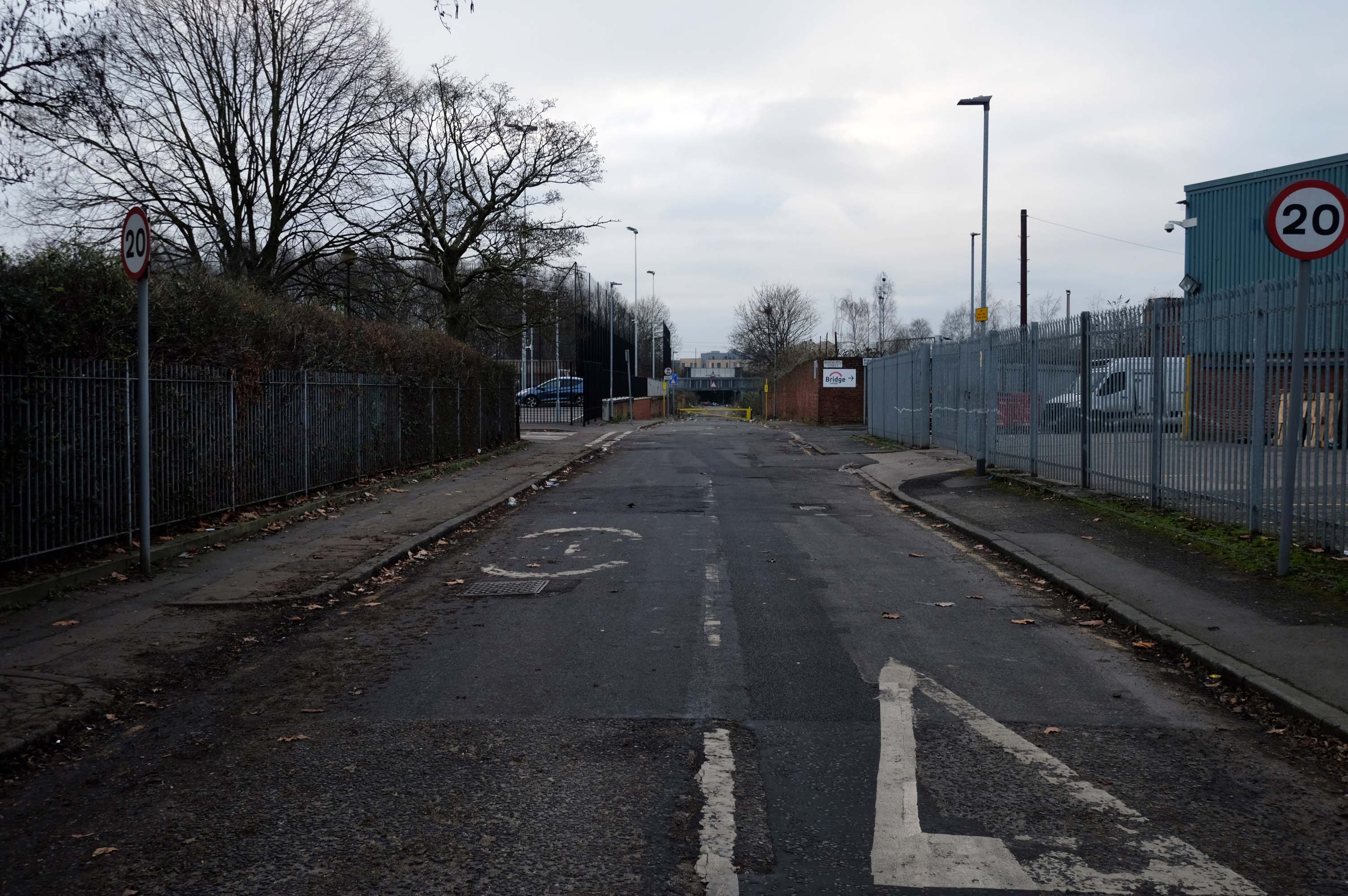
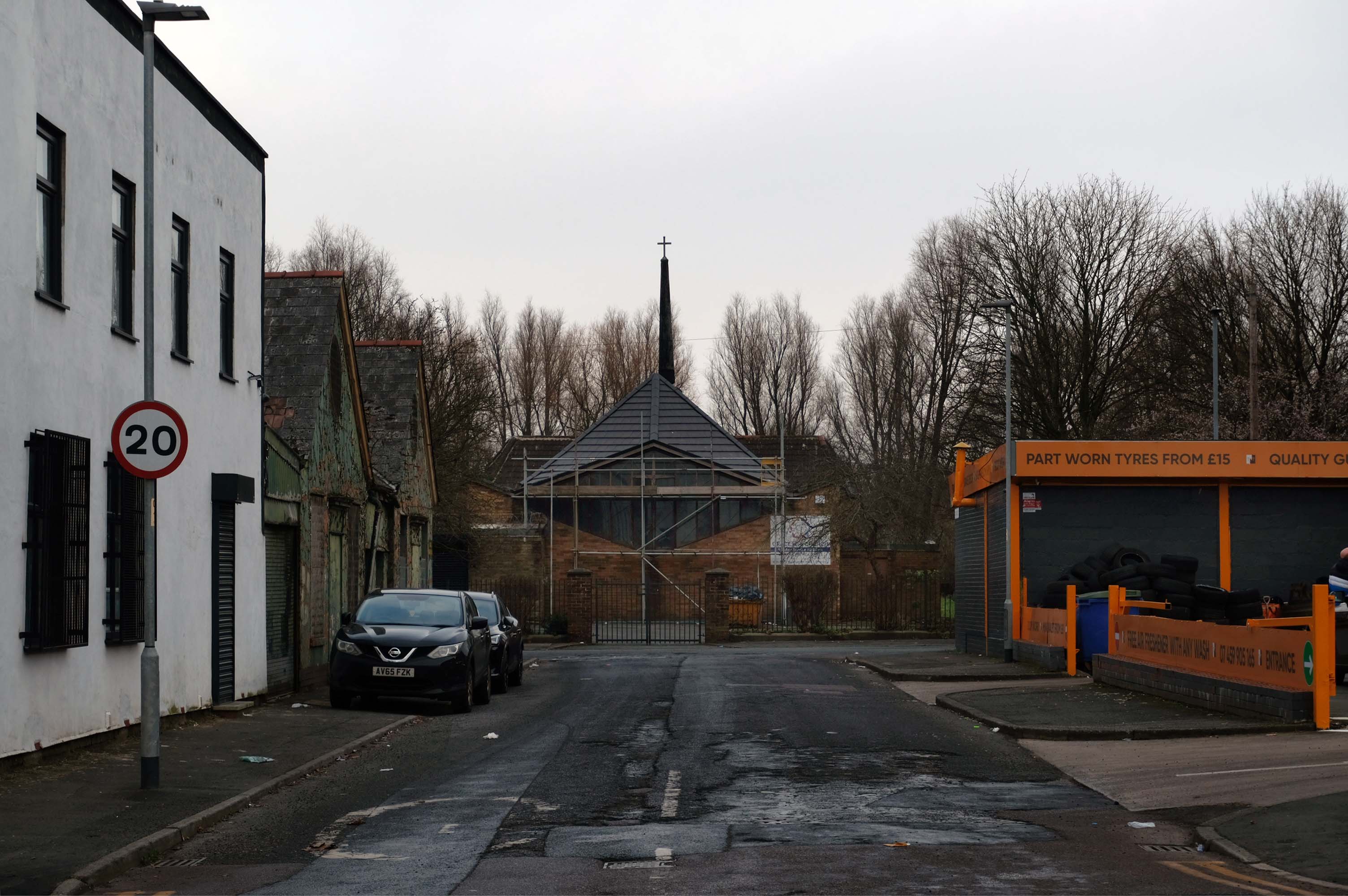
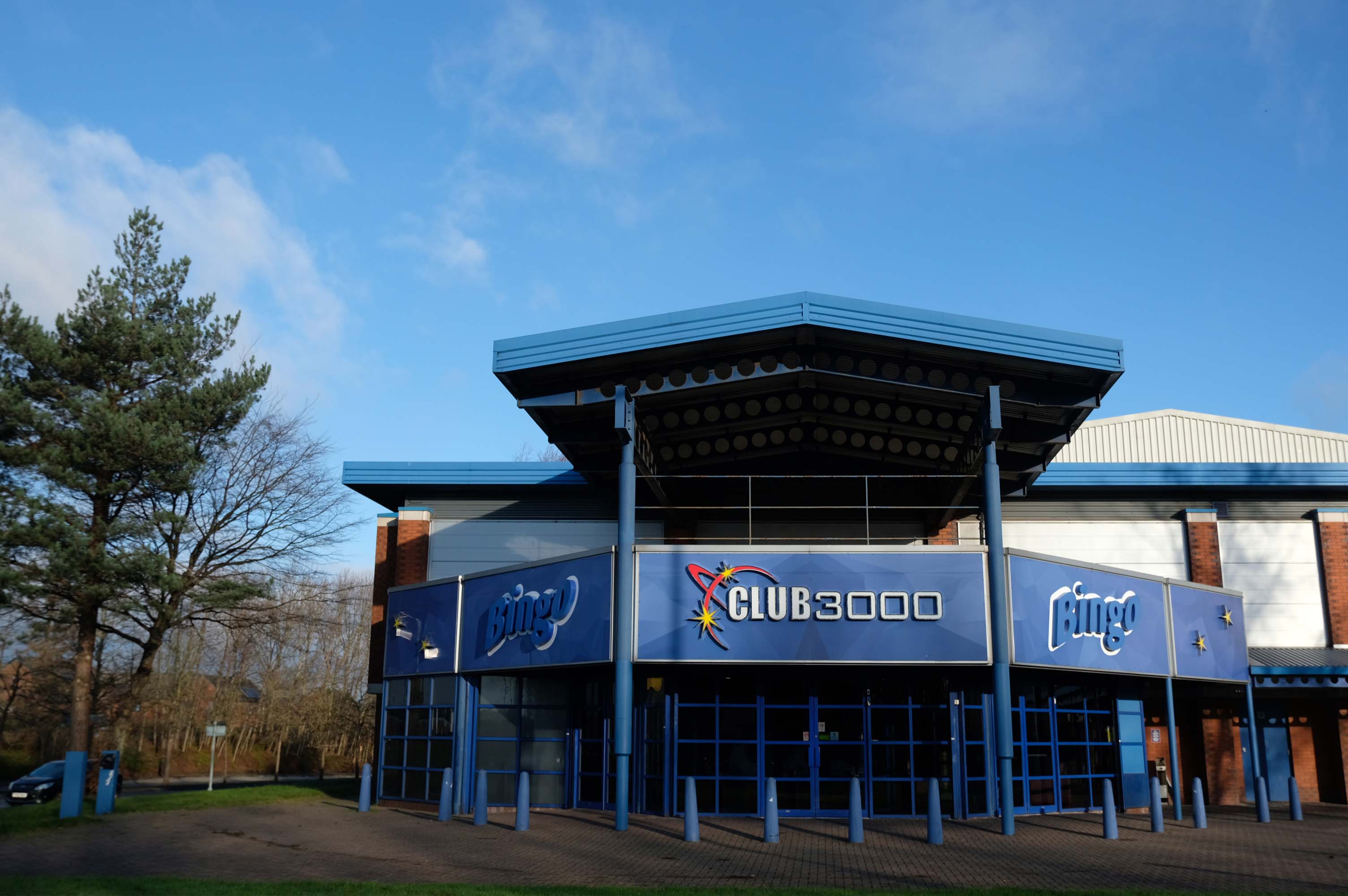
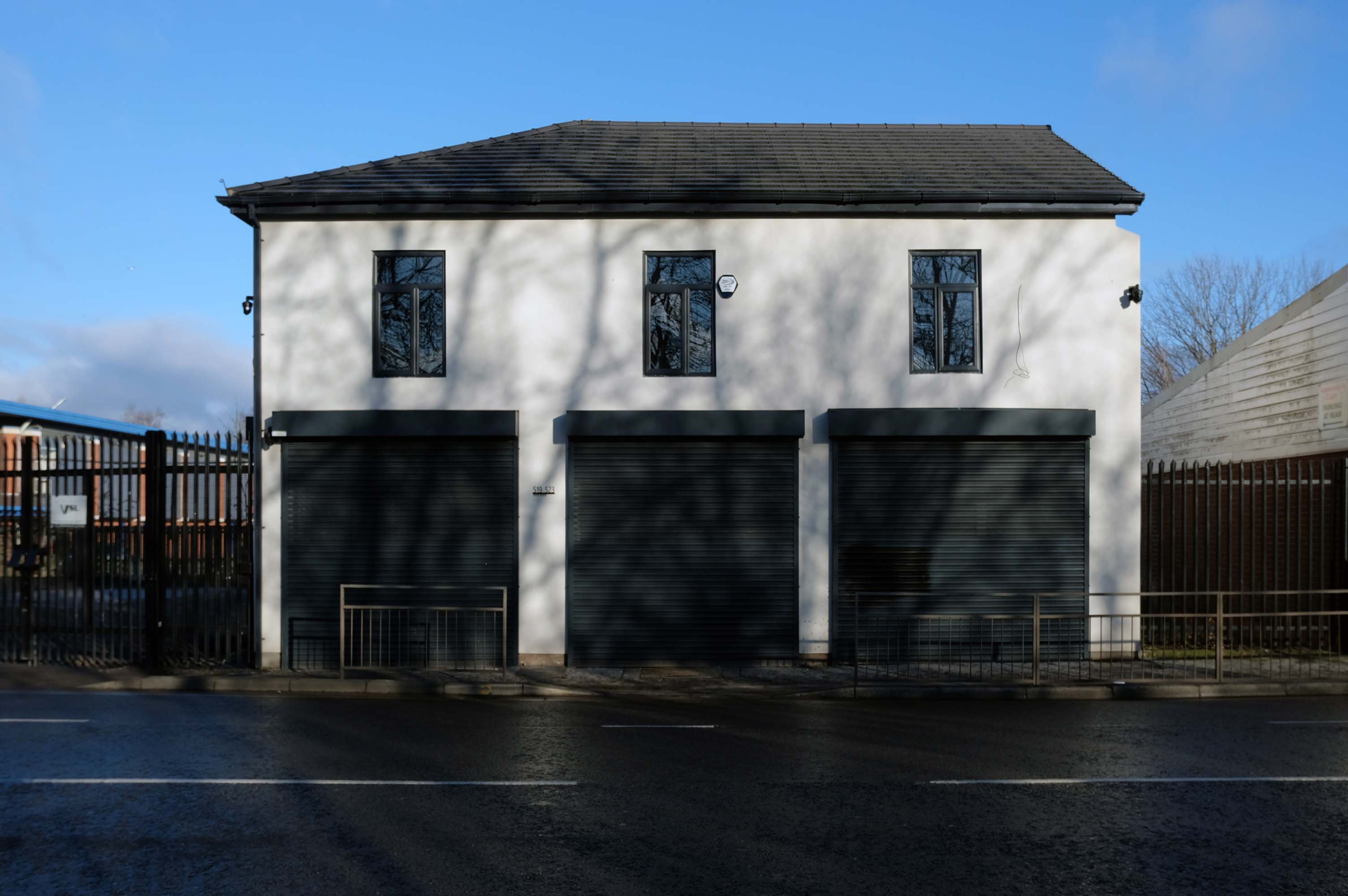
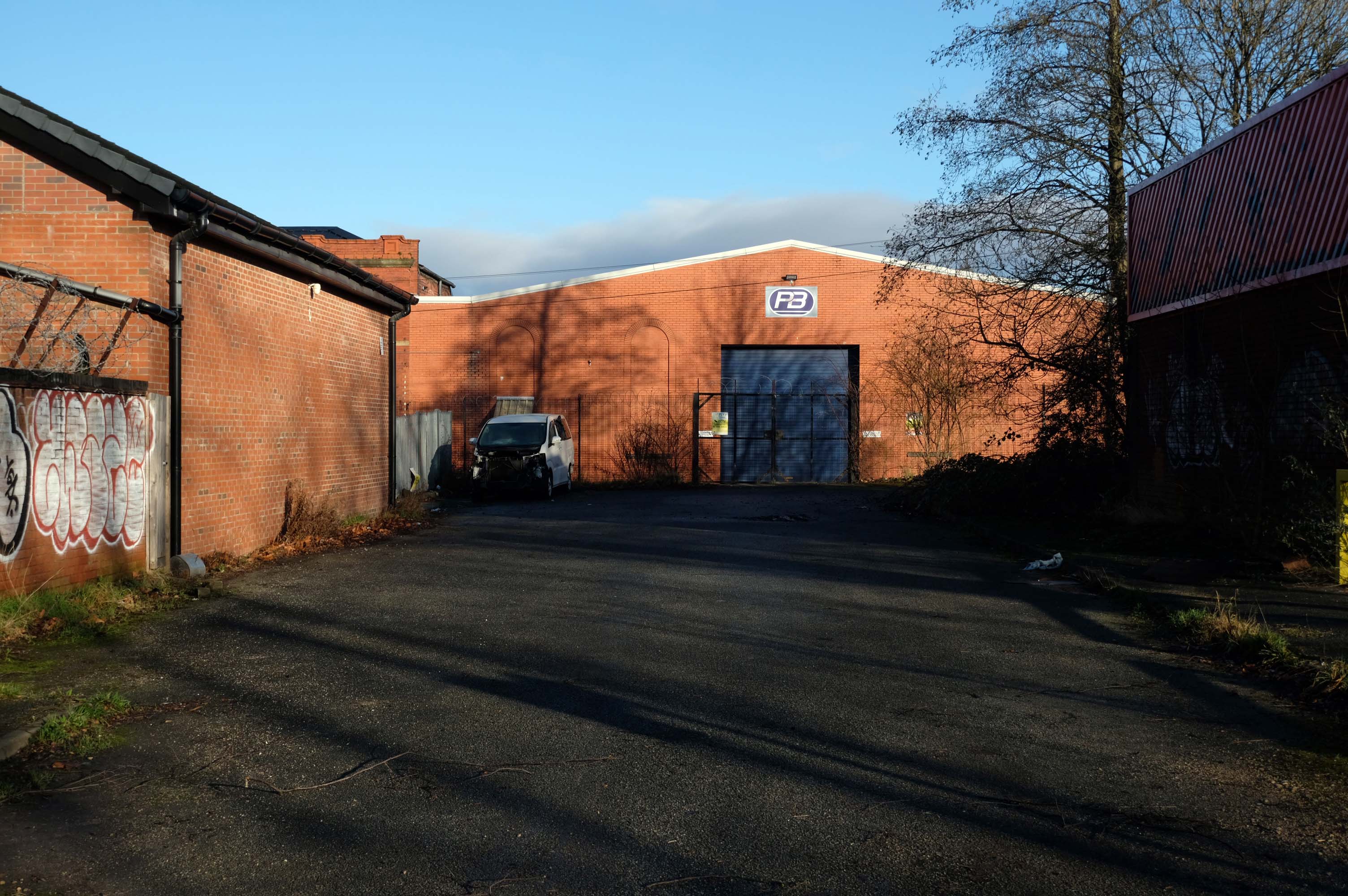
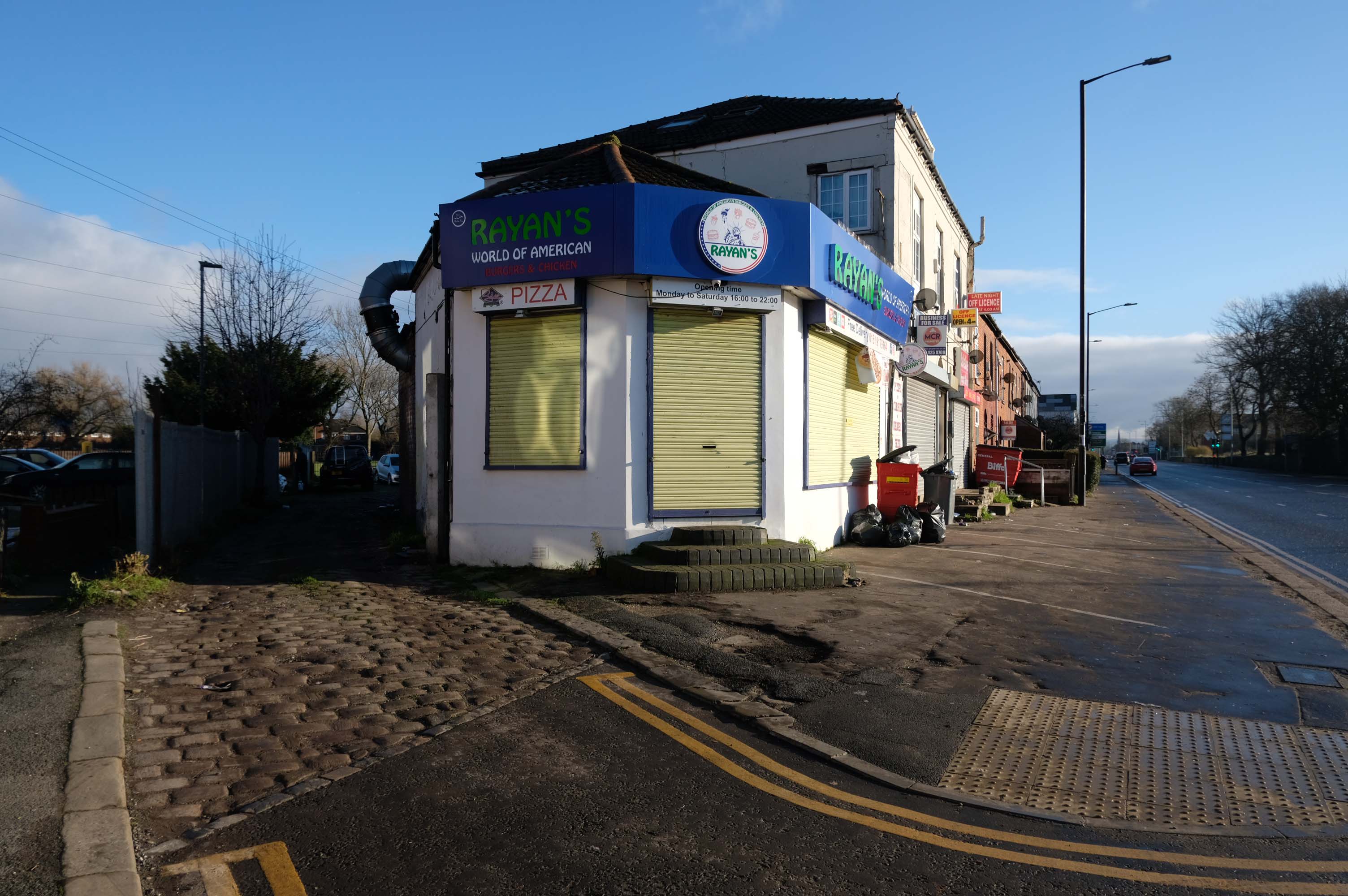
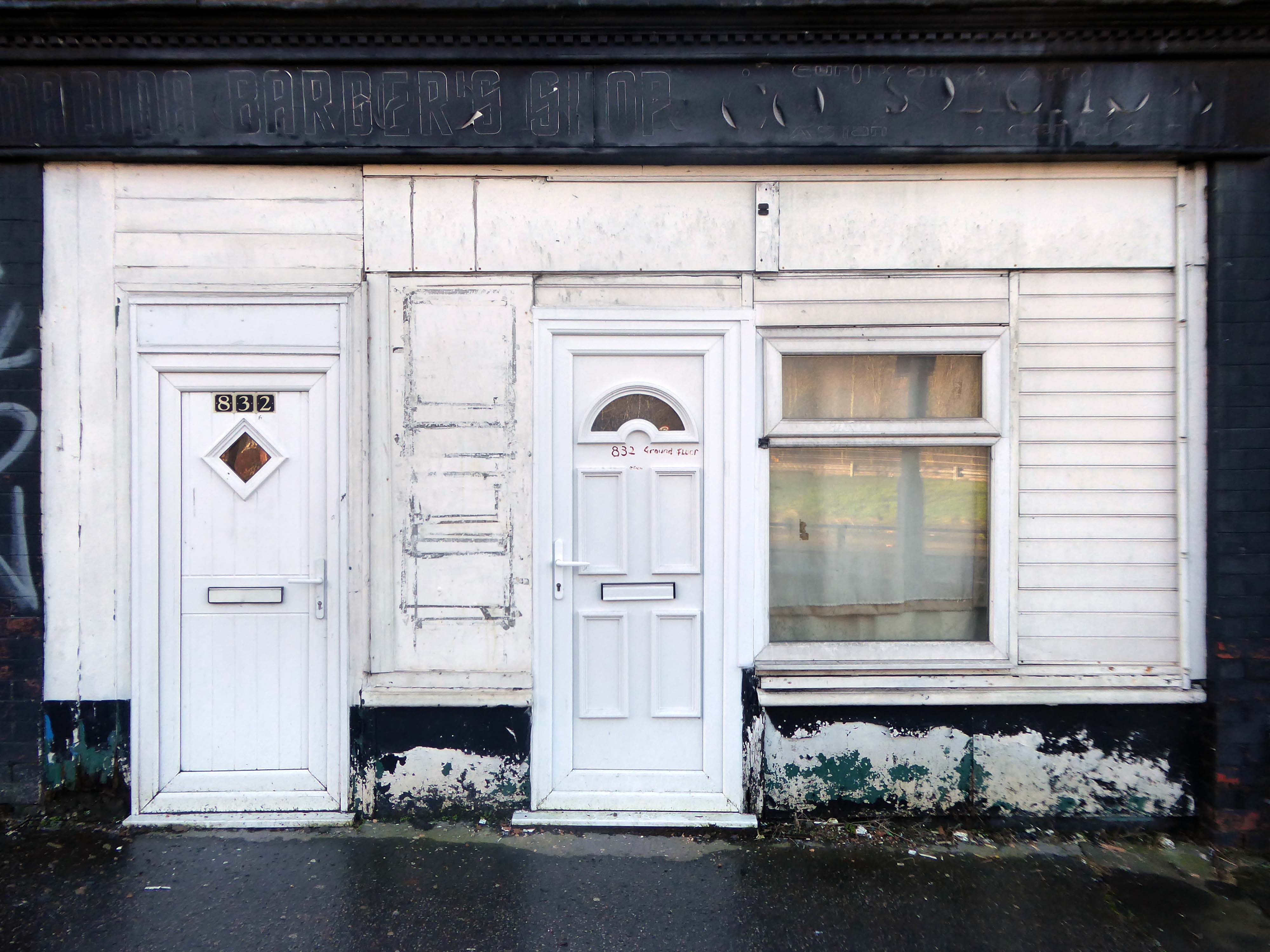
British Telecom Telephone Exchange Abbey Road Barrow in Furness LA14 5QZ
I took a train in the rain to Barrow in Furness.
I alighted, bathed in bright sunlight.
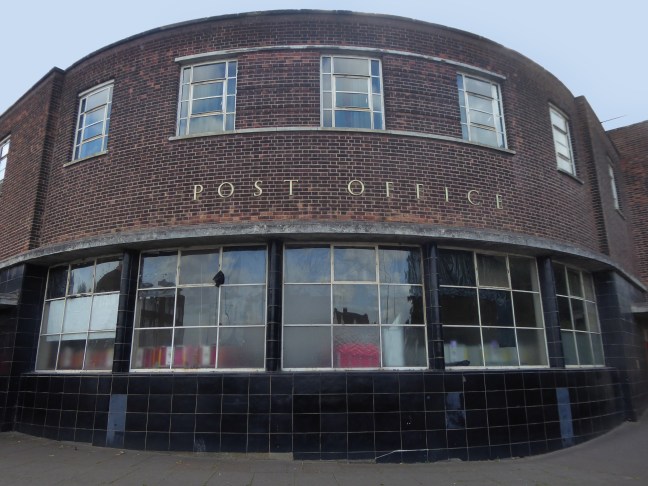
I espied a telephone Exchange.
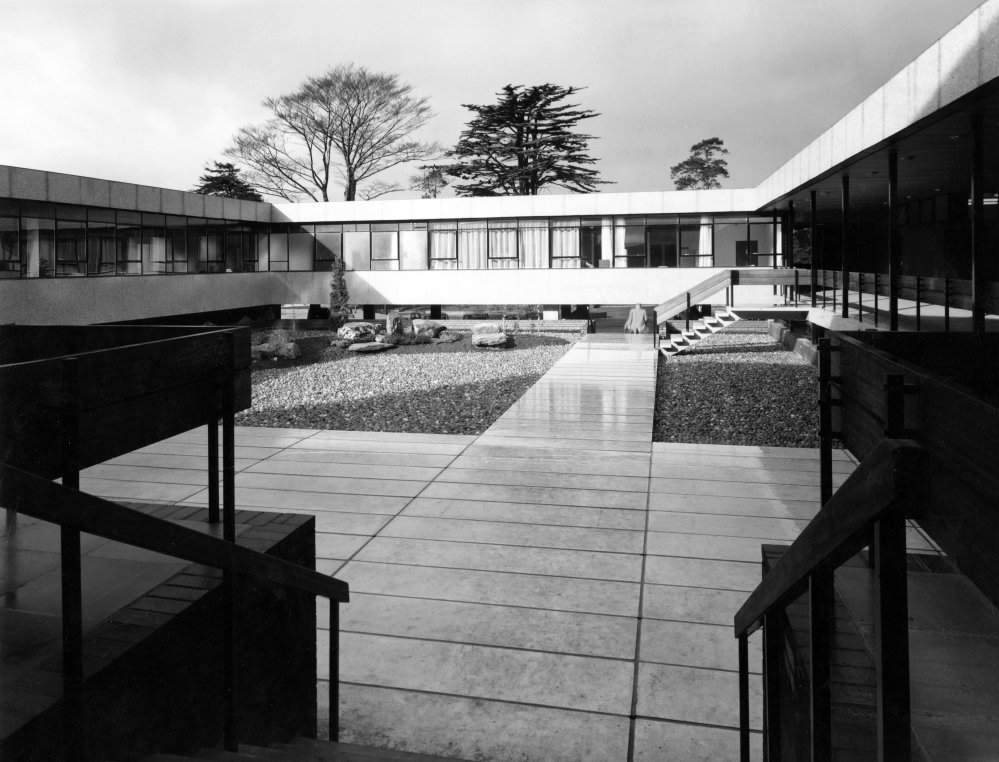
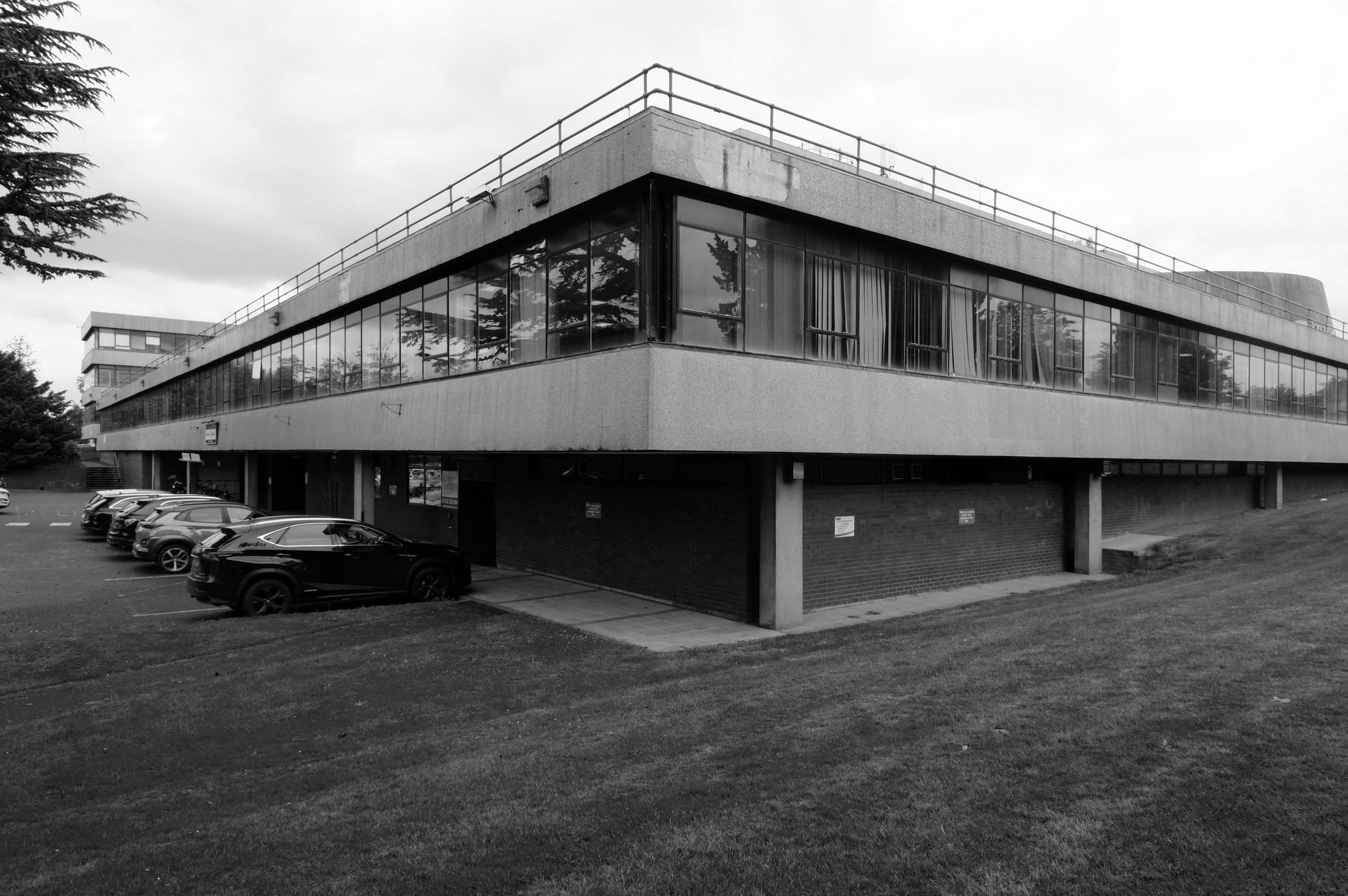
The original building was designed by MOPBW senior architect M Williams and job architect P Chilton around 1966-67. Senior architect RN Dixon – of modernist talk fame, and job architect P Joyce were involved with some detailing around 1968, before Dixon designed an extension in 1972.
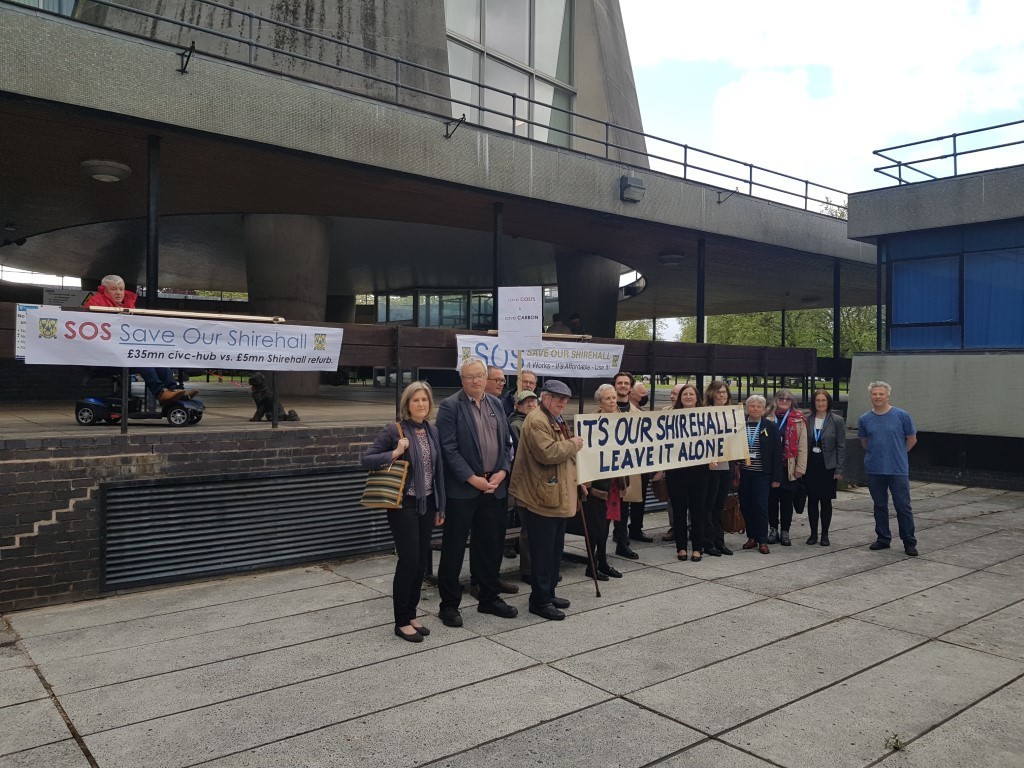
They have campaigned tirelessly to save the building which is under threat, the local authority wishing to demolish the site.
There has long been a split in Shropshire Council between councillors who want to keep Shirehall and this that want to demolish it and move to the town centre. Last December, the council agreed to dispose of the building in the next few years after work on Civic Hub in the town centre is completed. That Civic Hub is still in the ideas stage and there is no clear idea of where the money will come fund it. Unless the council sells the 3.5 hectare Shirehall site for housing boosting its capital reserves which were depleted by the £51m purchase of the shopping centres in Shrewsbury town centre.
The budget plans agreed two weeks ago days propose that Shirehall is sold before April 2025 to make a saving of £325,000 in 2024/25.
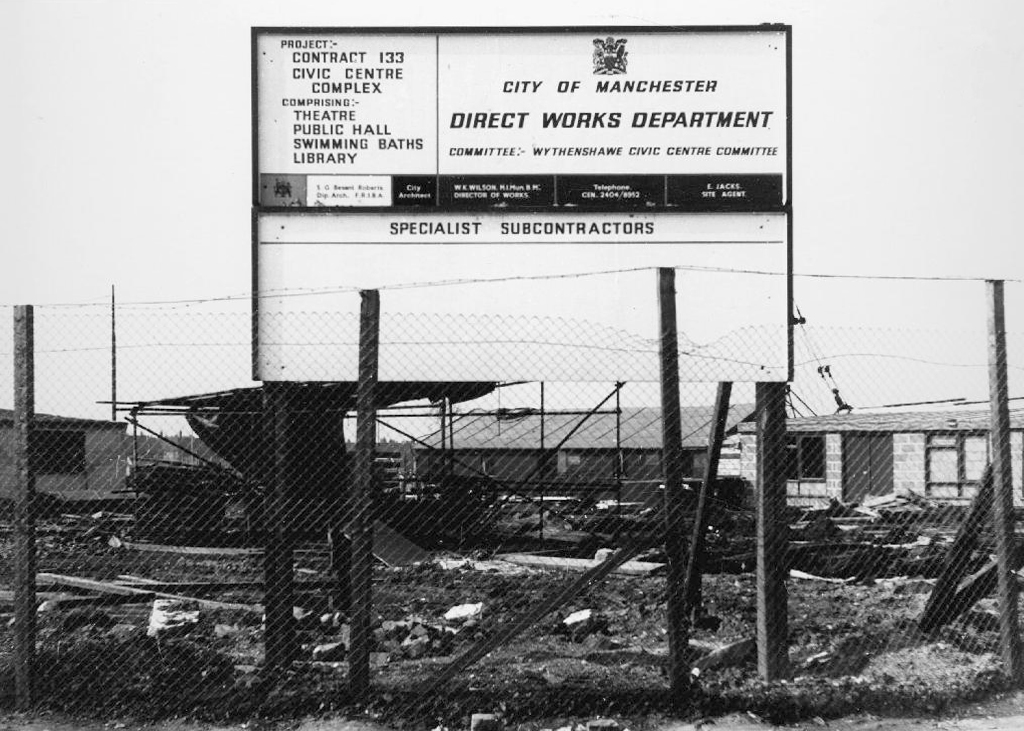
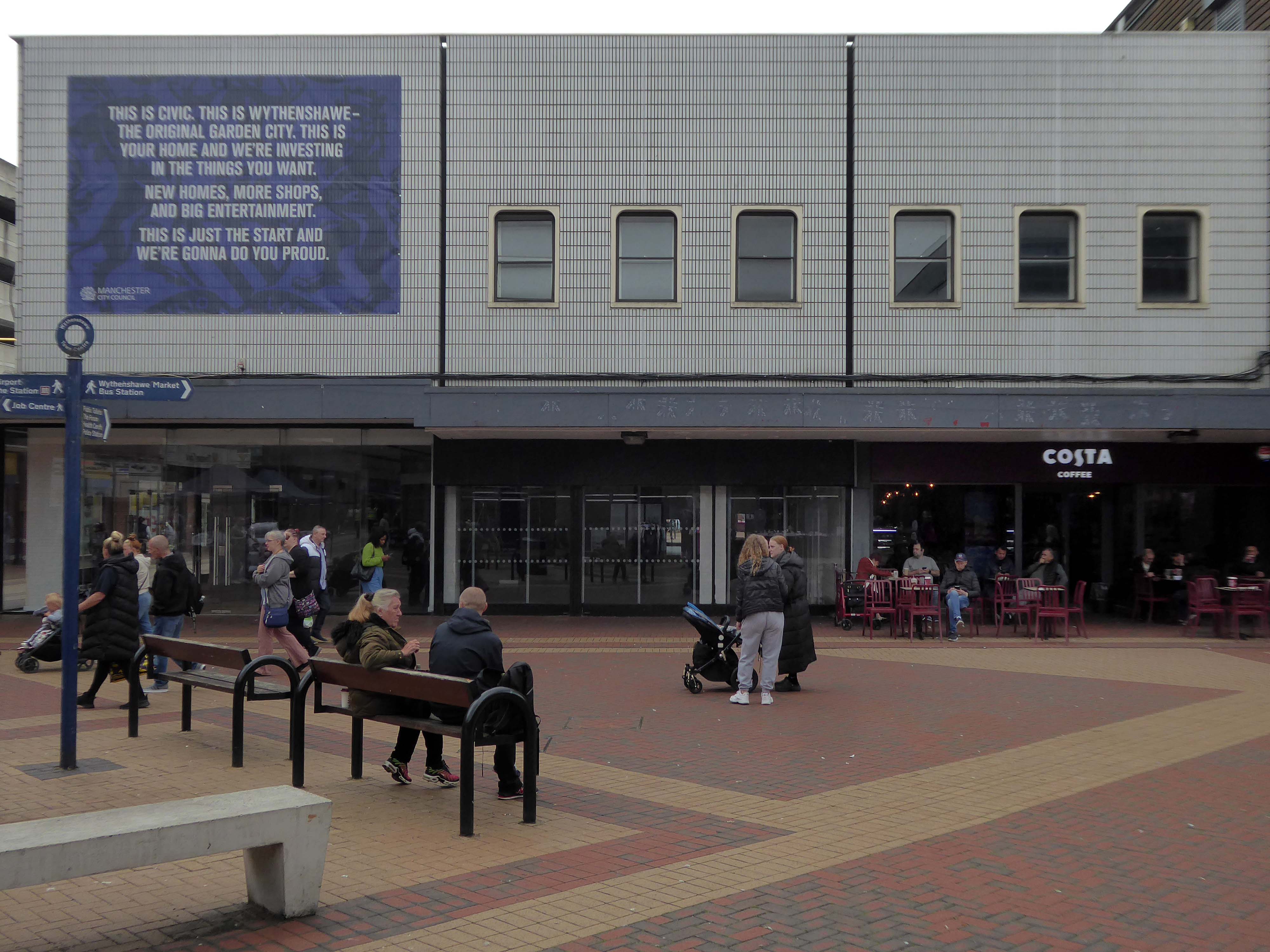
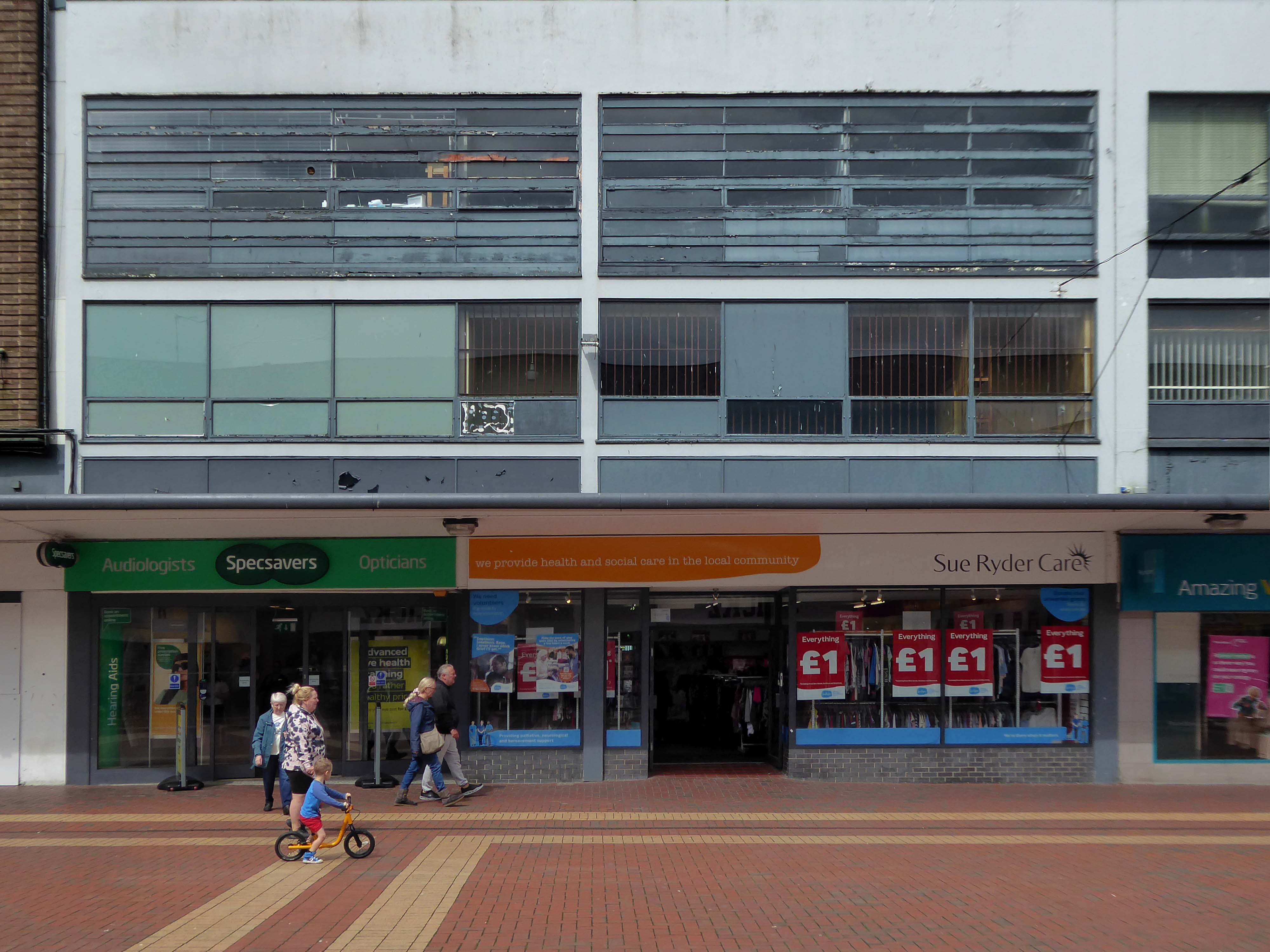
Work began in the interwar years, and continued following the hiatus of 1939-45. The shopping centre named the Civic Centre was open in 1963, the actual Civic Centre containing a swimming pool, theatre, public hall and library in 1971.
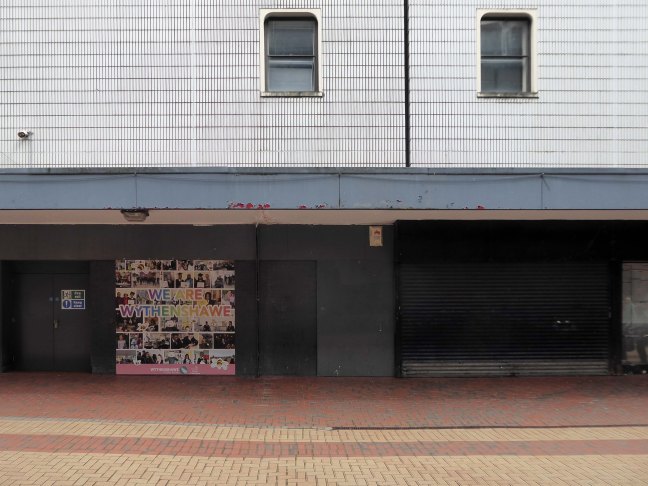
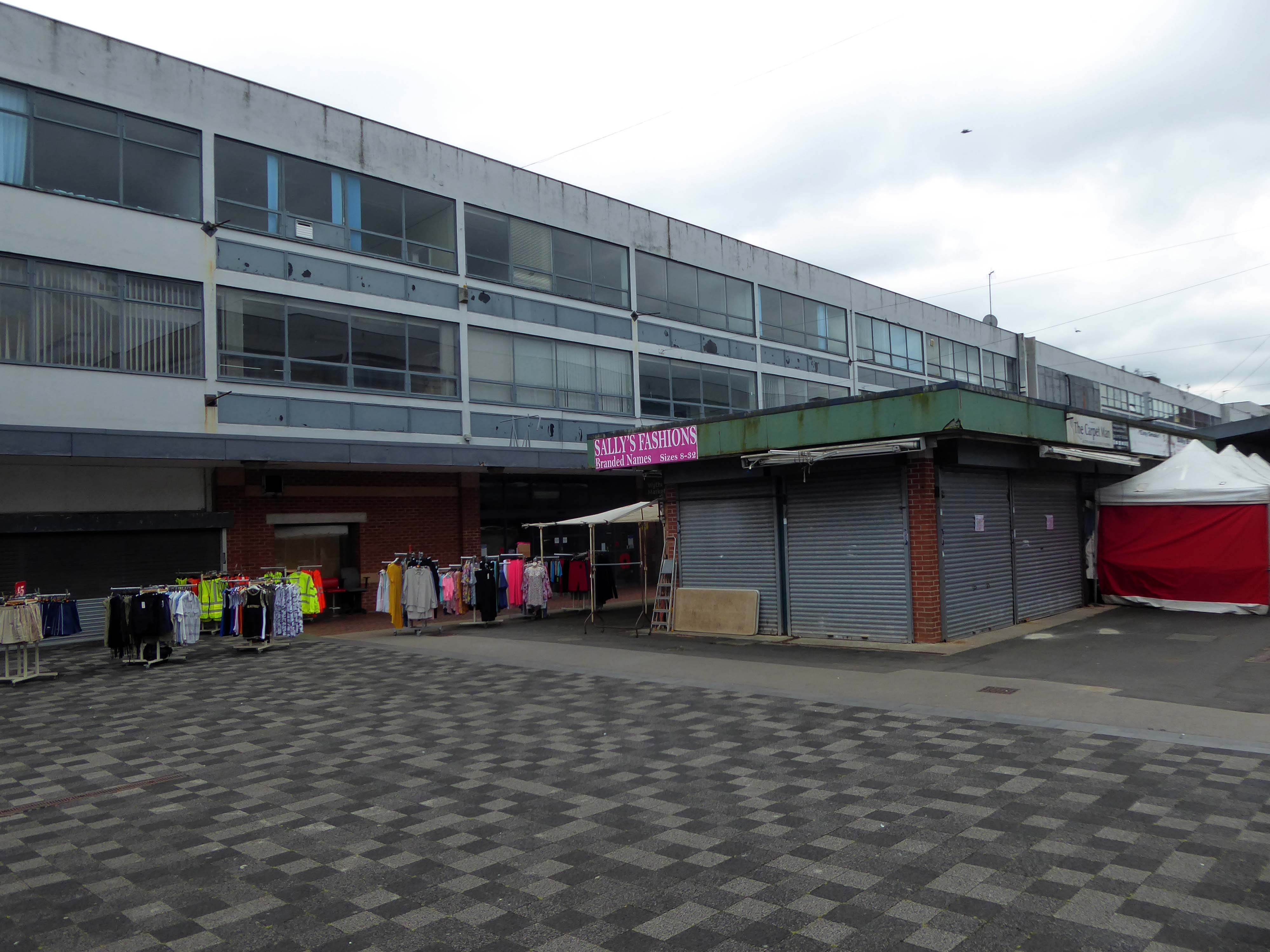
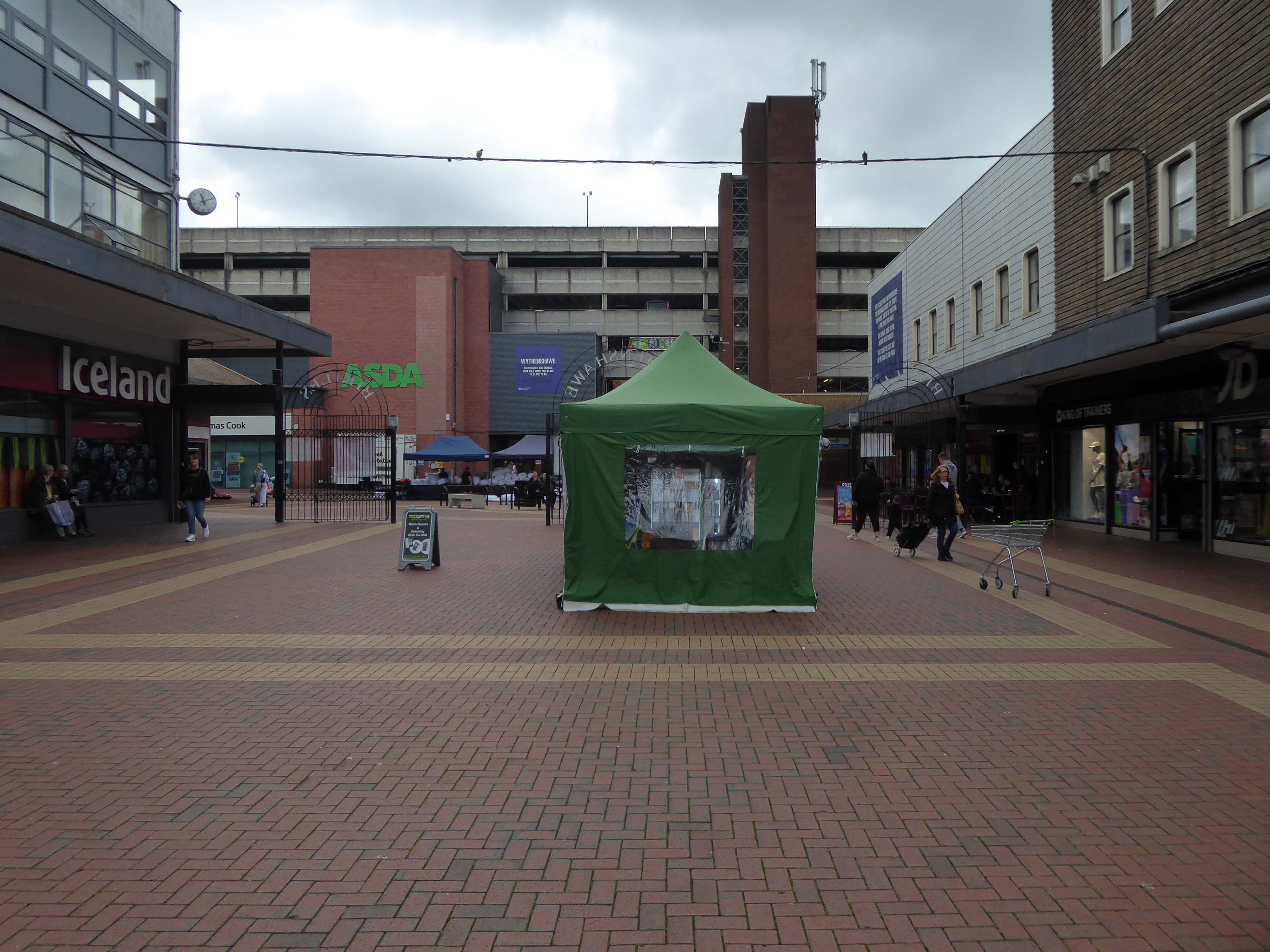
Here I am again four years later, taking a look at how it looks today.
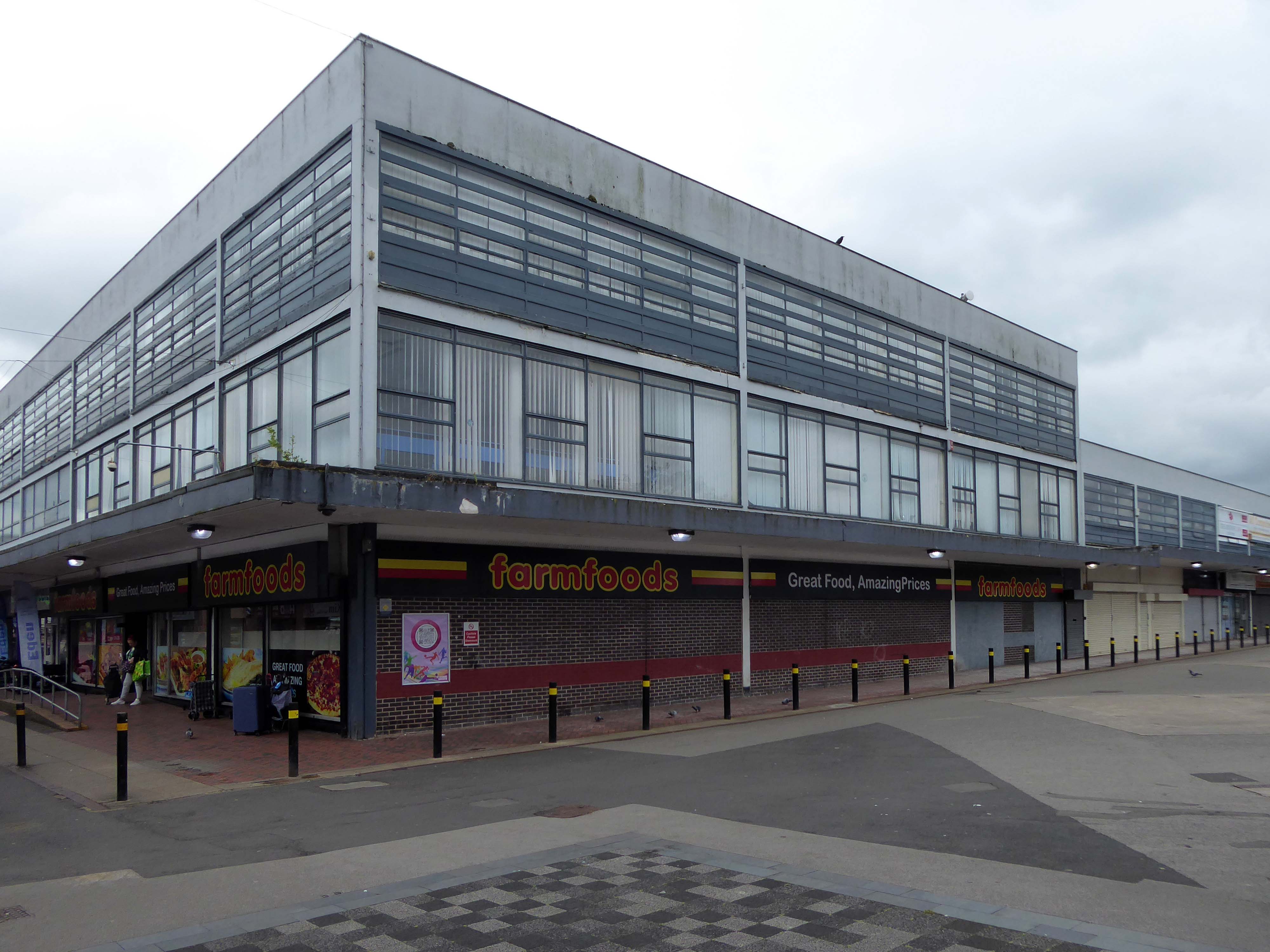
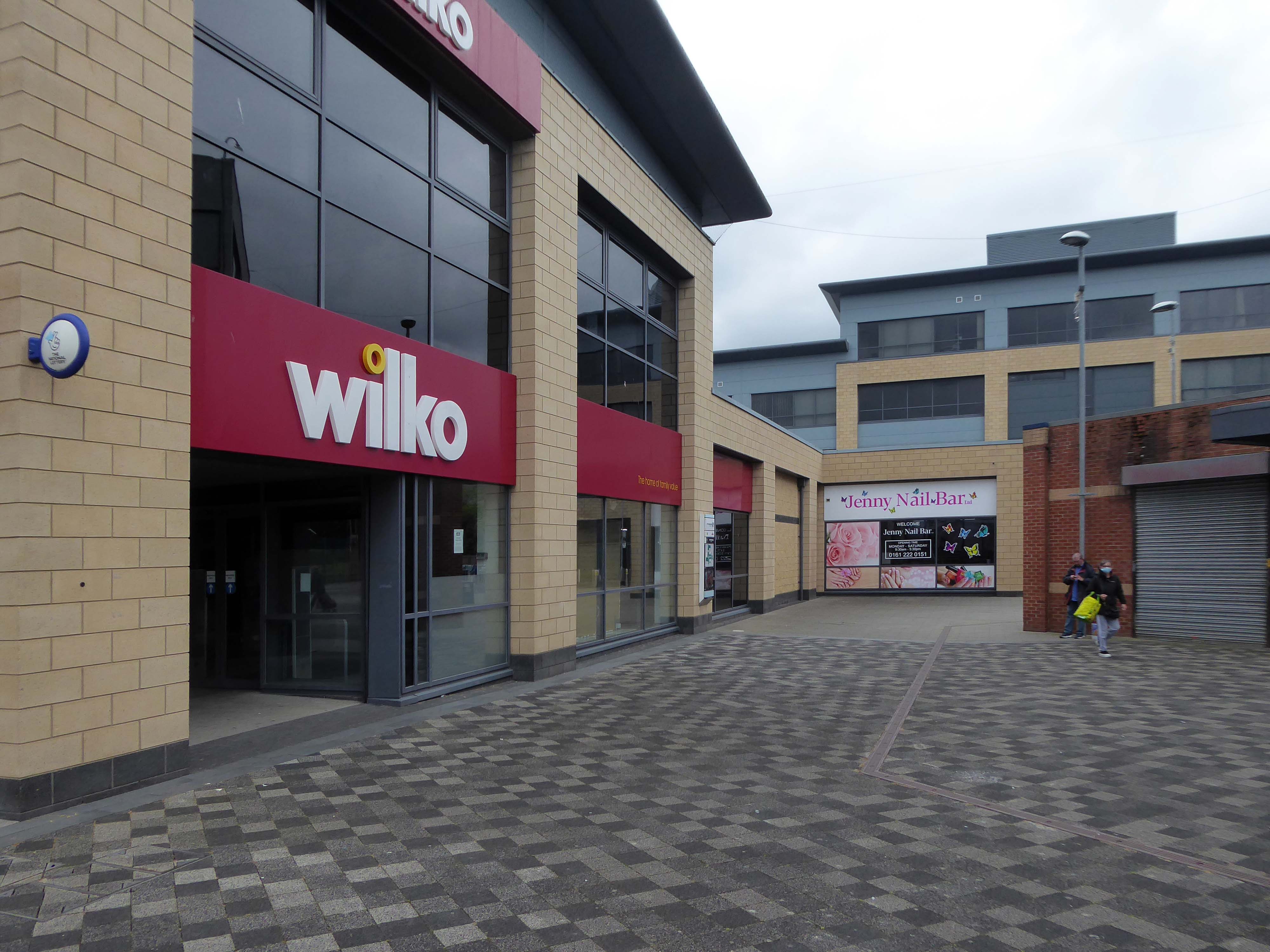
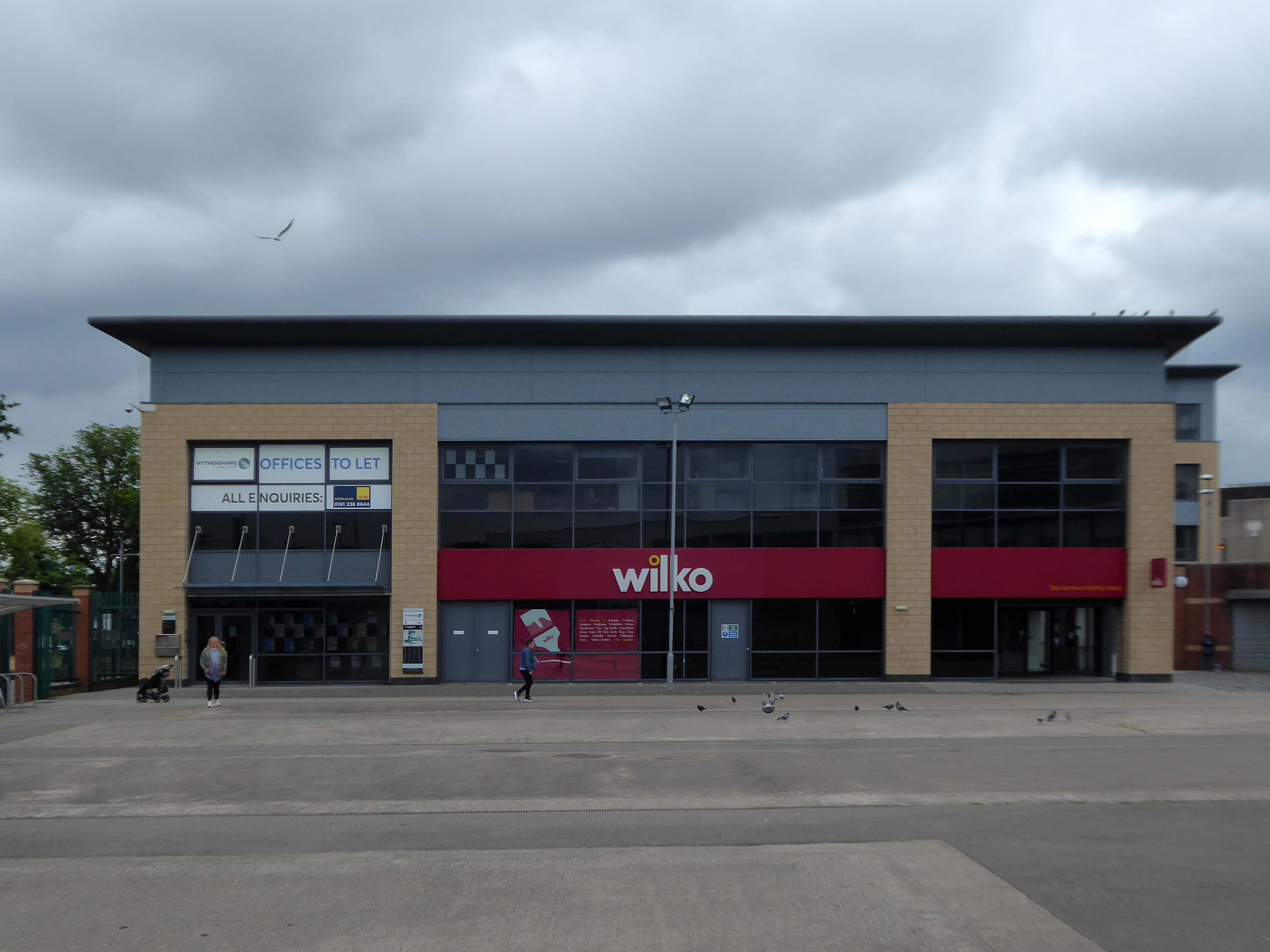
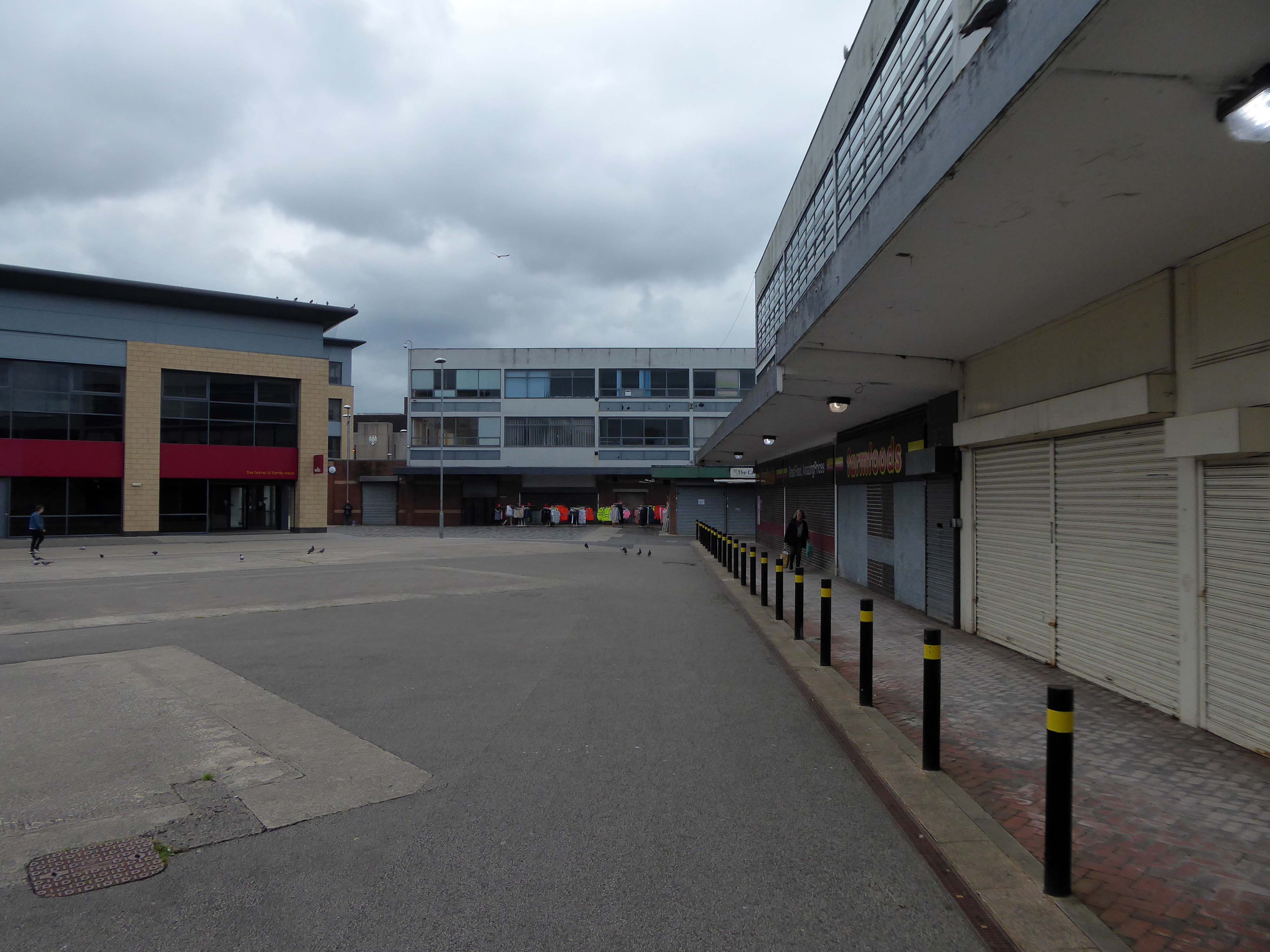
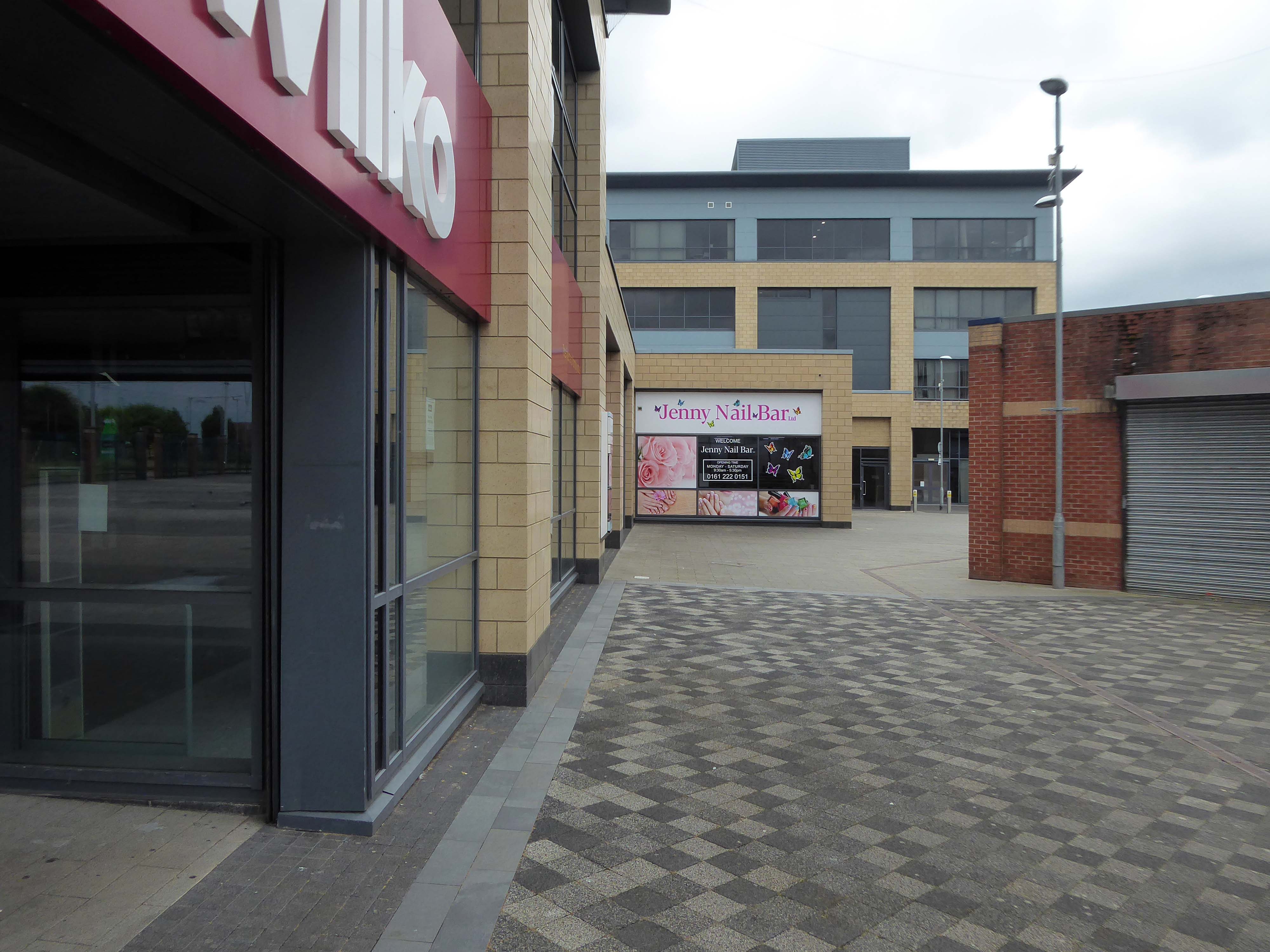
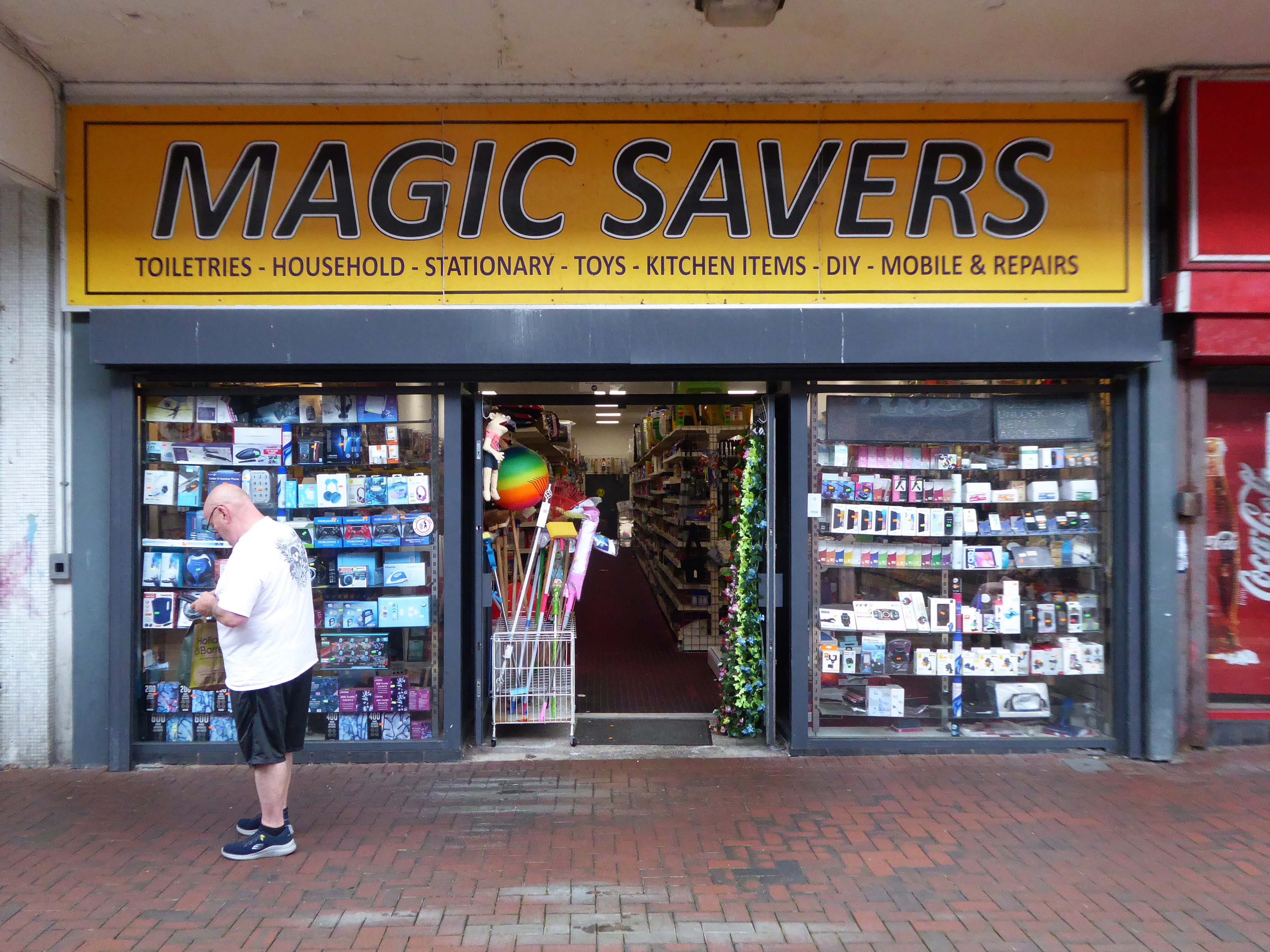
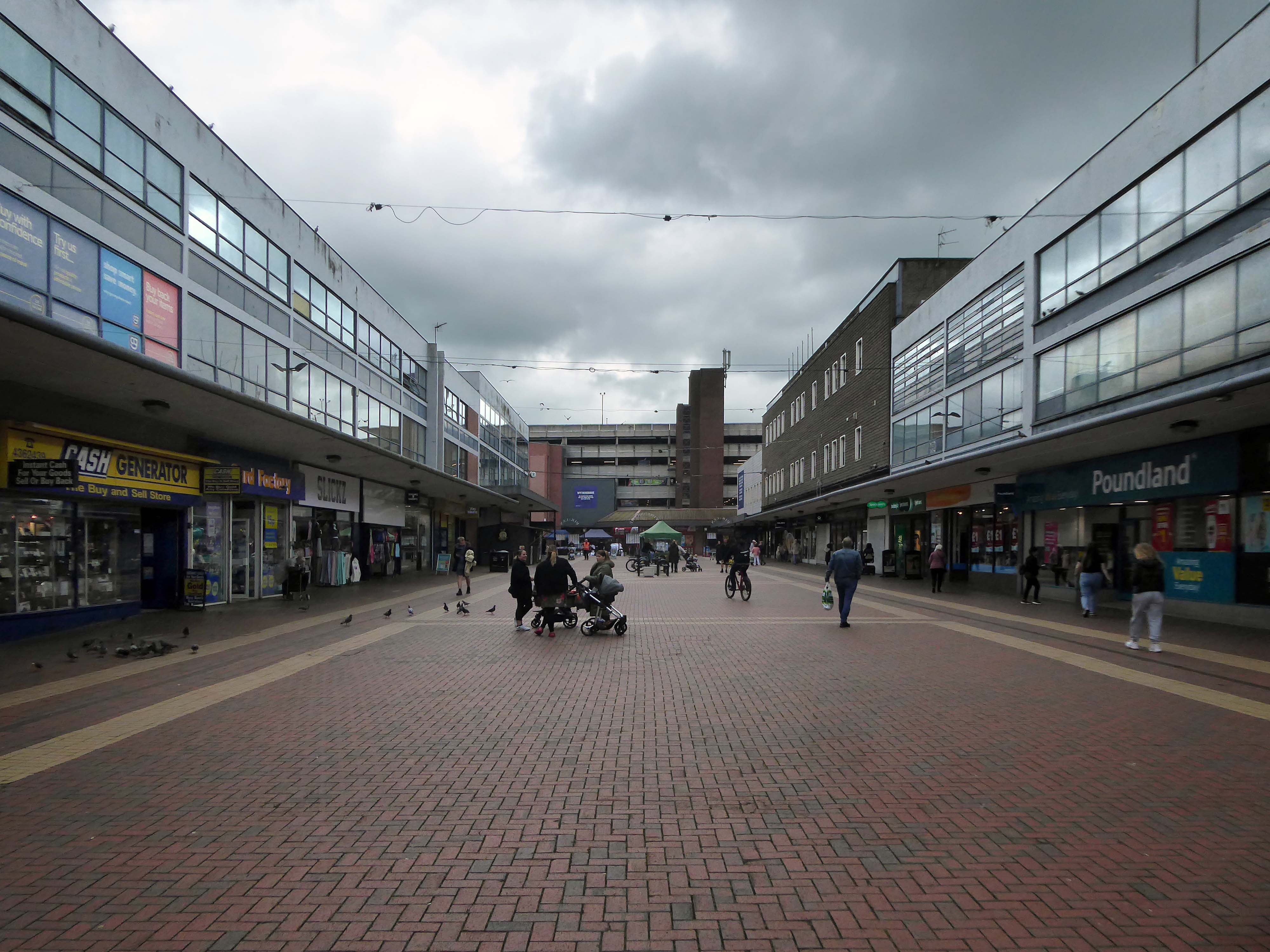
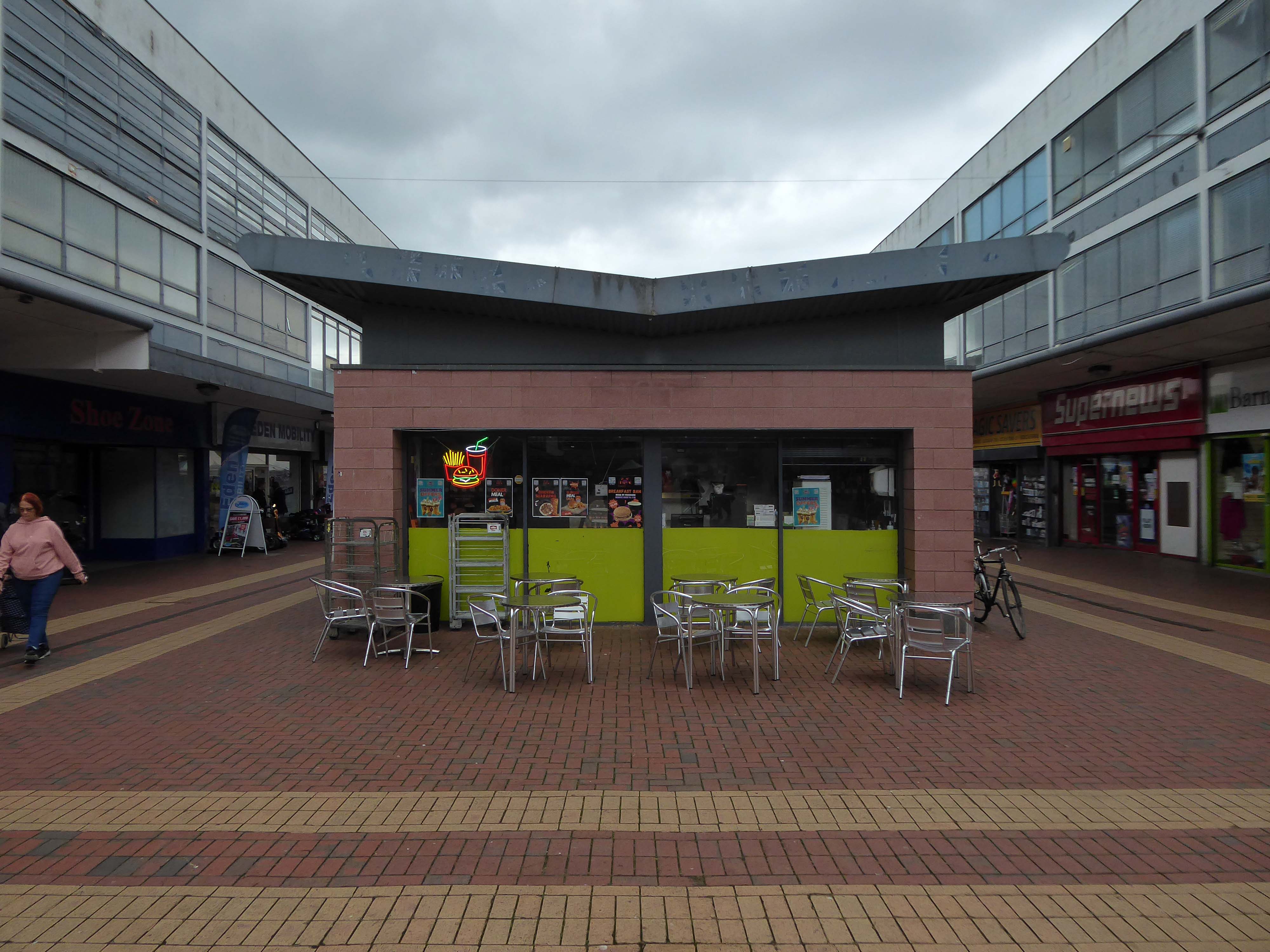
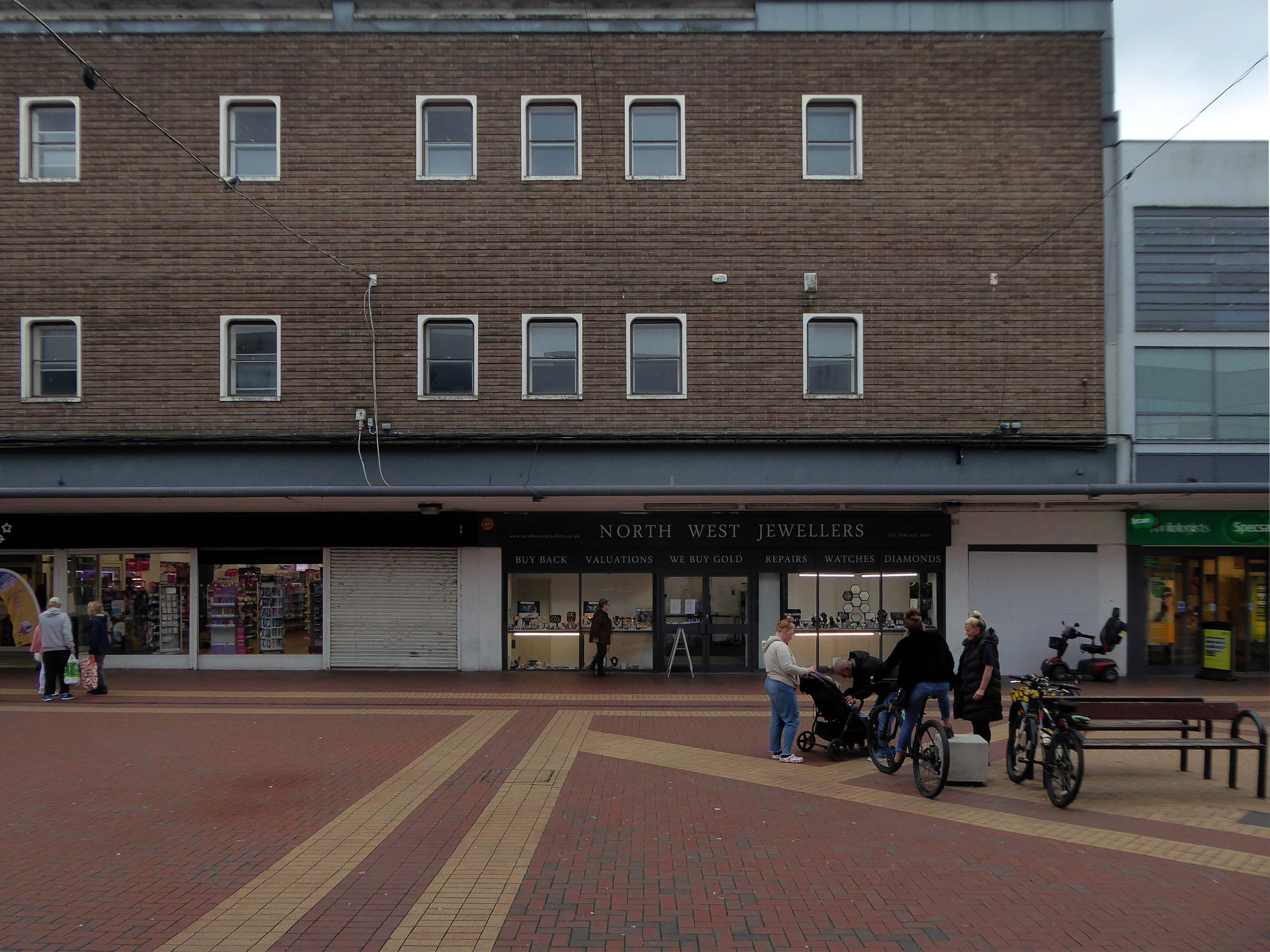
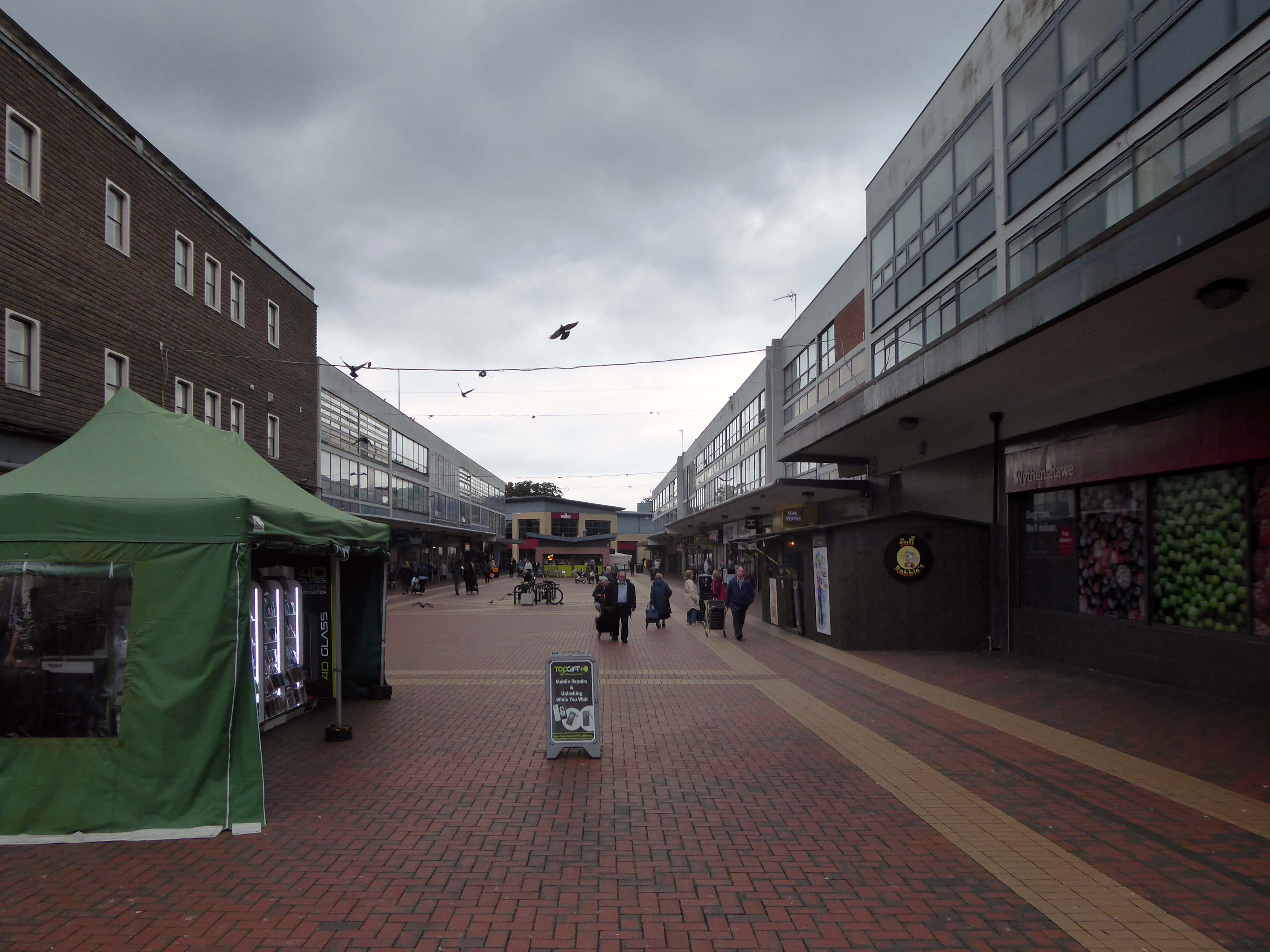
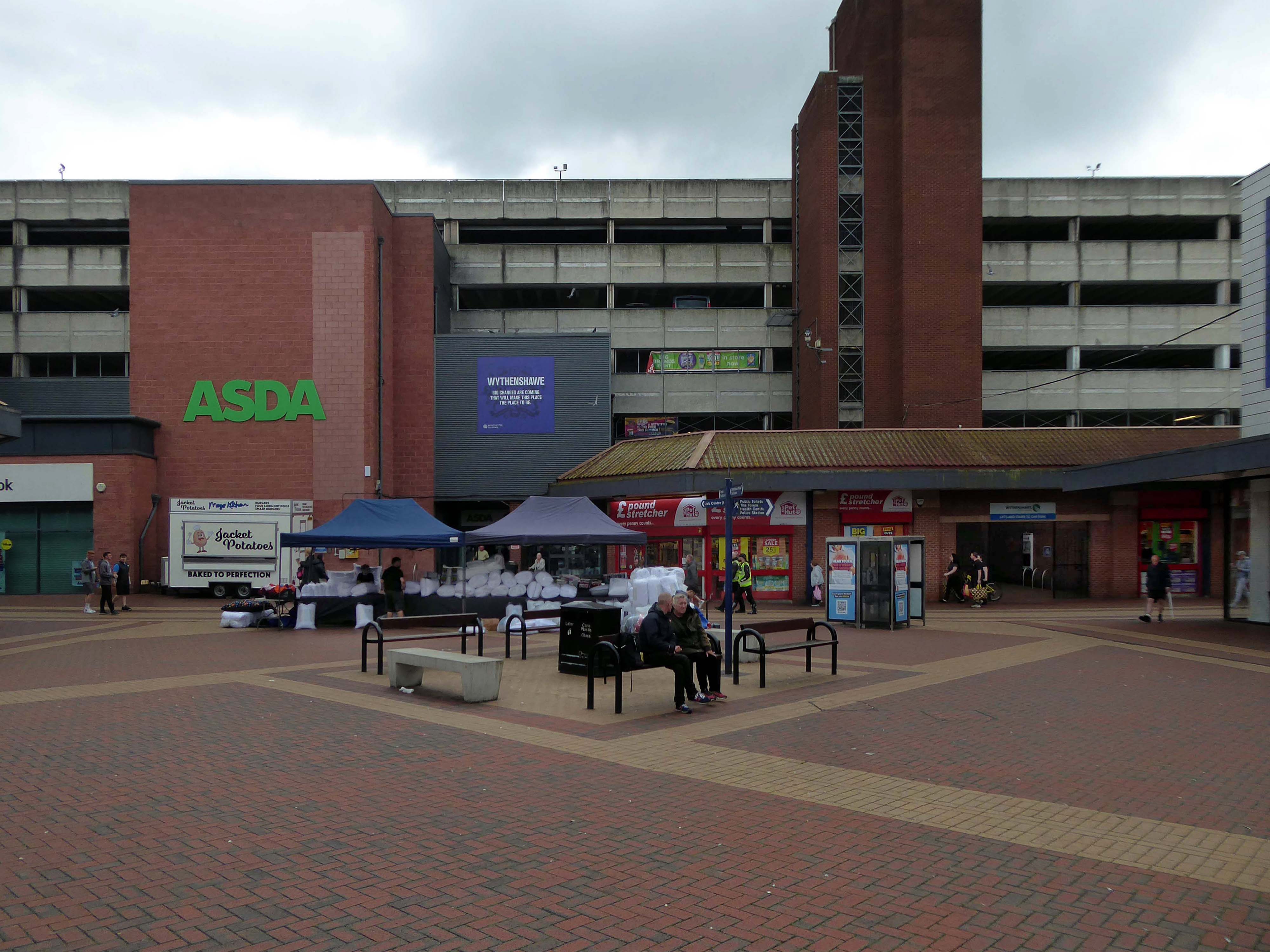
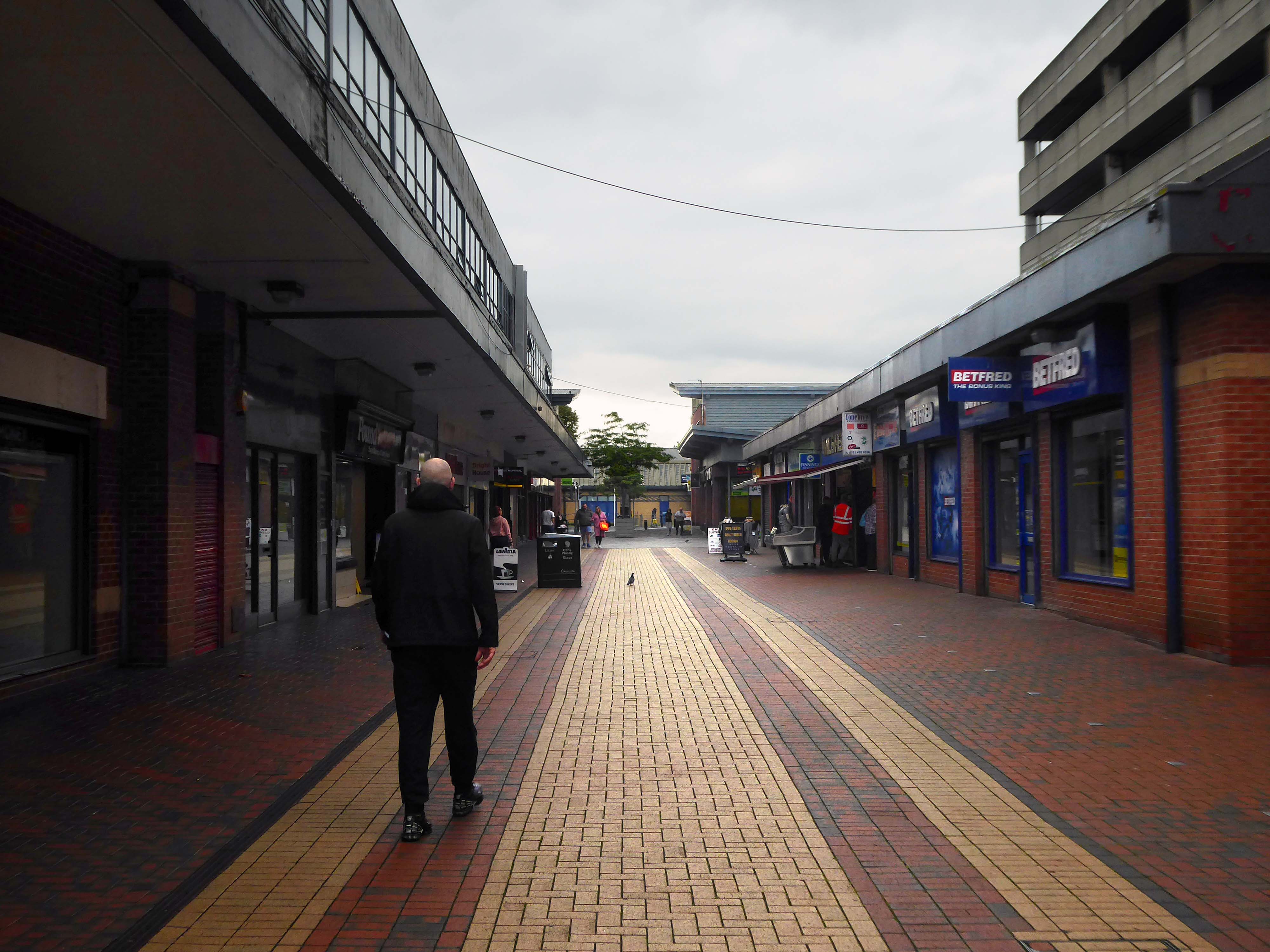
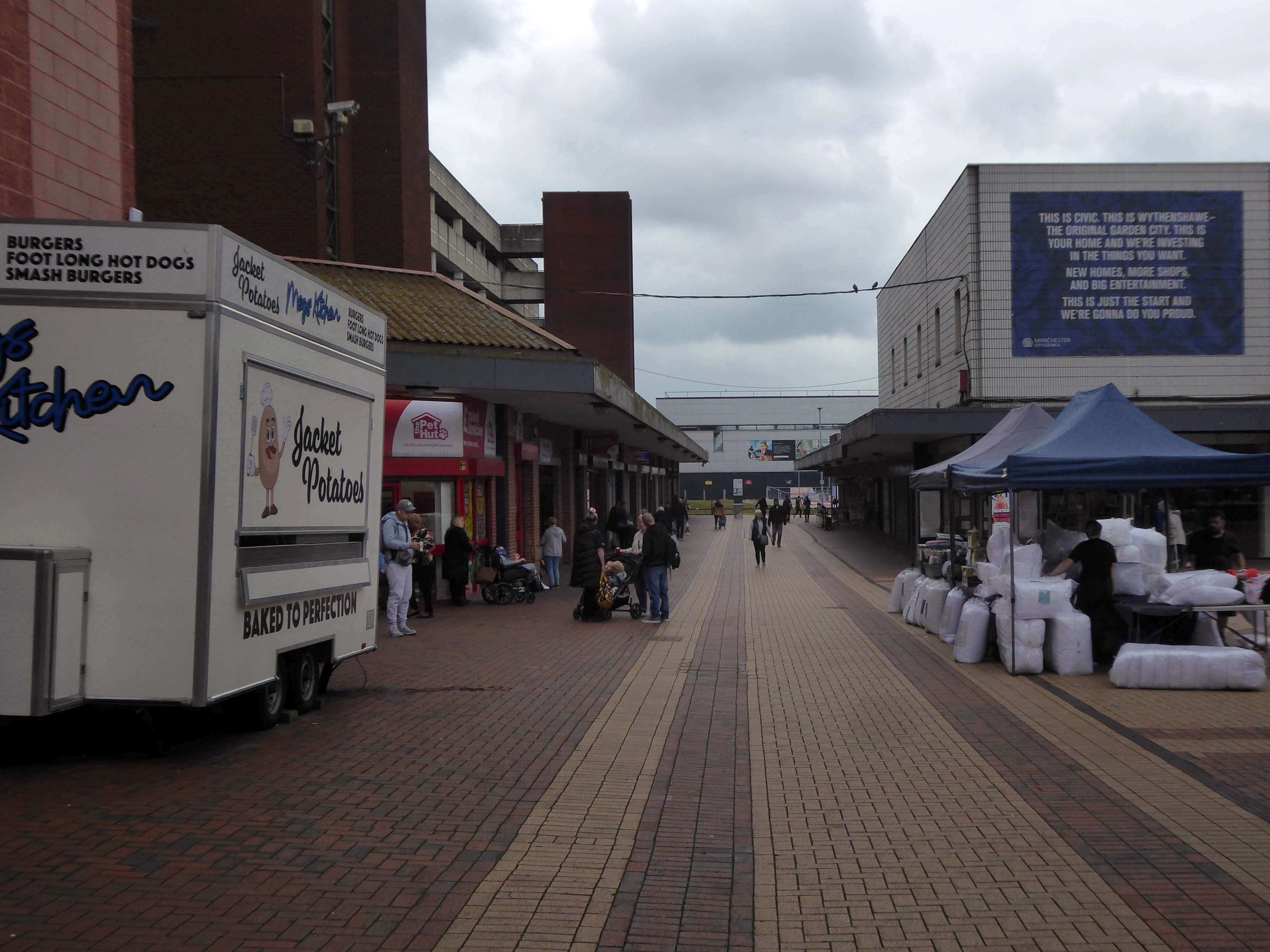
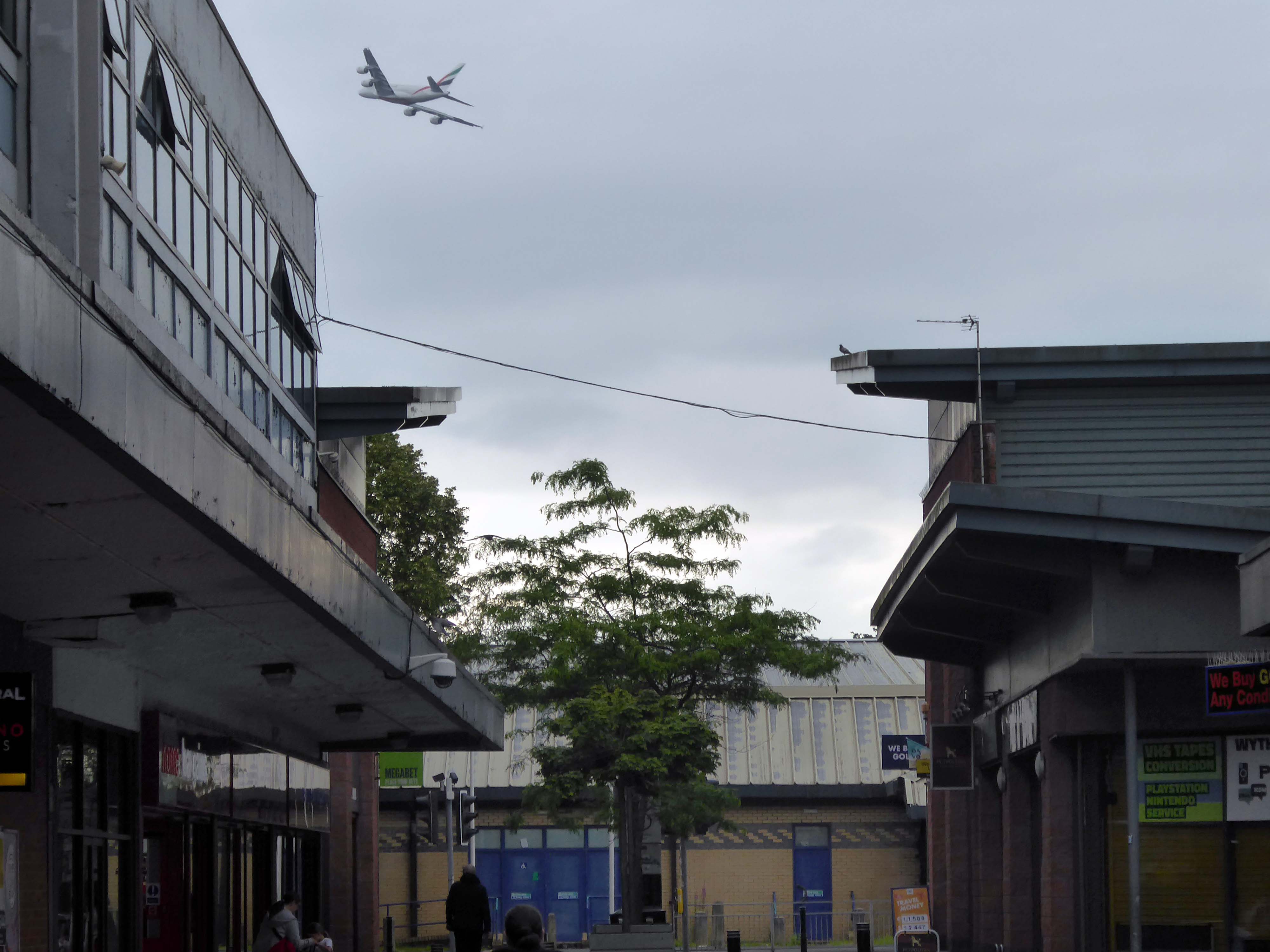
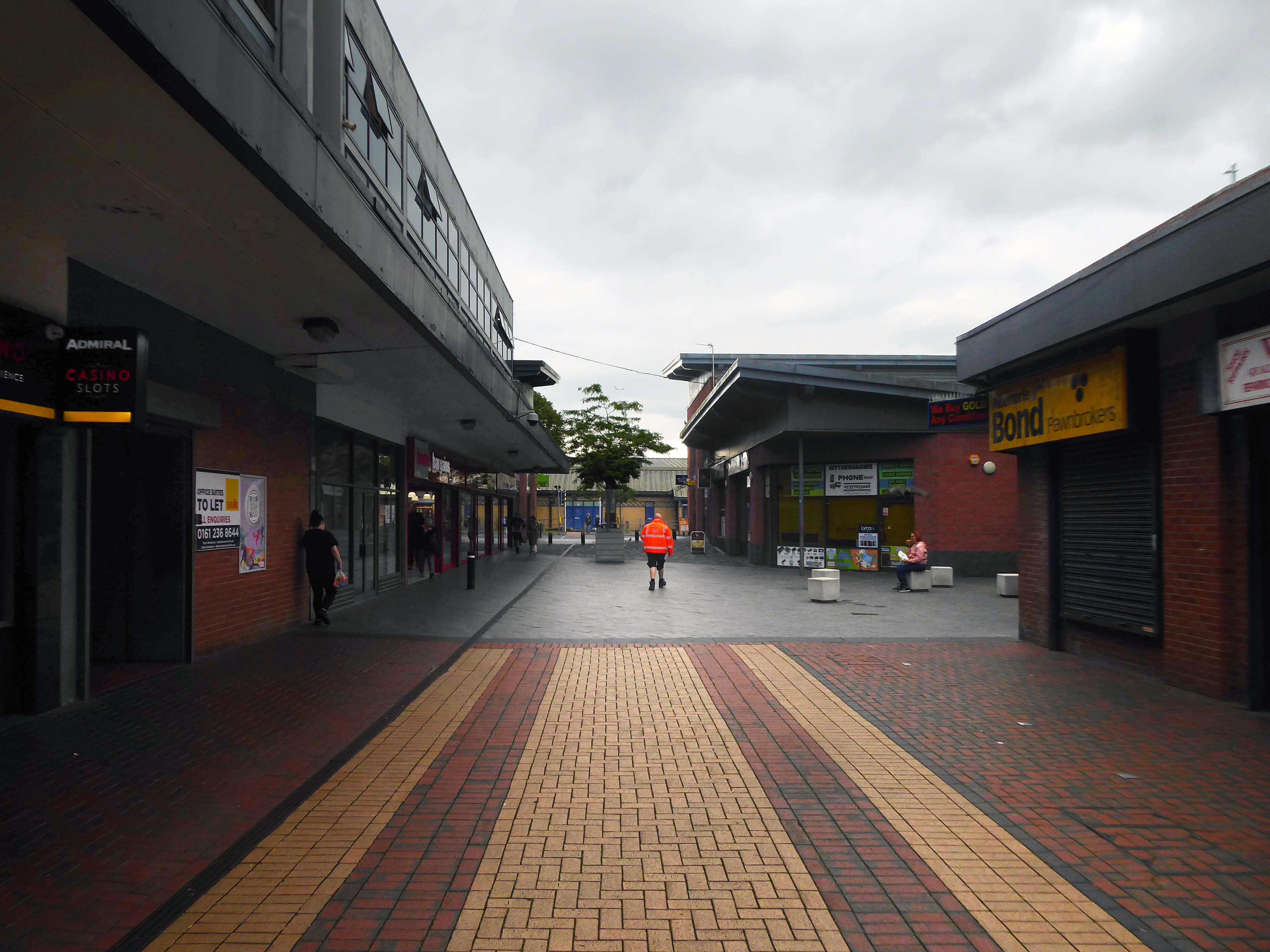
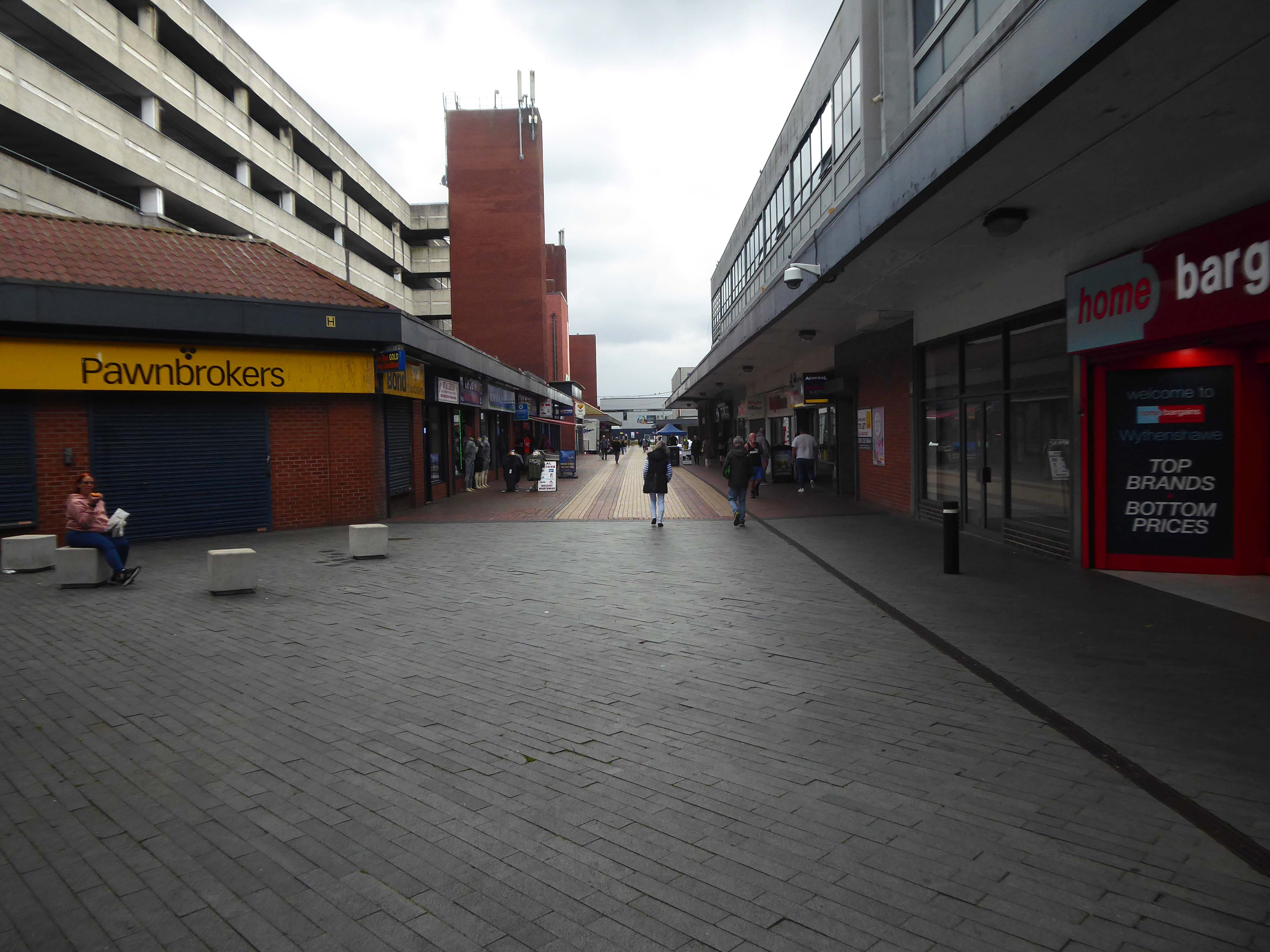
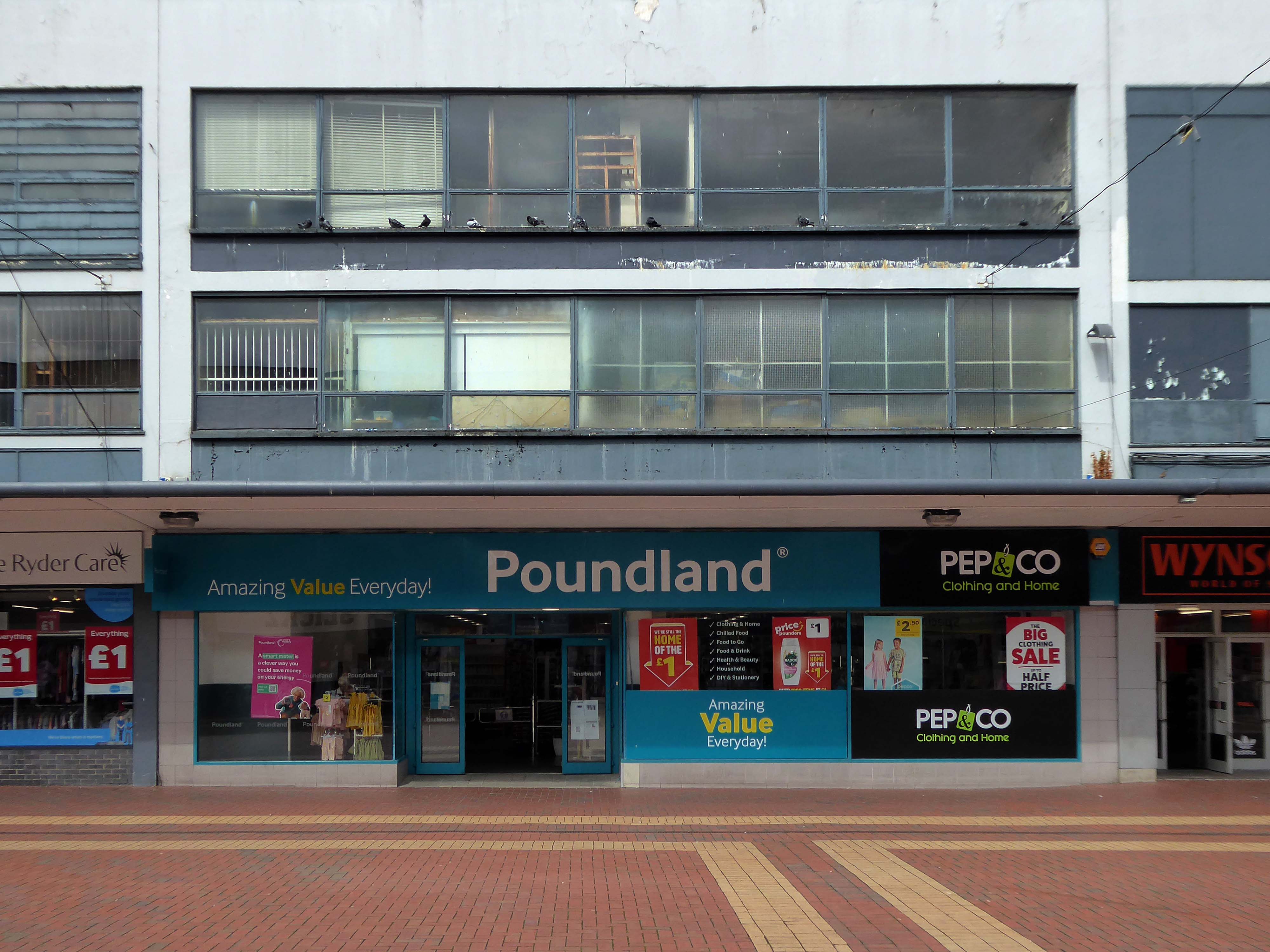
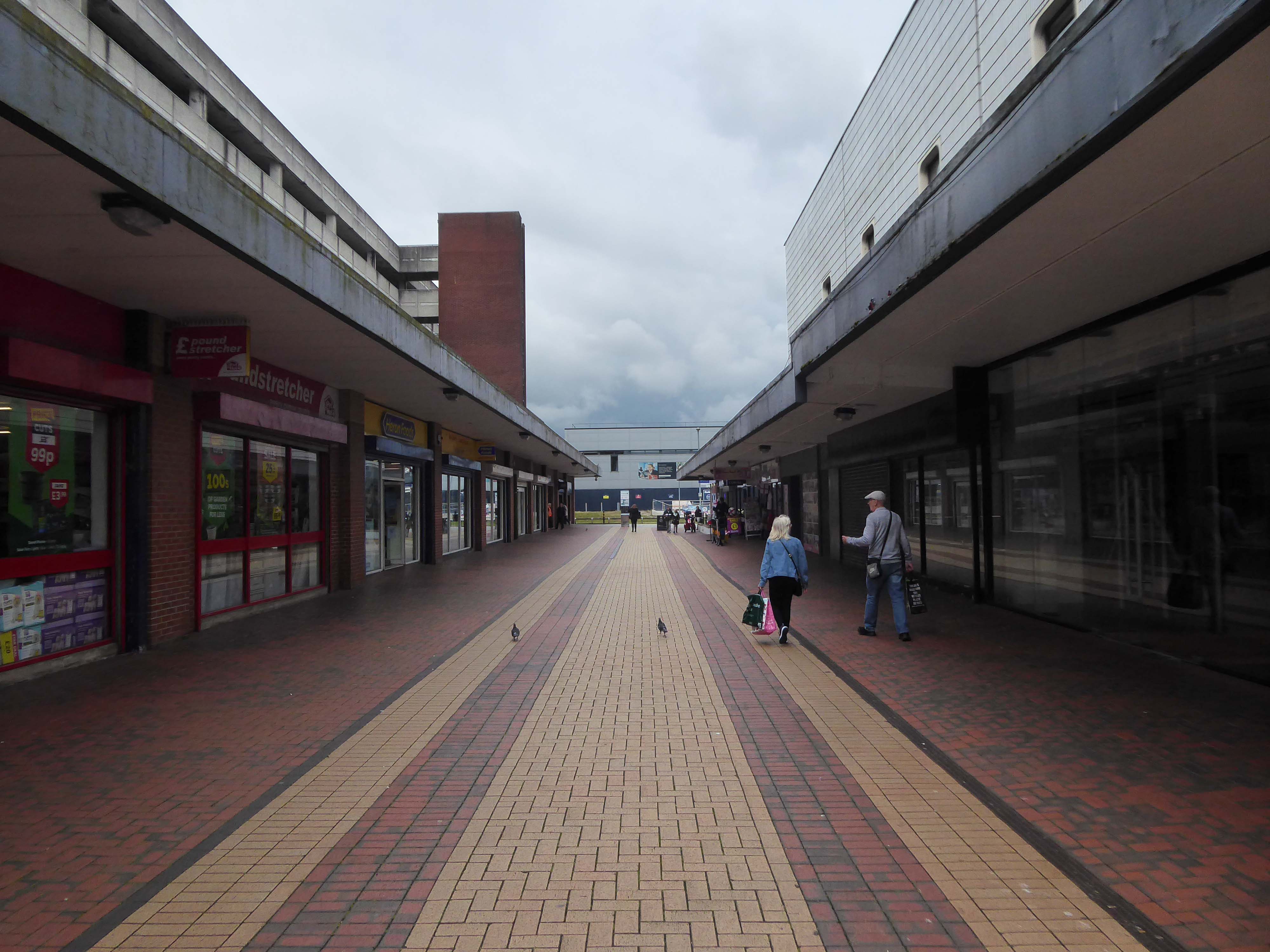
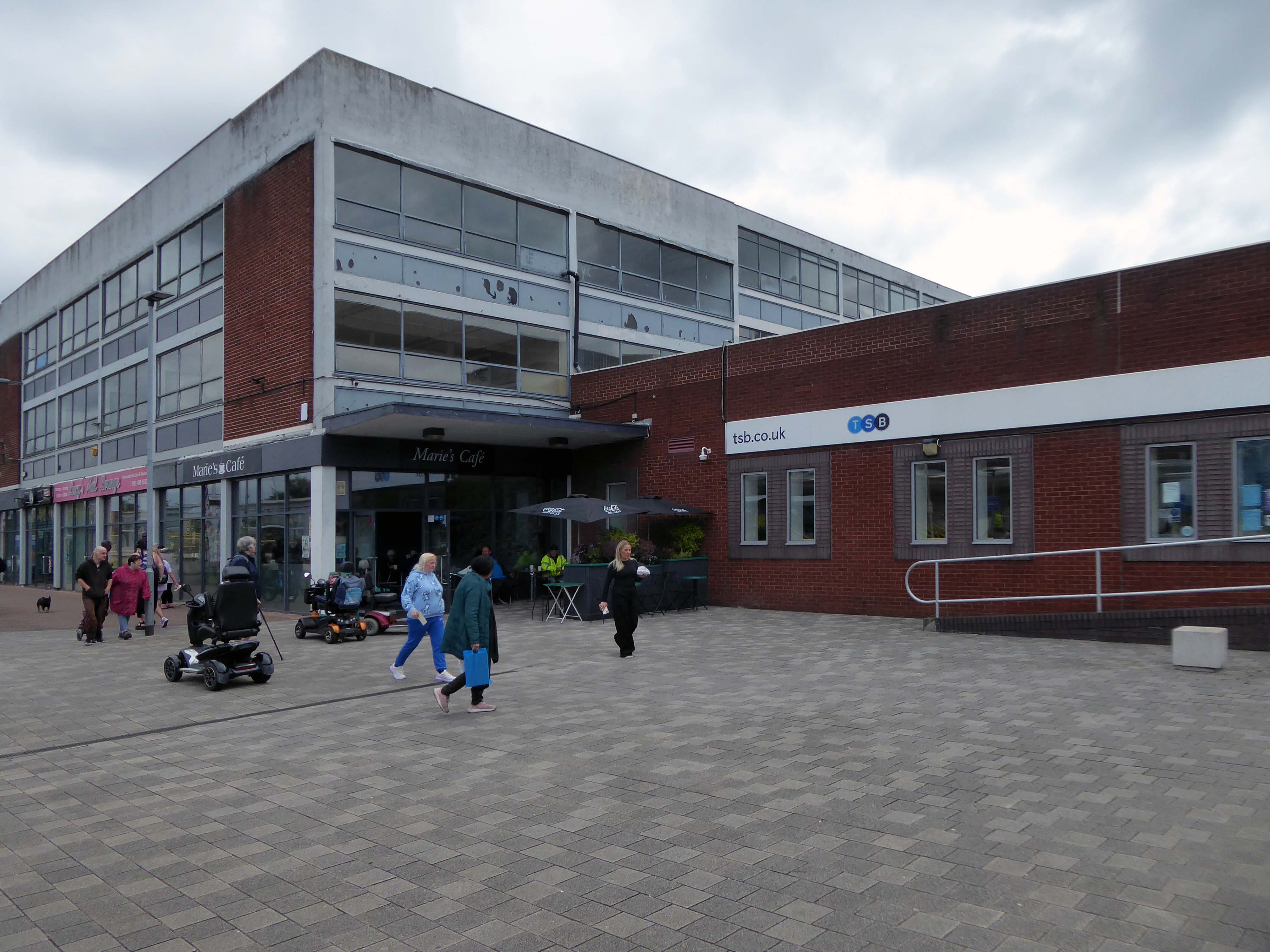
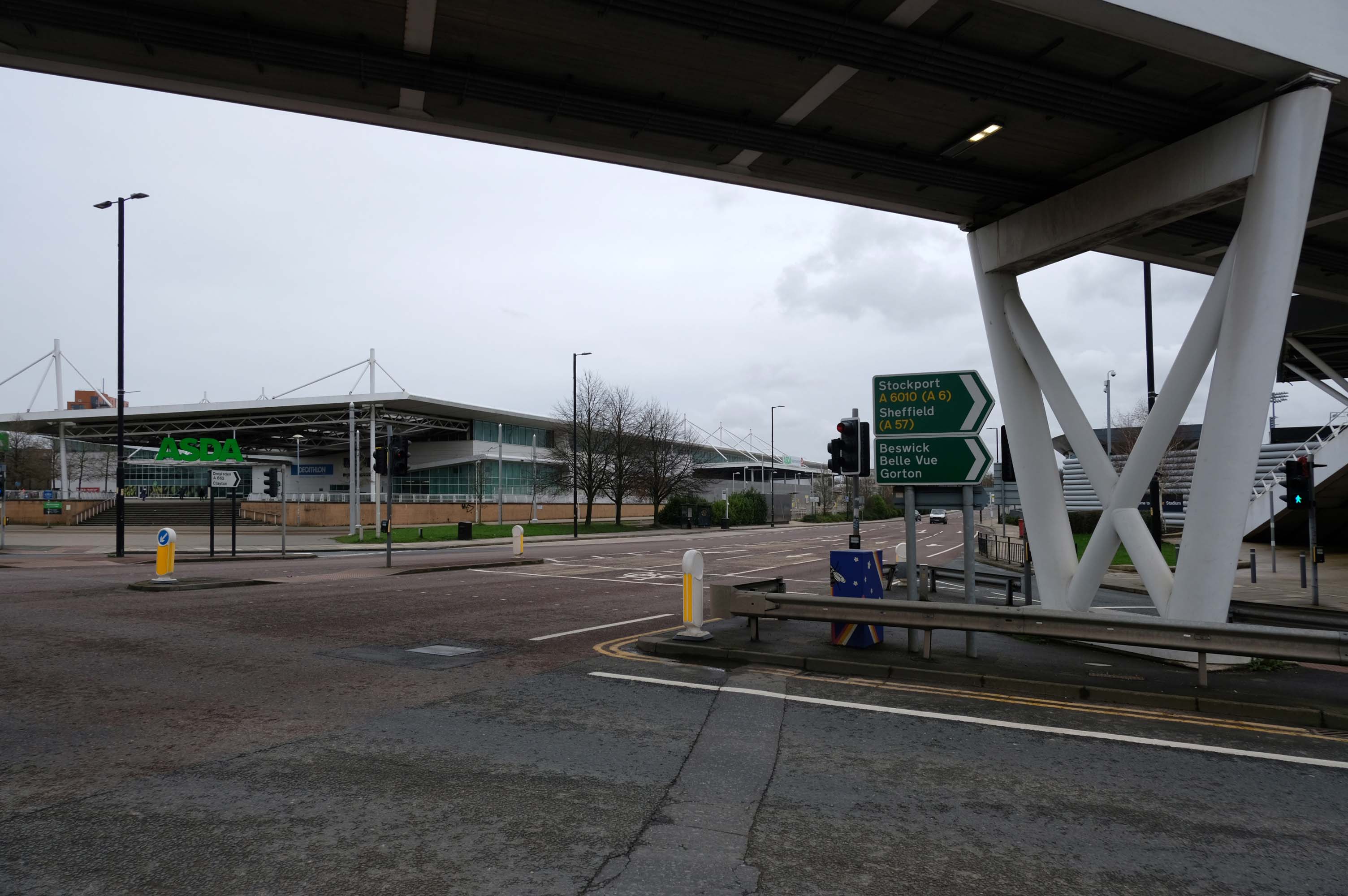
ASDA remains the anchor store, Wilko having left a Wilko sized hole in the precinct. On an overcast Friday morning there was sufficient footfall to sustain the wide variety of smaller shops and larger retail chains. As with many other towns within the central Manchester orbit, the easy proximity fills those busy trams and buses, which are leaving the area.
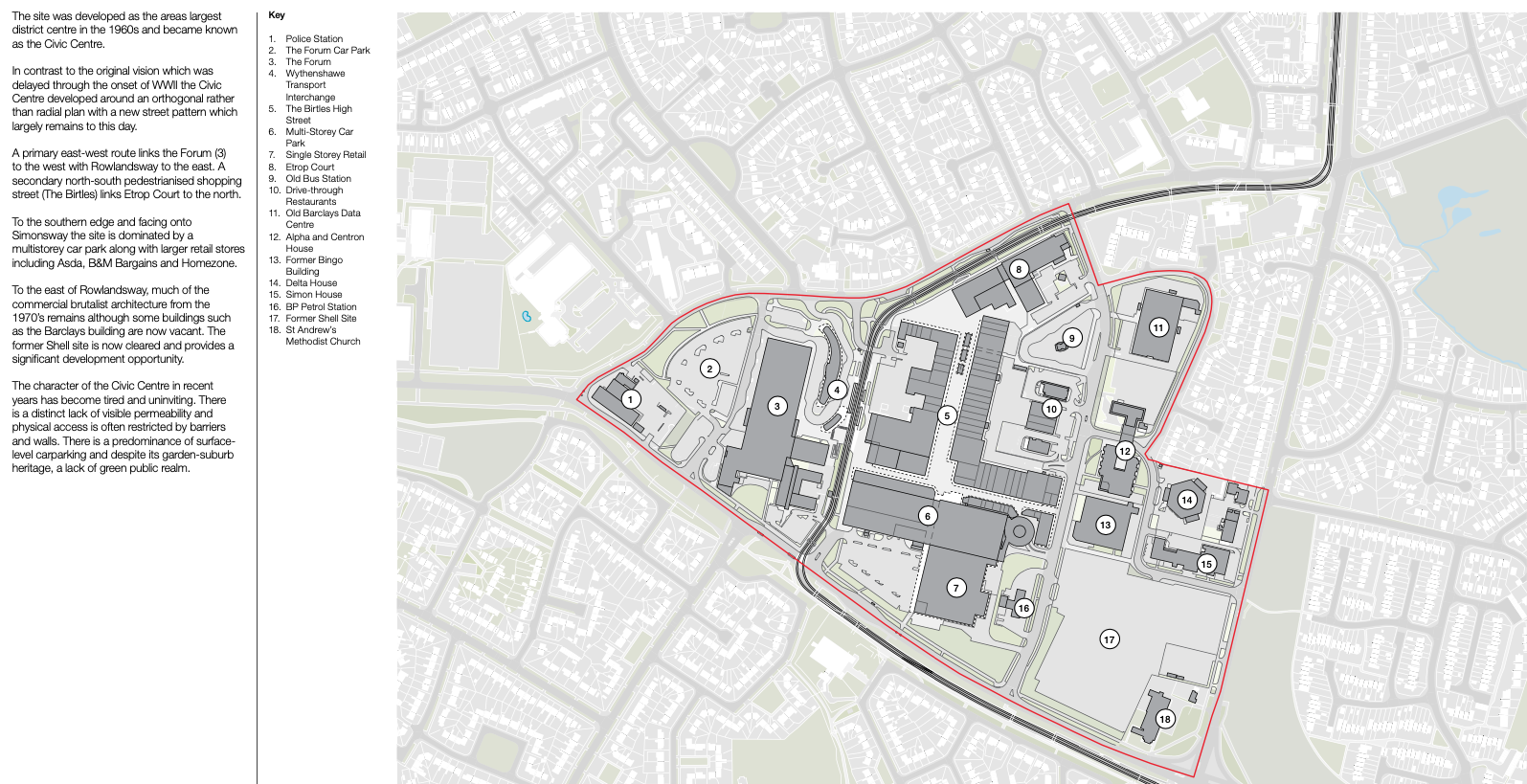
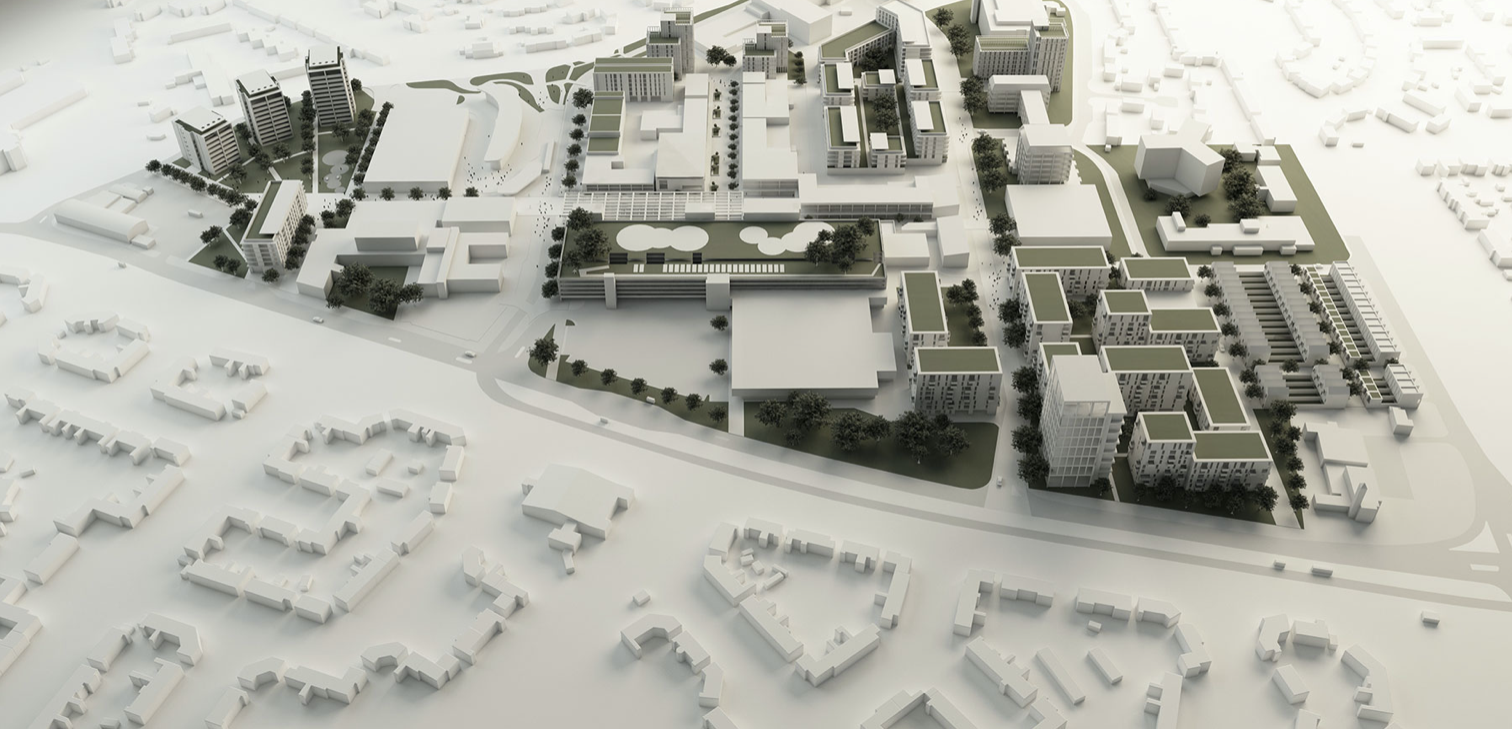
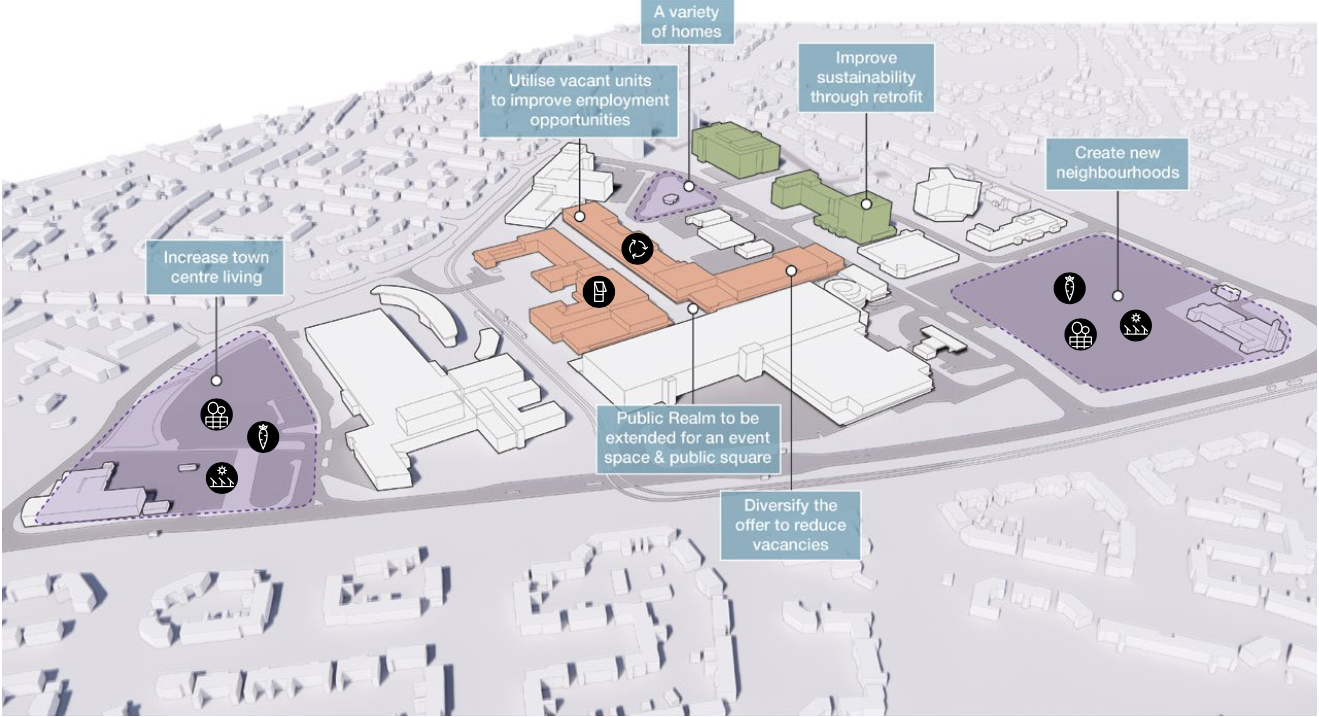
There are plans in place to regenerate the area, in the form of a Masterplan – which can be downloaded here.
Between 1991-2002 there have been some architectural changes, including new stores and office developments. Some of the interventions included significant adaptions which further increased retail into the existing buildings high street.
The interventions included significant adjustments to the multi-storey car park with the aim of reducing parking numbers whilst providing additional lettable space. Further Transport Hub Arrival commercial development was created to the north of the site with the construction of Etrop Court, despite there being significant commercial vacancy across other parts of the estate.
Whilst there has been significant incremental intervention, the character of the area has not fundamentally changed from its founding concept. However the cumulative impact of the various changes have had a negative impact on the functionality and suitability of place, so much so that the centre is in many ways no longer fit- for purpose.
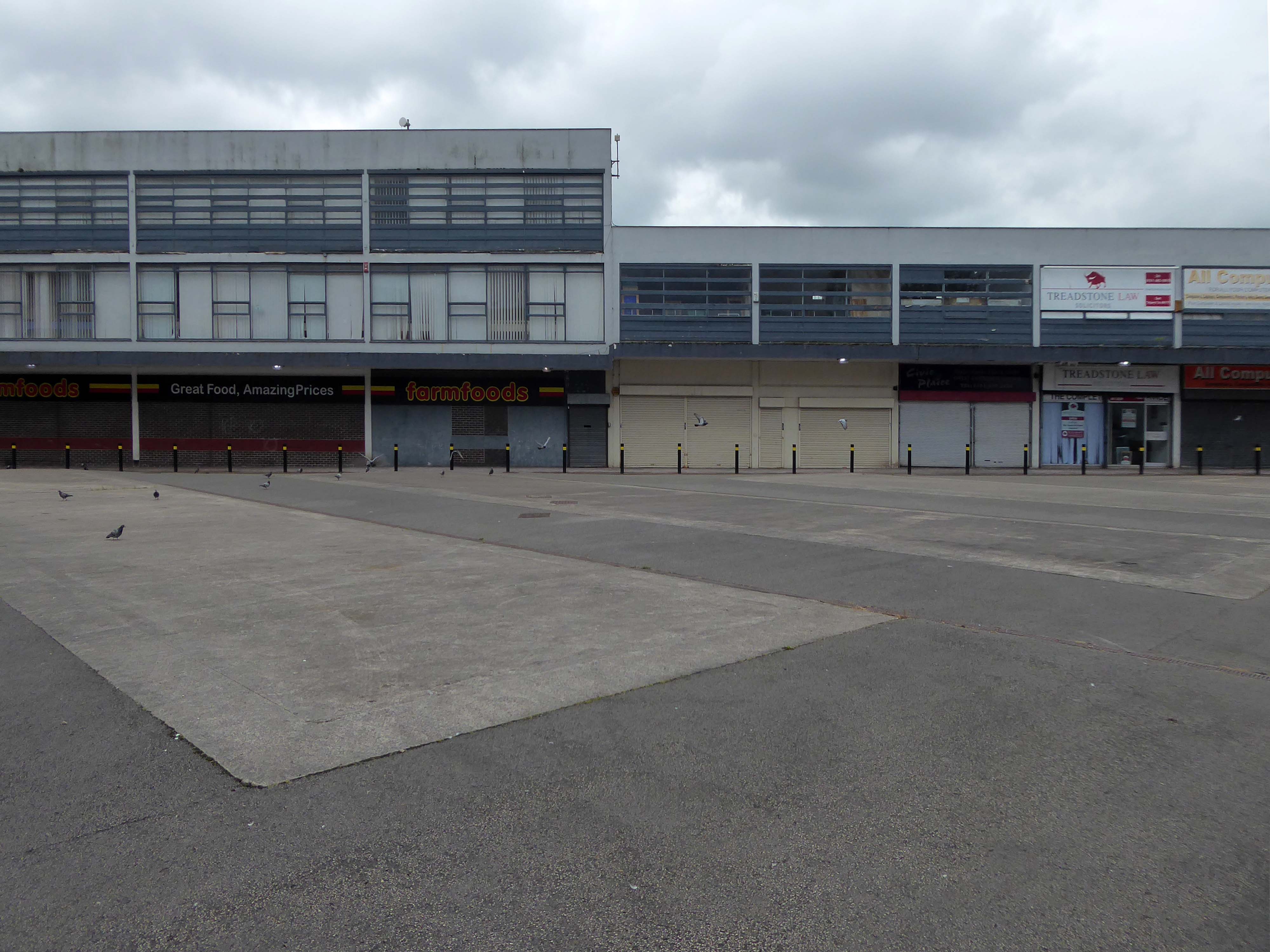
The site today is surrounded by surface car parks, with a total of around 2,500 car parking spaces, 1,700 of which are contained within the multi-storey car park. Many of the retail units, the upper floor office spaces along the Birtles and Hale Top, and buildings to the east are vacant.
Typically, the levels of vacancy are consistent with the changing demands of the high street, where typically modern and successful retail centres are now more diversified and focussed on creating a visitor or destination-based experience. In this sense, we anticipate a need to diversify the high street and to promote a smaller more concentrated retail core, whilst supplementing the offer with more meanwhile and permanent uses and activities based on culture, food and creative workplace.
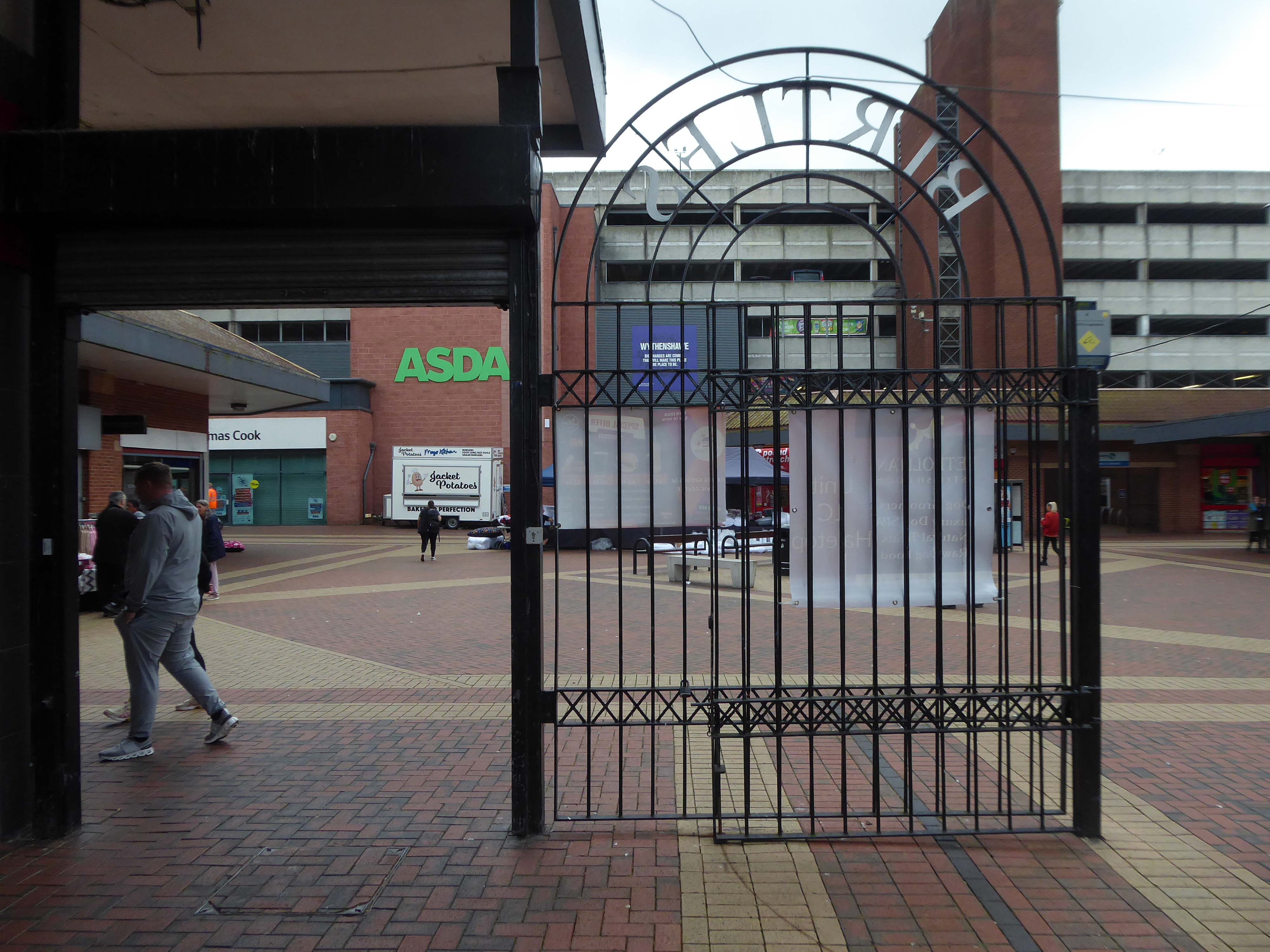
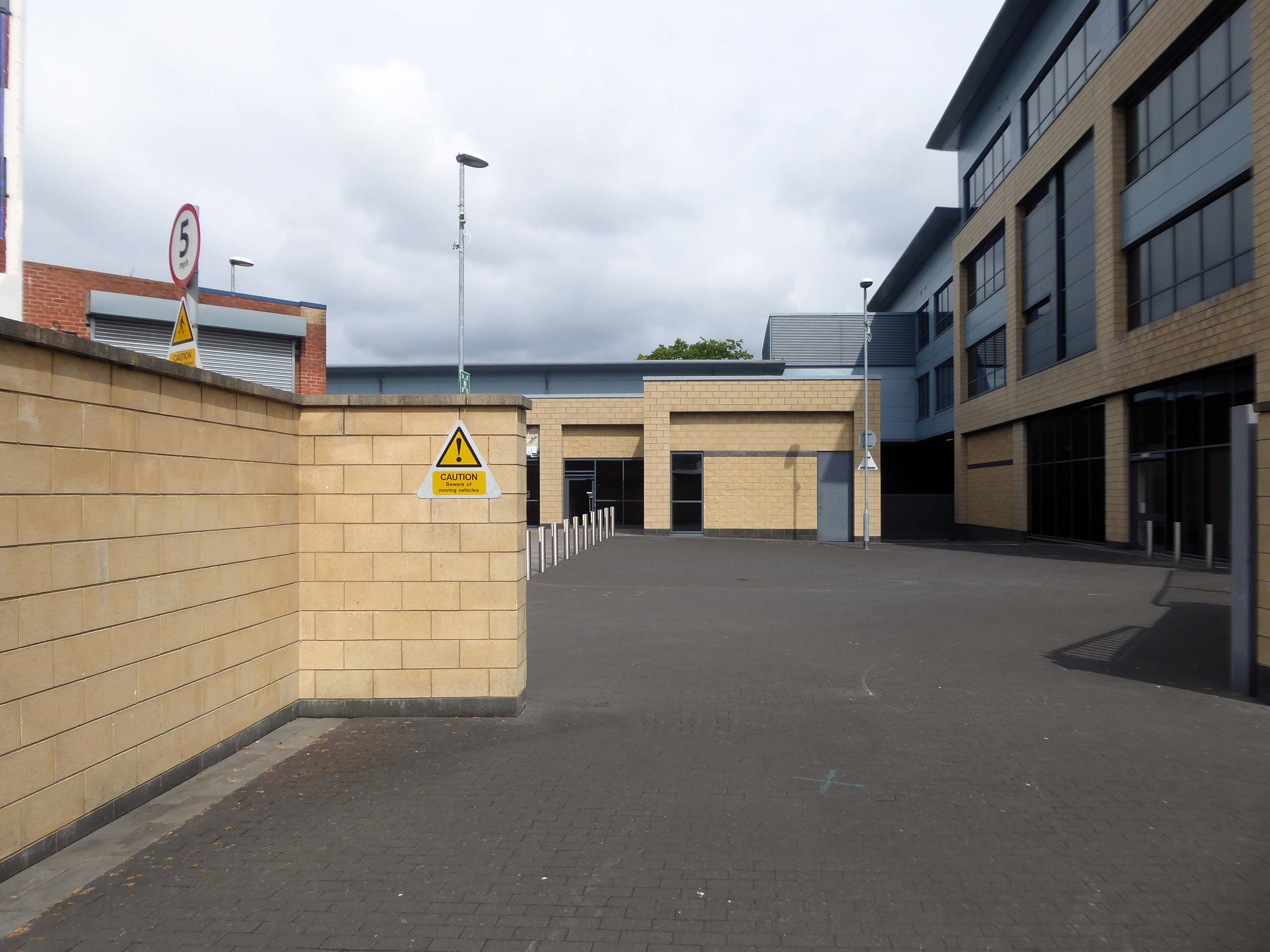
The gateway to the Civic Centre on arrival from the Transport Interchange is very poor. Access to the high street isn’t obvious and the route through to the high street isn’t clear. Much of the site is surrounded by fencing, barrier and gates and whilst they are open during the day, they are locked at night to prevent vandalism. This barricaded aesthetic does nothing to promote an easily accessible and family friendly environment as well as preventing any opportunity to promote a much needed night- time economy.
Currently, the Civic Centre appears to only cater for those with a need to visit for a particular purpose, rather than capitalising on an opportunity to create a place to visit and dwell.
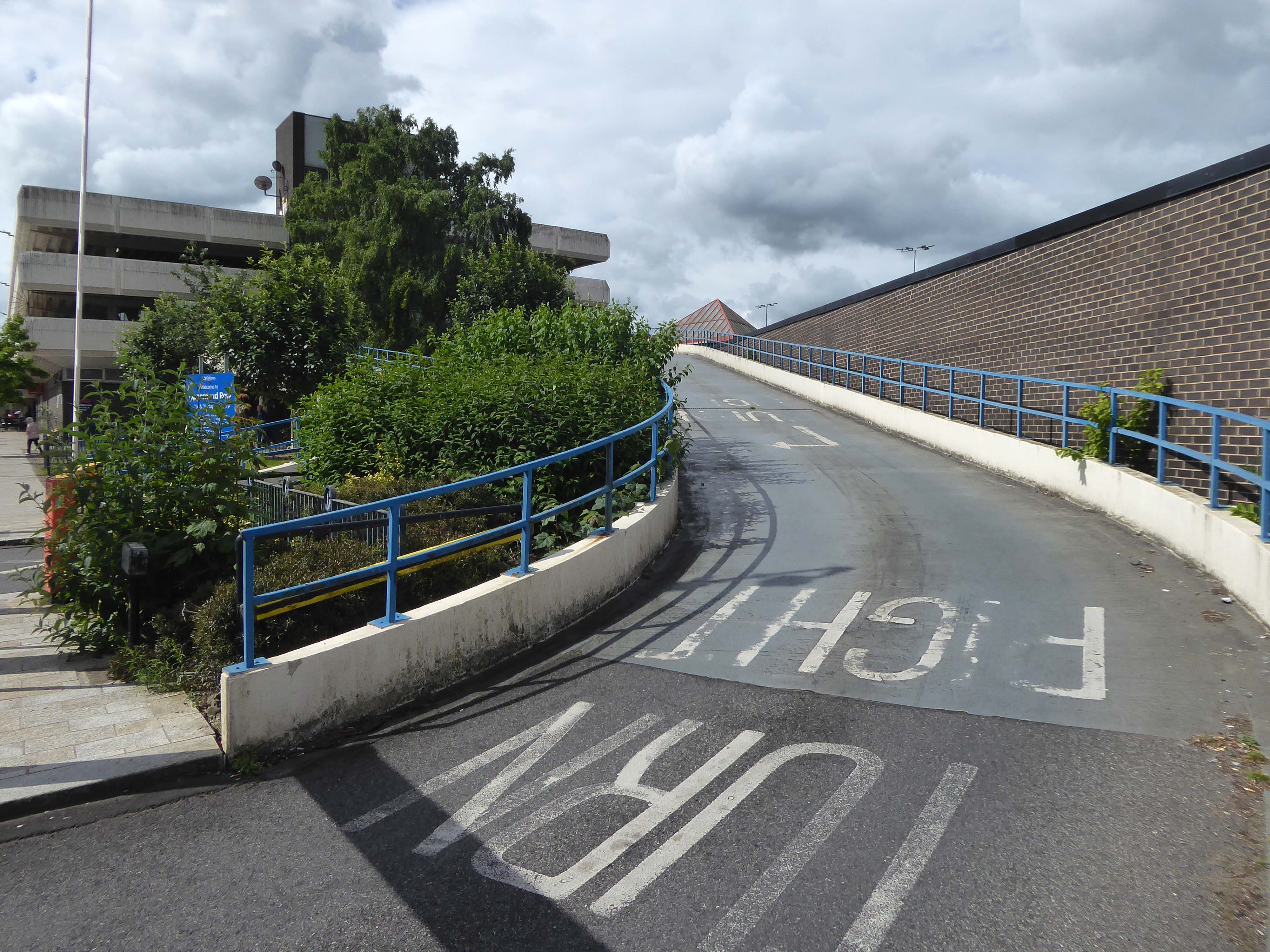
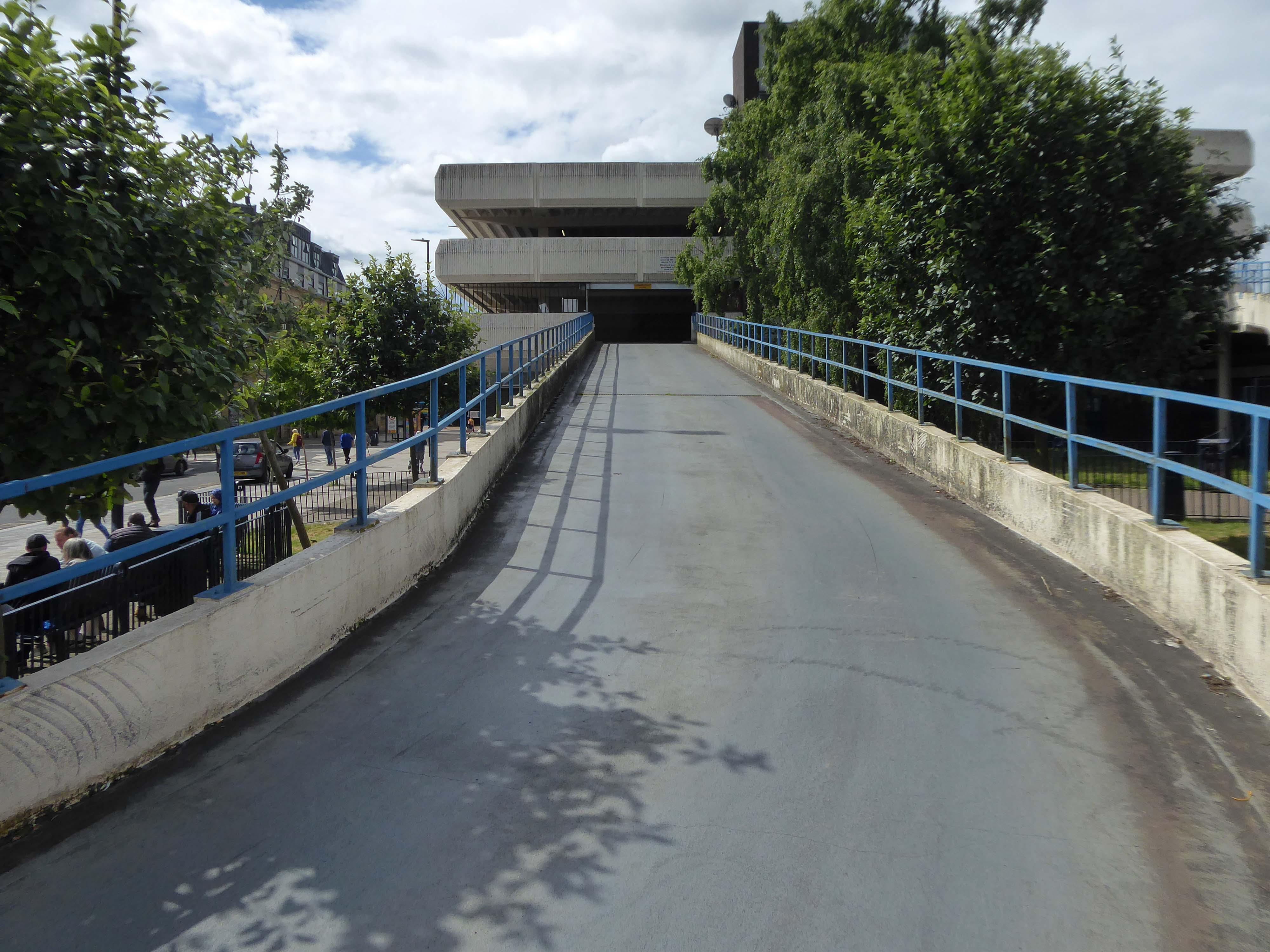
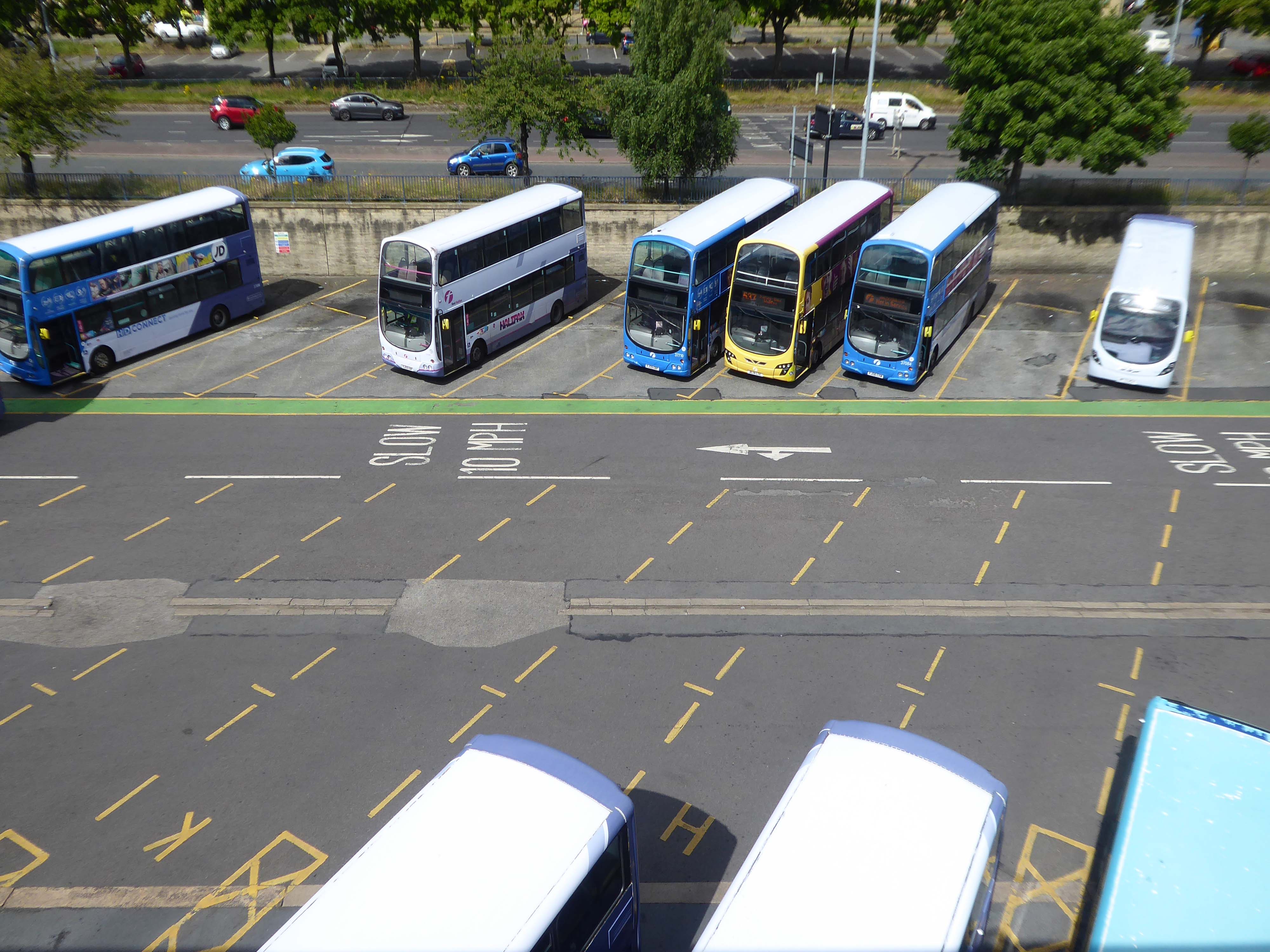
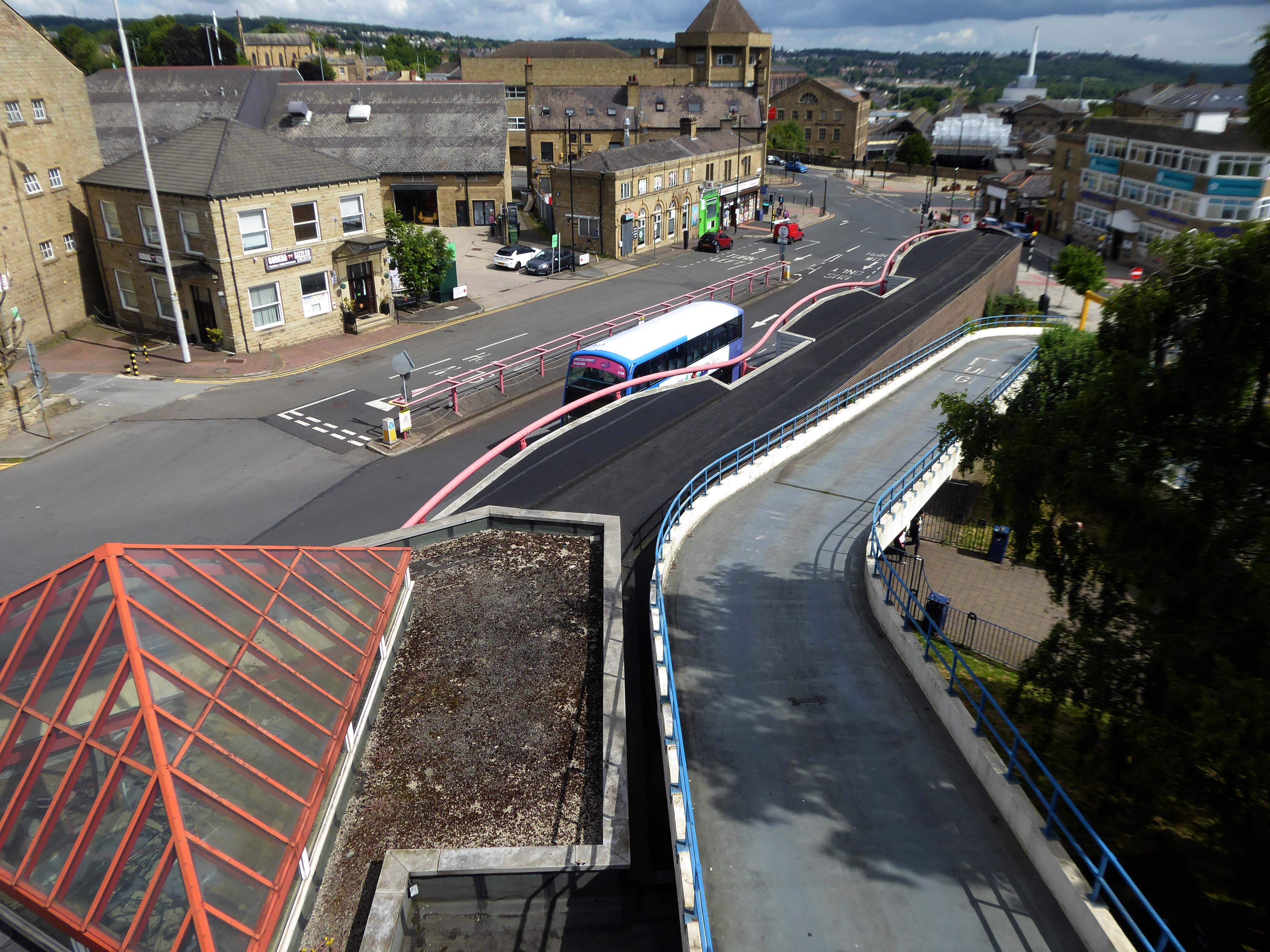
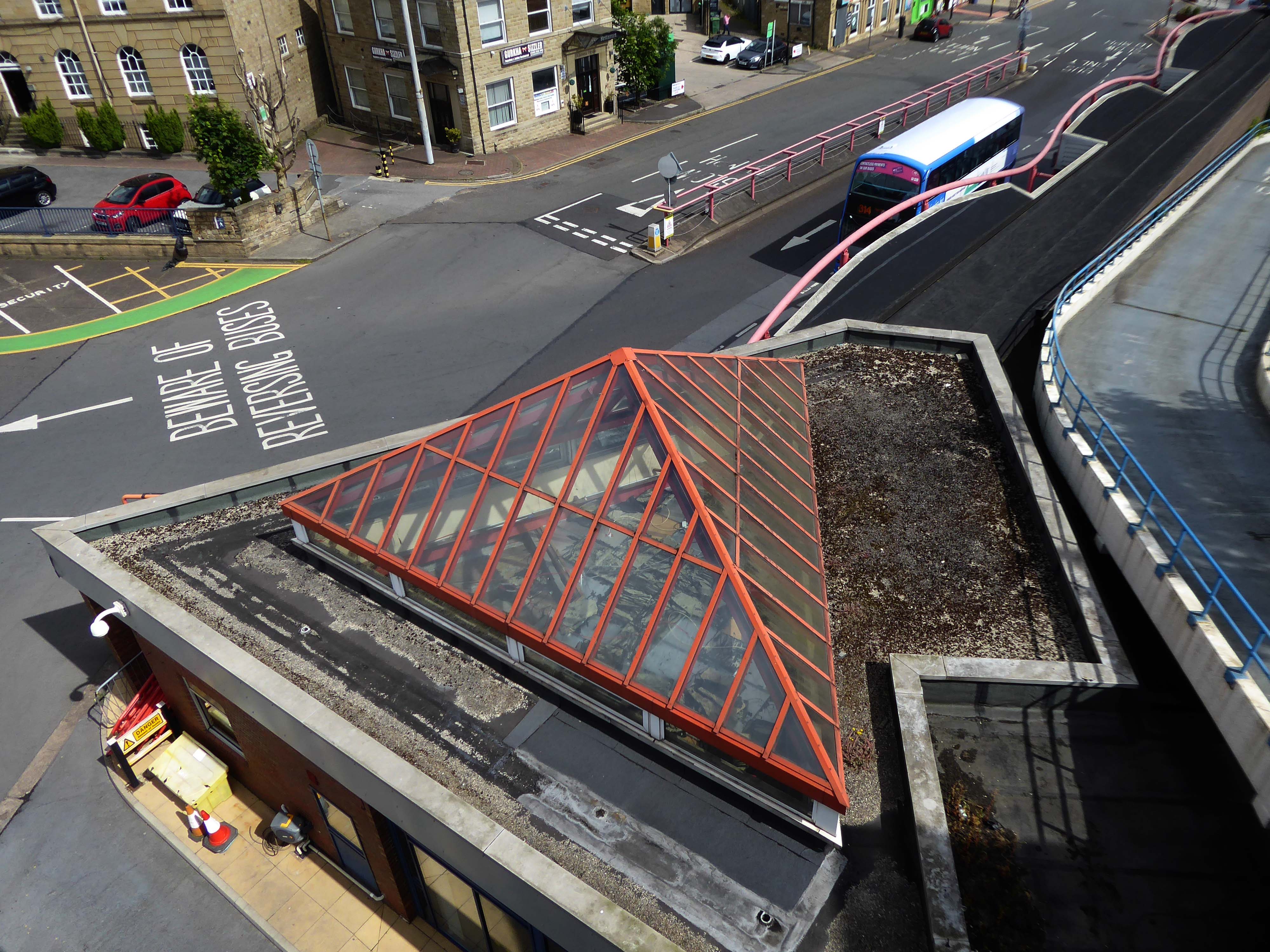
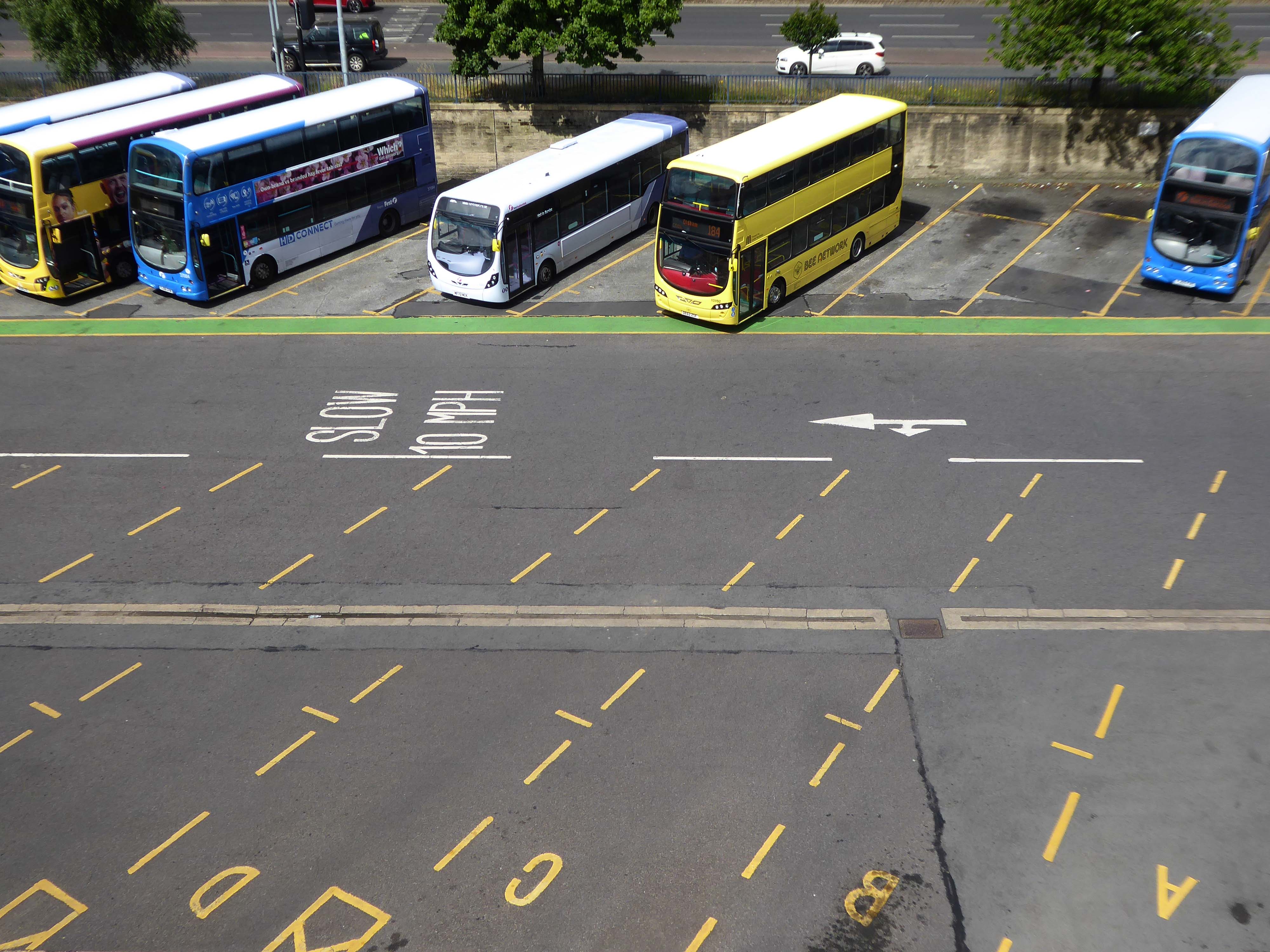
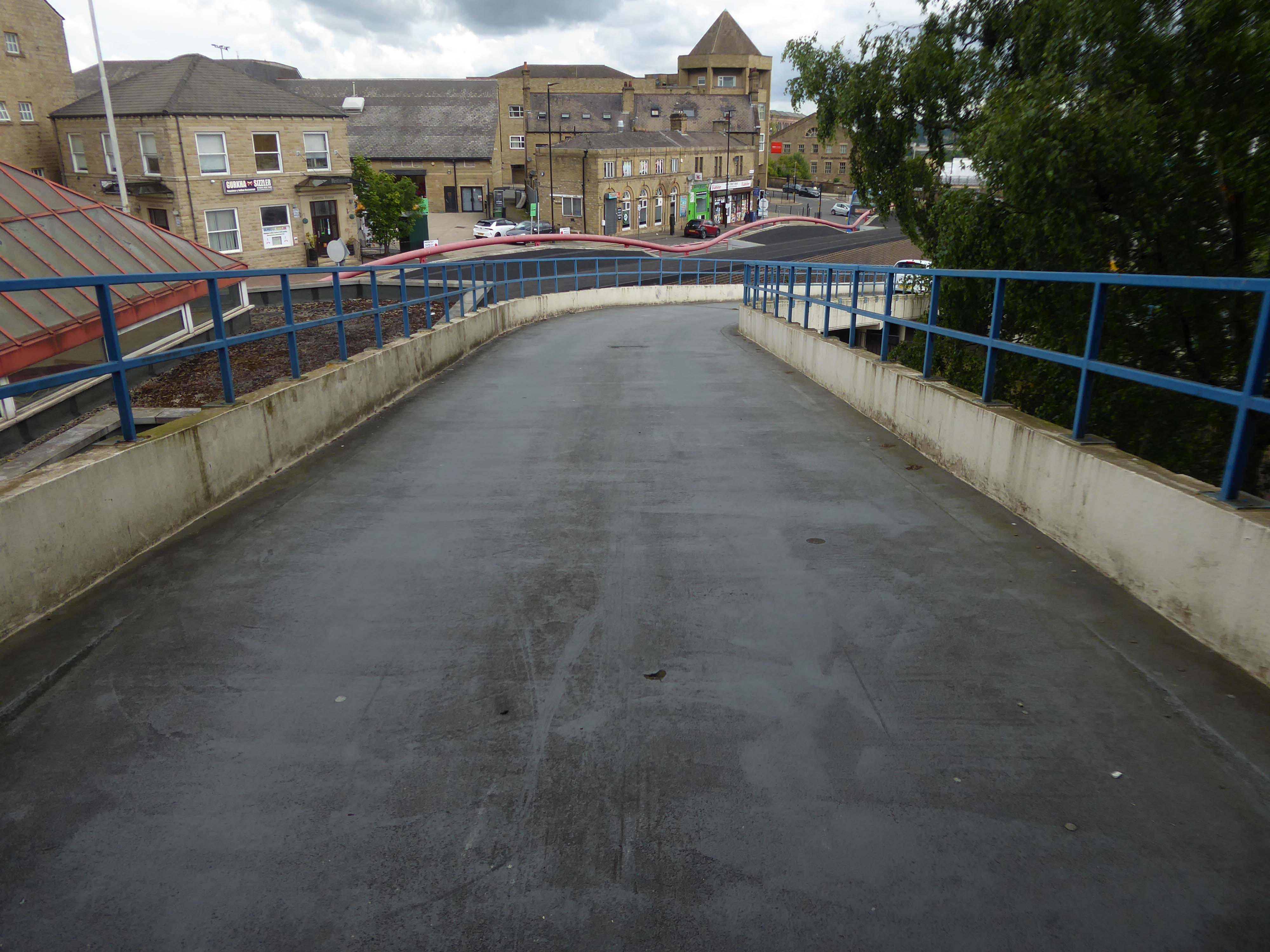
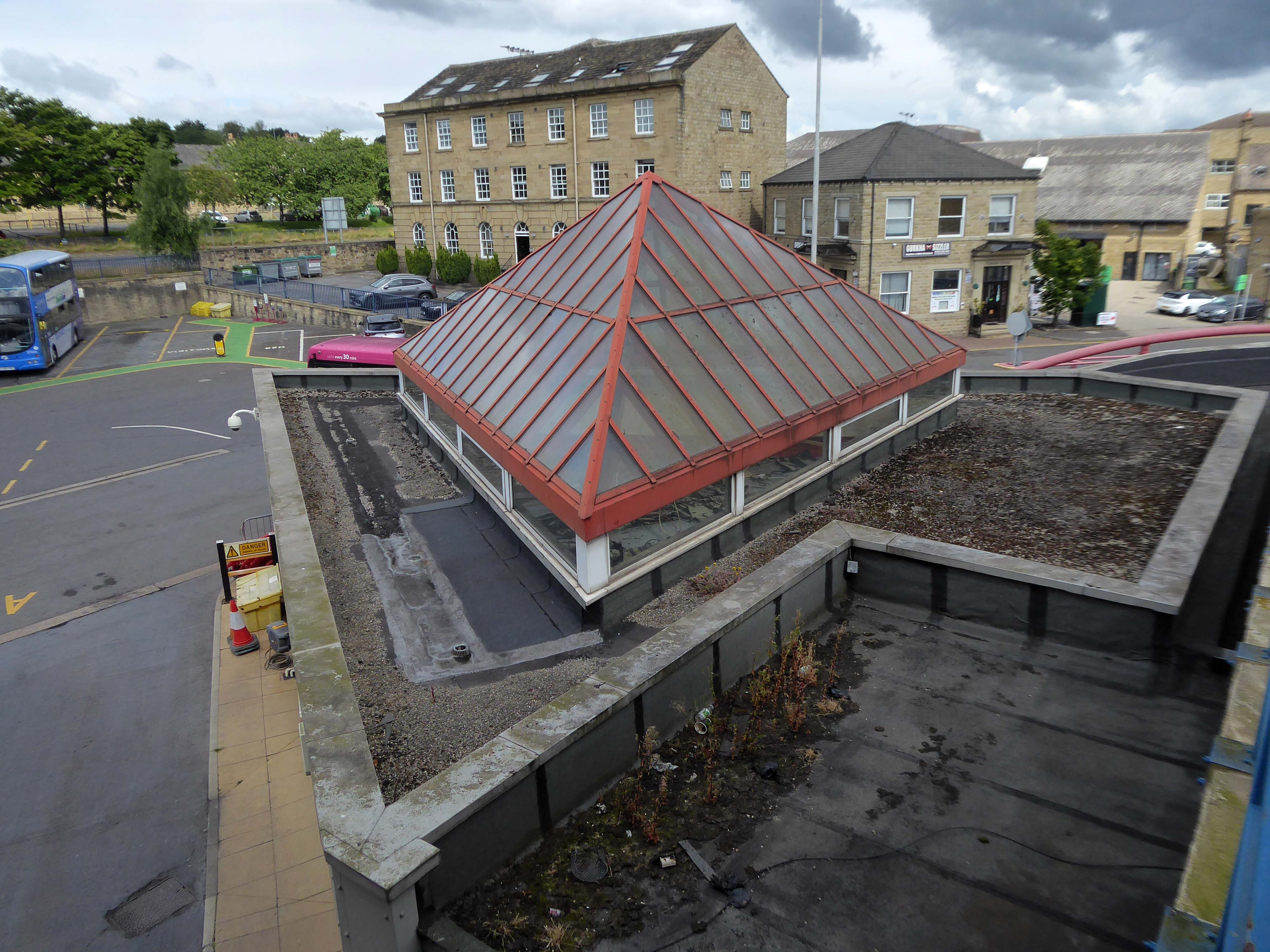
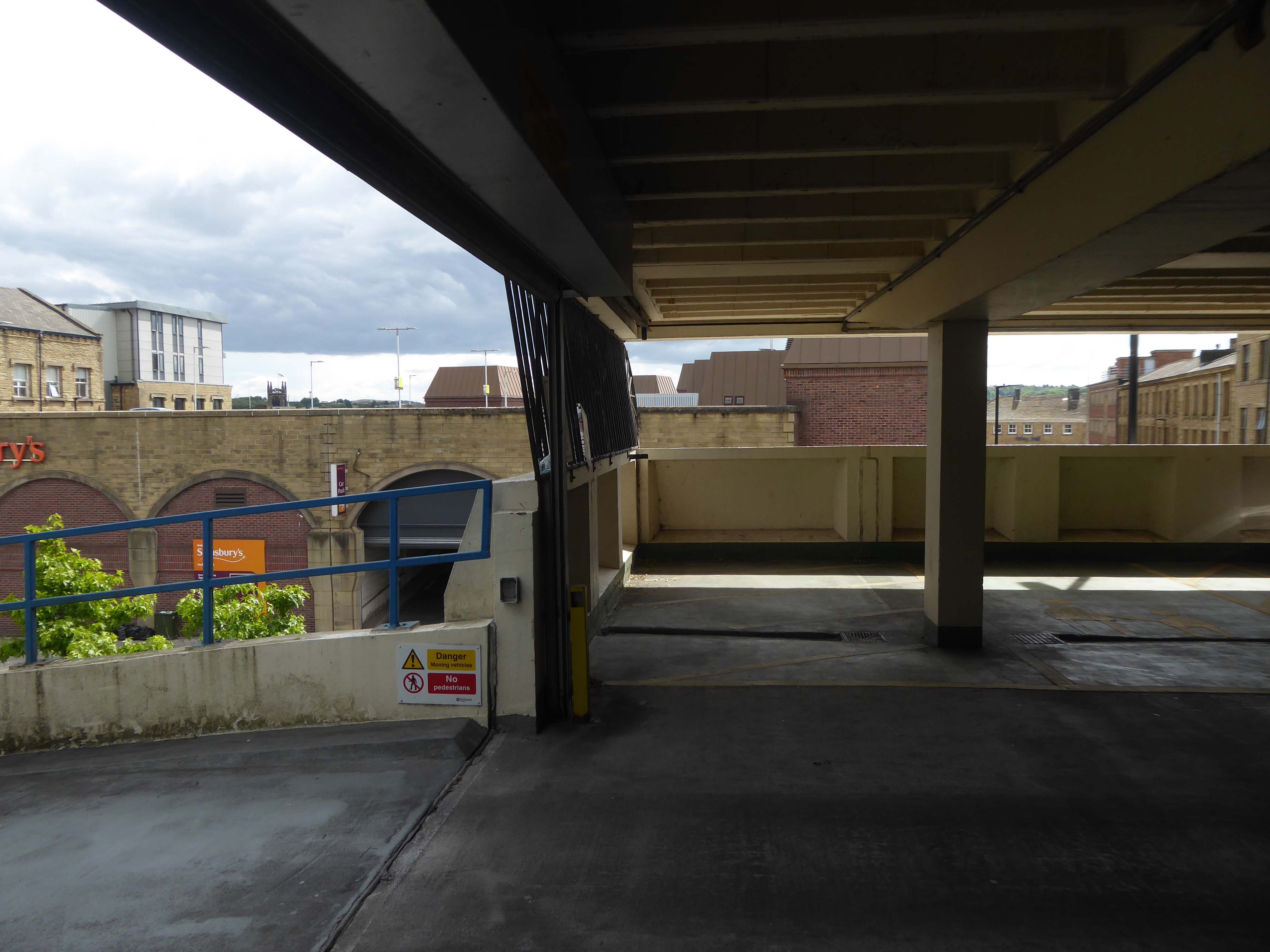
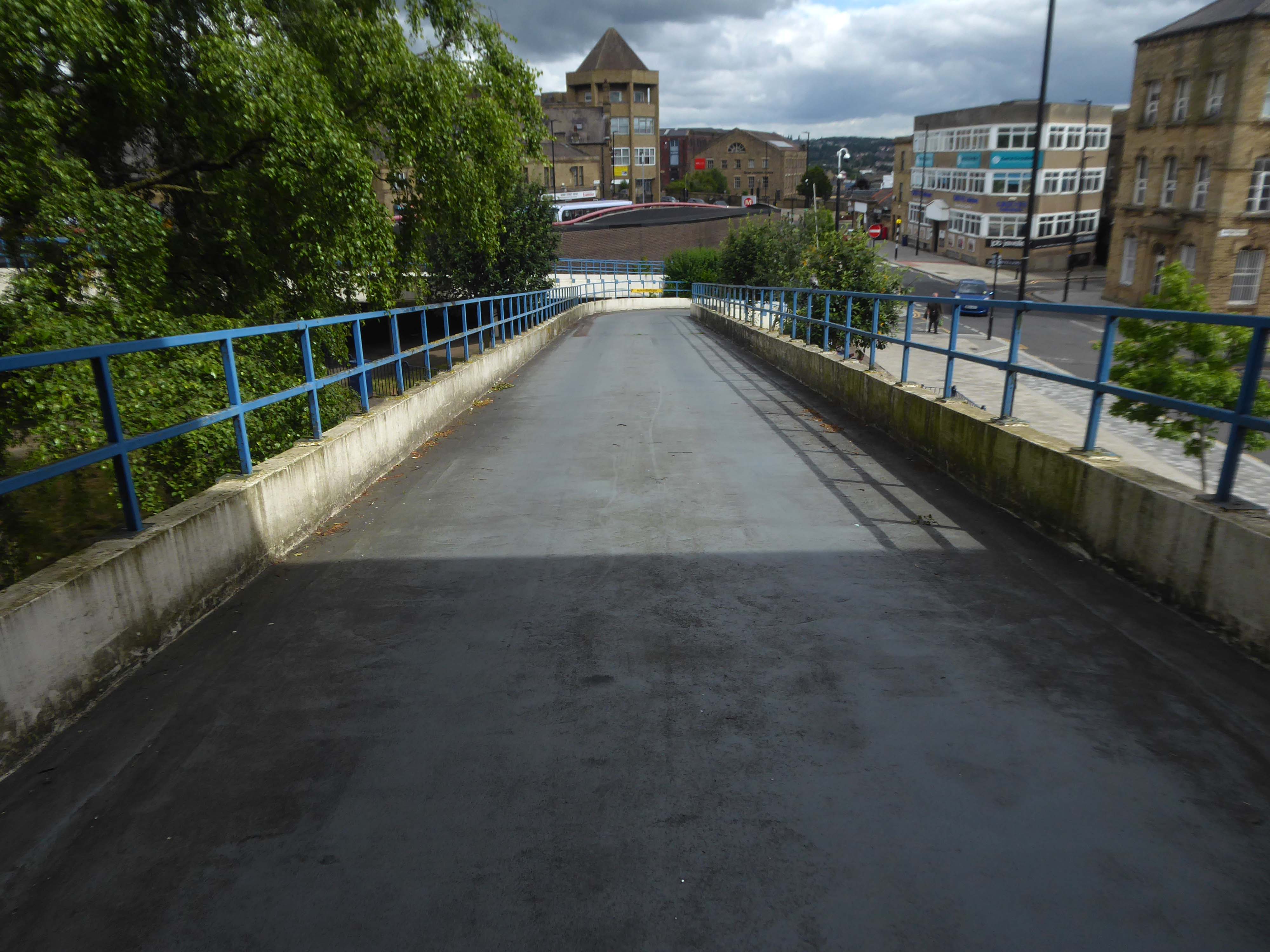
I was informed by the seriously erudite Christopher Marsden that the bus station and car park were the work of Derek C W Vane: Borough Architect 1972-1974.
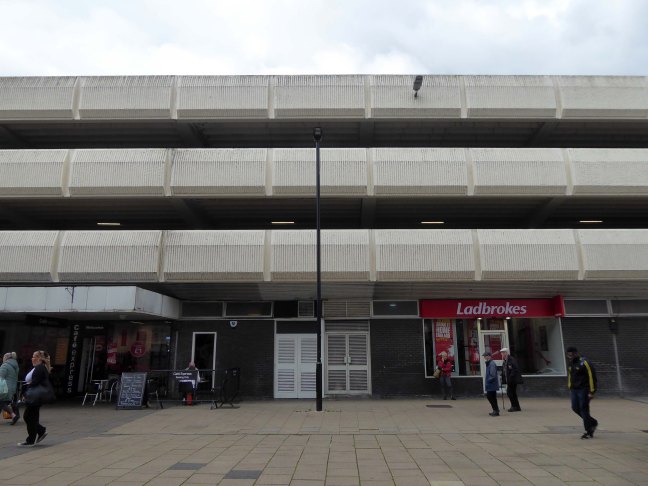
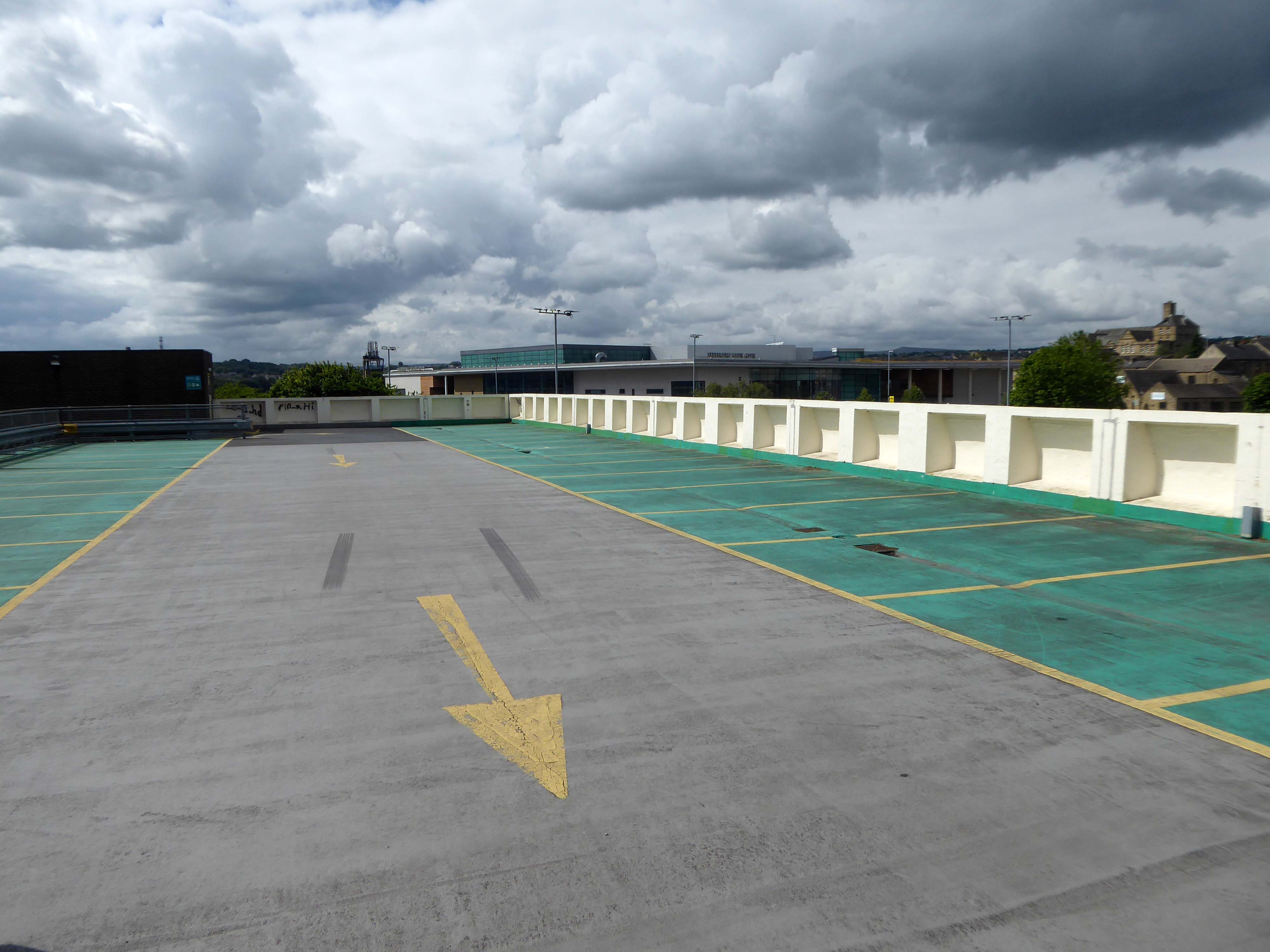
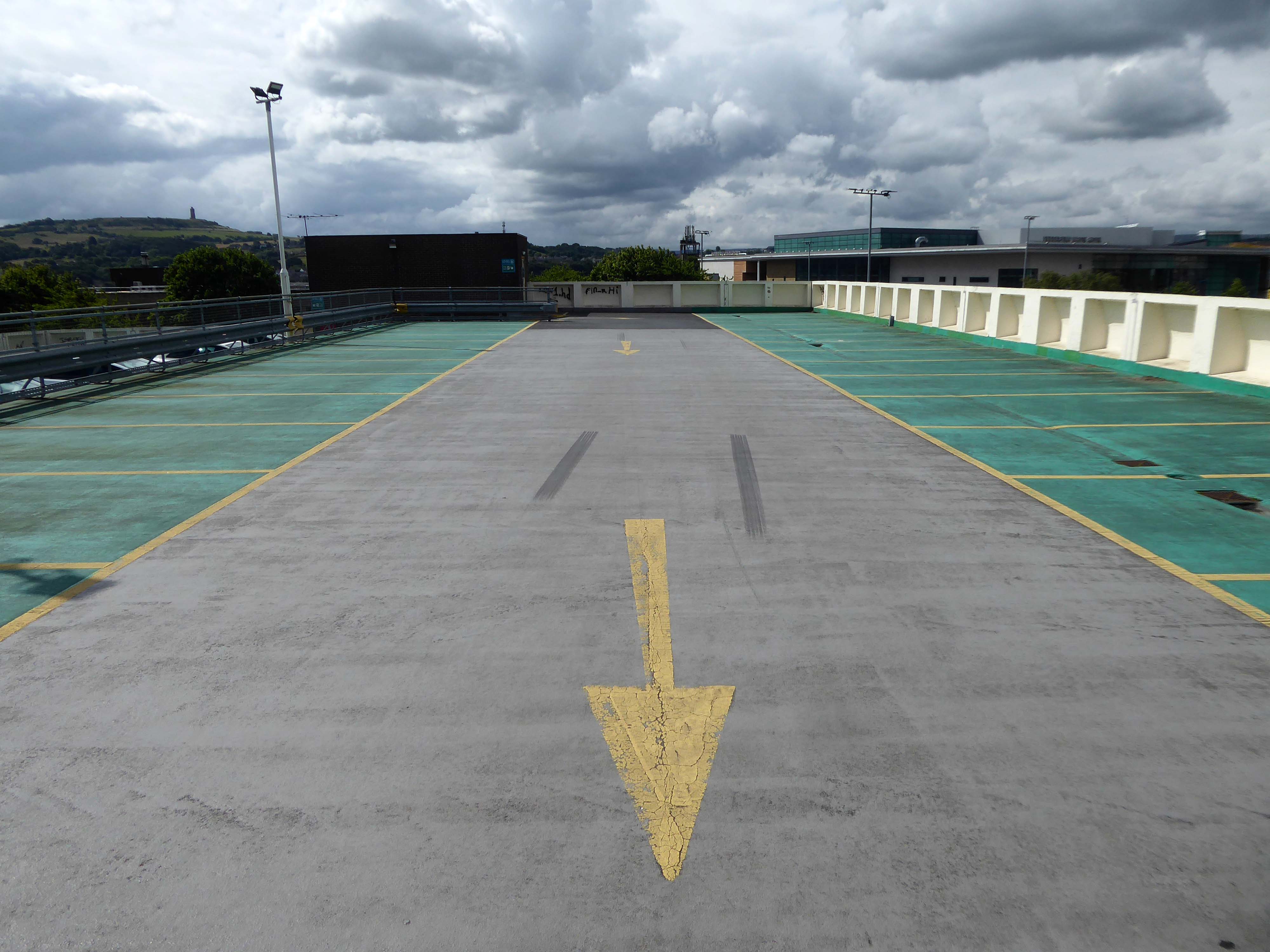
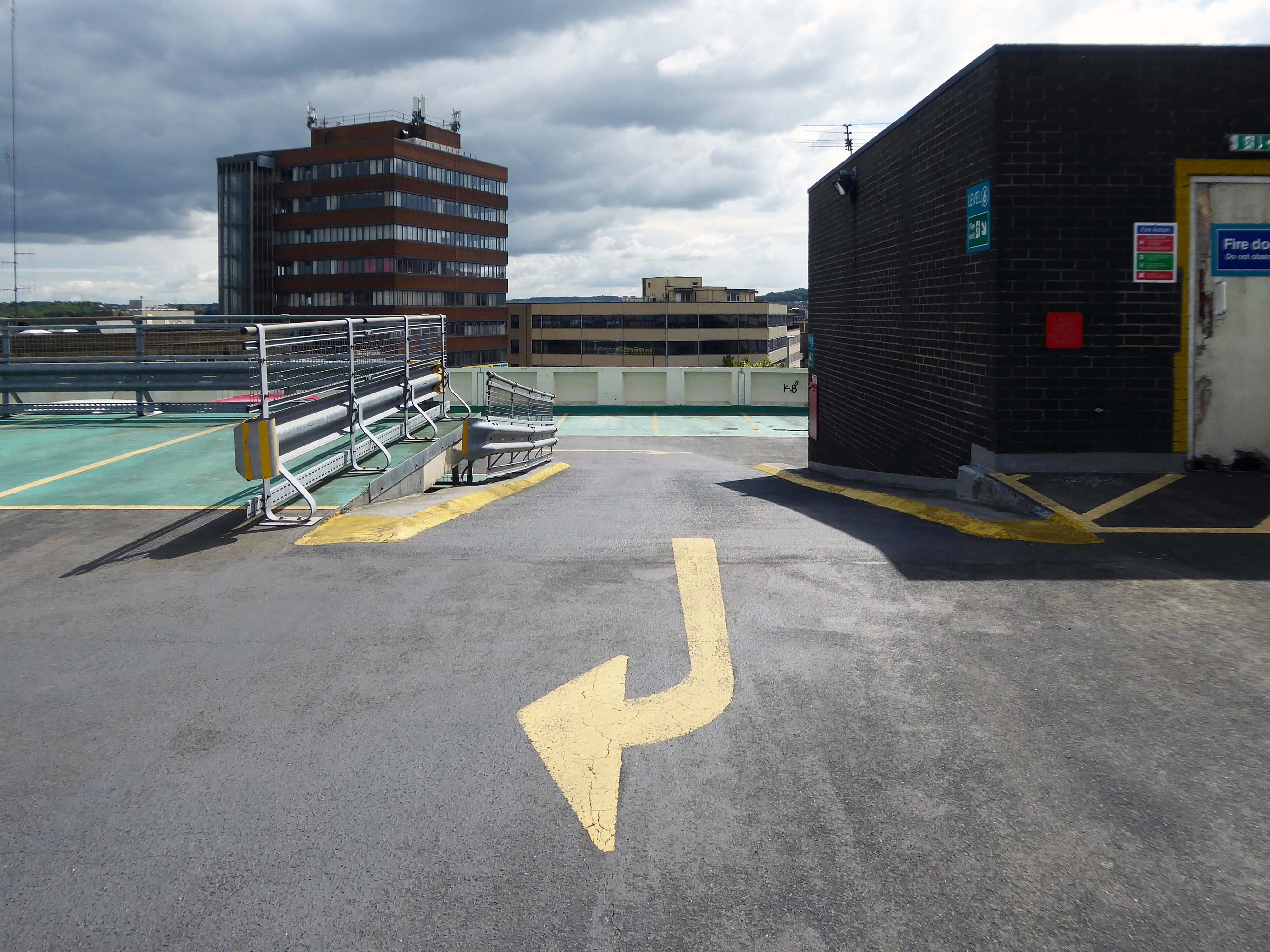
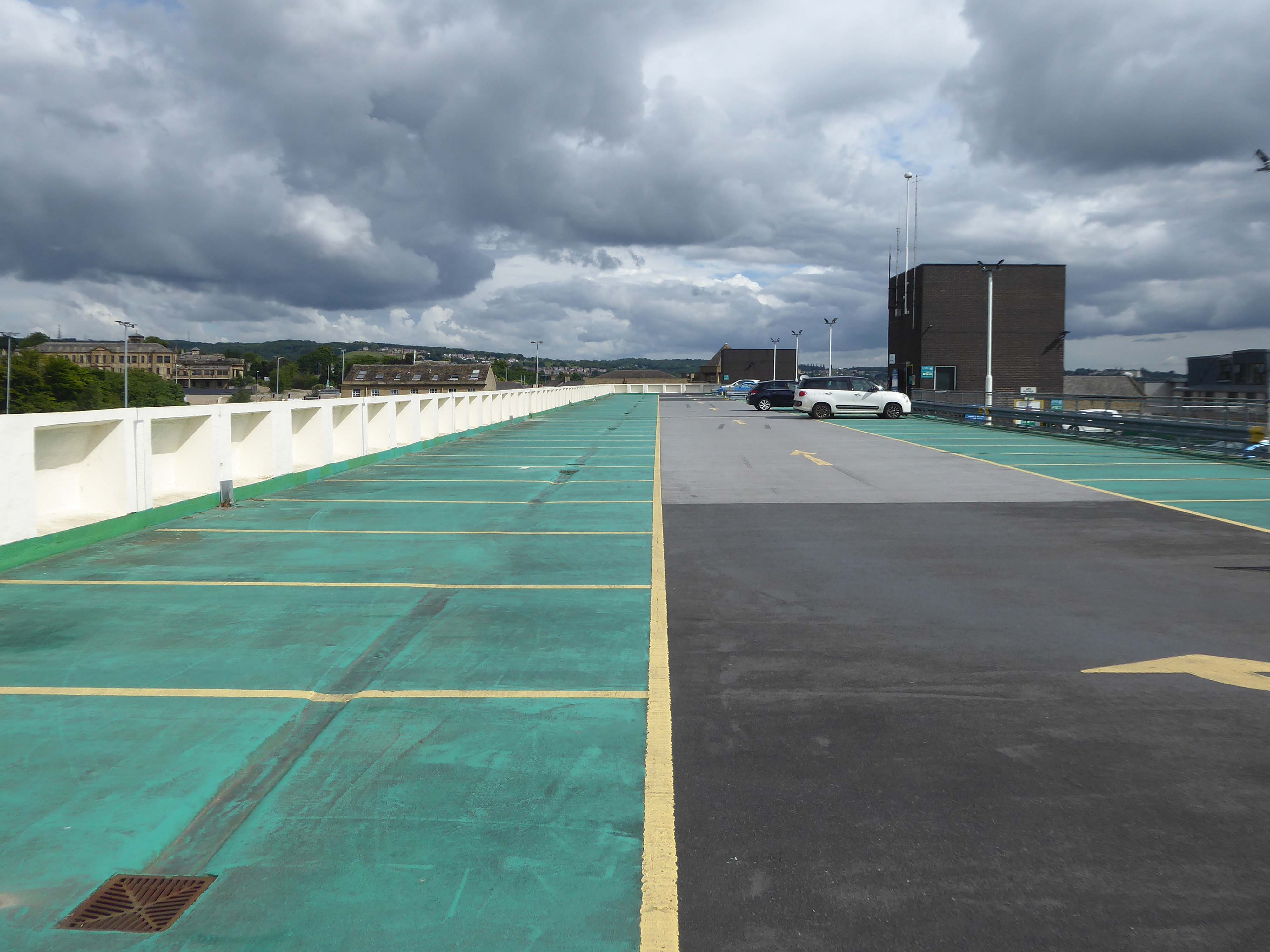
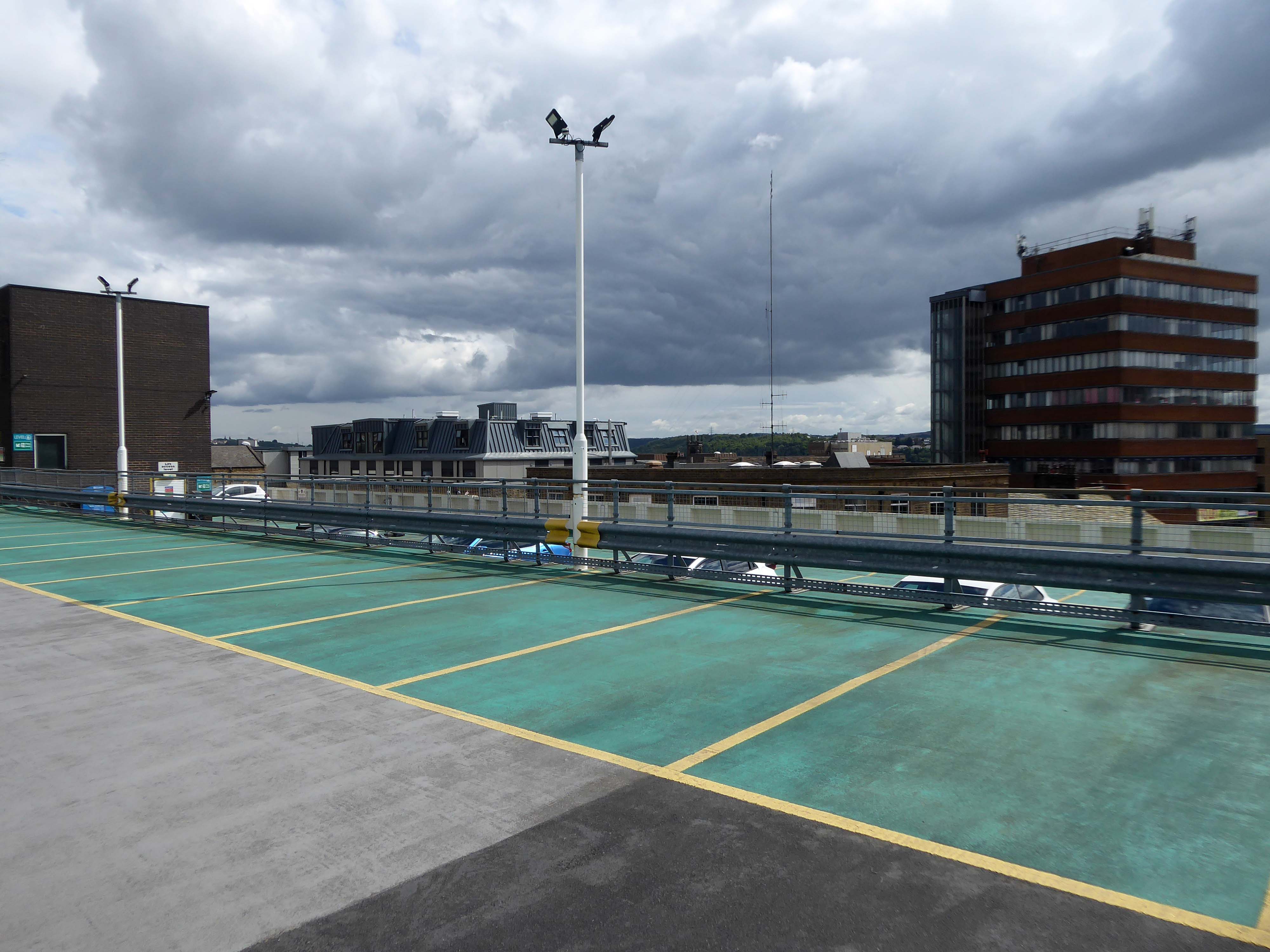
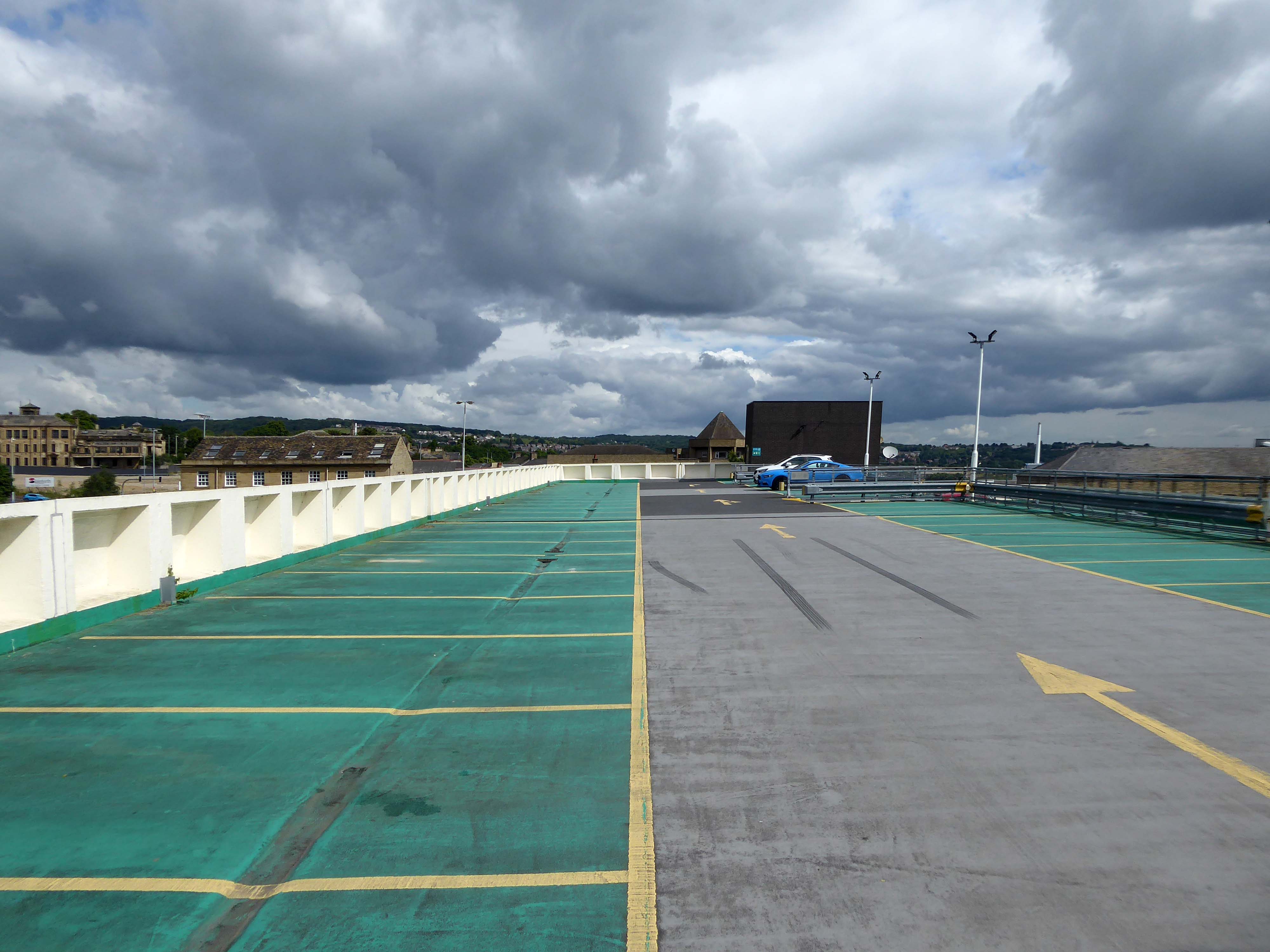
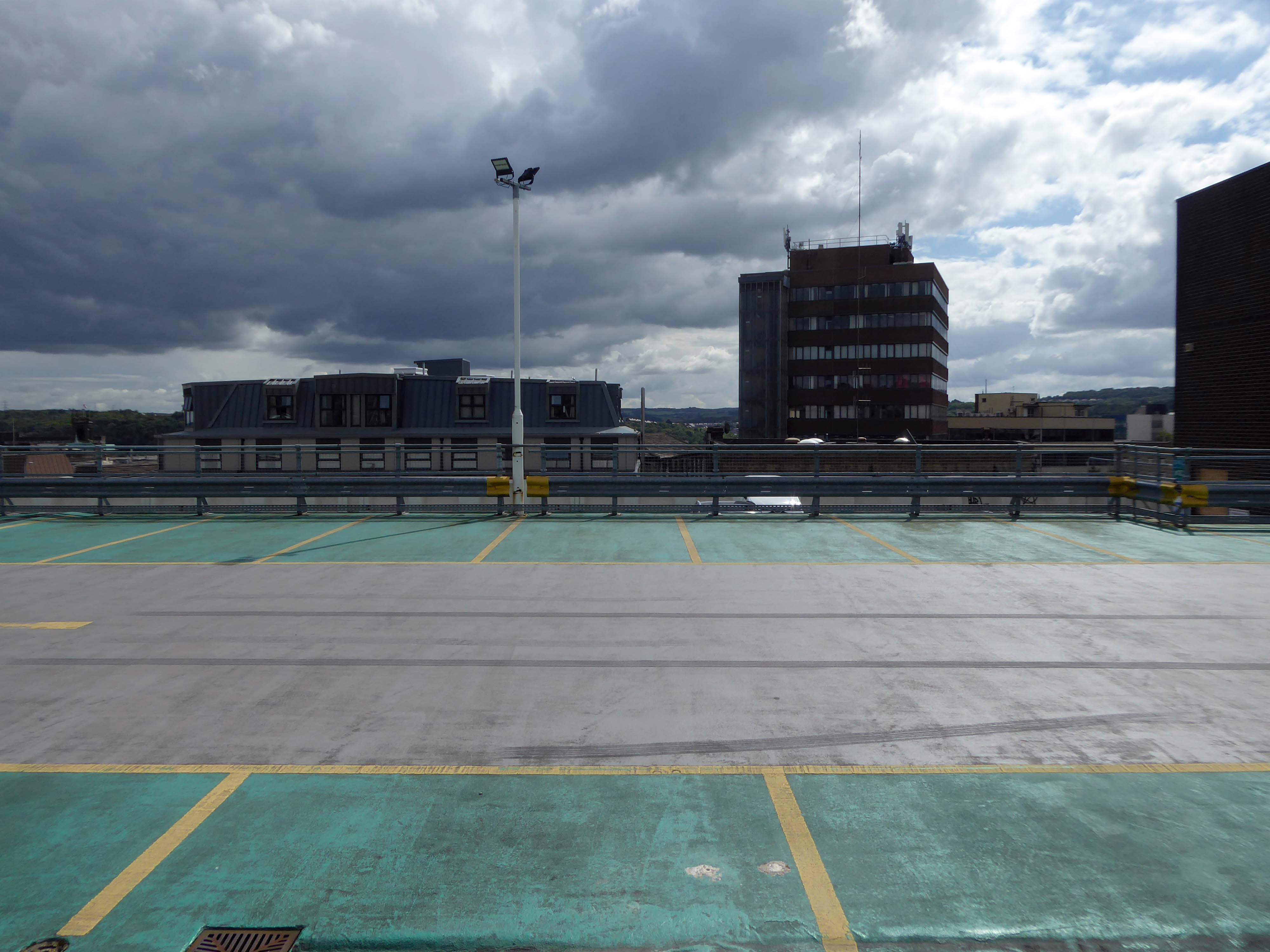
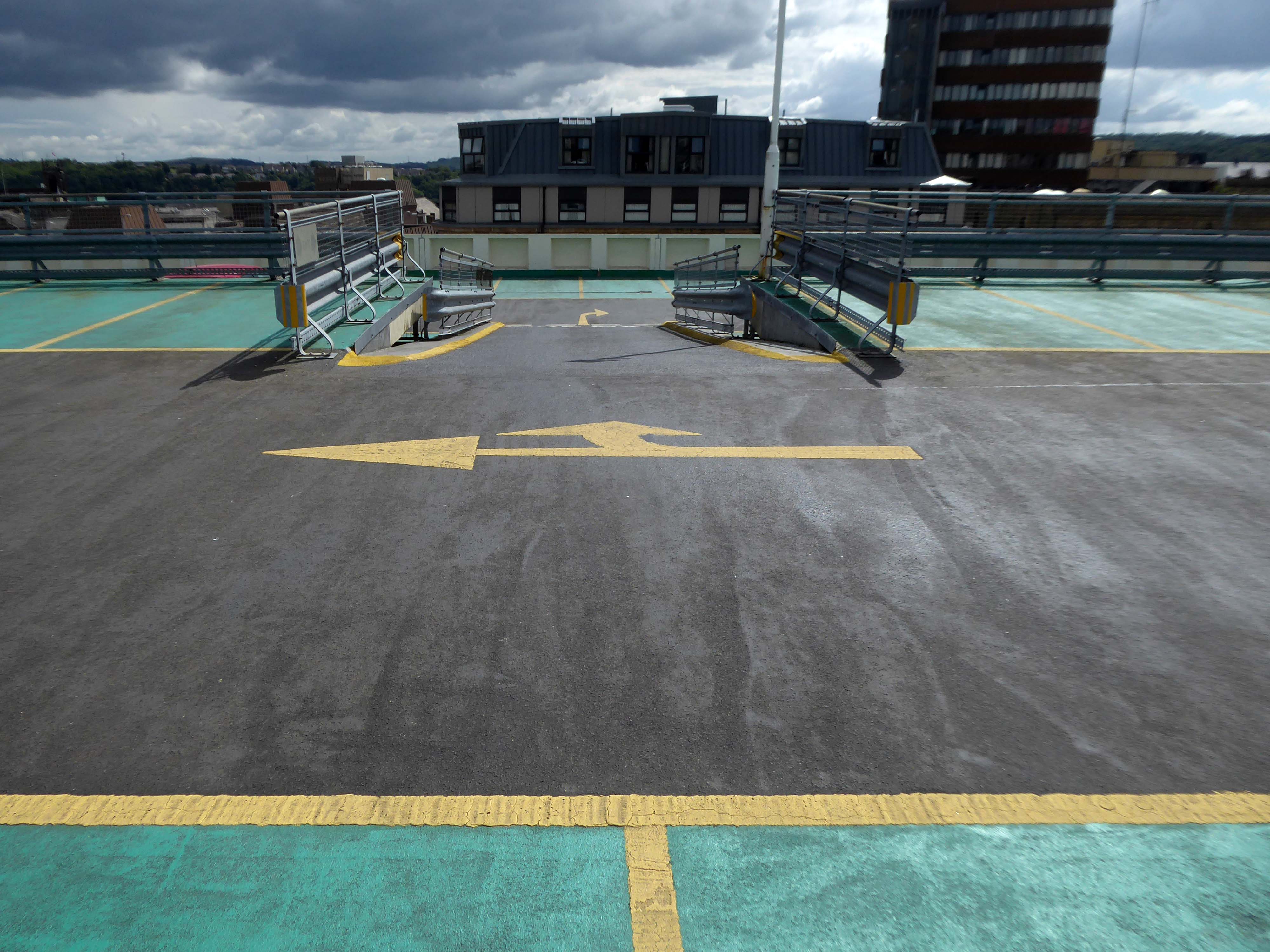
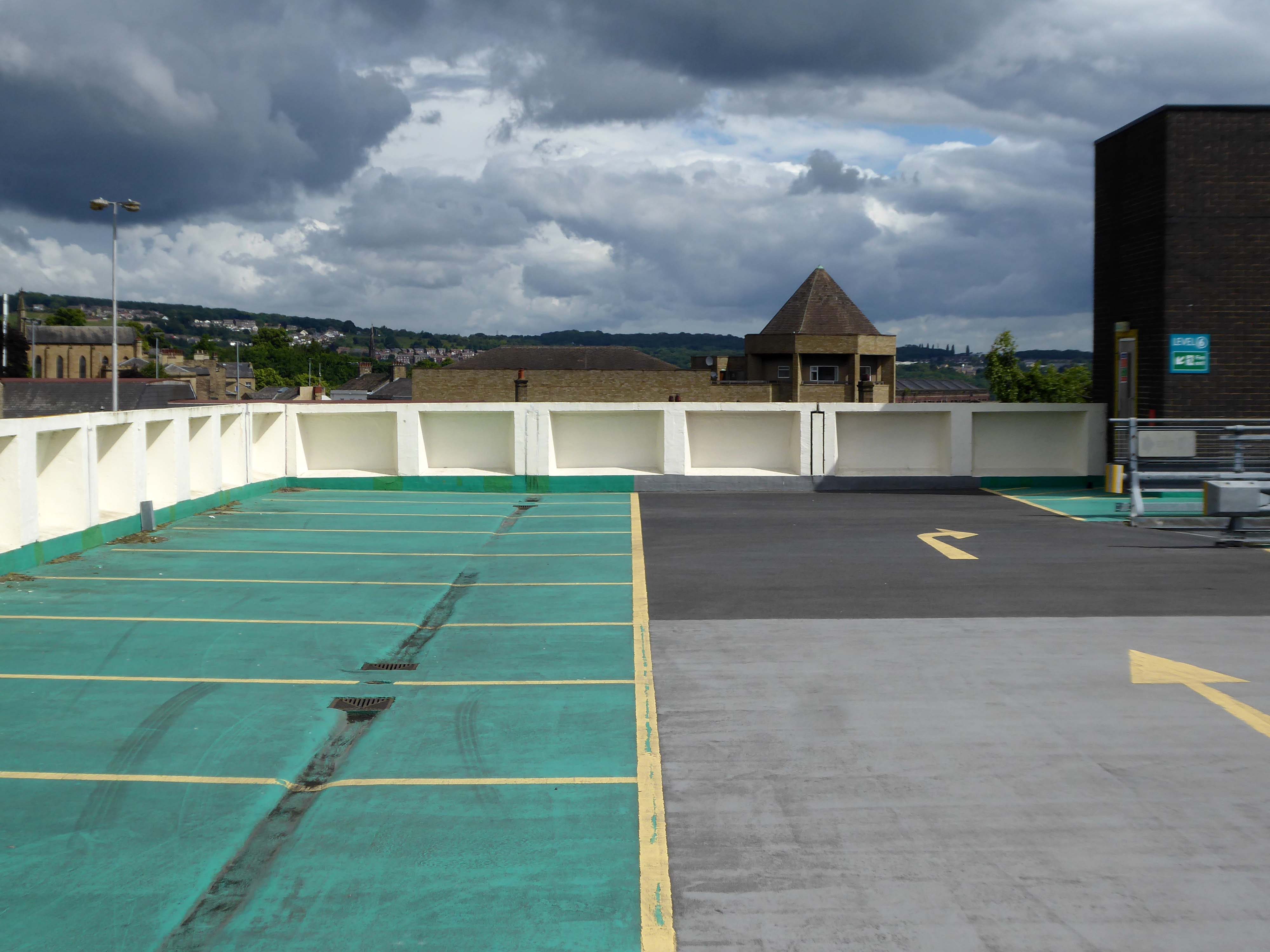
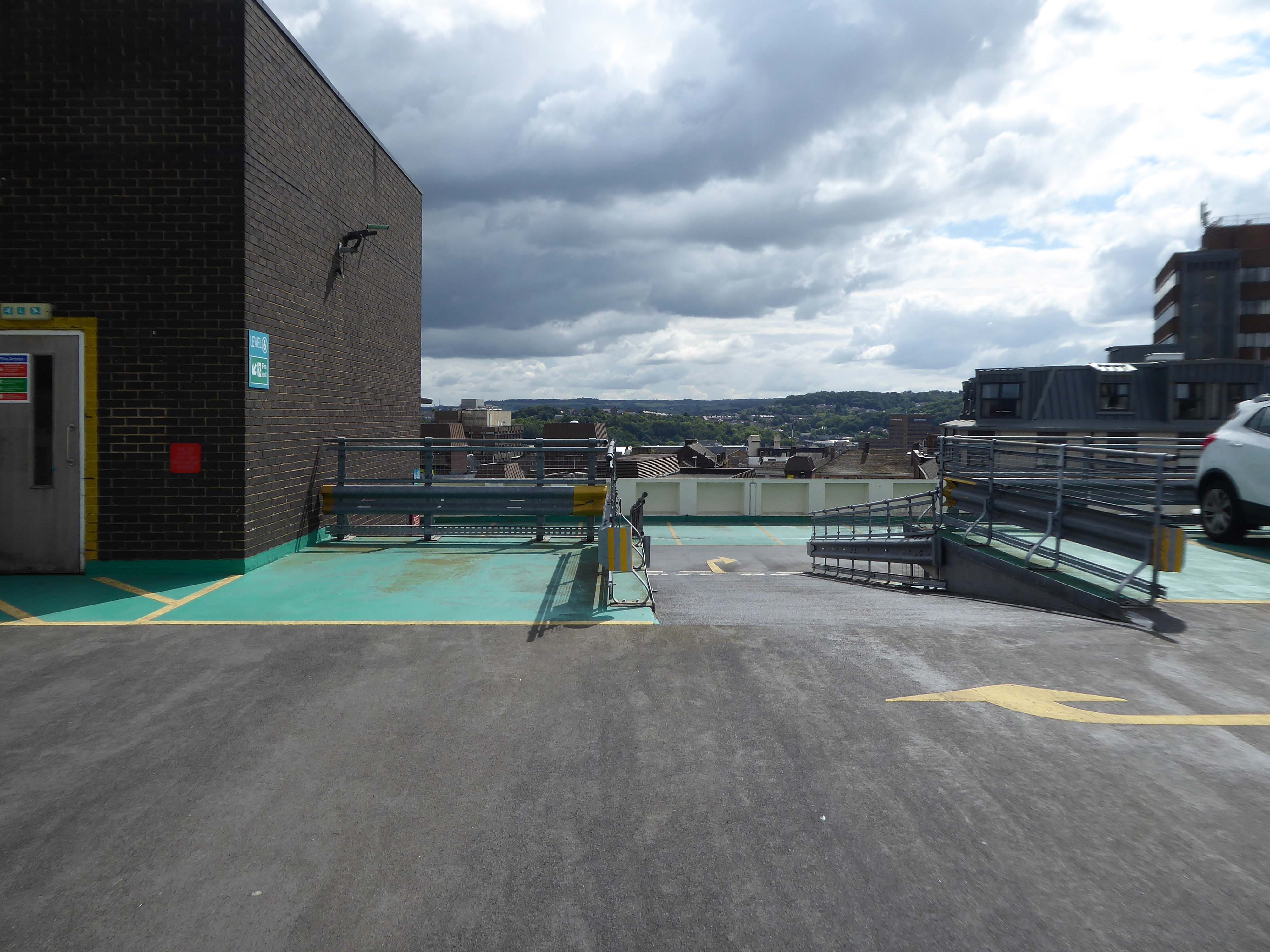
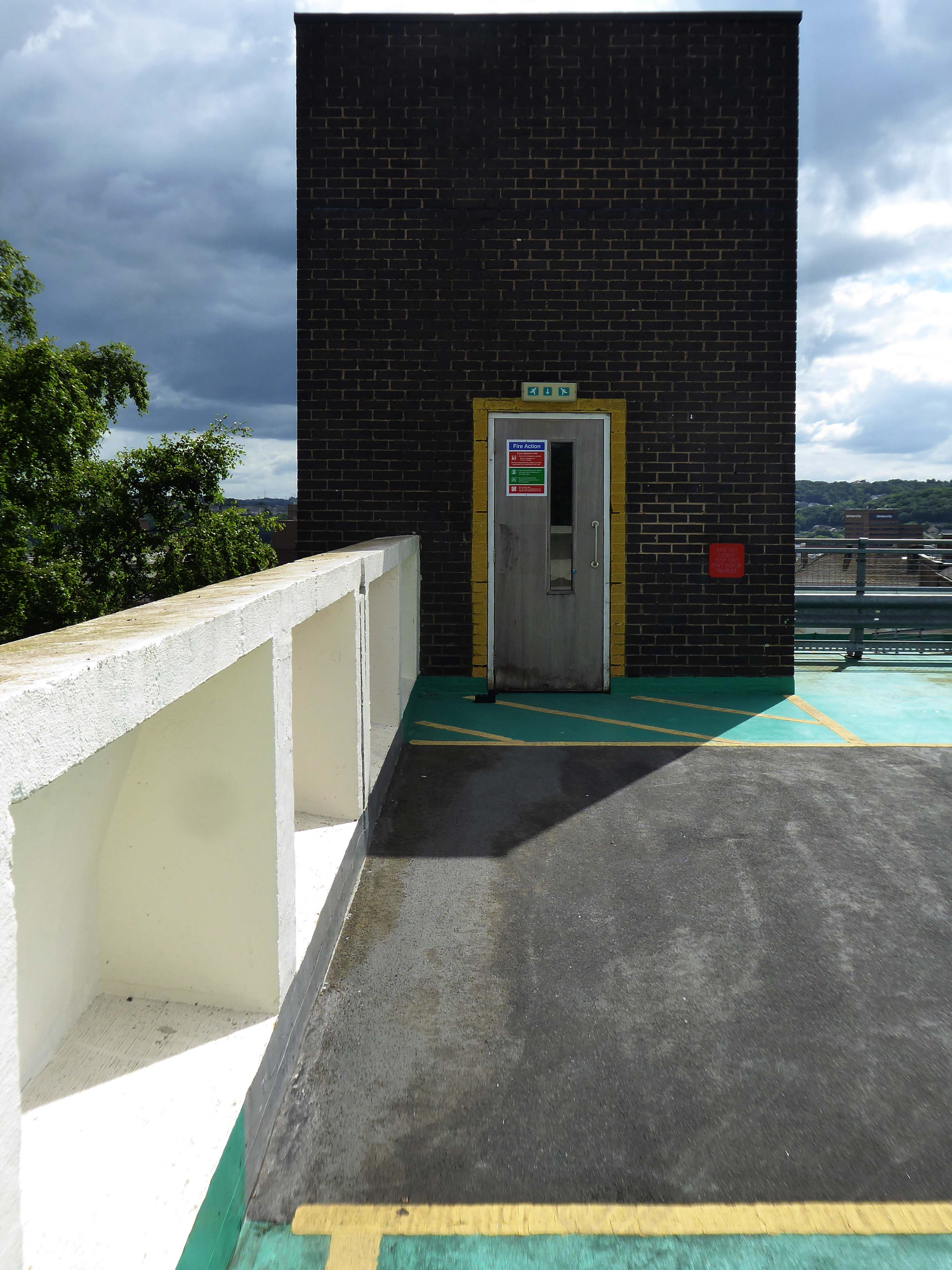
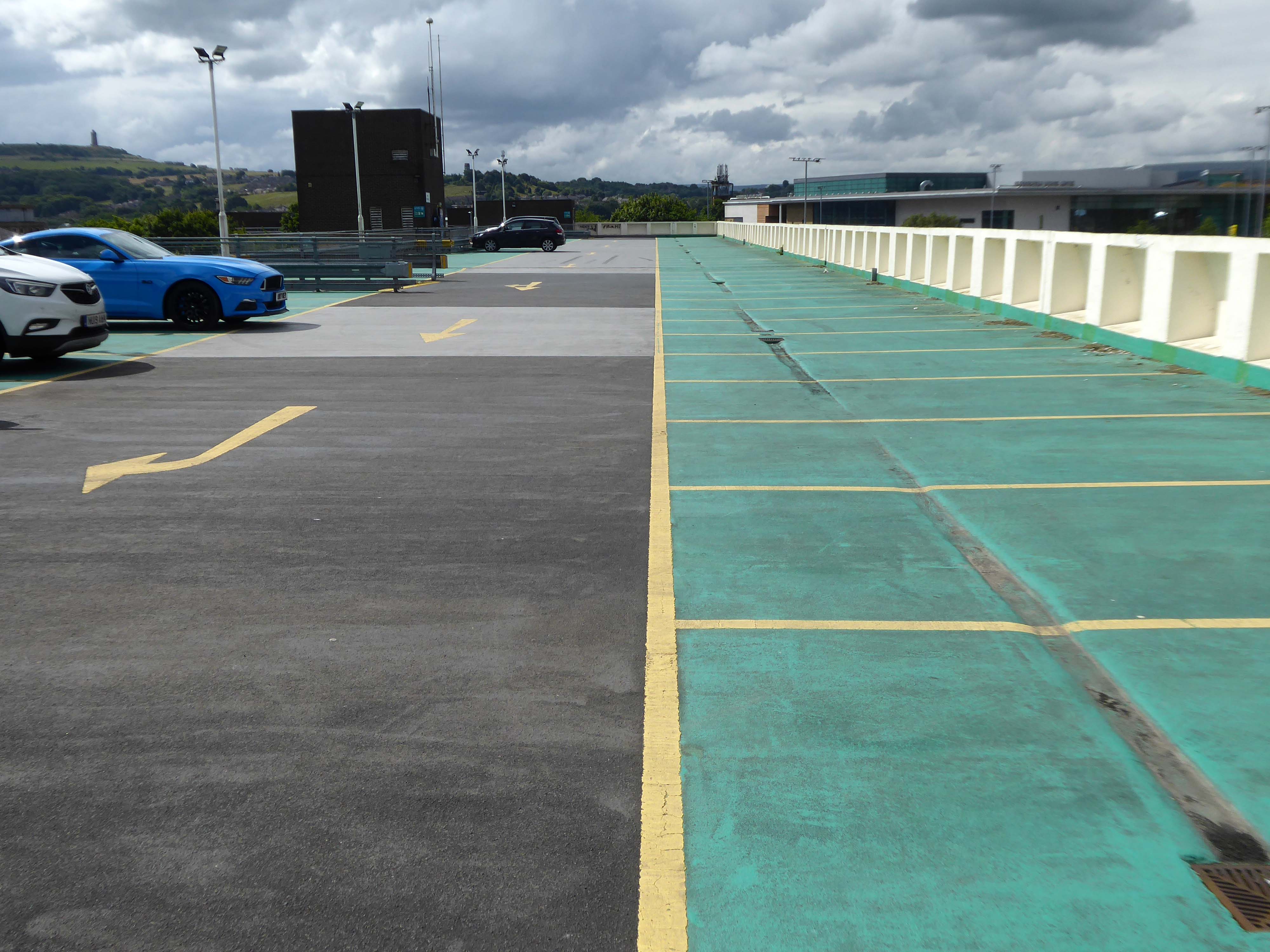
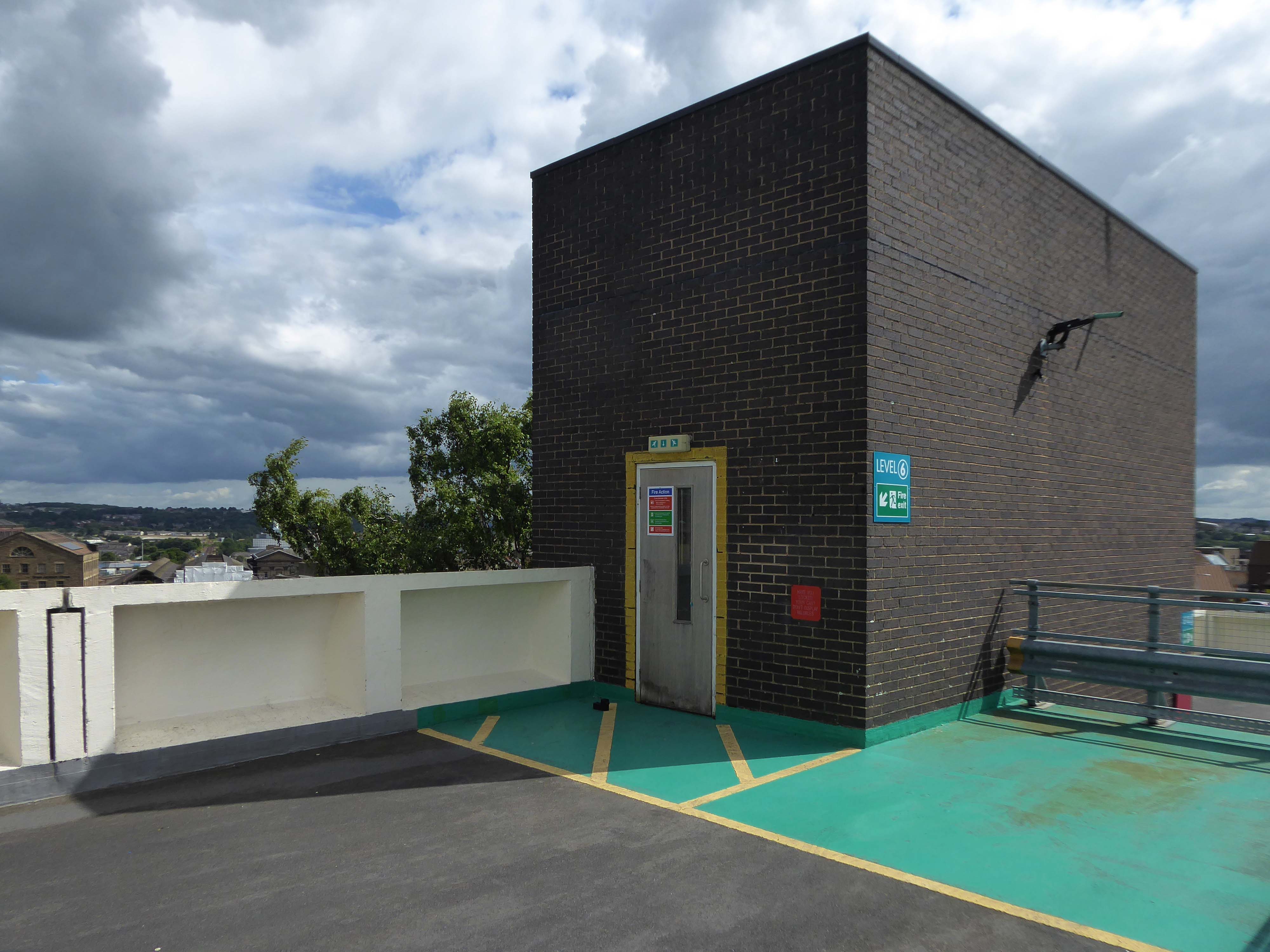
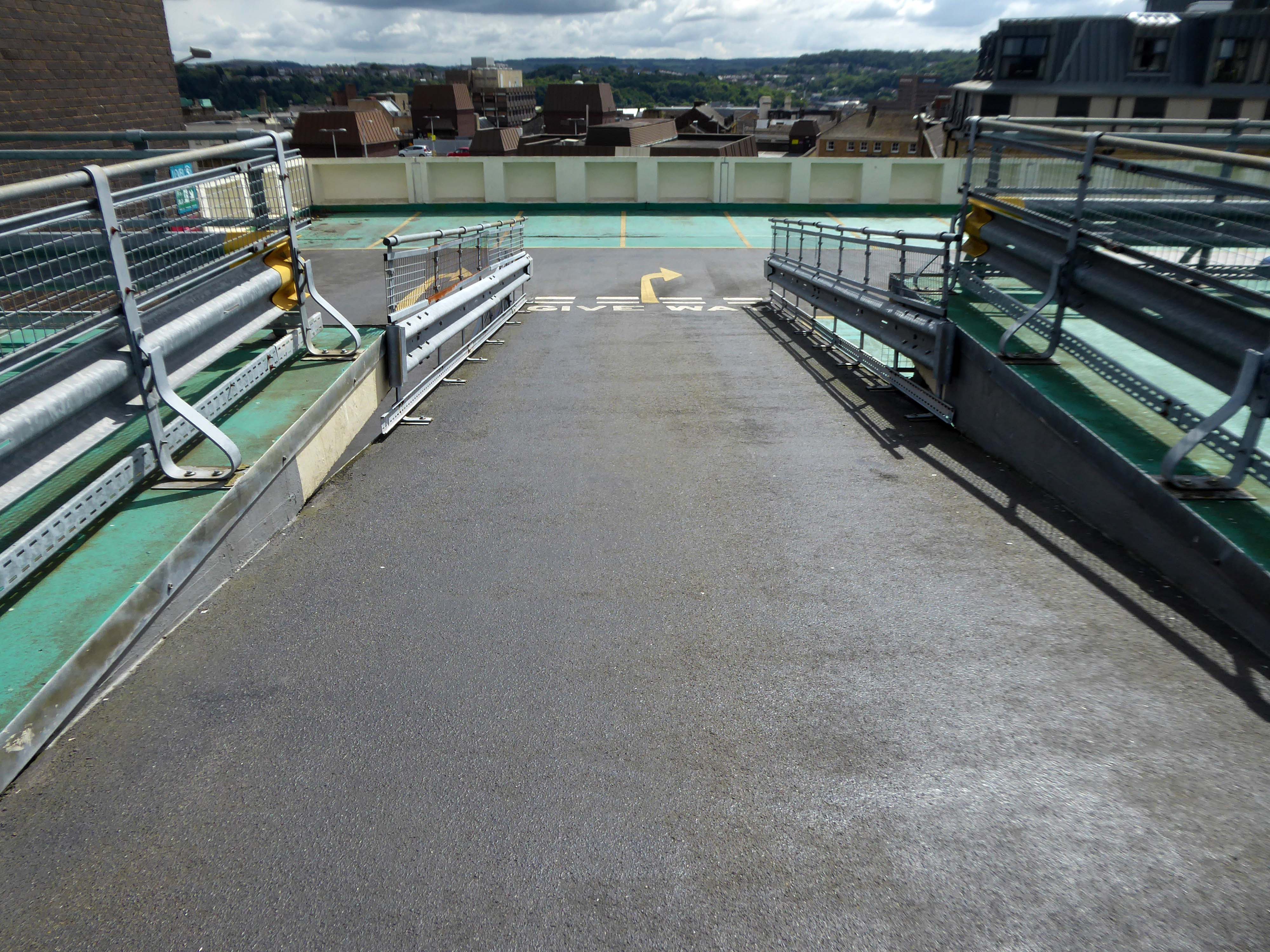
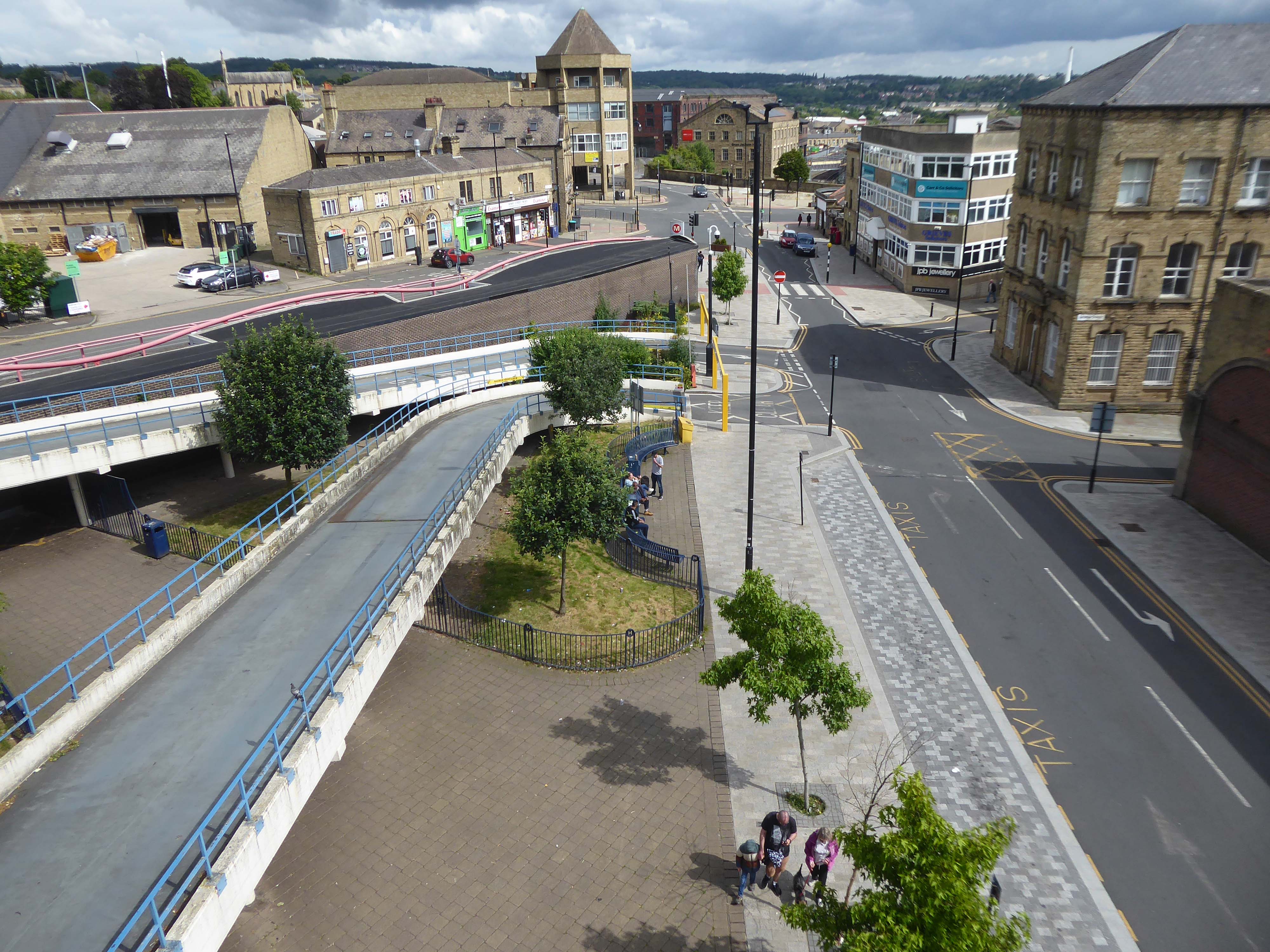
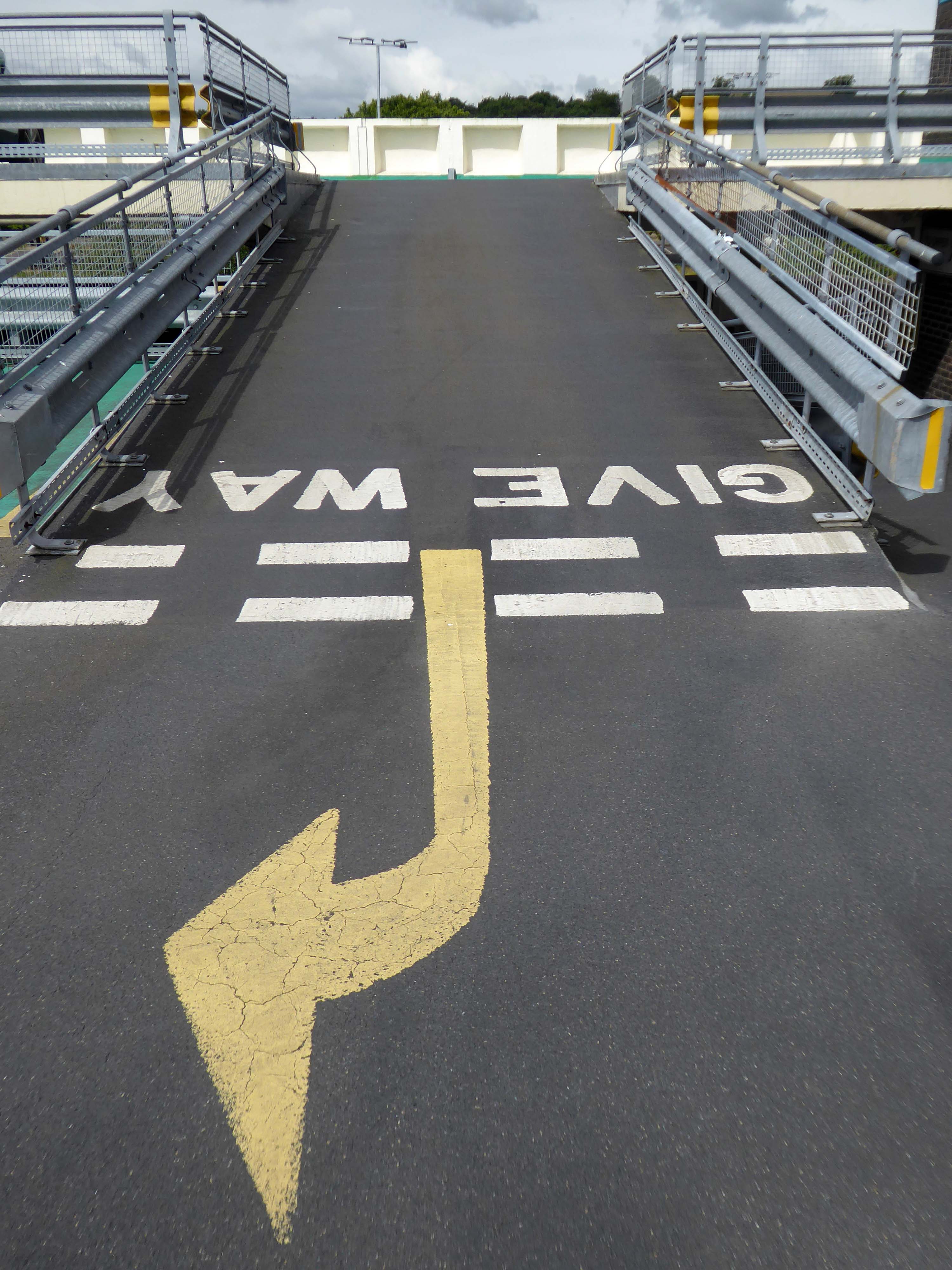
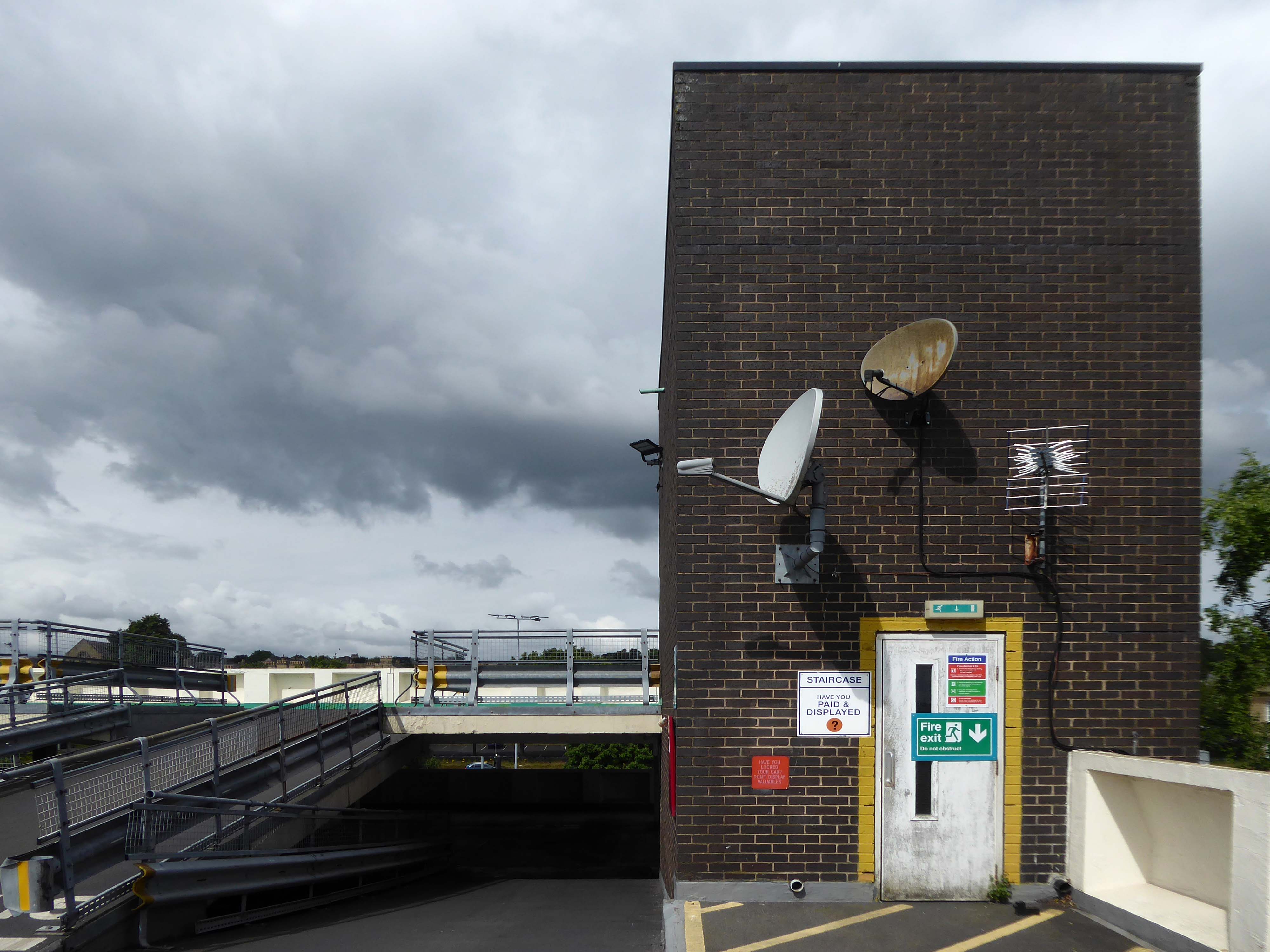
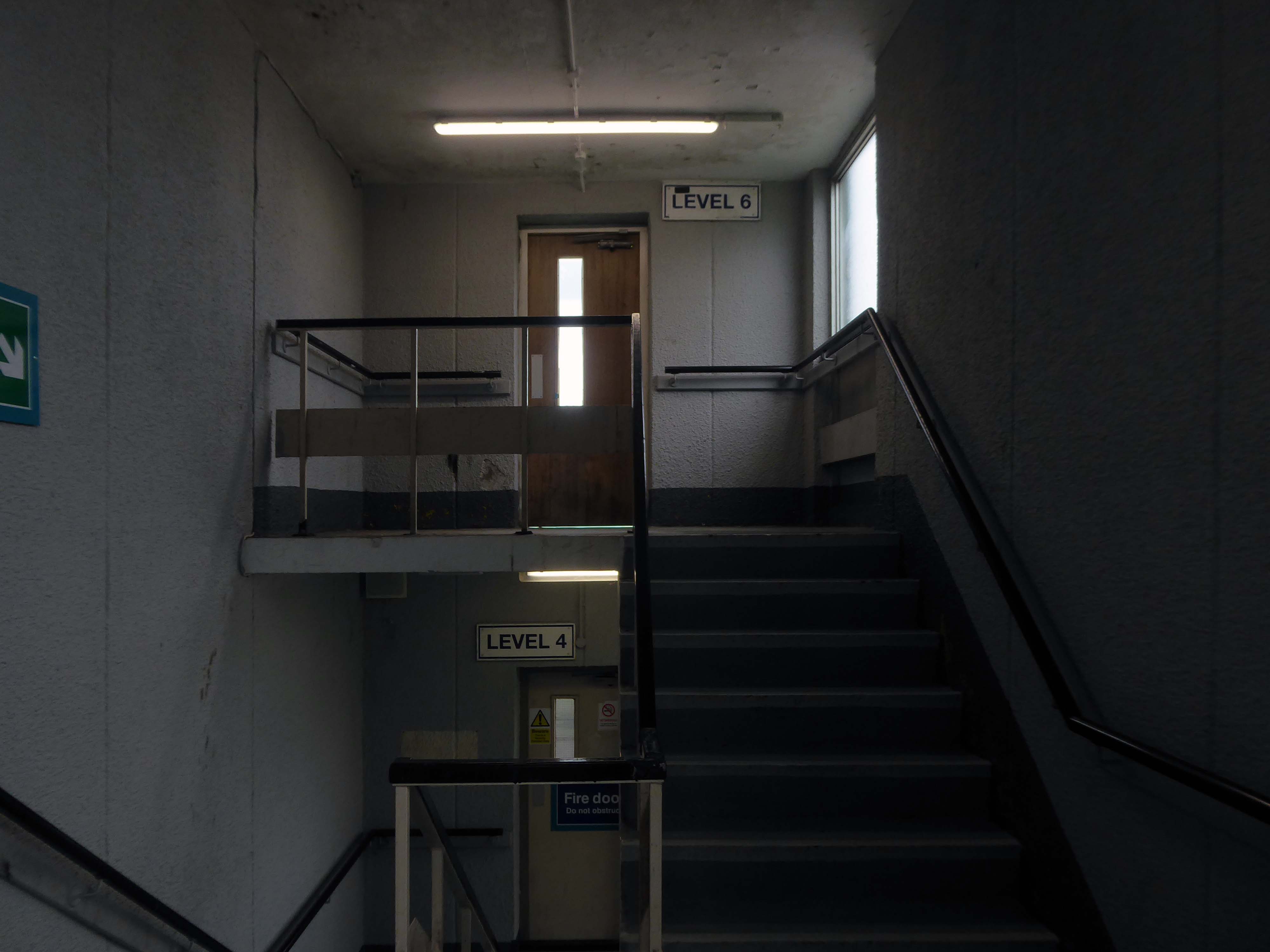
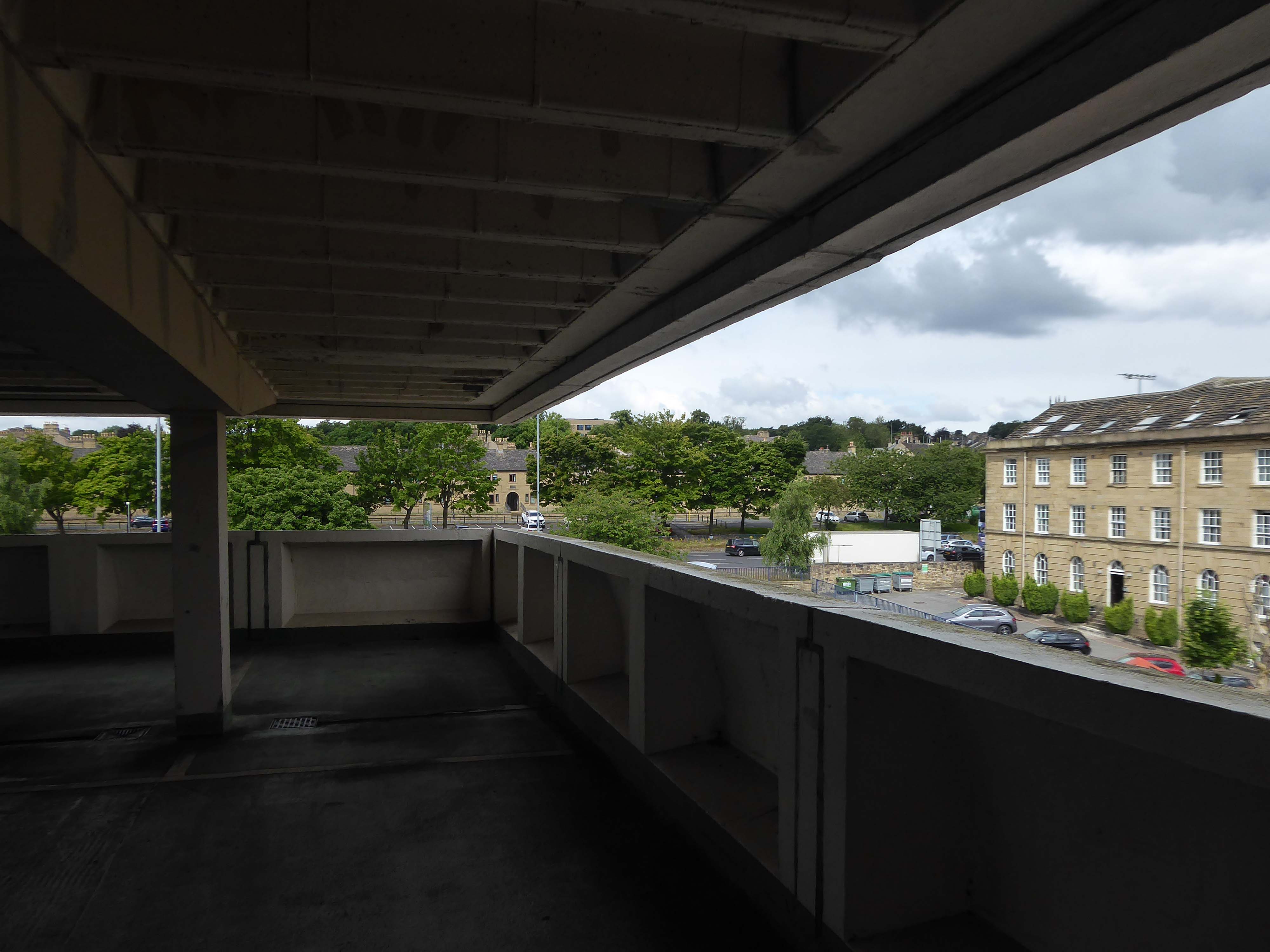
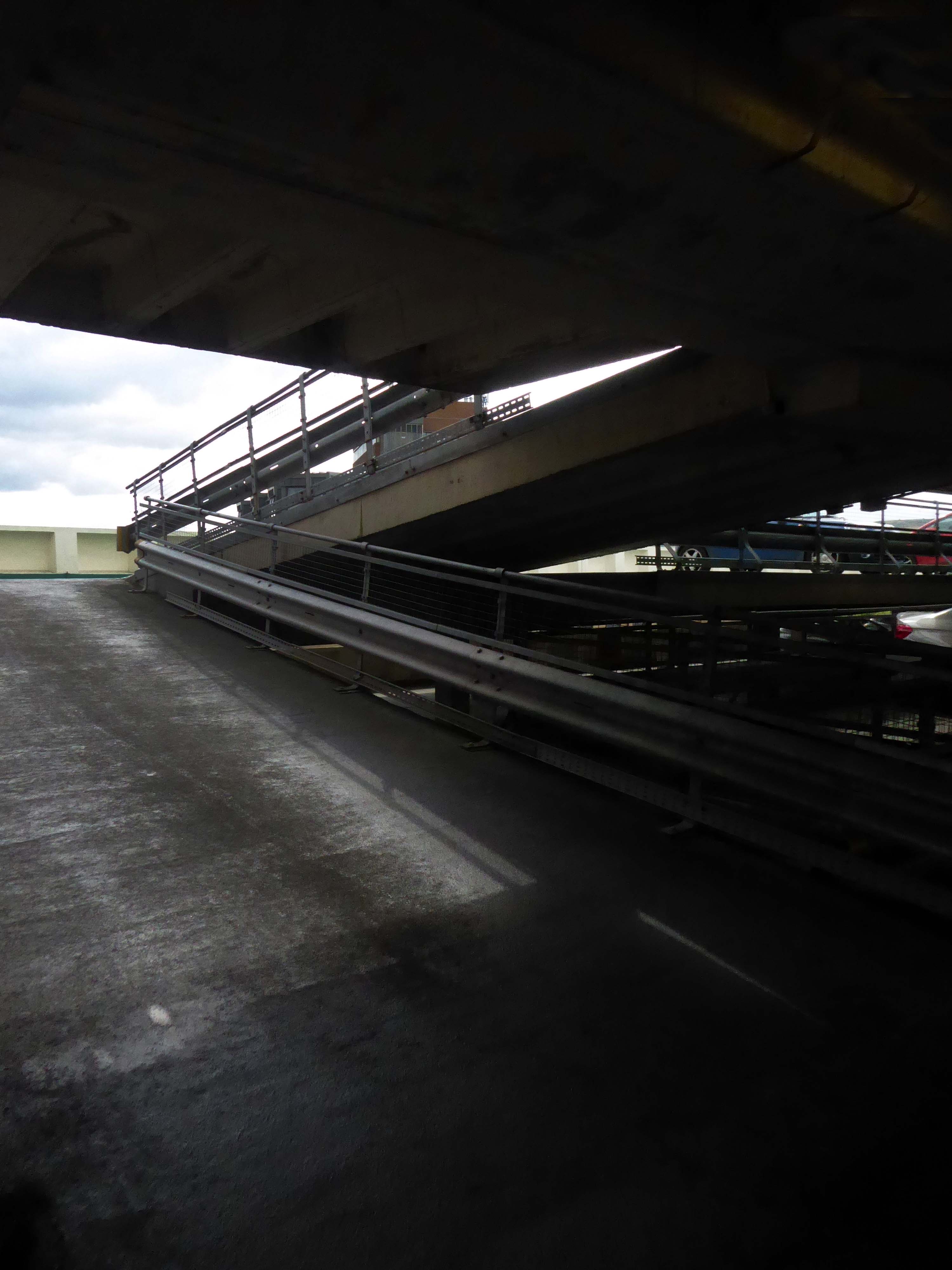
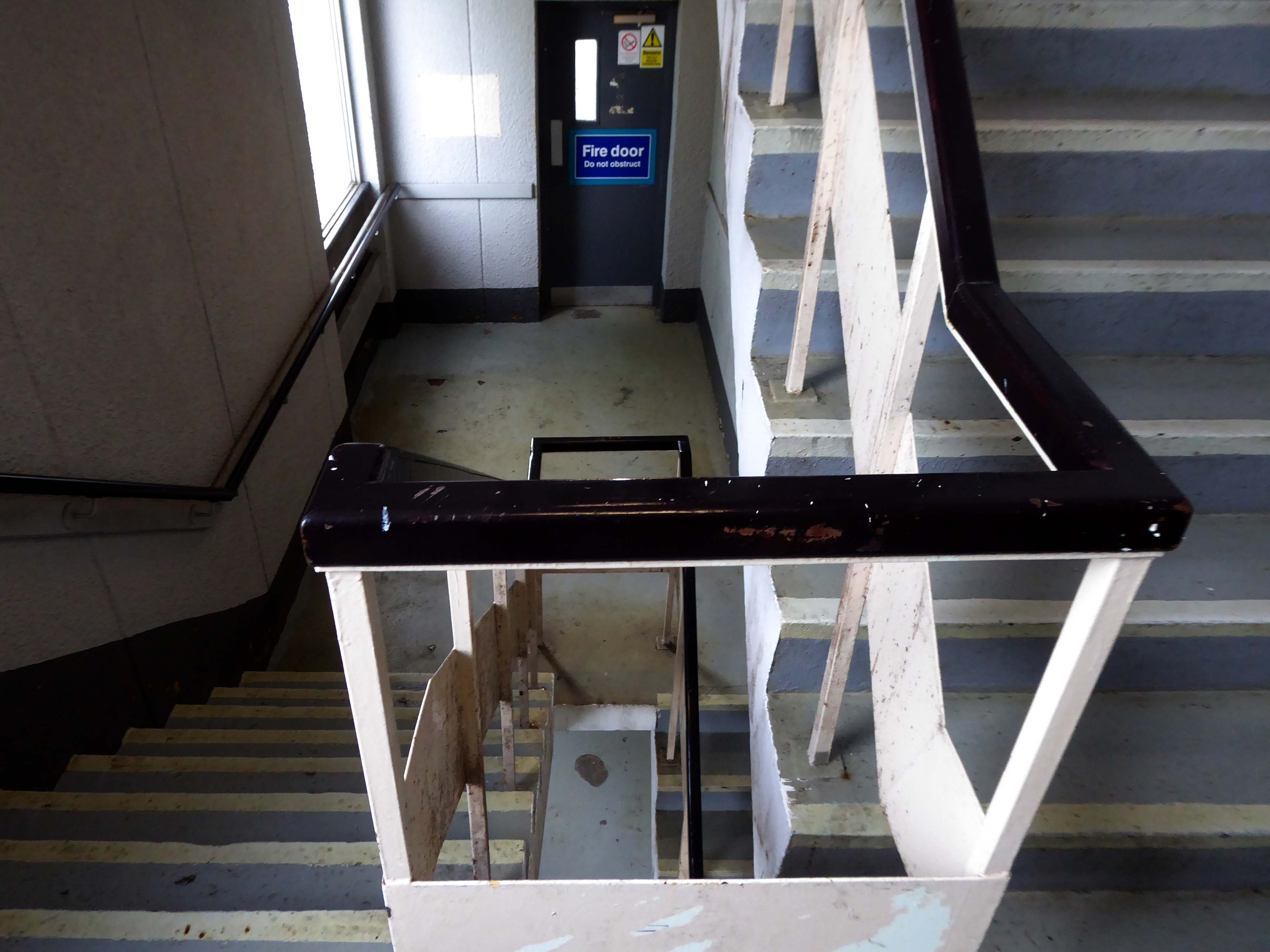
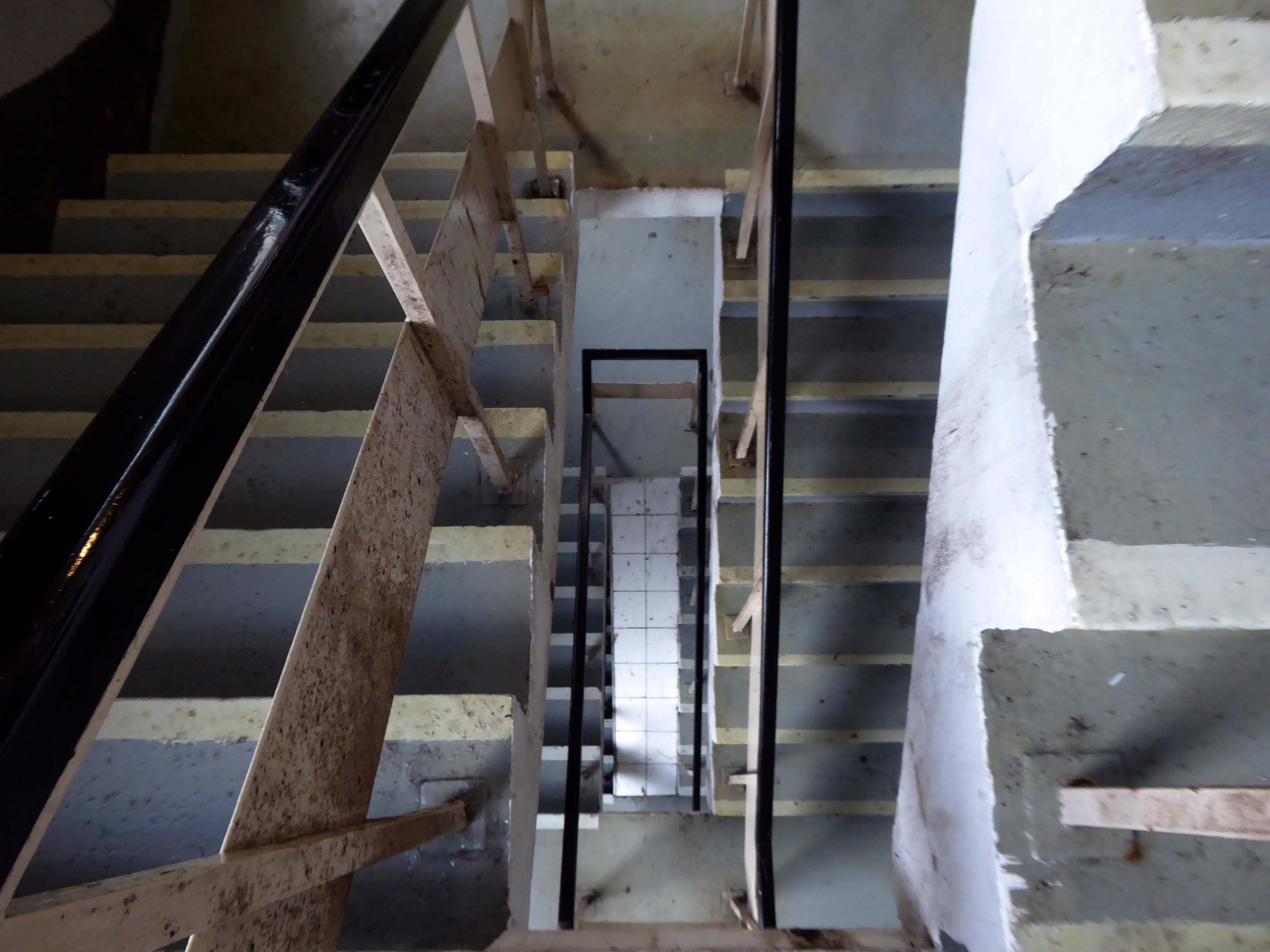
Having visited and photographed the bus station in 2016 I thought that it was about time I went up in the world, to the top level of the car park.
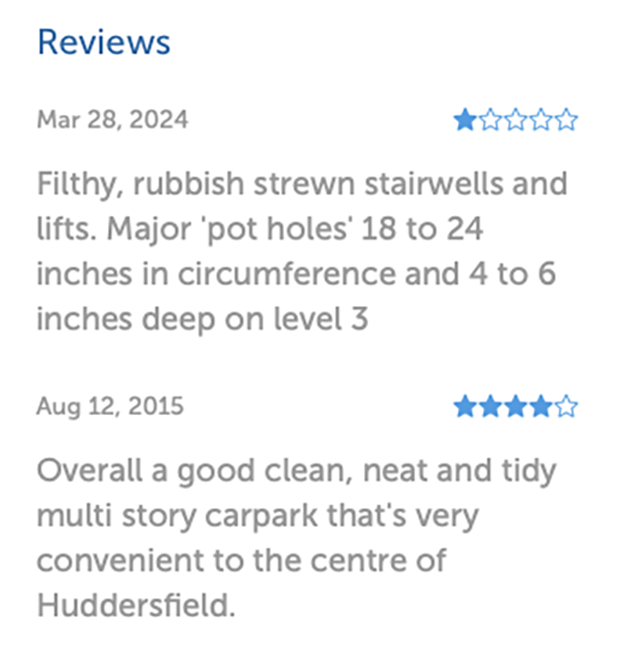
Mixed opinions from Parkopedia reviewers – let’s take a look around.
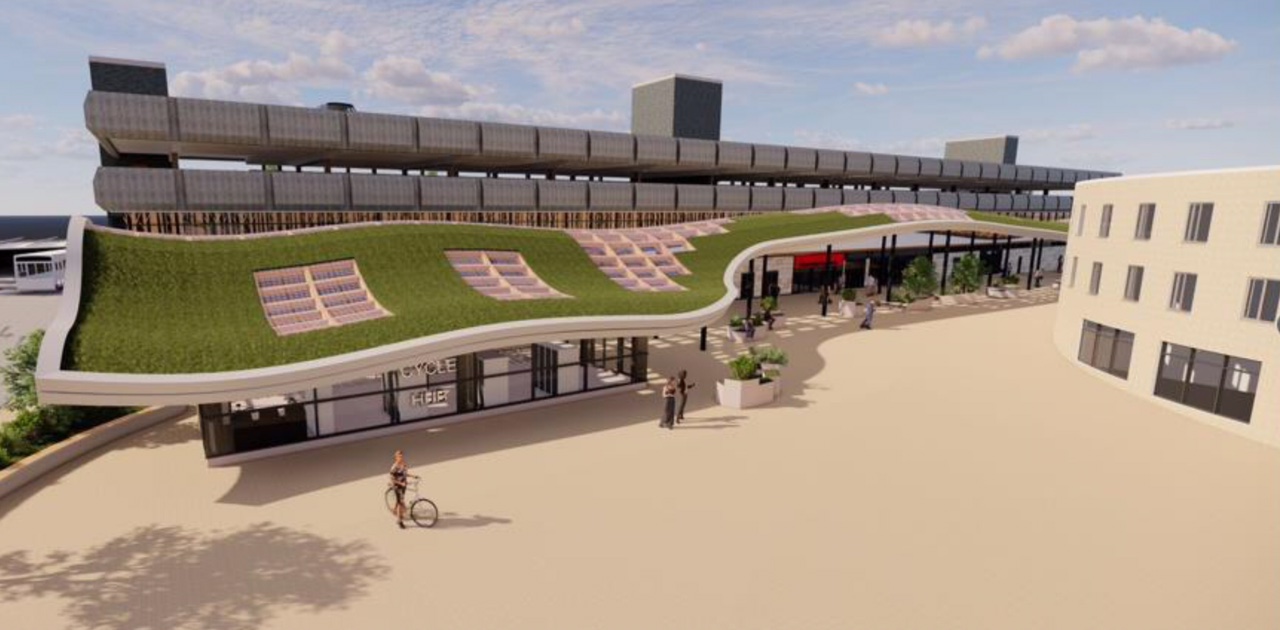
There are plans for refurbishment outlined in 2022 in the Huddersfield Hub.
The bus station will undergo a major revamp both inside and out and the most striking feature will be a sweeping canopy with a living grass roof which will run right across the main frontage from Macaulay Square to Upperhead Row.
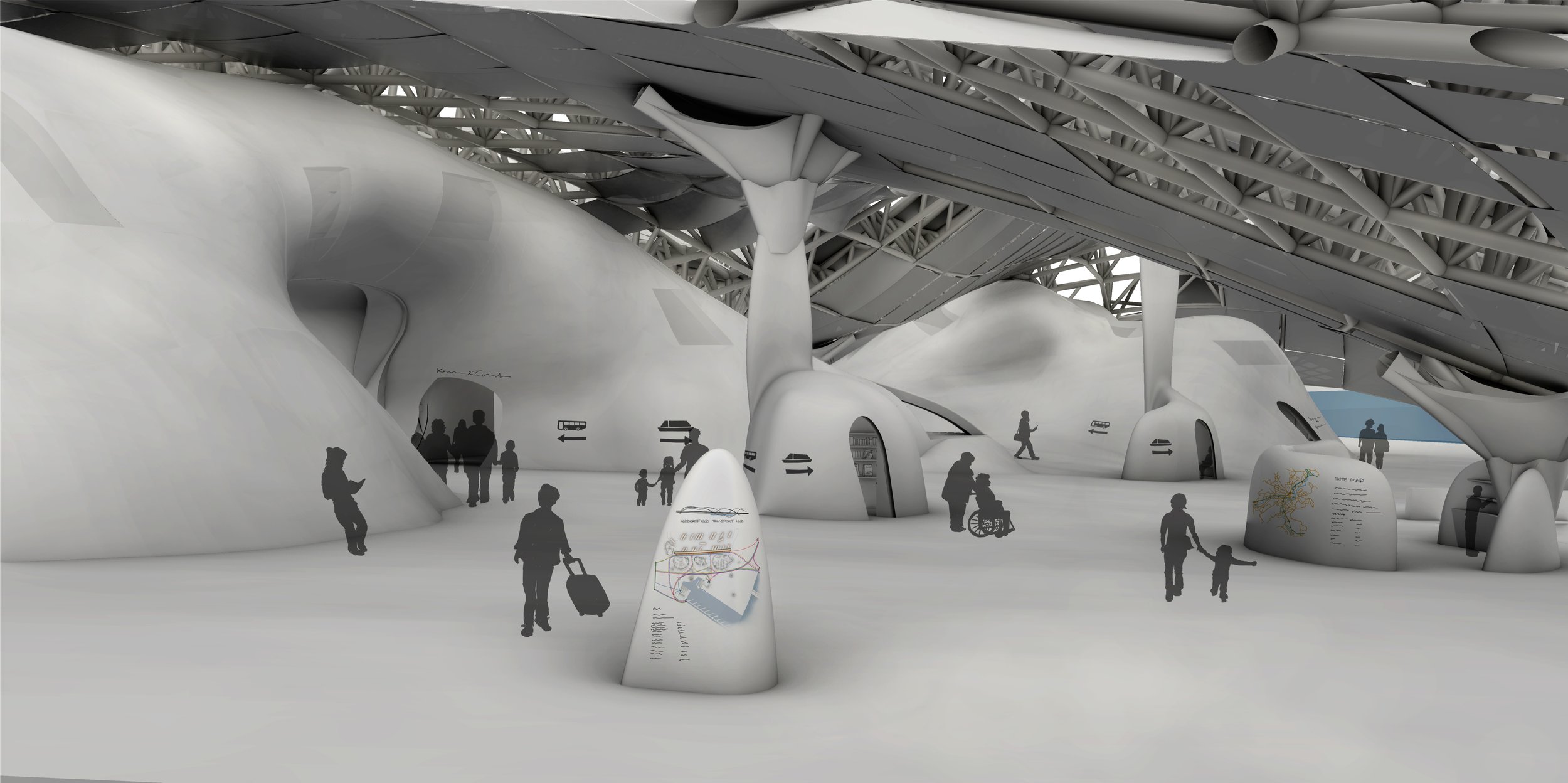
Also of note a project by Kate Matthews to seriously rethink the role and design of the space.
The starting point for this project was the Welcoming Water group scenario, involving the controlled flooding of areas of the town.
The new interchange includes facilities for cycling, walking, and public transit. The basin and marina on the new lake allow for an increased focus on water-based transport, including a new bus-boat. The main Transport Hub sits below an undulating roof and contains not only the bus bays and ticketing facilities, but also co-working and relaxation spaces. The curves of the roof, trying to confuse the binary of floor and ceiling, are just one example of the ambiguity throughout the scheme.
This project was nominated for the Architects for Health Student Design Award in 2021.
The Ferodo Factory was founded in Caernarfon in 1962, and officially opened by Princess Margaret.
However, the Ferodo Factory faced a significant setback in April 2001, when a lengthy industrial strike by the Transport and General Workers Union members began.
The strike lasted for an astonishing two and a half years.
Following the strike, the Ferodo Factory underwent a change in ownership. Bluefield Caernarfon Ltd acquired the site in 2007/08, with plans for redevelopment and revitalization. However, these plans did not come to fruition, and the factory’s buildings gradually fell into disrepair.
The site was identified as a potential location for a multi-million pound North Wales prison. This development would have created numerous job opportunities and breathed new life into the area.
Plans for this proposed redevelopment where rejected.
An appeal was launched in 2023 to find ex-strikers, in order to invite them to the premiere of a documentary to mark the 20th anniversary of one of Britain’s longest industrial disputes.
The hard-hitting film, Y Lein: Streic Friction Dynamics – The Line: Friction Dynamics Strike, has been made by Dïon Wyn, the grandson of one of the strikers, Raymond Roberts, who was determined the historic injustice should never be forgotten.
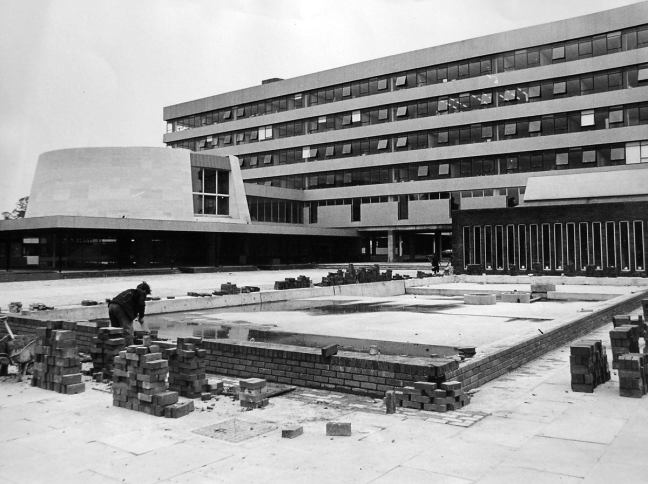
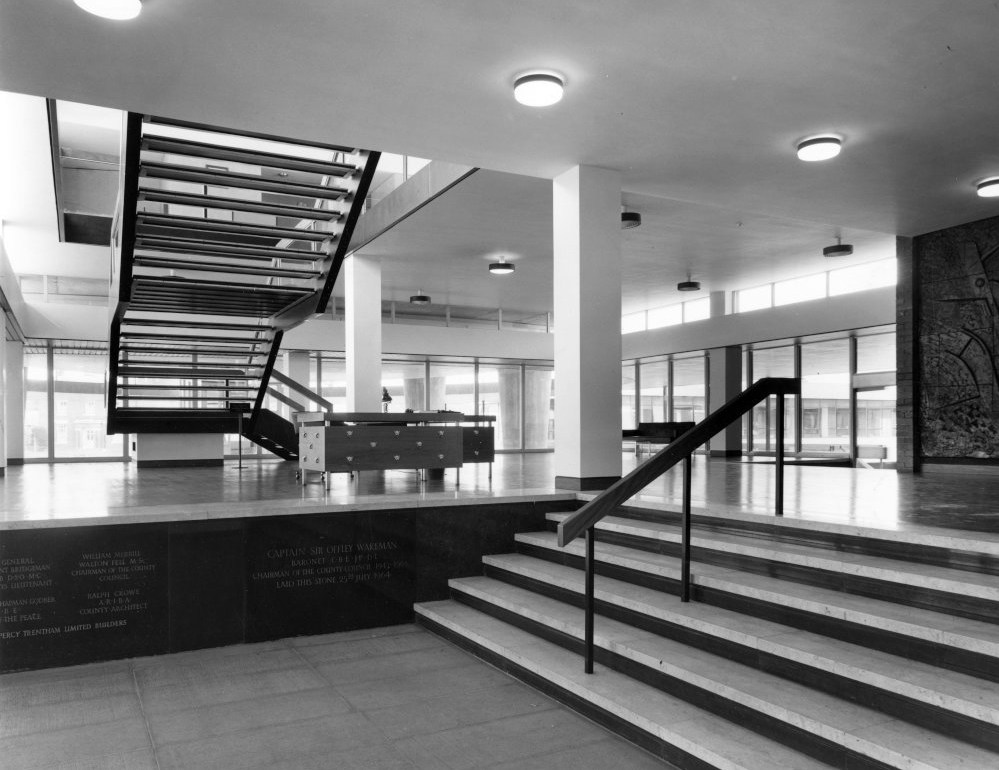
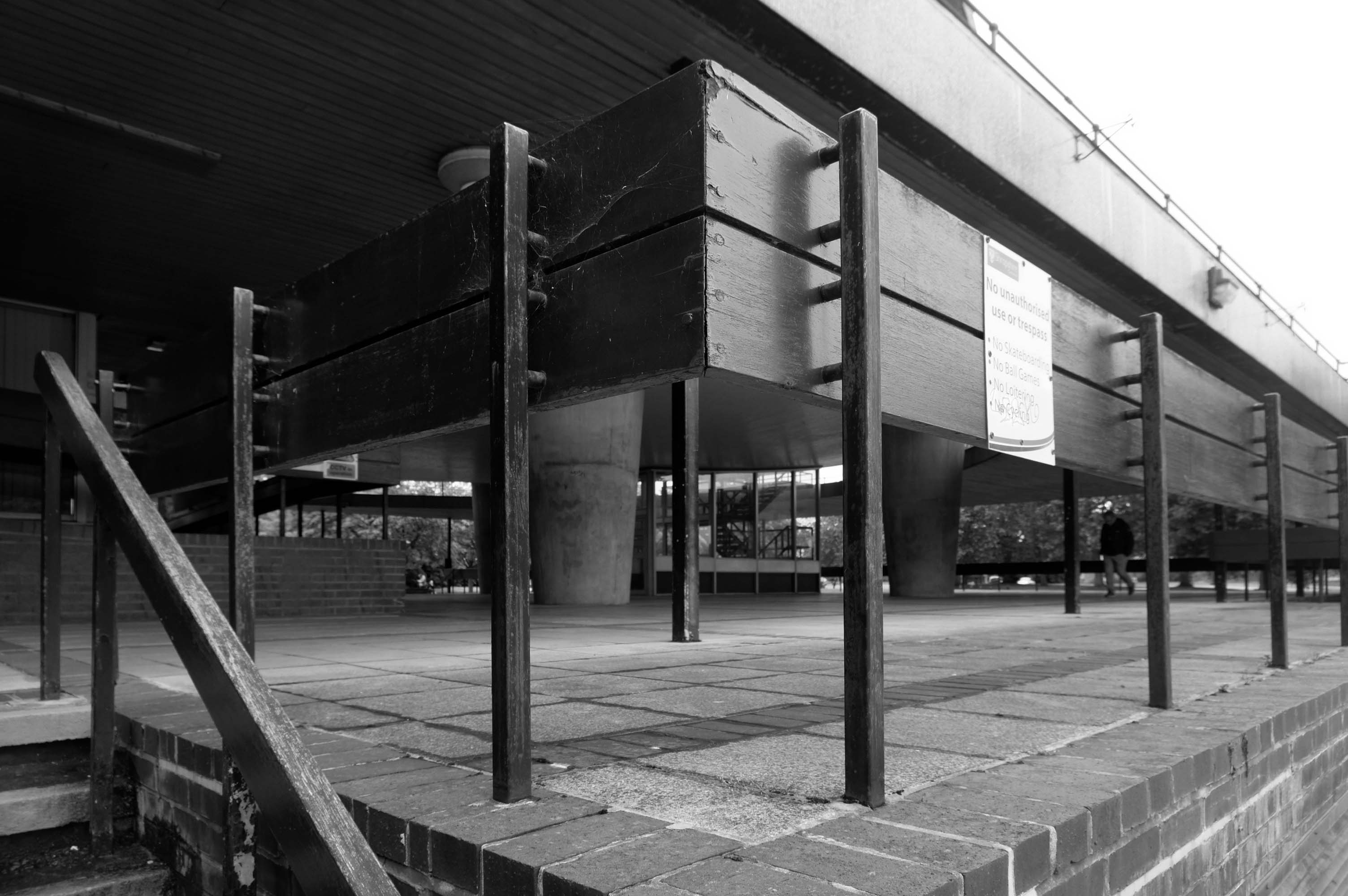
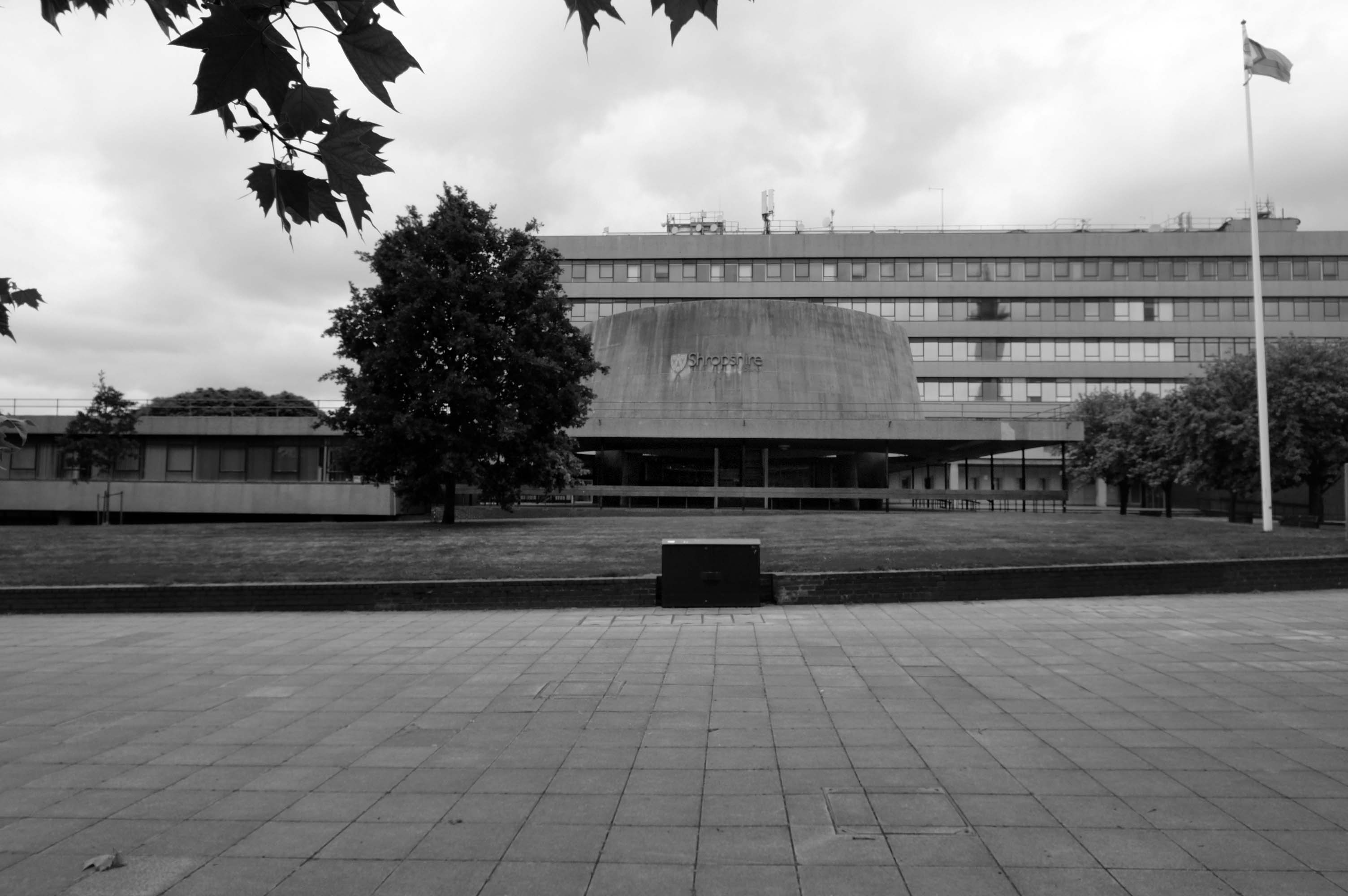
The foundation stone for the new building was laid by Sir Offley Wakeman, a former chairman of the county council, on 25 July 1964. It was designed by Ralph Crowe, the County Architect, in the Modernist style, built at a cost of £1.8 million and was completed in April 1966.
It was officially opened by Queen Elizabeth II, accompanied by the Duke of Edinburgh, on 17 March 1967.
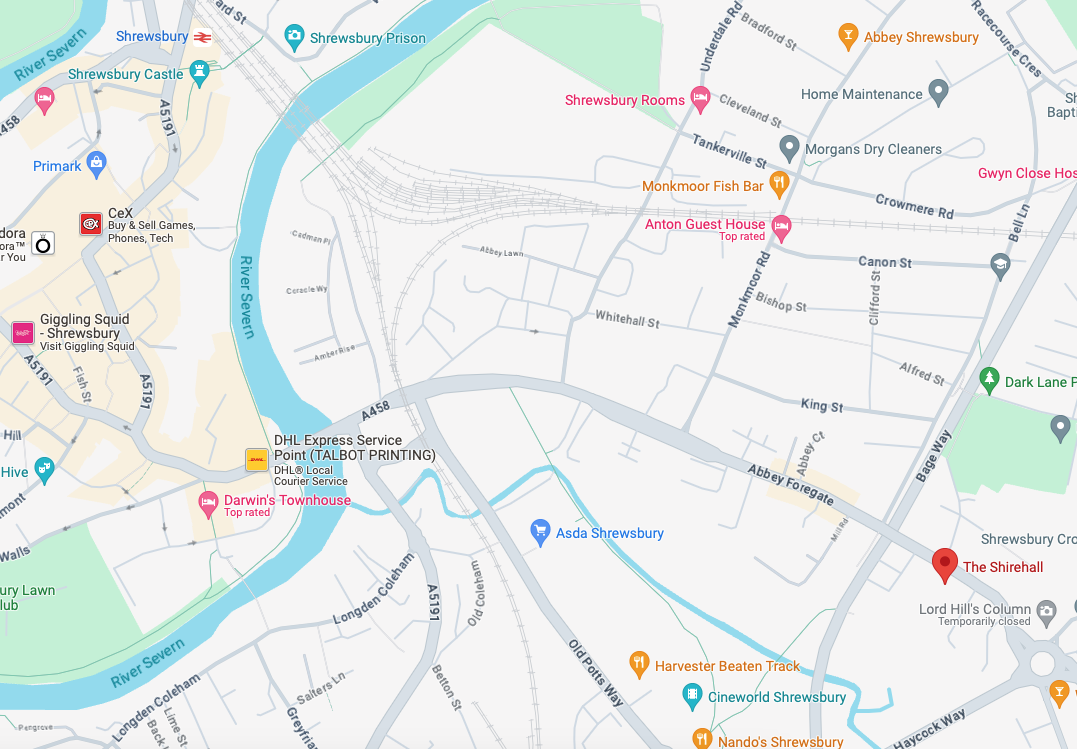
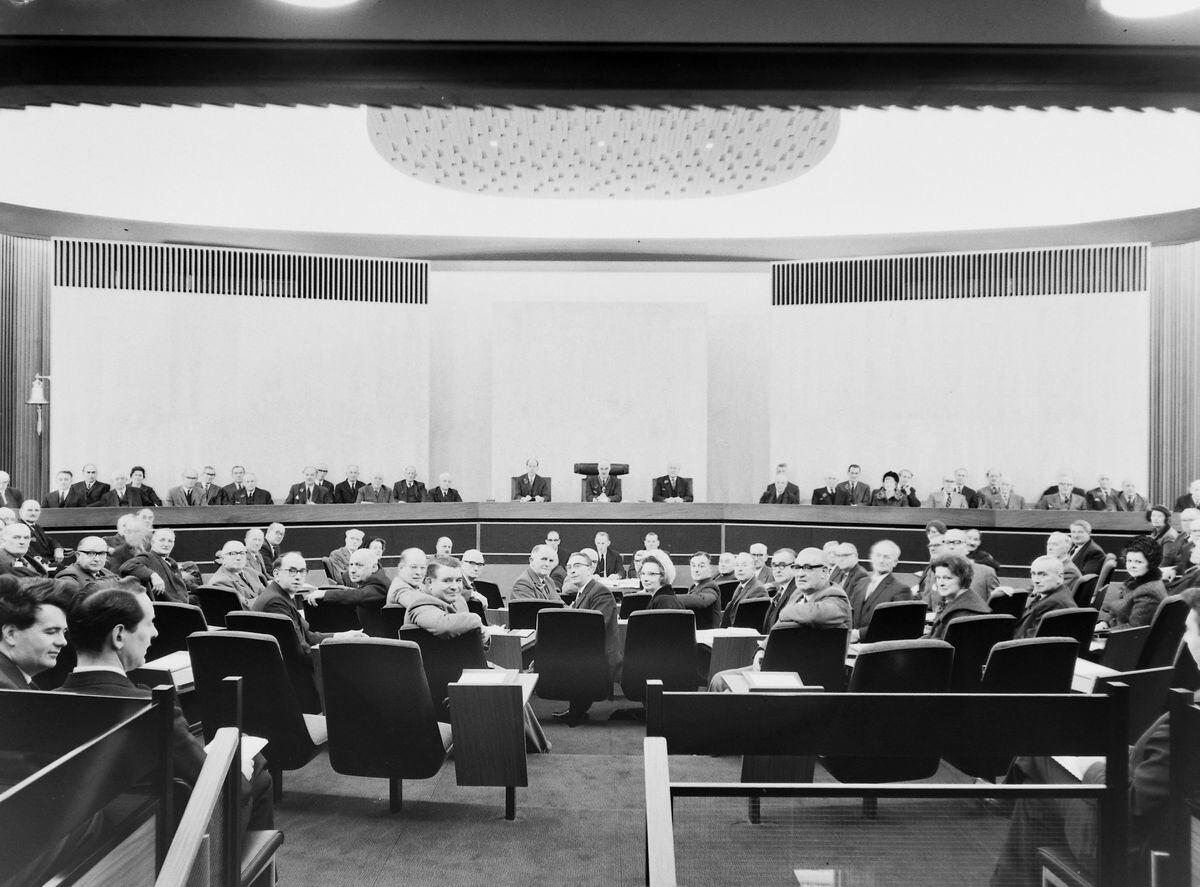
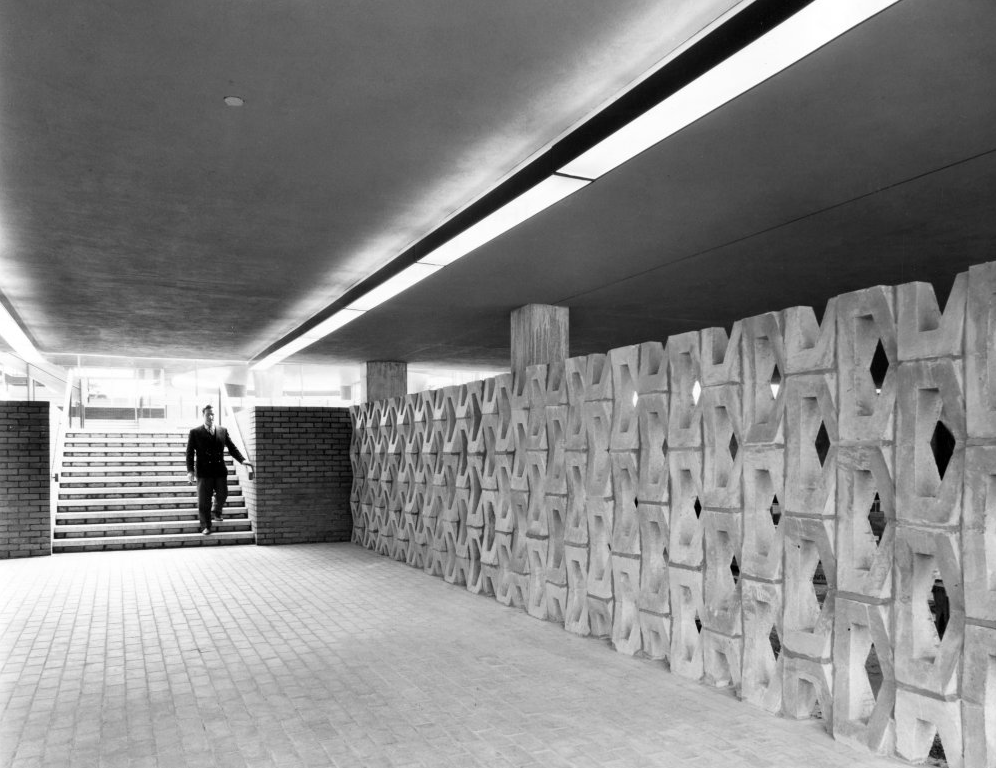
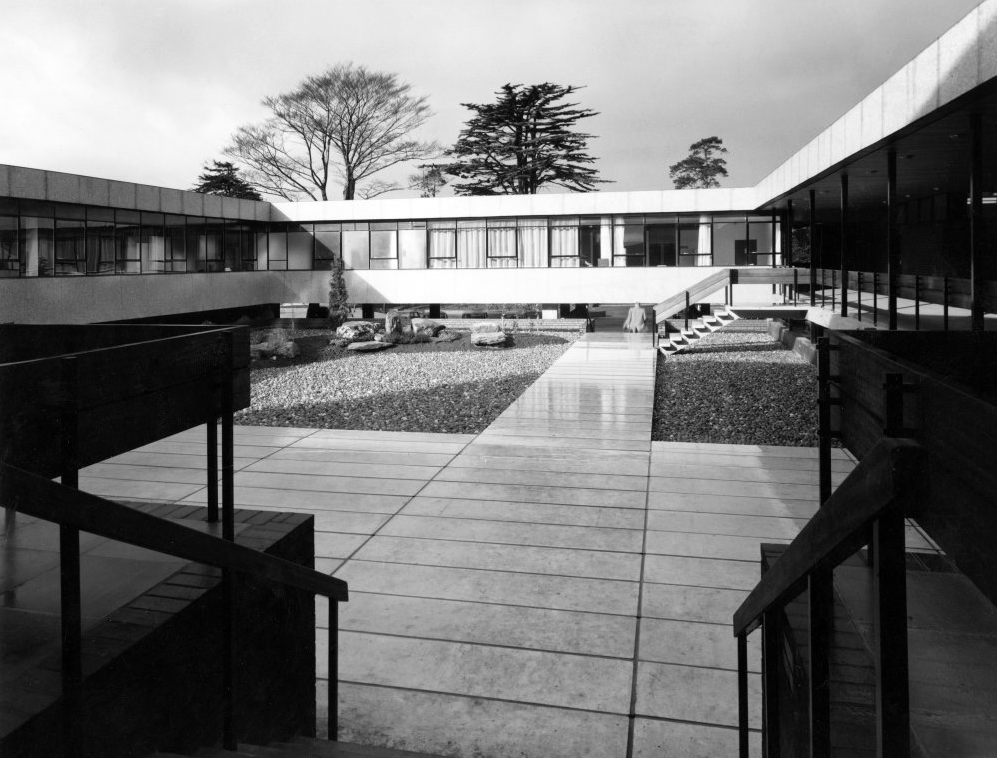
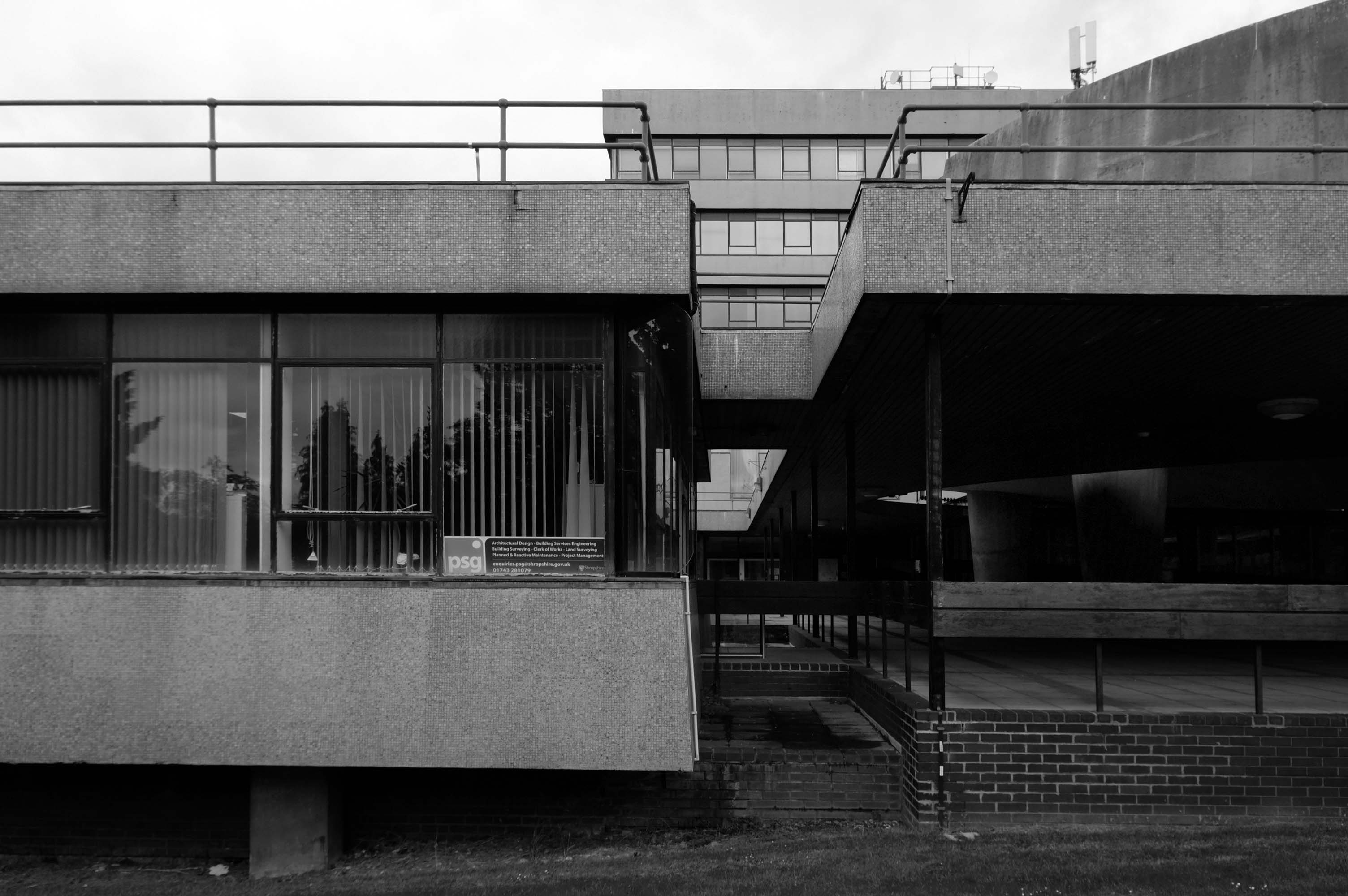
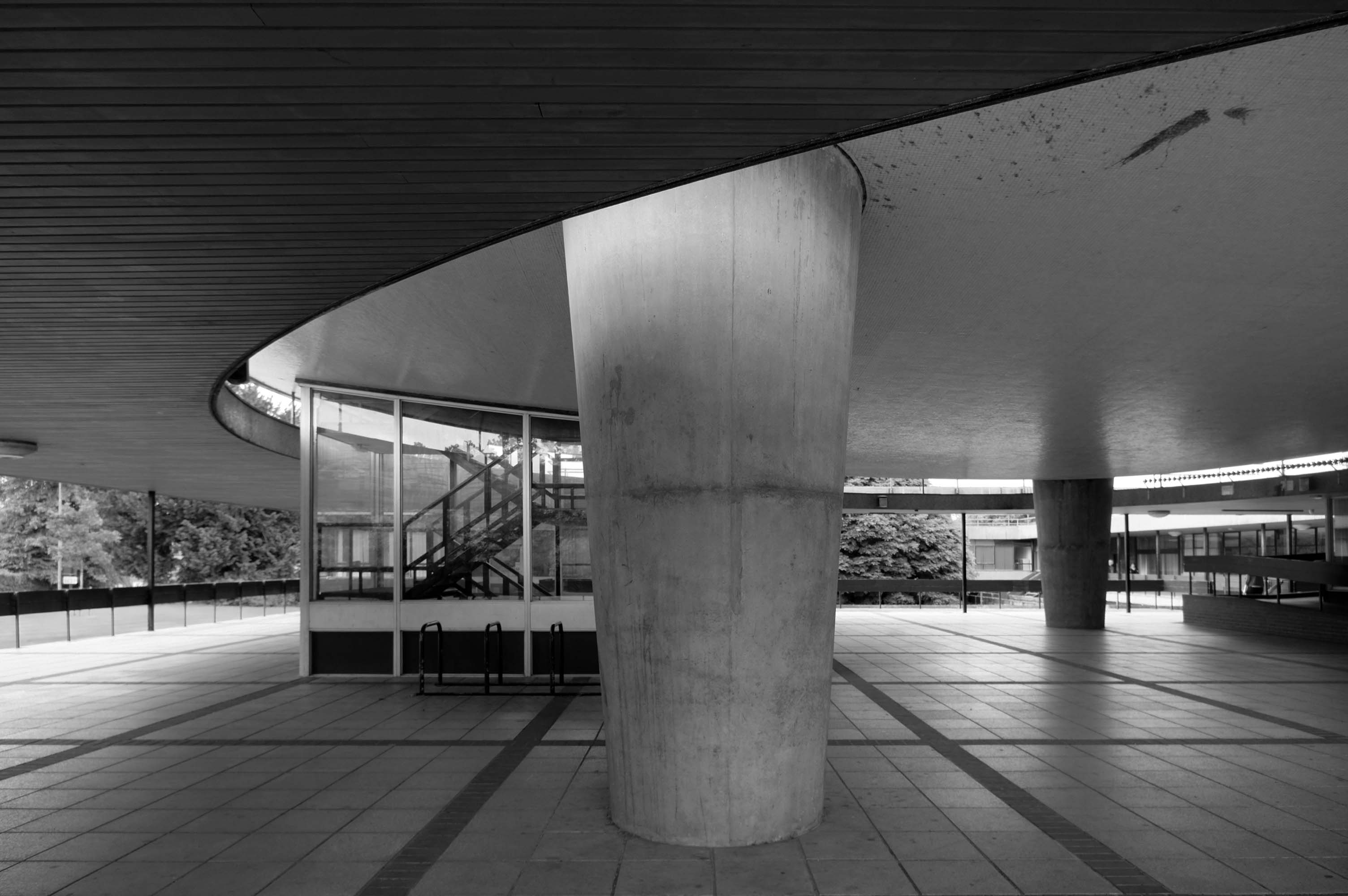
The design for the six-storey building facing Abbey Foregate involved continuous bands of glazing with concrete panels above and below: it also included an unusual ovoid-shaped council chamber which jutted out to the south-west of the main building.
Pevsner described the building as – the major monument to post-war modernism in the county.
Shropshire Council initially backed a scheme drawn up by HLM Architects in 2017 to revamp Shirehall to provide modern working facilities as well as commercial opportunities. However this plan has not progressed and the local authority has said that making the building fit for purpose would require ‘a multi-million pound investment’.
in September 2020, the council indicated that it would rather sell the building and move to the town centre. Then in October 2020, following an application for a certificate of immunity from listing requested by the county council, English Heritage decided not to list County Hall as the building did not meet the criteria for listing post-1945 buildings.
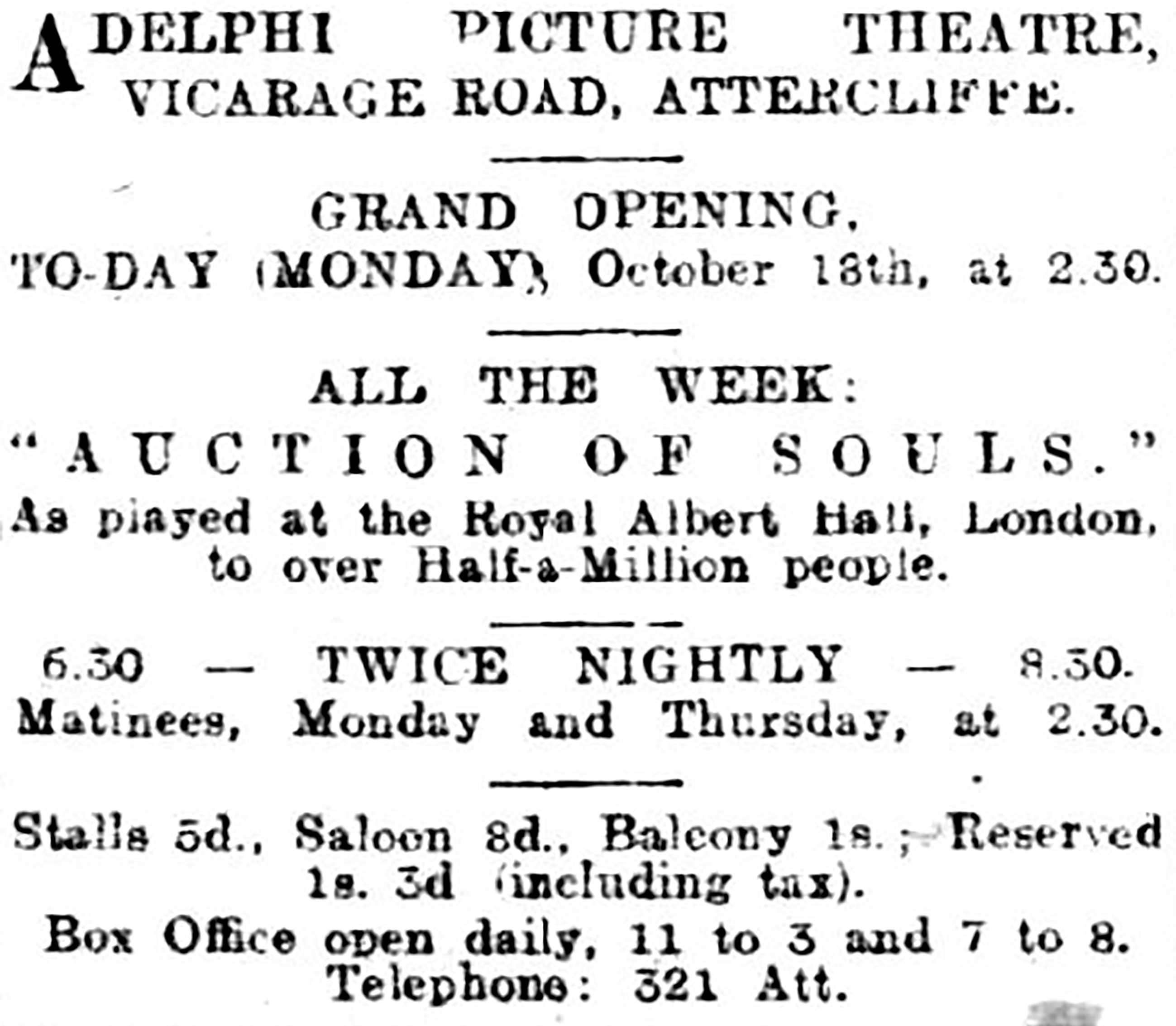
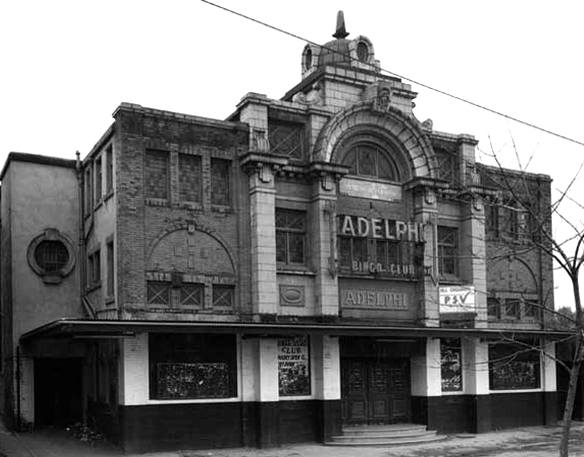
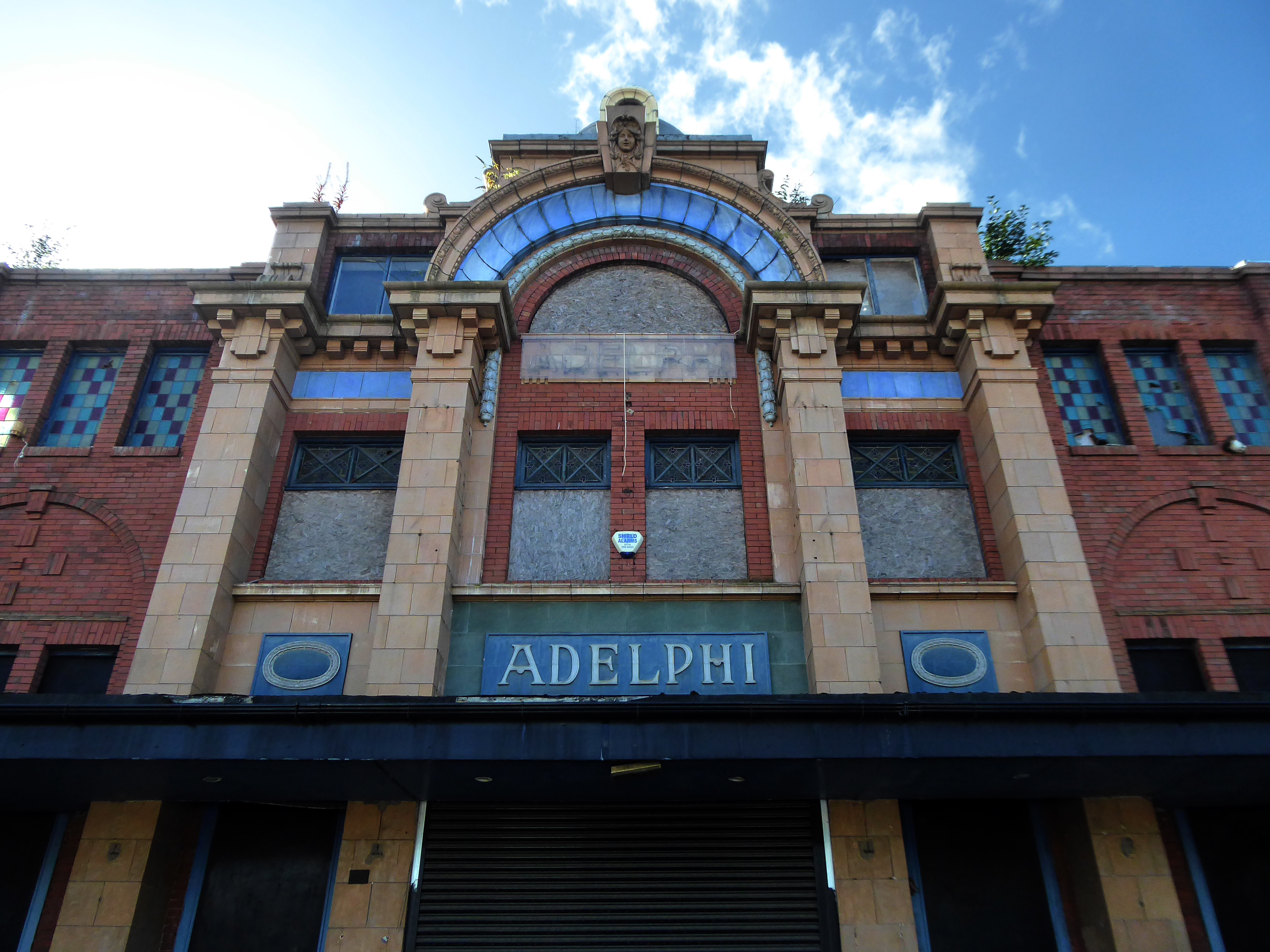
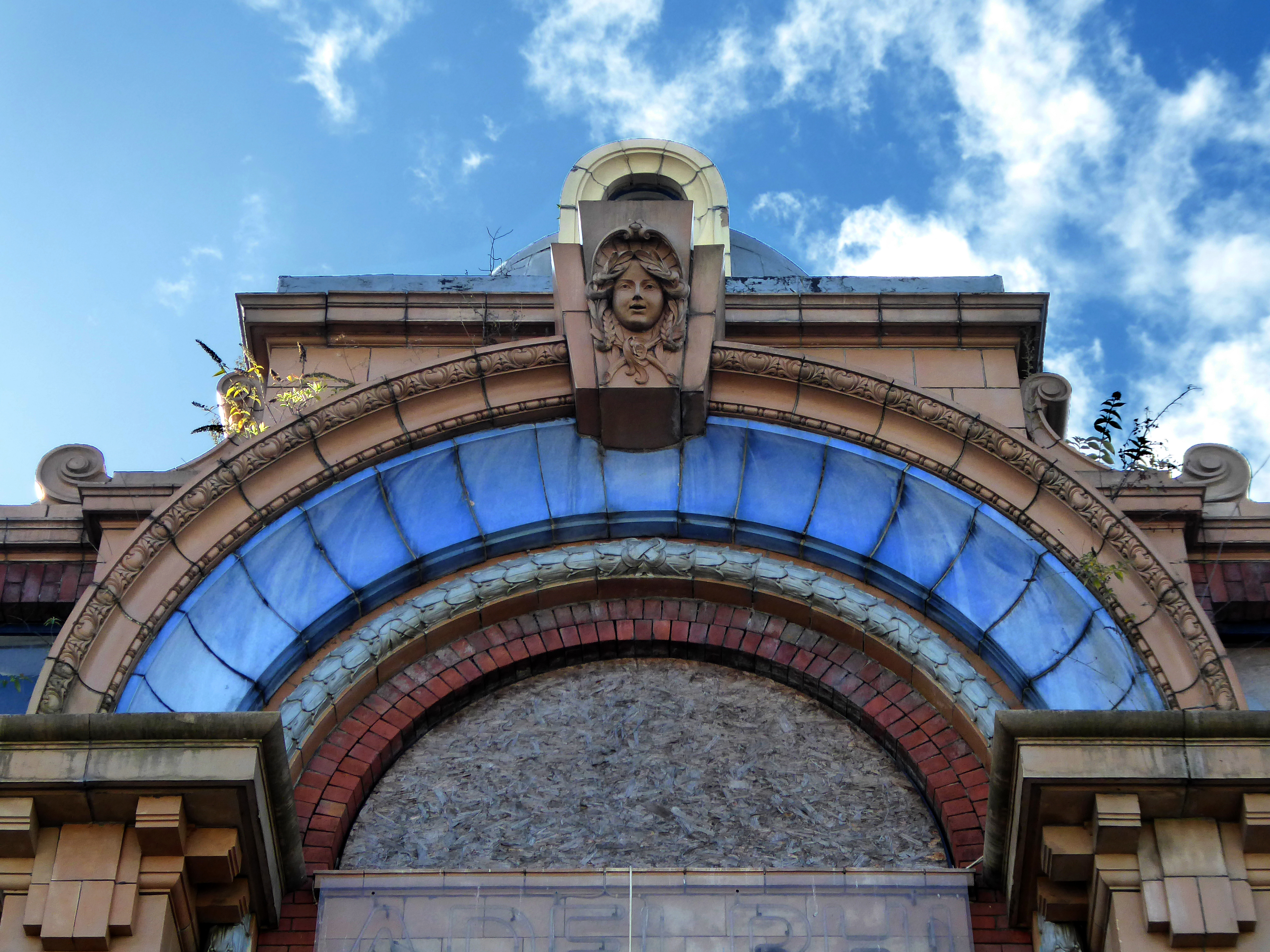
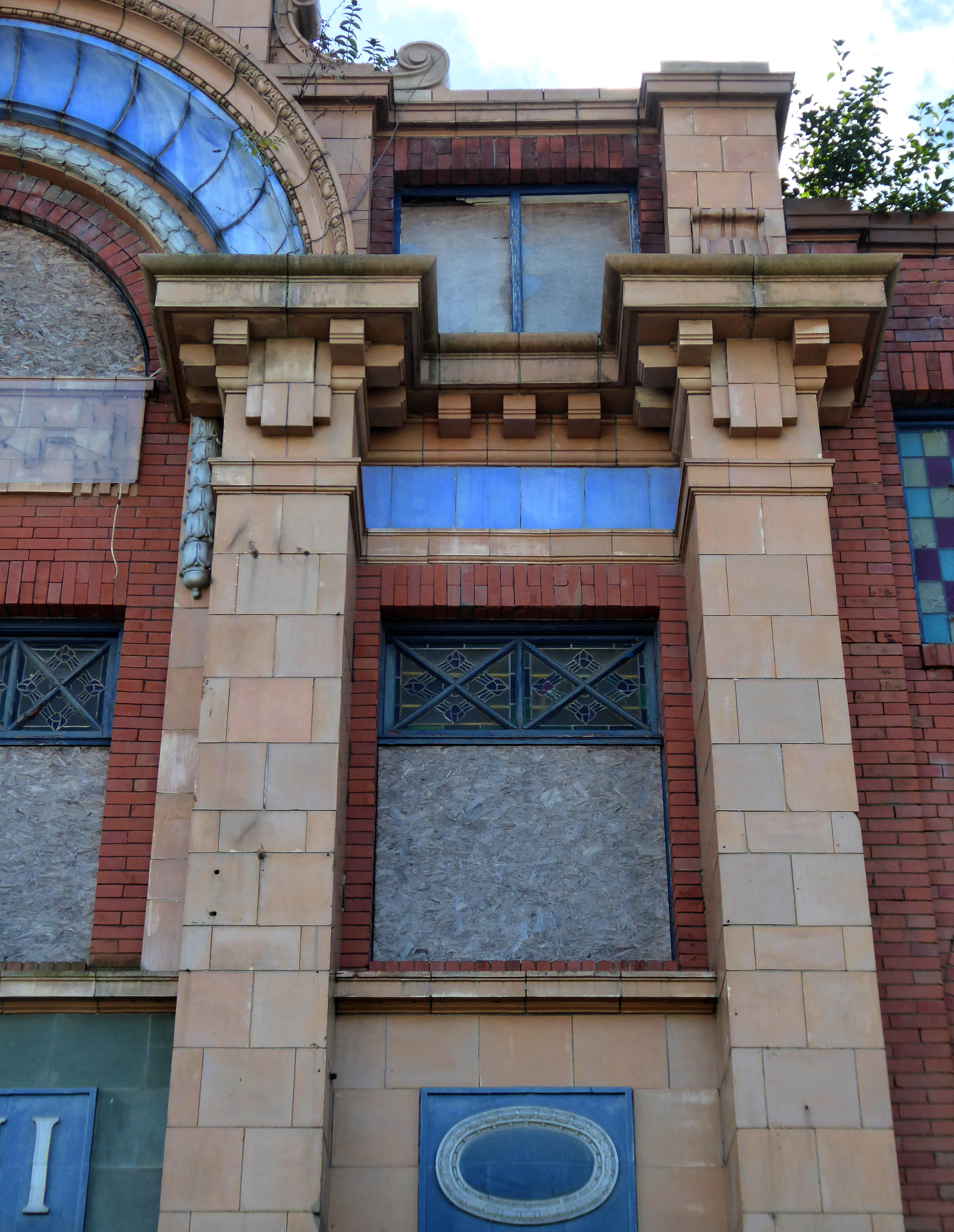
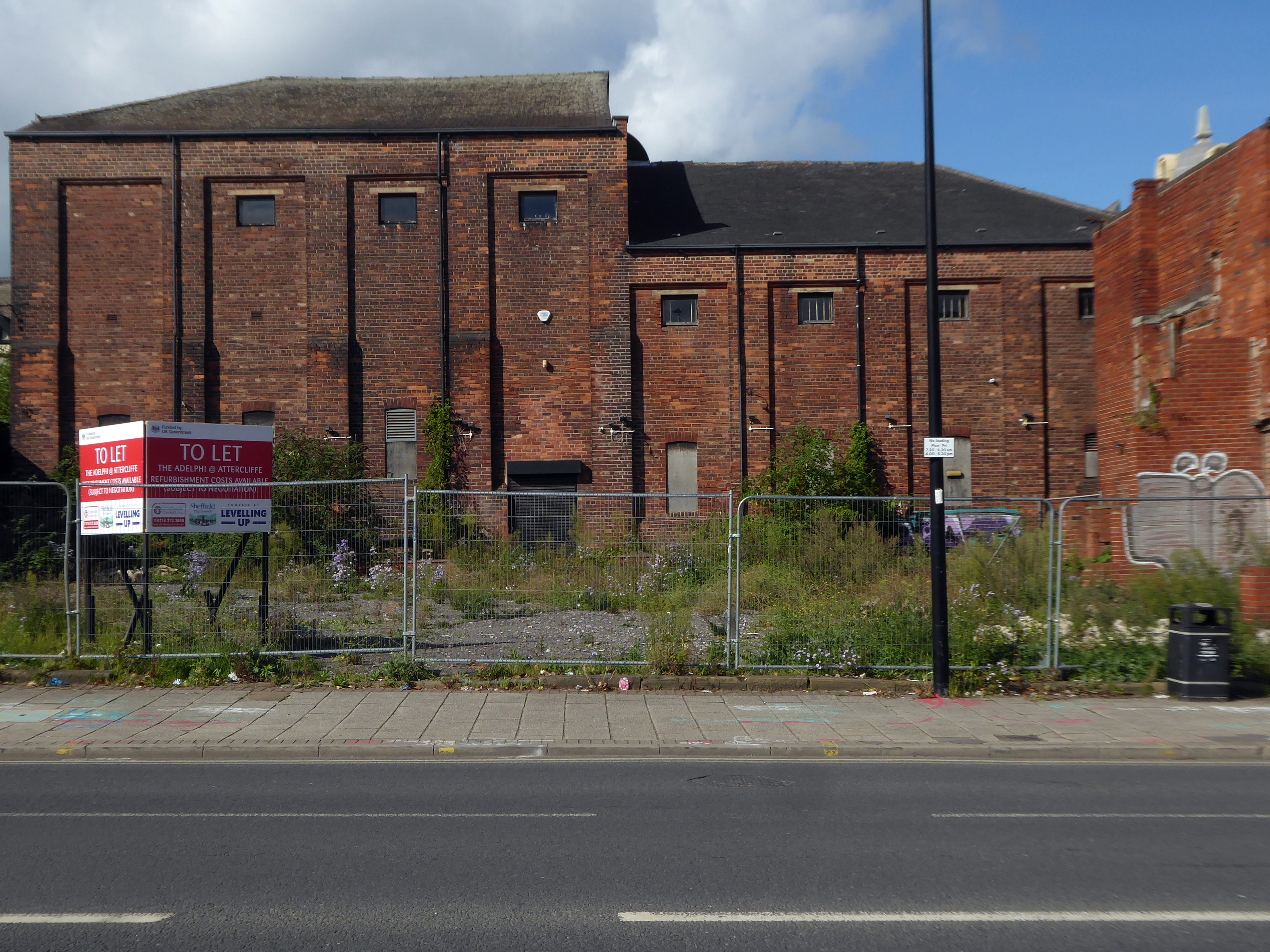
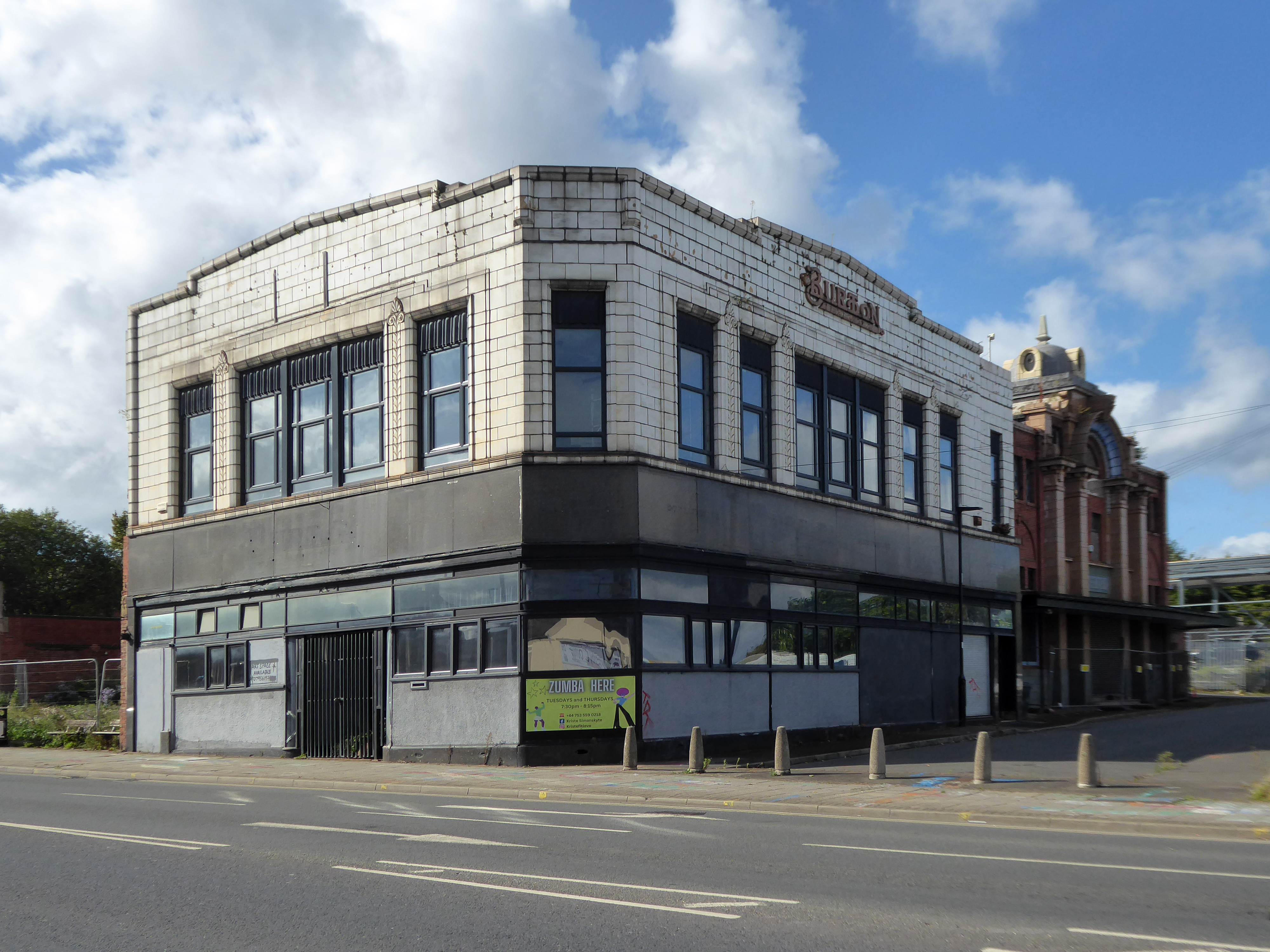
The Adelphi Picture Theatre is located in the Attercliffe district in the east of Sheffield. It opened on 18th October 1920 with Irving Cummings in Auction of Souls. The red brick building has buff and blue coloured terracotta enrichments on the façade, especially on the small turret dome over the entrance, which also has stained glass windows.
Seating in the auditorium was provided in stalls and circle, and the projection box was located in the rear stalls, underneath the circle. The cinema was in reverse, and patrons entered the auditorium from behind the screen. The decoration includes pilasters, a segment-arched panelled ceiling and a moulded proscenium arch with a central crest which is flanked by torches. The circle has a lattice-work plaster front.
Single photo enhanced with easyHDR 3.15.2: Adelphi 1920 10 18.jpg
It underwent some restoration in 1936 and a re-decoration in August 1939. It received some bomb damage during the second week of the blitz and was closed for around a month. It received further renovation in August 1946. It remained an independently operated cinema throughout its cinematic life and was usually tied in with the Coliseum Cinema on Spital Hill.
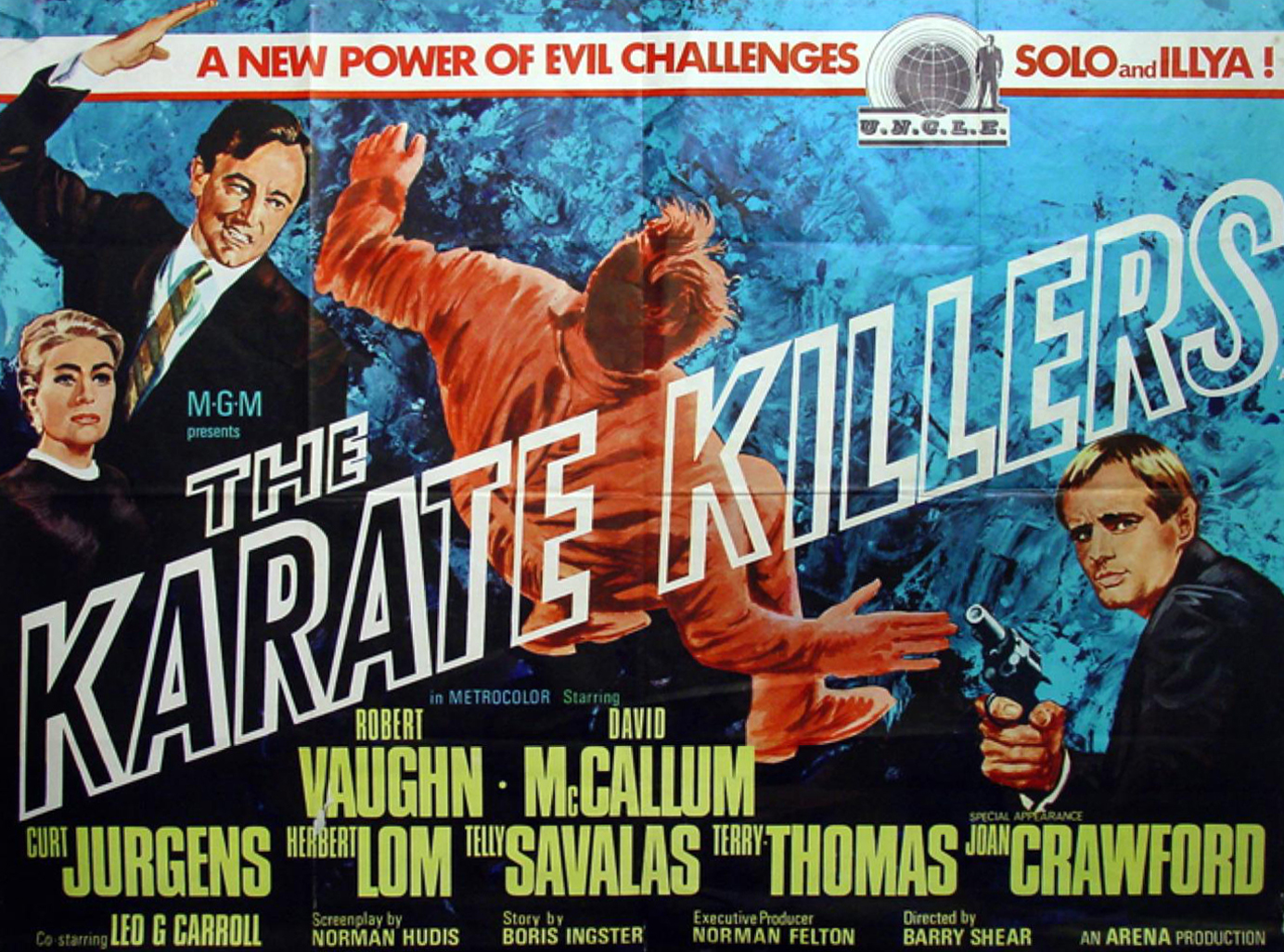
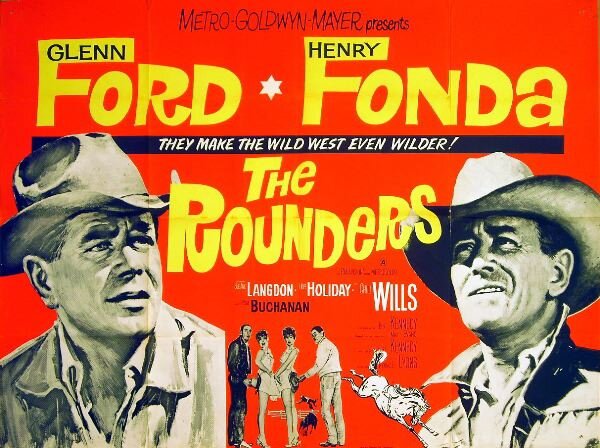
The Adelphi Picture Theatre closed on 28th October 1967 with Robert Vaughn in The Karate Killers and Glenn Ford in The Rounders. It became a bingo club, last operated by the independent Walkers Bingo. After this closed in around 1995 it became a nightclub and since March 2000 was converted into a music teaching centre. This closed in 2006, and the building stood unused, and by 2013, it was in use as a storage facility. It was announced in November 2022 that the city council were seeking to purchase the building to renovate and convert it into a community centre.
Since early 1996, the Adelphi Picture Theatre was designated a Grade II Listed building by Historic England.
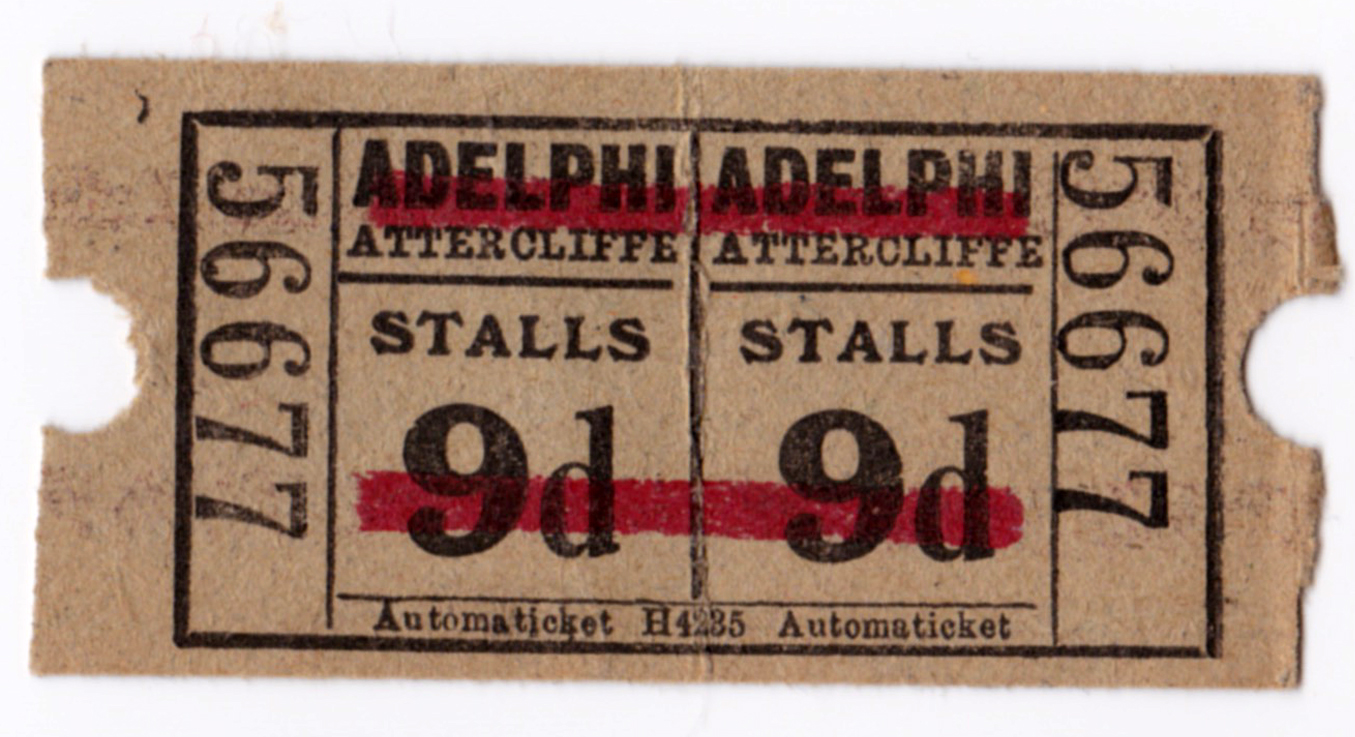
Just the other day I came across an old ticket stub issued by The Savoy in Heaton Moor.
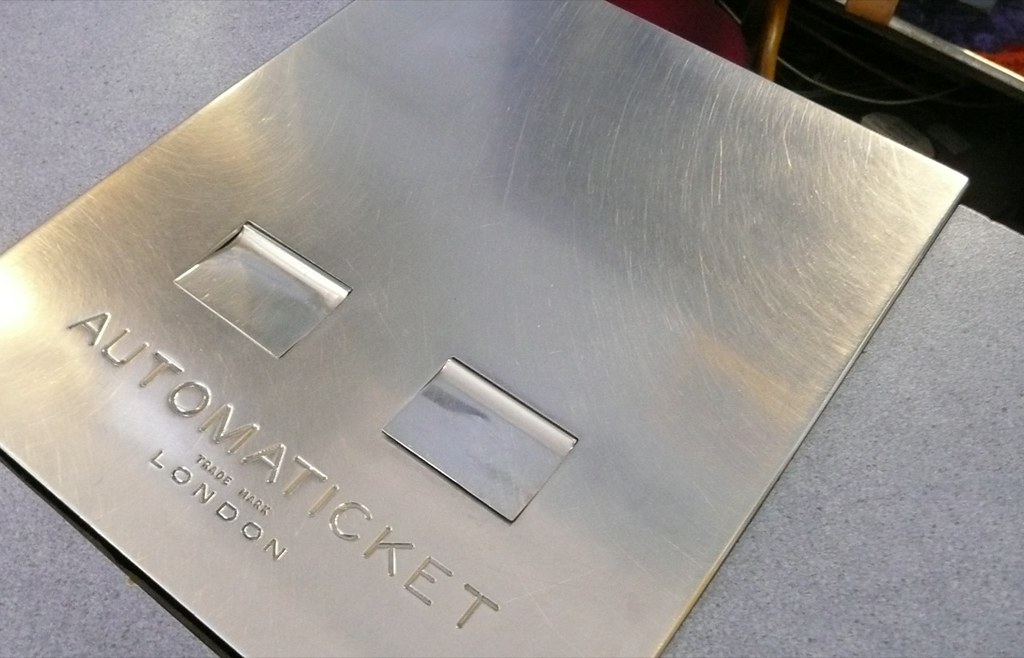
They used a Automaticket machine, but with dead stock tickets.
Evolving from being gear and lever driven, to powered by electric motors, these ticketing machines served as somewhat of an industry standard for over eighty years.
While there are still a few of these machines in use, the theatre industry generally abandoned such ticketing systems, in favor of computerized ticketing, by the late 1980’s.
The striking art deco – sic. building later hosted Sheffield’s famous Gatecrasher club nights, among other events, and was also used as a music teaching centre.
It sat empty from 2006 until 2013 and has since been used only for storage.
My dad was a regular at The Adelphi during the war years. He remembers that the showings were always like a theatre with two matinees during the week and two evening showings everyday unlike the continuous showing at other cinemas and a children’s matinees on a Saturday.
He and his friends had six seats booked on Q row for every Monday and Saturday night as more often than not the films ran for three nights Mon, Tues and Wed, then a new picture Thurs, Fri, and Sat – no show on a Sunday. Occasionally a good film, now known as a blockbuster, would run for longer; if this was the case they just put up with seeing it twice.
The cost of the film was 4d or 6d upstairs, the cinemas in town were dearer.
Called up in February 1944 he did not return to Attercliffe until his first leave from the army a week before VE day in 1945. He returned from Germany, said hello to his Mum and Dad, dropped off his kit bag then caught the tram the three stops to the Adelphi where he knew his friends would be. The smartly dressed commisioner, in blue with plenty of gold braid, standing outside immediately recognised him even in army uniform. He showed him in telling him the lads were all there. He crouched in the aisle next to his friends and caused quite a commotion once he was spotted – he has no memory of the film showing but great memories of the reunion to this day.
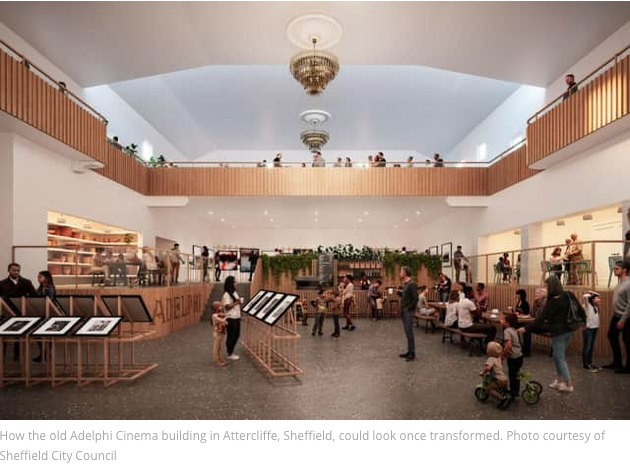
It was bought by Sheffield City Council earlier this year, as part of the Attercliffe Levelling Up project, and has now gone on the market as the council seeks someone to revive the Grade II-listed building as a vibrant cultural hub.
Councillor Ben Miskell, chair of the council’s Transport, Regeneration and Climate Policy Committee, said:
We’re thrilled to announce the Adelphi Cinema building in Attercliffe is now on the market and we’re eager to hear from interested parties. The building forms one part of our ambitious plans for the area which will all come together to breathe new life into the community.
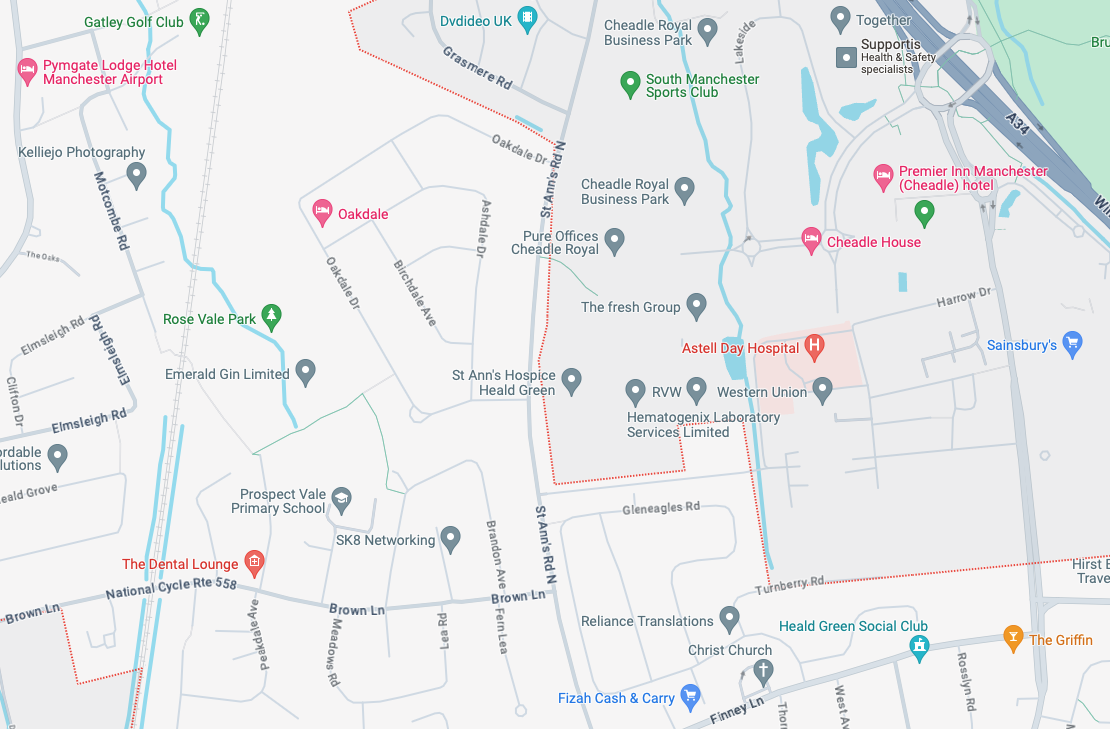
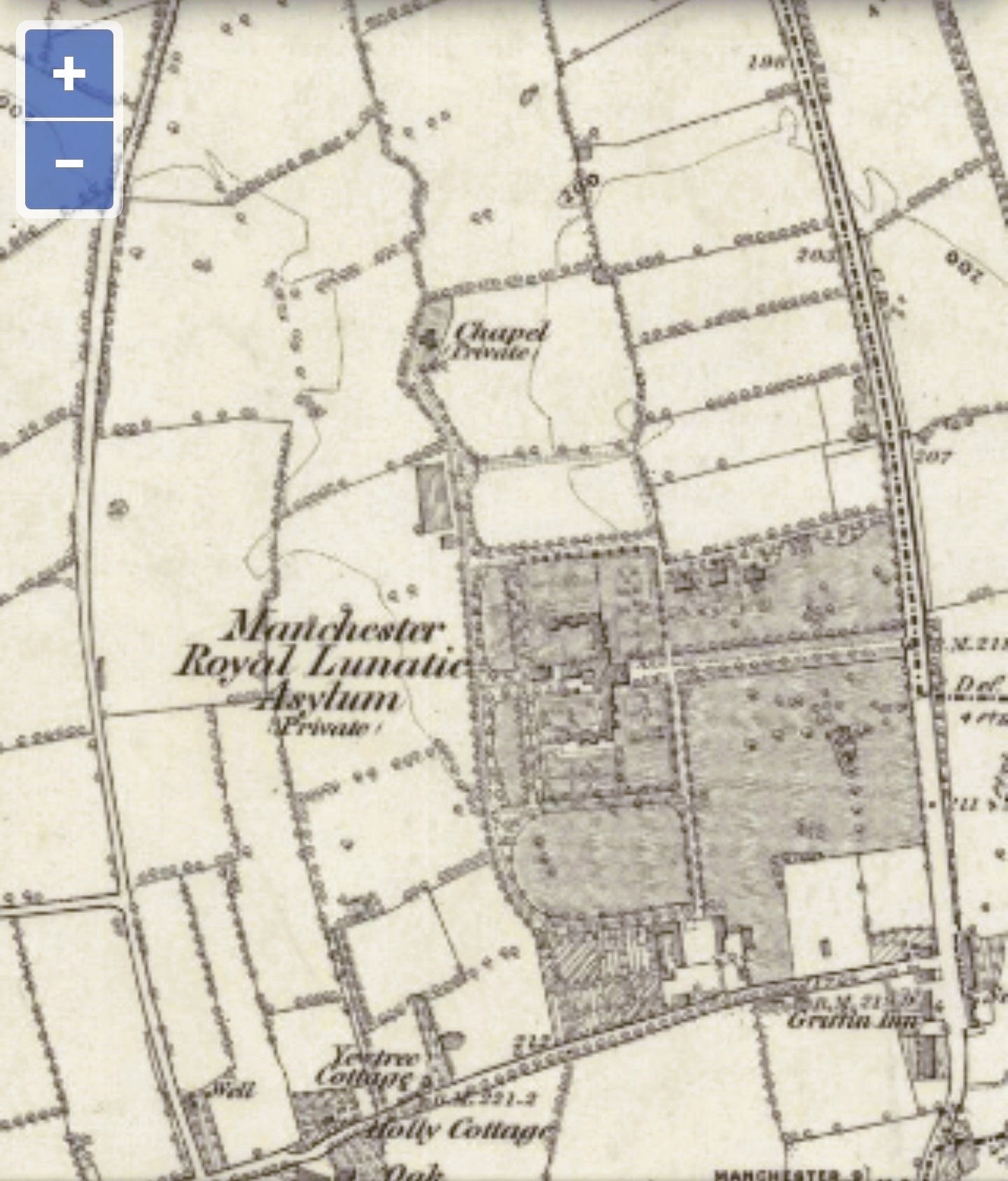
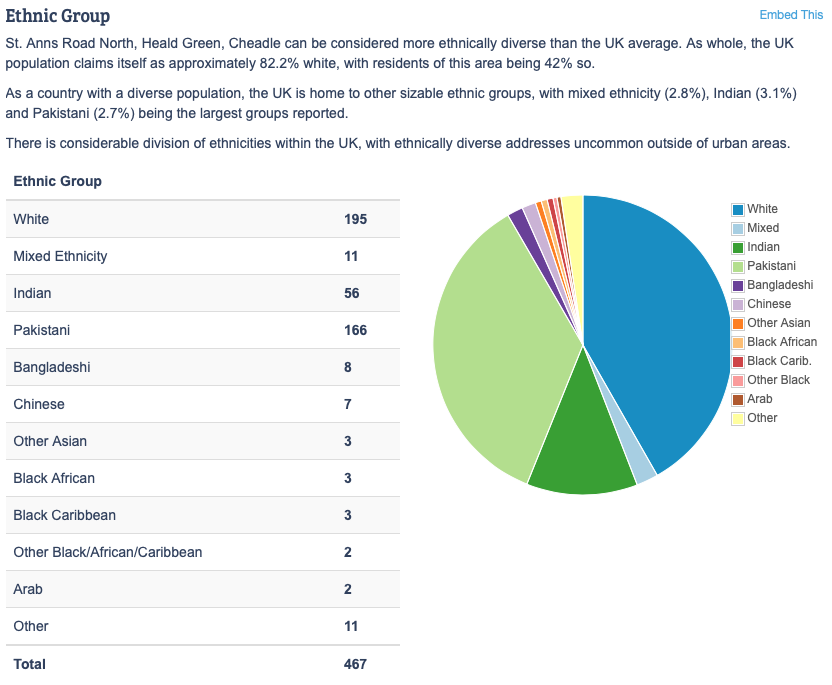
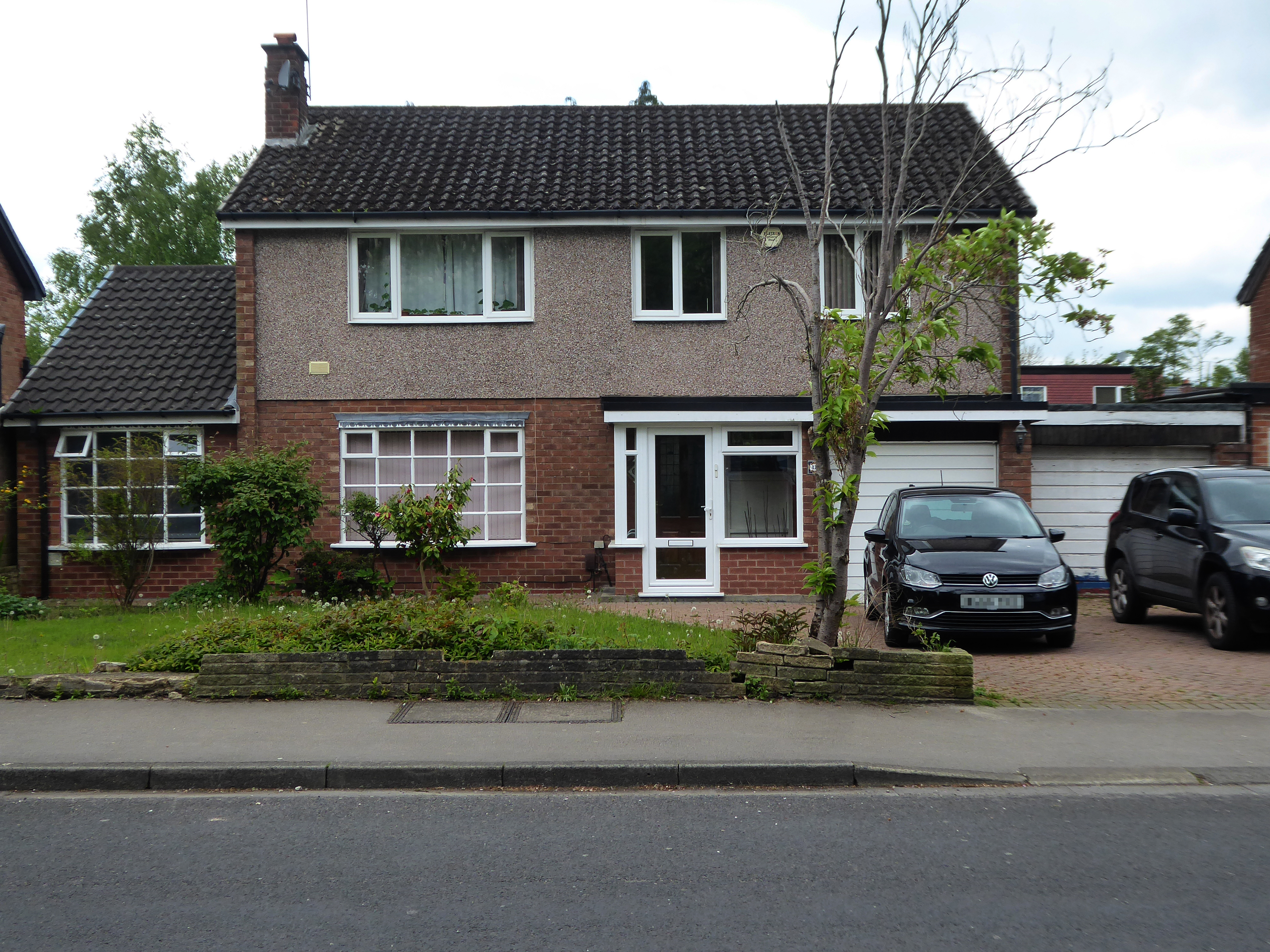
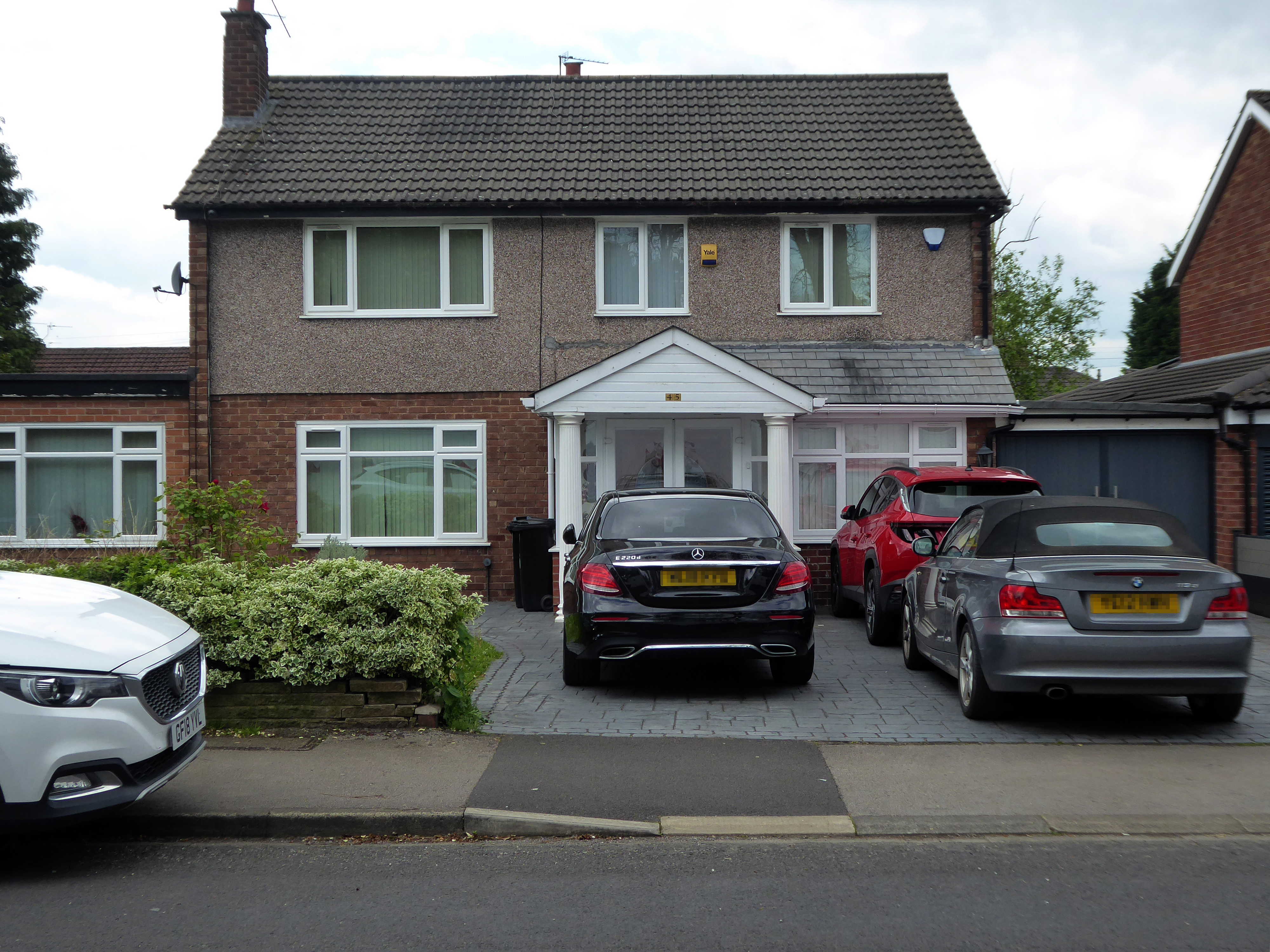
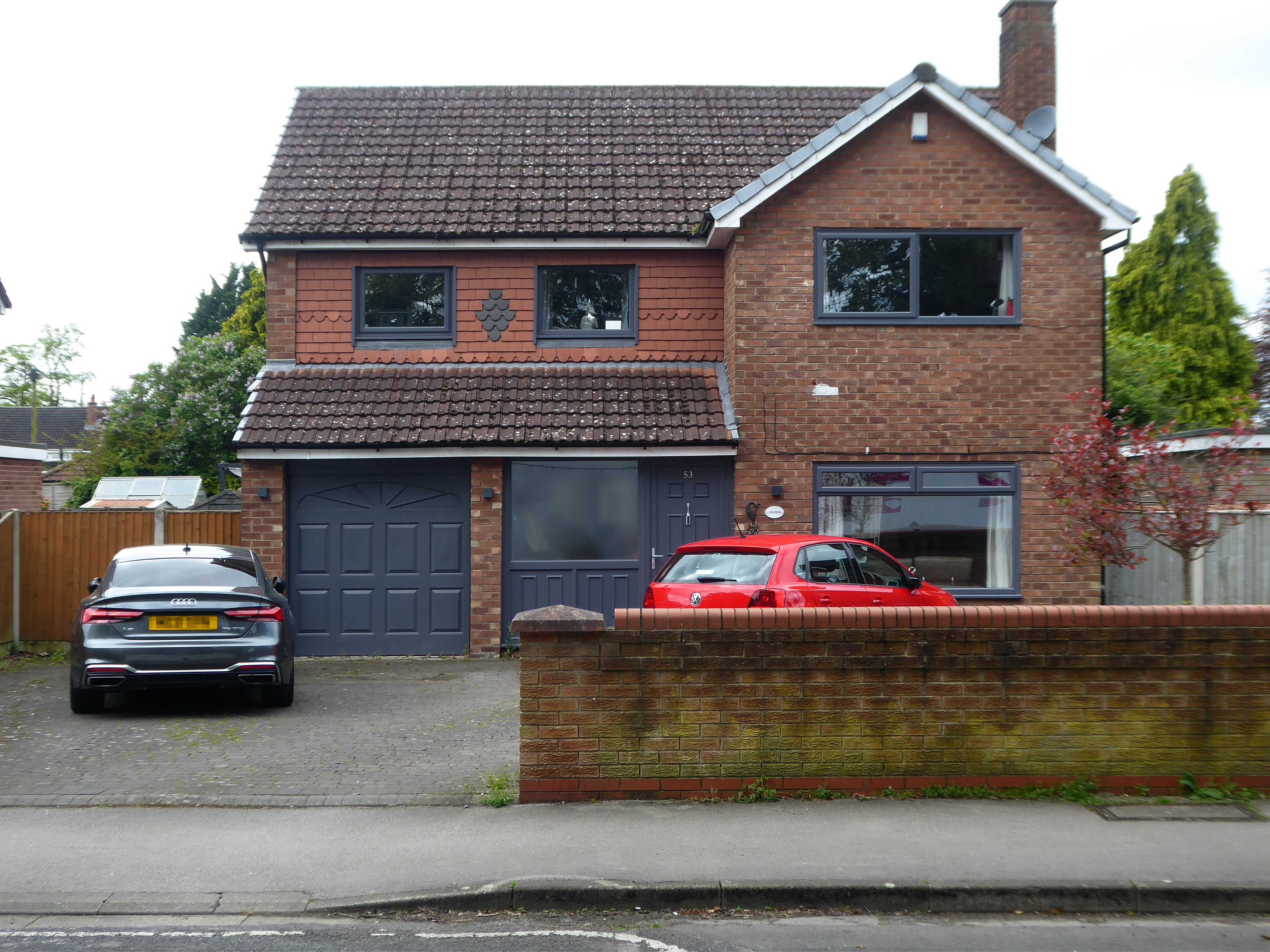
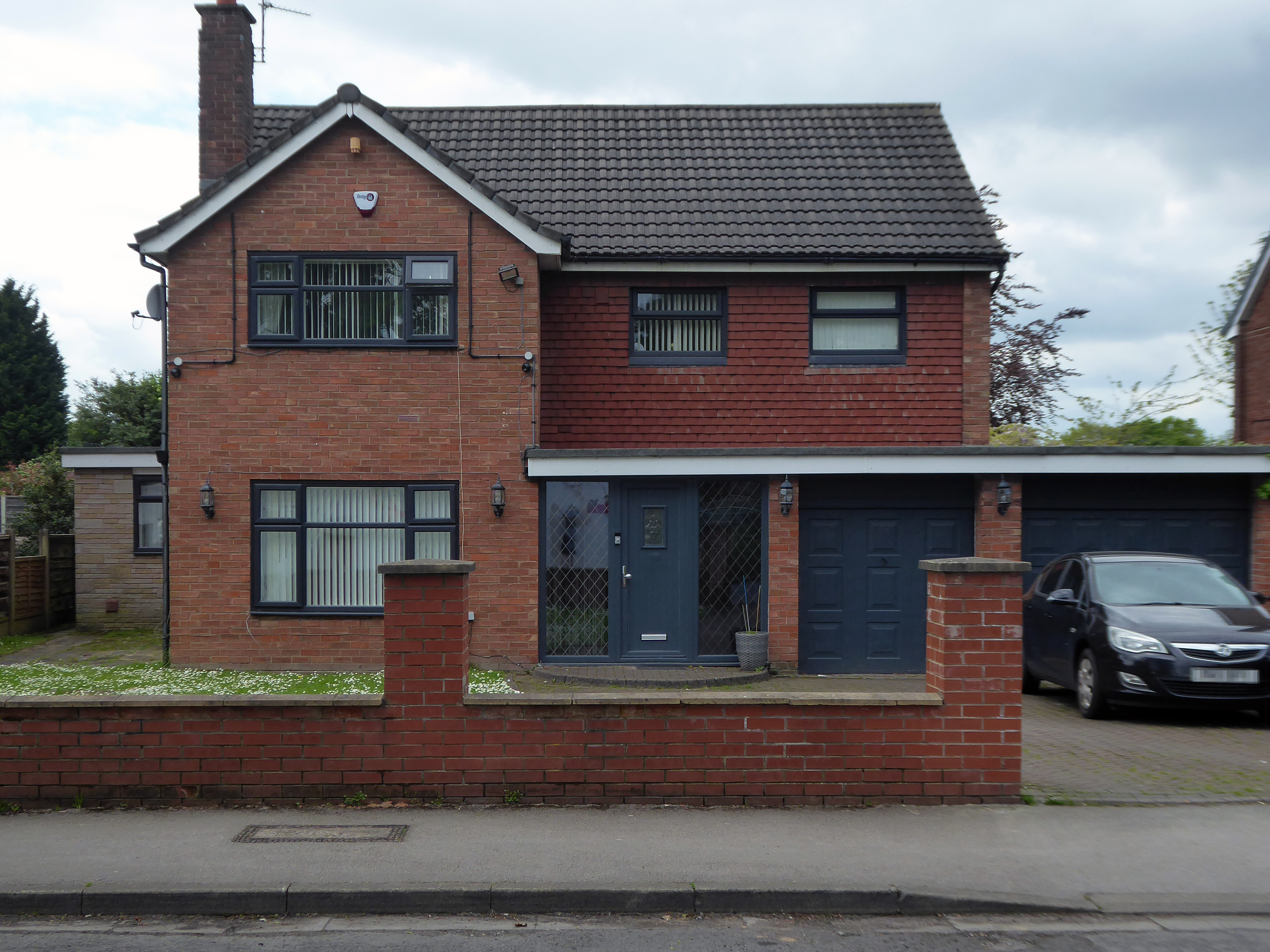
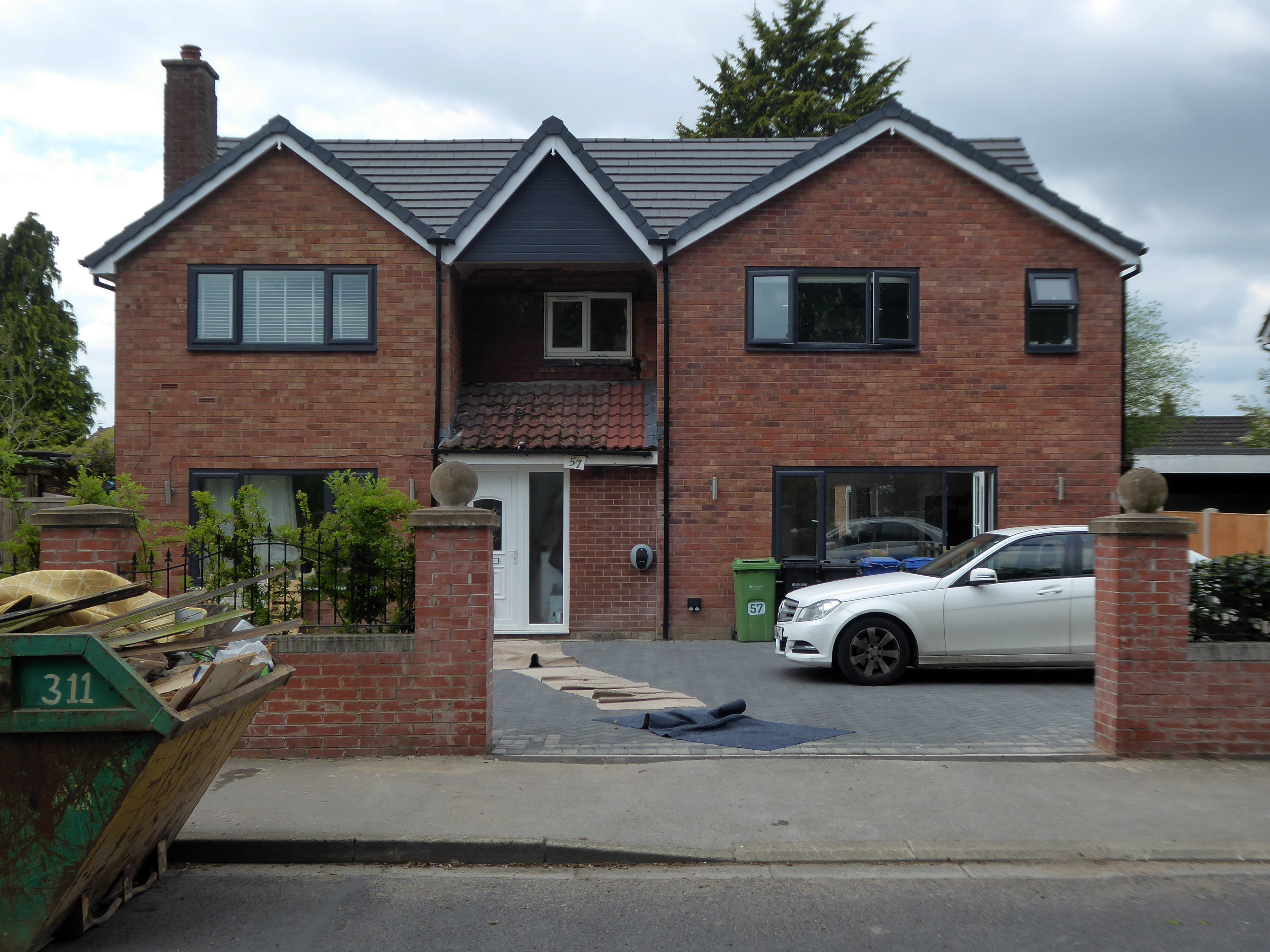
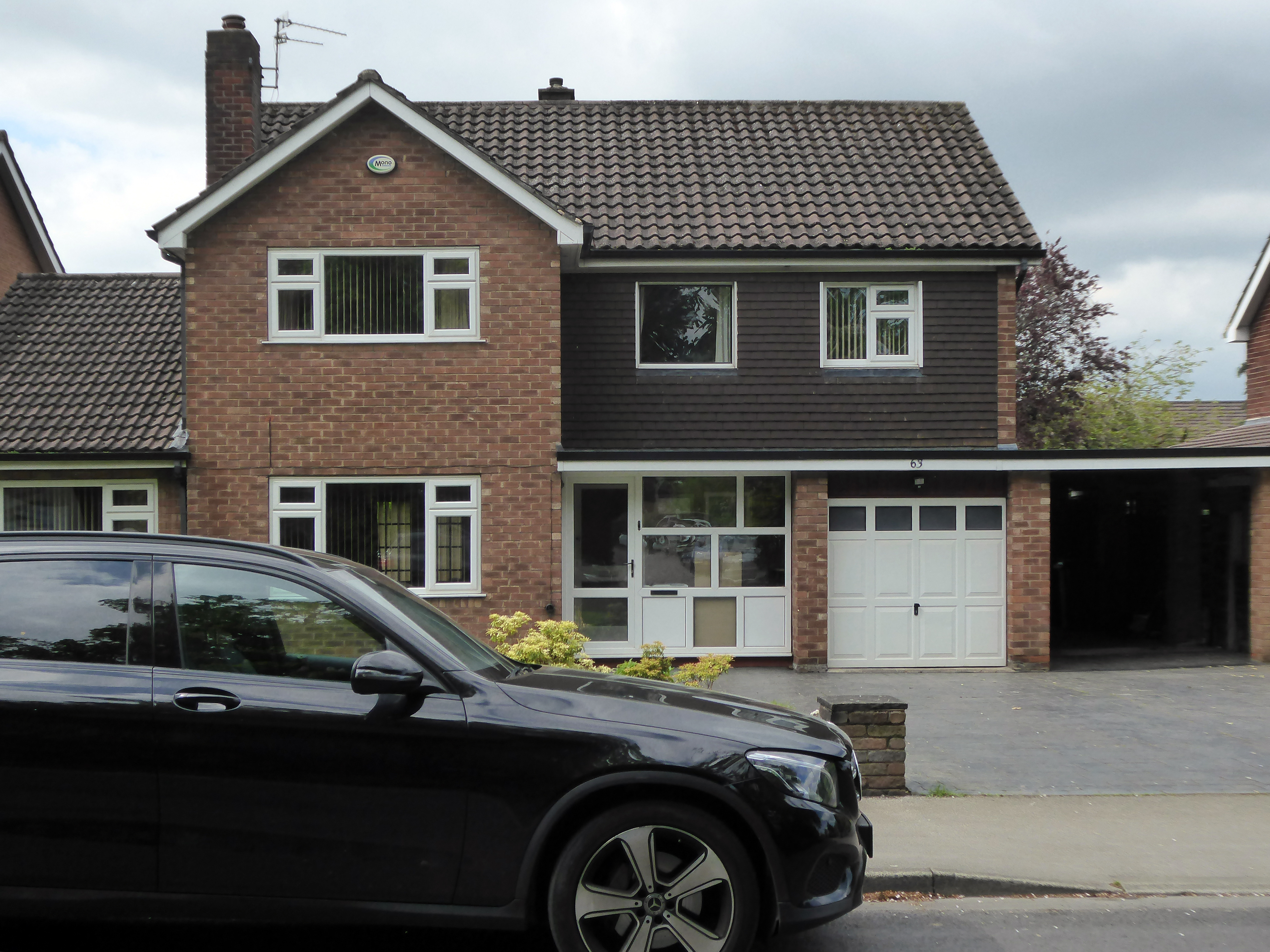
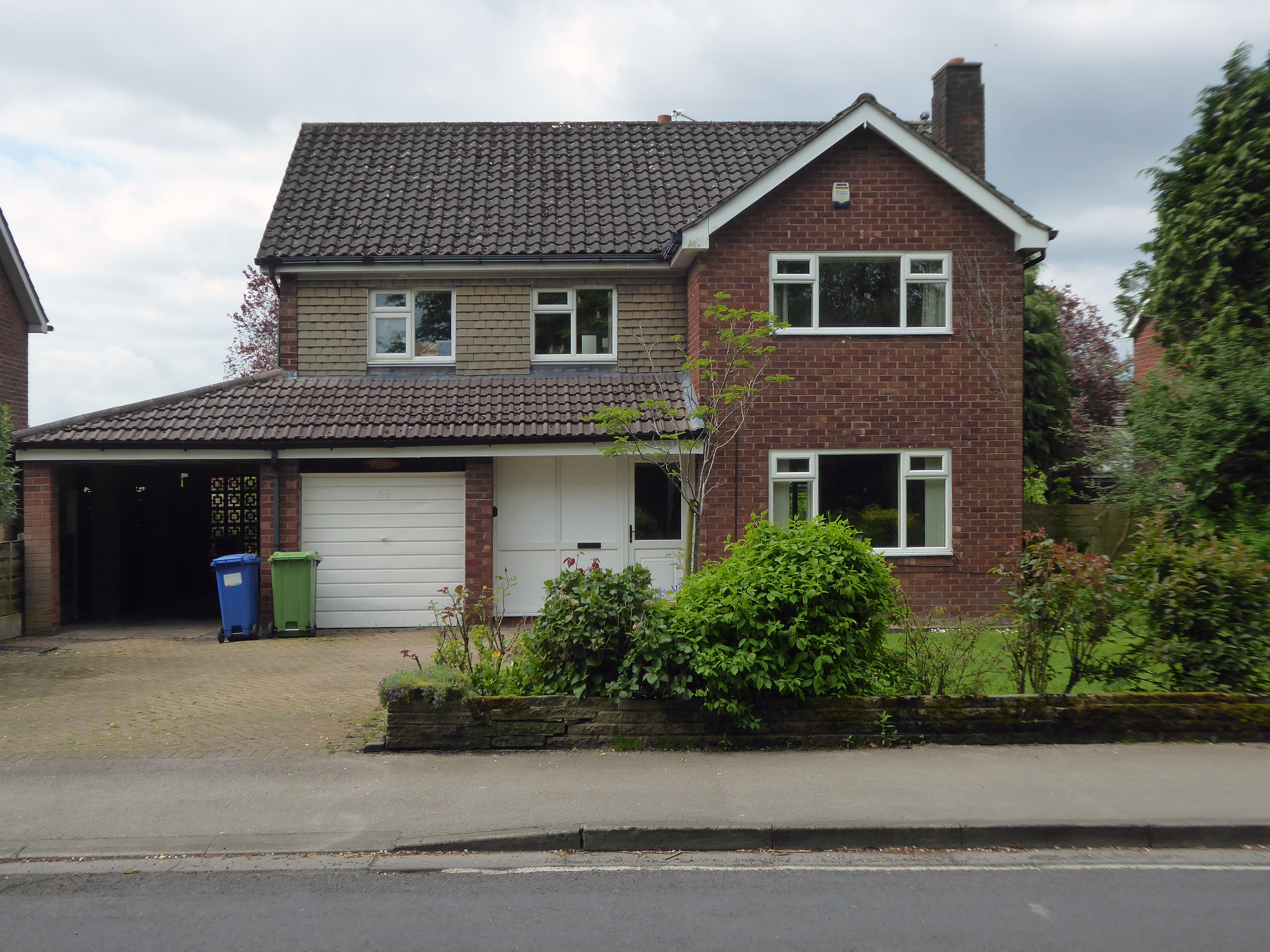
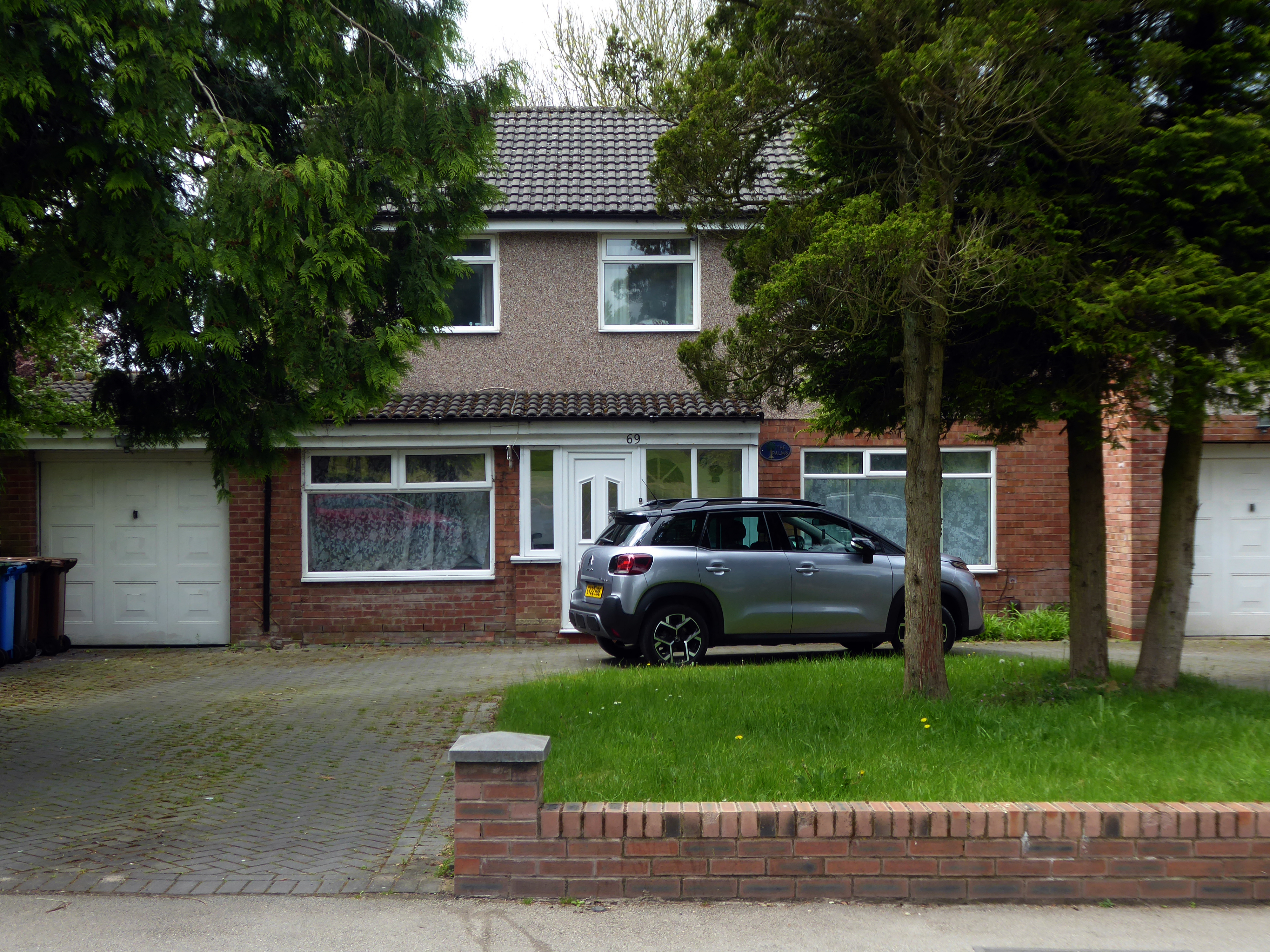
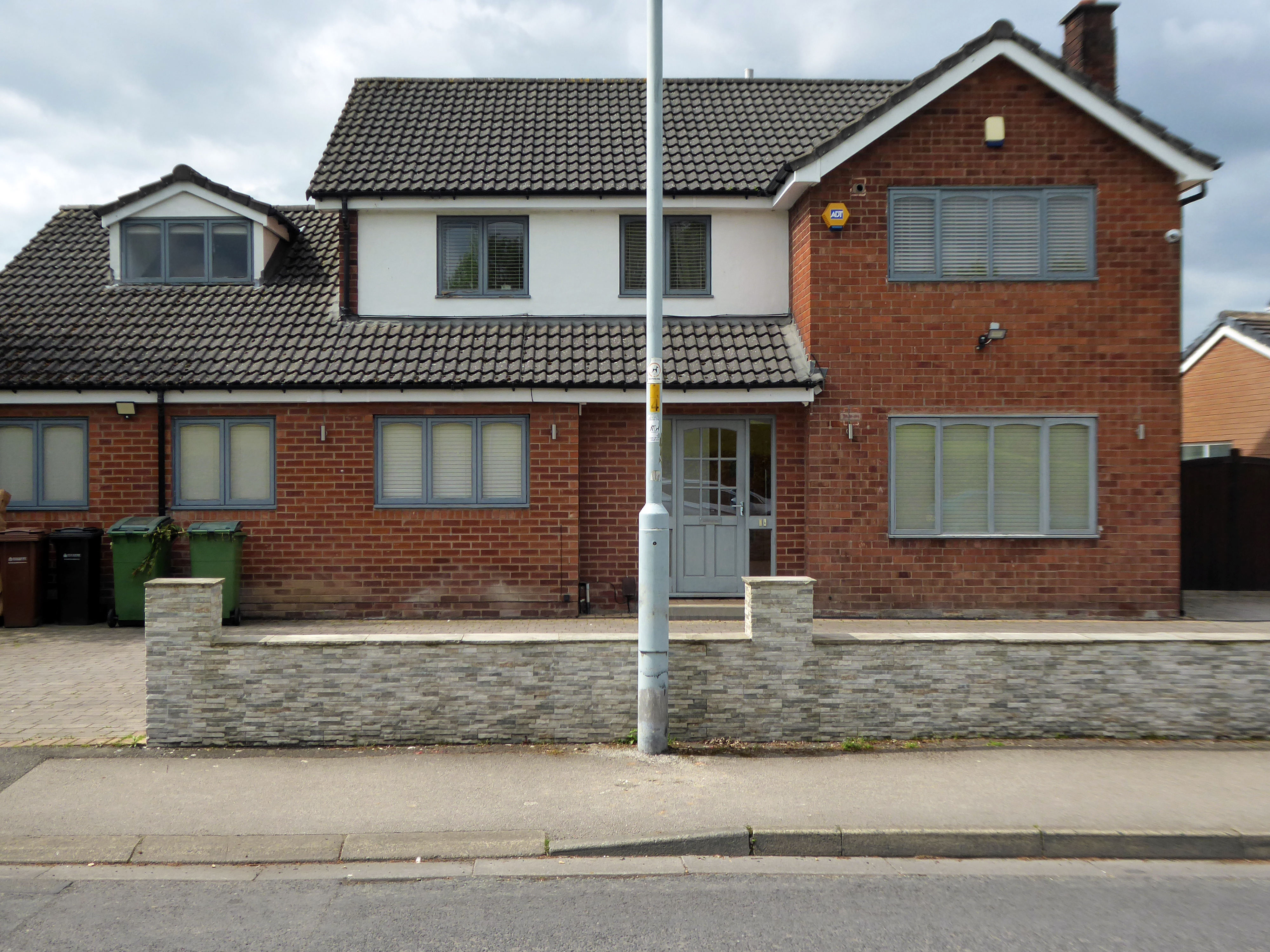
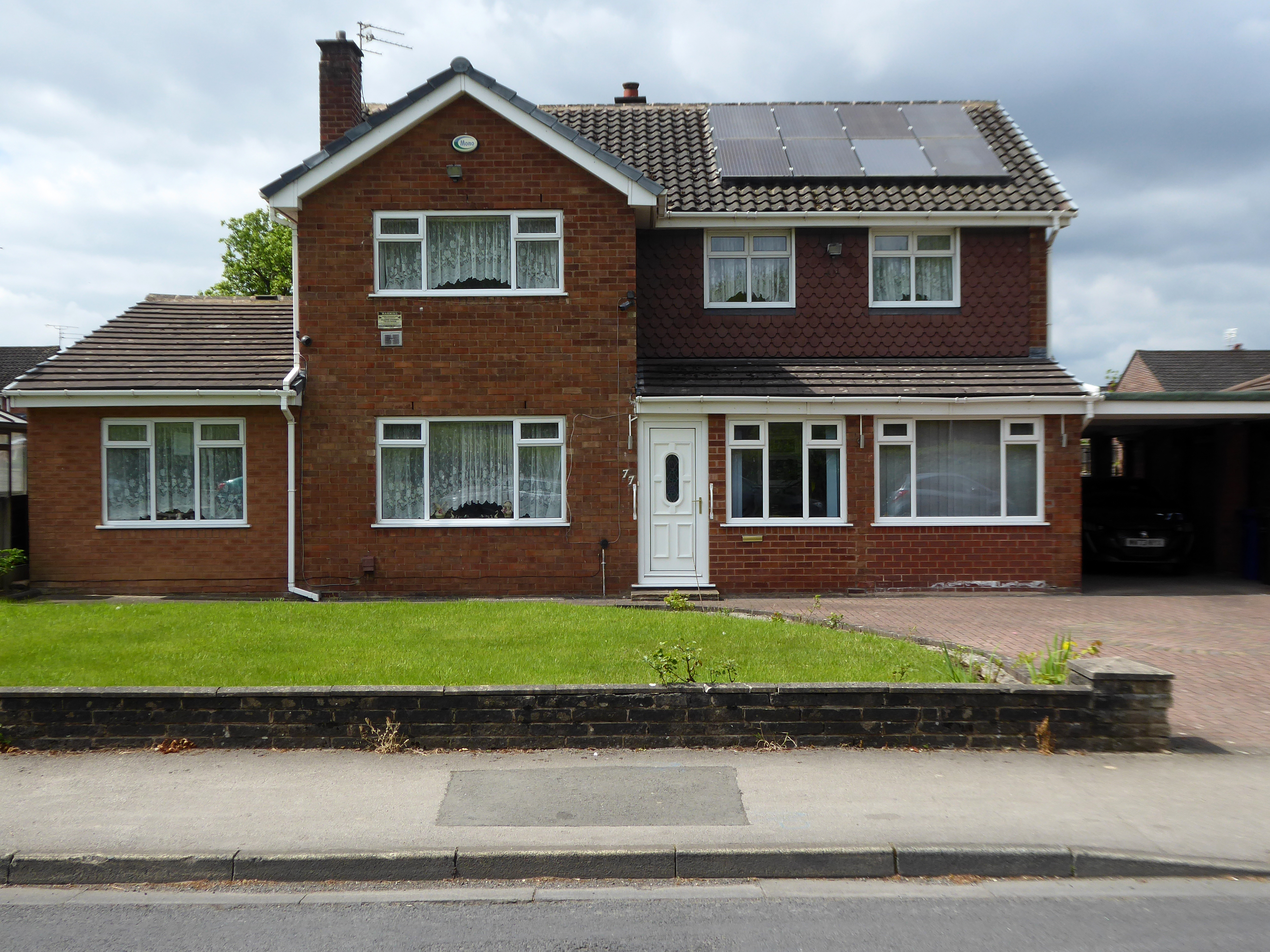
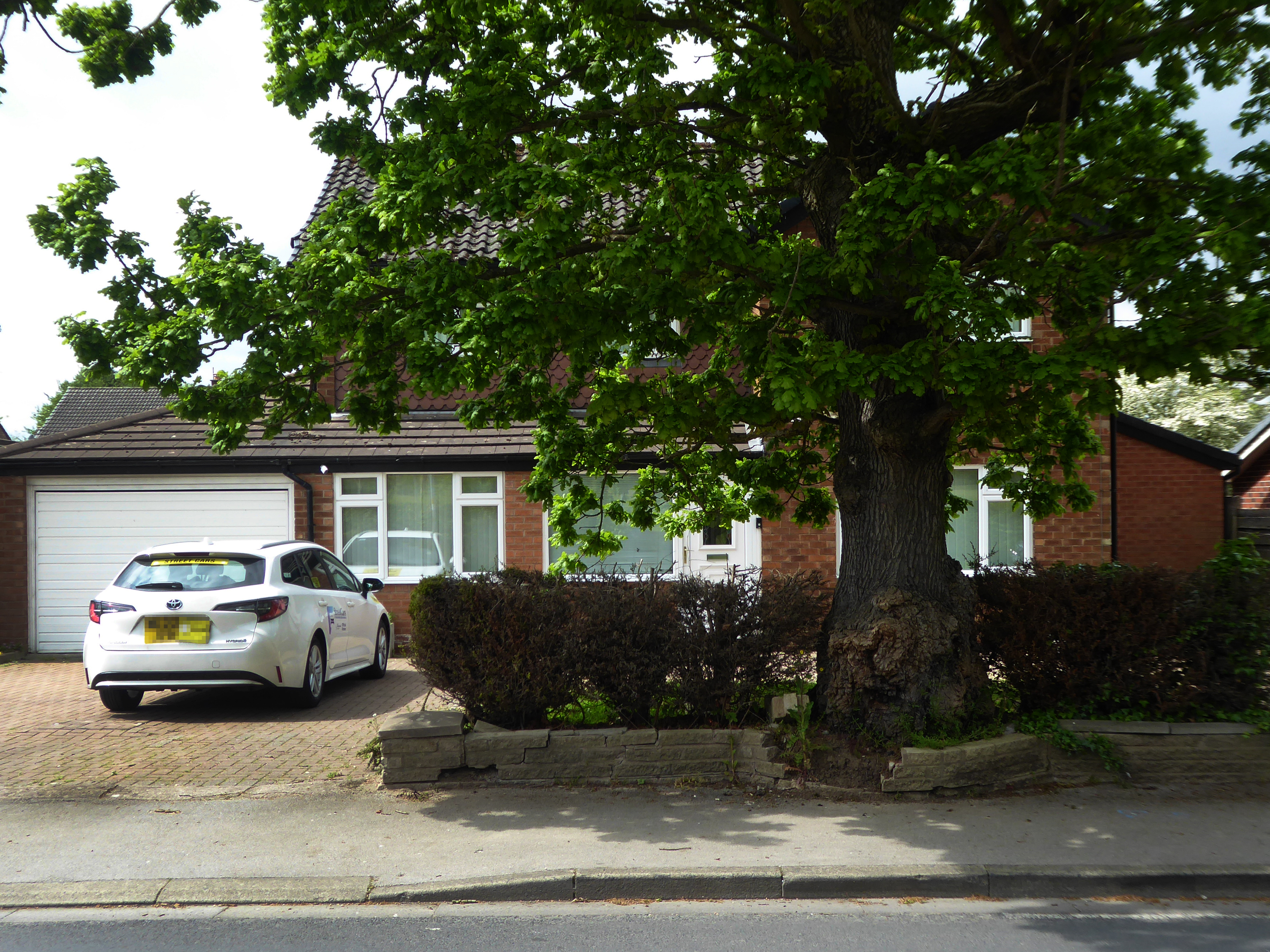
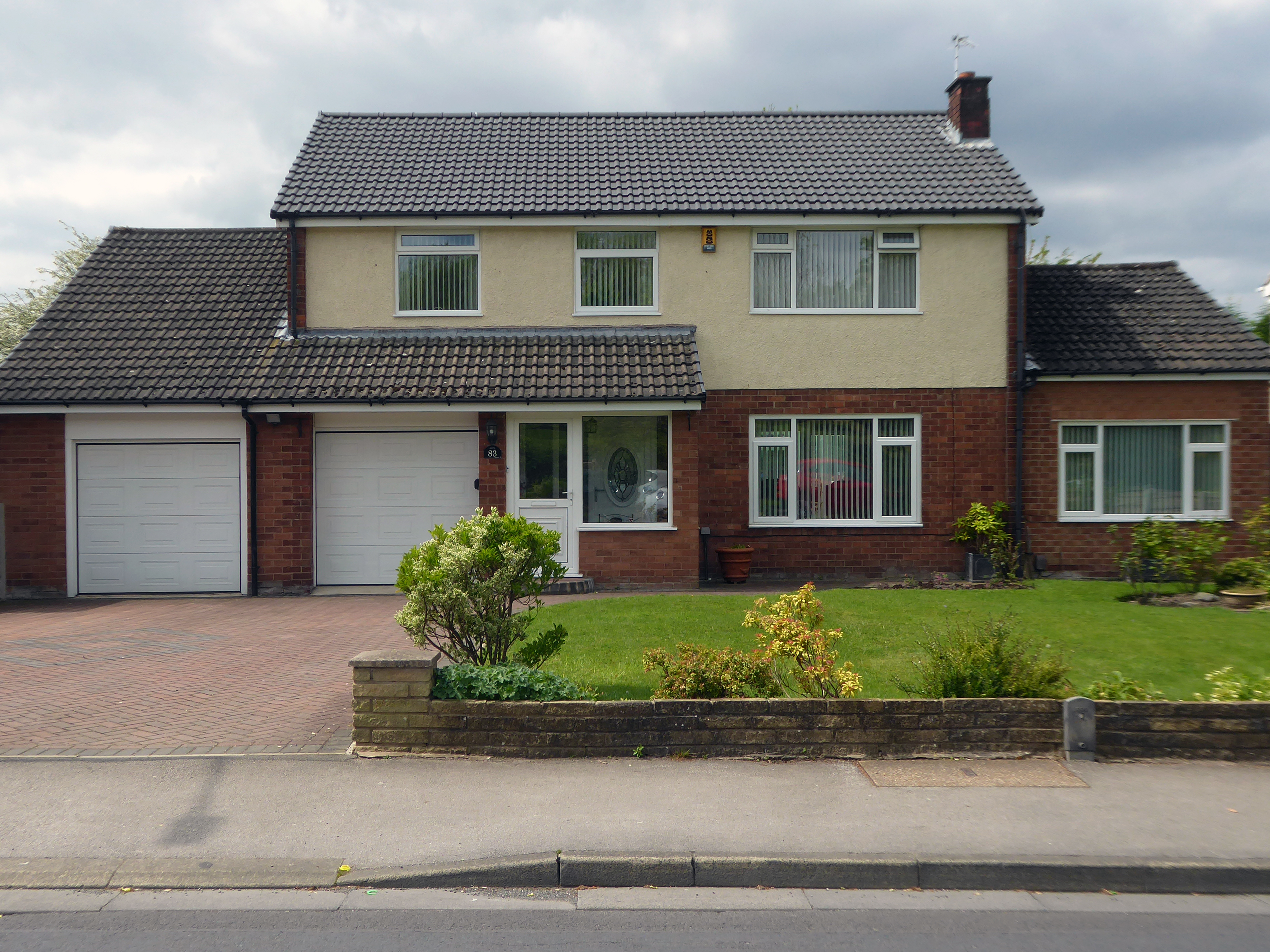
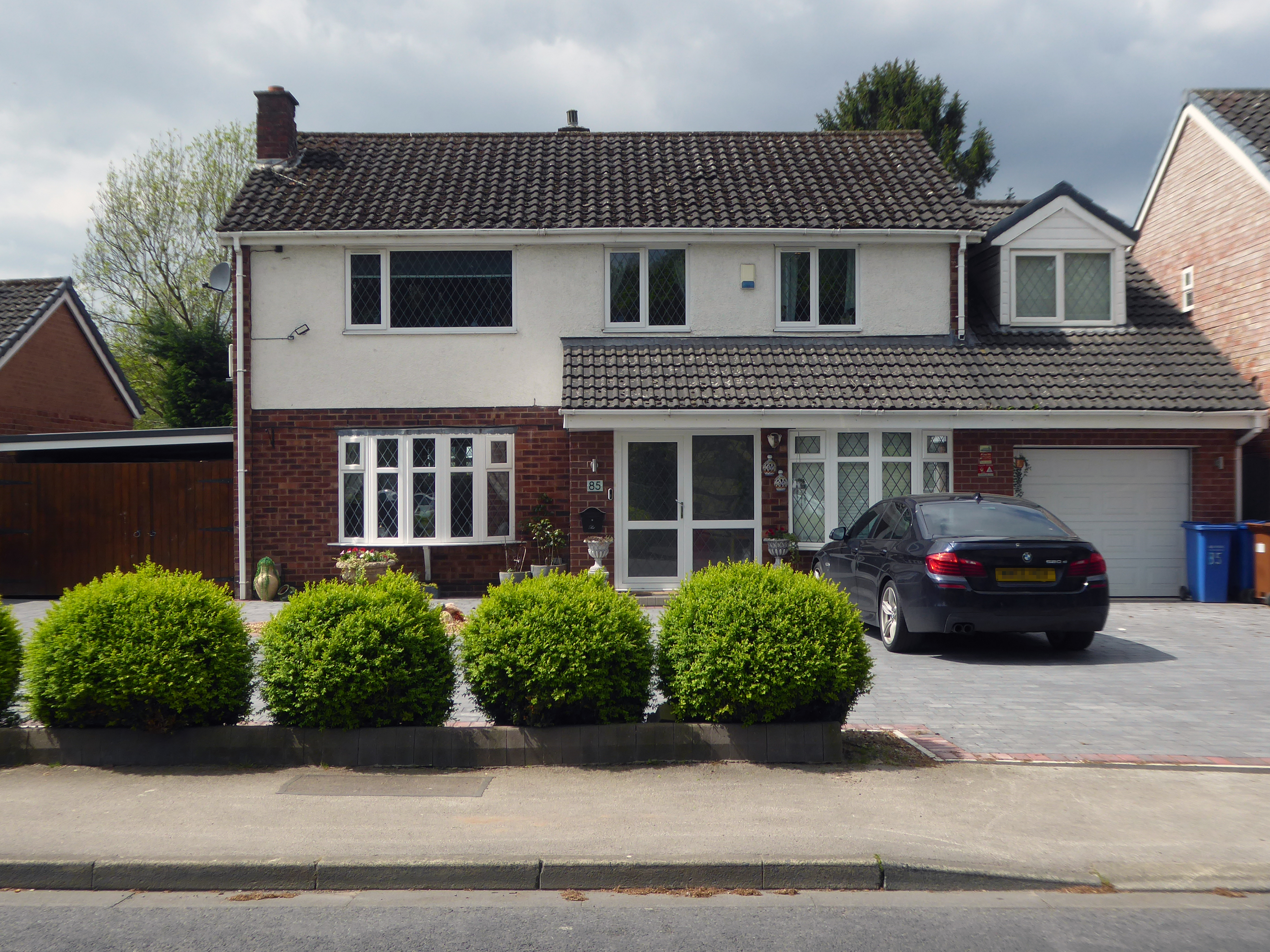
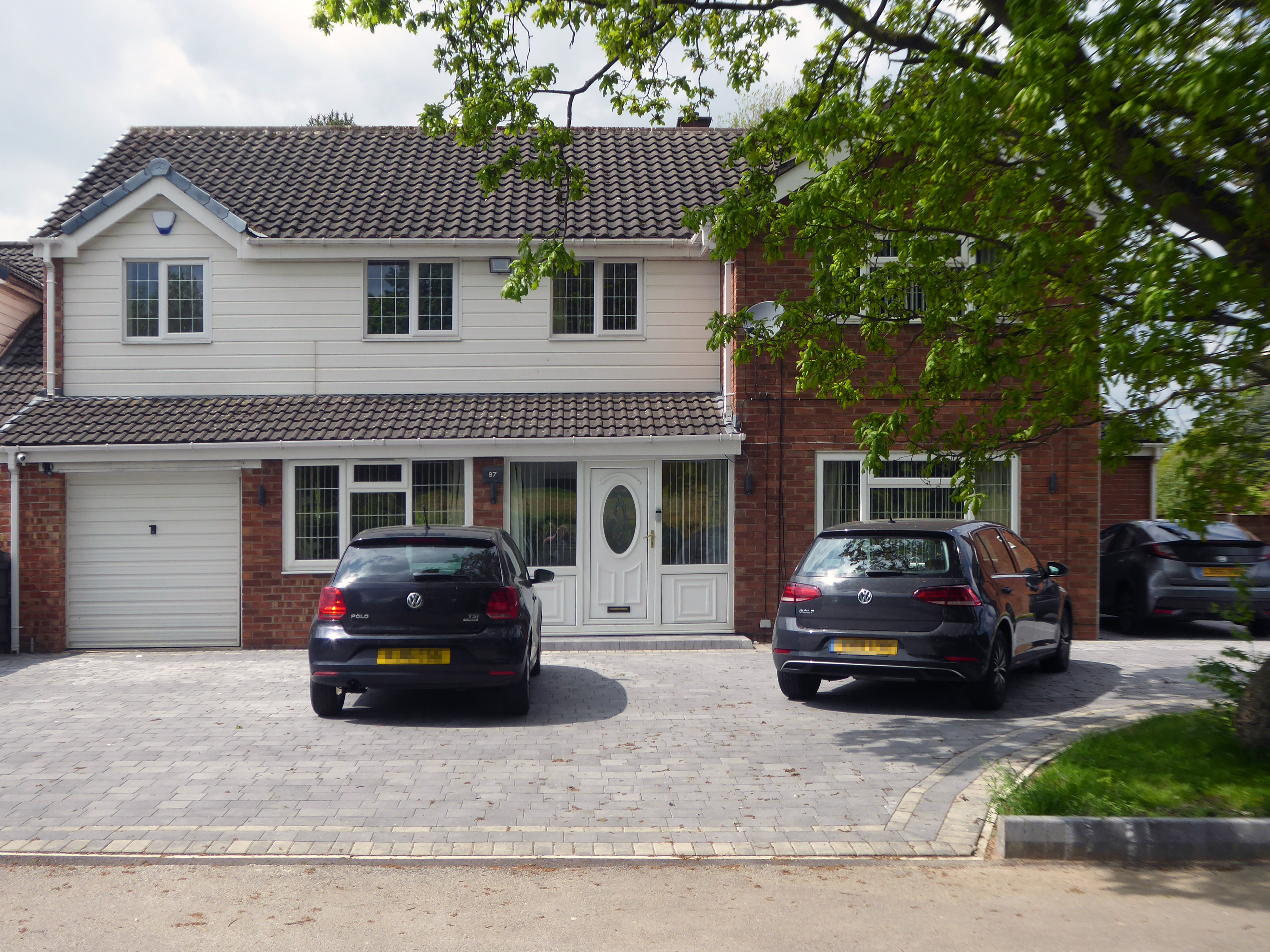
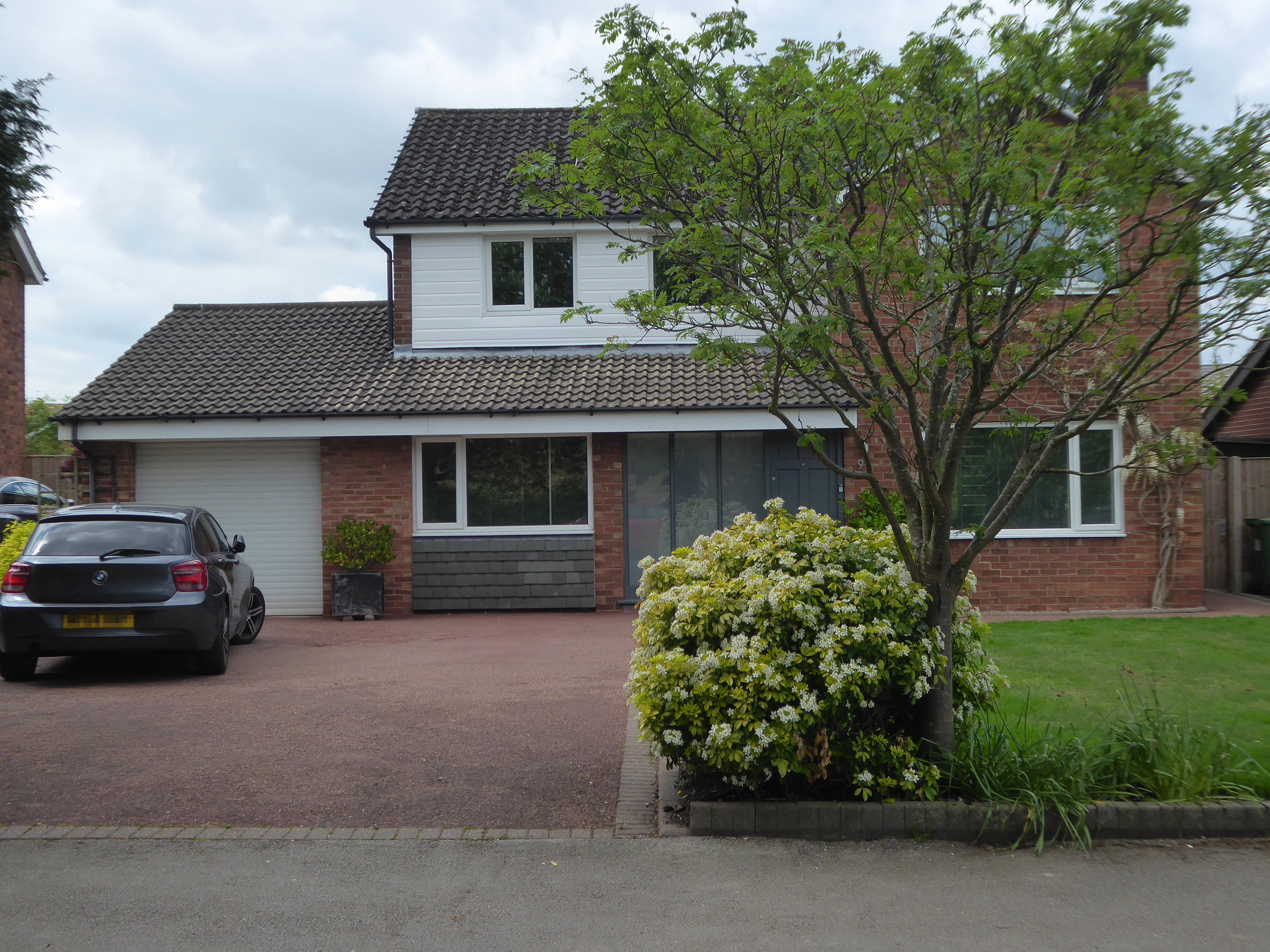
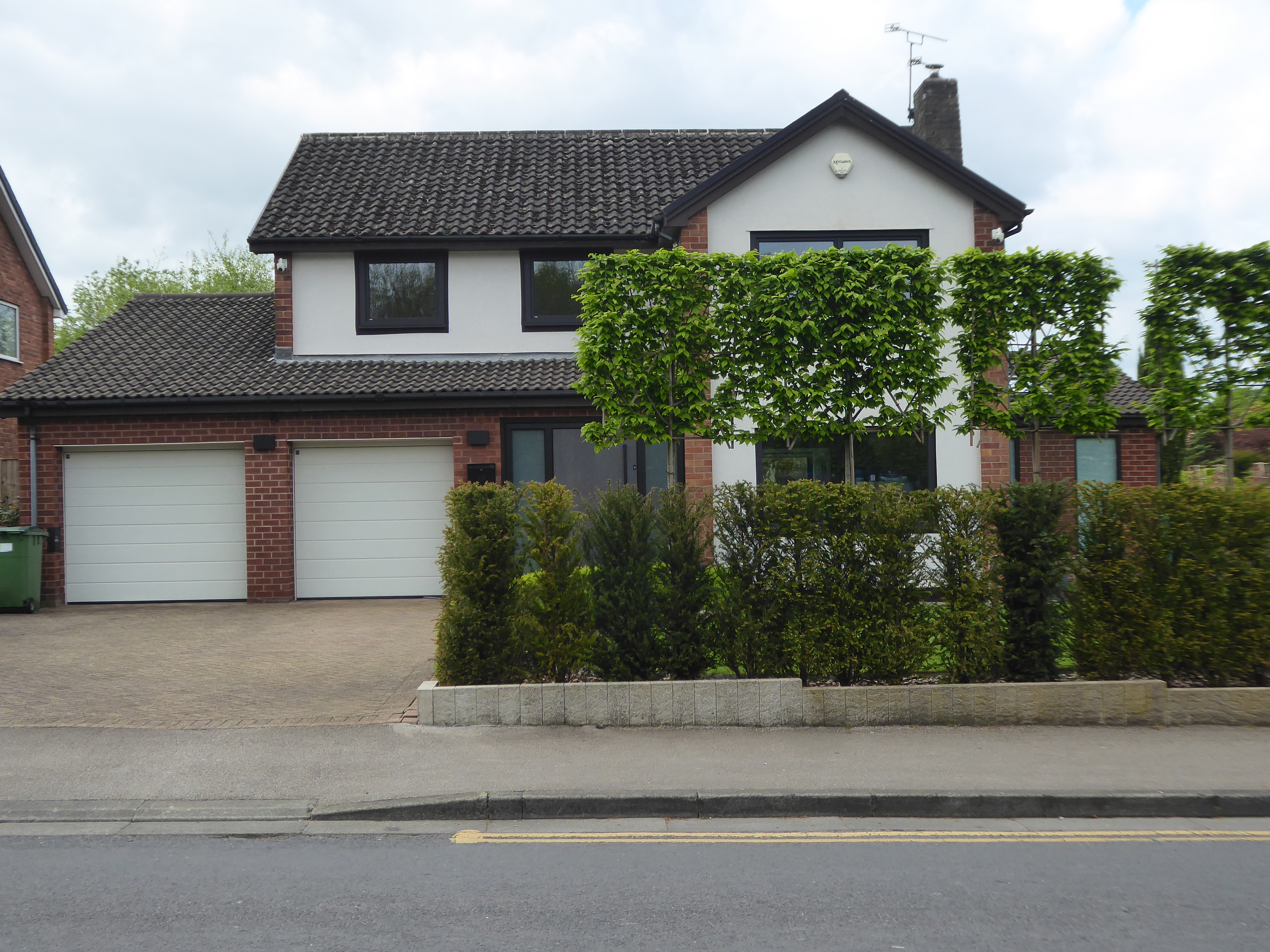
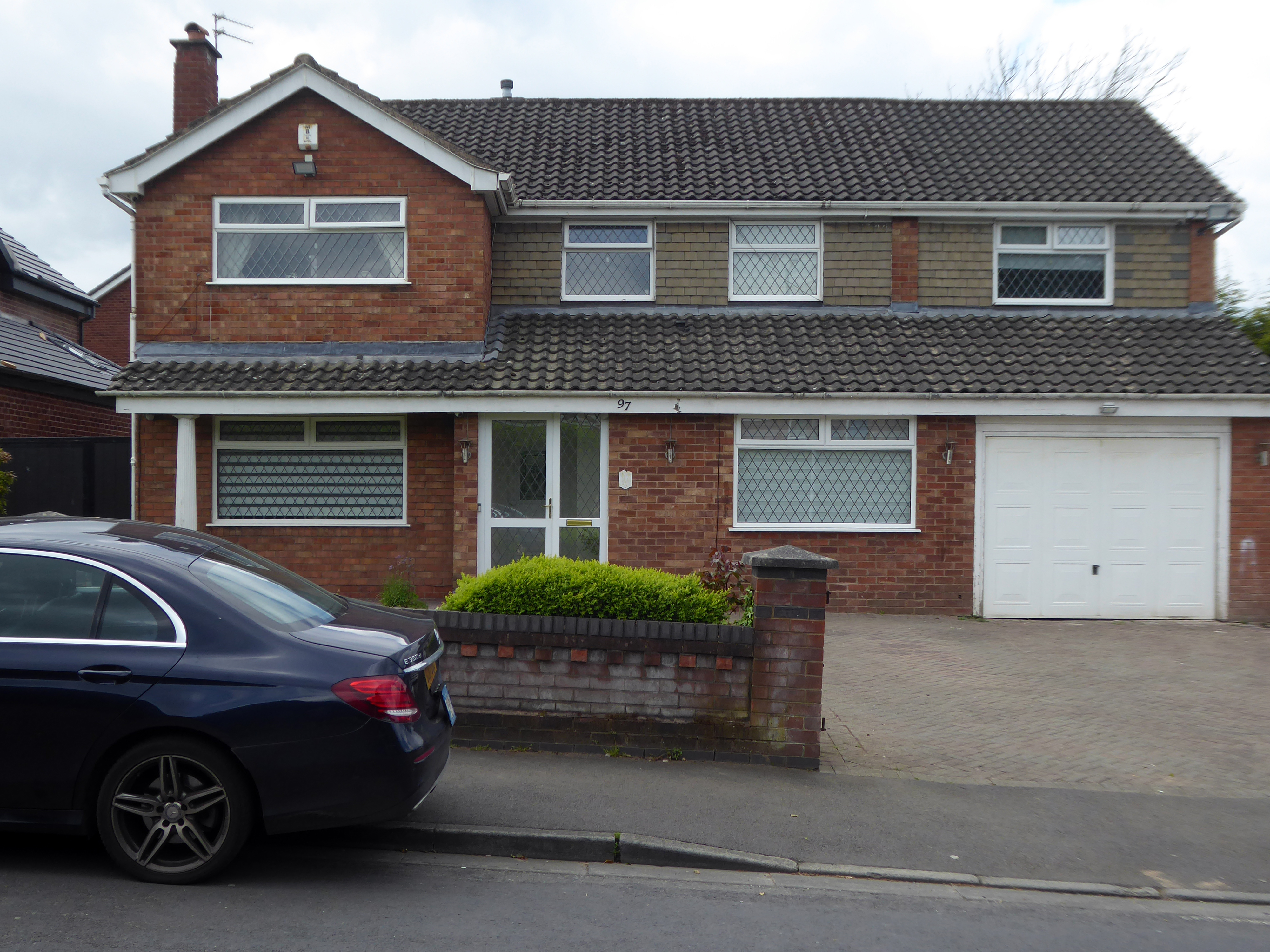
St. Anns Road North in Heald Green is in the North West region of England. The postcode is within the Heald Green ward/electoral division, which is in the constituency of Cheadle.
This area was once described to me as built by Cowboys for Indians – though statistically there are more Pakistani residents.
This is a dormitory suburb of Manchester and nearby Stockport and is oh so close to the airport, polite and professional well presented and aspirational.
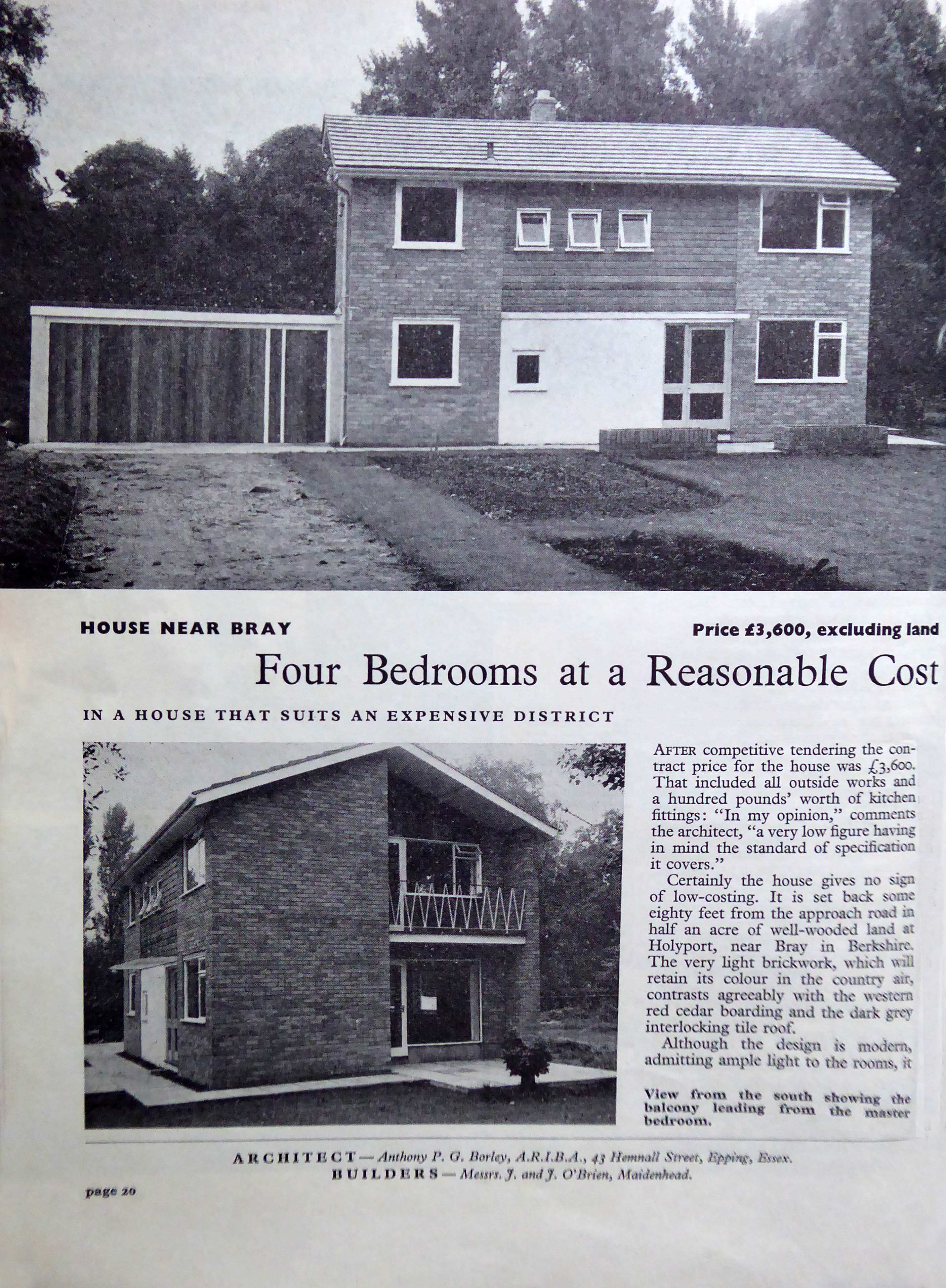
Once this was a Modern paradigm.
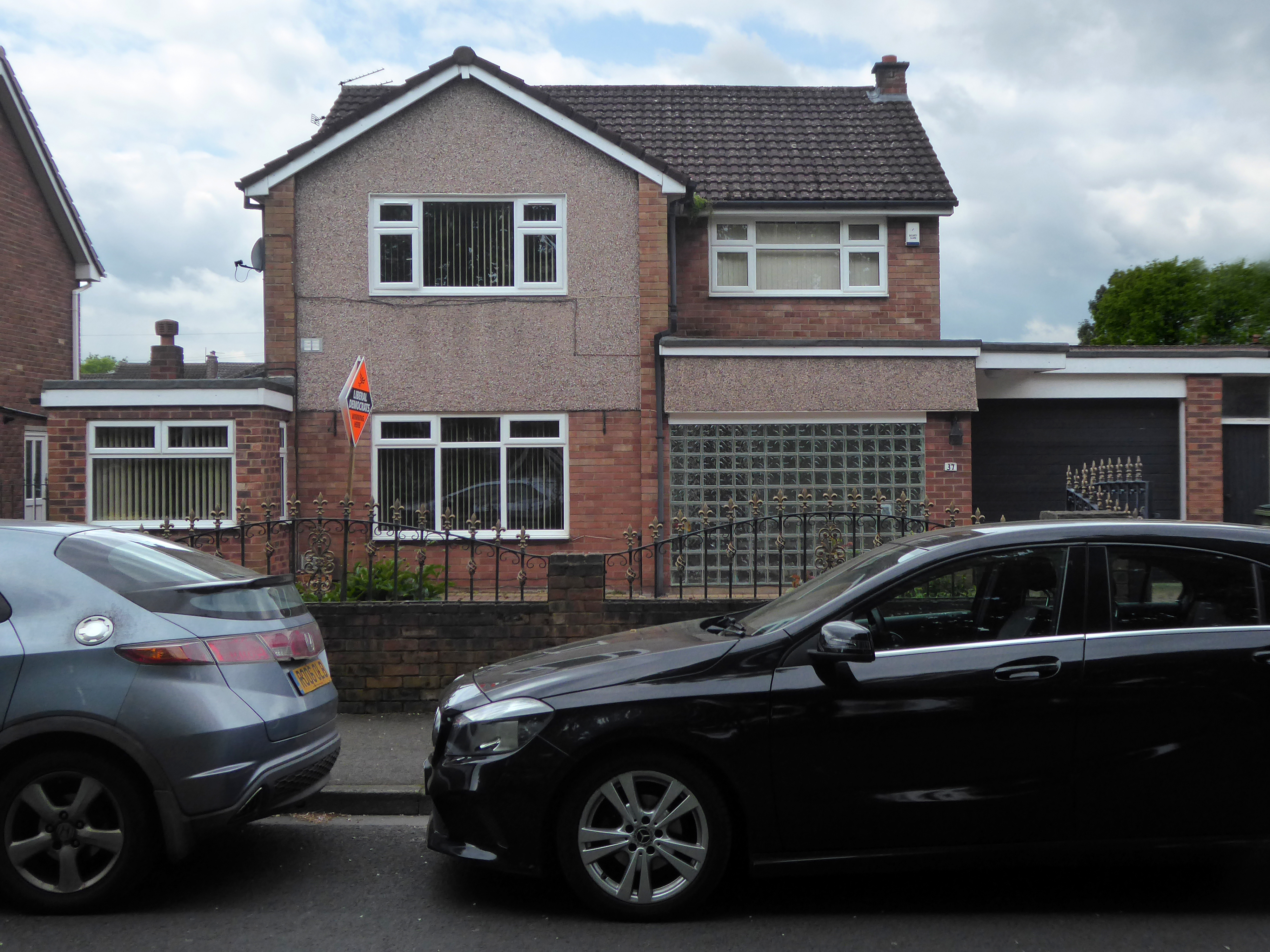
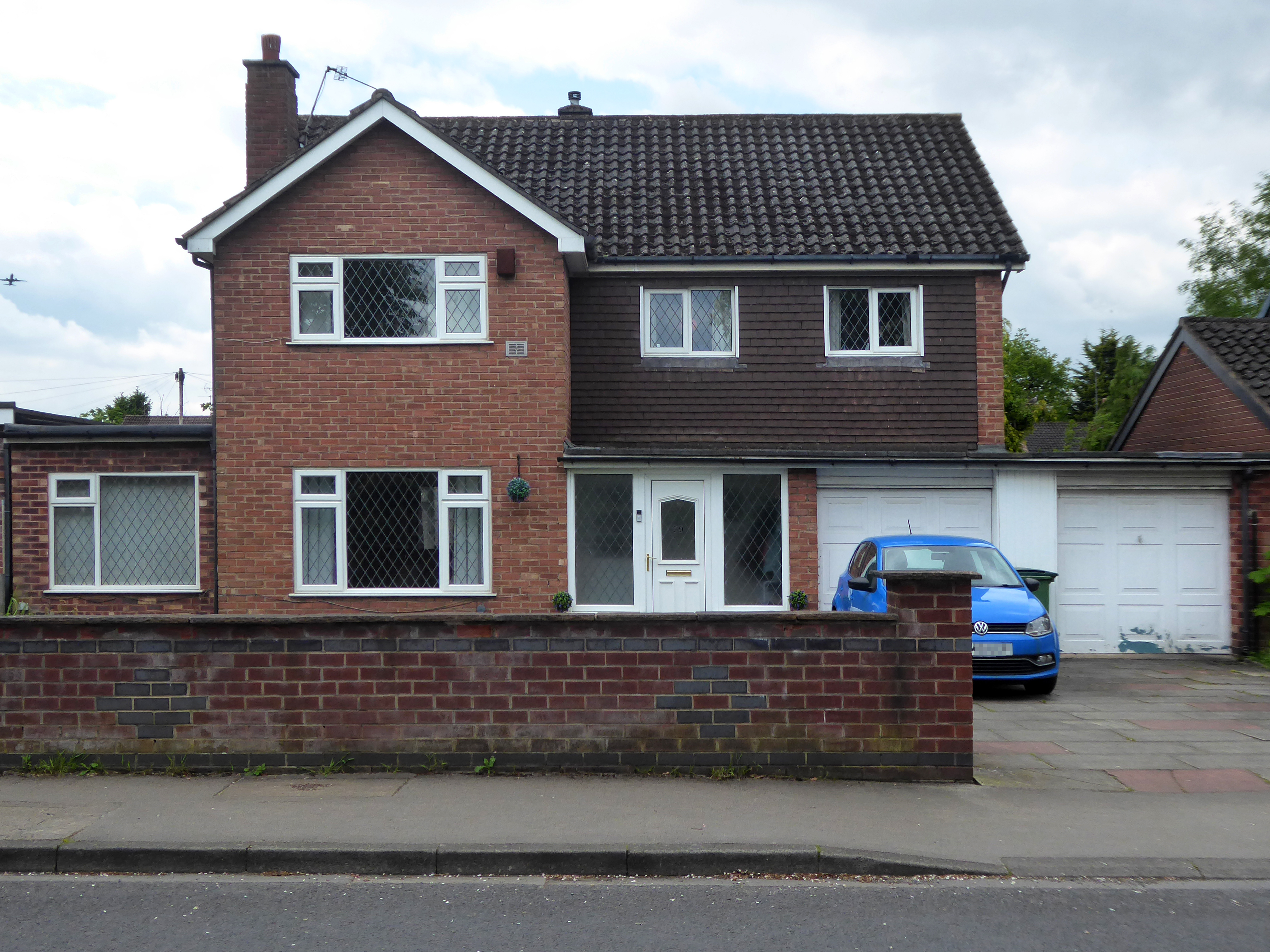
Subsequently the plaything of the upwardly mobile – extending in all directions, adding period details way out of period, or embracing the current vogue for the refined and smoothly rendered grey-ification of their homes.
Welcome to the land of the performance vehicle, impressive impressed drive, carriage lamp and bay window, overlooking a well clipped lawn.
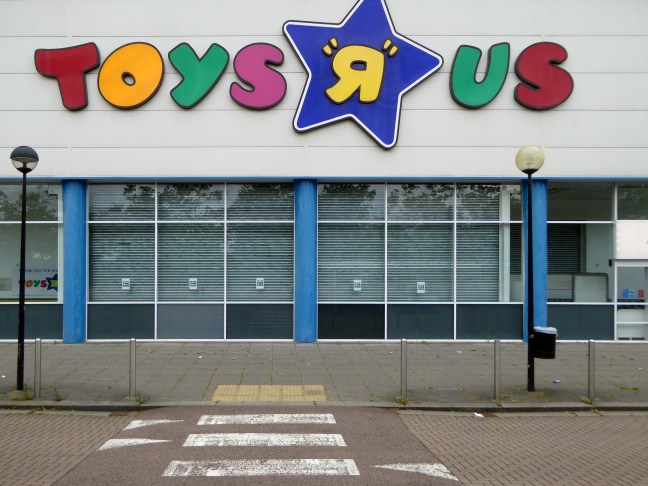
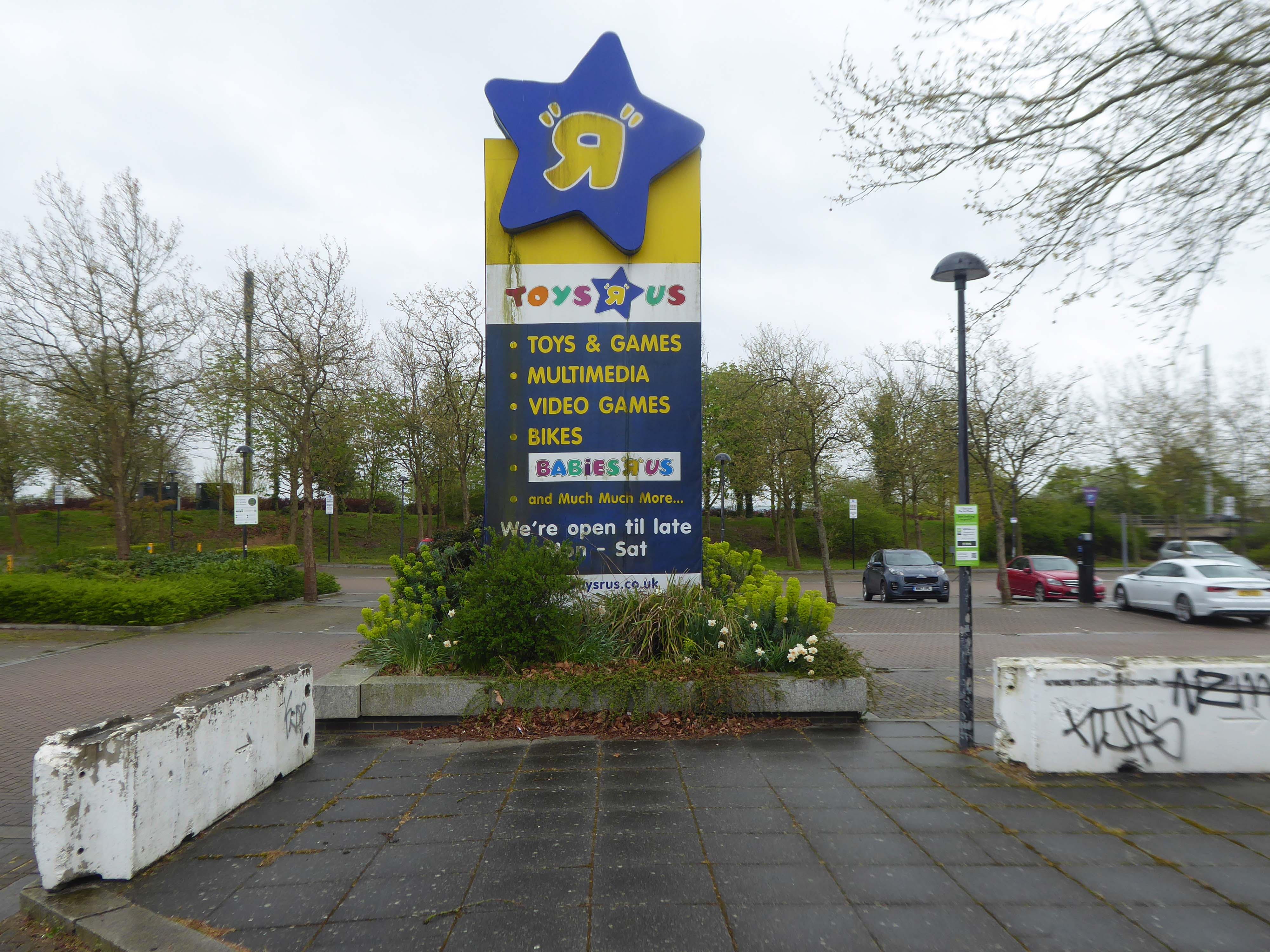
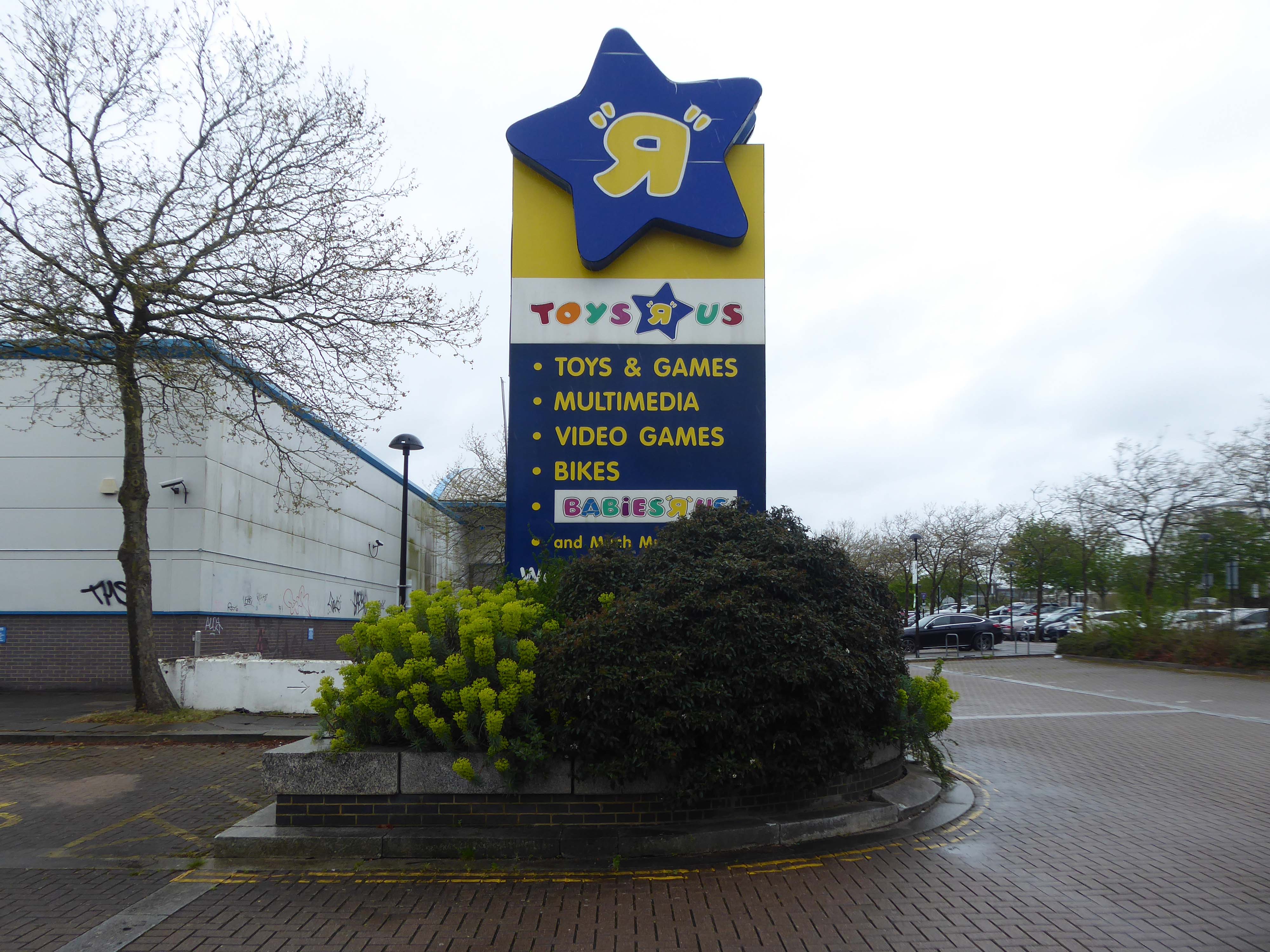
While originally considered a category killer, the rise of mass merchants and online retailers cost Toys “R” Us its share of the toy market. The company was further hampered by a significant debt load, the result of a leveraged buyout organized by private equity firms.
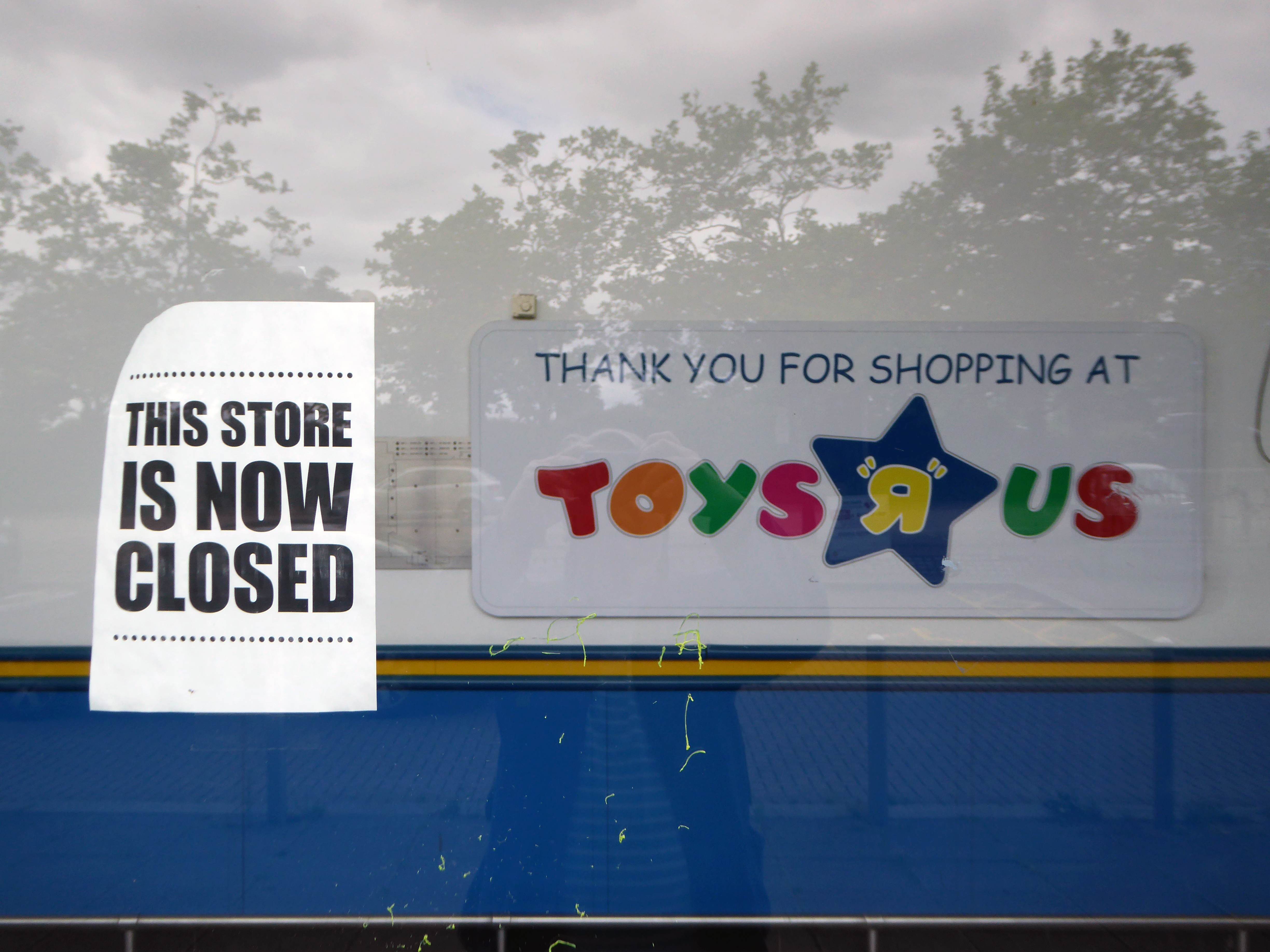
The toy retailer filed for bankruptcy in 2017 and in March 2018 announced it would be closing all its UK stores.
There were more than 100 Toys ‘R’ Us stores in the UK at the time.
A nipper, named only as Andrew penned a heartfelt 3-point letter to the judge handling the company’s bankruptcy case, and pleaded with him not to allow his fave shop to close down.
Andrew’s hand-written note to Judge Keith Phillips – which was put in the official court file – laid out exactly why he didn’t want the shops to shut.
In April 1948, Charles P Lazarus founded a baby-furniture retailer, Children’s Bargain Town in Washington DC, during the postwar baby boom. It was acquired in 1966 by Interstate Department Stores Inc.
The focus of the store changed in June 1957, and the first Toys “R” Us, dedicated exclusively to toys rather than furniture, was opened by Lazarus in Rockville Maryland. Lazarus also designed and stylized the Toys “R” Us logo, which featured a backwards “R” to give the impression that a child wrote it.
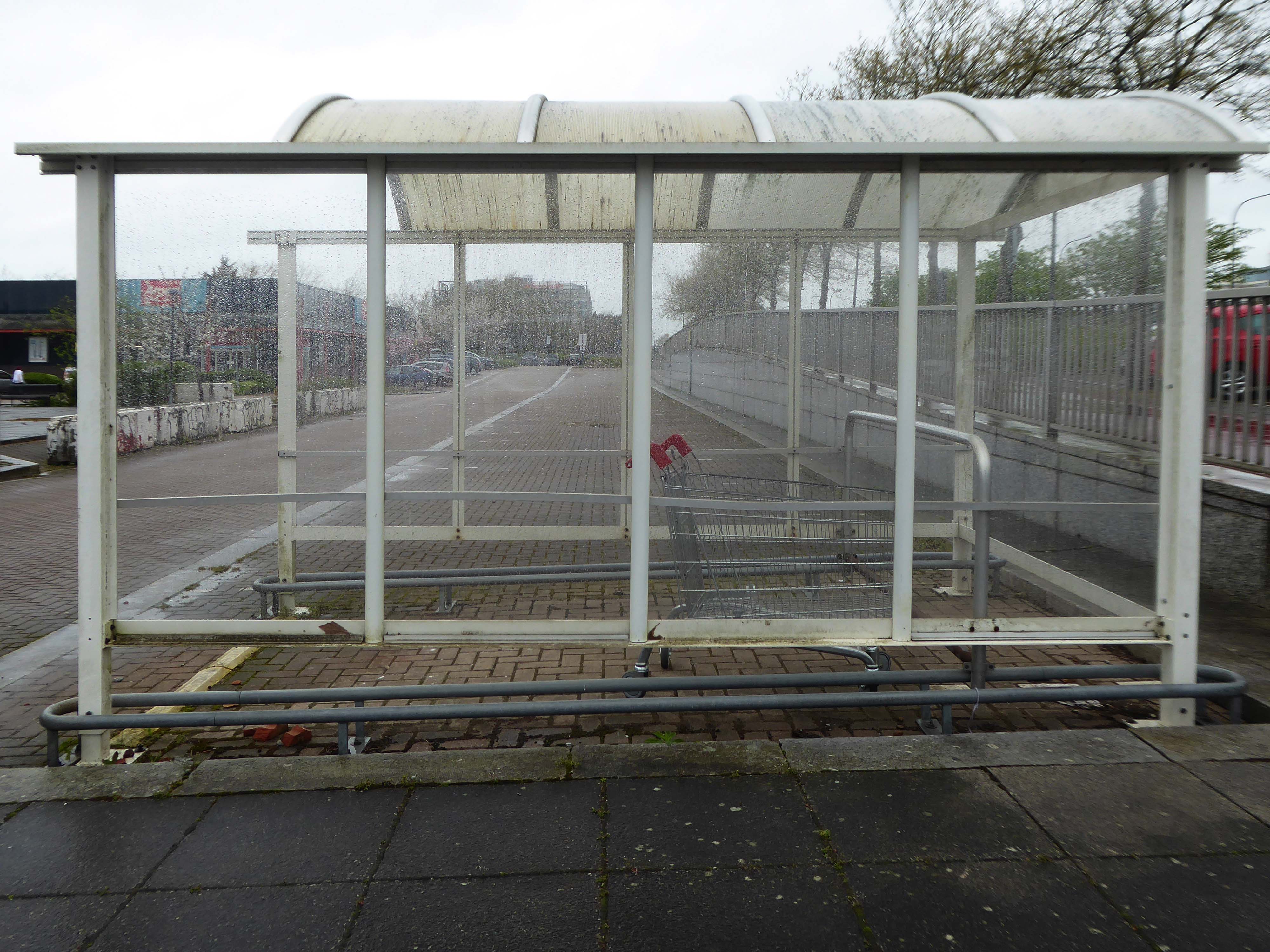
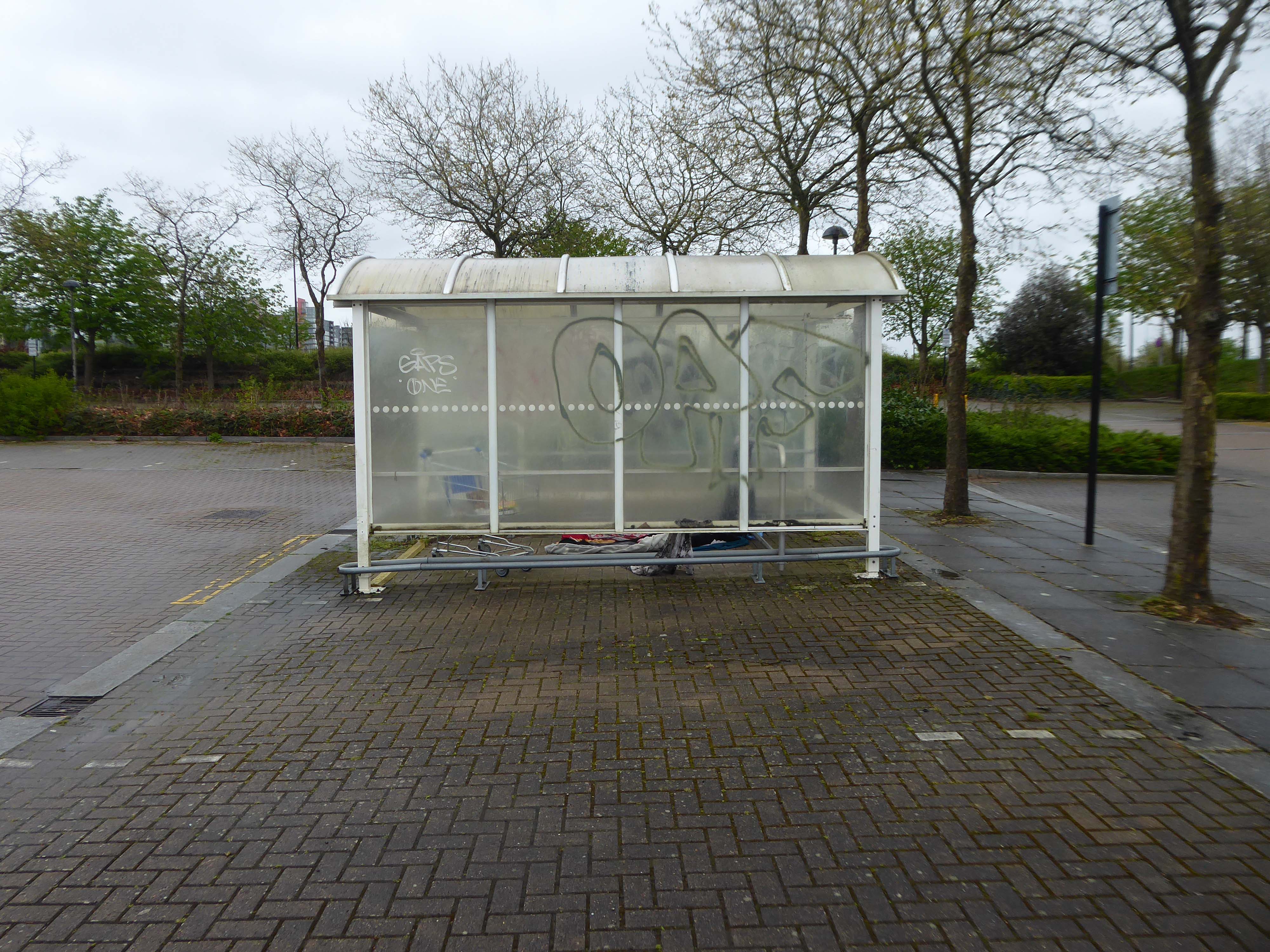
Having grown up in the days of the diminutive local toy shop – noses pressed against the widow admiring those treasures never ever owned, I find the present day retailers to be soulless industrial hangars – designed to extract every ounce of fun and currency from the hapless child and guardians.
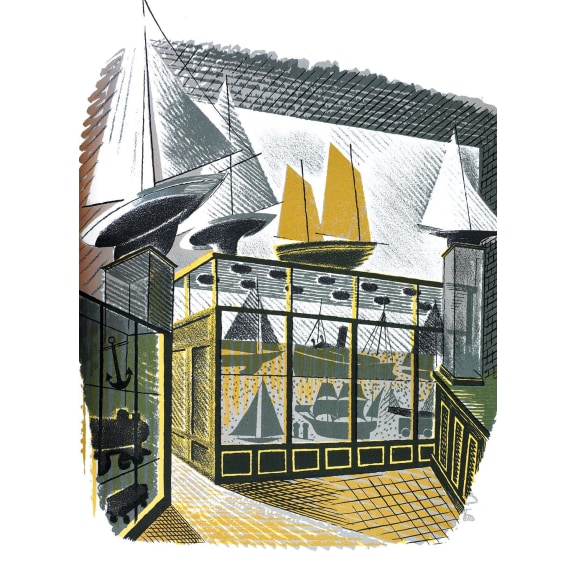
Eric Ravilious – inside the model shop.
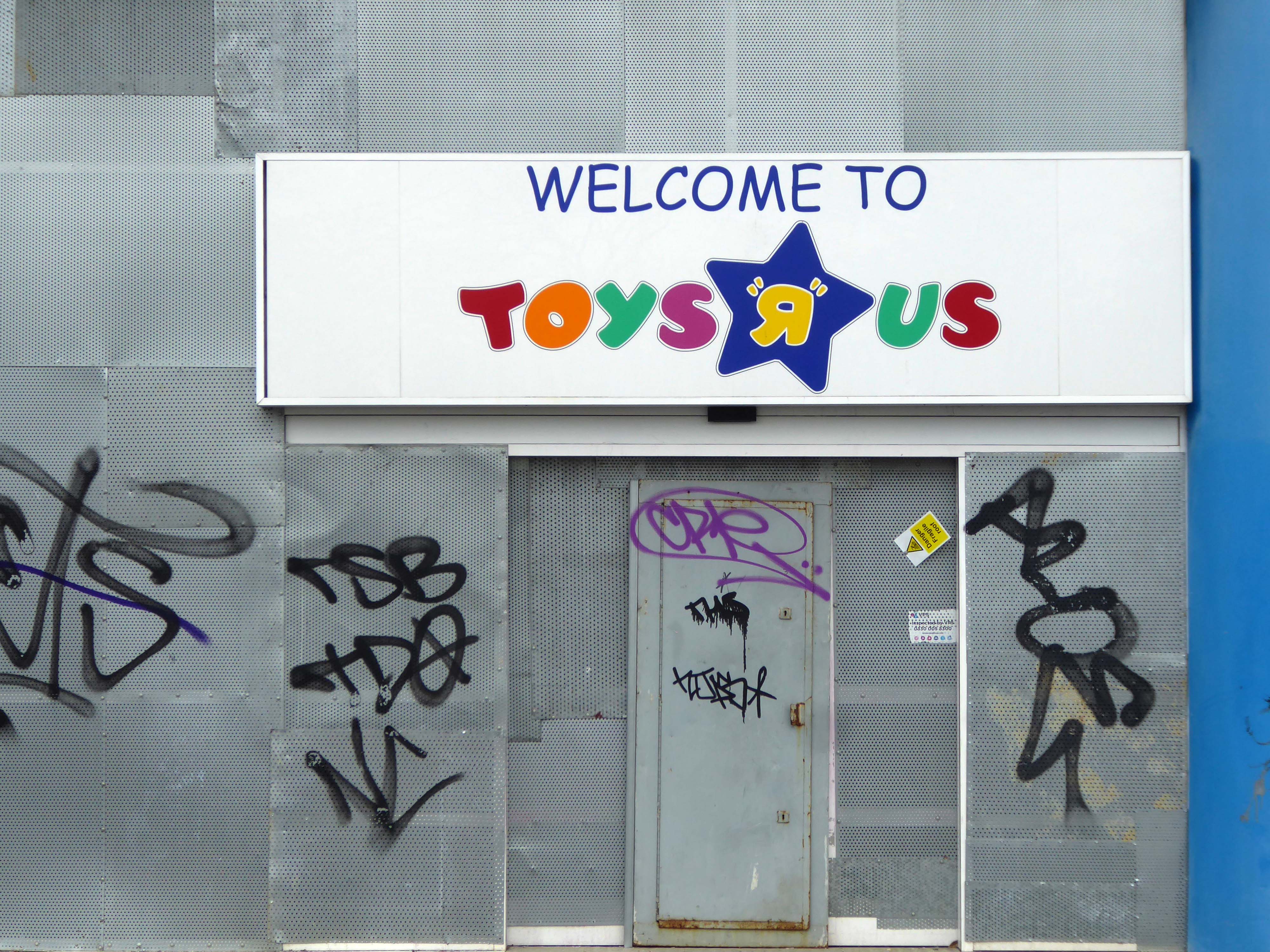
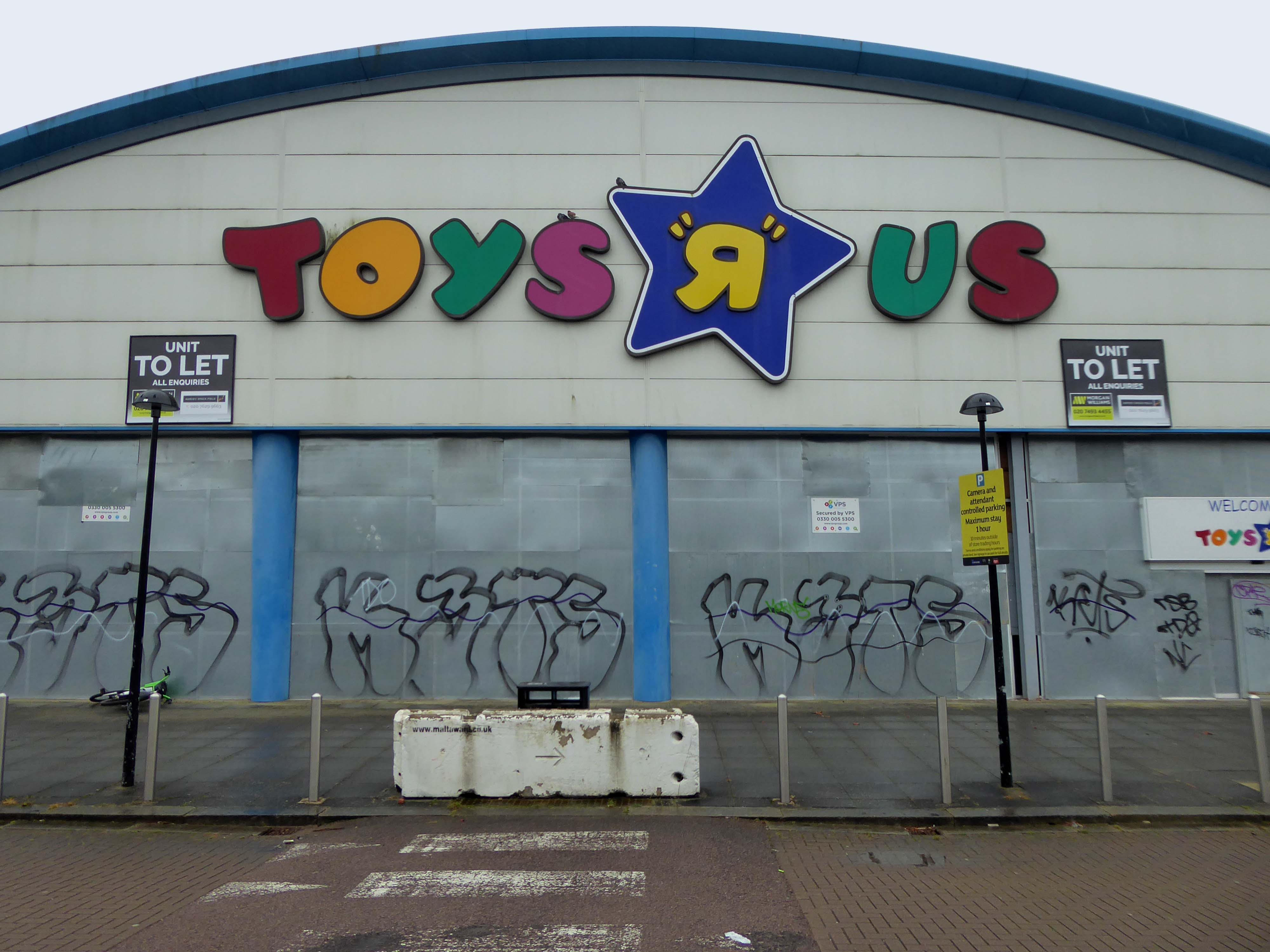
I returned in 2024.
A large To Let sign is now visible above the store, with any interested parties invited to inquire about the large unit. The 47,500sq foot unit is available to lease – in whole or in part, and is described as being immediately available.
The news comes despite previous announcements that WHP Global, the owner of Toys R Us, had plans to re-open some UK stores during 2022. In February, the company said UK Toys R Us stores could open within months, although none have yet done so.
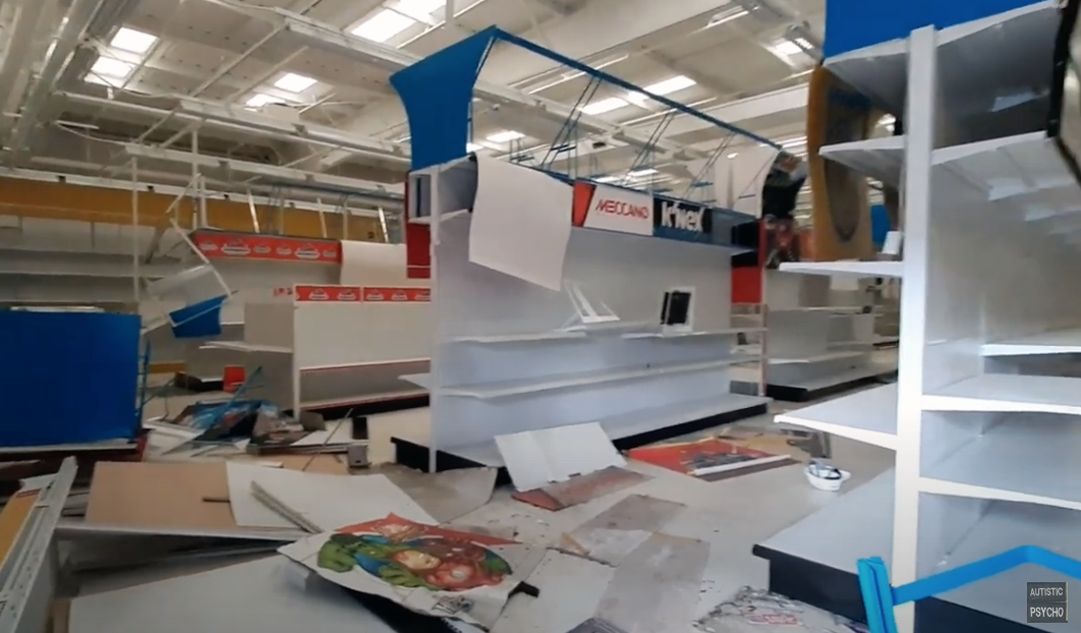
Here is Autistic Psycho’s tour around the deserted store,
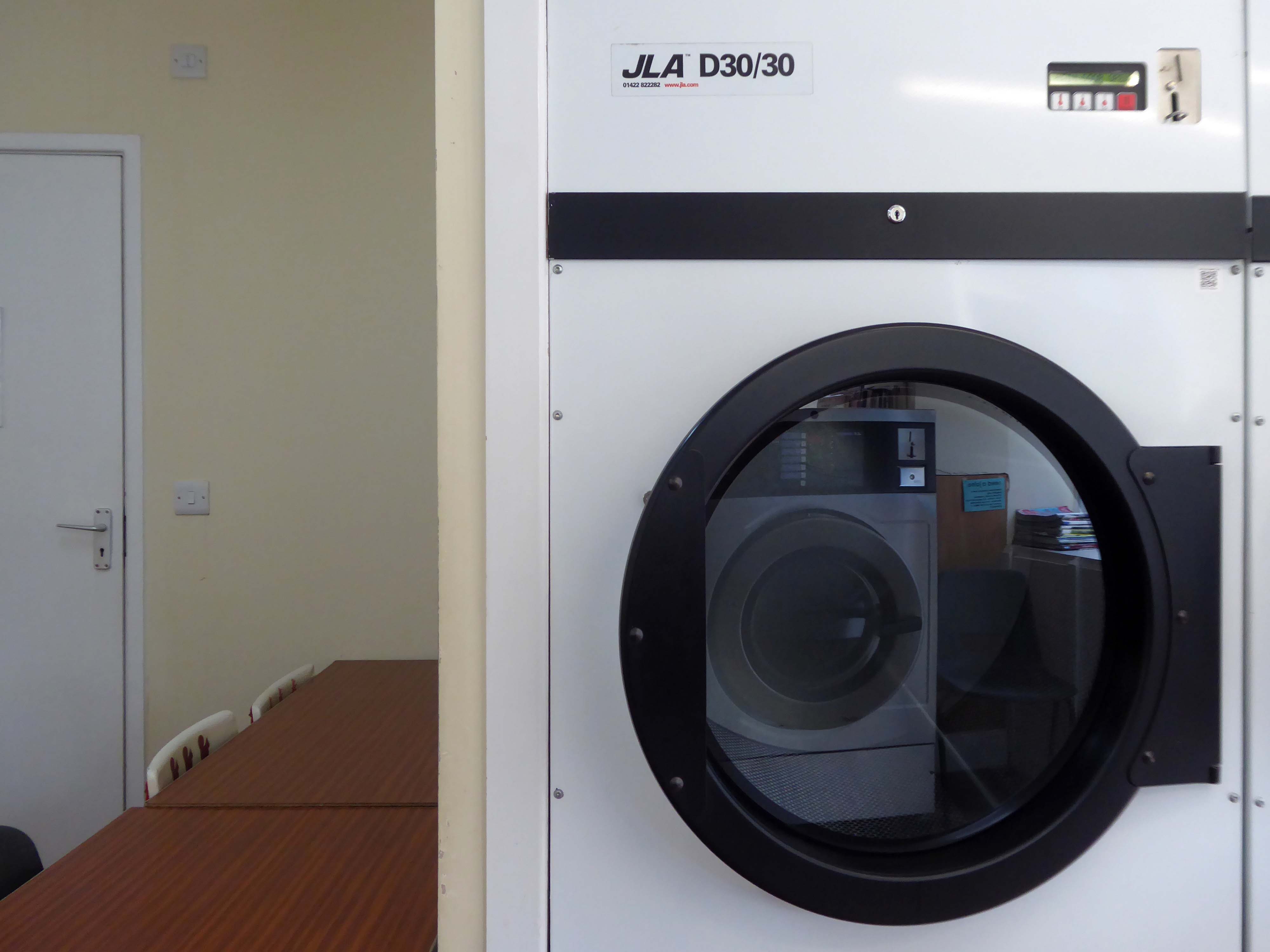
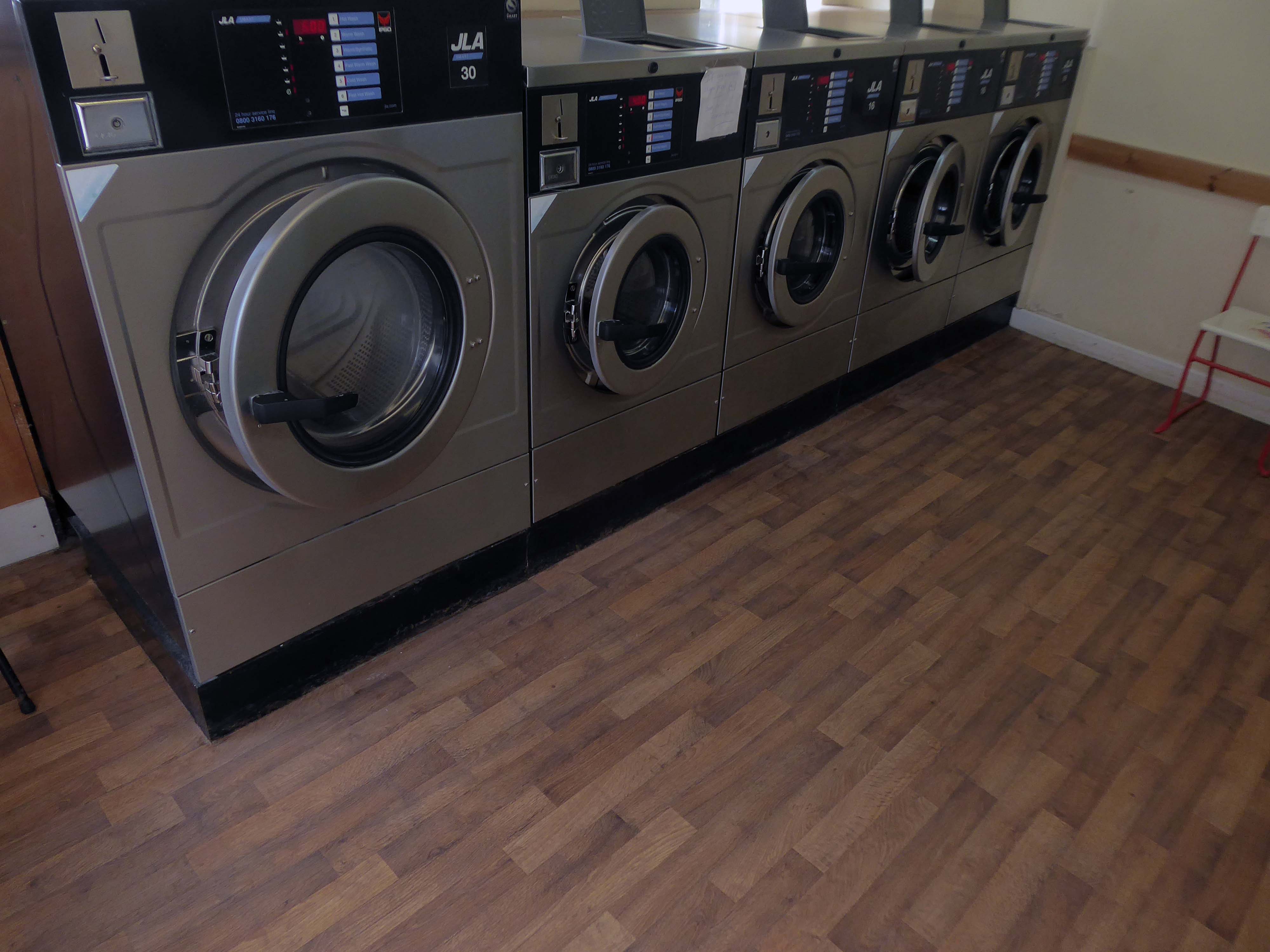
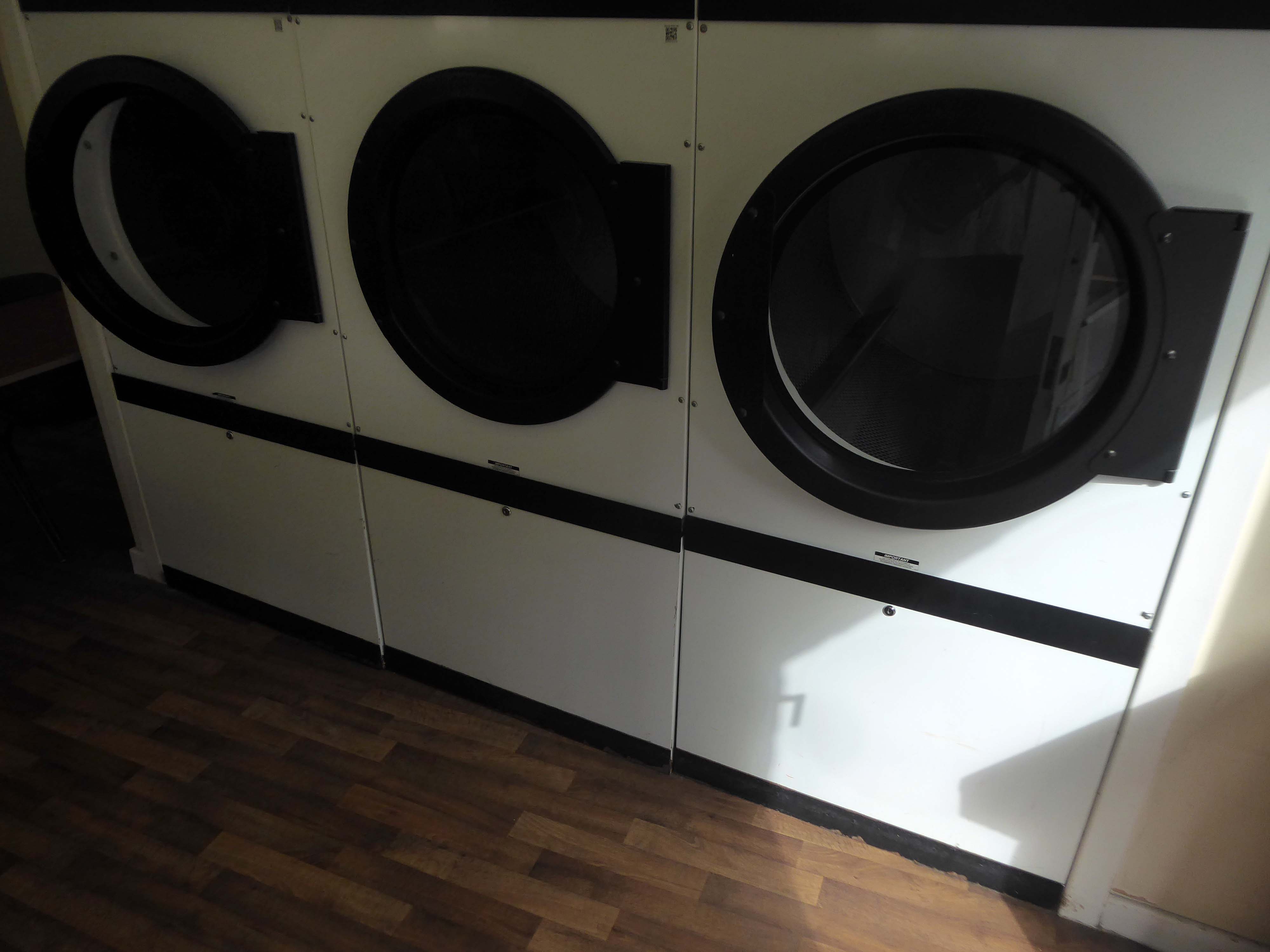
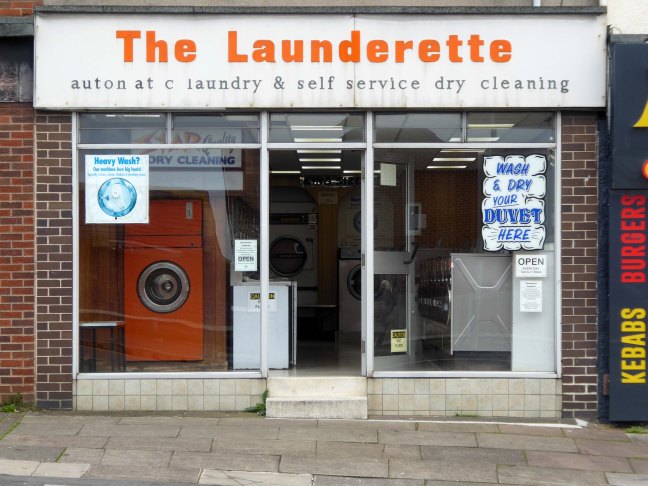
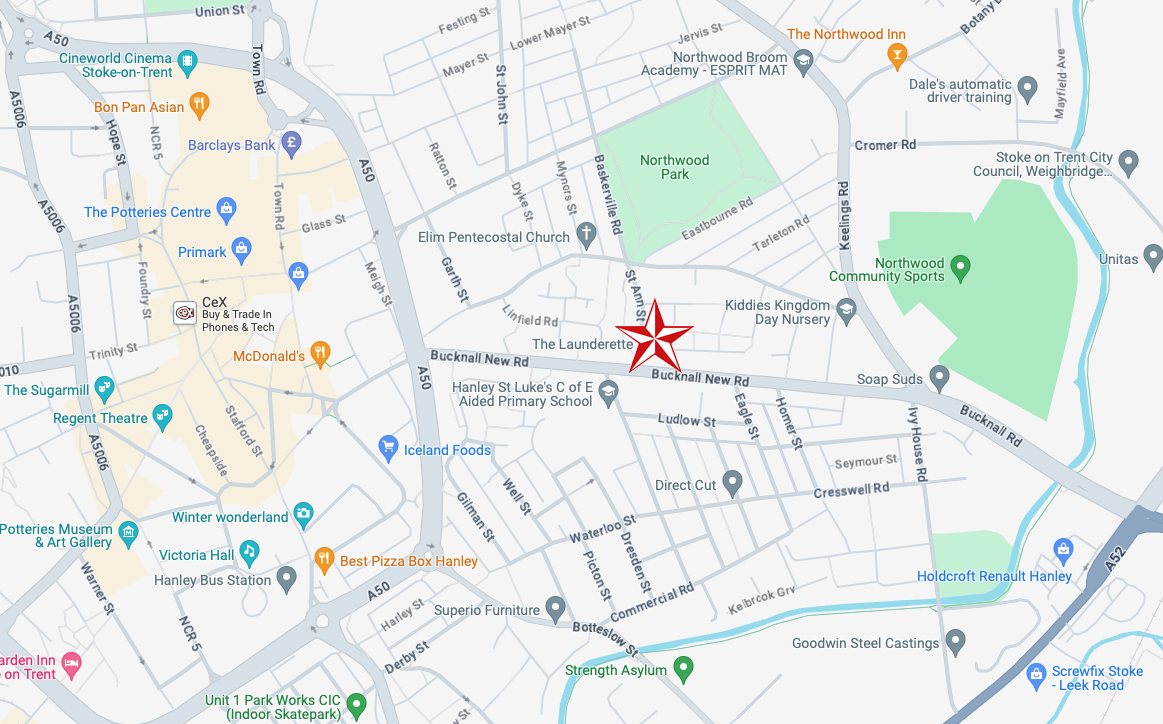
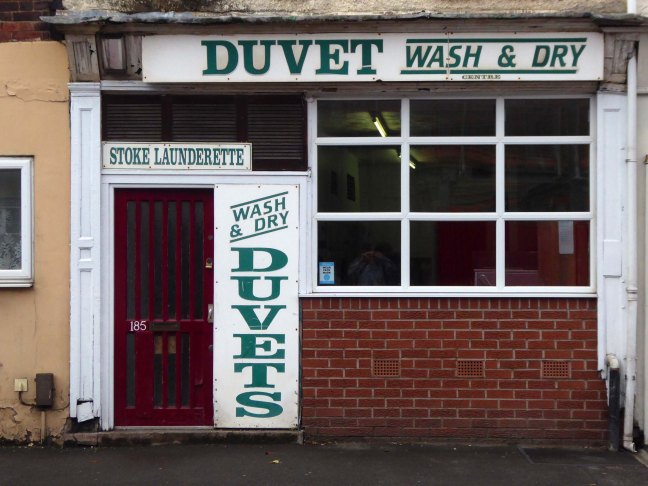
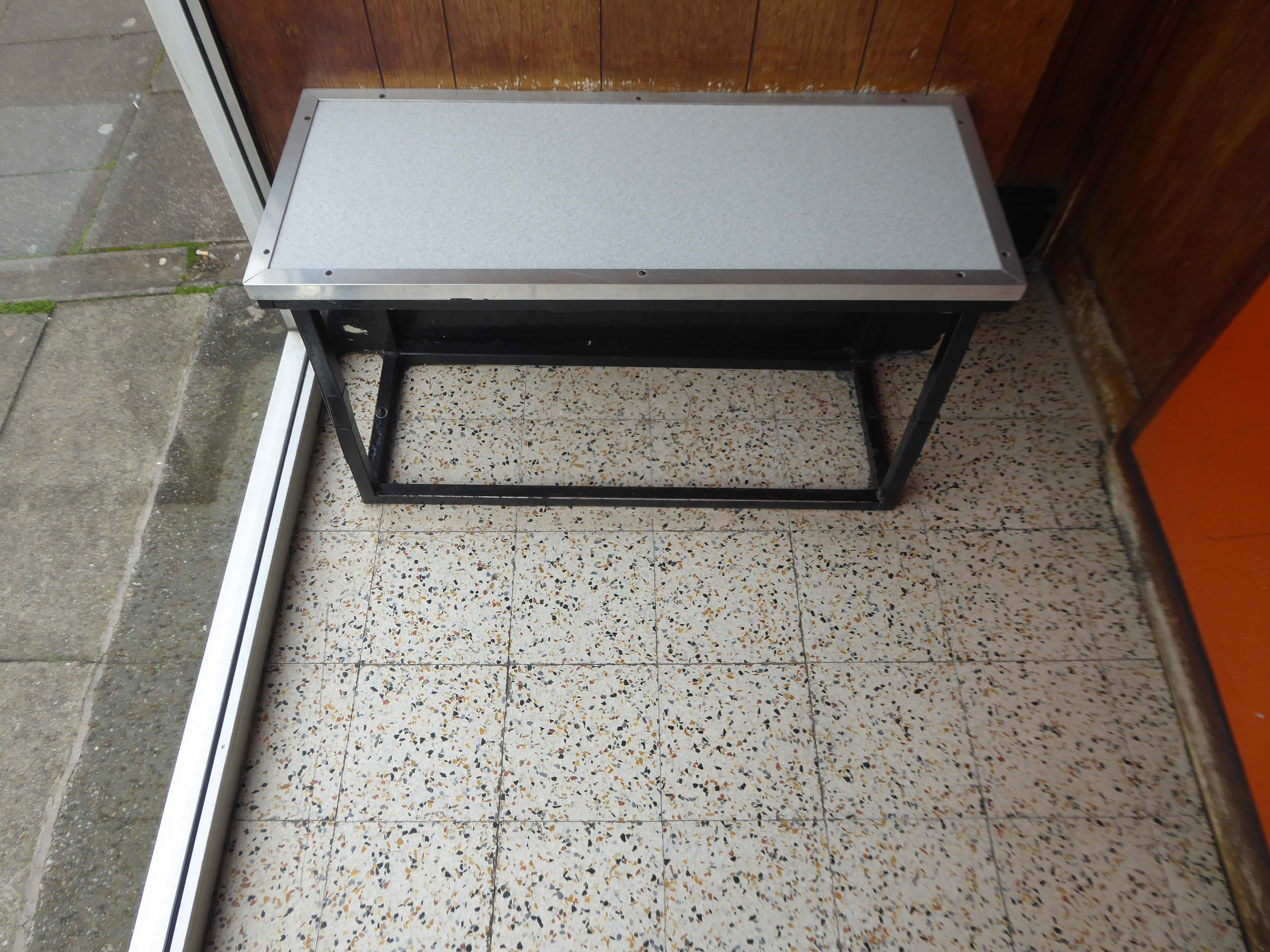
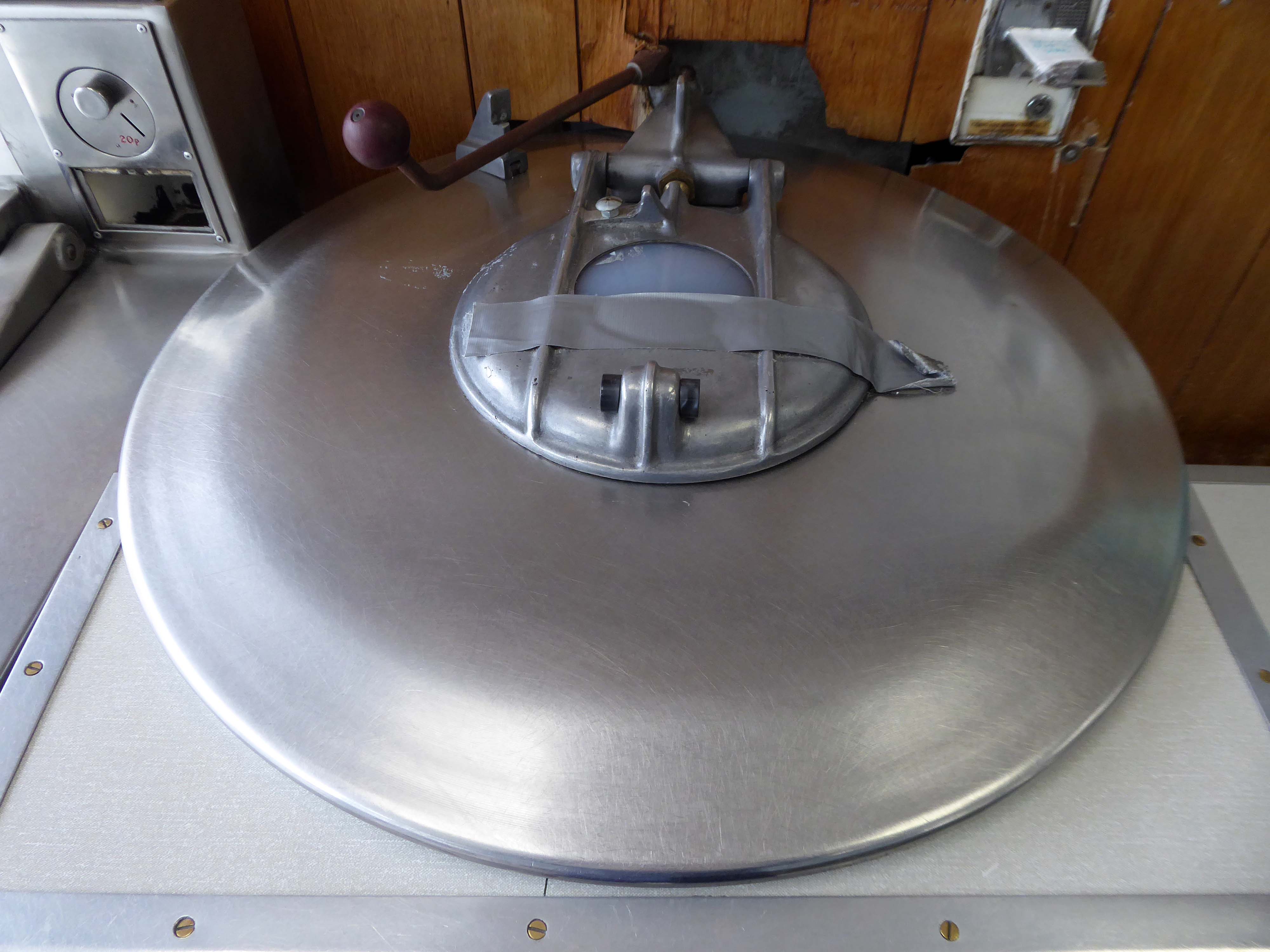
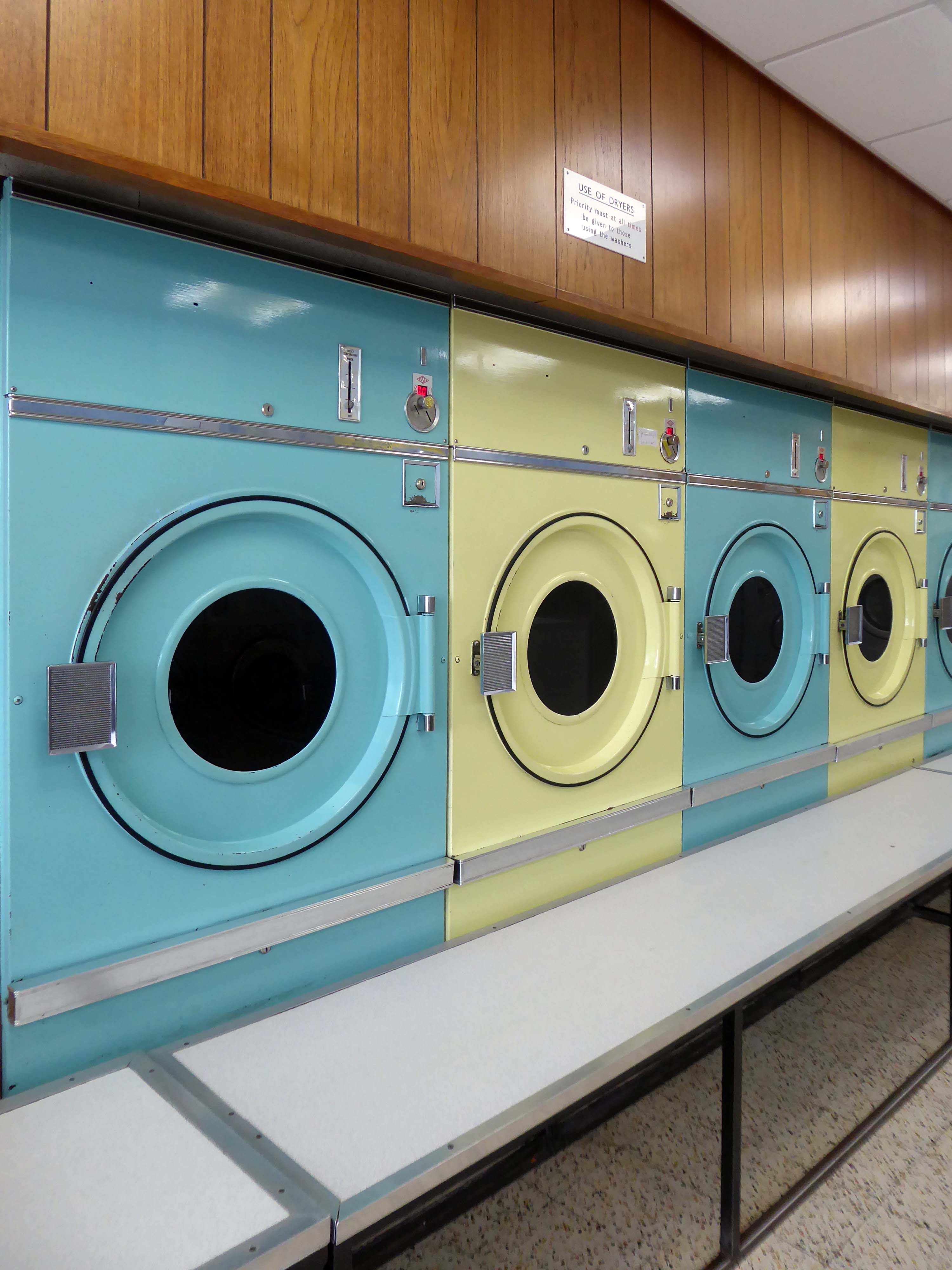
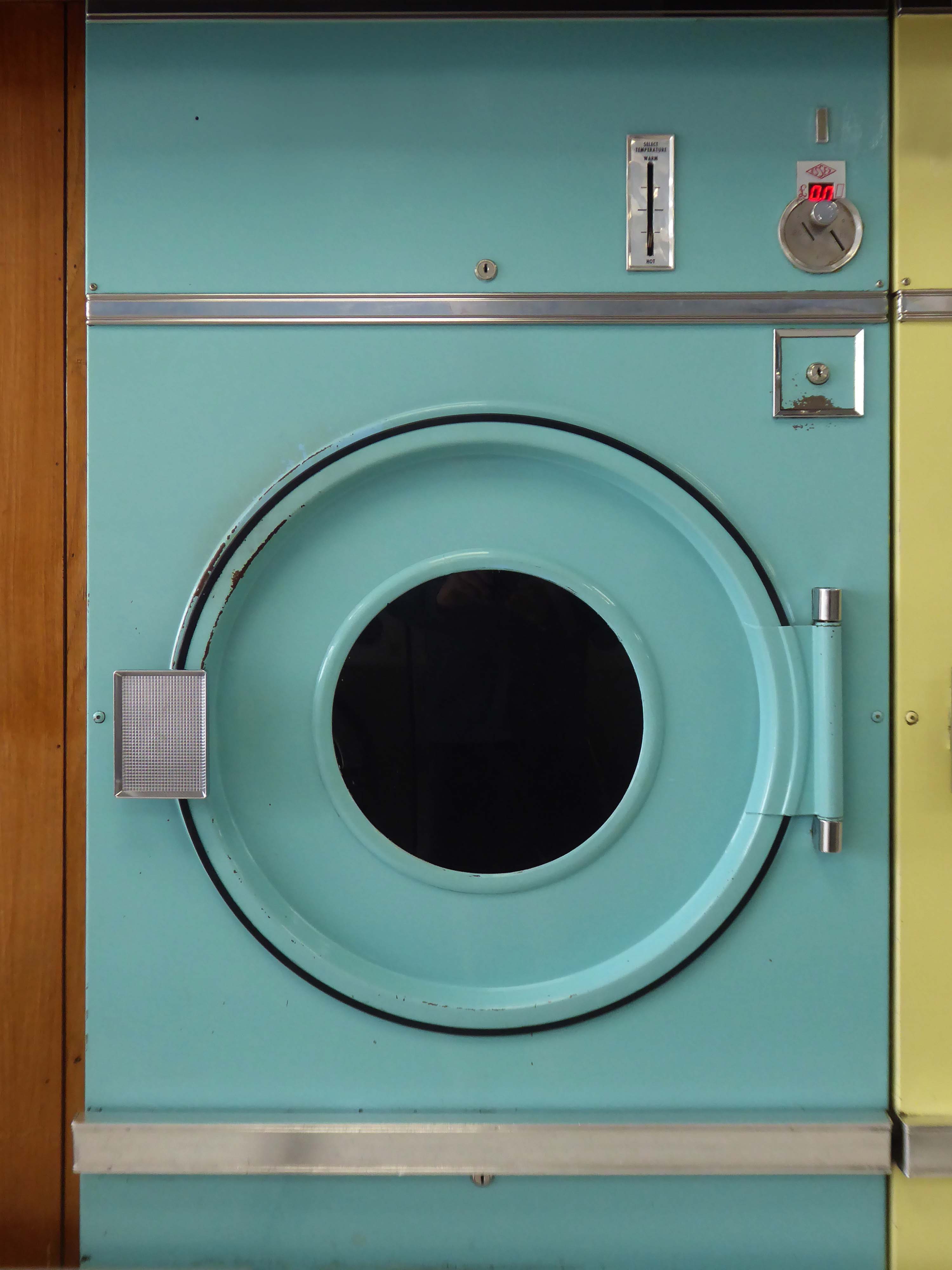
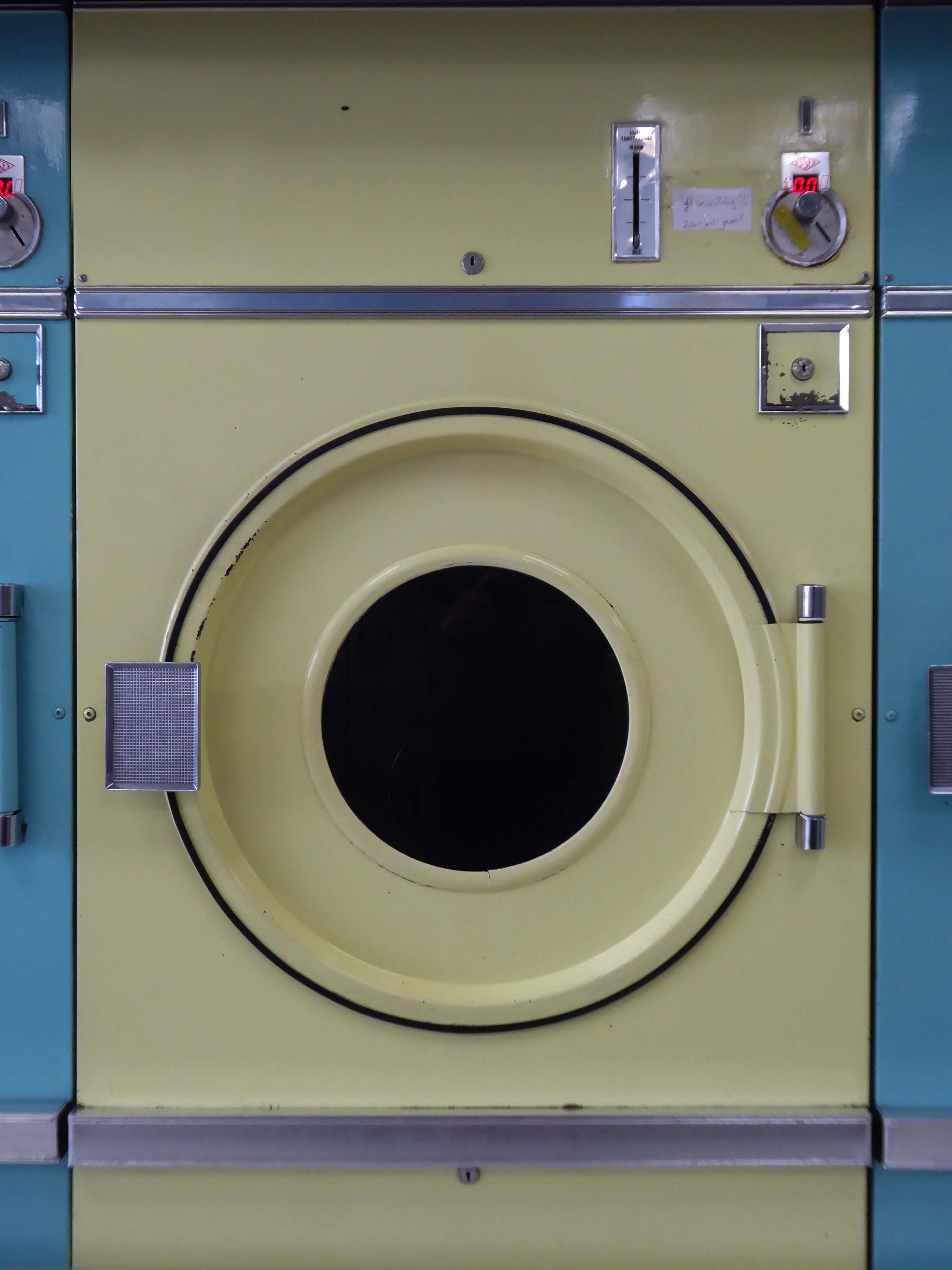
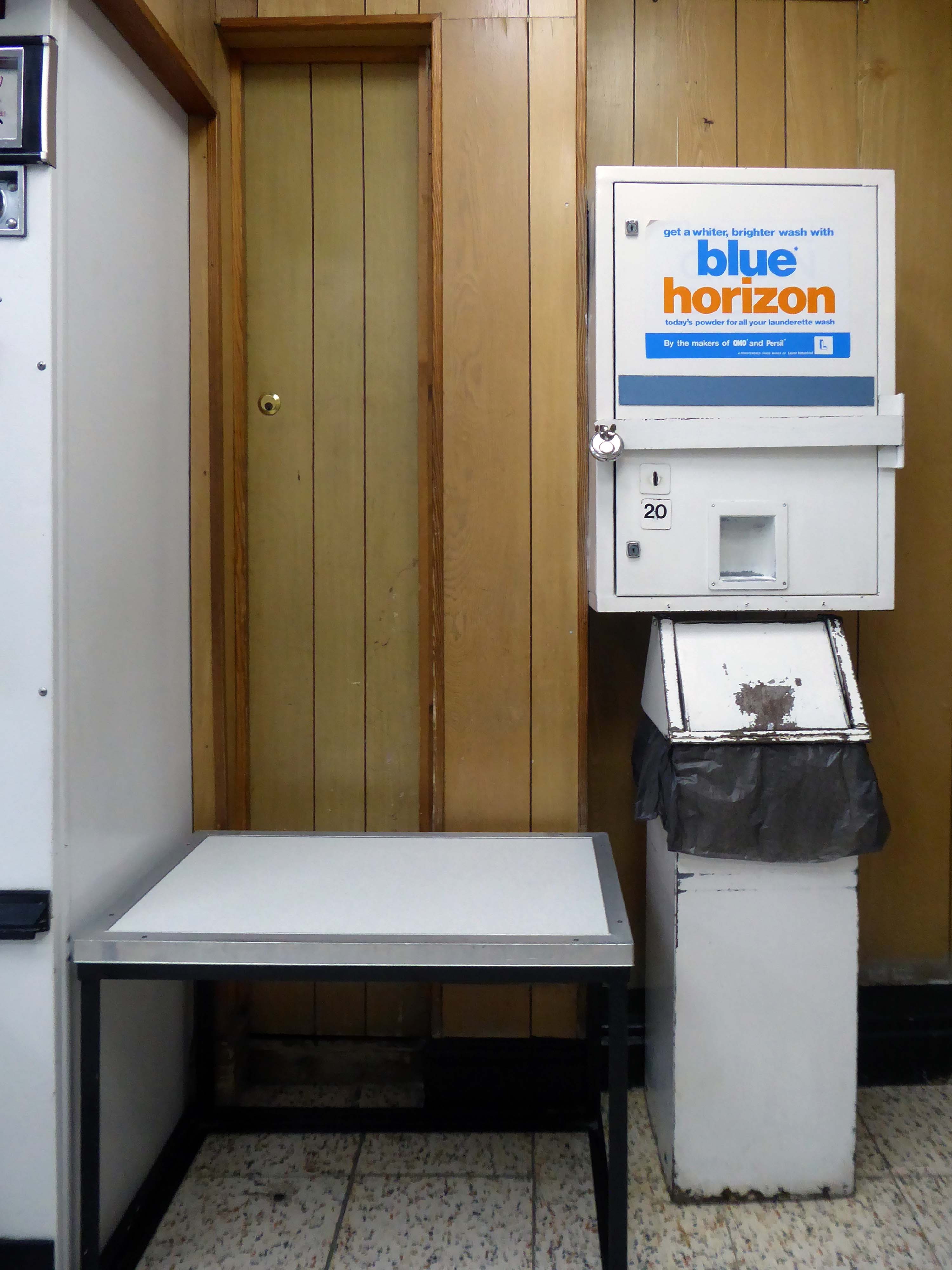
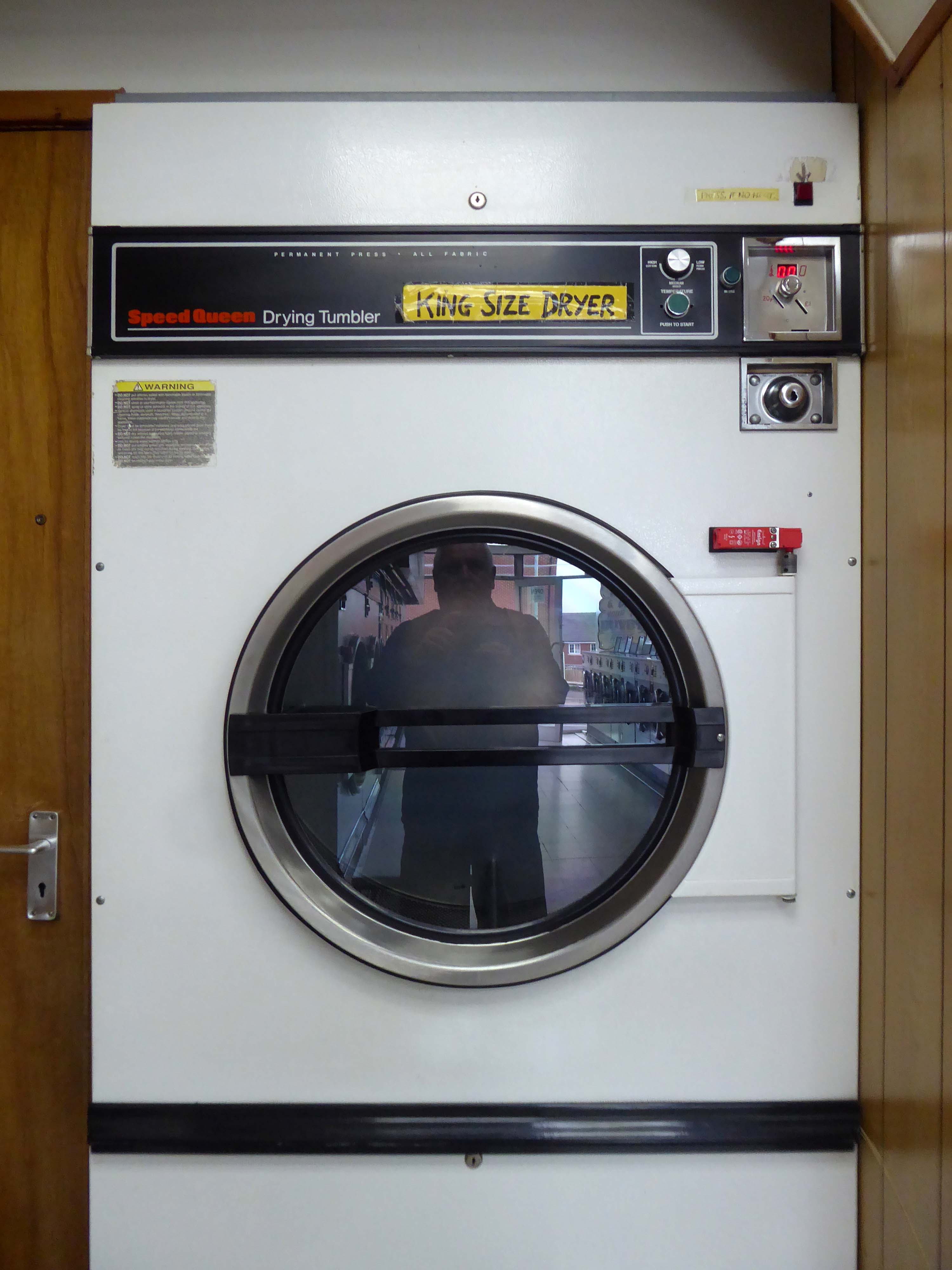
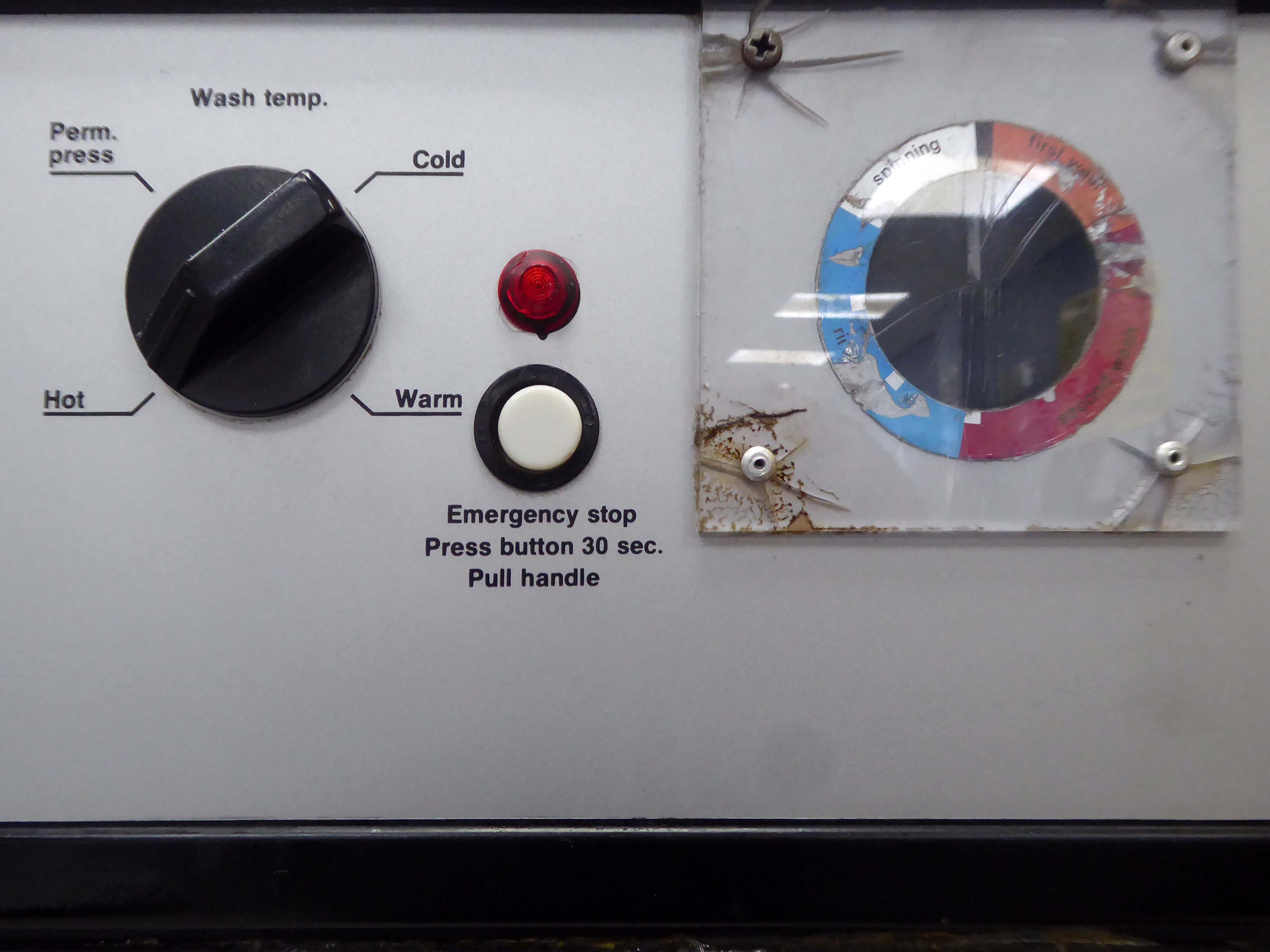
Yesterday, Saturday 6th April I was leading a Modernist Mooch around Stoke and Hanley – I arrived five hours before the 1.00 start time and went off to explore nowhere in particular.
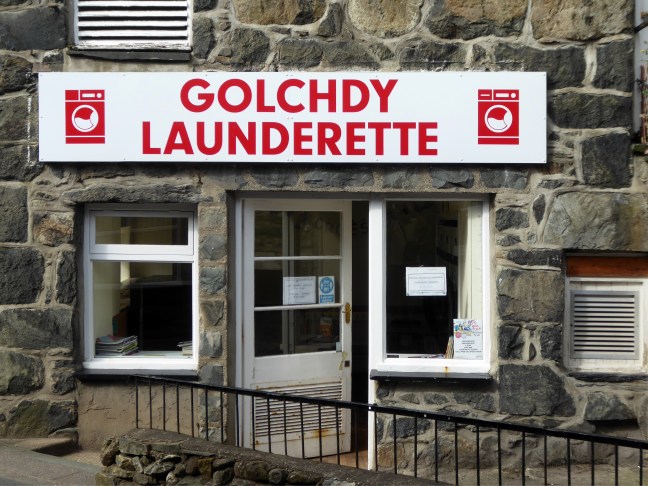
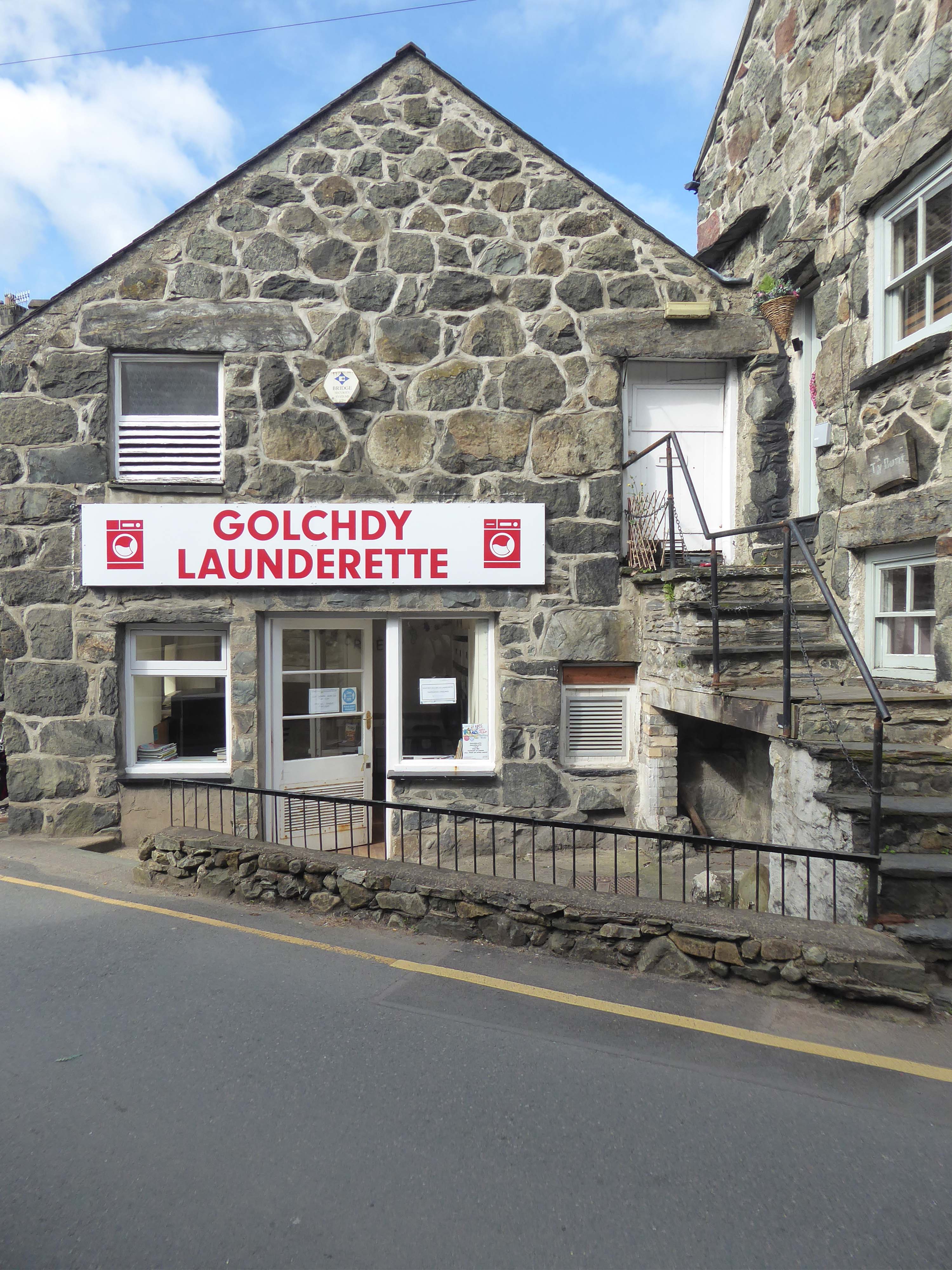
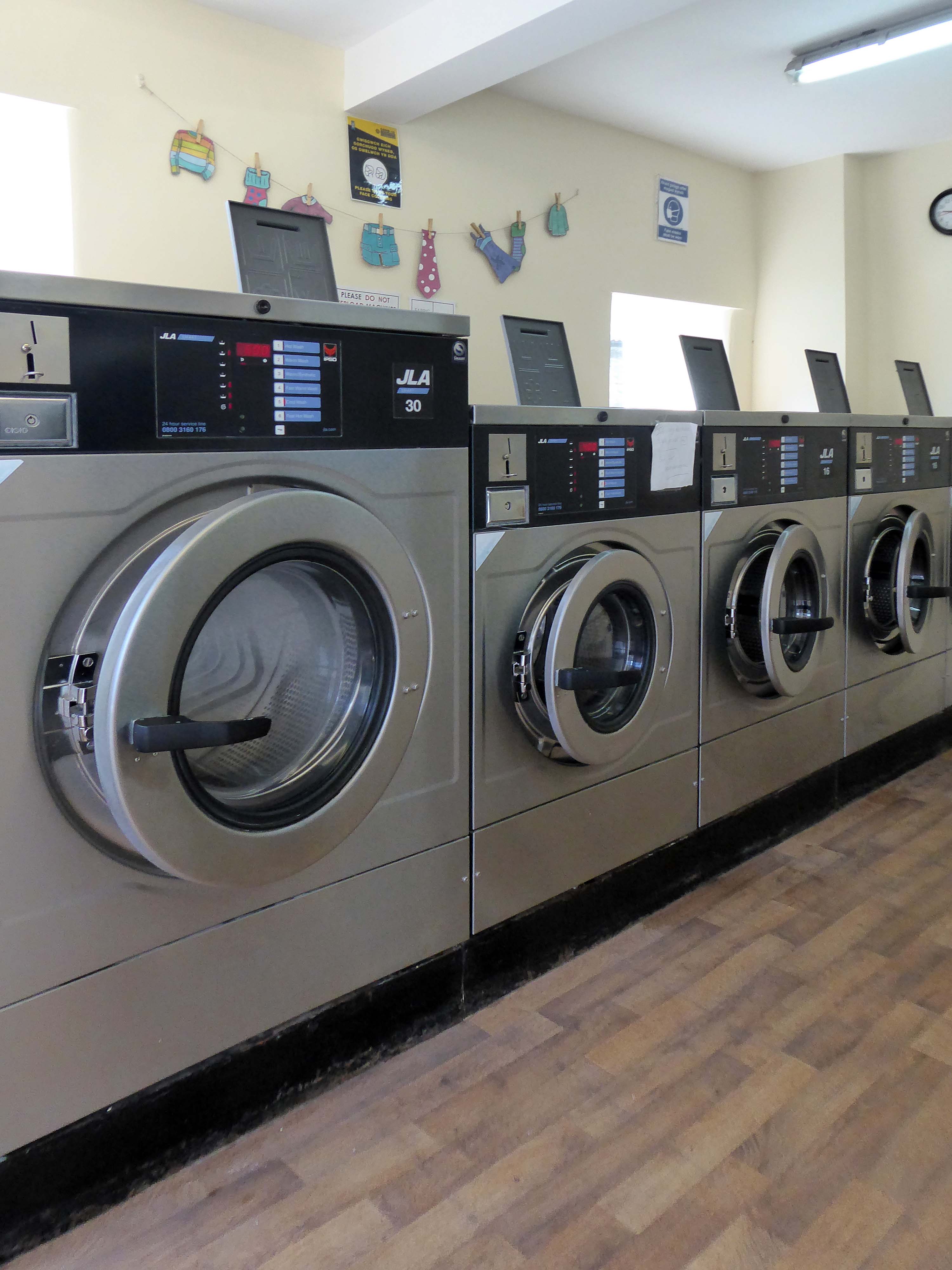
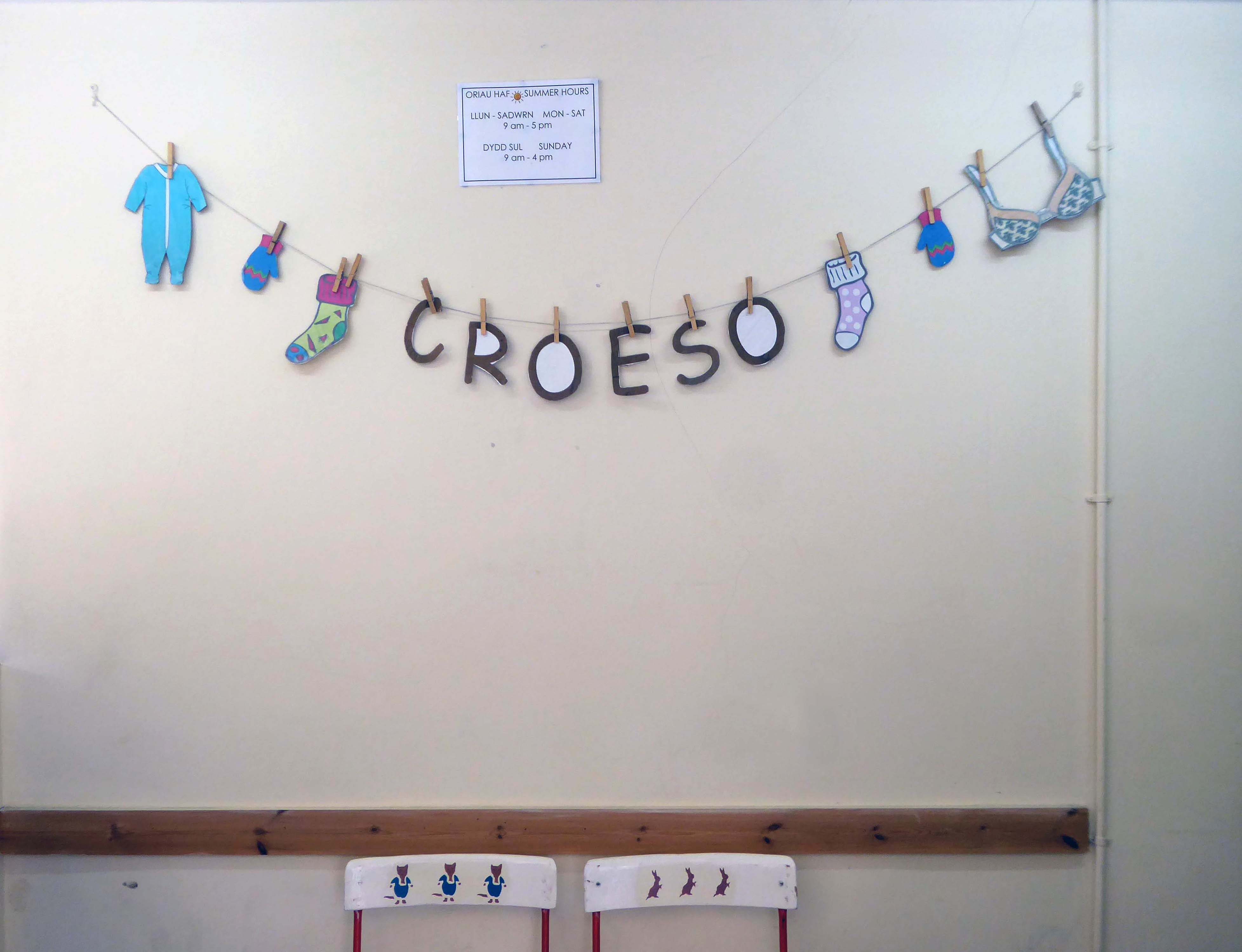
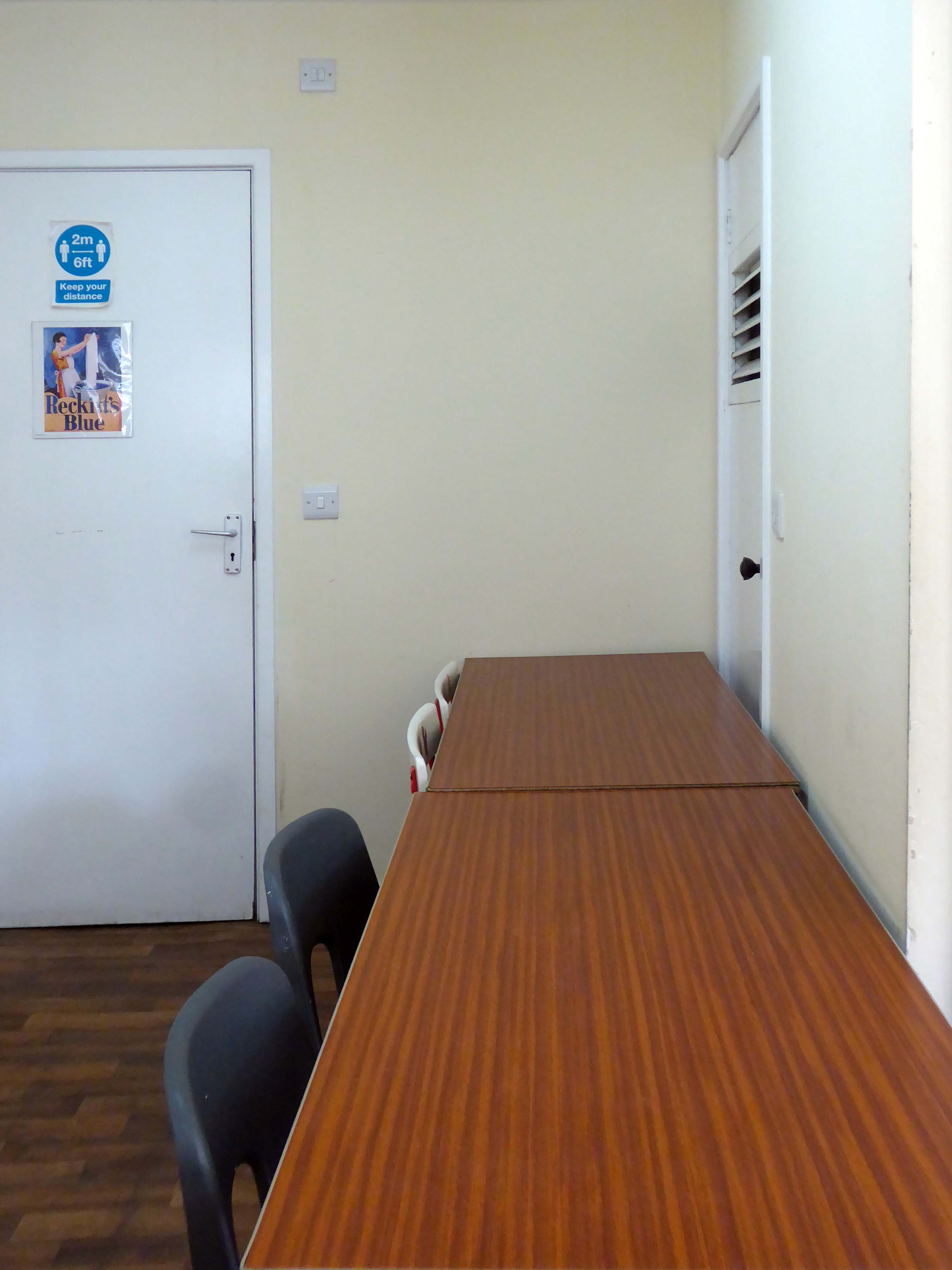
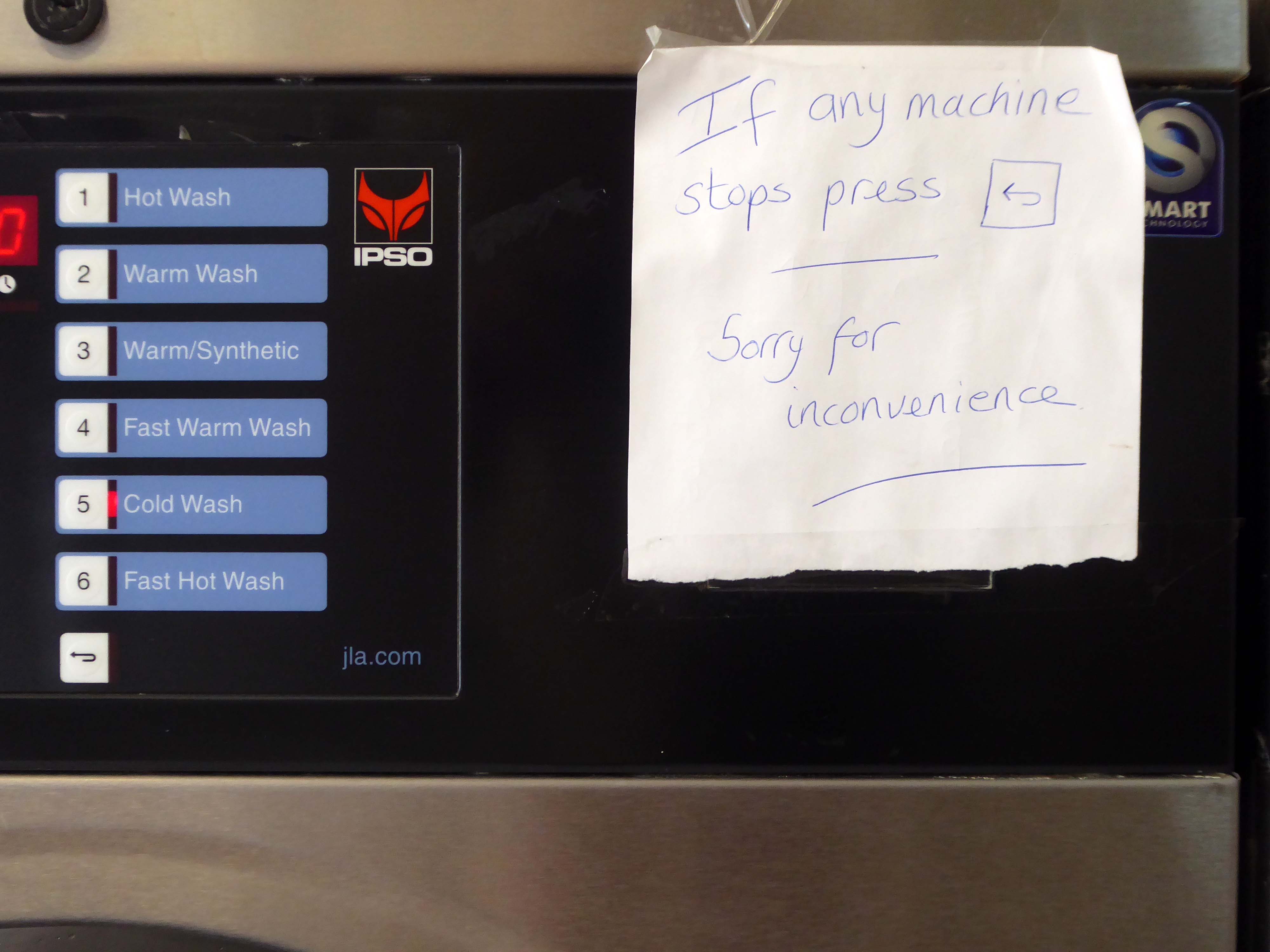
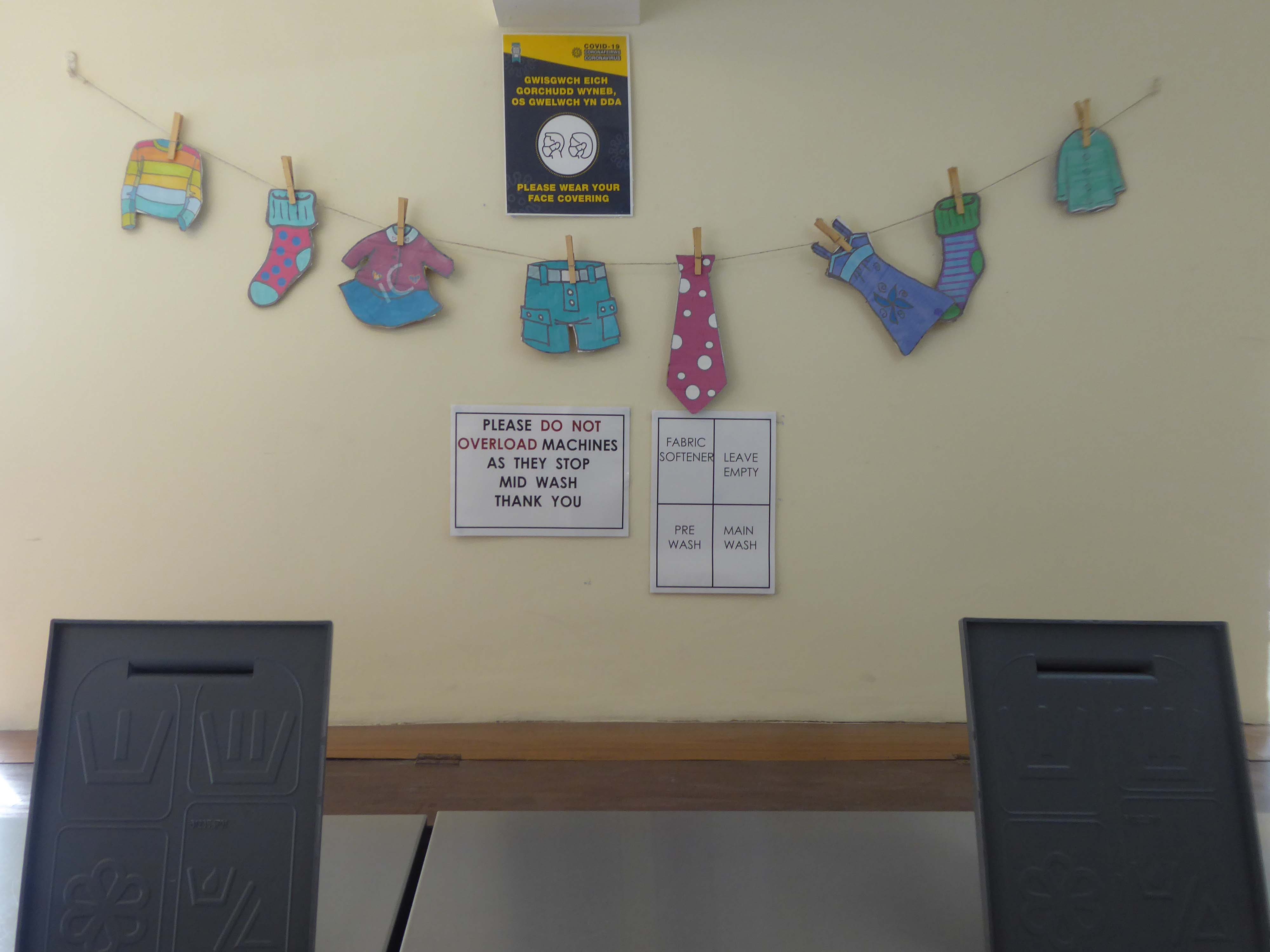
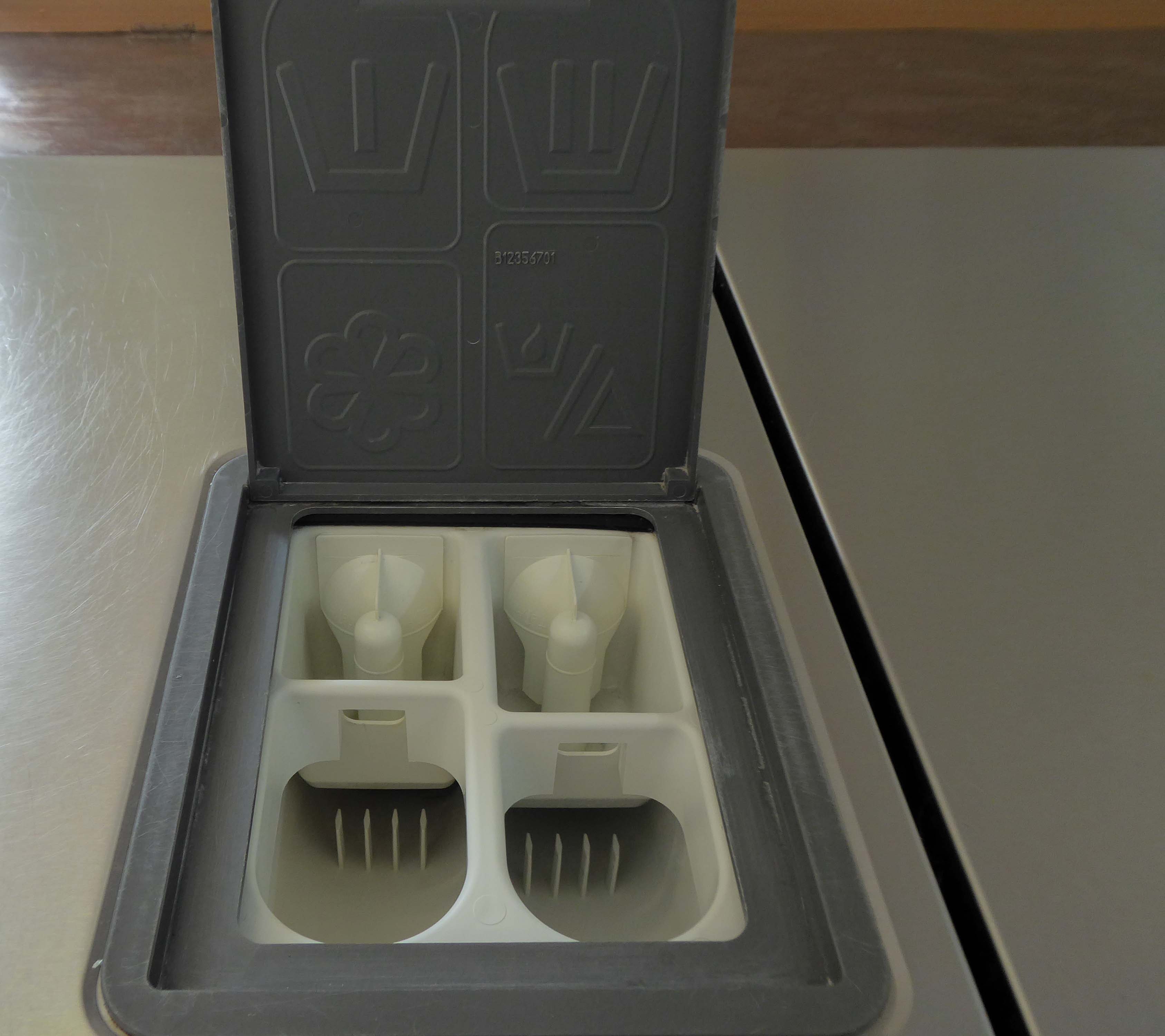
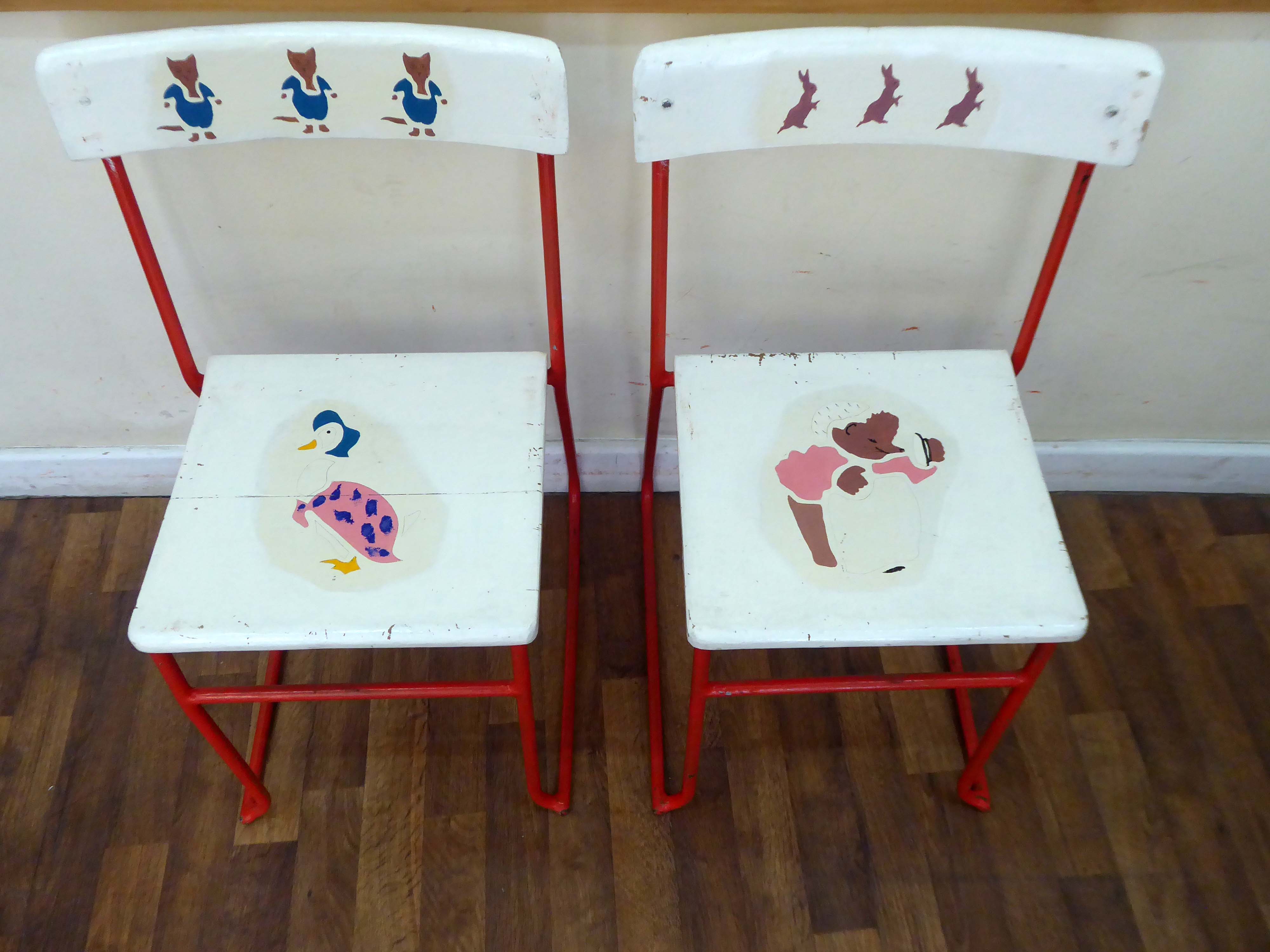
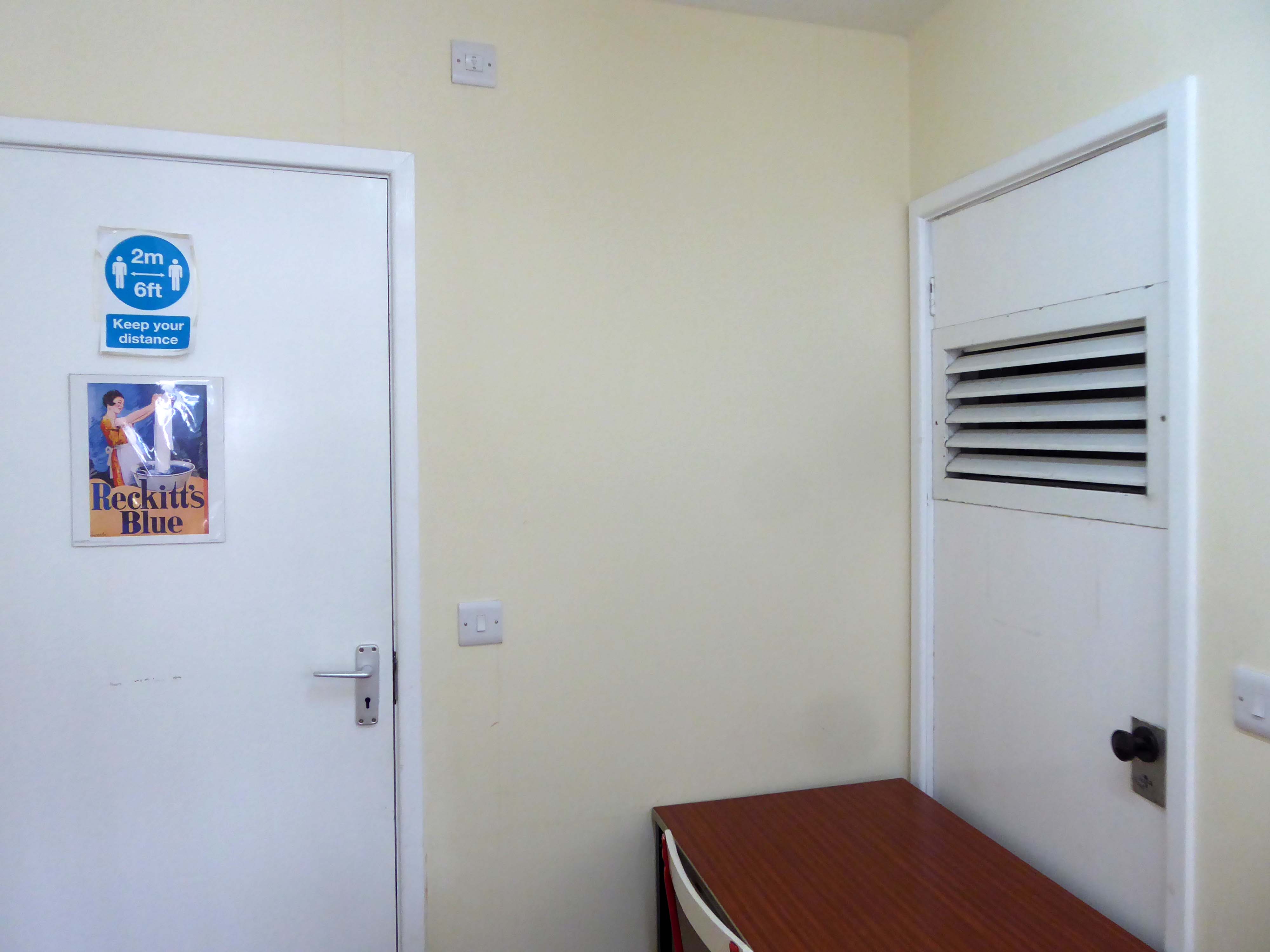
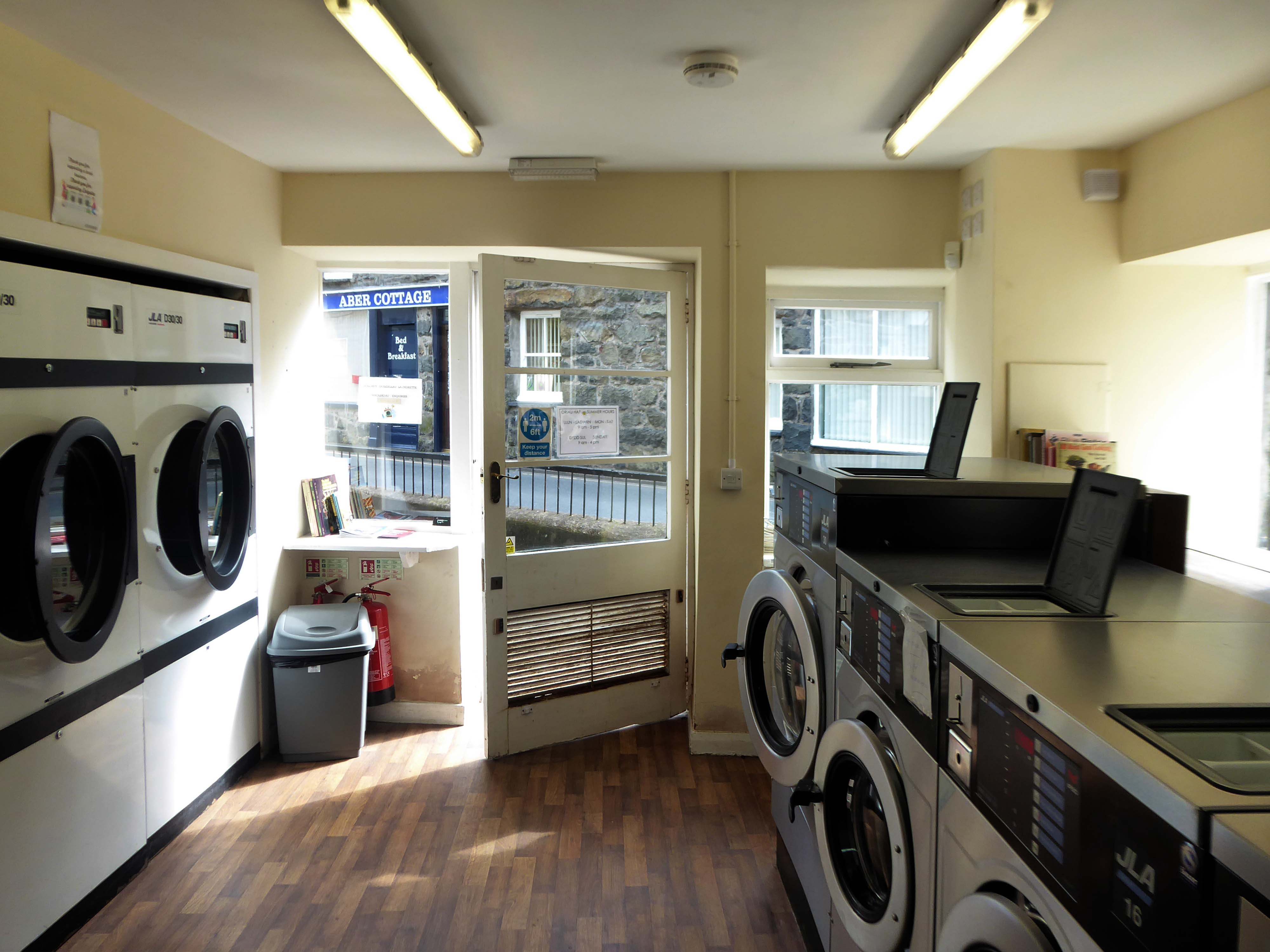
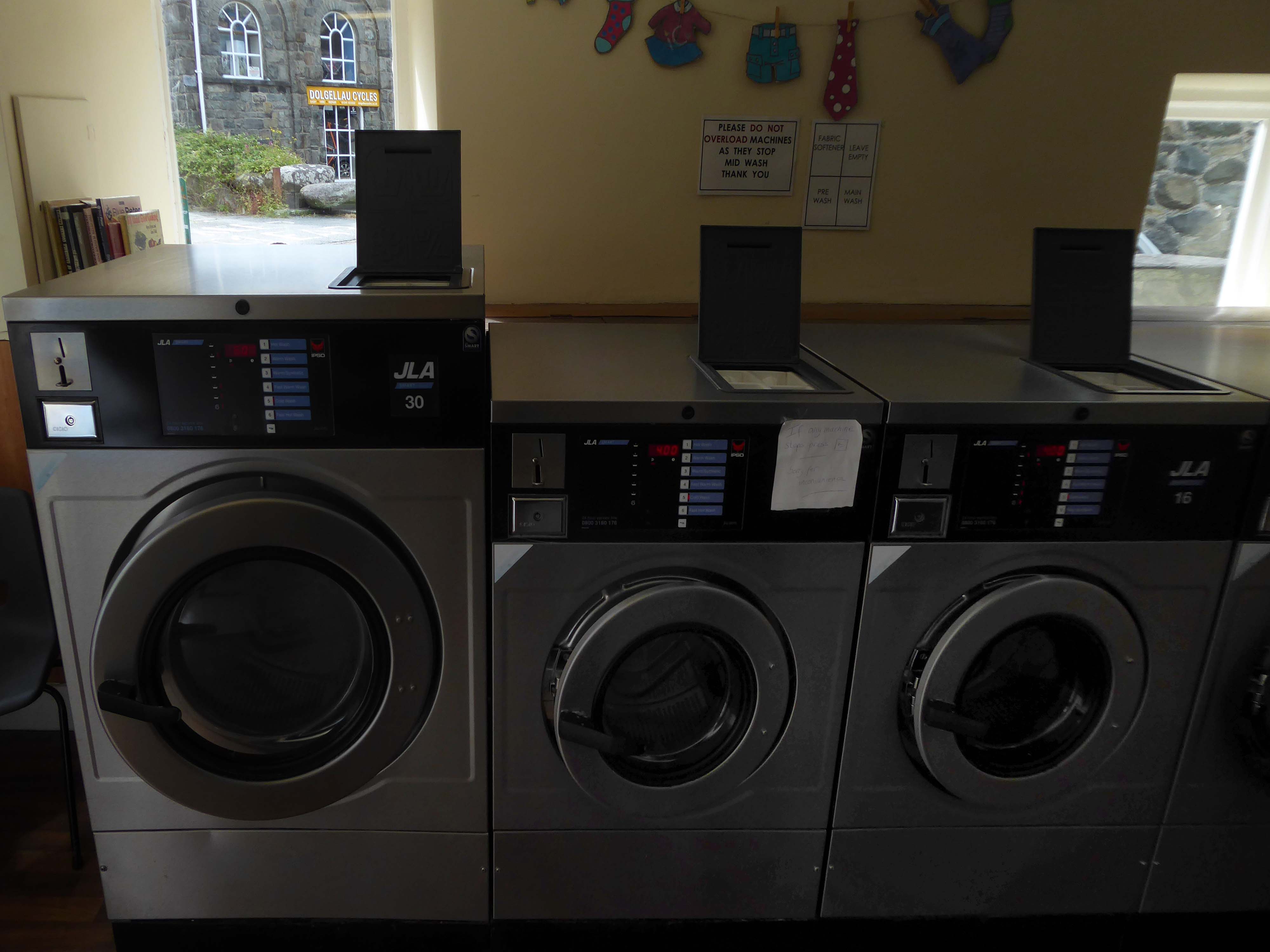
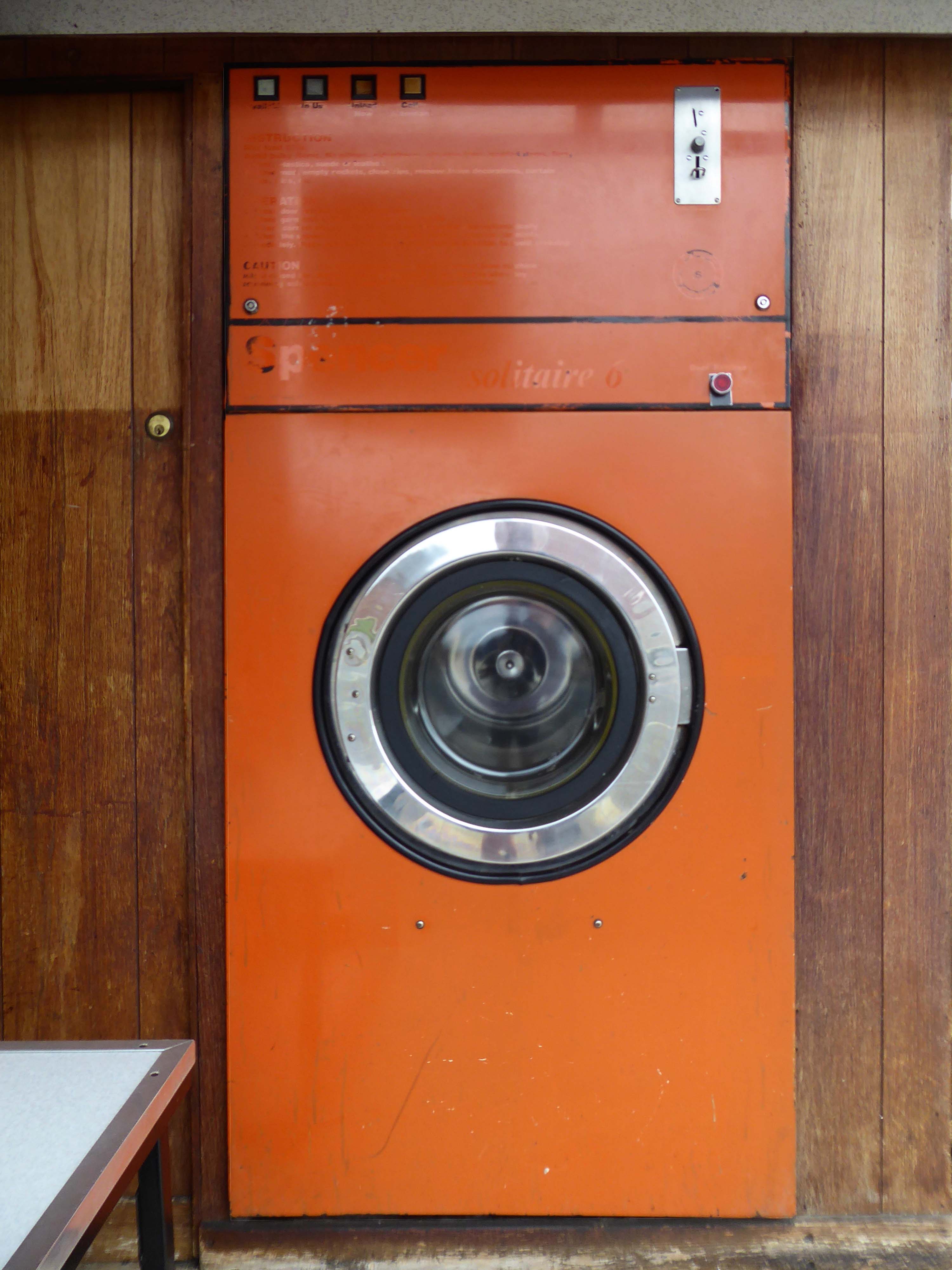
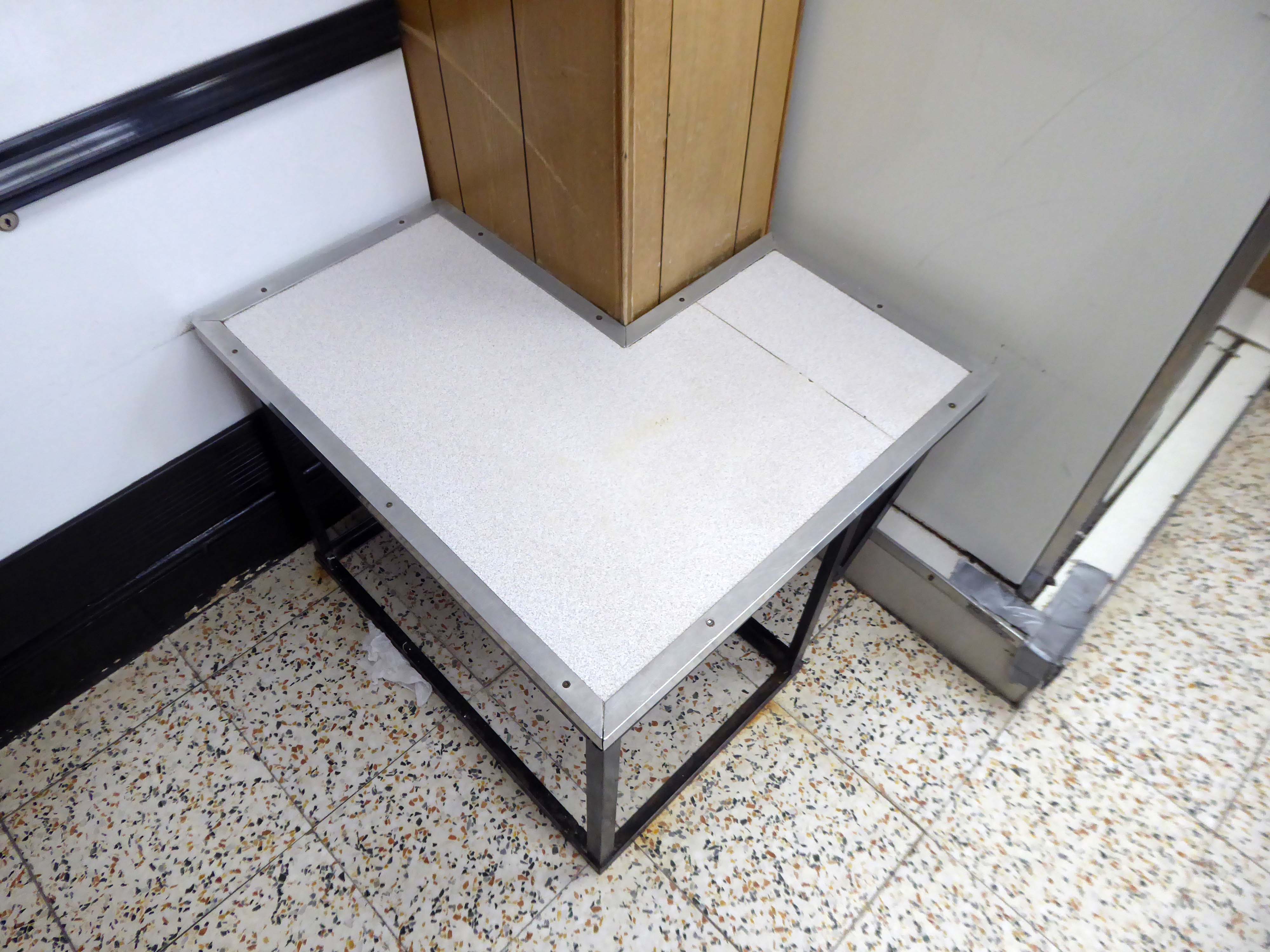
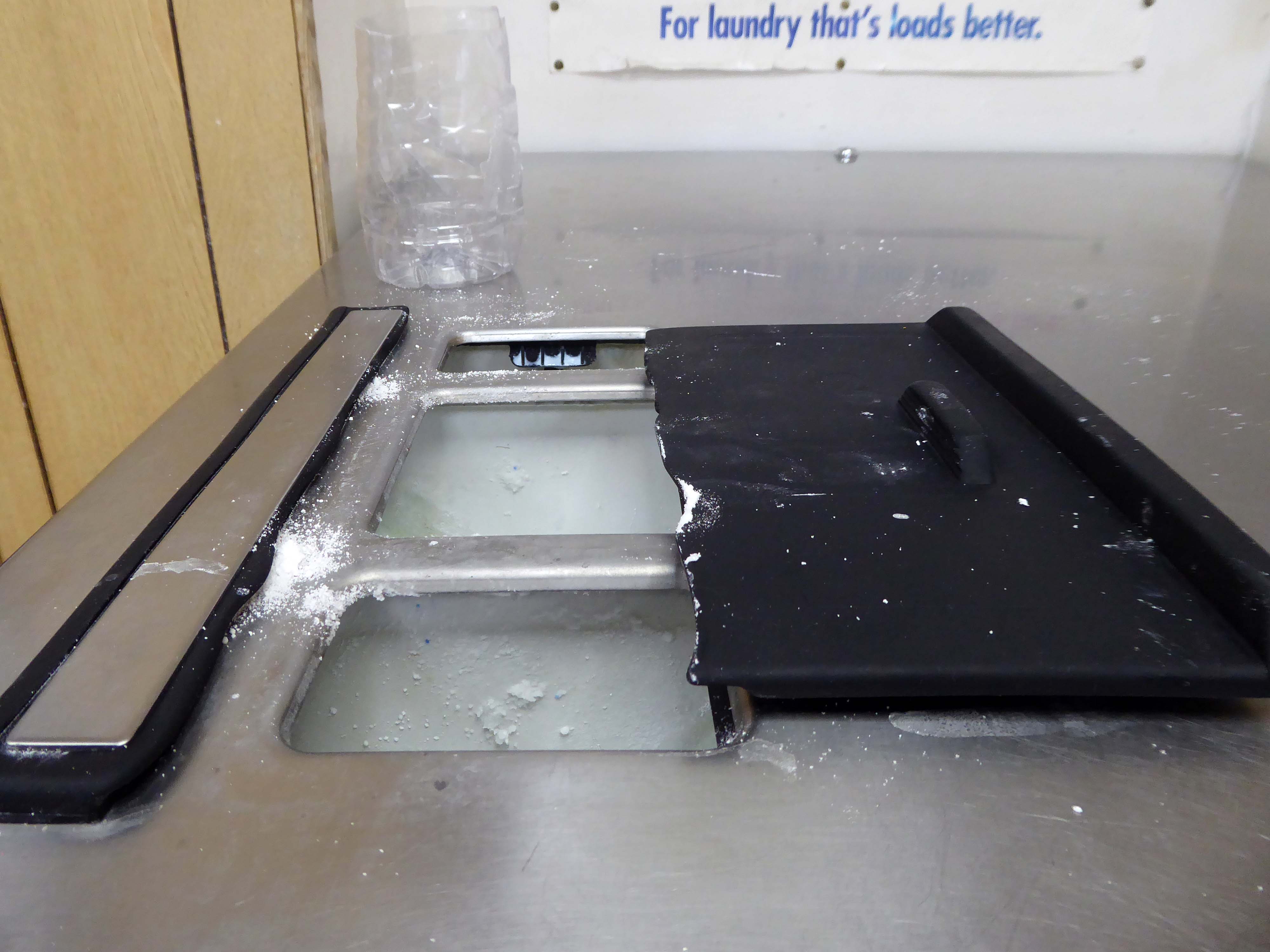
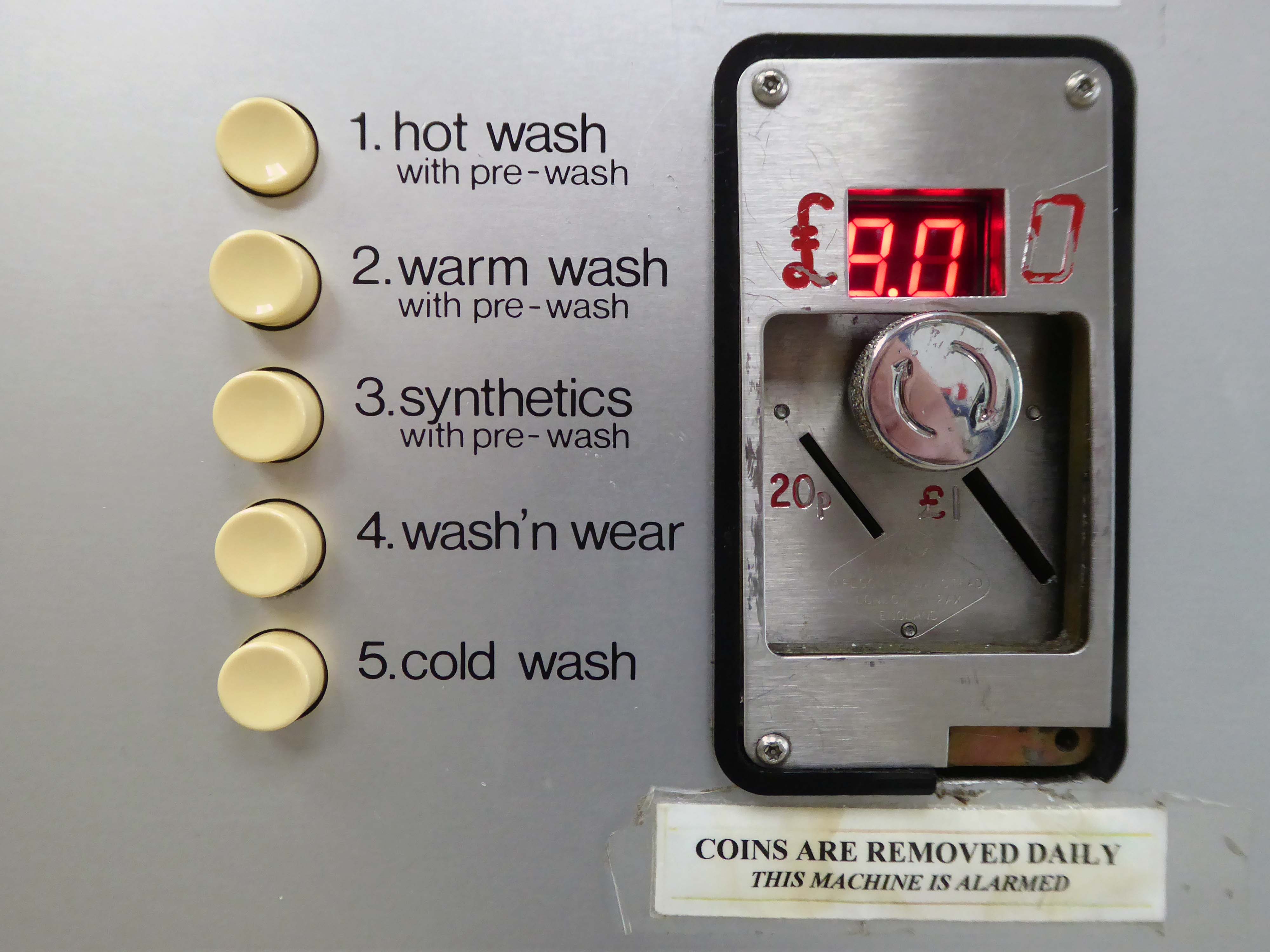
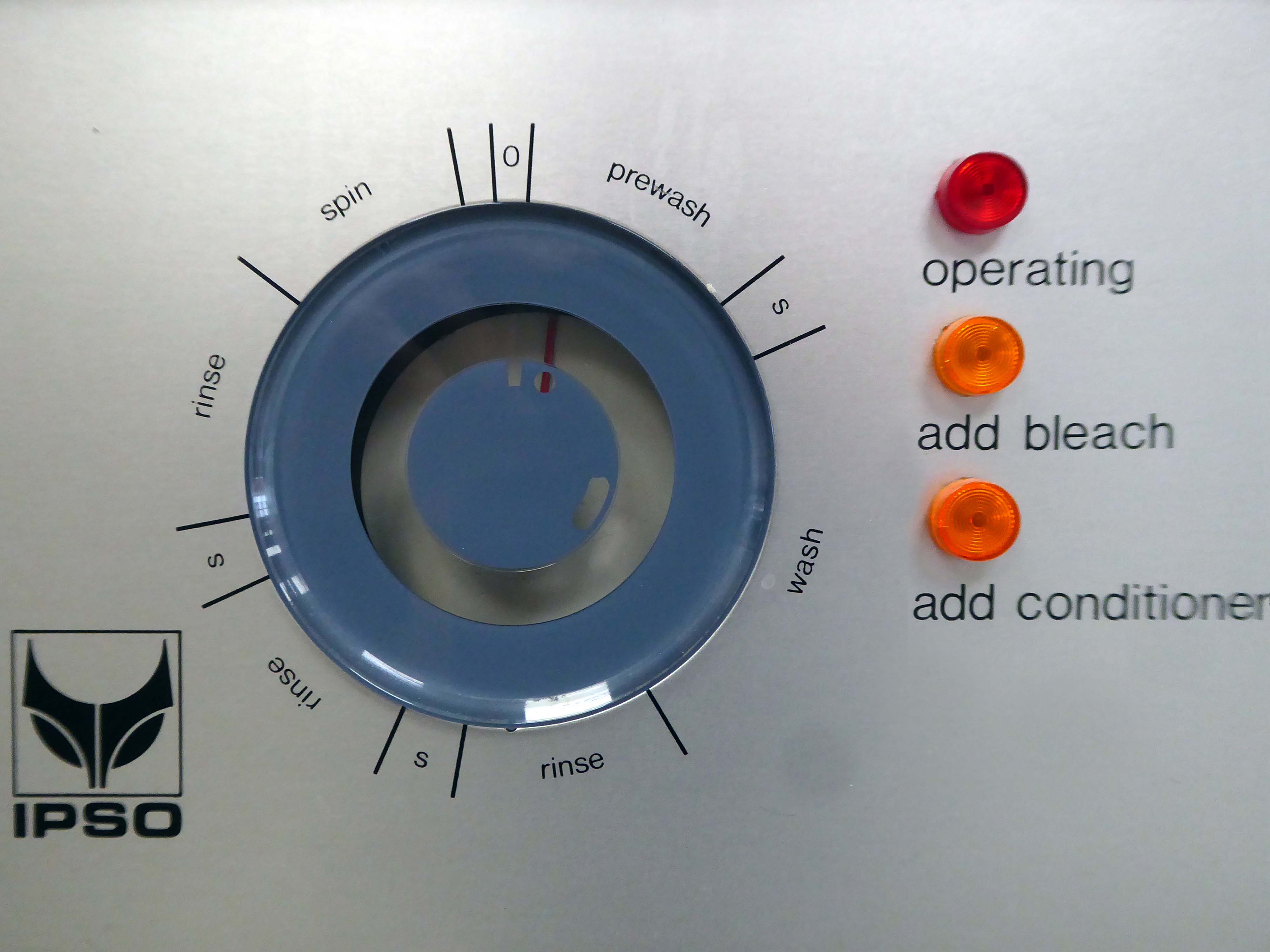
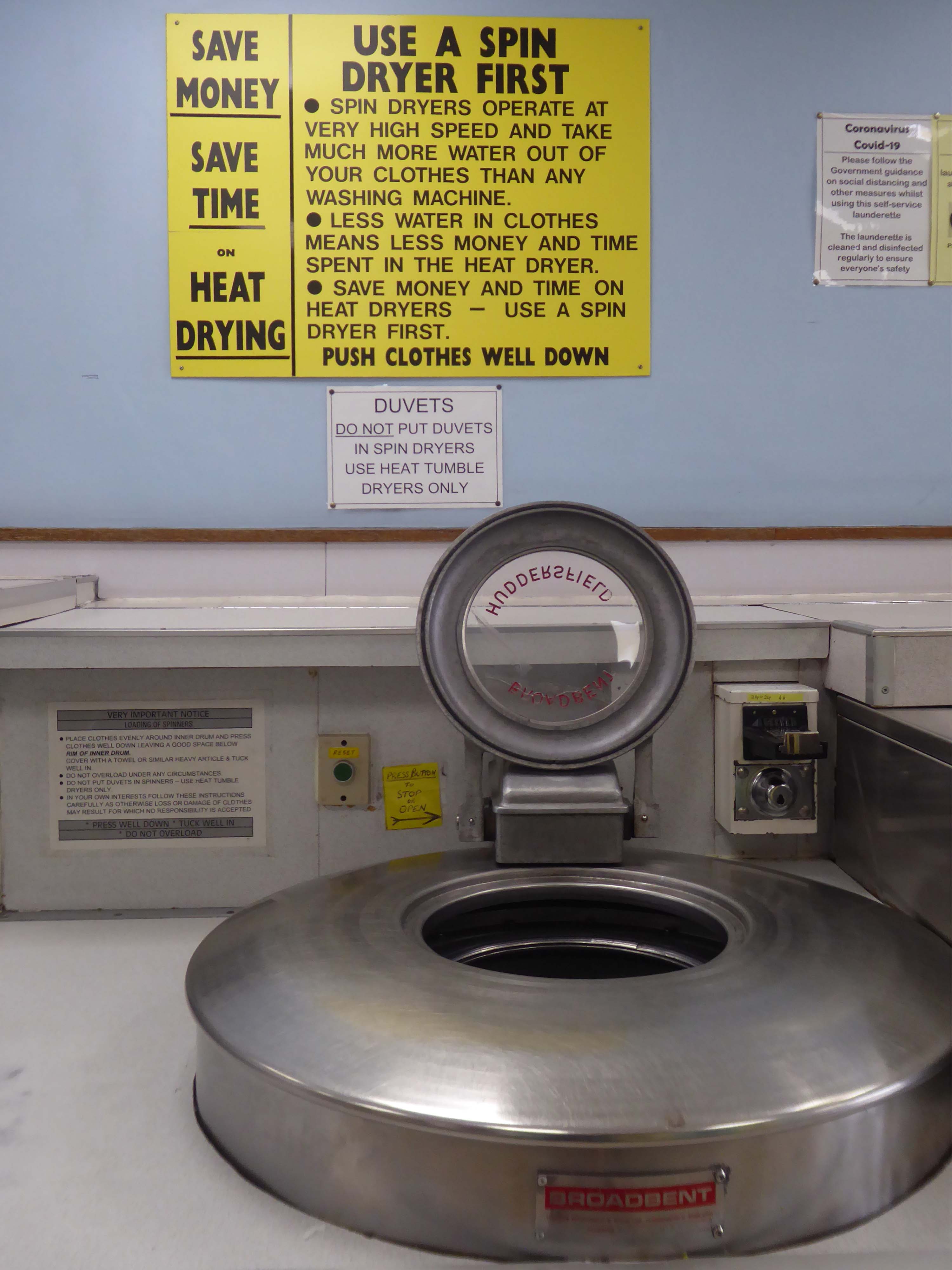
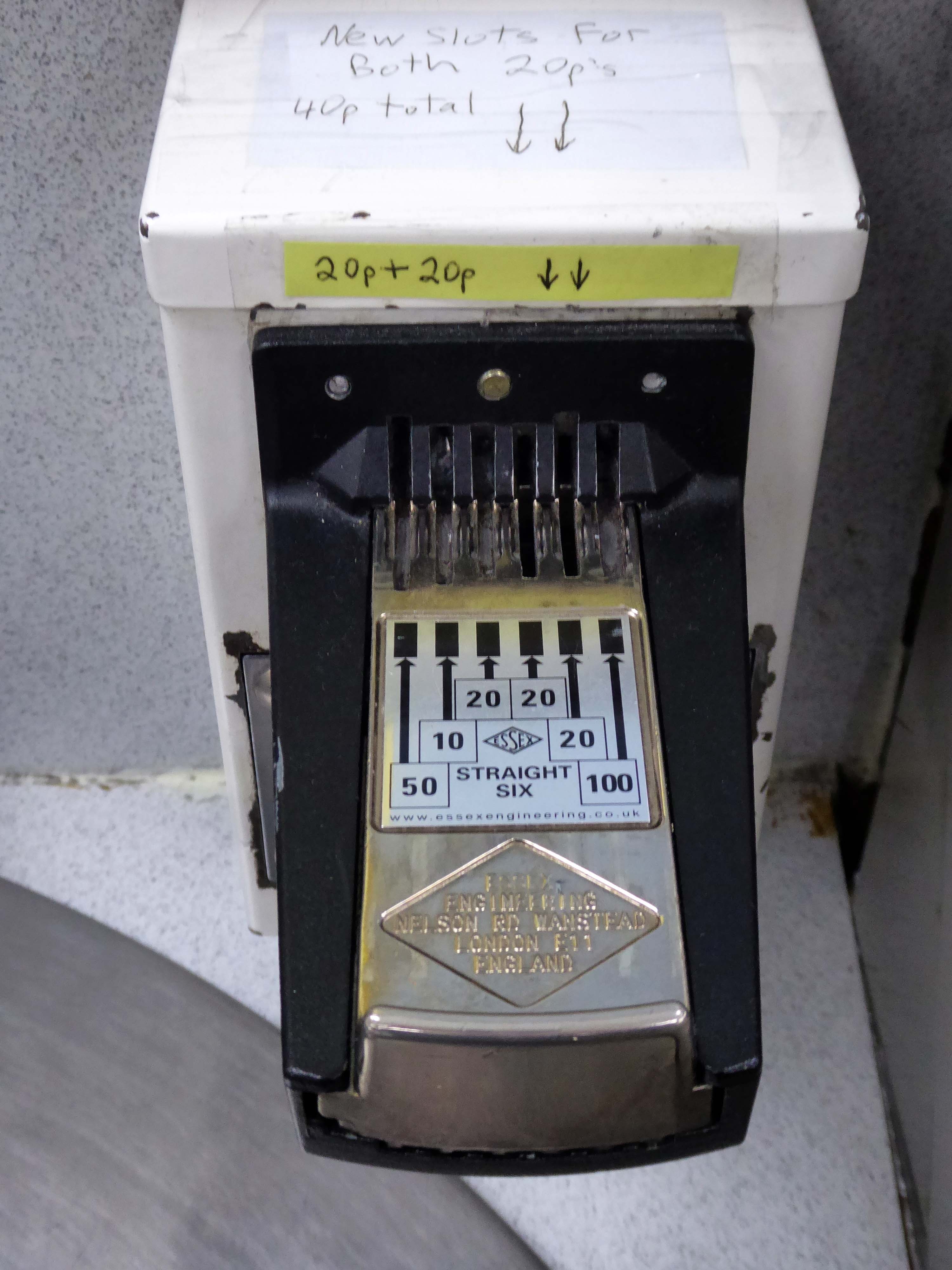
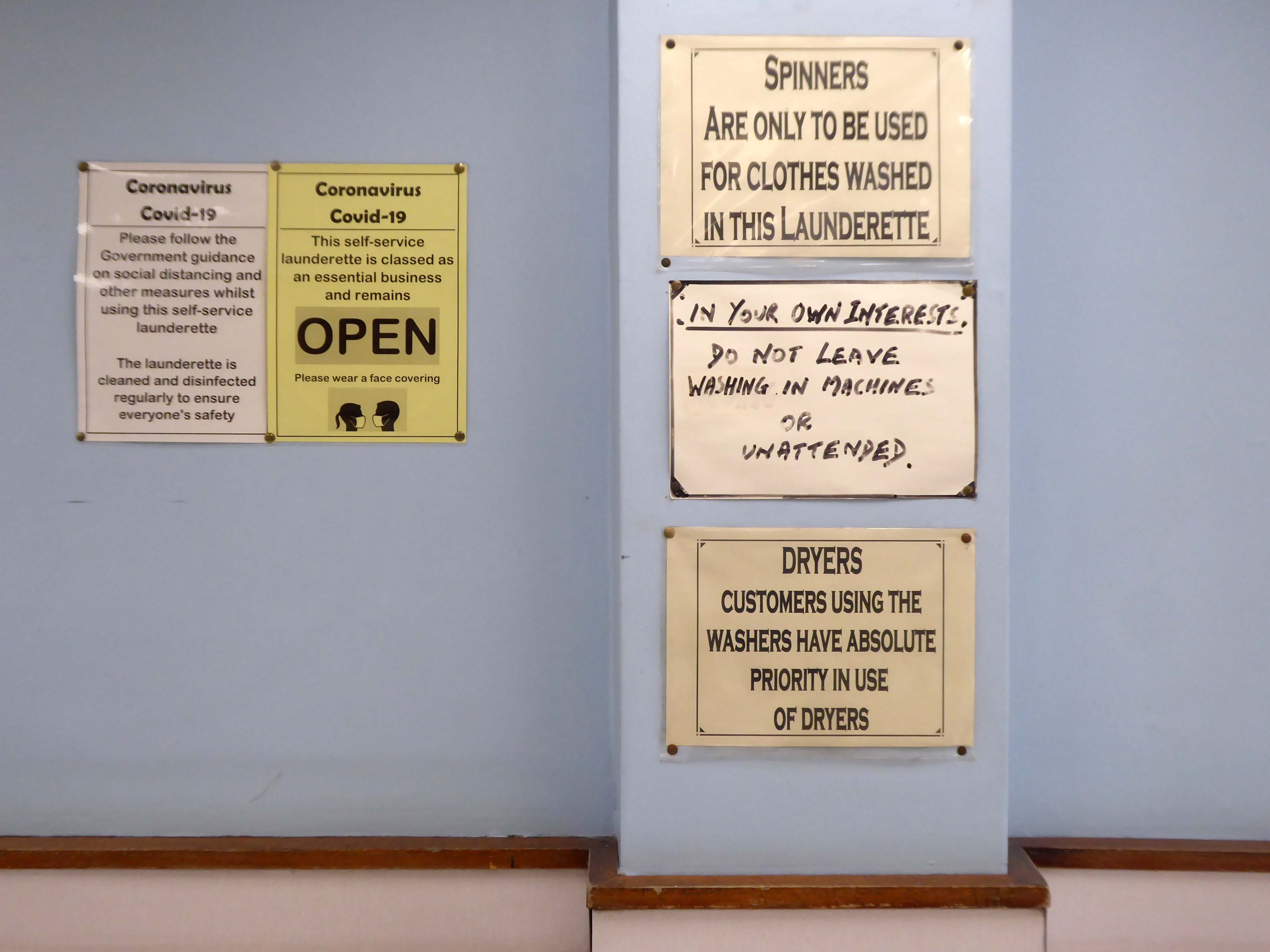
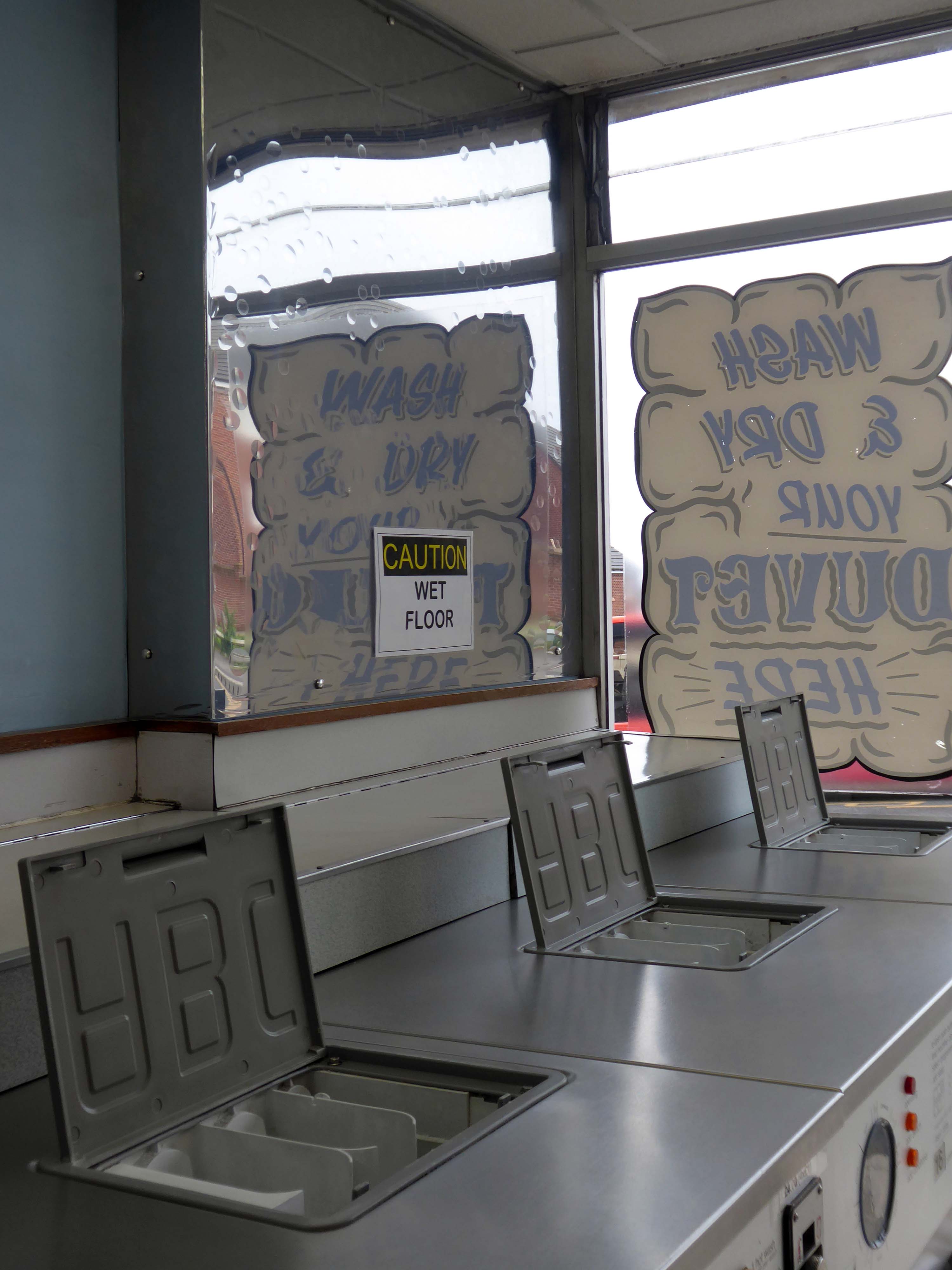
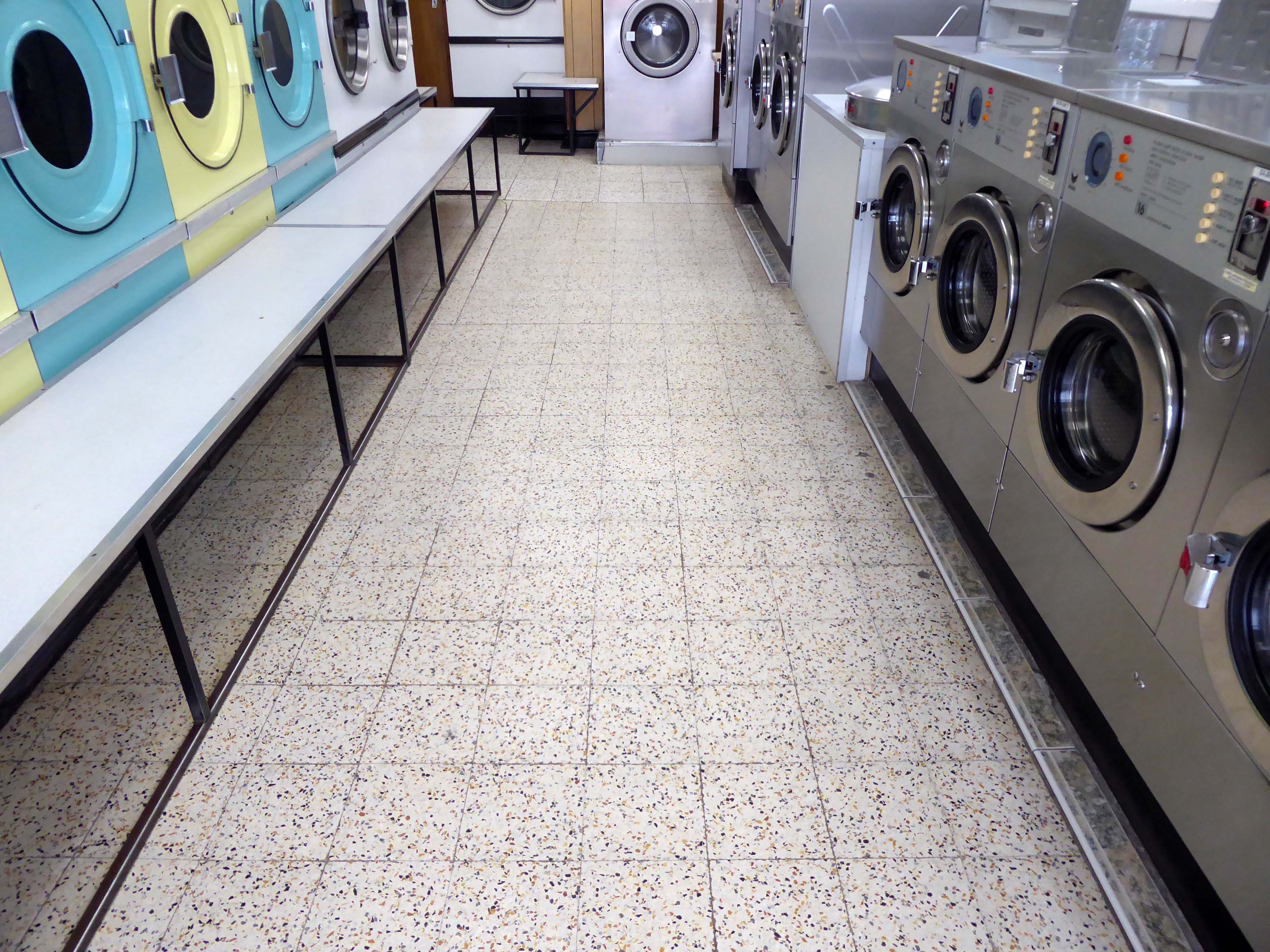
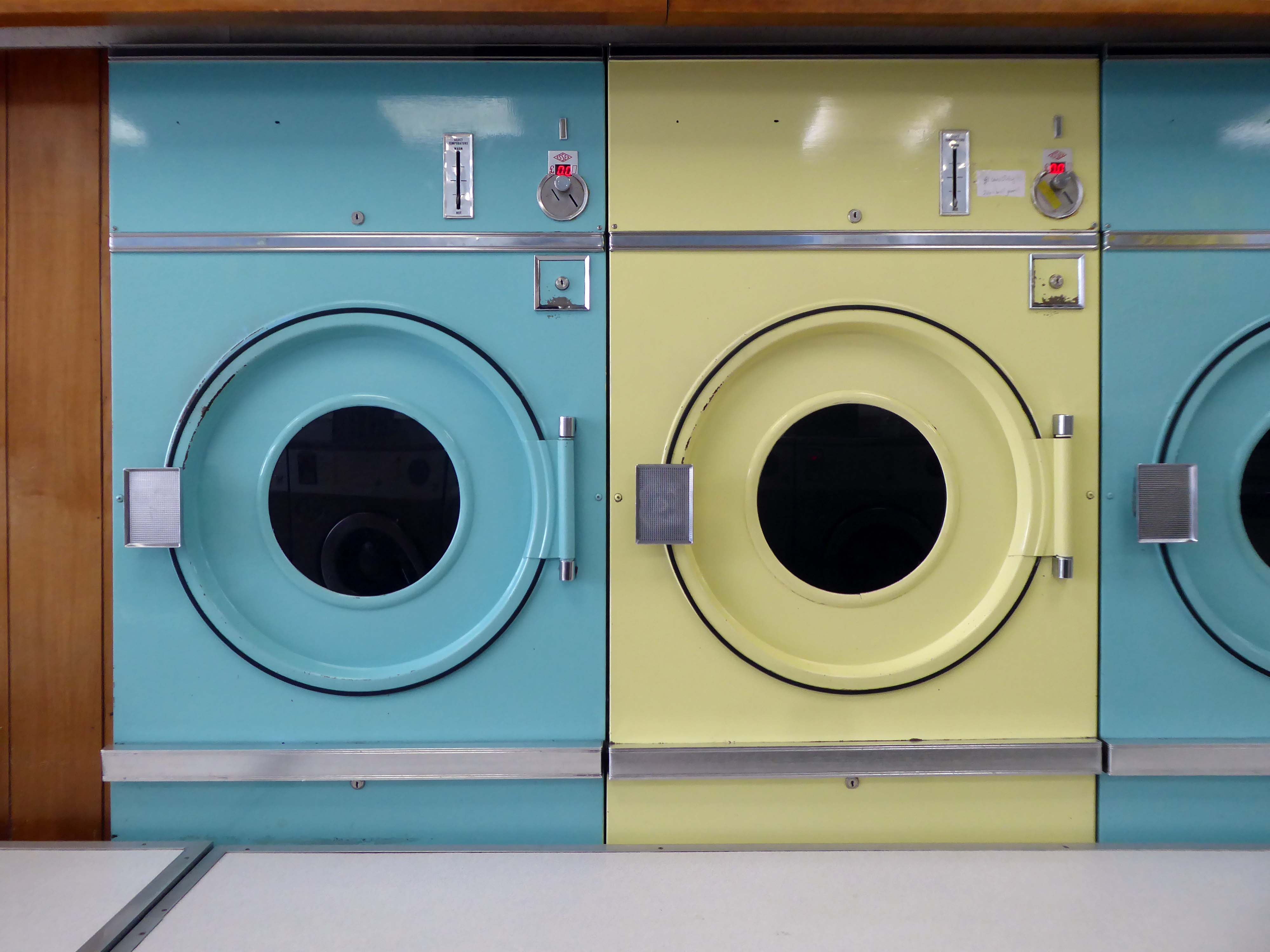
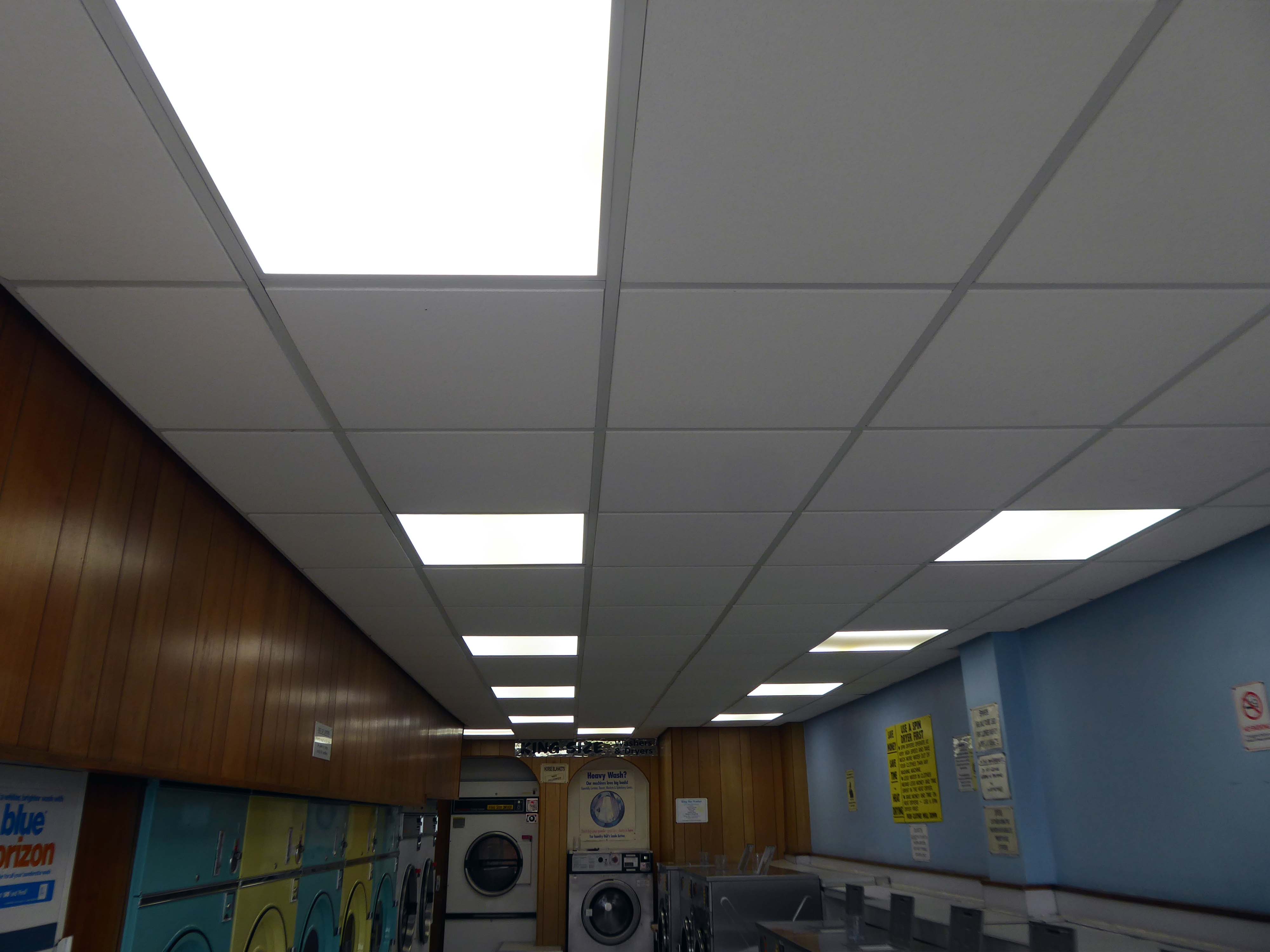
I found myself in the Northwood area of Hanley – ascending the long drag of Bucknall New Road, where I espied a launderette, imaginatively named The Launderette.
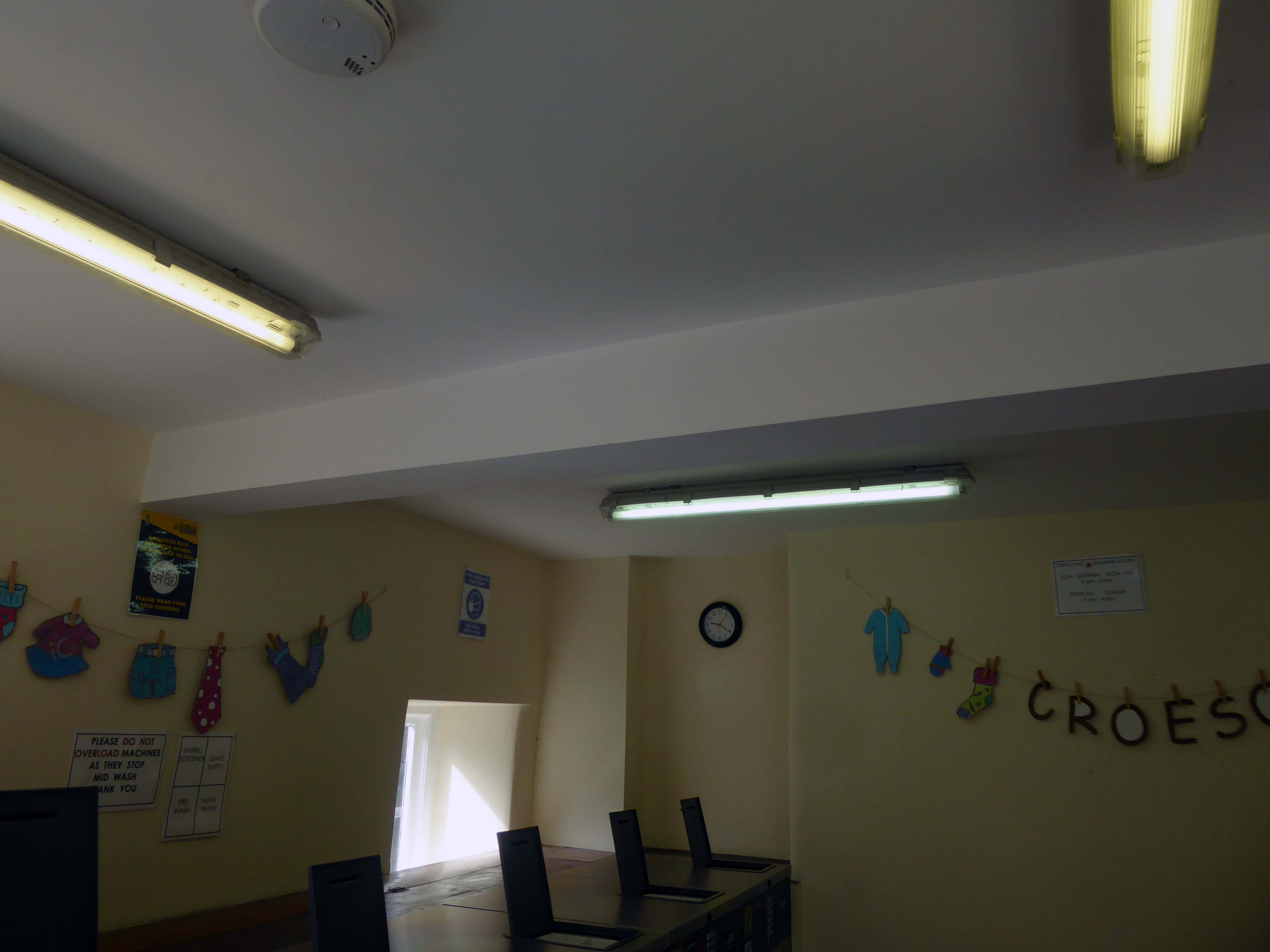
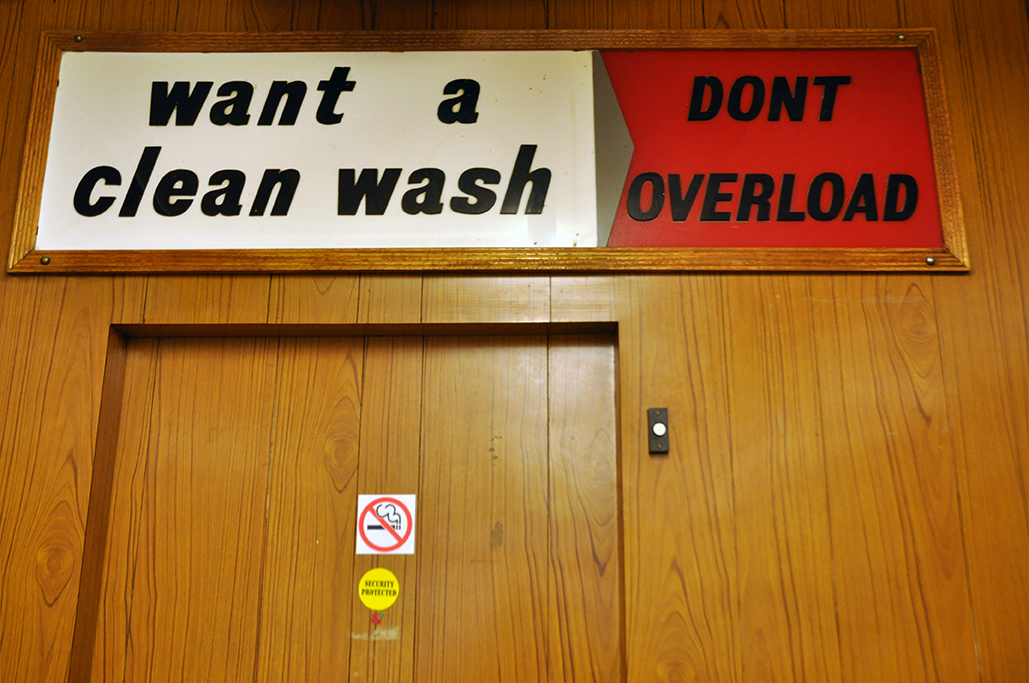
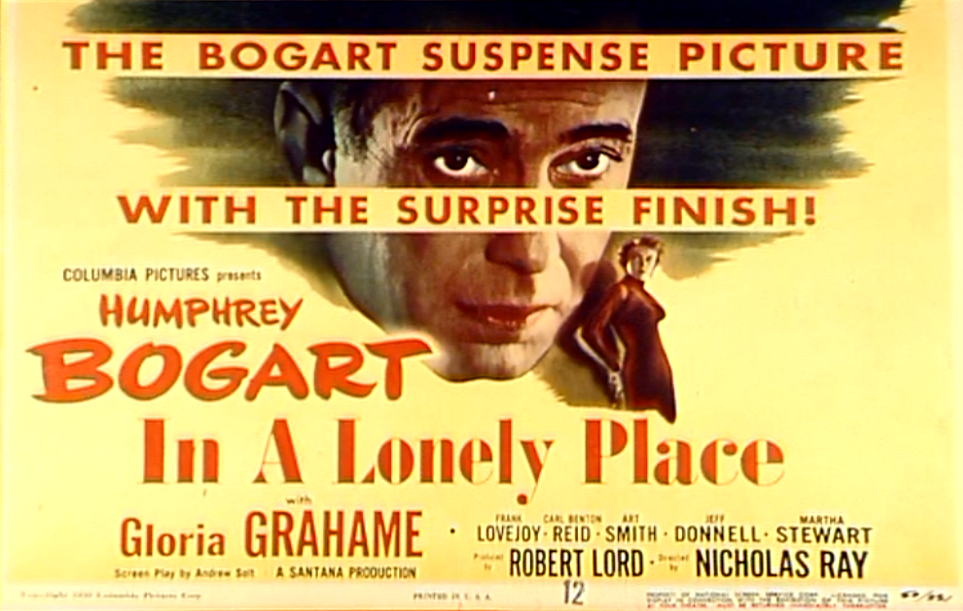
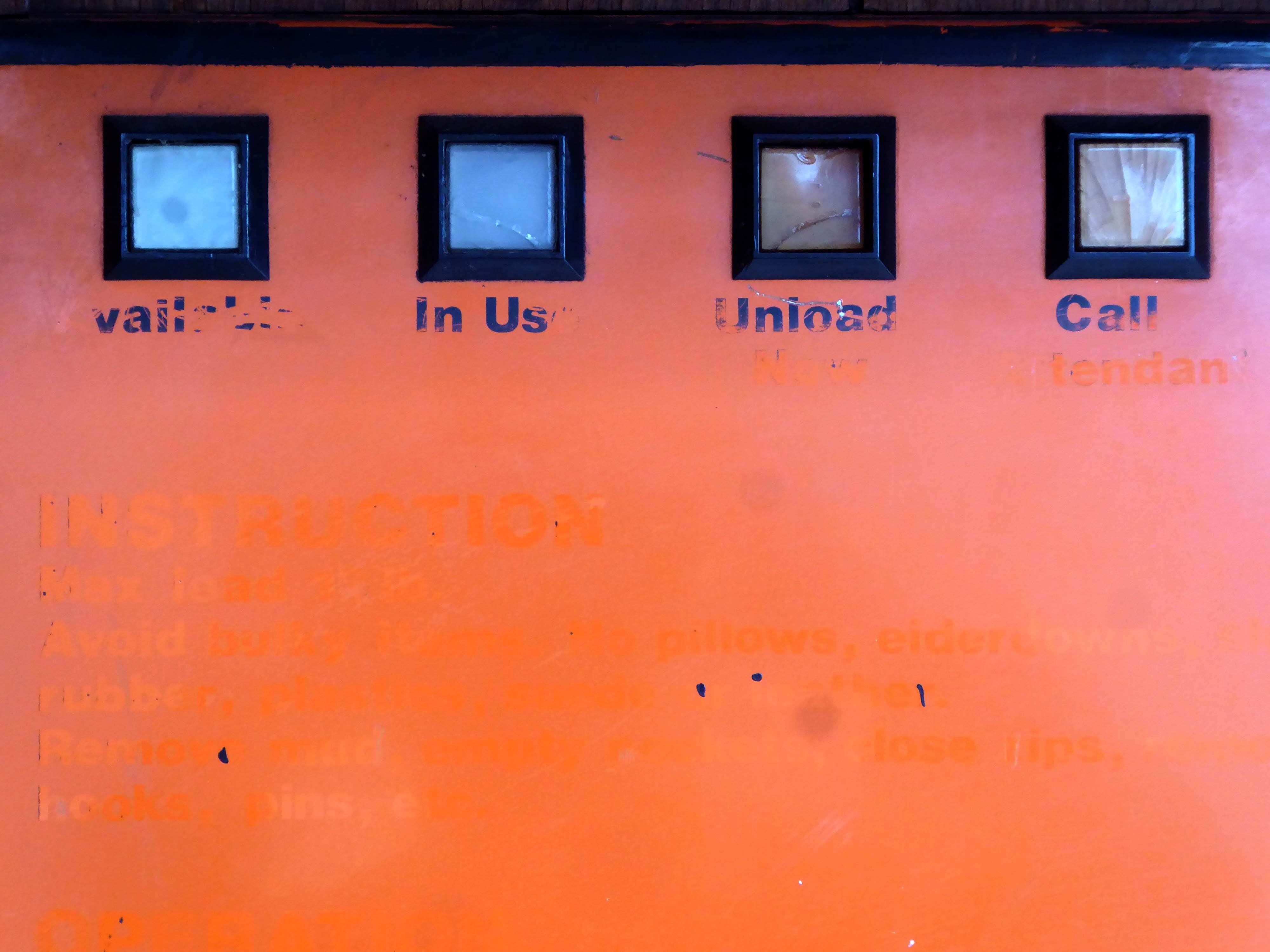
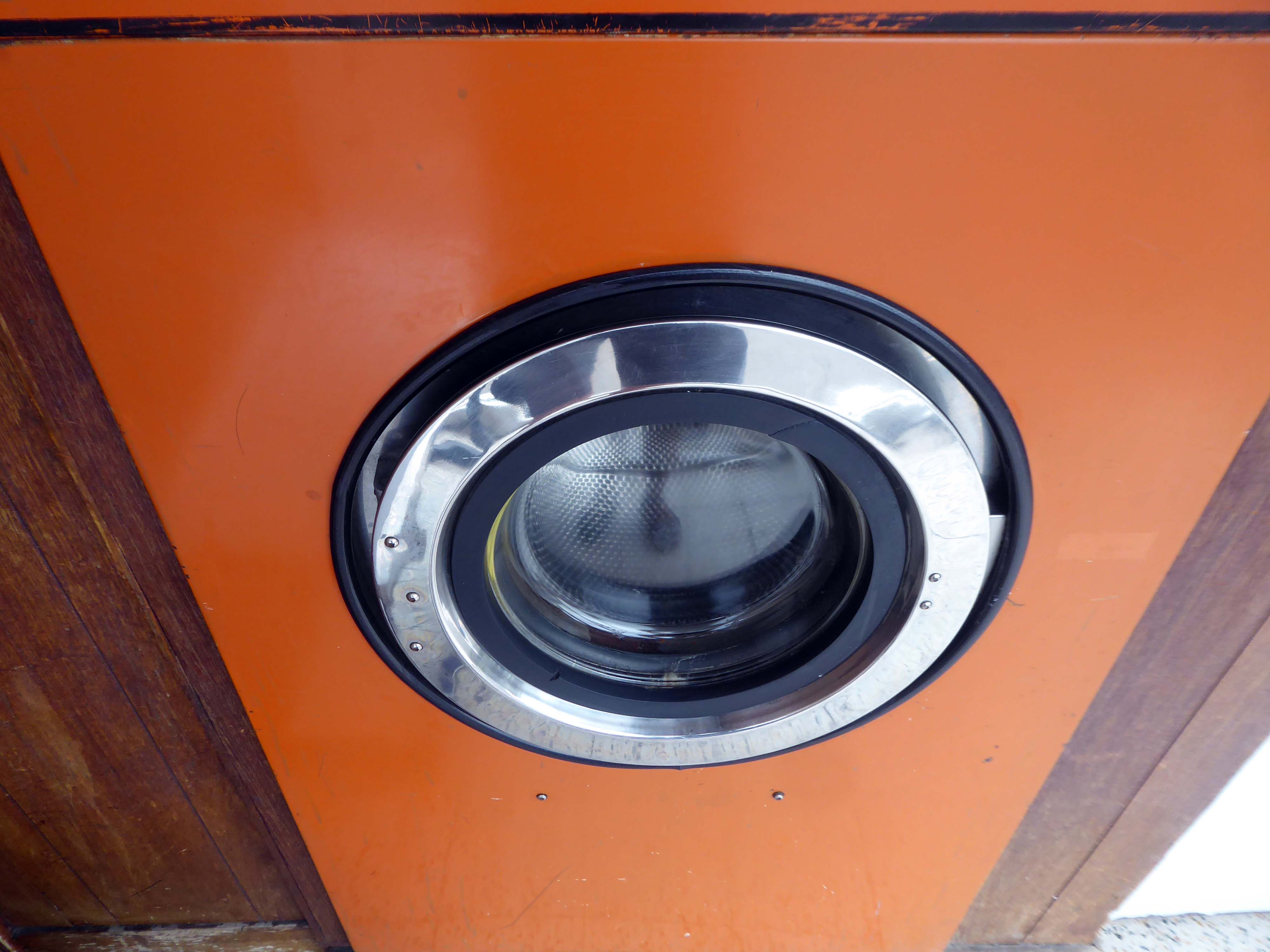
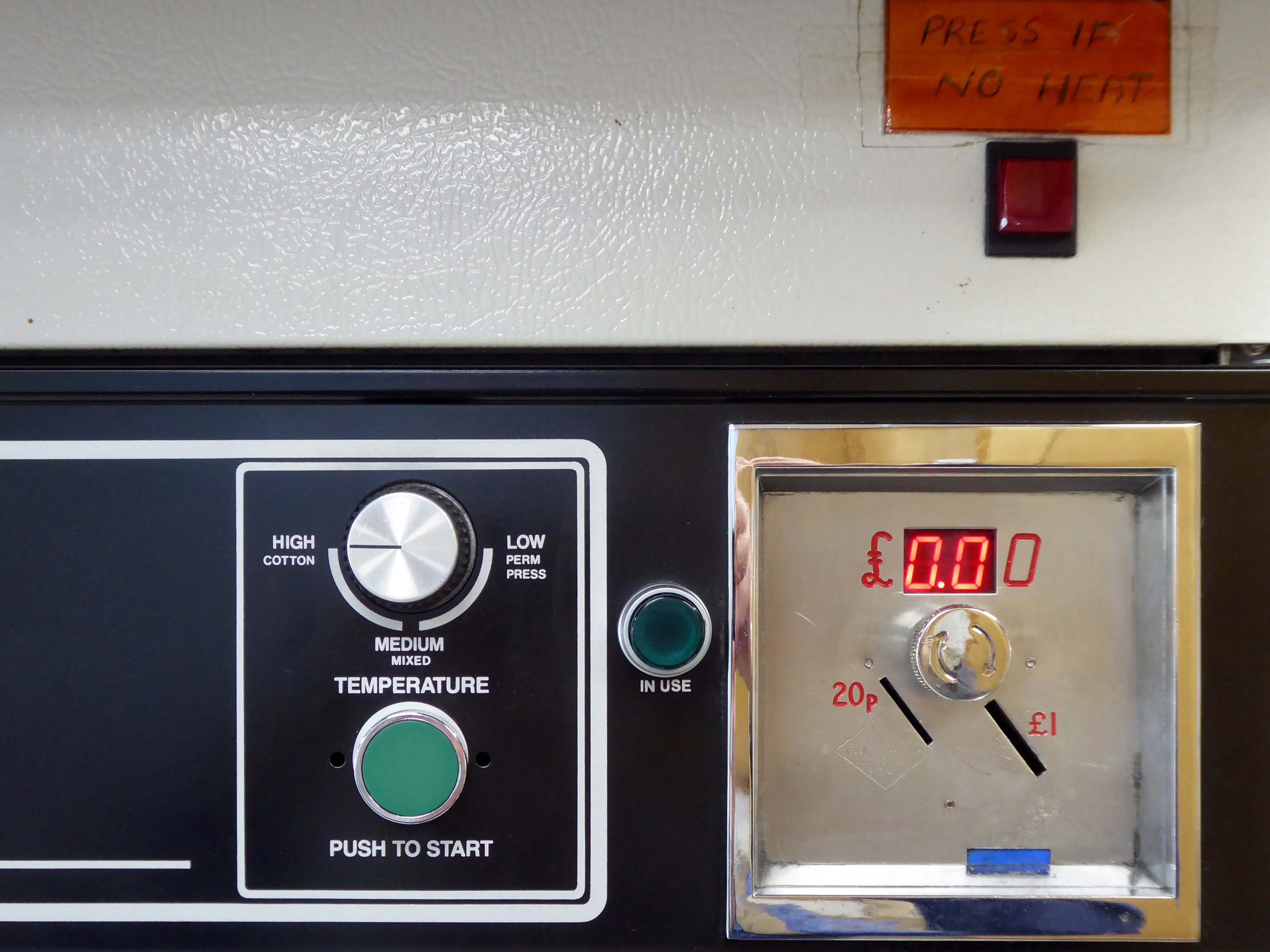
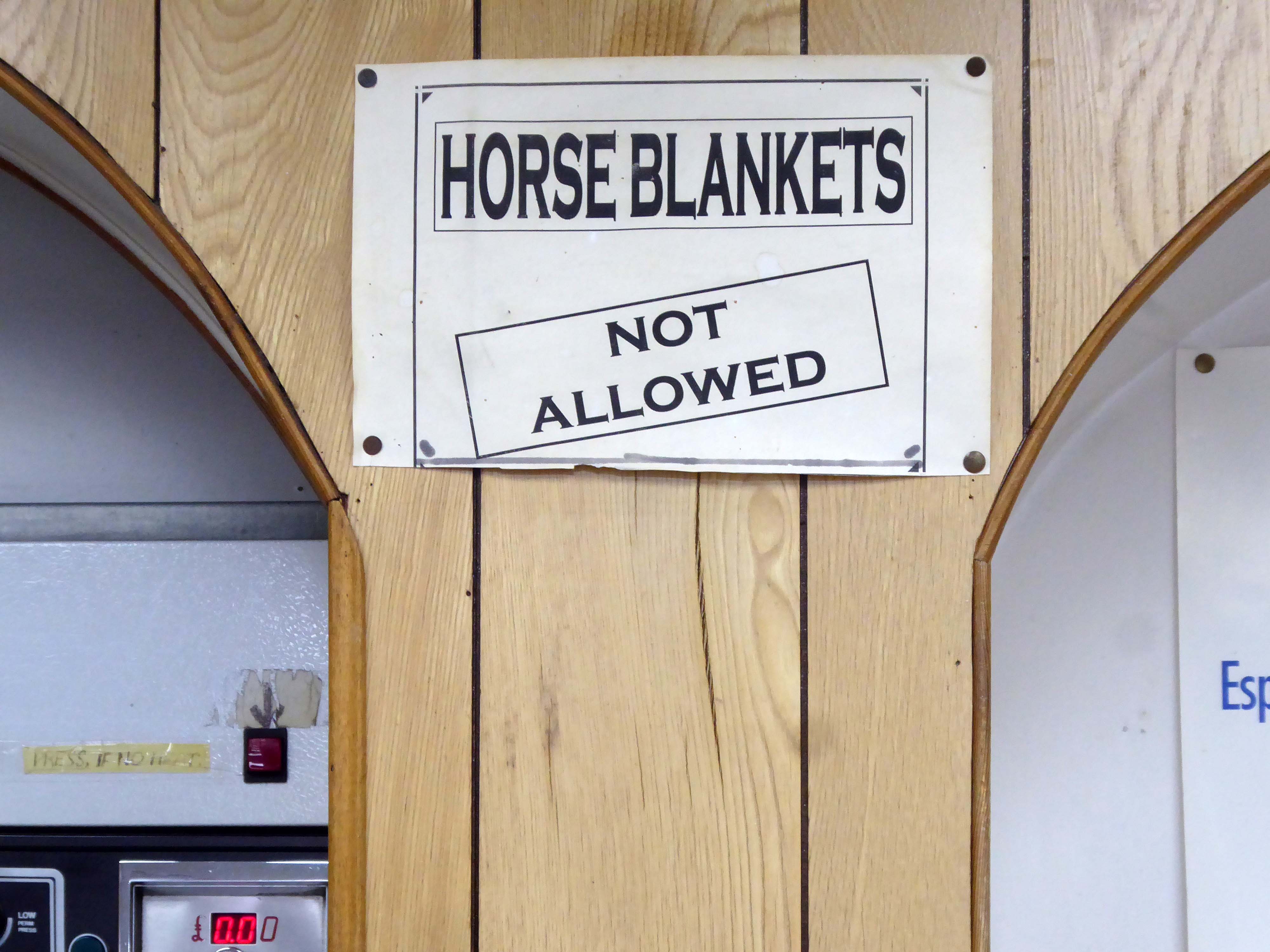
Early morning and short of the odd customer or two, I seized that moment in time to record this lonely public place – seeking that suspense picture with a surprise finish.
The Gallery is housed in a modern, custom-built facility that is part of the extensive Glasgow University Library complex, designed by William Whitfield.
Sir William Whitfield had roots in concrete and brick brutalism but took contextual postmodernism to a Palladian mansion that traditionalists admired. Principal of a small office for almost 50 years, his diversity of work was shot through with recurring themes and was distinguished by thoughtful synthesis of precedent.
The Mackintosh House is a modern concrete building, part of the gallery-library complex.
The Mackintosh House comprises the principal interiors of the original house – including the dining room, studio-drawing room and bedroom, largely replicating the room layout of the old end-of-terrace building. It features the meticulously reassembled interiors from the Mackintoshes’ home, including items of original furniture, fitments and decorations.
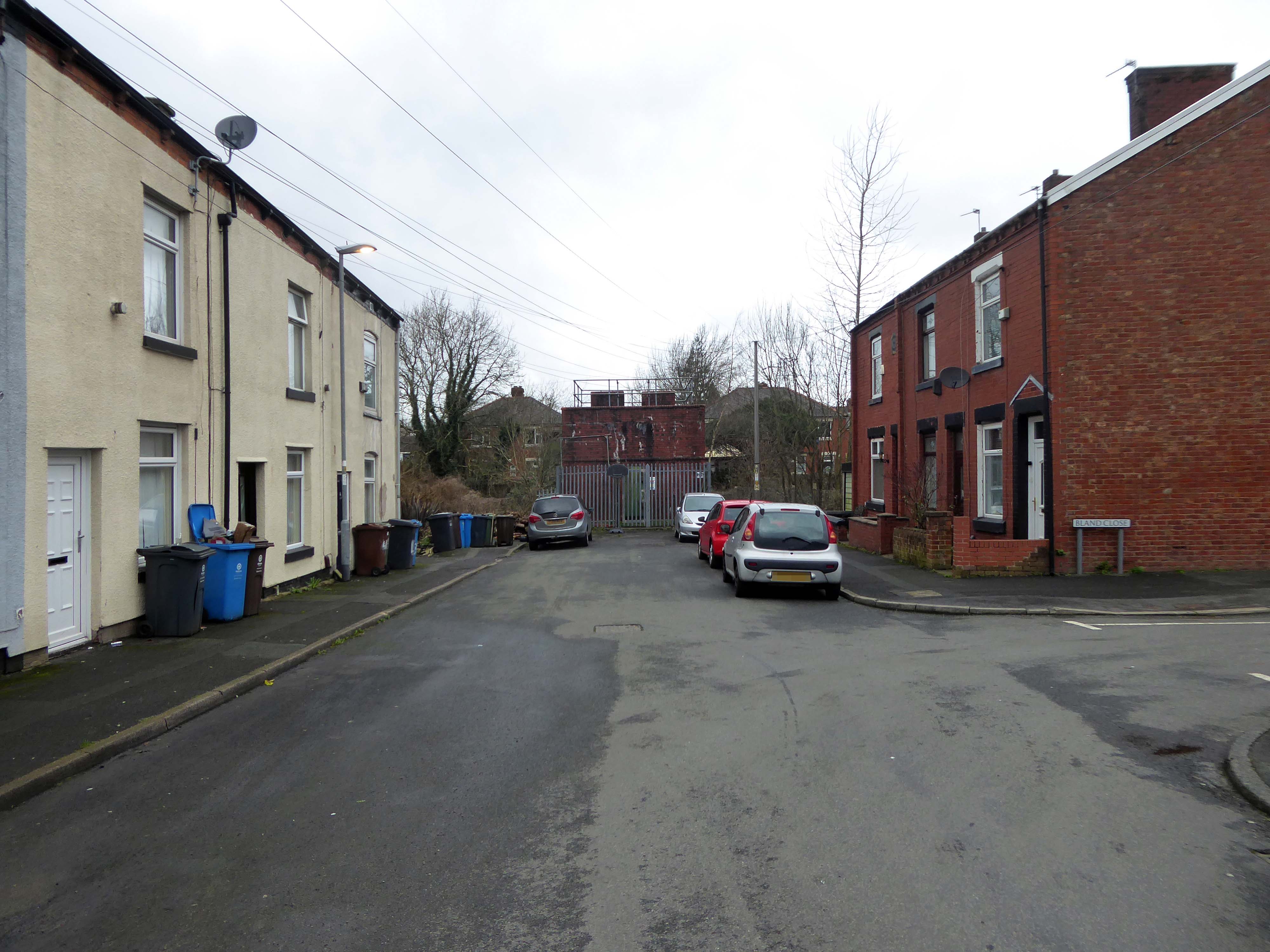
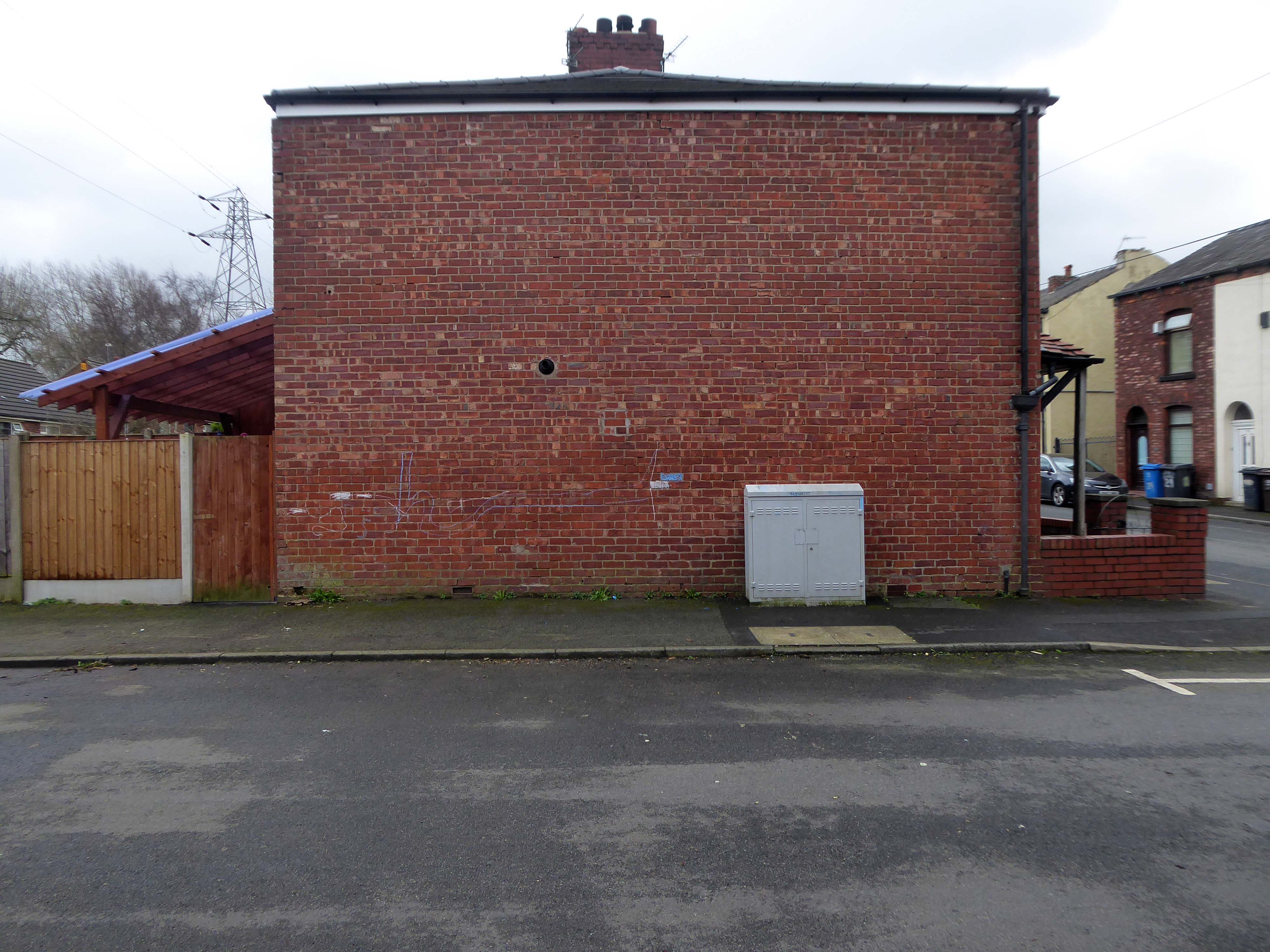
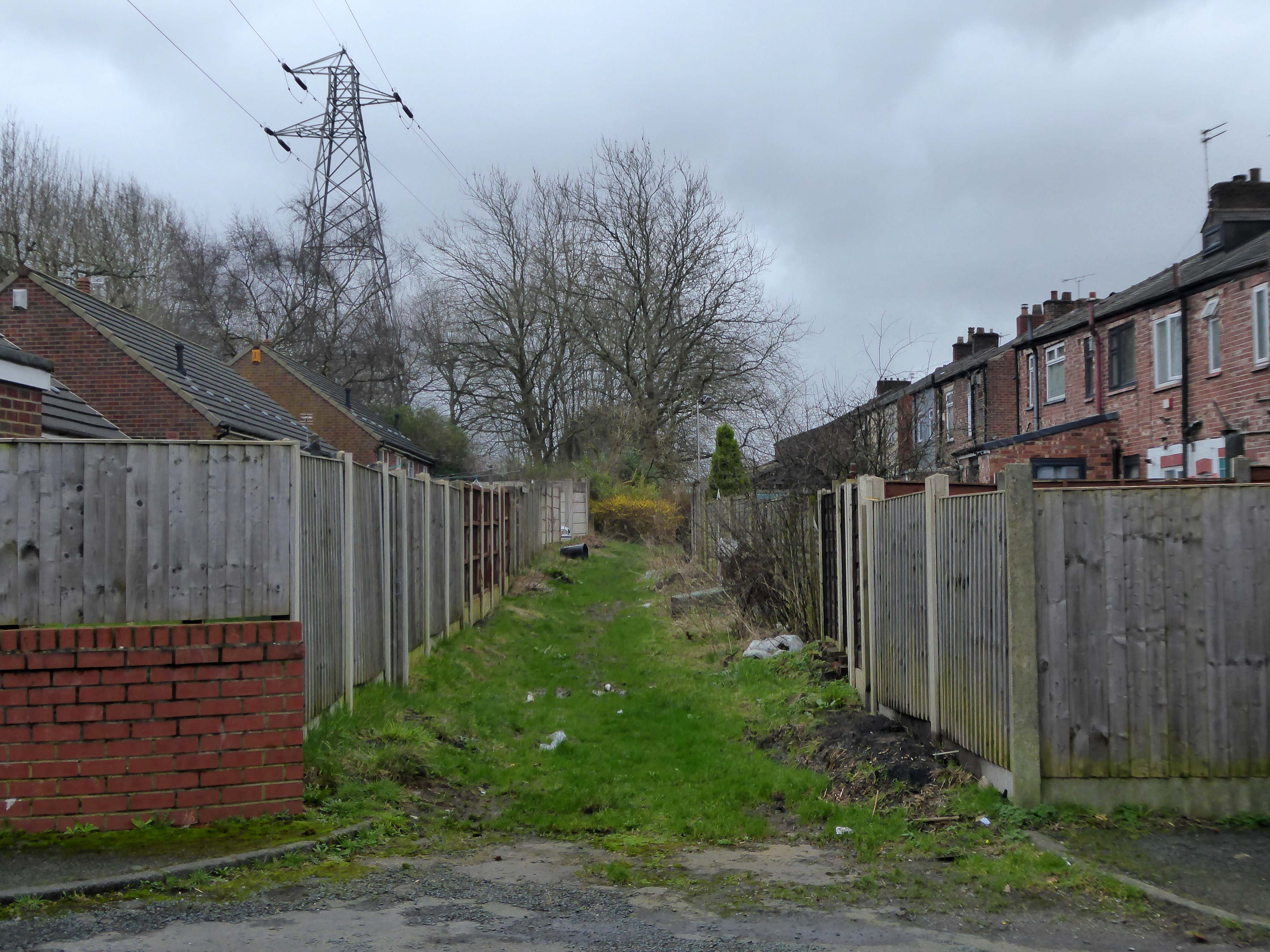
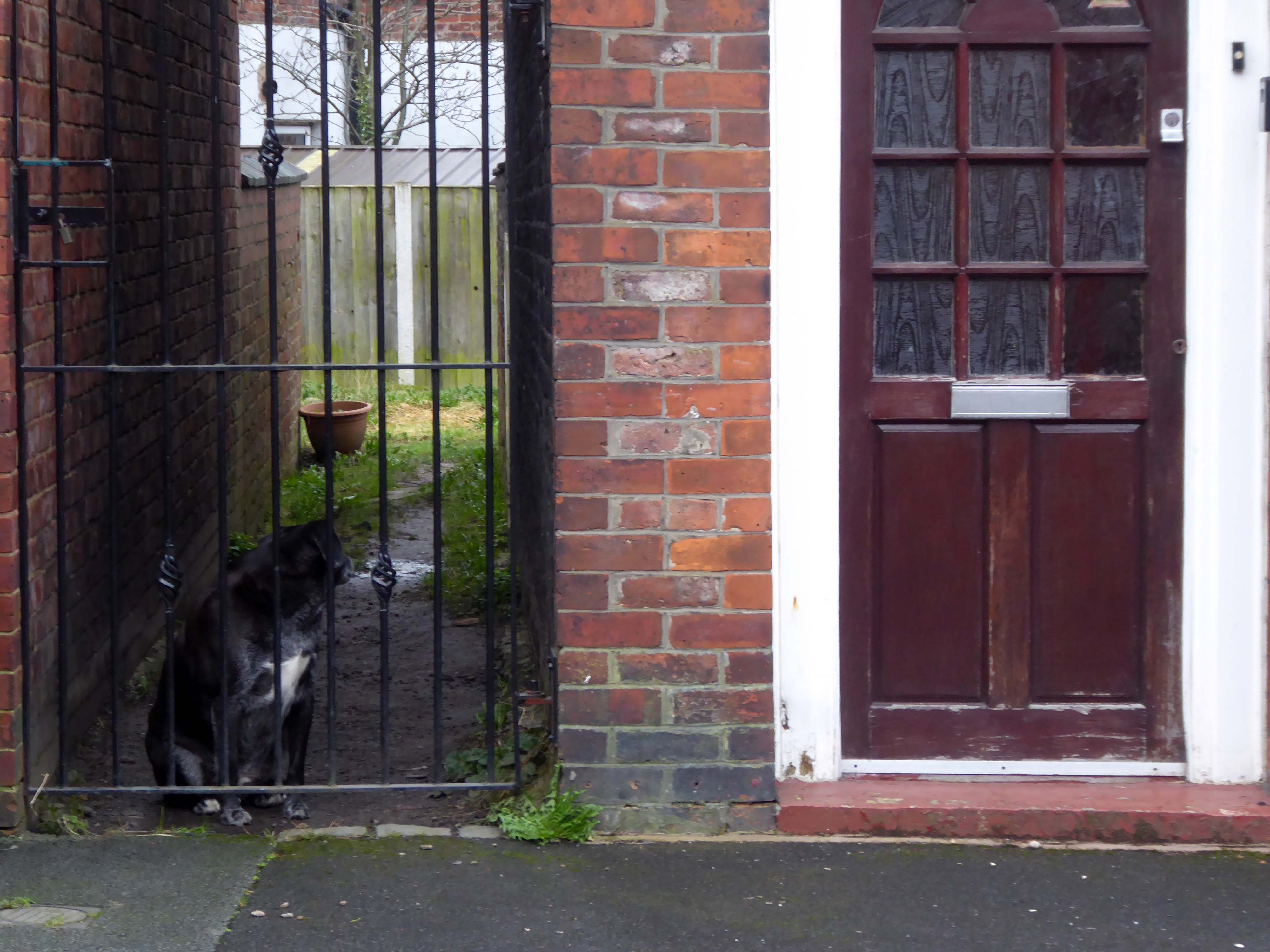
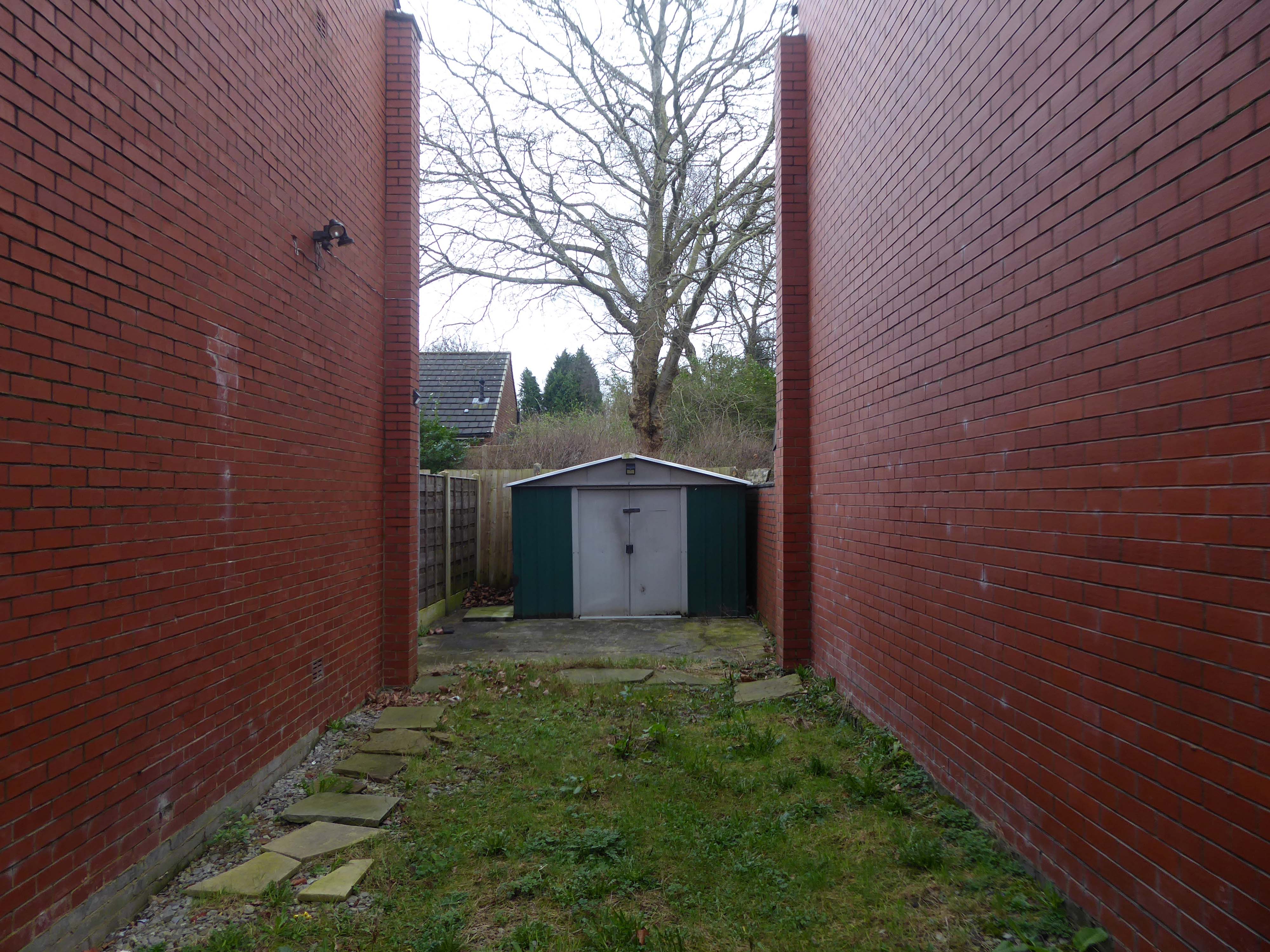
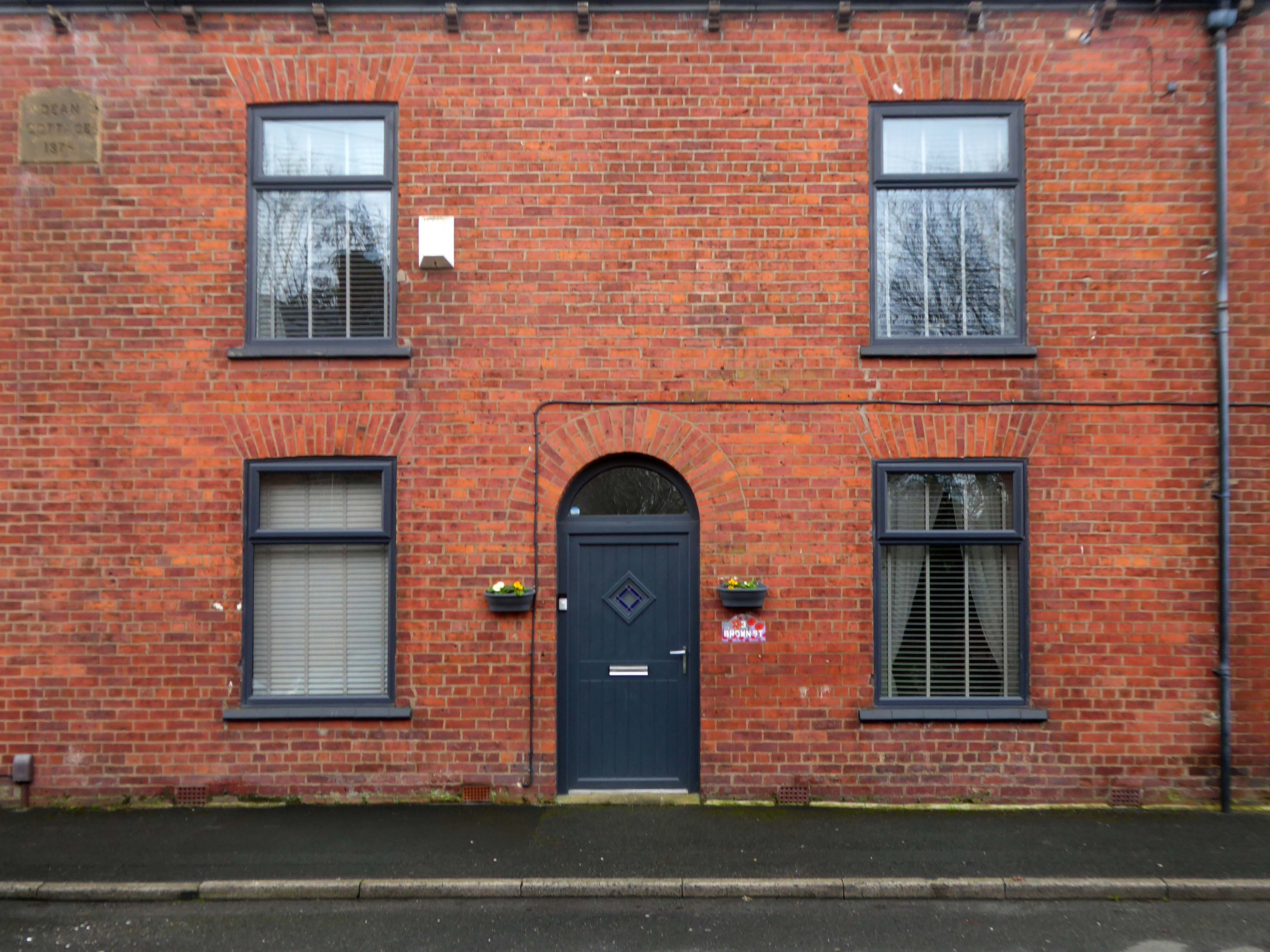
On a February morning the streets were well behaved and consisted of a typical mix of nineteenth century terraces and postwar semis, the residents chatty and welcoming, whilst they went about their business.
There are different causes that can make a street name controversial:
A person, organisation or event who or which was once honoured with a street name is subsequently thought to not or no longer deserve one, for example because that person later turned out to be a criminal.
A group of street names – for example in a residential area, is deemed to be unrepresentative for the population of that place, region or country because some demographics are overrepresented and others underrepresented, for example, because a disproportionate number of streets are named after men, and few after women.
Research has found that if you live on Pear Tree Lane your property is more likely to attract potential buyers and a higher price, than those living in a similar property on Crotch Lane.
What are the guidelines for street naming?
The exclusion or inclusion of certain numbers for cultural or religious reasons
The use of building names without numbers
New building or street names should not begin with The
The use of street names which include numbers that can confuse, for example – 20 Seven Foot Lane sounds the same as 27 Foot Lane
The use of the names of deceased people in the adoption of any street names. The reason for choosing a person’s name should be established in the council’s policy
The use of the name of a living person – it’s not recommended
The adoption of historic connotations by developers – guidance on this should be provided by the council to all developers through close liaison with local historic societies.
The use of national or local historic figures or events
The use of a name with Royal connotations – the Lord Chamberlain’s office must be contacted if a name has any reference to the Royal family or if the word ‘Royal’ is suggested.
The use of names and their combination with numbers that could be considered rude, obscene, and racist or contravene any aspect of the council’s equal opportunities policies
The use of names and their combination with numbers that could be easily vandalised or changed into any of the above, for example – Canal Turn
The use of names that can cause spelling or pronunciation problems
The use of names that can be construed to be used for advertising or commercial gain
The use of names would lead to variations in the use of punctuation as these can confuse or result in early demands for a change of address from occupiers.
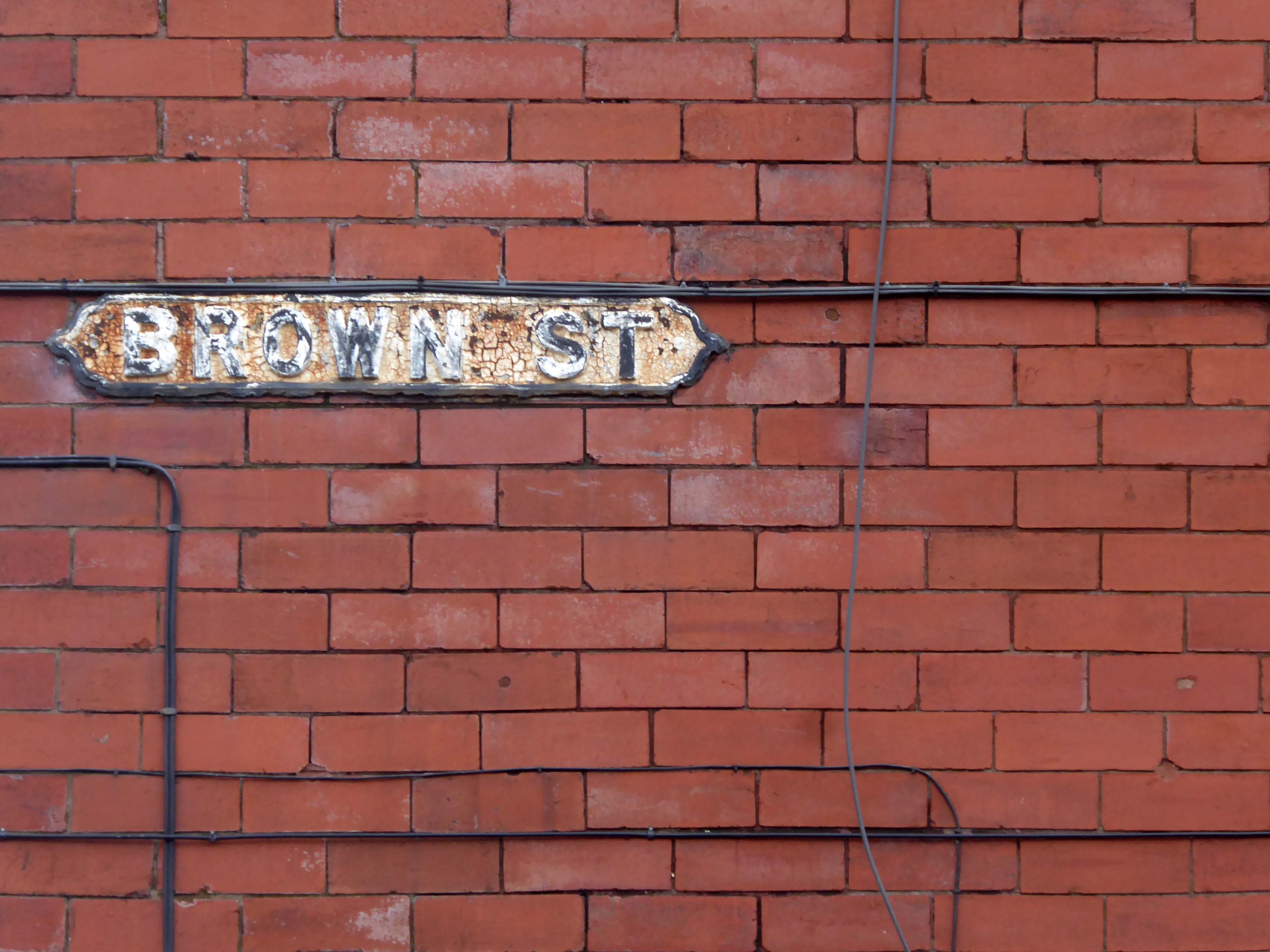
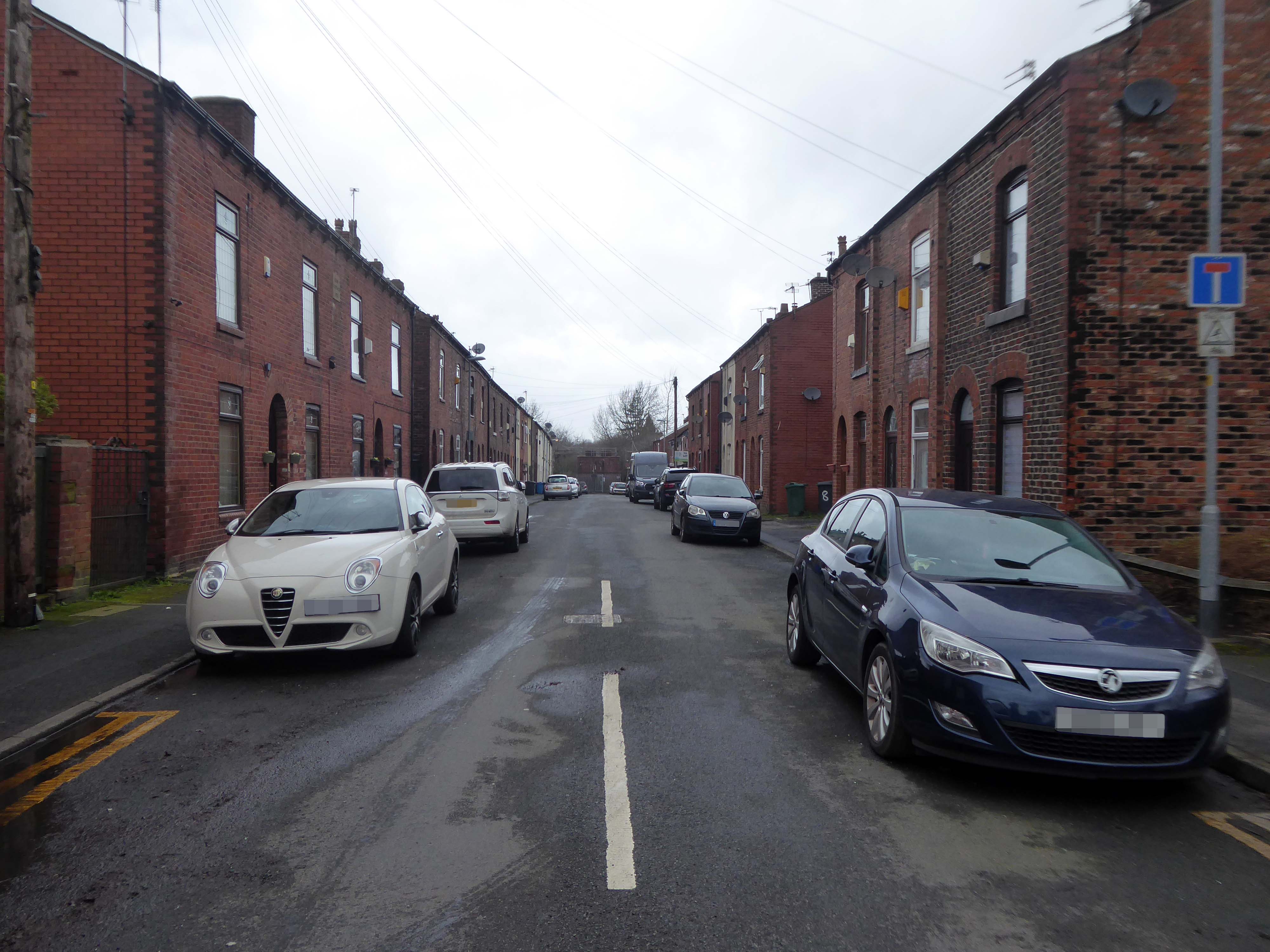
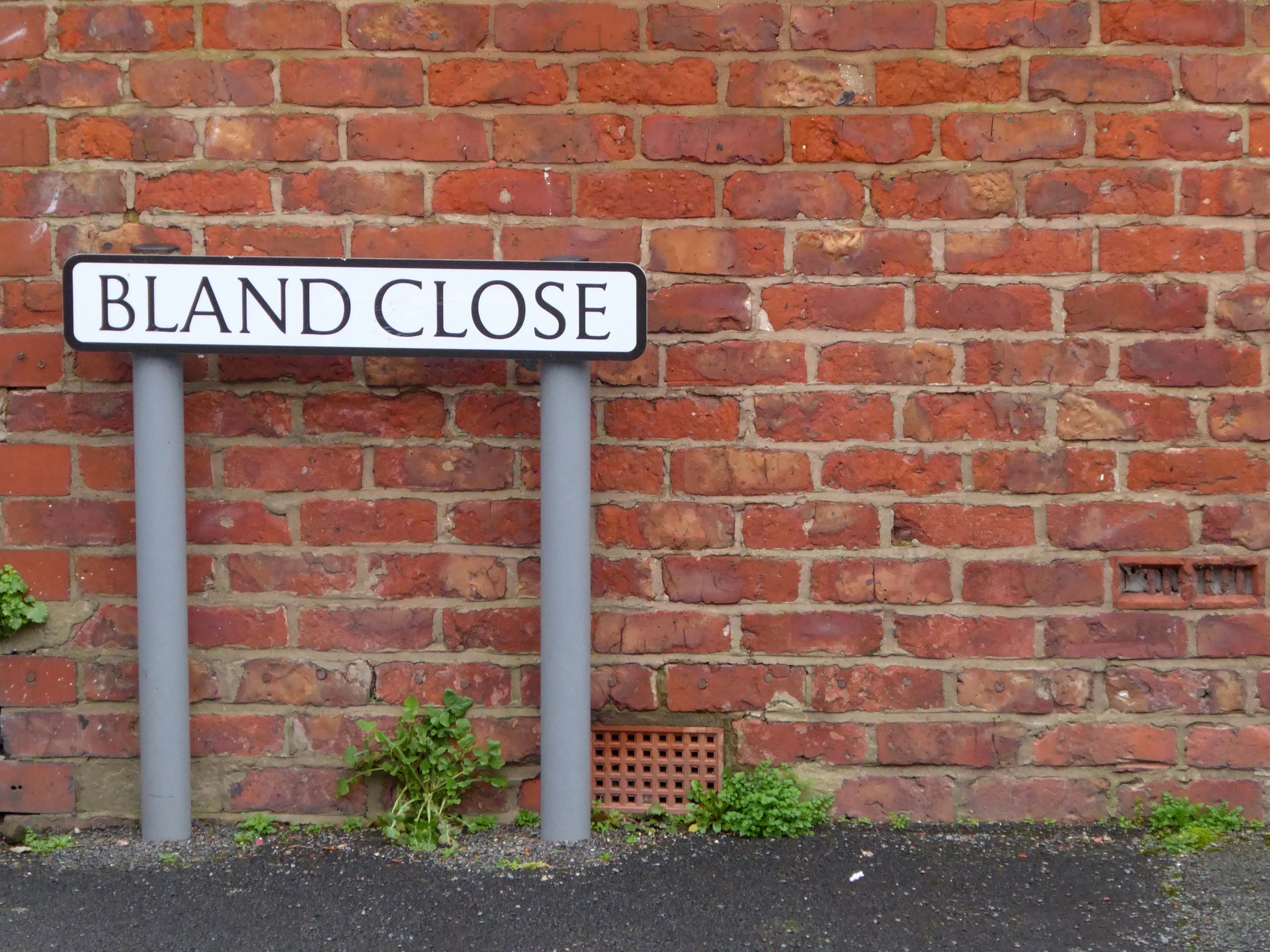
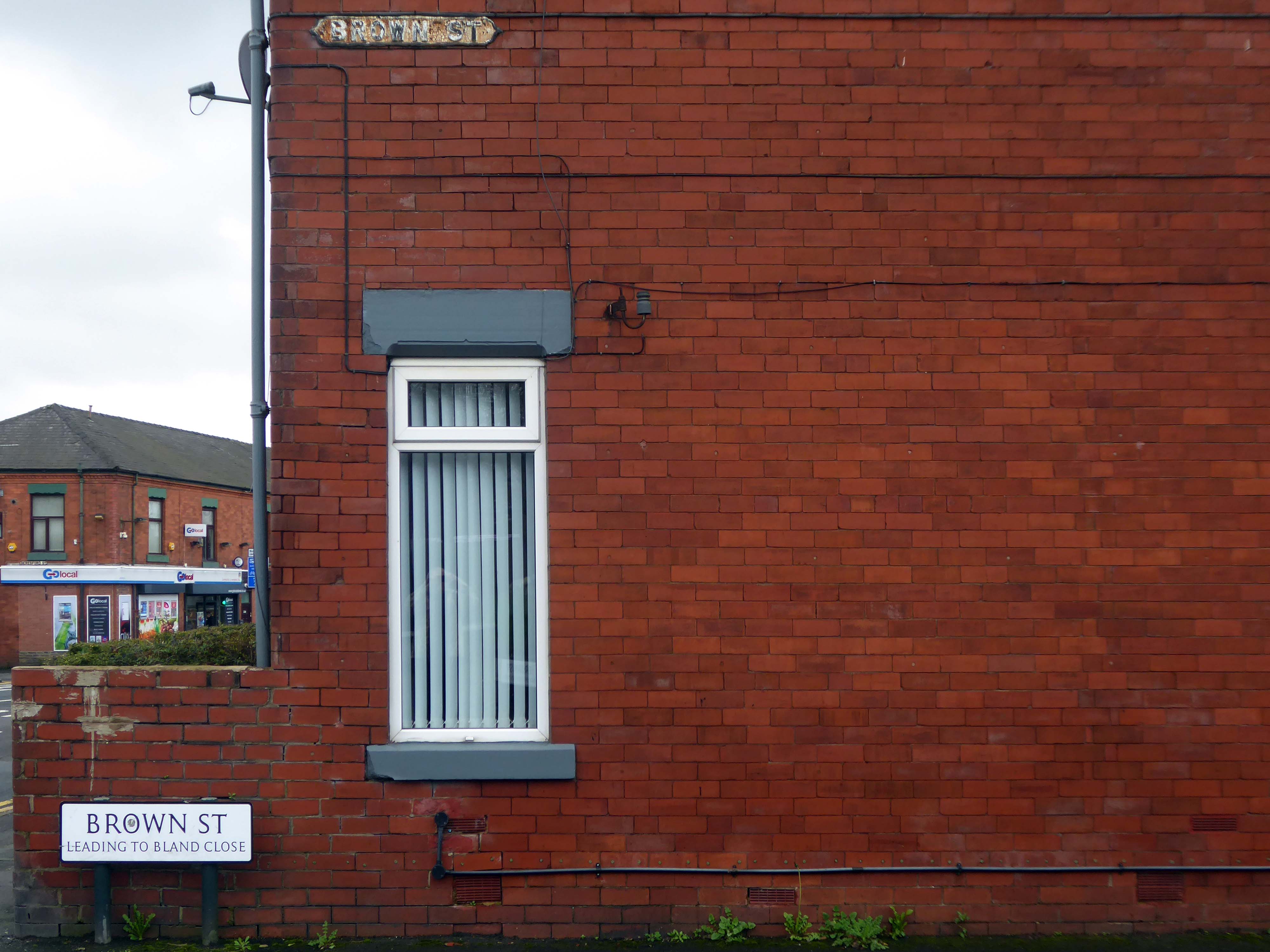
So in summary the name Bland does not in my opinion represent the close’s appearance and may in fact detract from the value of the property and possibly the perception of the area.
The Masonic Hall has an extension of 1967 by Hadfield Cawkson Davidson & Partners
The Masonic Hall has an extension of 1967 has a concrete mural by William Mitchell.
Symbolising the turmoil and chaos of the outside world, contrasting with the order of the Masonic Temple – a Freemason told me so.
I thought to propose the idea that this may well be a false dichotomy – then thought I’d better not.
These are the constituent panels.
These are the details.
Having been asked to speak to the Sheffield University Alumni Women’s Group – on the subject of Modernist Sheffield, I had easy access to the interior space.
I was ever so excited to discover these decorative panels on the stairway – I assume that they are also the work of William Mitchell.
Nobody knew.
The Masonic Hall is now a venue in addition to being a Masonic Hall.
Vickers was a successful miller who invested his money in the railway industry. In 1828 he garnered control of his father-in-law’s steel foundry business, formerly Naylor & Sanderson, and renamed it Naylor Vickers & Co. He went on to be Alderman and the Mayor of Sheffield and was the first President of the Sheffield Chamber of Commerce before he died in 1897.
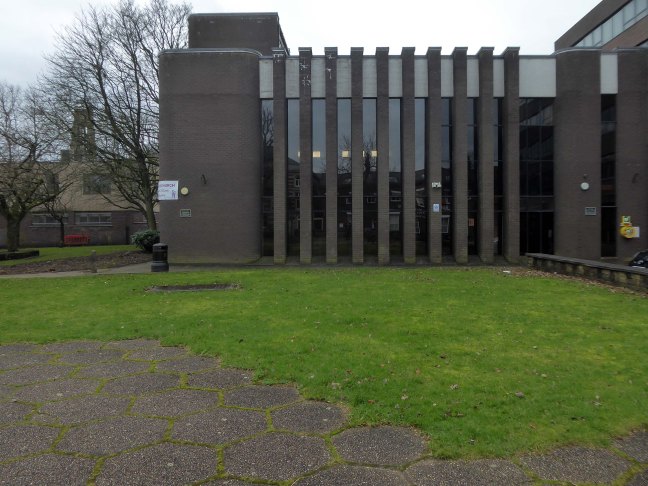
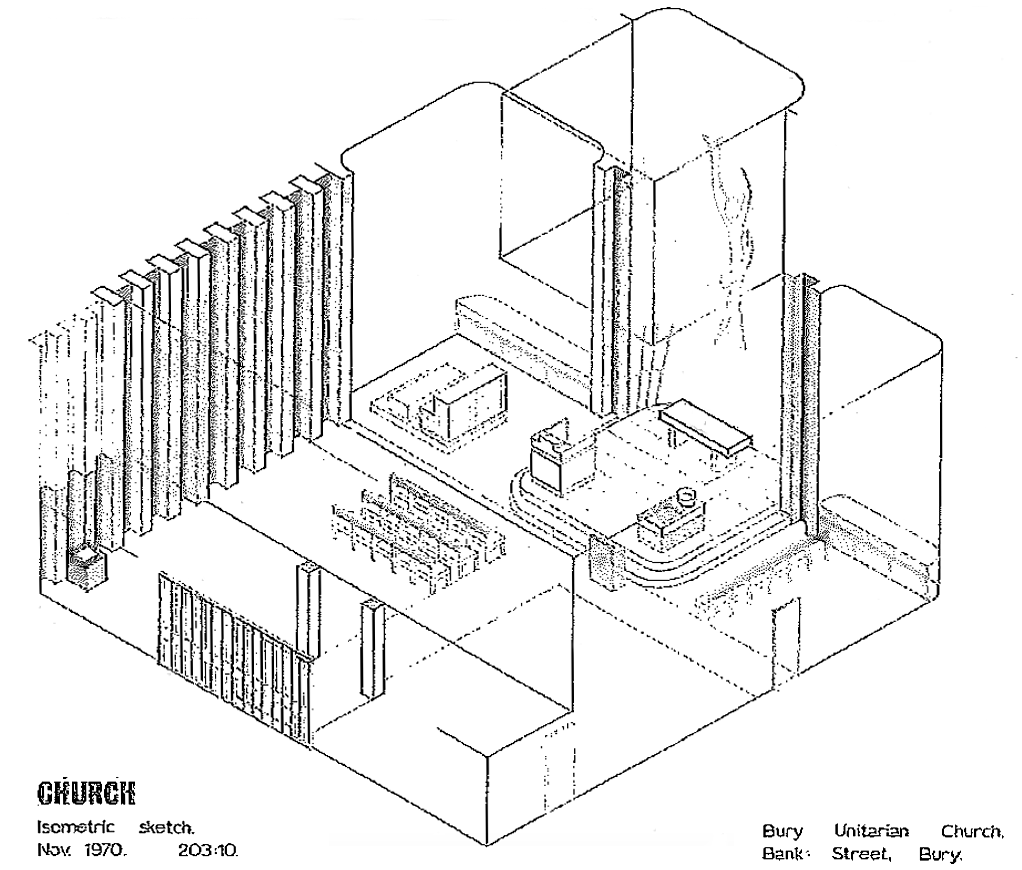
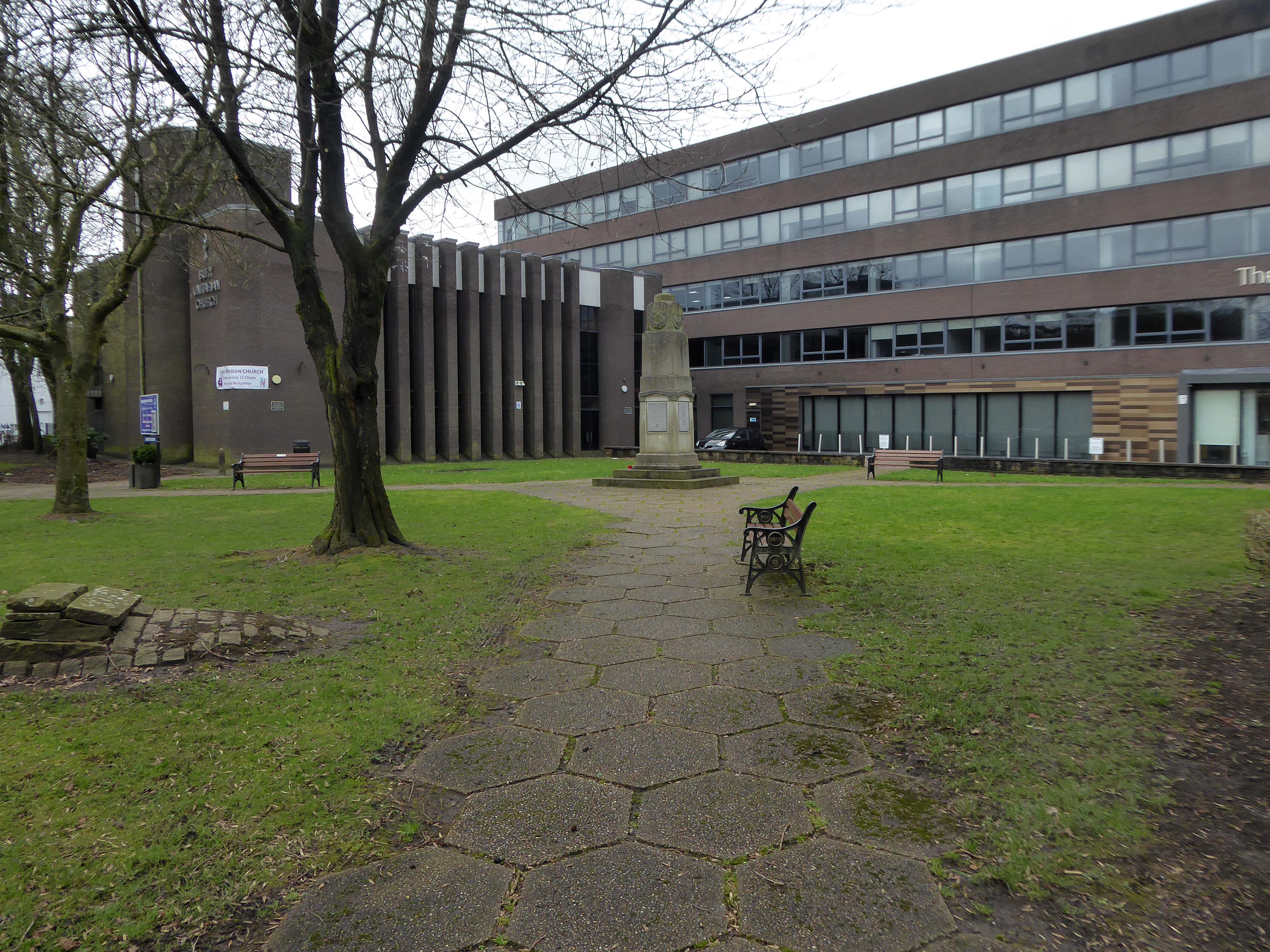
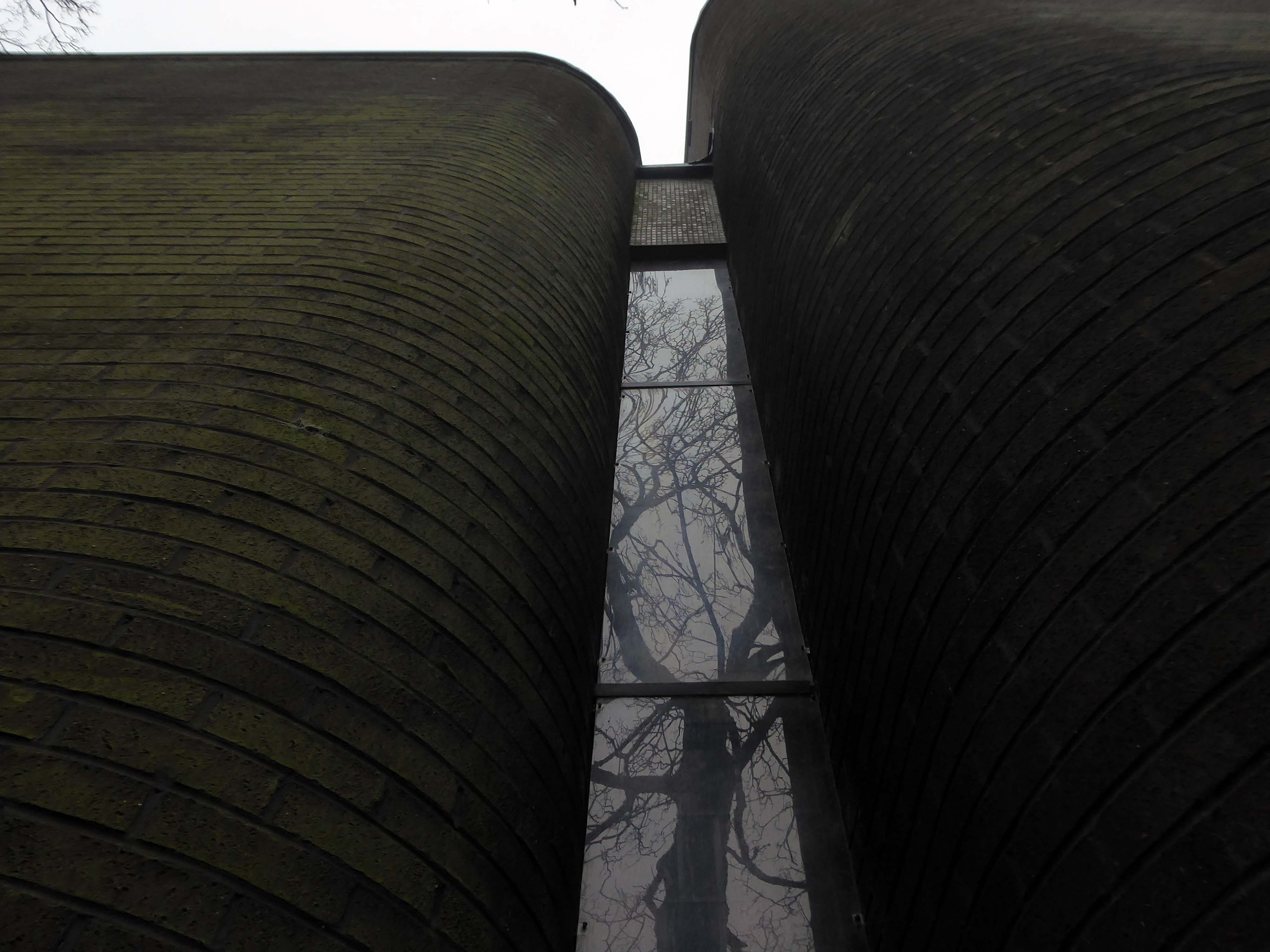
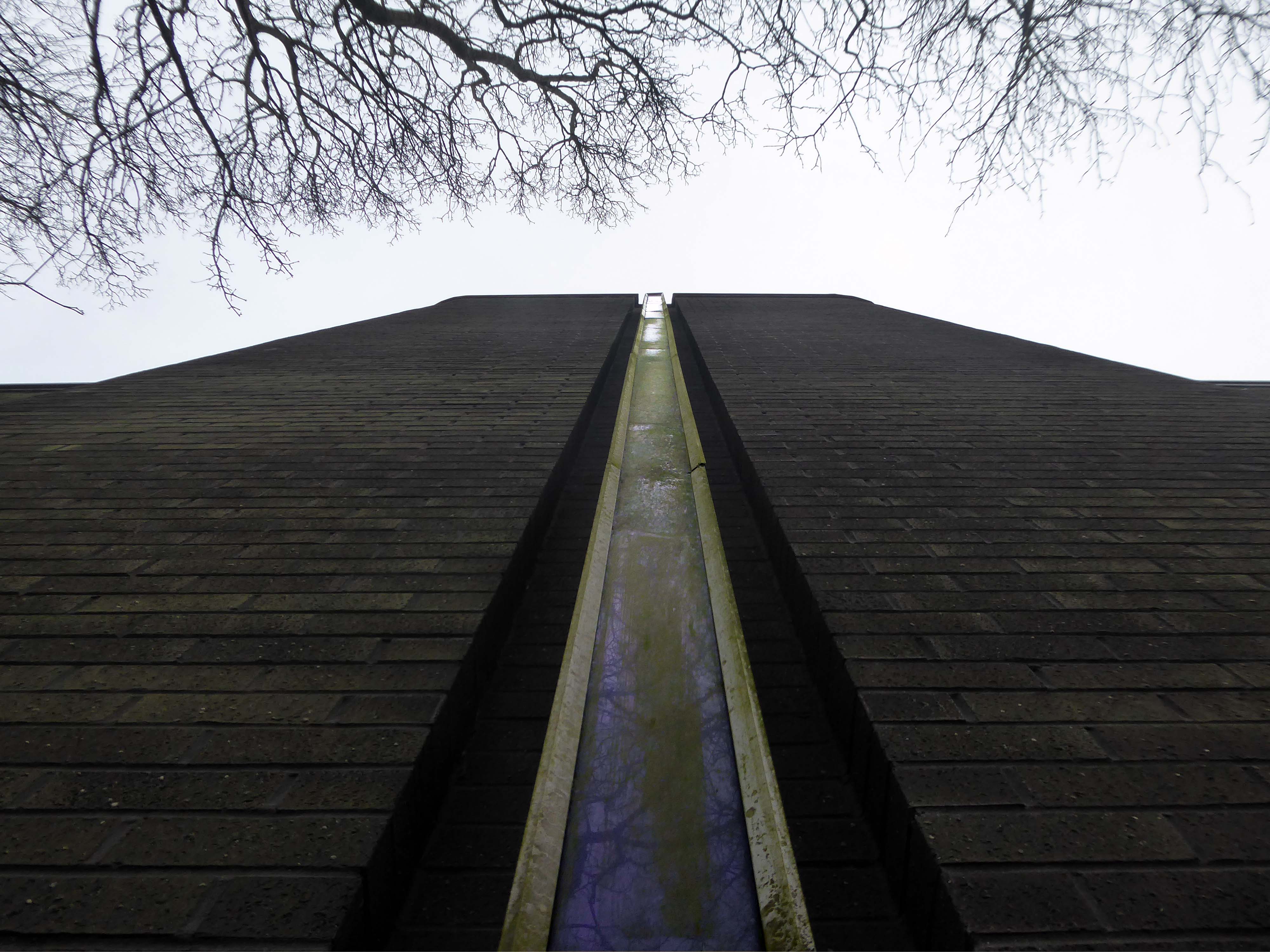
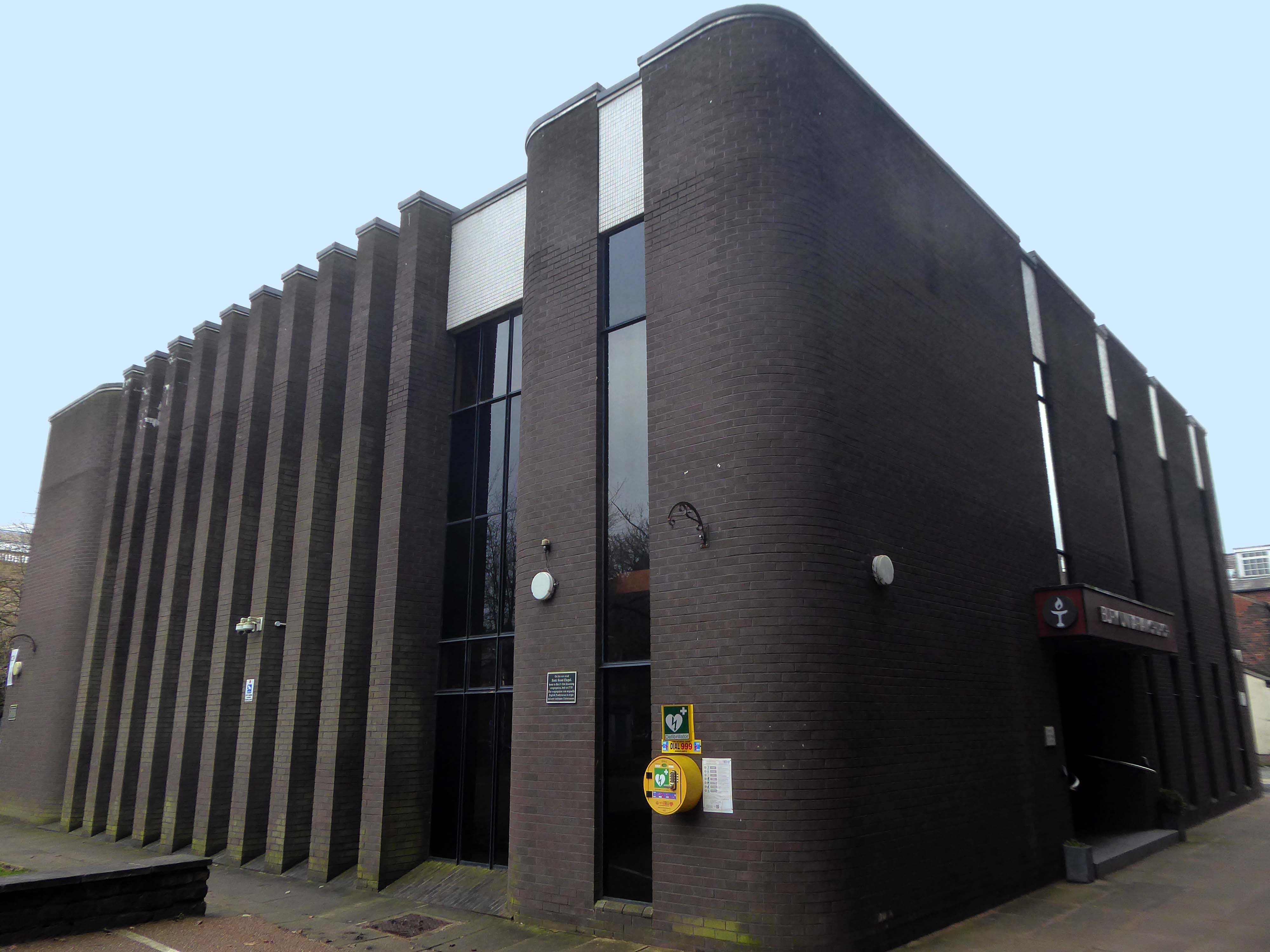
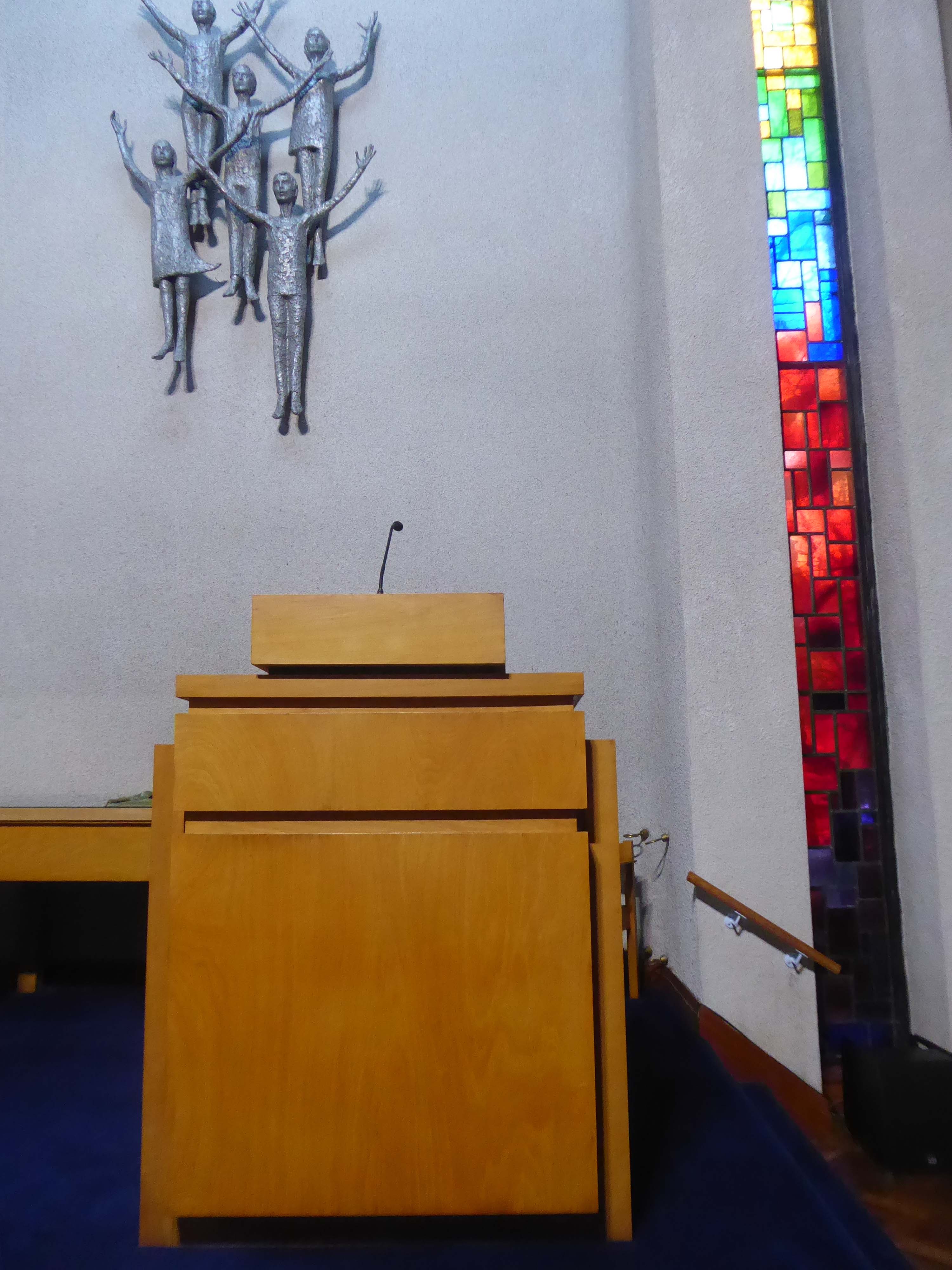
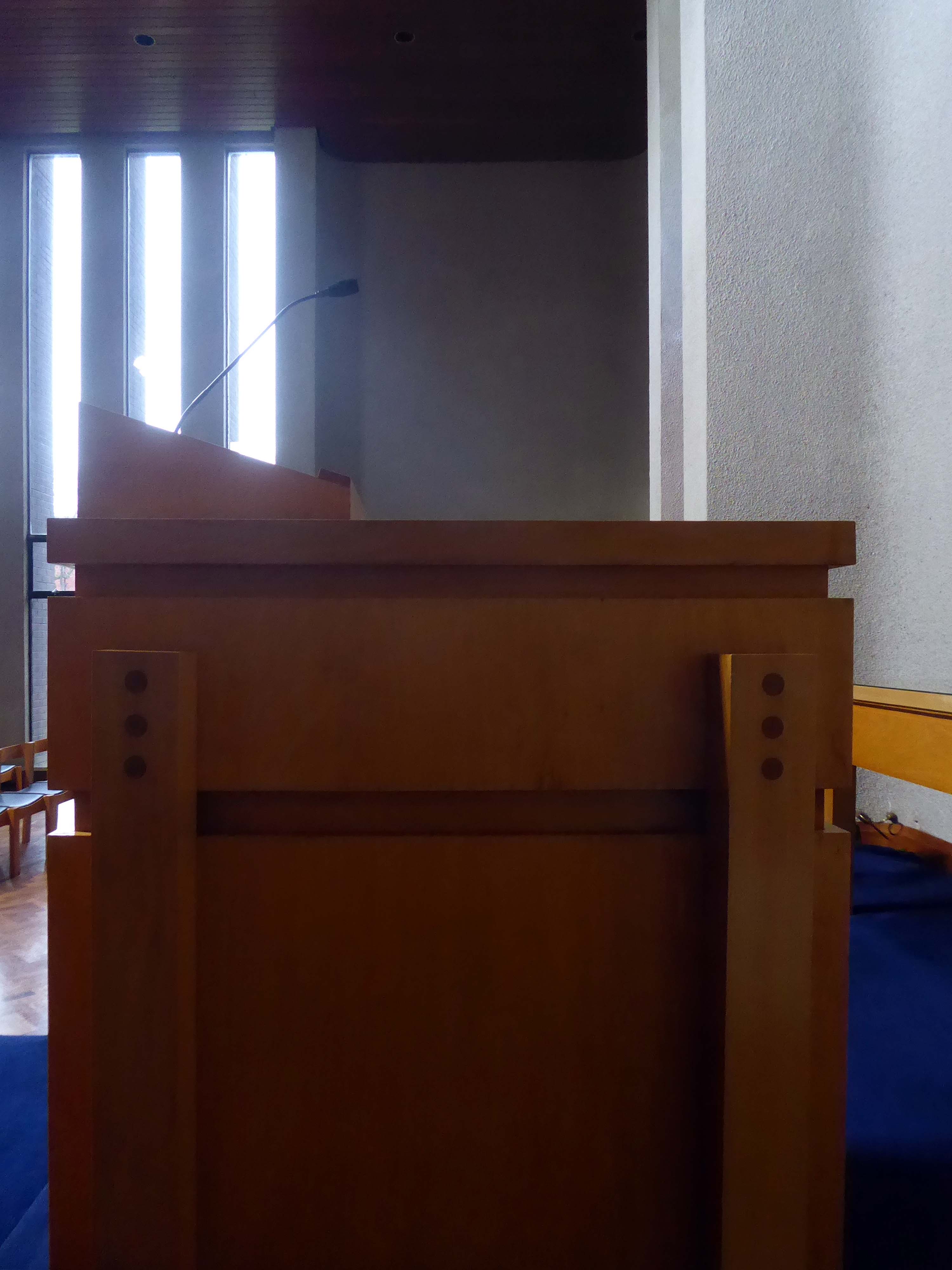
The new Bury Unitarian Church was designed and constructed by local architects James T Ratcliffe.
An interesting article was published at the time in Sacred Suburbs Portfolio, in which the church design was described as:
A well detailed, functional, yet flexible building.
The church was opened in 1974, with a service of dedication on Saturday, 9th March. The total cost, including furnishings, was £85,000 – It is now valued at about £1.5 million. The Churchwarden and Chairman of Trustees, at that time, was Bernard Haughton, who had succeeded Alex Rogers; he was to serve the Church in those capacities for the next 25 years. He was succeeded by Barbara Ashworth, our immediate past Warden. During this time, notwithstanding persistent problems with water leakage through its flat roof, the church continued to thrive and develop.
Enhancements have been made to improve the comfort and amenities of the building throughout the period with, for example, the installation of an improved heating – system, a sound – enhancement system in the church, and disabled access facilities including a lift to the upper floor. Through the efforts of Barbara Ashworth – past Church Warden, the proliferation of bequests, legacies and trusts which were complicating and restricting church-finances has been rationalised and the financial structure streamlined. Part of the land at Holebottom has been sold for development, and part has been upgraded as a public amenity.
The current congregation is still one of the best supported Unitarian Churches in the country and remains enthusiastic and committed to the Unitarian faith. There are many social groups including The Women’s League, The Men’s Fellowship, The Luncheon Club the Book Club and most recently, our Camera Club; coffee is served every Saturday morning – a session which welcomes members of the public to the church, some of whom have subsequently become church-members. Frequent social activities are organised by The Efforts Committee and are well-supported by the congregation and their friends and raise money in support of the activities of the church snd local charities.