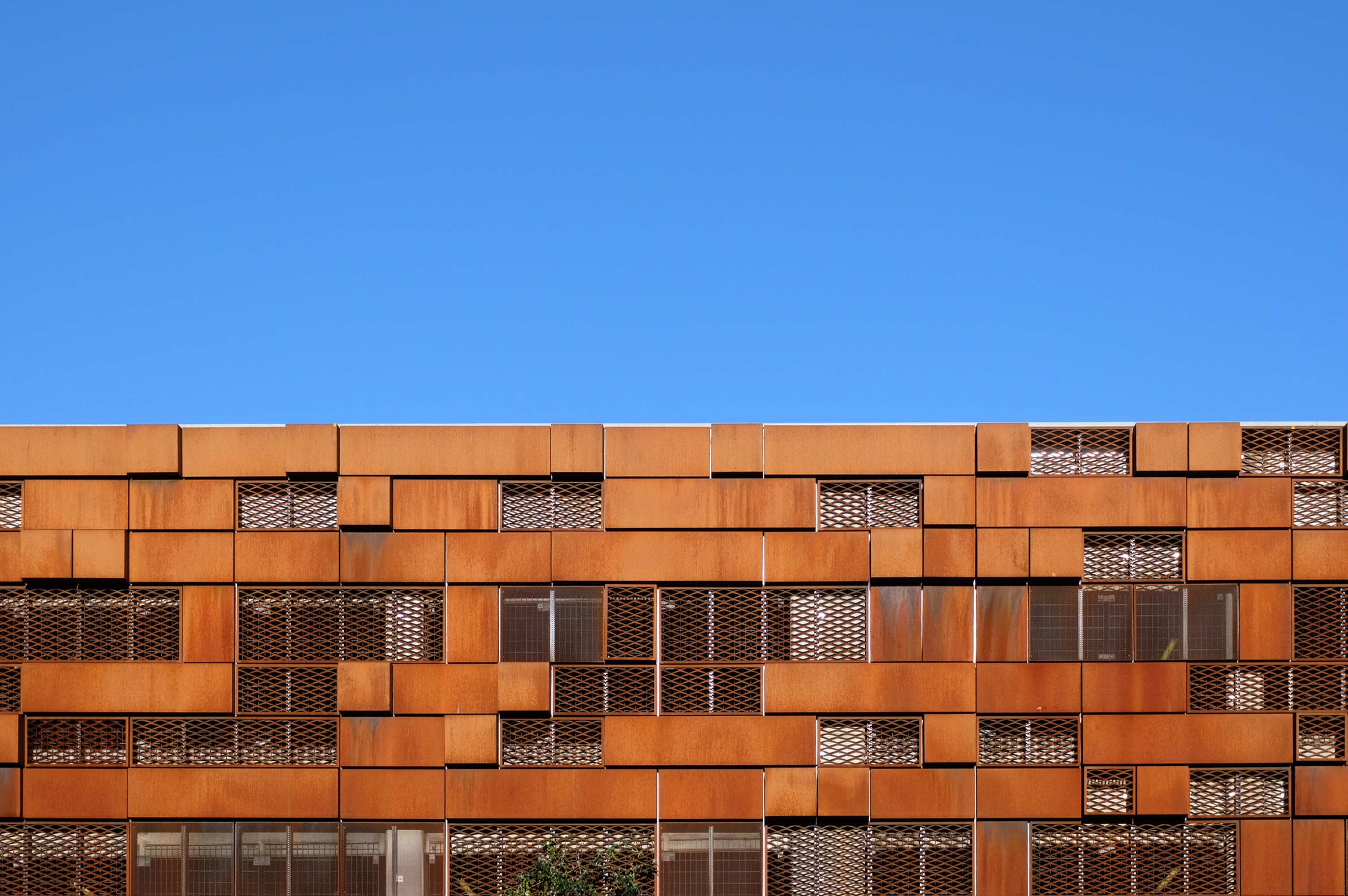
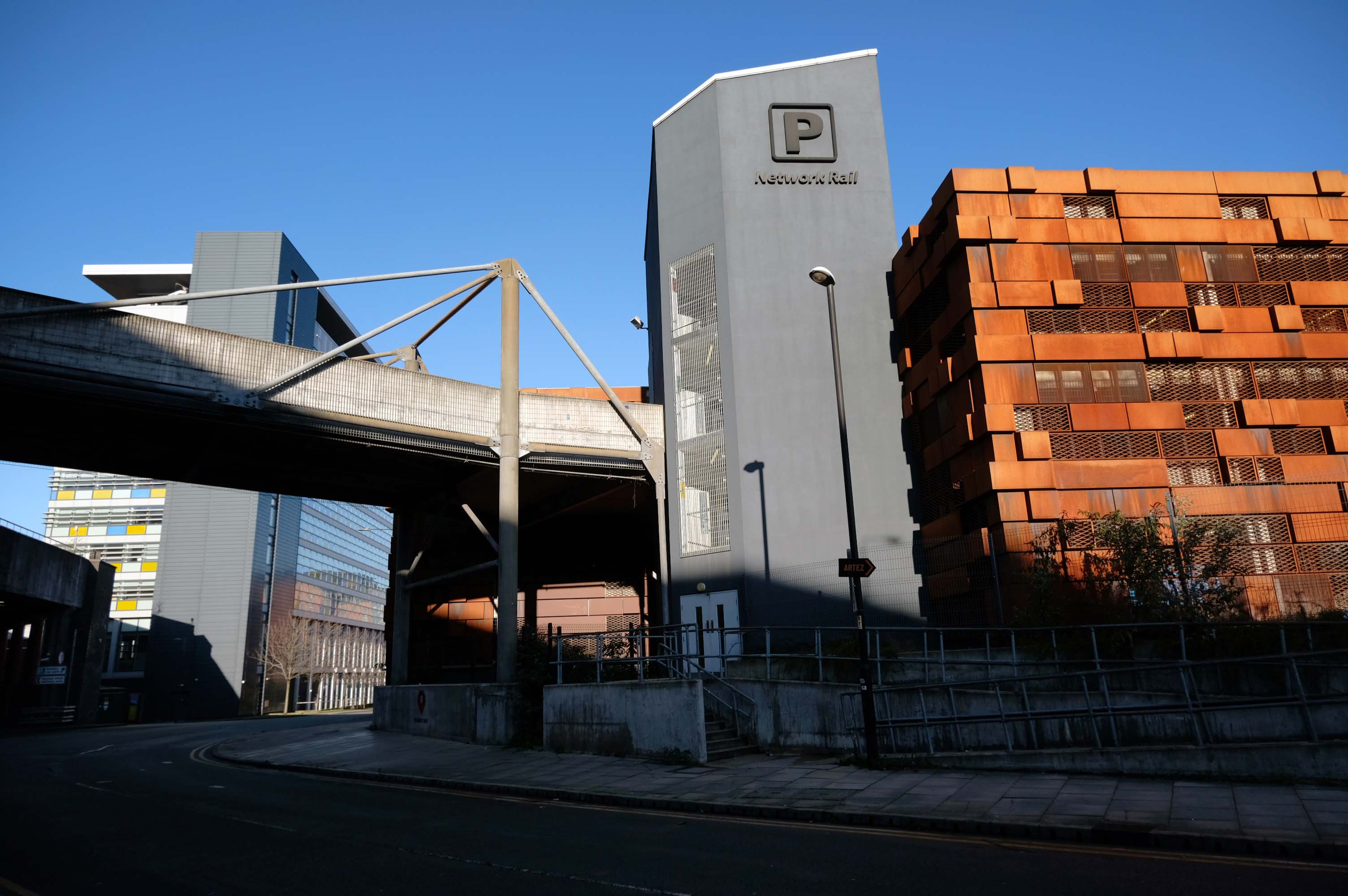
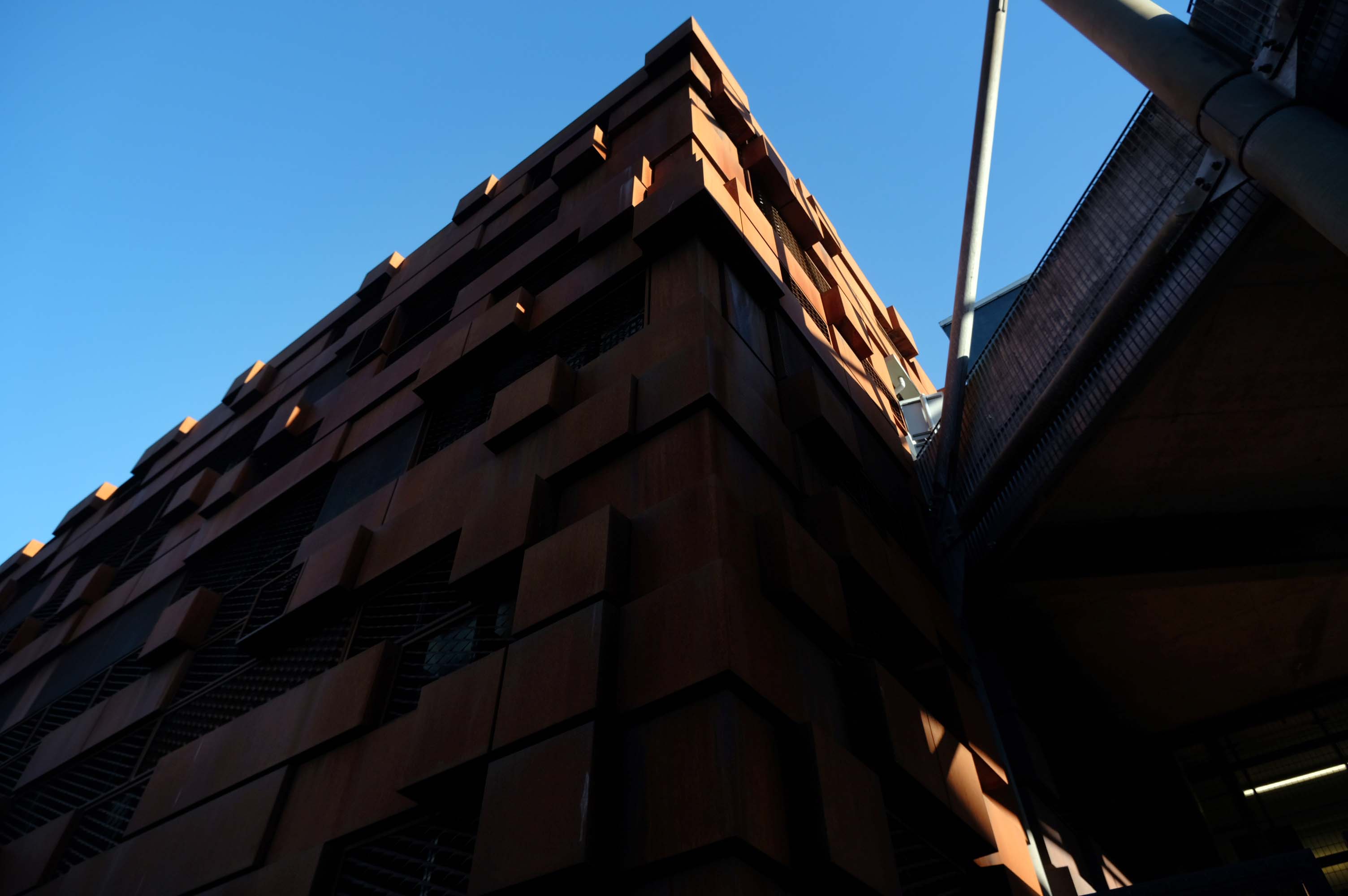
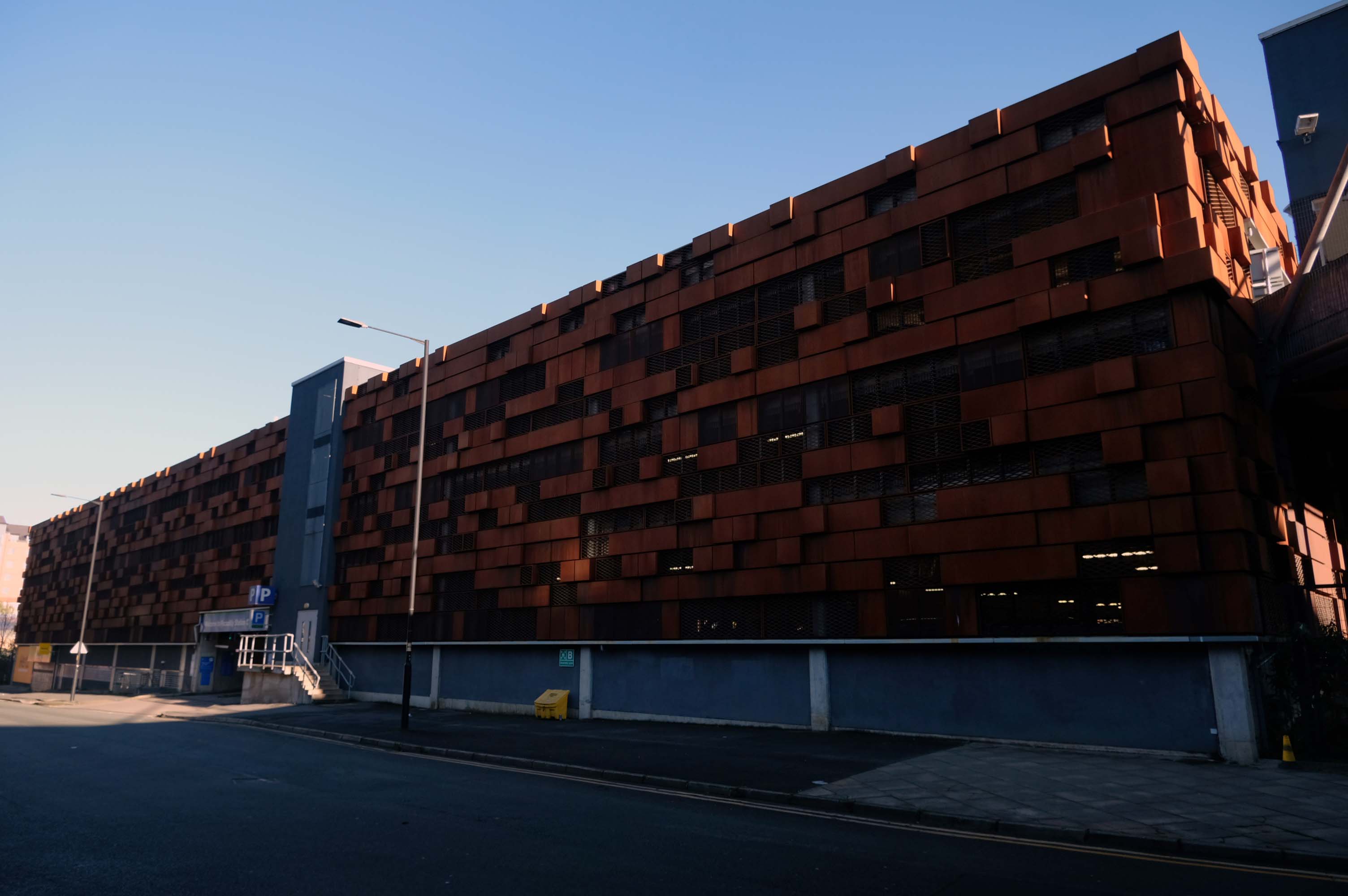
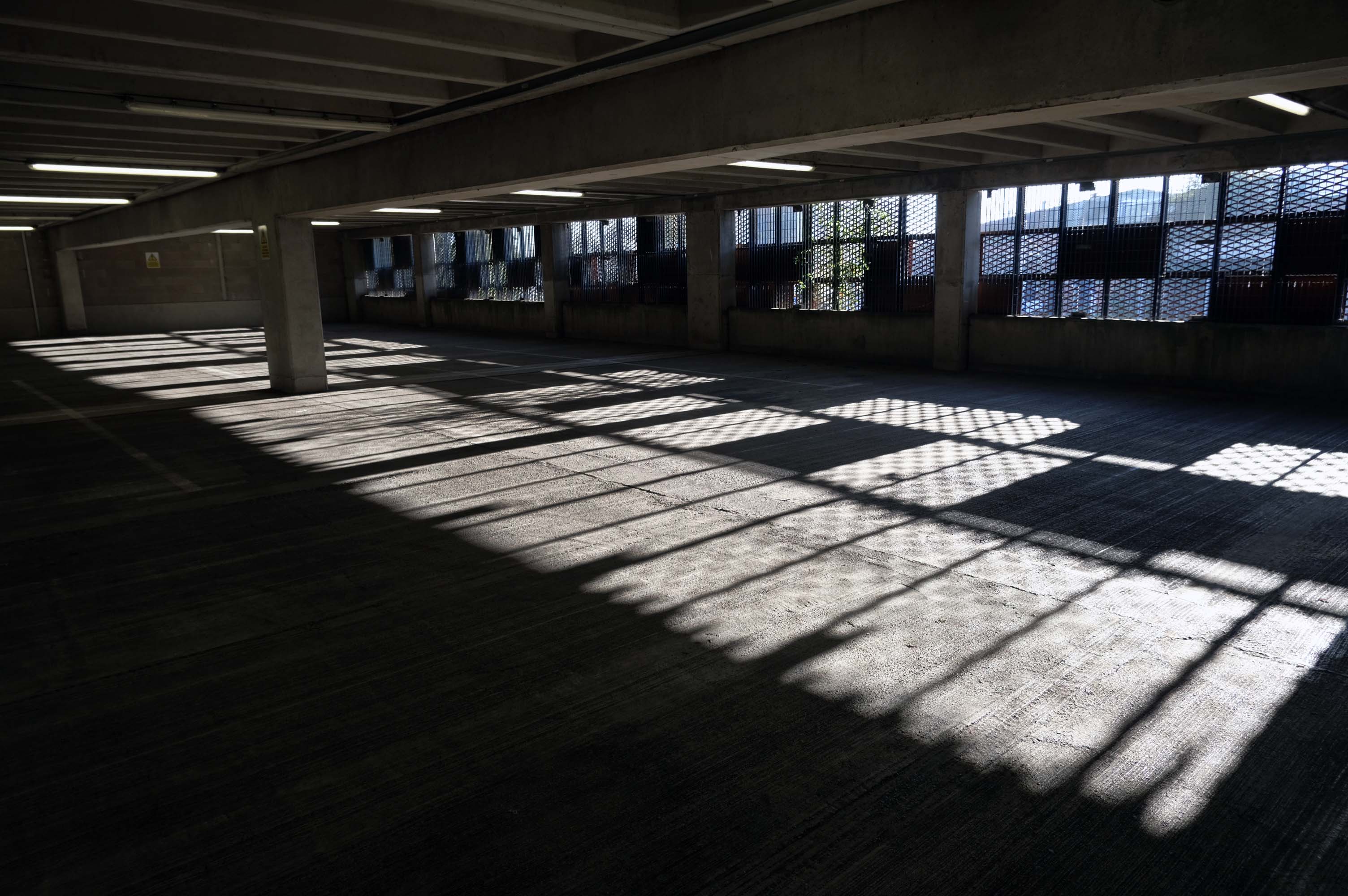
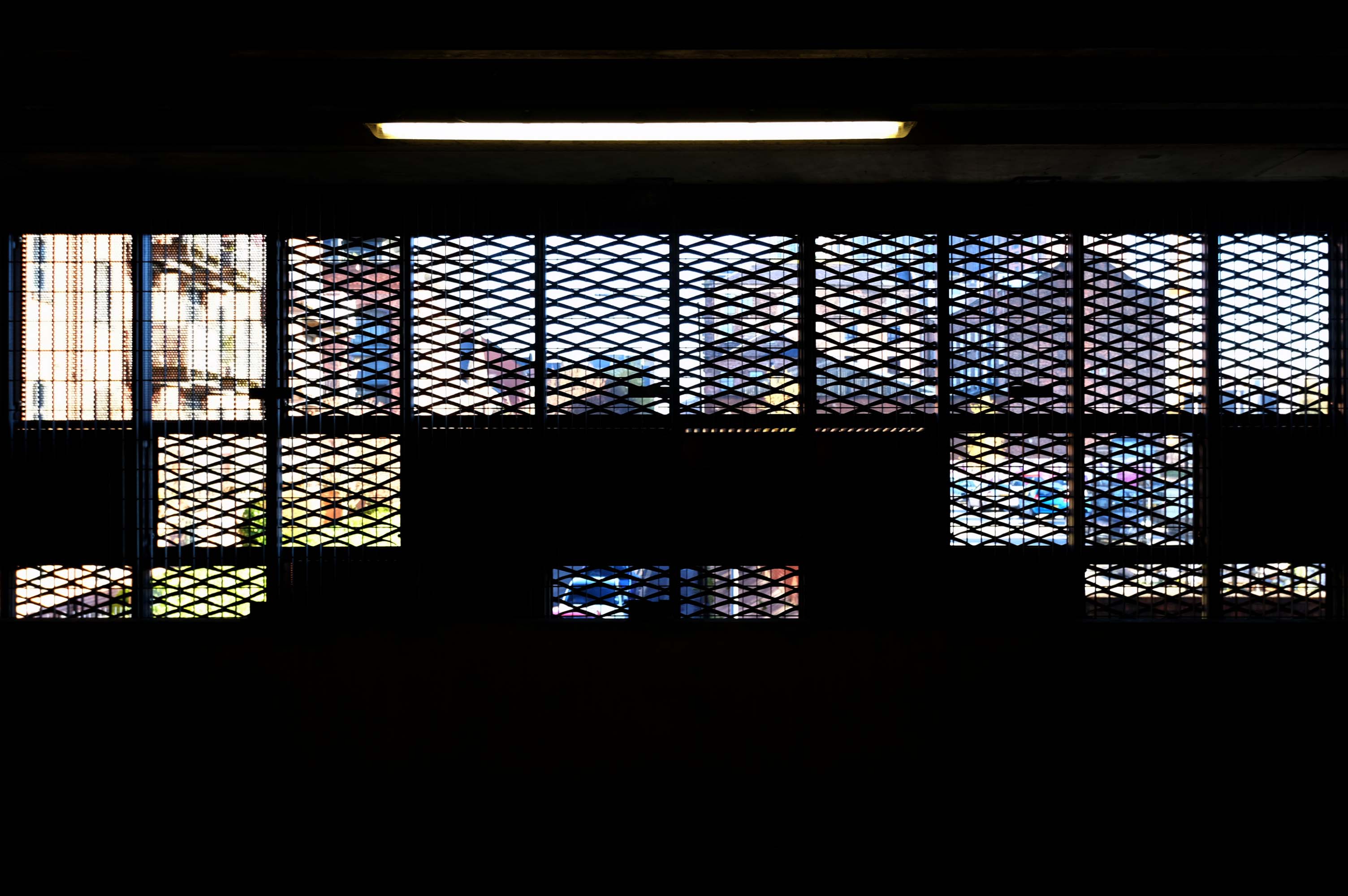
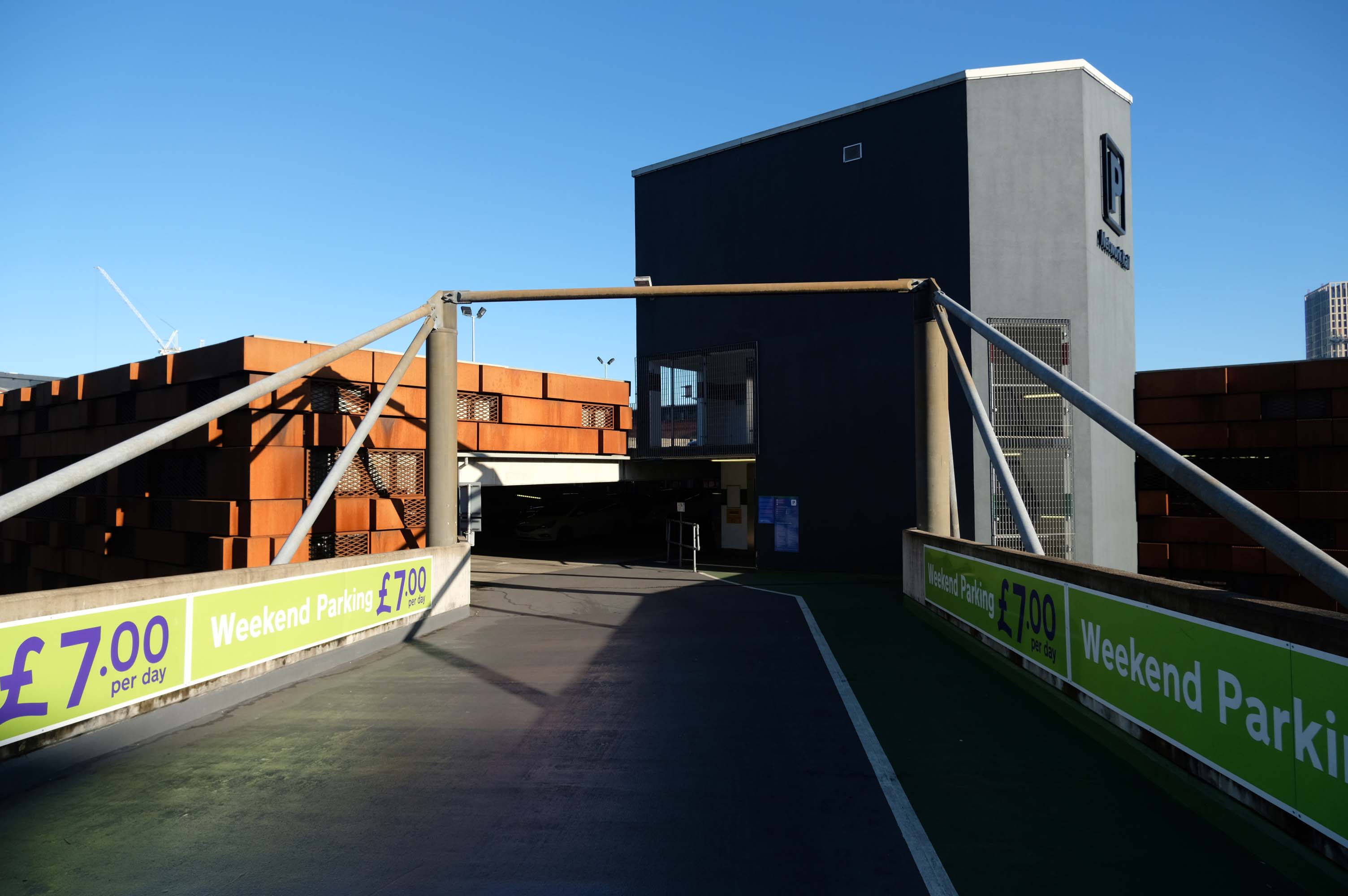
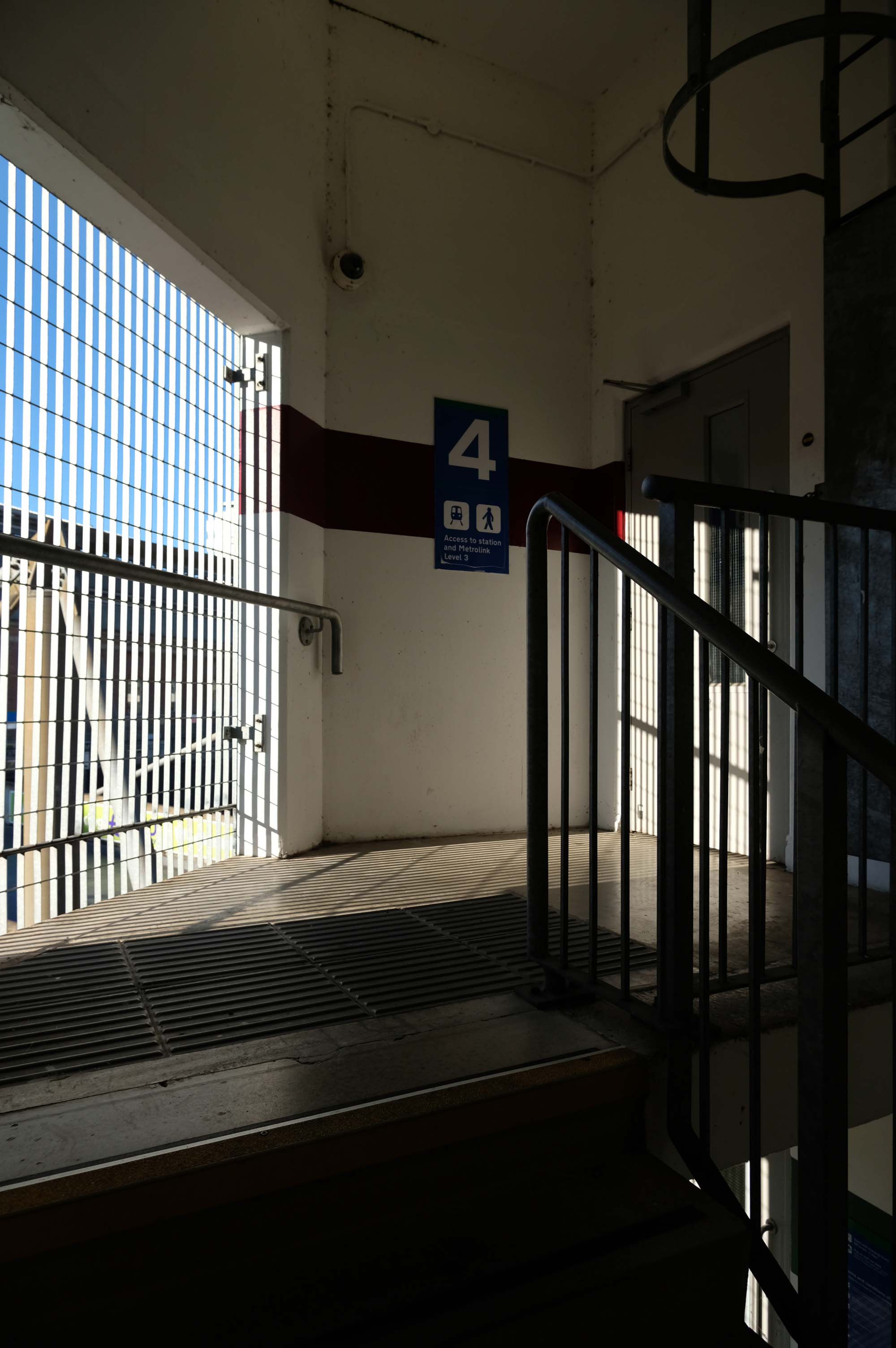
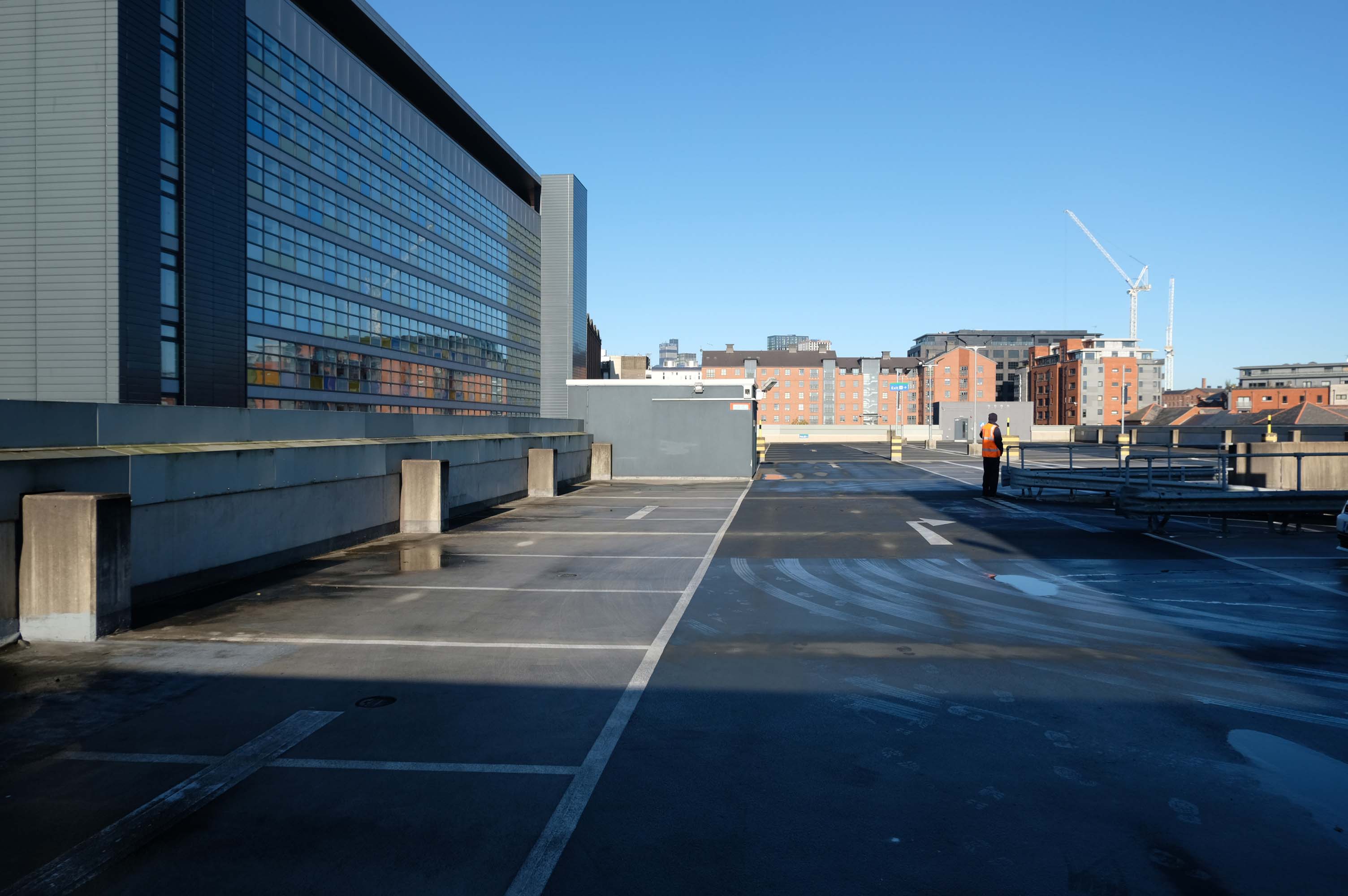
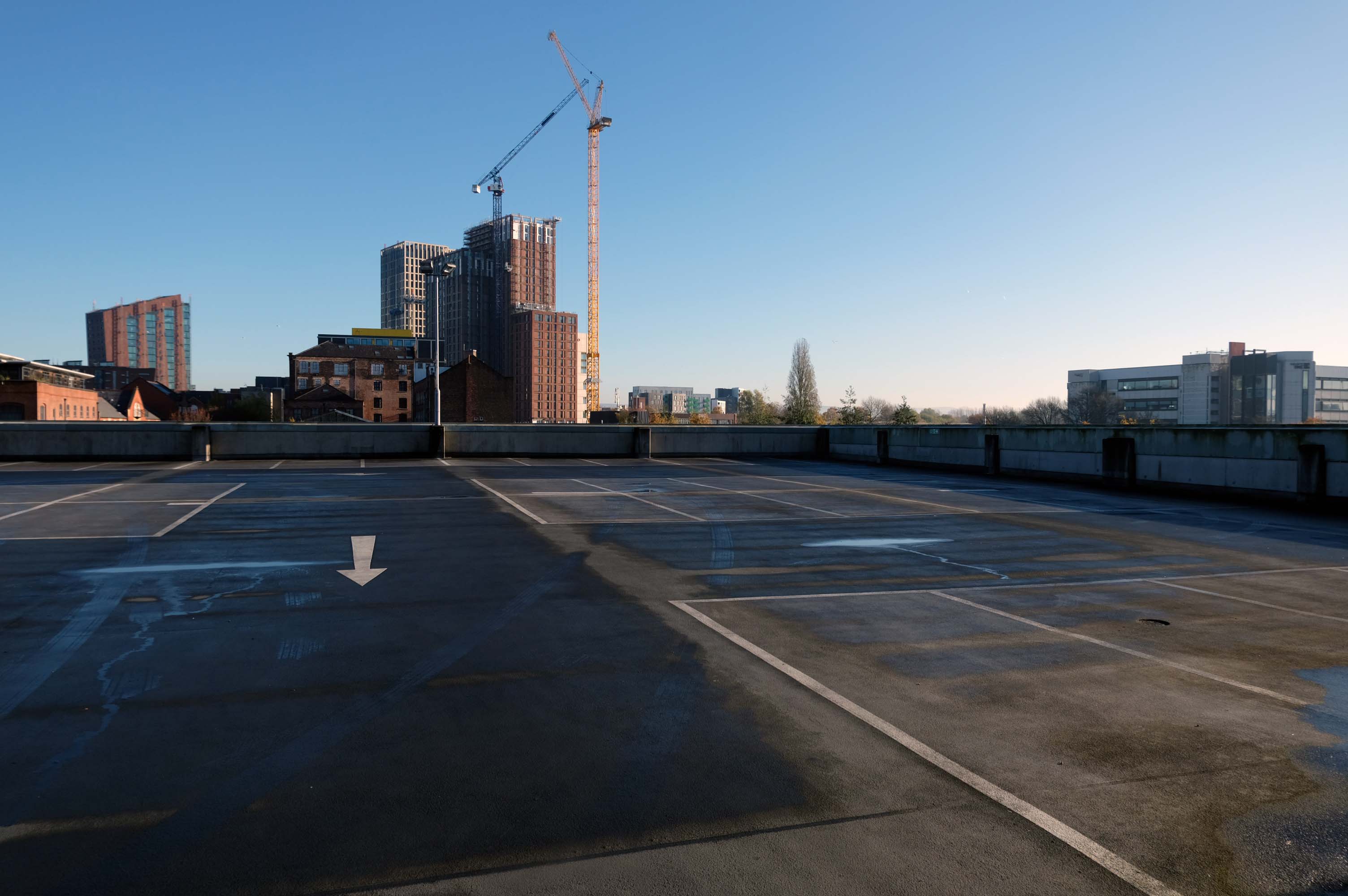
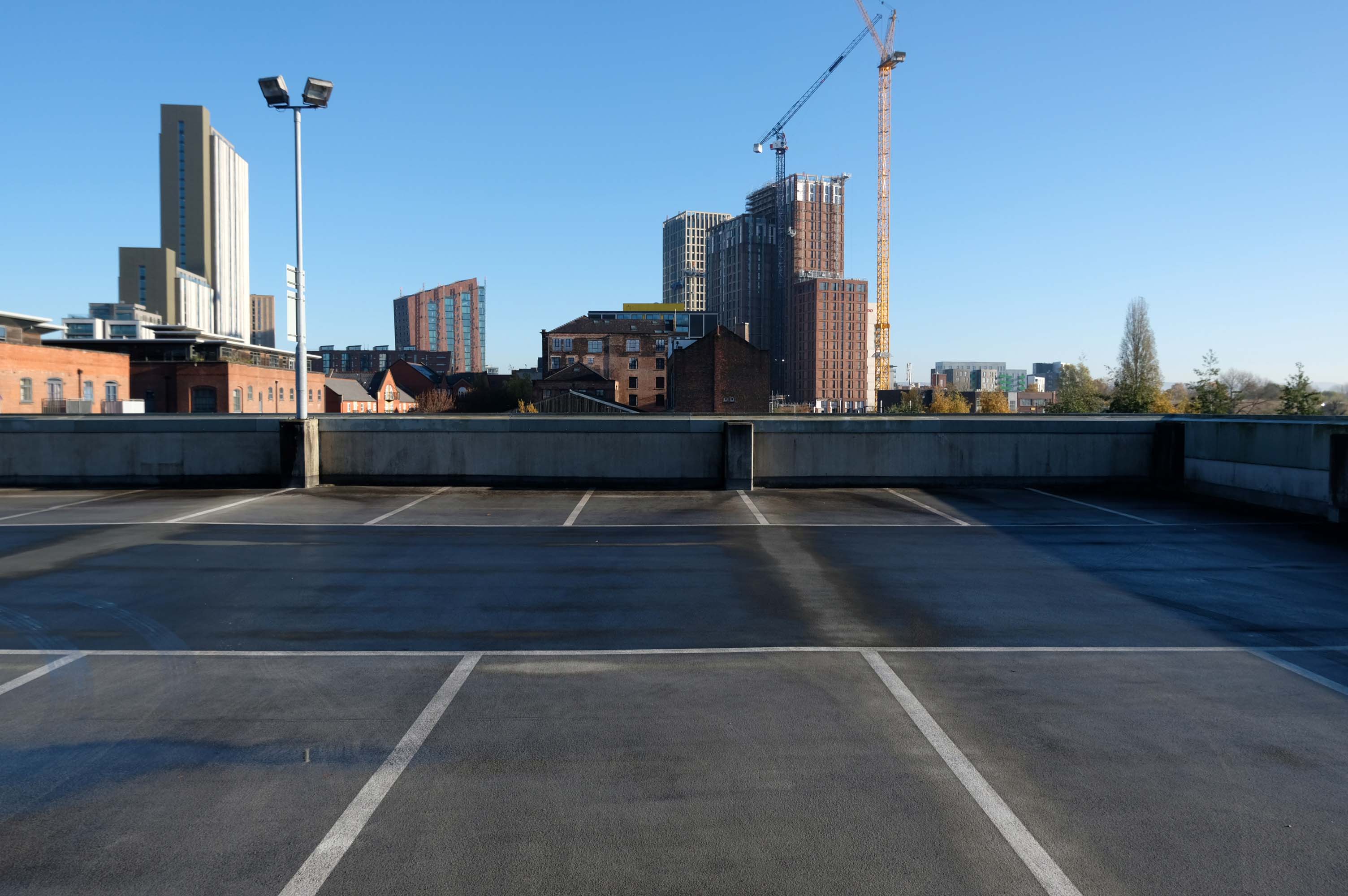
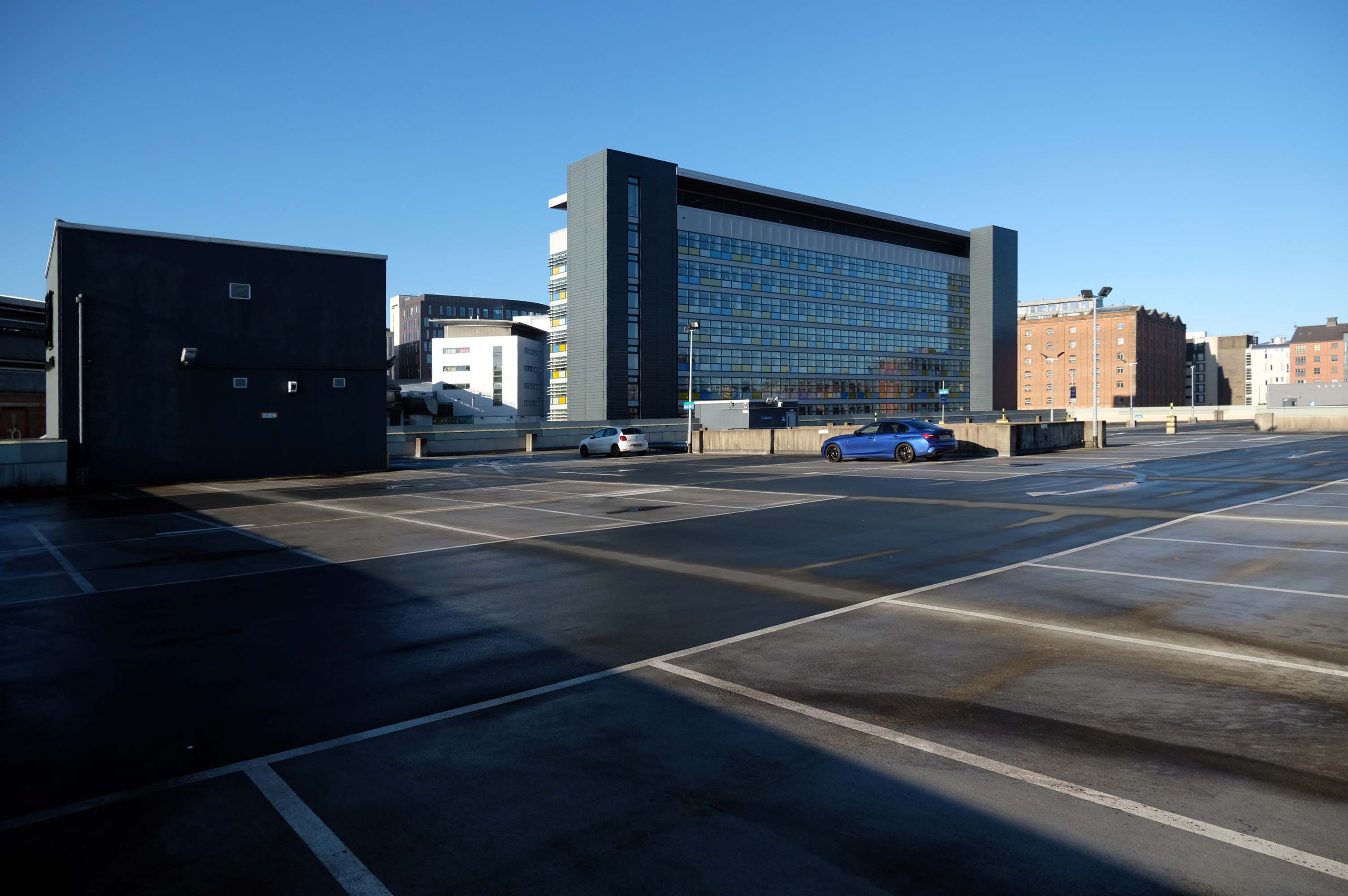
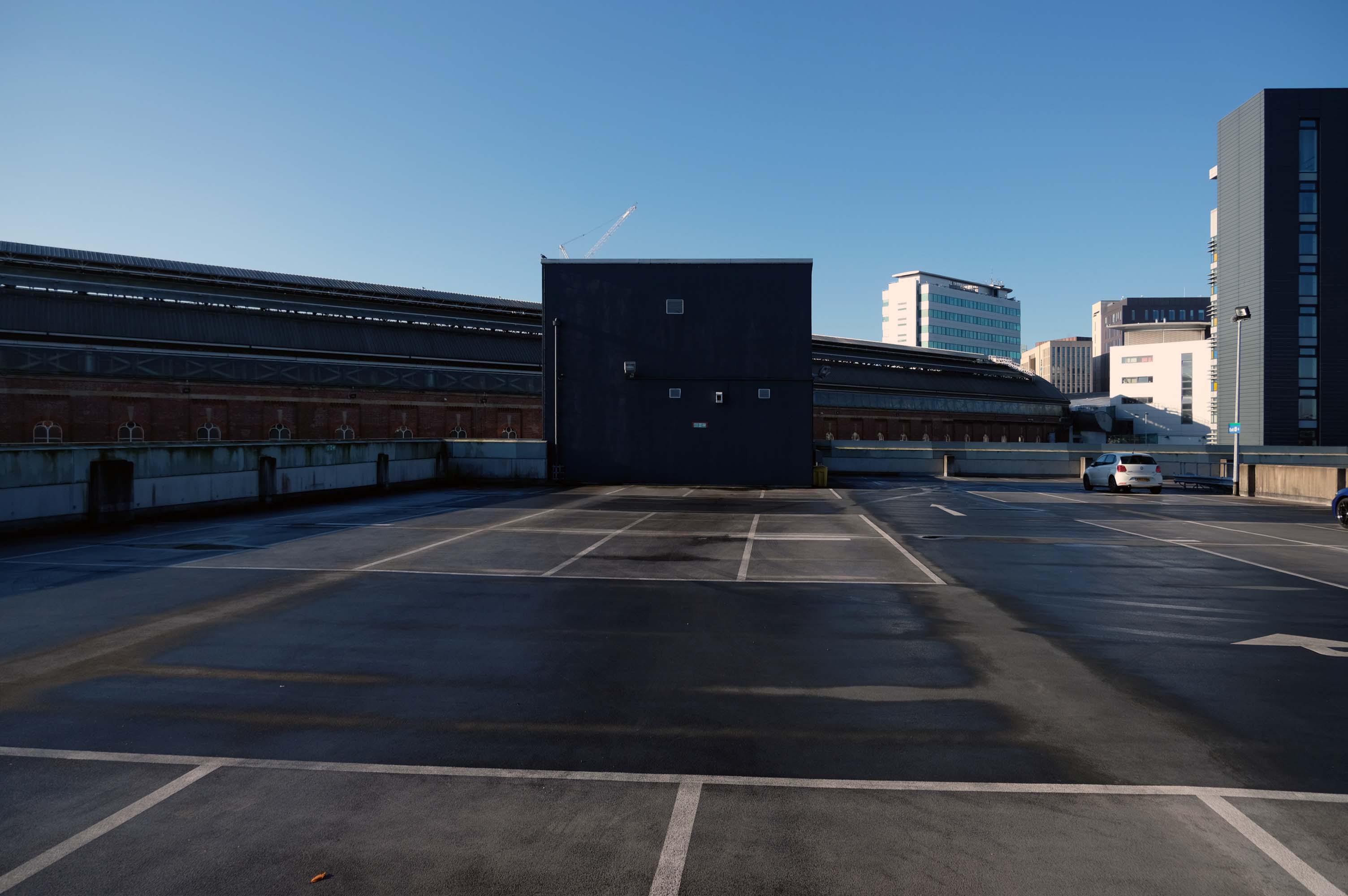
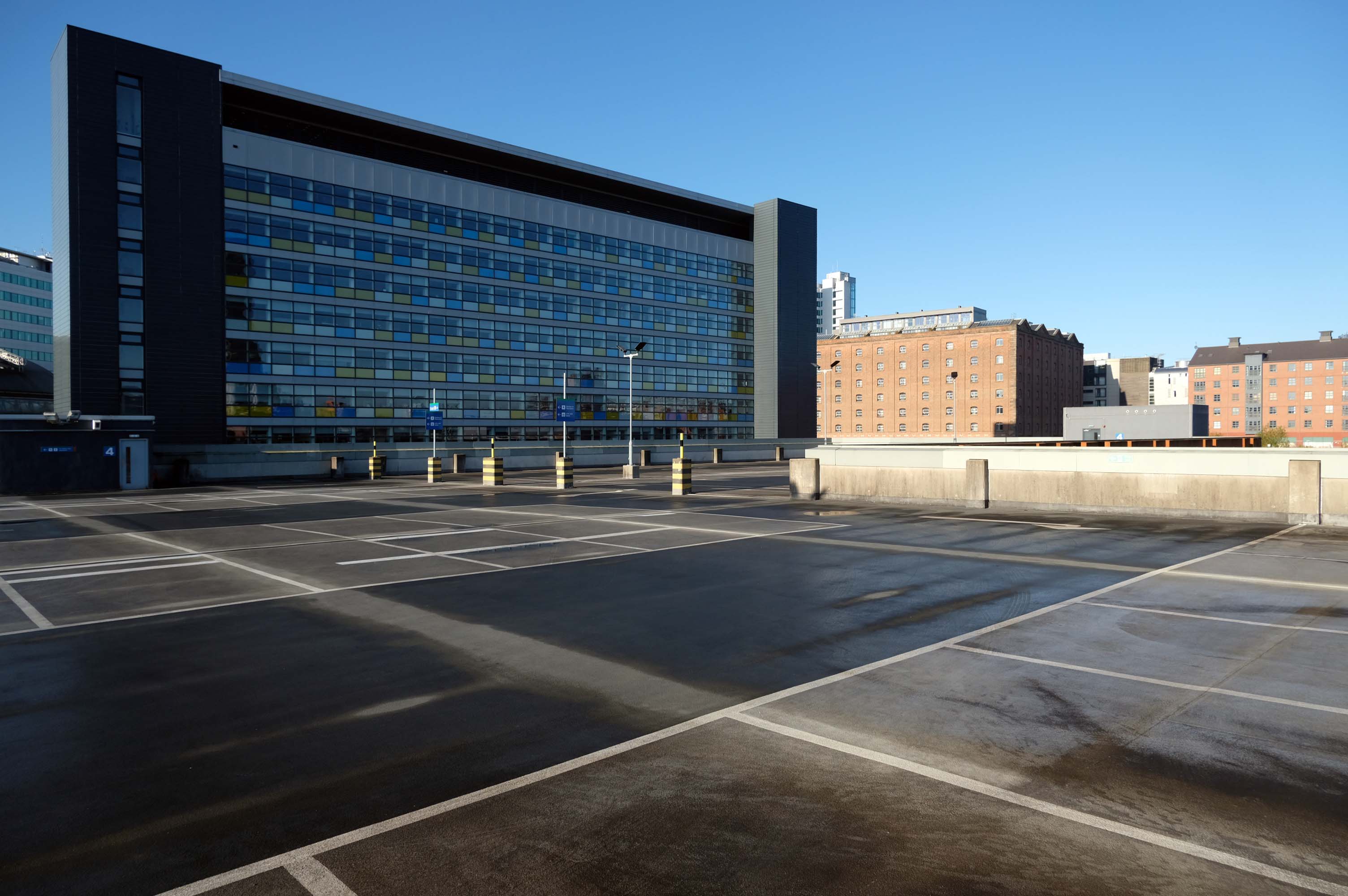
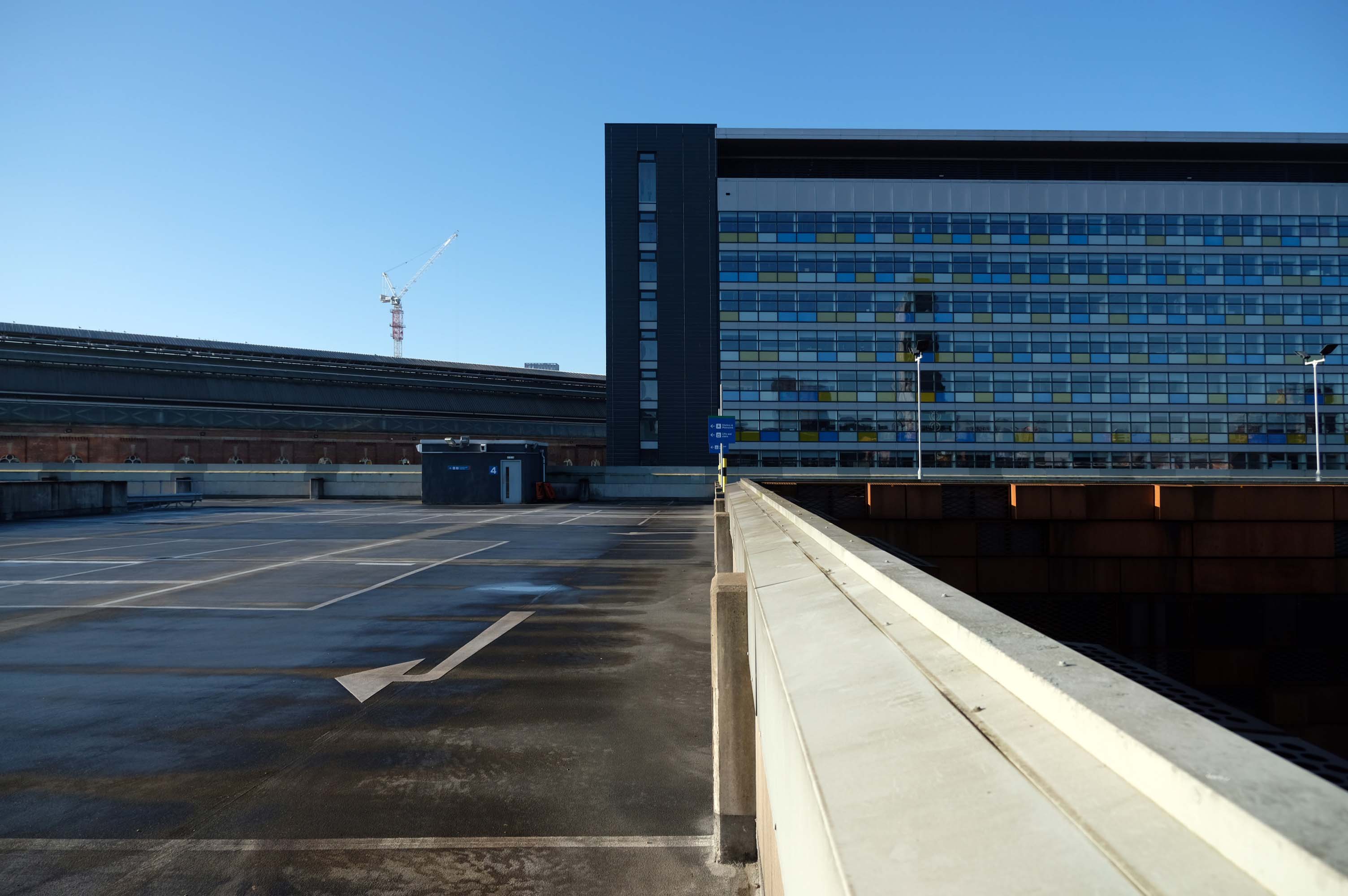
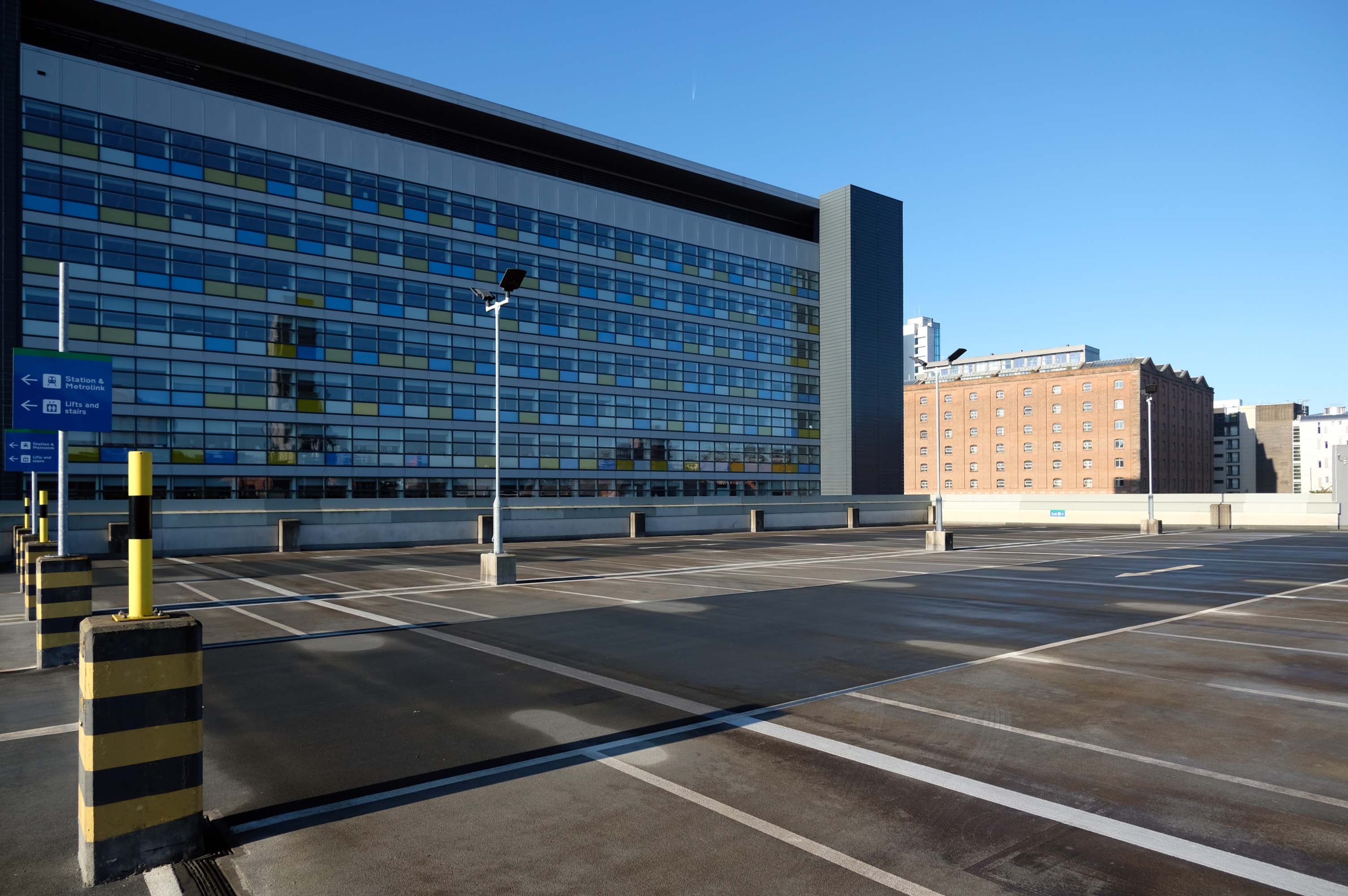
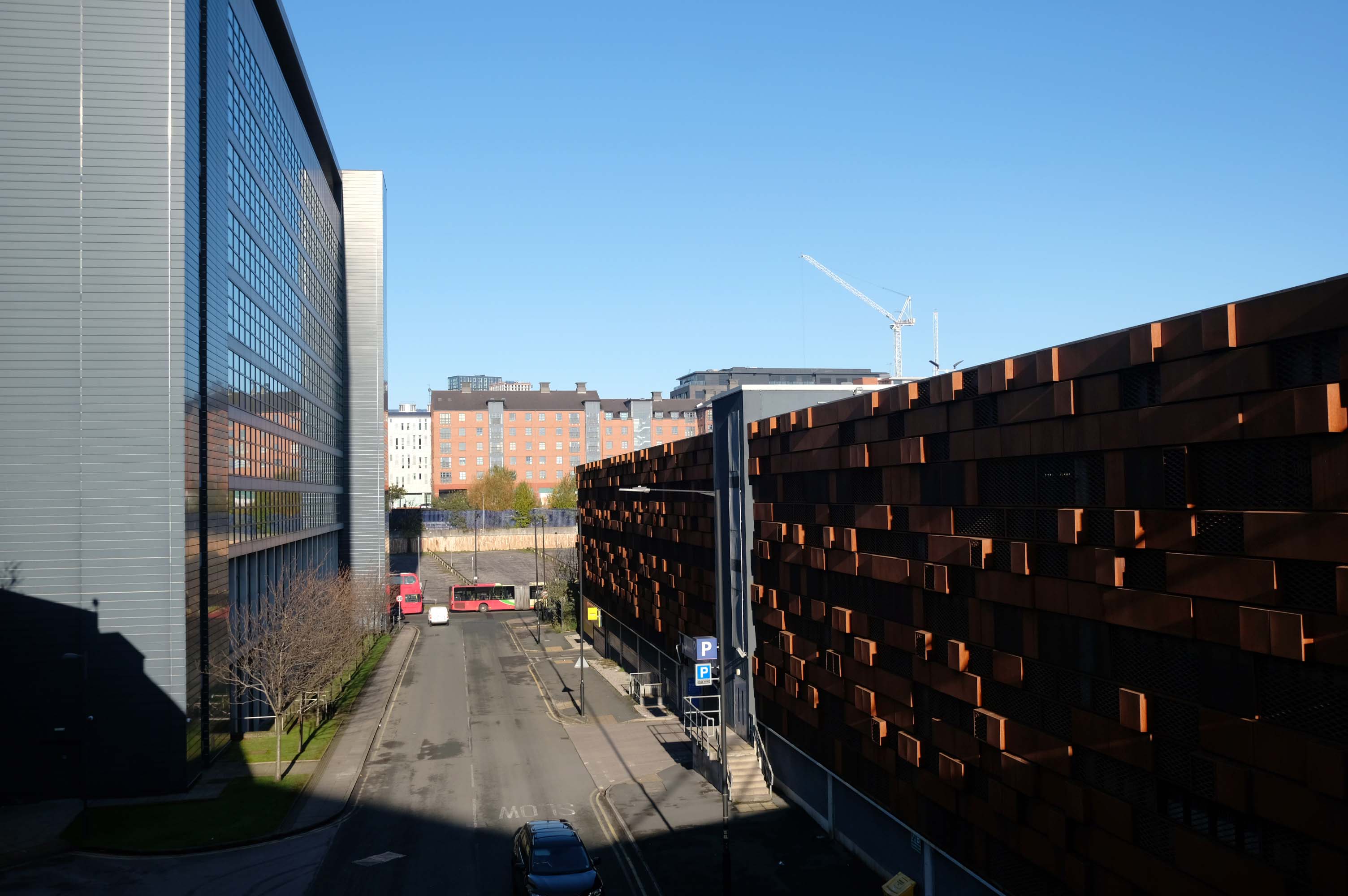
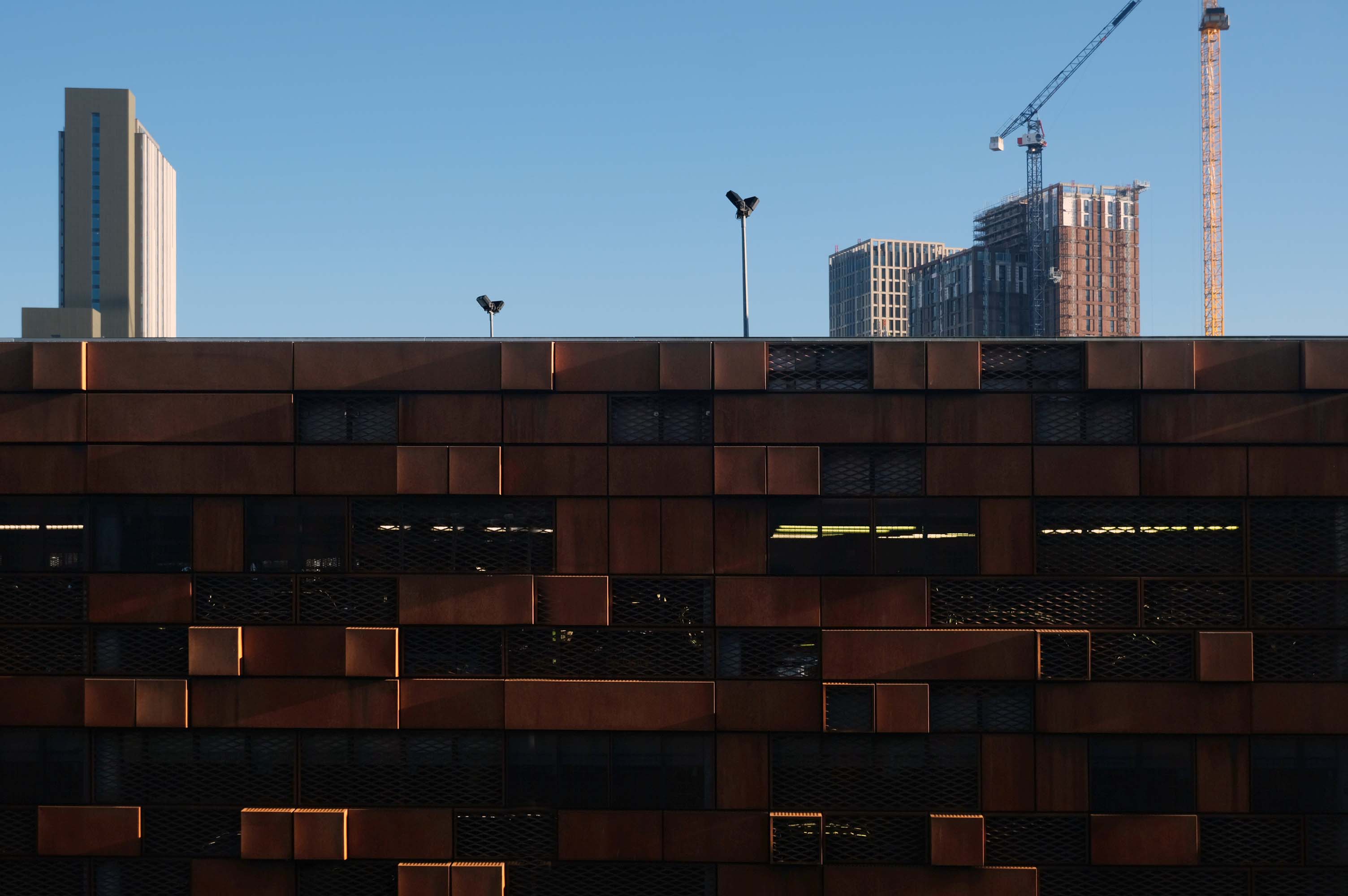
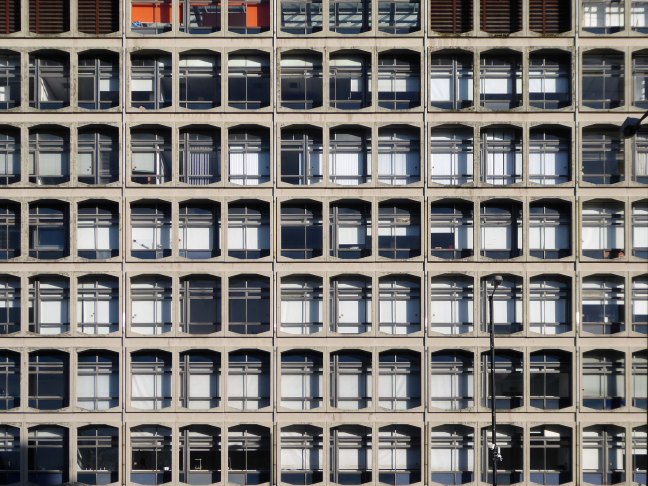
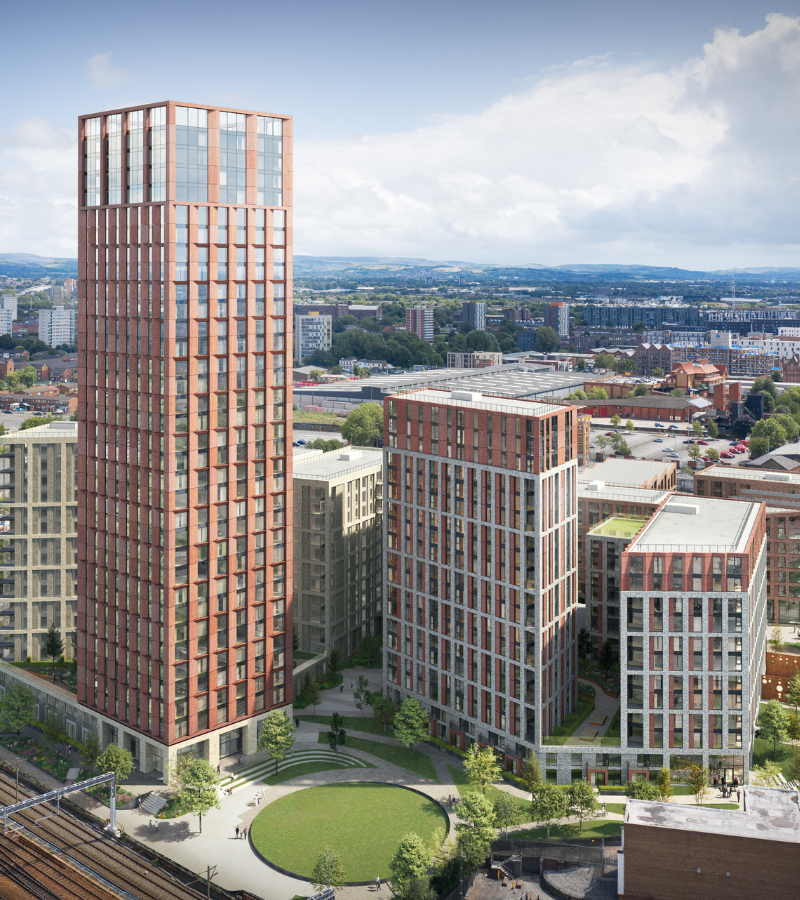
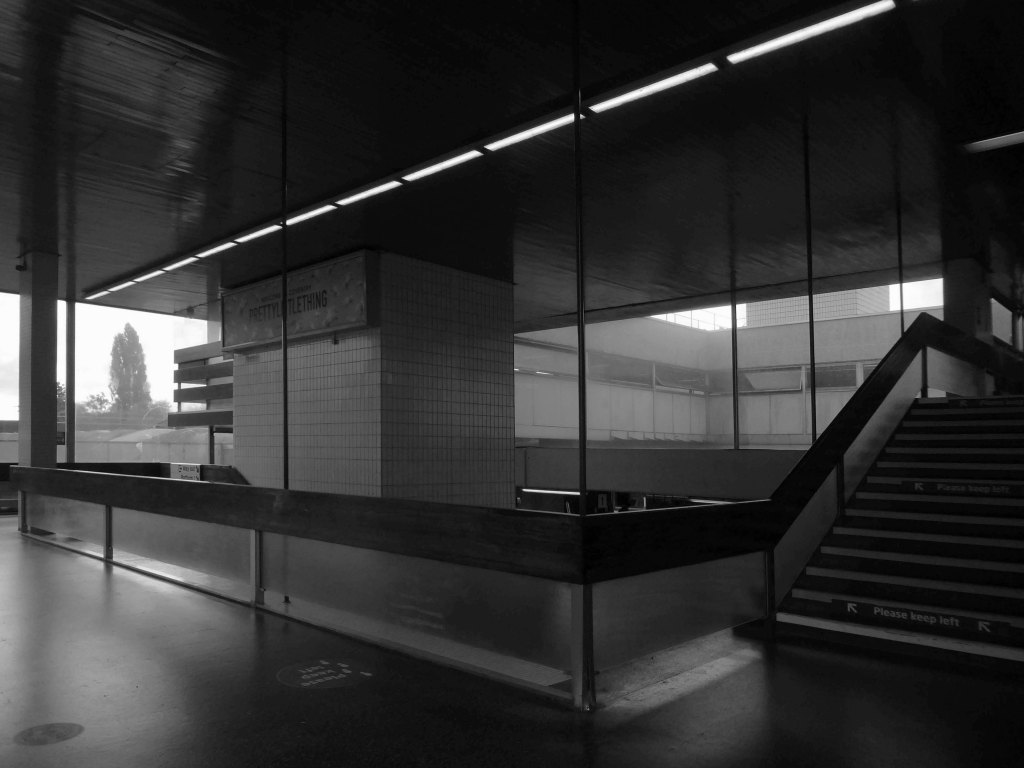
JHA Pulmannwere commissioned via network rail to deliver an extension to, and the re-cladding of an existing 1970’s concrete frame carpark, outside of Manchester Piccadilly station.
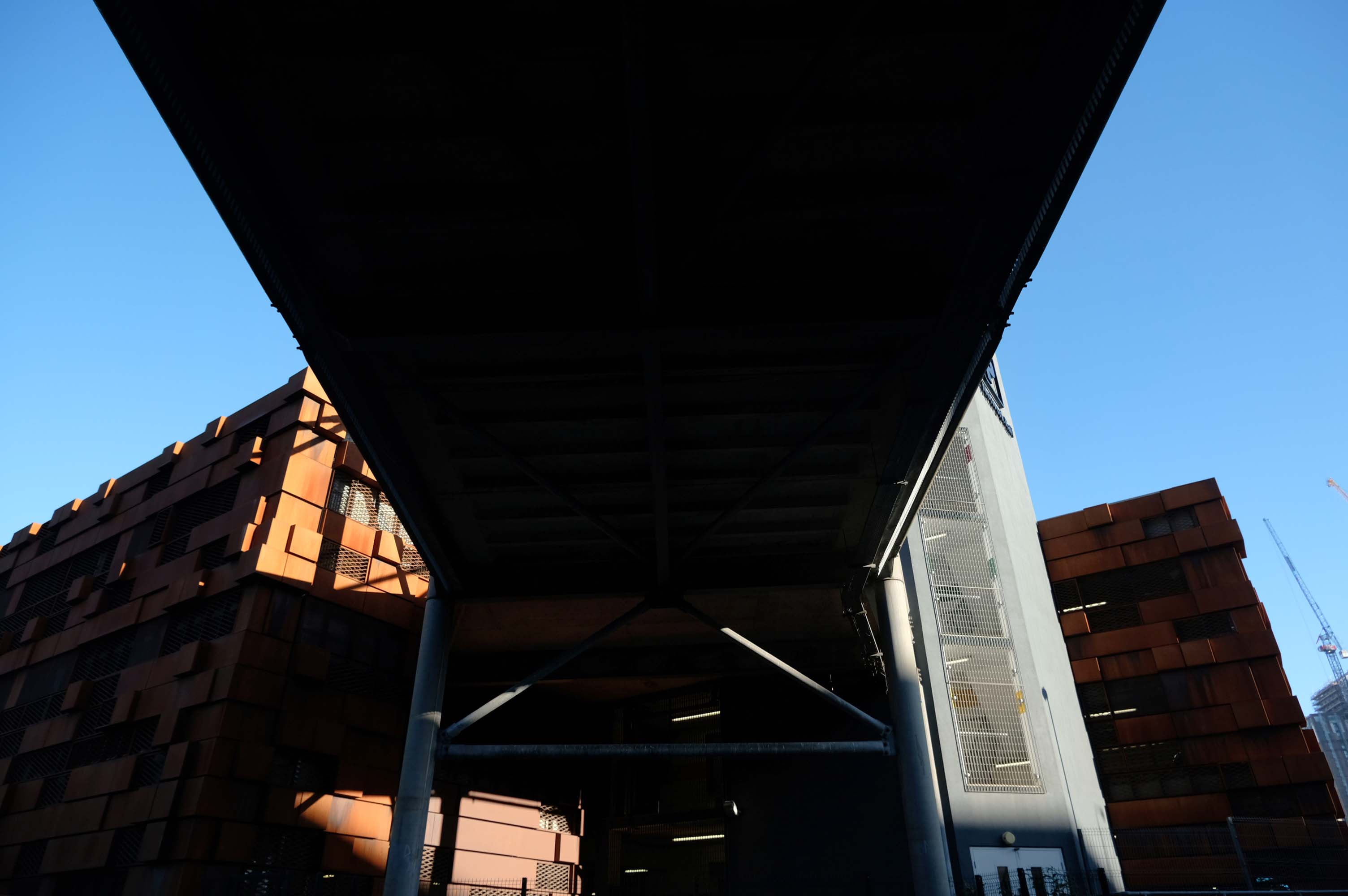
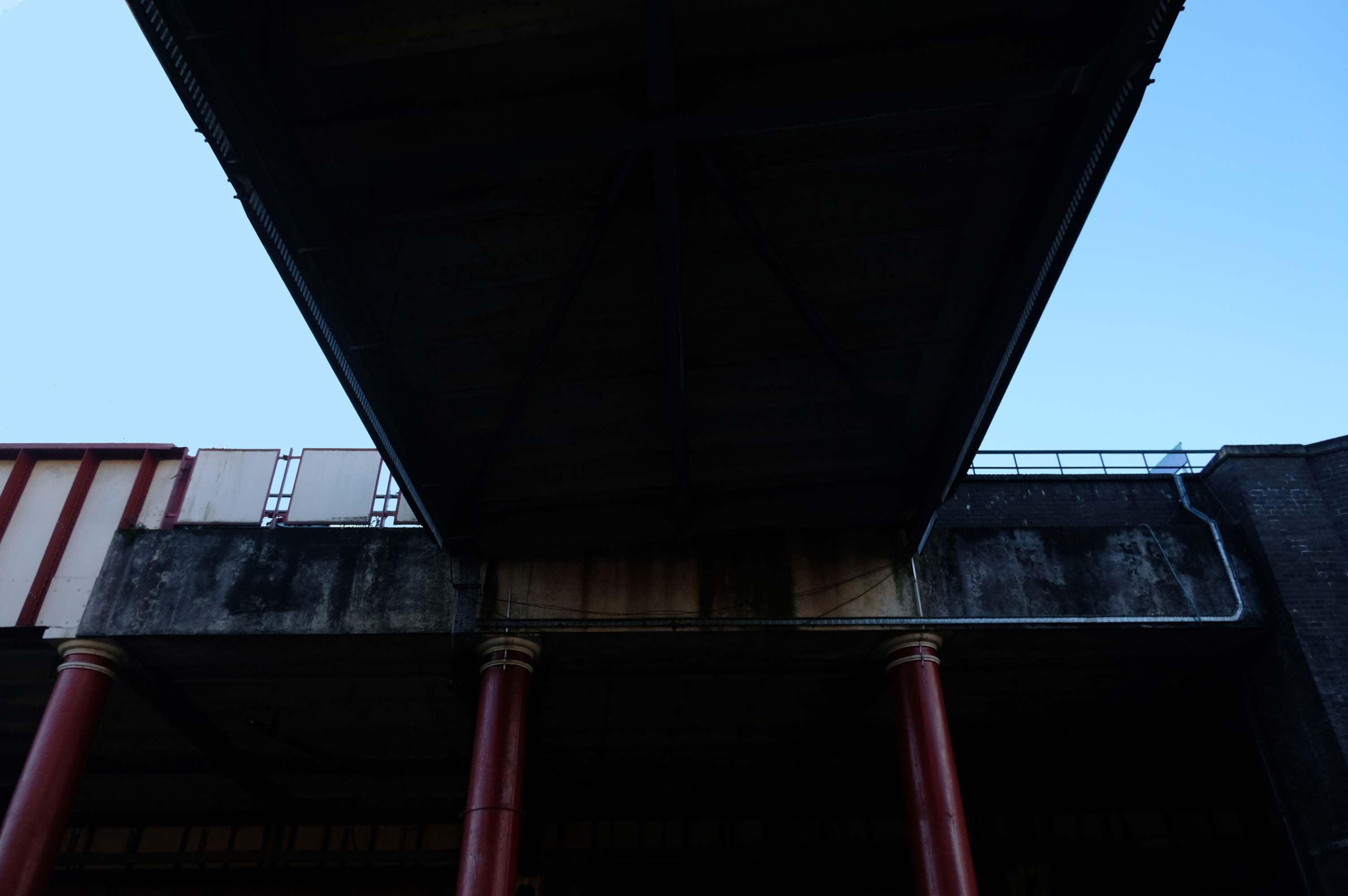
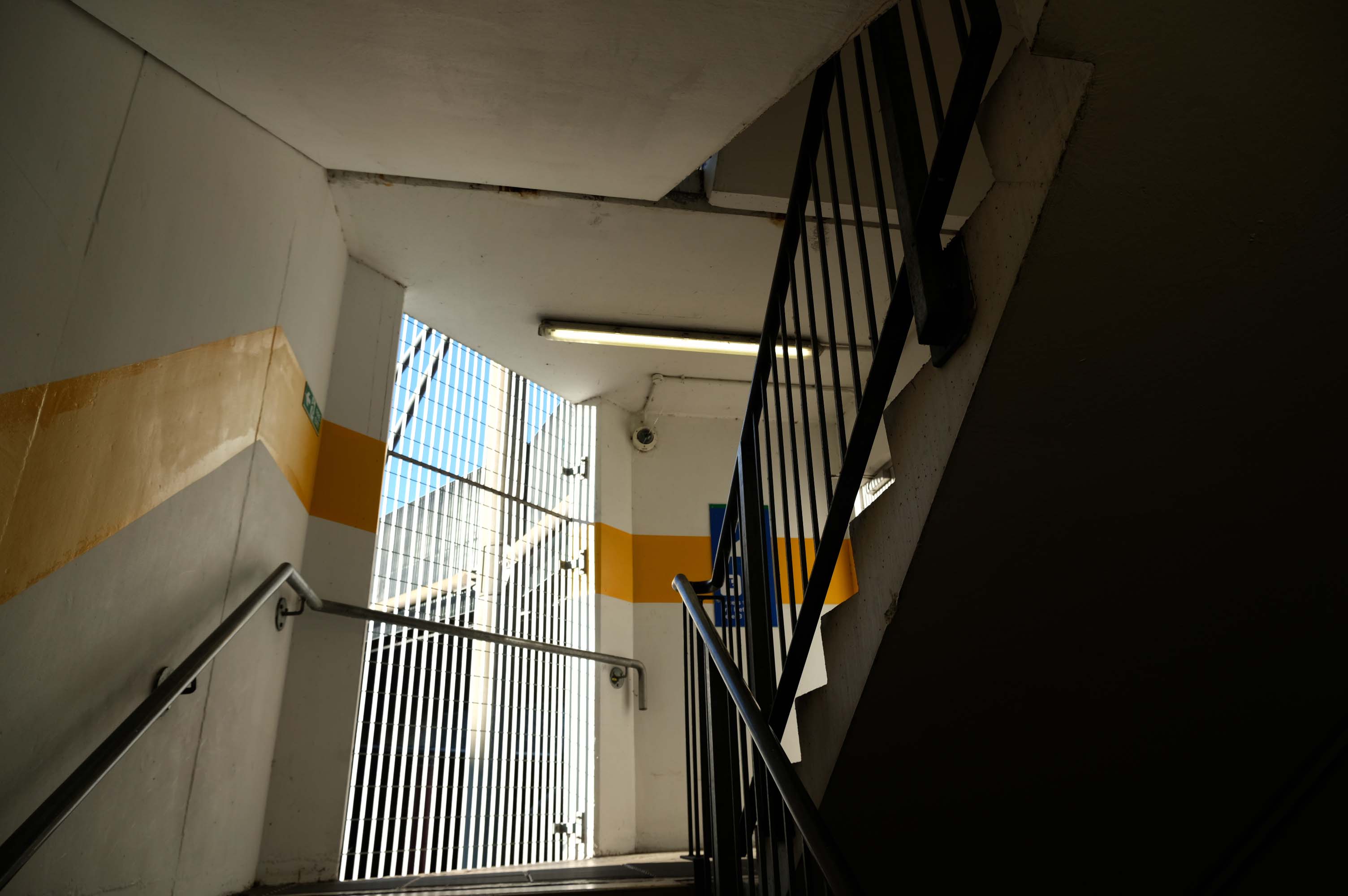
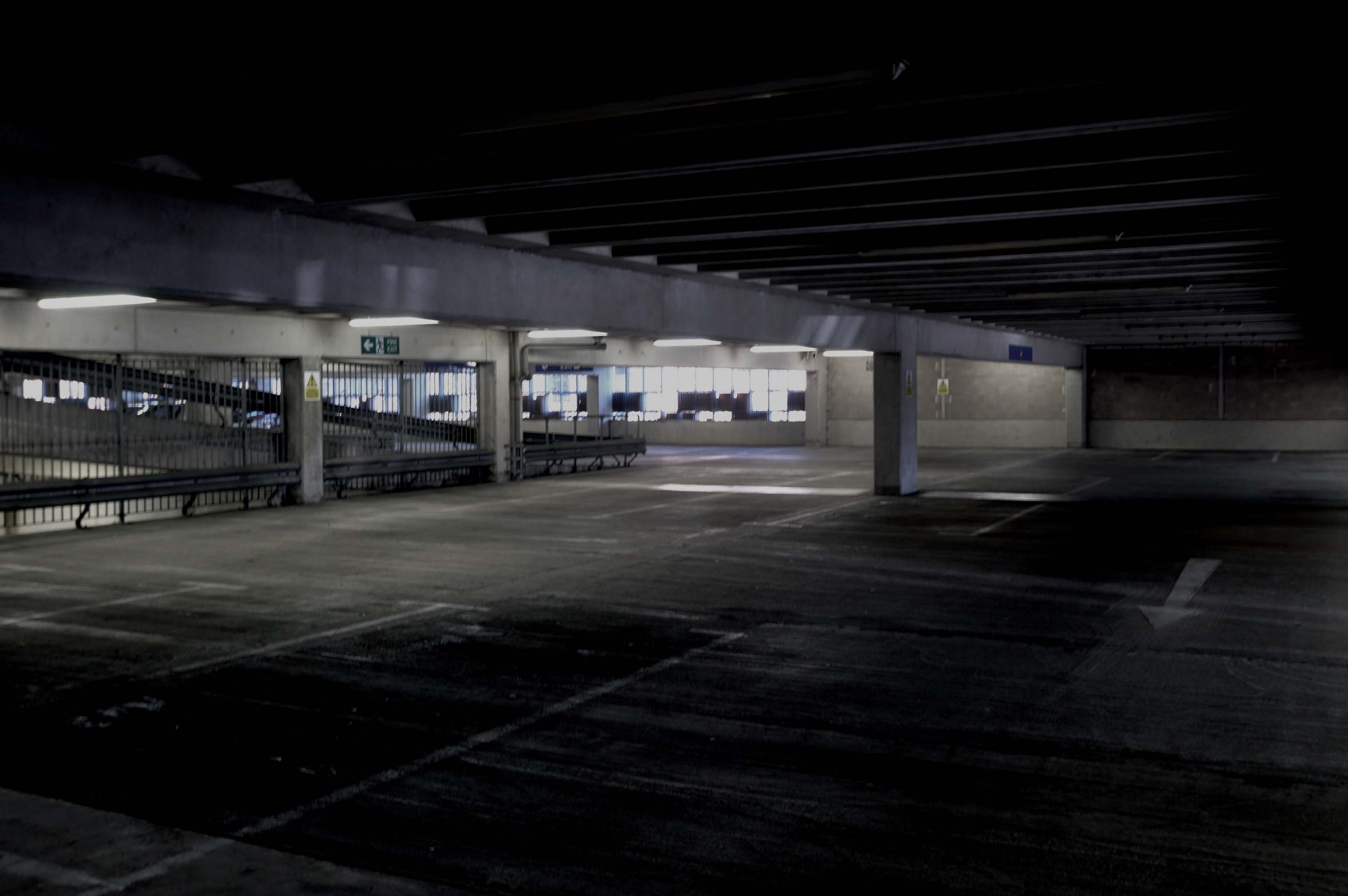
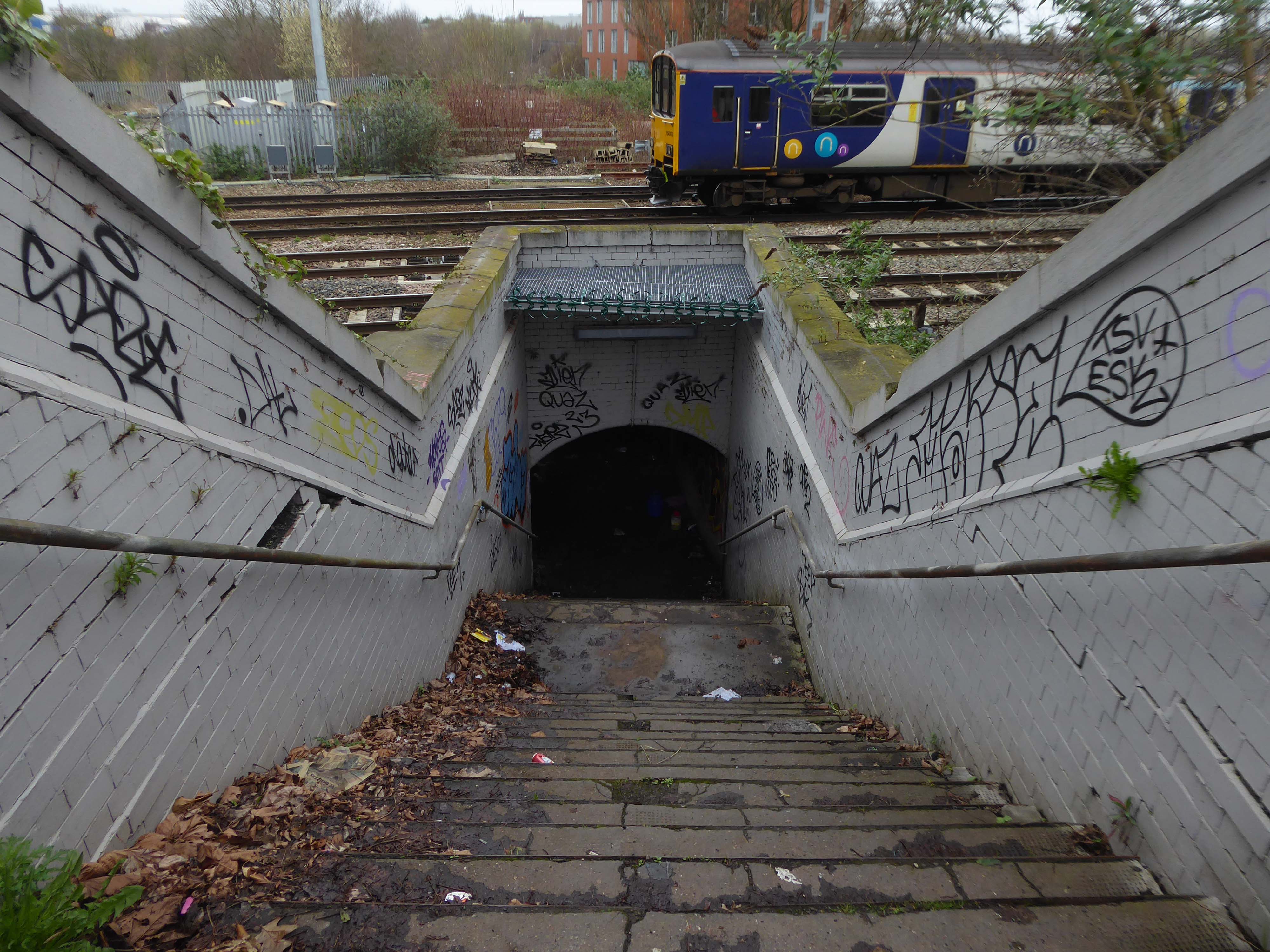
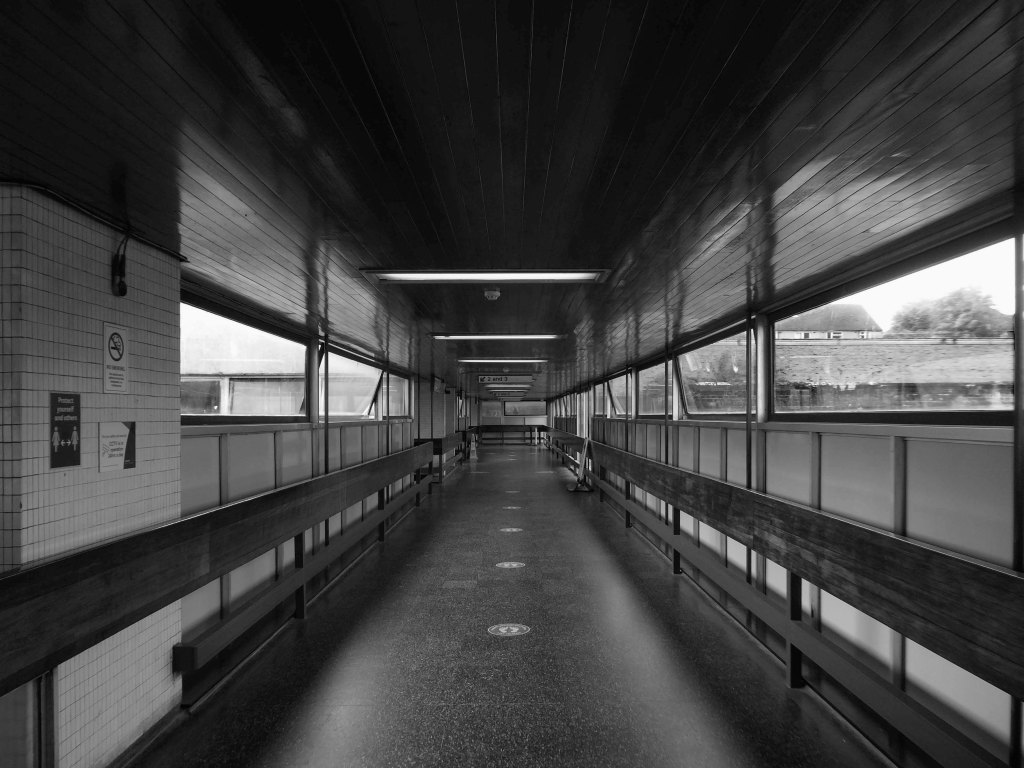
The carpark is fine but as a lone female arriving off the train in the early hours of the morning, I felt quite vulnerable getting back there. It’s in a very quiet dark place accessed by going through a tunnel going under a bridge.
Easy to find, plenty of spaces and only a short walk to Piccadilly station – great!
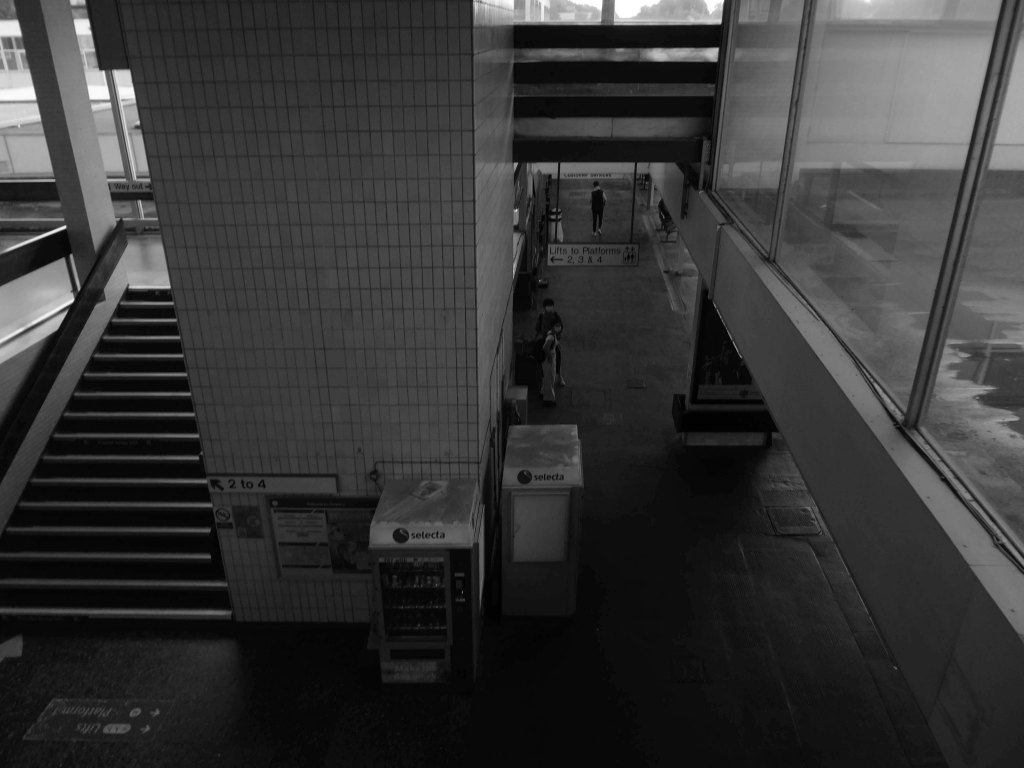
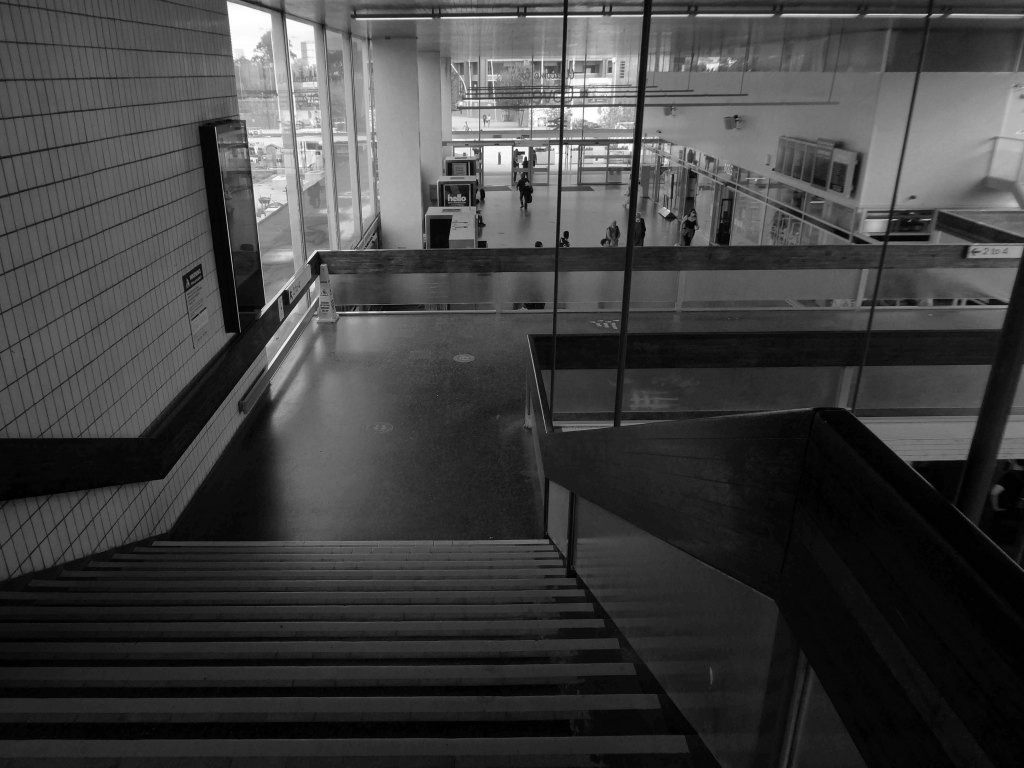
The pedestrian in a car park ventures beyond the train station, across a bridge and through a portal to another dimension.
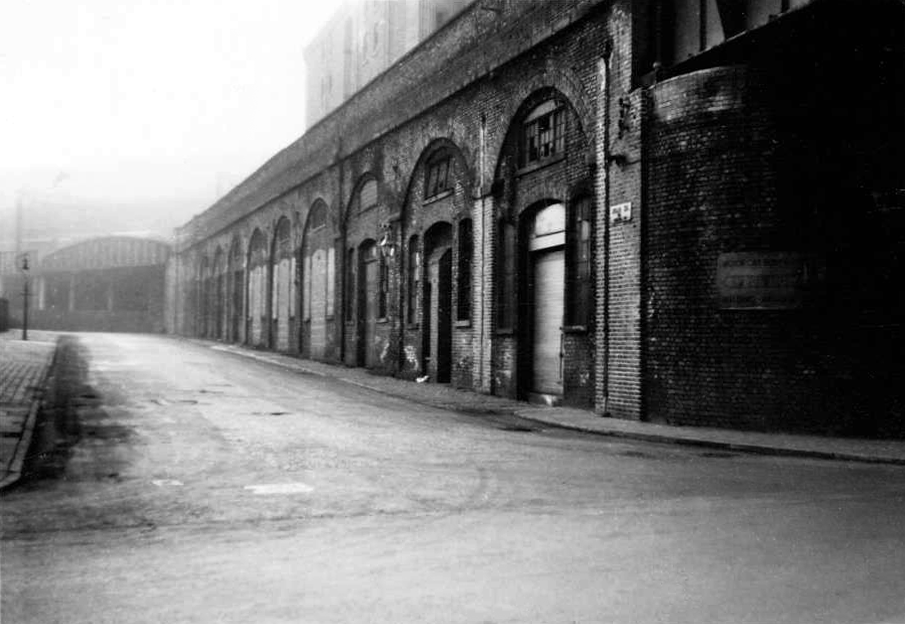
Where once the dank dark grey mists descended, we now see only light.
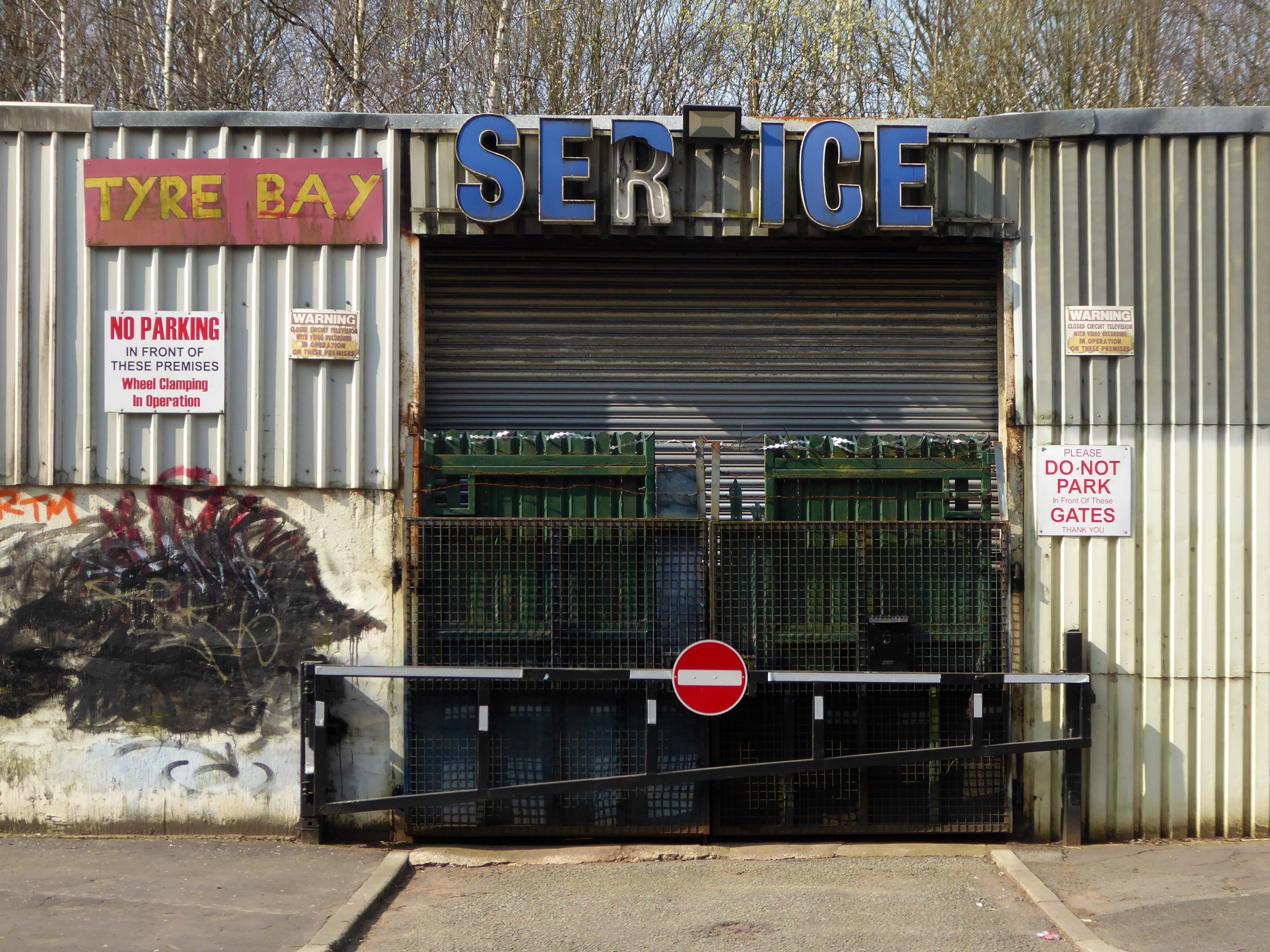
Tyne Mill is one of a trio of mills designed by Oscar Faber for Spillers Ltd – the others are in Cardiff and Avonmouth and led to subsequent commissions from the company. Spillers began with a single mill in Bridgwater in around 1833, and during the 20th centruy had mills all over Britain.
Spillers operations were flour milling and manufacturing animal feeds, and they came to Newcastle in 1896. Grinding grain to flour produces both heat and fine dust a combination guaranteed to be a fire hazard. The fire retardant properties of reinforced concrete, and its relative cost effectiveness, made it a popular choice for mills and other industrial buildings.
Construction took place during the winter and a warming plant heated the concrete constituents before and after mixing, to control the setting time which governs how soon the slip-form shuttering can be moved to the next lift. The concrete was usually kept at 15.6 deg C, though this could be varied to speed or delay setting times.
The mill building has the actual mill above a warehouse area. Its footprint is 88.4m by 27.4m with 12 storeys and a maximum height of 51.2m. It has reinforced concrete columns and beams, but timber floors of 100mm thick Columbian pine with a 25mm thick maple strip finish. The walls are of 280mm thick brickwork with flashing on each floor to drain the cavity.
When completed, Spillers Tyne Mill was the largest flour mill in Europe and apparently the tallest milling building in the world. It could process 254,000 tonnes of grain annually, brought to the mill by ship via Spillers Quay or by rail on the track extension along Quayside.
A goods line down to the Newcastle quayside from Manors Station was agreed in 1845, but not authorized until 28th June 1863 and opened on 1st June 1870.
The Quayside Branch Line closed on 16 June 1969. The railway was in use for ninety-nine years and its eventual demise reflects the changes in the Quayside and Ouseburn themselves from shipping and industrial use to one now of housing and leisure facilities. The northern portal of tunnel 2 was removed when the Metro system was constructed in the late 1970s. The cutting above Lime Street was filled in in 1977 and the tunnel at the quayside bricked up and landscaped over in the 1990s. Only the Red Barns tunnel remains as a metro overrun facility.
24/7, completely free and always spaces! A hidden parking gem of Newcastle! 10 minute walk to Millennium Bridge. Security is almost non-existent but busy enough that trouble should be deterred.
A popular Newcastle car park will be staying locked up overnight in an effort to crack down on boy racers. Council bosses have confirmed plans to permanently close the Spillers car park in Ouseburn at 10pm each night after it was plagued with – significant anti-social behaviour.
The future of the car park is uncertain, with major redevelopment plans having emerged for the area.
While planning permission has expired for the controversial Whey Aye Wheel project, which would have seen Europe’s biggest observation wheel built at Spillers Wharf, there remain proposals to build housing on the riverside plot.
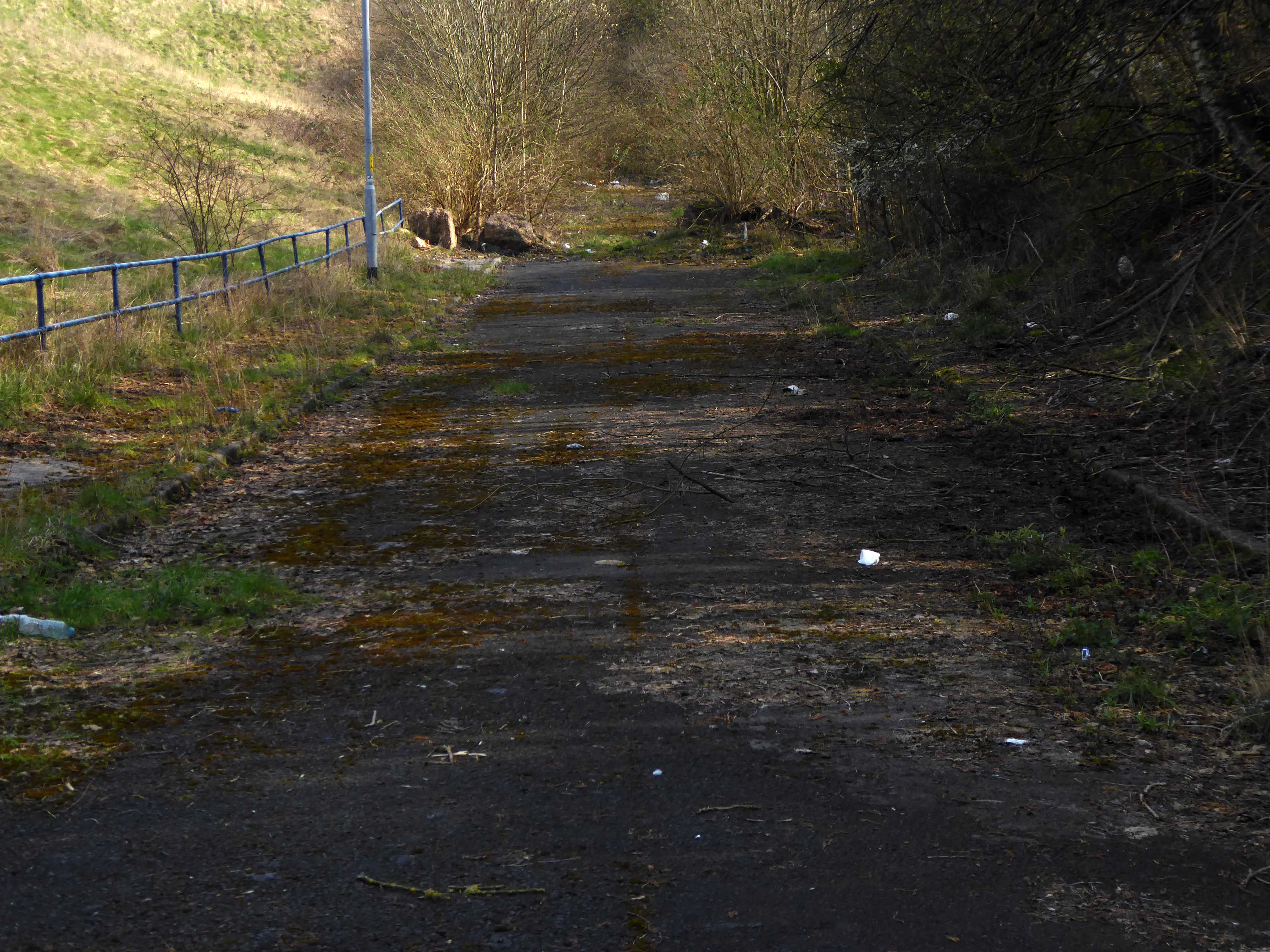
However as of September 2023 a car park is a car park – a car park with embedded remnants of the railway yard, interspersed with rapidly emergent plant life, and crumbling concrete obstacles.
The ingredients list of Wotsits Cheese reveals that cheese and dairy-derived components play a significant role in creating the mouthwatering flavor. The primary ingredients include corn and rapeseed oil, which form the base of the crunchy corn puffs. However, it is the cheese flavoring that truly brings the cheesy goodness to Wotsits cheese.
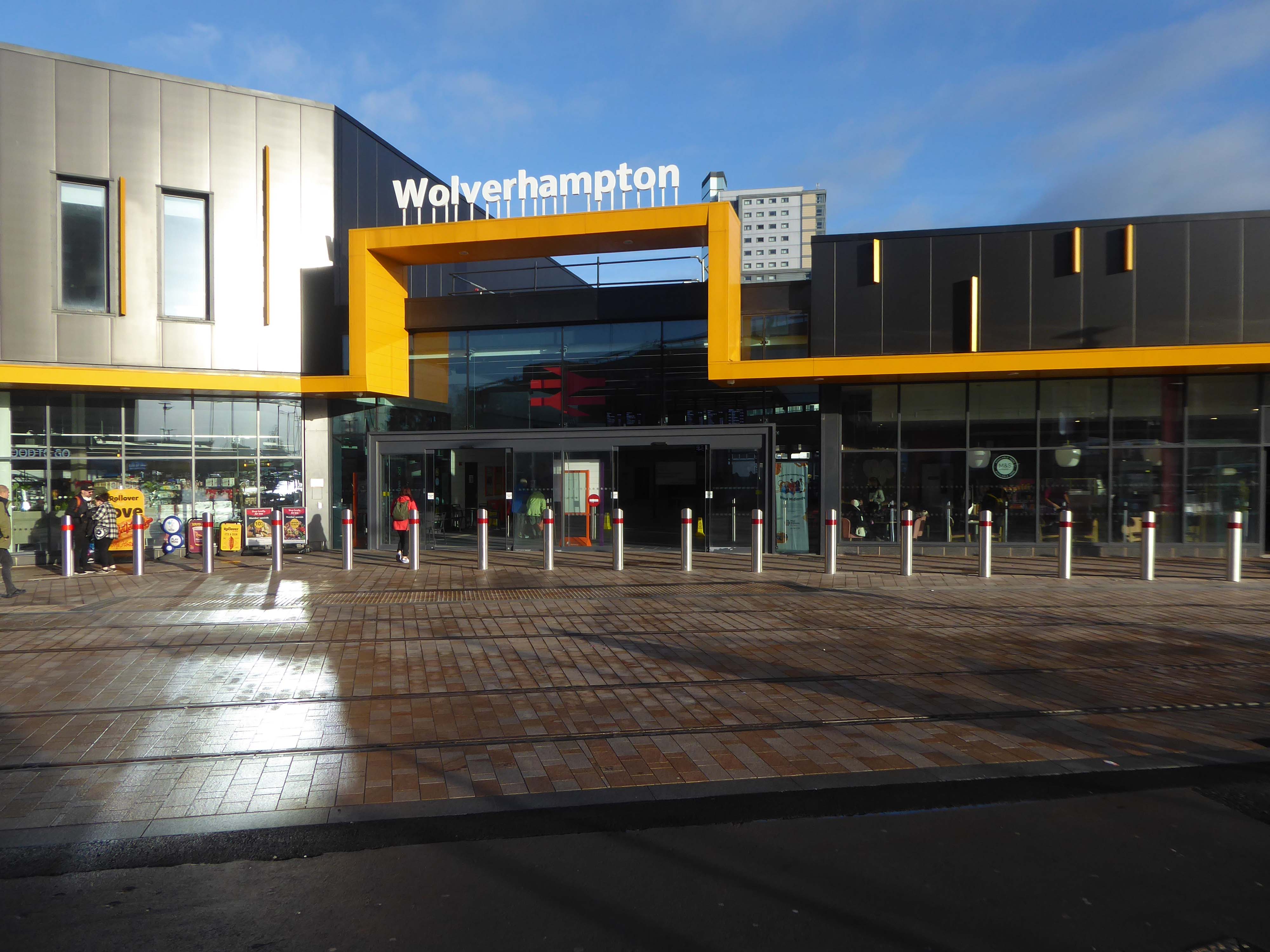
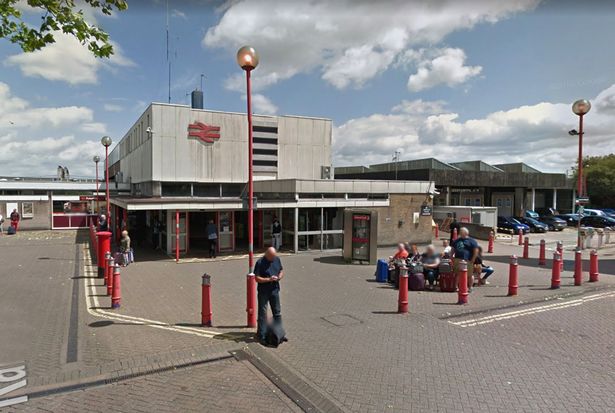
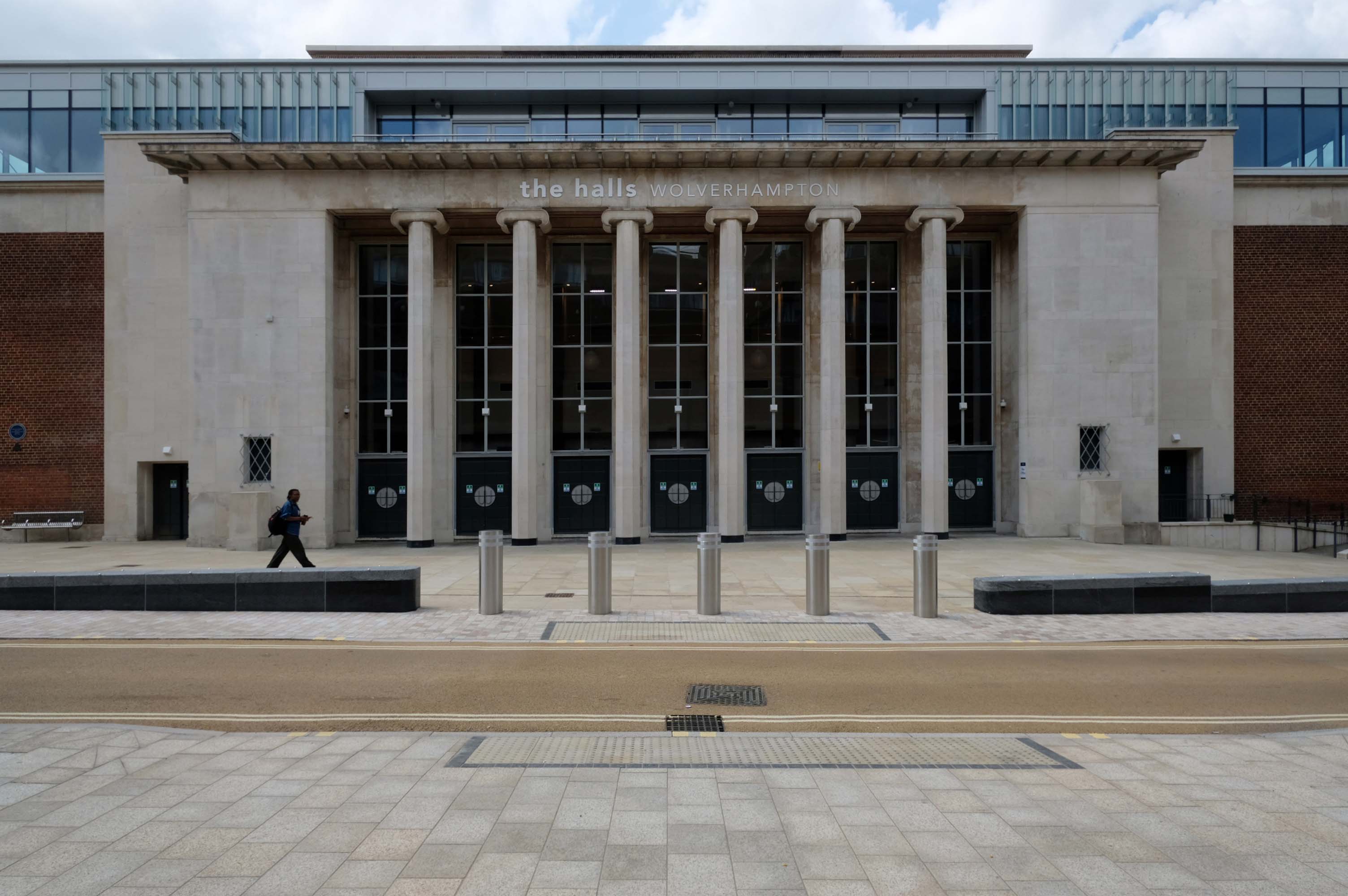
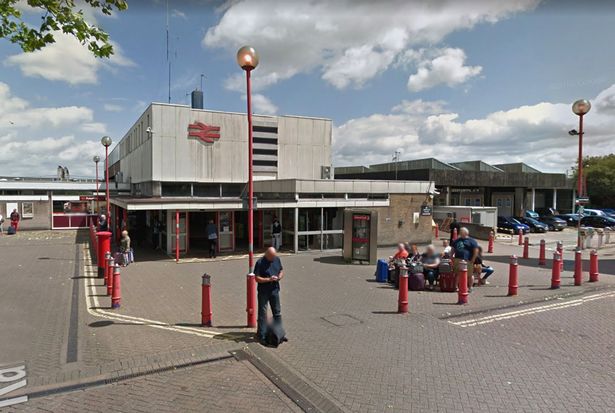
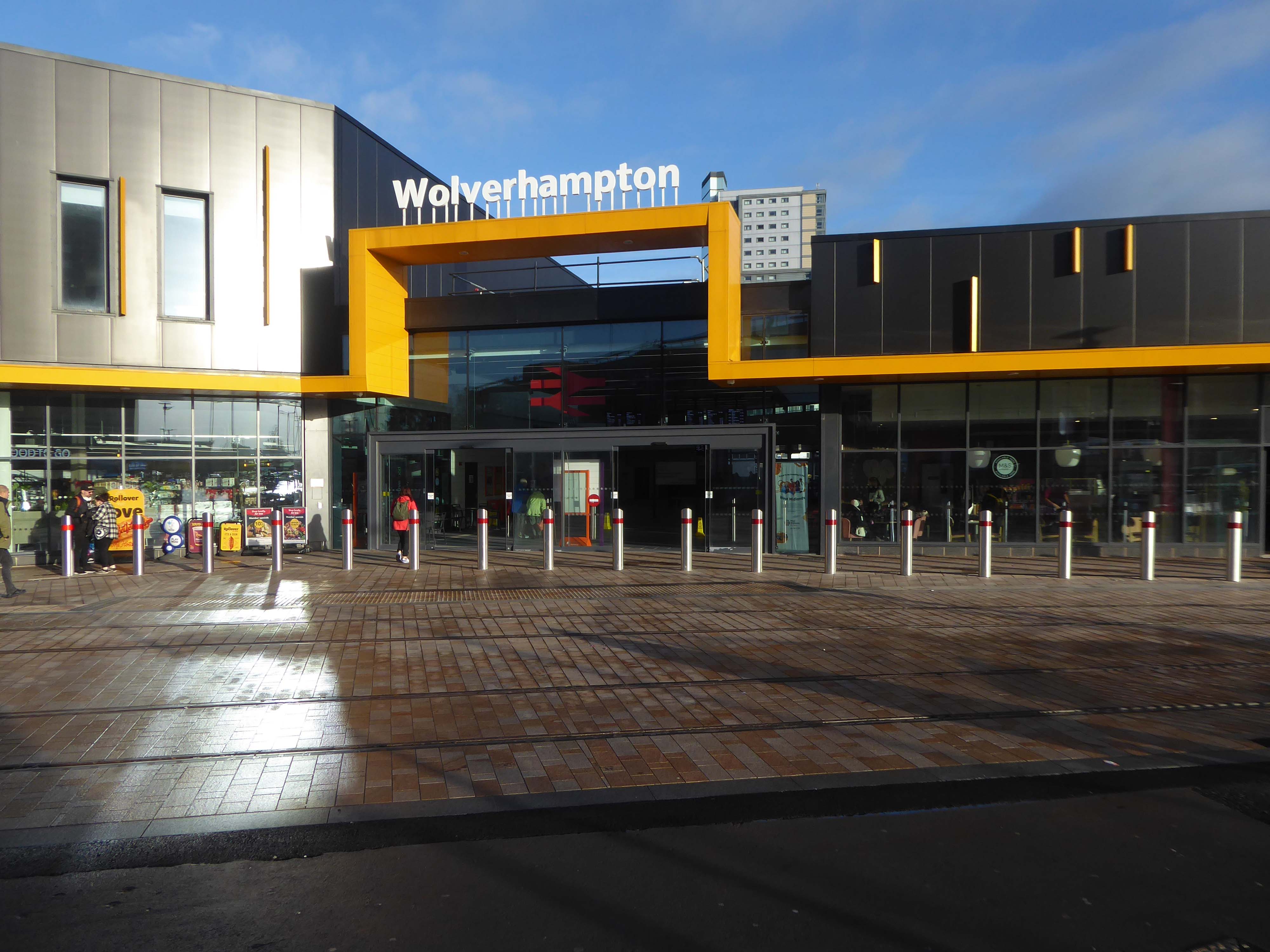
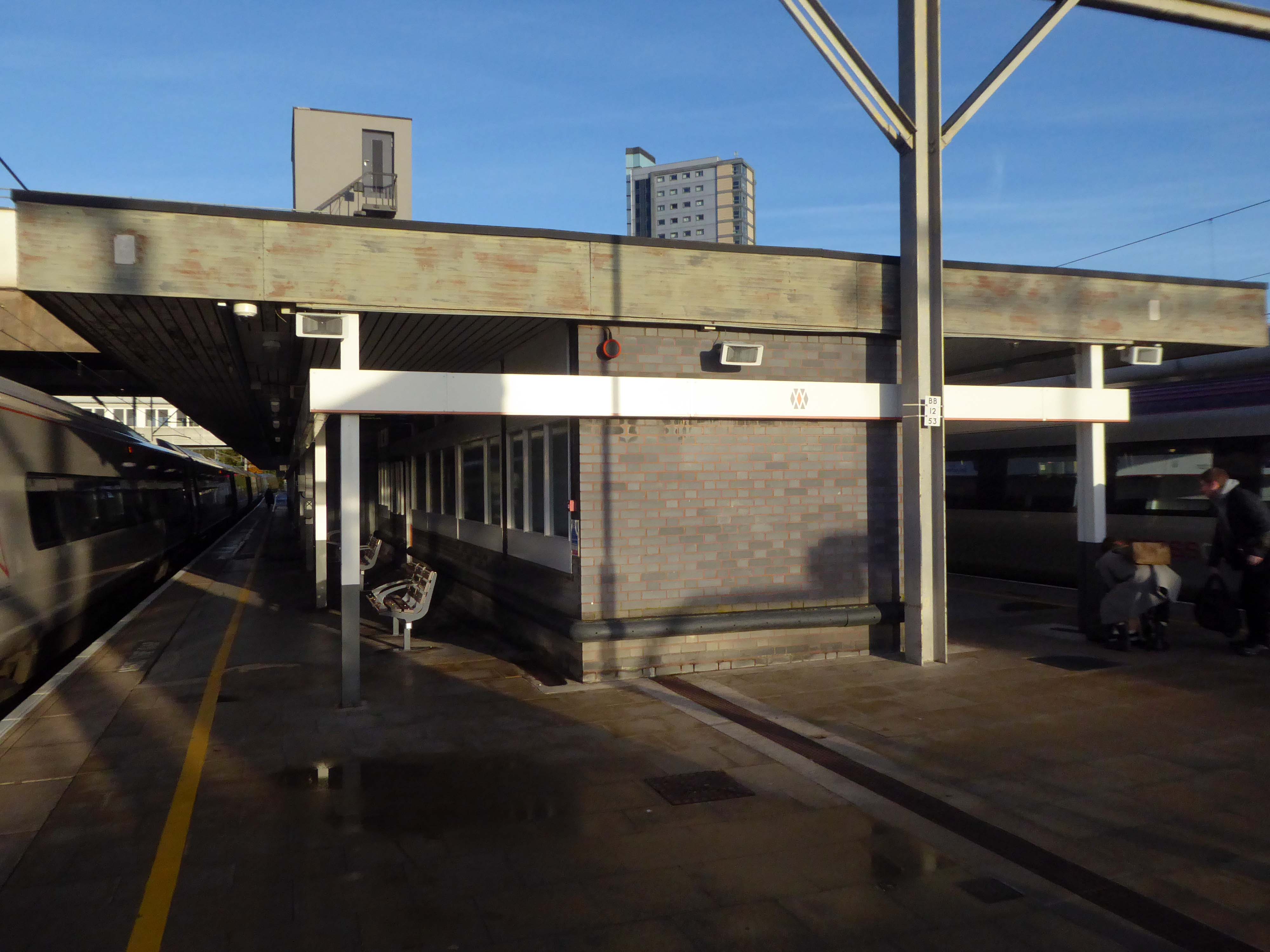
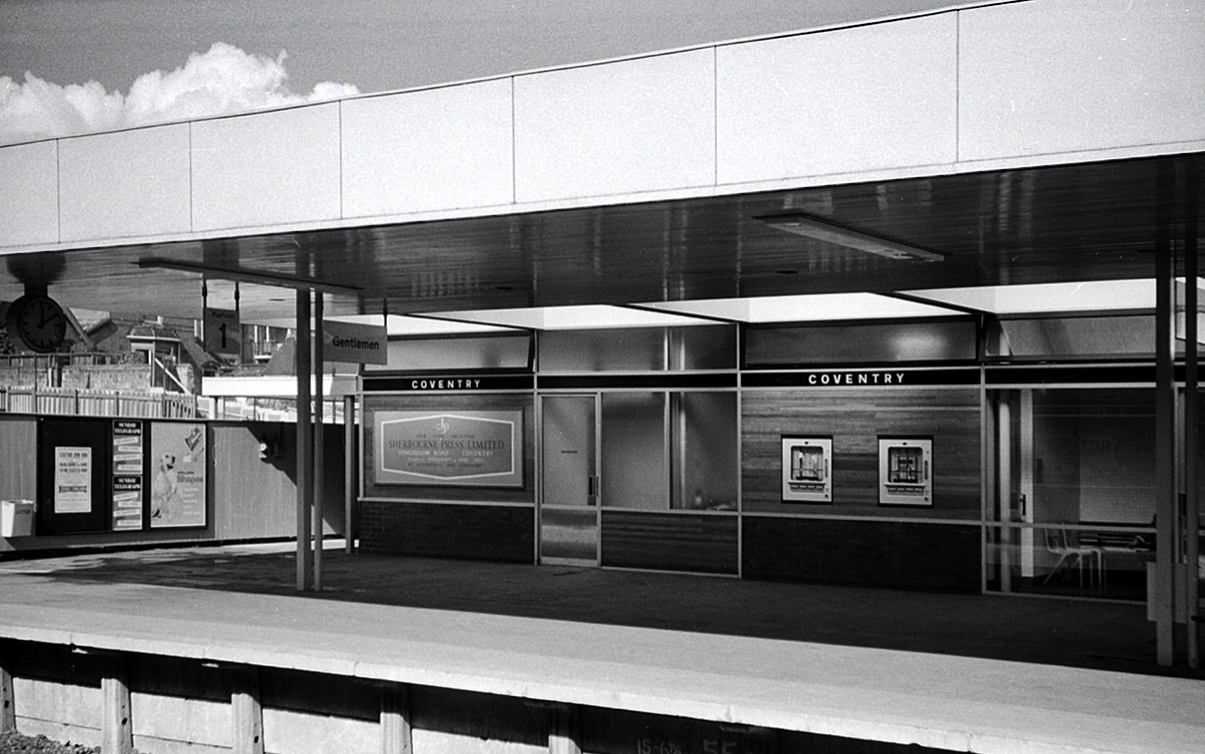
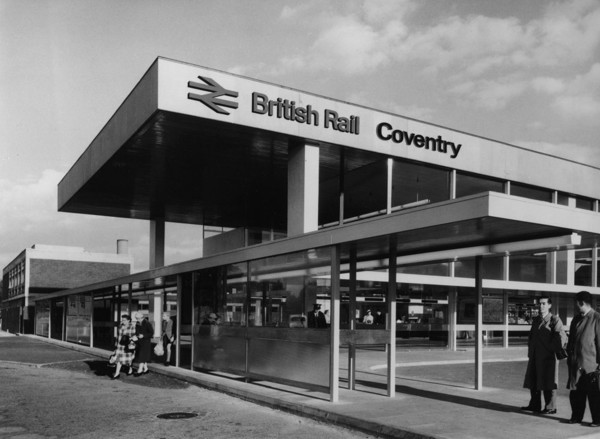
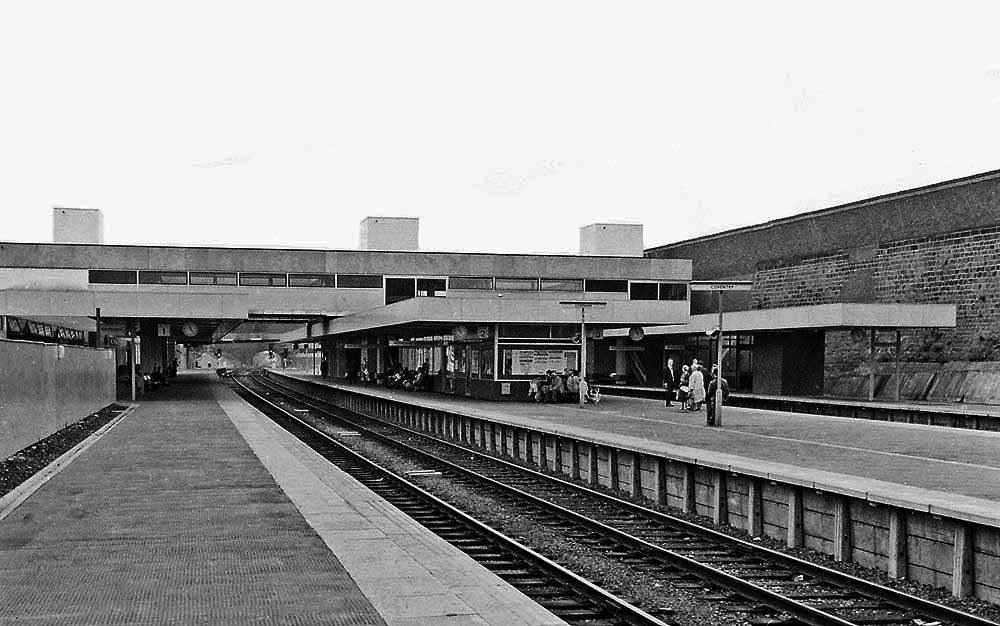
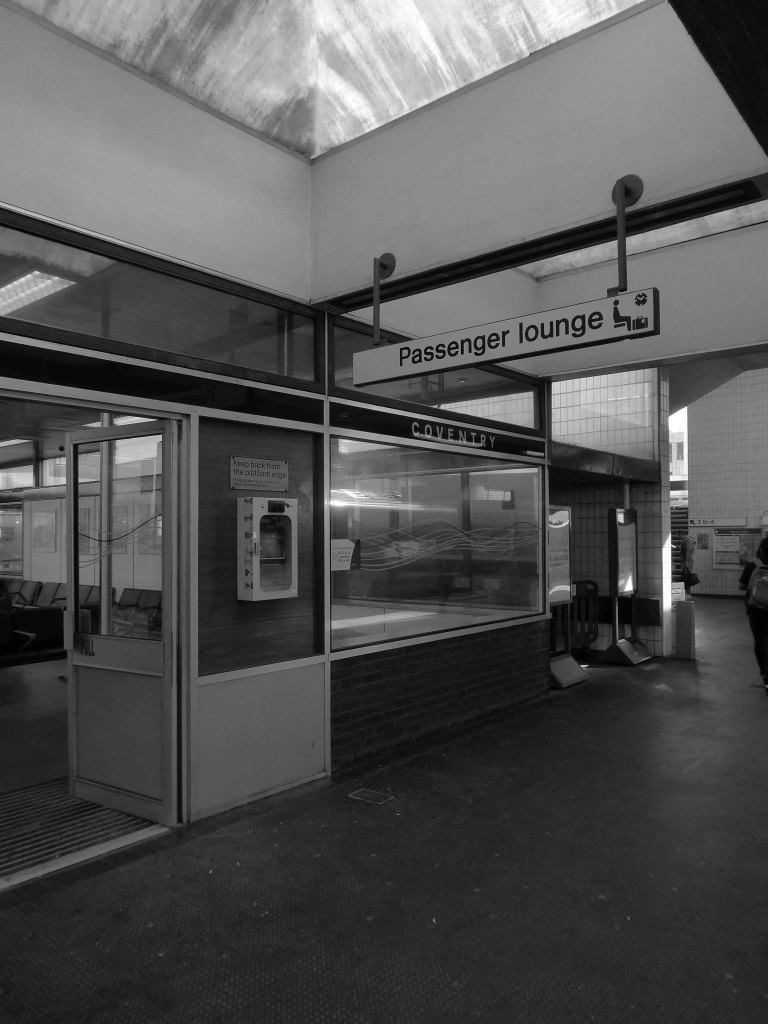
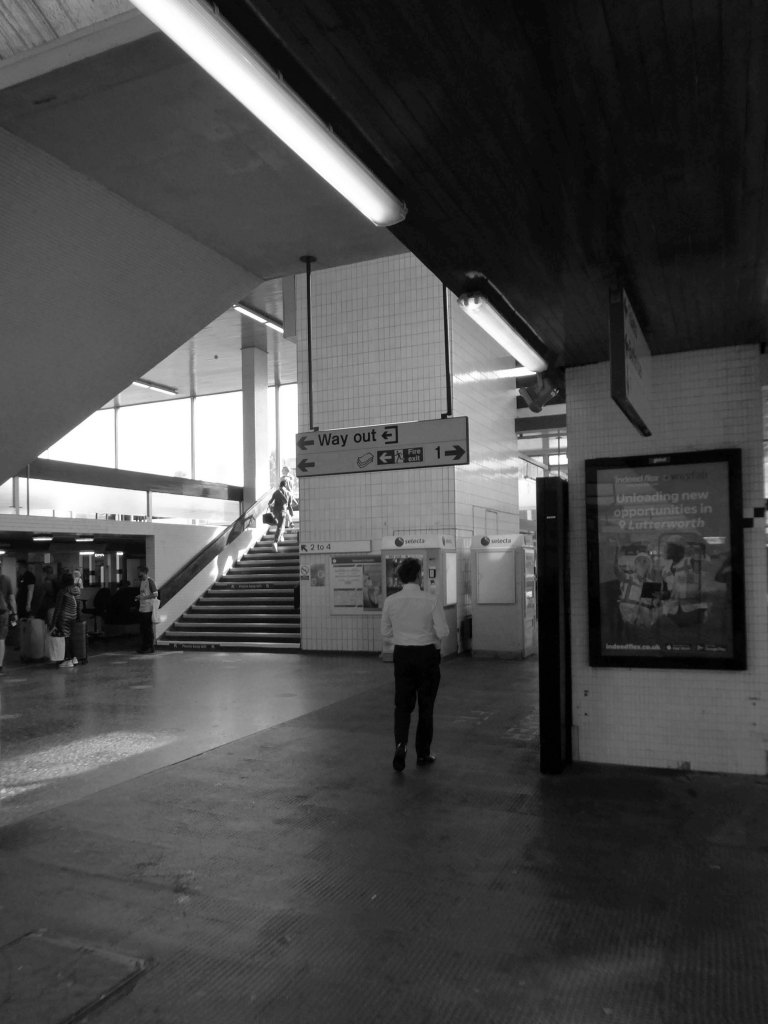
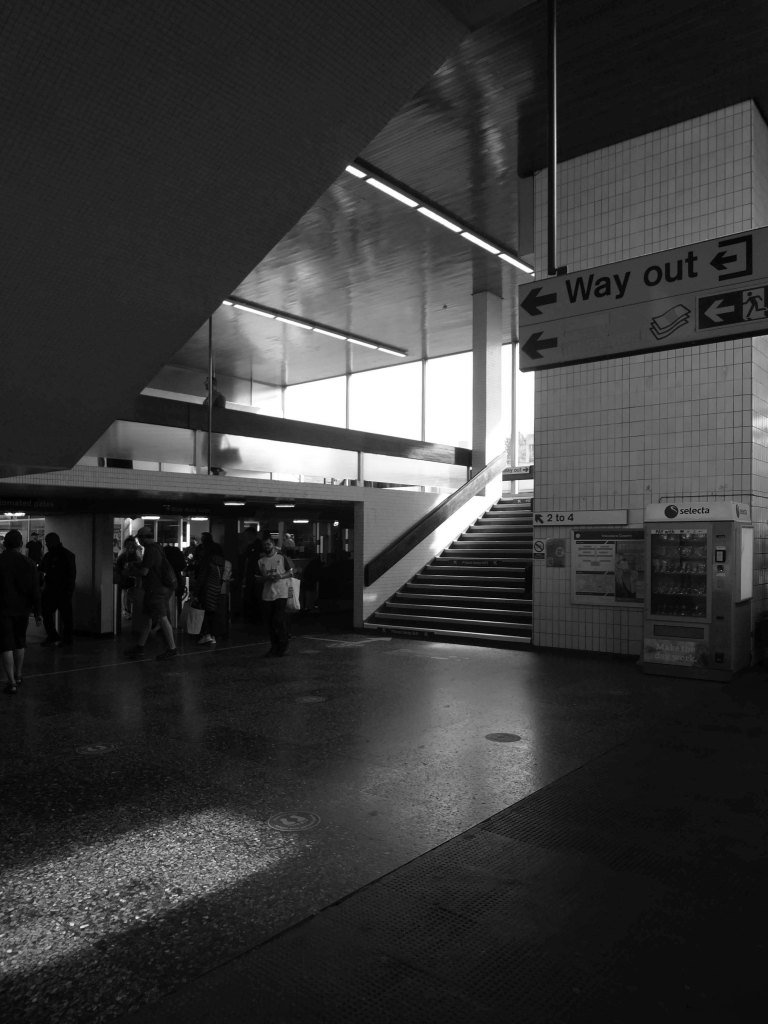
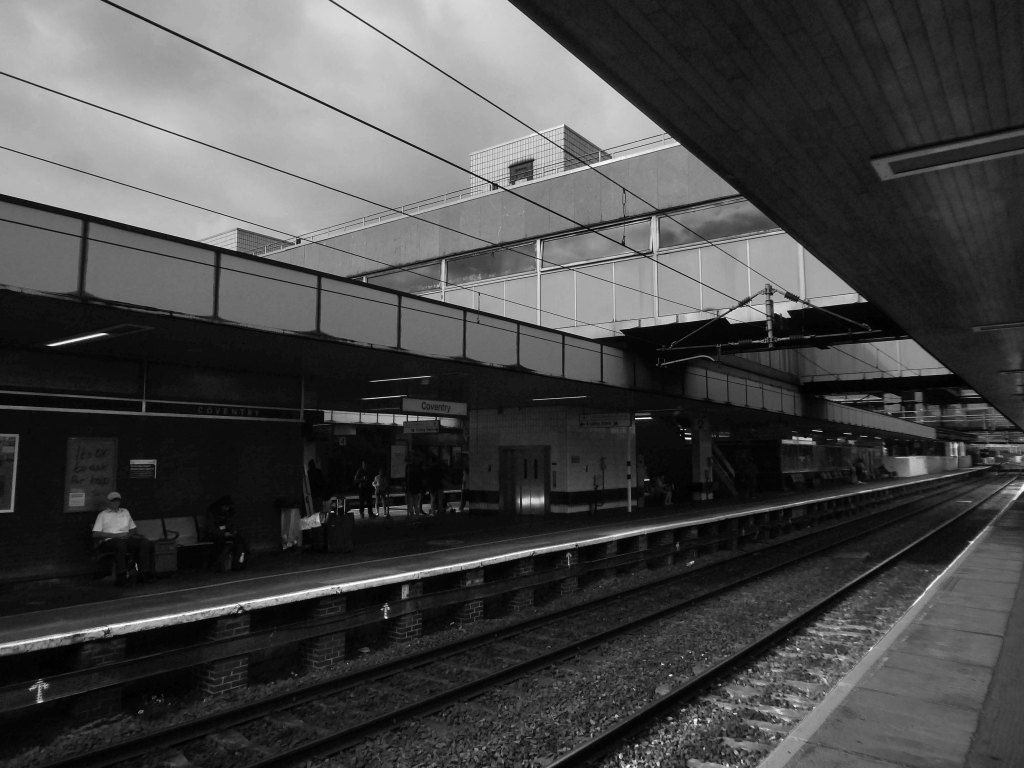
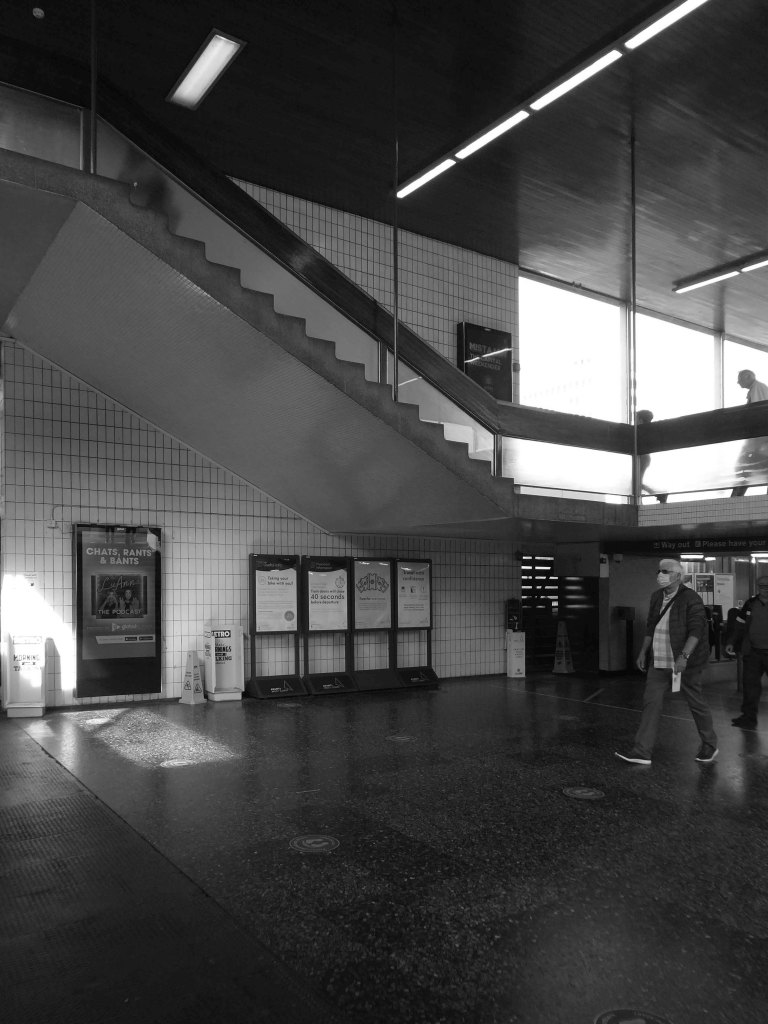
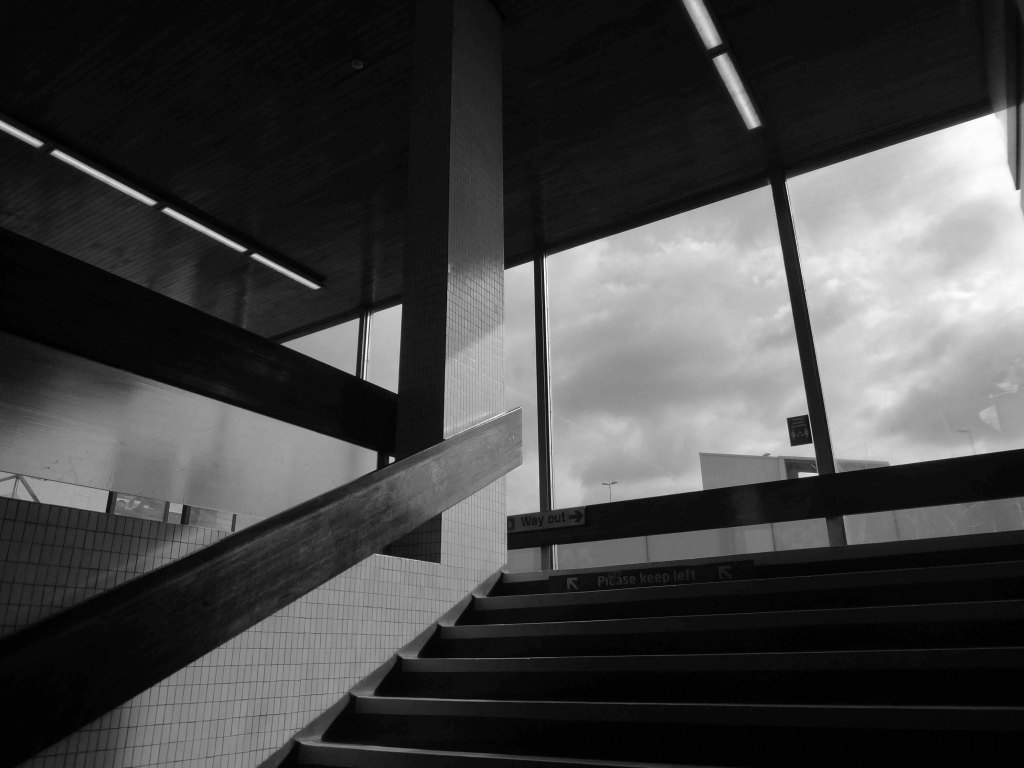
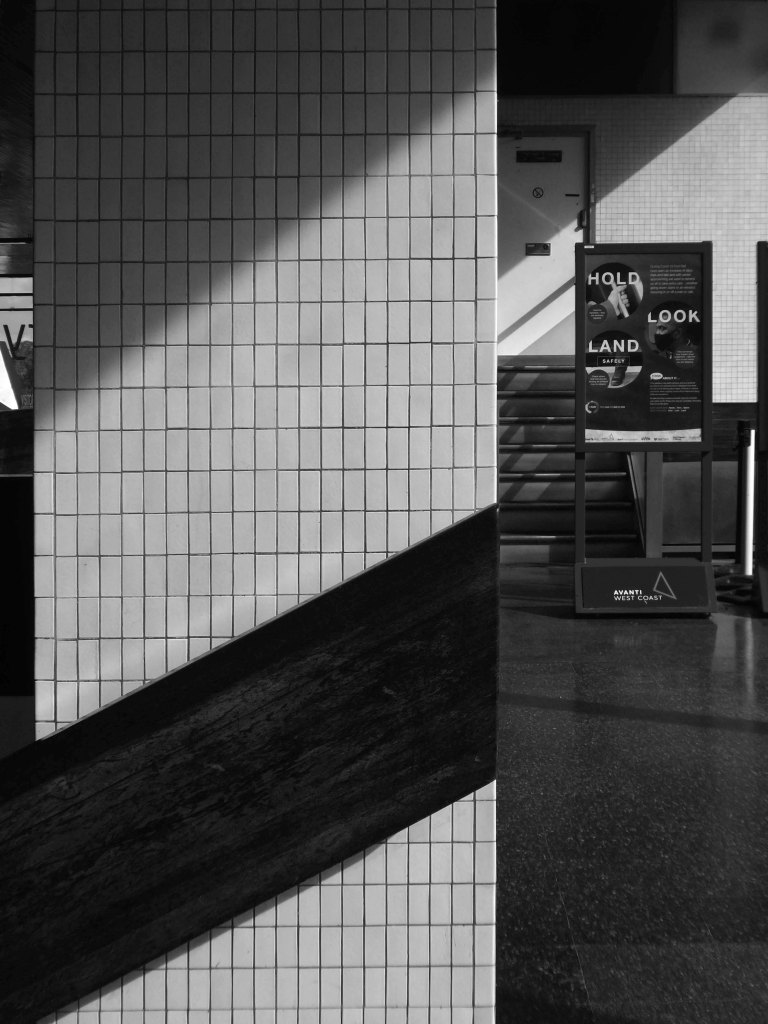
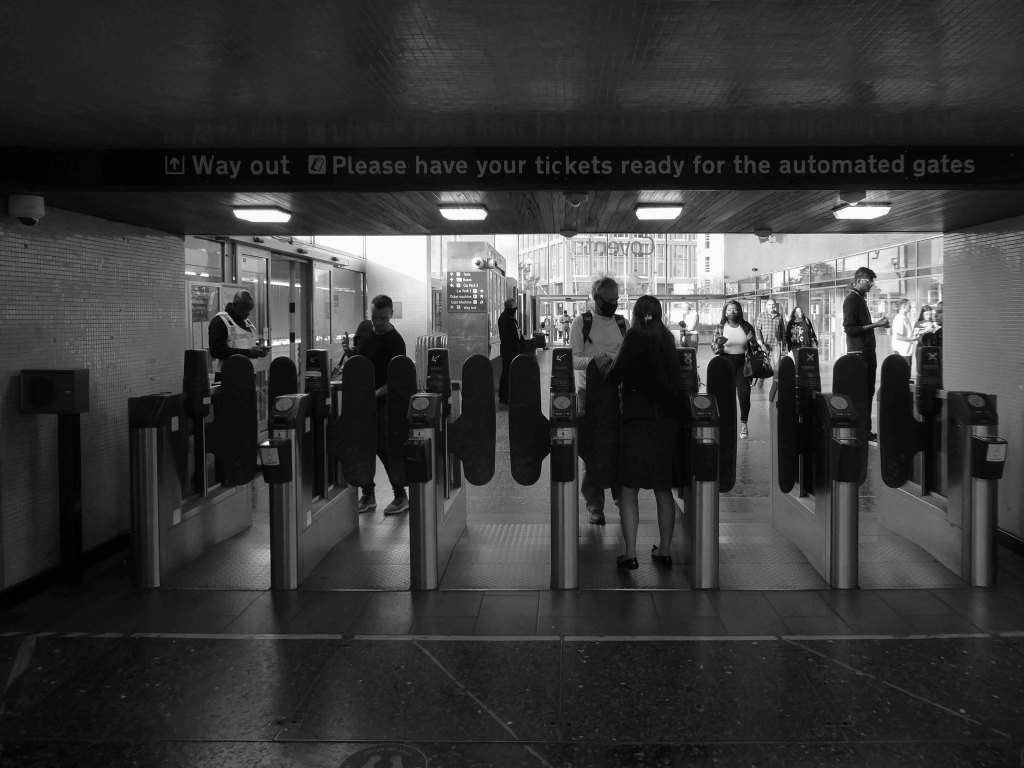
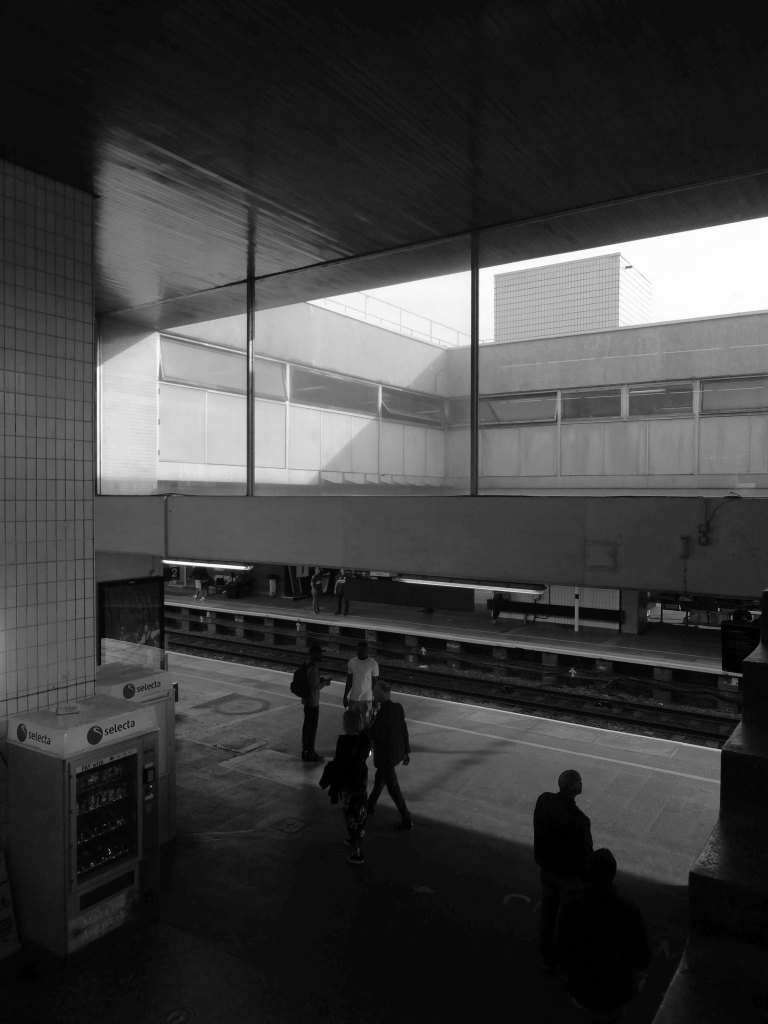
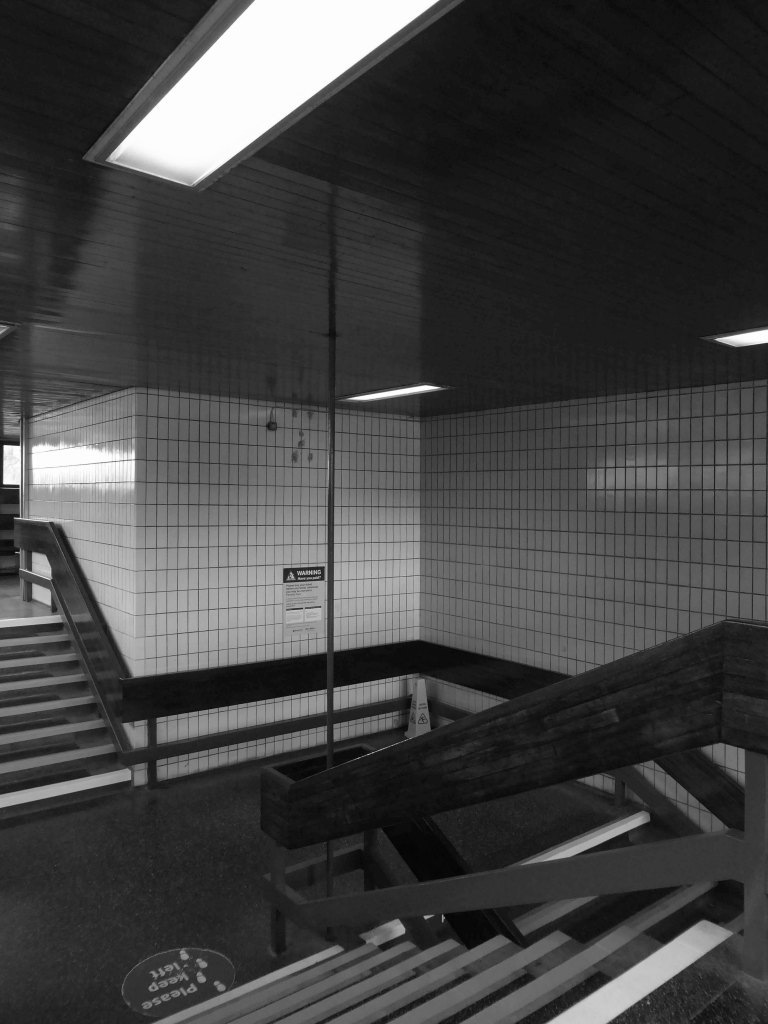
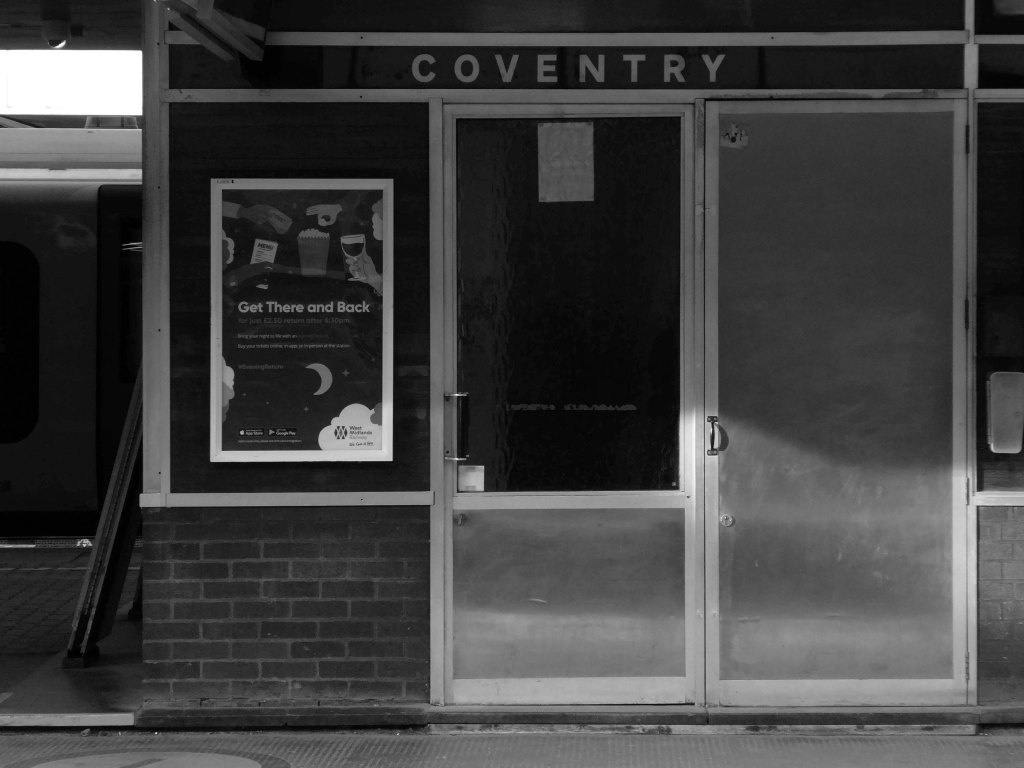
We begin at the Railway Station – recently refurbished, overwriting its 60s iteration – completely rebuilt by the architect Ray Moorcroft as part of the modernisation programme which saw the West Coast Main Line electrified.
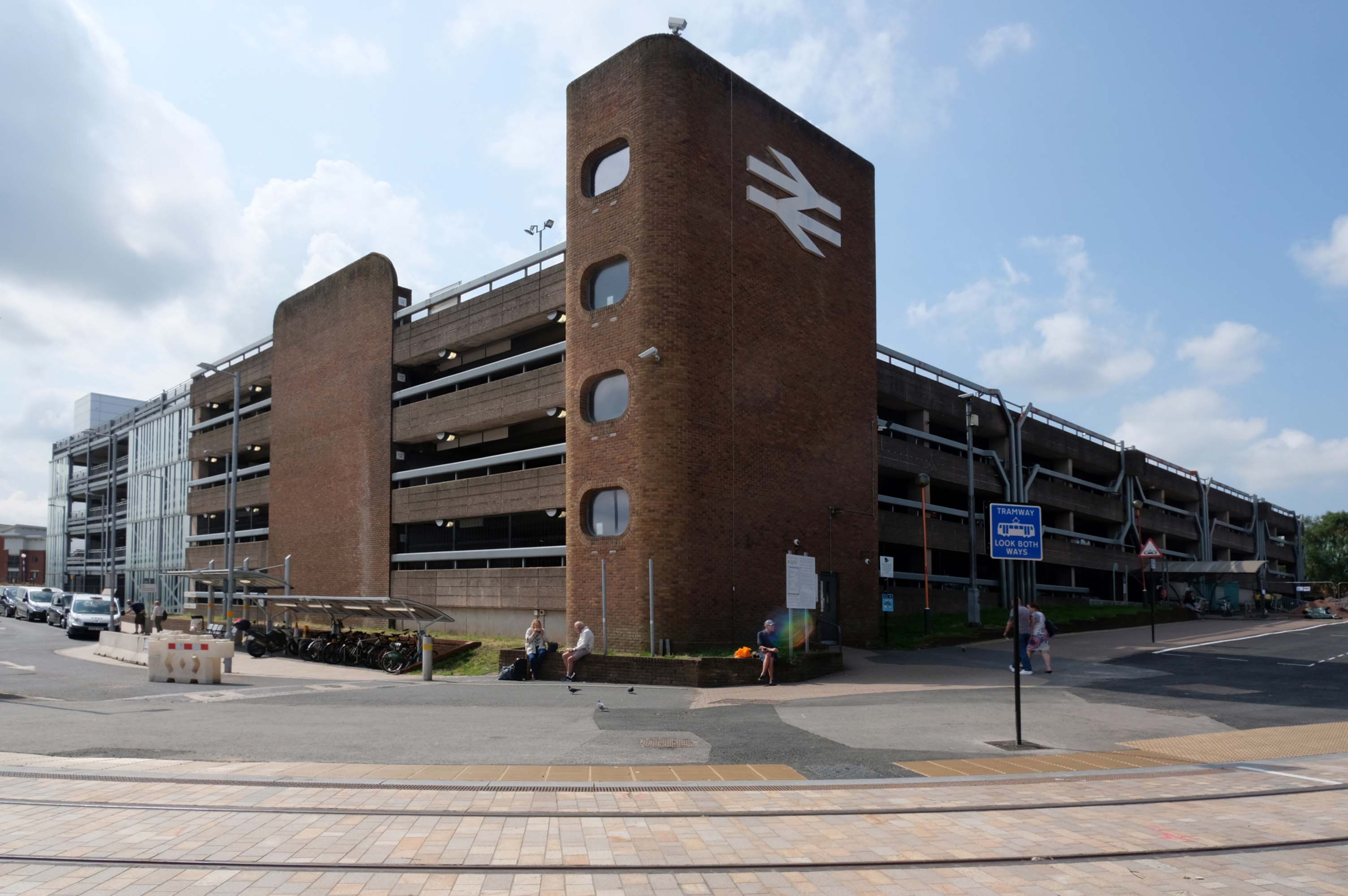
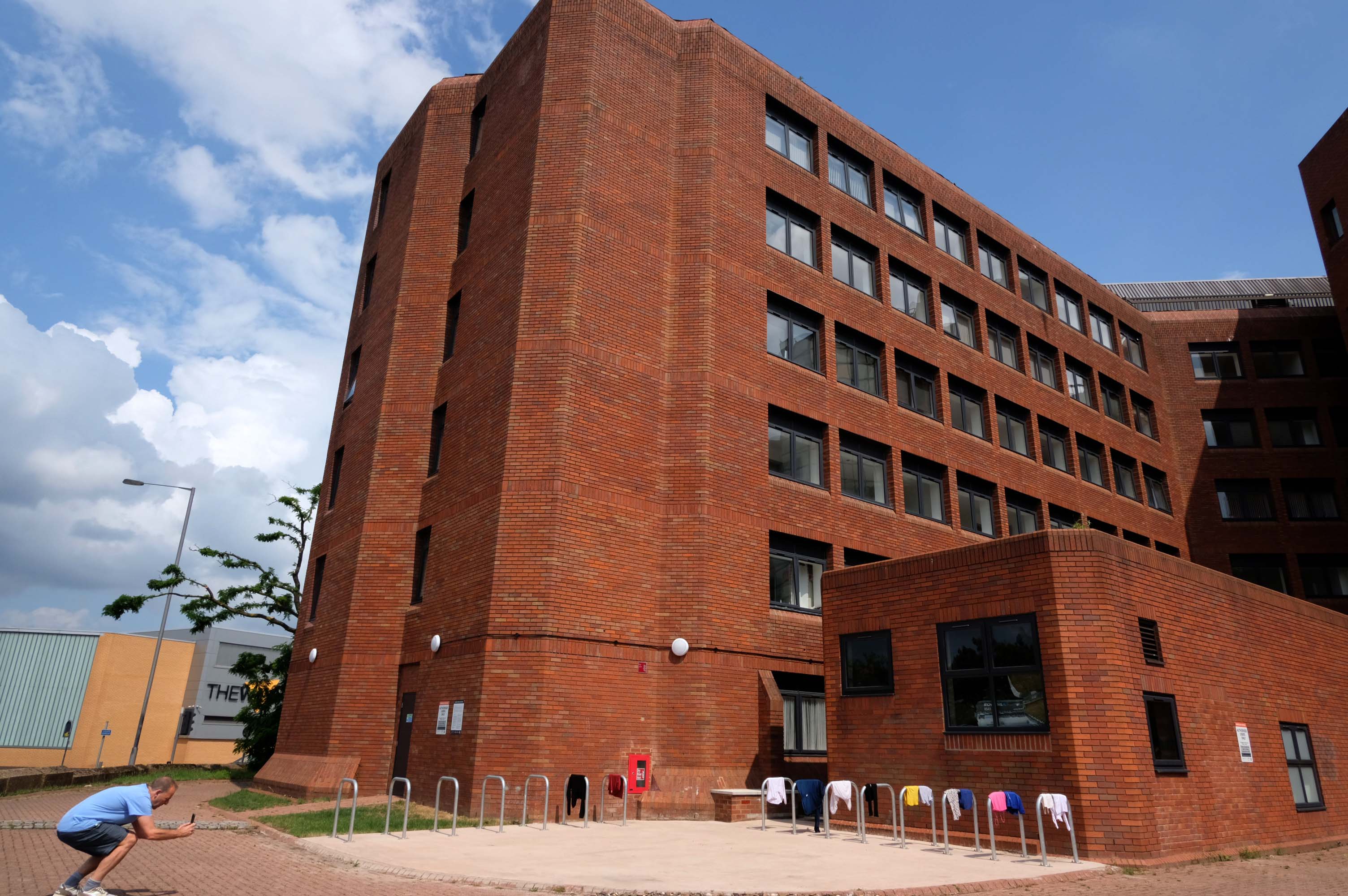
Across the way an enormous brick clad multi-storey car park – skirted by the lines for the tram, which travels to and from Birmingham.
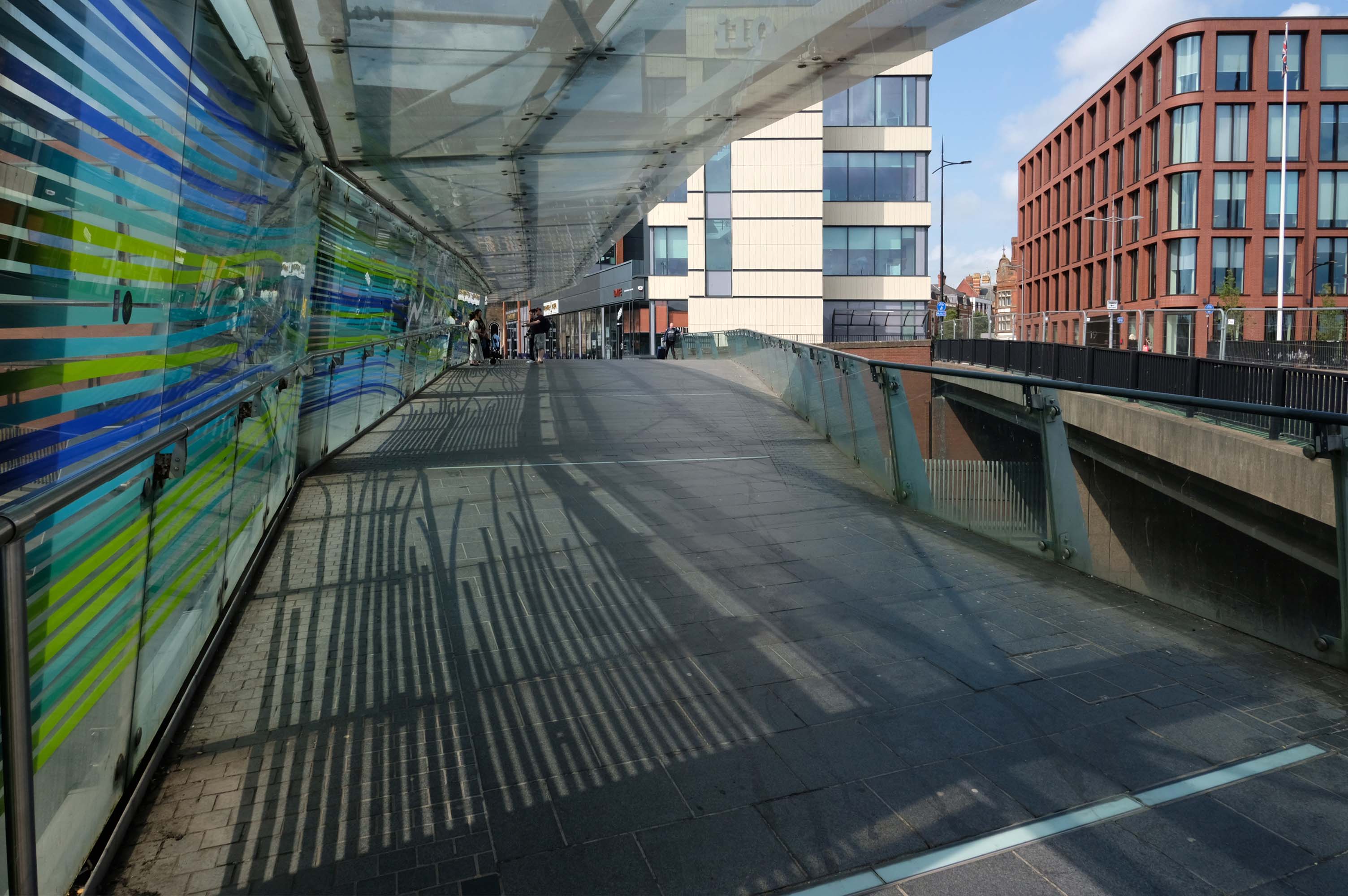
Walk across the brand new pedestrian footbridge over the ring road.
Architectural glass artist Kate Maestri was commissioned to produce the artwork design which features glass with blue and green strips of colour running through it.
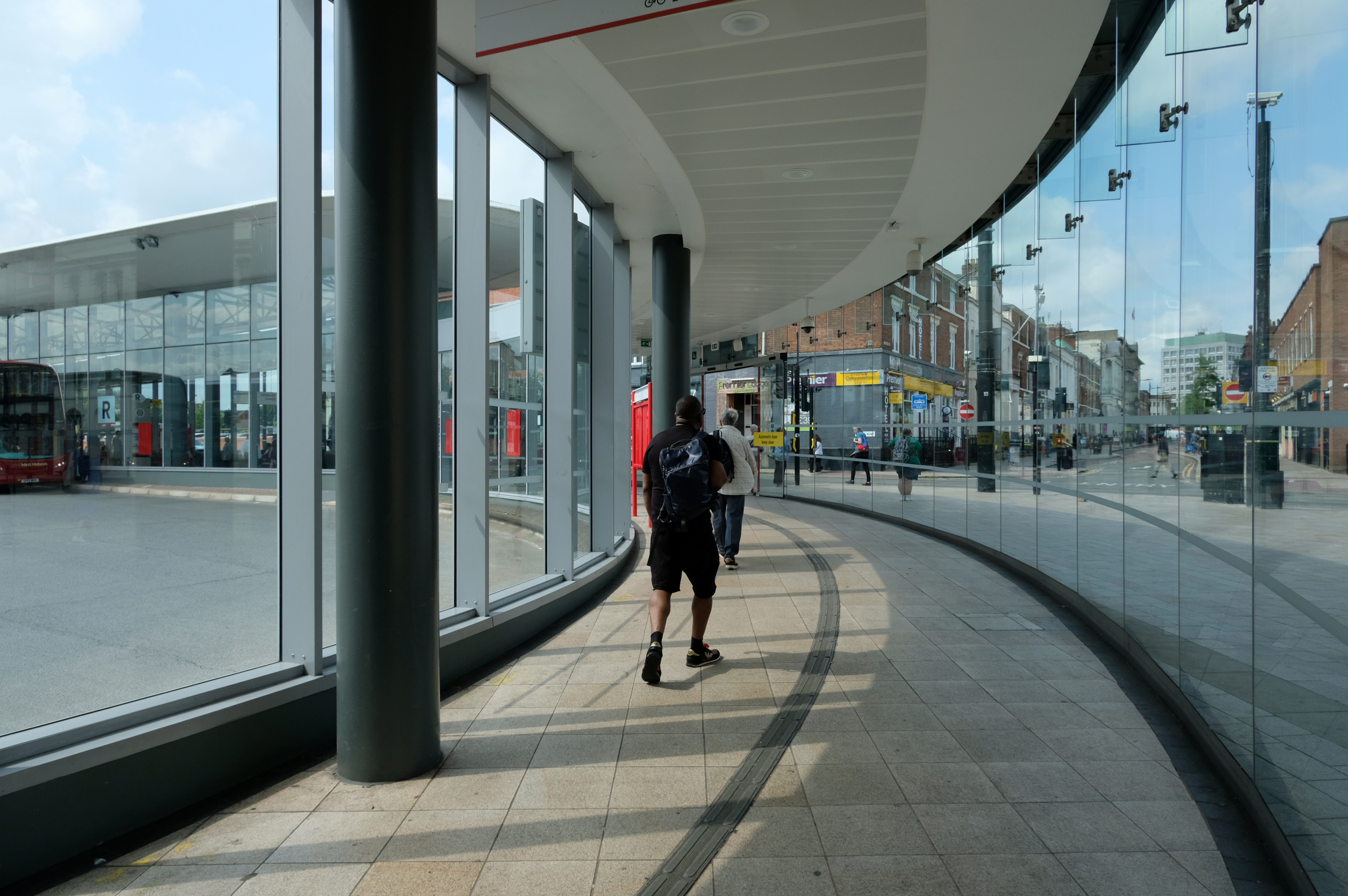
Linking the Rail Station with the brand new Bus Station.
The normal practice of the Wolverhampton Bus Service is to have dirty, smelly buses, that are cramped and extremely hot in the summer and freezing cold in winter. They offer no announcements apologizing for delays they know about and don’t appear to care how long passengers wait with no idea of how or when they’ll be getting a bus.
The best thing you can do is learn to drive as quickly as possible and get your own vehicle or car pool.
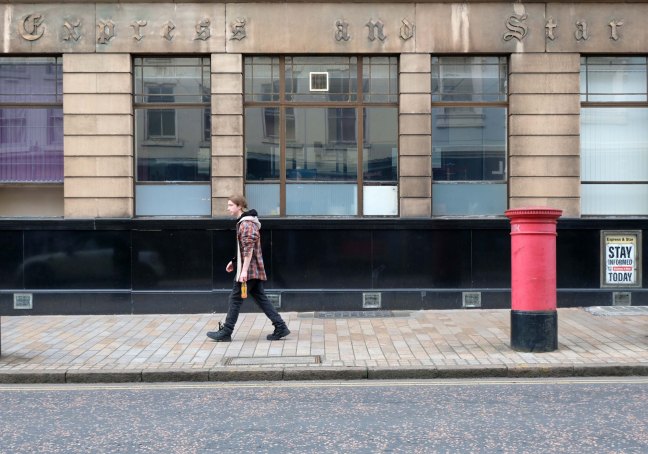
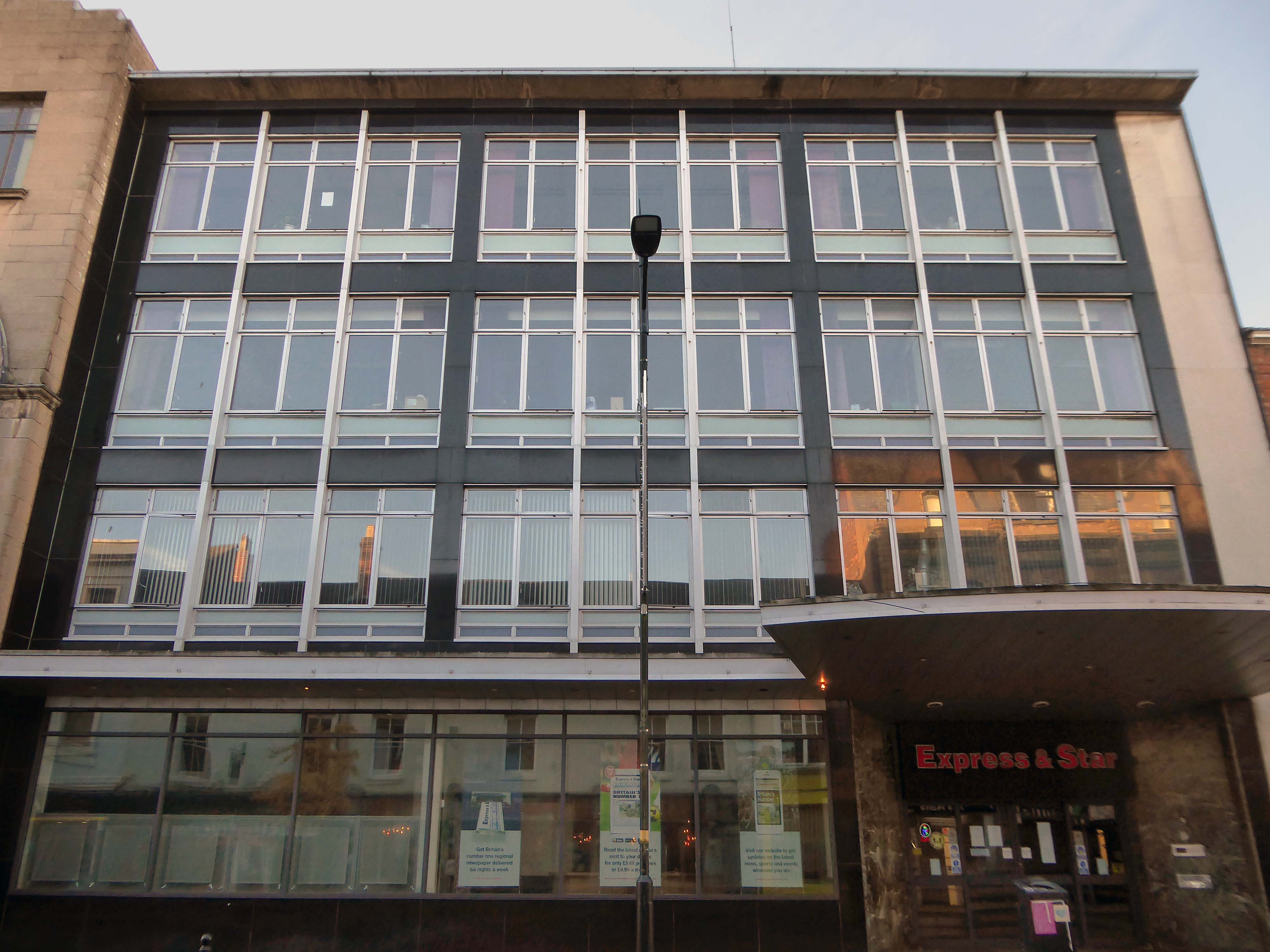
Midland News Association managing director Matt Ross confirmed the company is now looking at the building’s future.
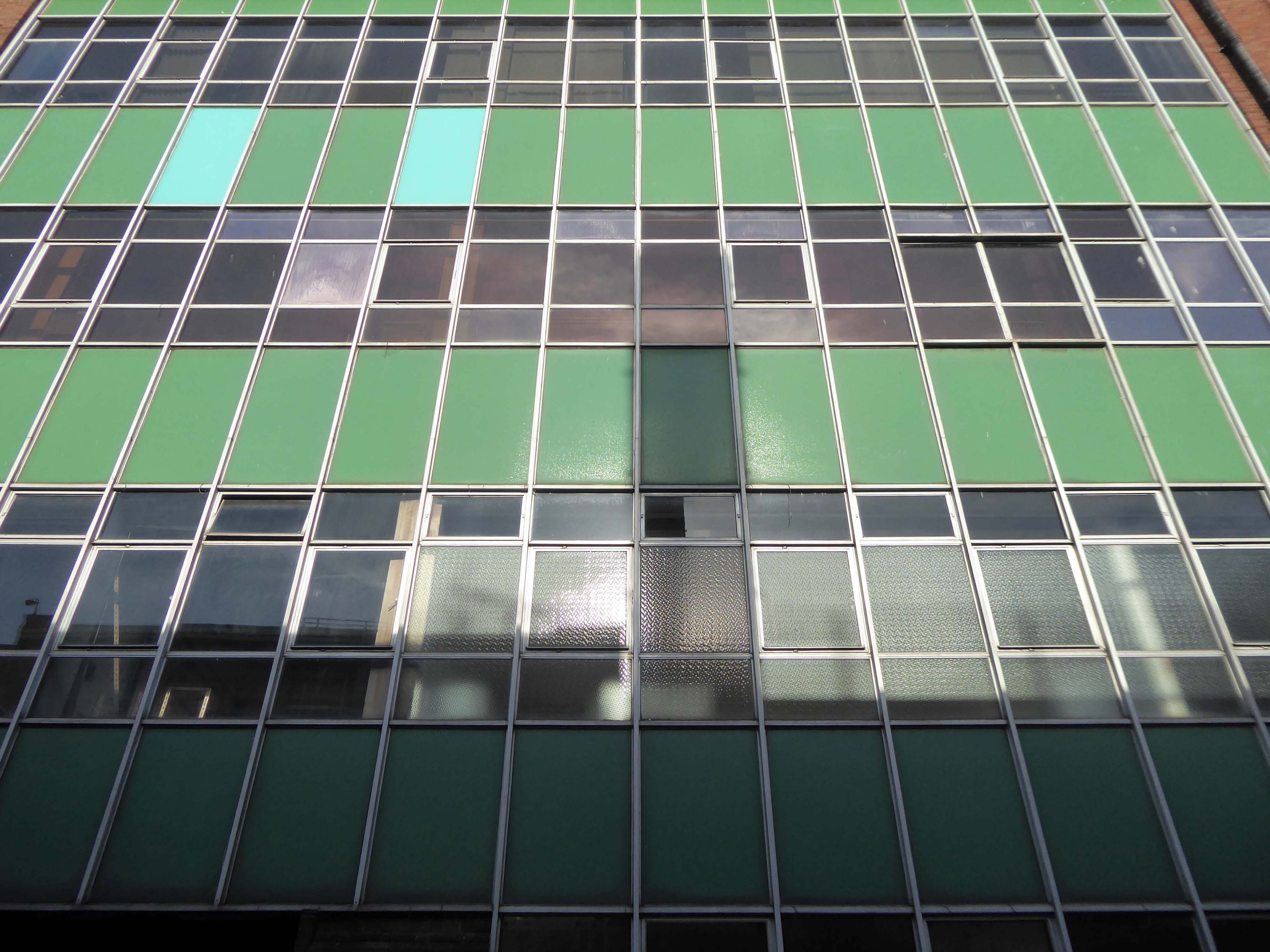
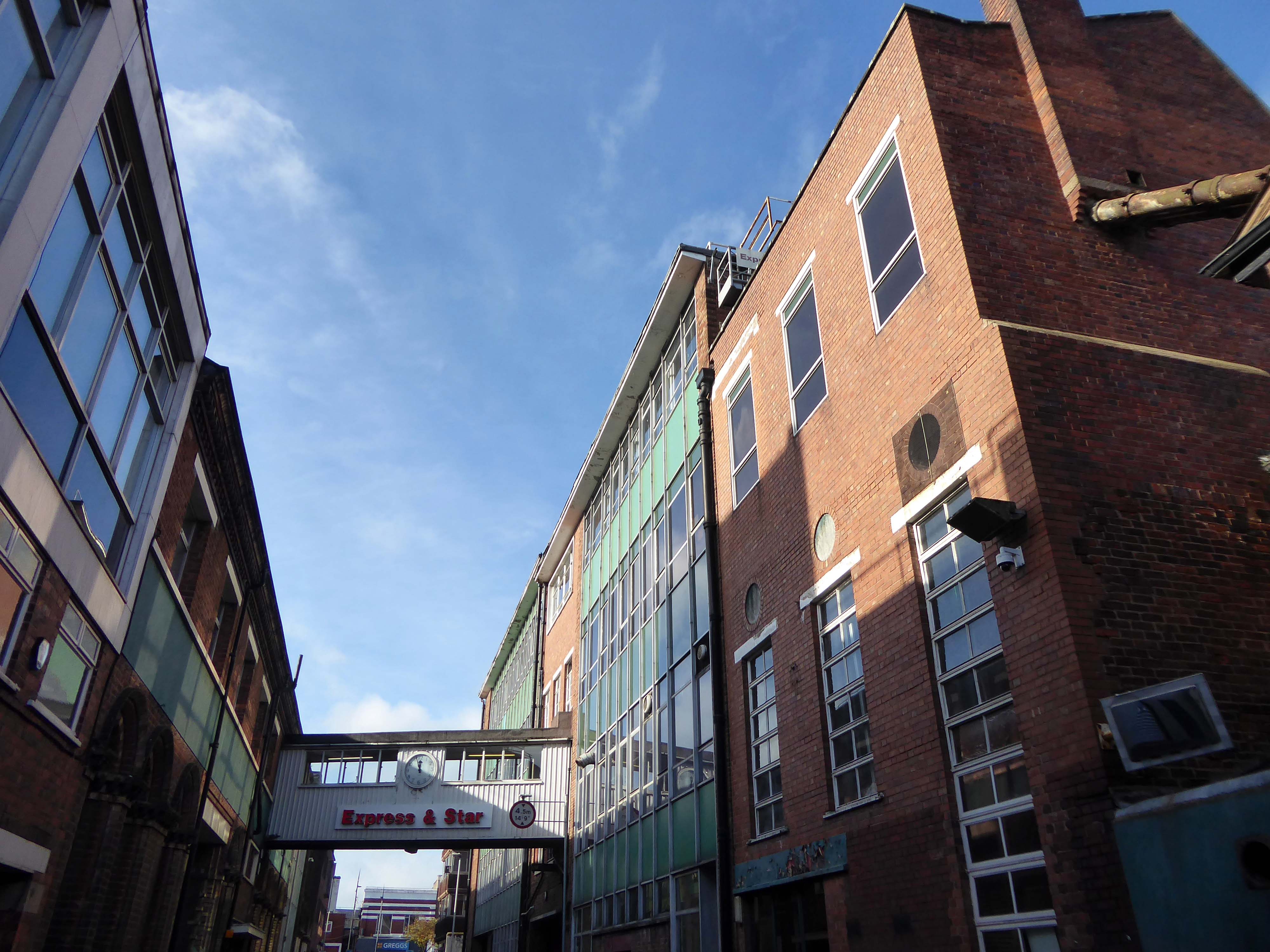
For a number of years we have been exploring opportunities surrounding our historic Express & Star offices in the heart of Wolverhampton.
After removing the printing presses from the site and restructuring our departments we now have significant spare capacity available and so are looking at the various options available to us, be that redeveloping the current site or exiting the building altogether.
Extension is by architects: H Marcus Brown & Lewis 1965
With further work at the rear.
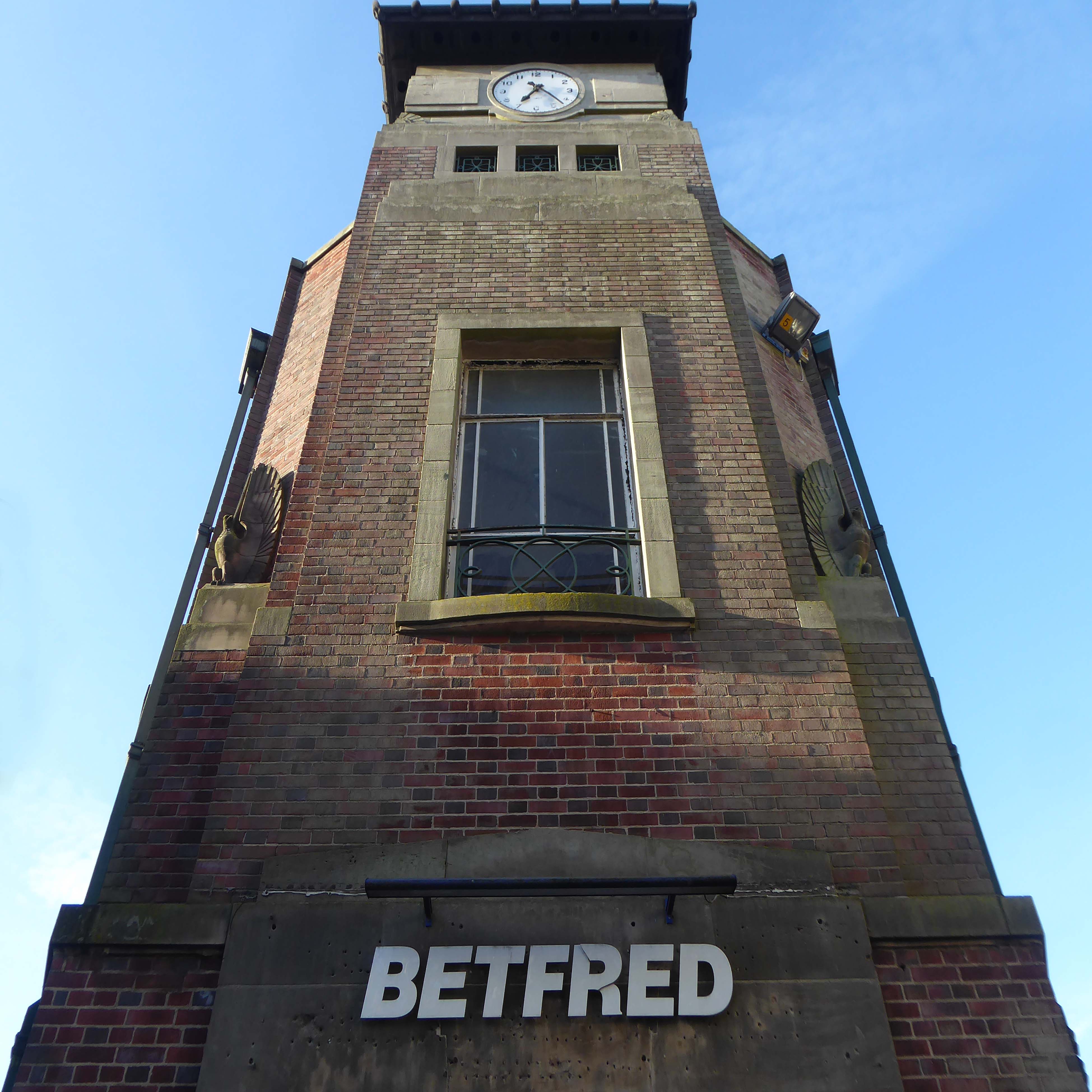
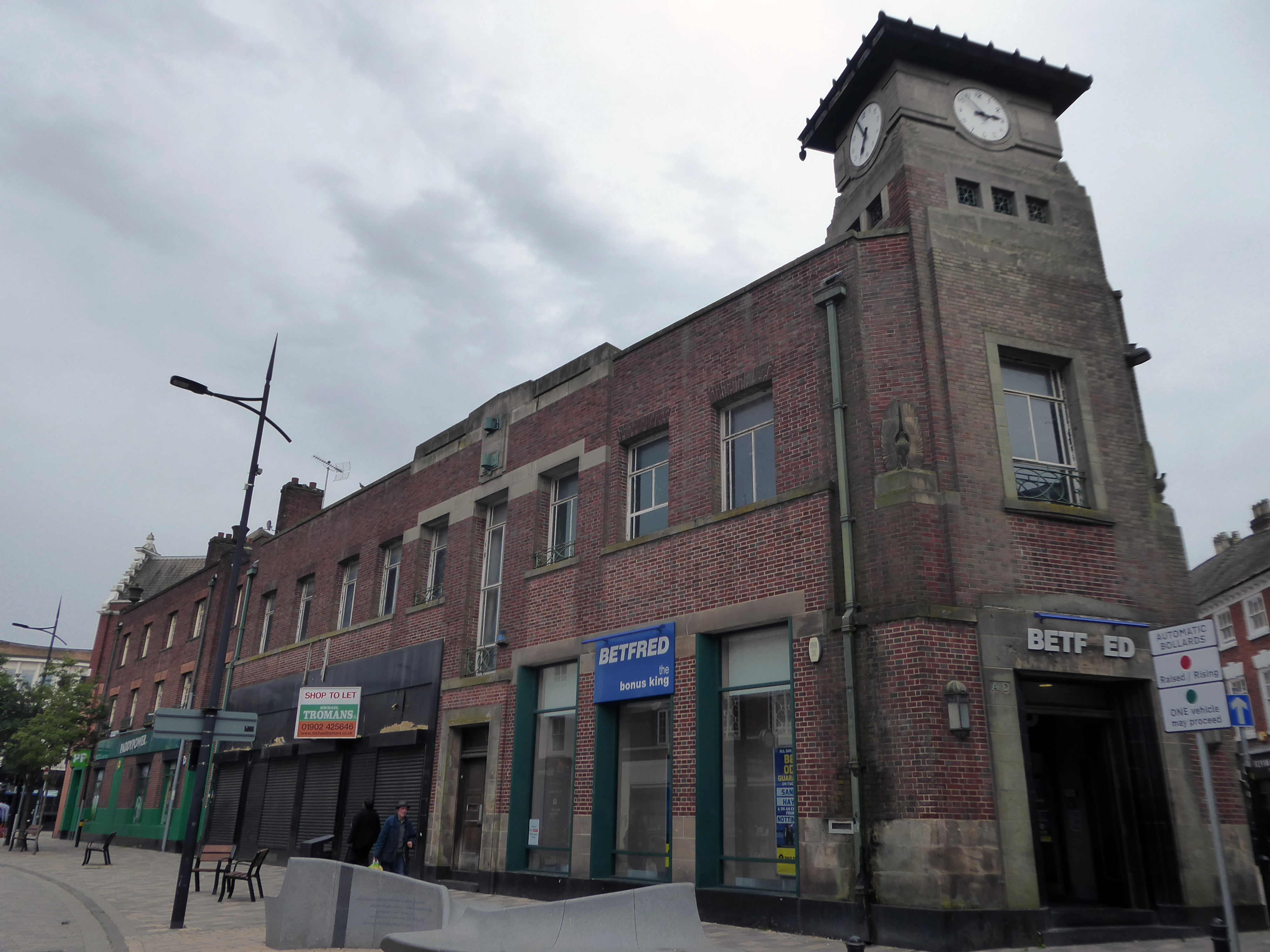
Along Princess Street this corner group, with an impressive clock tower – originally HQ for the South Staffordshire Building Society
Architects: George A Boswell of Glasgow 1932.
On to the Mander Centre – opened on 6th March 1968, refurbished 1987, 2003 and 2016-17.
The Mander Shopping Centre in the heart Wolverhampton is your one-stop shopping destination for all things fashion, home, beauty, food and technology.
Architects: James A Roberts principal architect Stanley Sellers.
Developed by Manders Holdings Plc, the paint, inks and property conglomerate, between 1968 and 1974. The site occupies four and a half acres comprising the old Georgian works and offices of the Mander family firm, founded in 1773, as well as the site of the former Queens Arcade.
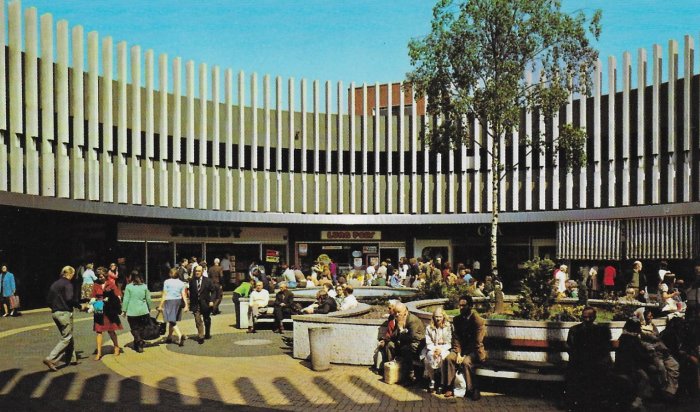
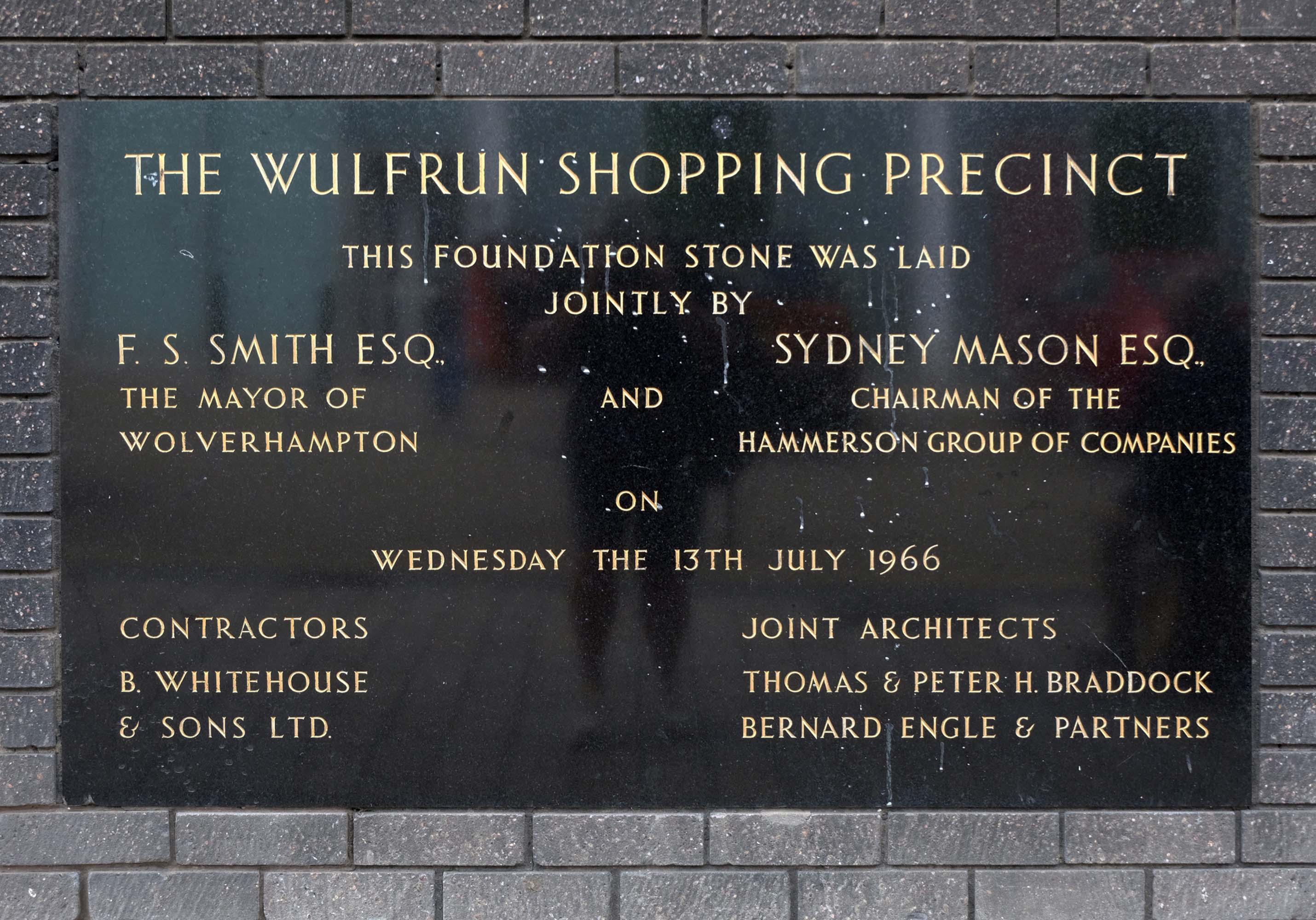
Architects: T & PH Braddock and also Bernard Engle & Partners.
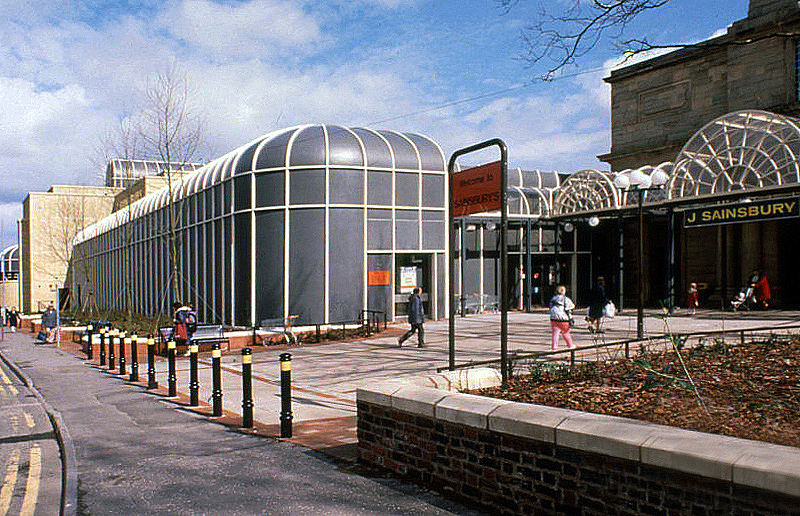
Along St Georges Parade, an abandoned Sainsbury’s church combo – store designed by J Sainsbury’s Architects Department opened 1988.
The church was built between 1828 and 1830 – architect: James Morgan, at a cost of £10,268. It was consecrated on Thursday 2 September 1830 by the Bishop of Lichfield, it was made redundant in 1978.
The site is currently under lease to Sainsbury’s for a further three years and will come forward on a phased basis subject to their lease concluding. The council is in active dialogue with prospective development partners on the redevelopment of this site and in wider consultation with Homes England.
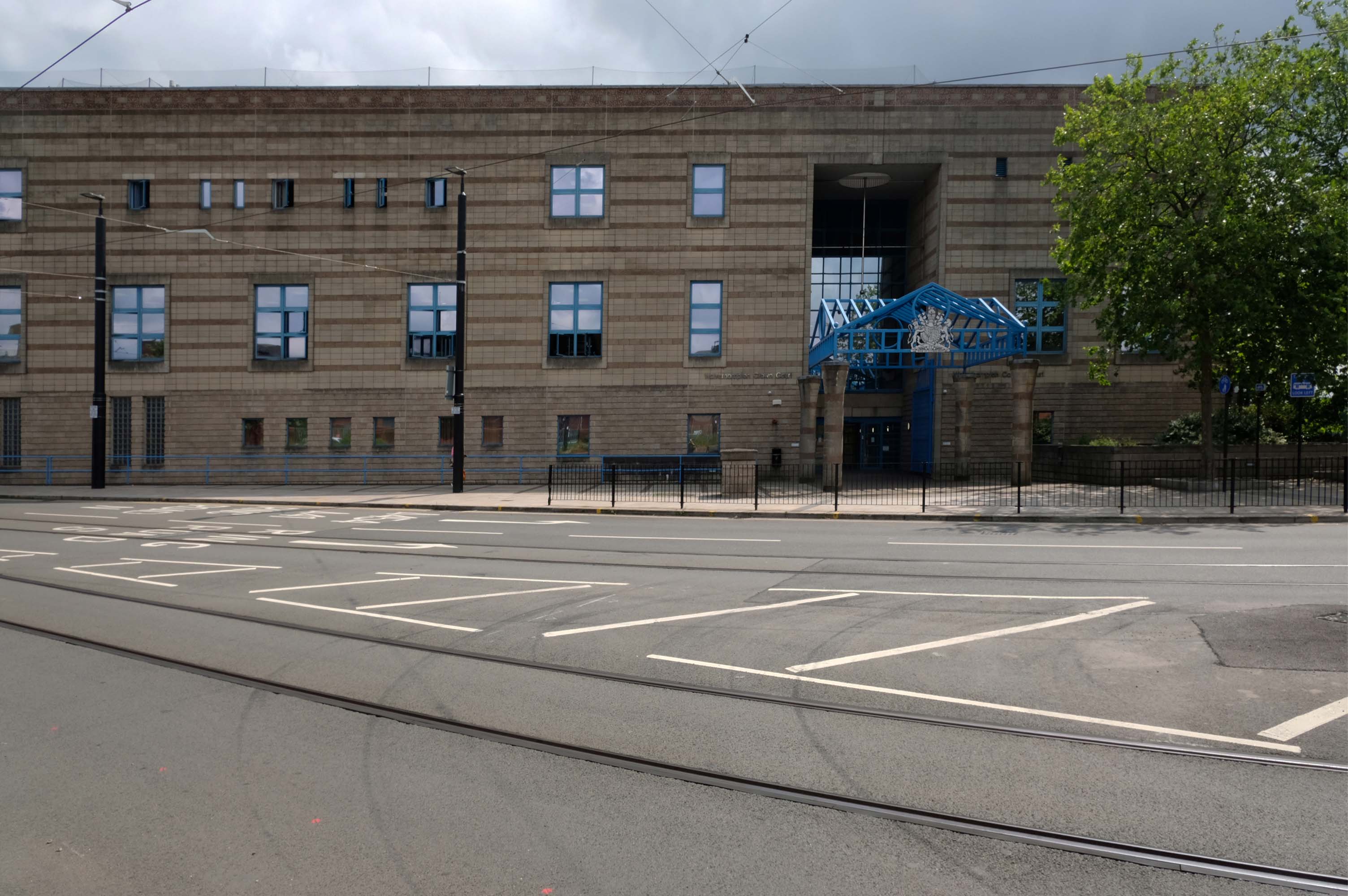
Notable cases included trial and conviction of four members of The Stone Roses, in October 1990, for criminal damage to the offices of their former record company.
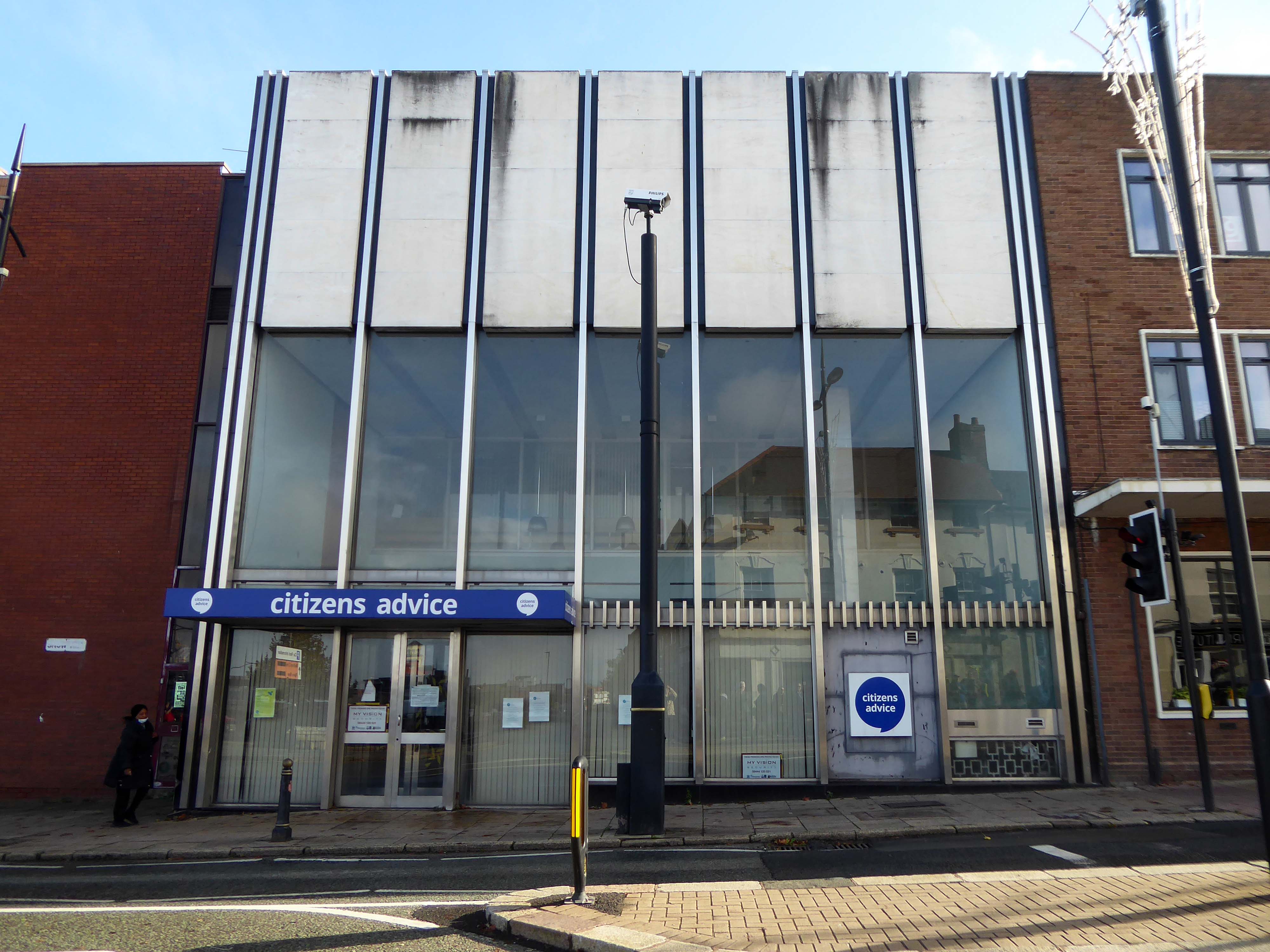
Thence up Snow Hill to the former Citizens Advice former Barclays Bank currently empty.
Architects: John HD Madin & Partners 1969
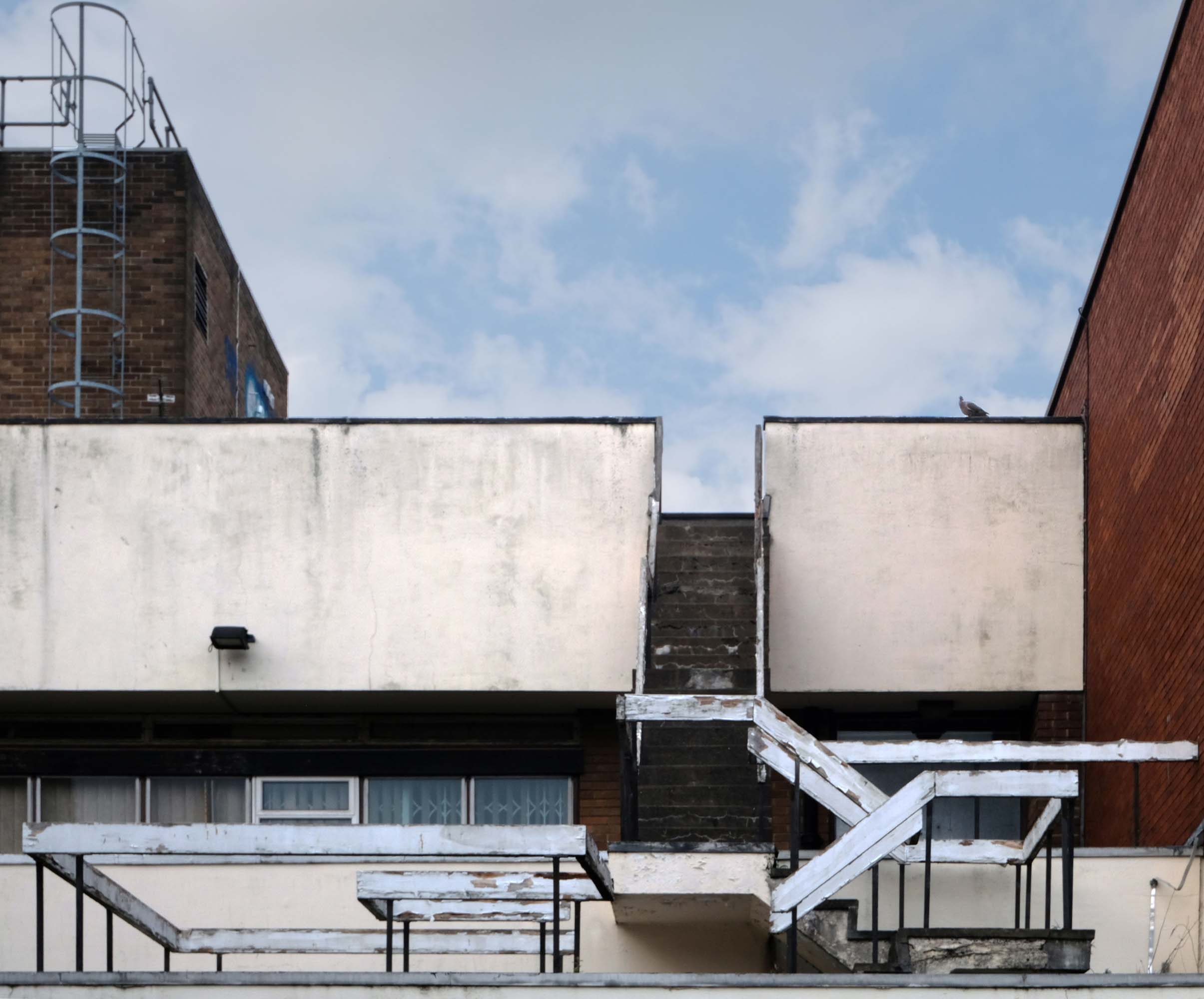
Take time to have a look around the back.
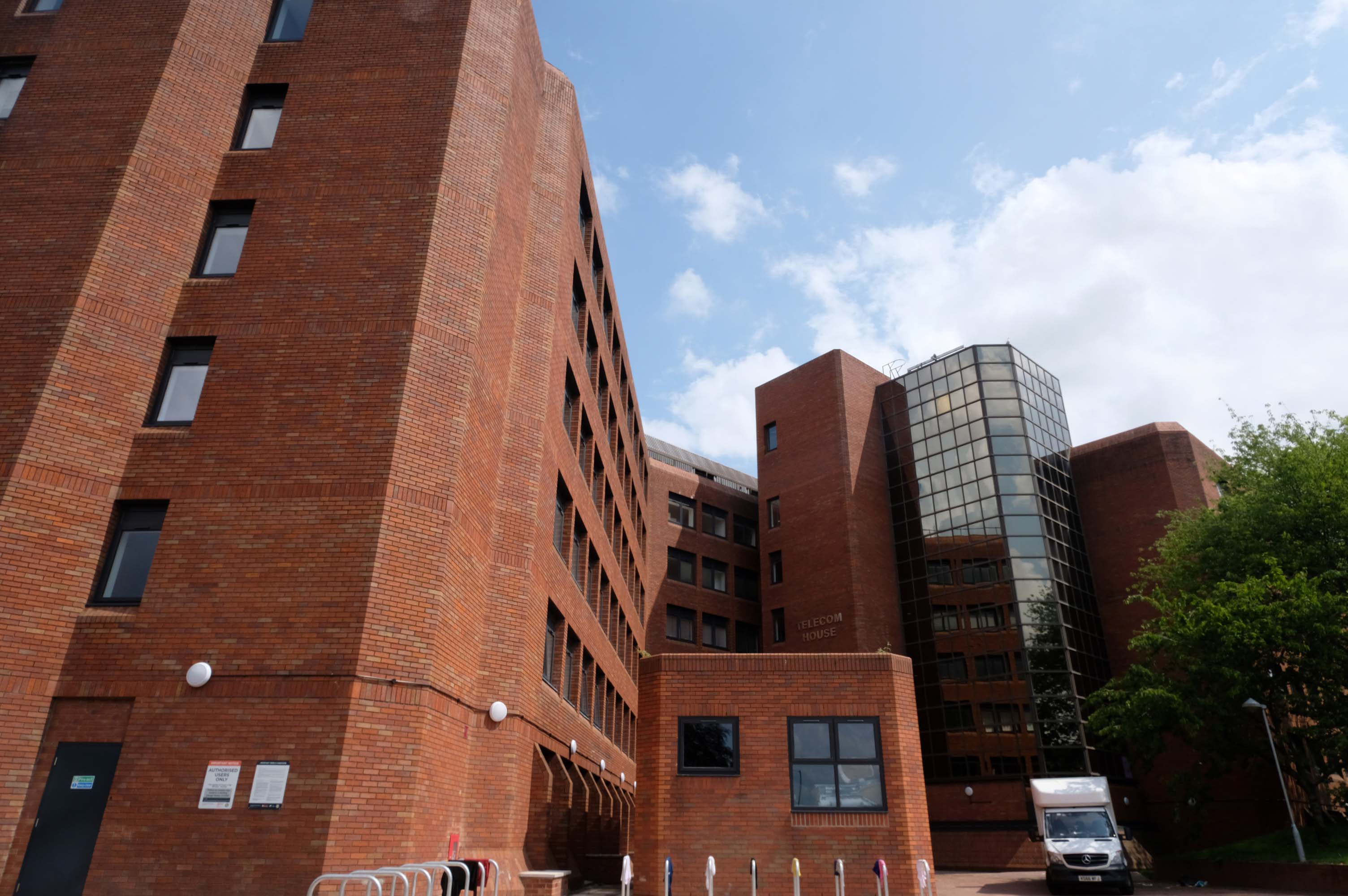
Off to Church Street and Telecom House
Sold for £4.25 million to Empire Property in 2022.
It had previously been sold for more than £3m in July 2018, also for use for apartments, to Inspired Asset Management which later went into receivership.
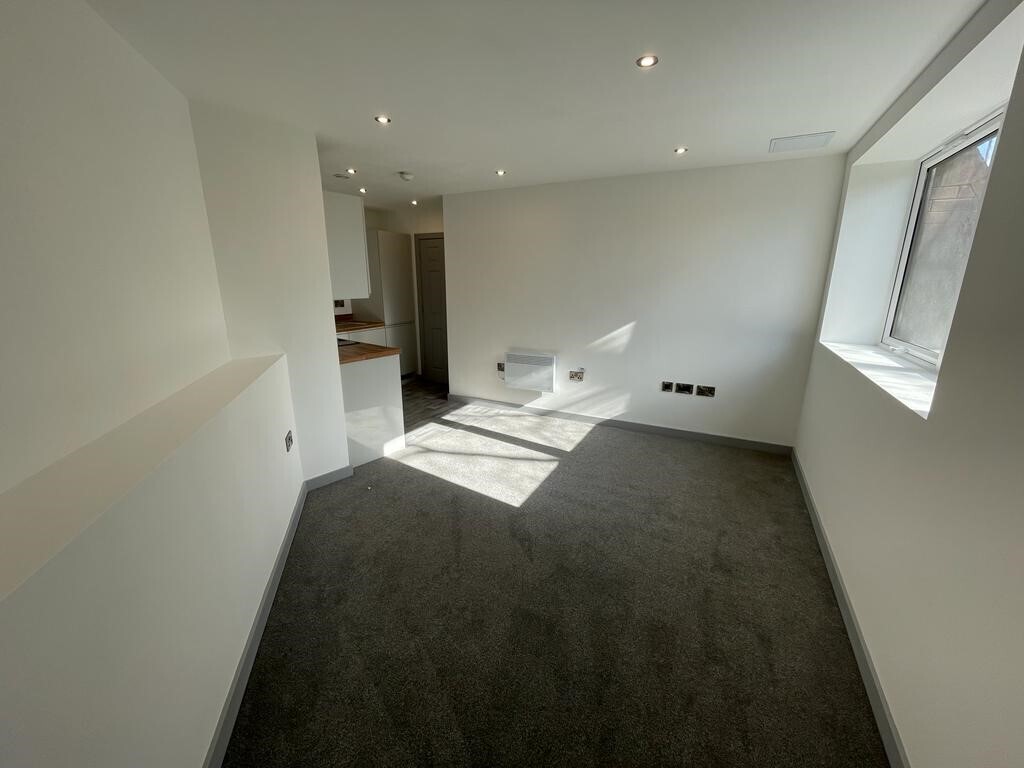
Located on a popular apartment block on Church street in the Wolverhampton centre, this 1 bedroom property has been newly renovated throughout and compromises an entrance hallway, open plan lounge/kitchen with in built appliances, shower room and double bedroom.
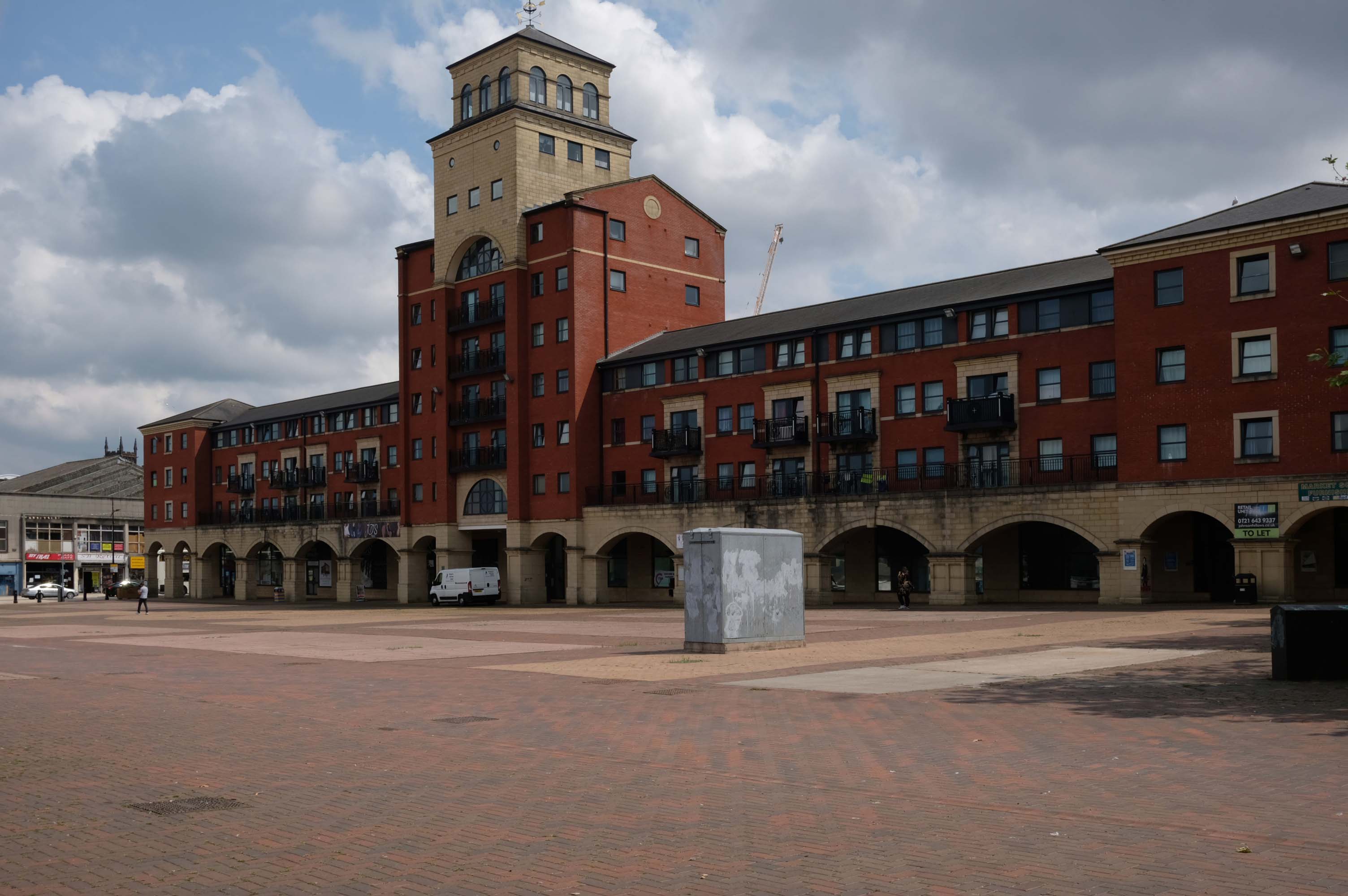
Next to this modern piazza New Market Square – Architects: Nicol Thomas from a concept by head of planning Costas Georghiou.
Formed from the former Market Square, a mix of flats and shops opened in 2004, in an Italianate version of the modish school of streaky bacon.
In 2021 the Coca-Cola Christmas Truck visit to the Midlands was cancelled.
It was meant to arrive at Market Square in Wolverhampton at 11am today but failed to show up.
One fan had waited since 7am this morning to see the Coca-Cola truck.
While schoolchildren were left gutted when the truck didn’t turn up – and one boy had been so excited his mother said he had been talking about the red truck all morning.
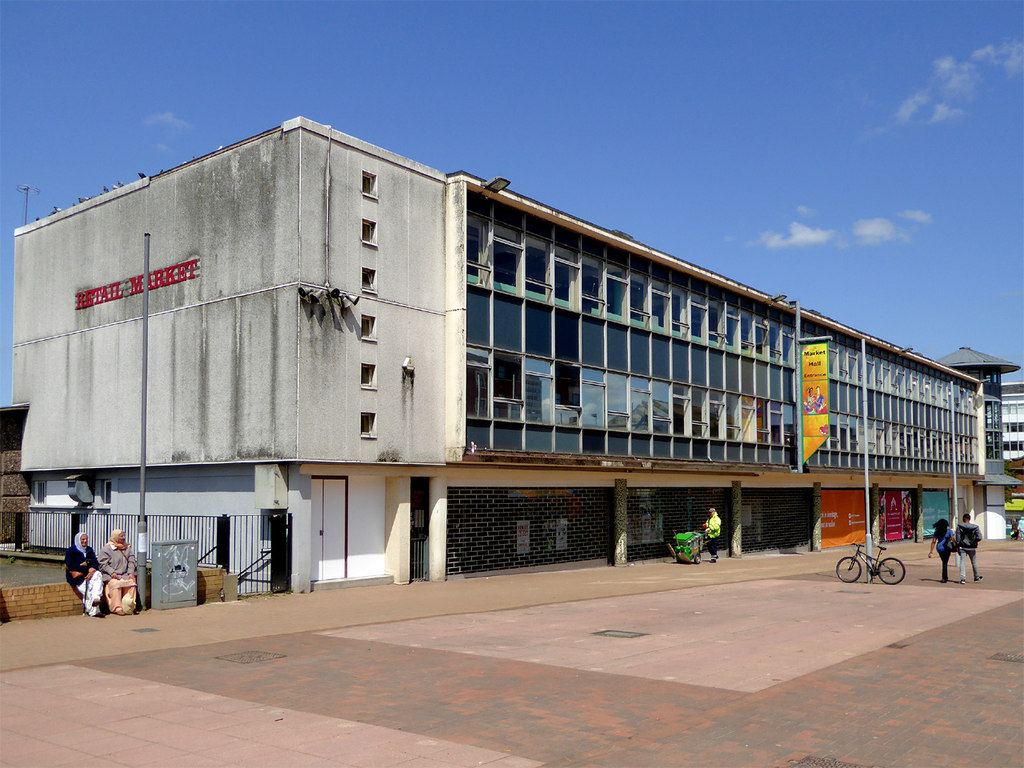
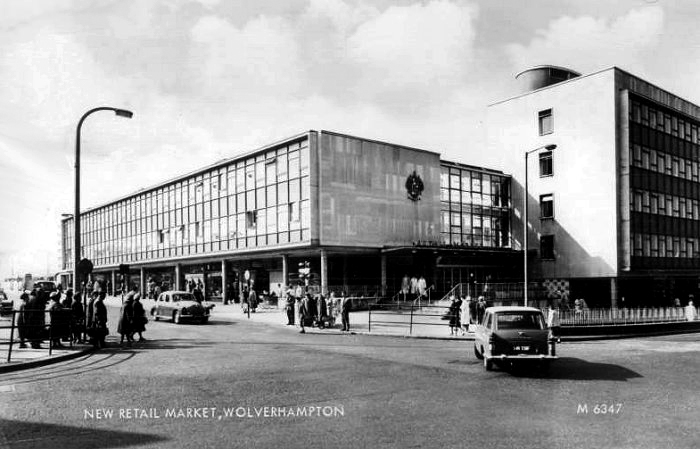
Retail Market – Late 1950s market hall and offices above.
Architects: Borough Surveyor.
Excellent example of the Festival of Britain style of architecture, won Civic Trust Award 1960.
Locally Listed March 2000.
demolished January 2017.
Photo: Roger Kidd
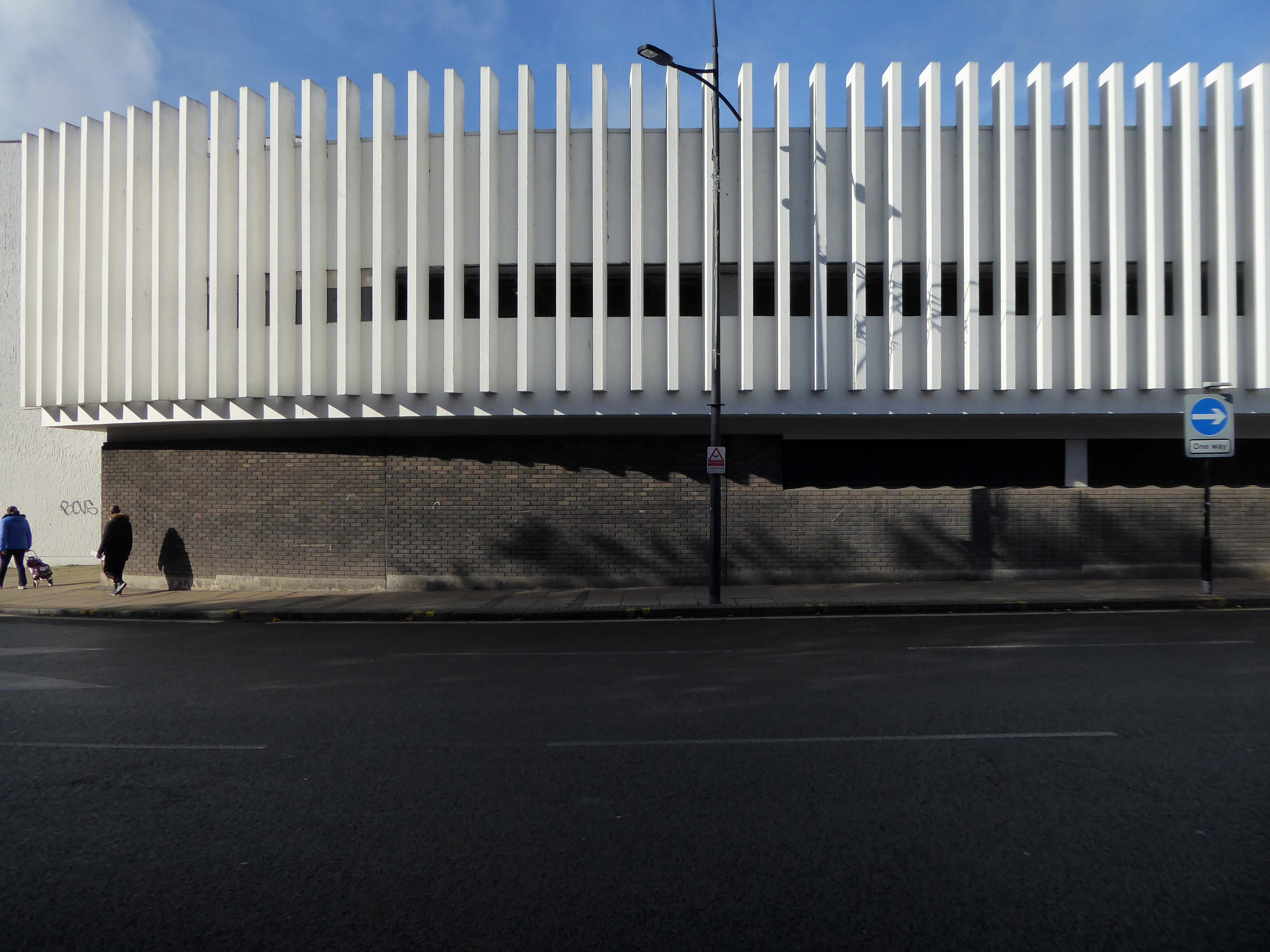
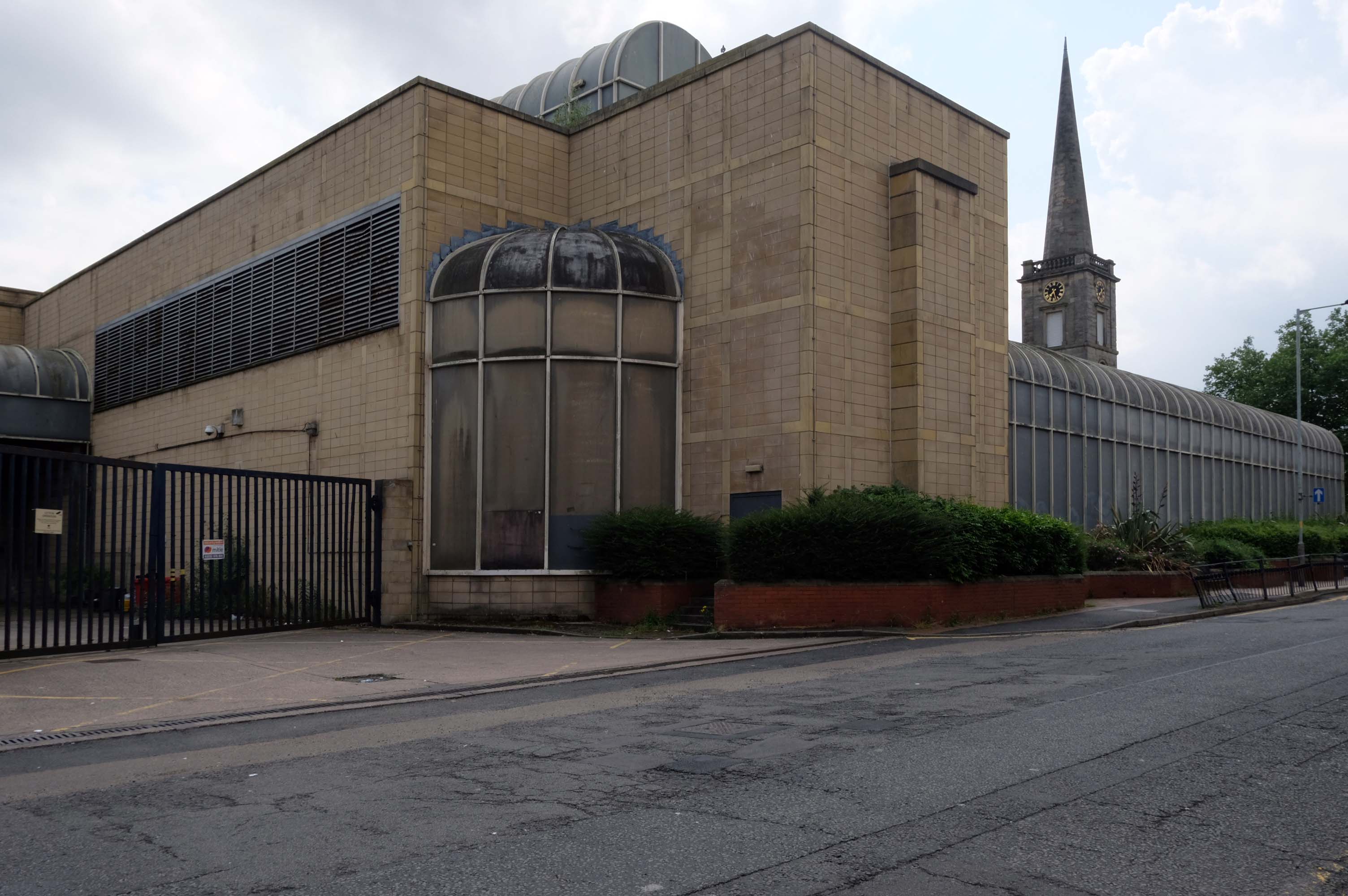
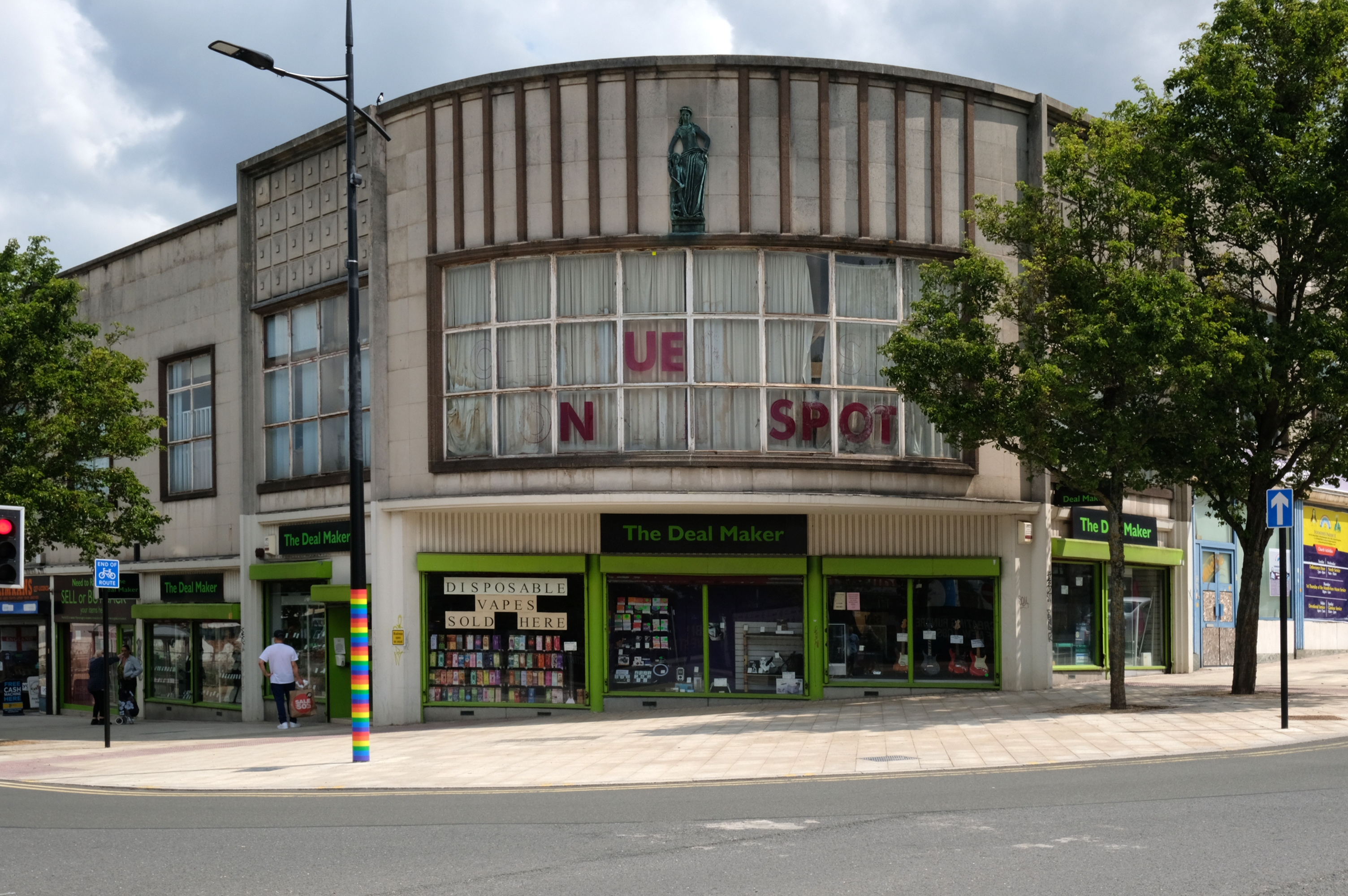
This development that wraps itself around Salop, Skinner and School Streets appears to be of a similar period to the Retail Market – and sports a Lady Wulfrun in relief.
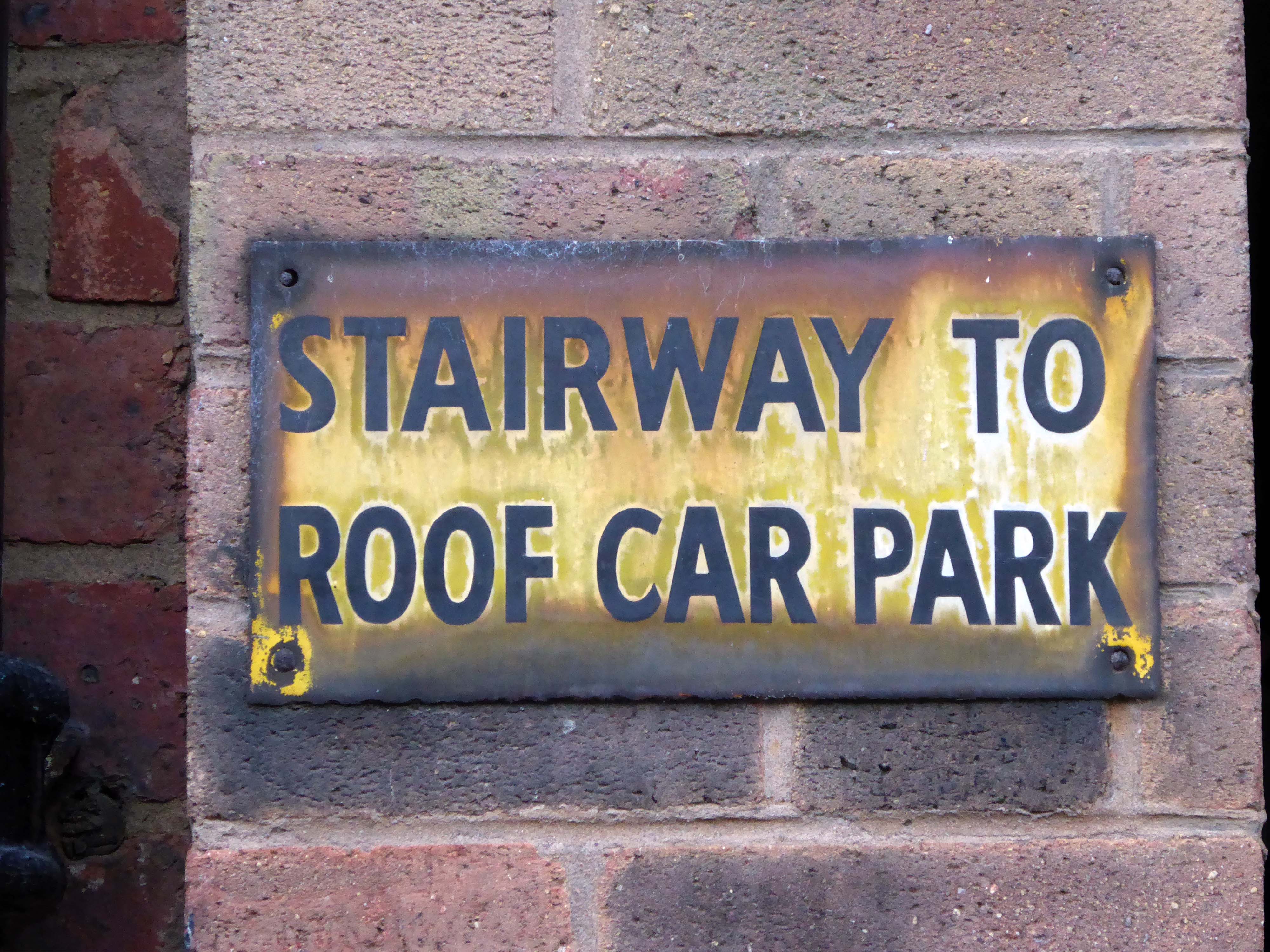
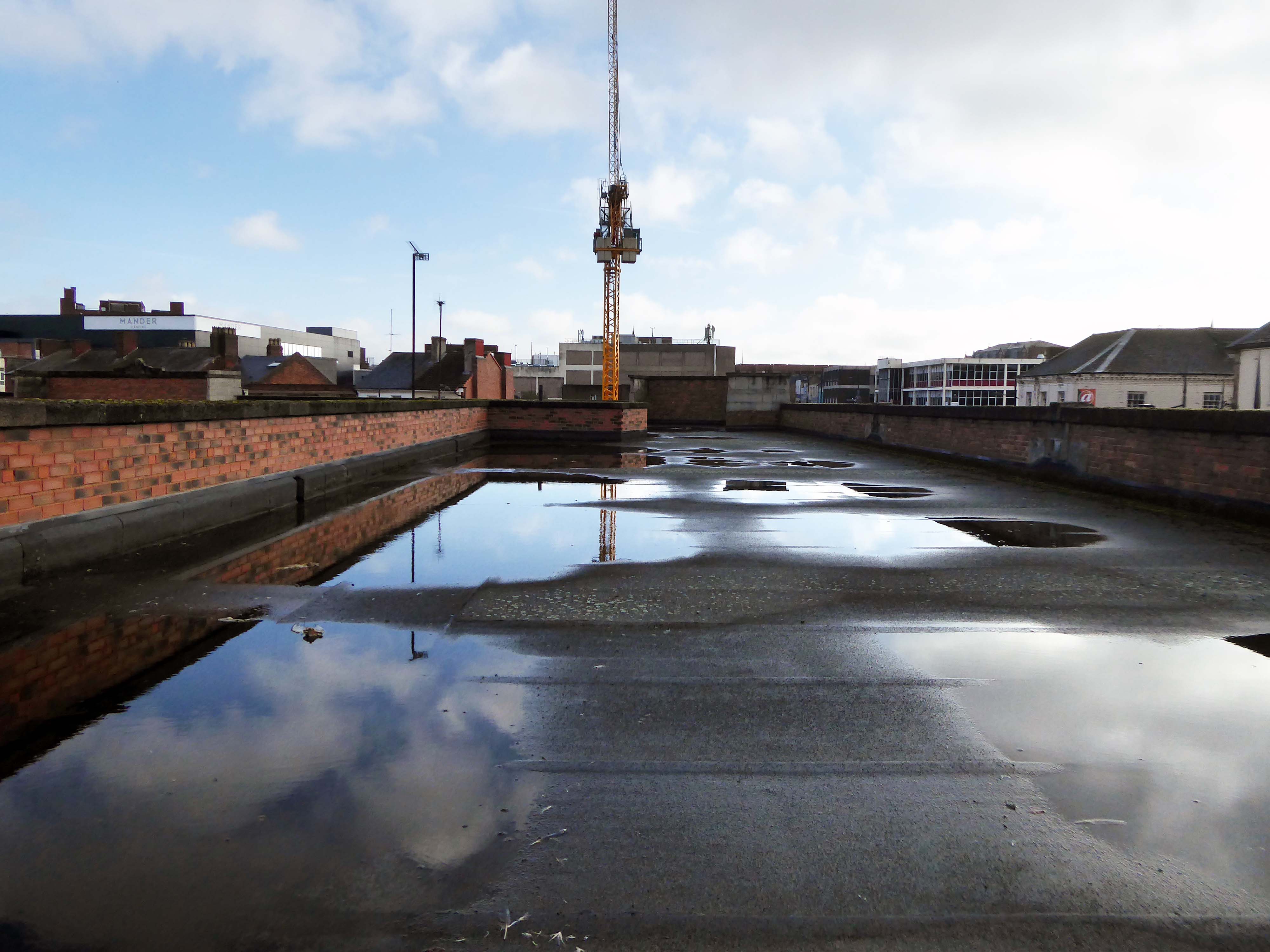
There is access to its roof top car park.
And also an exit back to street level.
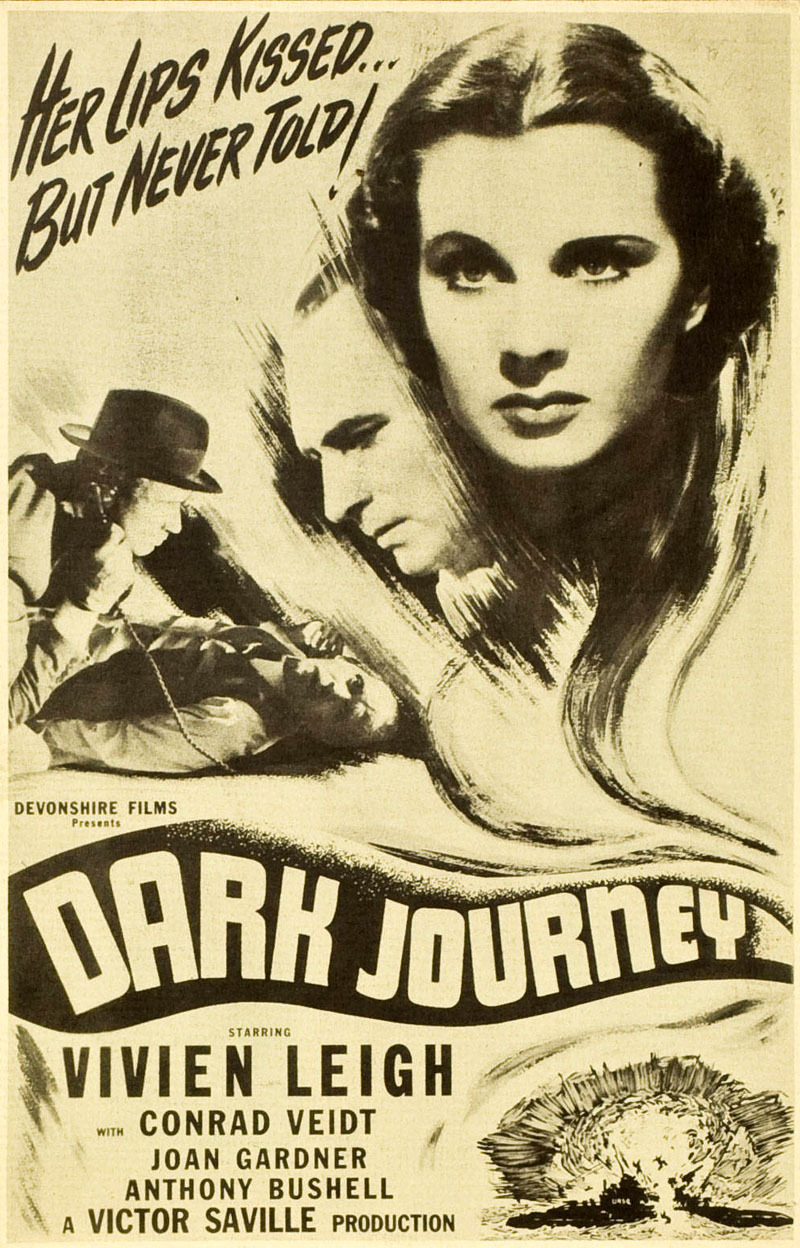
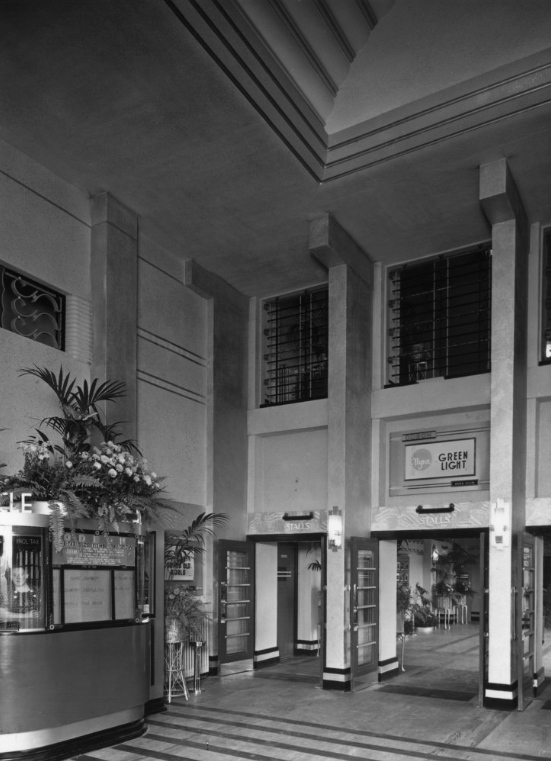
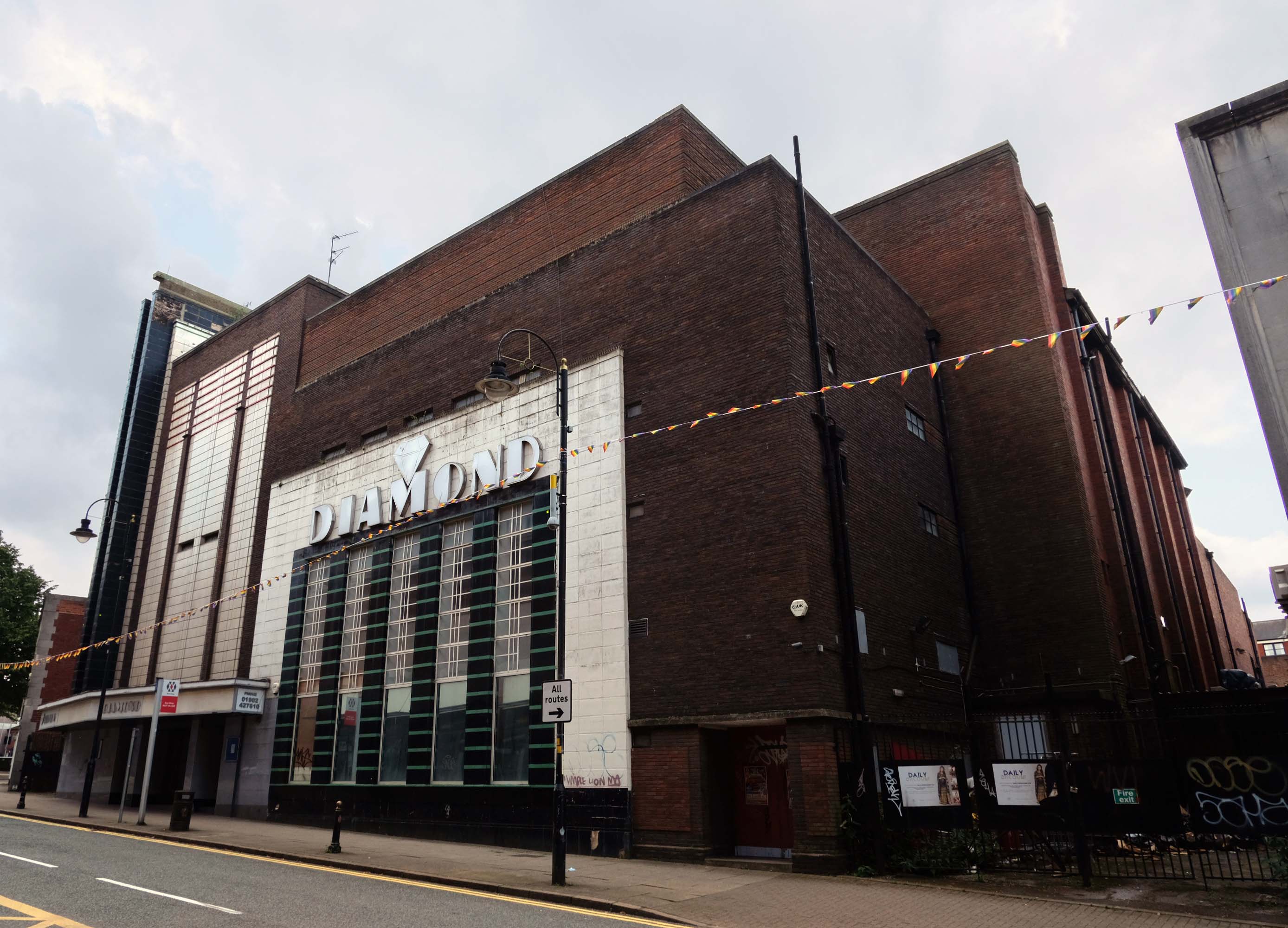
Where we find at street level the former Odeon Cinema, opened on 11th September 1937 with Conrad Veidt in Dark Journey.
In October 2000, the former Odeon was designated a Grade II Listed building by English Heritage.
RIBA pix
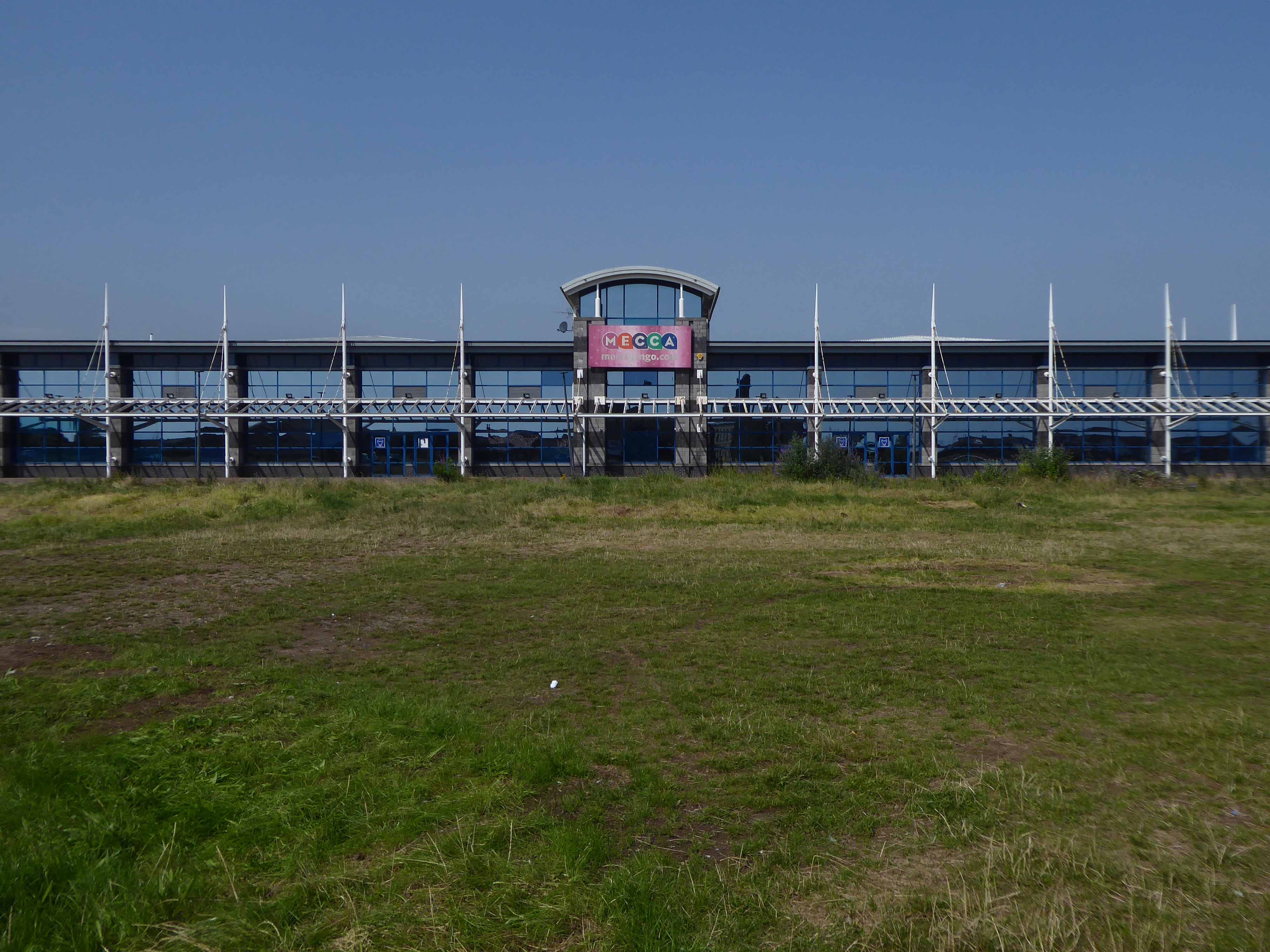
In recent years it was a Mecca Bingo Club, but this was closed in March 2007 In October 2009, it had been refurbished and re-opened as the Diamond Banqueting Suite. In April 2021 police raided the vacant building to discover an illegal cannabis farm operating in the building.
Four men were arrested.
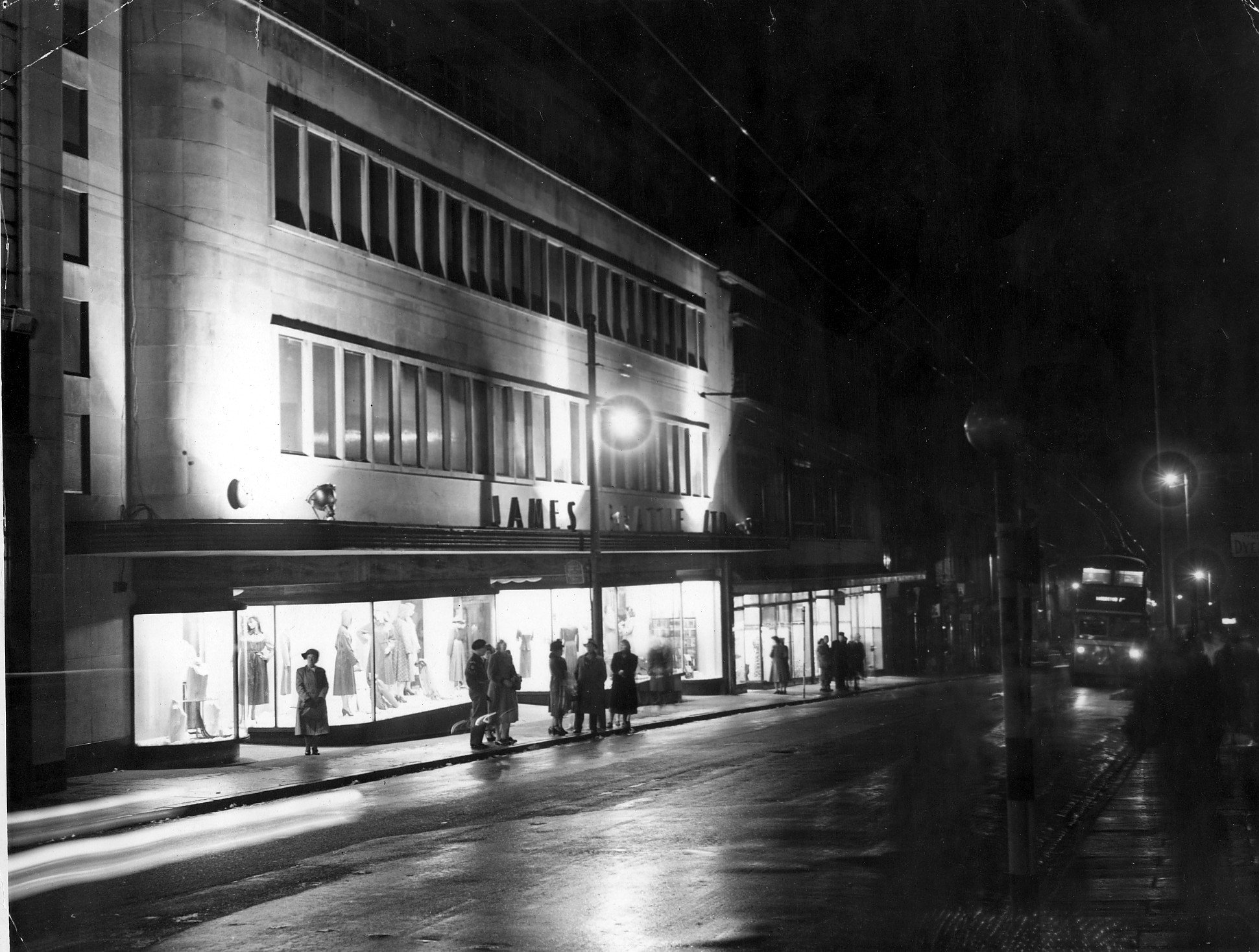
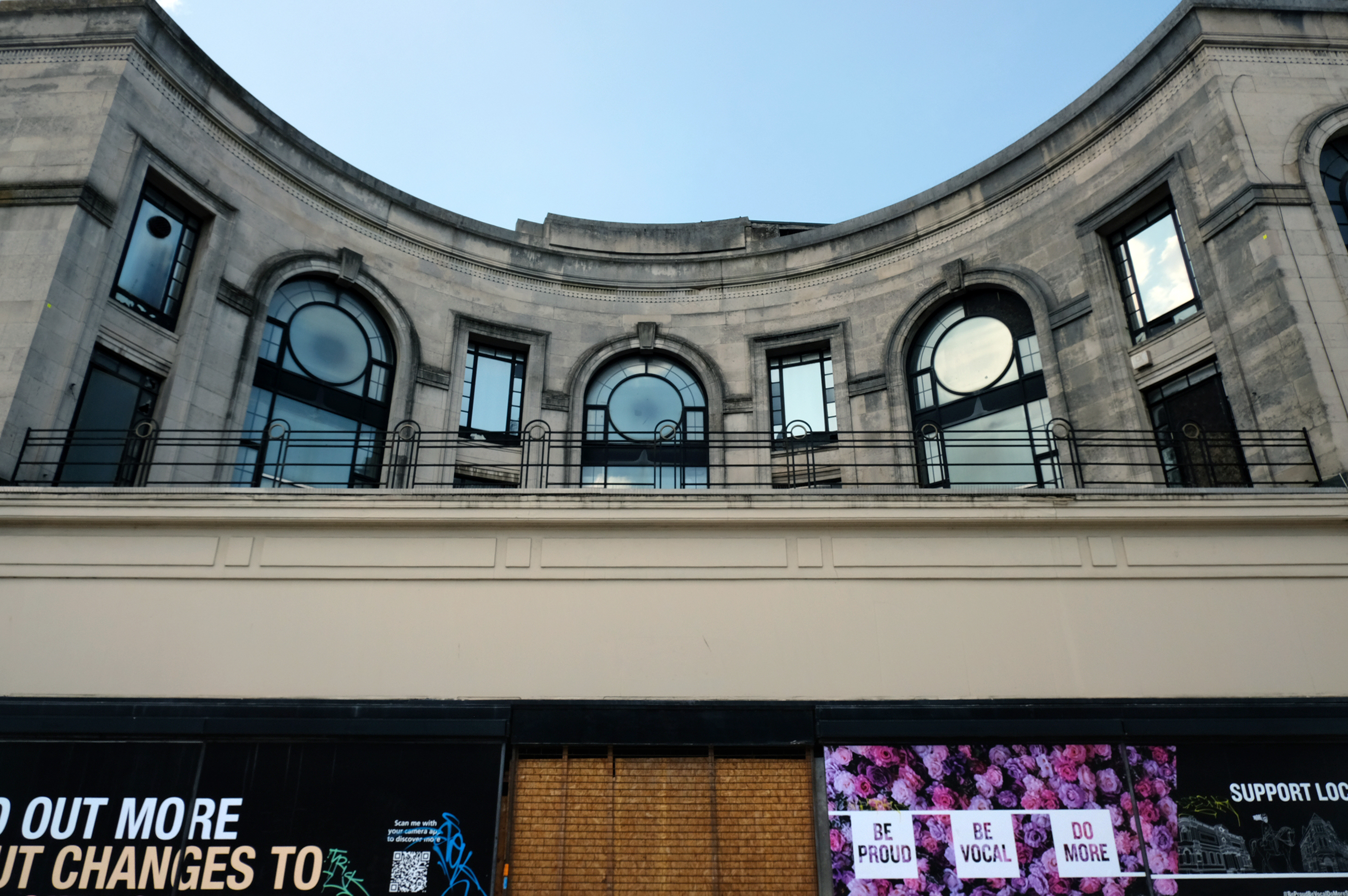
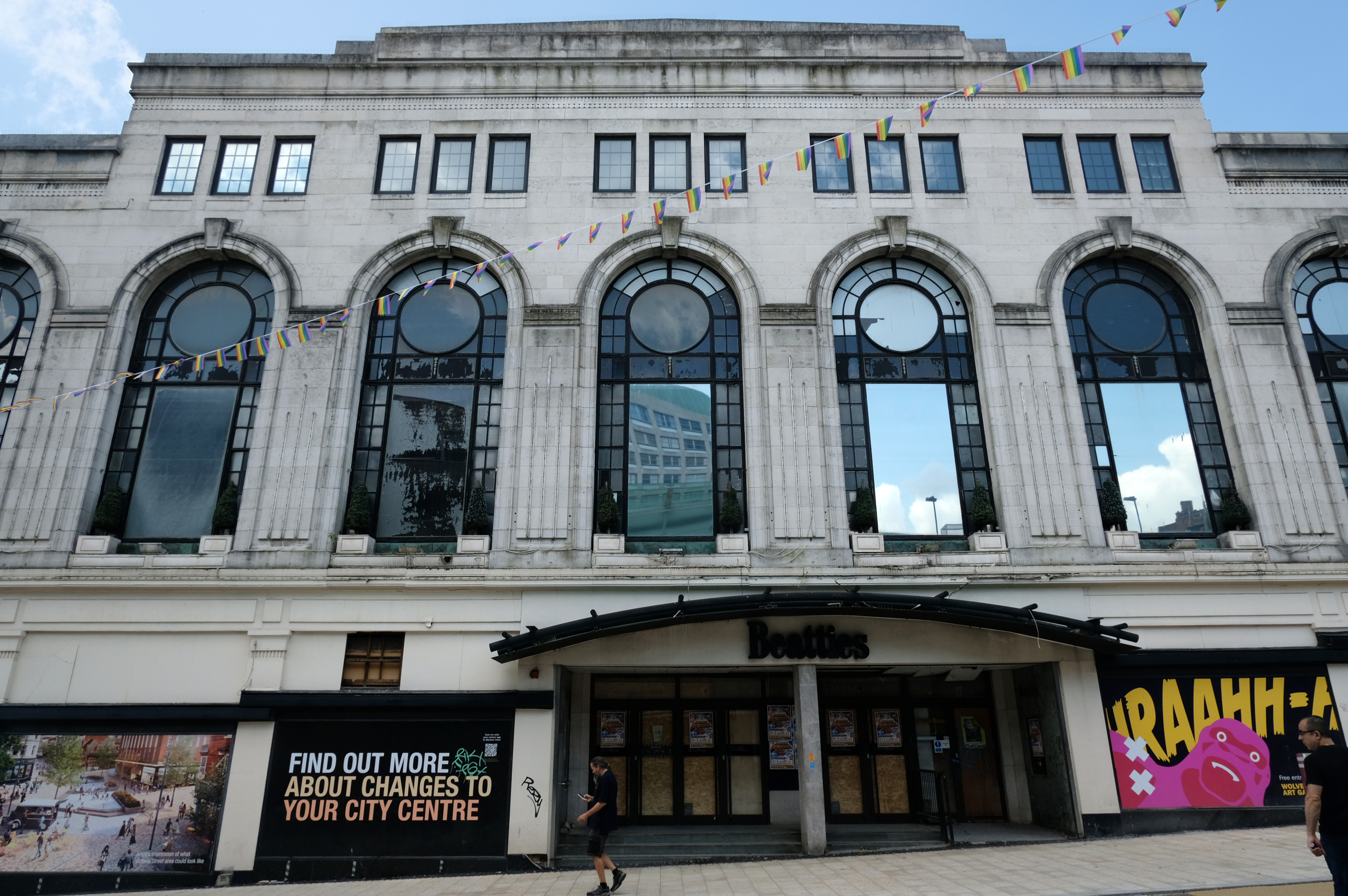
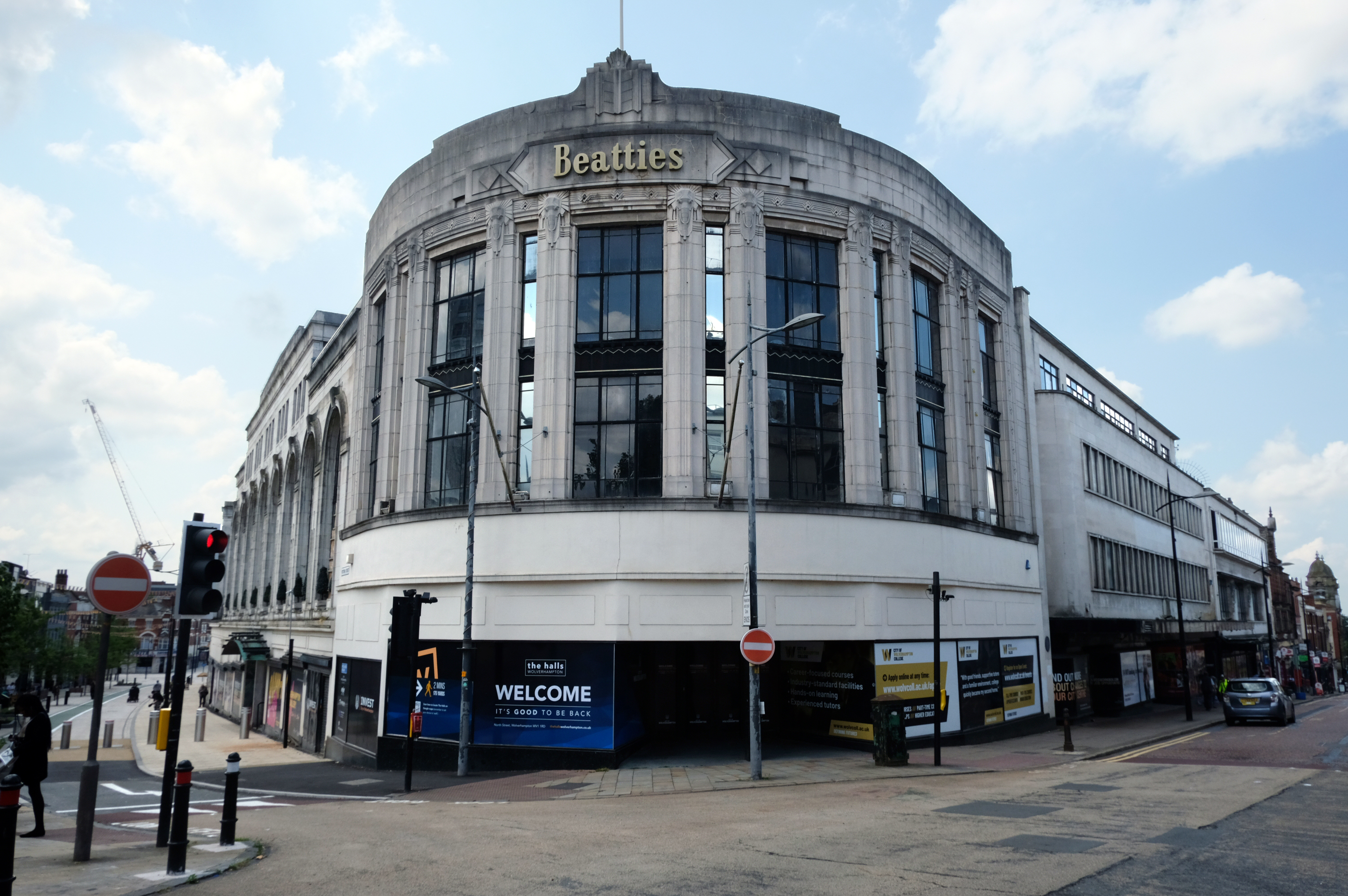
Let’s take a turn around the corner to Victoria Street where we find the complex of Beatties Buildings.
Architects: Lavender, Twentyman and Percy 1920’s – 30’s
The C20 Beatties store is a multi-period site developed first in the 1920s-30s. A Burton’s men’s clothes shop was built on a curved corner site at Victoria St/Darlington St and Beatties themselves replaced their existing Victoria St store in the 1930s with a building by local architects Lavender, Twentyman and Percy. Beatties later acquired and incorporated the Burton’s shop into their store. These two buildings form the locally listed building to which were added a mid-C20 extension along Darlington St and a late-C20 development to the rear at Skinner St.
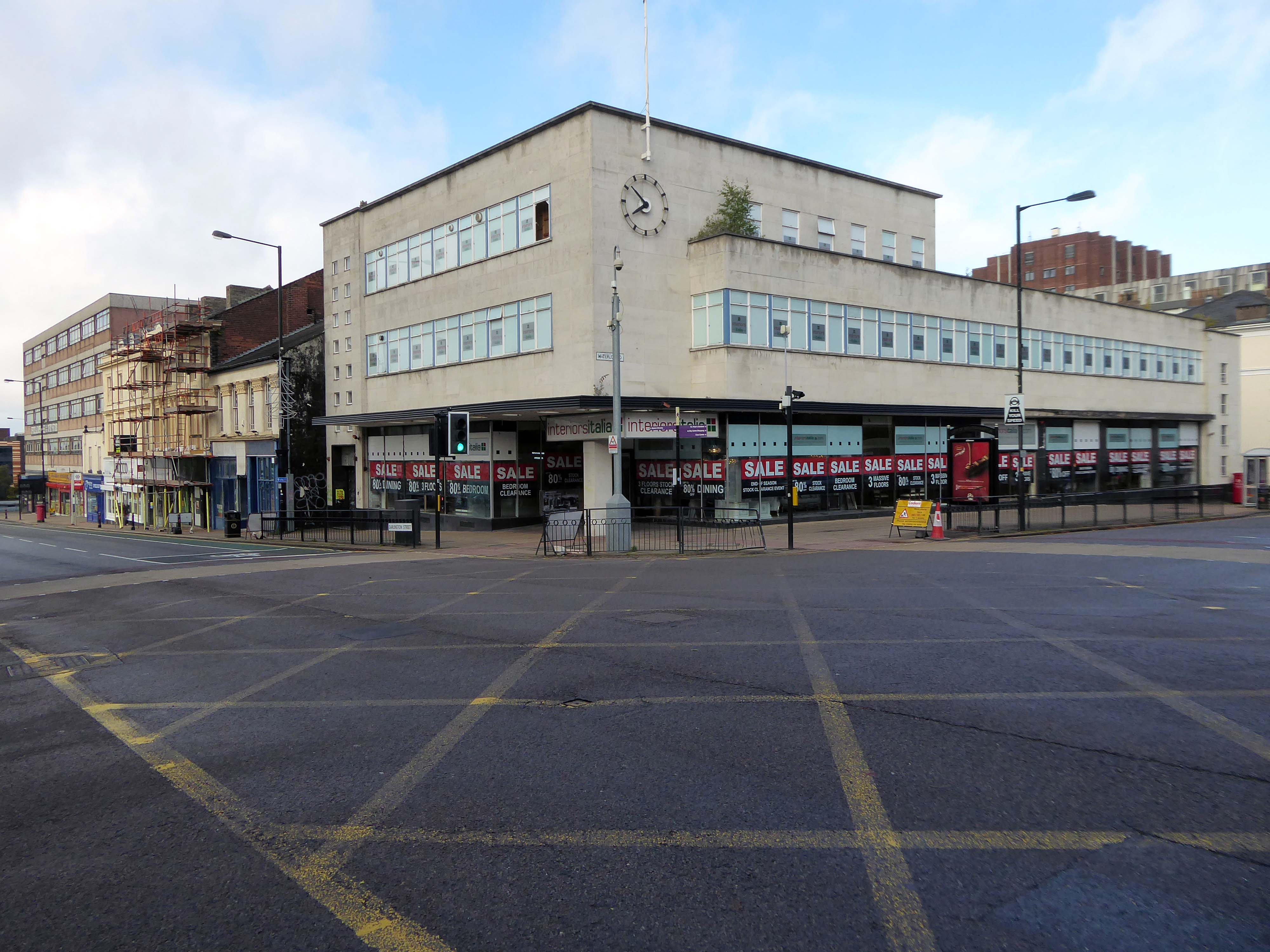
An imperious Portland stone clad mixed us block on Waterloo Road, with a delightful clock.
Formerly the Gas Showrooms then SunAlliance & LondonInsurance offices – aka Clock Chambers
The showroom in Darlington Street was also the centre of a radio network that controlled a fleet of service vans. This enabled customers to receive service within minutes of making a telephone call. Demonstrations of cookery, washing and refrigeration were given by the Gas Board’s Home Service Advisers and a number of the company’s engineers, who specialised in designing gas equipment for industrial processes operated an advisory service for manufacturers.
Architects: Richard Twentyman 1939.
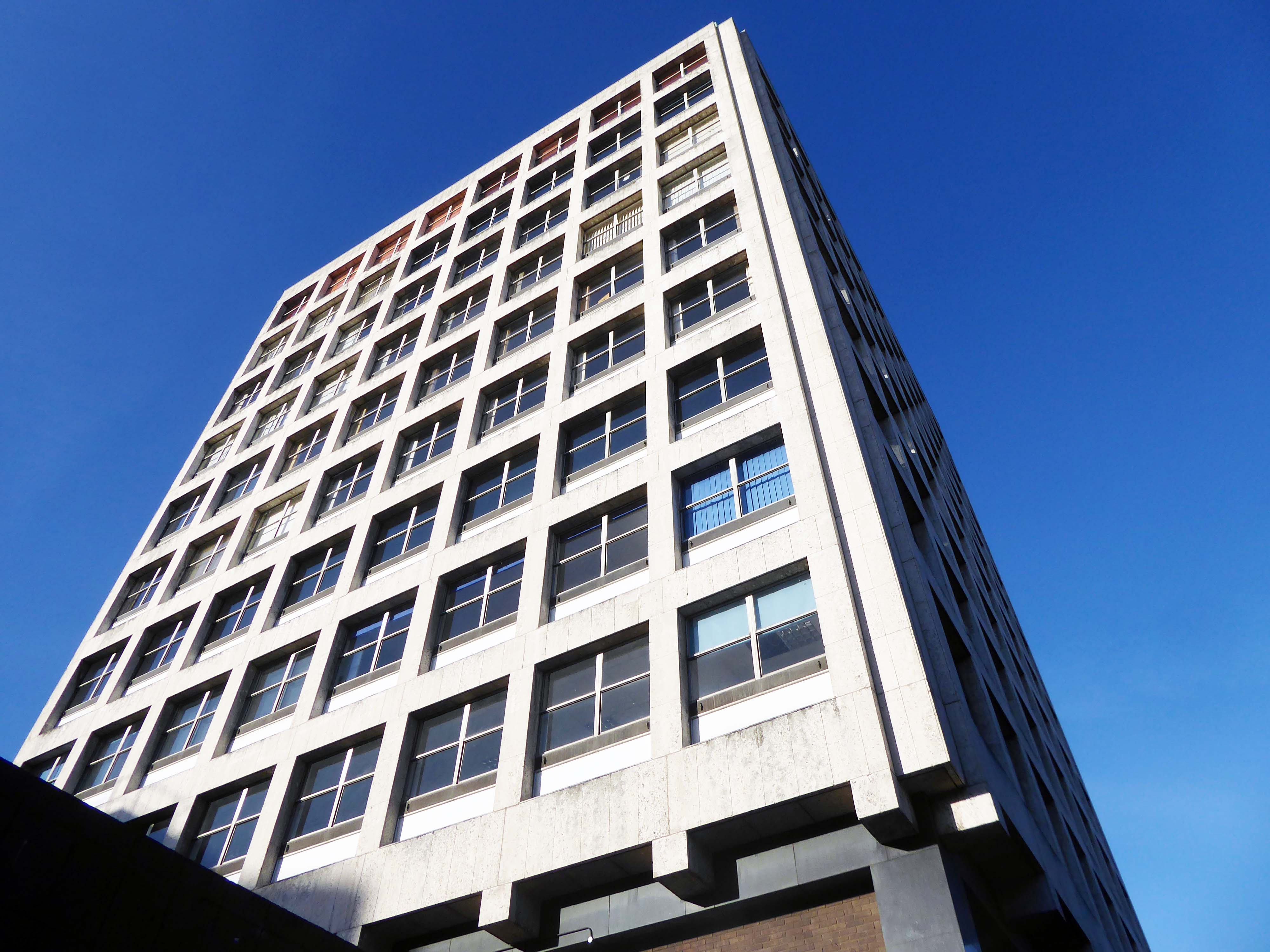
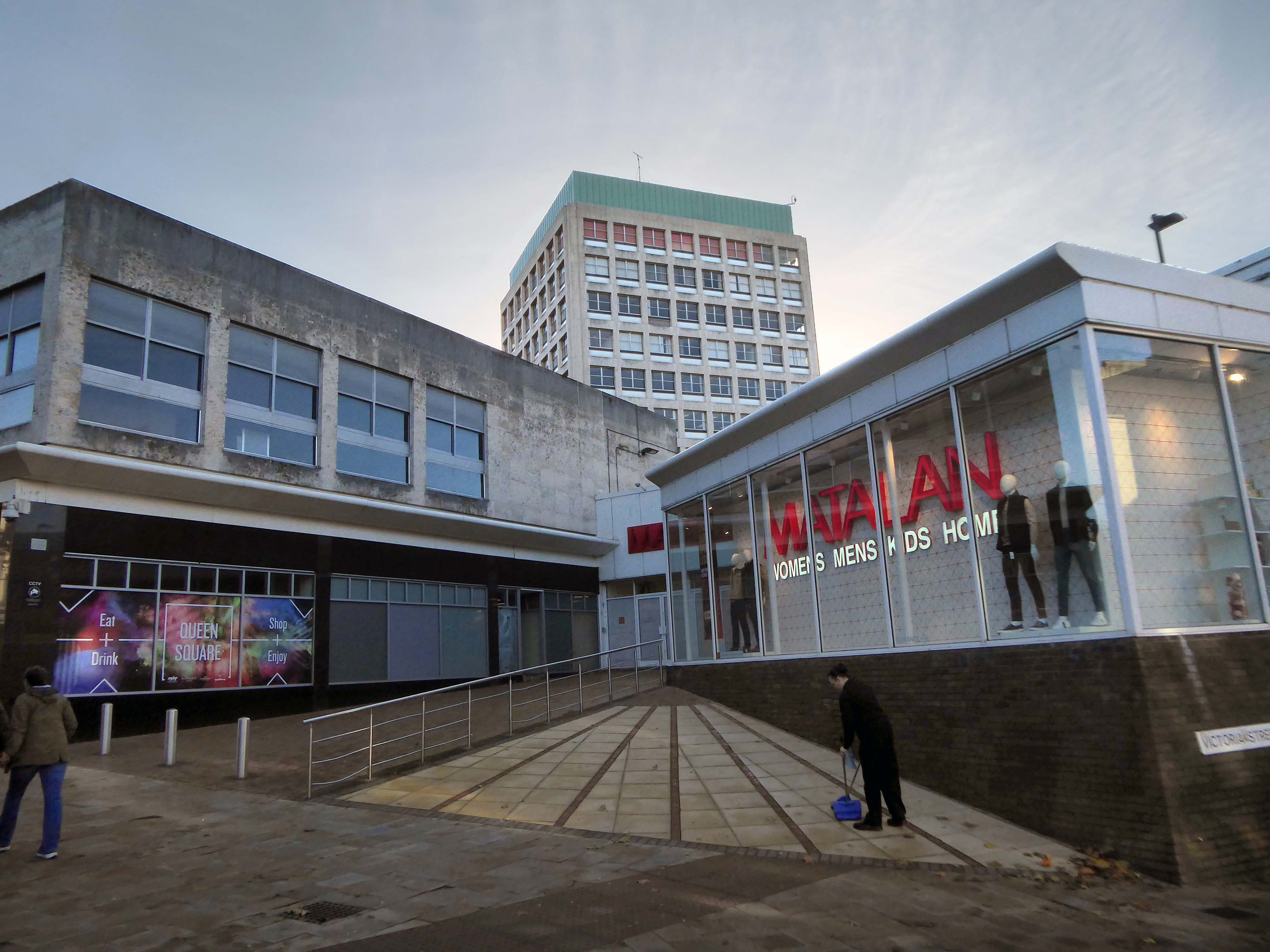
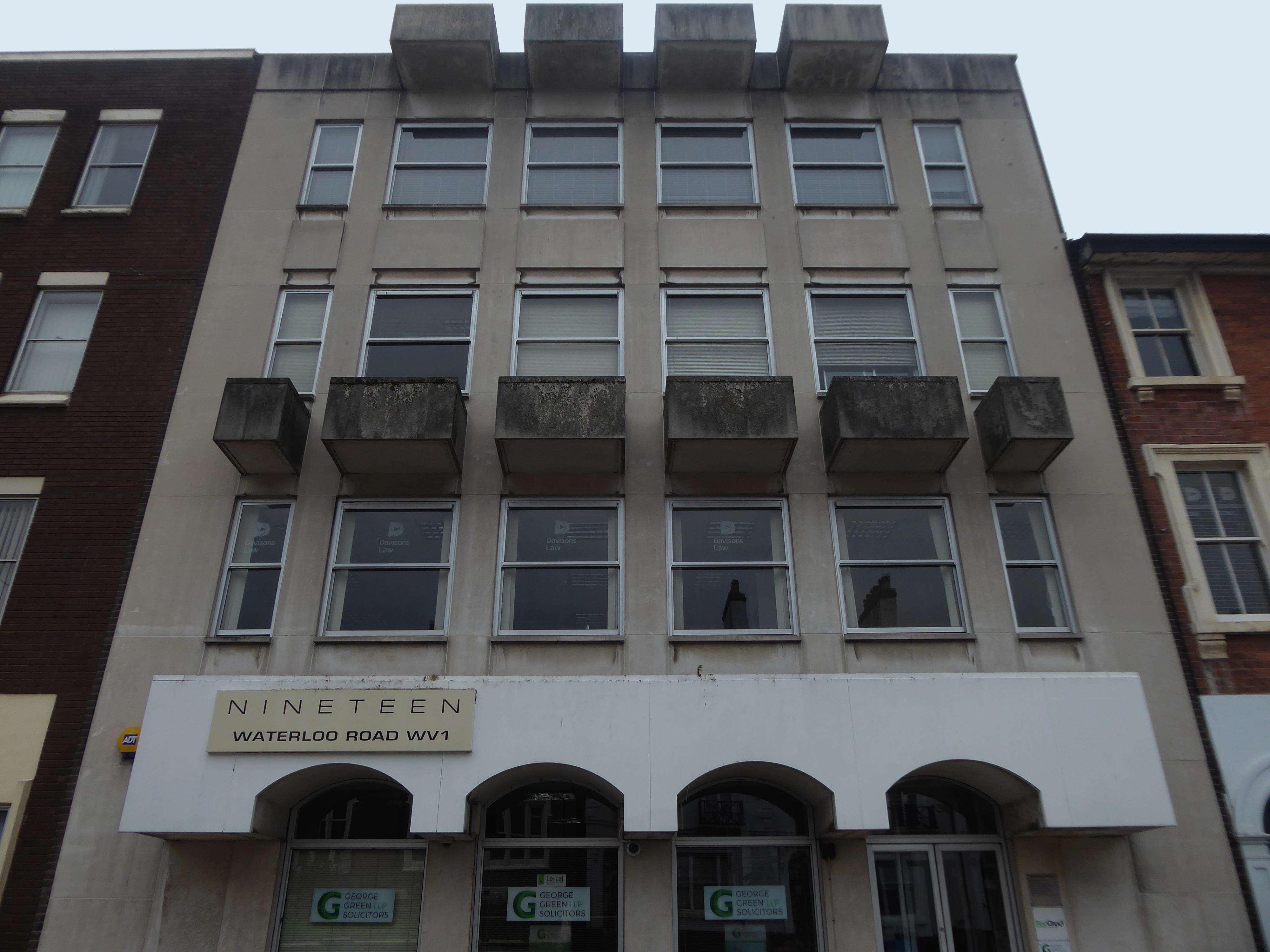
Nineteen Waterloo Road latterly First City House formerly home to Eagle Star Insurance 1970
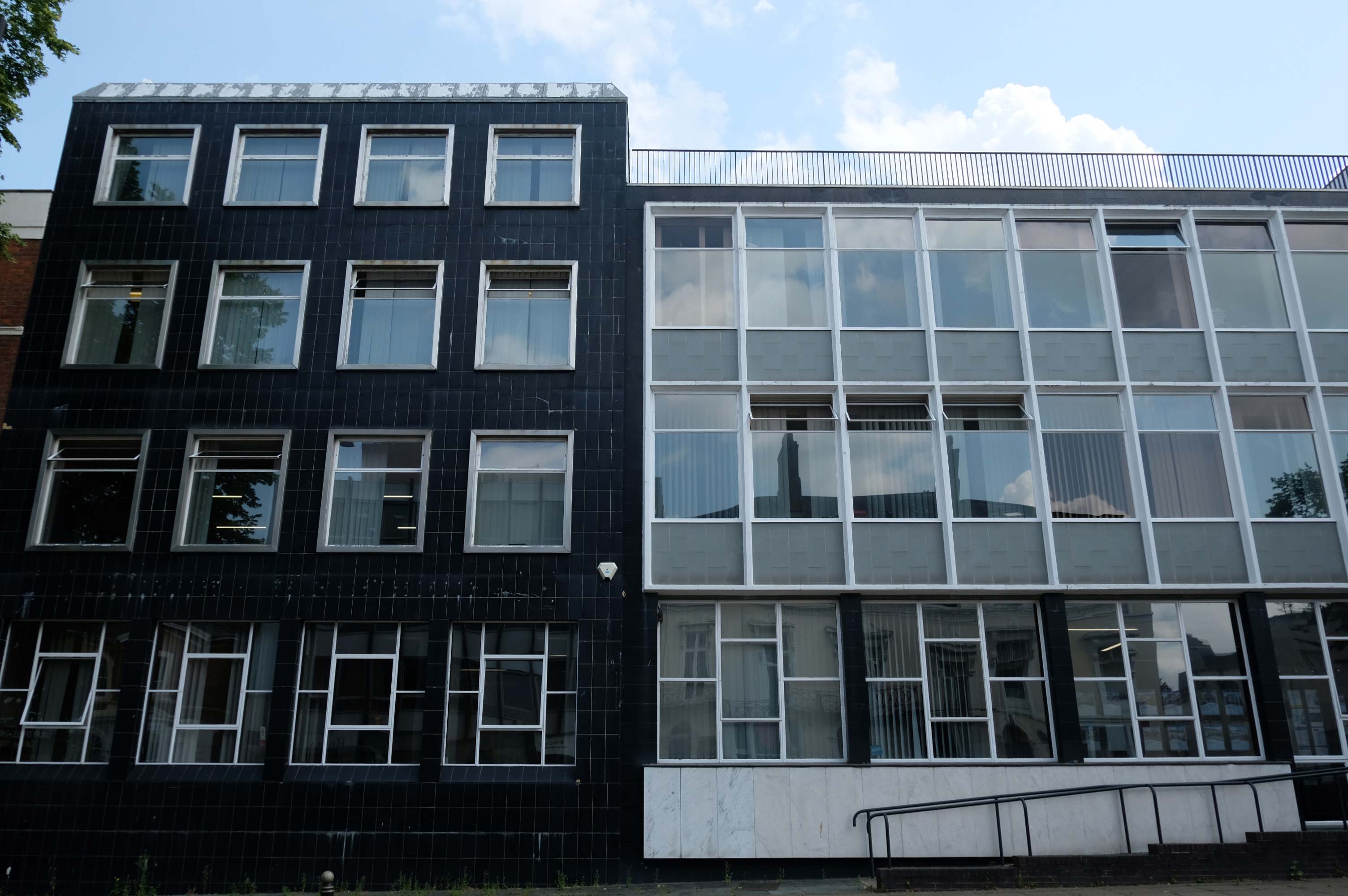
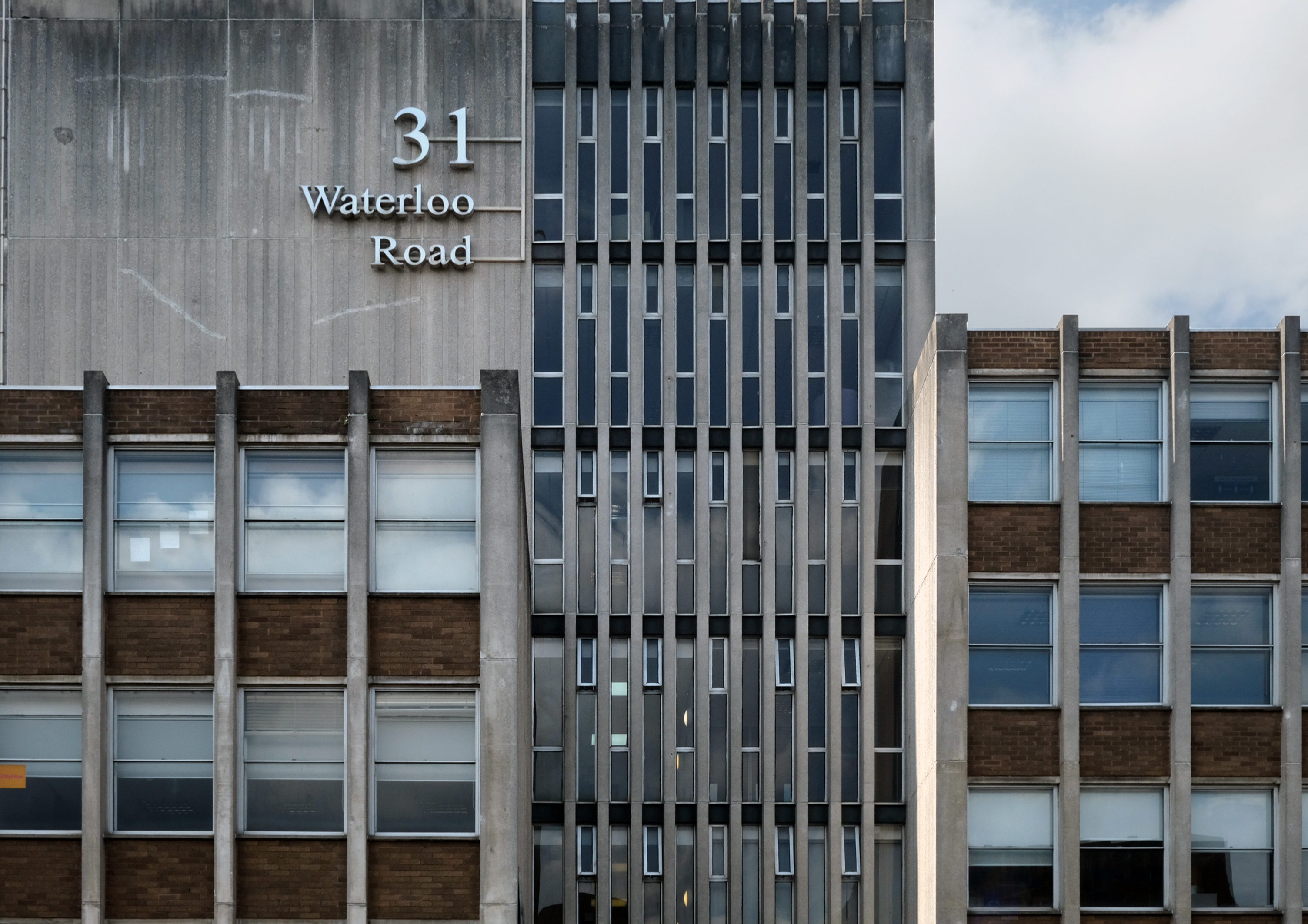
8-10 Waterloo Road architects: Richard Twentyman 1959 extended 1966.
One man who saw the wisdom of building a road infrastructure to deal with high volumes of traffic passing through Halifax and to provide convenient links to the M62.
That man was prominent town councillor John Burdock.
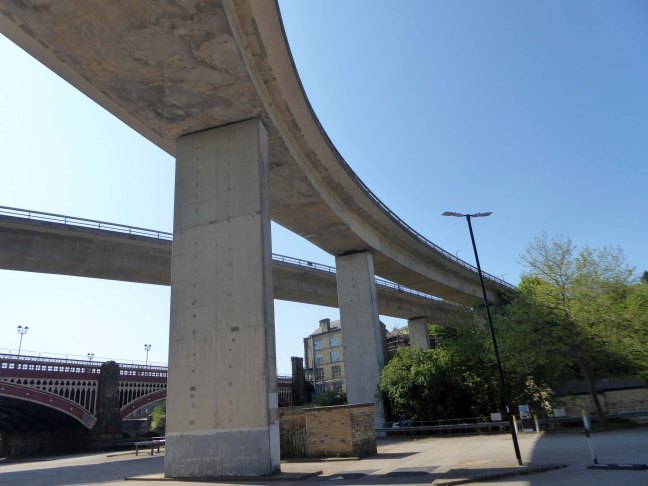
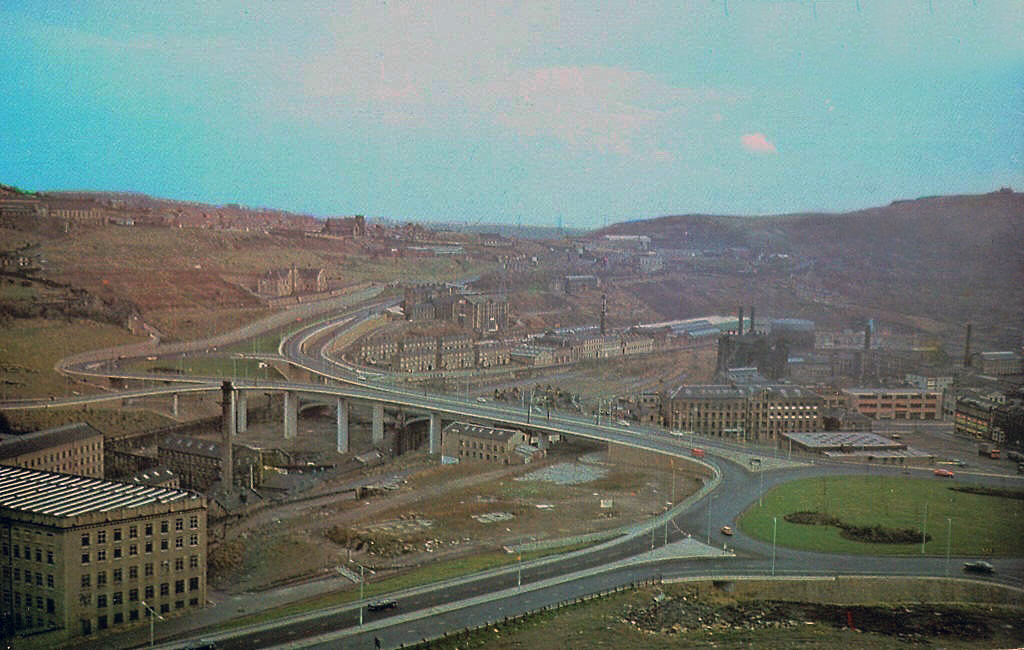
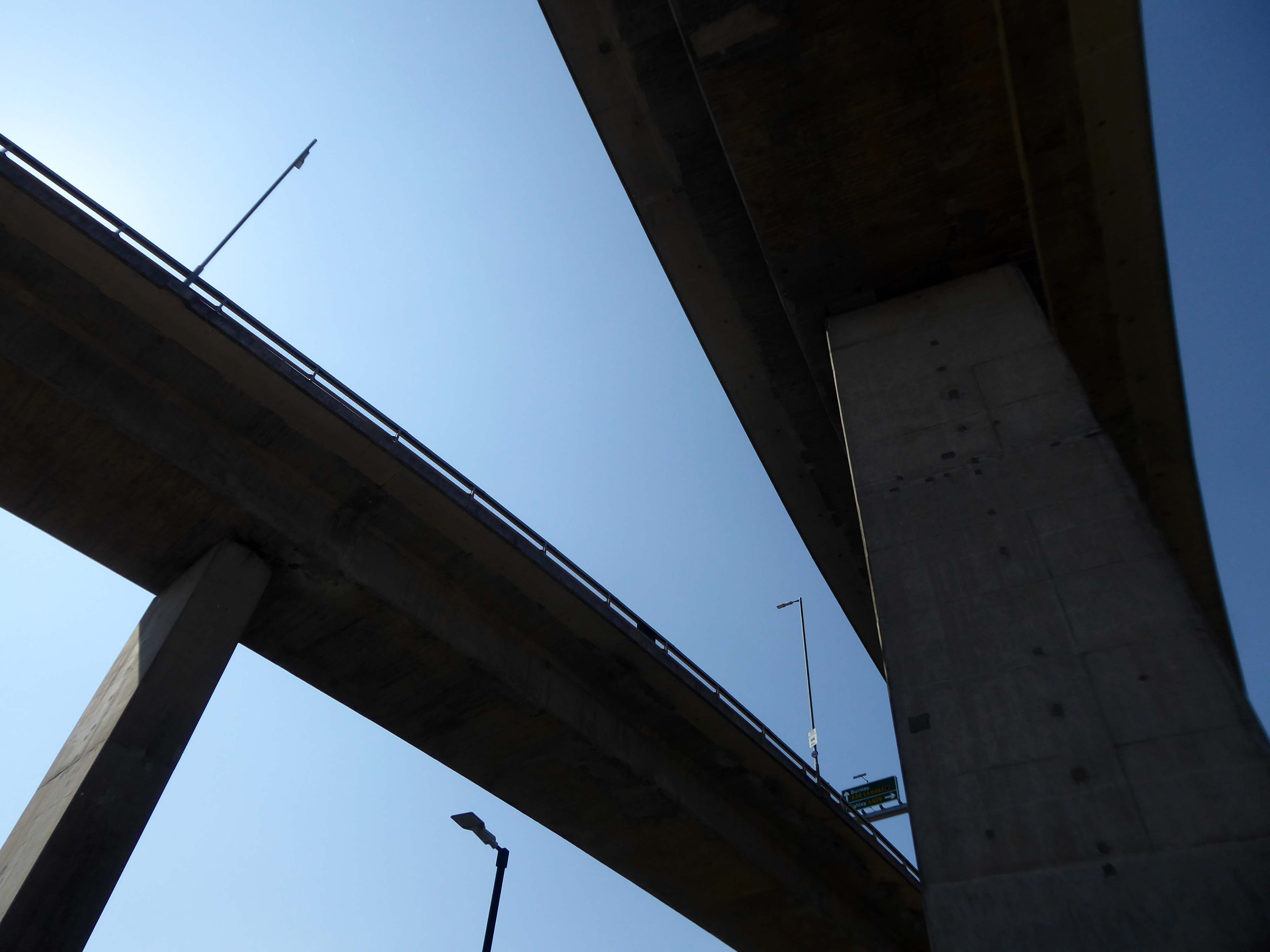
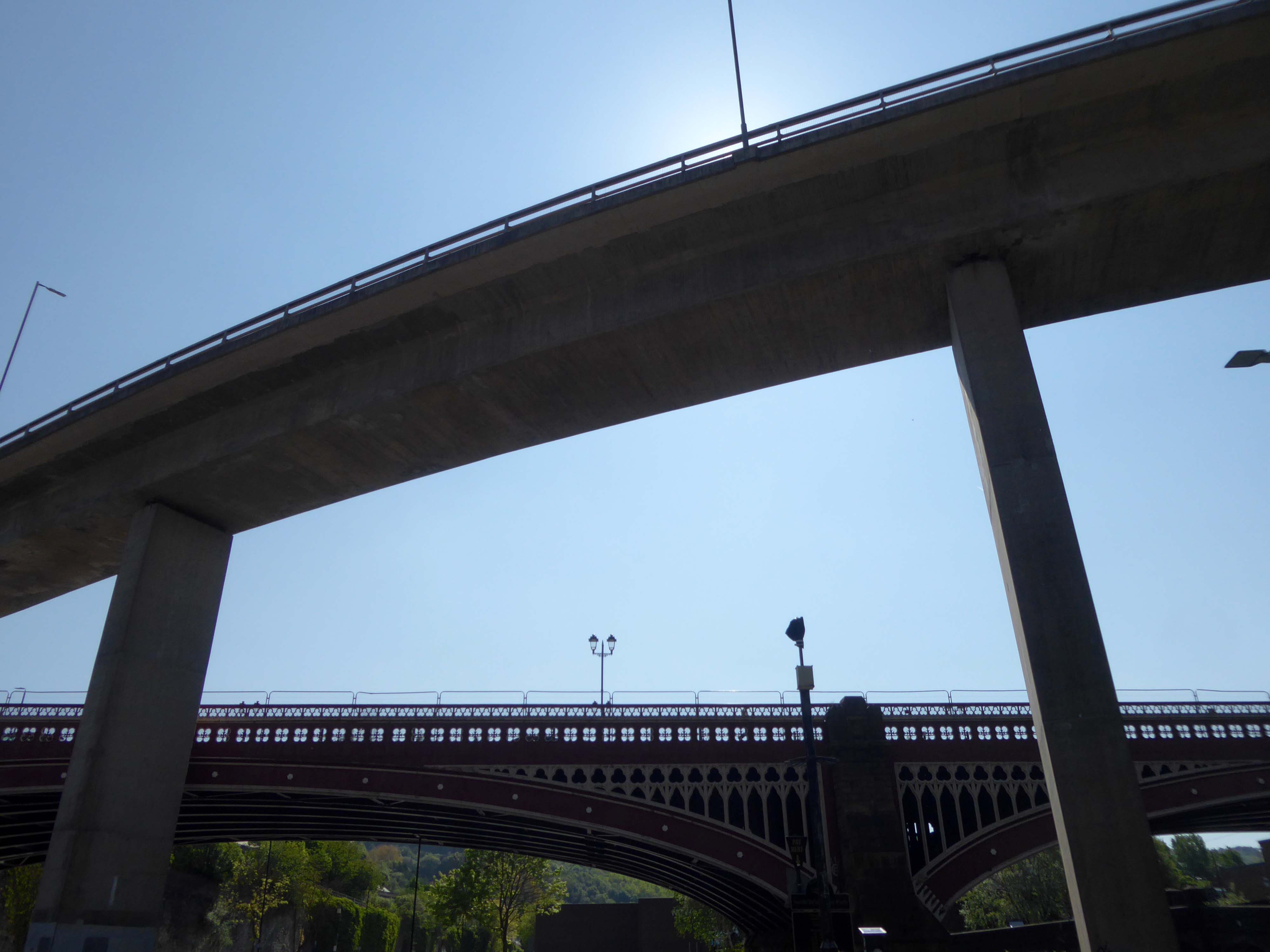
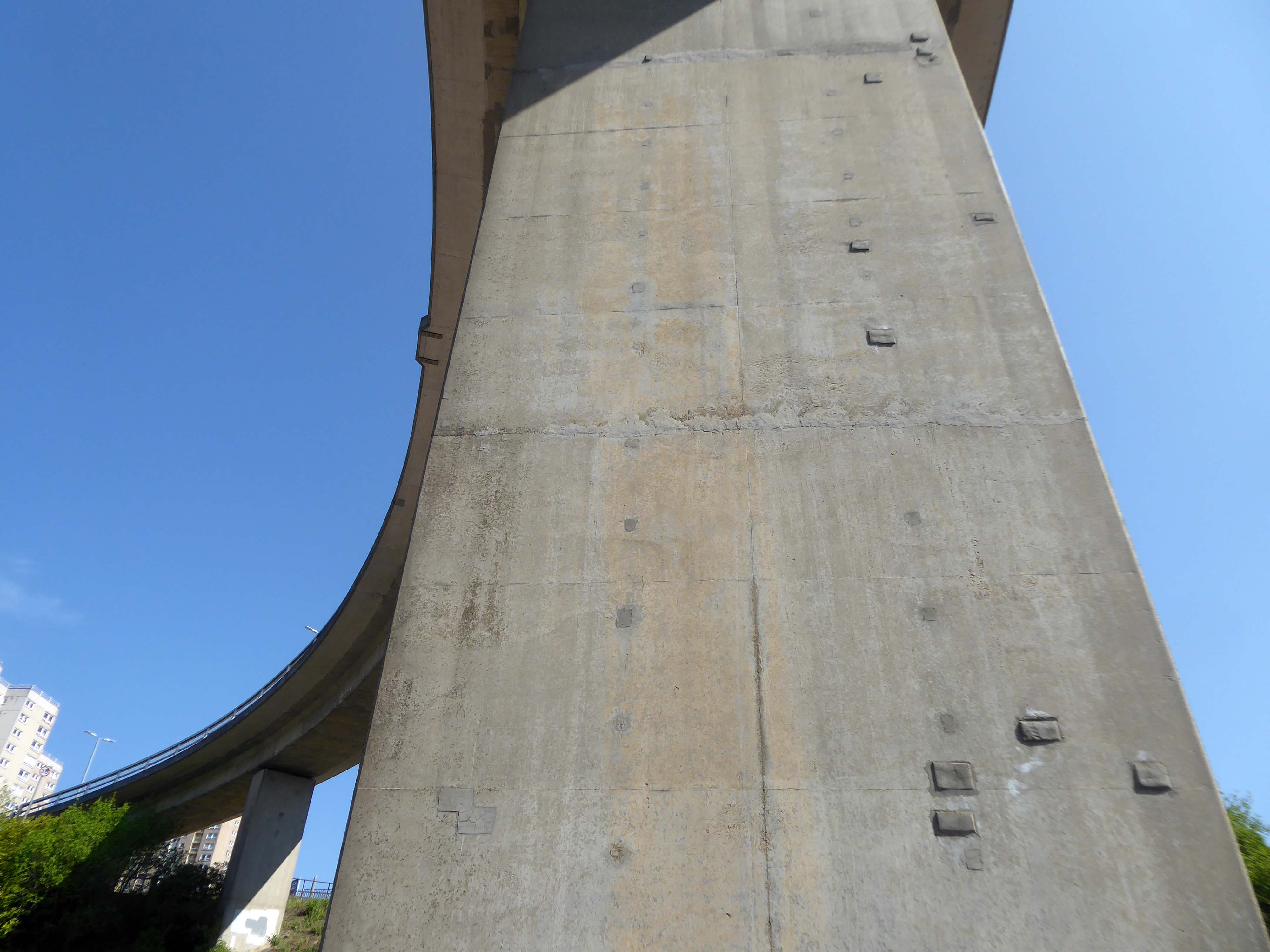
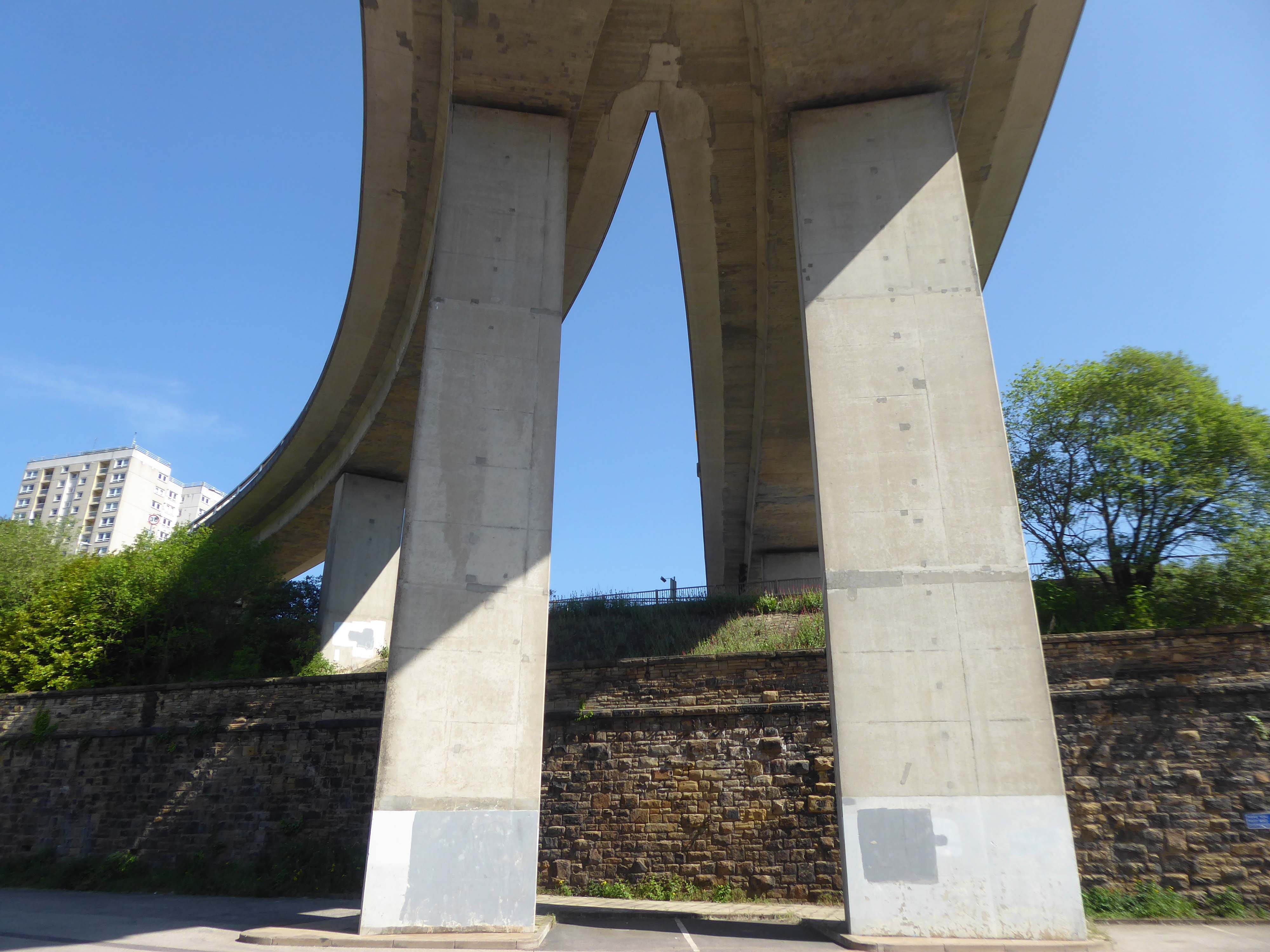
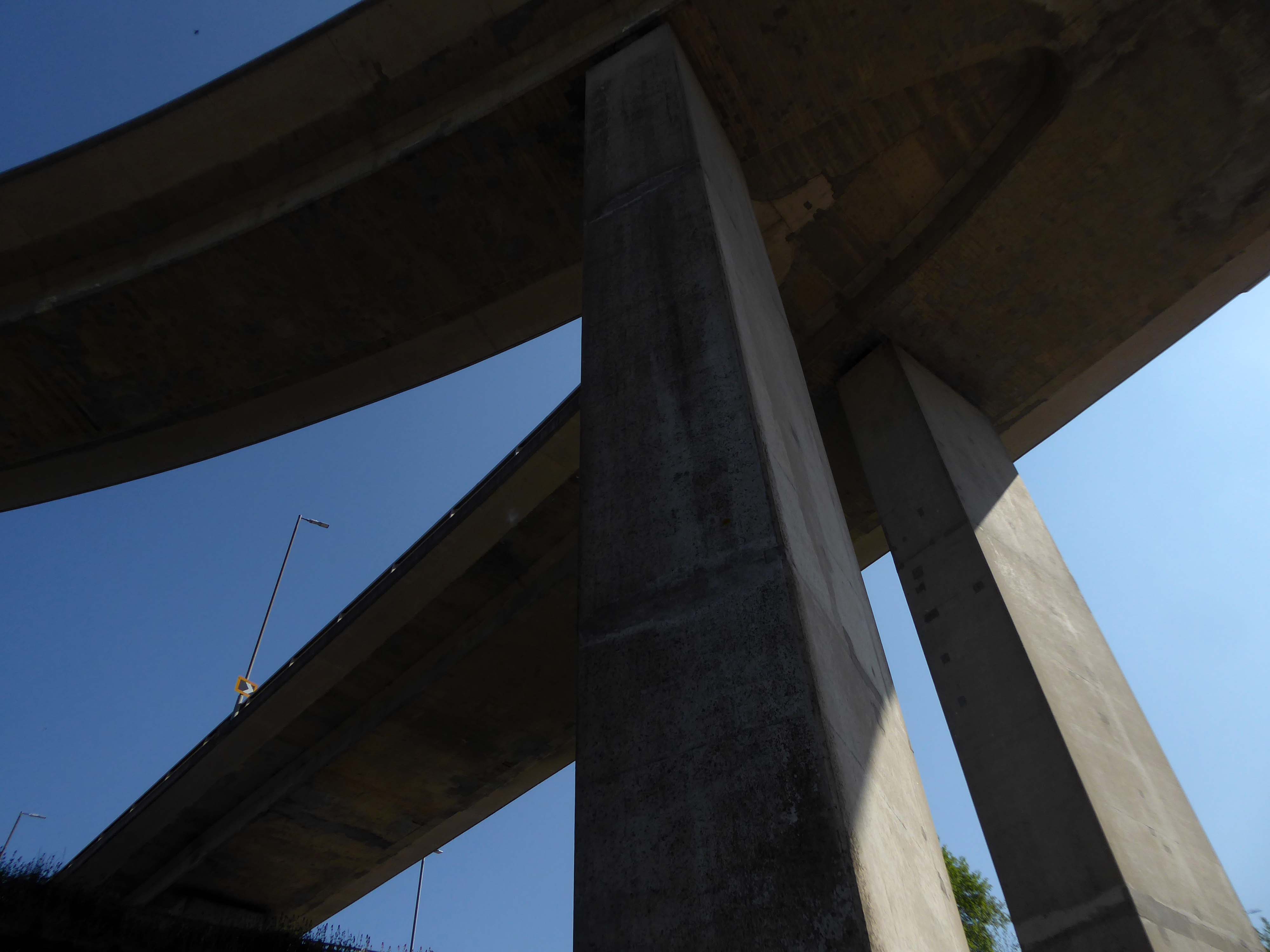
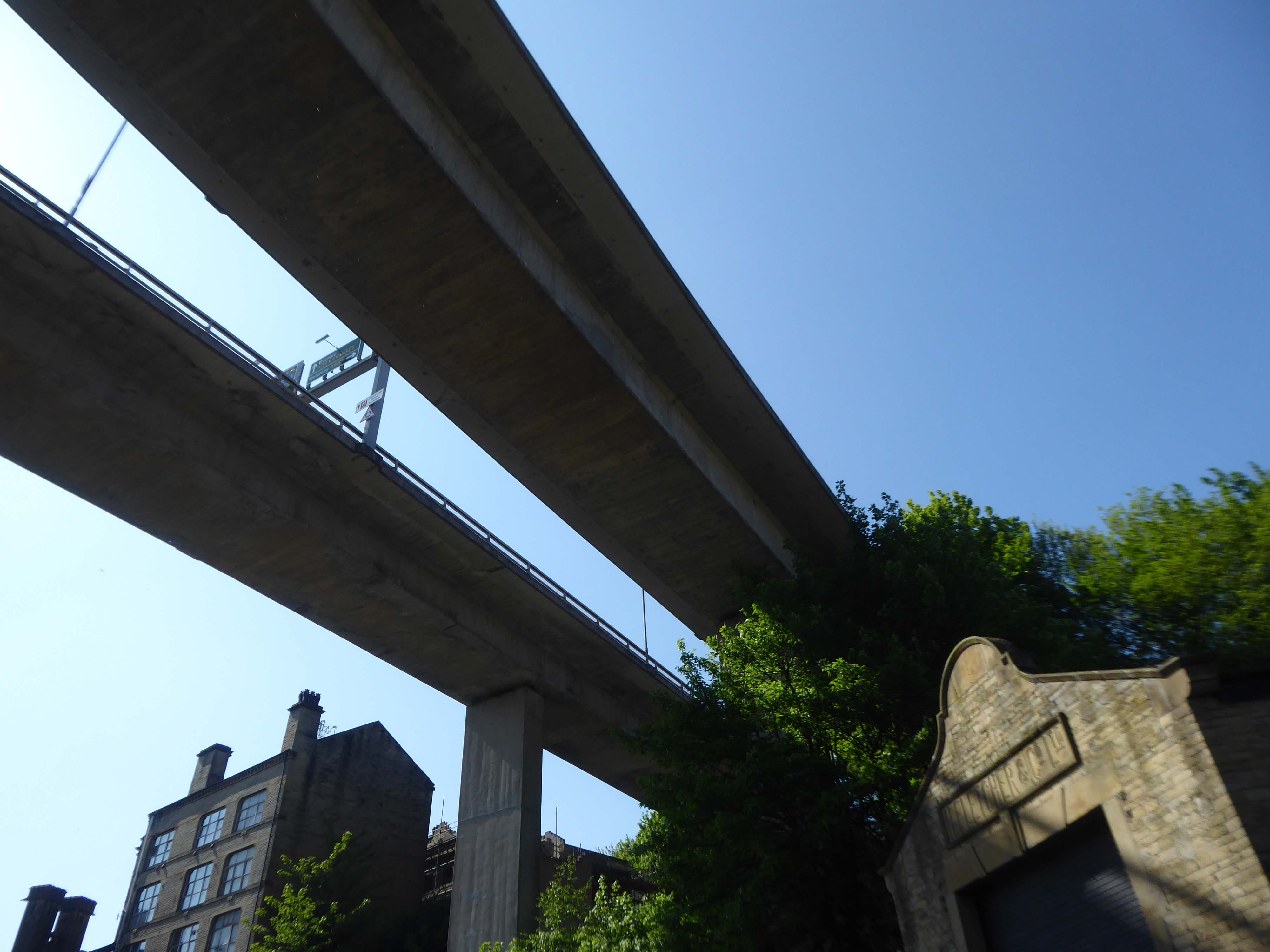
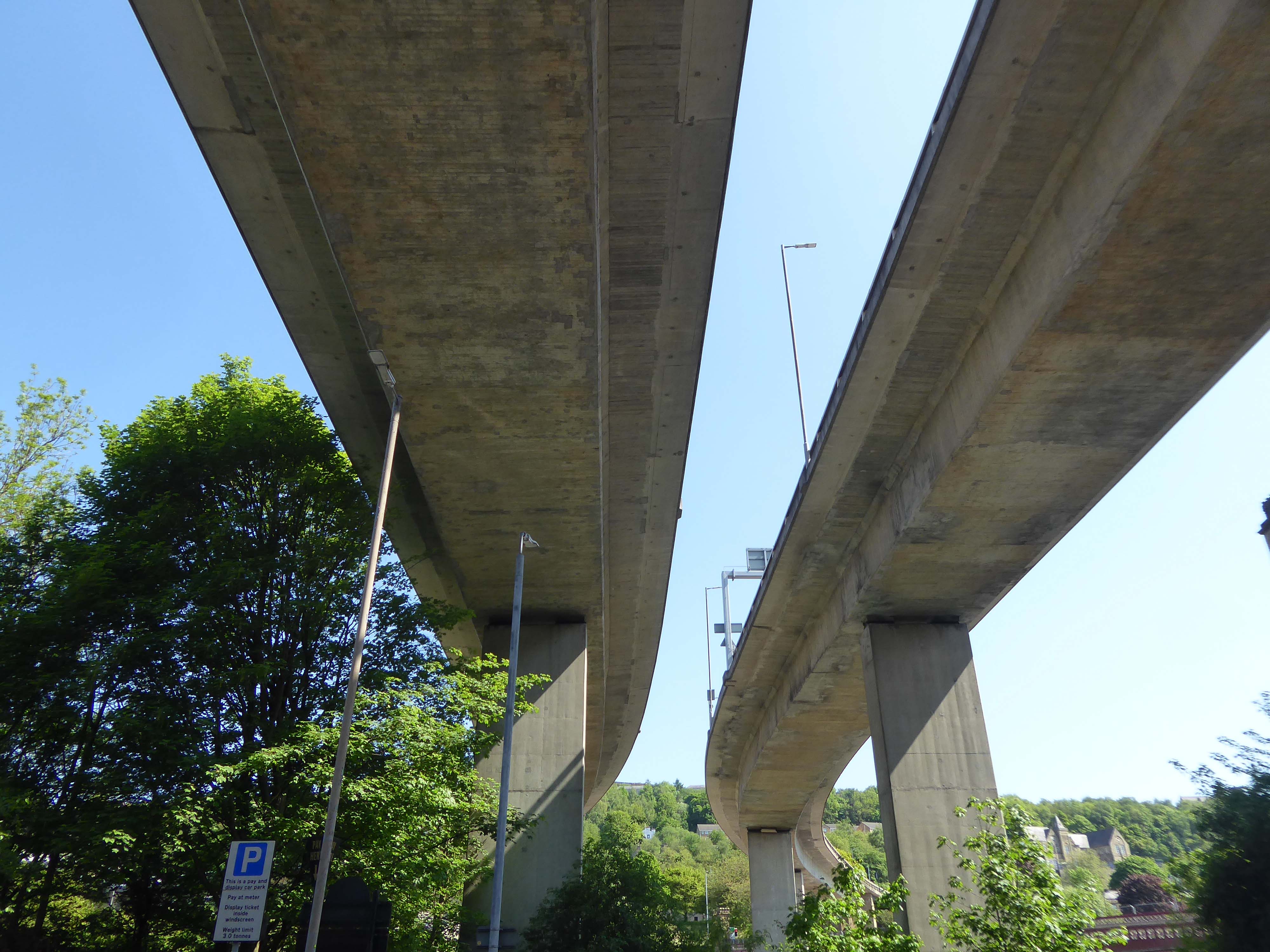
Burdock Way, the modern flyover system, was opened in 1973 to take the A58 and A629 traffic over the River Hebble.
Faced with the problem of very high volumes of through traffic in its town centre, and with the impending construction of the M62 too far to the south to provide relief for the town, Halifax needed a bypass. The steep sided valley that the town centre inhabits prevented a conventional road from being built around the town, and so in the early 1970’s construction began on Burdock Way – one of the most adventurous relief road schemes built in Britain, certainly by a town the size of Halifax.
Only one phase of the futuristic road was ever built, but what exists is a partially grade-separated dual carriageway that runs through deep trenches and over tall viaducts close to the heart of the town. At its eastern end is a truly byzantine piece of traffic engineering that stretches the definition of a roundabout to its limit.
In October 1971 the official celebrations went anything but according to plan. It had been decided to give the people of Halifax a half day holiday so they could attend the opening, but there were not enough police on duty to control the sightseers. It was impossible to get complete silence for the speeches and arrangements to tell the artillery guns at Southowram Road when to fire broke down. They were fired prematurely while an archdeacon was offering prayers. The Mayor, HC McCrae, finally managed to announce that the bridge was officially open and he scurried back to the town hall where he hosted a banquet.
Burdock Way has never been fully completed as it is missing certain sections envisaged in the early 1960s plans. There are a number of reasons for this, but it is mainly owing to West Yorkshire County Council’s cost cutting in the 1970s.
Yorkshire Post
This is the Valley of the Gwangi in the West Riding – minus the dinosaurs.
An urban chasm, the gulf between everything and nothing.
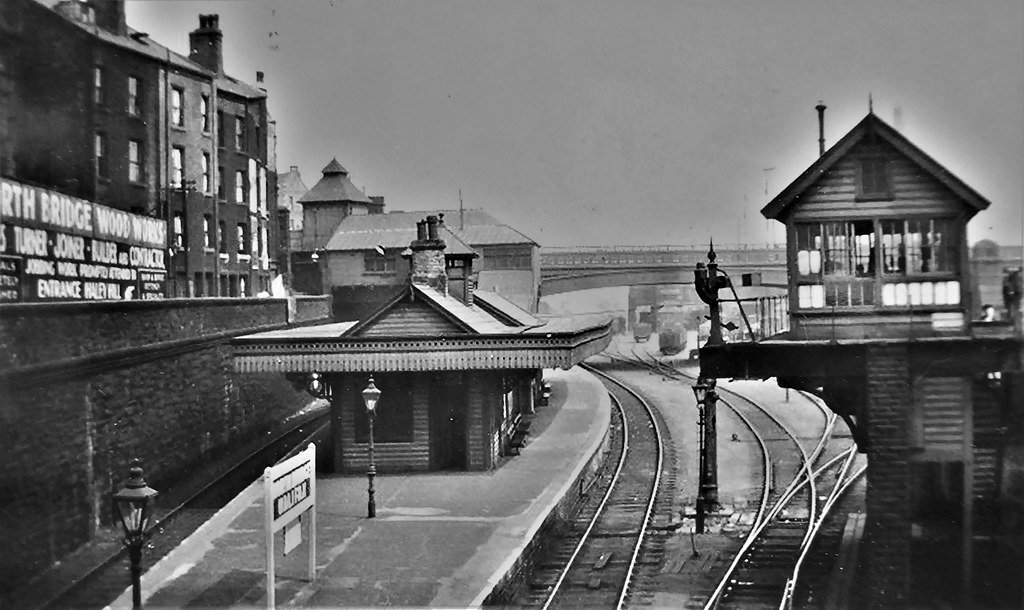
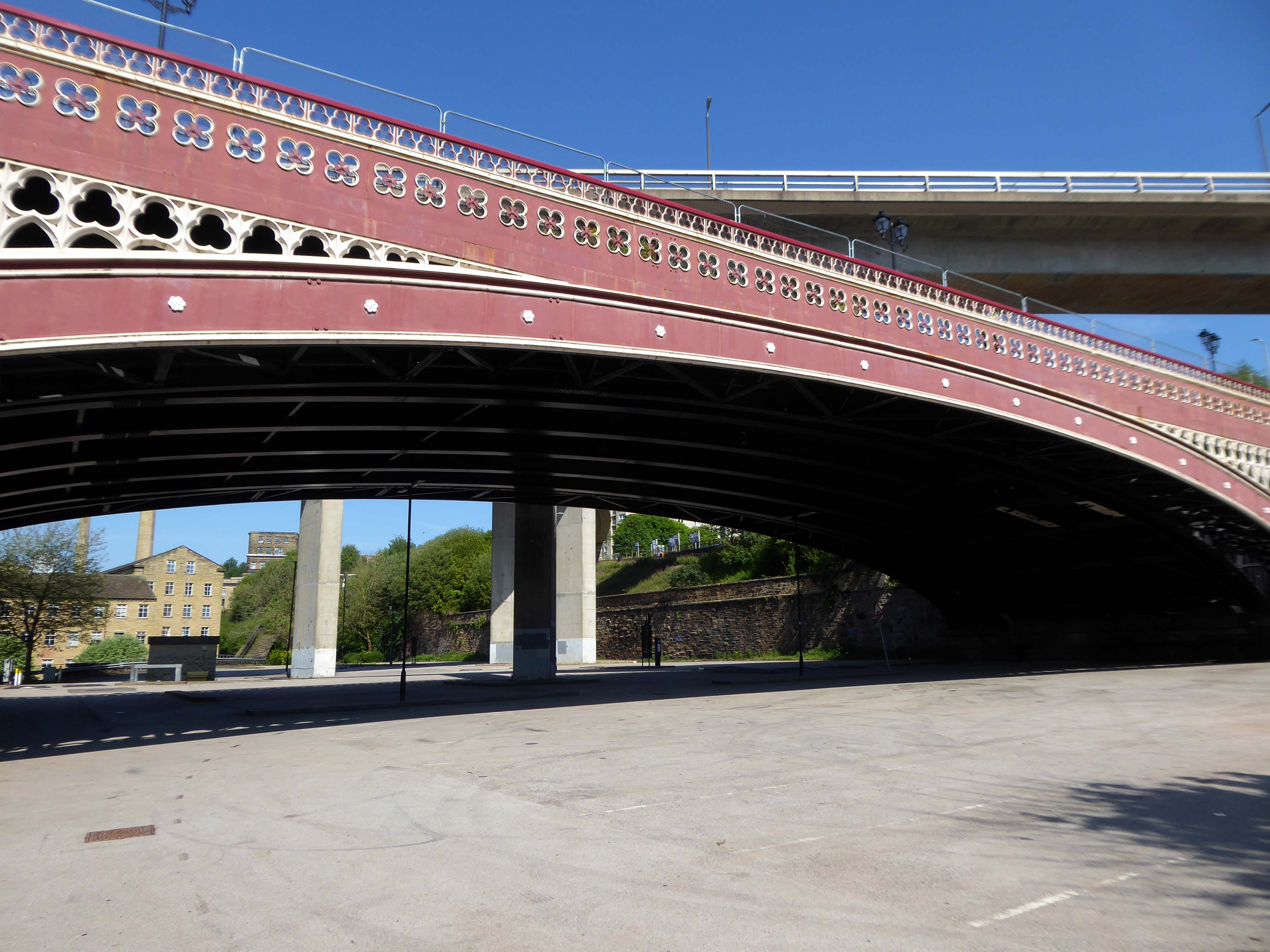
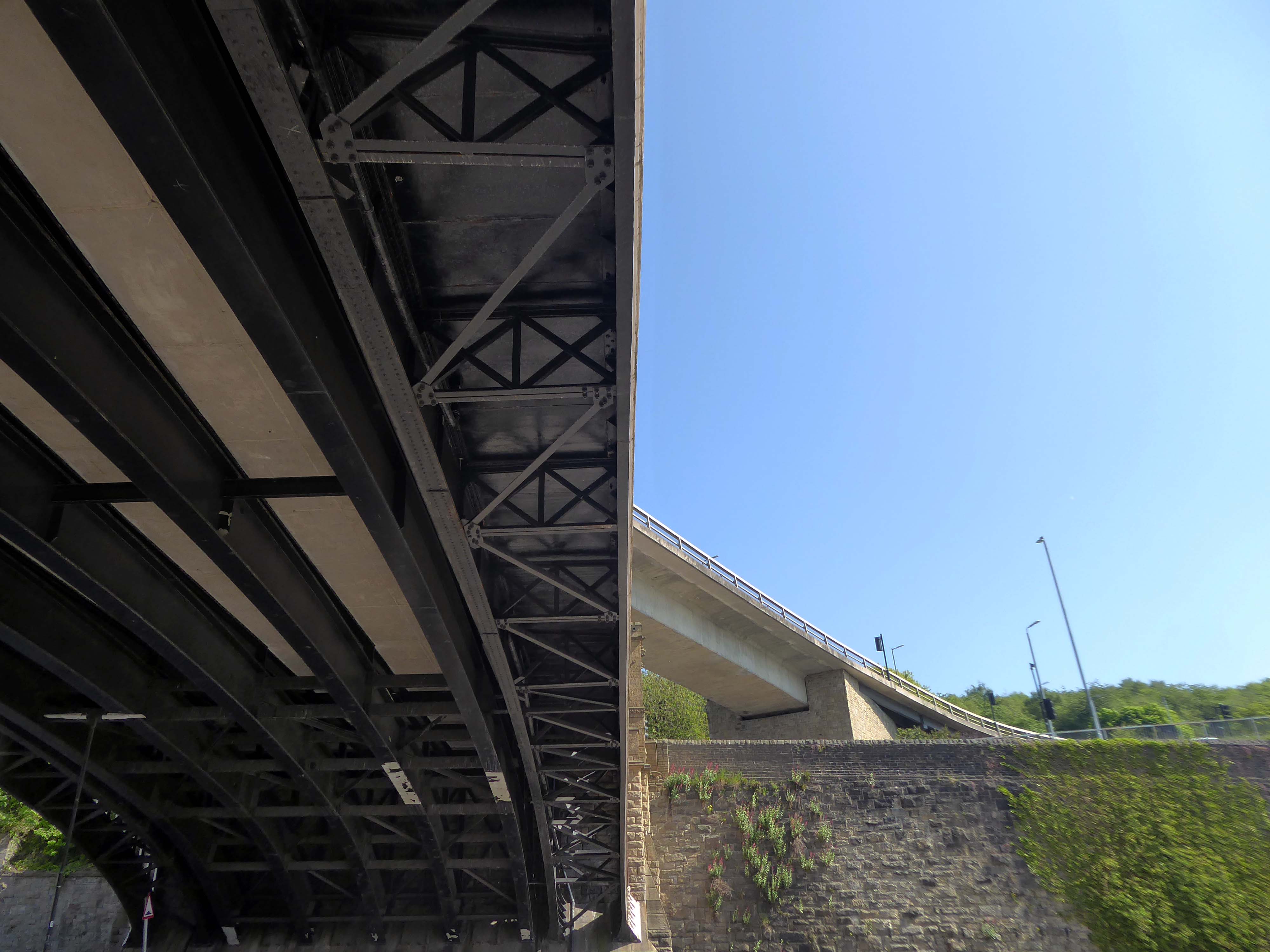
North Bridge is a Victorian iron and stone bridge crossing the valley of the River Hebble, connecting the town to roads to Bradford and Leeds. Replacing an earlier six arch stone bridge it was raised to allow the subsequent construction of the Halifax High Level Railway beneath it, along with an adjoining station.
Opened in 1871 amid chaotic crowd scenes it carried increasingly heavy traffic until it was by-passed by the Burdock Way in 1973.
Hyde Road was a football stadium in West Gorton, Manchester, England.
It was home to Manchester City FC and their predecessors, from its construction in 1887 until 1923, when the club moved to Maine Road.
Billy Gillespie on the ball.
Before its use as a football ground, the site was an area of waste ground, and in its early days the ground had only rudimentary facilities. The first stand was built in 1888, but the ground had no changing facilities until 1896; players had to change in a nearby public house, the Hyde Road Hotel.
As a Chester’s house, a condition of the club’s official link to the pub was that supporters and club officials and players would sup Chesters ales, and in return Stephen Chesters Thompson of the brewery helped finance stadium improvements.
The move of MCFC to Maine Road in 1923 following a fire at the Hyde Road ground, didn’t adversely affect the Hyde Road Hotel and it continued to serve the West Gorton community and the once-bustling Hyde Road thoroughfare.
As late as the 1980s, renamed the City Gates, it was a popular watering hole before the match for supporters travelling in from East Manchester. It was kitted out in all sorts of MCFC memorabilia and was run by George Heslop, City legend of the 1960s, after he’d had the Royal George in town.
Sadly, as the community around it was decimated, the pub struggled and its last hurrah was as the City Gates theme pub. The business failed in 1989 and the pub sat empty and rotting for twelve years until it was demolished, despite a half-hearted fans campaign to save it. Two keystones from the Hyde Road Hotel reside in the MCFC memorial garden and are all that remain of this significant Manchester pub.
By 1904 the ground had developed into a 40,000-capacity venue, hosting an FA Cup semi-final between Newcastle United and Sheffield Wednesday the following year.
The stands and terraces were arranged in a haphazard manner due to space constraints, and by 1920 the club had outgrown the cramped venue. A decision to seek an alternative venue was hastened in November 1920, when the Main Stand was destroyed by fire. Manchester City moved to the 80,000-capacity Maine Road in 1923, and Hyde Road was demolished shortly afterward. One structure from the ground is still in use in the 21st century, a section of roofing which was sold for use at The Shay, a stadium in Halifax.
Maine Road – which in turn closed on May 11th 2003, City losing 1-0 to Southampton
City are now at home at the Etihad – formerly the Commonwealth Games Stadium.
I had always known the area as the Olympic Freight Depot – seen from the passing train.
I cycled by the other day and the containers are long gone – the site is being cleansed to a depth of two metres.
Loitering by the gates, I asked if I may take some snaps .
Please y’self – so I did.
So what’s next on the cards, for this little corner of local history – set twixt Bennett Street and Hyde Road?
New homes is on the cards – and on the hoardings.
Plans have been revealed for a 337-home development on the Olympic Freight depot in West Gorton.
Brought forward by Sheffield-based Ascena Developments, the planning application to Manchester City Council outlines proposals for 191 houses and 146 apartments, split across two blocks.
Alongside the homes, the development would include a 3,000 sq ft circular community centre and café, shop, and a unit which is earmarked for a chip shop.
Kellen Homes has been granted planning consent to redevelop the thirteen-acre Olympic Freight depot on Bennett Street in Manchester into 272 homes.
The developer, owned by Renaker founder Daren Whitaker, lodged plans for the West Gorton scheme last year following the withdrawal of an earlier and larger scheme drawn up by Sheffield-based Ascena Developments.
Having taken a particular interest in this particular piece of public art for some time – I need to go and take a little look.
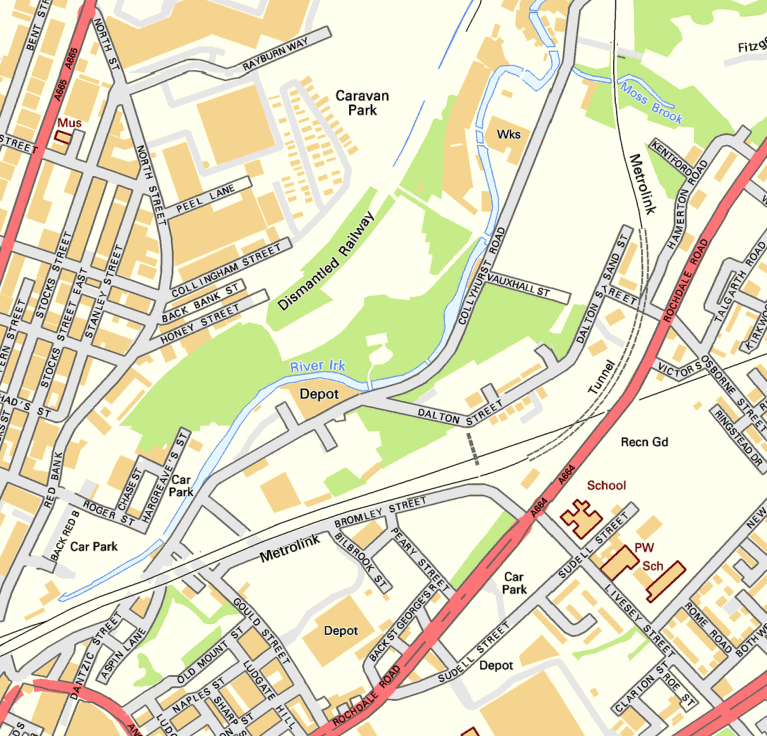
But what will we see along the way, as we hasten along Rochdale Road?
Which once looked like this, way back when in 1904.
Though some things inevitably come and go, as some things are prone to do.
The city is undergoing yet another reinvention as Manchester becomes – an attractive place to invest and do business.
See, I am doing a new thing!
Now it springs up; do you not perceive it?
I am making a way in the wilderness and streams in the wasteland.
Isaiah 43:19
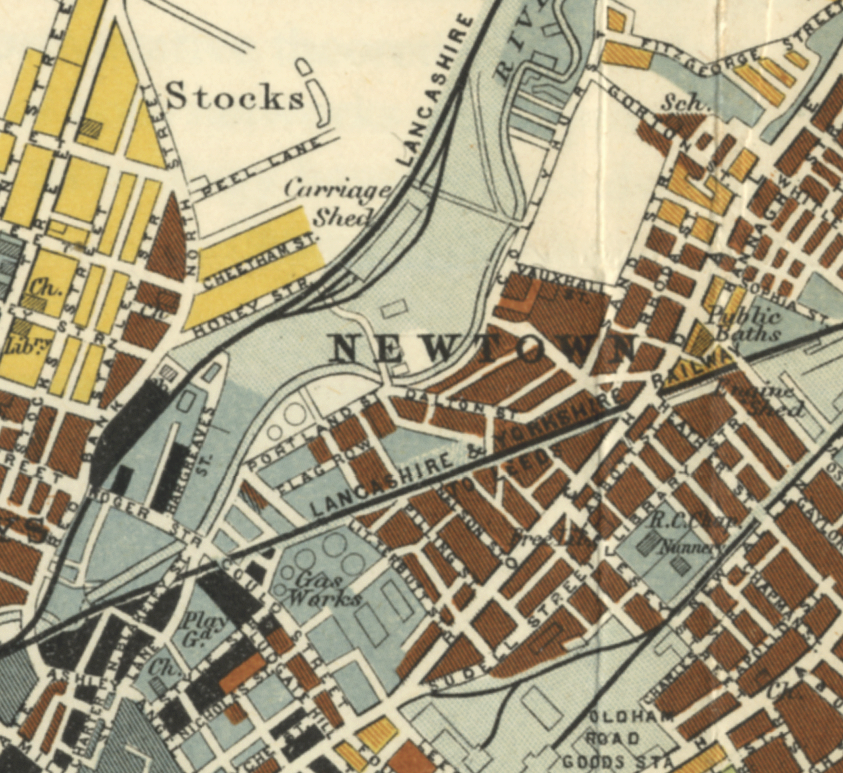
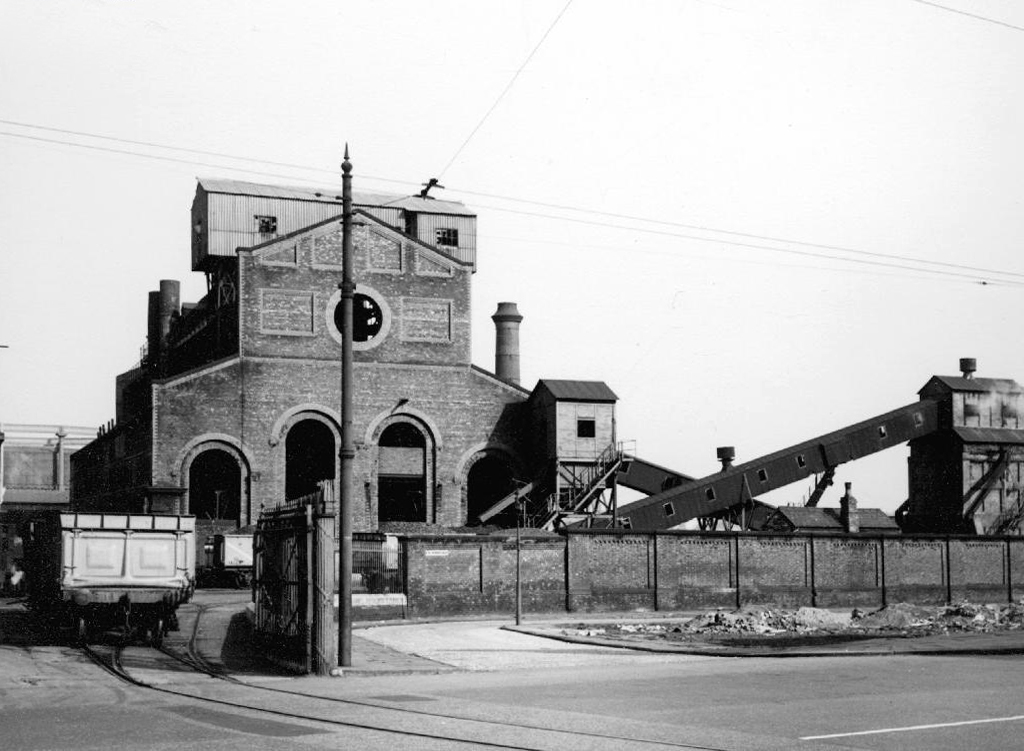
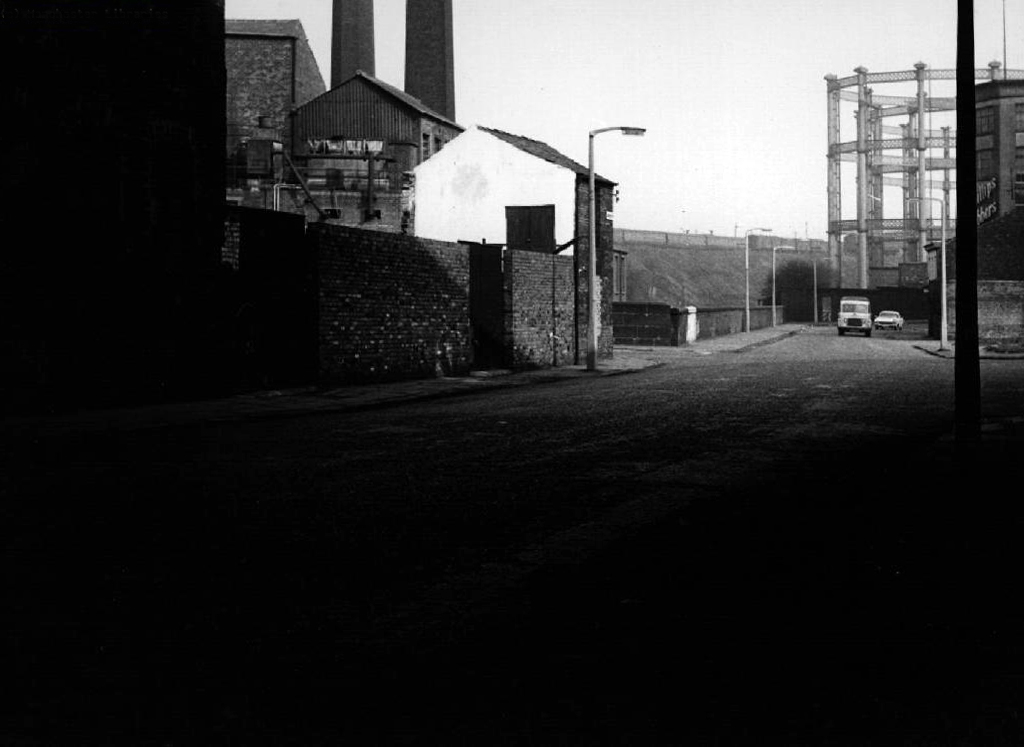
Once there was a gas works here – adjoining Gould Street, seen here in 1958.
The Gould Street Gas Works was a gas manufacturing plant located in Manchester, England. Originally built in 1824, the plant was operated by the Manchester Corporation Gas Department and was in operation from 1833 to 1969. It was named after the street on which it was located, which was named after John Gould, who was a prominent Manchester businessman in the 19th century.
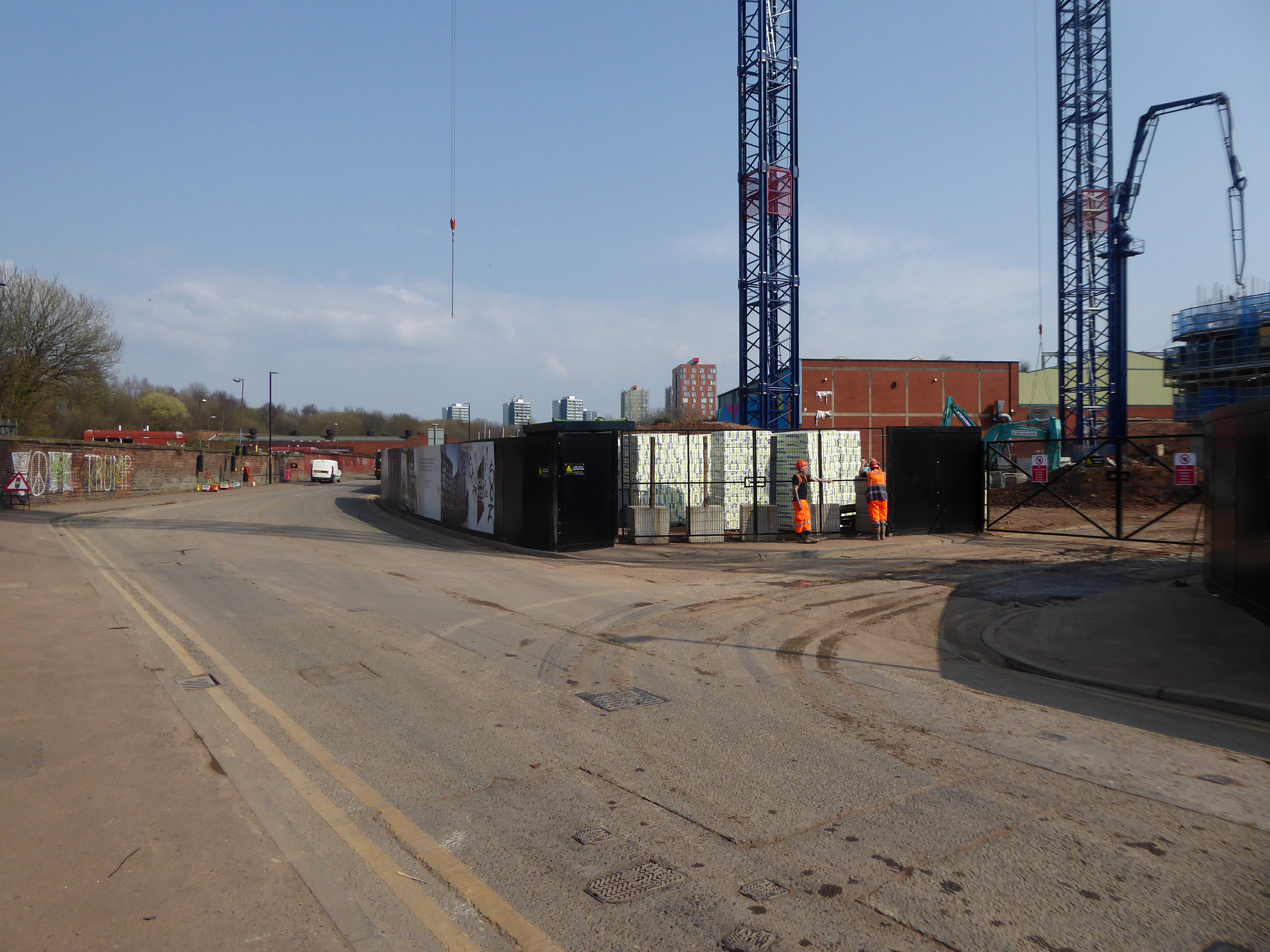
The Gasworks New Town neighbourhood is one of seven envisioned by the £4bn Victoria North masterplan. It will feature nine buildings ranging from 8 to 34 storeys. The 6.6-acre site has most recently been home to a car park but the green development will overwhelmingly prioritise walking and cycling over driving. It will result in tens of millions of pounds being pumped into the city’s economy over the lifetime of the development.
Plans for a trailblazing city centre regeneration scheme that will create more than 1200 homes has been approved by Manchester City Council.
A total of 85 of the 1200, will be affordable homes available through Shared Ownership.
Though as of March 31st 2023 ground is yet to be broken, no signs of the:
New centre of gravity for central Manchester that will create thousands of jobs and inject tens of millions of pounds into the city’s economy.
So you zig-zag wanderers, make the most of these wide open expanses of affordable car parking, while you can.
The future may yet be here today – or the next.
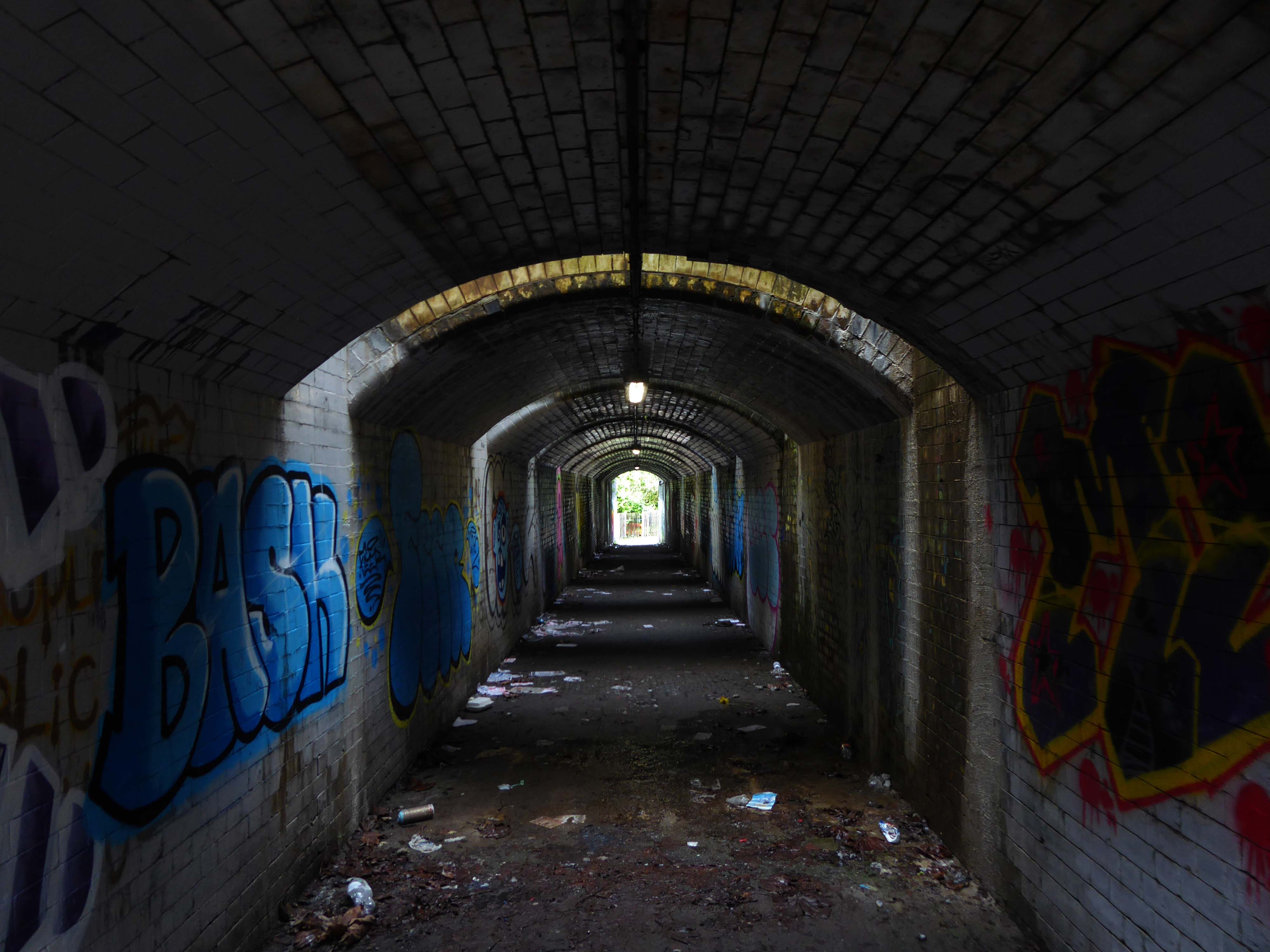
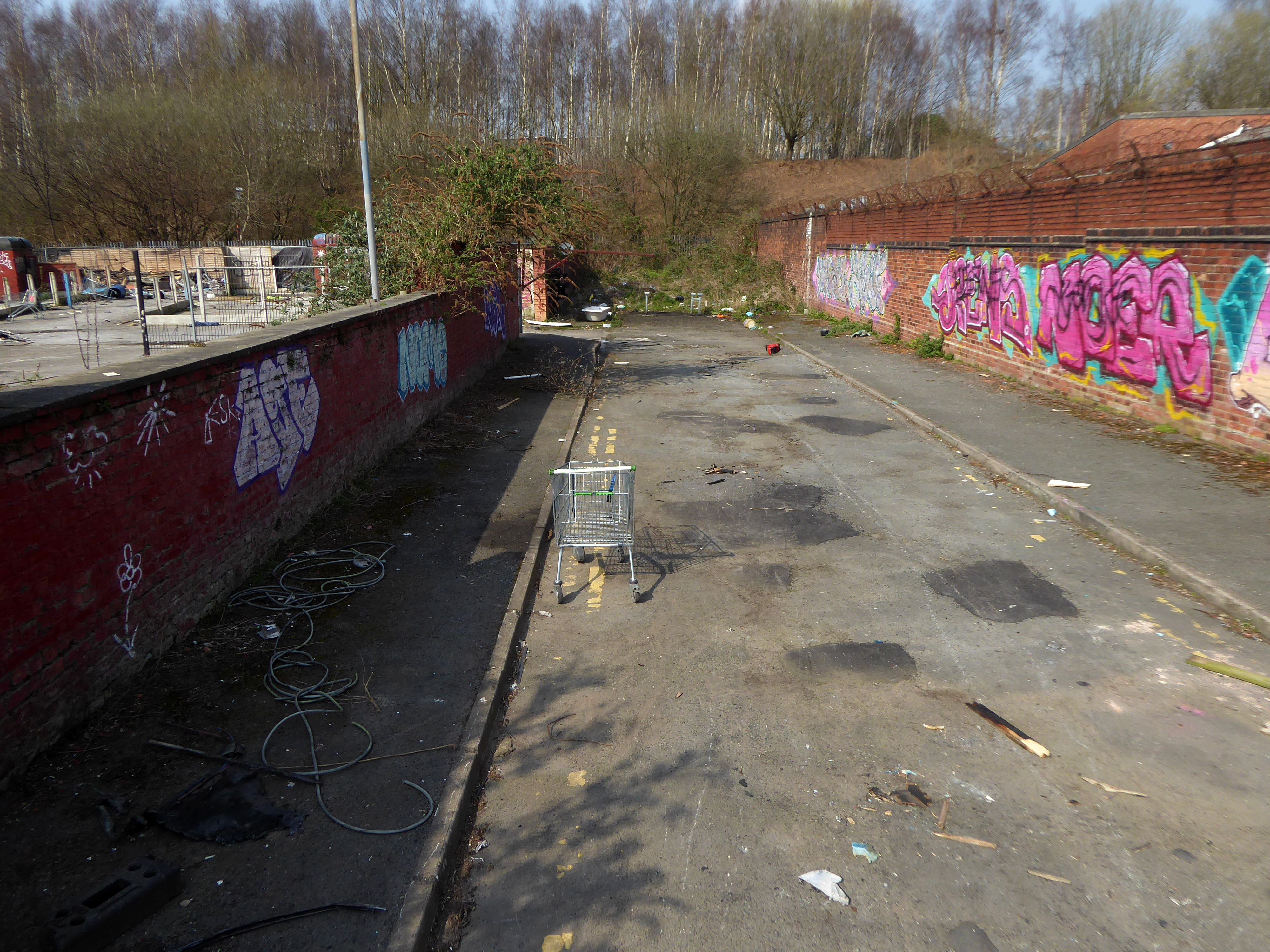
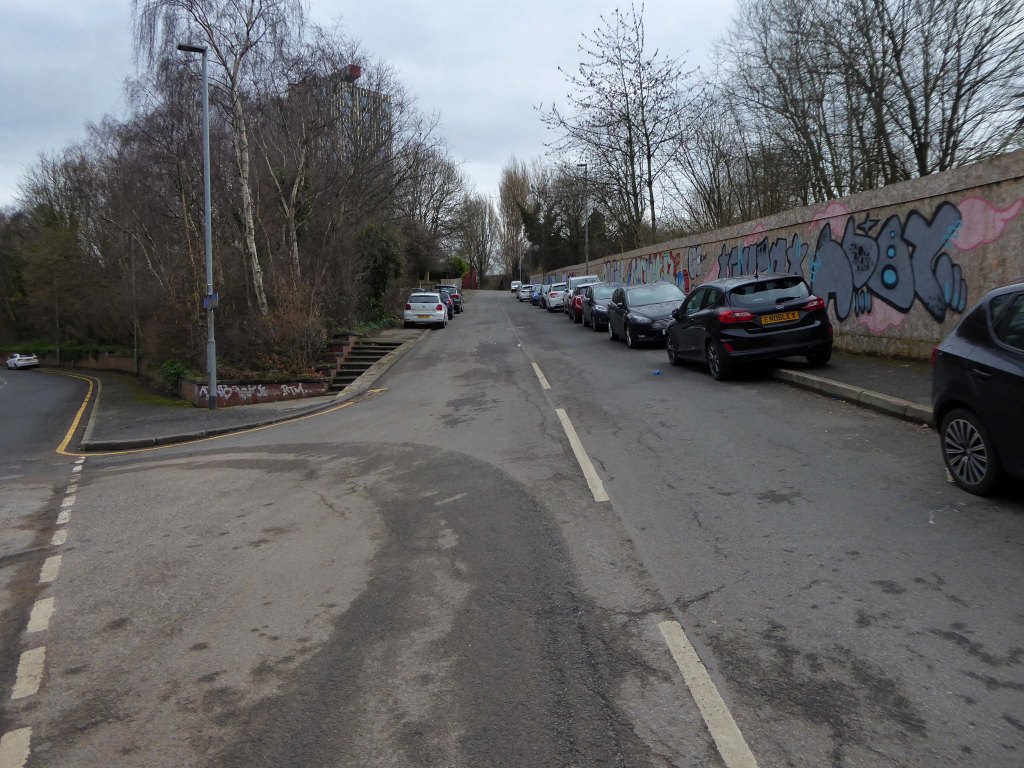
Let’s duck under the railway, through this sad damp pedestrian tunnel – the domain of the cash strapped daytime drinker, transient tagger and disaffected leaflet distributor.
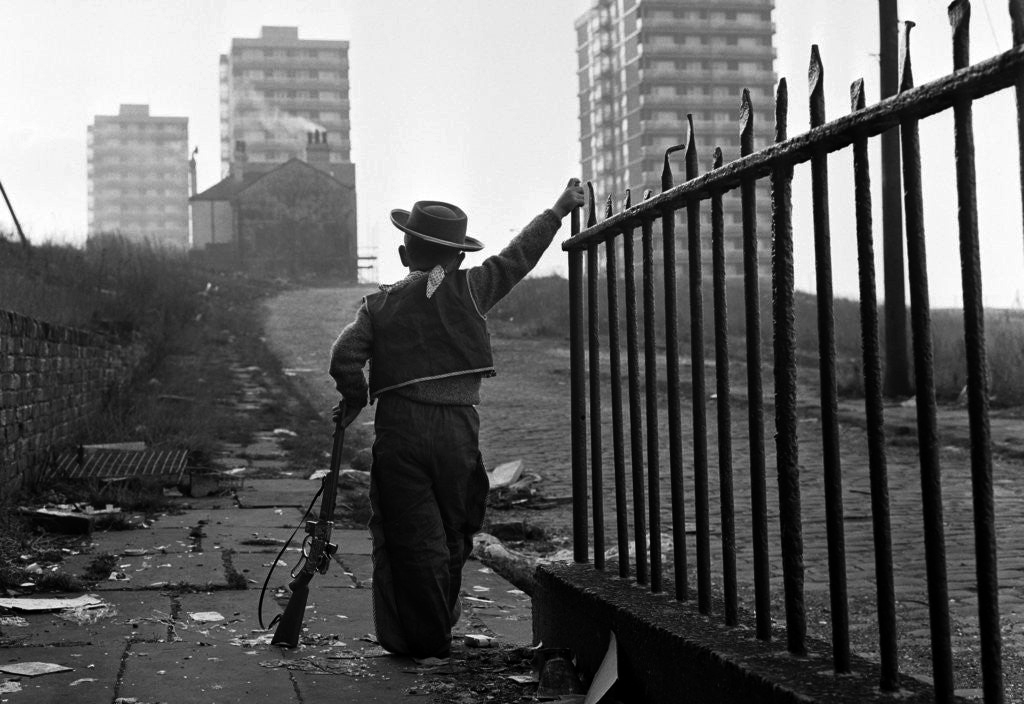
Next thing you know you have emerged into the daylight on Dalton Street – we have been here before seeking the Collyhurst Cowboy.
Photograph: Dennis Hussey
Onwards to Eastford Square.
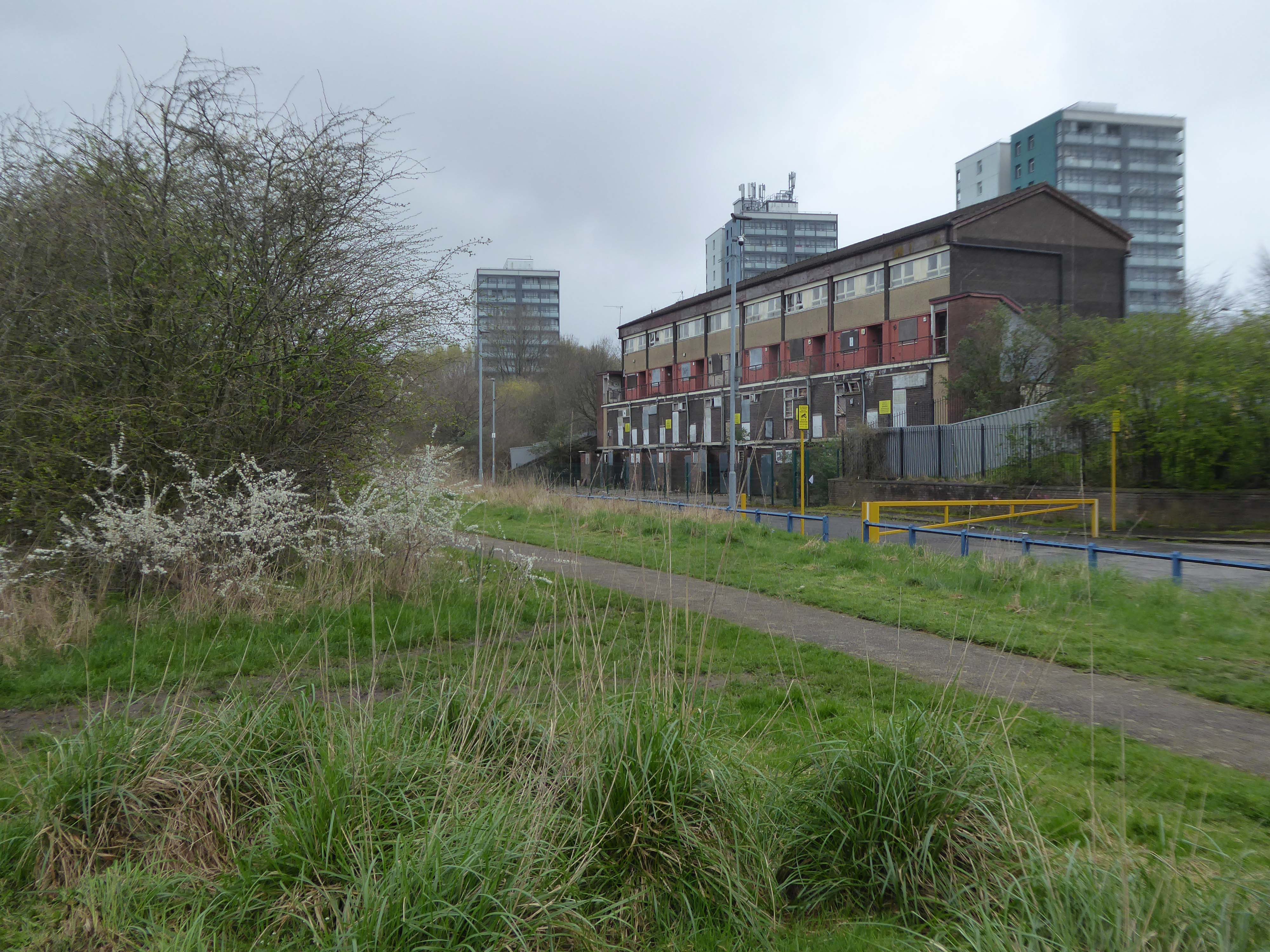
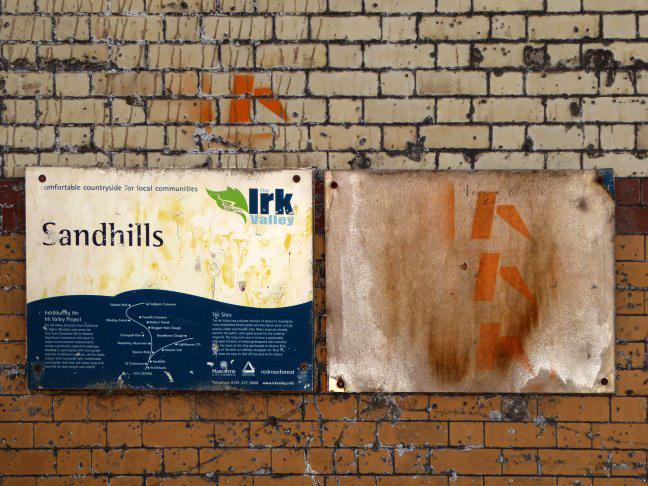
The shops and maisonettes are due to be demolished any day now – no longer to gaze open-eyed upon the former quarry of Sandhills.
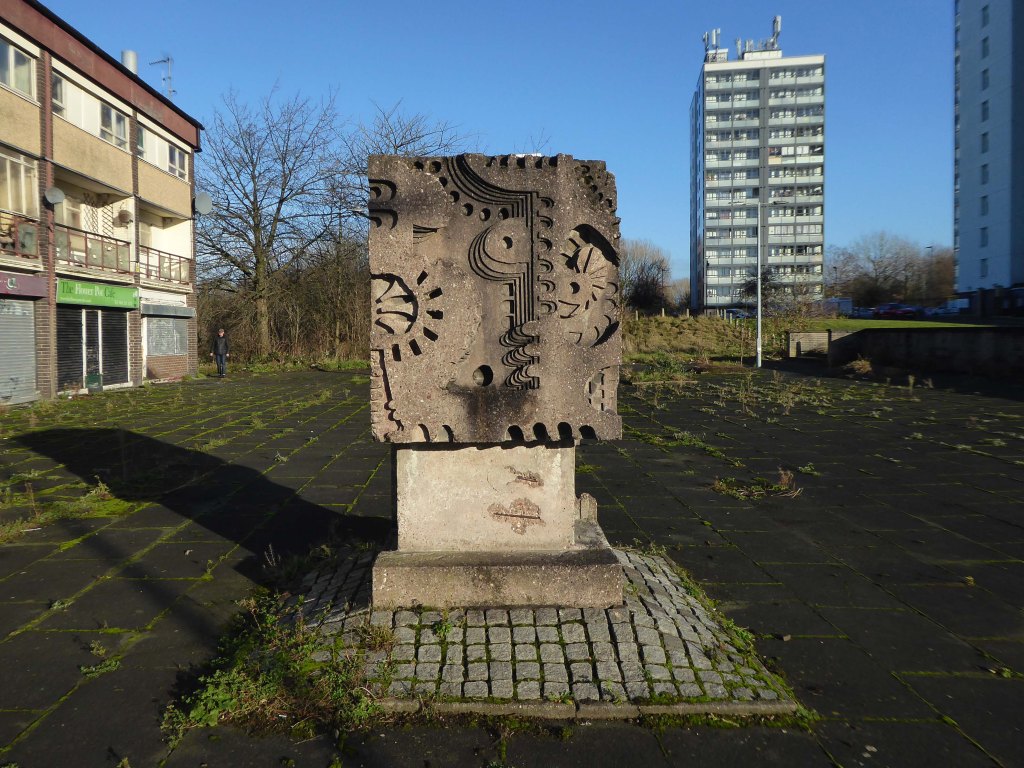
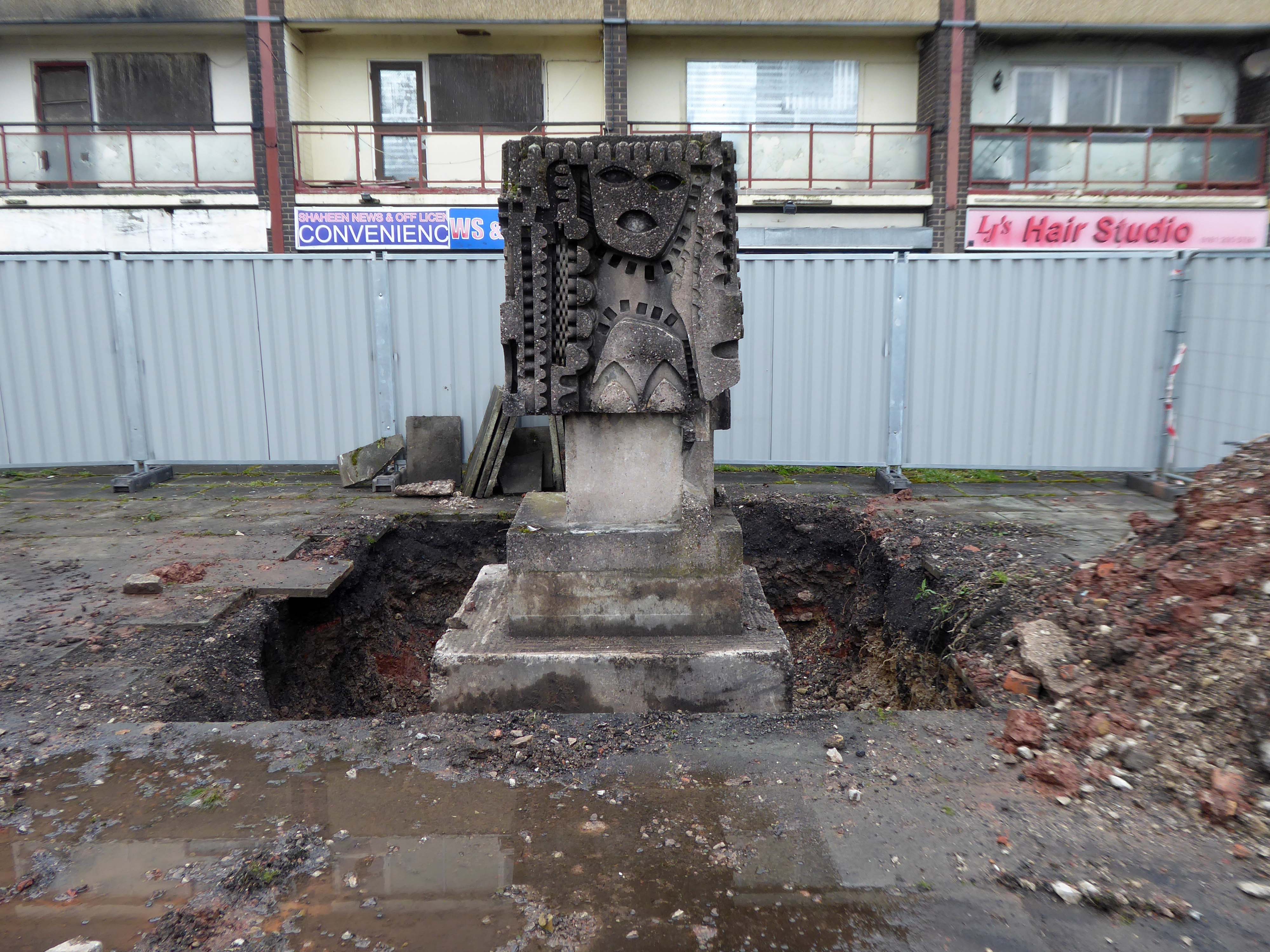
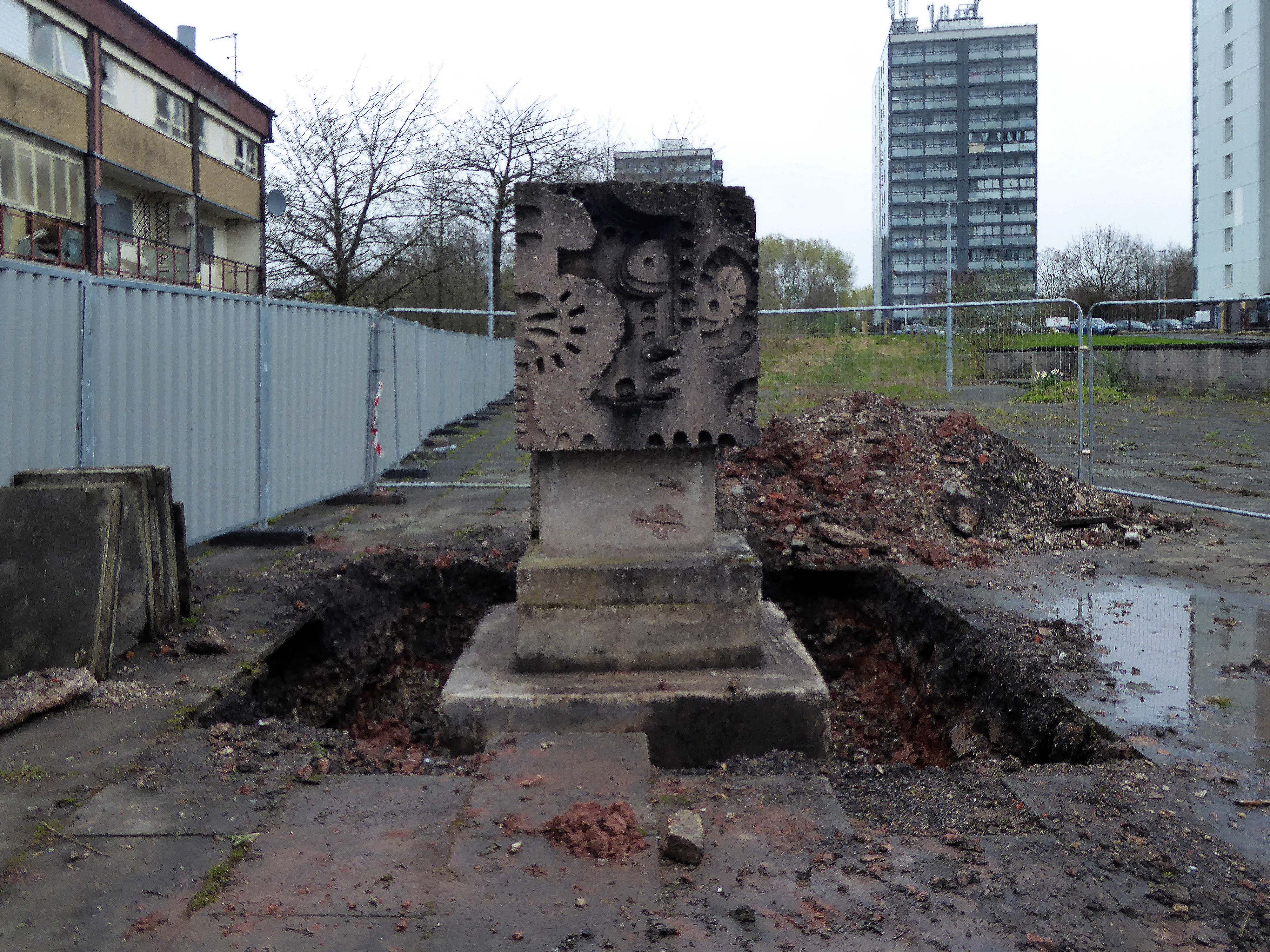
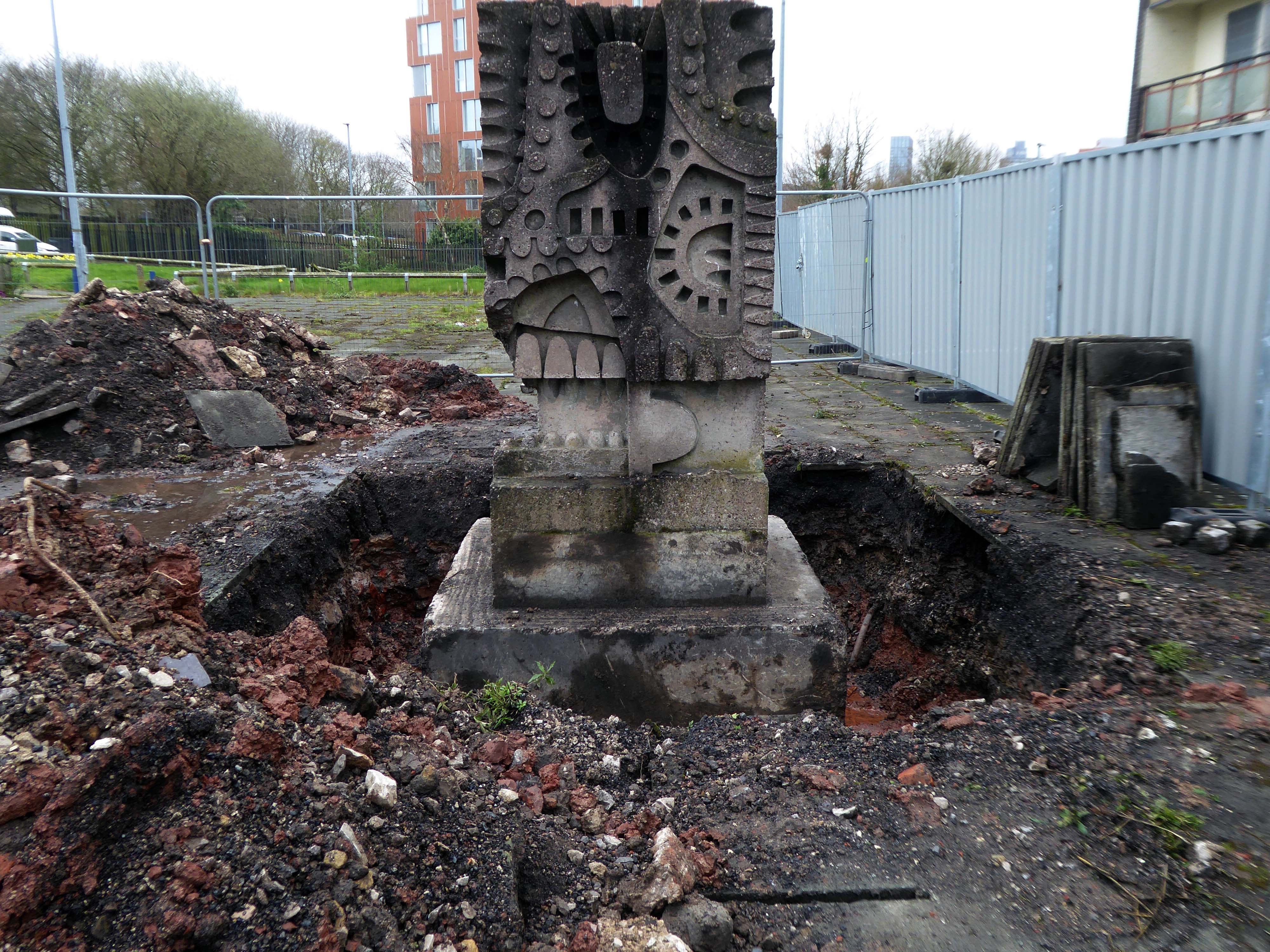
Around the front the diggers have been a digging – digging up around the base of the totem.
The work is to be re-sited by the nearby tower blocks.
The end is nigh.
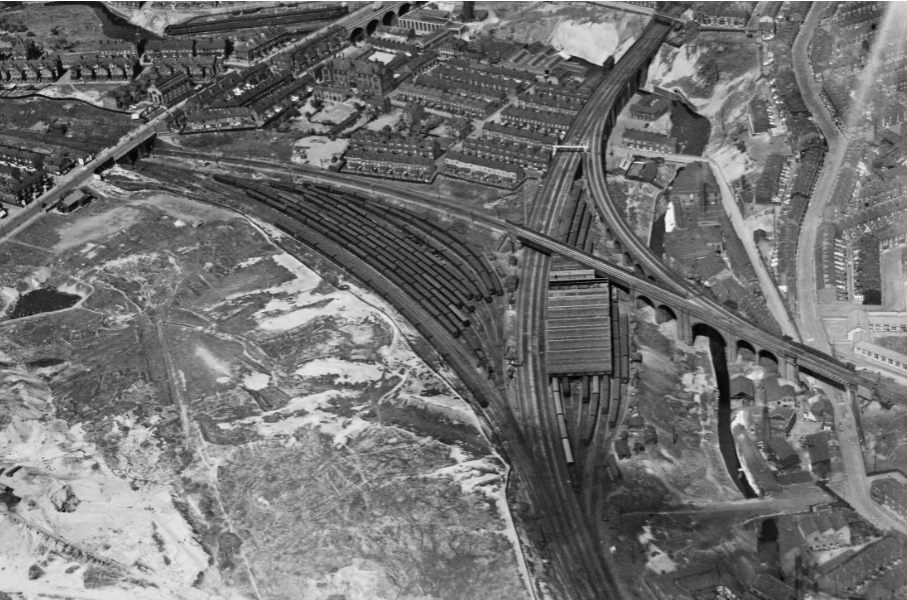
Heading now for Collyhurst Road and the Irk Valley – seen here in 1960.
Looking back on the Square and the Dalton Street flats – Humphries, Dalton, Roach, Vauxhall and Moss Brook Courts under construction.
Vauxhall Street now but a shadow of its former self – the last traces of industry long gone.
Reclaimed over time by trees and dense underbrush.
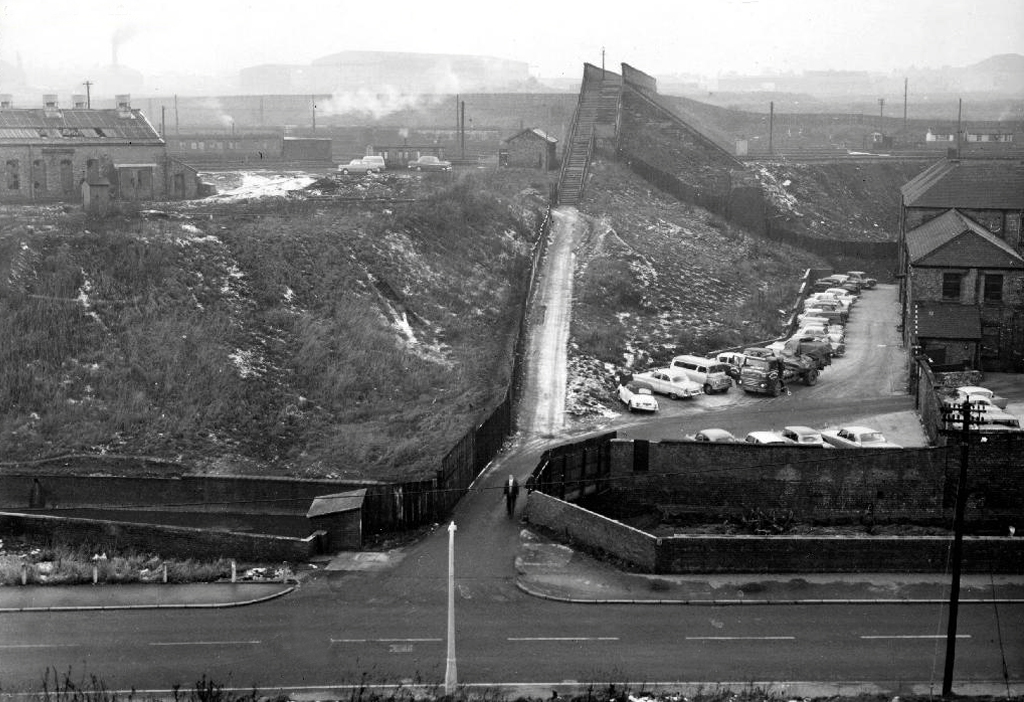
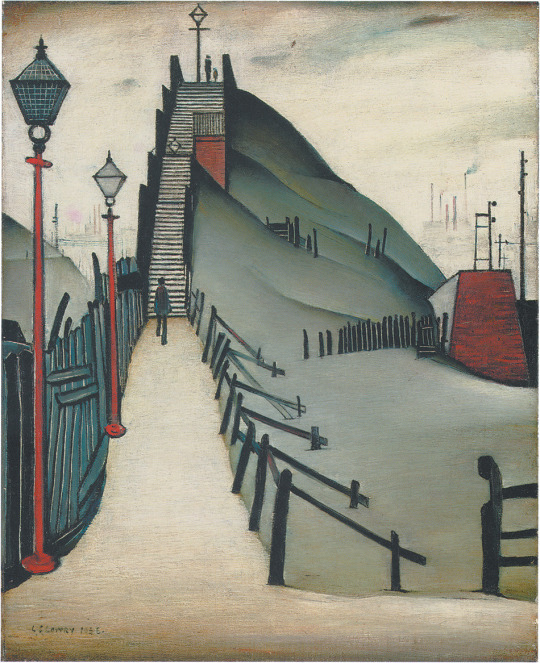
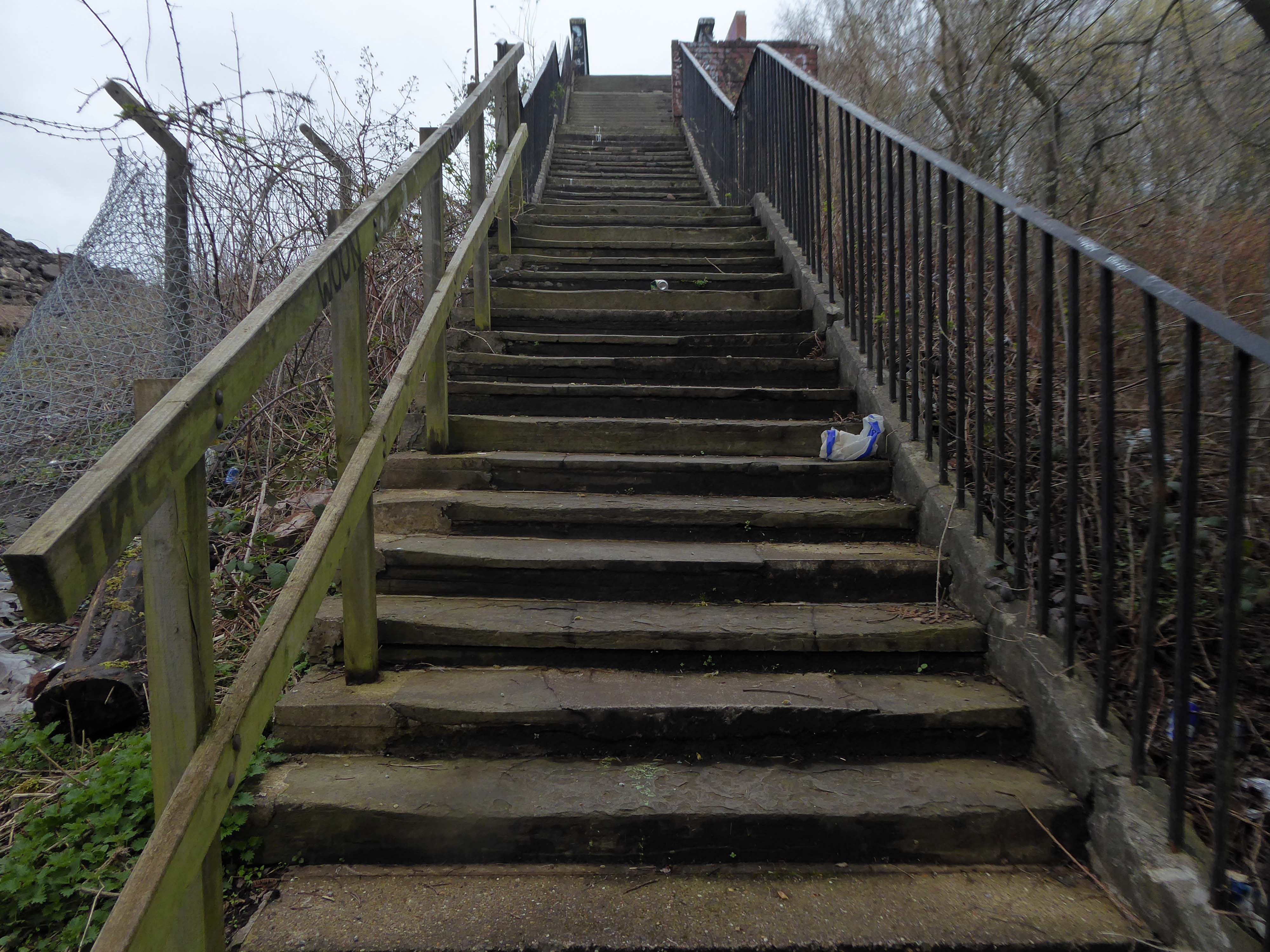
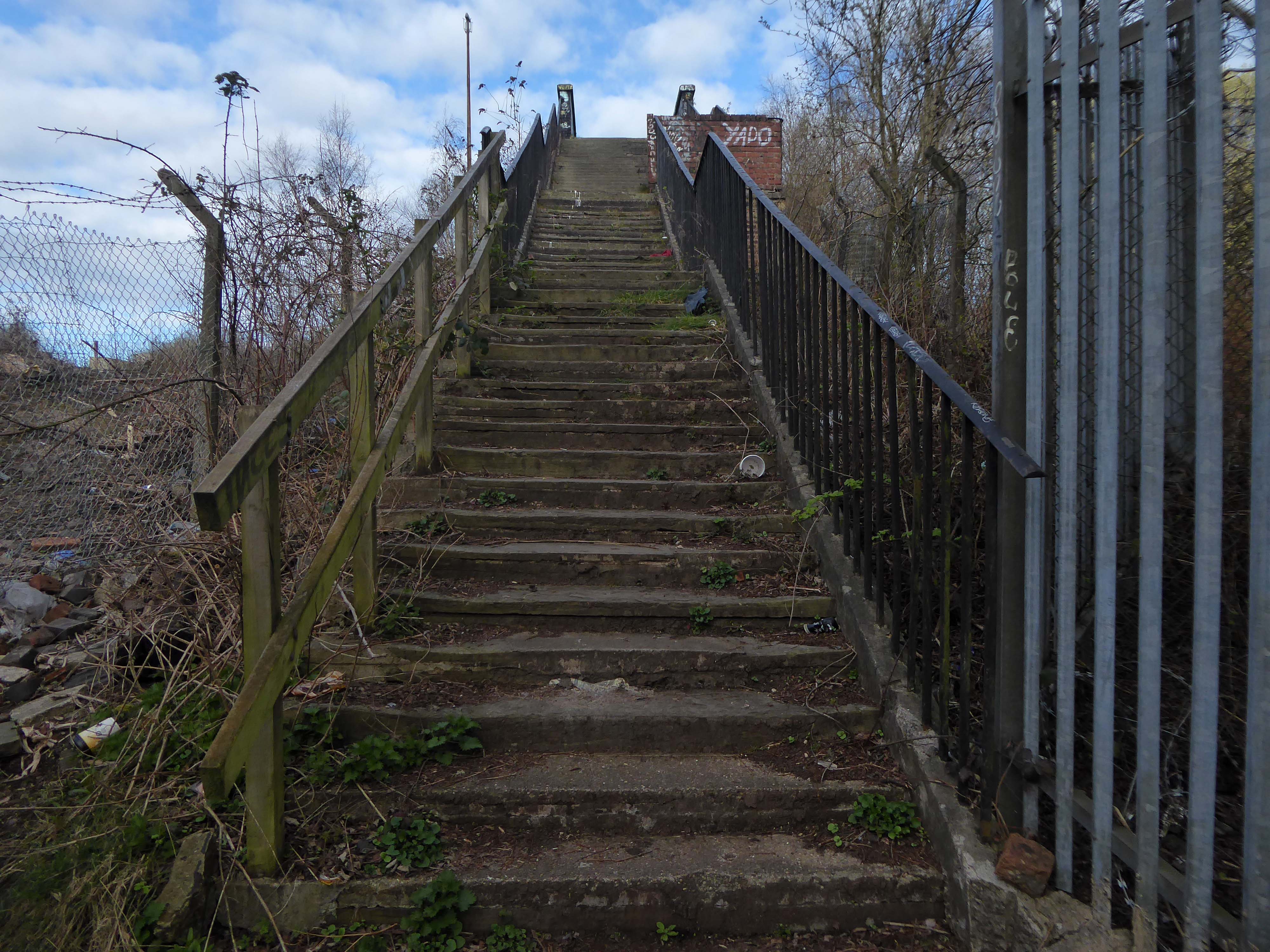
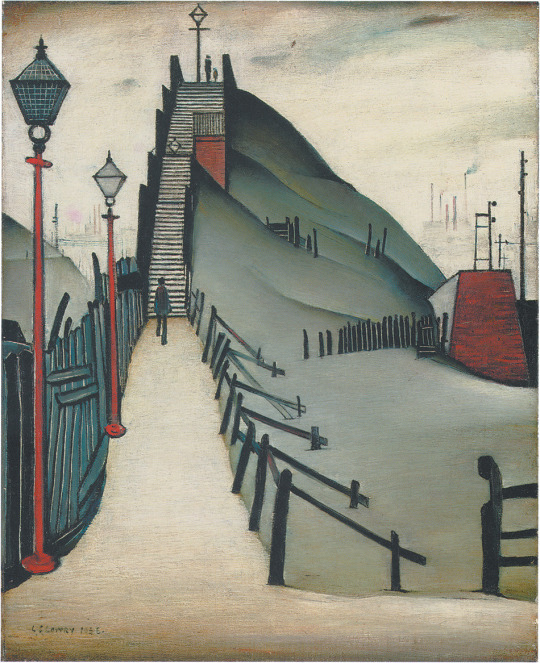
Crossing Collyhurst Road and up and over the railway via Barney’s Steps also known as the Lowry Steps.
LS Lowry
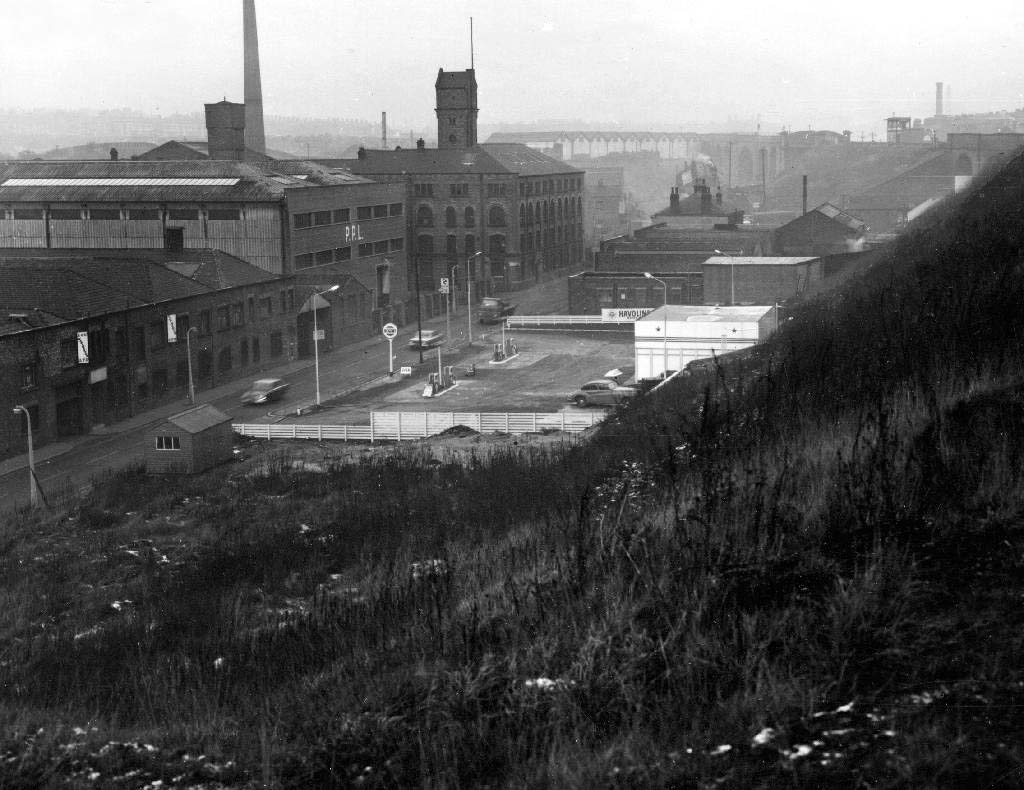
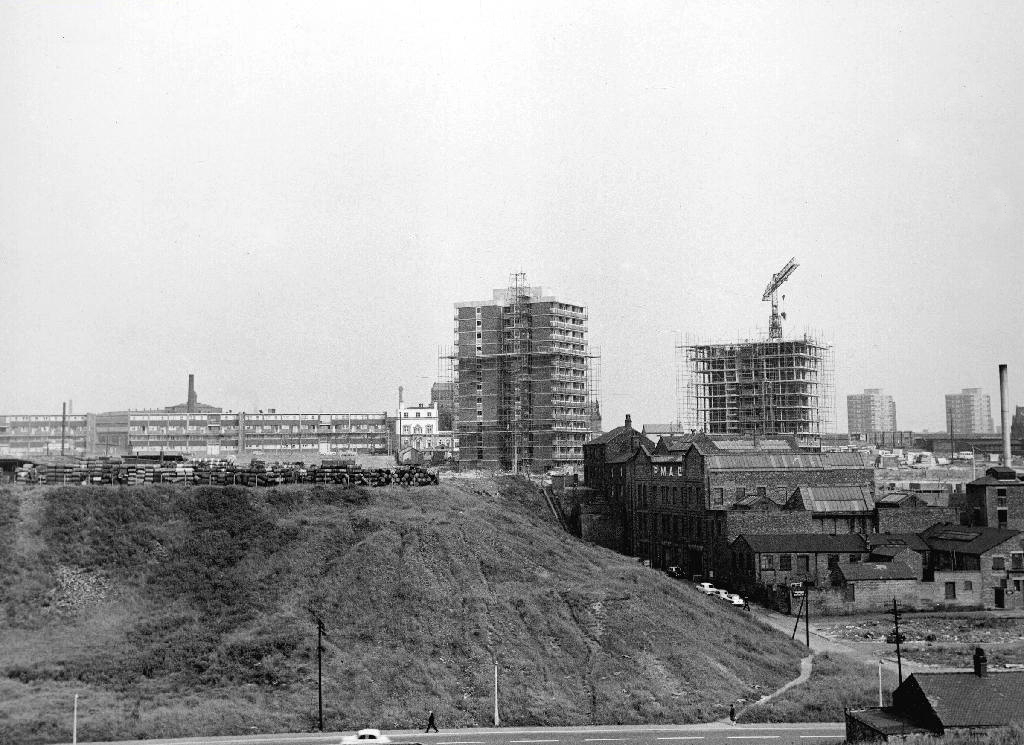
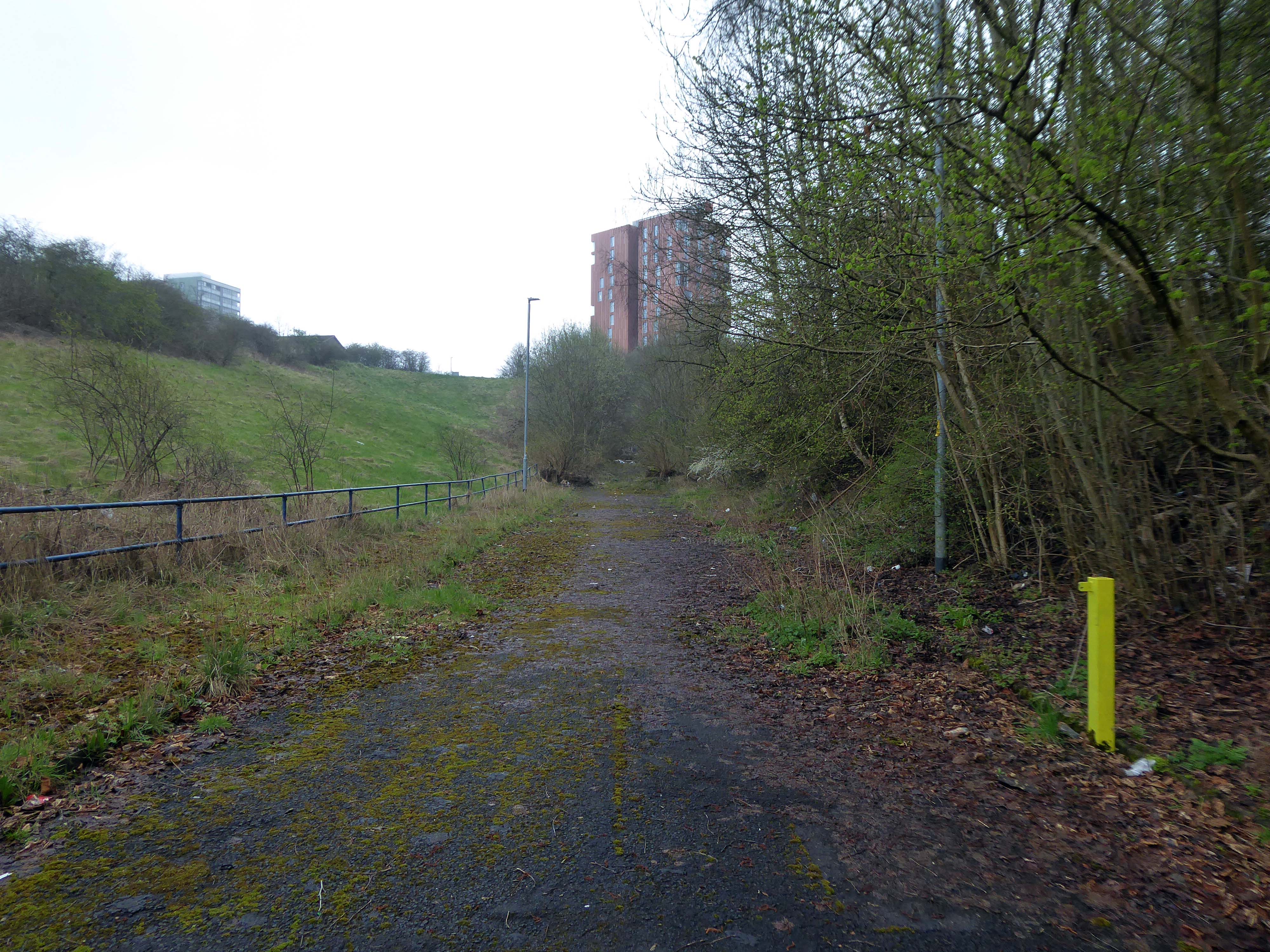
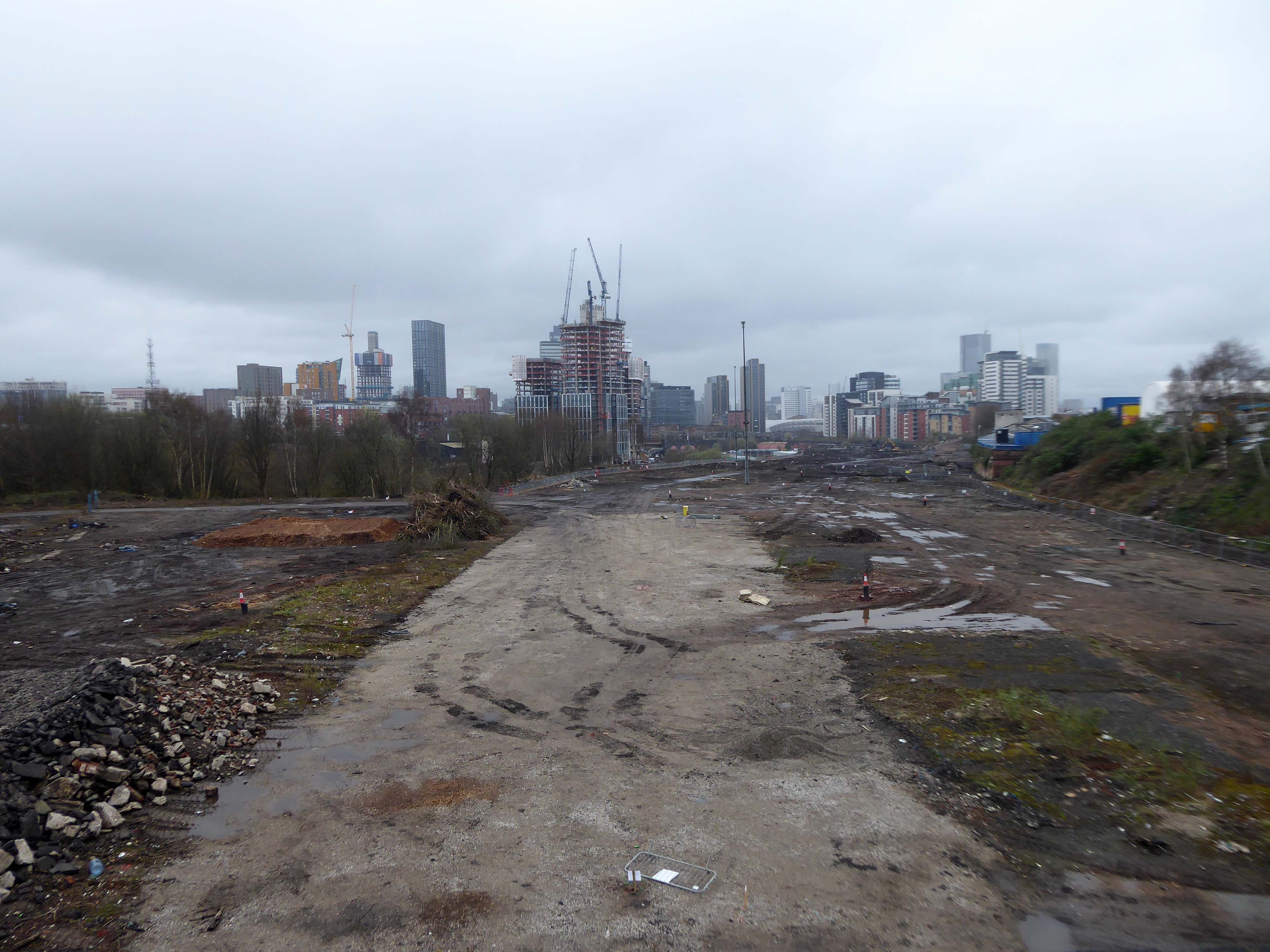
By the late 1950’s the whole of this area which we called Barney’s Tip became a refuse tip for Manchester City Council.
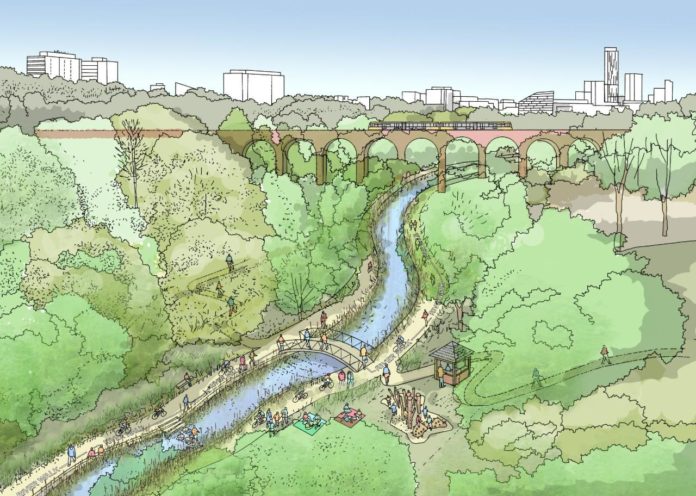
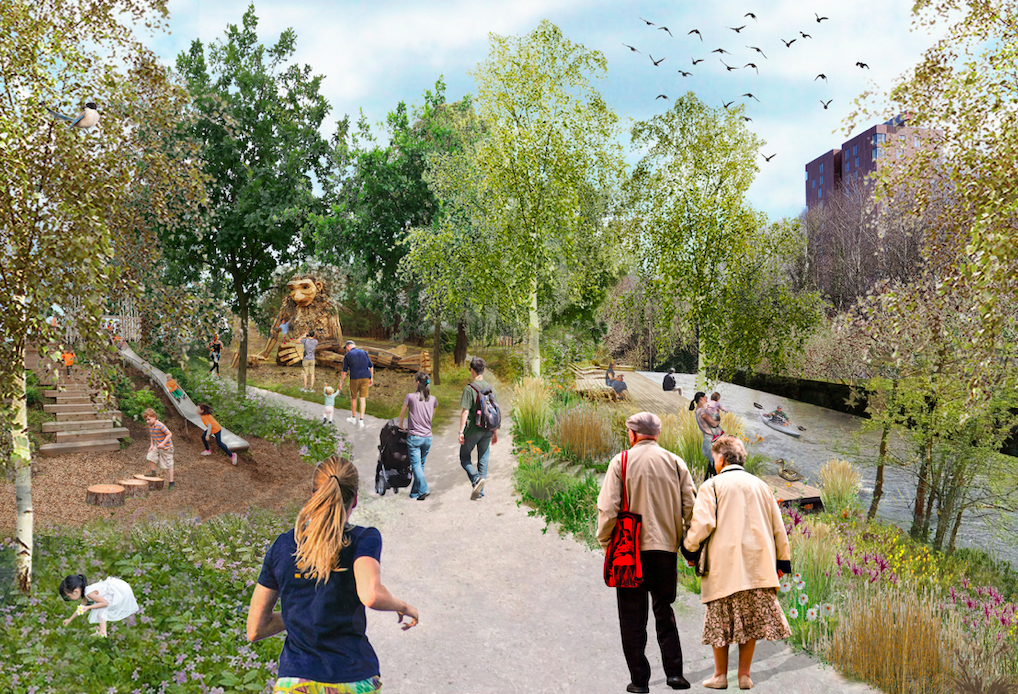
The area is in the process of being reconfigured as a delightful country park.
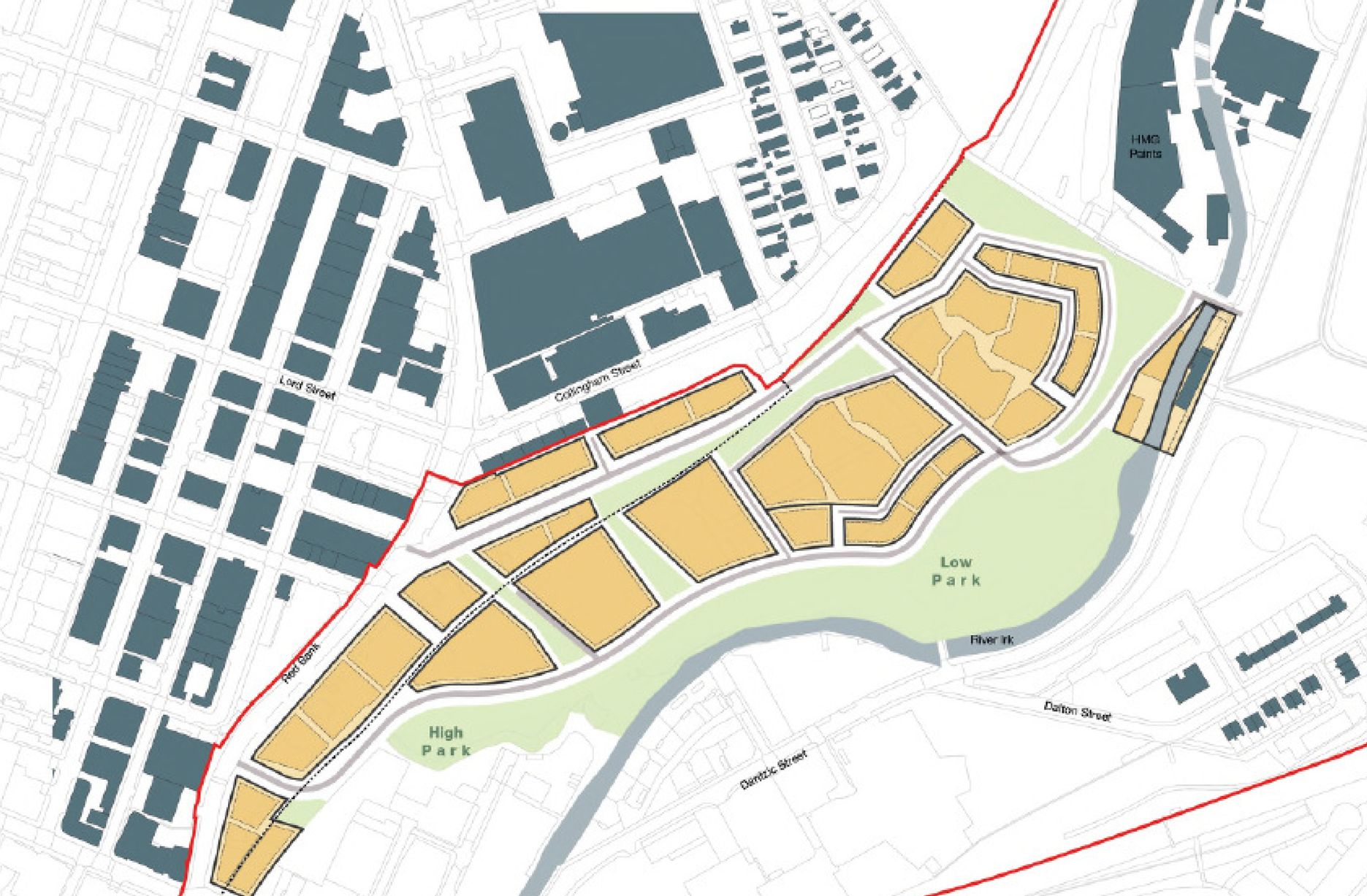
The investment will also help develop an initial phase of the planned City River Park incorporating St Catherine’s Wood as part of a network of public open space, including improvements along the River Irk and works to improve flood resilience, unlocking the potential of the Irk Valley that will characterise the wider Northern Gateway project.
The first phase of the City River Park will begin work to transform former railway architecture to develop the new Viaduct Linear Park north of Victoria Train Station, new stepped public realm space – Red Bank Terraces, along with new green space by the River Irk and the key improvements to St Catherine’s Wood.
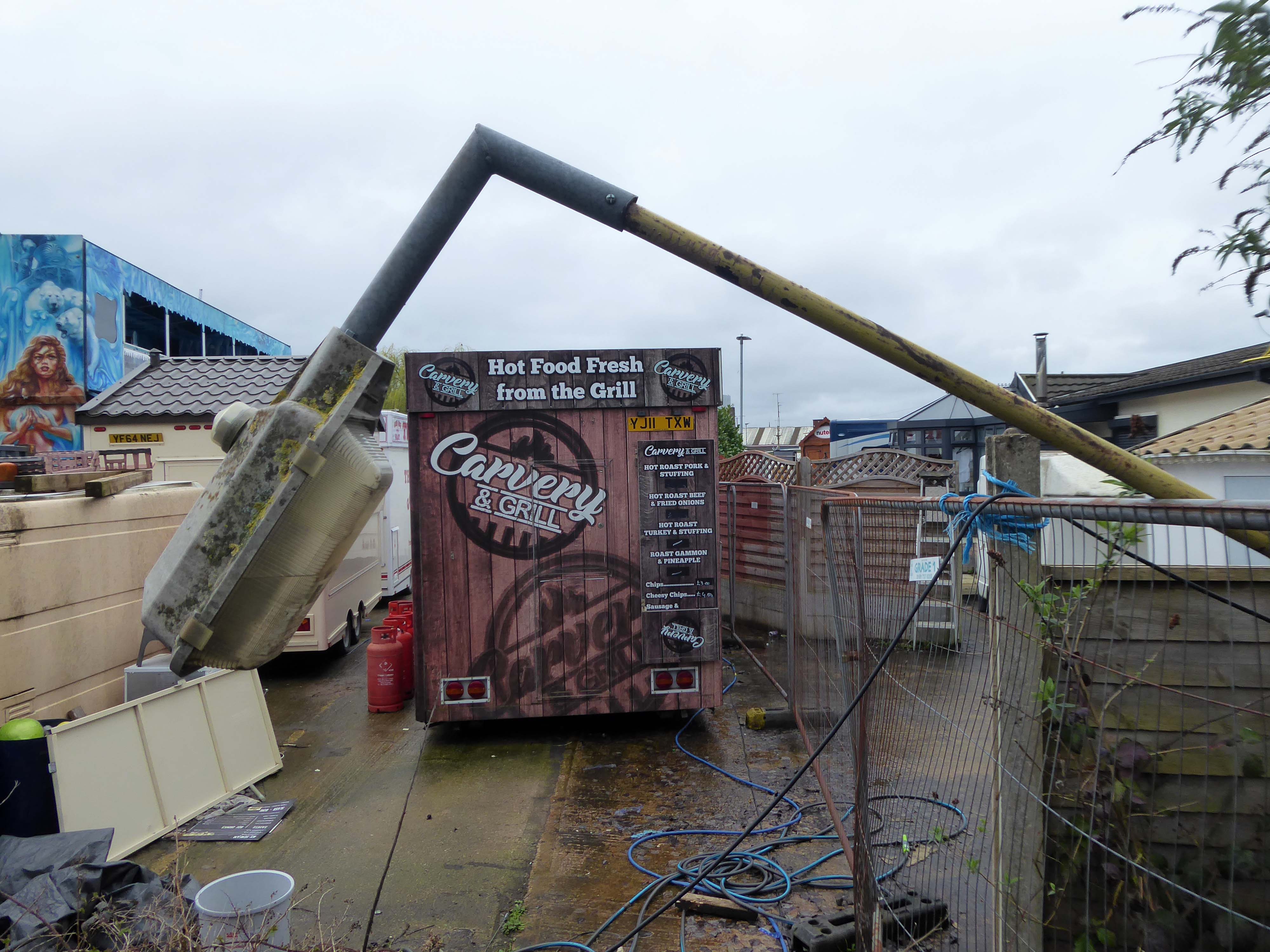
Collingham Street is lined with trucks, trailers, stalls and mobile homes.
But there’s nothing temporary about this Cheetham Hill neighbourhood; most residents have lived here for years and many plan to spend the rest of their lives here.
Founded more than forty years ago, it was created by the Showman’s Guild of Great Britain – and it’s reserved exclusively for fairground workers both retired and current.
Built on Queens Road tip, a former rubbish dump, and rented out by Manchester Council, many of the 52 homes belong to older retired showmen or families for whom an itinerant lifestyle has become more challenging.
It’s a close-knit community with a unique shared history.
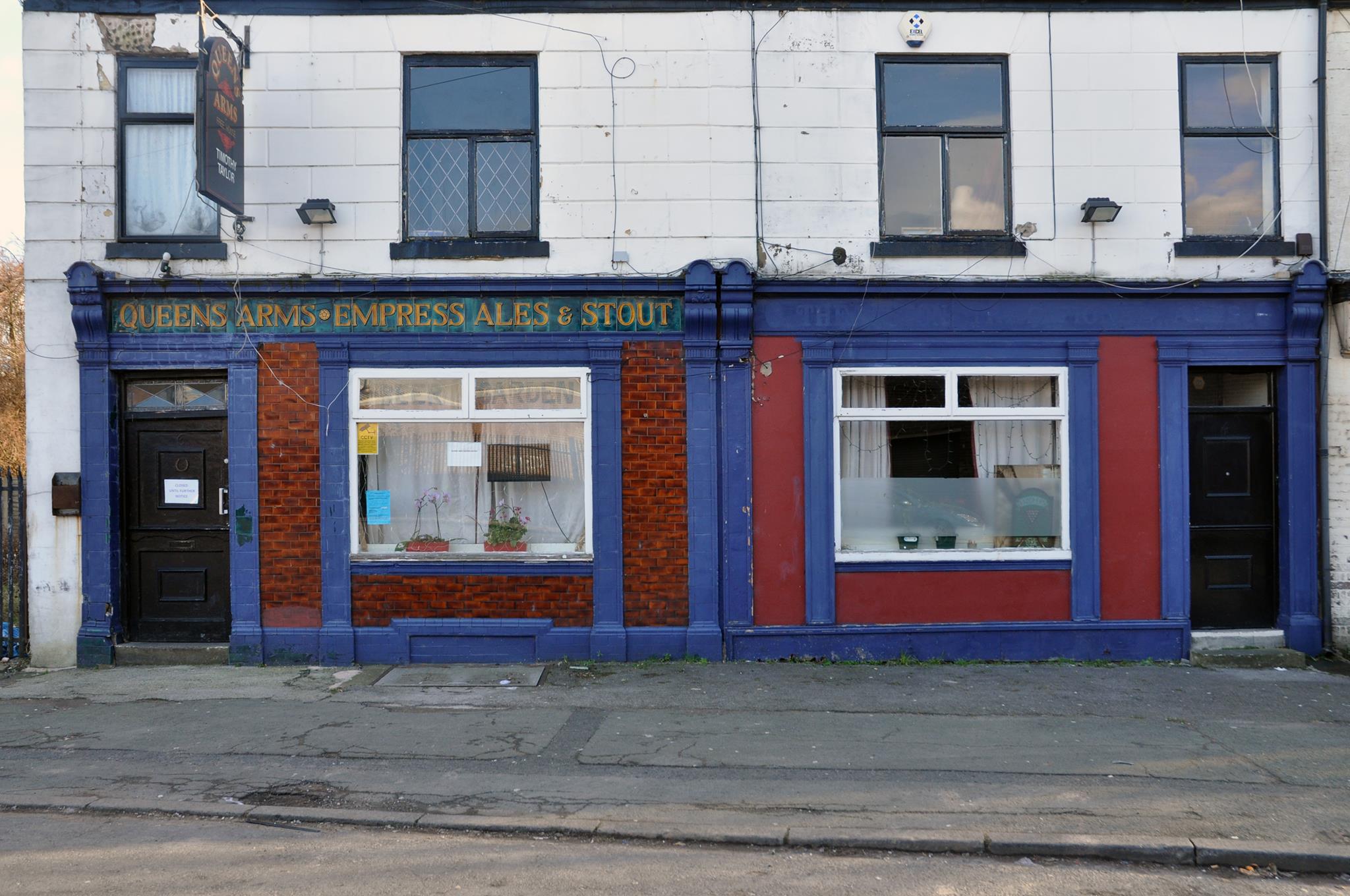
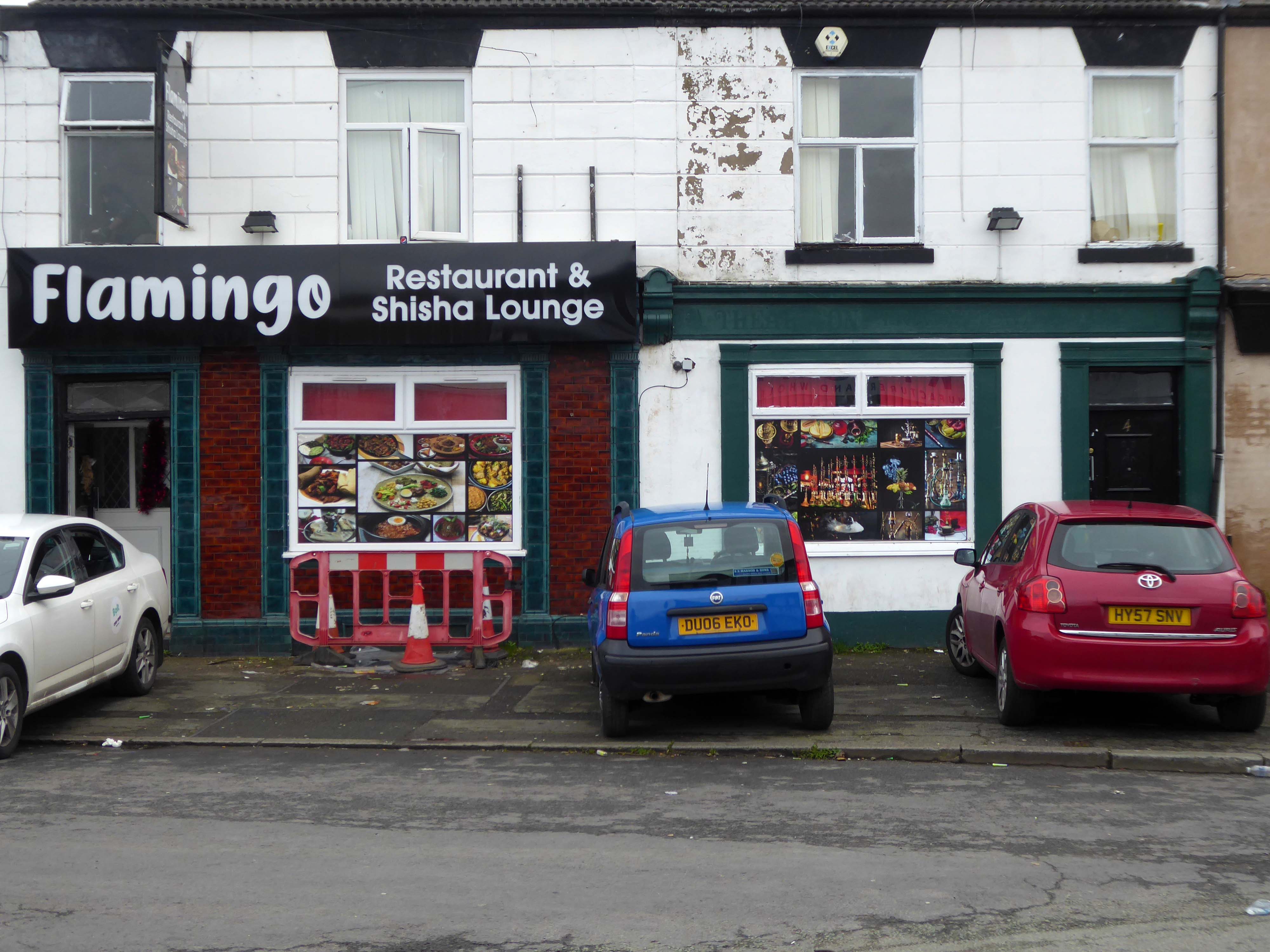
Though not without its own particular issues it would seem, according to the MEN.
The licensing out of hours team has received noise complaints relating to the premises which was found to be open beyond permitted hours when visited. Officers also identified breaches of the Health Act during inspections in which people were seen smoking shisha pipes in an enclosed extension at the back.
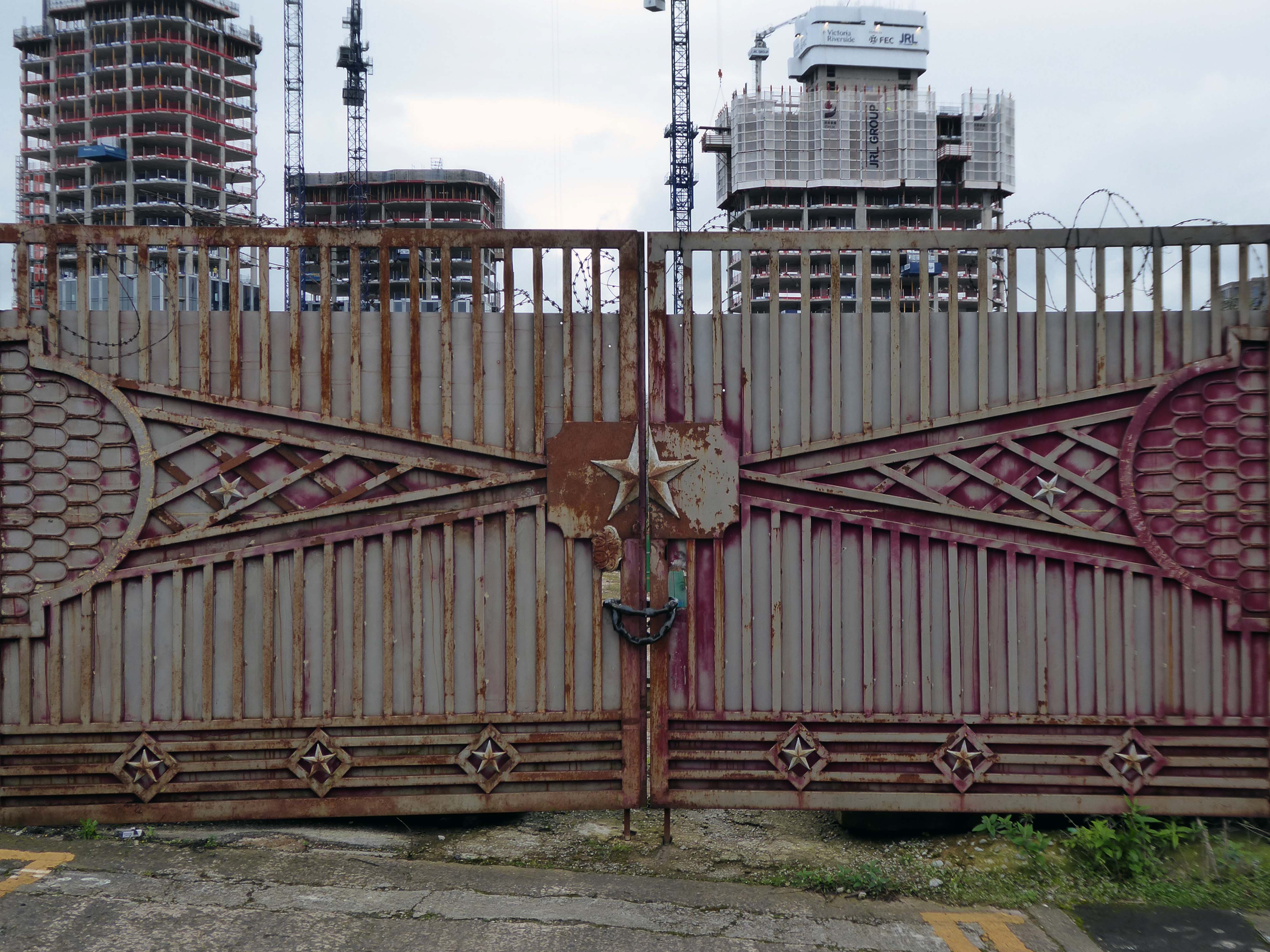
We will leave the Flamingo be and head back into town – but not without giving a nod to this confusing collision between this self-made scrapyard-man chic gate and the ever changing skyline of overheated urban regeneration.
The new creation has come: The old has gone, the new is here!
More than once, though that’s no reason not to do so again – so I did.
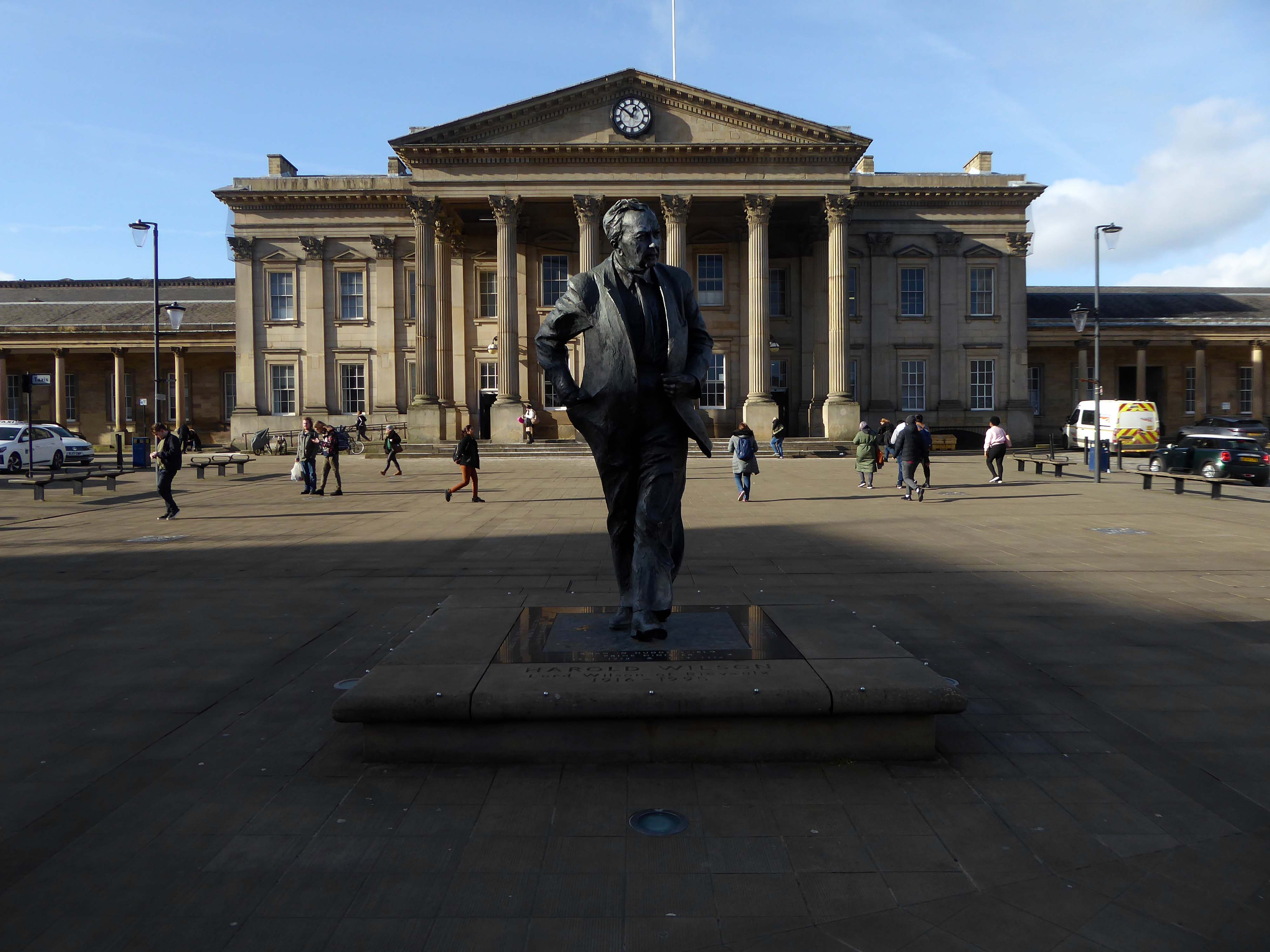
Saying hello to Harold.
Harold saying hello to us:
Nostalgia won’t pay the bills; the world doesn’t owe us a living; and we must harness the scientific revolution to win in the years to come. This scientific revolution is making it physically possible, for the first time in human history, to conquer poverty and disease, to move towards universal literacy, and to achieve for the whole people better living standards than those enjoyed by tiny privileged classes in previous epochs.
He warned change would have to reach every corner of the country; The Britain that is going to be formed in the white heat of this revolution will be no place for the restrictive practices or for outdated methods on either side of industry.
Standing sentinel over one of Nikolaus Pevsner and John Betjeman’s favourite railway station front elevations.
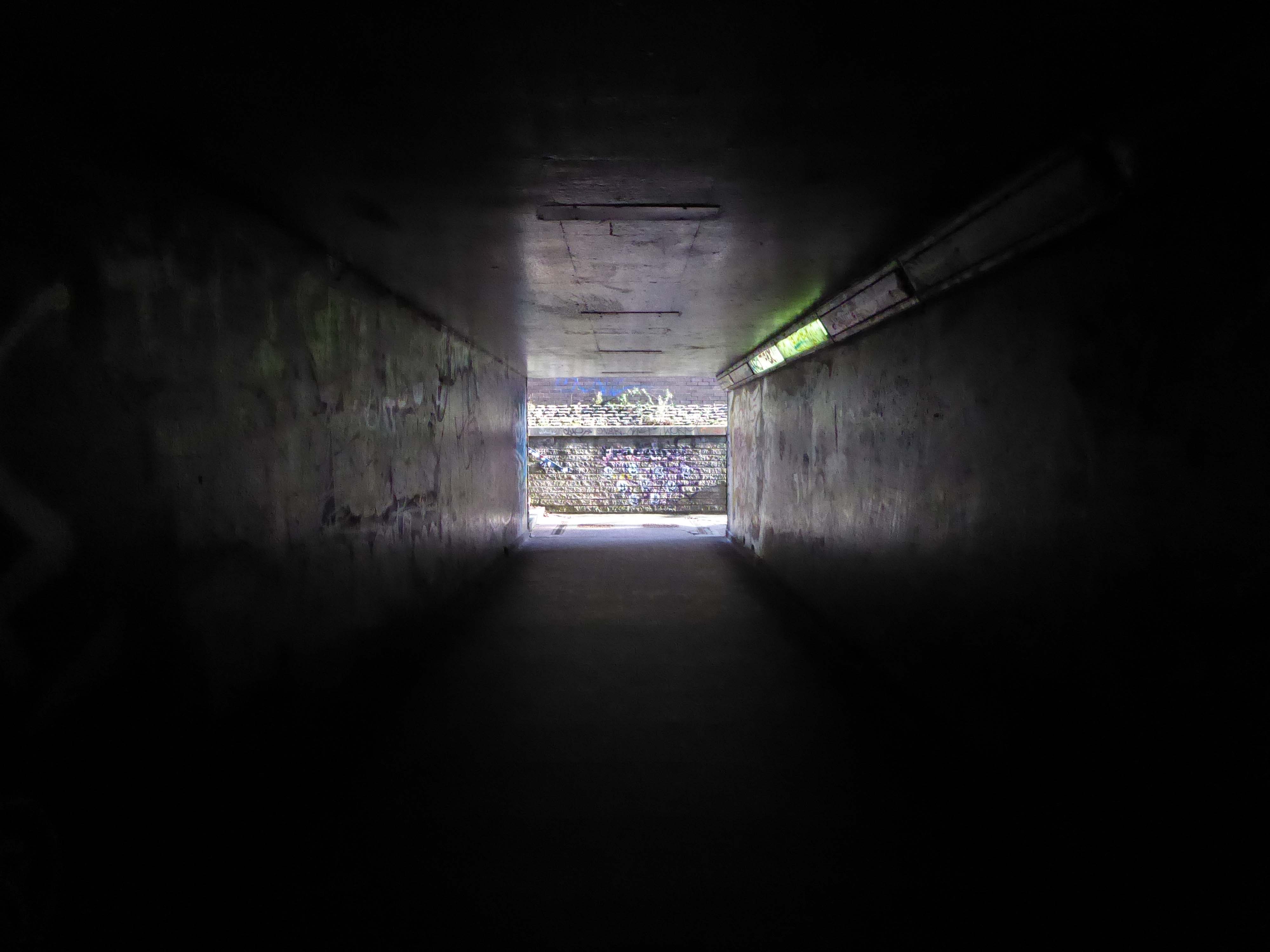
Through a passage darkly.
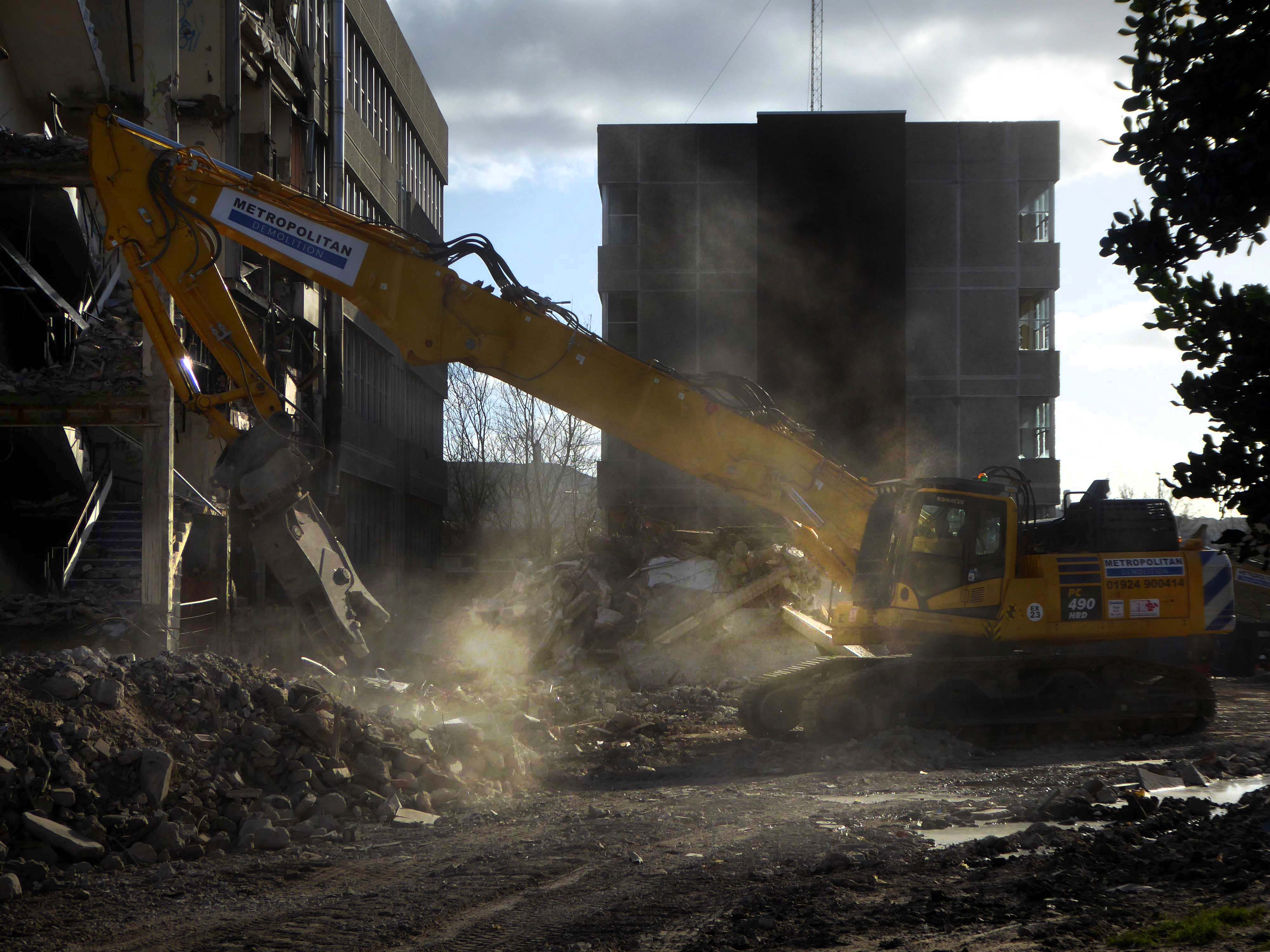
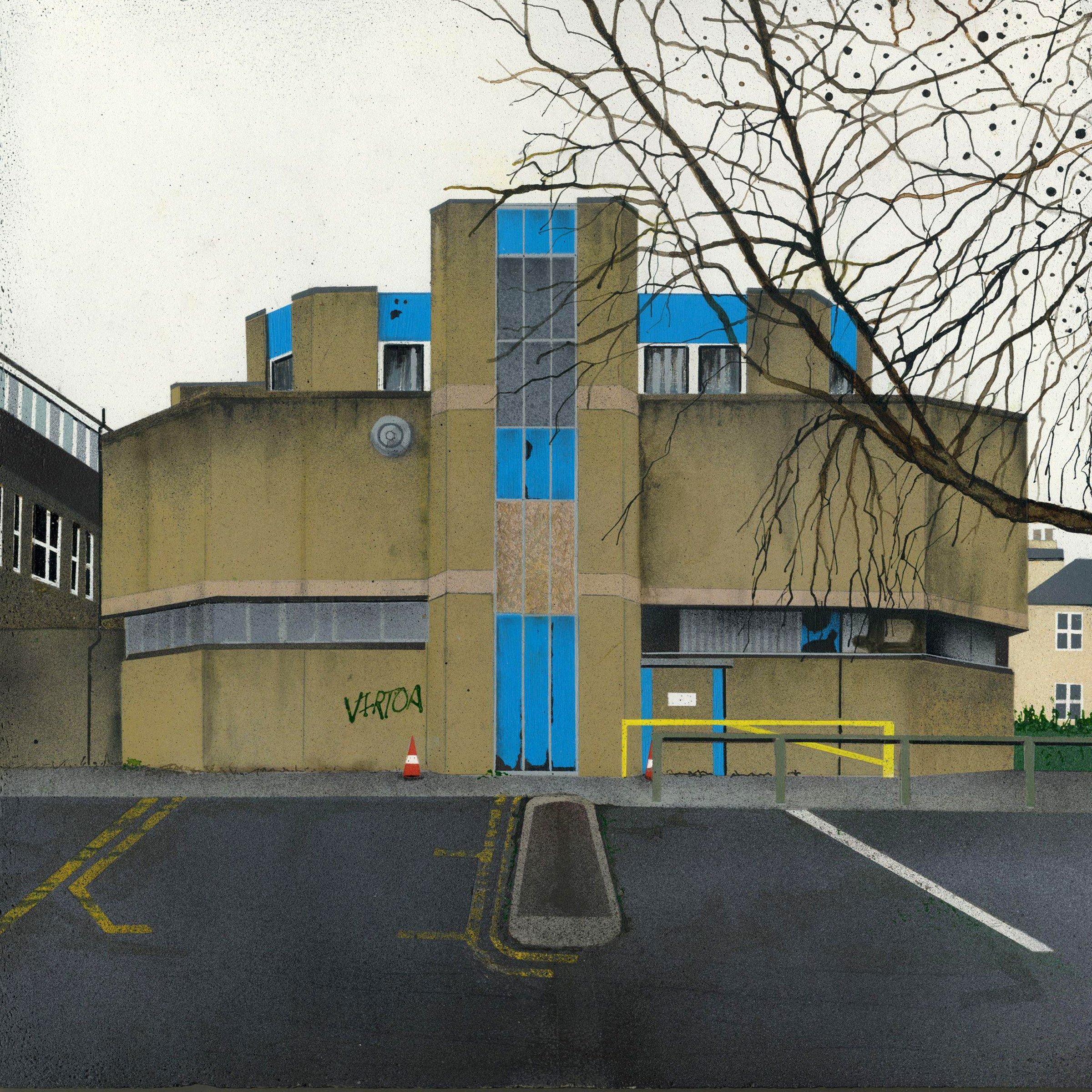
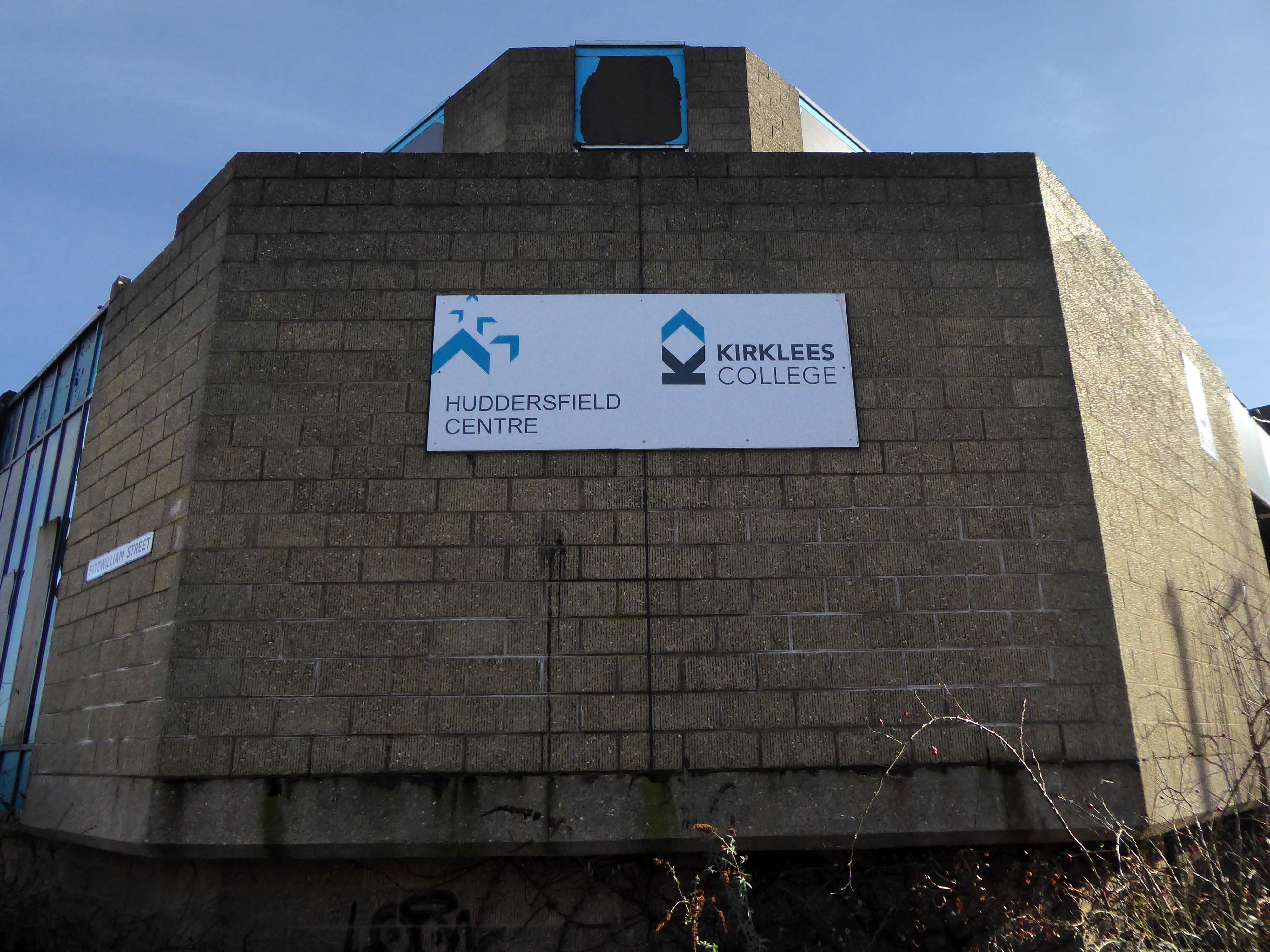
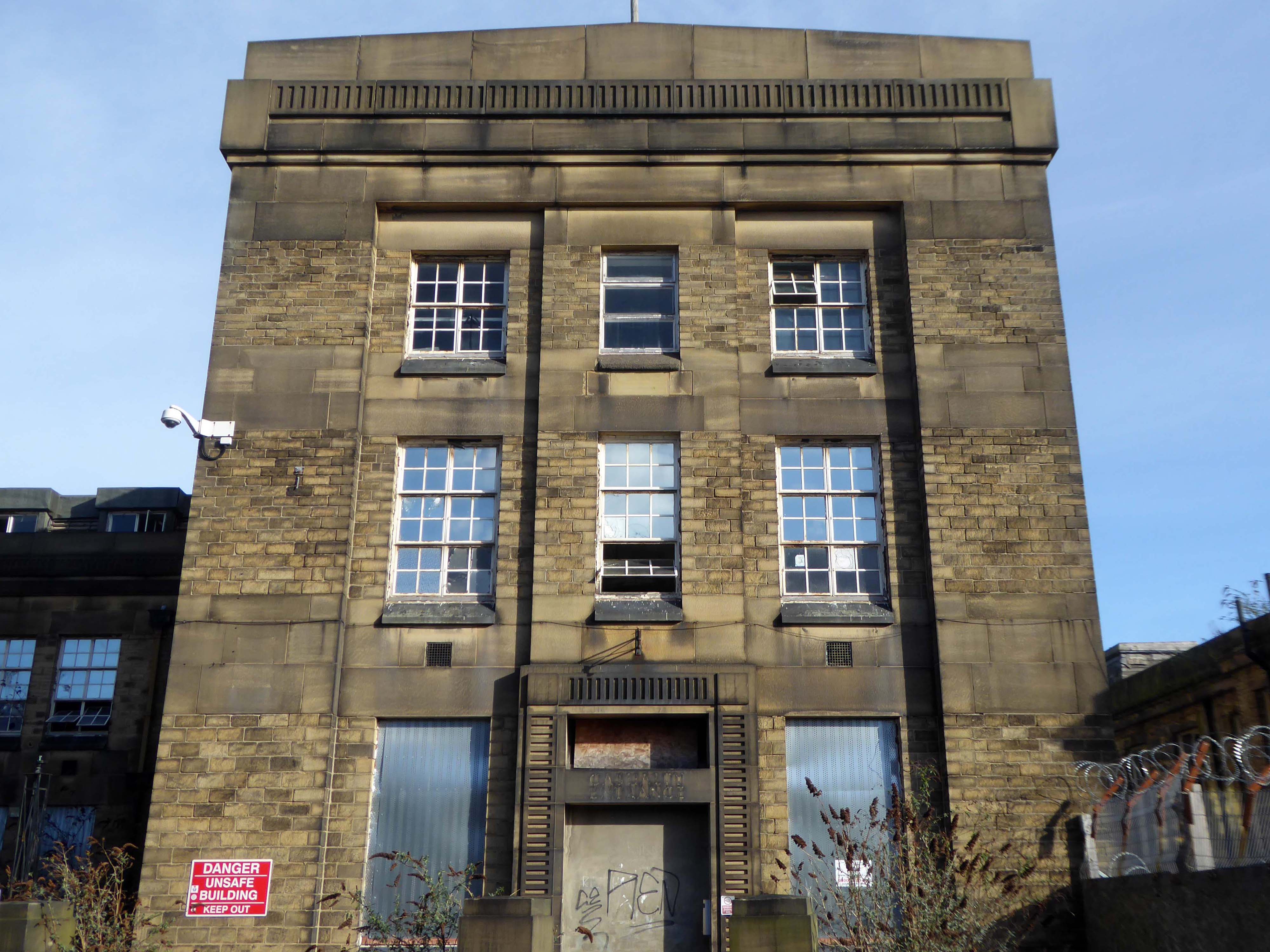
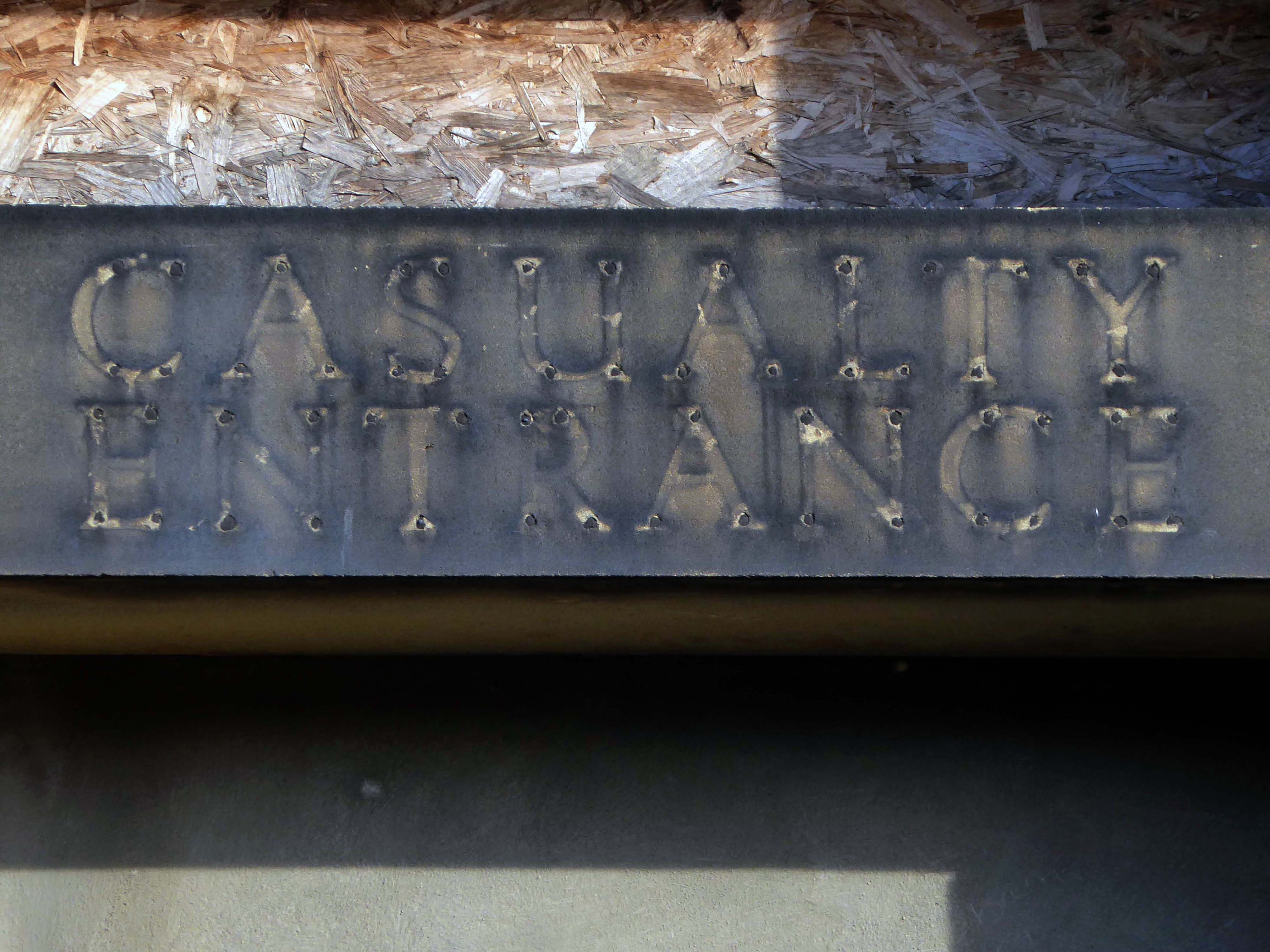
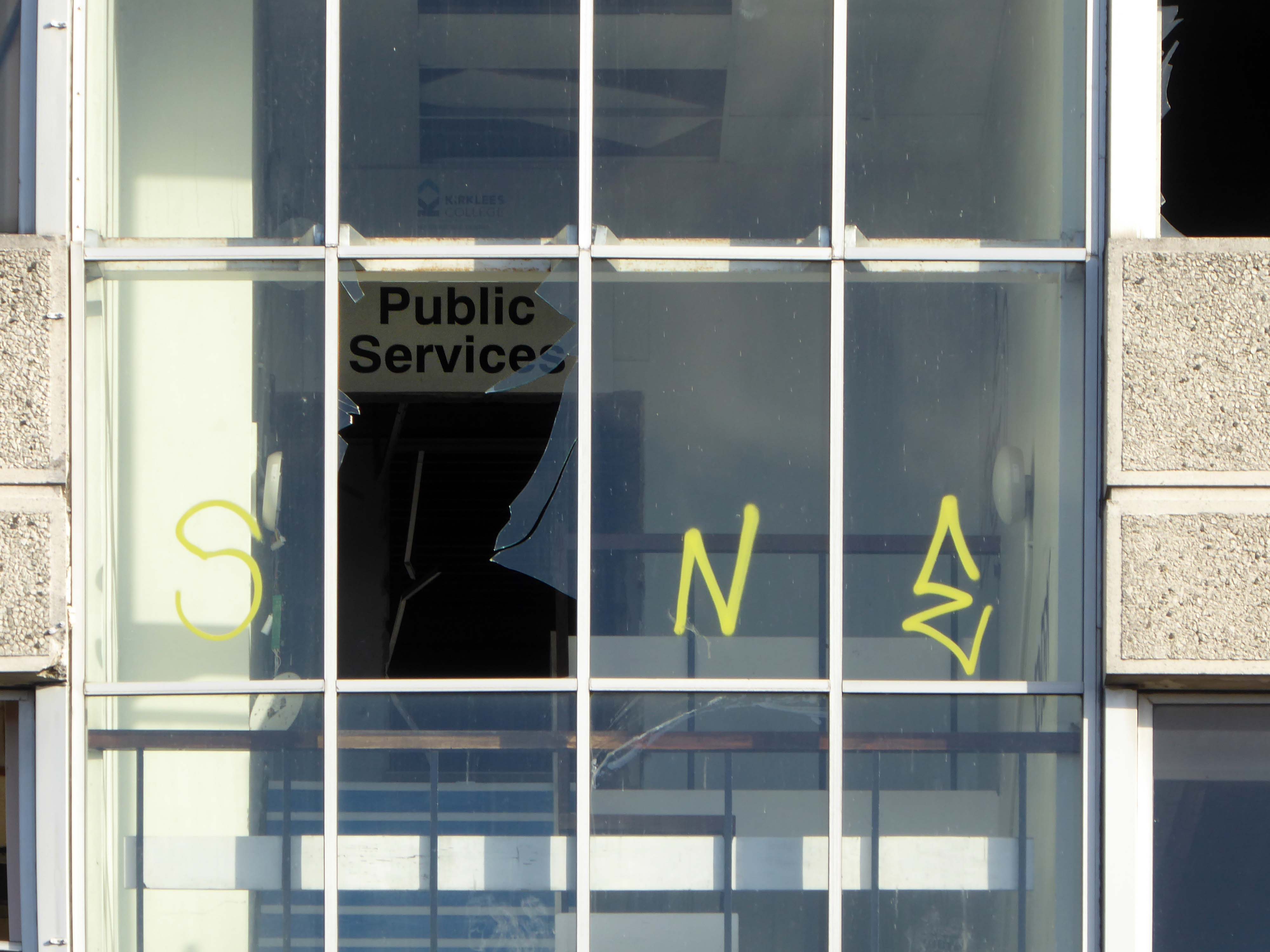
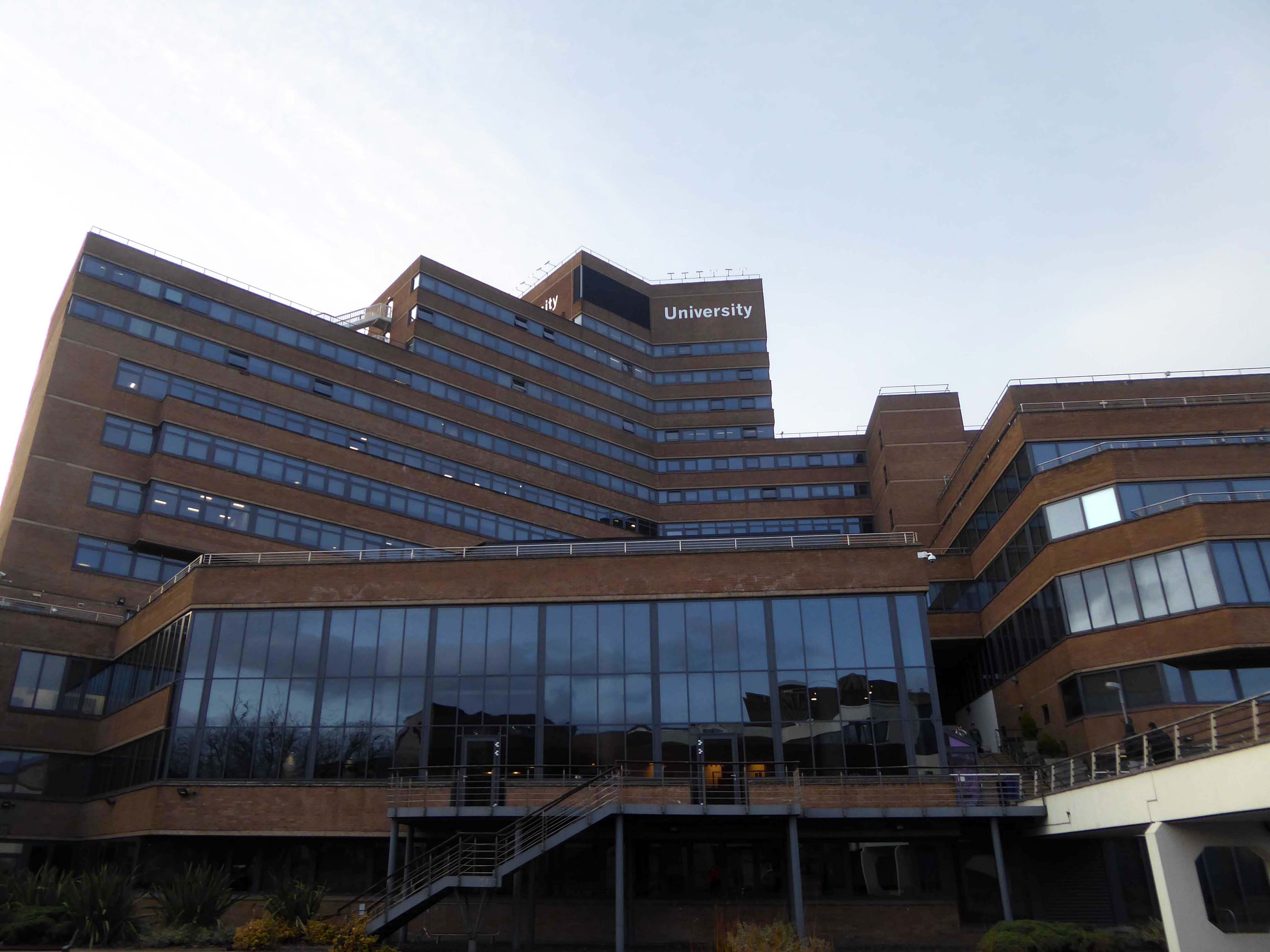
Emerging into the light of day and the demolition of the Kirklees College 1969-72 by Borough Architect Charles Edmund Aspinall.
My thanks to the Metropolitan team who invited me in beyond the barriers.
We provide safe and efficient demolition services across a broad range of projects, from the small domestic dwelling to large scale industrial units – we offer the complete solution. With excellent communication and impeccable health and safety standards, we can project manage the decommissioning a structure on time and on budget.
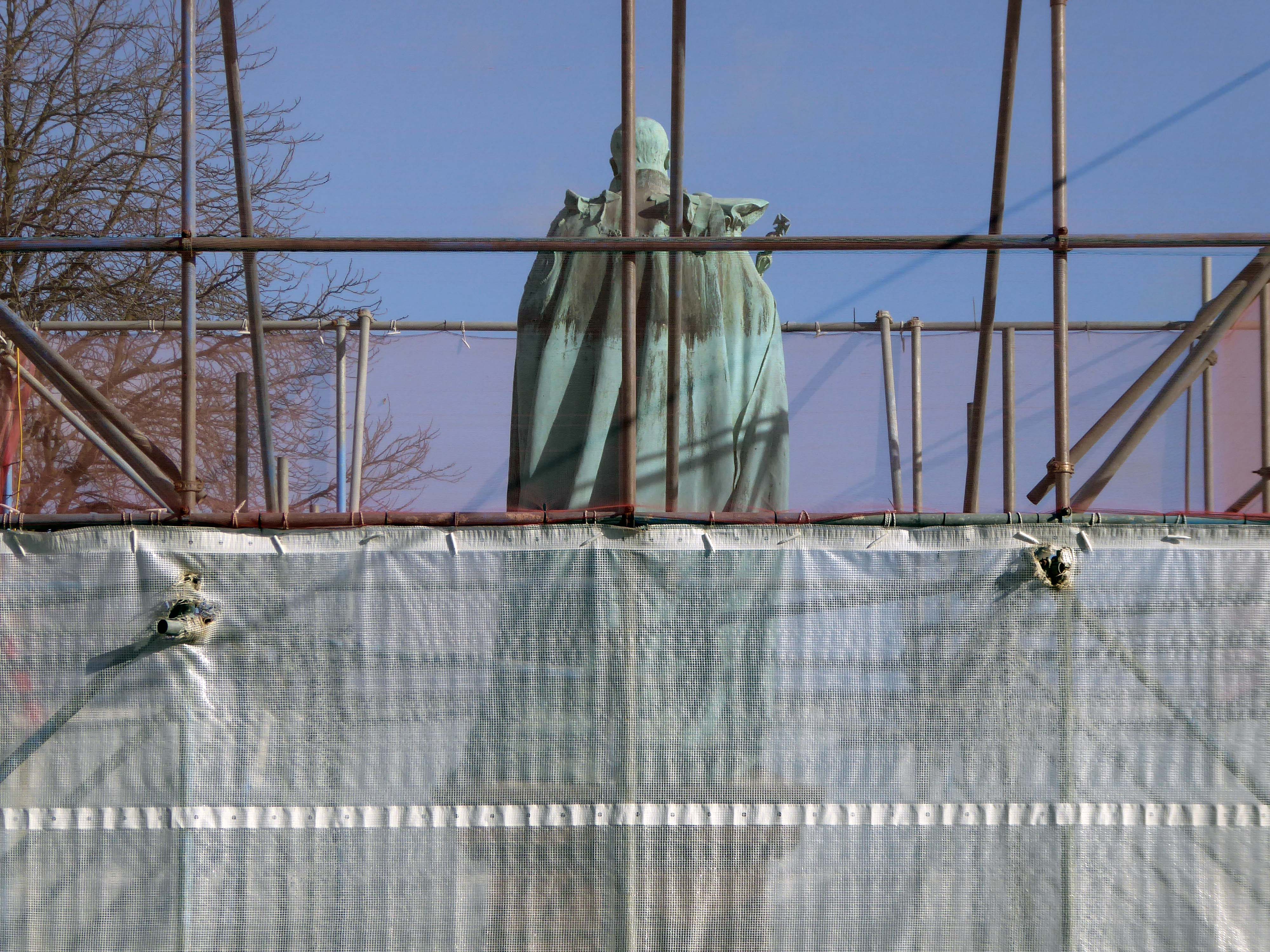
Edward VII is under wraps.
Everything else is up for smash and grab – including the later concrete block immortalised by Mandy Payne.
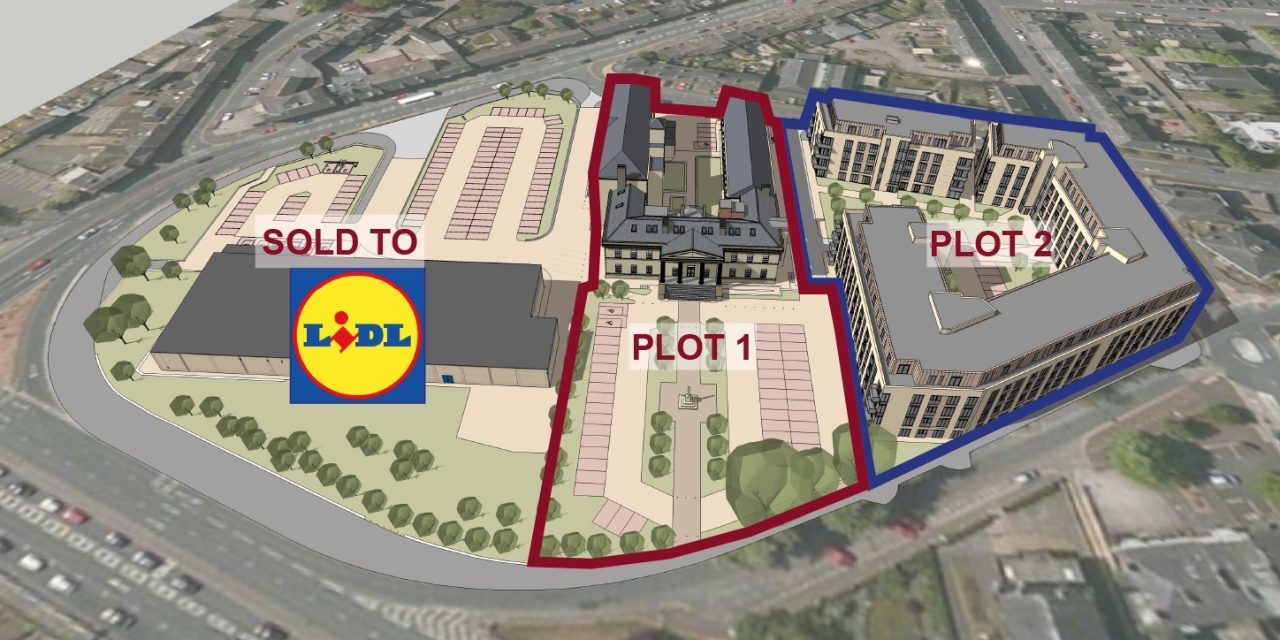
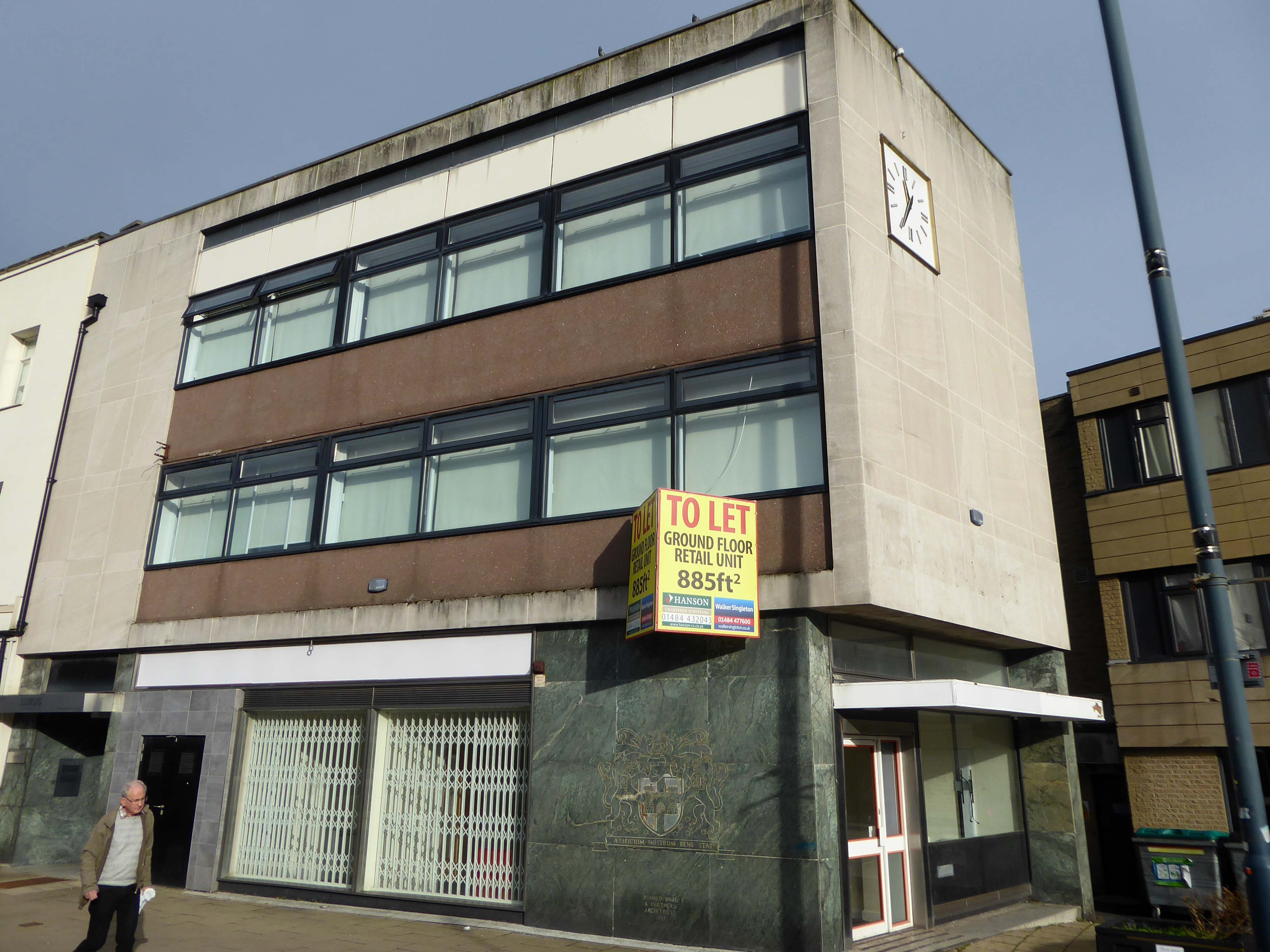
LIDL is coming – and some homes
The final details have now been signed off by the council and work on the six-acre site – which includes the Grade II-listed original Huddersfield Royal Infirmary – can now begin.
The vandal-hit and fire-damaged late 1960s and early 1970s college buildings are to be demolished and Lidl will build a new supermarket with a 127-space car park. The store will eventually replace the store on Castlegate.
The former hospital will be retained and the site will see 229 apartments and an office complex. The apartments are expected to be for older or retired people.
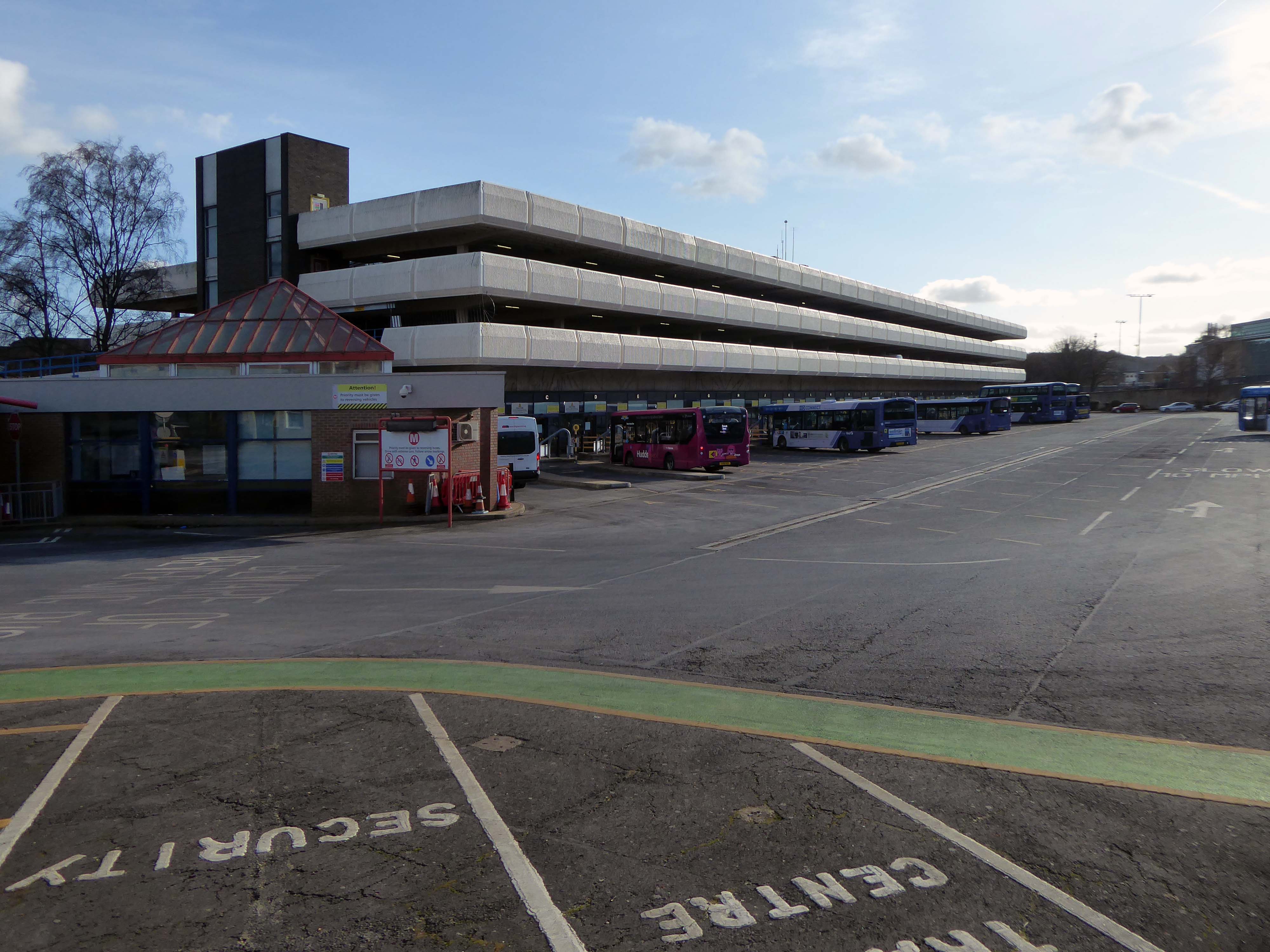
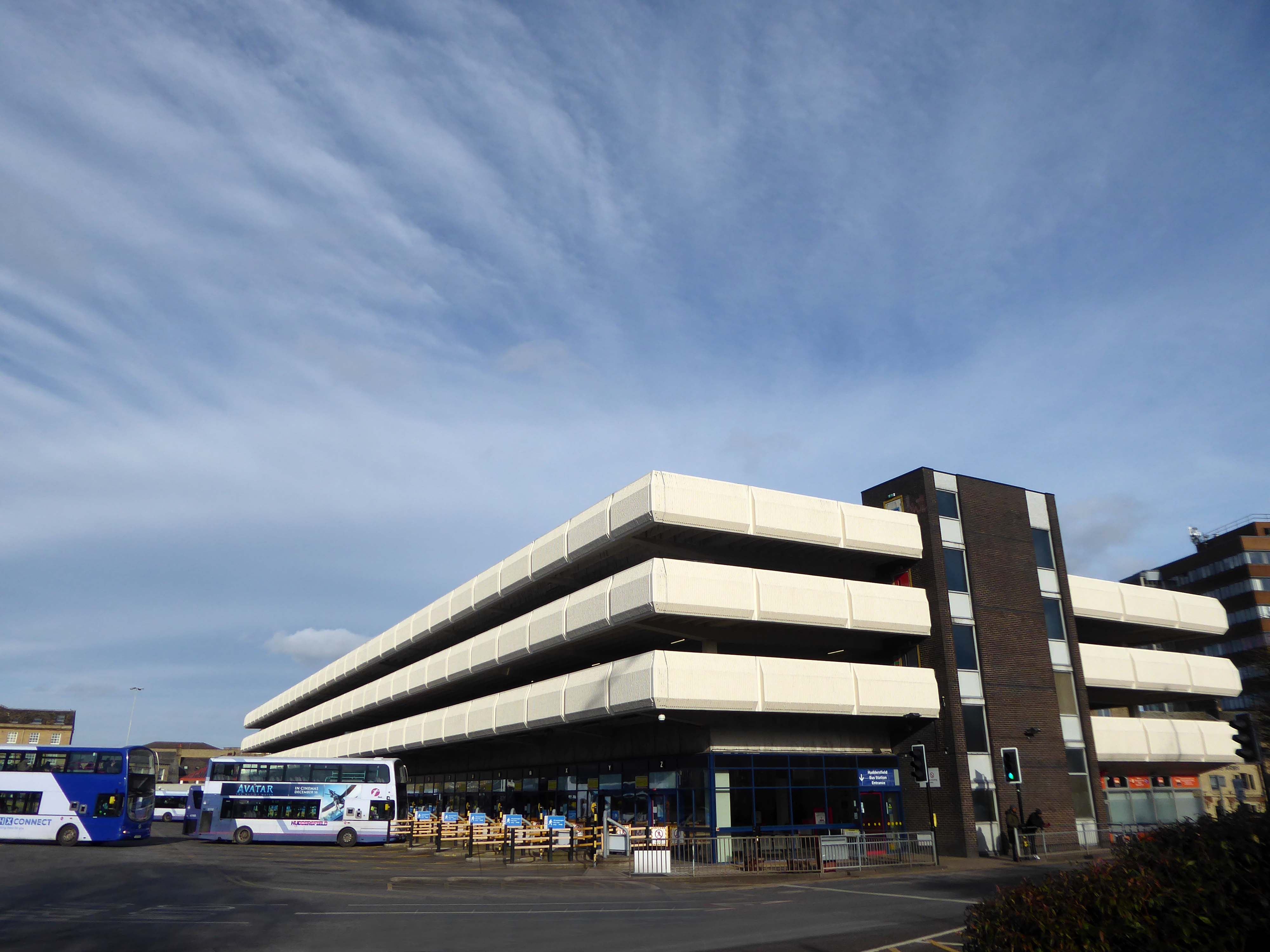
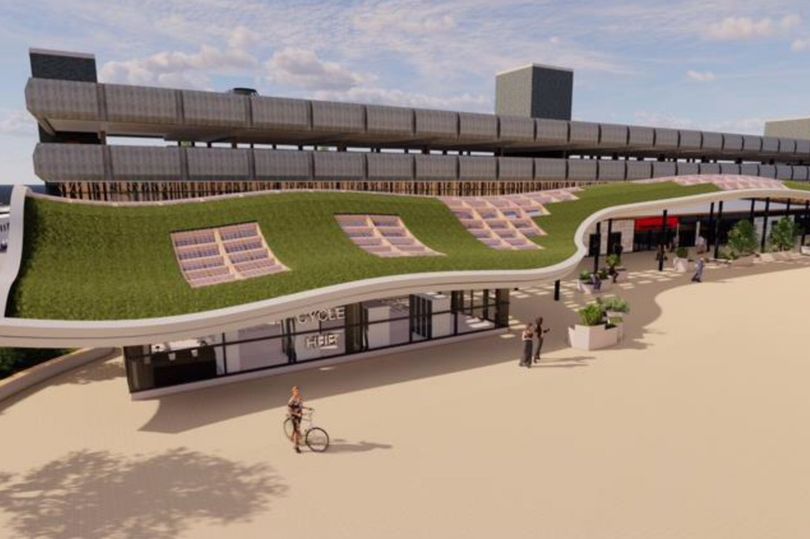
Huddersfield’s £20M game-changing bus station is set to be completed by the end of 2025 with a living grass roof, sixty bike cycle hub, upgraded shops and new facilities
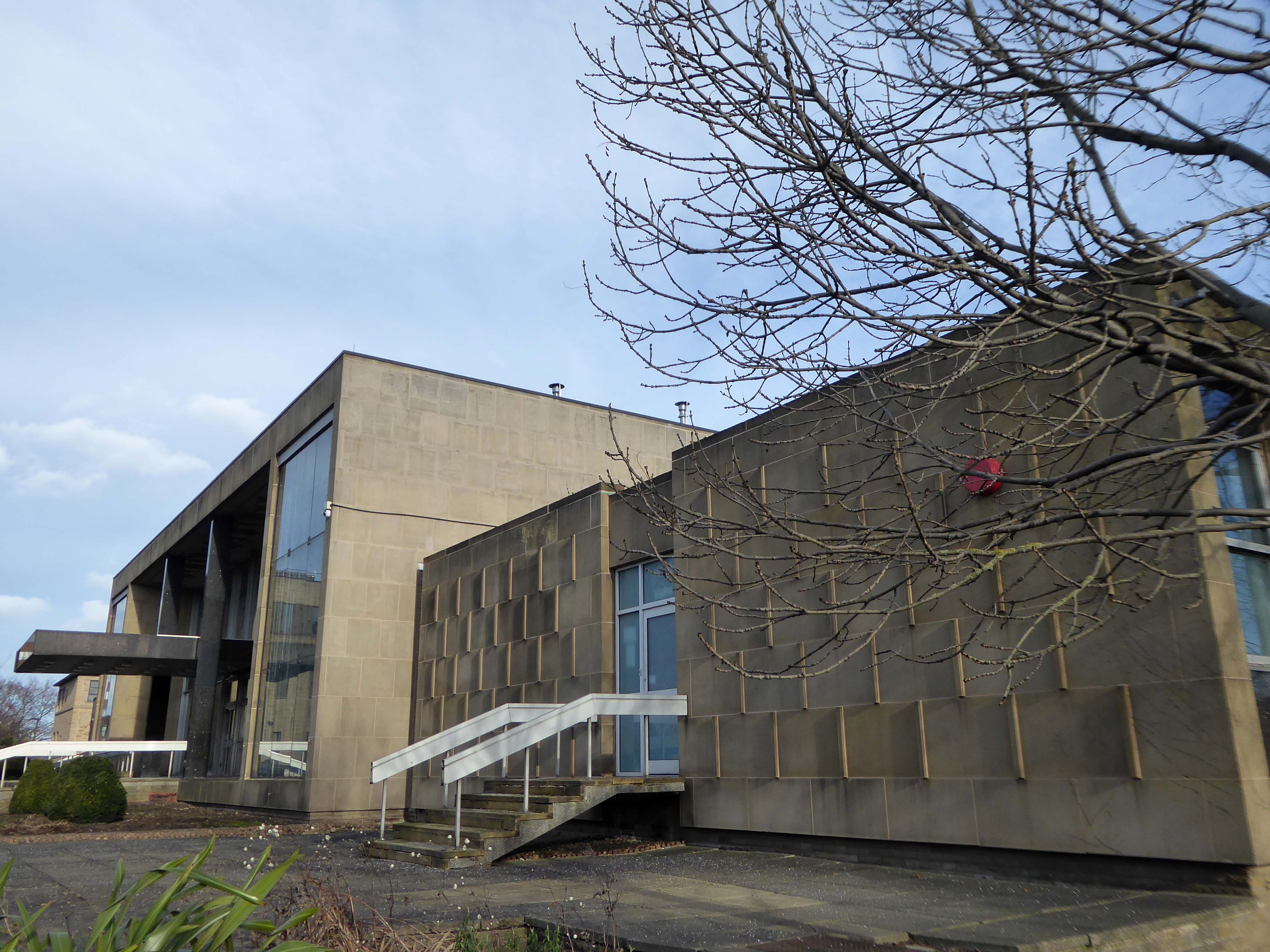
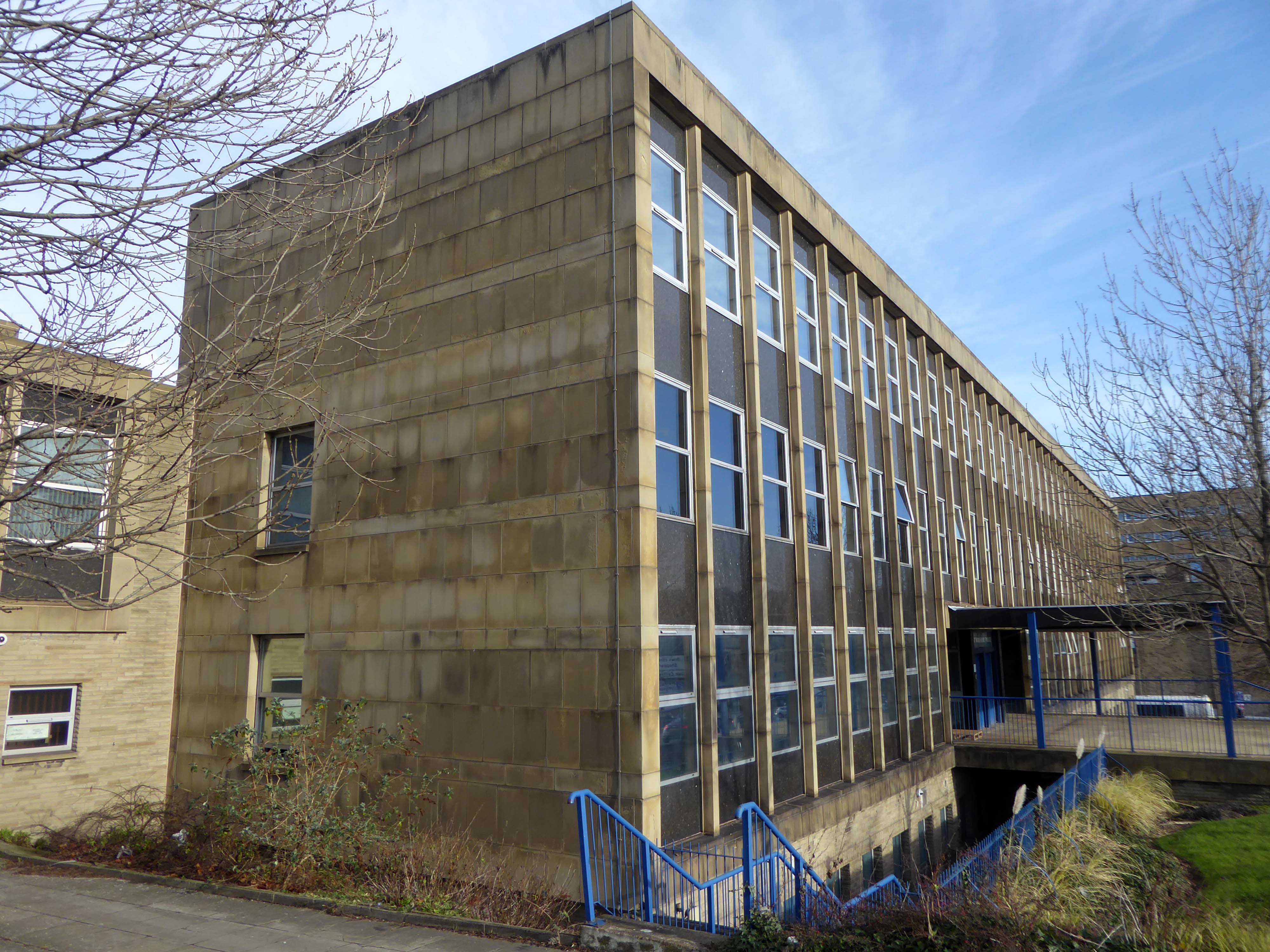
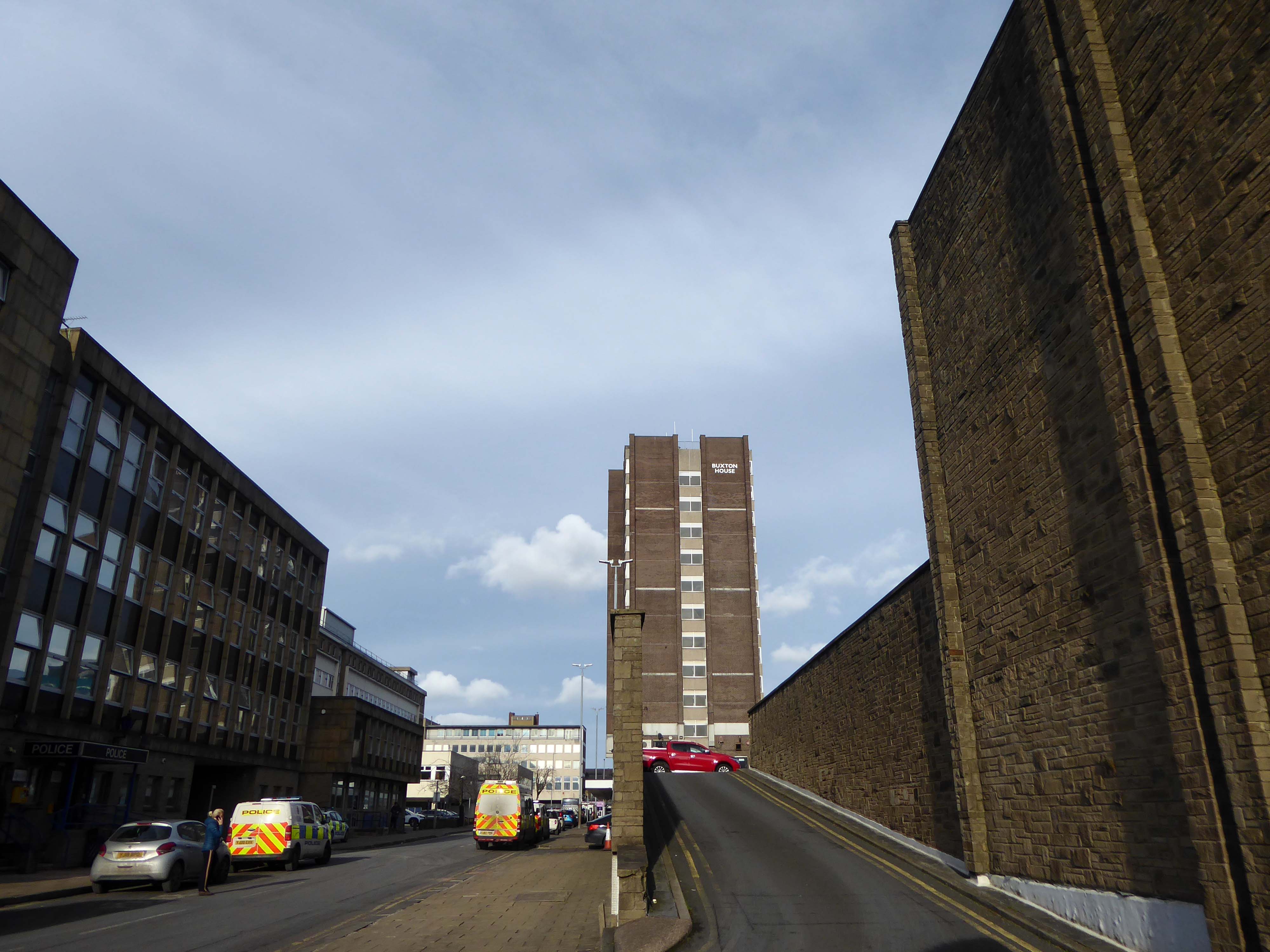
Crossing the road to the Civic Centre and the perennially empty piazza which along with the Magistrates Courts and Police Station was the work of the Borough Architects team – led by Charles Edmund Aspinall.
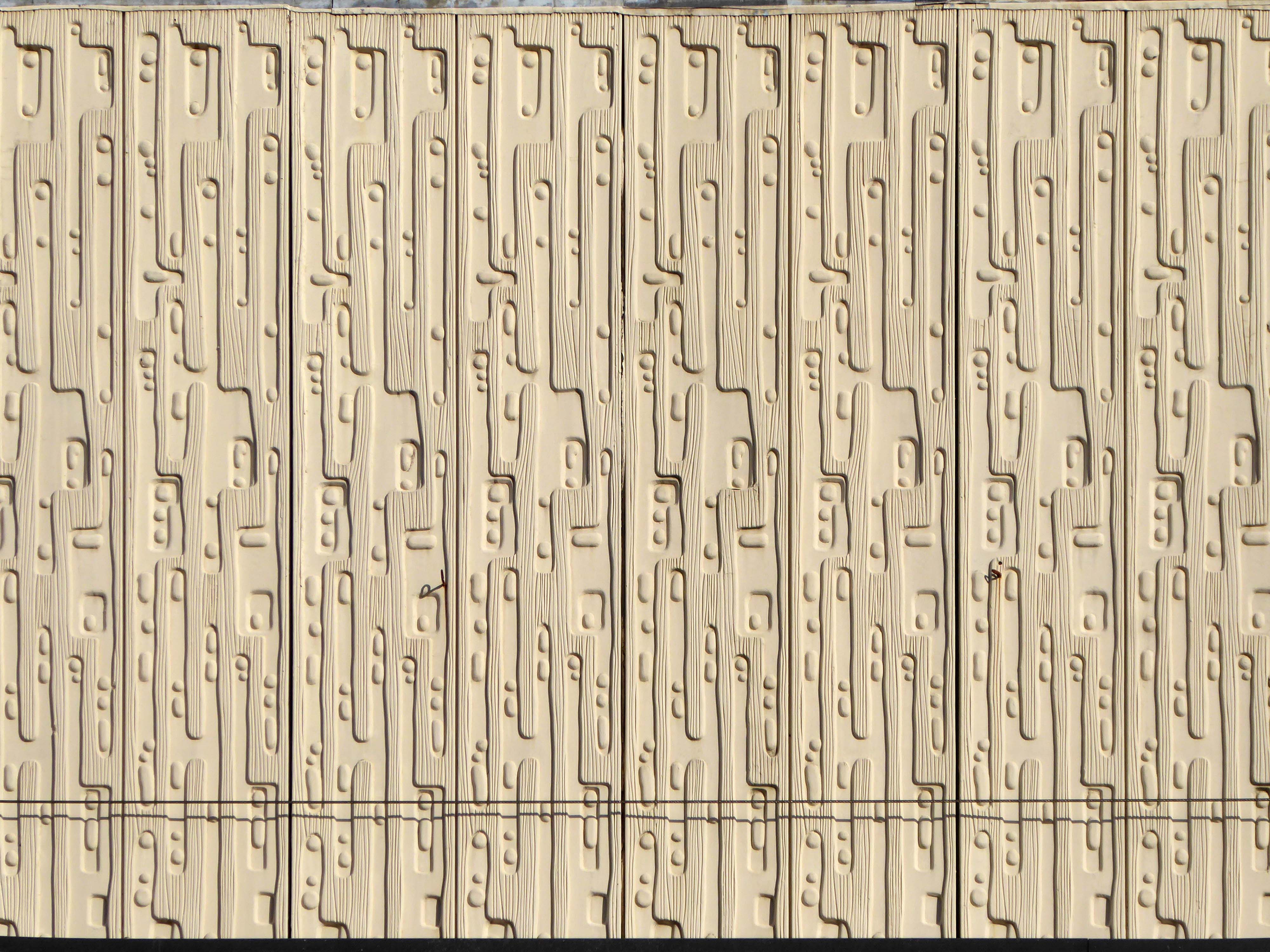
Walking excitedly toward the Exsilite panels set in the stone faced columns – a brand name for a synthetic, moulded, artificial marble.
Magistrates Courts
Police Station
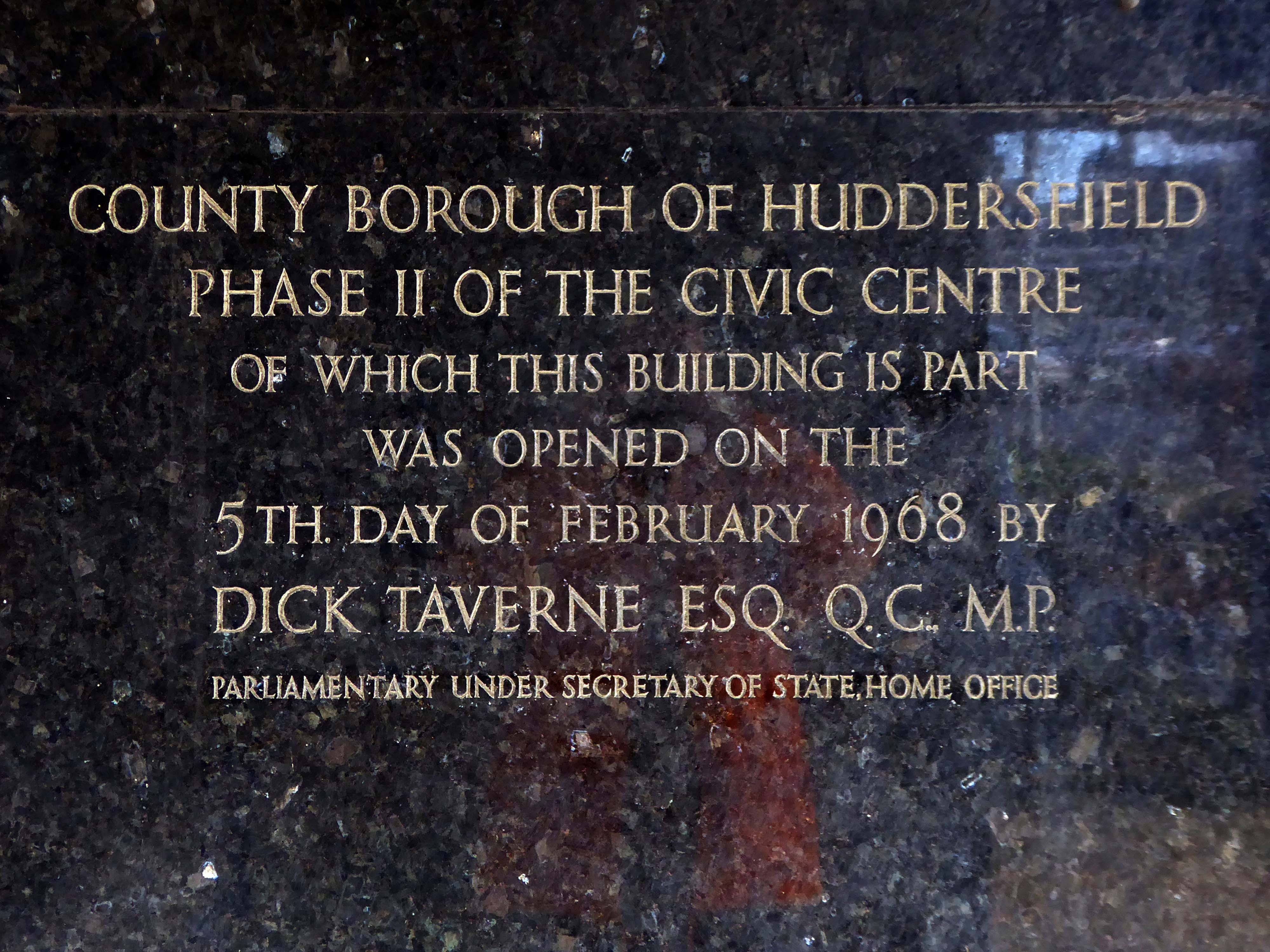
Dick Taverne served under Harold Wilson’s premiership in the 1960s, he served as a Home Office Minister from 1966 to 1968, Minister of State at the Treasury from 1968 to 1969 and then as Financial Secretary to the Treasury from 1969 to 1970.
In 1970, he helped to launch the Institute for Fiscal Studies, now an influential independent think tank and was the first Director, later chairman.
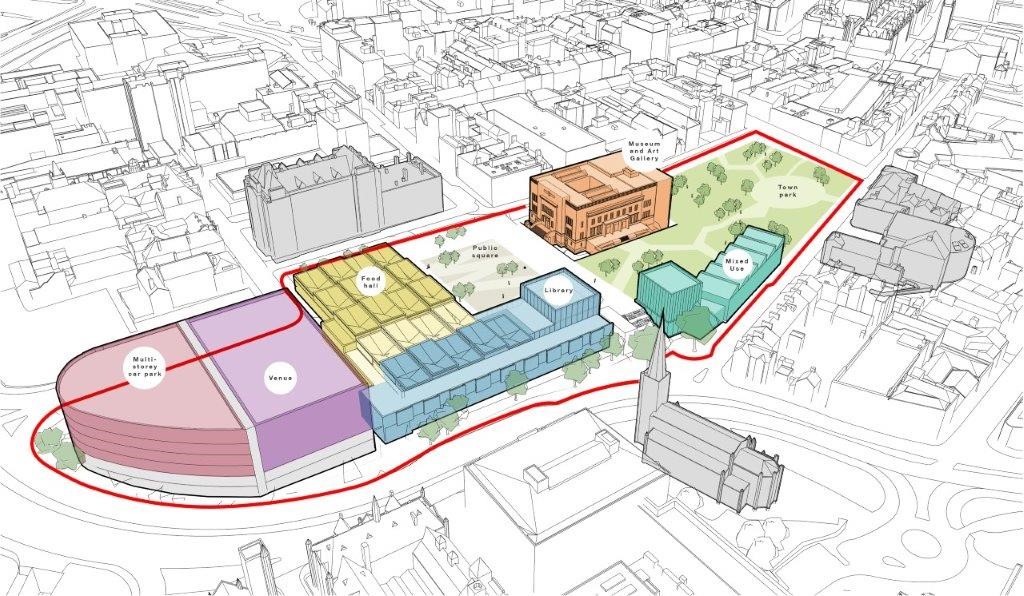
The vision is to create an inclusive space where families, residents and visitors can enjoy a vibrant mix of music, arts, food and more in one central area, overlooking a stunning new urban park.
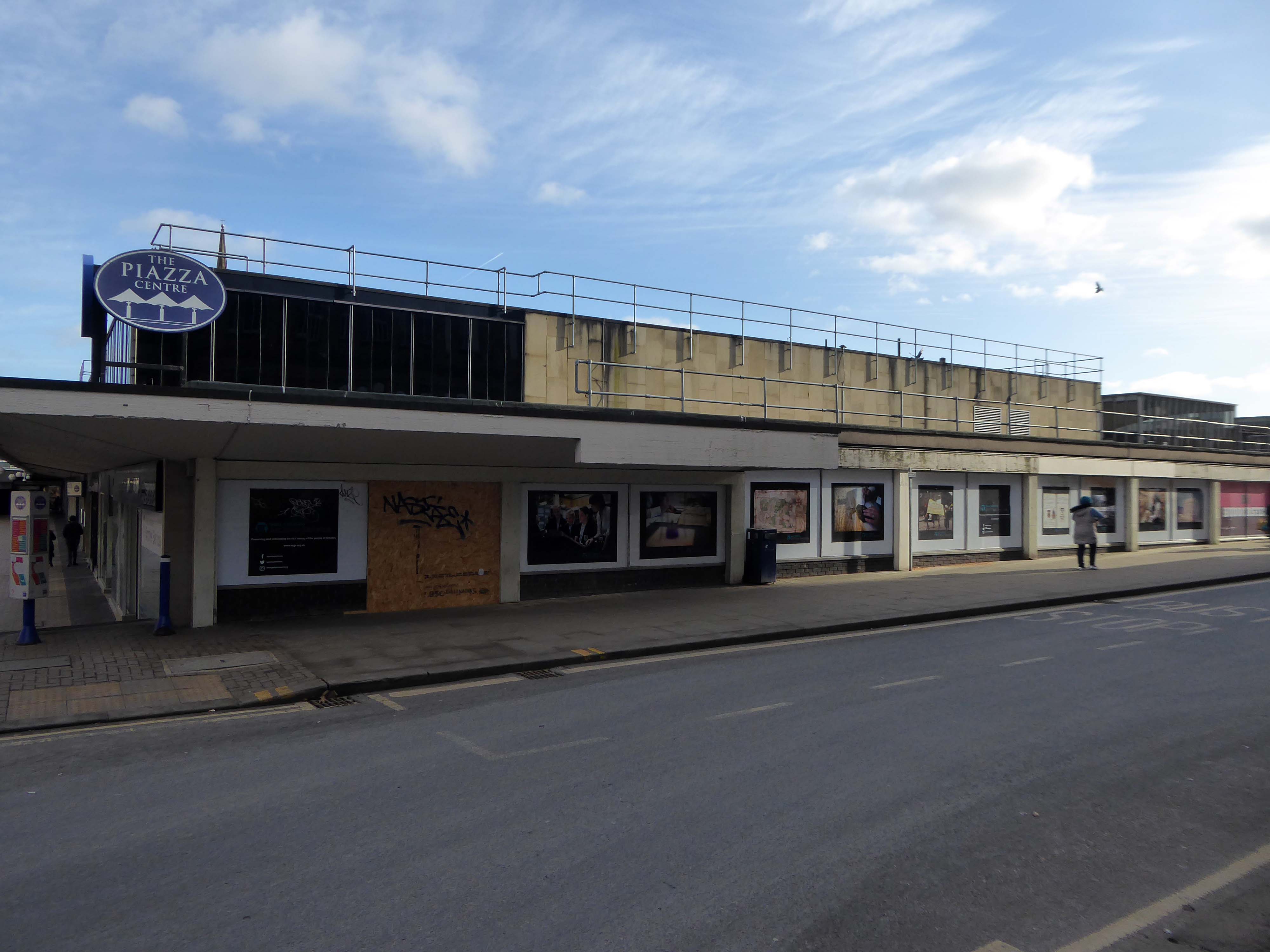
The council plans to demolish the Piazza Centre and create a new events/live music venue, a food hall, a museum and art gallery, a new library and a new multi-storey car park, all centred around a new Town Park.
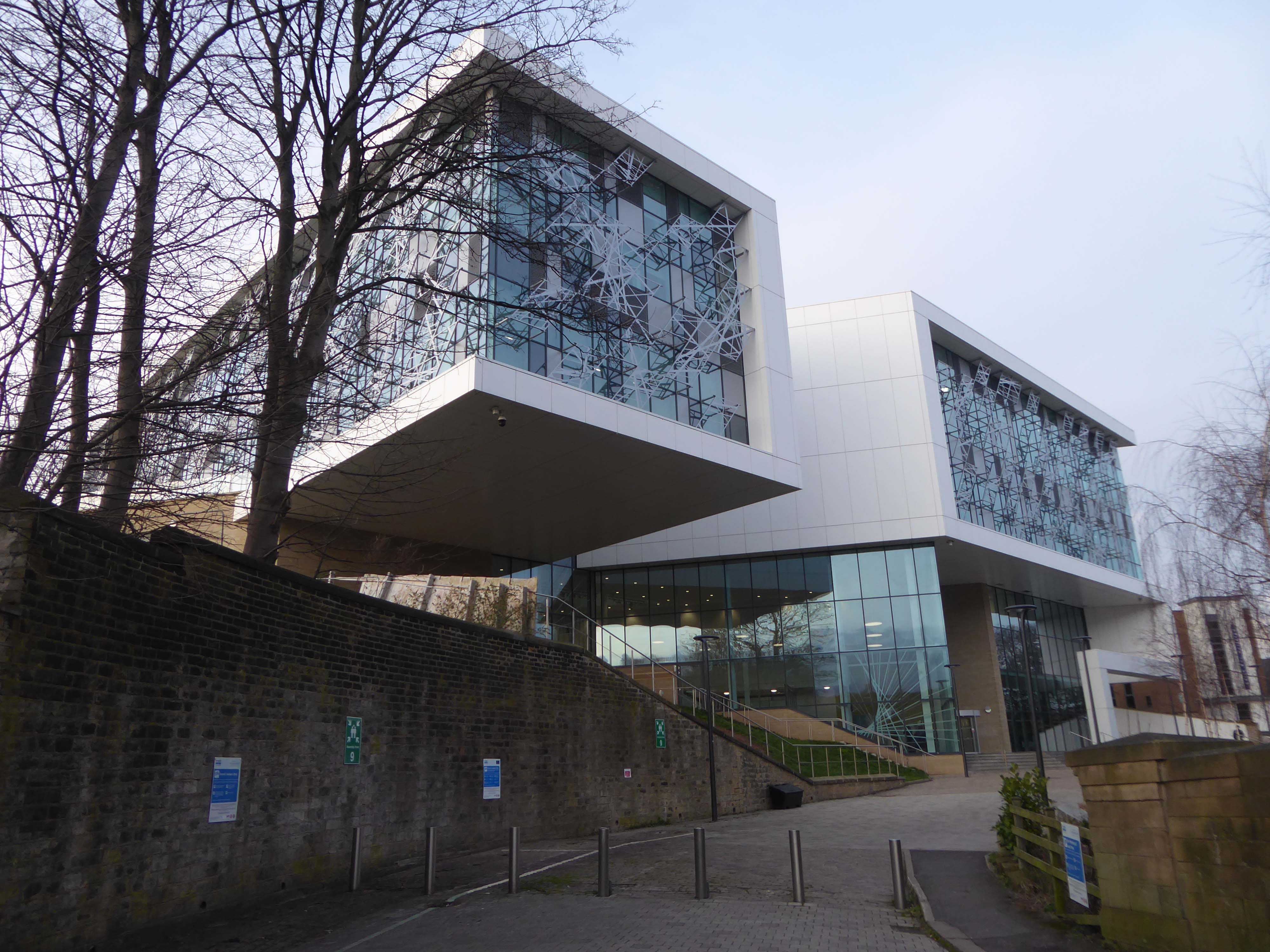
Named after one of the Twentieth Century’s finest artists, the space nurtures a new and inspired generation of designers. Through visual and physical connection, the environment encourages students to work together, stimulating communication and ingenuity, the ingredients of successful collaboration.
Take that to the bank/s
Keep savin’, keep buildin’ That interest for our love Take that to the bank Keep savin’, keep buildin’ That interest for our love Take that to the bank
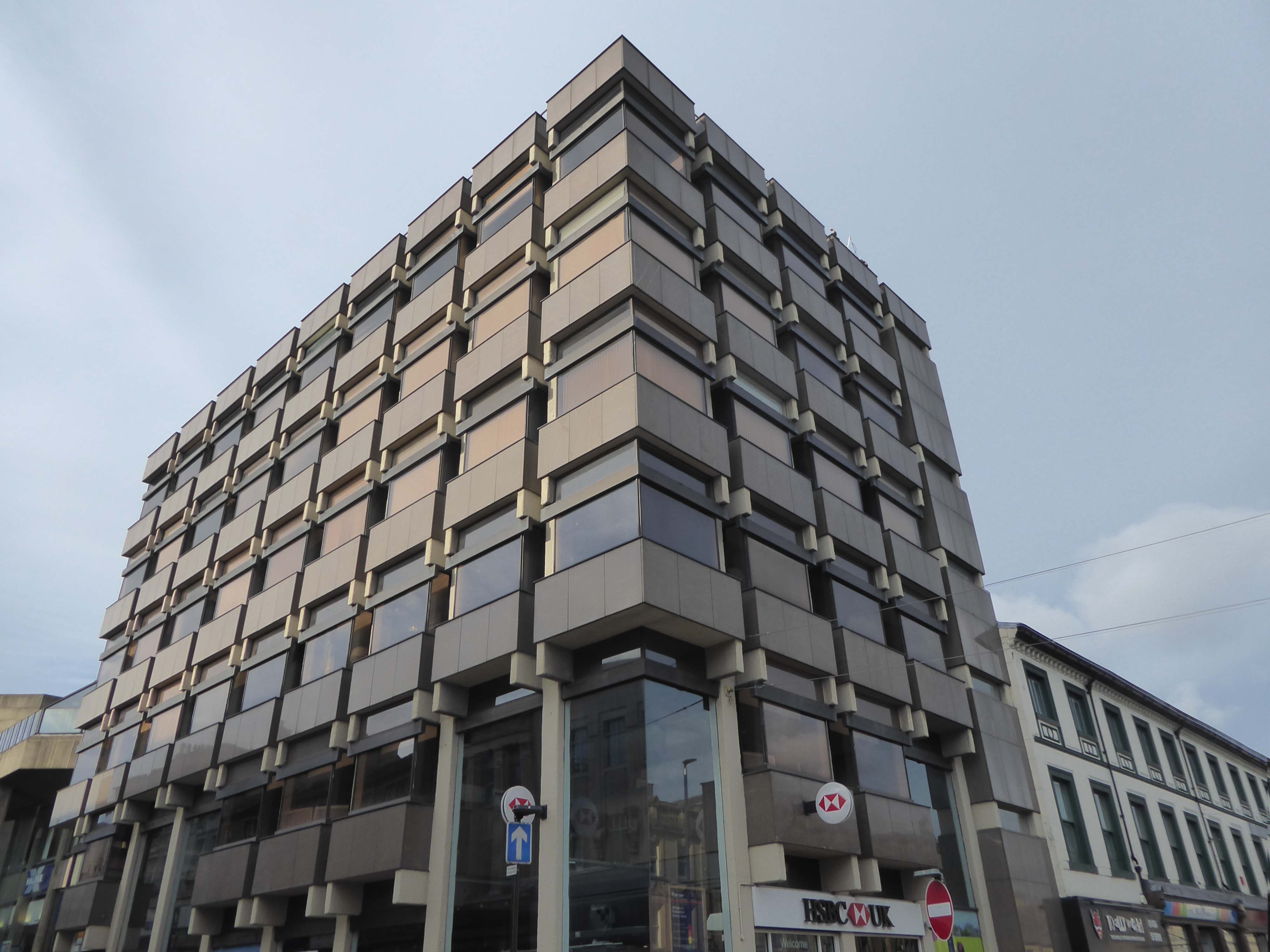
HSBC was designed by Peter Womersley, who also designed the thoroughly modern private house, Farnley Hey, near Castle Hill, which won the RIBA Bronze Medal in 1958.
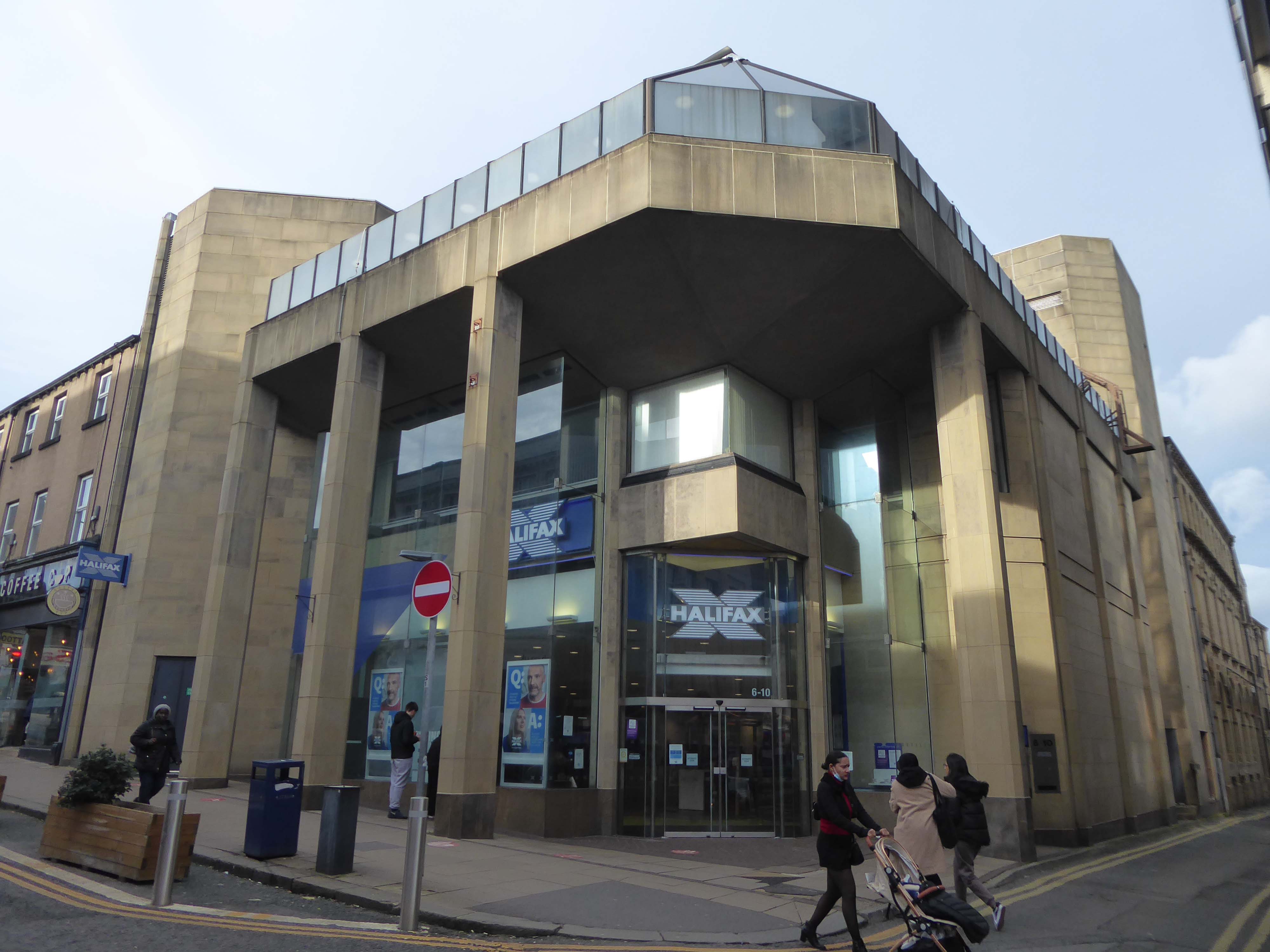
Halifax Building Society
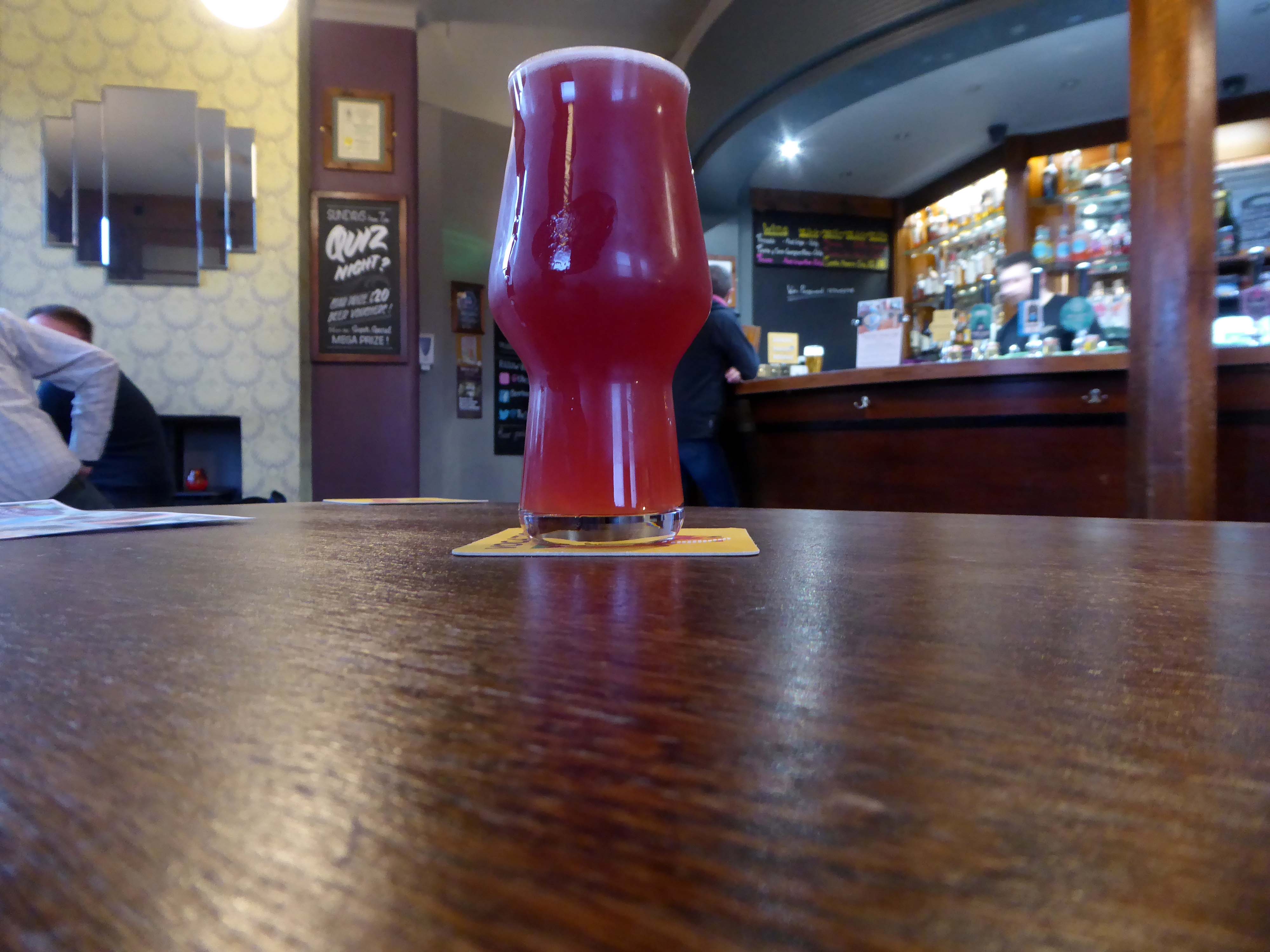
Having walked around town for more hours than enough I sought respite in The Sportsman and a glass of Squawk multi-berry fruited sour
Situated at the junction of Salkeld Street and Cook Street
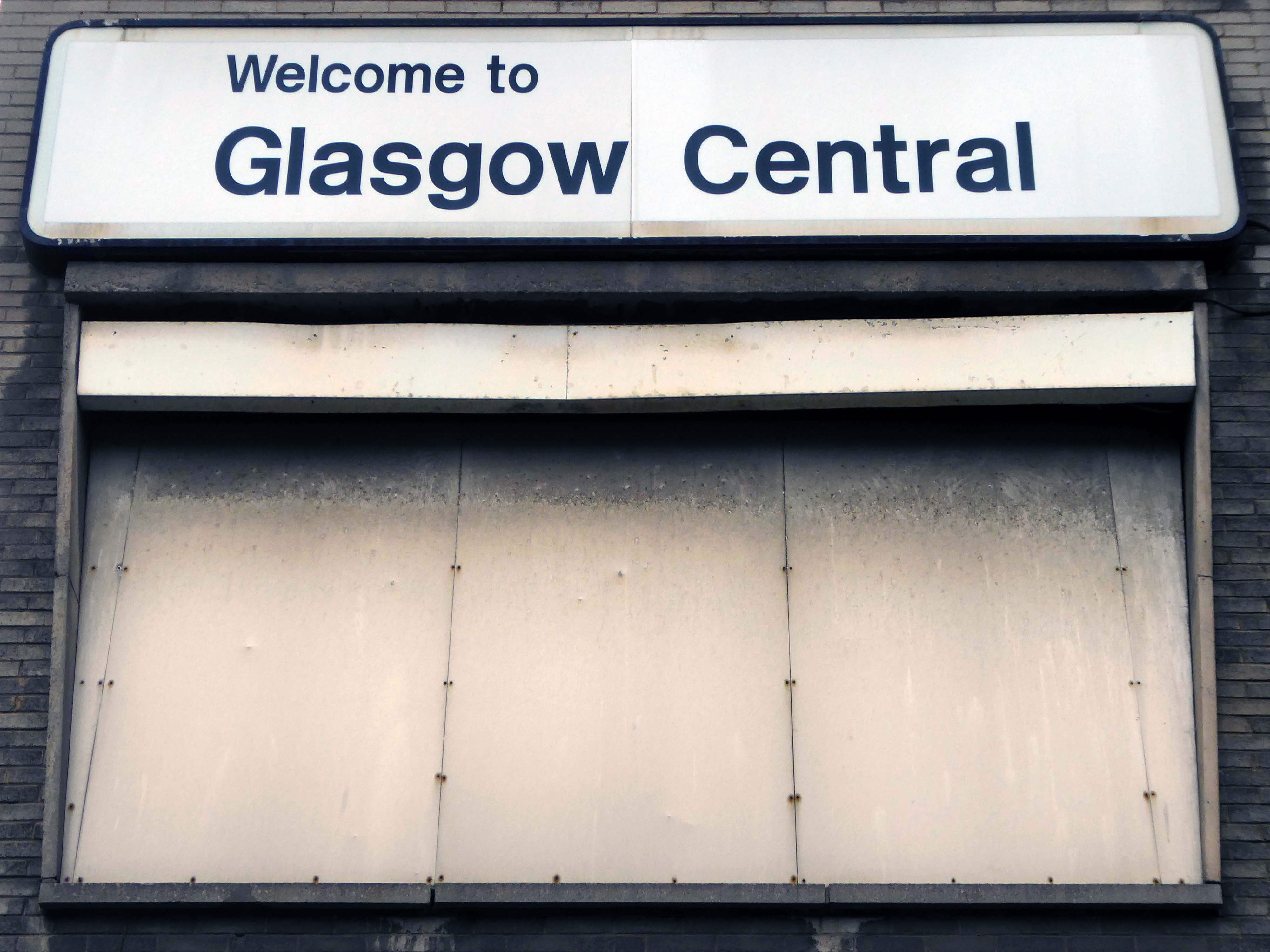
Glasgow Central Signalling Centre, located in the vee of Bridge Street Junction, opened on 2 January 1961. It replaced signal boxes at Central Station, Bridge Street Junction, Eglinton Street Junction and Eglinton Street Station. When initially opened it was capable of handling 1,000 routes.
Glasgow Central Signalling Centre closed on 27 December 2008, when its area of control was transferred to the new West of Scotland Signalling Centre – WSSC at Cowlairs. The NX panel is to be preserved. The station is currently signalled by two Westinghouse Westlock Interlockings which are controlled via an Alstom MCS control system.
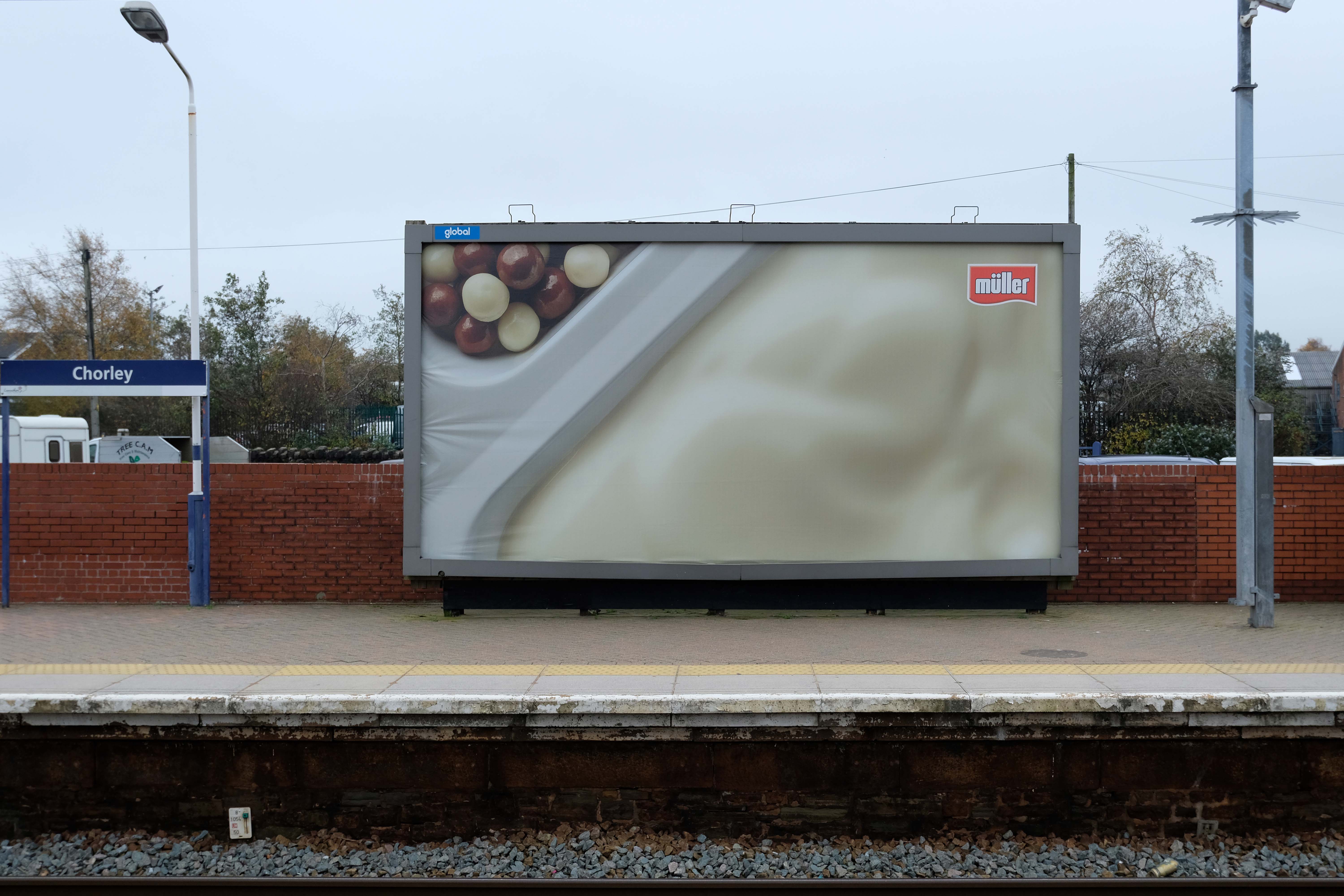
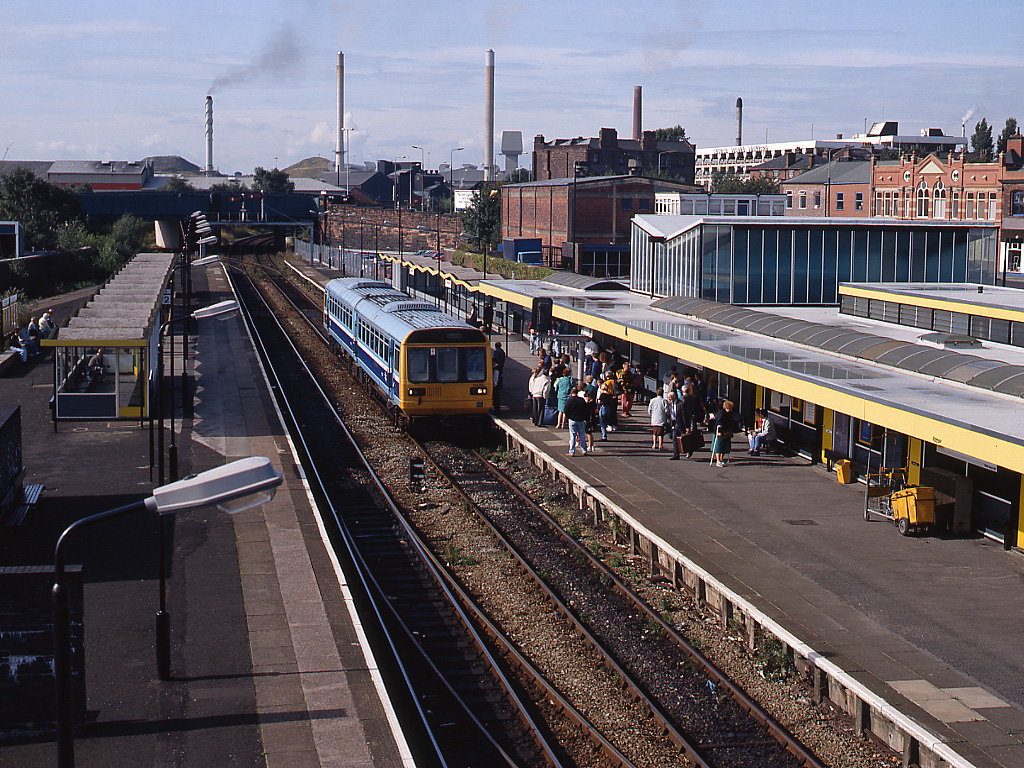
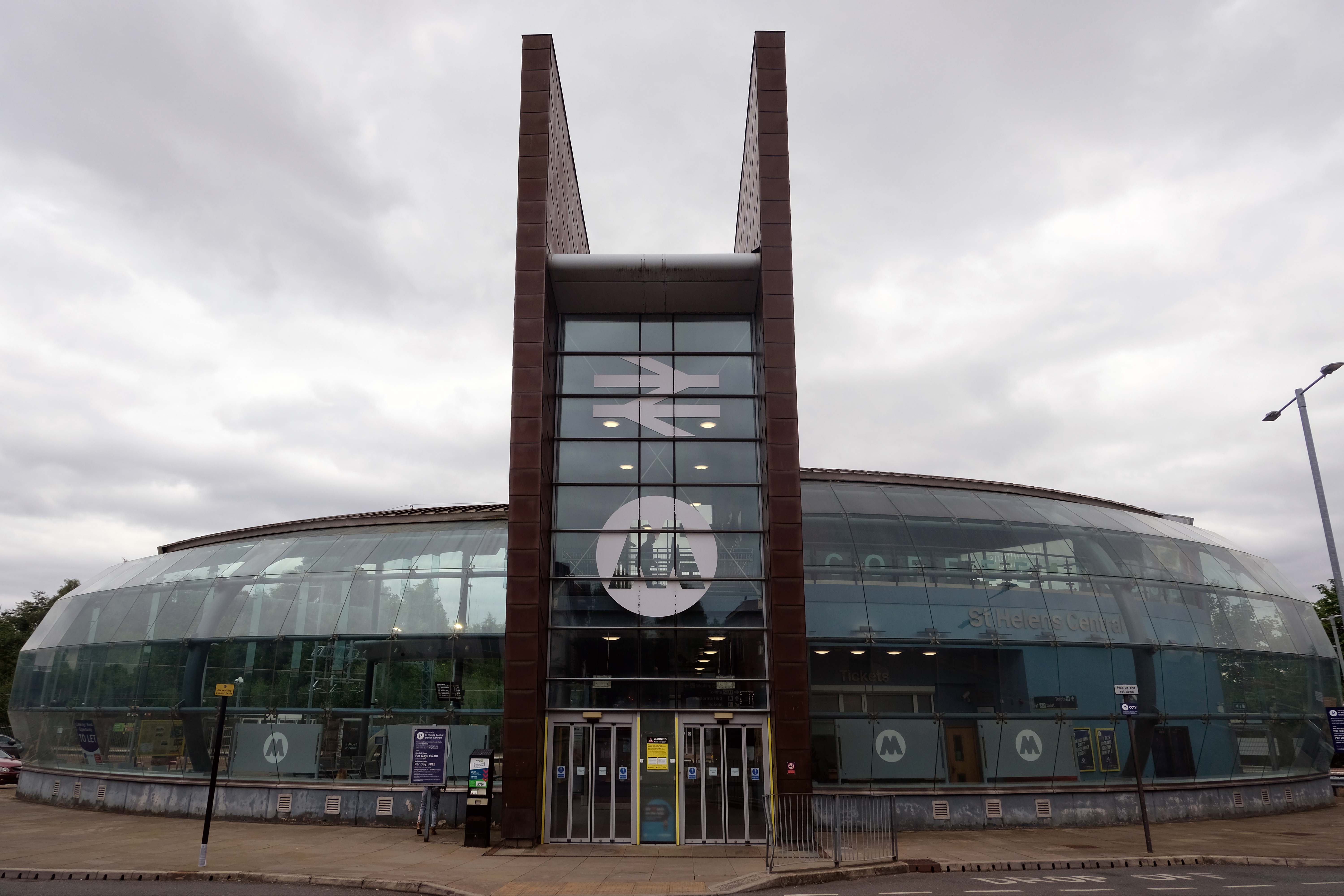
The current railway station is a modern version from the 1980s that was built on top of the original station. The level of the old platforms can be seen under the existing station’s two platforms which are connected by underpass. The initial station was opened on 22 December 1841 by the Bolton and Preston Railway – which later became part of the Lancashire and Yorkshire Railway and was subsequently served by the Lancashire Union Railway between St Helens, Wigan North Western and Blackburn from 1869.
Passenger trains over this route between Blackburn & Wigan were however withdrawn in January 1960. Further work was done in 2016 and 2017 in connection with the electrification of the line between Euxton Junction and Manchester.
Crossed over to the Interchange – which was formerly a humble bus station, opened in February 2003 replacing the previous structure.
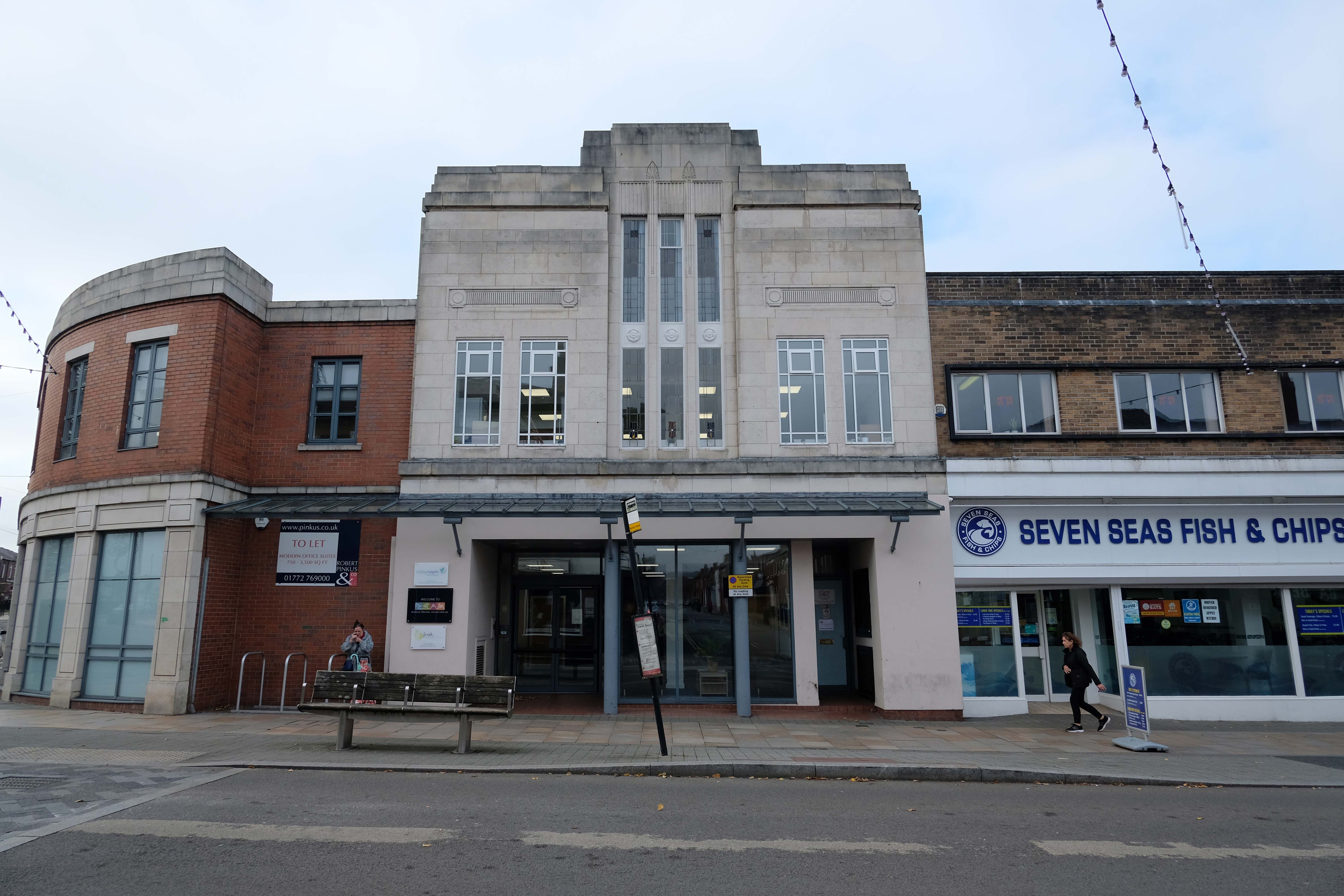
Across the way a stand of shops with distinctive faience fascias.
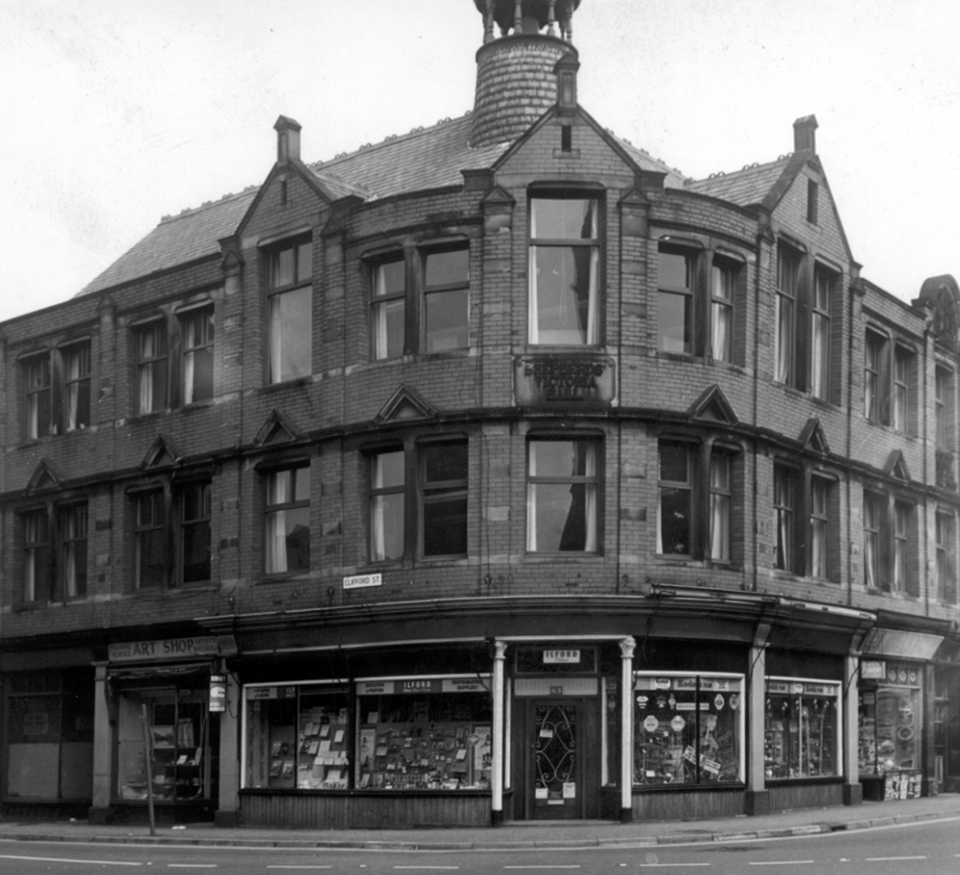
Further along the Shepherds’ Victoria Hall – once home to the Jubilee of the Ancient Order of Shepherds’ Friendly Society which was quite prominent in Chorley in the late 1800’s and early 1900’s
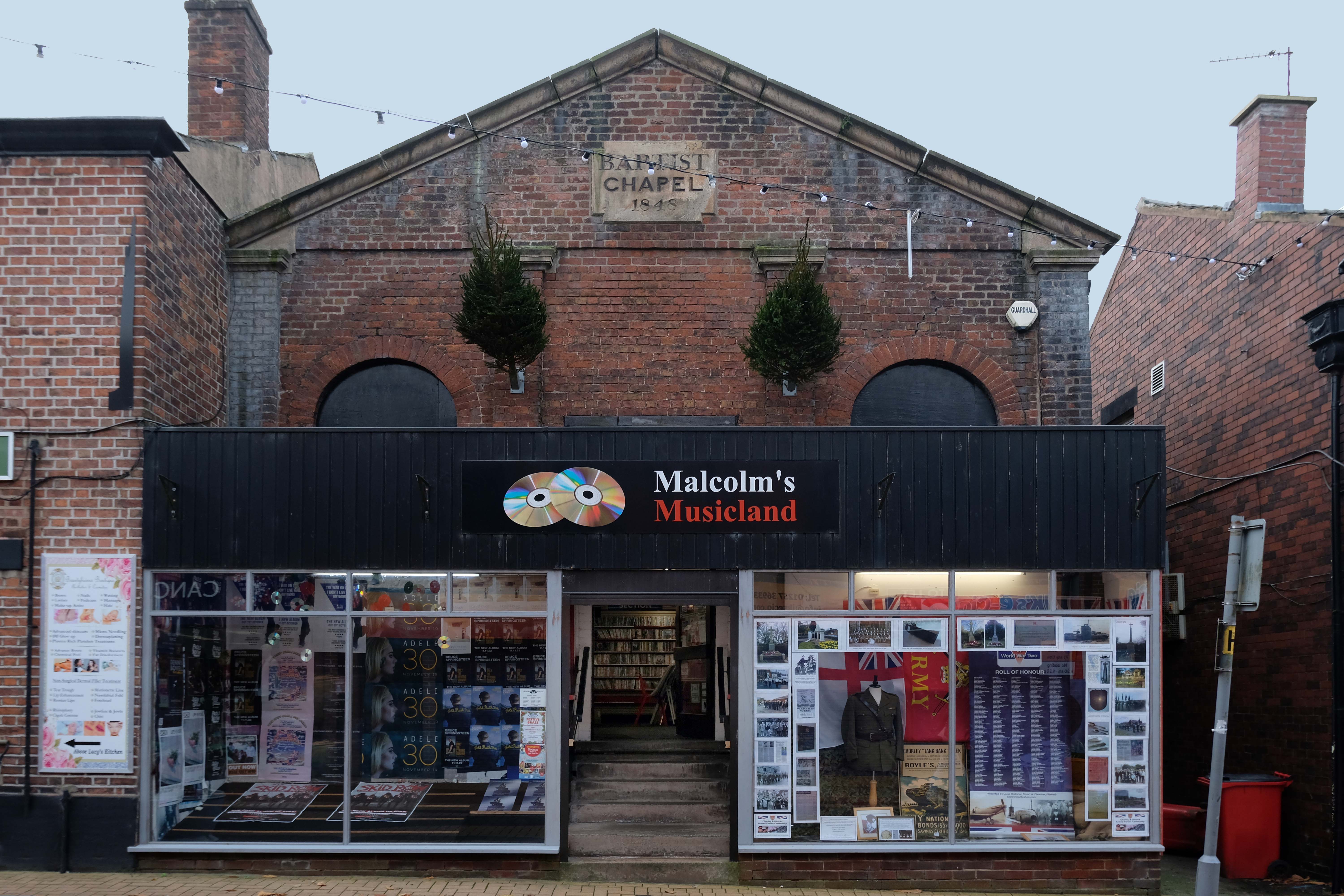
Down the way a ways a Baptist Chapel of 1845 on Chapel Street – currently trading as Malcolm’s Musicland.
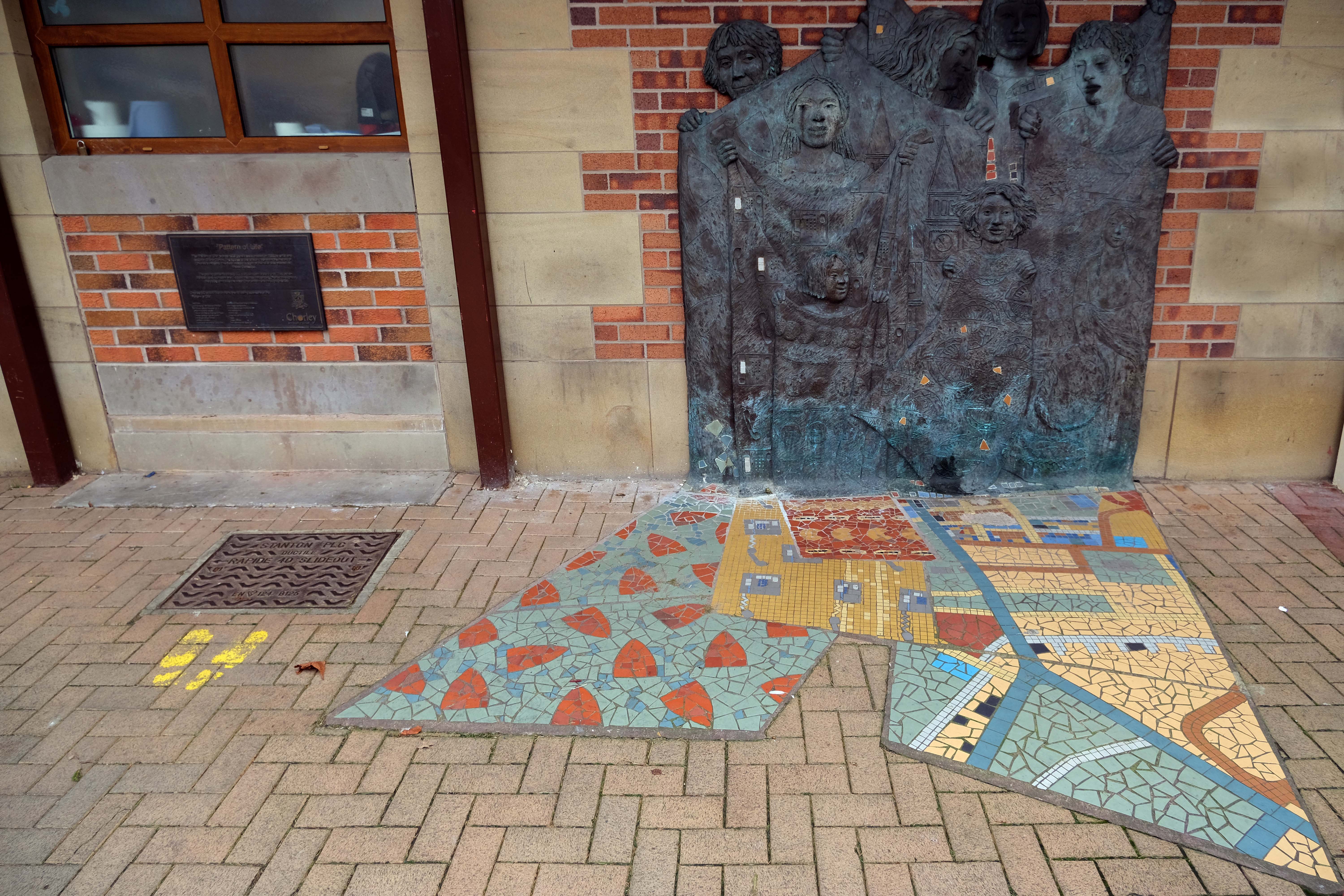
Hang a sharp right to the Market – where there is this newish piece of public art Pattern of Life a bronze relief by Diane Gorvin and mosaic work by Tracey Cartledge
This piece involves an innovative combination of cast bronze and ceramic mosaic. Two bronze relief panels display female figures holding out rolls of fabric, each decorated with patterns and images that are particular to the town of Chorley. Payphones, for example were invented and manufactured in Chorley, the crested newt is protected here and you might also notice the famous Chorley Cakes. As the fabrics tumble down, the designs are translated from bronze relief on the wall surface into 2D mosaic in the pavement.
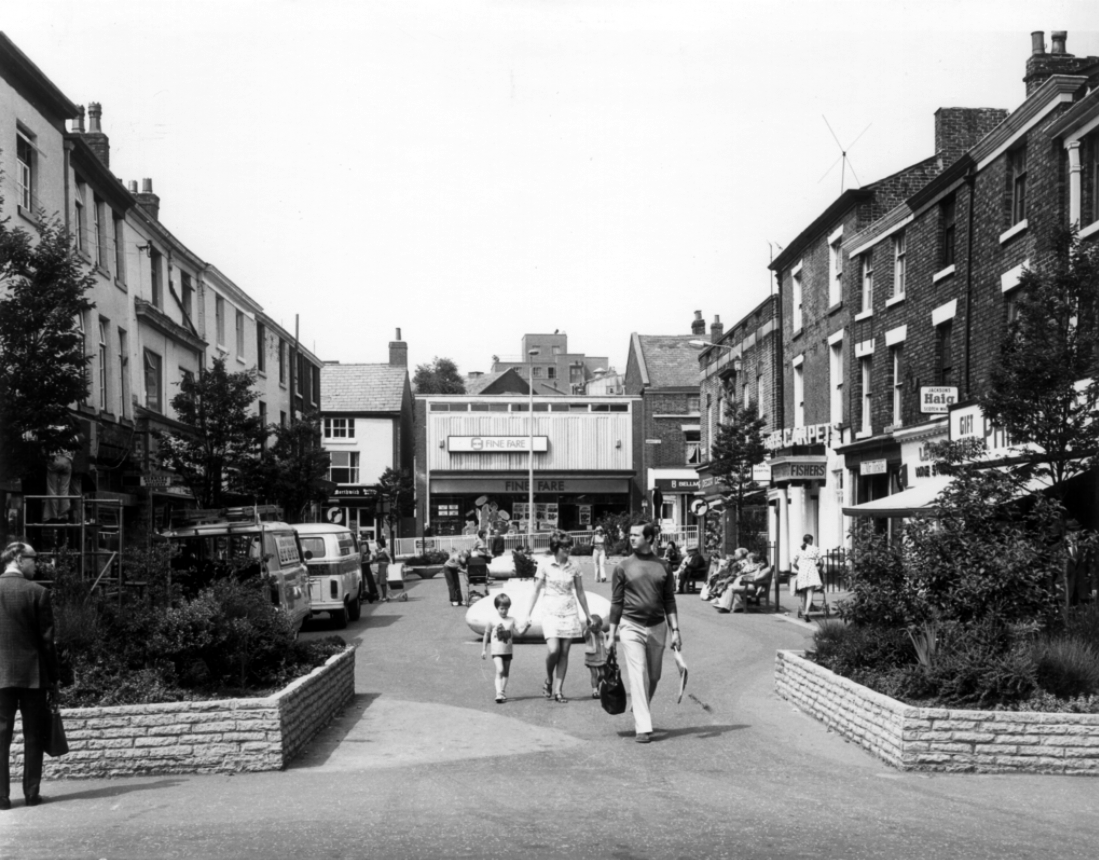
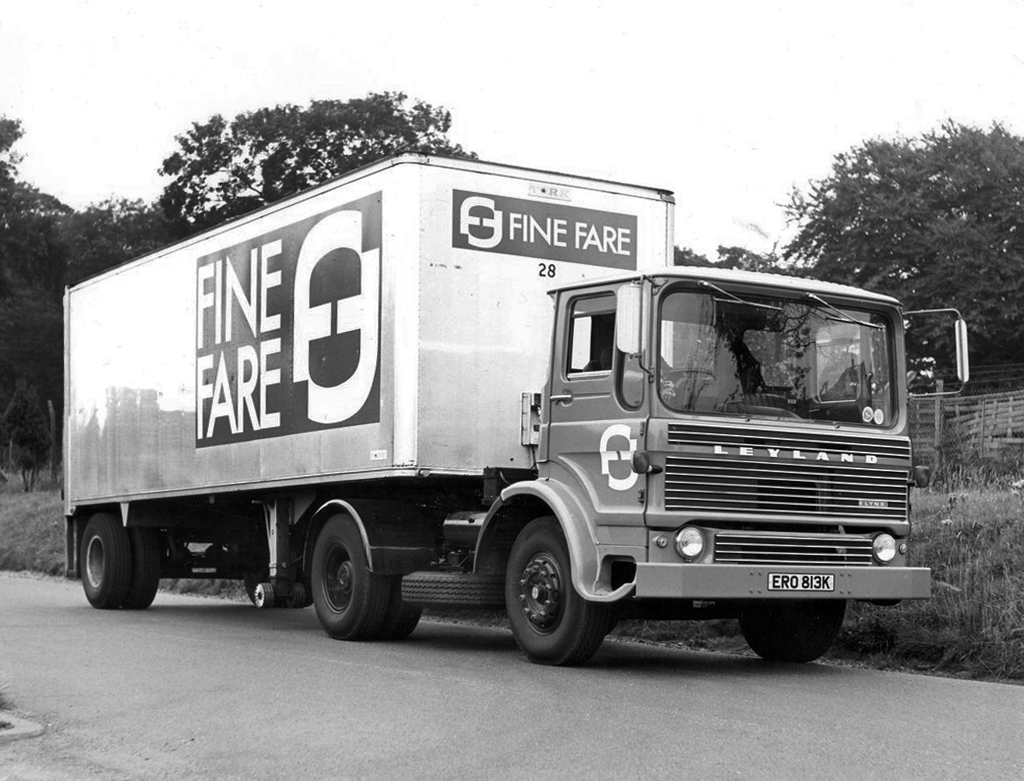
Looking down Fazakerley Street to where Fine Fare once was.
We’ll return to such matters in a moment – we have to get to the Post Office – which is no longer a Post Office.
It was a Post Office in 1935 – it also has a later extension.
The local list declares that the post office dates from 1935. This is almost certainly erroneous since the contract documents date from 1924, and from contract to completion the average construction and fitting-out time was about 18 months.
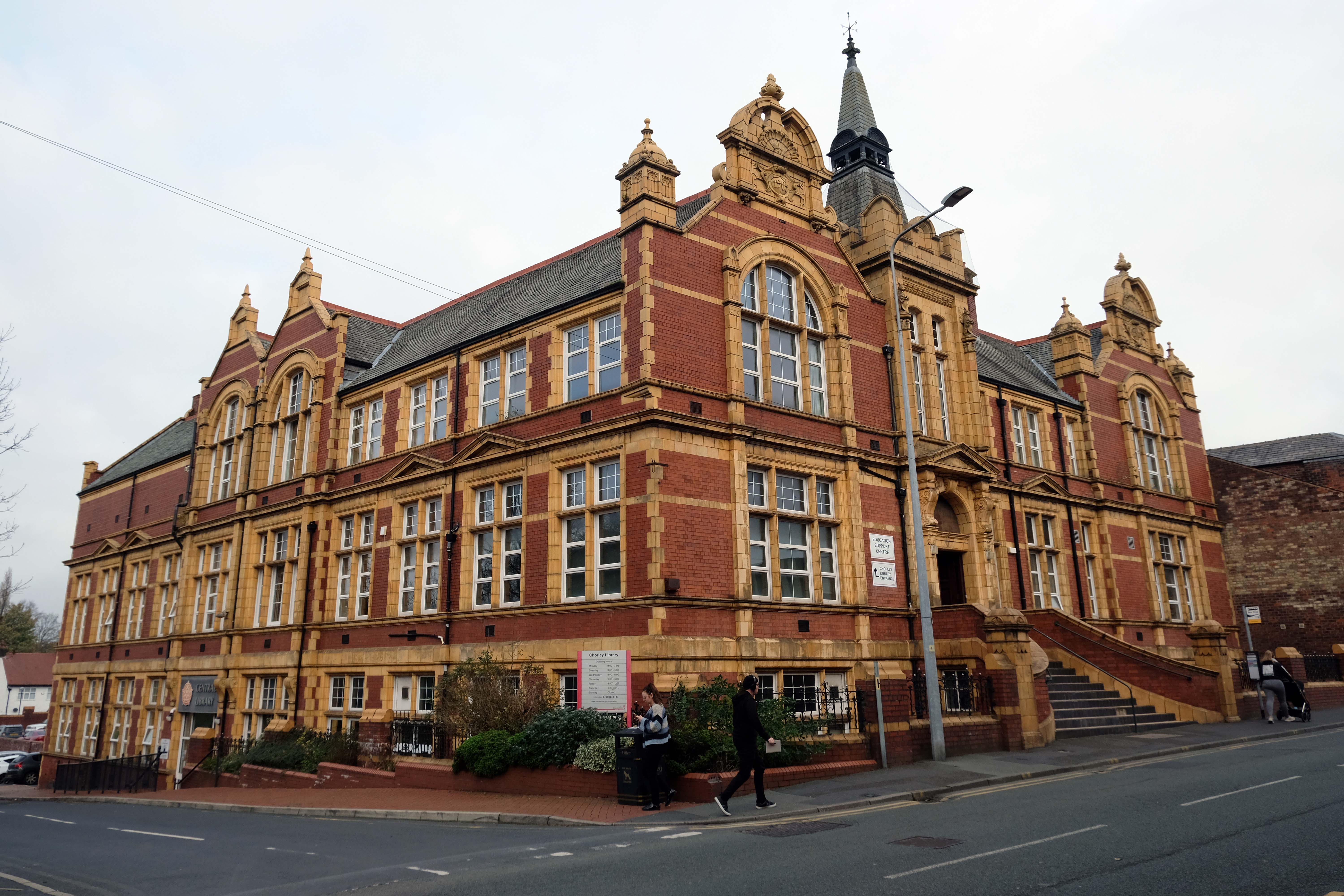
Plans supplied by the Architects Messrs. Cheers & Smith of Blackburn which were approved by the Education Committee on the 18th August 1904 – design proposals for the new Technical School entitled Light and Air.
The considerable task of erecting the school was given to the local builder Mr. William Hampson of Pall Mall.
Surely the envy of his trade, the total contract was worth a mouth- watering £10,041 15s. 9d. – approx. £720,000 today.
The building was officially opened by the 16th Earl of Derby on September 24th 1906.
Over the road the town’s newest retail development Market Walk – the work of AEW Architects.
Chorley Council bought the shopping centre from Orchard Street Investments for £23m in 2013 and commenced a large-scale regeneration scheme in 2018 involving a £15m, 79,000 sq ft retail and leisure extension led by main contractor Eric Wright Group and designed by AEW Architects. Here, Conrad Heald of Chorley Council tells his interviewer, AEW director Phil Hepworth, how the scheme came to fruition and has rejuvenated the town centre.
The memorial re-sited in 2018 commemorates the Chorley Pals.
In less than 20 minutes, 235 of the 720 men from the 11th East Lancs. were killed. Another 350 were wounded, of which 17 would eventually succumb to their wounds. Many of the Battalion died where they fell, in No Man’s Land.
As a result of the attack on the morning of the 1st July, the Chorley Pals – Y Company, had 31 men killed and three died within a month of their wounds received on that day. 21 have no known graves and their names are transcribed on the Thiepval memorial to the Missing on the Somme battlefield. A further 59 were wounded, making a total of 93 casualties out of approximately 175 men from Chorley who went over the top that morning.
Reversing now to the former Barclays Bank – which closed earlier in 2022.
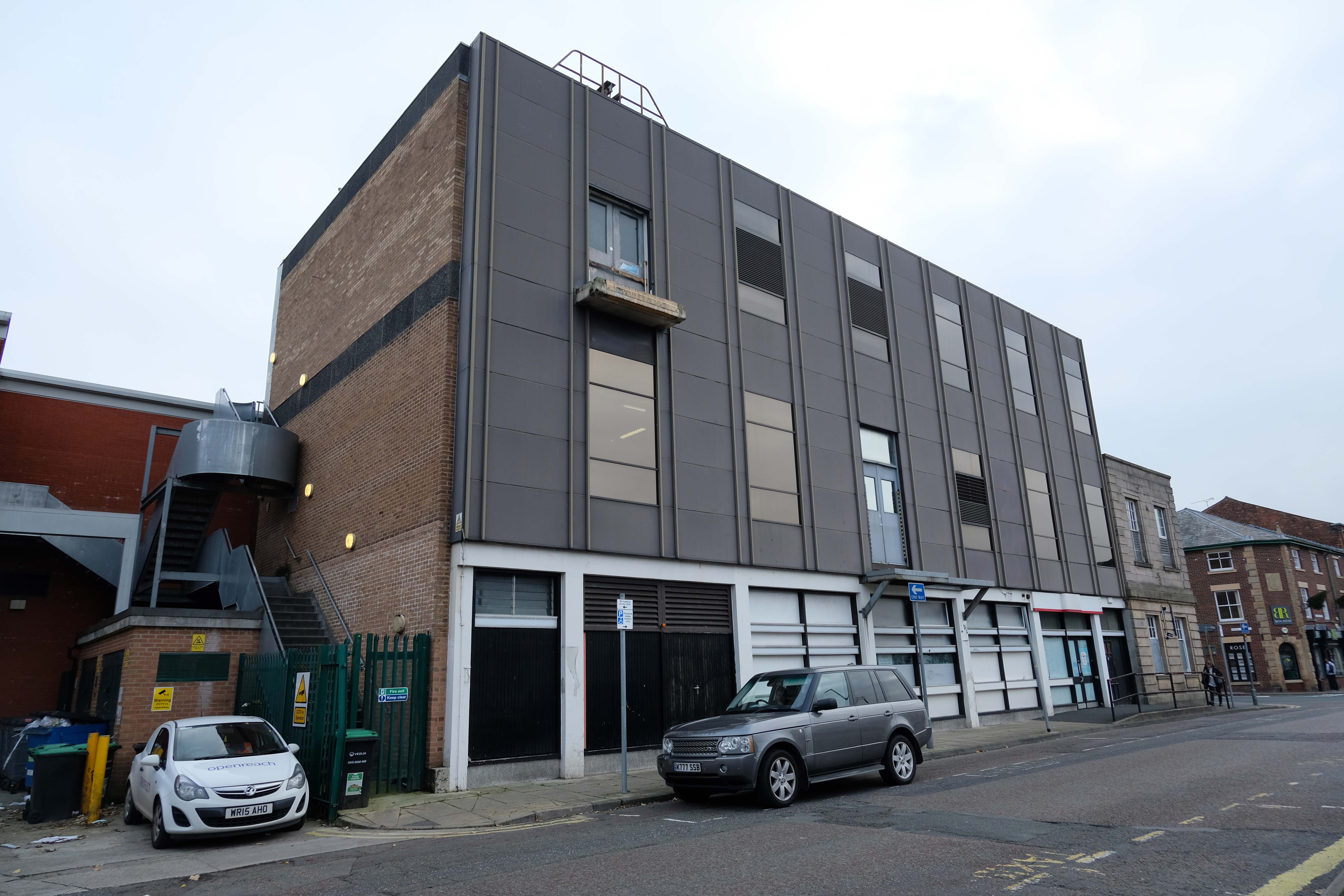
We return now to the former Fine Fare.
The company began as one single supermarket in Welwyn Garden City in 1951, as an offshoot of the Welwyn Department Store, owned by Howardsgate Holdings, the company of Ebenezer Howard, the founder of the garden city movement.
Now here’s a thing a bank which is a bank NatWest not gone west.
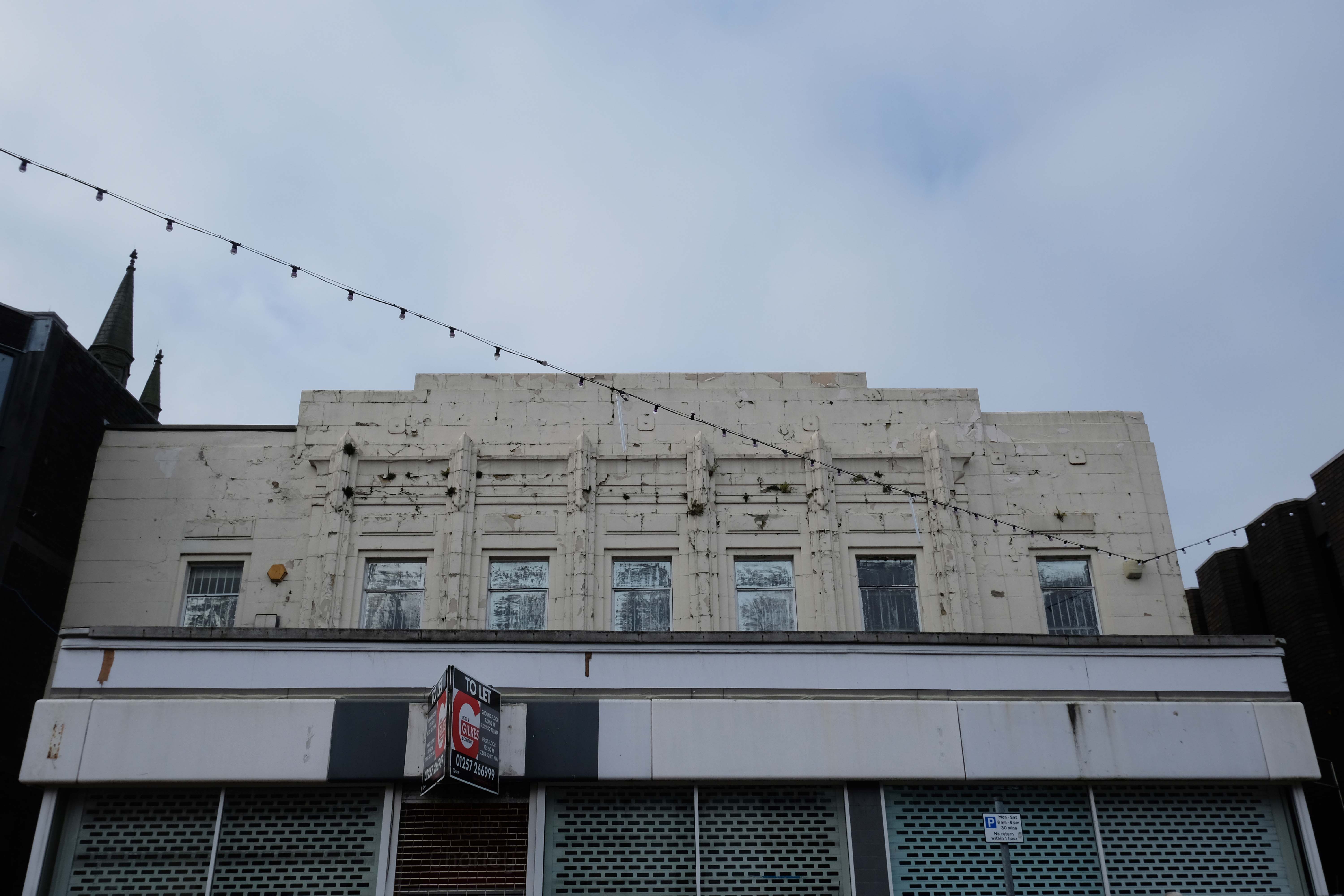
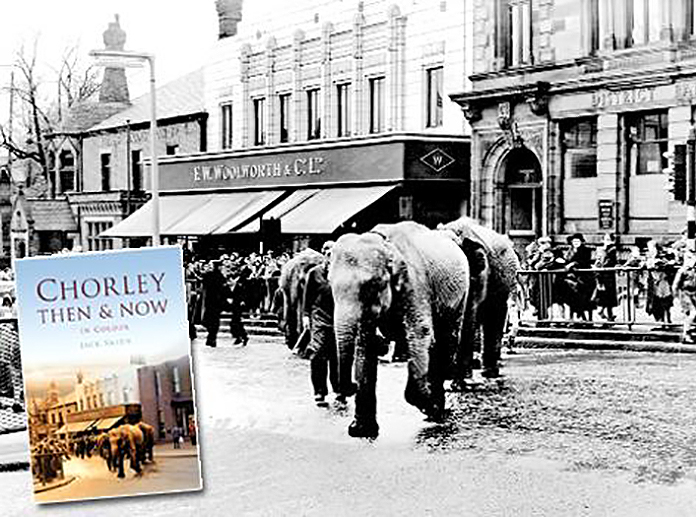
Next to the former Woolworths, opened in Chorley in 1930 on Market Street, with its pale Deco faience fascia.
They traded from this building for sixty five years, before closing in March 1995 in order to move to a new store on Market Walk – it became an Argos, then it didn’t.
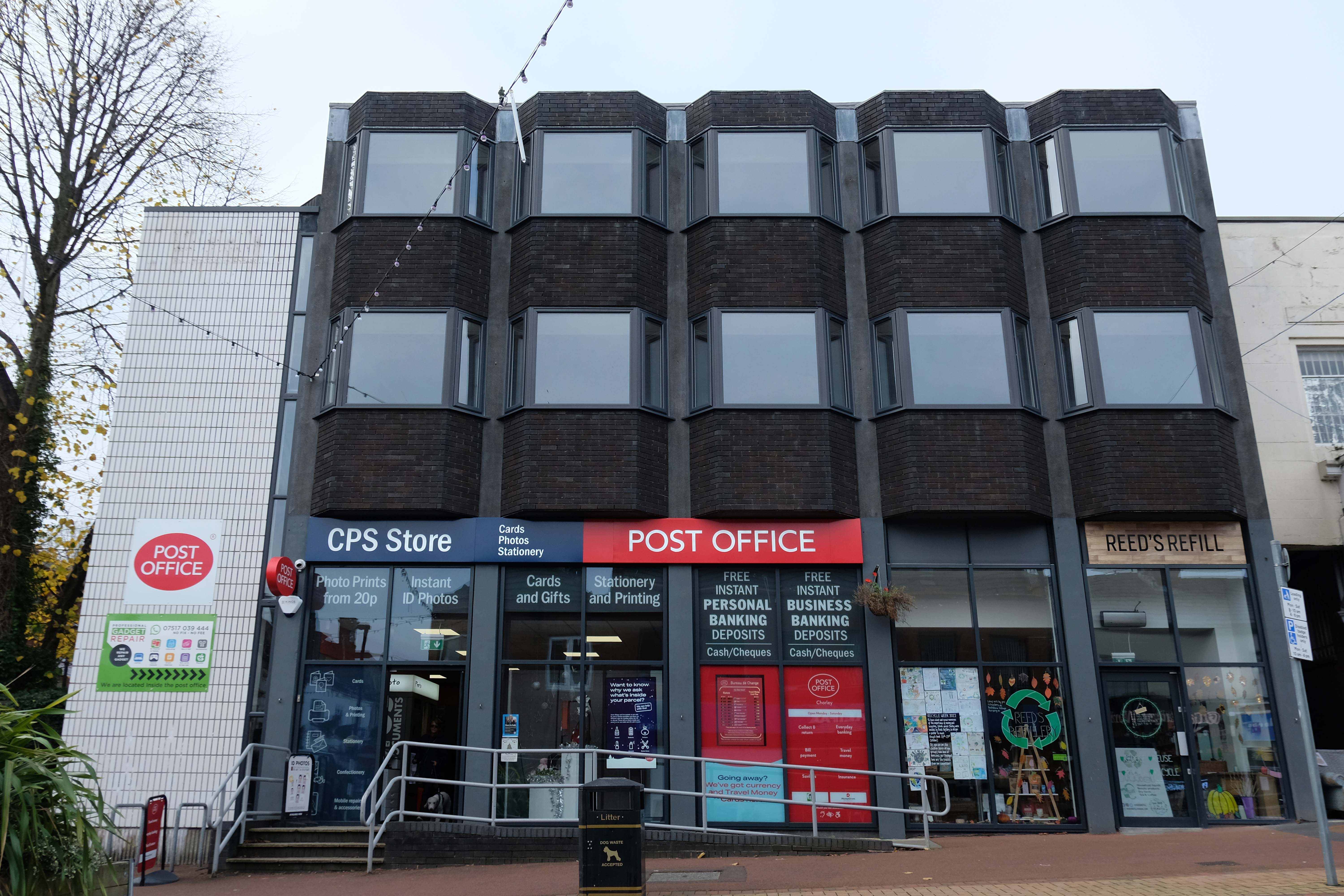
Here we are now at a Post Office that is a Post Office but was an RBS Bank.
The new location is at the former Royal Bank of Scotland on Market Street in the town centre.
Since the Post Office that was based at WH Smith on New Market Street came to an end, when that store closed in January, it relocated to a temporary unit in Market Walk until a permanent solution could be found.
The unit, which had been provided by the postmaster from Burscough Bridge Post Office, closed on Tuesday.
Kenny Lamont, Post Office Network Provision Manager, said a Post Office is important to a community.
This had been a Methodist Church – then, it became the HQ of the Lancashire Electric Power Company.
The Lancashire Electric Power Company was one of the largest private electricity companies in the UK. It was established in 1900 and generated and supplied electricity to 1,200 squares miles of Lancashire from 1905 until its abolition under nationalisation in 1948.
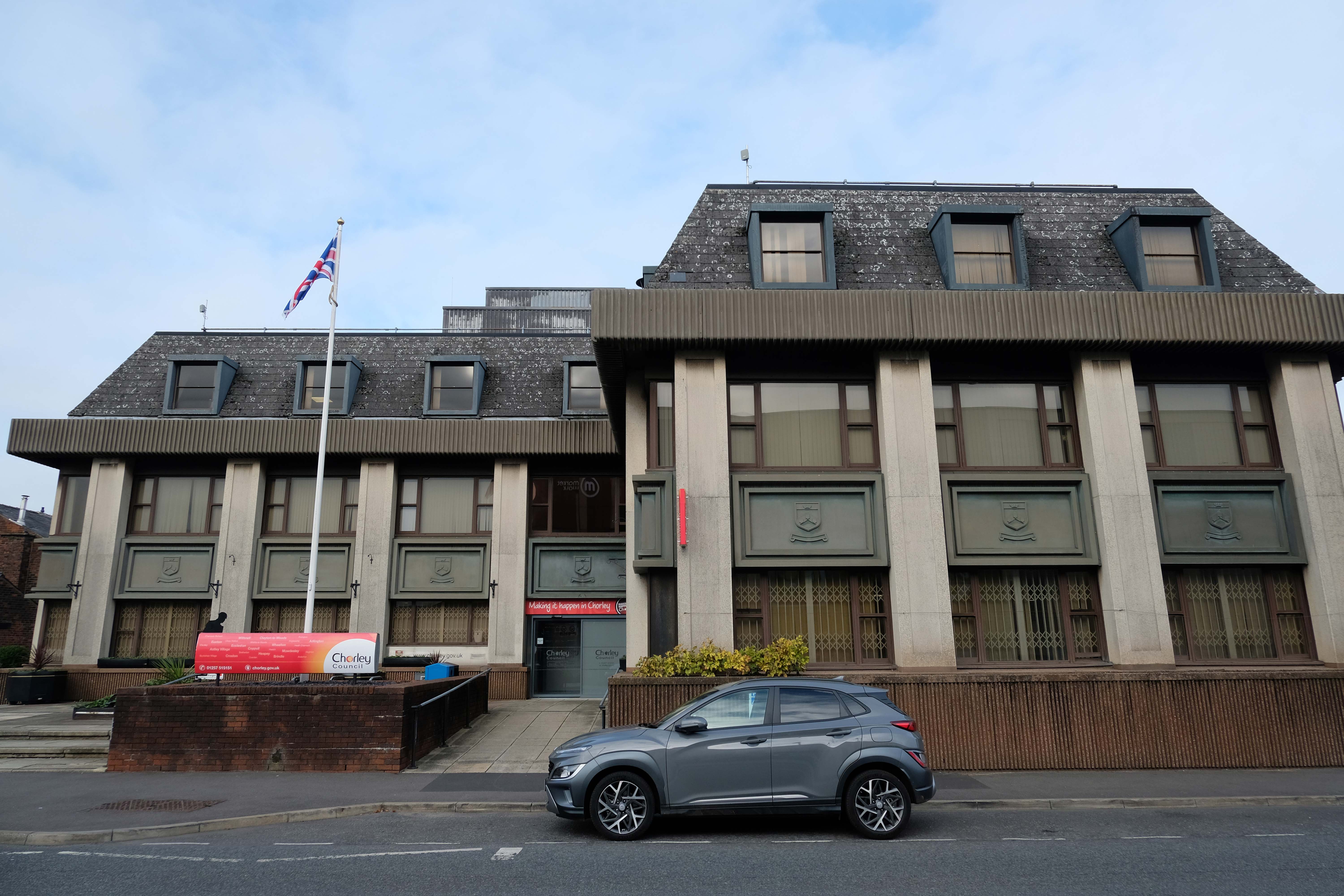
Time to back track to the Cop Shop – the work of County Architect Roger Booth and crew.
The Magistrates’ Courts are closed and up for sale.
Next door the White Hart once upon a time the Snooty Fox, a pub with an up and down trajectory – currently open and described online as plush.
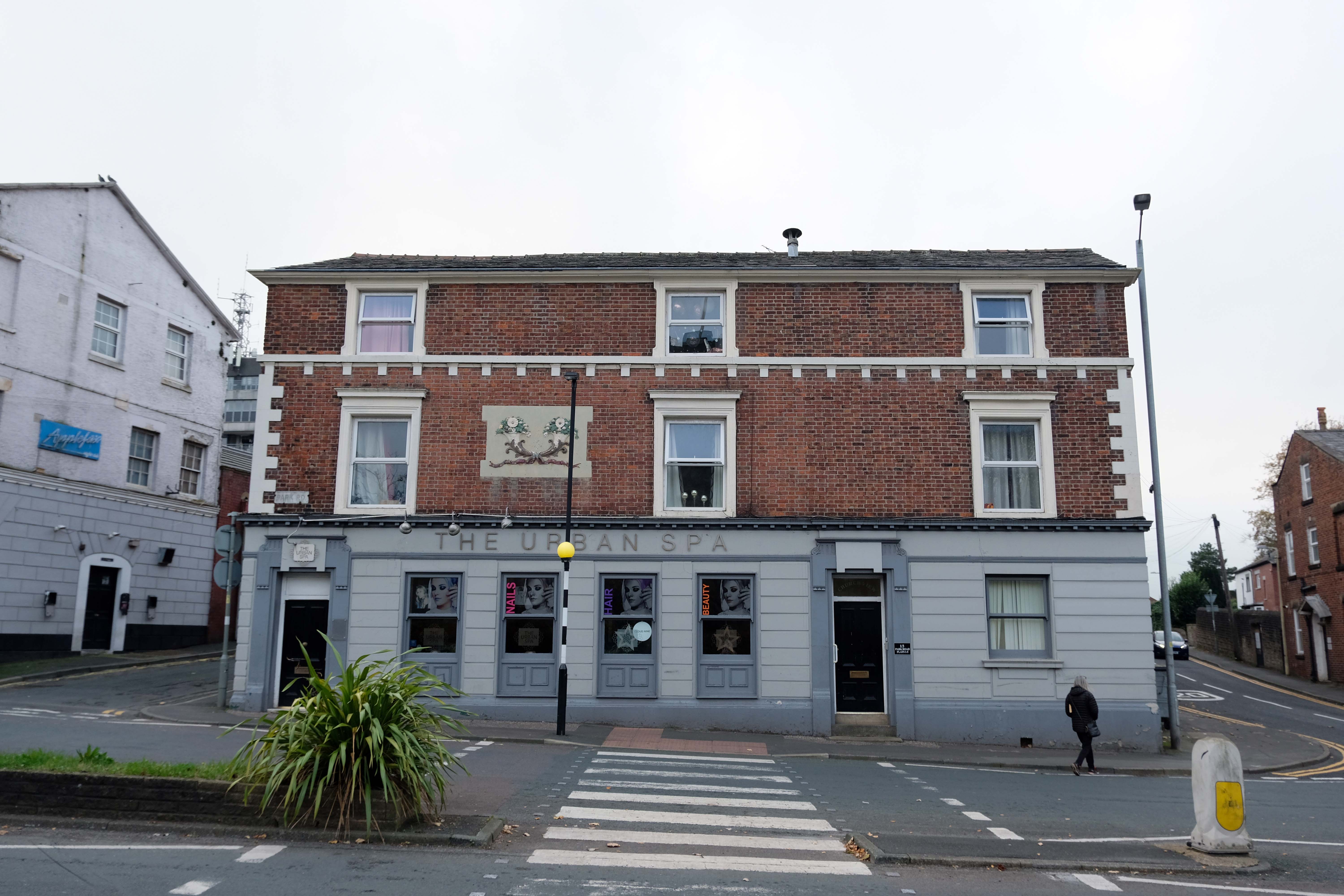
Down the road a pub no longer a pub but an Urban Spa.
We offer you a full range of professional treatments tailored to your own personal needs. We treat every client as an individual and offer an extensive range of treatments and professional products making your visit one to remember.
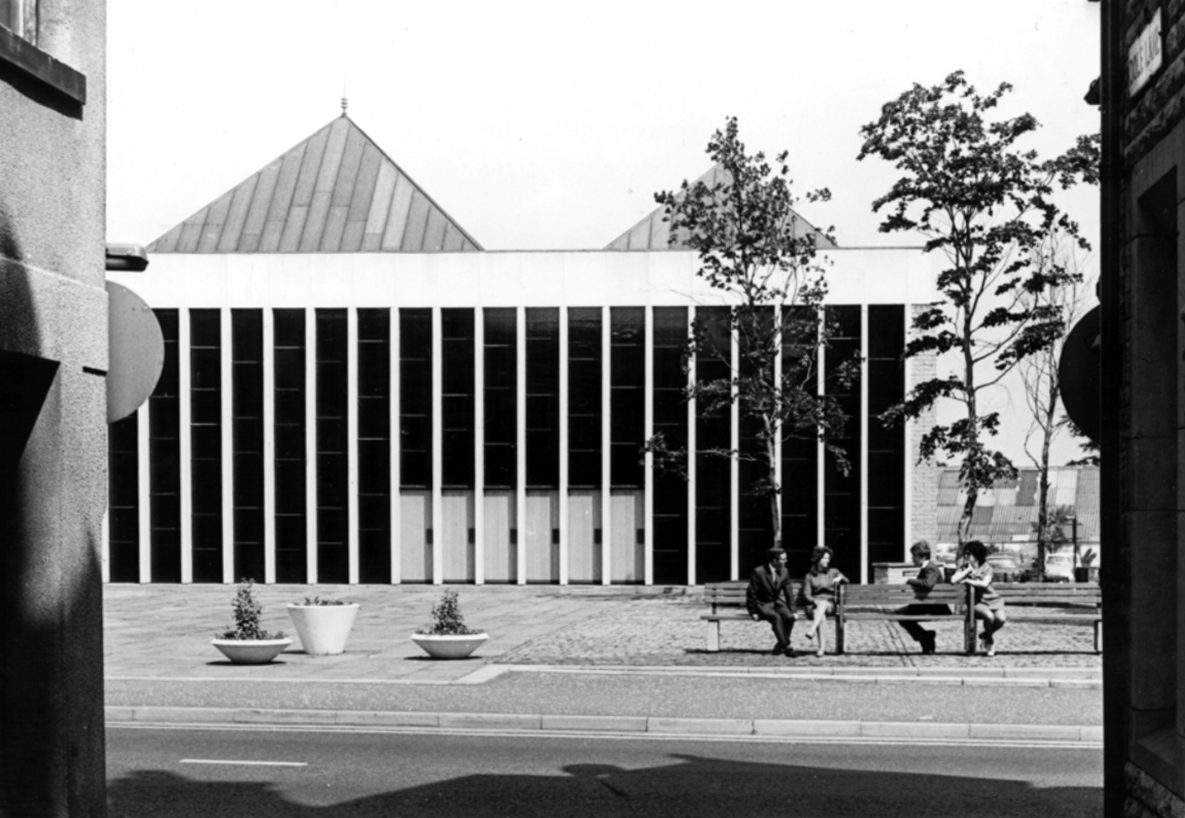
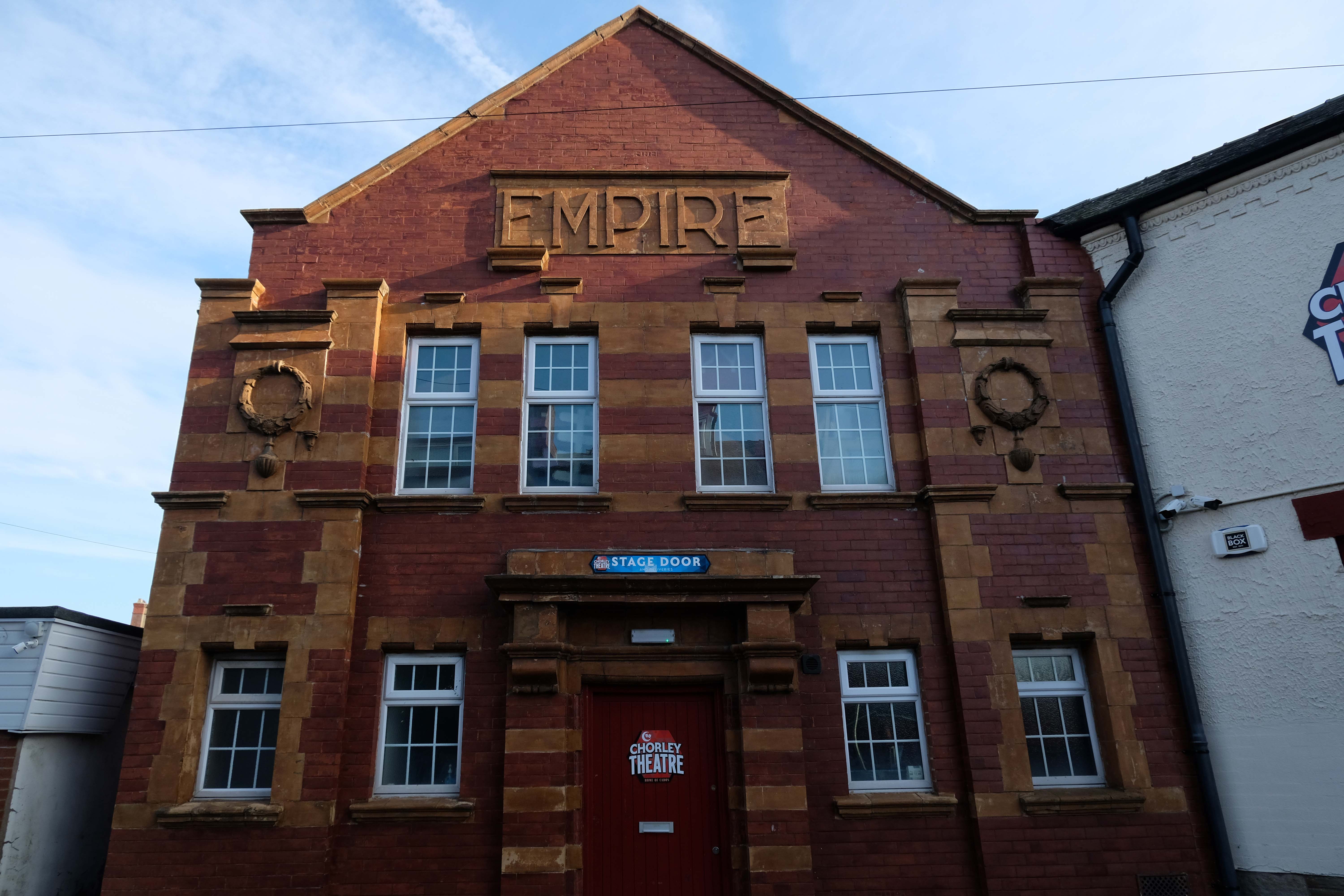
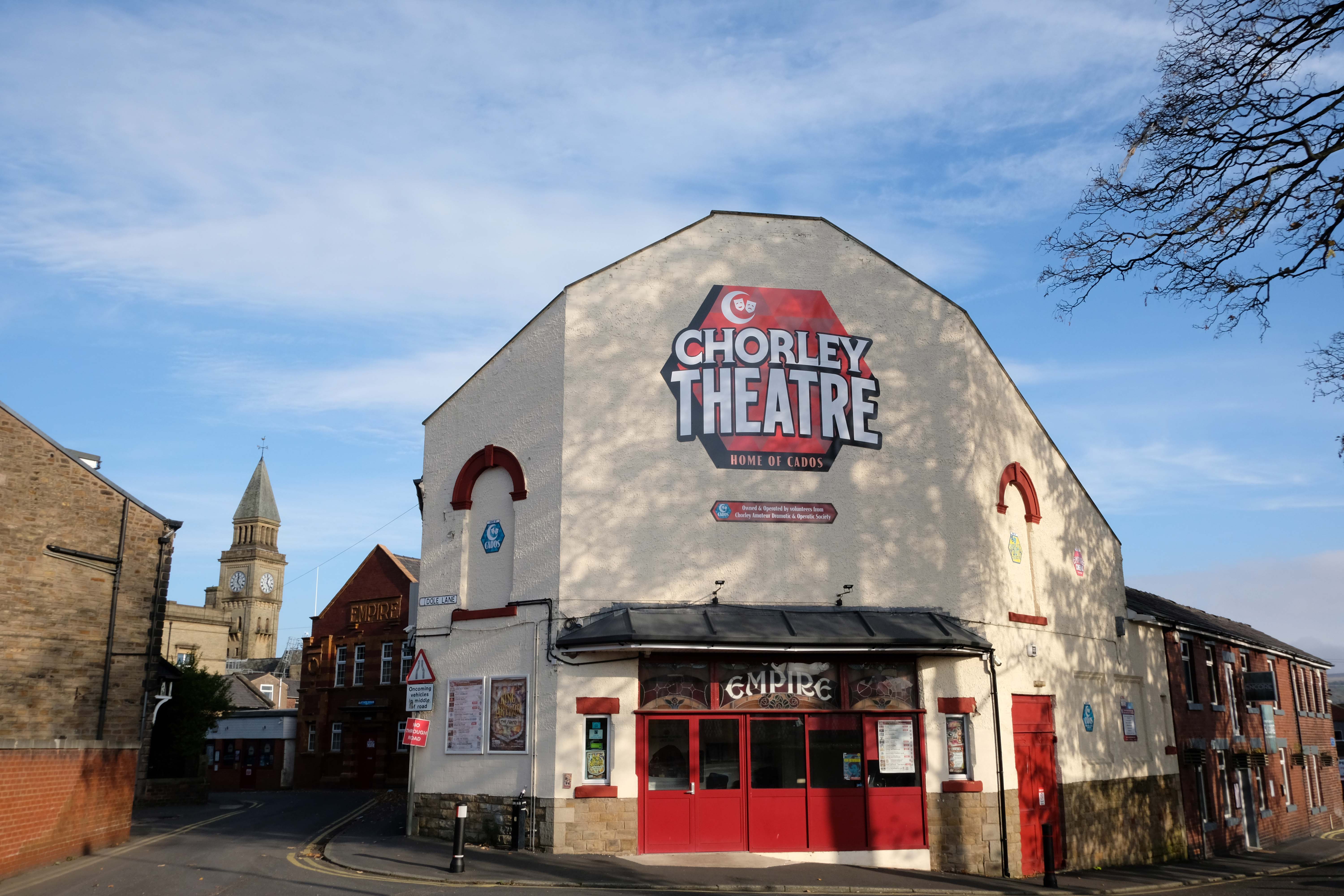
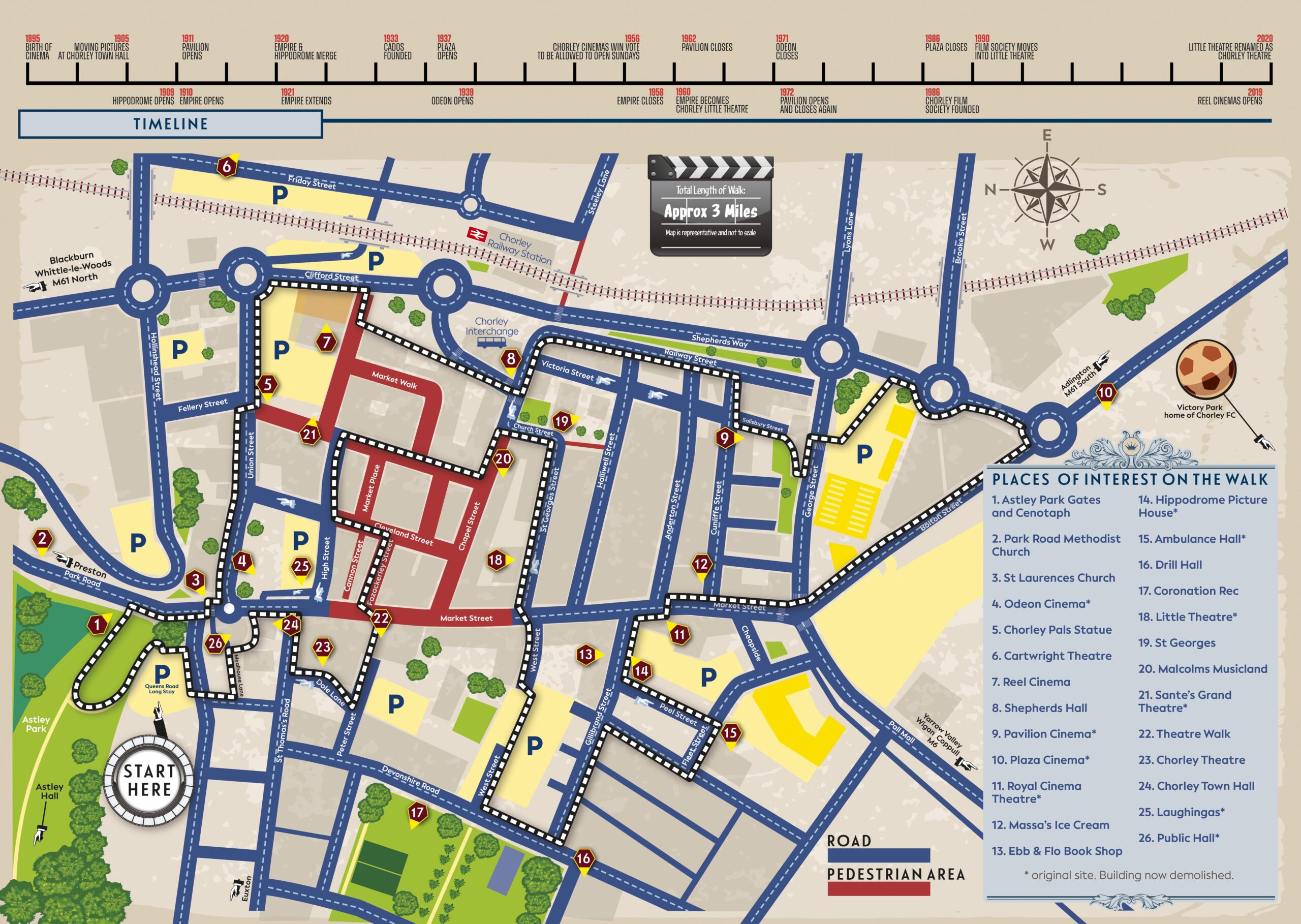
Let’s go to the theatre – The Empire tucked away at the back of town.
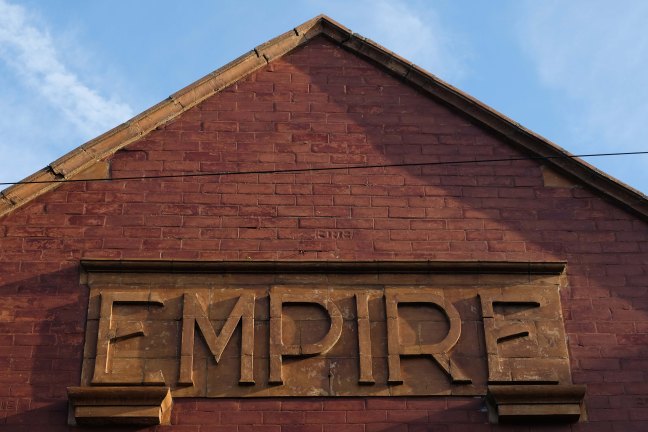
The Empire Electric Theatre opened, as the town’s first purpose-built cinema, on 3rd September 1910. In 1912 Archie Hooley began his connection with the cinema business at the Empire Electric Theatre. By 1927 it had been re-named Empire Cinema and by 1930 it was equipped with a Western Electricsound system and was operated by the Perfecto Filmograph Co. Ltd. By 1939 it was operated by the Snape & Ward chain. According to the Kine Year Books, in 1940 the seating was for 800, while by 1952 it had been reduced to 679 – still a far cry from today’s 236 seats. 3D films were shown in the early-1950’s. Archie had died in 1944; his son Selwyn closed the cinema in 1957, apparently “because of the taxes”.
1959
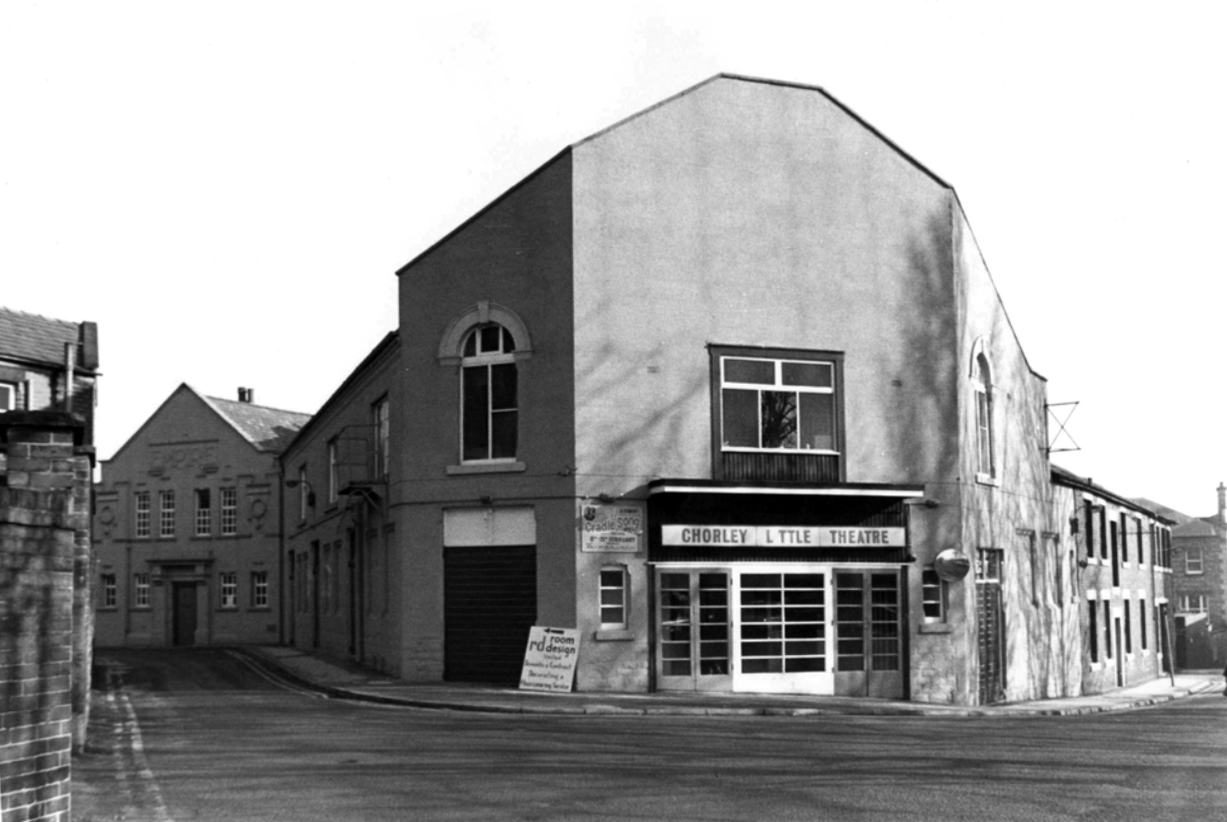
Wrestling took over for a while before Chorley Amateur Dramatic and Operatic Society – CADOS acquired the building and renamed it the Chorley Little Theatre. Since 1960 CADOS have been putting on high-quality productions, presenting at least six productions per season – from September to July. It is also the home of the award-winning Chorley Youth Theatre who meet every Saturday, putting on shows throughout the year; and Chorley Empire Community Cinema who present the cinema experience on their 21ft wide screen with 8-Speaker Surround Sound. Run entirely by volunteers the theatre has state-of-the-art sound systems and a full range of lighting equipment. There are two spacious dressing rooms, space for costumes and props and the Empire Bar. The building has disabled access throughout the public area, including a toilet, and the auditorium is fitted with a hearing loop. There are three spaces for wheelchairs in the auditorium. It was re-named Chorley Empire Cinema at Chorley Theatre in October 2019 and films are still part of the programming.
The Odeon Market Street was built for and operated by Oscar Deutsch’s Odeon Theatres Ltd. chain, it opened on 21st February 1938 with Jack Buchanan in The Sky’s the Limit.
Architect Harry Weedon was assisted by PJ Price.
It was closed by the Rank Organisation on 6th February 1971 with George Lazenby in “On Her Majesty’s Secret Service”. After laying closed and un-used for over two years it was sold to an independent bingo operator and re-opened on 9th August 1973 as a Tudor Bingo Club. It later became a Gala Bingo Club which was renamed Buzz Bingo Club in June 2018. It was closed on March 21, 2020 due to the Covid-19 Pandemic. On 15th July 2020 it was announced that the closure would be permanent.
The building was handed over to Chorley Council who decided that asbestos removal would be too costly and the building was demolished in August 2021.
Located on Salisbury Street, off Cunliffe Street, built in 1888 as a military warehouse, it was converted into a roller skating rink around 1909. It opened as the Pavilion Picture Palace on 14th September 1911, operated by George Testo Sante, a music hall strong man, who also operated the Grand Theatre as a cinema. By 1915, music hall acts were also part of the programme. After the end of World War I, the flat floor of the cinema was raked, allowing for better viewing of the screen. The proscenium was 30ft wide, the stage was 16 feet deep and there were two dressing rooms.
The Pavilion Cinema was the first in town to screen ‘talkies, when an Electrochord sound system was installed in 1929. It was taken over by the J.F. Emery Circuit in 1932 and they operated it until the end of 1933. The sound system was upgraded to a British Talking Pictures sound system. In 1954 it was the first cinema in town to be fitted with CinemaScope and the proscenium was widened to 36 feet.
The Pavilion Cinema was closed by 1962 and converted into a bingo club. In 1972 it was re-opened as a cinema again, but due to Star Cinemas chain barring it from showing first run features – they operated the Plaza Cinema, it was closed after 5 months of operation. It was later demolished and the area was redeveloped for housing.
No trace of The Hippodrome Theatre on Gillibrand Street, which was built and opened in 1909, or the Theatre Royal, opened on 30th September 1911, It was demolished in 1959.
A supermarket was built on the site which later became a McDonalds, which is now a Pizza Hut.
Last but not least – located on the Flat Iron Parade, aka Cattle Market, The Grand Theatre was a wooden building built in 1885, which presented melodramas and plays. In June 1909 it was taken over by George Testo Santo, who had been a music hall strongman, and his family. It went over to operating as a Picture Palace for a short season.
By 1914 it was operating as a full time cinema, but was destroyed by fire in 1914.
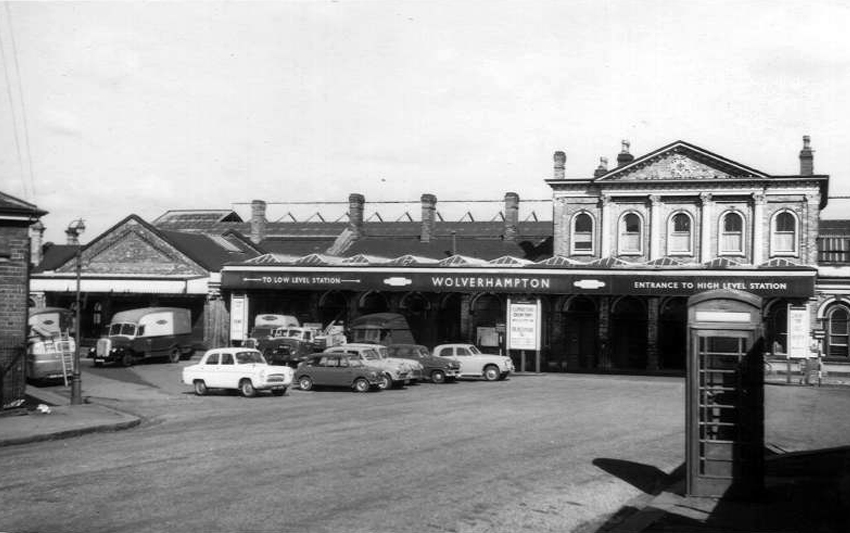
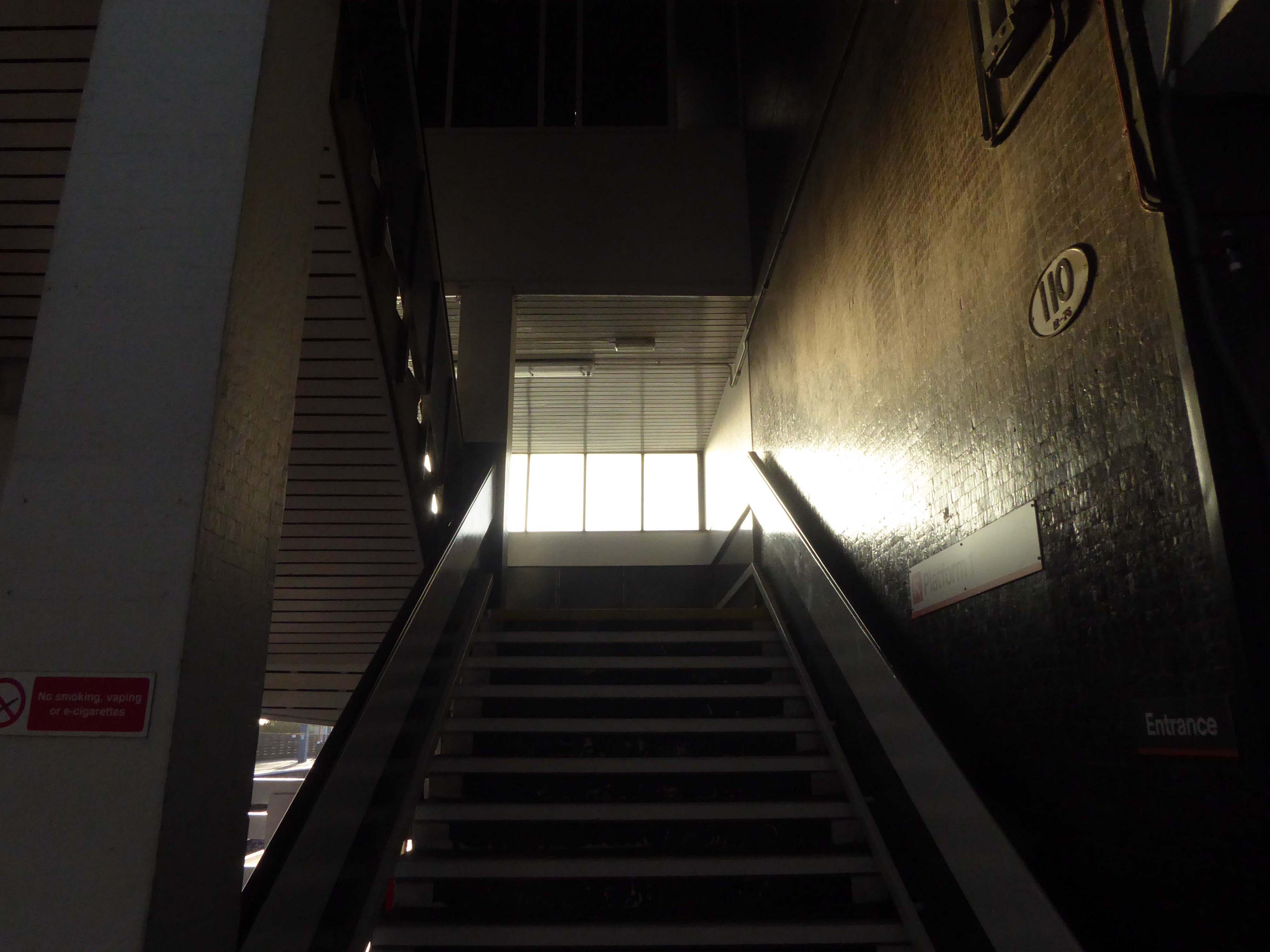
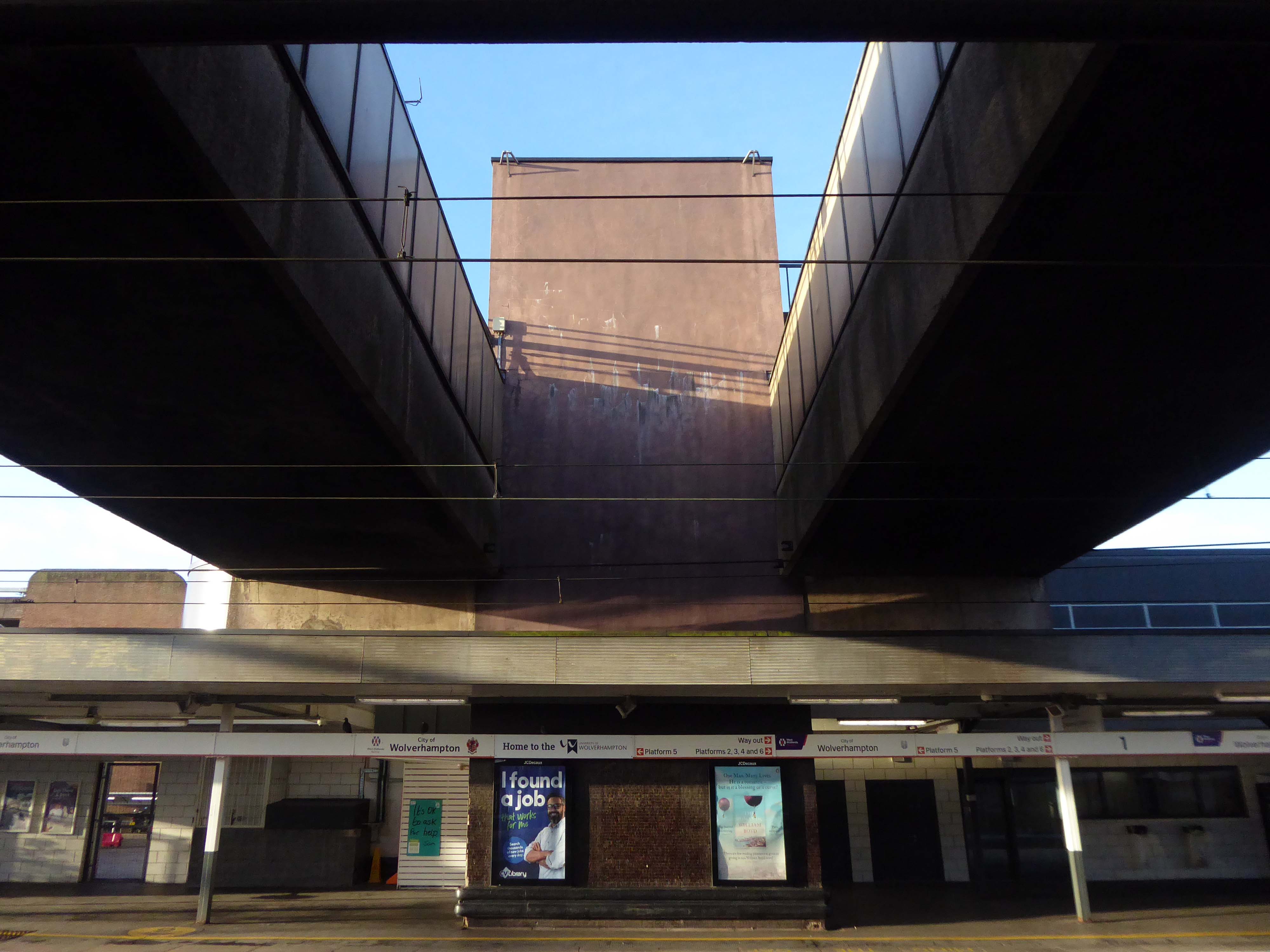
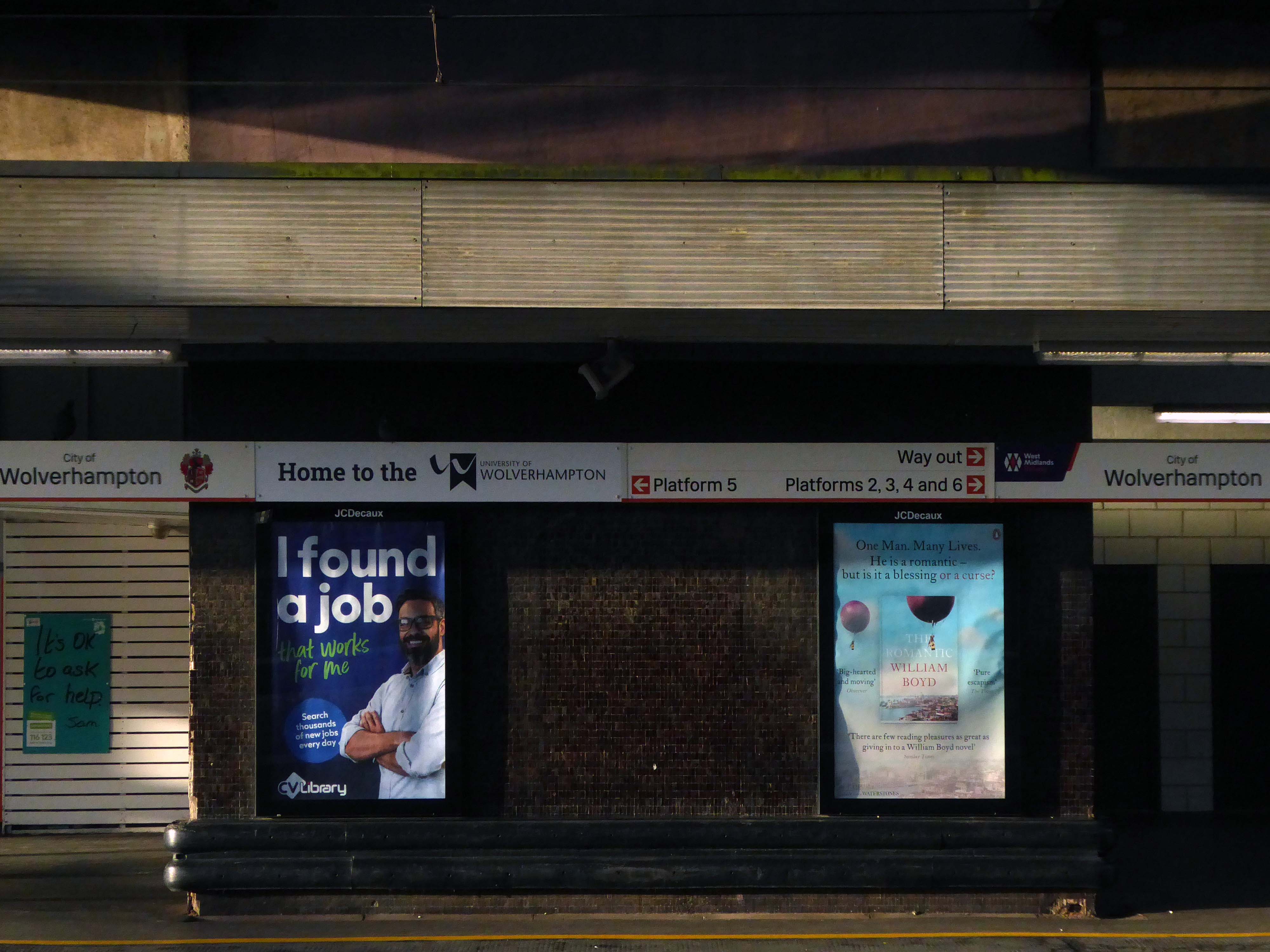
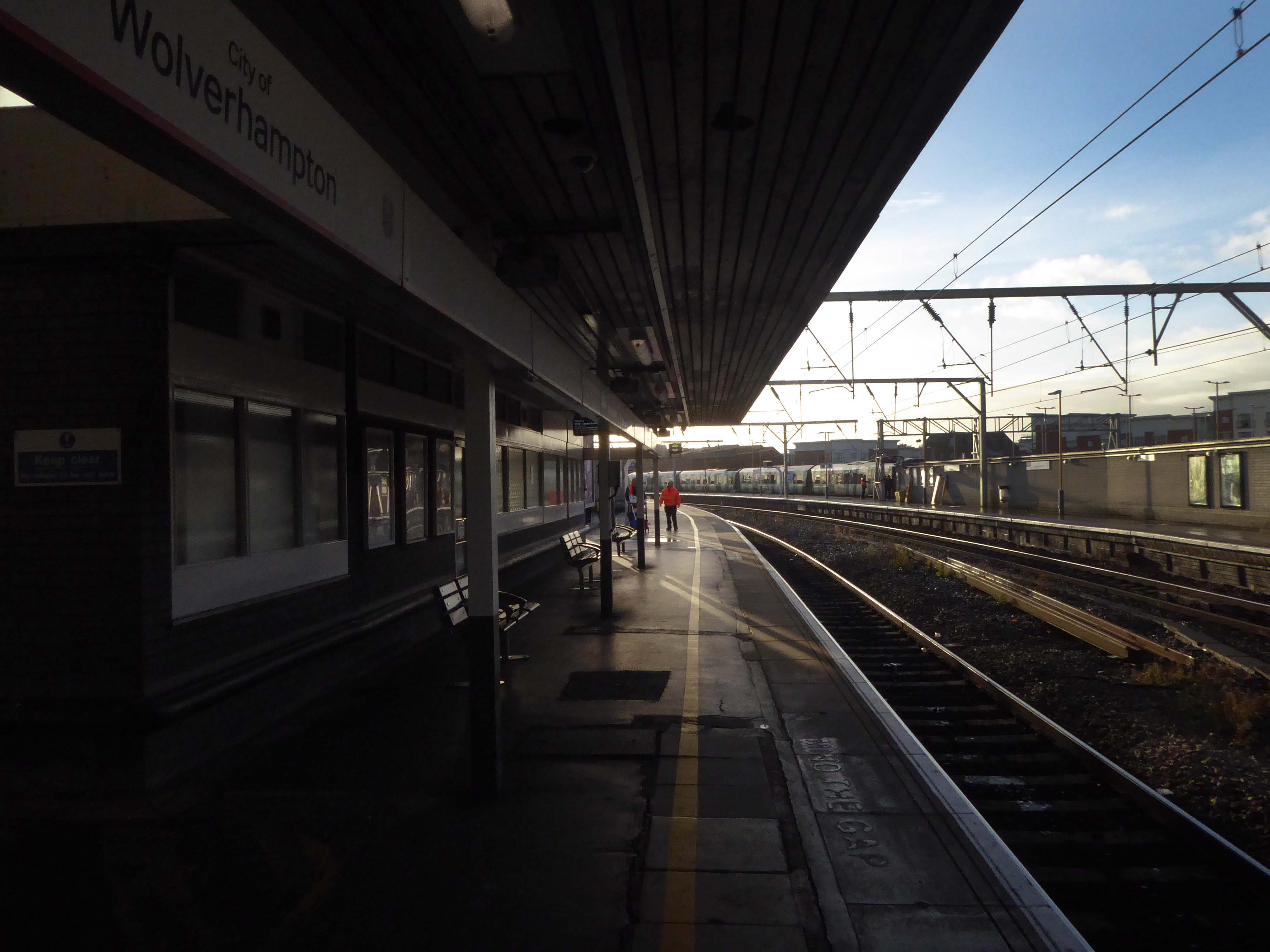
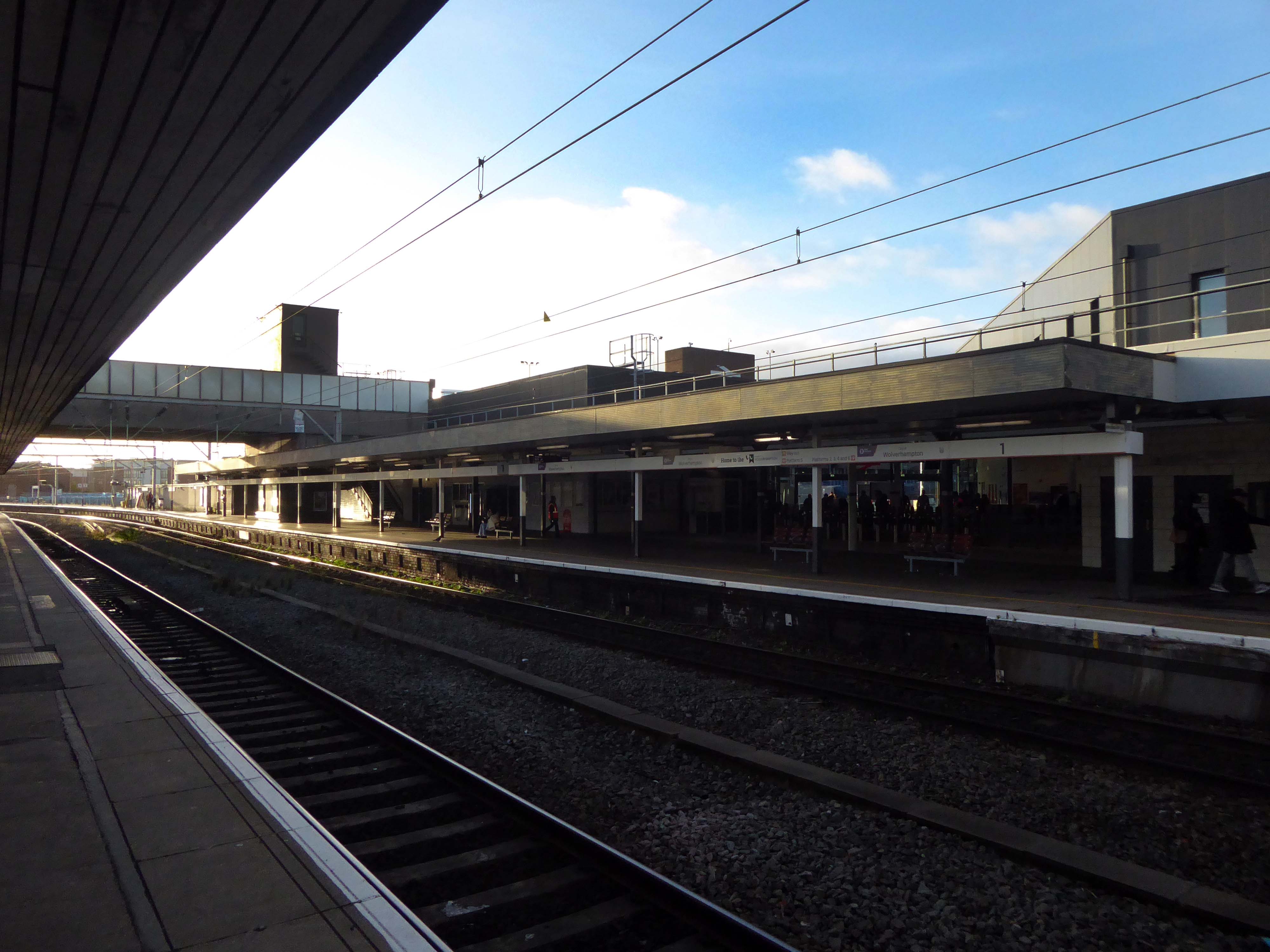
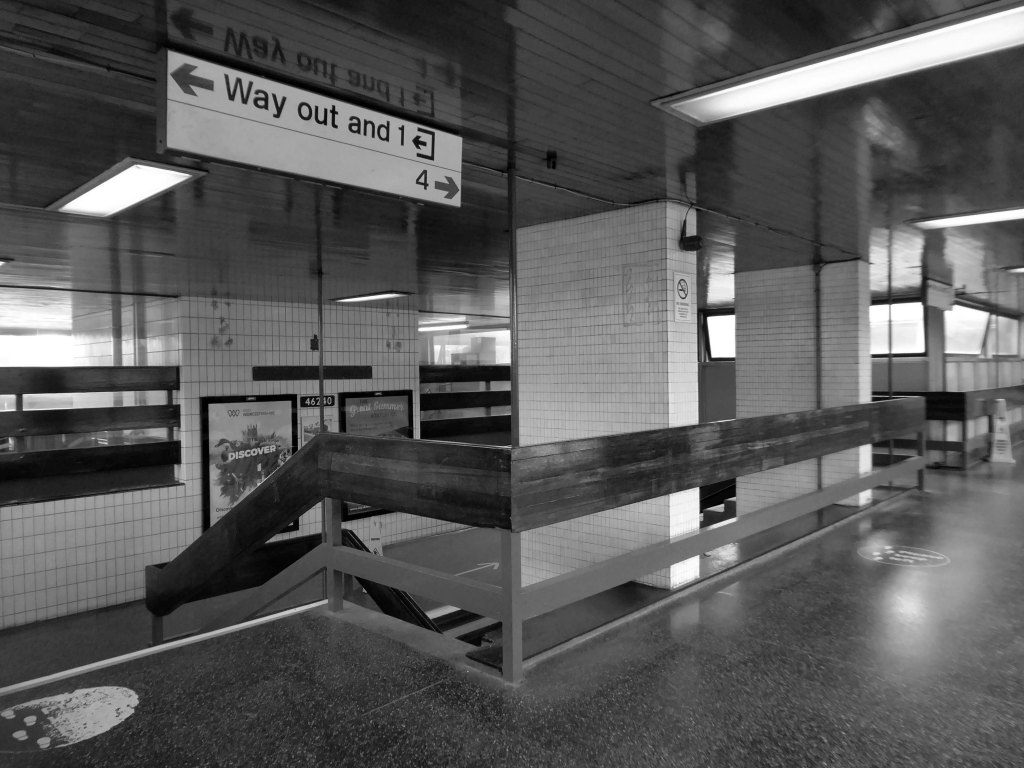
Wolverhampton High Level Station was built in 1852 and lay on what used to be known as the Stour Valley Line. The modern day Wolverhampton Station now occupies the site and there is little left of what my father photographed as the station suffered a major phase of modernisation in the mid 1960’s.
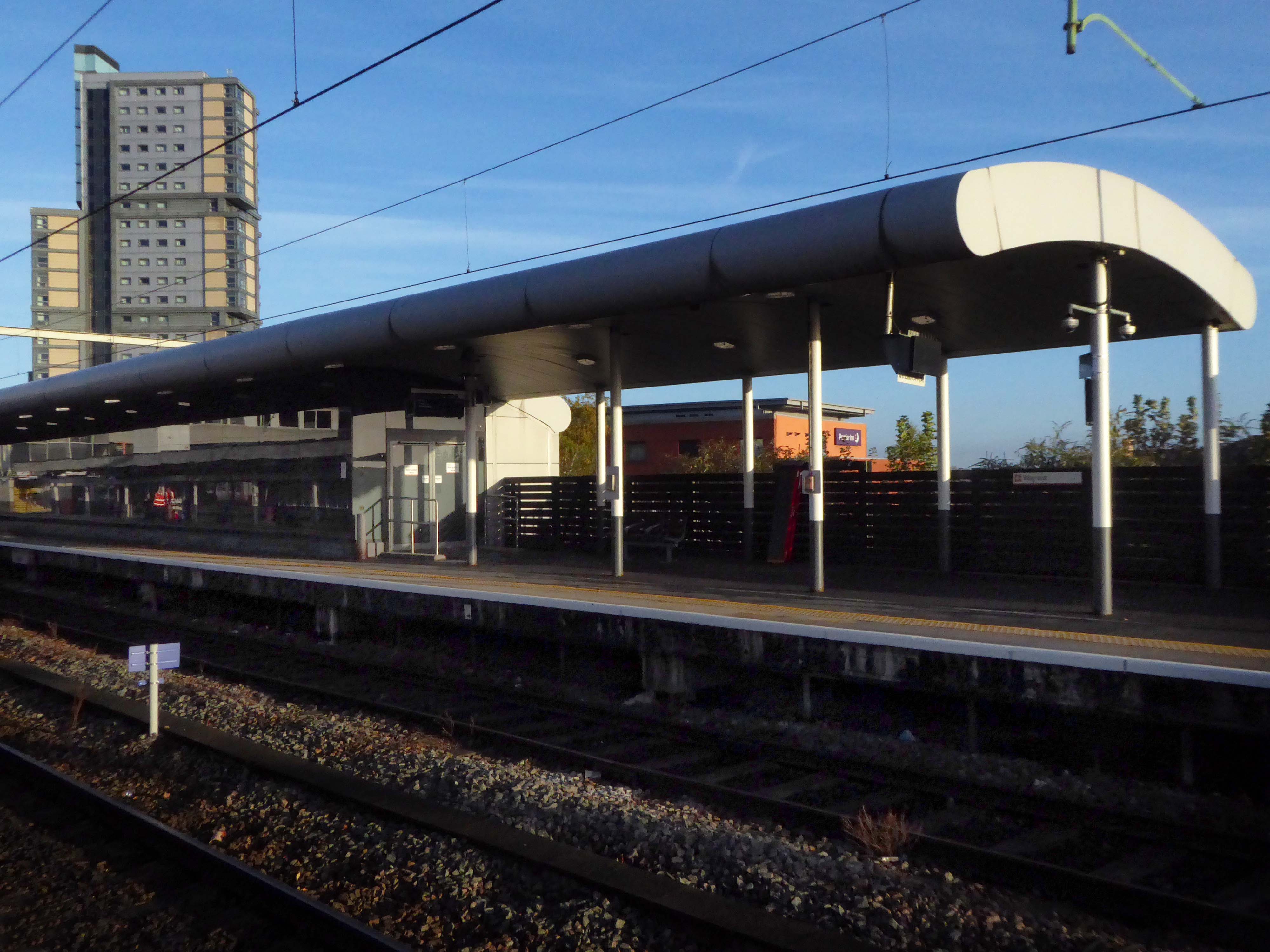
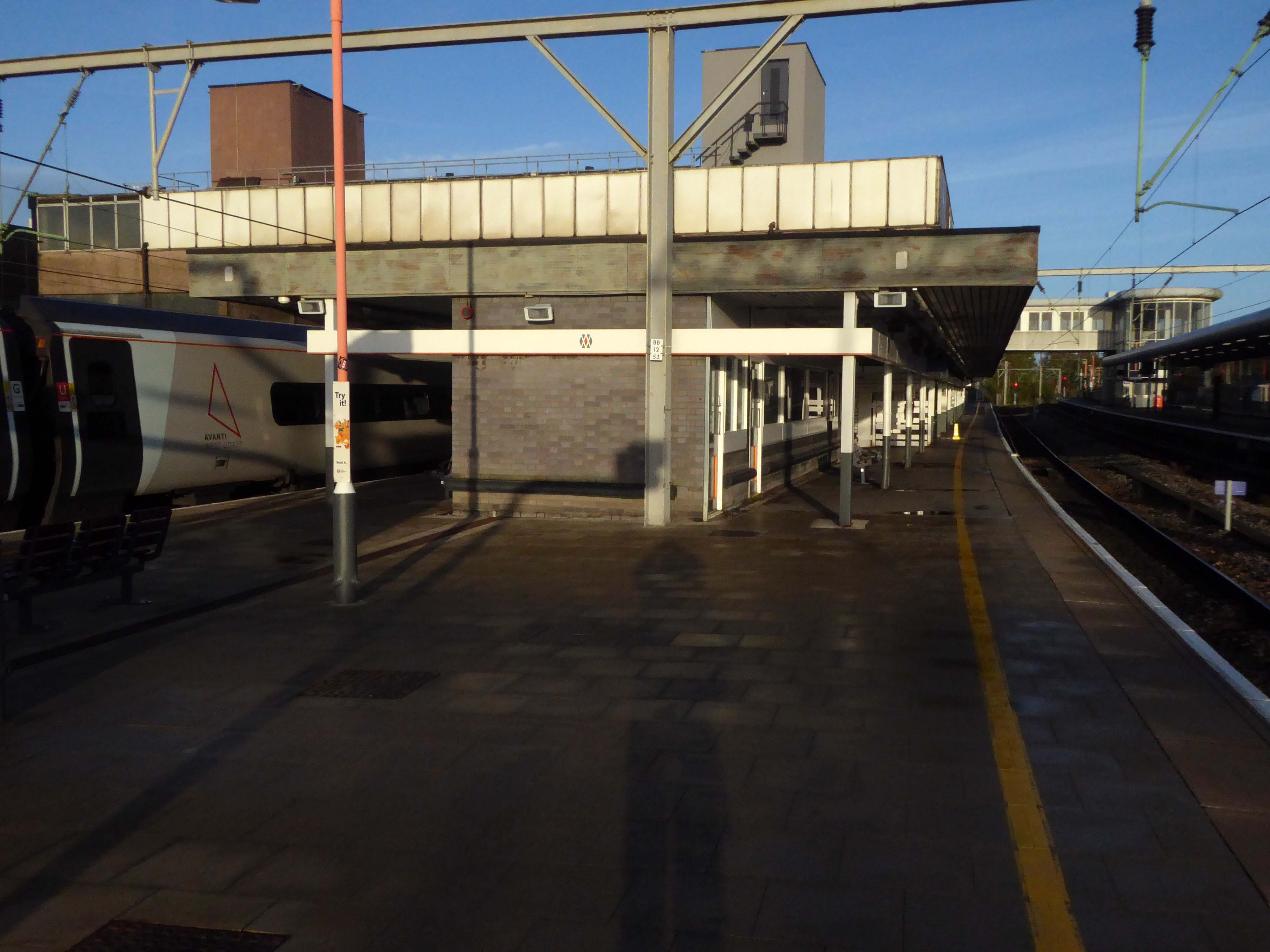
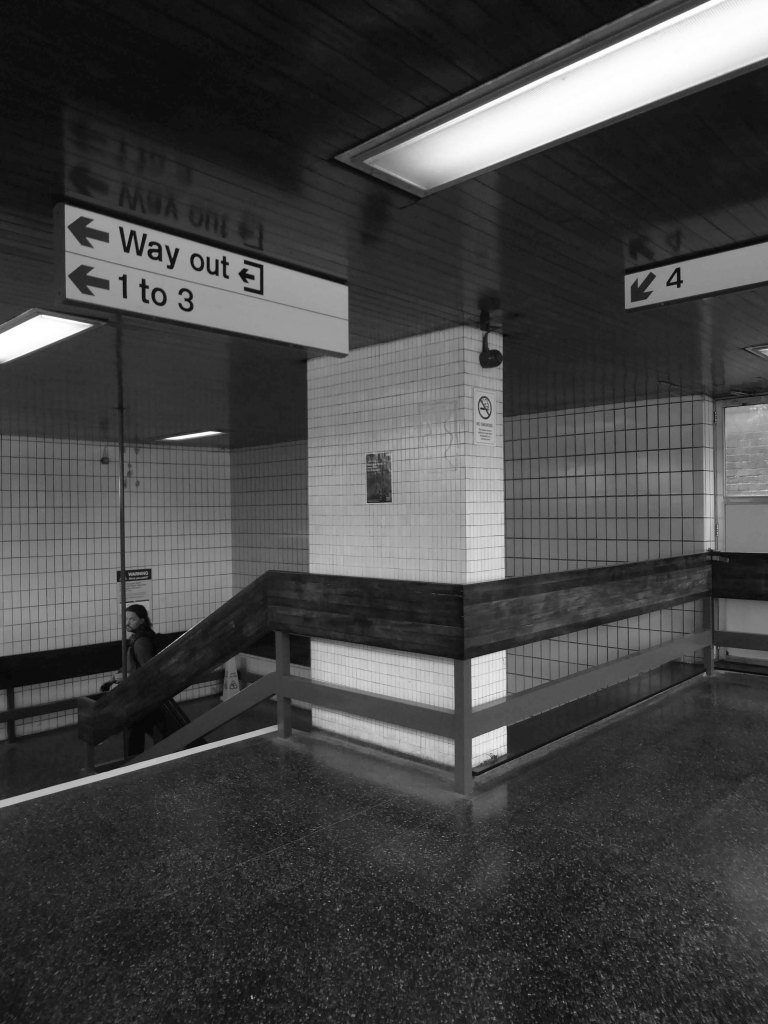
The present Wolverhampton station dates from 1964 to 1967 when the High Level station was completely rebuilt by the architect Ray Moorcroft as part of the modernisation programme which saw the West Coast Main Line electrified.
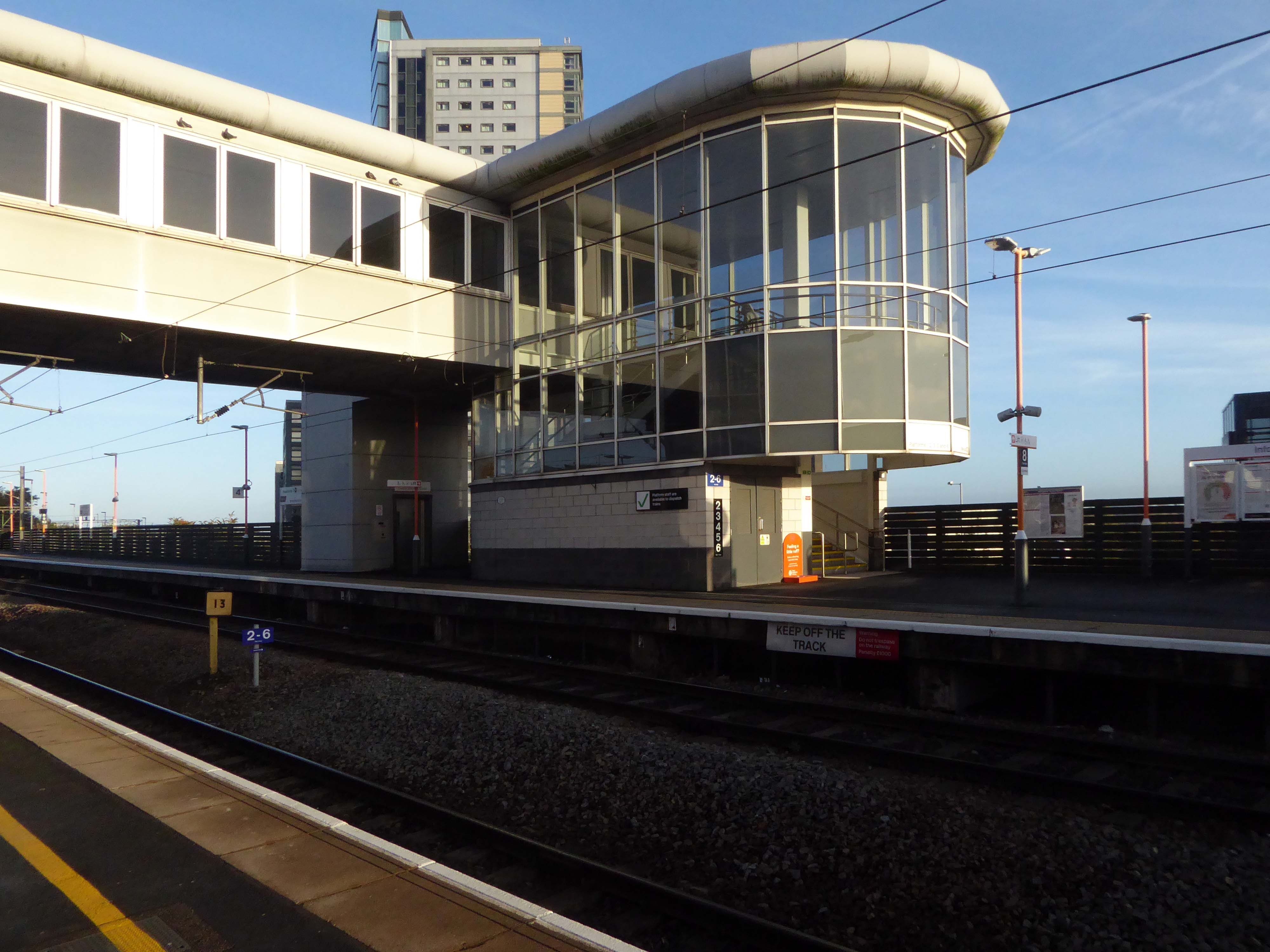
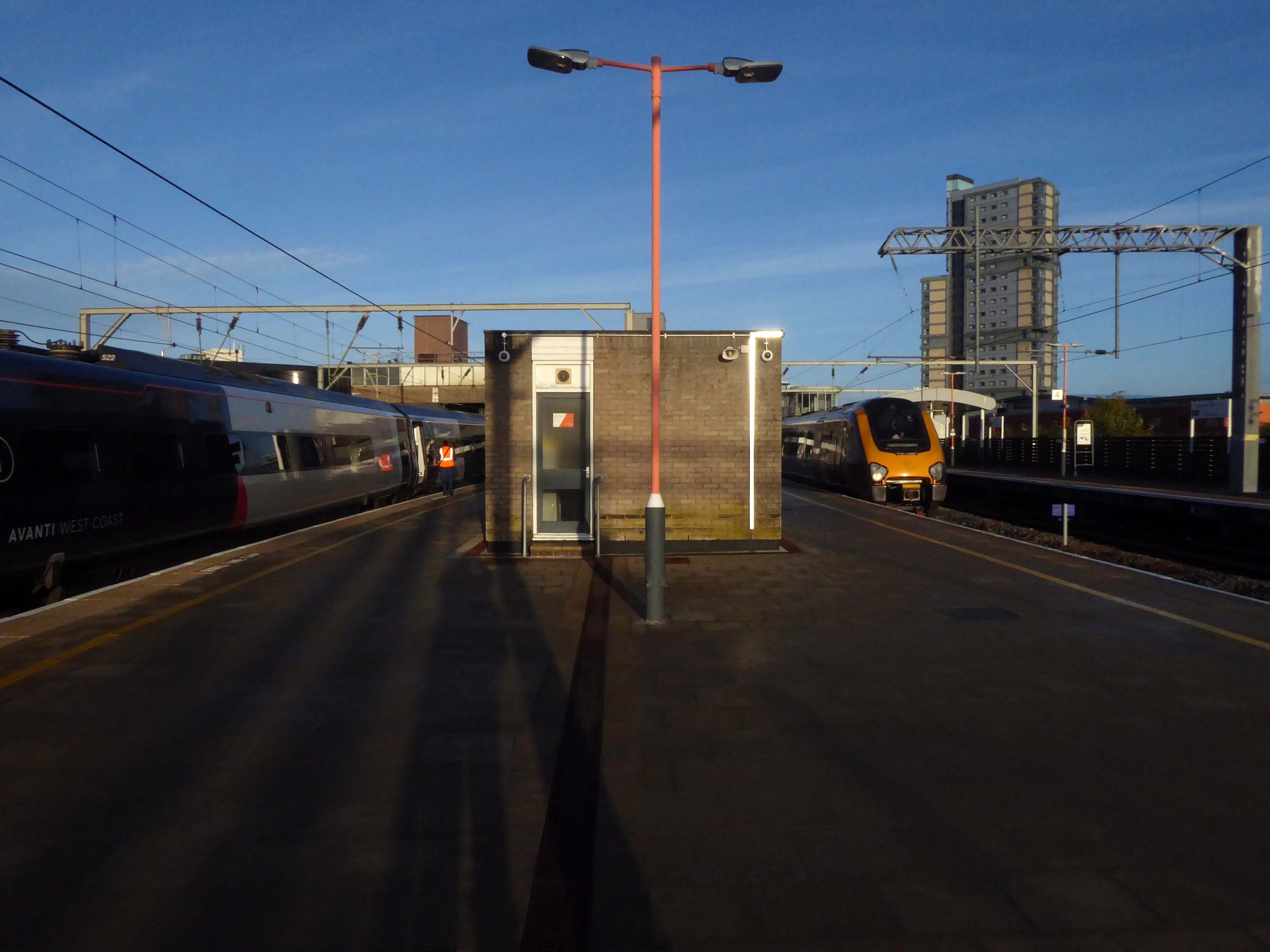
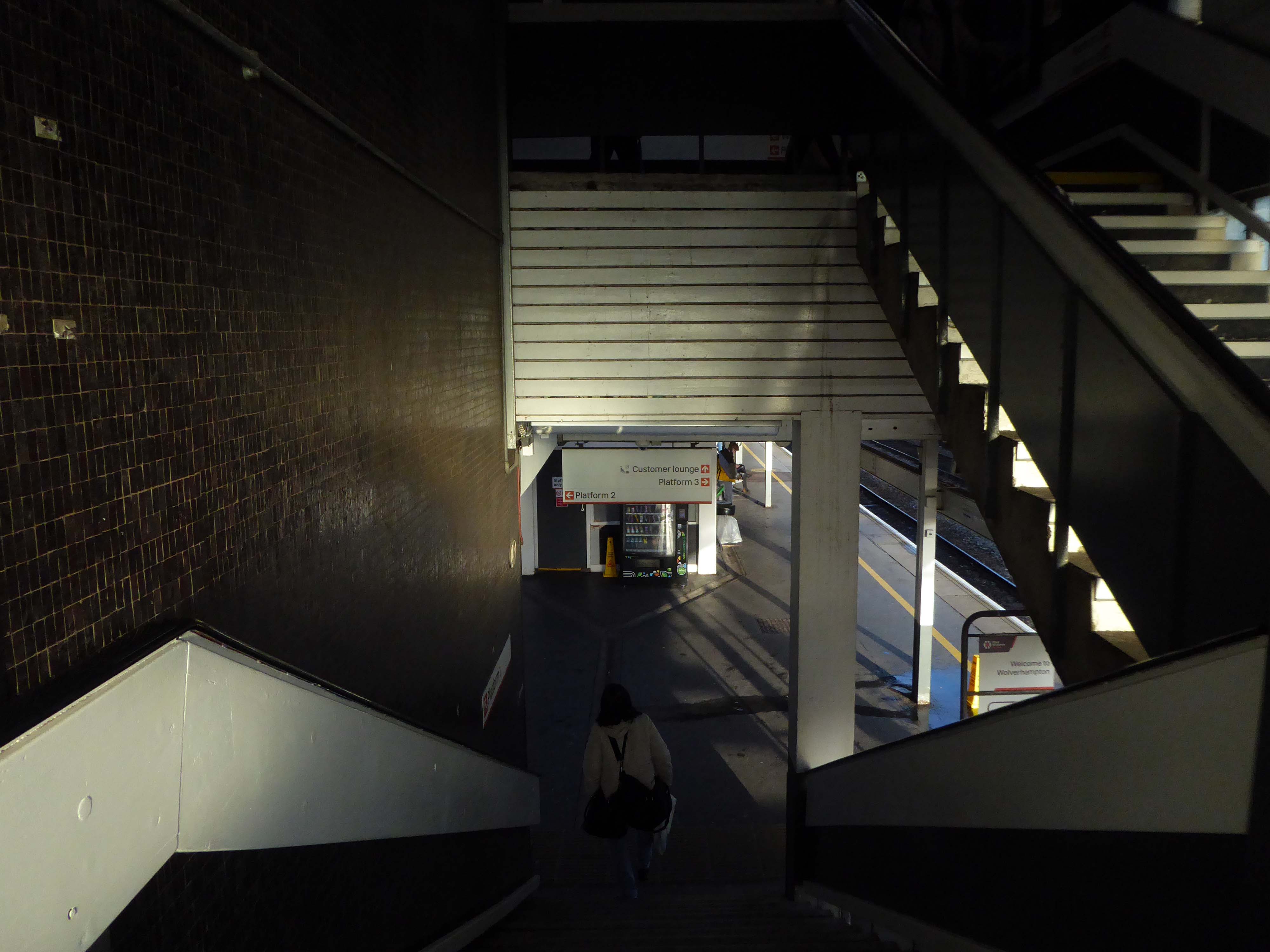
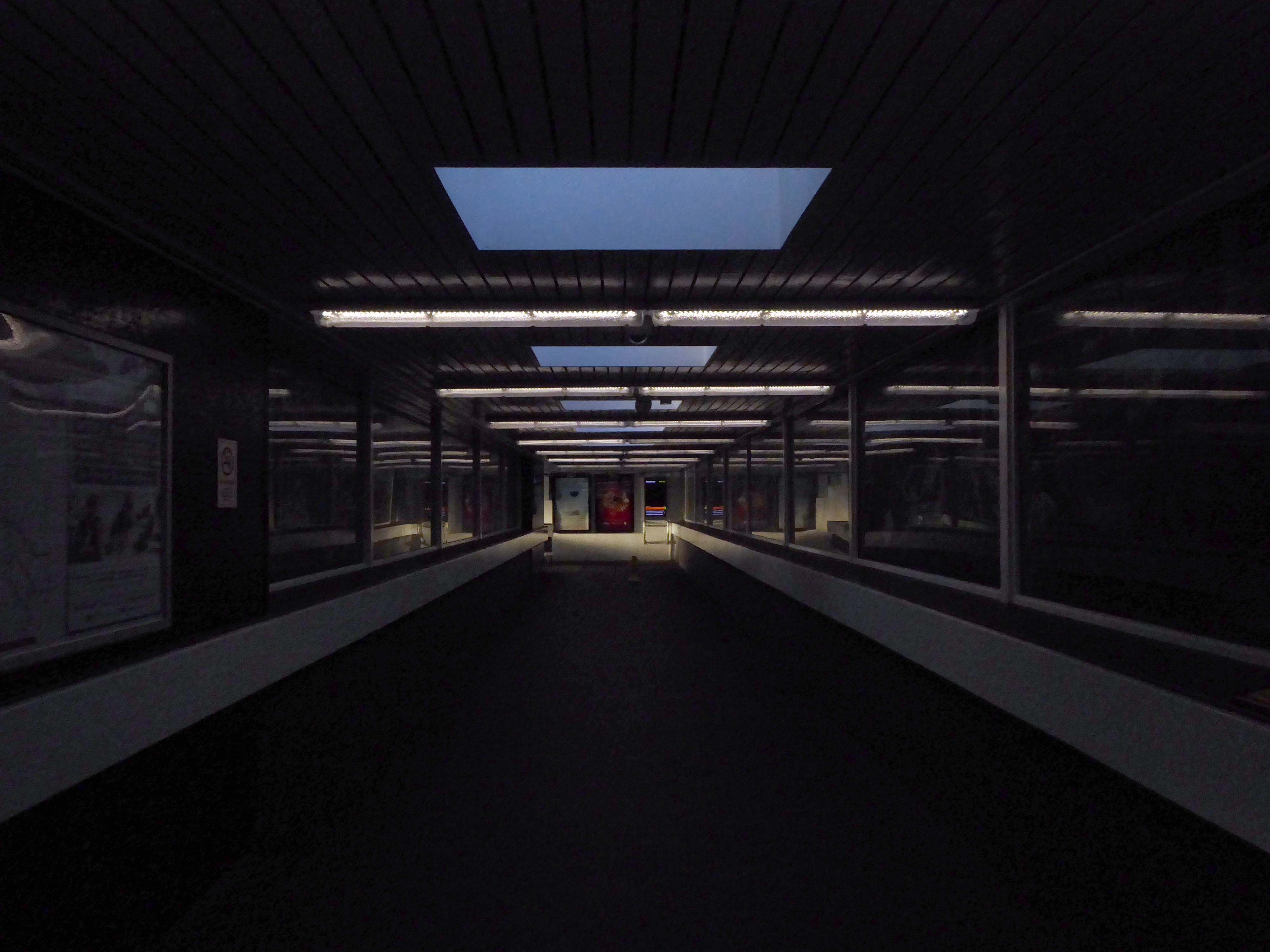
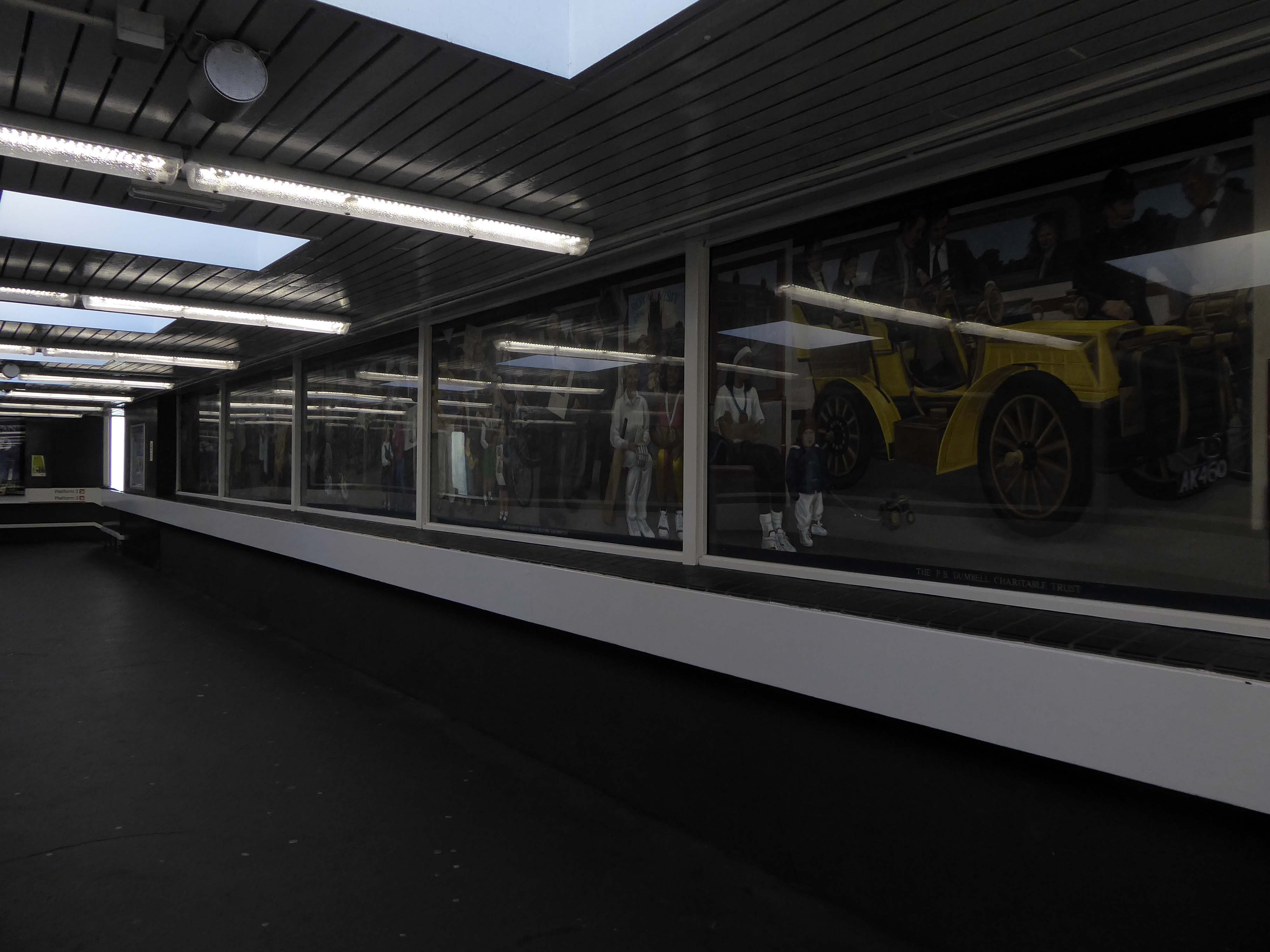
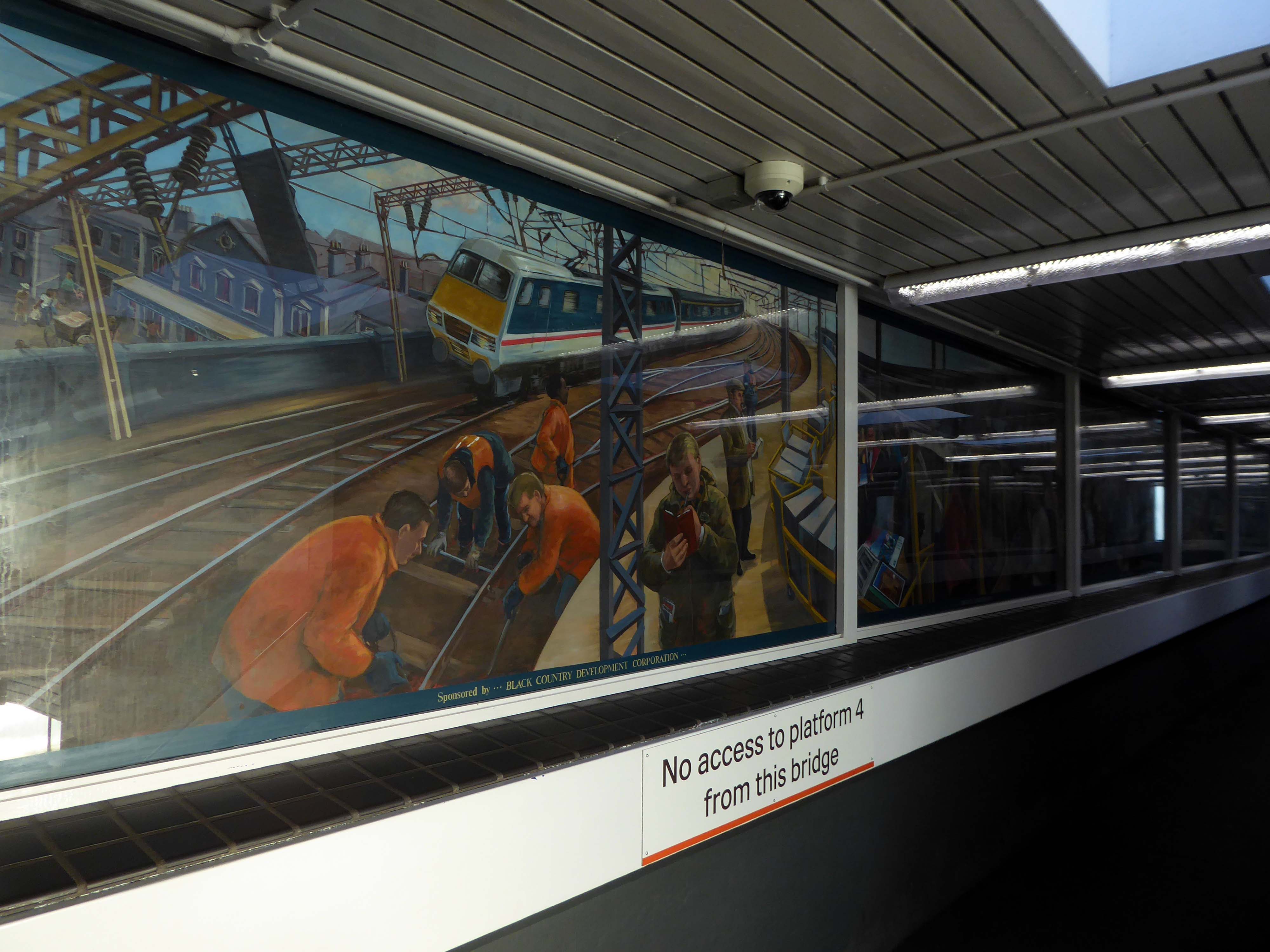
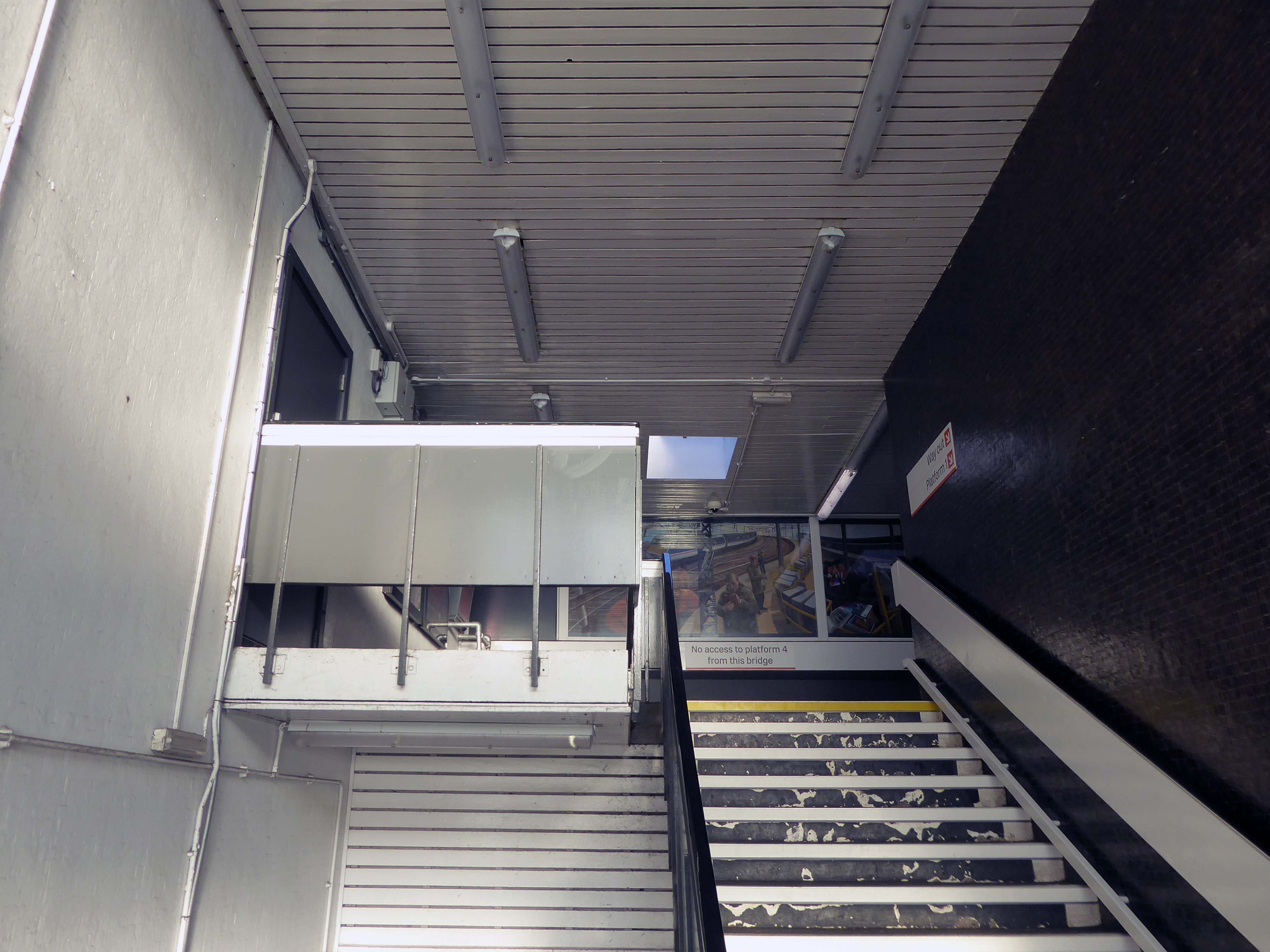
More recently in 2004, a new through platform – platform 4, was constructed on the site of infrequently-used sidings. This has greatly enhanced the capacity of the station. A new footbridge was also constructed, to allow access to the new platform but also to improve access to the existing ones.
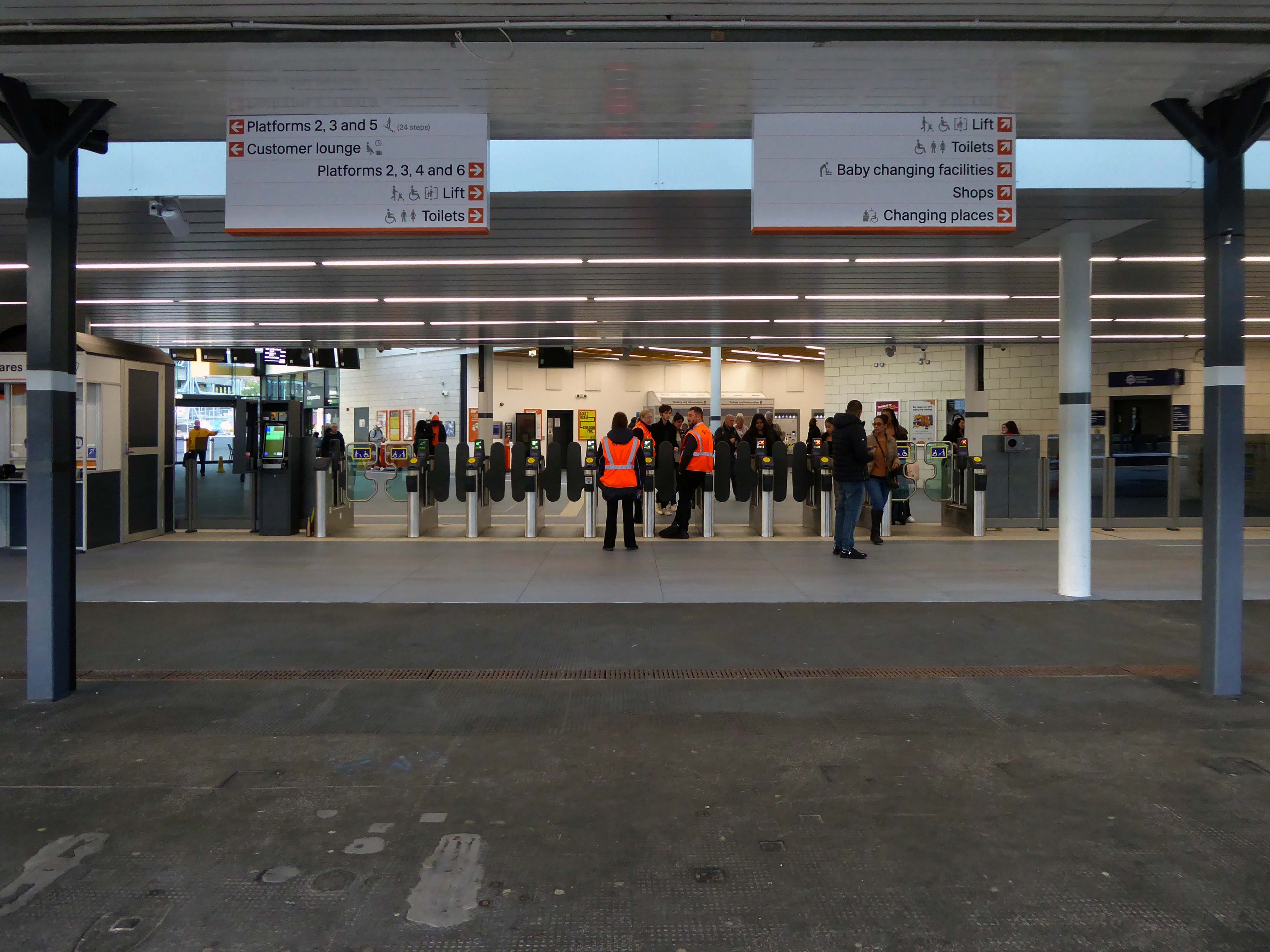
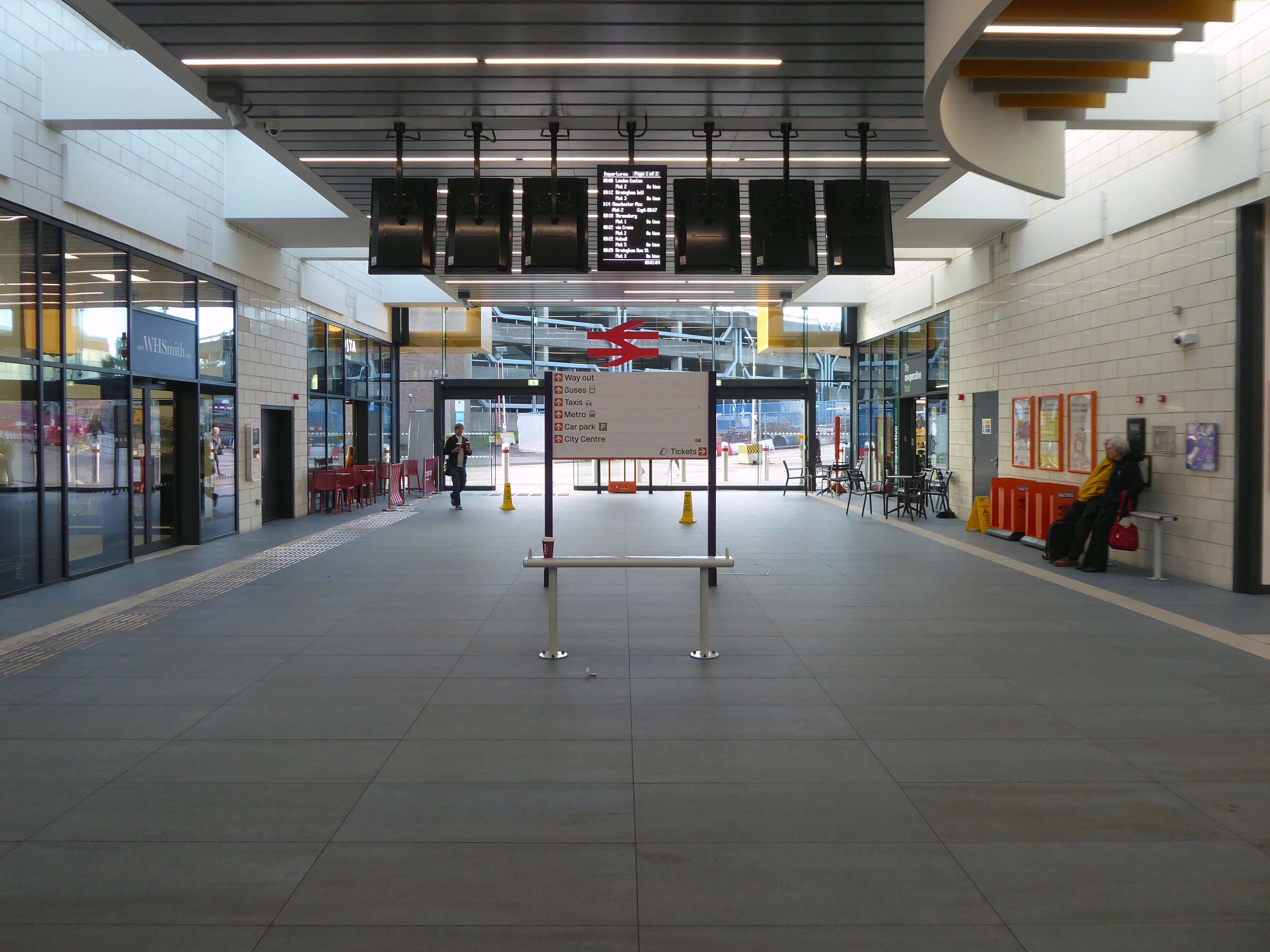
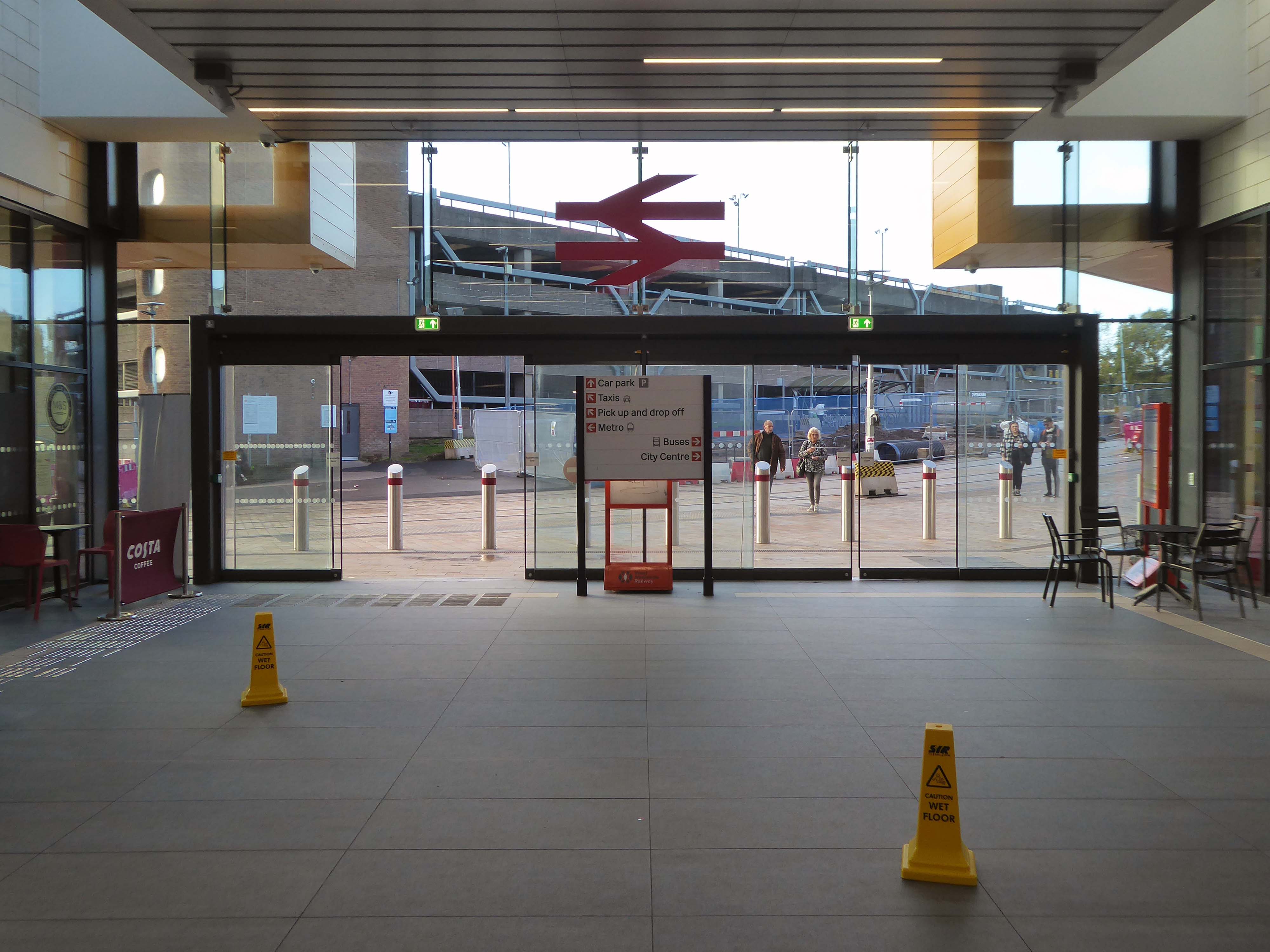
Members of the public are now able to access the second half of the new Wolverhampton railway station, following the completion of main construction on Phase 2 in March 2021.
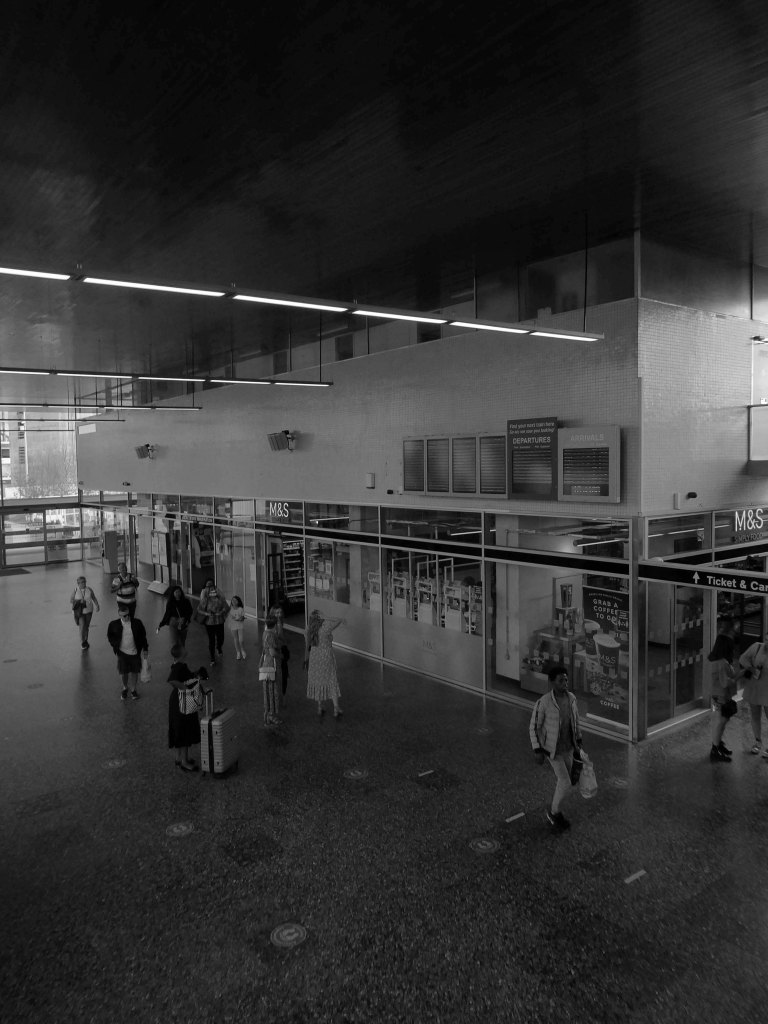
The new station forms part of a significant local transformation being carried out, as part of the city’s £150m Interchange scheme. Within the city scheme, there are improvements planned for bus, Metro, cycle and train connectivity.
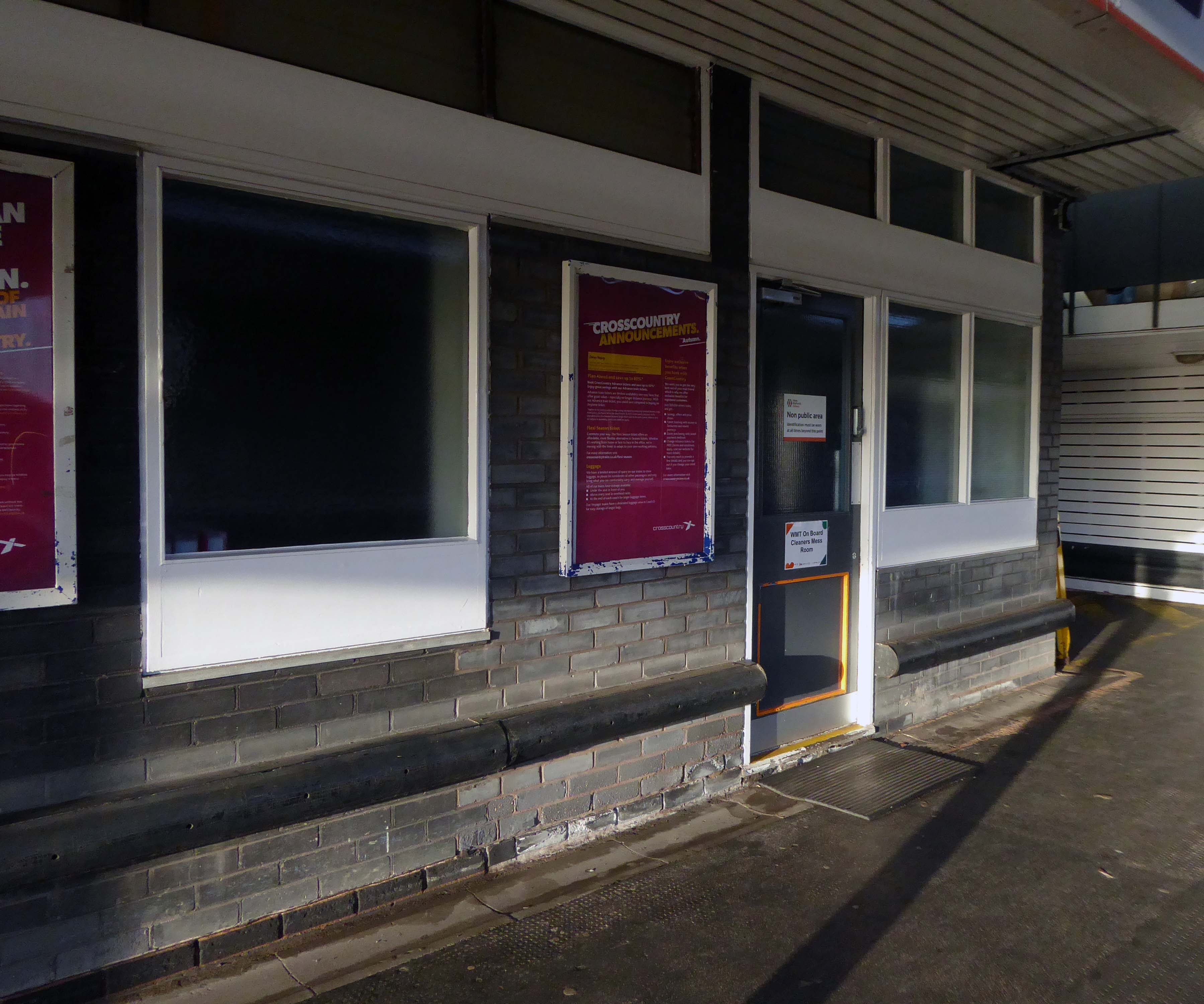
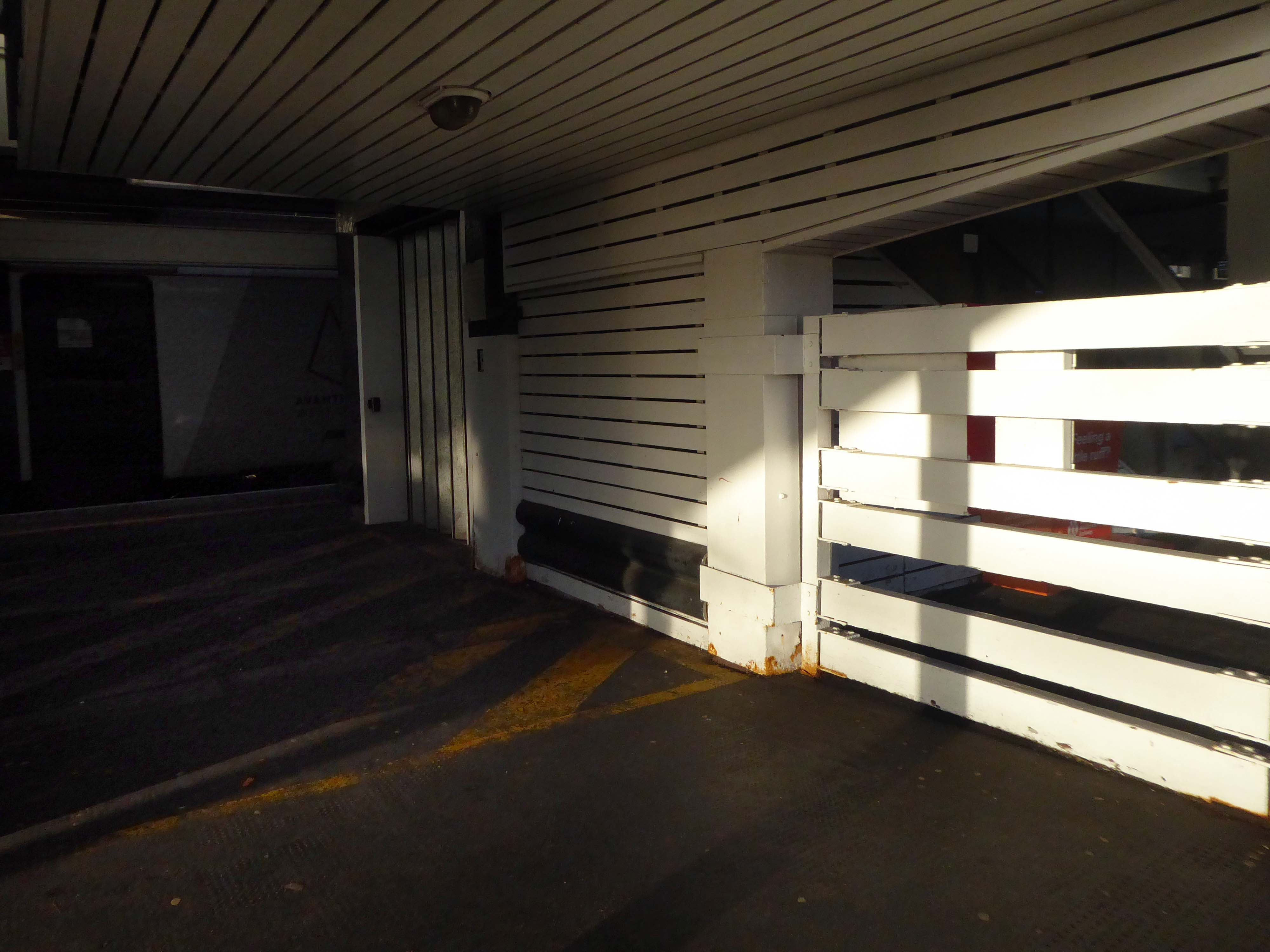
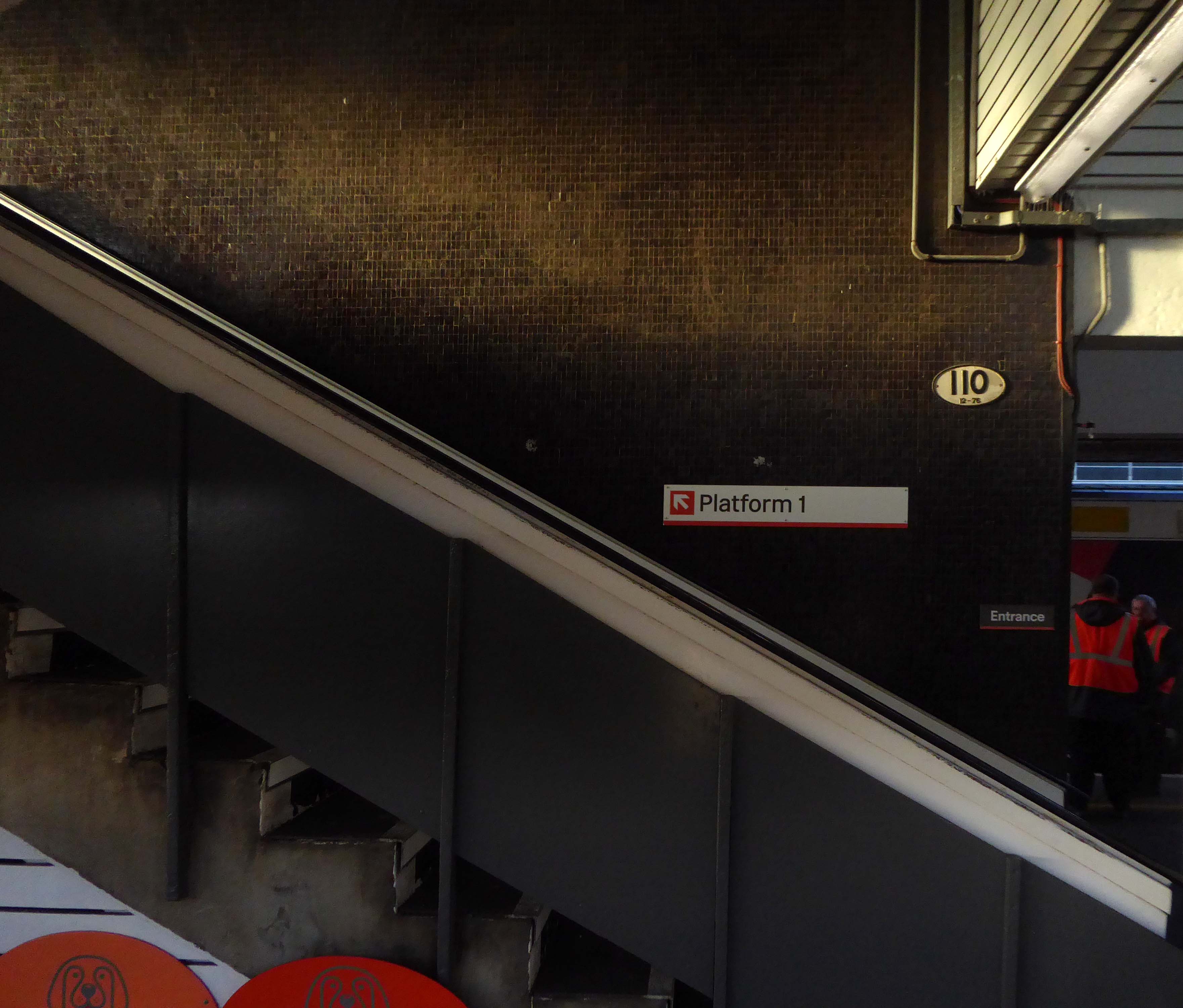
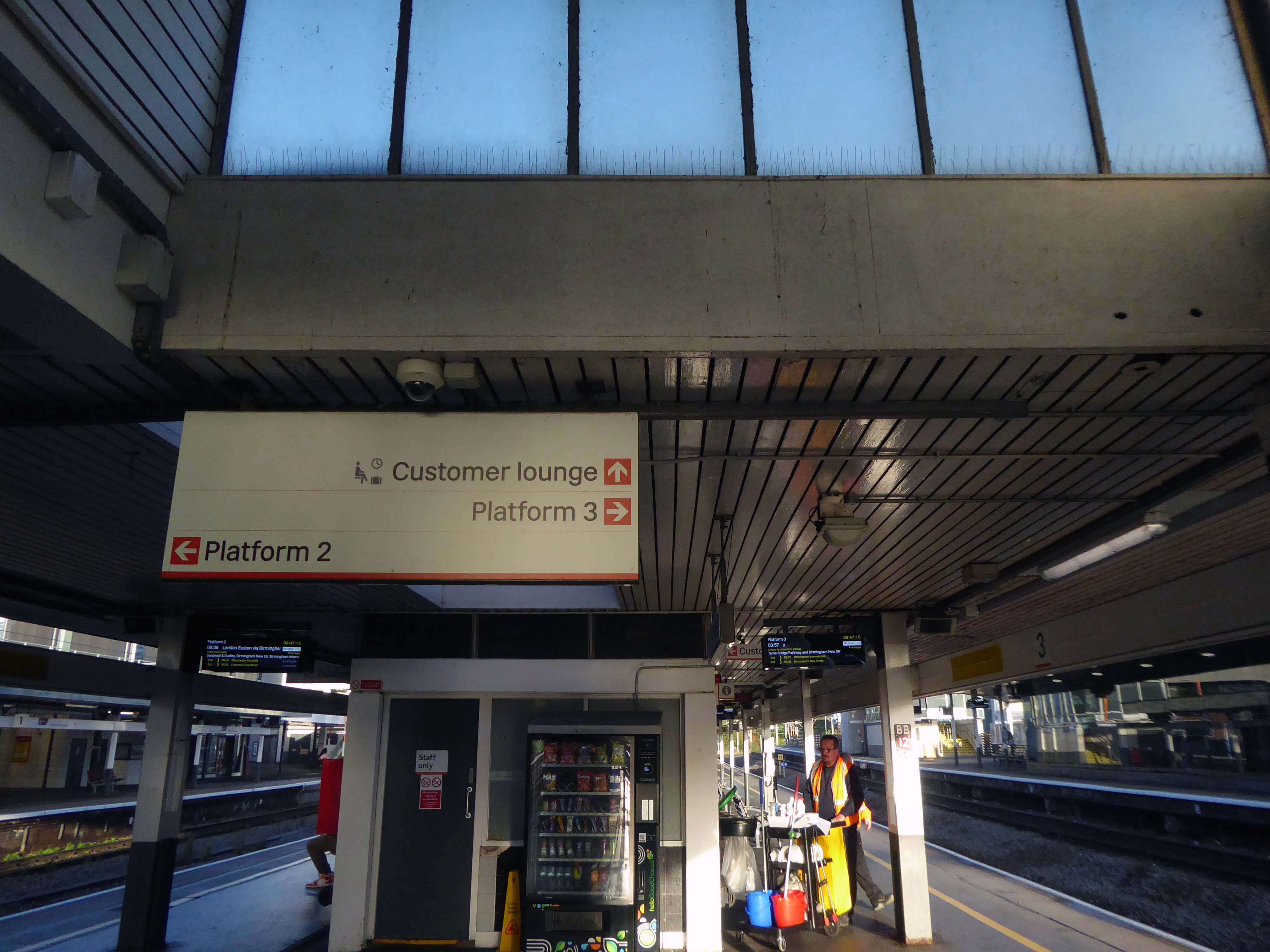
This was my first visit to Wolverhampton, arriving at 8.42 on a crowded Bournemouth bound Cross Country train, which was destined to terminate at Reading.
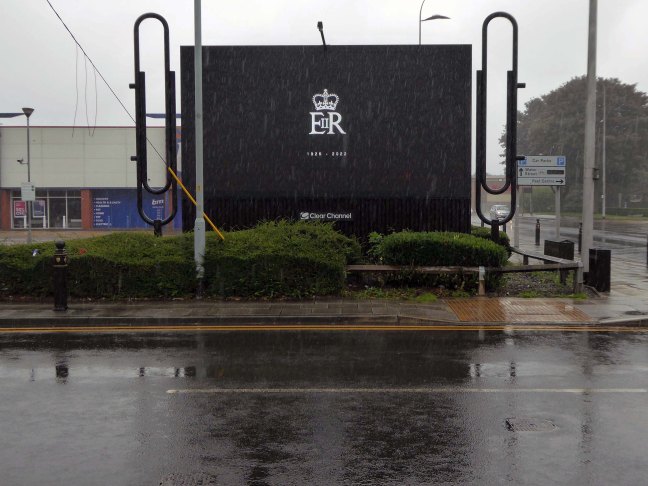
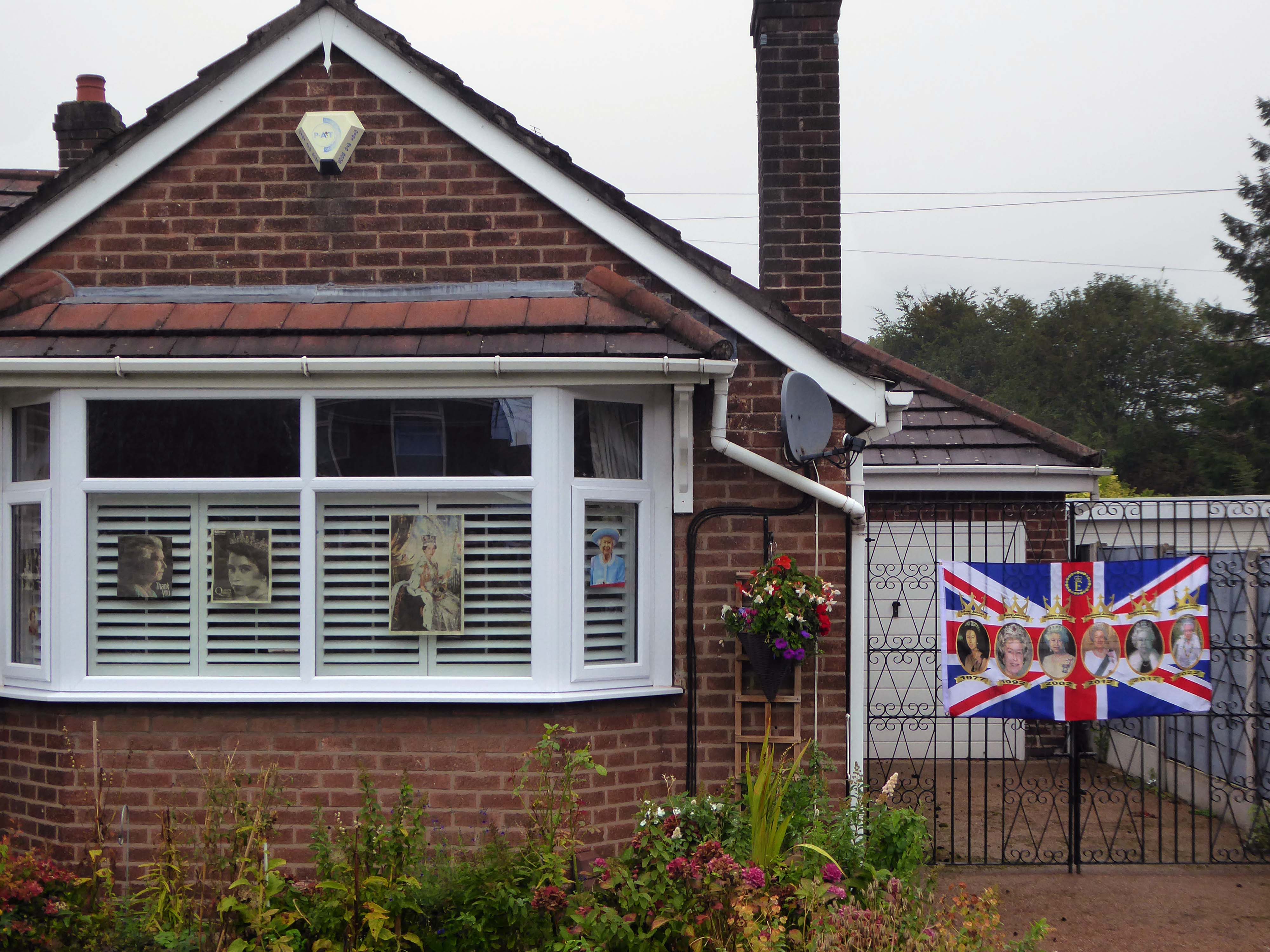
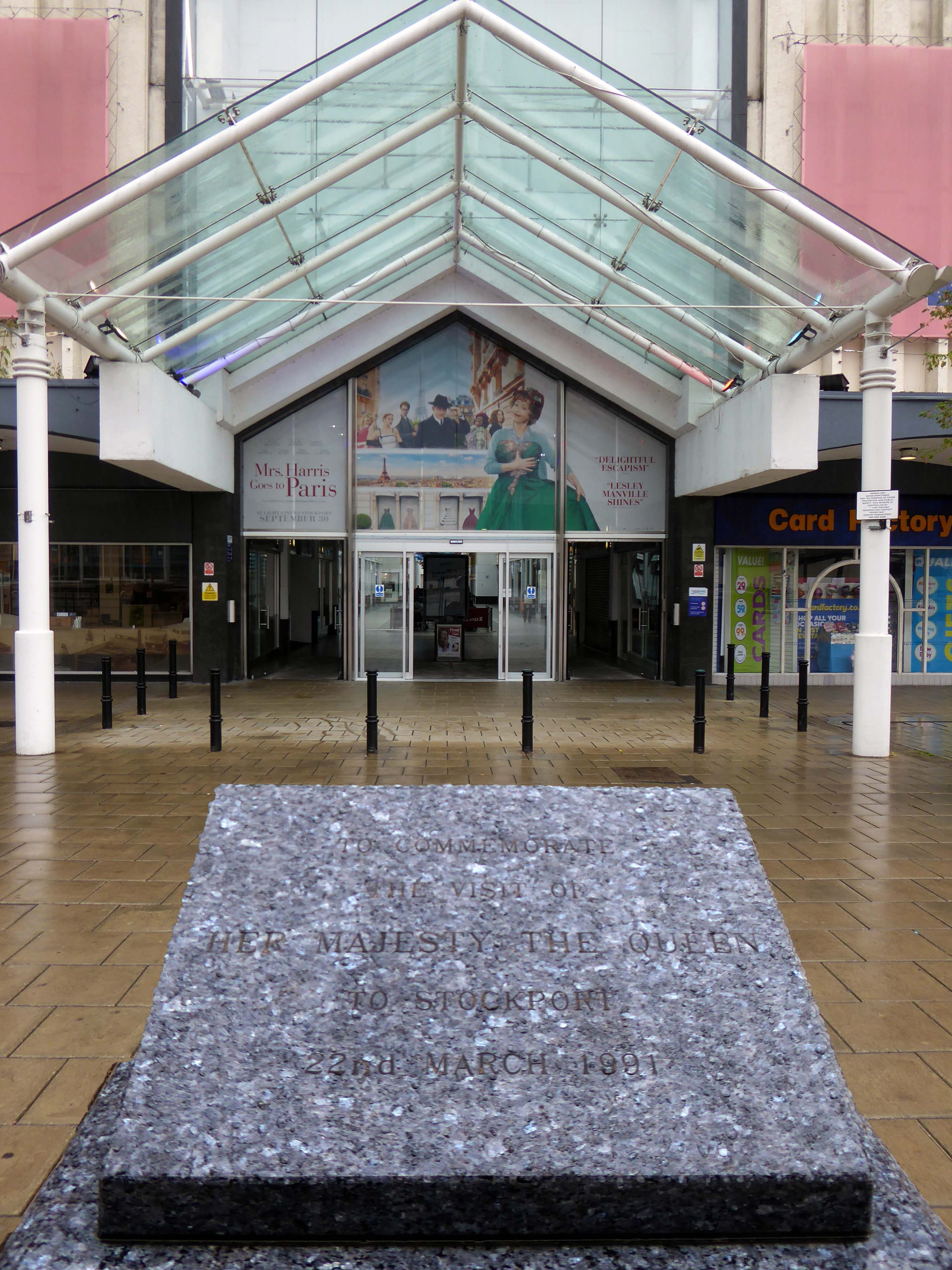
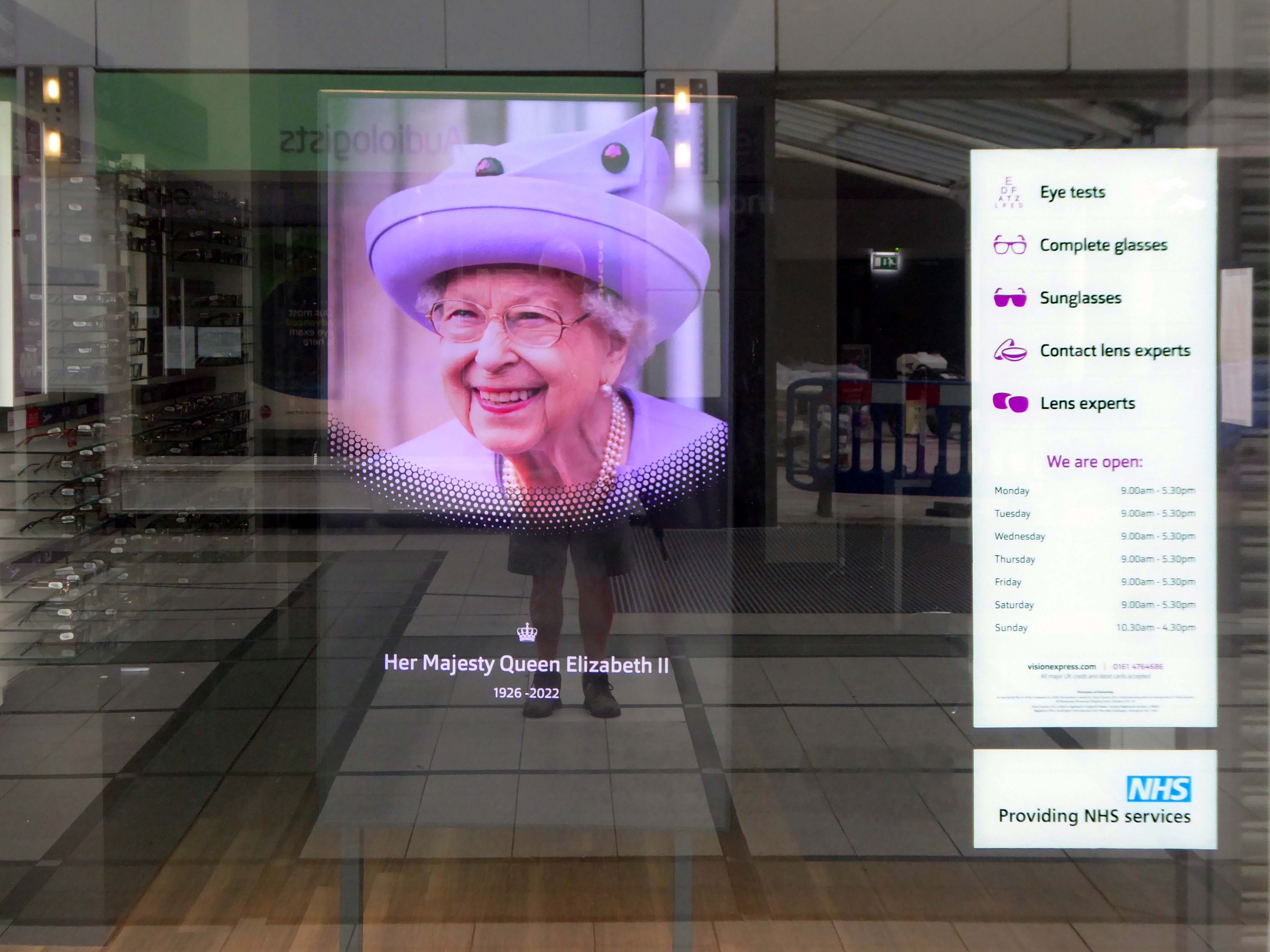
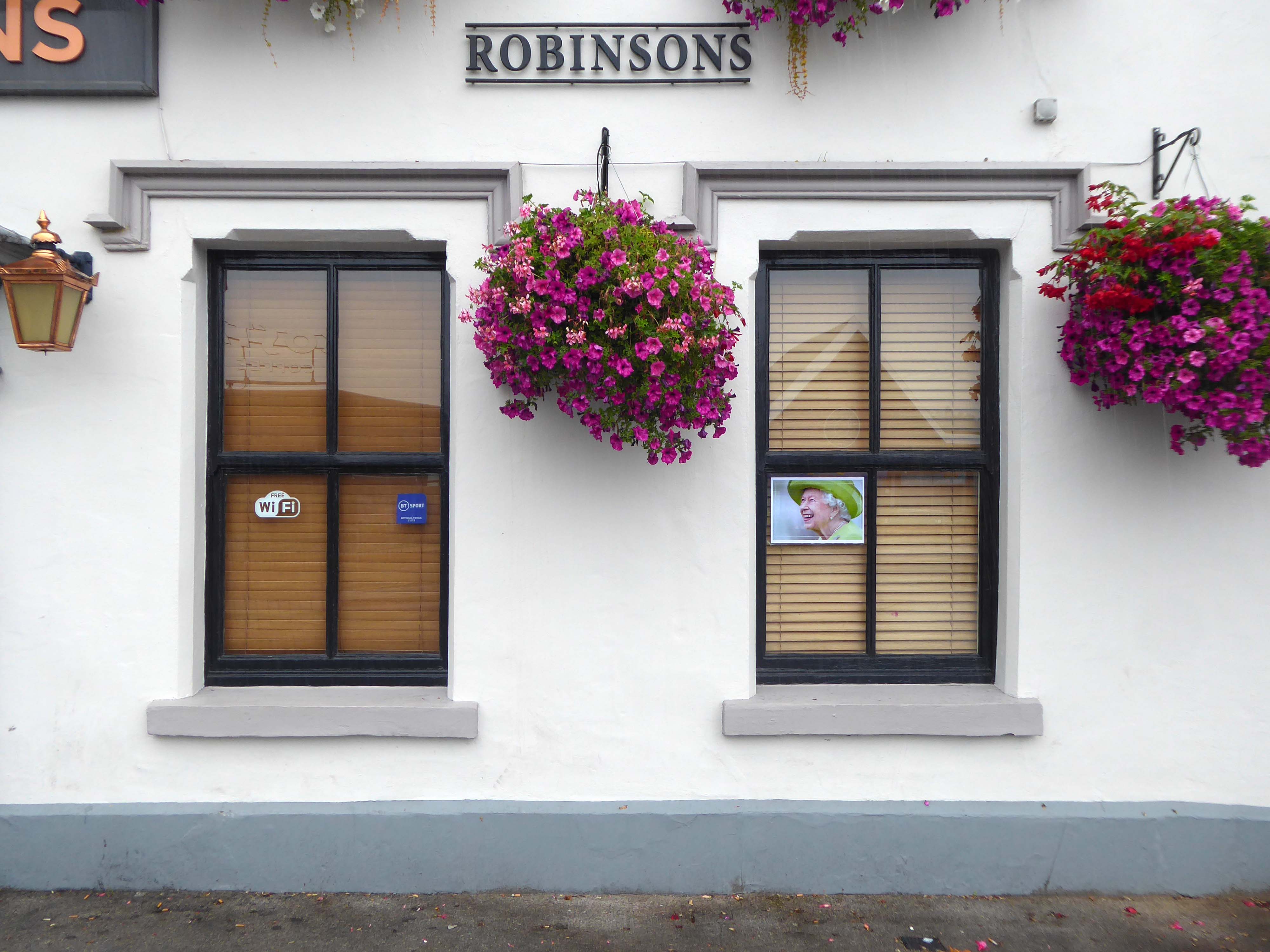
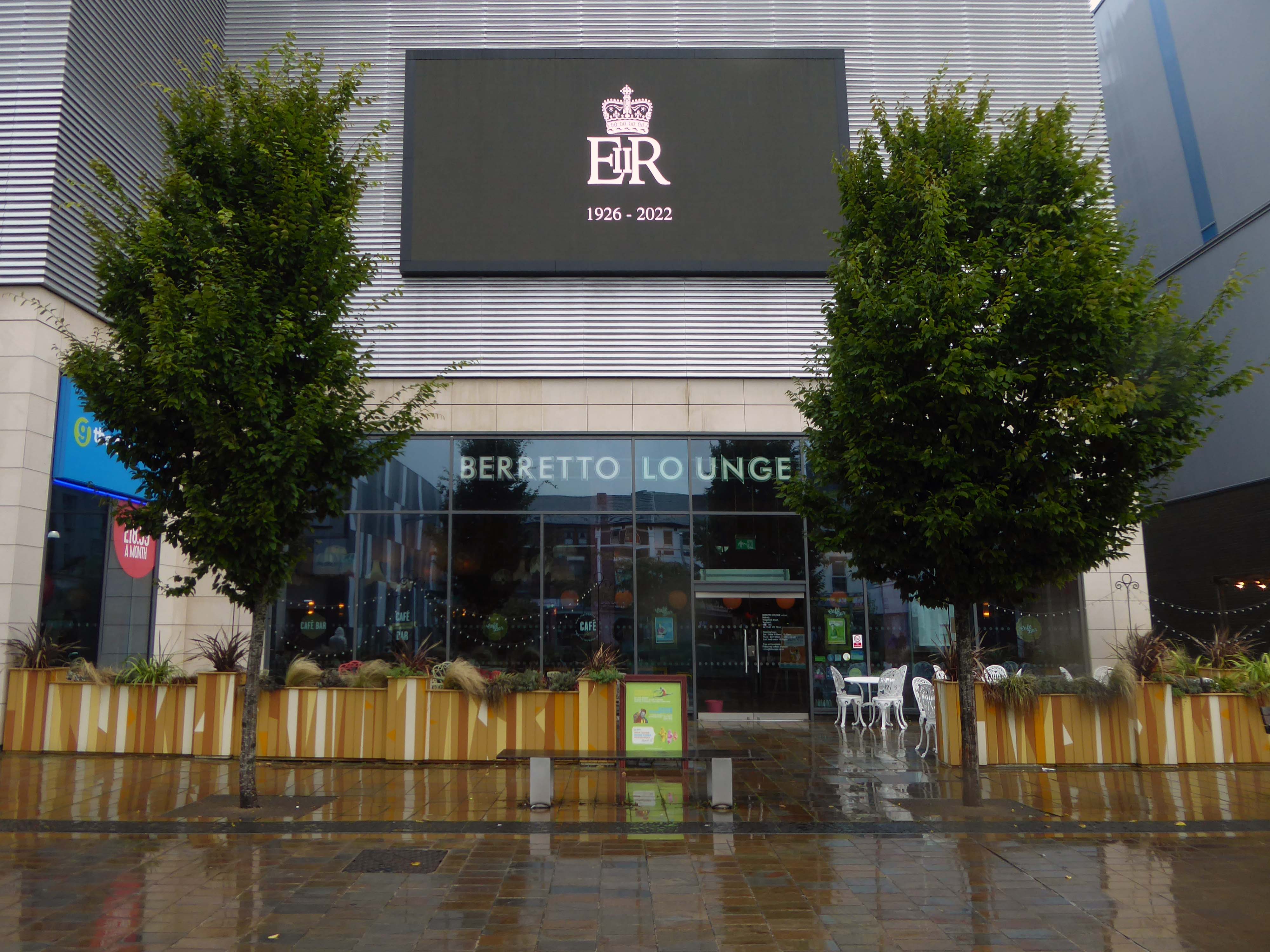
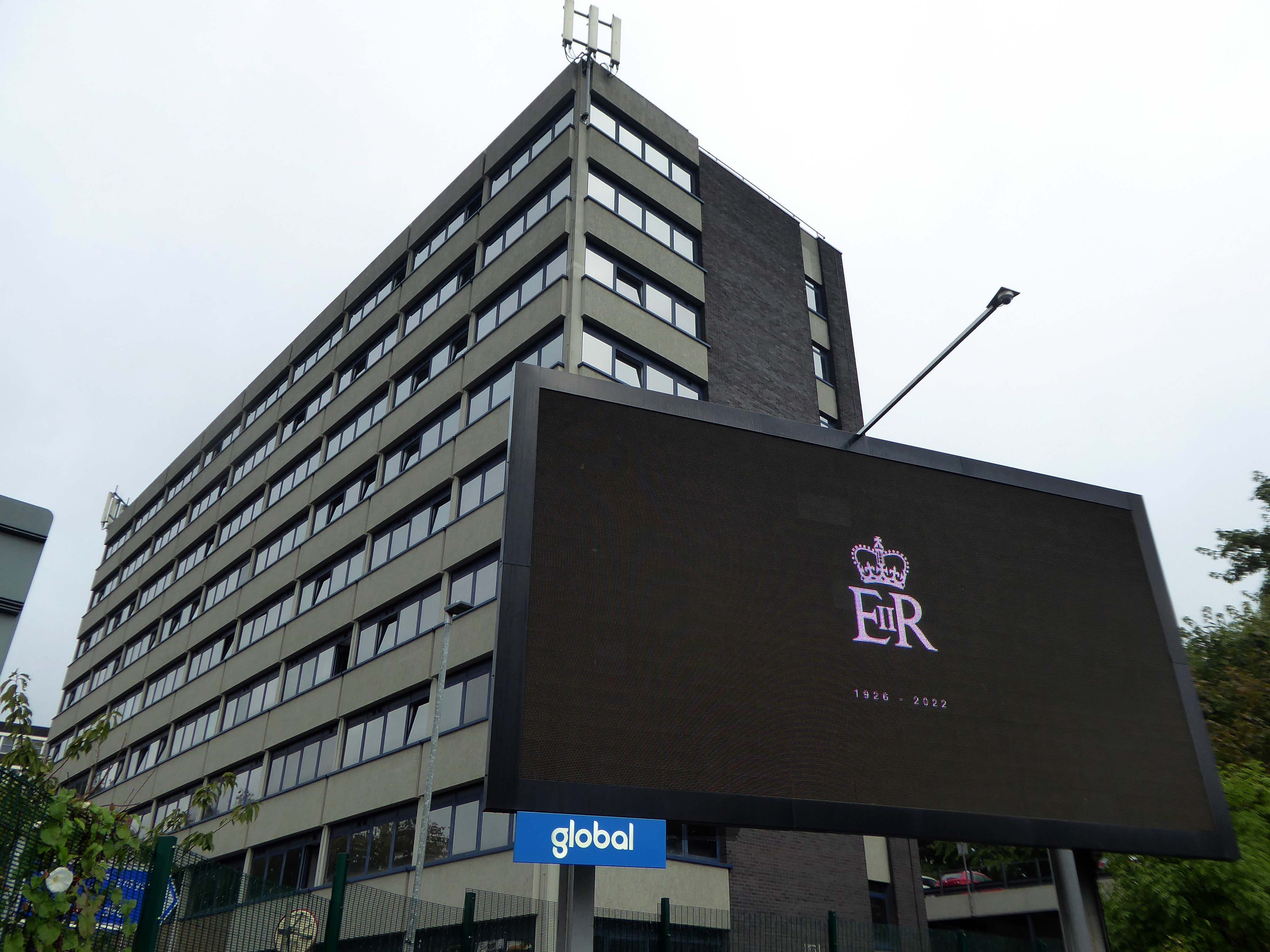
On the day of HM Queen Elizabeth II’s Diamond Jubilee, I cycled around Ashton under Lyne in search of landmarks of her sixty year reign.
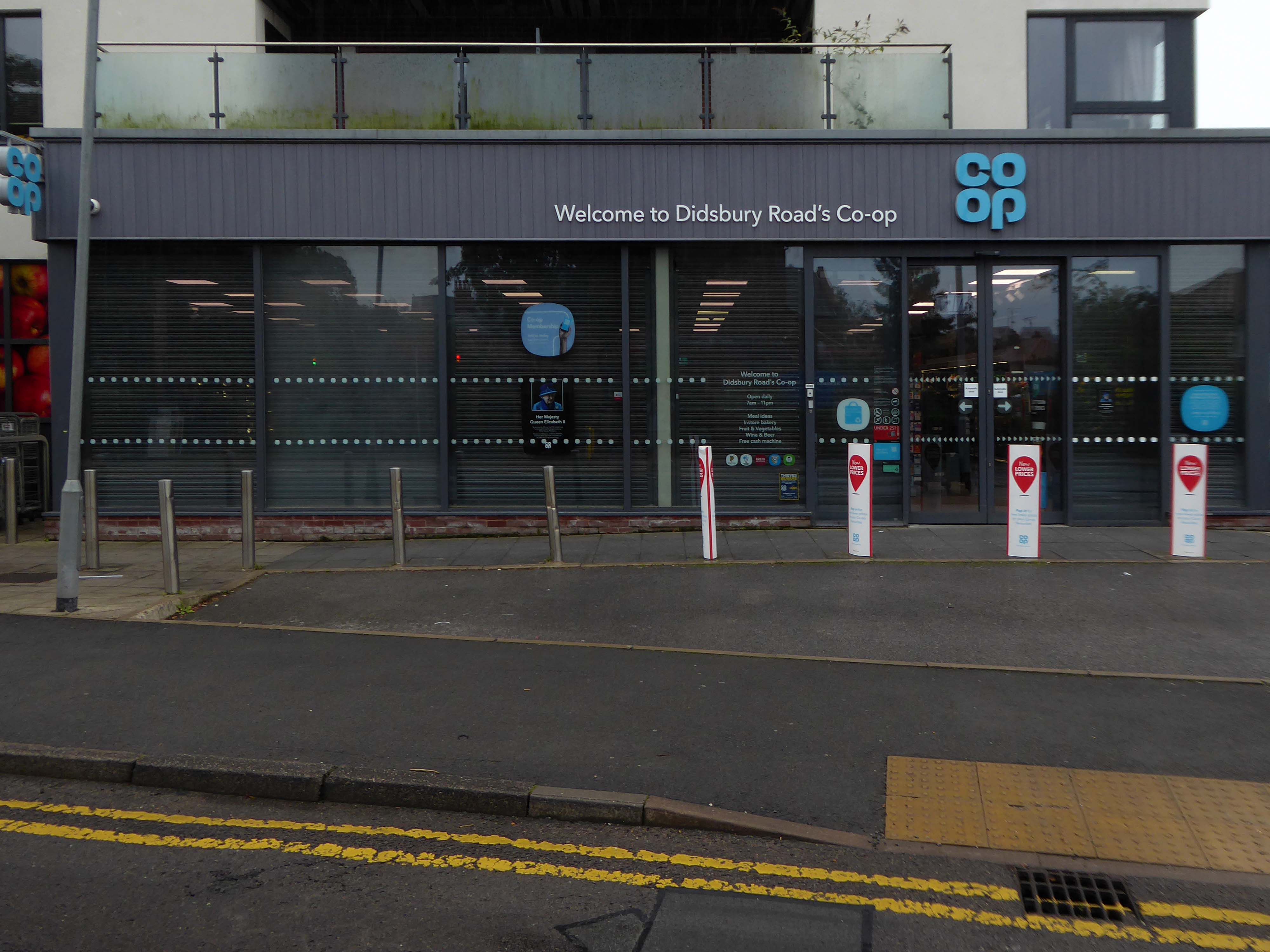
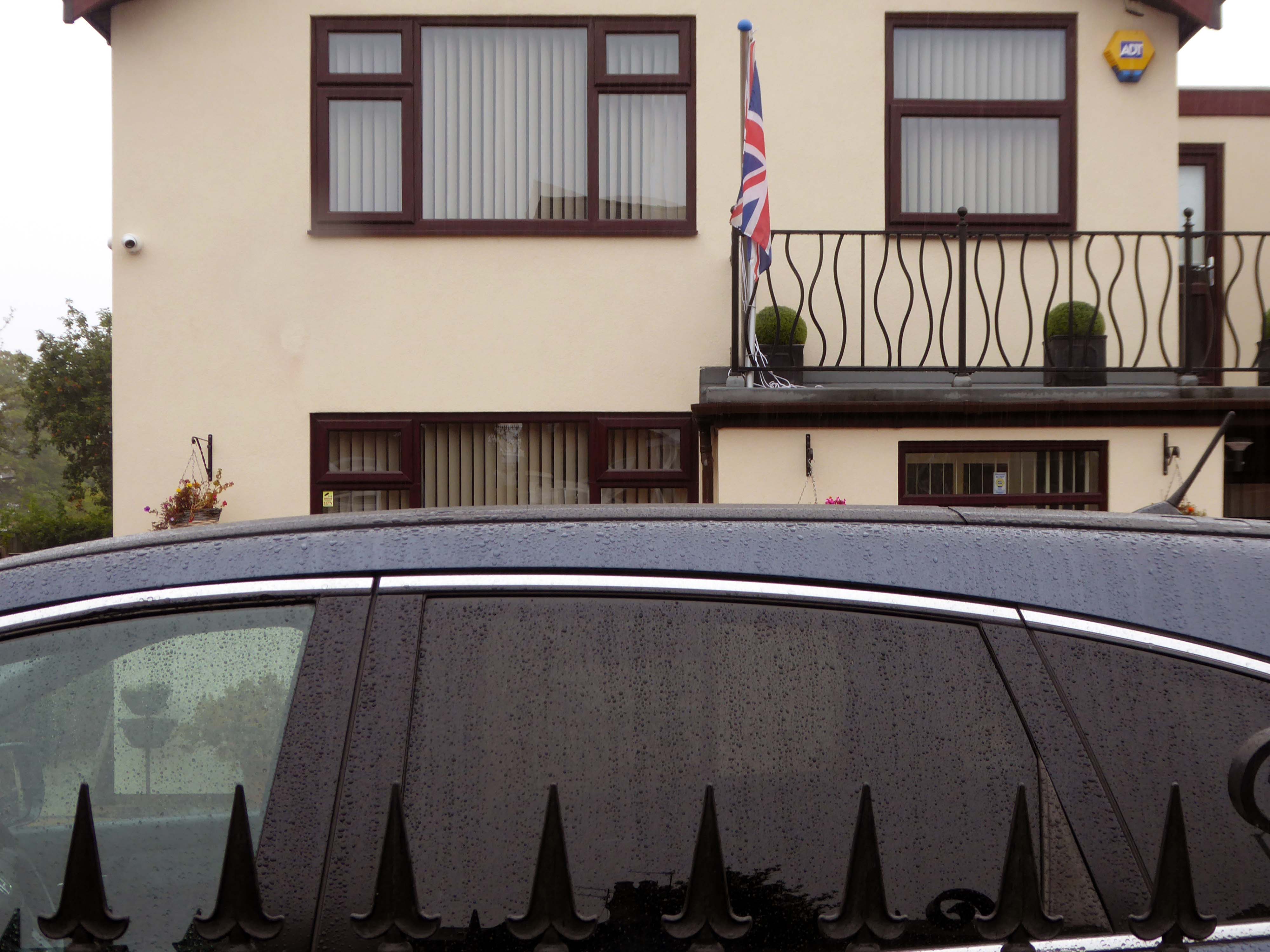
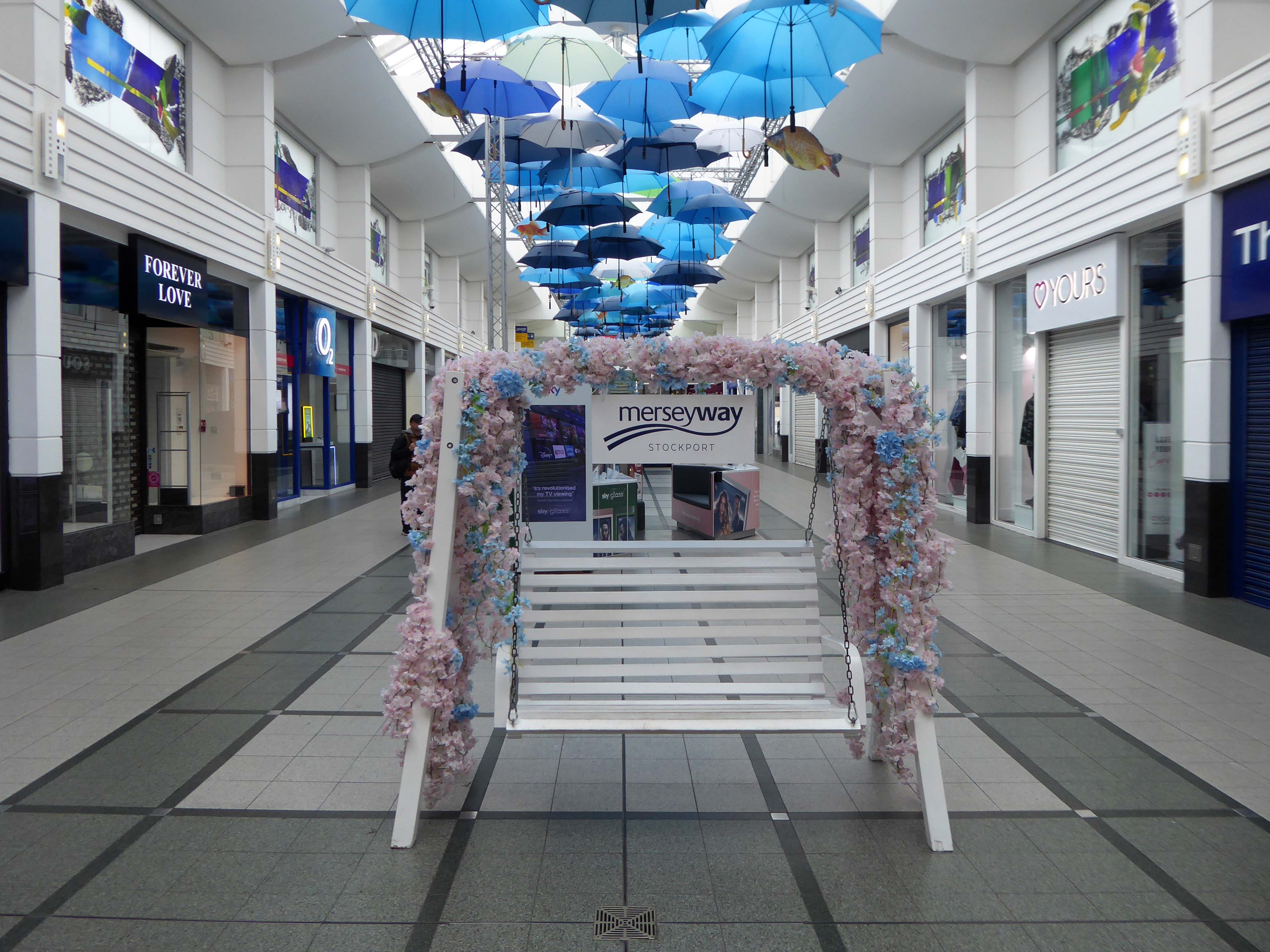
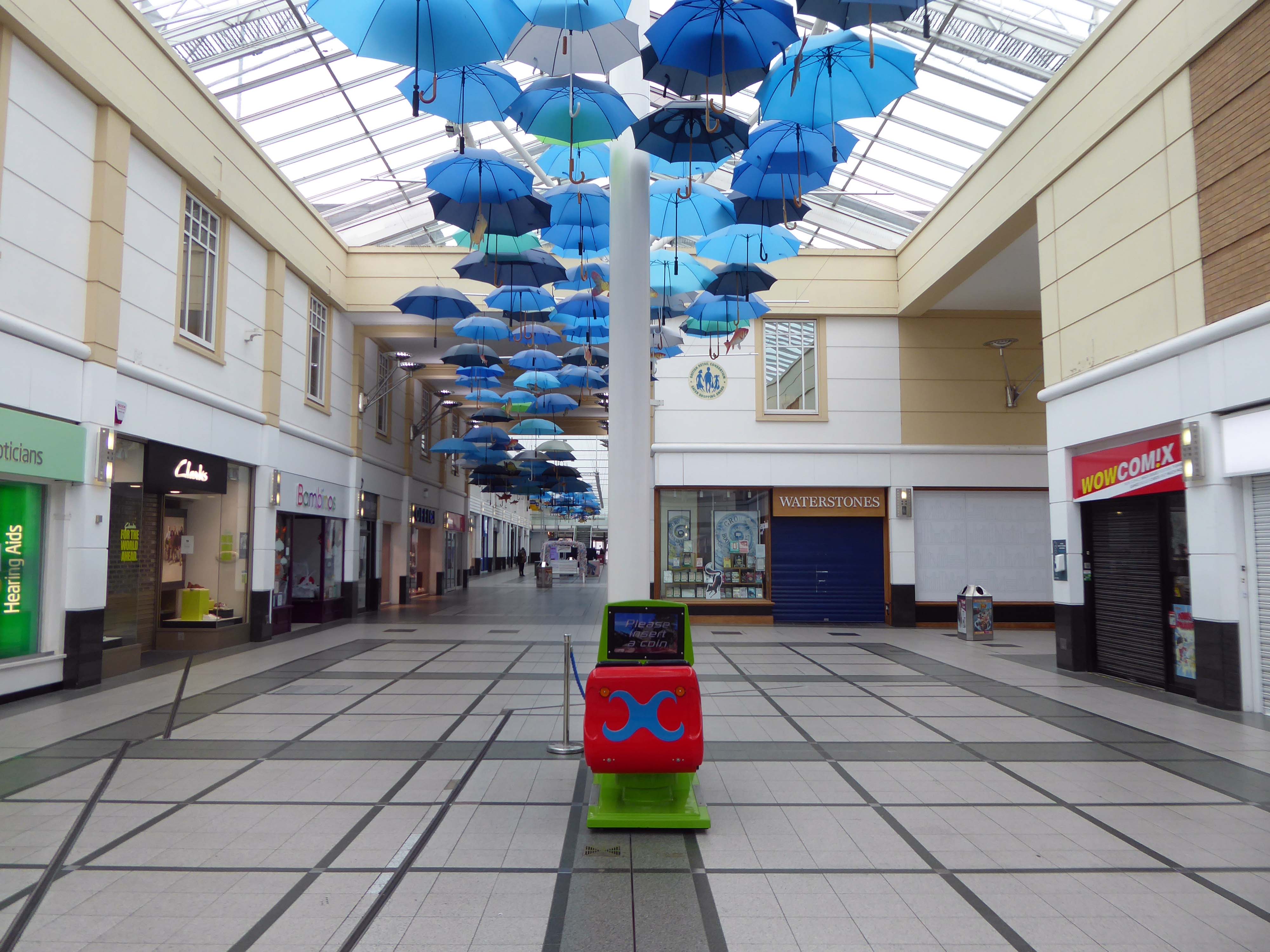
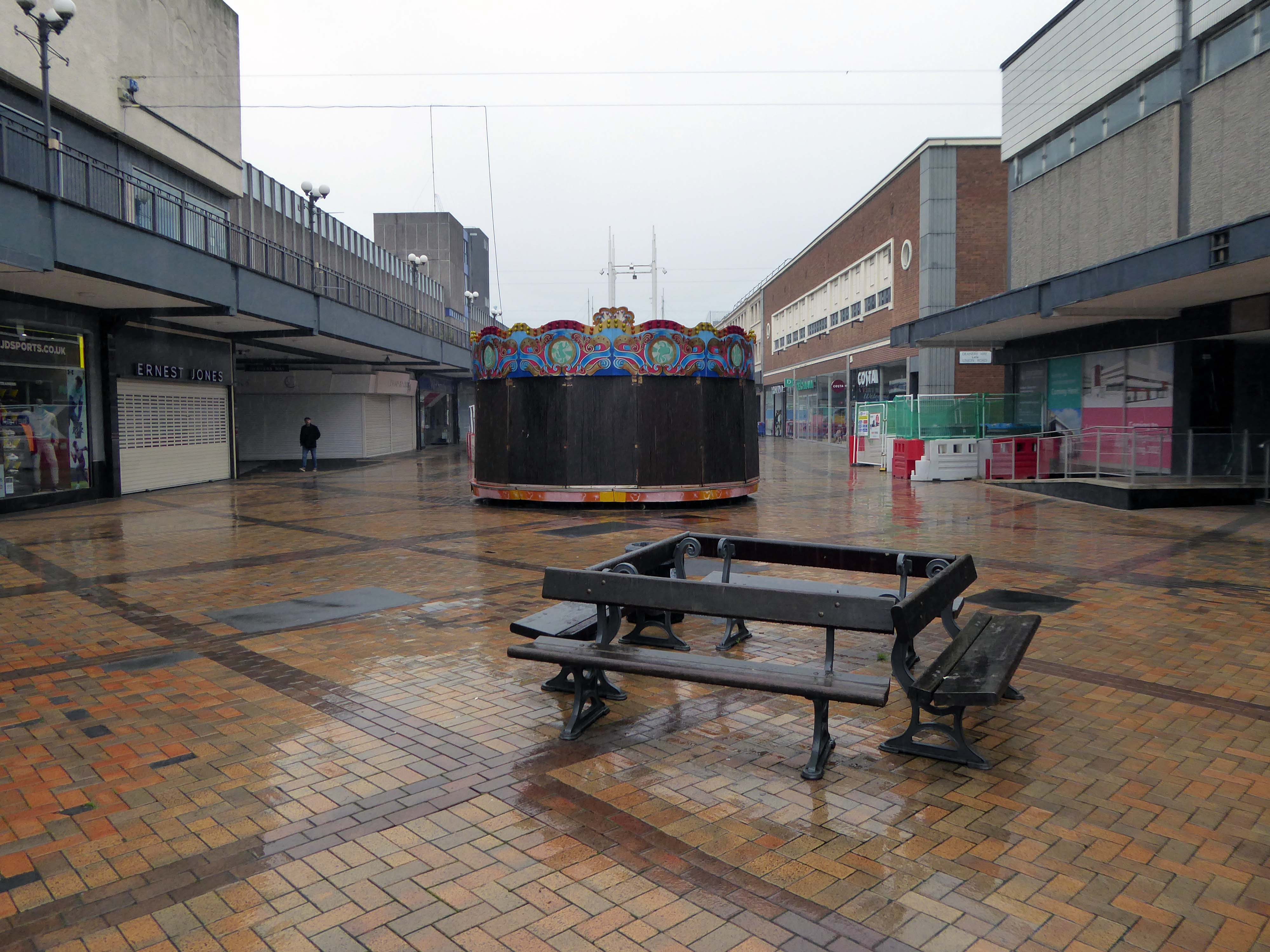
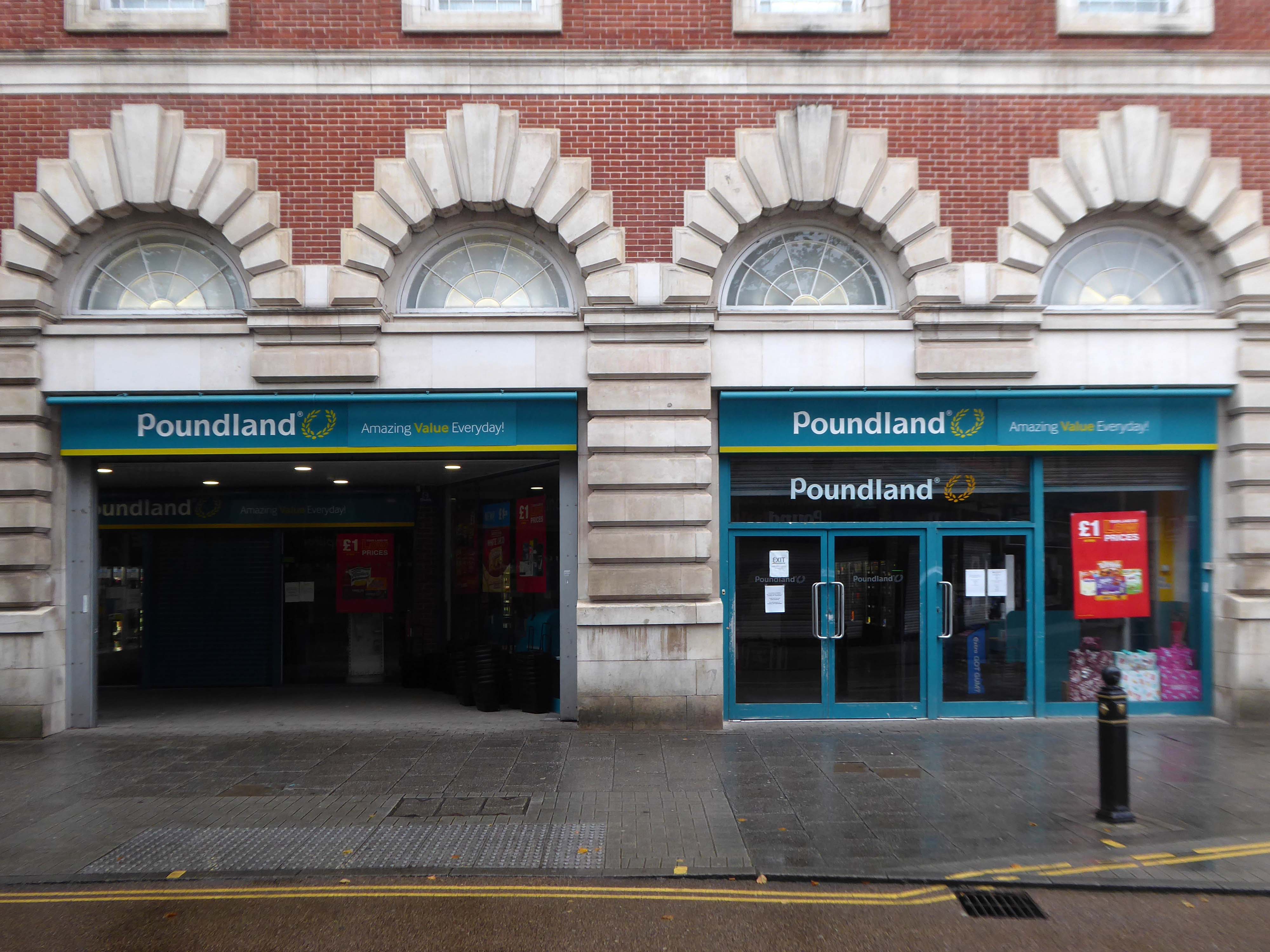
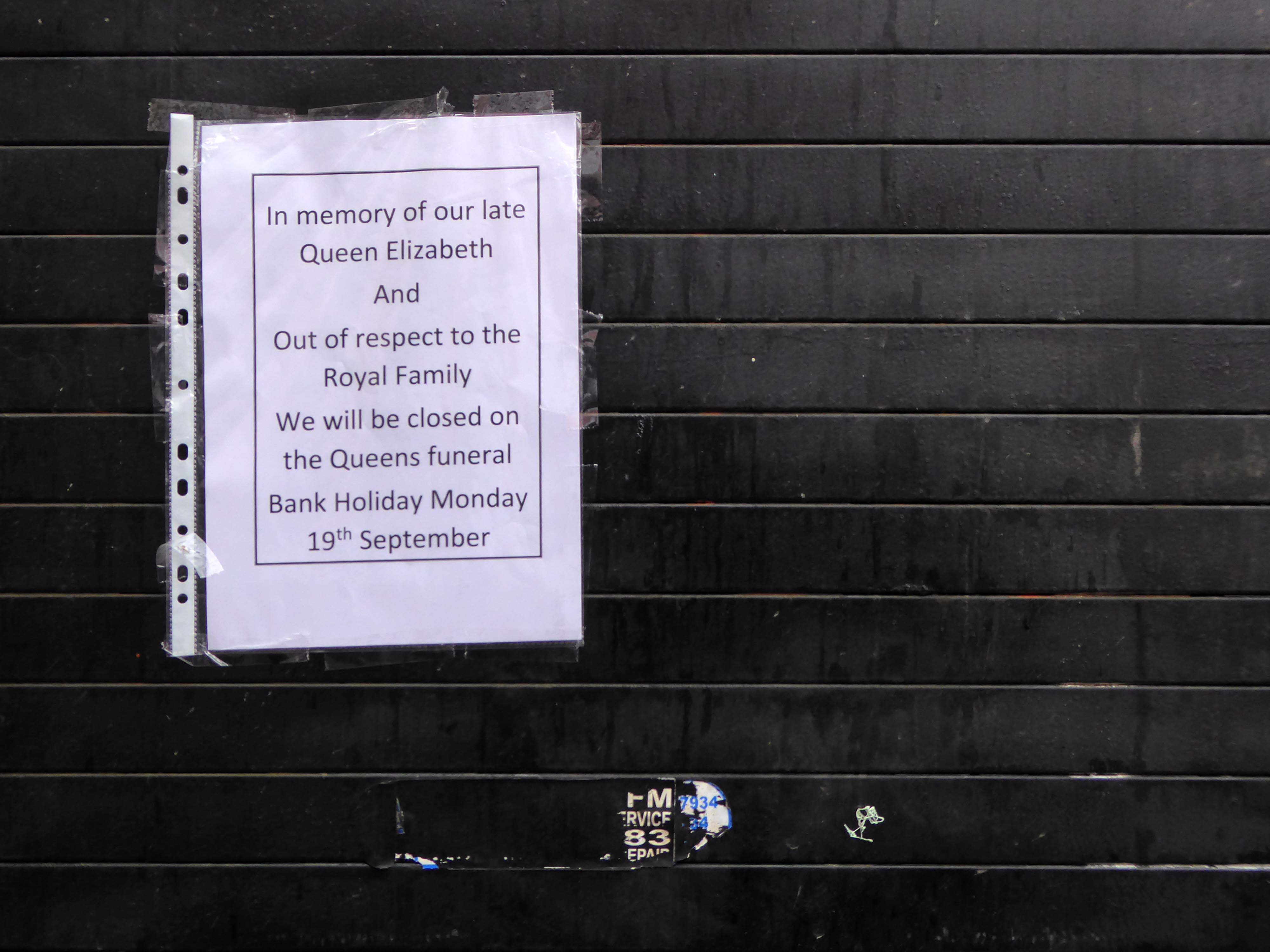
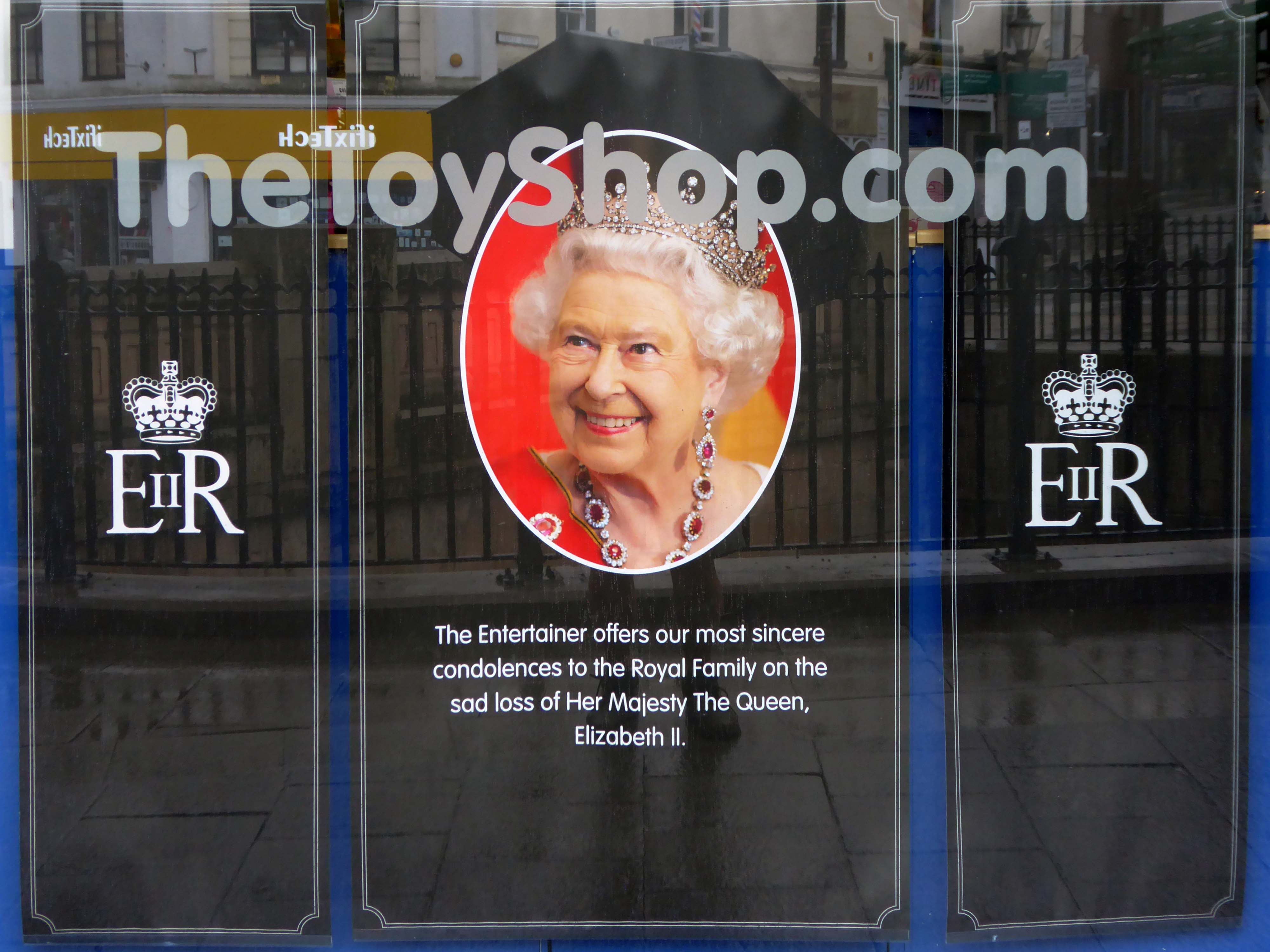
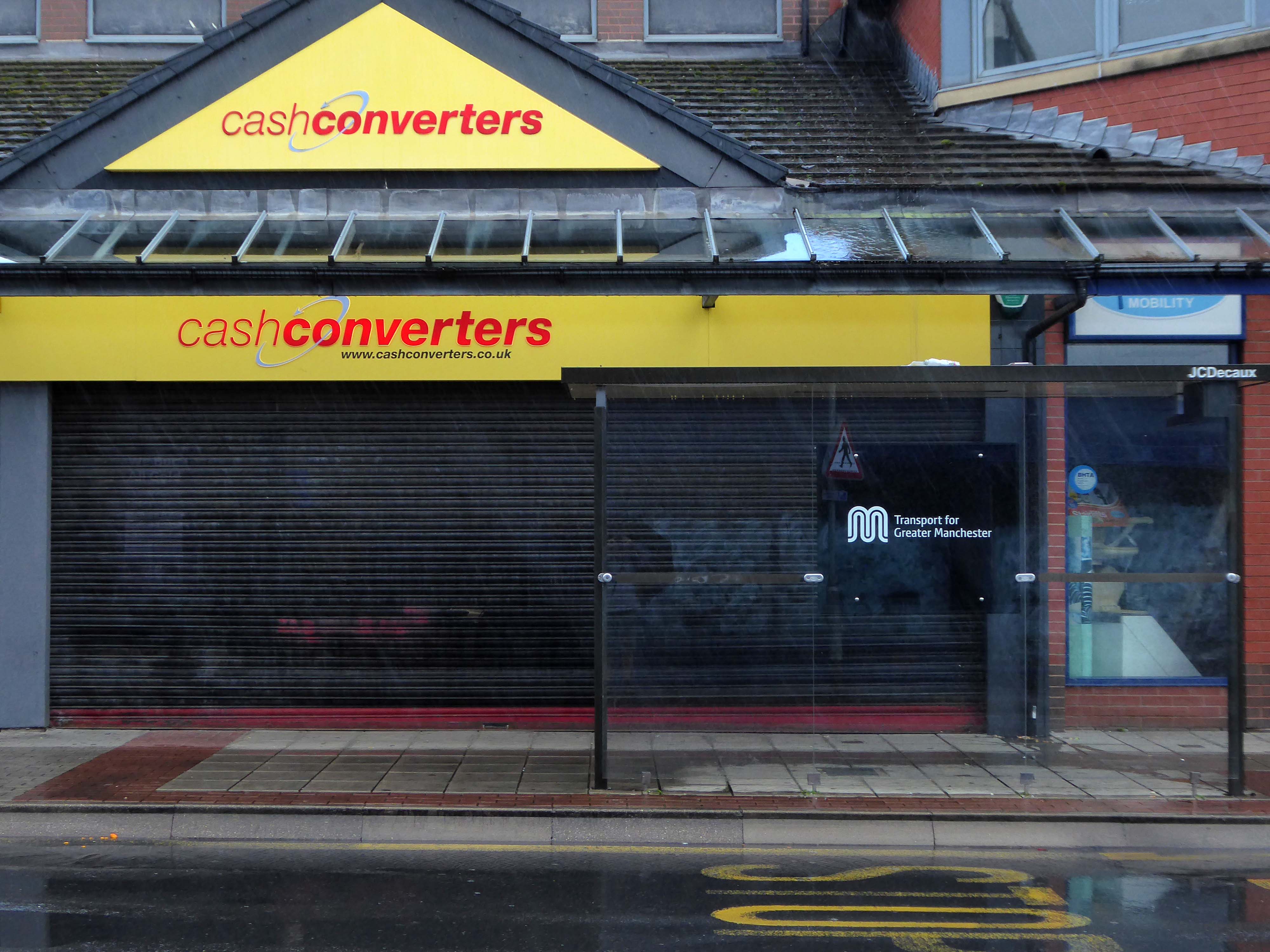
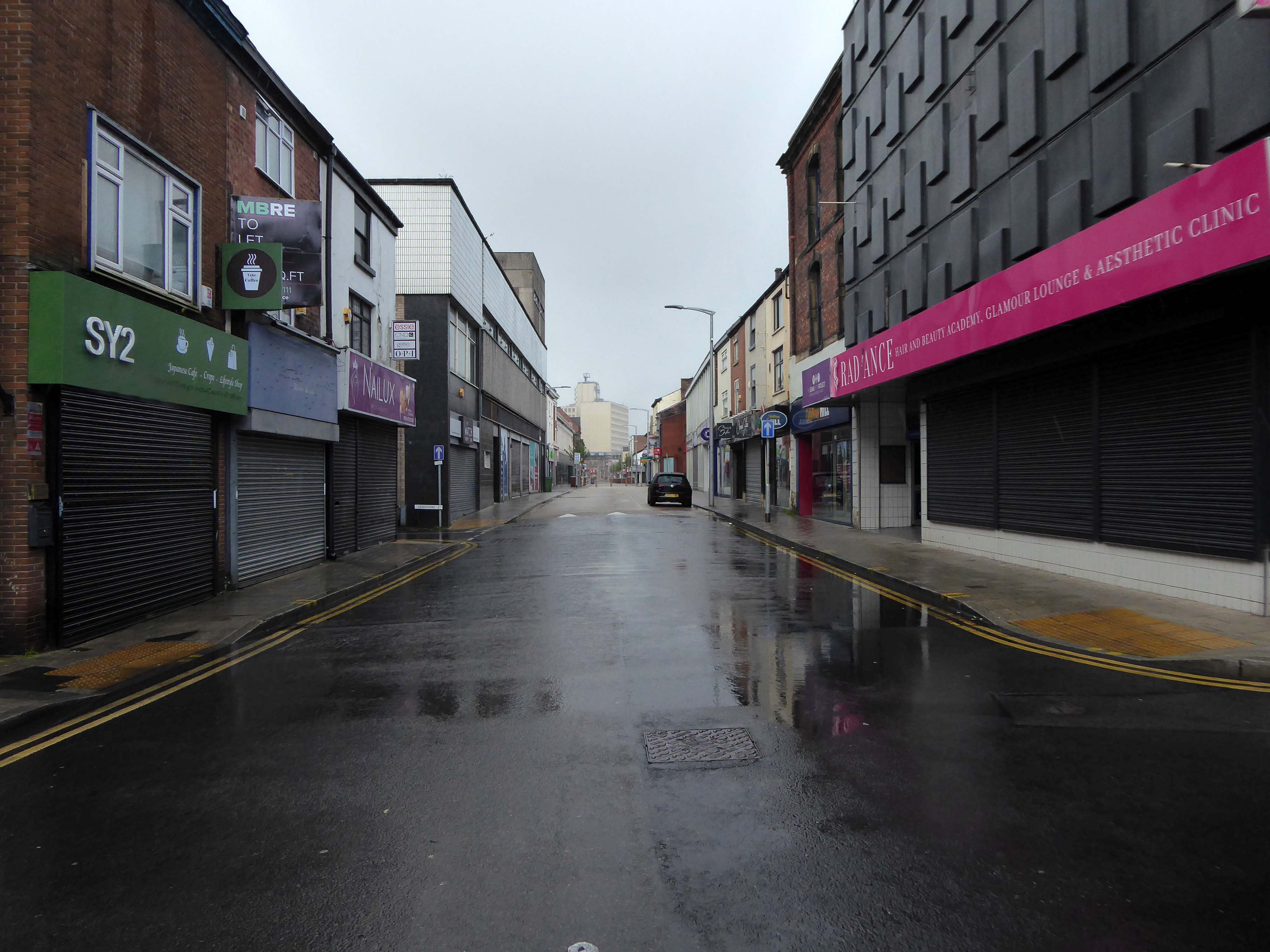
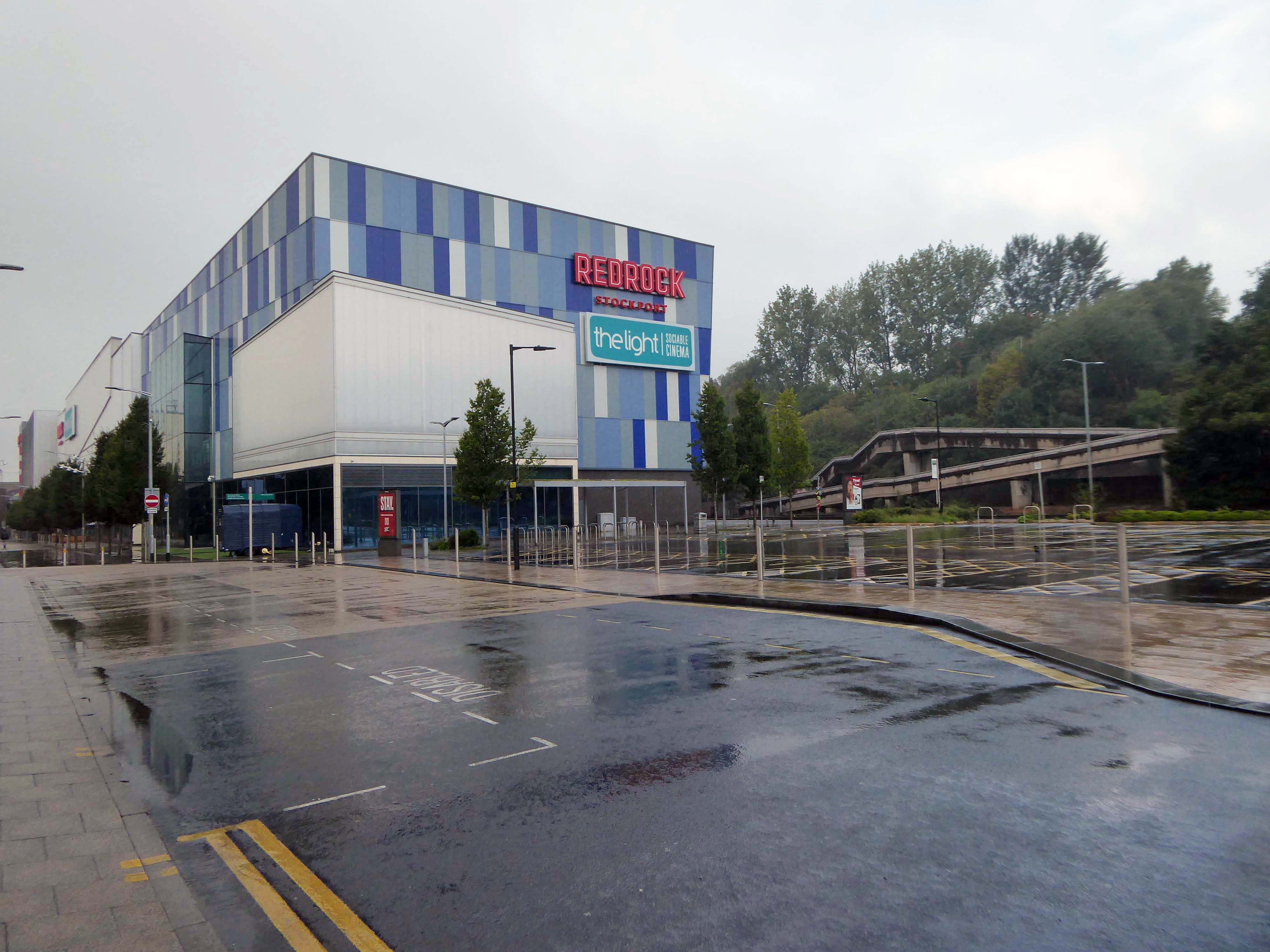
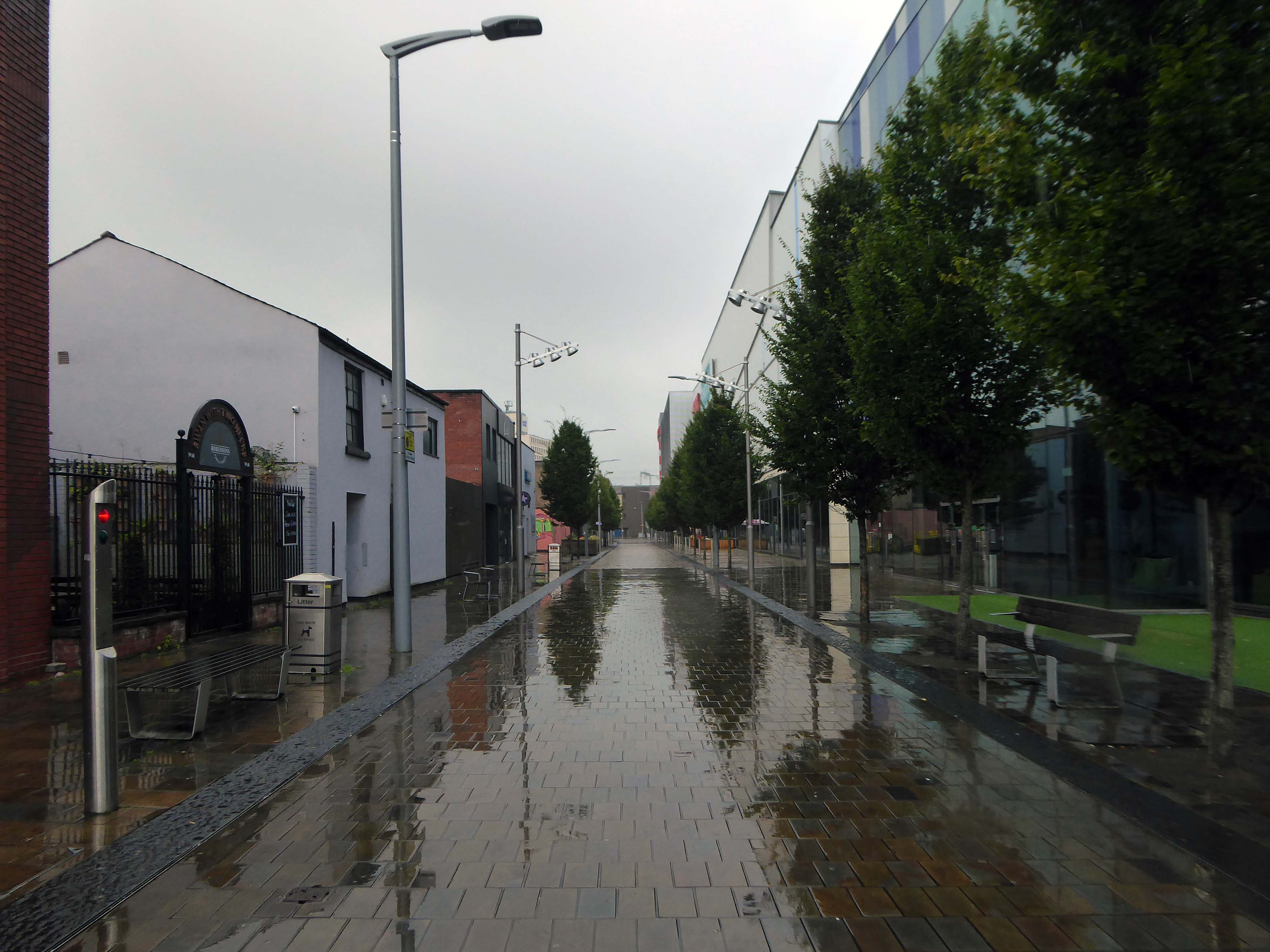
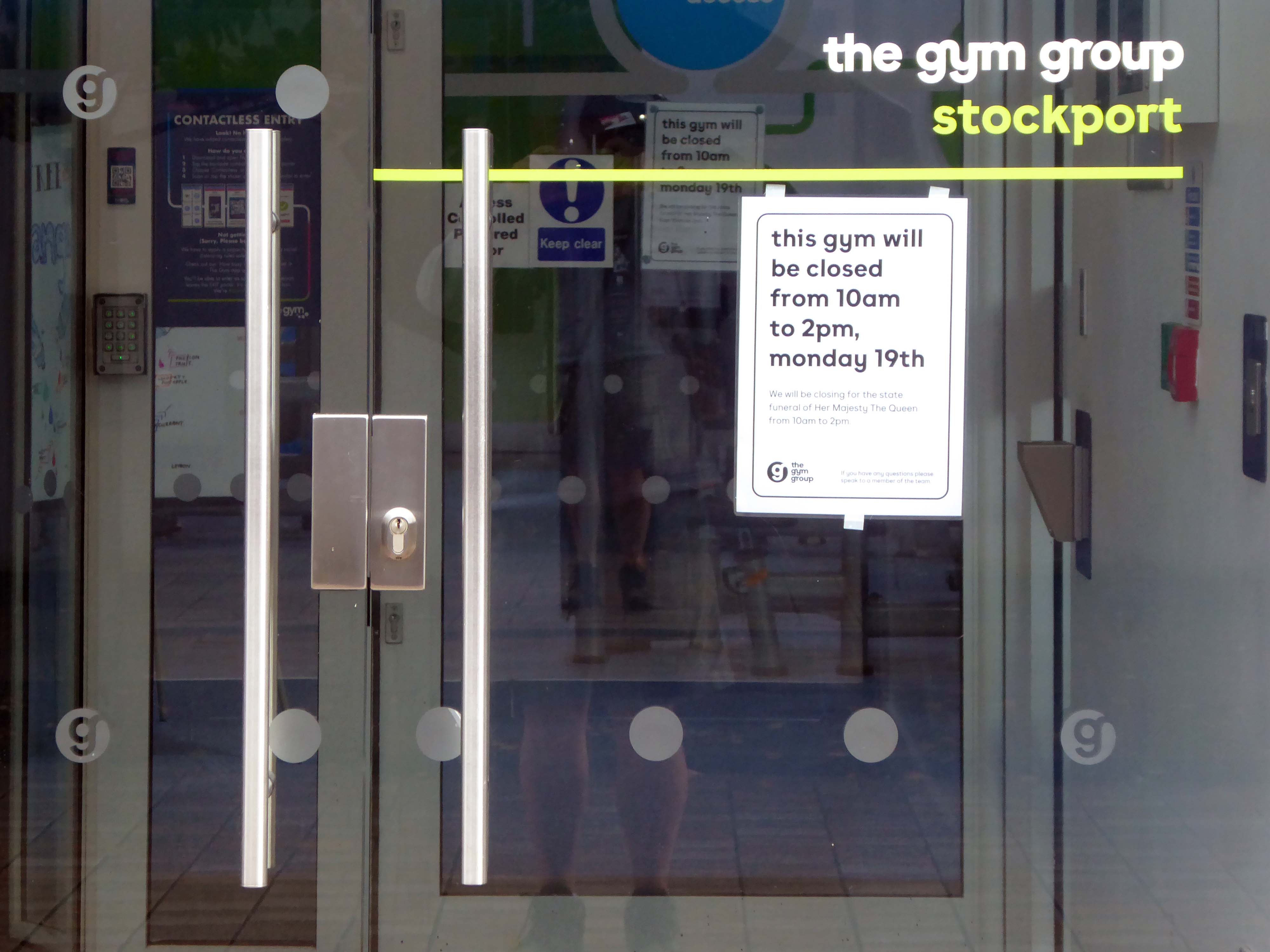
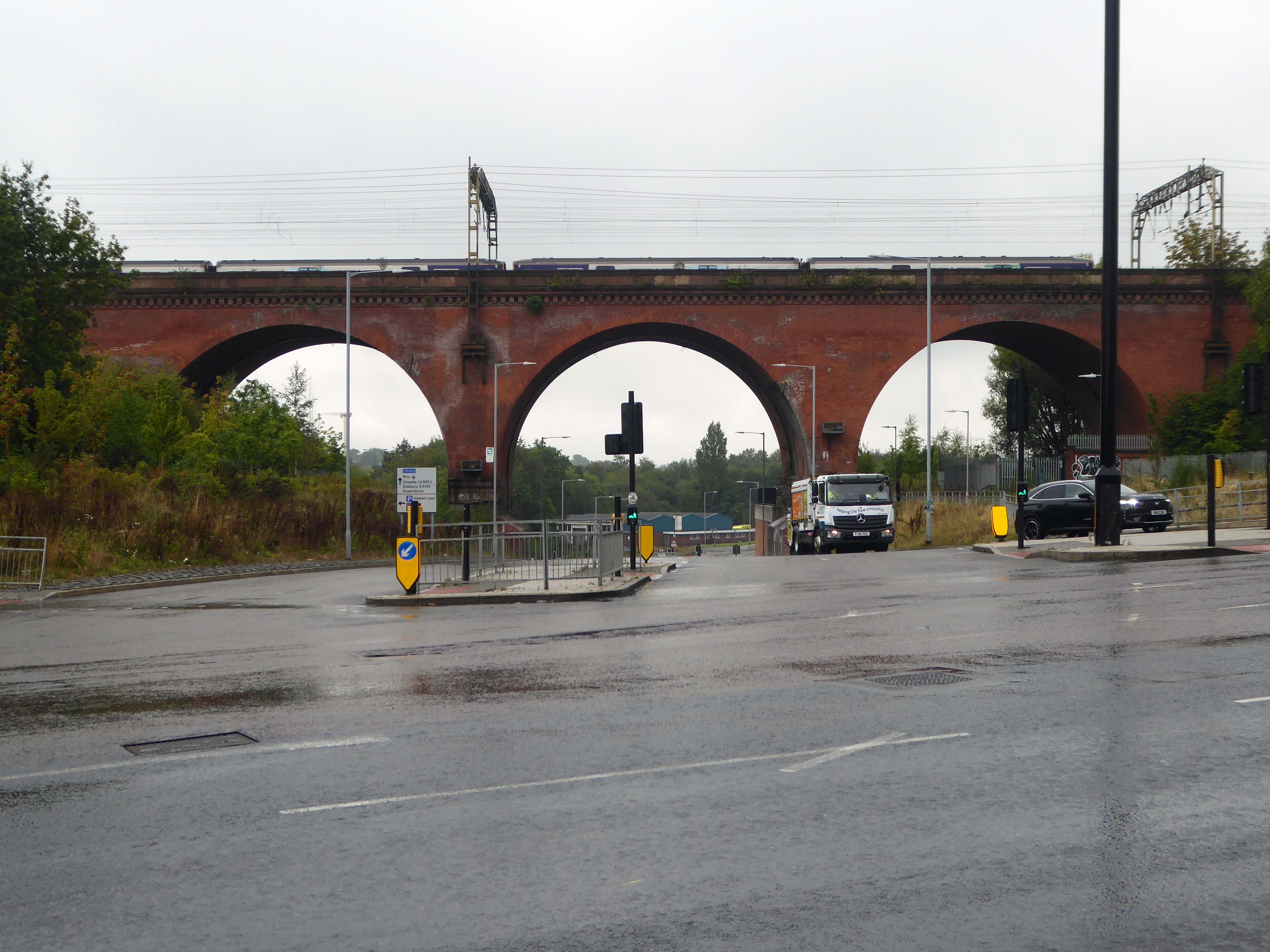
Today, on the day of her funeral, I set out for a walk around Stockport, to record a town largely closed for business. Overcast but far from downcast, I defied the almost persistent fine rain and these are the pictures that I took.
Many of the subjects are products of her time on the throne.
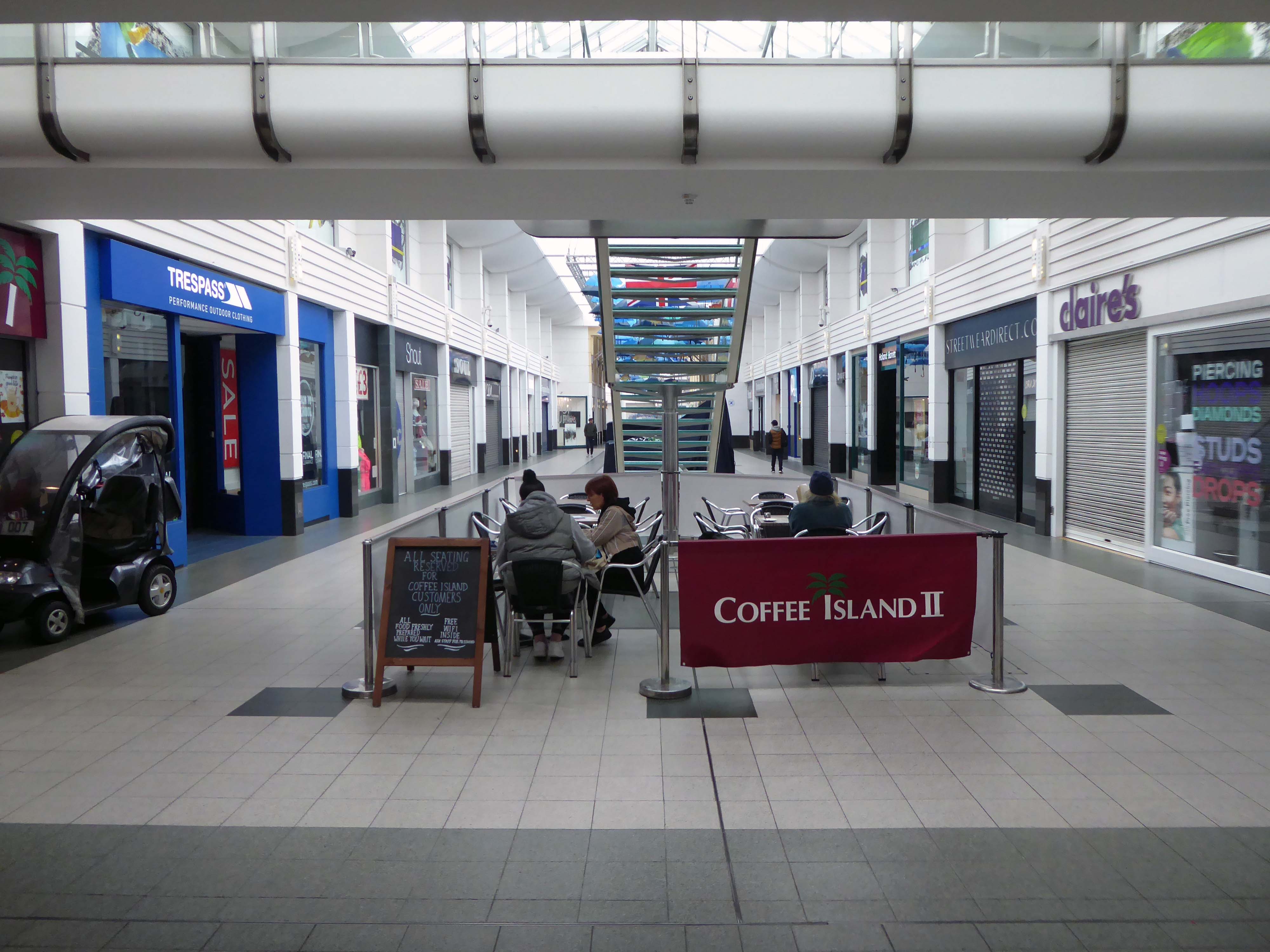
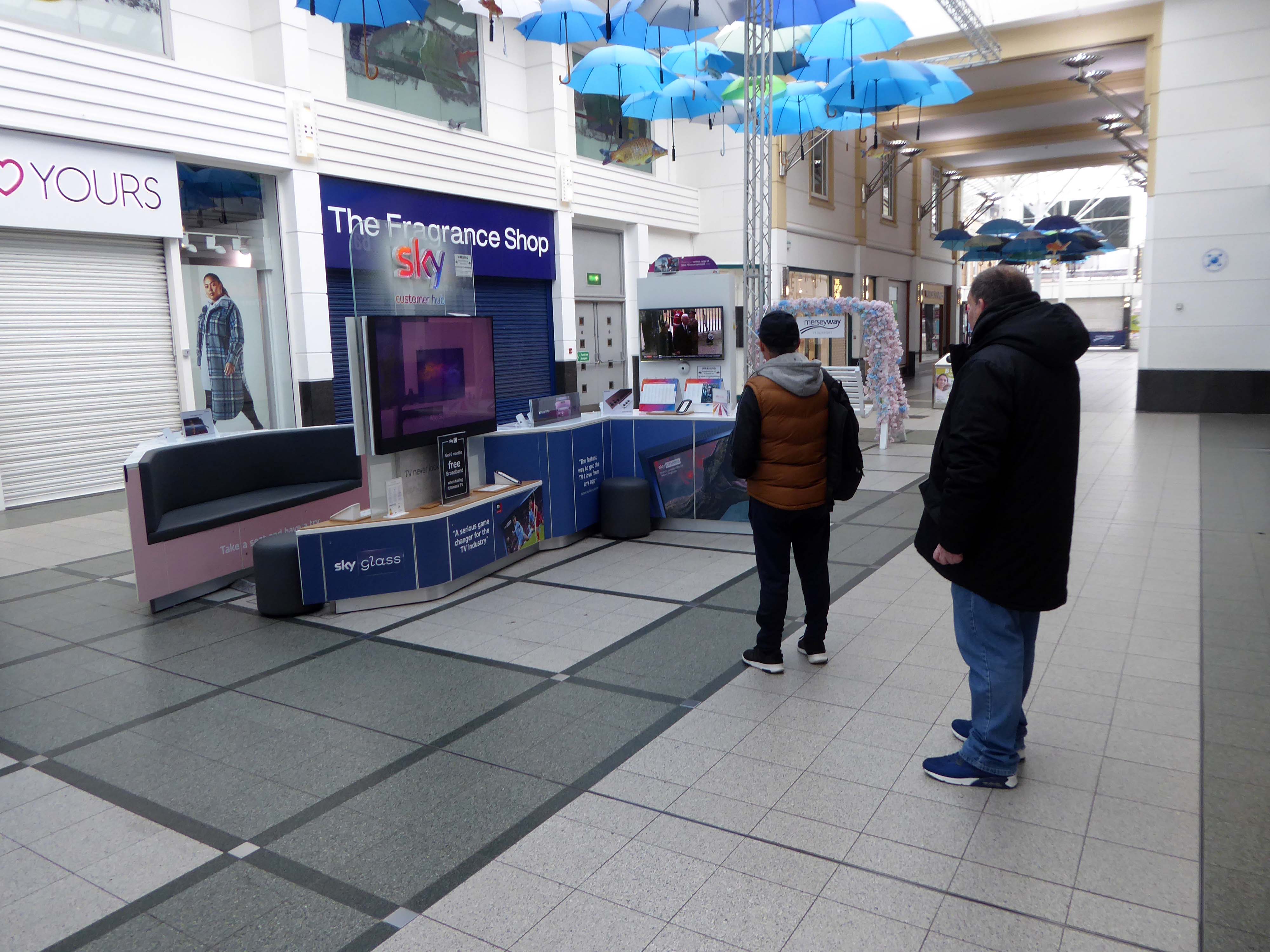
The traffic was much lighter, there were few pedestrians, a couple of cafés were open and two men watched the funeral service on the Sky TV stand in the precinct.
By wandering aimlessly, all places became equal, and it no longer mattered where he was.
Paul Auster City of Glass.
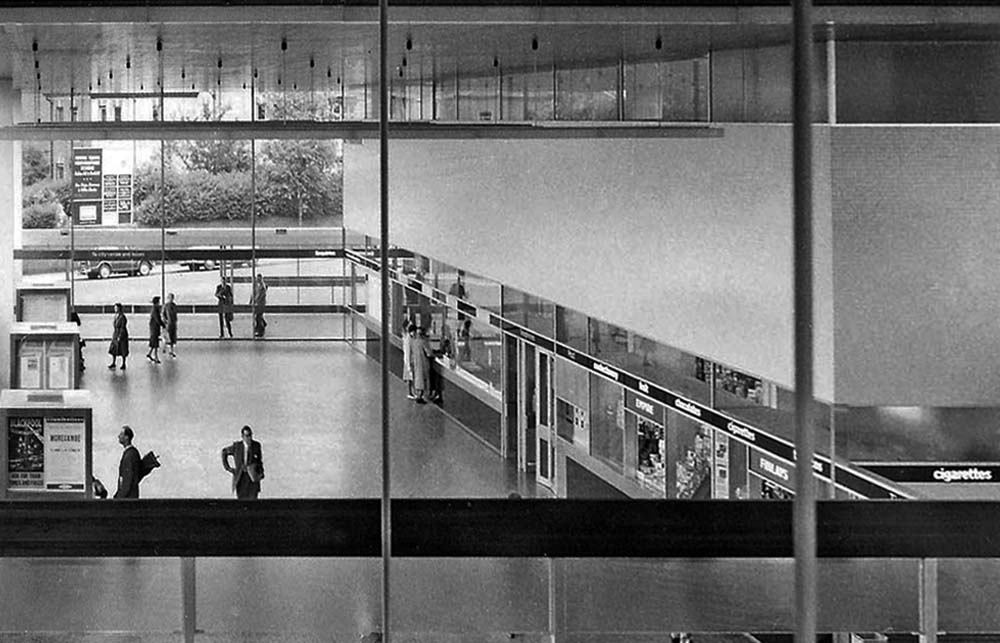
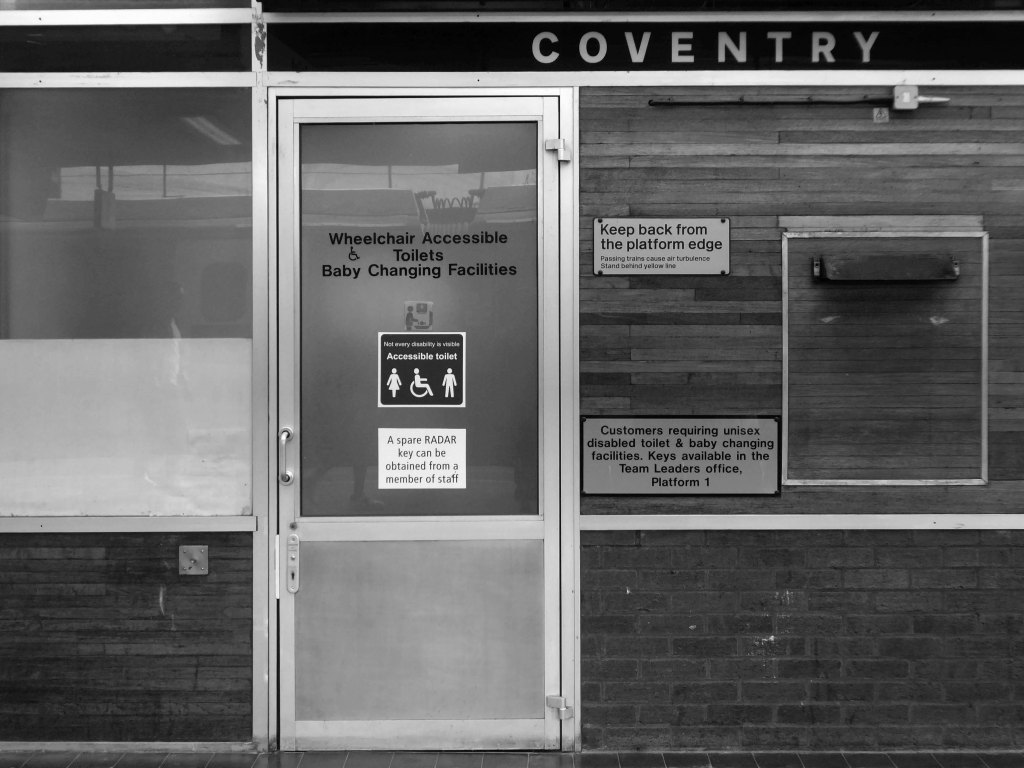
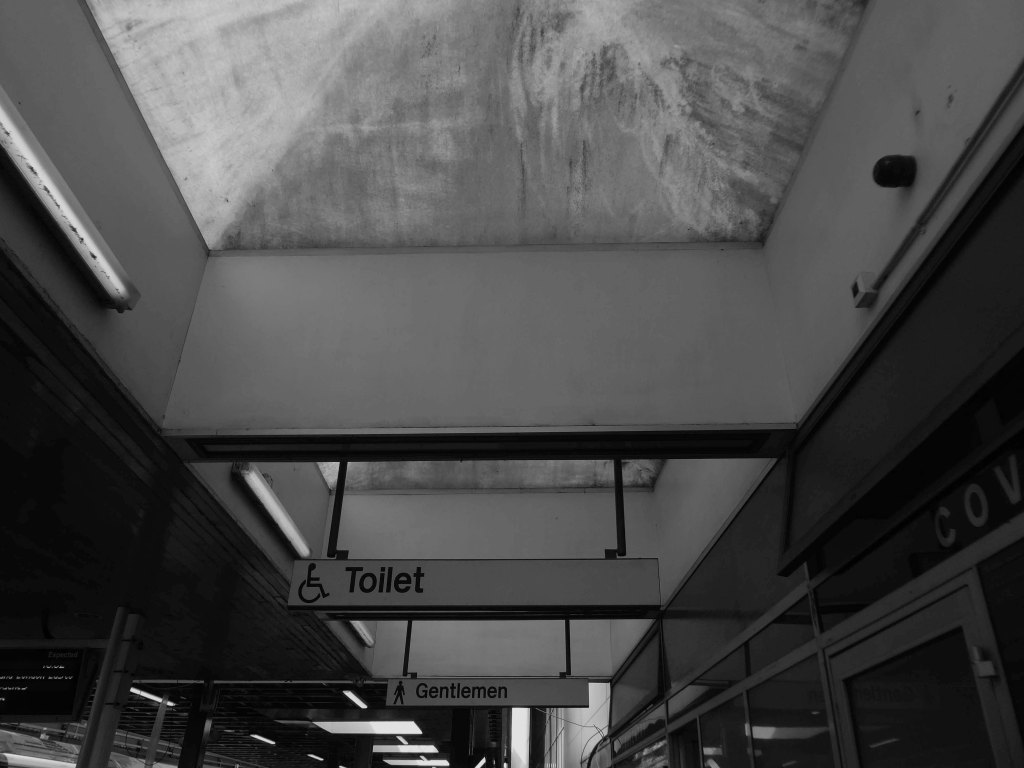
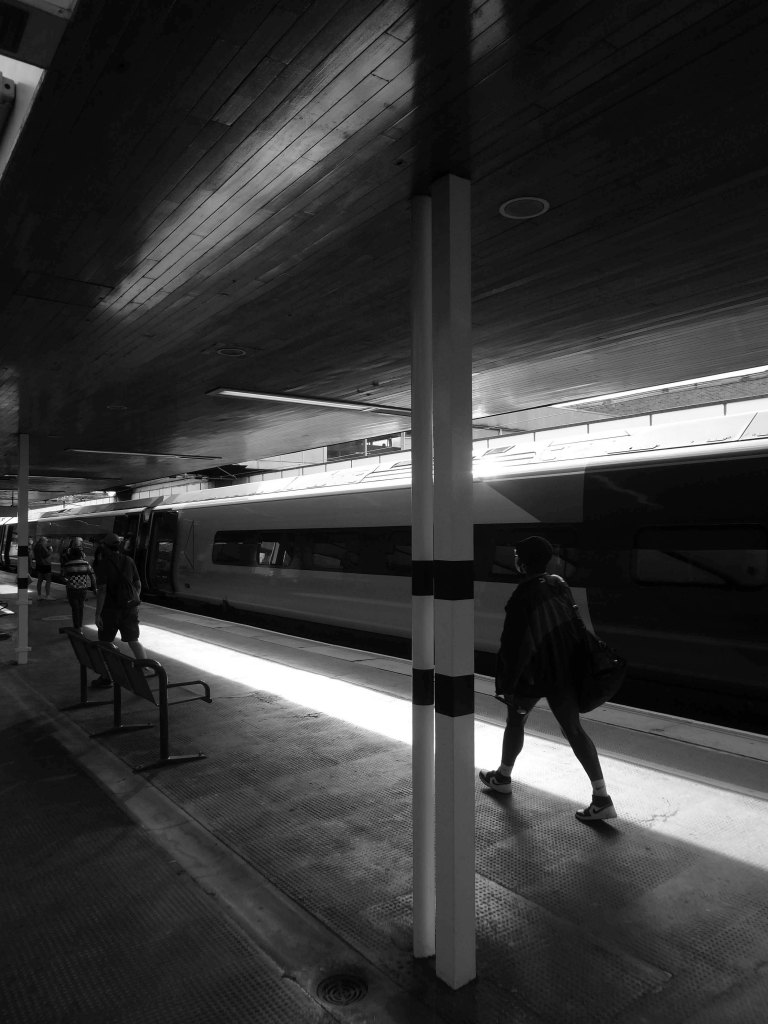
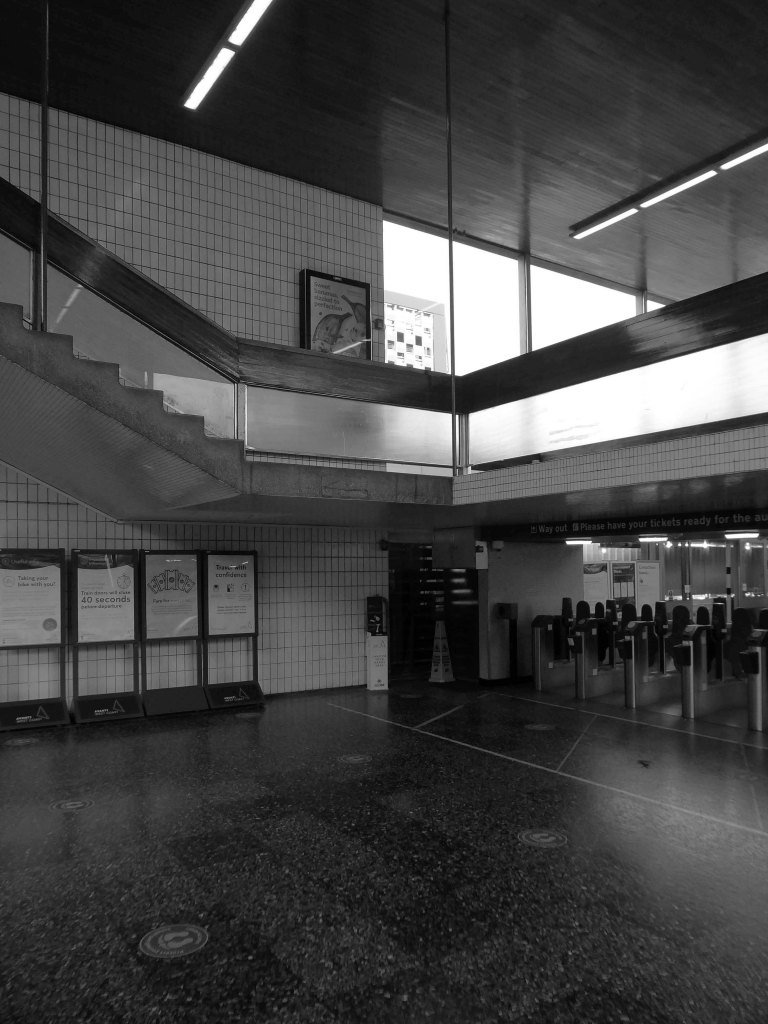
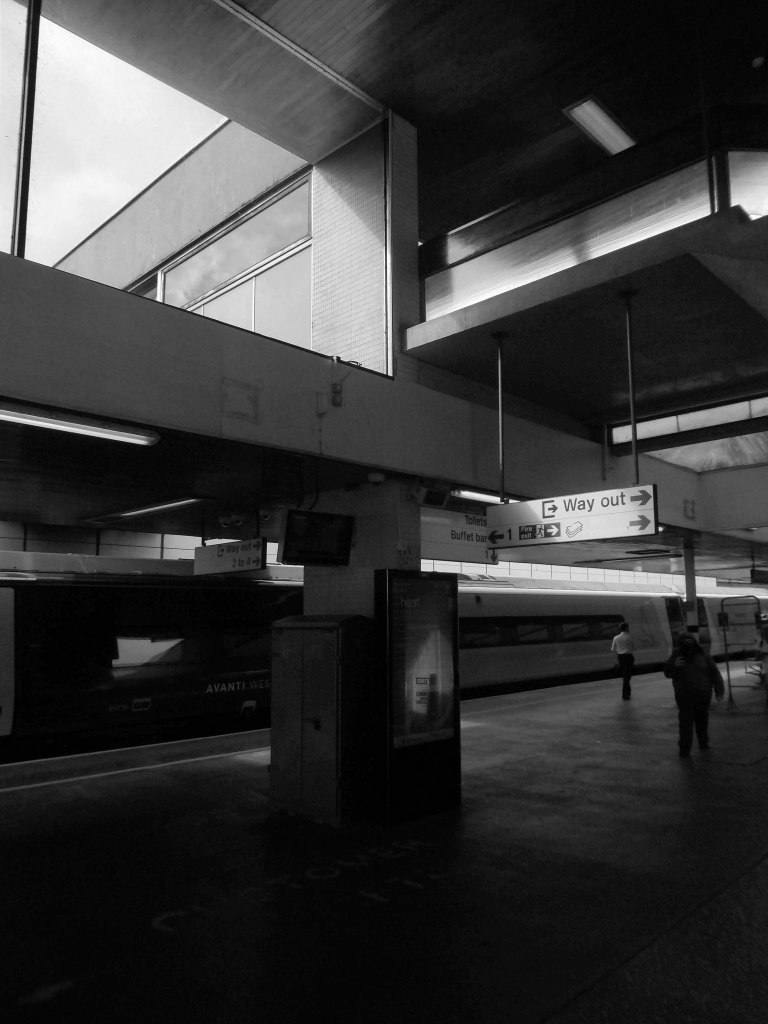
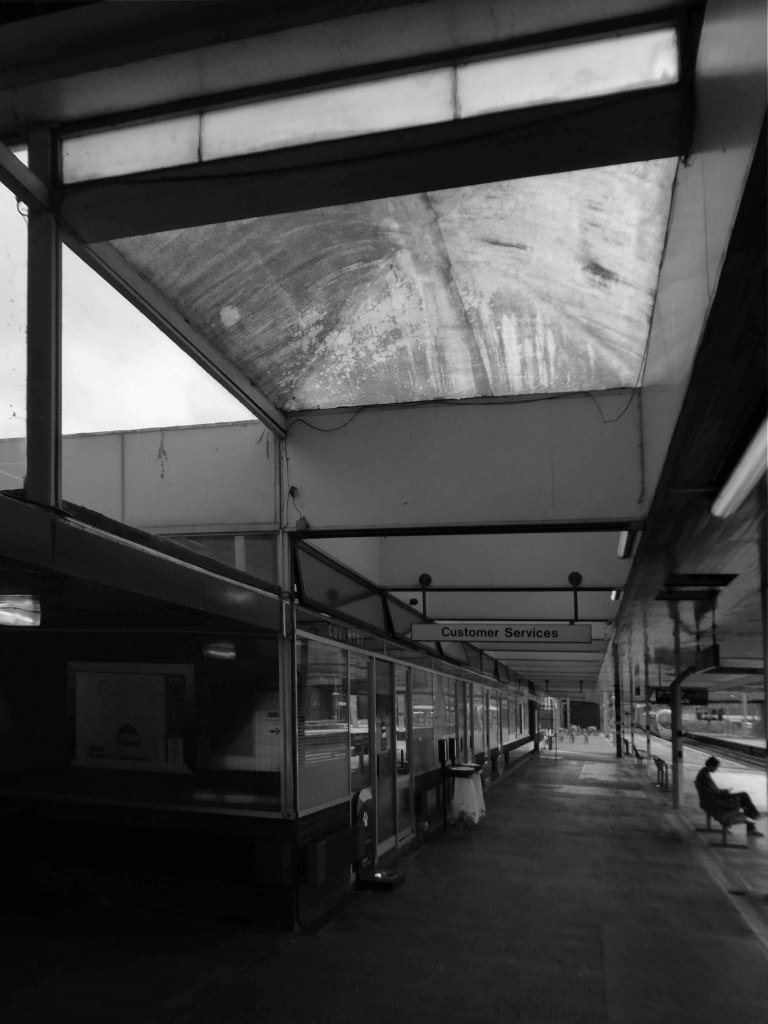
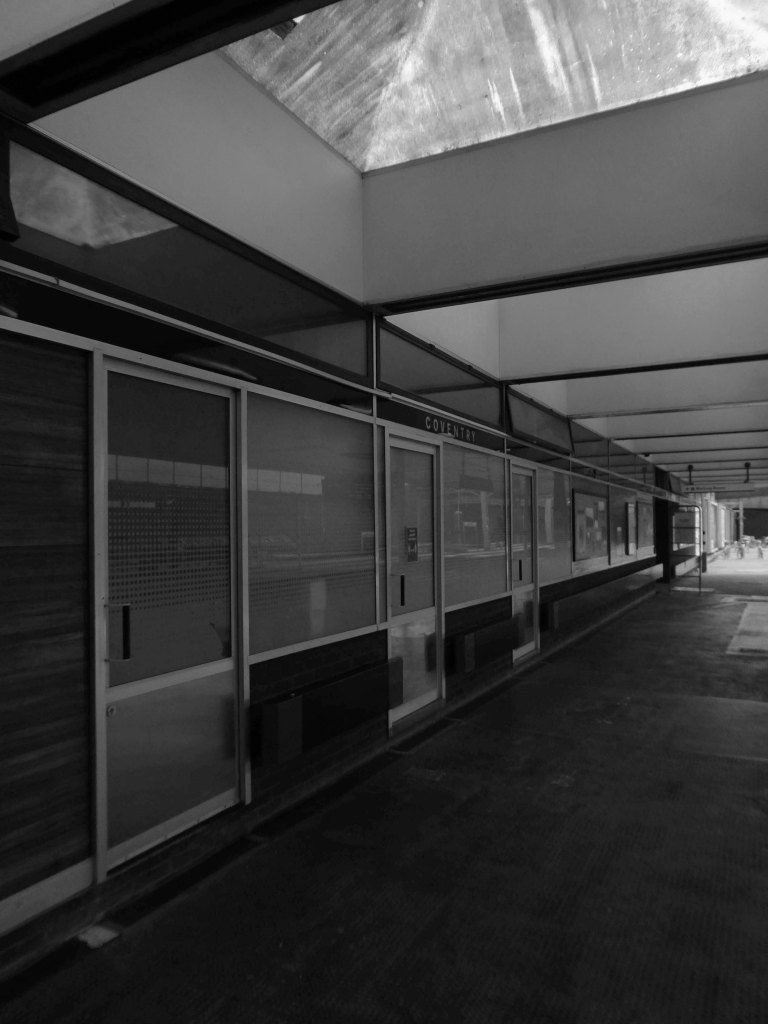
The station as built in 1961 to a design by the architect William Robert Headle, which included and advertised a significant amount of the local Pilkington Vitrolite Glass. The fully glazed ticket hall was illuminated by a tower with a valley roof on two Y-shaped supports. The platform canopies were free standing folded plate roofs on tubular columns.
The new station building and facilities were assembled just a few yards from the 1960s station building and is the third build on the same site. The project came in at a total estimated cost of £6 million, with the European Union contributing £1.7 million towards the total funding. The new footbridge was lifted into place in the early hours of 22 January 2007.
The striking Pilkington’s glass-fronted building was designed by architect SBS of Manchester. Construction work was completed in the summer, with the new waiting rooms and footbridge opened to passengers on 19 September. The new station building was officially opened on 3 December 2007.
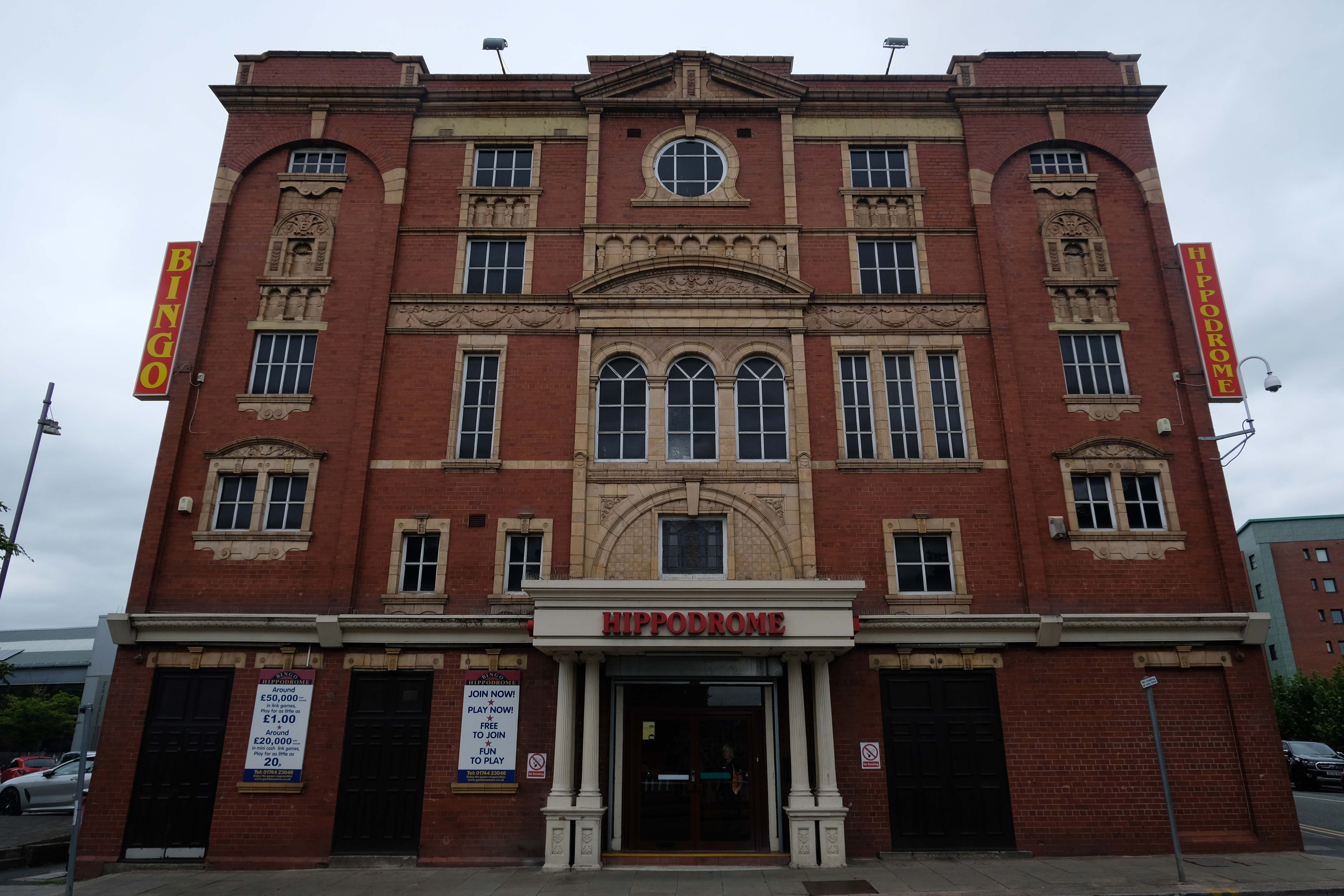
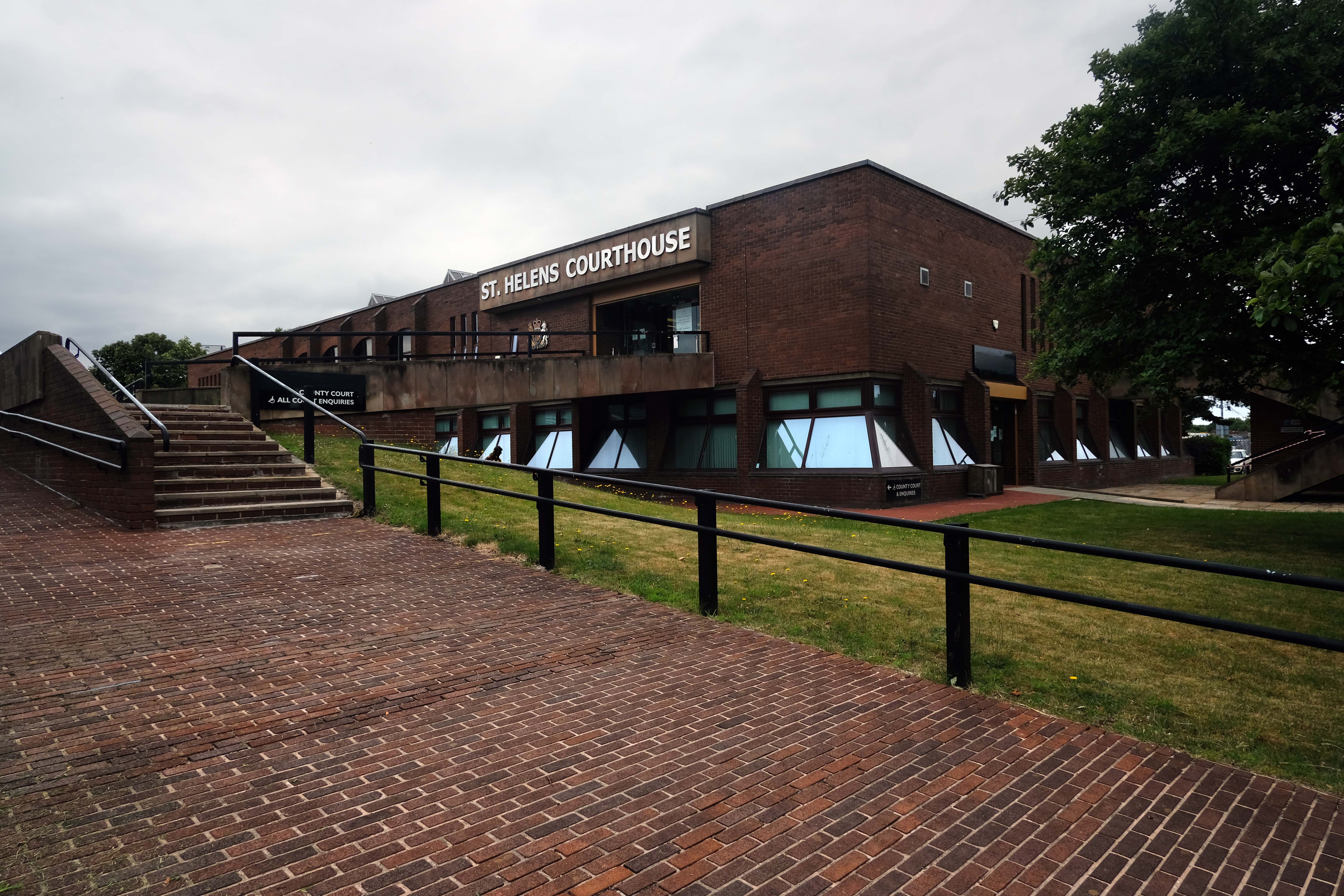
In the early Edwardian era a fine theatre was opened on 1st June 1903. It had been designed by local architect J A Baron and was on the site of an earlier theatre known as the Peoples Palace. It was operated as the New Hippodrome Cinema from 8th August 1938 when it reopened with Anna Neagle in Victoria the Great. On 1st September 1963 it was converted to a Surewin Bingo Club by Hutchinson Cinemas which continued to operate in 2008. By May 2019 it was independently operated as the Hippodrome Bingo Club.
Onwards down Corporation Street to Century House, currently awaiting some care and attention and tenants.
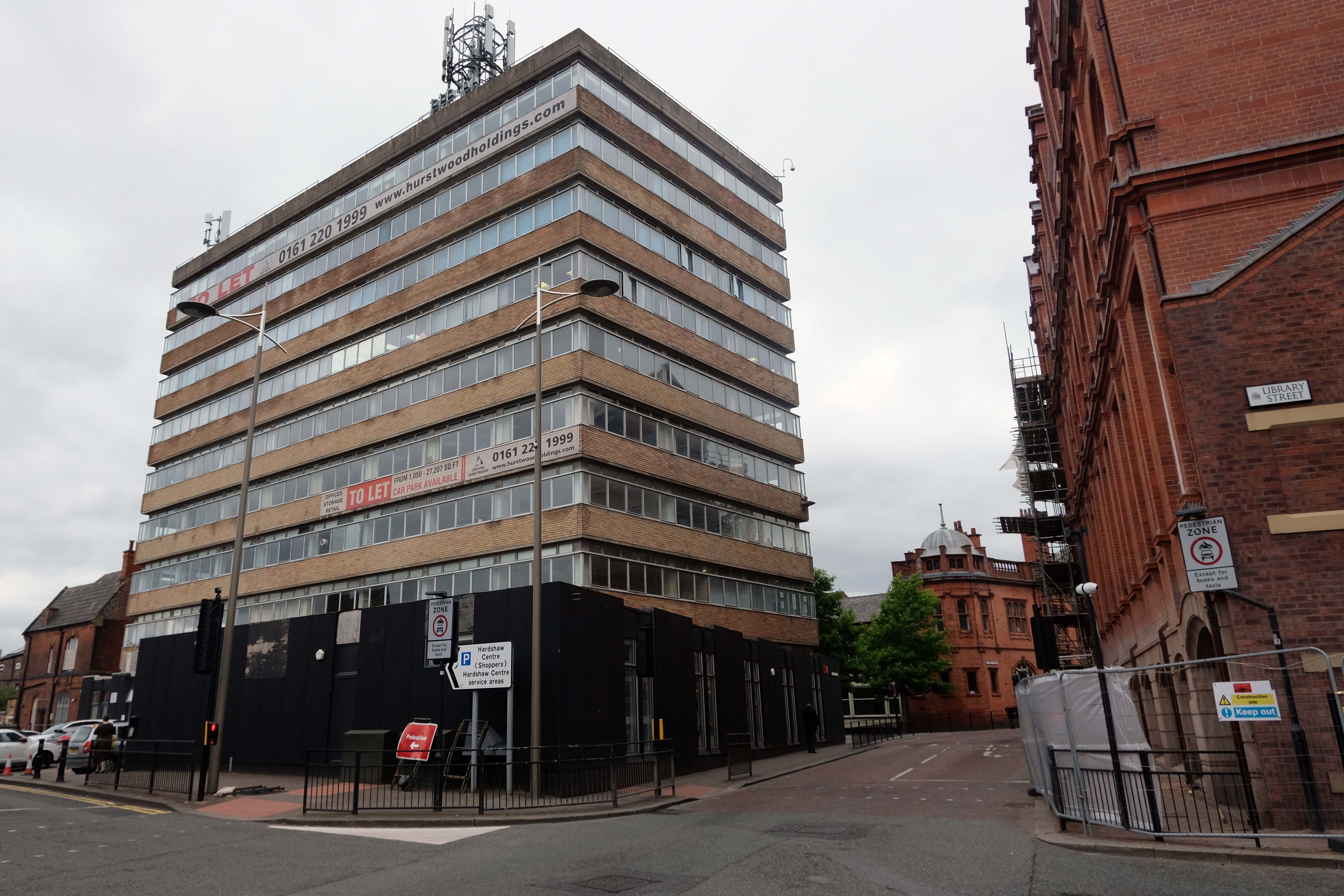
Century House is a prominent landmark in St Helens town centre, being the tallest office building in place. The accommodation ranges over 9 floors, providing offices from a single person, to whole floors. In addition, all tenants benefit from the use of a modern break out space and meeting rooms, in addition to manned reception desk.
The Capitol Cinema opened on 3rd October 1929 by an independent operator. It stood on a prominent corner site at North Road and Duke Street – known as Capitol Corner.
The Capitol Cinema was taken over by Liverpool-based Regent Enterprises Ltd. in 1929, and by the Associated British Cinemas – ABC chain in 1935. It underwent a renovation in the 1960’s, and was closed by ABC on 9th December 1978.
The building was converted into a sports centre, by 2009 it was a Central Fitness gymnasium.
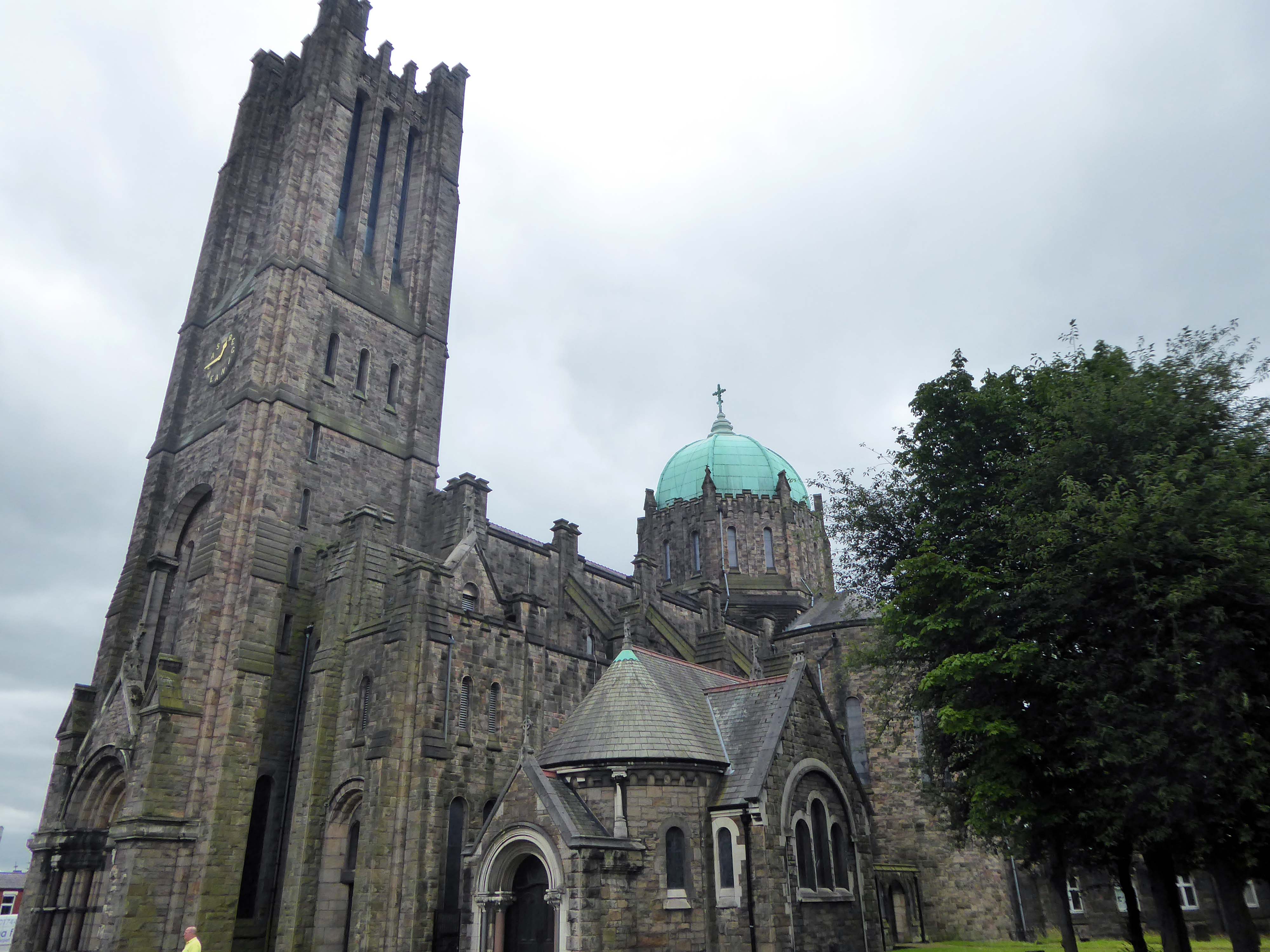
Along the way to St Mary Lowe House RC – the style is a combination of Gothic and Byzantine elements. One of the most unusual fittings is the carillon, one of the largest in the British Isles with 47 bells, which was installed in 1930 and is still played regularly.
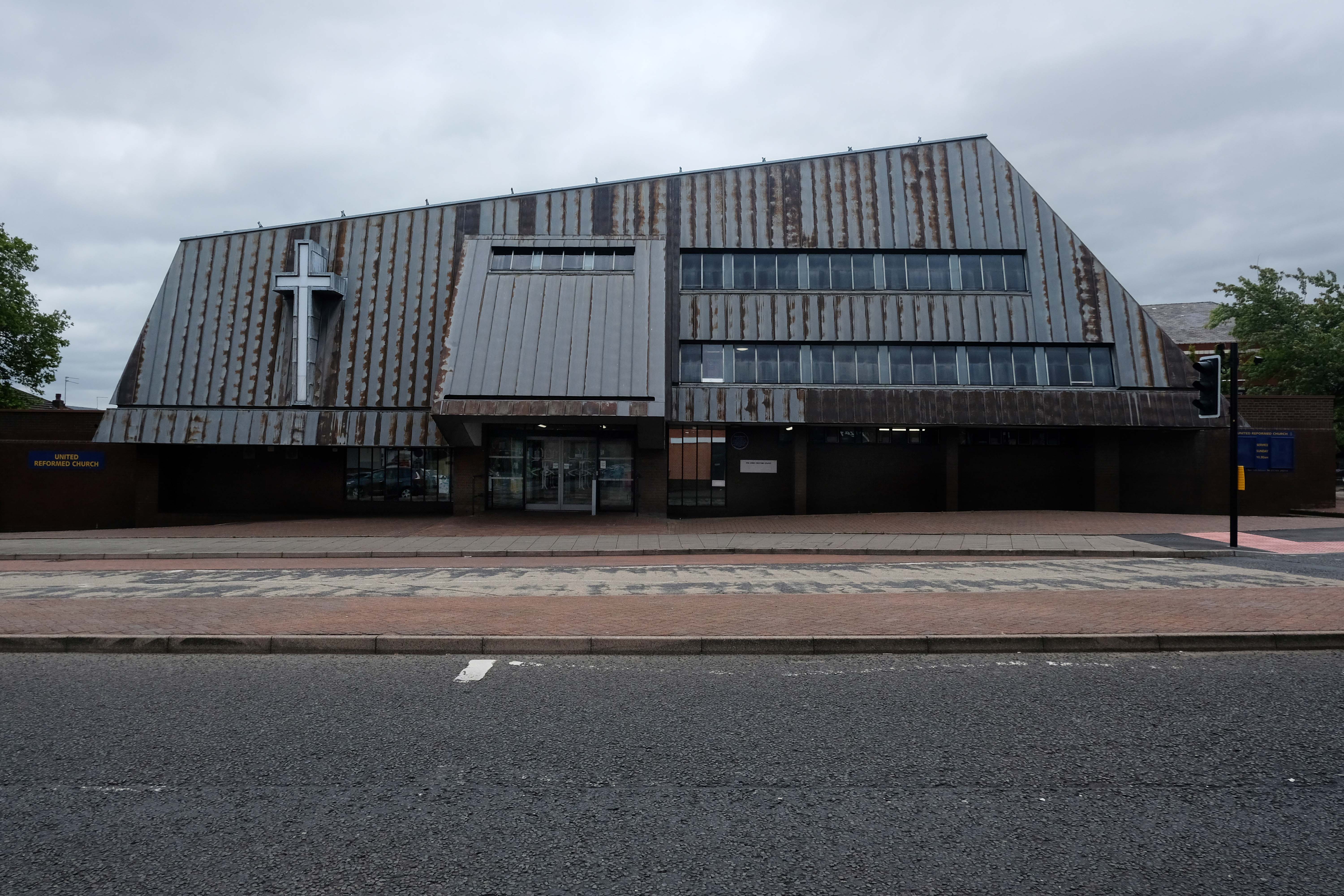
The main approach is identified by a beak-like porch which projects from the main cladding. In this space hangs a recast eighteenth century bell, from the original chapel.
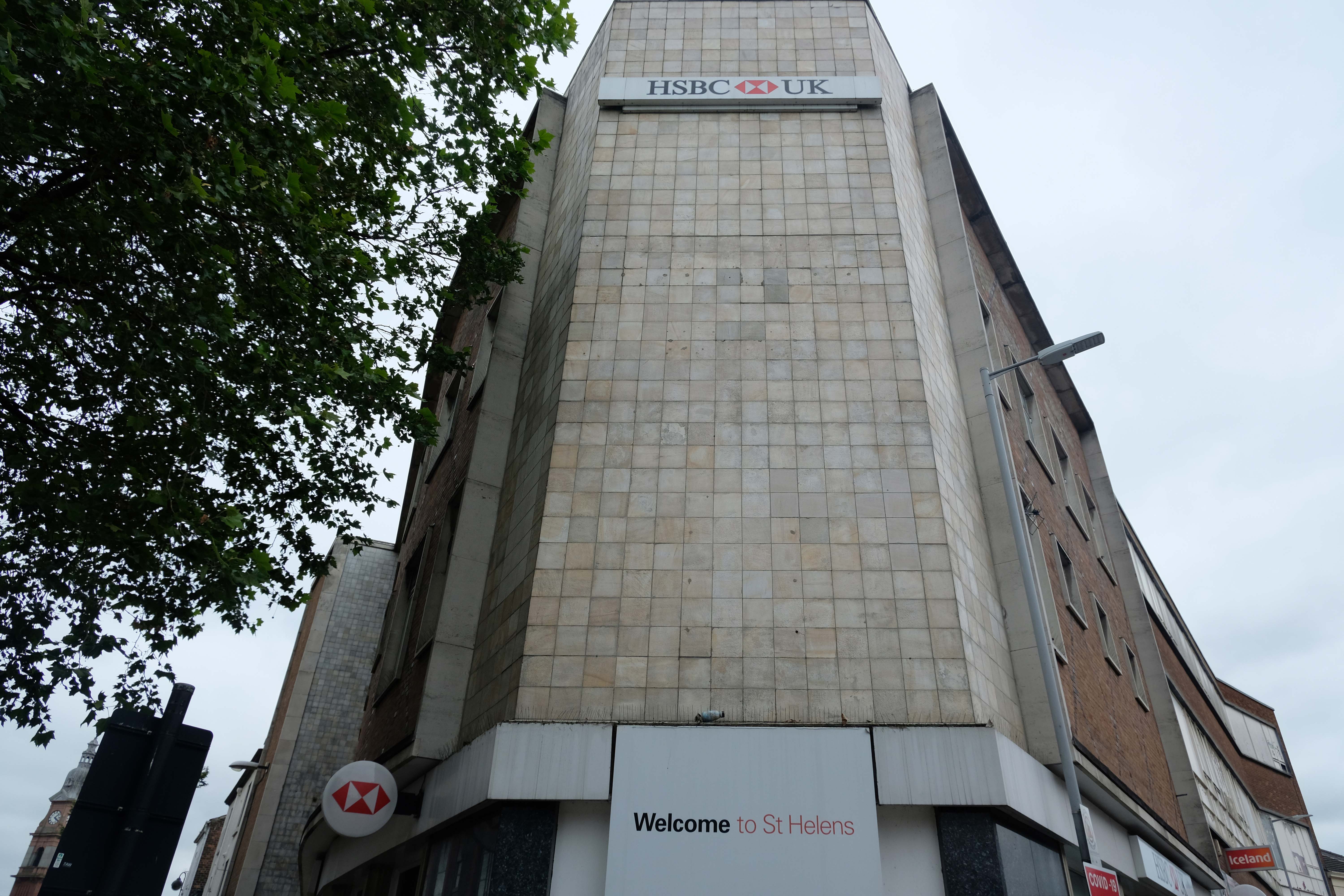
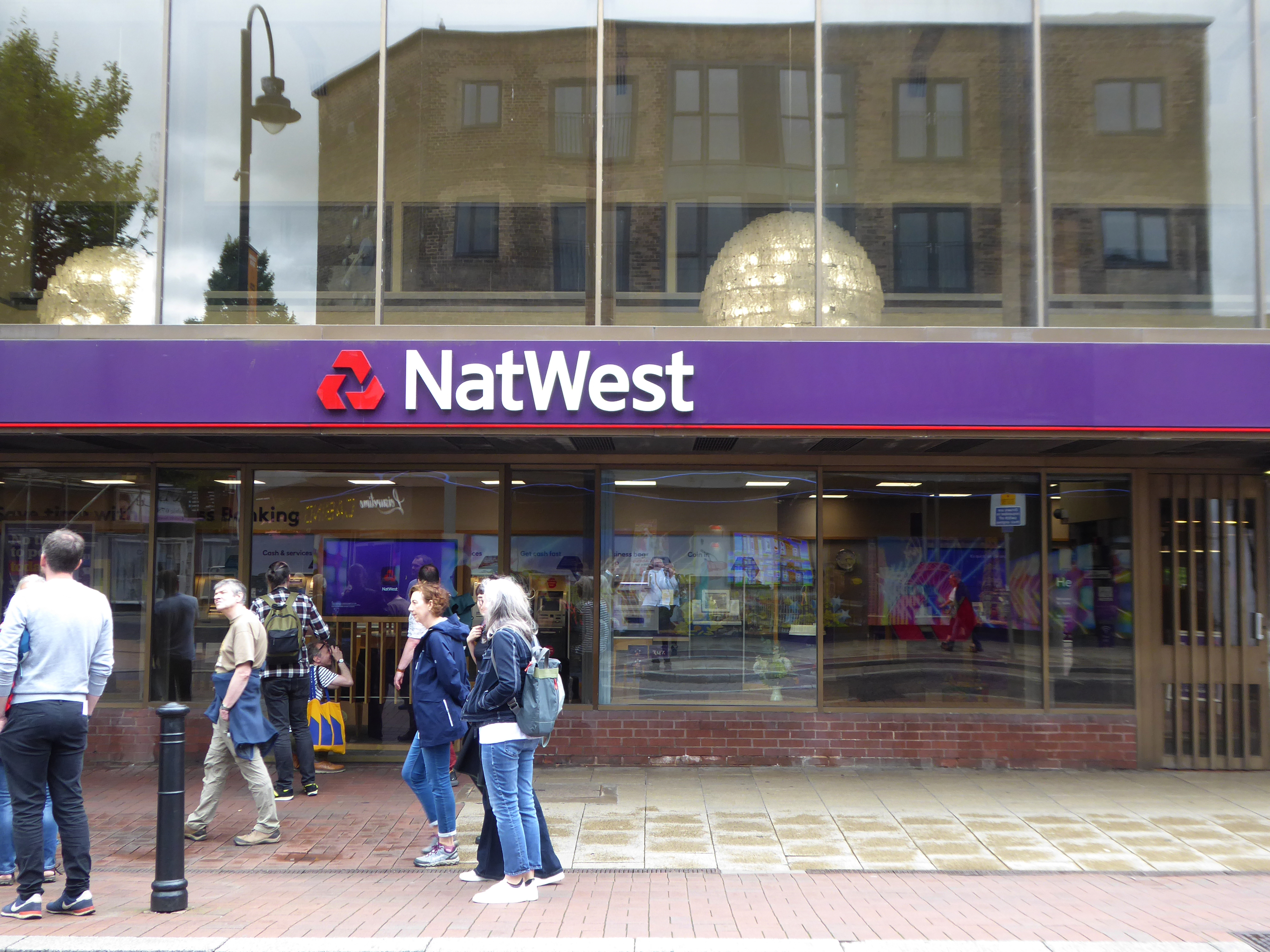
Let’s take it to the Midland, Nat West and Barclays Banks.
With an intermediate former Gas Showroom.
Next to the Church of St Helen.
Architect: WD Caroe 1920-26 Grade II Listed
A chapel has been on the site since at least the 16th century. The chapel was doubled in size in 1816, but burnt down in 1916. It is the parish church of the town, and stands in a prominent position.
St Mary’s Car Park a multi-storey masterpiece straight outa Dessau.
Next crossing a complex web of inner ring roads designed with the beleaguered pedestrian at the forefront of the planners’ minds.
To the inter-war Pilkington’s Offices – Reflection Court
Architects: Herbert J Rowse and Kenneth Cheeseman 1937-41 Grade II Listed.
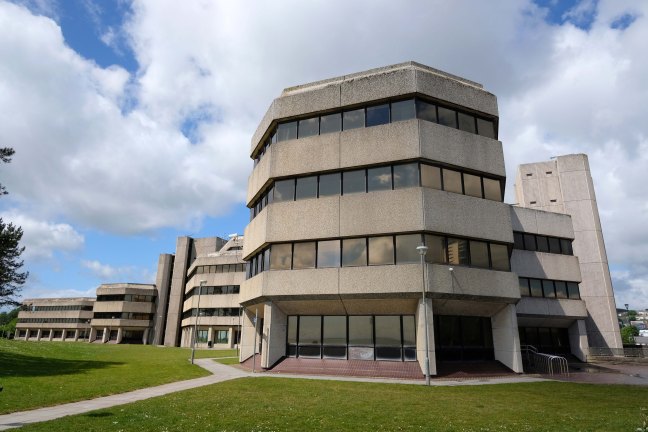
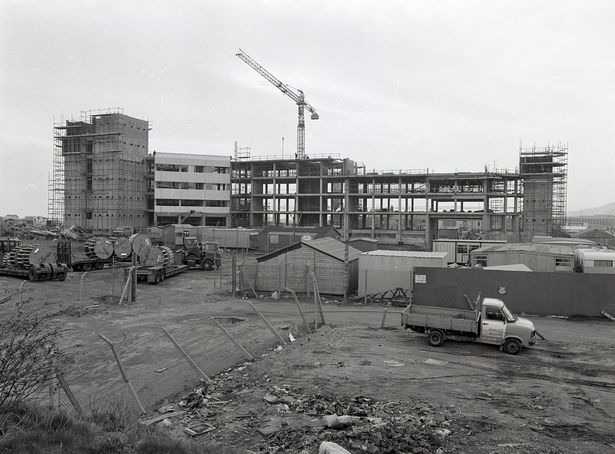
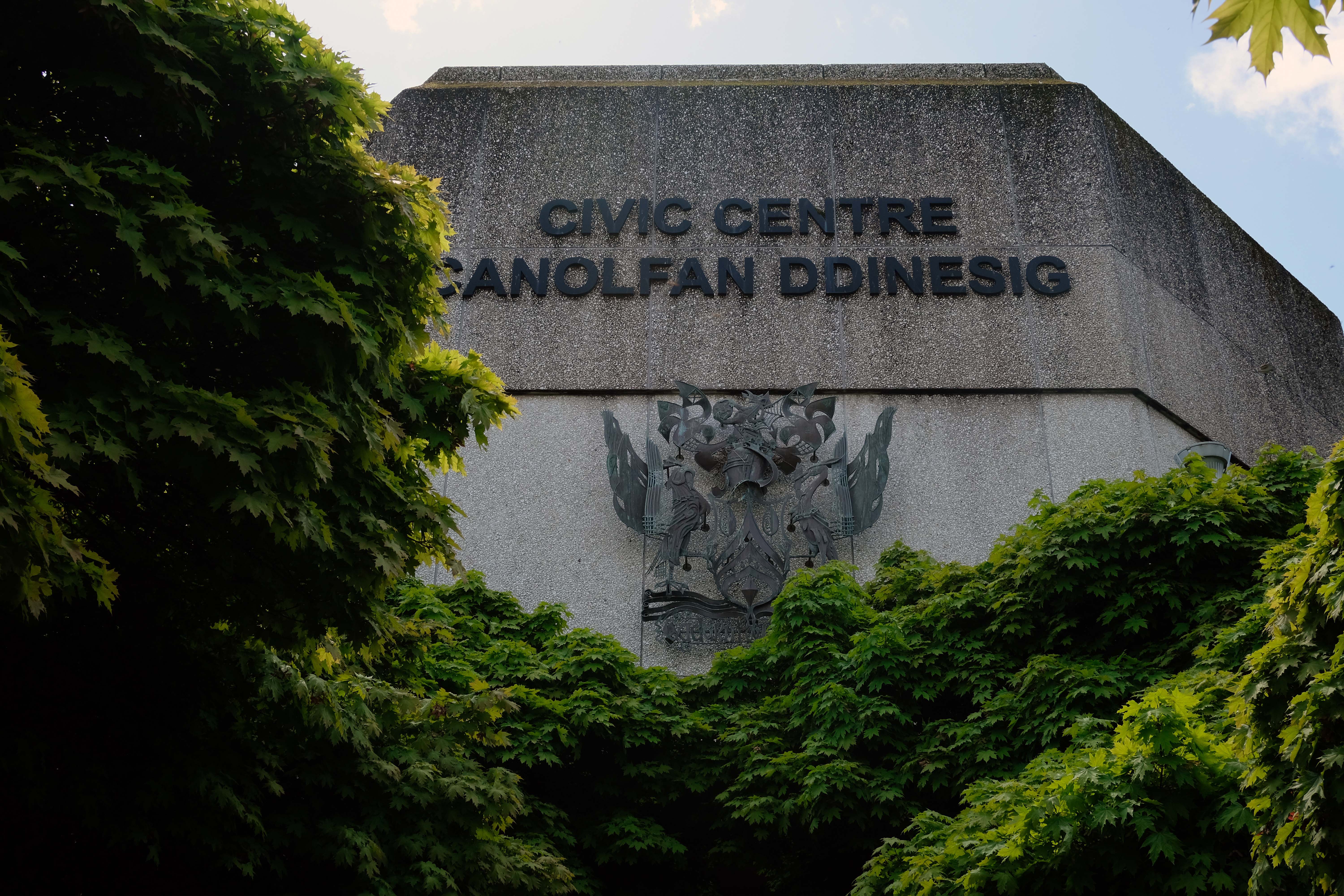
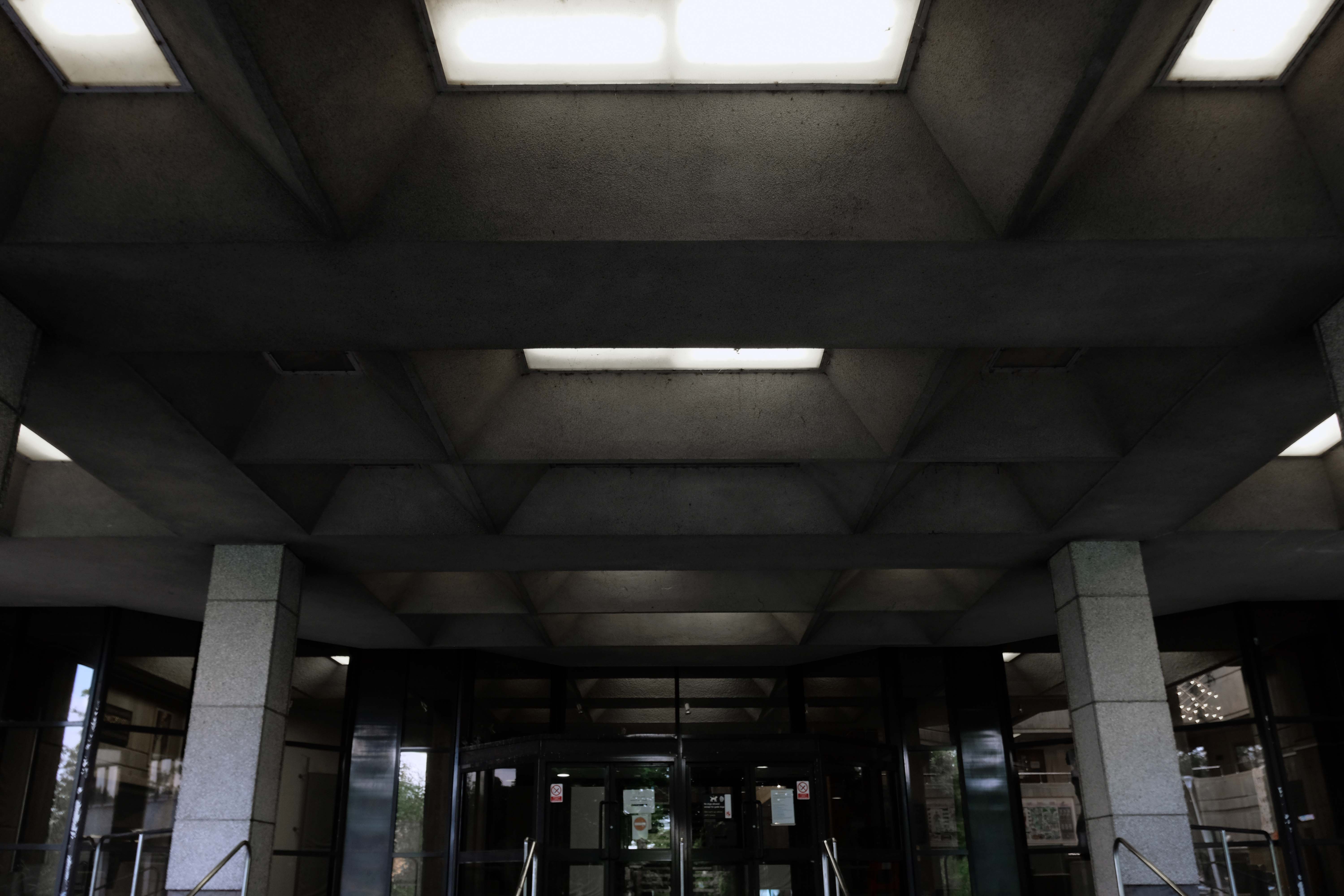
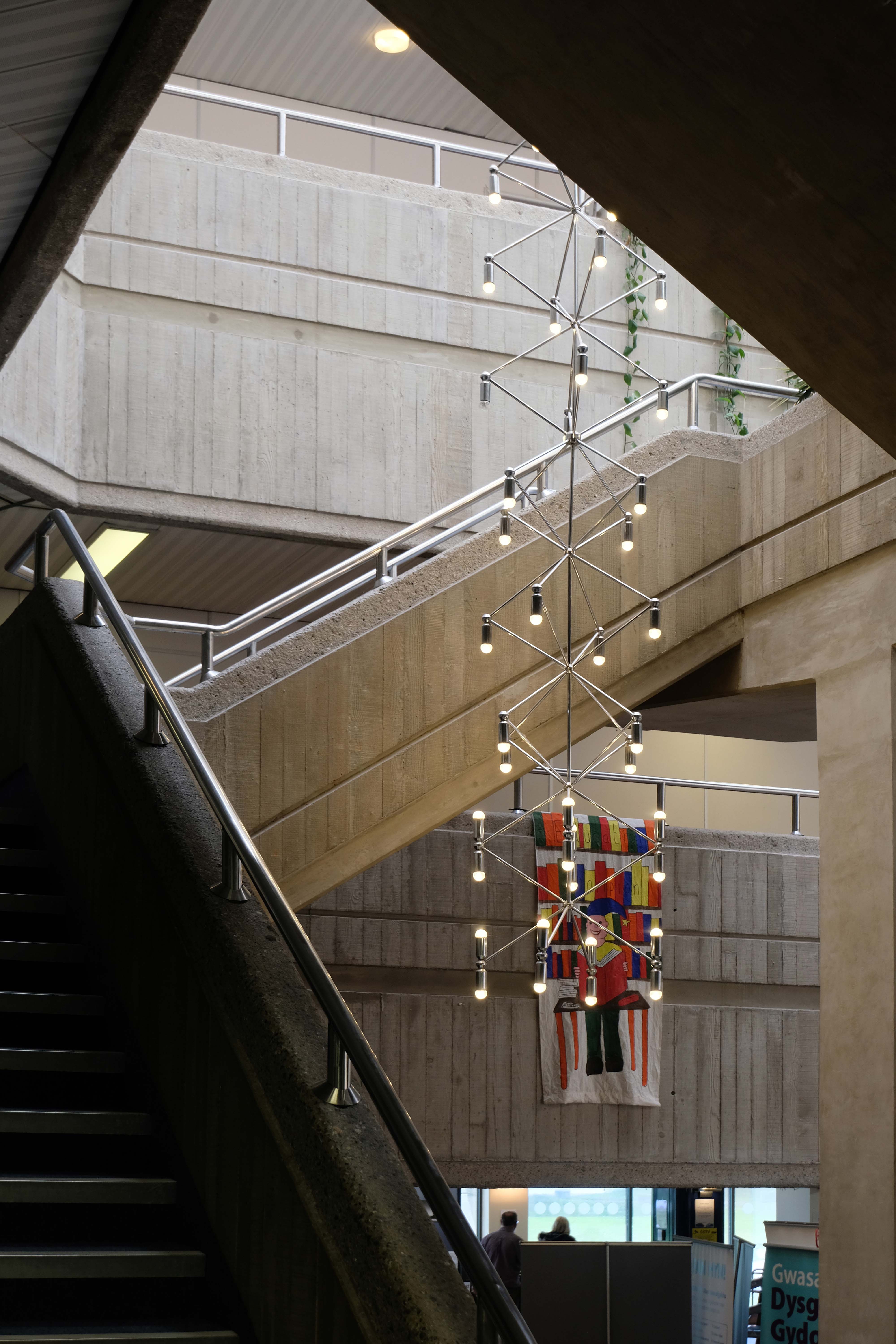
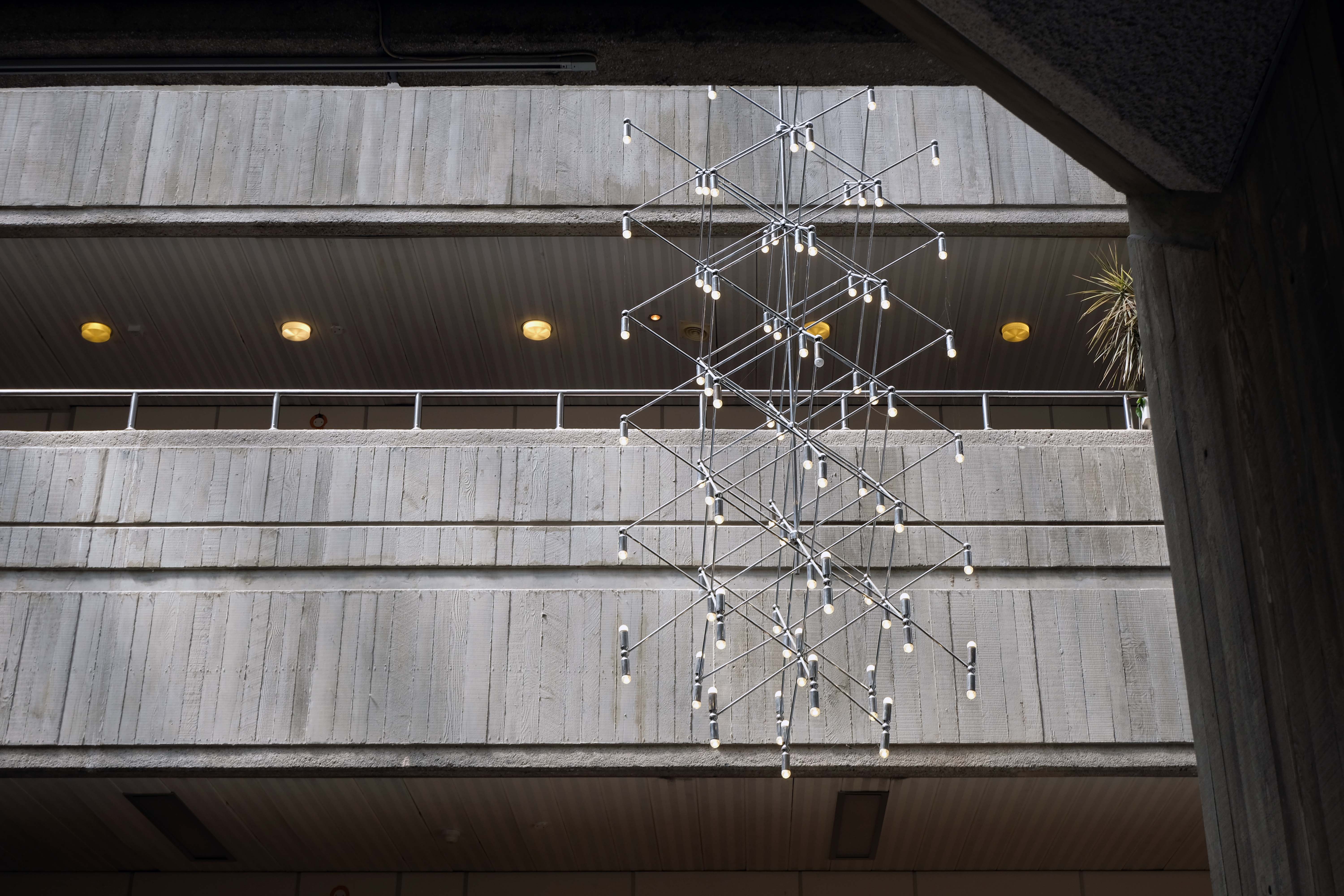
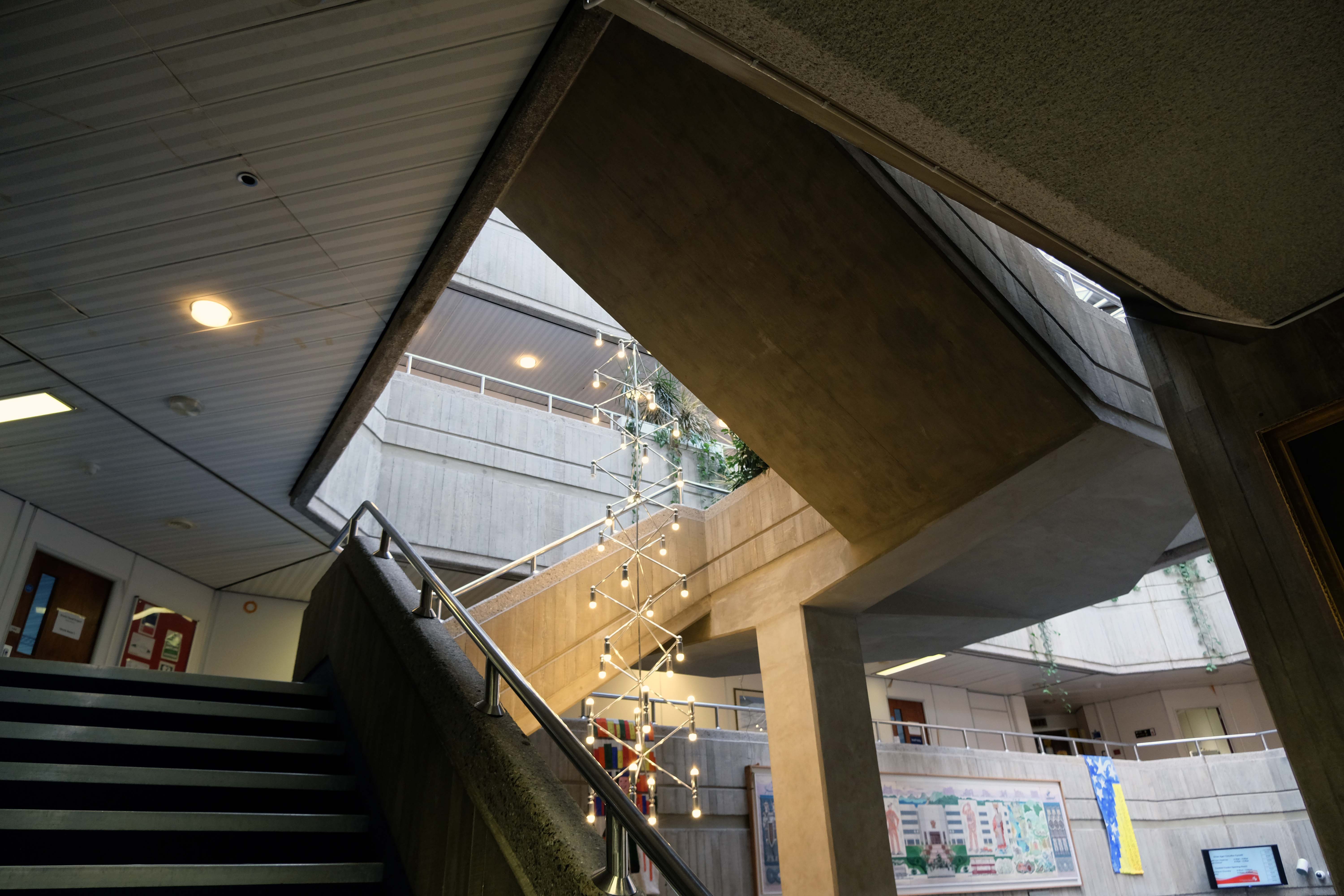
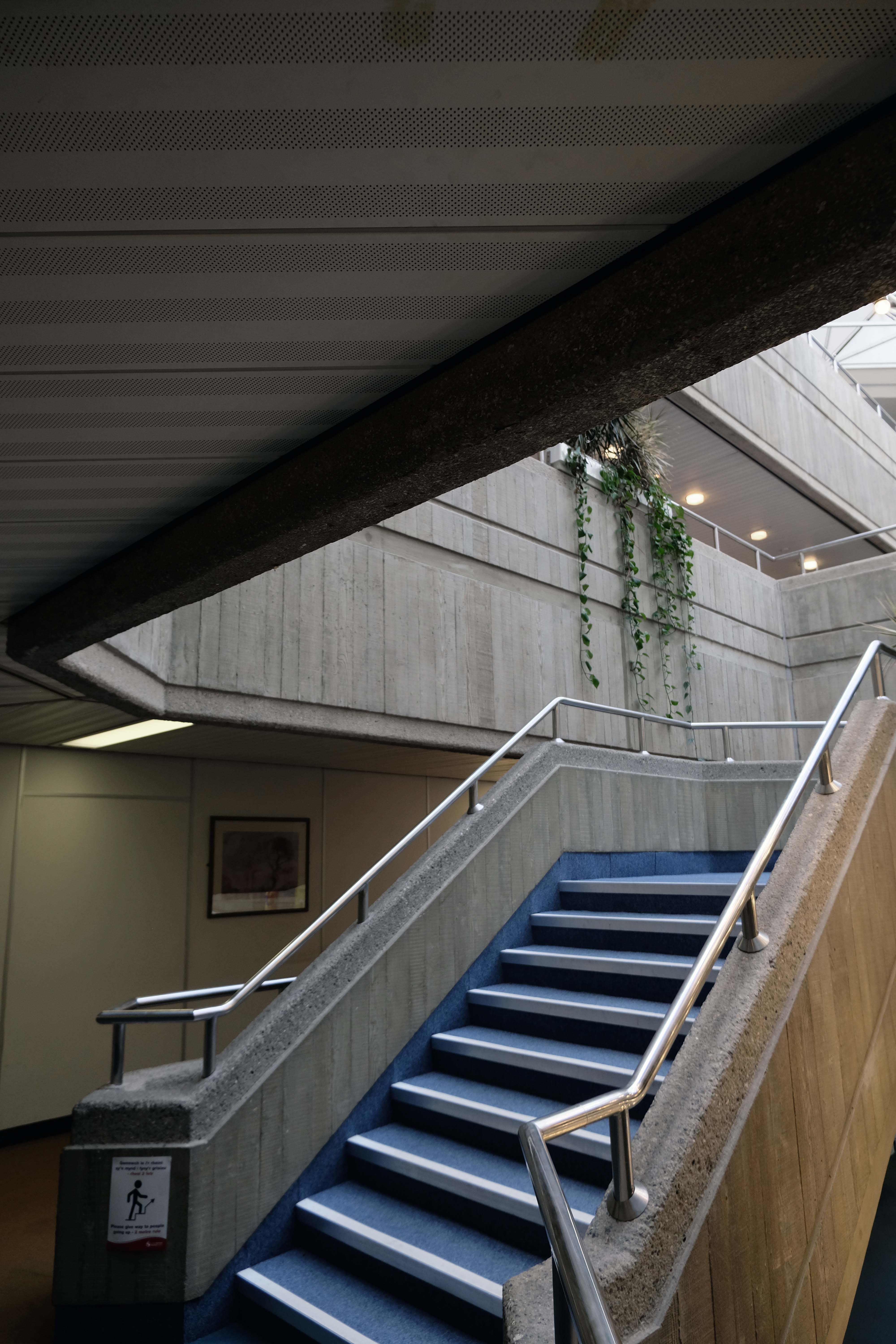
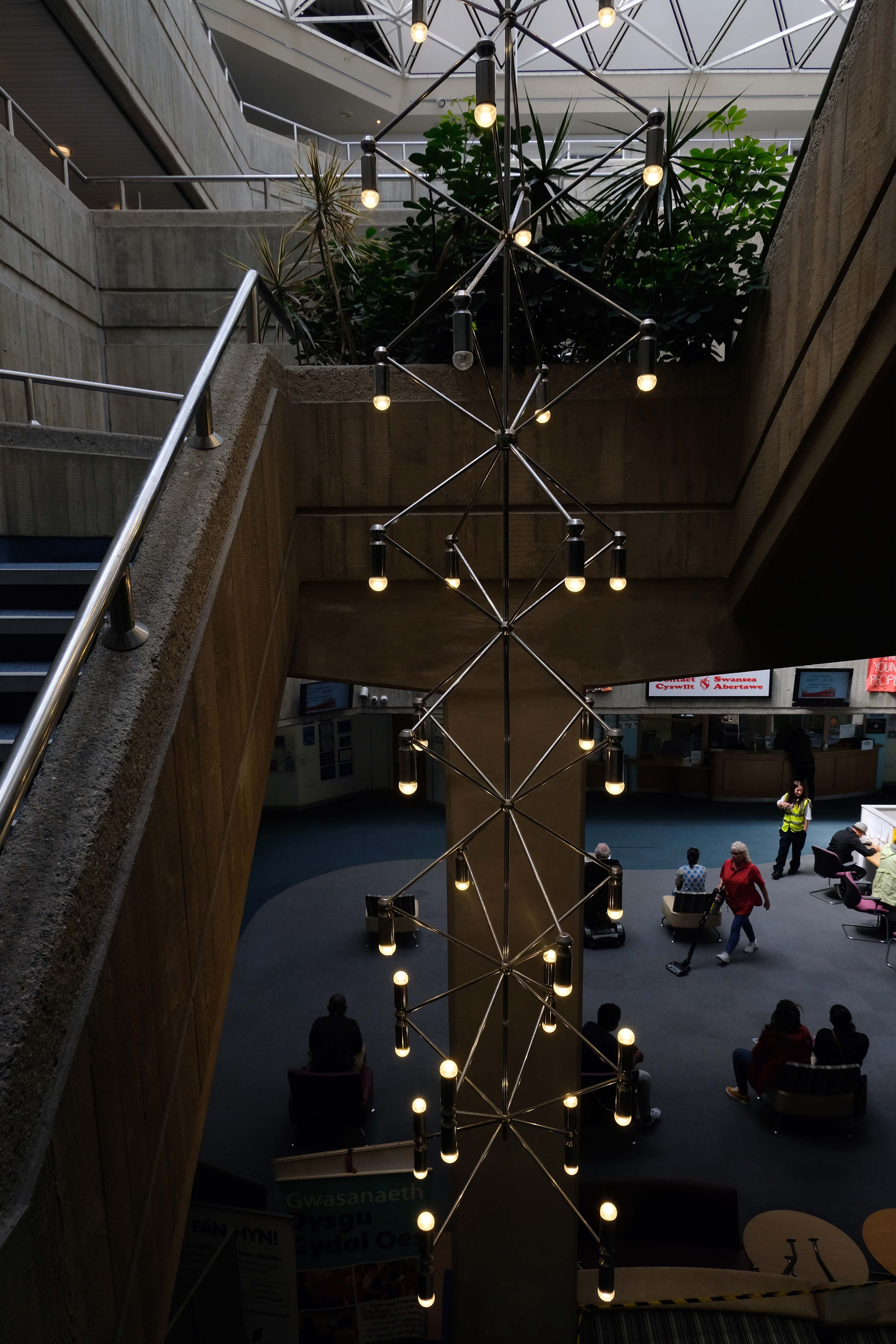
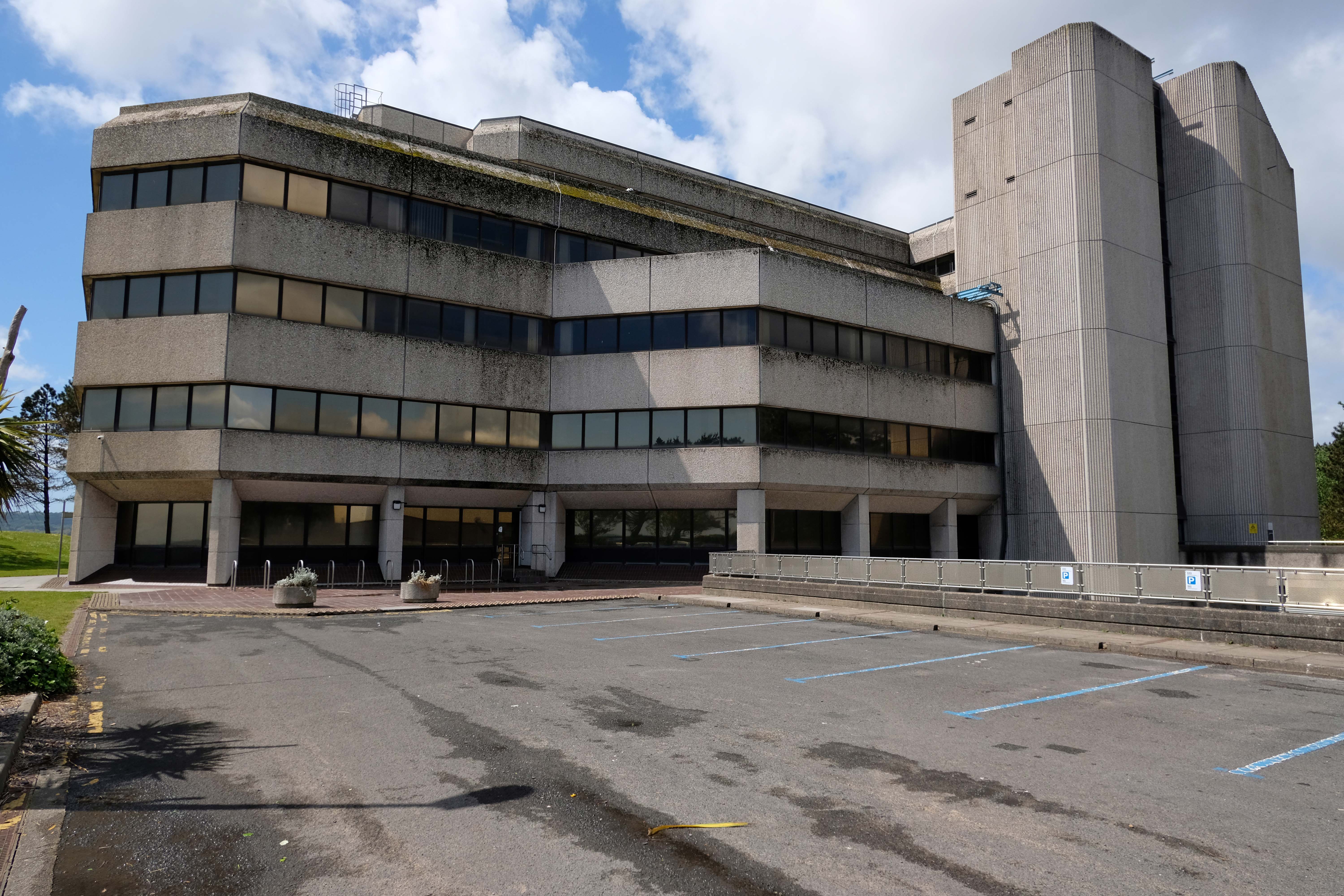
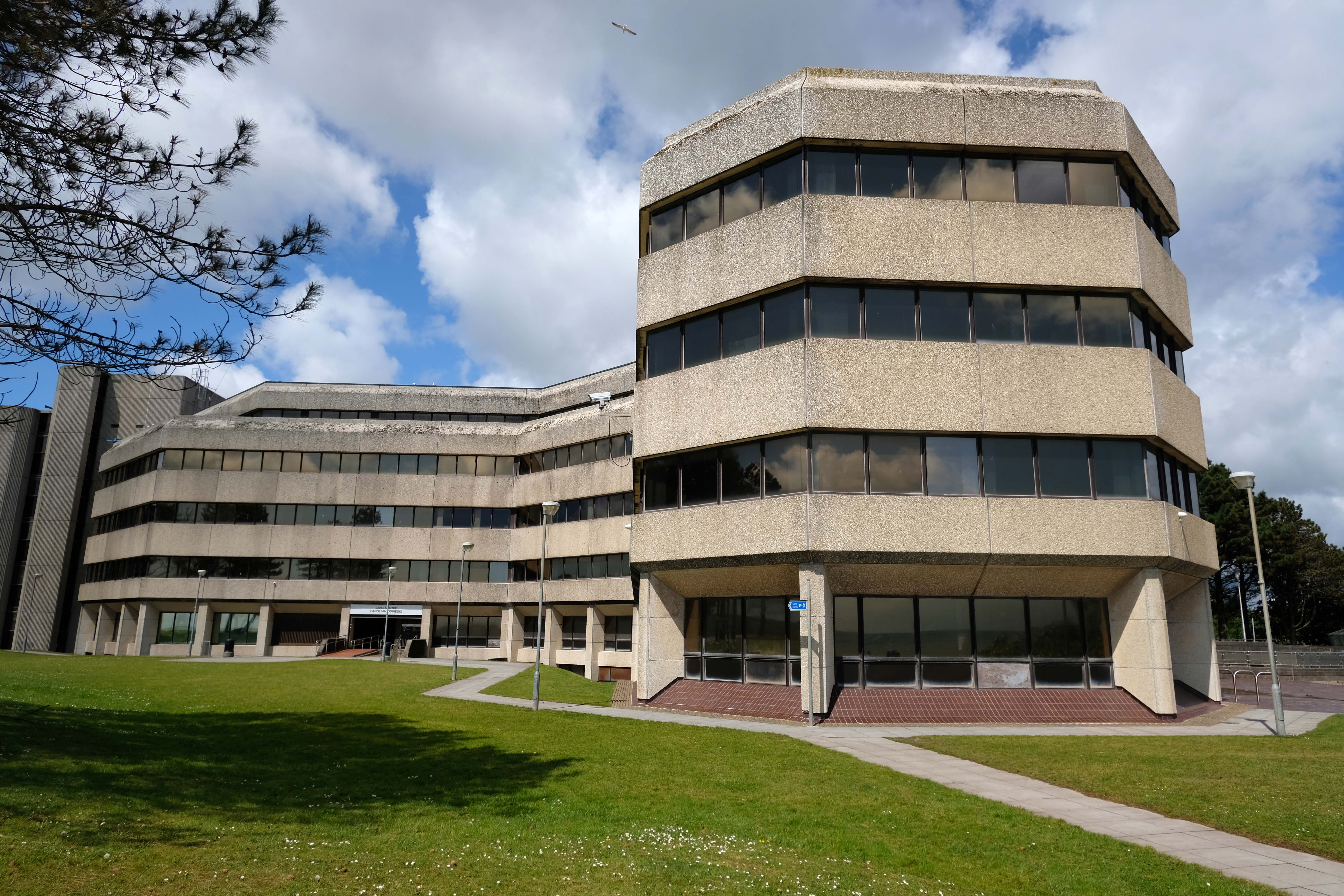
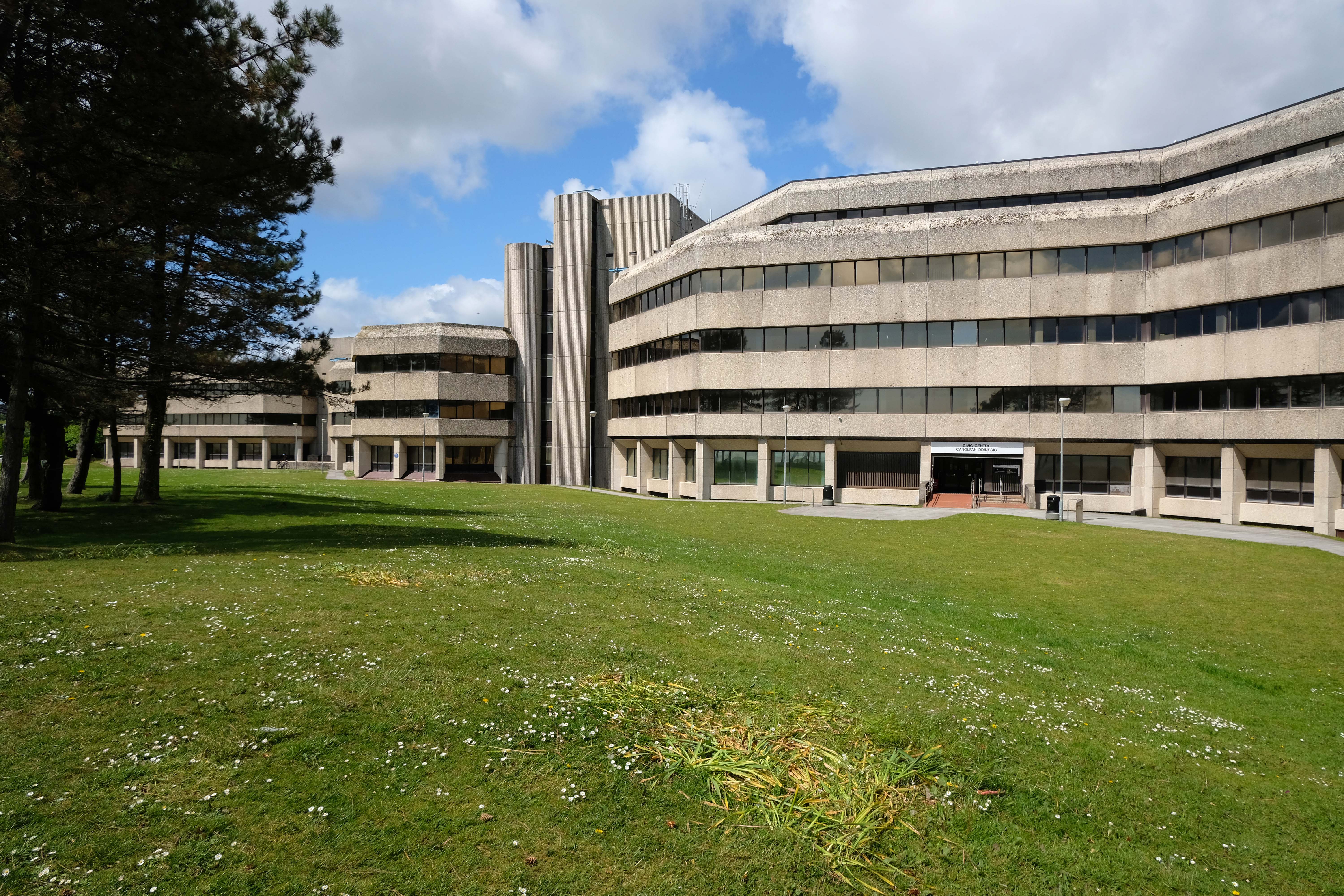
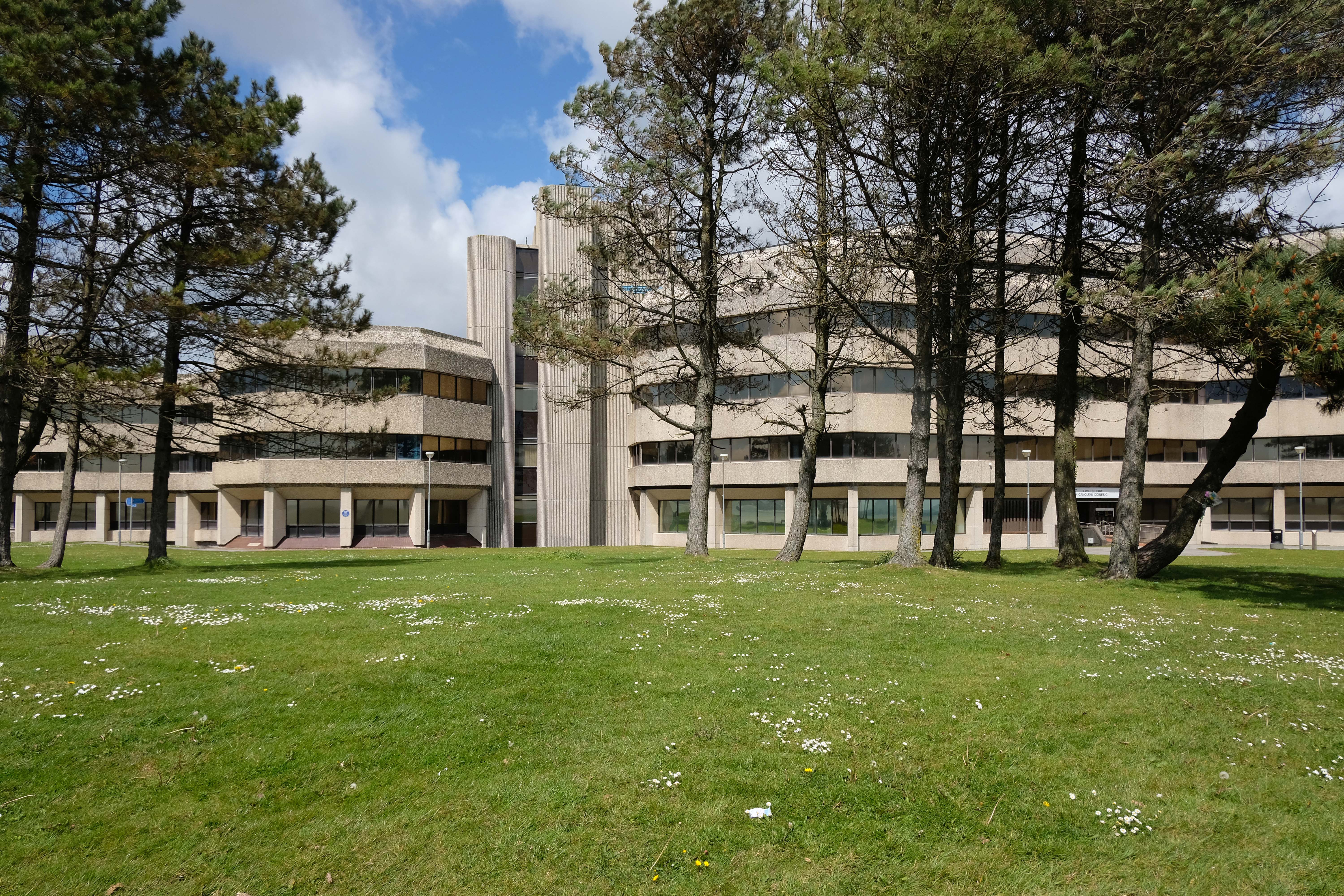
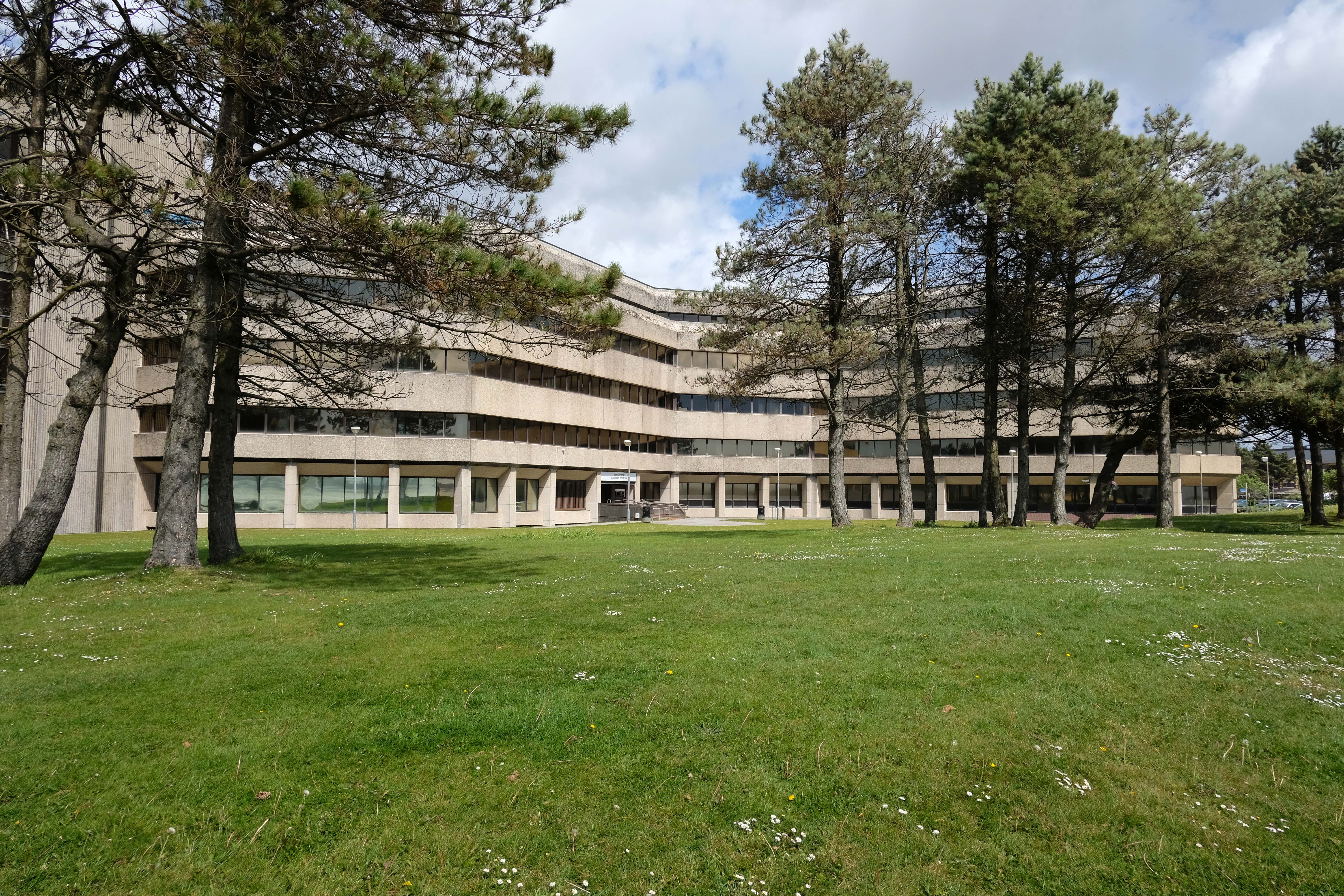
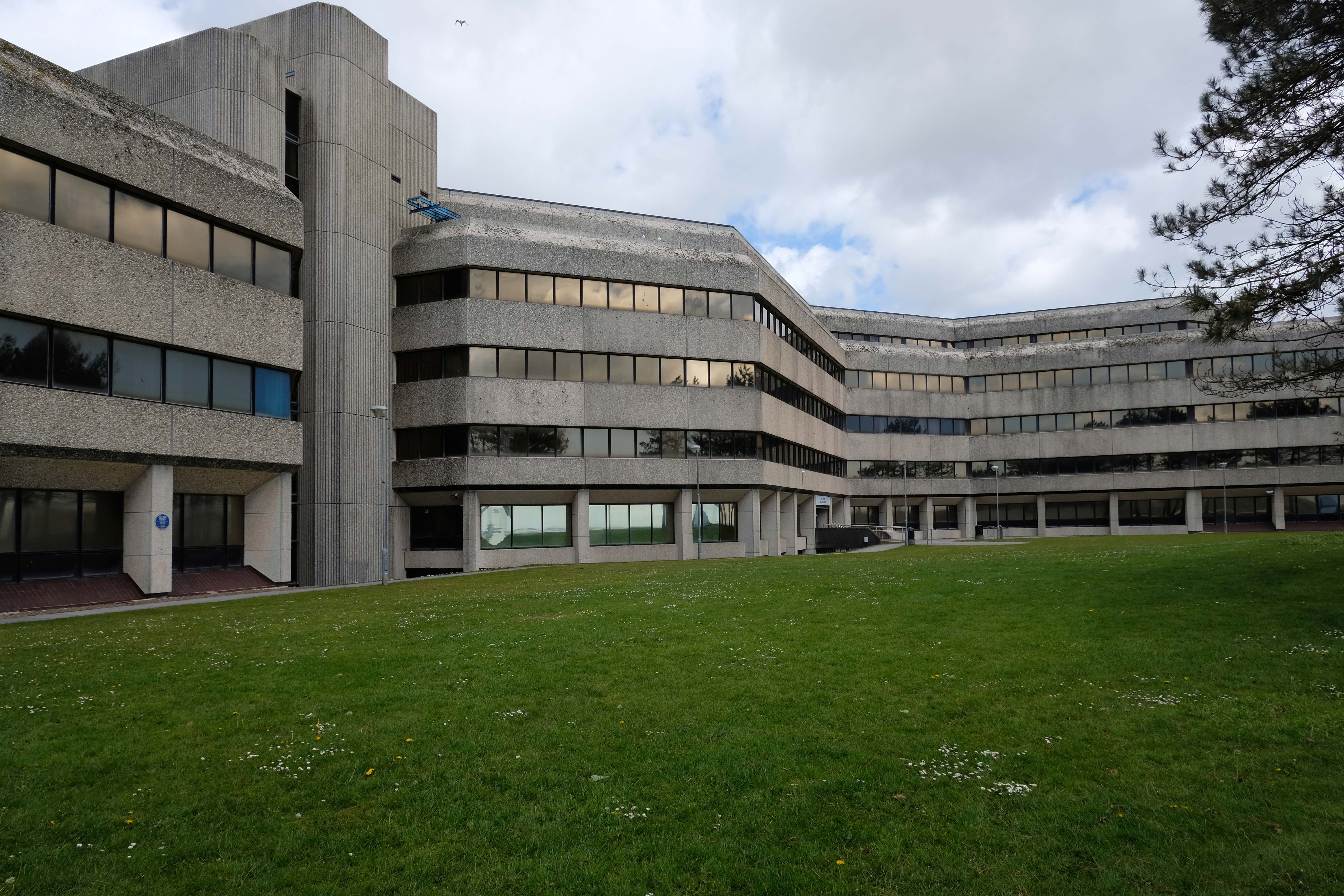
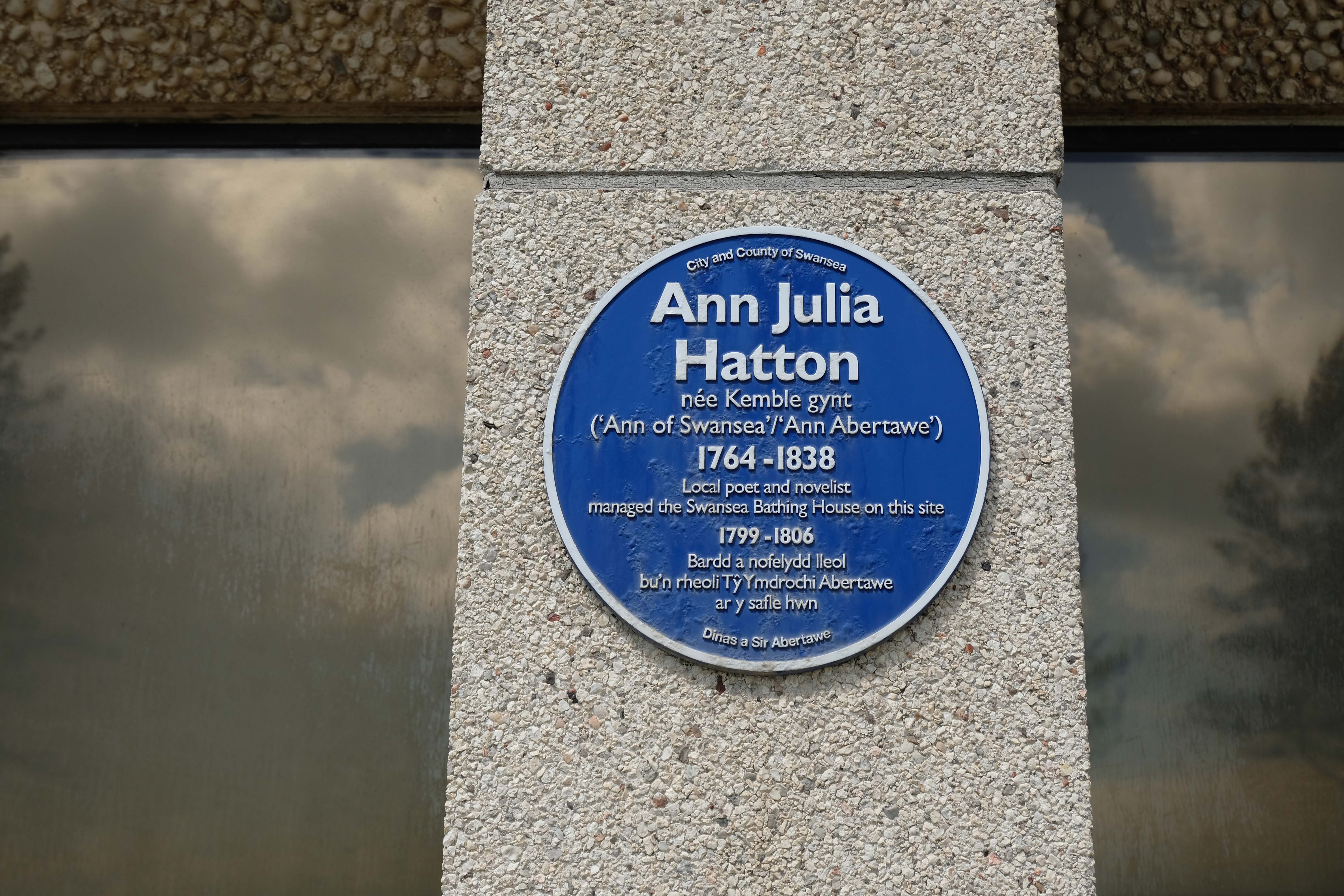
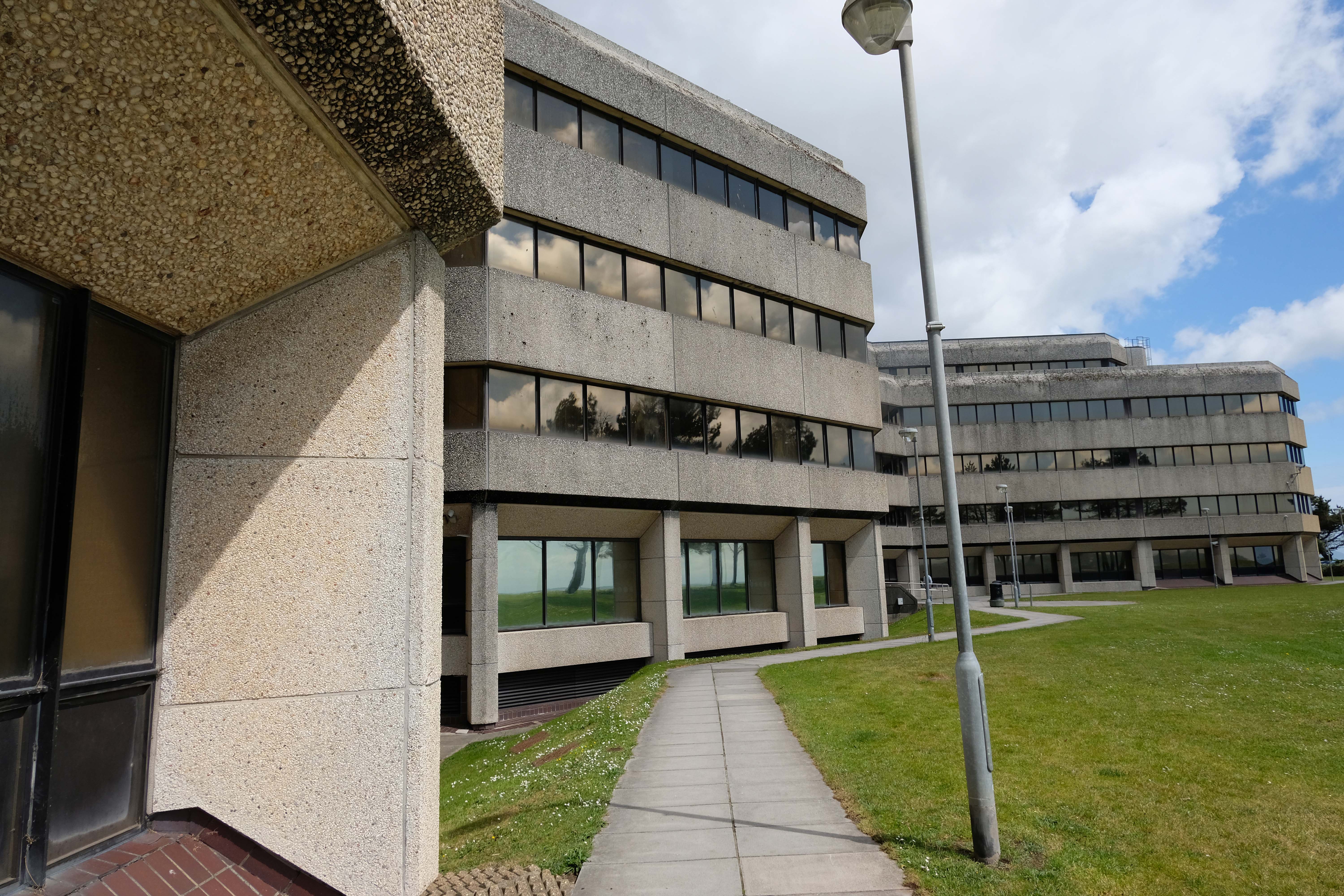
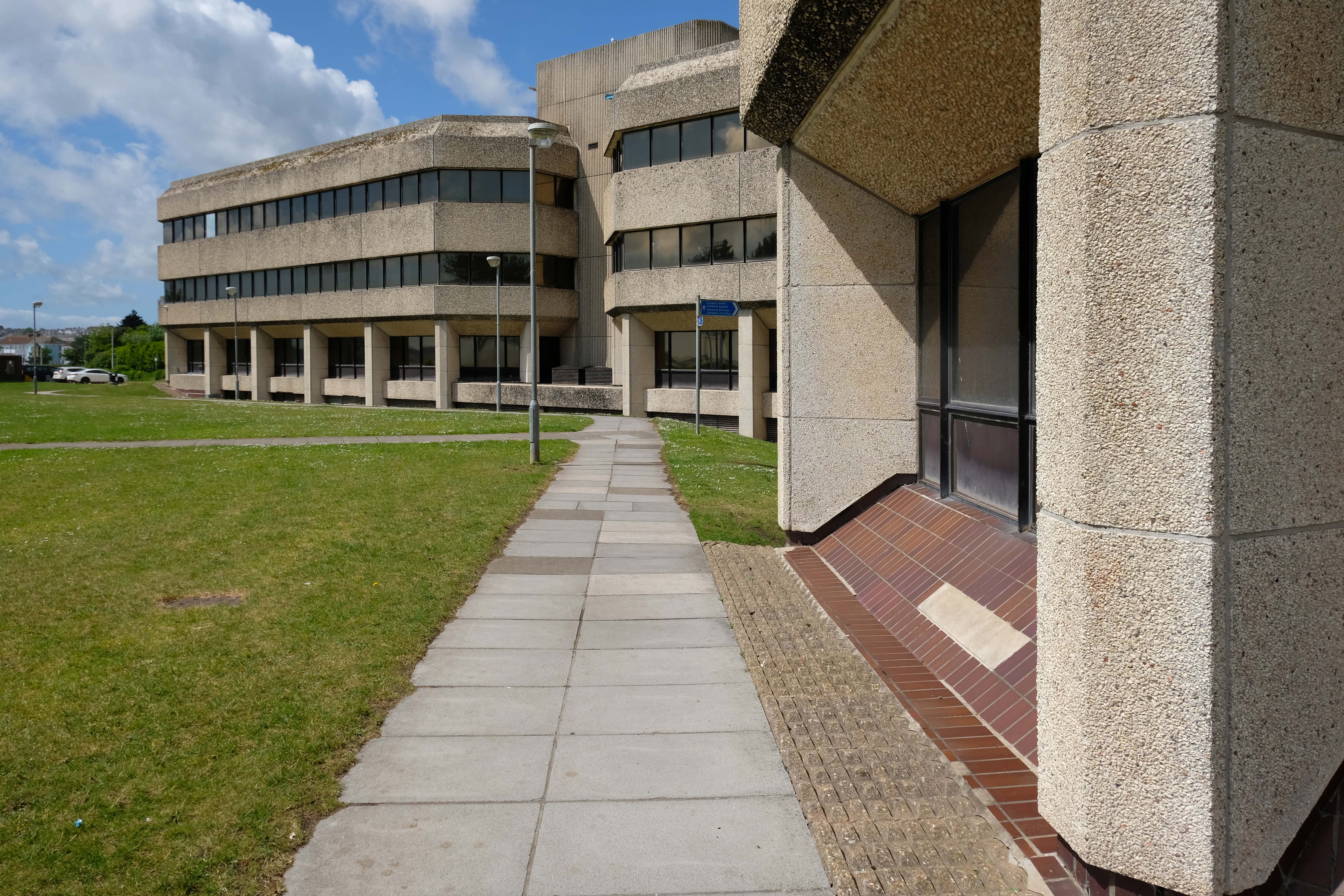
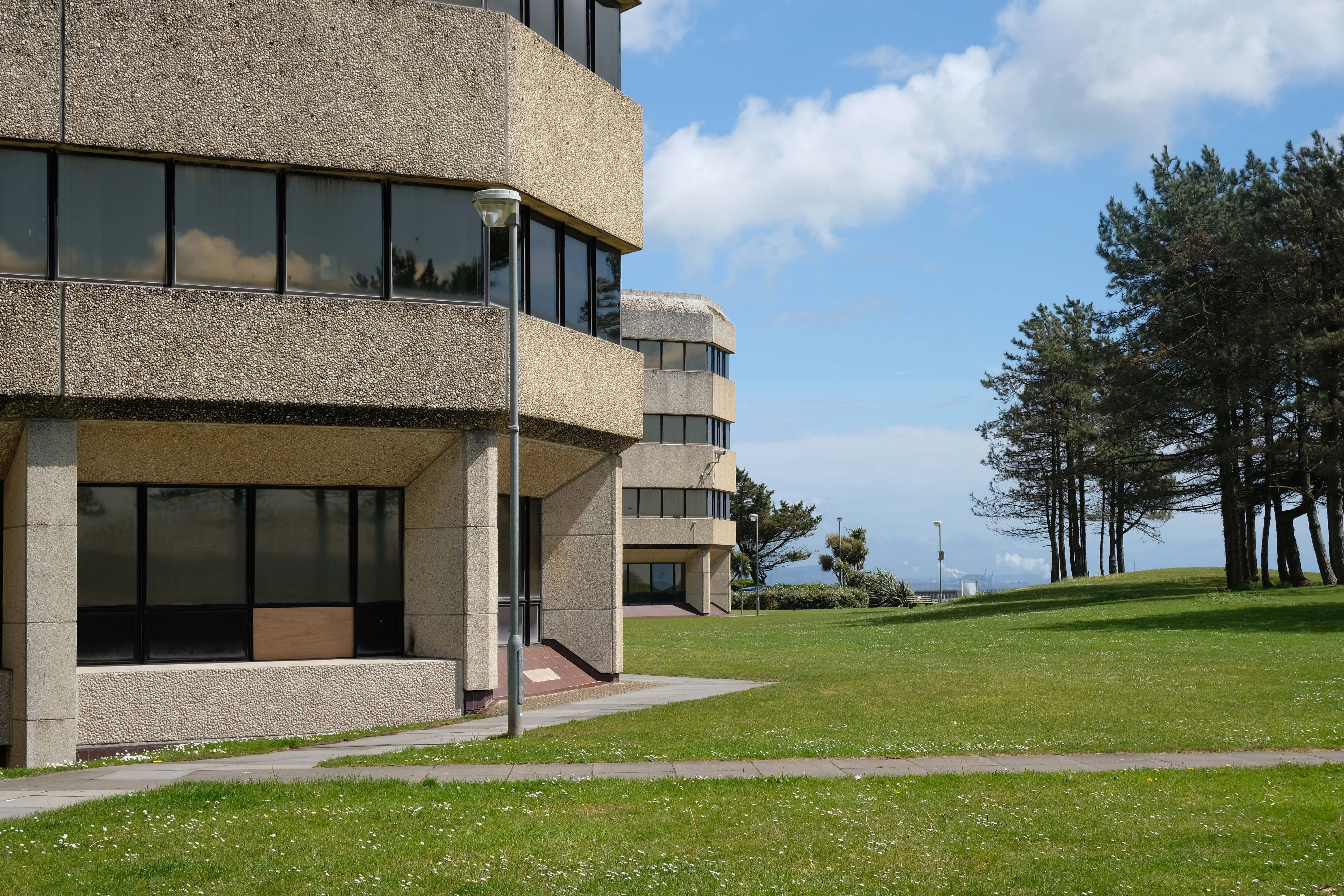
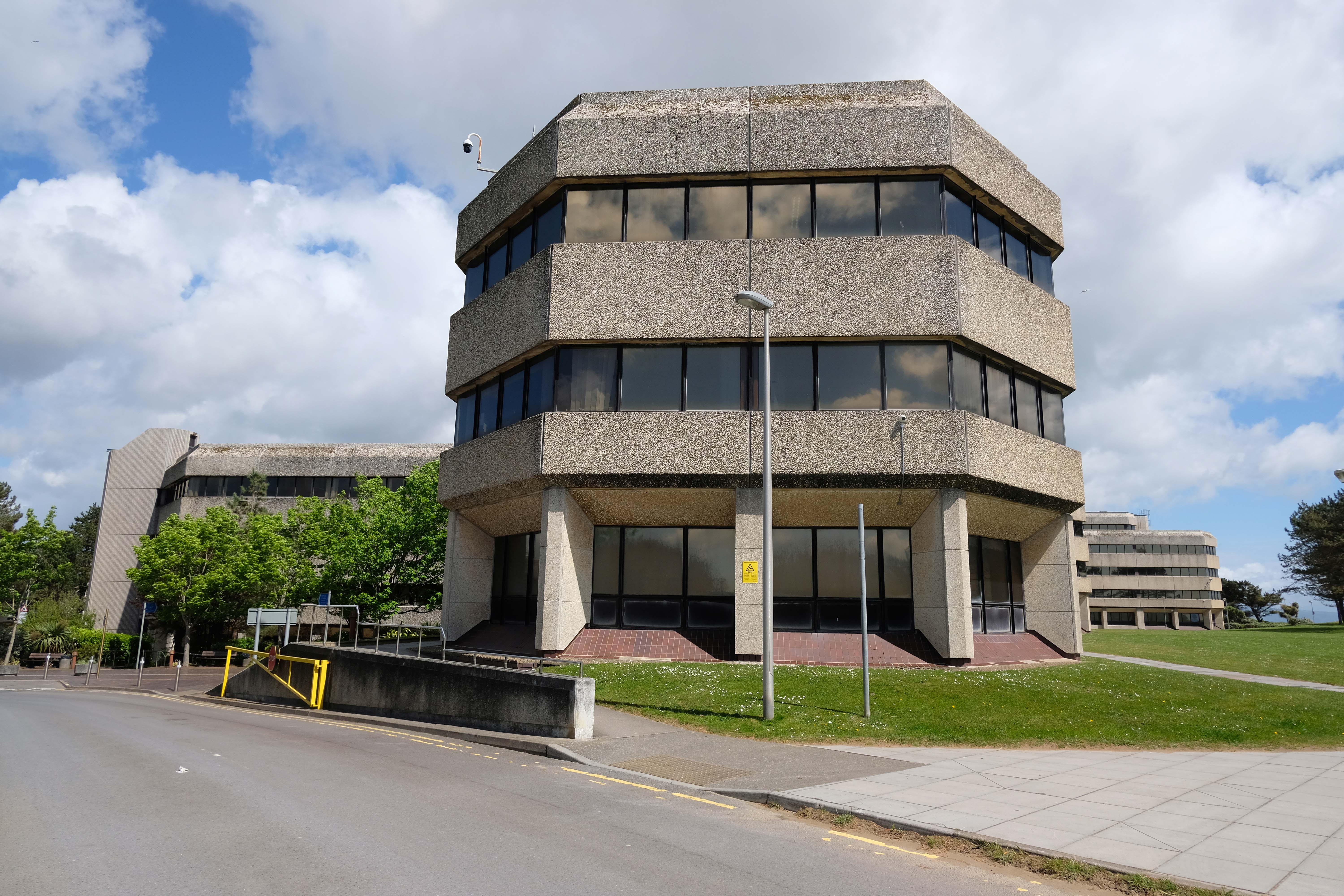
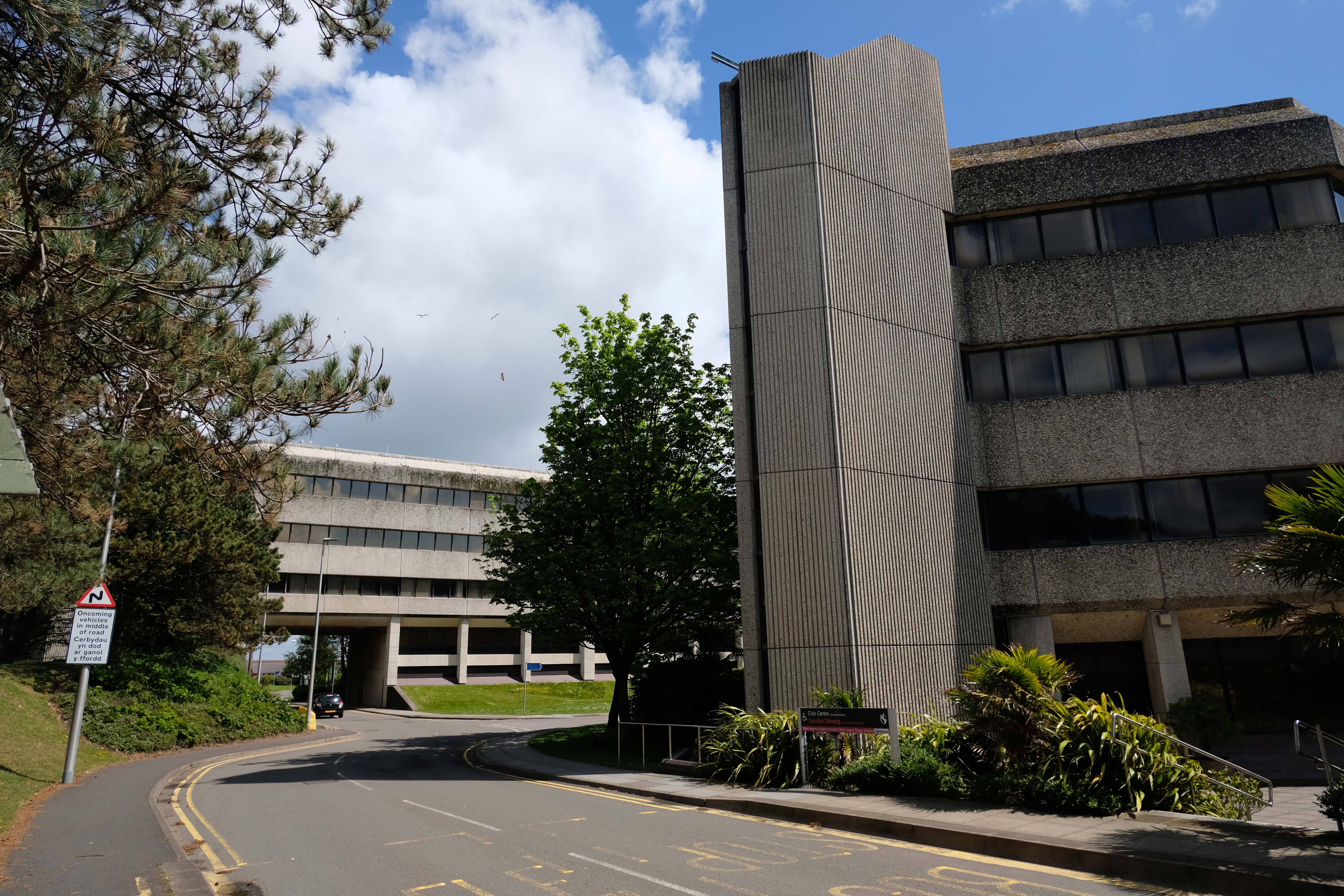
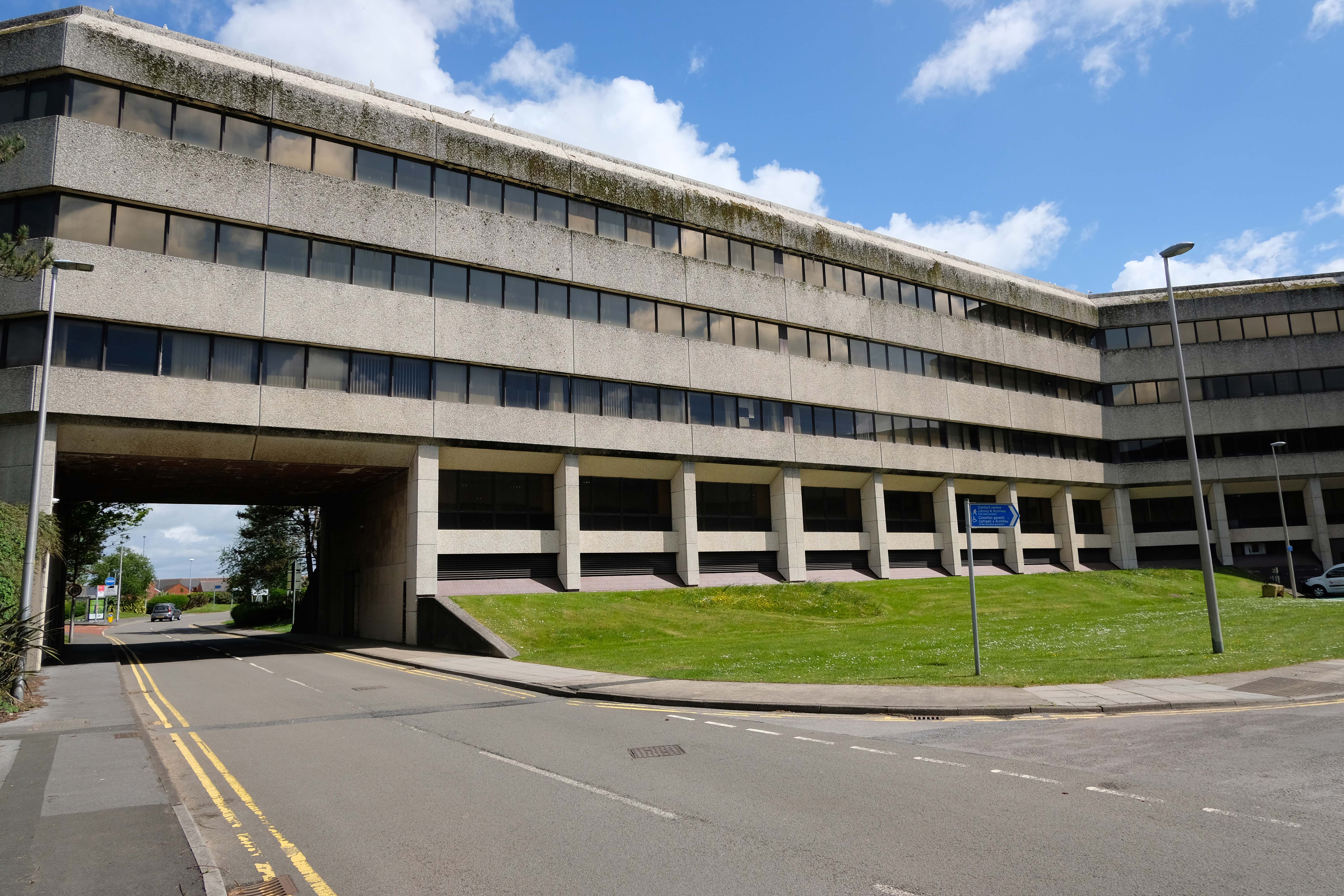
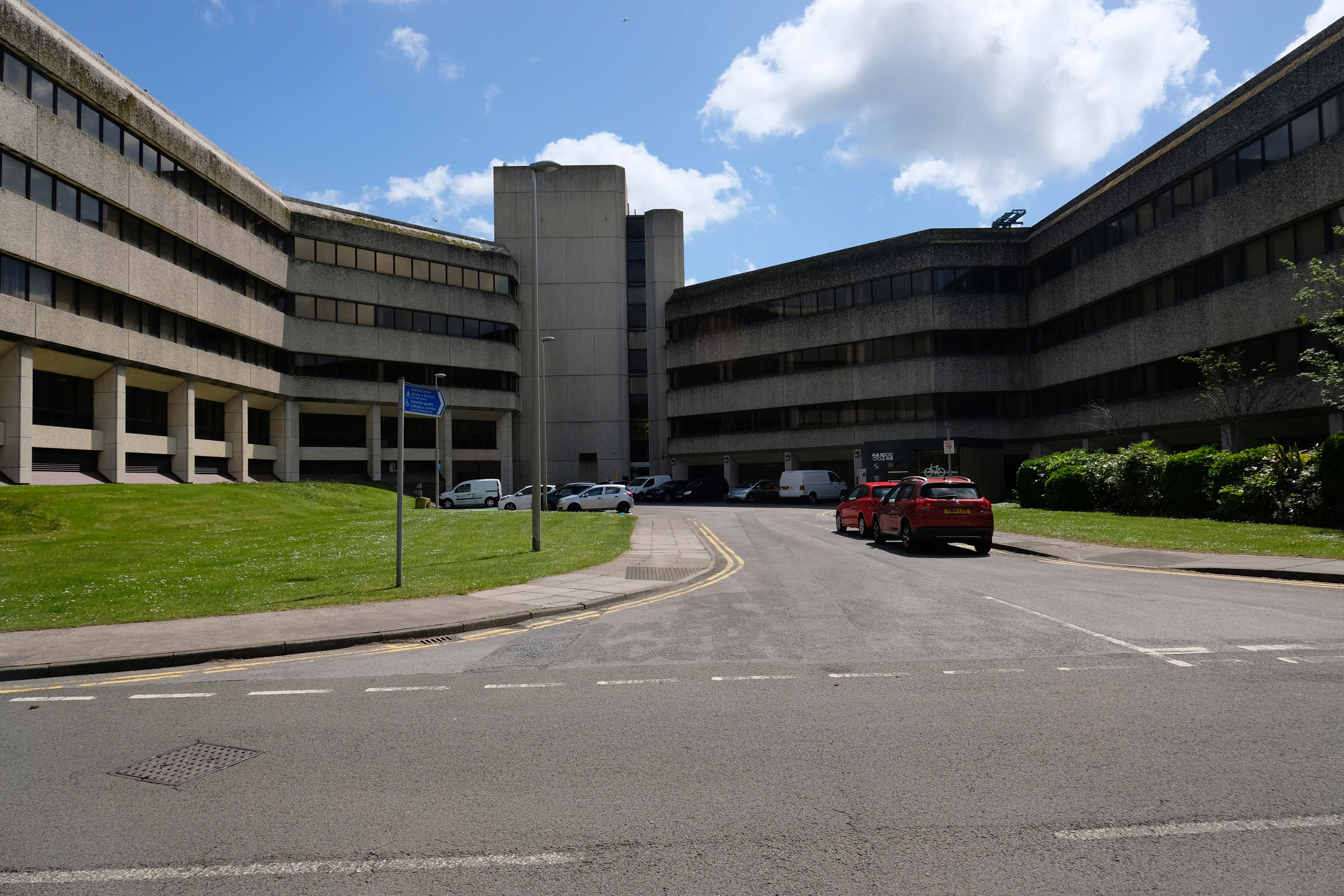
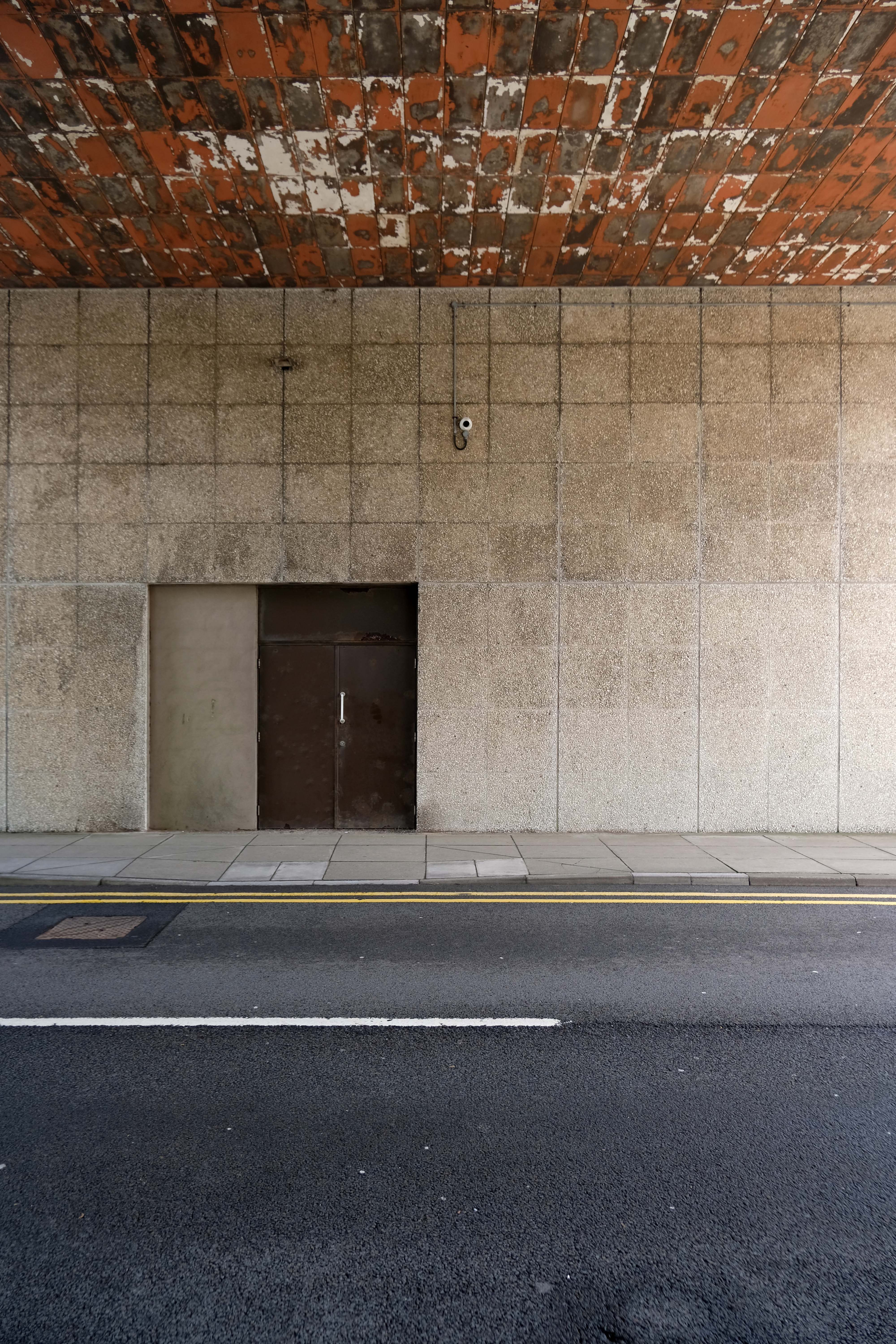
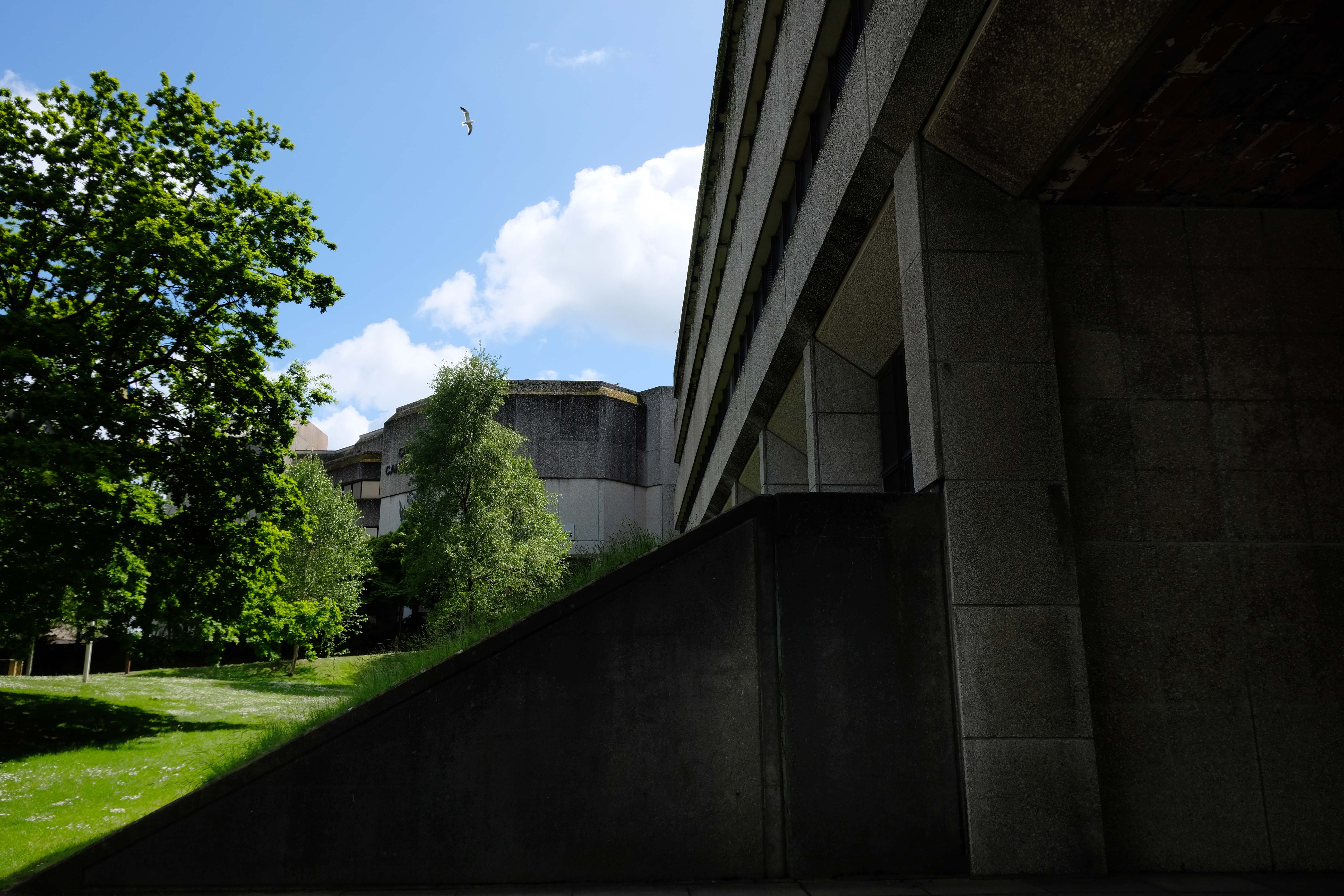
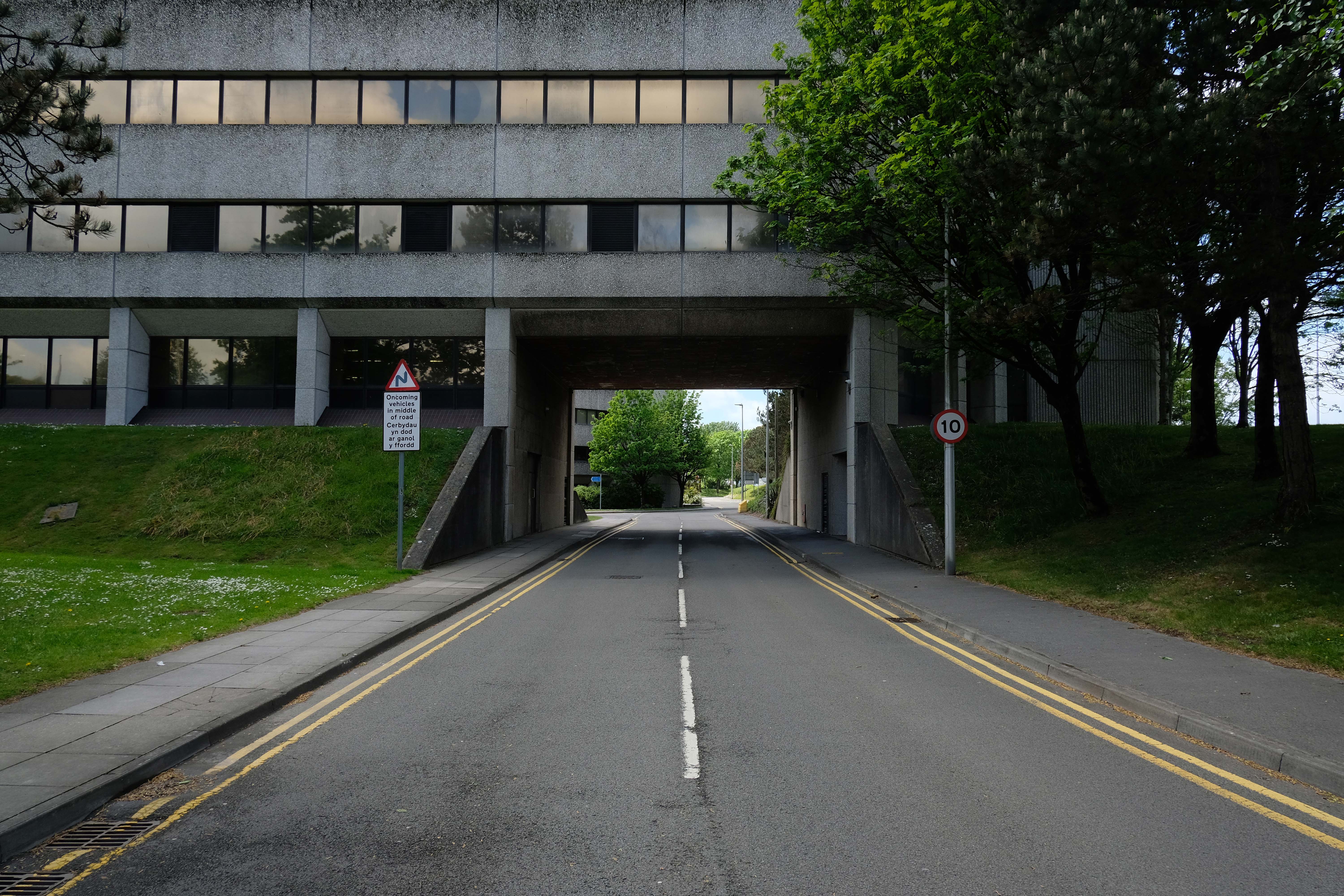
Architects: J Webb as County Architect and CW Quick as the job architectof the West Glamorgan County Architects Department 1982
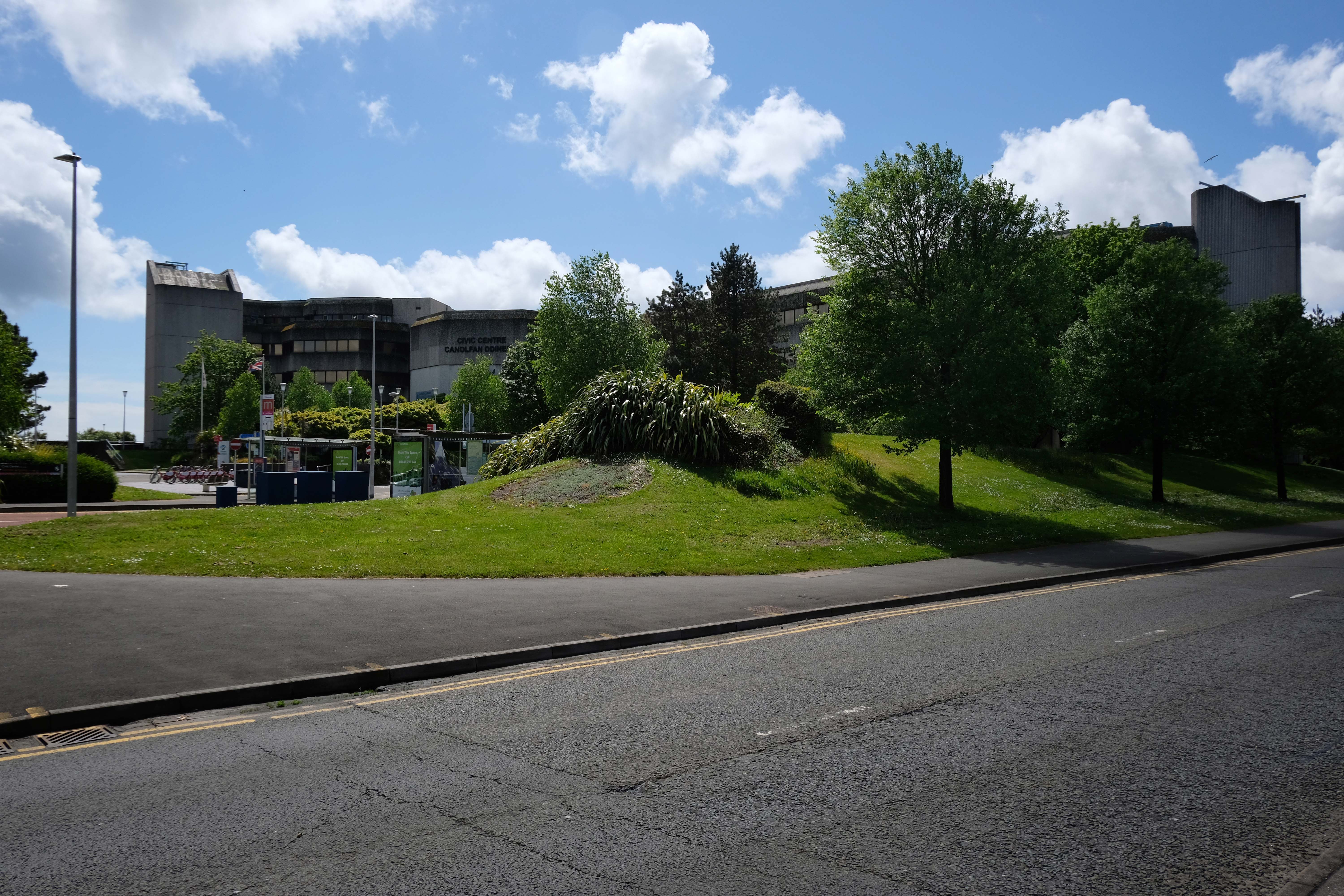
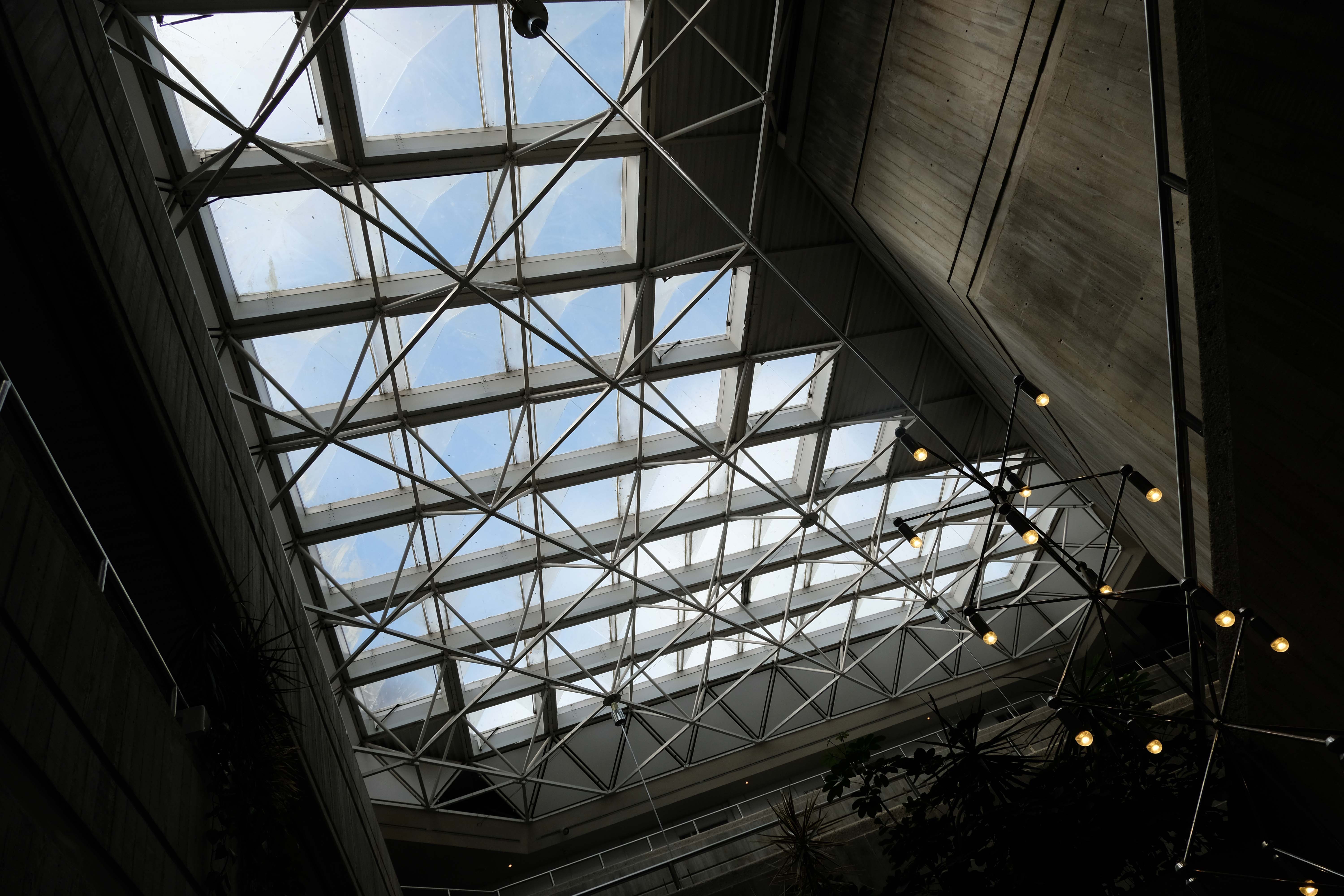
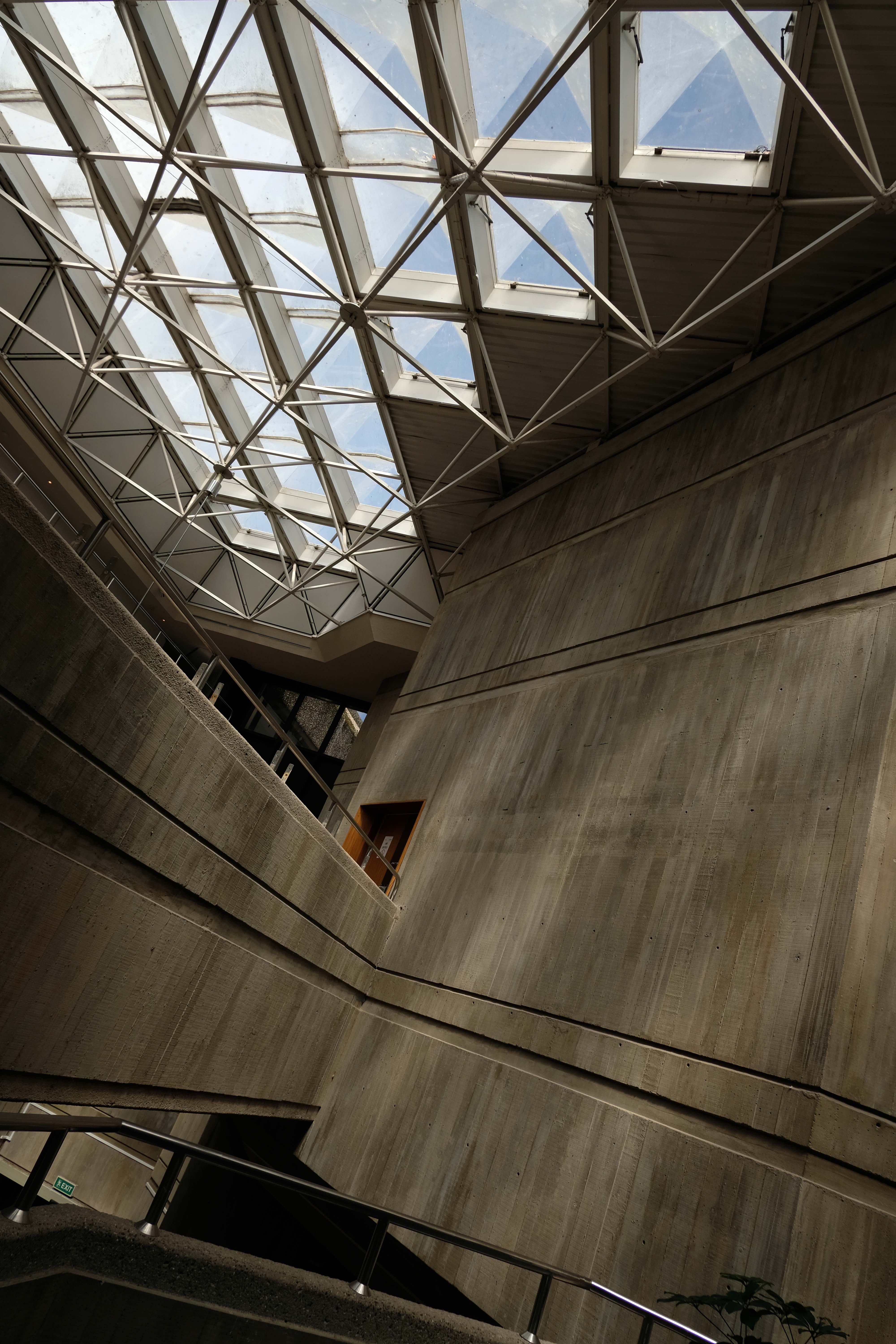
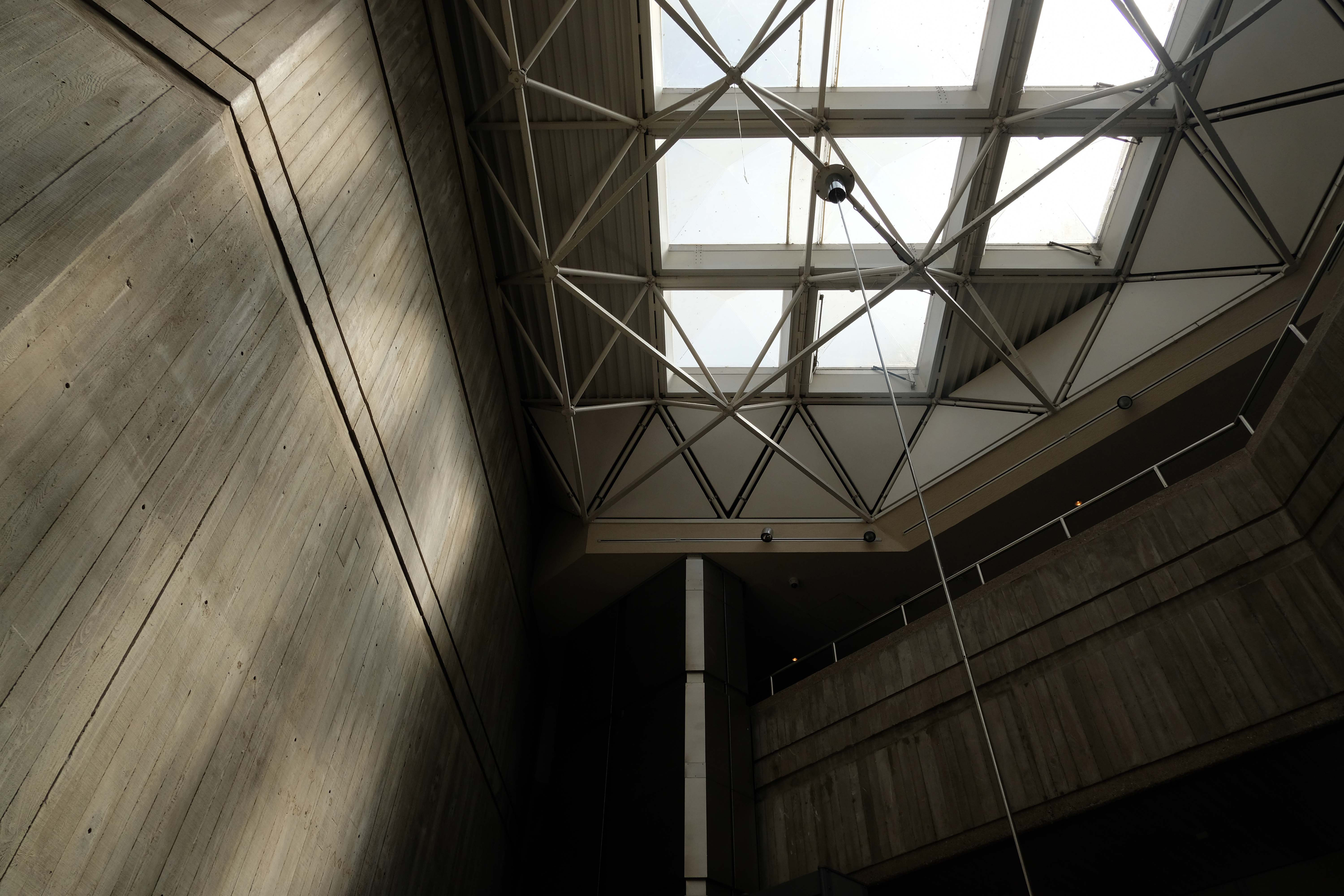
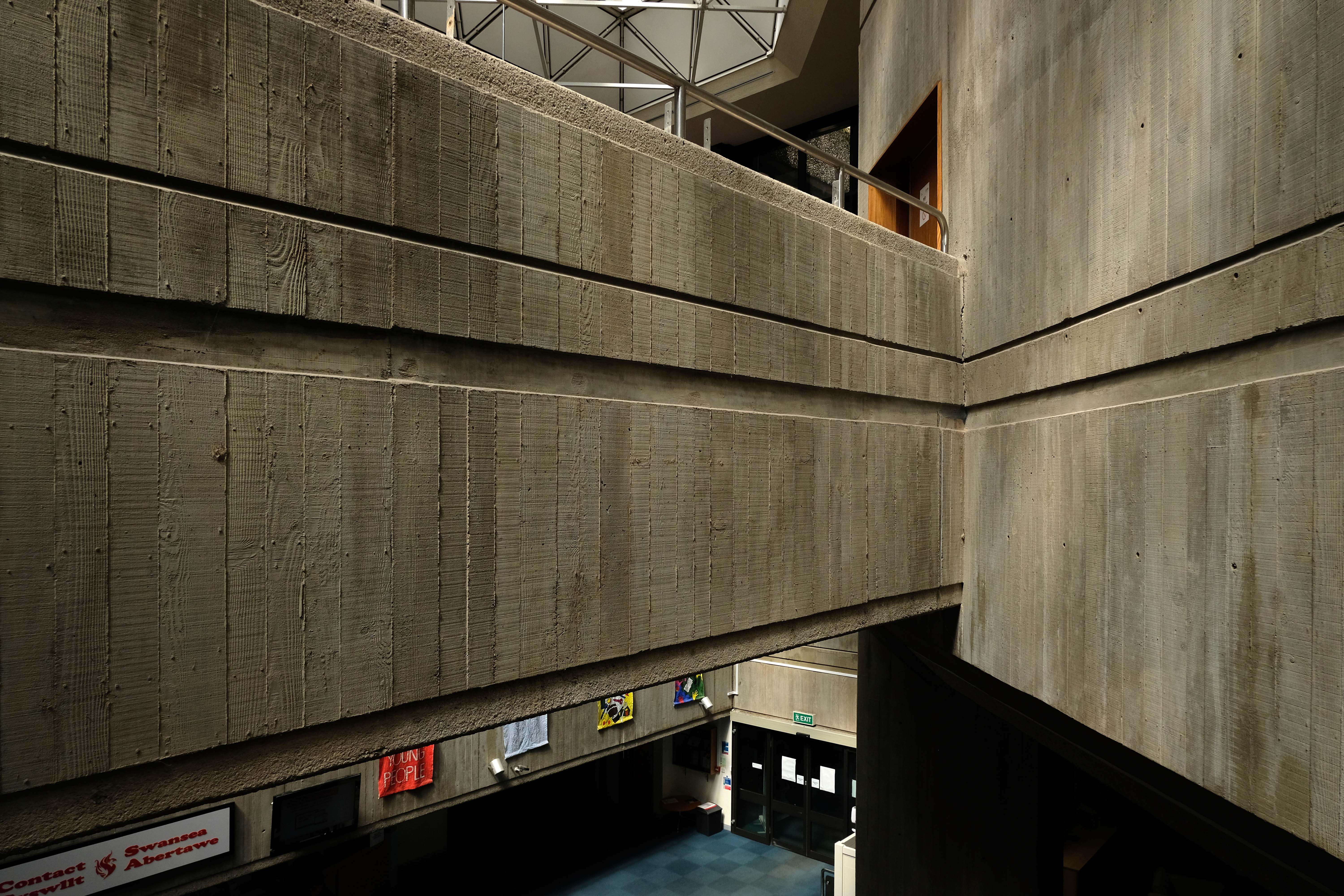
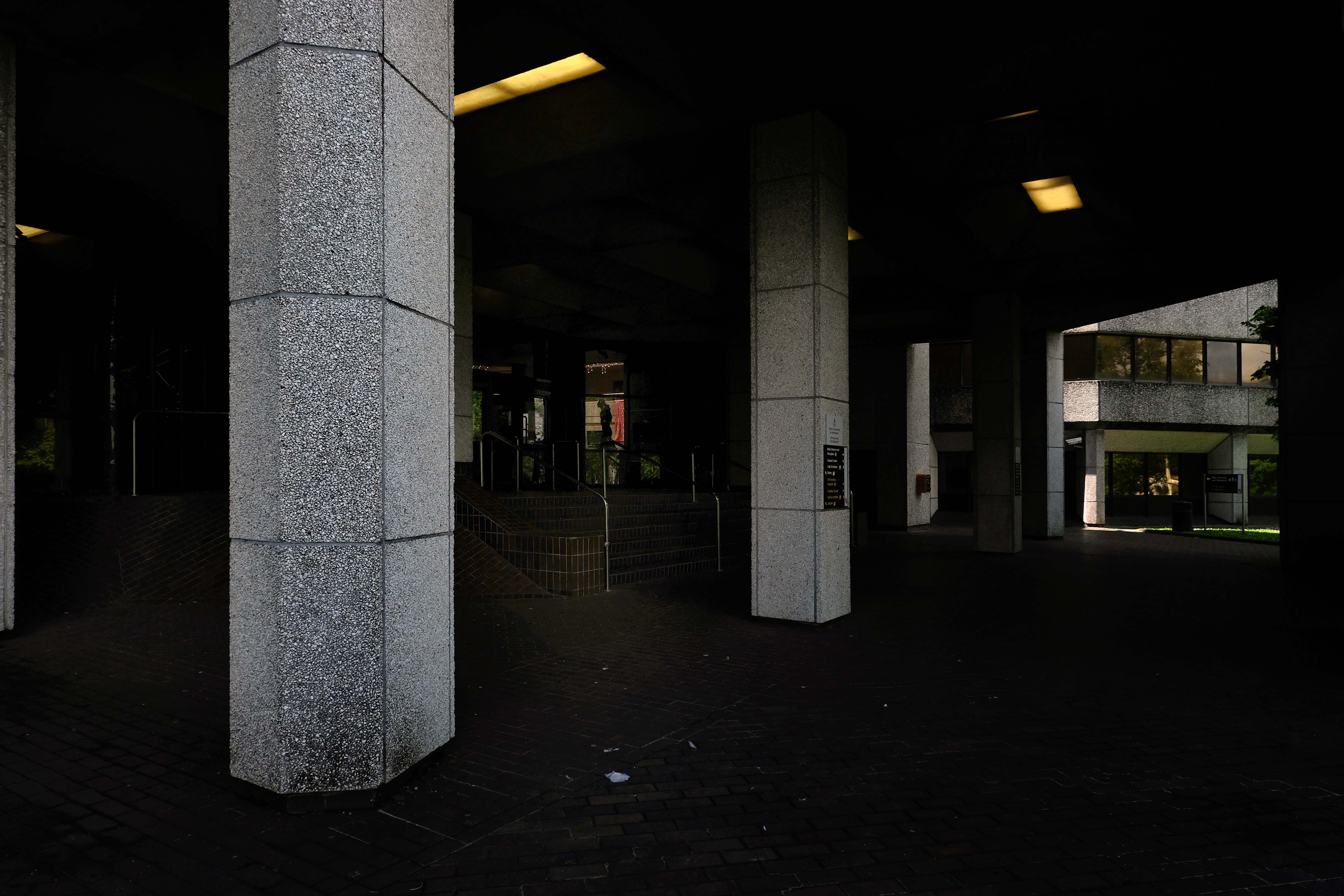
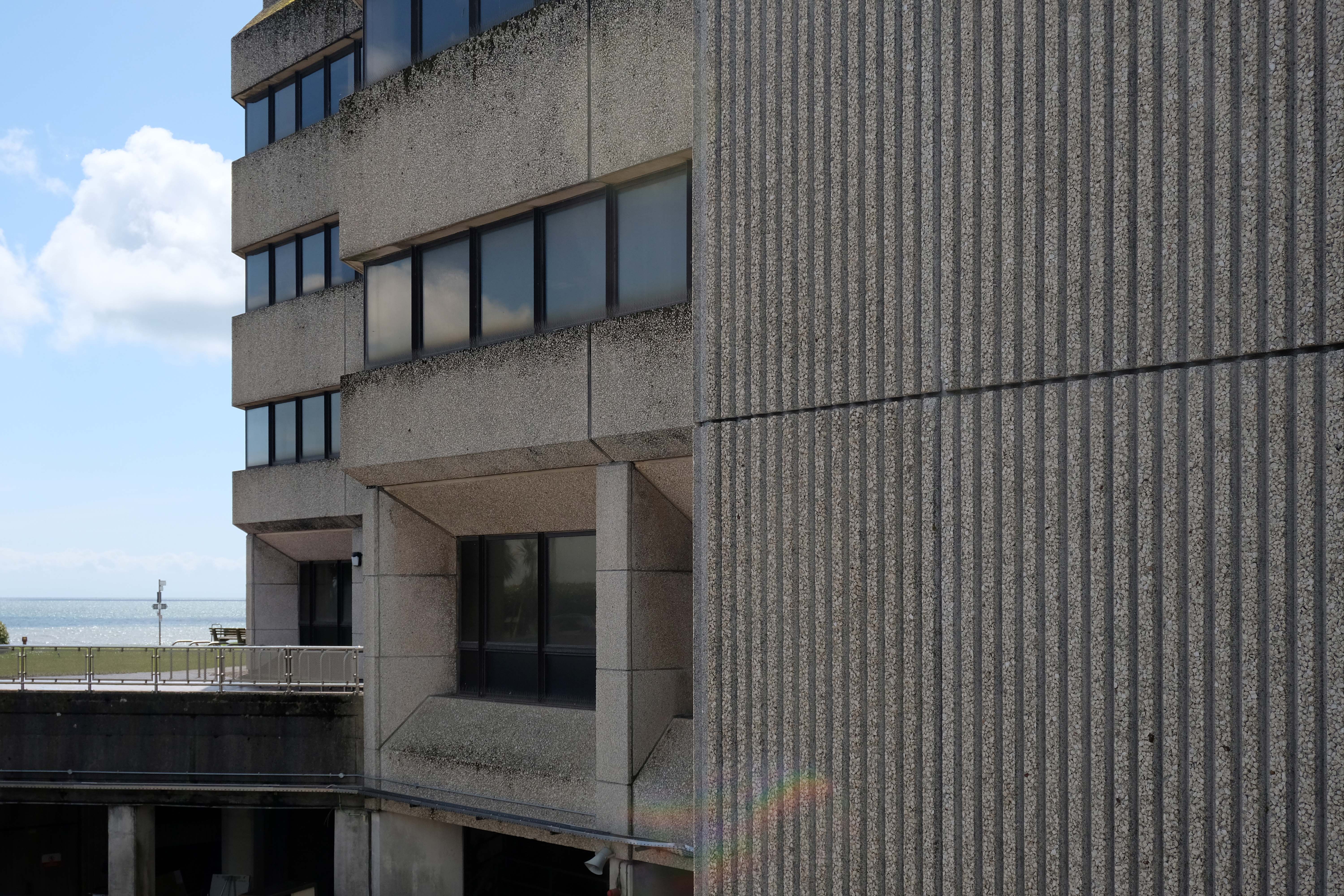
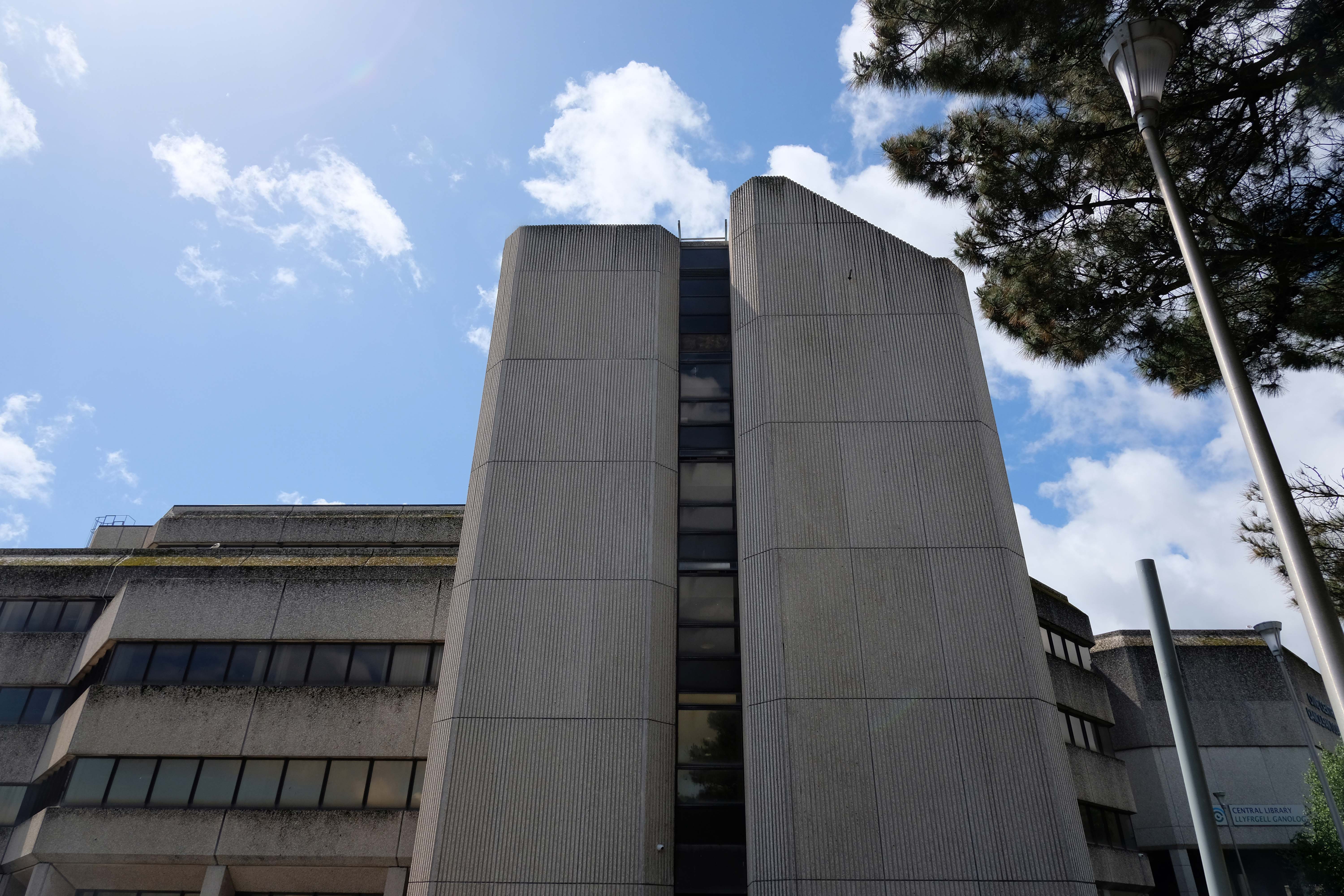
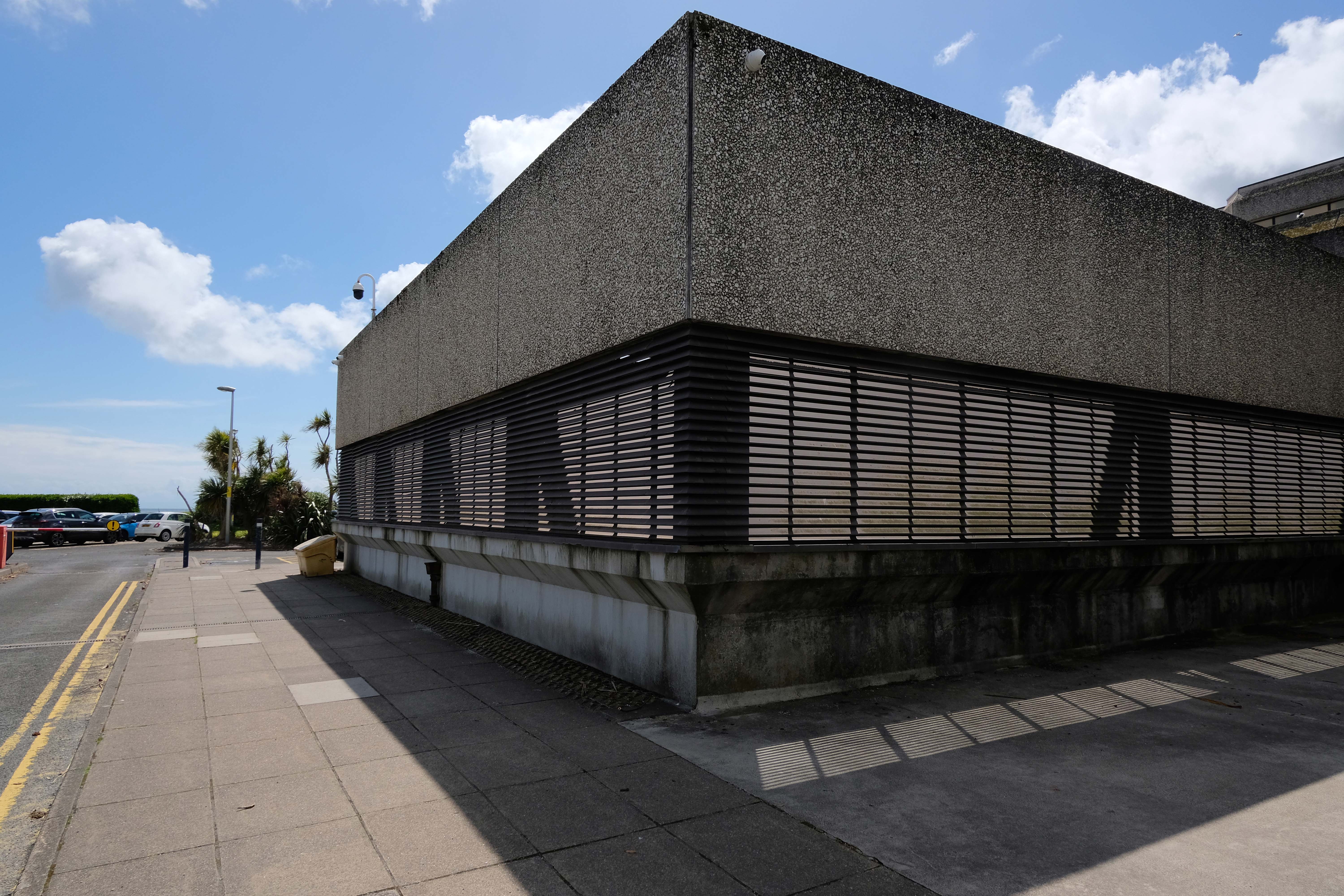
Canolfan Ddinesig Abertawe formerly known as County Hall.
Confused?
Don’t be, it’s all quite simple really.
Following the implementation of the Local Government Act 1972, which broke up Glamorgan County Council and established West Glamorgan County Council, the new county council initially met at Swansea Guildhall. Finding that this arrangement, which involved sharing facilities with Swansea Council, to be inadequate, county leaders procured a dedicated building, selecting a site formerly occupied by an old railway goods yard associated with the Mumbles Railway.
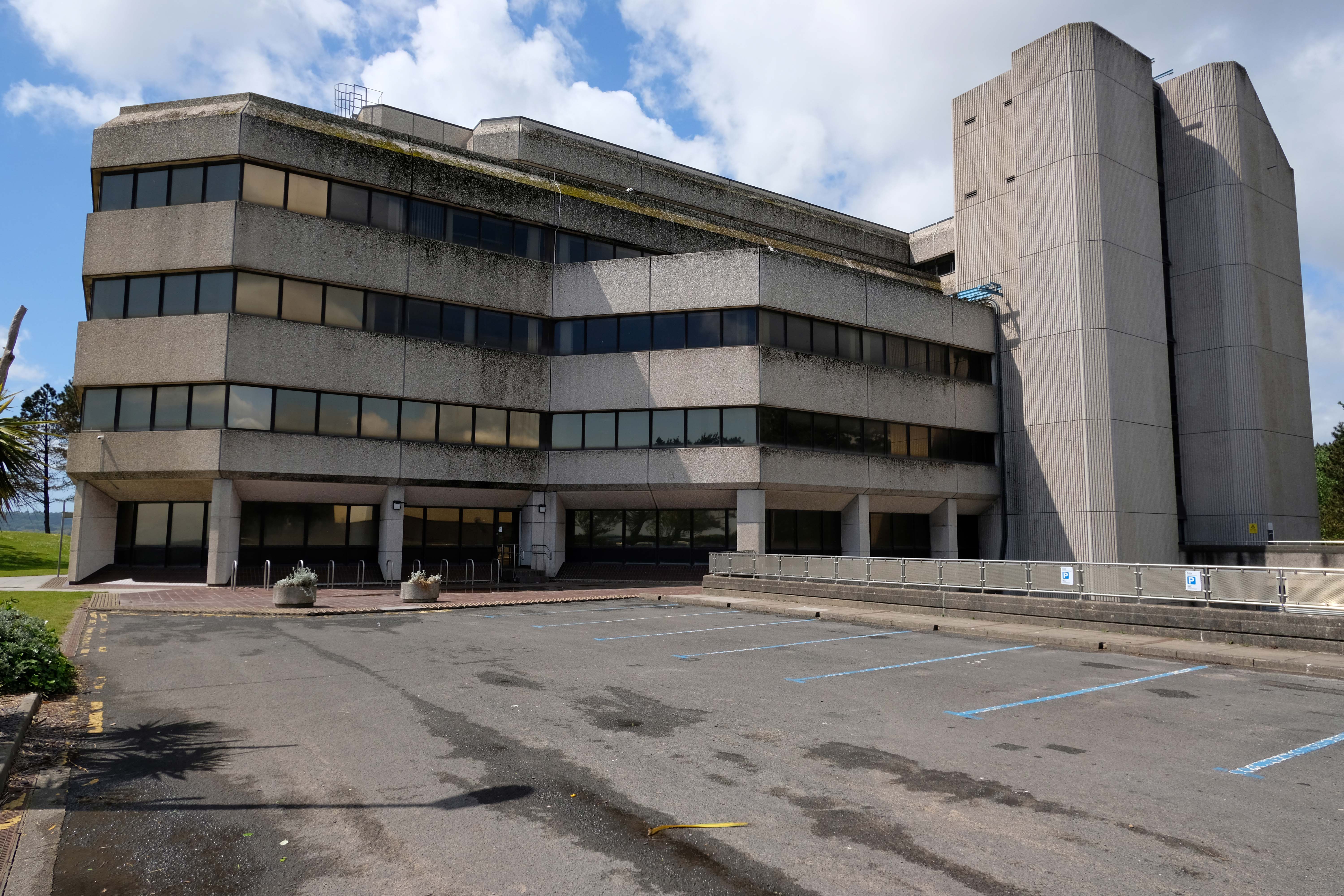
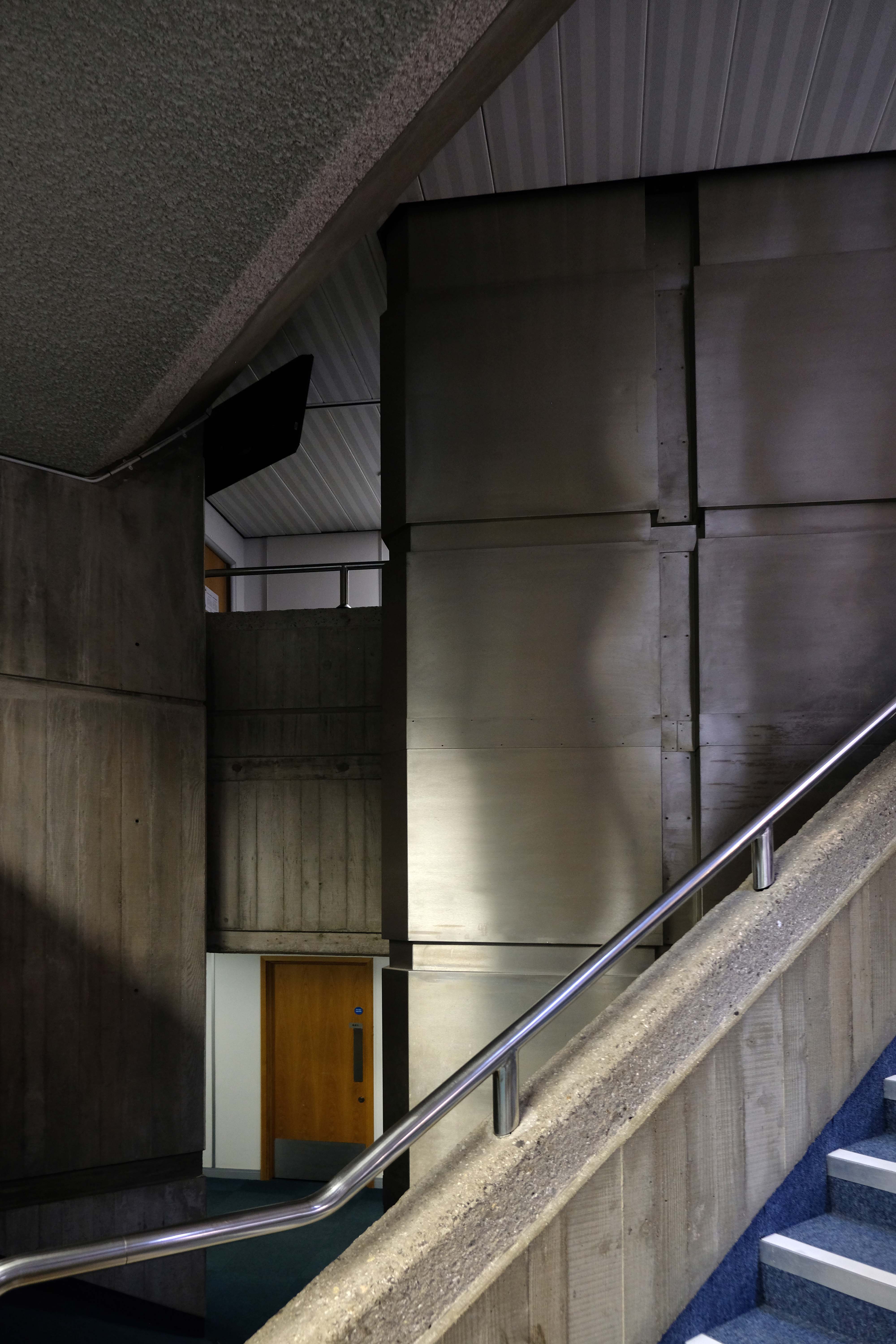
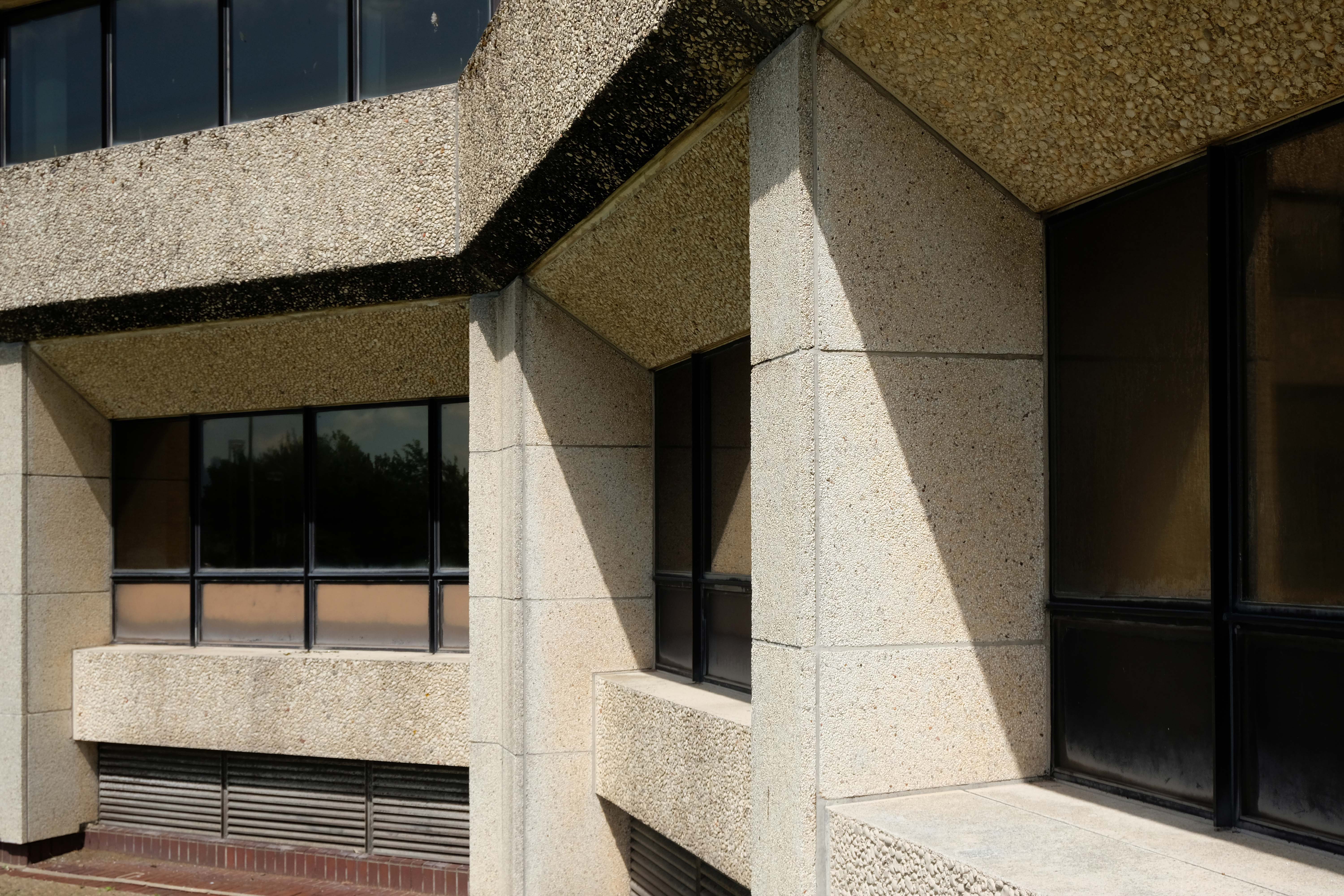
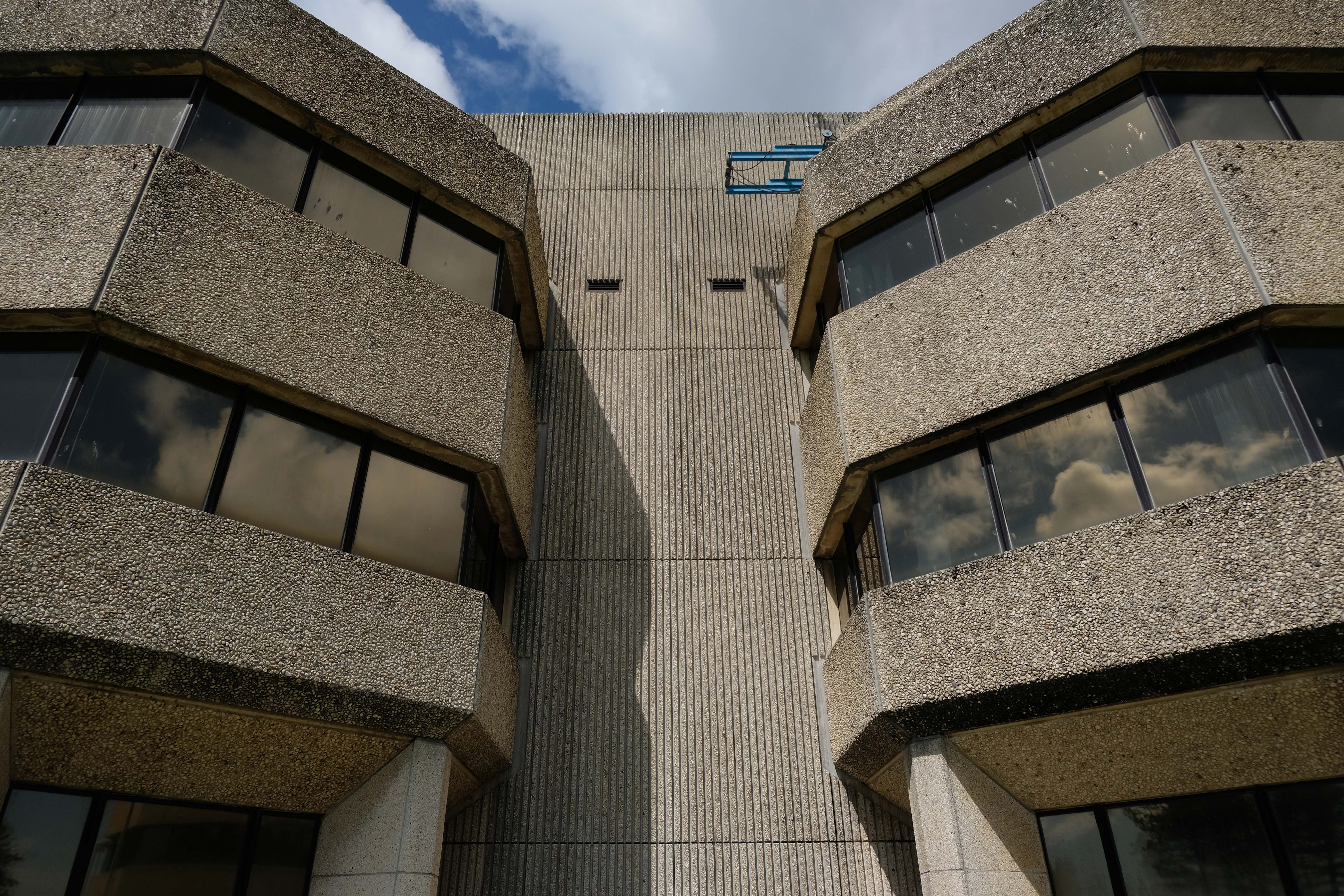
The design features continuous bands of glazing with deep washed calcined flint panels above and below.
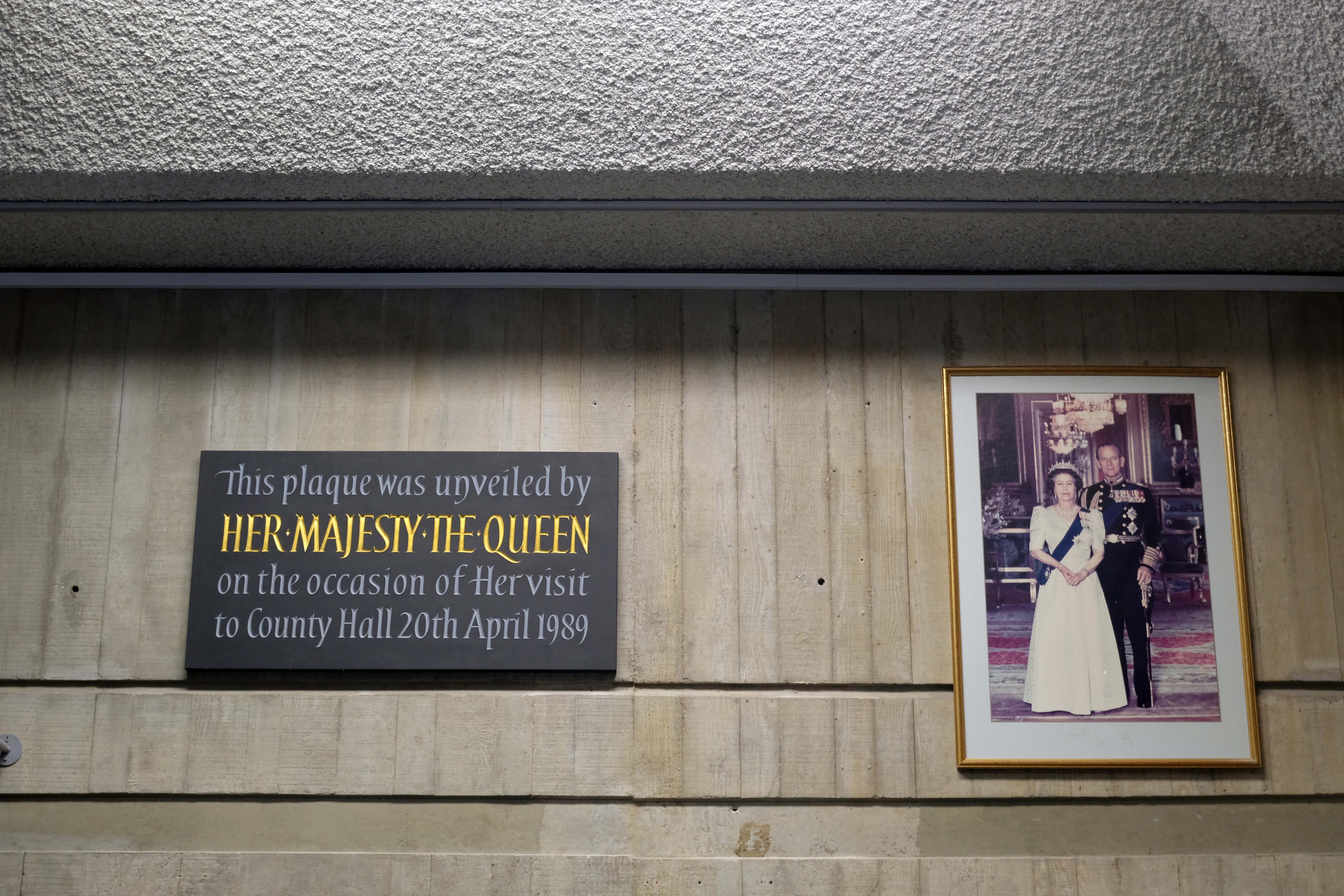
Queen Elizabeth II, accompanied by the Duke of Edinburgh, visited on 20 April 1989.
After local government re-organisation in 1996, which abolished West Glamorgan County Council, ownership of the building was transferred to Swansea Council. It was renamed Swansea Civic Centre on 19 March 2008, and Swansea Central Library moved into the complex as part of a redevelopment scheme.
Urban Splash seem to have a slightly vaguer vision.
In March 2021, plans to find a new use for the location continued to still be a commitment of Swansea council, with the announcement of the transfer of the central library and other public services to the former BHS and now What! store on Oxford Street.
Swansea Civic Centre is at risk the Twentieth Century Society says so – they are strongly opposed to demolition of the iconic building and have submitted an application to have the building listed as Grade II.
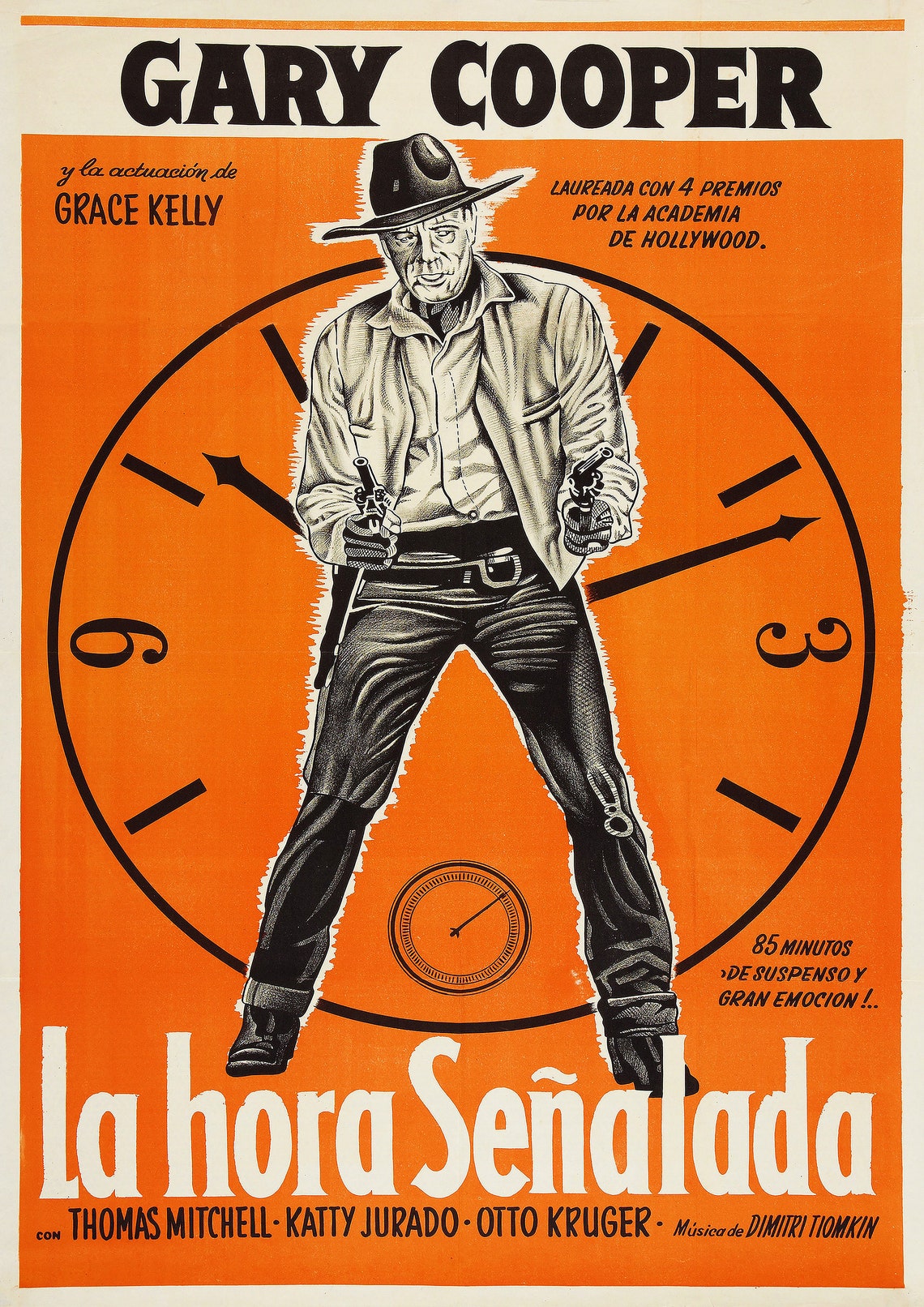
I do not know what fate awaits it, I only know it must be brave – to paraphrase Dimitri Zinovievich Tiomkin, Ned Washington, Gary Cooper and Frankie Laine – it’s High Noon and counting.
Any road up as of the 11th of May it looked just like this:
Diolch yn fawr once again to Catrin Saran James for acting as my spirit guide.
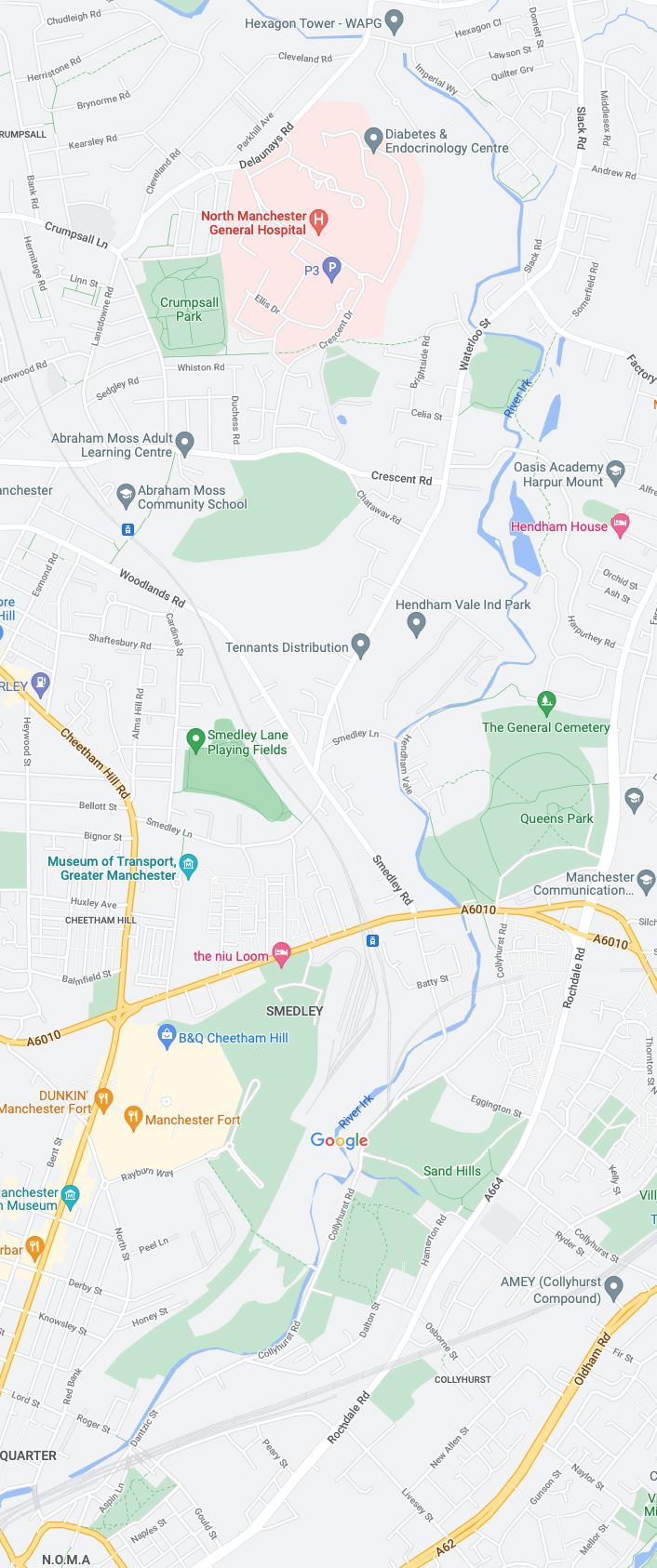
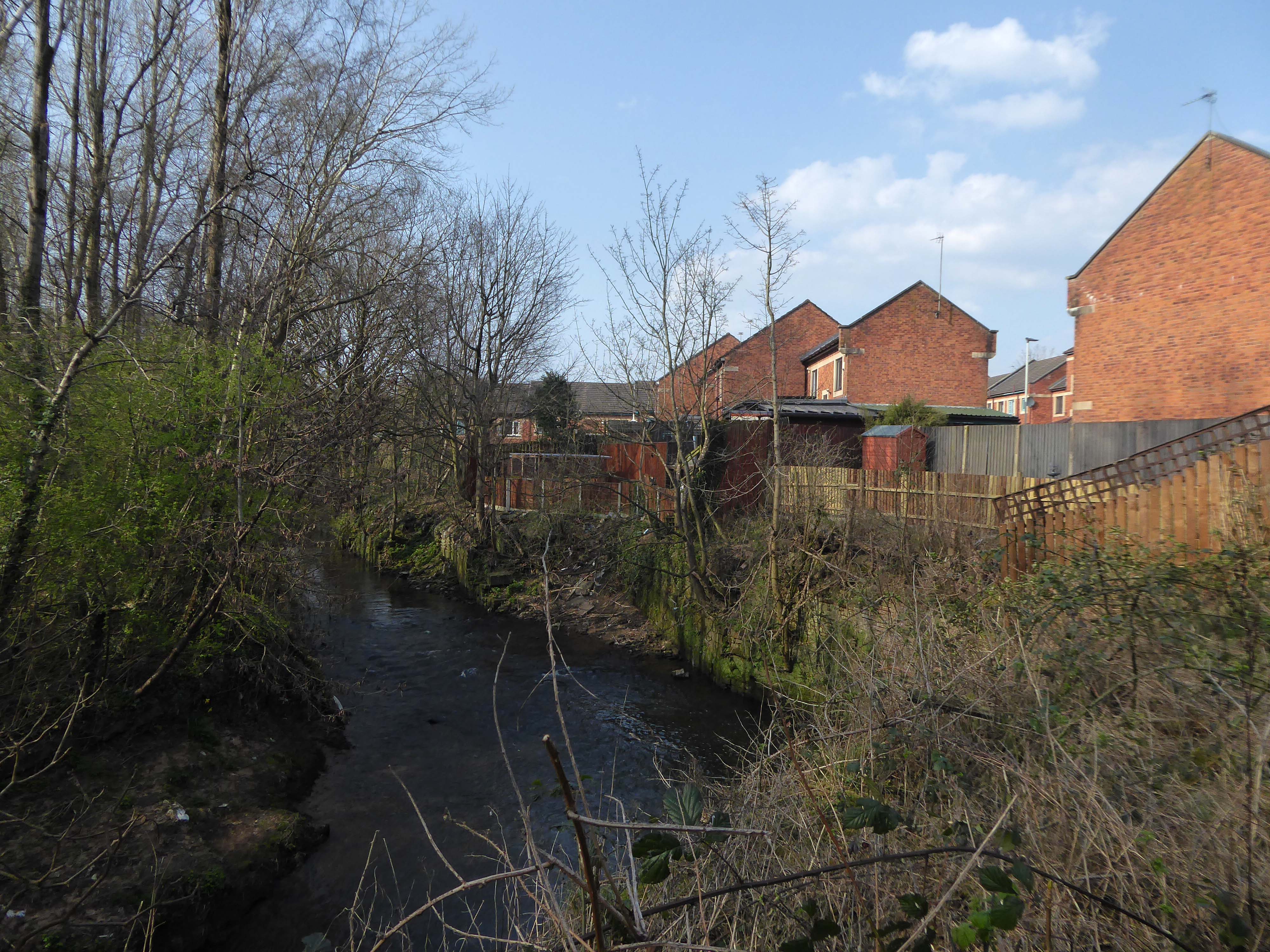
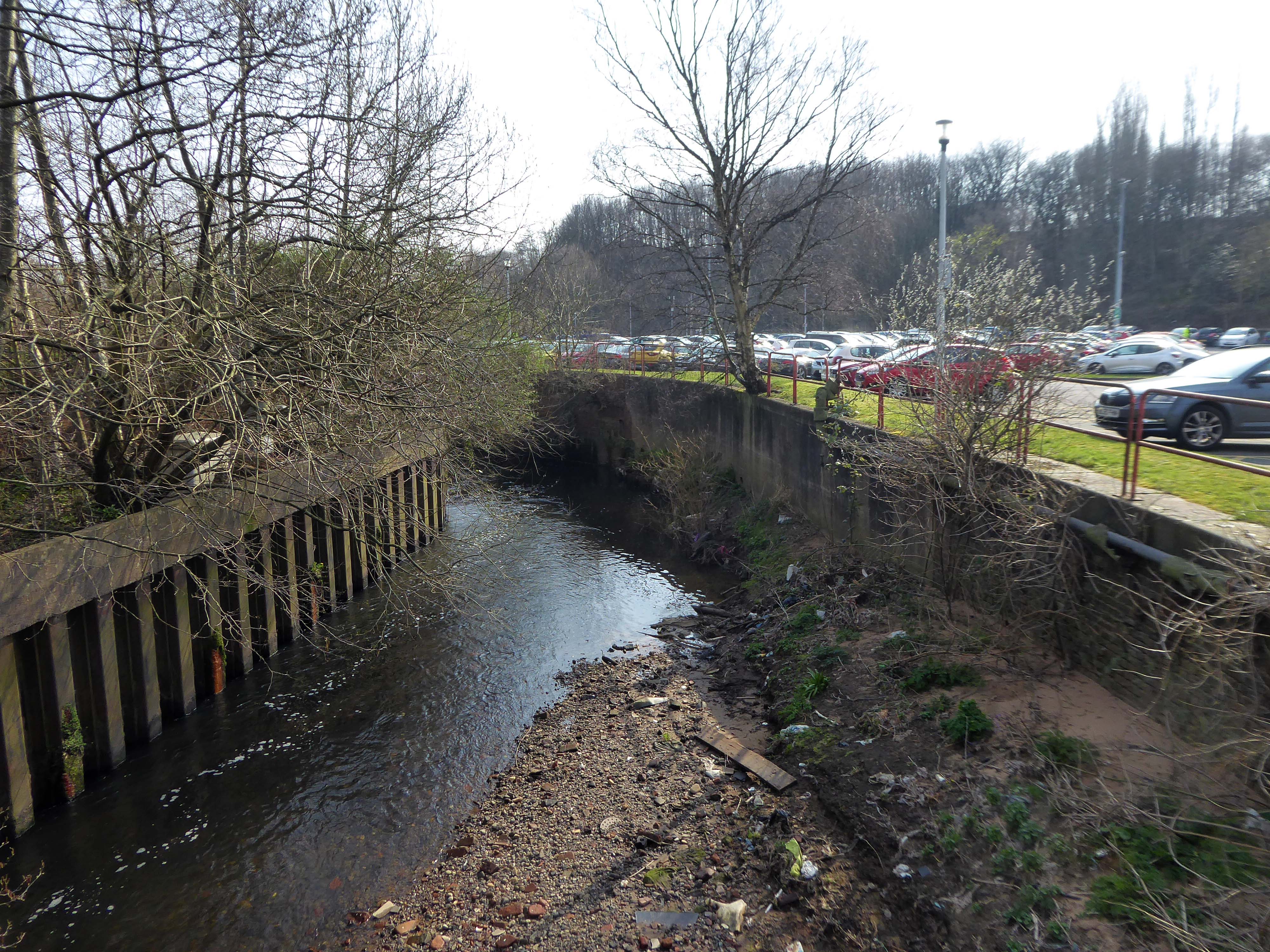
The first leg of a journey to the source of the River Irk beginning behind Victoria, finishing by the Hexagon Towerin Blackley.
The Irk’s name is of obscure etymology, but may be Brittonic in origin and related to the Welsh word iwrch, meaning roebuck
In medieval times, there was a mill by the Irk at which the tenants of the manor ground their corn and its fisheries were controlled by the lord of the manor. In the 16th century, throwing carrion and other offensive matter into the Irk was forbidden. Water for Manchester was drawn from the river before the Industrial Revolution. A bridge over the Irk was recorded in 1381. The river was noted for destructive floods. In 1480, the burgesses of Manchester described the highway between Manchester and Collyhurst which – the water of Irk had worn out. In 1816, of seven bridges over the Irk, six were liable to be flooded after heavy rain but the seventh, the Ducie Bridge completed in 1814 was above flood levels.
According to The New Gazetteer of Lancashire the Irk had – more mill seats upon it than any other stream of its length in the Kingdom and – the eels in this river were formerly remarkable for their fatness, which was attributed to the grease and oils expressed by the mills from the woollen cloths and mixed with the waters.
However, by the start of the 20th century the Irk Valley betweenCrumpsall and Blackley had been left a neglected river – not only the blackest but the most sluggish of all rivers.
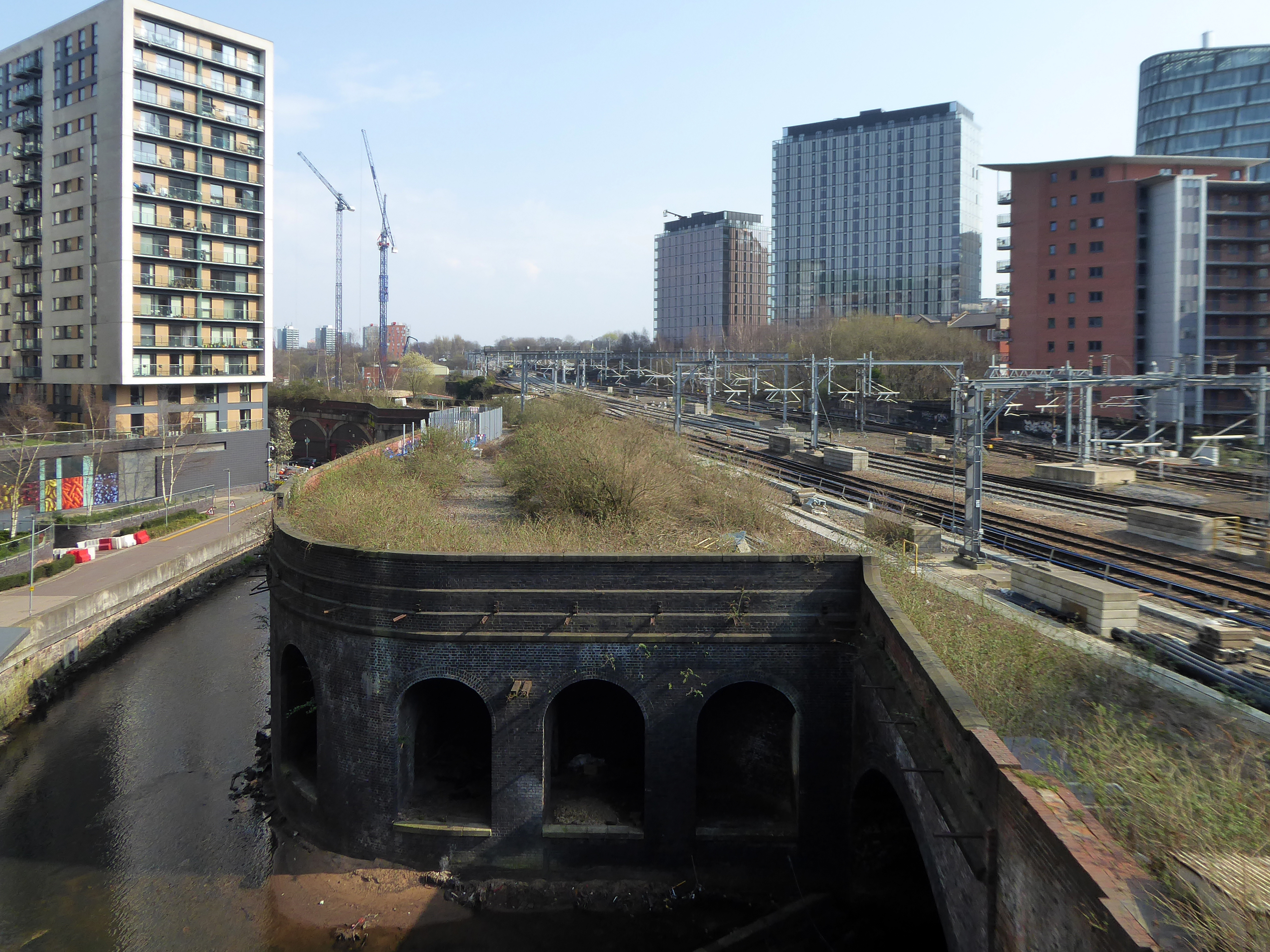
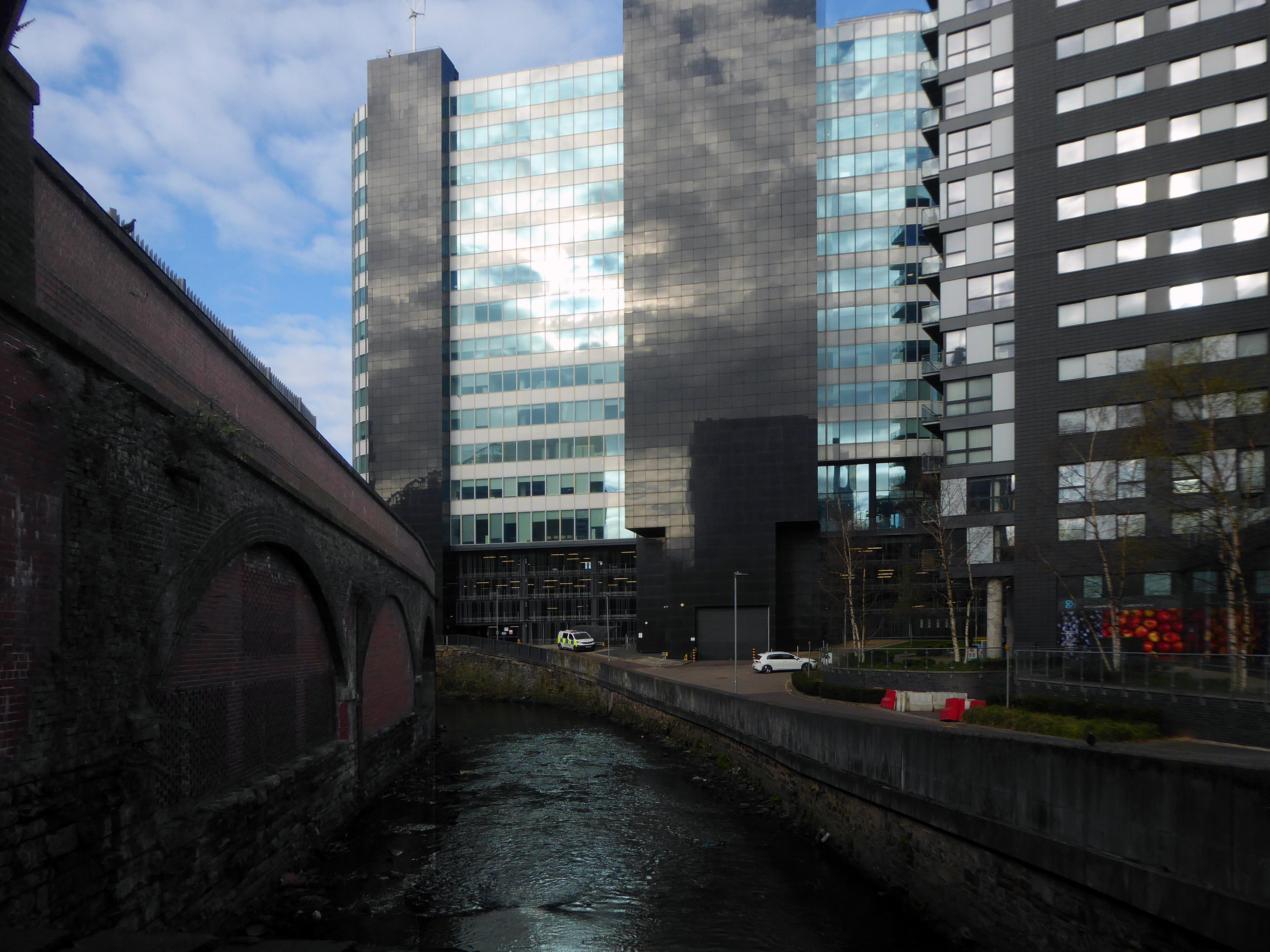
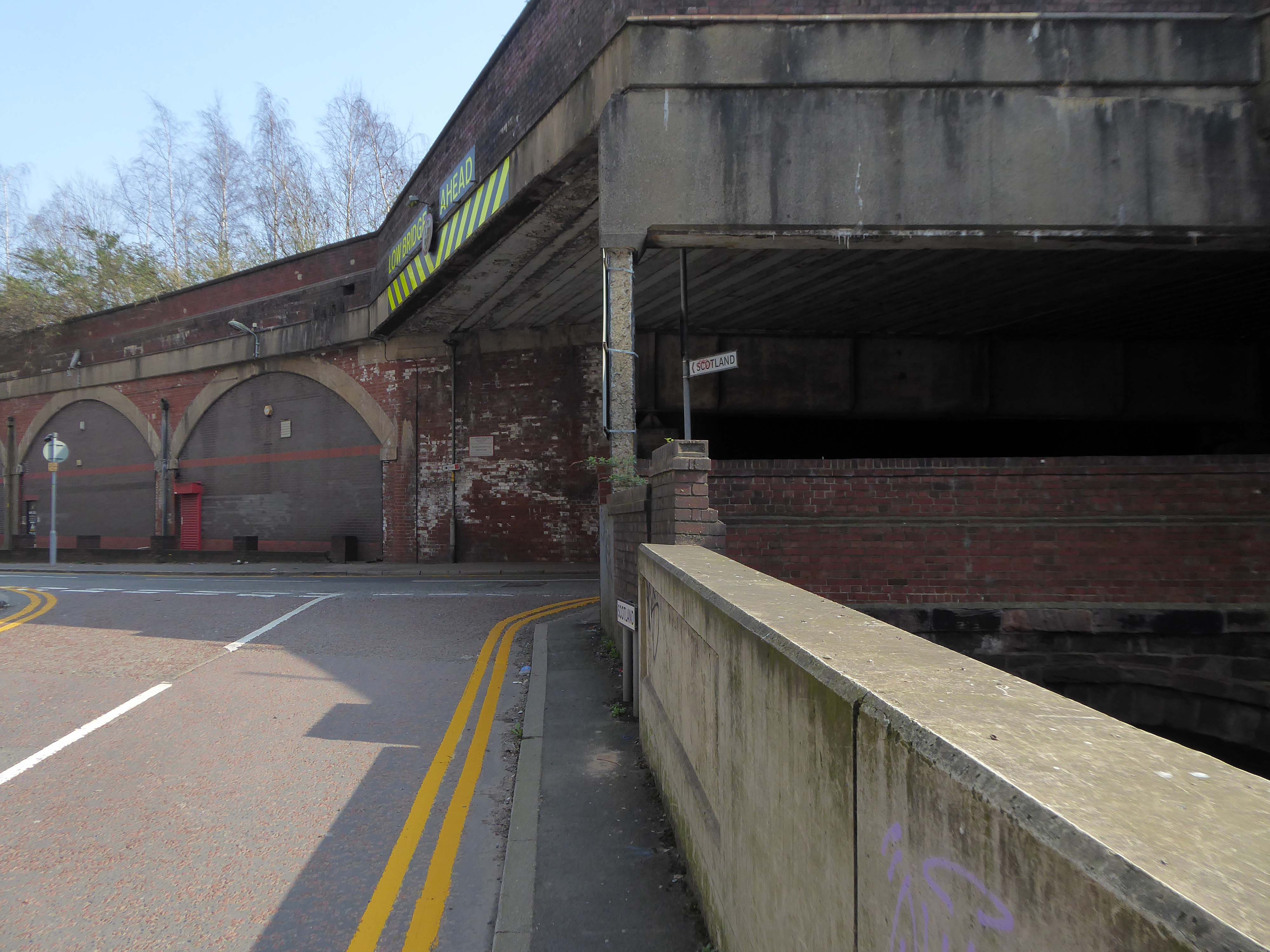
The river emerges from beneath the city into an area named Scotland – a remnant of Manchester’s links with the Jacobite Rebellion.
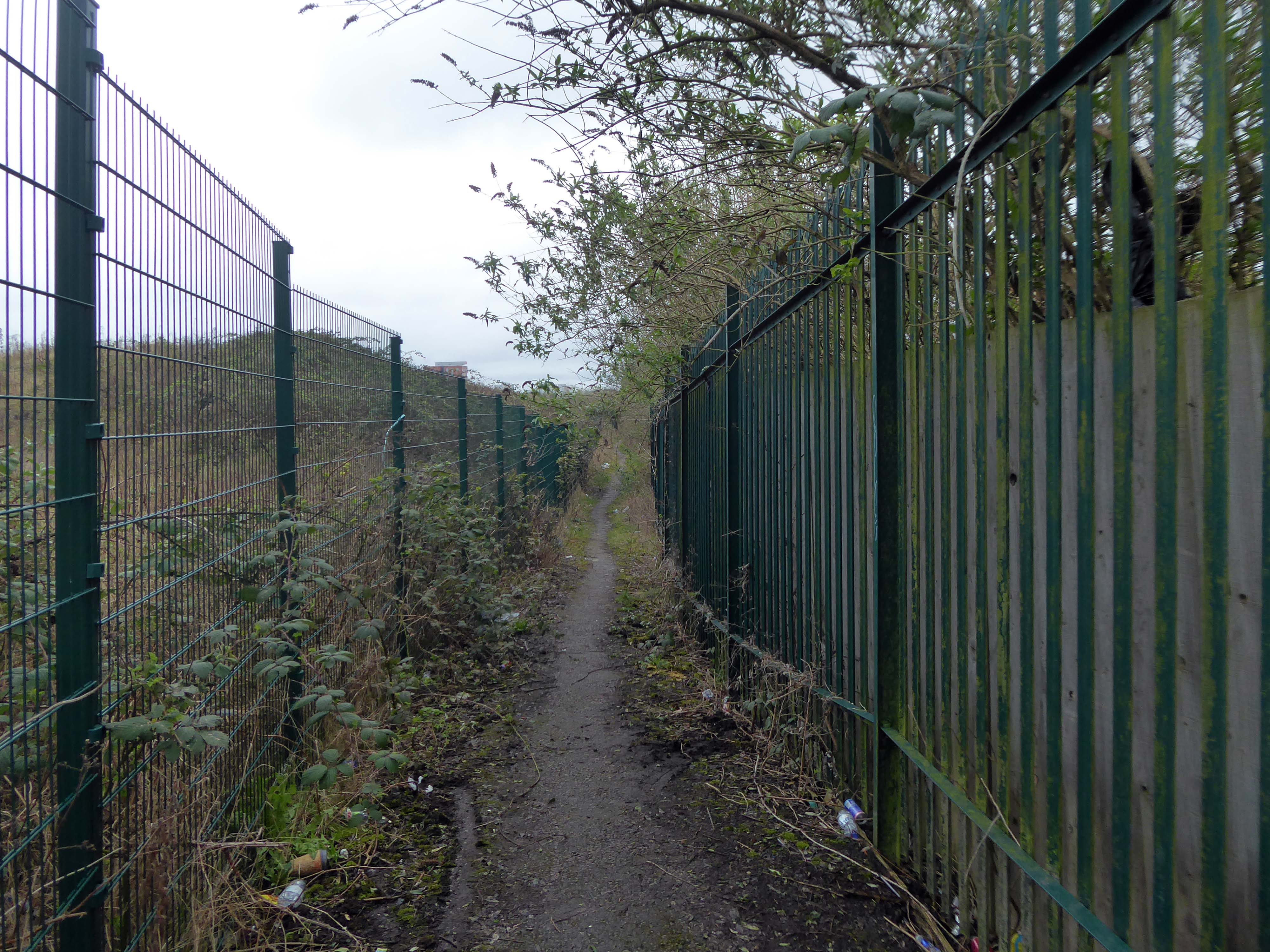
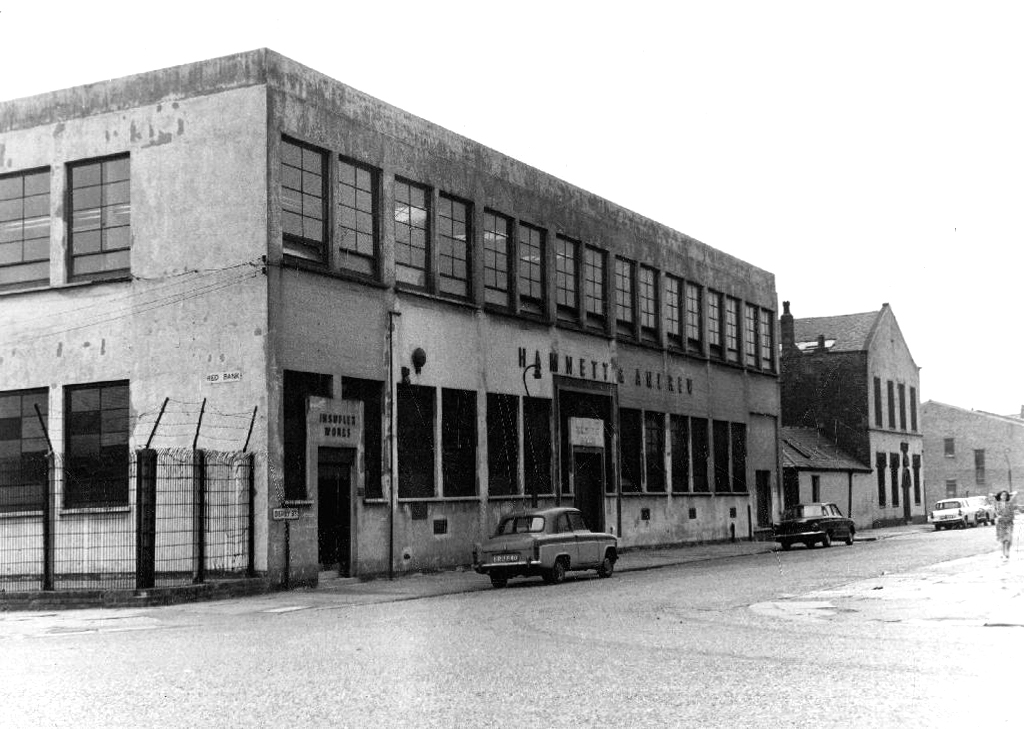
To the left were the squalid Victorian homes of Red Bank – currently presenting as the Green Quarter.
The river briefly becomes subterranean again.
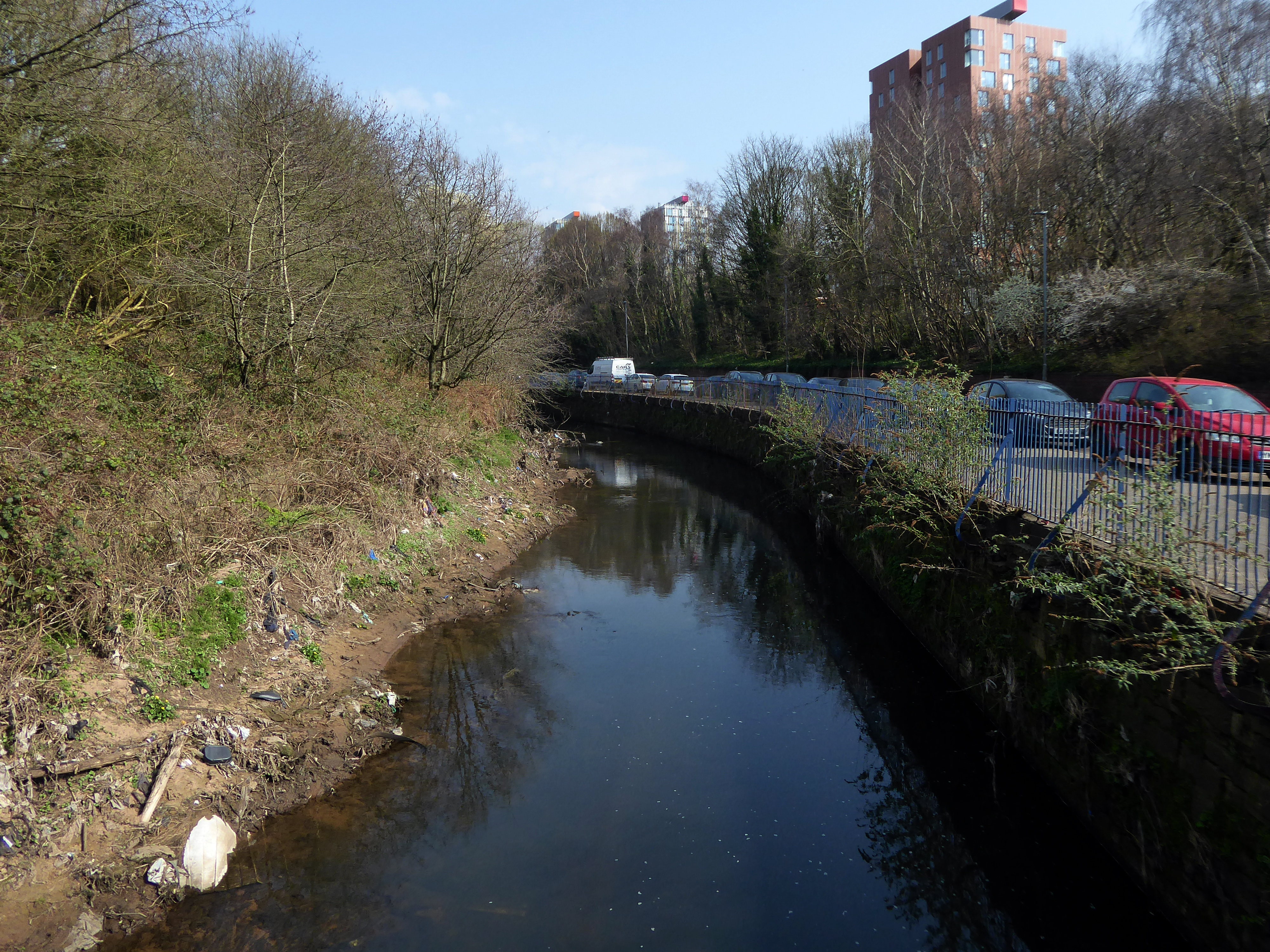
This is a river with an ignominious history – famously damned by émigré Friedrich Engels.
At the bottom flows, or rather stagnates, the Irk, a narrow, coal-black, foul-smelling stream, full of debris and refuse, which it deposits on the shallower right bank.
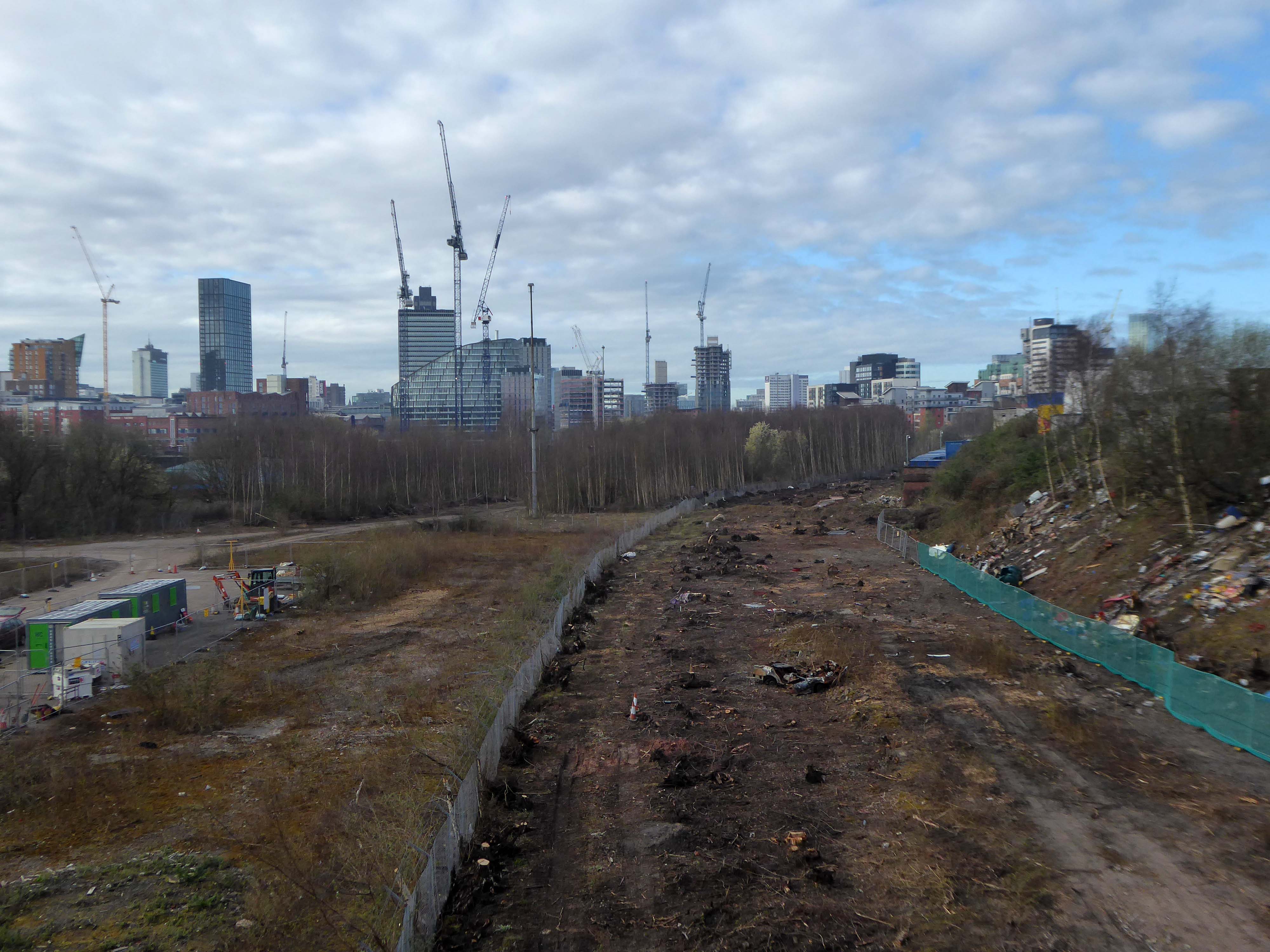
Spanning the defunct railway workings, affording a view of the brightly blooming city centre.
Leaving Collyhurst Road, we journey along Smedley Road.
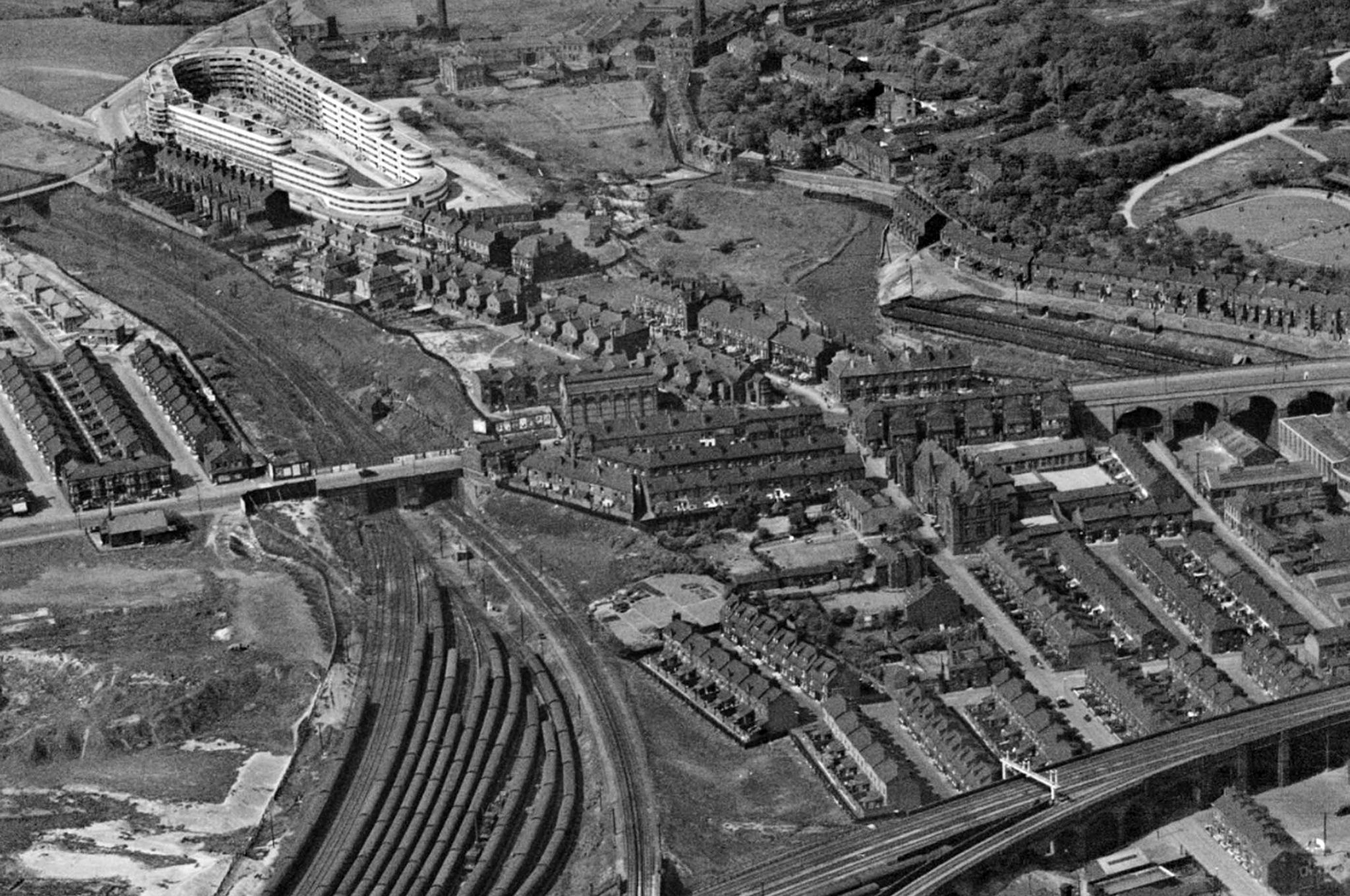
Seen here in 1934.
Passing beneath Queens Road – Queens Park to the right.
Queen’s Park was one of Britain’s first municipal parks created in 1846. The park was originally arranged around Hendham Hall, home of the Houghton family however this was demolished in 1884.
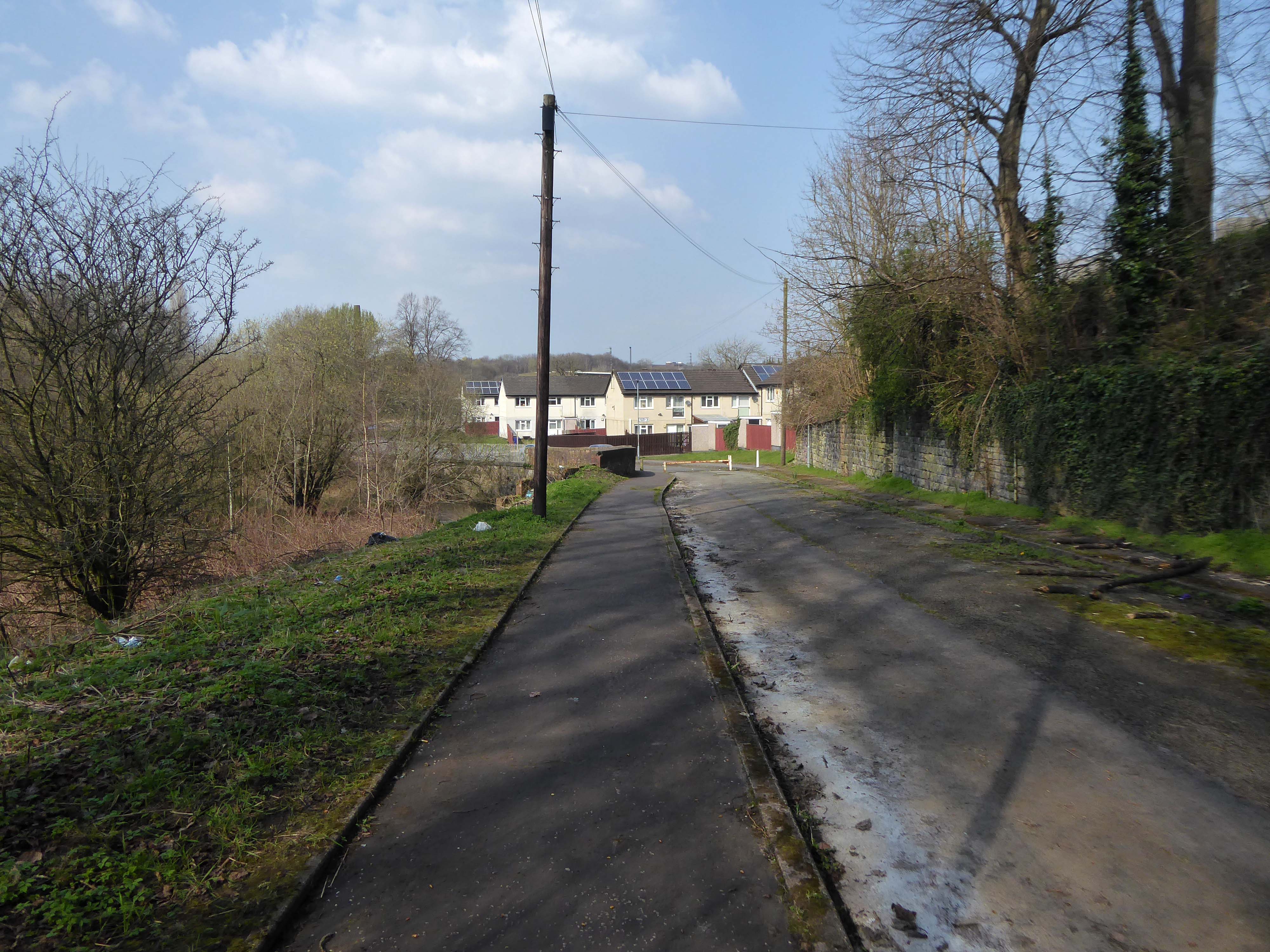
Dropping down to Hendham Vale.
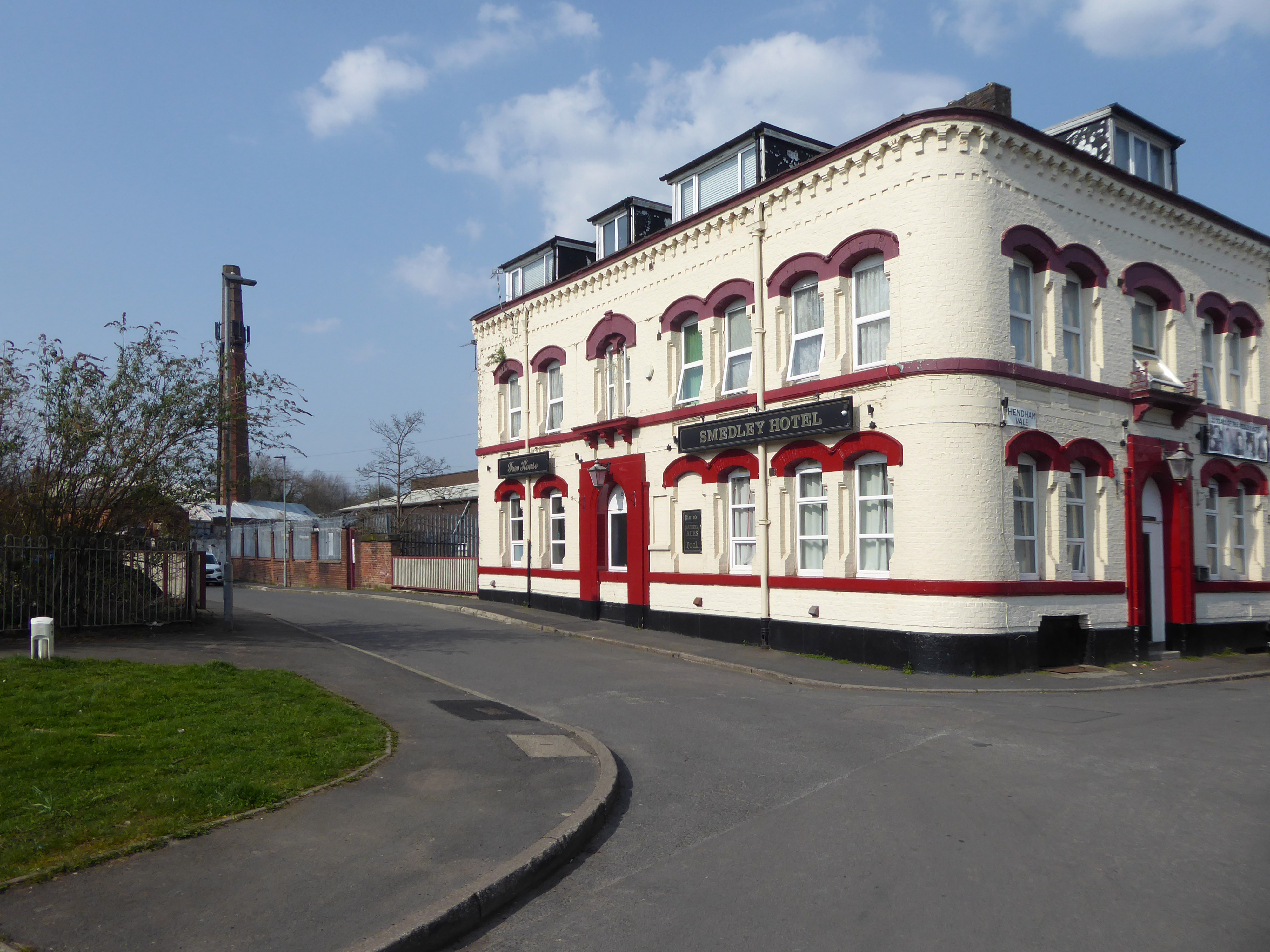
To the right is the Smedley Hotel.
The Smedley Hotel is a very large pub that is hidden away on a quiet back street.Once inside there were a few different rooms and I had a drink in the bar which was fairly large and seemed in need of some attention. The pub still had its old Chesters signs outside and there were three real ales on the bar. I had a drink of Chesters bitter and this was a very nice drink the other beers were Chesters mild and Boddington’s bitter.
I thought this pub would be long gone but it is still standing and I think open for business.
Lost to the world are the Manchester Moderne flats of Kennet House overlooking the Irk Valley on Smedley Lane.
Hendham Way becomes a pedestrianised lane.
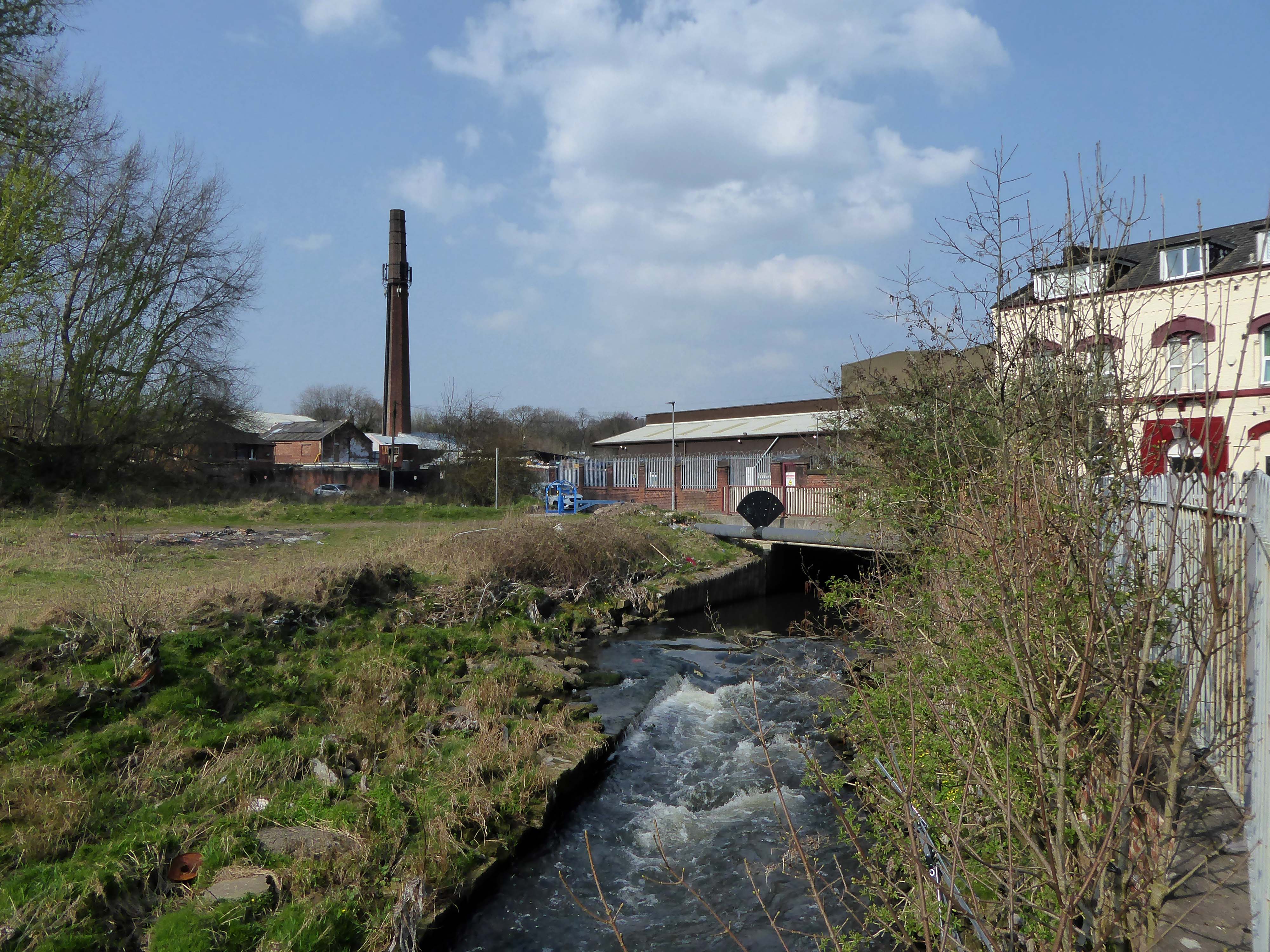
Taking the road up and then down, returning to the river, and following the wrong path – alongside the Hapurhey Reservoir and Ponds.
A remnant of the industrial era the reservoirs and ponds, once used by the factories as a source of water, have over the year become a thriving habitat which supports a substantial amount of wildlife.
Then cutting back and regaining the correct path.Finally arriving at the Hexagon Tower.
The final day the first sight of cloud and sea mist.
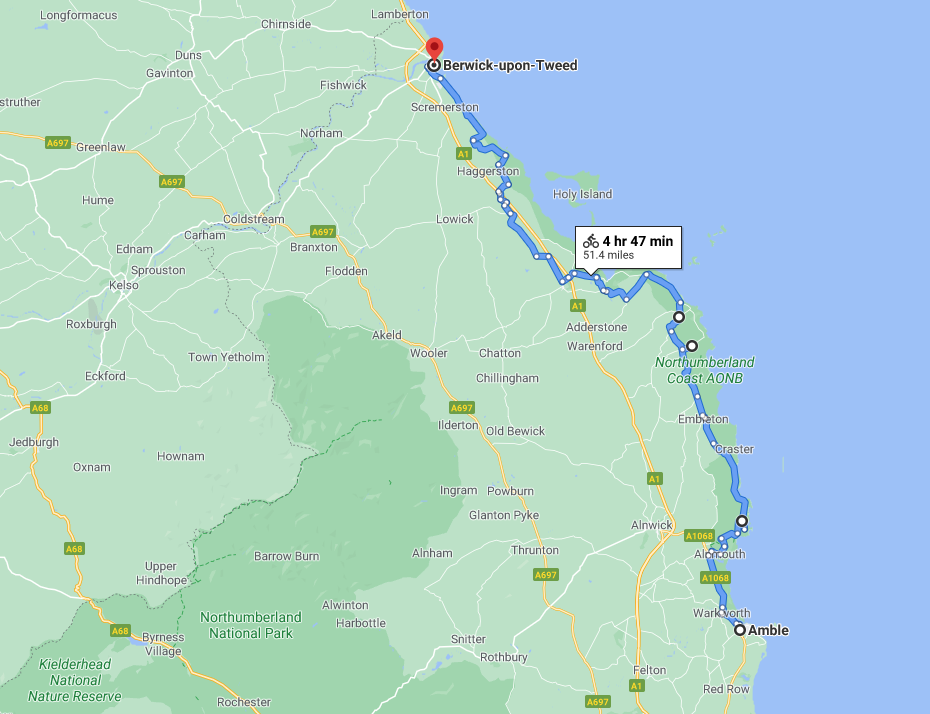
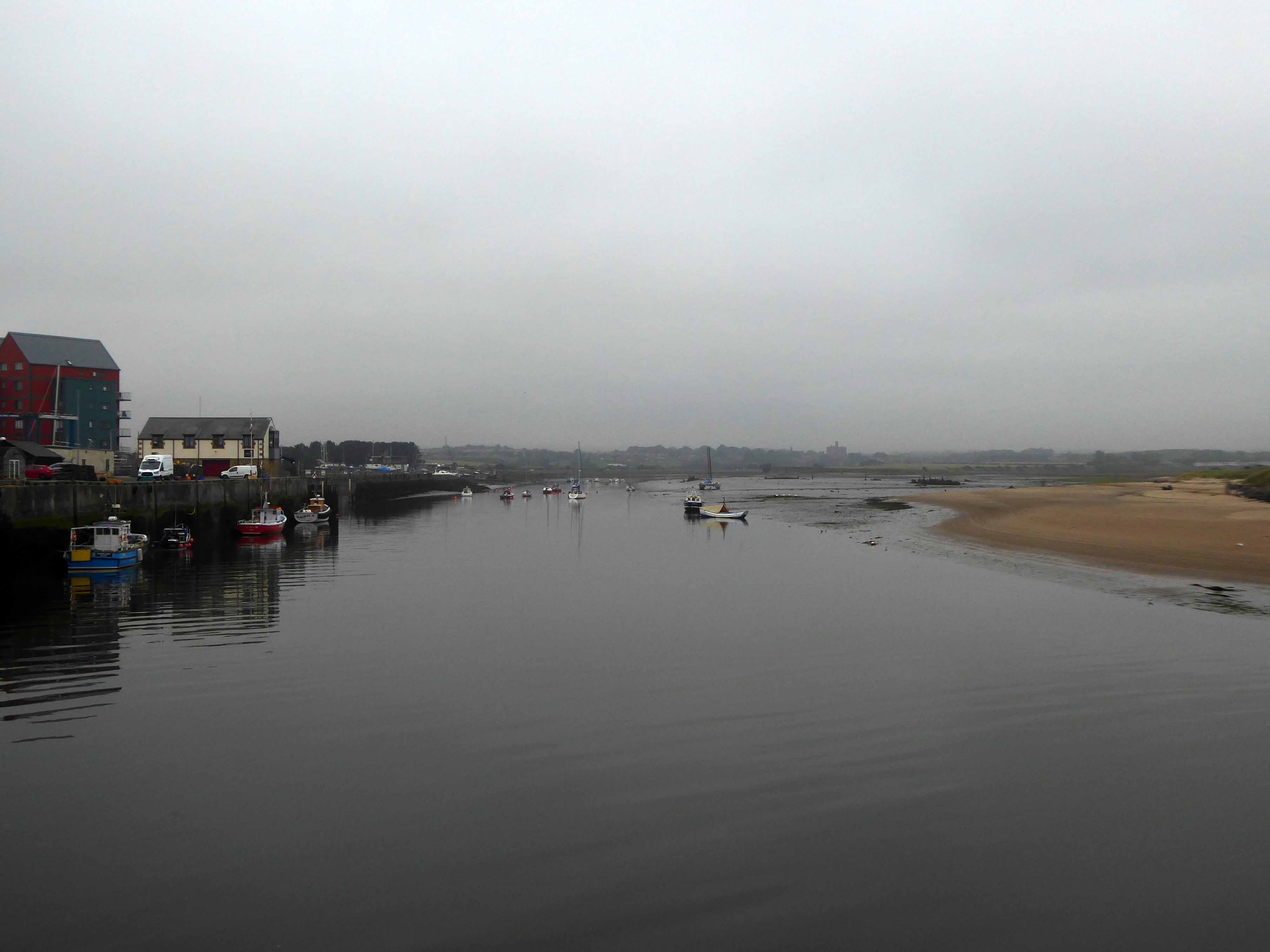
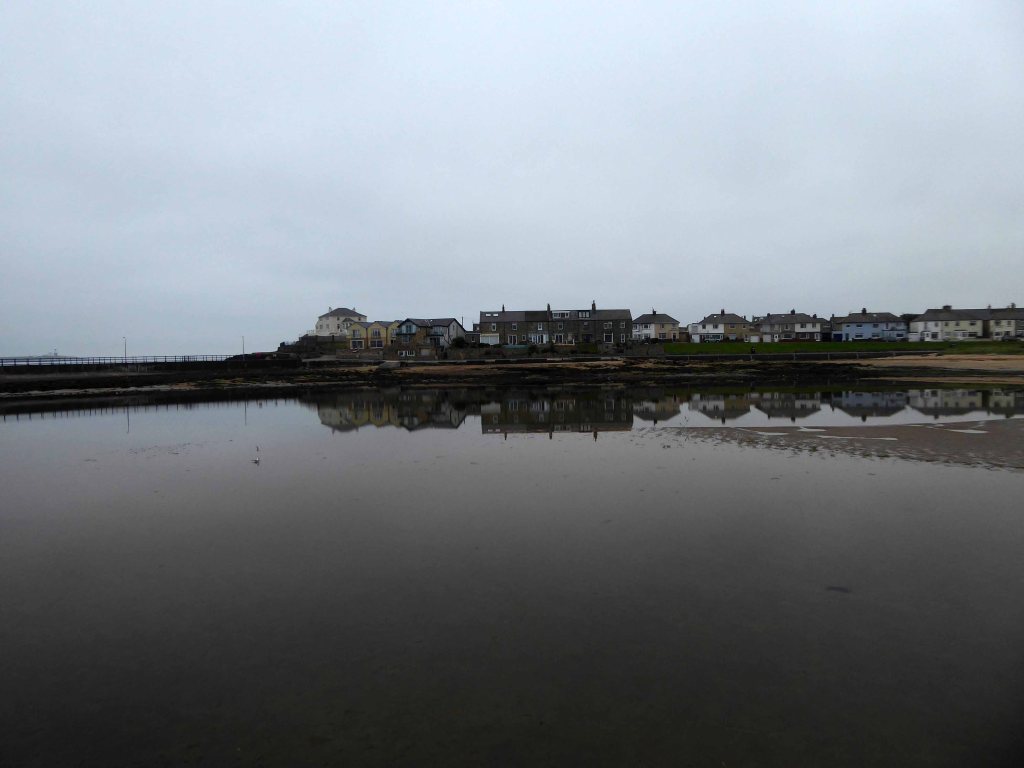
I awoke early and took an amble around Amble.
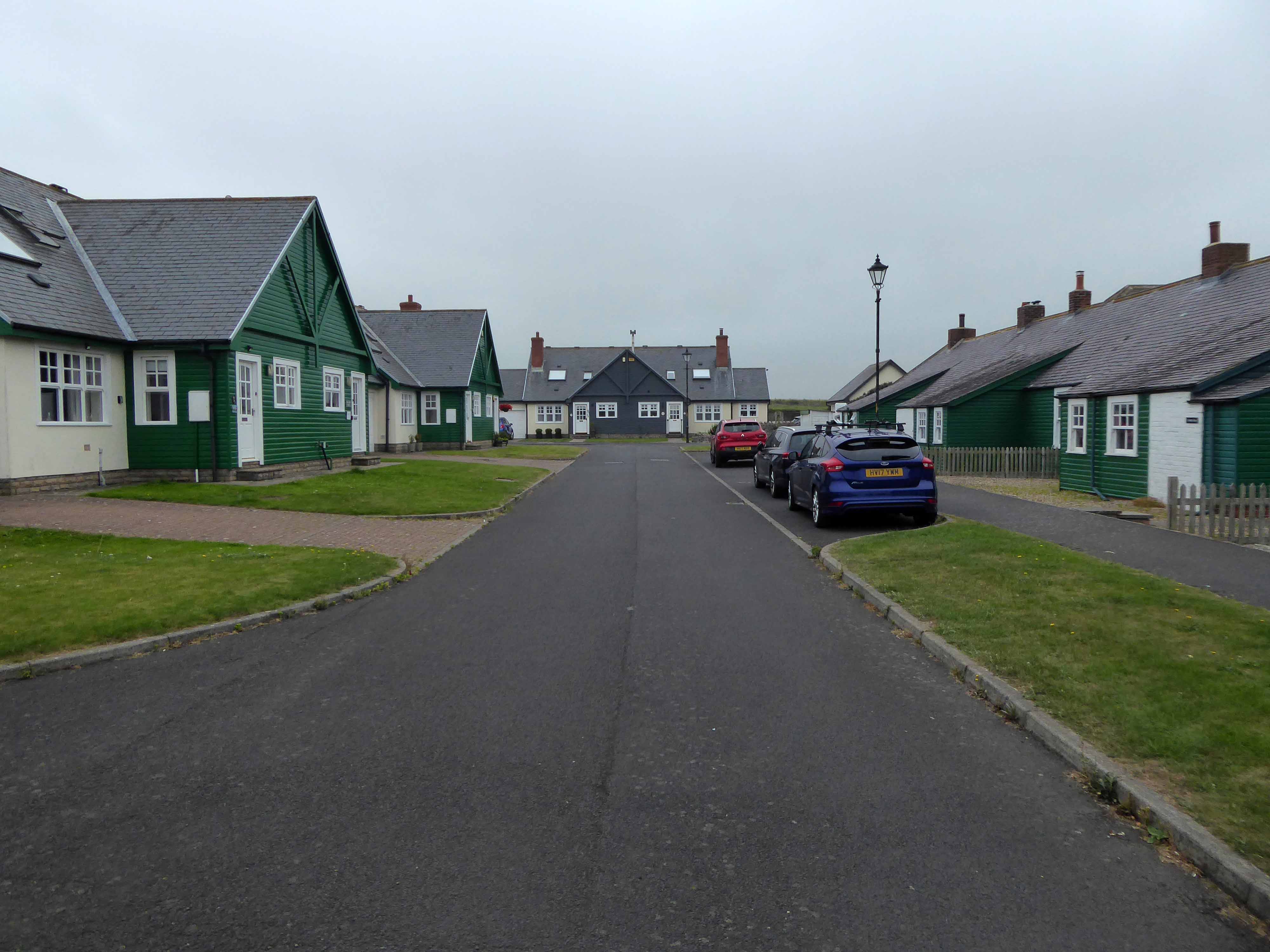
Then off on the road to Warkworth and beyond to Alnmouth – where I revisited a small group of asymmetric post-war dormer bungalows.
Stopping to view the flood plain of the River Aln, chatting perchance with the local environmental officer.
Who explained how the flood defences had been removed, as this encouraged the natural process of flooding and receding to proceed unhindered, thus preventing property from being interminably sodden.
We also discussed the decline in vernacular architecture and the fashion for all that is New England, much to the detriment of New Northumberland.
One day everywhere will look like a someone else’s vision of somewhere else.
The good folk of Craster have wisely prevented the local bus from entering the North Sea.
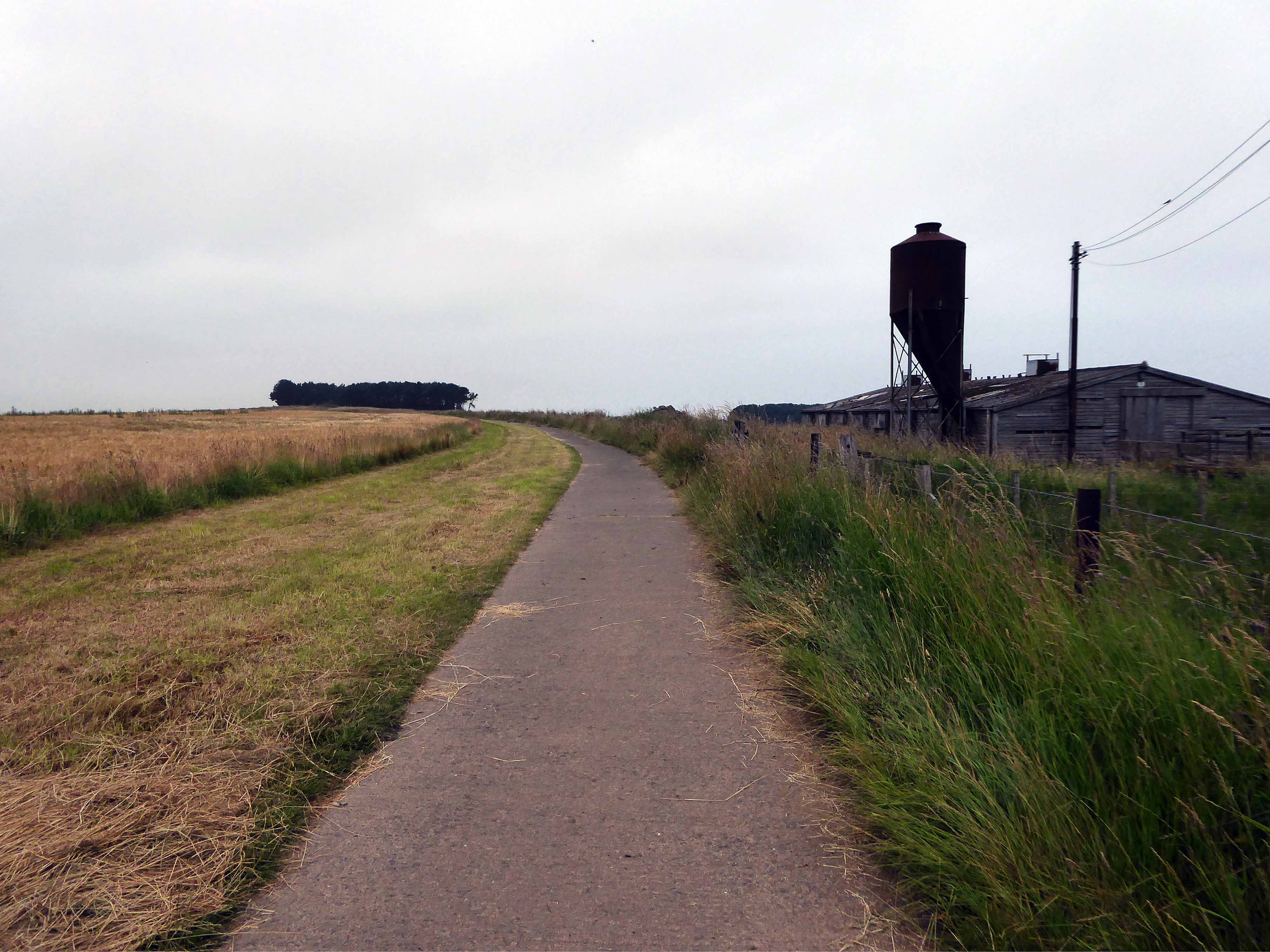
The way north took me over a well laid concrete track.
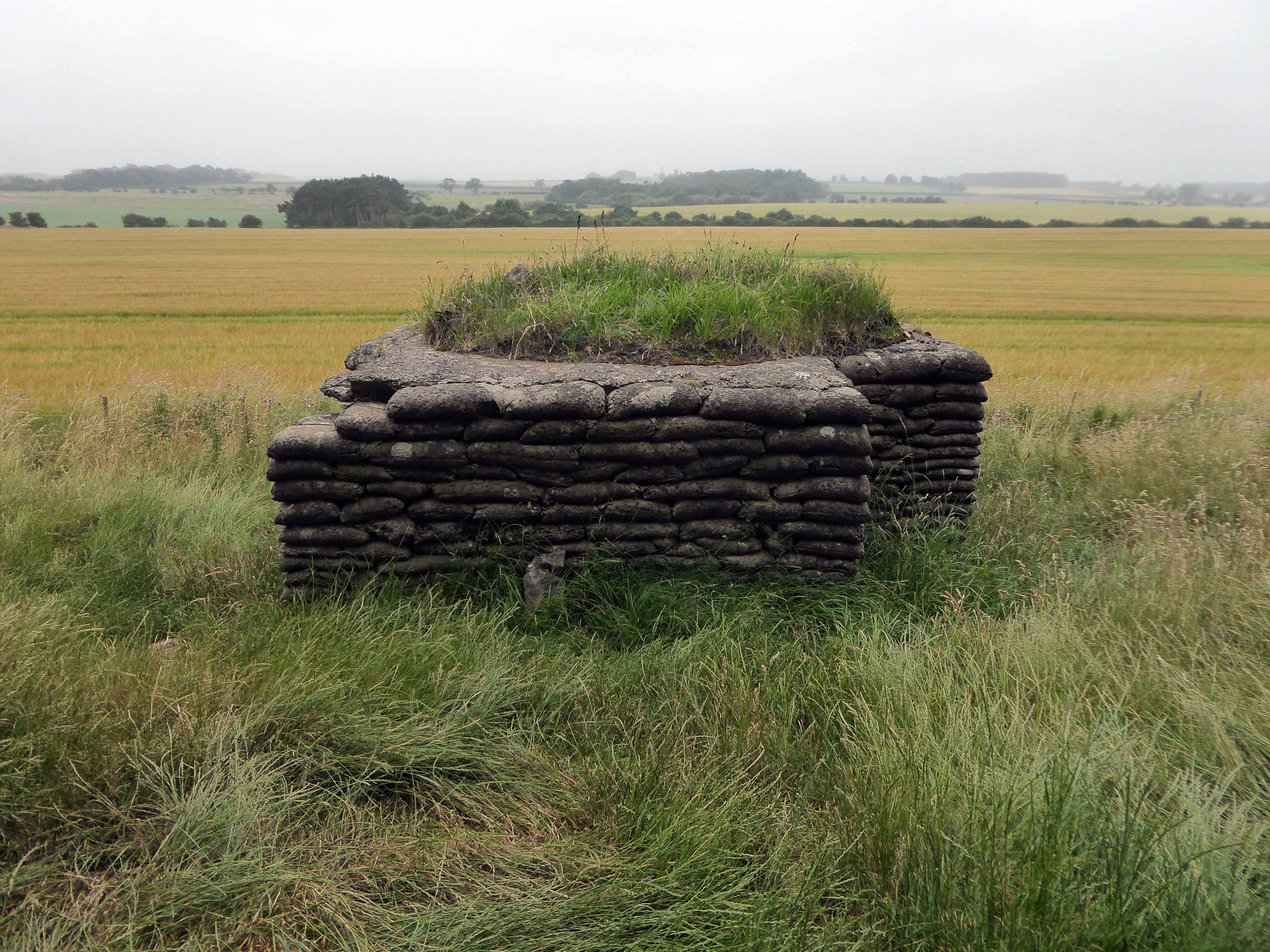
I came upon three wise men from Durham, Rochdale and Doncaster, gathered around a concrete-bag bunker.
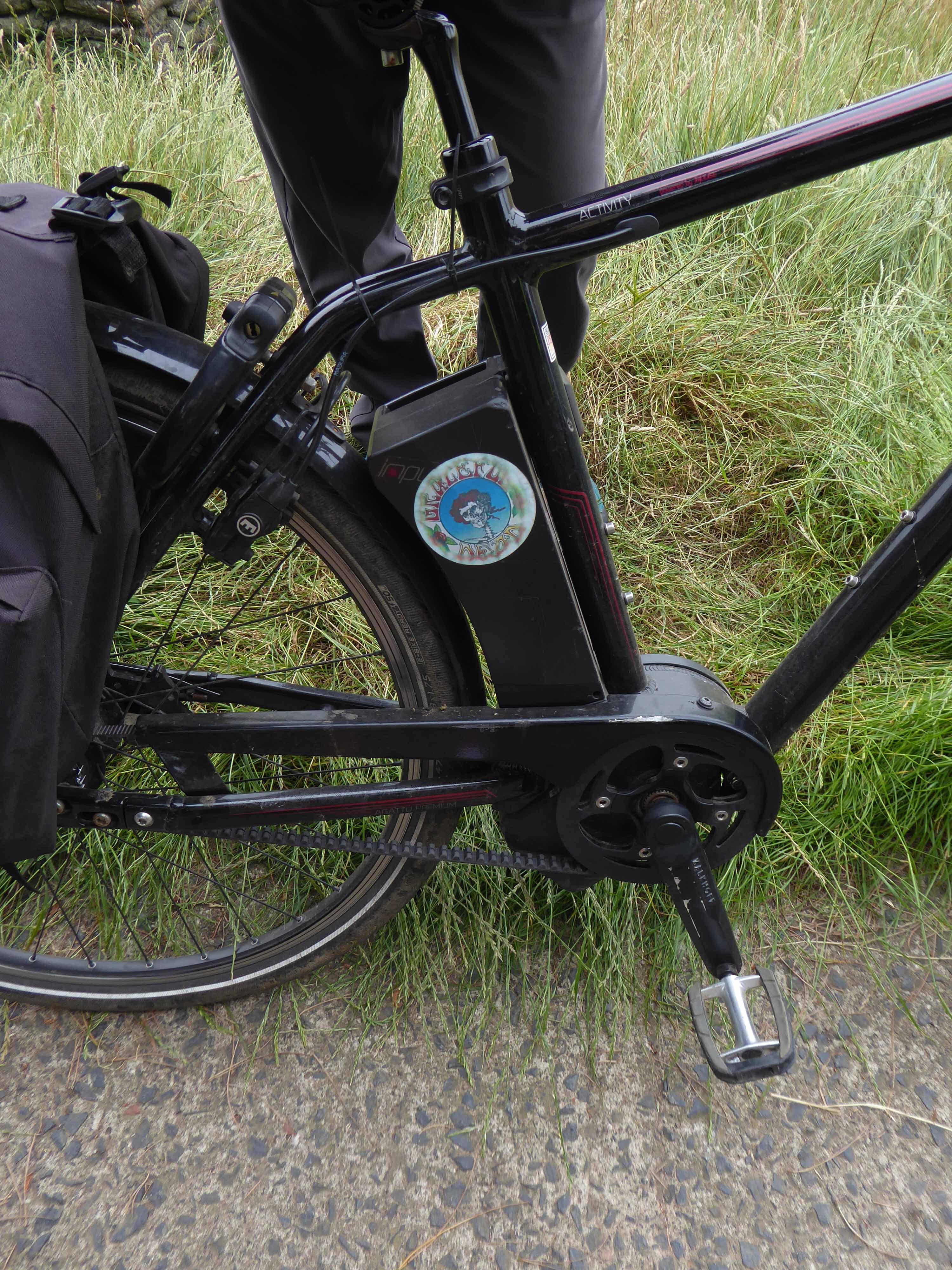
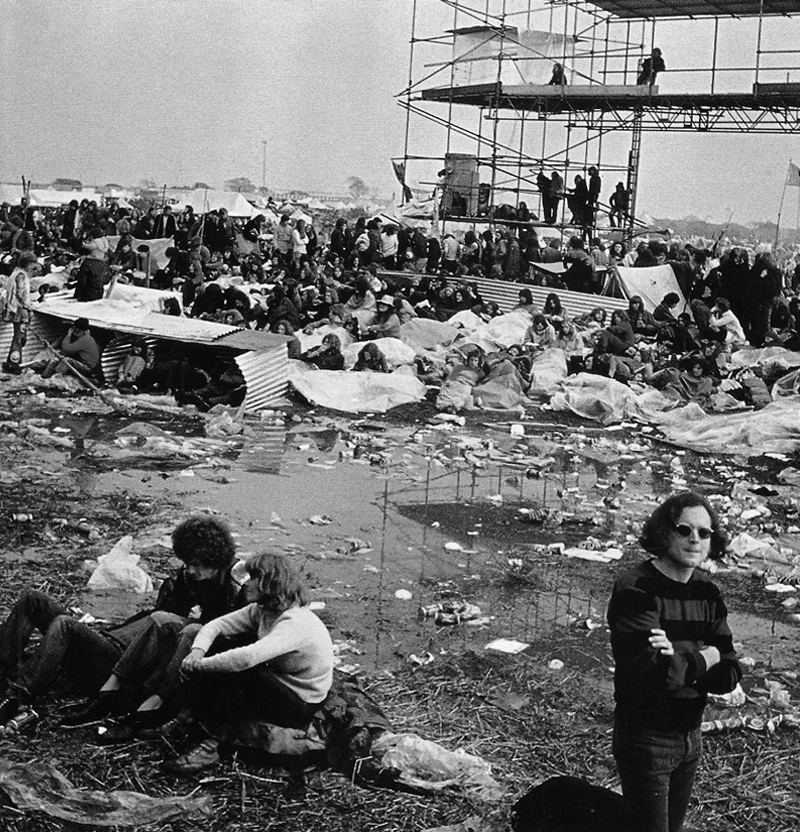
They were all Grateful Dead fans who like me had attended the Bickershaw Festival in 1972.
The first and last outdoor festival I ever done attended, unforgettable.
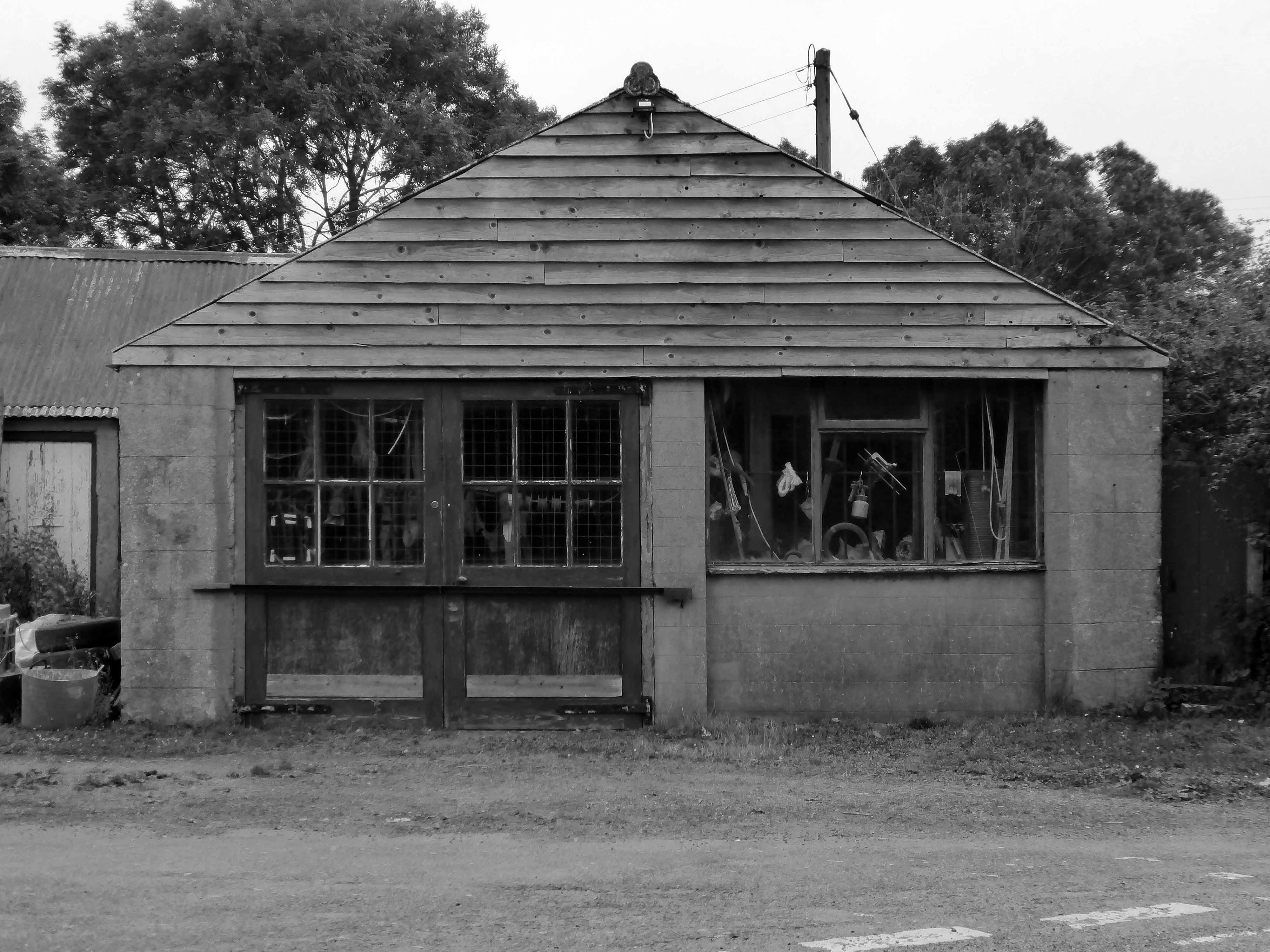
Weaving down and around quiet lanes I encountered this Walker Evans workshop.
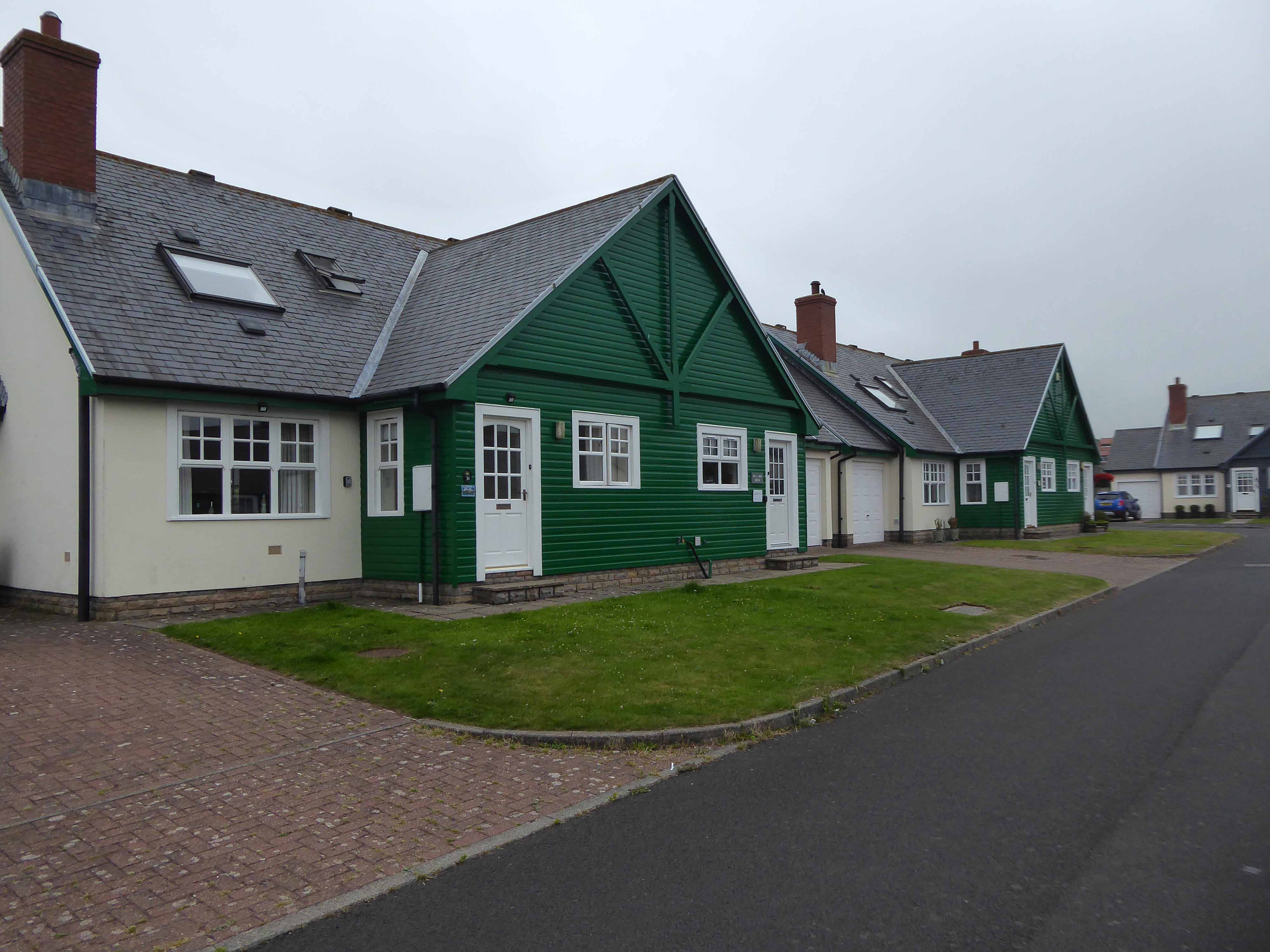
Armstrong Cottages is an estate originally built by Lord Armstrong for the workmen restoring Bamburgh Castle.
The 1901 Census lists the current inhabitants with their provenance and professions.
114 residents are listed for the 19 cottages, of whom 53 are working men employed in the building trade: their professions include stonemasons, joiners, plumbers, rope & pole scaffolders, blacksmiths, and plasterers.
Many come from Northumberland or Scotland, but a significant proportion are from further afield: Cumberland, Westmorland, Lancashire, Durham, Yorkshire, Derbyshire – and one from the Channel Islands.
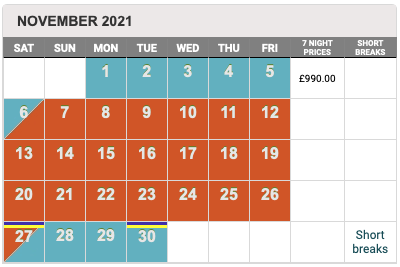
Seven nights in November will now cost you the best part of a thousand pounds.
The Armstrong family the former owners, made millions from the sale of armaments.
If I thought that war would be fomented, or the interests of humanity suffer, by what I have done, I would greatly regret it. I have no such apprehension.
He also said:
It is our province, as engineers to make the forces of matter obedient to the will of man; those who use the means we supply must be responsible for their legitimate application.
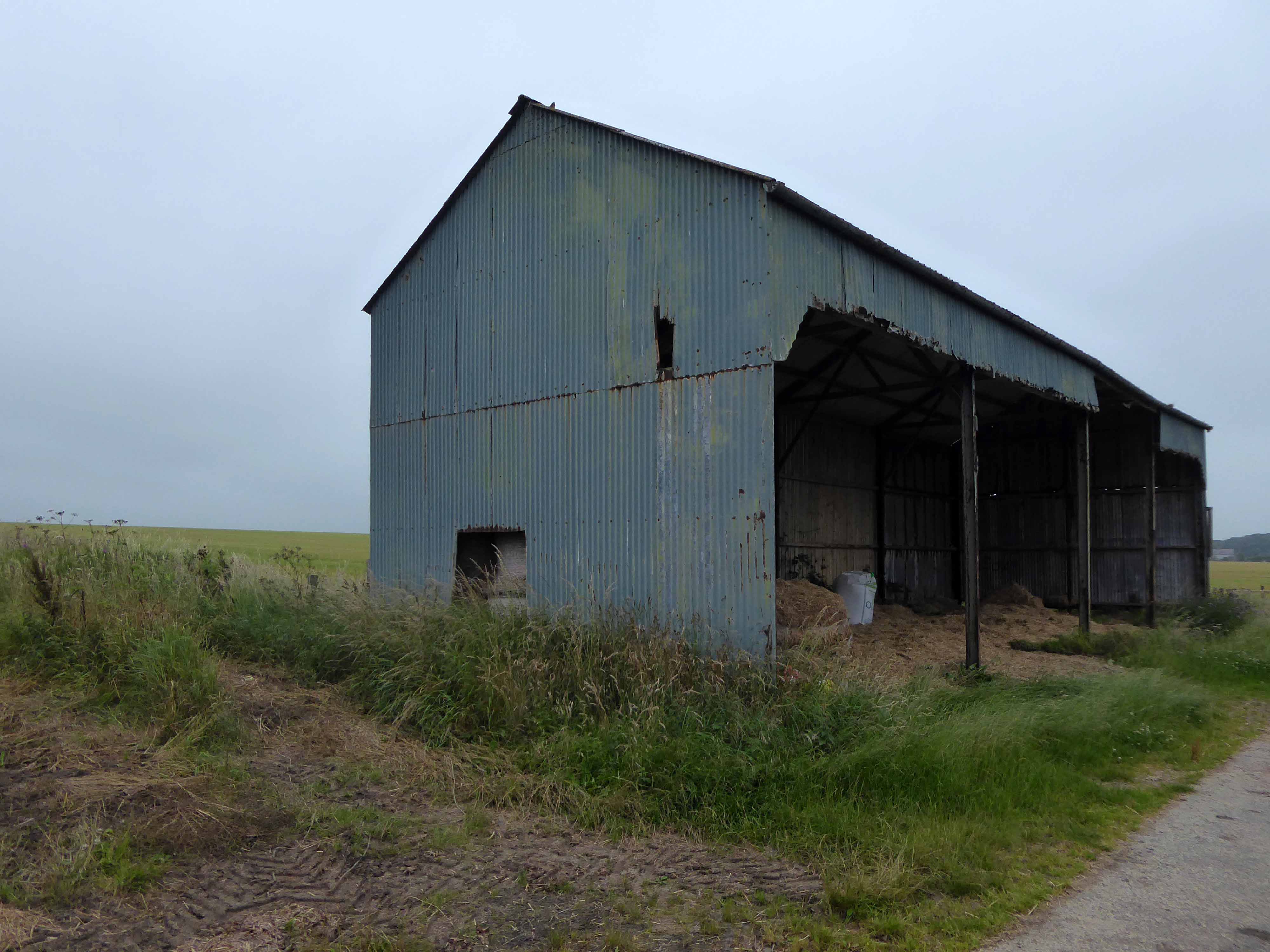
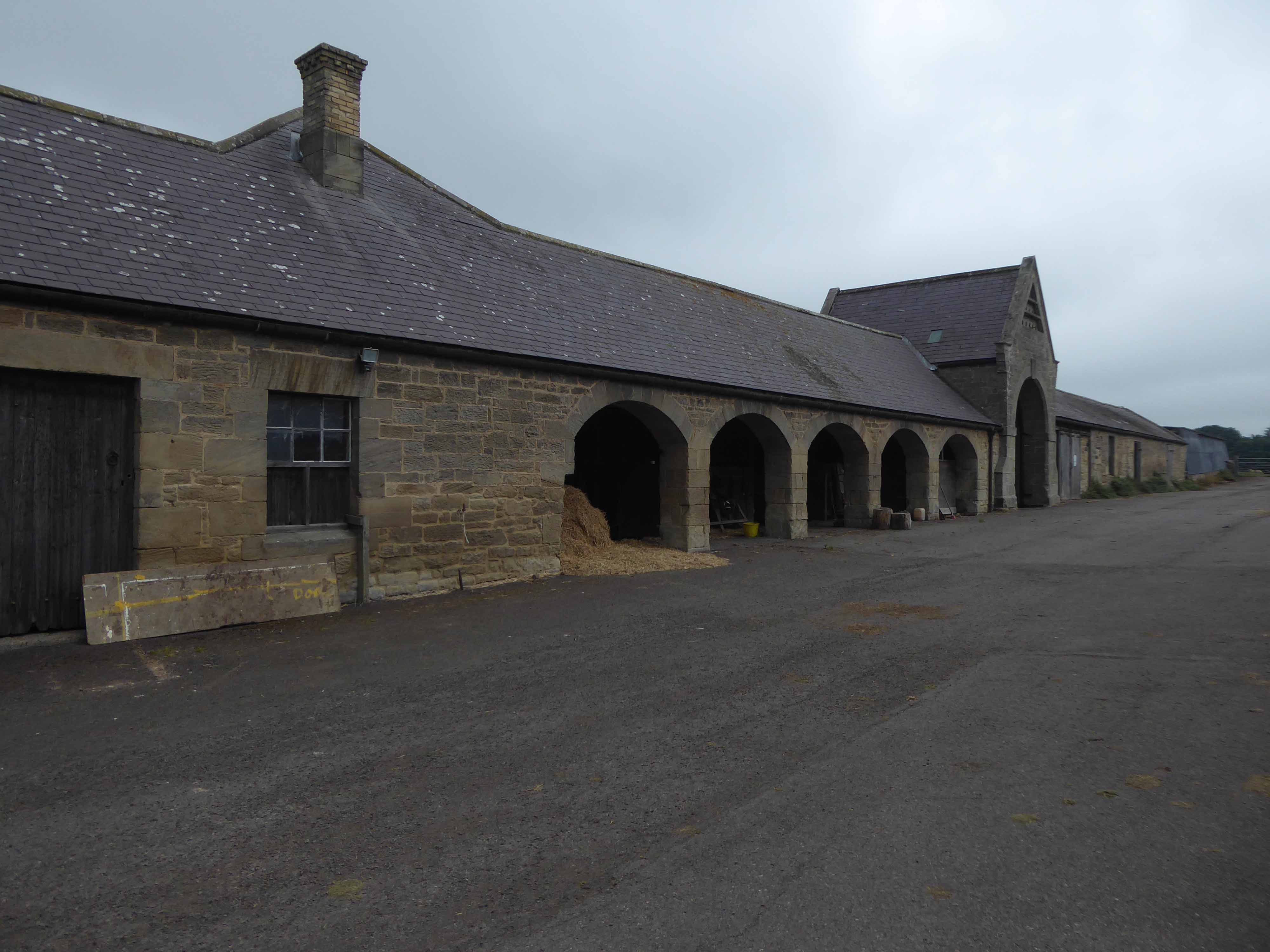
I paused a wee while to take a sip of water and admire the agrarian architecture.
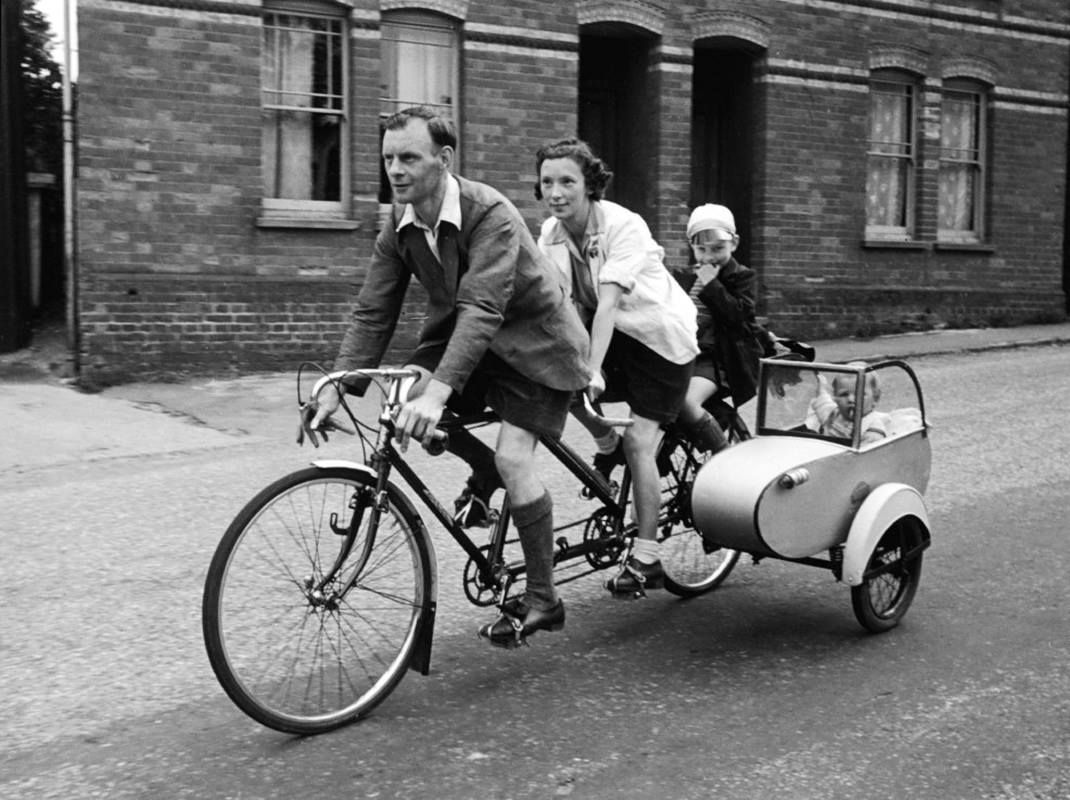
A couple on their bikes stopped to chat, as a babe in arms the lad had been transported by mam and dad, in a sidecar with tandem attached.
Such a delightful and poignant recollection – we wished each other well and went on our way.
I made my way from the rolling hills back down toward the coast.
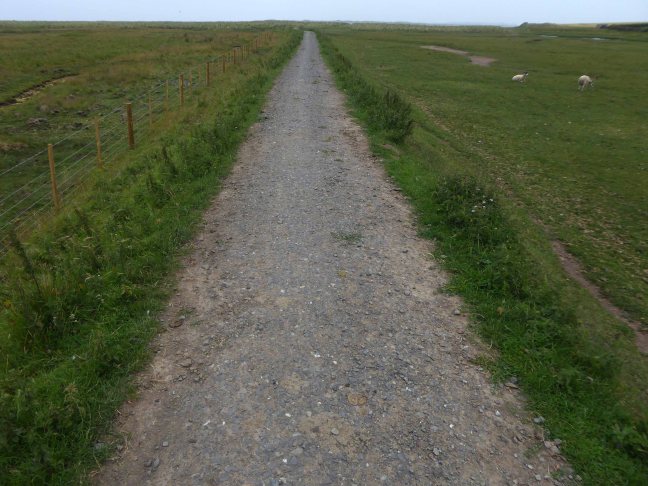
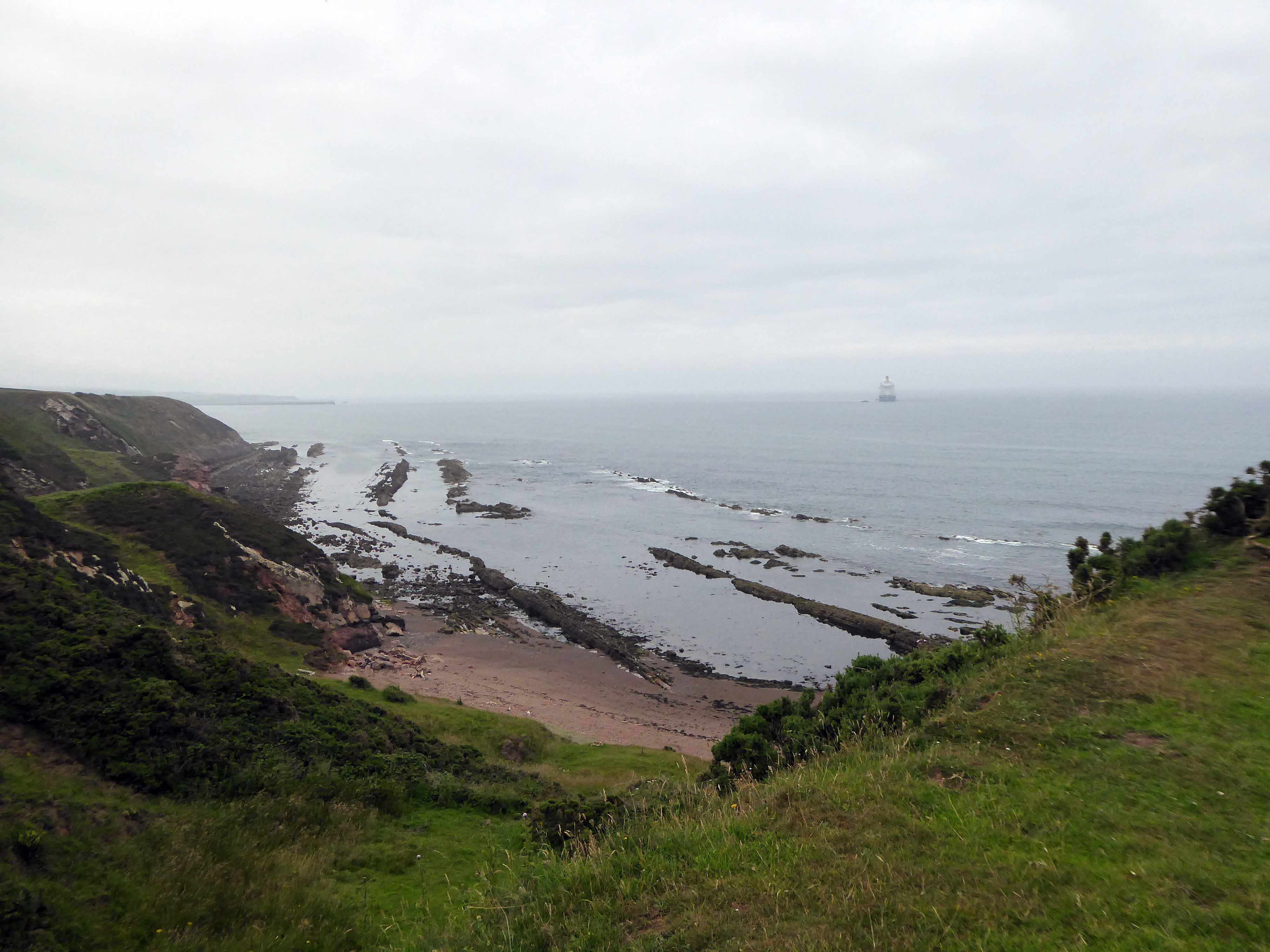
Where a permissive path hugged the shore, which I cautiously shared with some equally cautious sheep.
Looking back toward Lindisfarne.
Looking forward to the past.
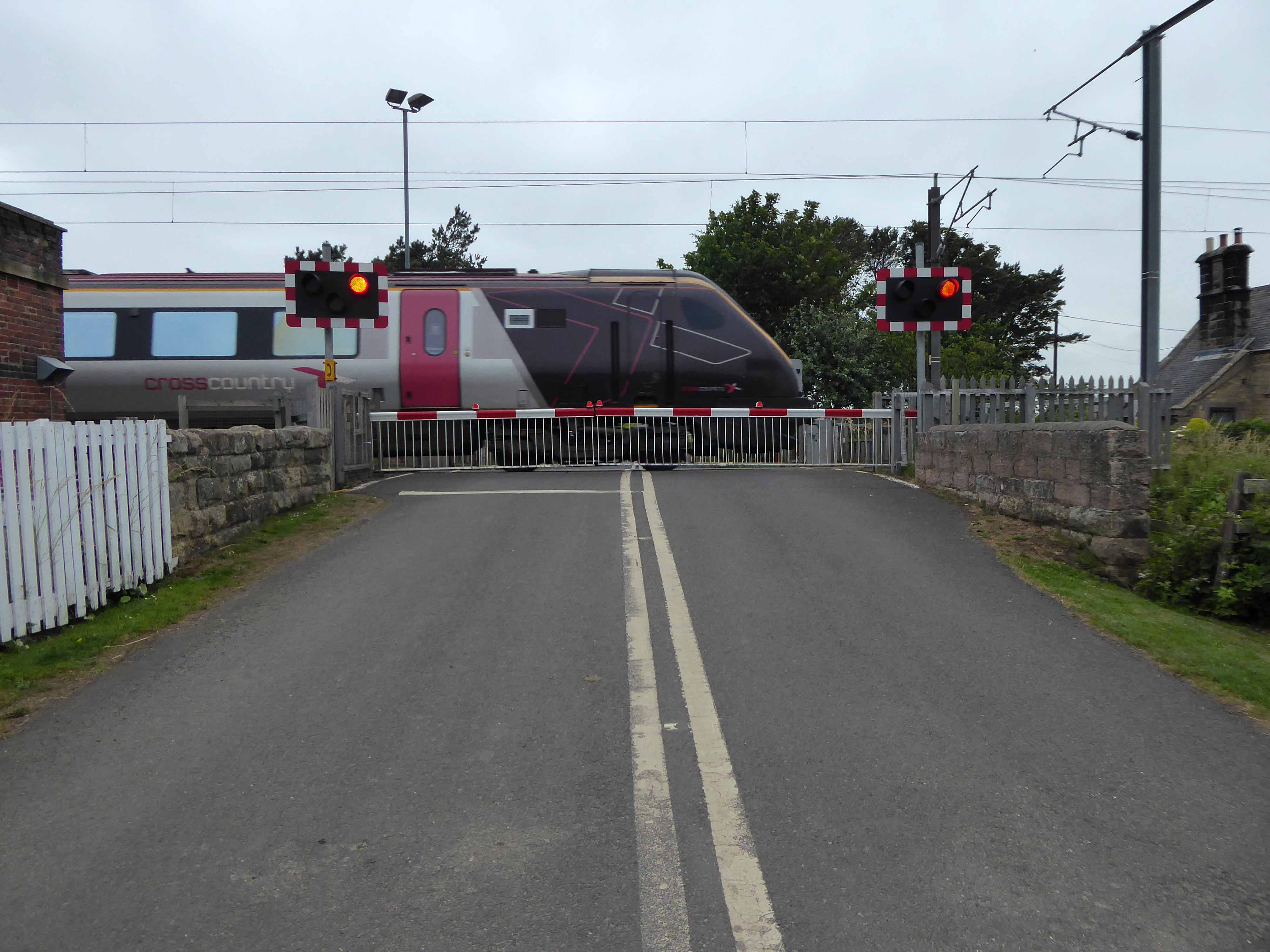
Pausing for the passing of a mainline train.
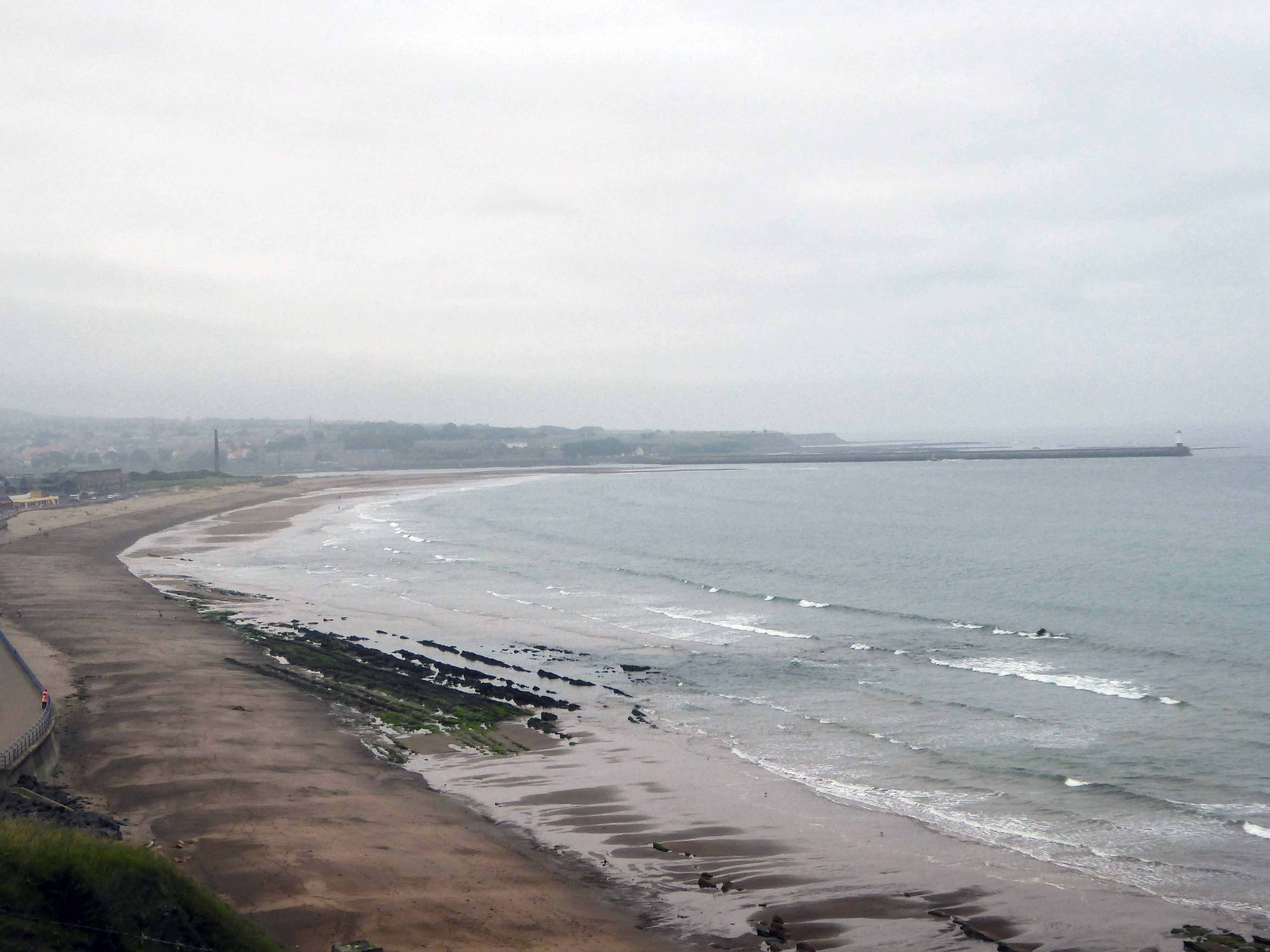
Berwick upon Tweed in view.
Come the evening I spent an hour or two in The Curfew, feasting on fine beer, company, haggis scotch egg and game pie.
Finishing with this well deserved and wonderful, bottle of Oude Geuze.
The final day – so many marvellous miles covered, forever stopping to chat, snap, look and learn.
No finer way to see the world, though so condensed and intense even at touring speed – apologies to all the things that I failed to see.
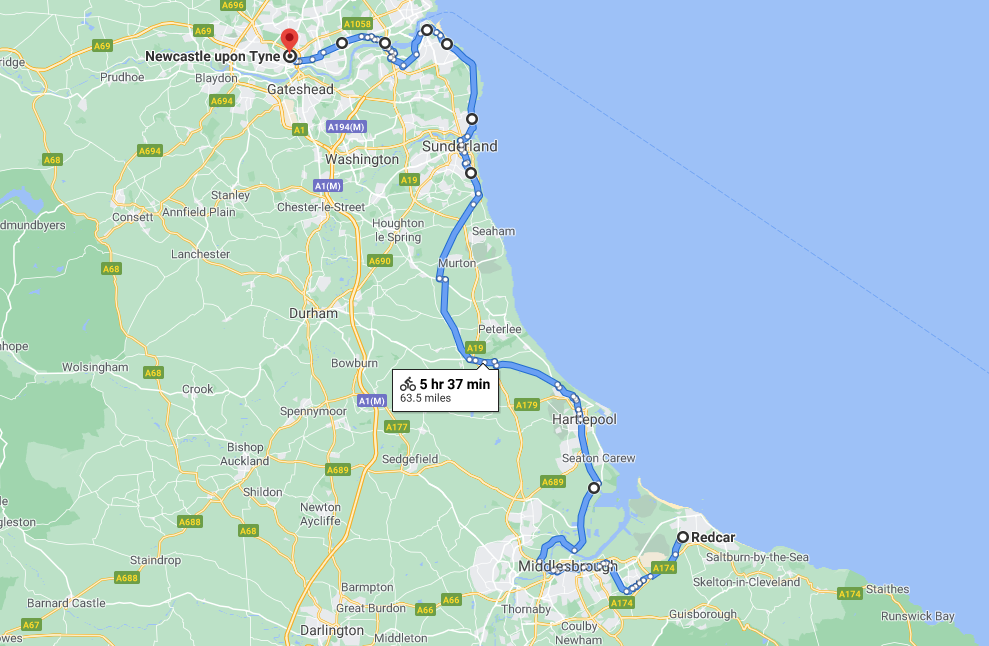
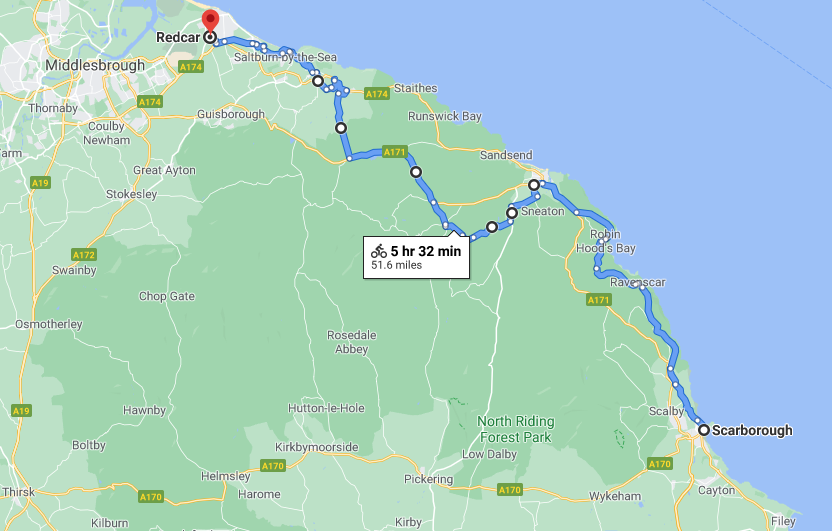
An early start on another sunny day, cycling along long straight roads out of town, towards Middlesborough.
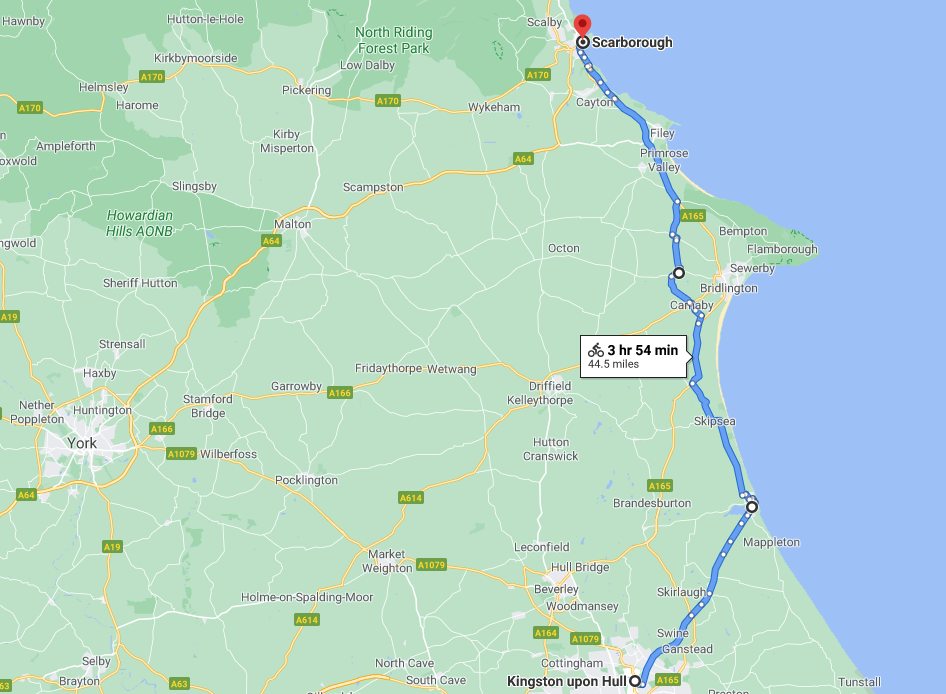
Having previously visited Hull and Scarborough and all points in between.
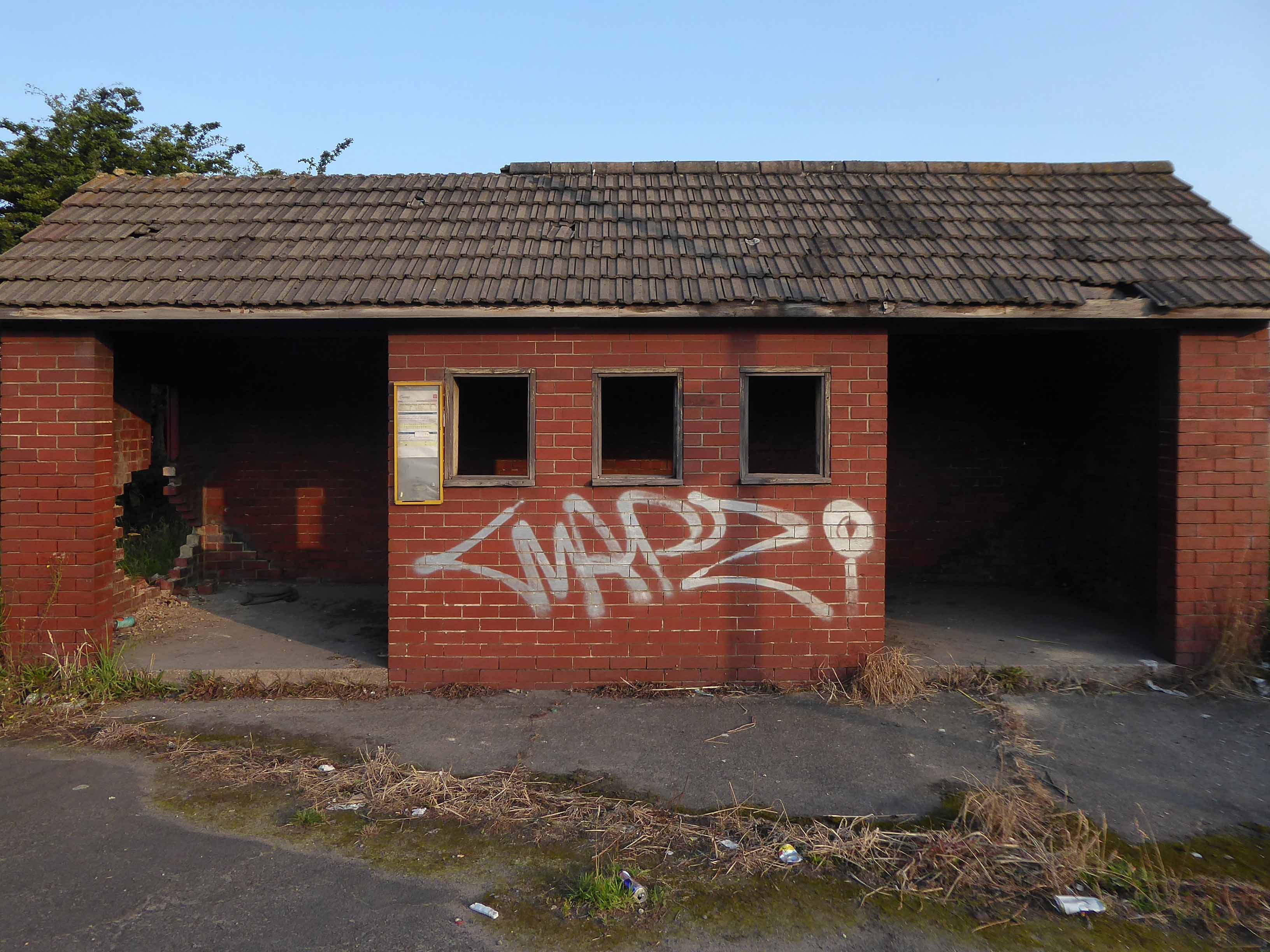
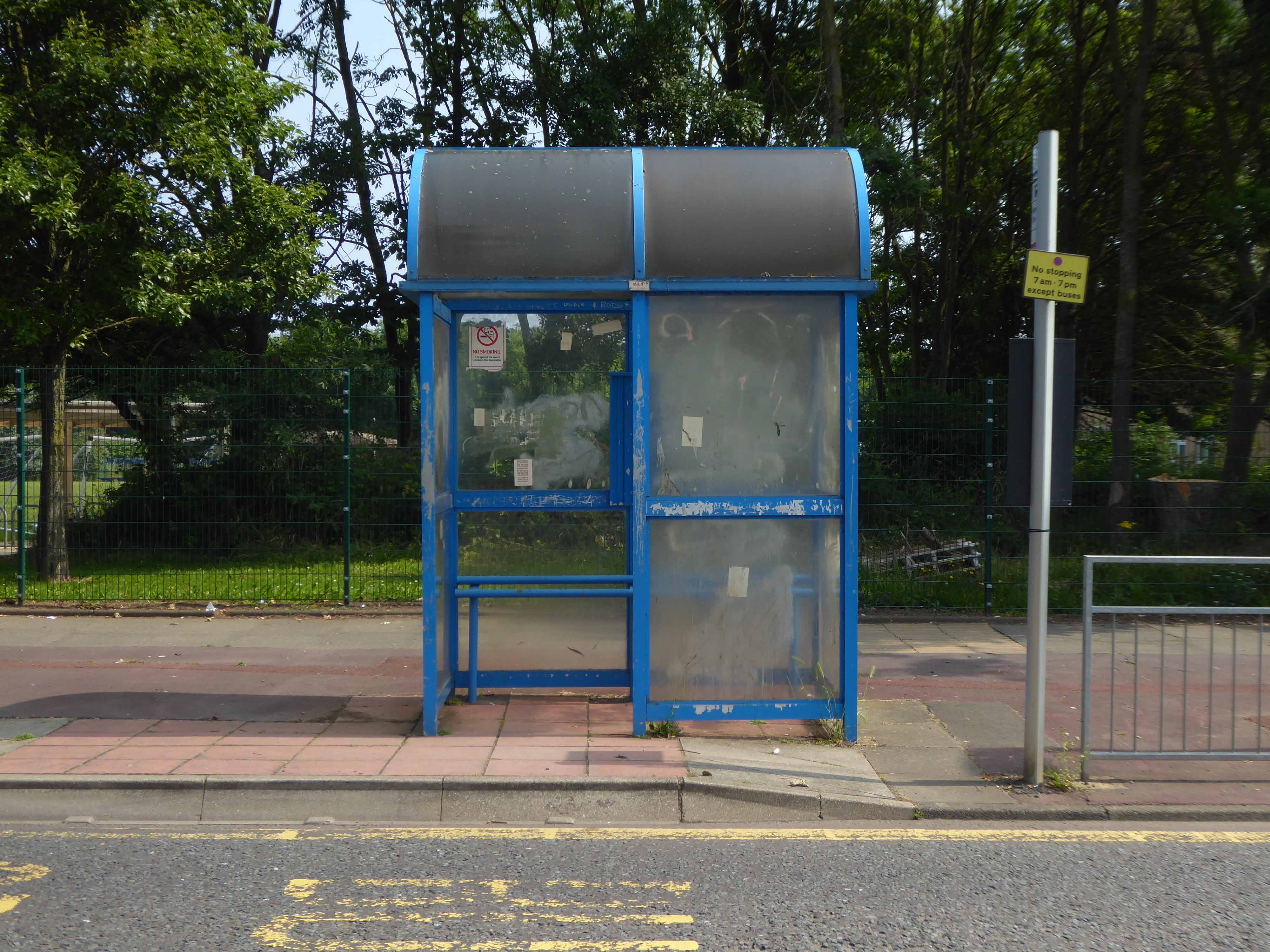
Slowly passing sleepy factories and desolate bus shelters.
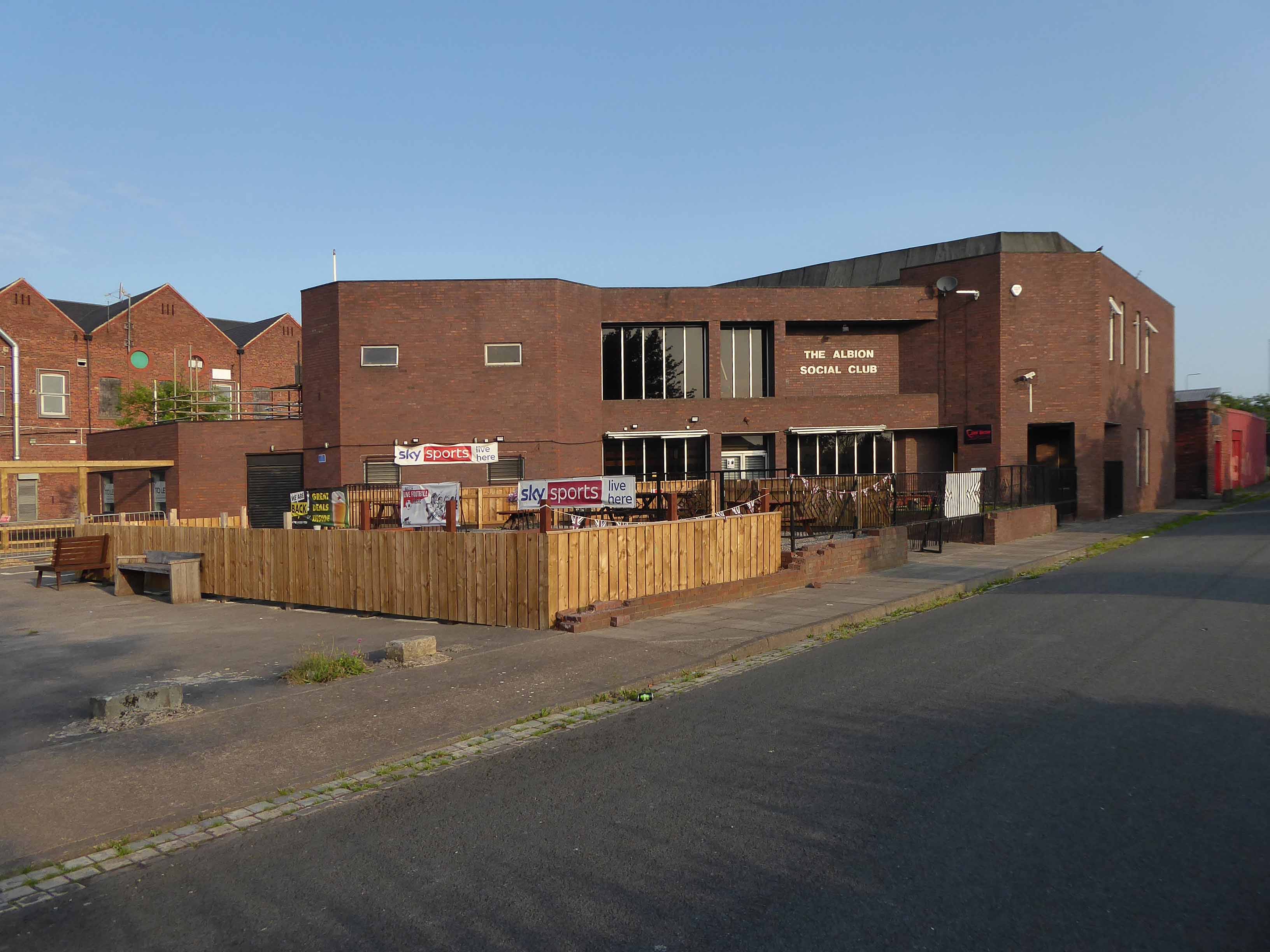
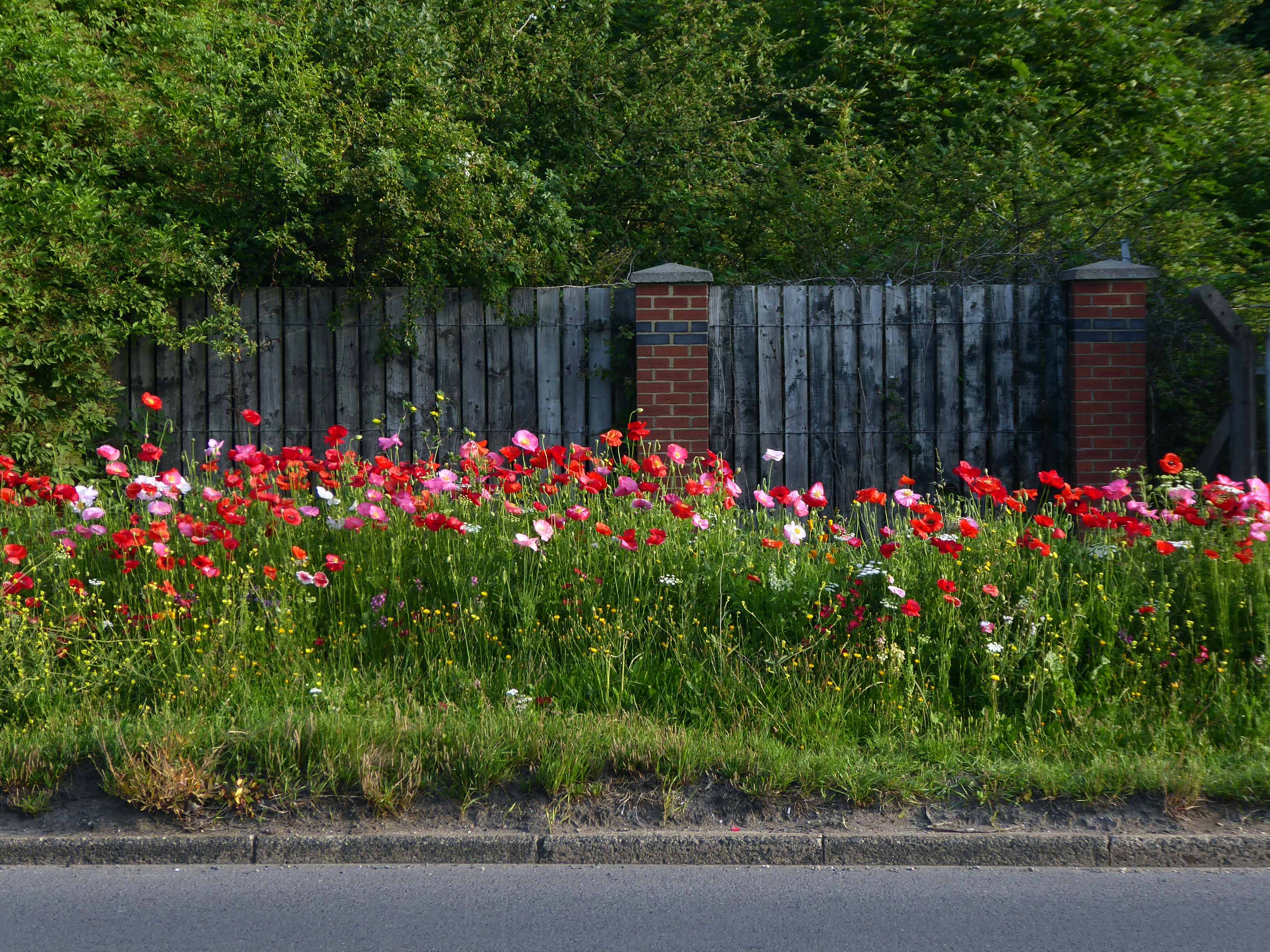
Bunker like social clubs and flower lined roads.
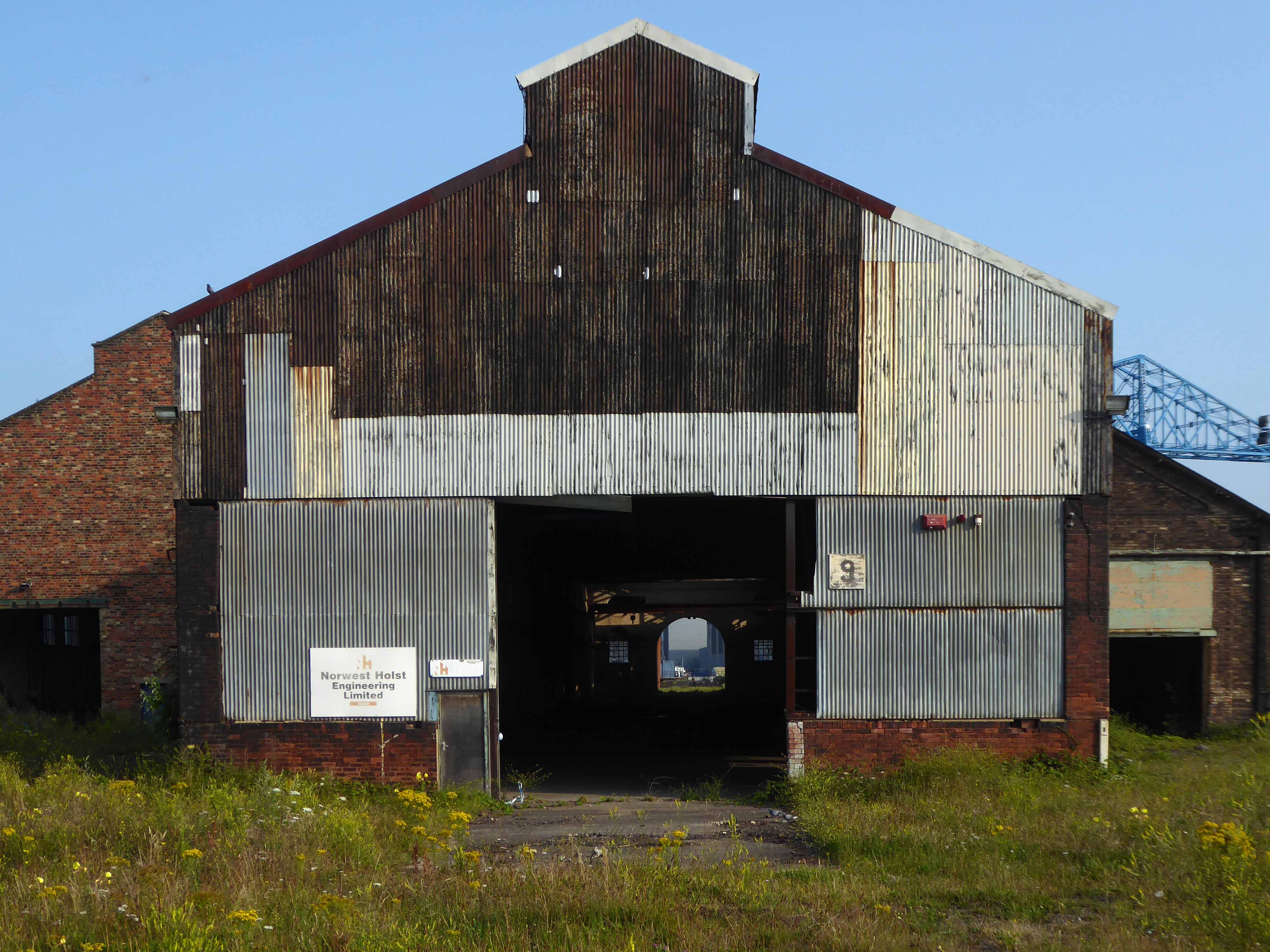
The Albion club in South Bank has stood empty for the last three years.
Now local lad Mark Trainor has the keys – and says opening the doors to the club his own family frequented for years will be a dream come true.
He’s planning to cater for everyone, he says, and it won’t just be all about drinking.
Parents will be able to call in for a coffee after dropping the kids at school, there will be pool nights and Mark’s personal favourite – Pie Day Fridays.
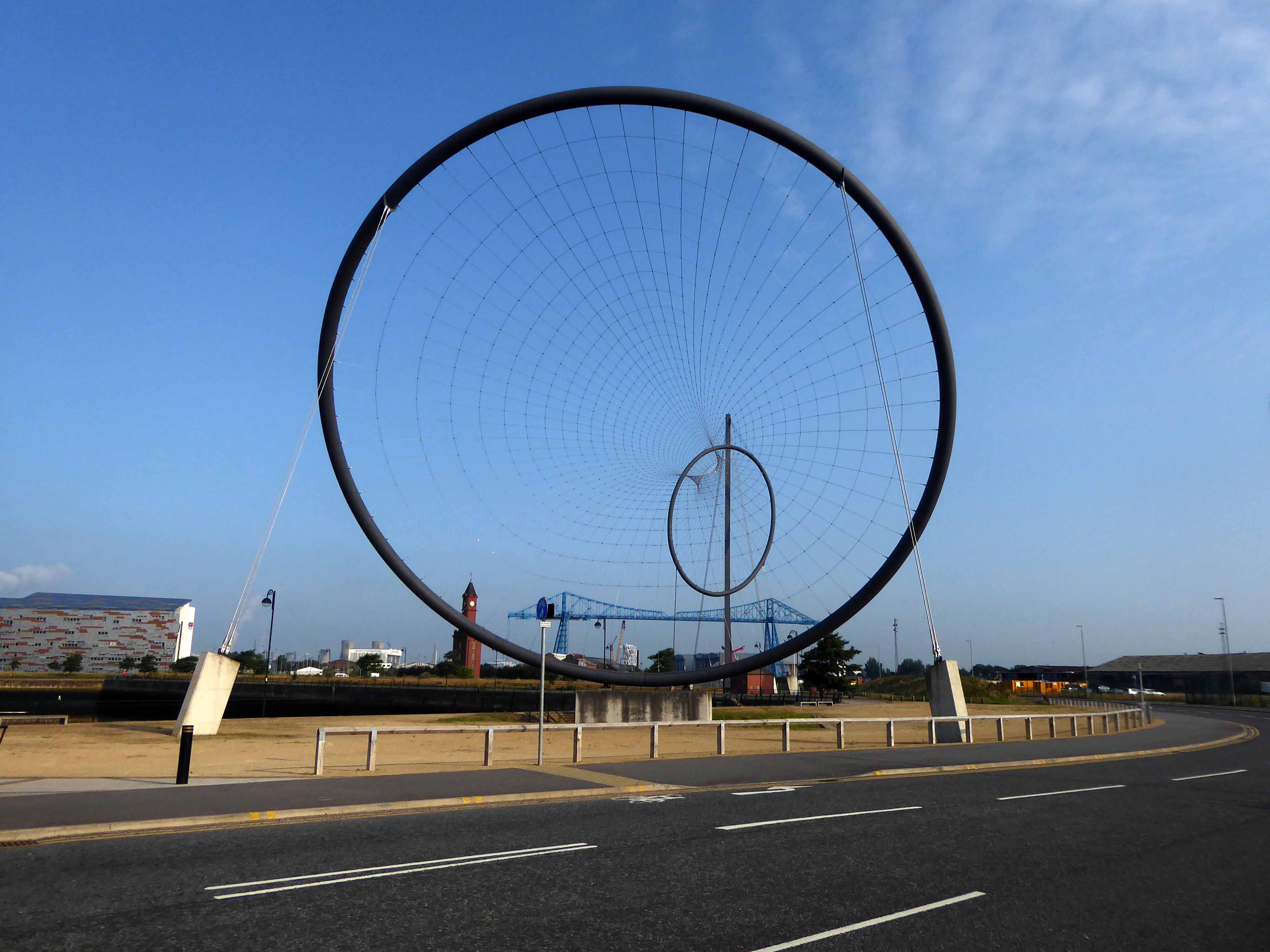
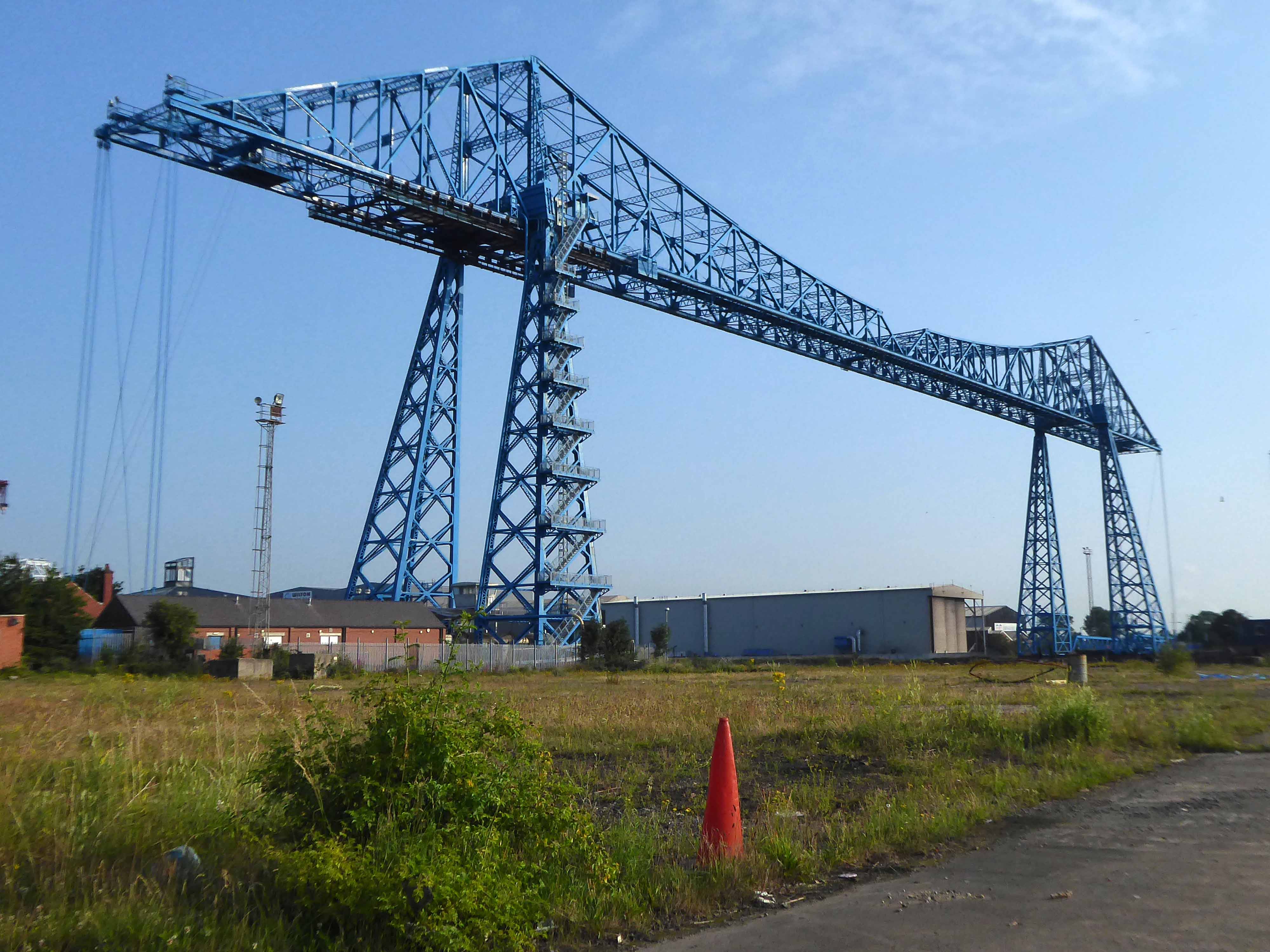
Temenos is a Greek word meaning land cut off and assigned as a sanctuary or holy area.
Following a 1907 Act of Parliament the bridge was built at a cost of £68,026 6s 8d by Sir William Arrol & Co. of Glasgow between 1910 and 1911 to replace the Hugh Bell and Erimus steam ferry services. A transporter bridge was chosen because Parliament ruled that the new scheme of crossing the river had to avoid affecting the river navigation.
The opening ceremony on 17 October 1911 was performed by Prince Arthur of Connaught, at its opening the bridge was painted red.
In 1961 the bridge was painted blue.
In 1974, the comedy actor Terry Scott, travelling between his hotel in Middlesbrough and a performance at the Billingham Forum, mistook the bridge for a regular toll crossing and drove his Jaguar off the end of the roadway, landing in the safety netting beneath.
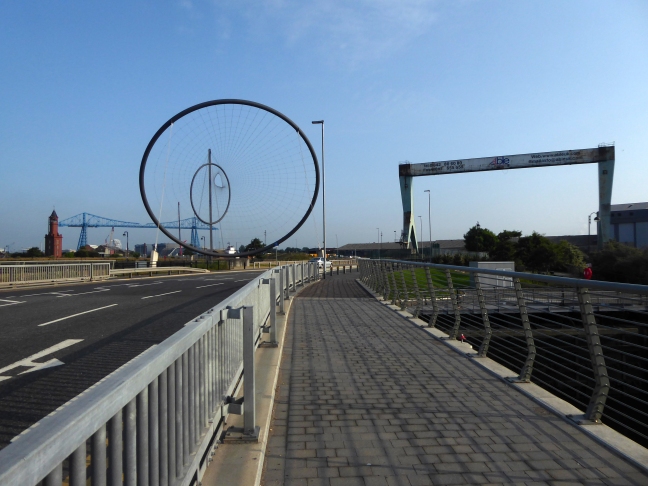
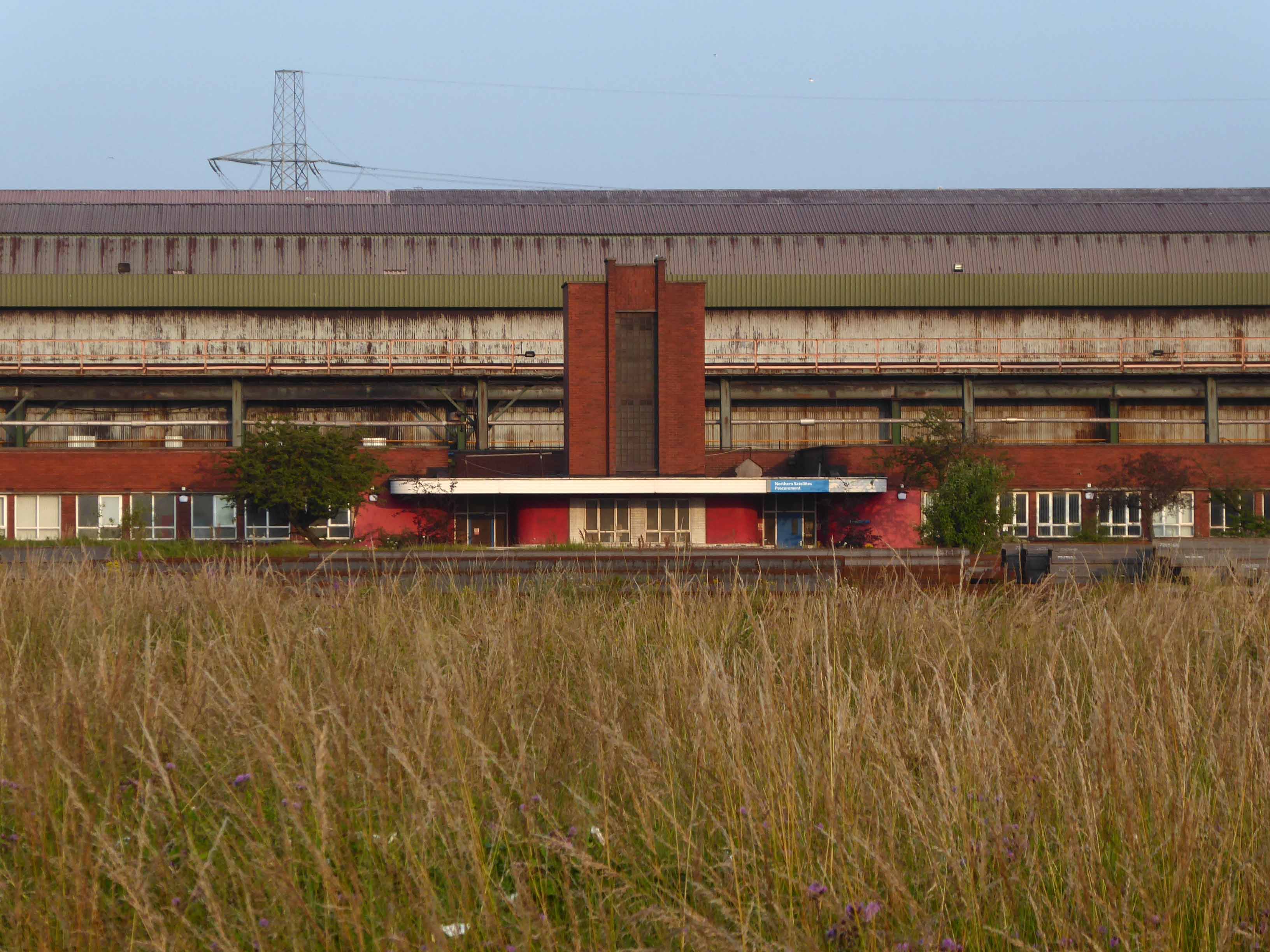
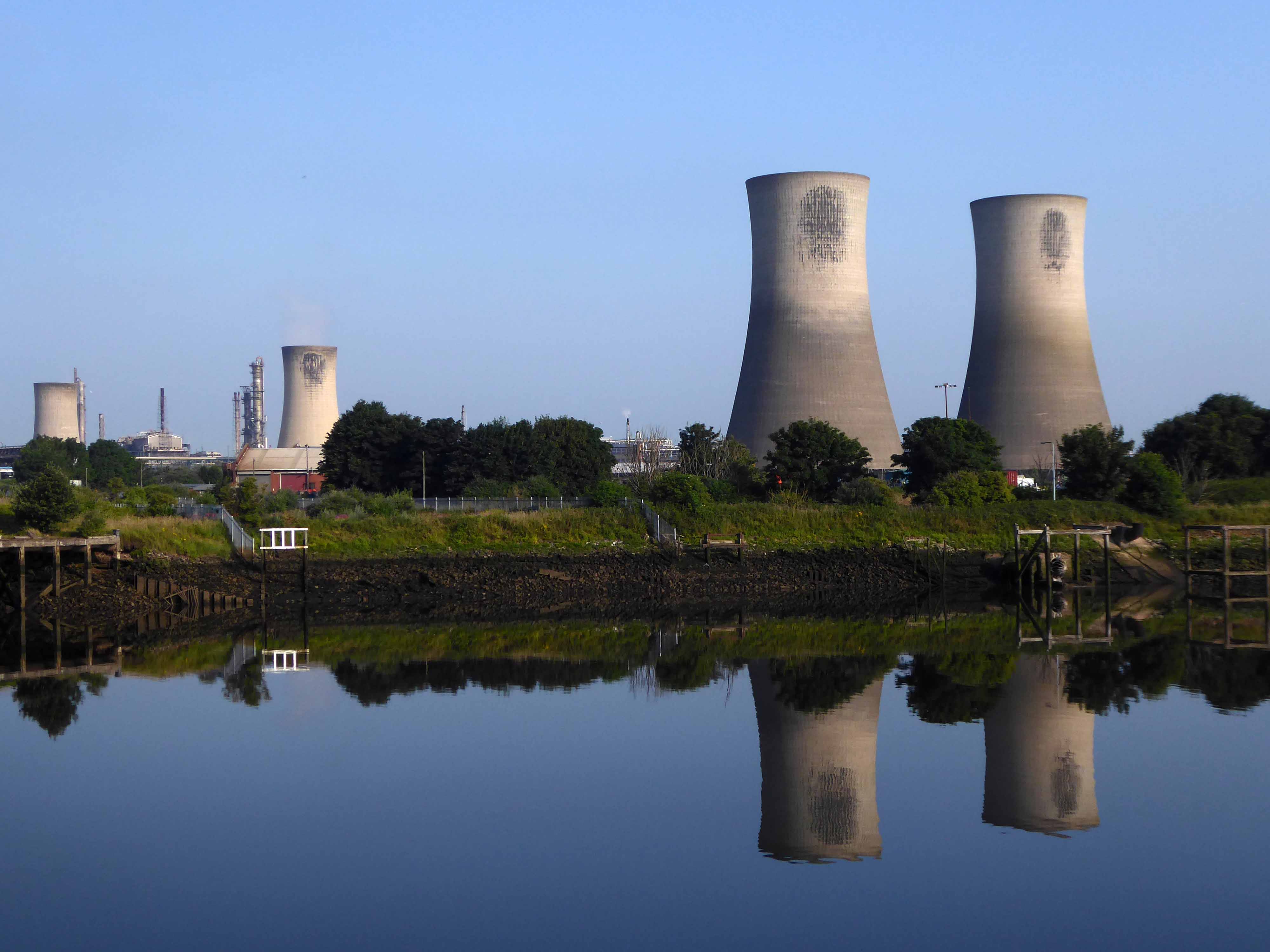
The cycle track followed the river, which sports a fine array of industrial architecture.
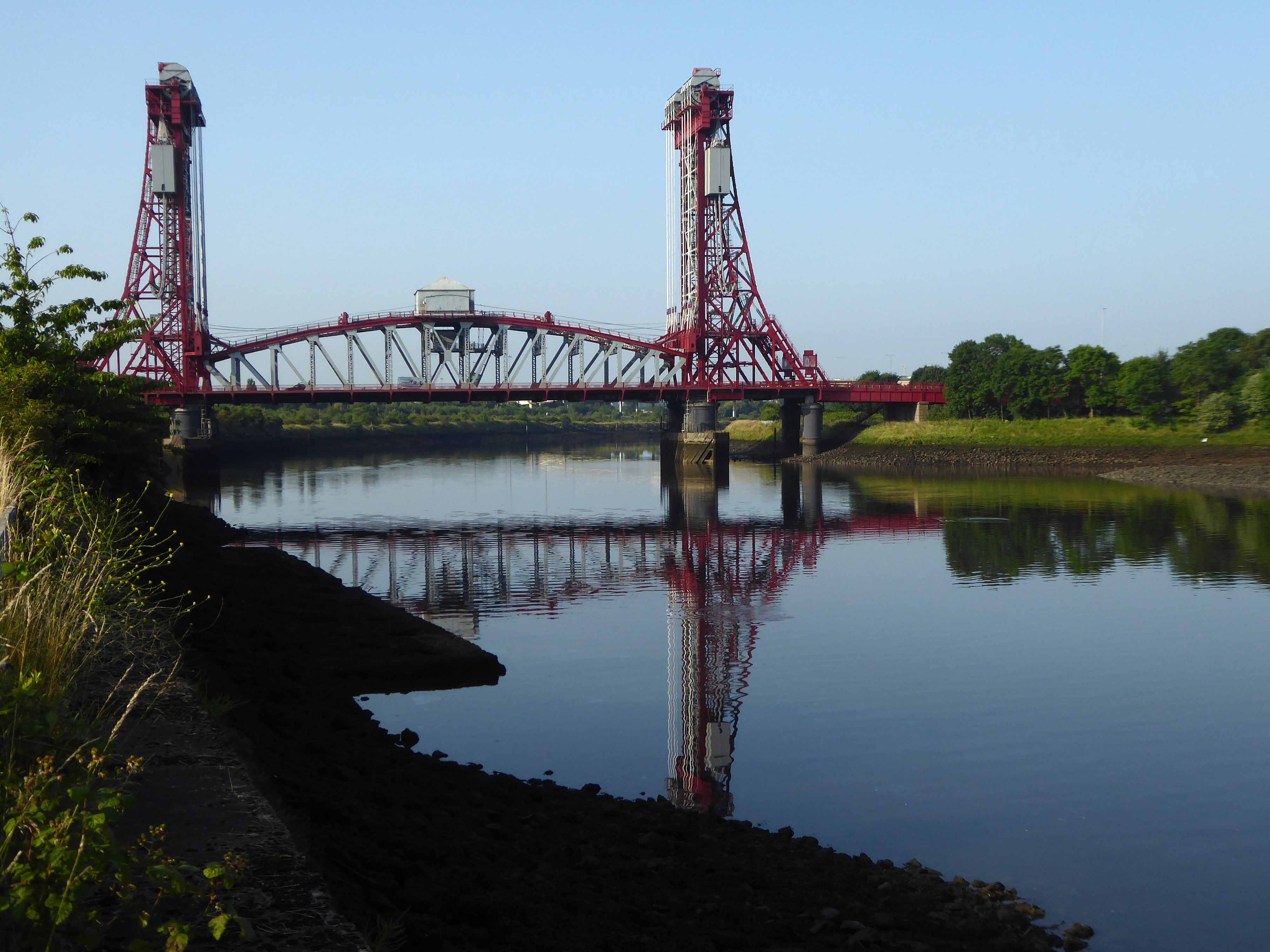
Tees Newport Bridge designed by Mott, Hay and Anderson and built by local company Dorman Long who have also been responsible for such structures as the Tyne Bridge and Sydney Harbour Bridge, it was the first large vertical-lift bridge in Britain.
In a slightly more upbeat mode St James the Apostle Owton Manor.
I convinced myself that this building on Station Road Seaton Carew was a former pub, I discovered following consultation with the local studies offices, that it was in fact a former children’s home destined to become a doctors.
I found myself looking back across the estuary to Redcar.
Northward toward Hartlepool.
Where the bingo was closed and the circus had left town.
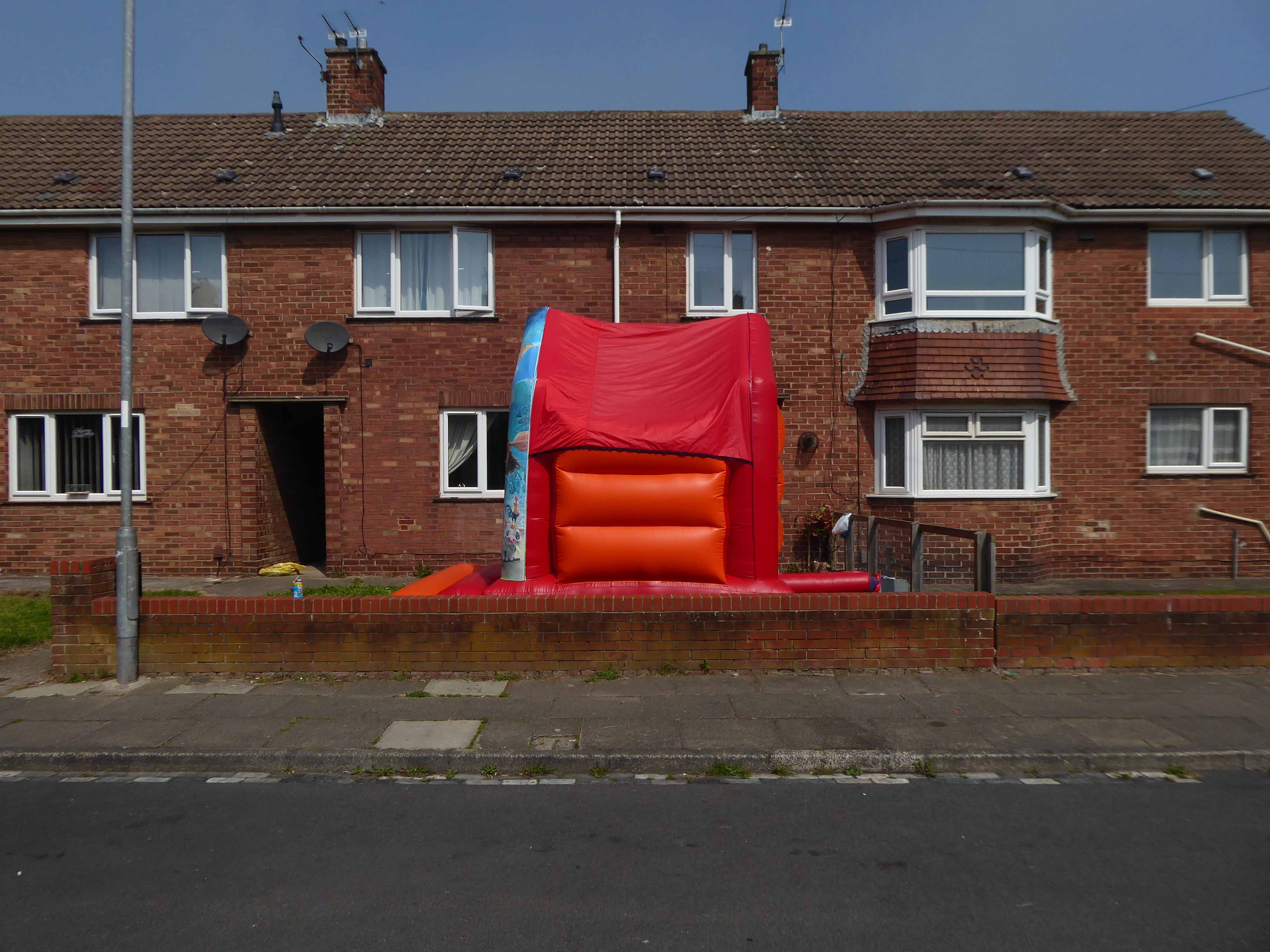
Every Englishman’s home is a bouncy castle.
St John Vianneylocated on King Oswy Drive West View Estate.
Architect: Crawford & Spencer Middlesbrough 1961.
A large post-war church built to serve a housing estate, economically built and with a functional interior. The campanile is a local landmark.
The parish of St John Vianney was created in 1959 to serve the growing West View Estate, on the north side of Hartlepool. The church was opened by Bishop Cunningham on 4 April 1961. The presbytery was built at the same time.
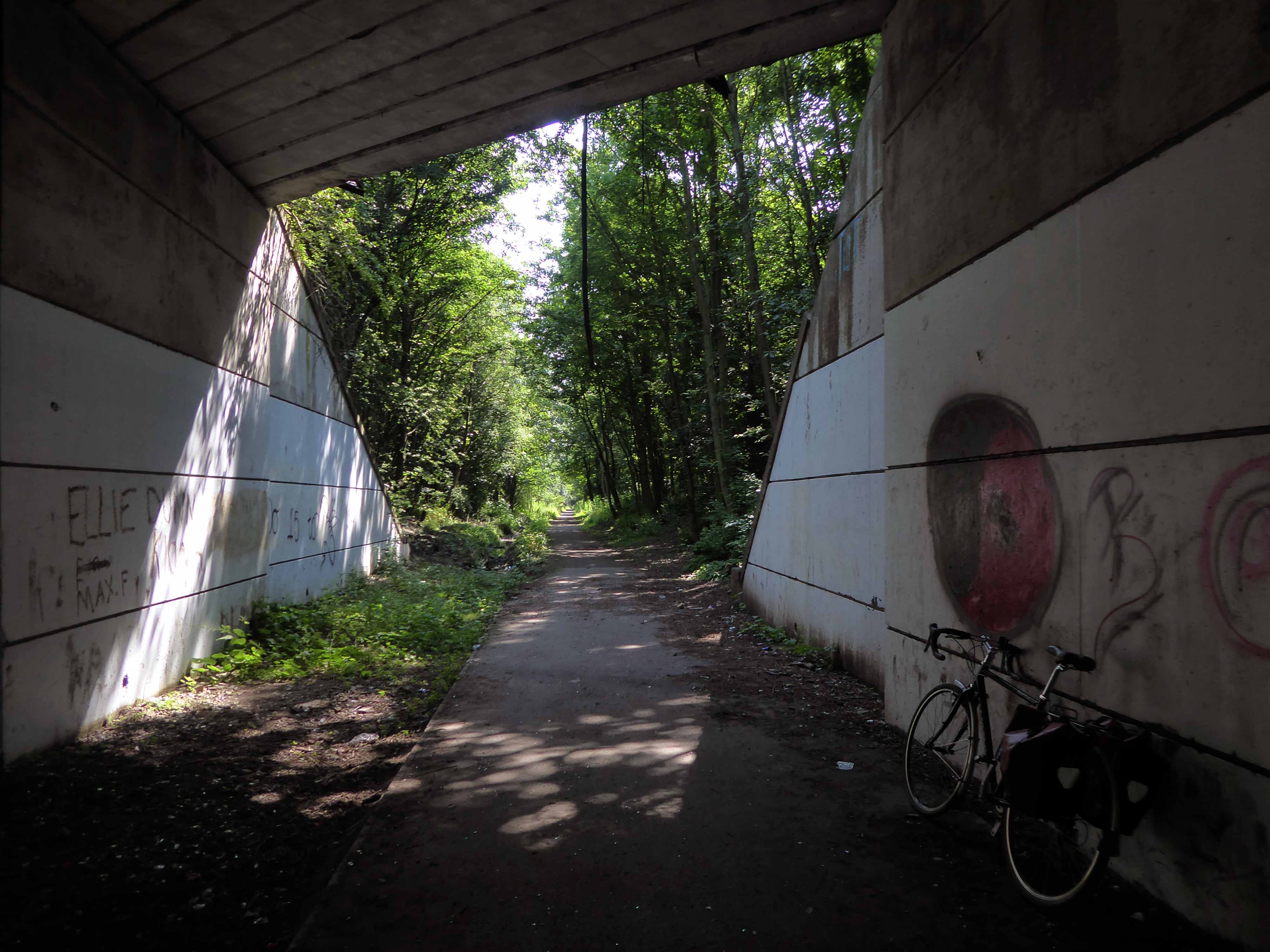
I found myself on yet another former railway line.
The Cycleway was once a railway line designed by George Stephenson to take coal from the Durham coal fields to the docks in Hartlepool, where the coal was then distributed throughout the world.
Seeking assistance from a passing cyclist I negotiated a safe passage to Sunderland.
The Sunderland Synagogue is a former synagogue building in Sunderland, England. The synagogue, on Ryhope Road, was designed by architect Marcus Kenneth Glass and completed in 1928. It is the last surviving synagogue to be designed by Glass.
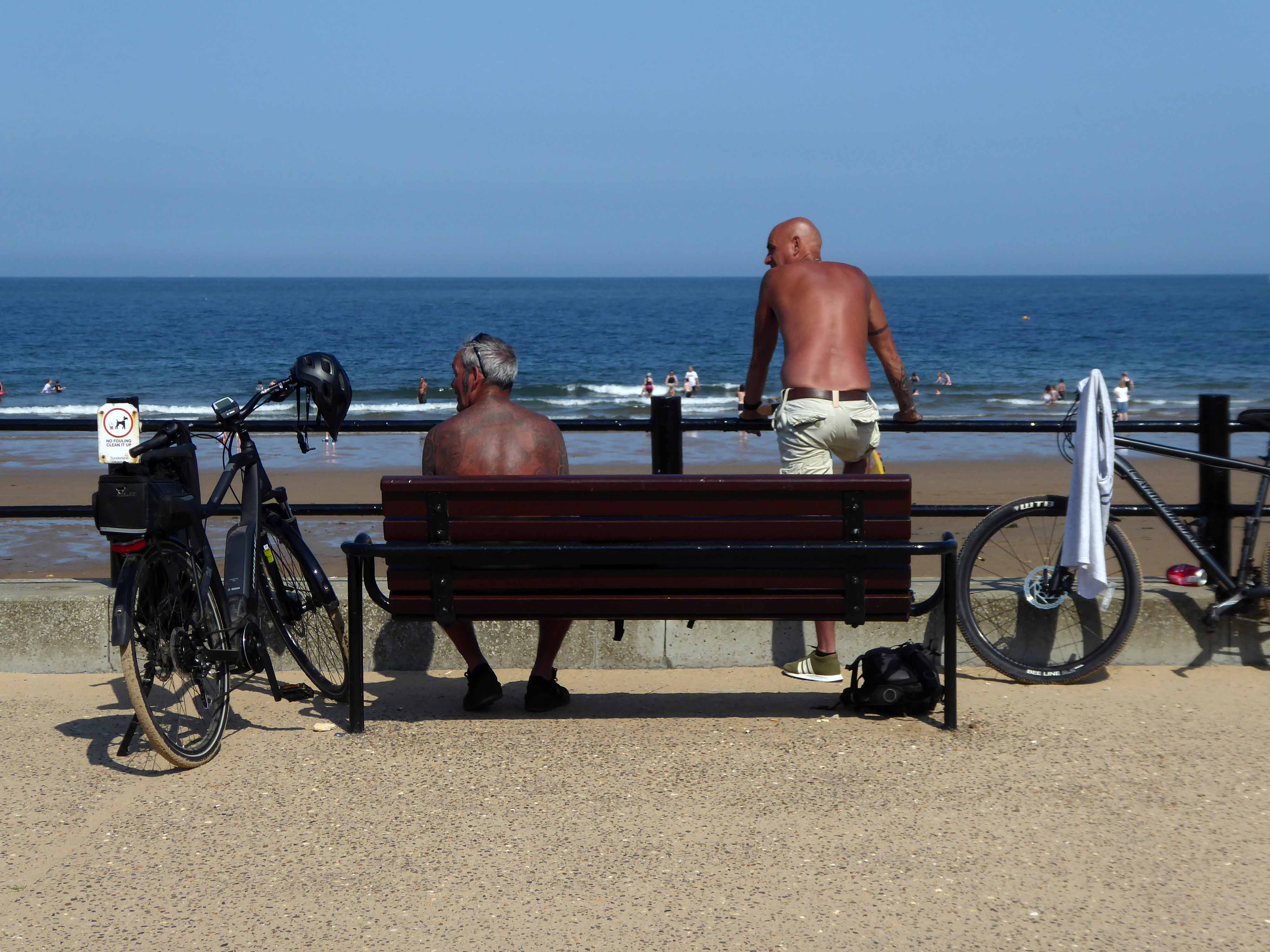
I took a right and arrived in Roker, where I saw these well tanned and tattooed cyclists taking a rest.
Pressed on, largely alongside the coast to South Shields.
Under advisement from a jolly passing jogger I took the Tyne Pedestrian Tunnel.
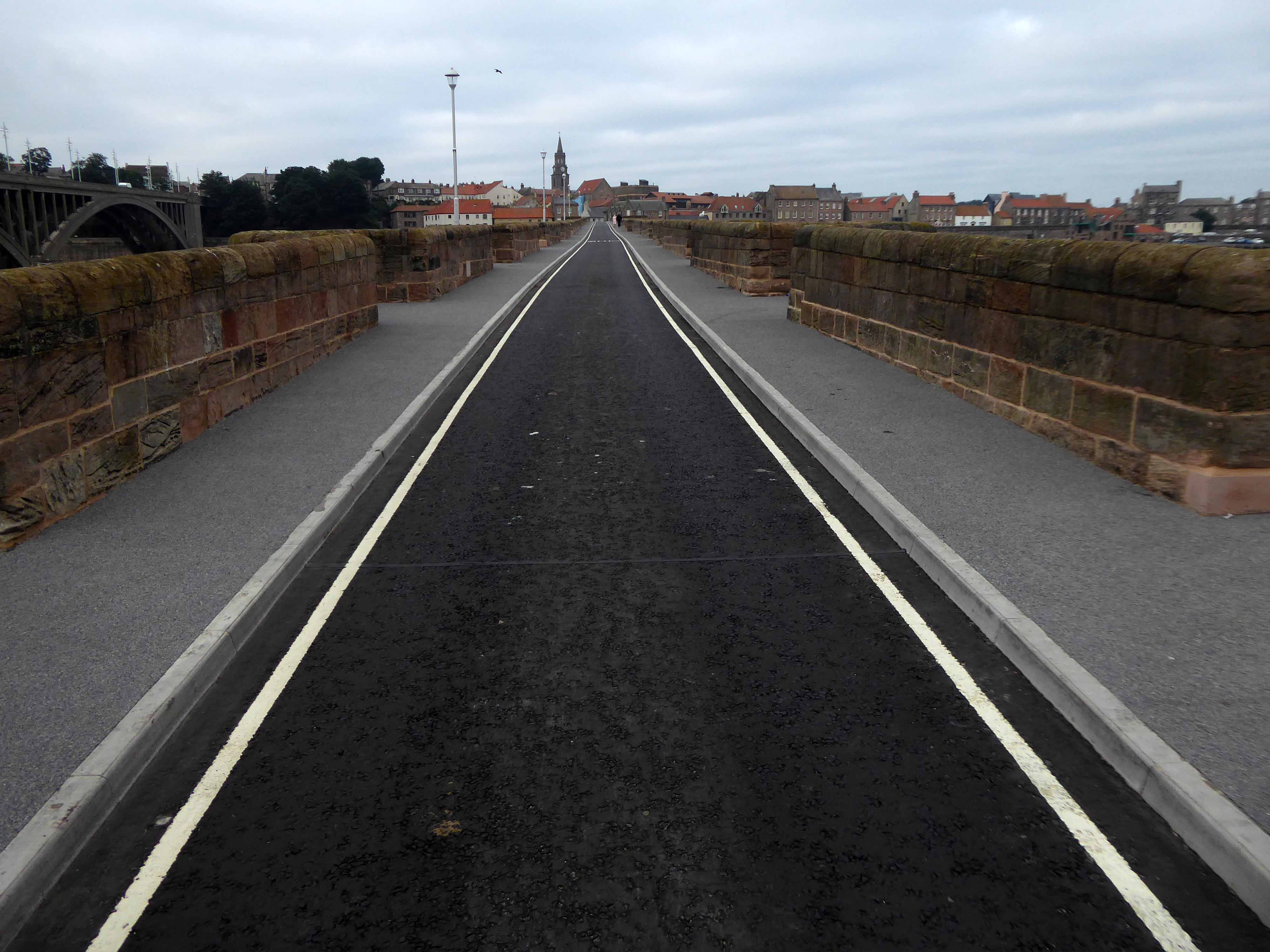
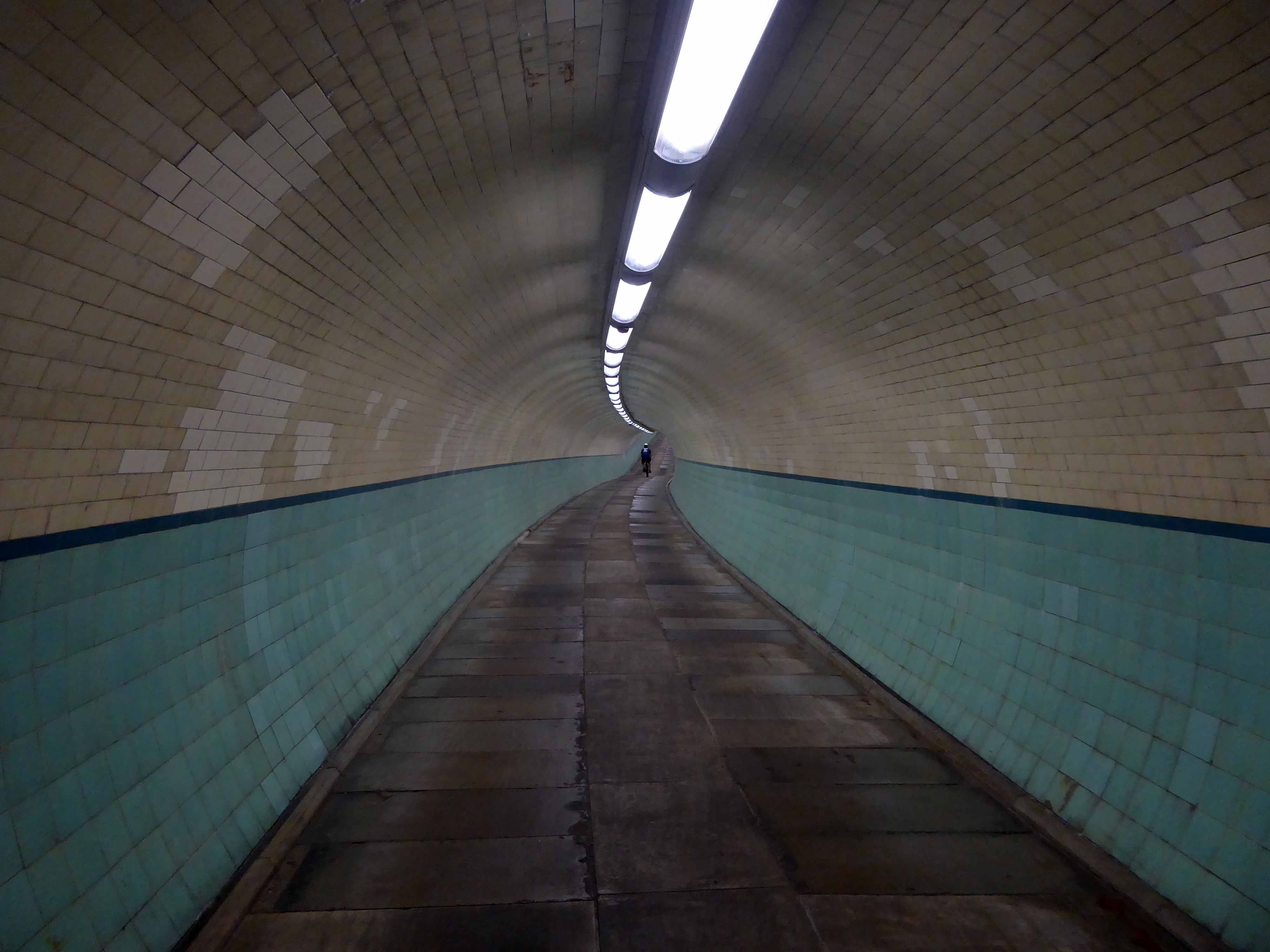
Tyne Cyclist and Pedestrian Tunnel was Britain’s first purpose-built cycling tunnel. It runs under the River Tyne between Howdon and Jarrow, and was opened in 1951, heralded as a contribution to the Festival of Britain.
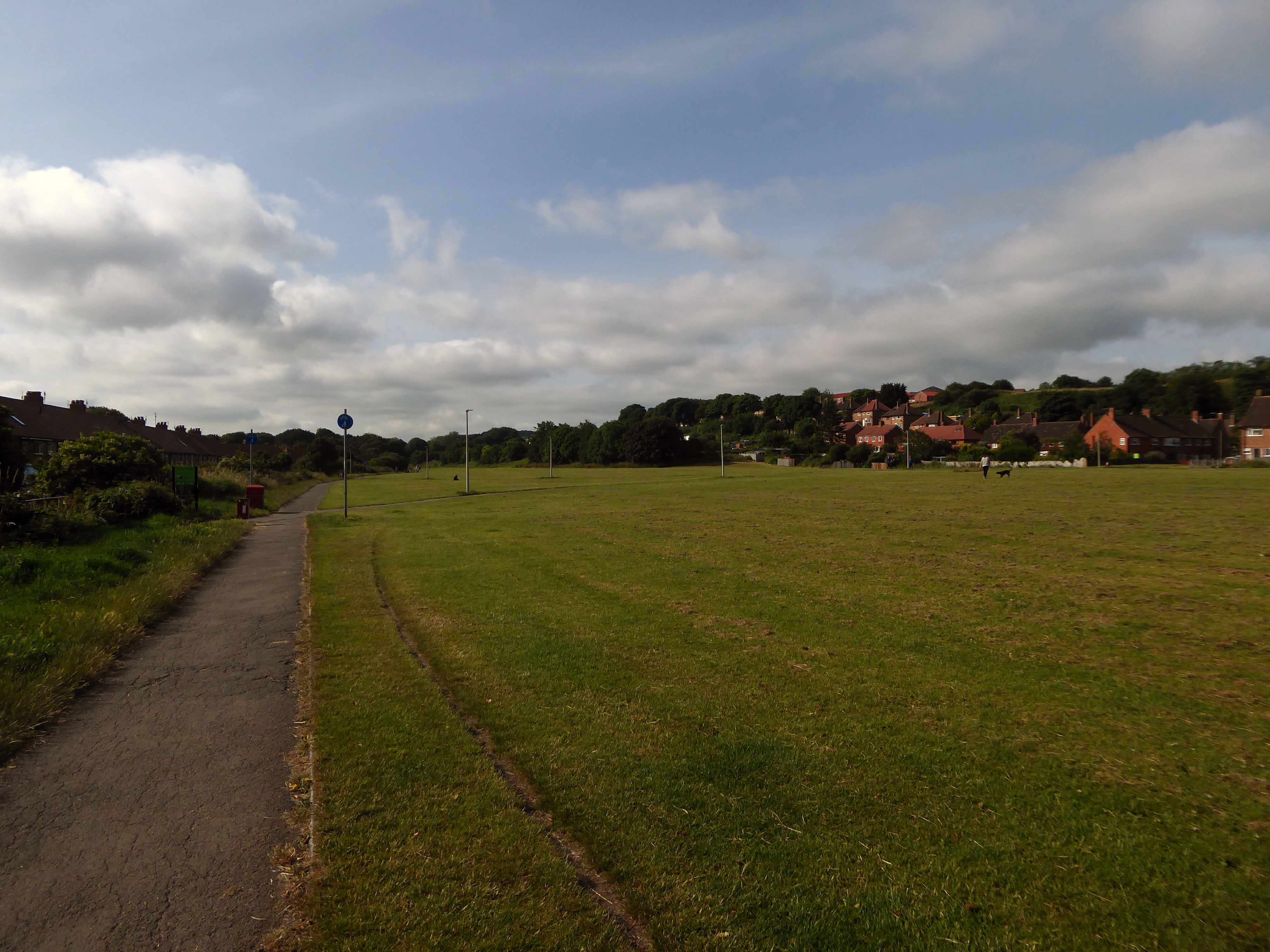
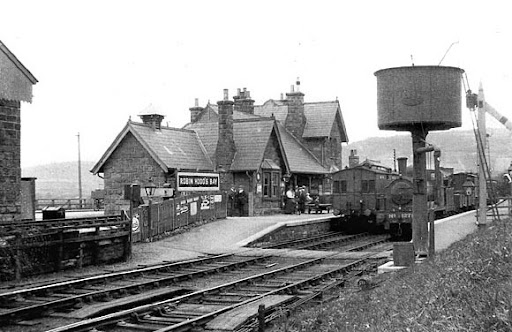
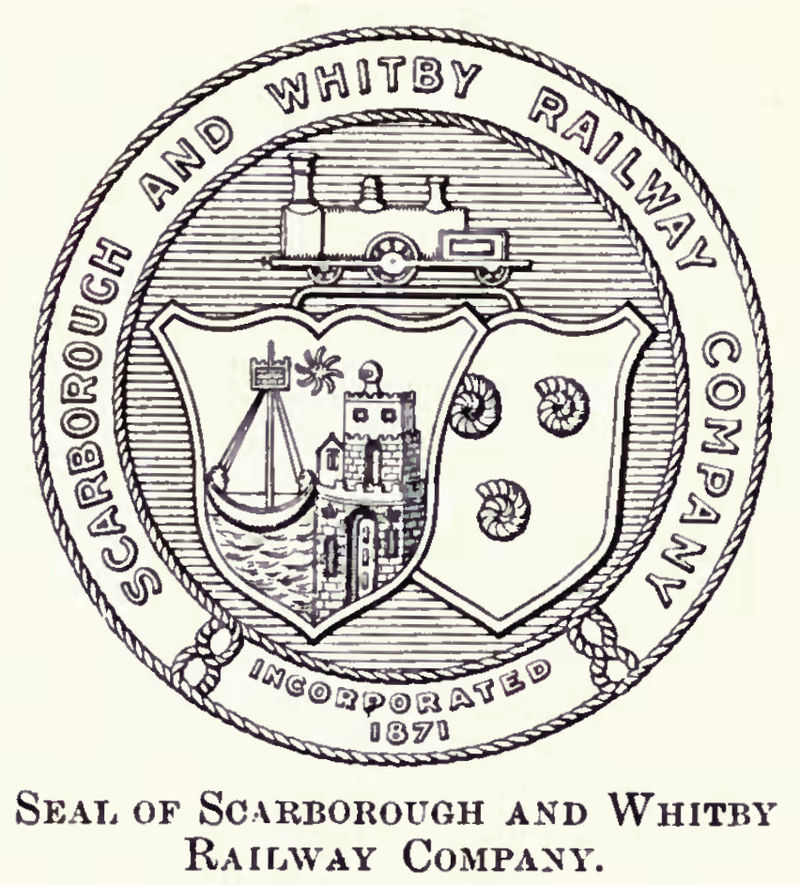
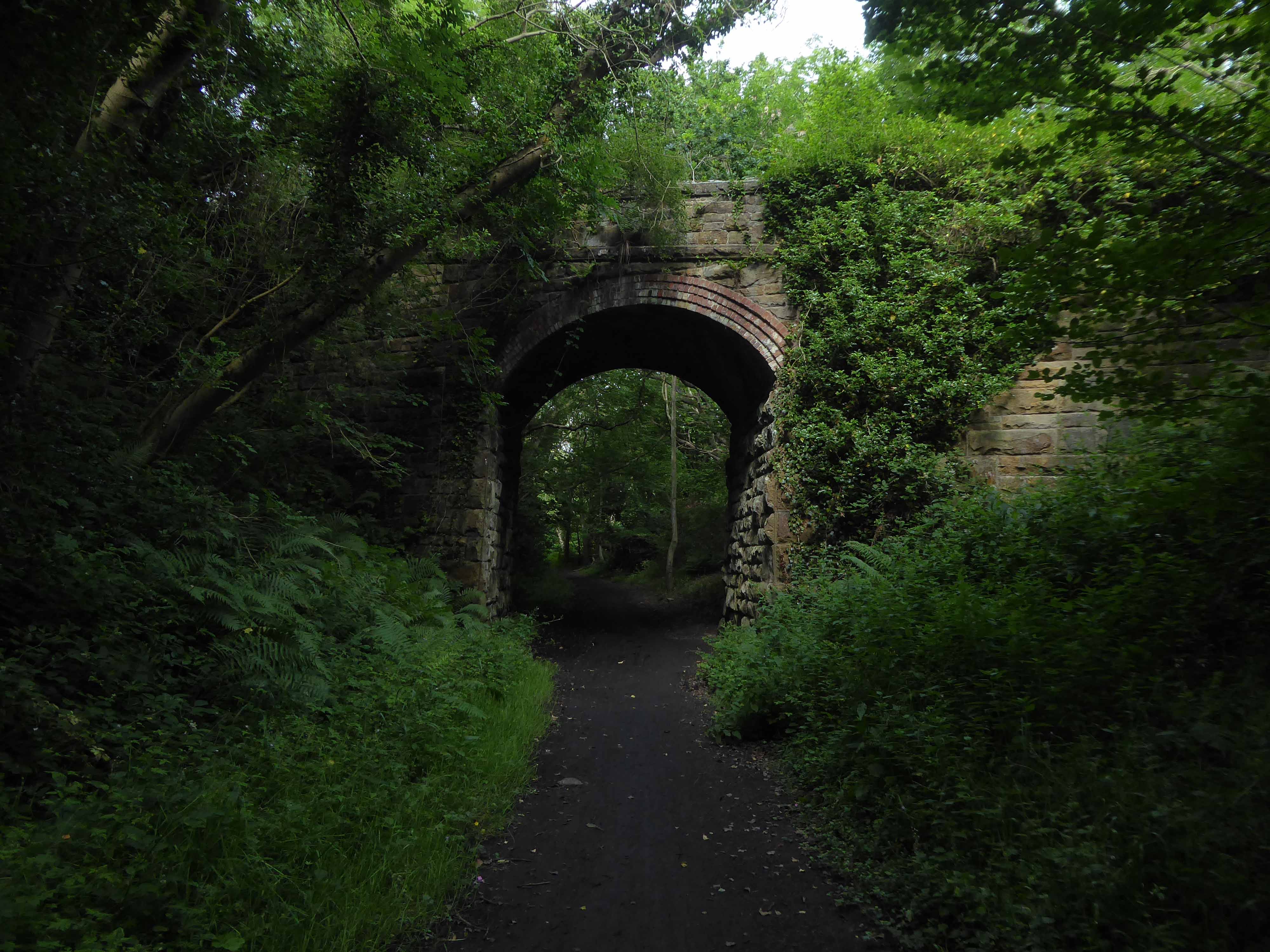
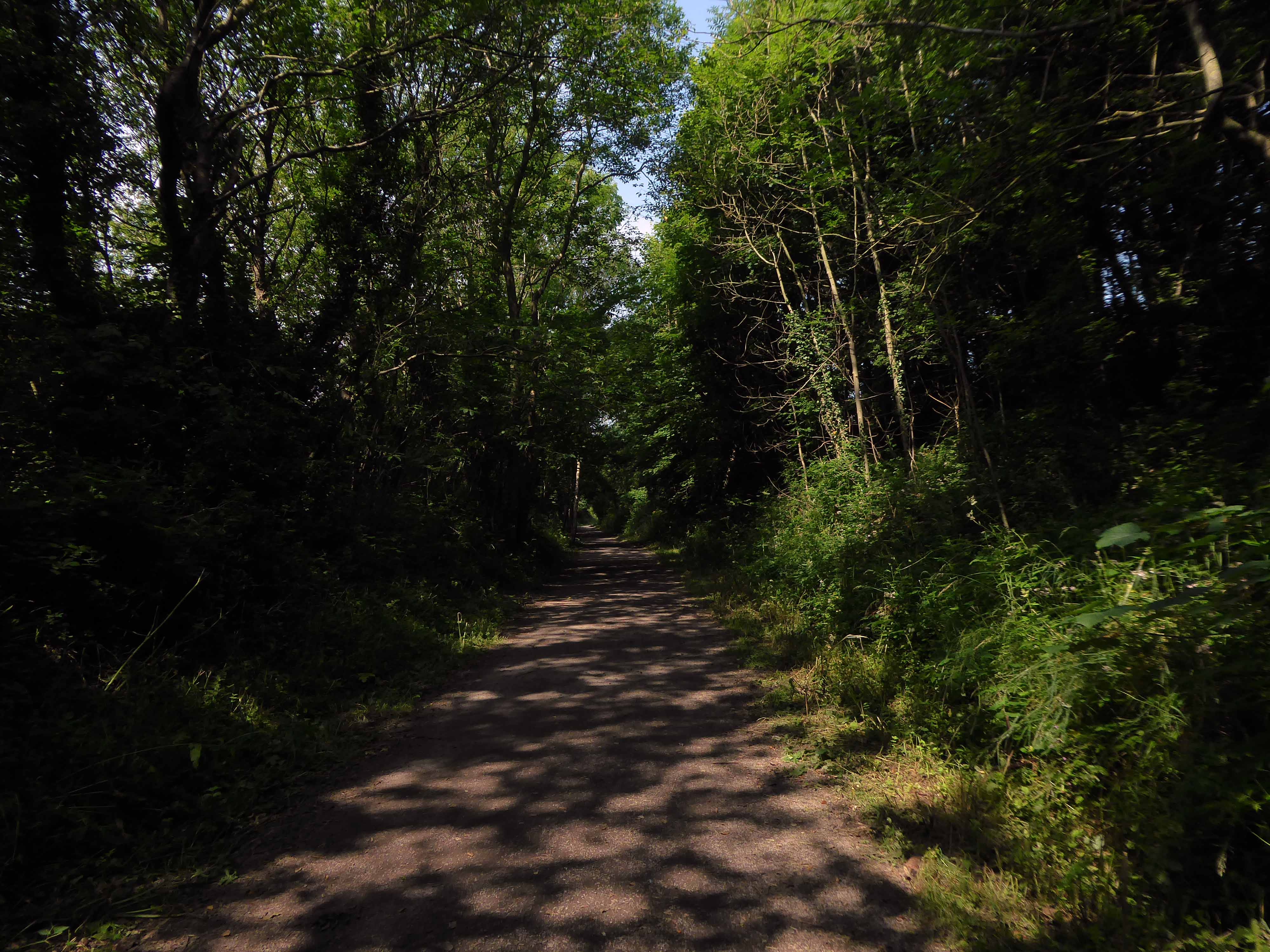
Formerly the Scarbough to Whitby Railway – the line opened in 1885 and closed in 1965 as part of the Beeching Axe.
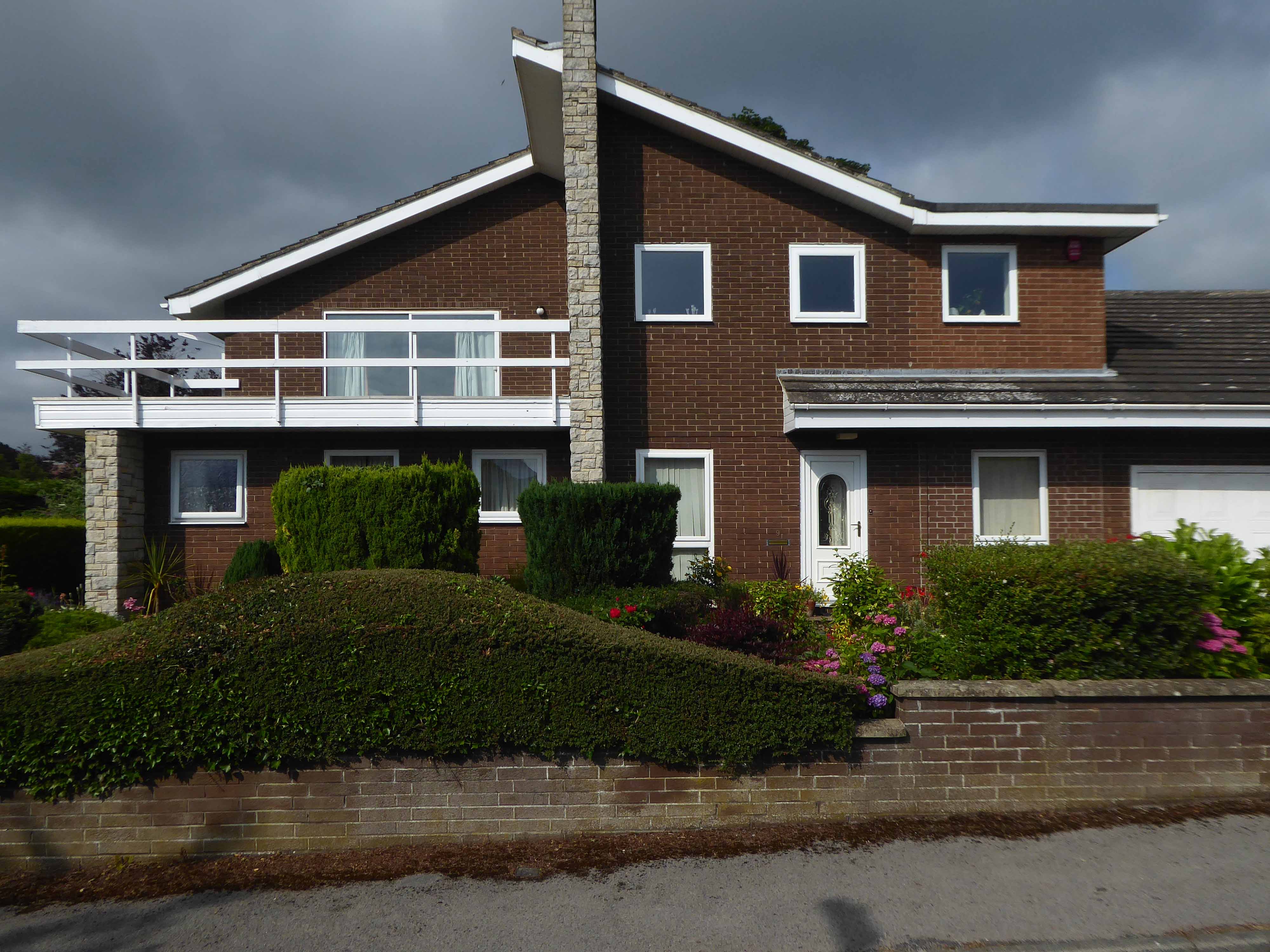
Yet again I chance upon a delightful post-war home.
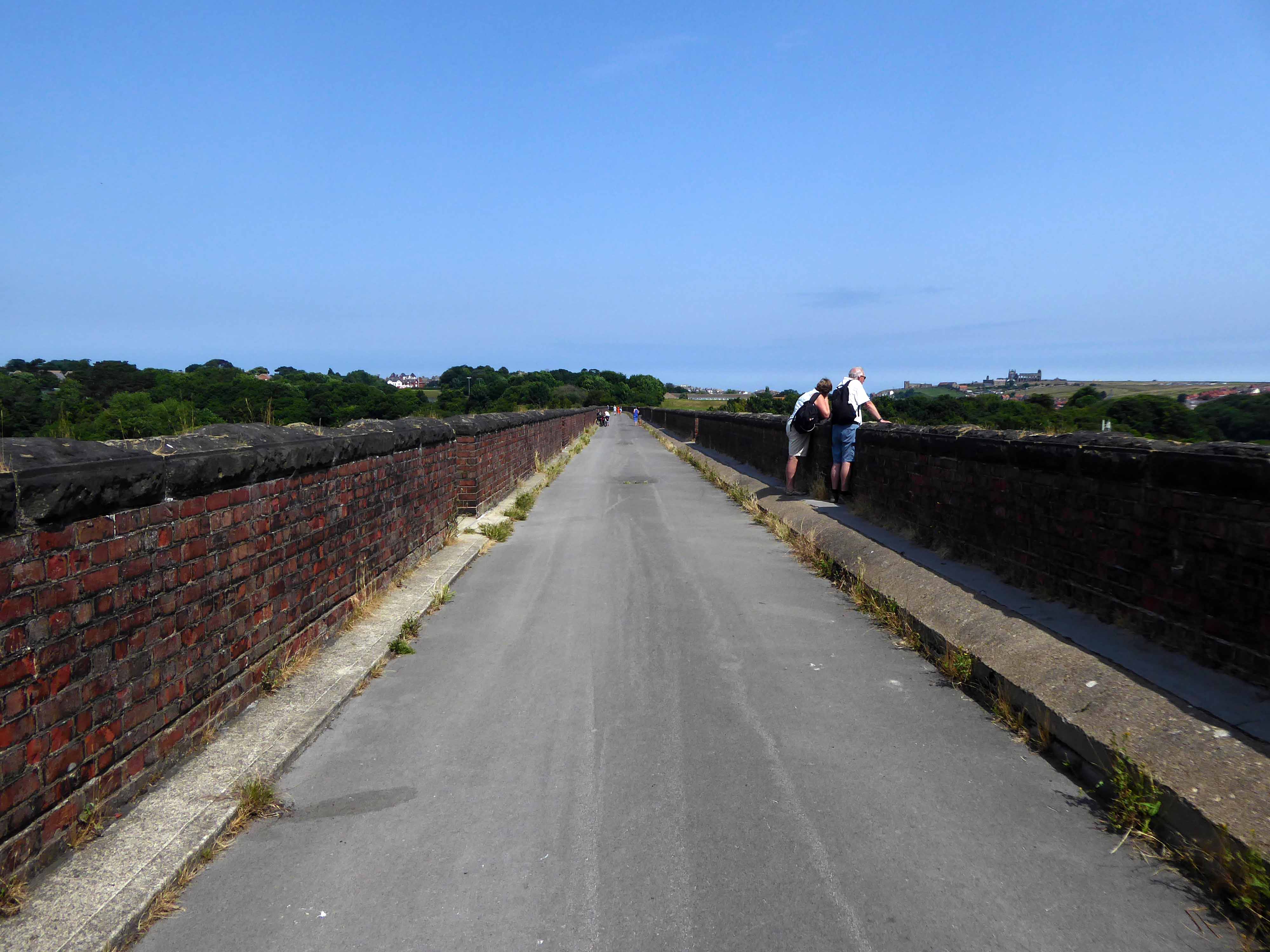
I parted company with the track dropping down to the Esk Valley from the Larpool Viaduct.
Construction began in October 1882 and was complete by October 1884.
Two men fell from the piers during construction, but recovered.
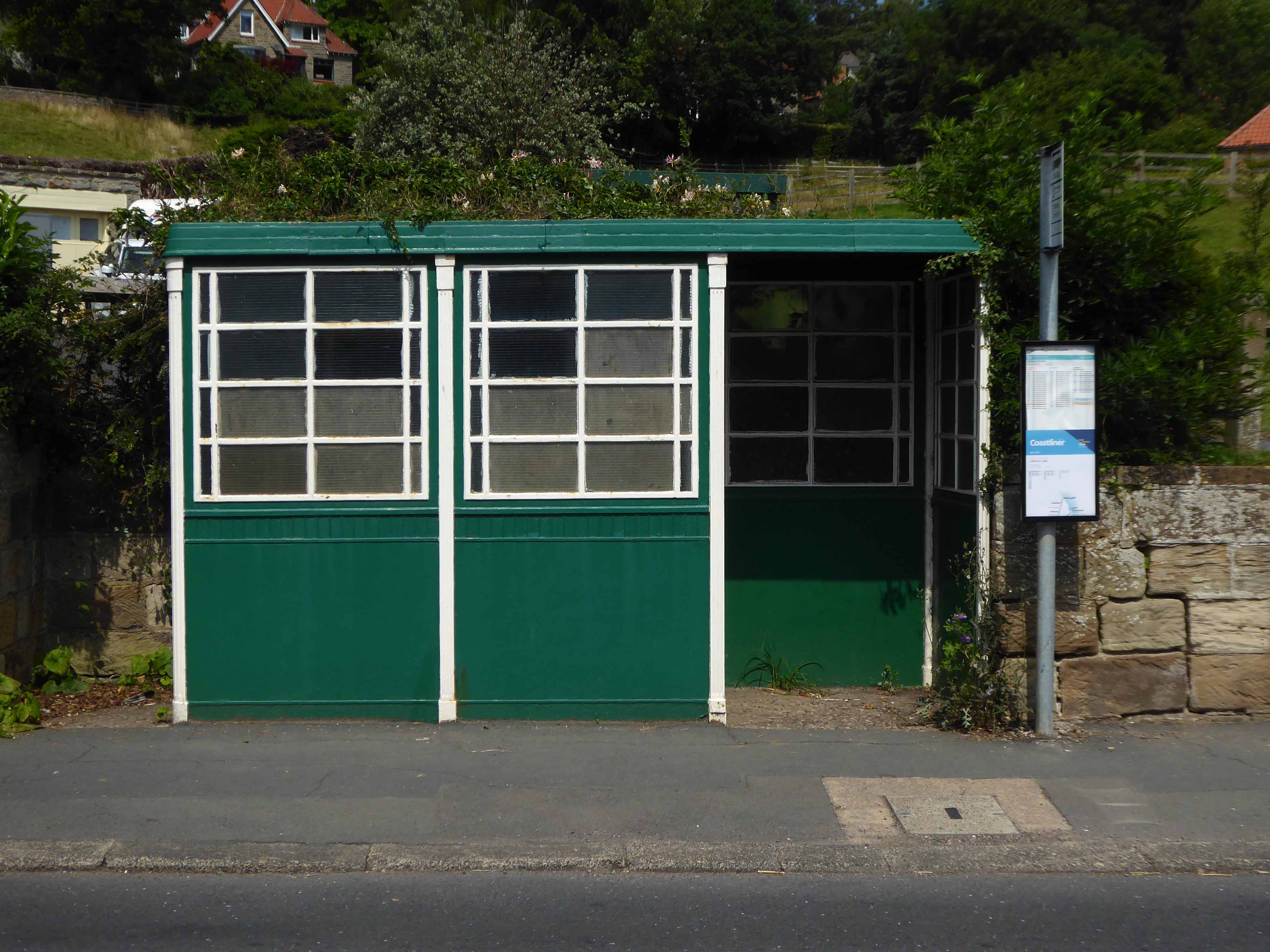
I found myself in Ruswarp, home to this enchanting bus shelter.
I bombed along the main road to Sleights.
There then followed a hesitant ascent, descent, ascent along a badly signed bridleway, fearing that I had climbed the hill in error I retraced, then retraced.
A difficult push ensued, a precipitous path, rough and untended, rising ever higher and higher.
Finally arriving at Aislaby, more than somewhat exhausted – the village is mentioned in the Domesday Book as Asuluesbi.
Pausing to catch my breath I took the wildly undulating road to Egton – along the way I was alerted to the presence of a tea stop by two touring cyclists from Nottingham.
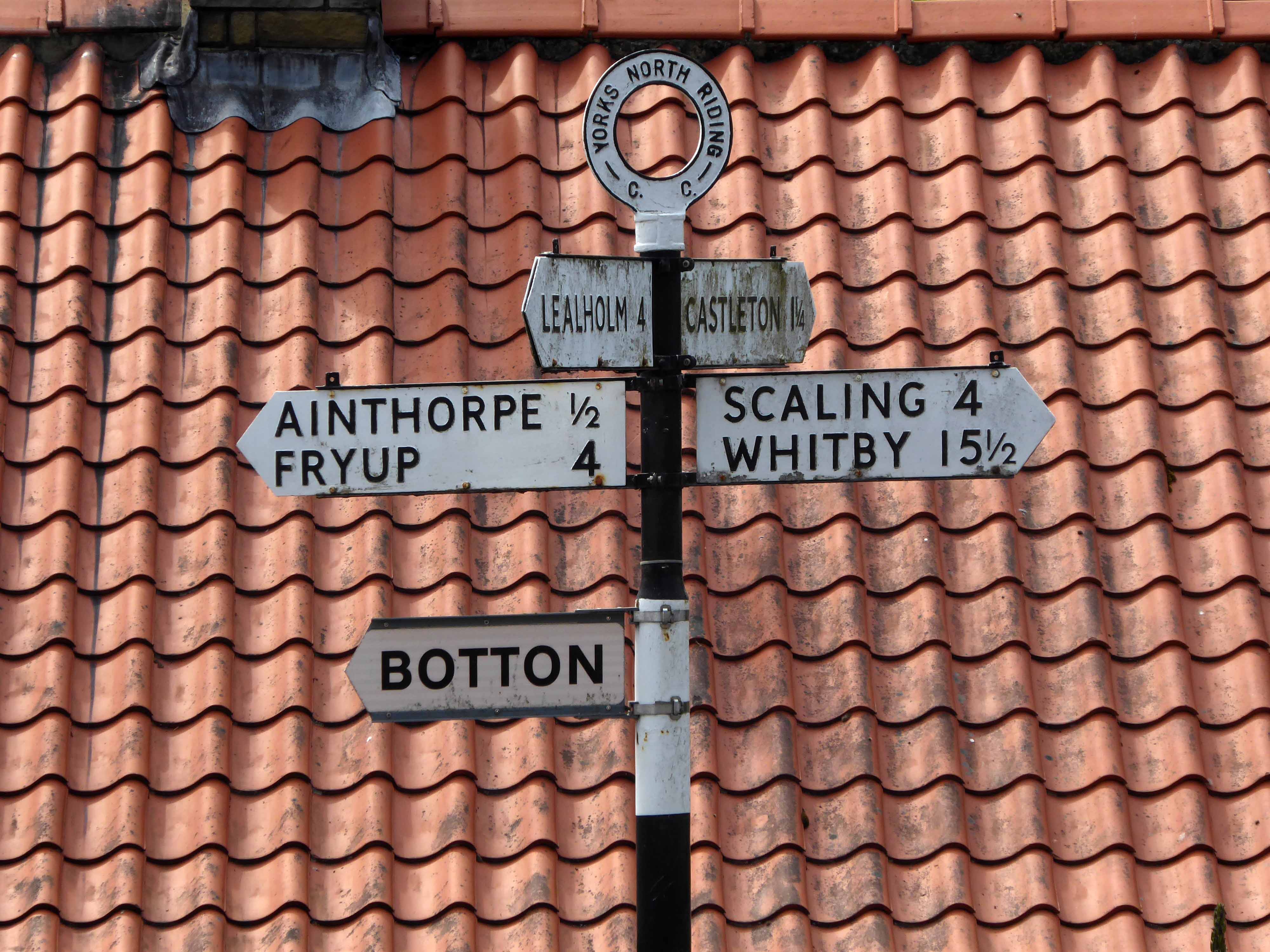
The curious name Fryup probably derives from the Old English reconstruction Frige-hop: Frige was an Anglo-Saxon goddess equated with the Old Norse Frigg; hop denoted a small valley.
An old woman at Fryup was well known locally for keeping the Mark’s e’en watch – 24 April, as she lived alongside a corpse road known as Old Hell Road.
The practice involved a village seer holding vigil between 11pm and 1am to watch for the wraiths of those who would die in the following 12 months.
Castleton Moor ghost.
In the village I was given further directions by two elderly gents, who had been engaged in a discussion concerning their long term mapping of acid rain levels in the area.
One was wearing a Marshall Jefferson t-shirt.
I climbed Langburn Bank onto the flatish open moorland.
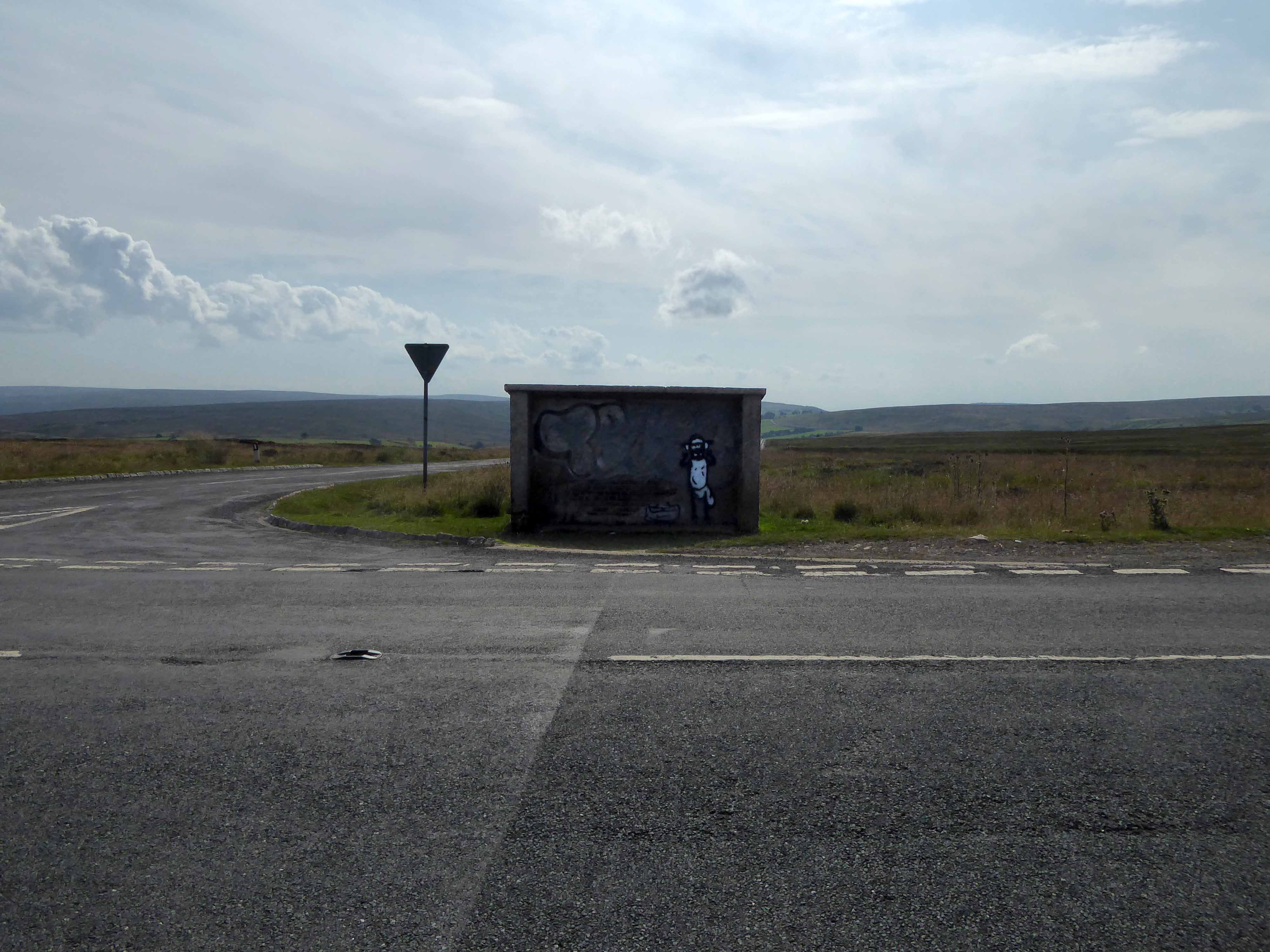
Taking a brief break to snap this concrete shelter.
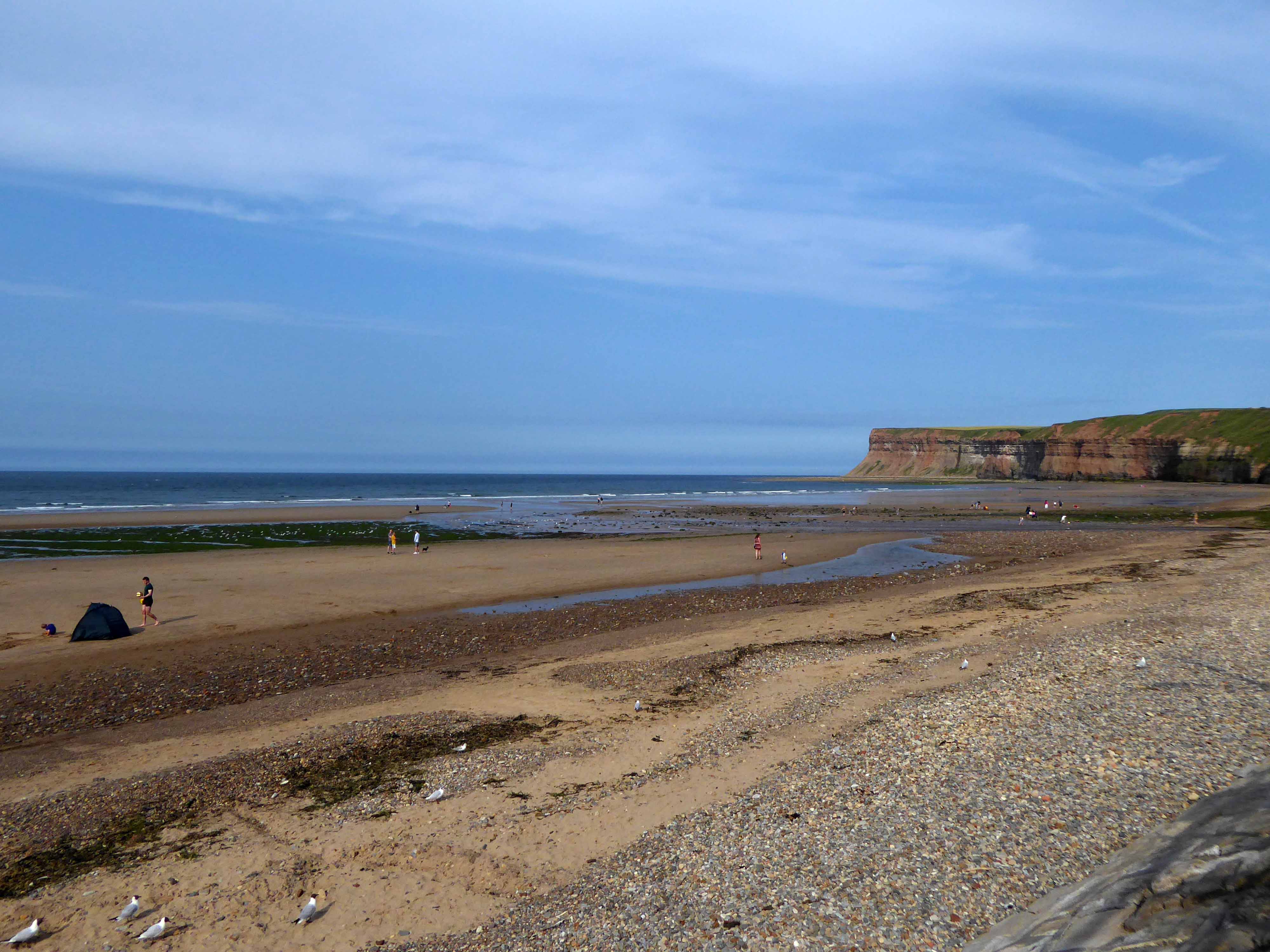
There then followed a hair stirring series of hairpin descents to the coast at Saltburn.
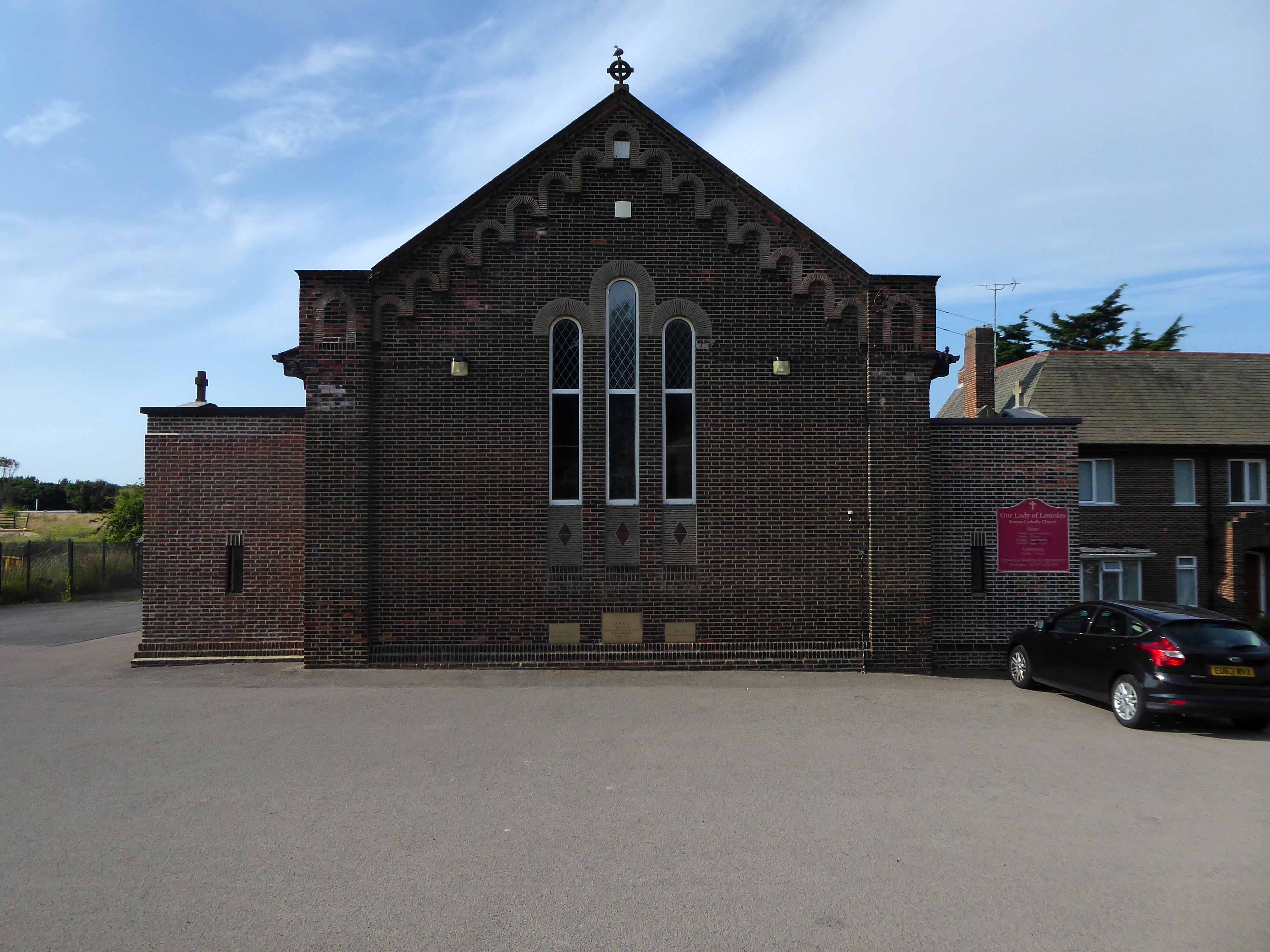
Built in 1928, this church was designed with some care and is an attractive, if fairly modest, Lombard Romanesque-style essay in brick. The use of a semi-circular apse, narrow brickwork and use of tile for decorative effect give it a pleasing appearance, typical of restrained but elegant work between the wars.
I arrived and took a look around, first time in town, here’s what I found.
The first leg of my journey northwards to Berwick, many thanks to all those kind souls who filled my water bottle, directed, redirected and misdirected me along my merry way.
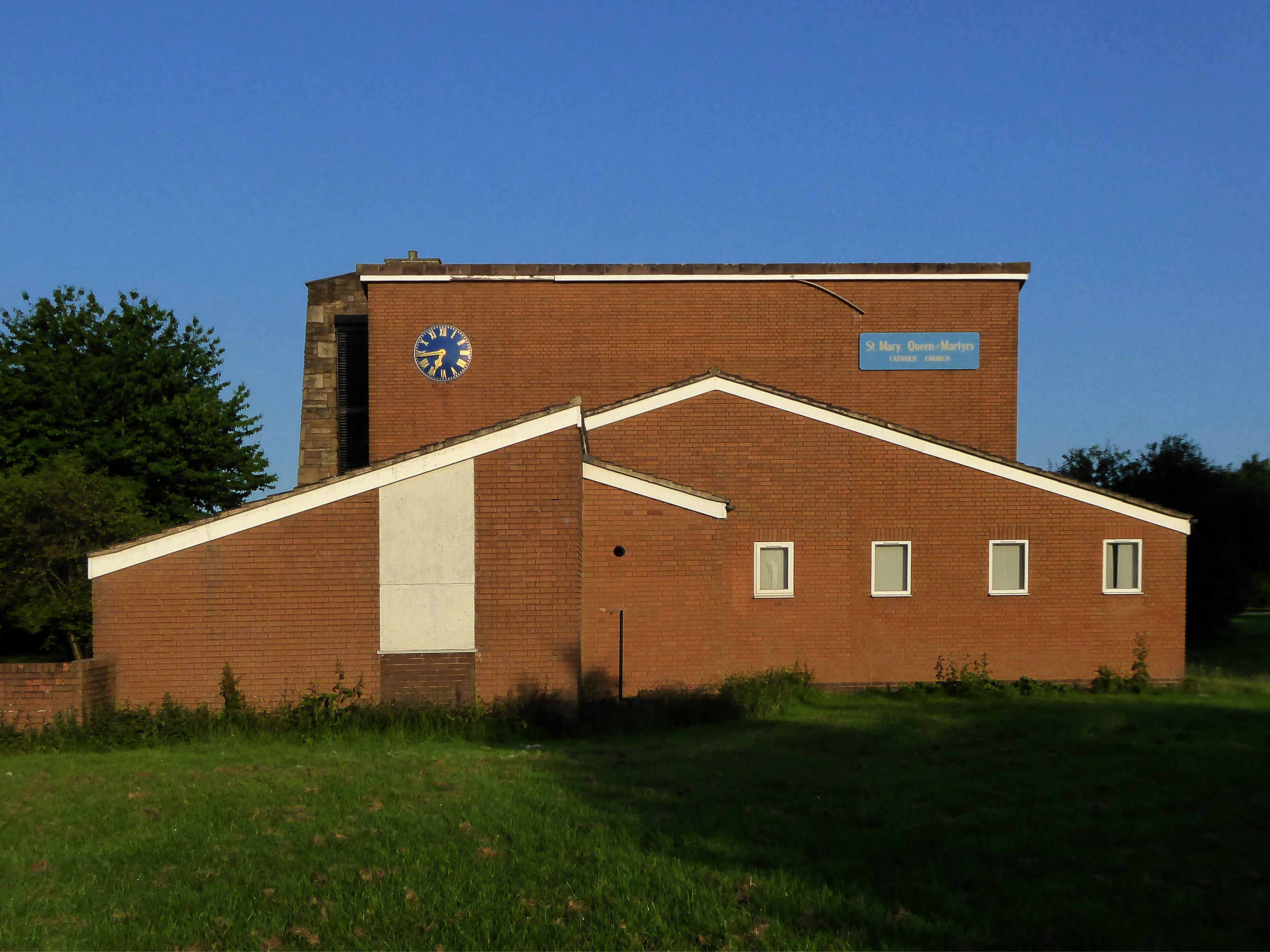
Good fortune however had pointed me in the direction of this functional yet charming brick built church, on the edge of a huge roundabout – St Mary Queen of Martyrs RC in Bransholme.
The new St Mary Queen of Martyrs church was built at Bransholme in 1976-7 and the old St Mary’s church closed and demolished in 1982.
Architect for the new church was JT Reid of The Reid Partnership – Pontefract.
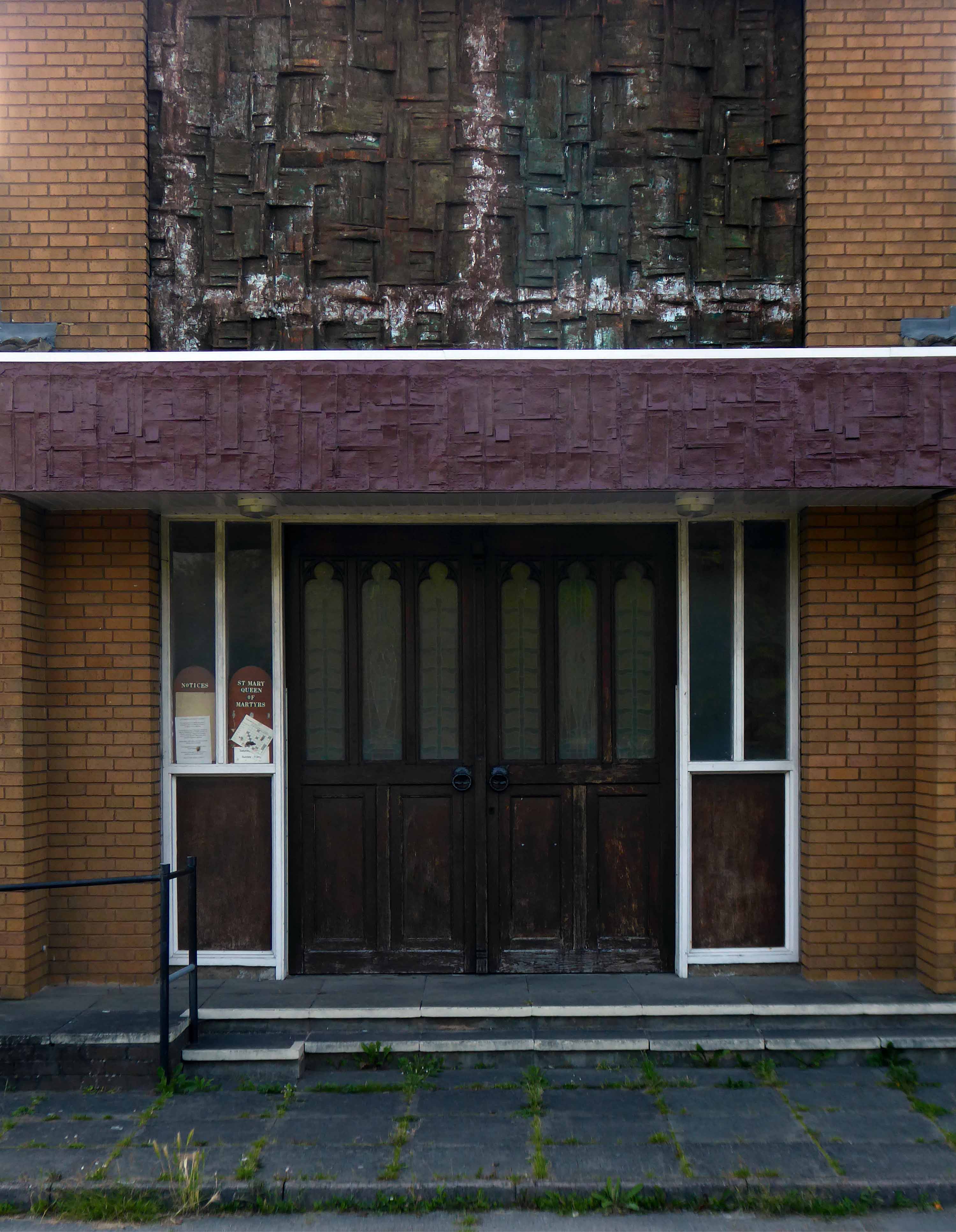
The entrance graced by these textured fascias.
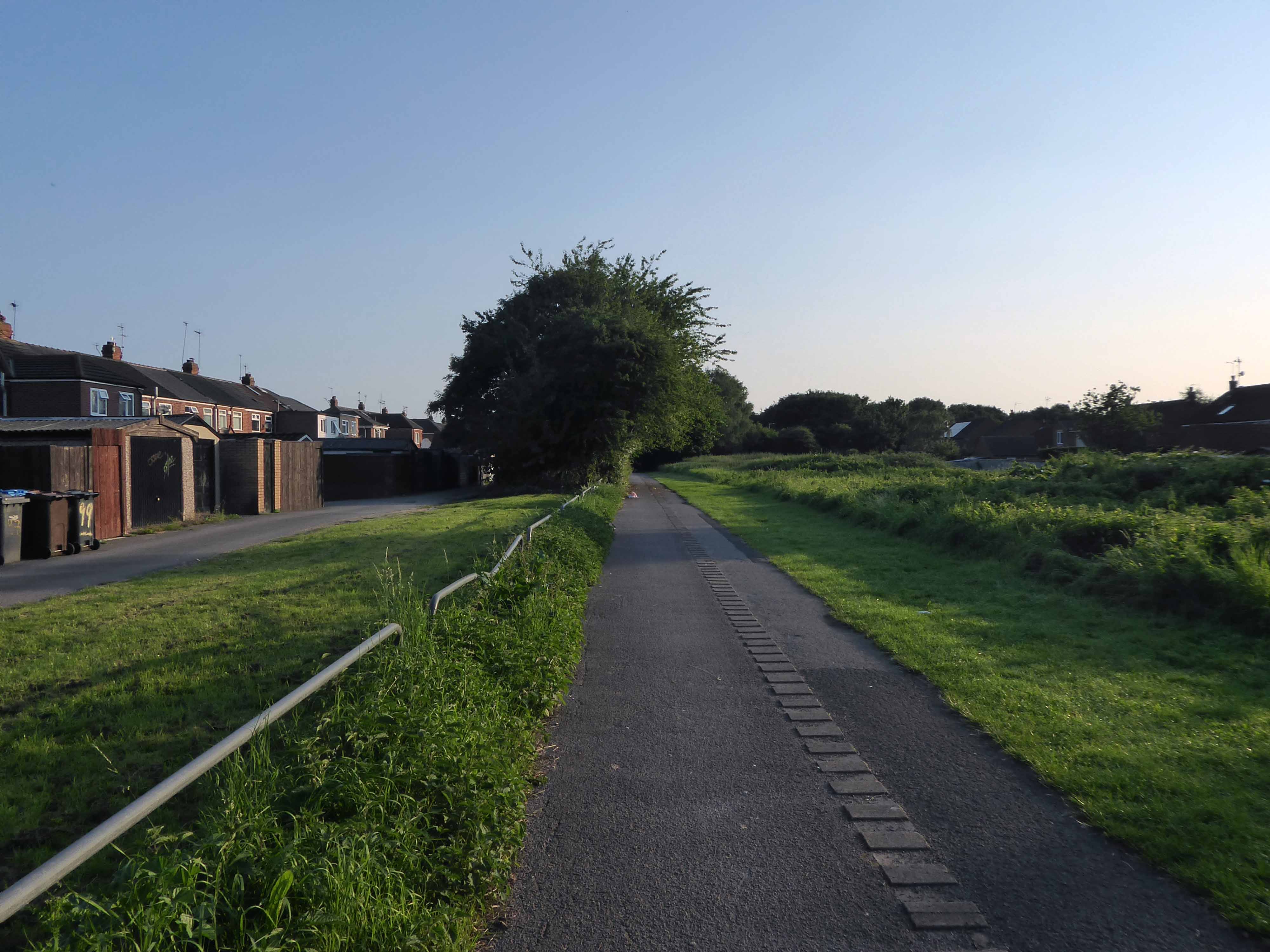
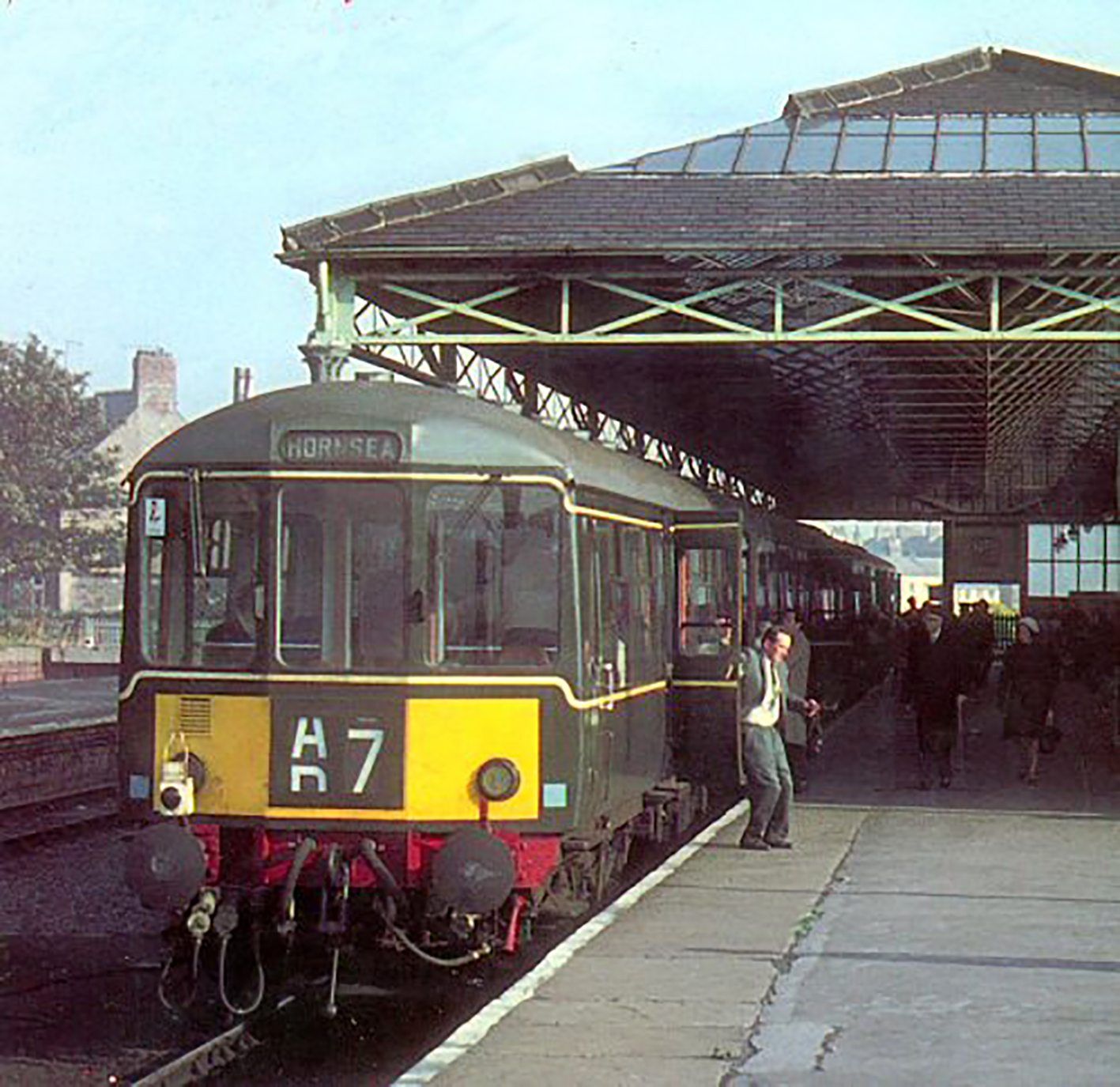
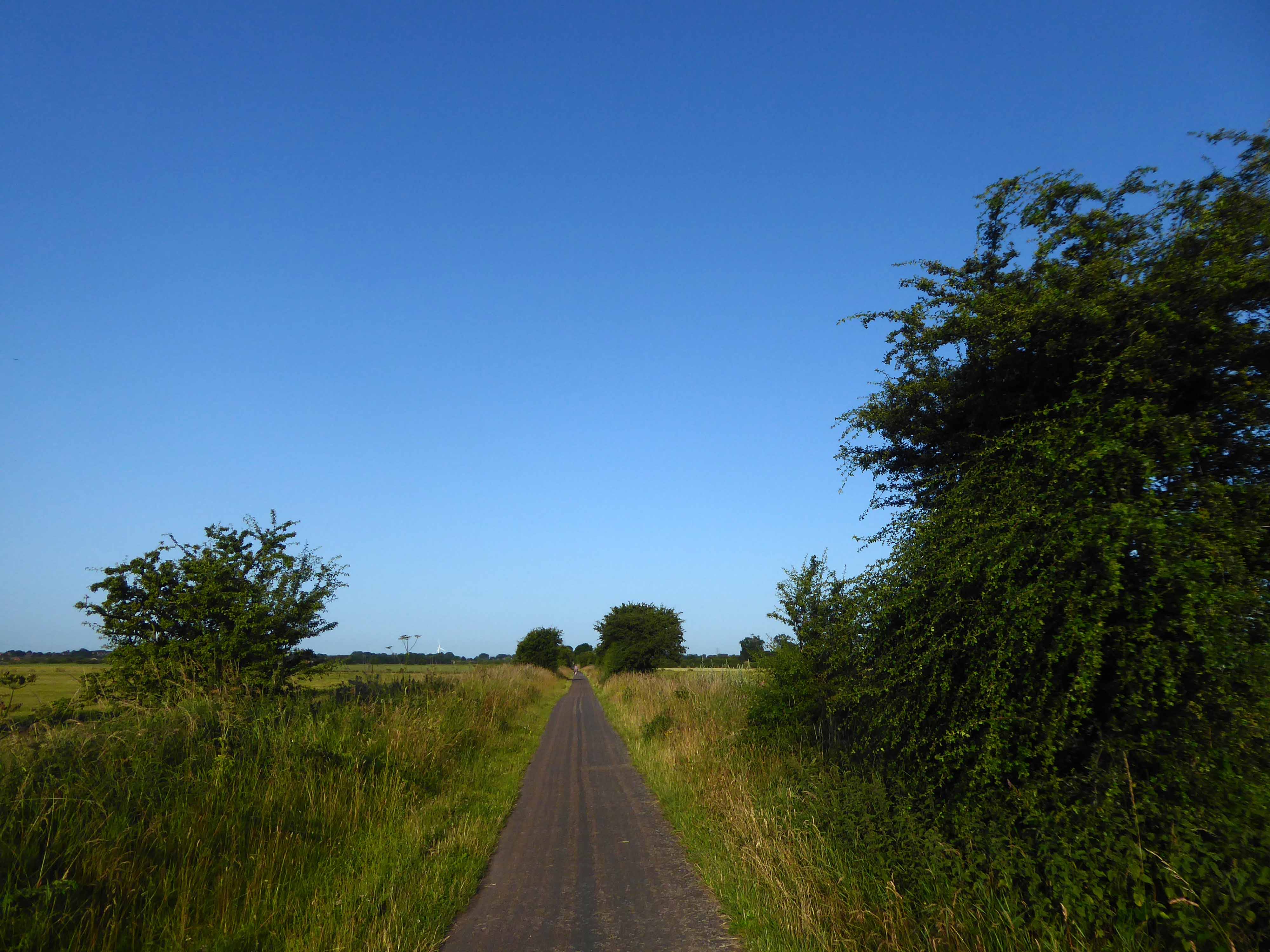
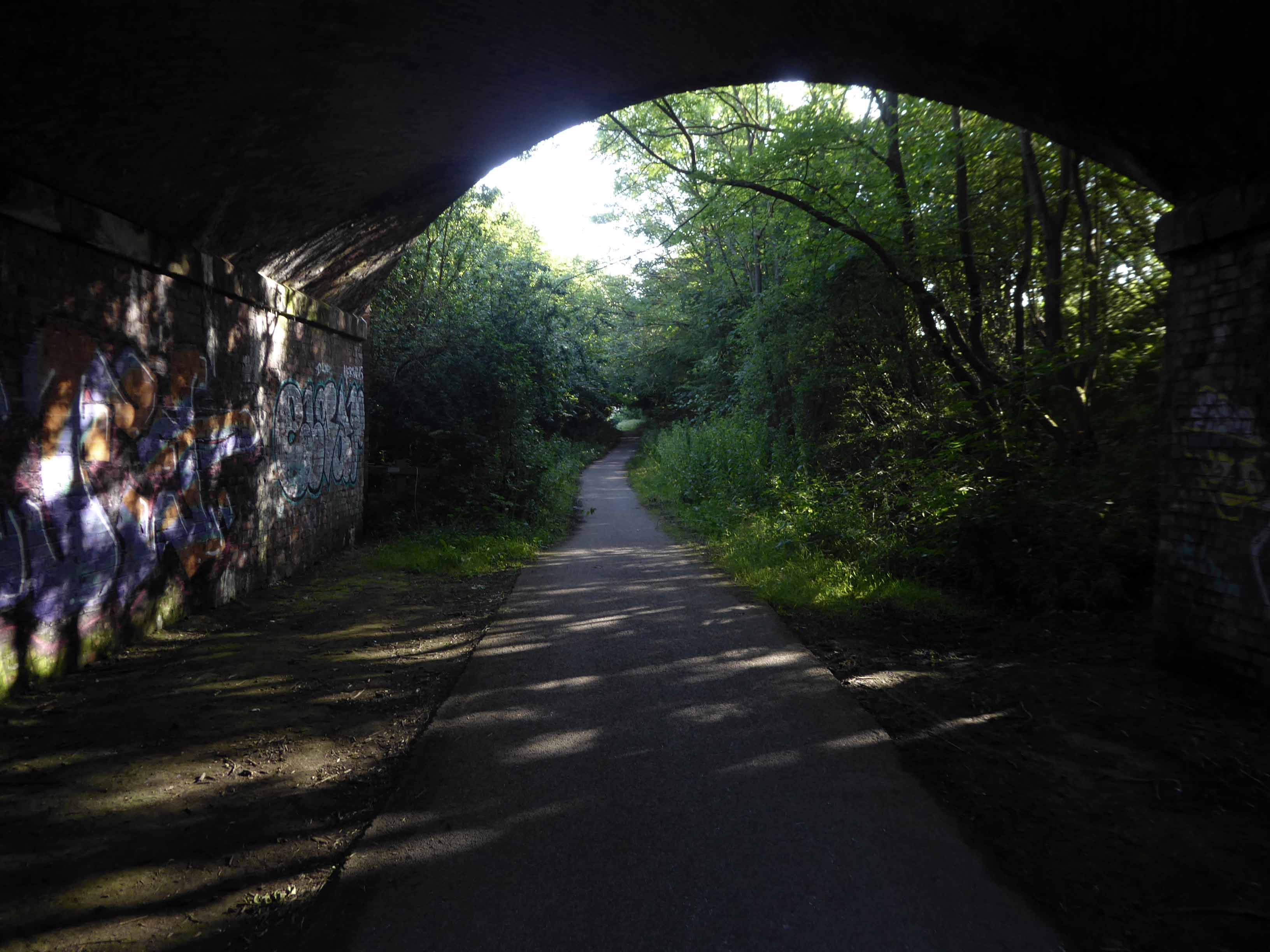
Following a series of brief engagements with various local benefactors, I regained my intended route and joined the Hornsea Rail Trail – the bed of the former branch line.
The line was officially opened on 28 March 1864, the last passenger train ran on 19 October 1964.
Goods traffic continued to use the line as far as Hornsea Bridgeuntil 3 May 1965.
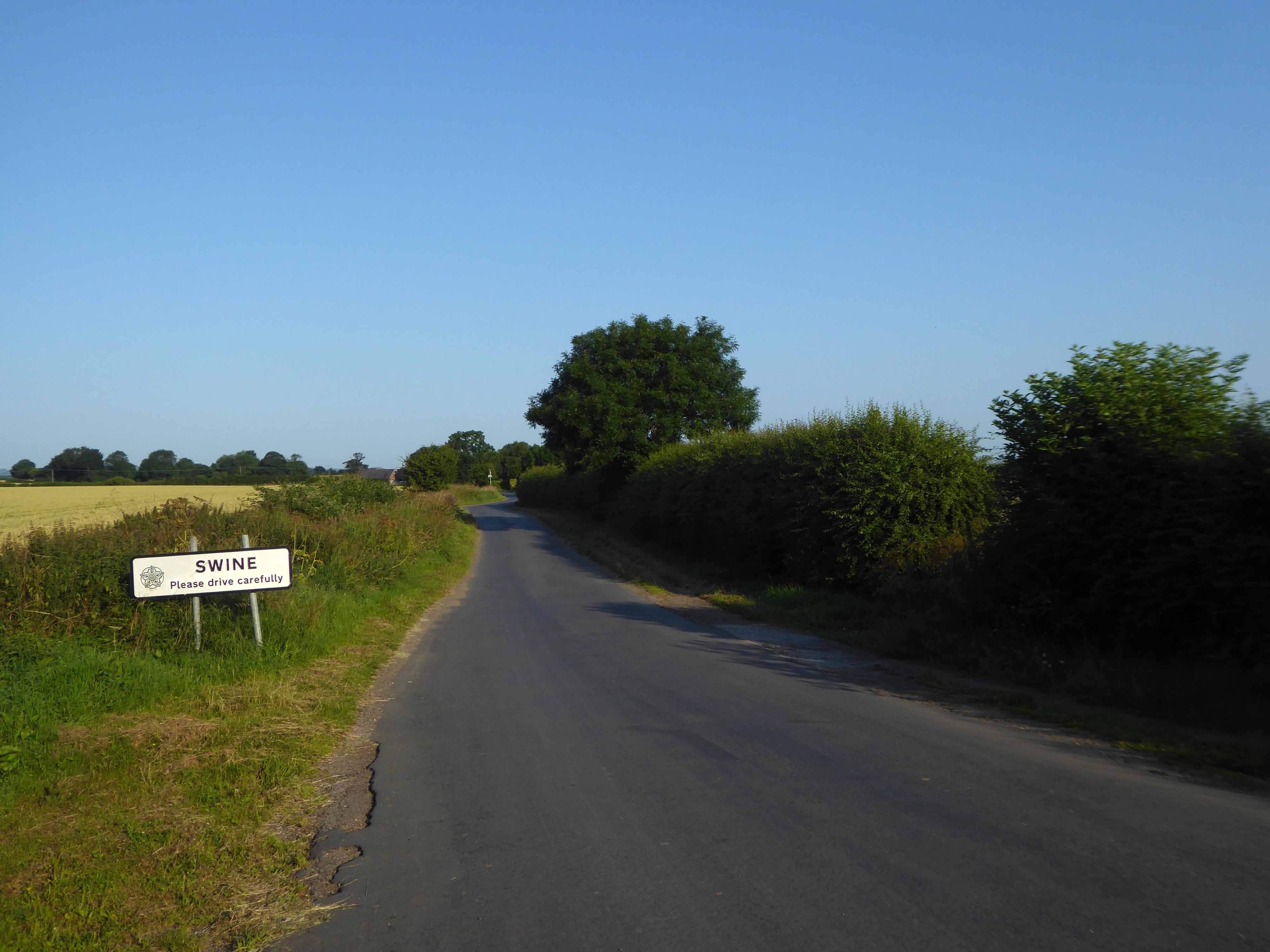
The place-name Swine is first attested in the Domesday Book of 1086, where it appears as Swine.
It appears as Suine in a charter of circa 1150, the name perhaps derives from the Old English swin meaning creek.
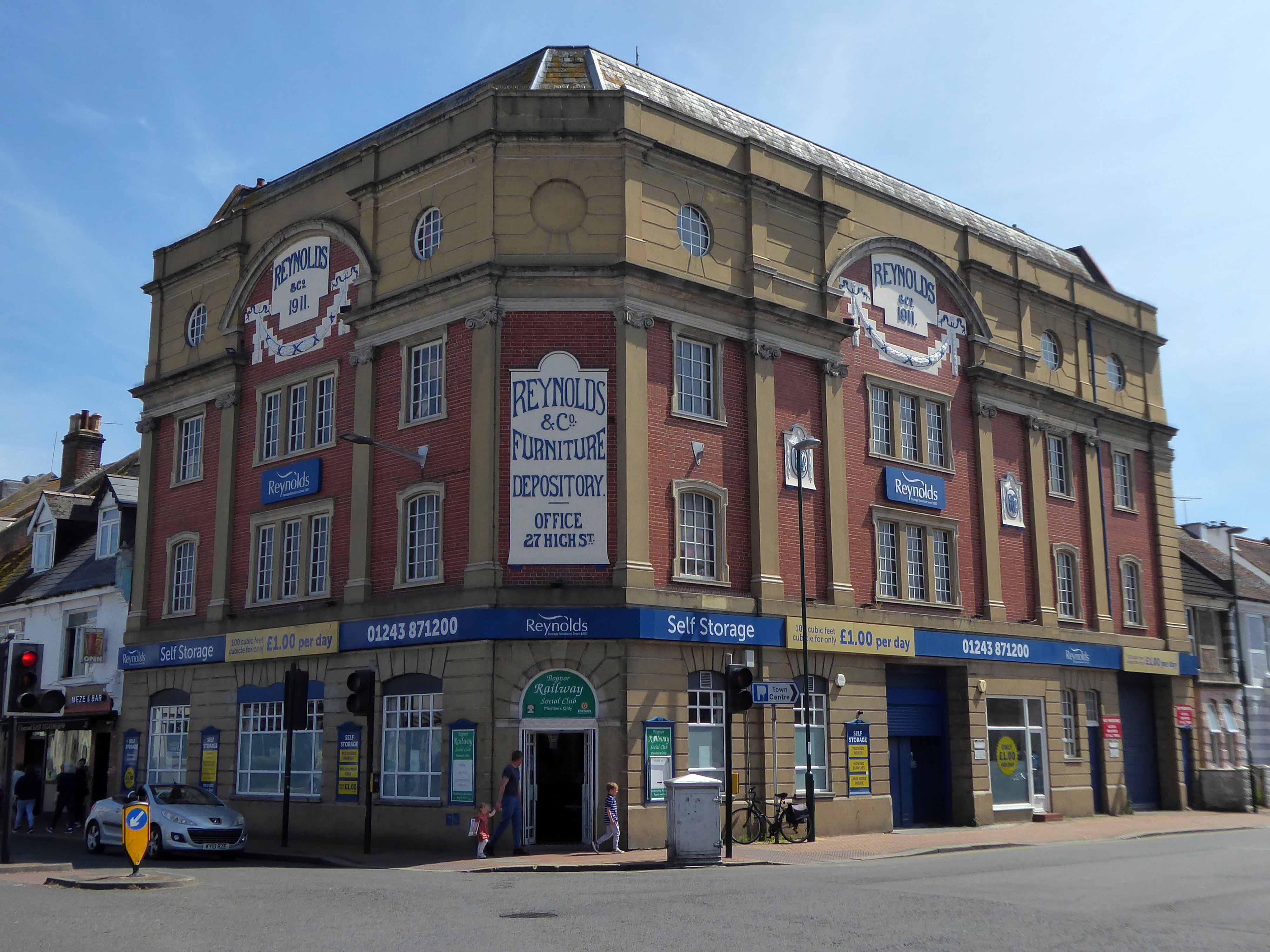
Since 1867 Reynolds has grown from a small shop to the largest furniture store in Sussex, with over 30,000 sq ft on four floors.
The Funeral Service now has three offices in Bognor Regis, Chichester and Littlehampton and the purpose built storage facility in Canada Grove continues to thrive.
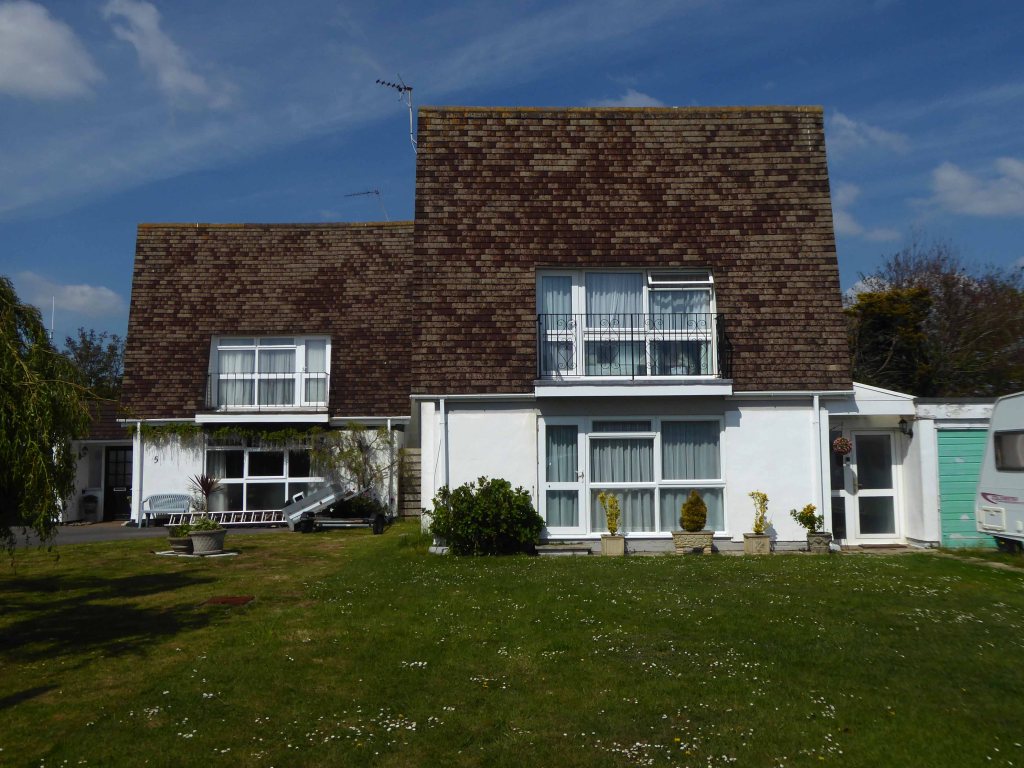
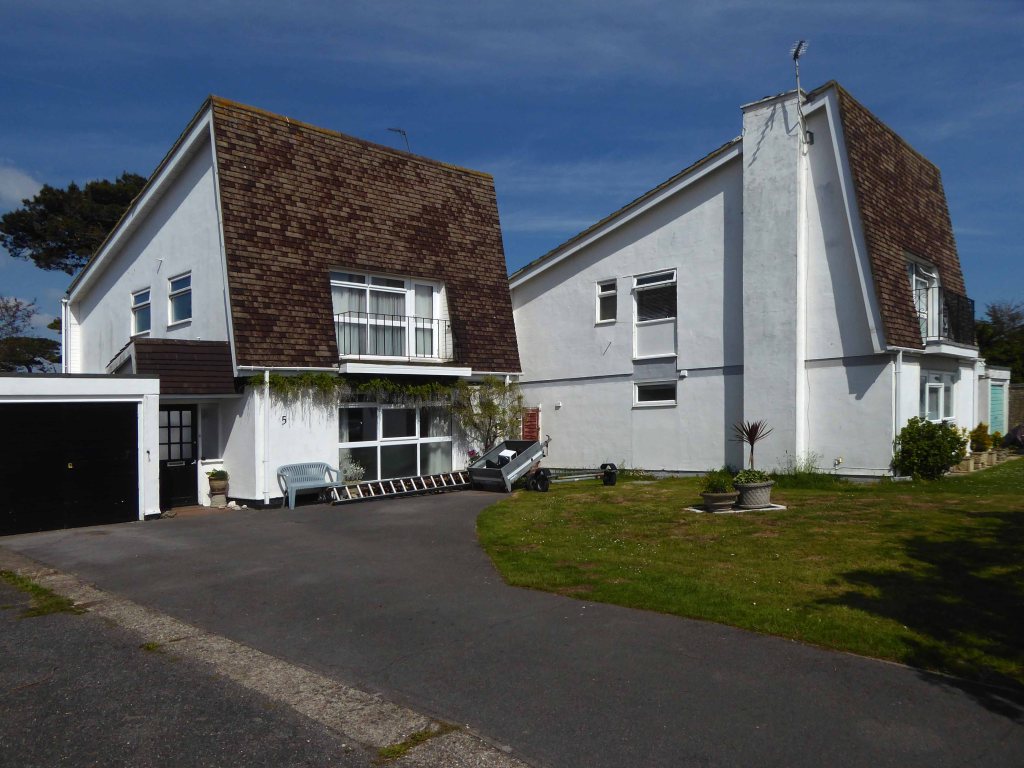
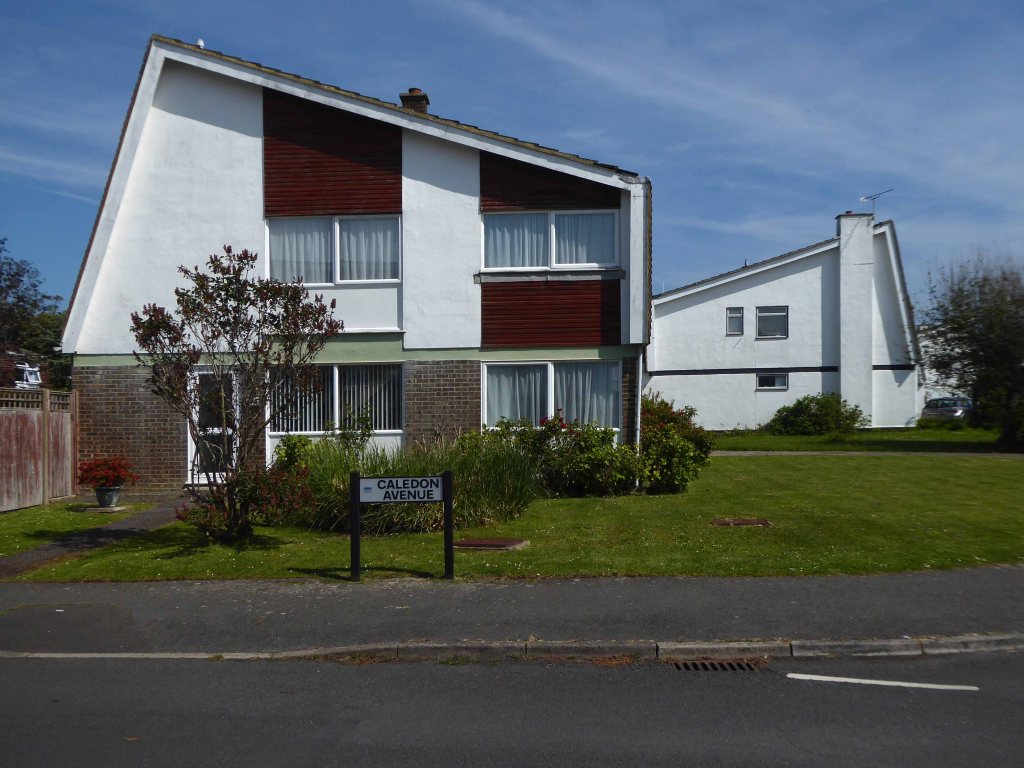
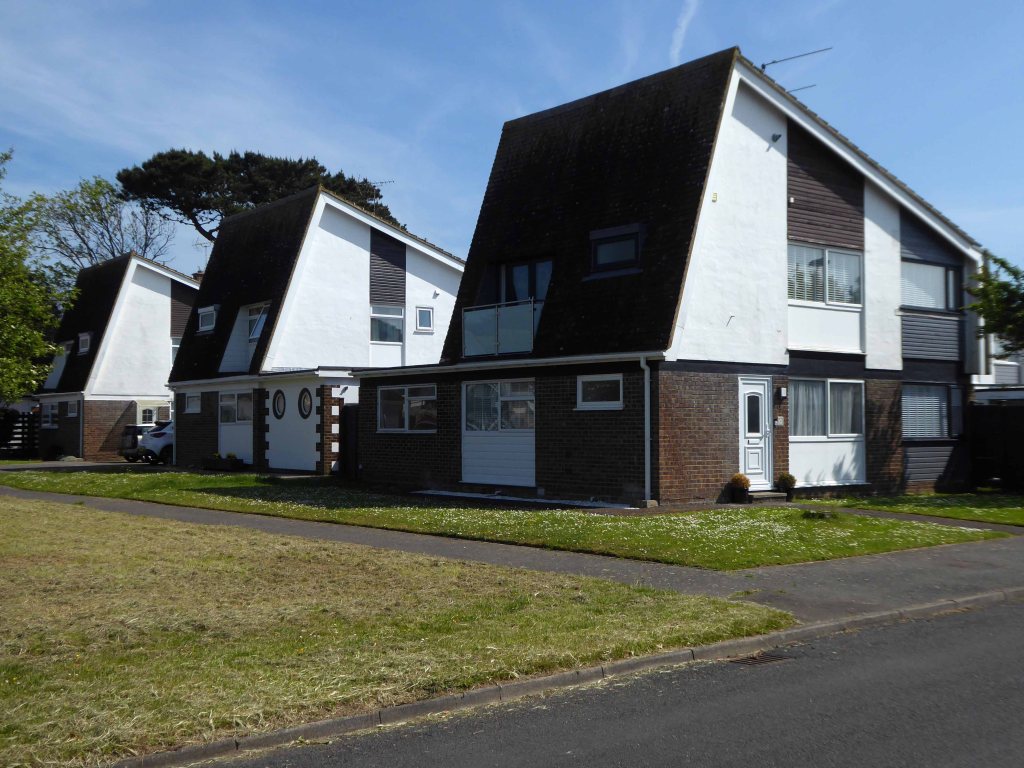
We soon found ourselves in Felpham, amongst yet more interesting housing.
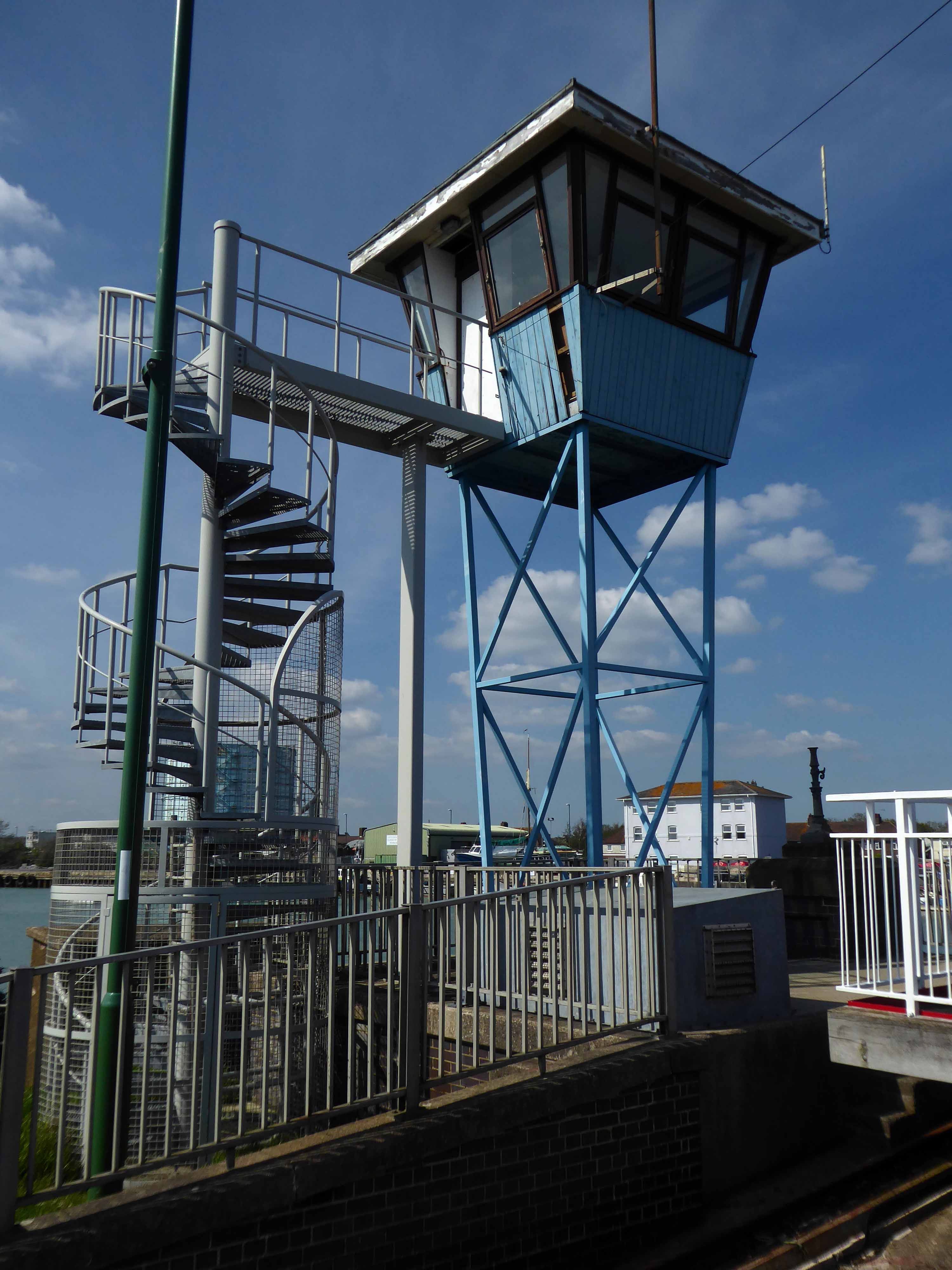
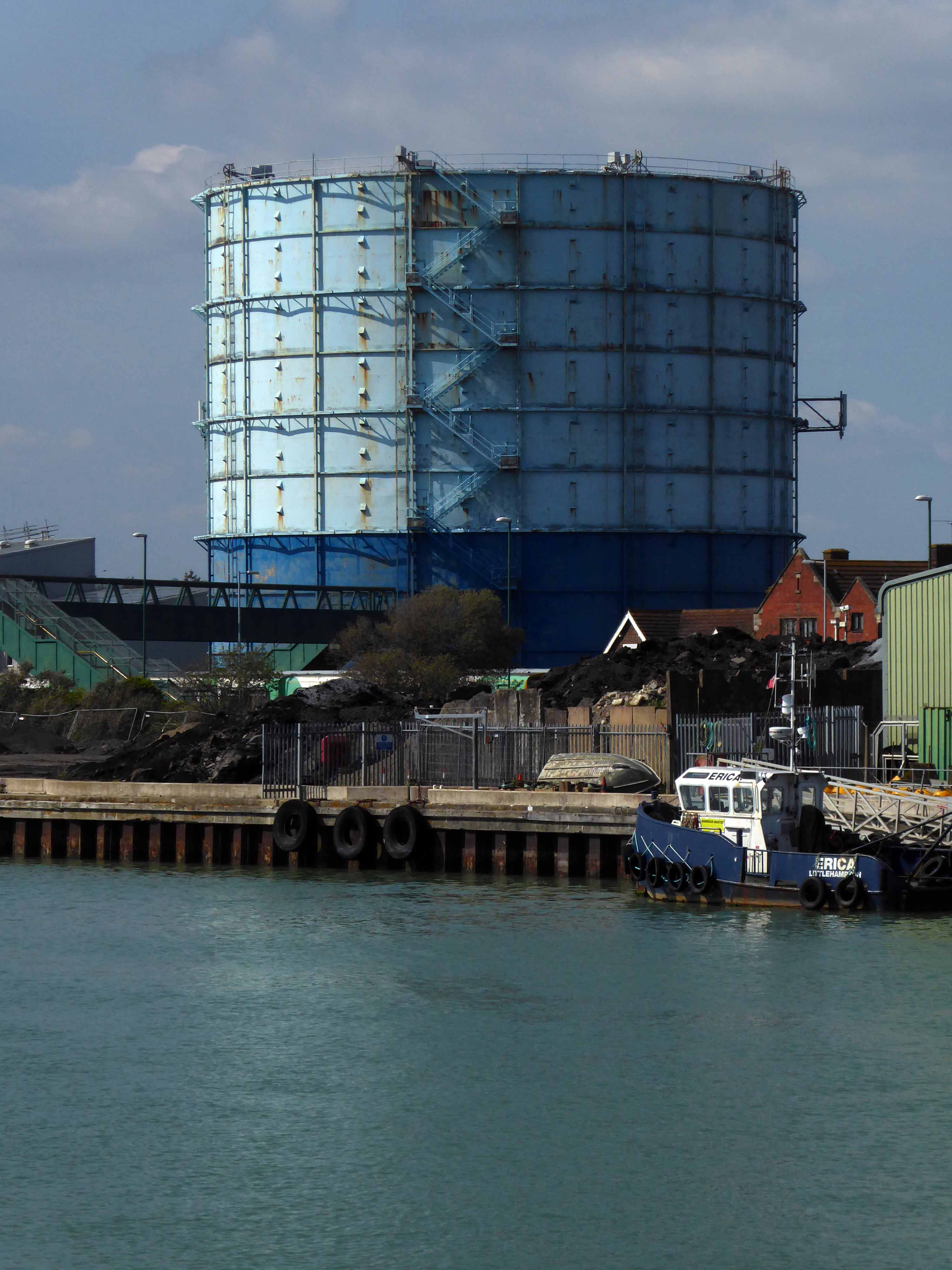
We traversed the River Arun at Littlehampton.
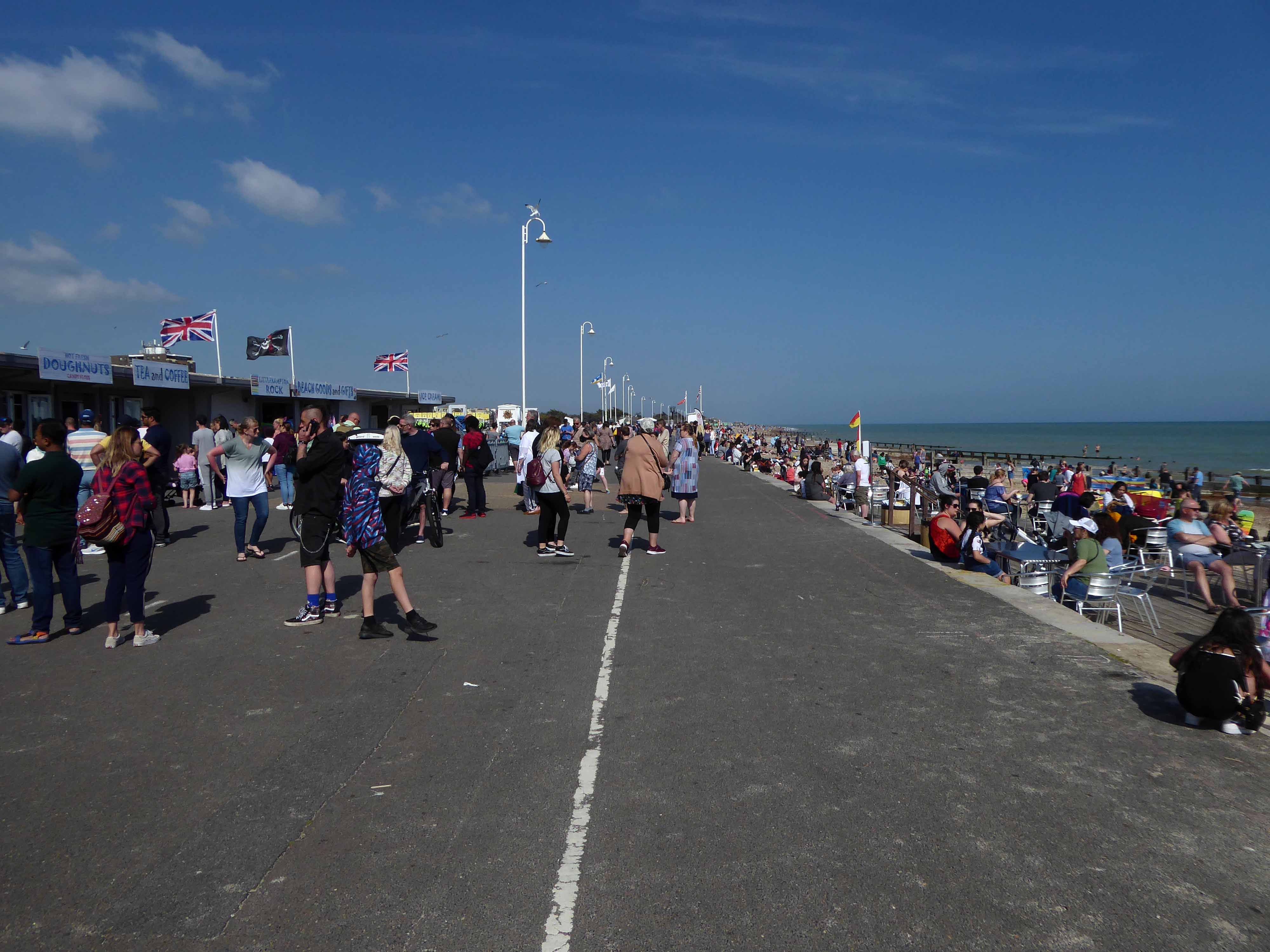
Then meshed with the milieu on the prom.
The day grew much hotter and we grew ever so slightly loster.
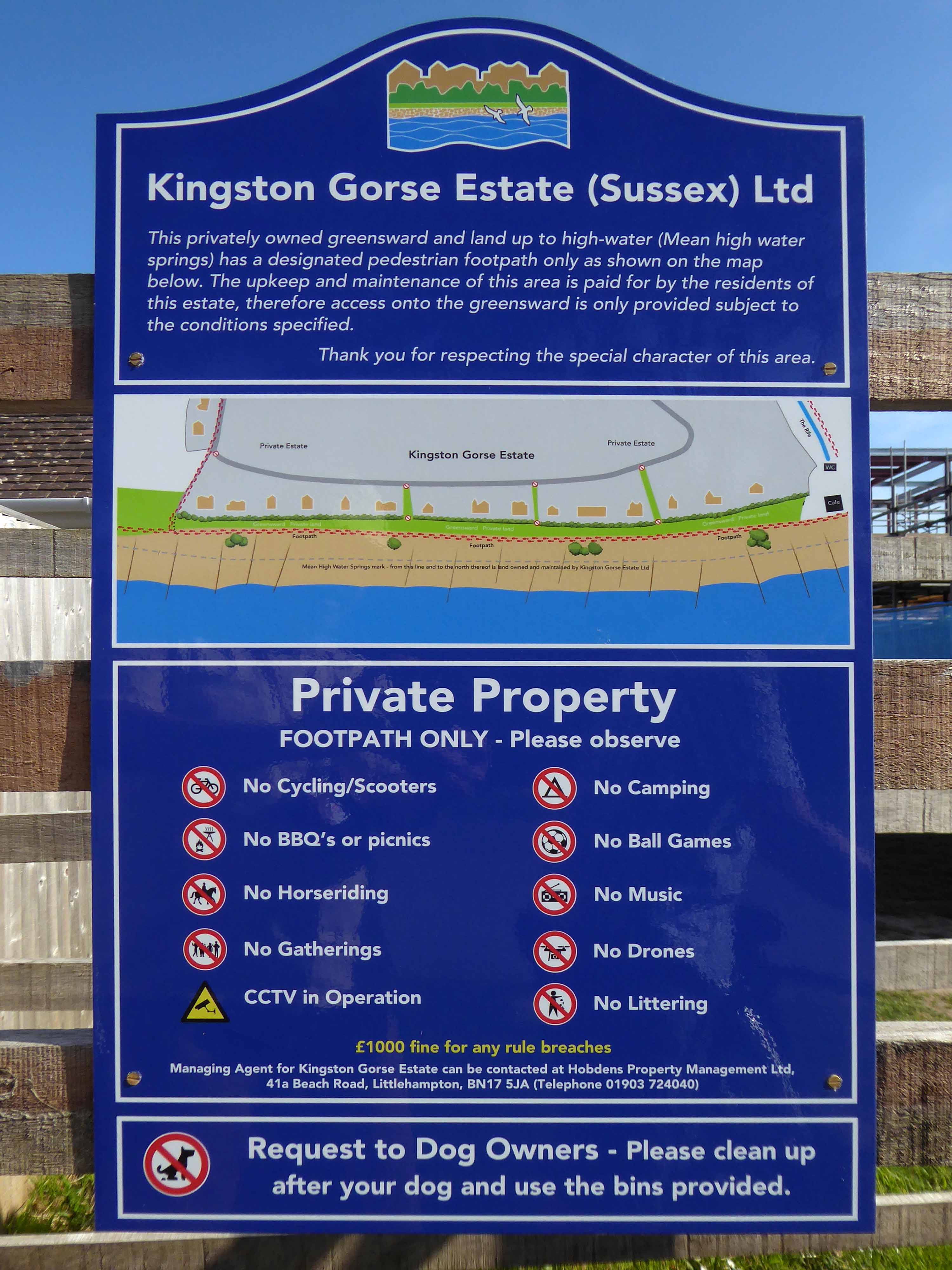
Finding our way back to the coast through the Kingston Gorse Estate – where almost everything is comprehensively prohibited.
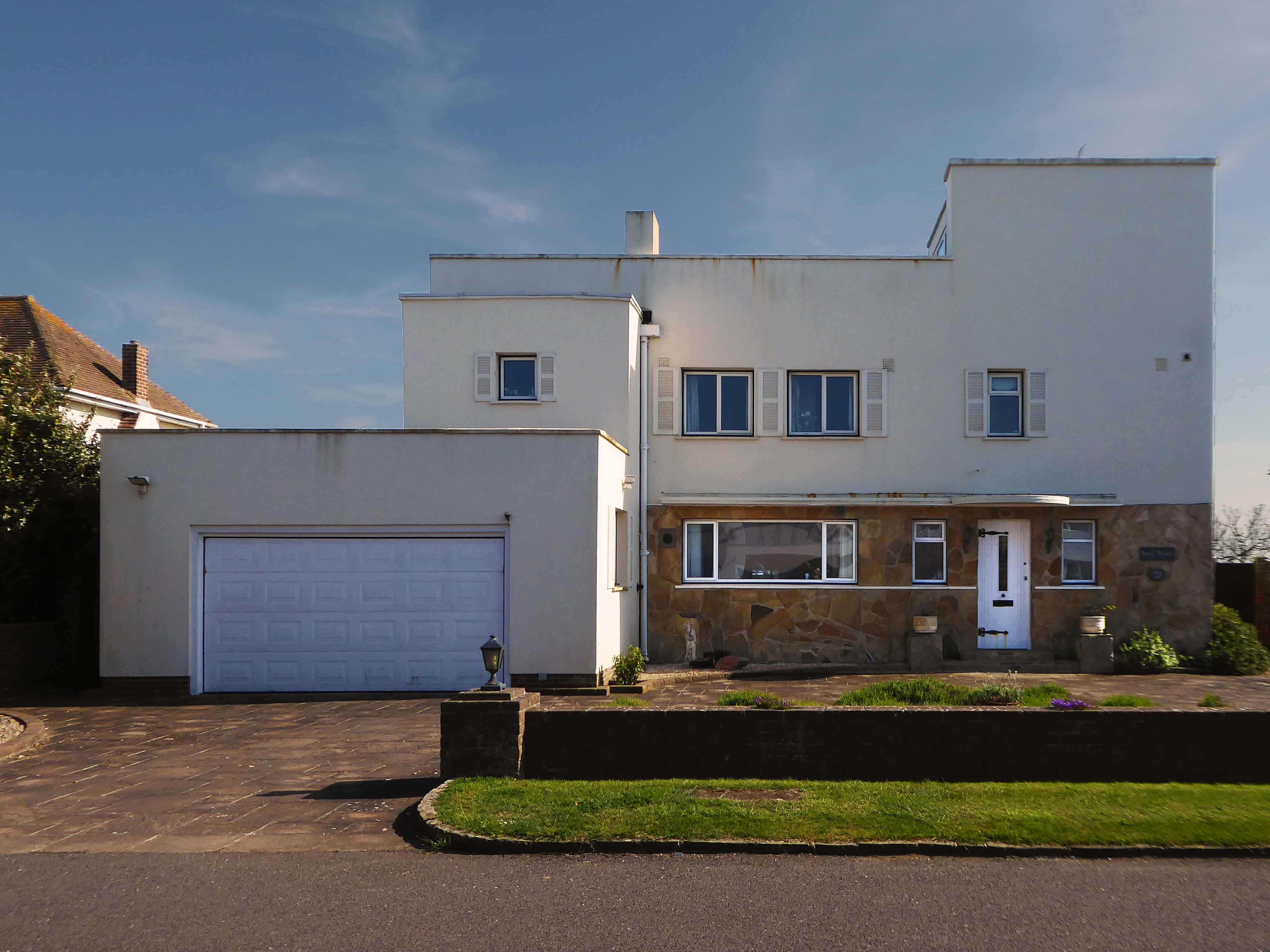
Kingston Gorse is a beautiful seaside location close to Goring-by-Sea in West Sussex. In Kingston Gorse, there is a gorgeous housing development with a number of three, four and five bedroom homes.
In 1918 JA Candy, who owned East Kingston Farm, sold the land on which Kingston Gorse now stands to the local builder G Pesket.
In the 1920s he constructed the infrastructure and developed approx. 30 plots including Imray, which he occupied.












































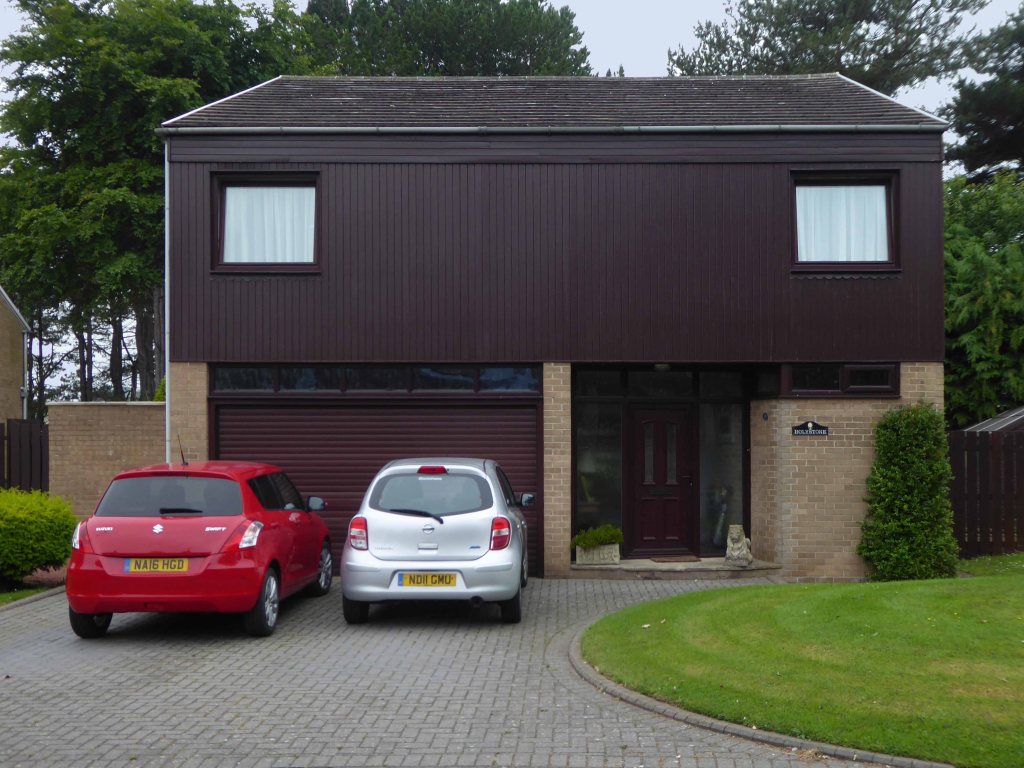
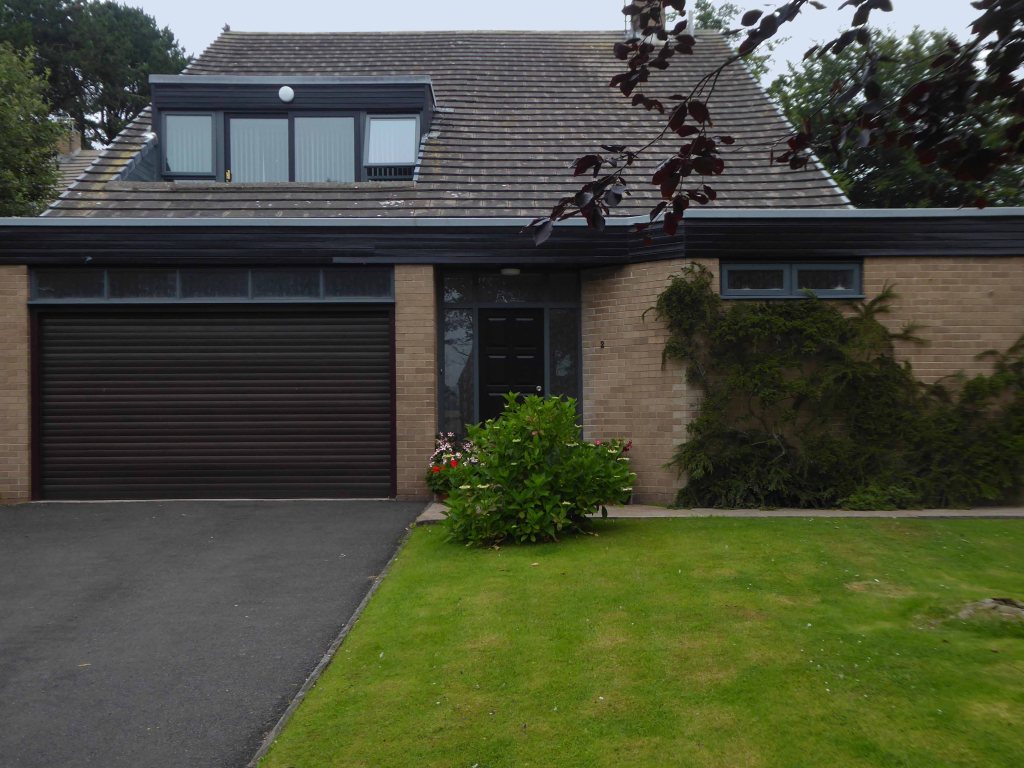

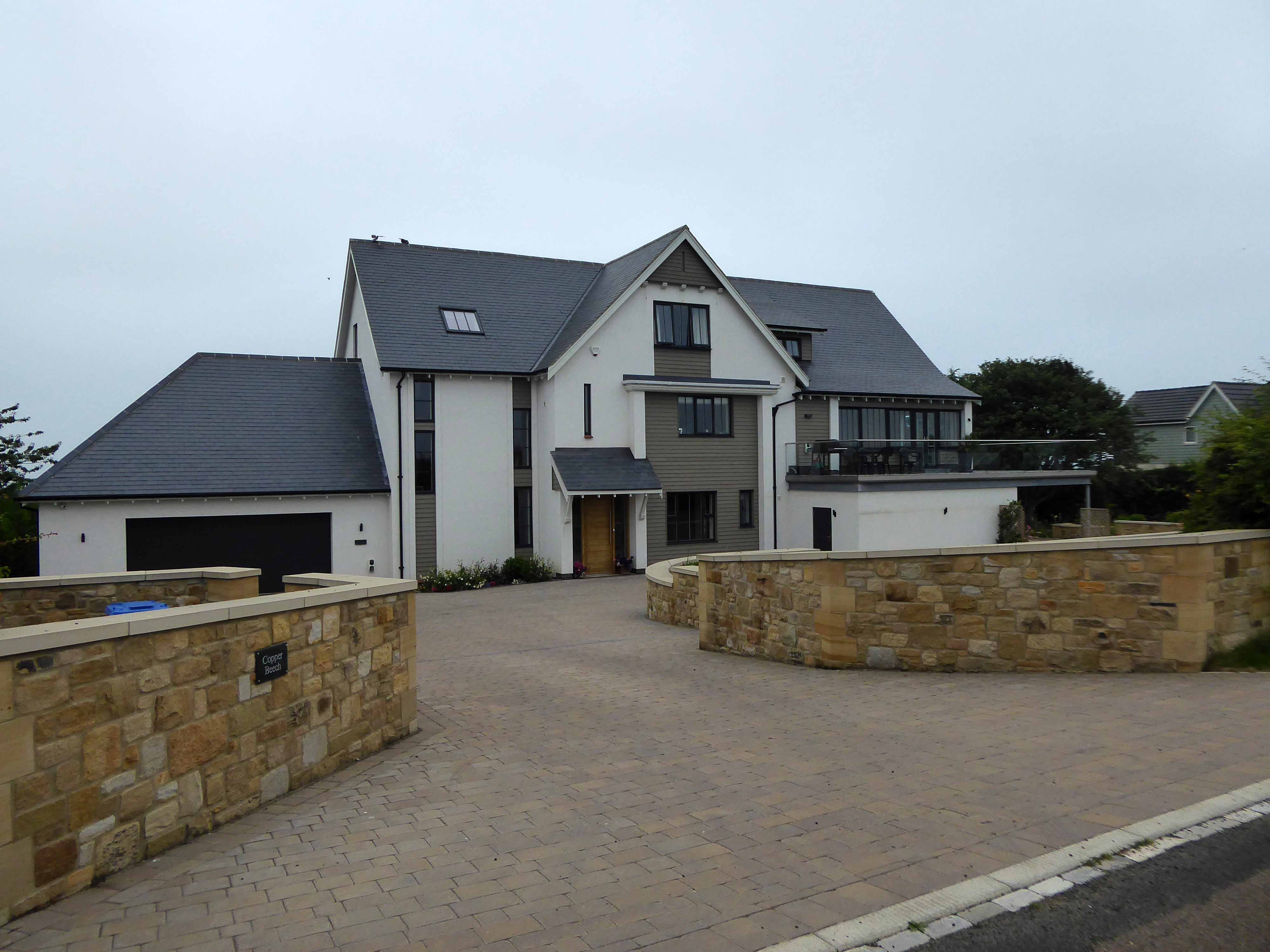
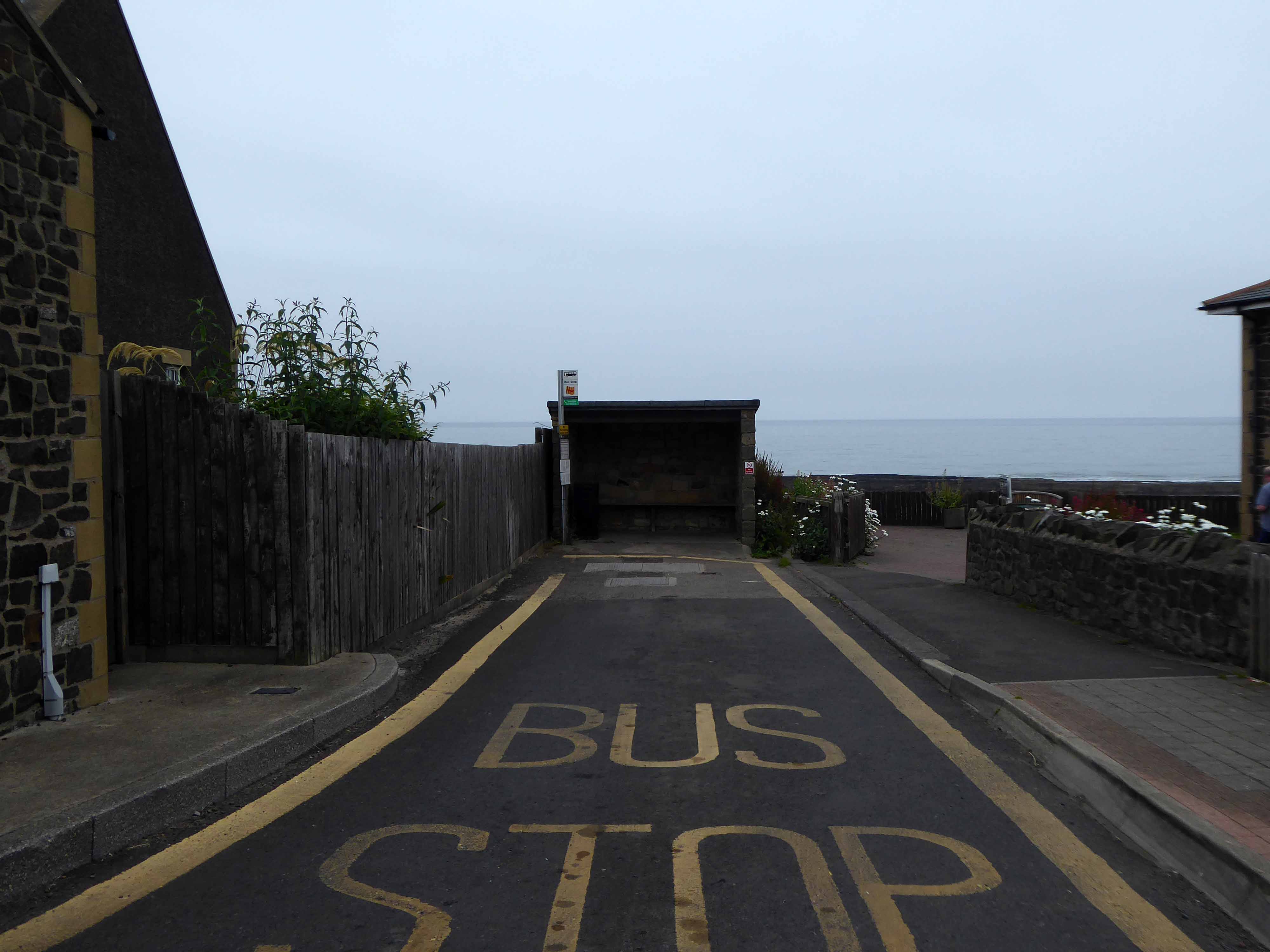
























 Modern Mooch