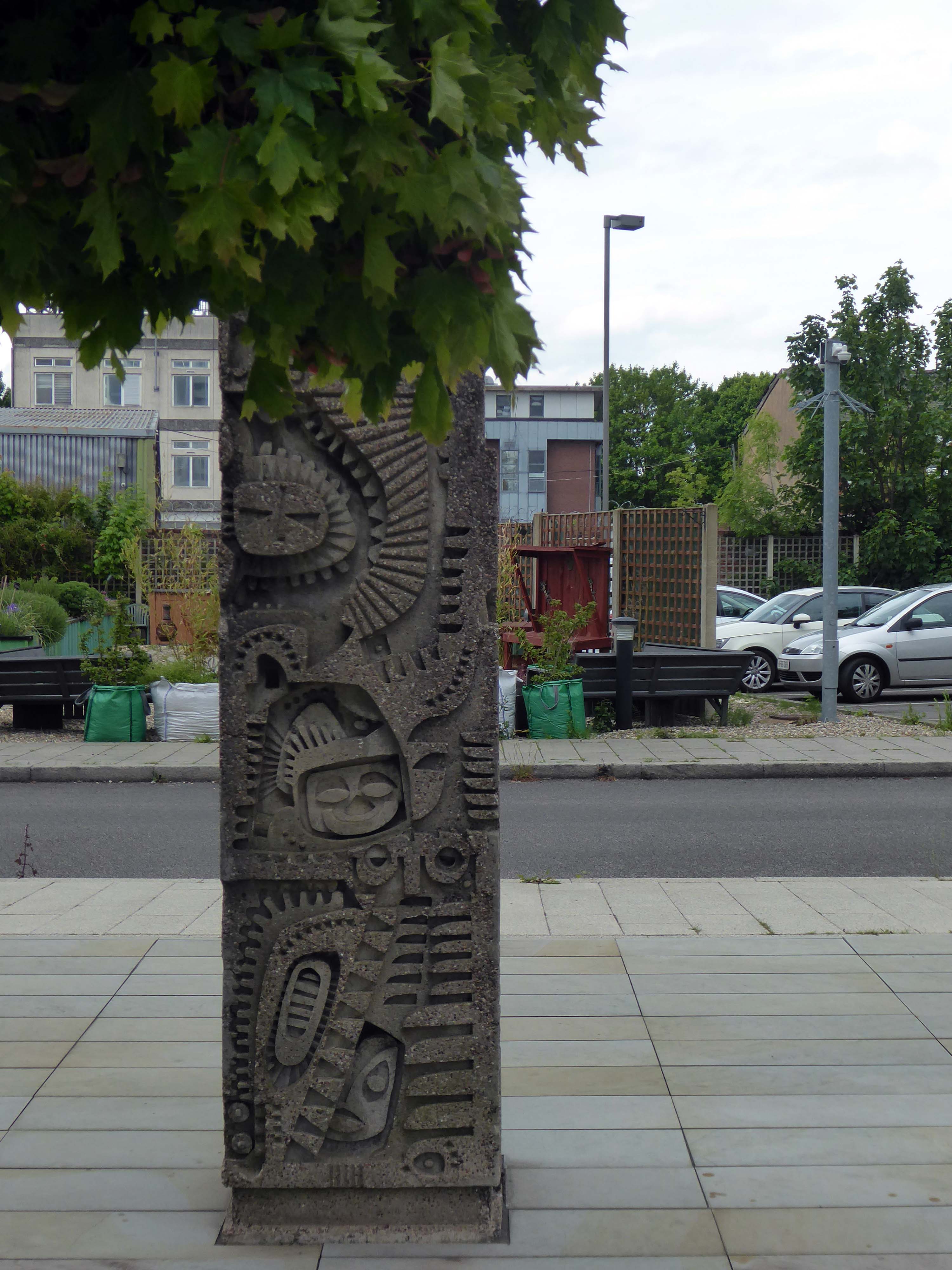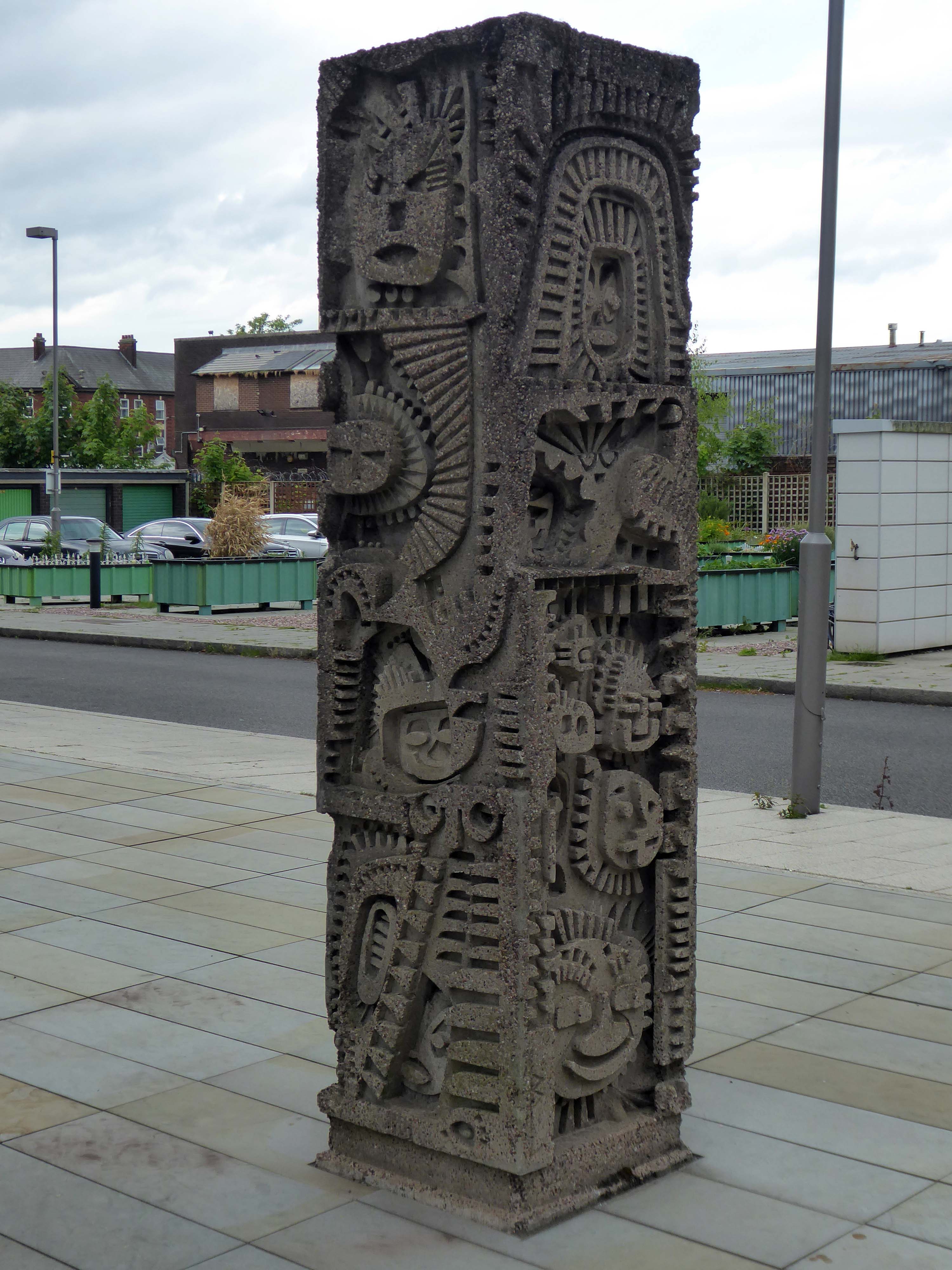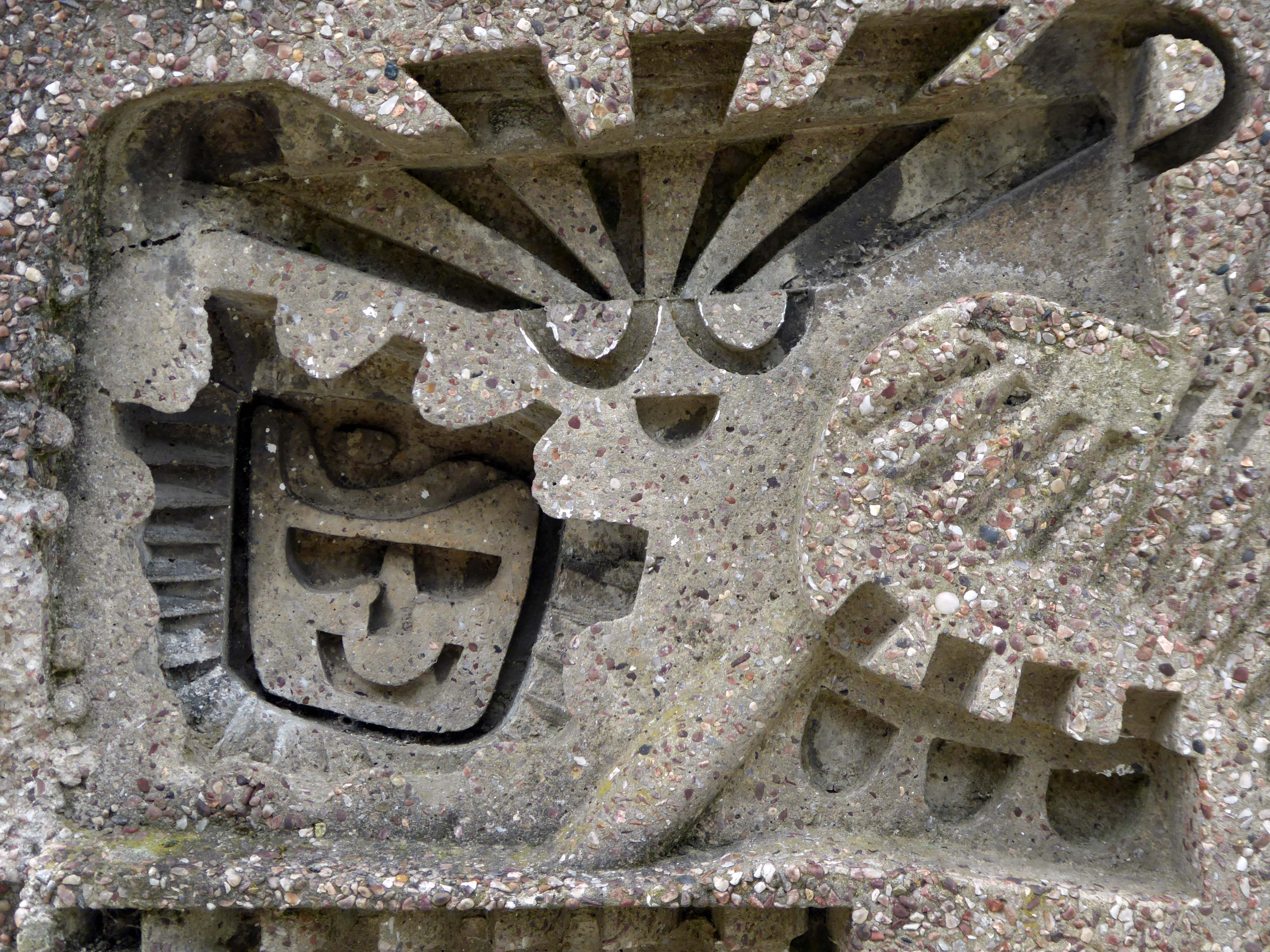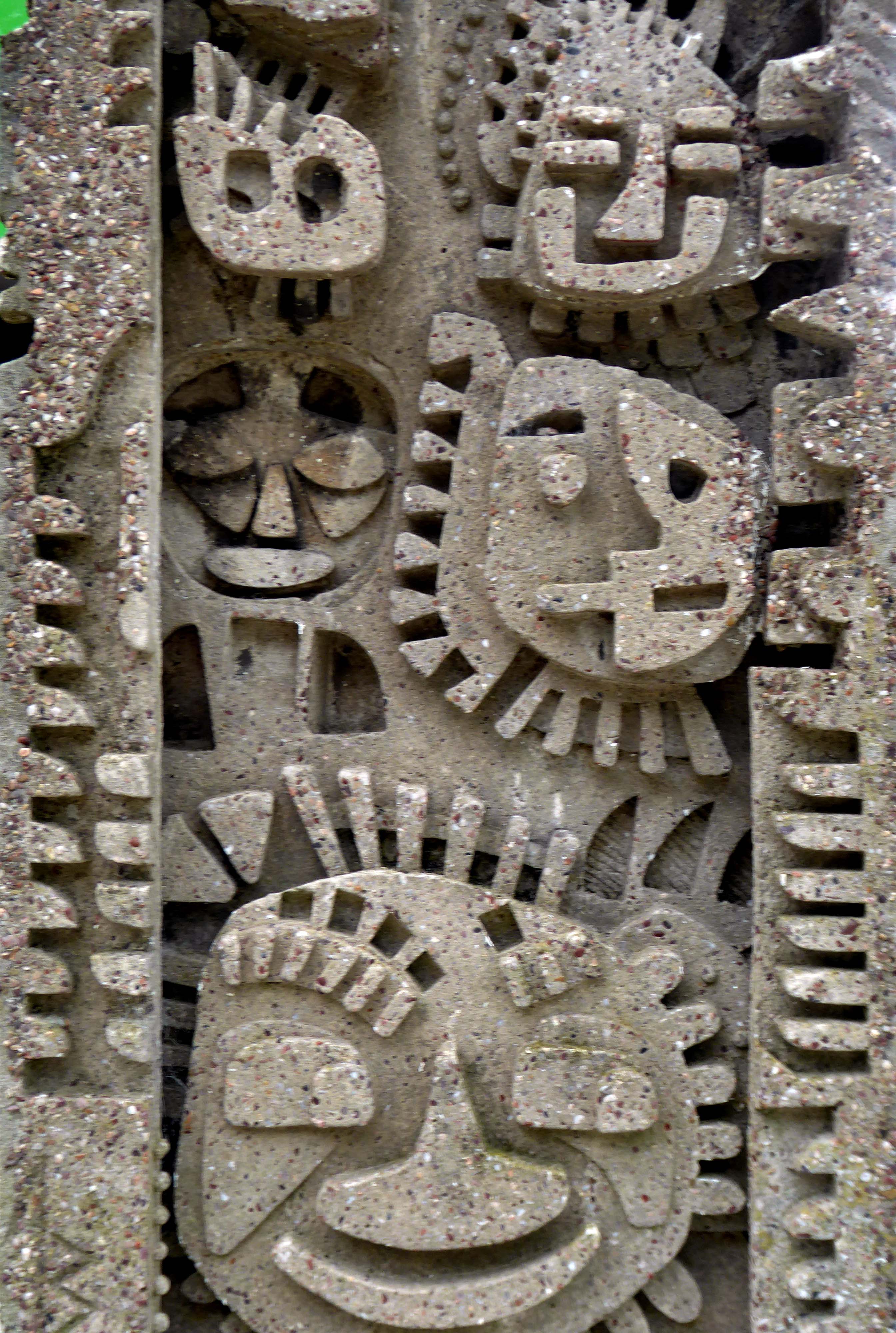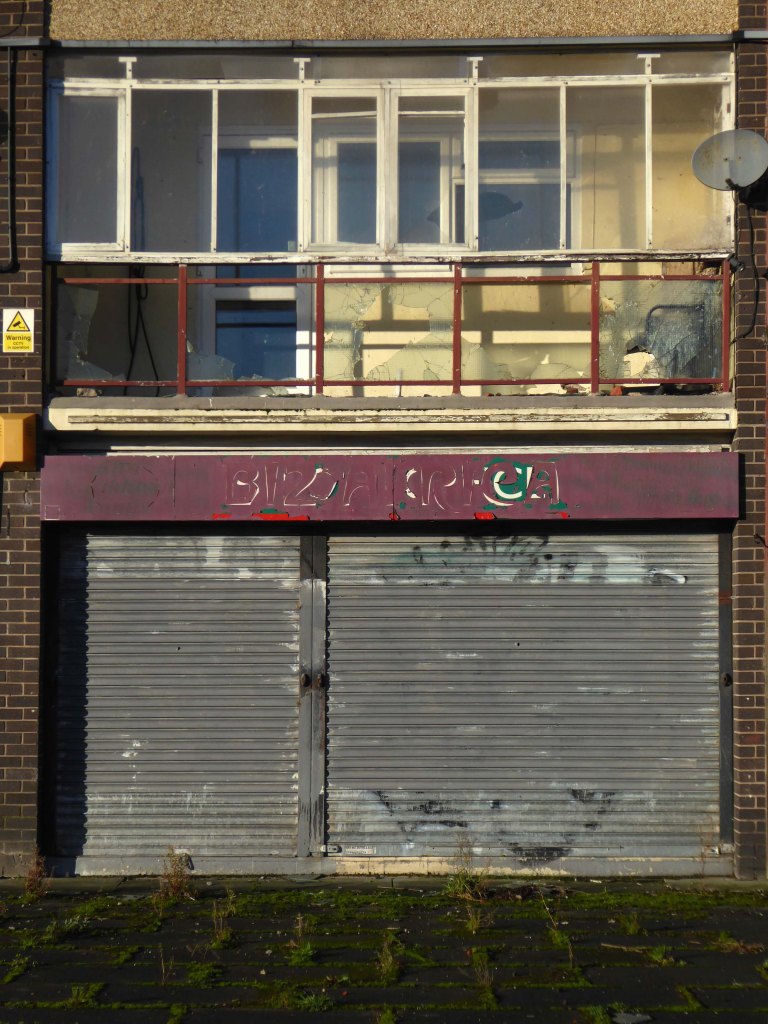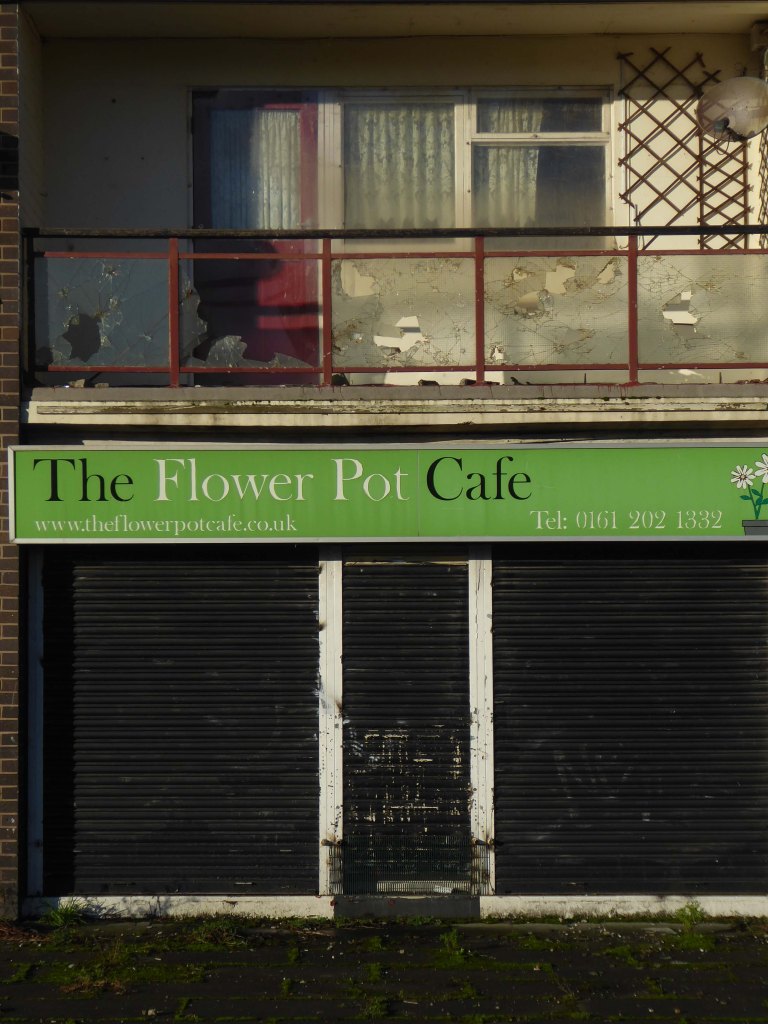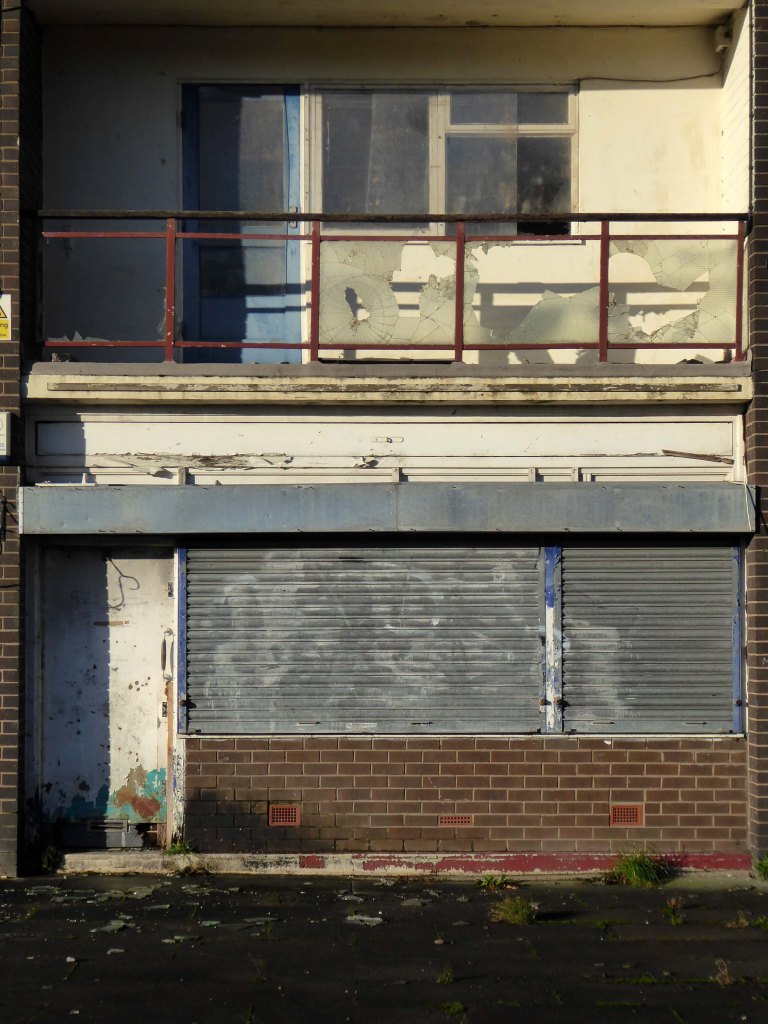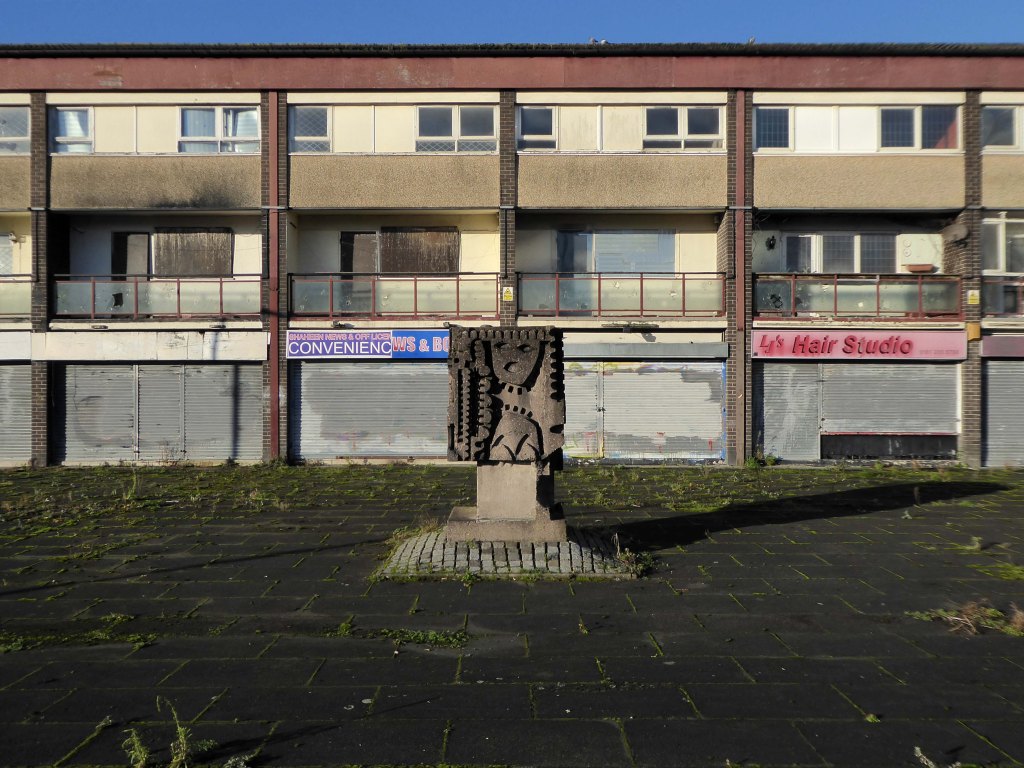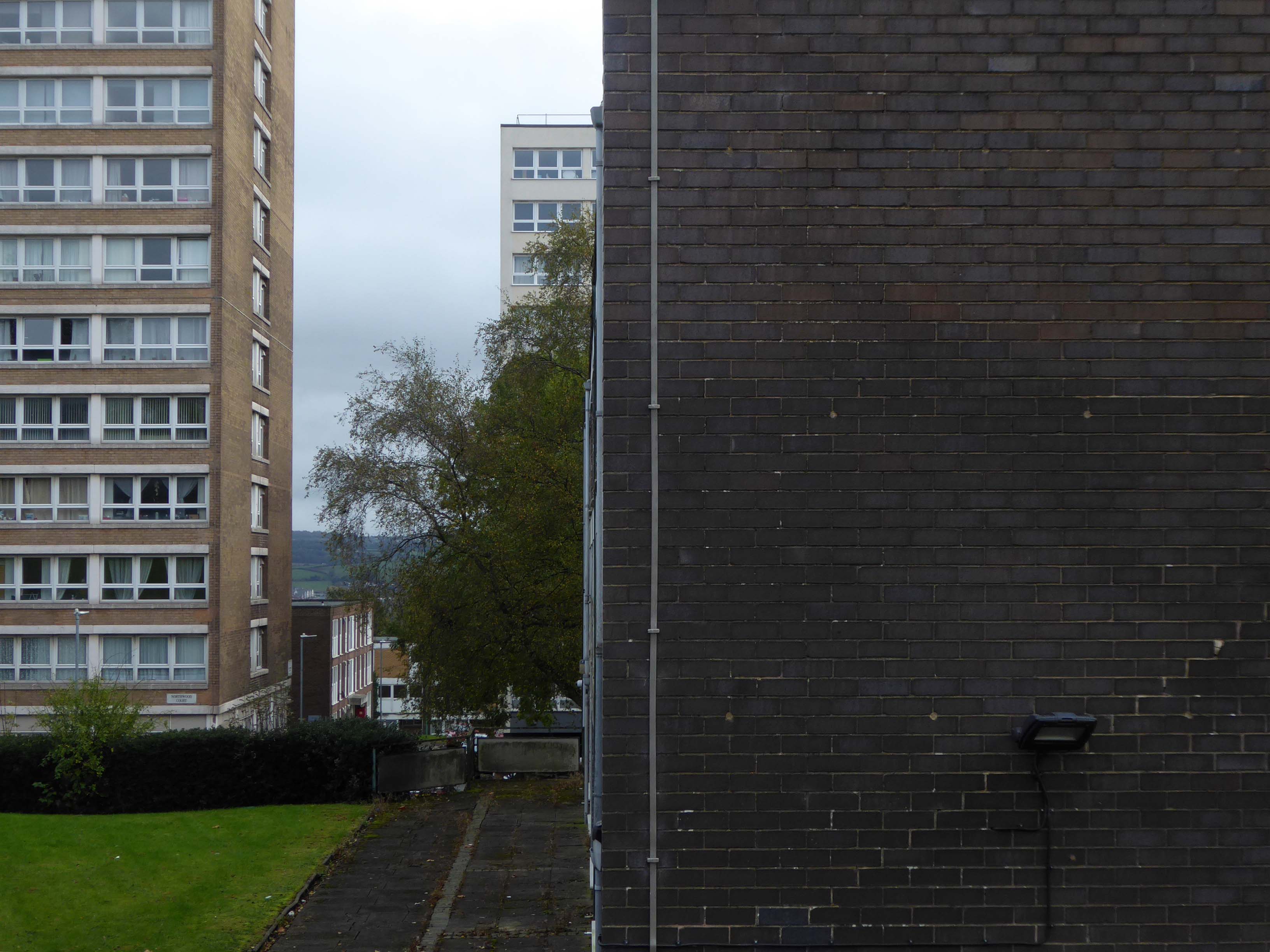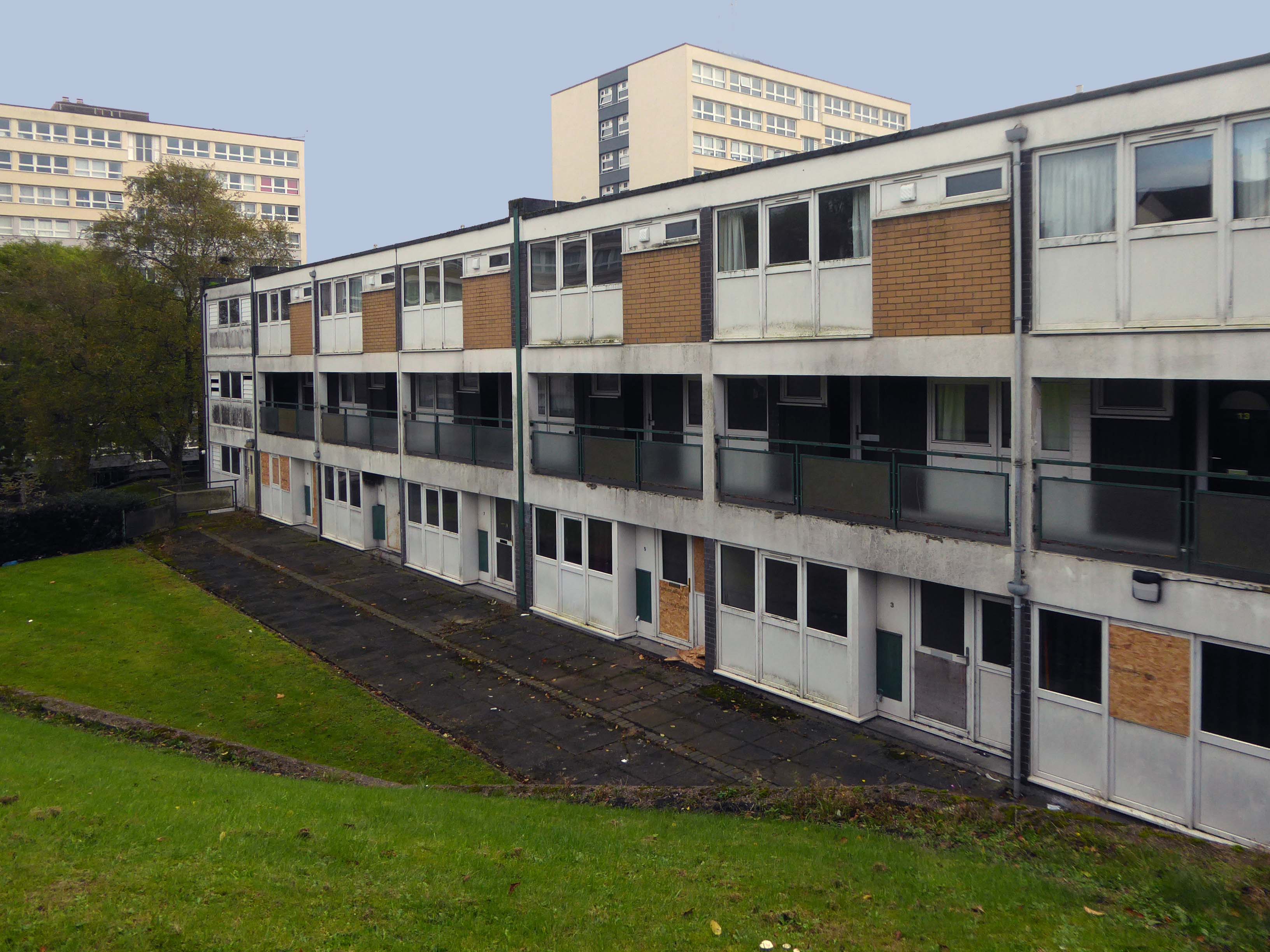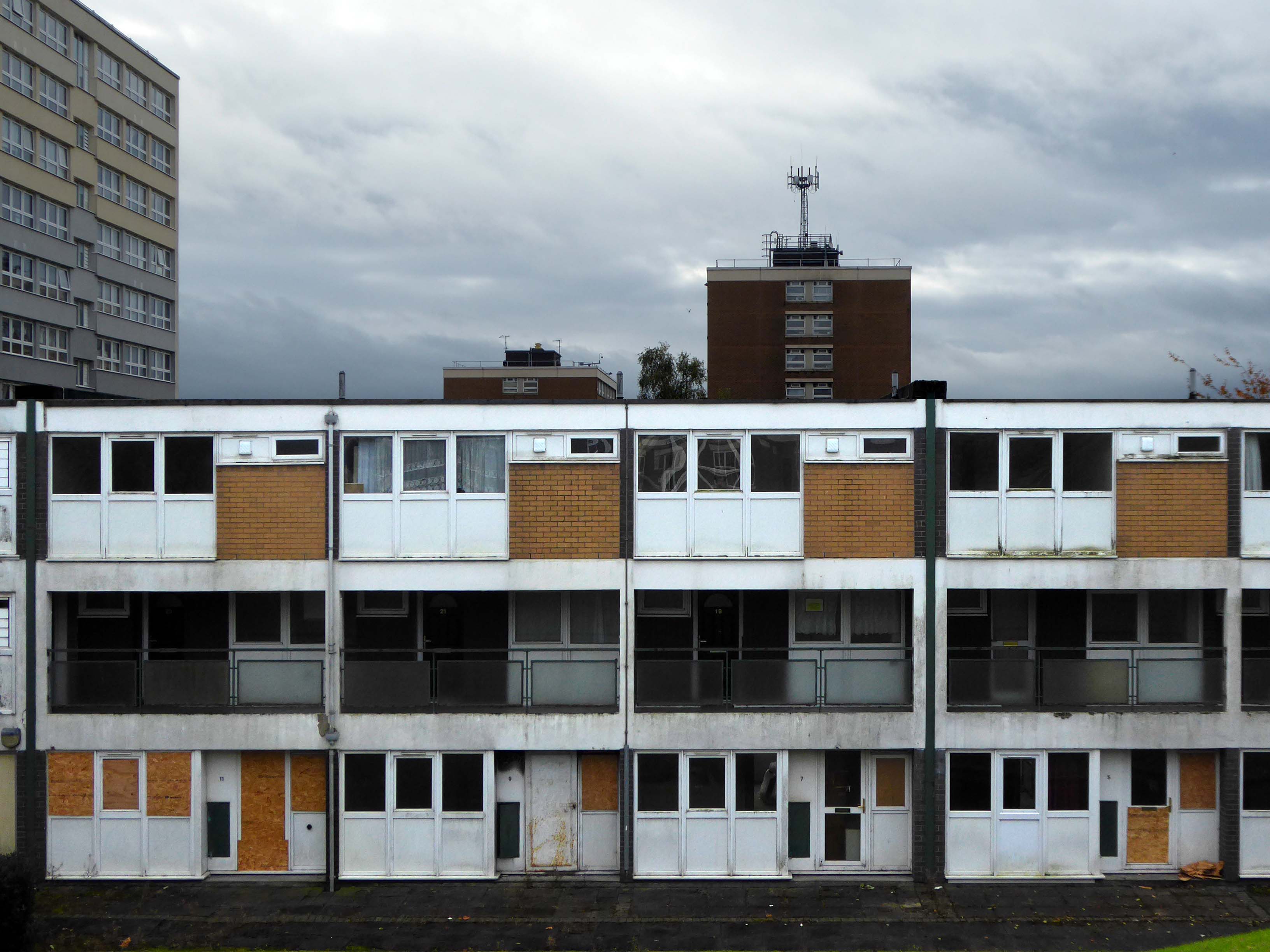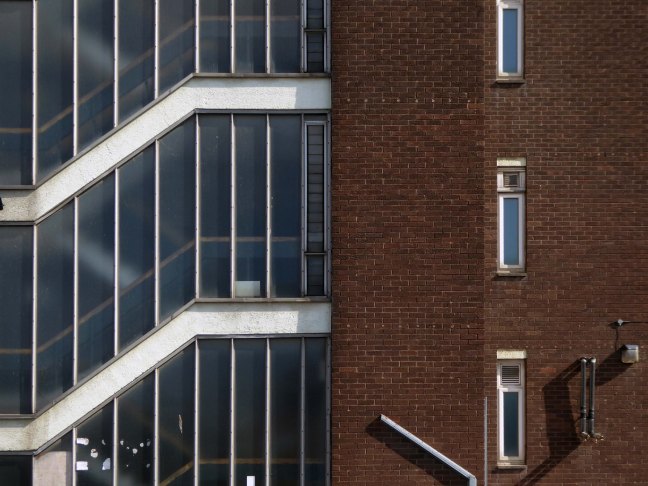
IRK VALLEY #ONE

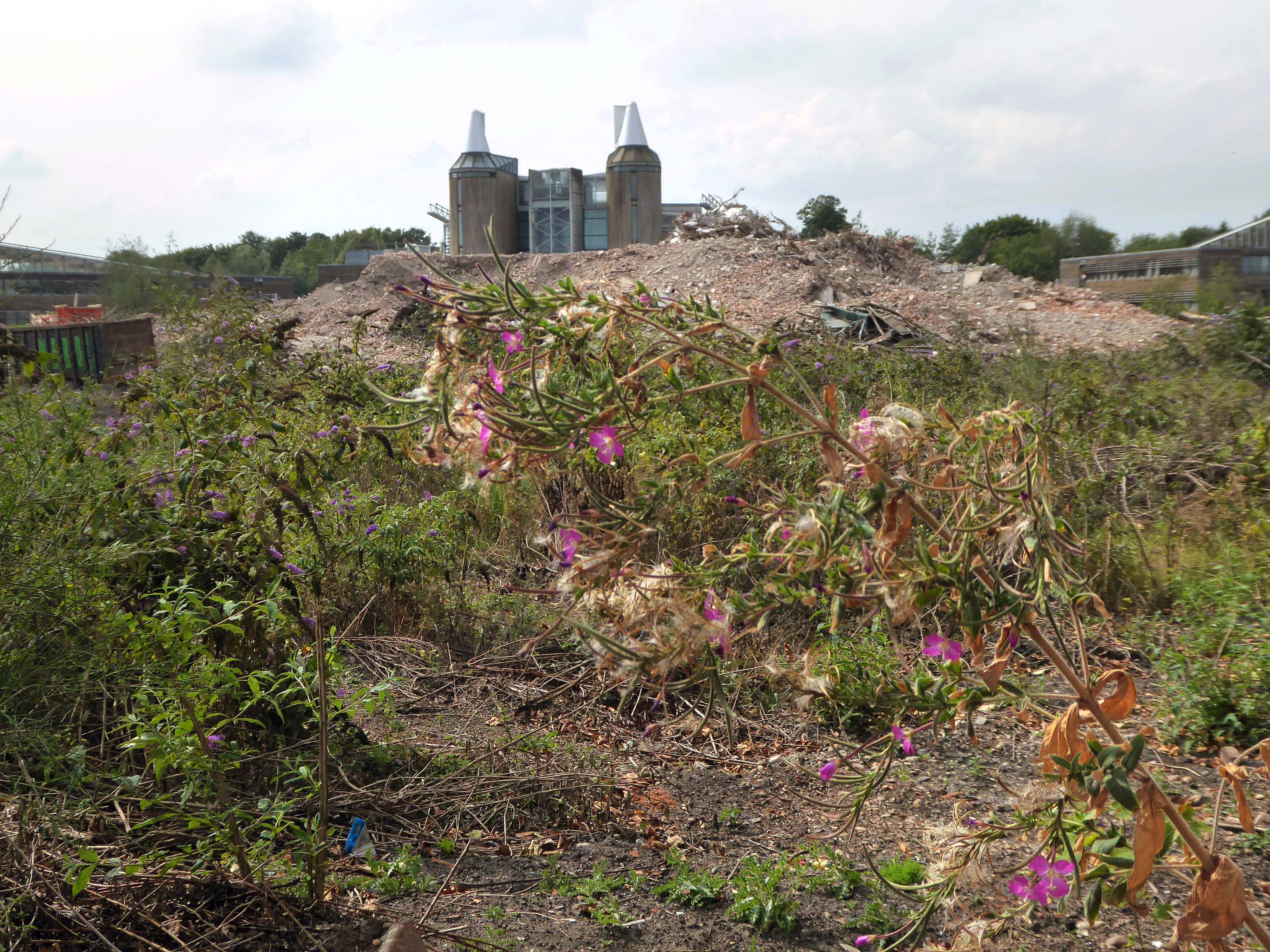
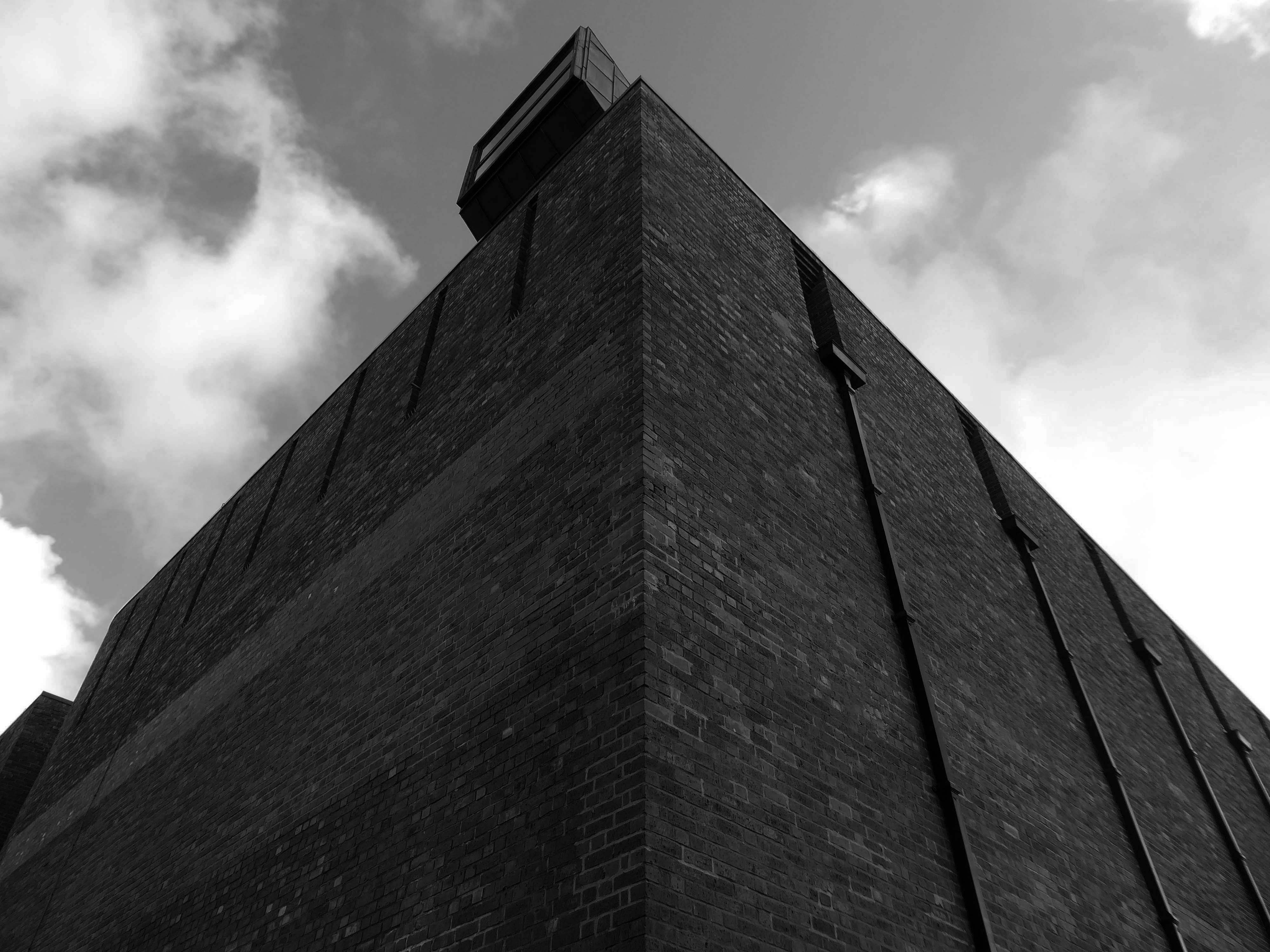
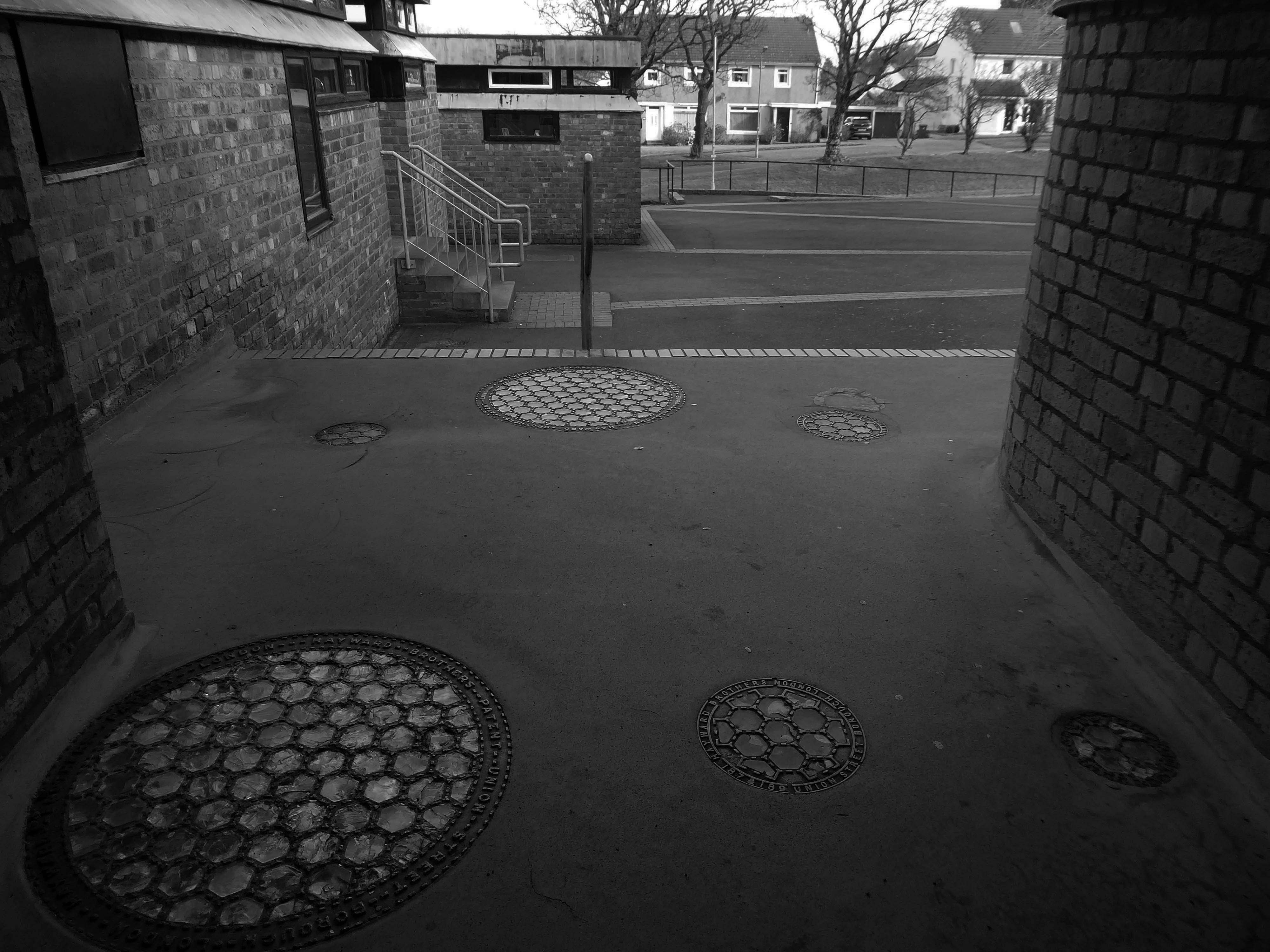
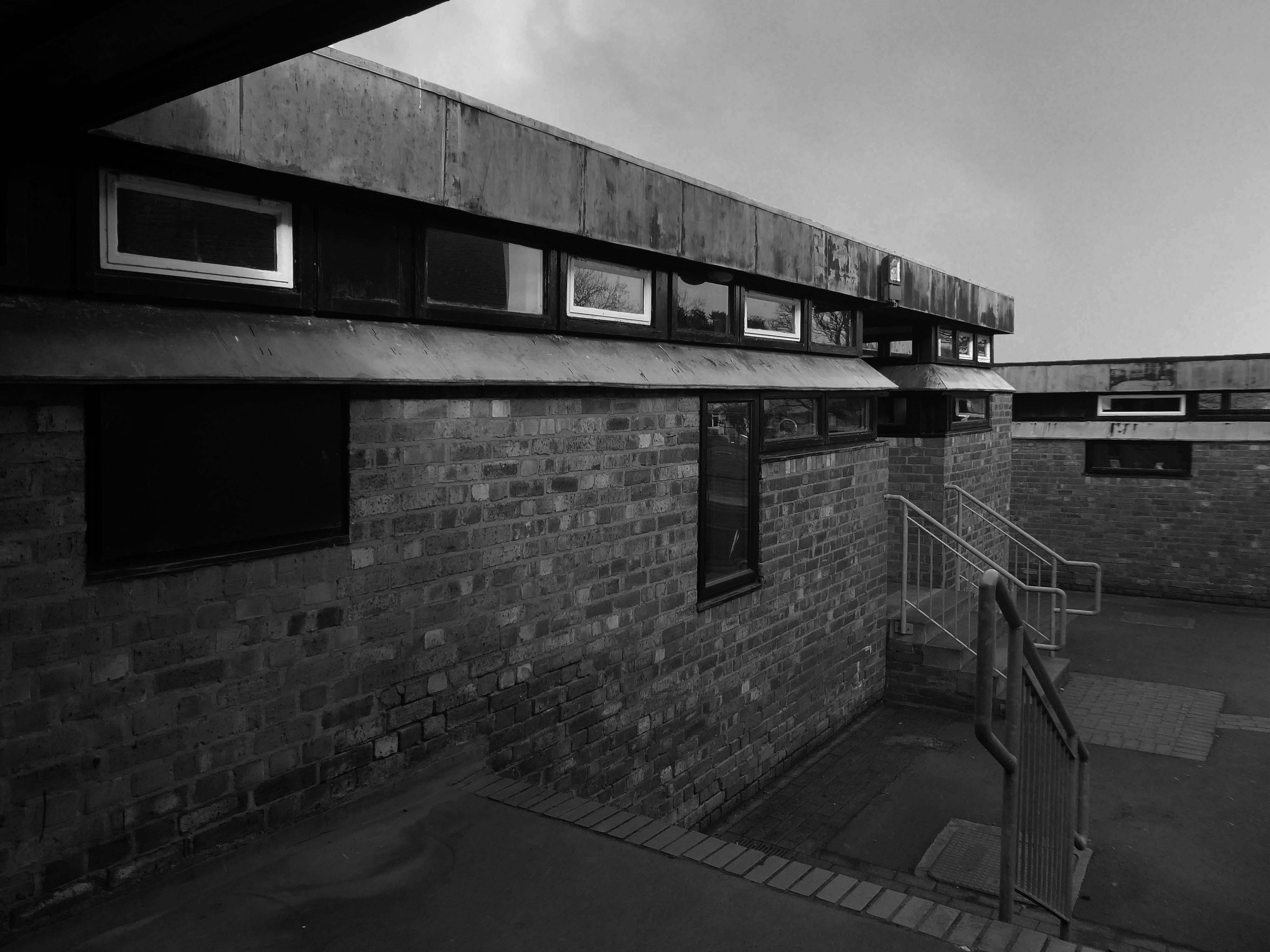
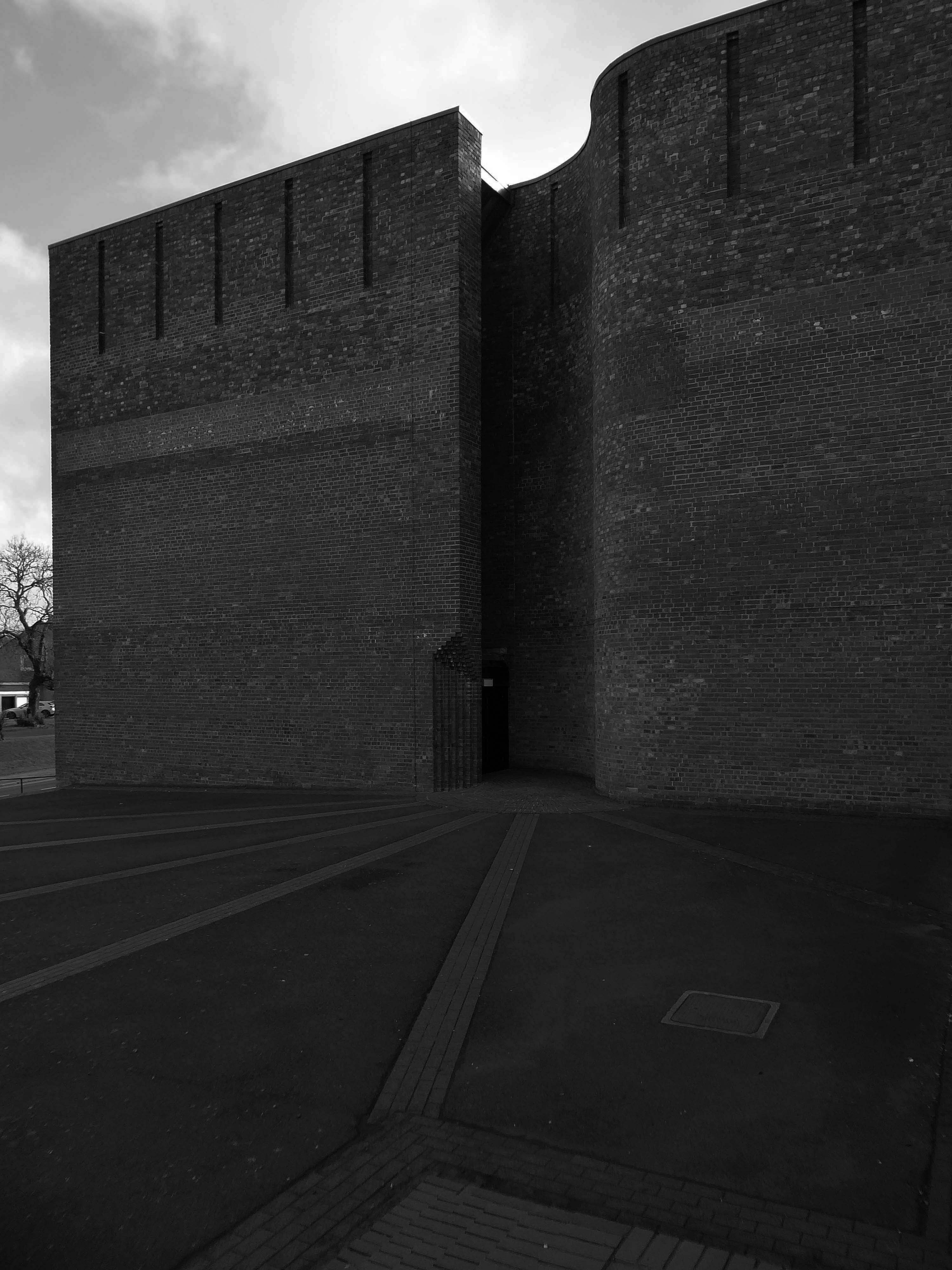
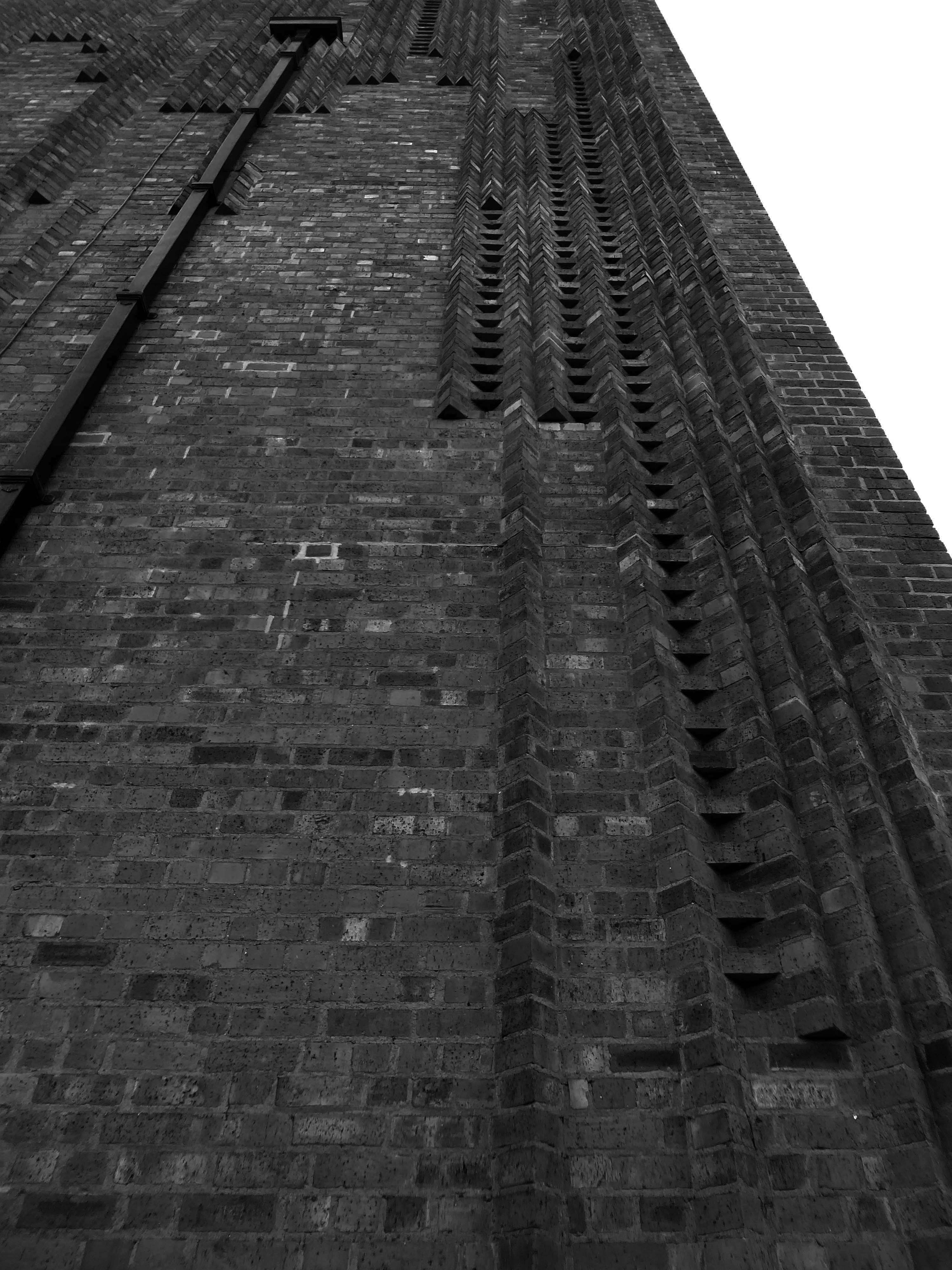
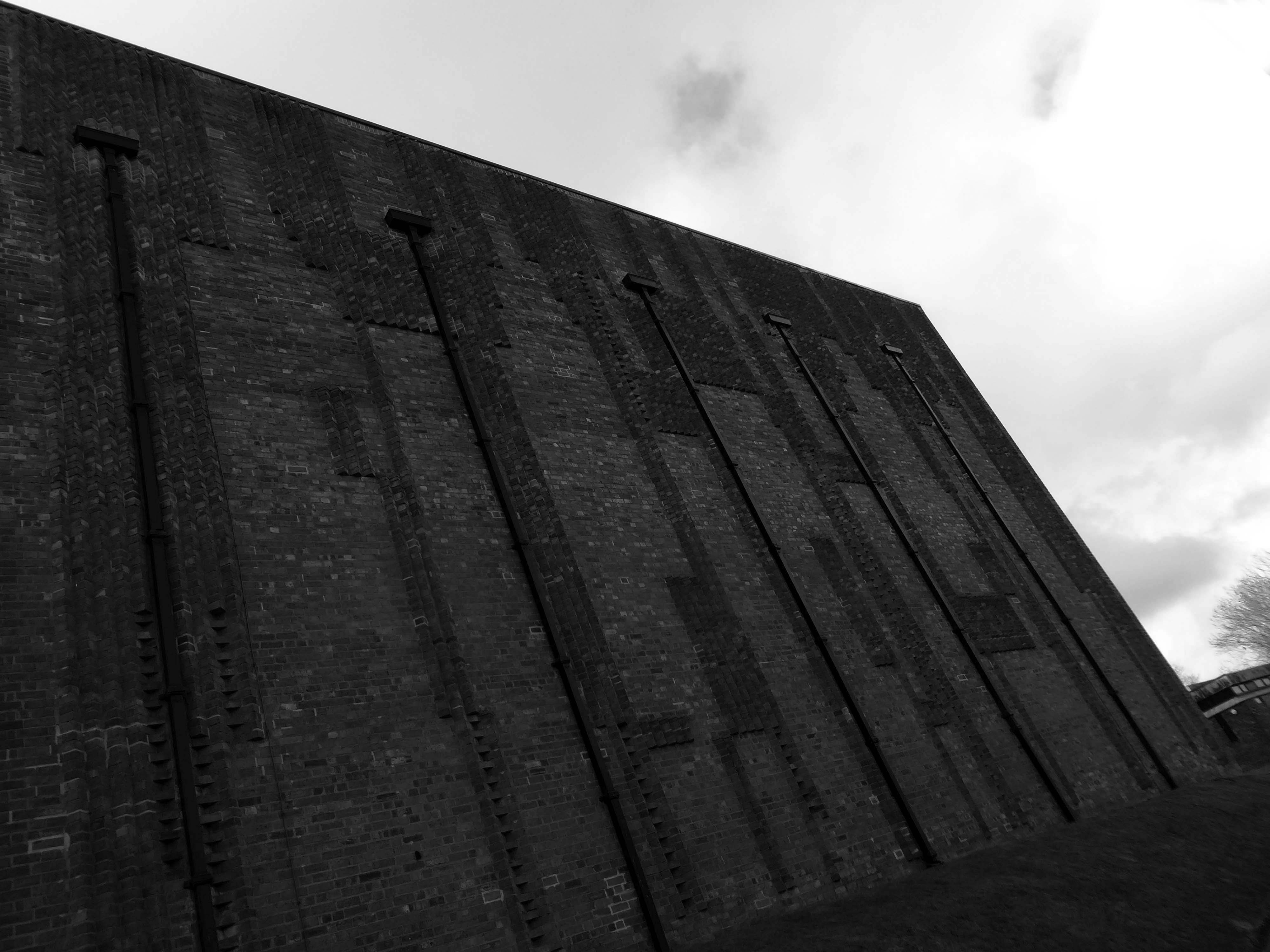
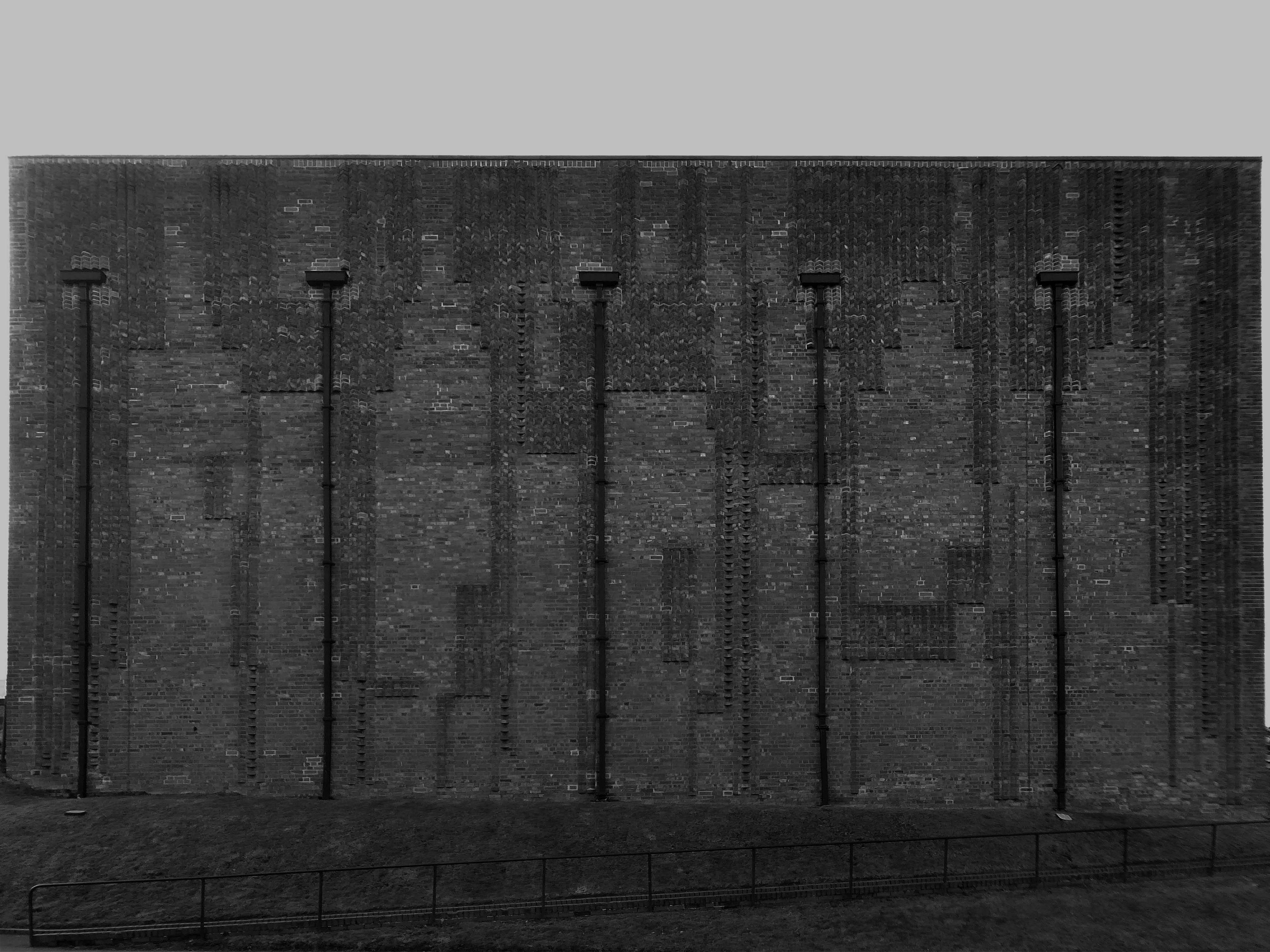
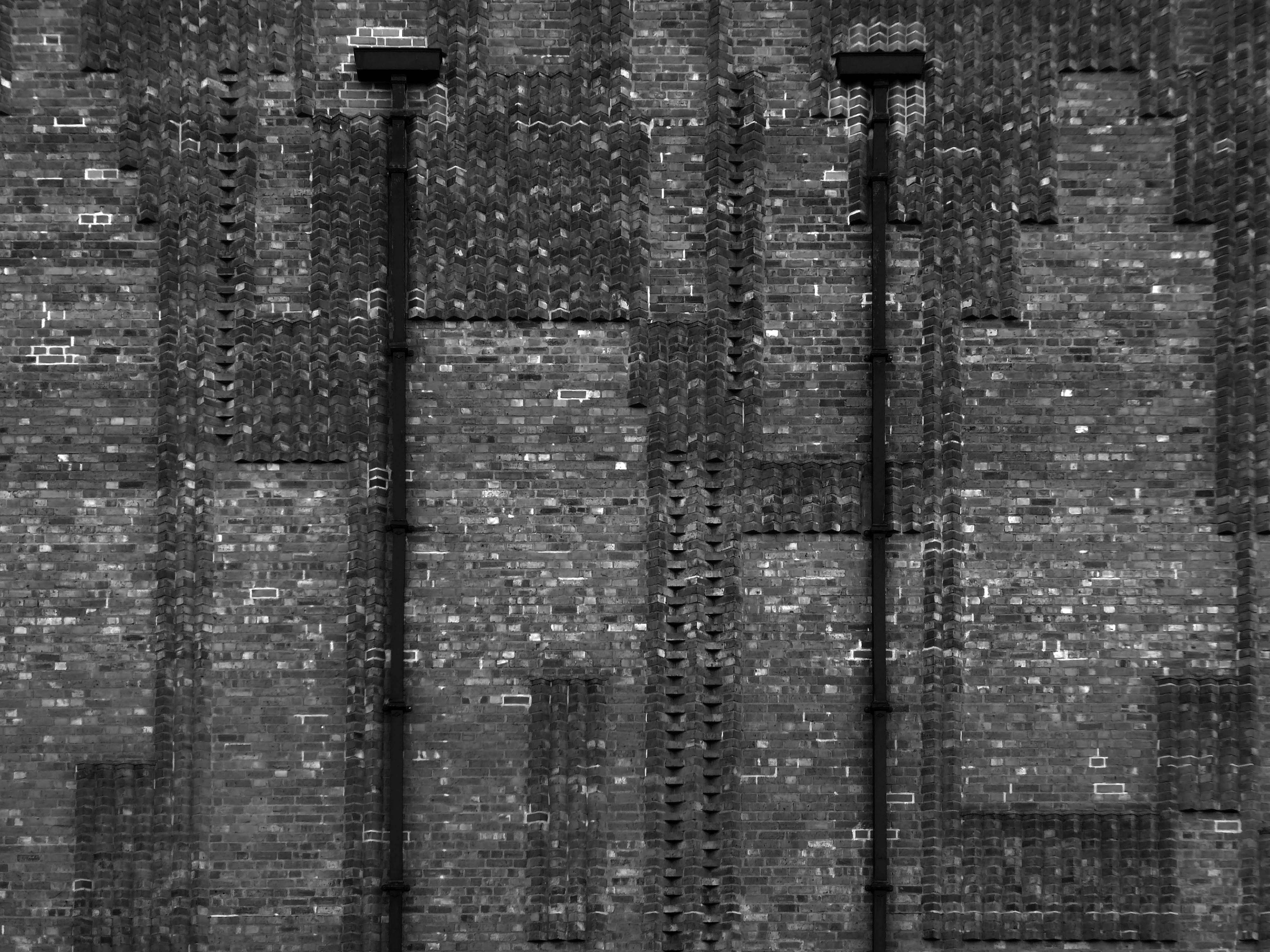
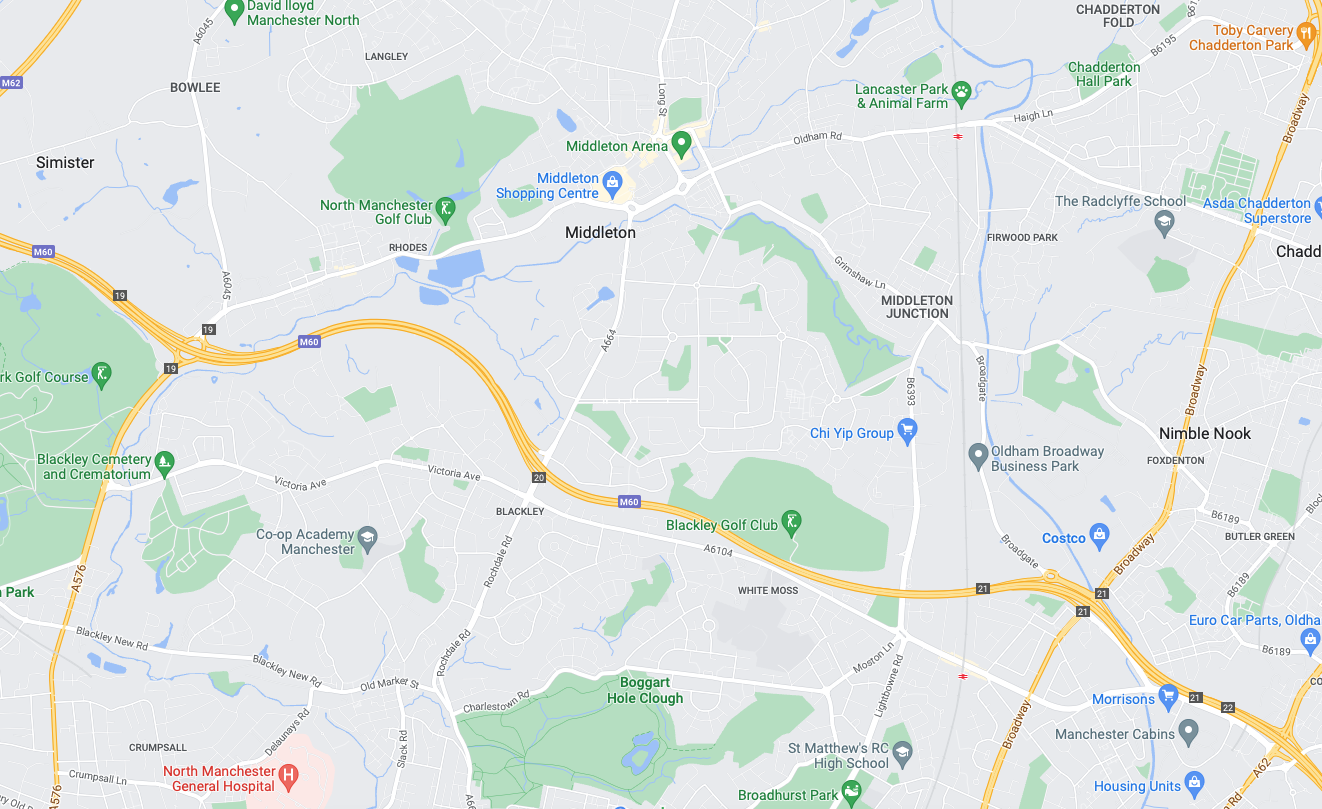
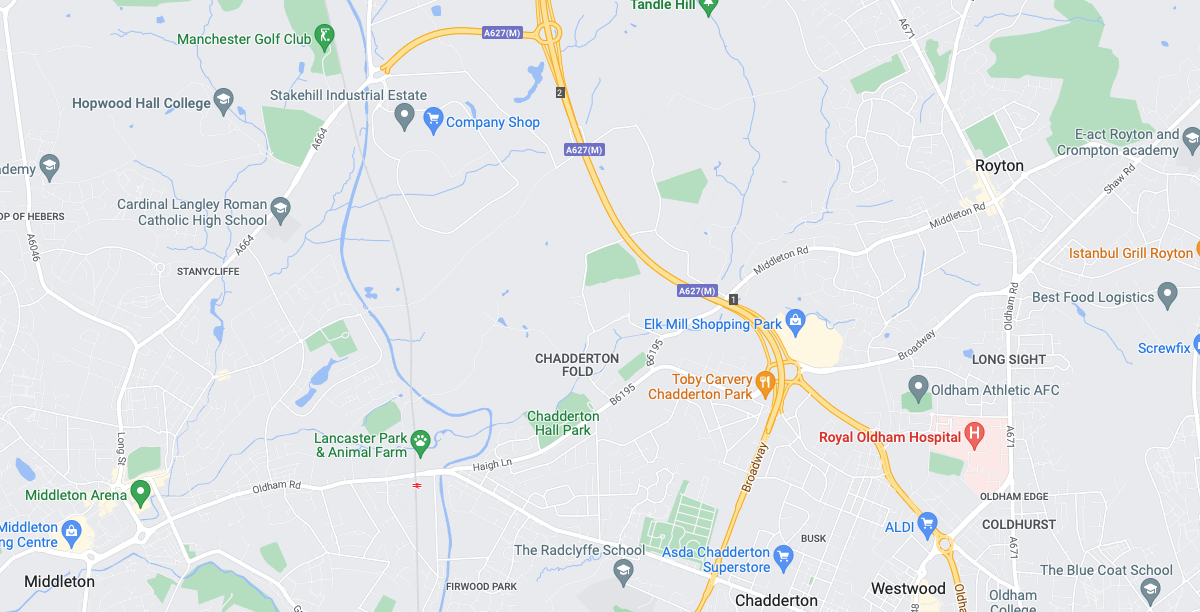
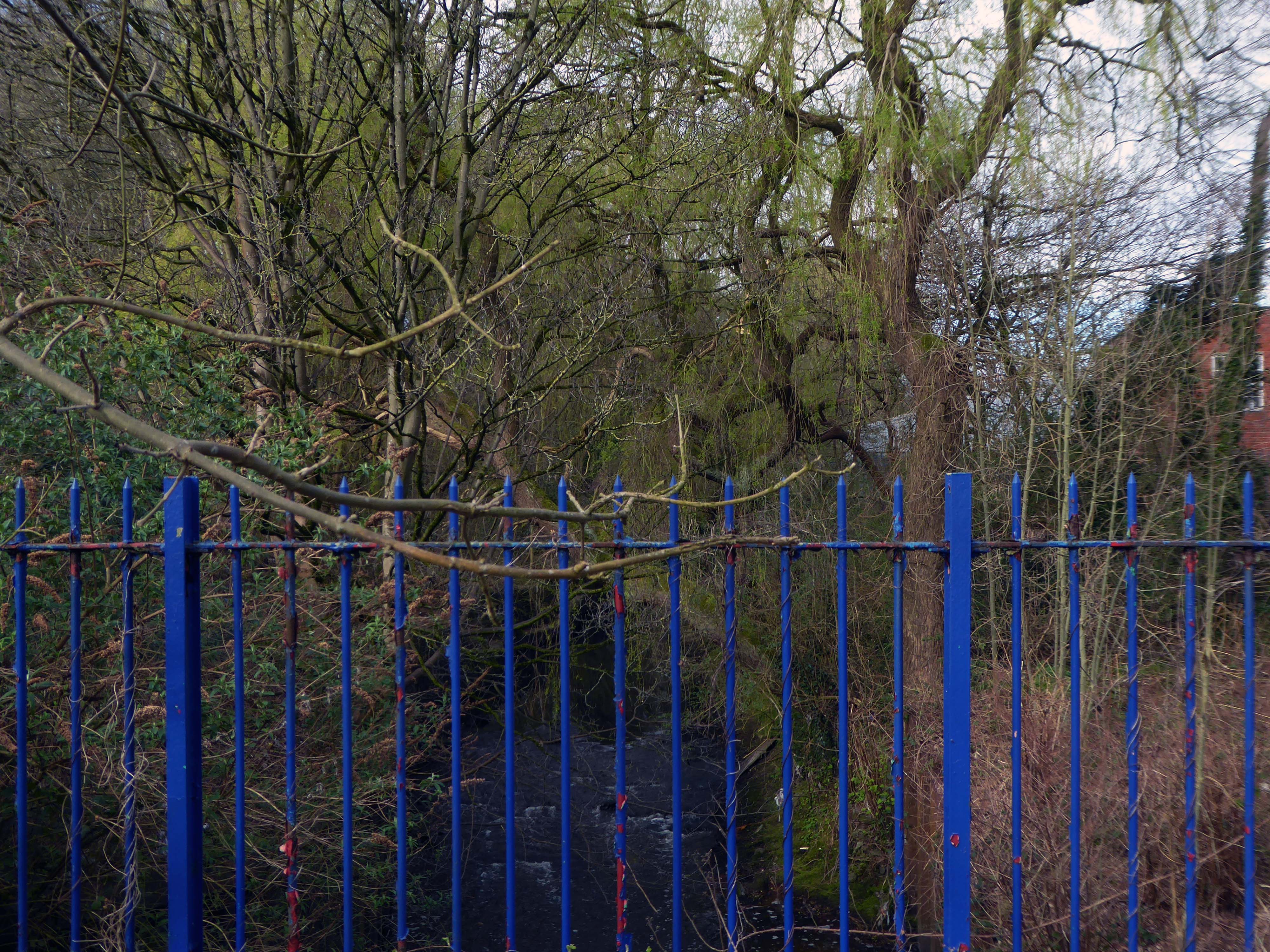
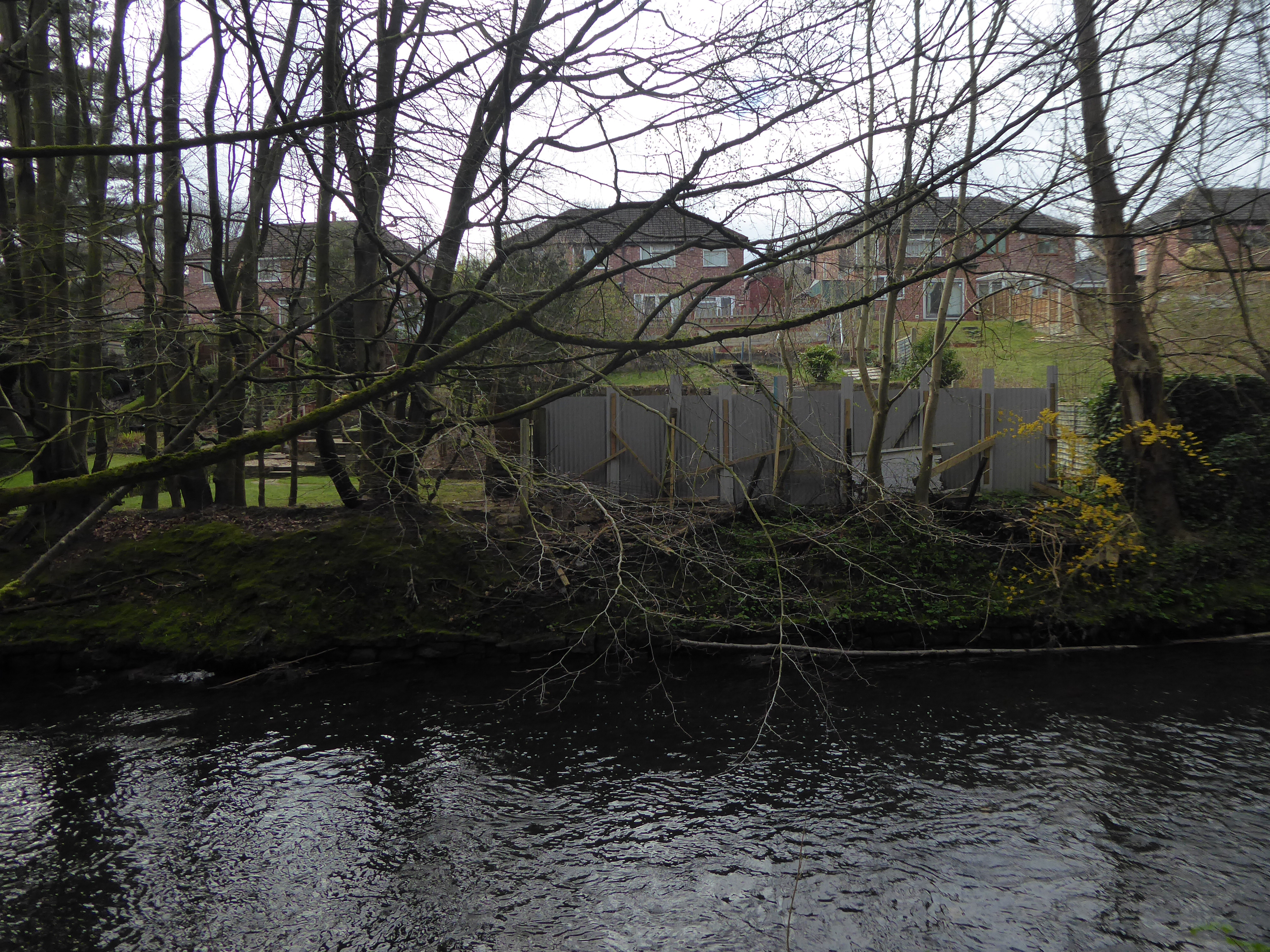
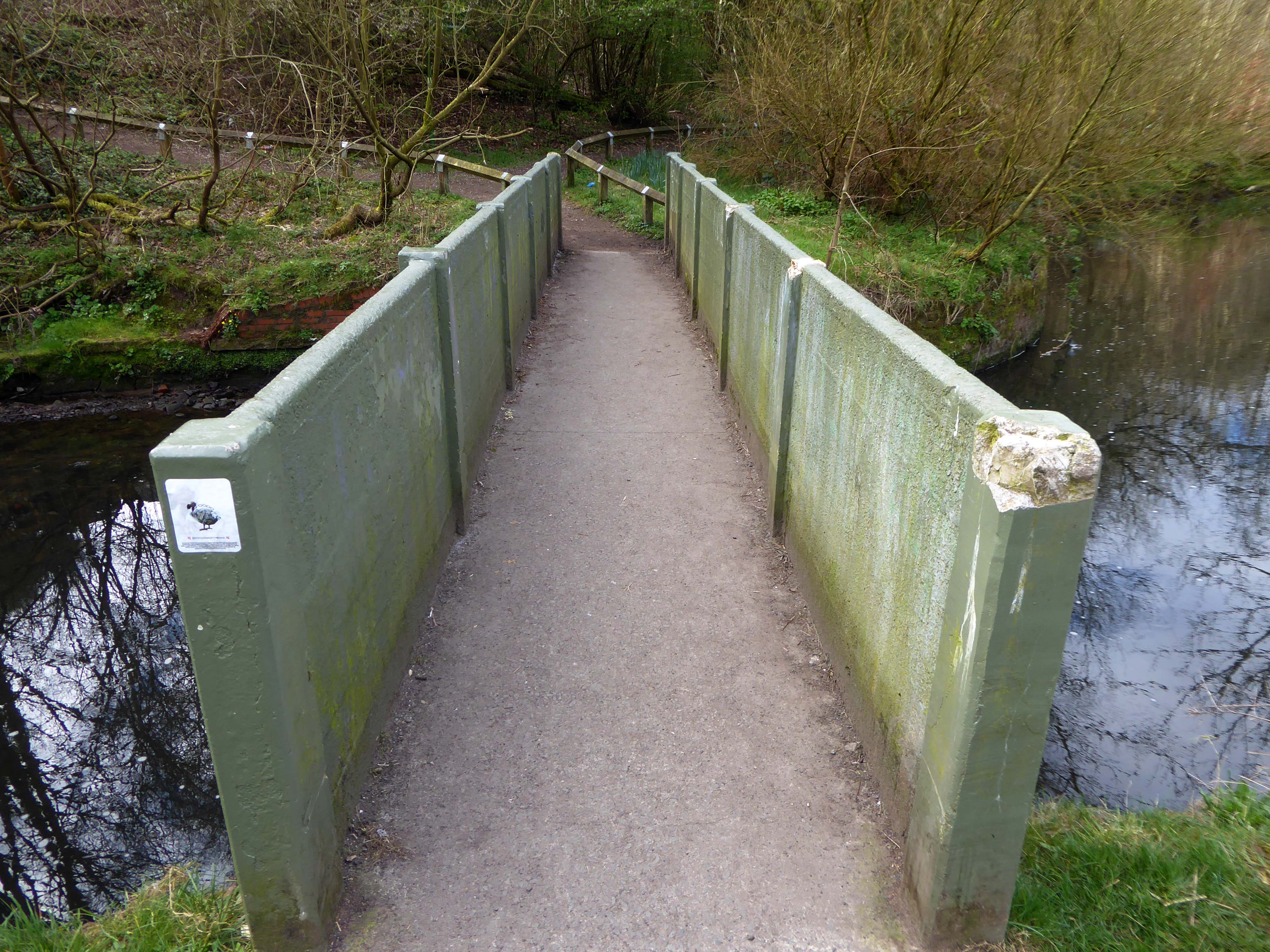
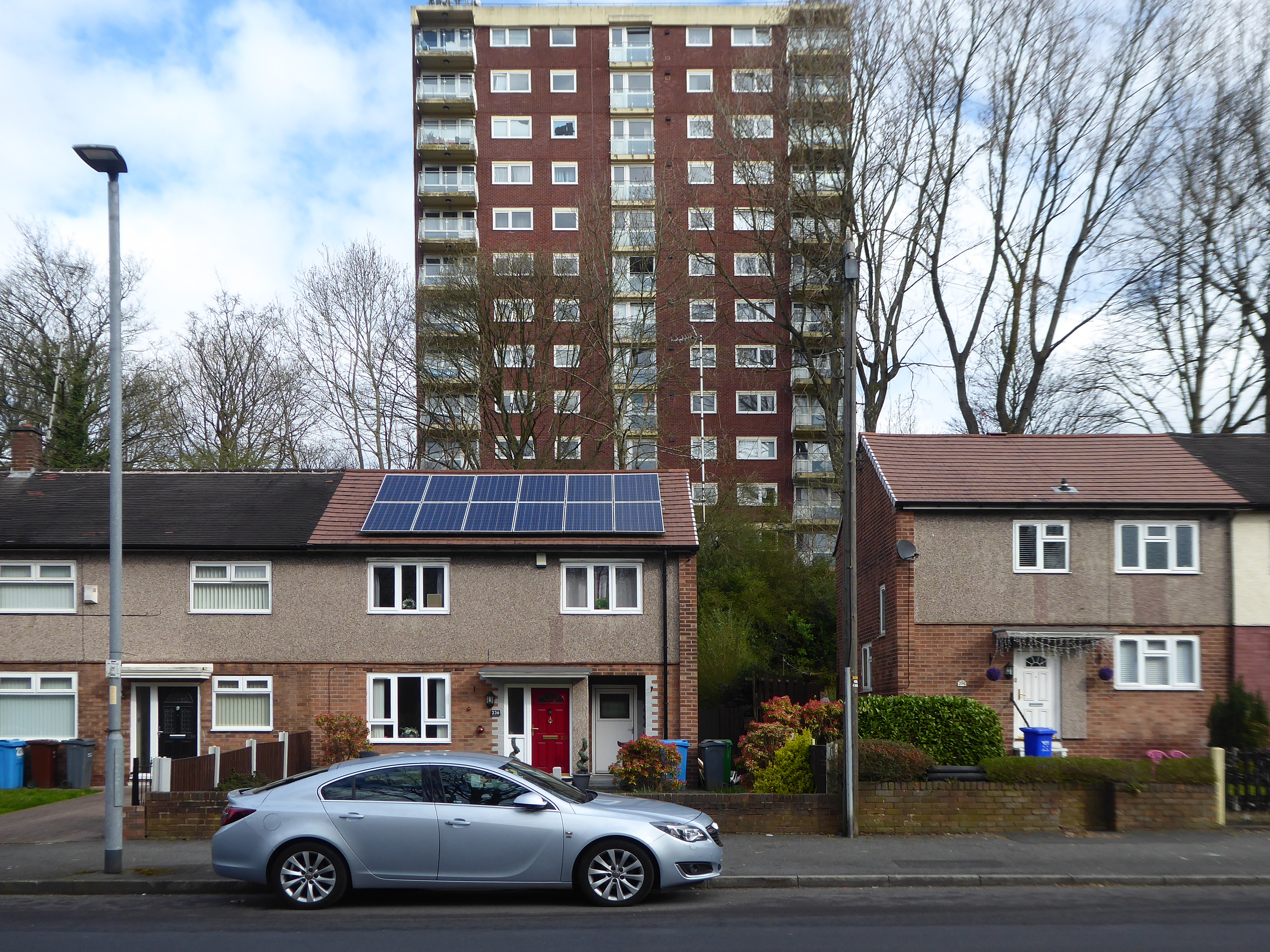
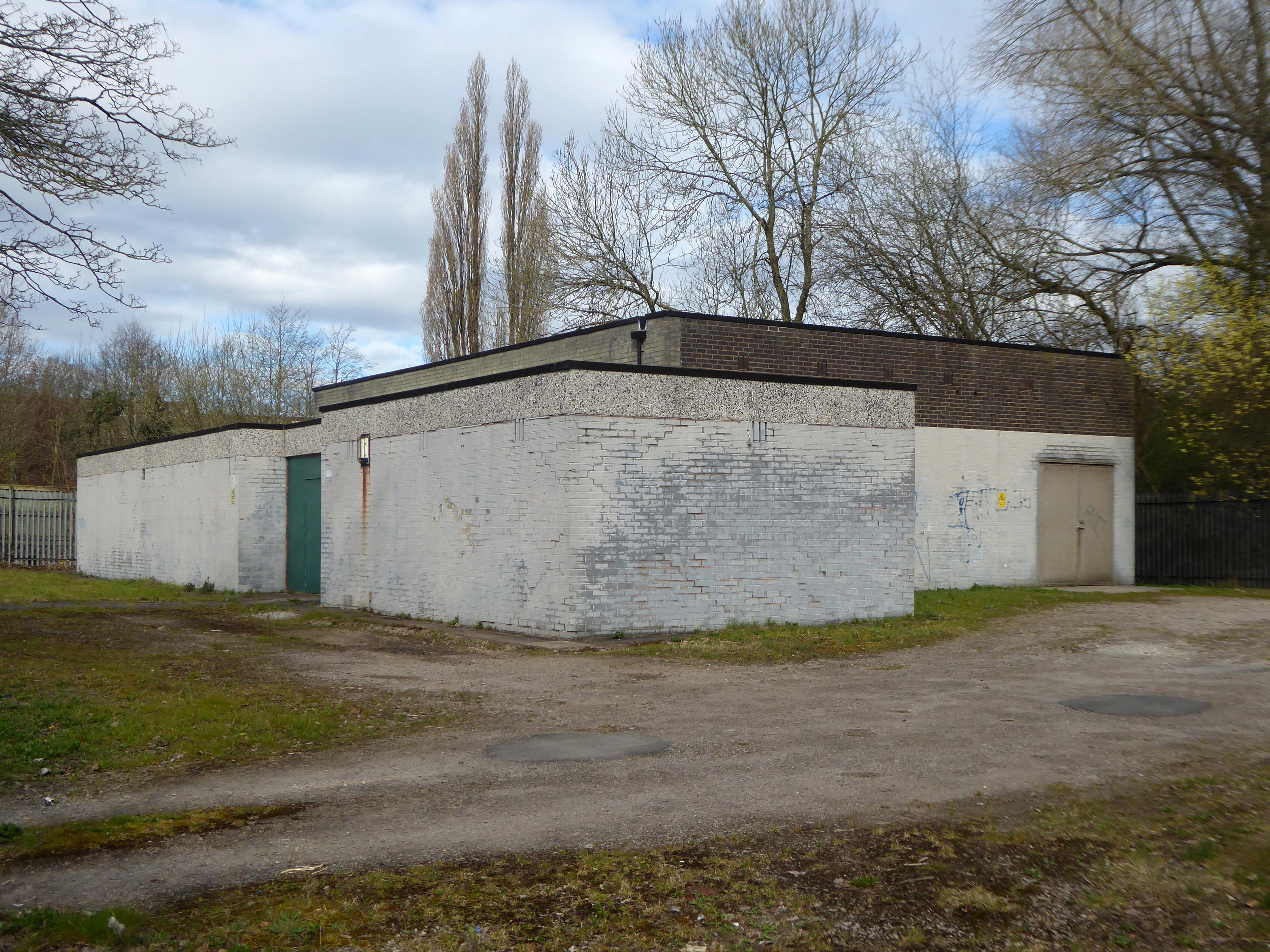
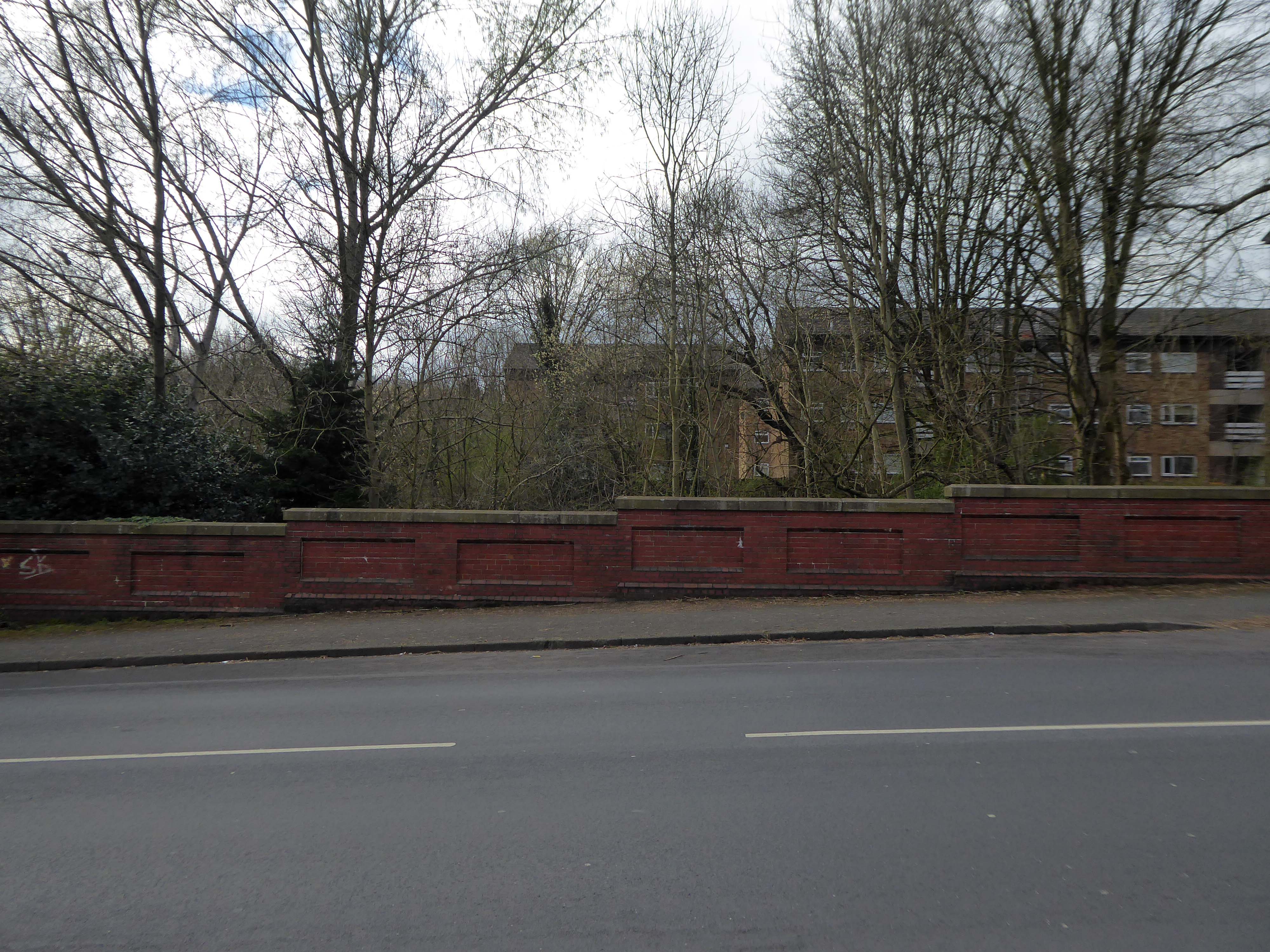
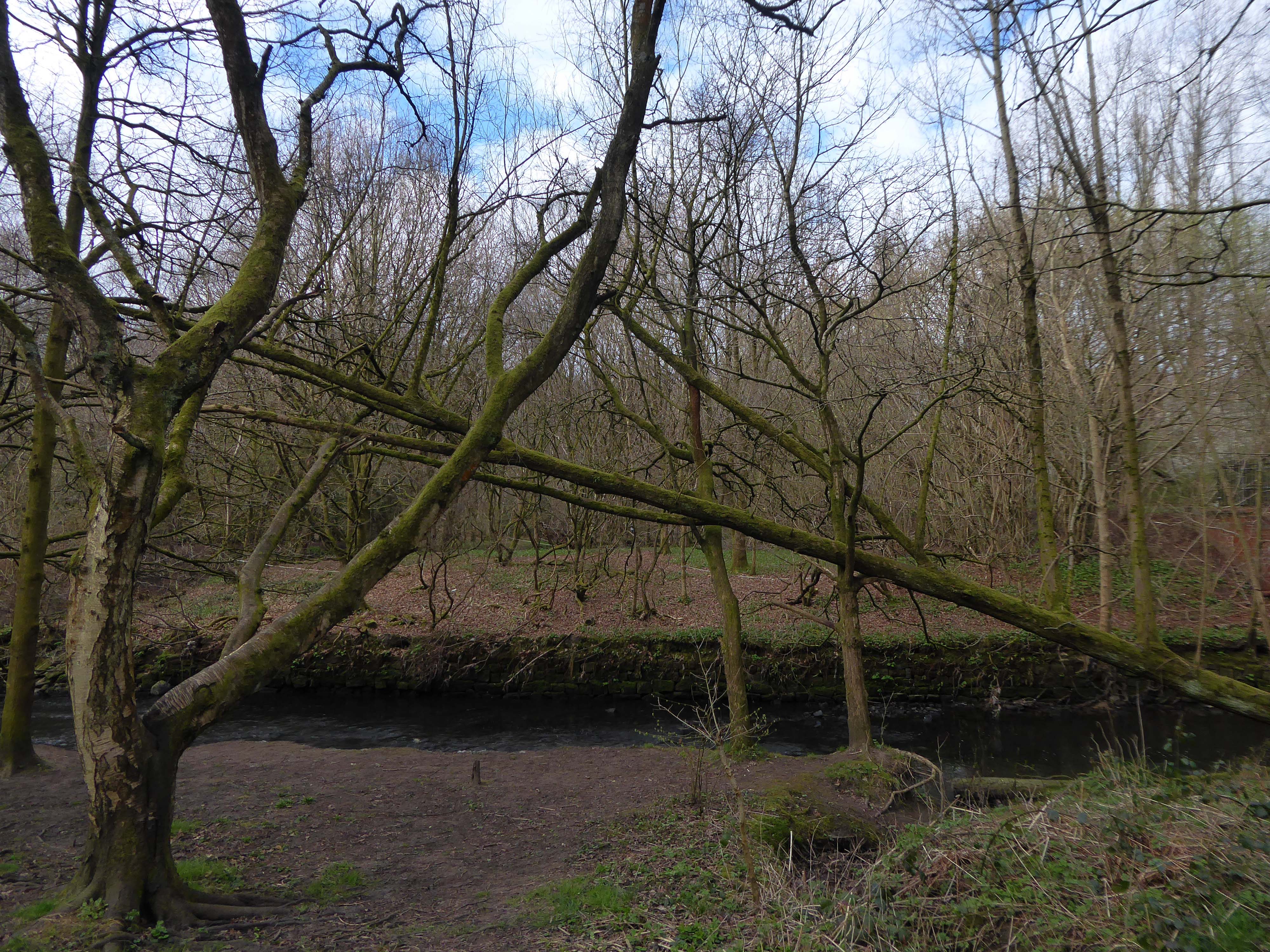
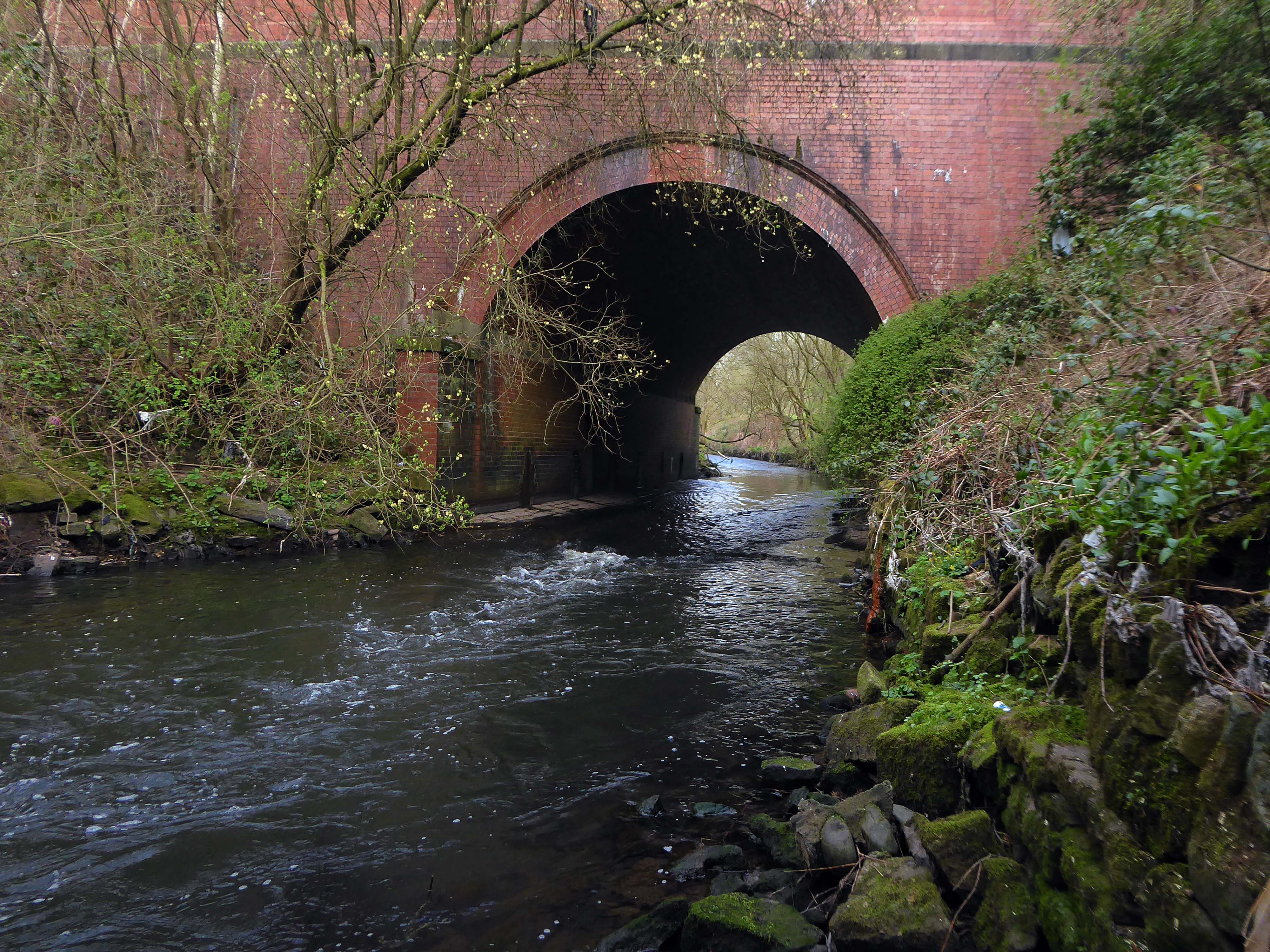
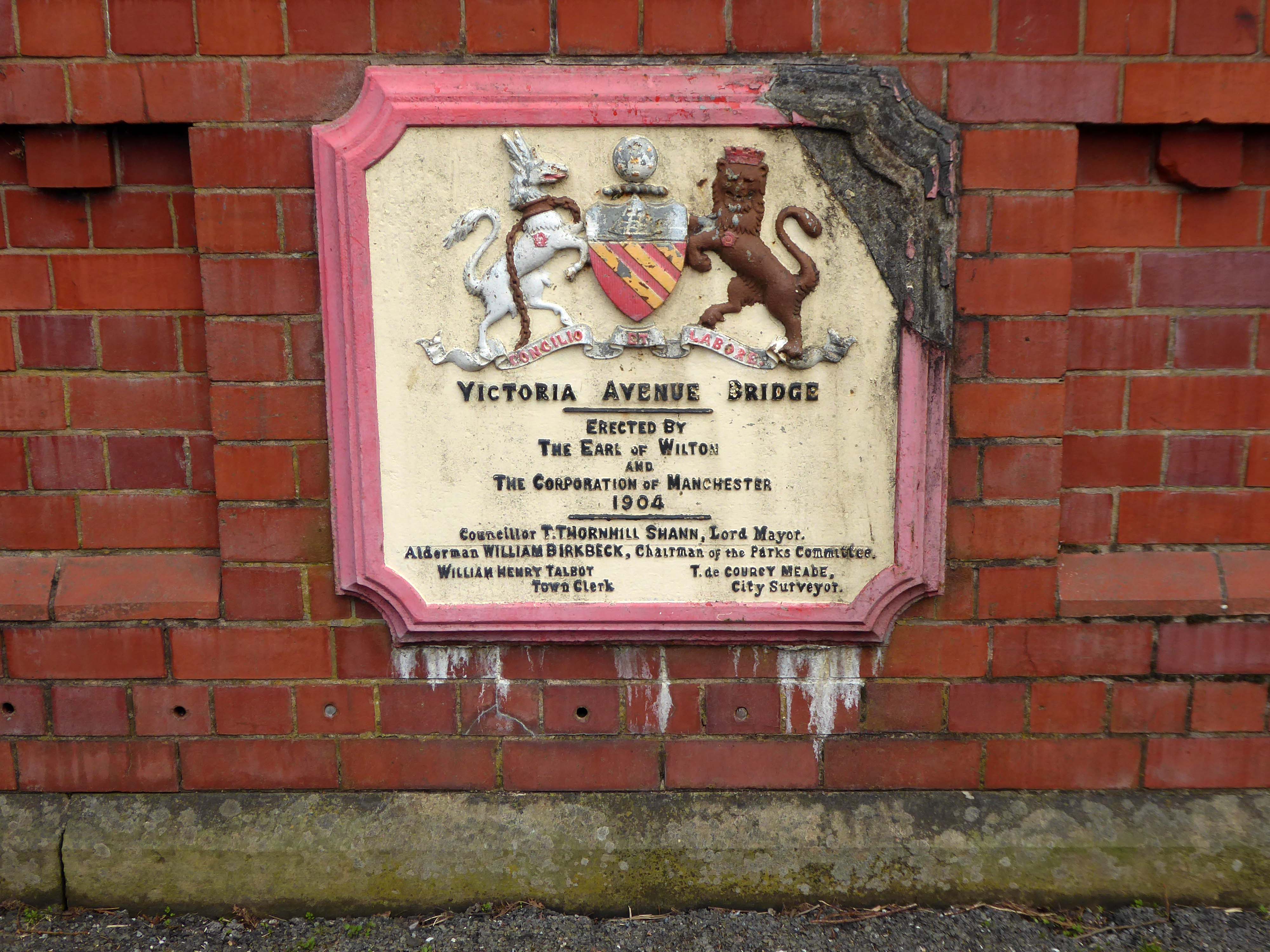
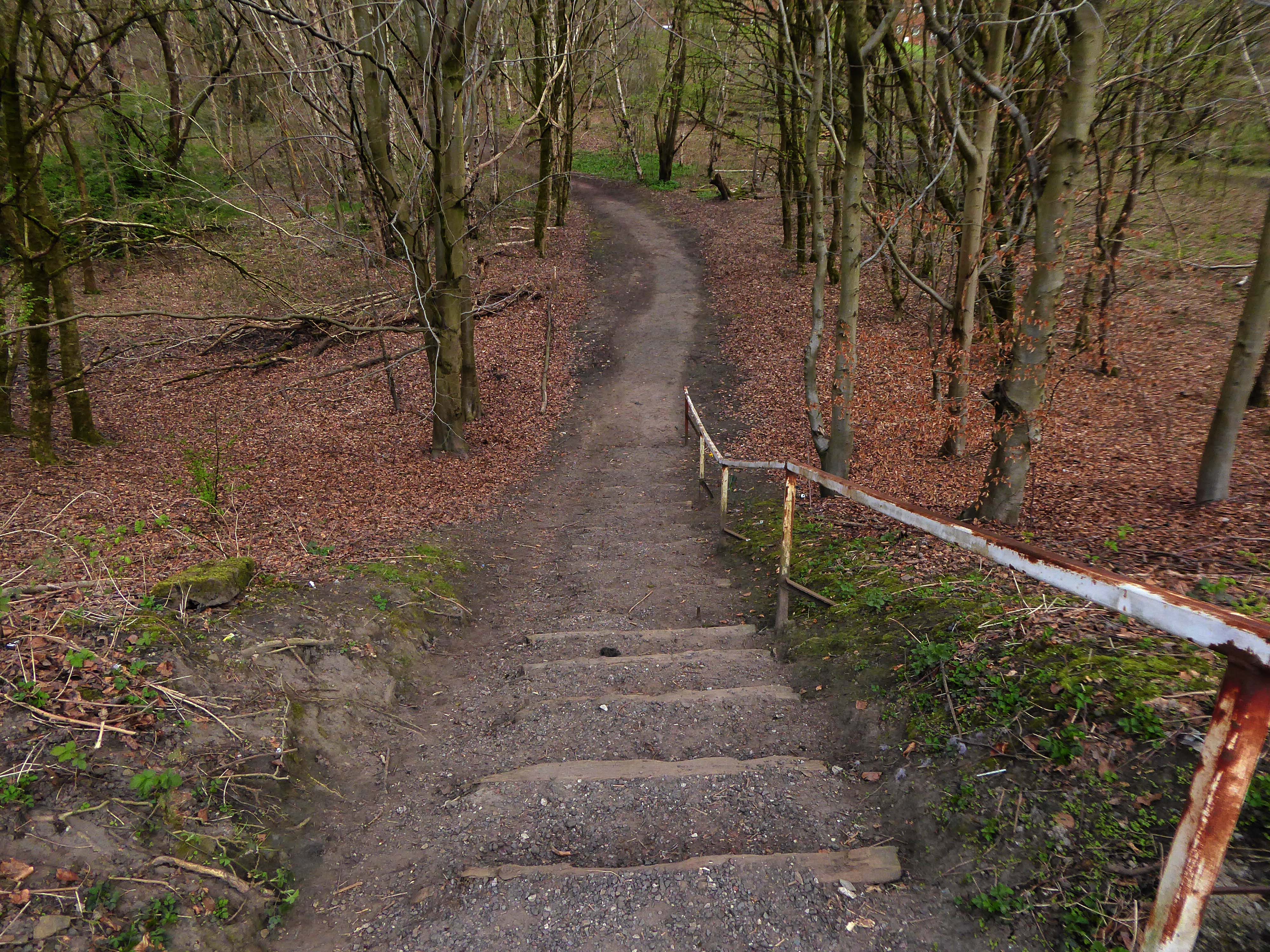
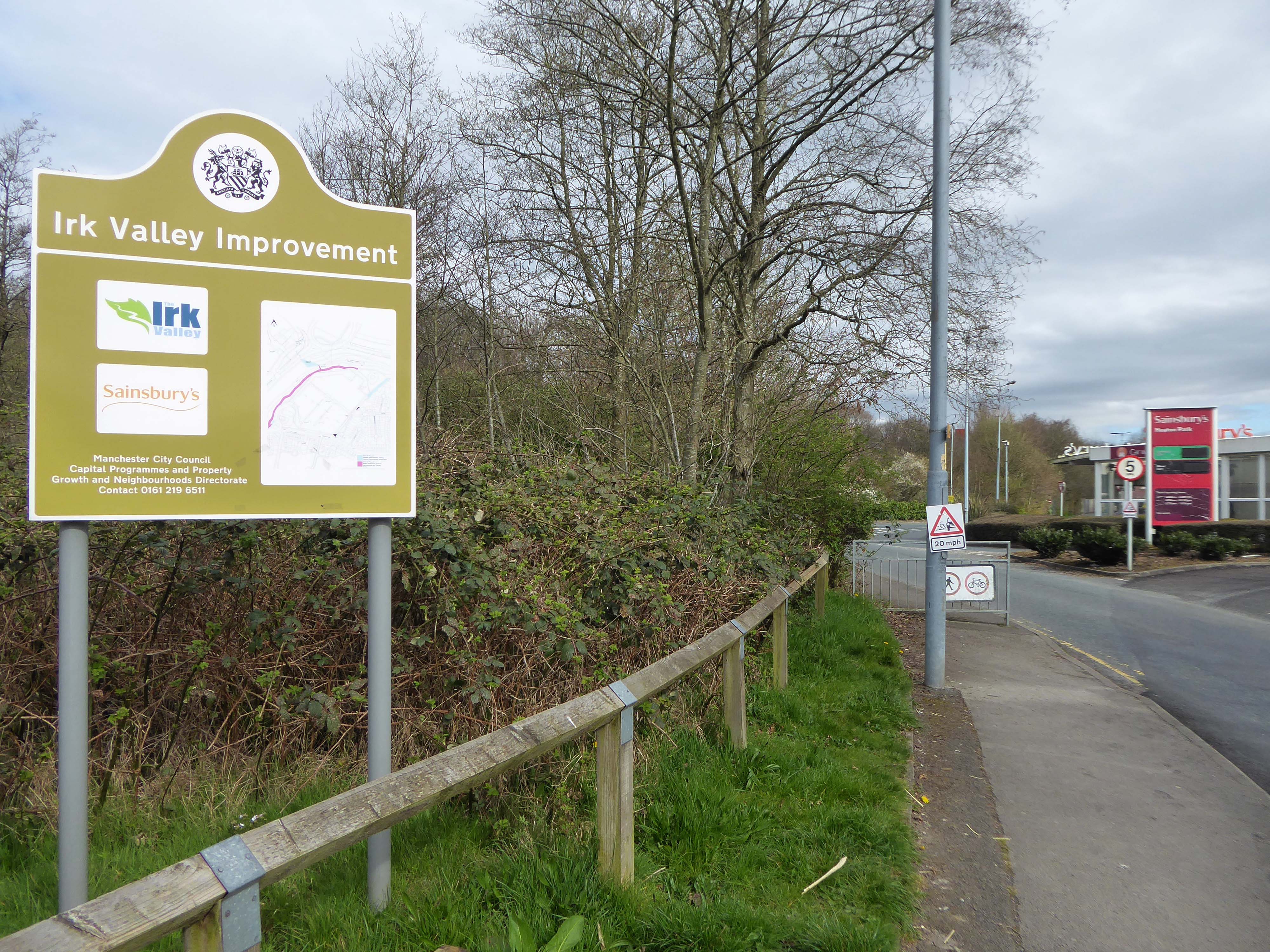
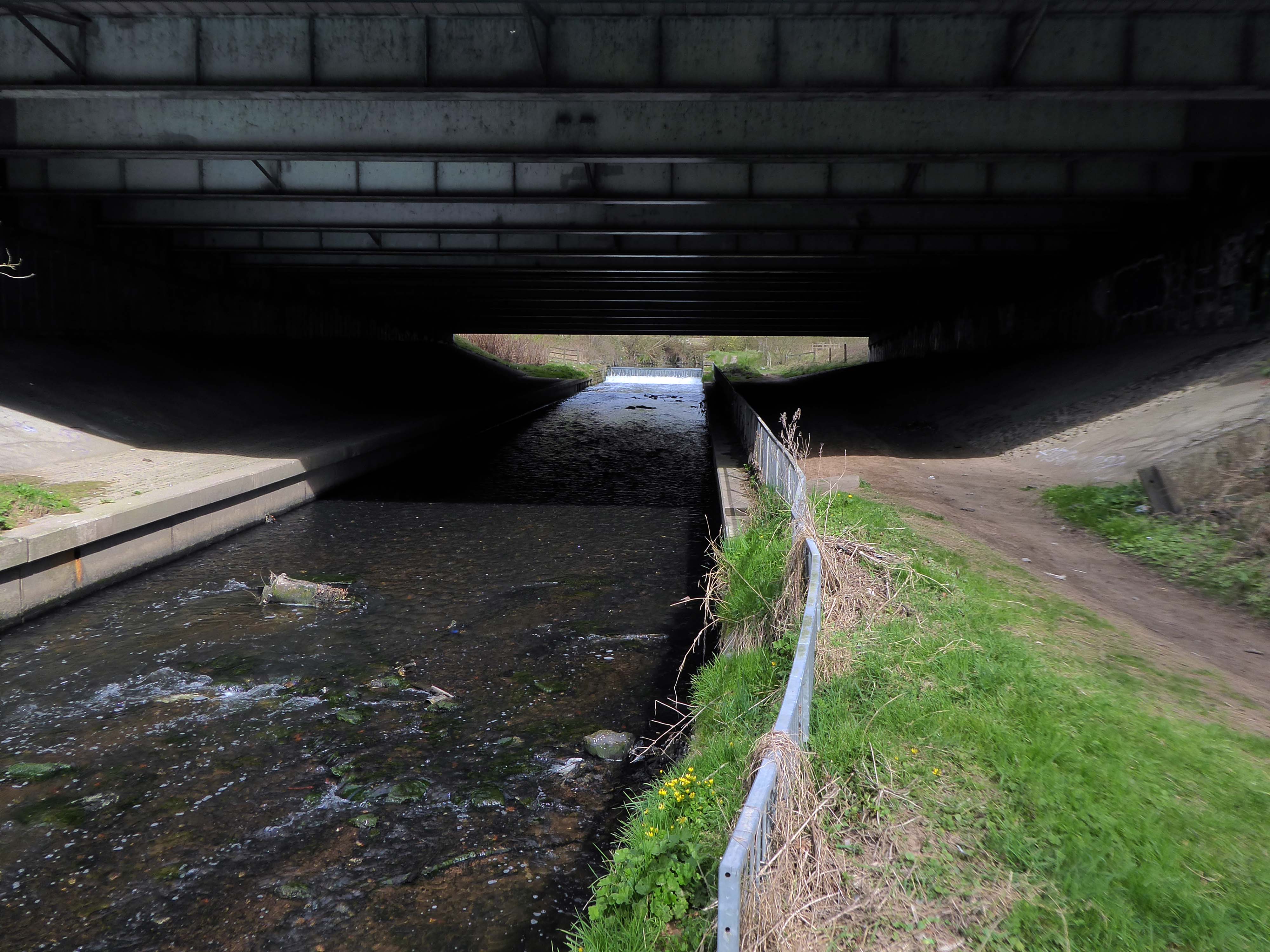
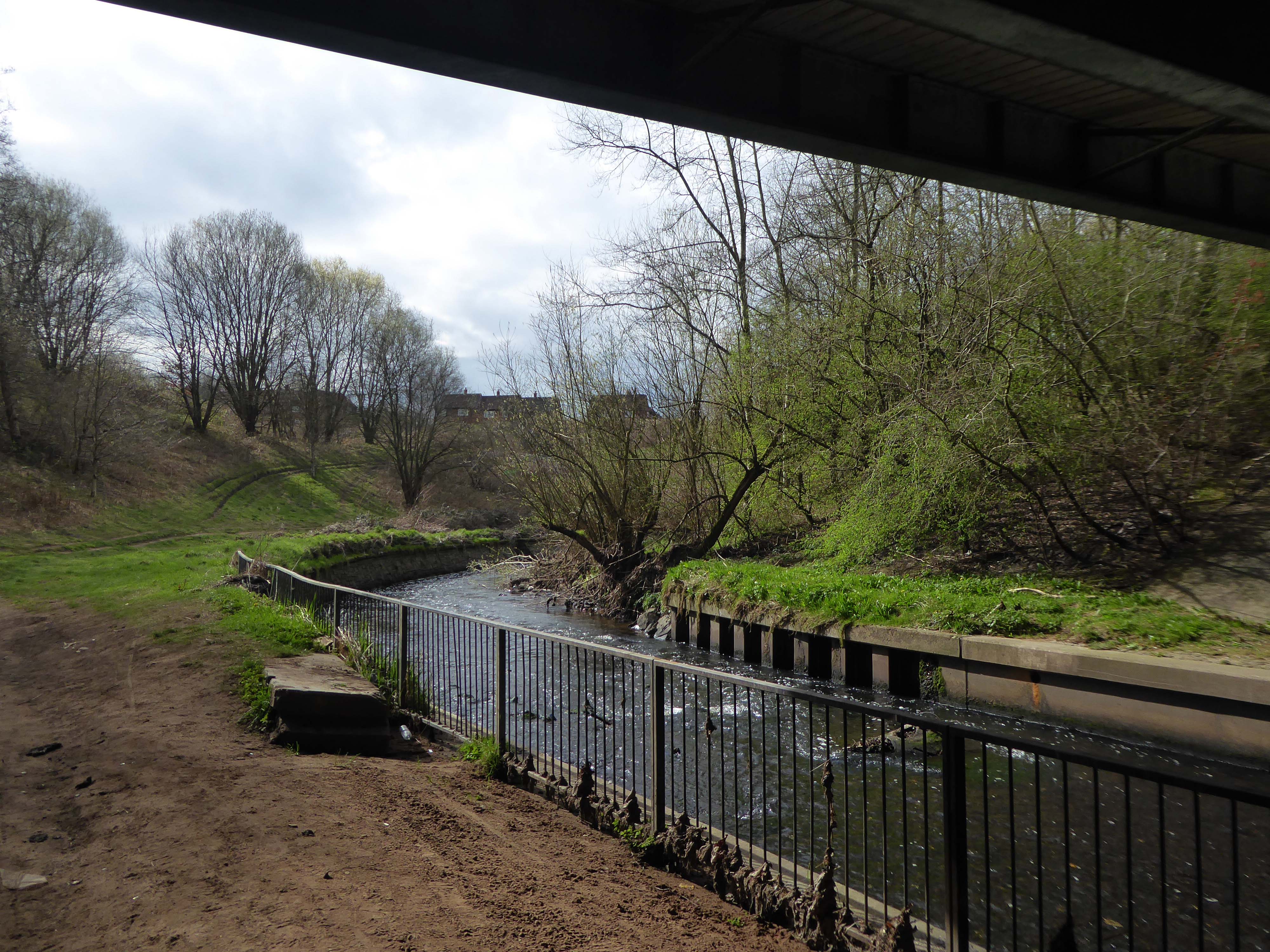
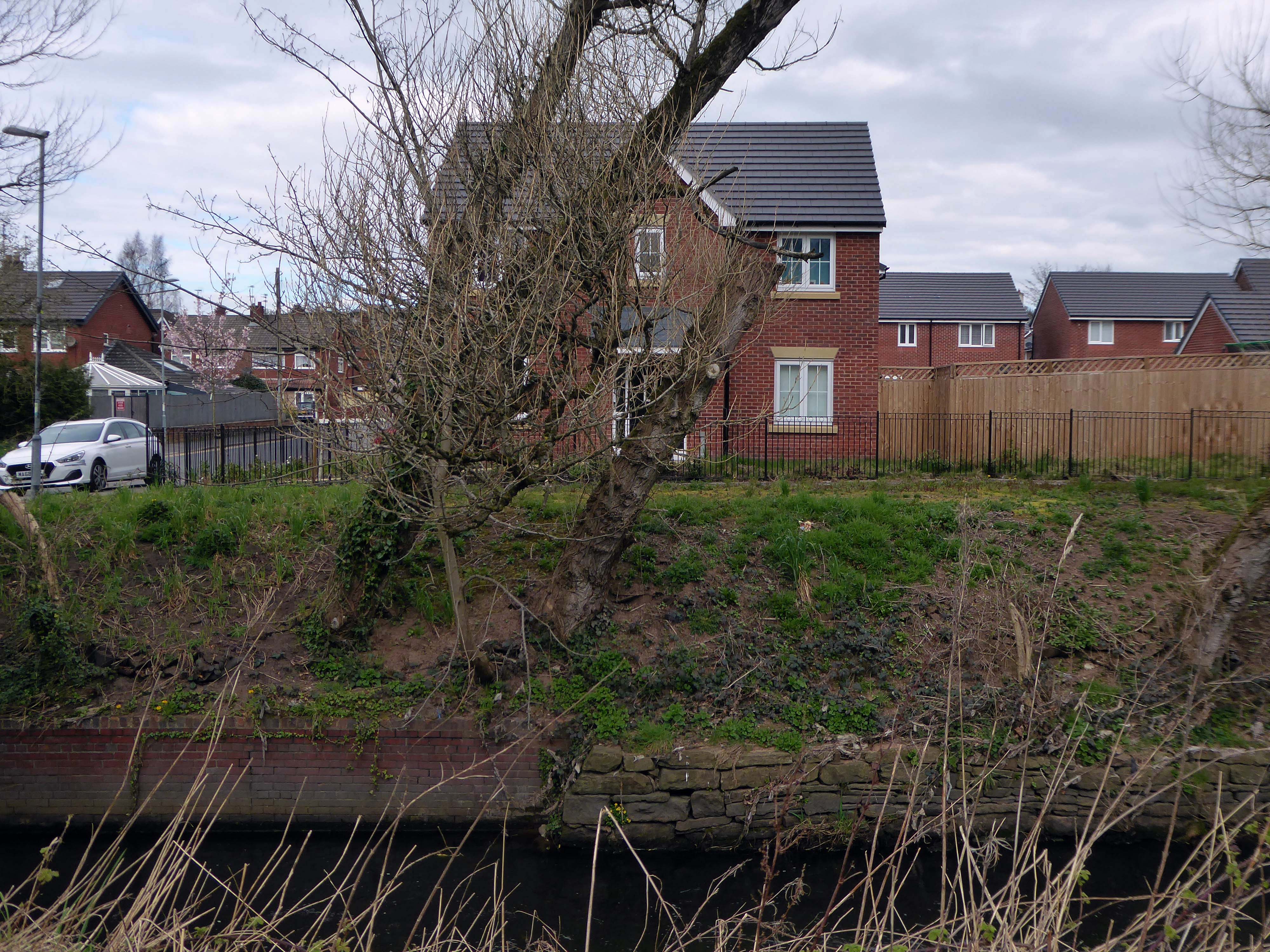
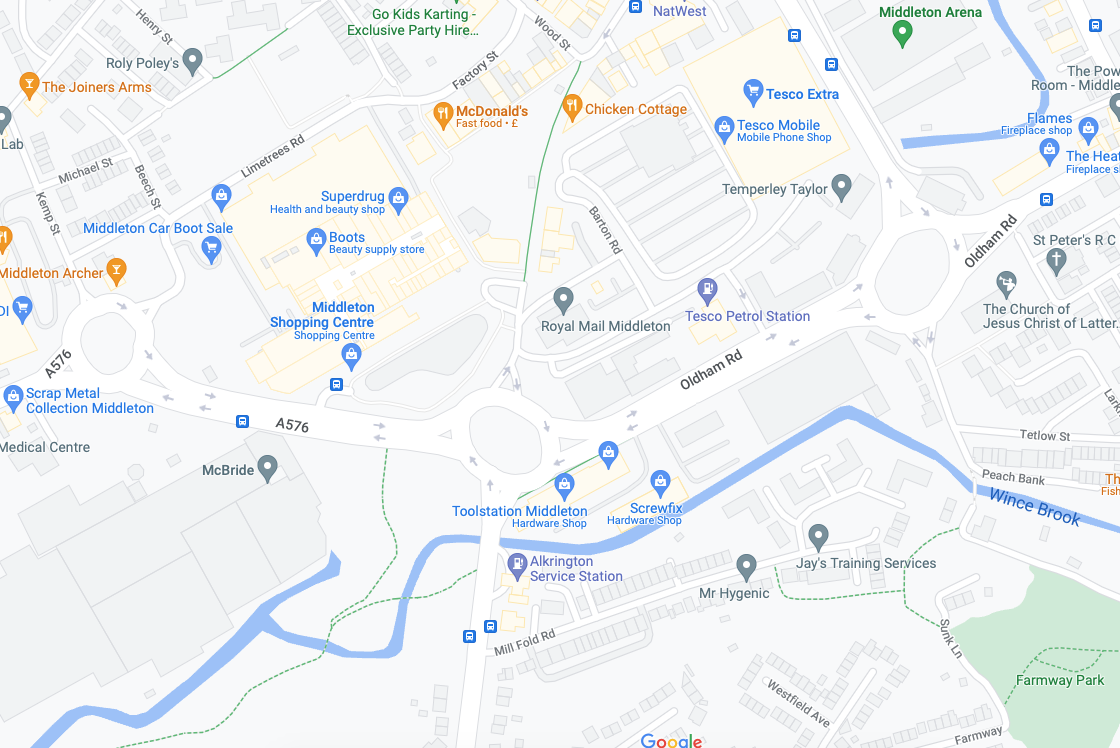
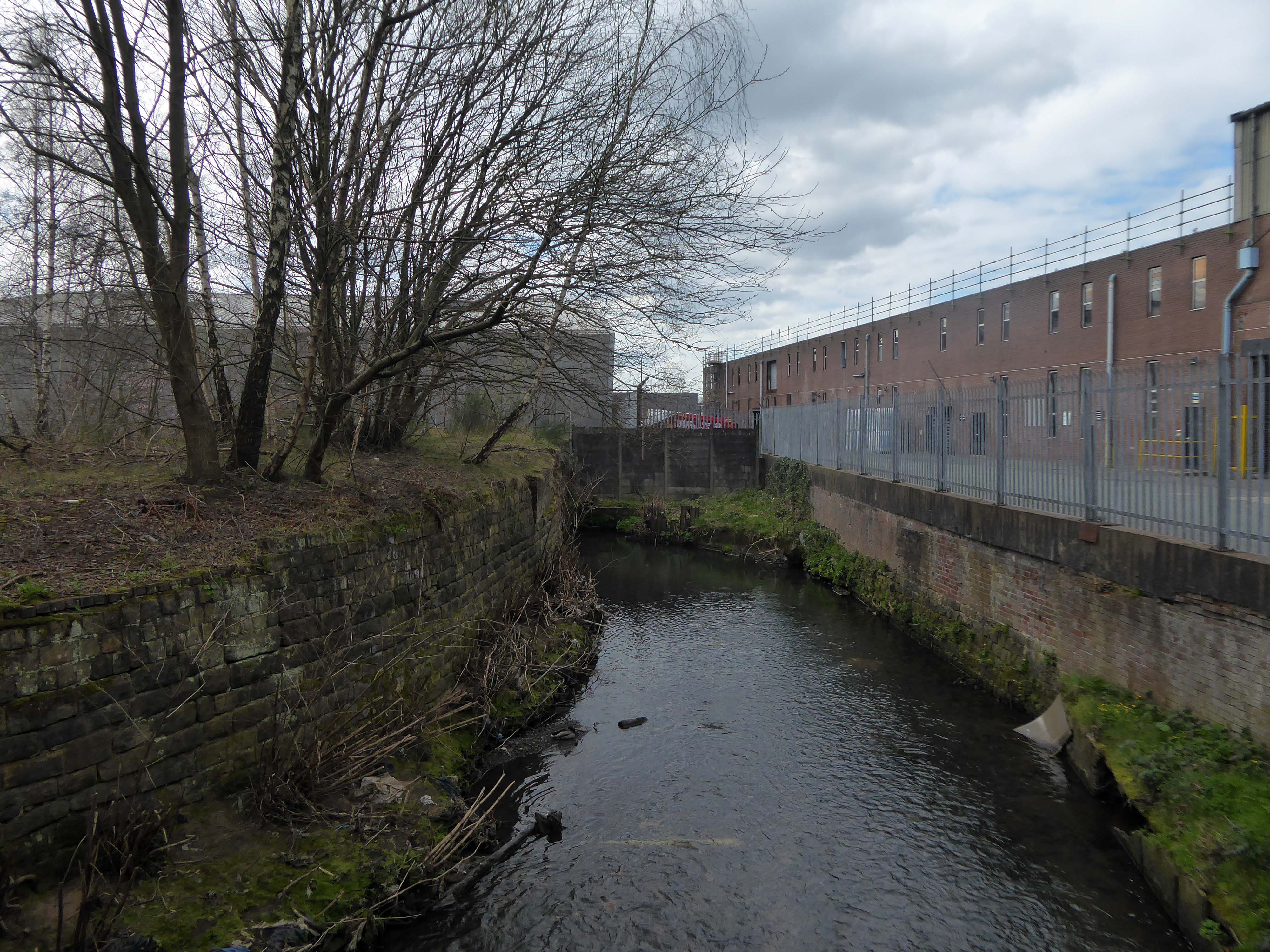
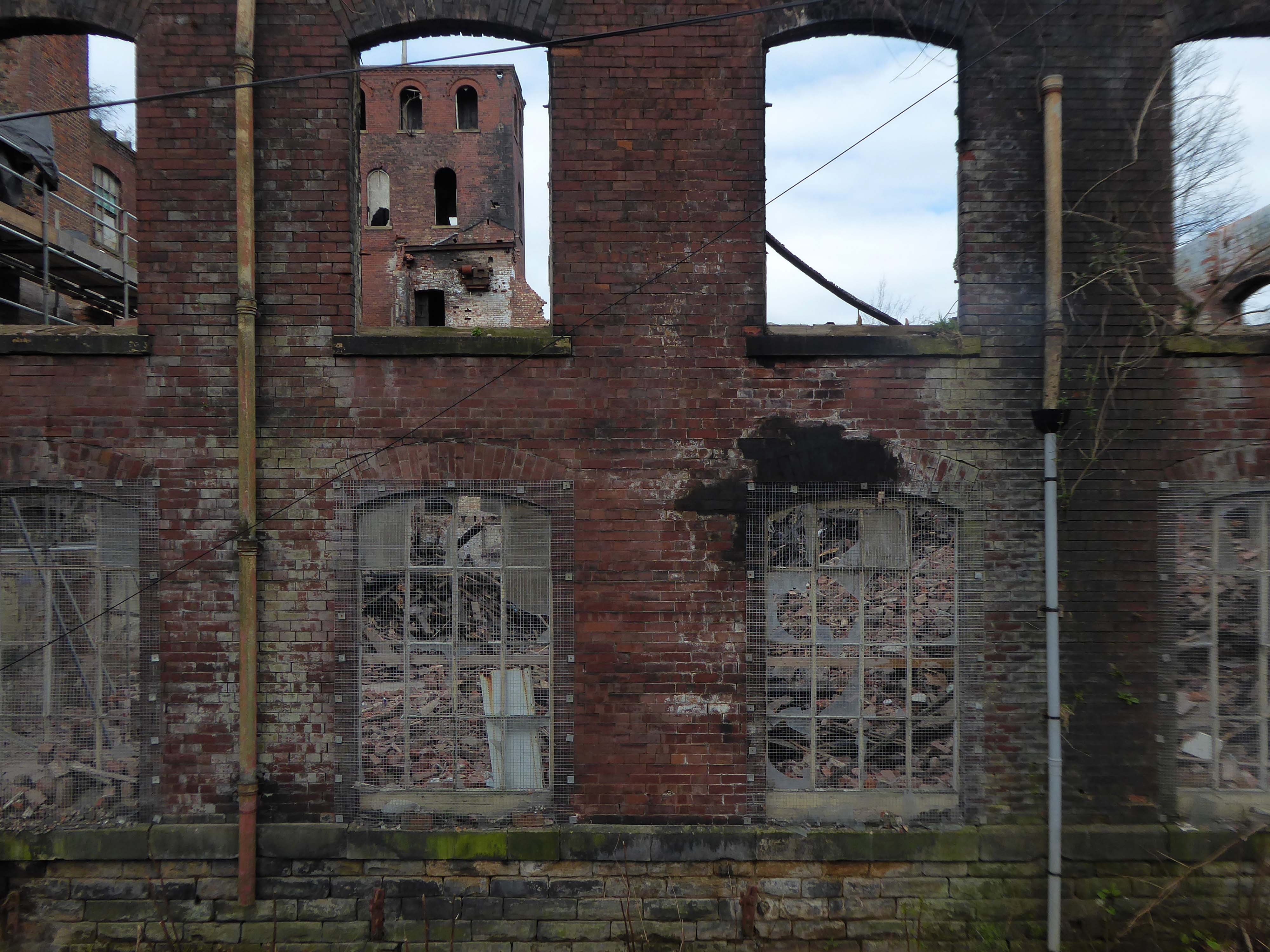
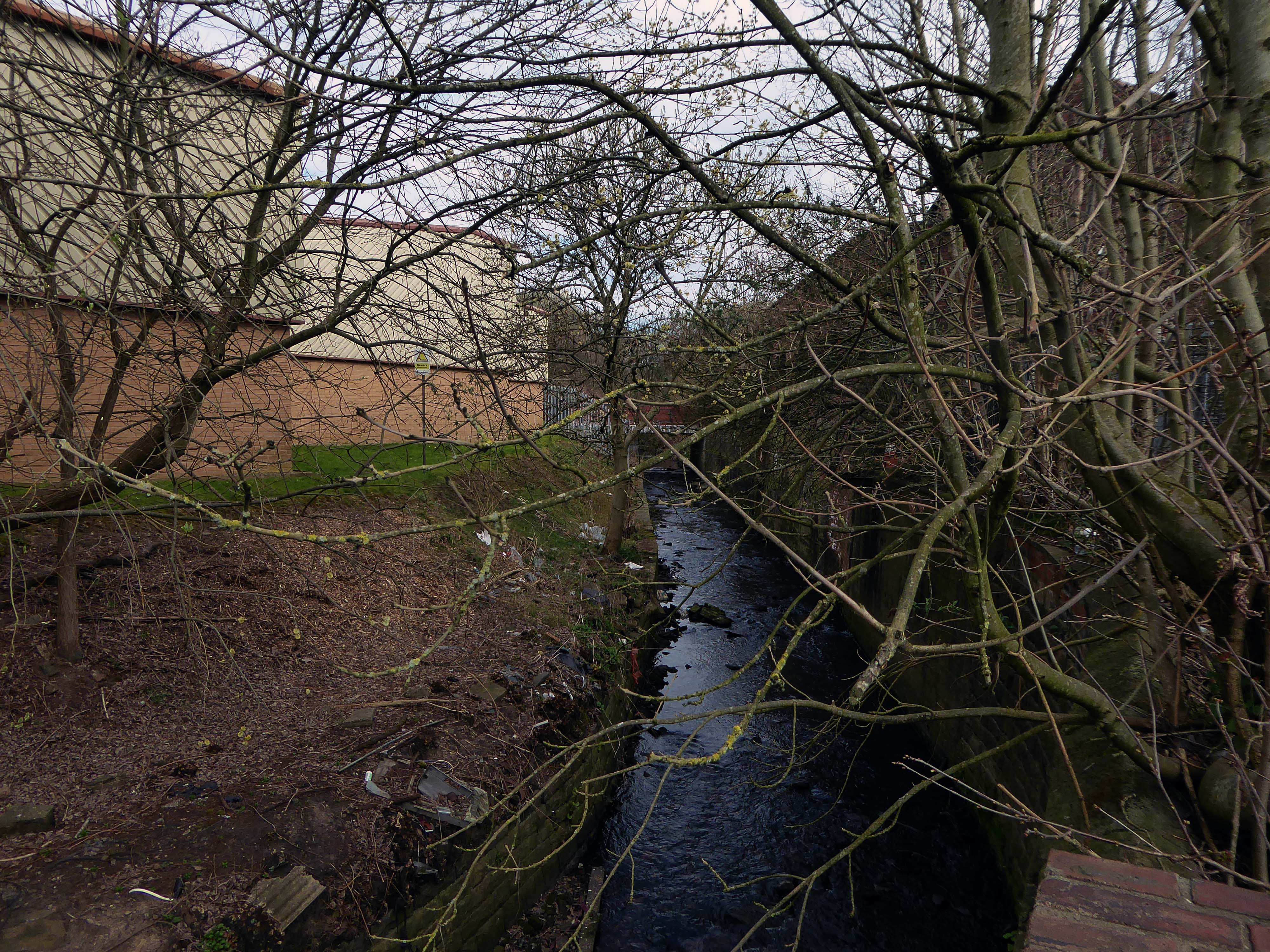
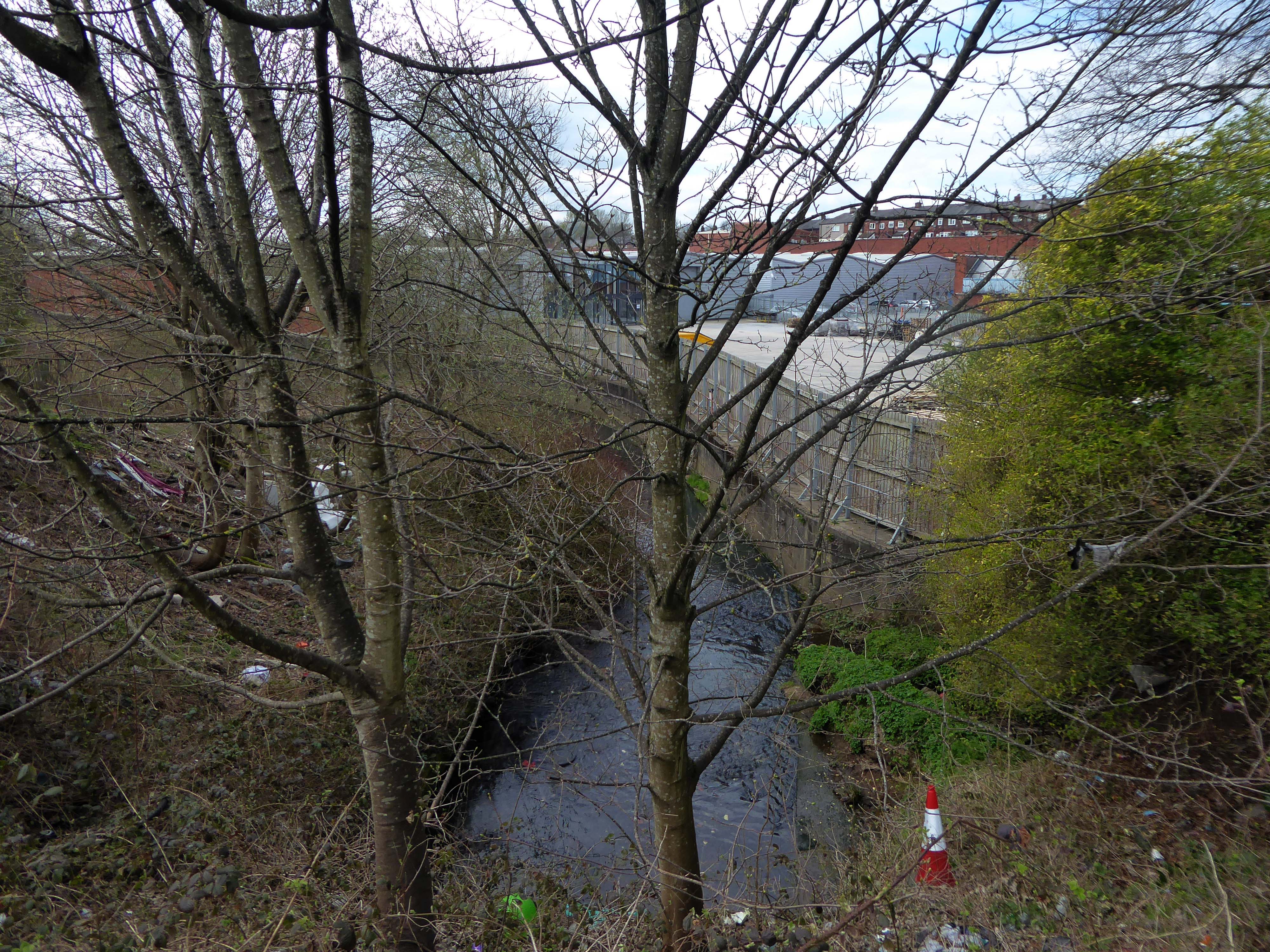
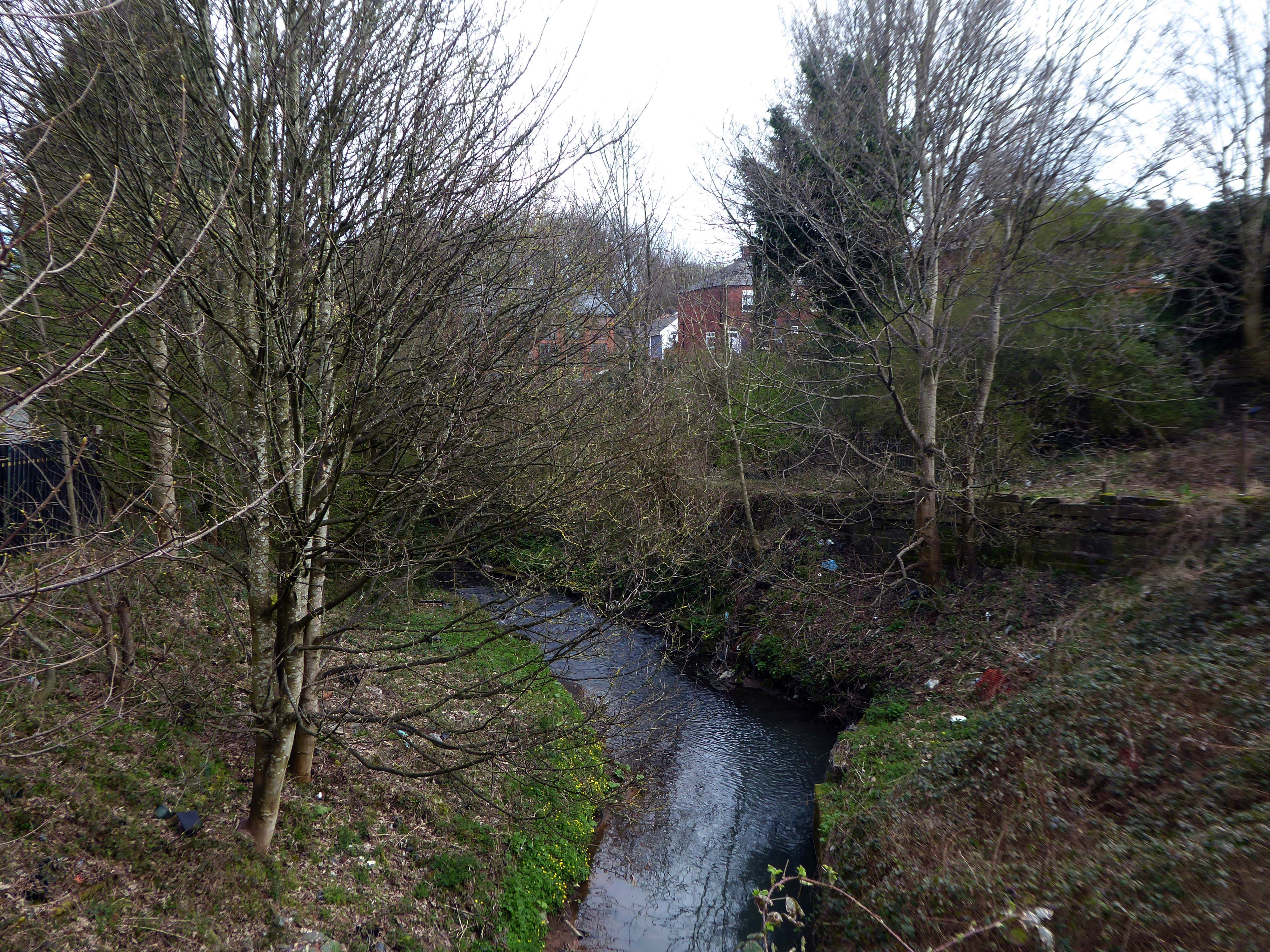
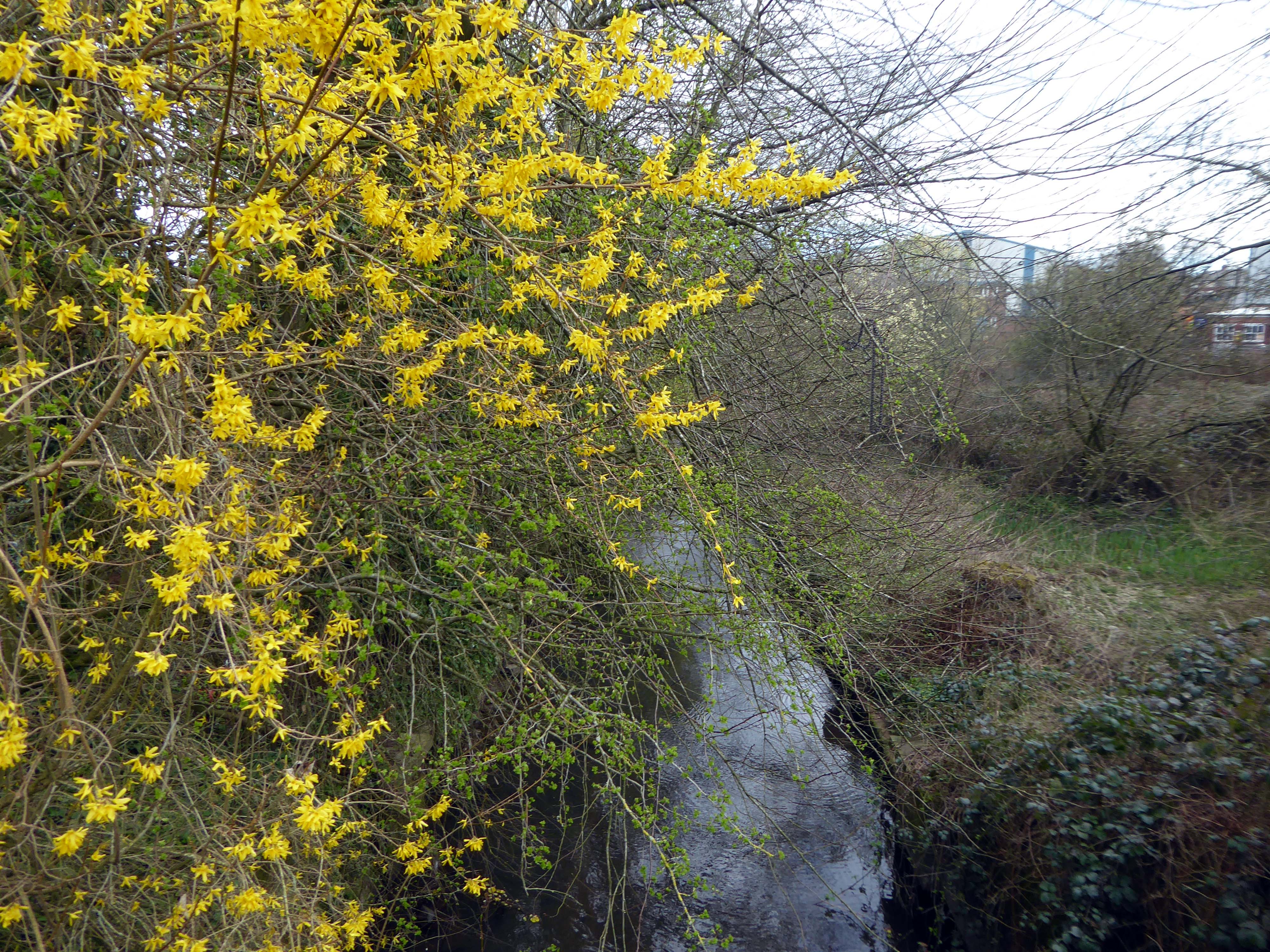
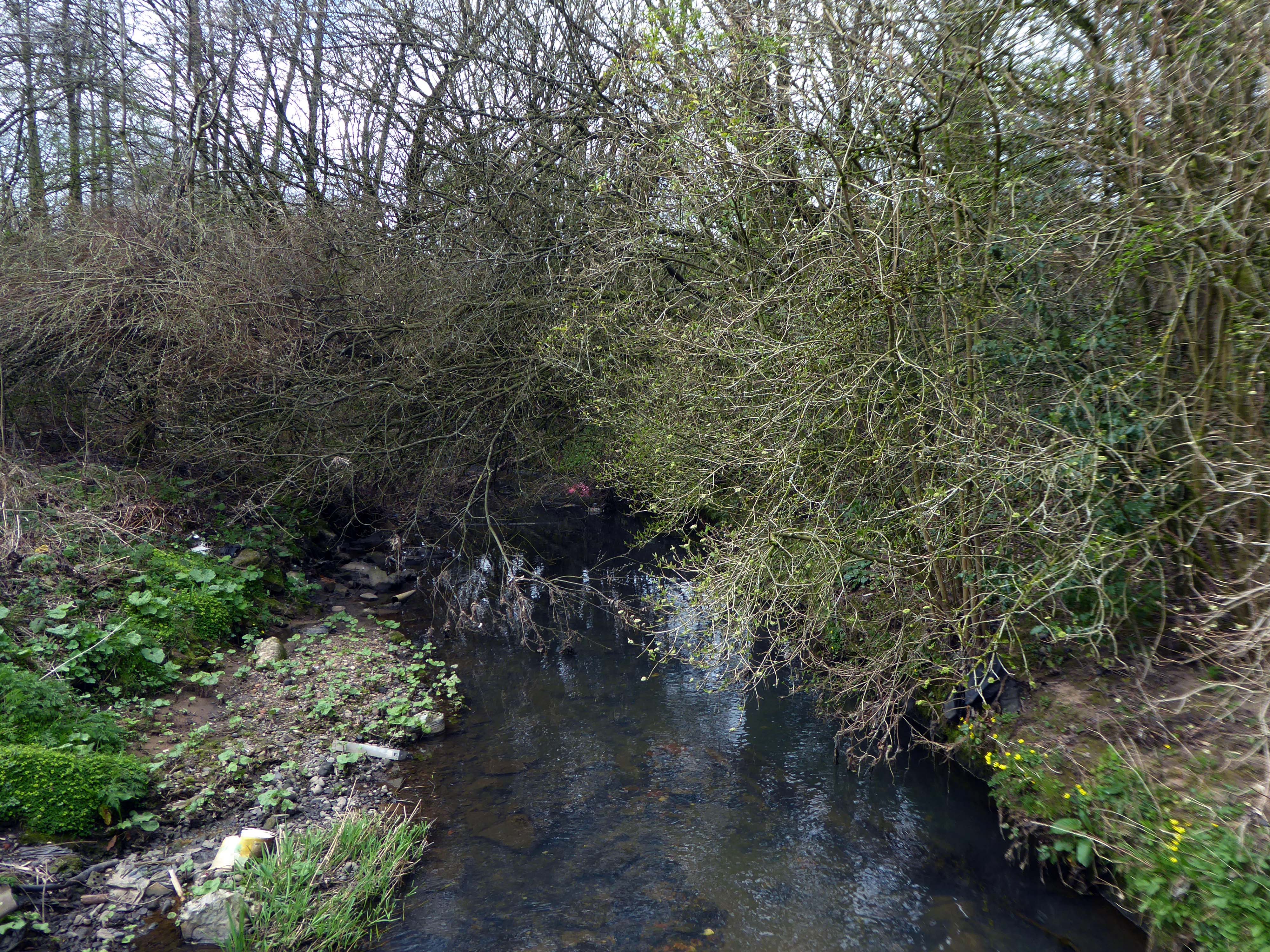
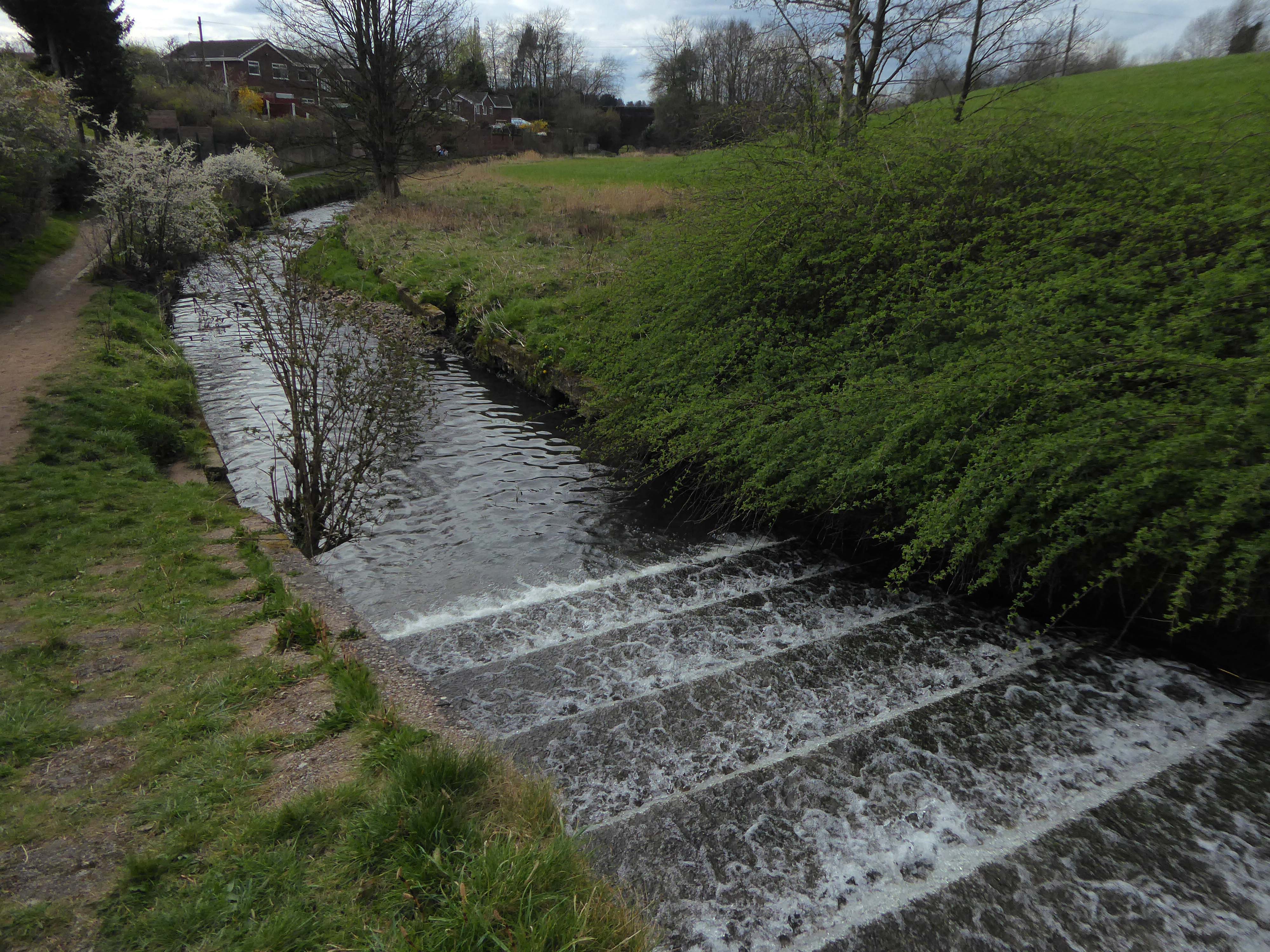
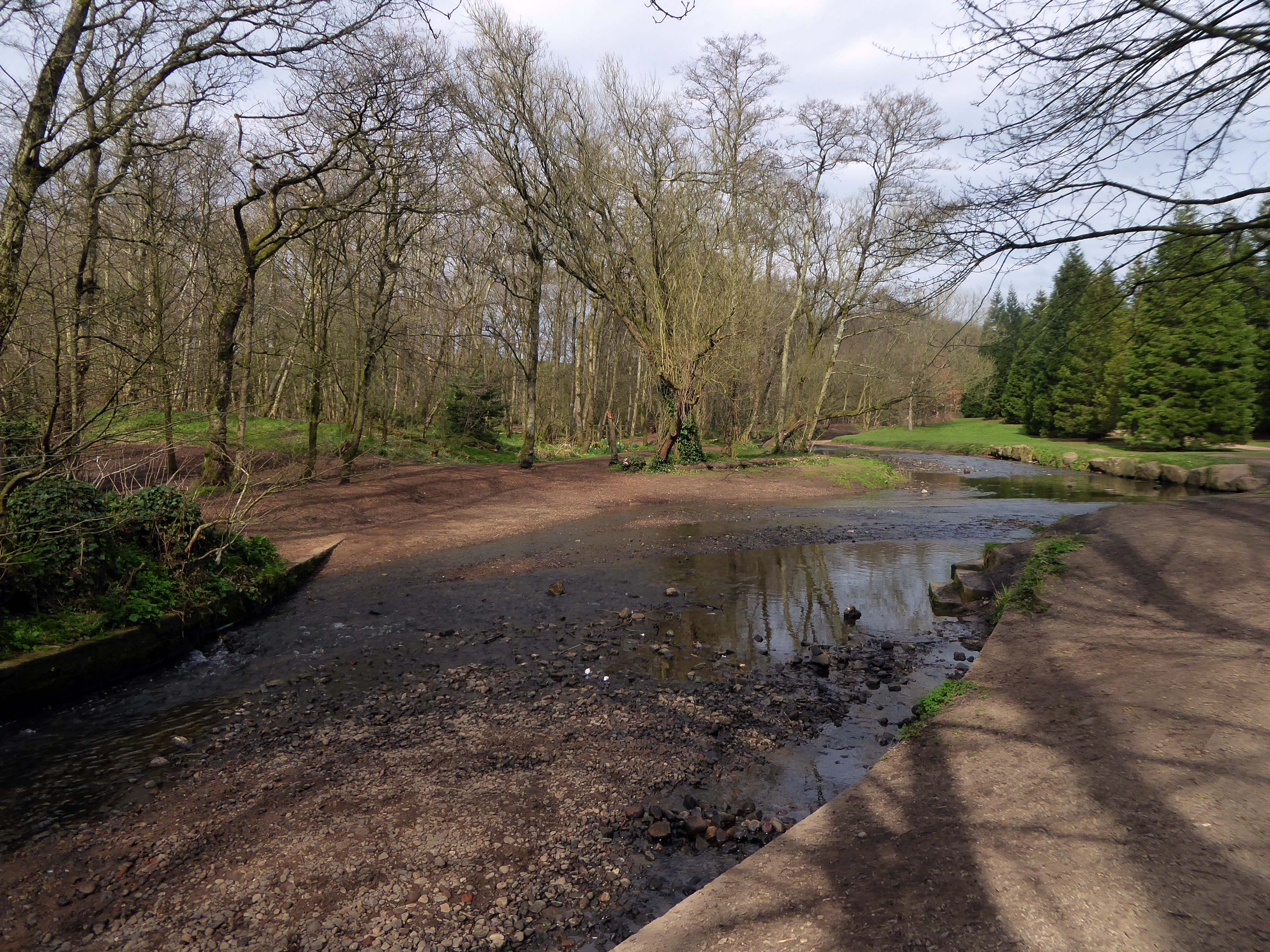
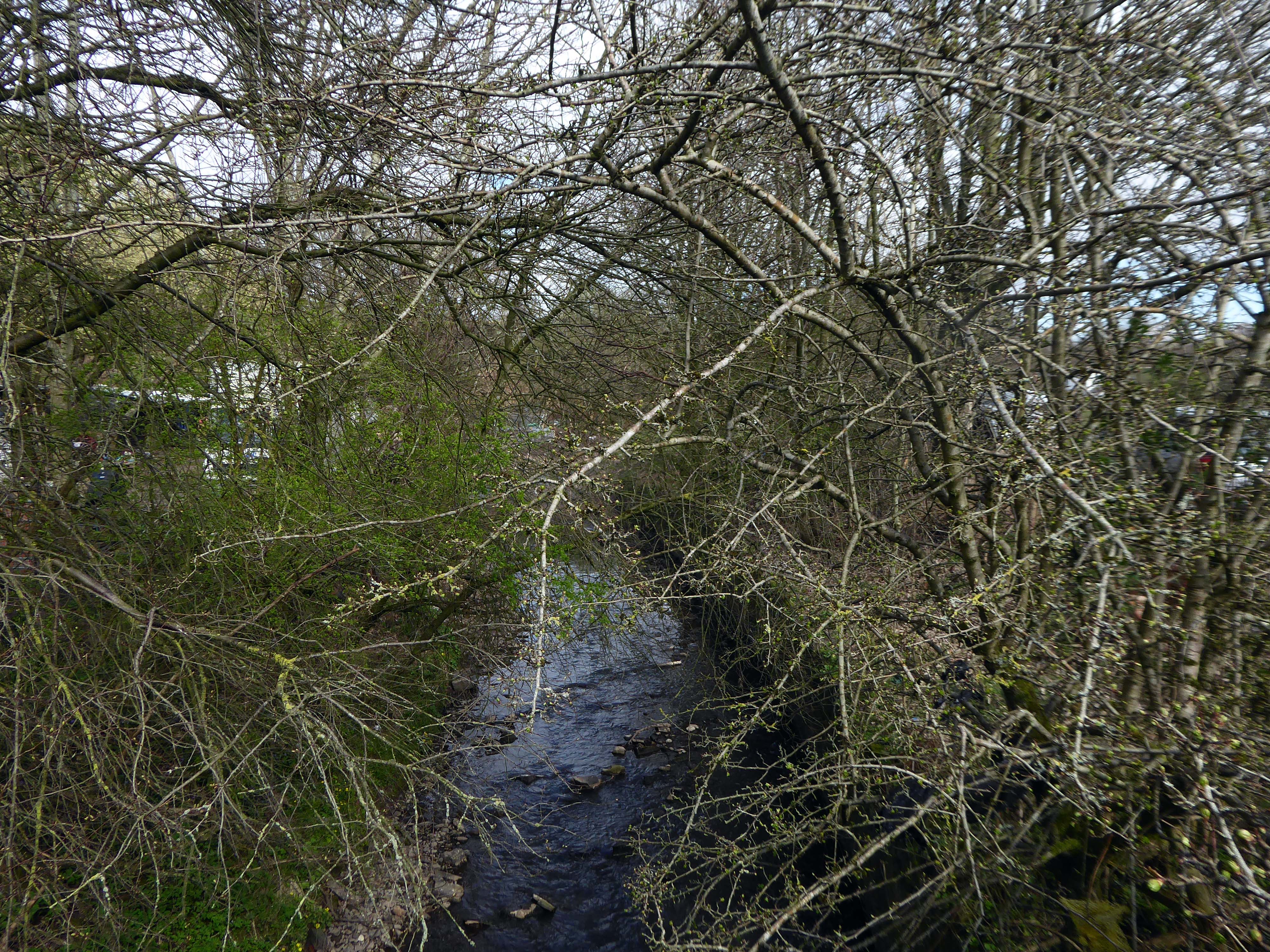
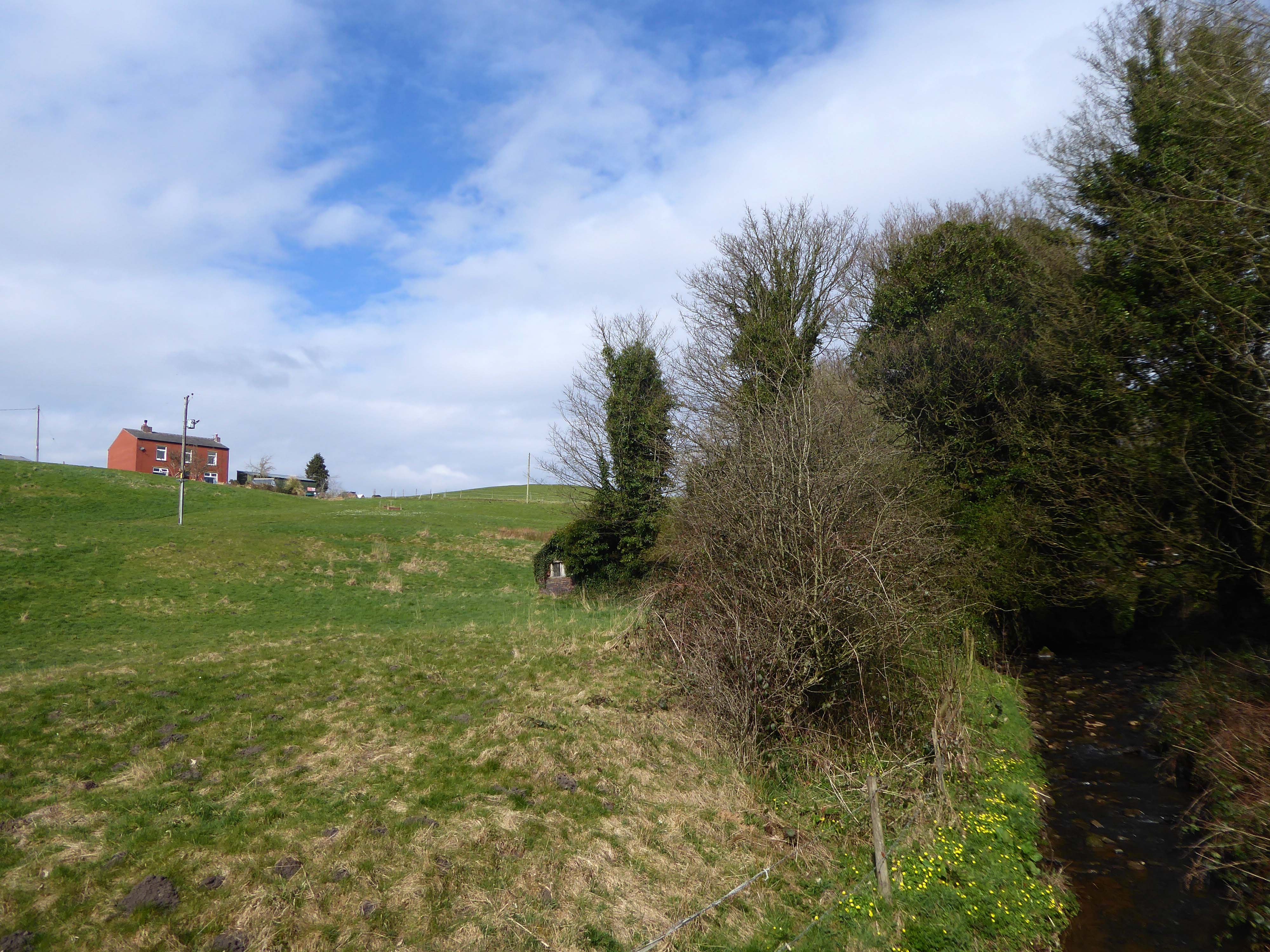
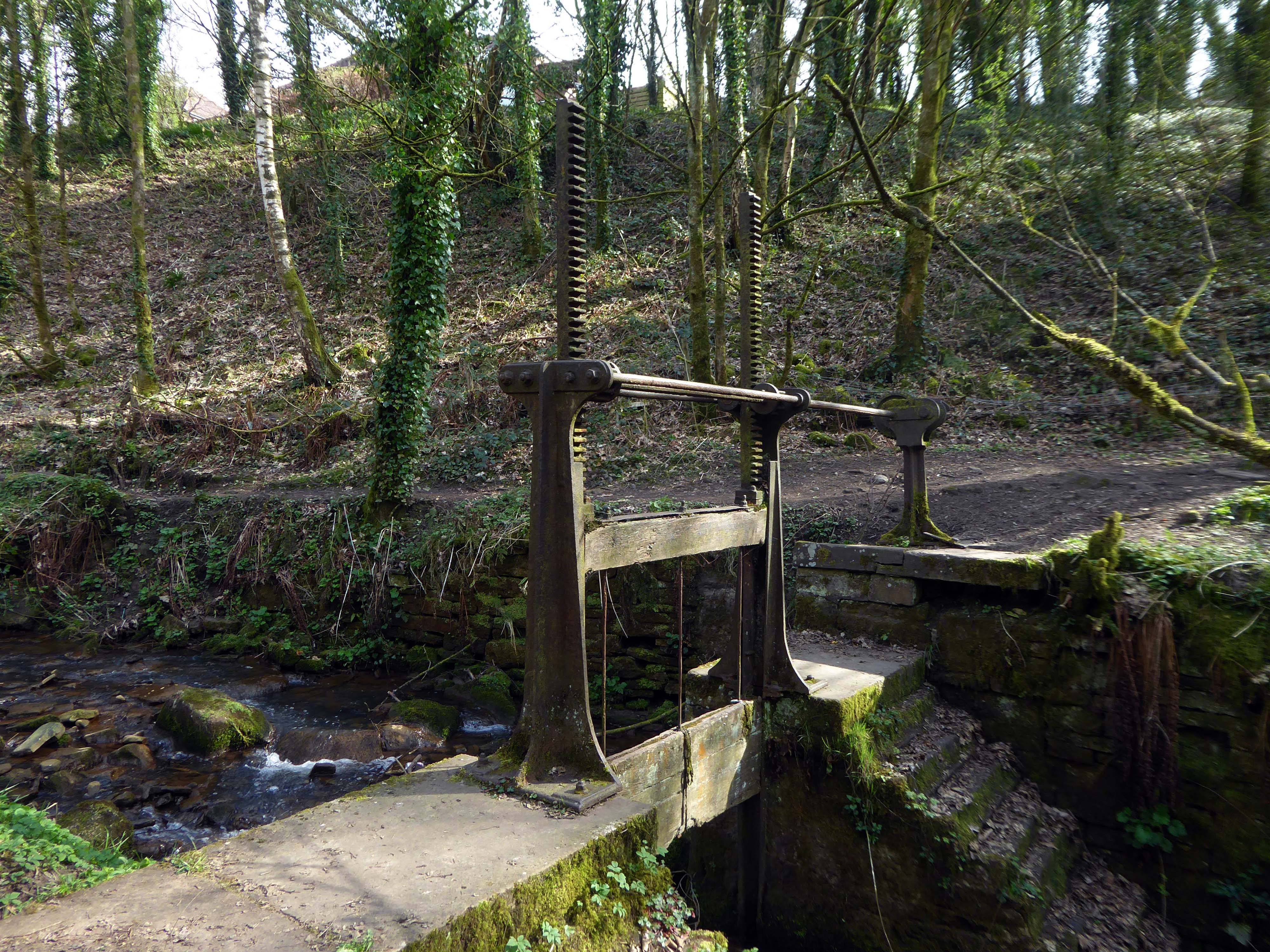
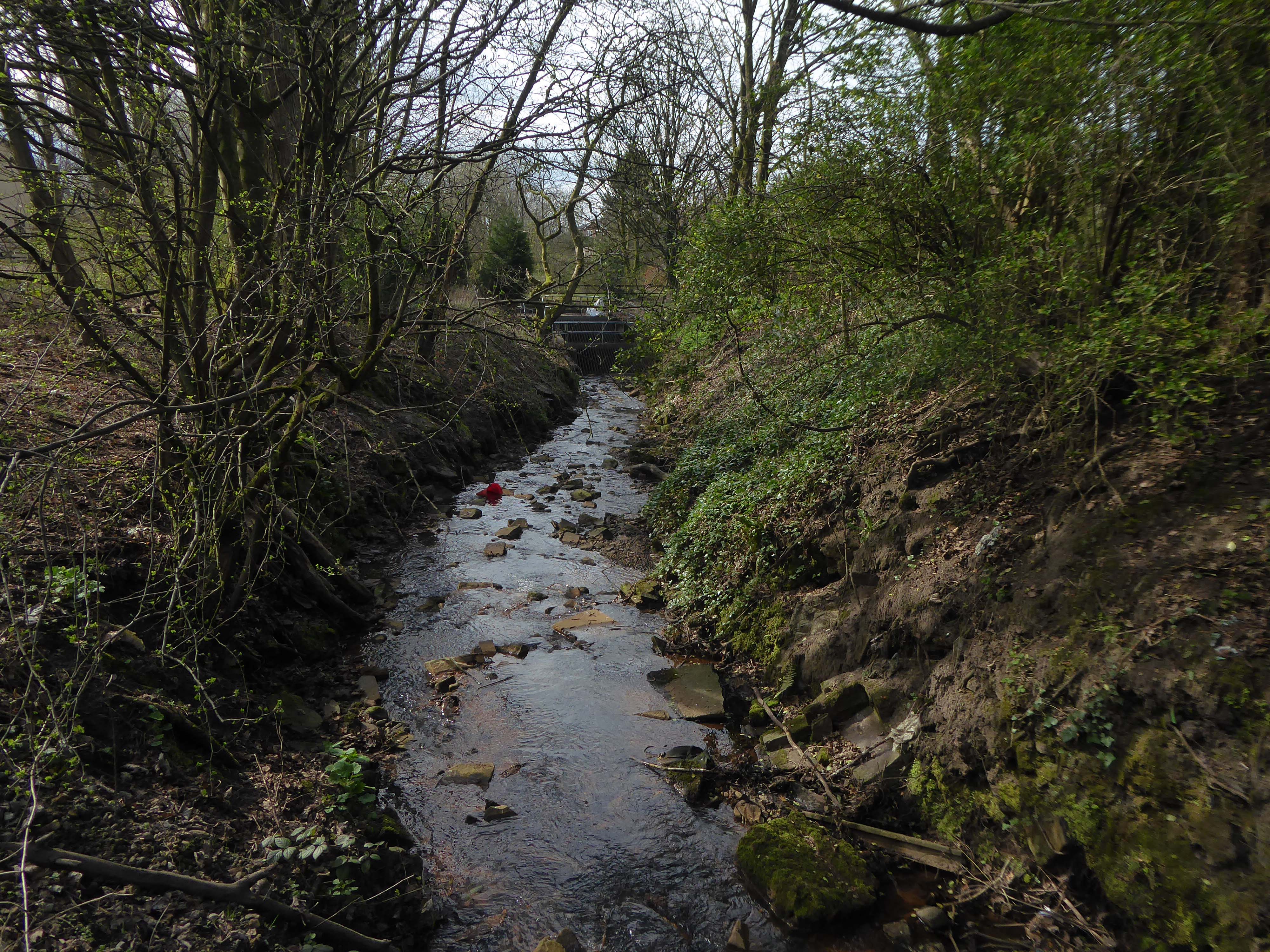
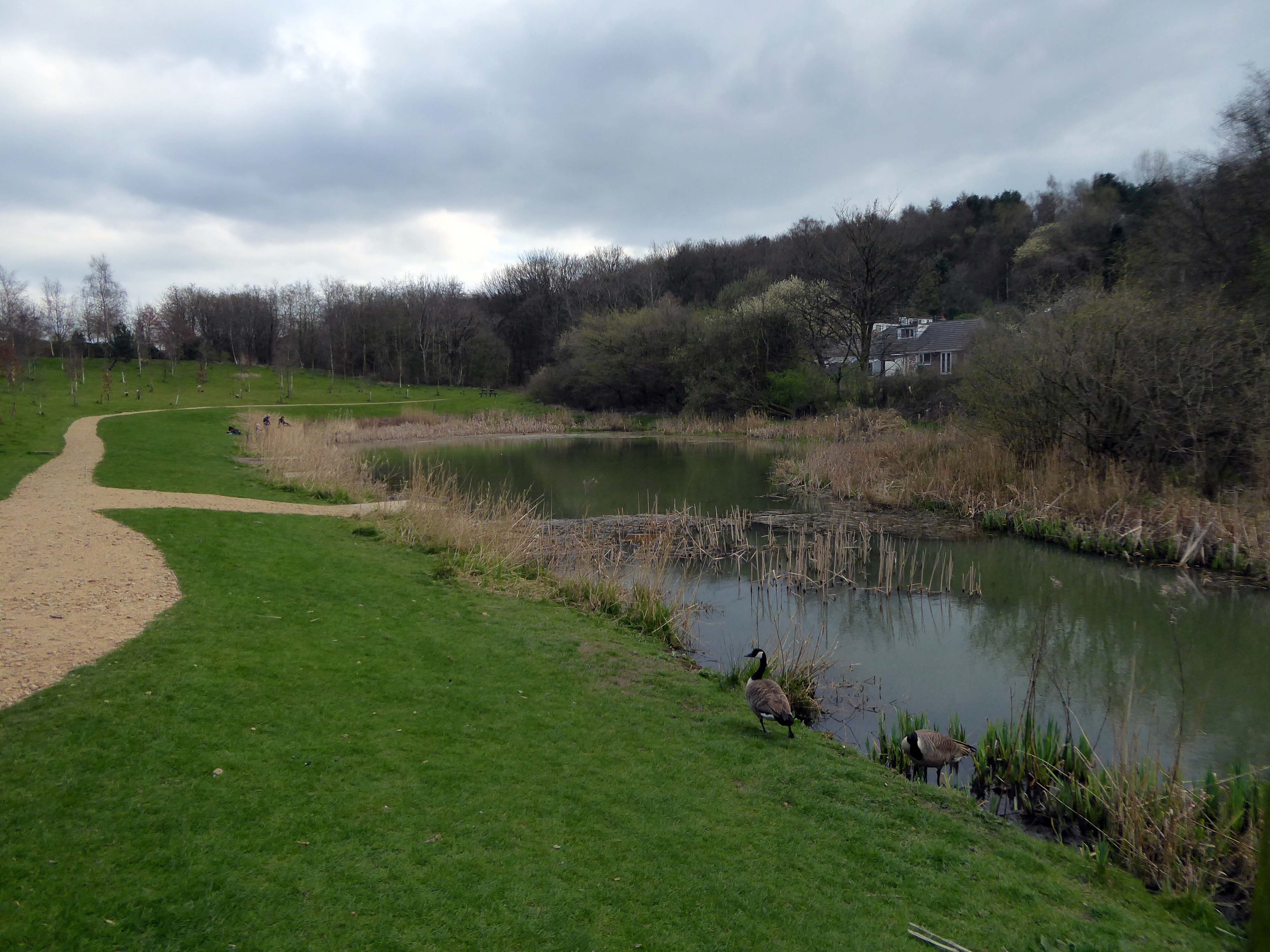
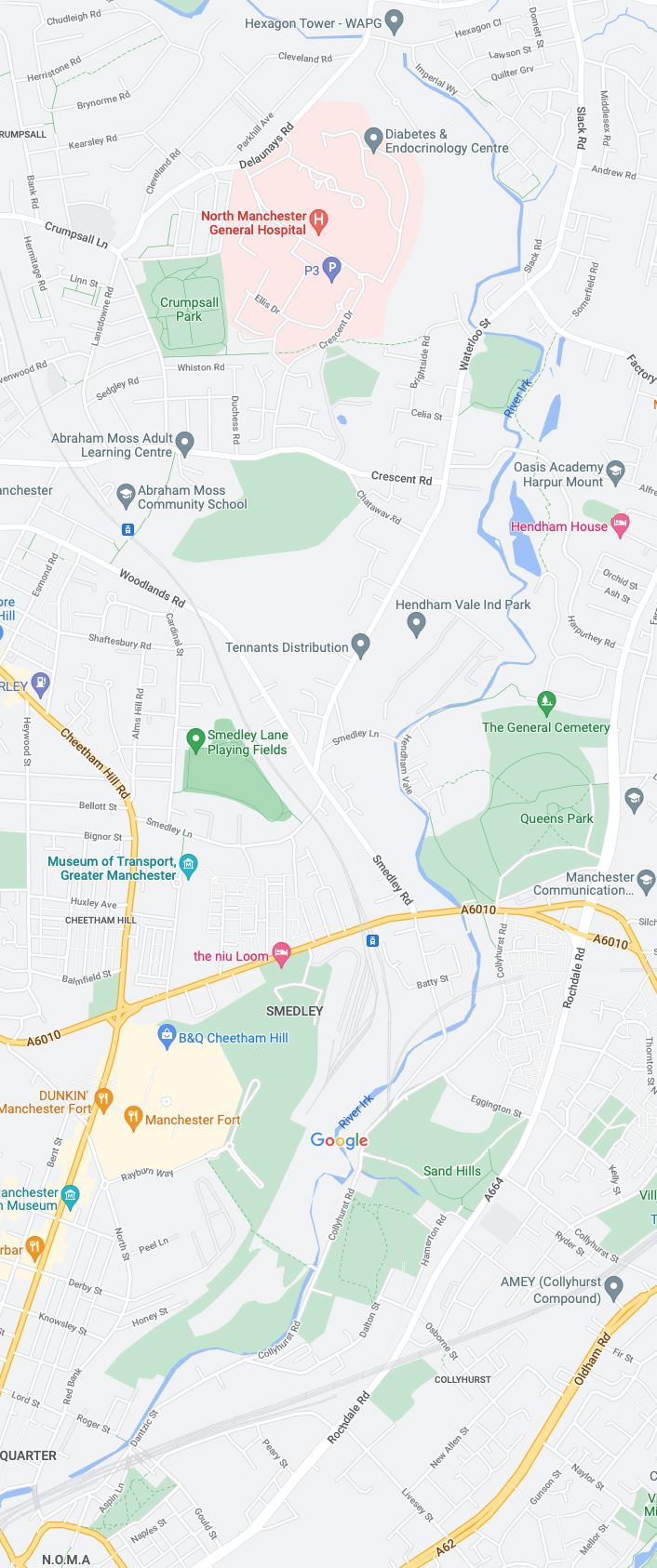
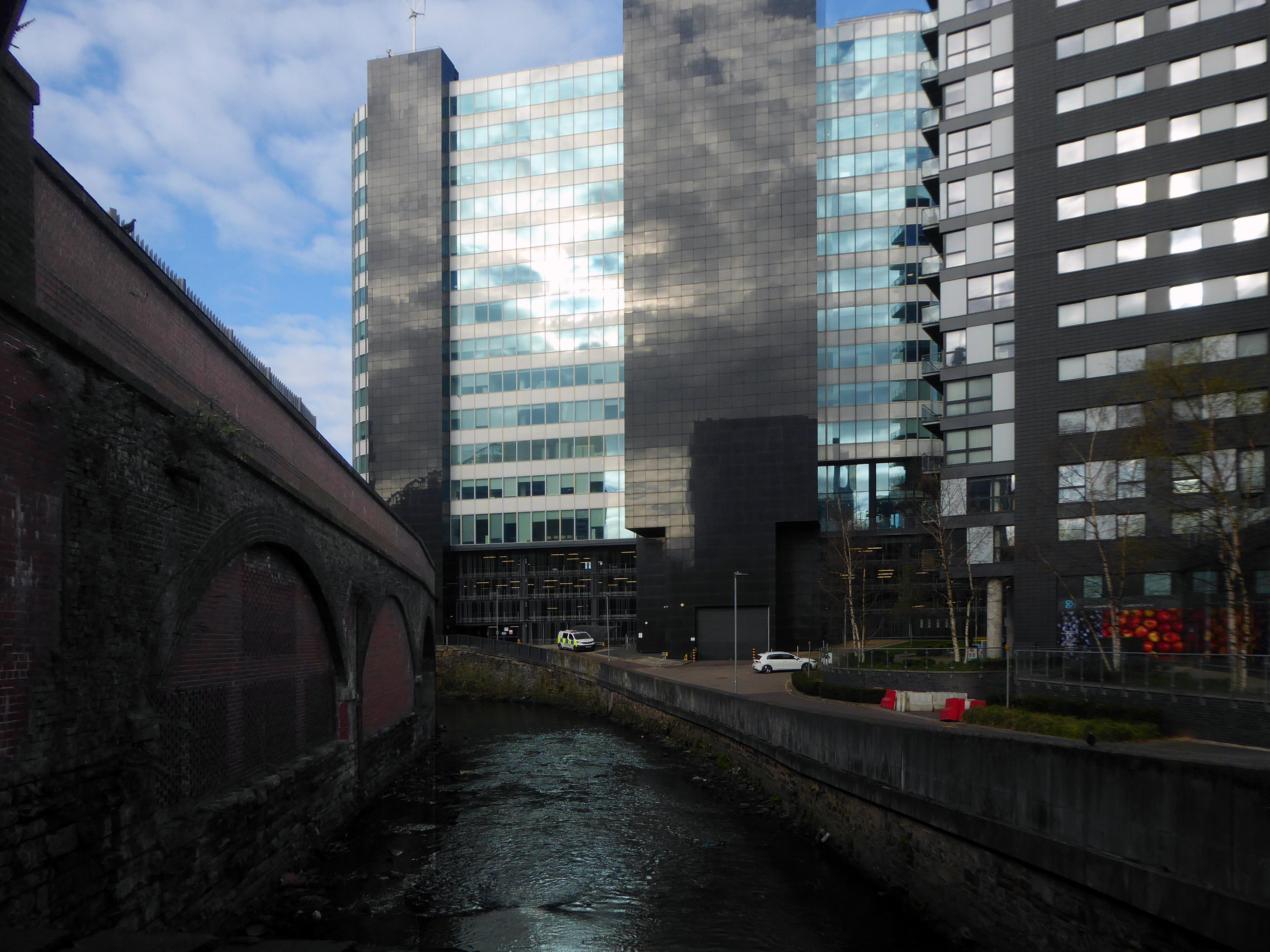
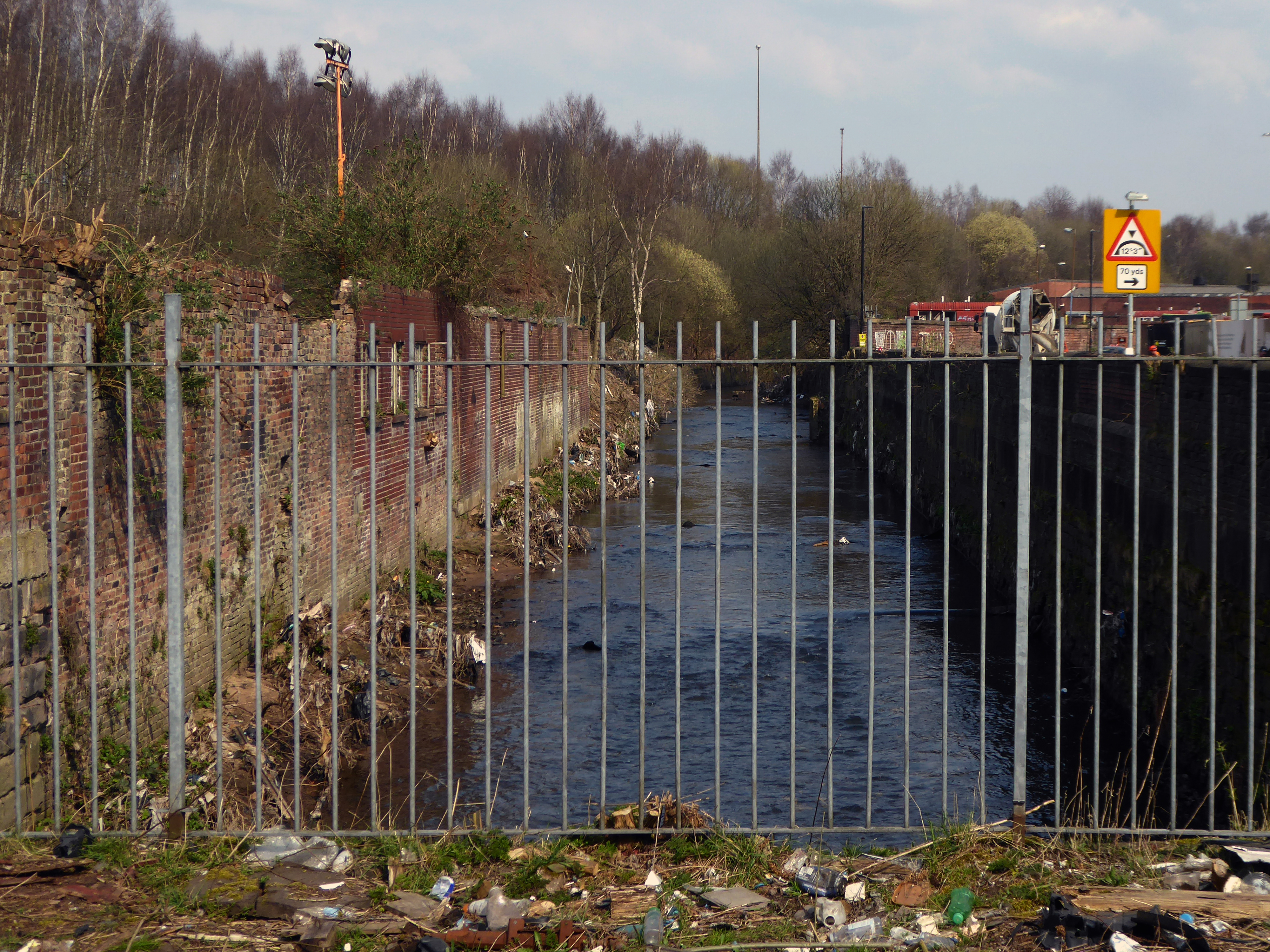
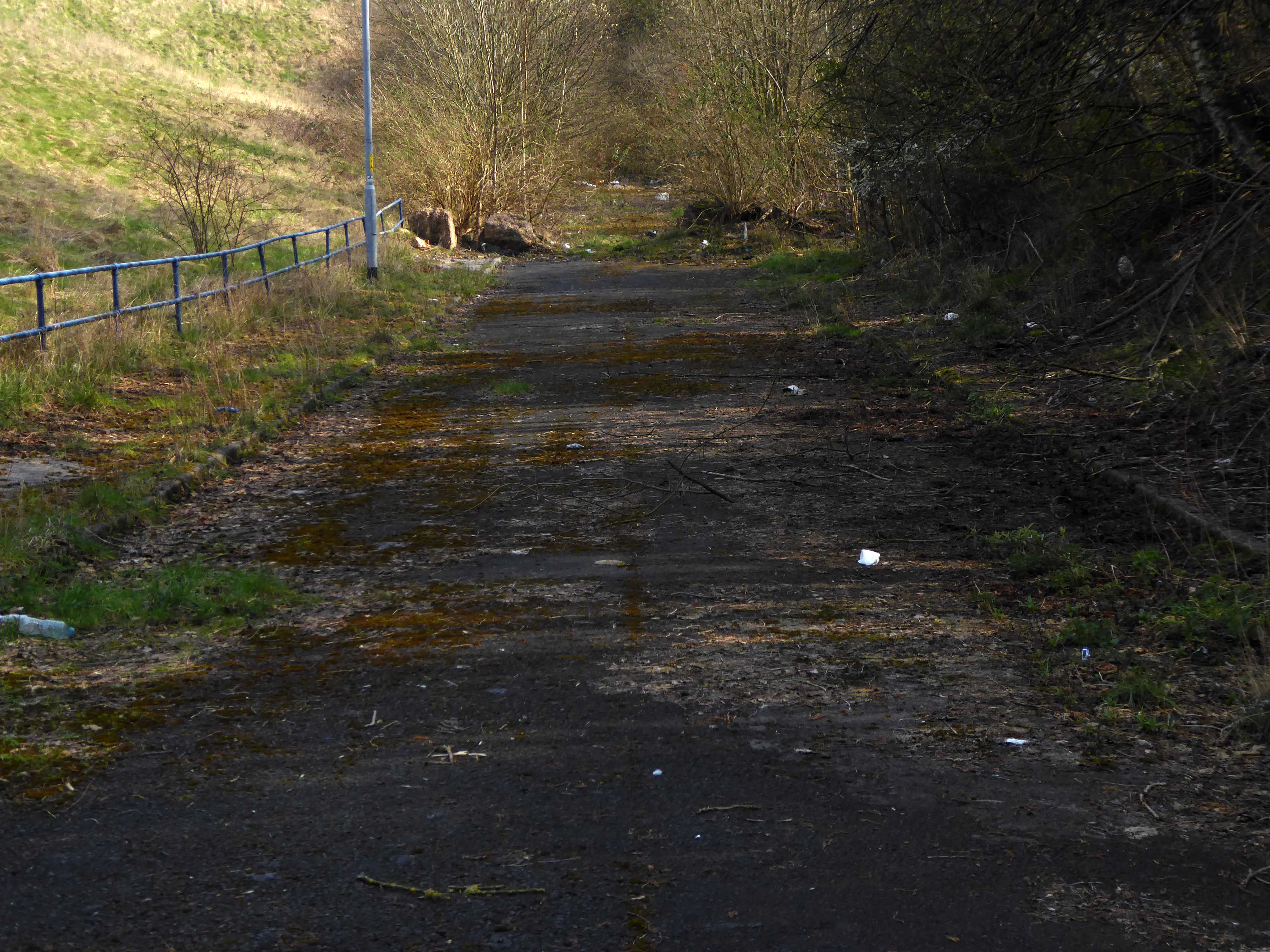
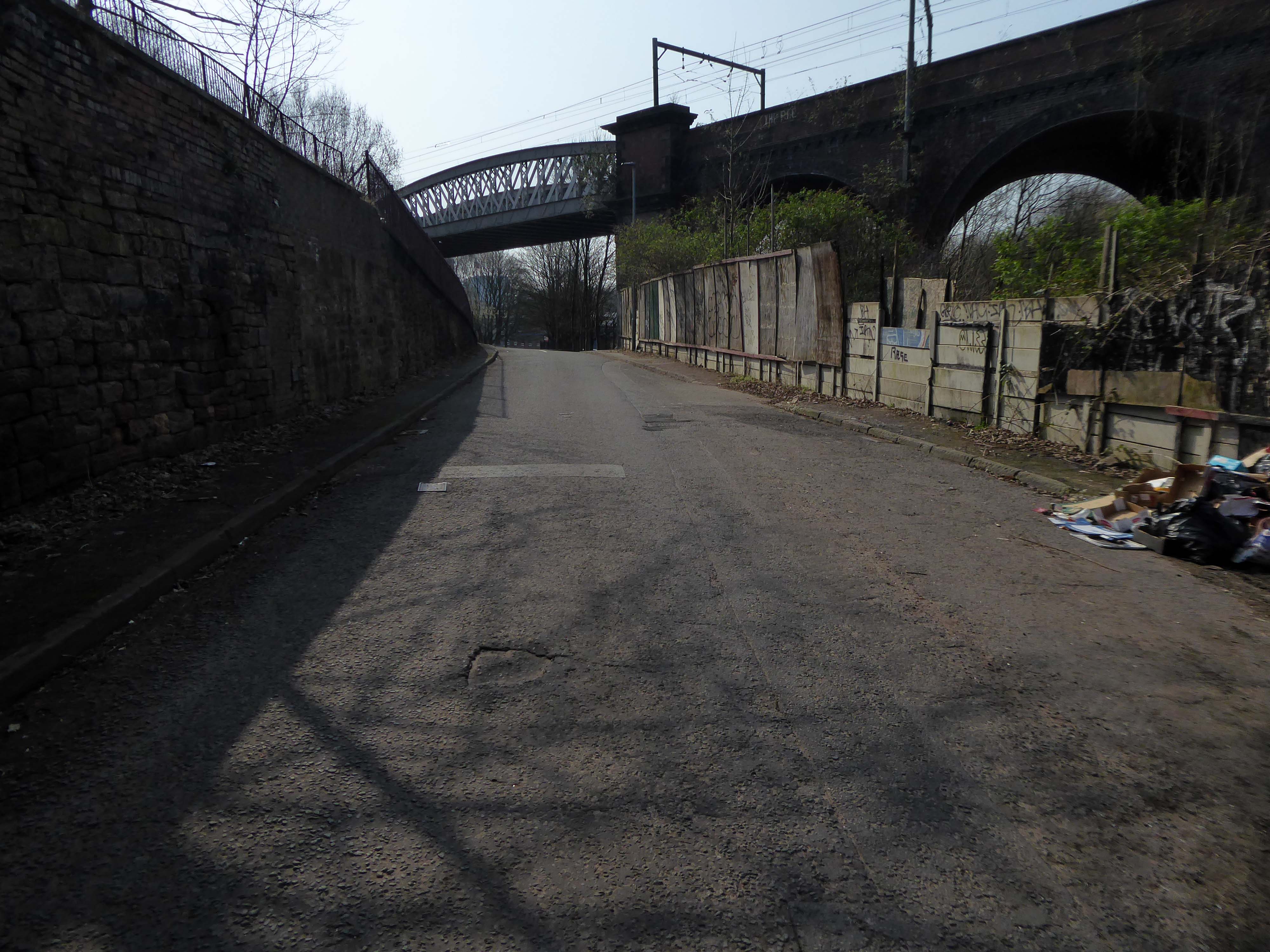
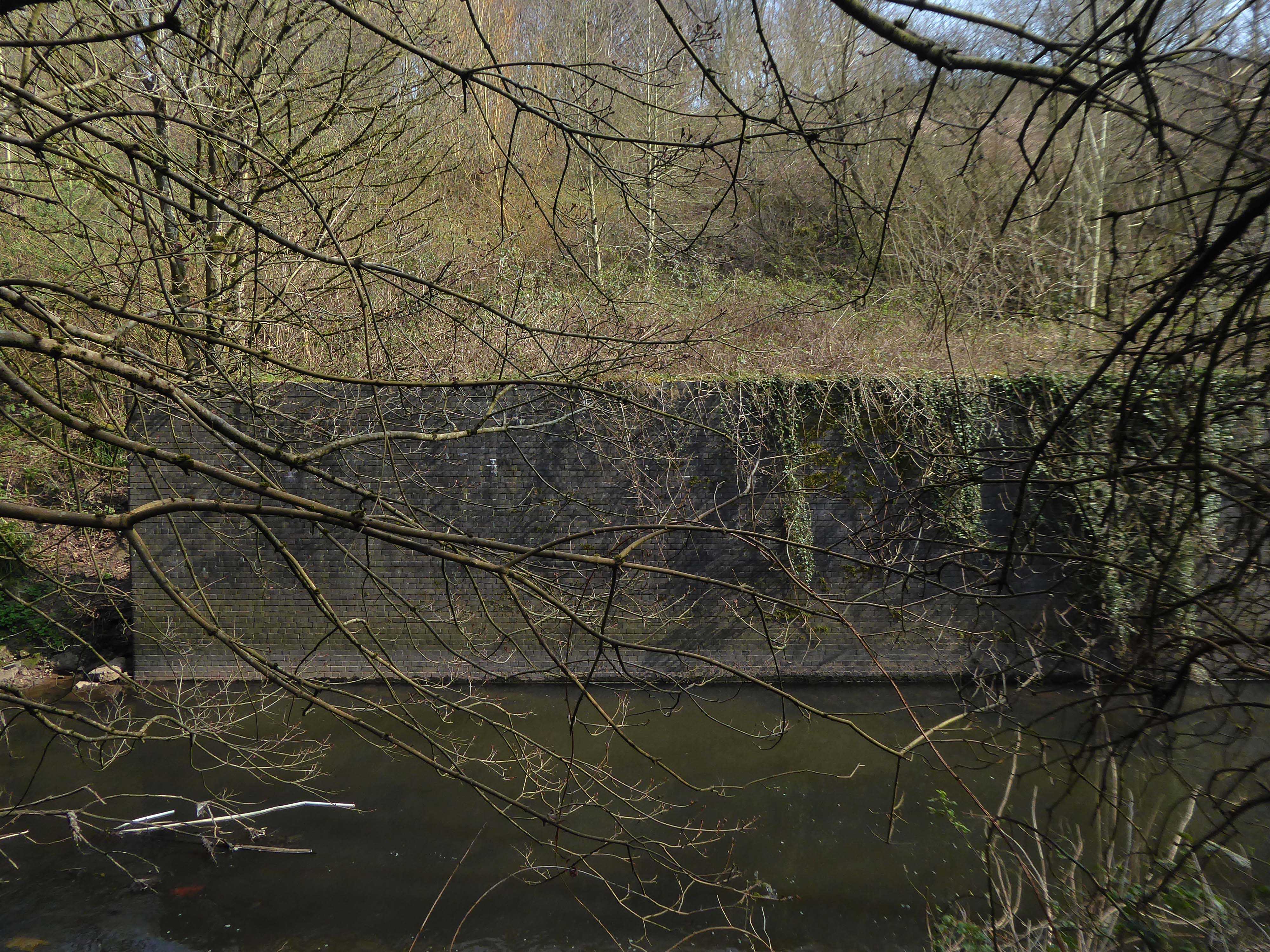
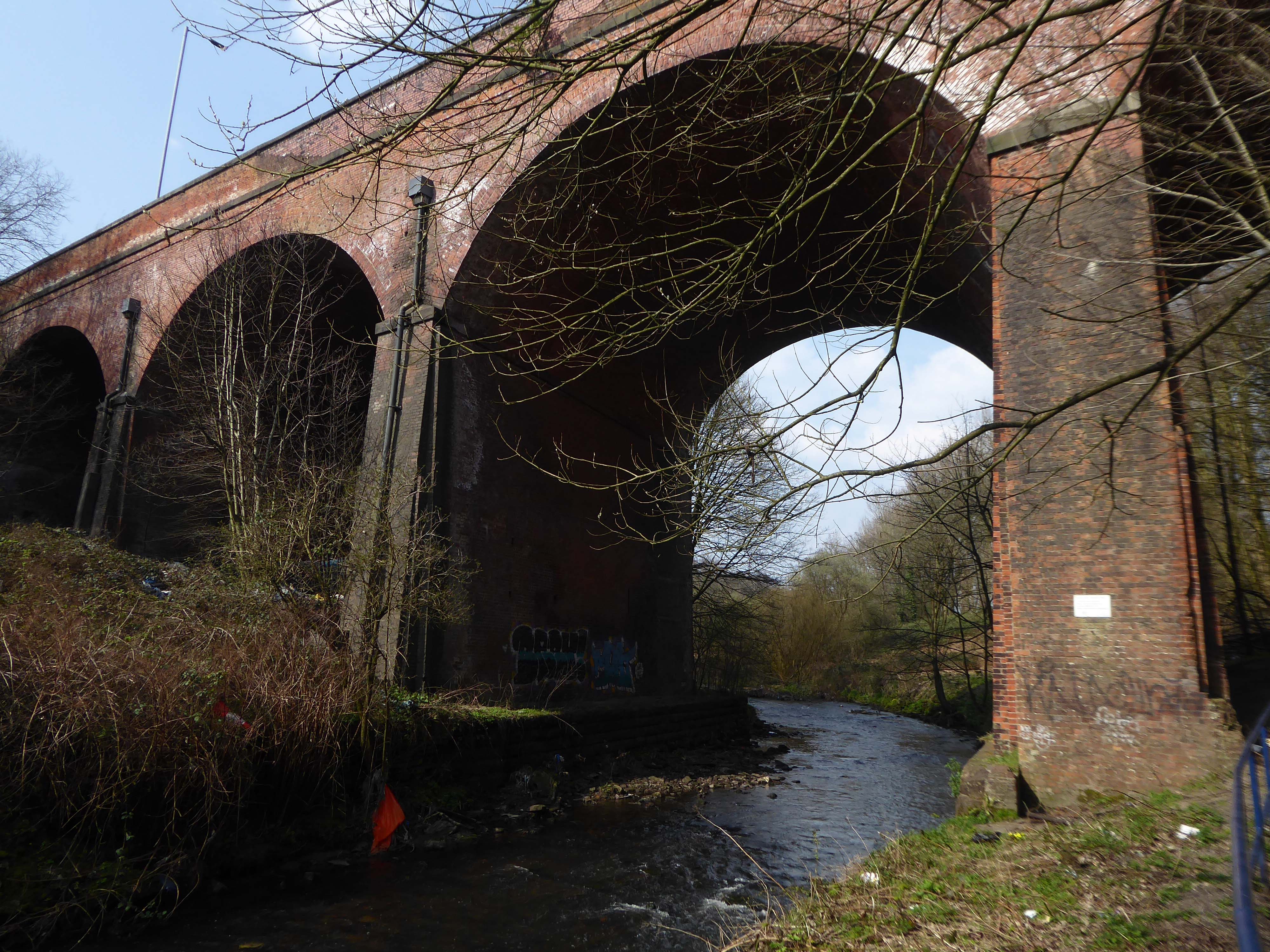
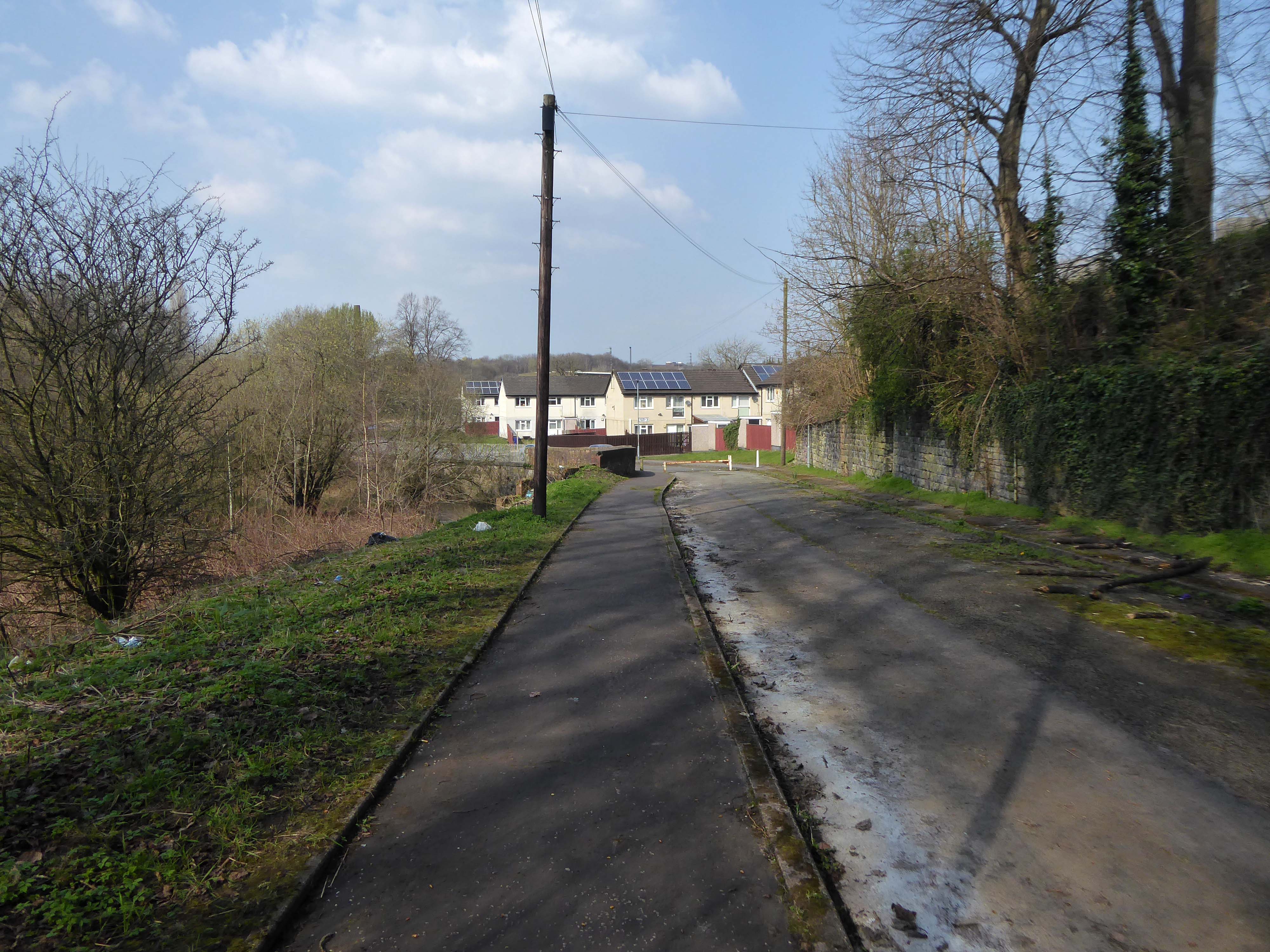
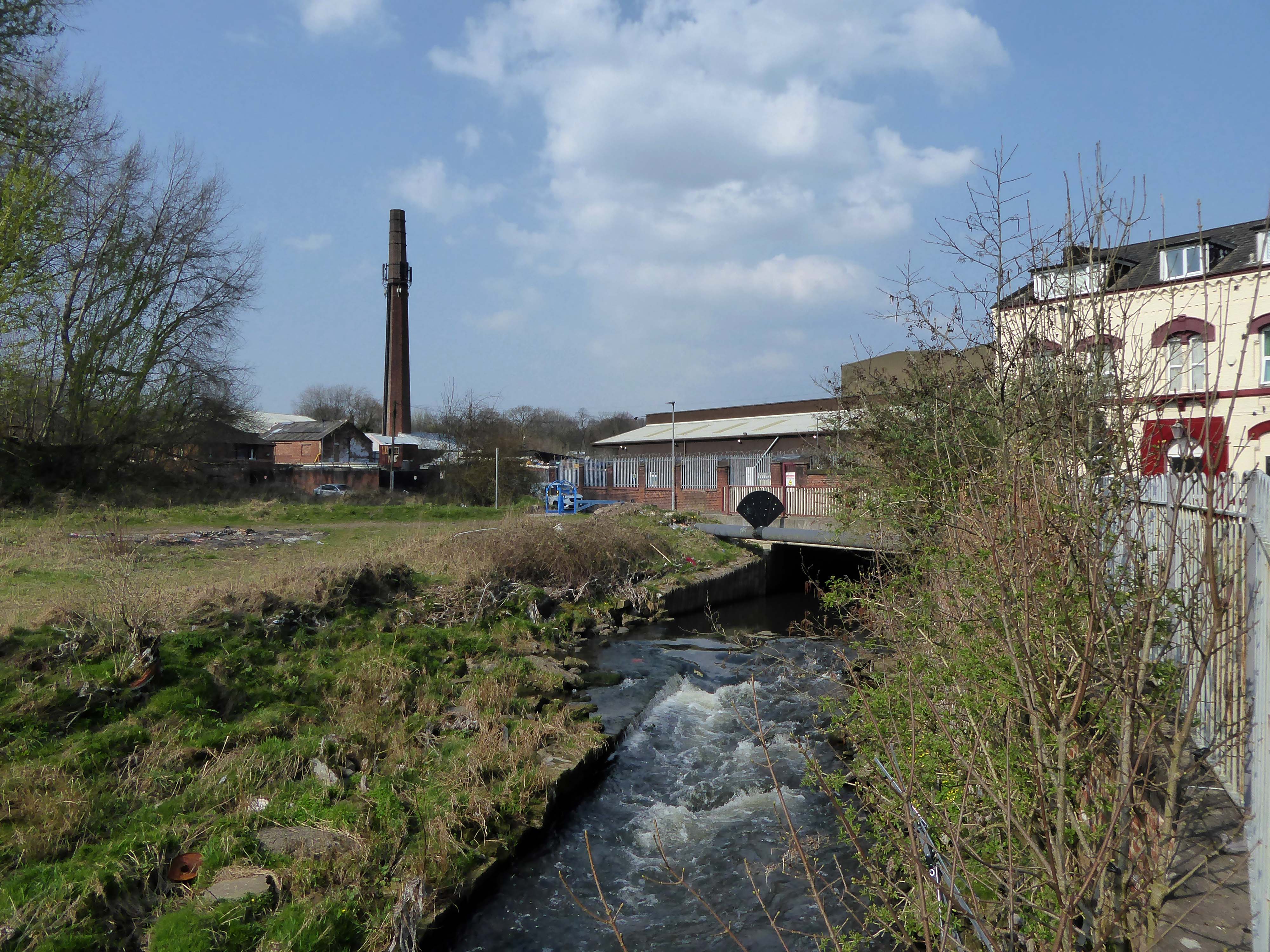
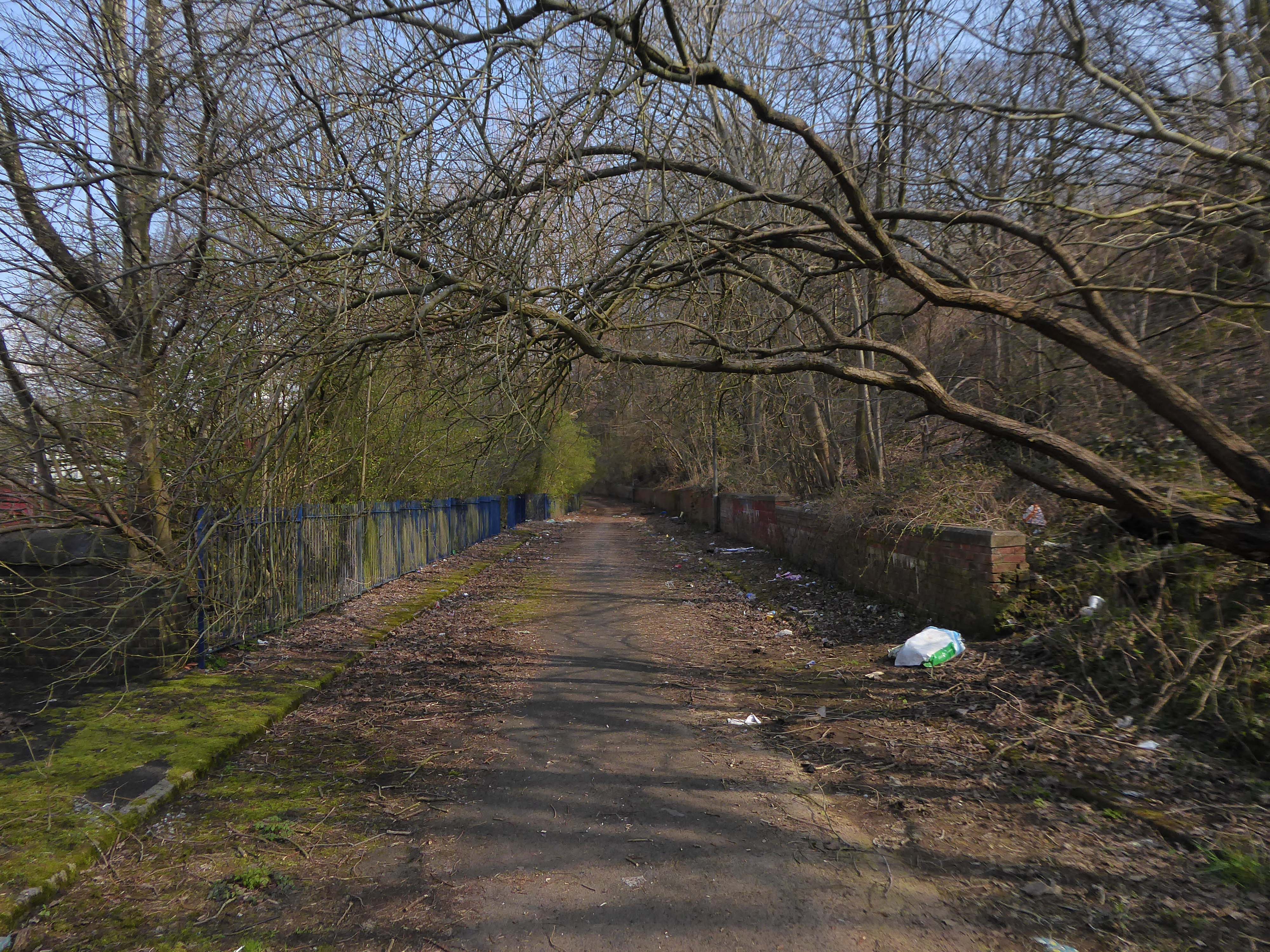
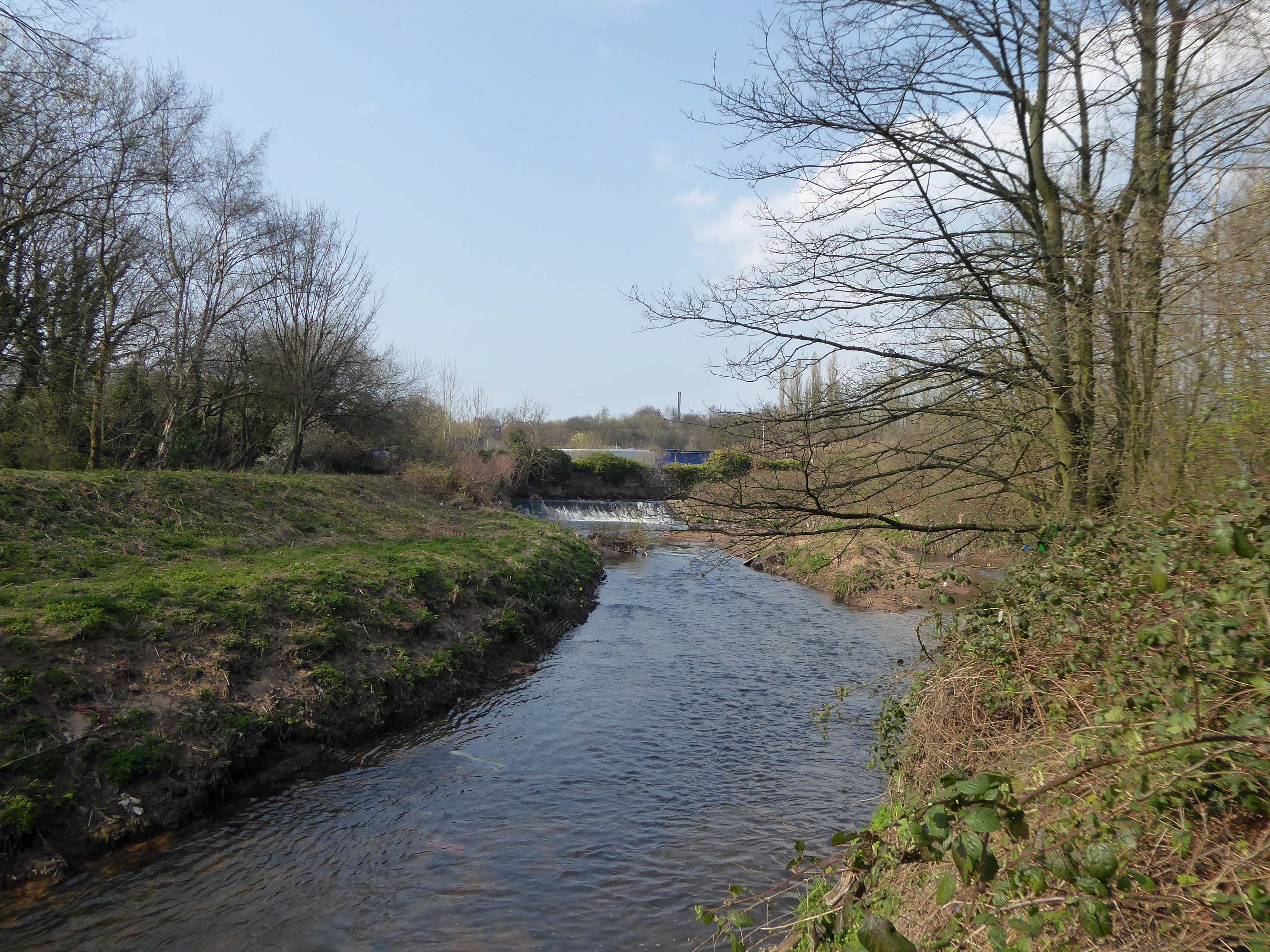
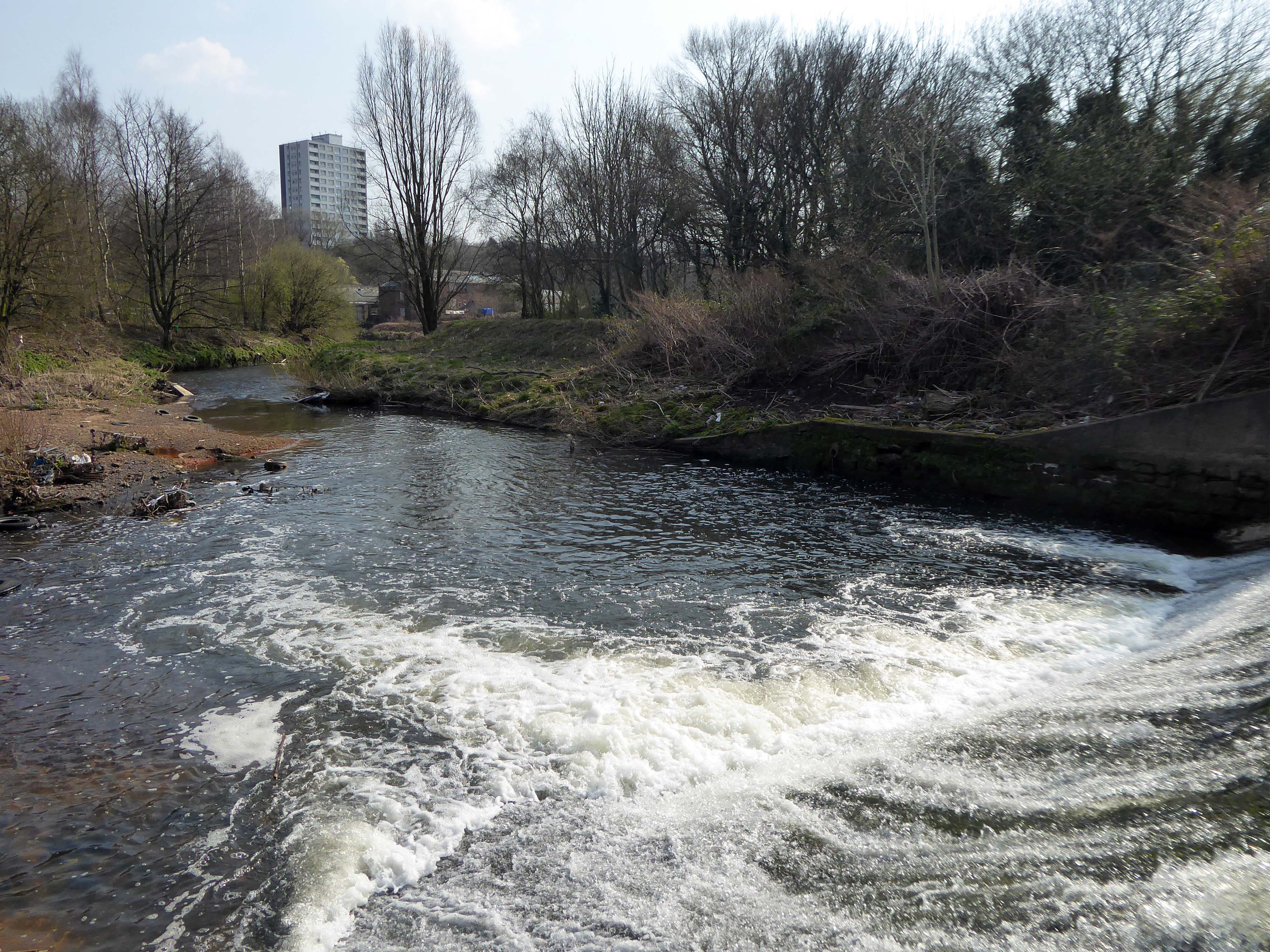
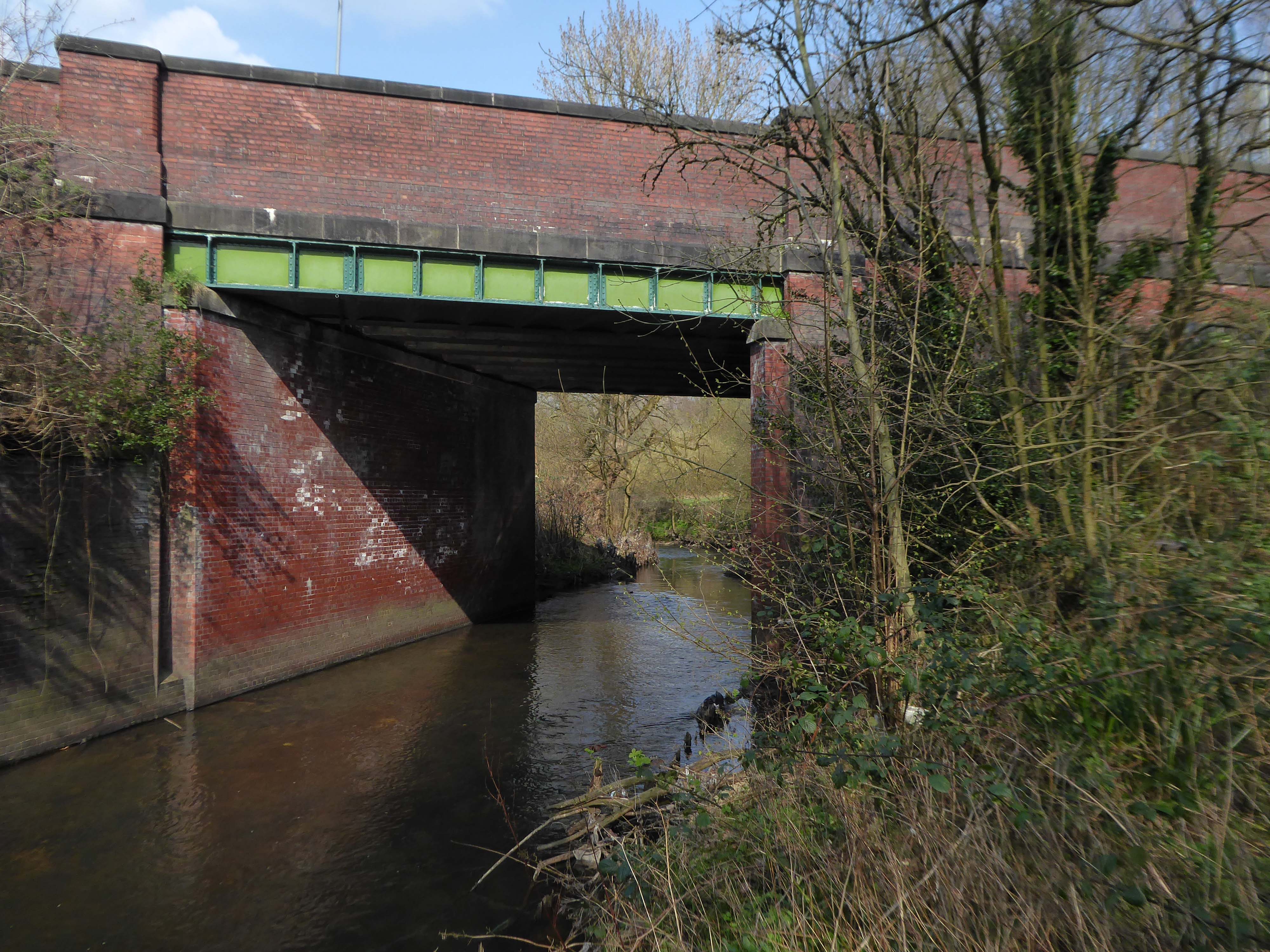
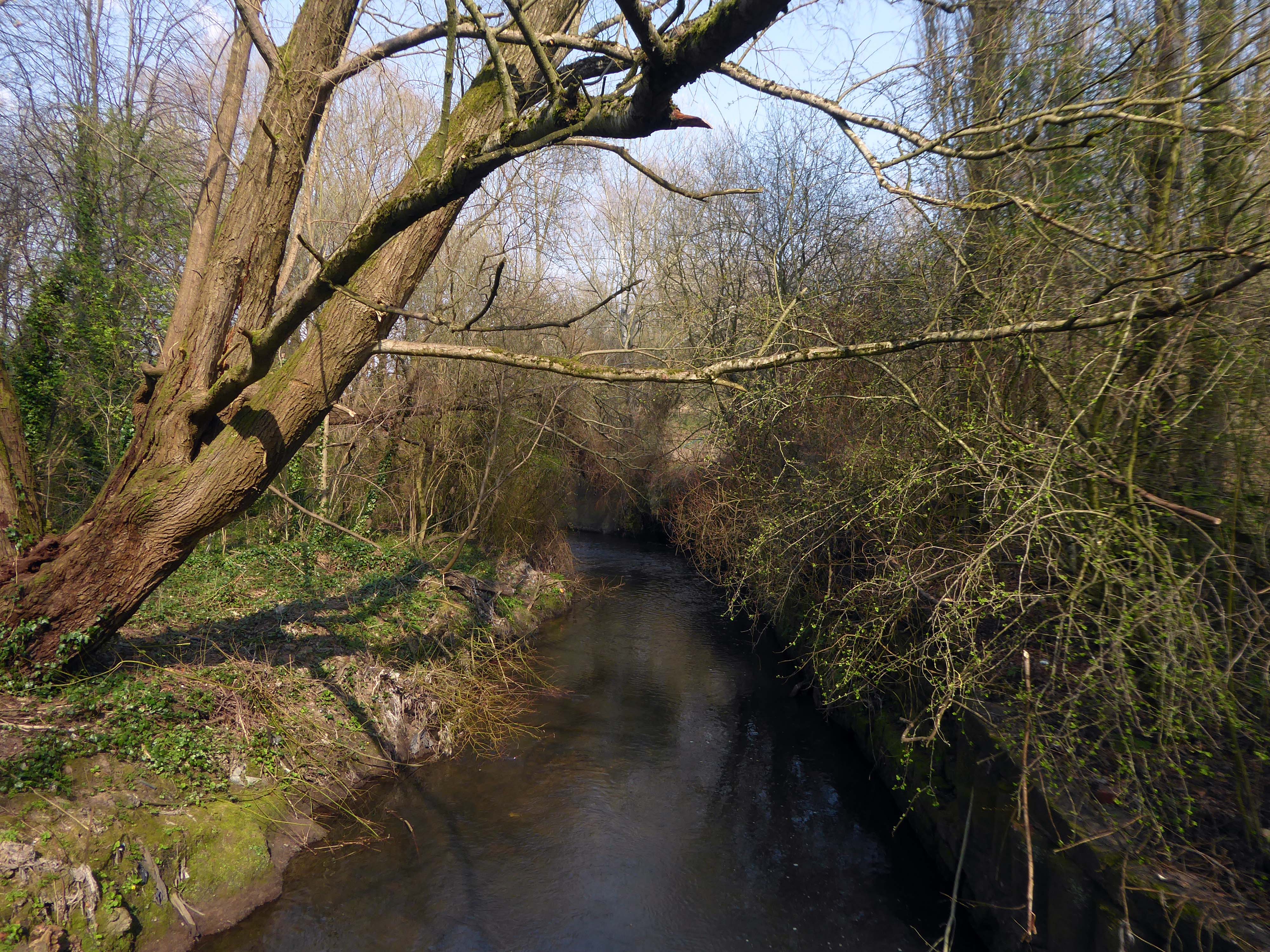
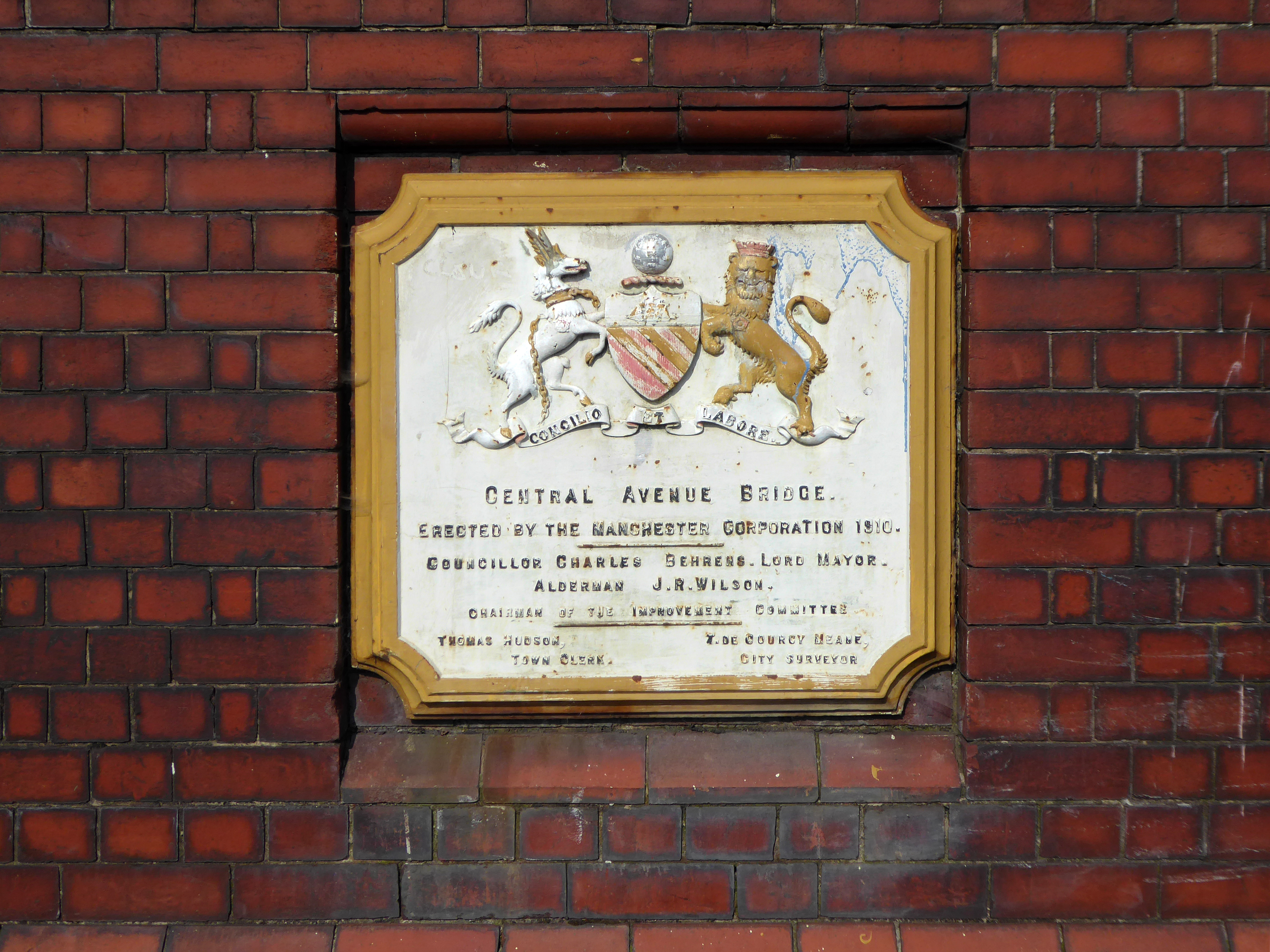
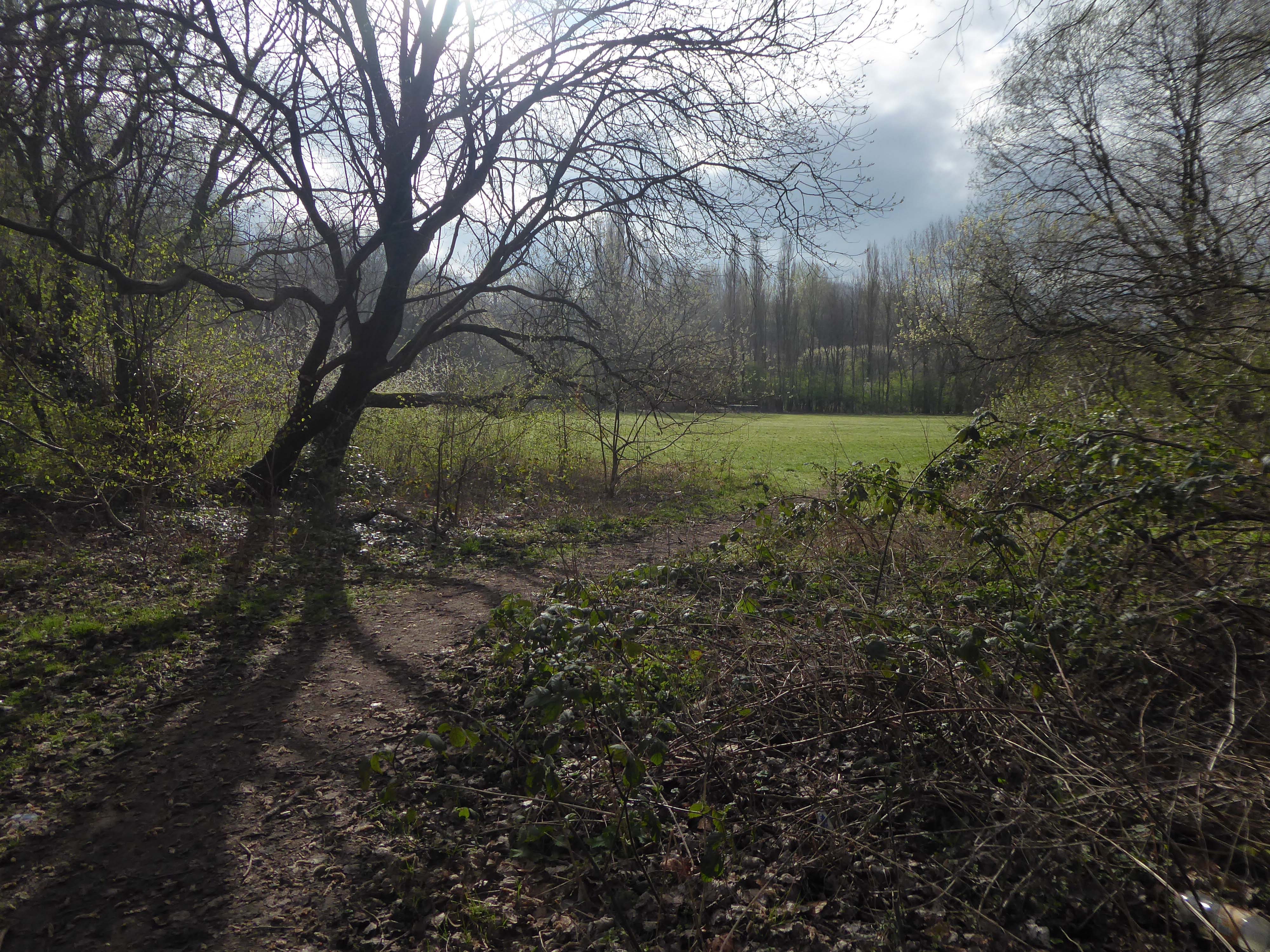
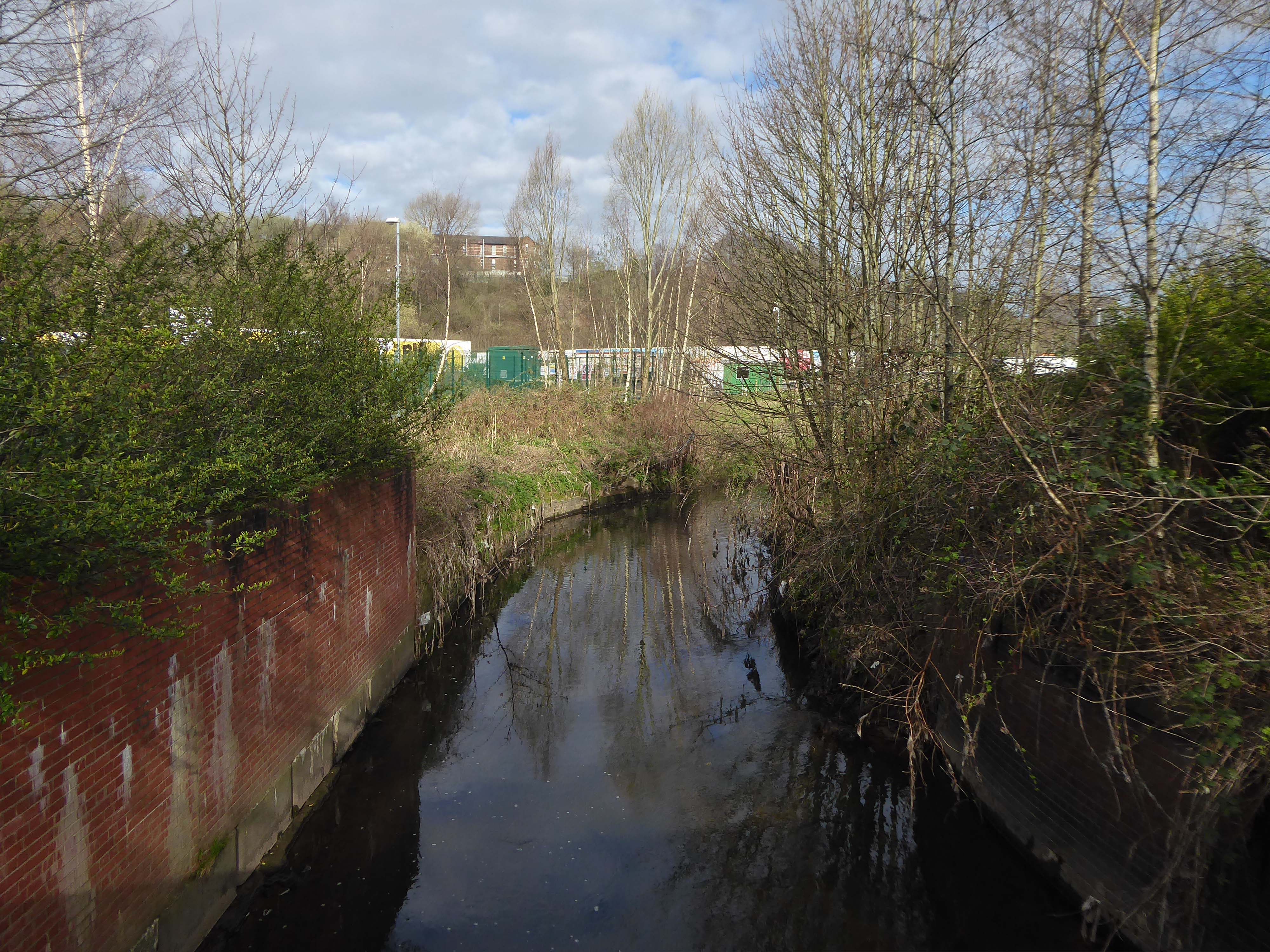
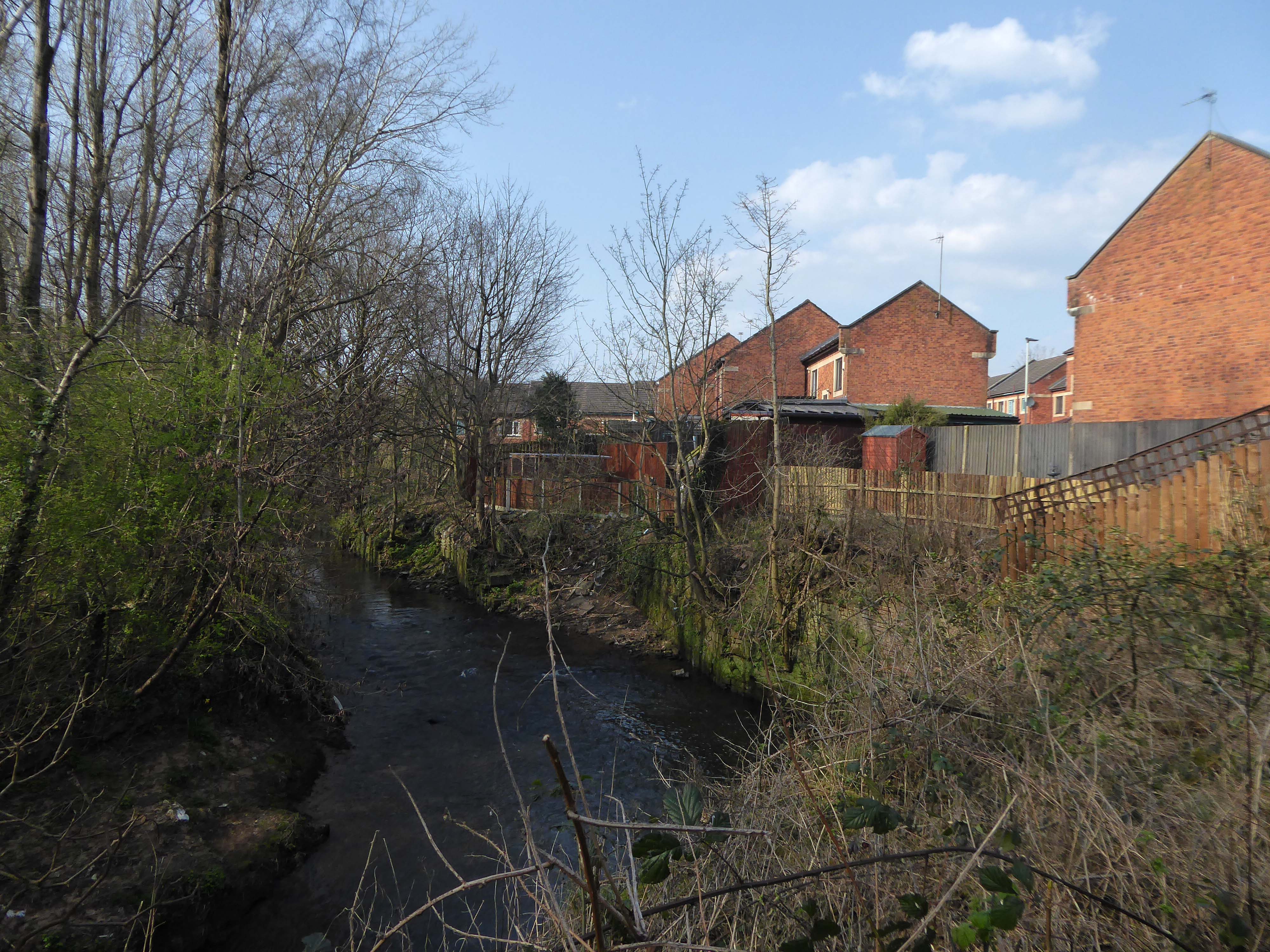
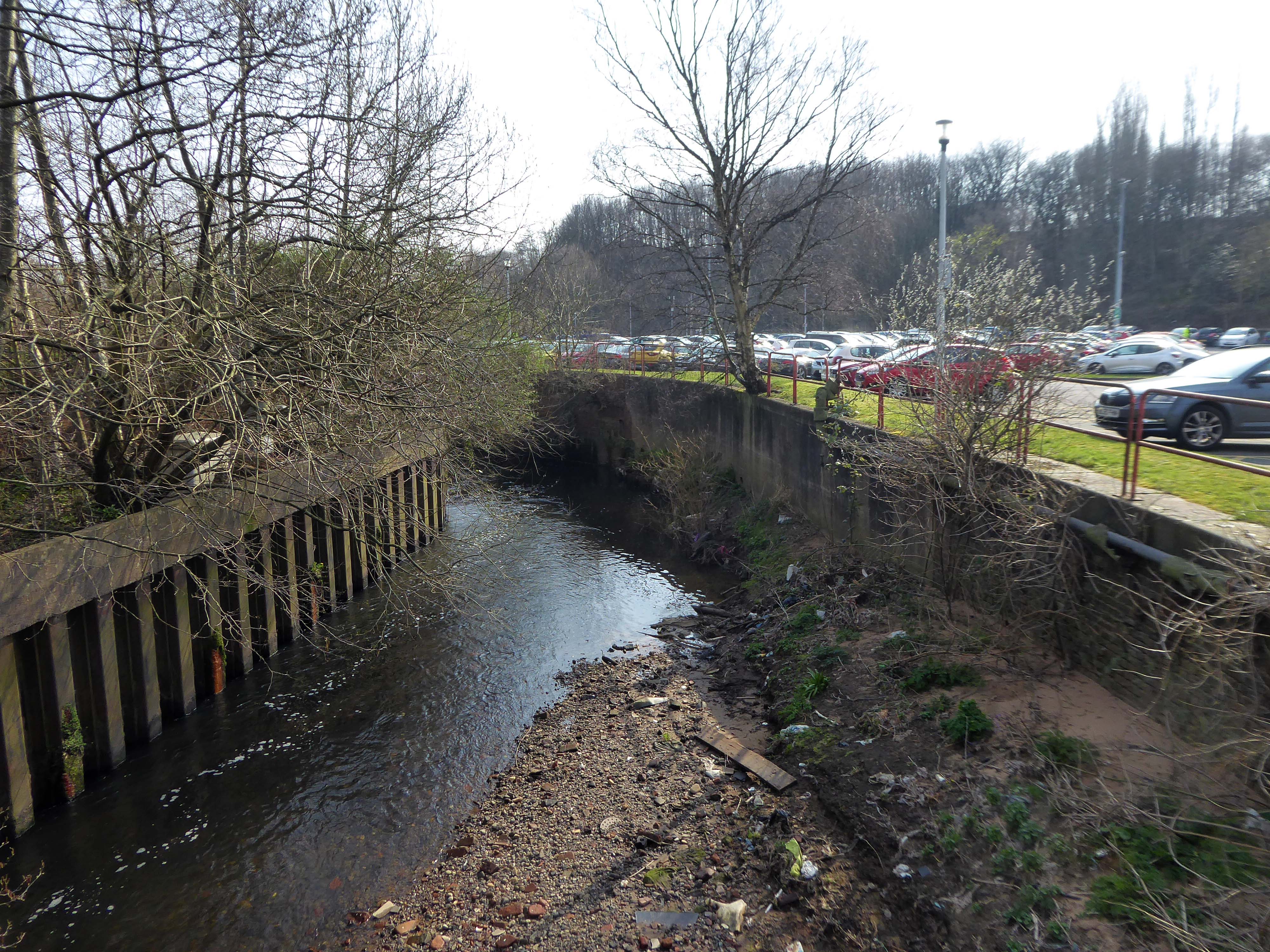
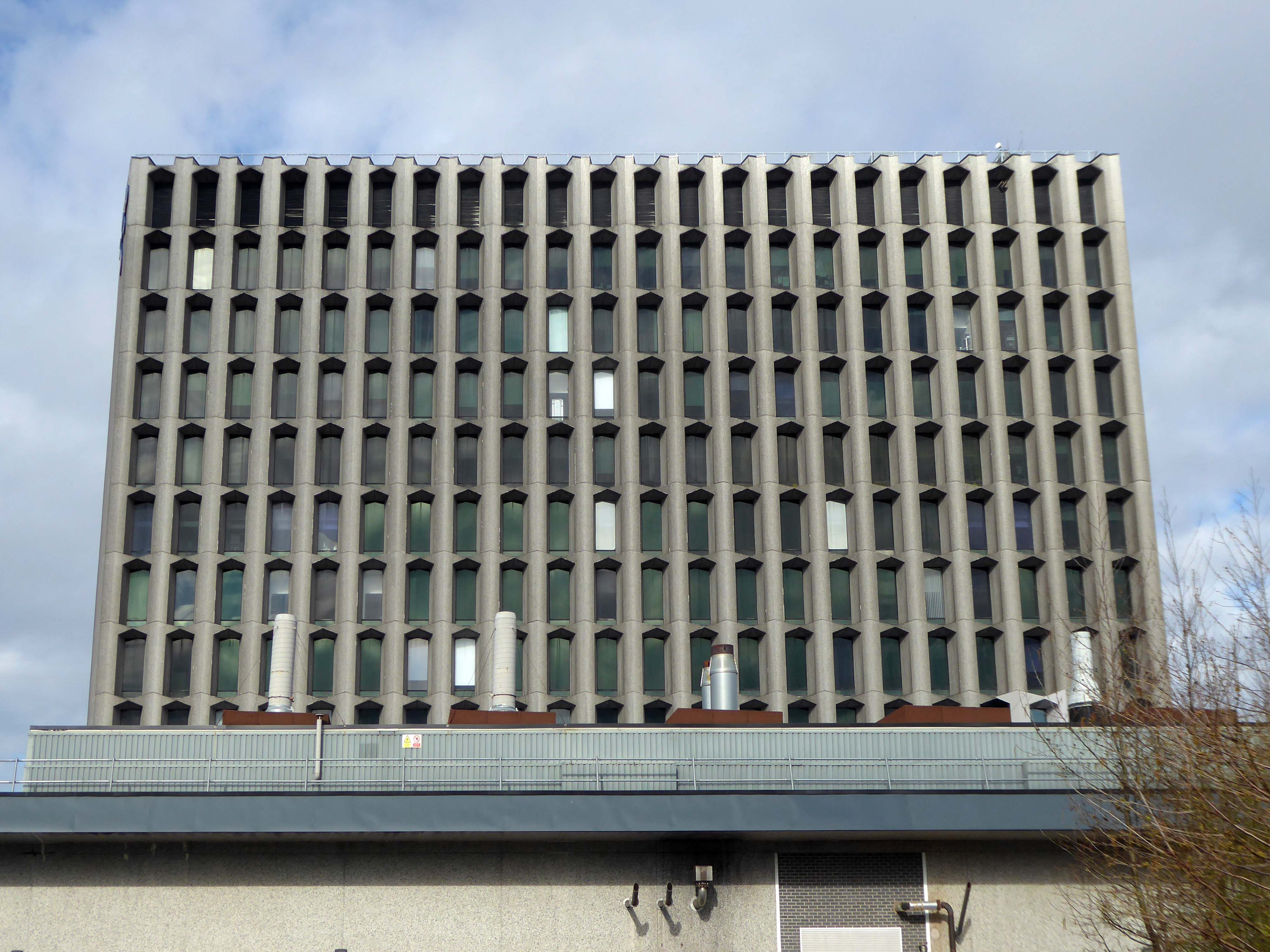
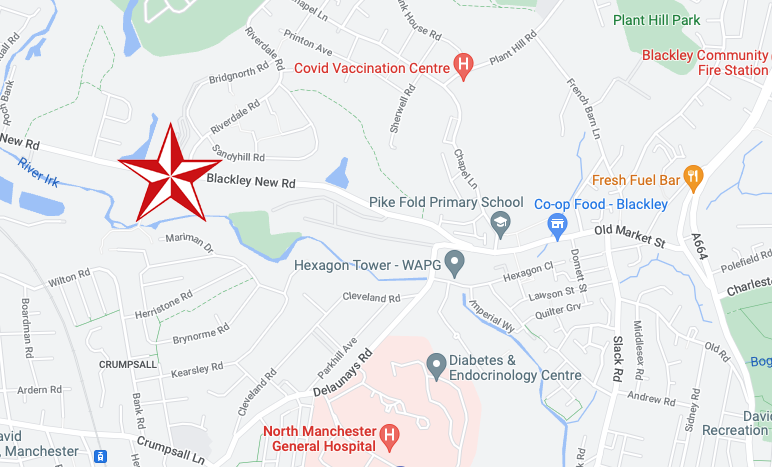
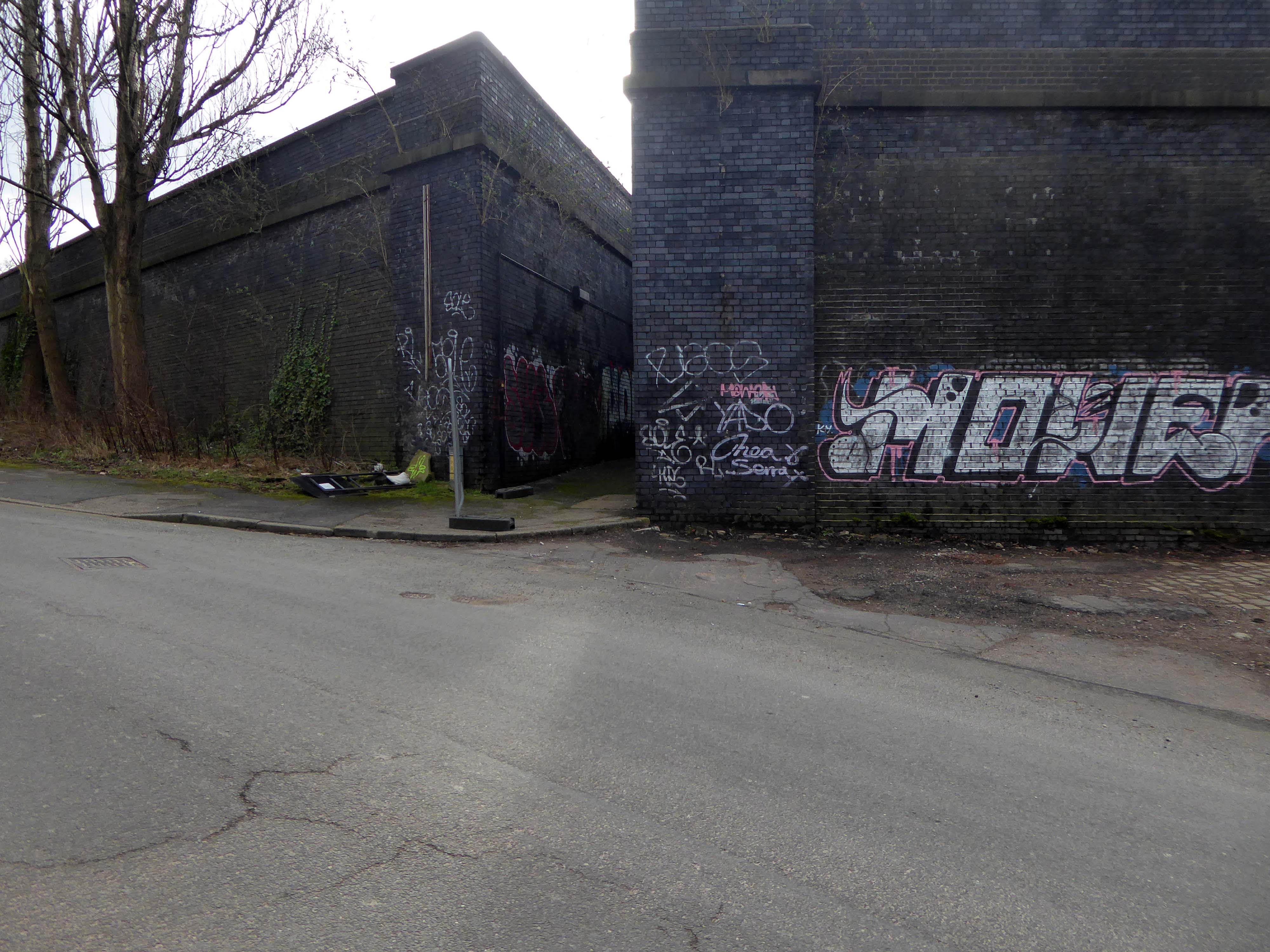
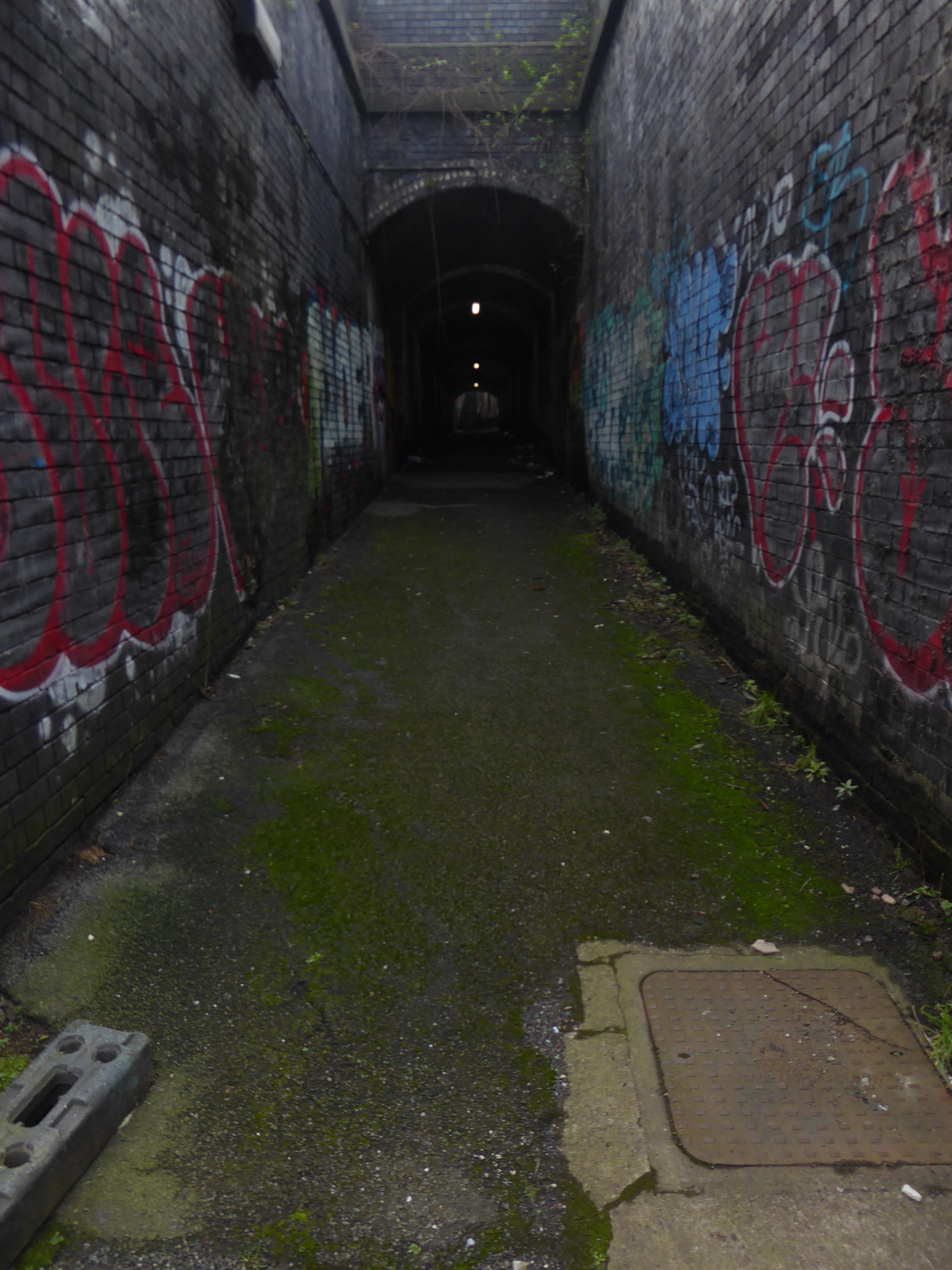
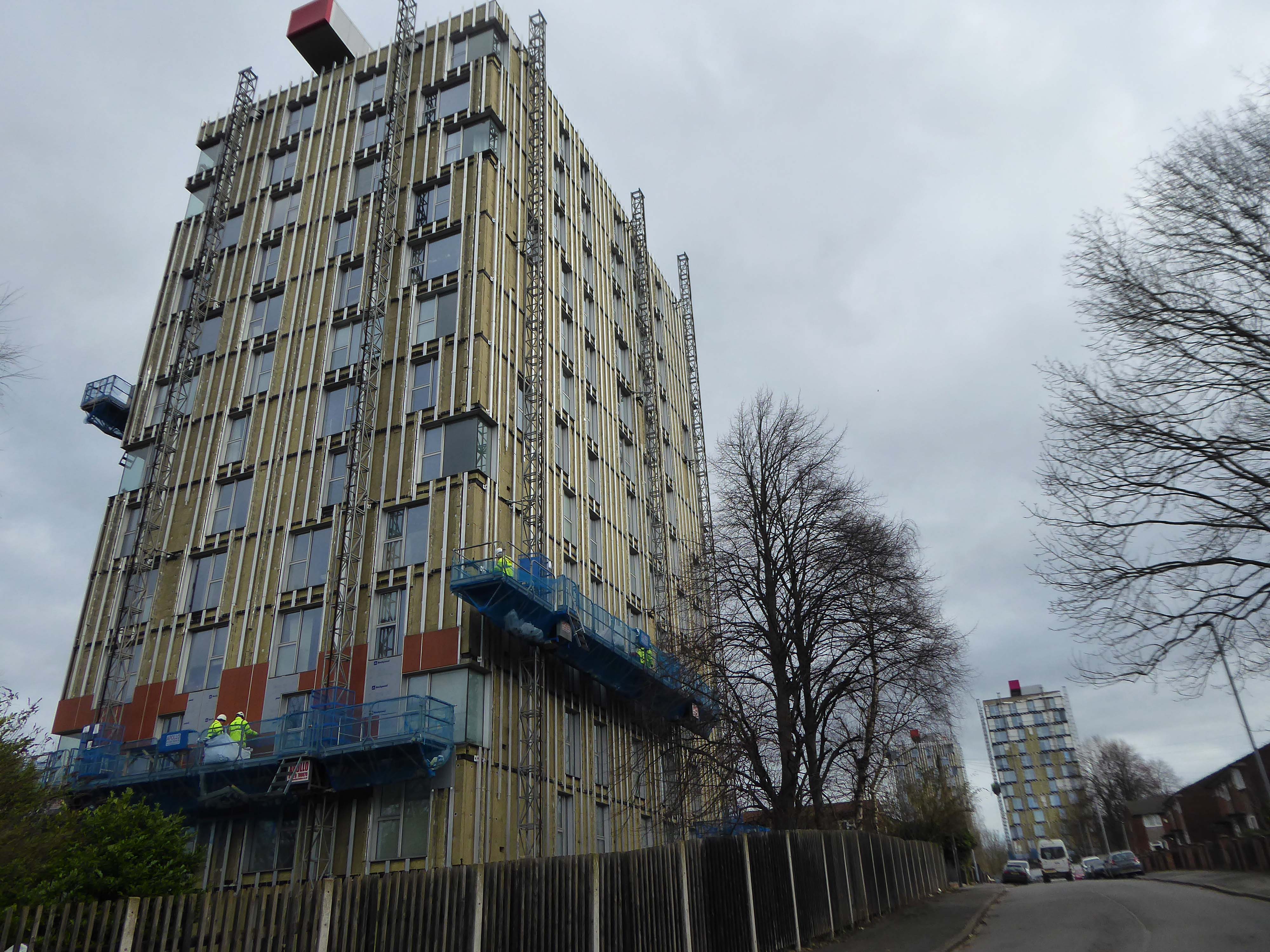
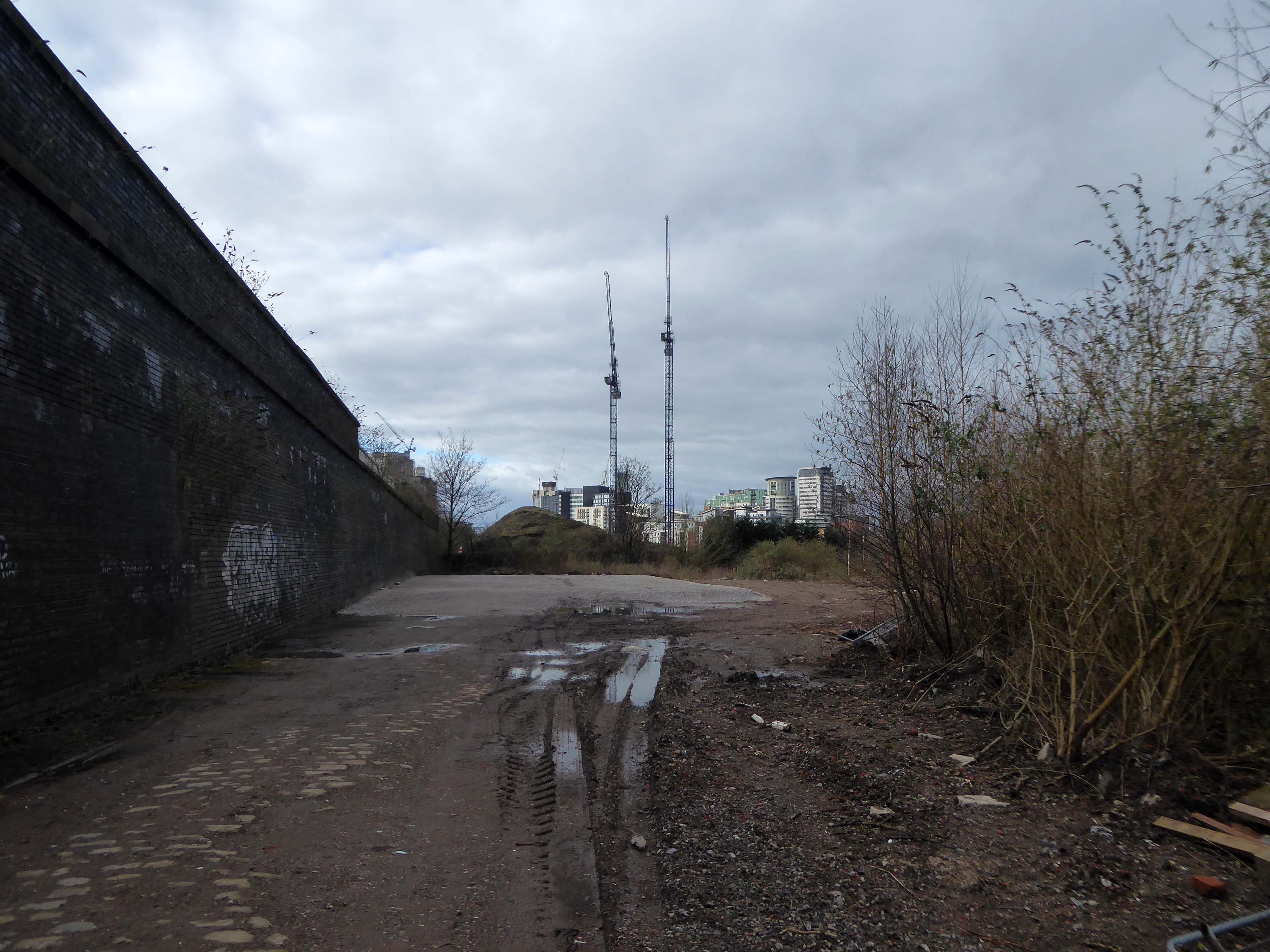
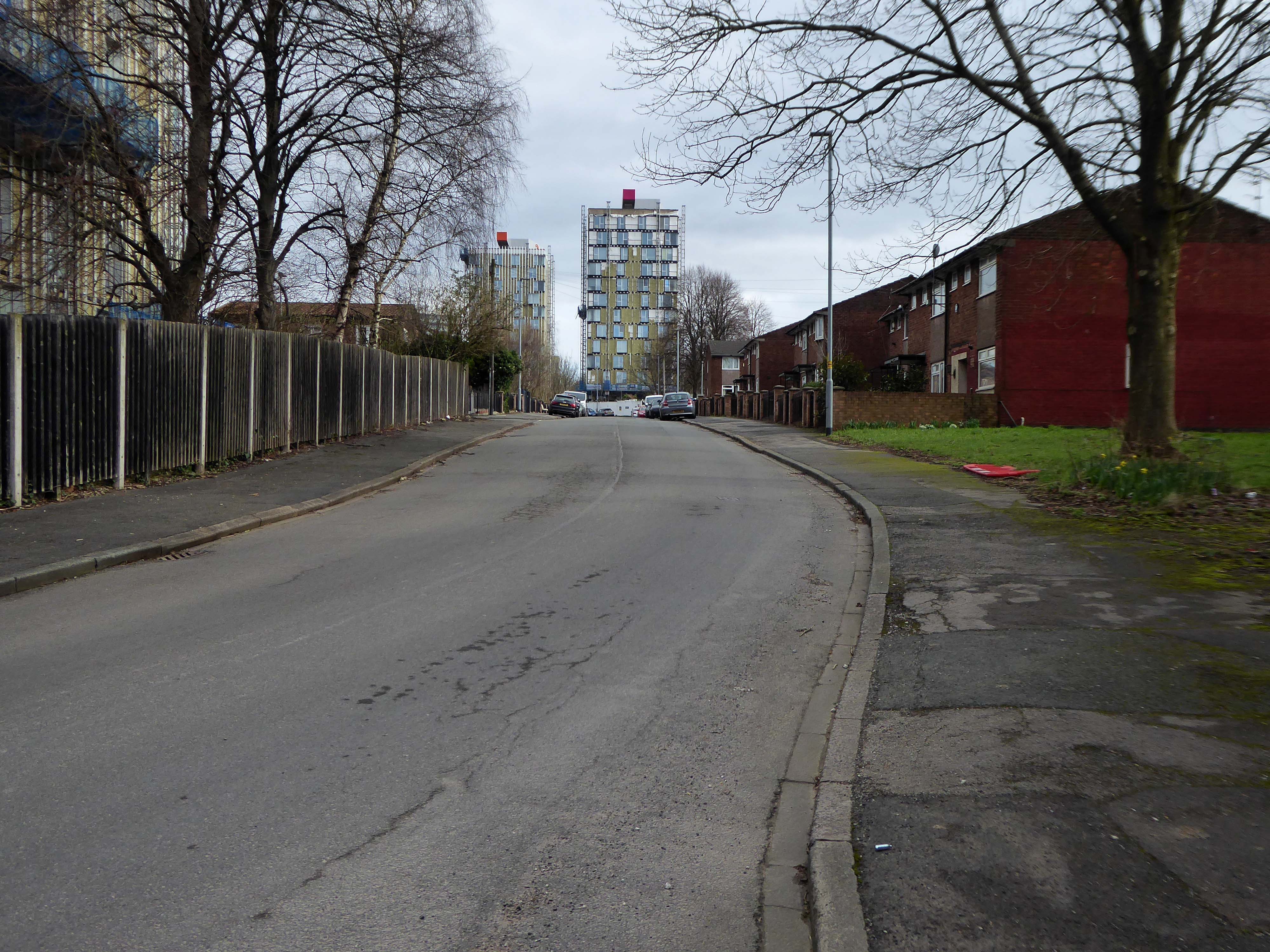
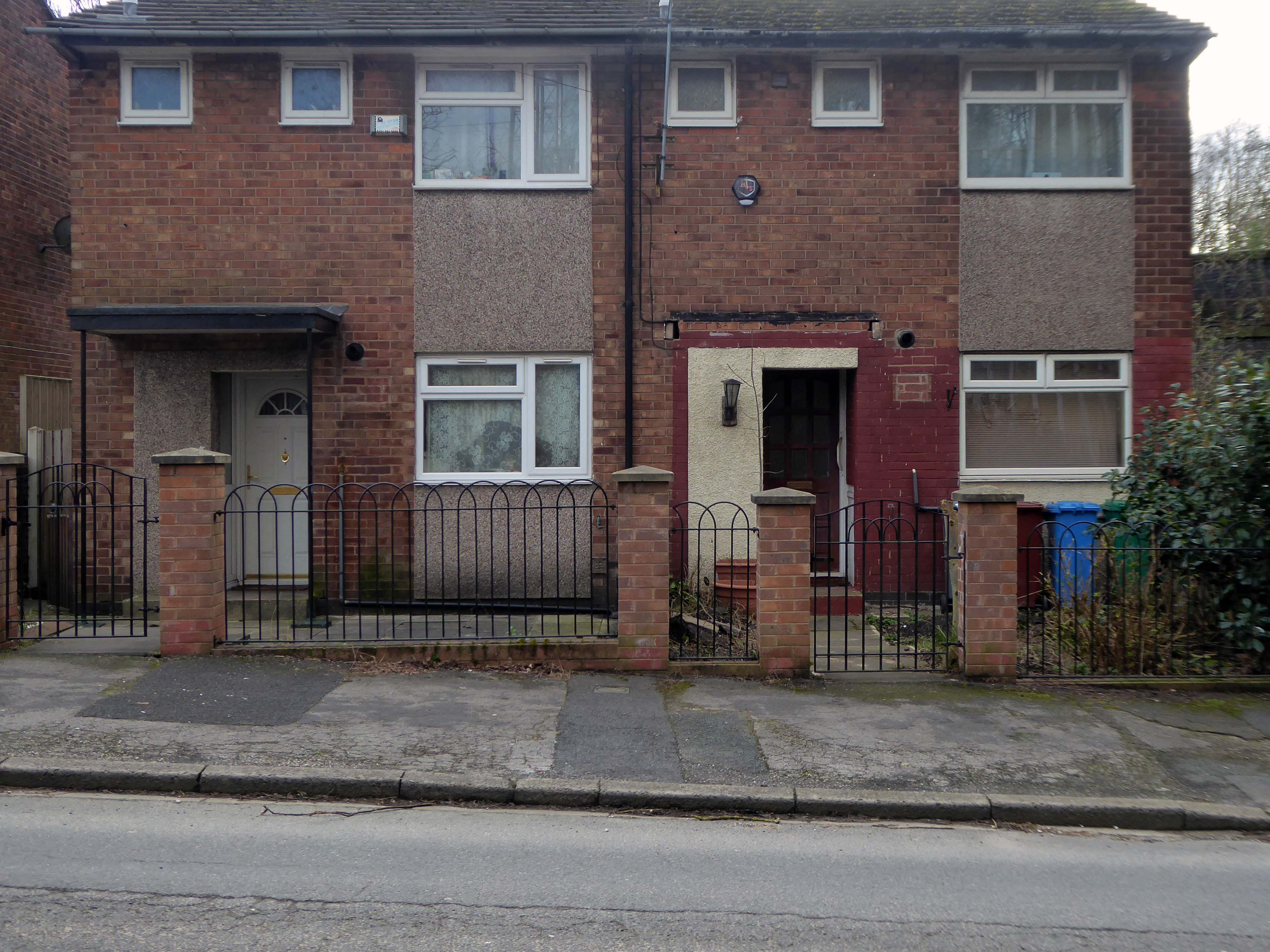
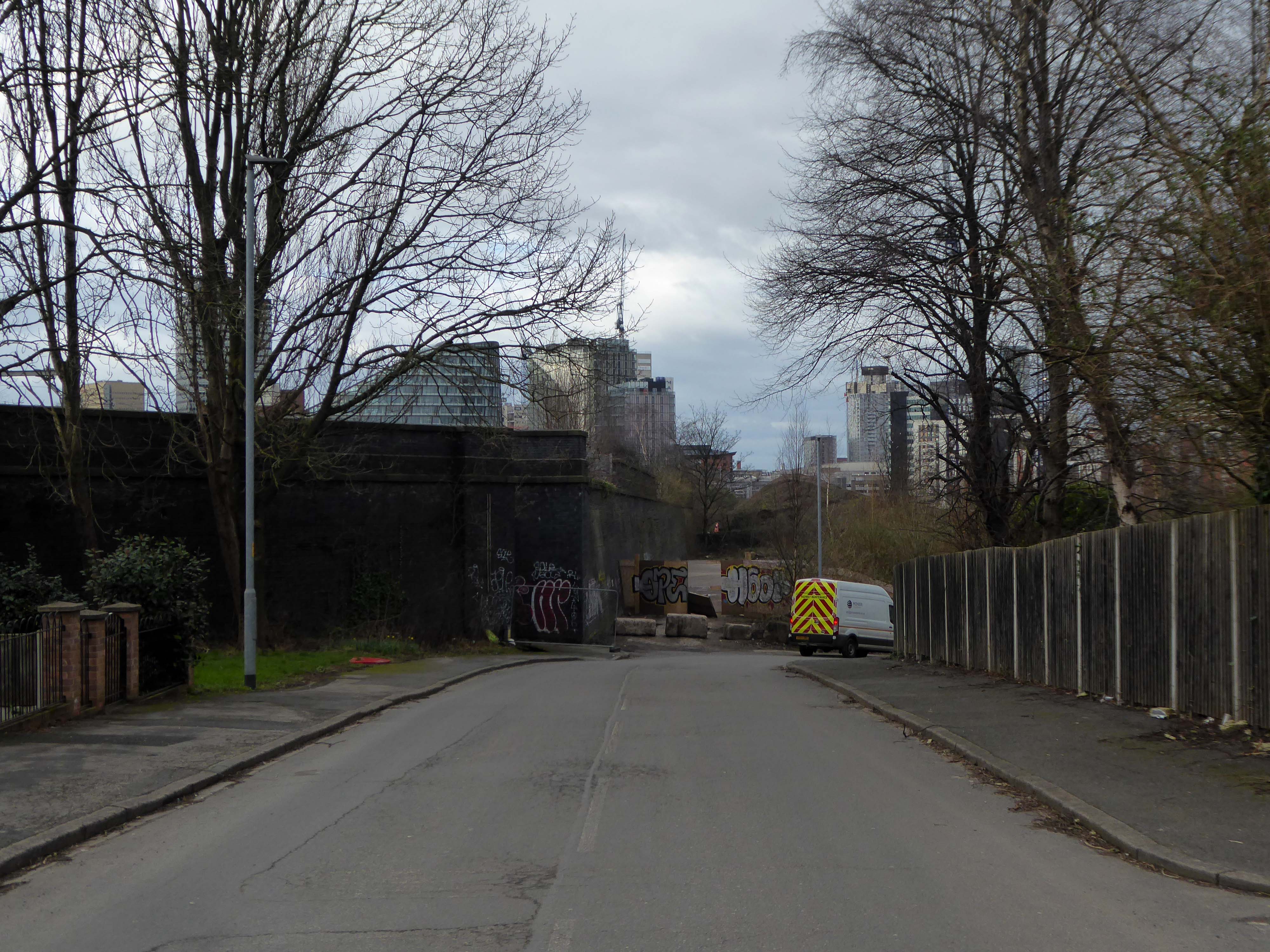
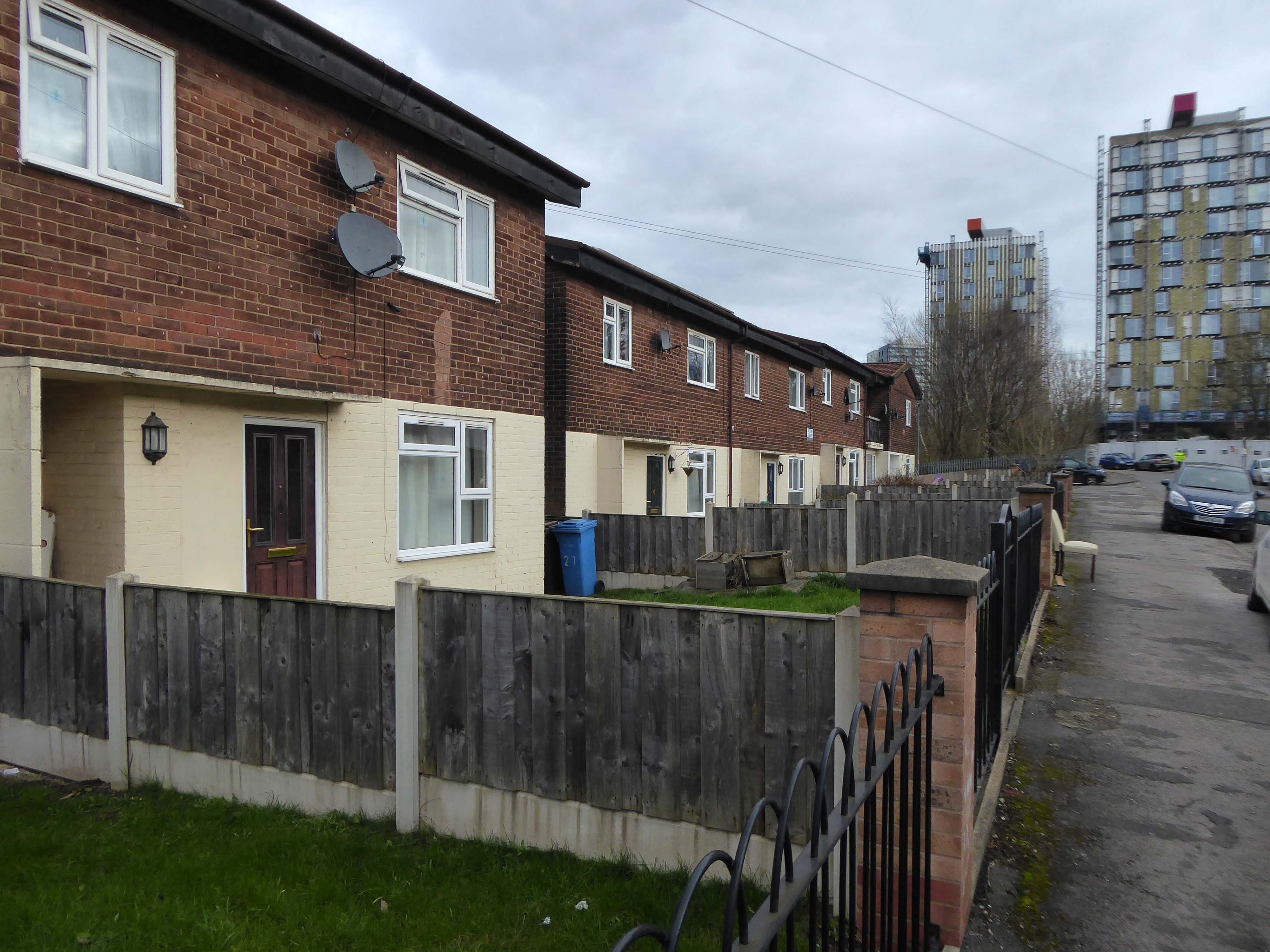
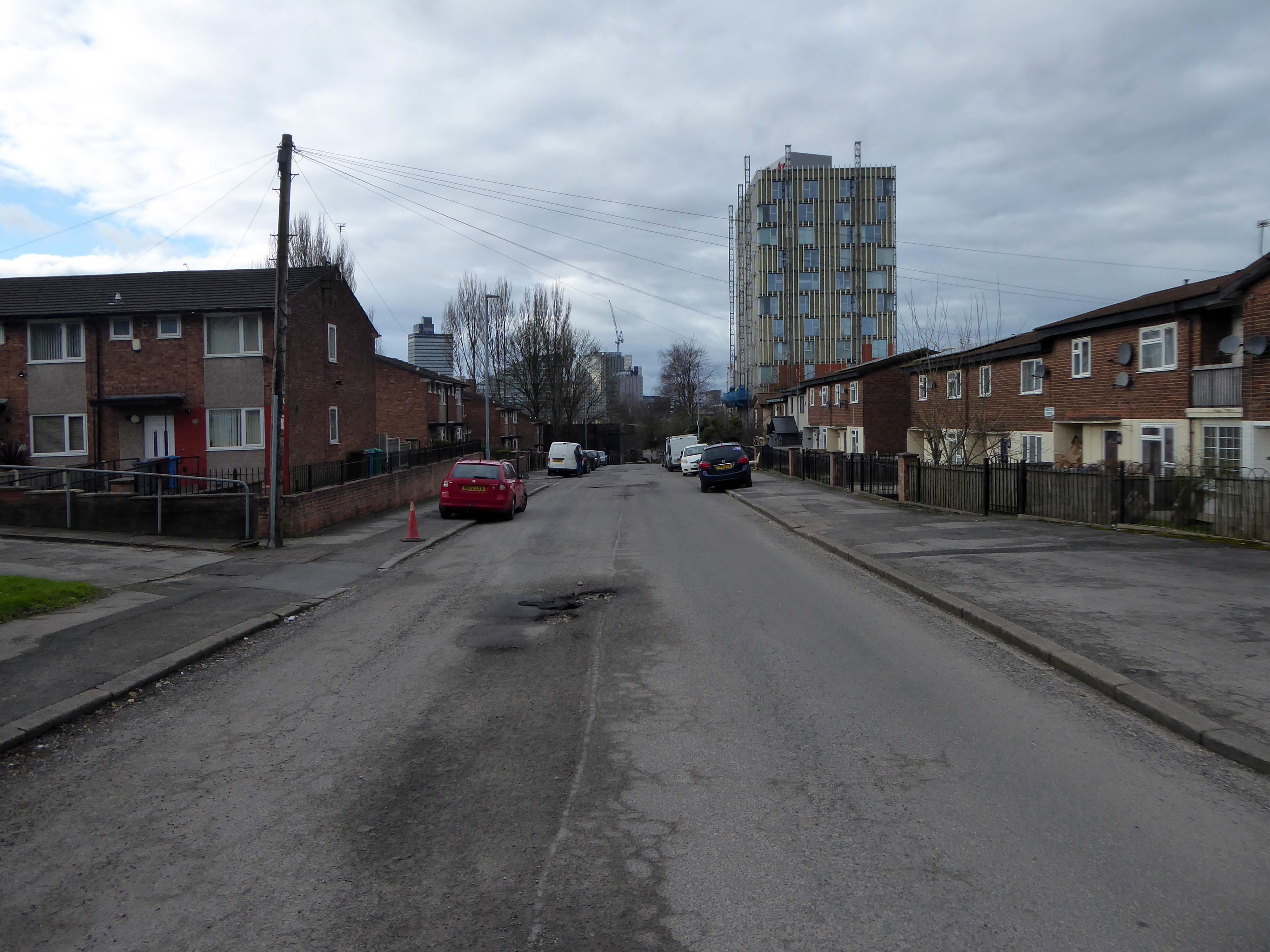
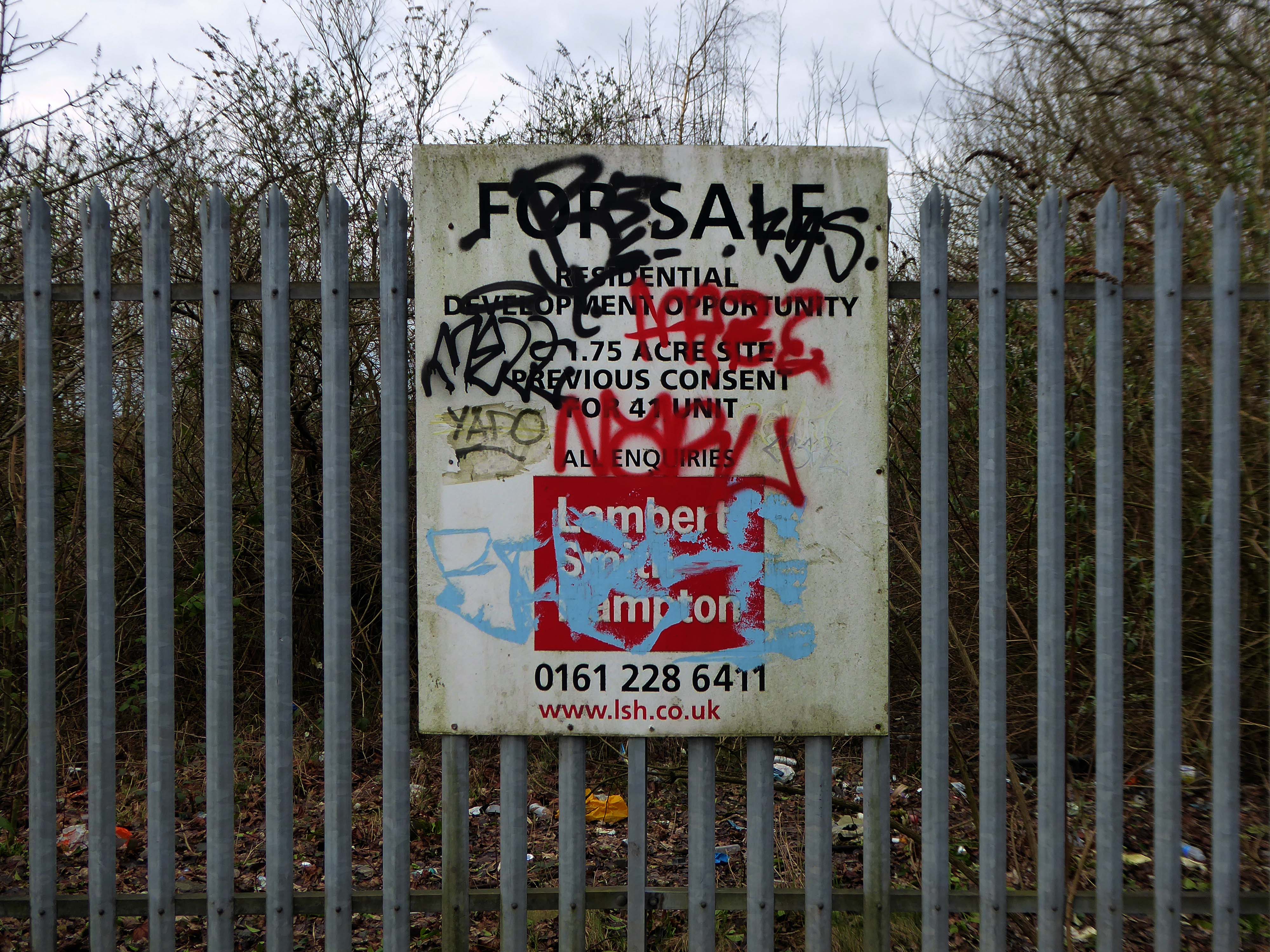
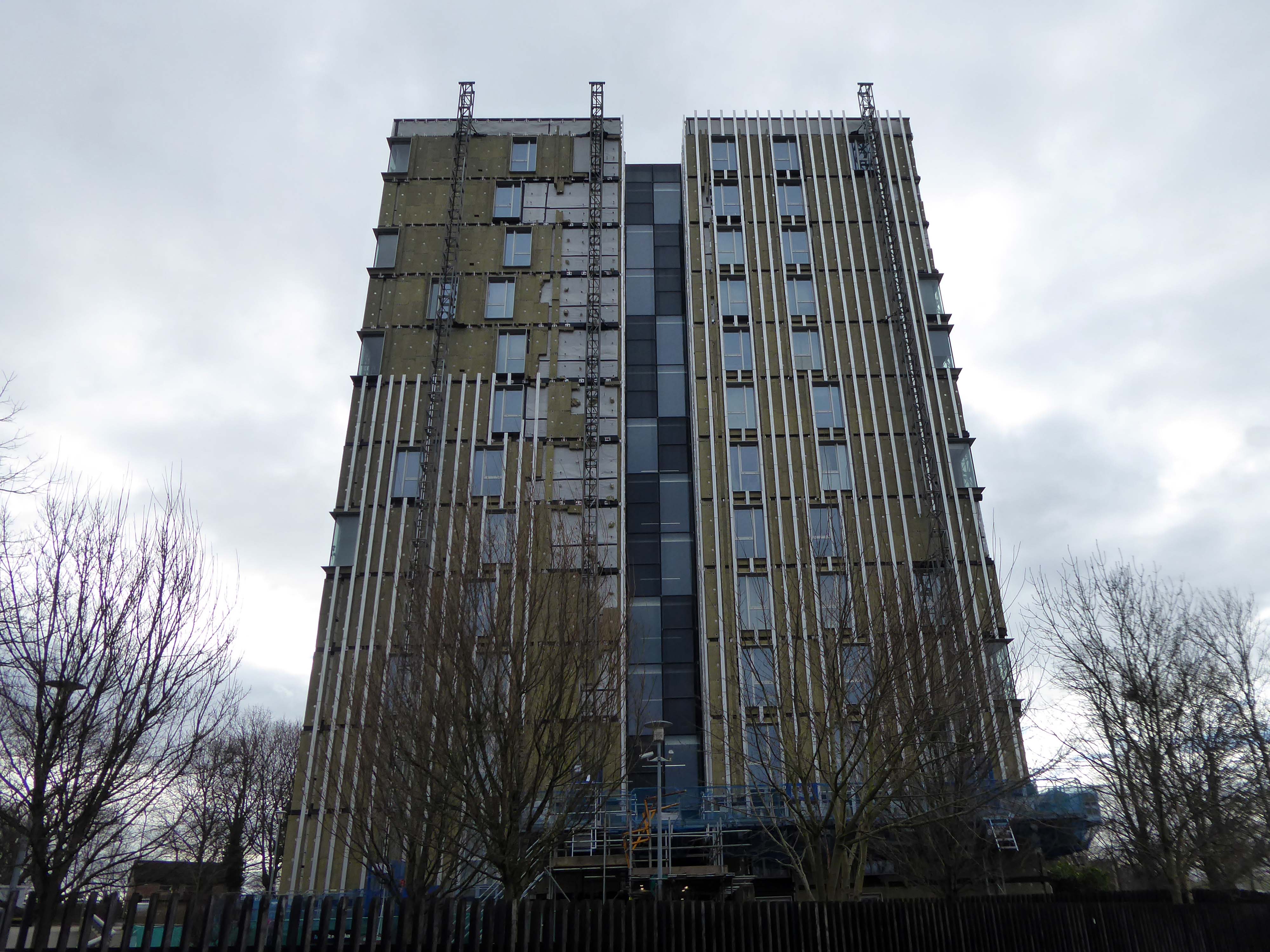
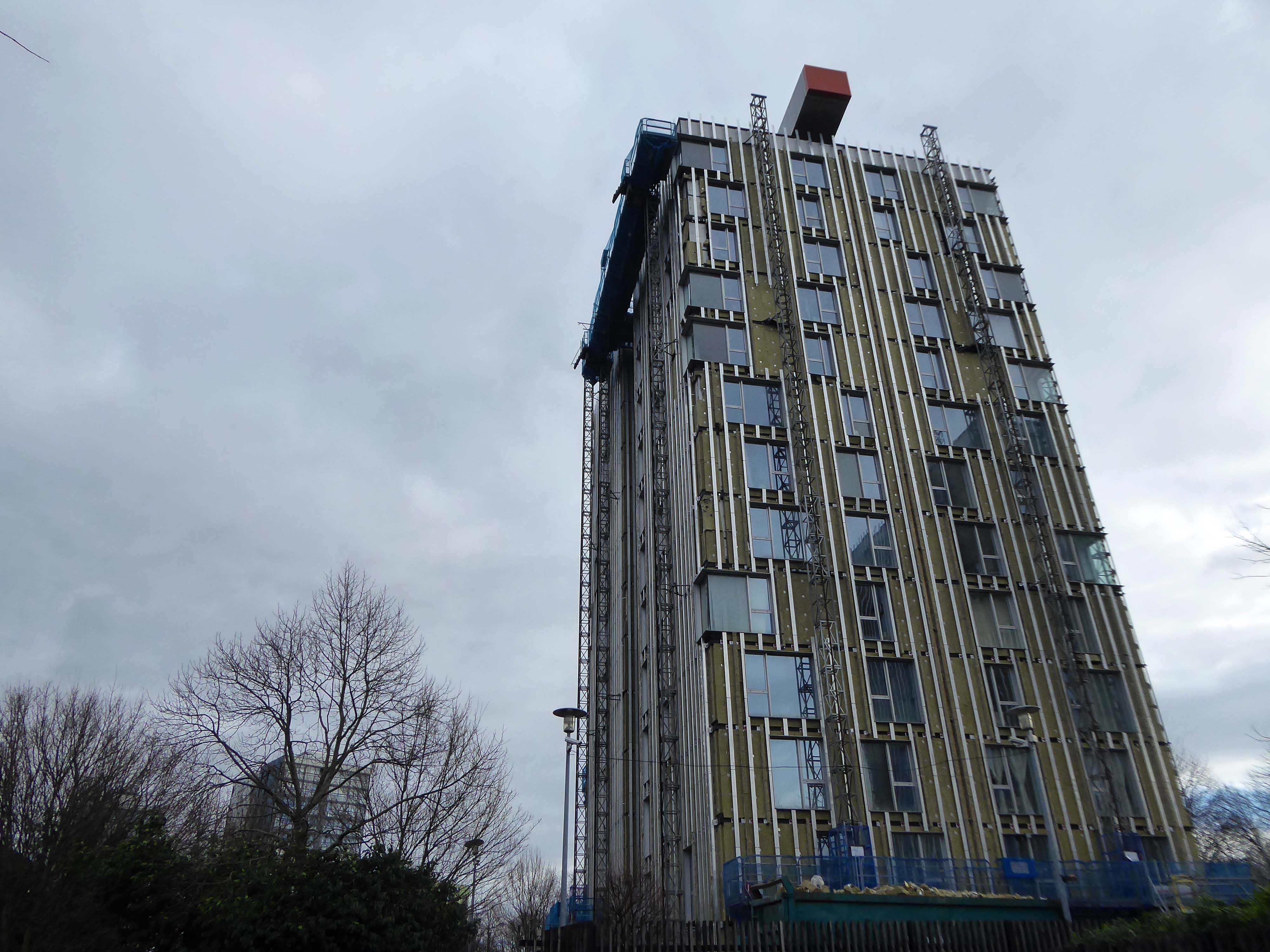
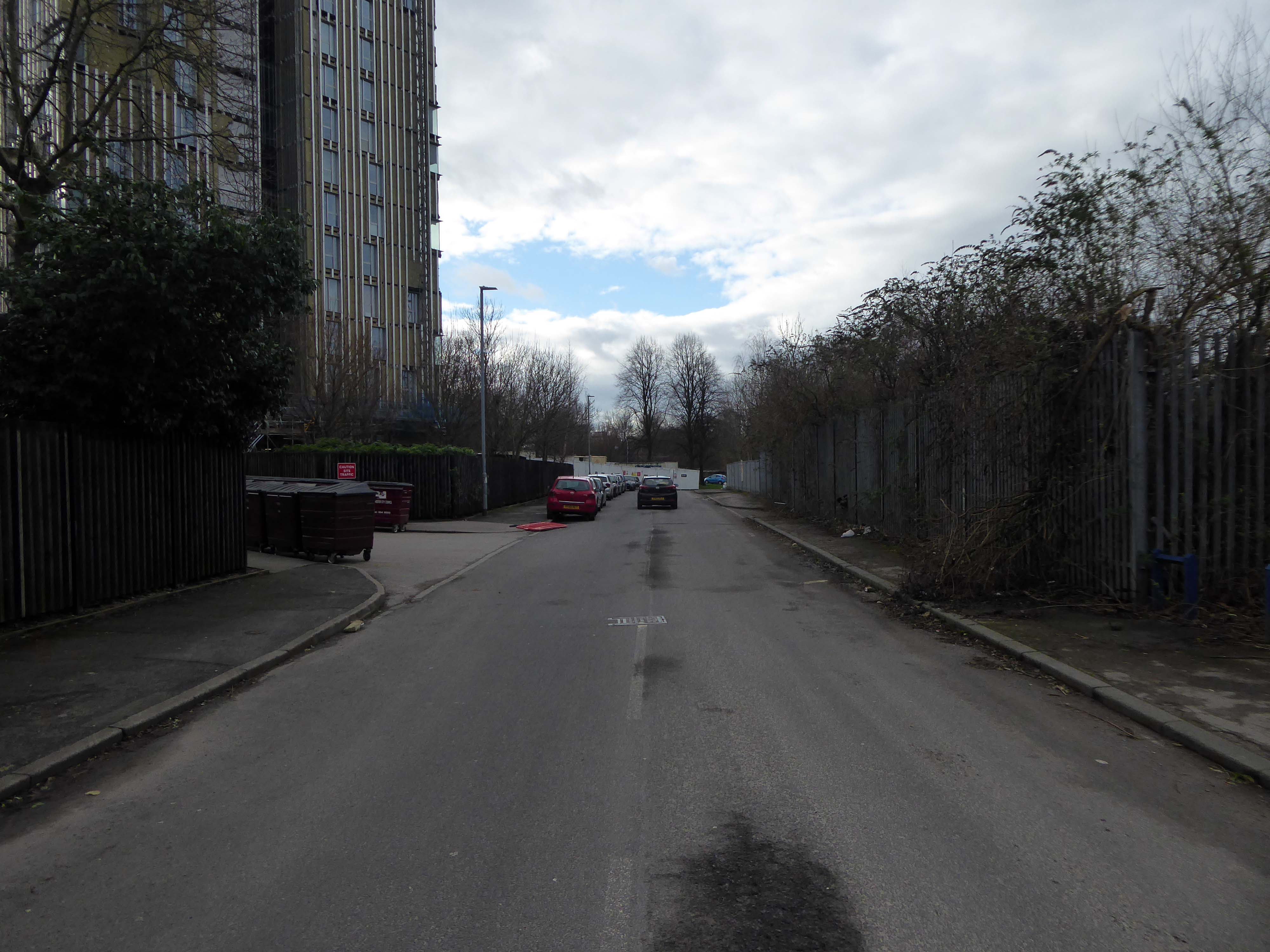
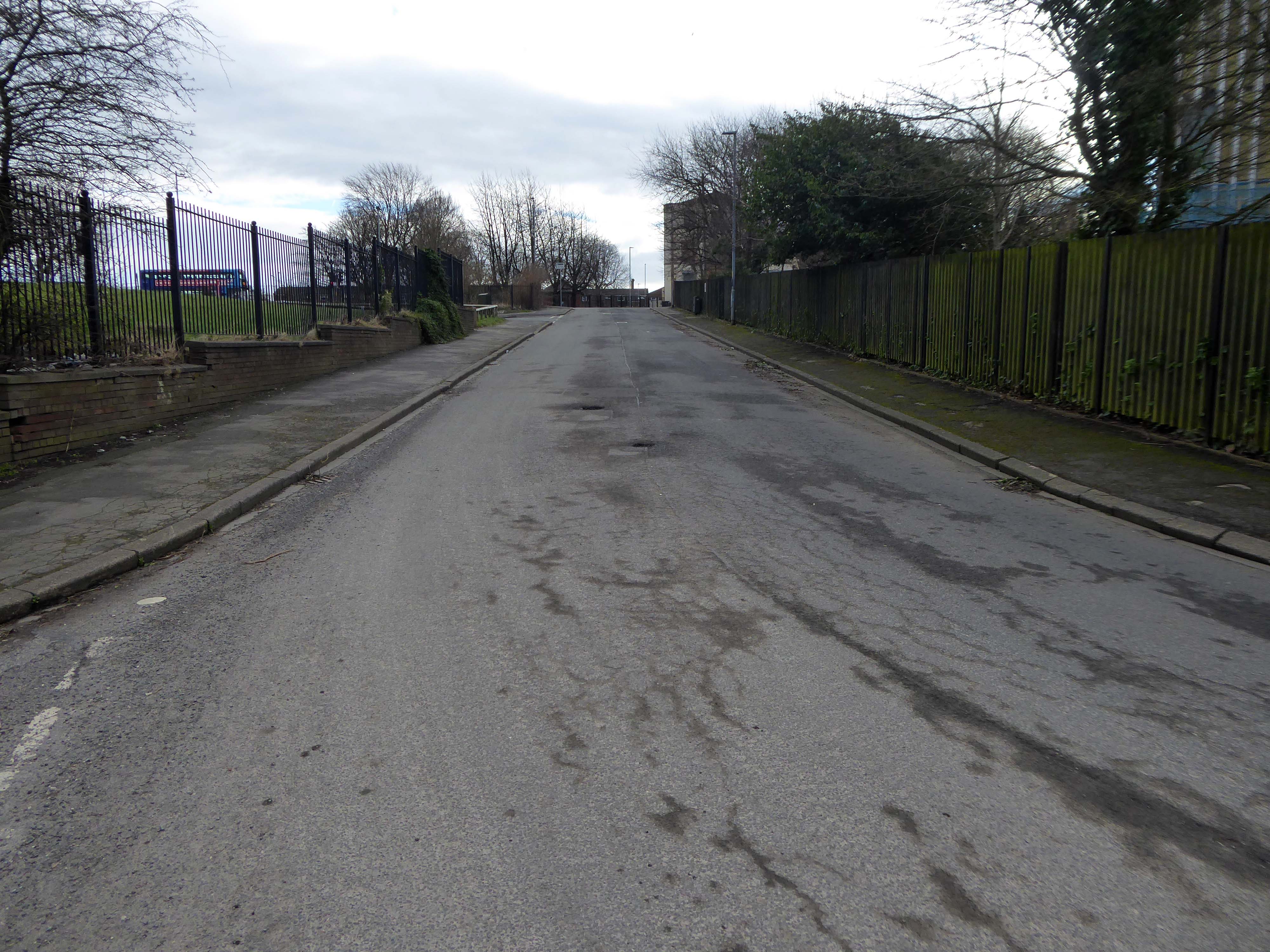
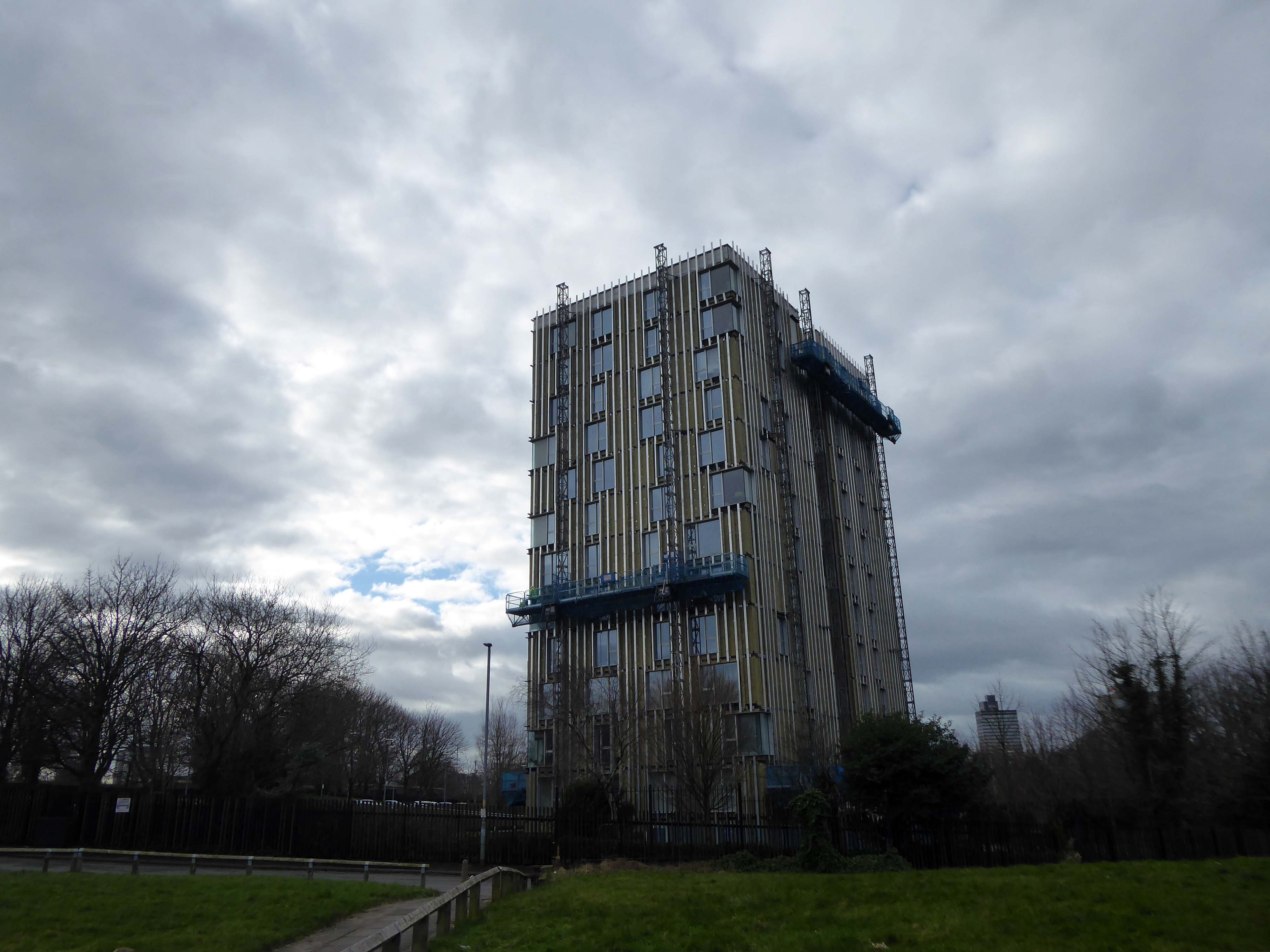
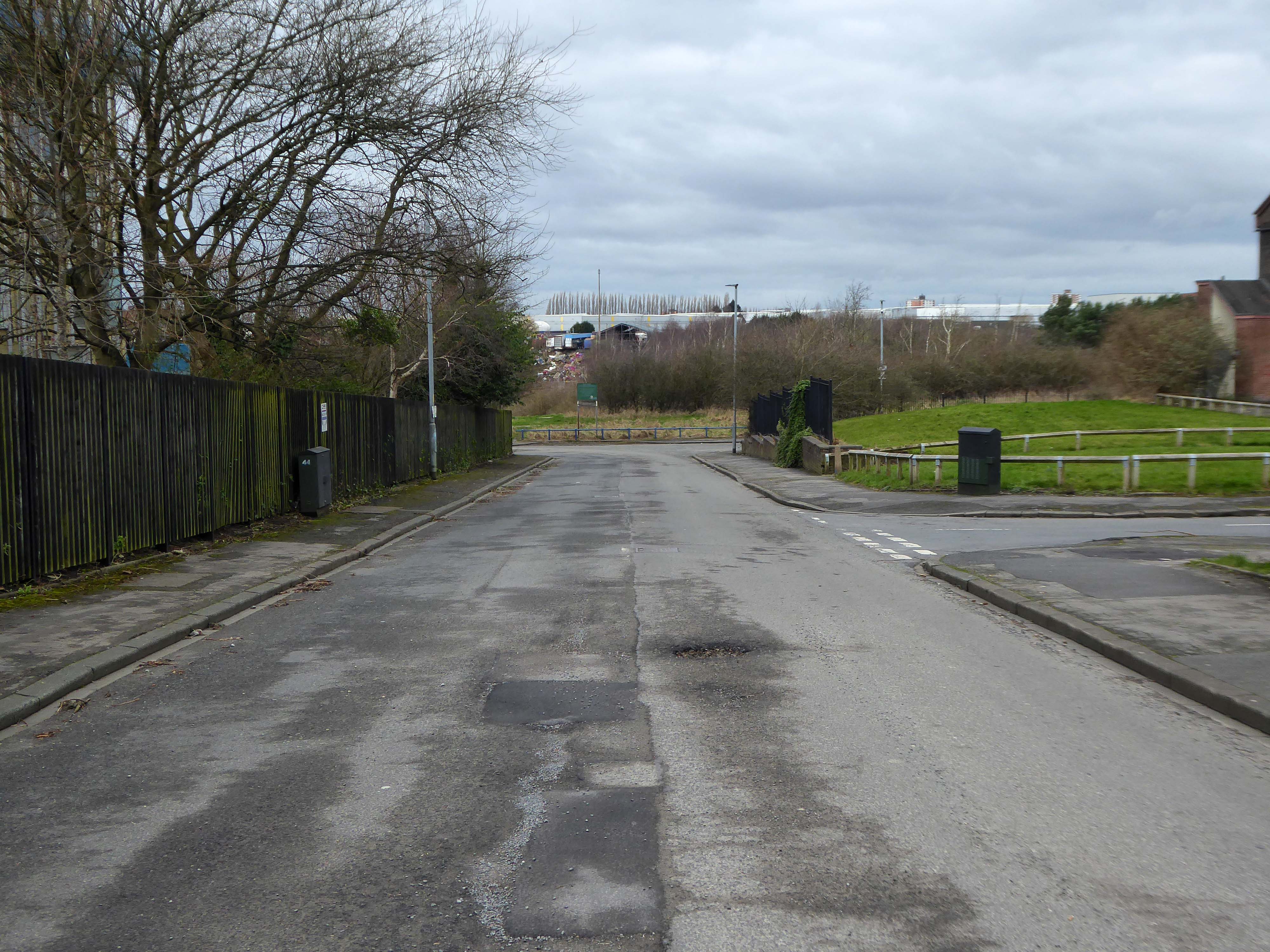
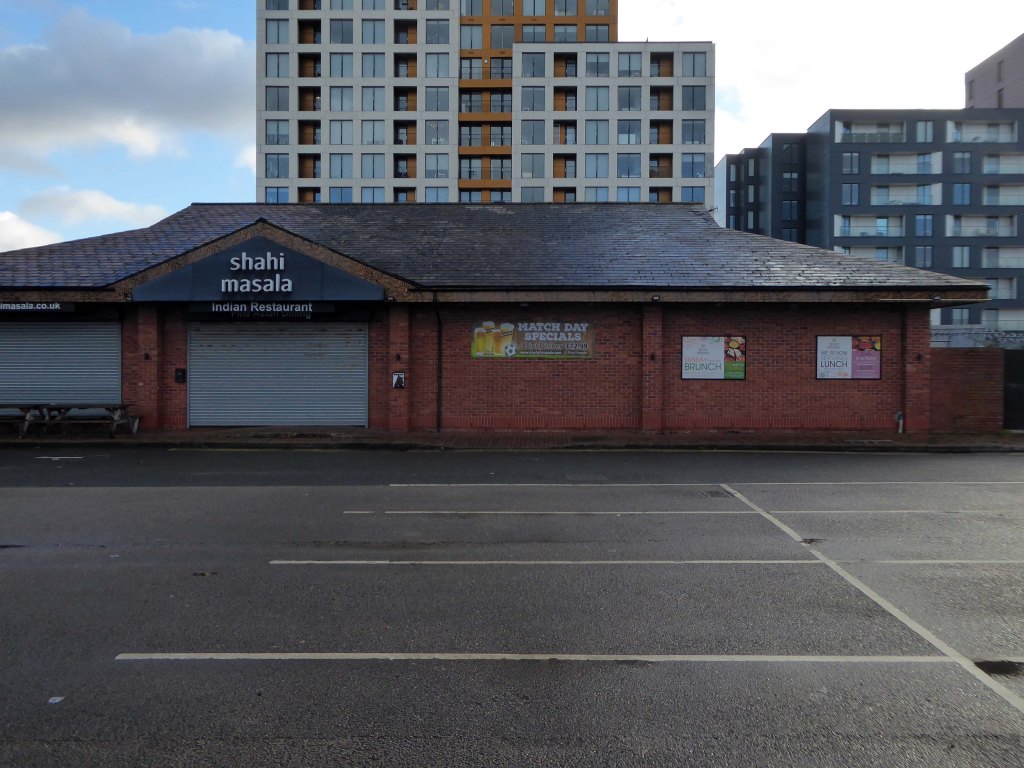
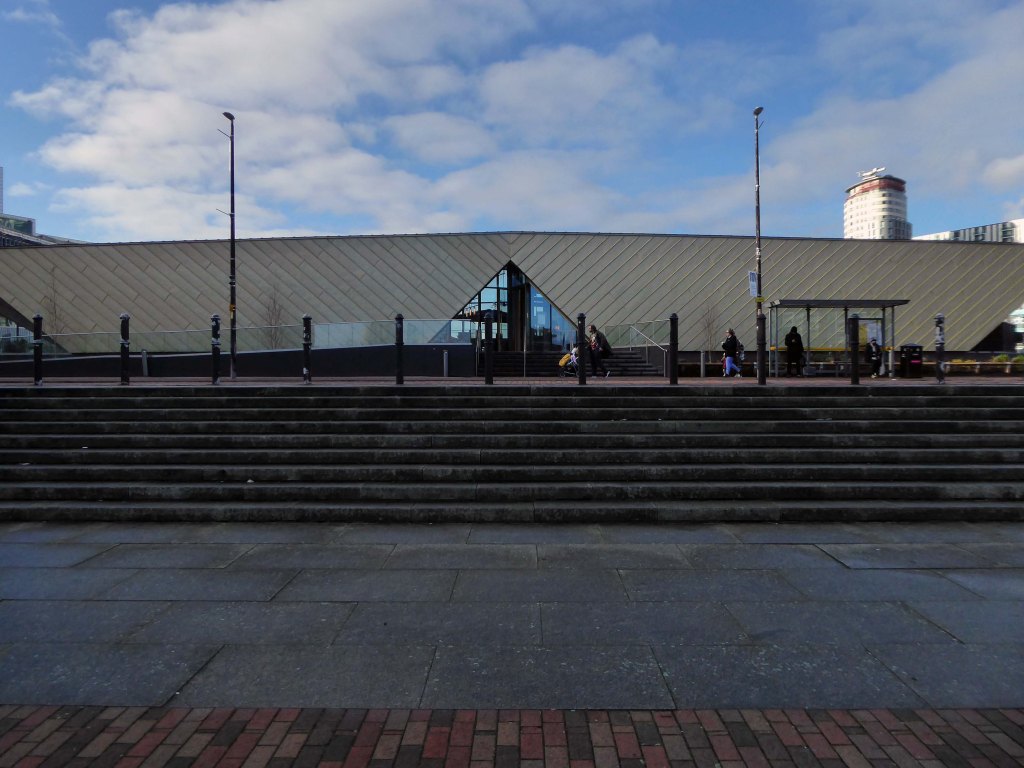
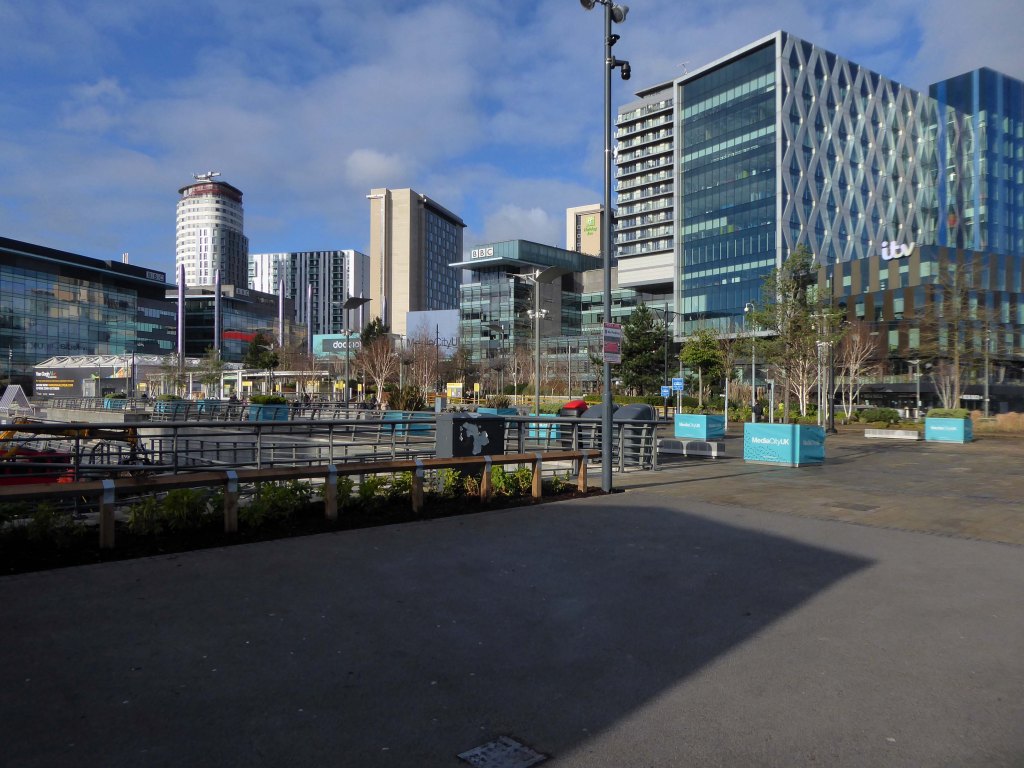
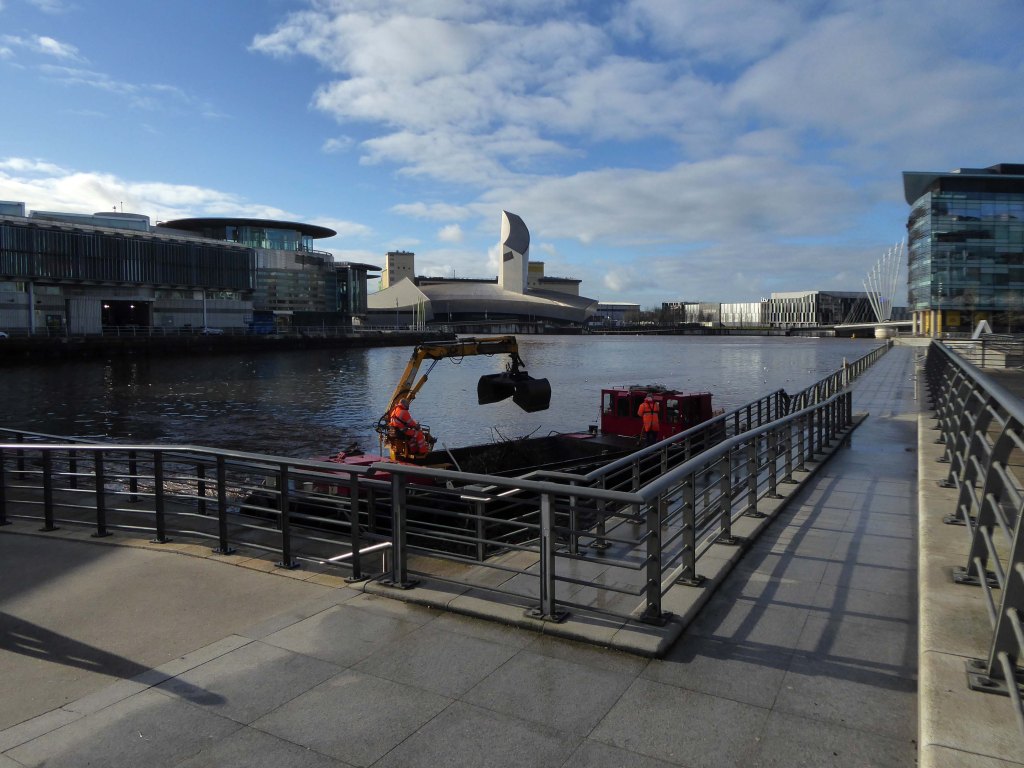
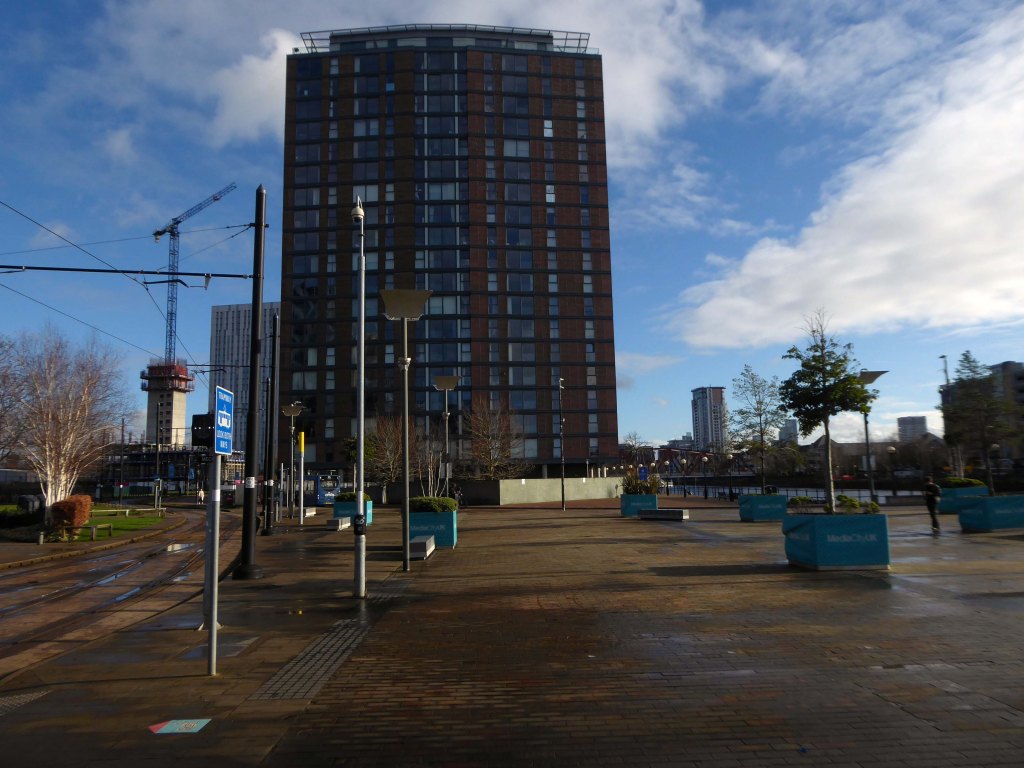
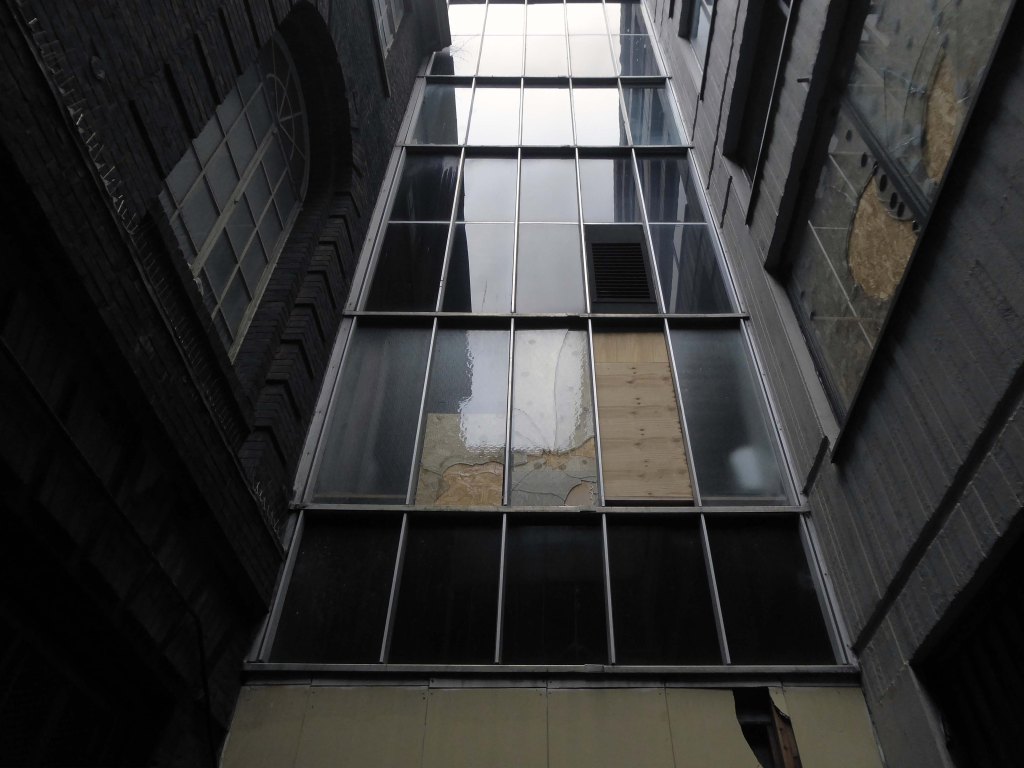
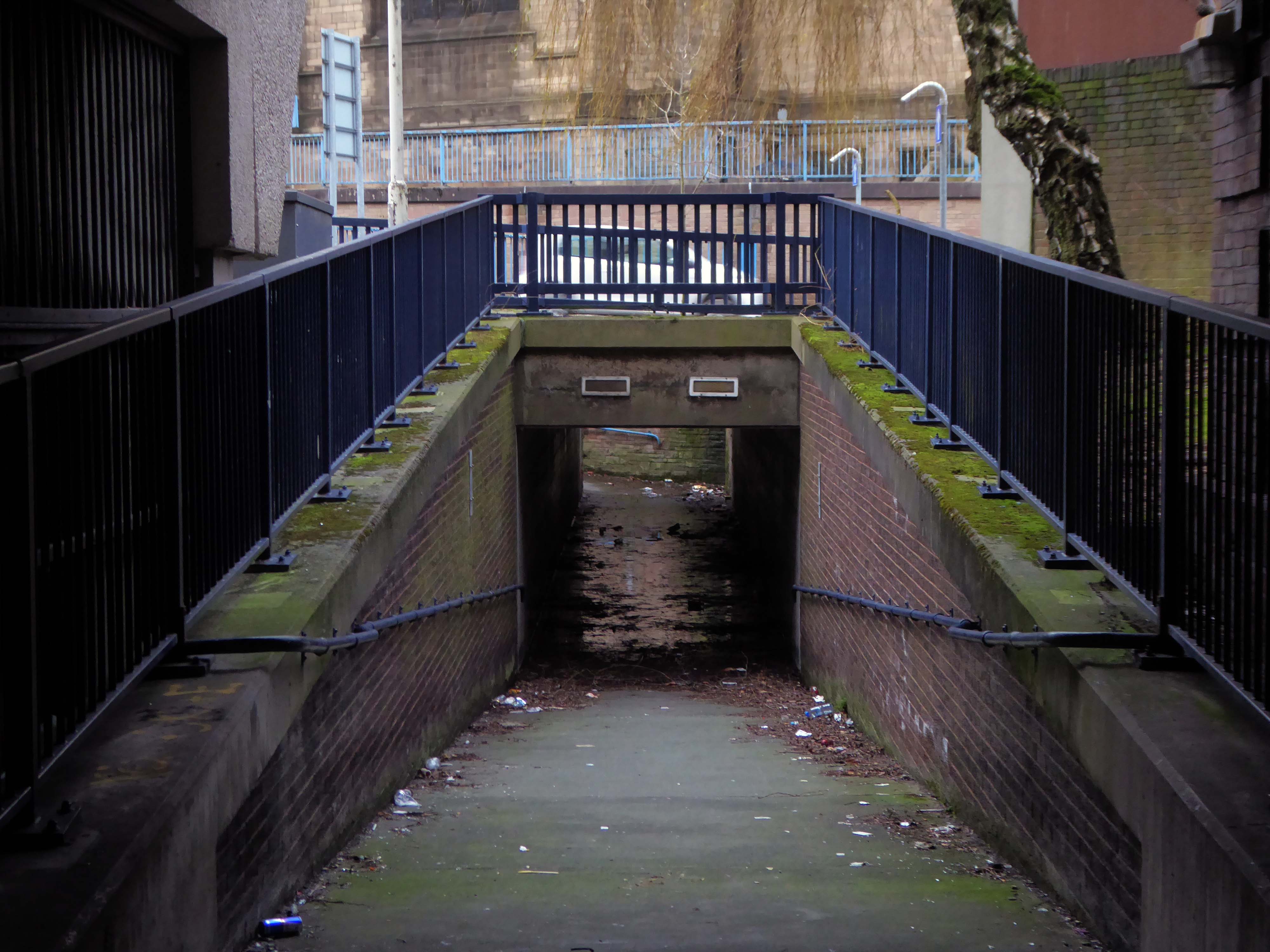
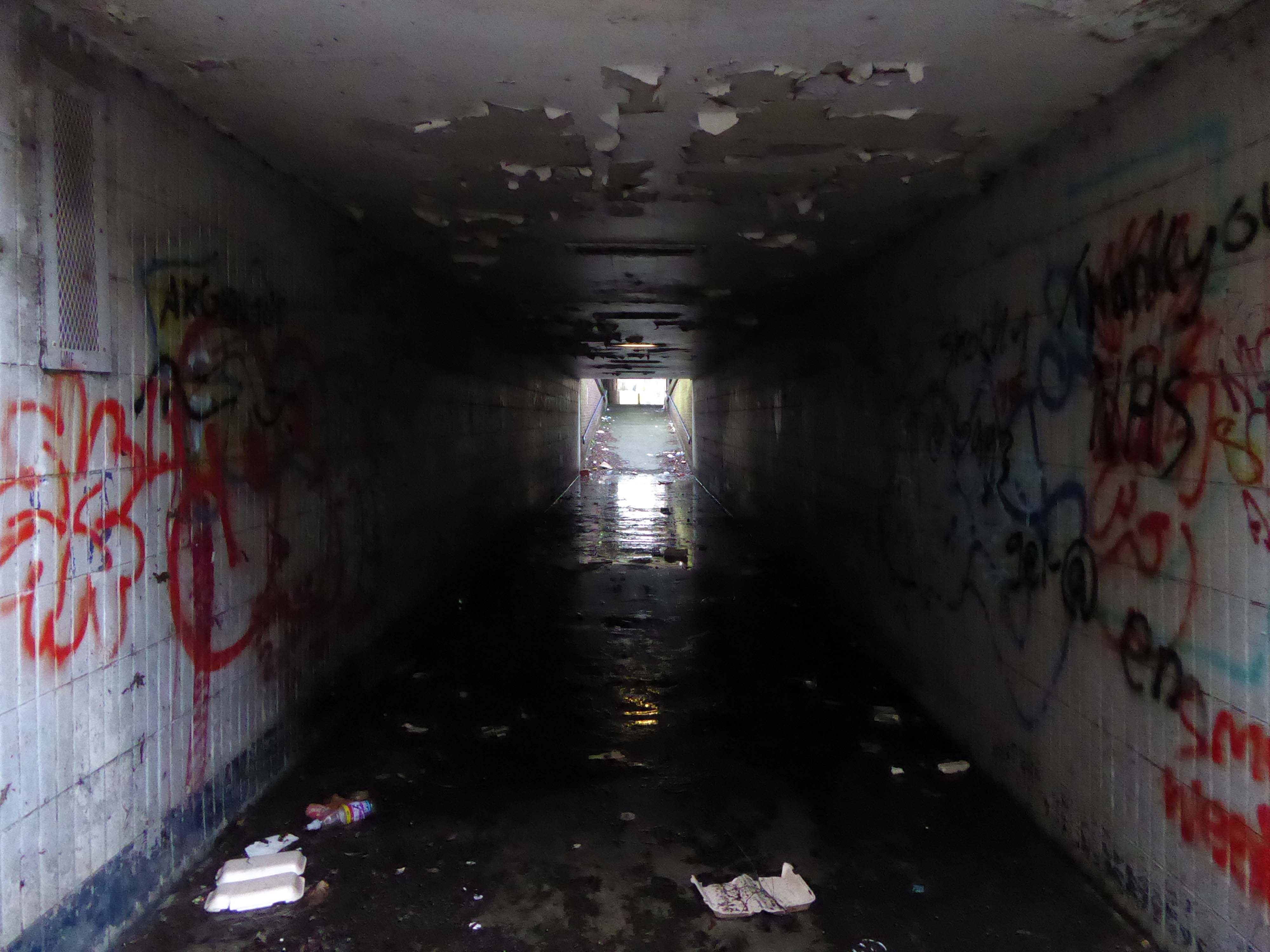
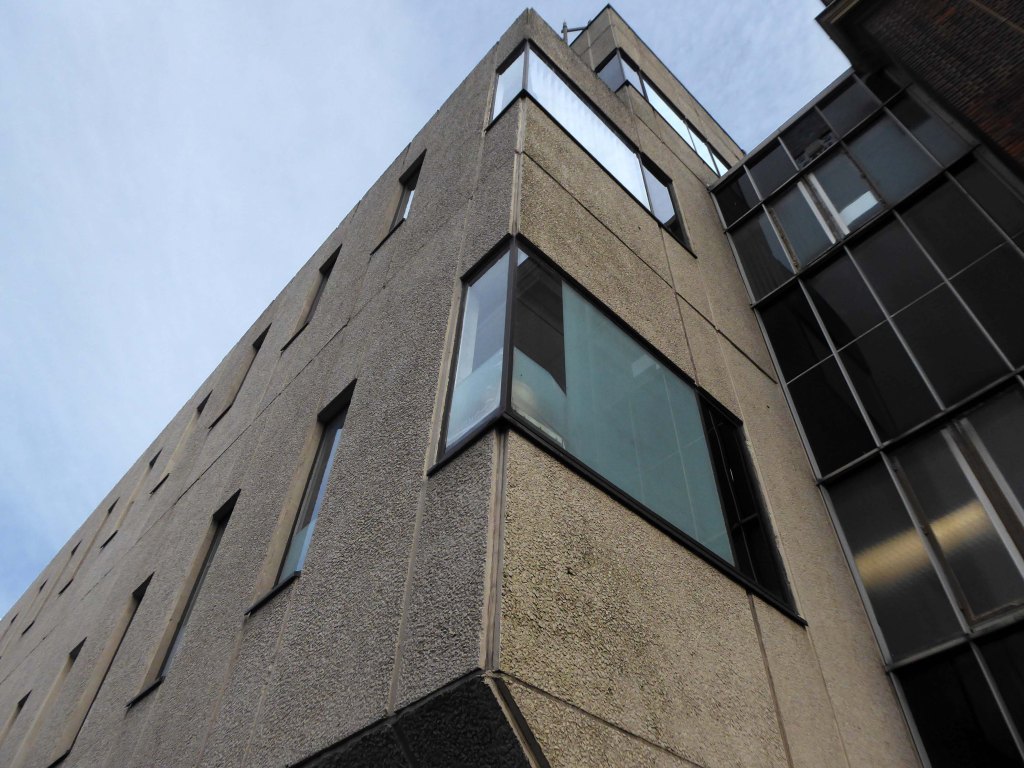
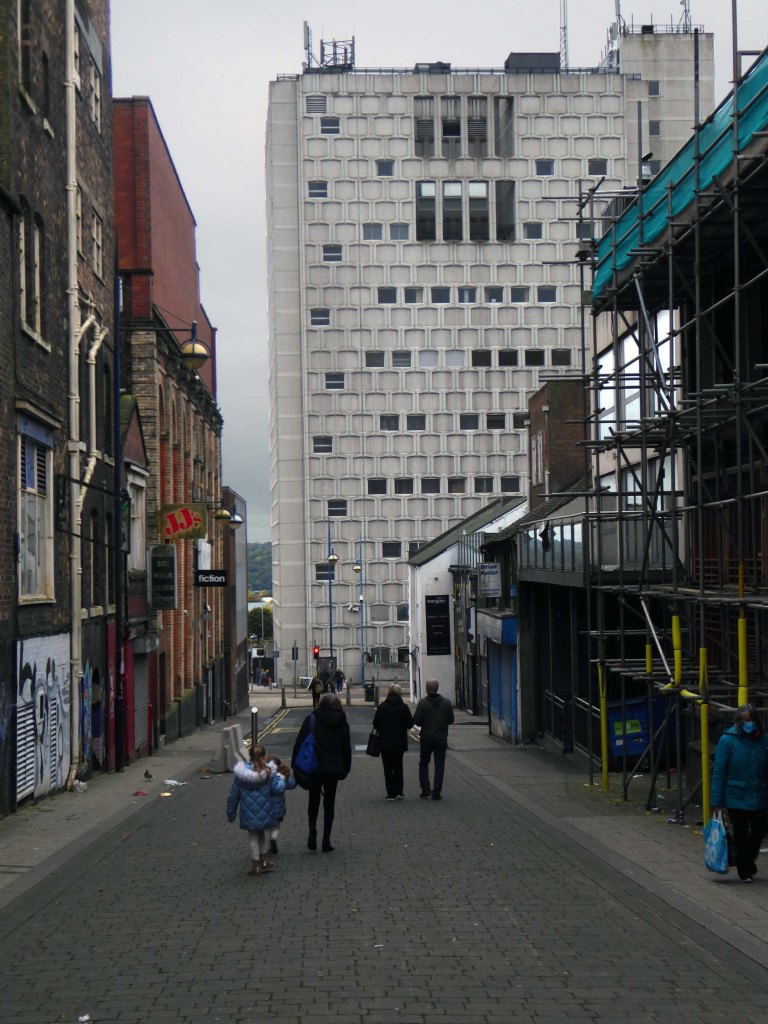
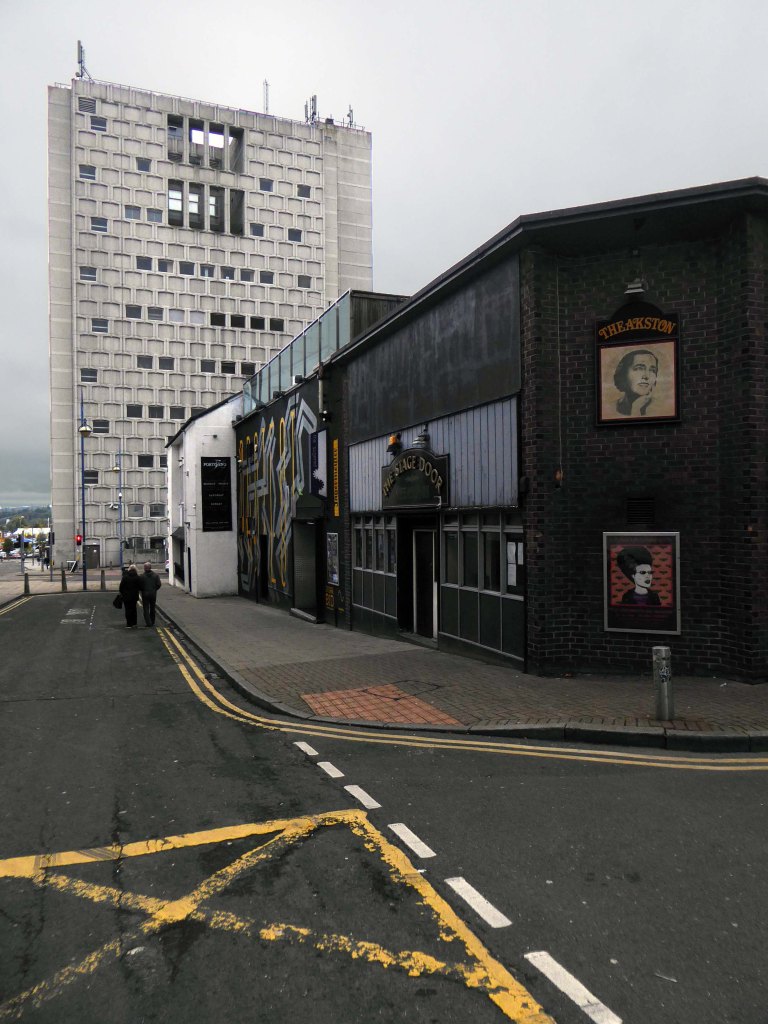
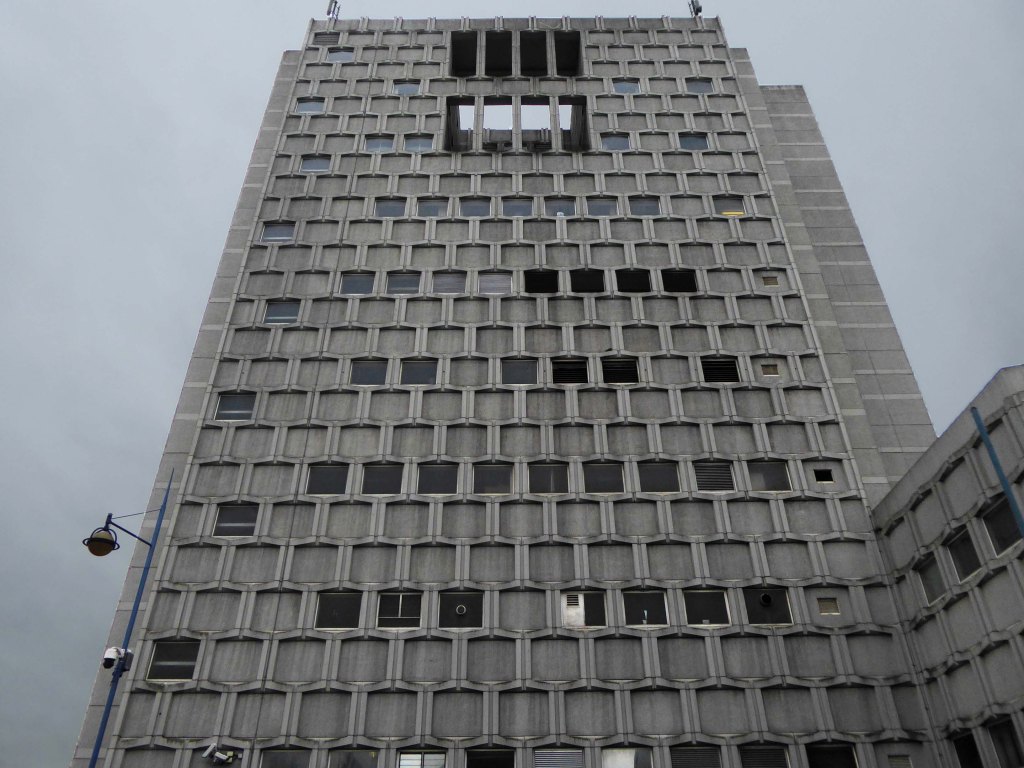
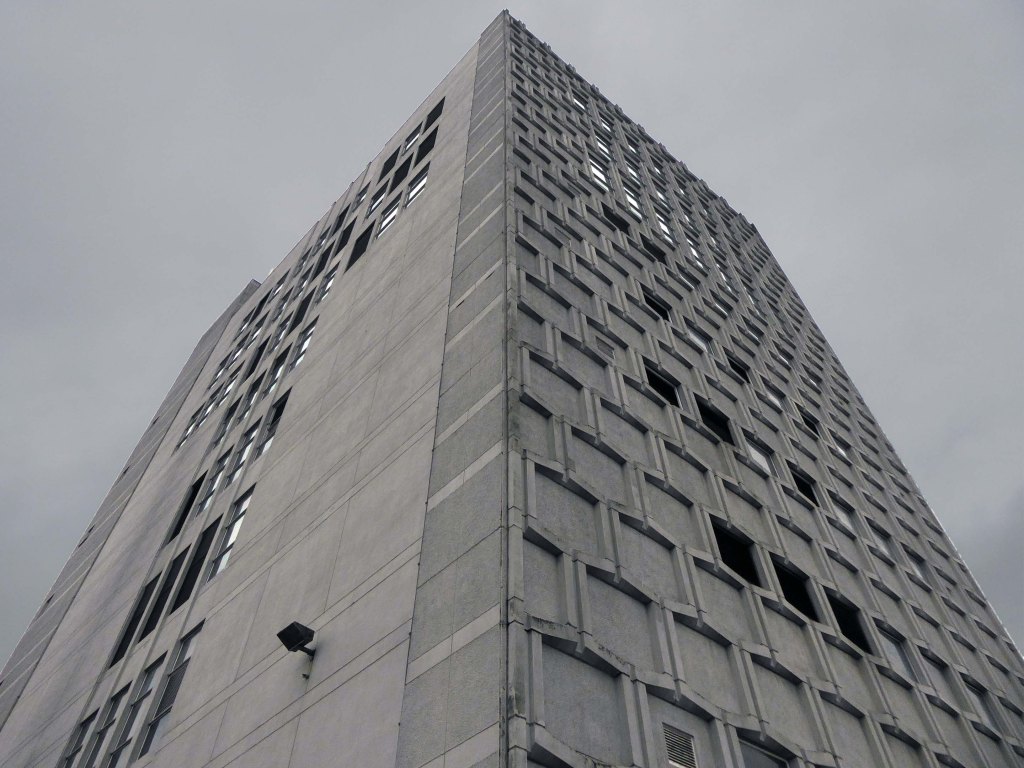
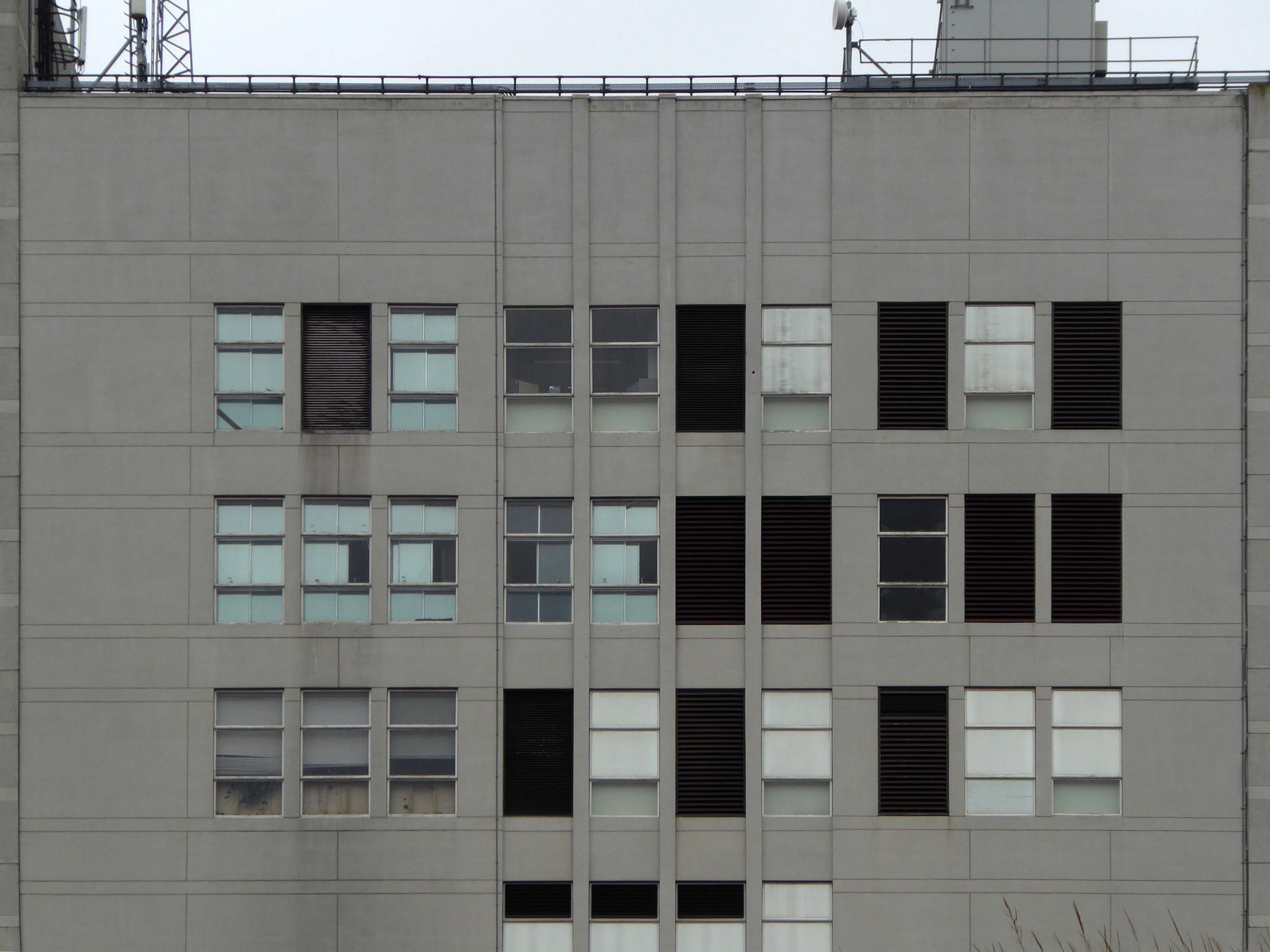
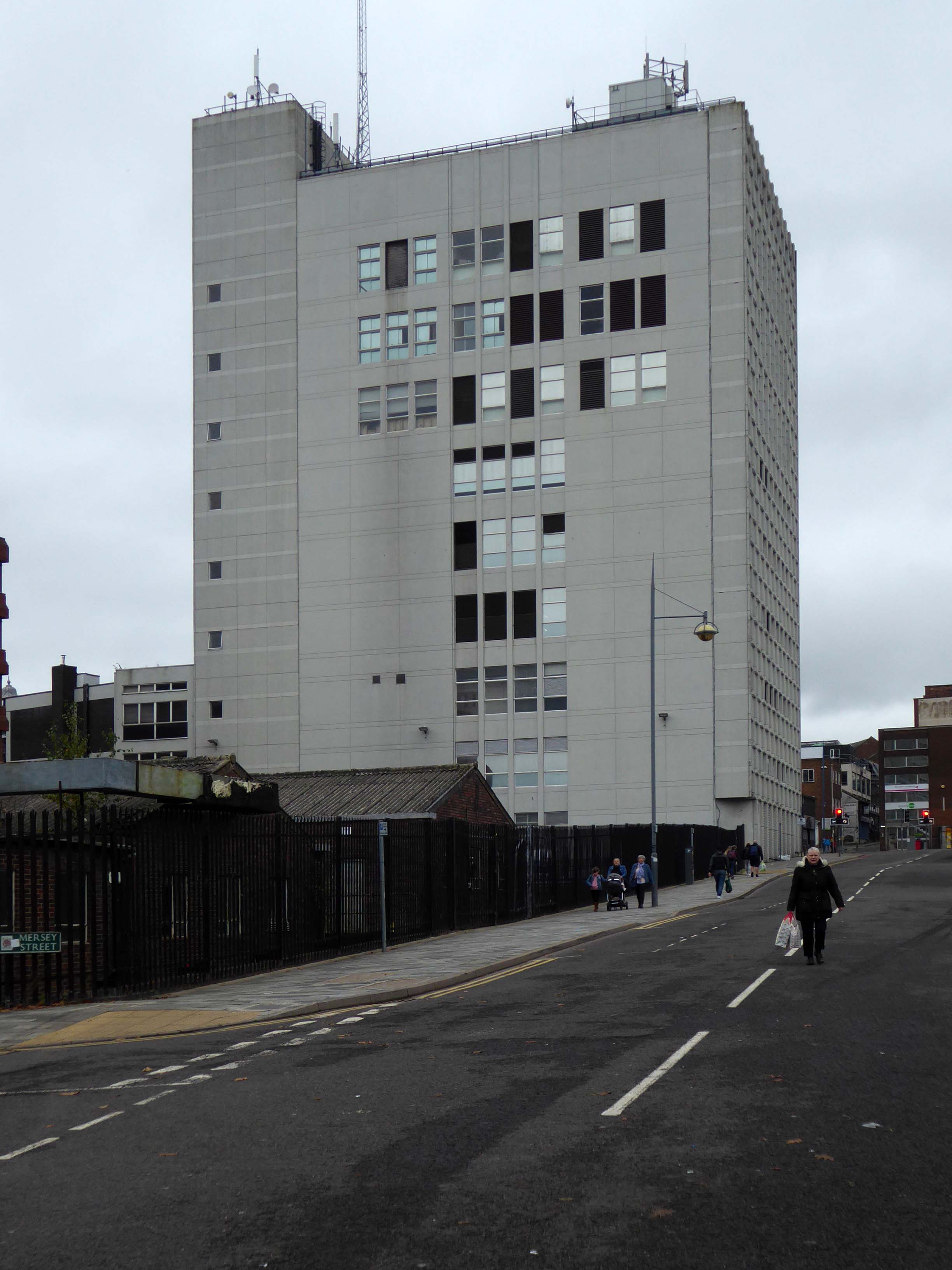
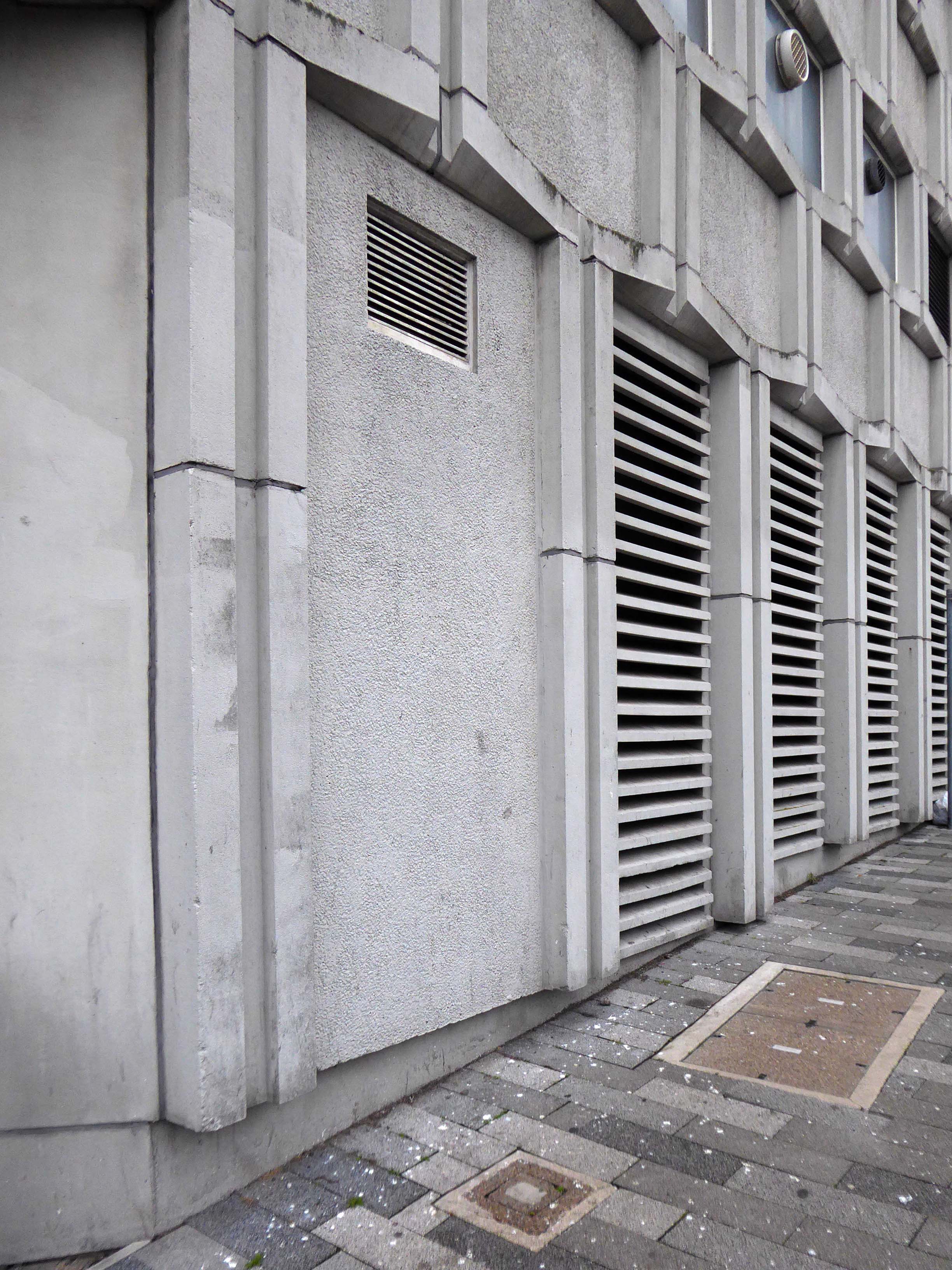
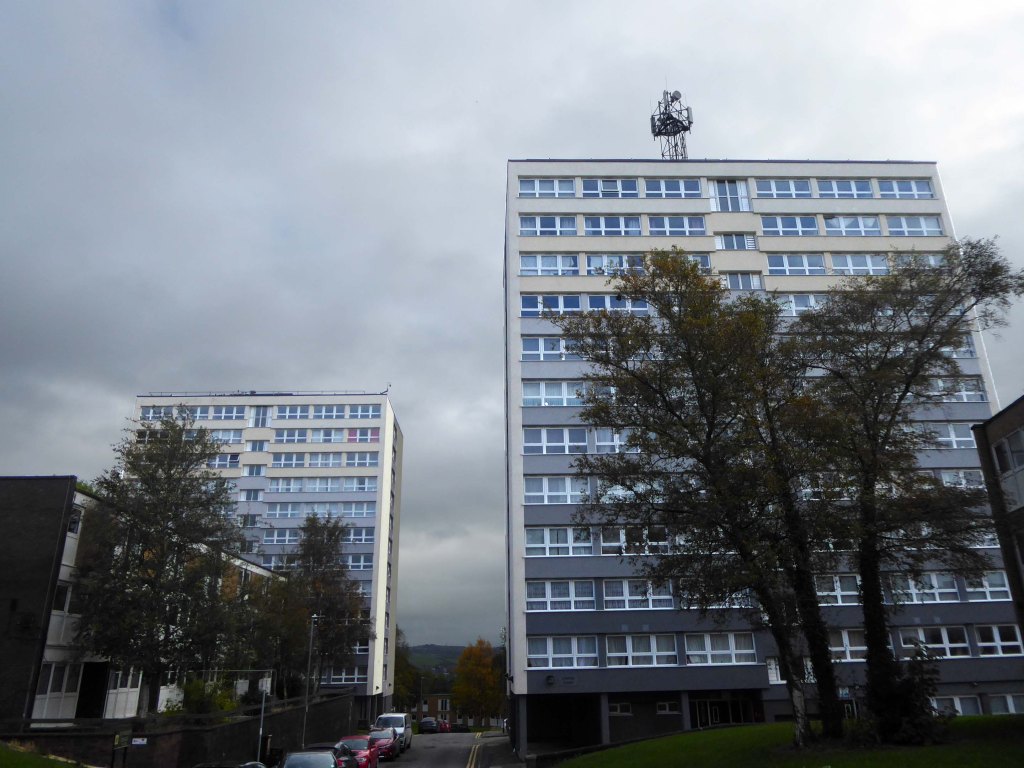
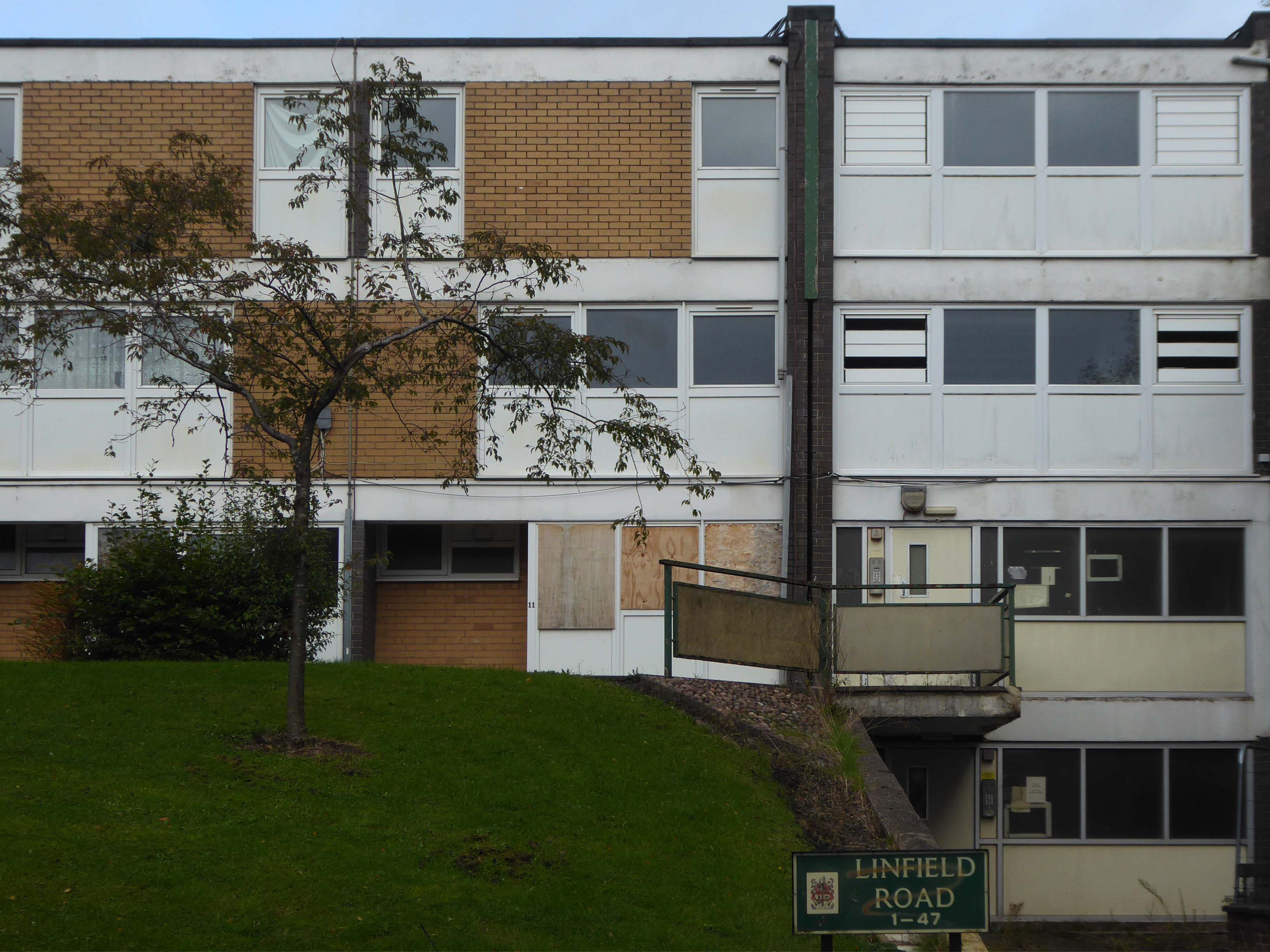
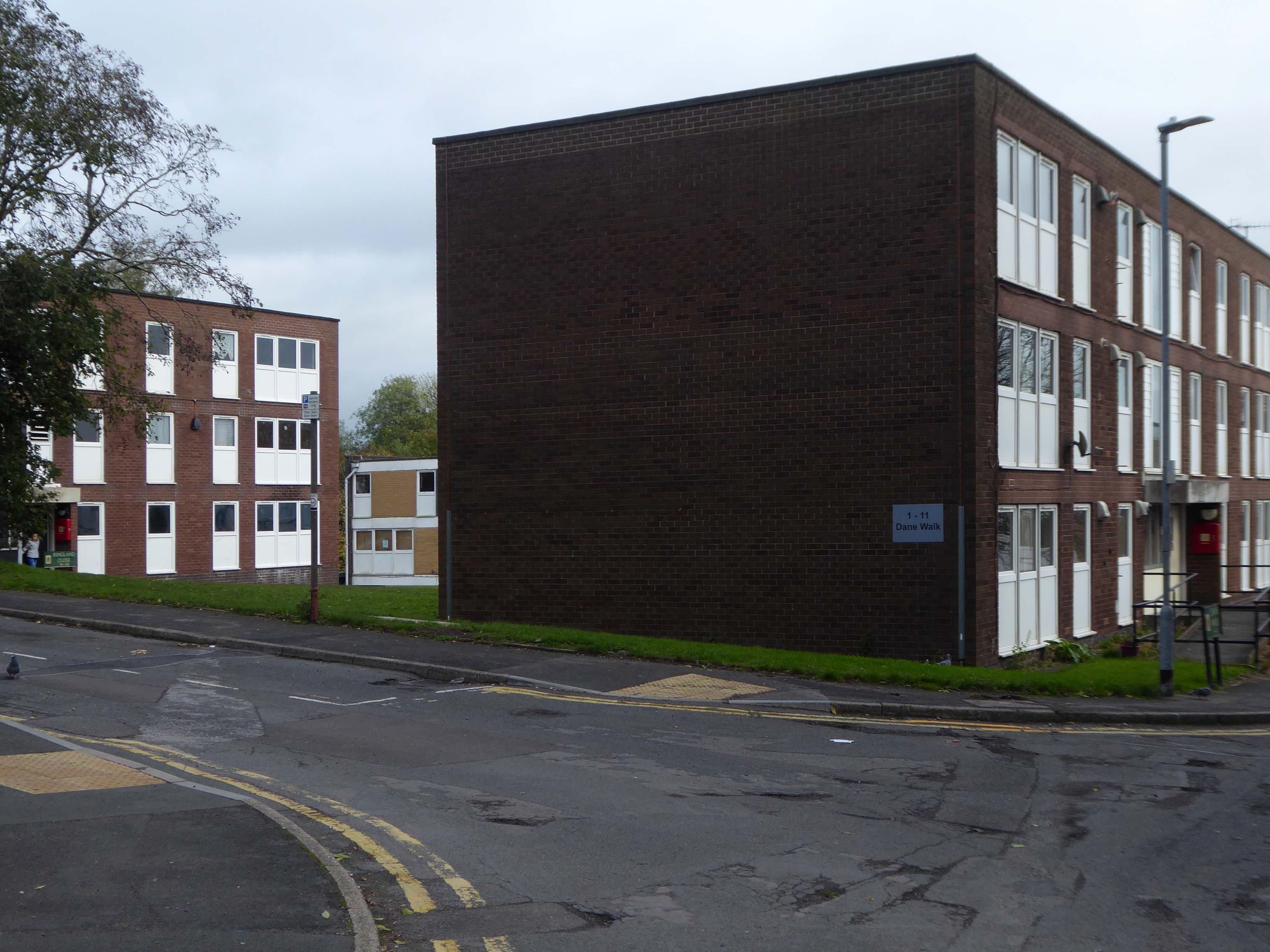
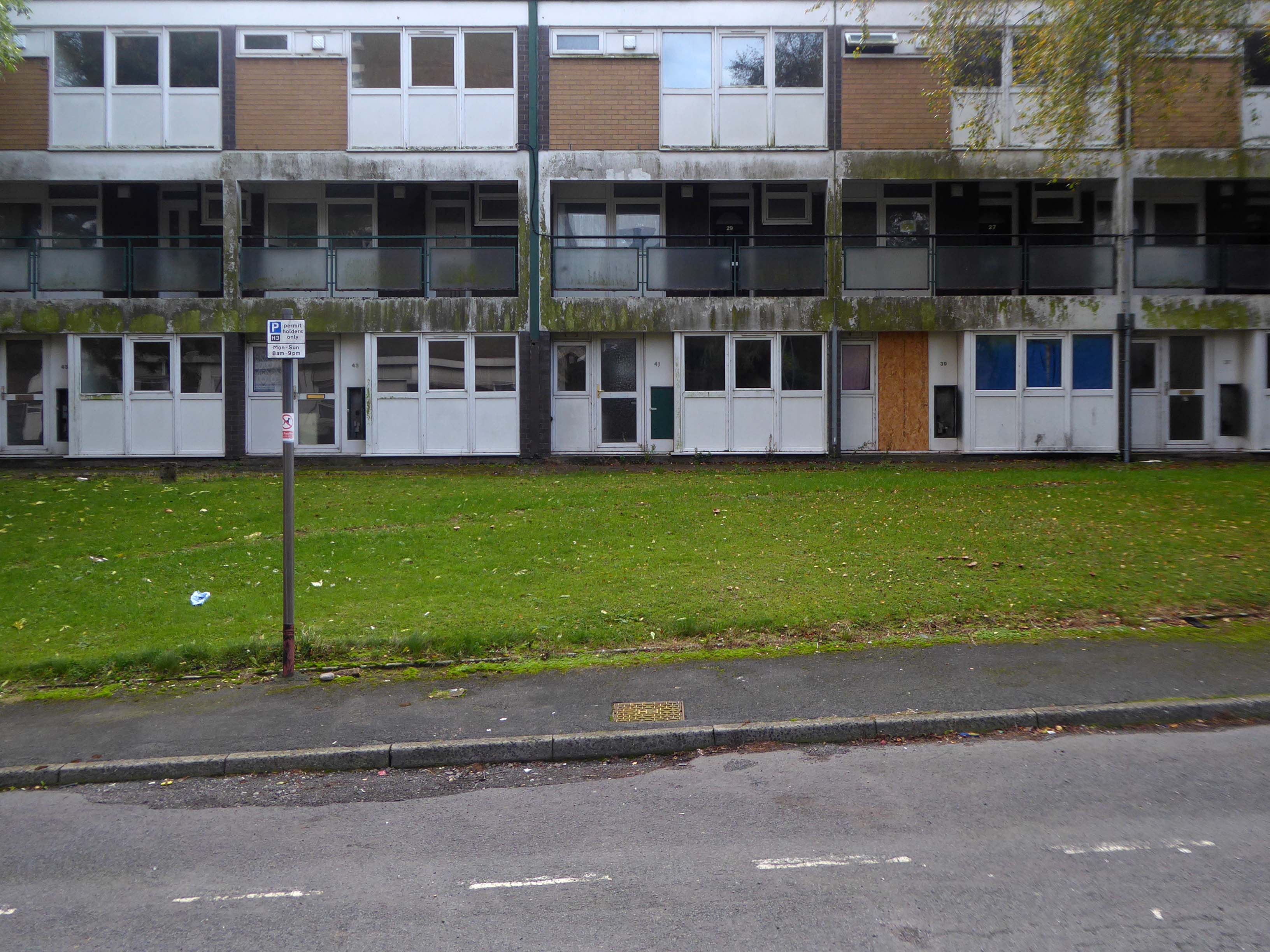
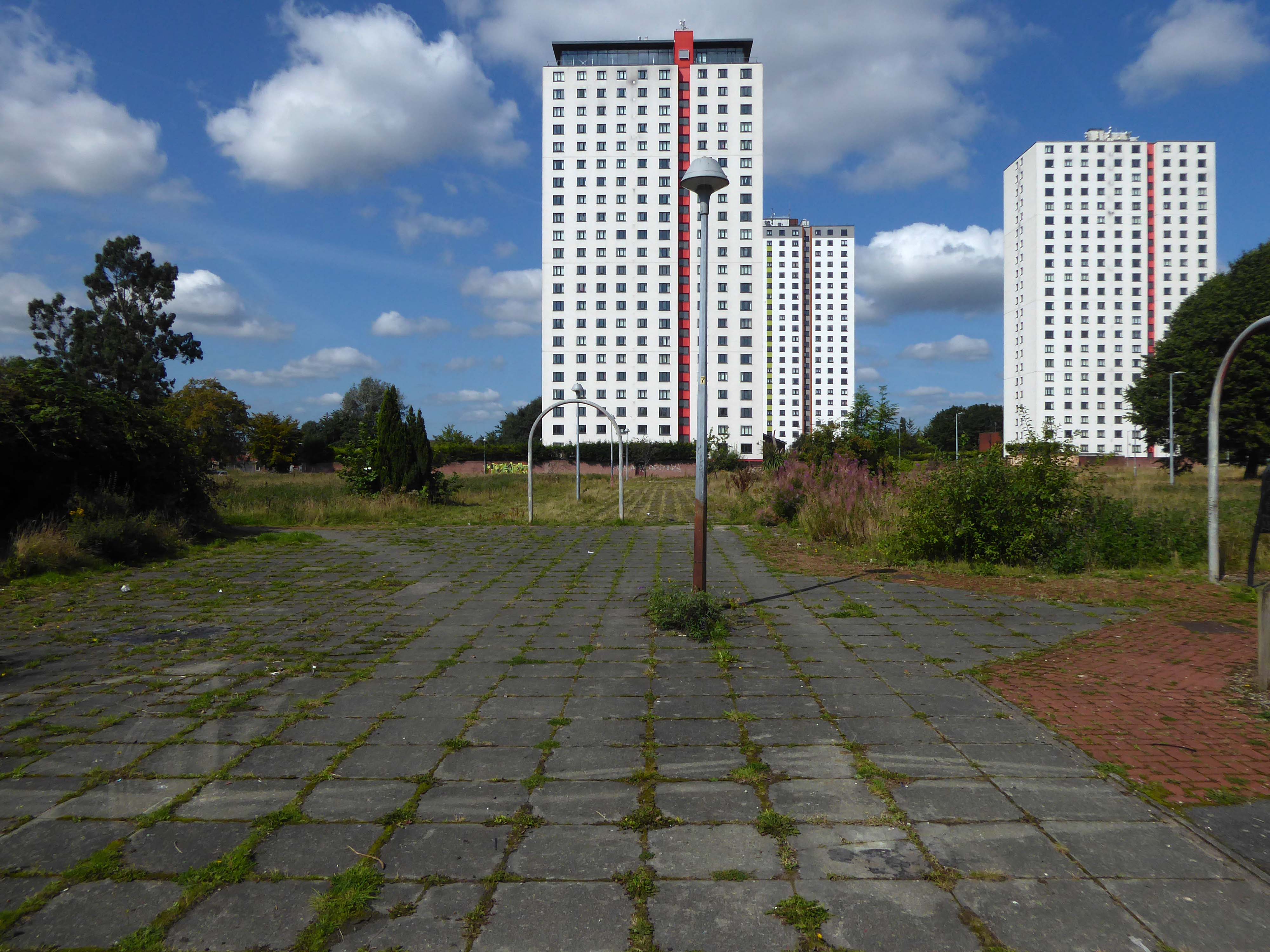
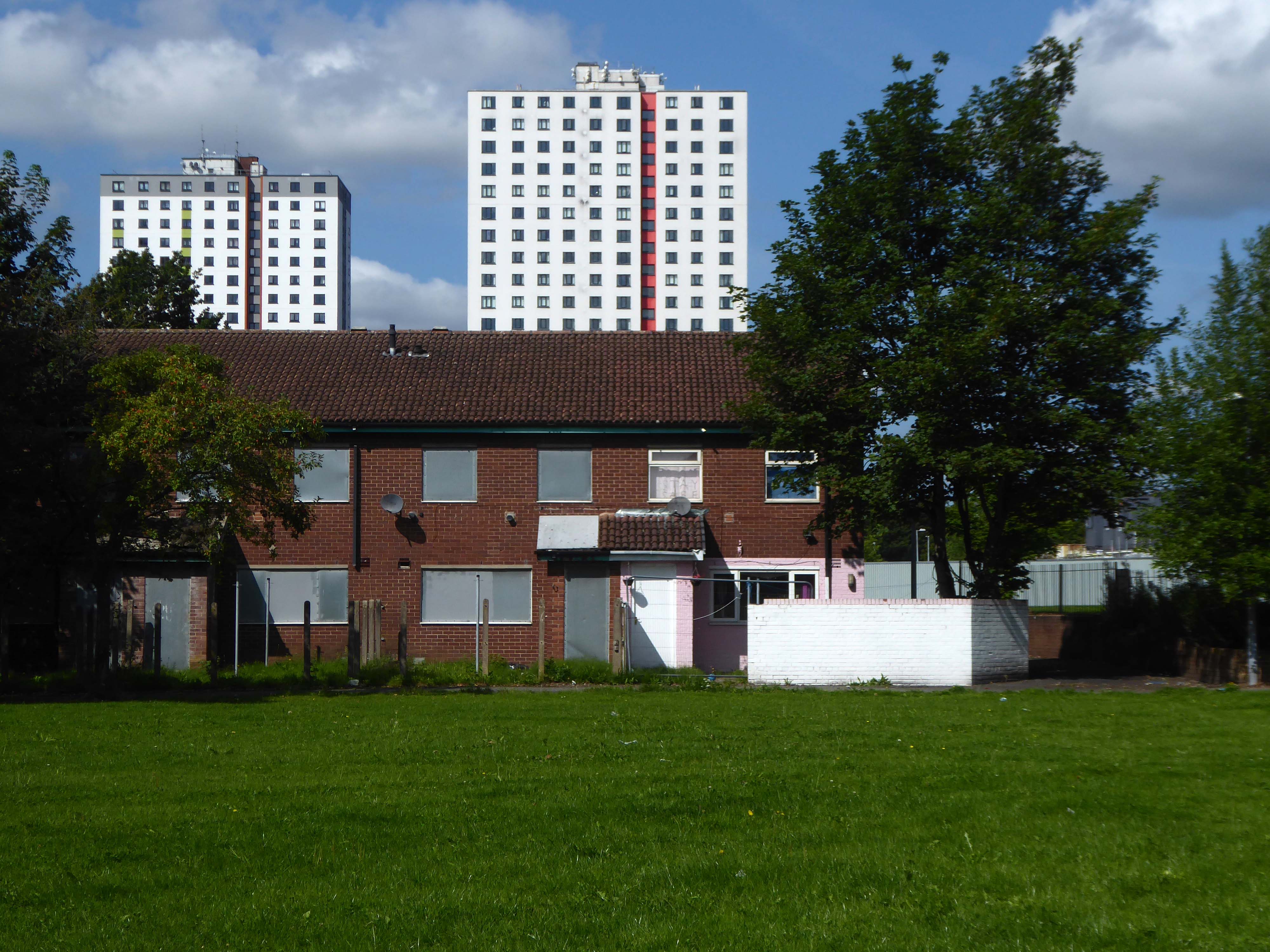
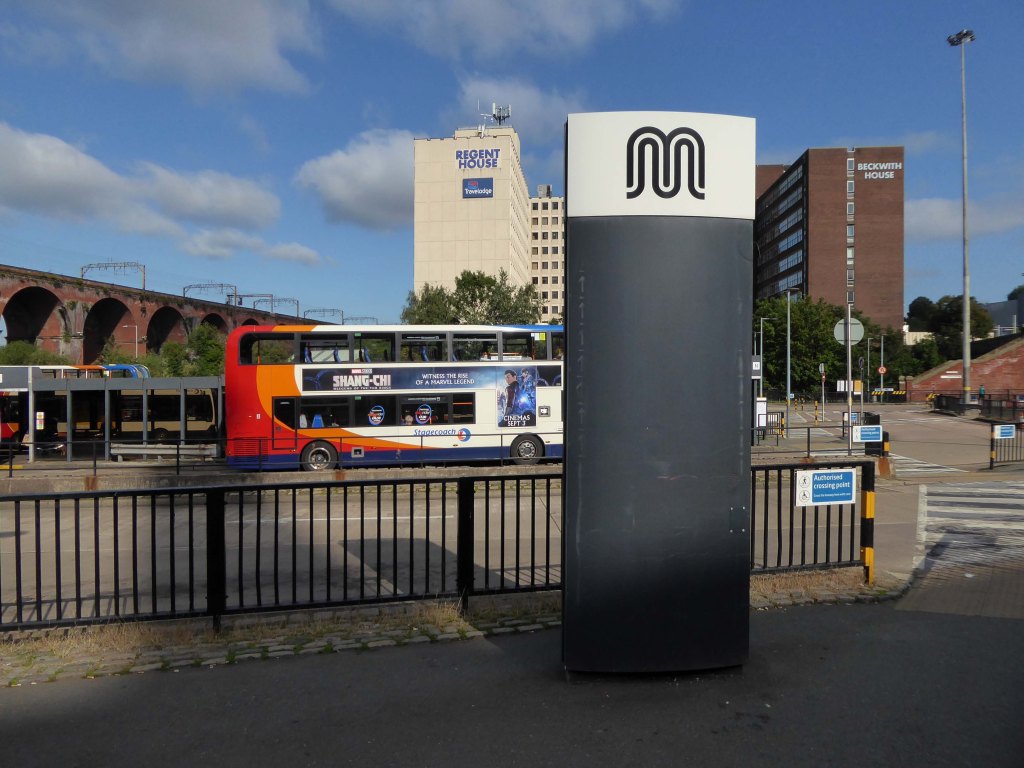
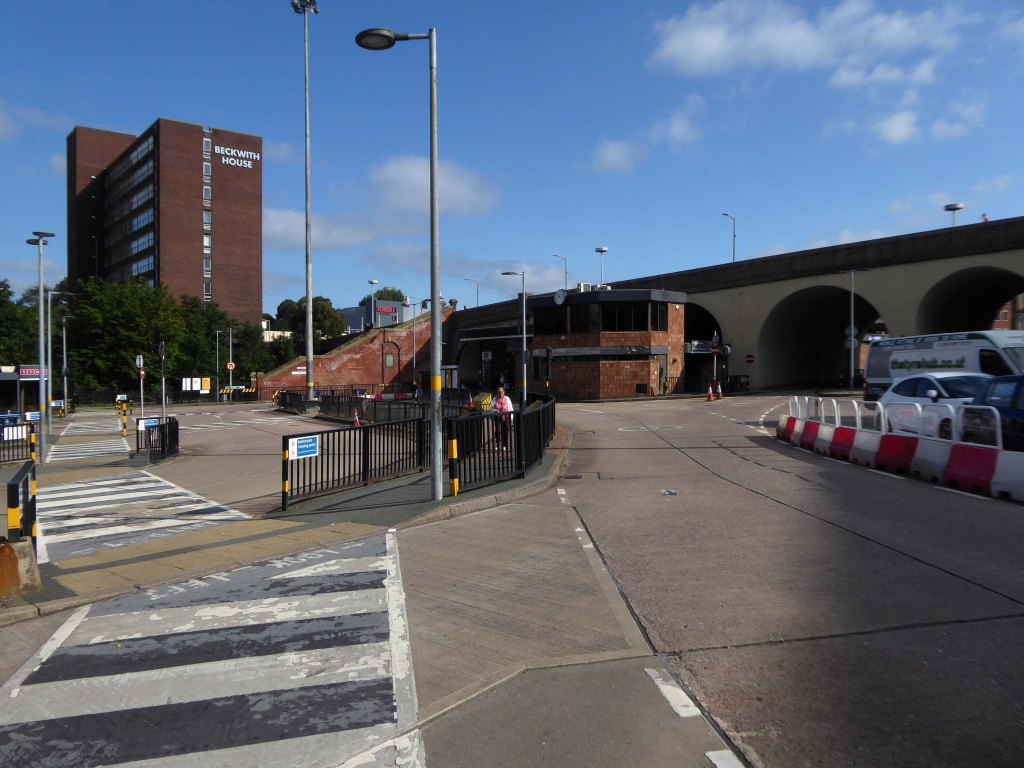
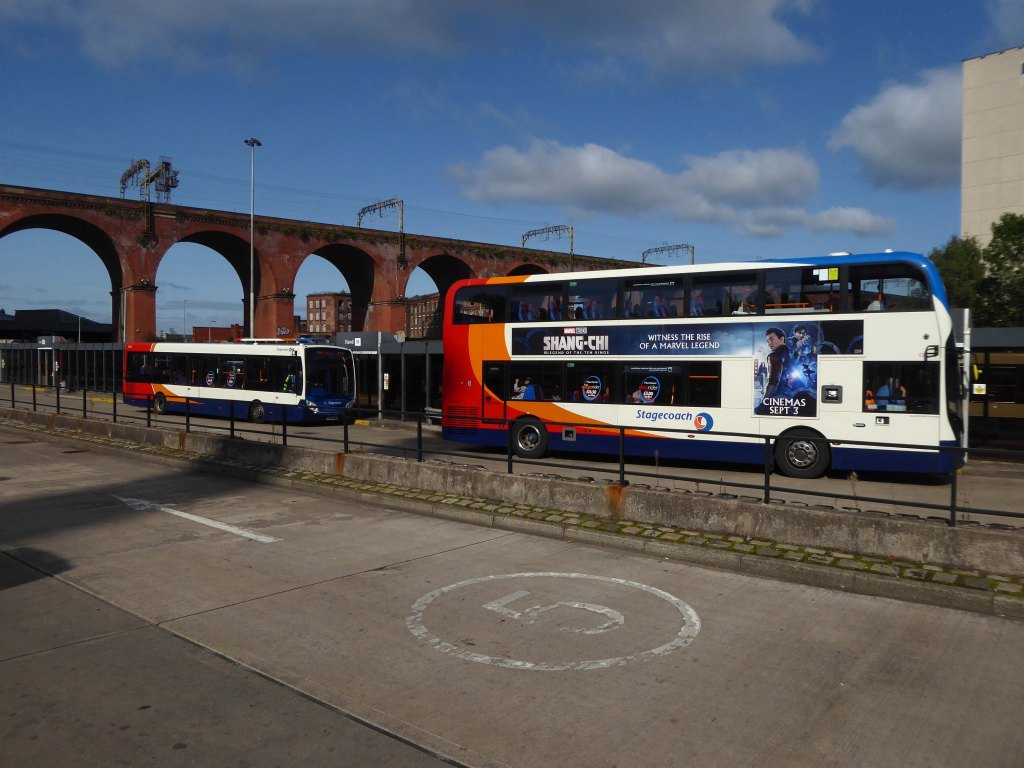
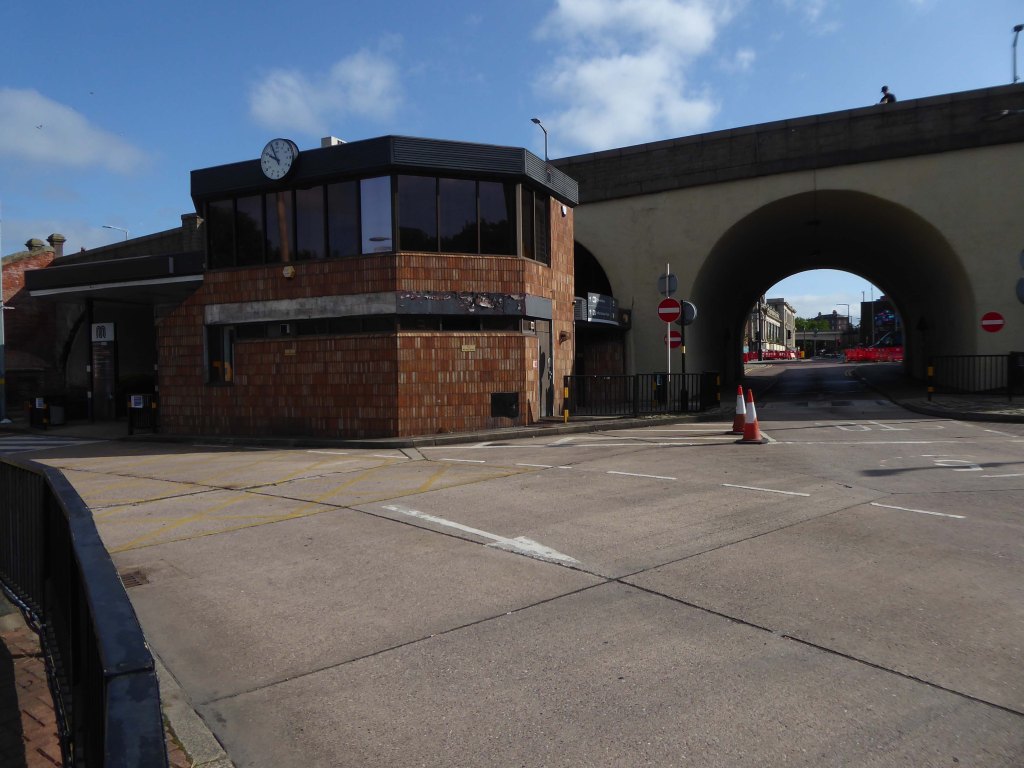
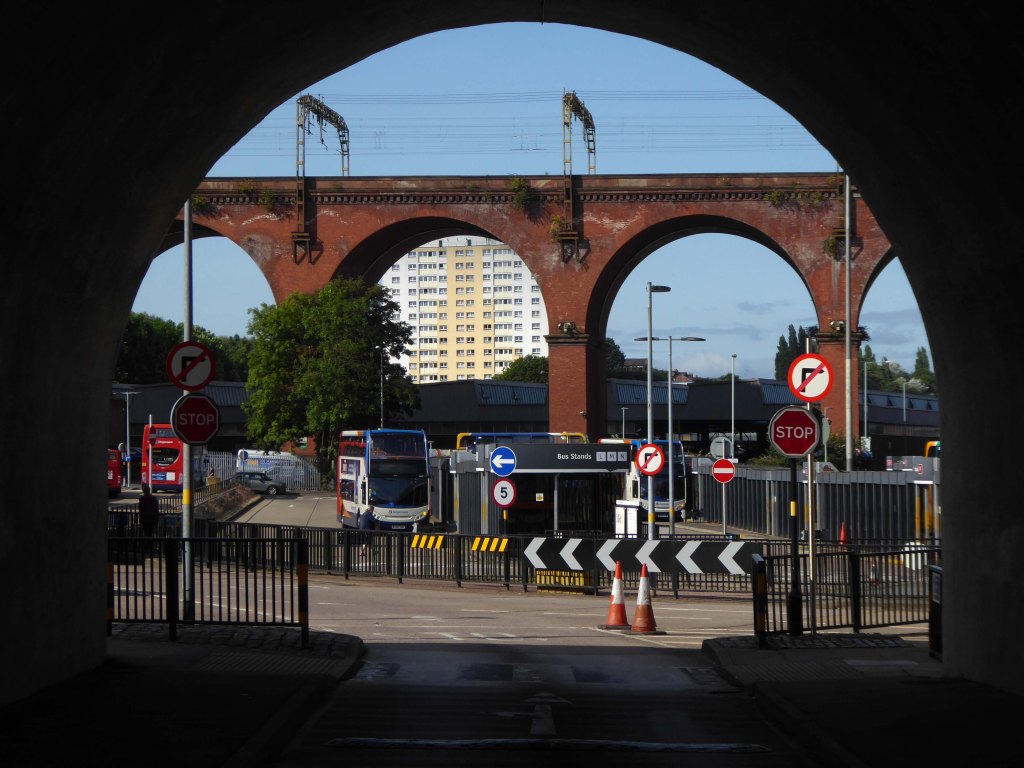
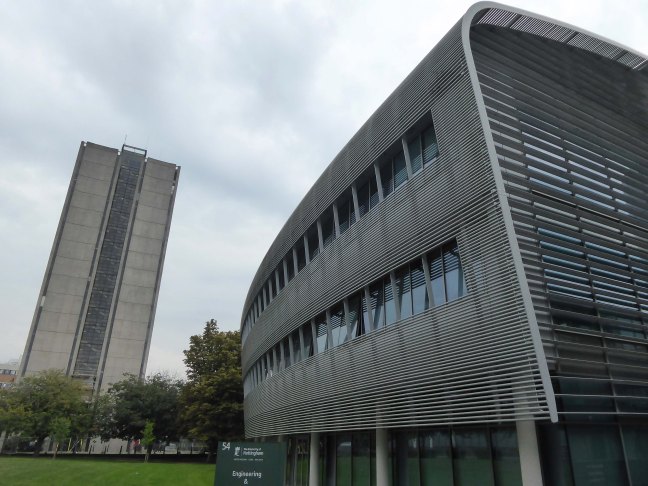
The first leg of a journey to the source of the River Irk beginning behind Victoria, finishing by the Hexagon Tower in Blackley.

The Irk’s name is of obscure etymology, but may be Brittonic in origin and related to the Welsh word iwrch, meaning roebuck

In medieval times, there was a mill by the Irk at which the tenants of the manor ground their corn and its fisheries were controlled by the lord of the manor. In the 16th century, throwing carrion and other offensive matter into the Irk was forbidden. Water for Manchester was drawn from the river before the Industrial Revolution. A bridge over the Irk was recorded in 1381. The river was noted for destructive floods. In 1480, the burgesses of Manchester described the highway between Manchester and Collyhurst which – the water of Irk had worn out. In 1816, of seven bridges over the Irk, six were liable to be flooded after heavy rain but the seventh, the Ducie Bridge completed in 1814 was above flood levels.

According to The New Gazetteer of Lancashire the Irk had – more mill seats upon it than any other stream of its length in the Kingdom and – the eels in this river were formerly remarkable for their fatness, which was attributed to the grease and oils expressed by the mills from the woollen cloths and mixed with the waters. 

However, by the start of the 20th century the Irk Valley between Crumpsall and Blackley had been left a neglected river – not only the blackest but the most sluggish of all rivers.

Wikipedia

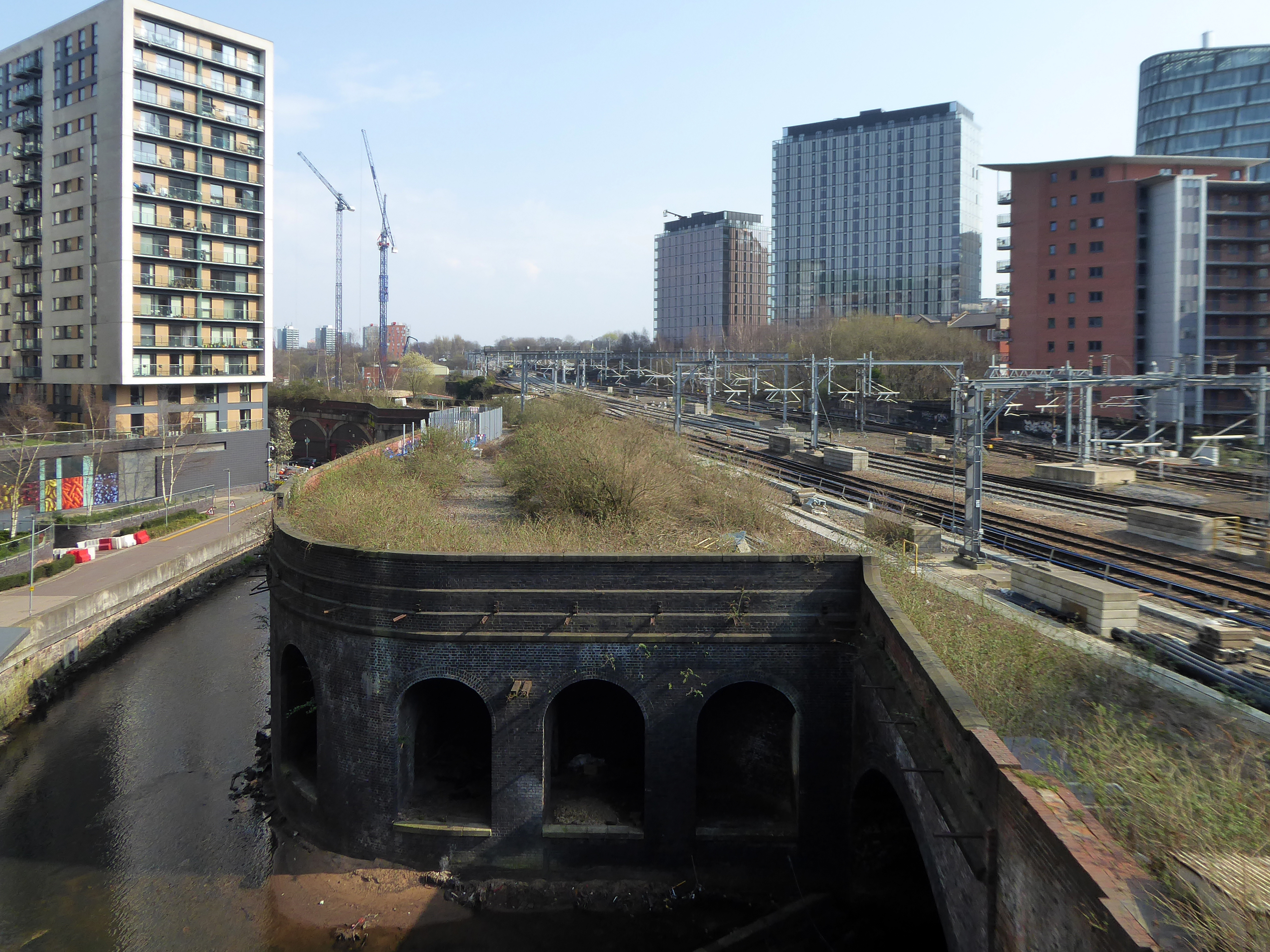
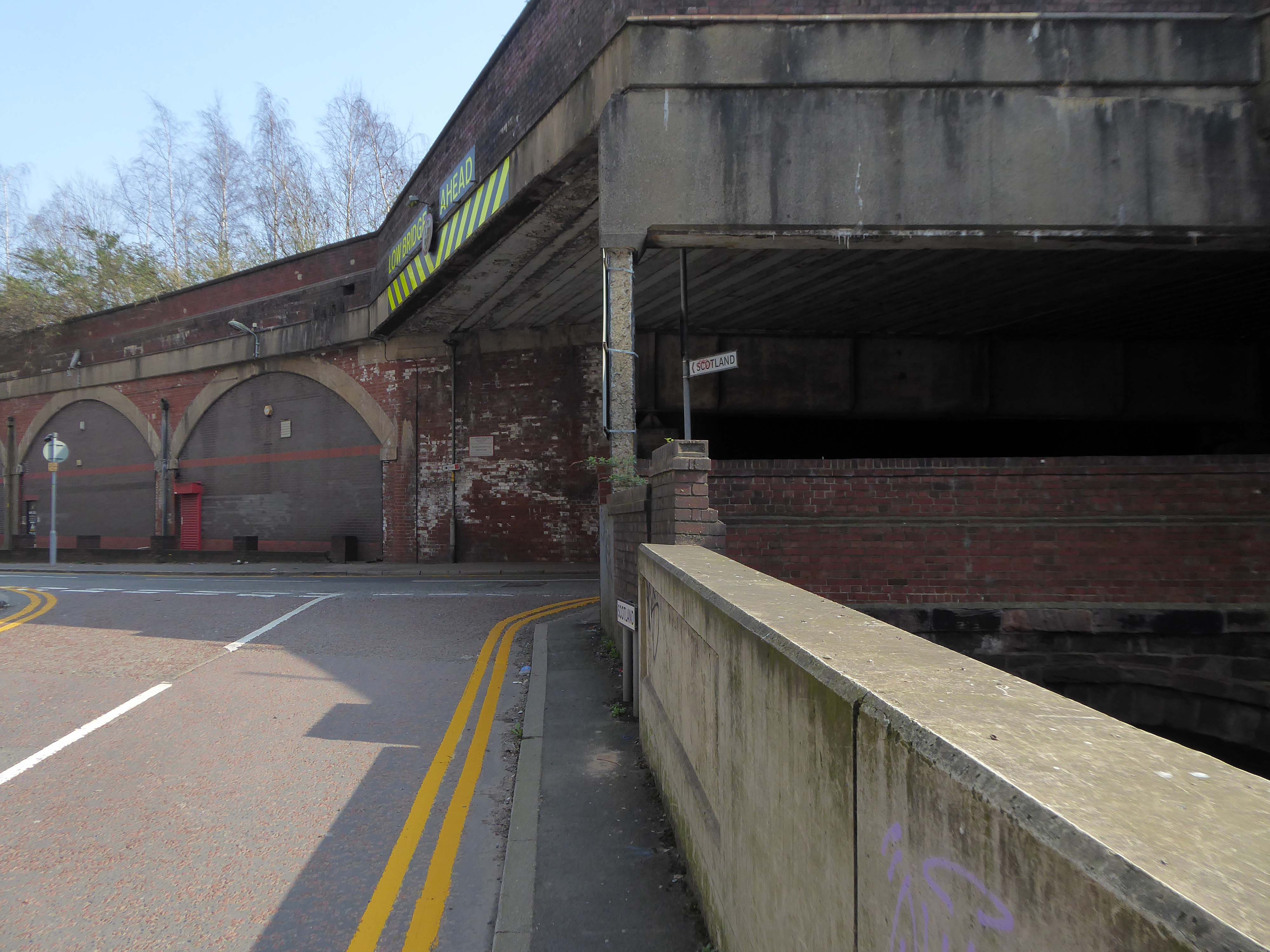
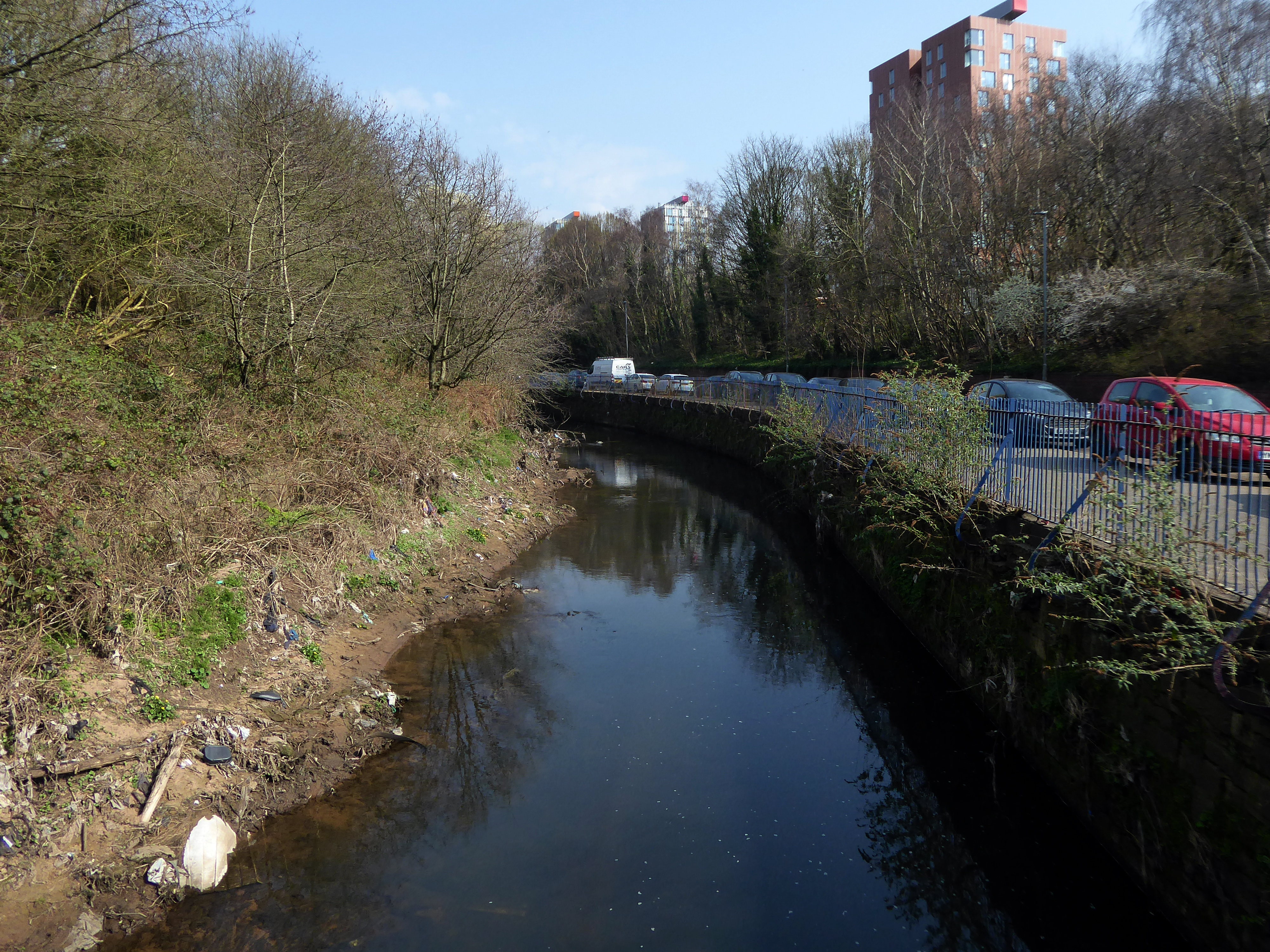
The river emerges from beneath the city into an area named Scotland – a remnant of Manchester’s links with the Jacobite Rebellion.

To the left were the squalid Victorian homes of Red Bank – currently presenting as the Green Quarter.

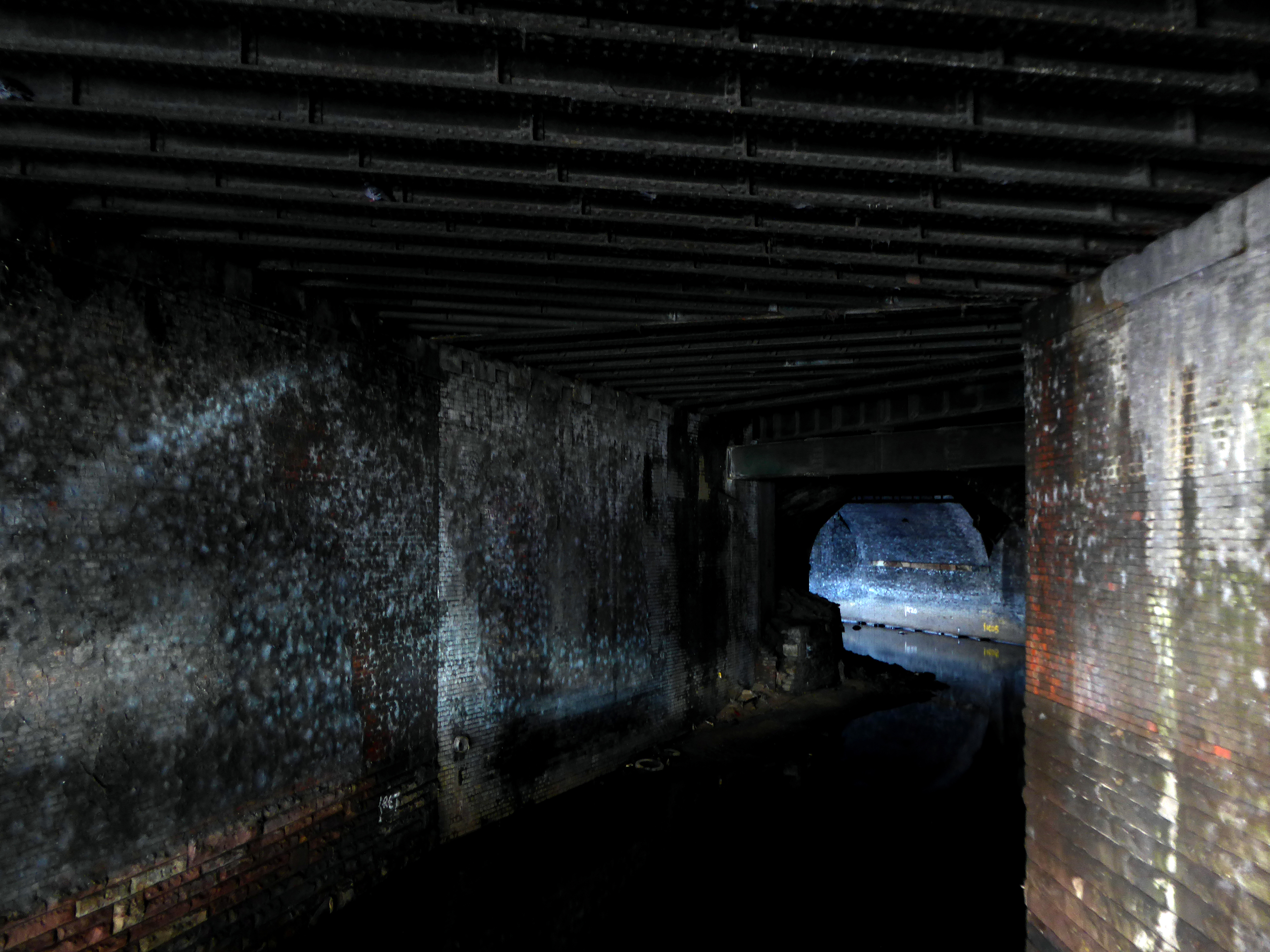
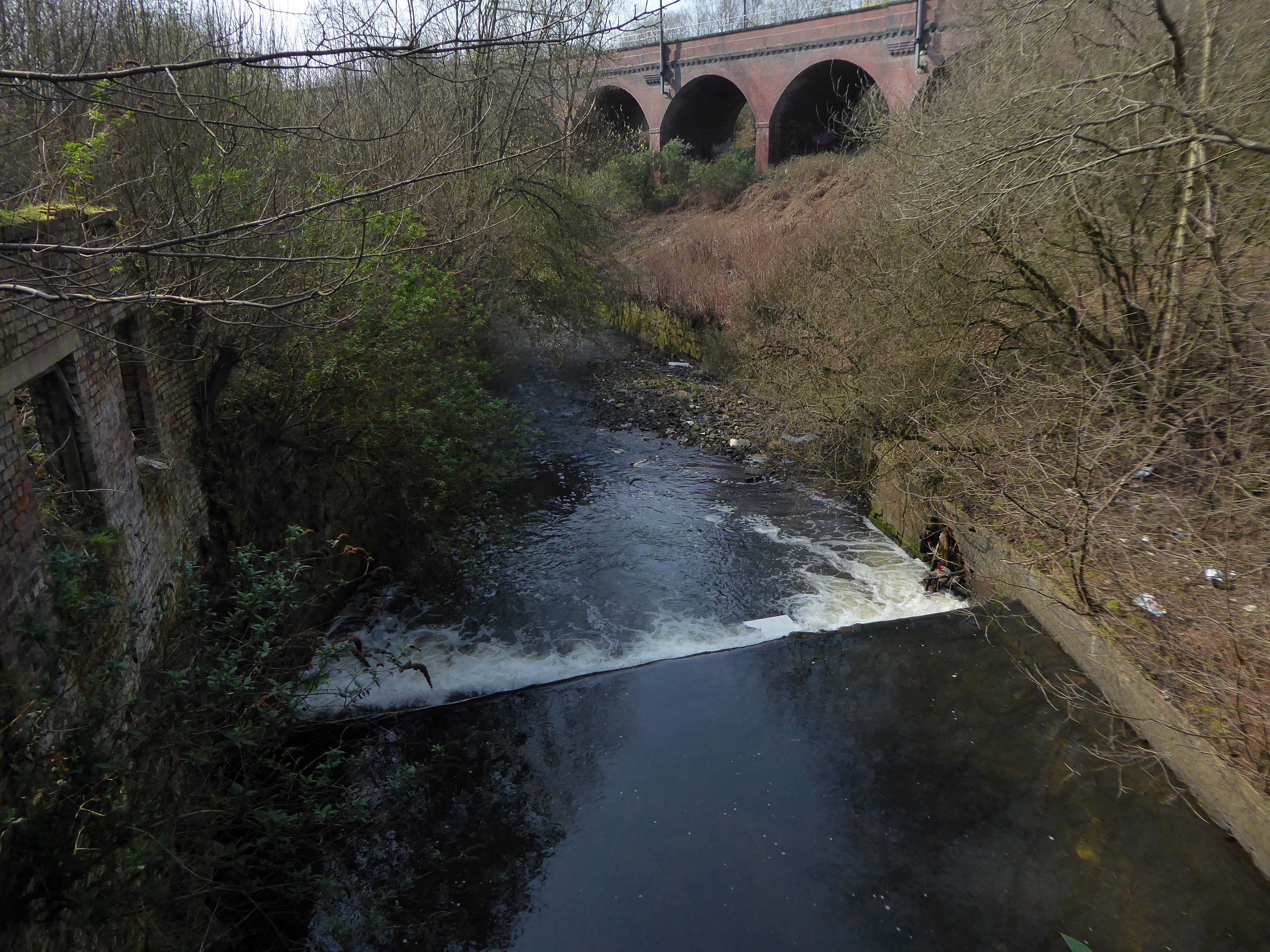
The river briefly becomes subterranean again.

This is a river with an ignominious history – famously damned by émigré Friedrich Engels.

At the bottom flows, or rather stagnates, the Irk, a narrow, coal-black, foul-smelling stream, full of debris and refuse, which it deposits on the shallower right bank.

Mr Engels currently resides by the Medlock.

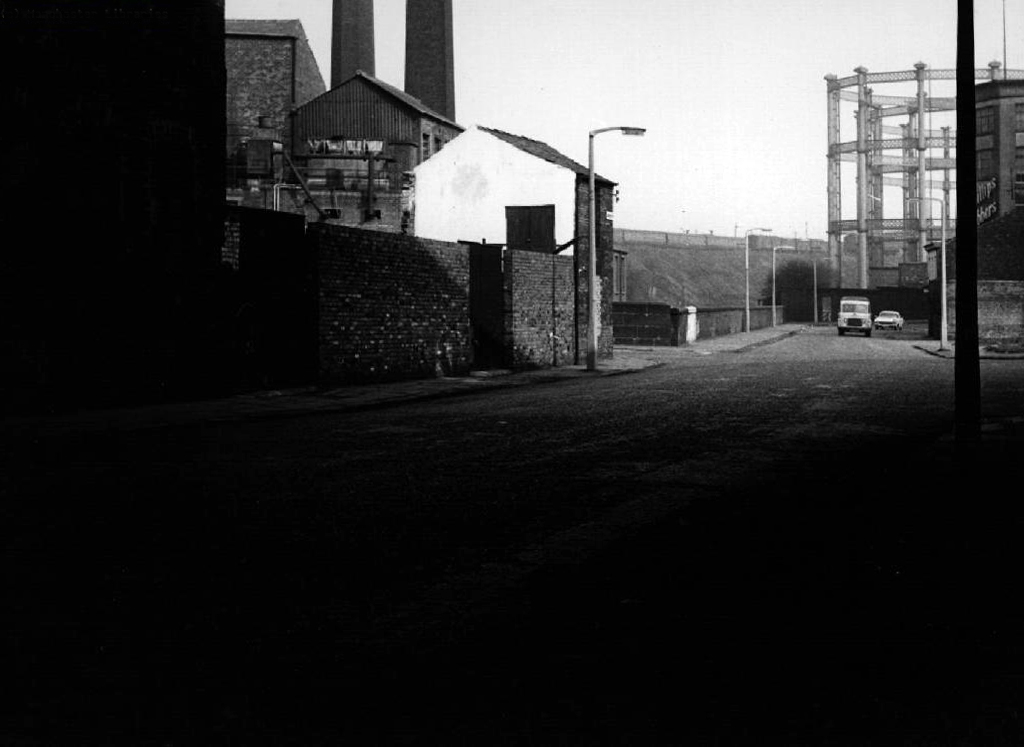
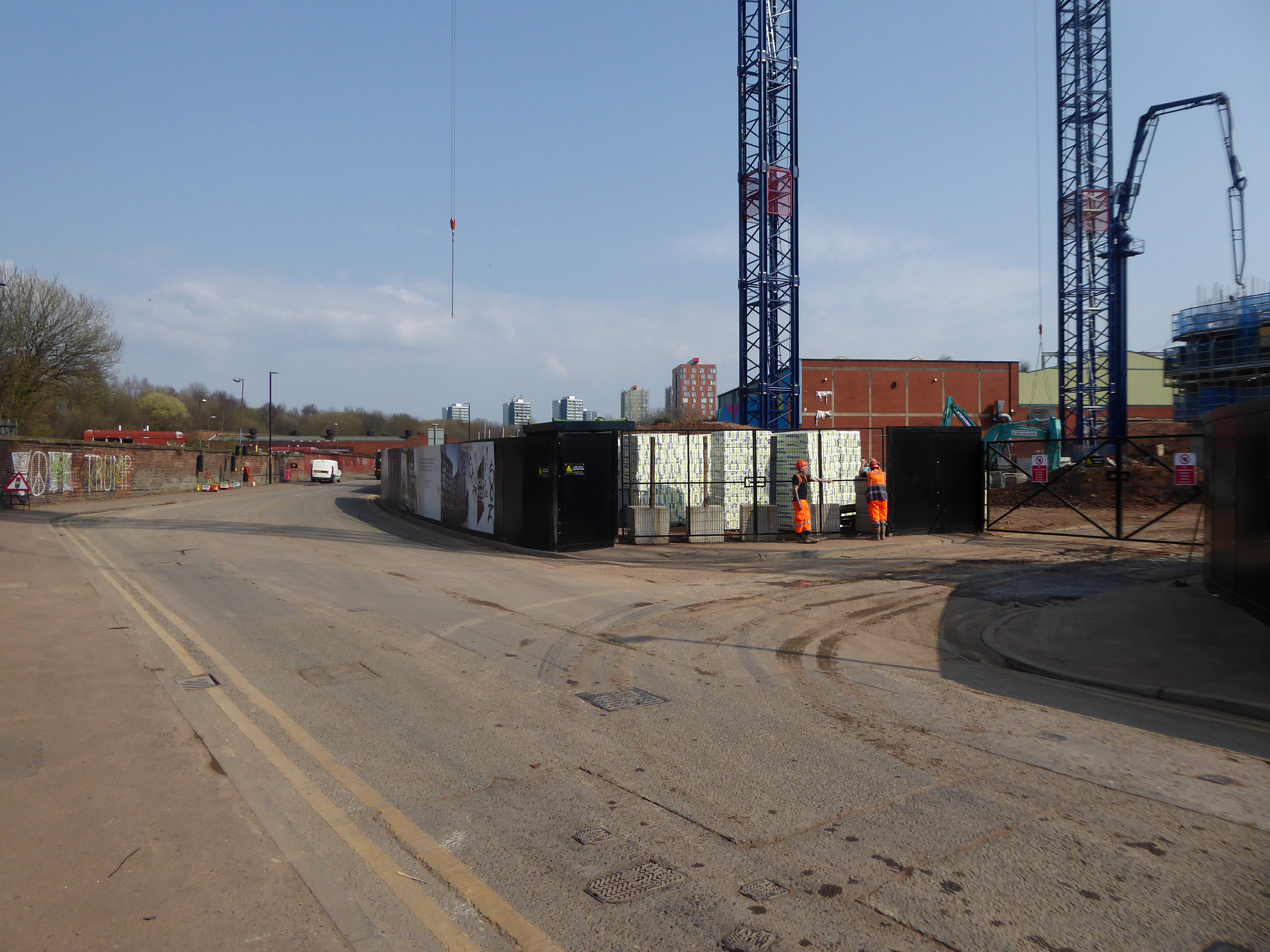
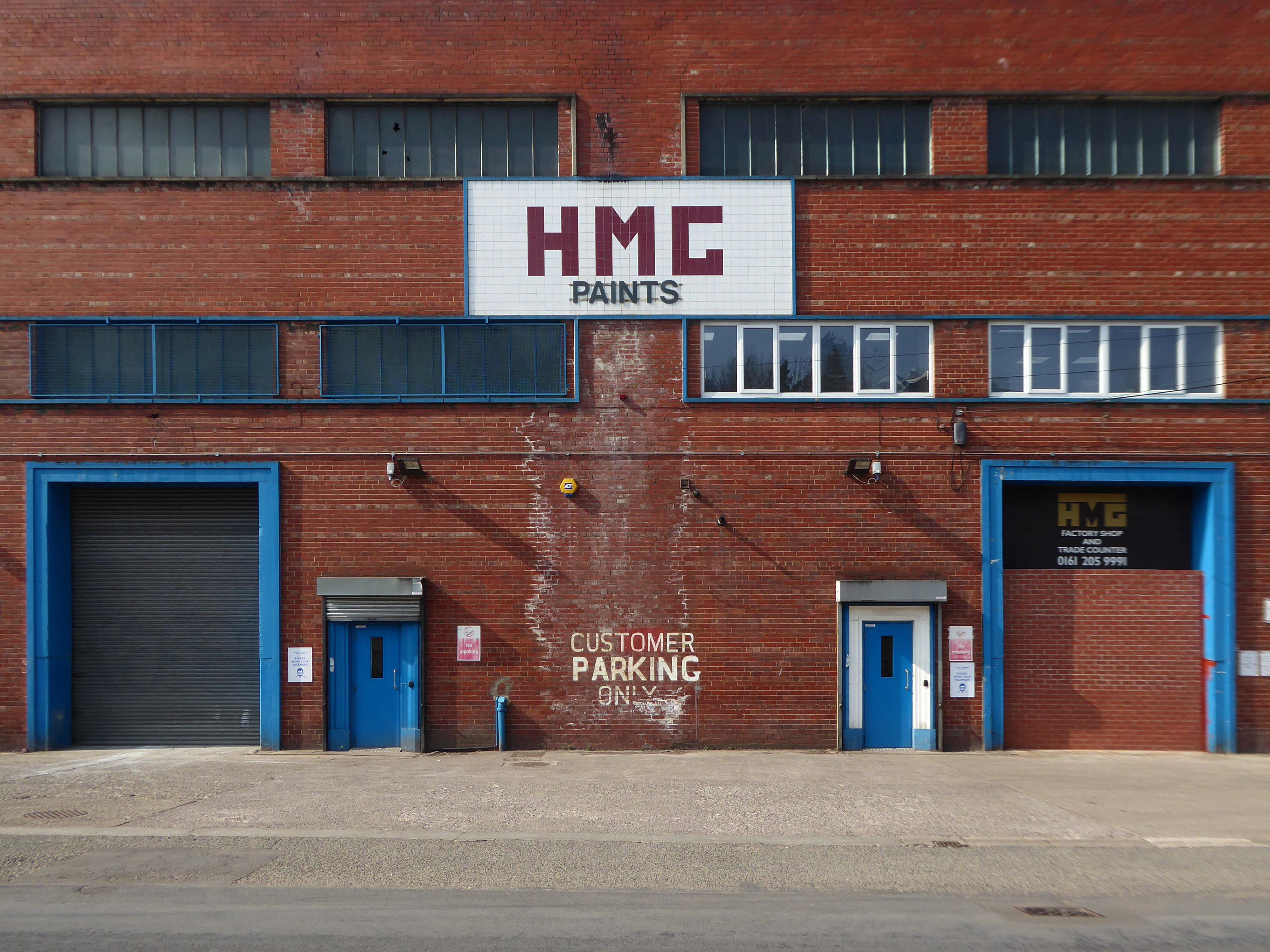
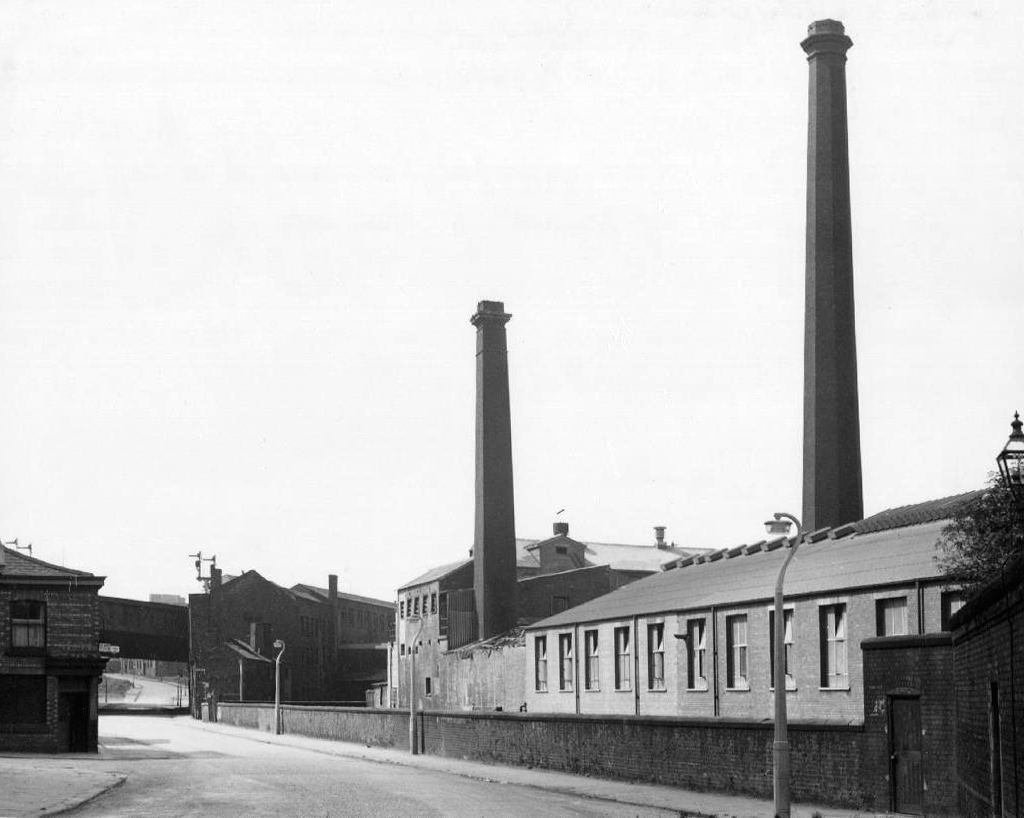
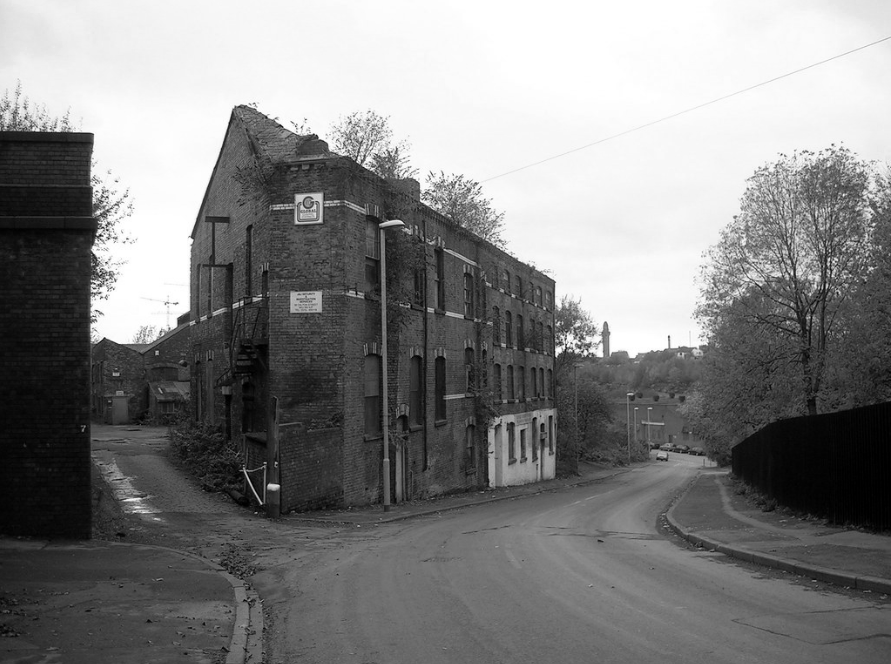
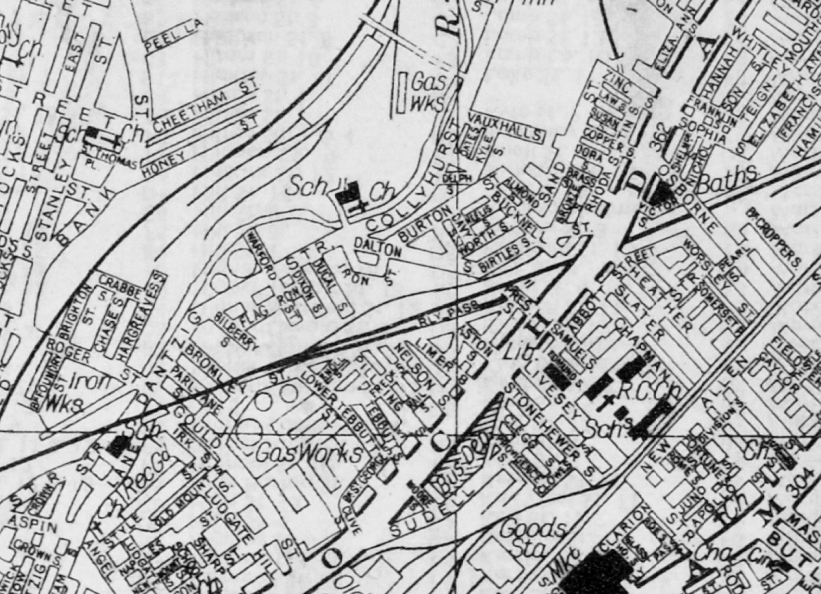
The stretch along Dantzic Street into Collyhurst Road was heavily industrialised, of which some remnants prevail.

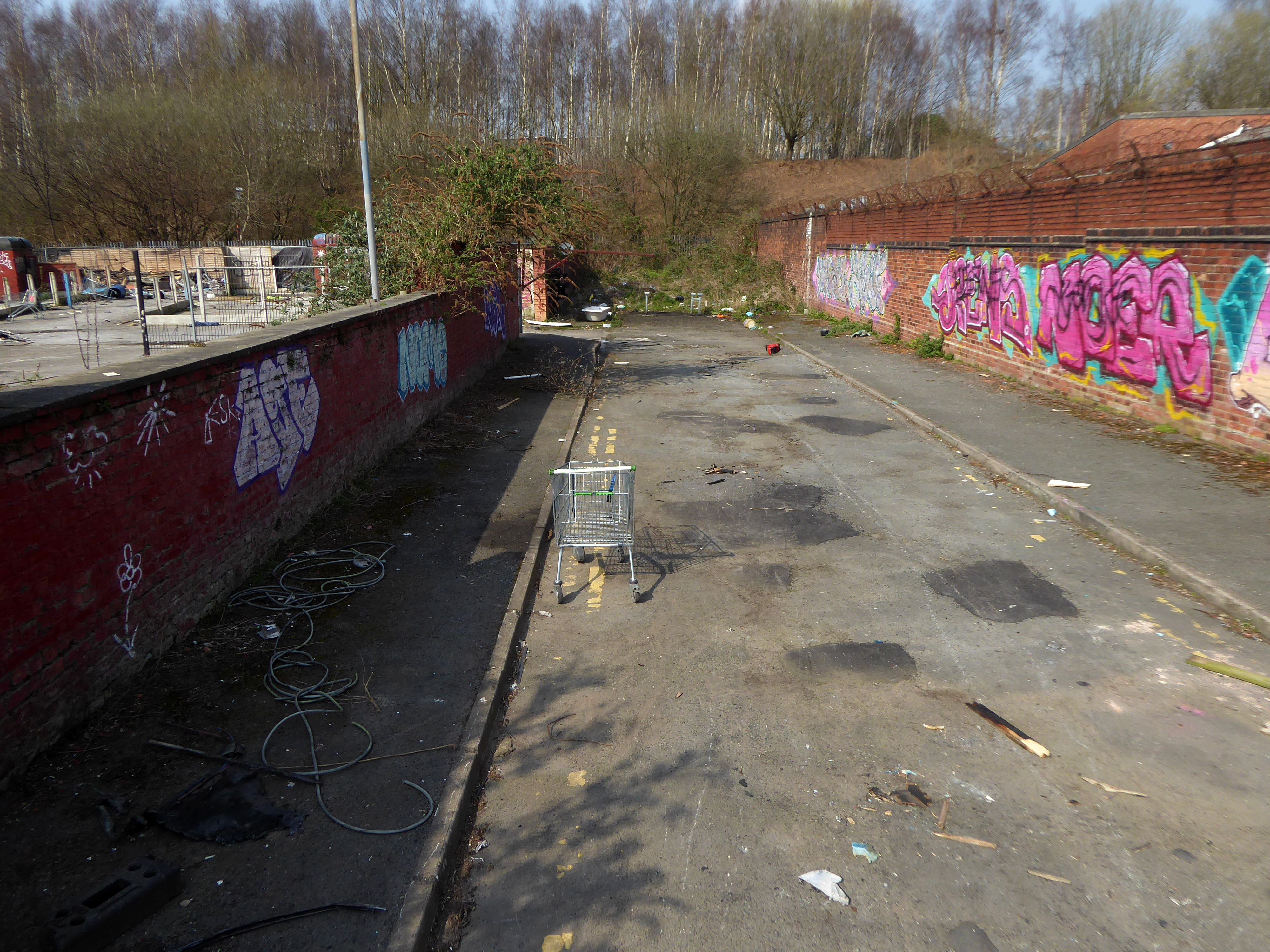
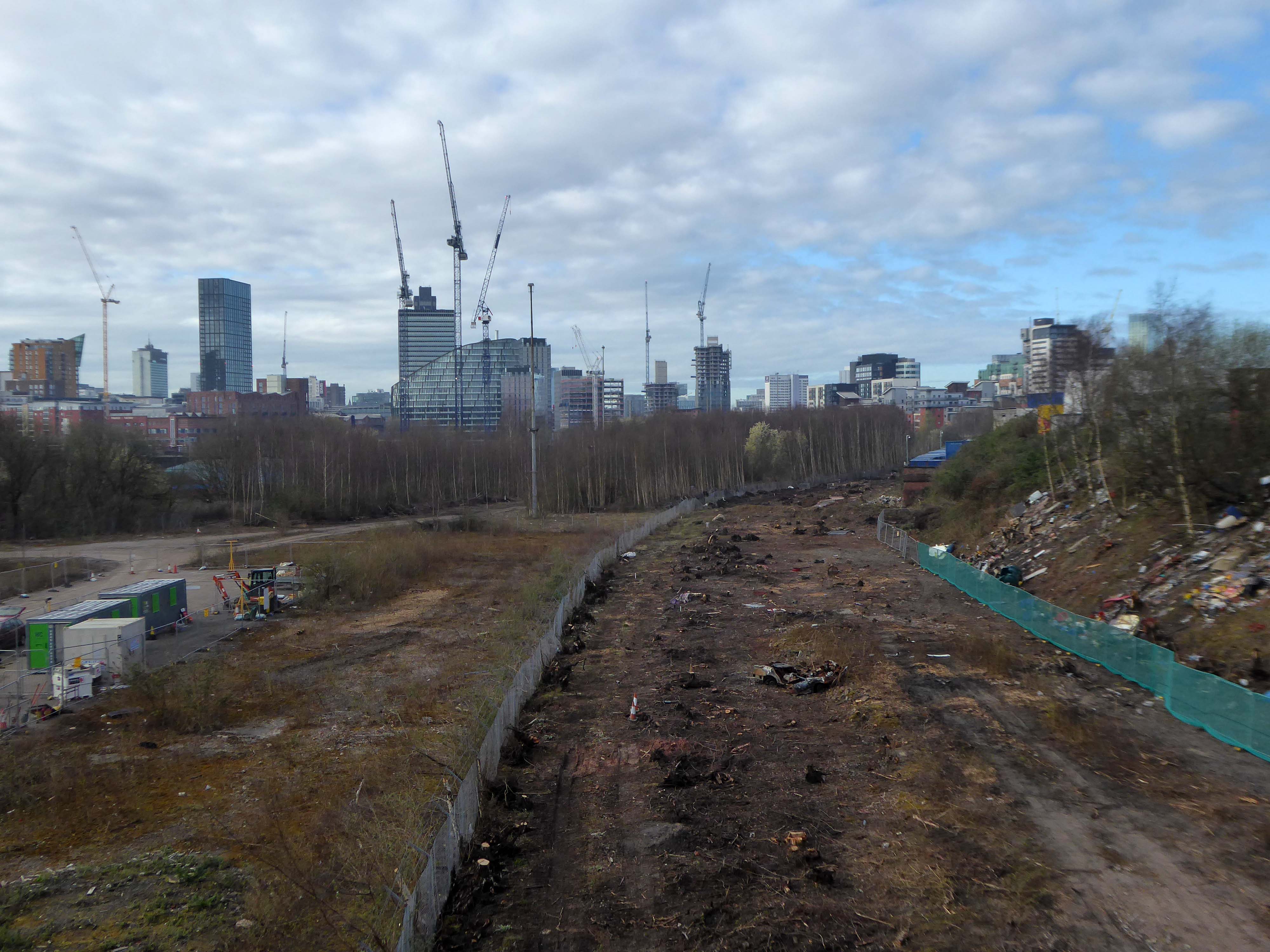
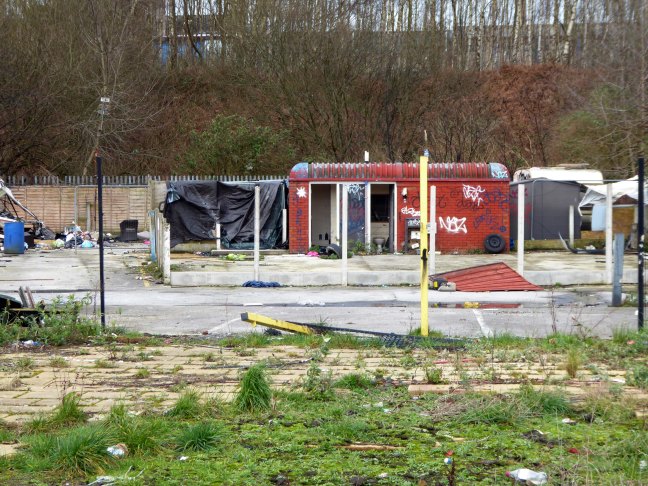
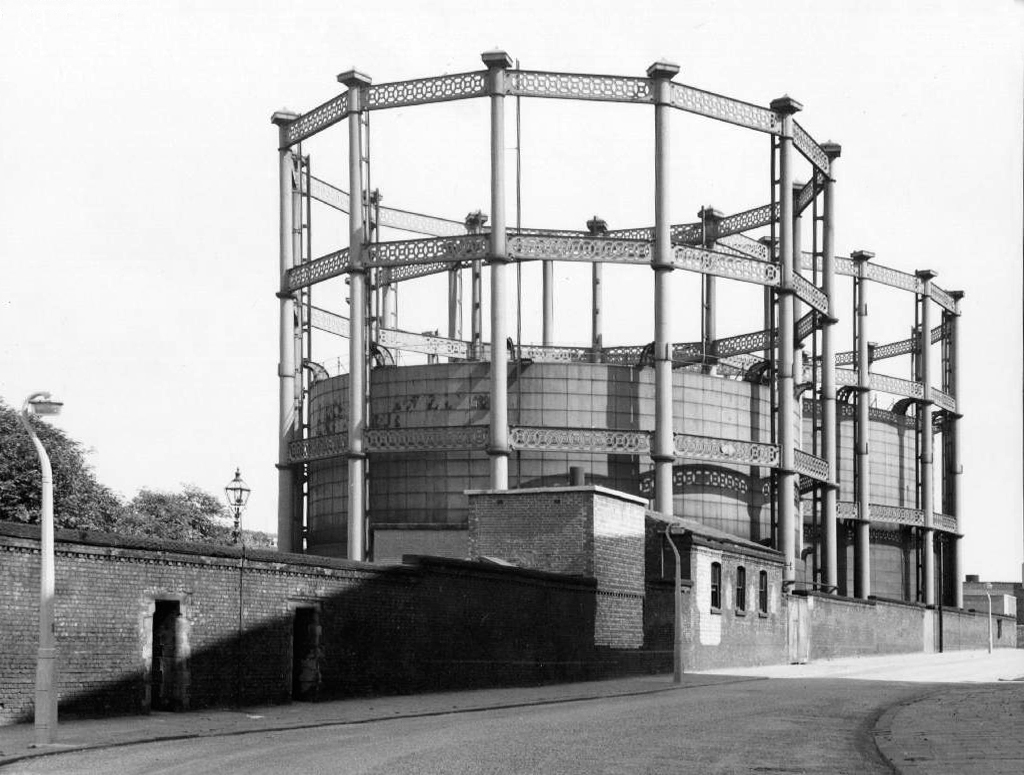
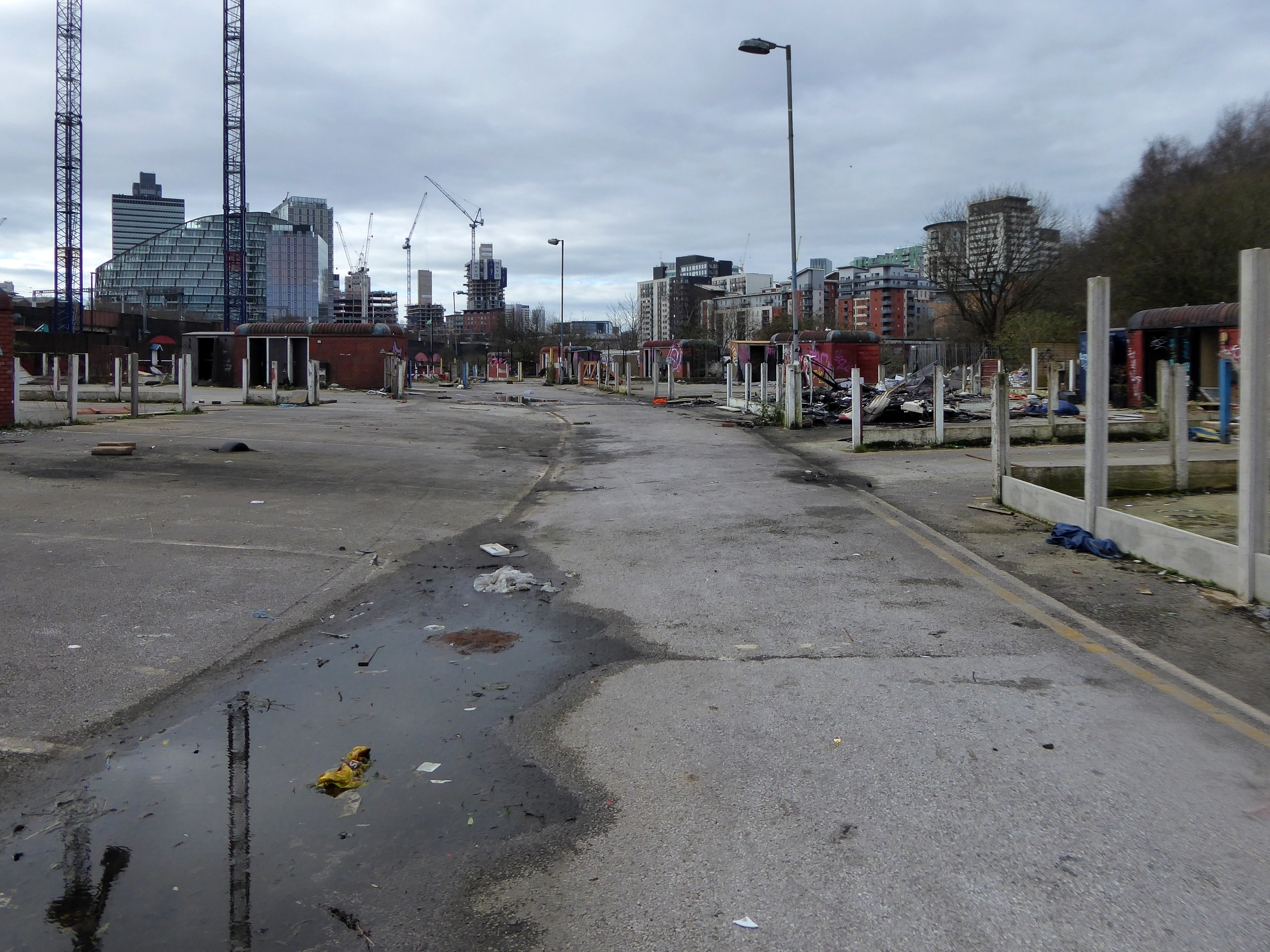
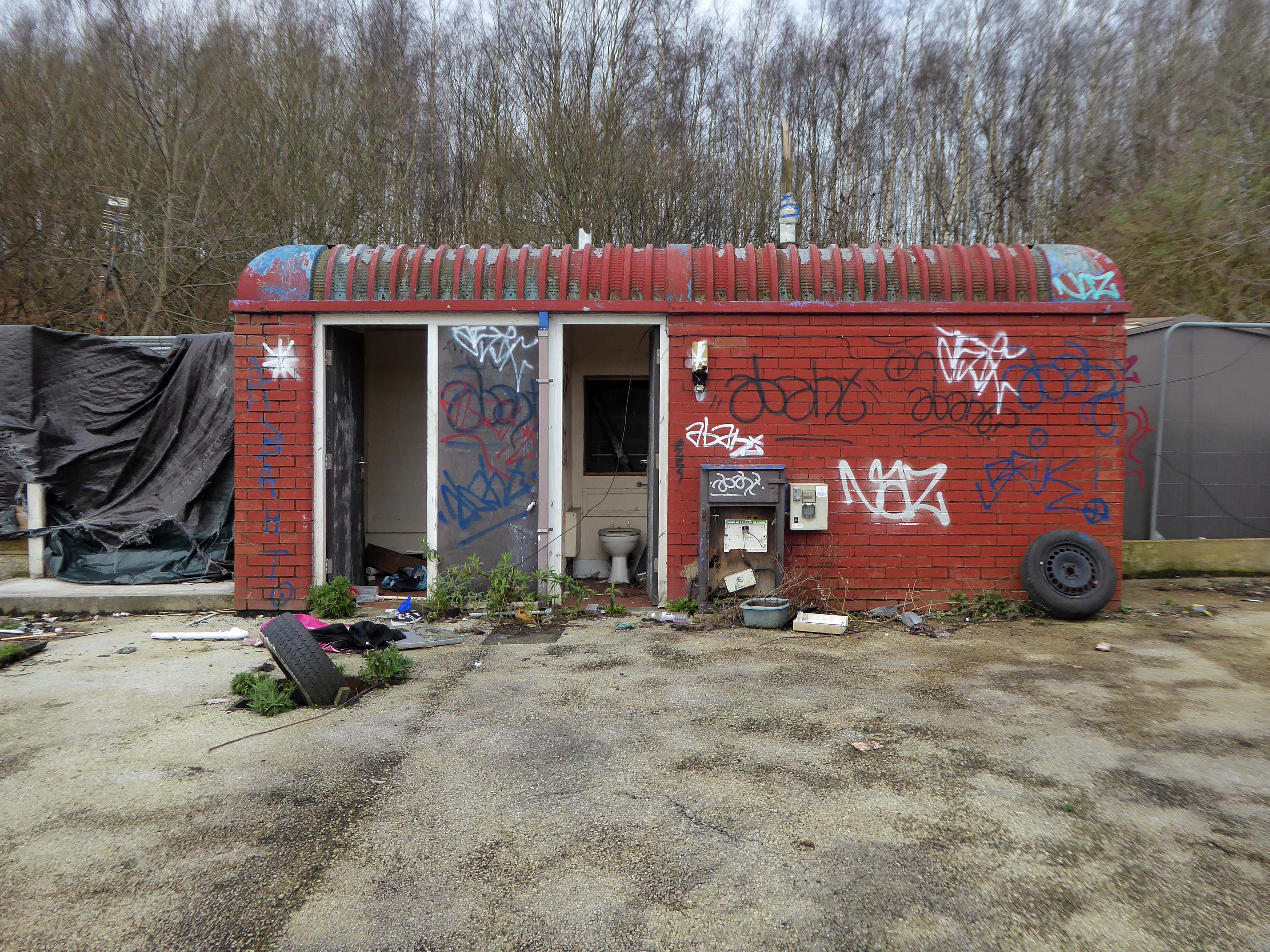
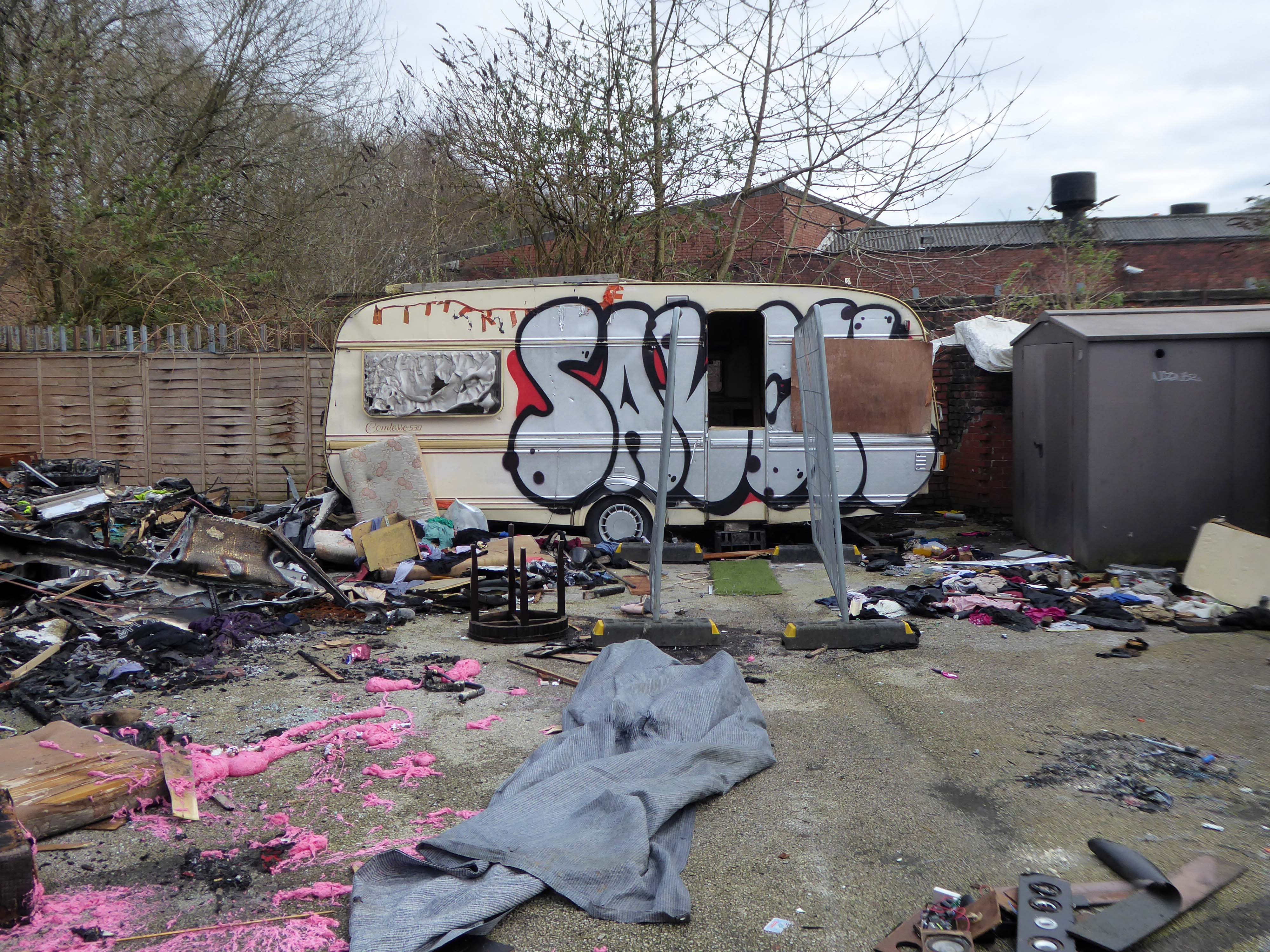
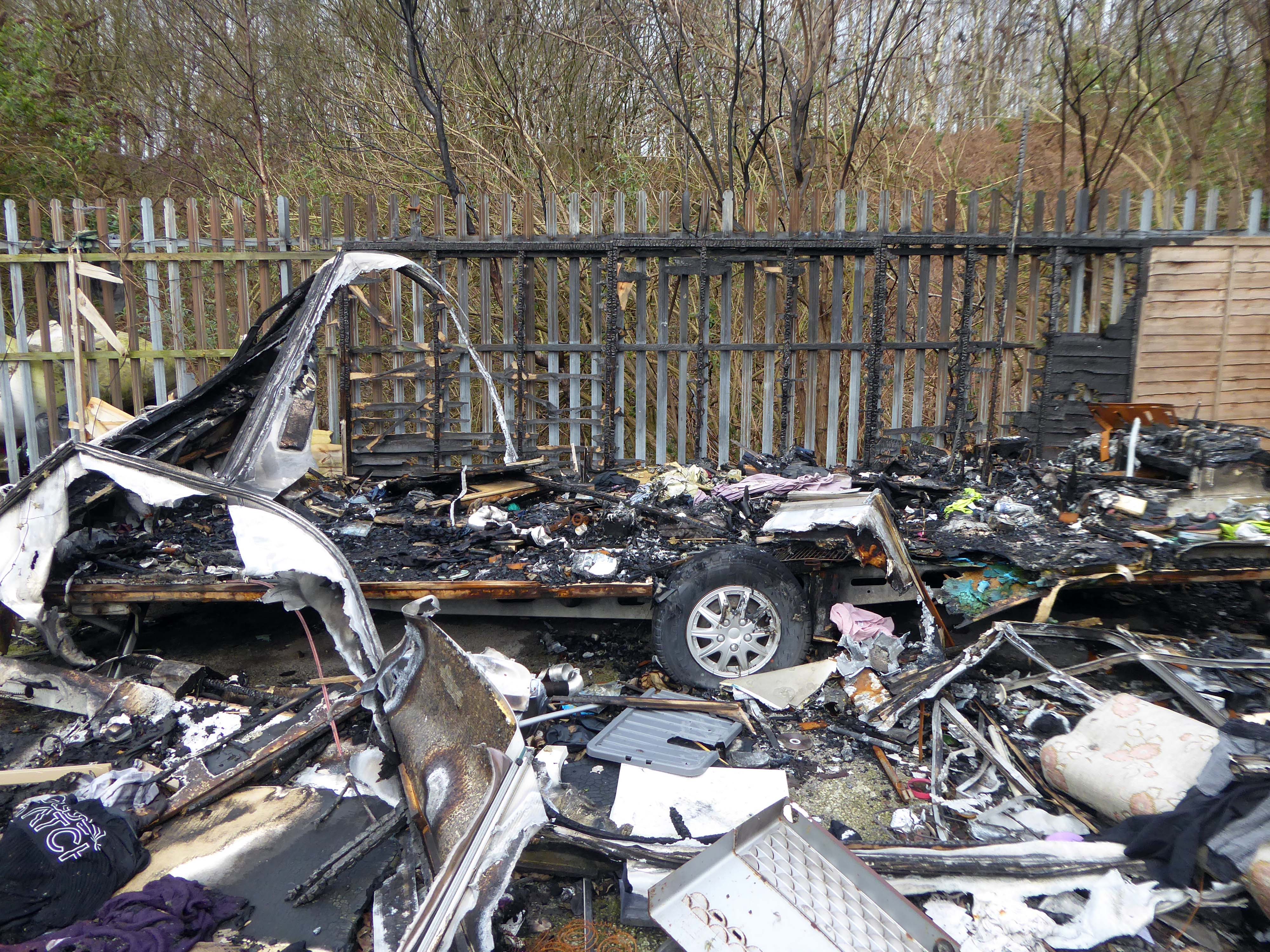
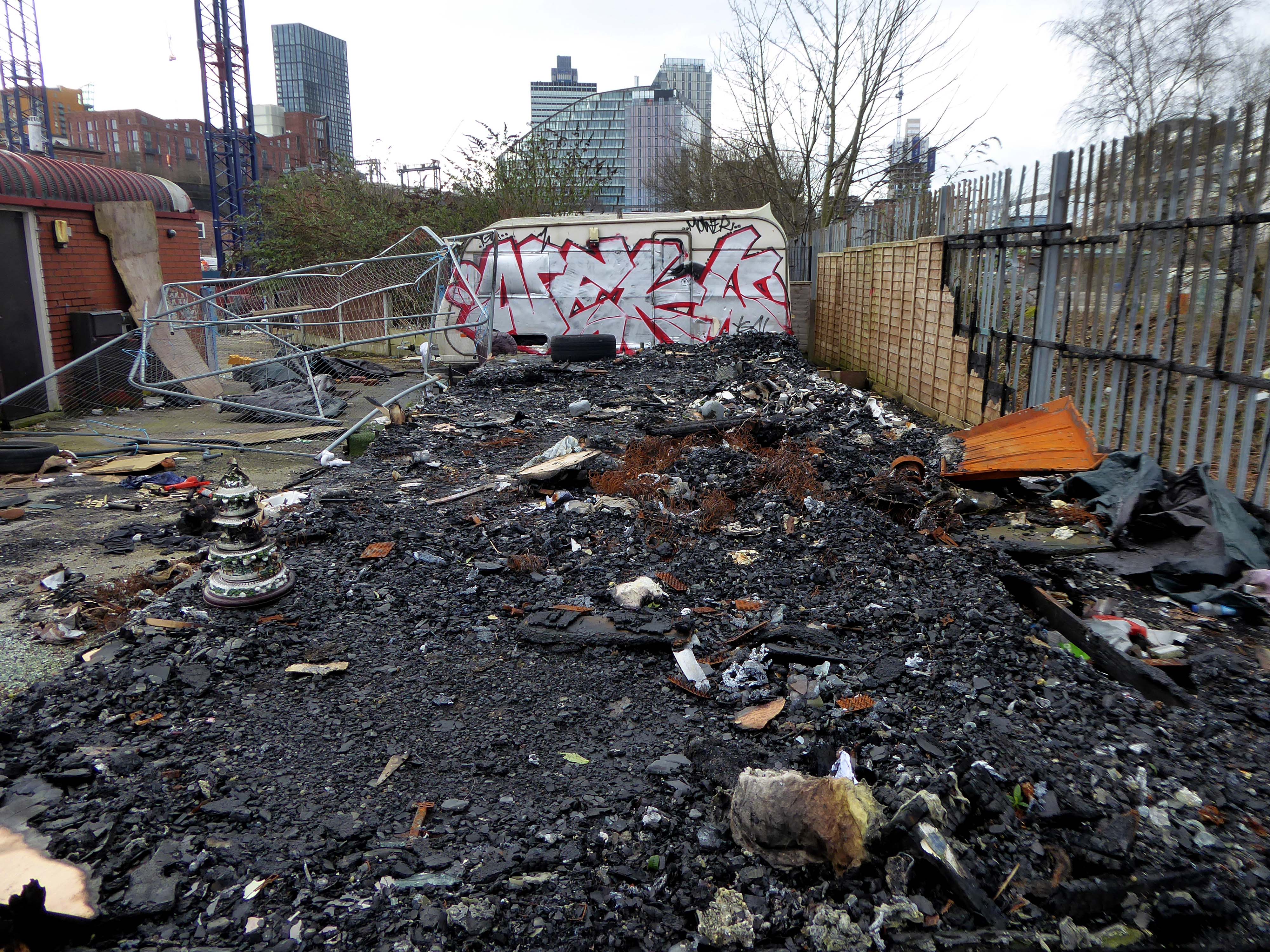
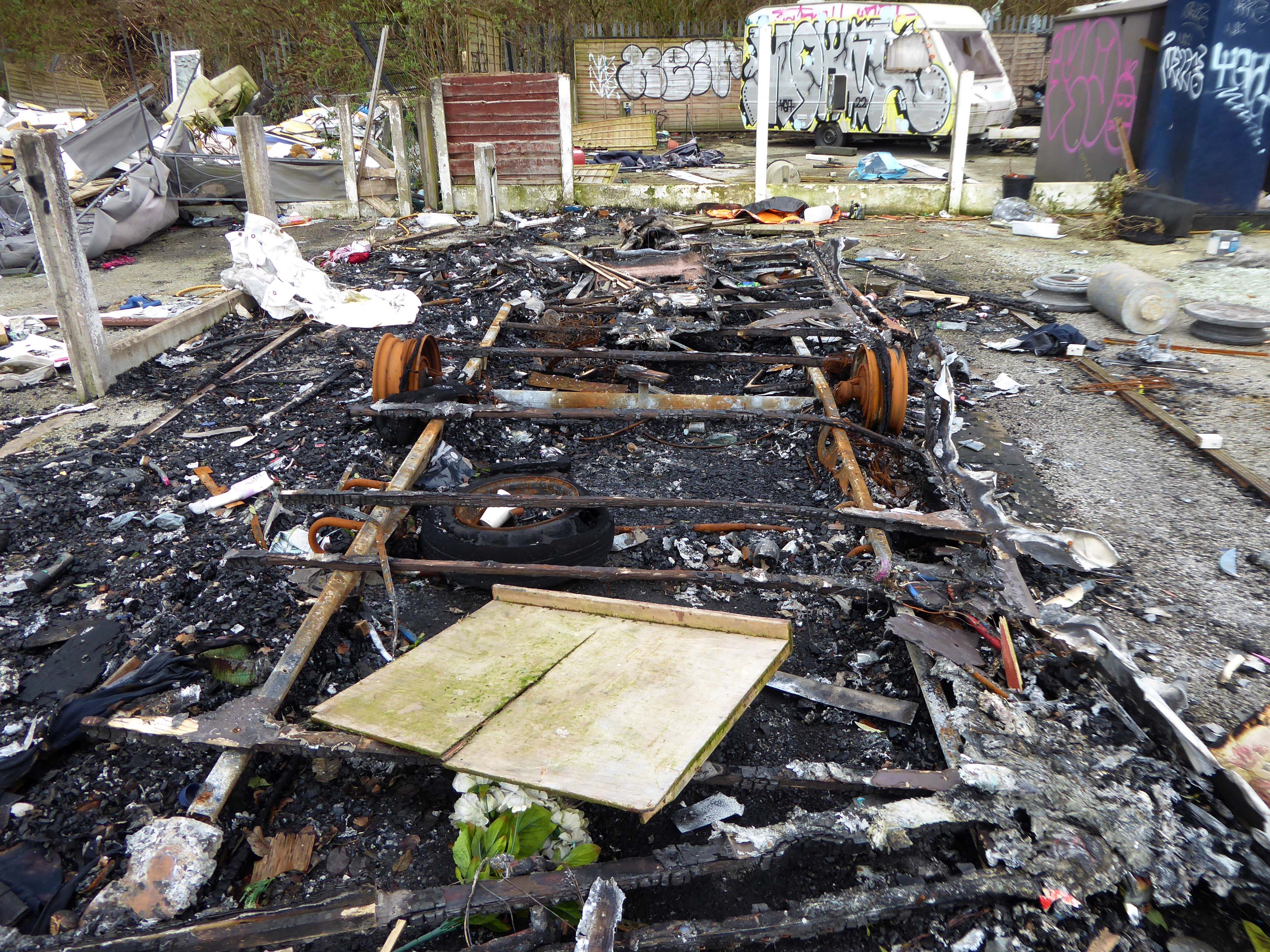
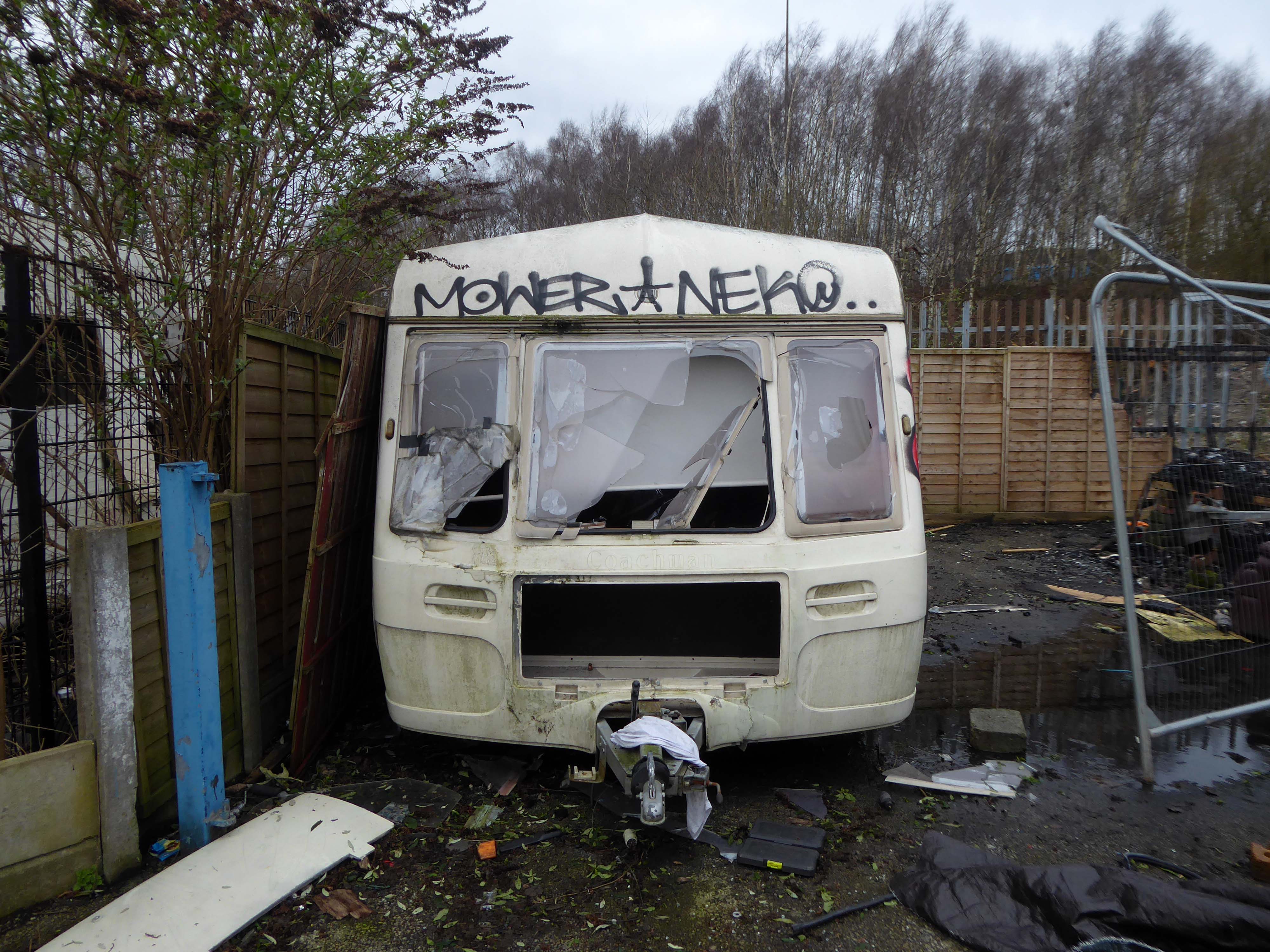
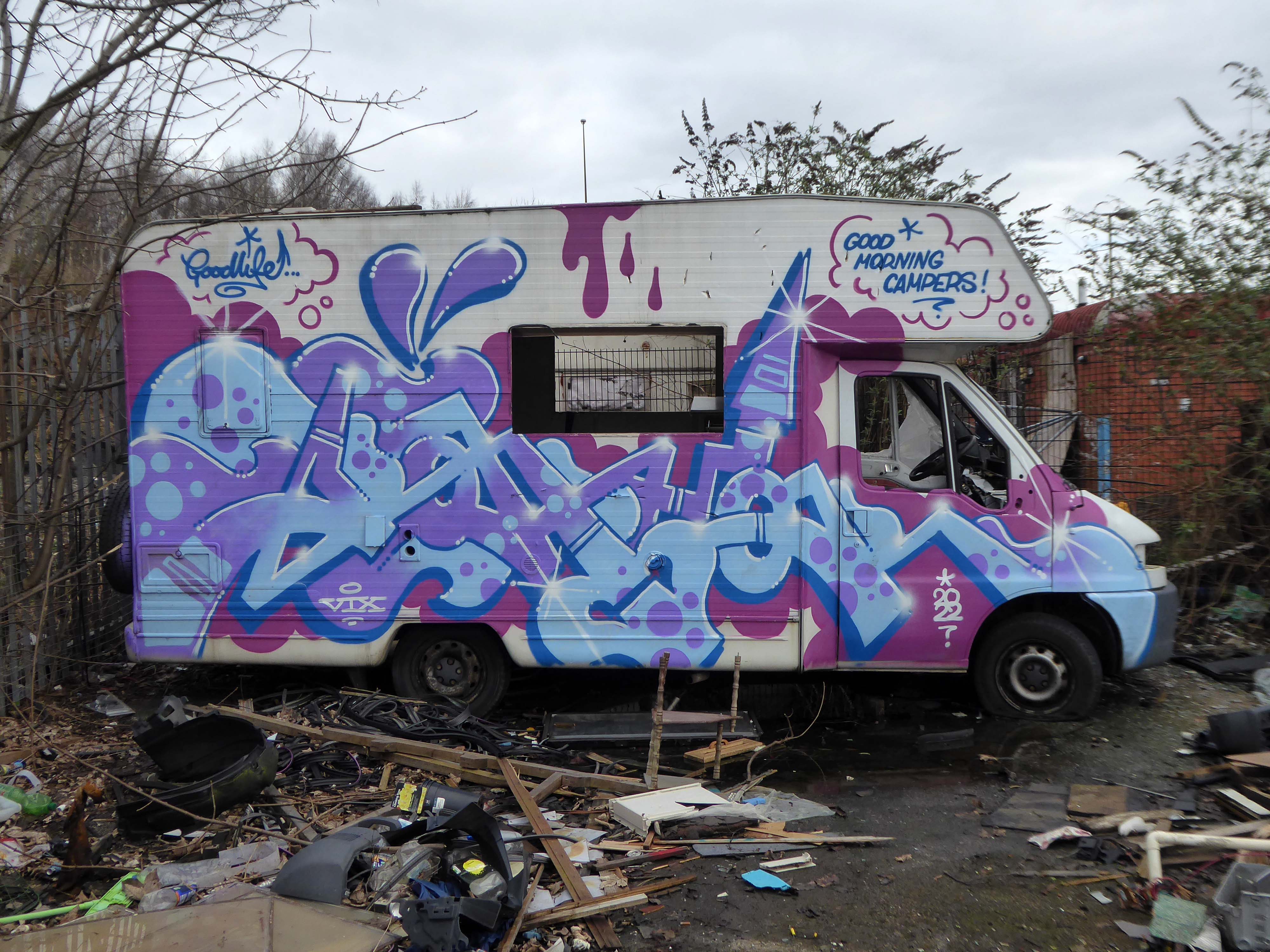
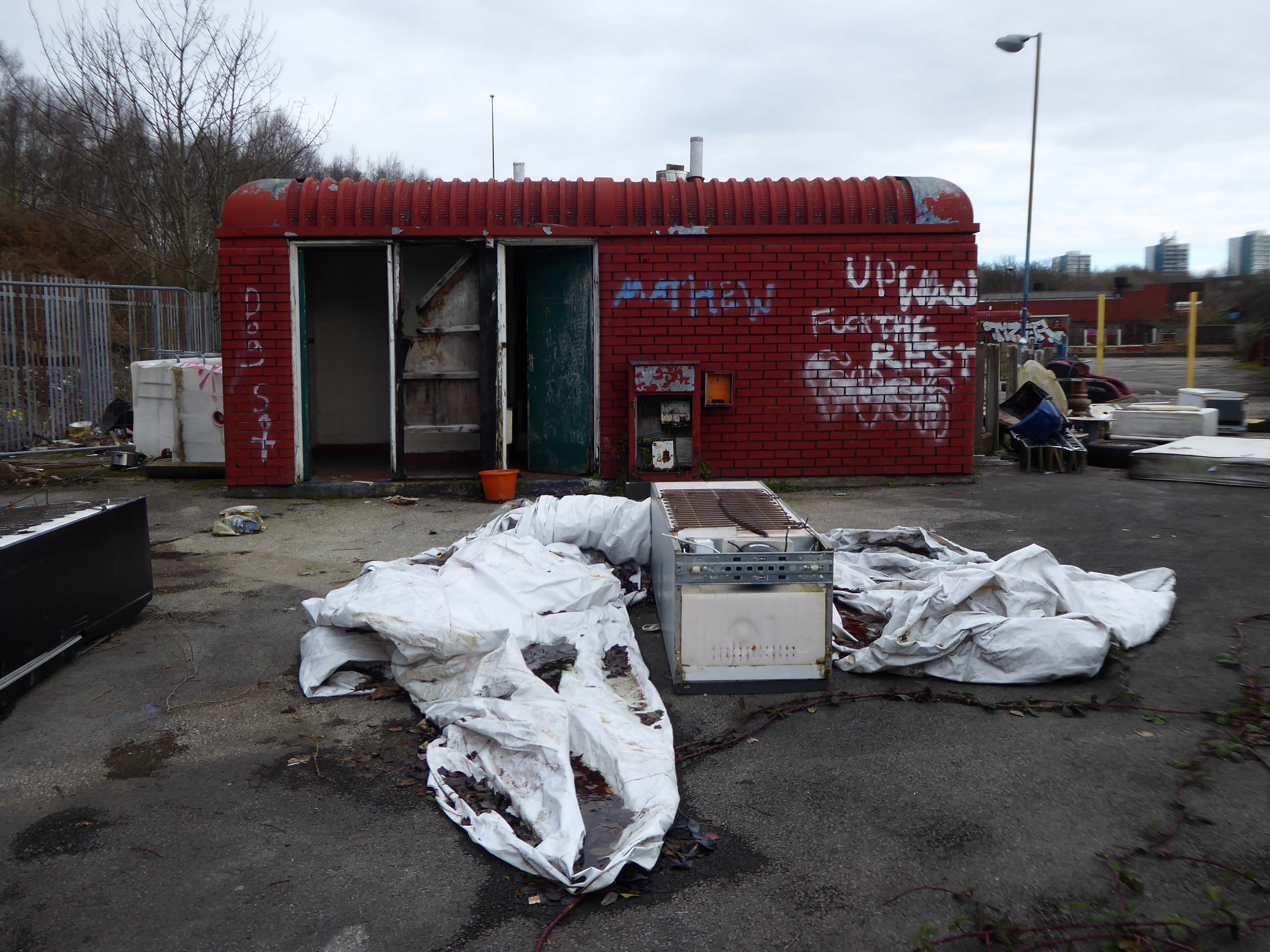
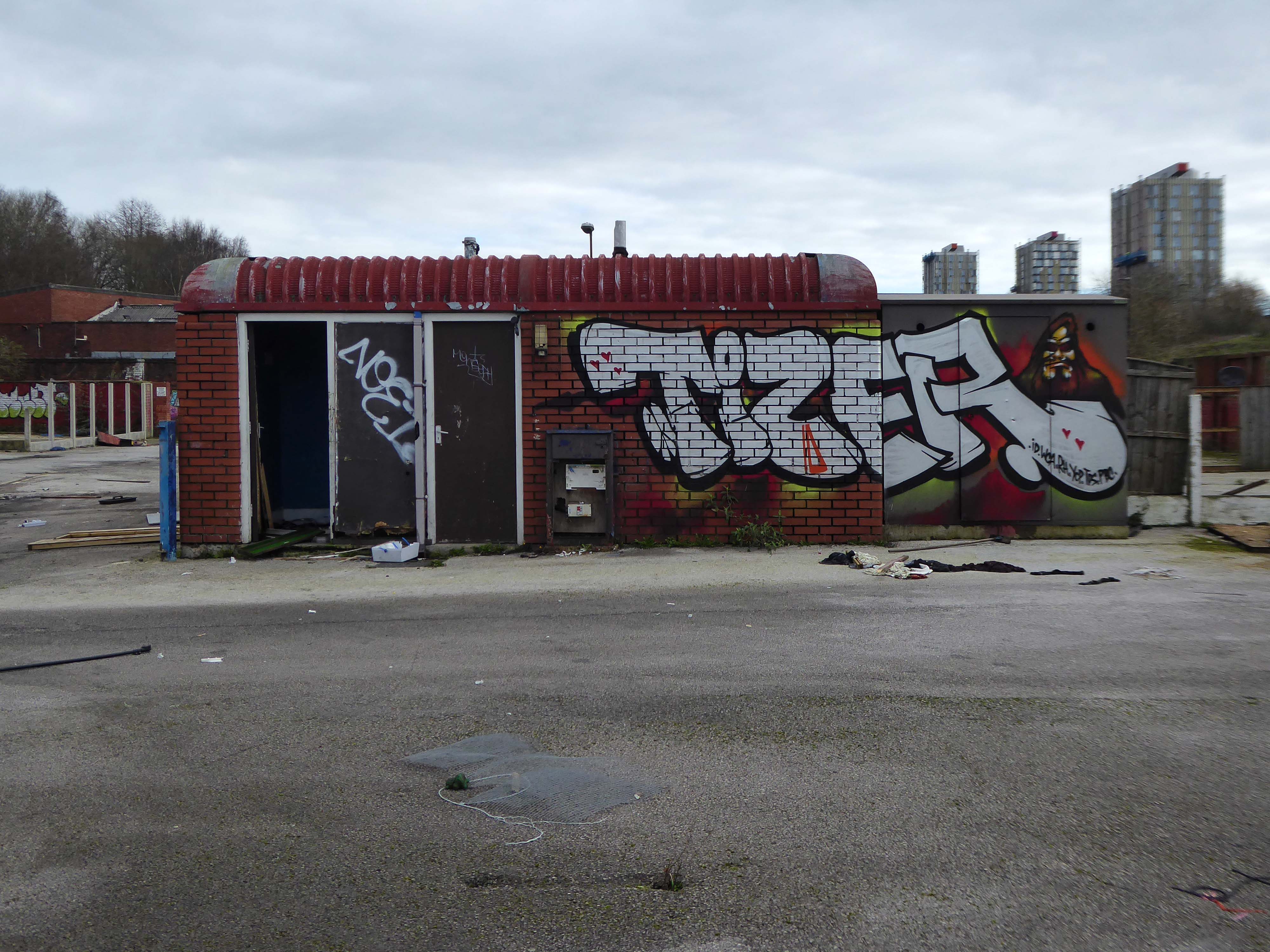
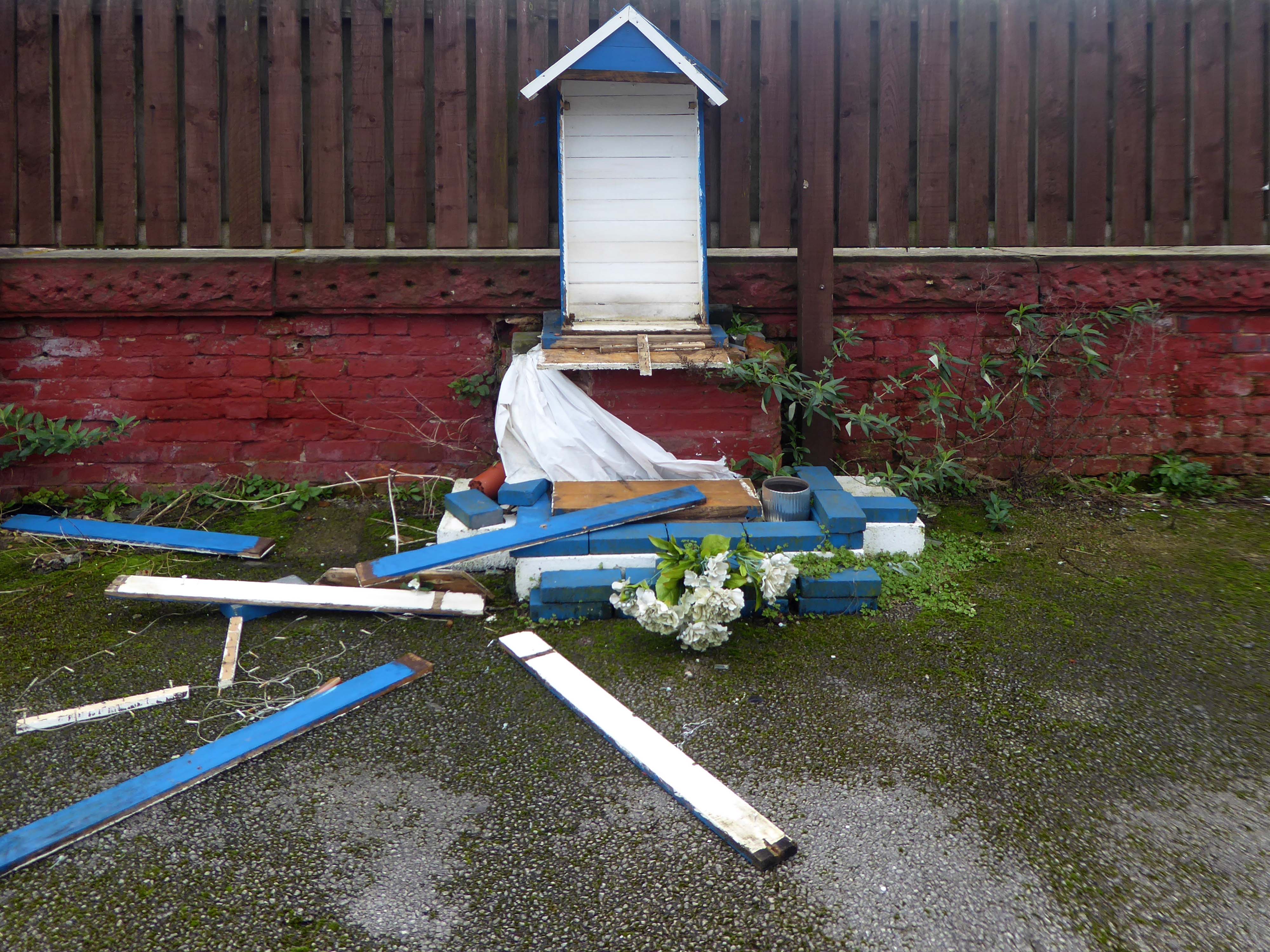
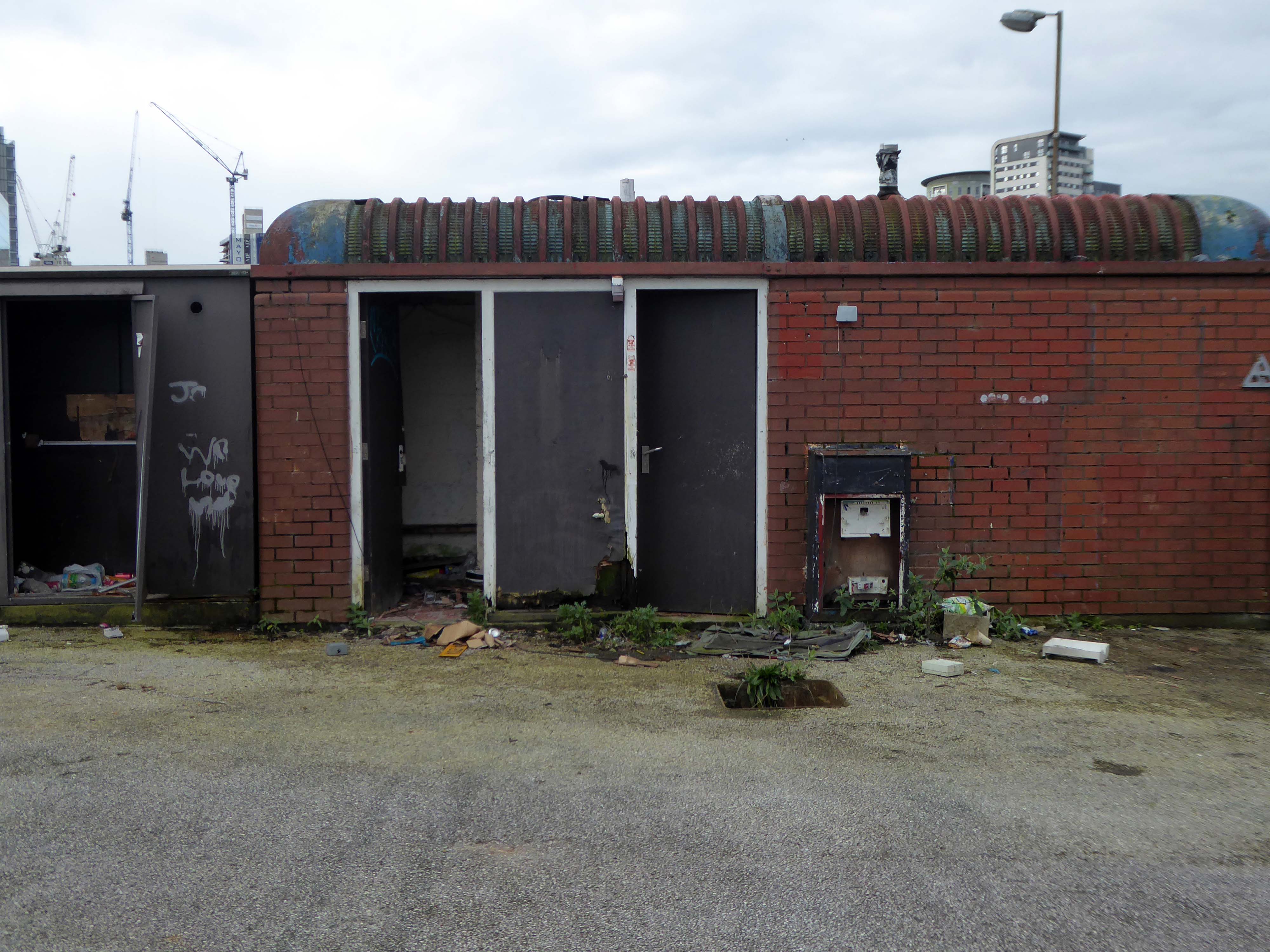
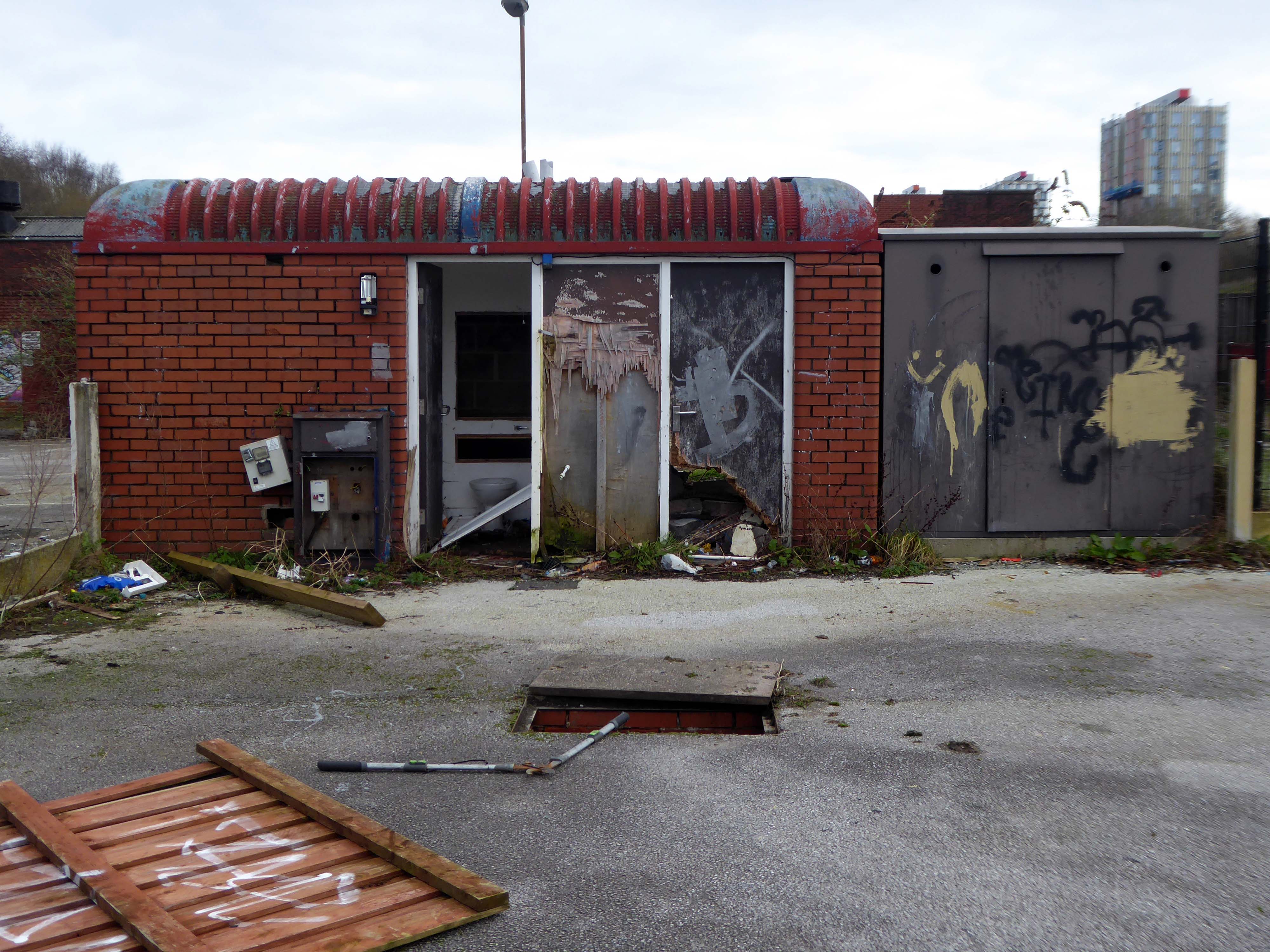
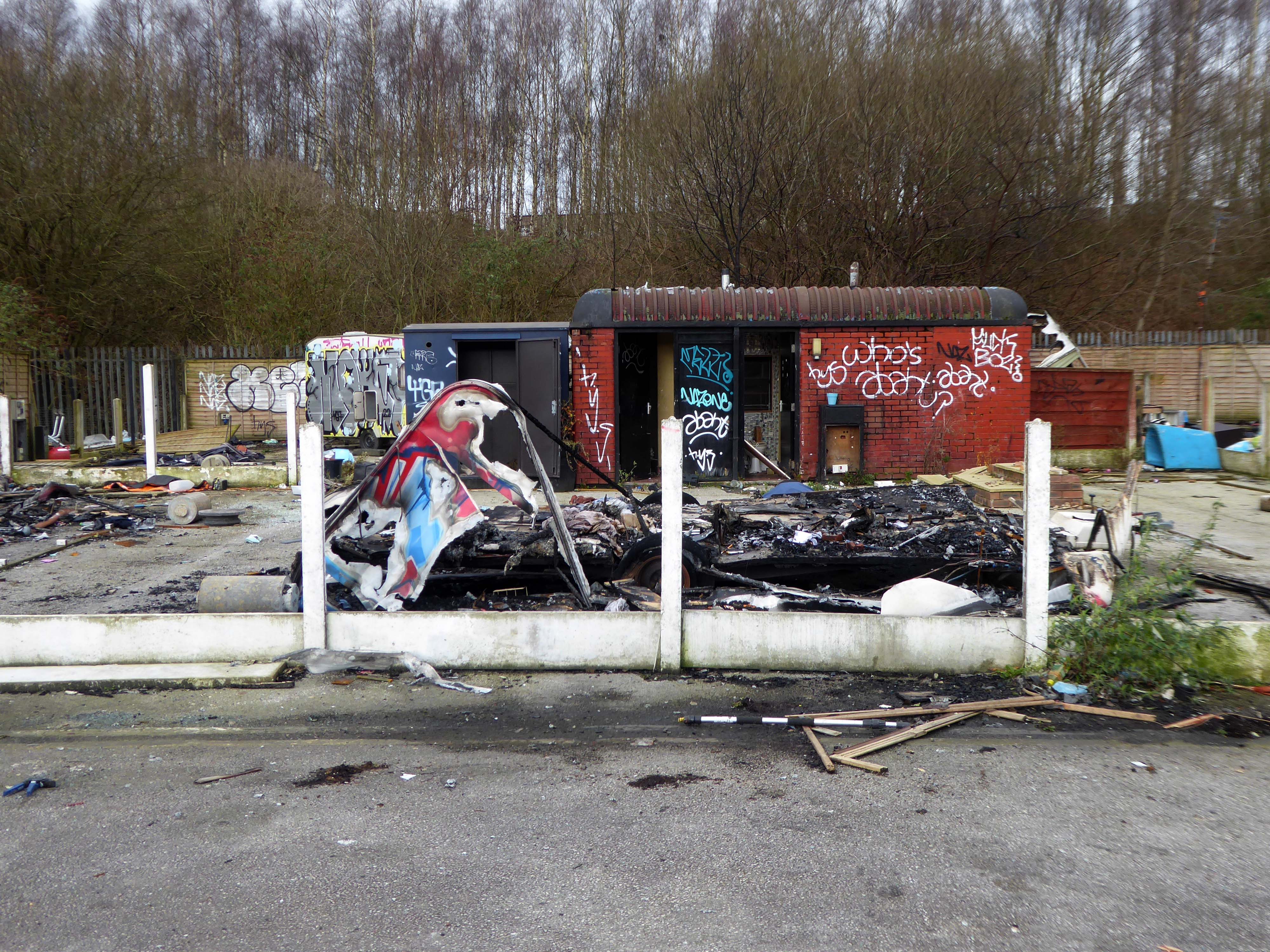
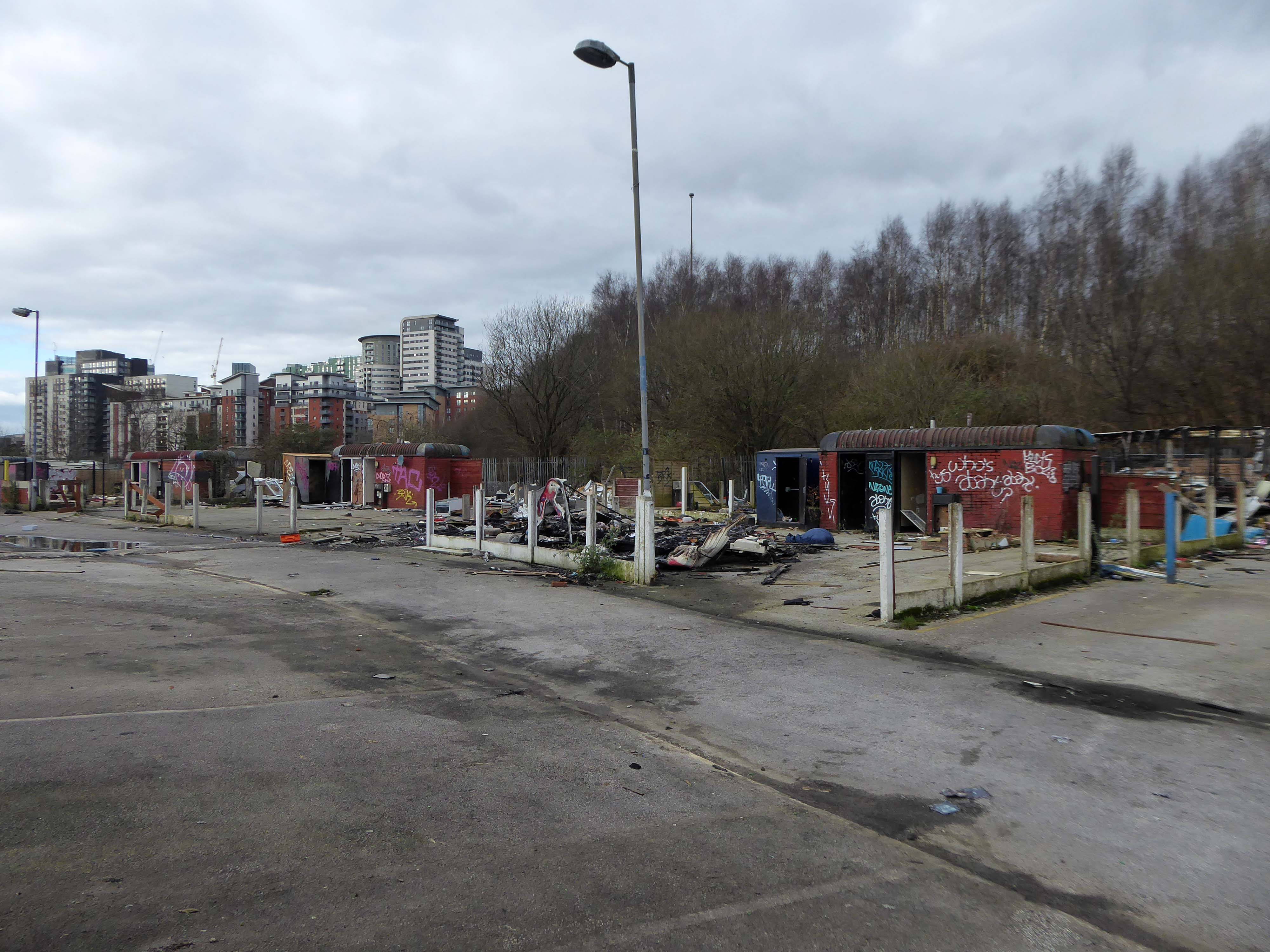
Along with an abandoned traveller’s camp, where once the gas works had stood.

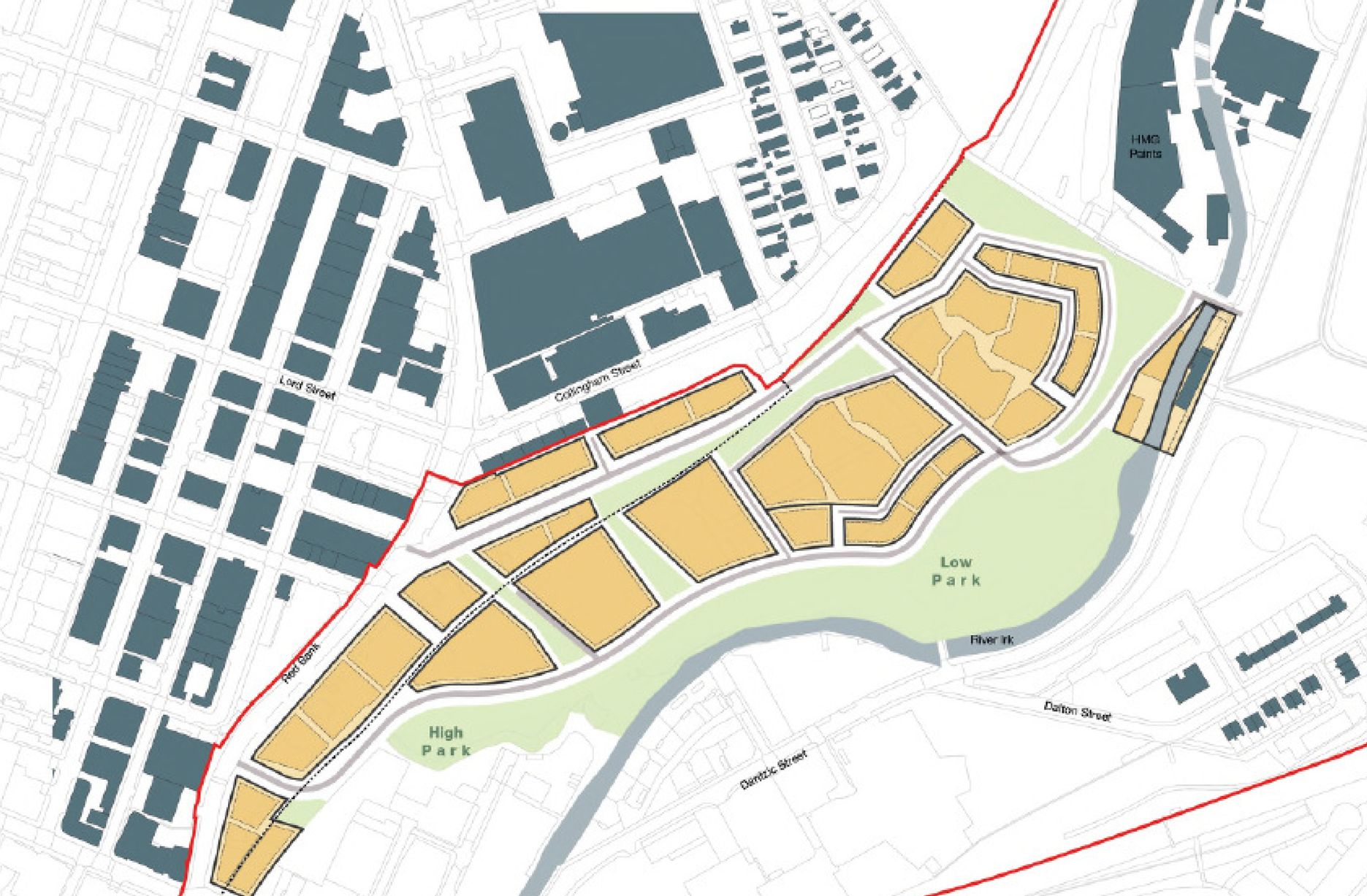
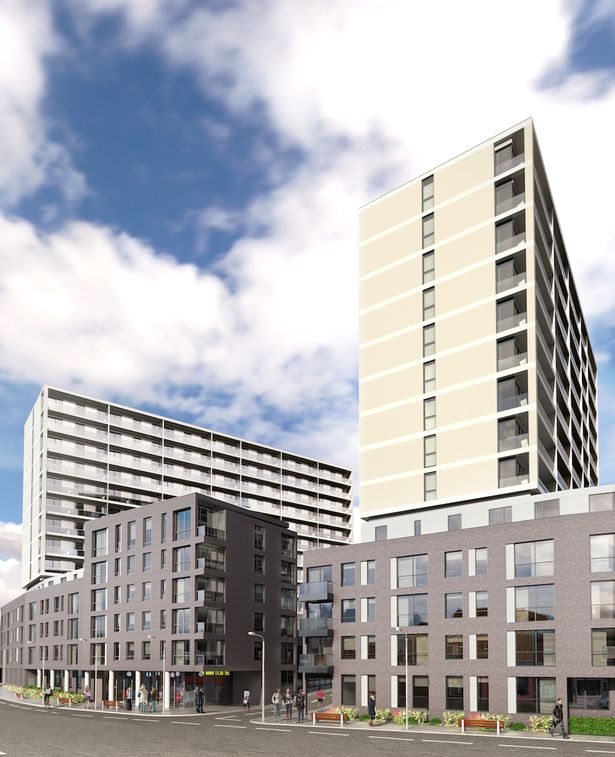
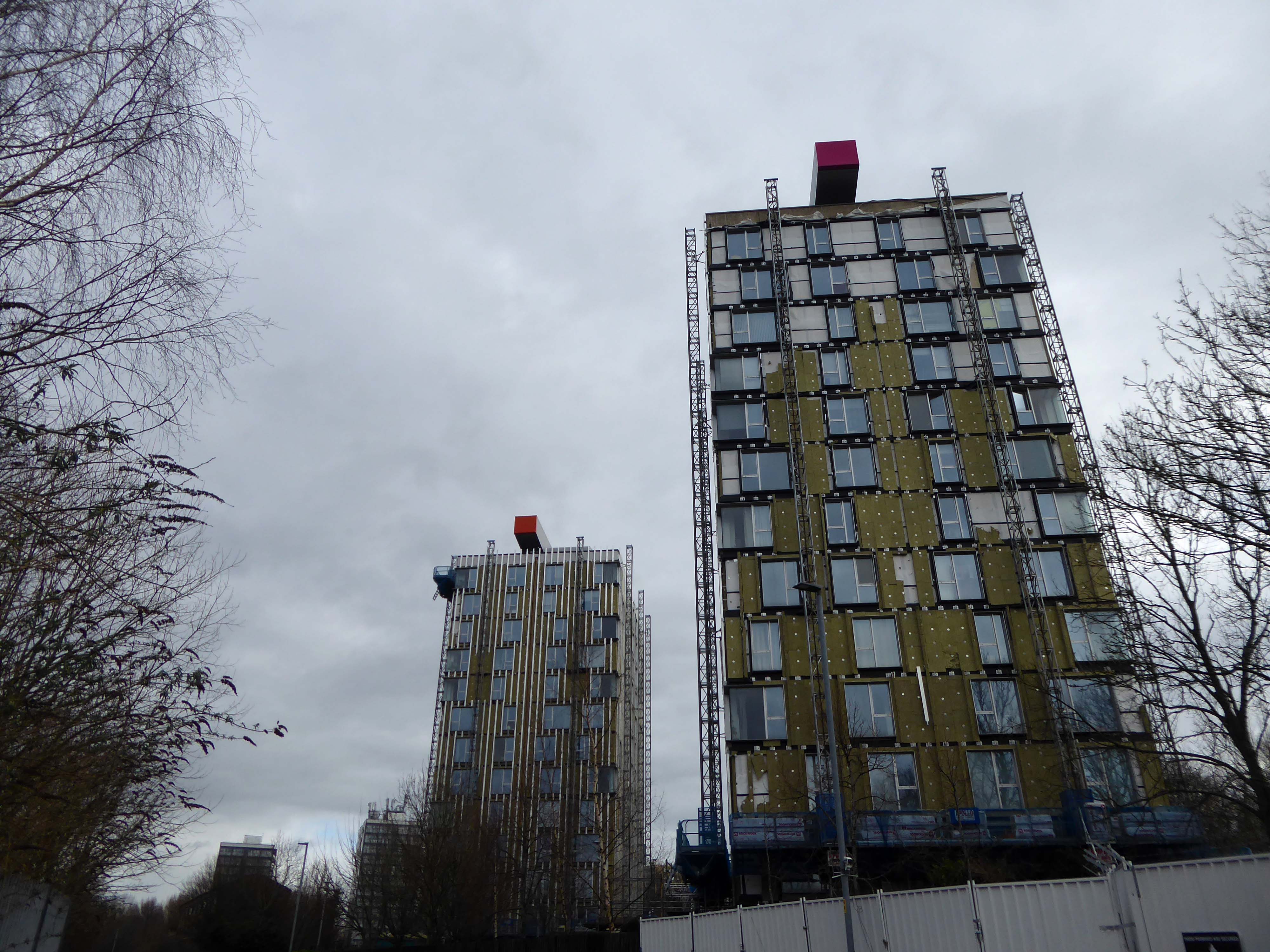
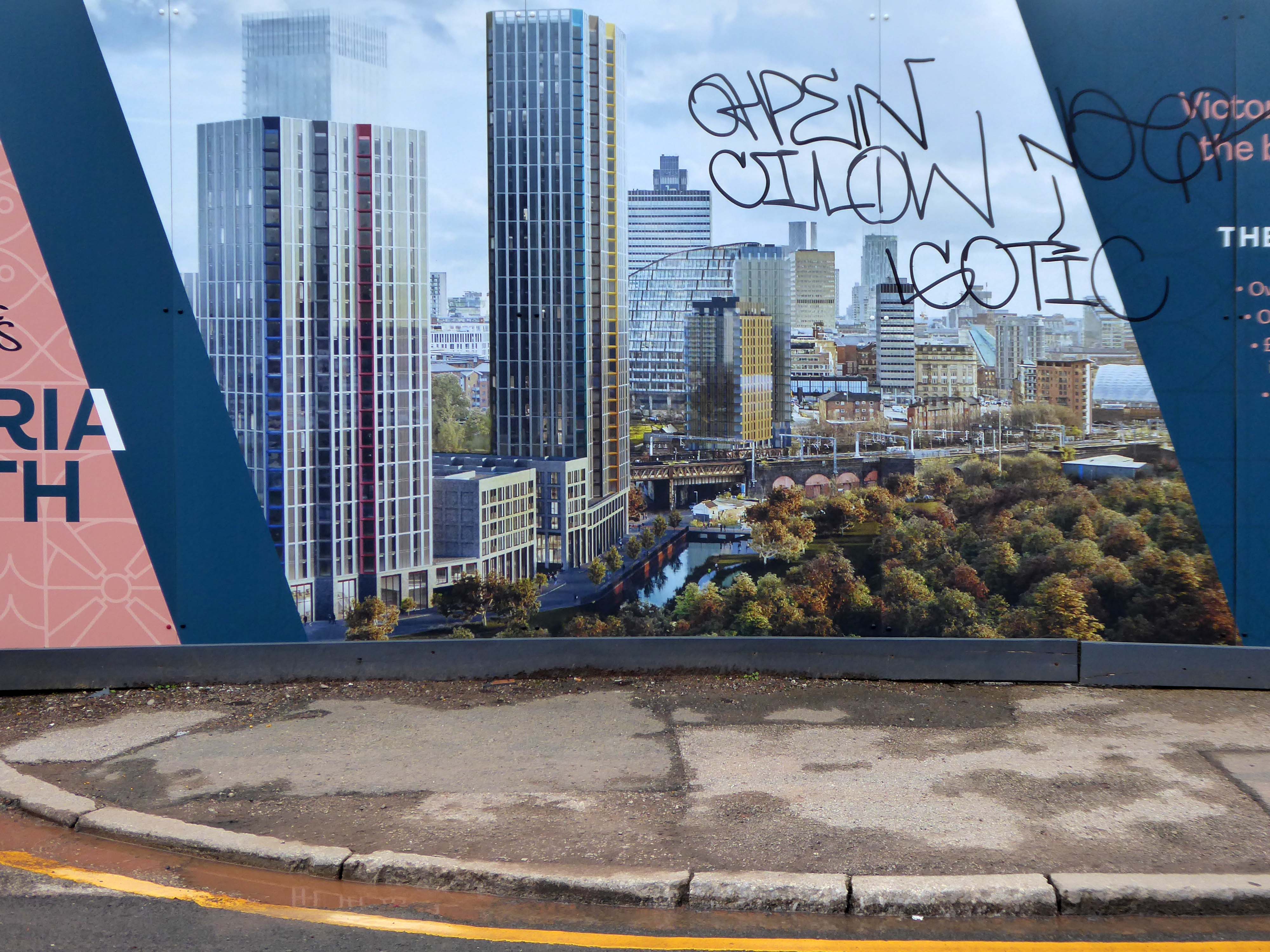
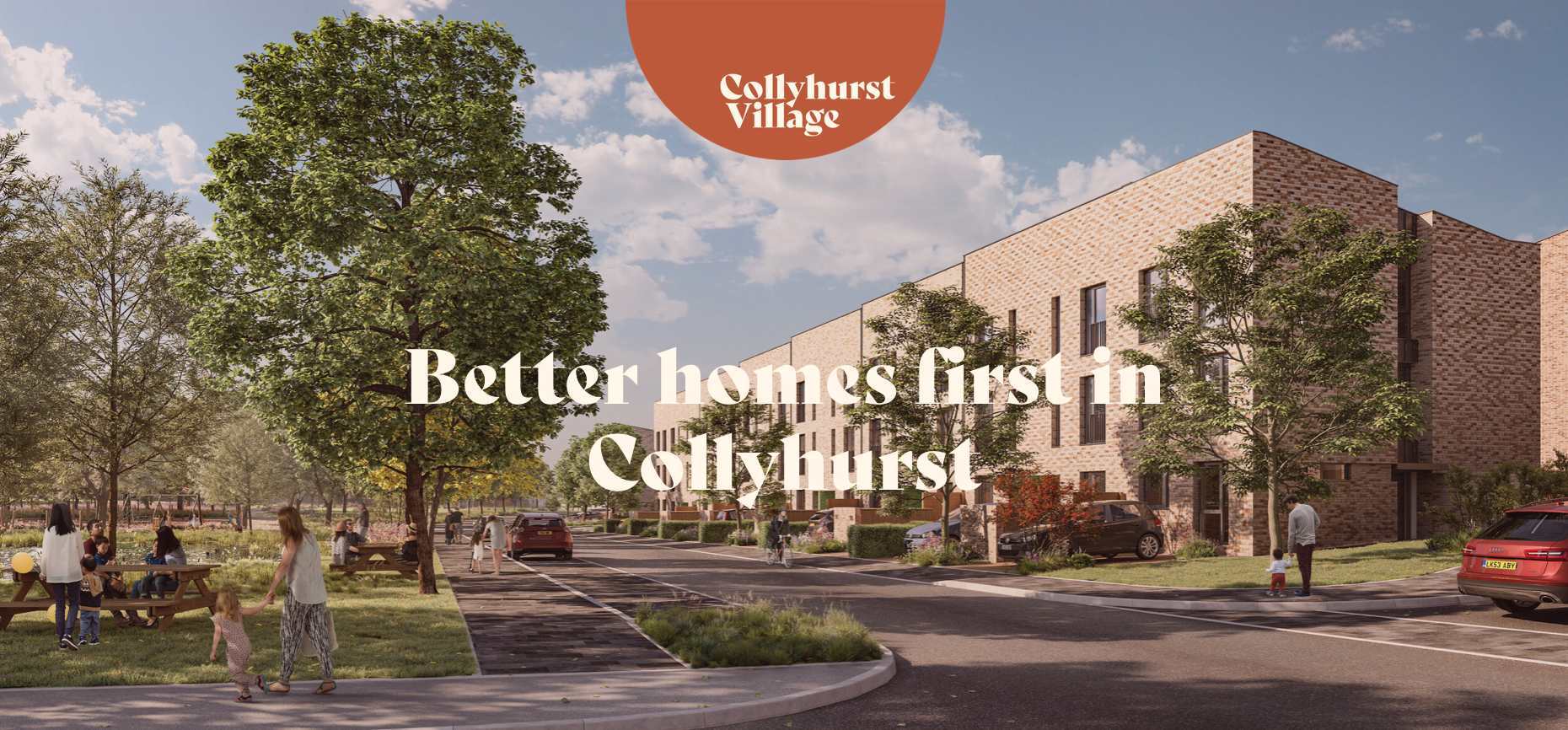
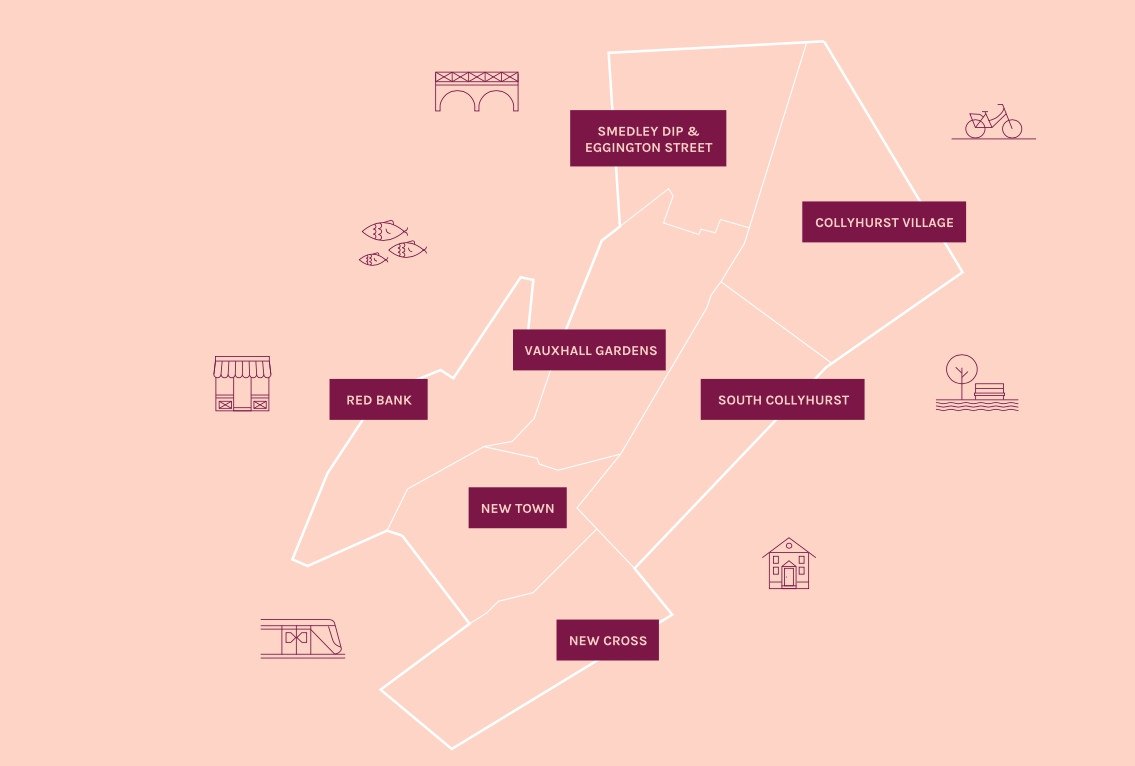
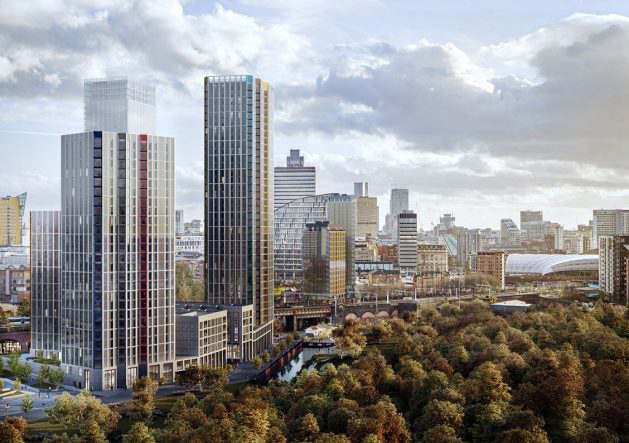
New housing is being built forming the first wave of the Victoria North masterplan.

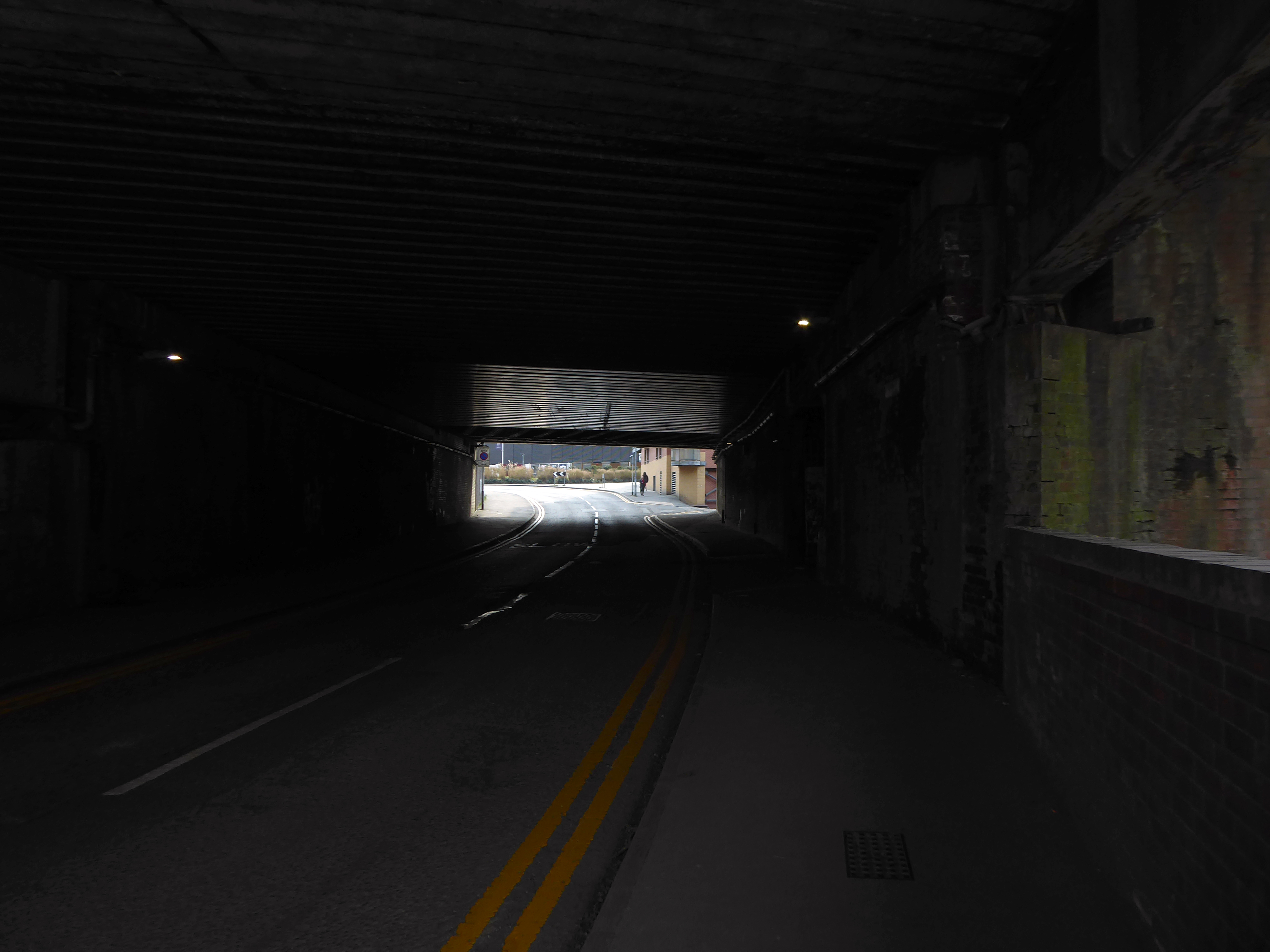
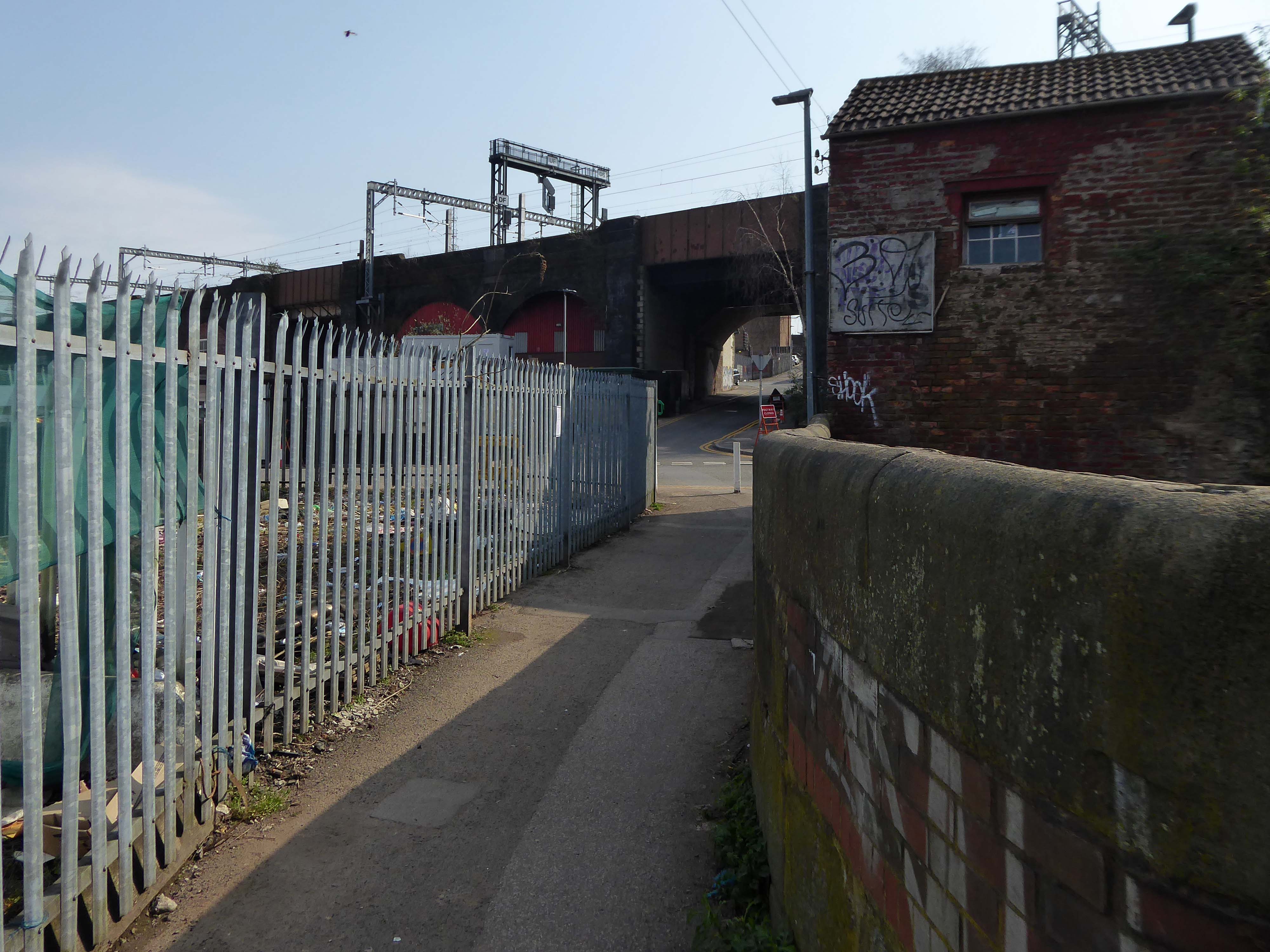
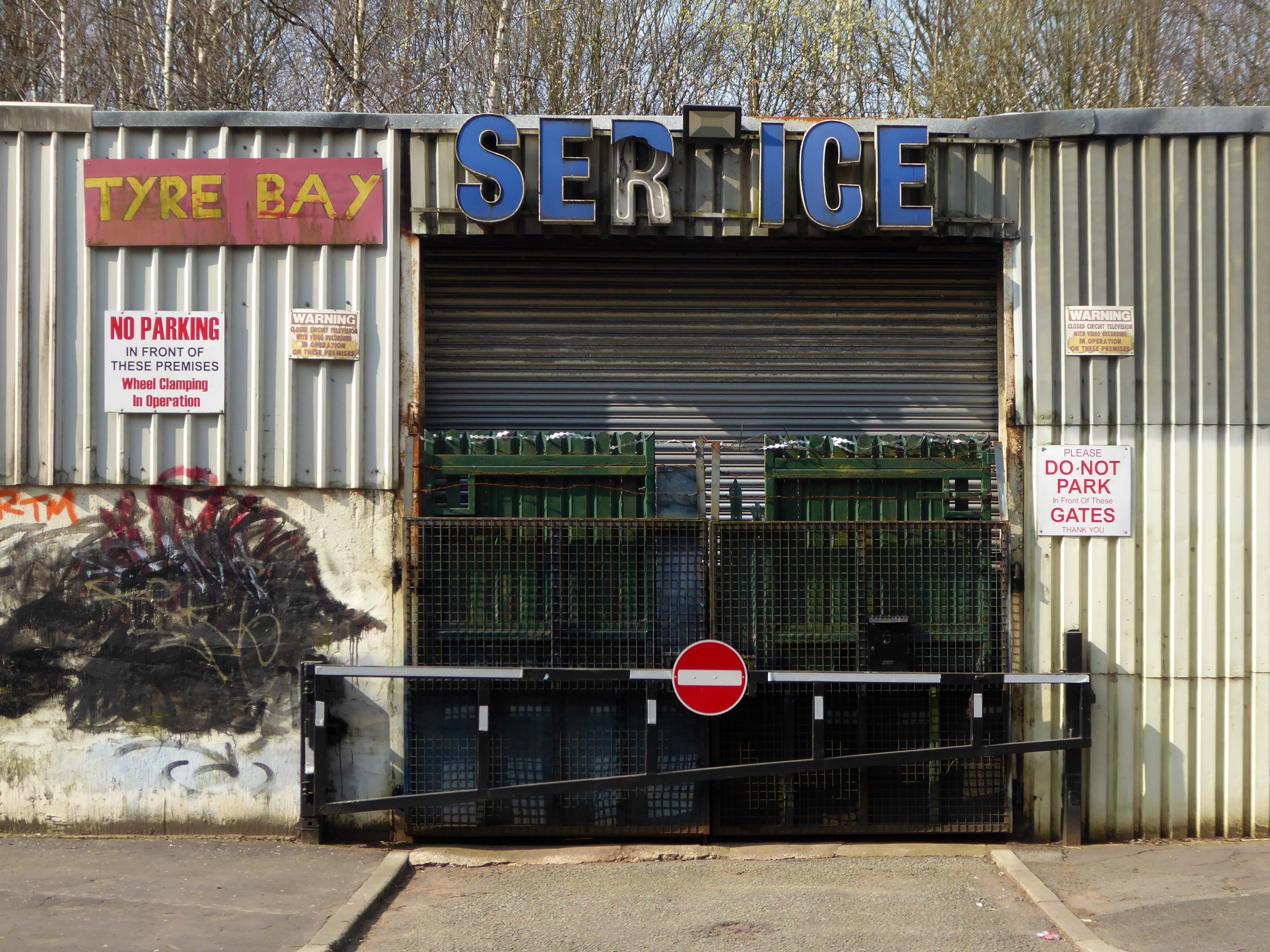
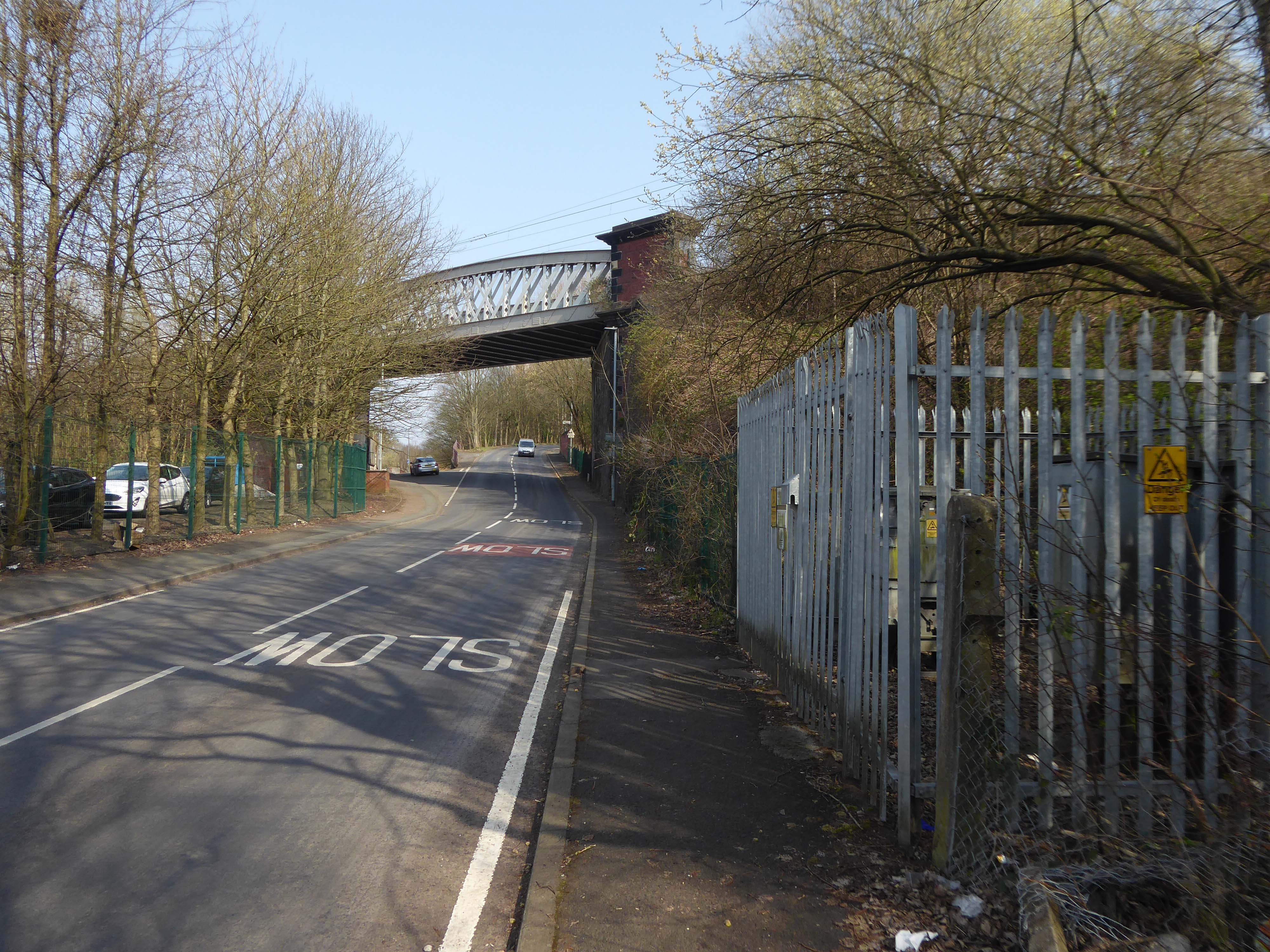
Previous enterprises have hit the buffers beneath the railway on Bromley Street.

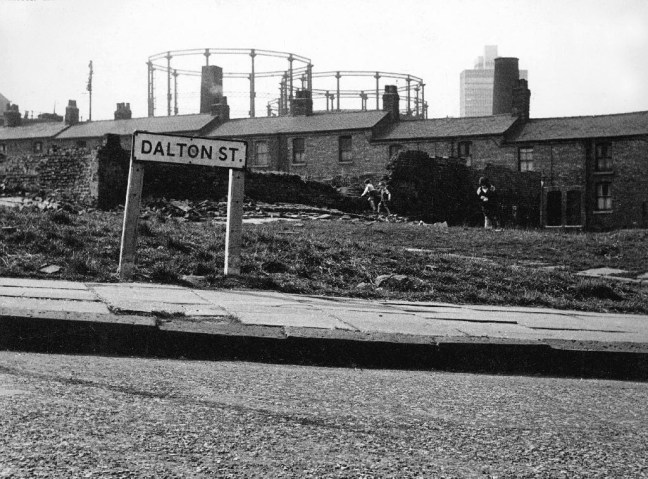
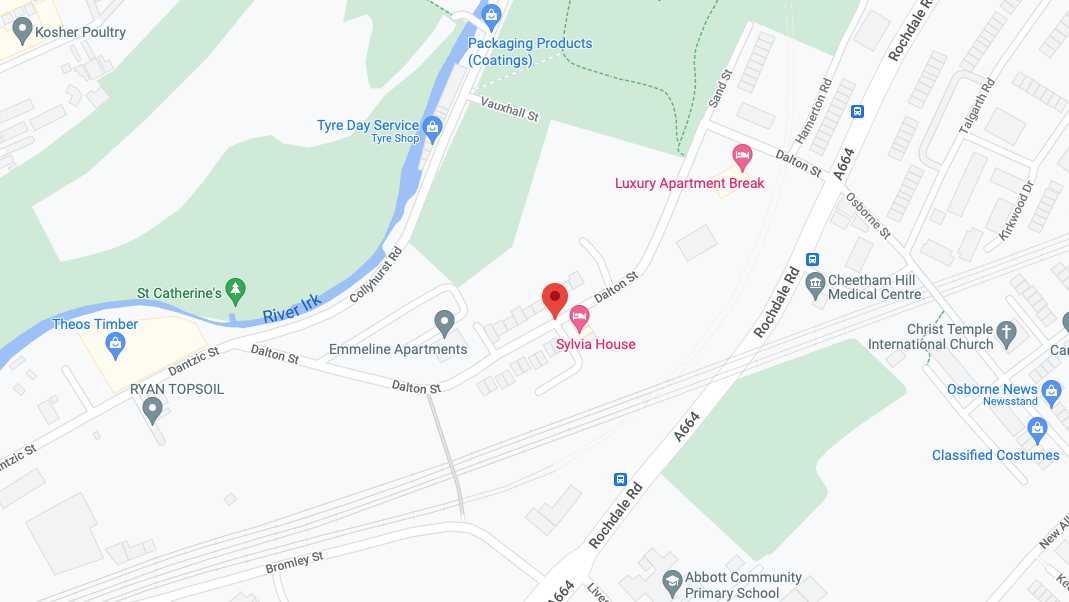
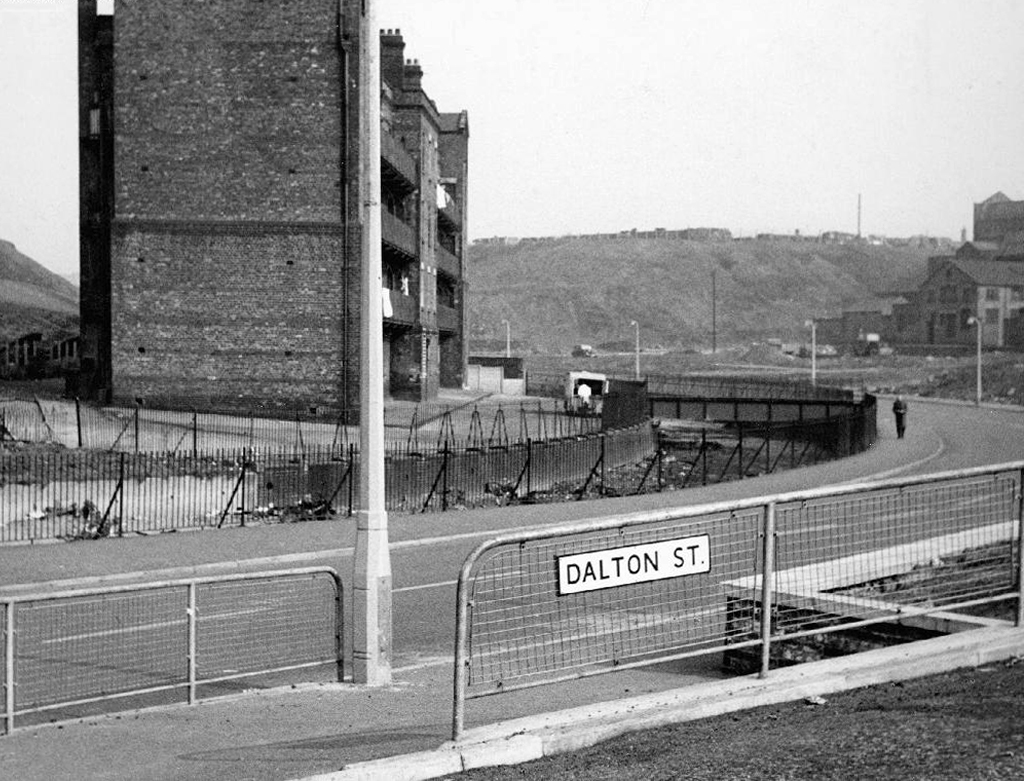
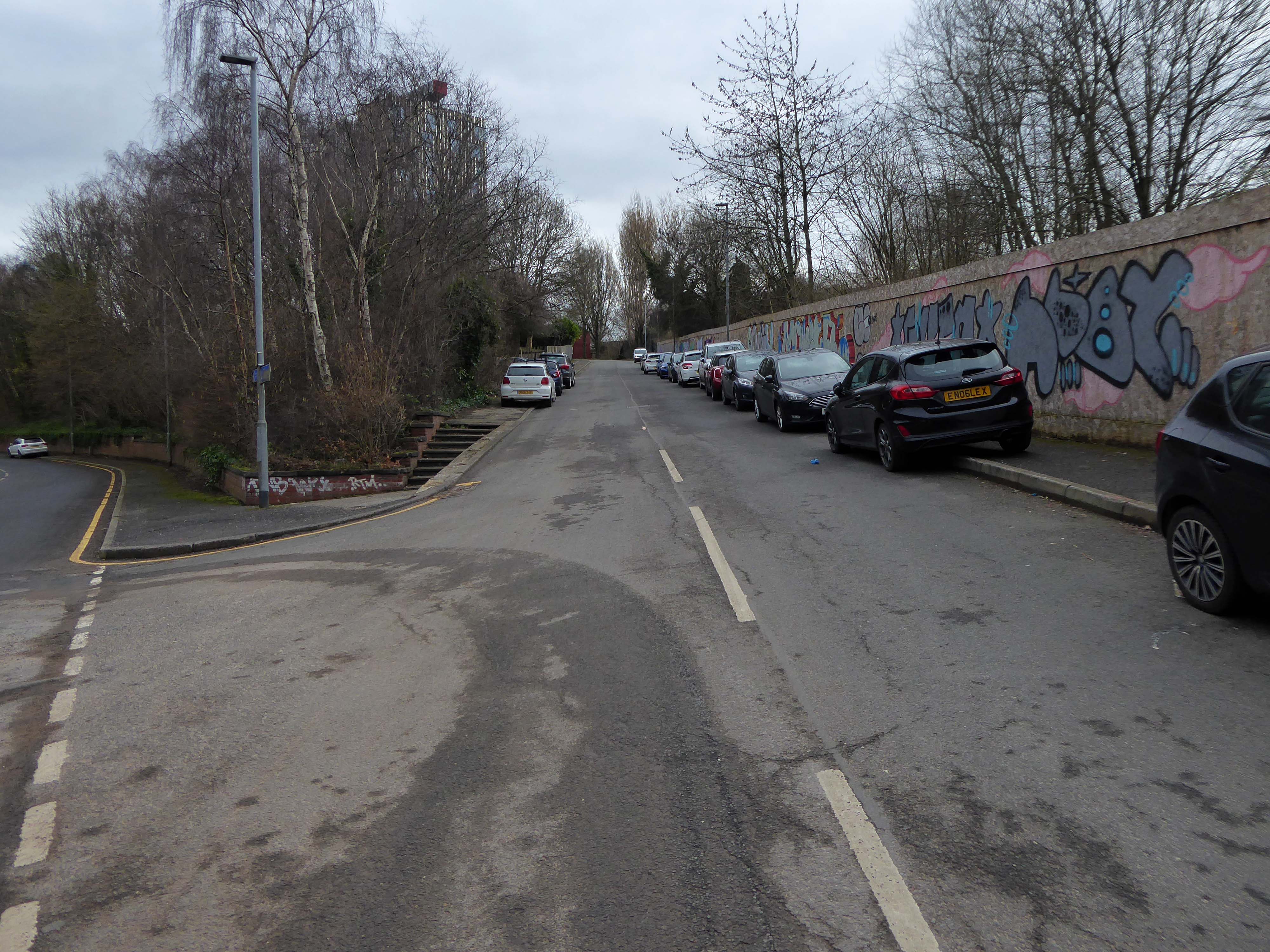
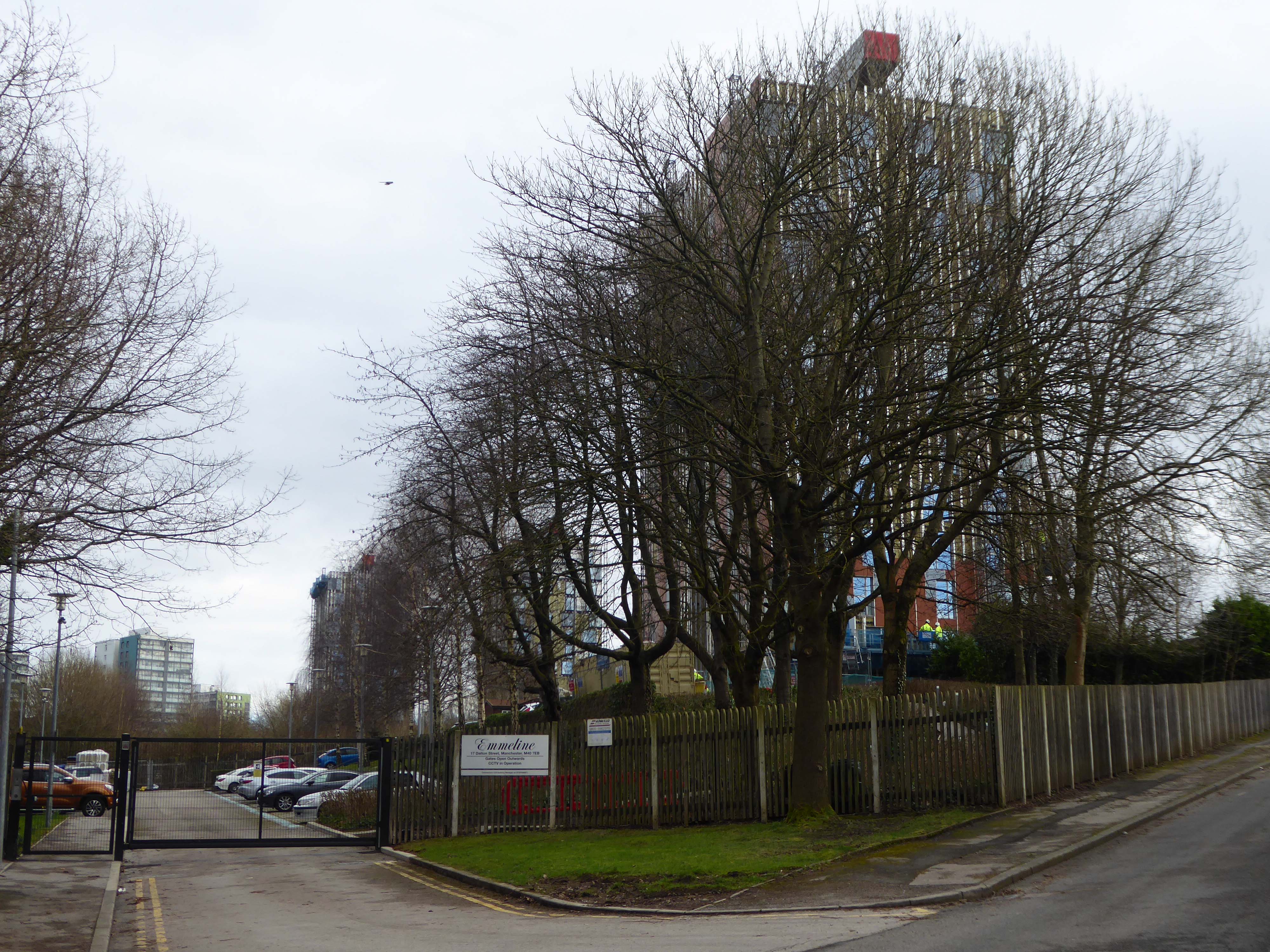
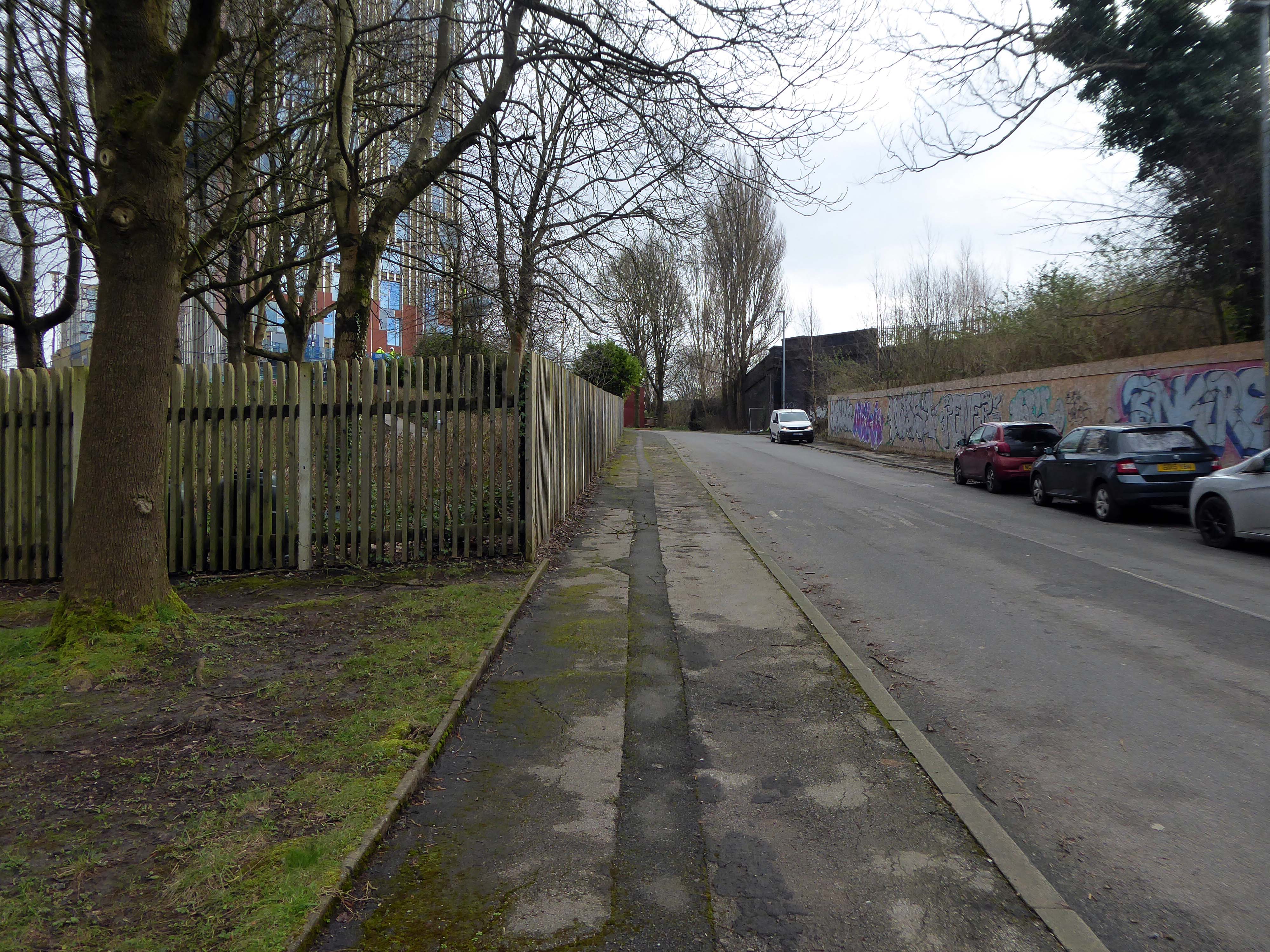
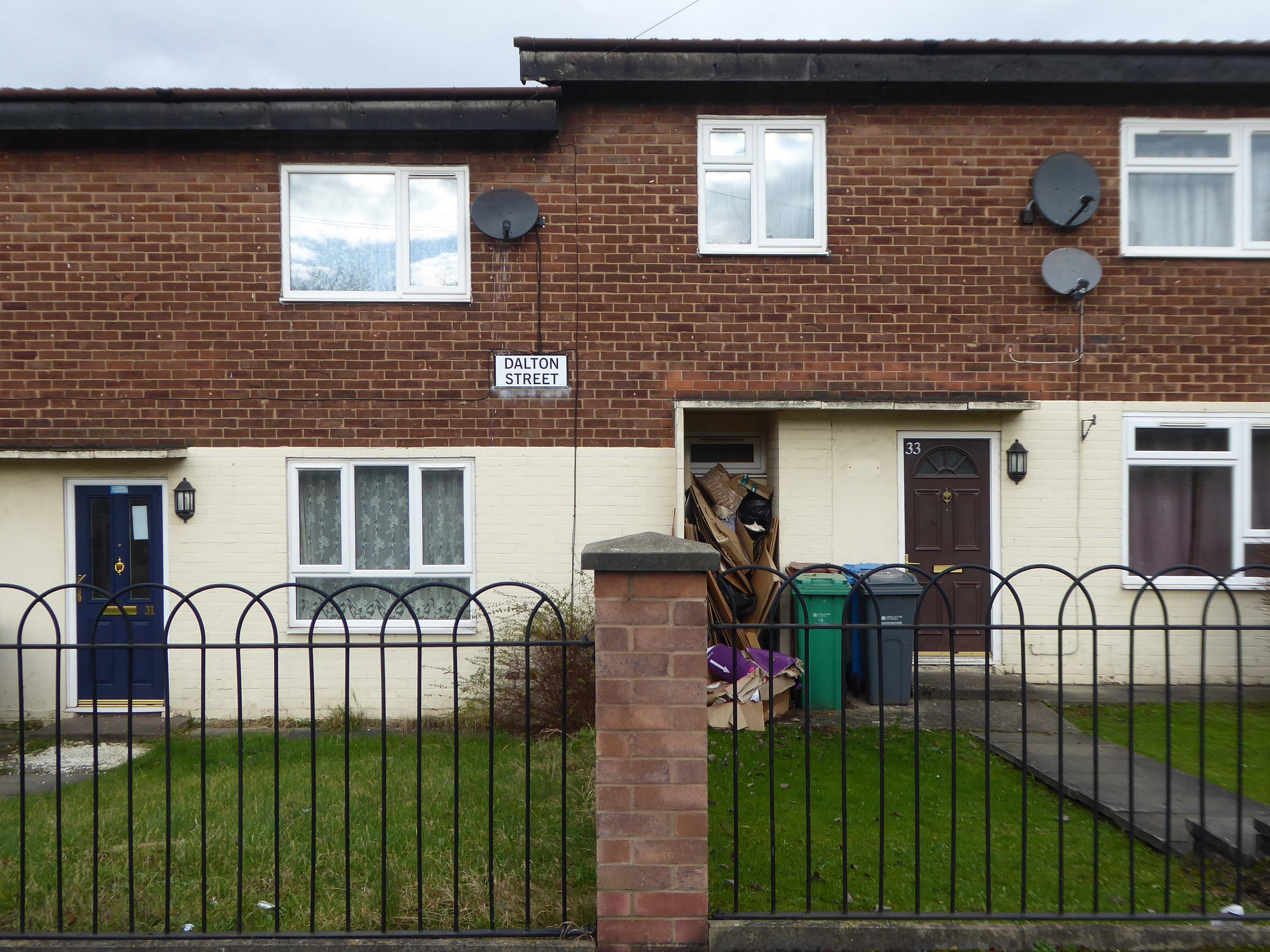
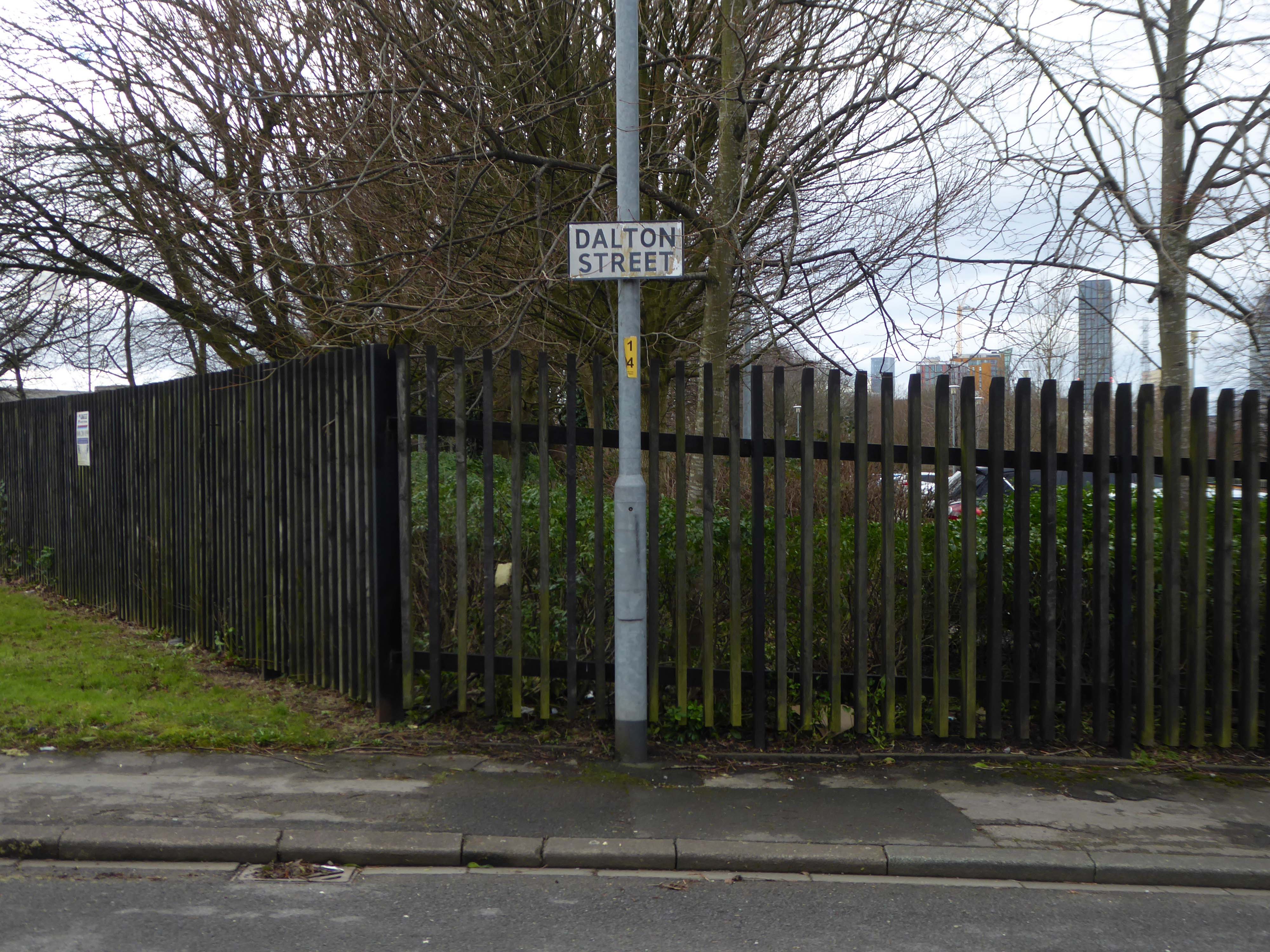
To the right is Dalton Street once home to the Collyhurst Cowboy.

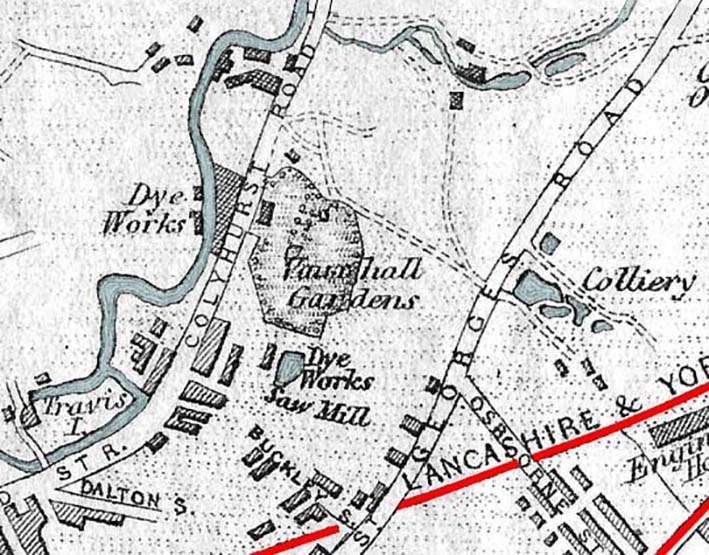
Here are the remains of Vauxhall Street, named for Vauxhall Pleasure Gardens, built in the remains of the Collyhurst Quarry – which in turn became Sandhills.

There are current plans afoot to create a City River Park.

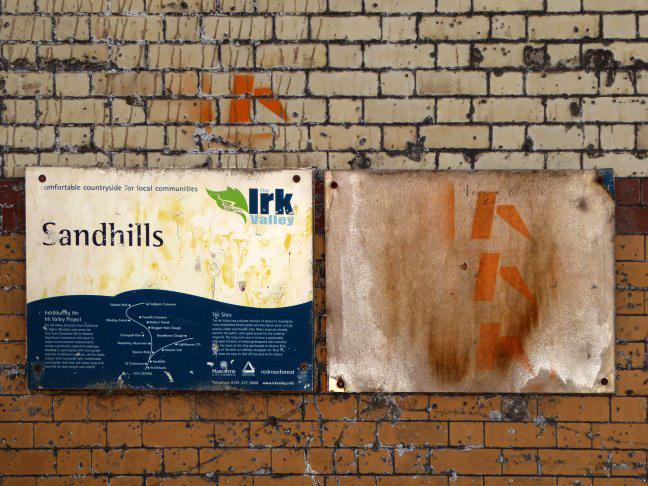
In addition the local authority oversees the Irk River Valley Project , along with Groundwork, United Utilities, Woodland Trust and Greggs.

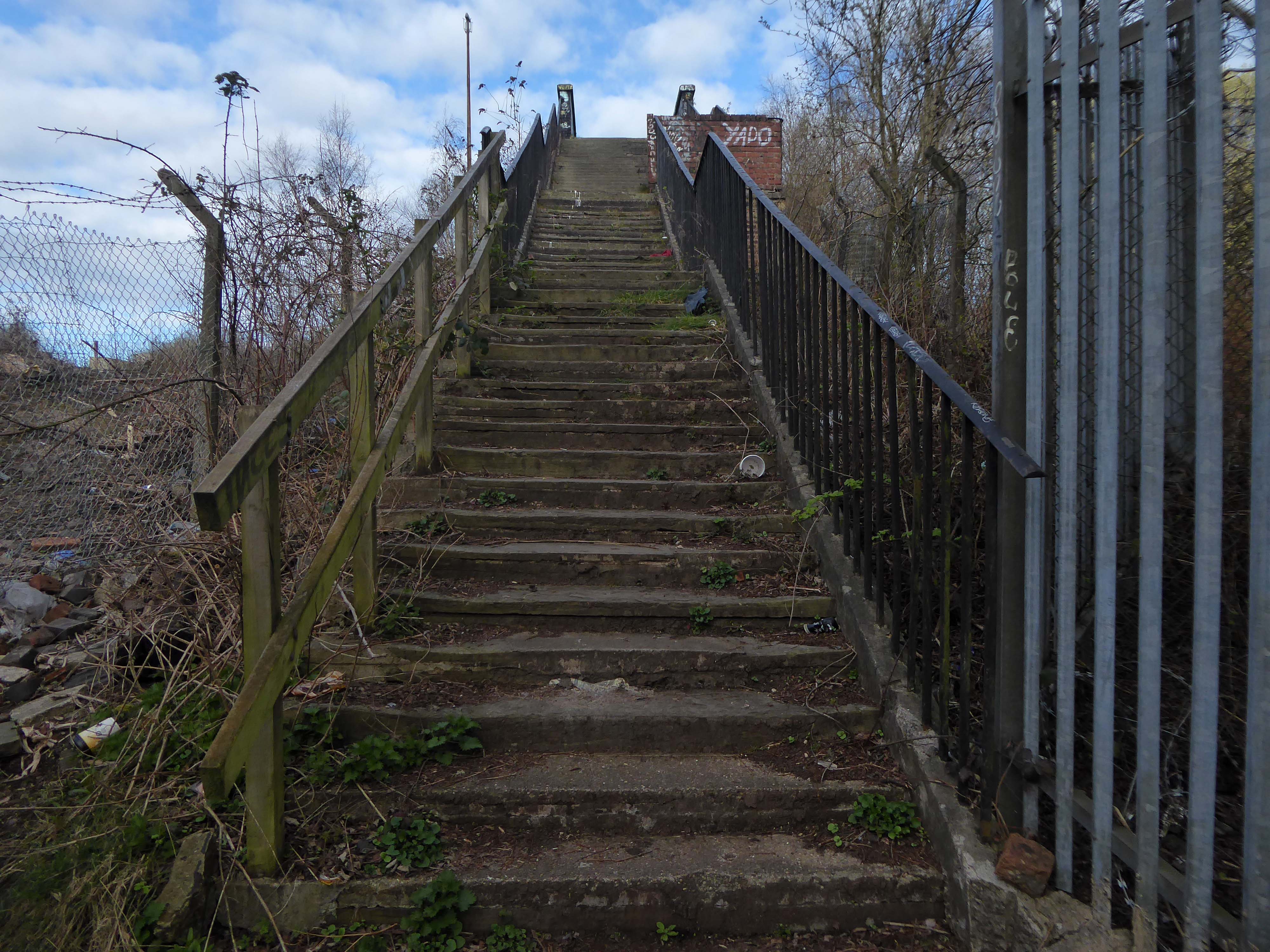
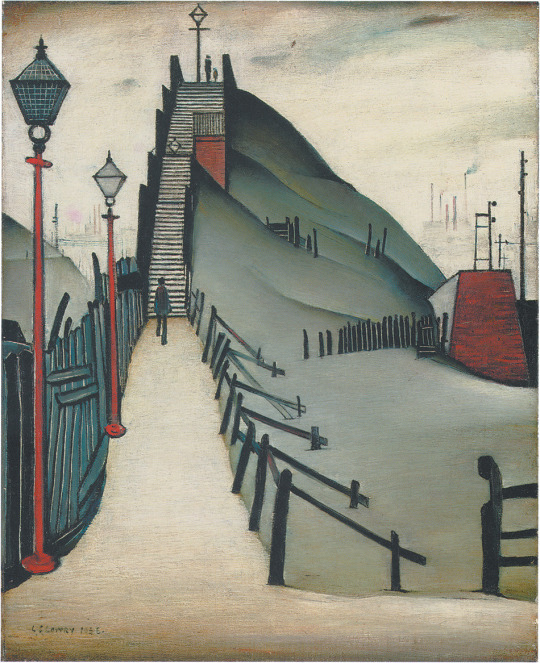
To the left are St Catherine’s Steps

Immortalised by almost local lad LS Lowry

Spanning the defunct railway workings, affording a view of the brightly blooming city centre.

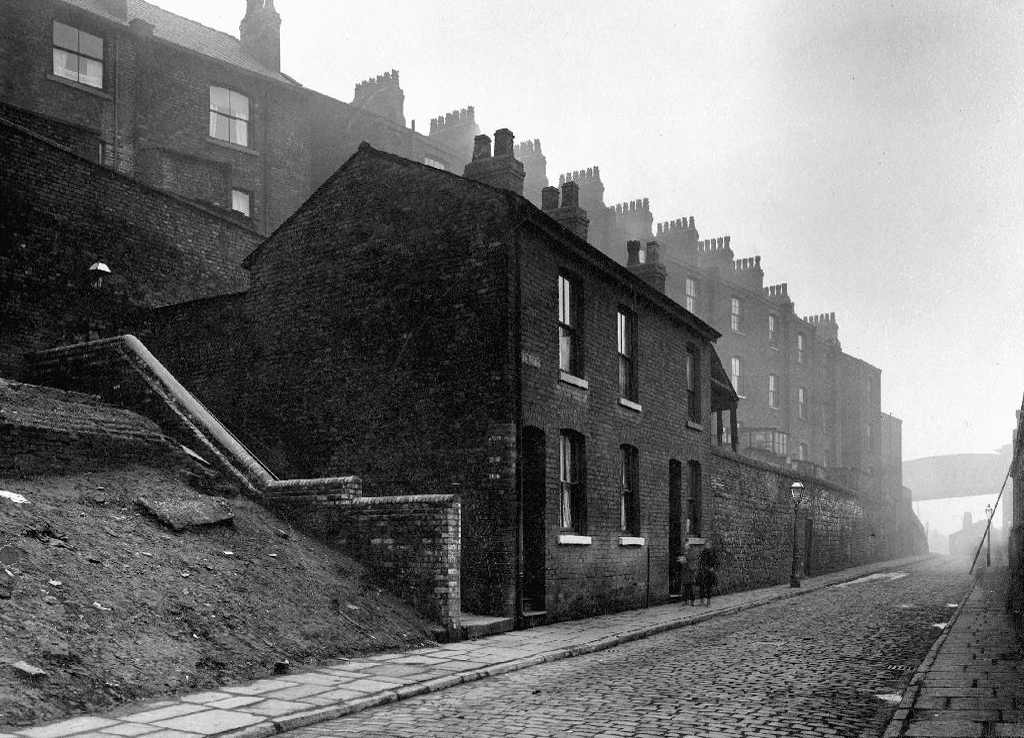
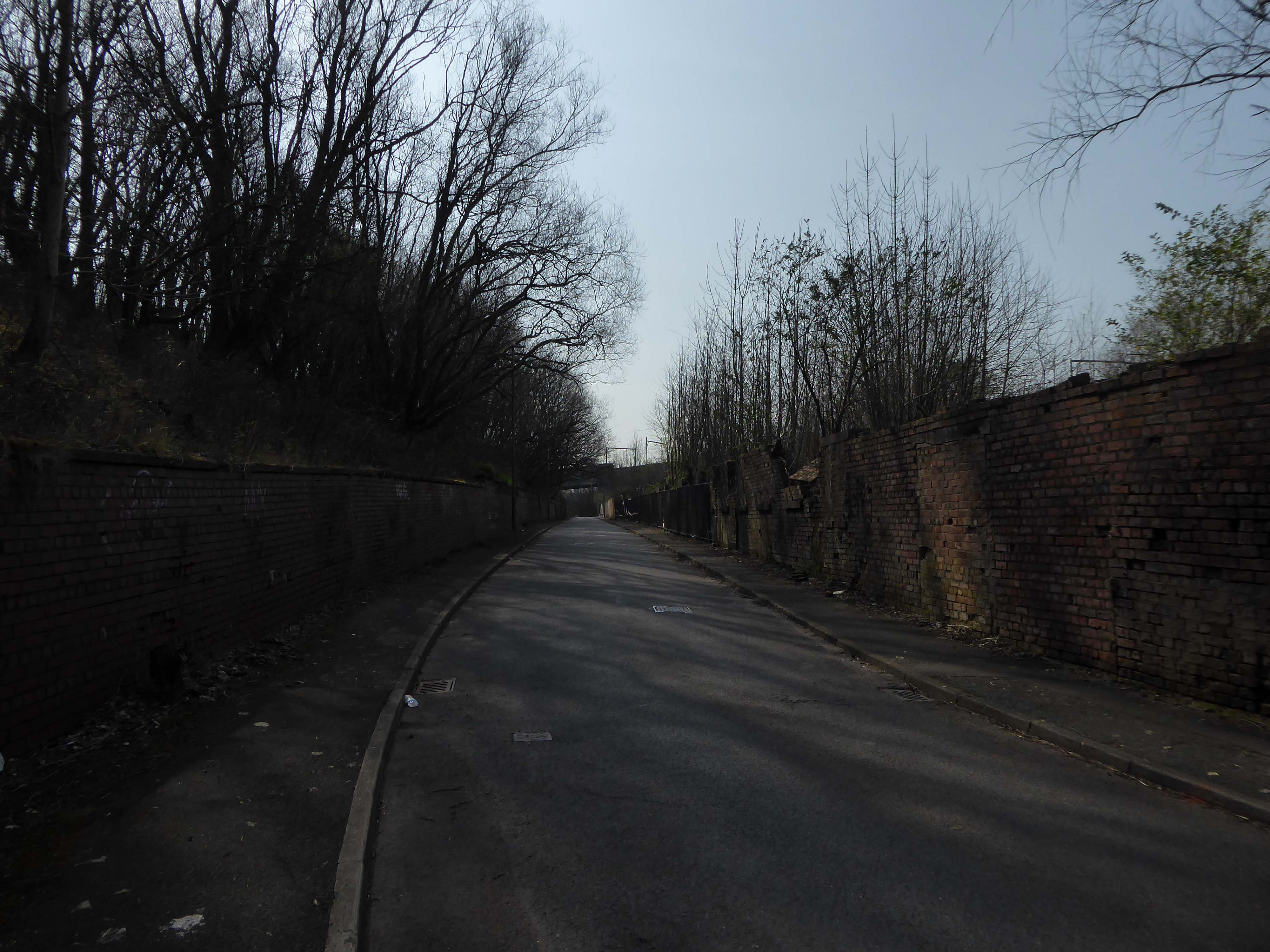
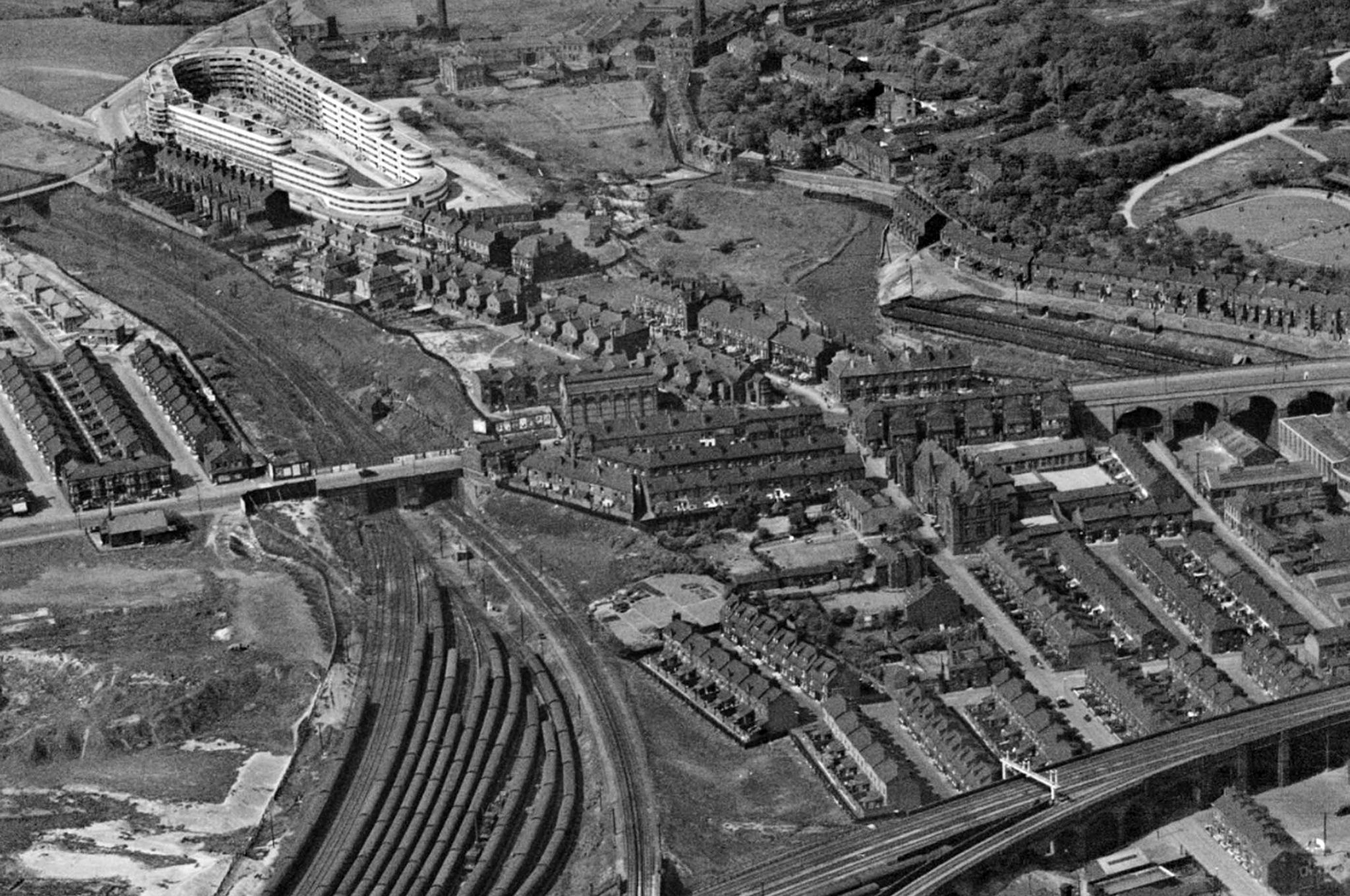
Leaving Collyhurst Road, we journey along Smedley Road.

Seen here in 1934.

Passing beneath Queens Road – Queens Park to the right.

Queen’s Park was one of Britain’s first municipal parks created in 1846. The park was originally arranged around Hendham Hall, home of the Houghton family however this was demolished in 1884.

Dropping down to Hendham Vale.

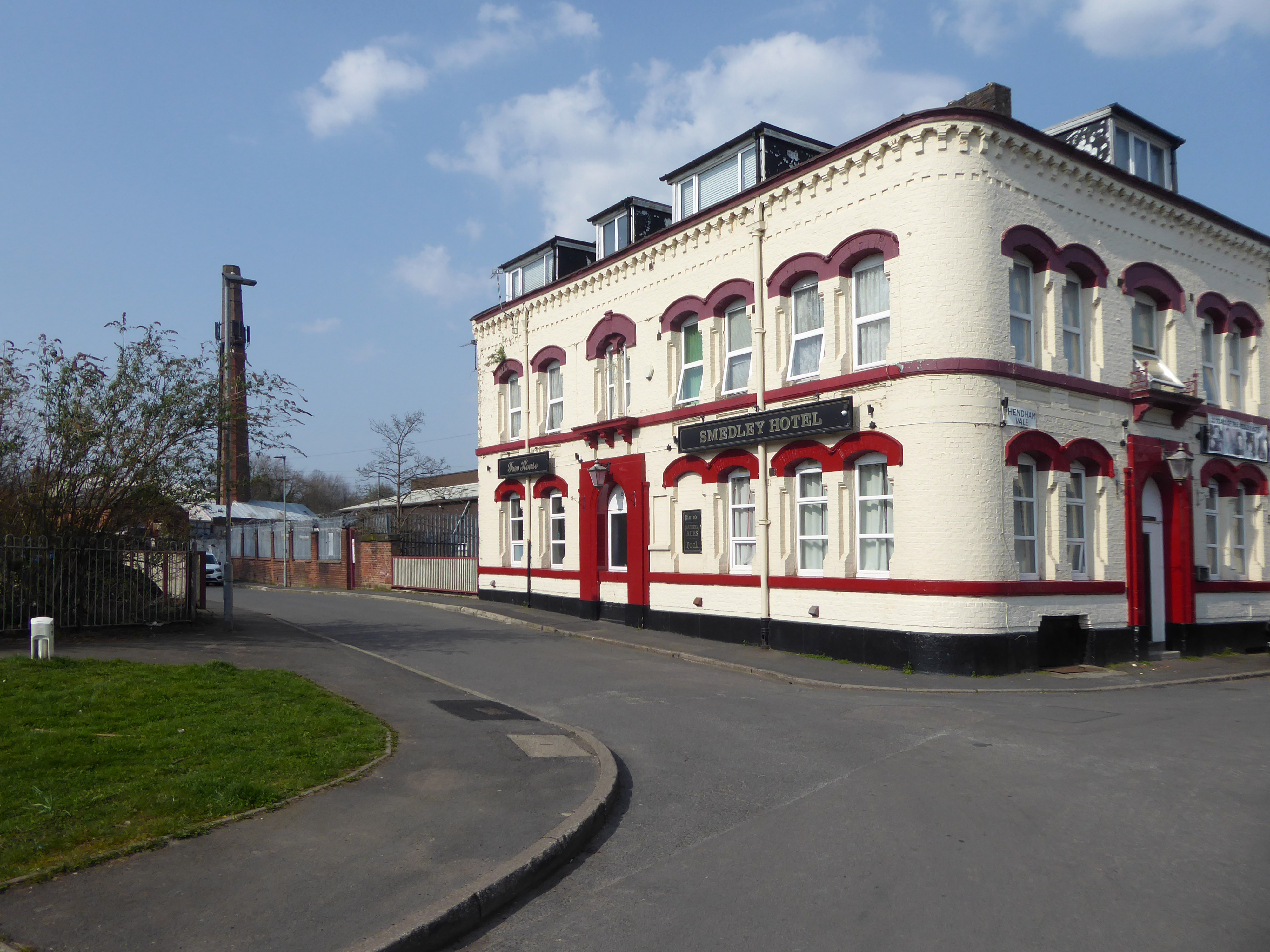
To the right is the Smedley Hotel.

The Smedley Hotel is a very large pub that is hidden away on a quiet back street. Once inside there were a few different rooms and I had a drink in the bar which was fairly large and seemed in need of some attention. The pub still had its old Chesters signs outside and there were three real ales on the bar. I had a drink of Chesters bitter and this was a very nice drink the other beers were Chesters mild and Boddington’s bitter.

I thought this pub would be long gone but it is still standing and I think open for business.

Alan Winfield 1994

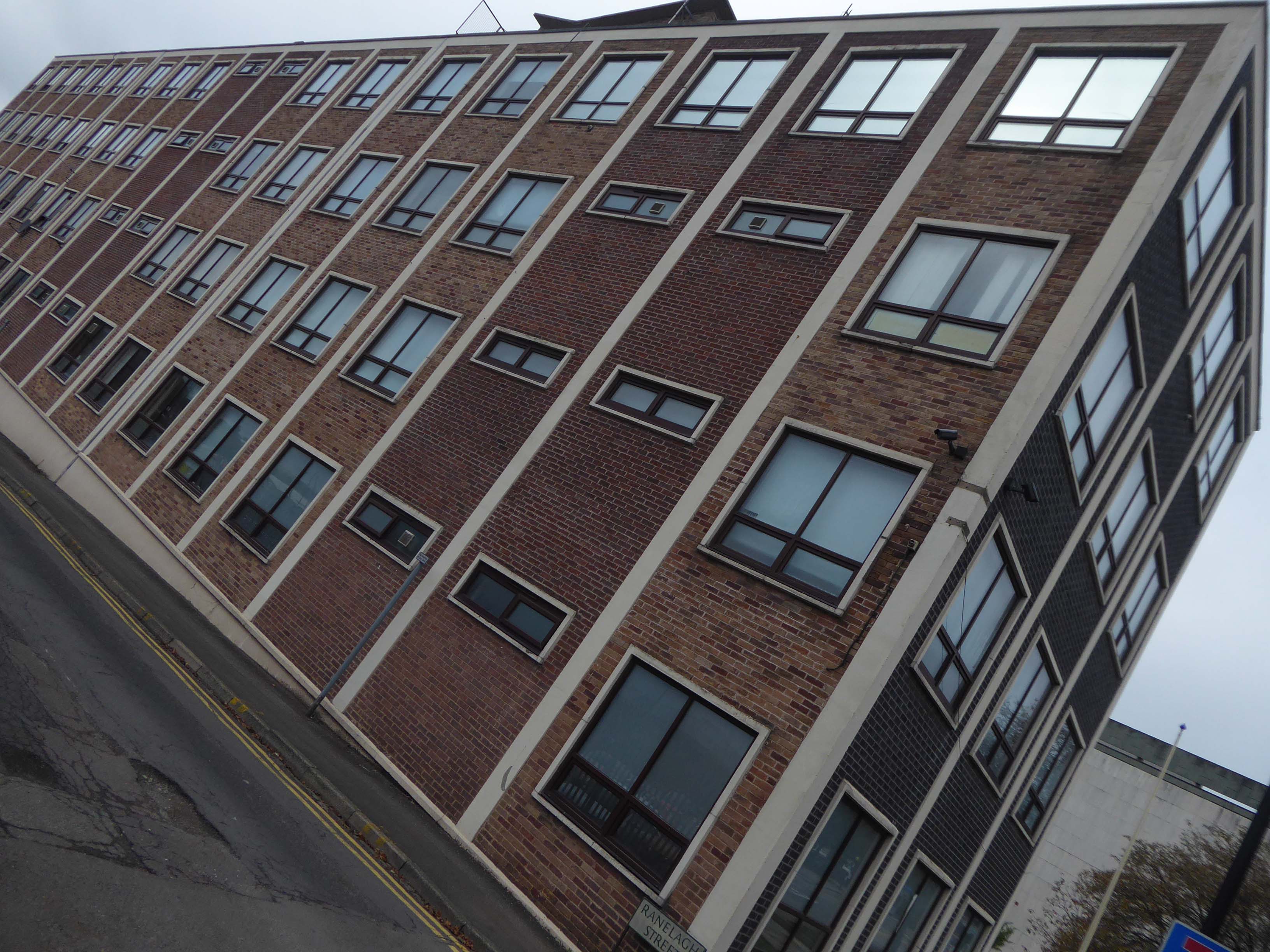
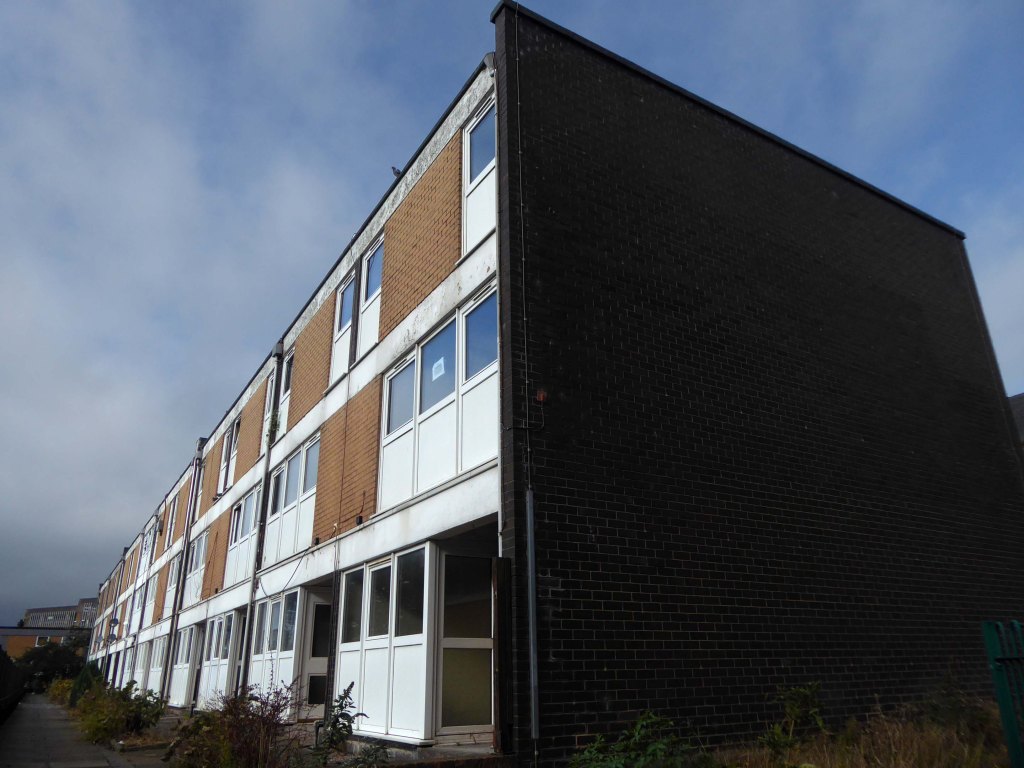
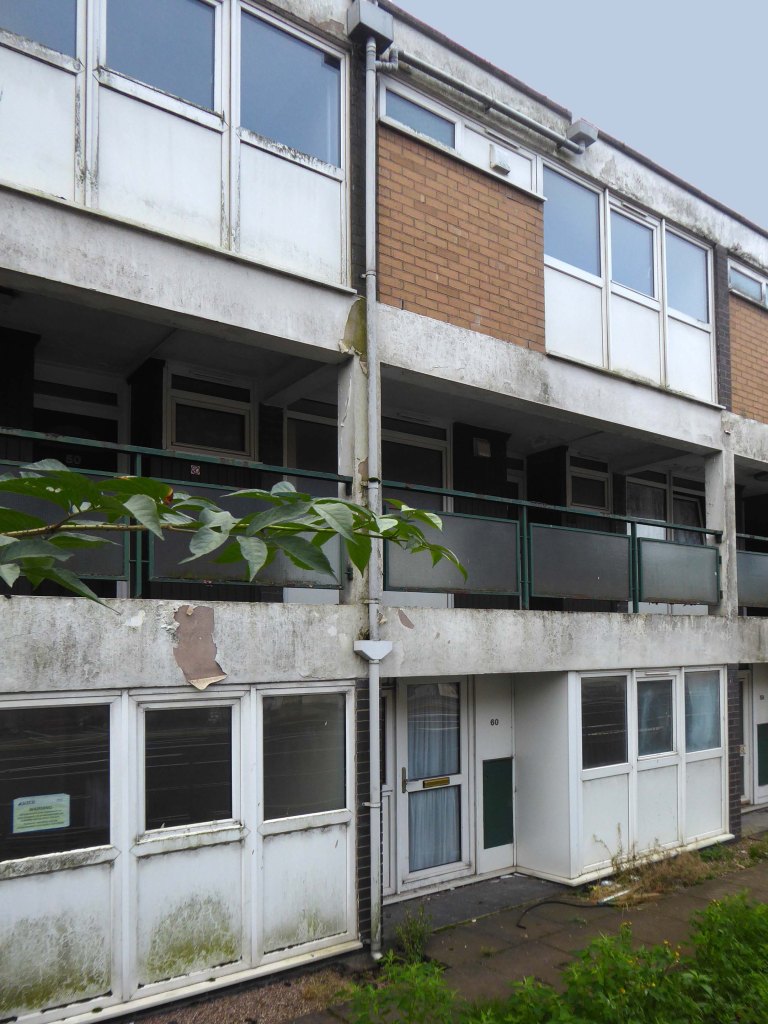
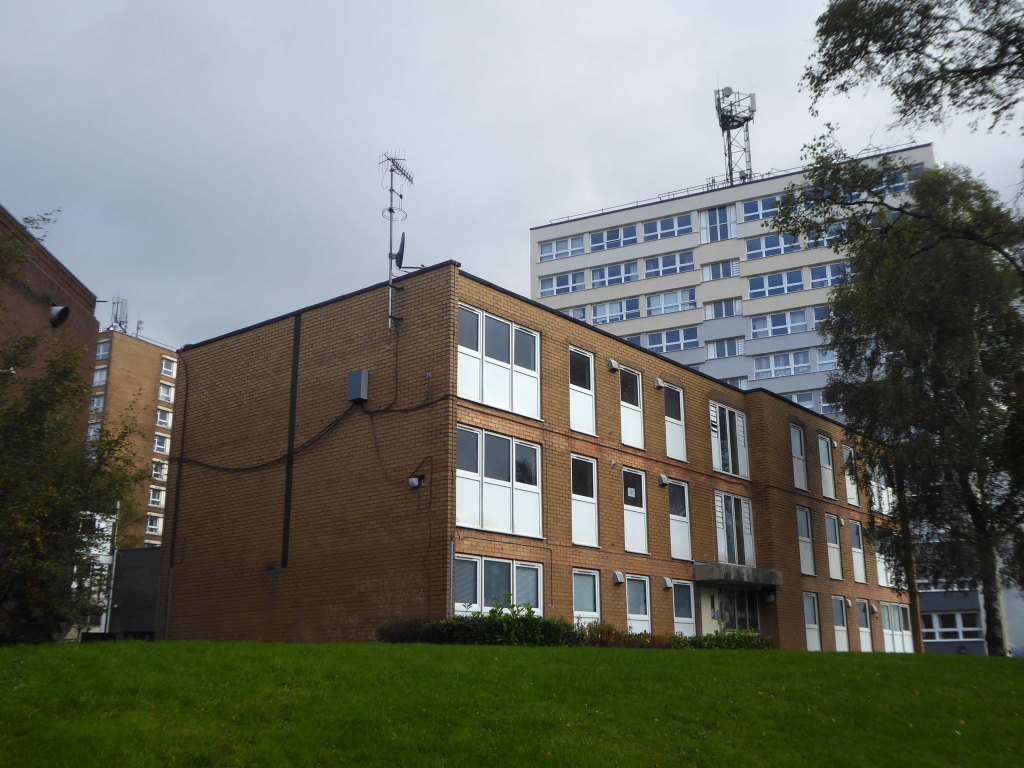
Lost to the world are the Manchester Moderne flats of Kennet House overlooking the Irk Valley on Smedley Lane.

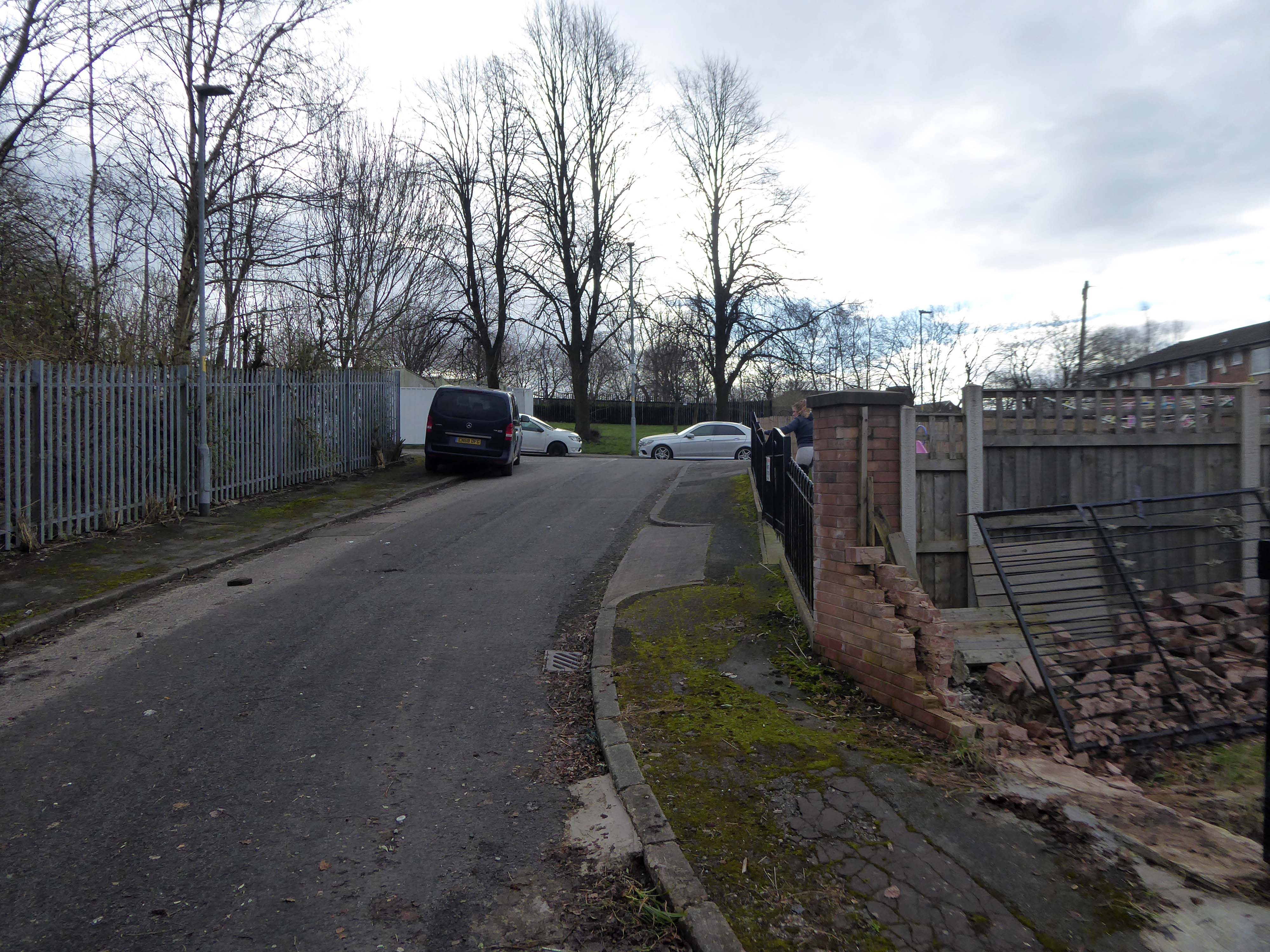
Hendham Way becomes a pedestrianised lane.

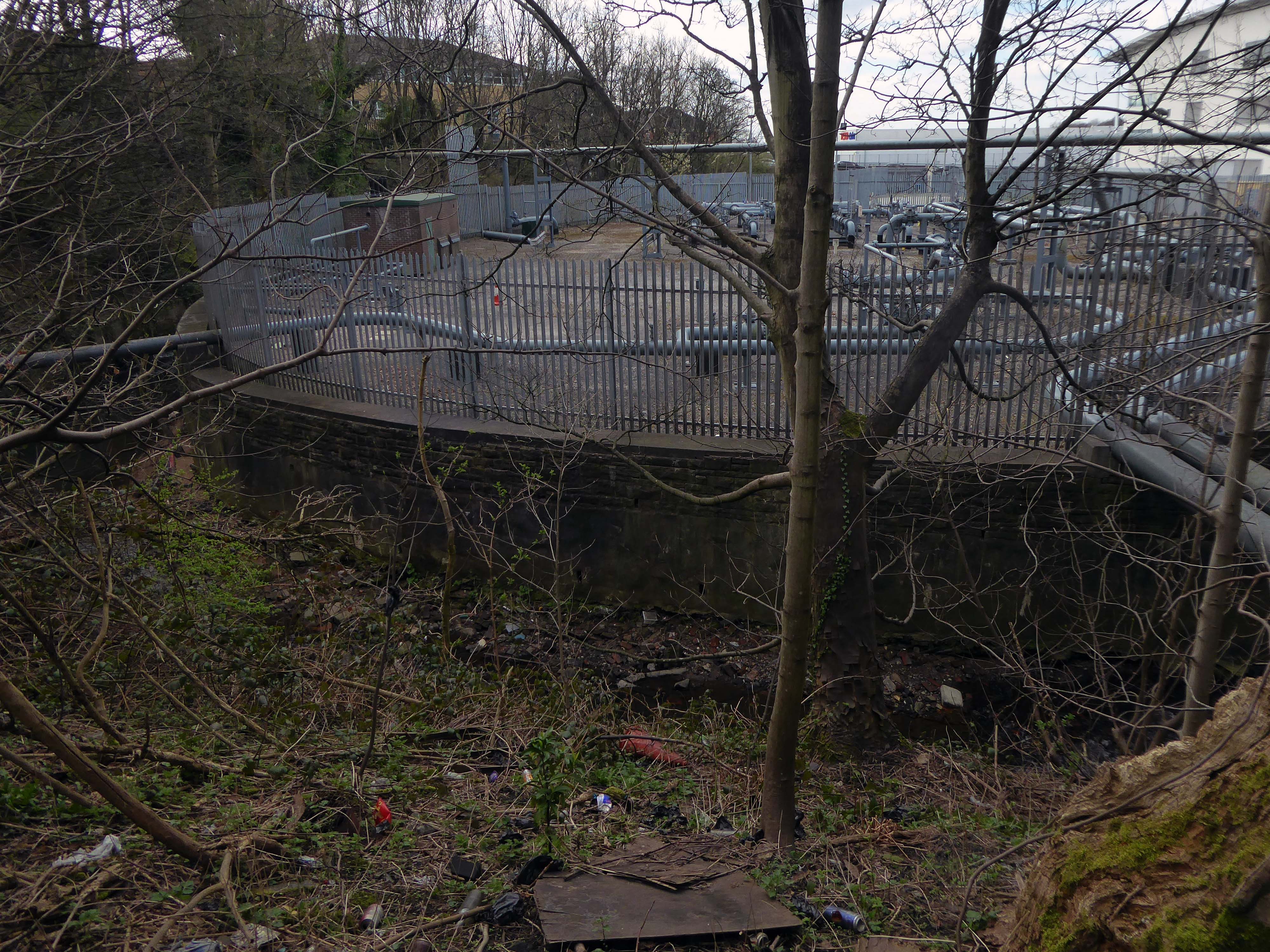
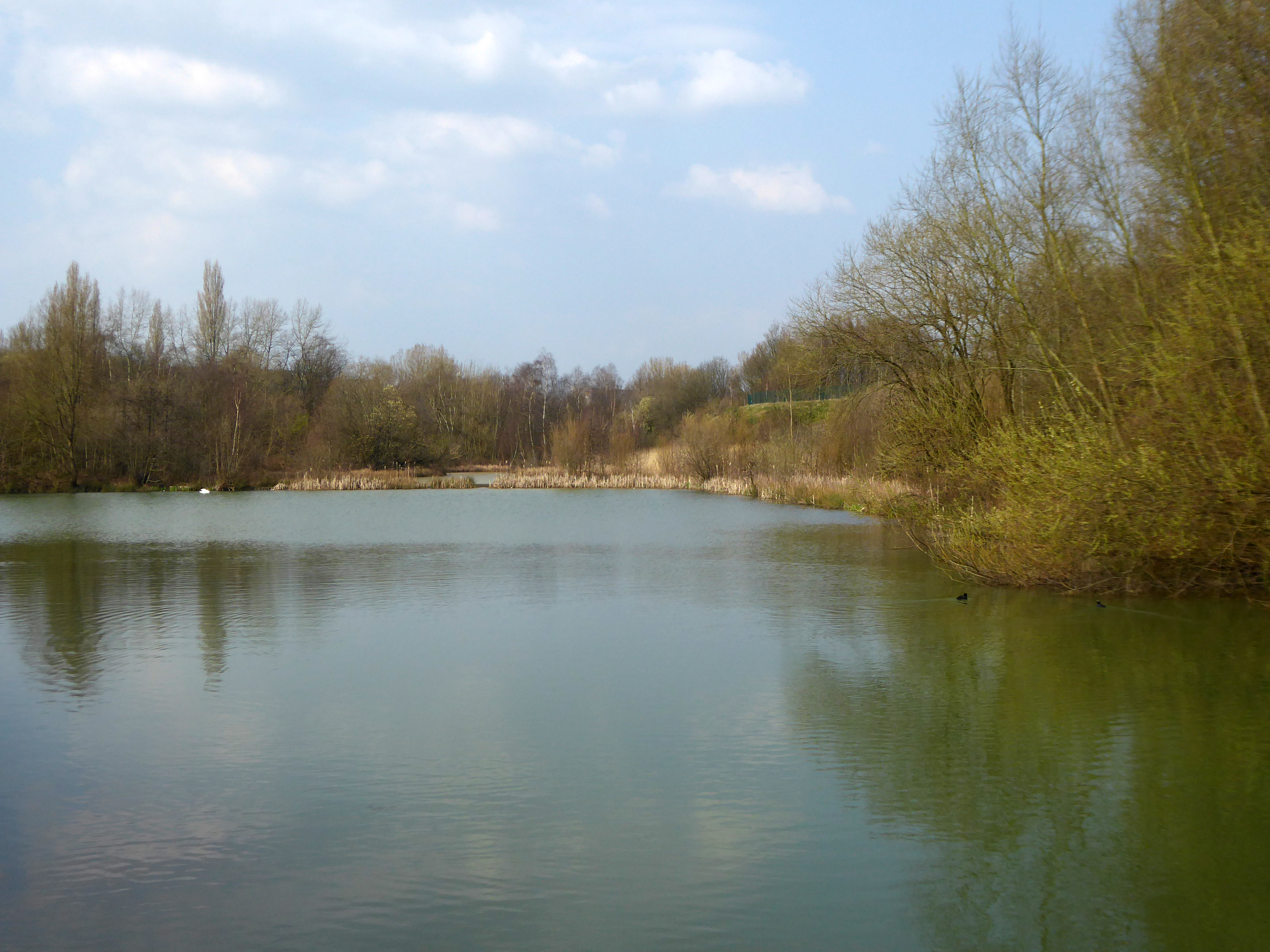
Taking the road up and then down, returning to the river, and following the wrong path – alongside the Hapurhey Reservoir and Ponds.

A remnant of the industrial era the reservoirs and ponds, once used by the factories as a source of water, have over the year become a thriving habitat which supports a substantial amount of wildlife.

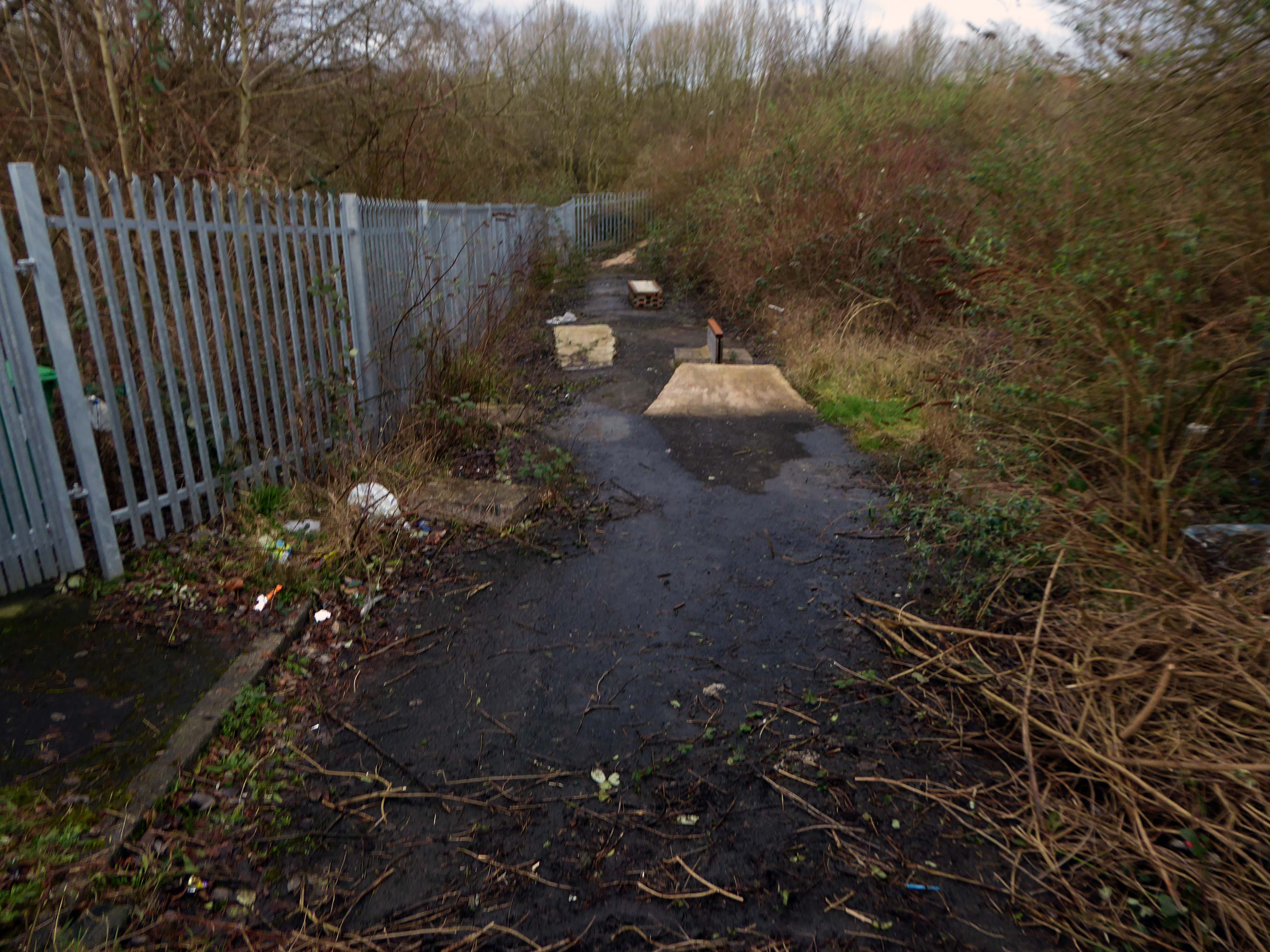
Then cutting back and regaining the correct path.
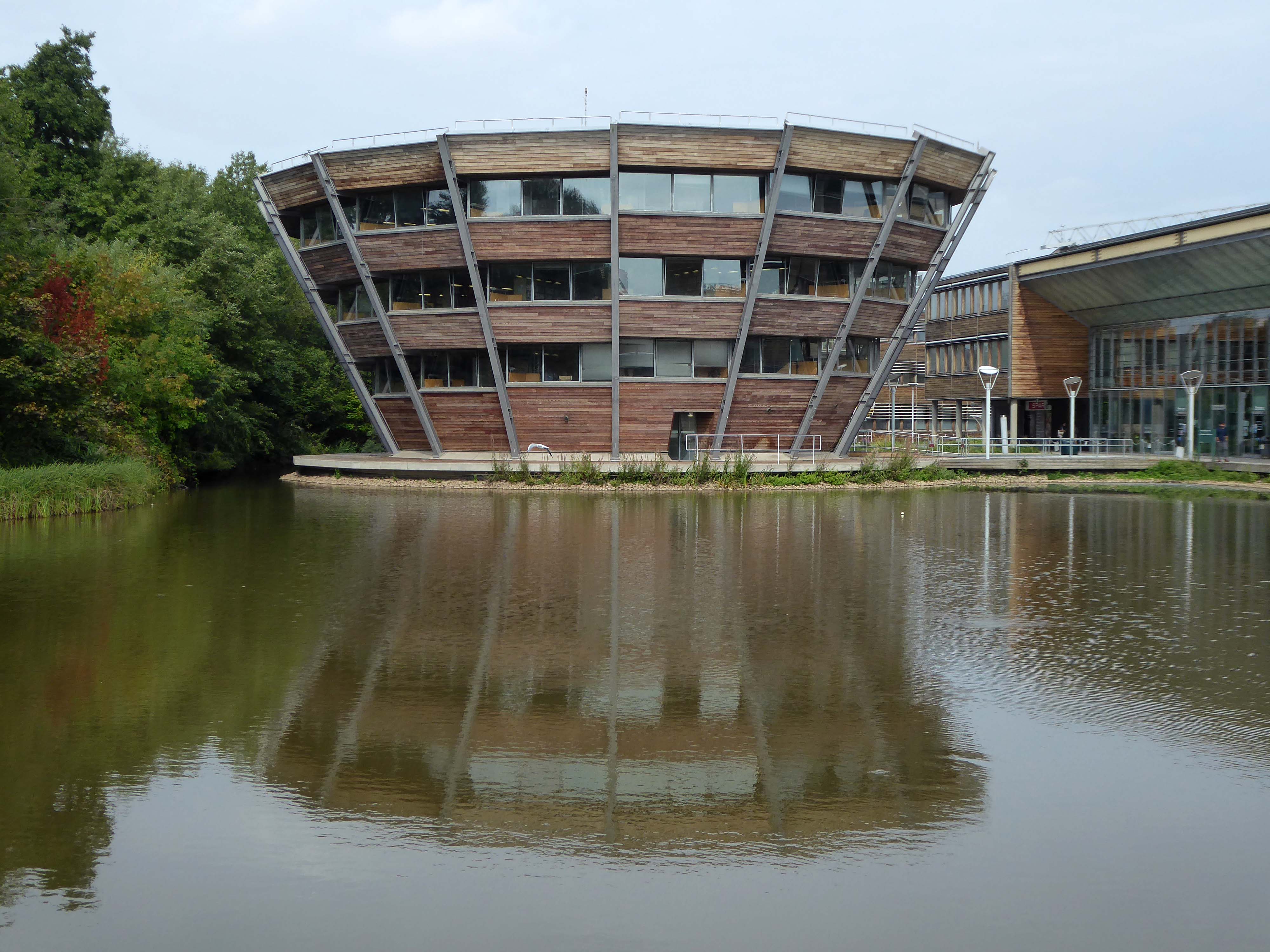
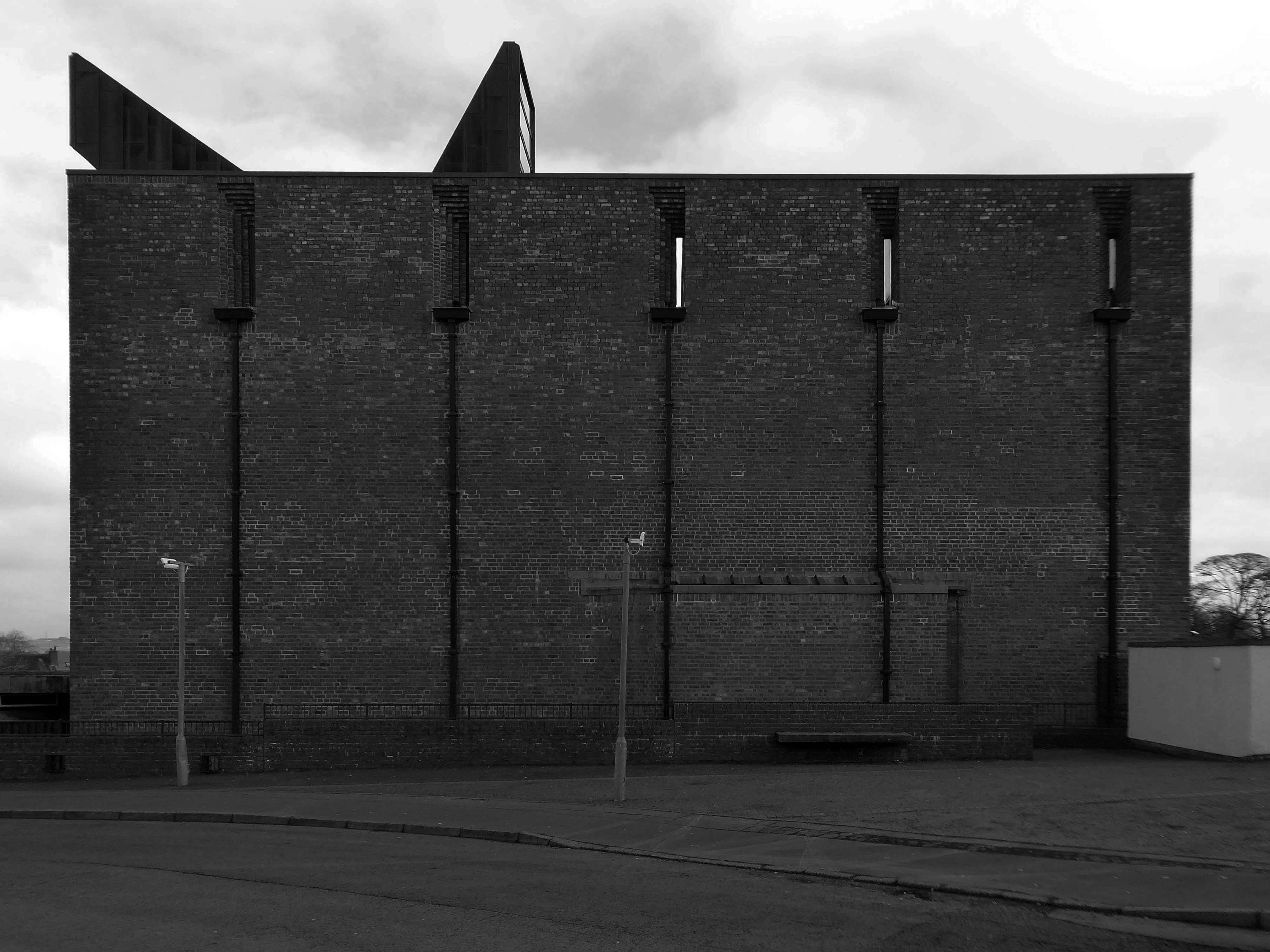
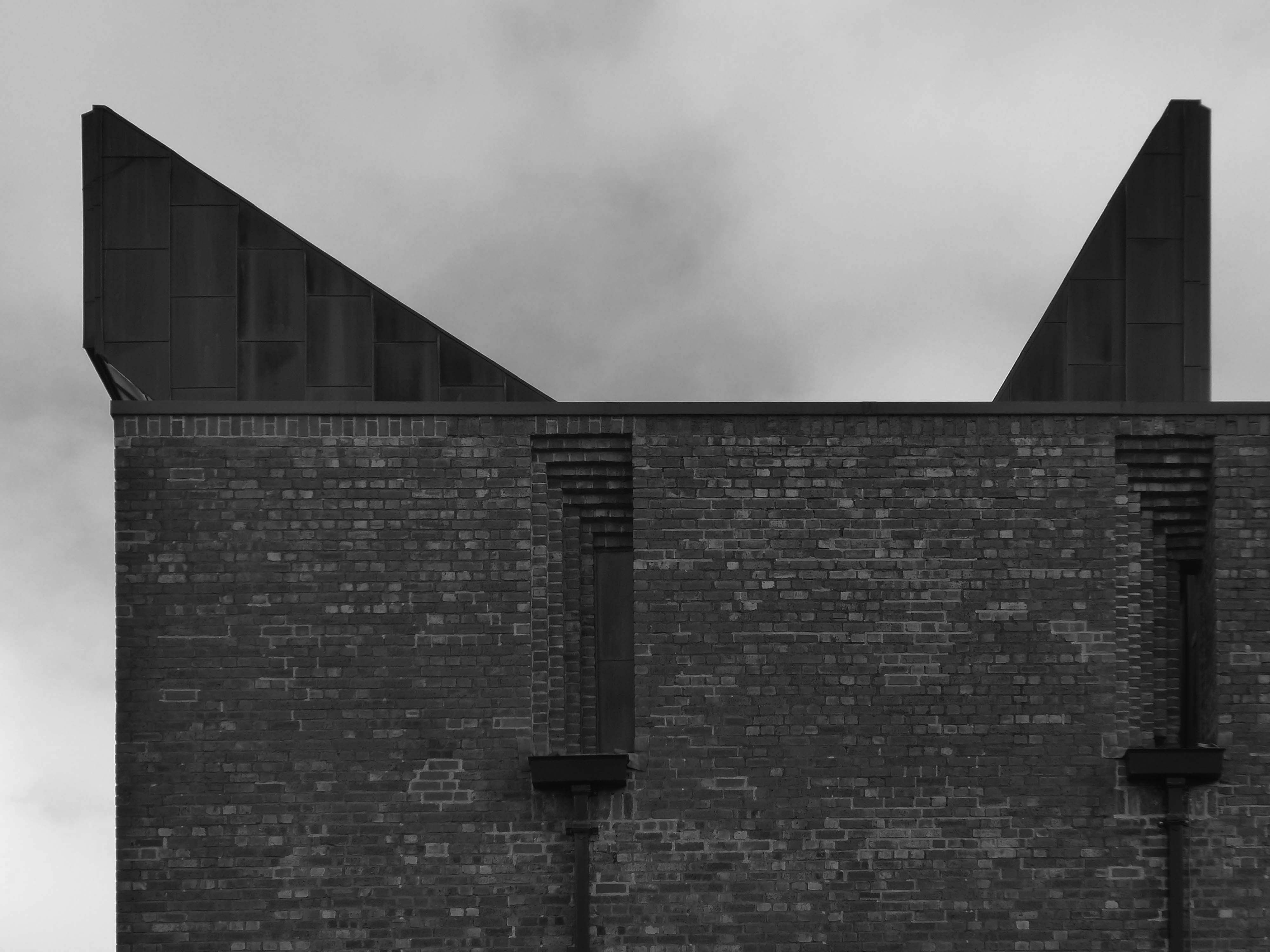
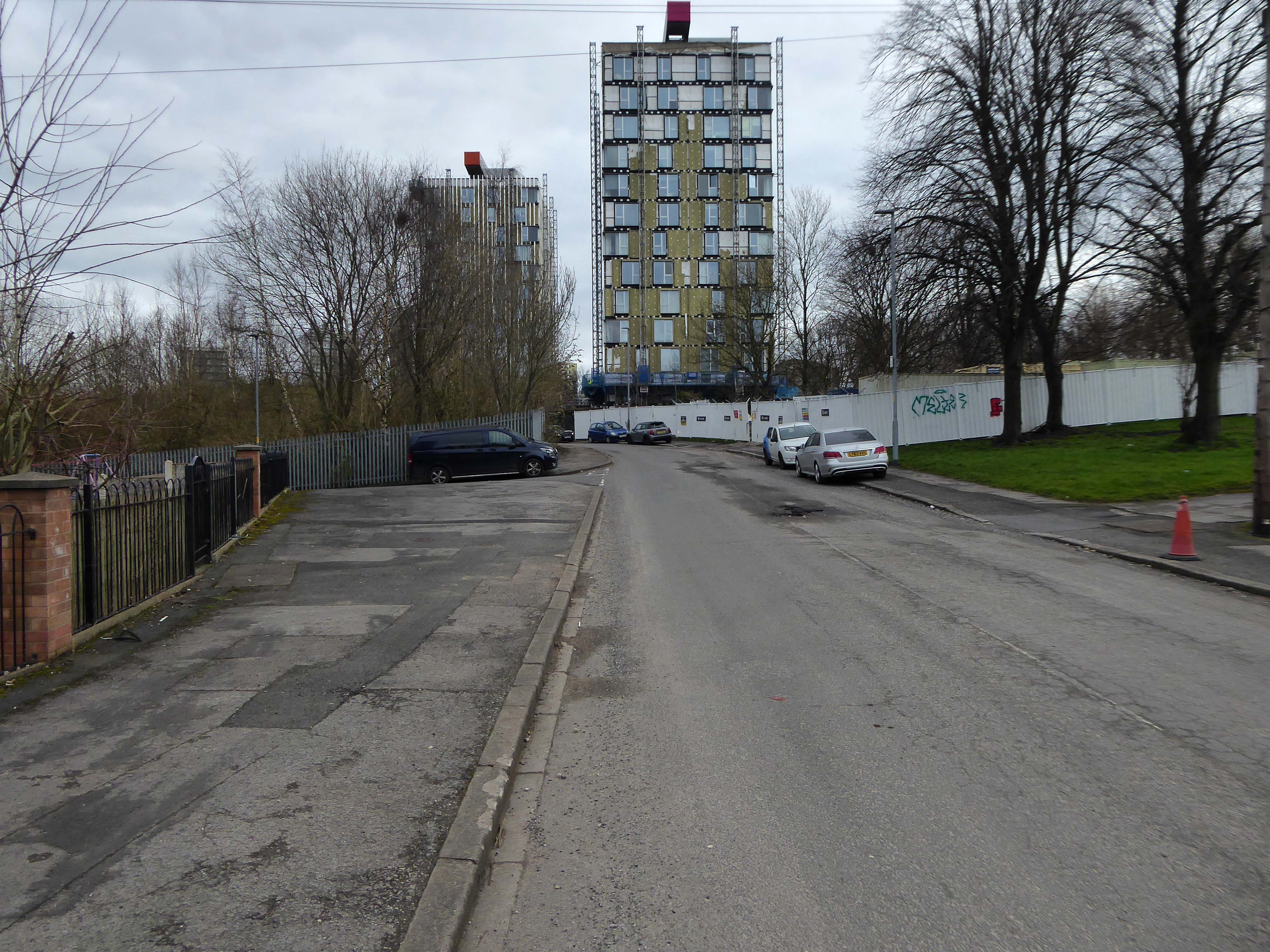
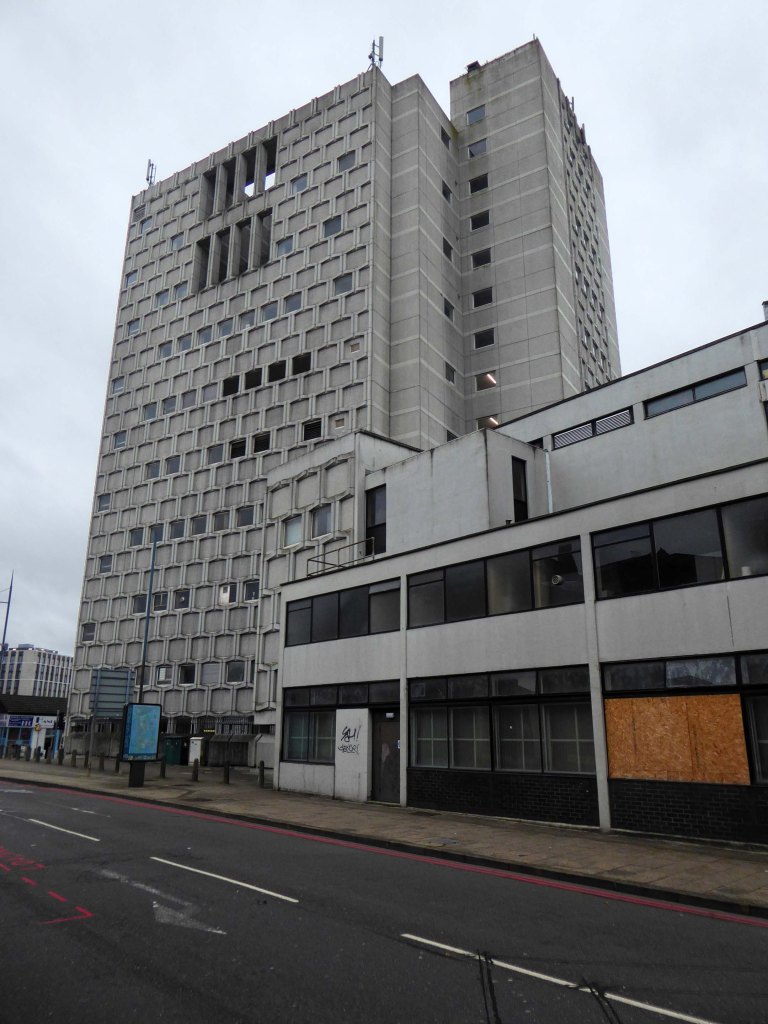
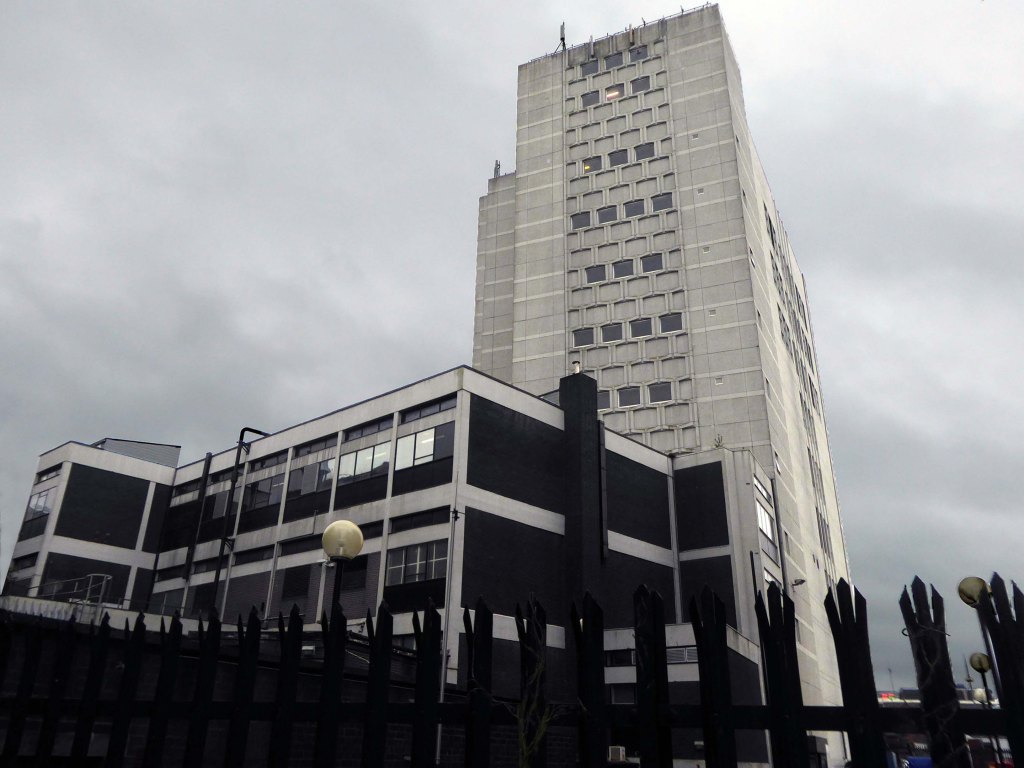
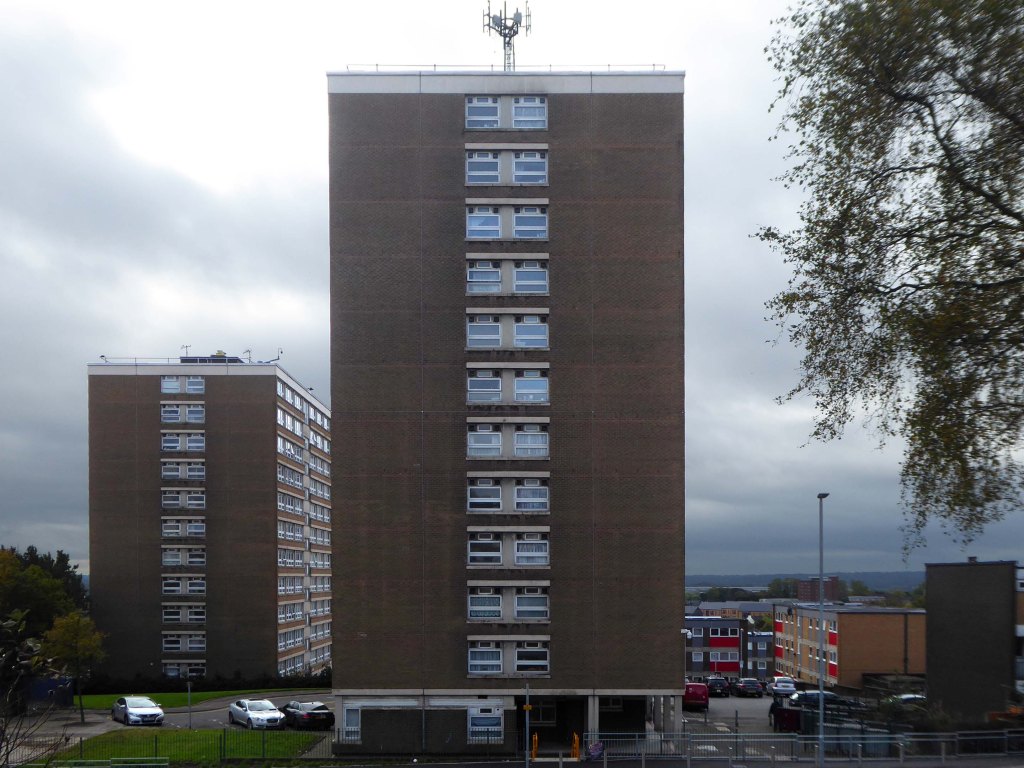
Finally arriving at the Hexagon Tower.

Black and white photographs: Manchester Local Image Collection

Tower Blocks – Blackley

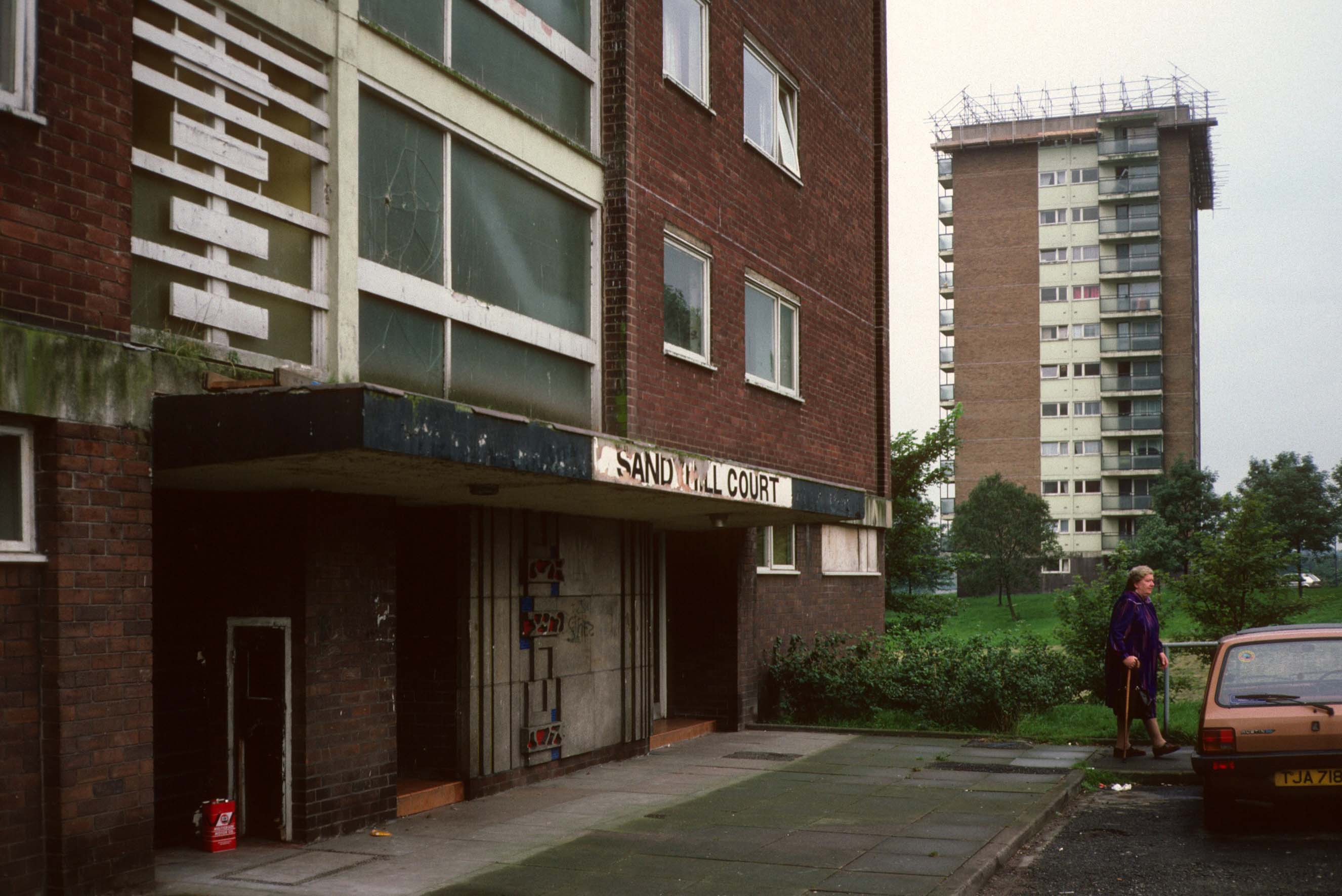
Sandyhill Court Sandyhill Rd Manchester M9 8JS

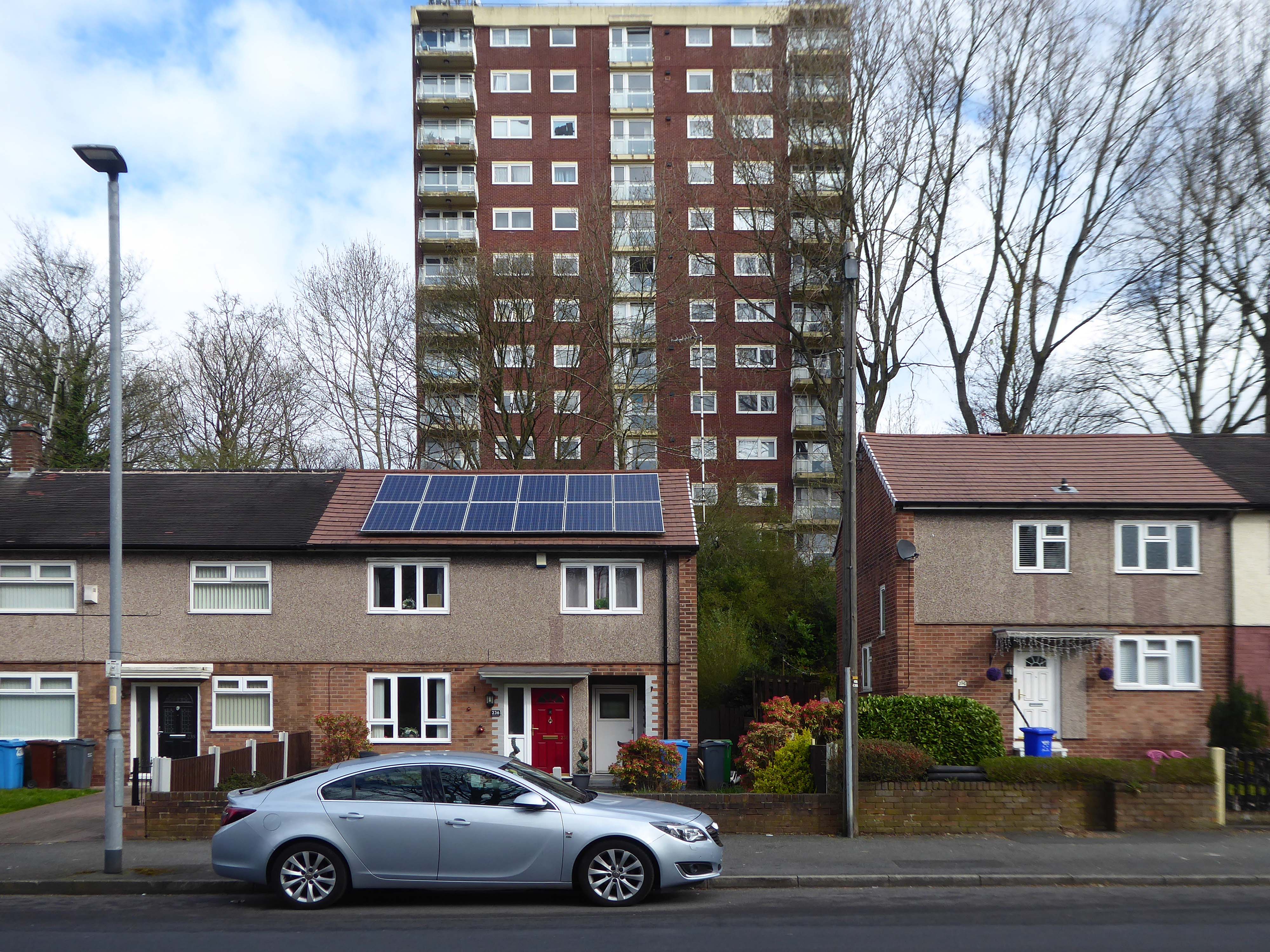
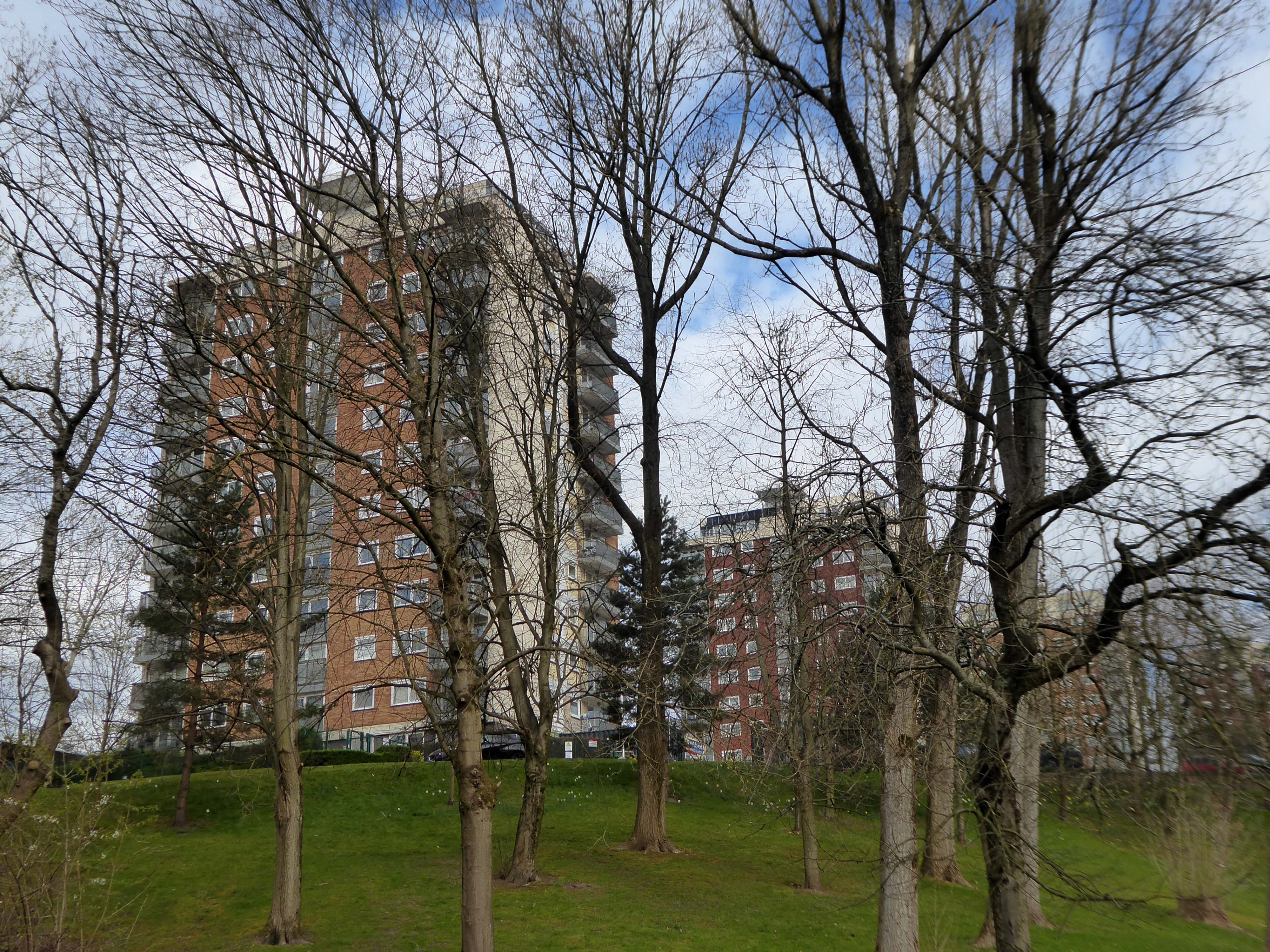
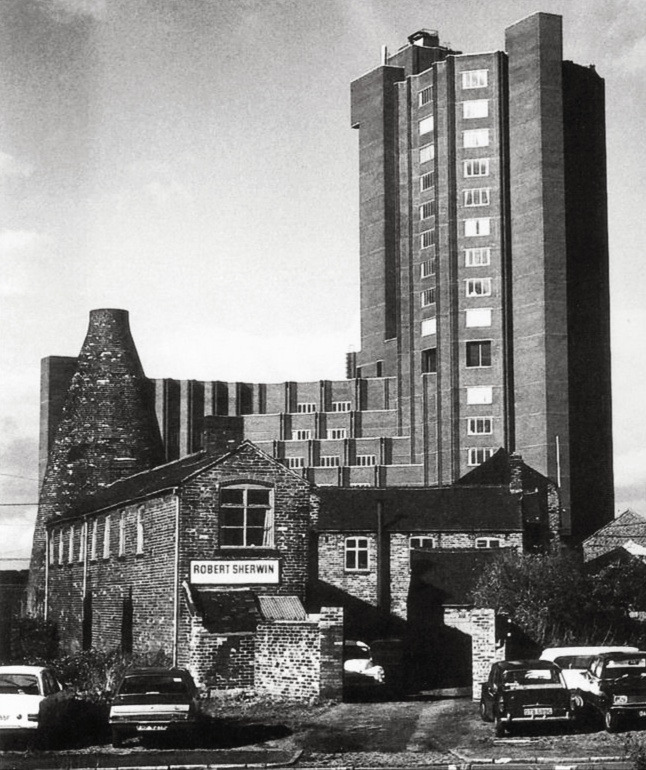
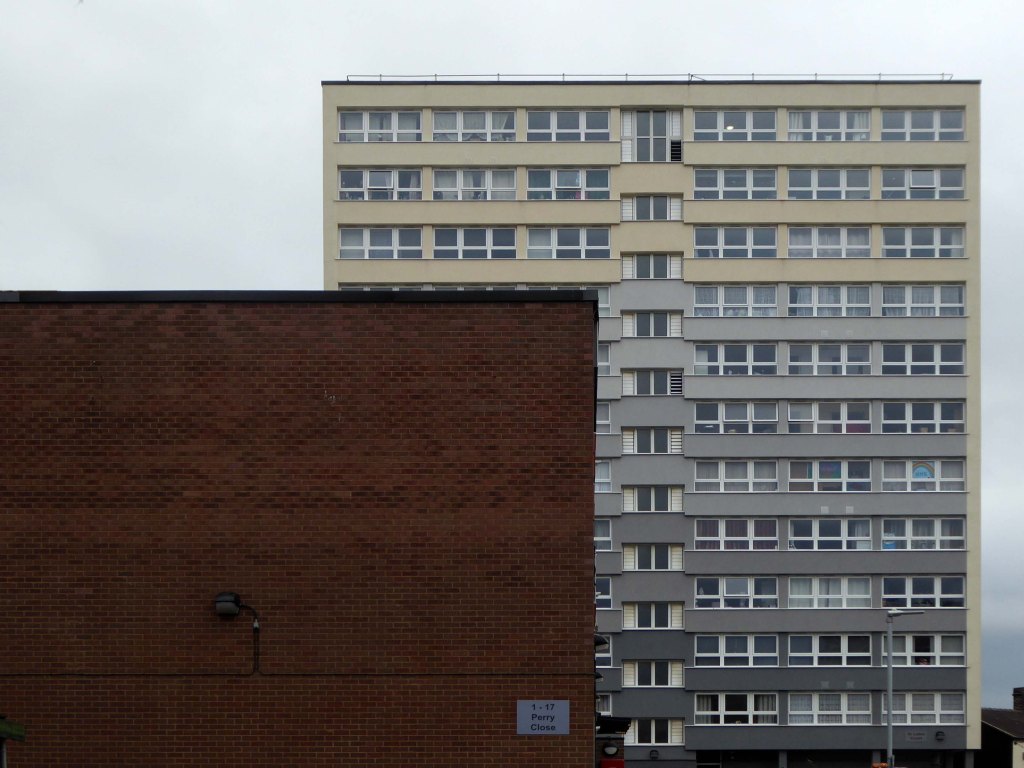
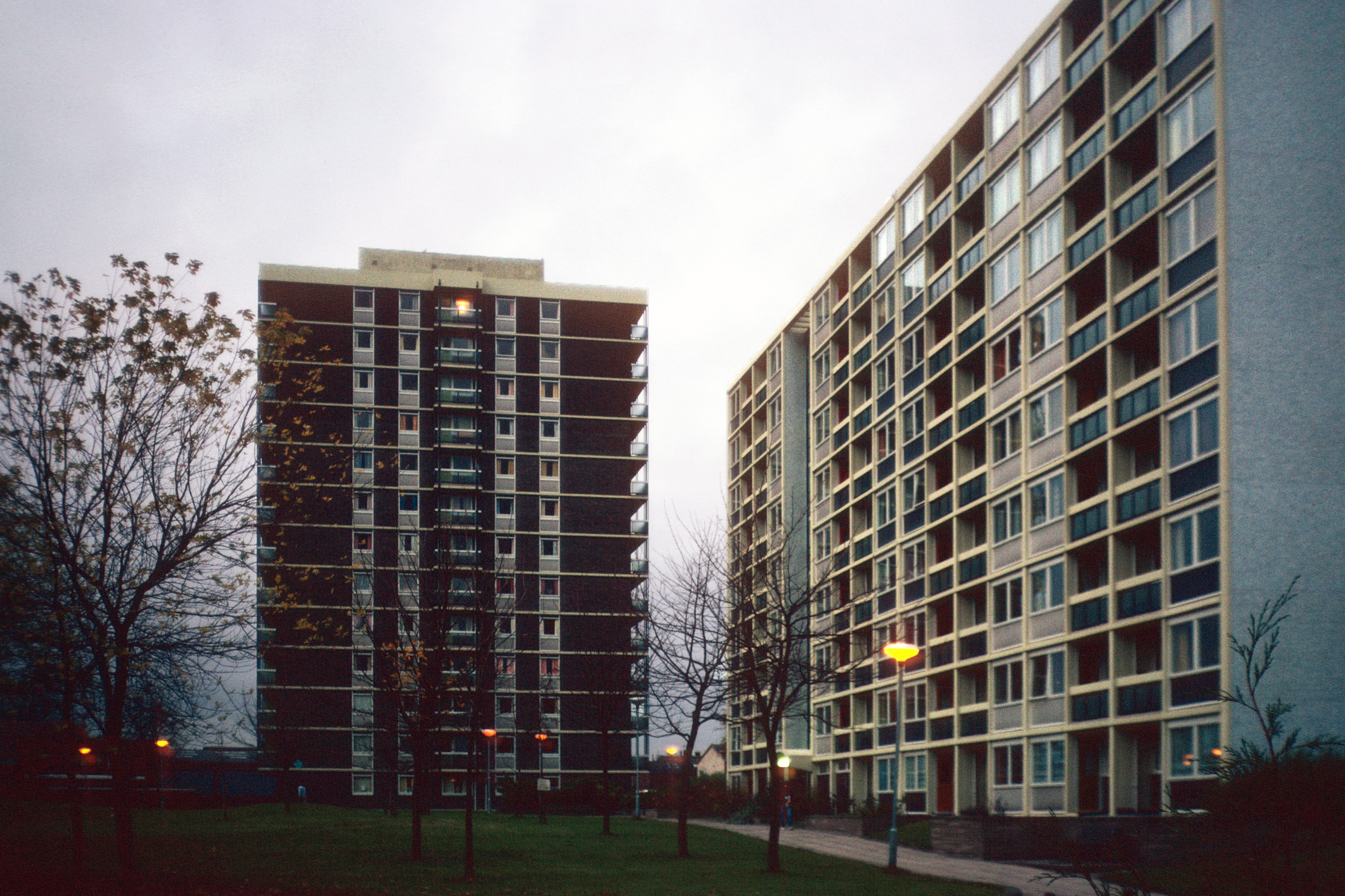
Almost high on a hill stands a lonely tower block.

Seen here in 1987.

Tower Block

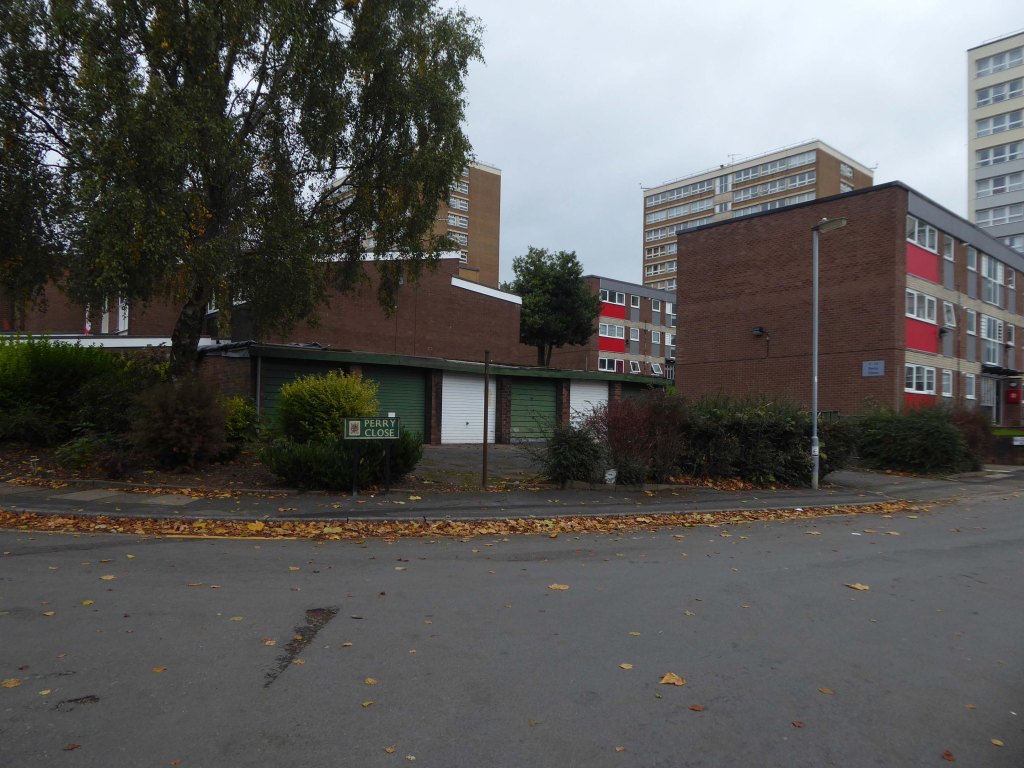
Sandyhill Court – Stands on the corner of Riverdale Road and Sandyhill Road and is still a local authority block.

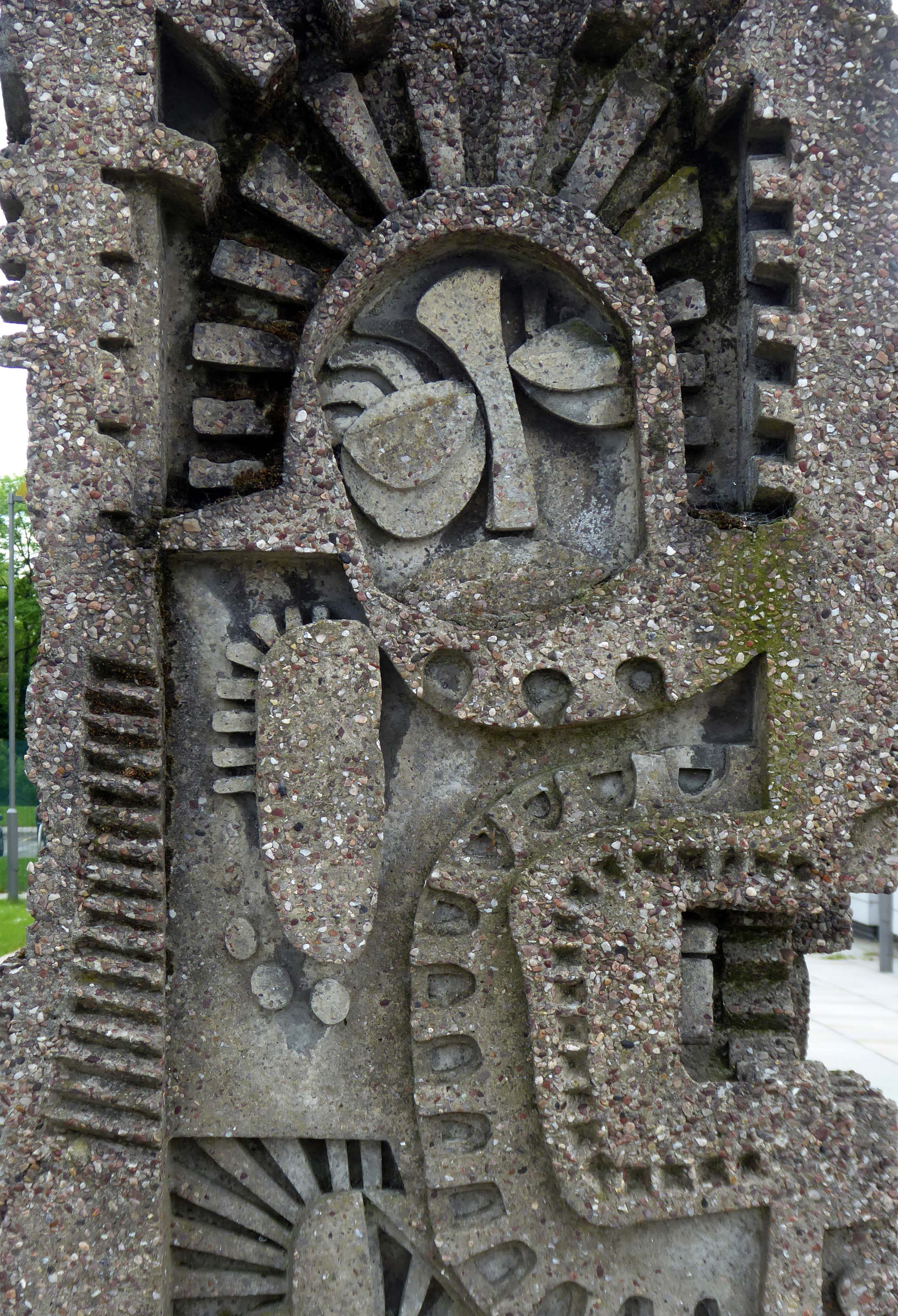
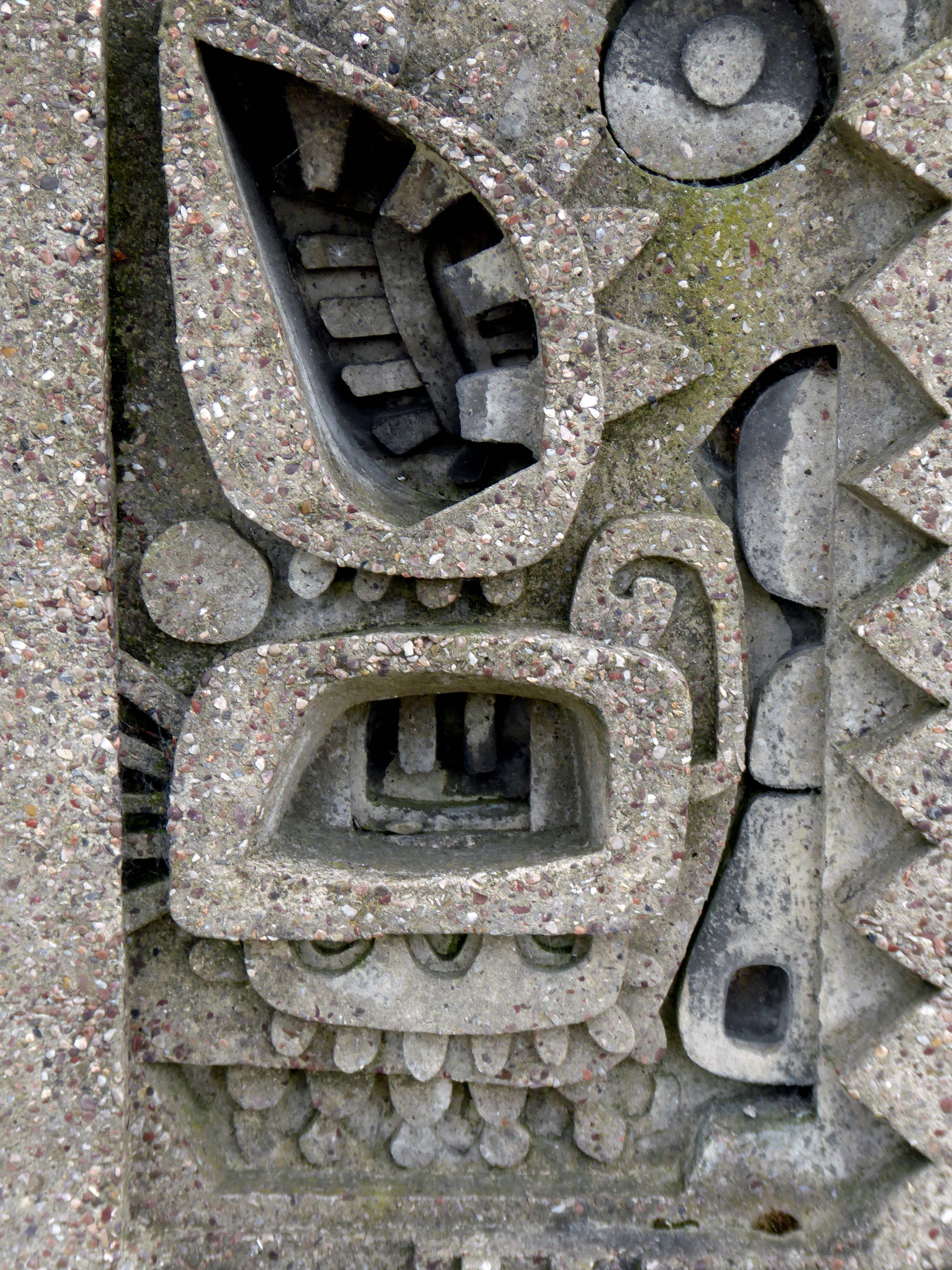
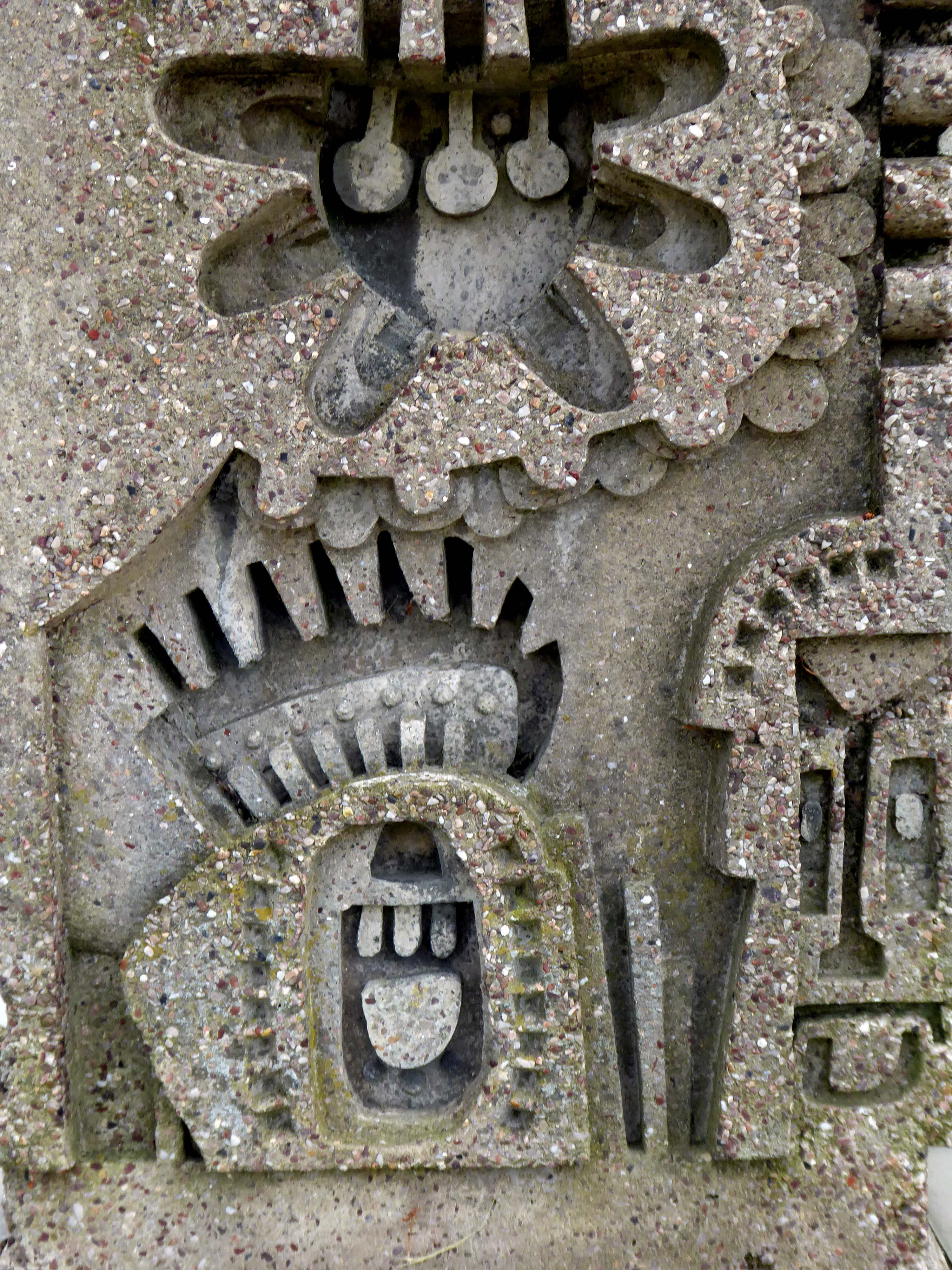
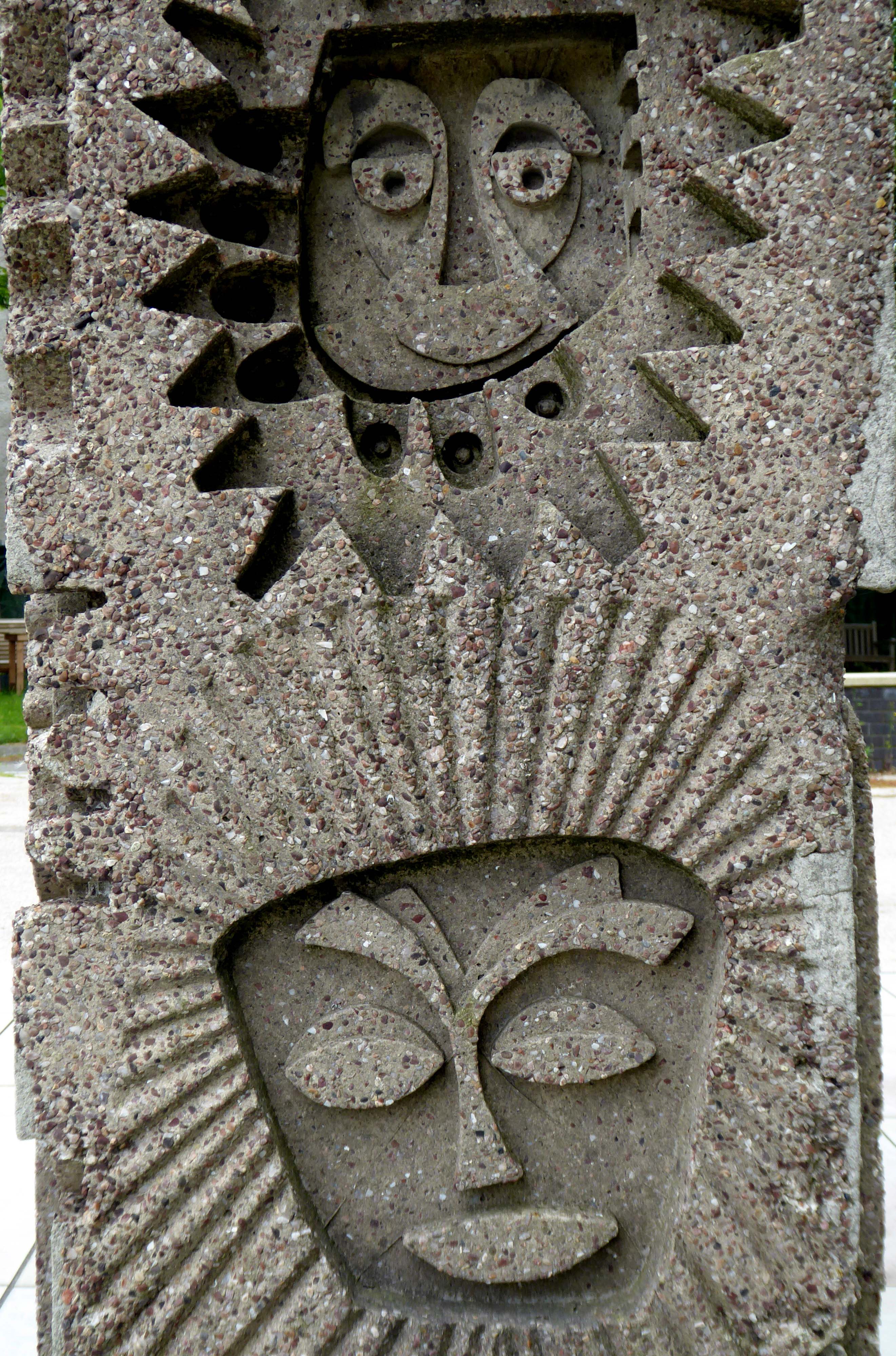
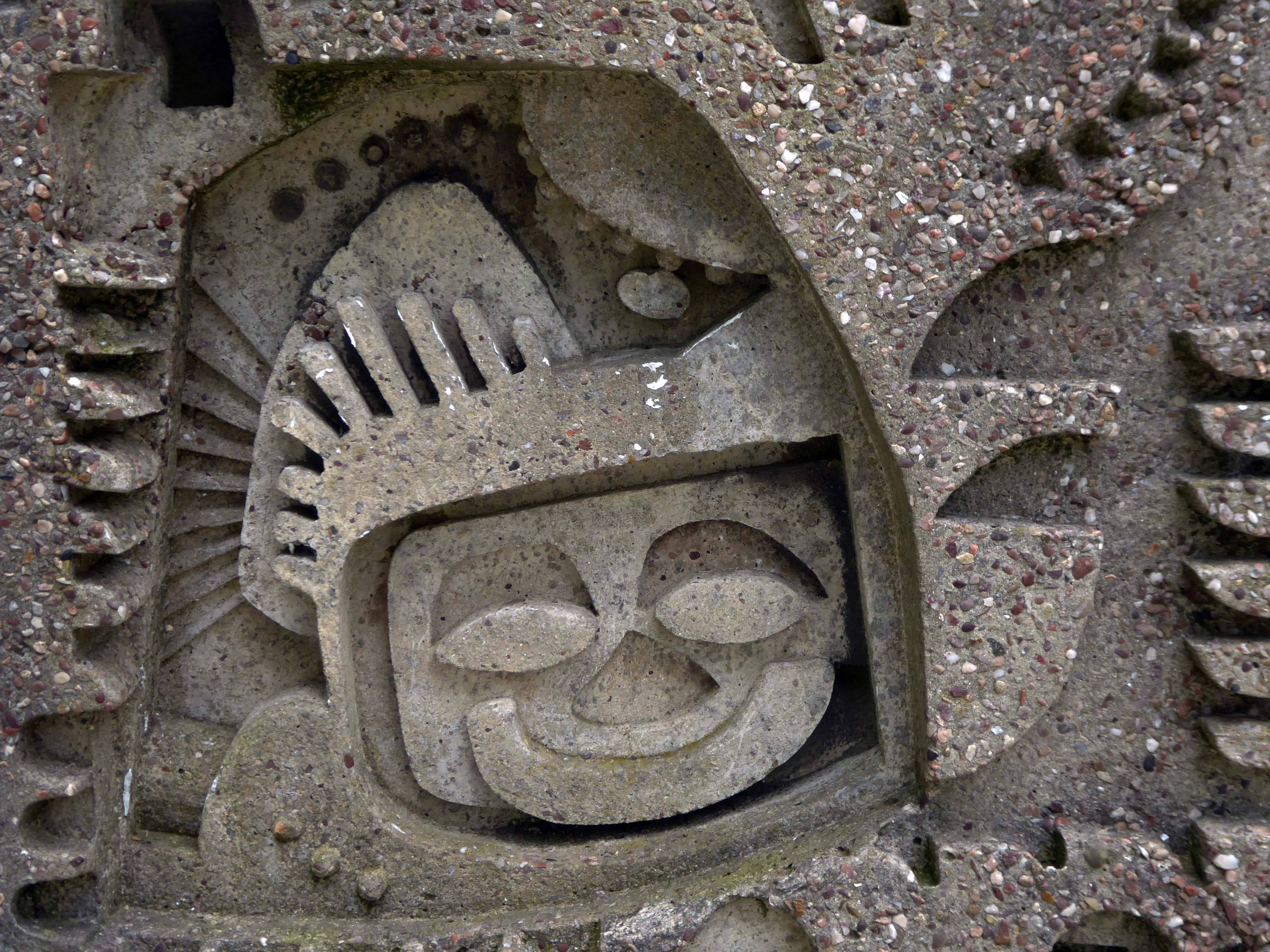
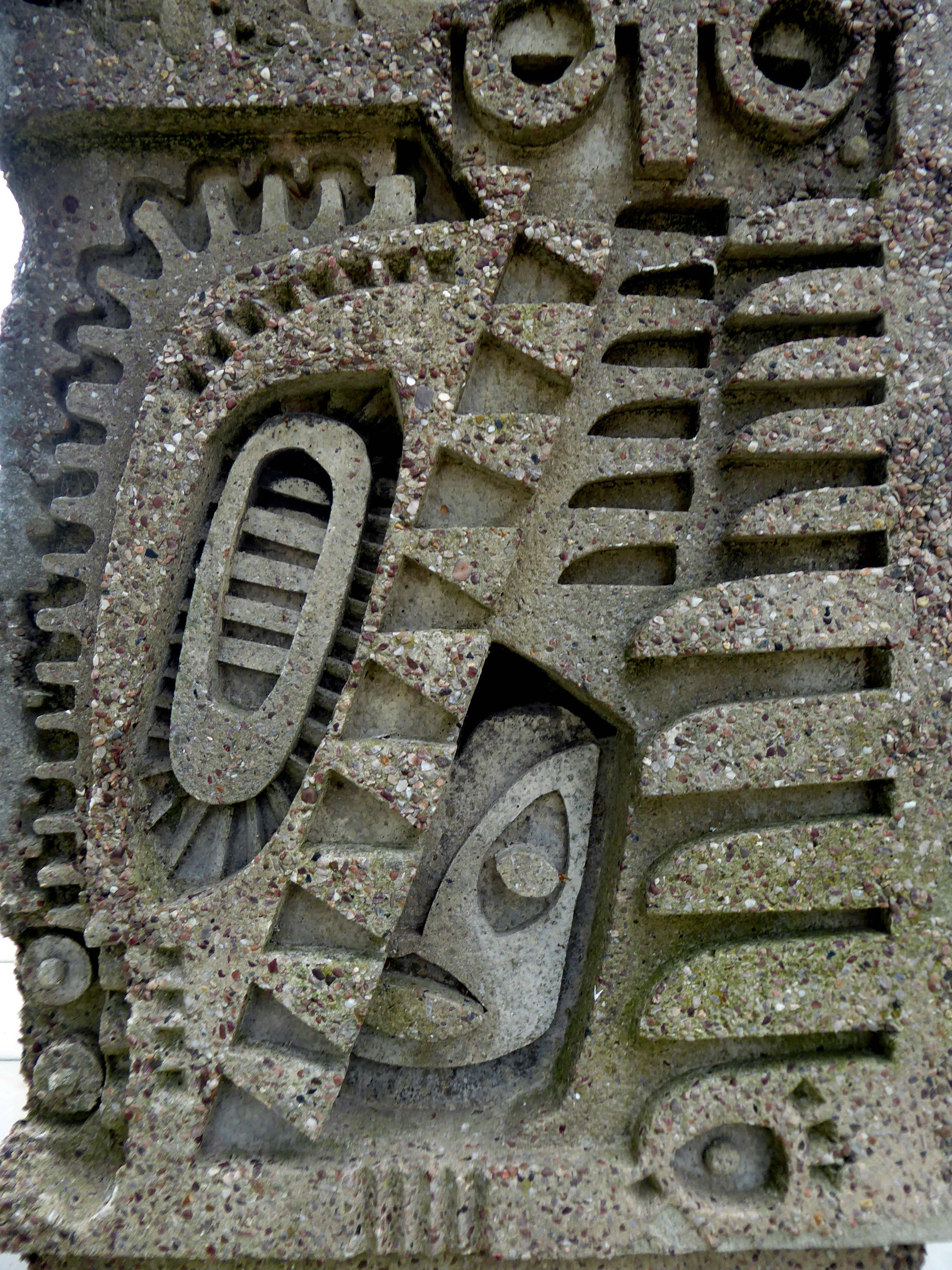
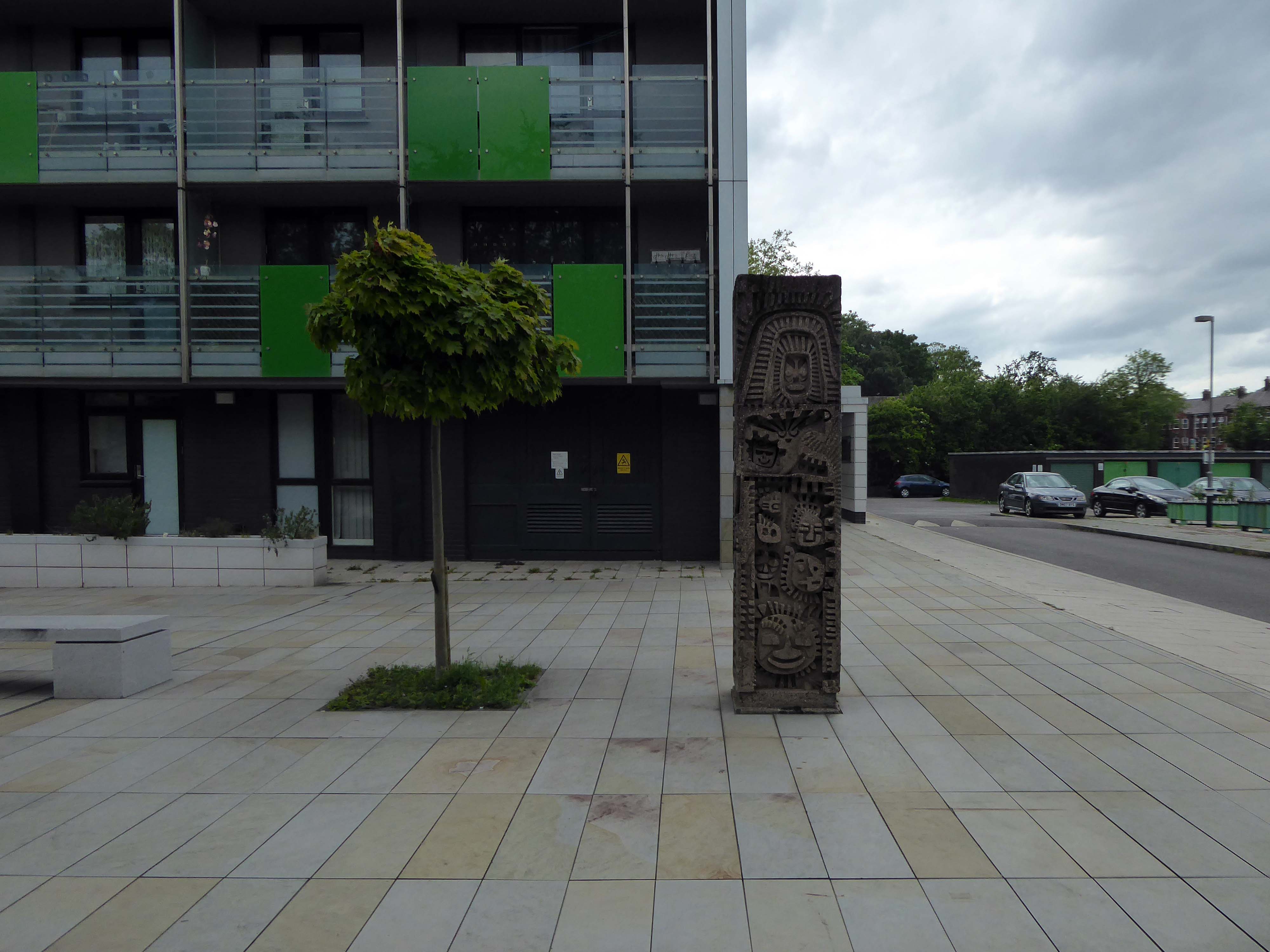
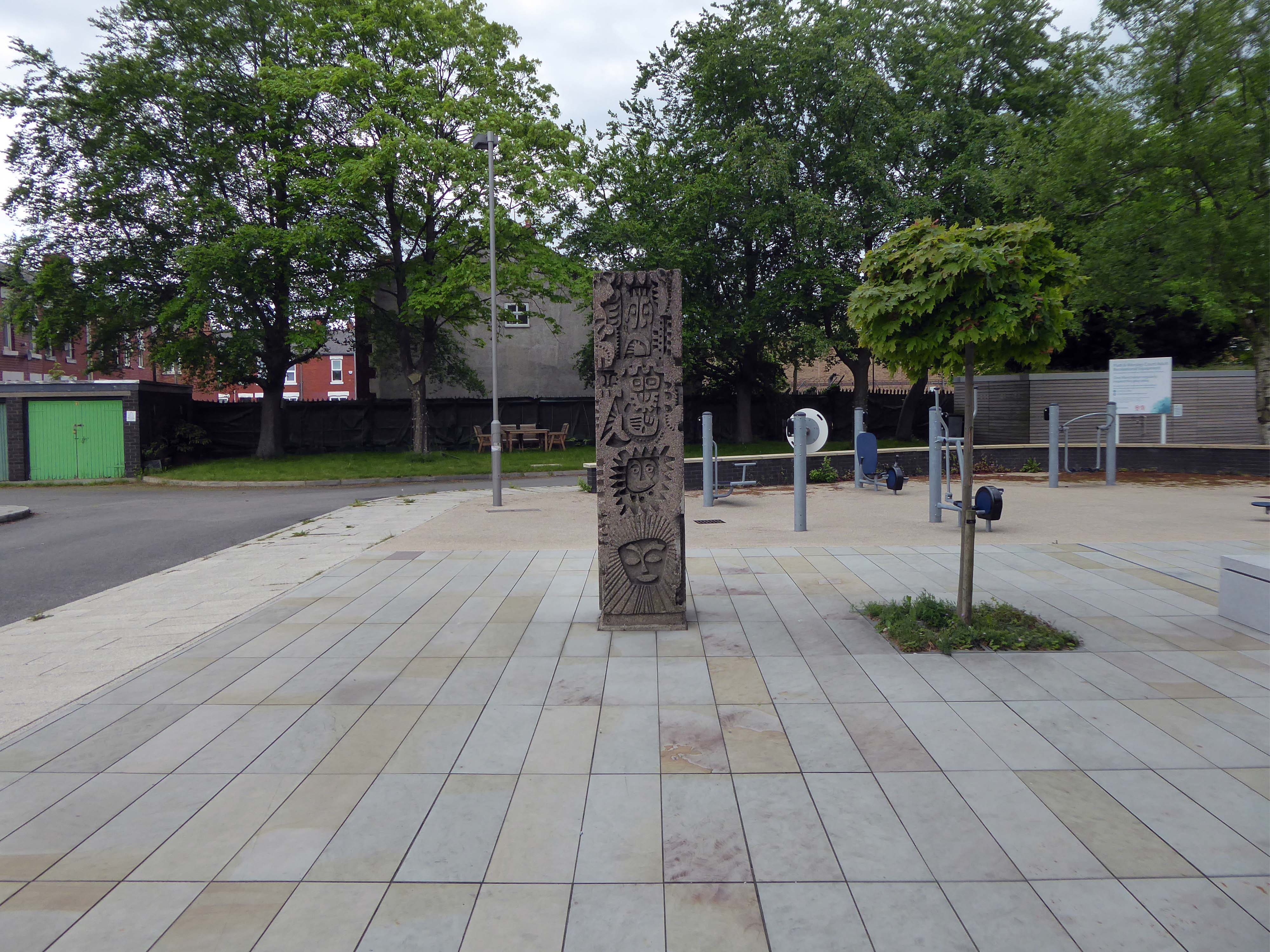
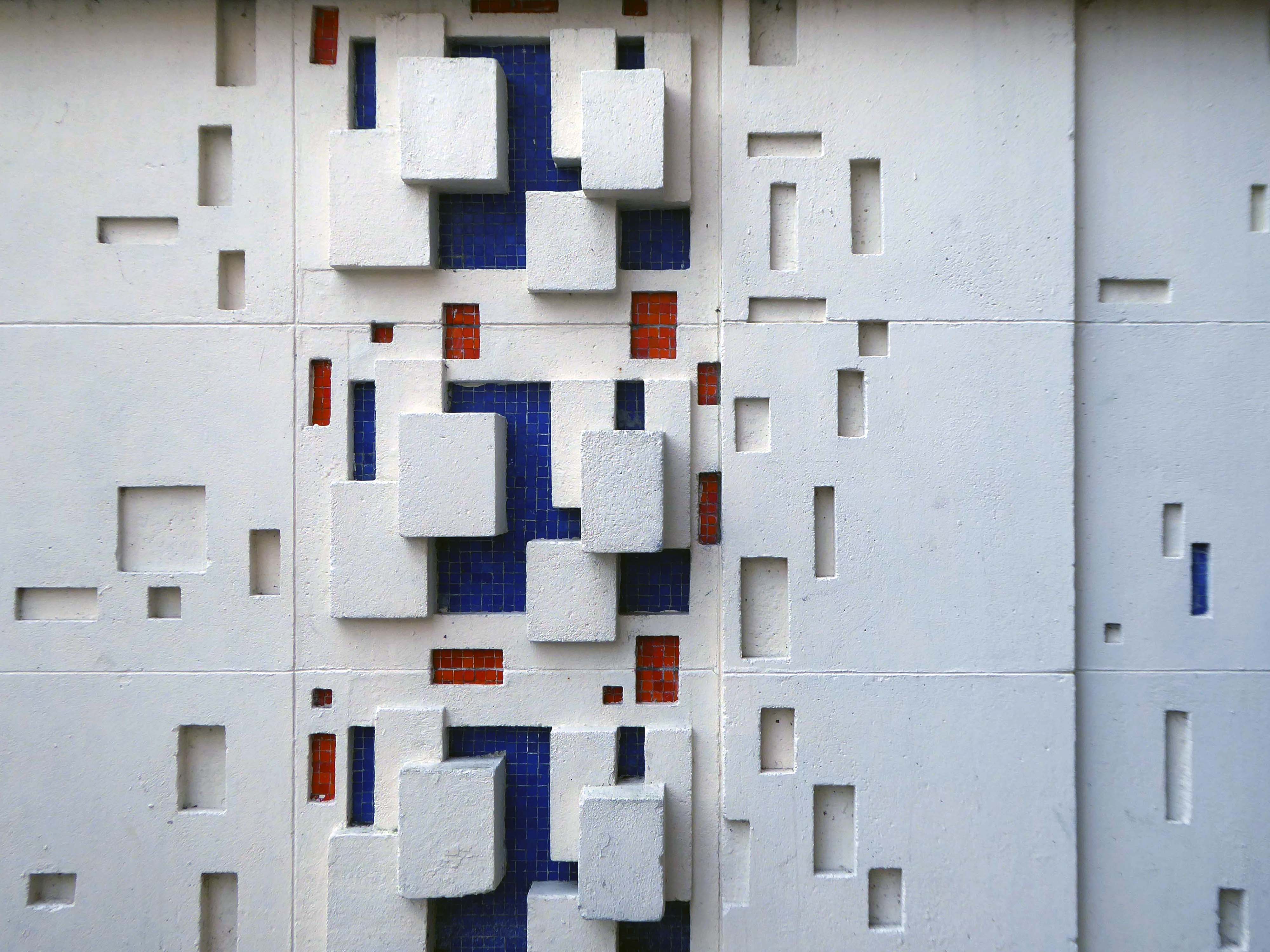
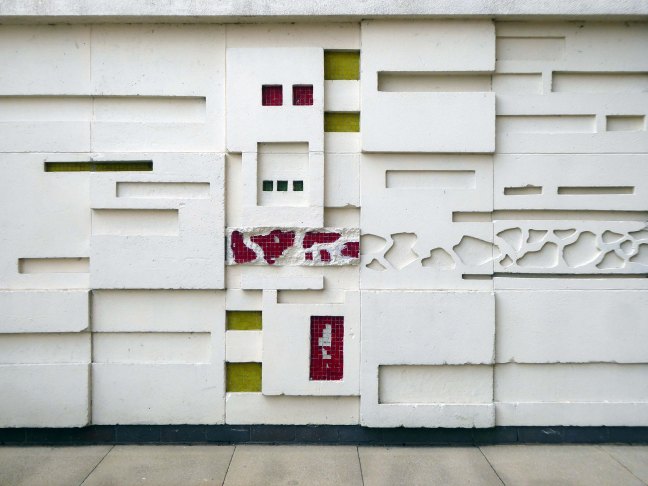
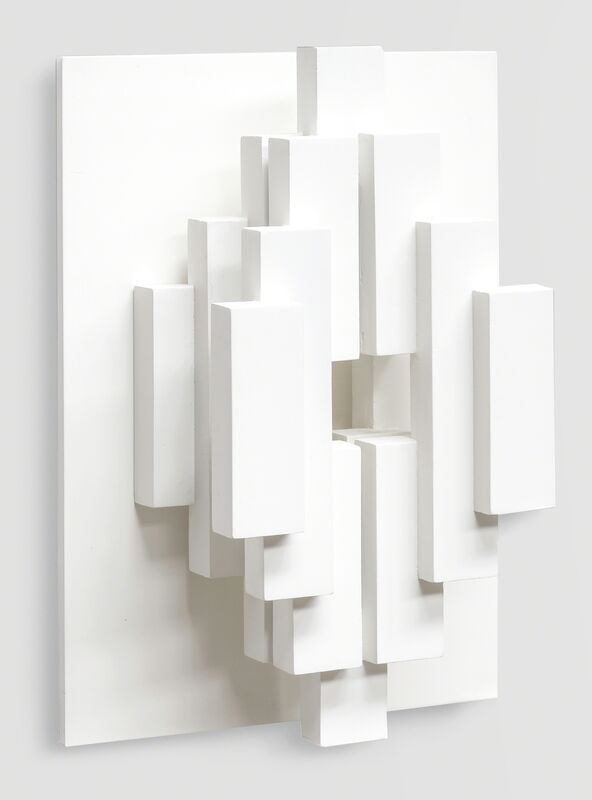
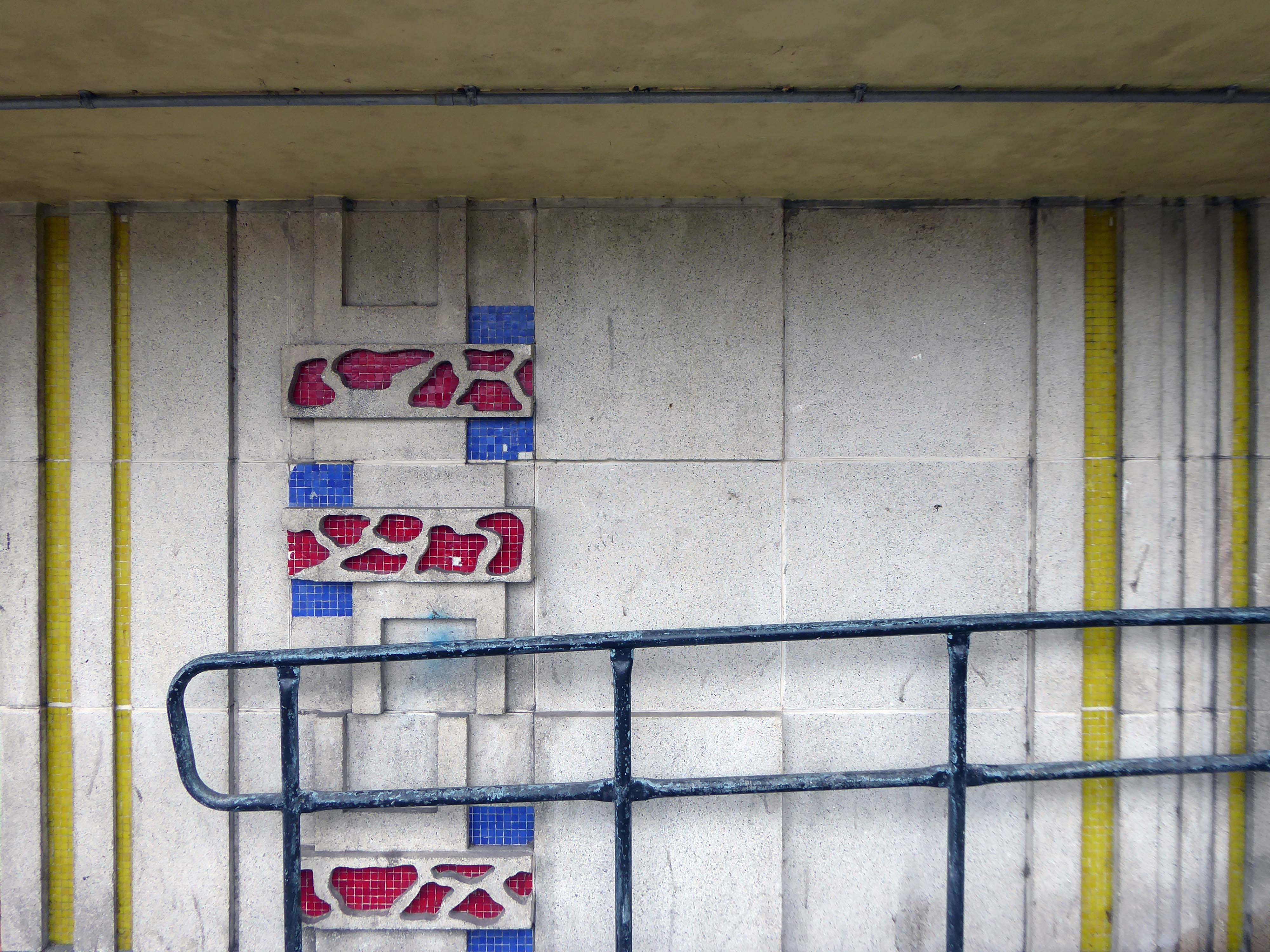
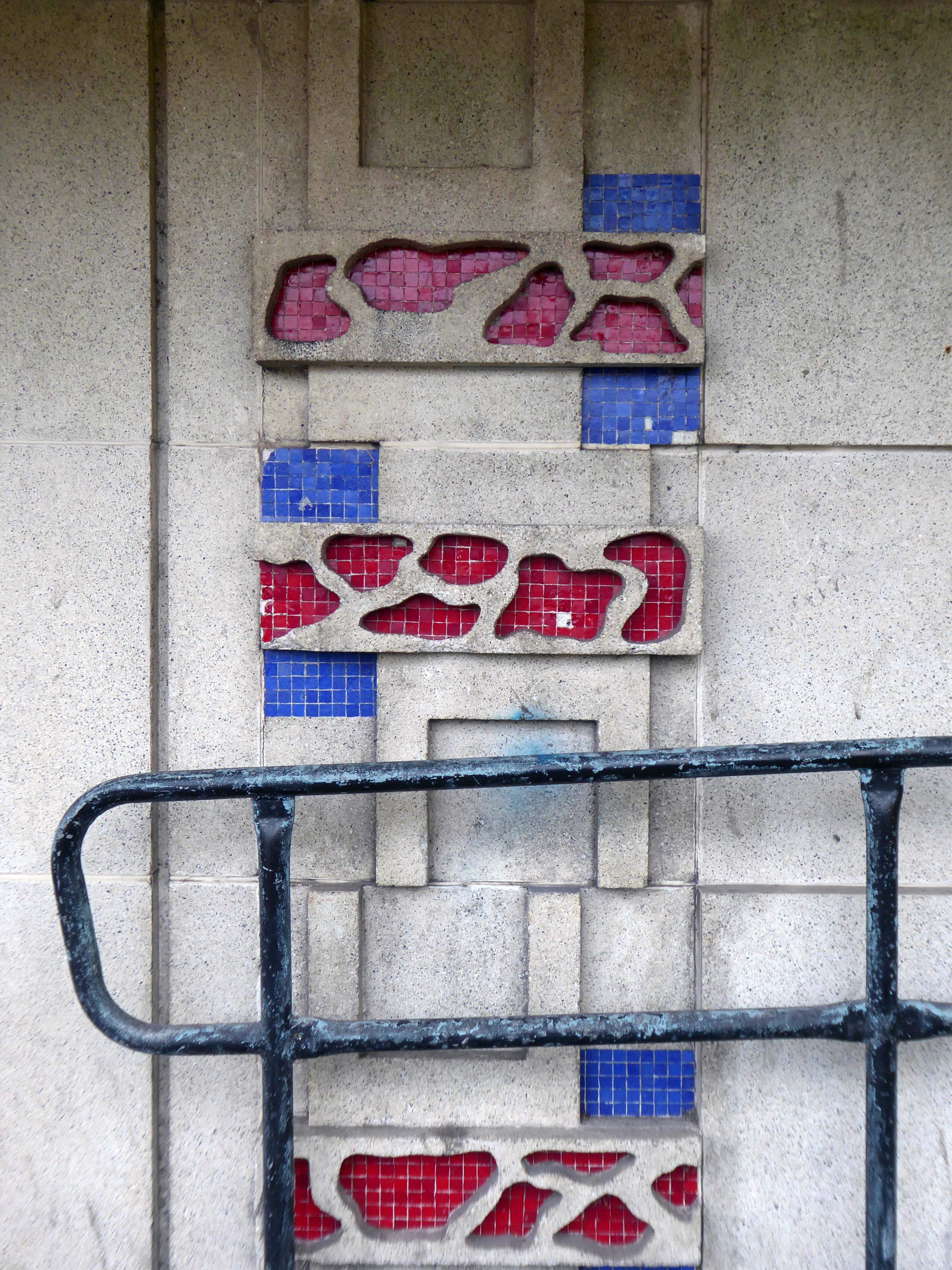
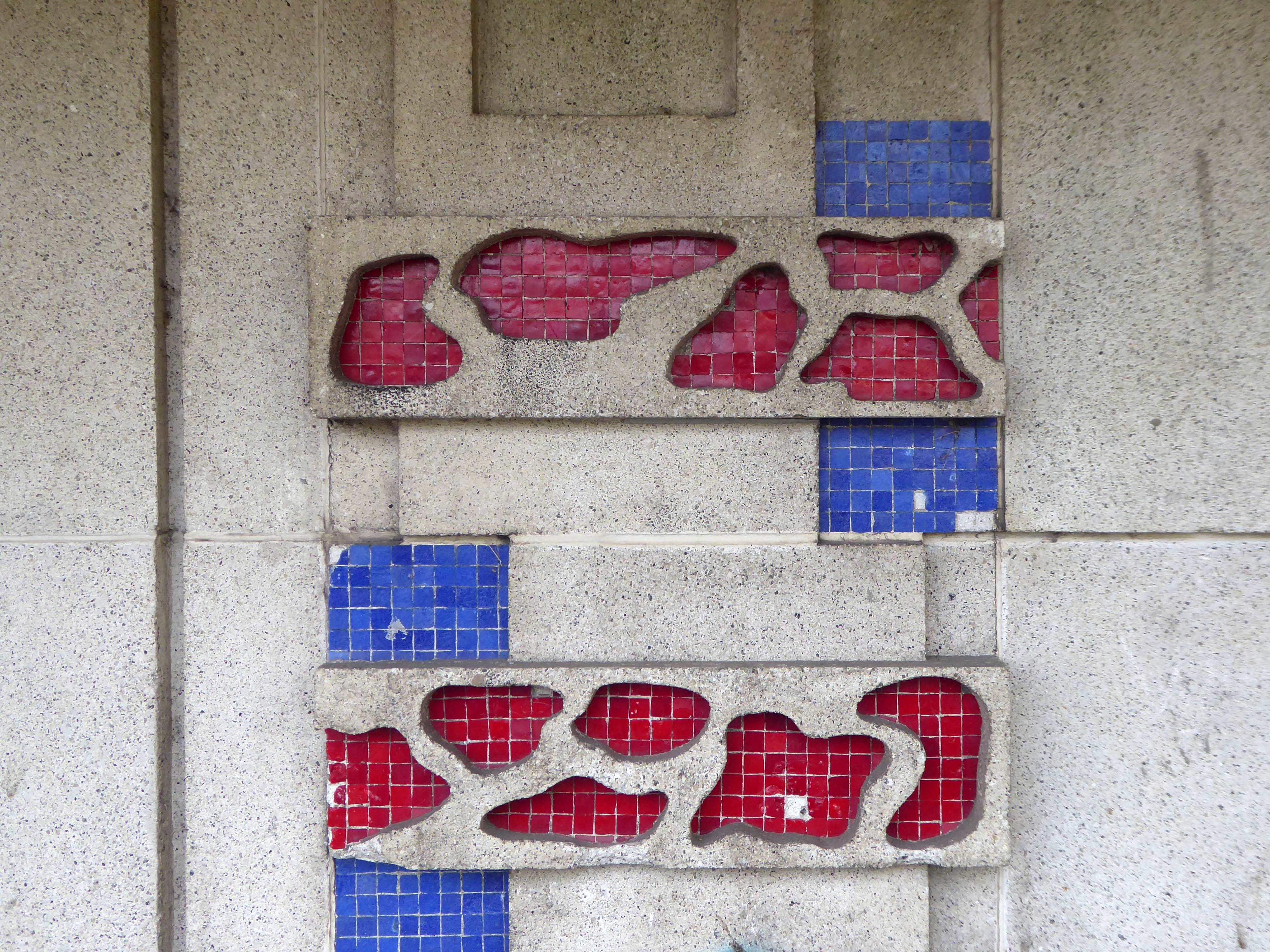
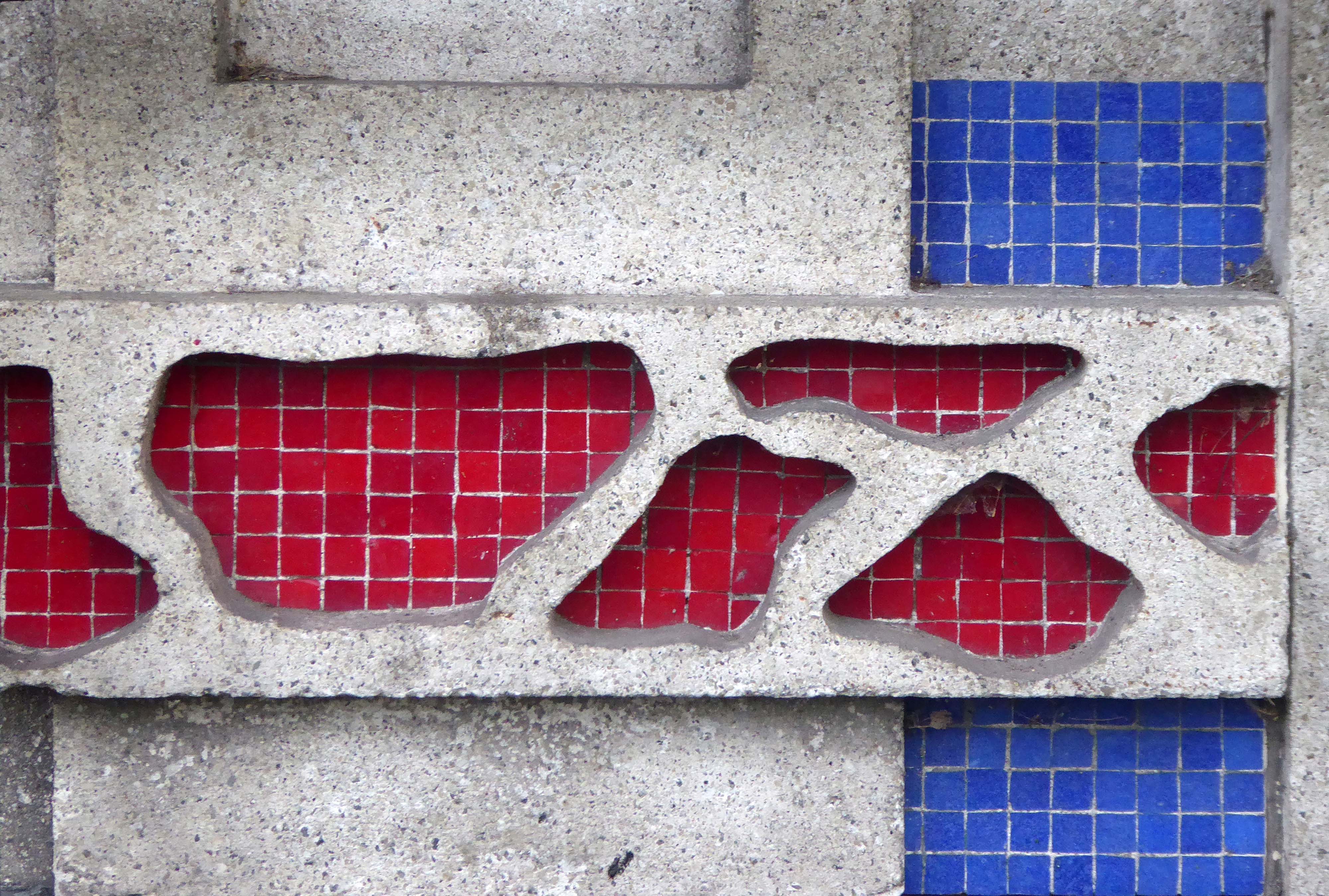
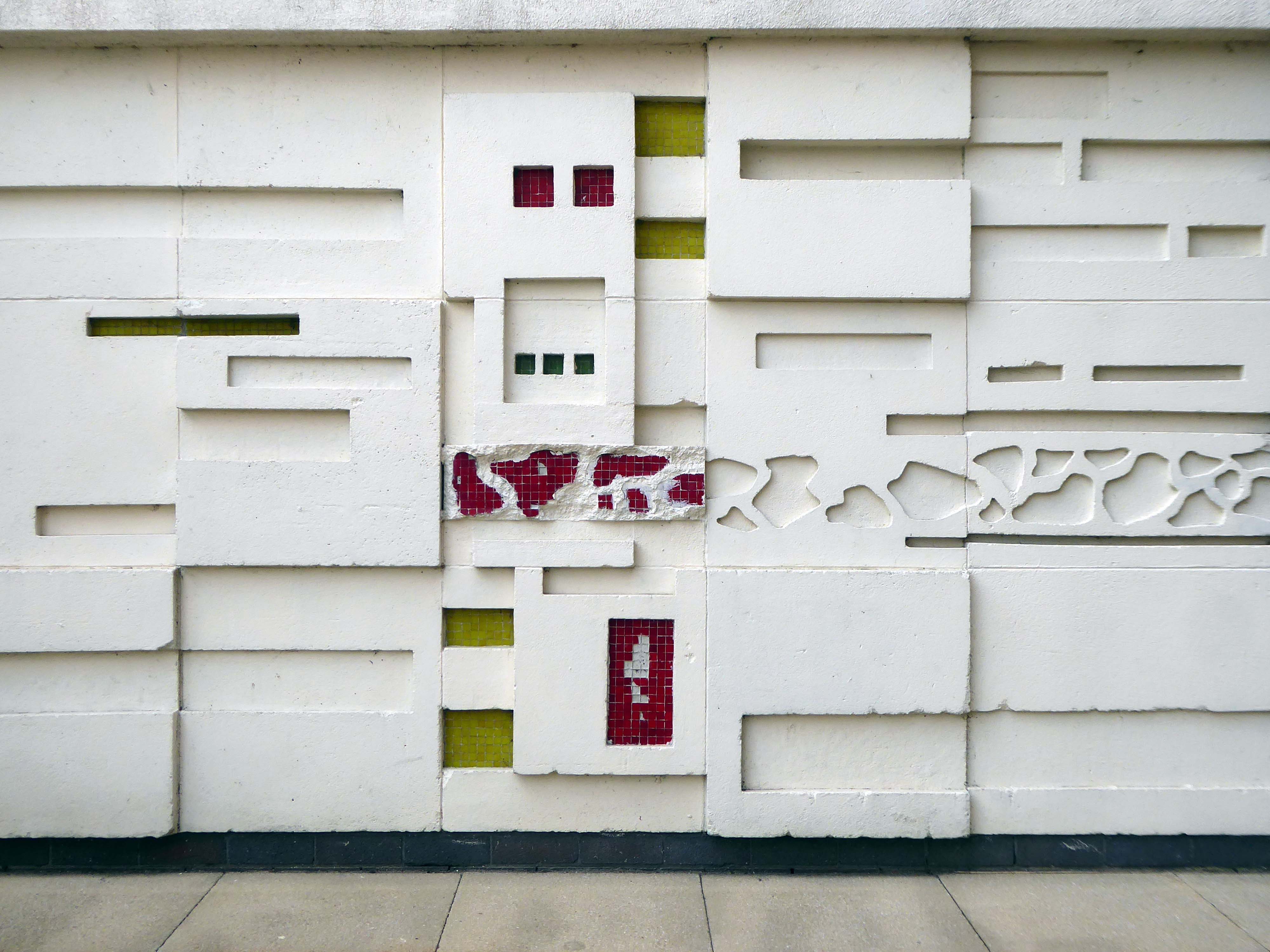
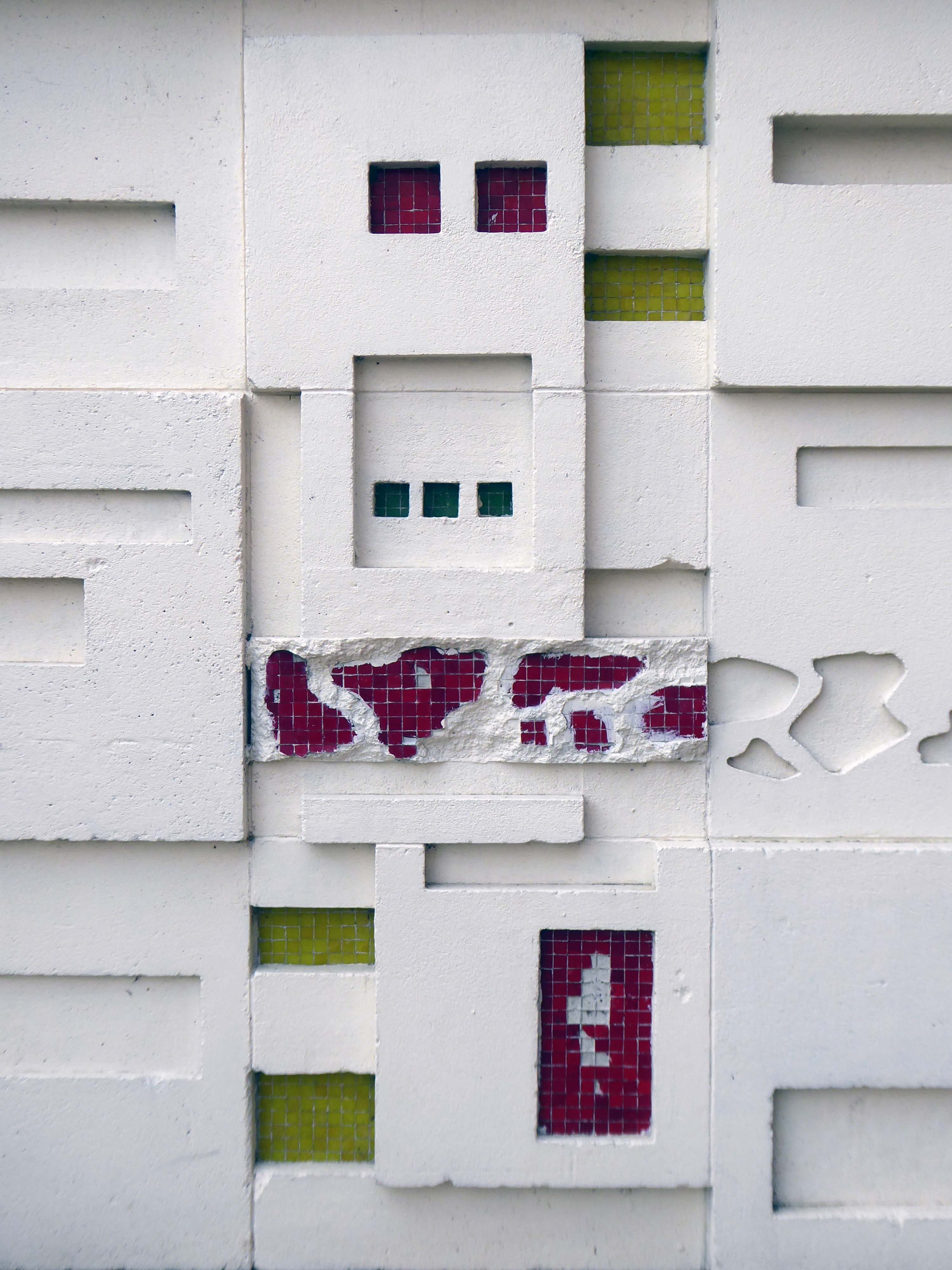
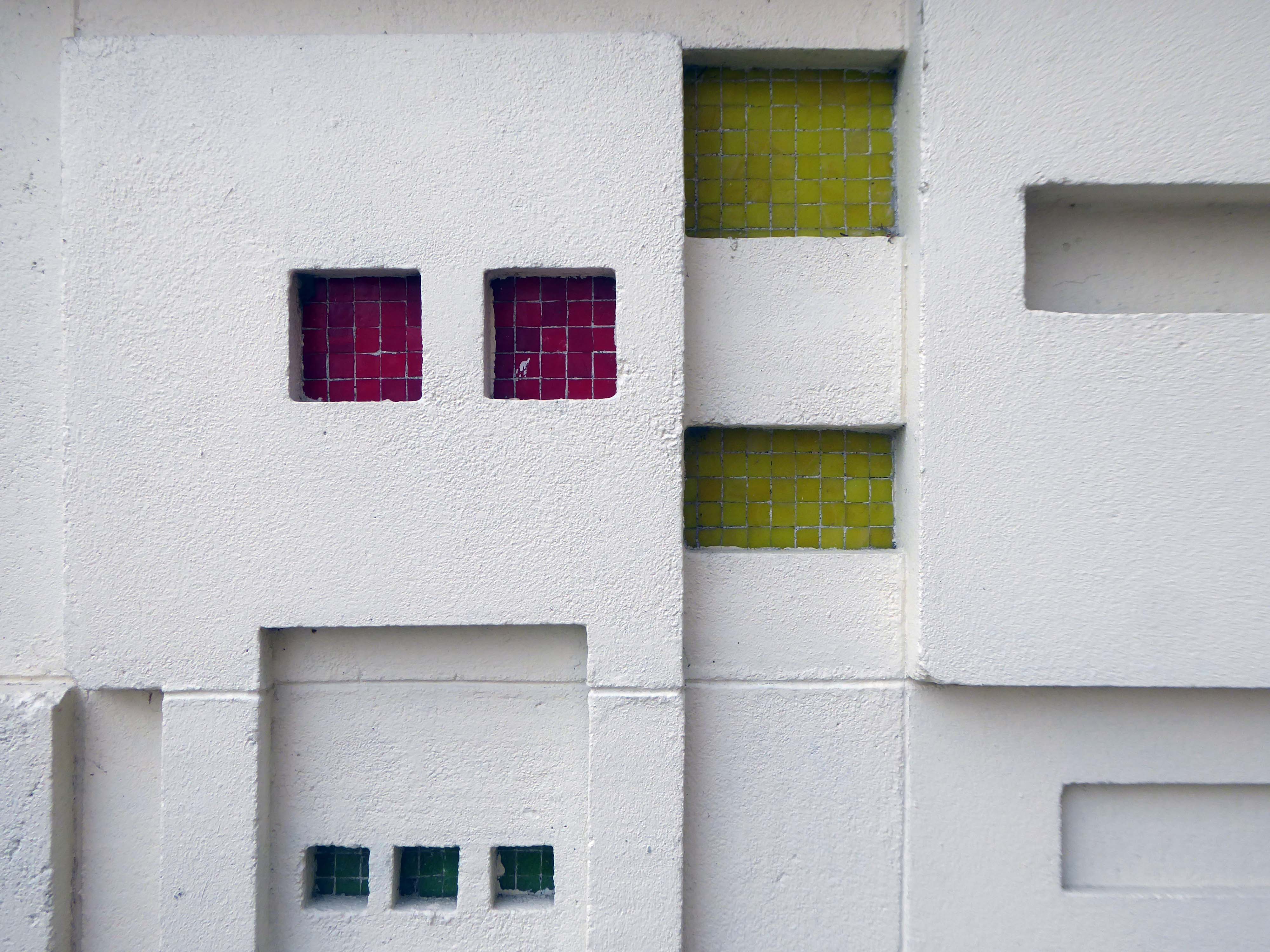
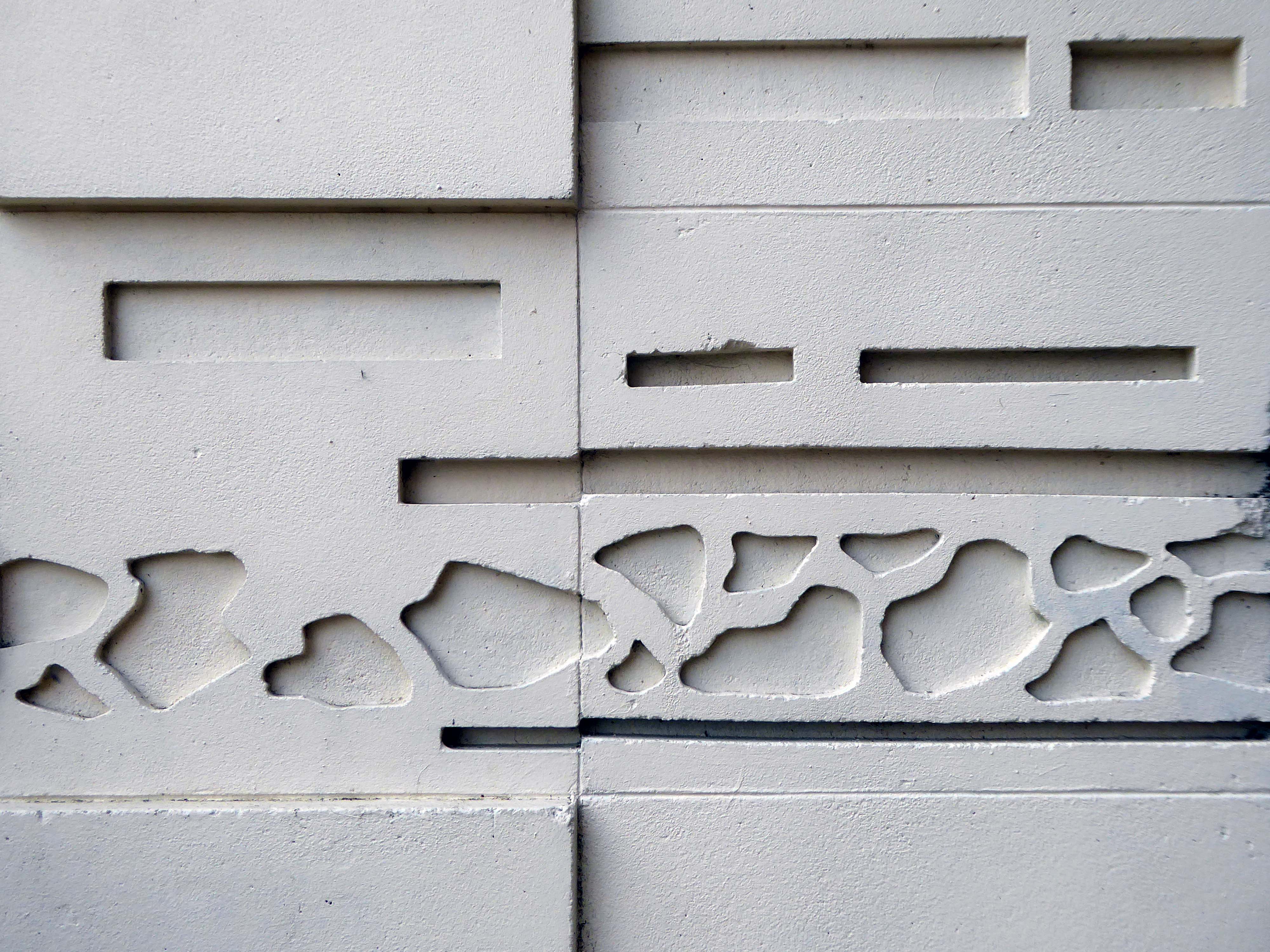
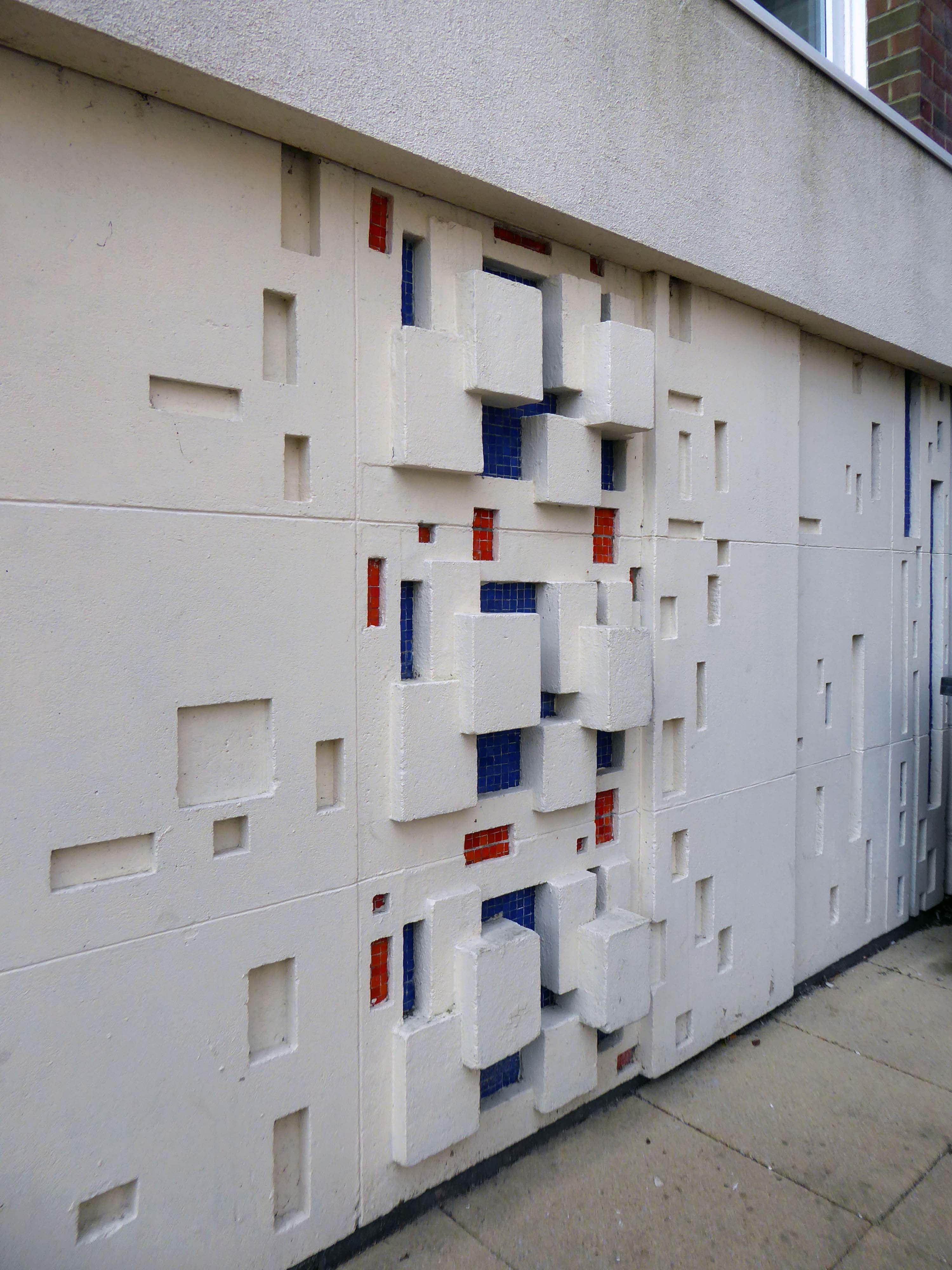
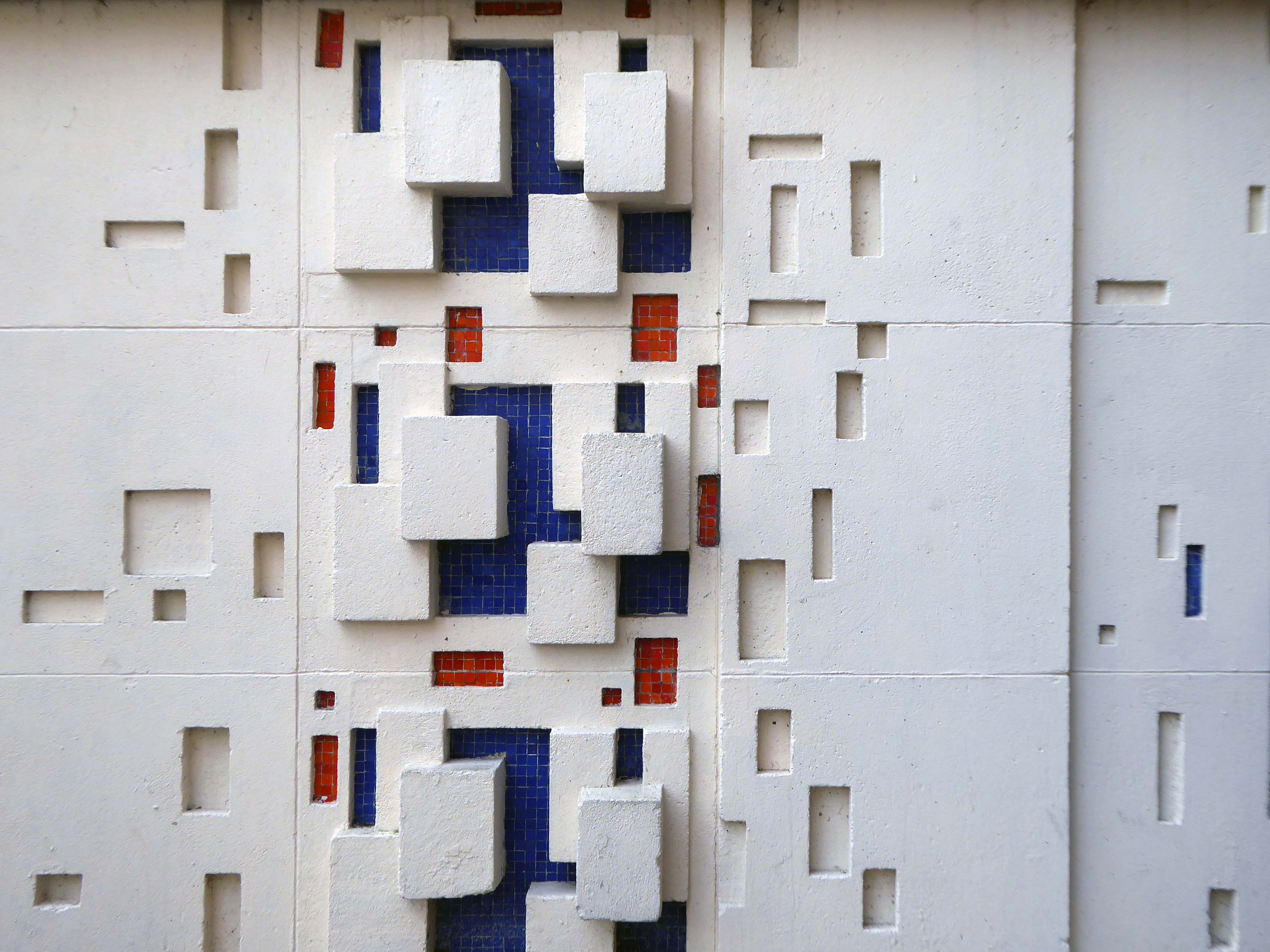
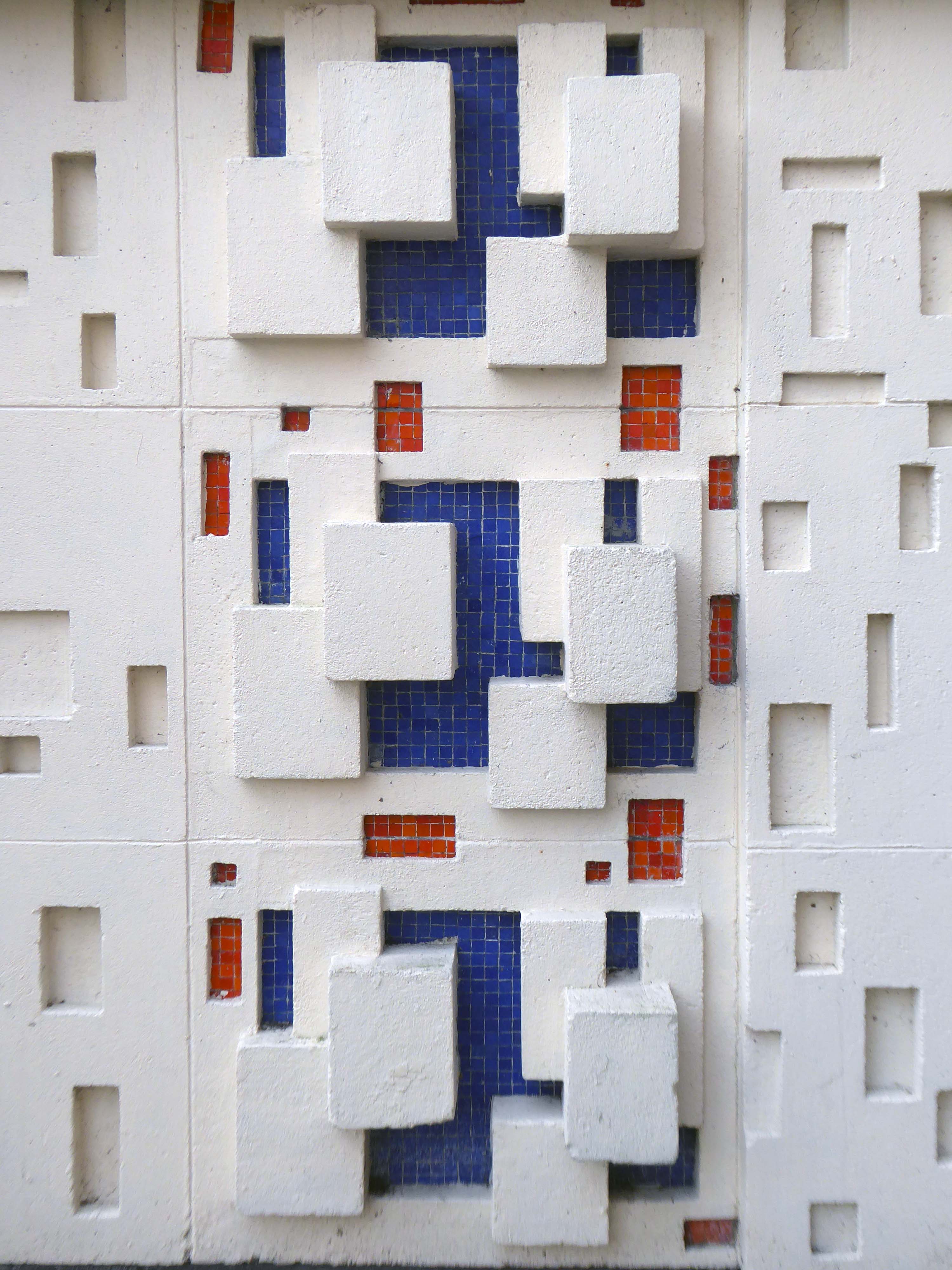
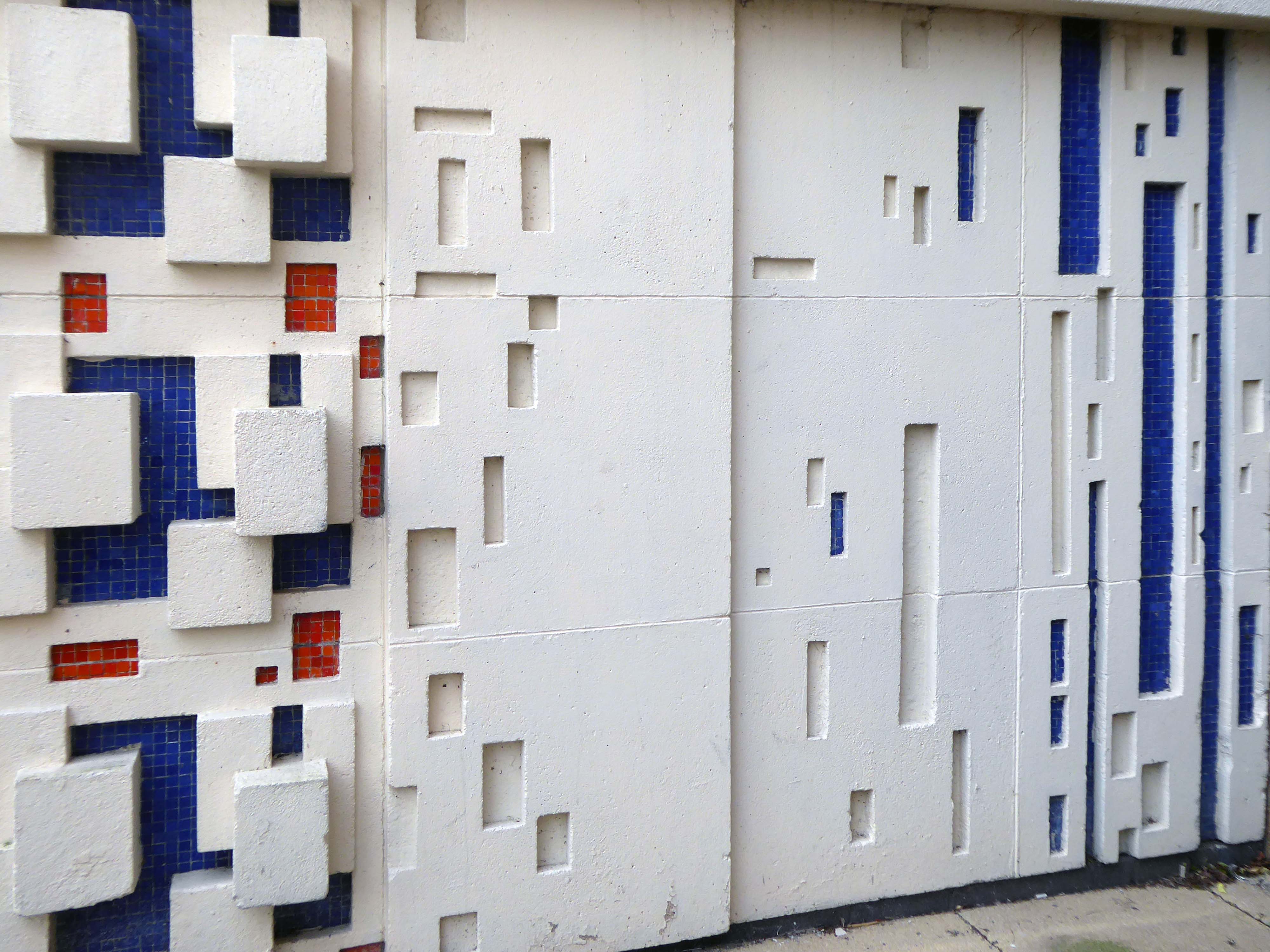
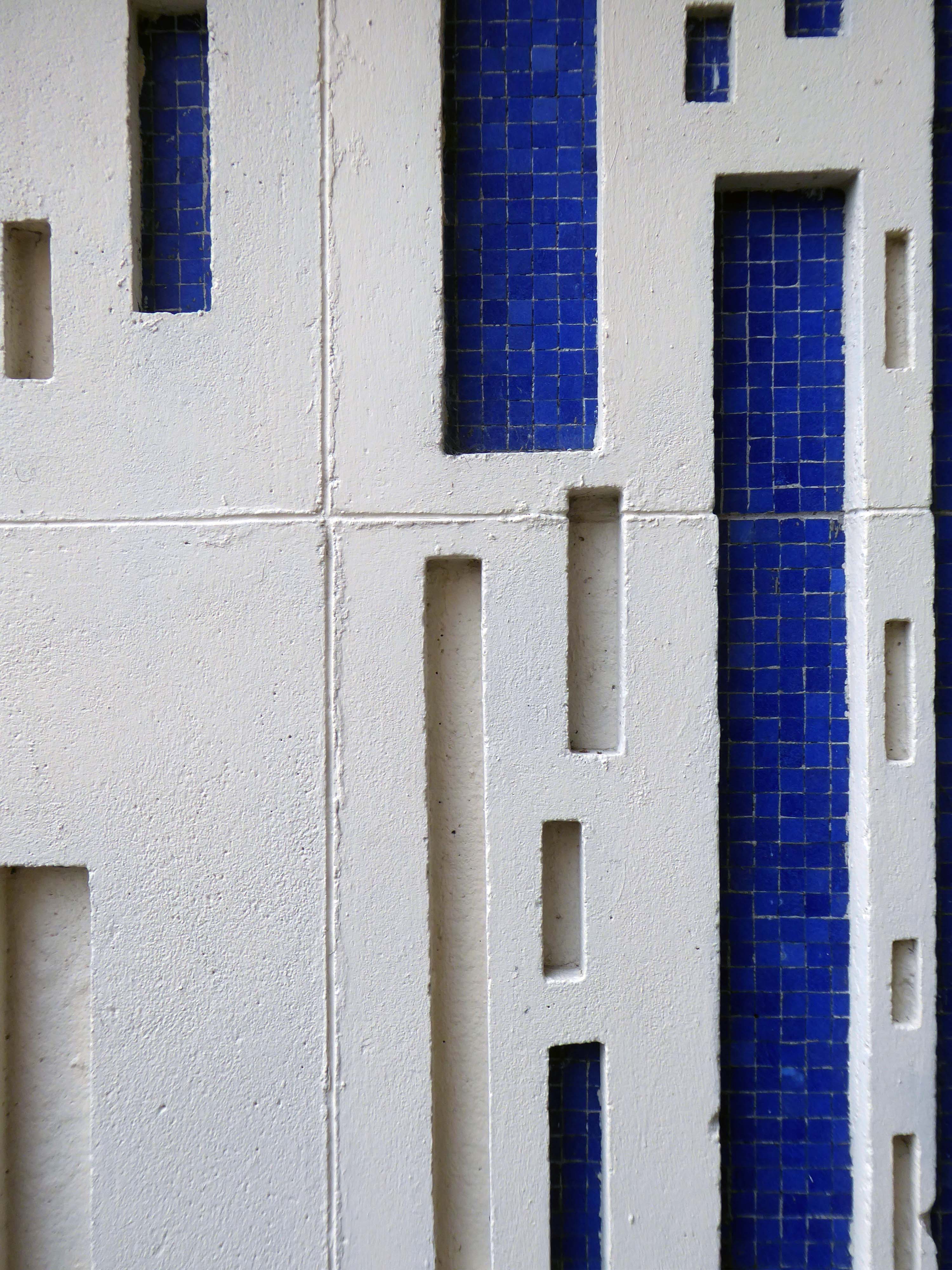
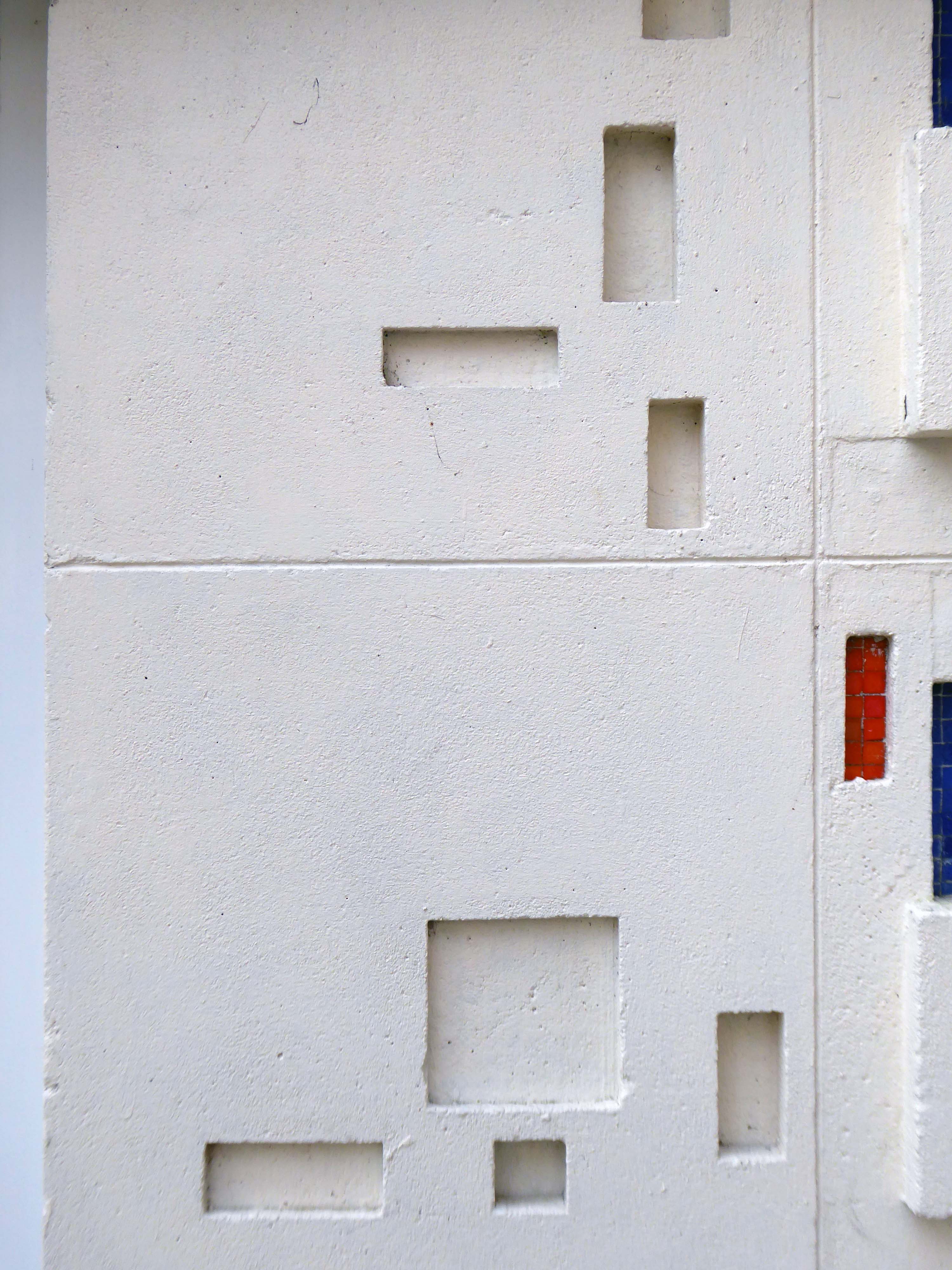
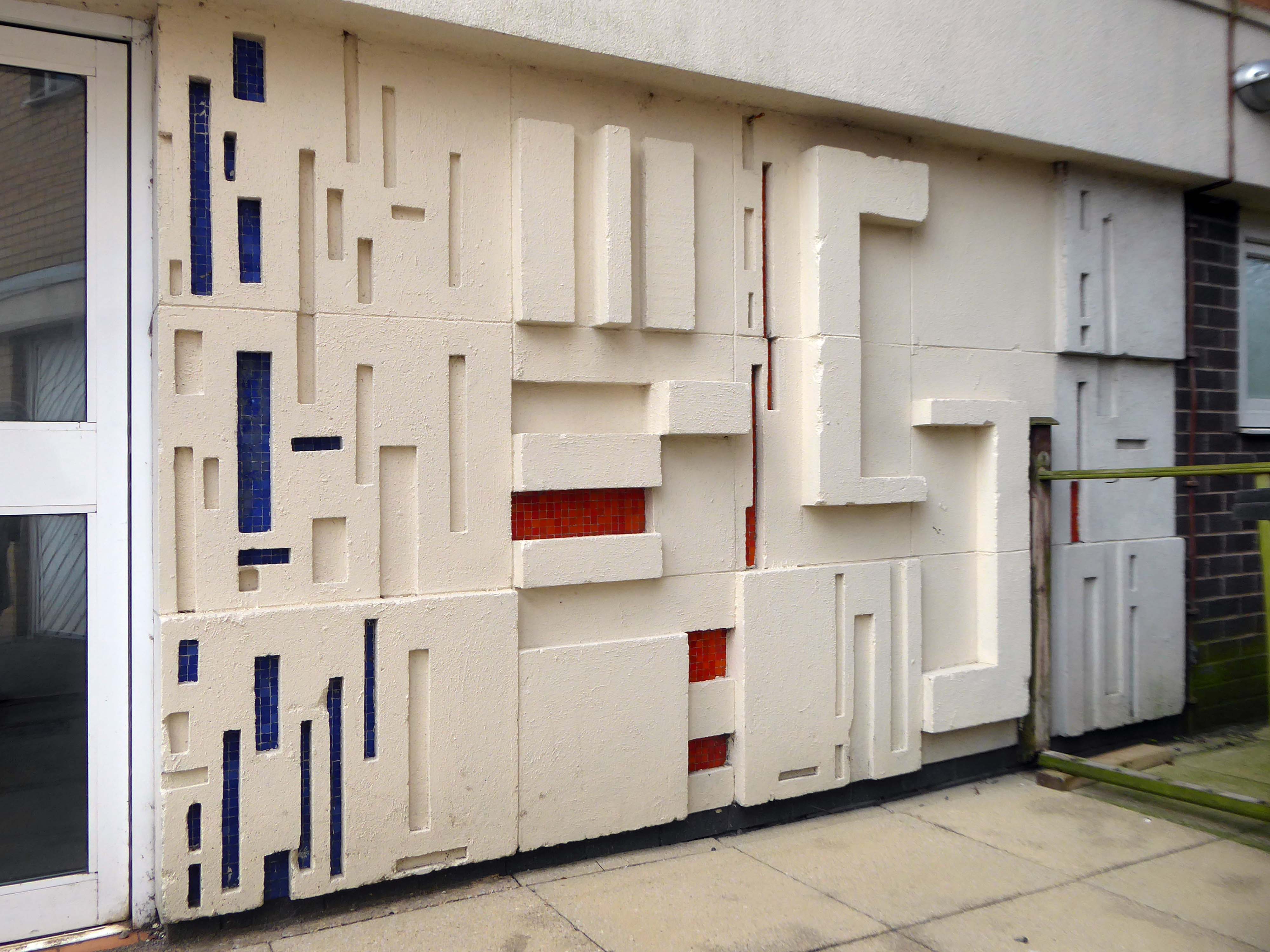
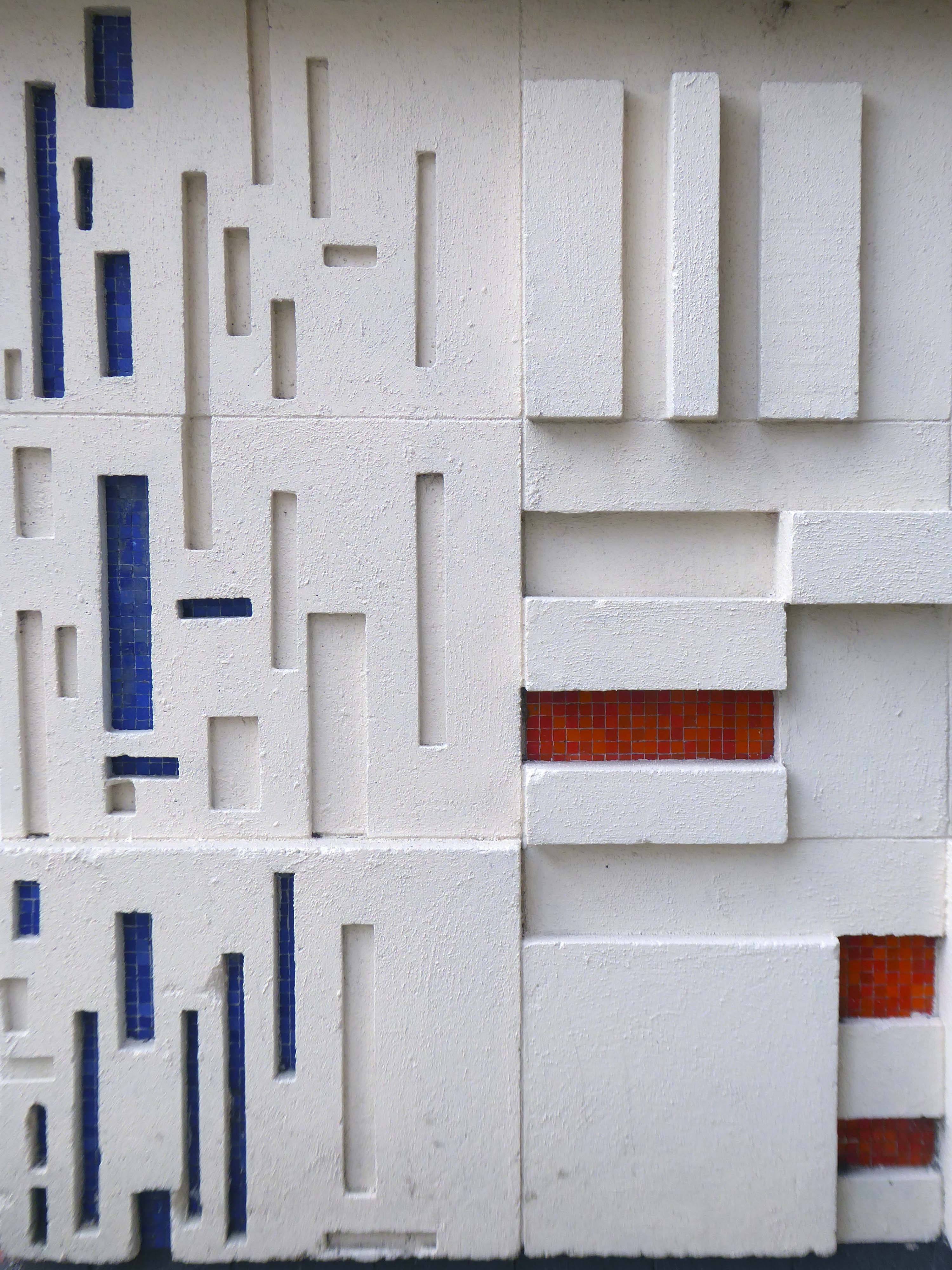
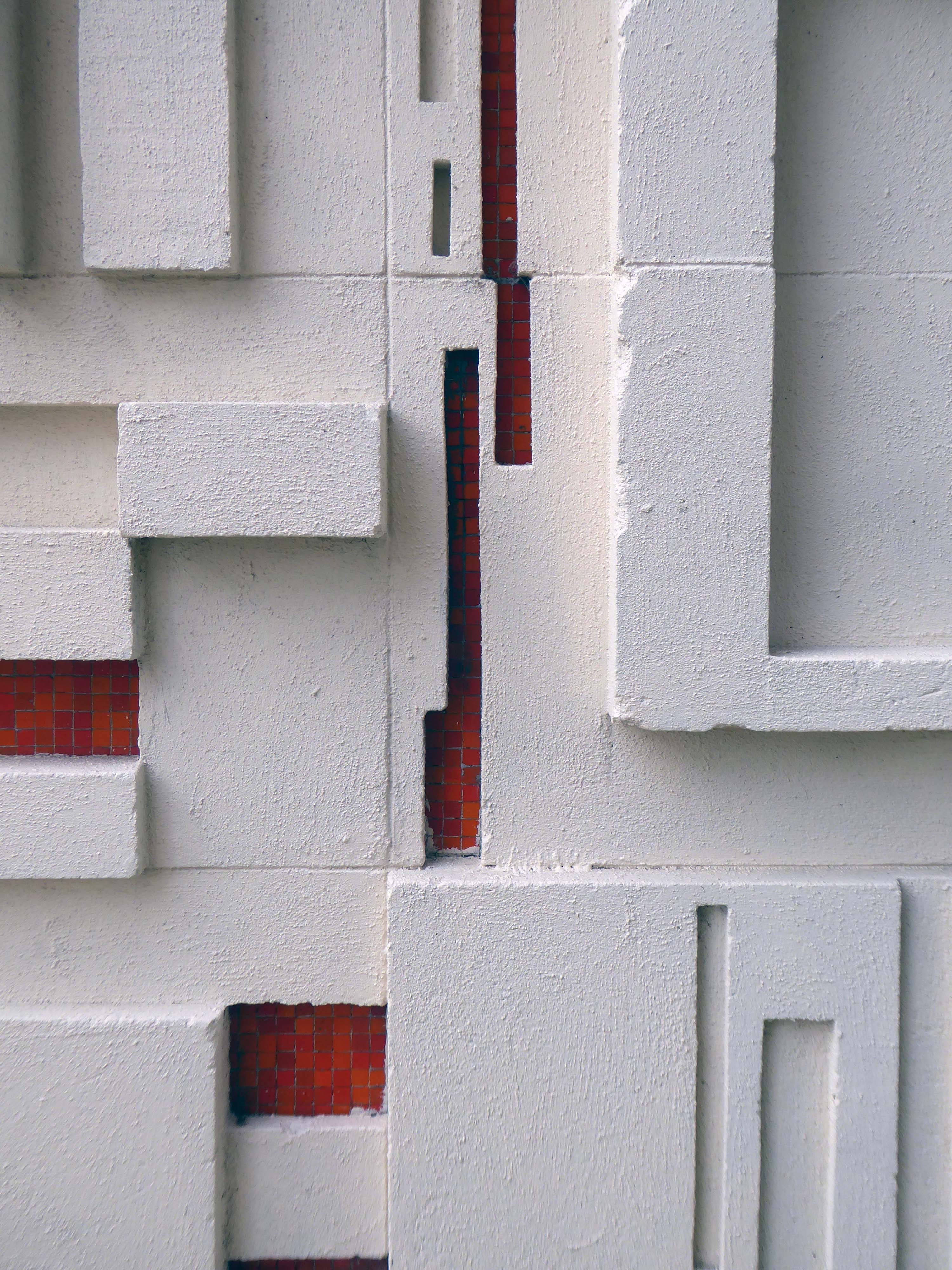
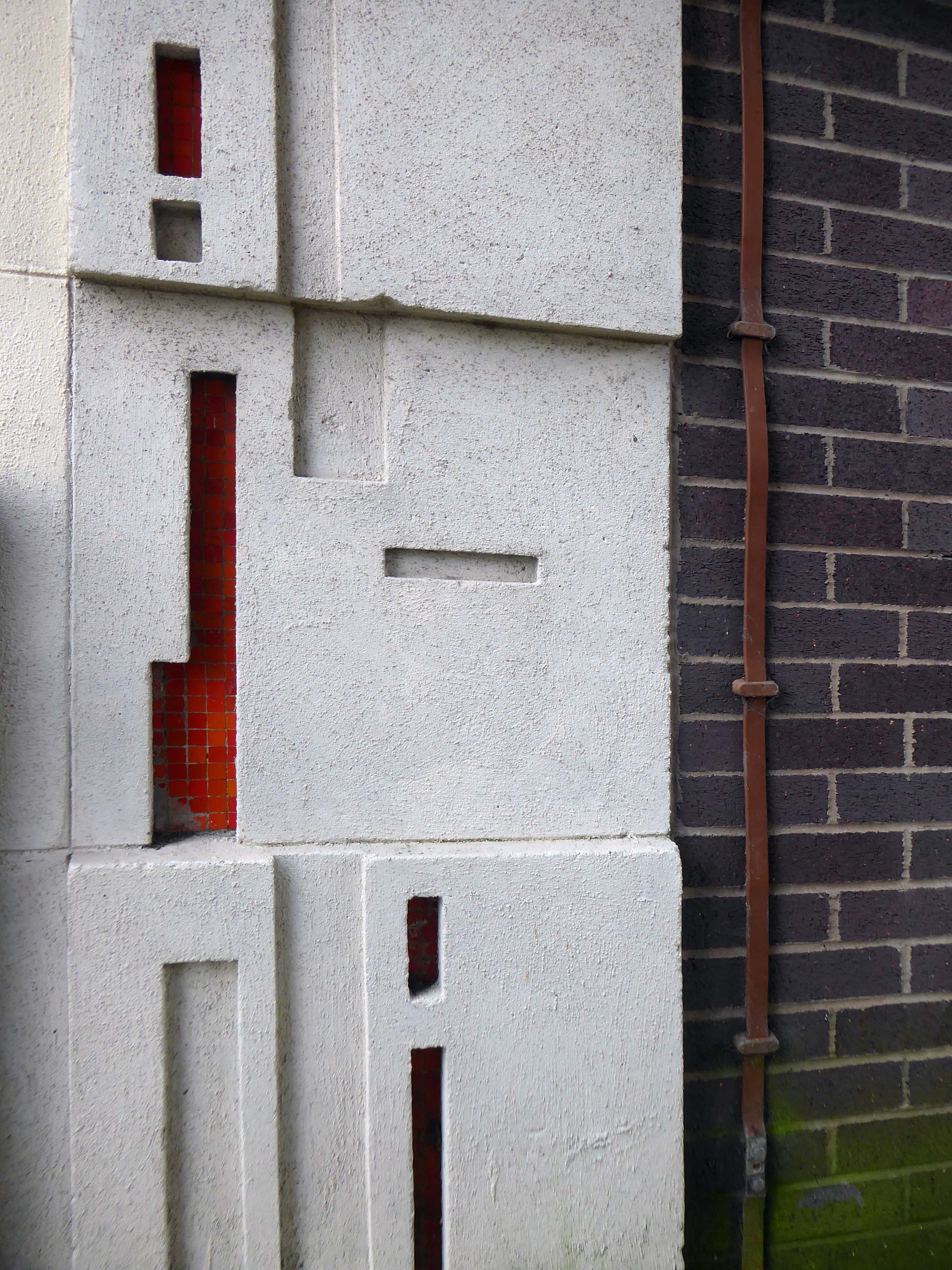
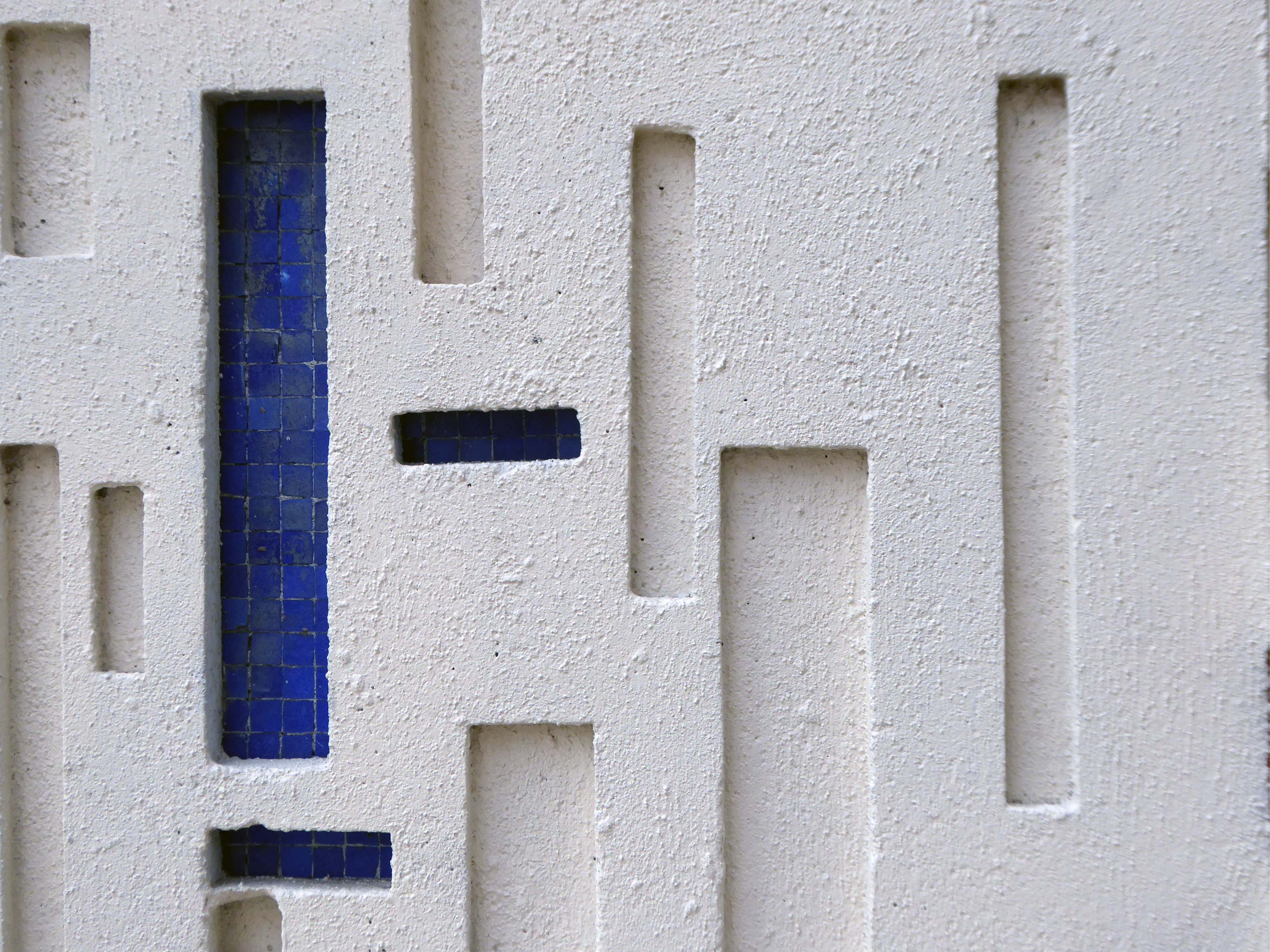
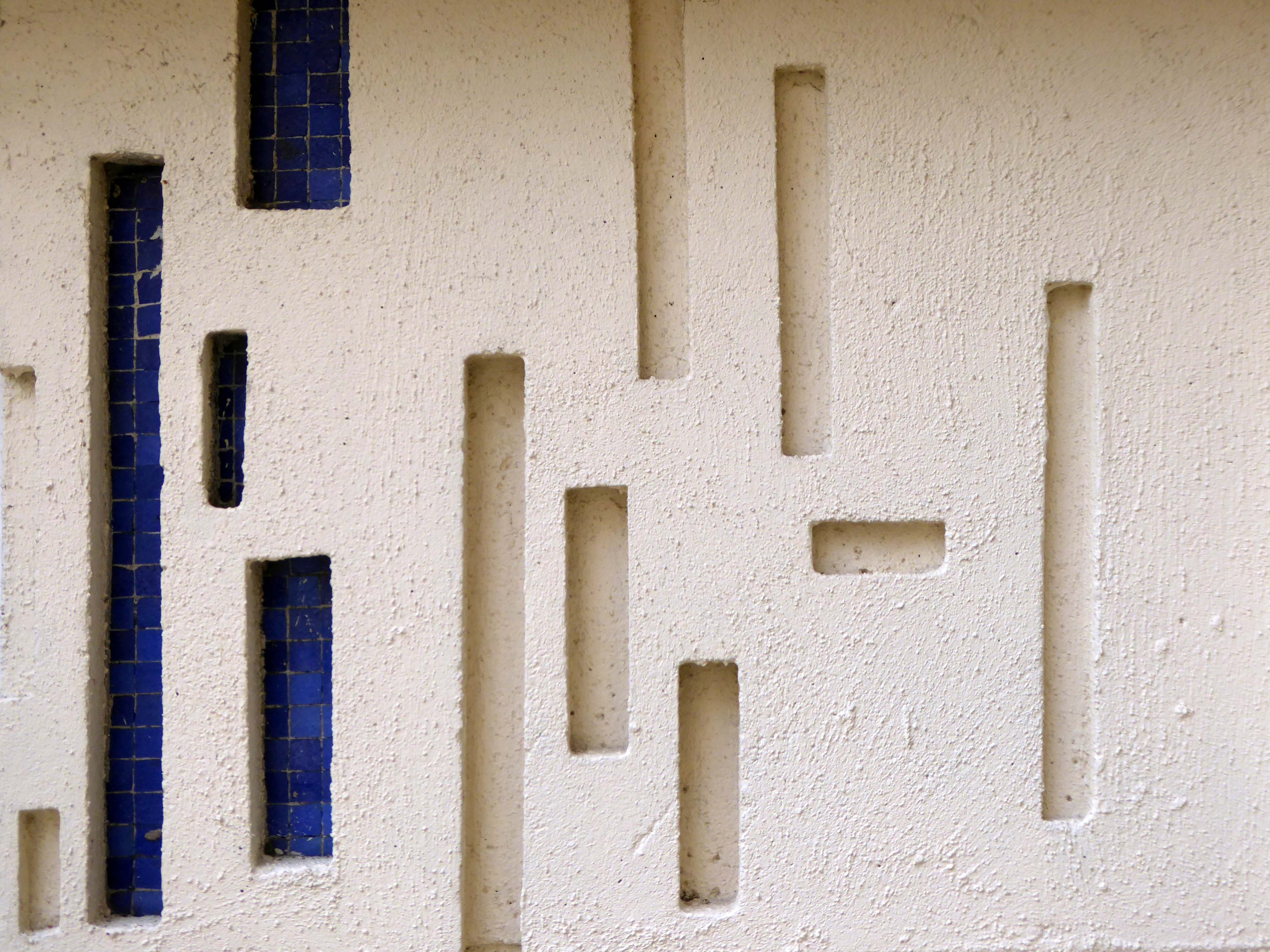
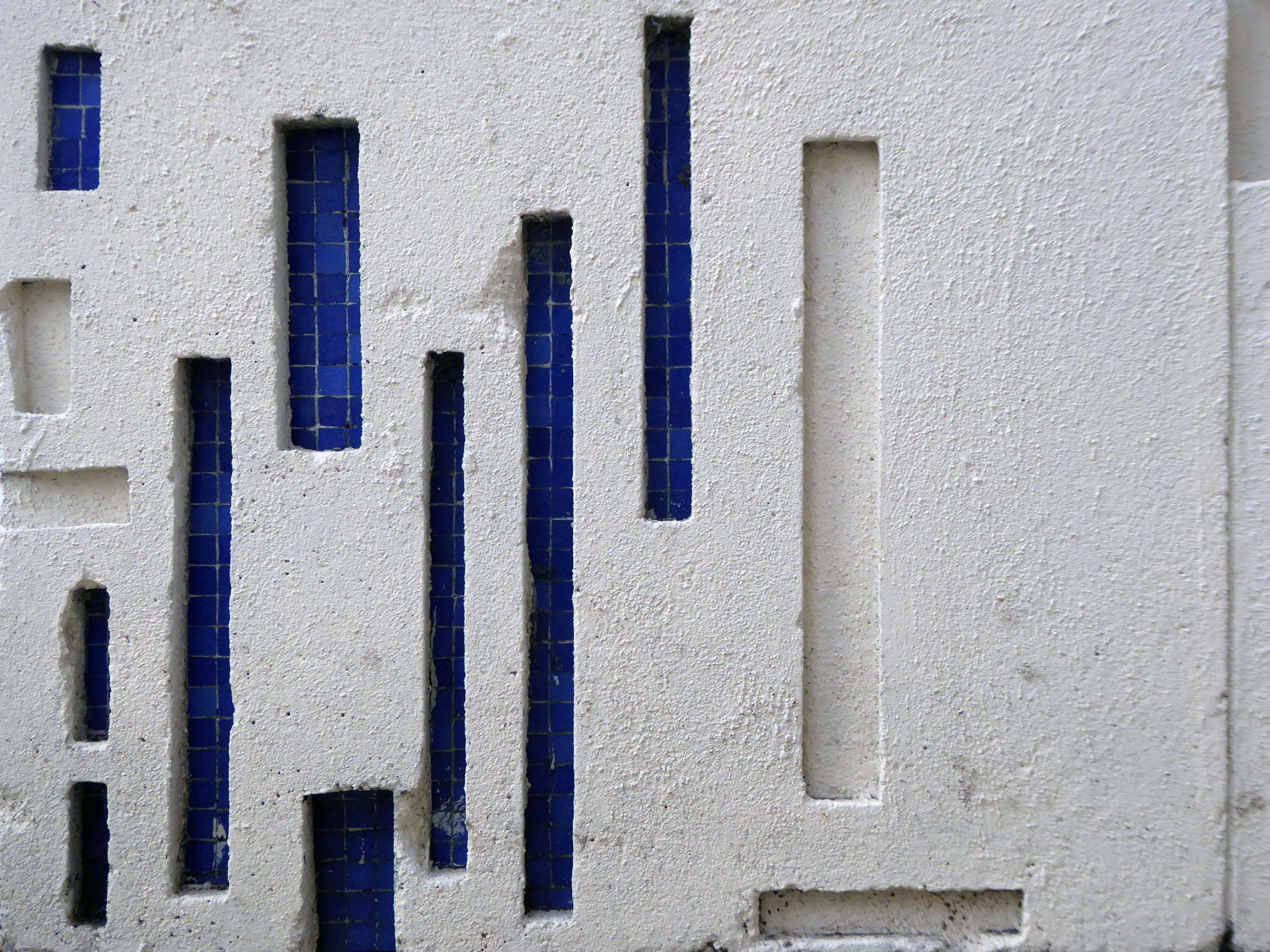
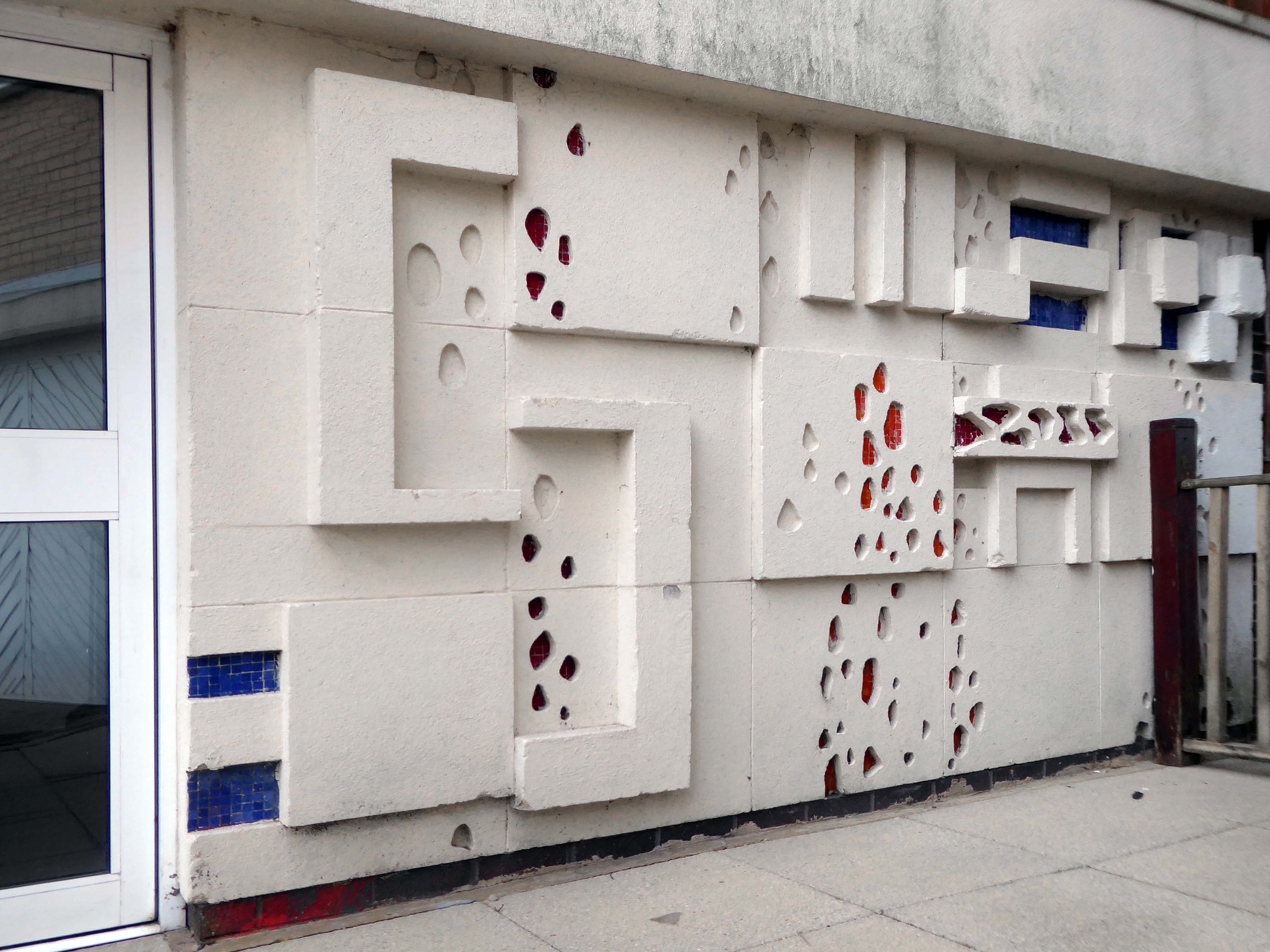
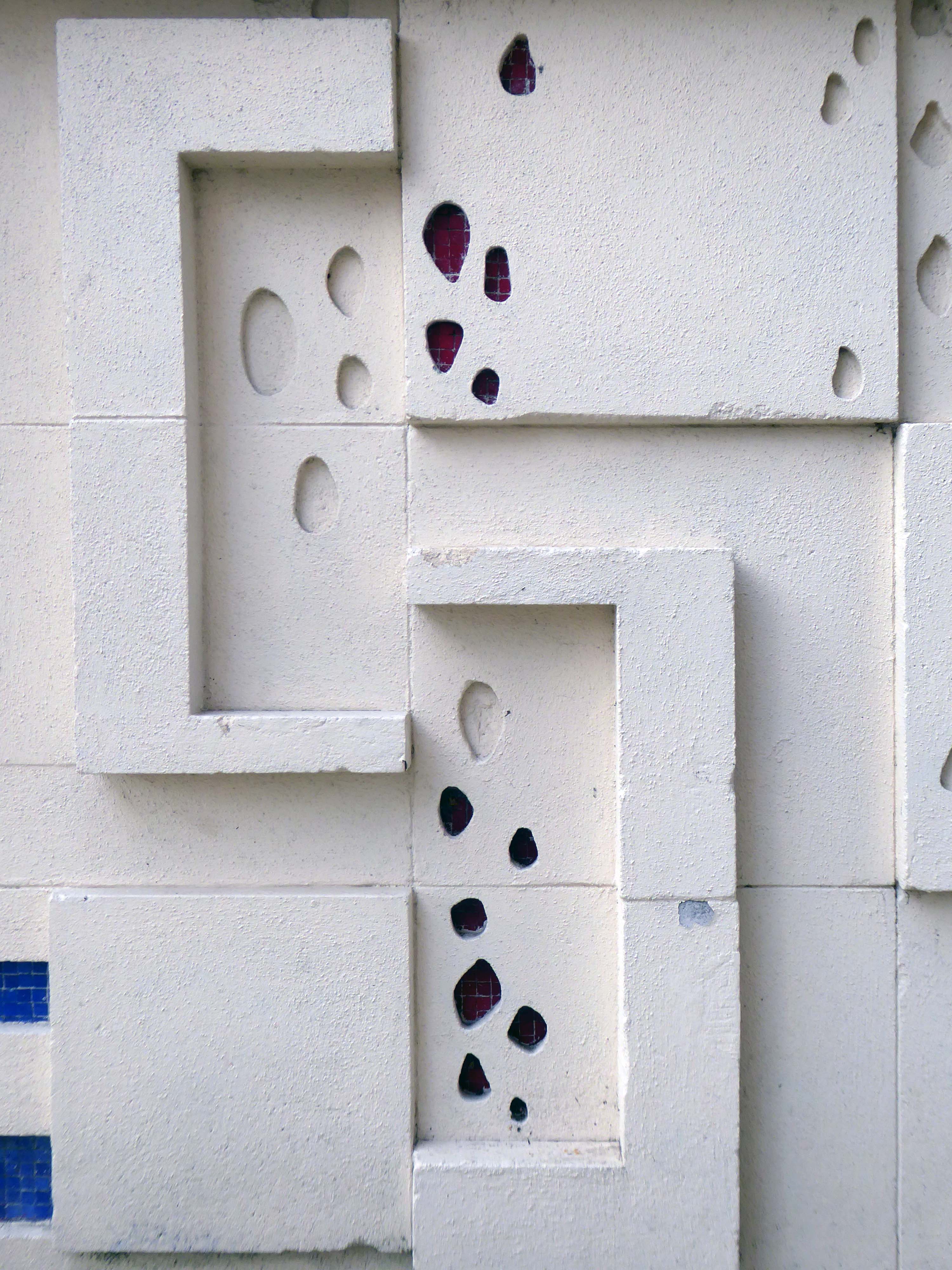
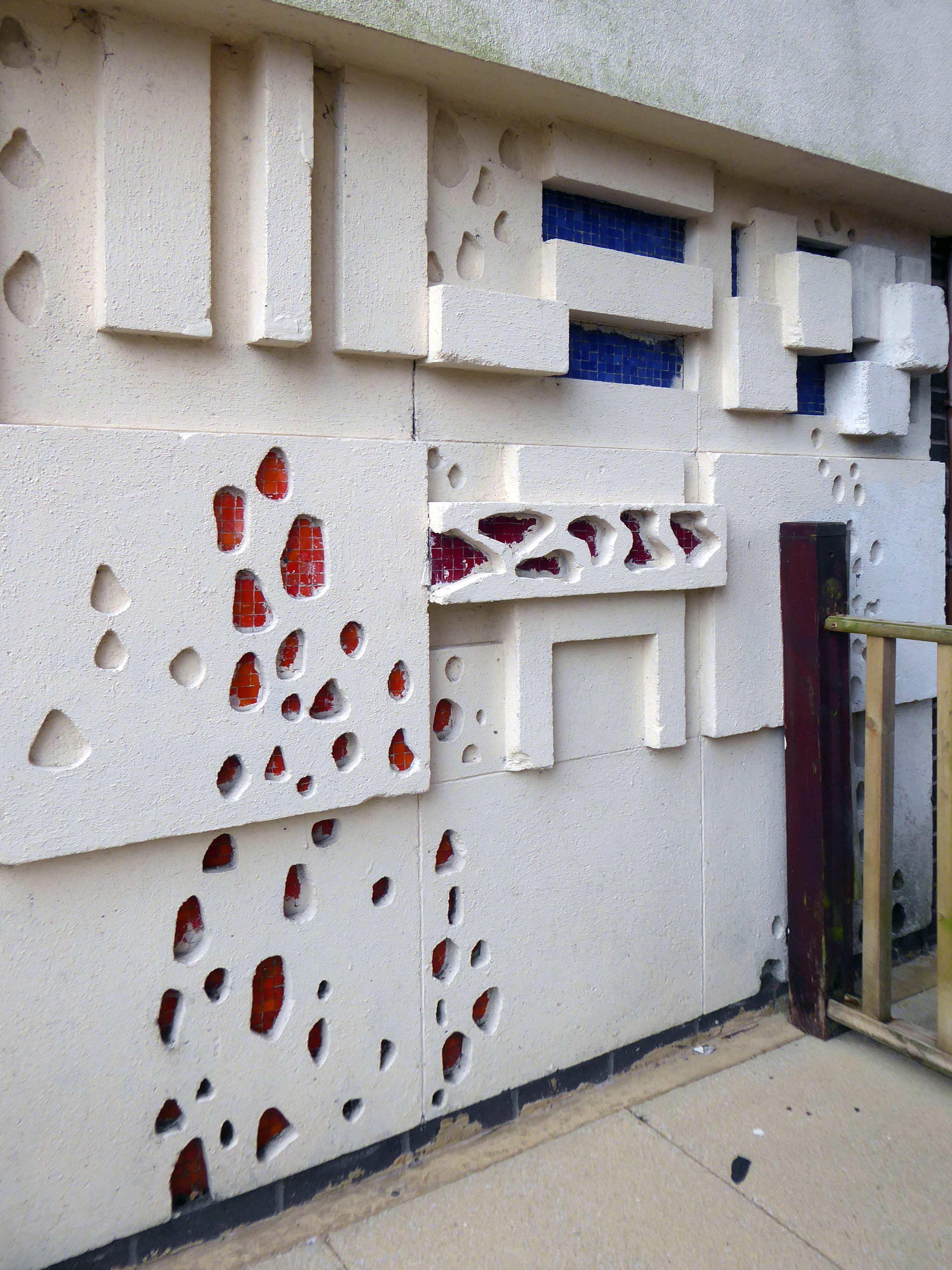
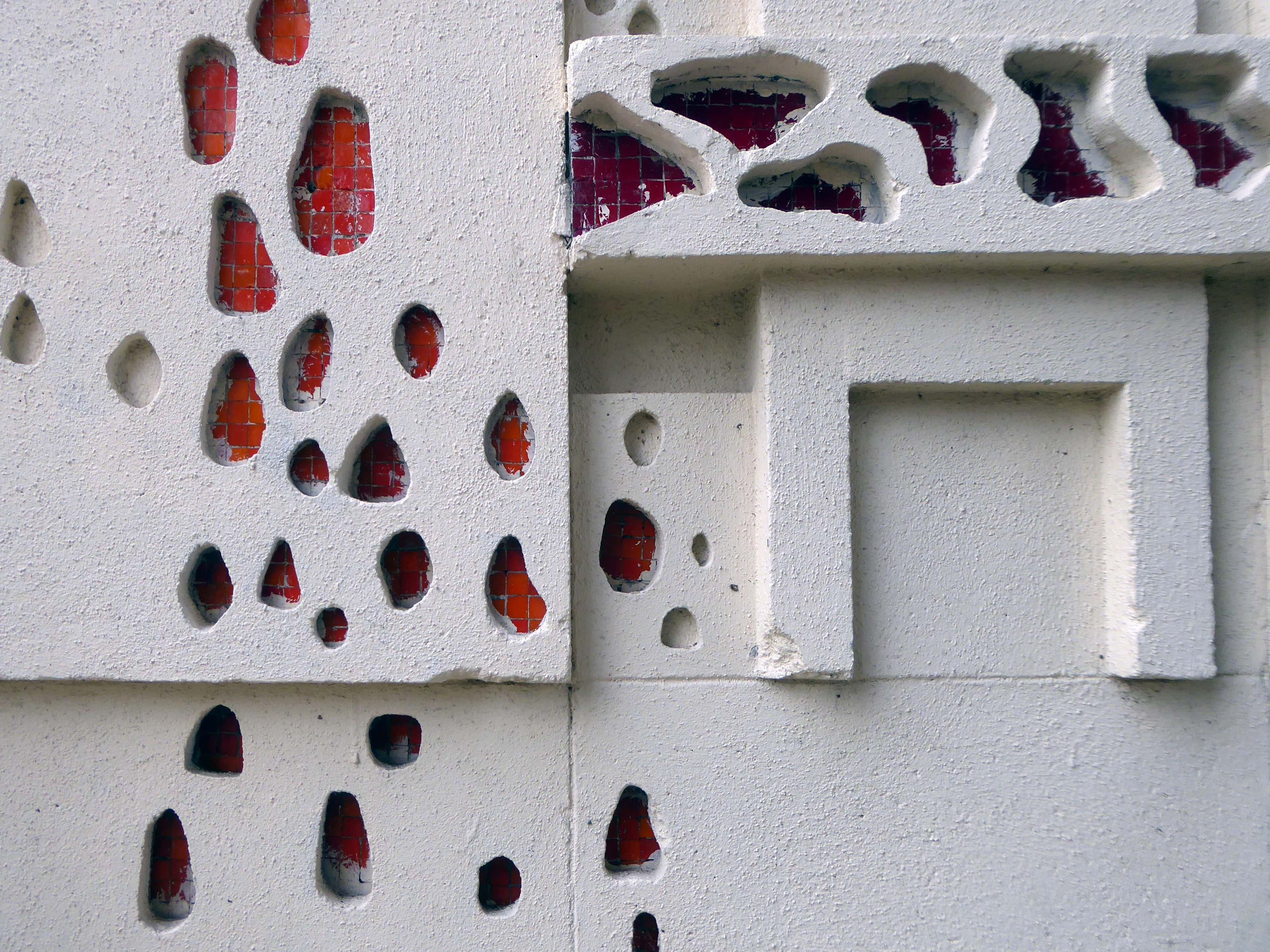
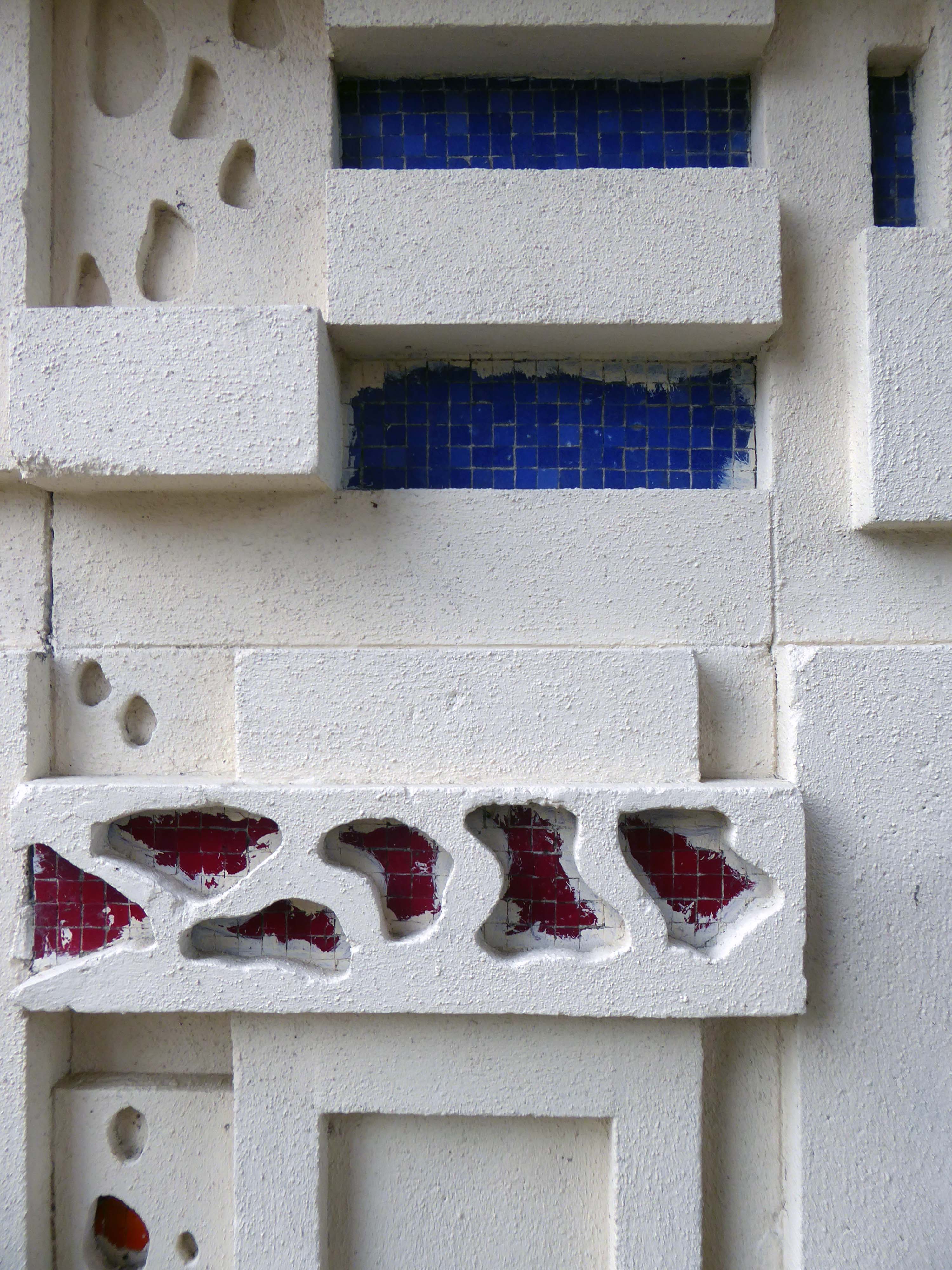
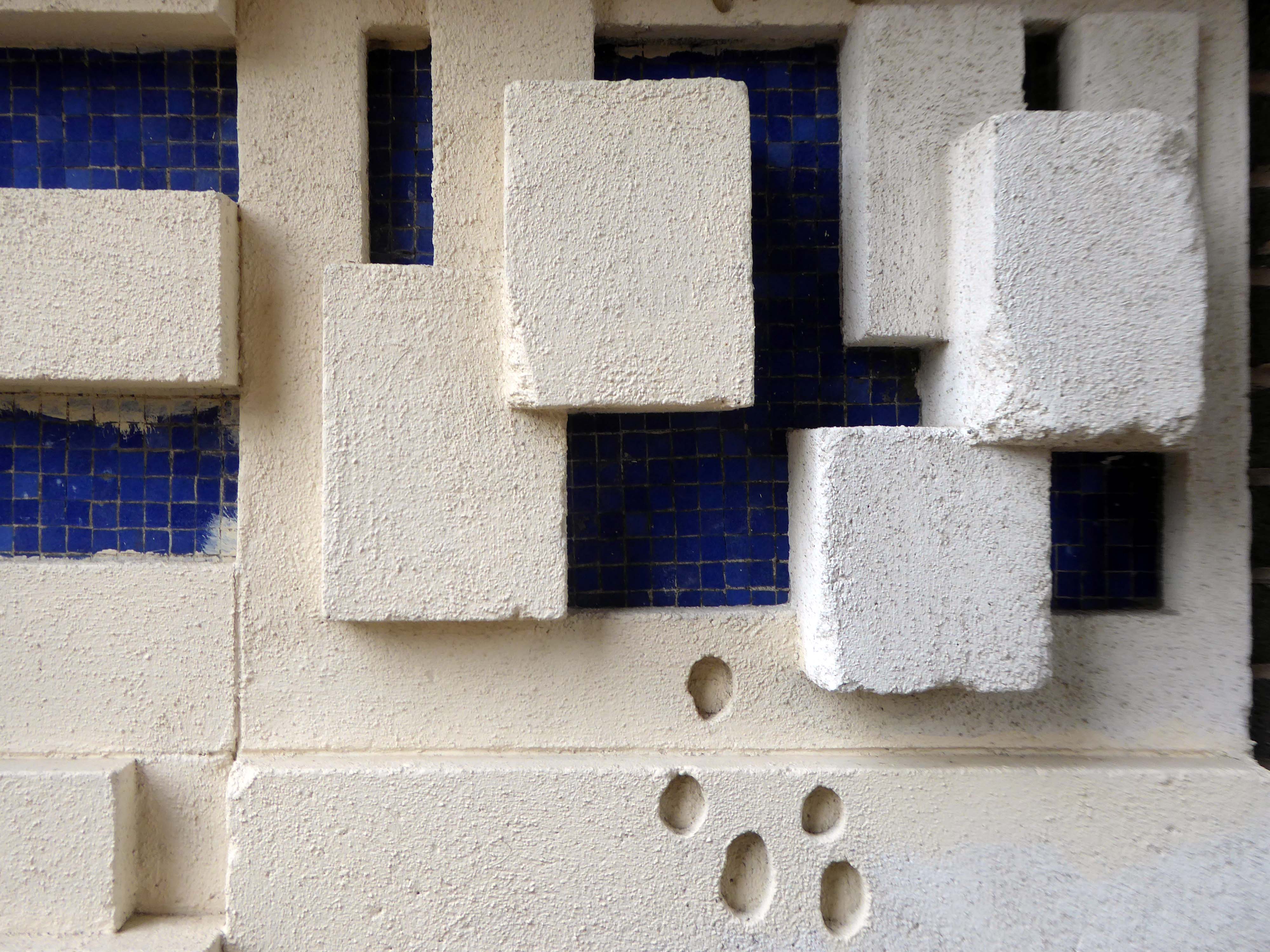
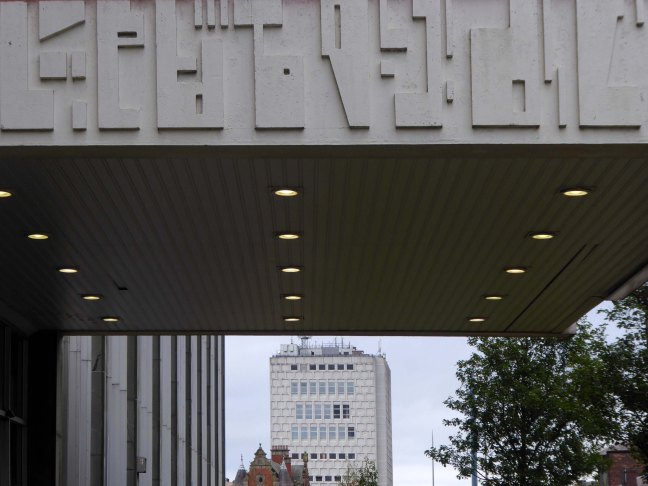
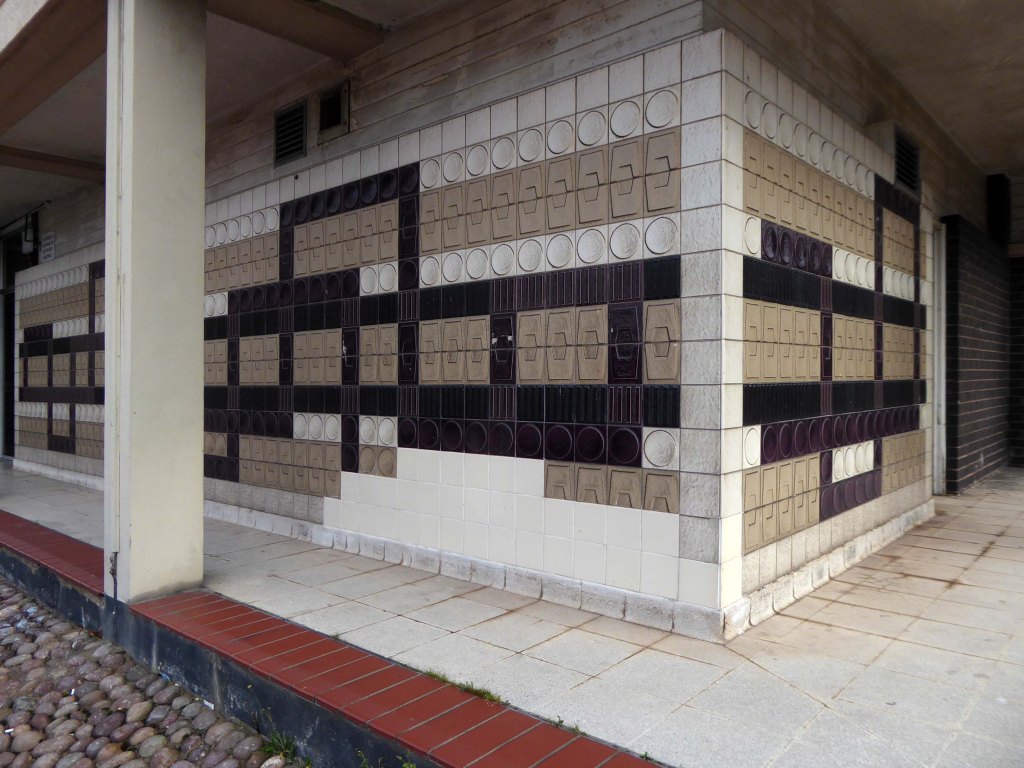
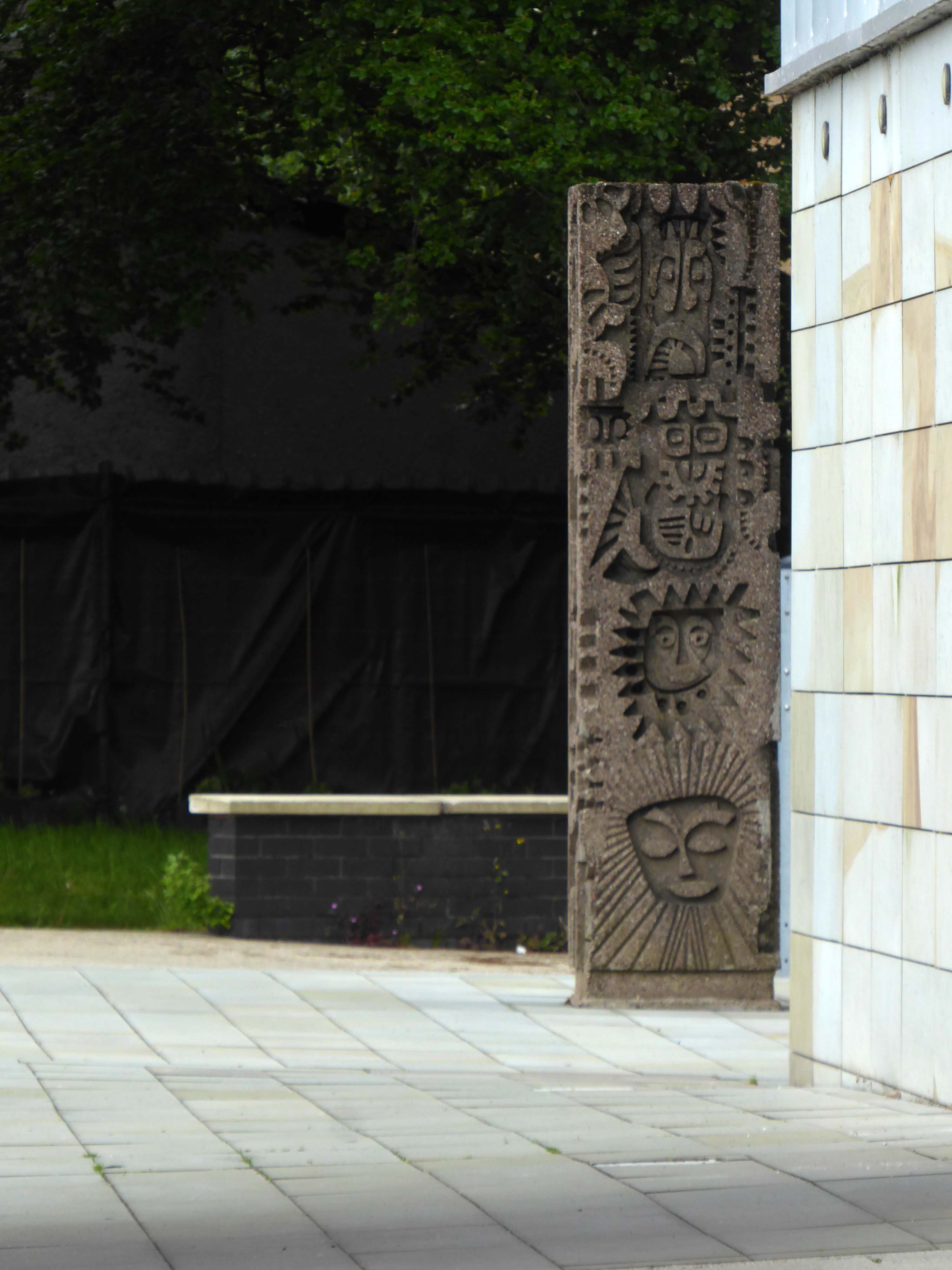
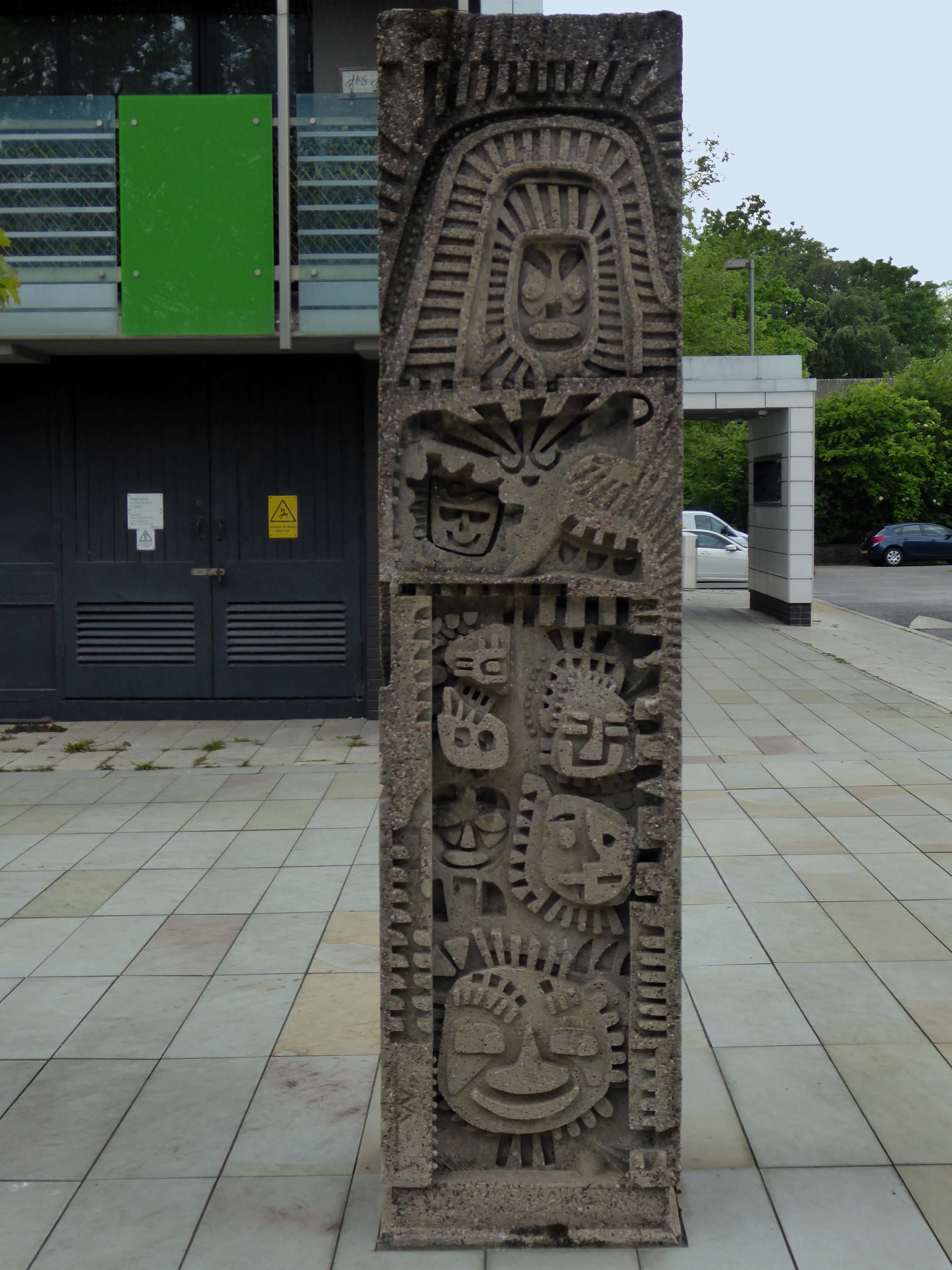
The front entrance has a mosaic and concrete relief, recalling De Stijl particularly Joost Baljeu.

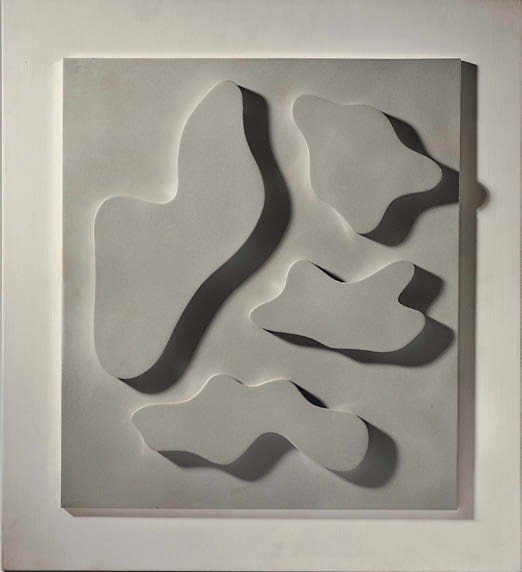
Along with echoes of Jean Arp.

The flats had acquired a stereotypical bad reputation.

Blight flats will soon be high-rise des-res.

Residents on a blighted Blackley estate have been told of plans to deal with the mostly unoccupied high-rise flats that are seen as the cause of the problem.

Manchester Evening News

I entered via the vehicular access – in order to view the four remaining reliefs.
The Lakeside Rise blocks now form part of a private gated community and are accessed from Blackley New Road.

The original blocks and their locations are as follows:

Ashenhurst Court Now Lakeside 1
Heaton Court Now Lakeside 2
Wilton Court Now Lakeside 3
Blackley Court Now Lakeside 4

Bracknell Court demolished – was on the corner of Riverdale Road and Bridgenorth Road adjacent to Heaton Court
Riverdale Court demolished – was on Riverdale Road opposite Bantry Avenue.

Travellers Site – Dantzic Street Manchester

The Irk Valley – the damp, dark and dank Irk Valley.

The south bank of the Irk is here very steep and between fifteen and thirty feet high. On this declivitous hillside there are planted three rows of houses, of which the lowest rise directly out of the river, while the front walls of the highest stand on the crest of the hill in Long Millgate. Among them are mills on the river, in short, the method of construction is as crowded and disorderly here as in the lower part of Long Millgate. Right and left a multitude of covered passages lead from the main street into numerous courts, and he who turns in thither gets into a filth and disgusting grime, the equal of which is not to be found – especially in the courts which lead down to the Irk, and which contain unqualifiedly the most horrible dwellings which I have yet beheld. In one of these courts there stands directly at the entrance, at the end of the covered passage, a privy without a door, so dirty that the inhabitants can pass into and out of the court only by passing through foul pools of stagnant urine and excrement. This is the first court on the Irk above Ducie Bridge – in case any one should care to look into it. Below it on the river there are several tanneries which fill the whole neighbourhood with the stench of animal putrefaction.
Below Ducie Bridge the only entrance to most of the houses is by means of narrow, dirty stairs and over heaps of refuse and filth. The first court below Ducie Bridge, known as Allen’s Court, was in such a state at the time of the cholera that the sanitary police ordered it evacuated, swept and disinfected with chloride of lime. Dr. Kay gives a terrible description of the state of this court at that time. Since then, it seems to have been partially torn away and rebuilt; at least looking down from Ducie Bridge, the passer-by sees several ruined walls and heaps of debris with some newer houses. The view from this bridge, mercifully concealed from mortals of small stature by a parapet as high as a man, is characteristic for the whole district. At the bottom flows, or rather stagnates, the Irk, a narrow, coal-black, foul-smelling stream, full of debris and refuse, which it deposits on the shallower right bank.
Friedrich Engels

This is the street parallel to the River Irk, Dantzic Street, an anglicised version of former German city Danzig, currently Gdansk in Poland.

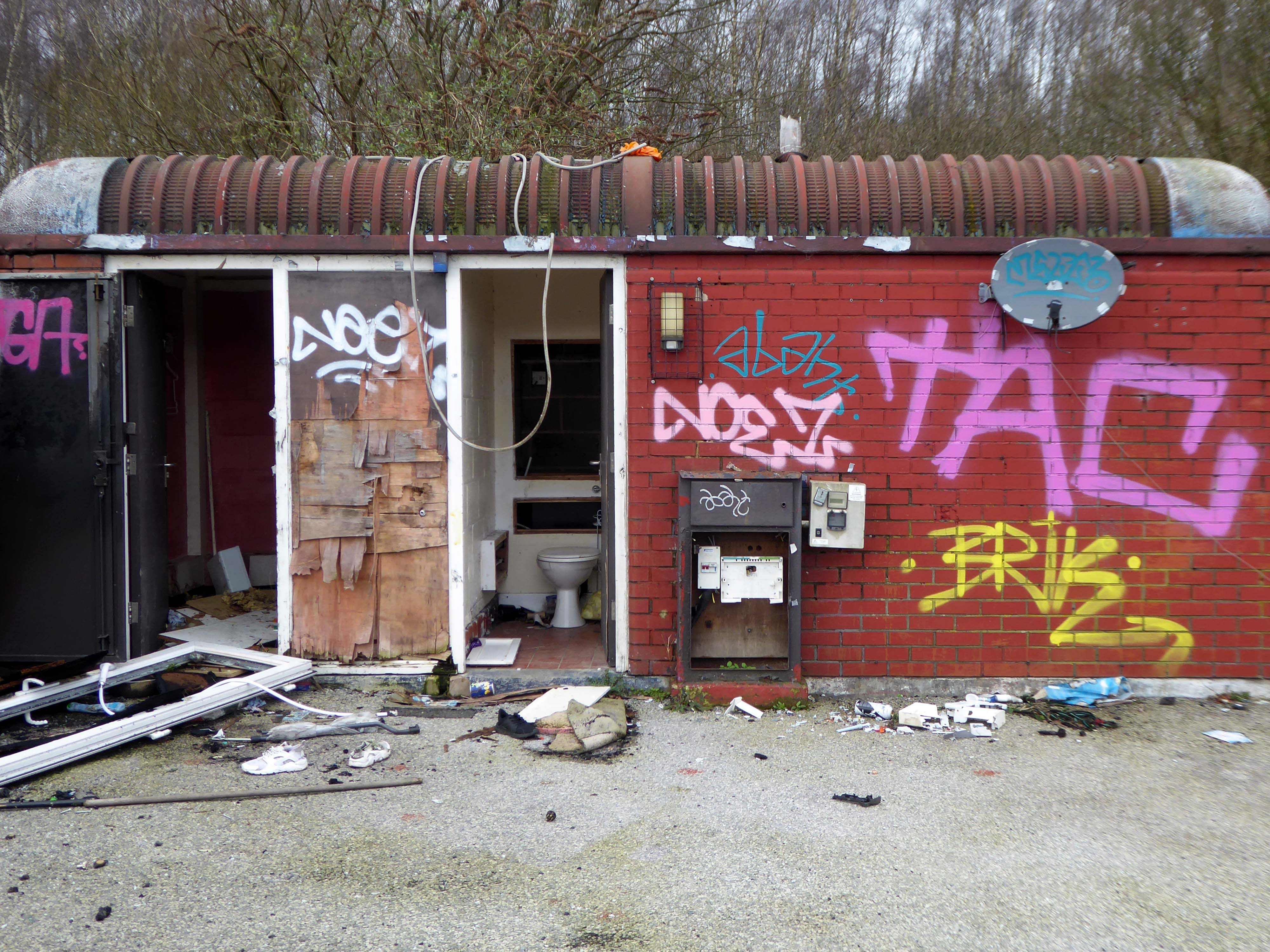
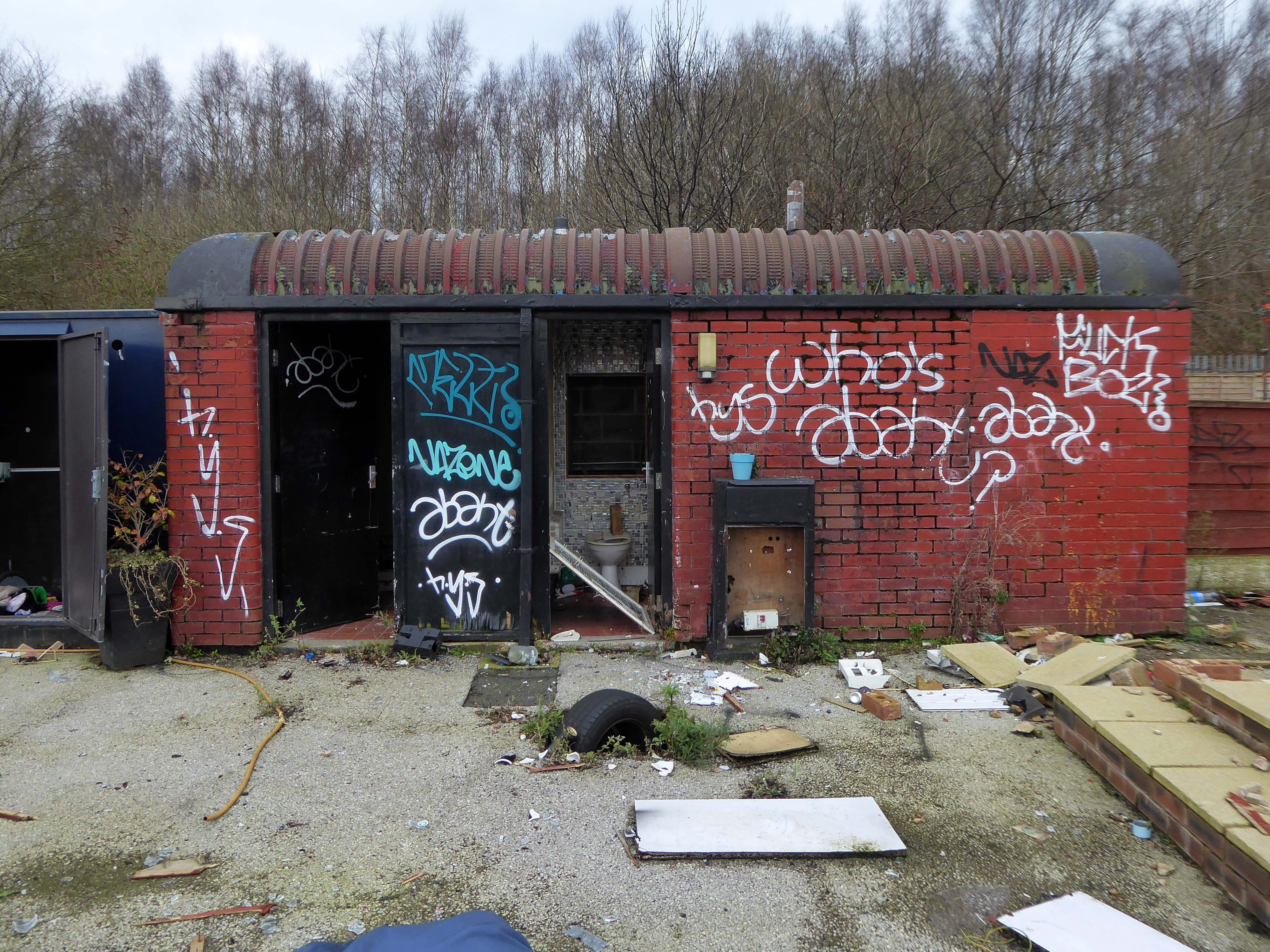
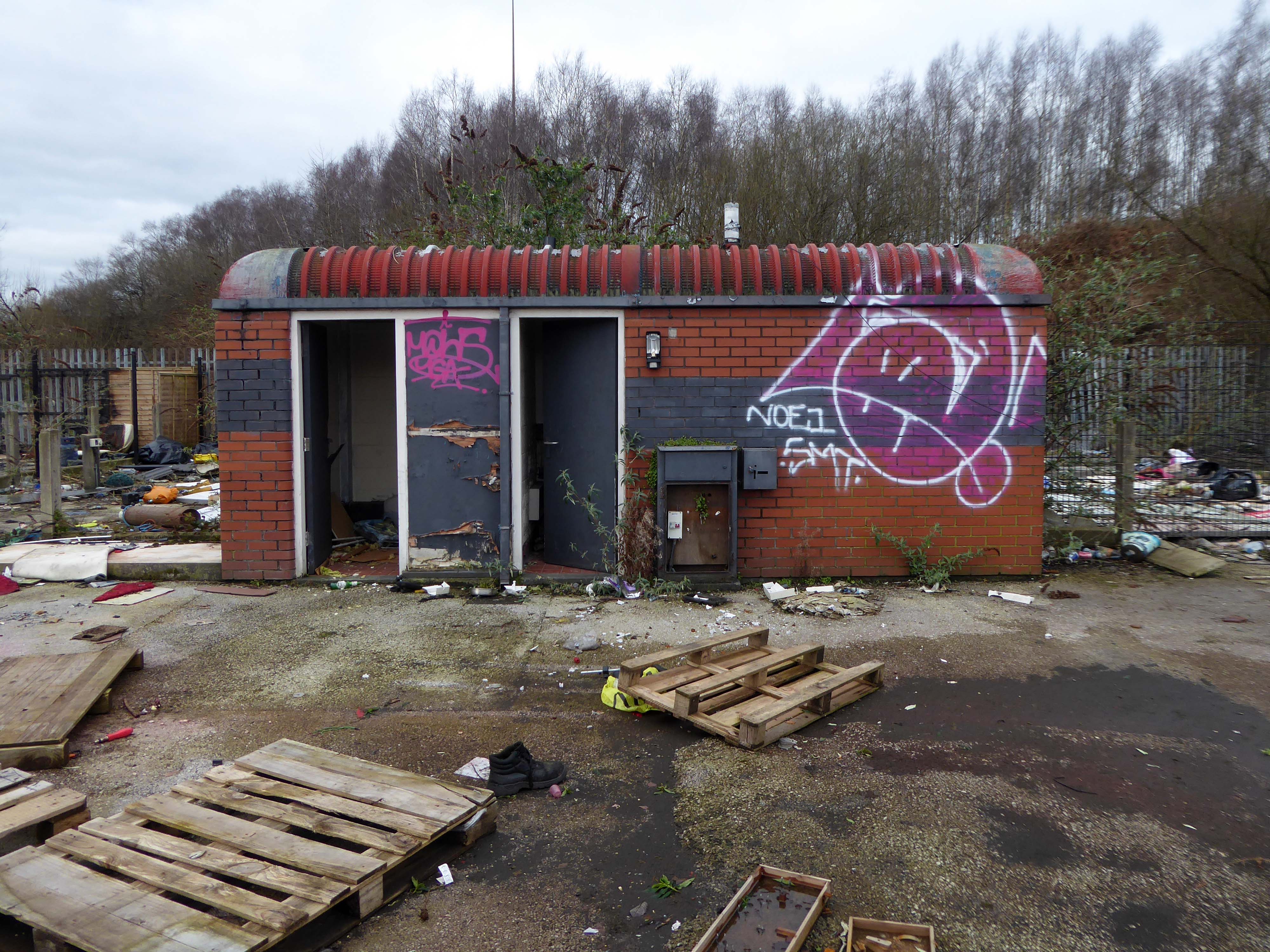
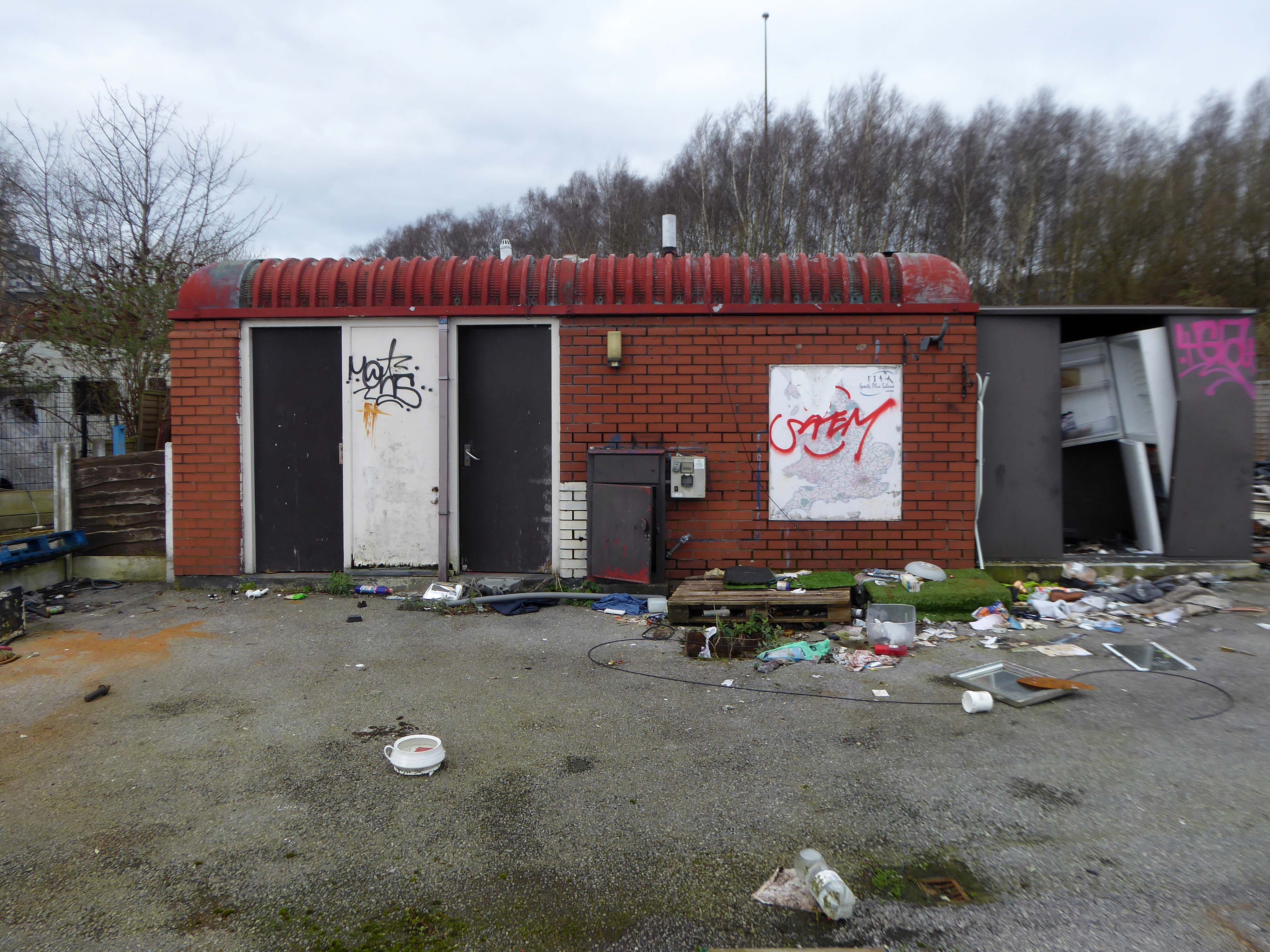
Gas works, works and a hole in the wall public convenience.

This has all gone.

Once home to putative homes.

The stylishly designed living areas and carefully considered external finishes within the new buildings, have been designed to compliment the rich industrial architectural style of the area.
They were never built

Pinnacle Alliance plans to build 344 luxury apartments on a site near Dantzic Street, as part of the ‘Northern Gateway’. Dozens of investors have paid up to £350,000 for the off-plan apartments in the proposed scheme. But two years since many first paid out for their home, no work has actually begun on the £30m scheme.
The dispute has led to a demonstration in Hong Kong, where around 50 buyers took to the streets over Christmas urging local authorities to take up their concerns. And in an unusual twist, protestors even recorded their own campaign song – to the tune of Jingle Bells – criticising Pinnacle.

Now Victoria North is on the way.

On the way out are the Travellers’ homes on the other side of the road, adjoining the Irk valley.

Thought to be in danger of flooding, they were condemned, yet there are plans to build on the site for less contentious or socially inclusive usage.

For centuries the commons of England provided lawful stopping places for people whose way of life was or had become nomadic. Enough common land survived the centuries of enclosure to make this way of life sustainable, but by section 23 of the Caravan Sites and Control of Development Act 1960 local authorities were given power to close the commons to Travellers. This they proceeded to do with great energy, but made no use of the concomitant power given to them by section 24 of the same Act to open caravan sites to compensate for the closure of the commons. By the Caravan Sites Act 1968, therefore, Parliament legislated to make the section 24 power a duty…for the next quarter of a century there followed a history of non-compliance with the duties imposed by the Act of 1968, marked by a series of decisions of this court holding local authorities to be in breach of their statutory duty; but to apparently little practical effect. The default powers vested in central government, to which the court was required to defer, were rarely if ever used.

Gypsy Traveller

The Home Secretary, Priti Patel, said yesterday, that the new laws will target trespassers – who intend to reside on any private or public land in vehicles without permission, and where they are causing significant disruption, distress or harm to local communities.

This new offence will enable the police to fine or arrest those residing without permission on private or public land in vehicles in order to stop significant disruption, distress or harm being caused to the law-abiding majority – she added.

The new law also gives the police the powers to seize and impound vehicles whose owners fail to comply with the new law and who refuse or can’t leave.

You are criminalising a problem that has been created by the failings of a political will to deliver appropriate accommodation.

Joseph P Jones from the Gypsy Council

Travellers Times

So here we are – in the shadow of the ever expanding New Manchester – no homes for those who choose their own traditional way of life.

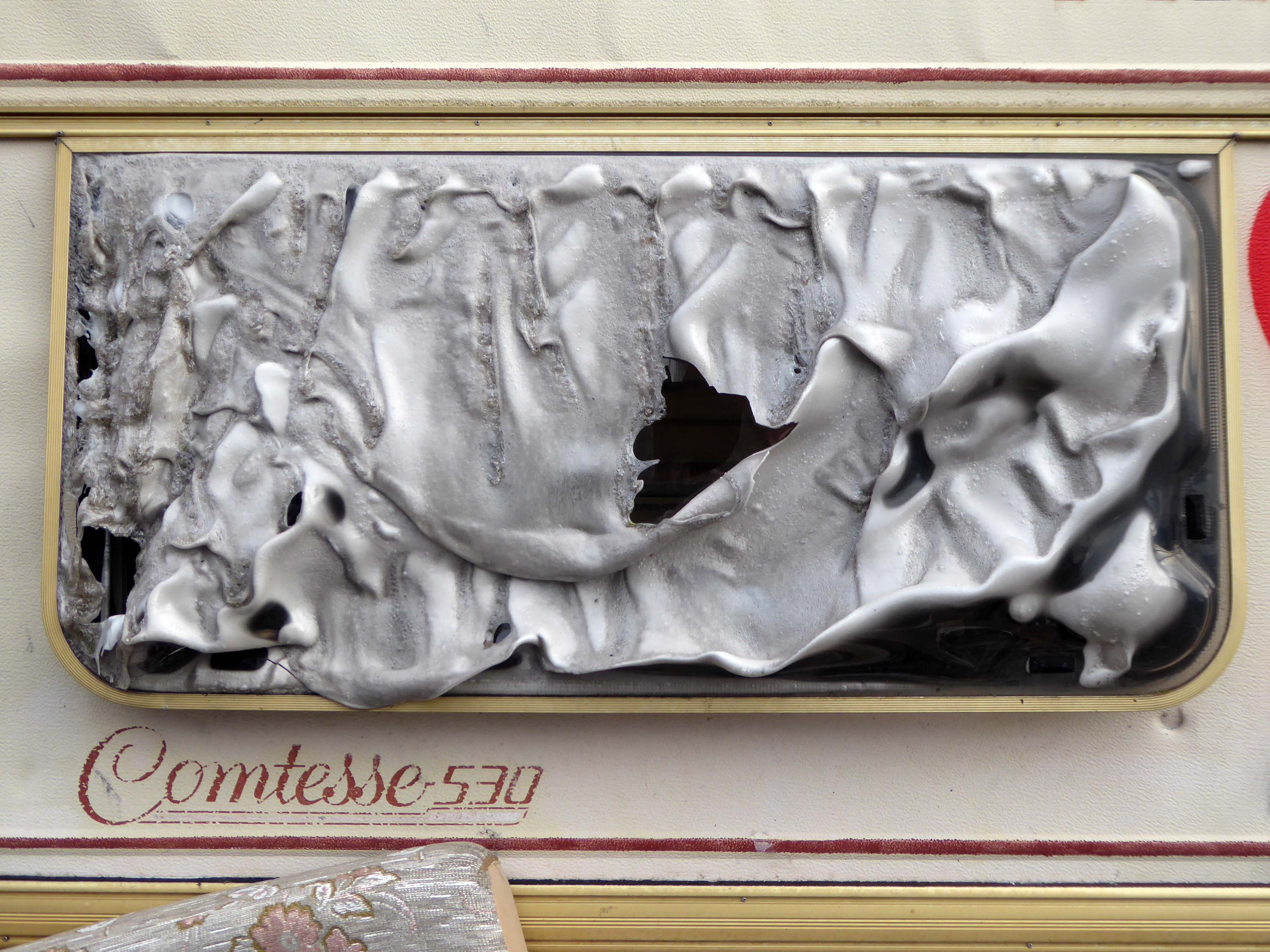
Burnt out shells, discarded toys and a population of ghosts.

Today, we live in a political economy that has been dominated by neoliberalism as a consolidation of the role that capital has in accumulation by dispossession. It has been written extensively elsewhere that contemporary neoliberal land policy affects seemingly disparate groups within the urban population. Less explored, however, is how this logic affects GRT communities in particular.

The traveller site on Dantzic Street lies within the forthcoming Red Bank neighbourhood, on the meander of the Irk, this particular neighbourhood will consist of:

A landmark thirty seven storey building as well as two sister towers, Park View and City View.

Given its proximity to the Green Quarter and other luxury residences, we can expect the rent gap produced by speculative land values to be fully exploited on this patch of land. As for a new traveller site to replace the one on Dantzic Street, the future remains unclear. Having reached out to an Executive Member for Housing and Employment within MCC about ecological concerns alongside the worries concerning lack of land access to travellers, the first question was responded to with misplaced enthusiasm whilst the latter was yet to be briefed at all.

GM Housing Action

Wigan Walk

Arriving at Wigan Wallgate turn left and left and right.

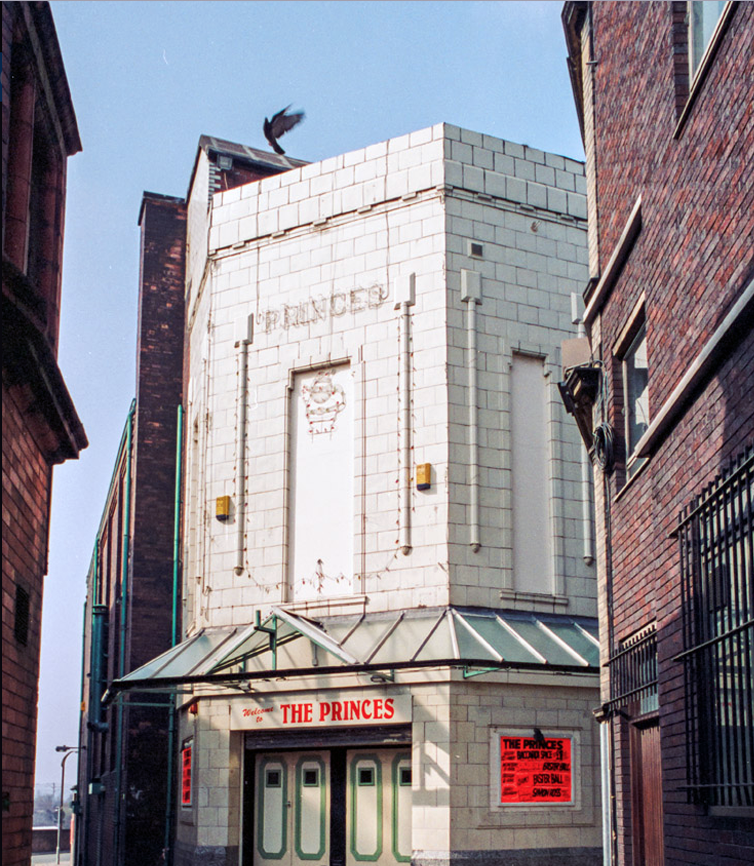
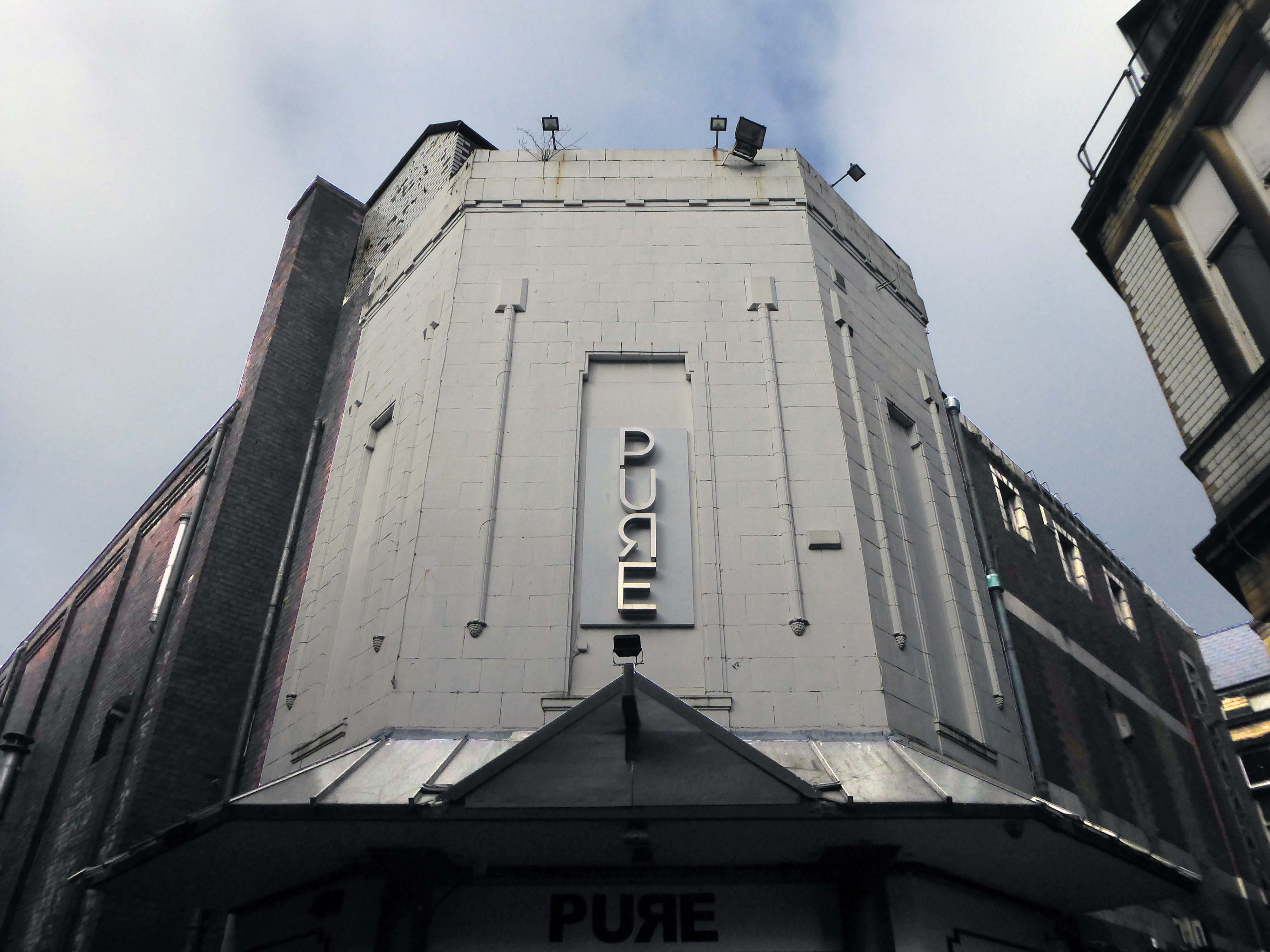
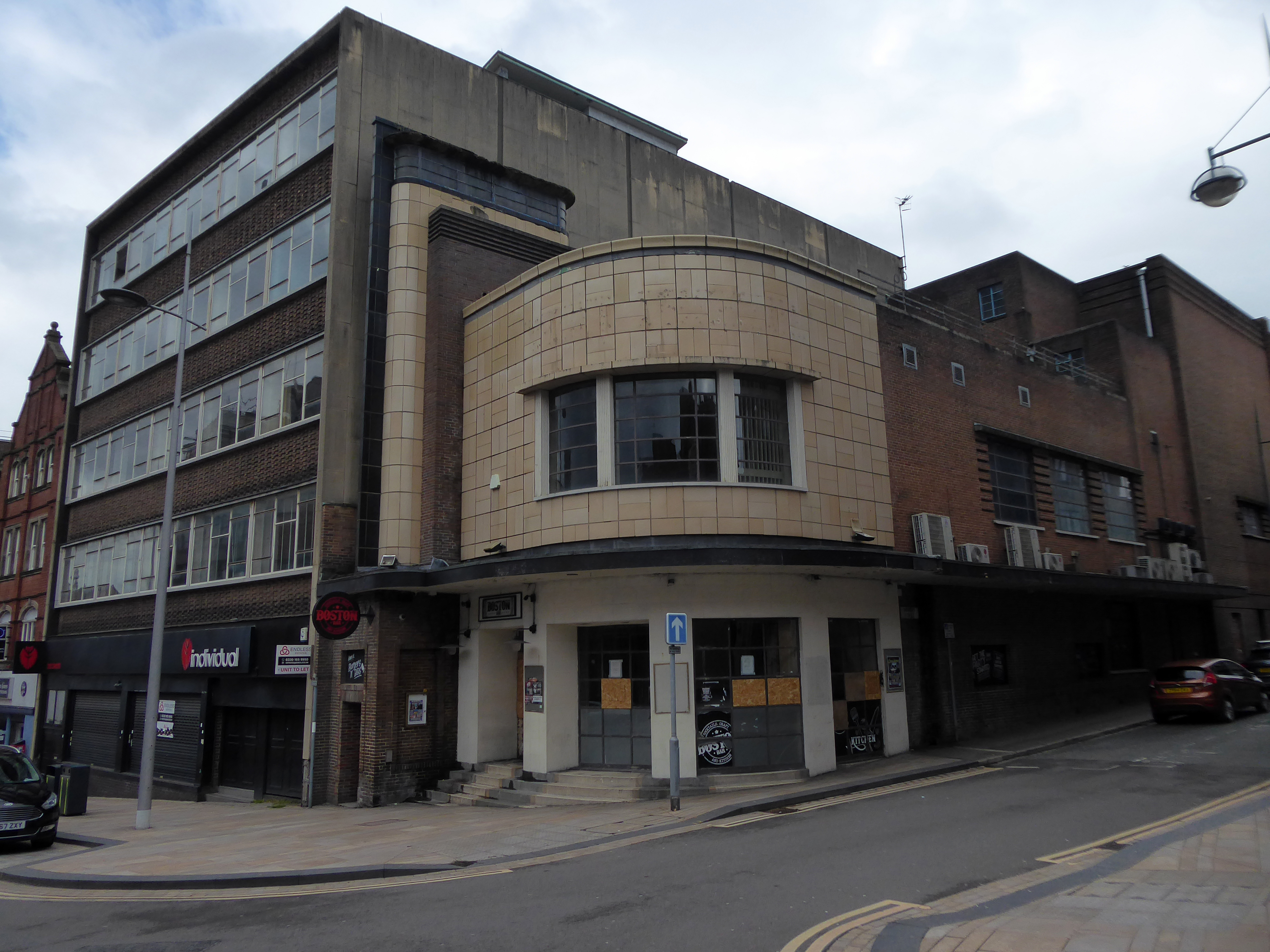
Tucked away along Clarence Yard is the former Princes Cinema.

Photo: Ian Grundy

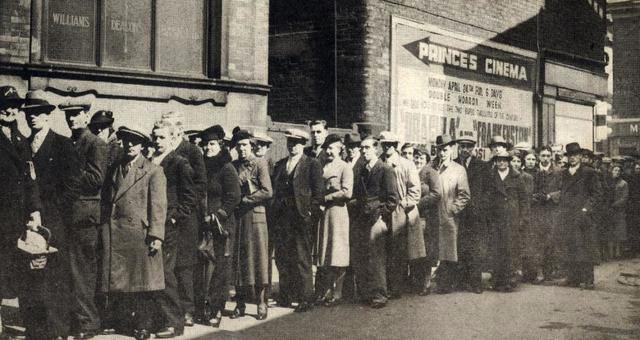
Where once upon a time the flat capped and hatted audience queued at length, for a glimpse of Dracula and Frankenstein.

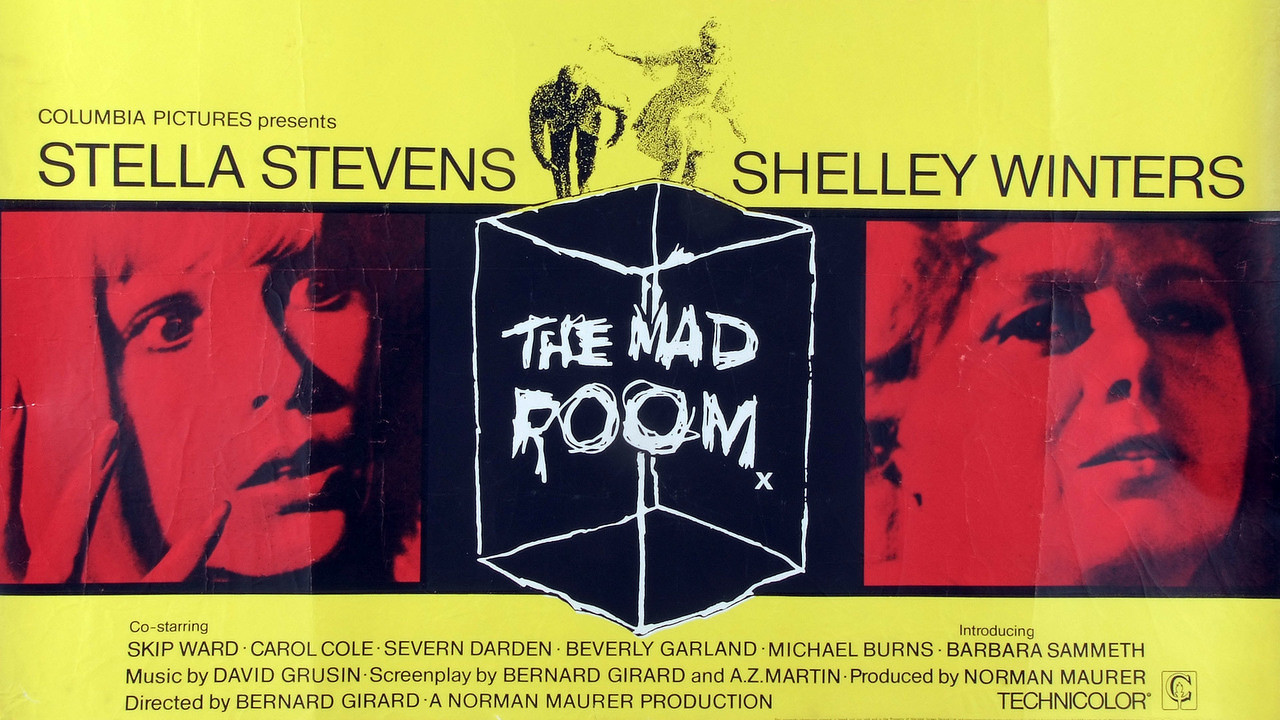
Opened in 1934 and closed on 10th January 1970 with a screening of The Mad Room.

Cinema Treasures

It has subsequently been in use as a nightclub.

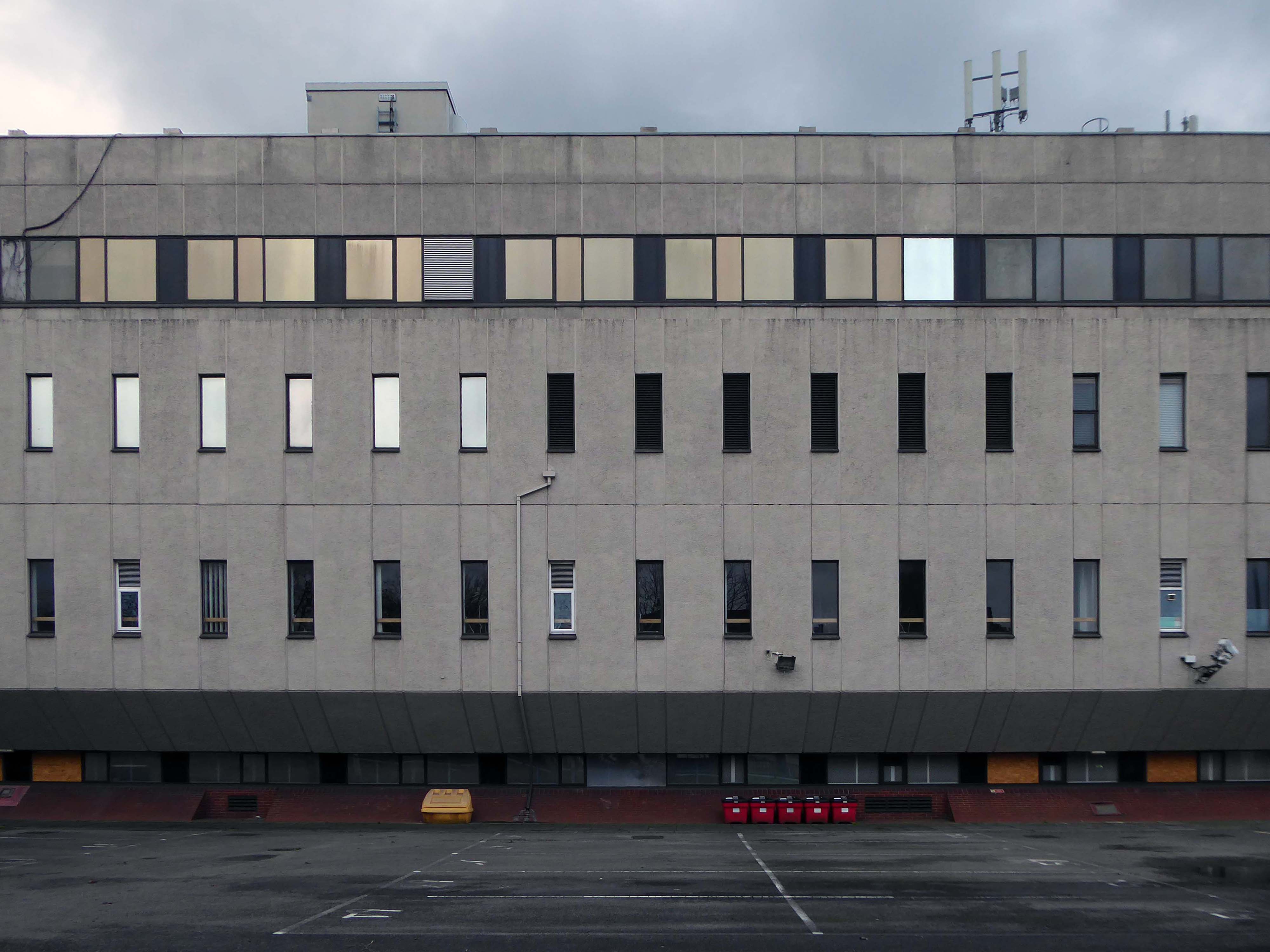
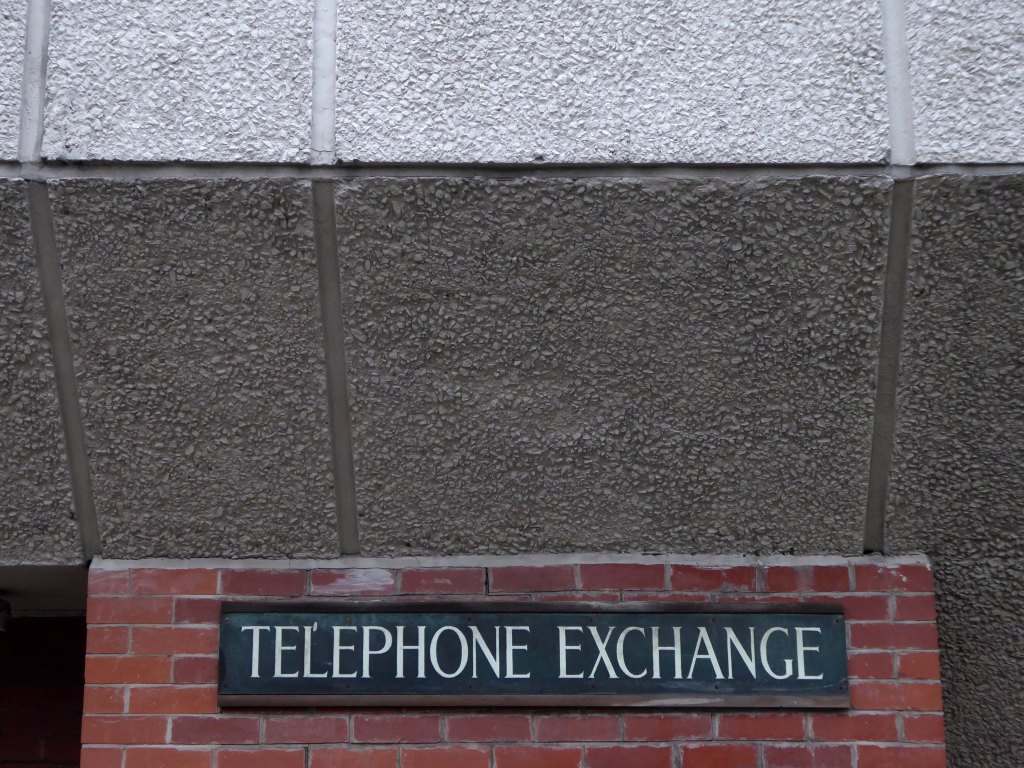
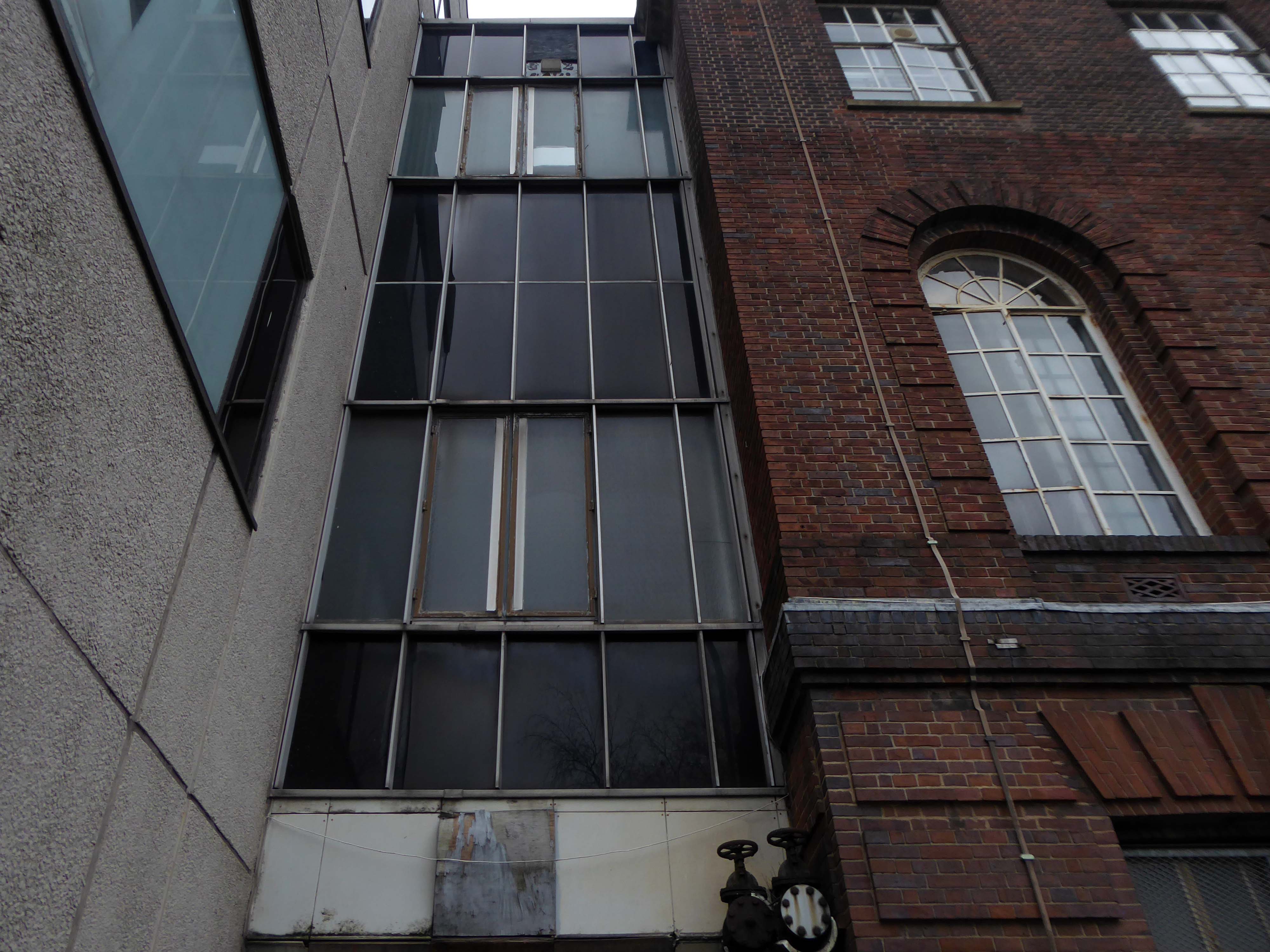
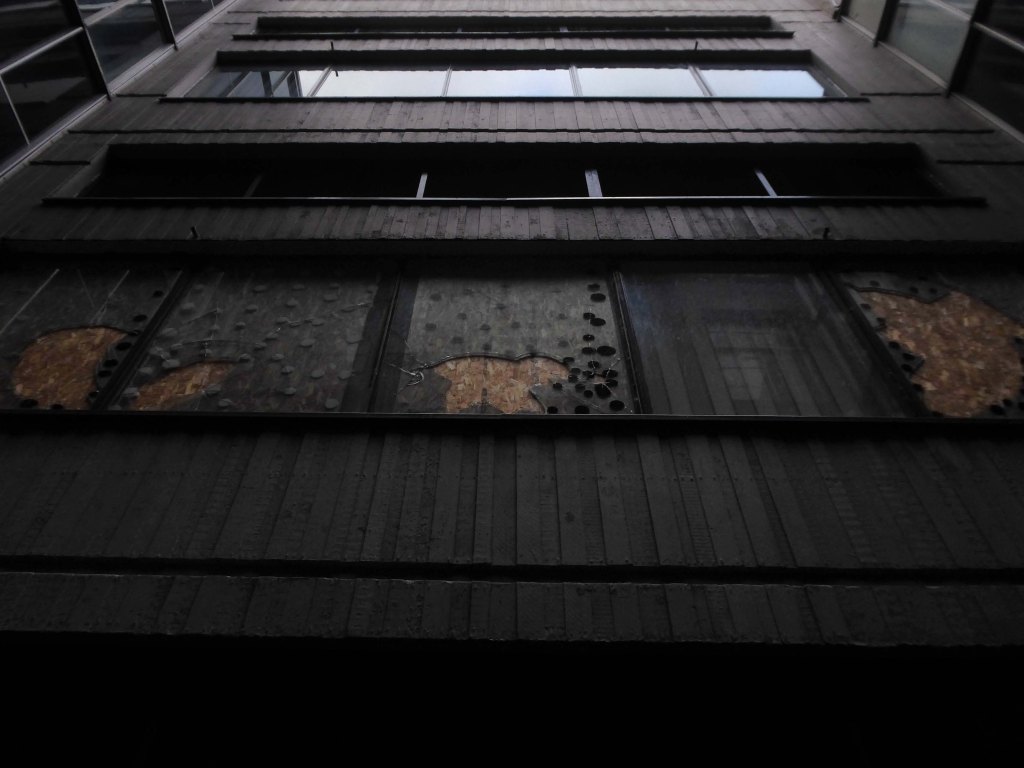
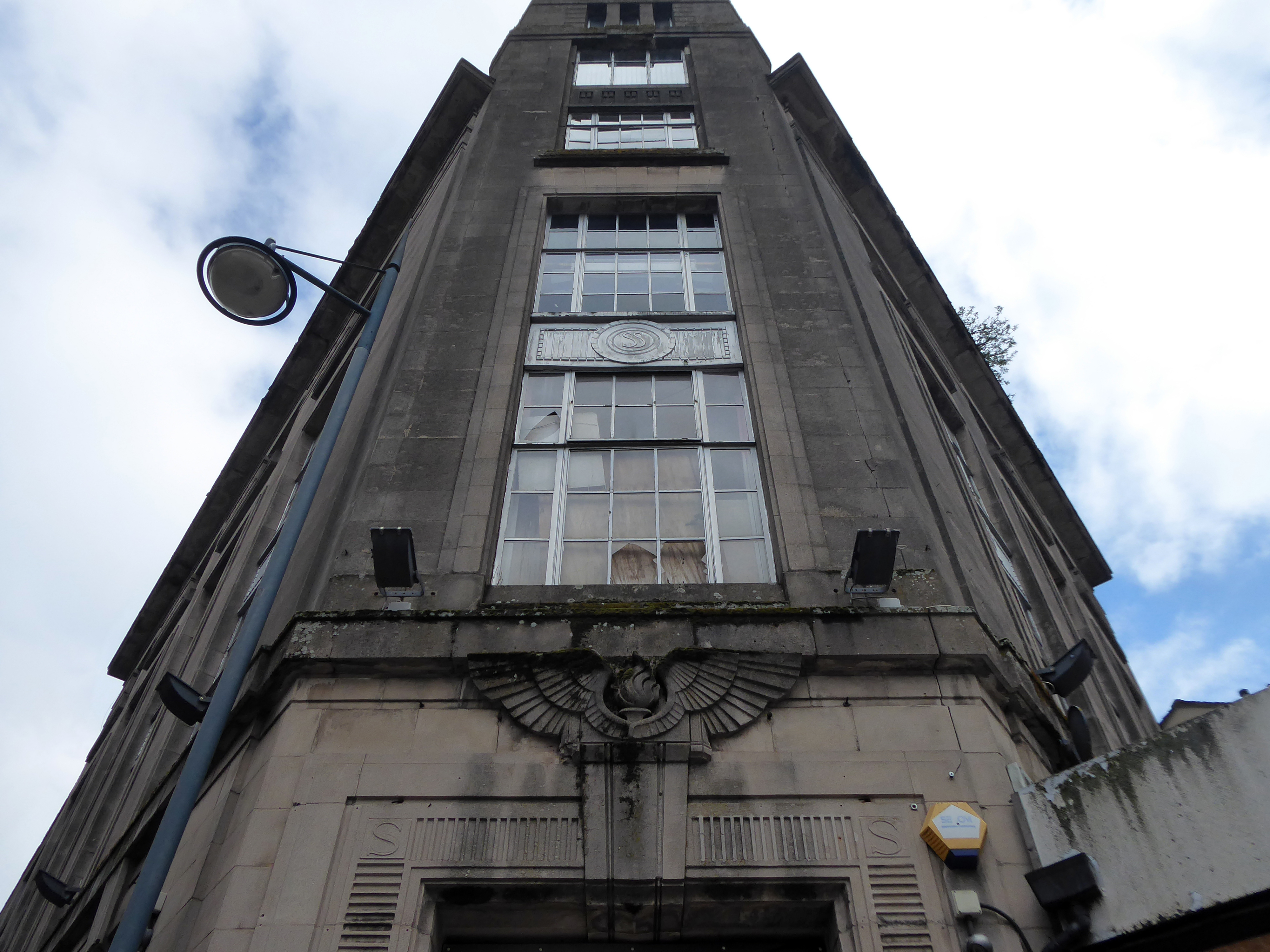
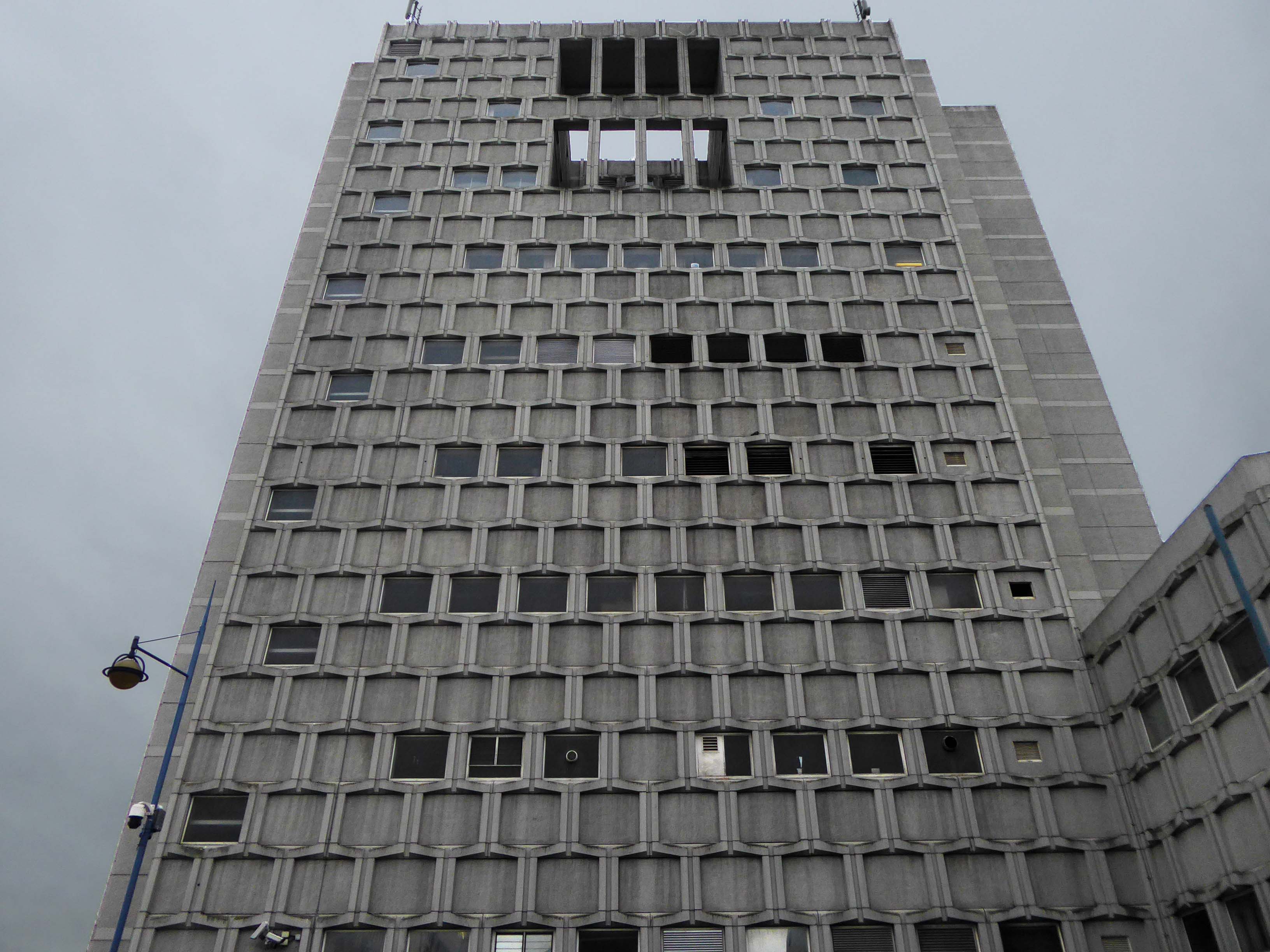
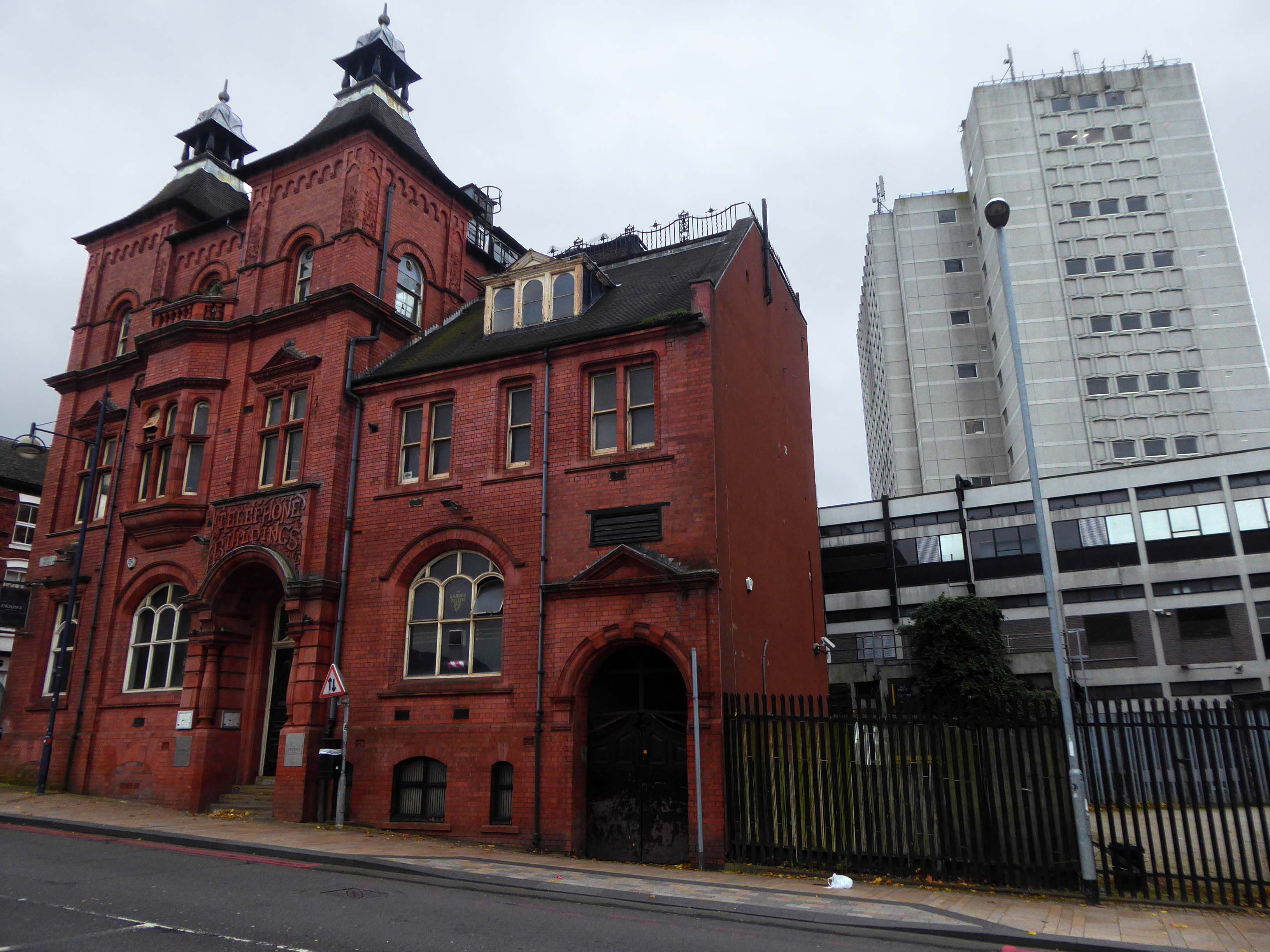
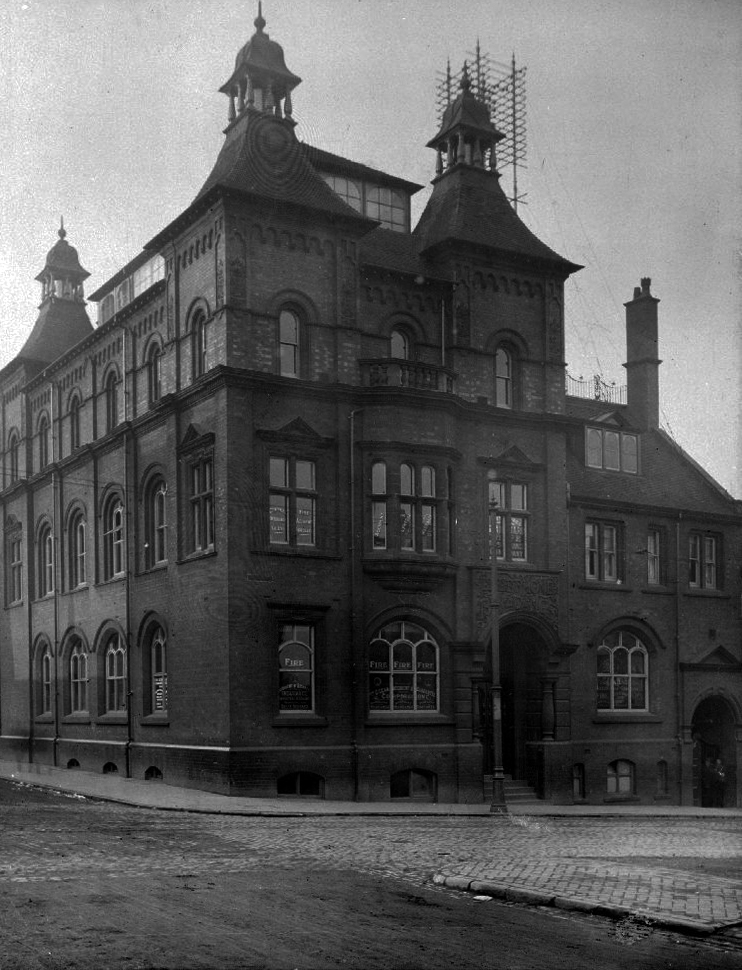
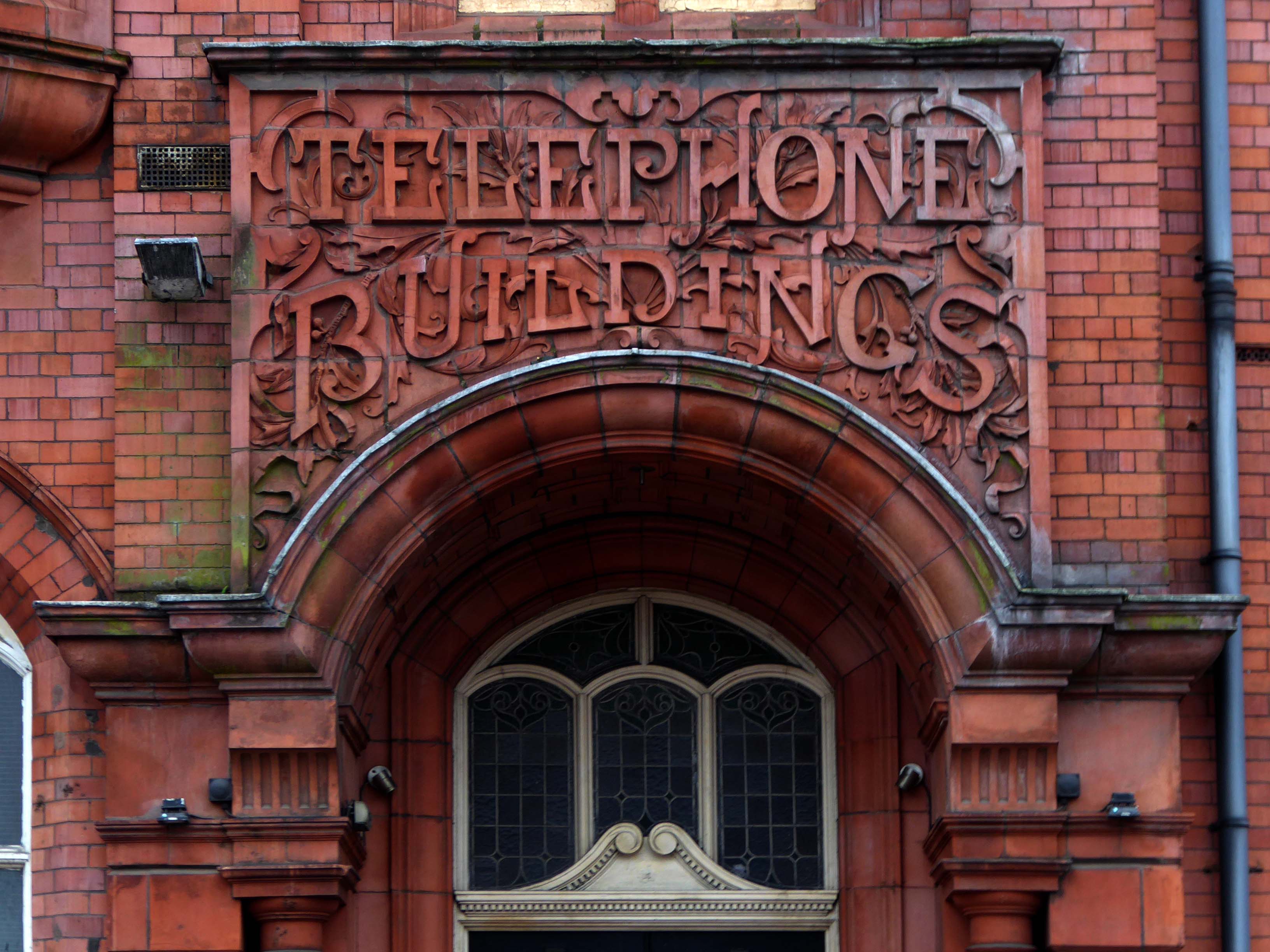
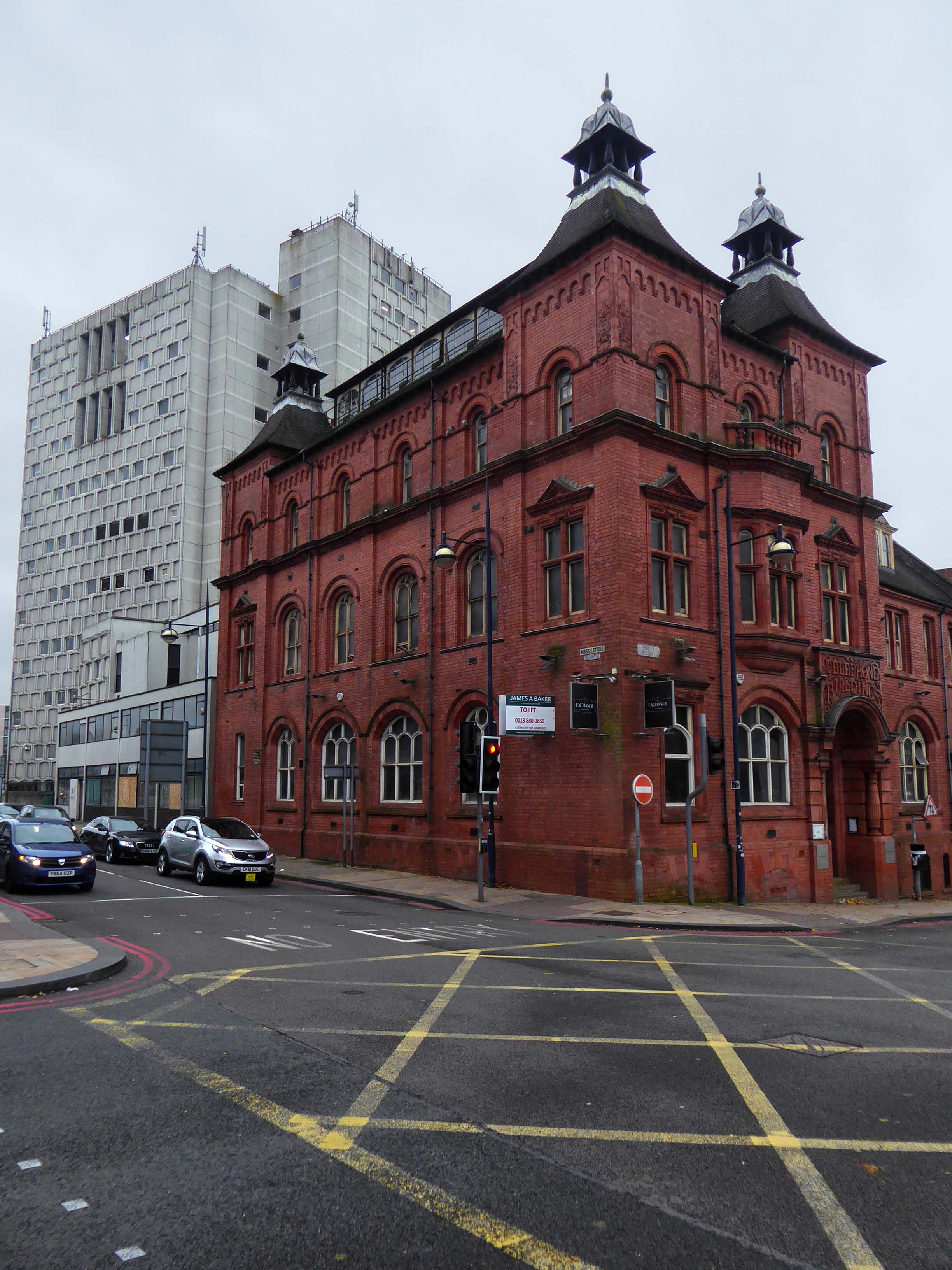
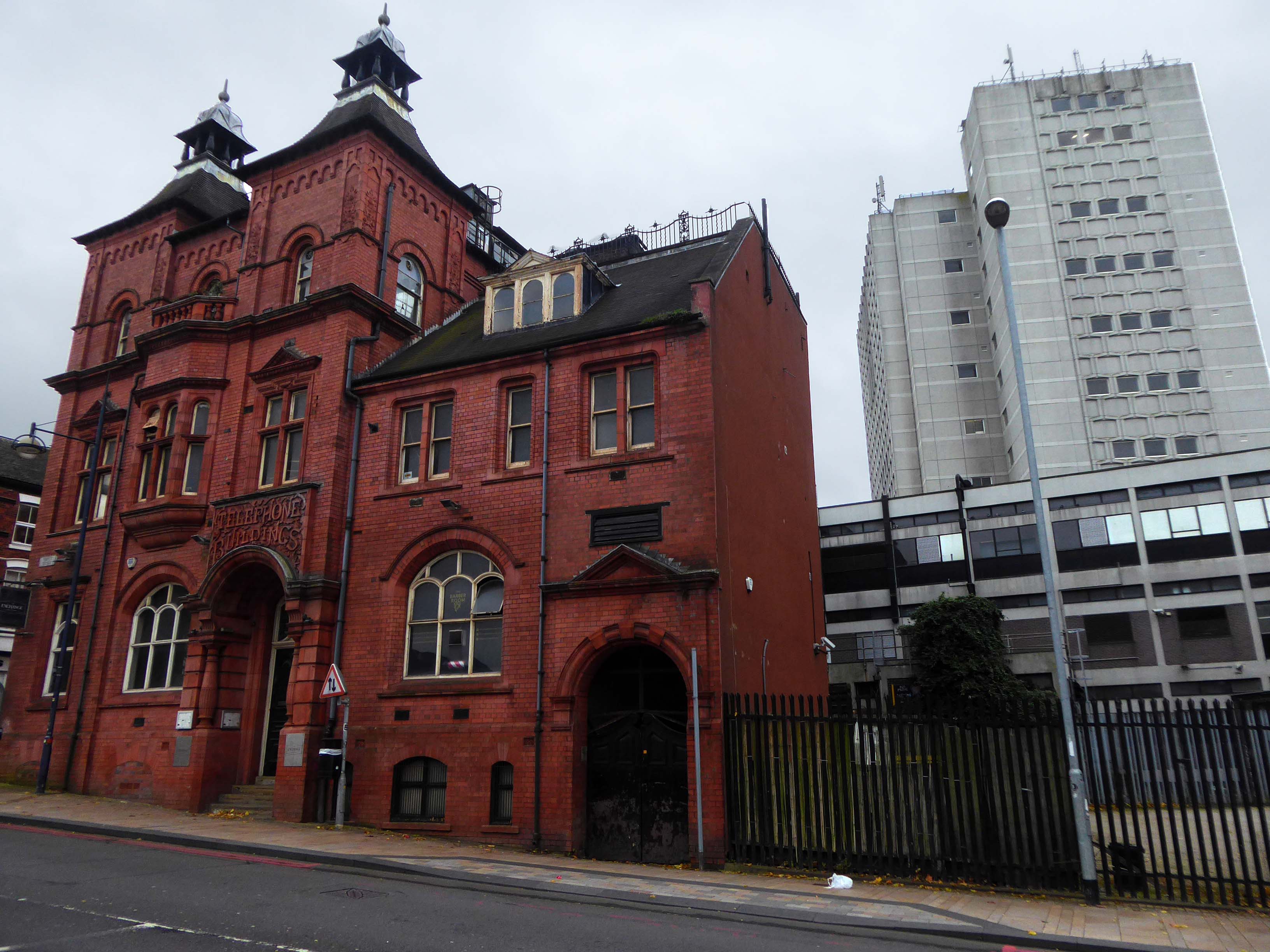
Back out onto Dorning Street in search of telephone exchanges, three telephone exchanges.

Inter-war

Sixties.

Seventies.

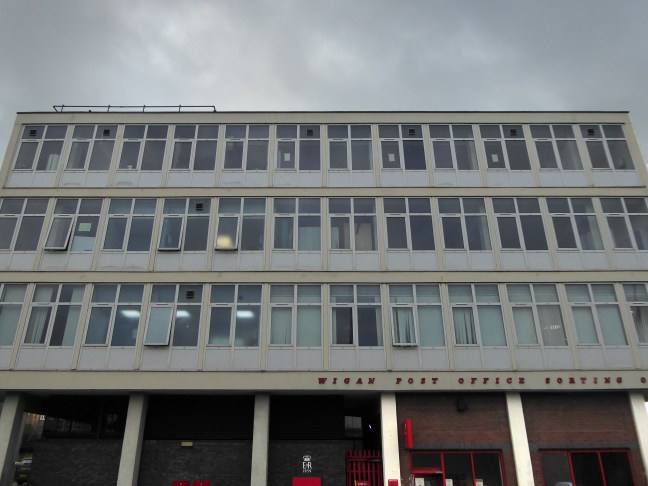
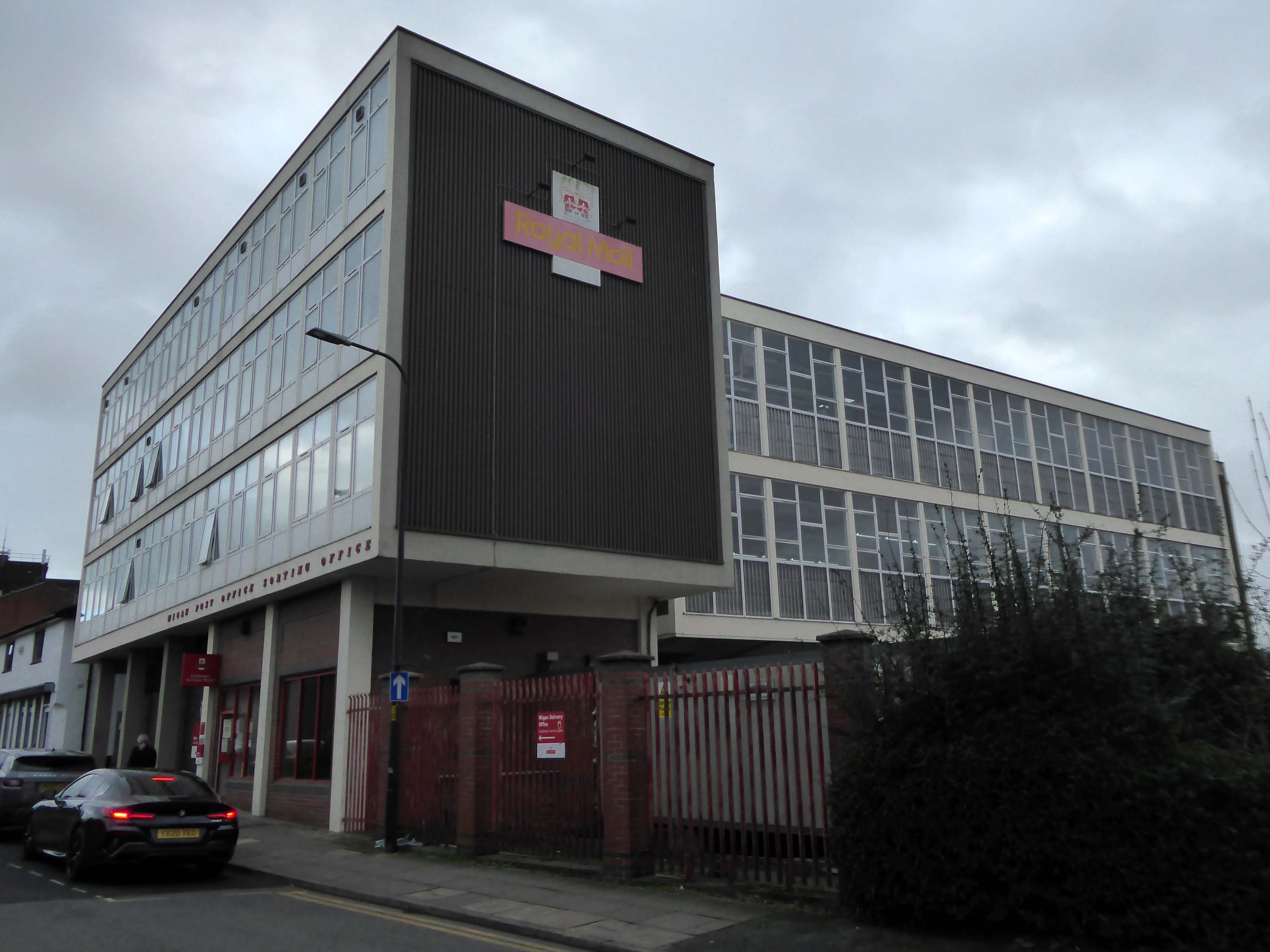
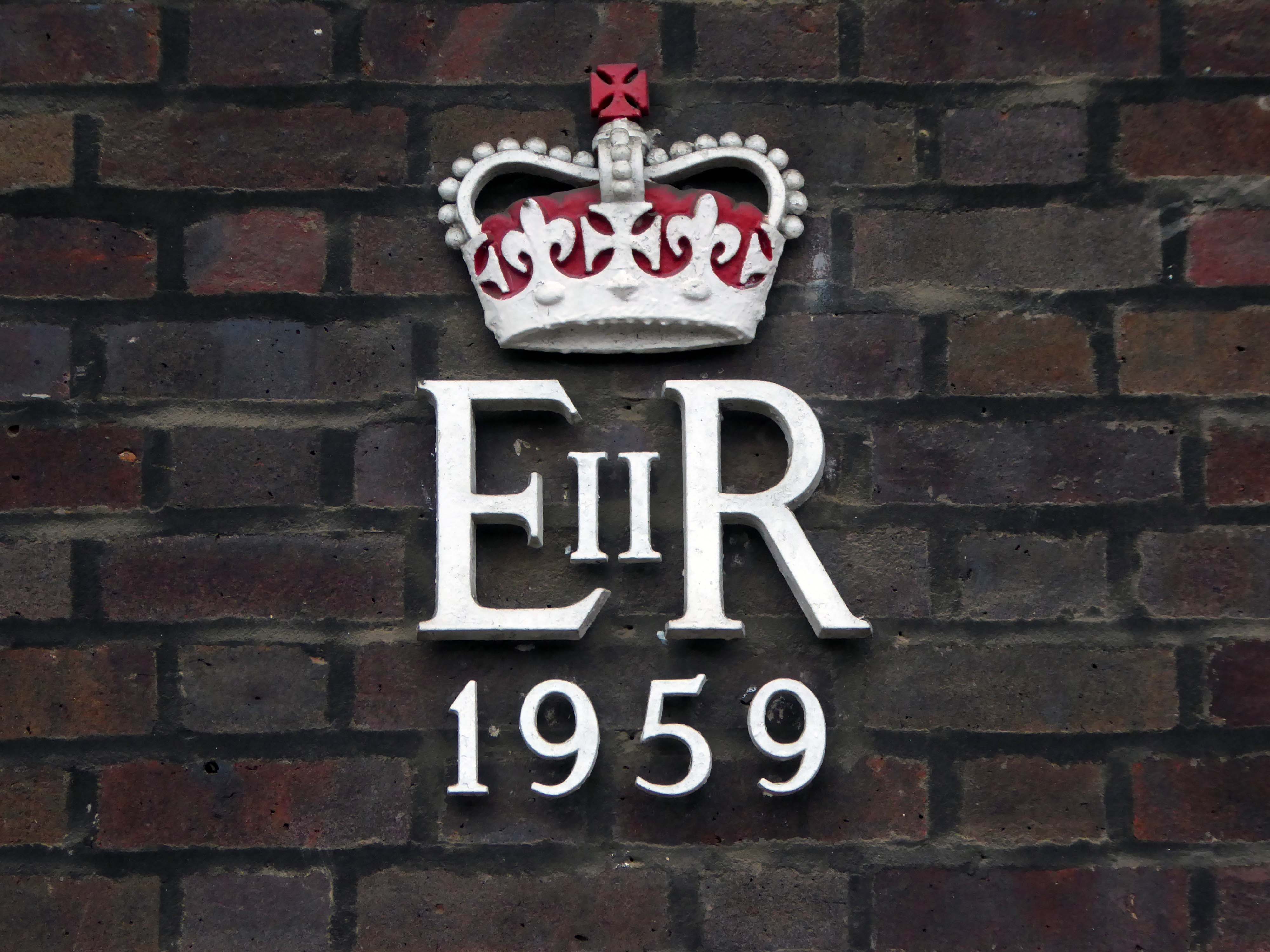
Just around the corner is an expansive GPO Sorting Office of 1959.

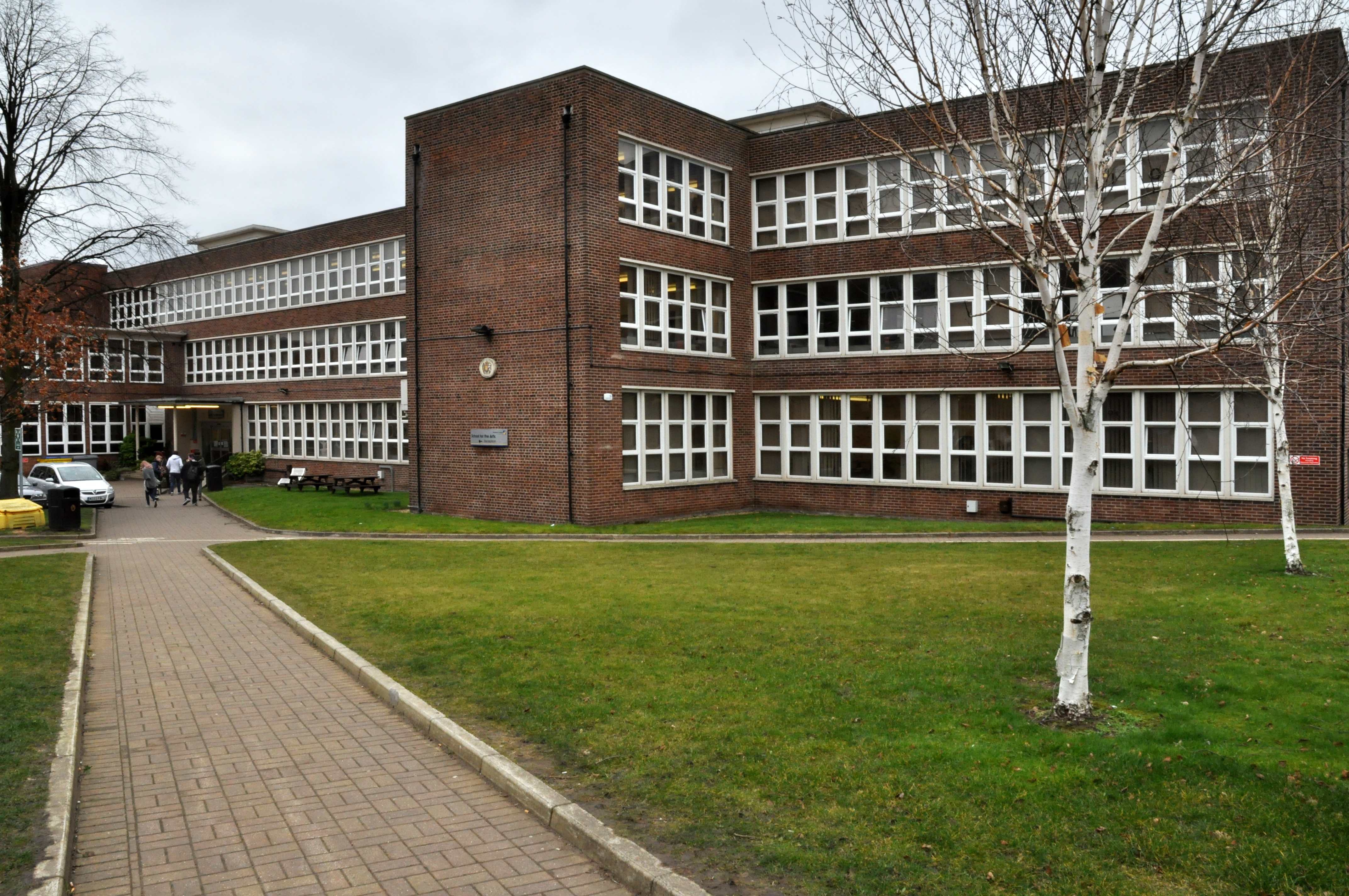
Across the way is the Technical College.

The foundations of Wigan & Leigh College date back to 1857, and the current institution was formed in April 1992 through the merger of Wigan College of Technology and Leigh College.

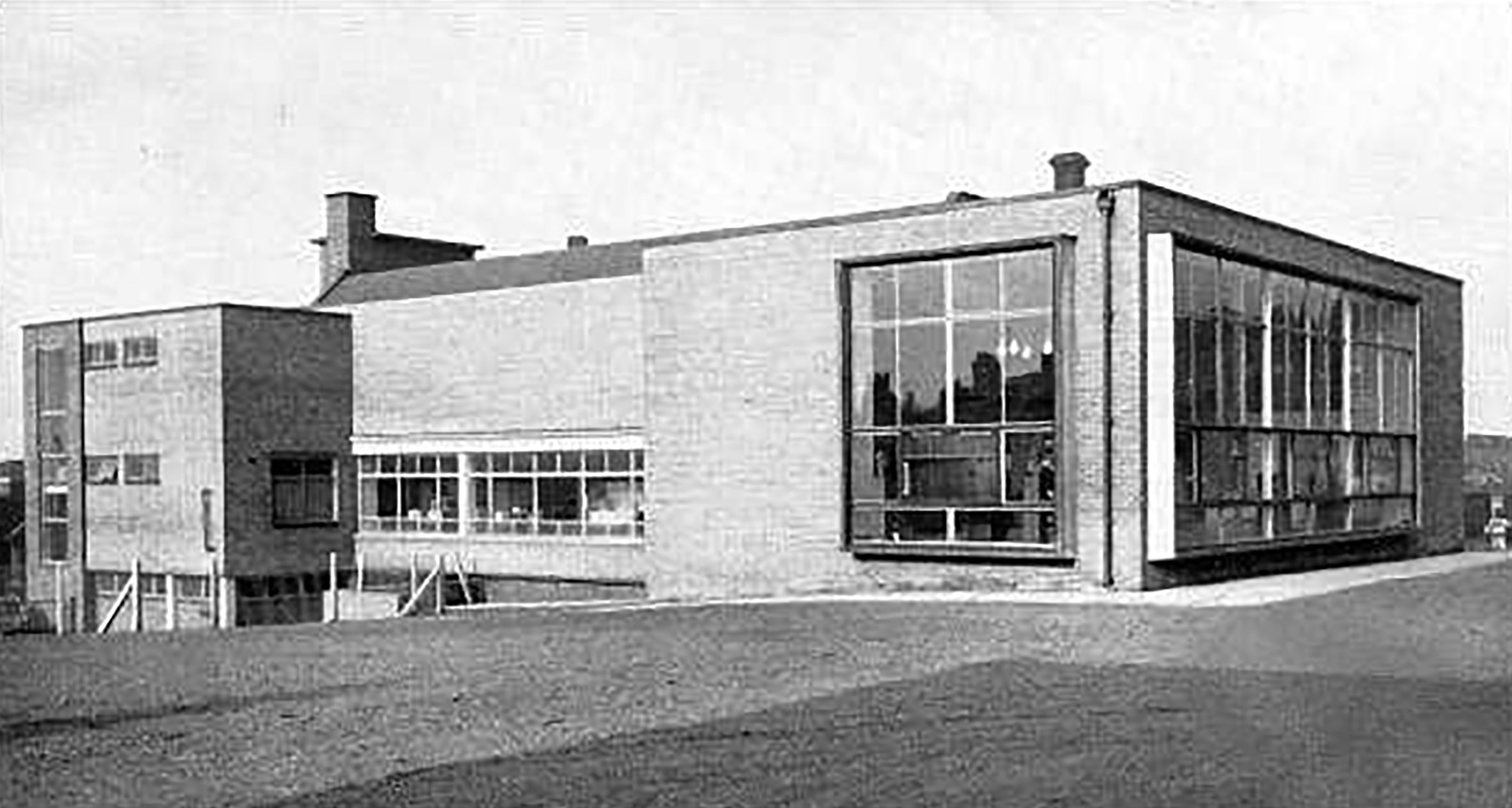
Partly formed from the Thomas Linacre Technical School.

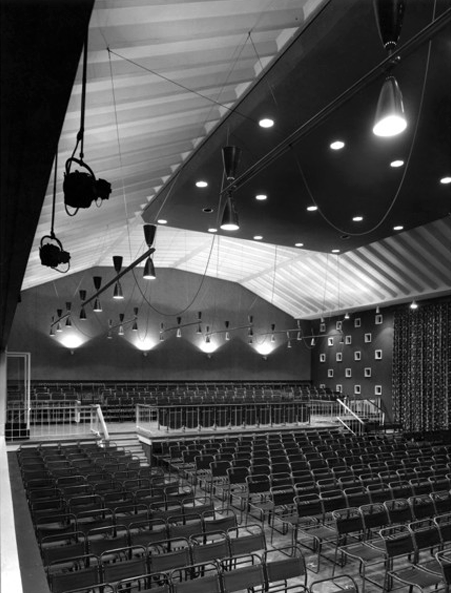
Architects: Howard V Lobb G Grenfell Bains & Hargreaves 1954

School Hall – RIBA Pix

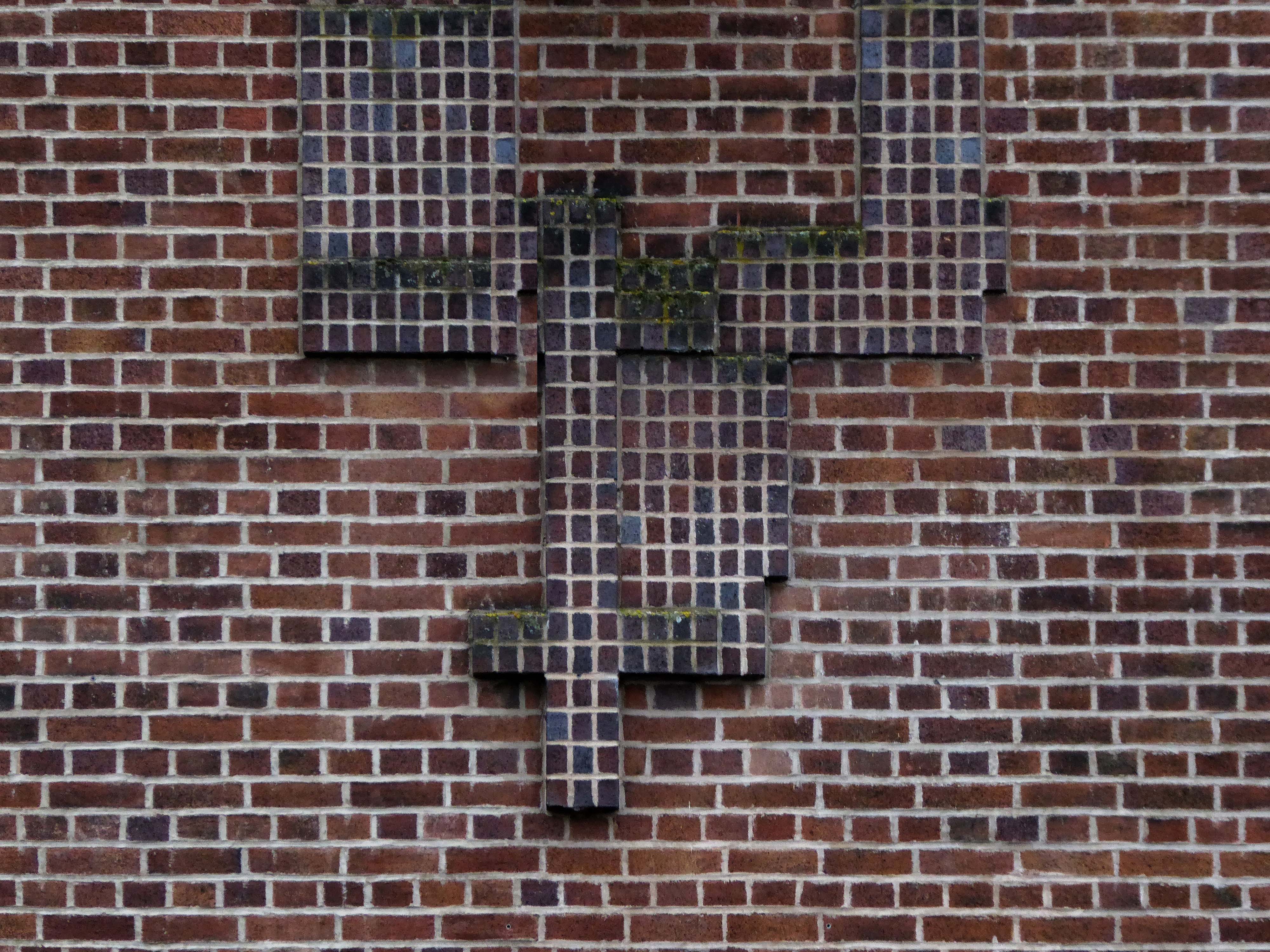
Curious decorative brick motif – a floor plan of the building.

My thanks to Mark Watson for his erudition and insight.

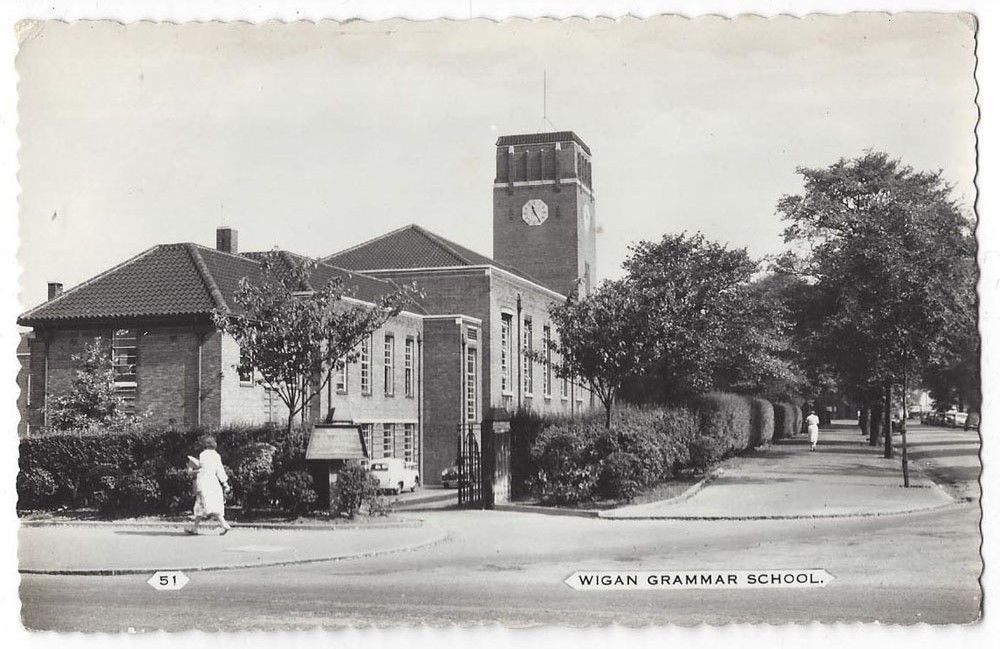
Across the road the former Grammar School now an NHS Centre.

Wigan Grammar School was founded in 1597 and closed in 1972 as part of the comprehensive education movement. it became Mesnes High School until 1989, and then the Mesnes Building of Wigan College.

It was designated a Grade II listed building in 1997.

Architect: A E Munby

Since 2003, it has been known as the Thomas Linacre Centre and is an out-patient department for the Wrightington Wigan and Leigh NHS Trust.

Let’s head back into town and along Standishgate.

Former Burton Tailors – possibly.

Turn left into Millgate to see the boarded up Civic Centre.

Formerly not boarded up Civic Centre.

Across the way the new Library and Life Centre by Astudio and LCE Architects

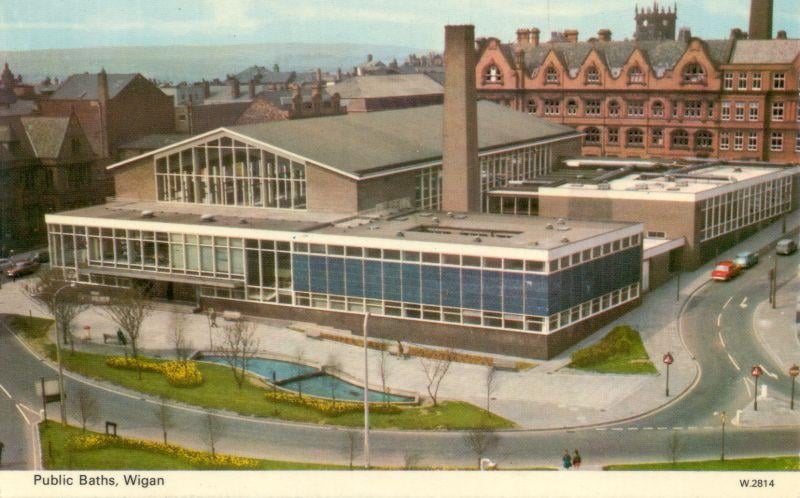
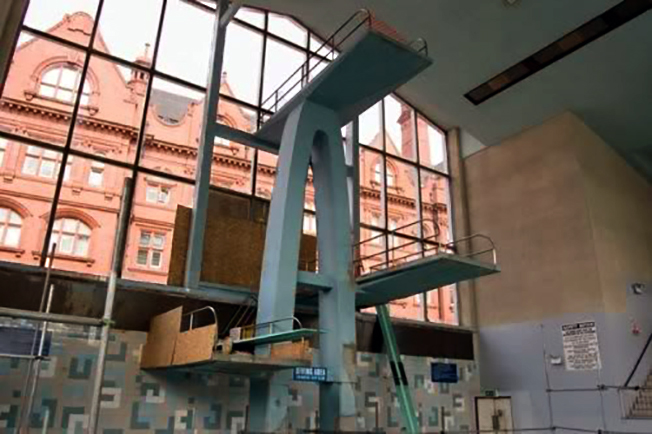
Down the road to where the International Swimming Pool was – opened 1968.

Demolished 2010

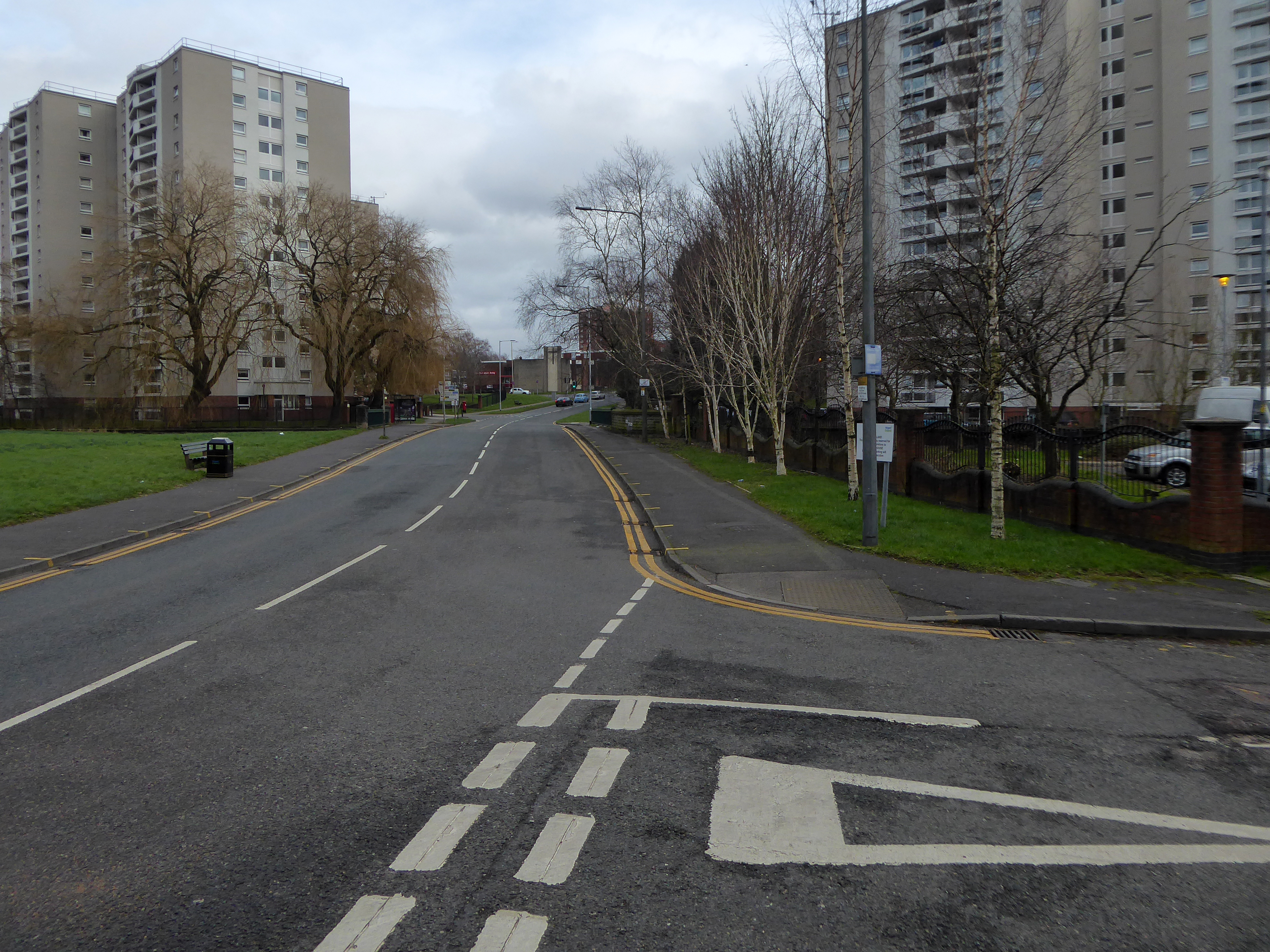
Scholes Comprehensive Development 1964 – five thirteen storey blocks.

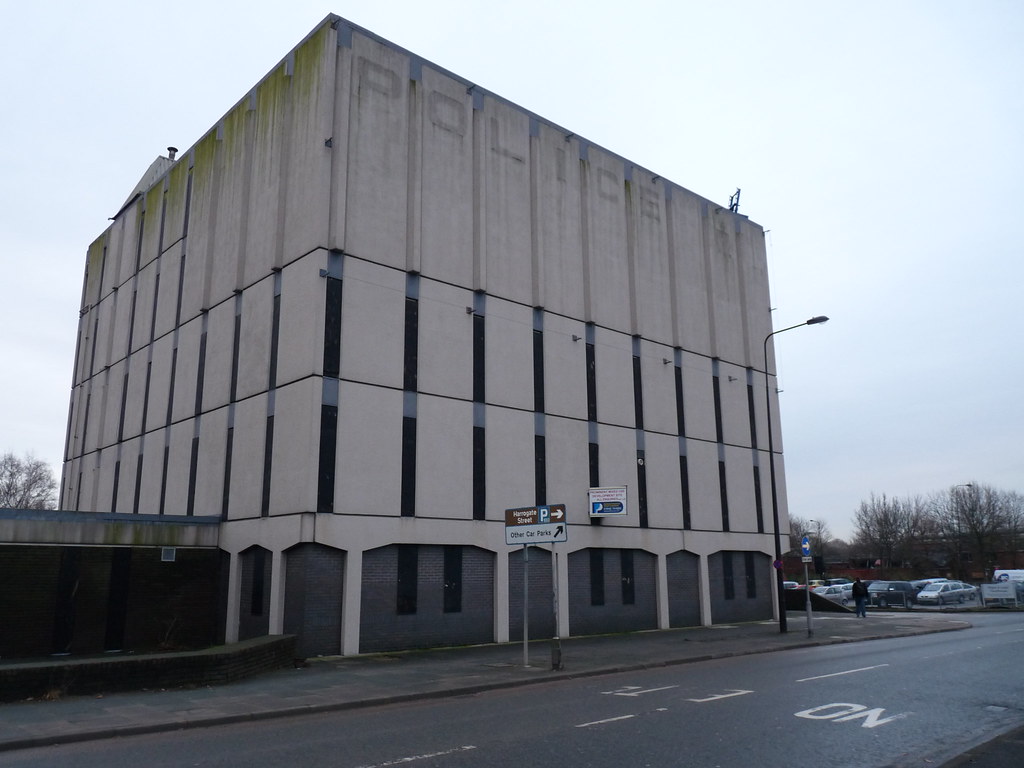
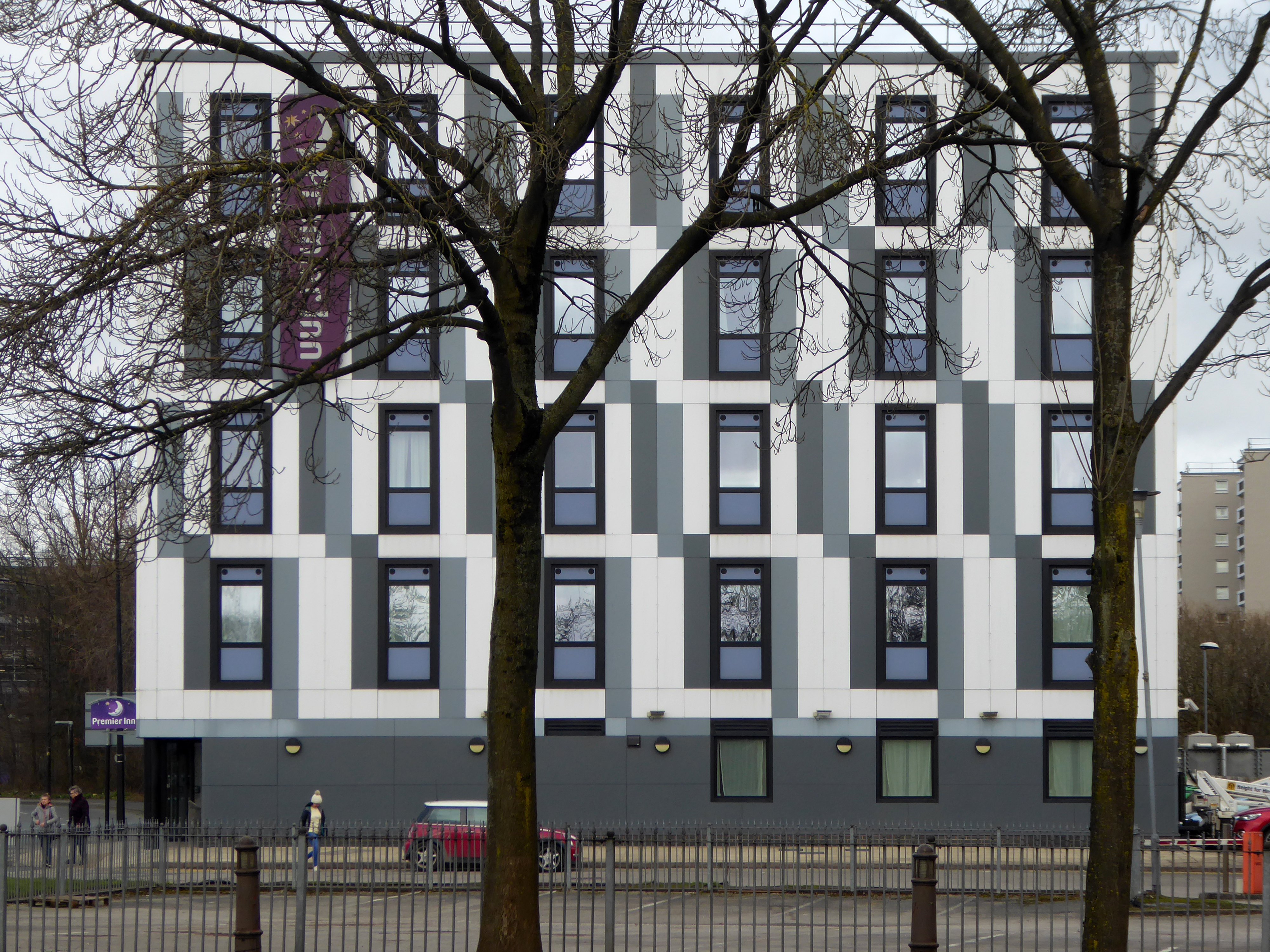
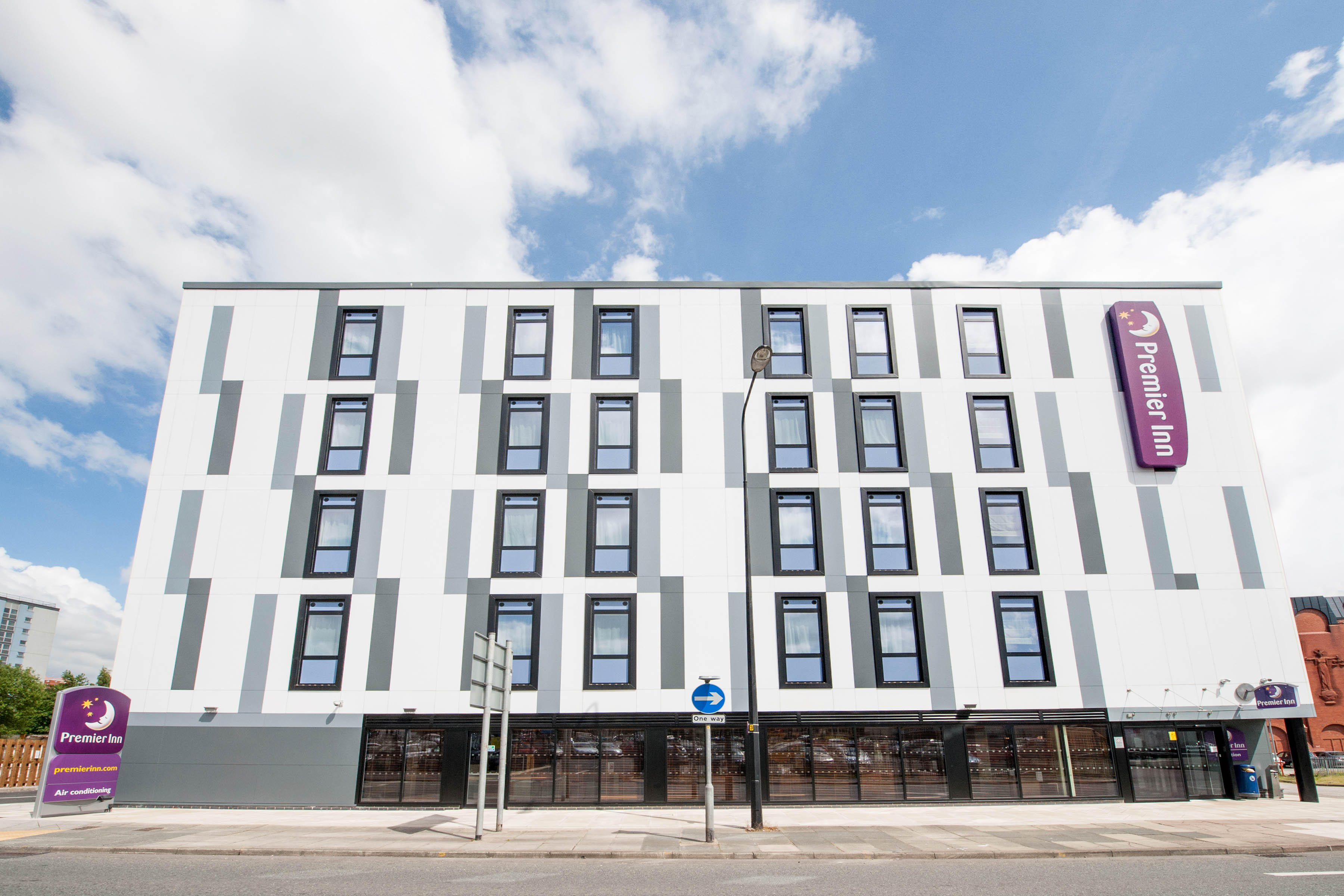
Moving down the street to the former Police Station now Premier Inn on Harrogate Street.

Lancashire County Architect: Roger Booth

Flickr

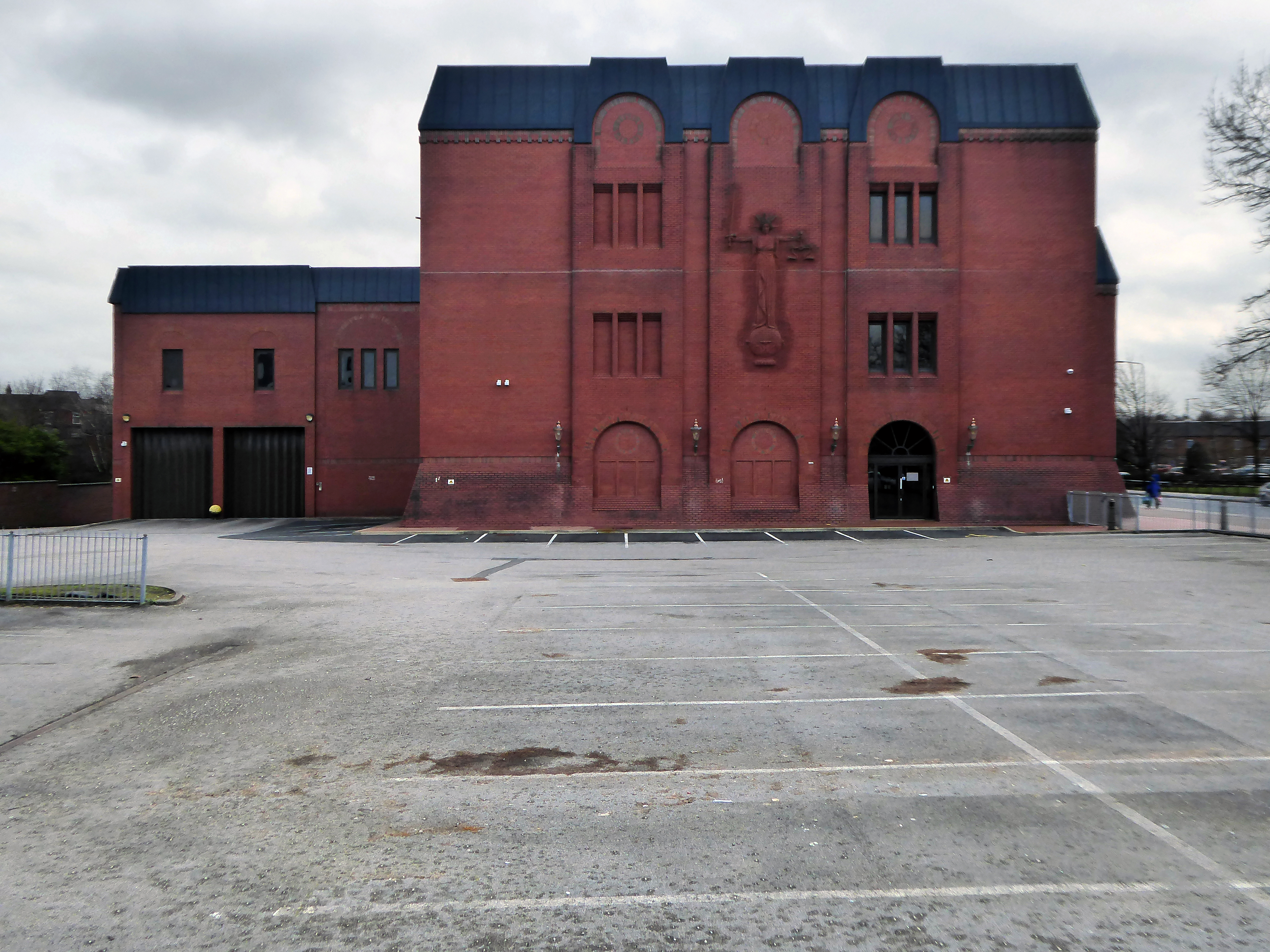
Next door the Post Modern brick monolith of the Wigan and Leigh Courthouse 1990.

Then back up along King Street to visit the Job Centre.

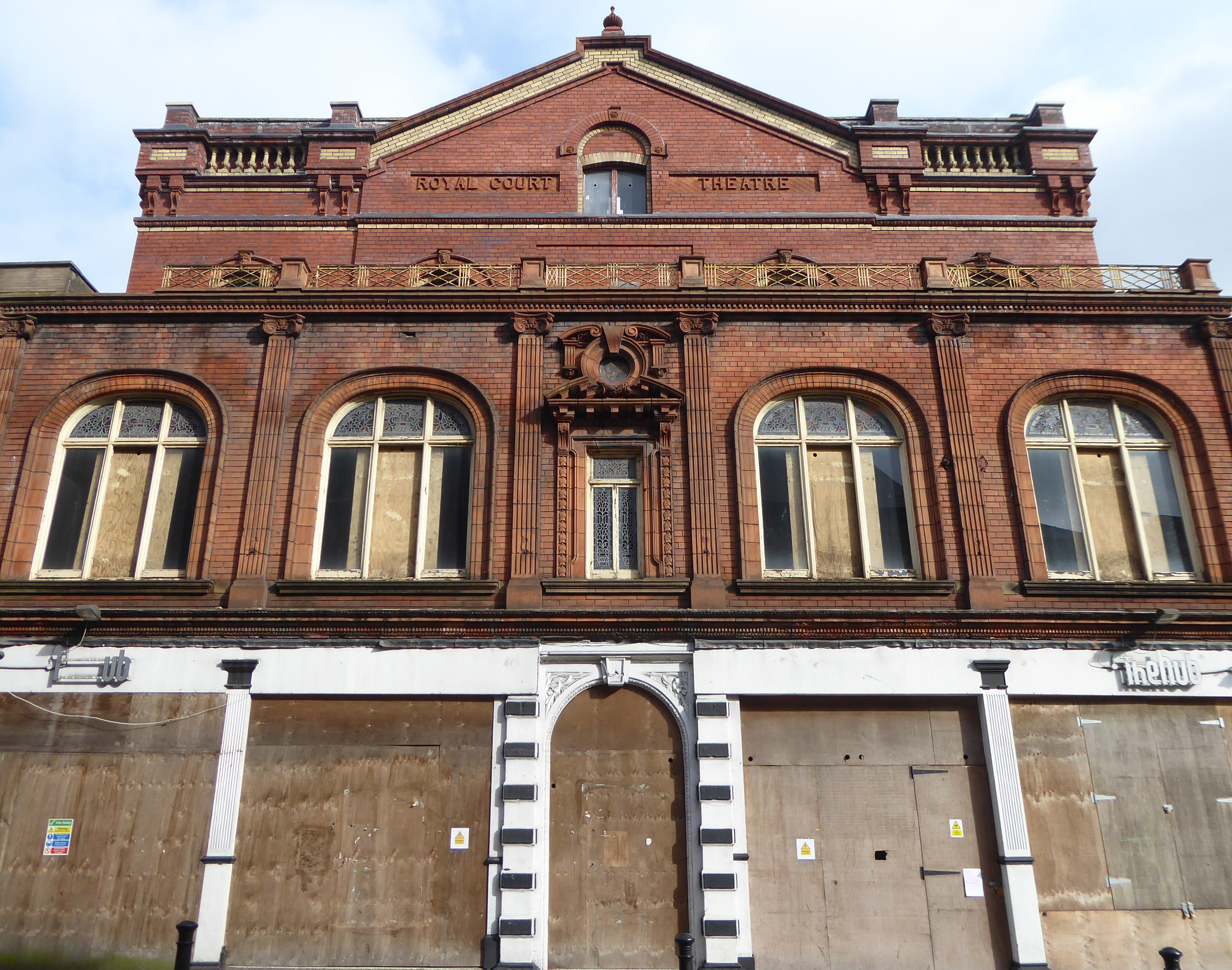
Take a look up at the Royal Court Theatre – 1886 Richard T Johnson

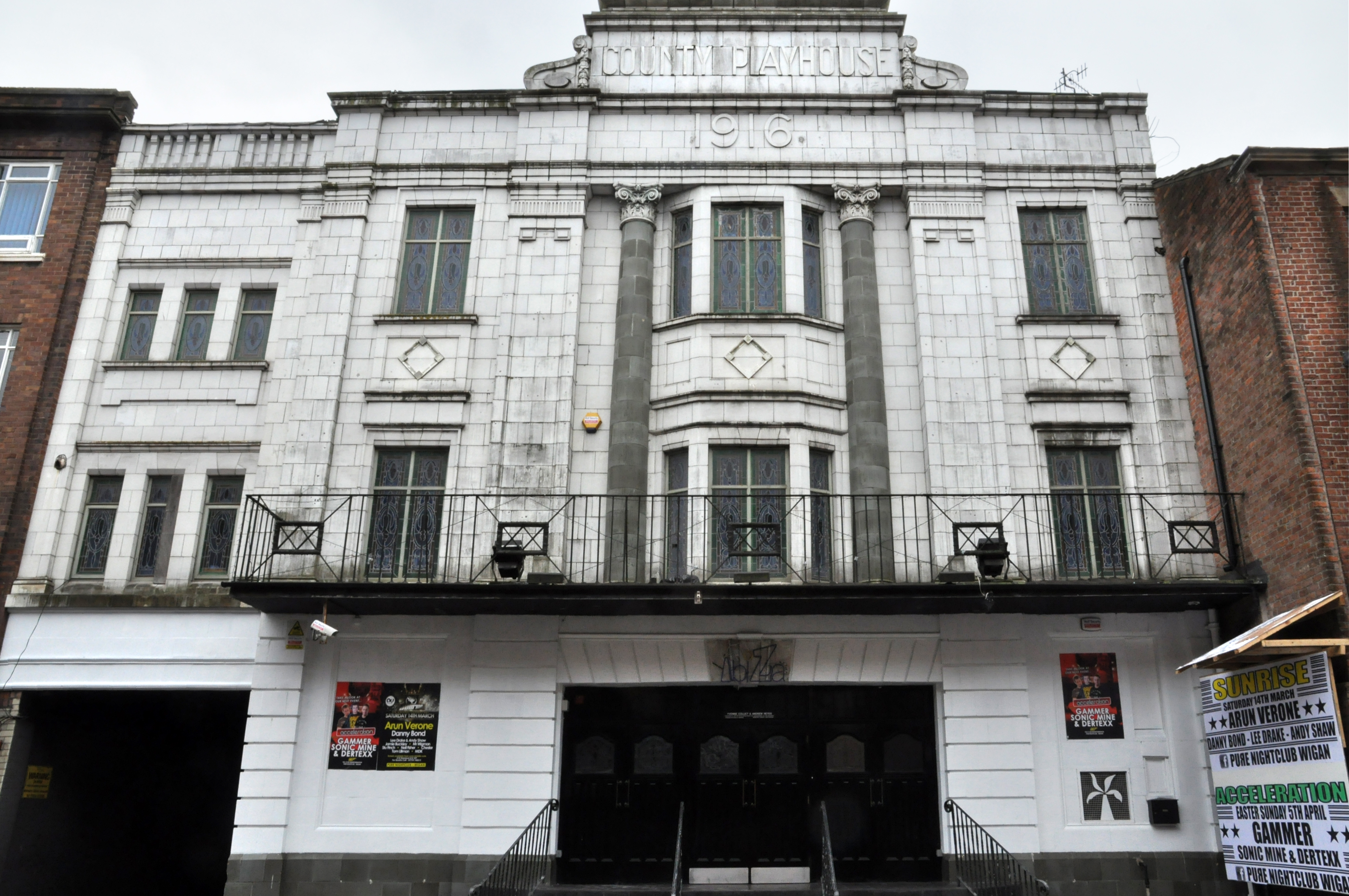
Then back up toward the centre to the County Playhouse.

Construction began on the County Playhouse in 1916. However, due to a shortage of materials and labour during World War I, it was not completed until 1919.

Finally opened on 22nd December 1919 with The Peril Within – starring Dorothy Gish.

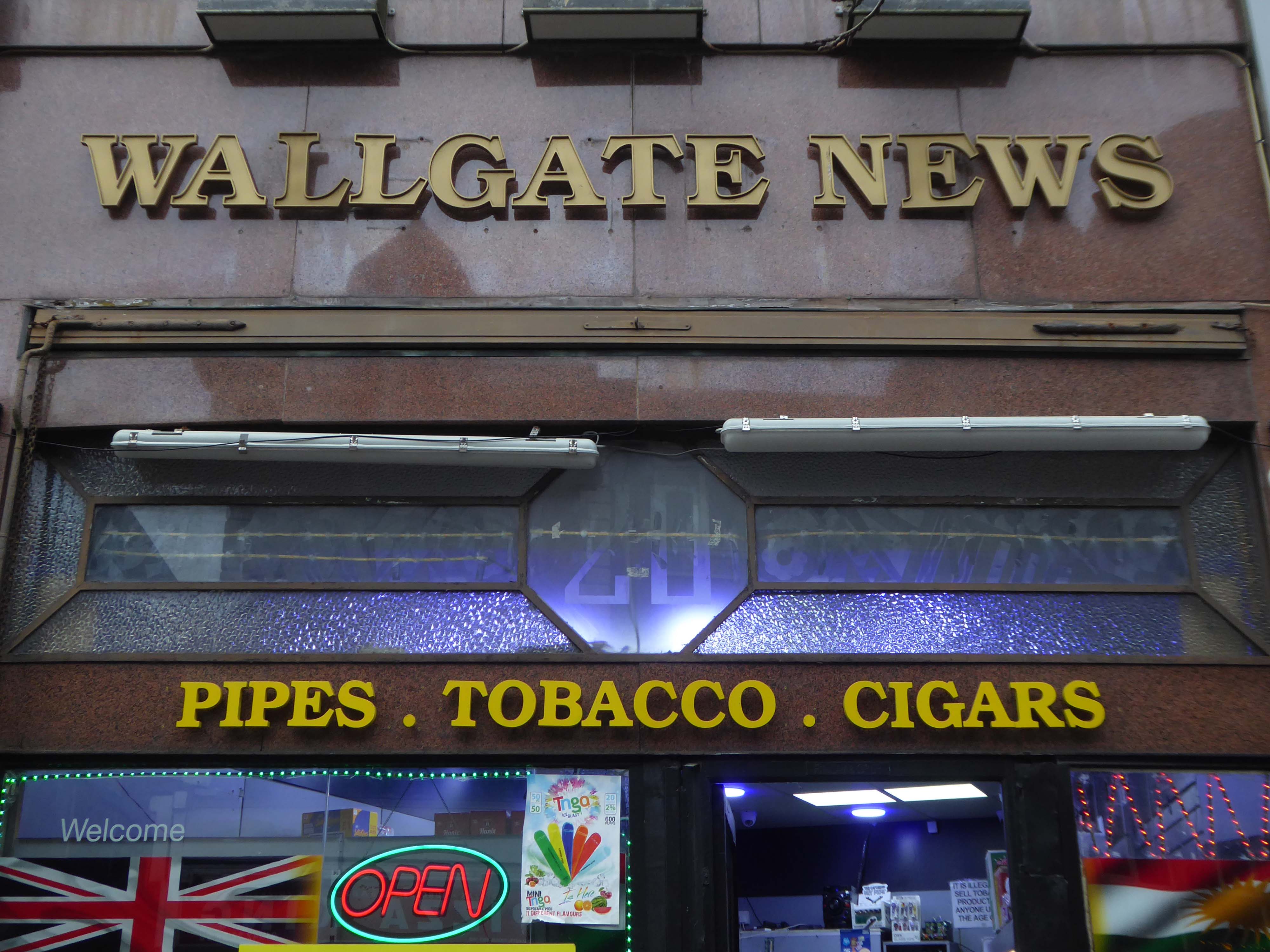
Onwards to the Wallgate News.

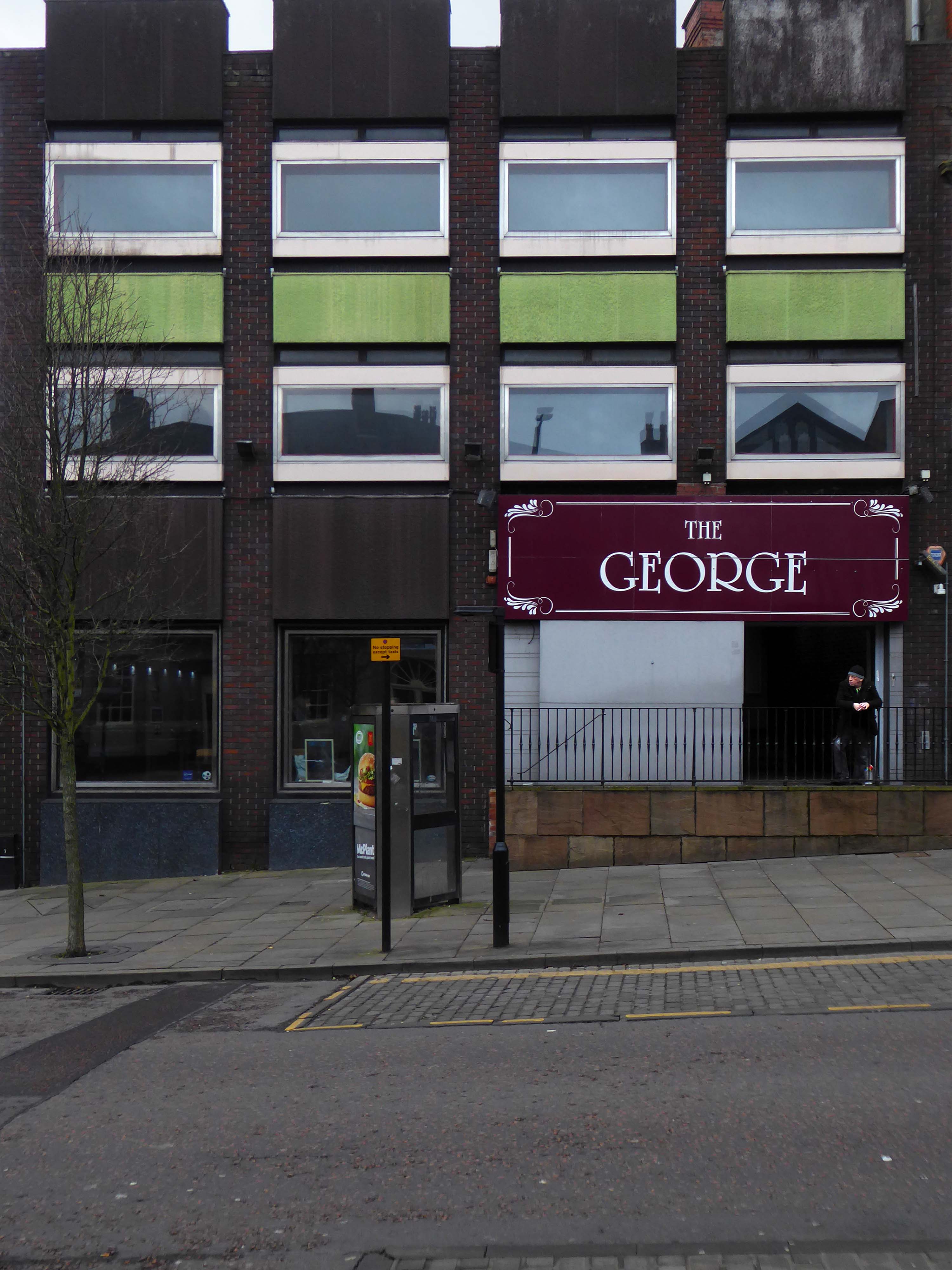
Finally to The George public house.

All ages, all different, all characters all like a bevvy.

The George is all you need.

Dalton Street – Manchester

The North’s gone west.

We all went west.

Excepting one individualist nurse.

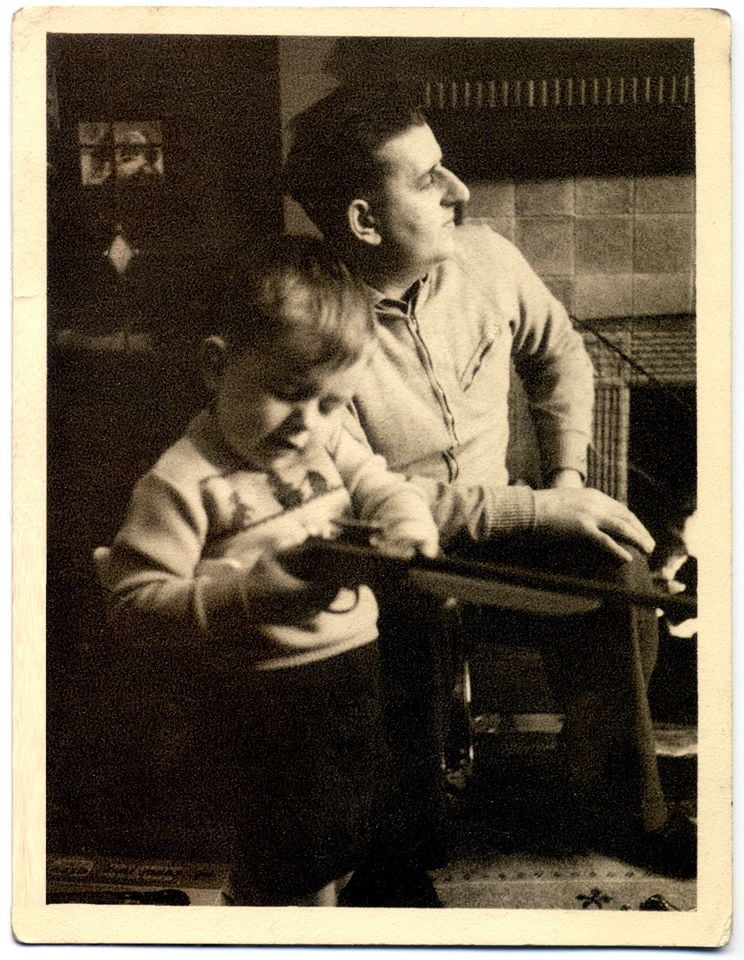
I went west with my dad in 1958.

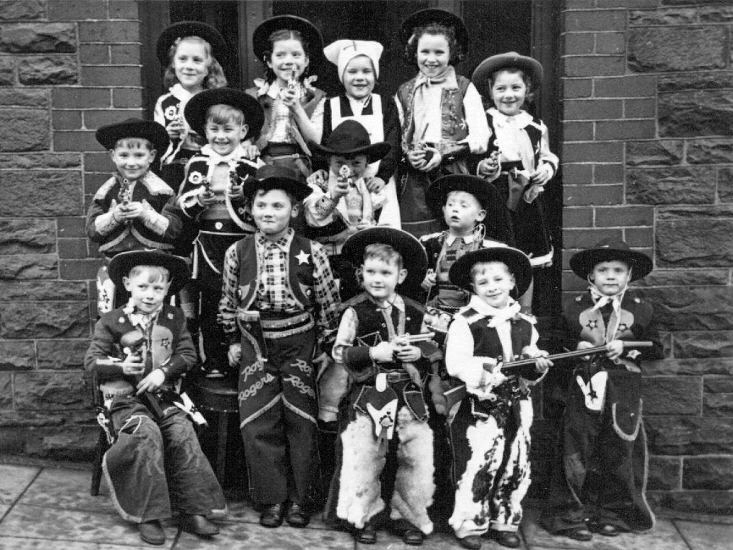
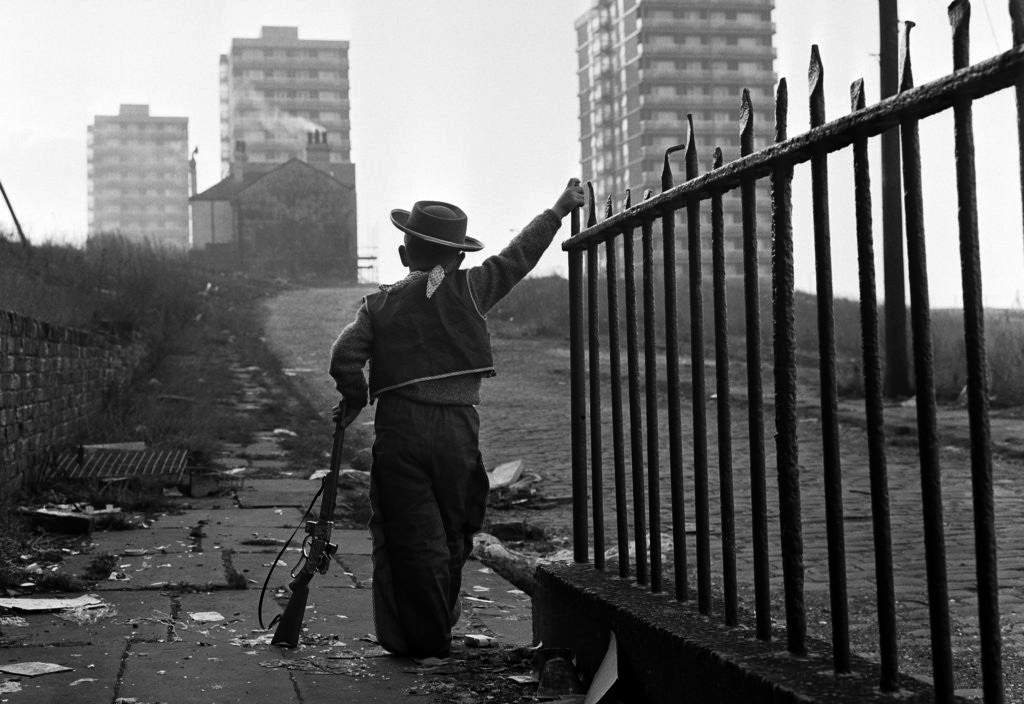
Now I’m going east to Dalton Street, home to the Collyhurst cowboy.

Photograph: Dennis Hussey

This is an illusion within an illusion, twice removed.

The Hollywood recreation, recreated on the rough ground of post war Britain.

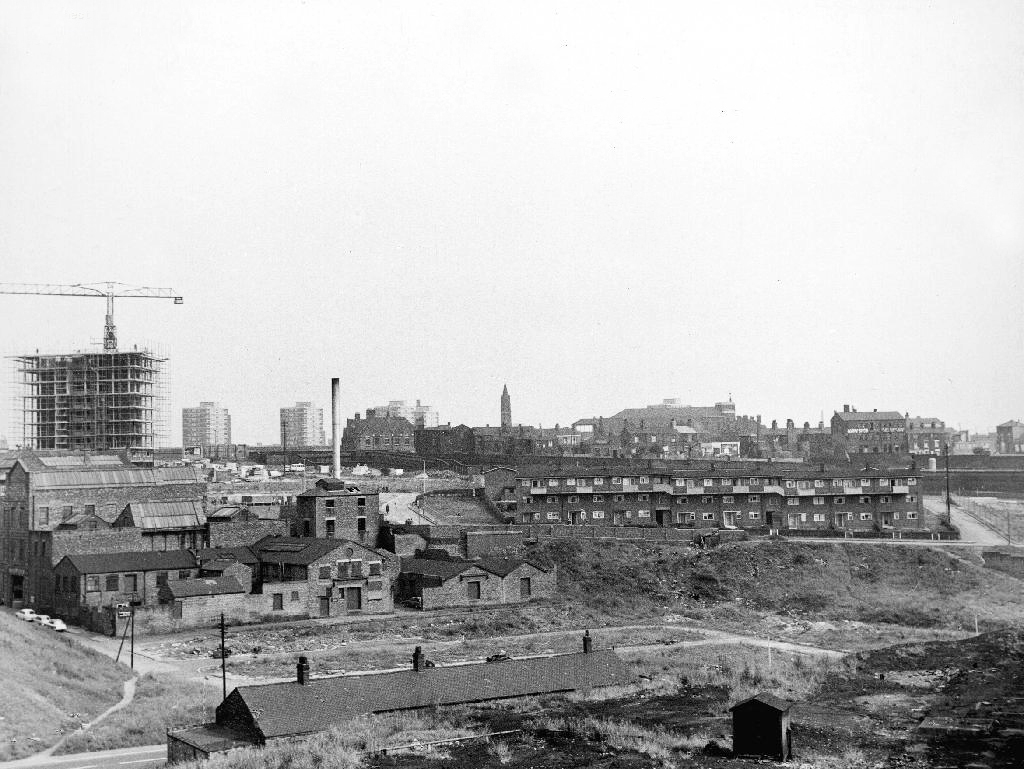
In 1960 the area was a dense network of streets, industry and homes – demolished during the period of slum clearance.

Escaping the dark, dank Irk Valley onwards and upwards to Rochdale Road.

The Dalton Works Arnac factory survived until 2008

Photograph: Mikey

The tight maze of Burton Street and beyond, reduced to rubble.

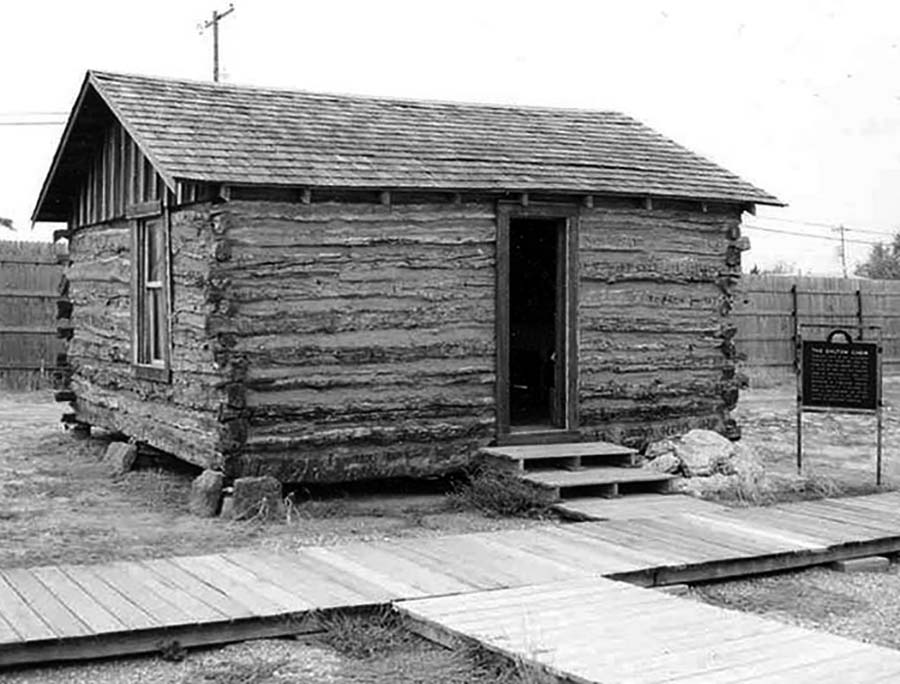
Dalton Street was not home to the Dalton Gang, they lived here in Oklahoma

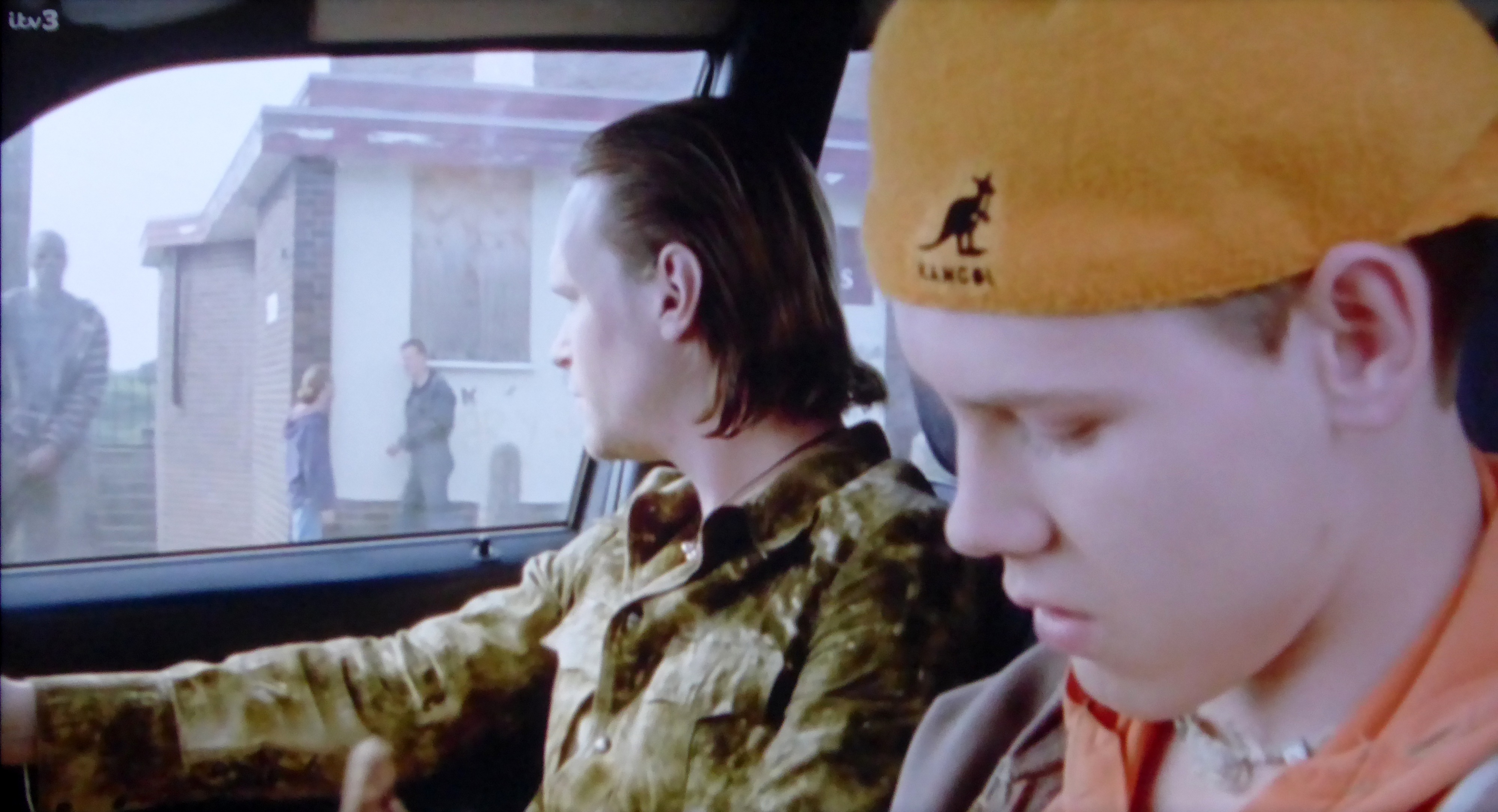
It was home to imaginary gangs, committing imaginary crimes, in an imaginary Manchester, in ITV’s Prime Suspect Five.

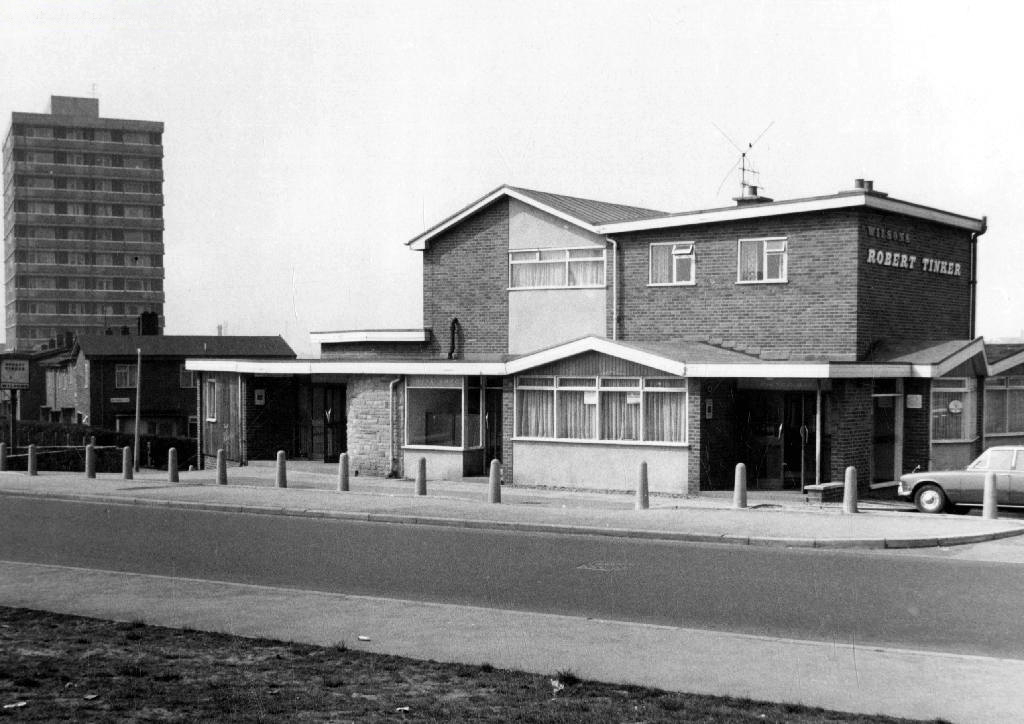
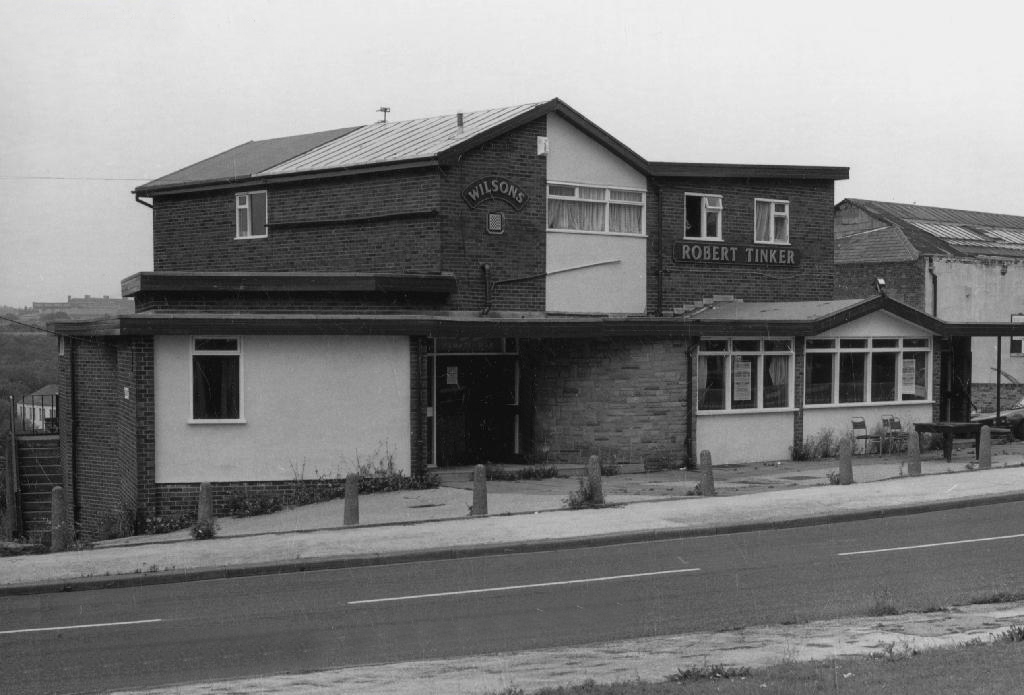
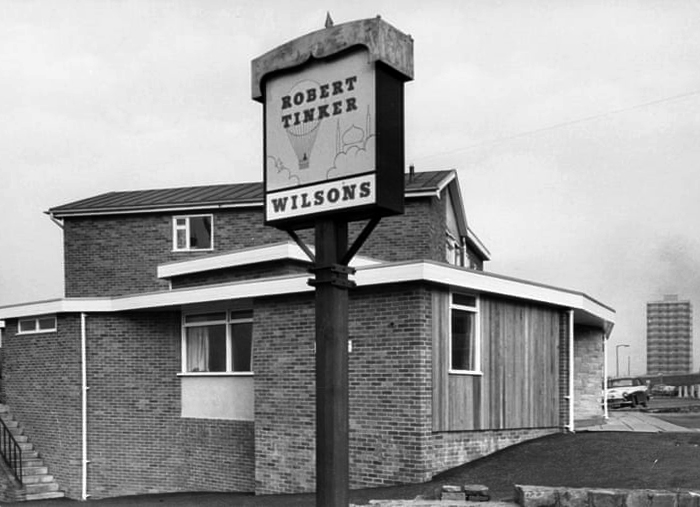
Kangol capped criminals doing business outside the Robert Tinker on the corner of the very real Dalton and Almond Streets.

The Robert Tinker was an estate pub in a run down area of Collyhurst. The pub looked pretty grim from the outside, but it was smarter than I expected inside, I had a drink in the lounge which was carpeted and comfortable. This was a Banks’s tied house and there were two real ales on the bar, I had a drink of Banks’s bitter and this was a decent drink, the other beer was Banks’s mild. This pub closed about two years after my visit and looked derelict, it has now been demolished.

Alan Winfield

Robert Tinker was the owner of the Vauxhall Gardens, a Victorian pleasure venue.

At the opening there was a special attraction, a giant cucumber which had been grown in the gardens reaching a length of seven feet and eight inches and a large and beautiful balloon was to be liberated at 9pm

It was built adjoining the site of the Collyhurst Sandstone Quarry.

Much of the red sandstone used for building in Manchester and the surrounding area, including stone for the Roman fort at Castlefield, St Ann’s Church in the city centre, Manchester Cathedral and the original buildings of Chetham’s Hospital, came from Collyhurst Quarry. Geologists use the term Collyhurst Sandstone for this type of soft red sandstone, which occurs in North West England

Tinker died in 1836 and gradually his gardens were whittled away, the subsoil was sold to iron moulders who cherished its certain properties and before long the trees were chopped down and houses were being built on the former site.

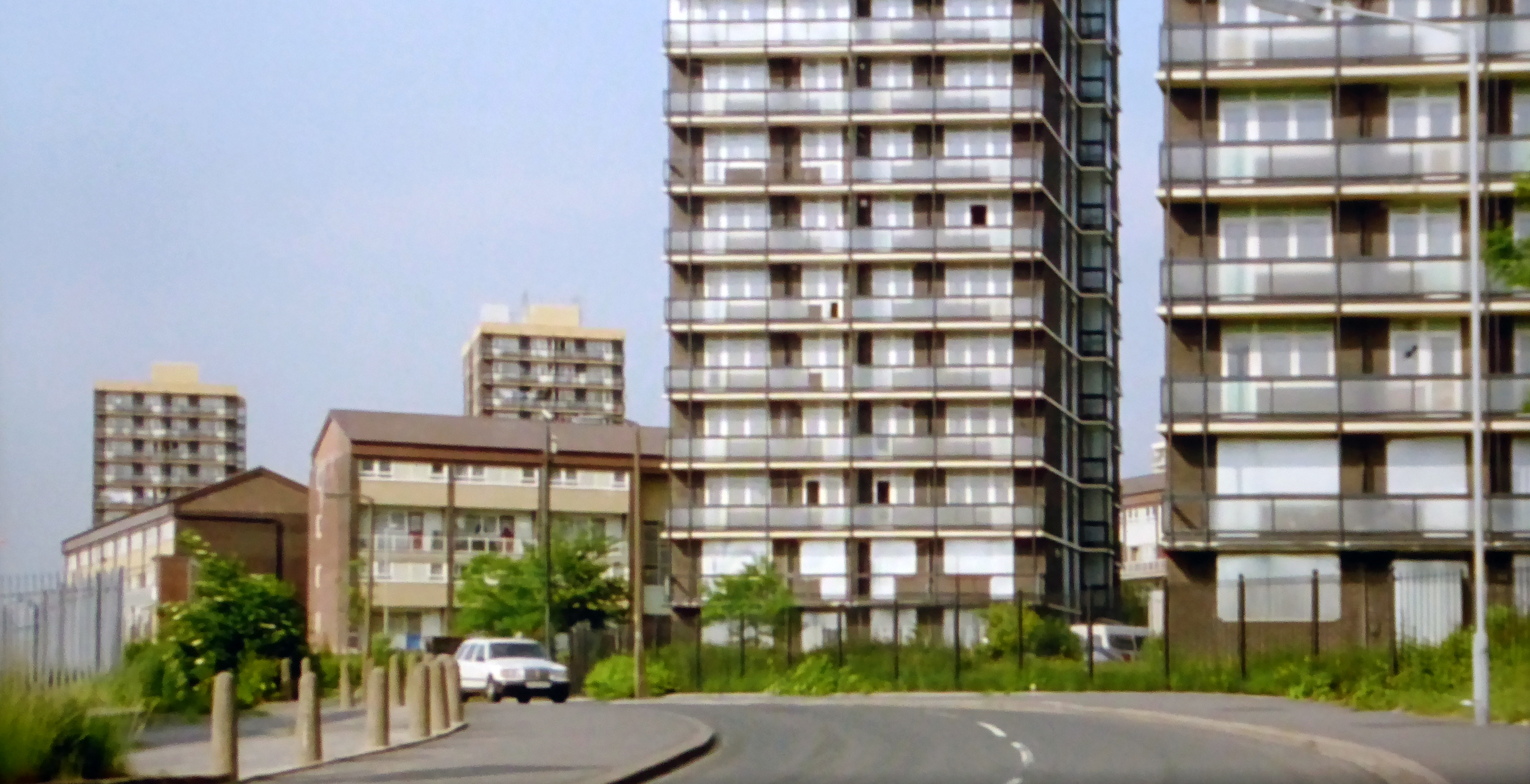
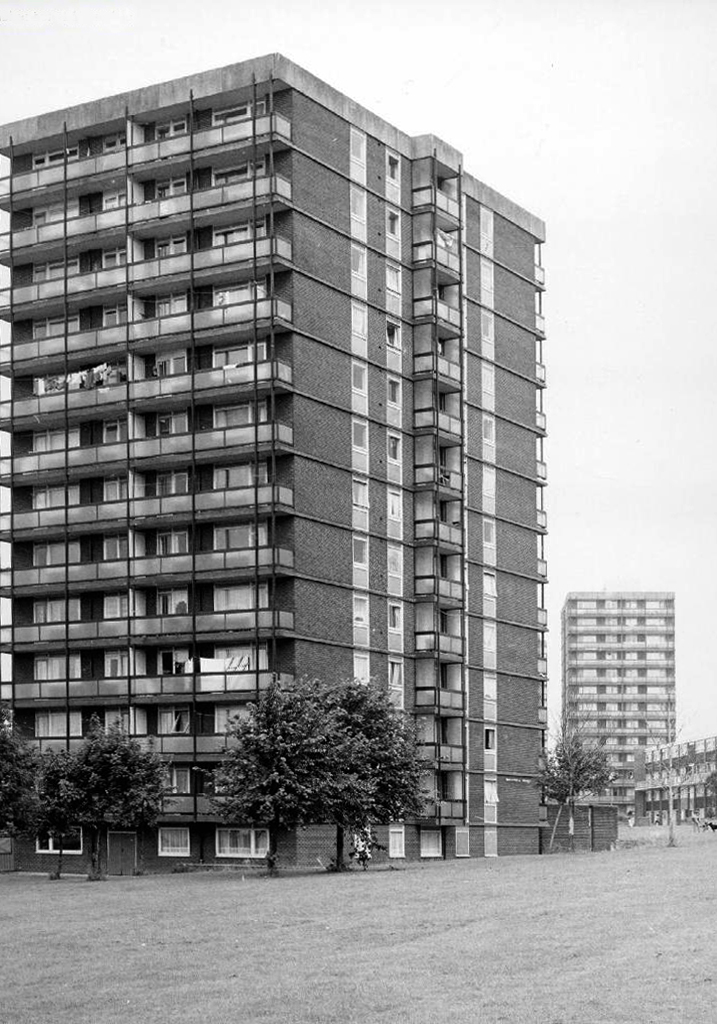
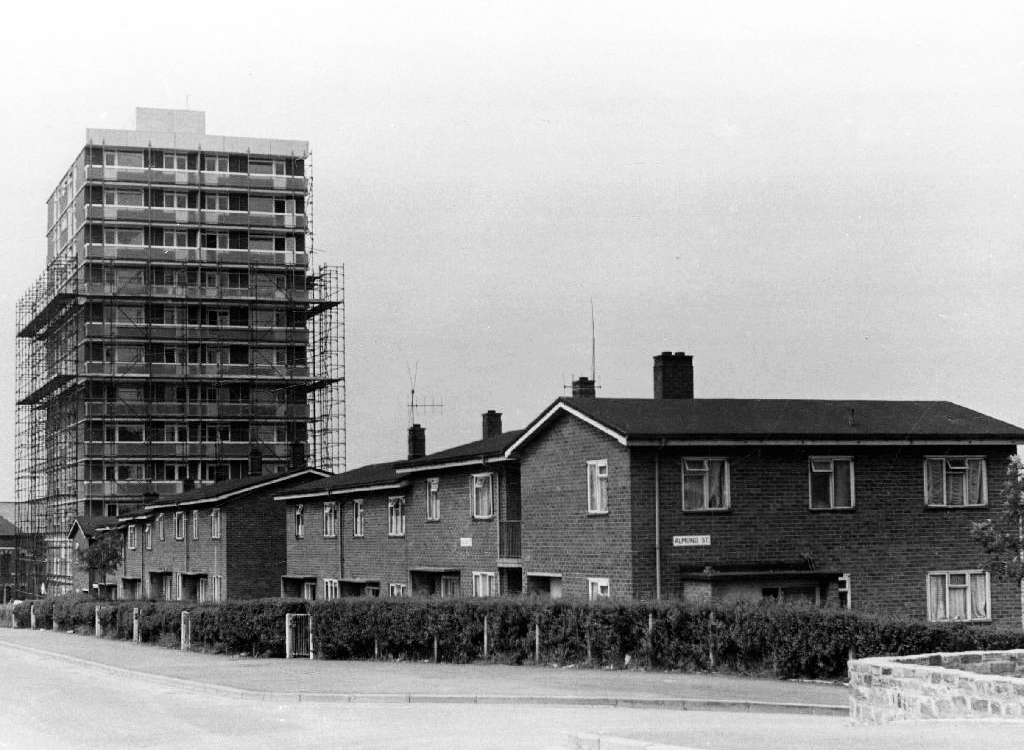
Those houses are in their turn whittled away, replaced in the 1960’s with fashionable tower blocks.

Architects: J Austen Bent 1965

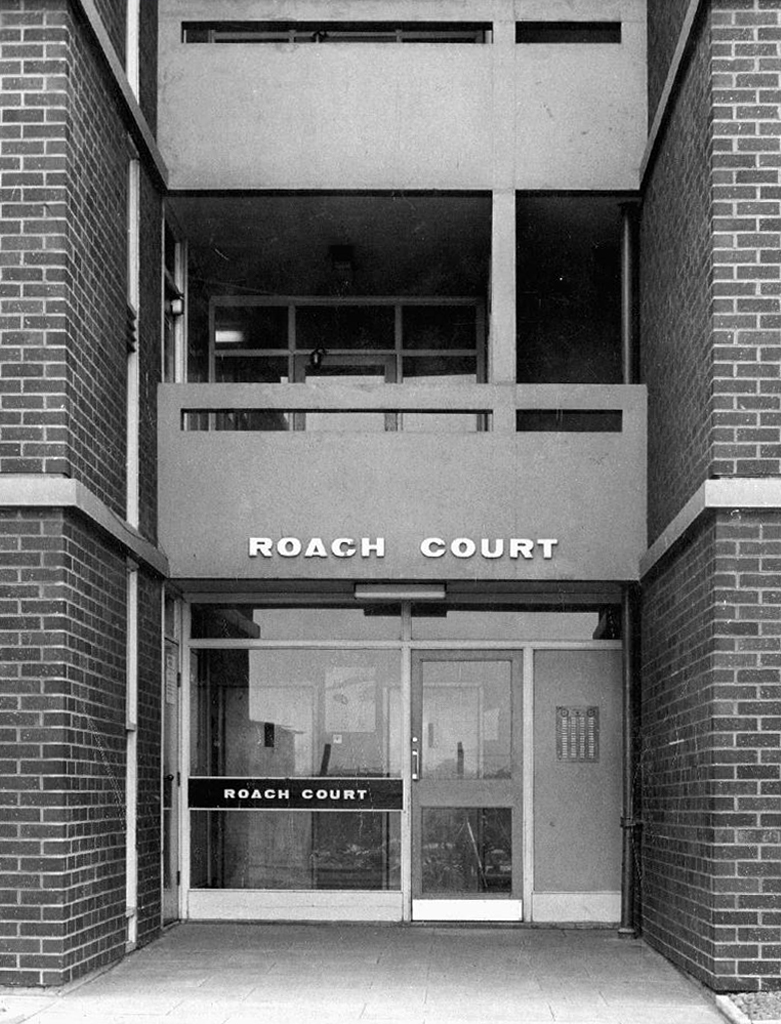
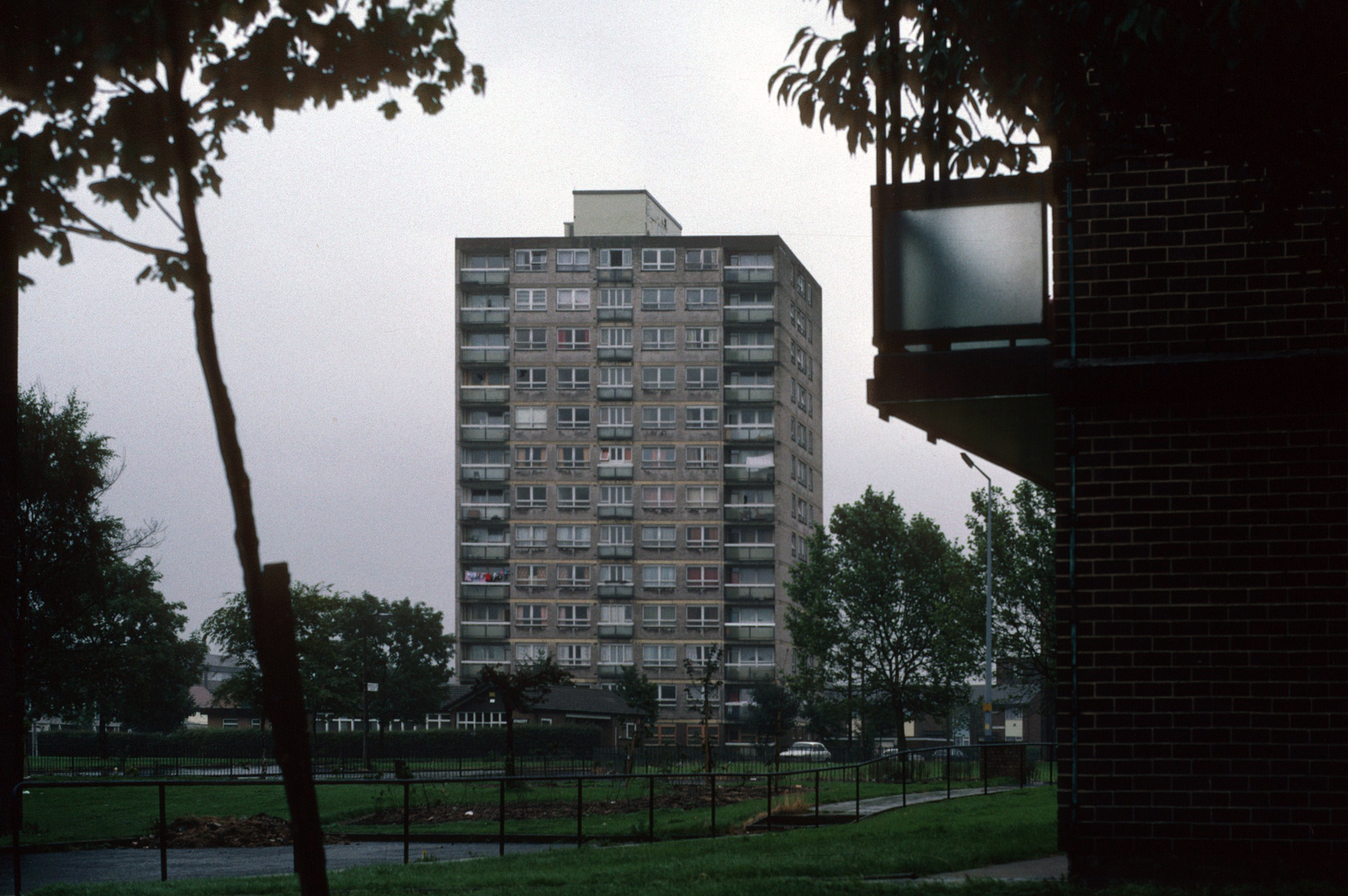
In total five thirteen storey blocks – Humphries, Dalton, Roach, Vauxhall and Moss Brook Courts

Seen here in 1985.

Tower Block UK

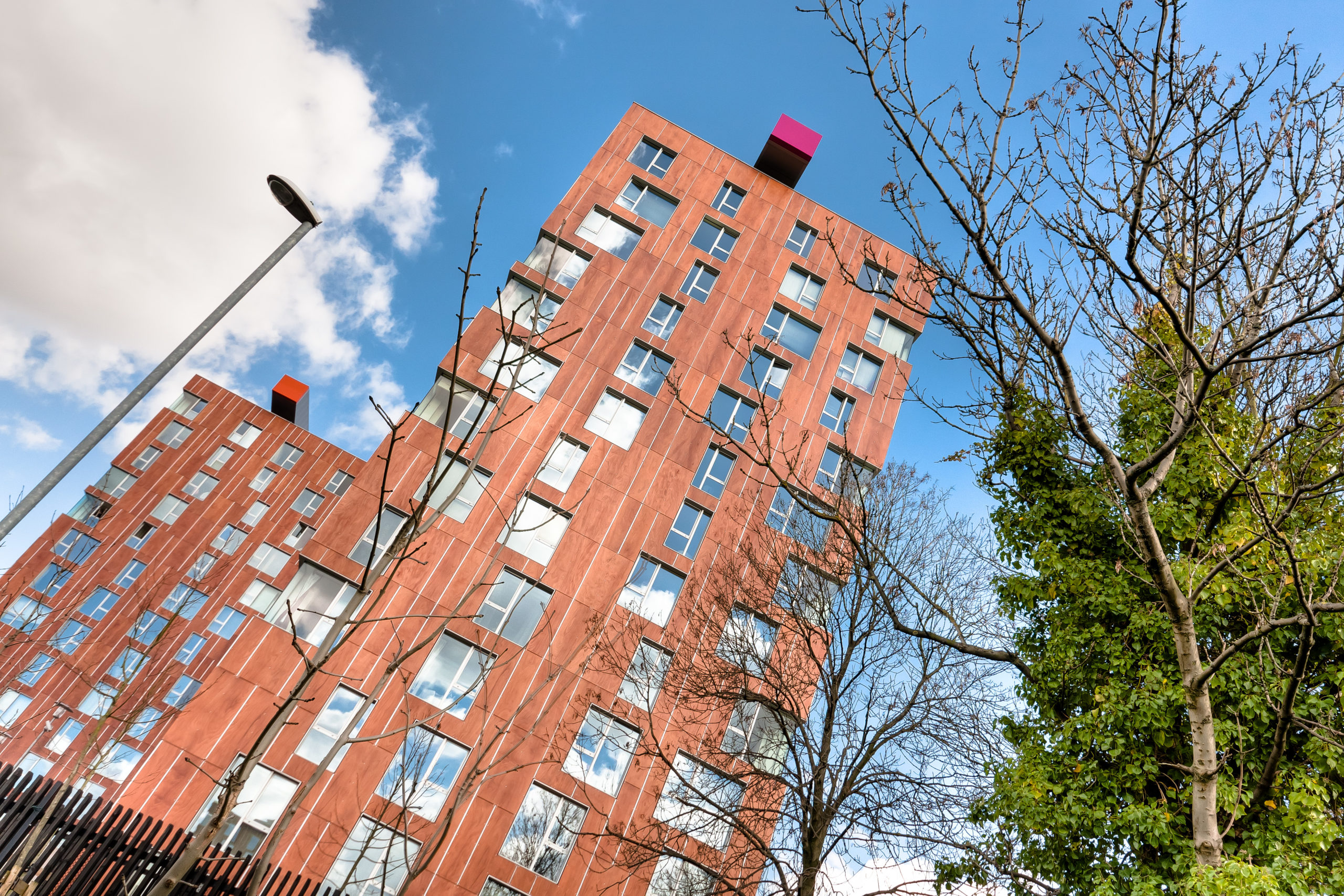
Subsequently purchased by Urban Splash and refurbished:

Designed by Union North Architects, the names for the Three Towers were decided in a public competition and the winning names were Emmeline, Christabel and Sylvia – naming the towers after the Pankhurst sisters and their mother. 

Julie Twist

Currently being record to see post Grenfell regulations.

As the terraces were cleared new low-rise social housing also arrived.

All archival photographs Manchester Local Image Collection unless otherwise stated.

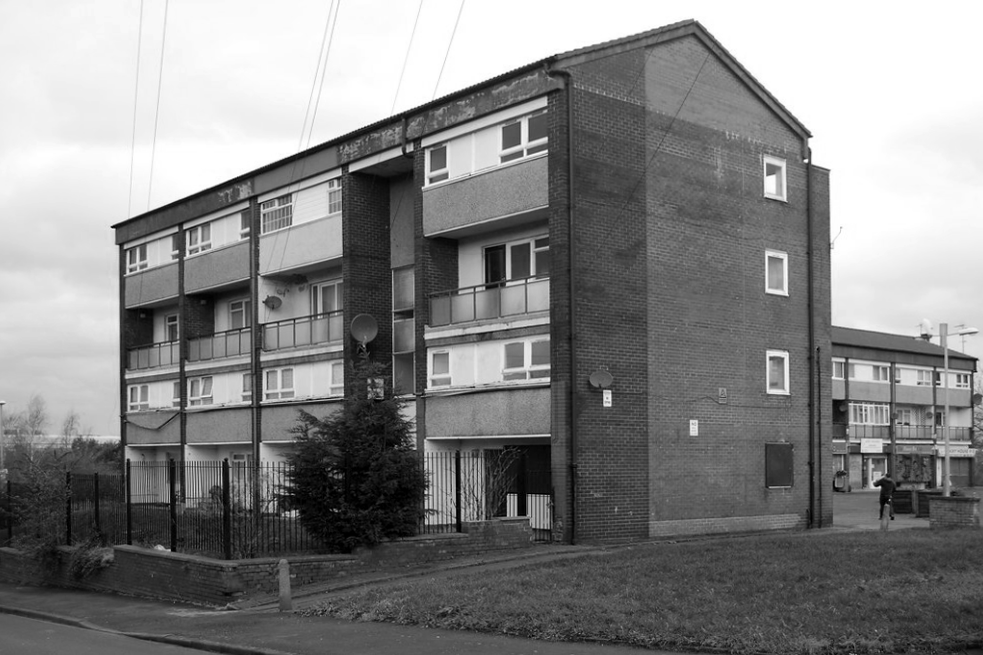
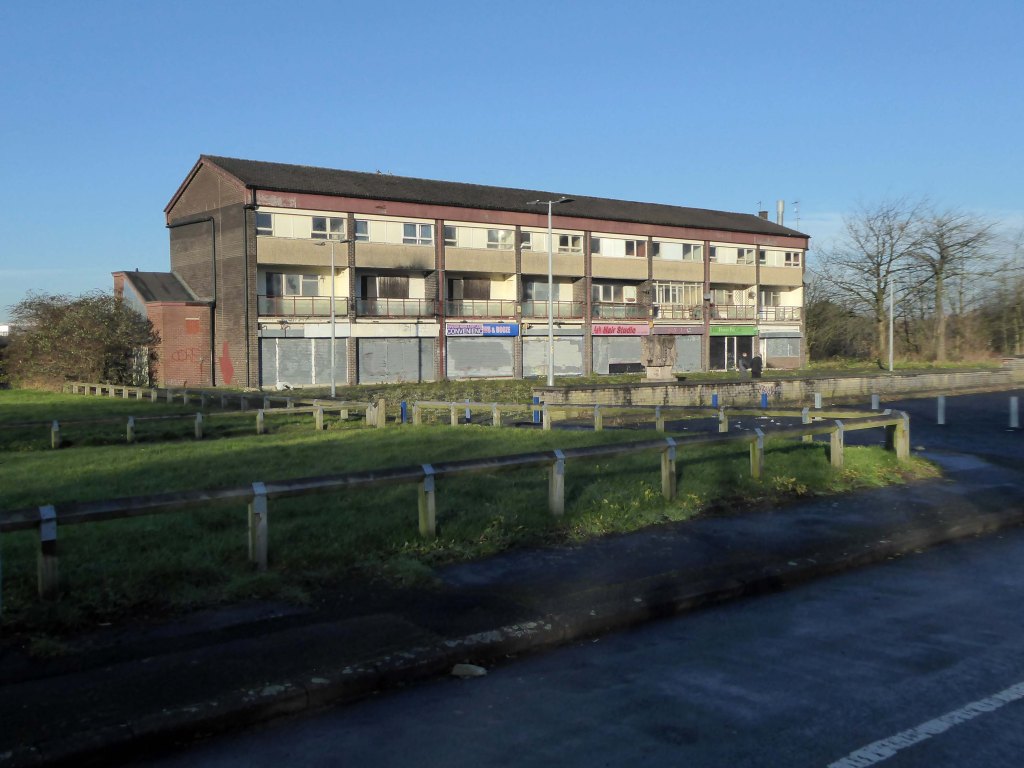
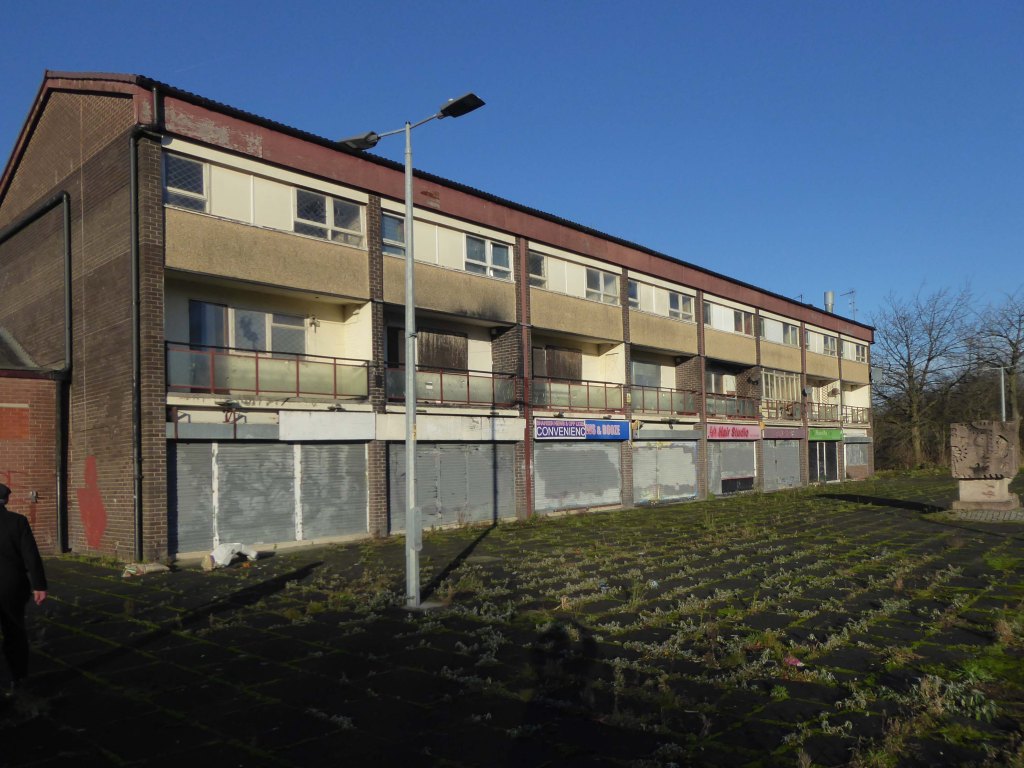
Along with maisonettes adjoining Eastford Square

Photograph: Stuart Collins 2014 – demolished 2015

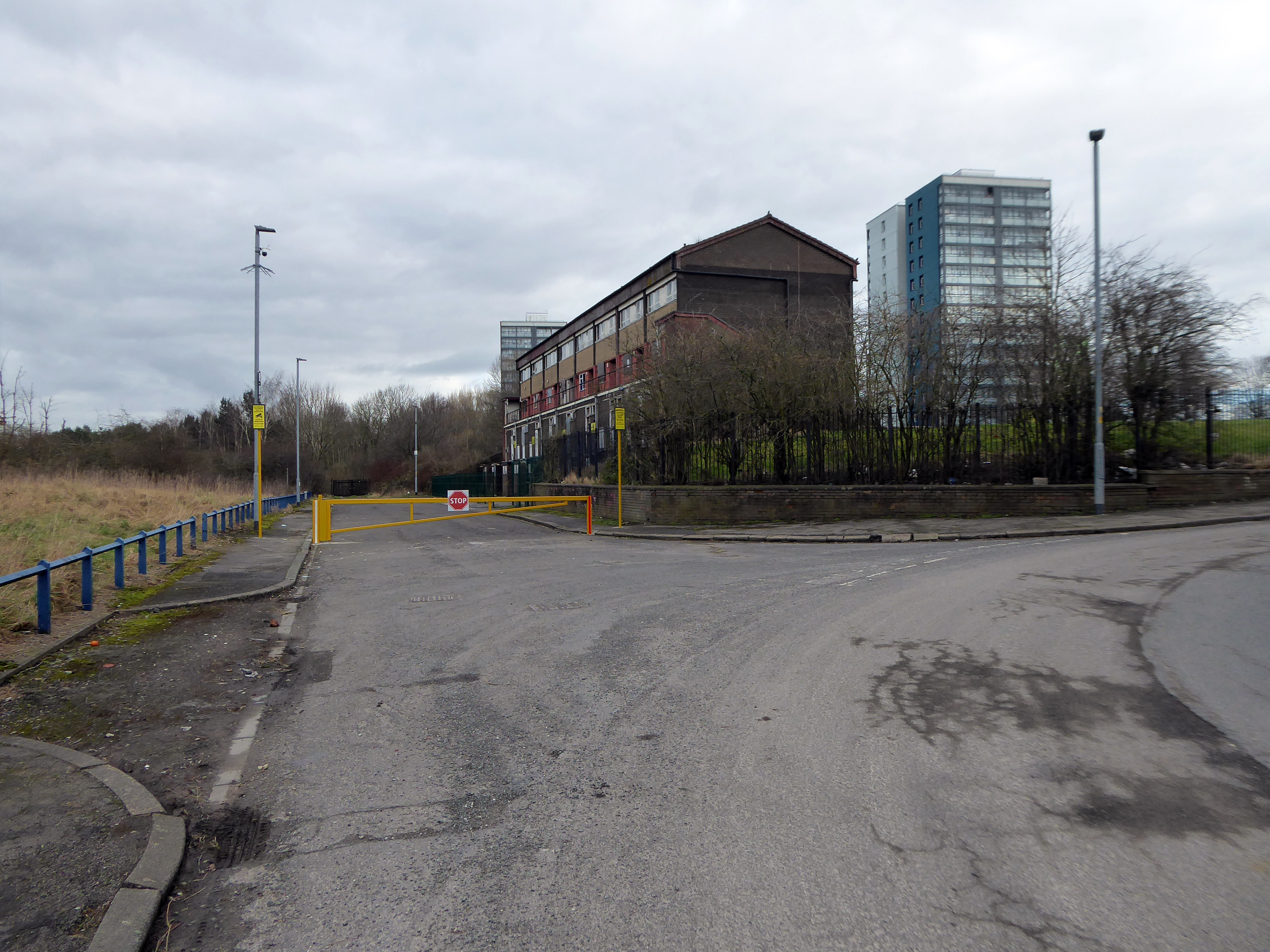
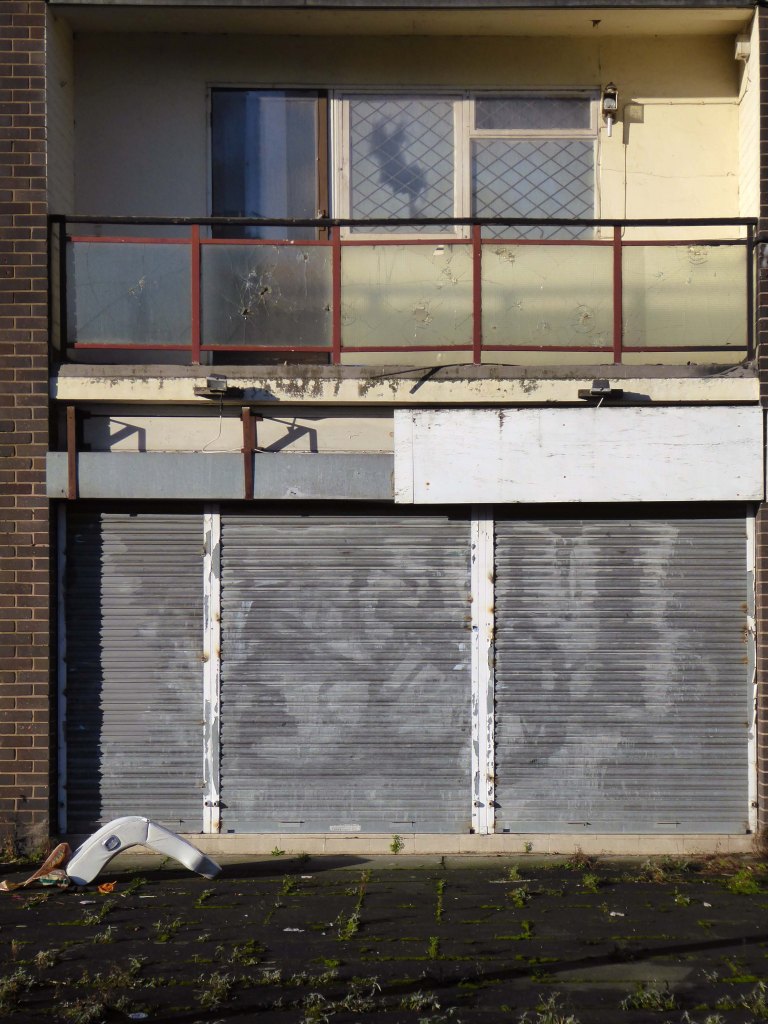
The remains of the remaining Eastford Square homes tinned up and secured awaiting who knows what.

So let’s take a short walk, see how things stand.

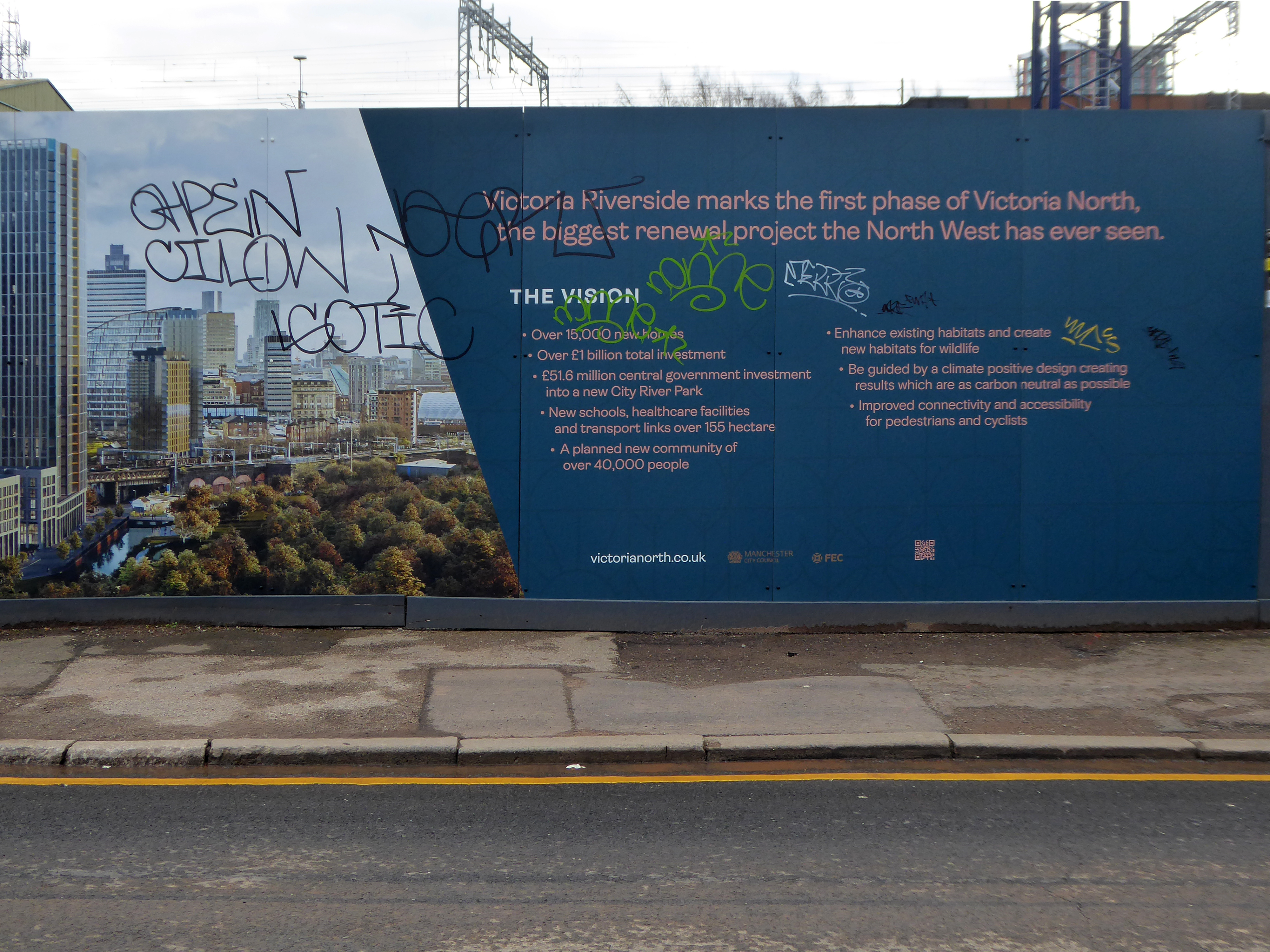
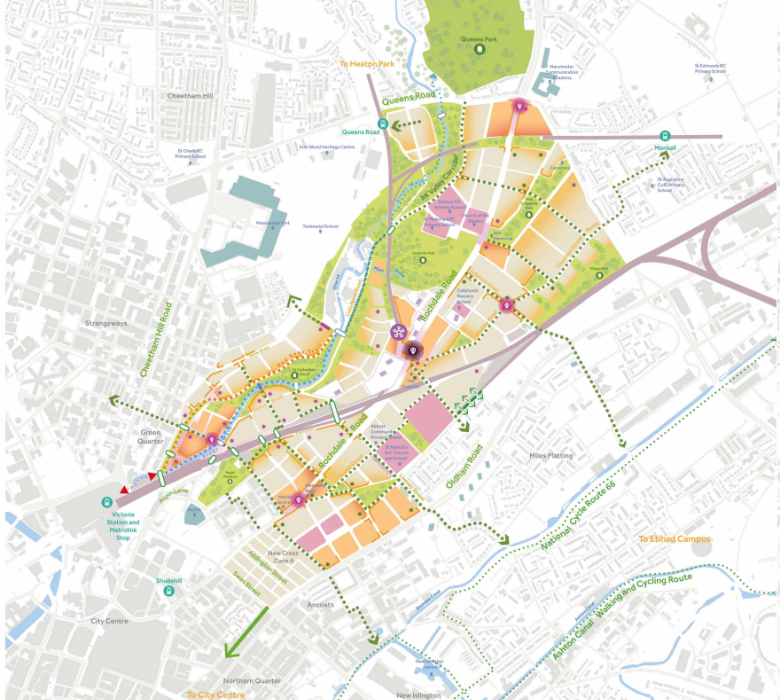
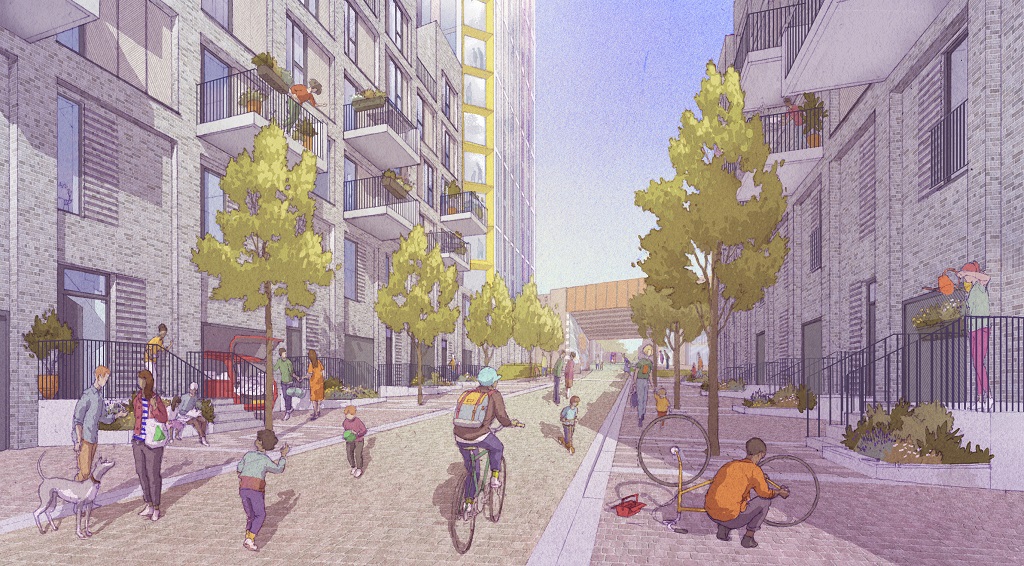
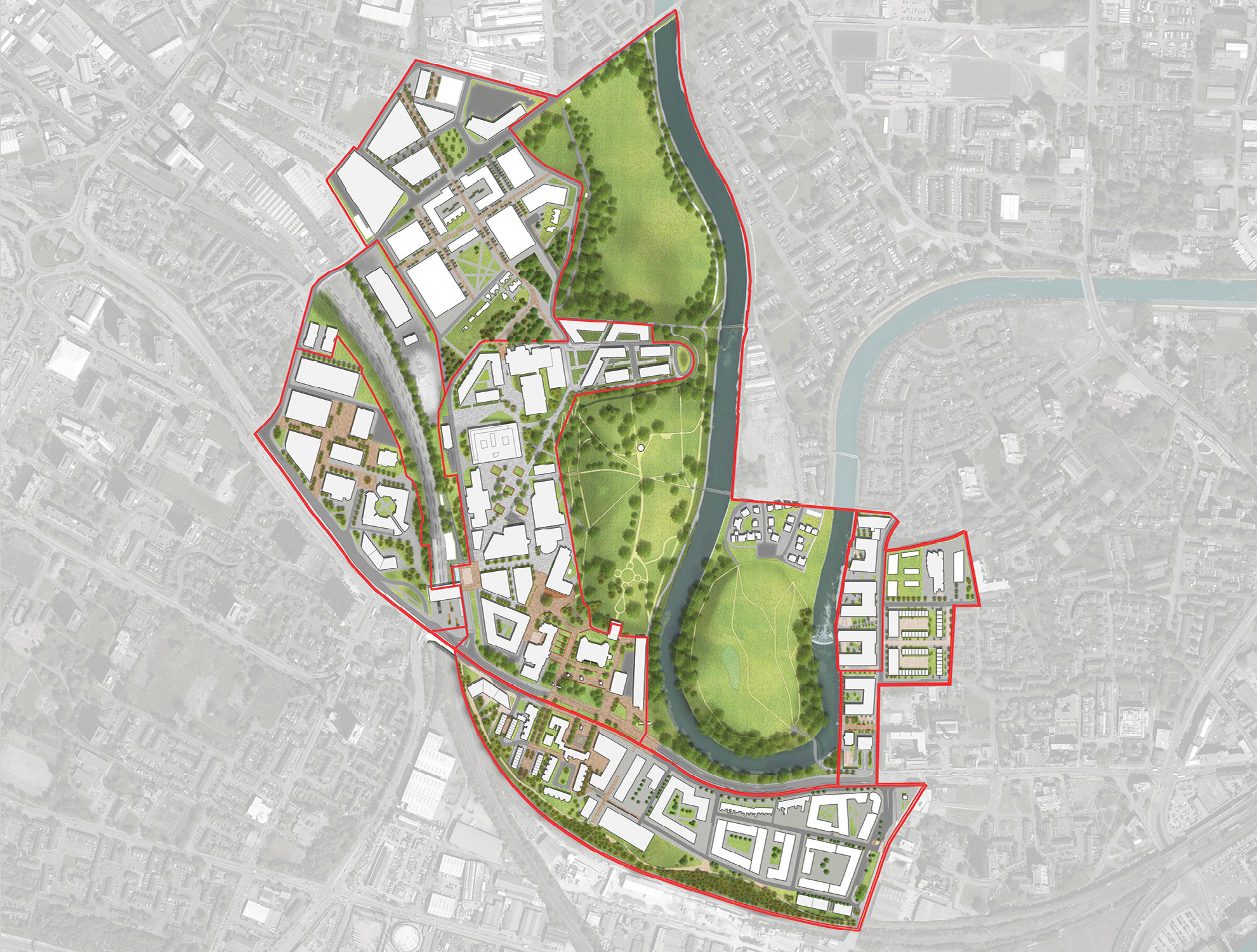
The area now forms the core of the latest municipal Masterplan – Victoria North.

Victoria North is a joint venture programme between Manchester City Council and developer Far East Consortium.

An internationally recognised developer, FEC specialises in residential led mixed-use developments and hotels, along with its casino and car park operations throughout mainland Europe. 

The cowboys are now long gone – or are they?

When I was a cowboy out on the Western Plain
Well, I made a half a million
Working hard on the bridle reins

Come a cow-cow yicky come a cow-cow yicky, Harpurhey

Huddy Leadbetter

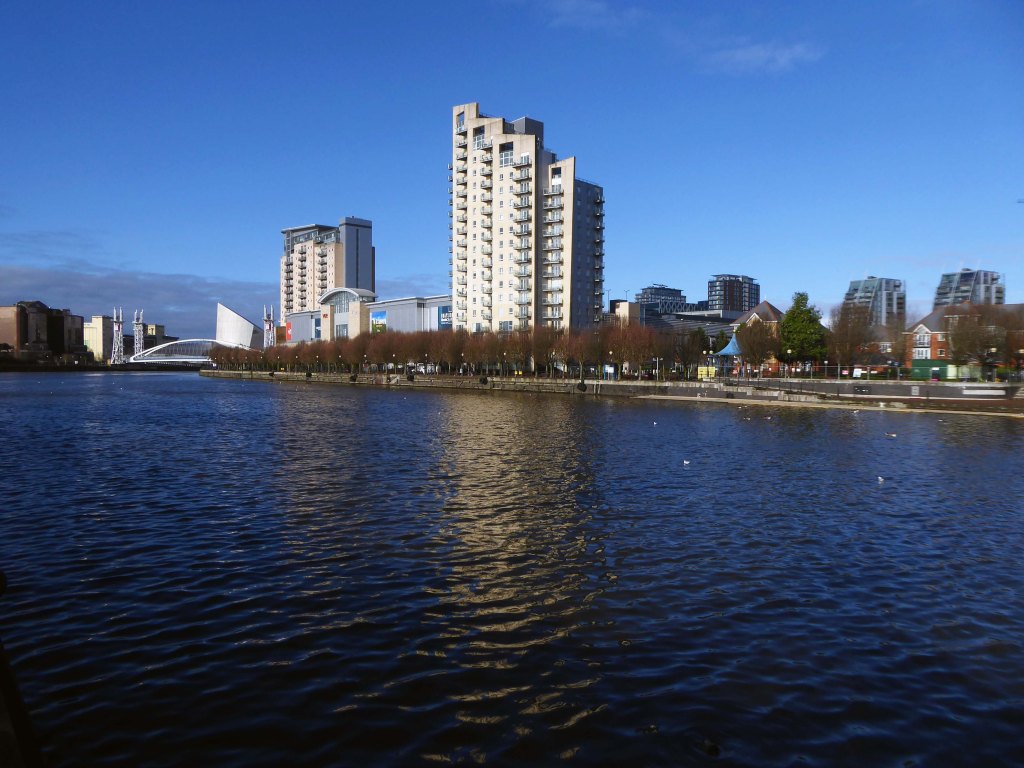
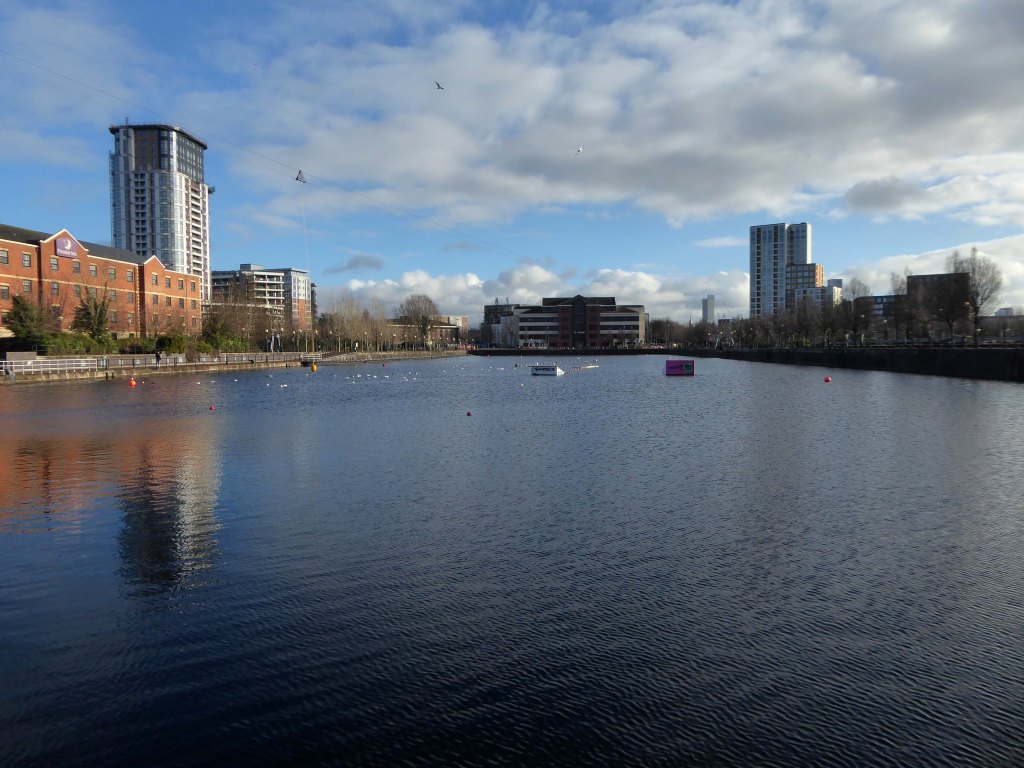
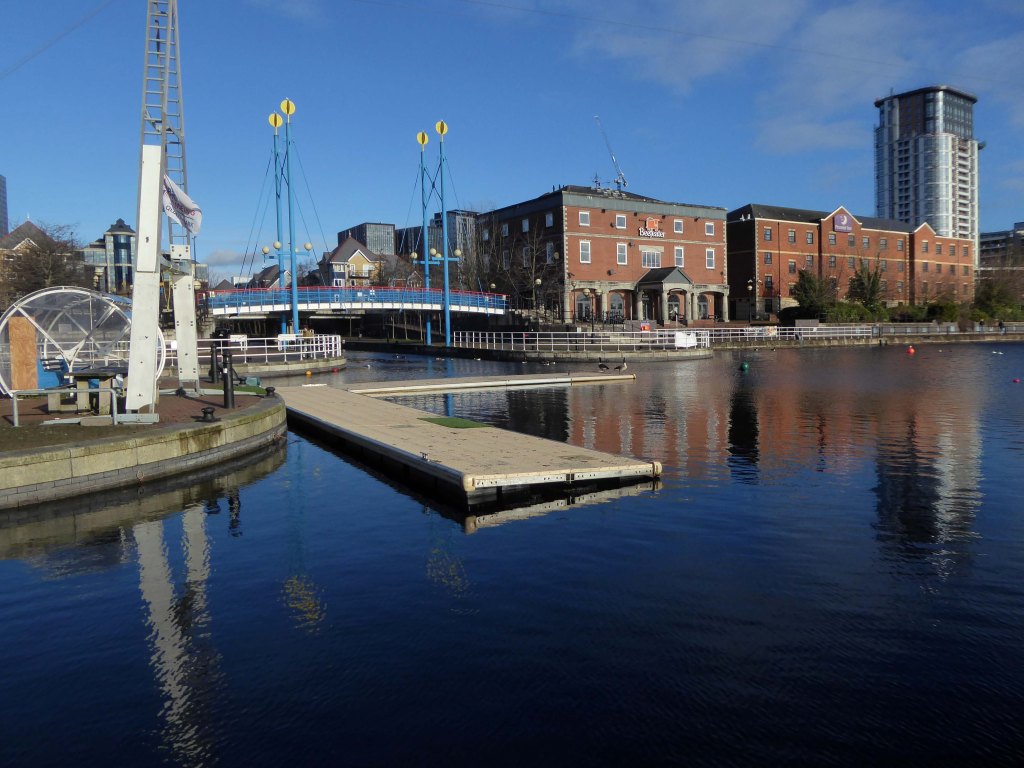
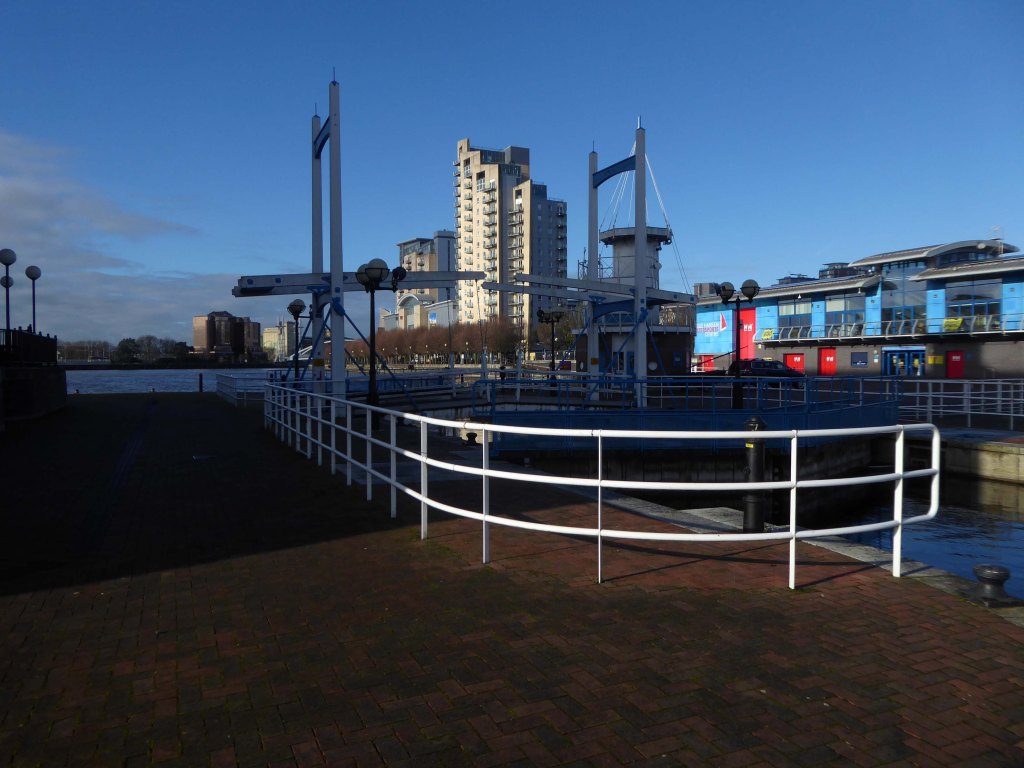
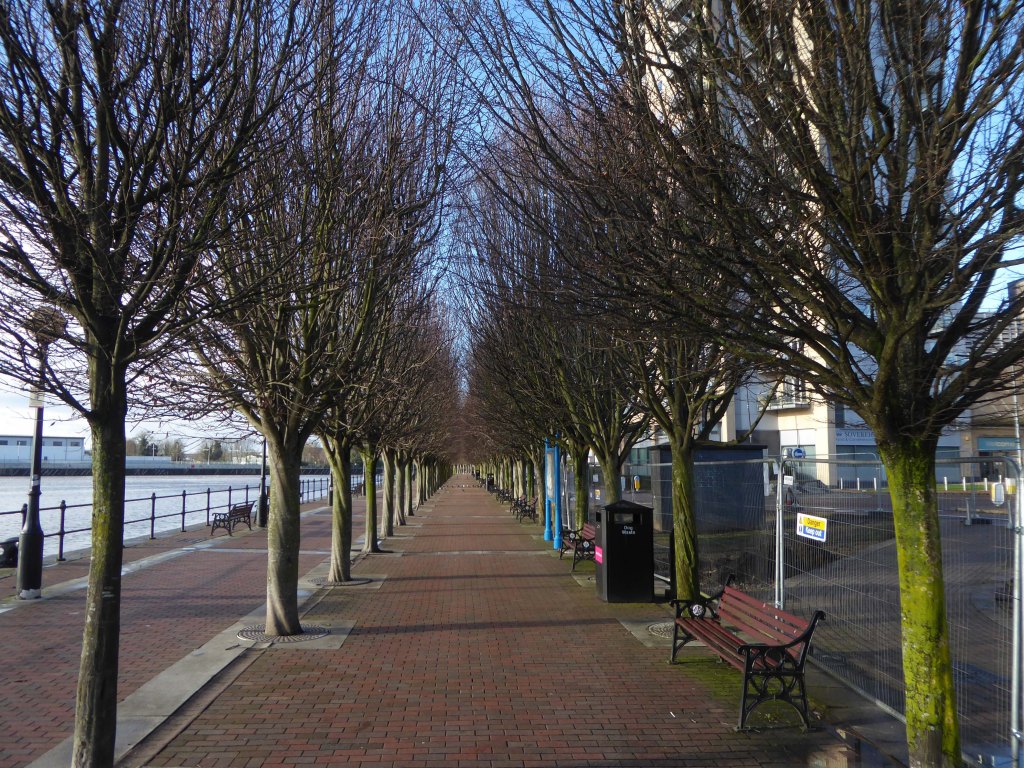
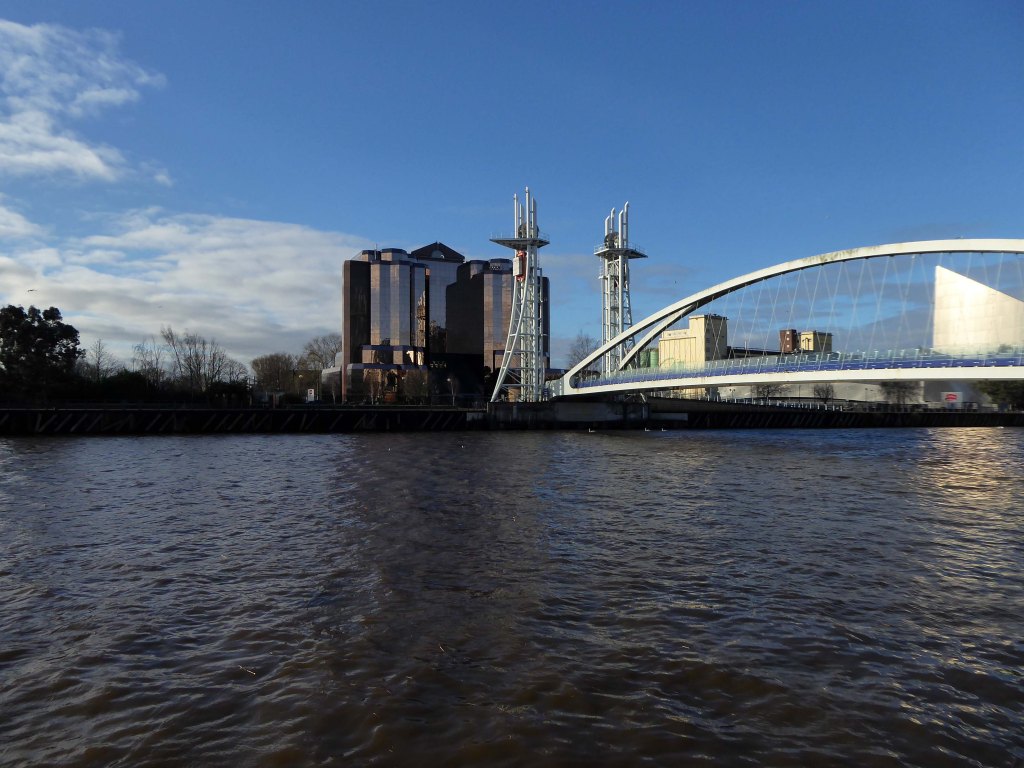
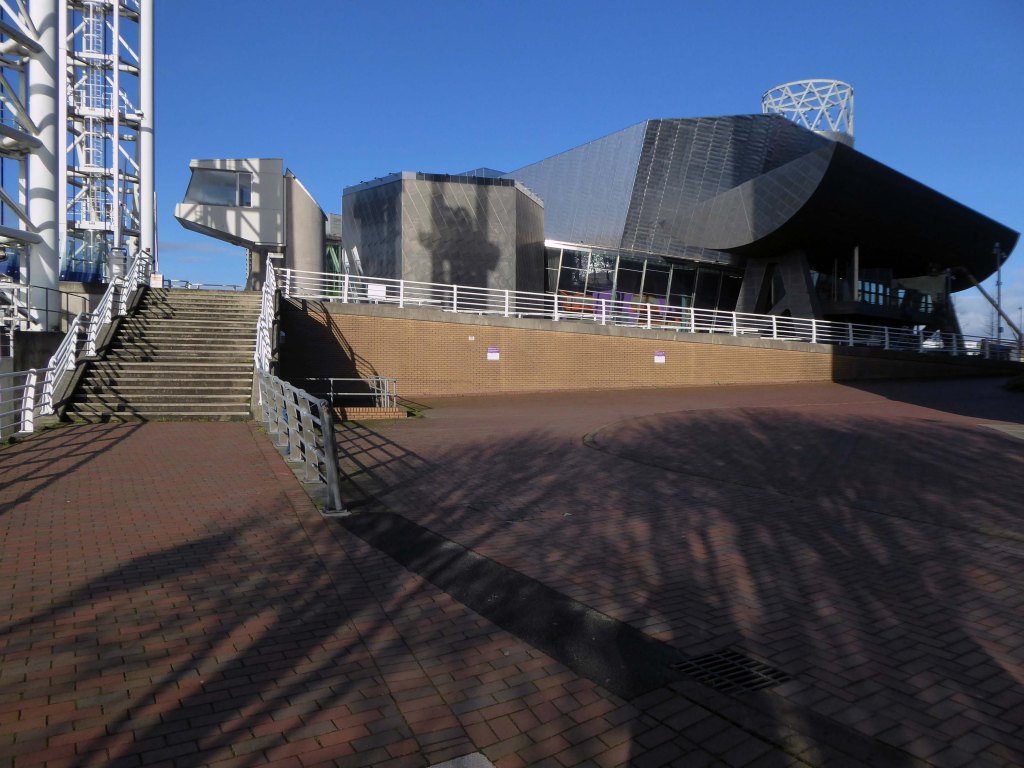
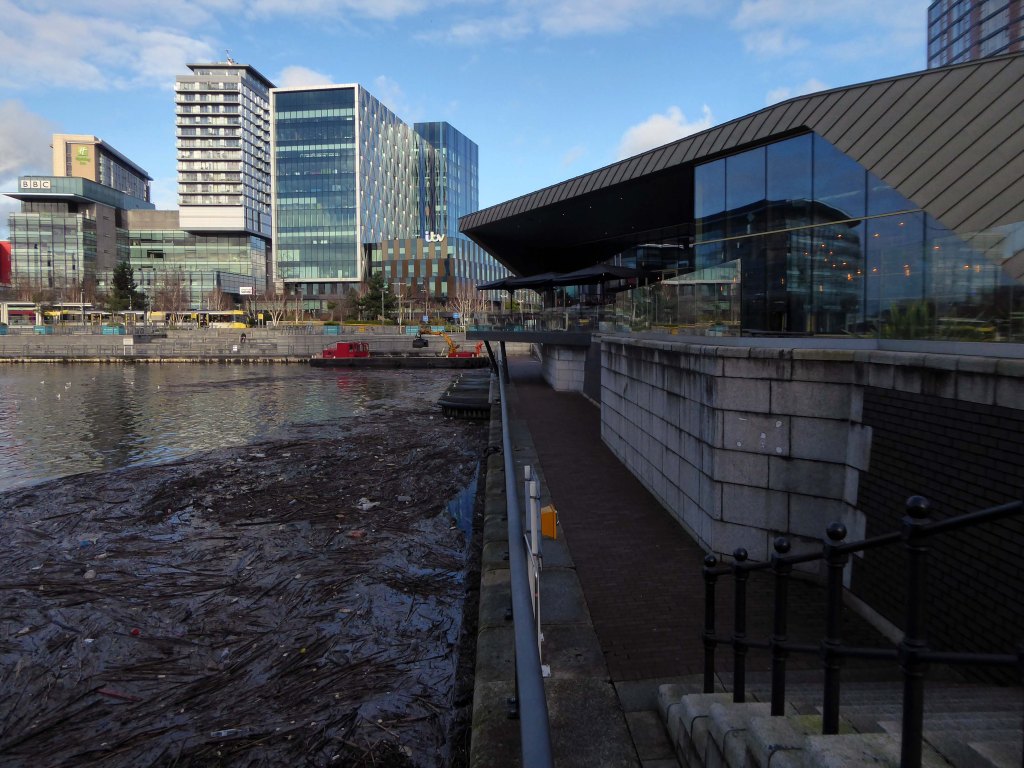
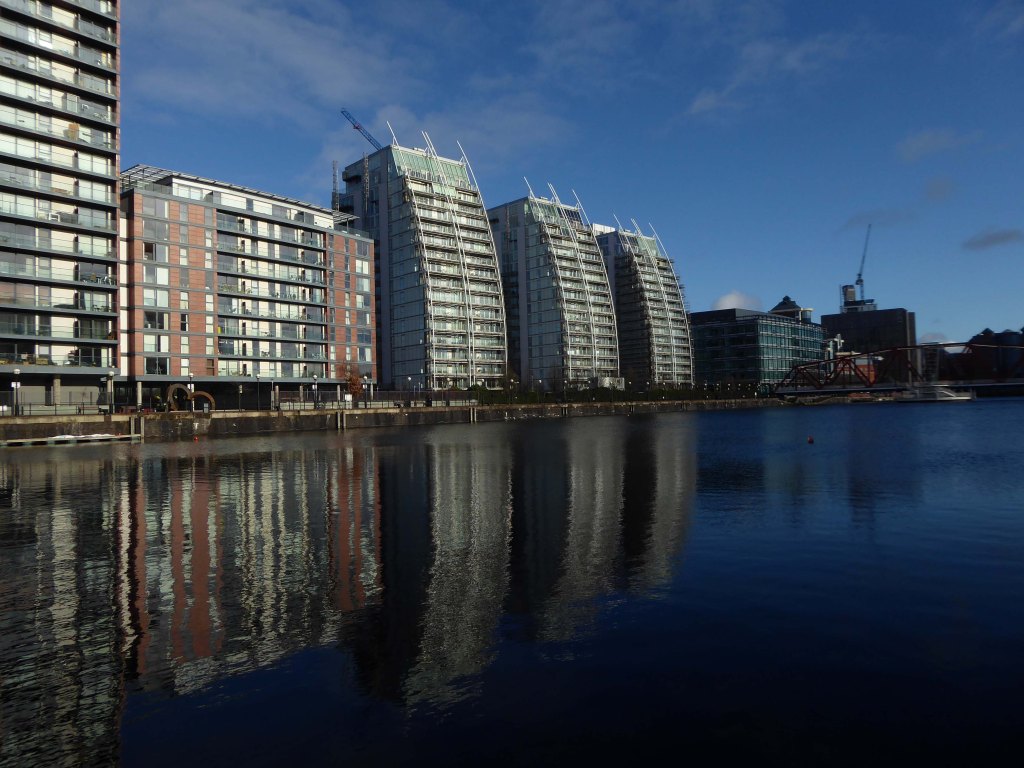
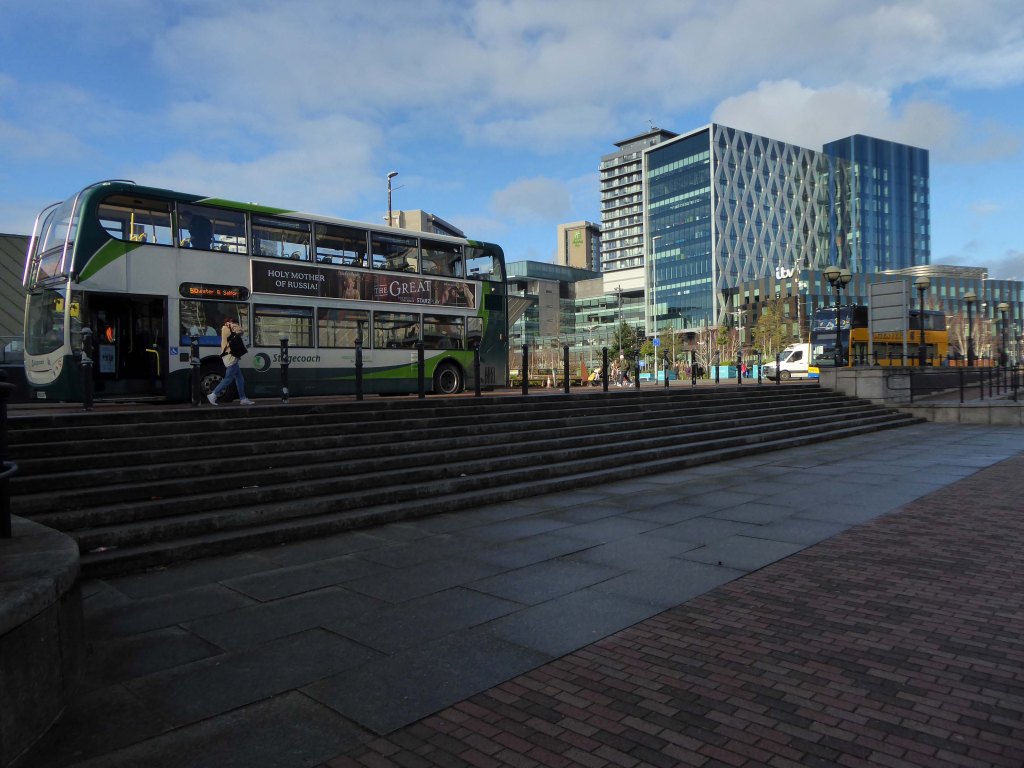
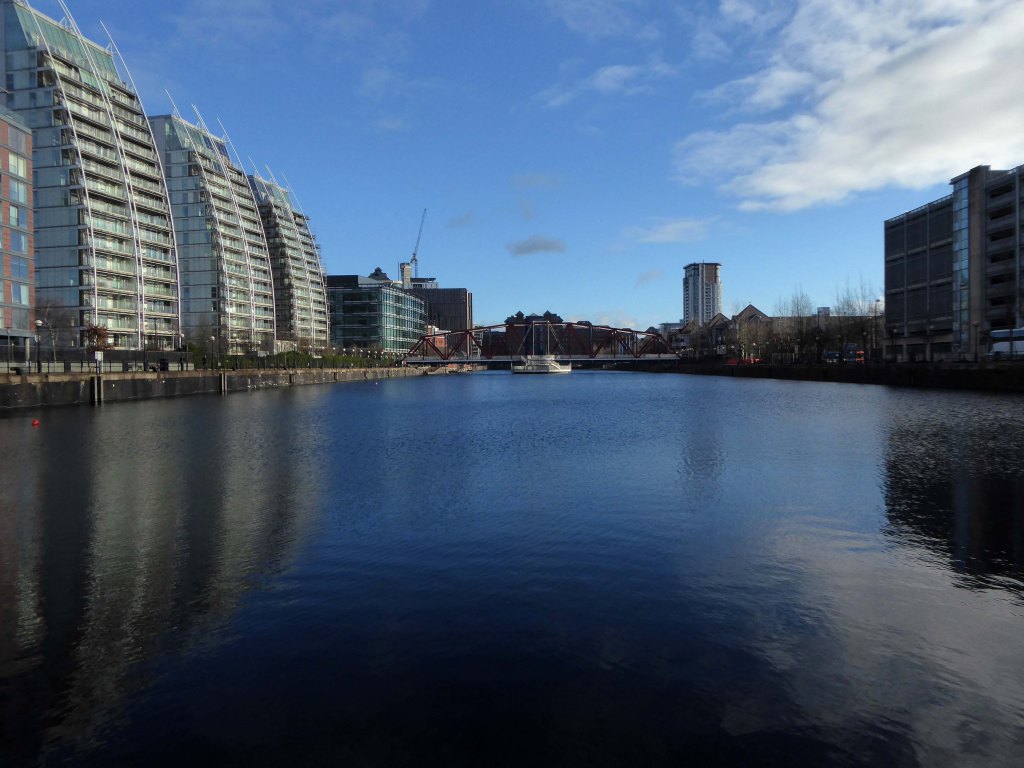
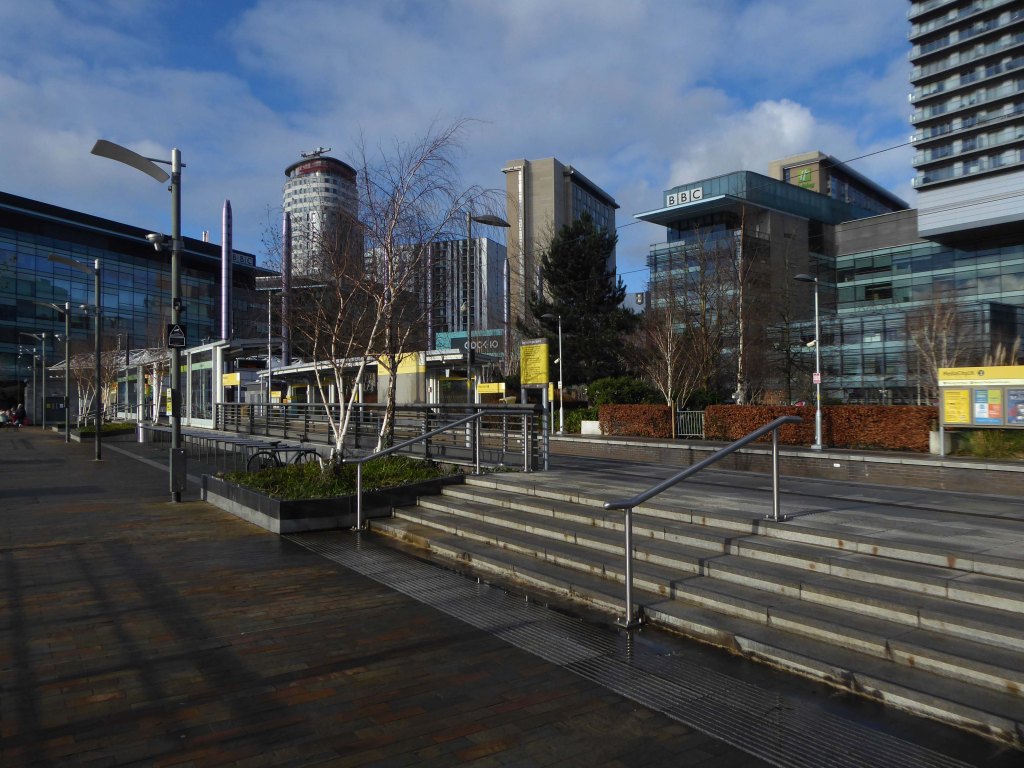
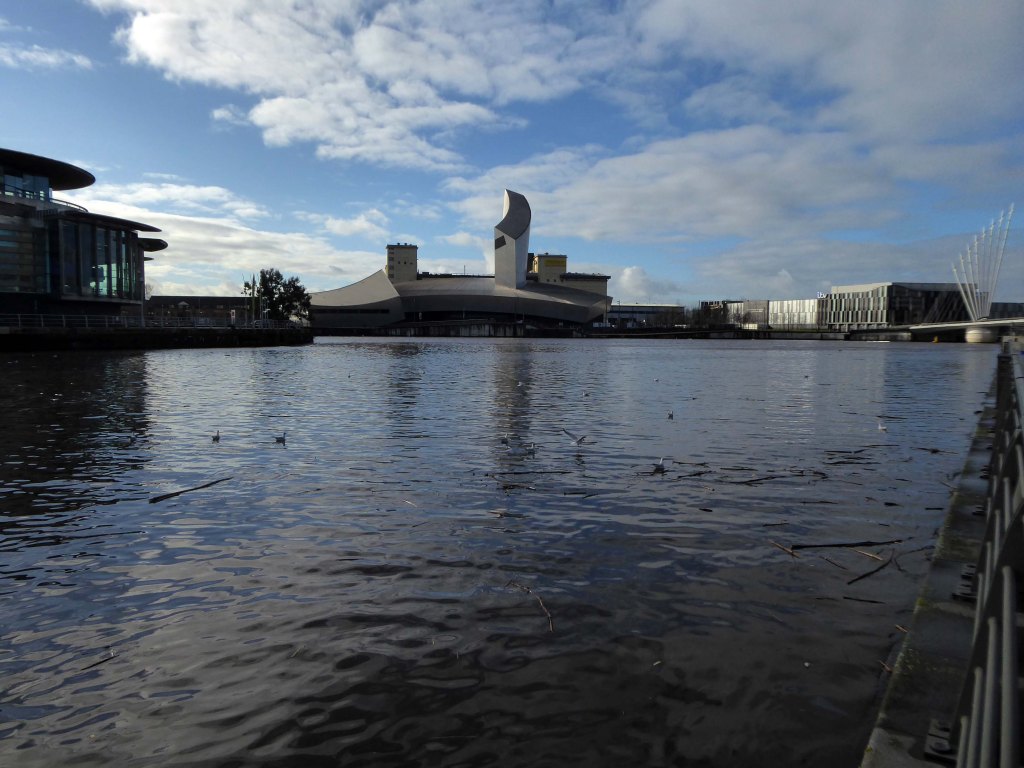
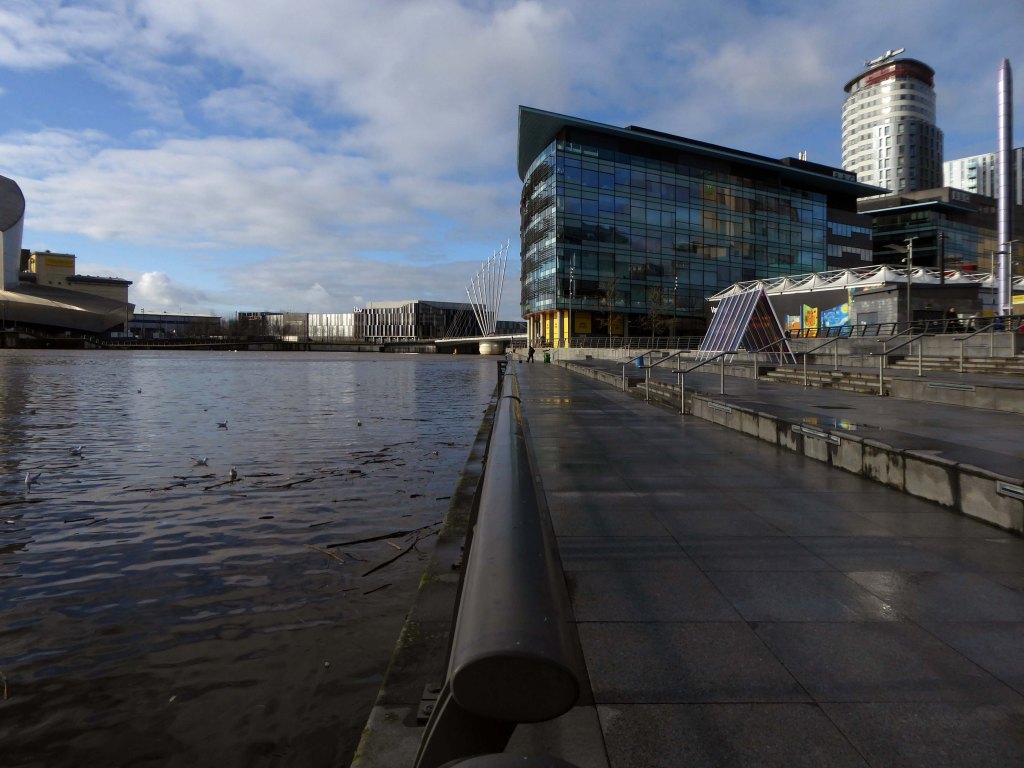
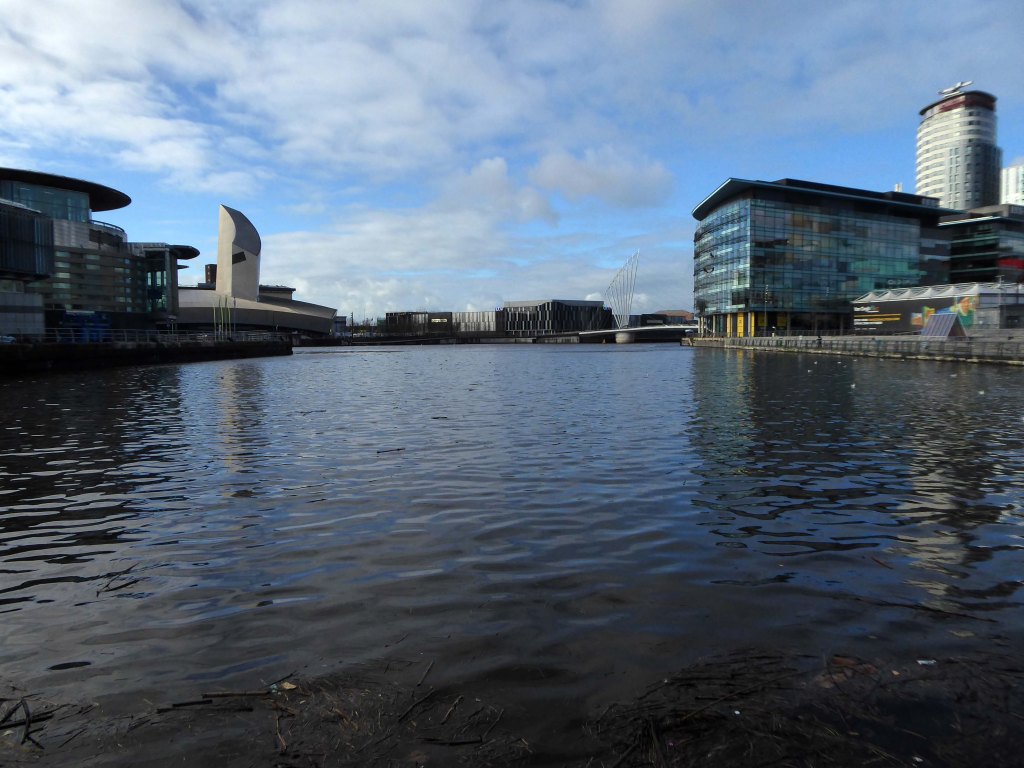
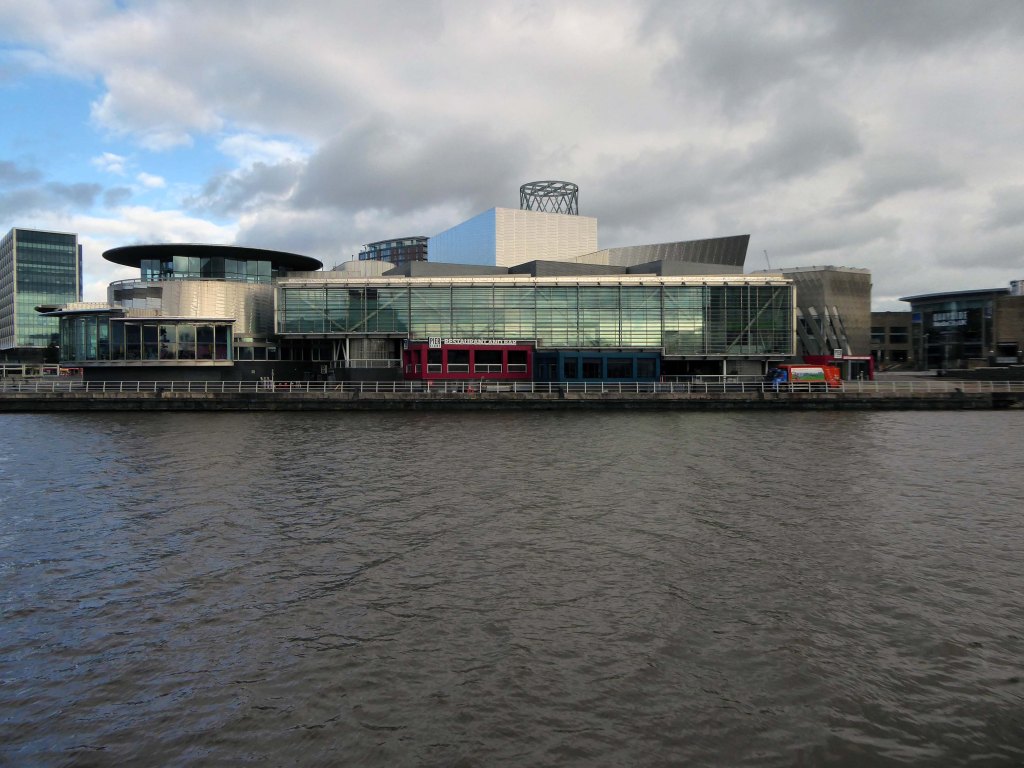
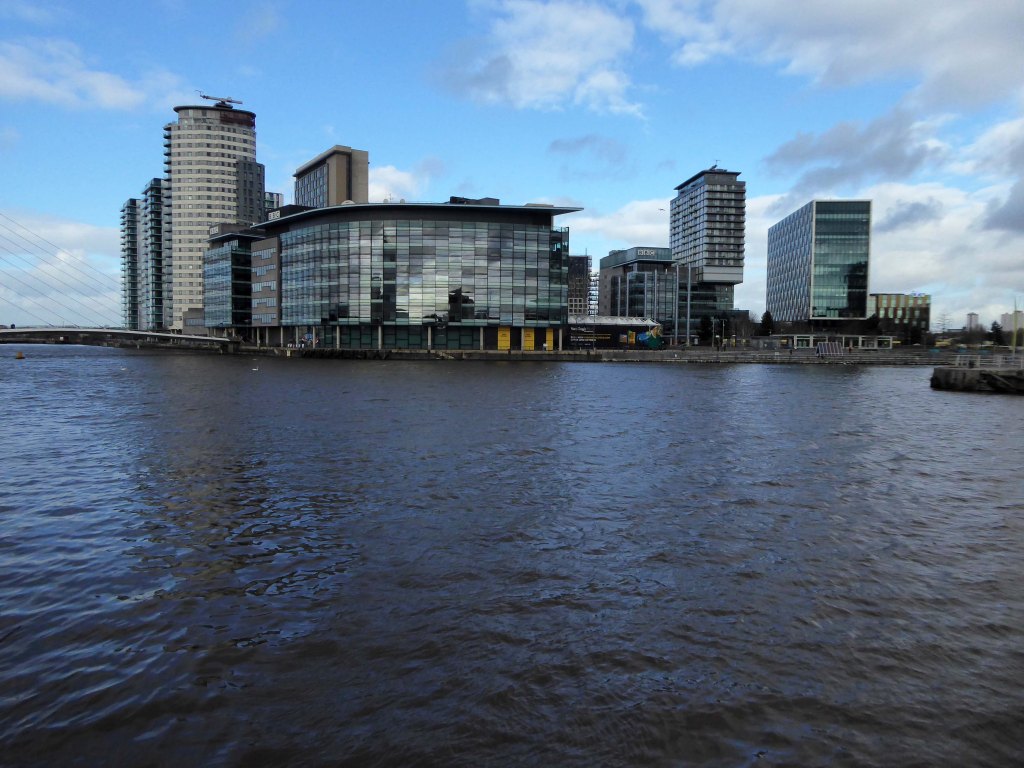
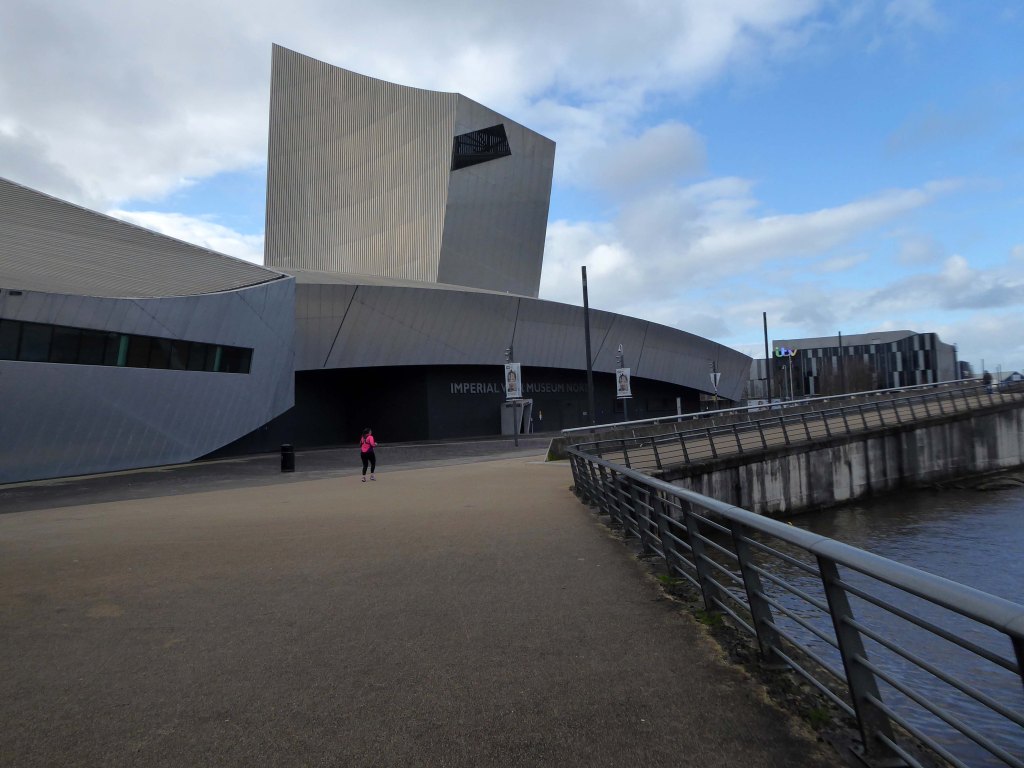
Salford Quays

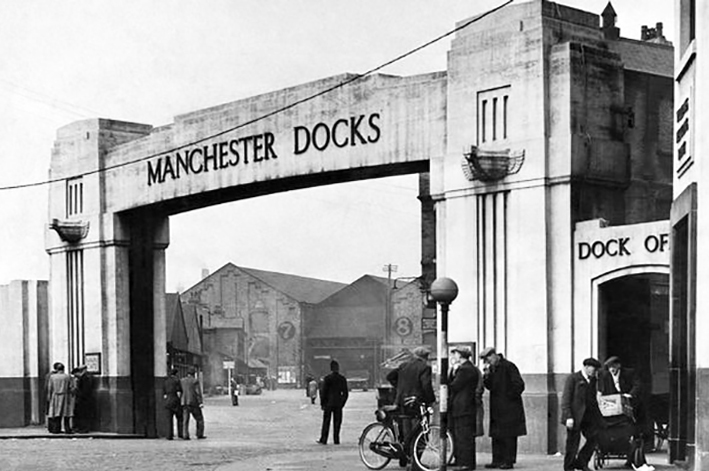
Manchester Docks were a series of nine docks.

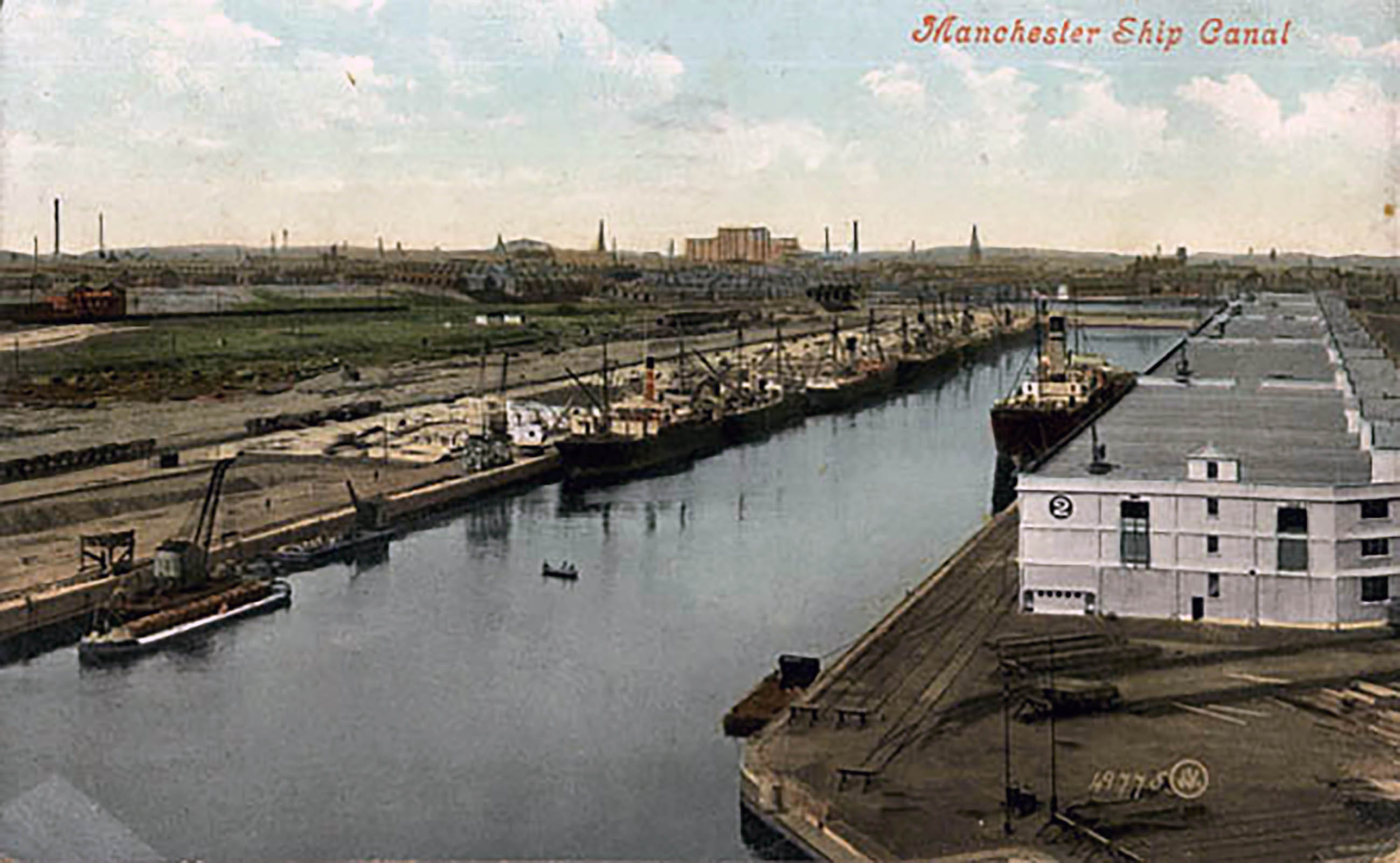
They were situated in Salford, Stretford and Manchester at the east end of the Manchester Ship Canal. They formed part of the Port of Manchester from 1894 until their closure in 1982. The docks marked the upper reaches of the ship canal, and were a destination for both coastal and ocean-bound vessels carrying cargo and a limited number of passengers, often travelling to and from Canada.

Manchester Docks were divided into two sections; the larger Salford docks to the west of the Trafford Road swing bridge and Pomona docks to the east. Each section consisted of four docks in total, the largest being to the west; Dock 5 at Pomona was never fully completed. Of the eight working docks only one, Dock 1 at Pomona, was within Manchester itself. During much of 1948, Manchester Docks were Britain’s third busiest port owing to damage suffered by the Port of Hull during the Hull Blitz.

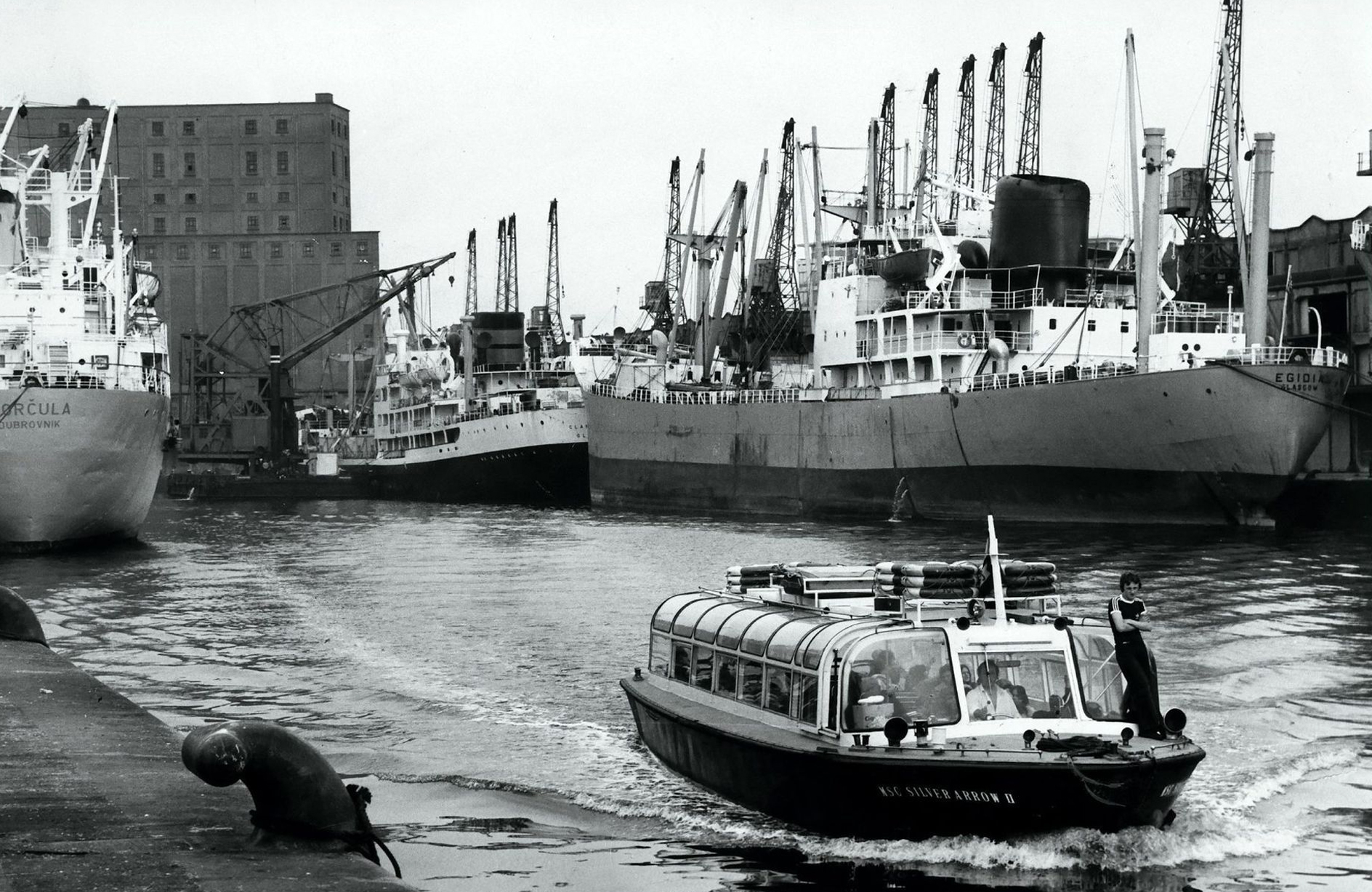
During the 1970s the docks began a rapid decline, largely due to containerisation. The increasing size of freight-carrying ships meant they could no longer navigate the ship canal and this, combined with increased trading with Europe and the east, saw use of Manchester Docks decrease. In 1982 the remaining docks closed and the area became derelict. Recognising the need to redevelop the area, Salford City Council purchased the docks in 1984 using a derelict land grant. The Salford Quays Development Plan was adopted in May 1985, proposing complete reclamation and development of the area for commercial, residential and leisure use.

Wikipedia

One of the very few school excursions we undertook way back in 1968 was to the docks – in an elegant glass topped barge.

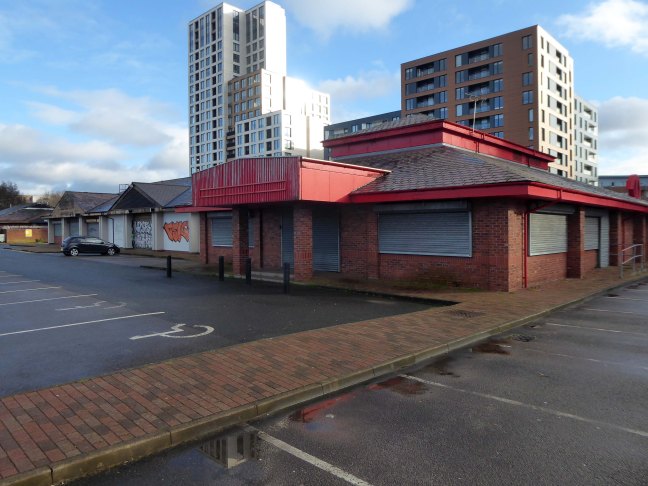
So I thought it was about time I went to take look around – this time I arrived by tram and proceeded on foot.

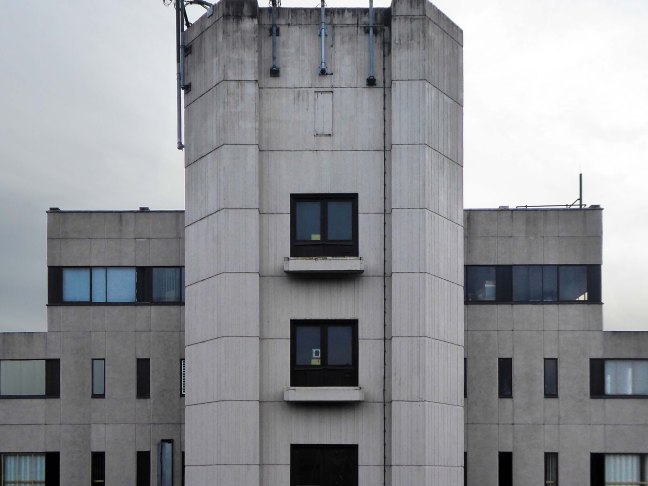
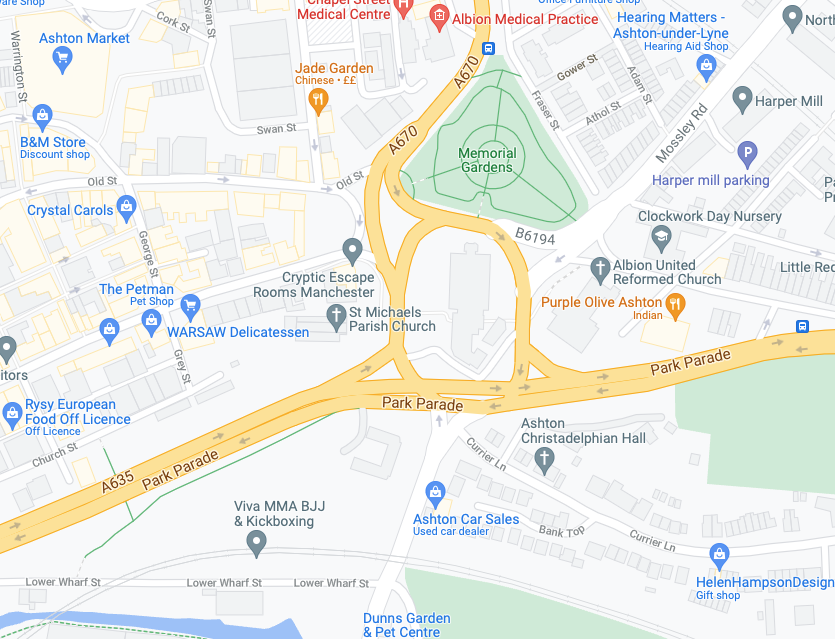
BT Telephone Exchange – Ashton under Lyne

BT Roundabout OL6 6QQ

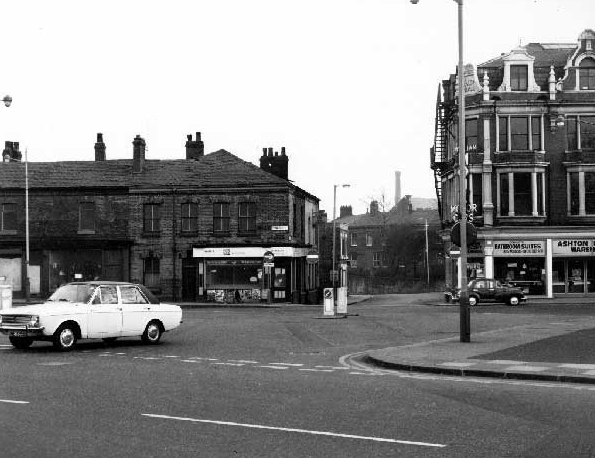
In 1913 Ashton is already a crowded town, a cotton town.

The first telephone exchange arrives and sweeps away property at the junction of Scotland and Bedford Streets.

The second arrives along with the bypass and establishes a roundabout, an island of telecommunication.

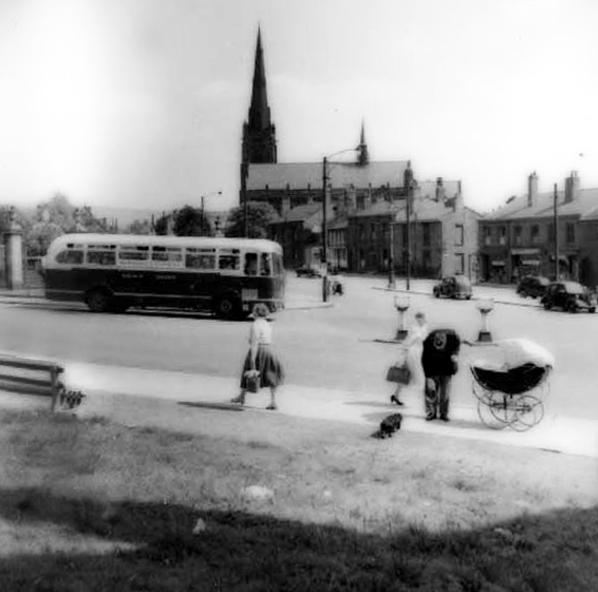
Tameside Image Archive

There they sit betwixt St Michael’s Parish Church and Albion Congregational.

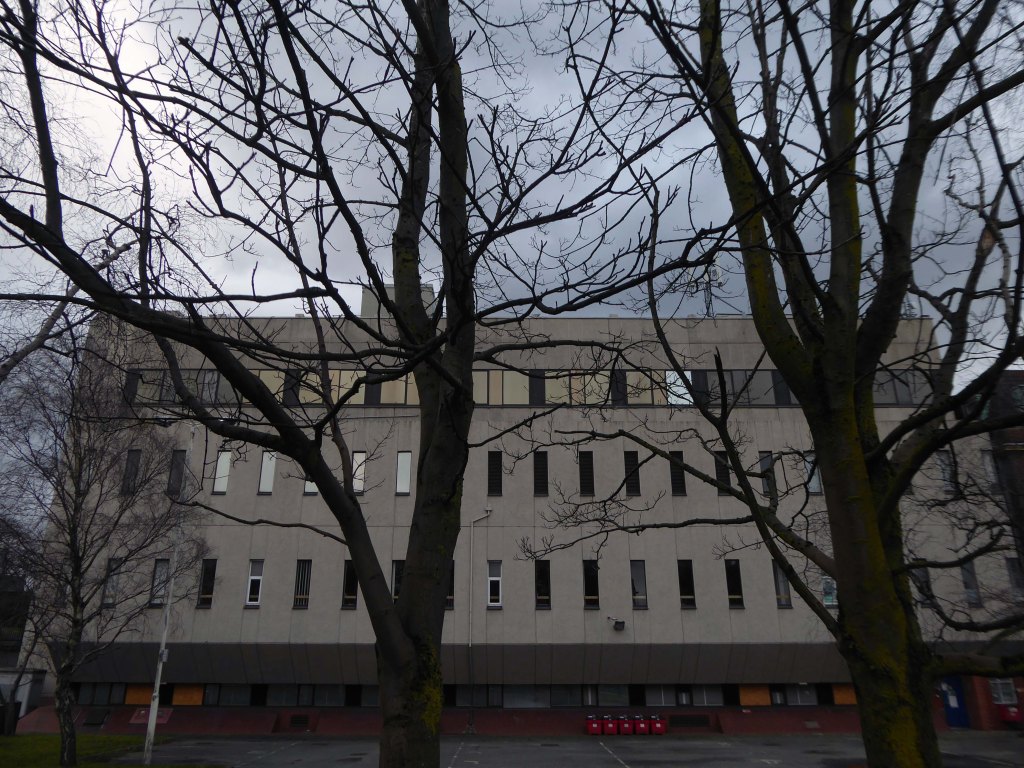
A marriage of inter-war brick Revivalism and post-war concrete Brutalism.

Ninety nine point nine percent of the passing parade pass by onto the bypass by car, I took time to circumnavigate the site on foot.

This is what I saw.

Eastford Square – 12/21

Here we are again and again and again, a curious passer-by, curious as to what may or may not have taken pass.

Local Image Collection 1970

There is a report of 2020

The report argues that the Northern Gateway should offer mixed, affordable and age appropriate housing and amenities. An equitable development plan should be developed, through community-led engagement, to ensure that the benefits of regeneration are shared amongst new and existing residents.

As of 2021 there is inaction and stasis

Collyhurst was described as a ‘forgotten place’ by some residents who felt that there had been insufficient investment in local housing and amenities.

The Northern Gateway remains a hidden portal to who knows where.

Northern Gateway 2018

Detailed proposals for a second scheme to be delivered within neighbouring South Collyhurst, one of the seven neighbourhoods to be developed as part of the overall Framework, are expected later this year.

Construction Enquirer 2021

Northern Gateway rebrands as Victoria North

Far East Consortium and Manchester City Council’s 390-acre masterplan will now be known as Victoria North, a move that aims to “create a sense of place”, according to Gavin Taylor, regional general manager at FEC in Manchester.

The Northern Gateway has served us well as a name as we shaped plans for the area’s regeneration. But as we begin to bring forward development this year, it’s the right time to start creating a sense of place for what will be a significant new district in Manchester, as well as an identity that people can engage with.

Sir Richard Leese, leader of Manchester City Council, said:

We are at the beginning of an incredibly exciting phase of history for this part of Manchester and with some eagerness to see how this potential unfolds.

Victoria Riverside, a 634- home development marks the first stage of the regeneration project with the first apartments hitting the market. 

The three towers – Park View, City View and Crown View, are based within the Red Bank neighbourhood. 

Red Bank has been described as:

A unique landscape and river setting making the neighbourhood perfect for a residential-led, high-density development – all set in a green valley.

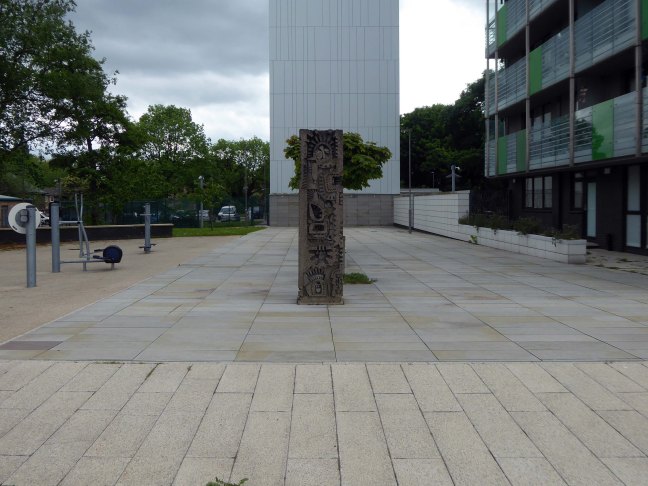
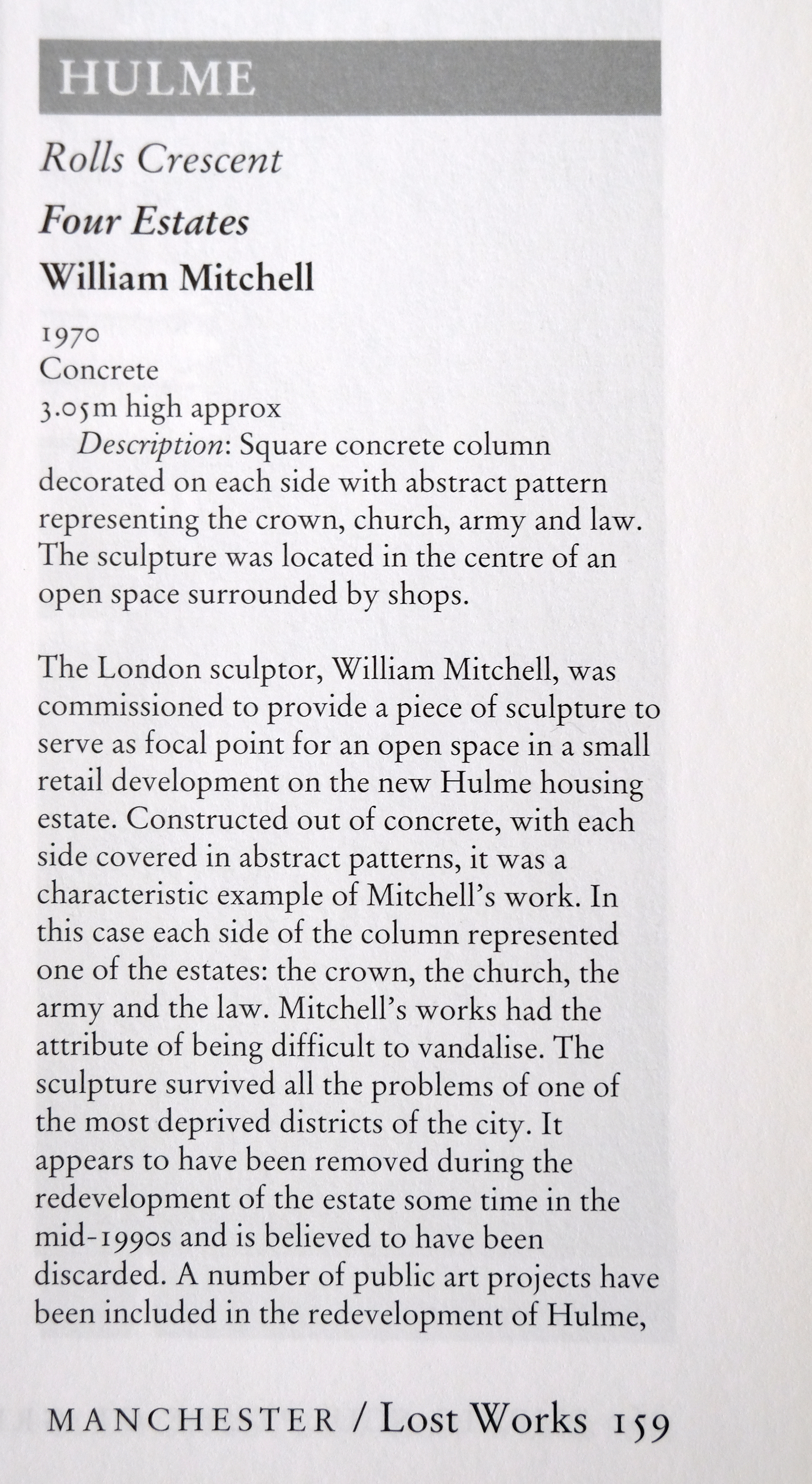
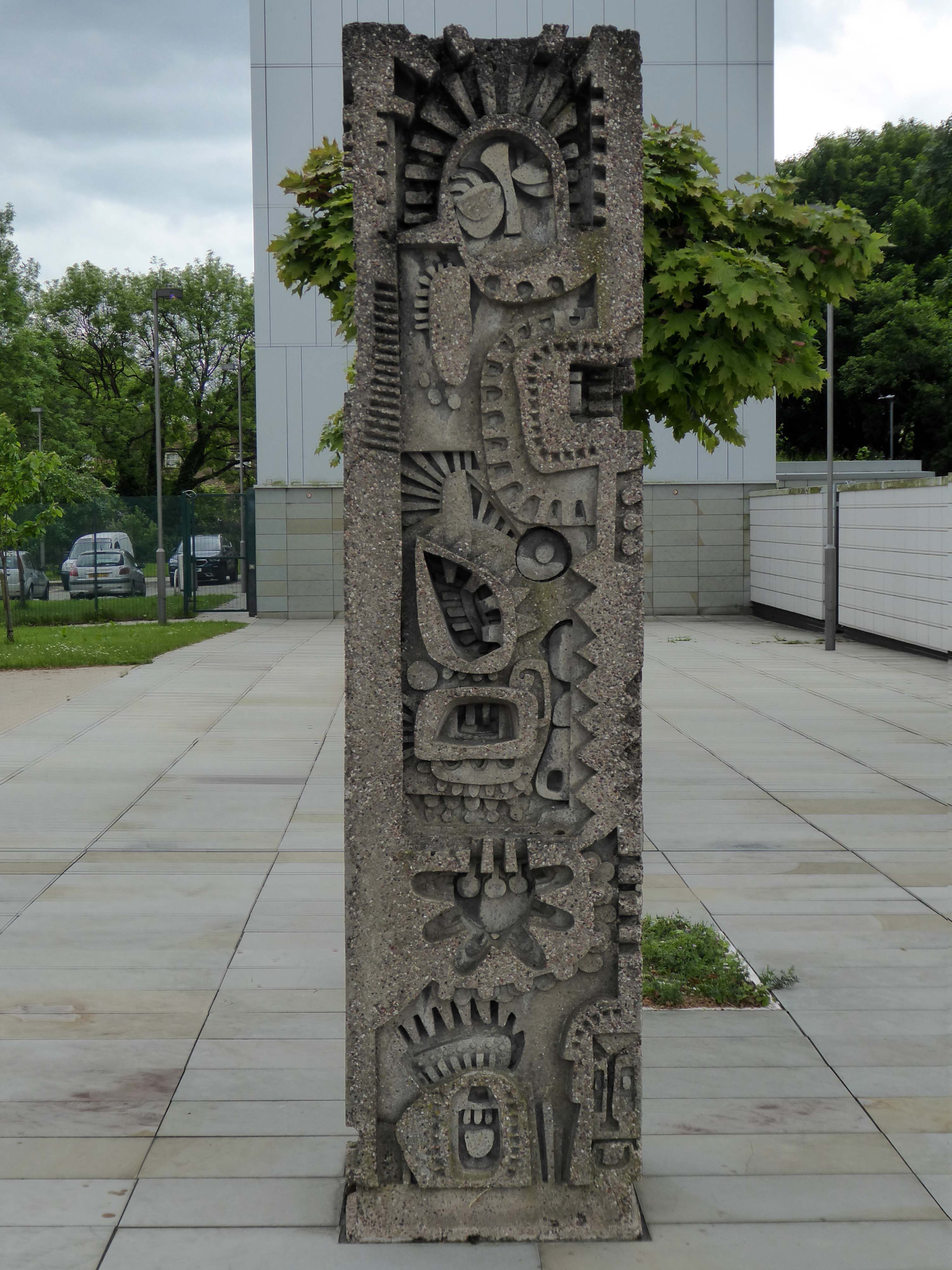
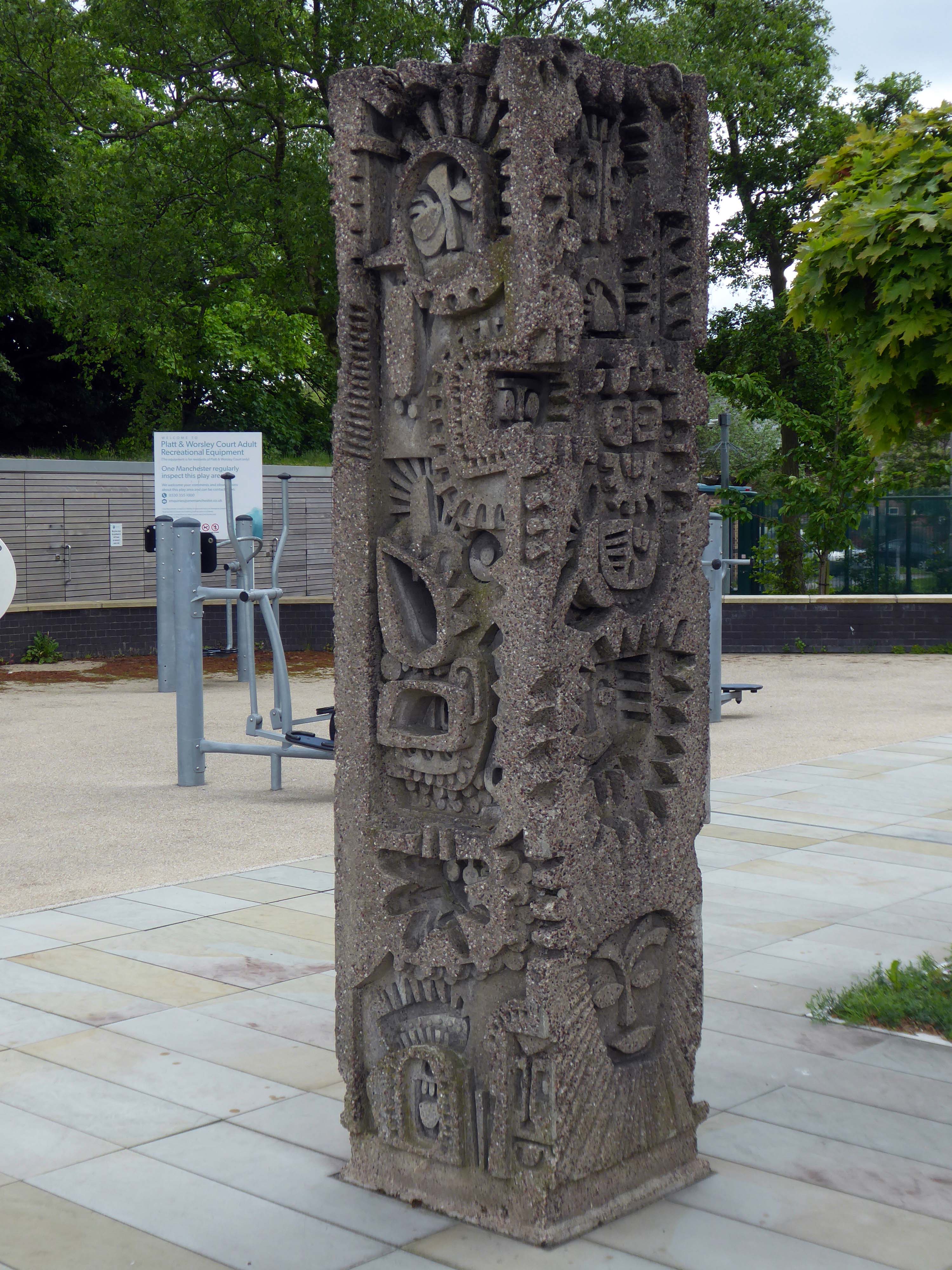
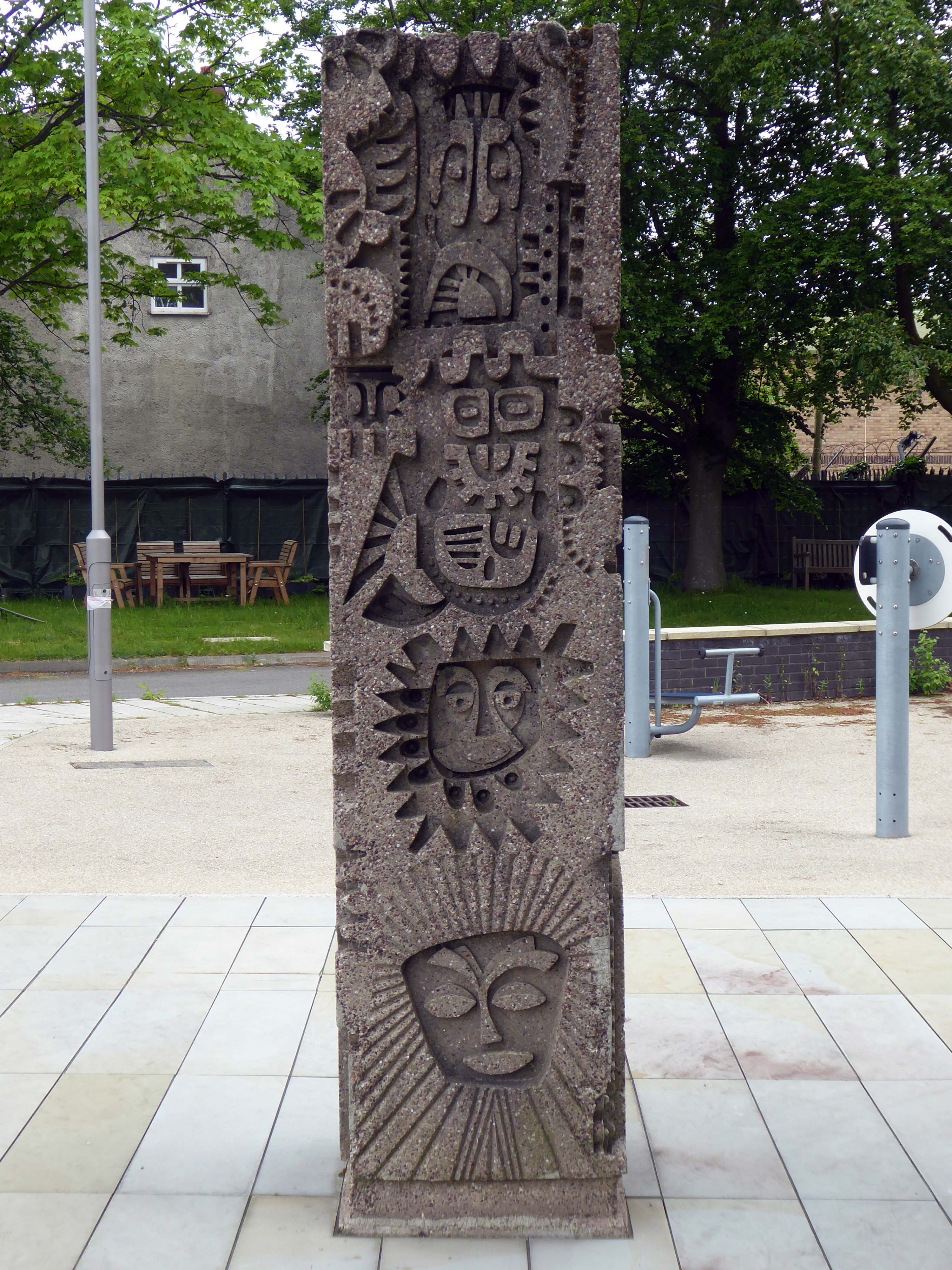
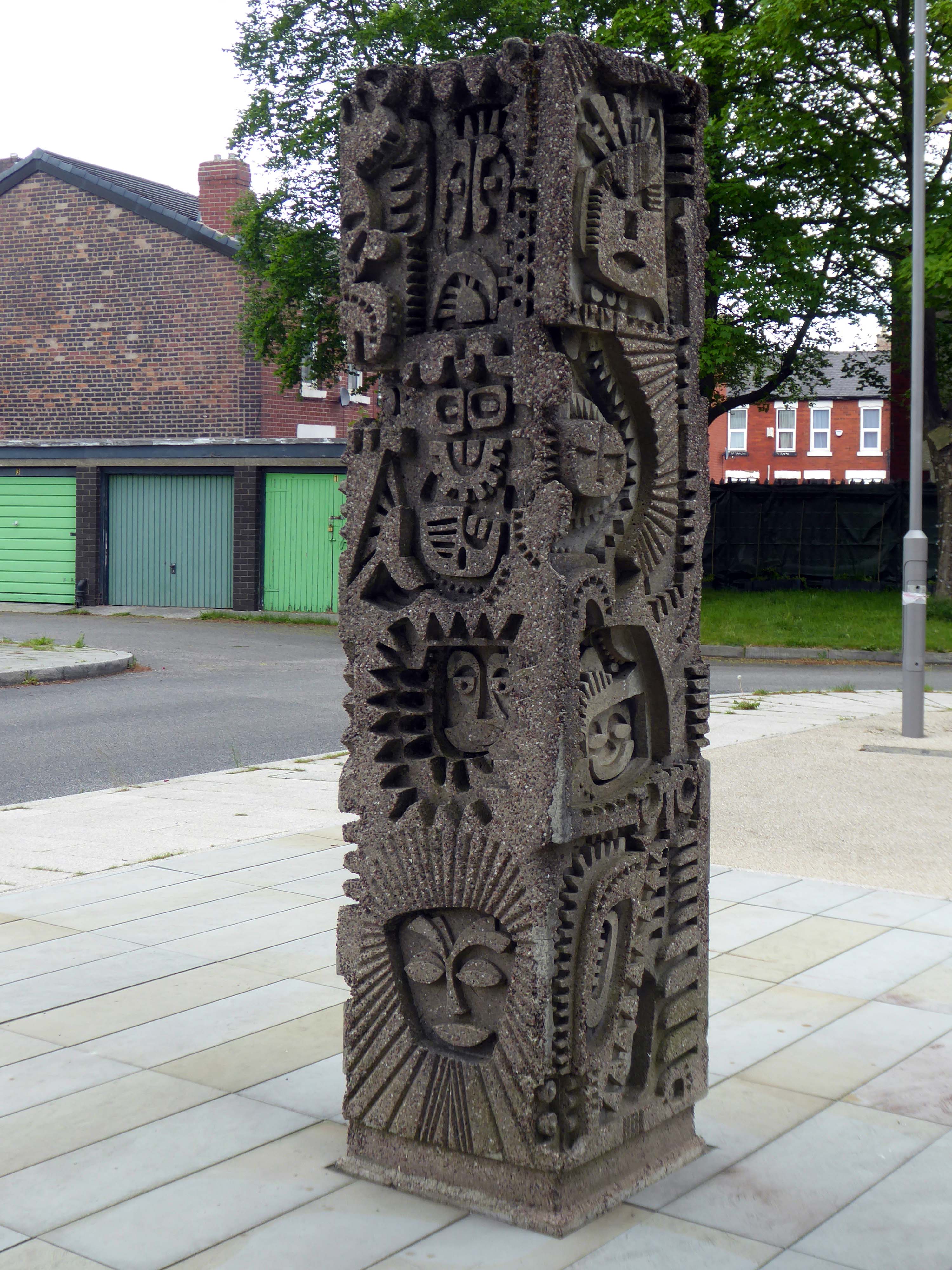
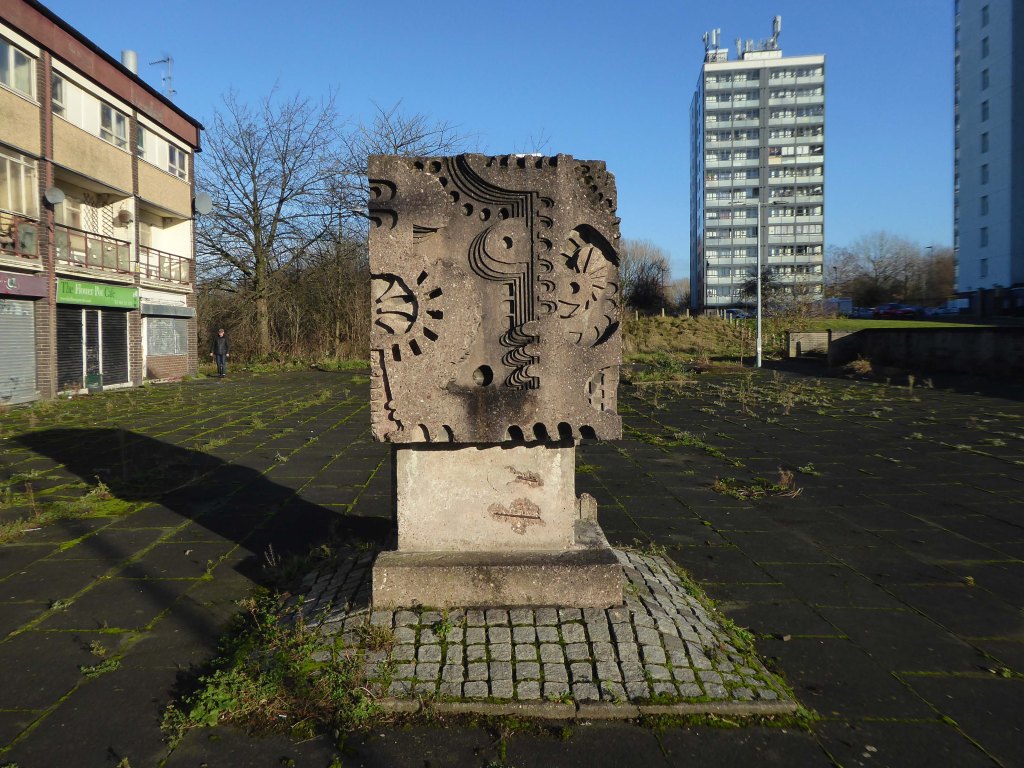
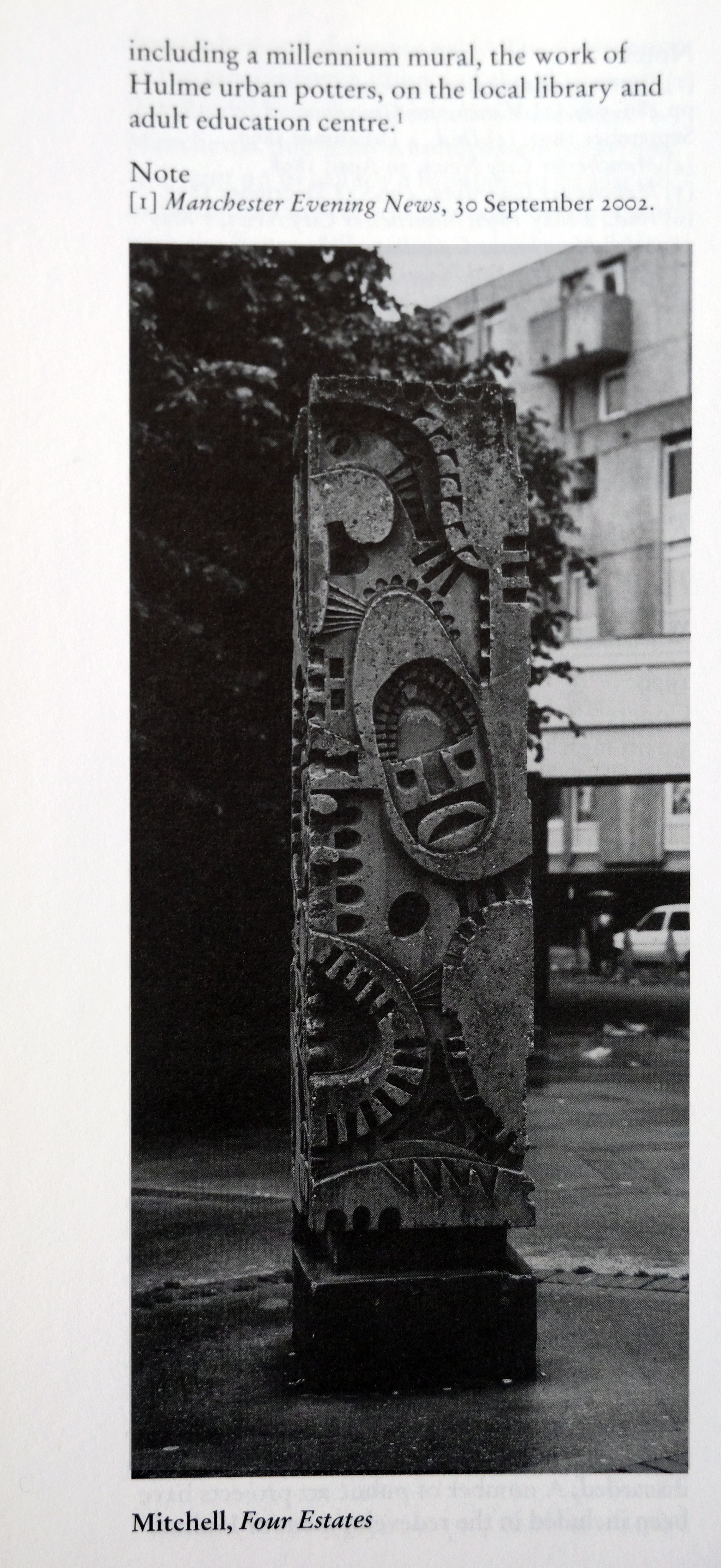
The putative William Mitchell totem continues to keep silent watch over the Square.

Stoke Walk

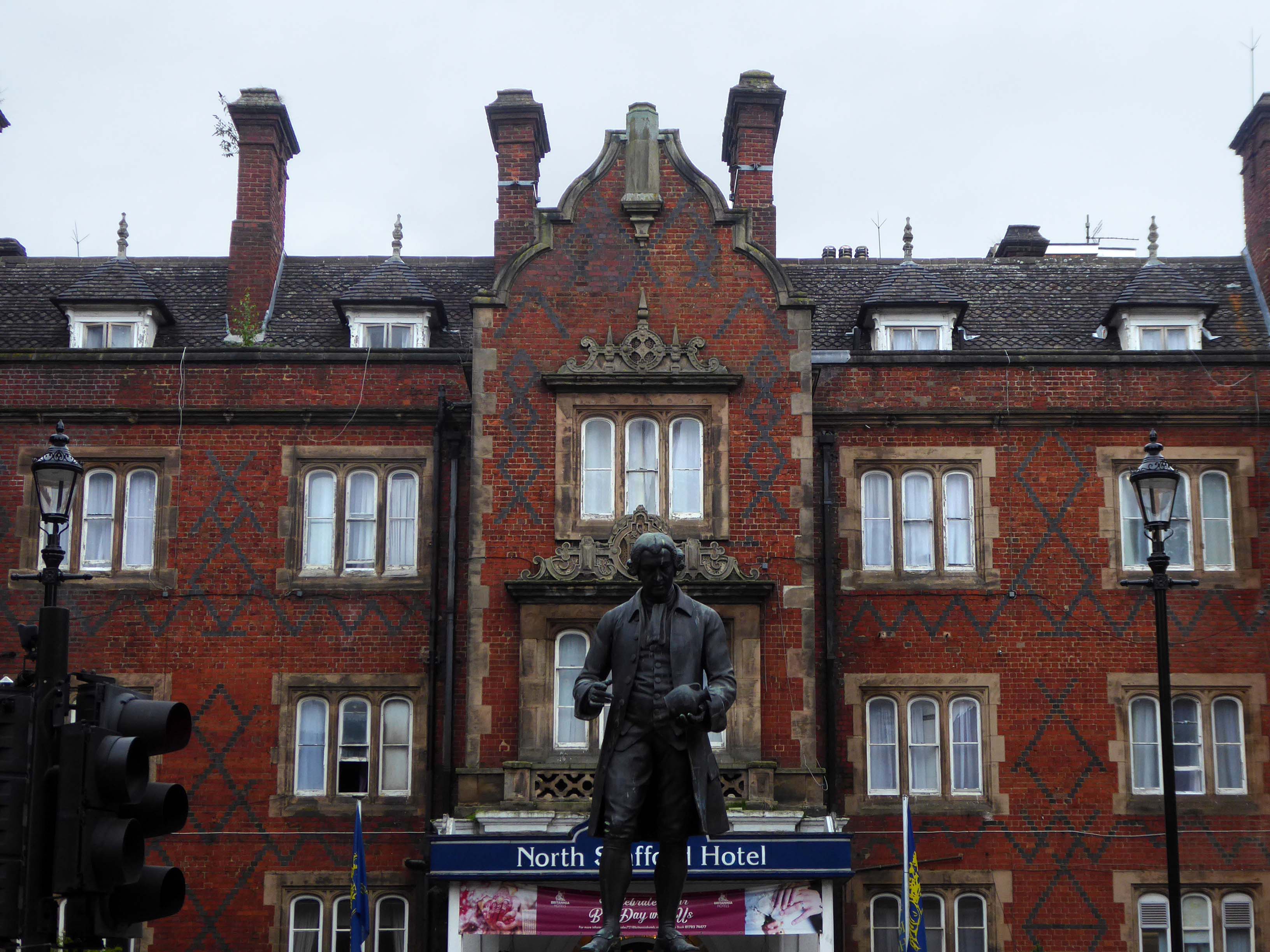
We begin by doffing our caps to Josiah Wedgwood – who along with countless other unsung heroes defined Stoke on Trent as the heart of the pottery industry.

Stoke is polycentric, having been formed by the federation of six towns in 1910.

It took its name from Stoke-upon-Trent where the main centre of government and the principal railway station in the district were located. 

Hanley is the primary commercial centre.

The other four towns are Burslem, Tunstall, Longton, and Fenton.

Wikipedia

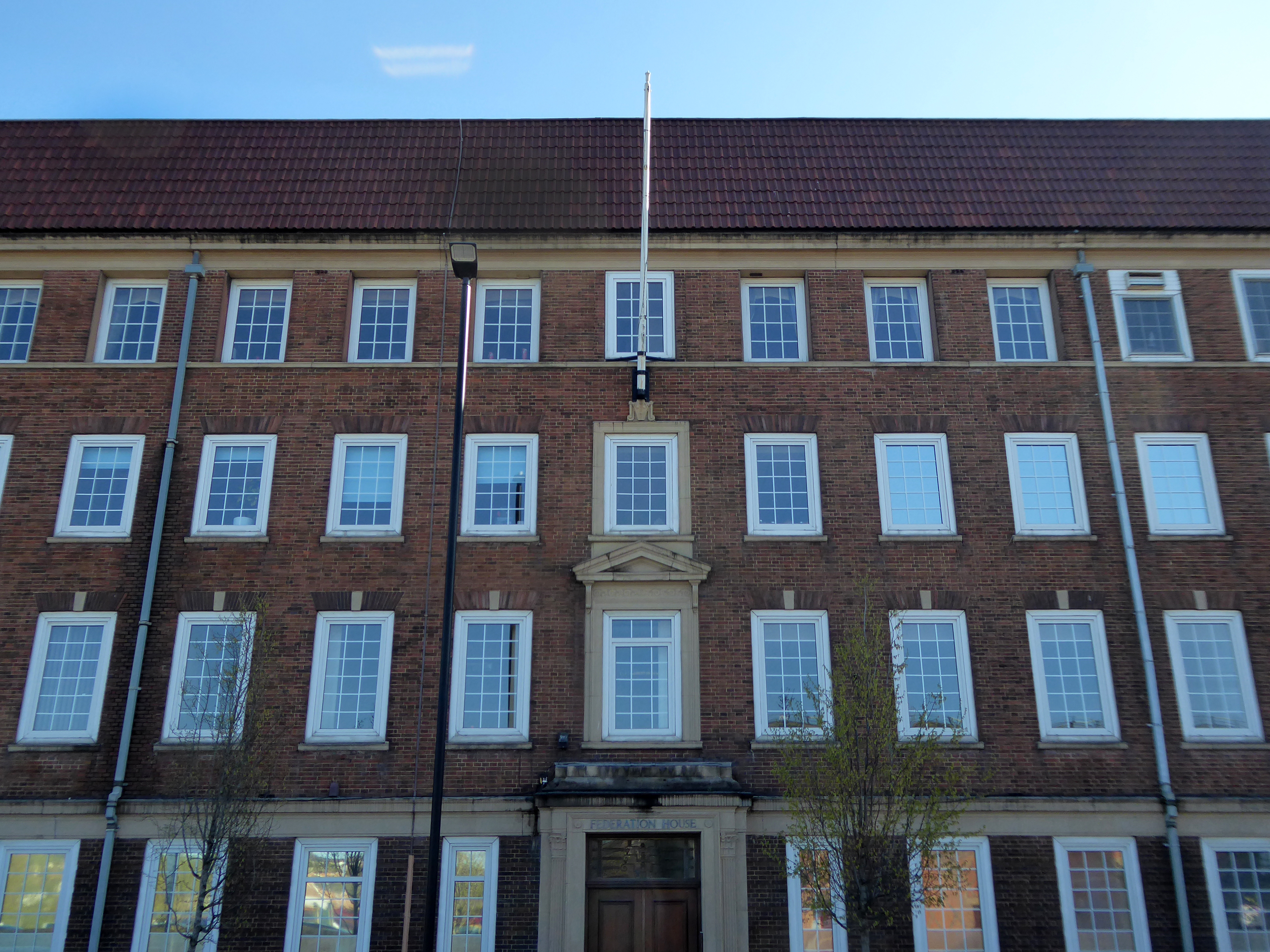
First up Federation House architects: Wood Goldstraw Yorath 1930 – described as Art Deco.

Built to house the British Pottery Manufacturers’ Federation now multiple occupancy.

Around the corner to the Staffordshire University.

Staffordshire University was founded in 1914 as a polytechnic intistution, and was officially given University Status on 16 June 1992. Our University is famous for its forward-thinking approach, and has become a figurehead for its vocational and academic teaching, innovative grasp of industry, and student employability.

Although our campus continues to expand to create dynamic opportunities, we are proud of our heritage in the great city of Stoke-on-Trent. Steeped in the history of ceramic manufacture and production, industry in Stoke-on-Trent has been fuelled by Staffordshire University for over 100 years.

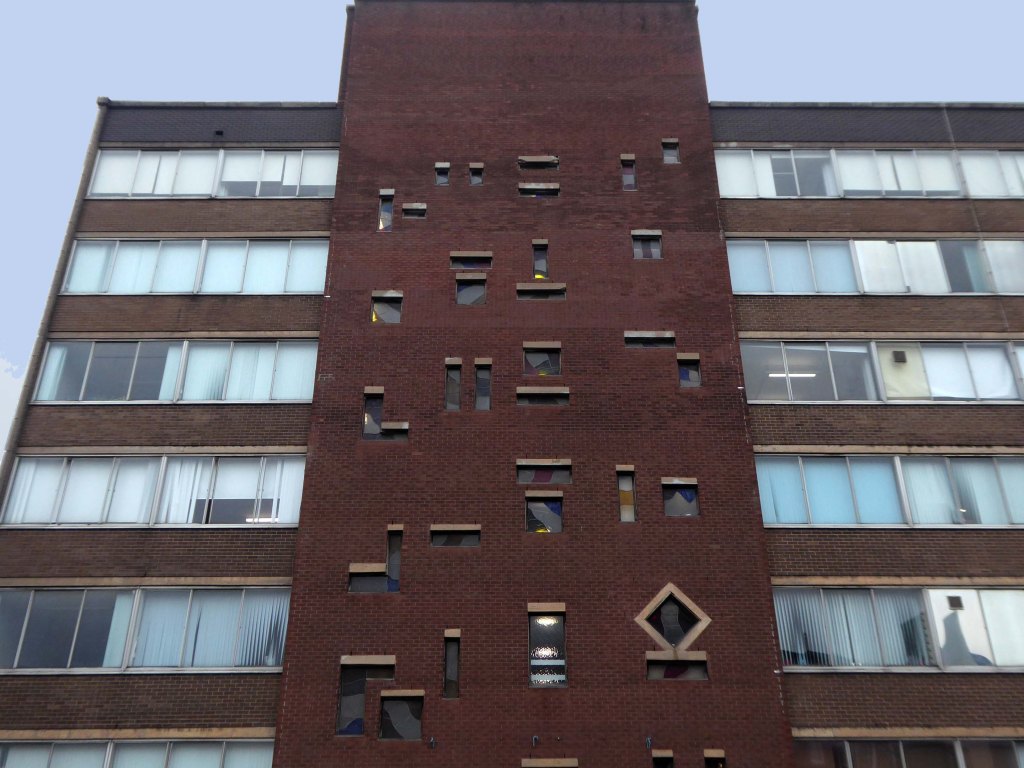
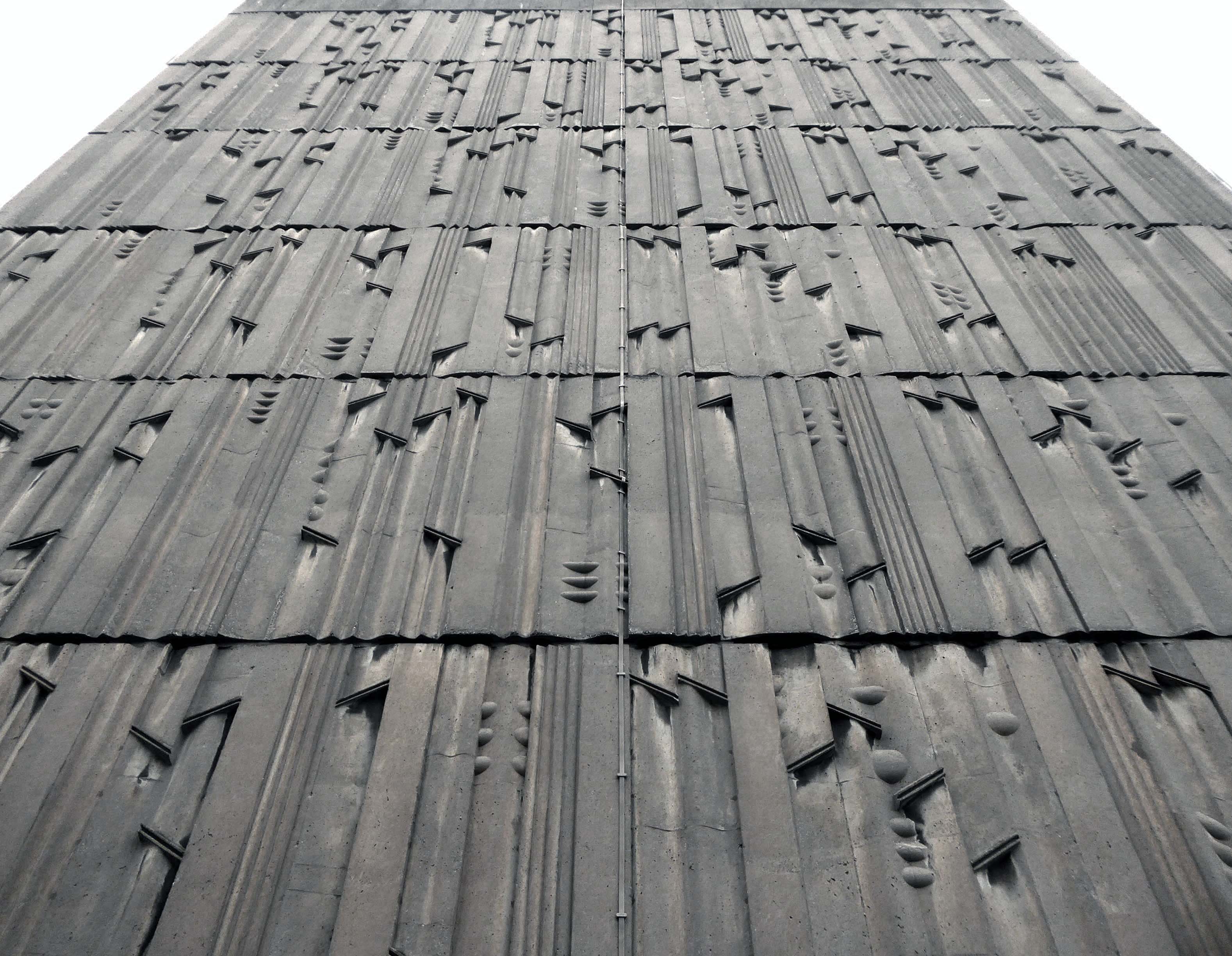
The Flaxman Building 1970 was designed by City Architect Thomas Lovatt and built by the City Works Department – the last public works assignment before competitive tendering opened up public restrictions to private enterprise.

Named for to Wedgwood’s famous modeller the classical artist, John Flaxman RA 1755-1826. 

This concrete is very much in the style of William Mitchell – though there is no record of attribution.

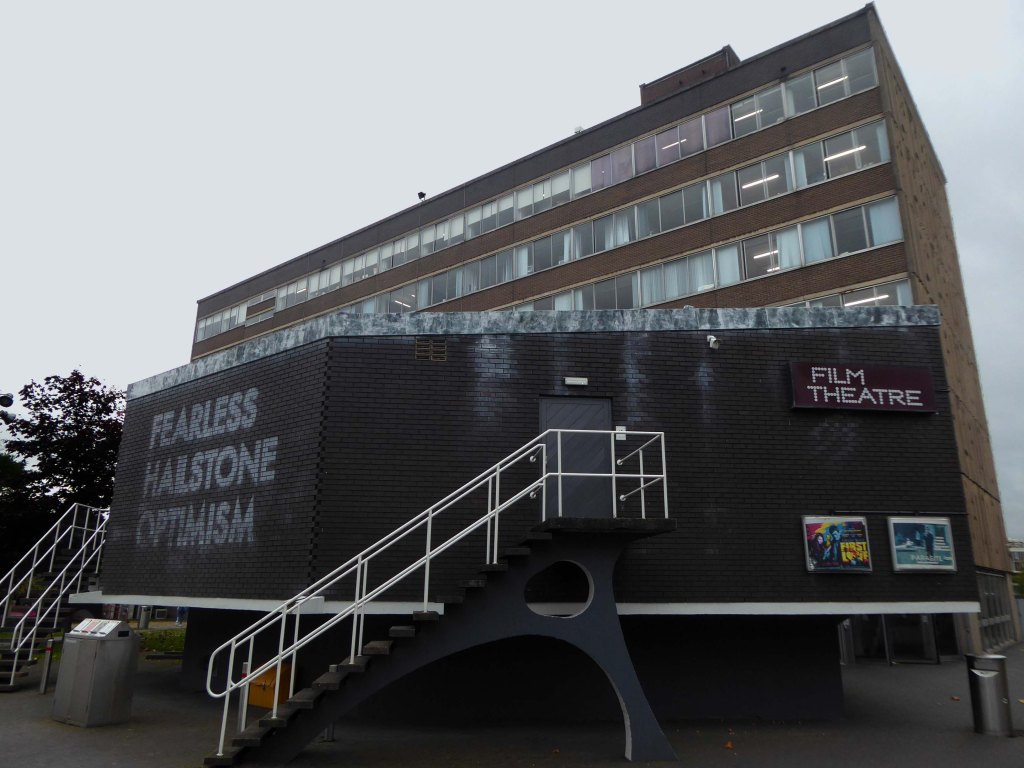
The Regional Film Theatre opened in College Road, on the premises of North Staffordshire Polytechnic now Staffordshire University in 1974.

The North Staffordshire Film Society moved there to screen films one evening a week, while the Film Theatre operated on three nights a week. 

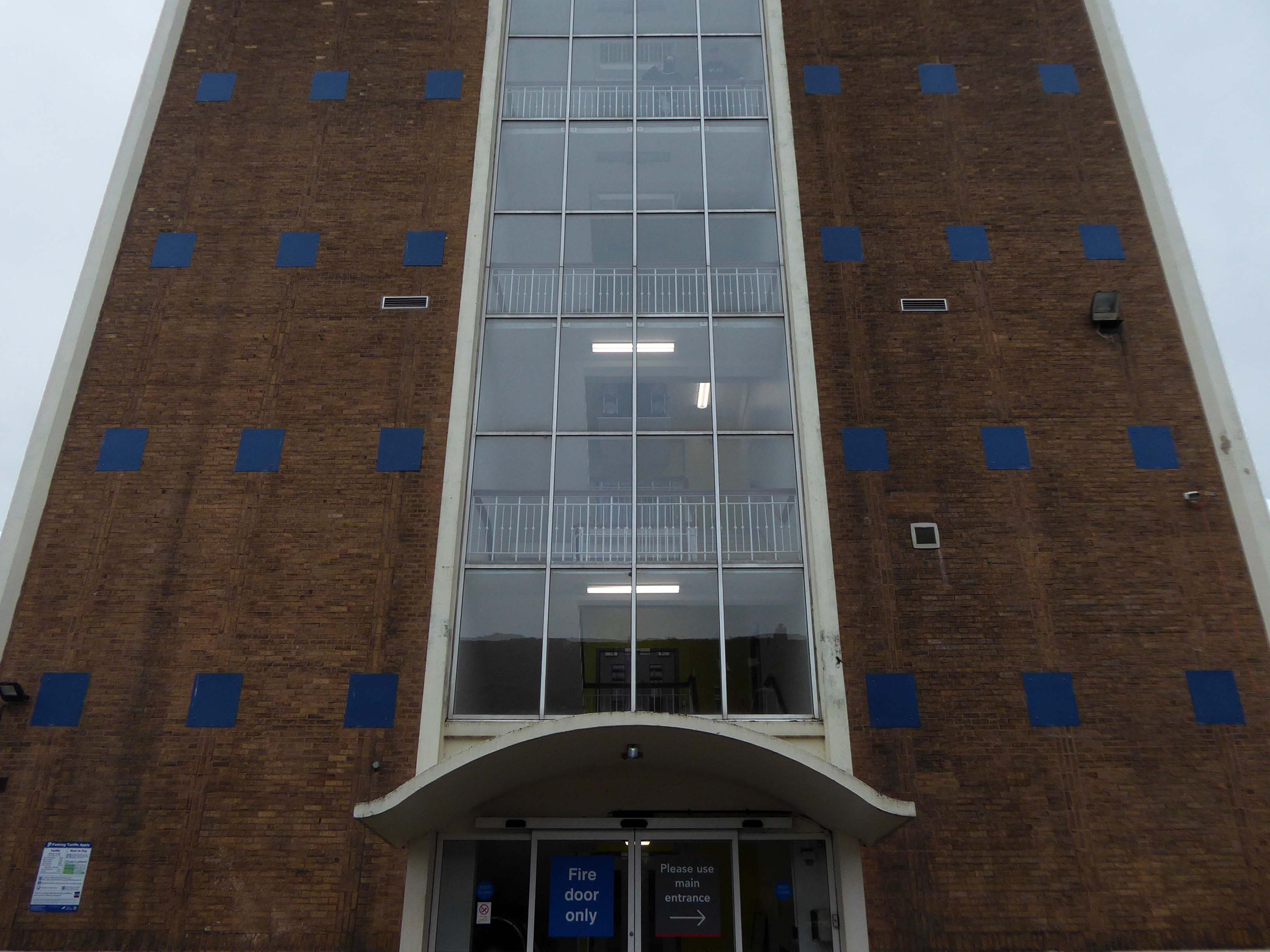
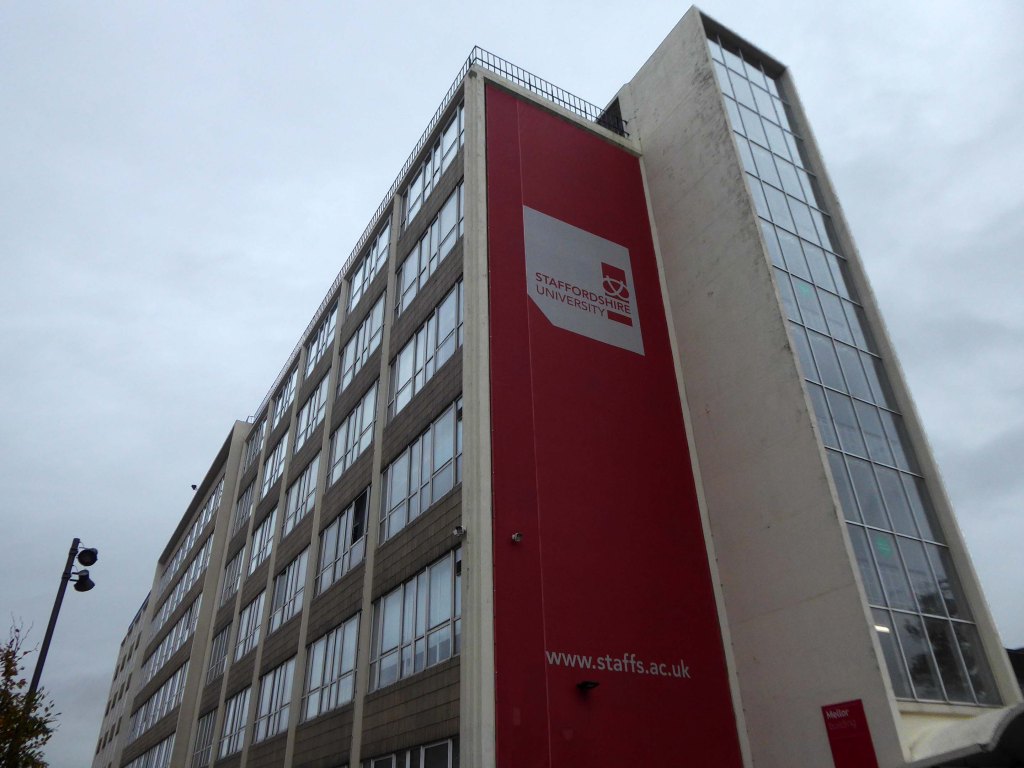
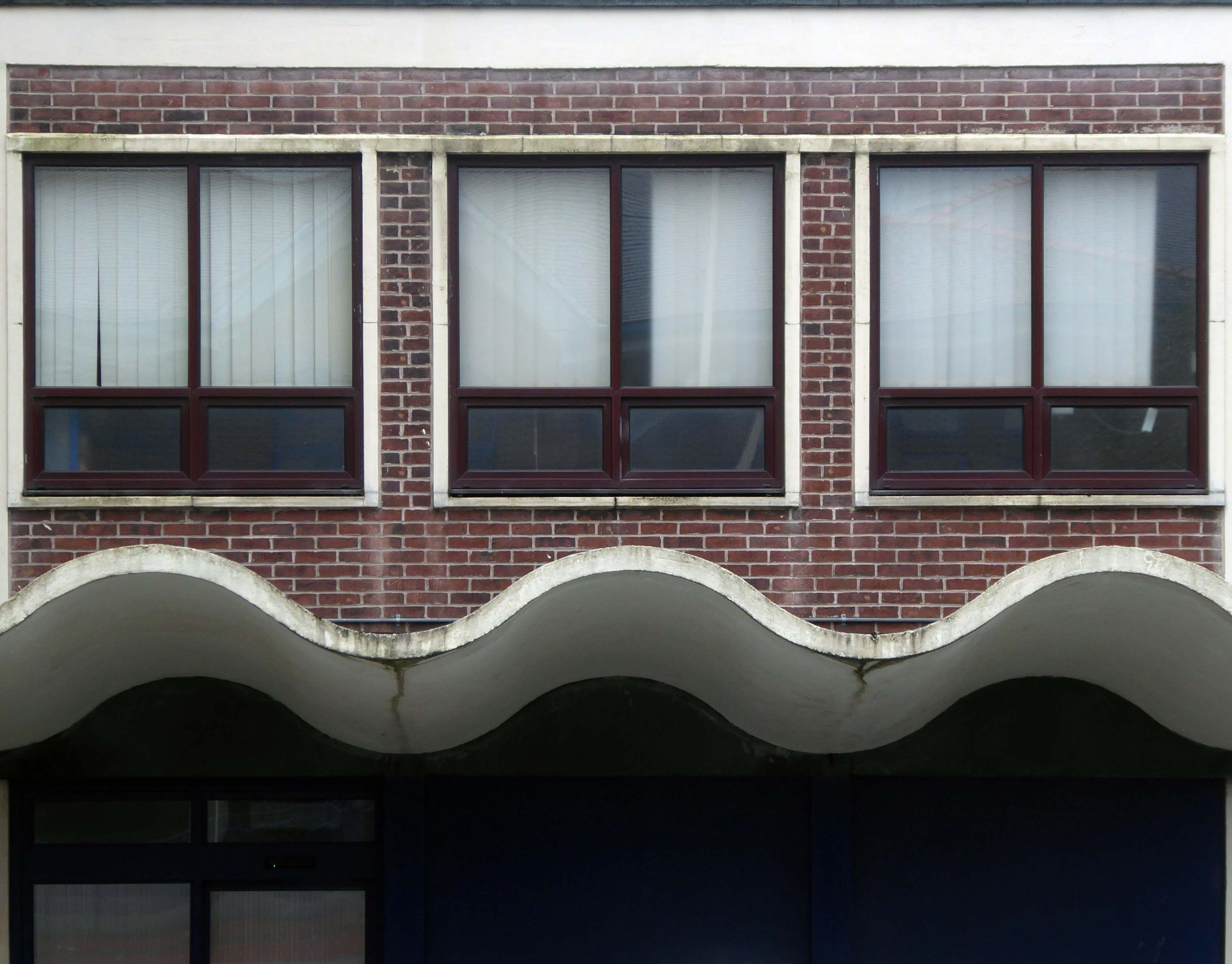
Across the way is the assertive slab tower of the 1950’s Mellor Building with its curvy cantilevered porch cover.

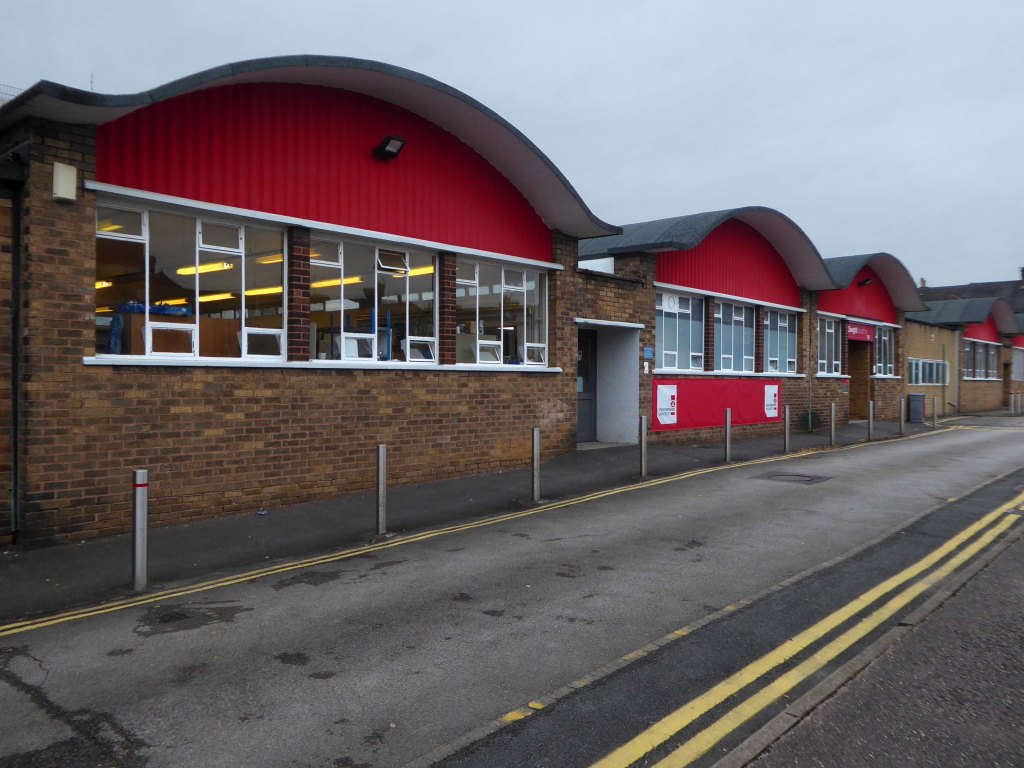
Out back is the wavy roofed Dwight Building.

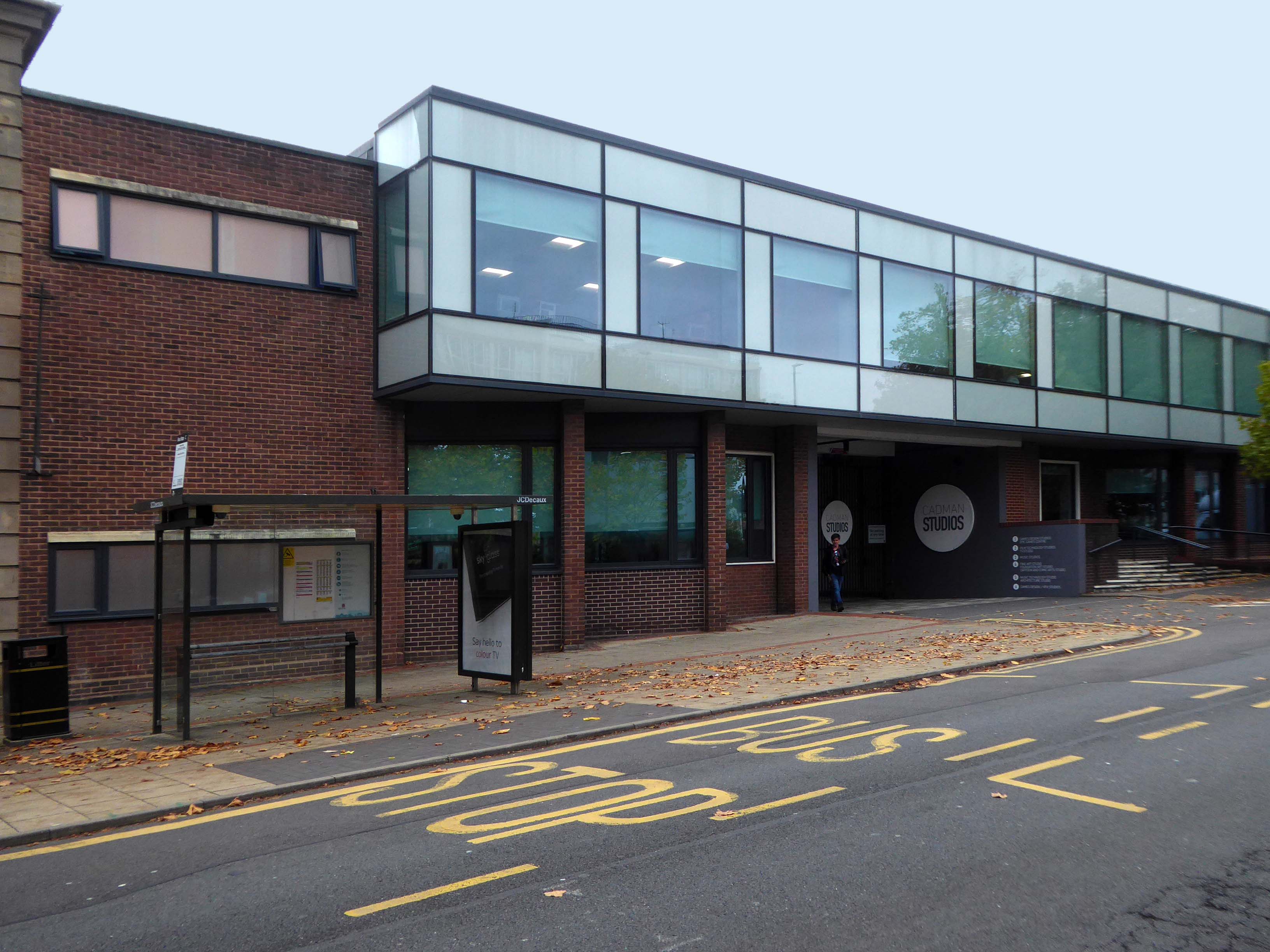
Over the road the new build of the Cadman Studios 2016 ABW Architects.

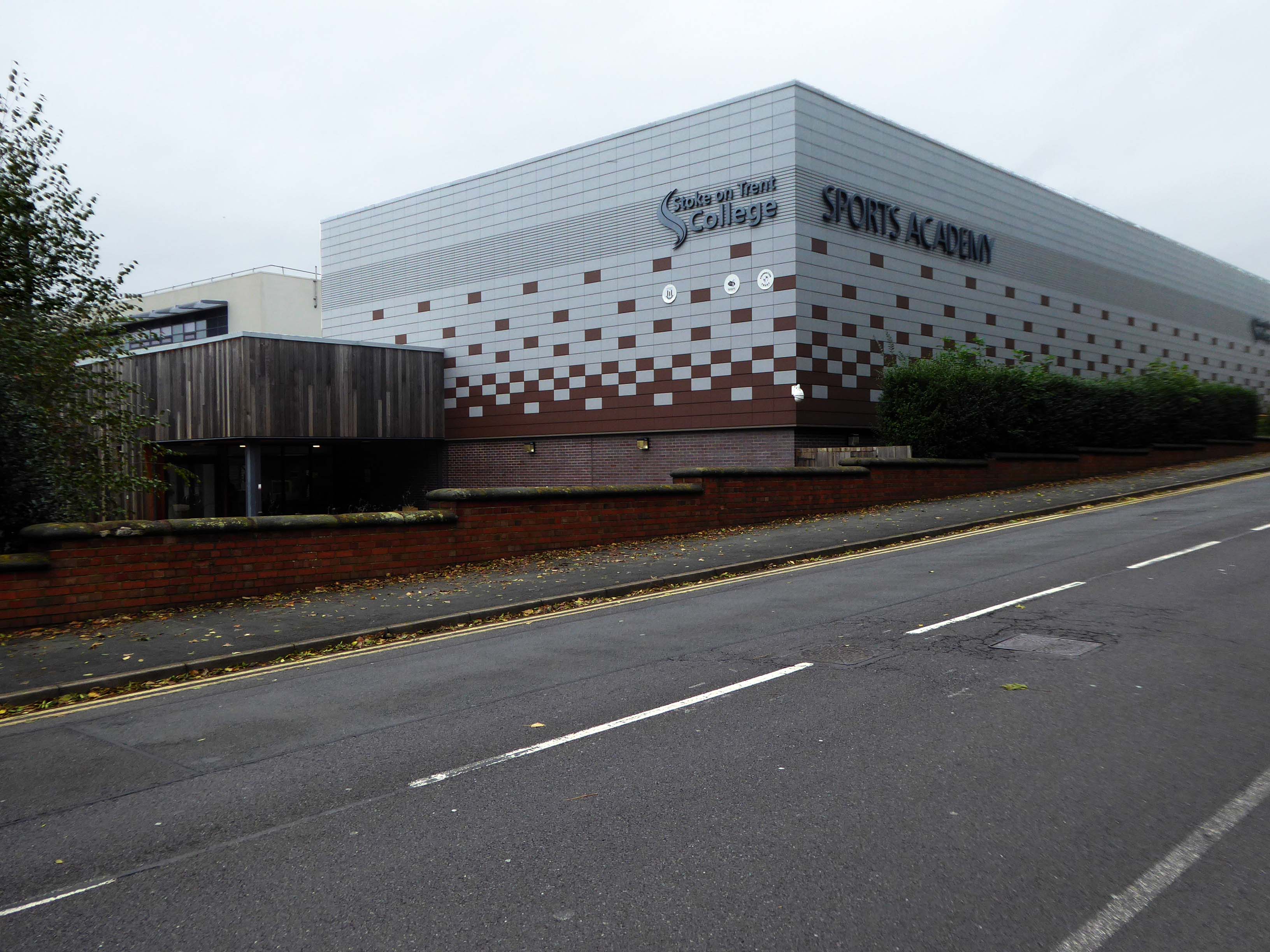
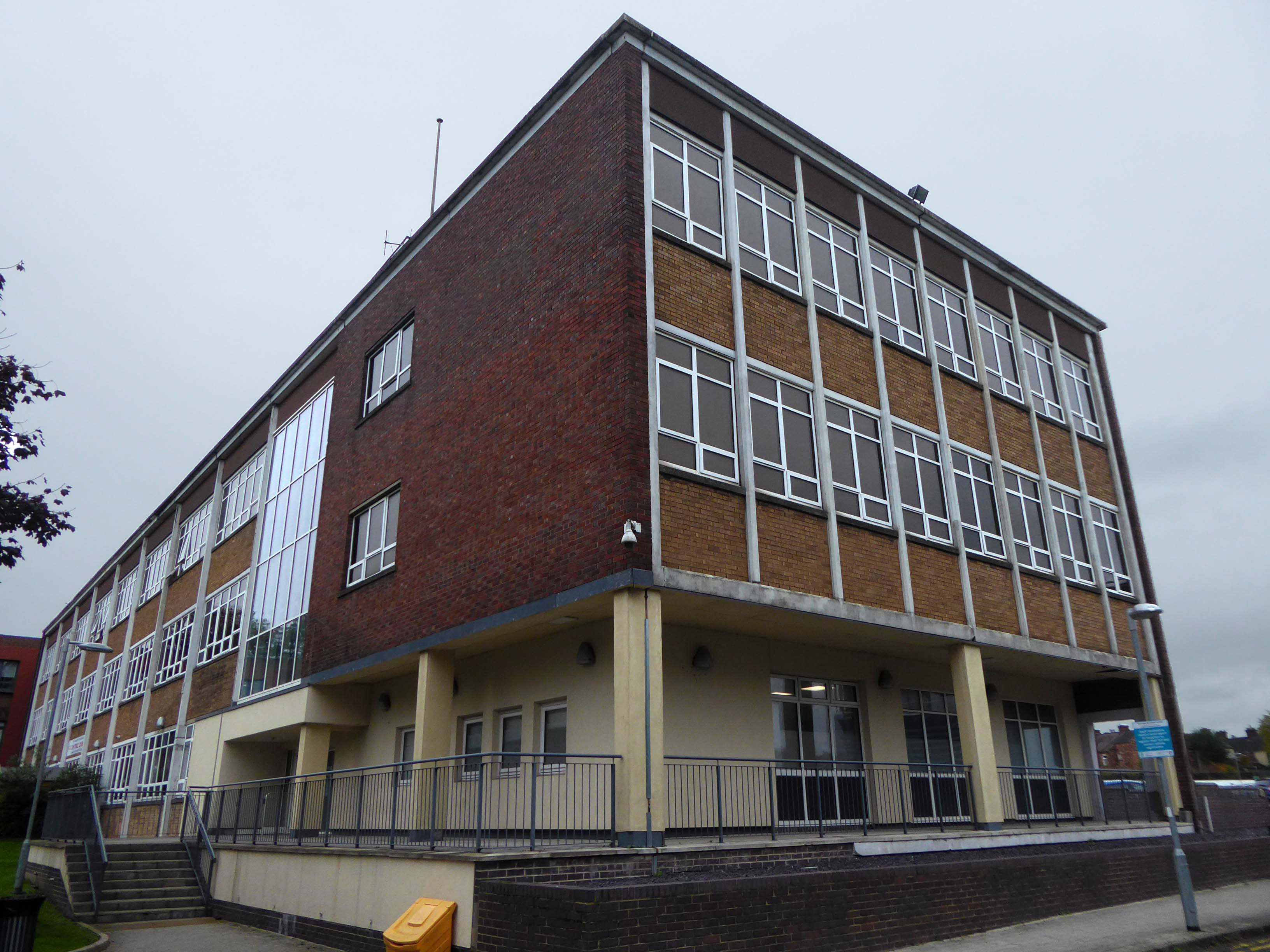
Walking towards Hanley we come upon the newly built Stoke on Trent College and Sports Academy.

Only one block of the original build remains.

Photograph – 28 Days Later

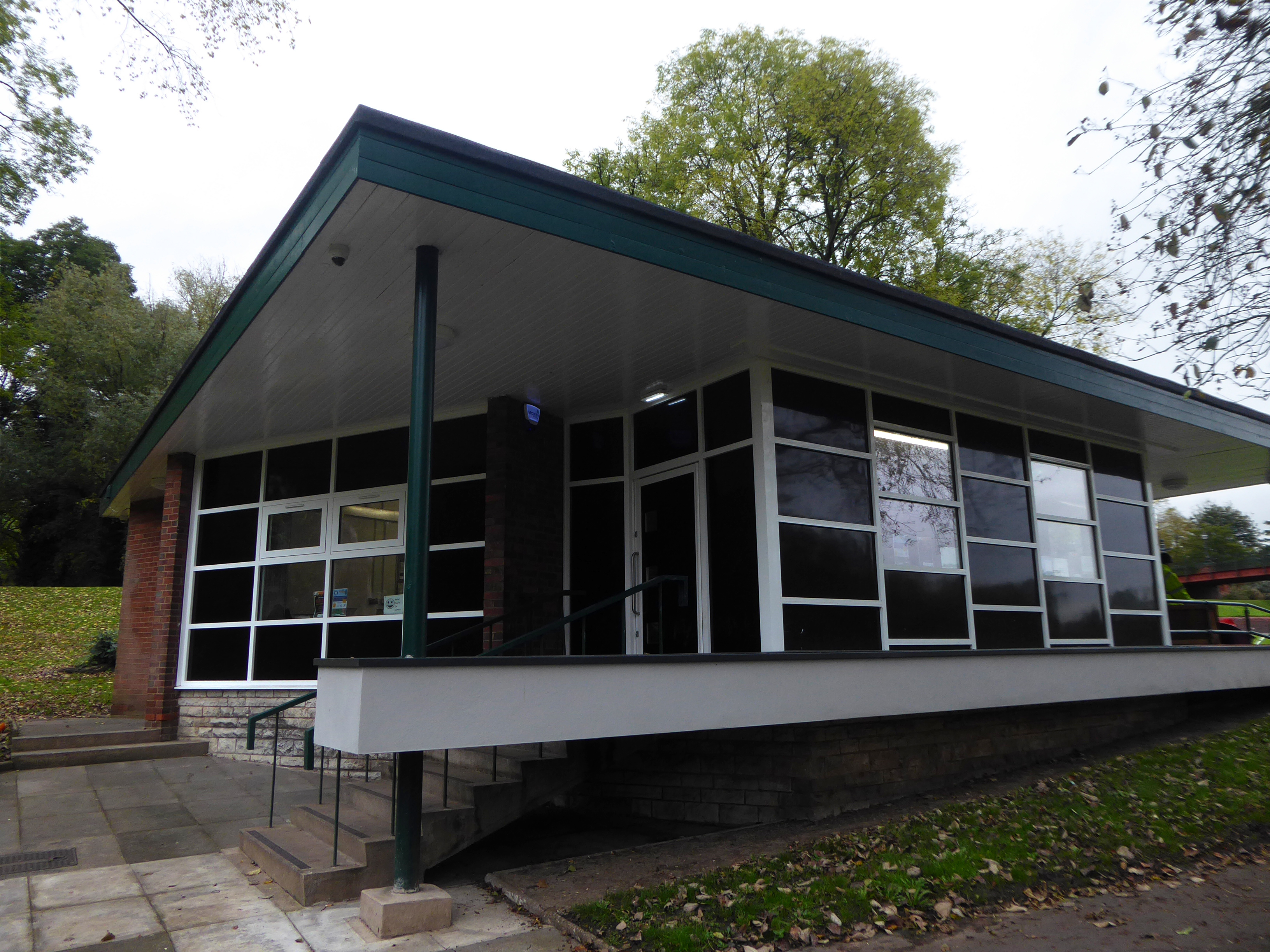
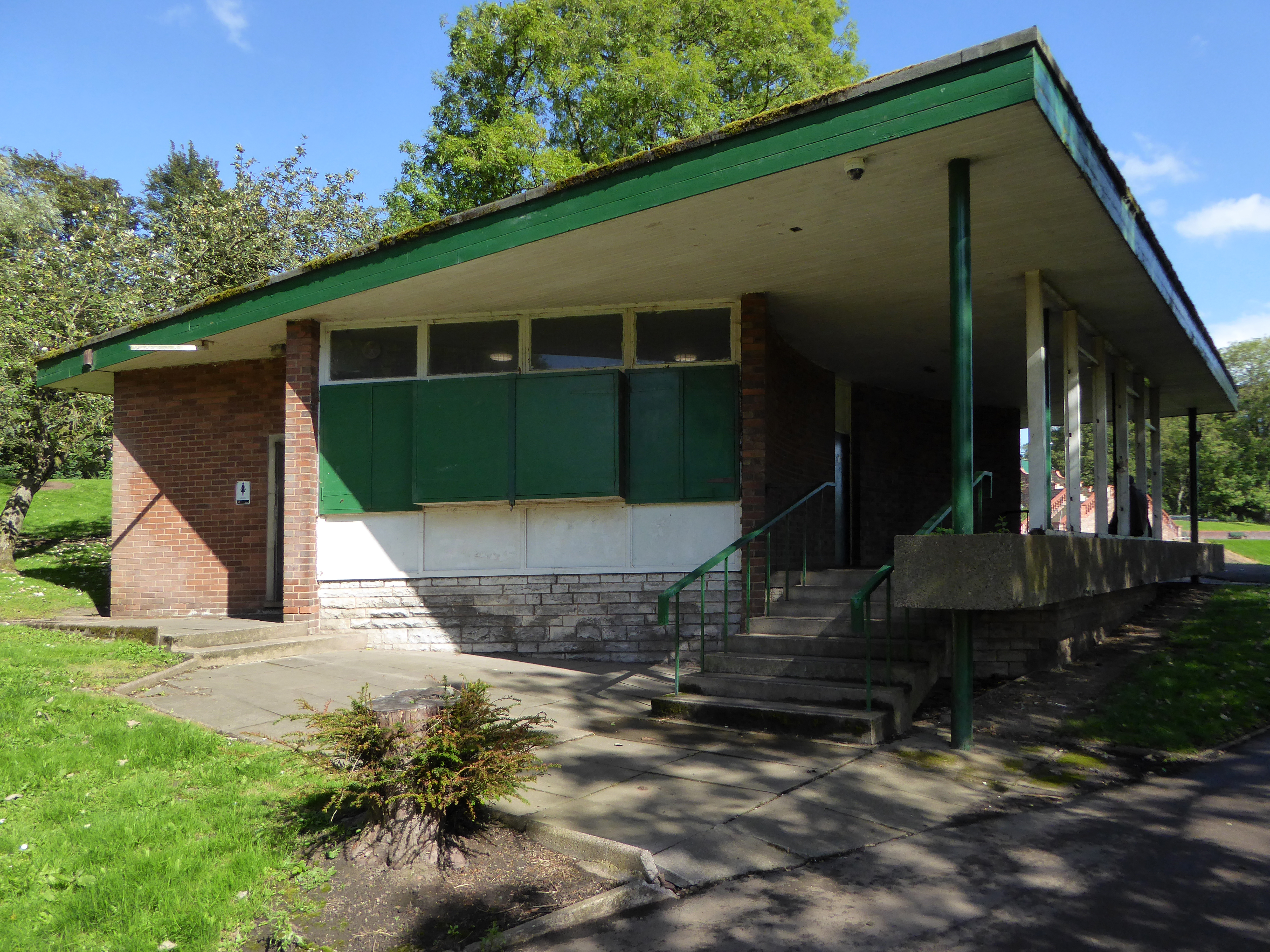
Tucked away in Hanley Park is this period building.

It has been refurbished and the walkway enclosed since my previous visit.

hanley park was laid out in the 1890s by Thomas Hayton Mawson the pavilion of 1896 is by his associate Dan Gibson.

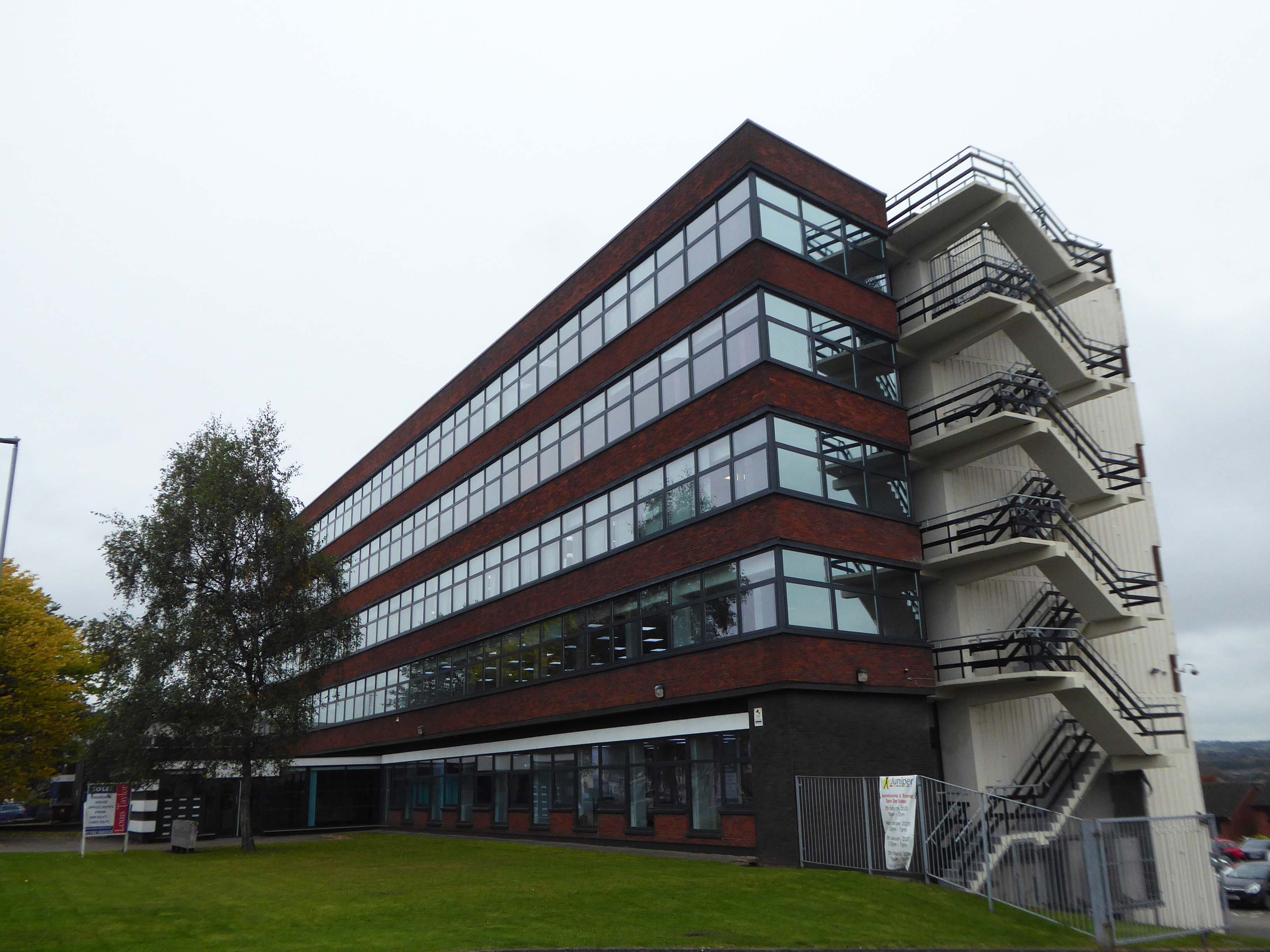
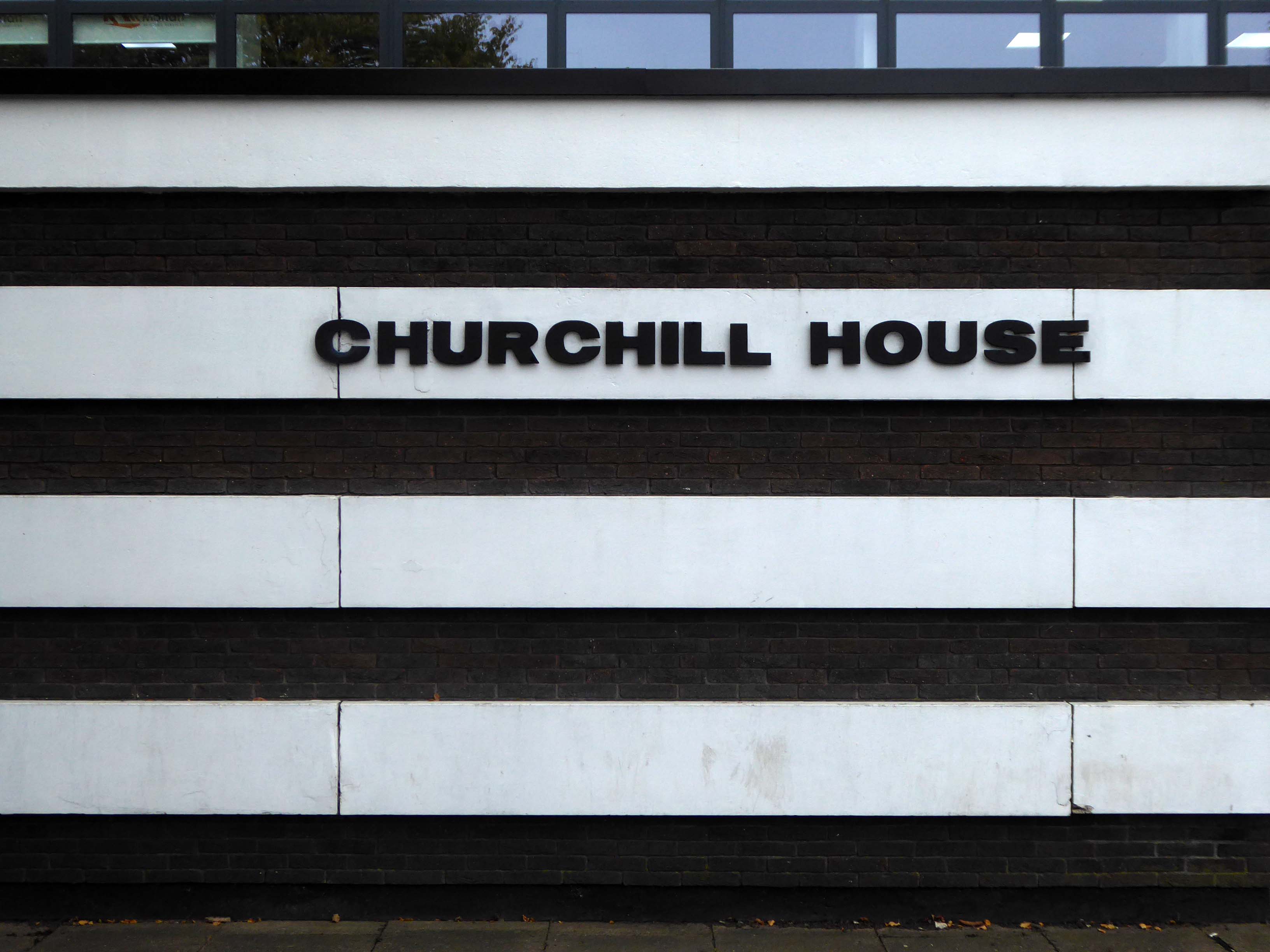
Further along the way we come upon Churchill House with its distinctive fire escape.

And original architectural signage.

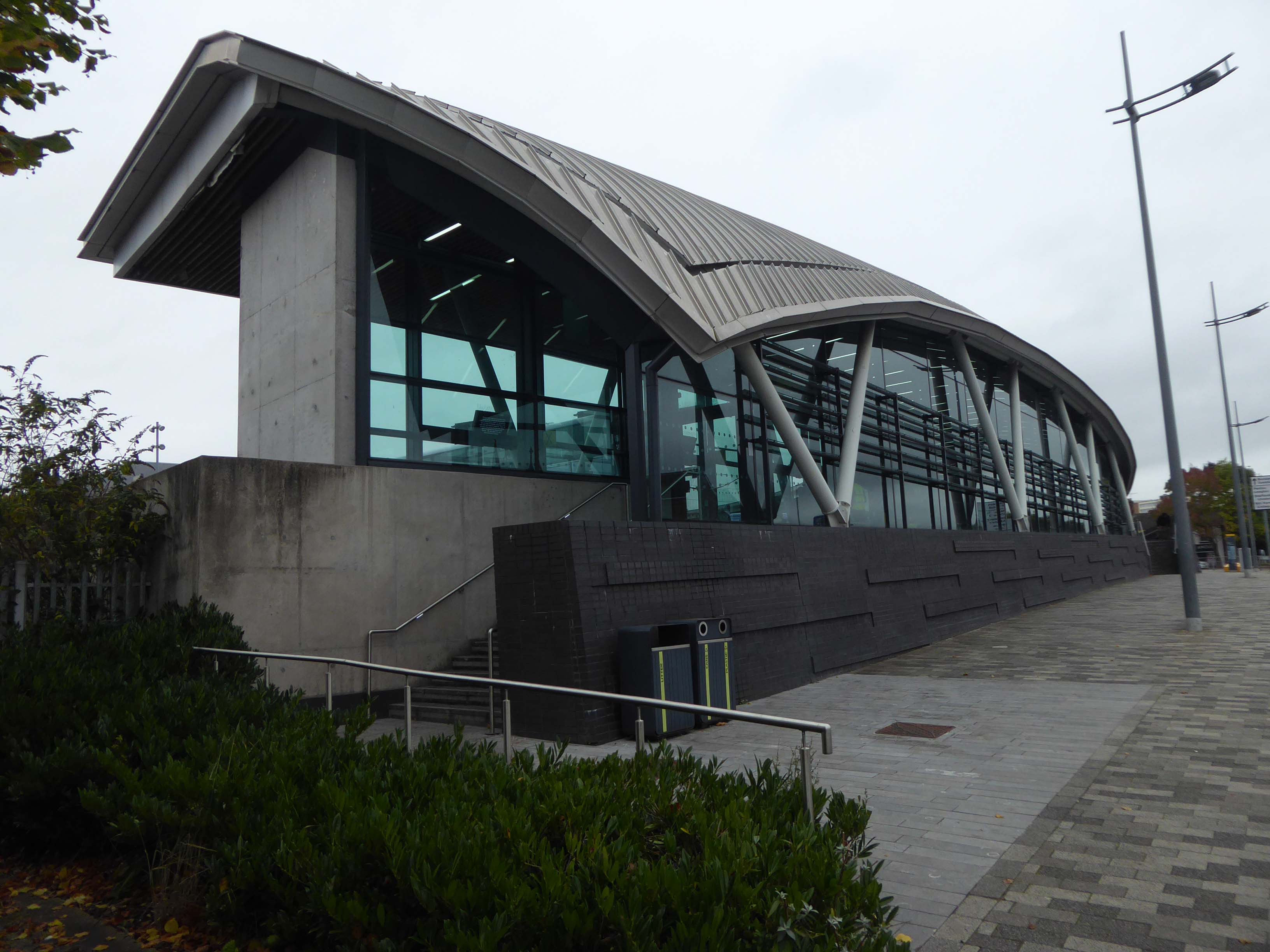
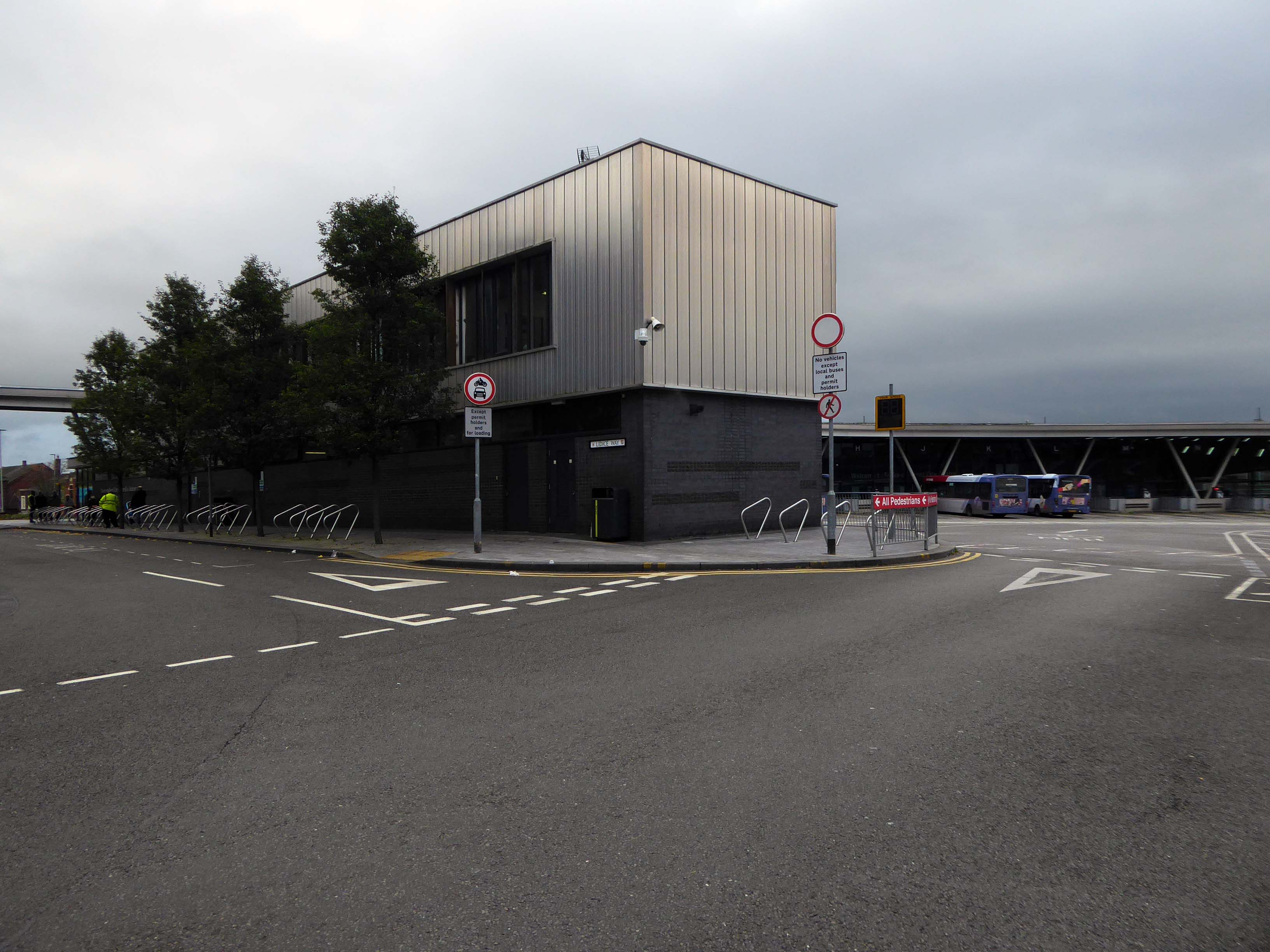
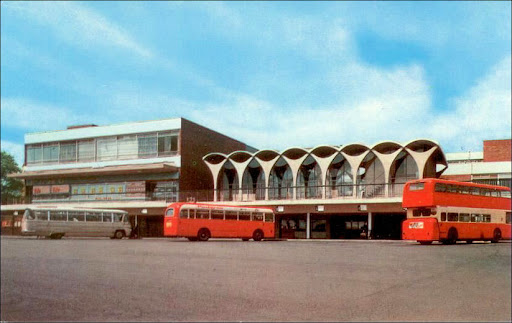
Crossing the inner ring road to the sweeping canopy of the Hanley Bus Station Architects Grimshaw engineers Arup.

Wrapping a corner site, the canopy rises and falls to create a mutable form: appearing as a shimmering, contemporary shield to the south, and a welcoming timbered environment to the north with sweeping views to Victorian Hanley.

Tapered down at the ends to shelter waiting passengers from the prevailing wind, the roof extends beyond the station edge to connect with the neighbouring public plaza.

Sitting atop a Staffordshire blue brick plinth with a Carlow blue limestone concourse, the station adopts materials that are resonant in this area. Its gracefully sweeping canopy belies the challenging site constraints, which were carefully resolved to accommodate the difficult routing of buses, the creation of a safe, sheltered environment for passengers and drivers, and a sloping site underpinned by clay and coal.

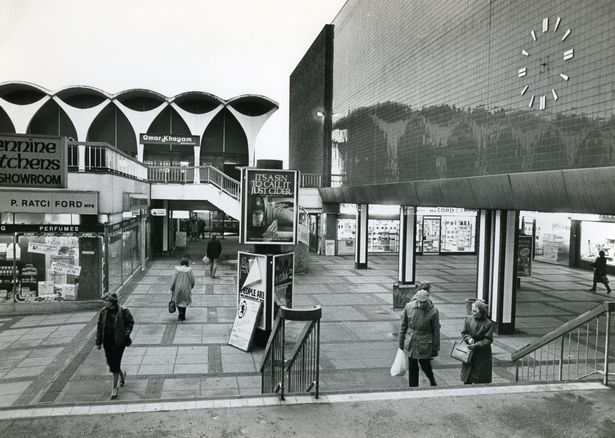
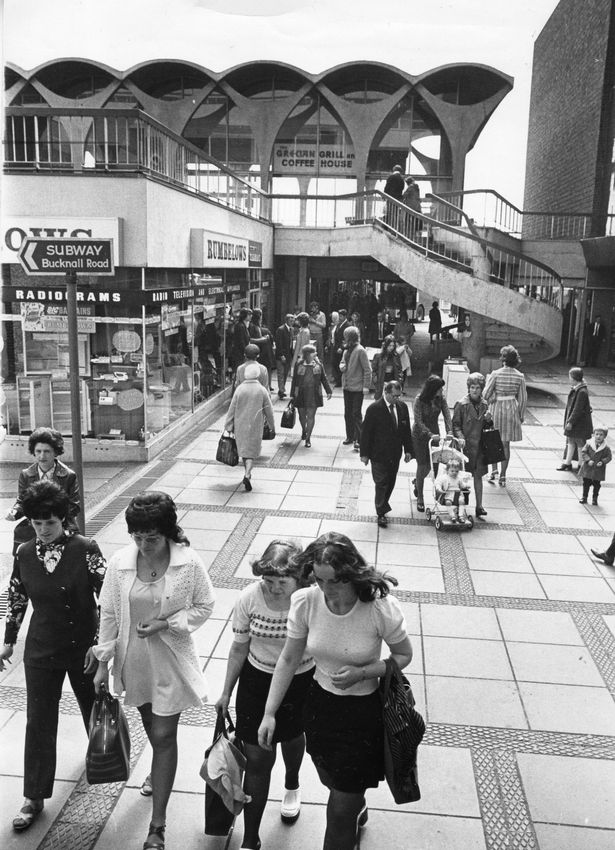
The former bus station and precinct long gone.

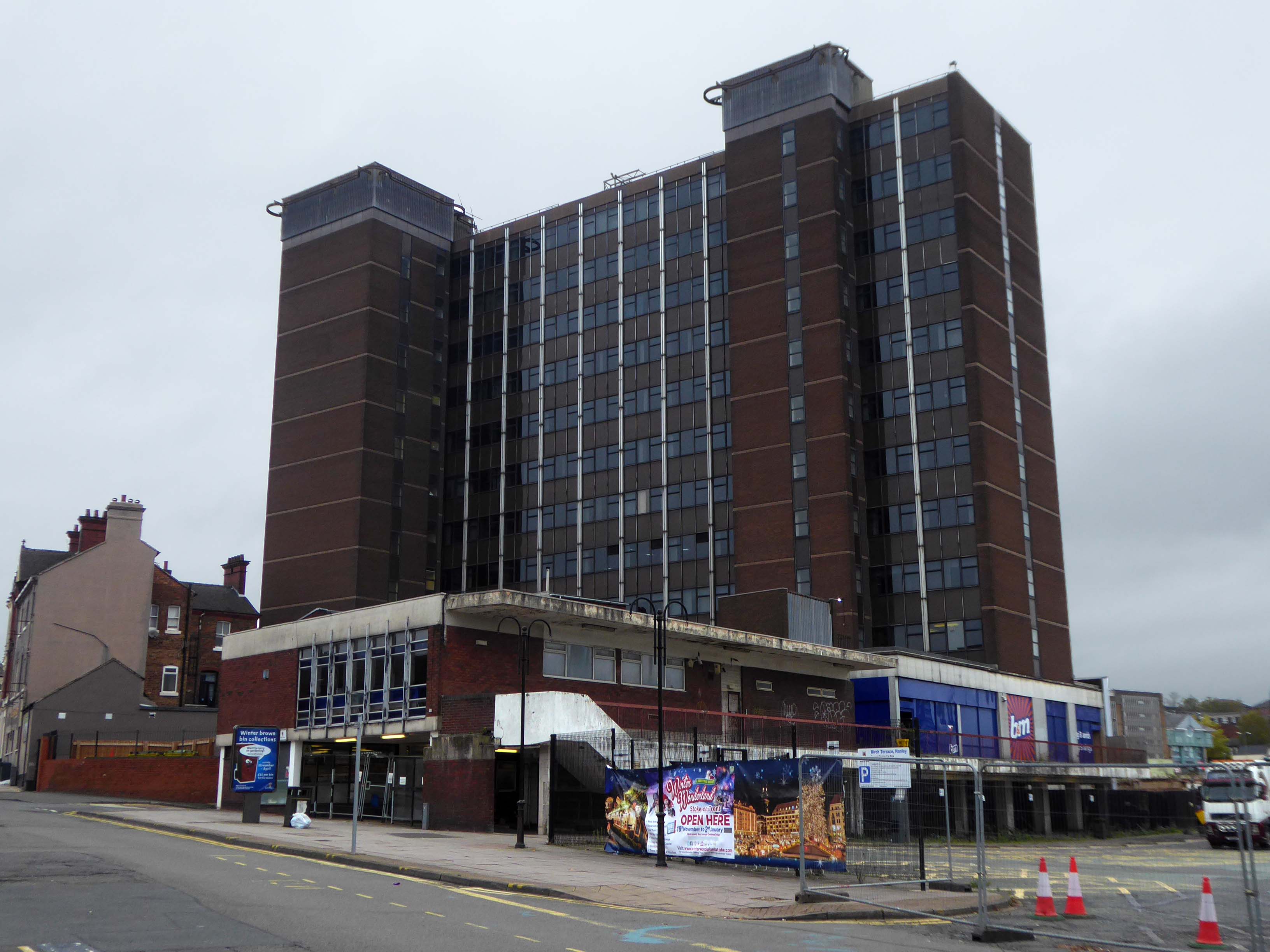
Above the former bus station looms Blackburn House home to HMRC, an imposing brown brick behemoth.

Photo James Morgan

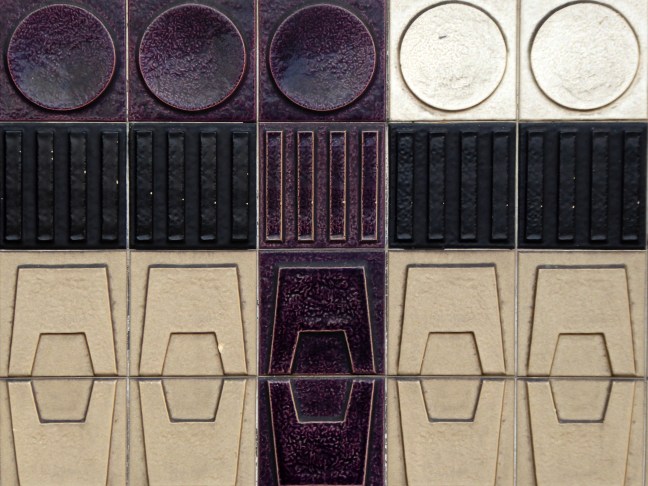
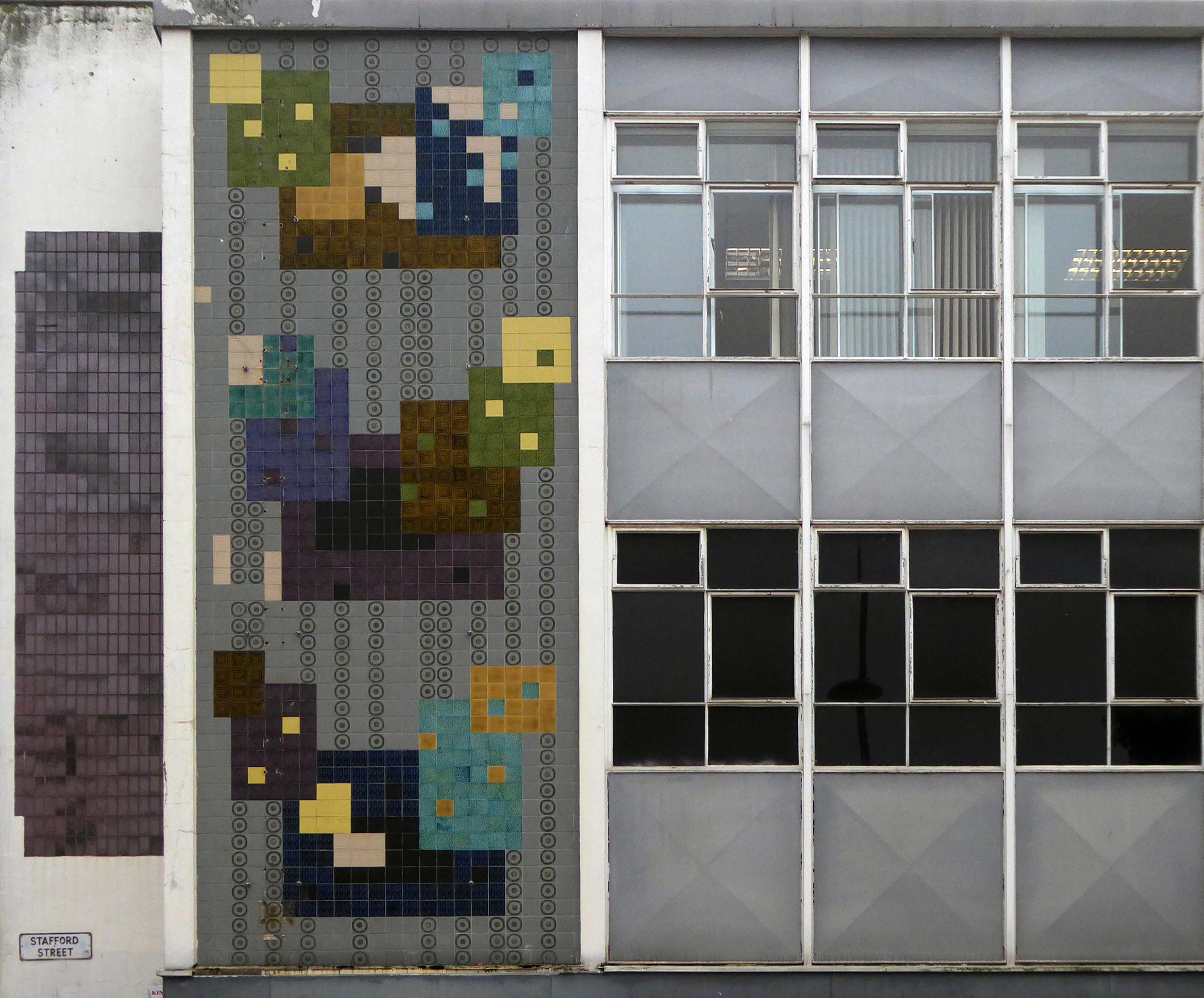
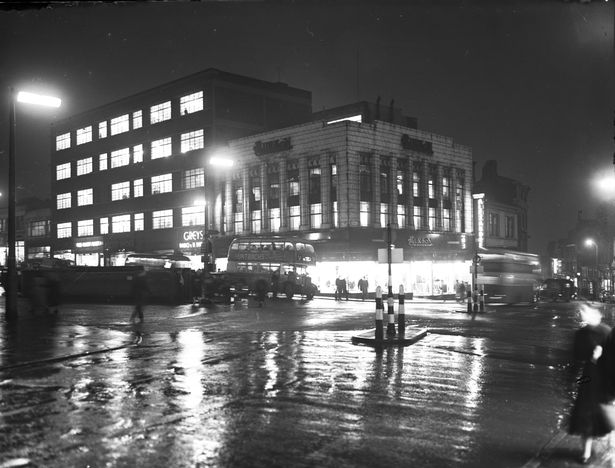
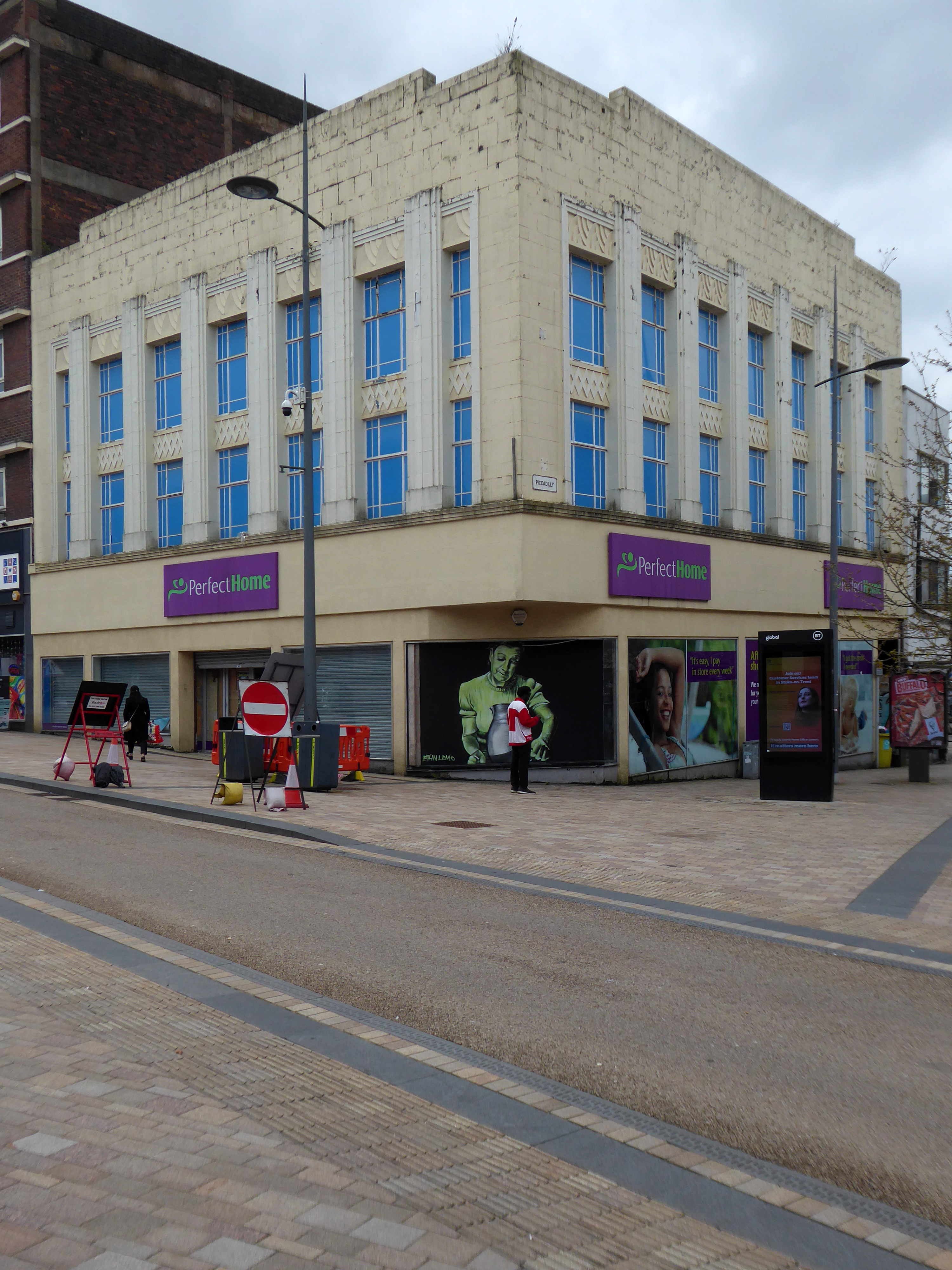
Previously C&A currently Wilko – adorned with these enchanting Tiles.

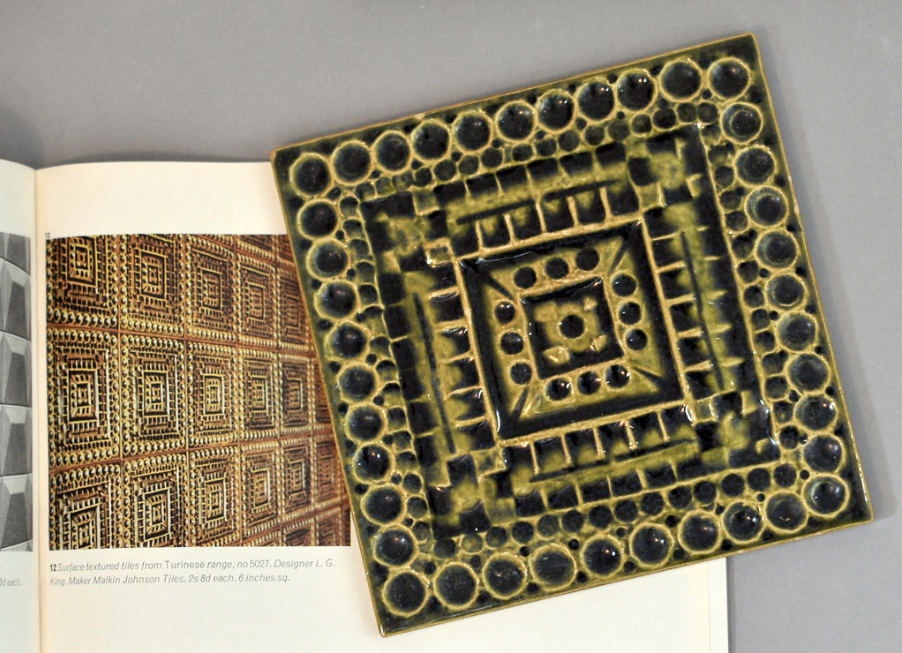
This little-noticed panel is composed of six inch surface-textured tiles in a variety of muted tones, mainly greens, purples and blues, some with geometric reliefs. The mural is unusual because it is one of the few surviving installations produced by Malkin Tiles; at least one of the motifs is from their ‘Turinese’ range marketed during 1961-8 and designed by Leonard Gladstone King, Malkin’s art director.

Tile Gazetteer

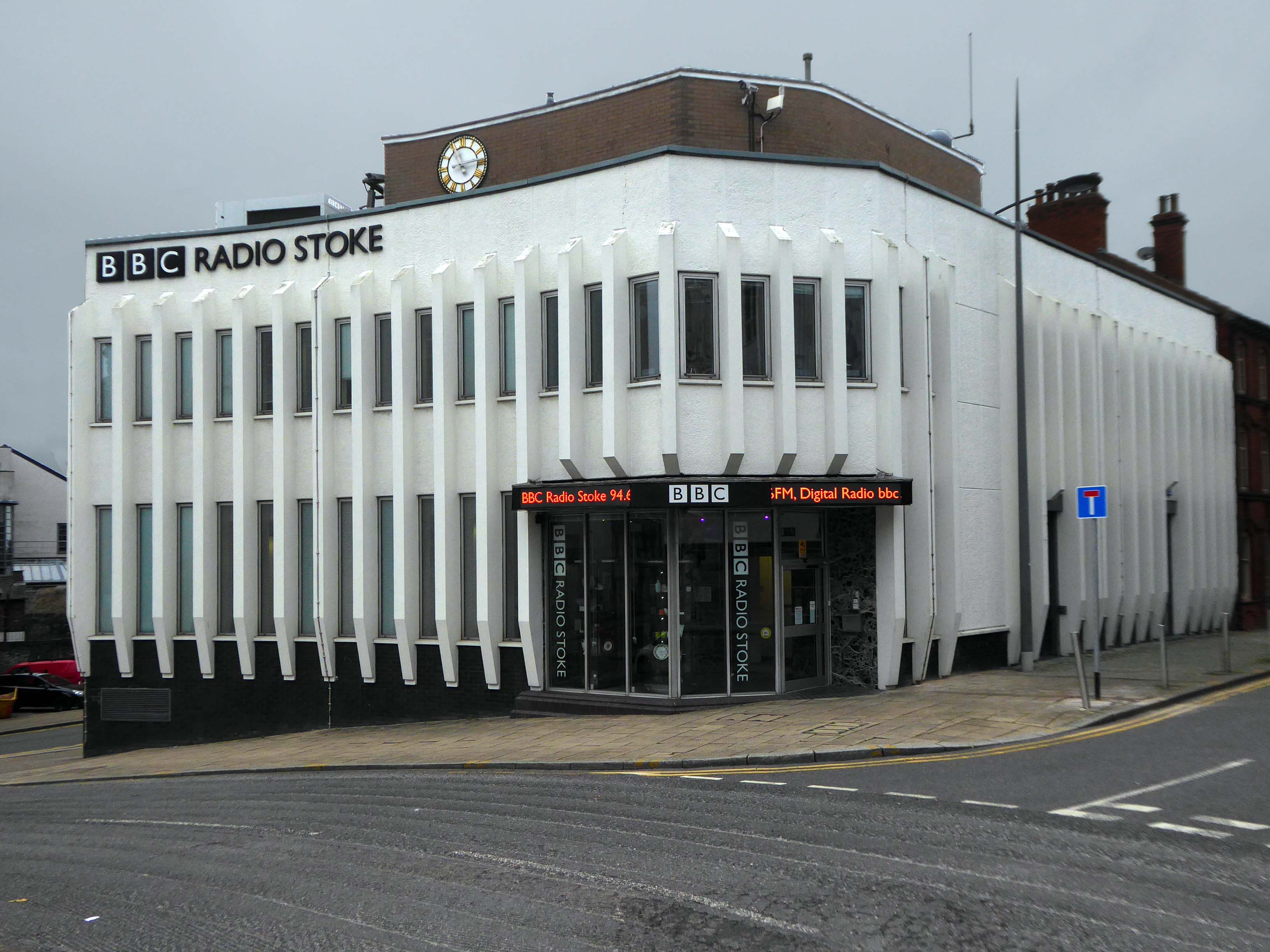
Over the road Radio Stoke HQ 1968 – formerly home to Hanley Economic Building Society.

Crossing back through town and over the ring road to look at some tiles.

Malkin Tiles of Burslem

Attached to some towers.

Surrounded by housing.

But missing this bridge – which was demolished in 2020.

Back into town again to look at the Burton’s.

Photo: Stoke Sentinel

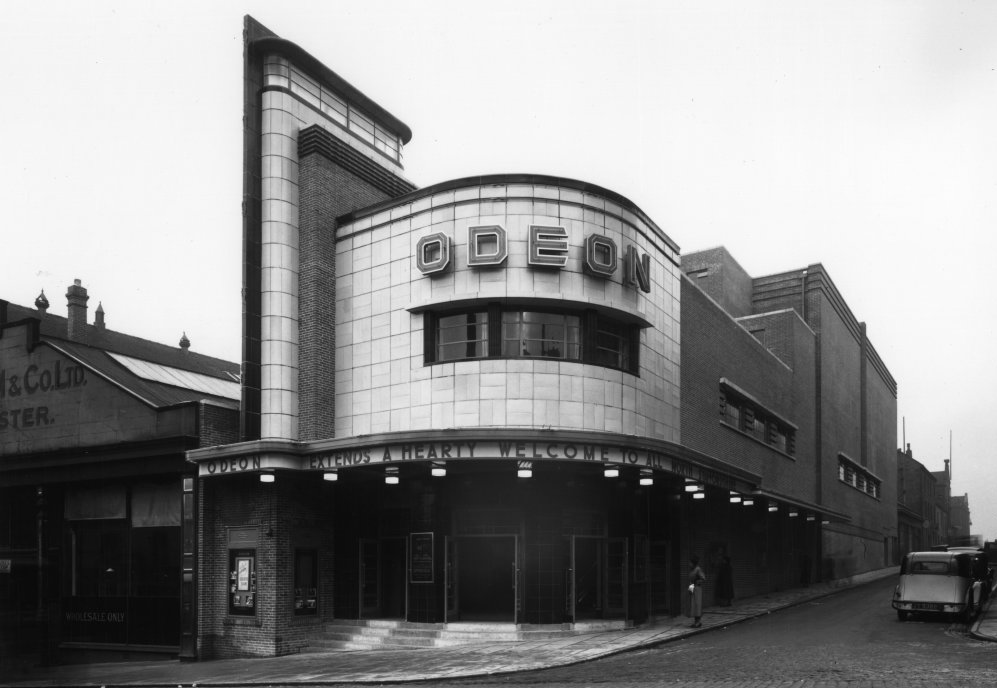
Odeon Cinema – architects: Arthur J Price and Harry Weedon 1938

The Odeon was one of the original cinemas in the Oscar Deutsch chain of Odeon Theatres Ltd. It was opened on 13th February 1938 with Max Miller in “Educated Evans”. It had a very small entrance at the corner of Trinity Street and Foundry Street, with a slender fin tower on the left side, and clad in cream faience tiles. The bulk of the auditorium was along Foundry Street, and seating was provided for 1,036 in the stalls and 544 in the circle. Decoration was in a typical Odeon style, with several troughs across the ceiling containing concealed lighting.

The Odeon was closed by the Rank Organisation on 15th November 1975 with Roger Daltrey in Tommy. The auditorium decoration was stripped out in the early-1980’s, and by 1982 it was used for storage, when on 4th August 1982, it was partially damaged in a fire, although the main shell of the building was not damaged. By 1991, the building was standing derelict.

By 1999, a bar was operating in the former foyer area. By 2003, the former auditorium had been brought back to use as a Chicago Rock Café. In 2008, the building had become a bar & nightclub named Revolution, with the former foyer in use as a bar named The Base.

In December 2021 plans were announced to demolish part of the former Odeon Theatre to build flats.

Cinema Treasures

Photo: RIBA Pix 1937

Next door the former Stoke Sentinel newspaper offices.

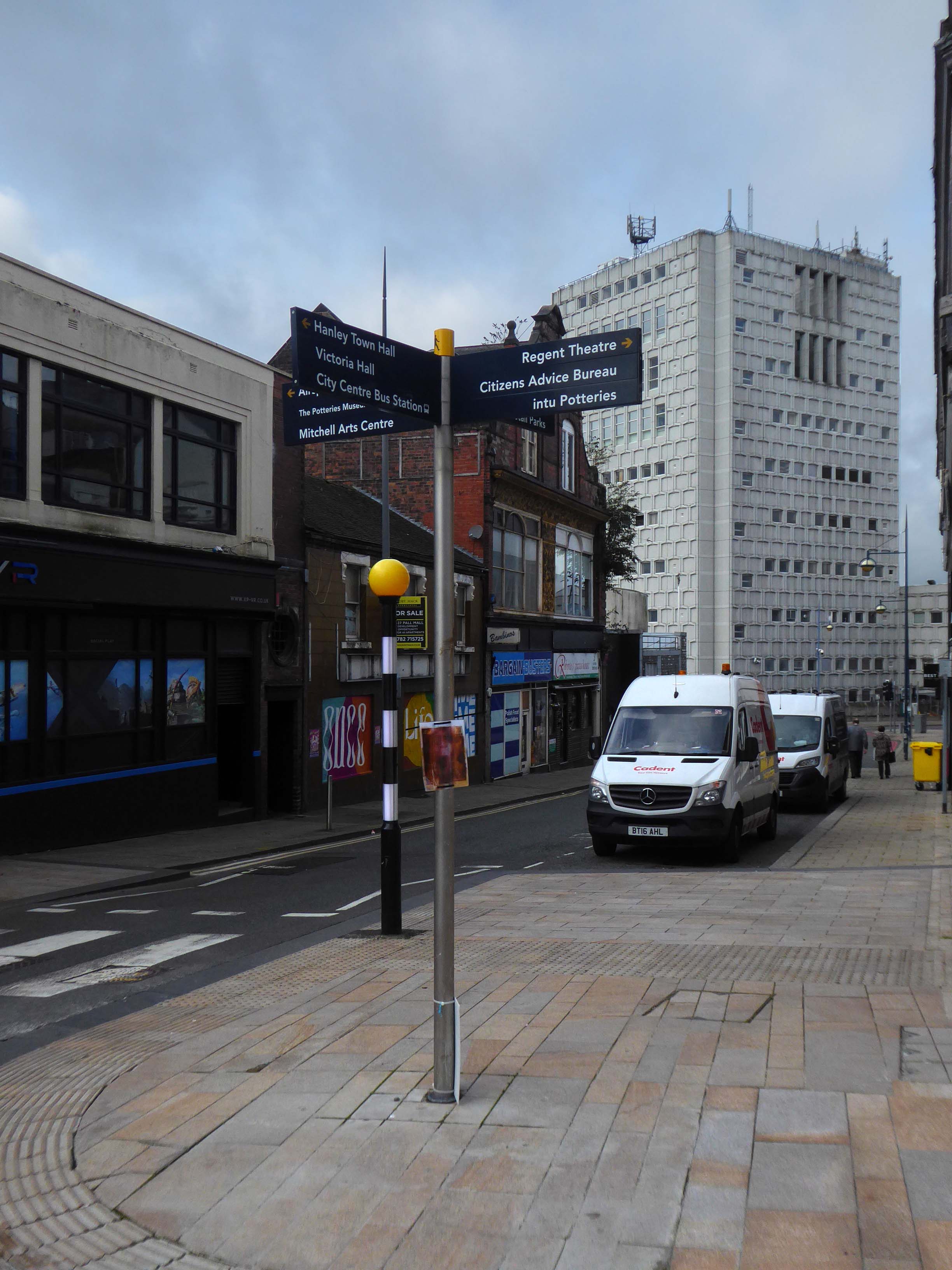
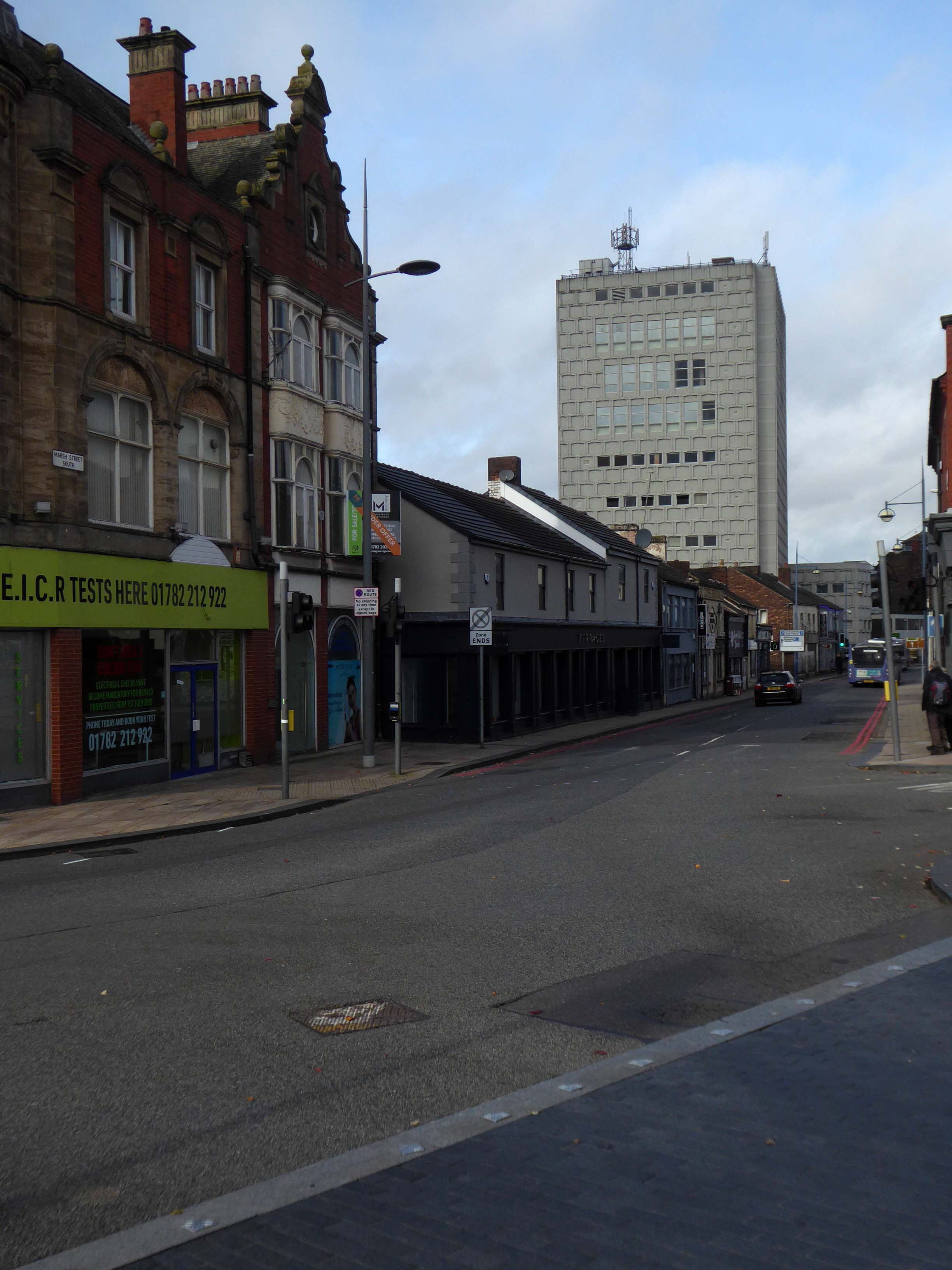
You simply cannot miss the BT Hanley Tower.

And its elderly listed relation of 1900.

Up toward the Potteries MuseumJR Piggott City Architect 1956.

It has undergone extensive exterior reworking by Wood Goldstraw Yorath

Including the brick mural Industries of the Potteries 1981 Sculptor: G H Downing Designer: Frank Murrier

And recent extension of 2021.

Designed by Glancy Nicholls Architects, the team worked collaboratively through the SCAPE framework to design a 3,800 square foot extension. The facility includes bespoke structural glazing, which enables the Spitfire to be viewed from outside of the museum.

Morgan Sindall Construction

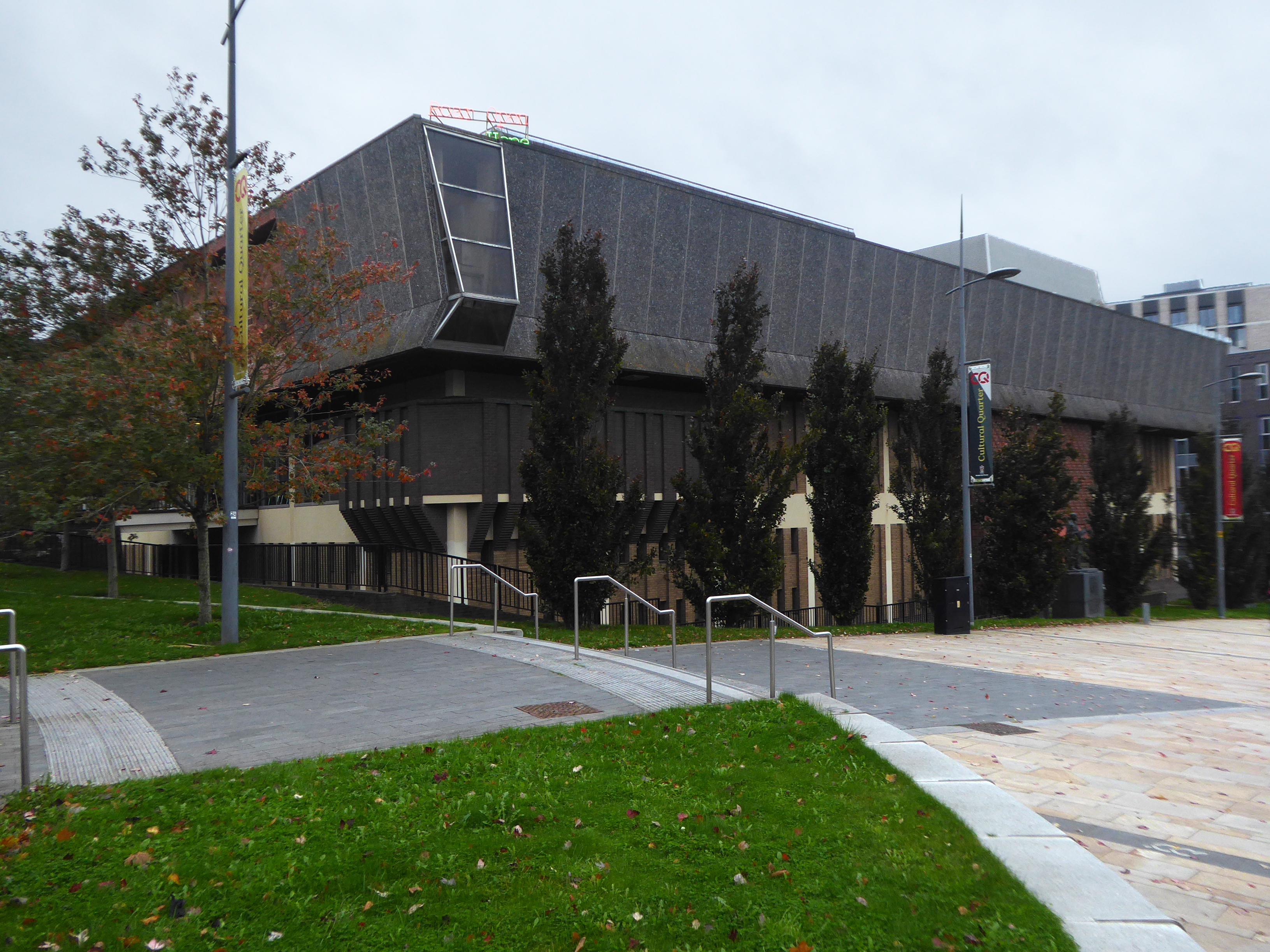
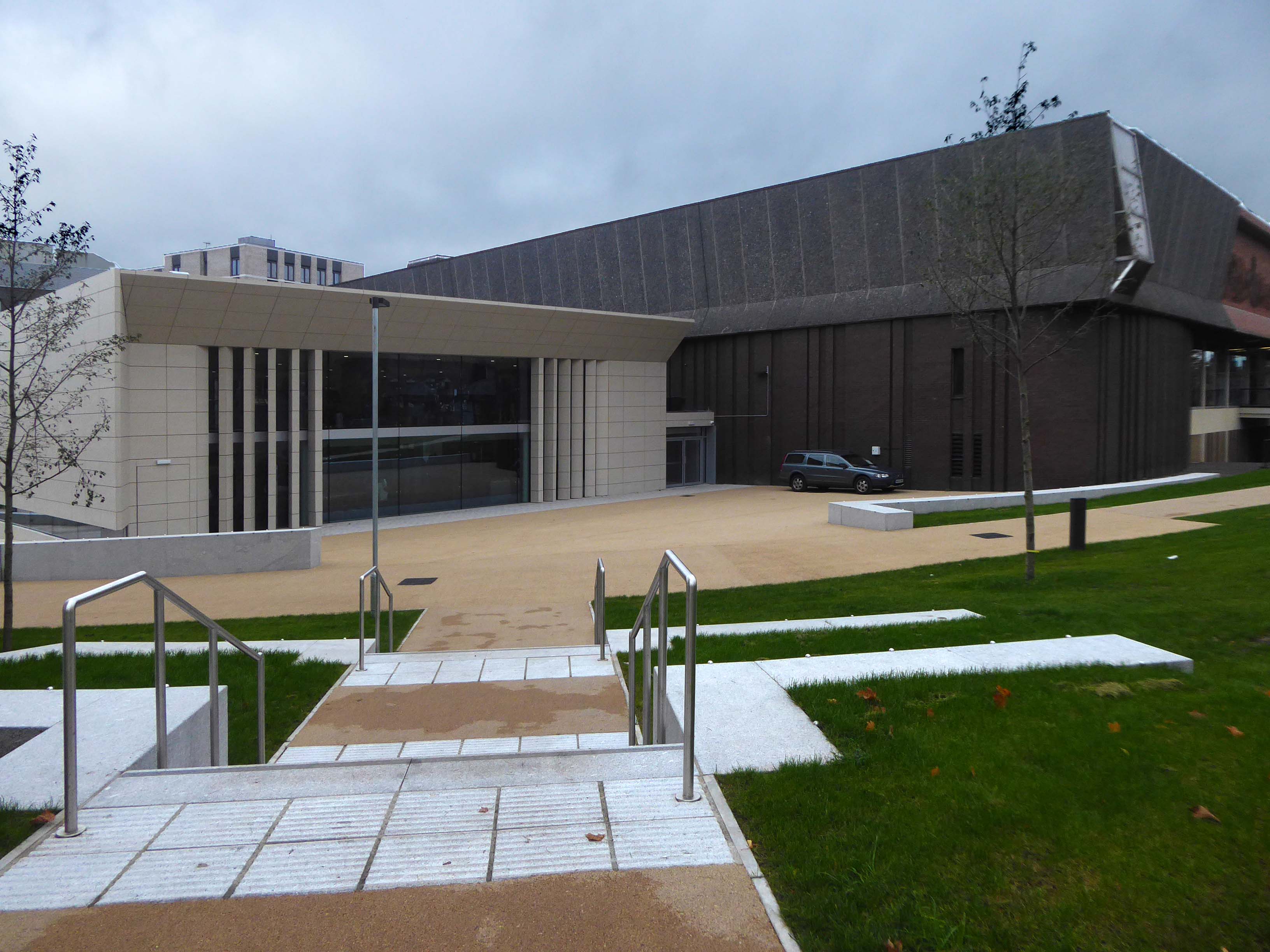
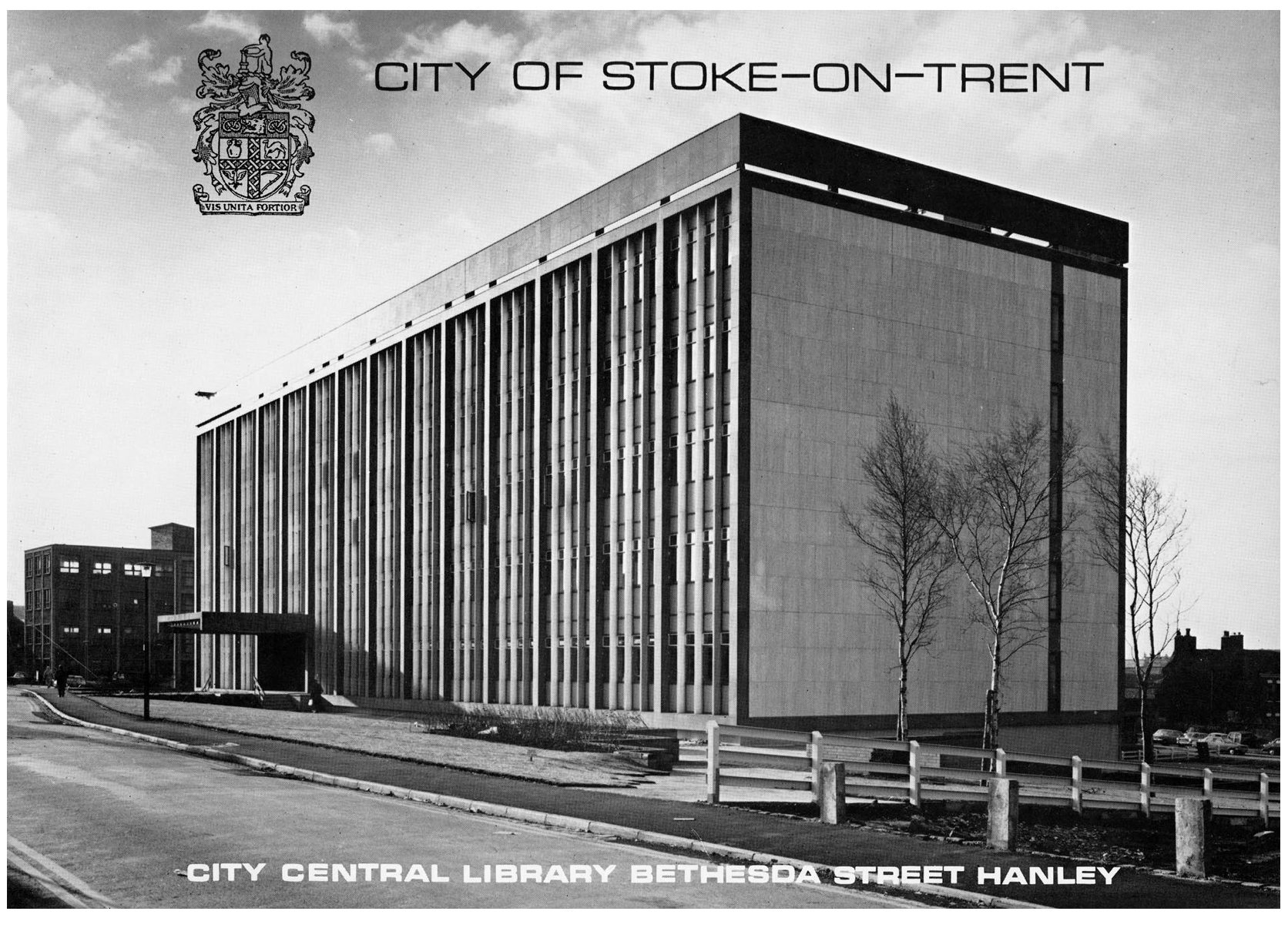
Next door the City Library and Archive 1968-70 by JW Plant City Architect.

The Archive is moving next door to the Museum.

With its its ultra smart relief out back and around the front cantilevered canopy.

Next door the former Cop Shop with the final wavy feature of the day – all yours for a cool £1,500,000

BT Hanley Tower

You’re nobody ’til somebody loves you,
You’re nobody ’til somebody cares.
You may be king, you may possess the world and it’s gold,
But gold won’t bring you happiness when you’re growing old.

Hanley GSC represents a major telecommunication facility for BT and is positioned within the City boundaries of Stoke-on-Trent, on a very congested site.

The building fabric was starting to degrade and in need of structural refurbishment.

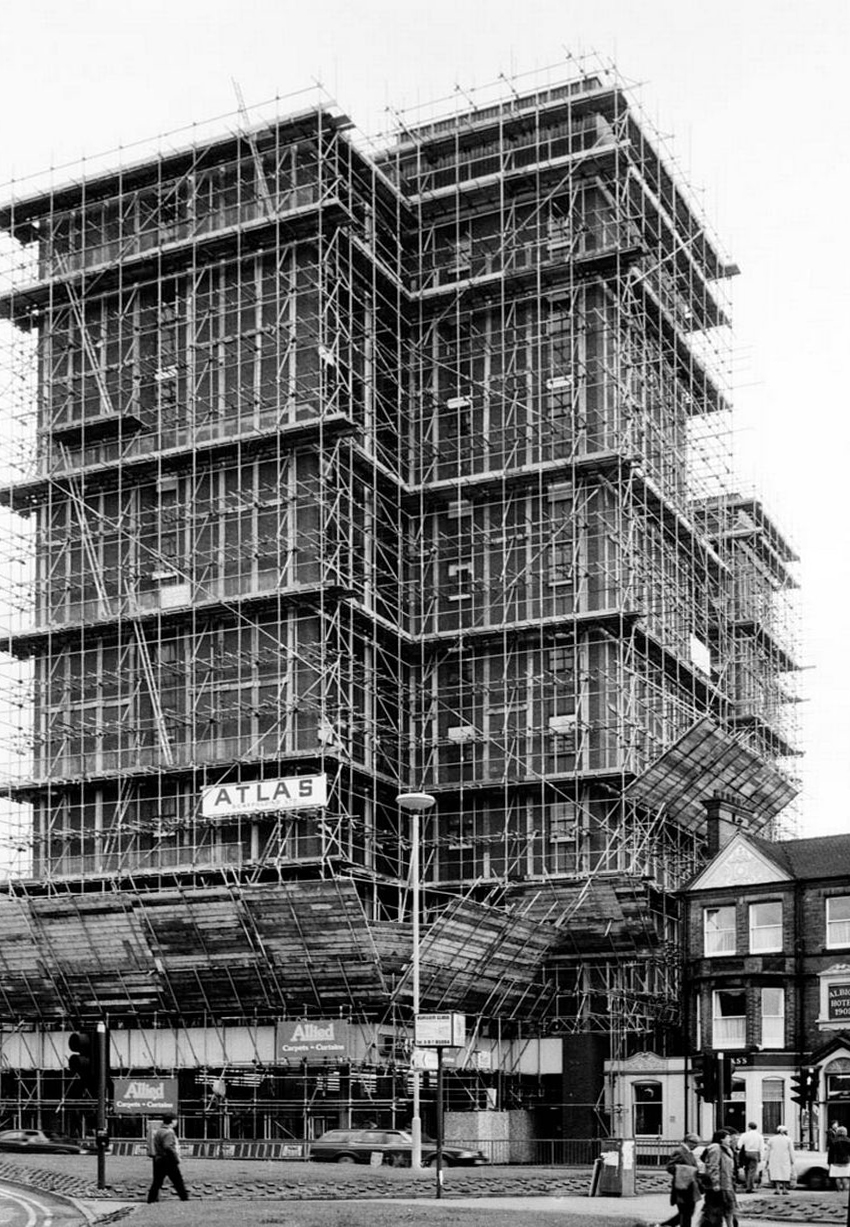
Works comprised of cleaning down the externals by high pressure water jetting, carrying out concrete repairs, applying an anti-carbonation coating, anti-corrosion treatments, painting the windows and applying sealants to windows and various joints around the structure.

All work was carried out whilst the exchange was fully manned and operational.

Works were carried outover a 26 week period, utilising mast climbers around the structure, with a limited amount of scaffolding on the low level structures.

Contract value £580,000

Makers.

Derided locally as an eyesore, currently the tallest building in town following the demolition of Unity House.

It has an antecedent as an immediate neighbour.

Former telephone exchange and offices – circa 1900.

Brick and terracotta with plain tiled roof. Eclectic style, with main block of three storeys, and three 3 narrow bays with flanking towers, all vertical spaces elongated.

The Potteries

Let’s take a look at the young upstart.

Hanley Housing

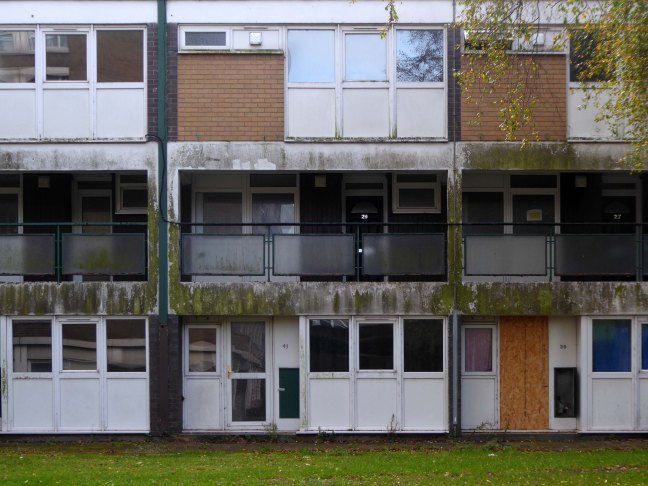
A tale of tower blocks and low rise terraces and maisonettes.

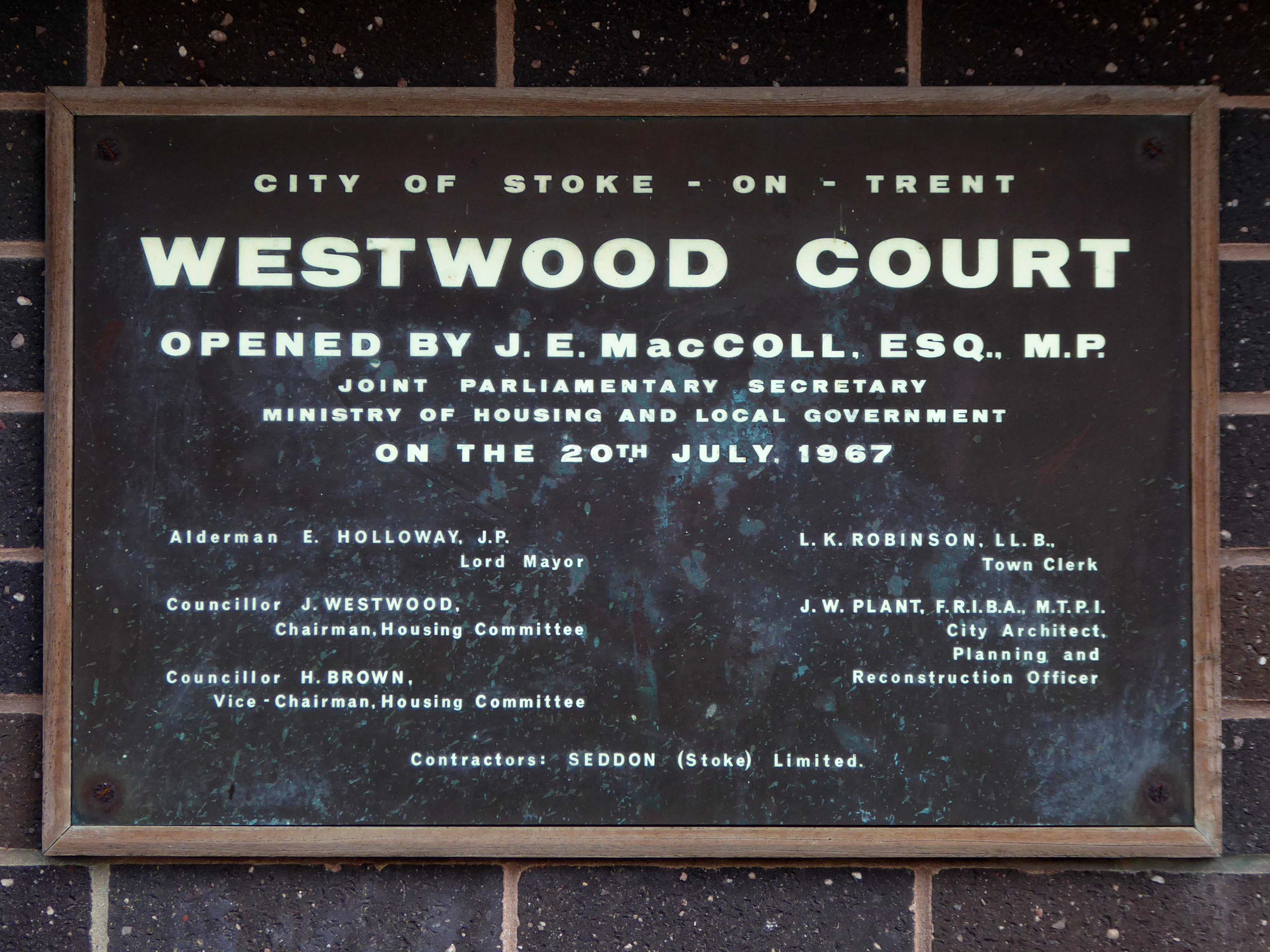
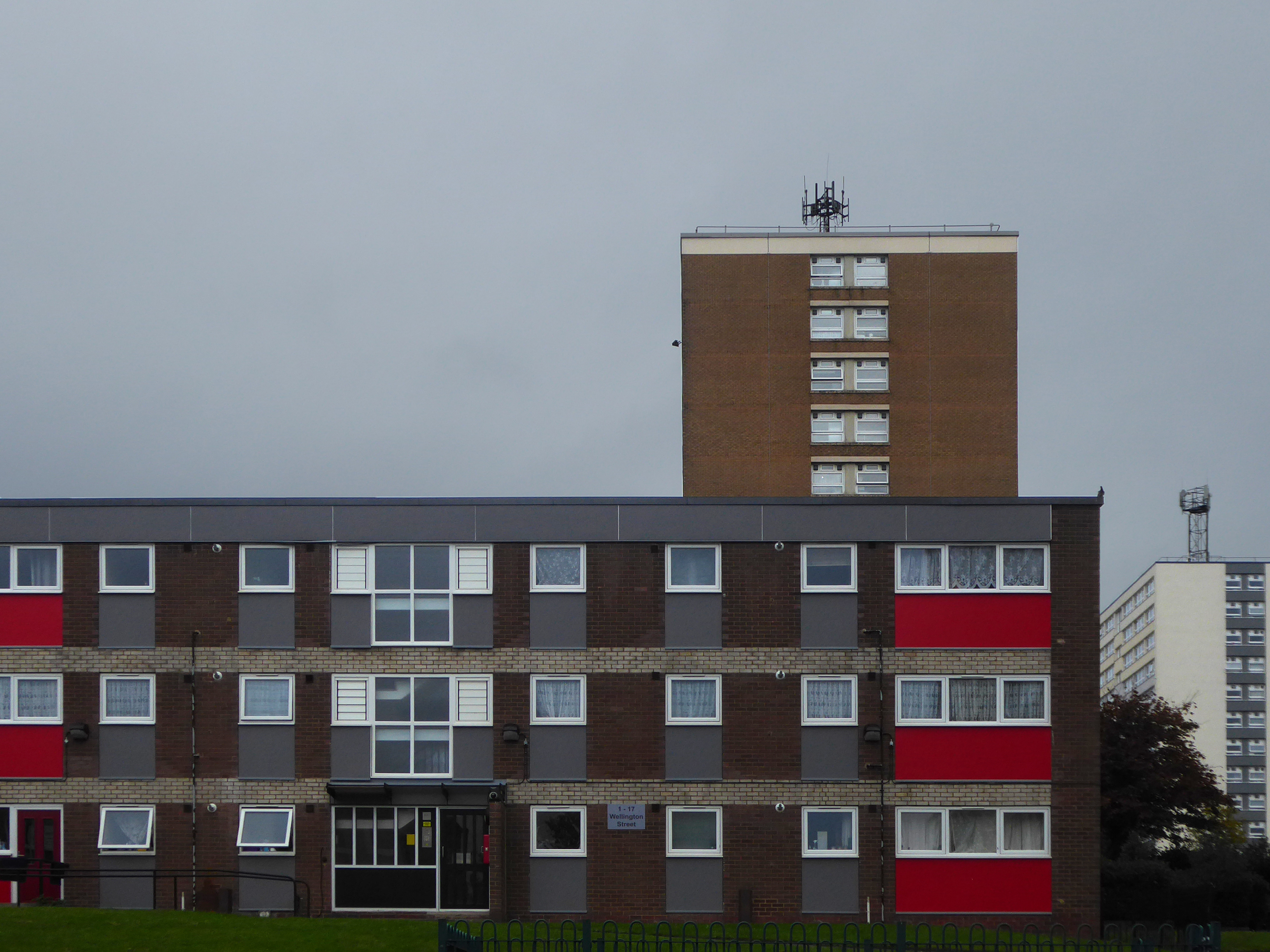
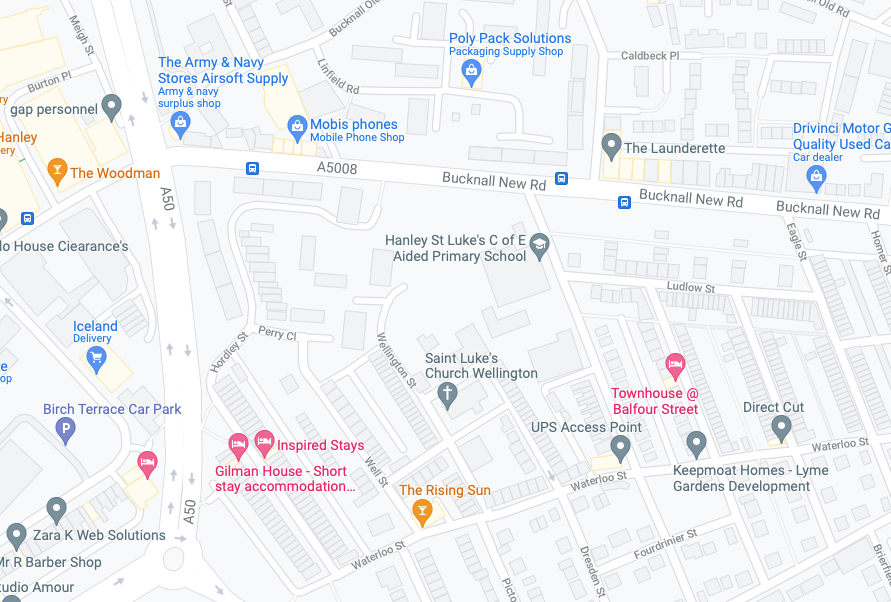
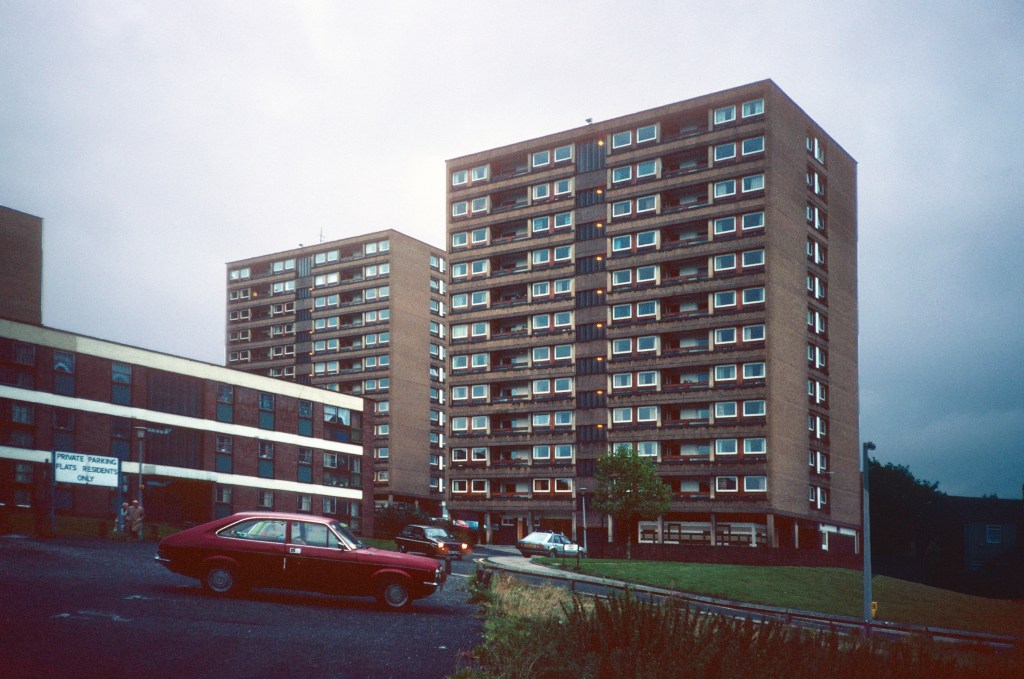
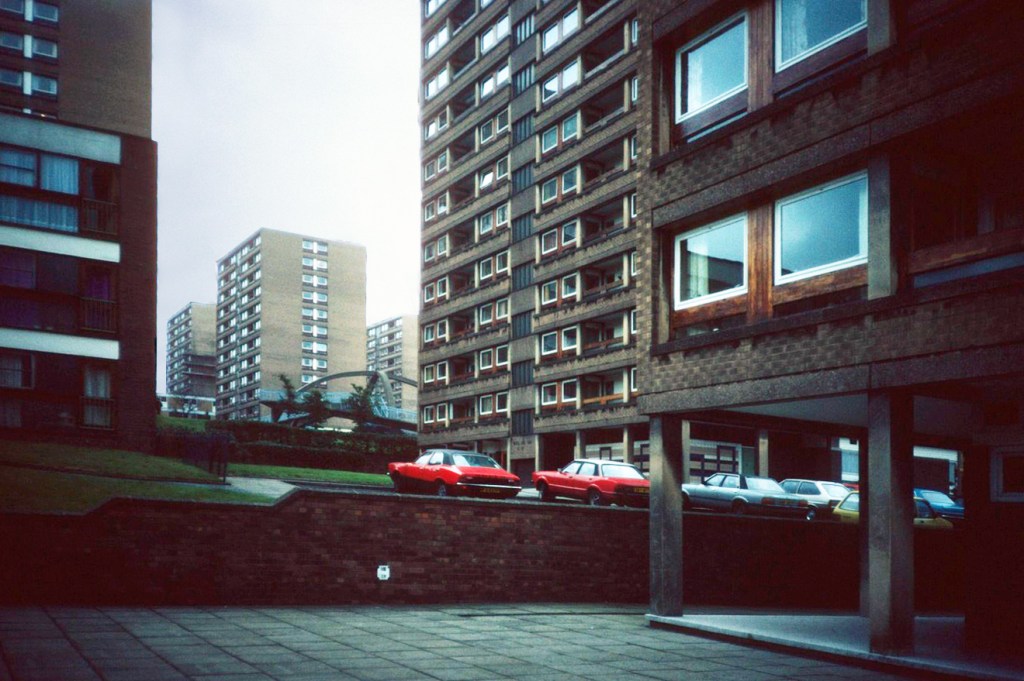
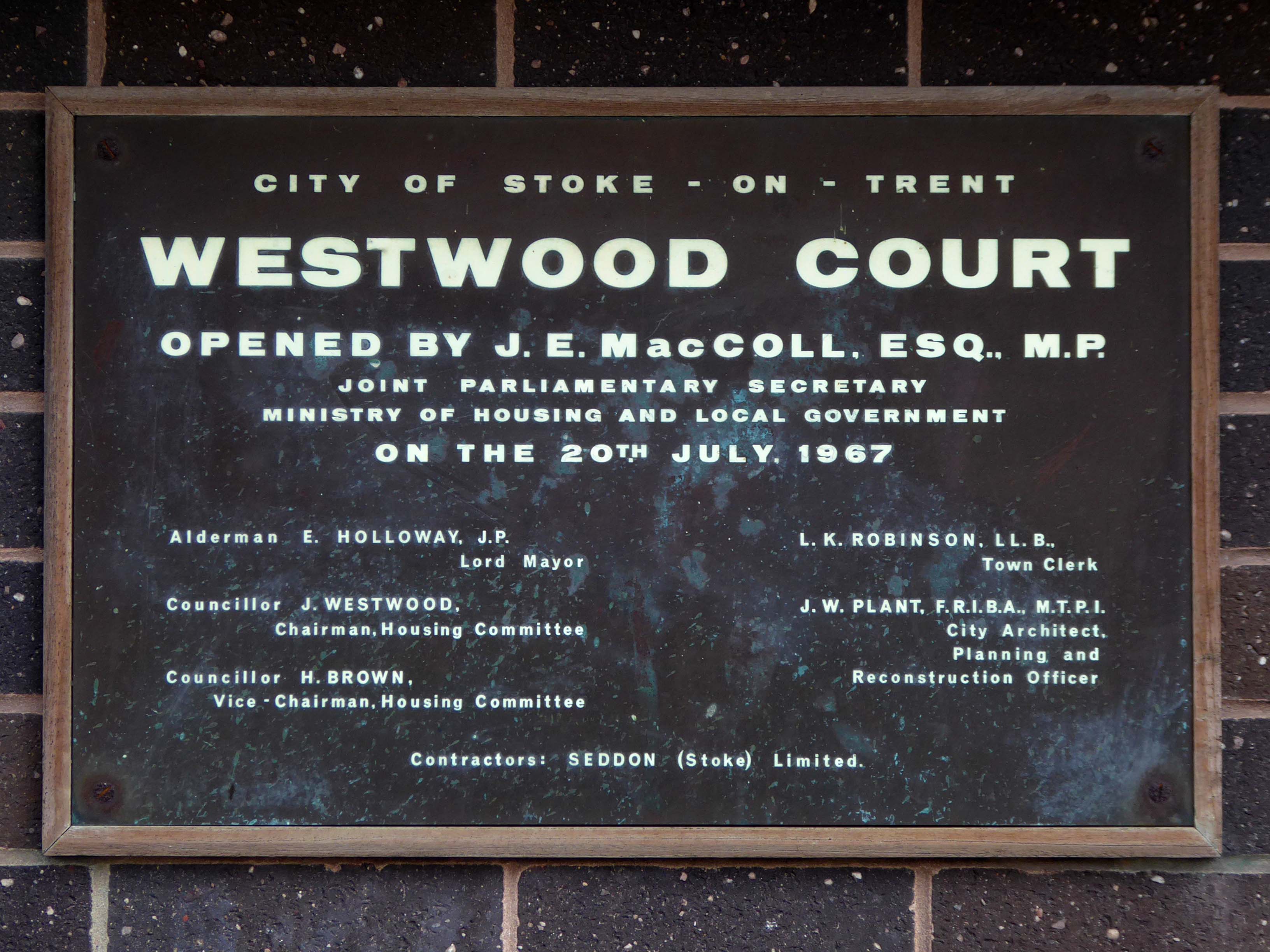
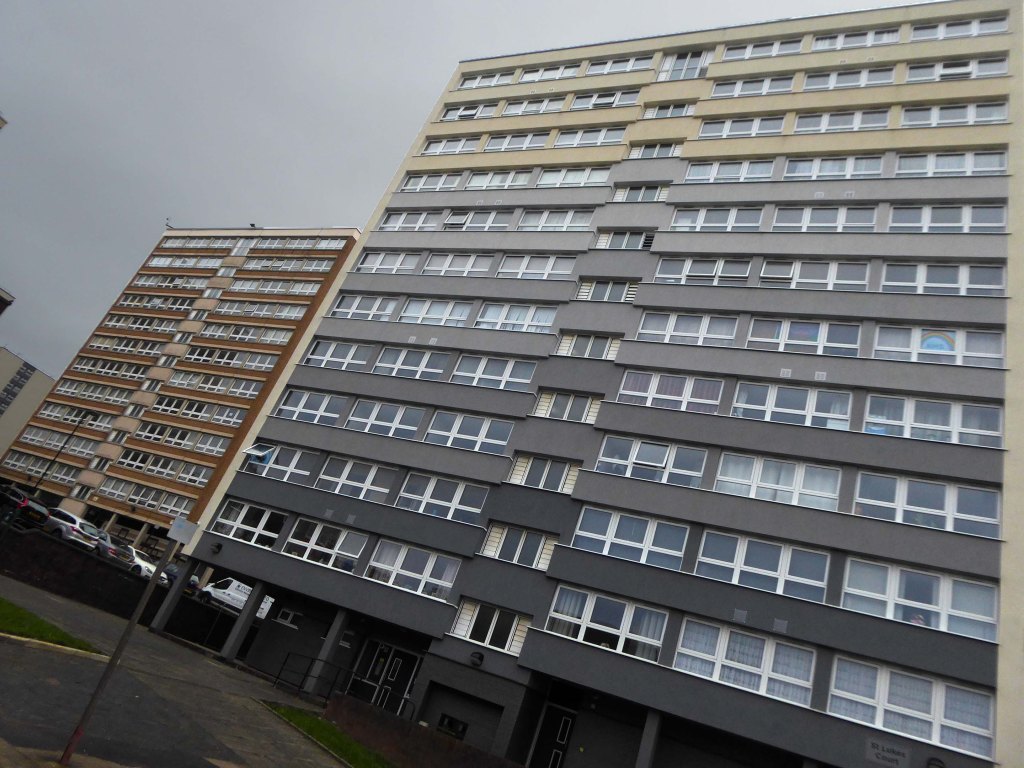
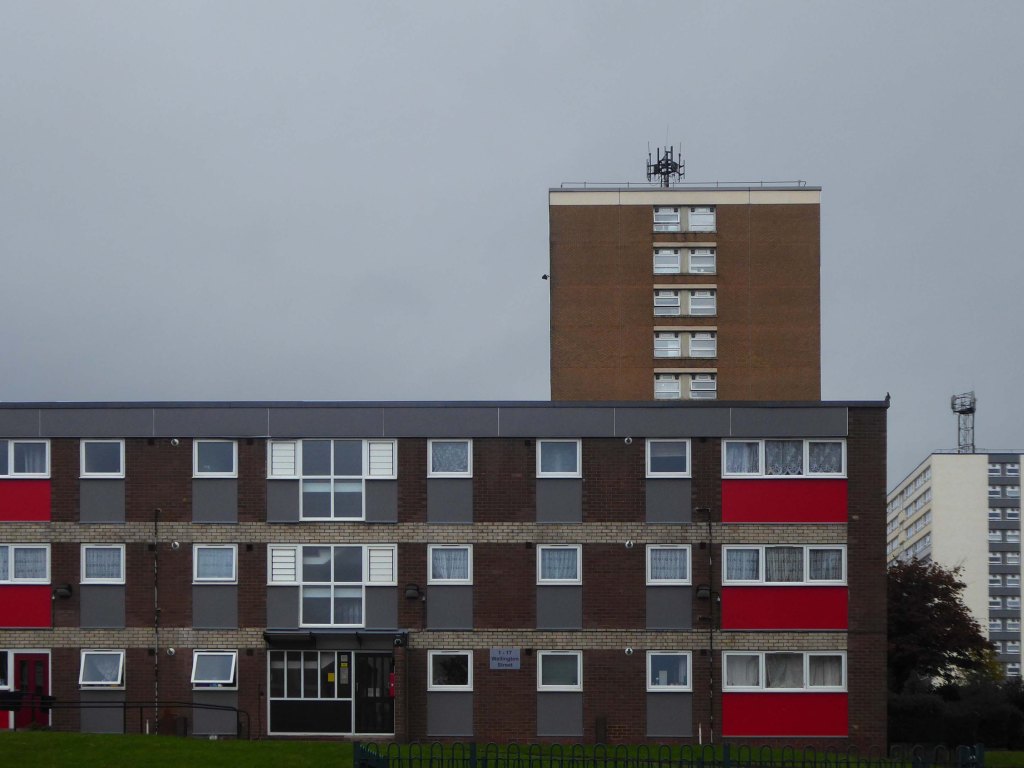
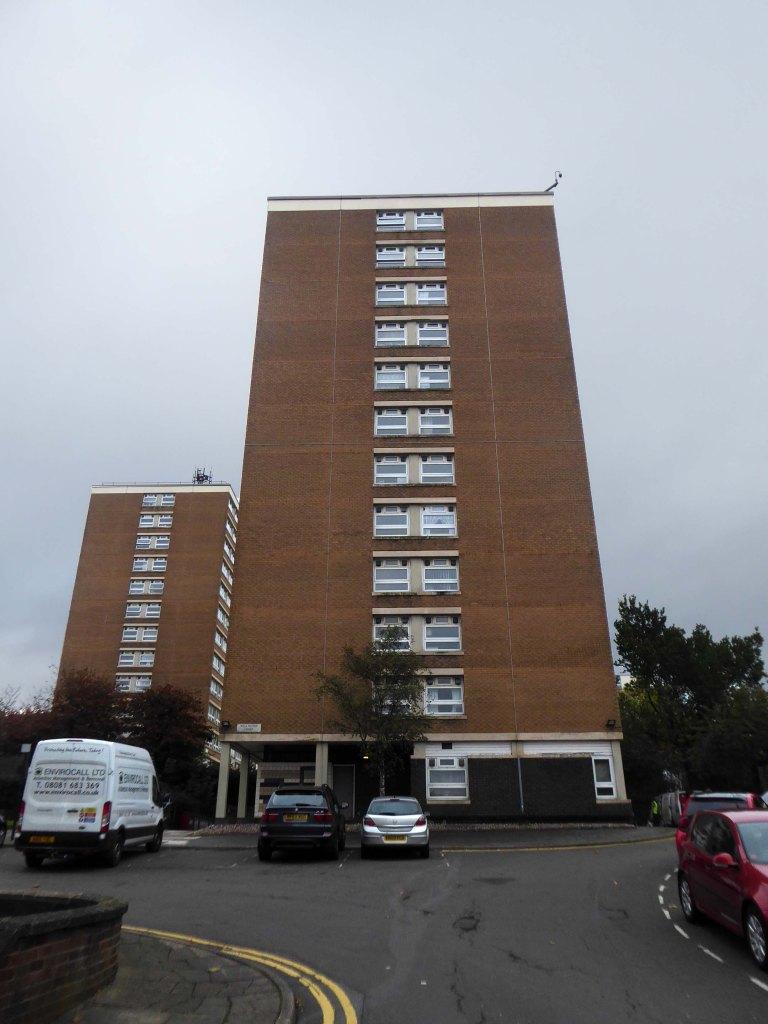
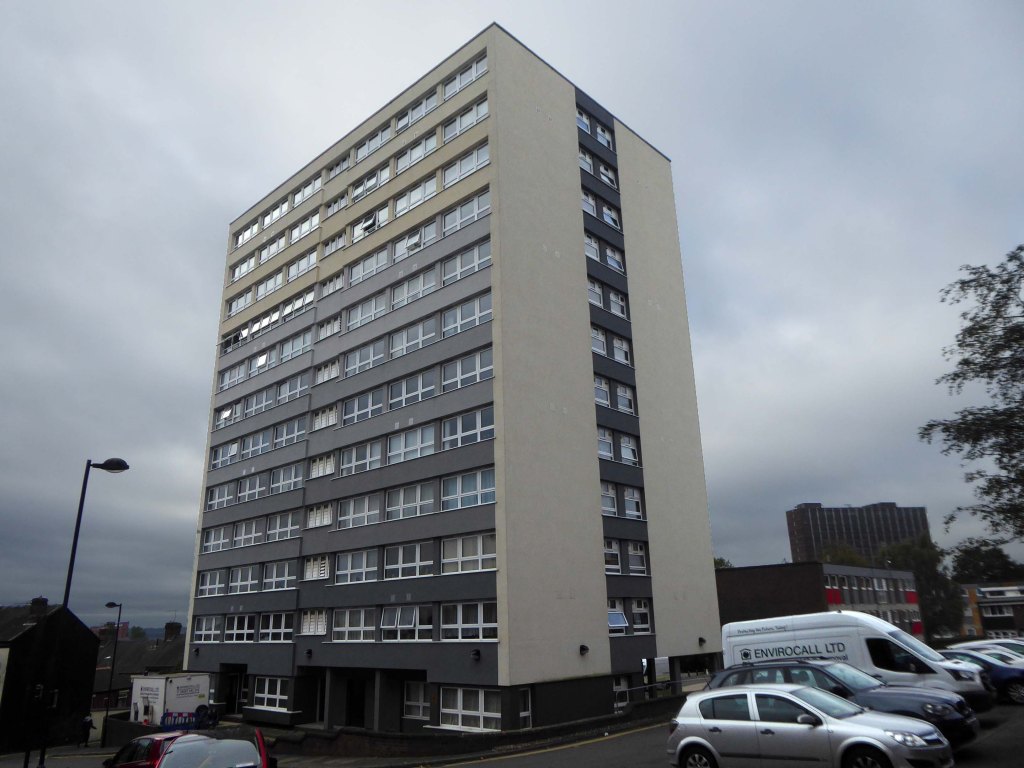
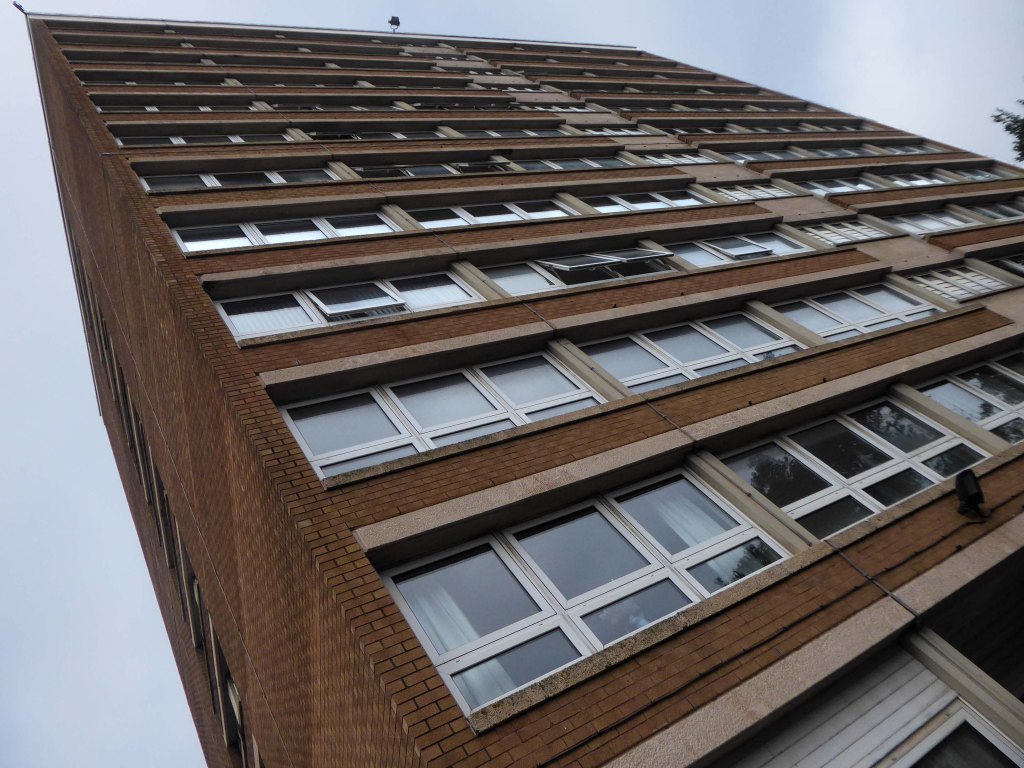
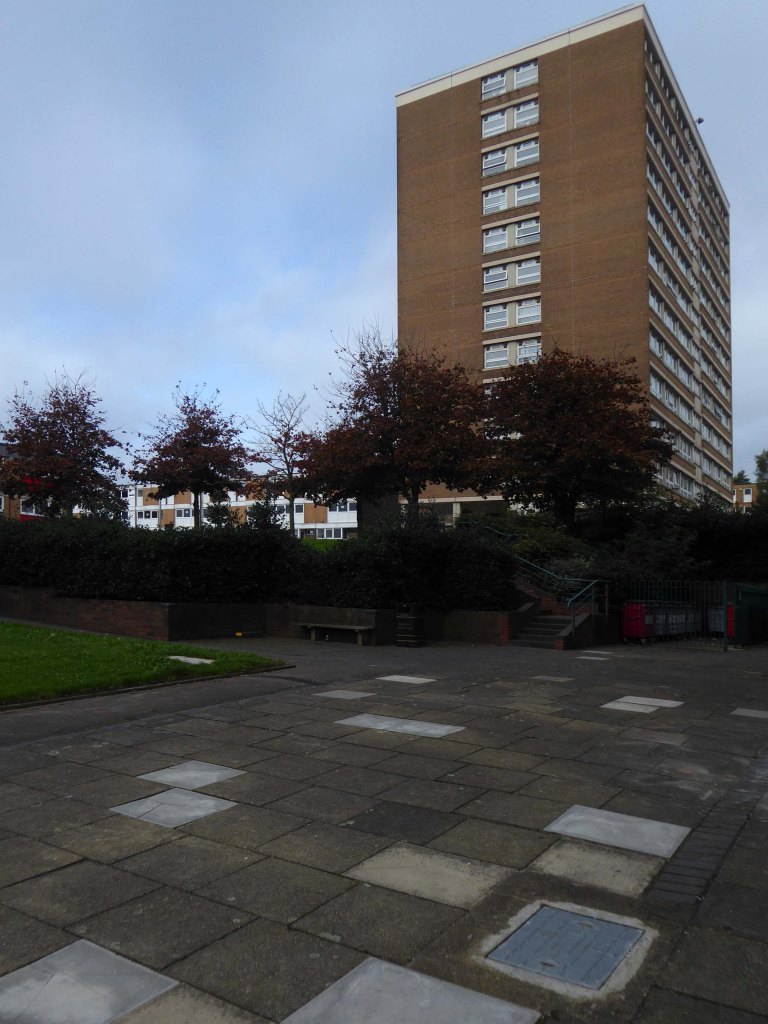
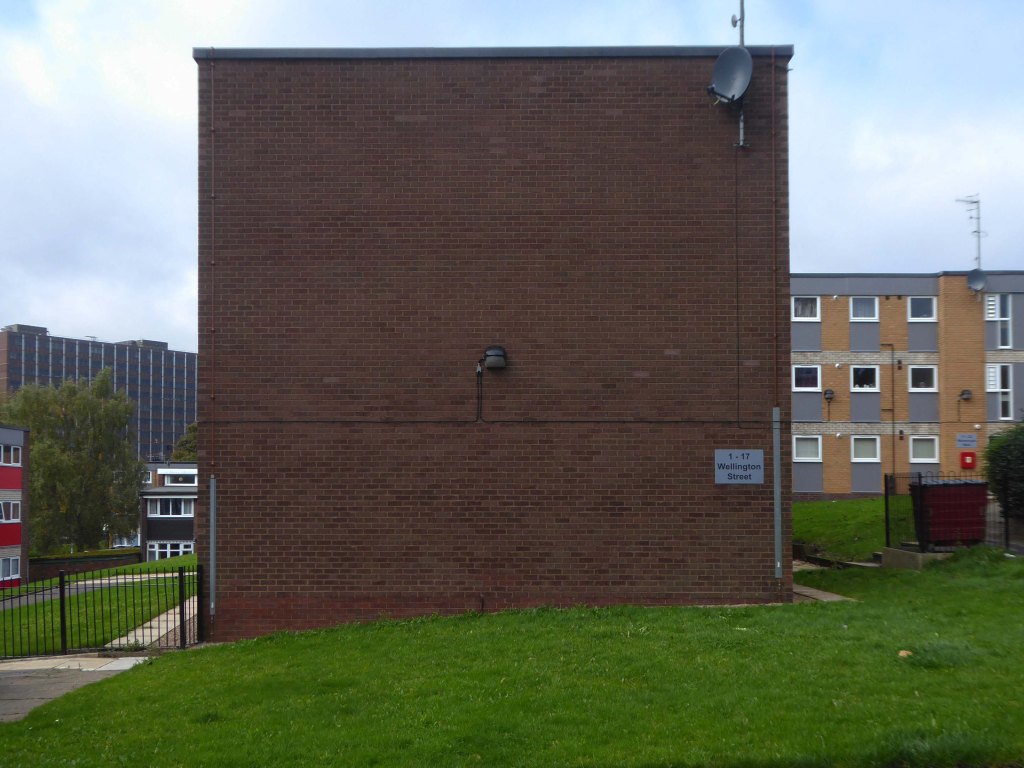
The first group of 1965, the work of City Architect JW Plant grouped around Westwood, Wellington and St Lukes Courts three 12-storey blocks containing 138 dwellings named Bucknall New Road Stage I.

Photographs Tower Block

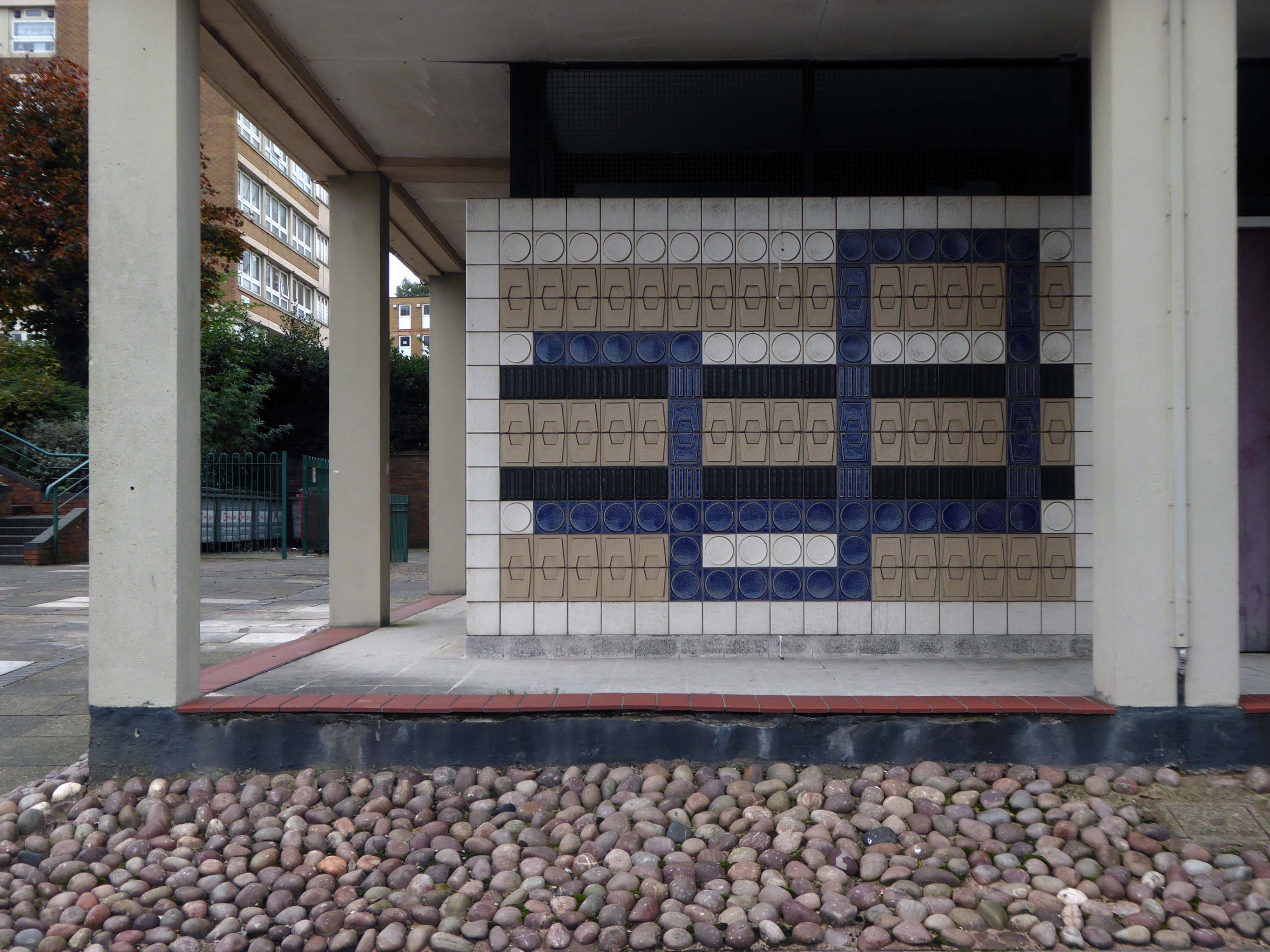
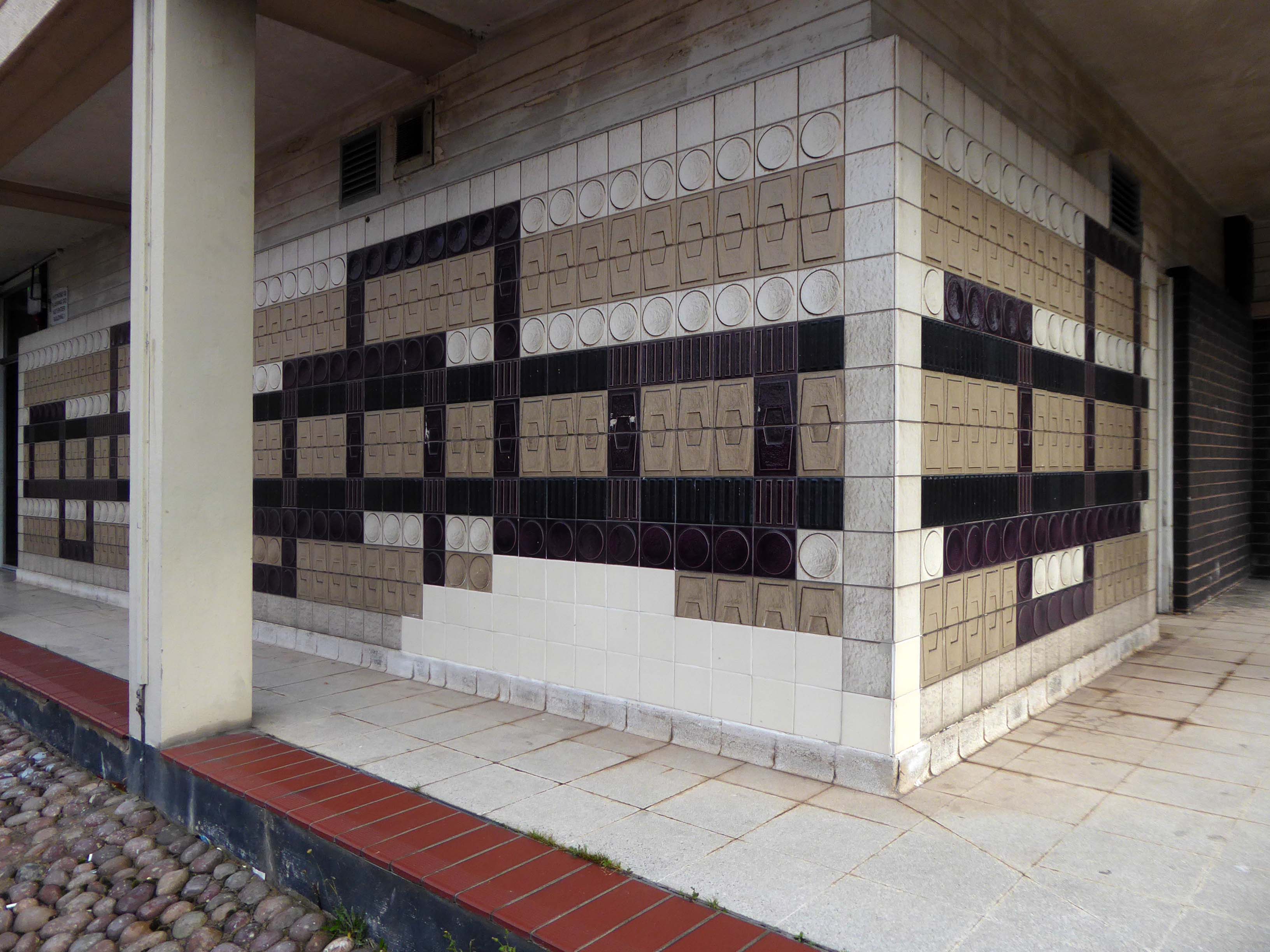
From a time when civic pride celebrated the development of social housing with a small plaque.

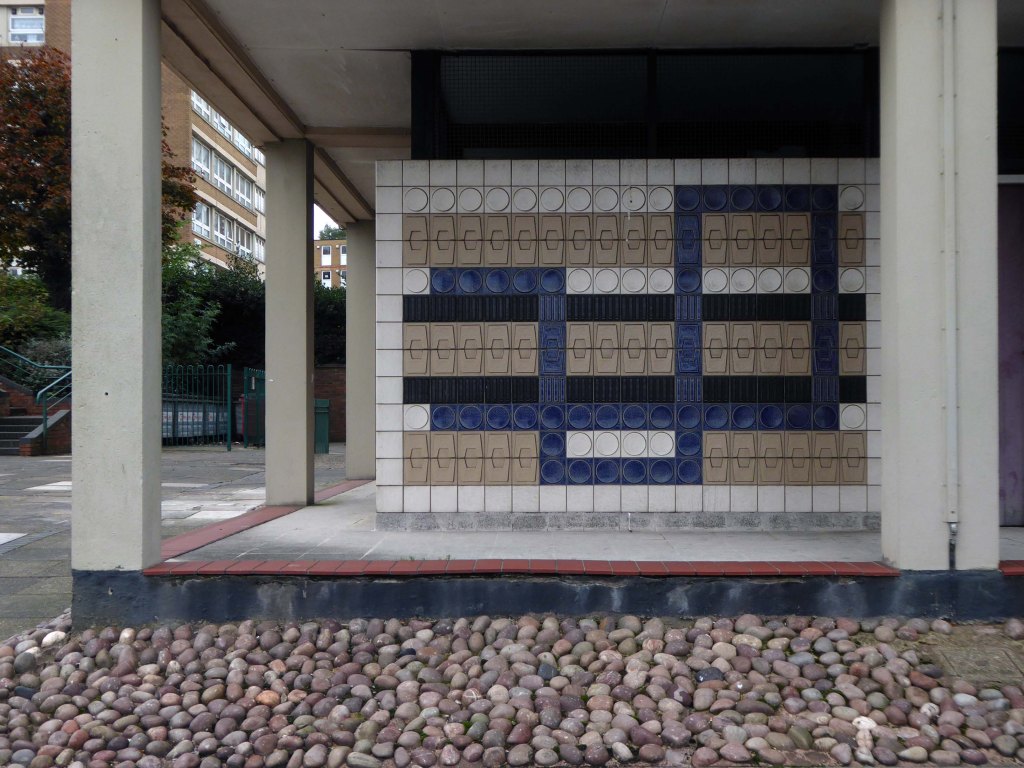
Two blocks have retained their distinctive tiles.

Similar to the Burslem produced Malkin Tiles I have seen in both Eastbourne and Halifax.

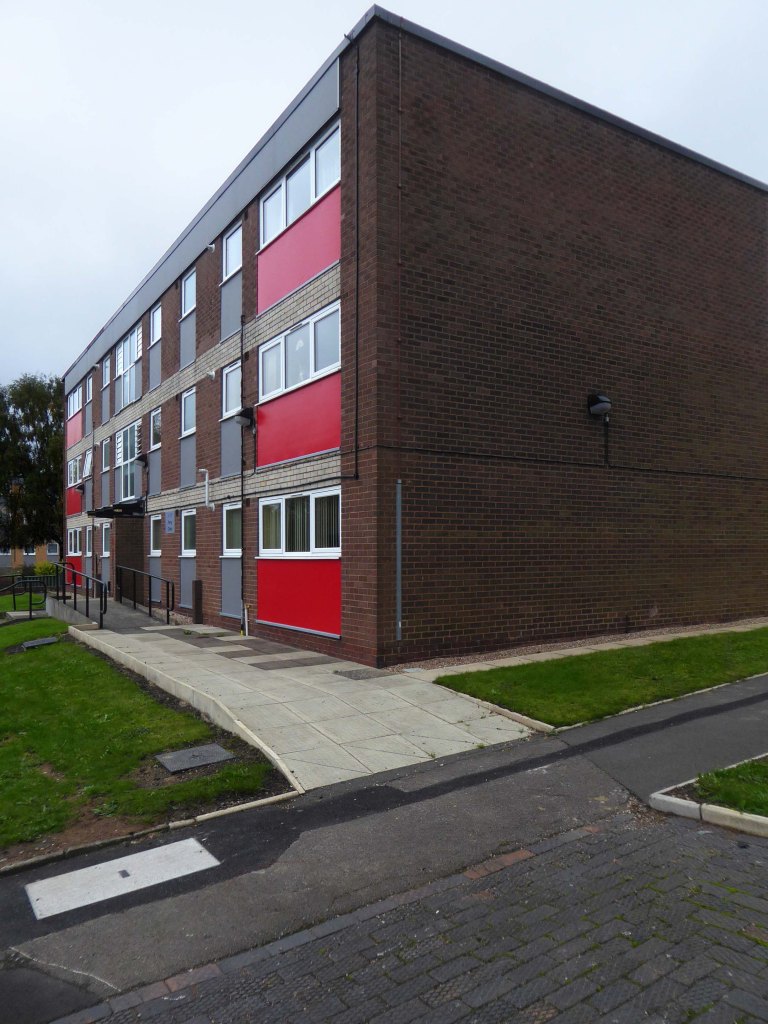
The second group Bucknall New Road Stage II 1968 – also the work of JW Platt Seddon, Northwood and Lindop Courts.

There are plans afoot awaiting finance to demolish and replace some of the terraces, as part of a wider plan for the City’s social housing.

The project would see the council join up with a social property investor and apply for government funding for the works.

The plans would see 226 apartments at Bucknall New Road, and 51 flats and 62 houses at Pyenest Street.

A total of 155 low rise flats and maisonettes at Bucknall New Road would be cleared, creating a net gain of 224 new affordable homes.

Cllr Randy Conteh, cabinet member for housing, communities and safer city, said: “This is a major initiative for the city and the first time a scheme of this scale and ambition has been developed.

Insider Media LTD

Salford Walk

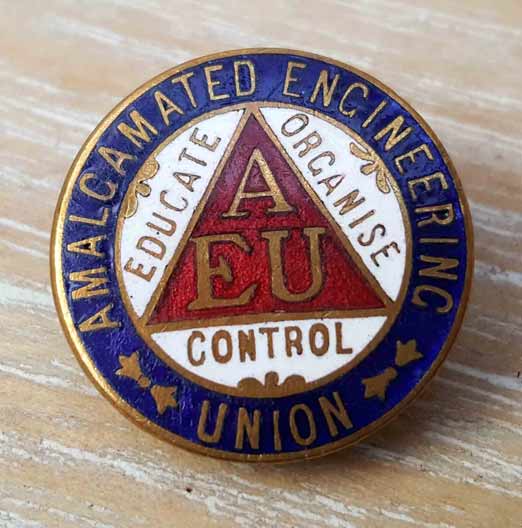
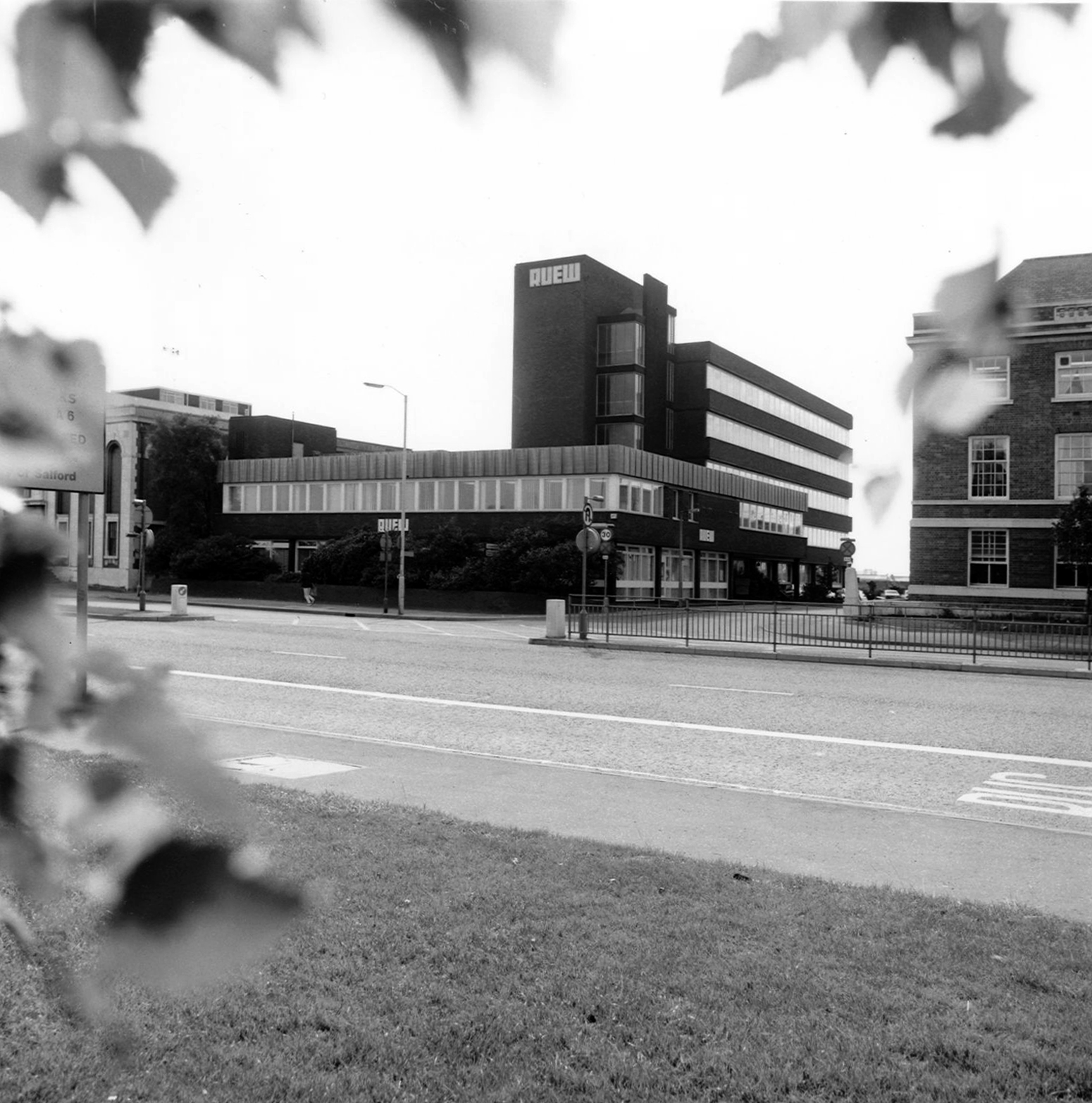
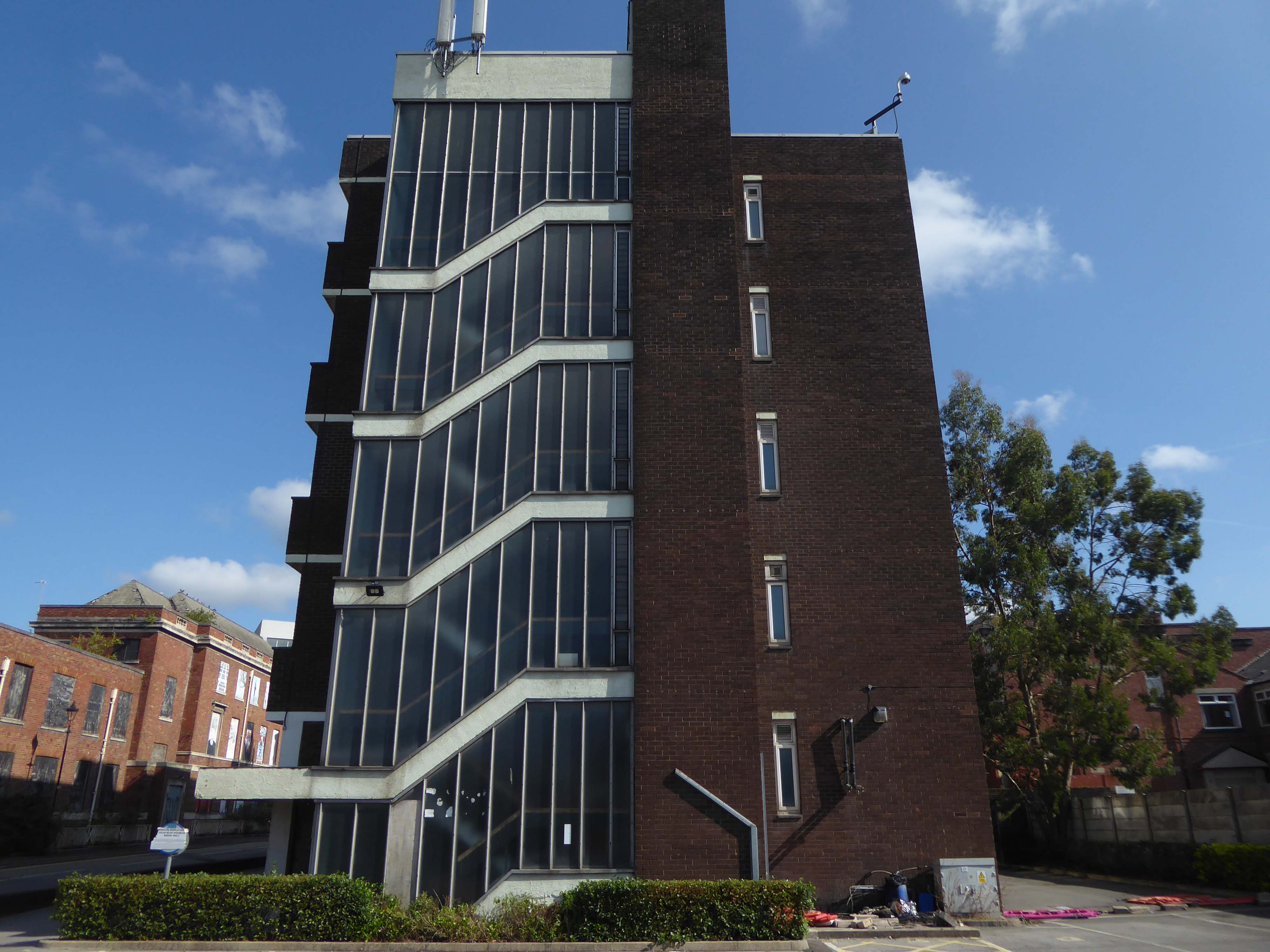
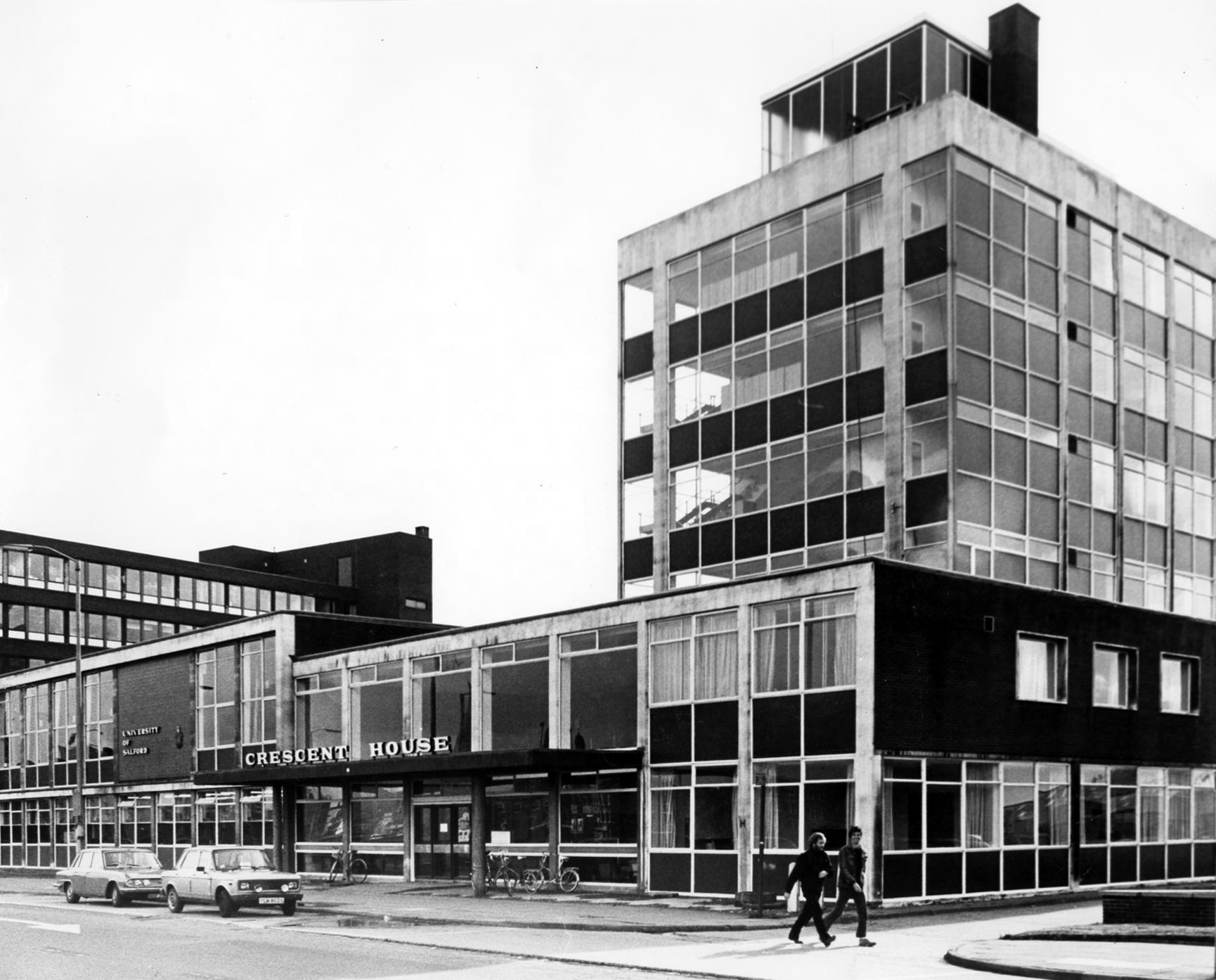
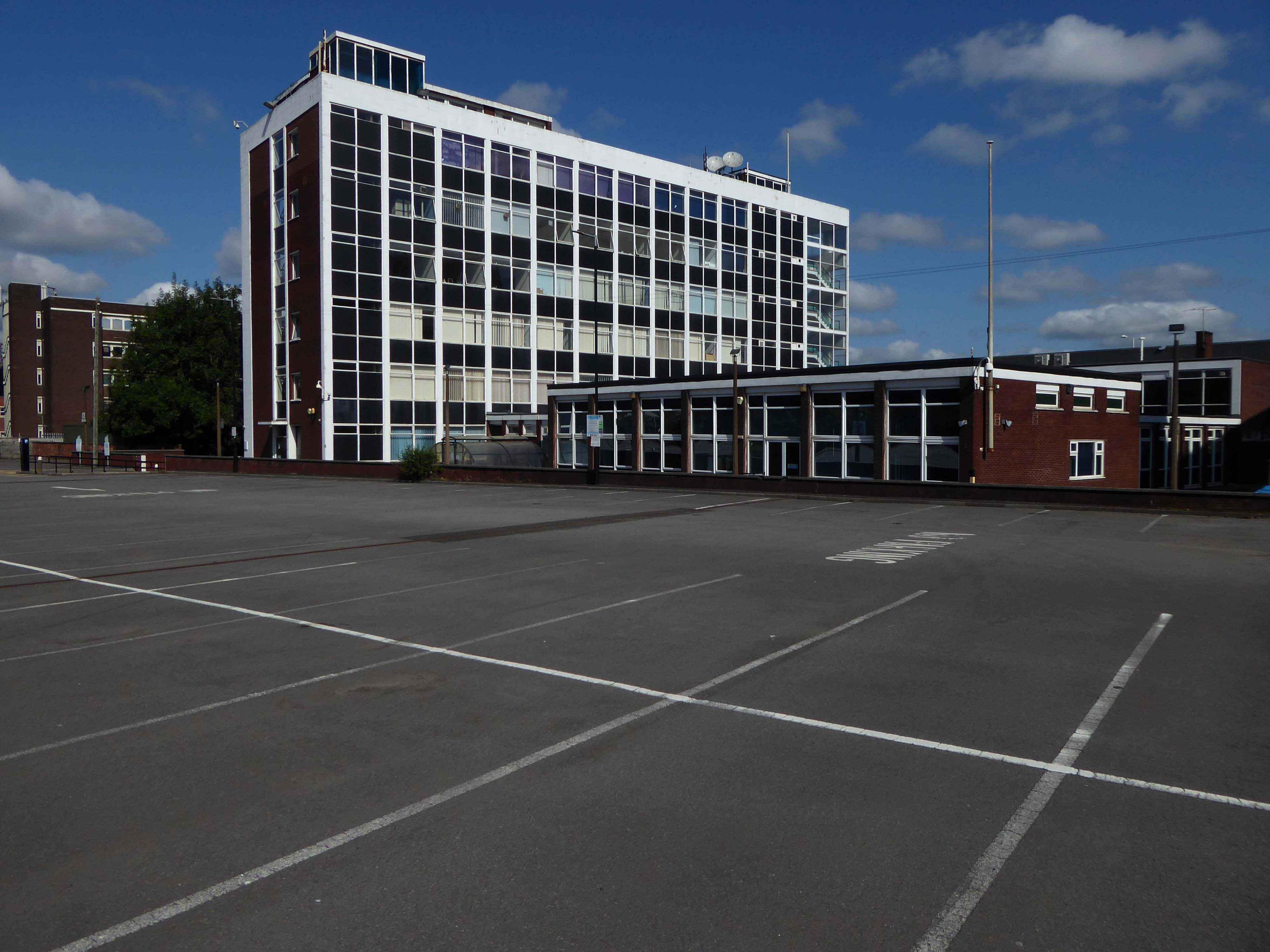
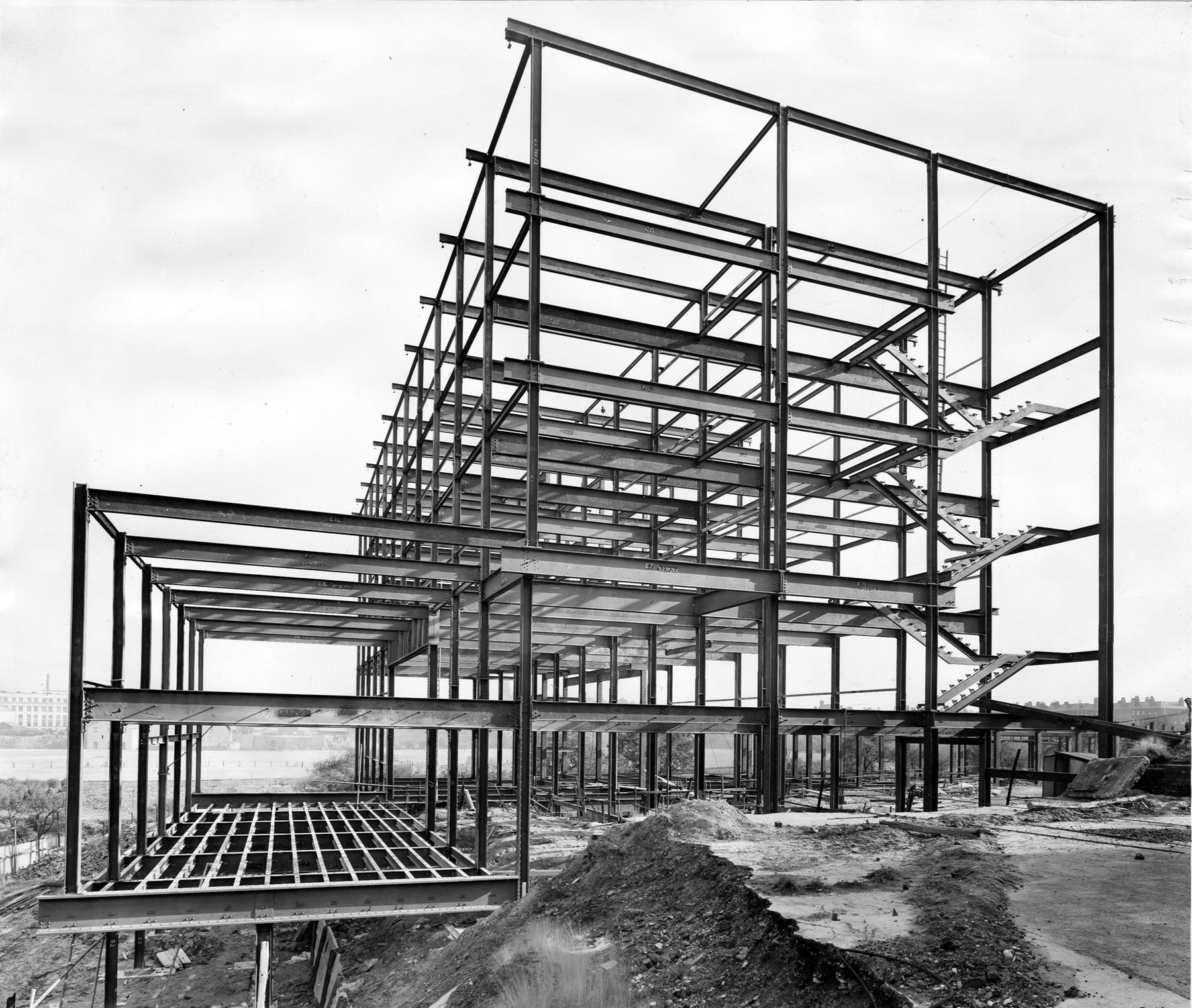
We begin on the Crescent – taking in the former AUEW Building.

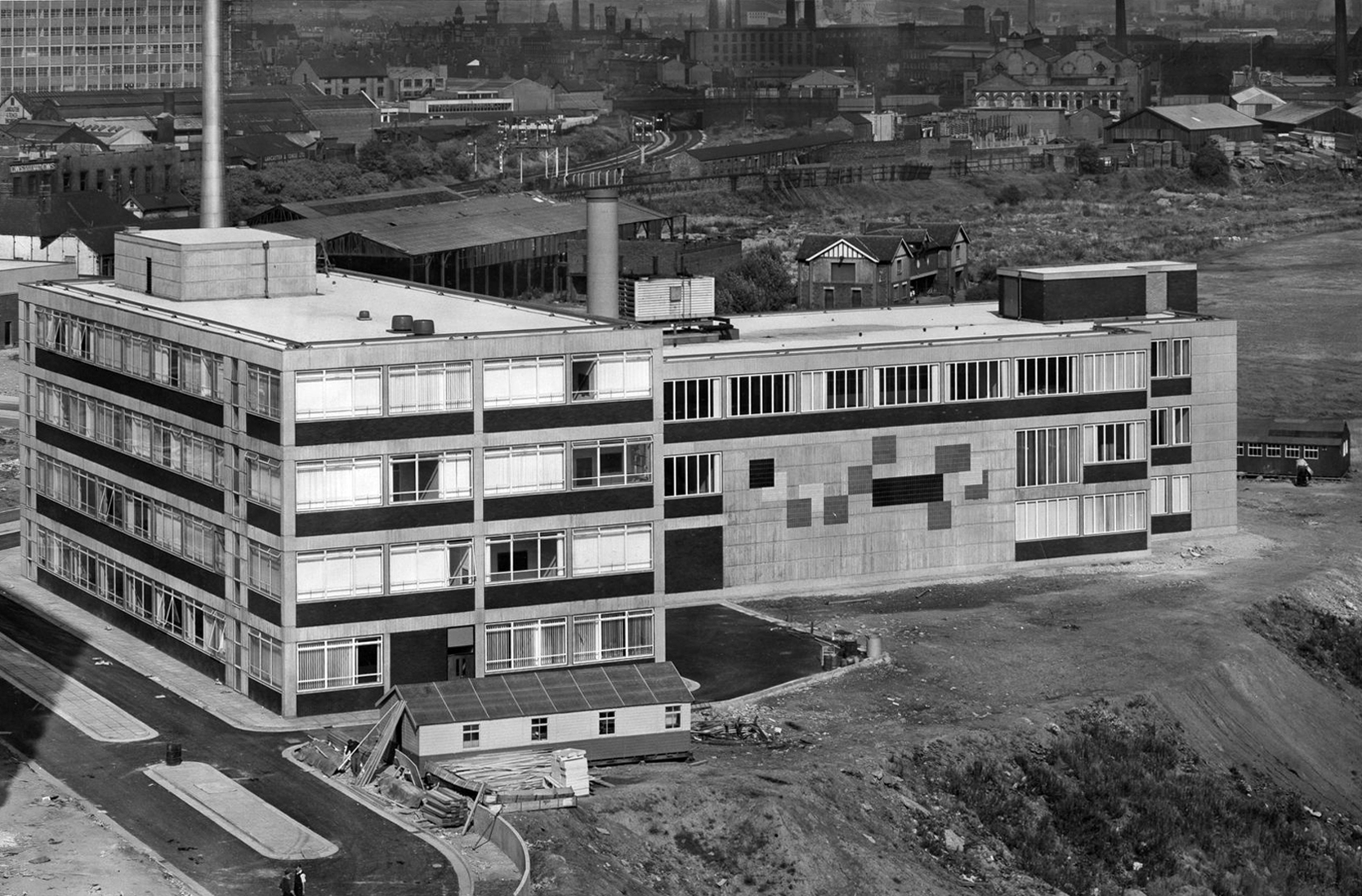
B&W images copyright USIR Archives

It became part of Salford University’s estate, renamed the Faraday Building.

It is currently unoccupied.

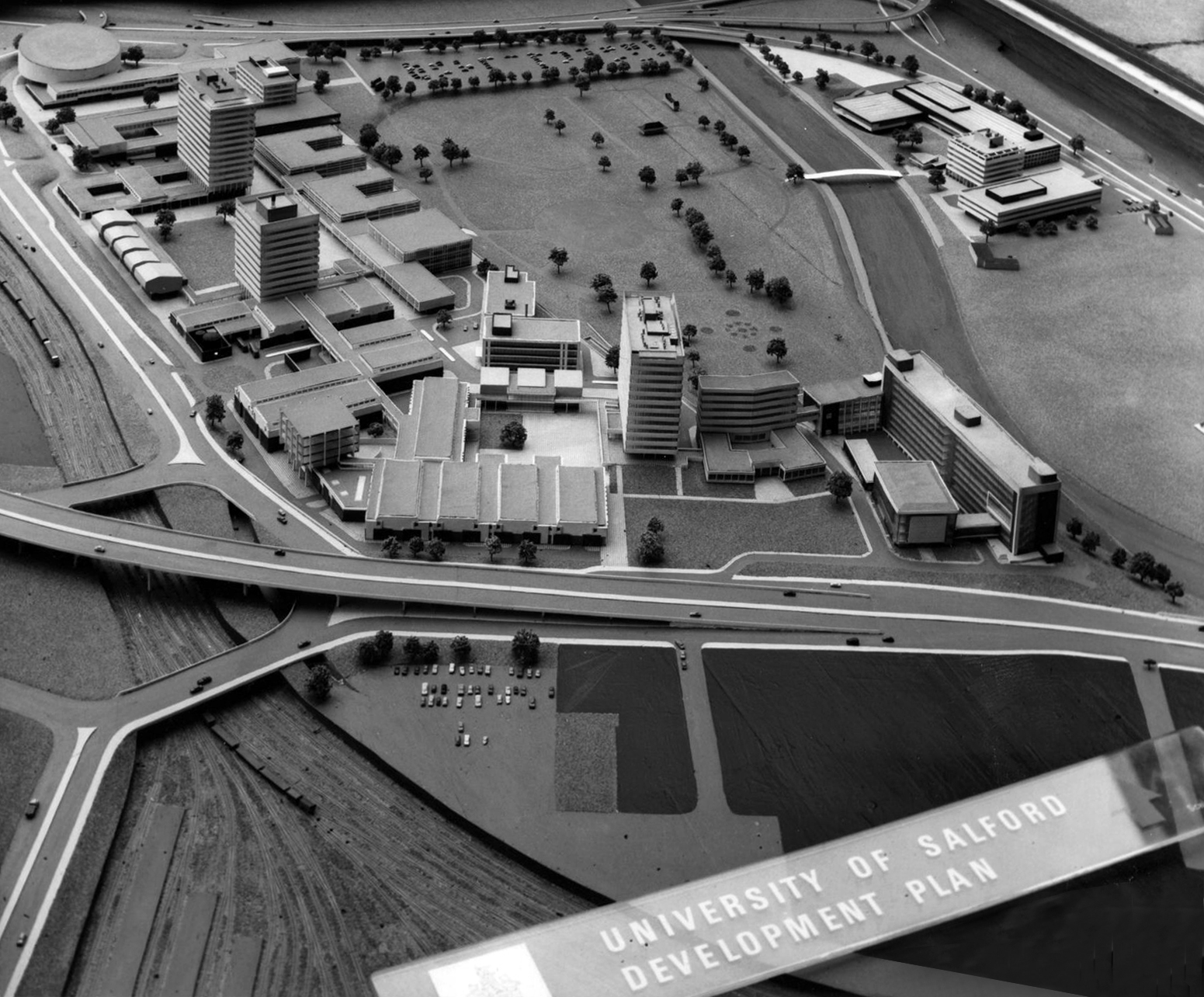
The University’s Masterplan is shifting emphasis to the Peel Park and Media City sites.

Also leaving Crescent House in limbo.

The original master plan would have swept away the Victorian Technical Institute and Salford Art Gallery.

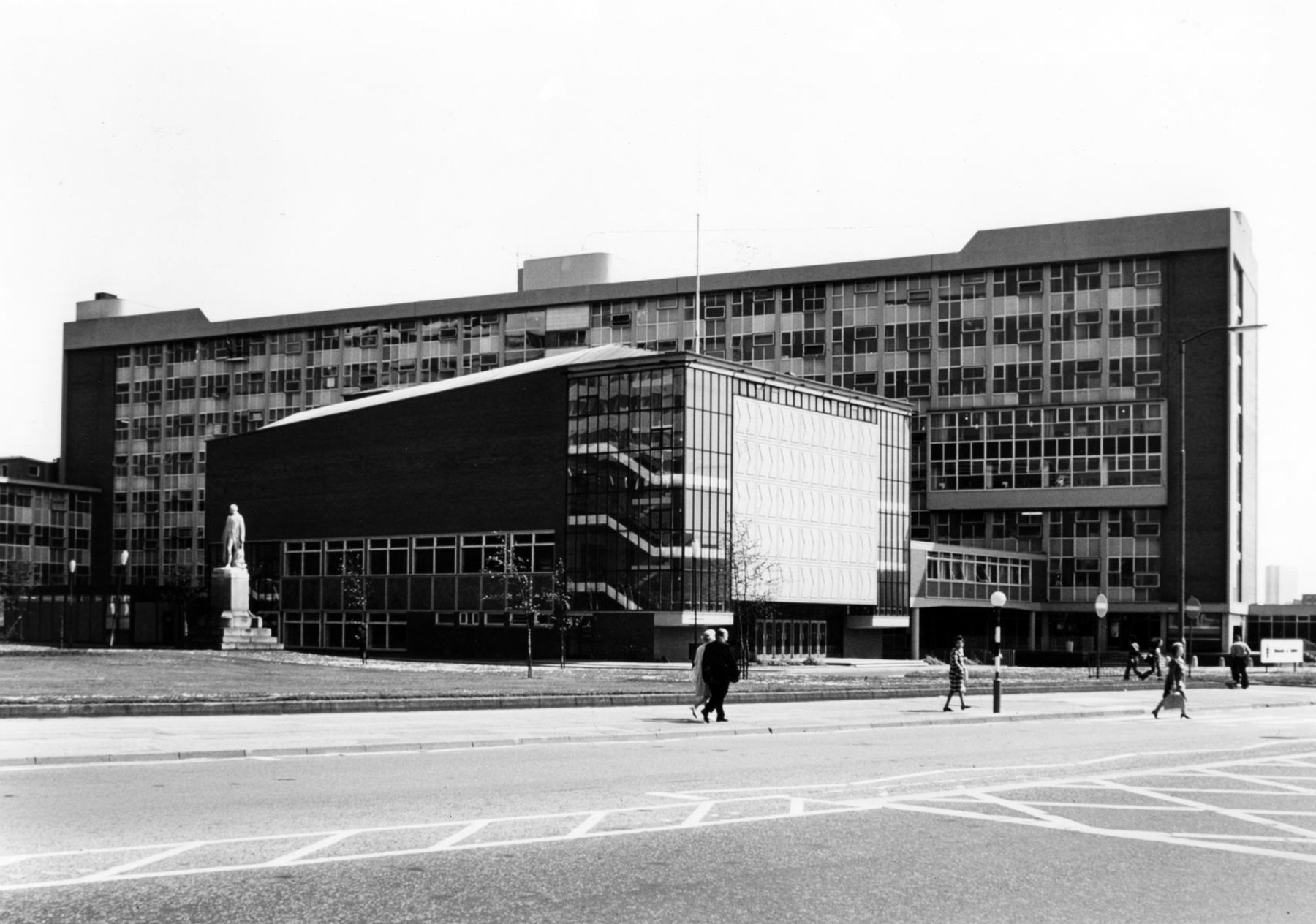
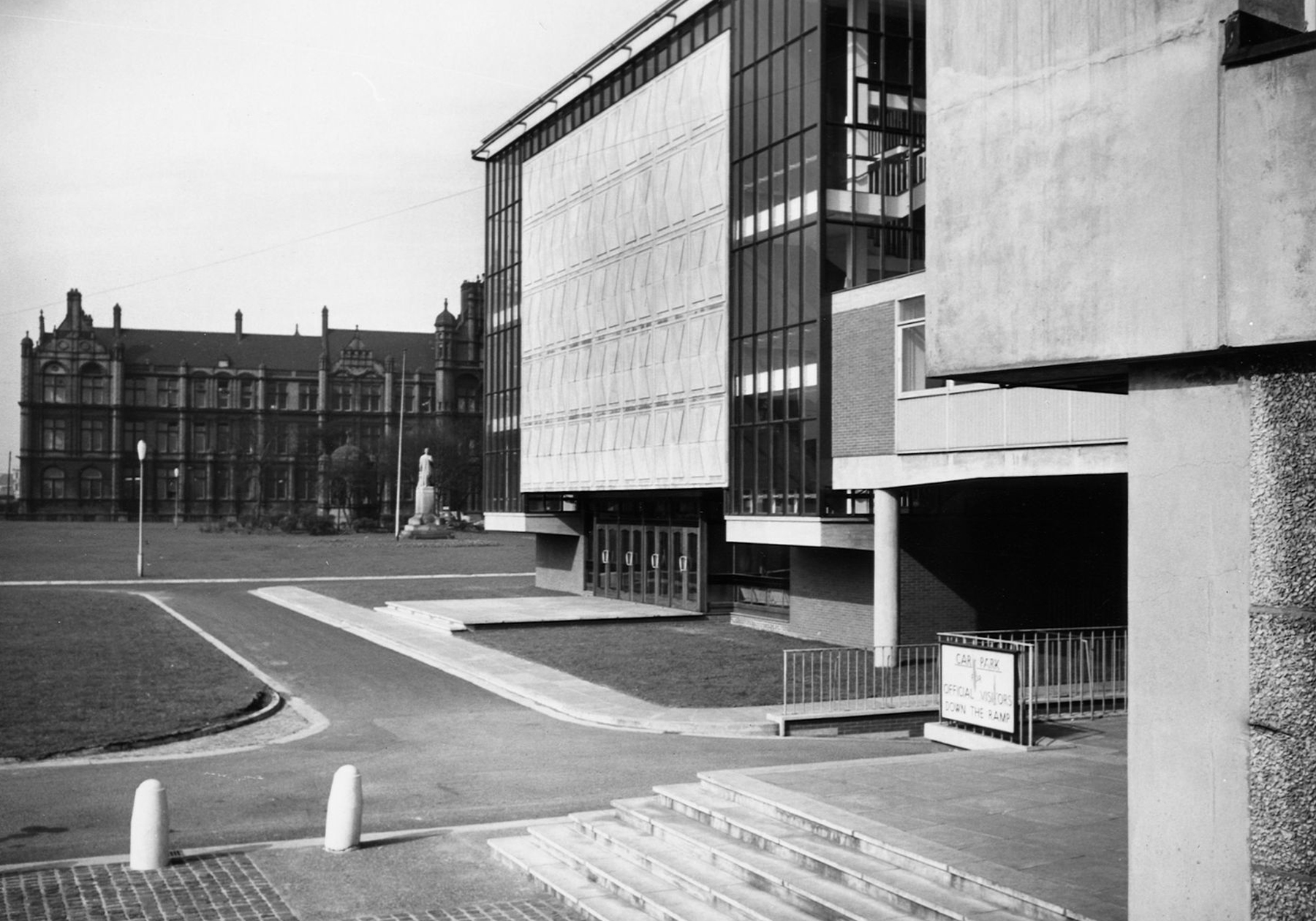
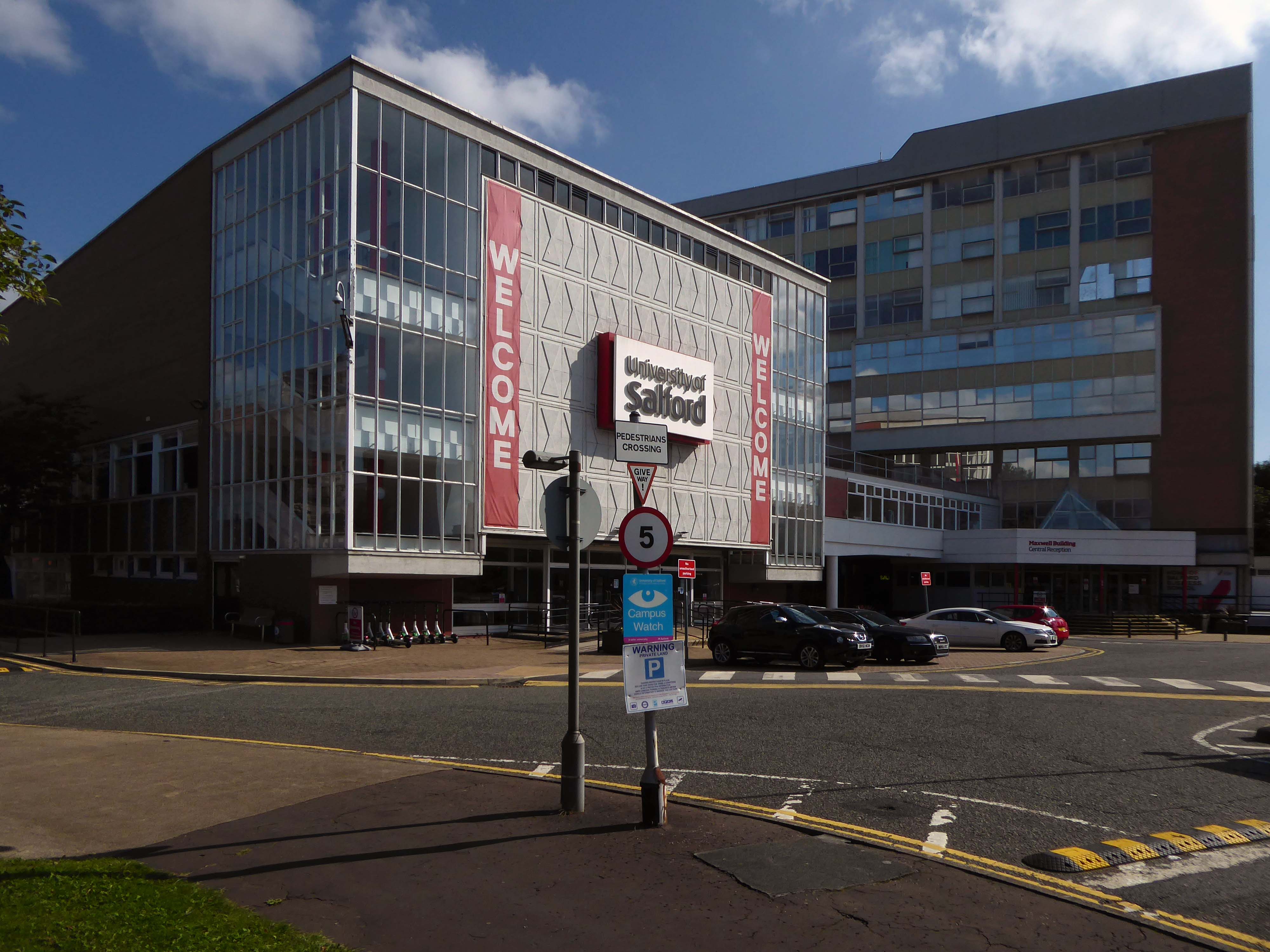
Across the road are the Maxwell Buildings.

They were built between 1959 and 1960 to a design by the architect C H Simmons of the Lancashire County Architects Department.

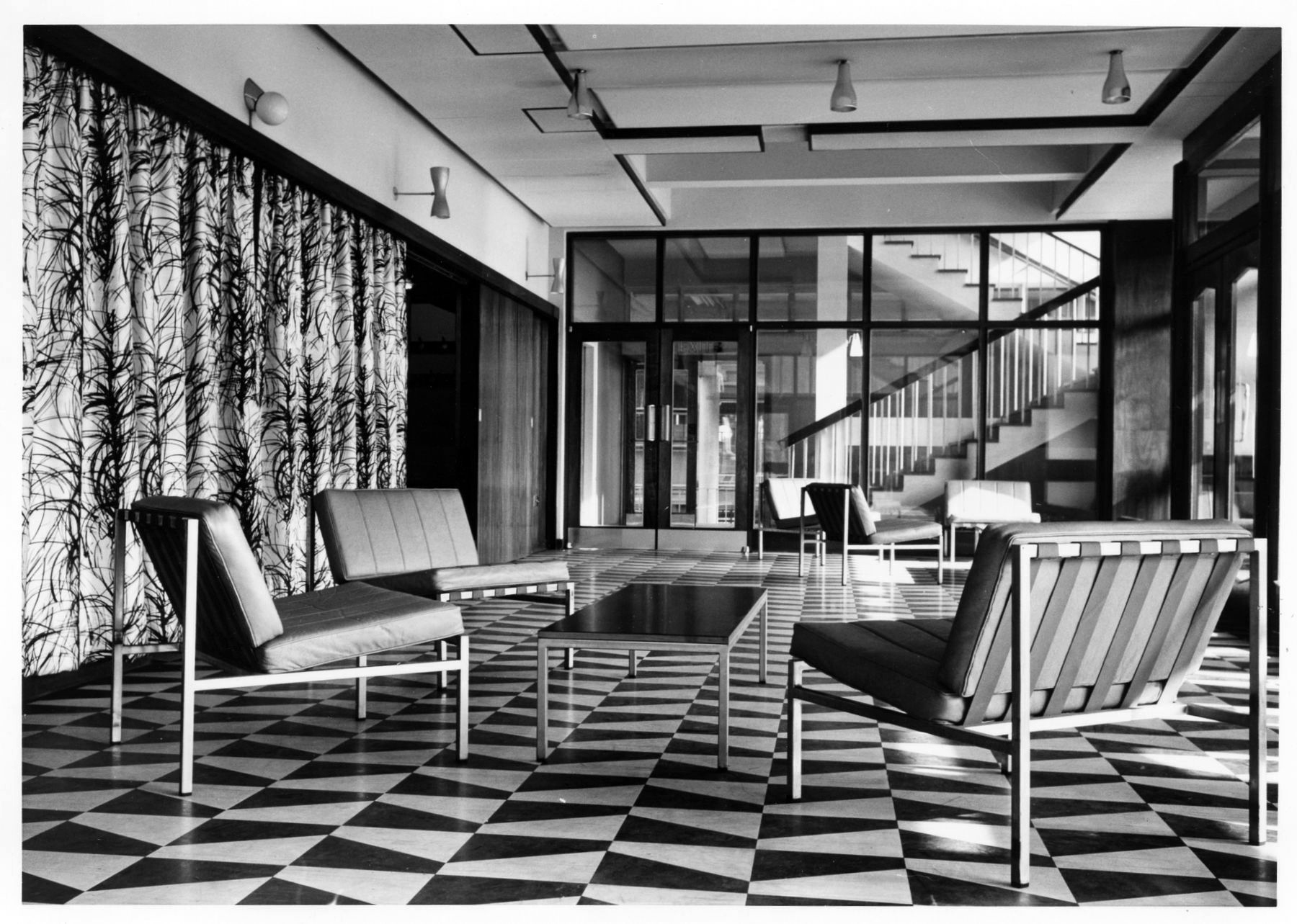
The interior decorative order of Sixties’ institutions was integral to the architectural design, sadly this is no longer so.

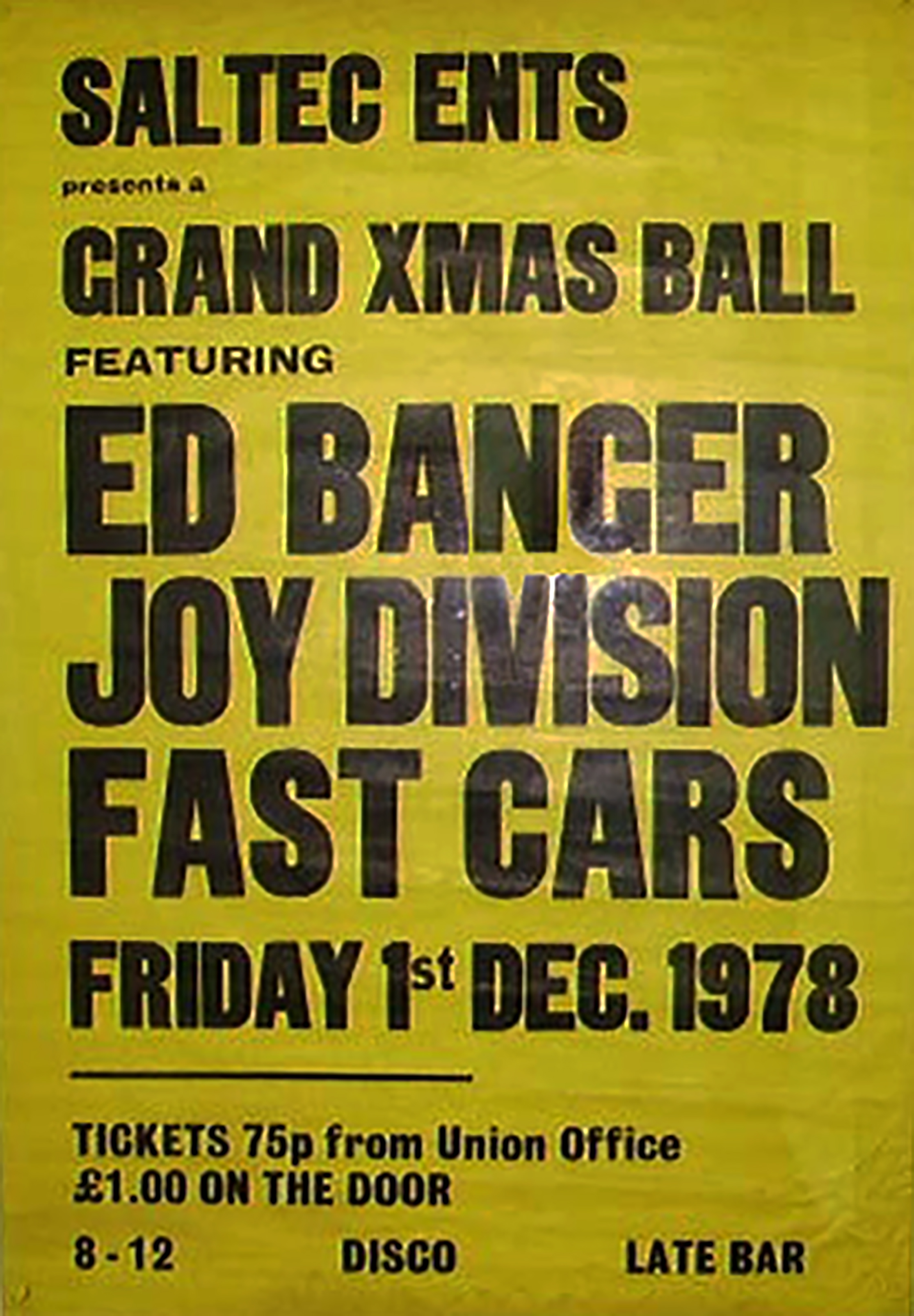
The hall has a great musical heritage.

Featuring the Fast Cars who we have previously encountered in Swinton at the Lancastrian Hall.

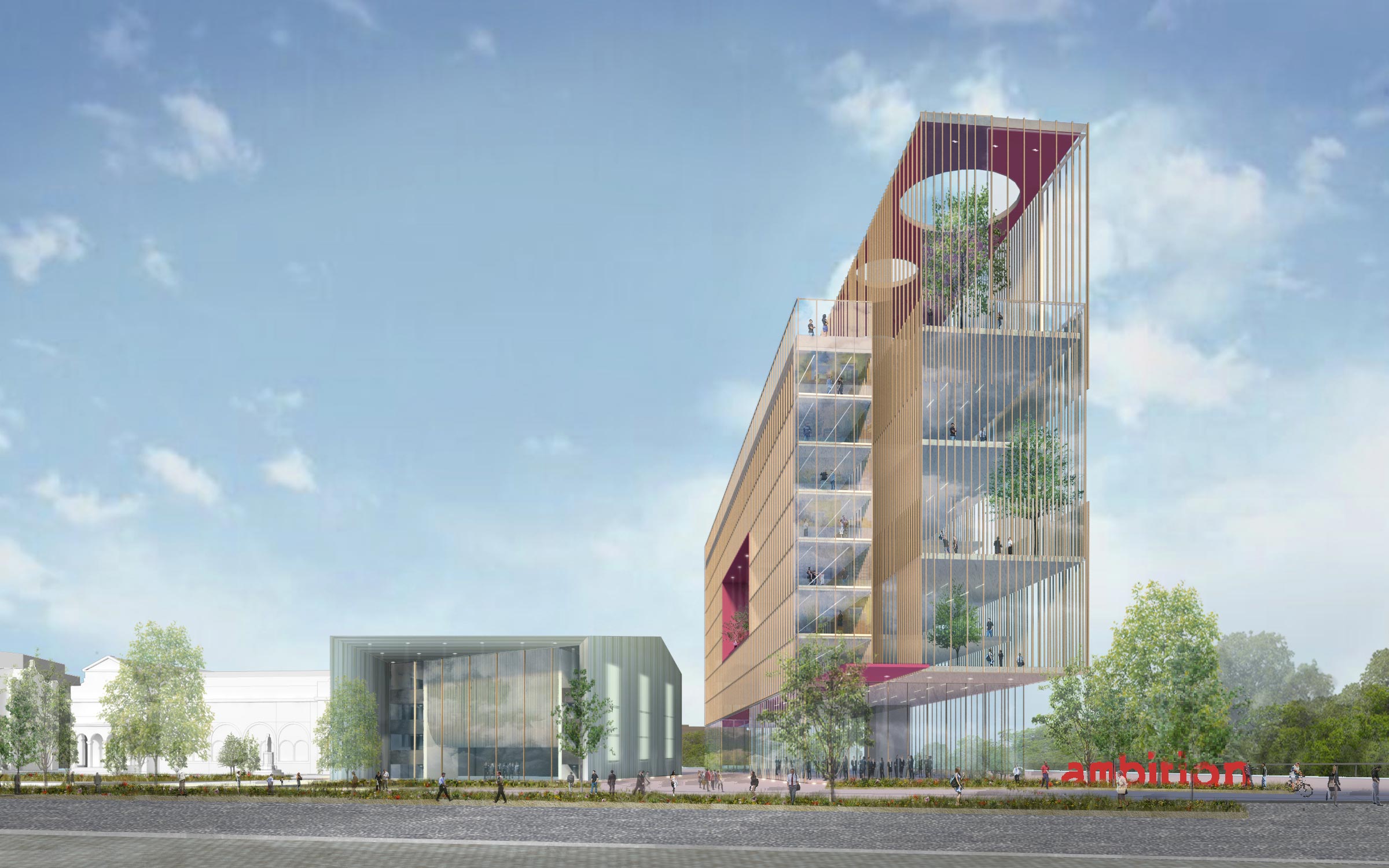
Which may be the subject of ambitious redevelopment.

Take a turn around the corner to the Cockcroft Building.

The east facing mural painted out and obscured by retrofitted infrastructure.

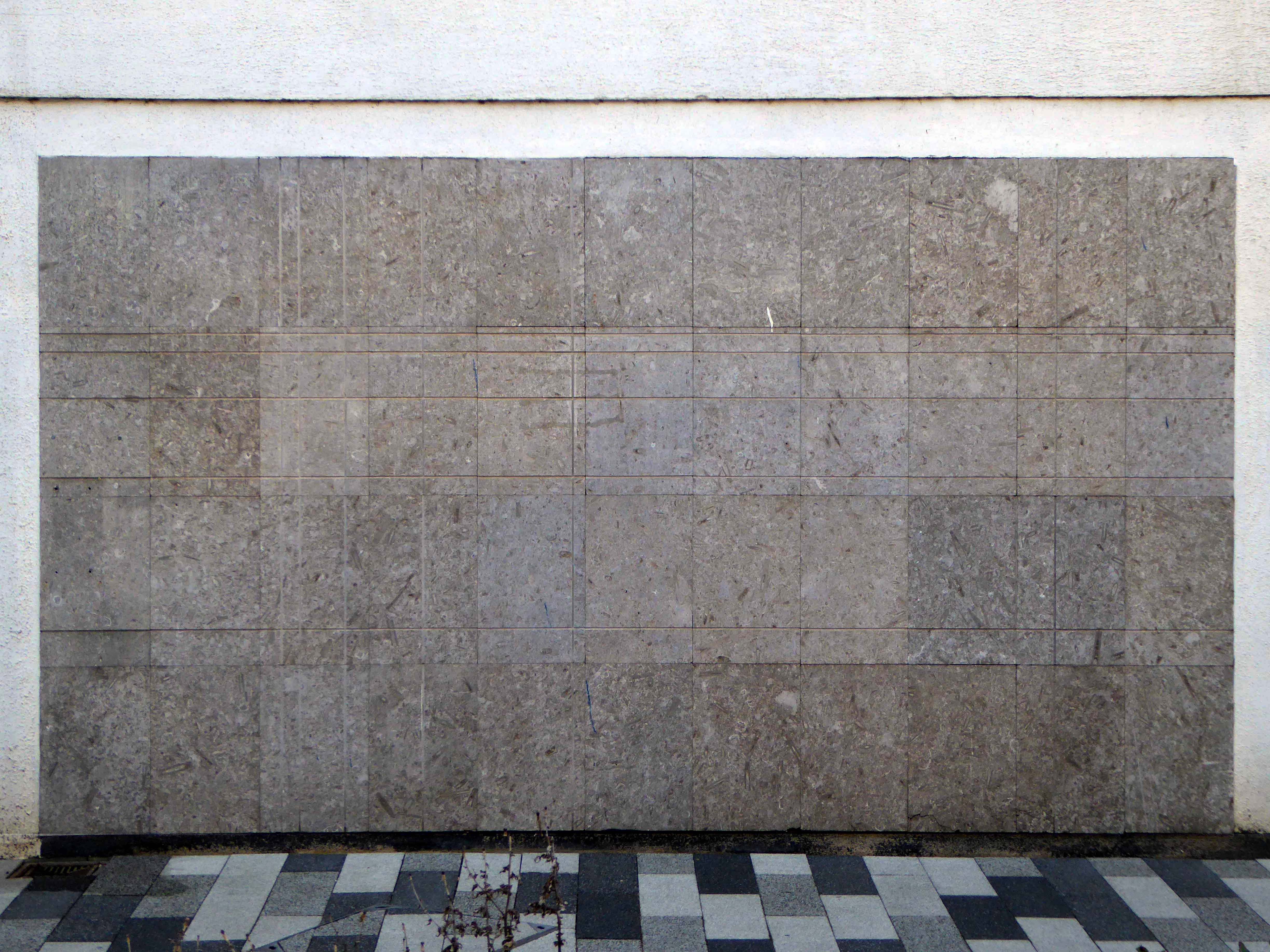
These incised stone panels obscured by plants.

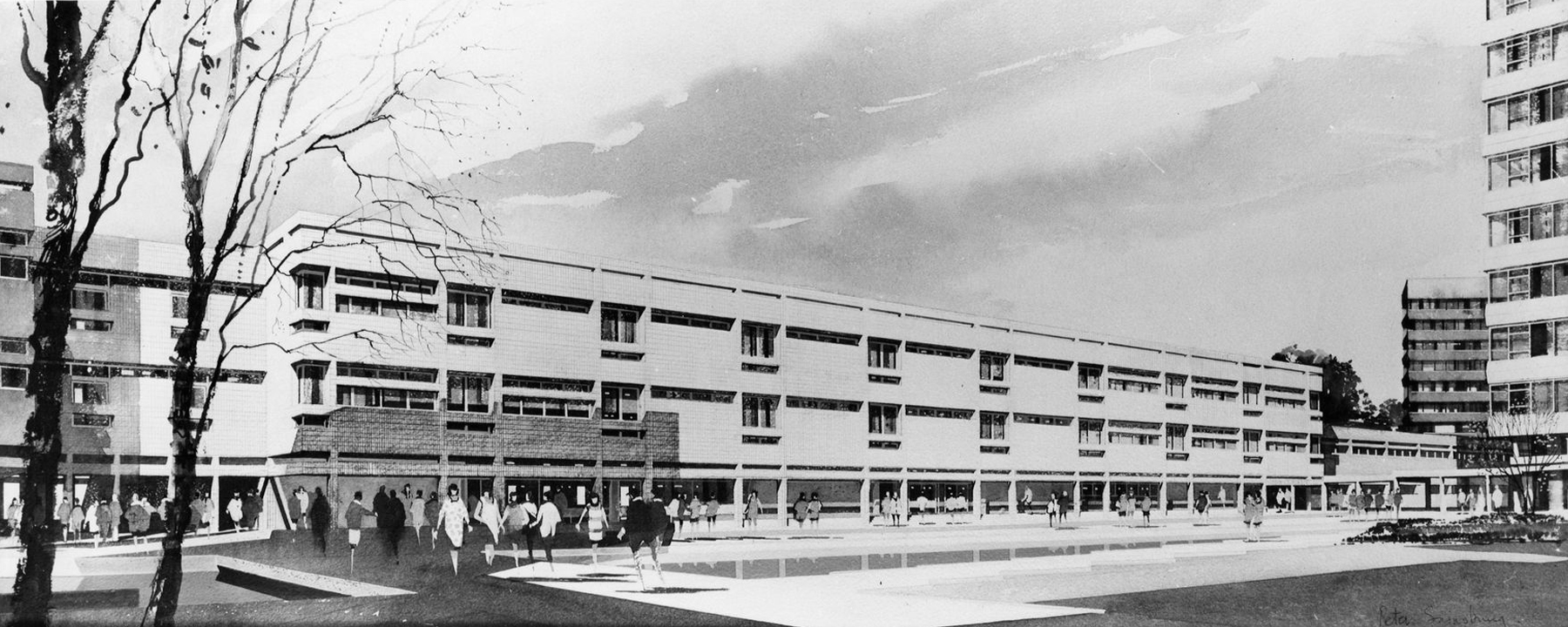
To the left is the Clifford Whitworth Library – this is the original architectural impression – signed Peter Sainsbury.

The original fascia was tile clad.

Subsequently replaced by uPVC boards.

Yet again the original interior was integral too the architectural scheme and period.

Across the way the Chapman Building.

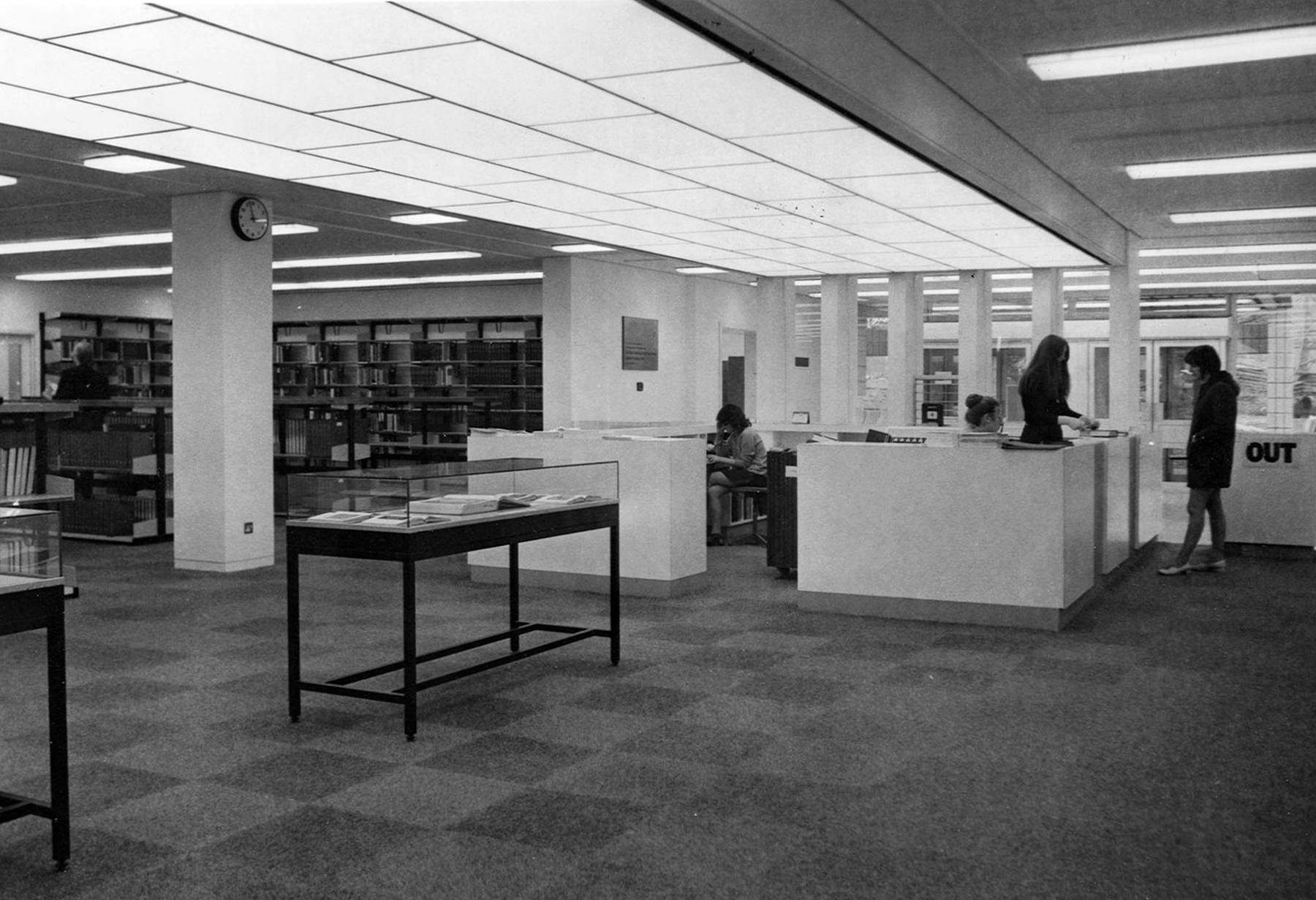
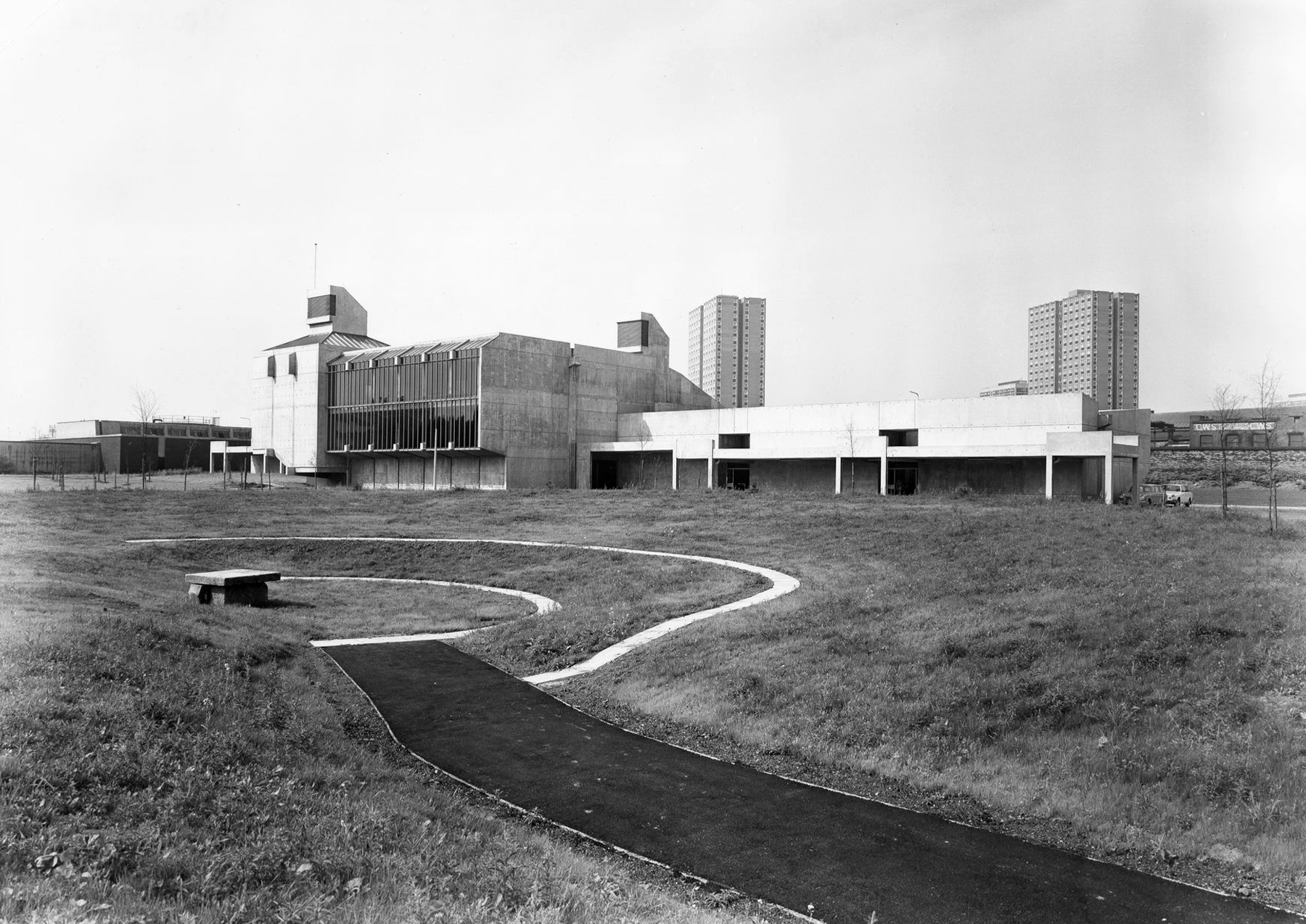
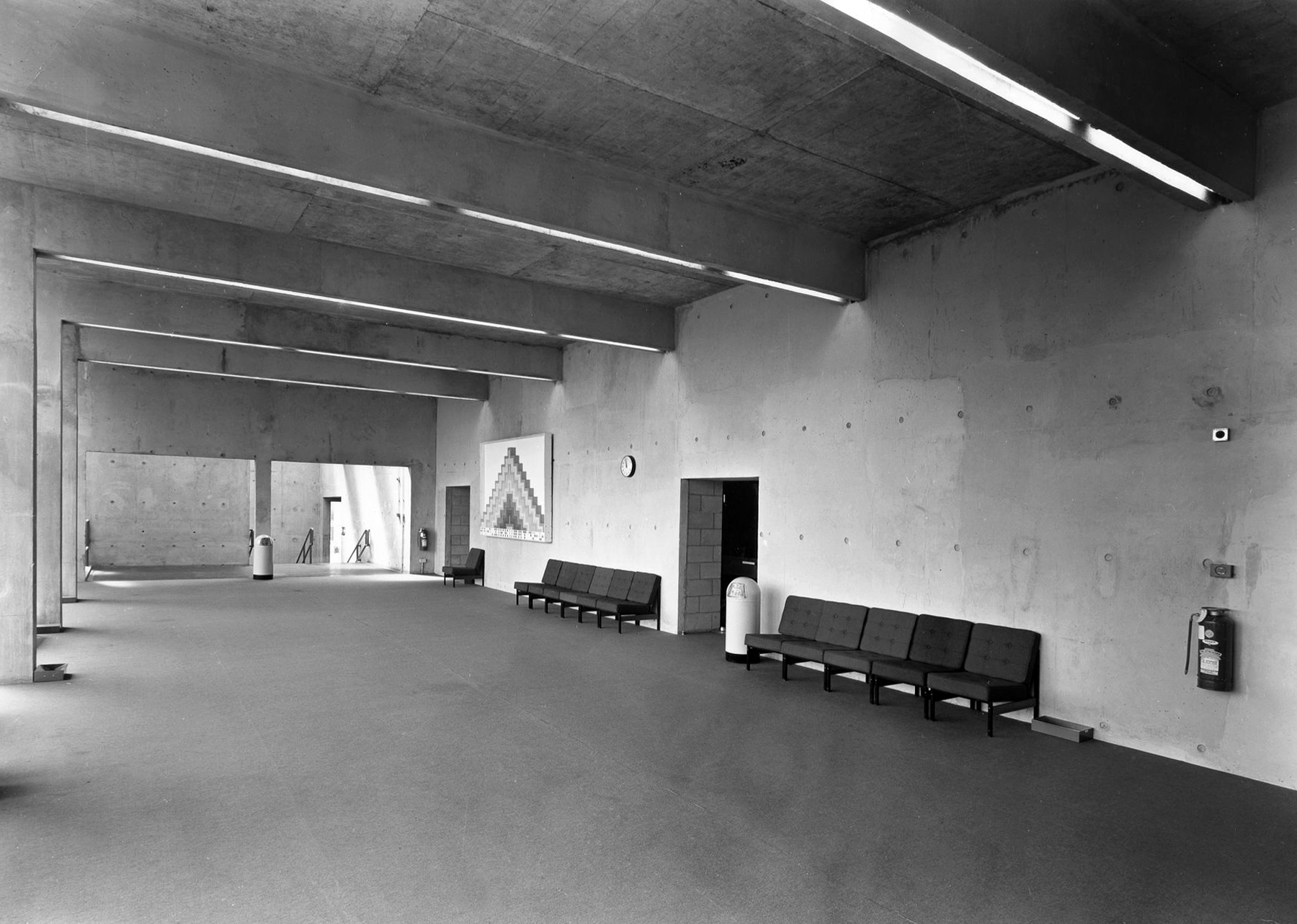
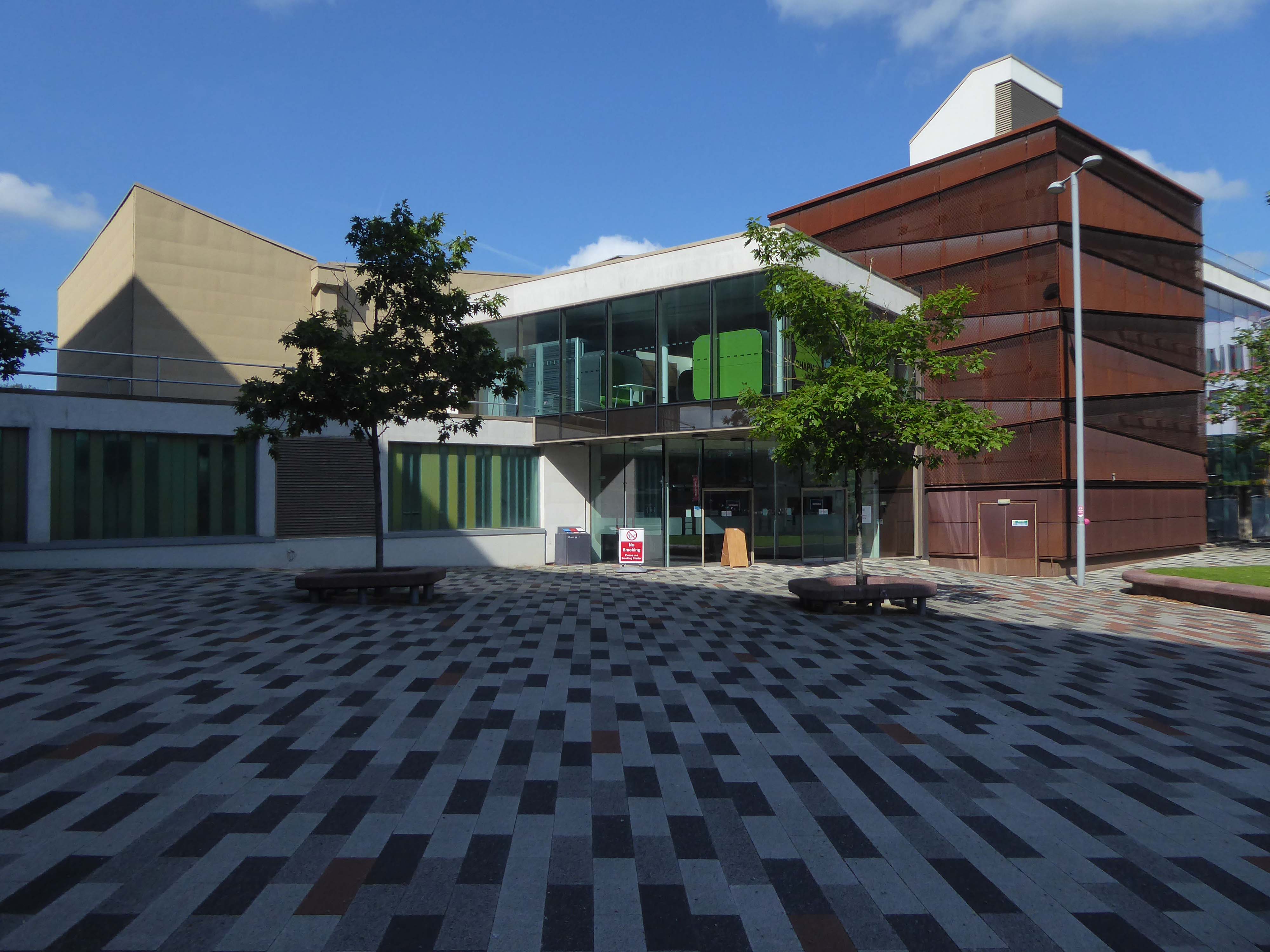
It was designed by WF Johnson and Partners of Leamington Spa, as a lecture theatre block and gallery. It sits with its long axis running parallel to the railway behind. The series of grey volumes, occasionally punctuated by colourful floods of red and green trailing ivy, hang together in a less than convincing composition. The orientation and access to the building seem confused and detached from any cohesive relationship to the rest of the campus, but there is something perversely attractive about the right essay in the wrong language. The reinforced concrete building contained five lecture theatres, communal spaces, an art gallery, AV support areas and basement plant rooms. Following a major refurbishment in 2012, several additions were made to the exterior and its total concrete presence somewhat diminished. It still houses lecture theatres and a number of other learning and social spaces.

Mainstream Modern

To the rear of the building there are some of the original details, now painted a series of funny colours.

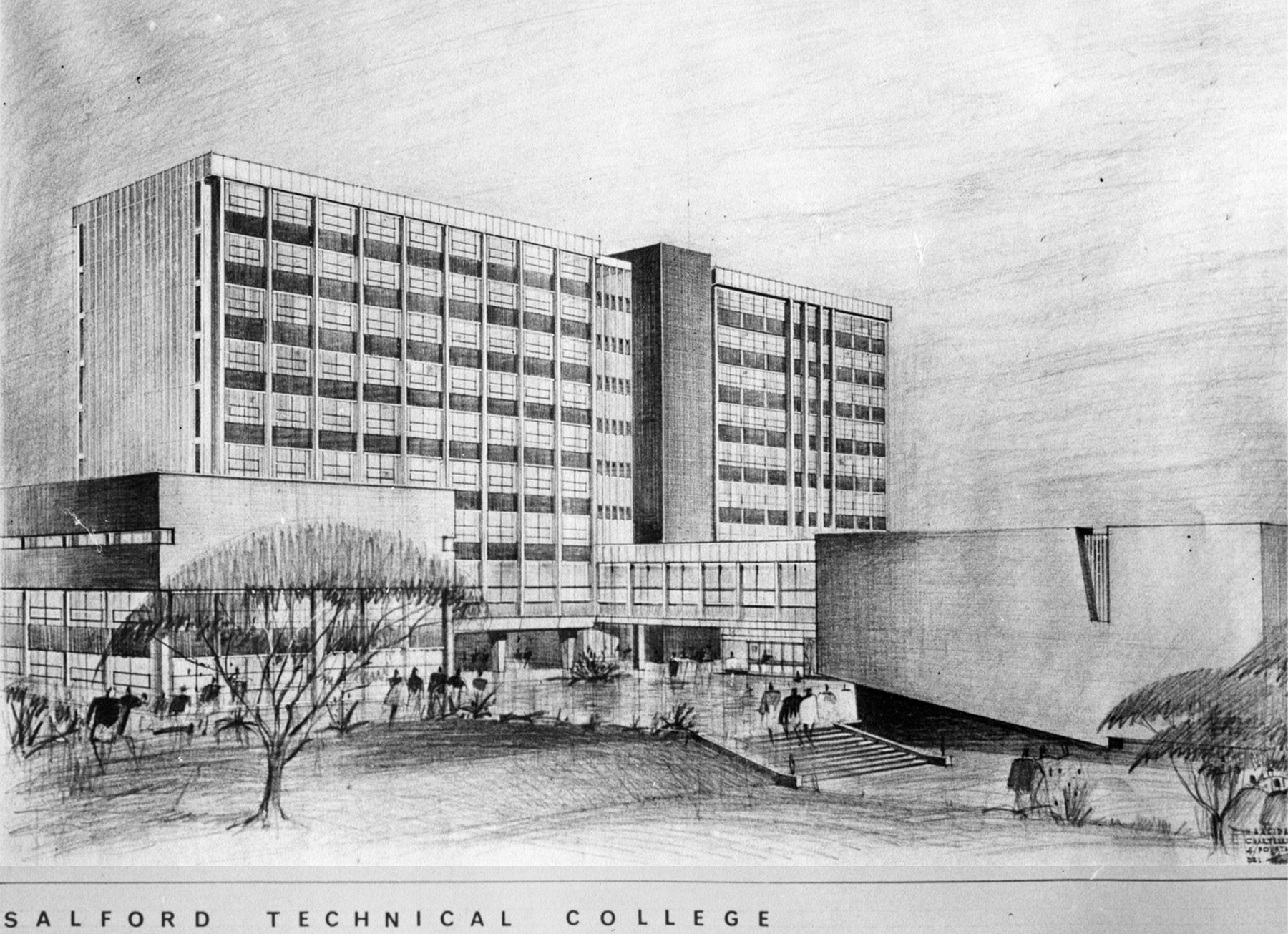
A ways down the road the former Salford Technical College.

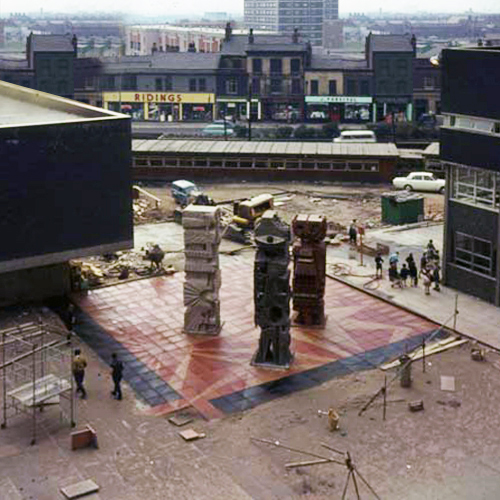
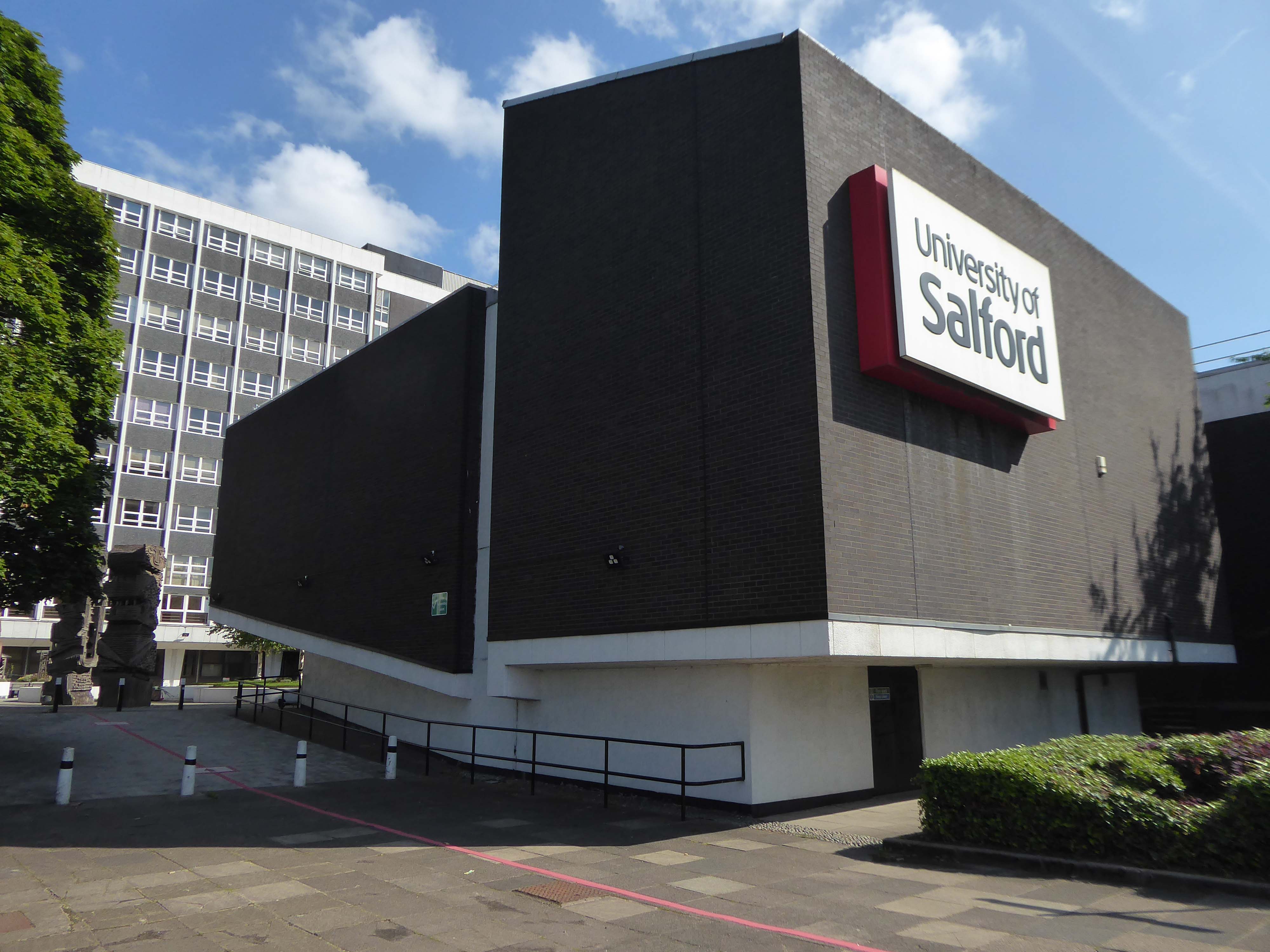
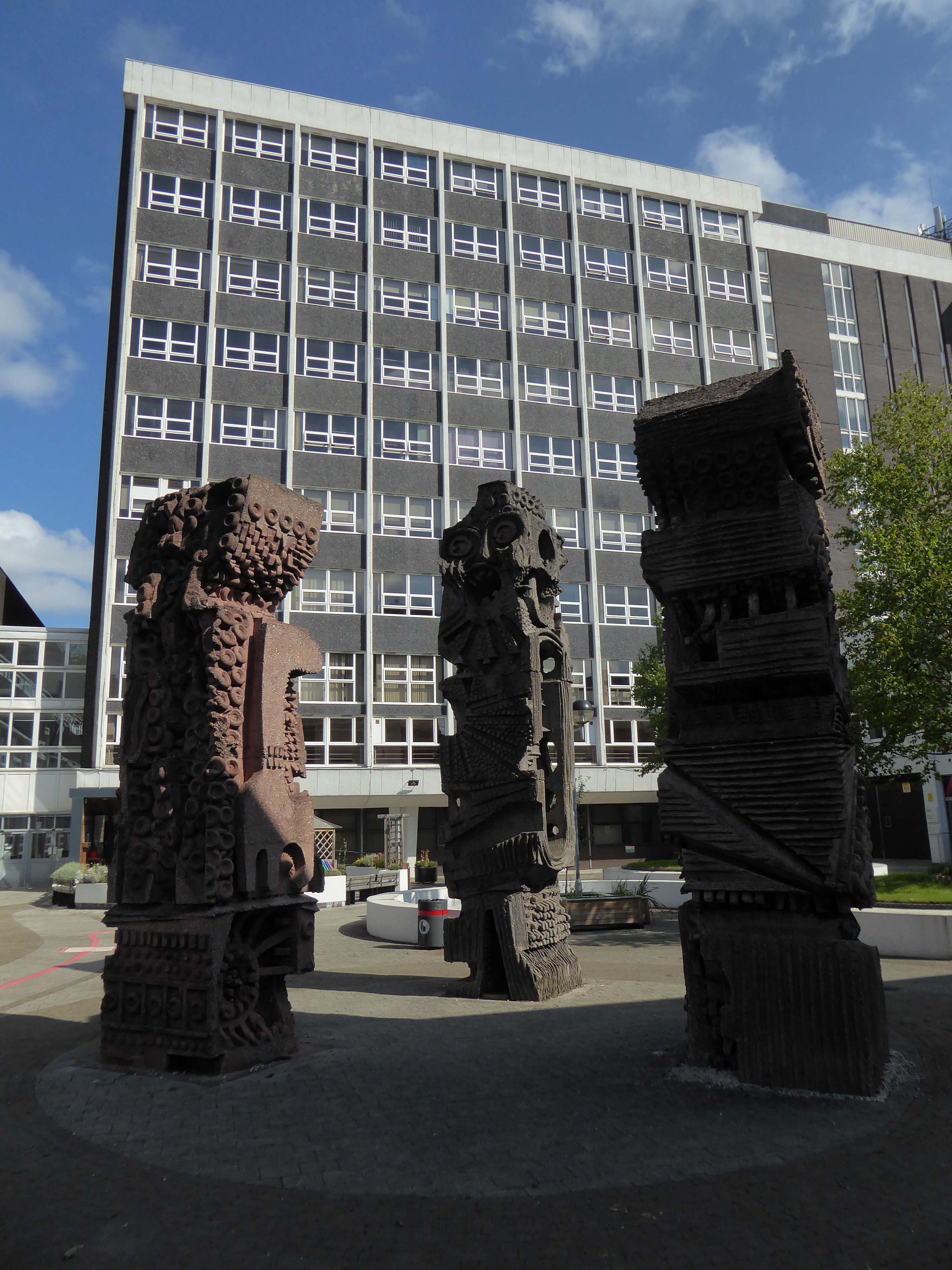
Now the part of the University of Salford, this grouping is probably the most significant work by Halliday Meecham during this period. The blocks wrap to almost enclose a courtyard and they step up in height towards the rear of the site. To the front is a lecture theatre block in dark brick. The multi-storey elements are straightforward in their construction and appearance and have had their glazing replaced. Perhaps the richest elements here are the three totemic structures by artist William Mitchell, which were listed at Grade II in 2011. Mitchell was actively engaged with the experiments of the Cement and Concrete Associations during the 1960s and produced a wide variety of works for public and private clients; other works regionally include the majority of the external art and friezes at Liverpool Metropolitan Cathedral and the Humanities Building at Manchester University. These textured concrete monoliths appear to have an abstract representation of Mayan patterns and carry applied mosaic. They were made on site using polyurethane moulds. There is another Mitchell work hidden behind plasterboard in the inside of the building.

Mainstream Modern

Subsequently assimilated into the University.

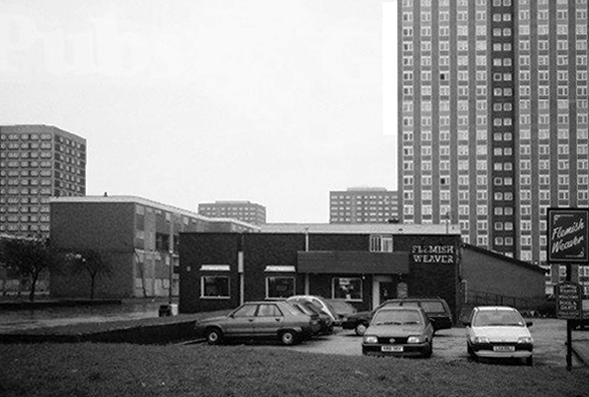
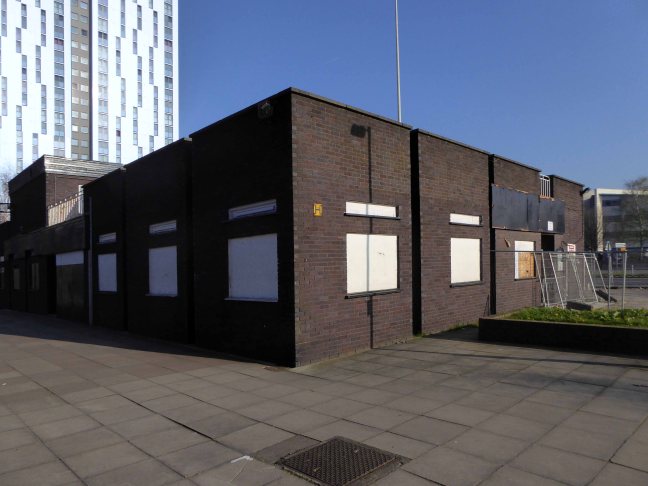
Across the A6 the former estate pub the Flemish Weaver is currently shrouded in particle board and in use as a base for construction workers.

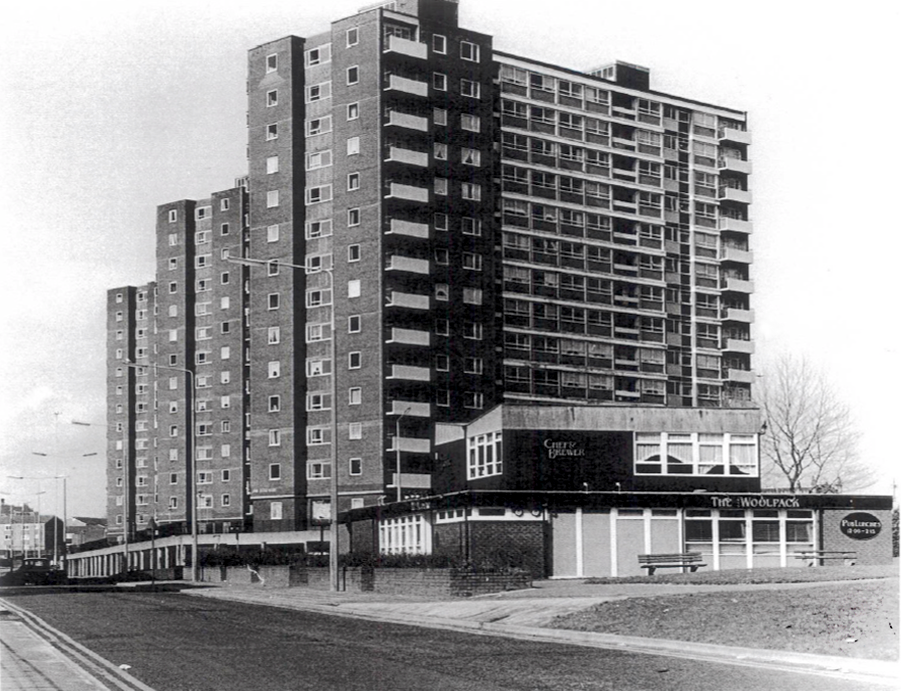
Just down the way The Woolpack is no more.

April 1965 saw the Salford City Reporter proudly boast in an article that

The Ellor Street dream begins to come true – complete with interviews with residents of the newly constructed Walter Greenwood, Eddie Colman and John Lester Courts all which towered some 120 feet above the Hanky Park skyline.

These particular blocks of flats were of special significance because their completion was the end of the first stage of the Ellor Street redevelopment scheme which was to provide 3,000 new homes, the £10 million pound Salford Shopping Precinct and a new civic centre – which never got built – making this A Salford of the Space Age.

Salford Online

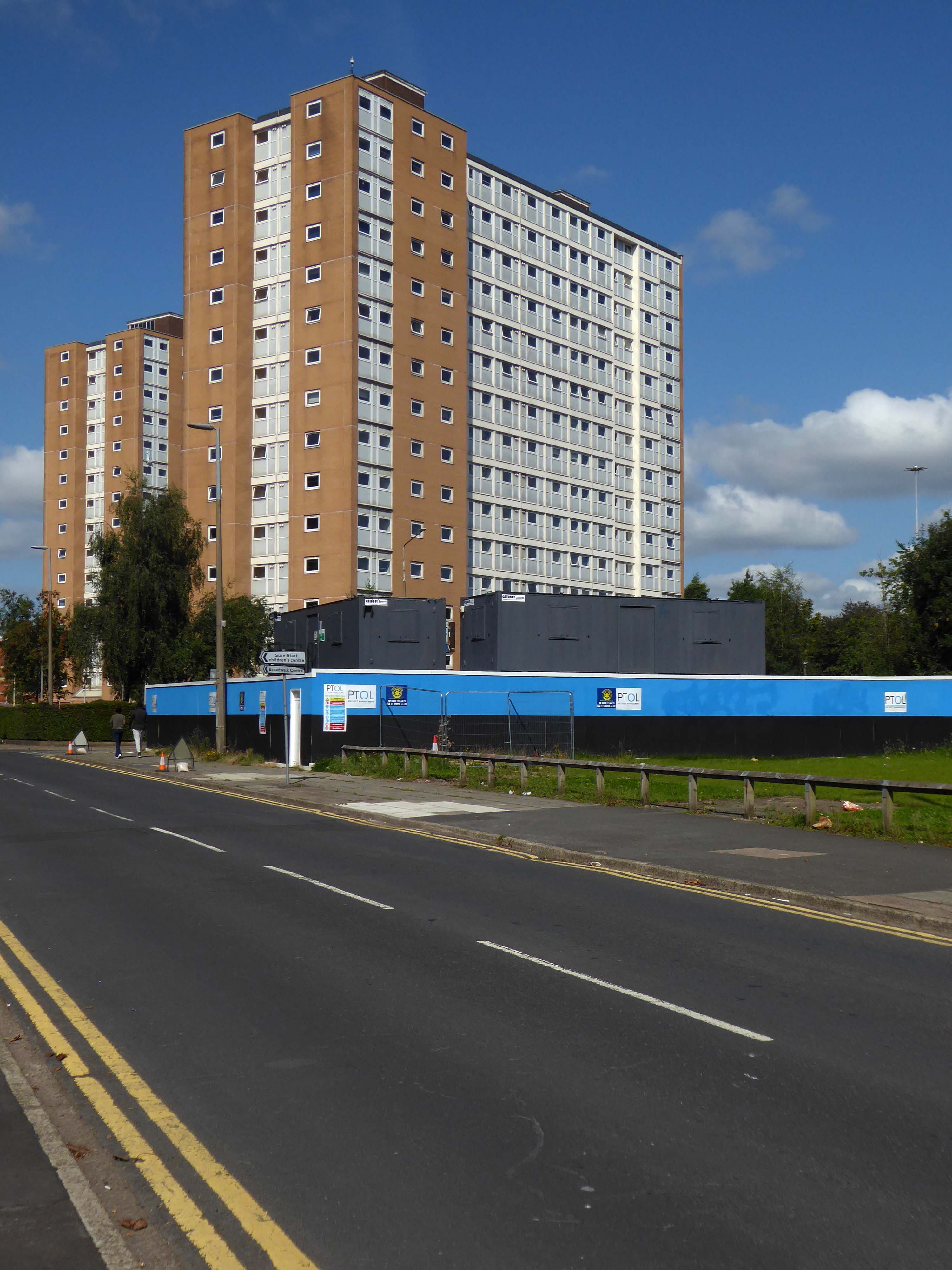
The tower blocks are now clad and the site a construction base for cladders.

Full details of Salford’s complex and extensive redevelopment can be found here at Tower Block.

Walter Greenwood Court was demolished in 2000/2001, whilst Eddie Colman and John Lester Court are now student accomodation for the nearby Salford University.

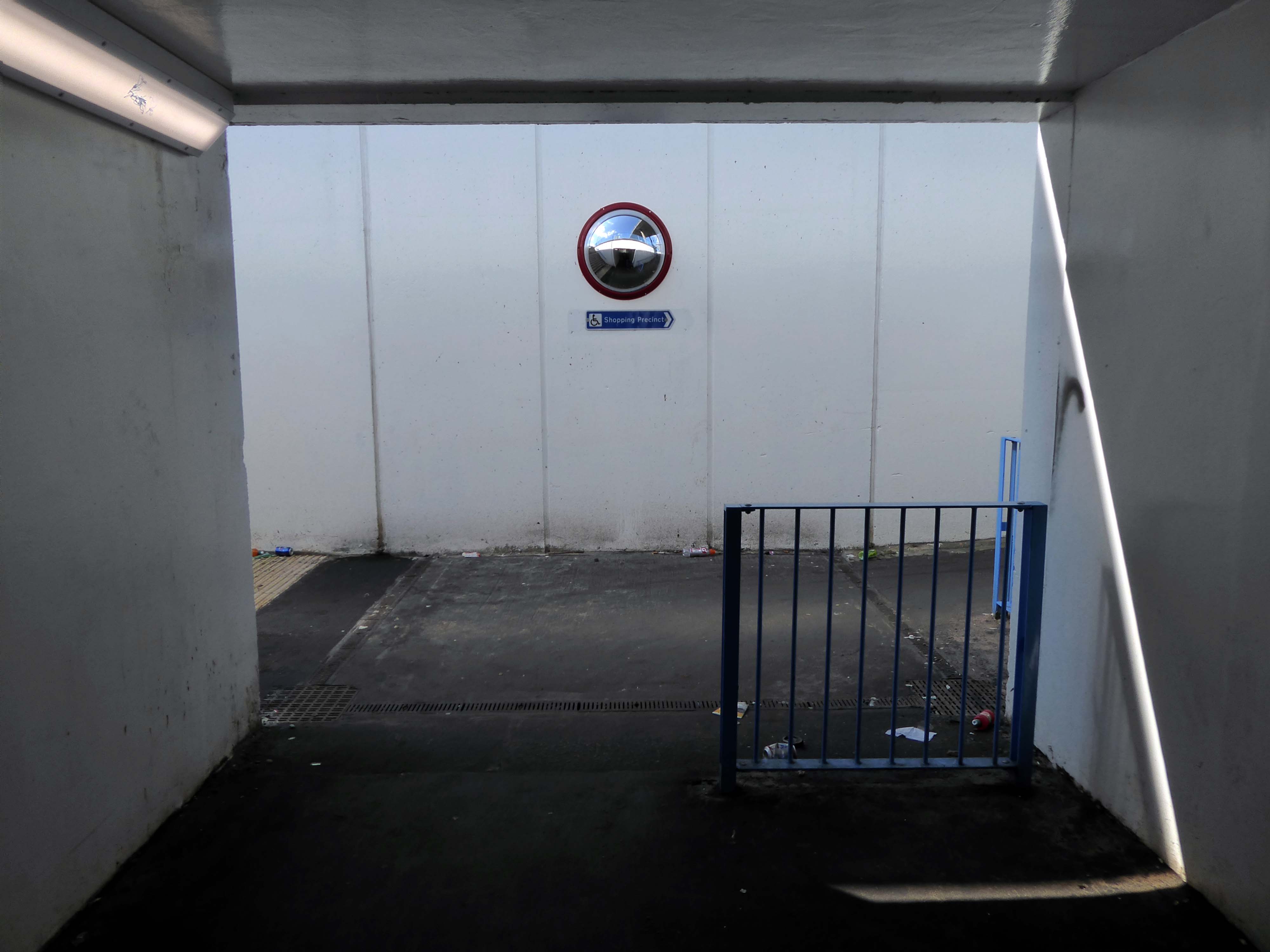
Onwards and underwards towards Salford Shopping City.

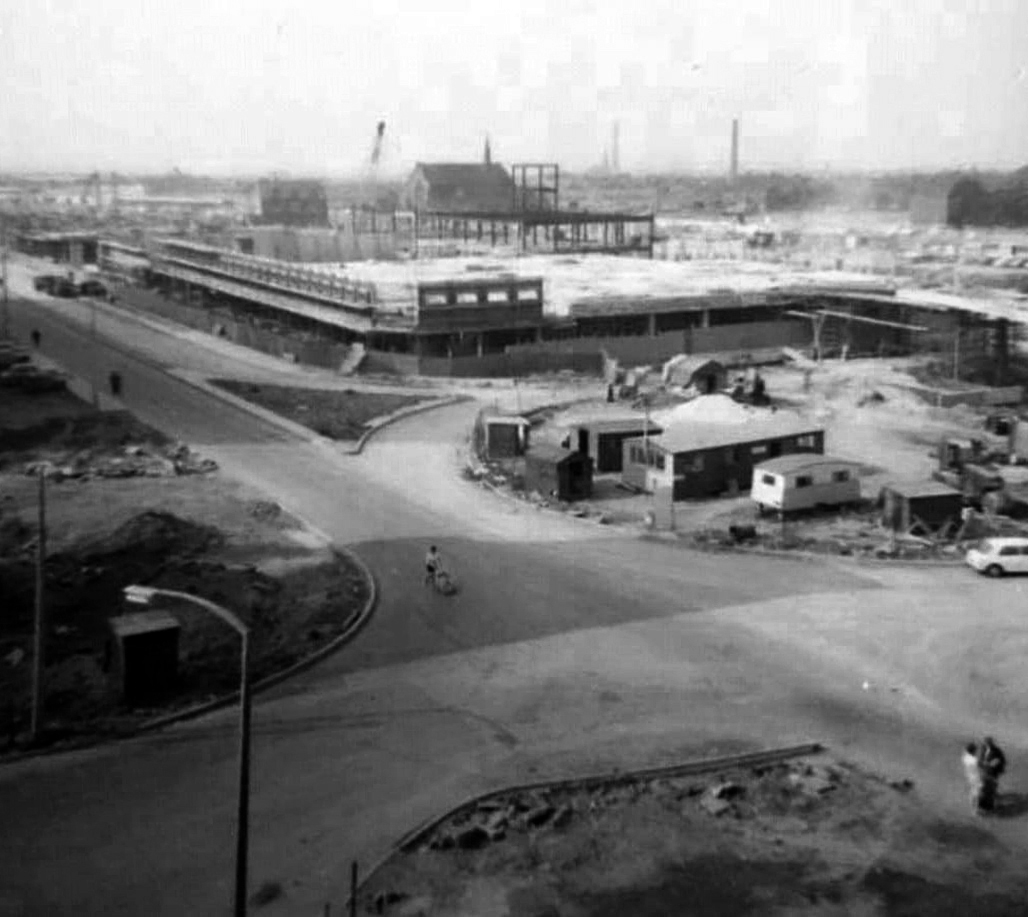
The construction of the shopping centre and surrounding areas continued and on 21 May 1970 the new Salford Market officially opened. From 1971 onwards new shops inside the precinct itself began to open.

However, due to a lack of funds and a political scandal which saw chairman Albert Jones jailed for eight months construction of Salford Precinct was halted. The site had only 95 shop units compared to the proposed 260, the hotel and two storey car park were never built.

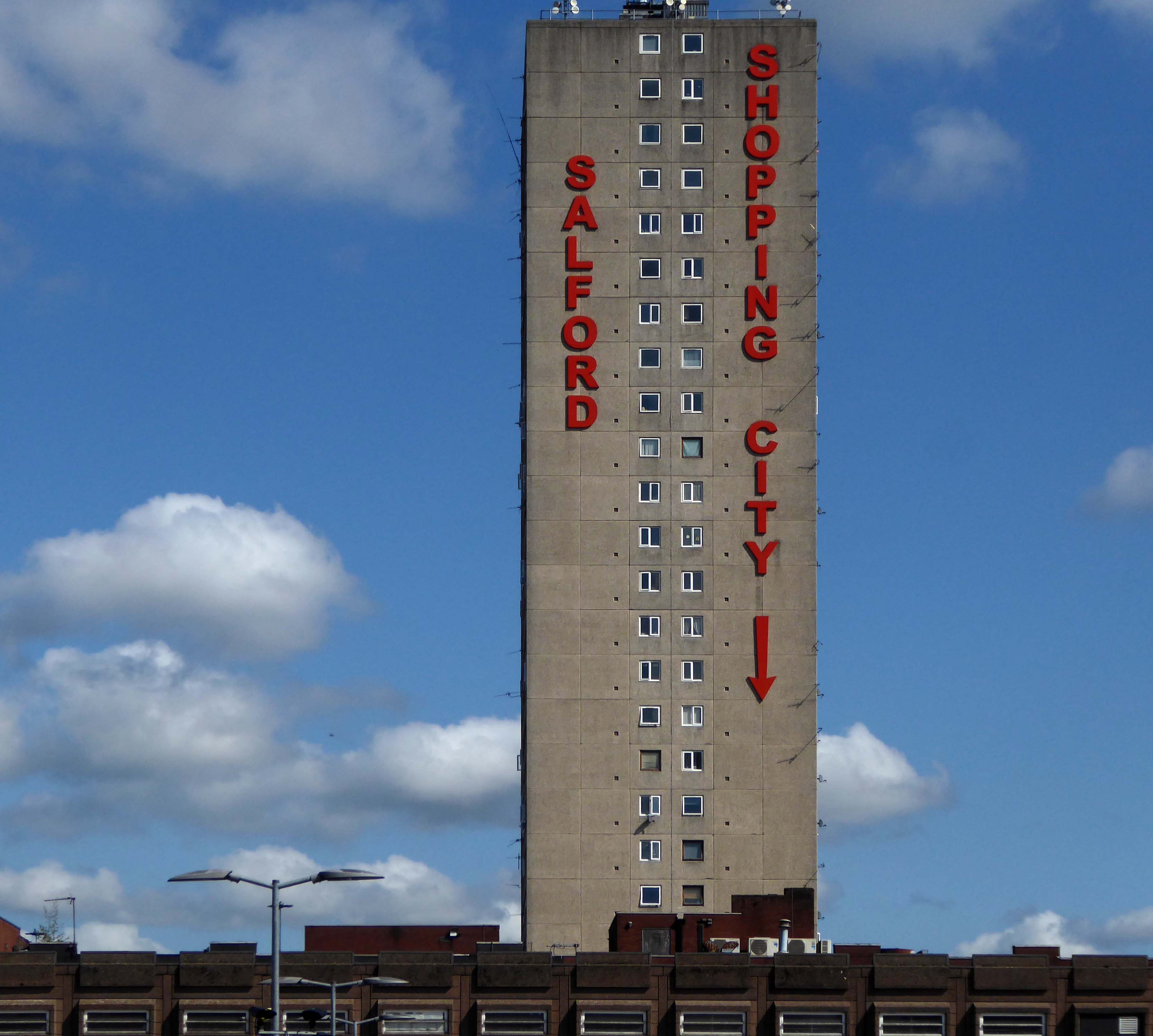
The architectural core of the site has been retained, including the 23 storey Briar Court residential tower.

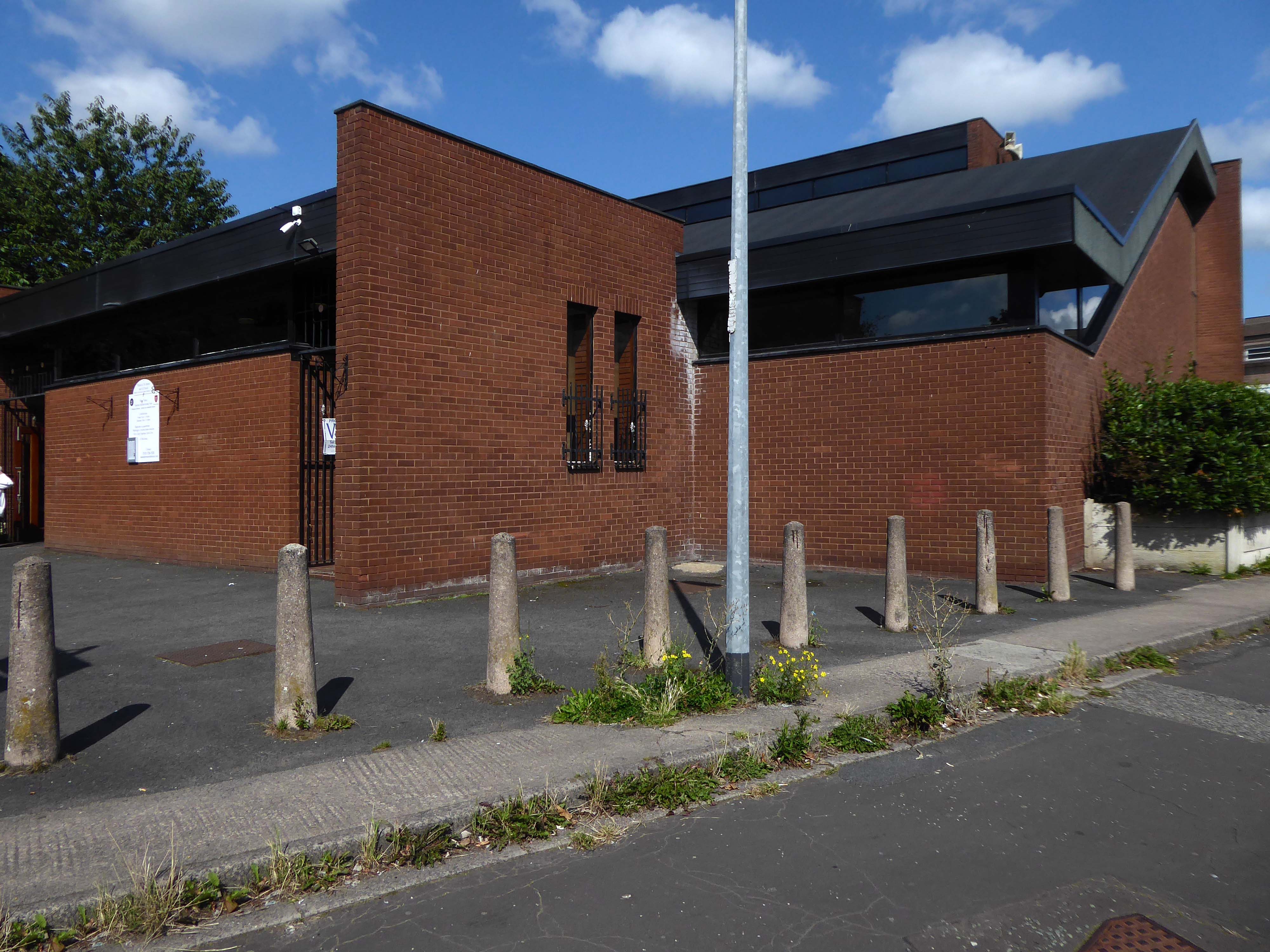
Tucked in behind is Mother of God and St James RC Church.

Clearances took place from the middle of the twentieth century and new high-rise housing blocks were built, as well as a shopping centre.

There was a Catholic presence in the area from 1854, when schools were built. What was described in The Tablet as a beautiful church, an Early English Gothic design by M. Tijou – presumably Herbert Tijou, architect of the chapel to Loreto College, Manchester, was opened by Cardinal Manning, Archbishop of Westminster in 1875.

One hundred years later this church was demolished and replaced by the present building.

The architects were Desmond Williams & Associates, the design bearing some similarity to their St Sebastian, Salford. In 2010 the church of All Souls, Weaste, was closed, and the marble sanctuary furnishings brought to the church.

Description

All orientations given are liturgical. The church is steel framed with brick walls and a monopitch roof (originally covered with copper, now with felt).  Bold brick forms create a presence, and the design is somewhat defensive, with few windows. The building is entered from a lower porch which forms a narthex. The slope of the roof and the stepped clerestory lighting create a striking impression inside, and full-height windows towards the east end incorporate stained glass figures said to have originated in the previous church. Marble sanctuary furnishings are presumably those from the church in Weaste and appear to be of later twentieth century date, while the font is of traditional type with a clustered stem and may have come from the earlier church.

Taking Stock

Returning to The Crescent the High Street Estate is all but demolished, save for one resident and their row.

This is an area which has seen a succession of clearances, redevelopment and shifts in demographics during a relatively short and intense period of change.

That process of change continues to hastily unfold.

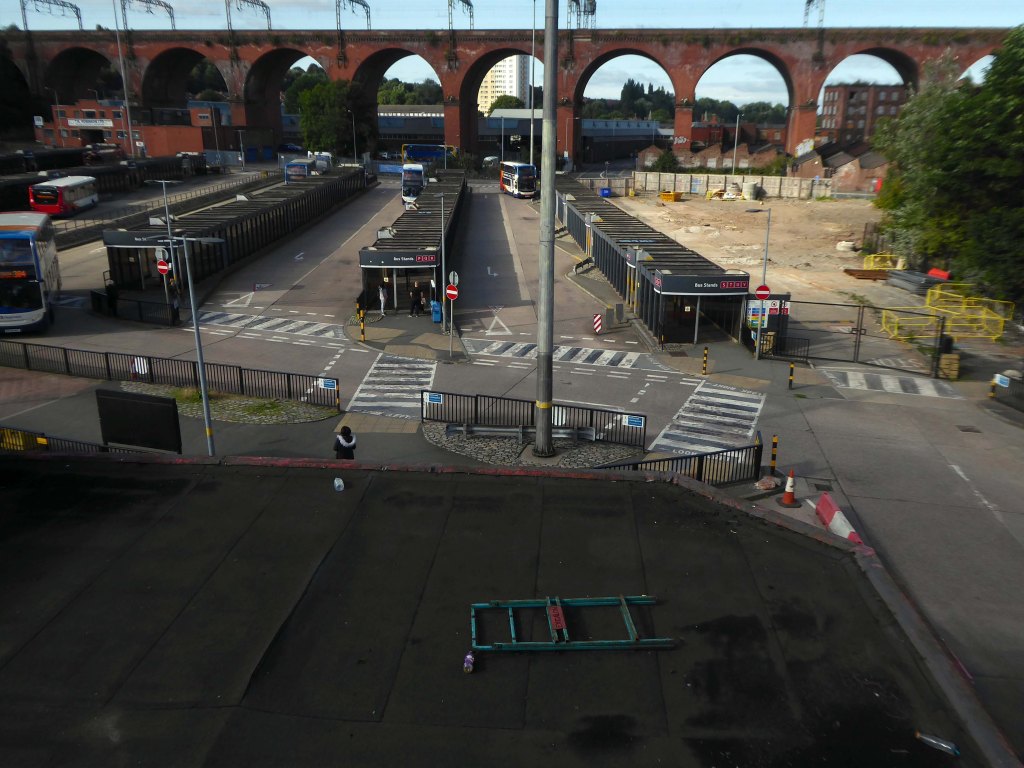
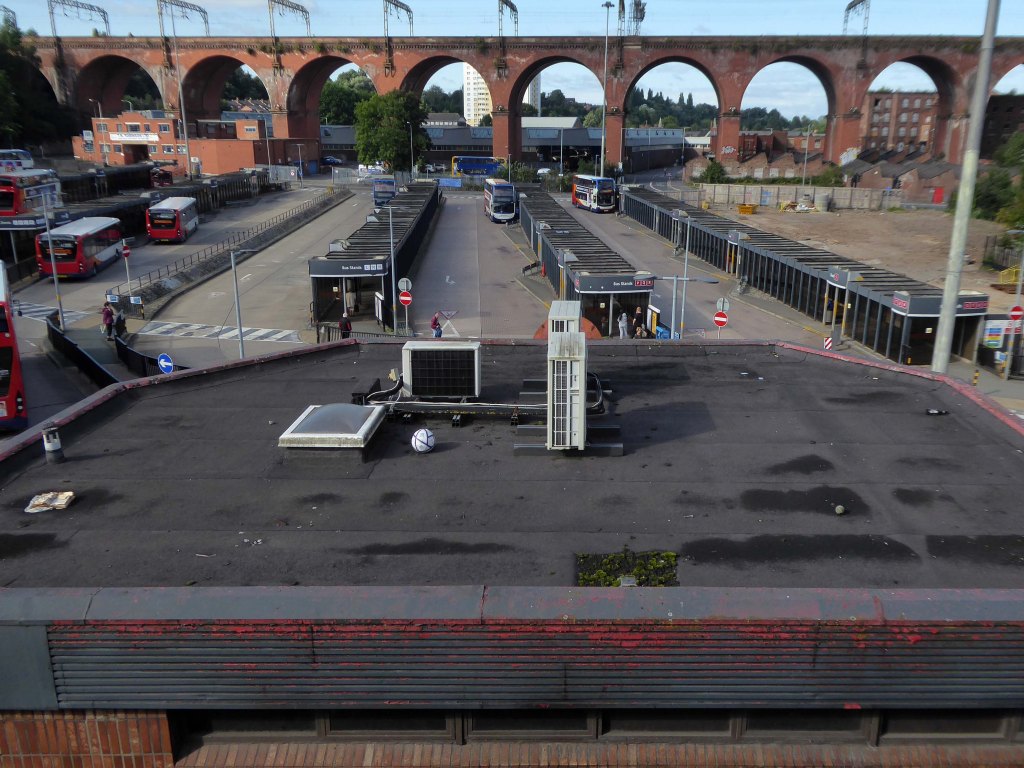
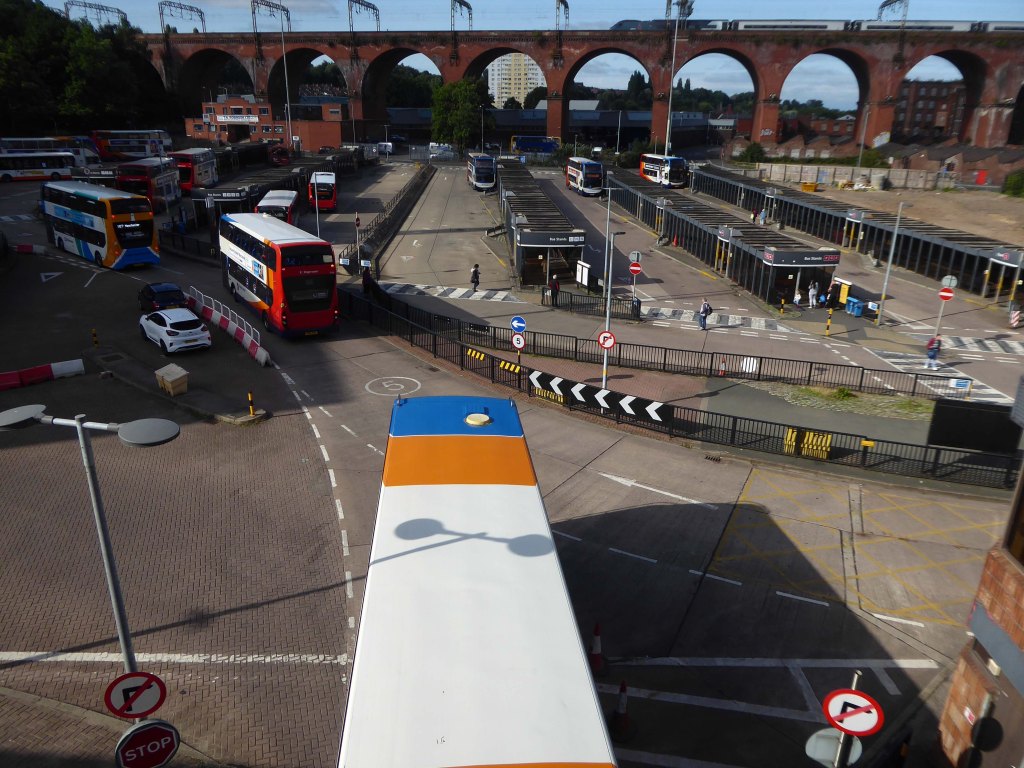
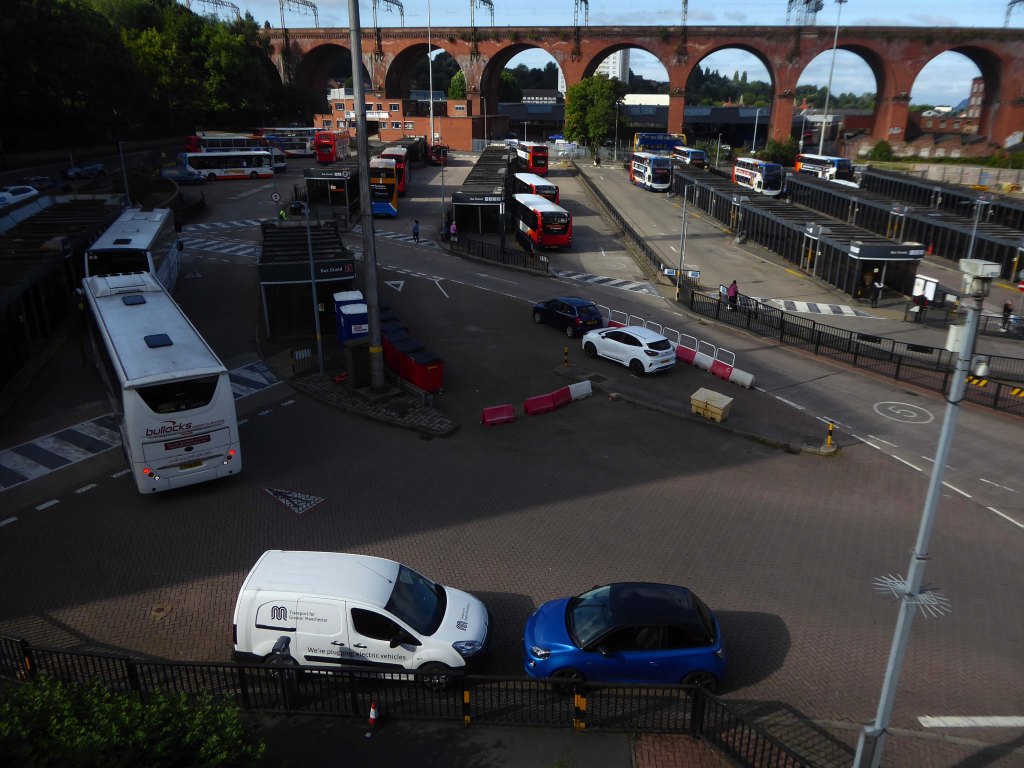
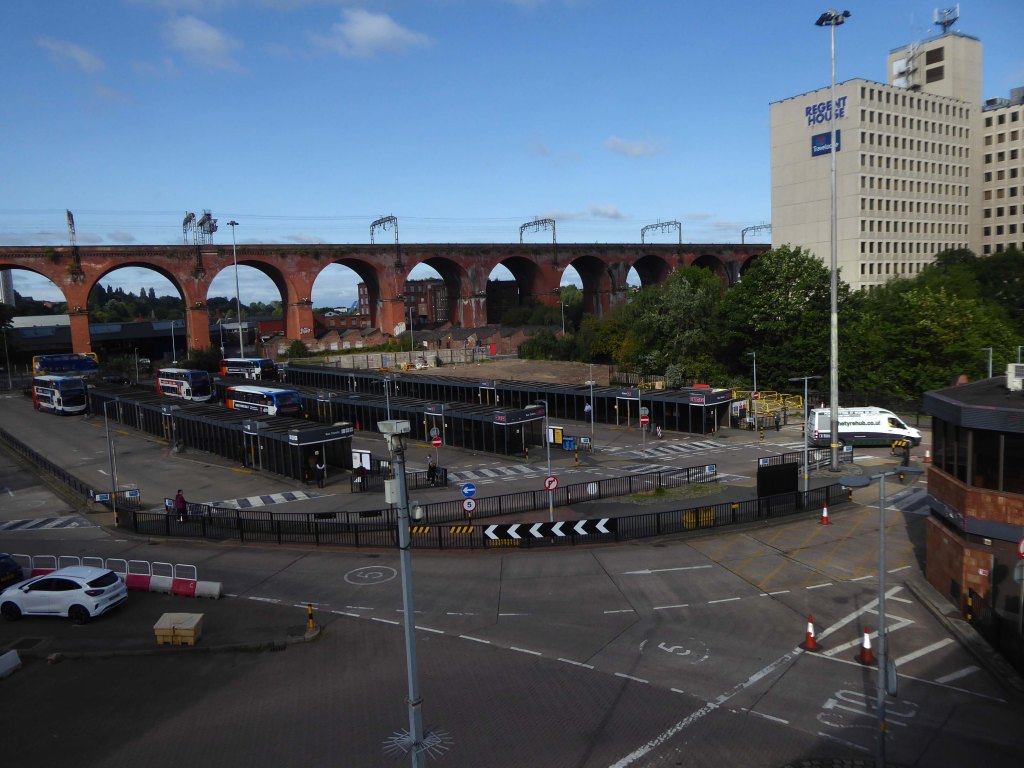
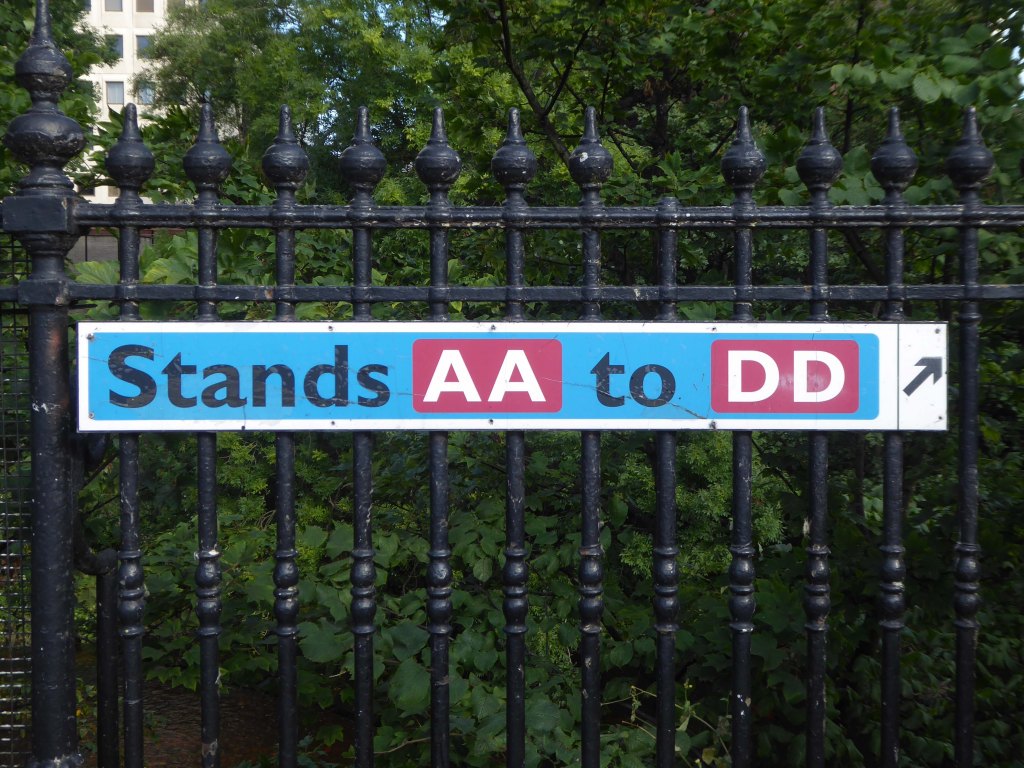
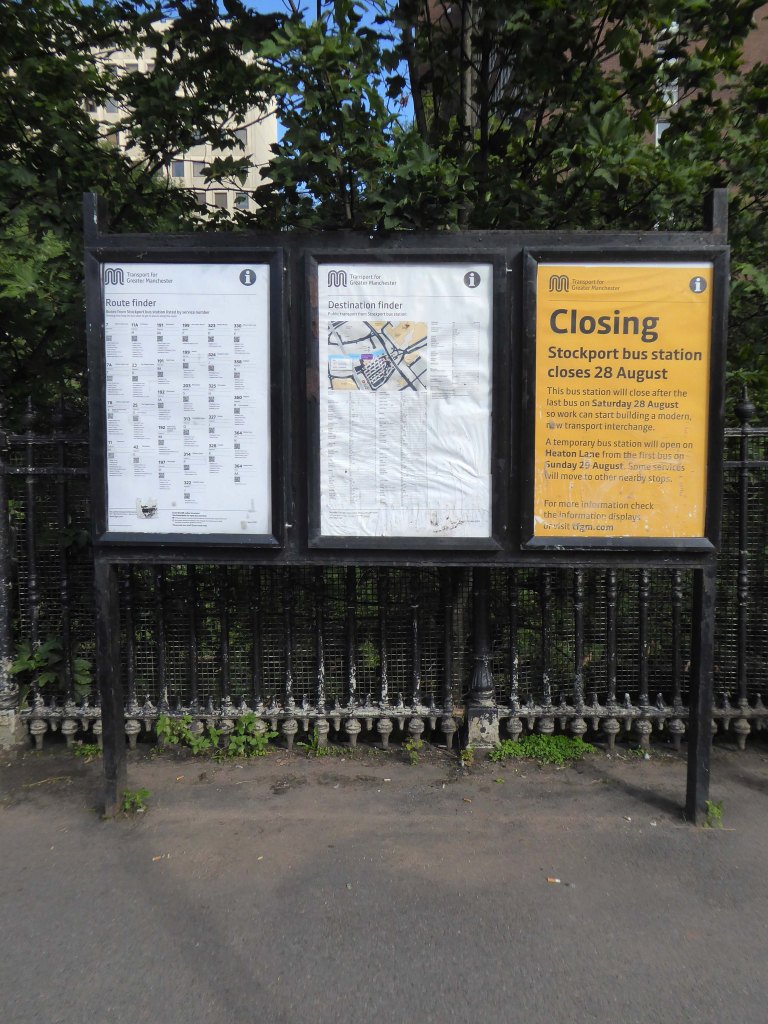
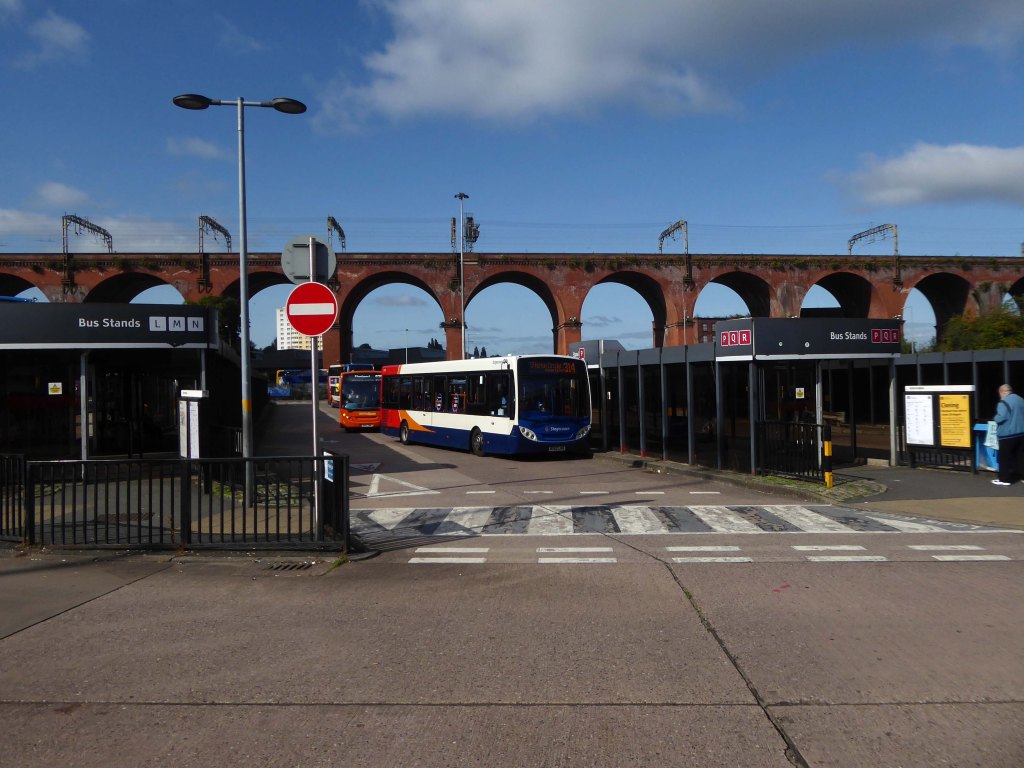
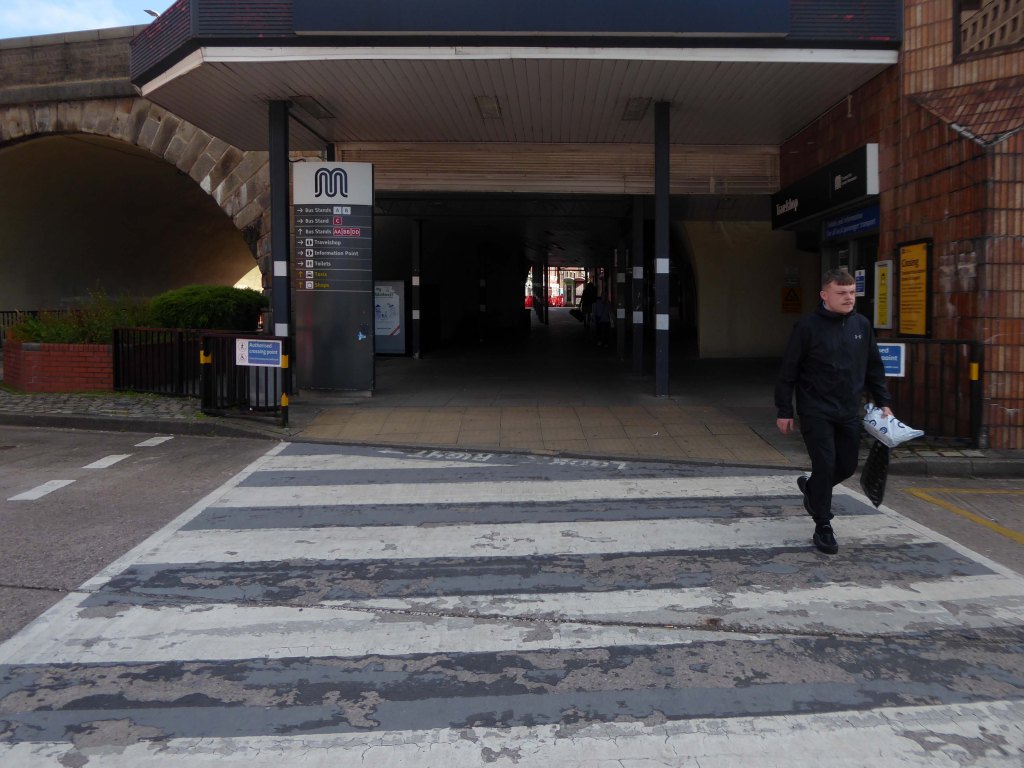
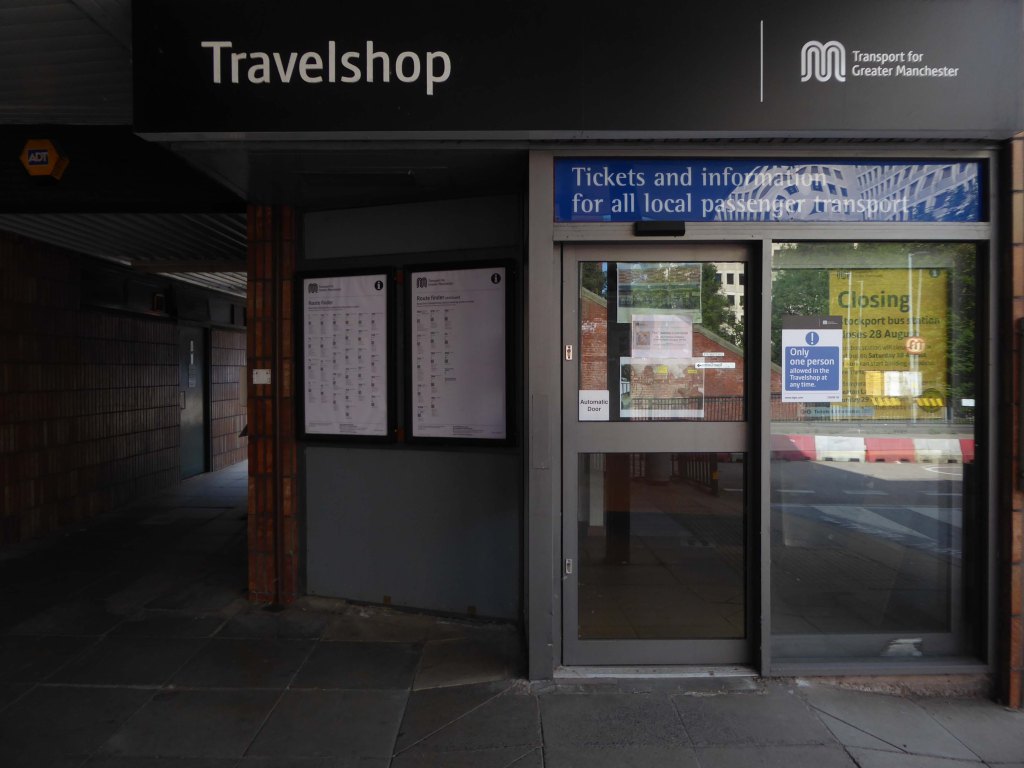
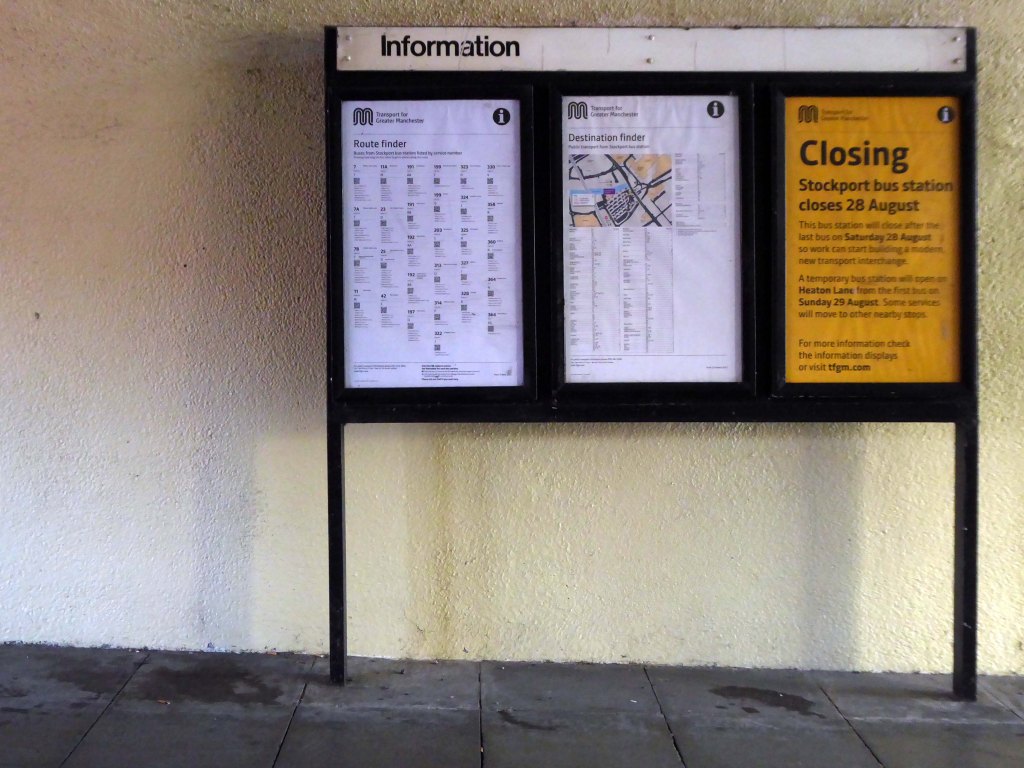
Stockport Bus Station – Closed

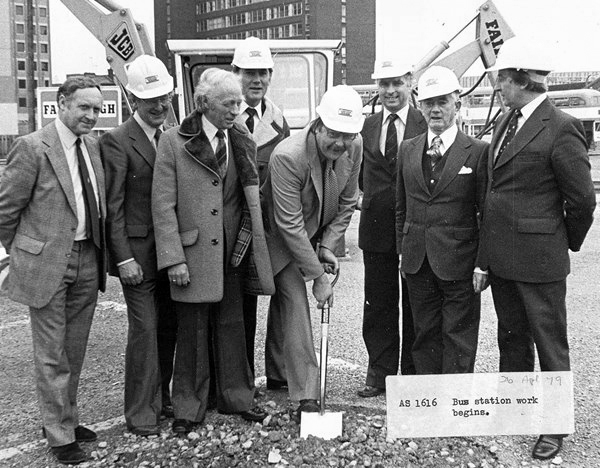
April 1979 work begins.

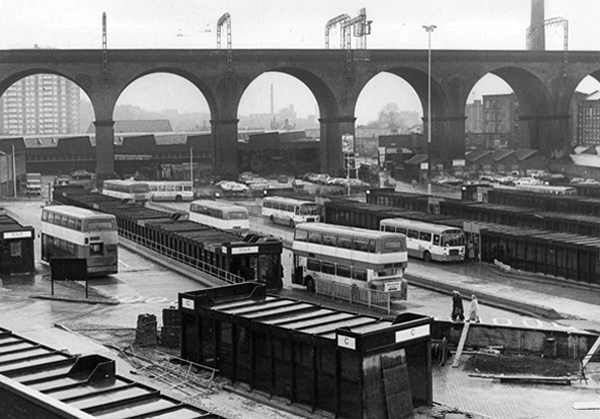
Opening on March 2nd 1982.

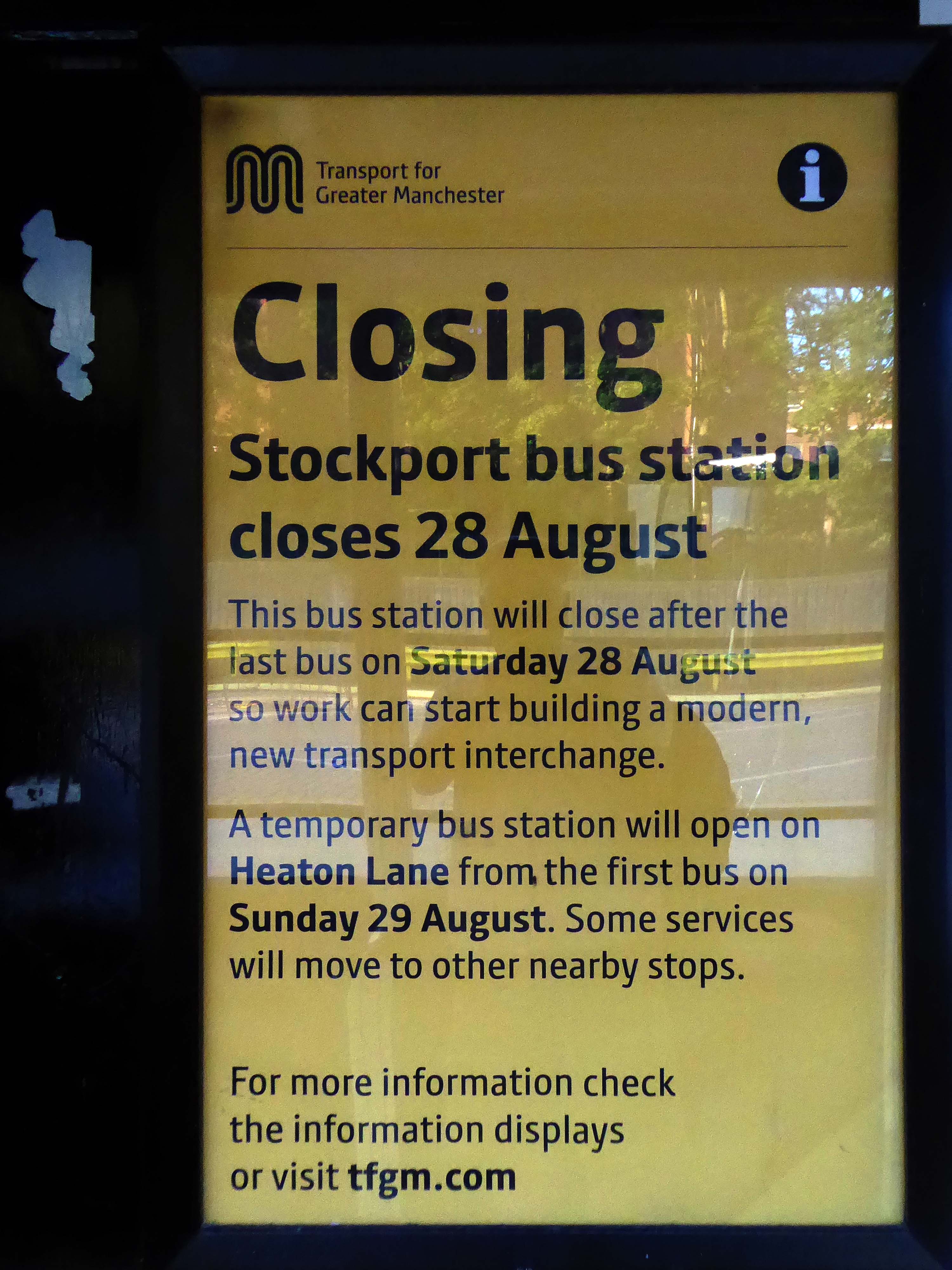
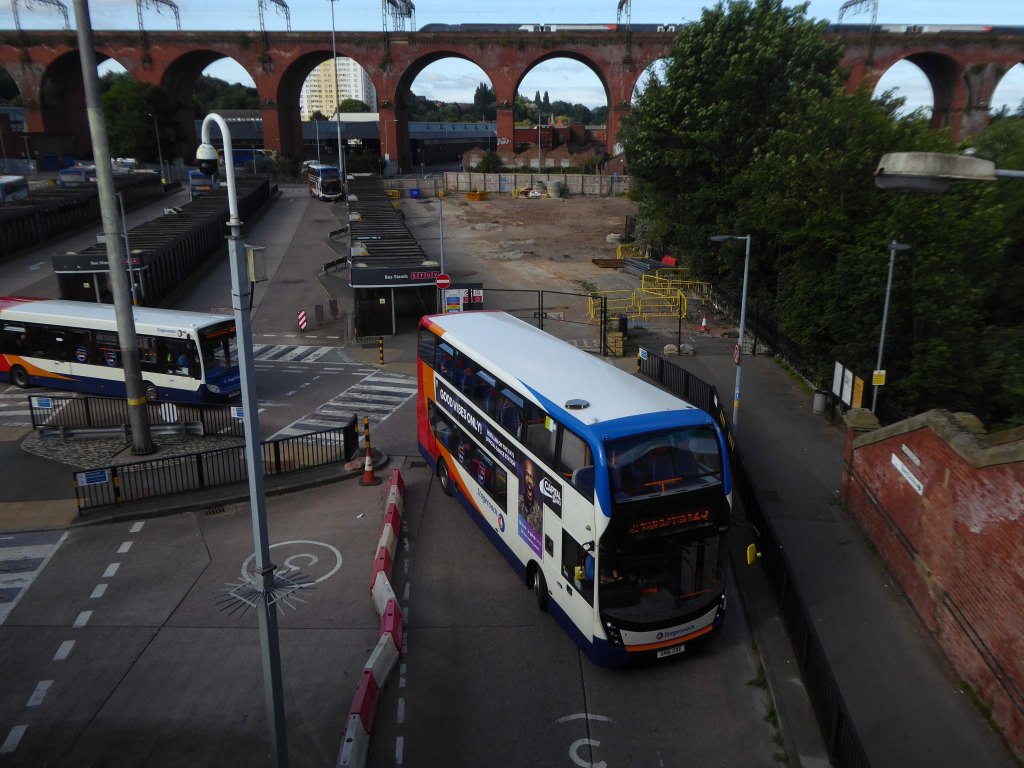
Closing on Saturday 28th August 2021.

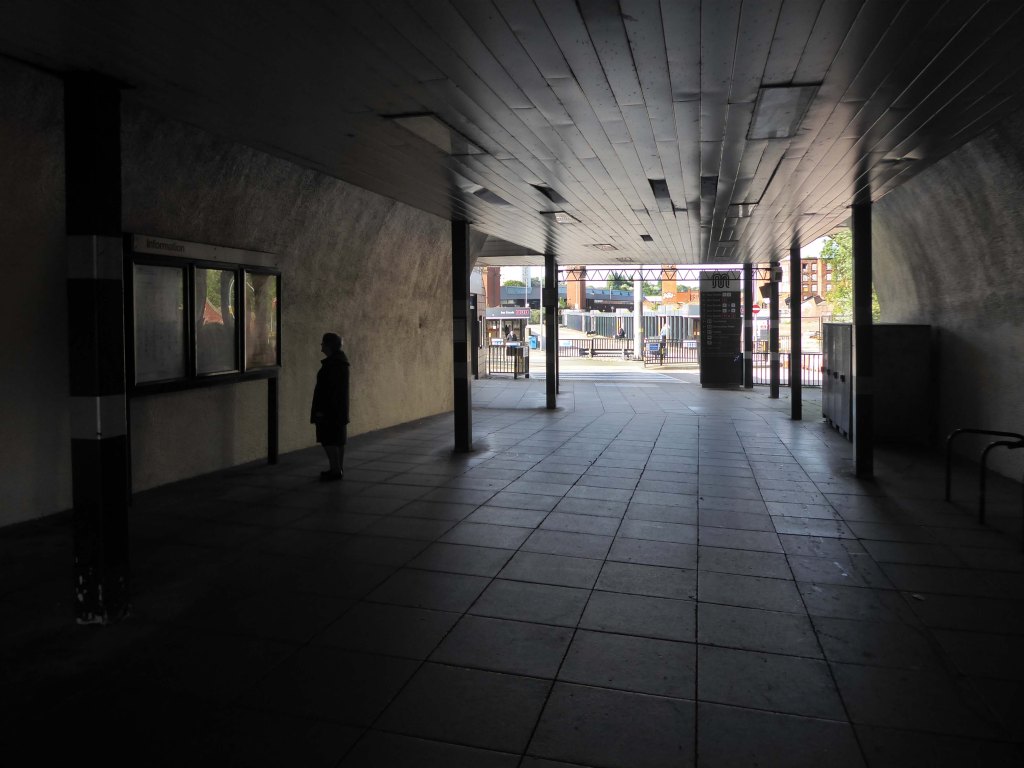
I have been in in and out of here for some forty odd years, writing of its history and recording its decline.

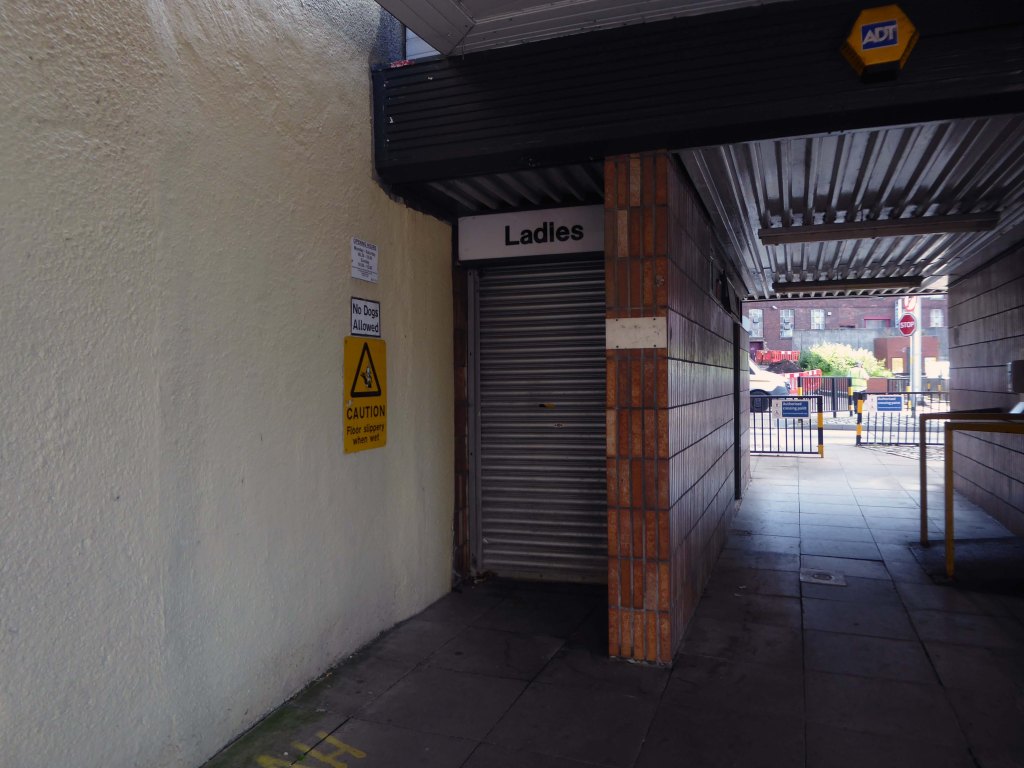
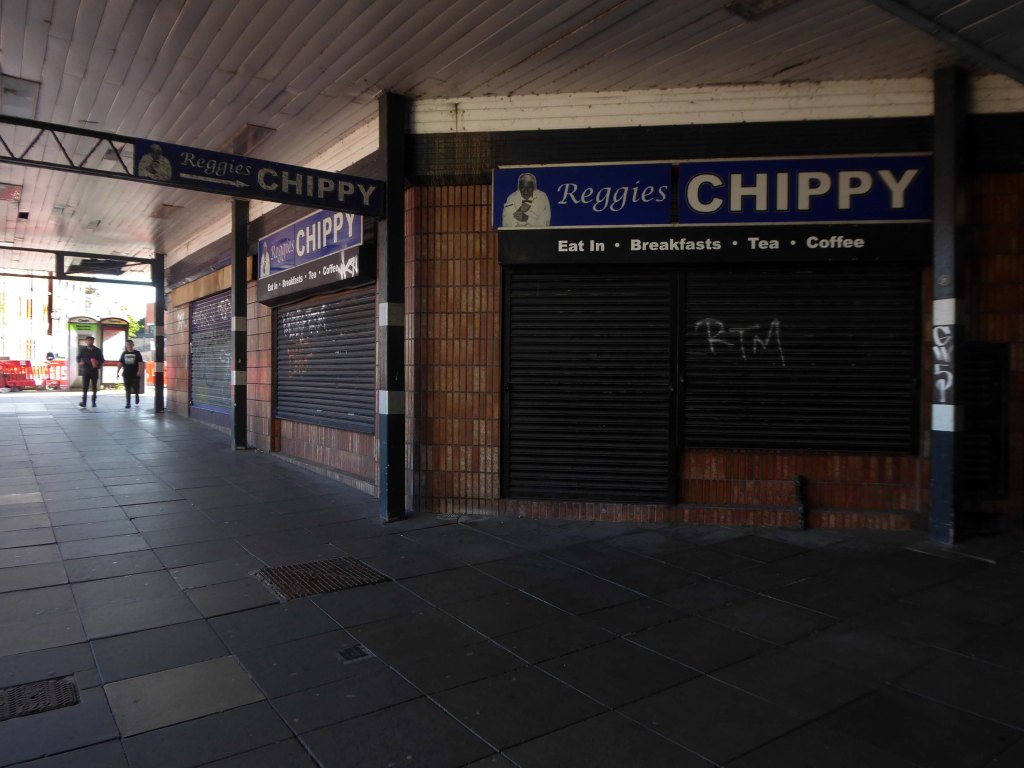
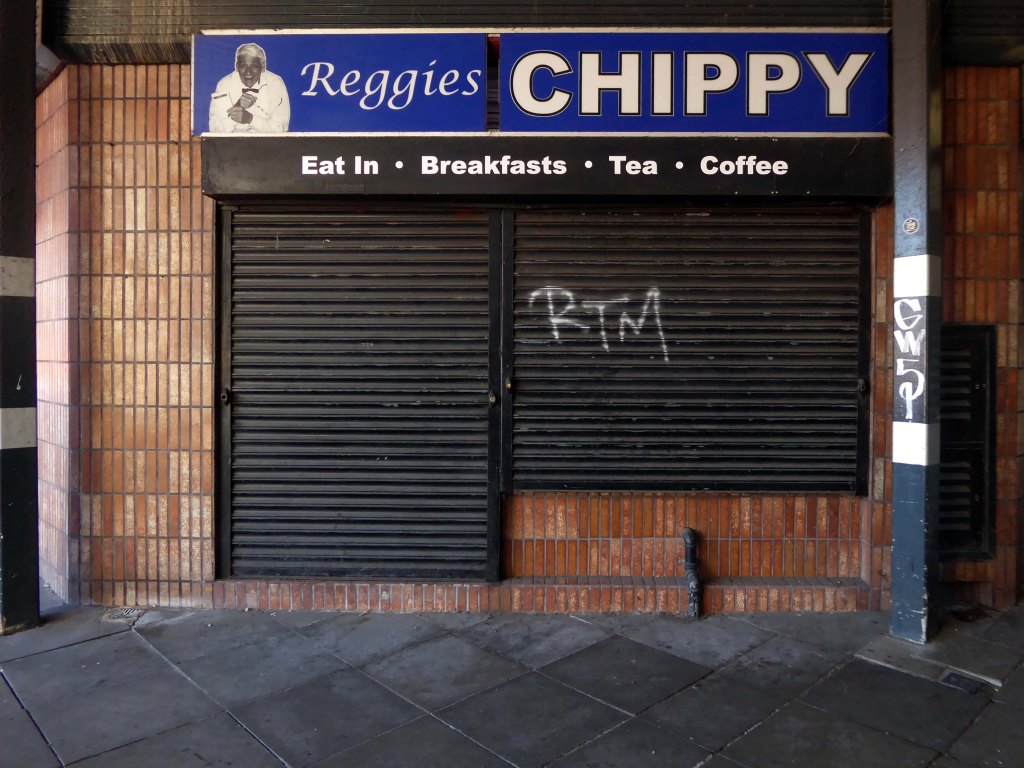
No more cold damp shelters, no more cavernous and grimy public conveniences, no more chips and shop.

Bye bus station.

Billingham

Whilst cycling twixt Redcar and Newcastle one sunny Monday morn, I espied a tower on the distant horizon.

I pedalled hurriedly along and this is what I found.

Dawson House aka Kingsway.

A fifteen-storey circular tower block of 60 one-bedroom flats and 29 two-bedroom flats, making 89 dwellings in total. The block was built as public housing at the western fringe of the Town Centre development that began in 1952. Approved in 1973, the block is of triangular concrete-beam construction.

The architects were Elder Lester Associates.

The block was built by Teeside County Borough Council.

Stanley Miller Ltd.’s tender for the contract was £778,850.

The tower block was opened on 3rd April 1975 by the Mayor of Stockton Borough Council, John Dyson.

The block is described as ‘gimmicky circular tower block’ in The Buildings of England: County Durham by N. Pevsner.

Historic England

Across the way the cosmically named Astronaut pub known locally as the Aggy.

Though all it seems, is not well in outer space:

Locals say punters are creating a giant toilet next to a Billingham pub – and performing sex acts.

I wouldn’t disregard what they say, and I can’t say that didn’t happen, said boss Jordan Mulloy.

I know urinating goes on from time to time but people do it outside every pub – anyone I catch doing it will be barred.

Teeside News

The pub stands at the outer edge of the West Precinct.

The precinct sits beneath the Civic Offices.

And has a ramp leading to the roof top parking.

Next door the earlier Queensway Centre.

The Family unveiled by HRM Queen Elizabeth II in 1967 the country’s first pedestrianised precinct.

Edward Bainbridge Copnall 

In November 2013, a time capsule was buried in front of The Family, under a stone with the inscription Forever Forward 30 11 2013.

The capsule is not to be unearthed until the year 2078.

Twenty million pound bid to take back control of the centre of Billingham.

The council says: Proposals include addressing the physical condition of Billingham town centre in support the Council’s ambition to take back control of the centre. Redevelopment would solve the challenges of changing retail trends that are contributing towards excess retail space and high vacancy rates.

This includes exploring options for mixed-use redevelopment and high-quality public spaces that improve accessibility within the town centre and a modern retail offering.

Hartlepool Mail.

Missing in action – La Ronde aka Eleanor Rigby’s.

Built in 1968 by local architects Elder Lester and Partners as part of the expansive plans for the town centre along with the Forum, La Ronde nightclub was to form part of the expansive plans for Billingham focused on the pursuit of increased leisure time.

La Ronde’s distinct cylindrical form comes from the car park access ramp that winds around the stair core to the upper floors of the club. The elevated drum-like form inset with cross latticed concrete webs was cast entirely in-situ.

In 2006, the council demolished La Ronde and Forum House at the cost of £500,000 to make way for a supermarket.

The Forum

In 1960, Billingham Urban District Council, began one of the most ambitious new leisure centres in Europe. The Forum was funded by the district’s new-found wealth – a product of the local petrochemical industry.  It was designed by local architects Elder Lester and Partners and brought together a variety of recreational activities including an ice rink, swimming pool, sports centre, theatre, and bar all under one roof. The Forum opened in July 1967 to great enthusiasm.  Weekly attendance over the first six months was between 20 000 and 30 000 people, far exceeding all expectations.

The inclusion of the theatre alongside the sports facilities broke new ground in recreational planning and in the shift from sport to the broader notion of ‘leisure’, the Forum predated architectural thinking of the time by nearly a decade.  The building’s form is derived from the functions within, expressed in a variety of bulbous elements.  The most distinctive is the canopy of the ice rink roof which is hung using steel cables running the length of the roof and cross-braced to achieve a clear 73m span.

Something Concrete and Modern

Octel Amlwch – Interiors

Having appraised the exteriors and pumping infrastructure, let us now consider the interior life of the site.

A site where a myriad working lives once unfolded – labourers, technicians, maintenance staff, administrators and managers.

They are now but fleeting shadows, their documents strewn across upturned furniture, empty lockers their standing open and untended, laboratories whose processes have ceased. A chaotic canteen with no-one to cook for, unsafe safety suits and unwashed washrooms.

Home now to pigeons, gulls and swallows alone.

The disconnected telephone remains unanswered.

Octel Amlwch – Pumping

We have taken a trip around the extant exteriors of the processing plant.

Now let’s turn our attention toward the epic infrastructure which extracted and pumped seawater.

Sea water is sucked in and then lifted 50ft into sea water ponds by huge pumps where any debris is removed. It is then passed to the seawater main where chlorine and dilute sulphuric acid are added which releases the bromine. It is literally blown out of the water. This water is passed into the top of a tower where it drops over 20ft through the packed section of the tower. There it is met by currents of air travelling upwards. Where it meets these air currents the bromine gets stripped out the water, which is returned to the sea. Whilst the wet bromine laden air passes from the top of the tower to be treated with sulphur dioxide and water. This produces mists of hydrobromic and sulphuric acids.

This mist passes into an absorber, and the acid coalesces. From here, it blows to a collecting tank. The bromine free air returns to the blowing out tower and the cycle begins again. The acidic product is referred to as primary acid liquor. This is now pumped to the steaming out tower. It enters the top and is treated with chlorine and steam, which releases the bromine as vapour. It is then condensed to a liquid. The bulk of bromine goes to dibromoethane, whilst the remainder is sold or used to make other intermediates.

It takes about 22,000 tonnes of seawater to produce 1 tonne of bromine. Every minute 300,000 gallons of seawater are drawn in.

This now redundant technology has left a legacy of industrial dereliction amongst the ancient Pre-Cambrian rocks and sylvan seas of the Anglesey Coast.

This is a landscape which induces fear and fascination in equal measure.

Whatever is fitted in any sort to excite the ideas of pain, and danger, that is to say, whatever is in any sort terrible, or is conversant about terrible objects, or operates in a manner analogous to terror, is a source of the sublime; that is, it is productive of the strongest emotion which the mind is capable of feeling.

Edmund Burke

Octel Amlwch – Exteriors

Amlwch has been the centre of the world’s copper industry, a coastal town on Anglesey with a long history of trade, the coming and going of goods.

Once the site of a processing plant extracting bromine from sea water.

The Associated Octel factory was built to extract bromine from seawater and turn it into an additive for petrol engines. At the time, petrol used in road vehicles contained lead. Engine knocking was a common problem, when the mixture of air and fuel didn’t burn efficiently with each detonation. This could damage engine cylinders over time. The additive produced here reduced knocking and improved engine efficiency.

As the health effects of lead in vehicle exhaust gases became better understood, unleaded petrol was developed. It was introduced to UK filling stations in the 1980s, and leaded petrol was later phased out. As demand for anti-knock additive reduced, the Octel factory diversified into other bromine products and was taken over by Great Lakes Chemical Corporation. In 2003, the corporation decided to close the works with the loss of more than 100 jobs.

A detailed history of the site can be found here at Octel Amlwch.

The site has been subject to arson attacks and partial demolition, the extant buildings tagged, tattered and torn.

Slowly but surely nature breaks through the tarmac and concrete.

The gate is open, the lights are out, there’s nobody home.

Hull Walk 2021

Turn right out of the station toward the Cecil Cinema.

The Theatre De-Luxe was built in 1911 at the corner of Anlaby Road and Ferensway with its entrance in Anlaby Road and its auditorium along the side of the pavement in Ferensway. Kinematograph Year Book of 1914 lists 600 seats and the owners as National Electric Picture Theatres Ltd.

In 1925, the theatre was rebuilt to a radically altered ground-plan and renamed the Cecil Theatre. 

The Cecil Theatre’s demise came during bombing on the night of 7/8 May 1941 when German incendiary bombs reduced the building to a shell; and it remained like that until demolition in 1953.

Work on the new Cecil Theatre was begun in April 1955 and it was opened on 28th November 1955 with 1,374 seats in the stalls and 678 in the balcony.

Architects: Gelder and Kitchca

At the time of opening it had the largest CinemaScope screen in the country measuring 57 feet wide, and the first film shown was Marilyn Monroe The Seven Year Itch.

In the 1980’s it was taken over by the Cannon Cinemas chain. The cinema operation was closed on 23rd March 1992 and the cinemas were ‘For Sale and/or Lease. It was taken over by Take Two Cinemas and renamed Take Two Cinema. It was closed on 27th February 1997 and the two screens in the former circle were stripped out and converted into a snooker club.

Whilst bingo continues in the former stalls area of this post war 
cinema, the former mini cinemas in the circle still contain the snooker tables, but the space is unused. The screen in the former restaurant/cafe area remains basically intact, but is unused.

Cinema Treasures

Whilst circumnavigating the Cecil one can’t help but notice the KCOM HQ – and its distinctive white telephone kiosks.

The work of City Architect A Rankine OBE RIBA

When Hull City Council founded KCOM back in 1904, as Hull Telephone Department, it was one of several local authorities across the country granted a licence to run its own phone network.

1952 Call Father Christmas service was introduced.

Having heard of a recorded message service in Scandinavia, Hull Councillor J M Stamper suggested the idea of putting Father Christmas on the telephone. The Call Father Christmas service was introduced shortly afterwards, the first of its kind in the UK. By dialling a Hull Central number children could hear recordings of a Christmas story and carol singing. 

The success of the Father Christmas service led to the creation of other recorded information lines, such as Bedtime Stories, Teledisc and Telechef. 

This recipe line was introduced in 1950s and was still going strong until the 1990’s, with 50s recipes such as meat loaf and corned beef with cabbages being replaced by dishes such as Italian Chicken Bake.

Returning to Ferensway we are confronted by the Danish Seaman’s Church.

Sea trade created a large Danish community which Hull’s very own Amy Johnson was descended from. Her grandfather was Anders Jorgensen, who anglicised his name to the more pronounceable Andrew Johnson. A Danish pastor was appointed and an old chapel in Osborne Street was purchased in 1841.

It was on May 9, 1954, that the present church, with its now familiar separate bell tower, was consecrated by the Bishop of Copenhagen.

Around the corner we find Porter Street Housing.

Hull was the most severely damaged British city or town during the Second World War, with 95 percent of houses damaged. It was under air raid alert for one thousand hours. Hull was the target of the first daylight raid of the war and the last piloted air raid on Britain.

Of a population of approximately three hundred and twenty thousand at the beginning of the war, approximately one hundred and fifty two thousand were made homeless as a result of bomb destruction or damage. 

Overall almost one thousand two hundred people were killed and three thousand injured by air raids.

Despite the damage the port continued to function throughout the war.

The earliest housing was built just after World War II, starting with what is known locally as Australia Houses

A circular five storey housing block off Porter and Adelaide Streets, with a communal garden in the middle. These flats consist of deck access flats and some traditional style Art Deco tenements. Some are three bedroom, and have been refurbished over the years.

UK Housing

Porter Street – three six-storey blocks containing seventy dwellings of 1954

Contractor J Mather

New Michael Street and Melville Street aka Upper Union Street one hundred and eight dwellings in three nine-storey blocks of 1958

Contractor Truscon

The designer behind Hull’s tower blocks was Andrew Rankine RIBA, who from 1939 remained City Architect until his retirement in 1961.

Just around the corner:

Over the last three years both companies have worked on undertaking the complex development of an off-site constructed, low carbon, Code 5 housing product. Working with Hodson Architects on the design the project will provide 3-bed family houses on the Thornton Estate in Hull. The scheme will increase provision of suitably sized accommodation in the area for families.

The project will see Premier Interlink manufacture the steel framed modules at the factory in Brandesburton East Yorkshire starting this March. The five houses are to be prefabricated off-site, with each house comprising of four separate units which are then assembled on site. This offers the benefit of reducing construction time, improving efficiency, reducing material wastage and offering an improved thermal envelope.

Premier Modular

The Goodwin Trust, a brilliant and pioneering community group, decided the new version of pre-fab, or ‘modular’ housing, was exactly what was needed to provide affordable housing for the people it also cares for in so many other different ways.

Locality

Onward to Holy Apostles Church now home to Hull Truck and renamed Thornton Village Hall.

Architects: Ferrey and Mennim

Back toward the station and Hammonds of Hull/House of Fraser – soon to be a food court, artisan everything outlet.

Built in 1952 on Paragon Square to designs by T. P. Bennett, with extensions added in 1954 and 1957. Within a couple of years the business had grown again by opening its own hairdressing salon, and in 1960 added a new warehouse to accommodate their furniture workshops and stock rooms. This itself was extended within four years, while a fourth floor was added to the main store.

On the right a civic building Festival House of 1951.

Architect: John Brandon-Jones.

Apprenticed to Lutyens‘ assistant Oswald Milne and later working with Charles Cowles-Voysey

With his good friend, John Betjeman, he helped found the Victorian Society in 1958.

On 1st May 1951, the foundation stone of Festival House was laid, to commemorate the first permanent building to be built in the city centre since the 1941 Blitz. Placed under the stone was a time capsule containing coins, stamps, a Festival of Britain programme, a copy of that day’s Hull Daily Mail, and a booklet about the city. Festival House was owned by Hull Corporation on behalf of the people of Hull.

Before us Alan Boyson’s Three Ships – now listed and set for preservation.

The fate of the attached former CO-OP/BHS is less secure.

Architect: Philip Andrew

Onward to the Queens Gardens the almost filled in former Queens Dock – forever fourteen feet below sea level.

We encounter Tonkin Liu’s Solar Gate – a sundial that uses solar alignment to mark significant times and dates in Hull. The super-light innovative two-shell structure is place-specific, responding to pivotal historic events and to the cultural context of its location in Hull’s Queens Gardens adjacent to the ancient site of Beverley Gate.

Carved stone panels Kenneth Carter 1960 – Ken’s art career began as an inspiring teacher, first at his alma mater, Hull College of Art, and later as principal lecturer at Exeter College of Art.

A number of decorative fountains featured in the ponds; those at the eastern end designed as part of the sculptured panels of 1960, by Robert Adams, described by Herbert Read as belonging to: 

The iconography of despair. Here are images of flight, of ragged claws, scuttling across floors of silent seas, of excoriated flesh, frustrated sex, the geometry of fear.

And behind we glimpse Frederick Gibberd’s fine Technical College.

Adorned by the William Mitchell relief.

Porstmouth

Having cycled here from Southampton, we now had time to cool our heels and look around.

Tim Rushton and I were Fine Art students here in the 1970’s, eager to take a trip down Memory Lane to Lion Terrace.

We’ll get there in a bit.

We took a look along The Hard discovering pubs that we never went in which are no longer pubs.

This pub was built in 1900, possibly on the site of an earlier pub. For most of its history it was tied to the Brickwood’s Brewery of Portsmouth. 

The pub closed in 1970 to become a restaurant, before becoming an estate agents offices.

The pub sign appeared in the 1971 film Carry On At Your Convenience.

Many Brickwoods’ pubs were ever so elegantly tiled, though the beer was largely undrinkable.

Just along the way another pub which we never really knew, though still a pub for all that.

Across the water in Gosport our old pals Harbour and Seaward Towers.

Along the way some high quality hard landscaping.

Beneath our feet the smiling face of Pompey!

We resisted the charming period charms of the Clarence Pier

The pier was originally constructed and opened in 1861 by the Prince and Princess of Wales and boasted a regular ferry service to the Isle of Wight.

It was damaged by air raids during World War II and was reopened in its current form on 1 June 1961 after being rebuilt by local architects AE Cogswell & Sons and R Lewis Reynish.

Mind the Baby Mr. Bean an episode of British TV comedy series Mr. Bean was filmed on location at Clarence Pier.

Wikipedia

Tim wisely eschews the Wimpy.

Lyons obtained a licence to use the Wimpy brand in the United Kingdom from Edward Gold’s Chicago based Wimpy Grills Inc. and, in 1954, the first Wimpy Bar was established at the Lyons Corner House in Coventry Street, London. The bar began as a special fast food section within traditional Corner House restaurants, but the success soon led to the establishment of separate Wimpy restaurants serving only hamburger-based meals.

In a 1955 newspaper column, Art Buchwald, syndicated writer for the Washington Post, wrote about the recent opening of a Wimpy’s Hamburger Parlor on Coventry Street and about the influence of American culture on the British.

Buchwald wrote:

Food served at the table within ten minutes of ordering and with atomic age efficiency. No cutlery needed or given. Drinks served in a bottle with a straw. Condiments in pre-packaged single serving packets.

In addition to familiar Wimpy burgers and milkshakes, the British franchise had served ham or sardine rolls called Torpedoes and a cold frankfurter with pickled cucumber sandwiches called Freddies.

During the 1970s Wimpy refused entry to women on their own after midnight.

Moving along eye spy the Isle of Wight Ferry through the Hovertravel window.

Hovertravel is now the world’s oldest hovercraft operator, and this service is believed to be unique in western Europe. 

It is the world’s only commercial passenger hovercraft service.

The operator’s principal service operates between Southsea Common on the English mainland and Ryde Transport Interchange on the Isle of Wight: the crossing time of less than 10 minutes makes it the fastest route across The Solent from land to land. 

This service commenced operations in 1965, Hovertravel currently operates two 12000TD hovercraft on a single route between Ryde and Southsea.

Wikipedia 

We took a turn into the back streets to visit our old home 20 Shaftesbury Road, where Catherine Lusher, Tim and I lived in the basement flats.

Liz Bavister and Trish Frowd lived above

The former Debenham’s is to become flats.

Hampshire Live

Nearby Knight and Lea has been listed

The Knight & Lee building, which is located between two conservation areas on a prominent corner of Palmerston Road and Clarendon Road in Southsea, Portsmouth, was designed by Cotton, Ballard and Blow.

C20

Notable surviving original interior features include spiral staircases with terrazzo flooring in the northwestern and southwestern corner customer entrance vestibules.

A little Stymie Bold Italic aka Profil for your delectation along with a delightful low concrete fence.

A ghostly sign.

The Wheelbarrow where we drank, currently home to Joe and his pizzas.

The former Duchess of Fife in Castle Road long gone Long’s pub

Long & Co Ltd Southsea Brewery

Founded by William Tollervey 1814 and was acquired by Samuel Long in 1839. Registered in March 1924. 

Acquired by Brickwoods Ltd 1933 when brewing ceased.

The Barley Mow my favourite local where we would take a drink later.

Later.

The evening was enlivened by the arrival of a drunken wedding party the bride all in white, veil askew.

The besuited groom three sheets to the wind, mayhem ensued, we departed.

The Grade II Listed India Arms – North part 1902 by AE Cogswell; south part formerly Fishmonger and Game shop 1900, which formed the extension to the public house c1980.

Once part of the long gone Gales Brewery estate.

Founded 1847 when Richard Gale acquired the Ship & Bell home brew house.

Registered in April 1888 with 80 public houses. 

Acquired by Fuller, Smith & Turner Ltd in 2005 with 111 houses and closed.

Now we is at the Borough Arms and other favourite – purveyors of strong rough cider.

Built in 1899 architect AE Cogswell as the Old Vic now listed but no longer a pub

Along with the adjacent Wiltshire Lamb which since the 1980s this pub has had a variety of names including, Drummond’s, Tut ‘n’ Shive, Monty’s and now Hampshire Boulevard, usually shortened to HB.

The Norrish Central Library: city architect Ken Norrish 1976 – is all that remains this Brutal part of Portsmouth.

It faces the stylish new Civic Centre: Teggin & Taylor 1976 – a piazza completed by the adjacent Guildhall.

Alas no more:

The Tricorn Centre was a shopping, nightclub and car park complex, it was designed in the Brutalist style by Owen Luder and Rodney Gordon and took its name from the site’s shape which from the air resembled a tricorn hat.

Constructed in the mid-1960s, it was demolished in 2004.

Next we are by the former Portsmouth Polytechnic Fine Art block in Lion Terrace.

The ground floor corner housed the print room where I learnt my craft under the tutelage of Ian Hunter who we hooked up with for a pint and a chat.

Thanks ever so Ian for everything.

The happy days came to an end when the department was acrimoniously closed during a Hampshire shuffle.

We also cycled out to Langstone Harbour in search of the Arundel Canal lock gates, where Tim had languidly drawn away the hours, too many summers long ago.

After some circuitous searching we finally found them.

We ended a long day in the Barley Mow sharing yet another pint, one of many in our almost fifty year friendship.

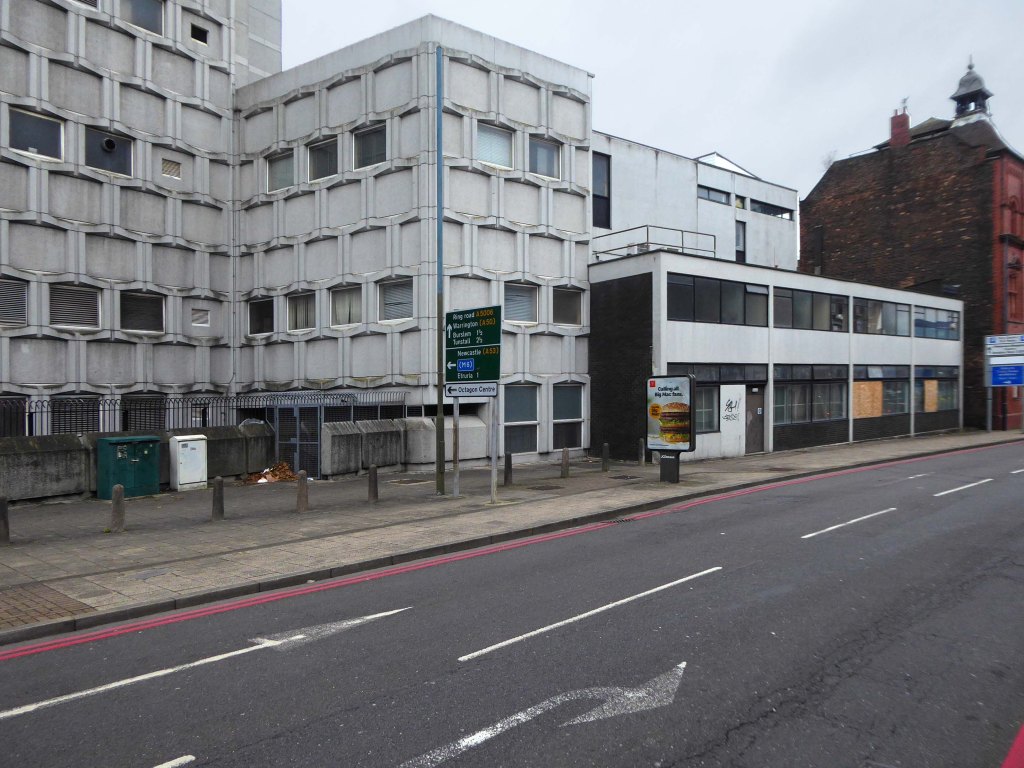
New Town House – Warrington

Warrington Borough Council  New Town House Buttermarket Street WA1 2NH

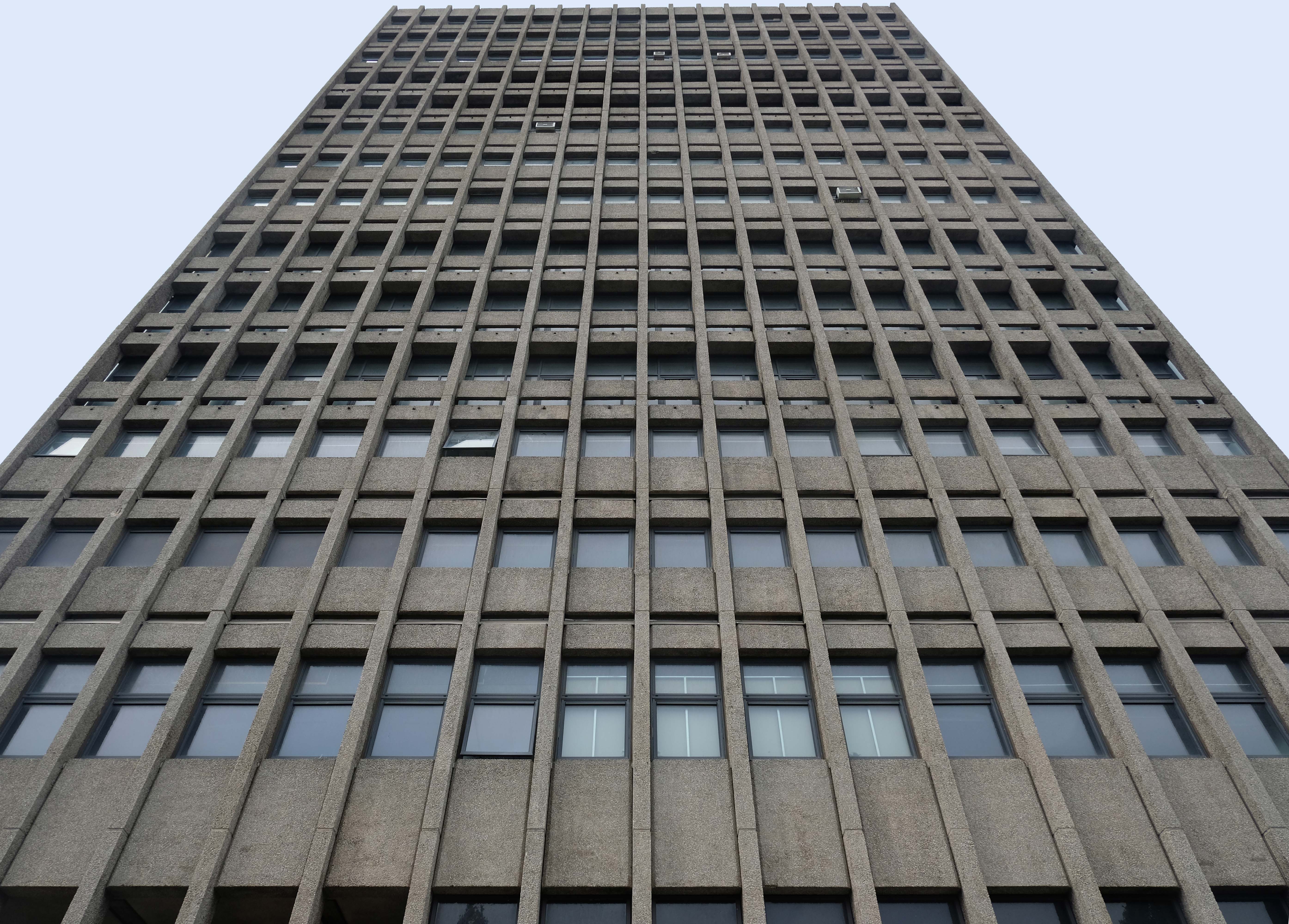
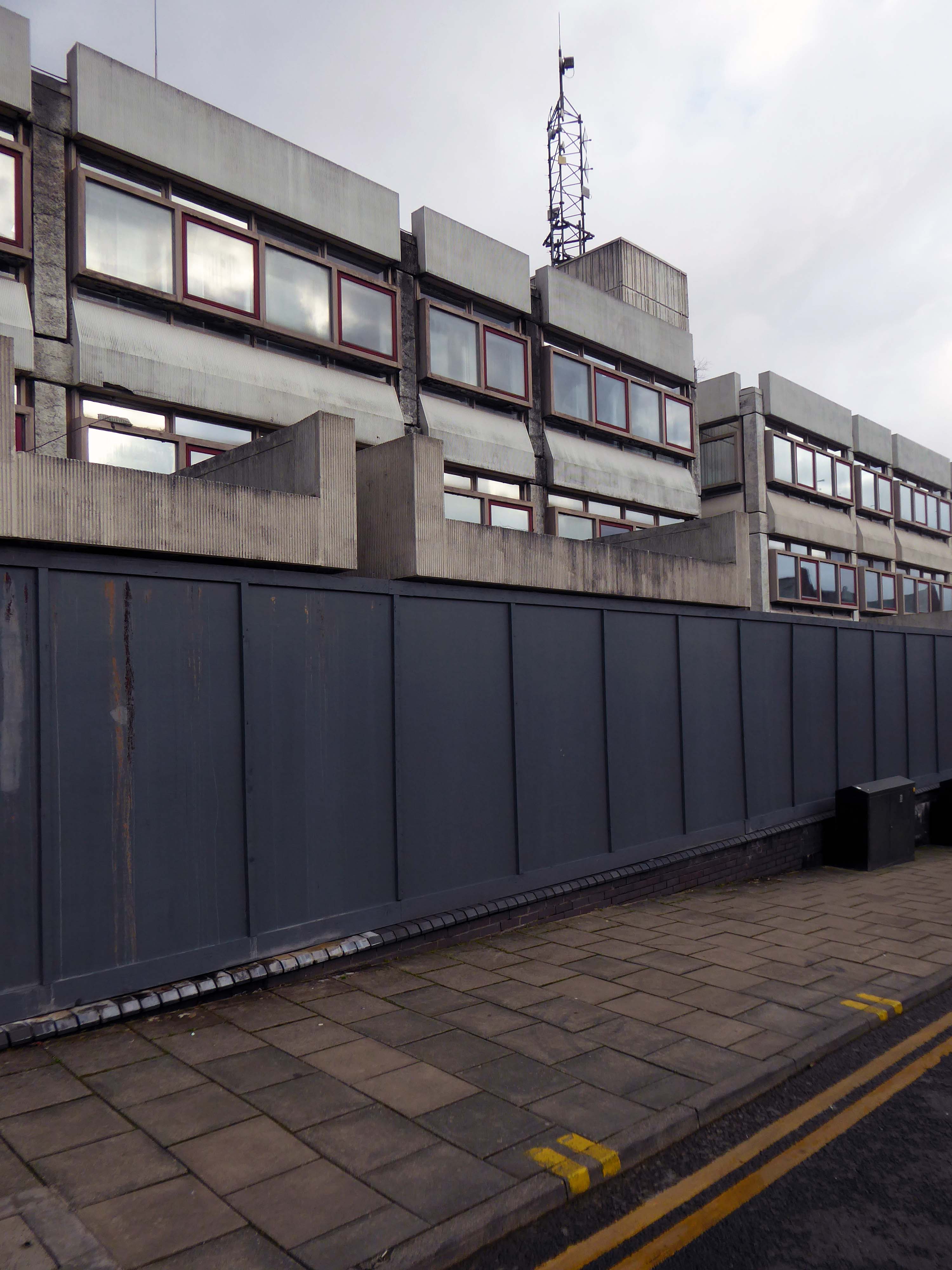
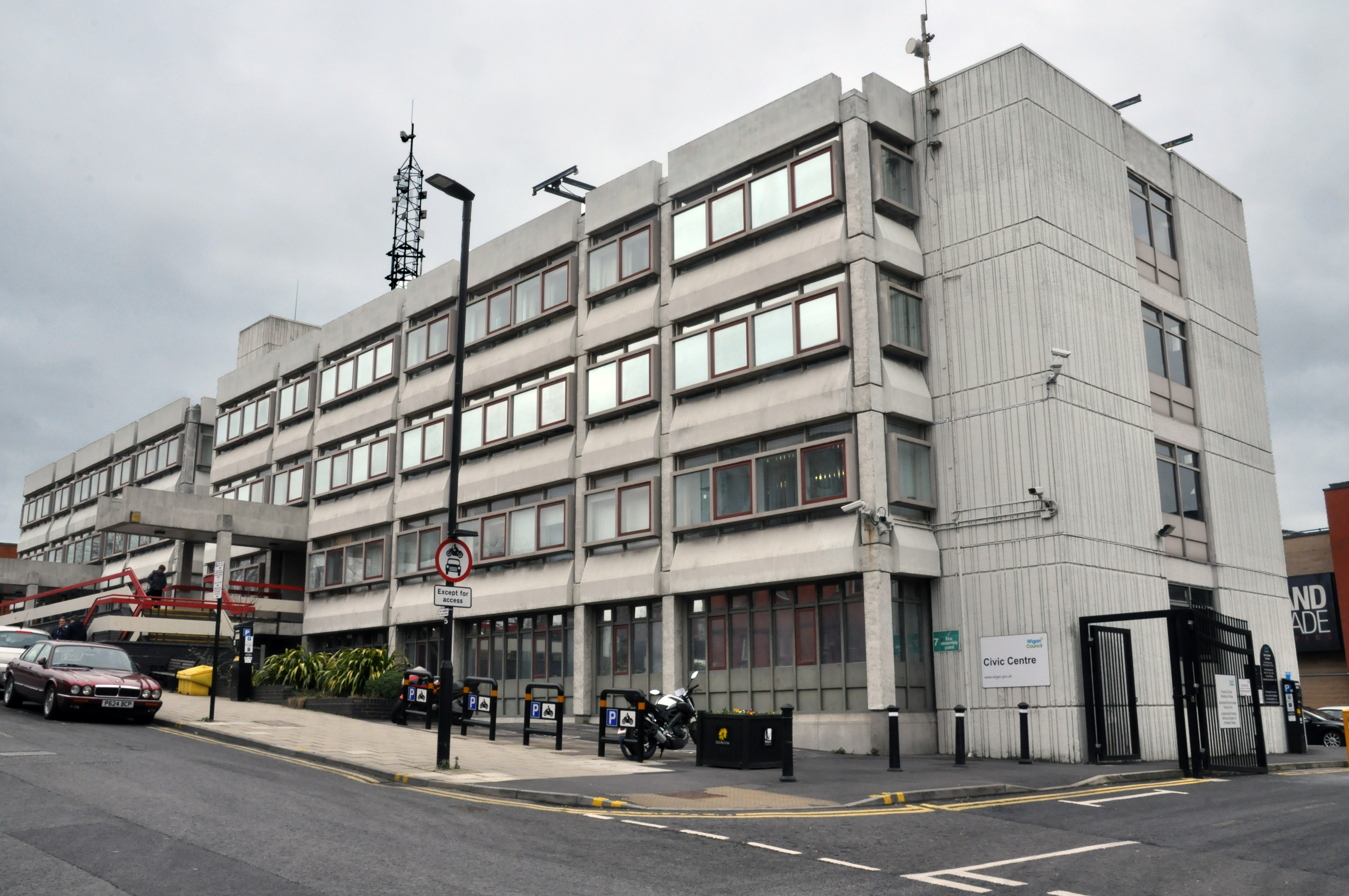
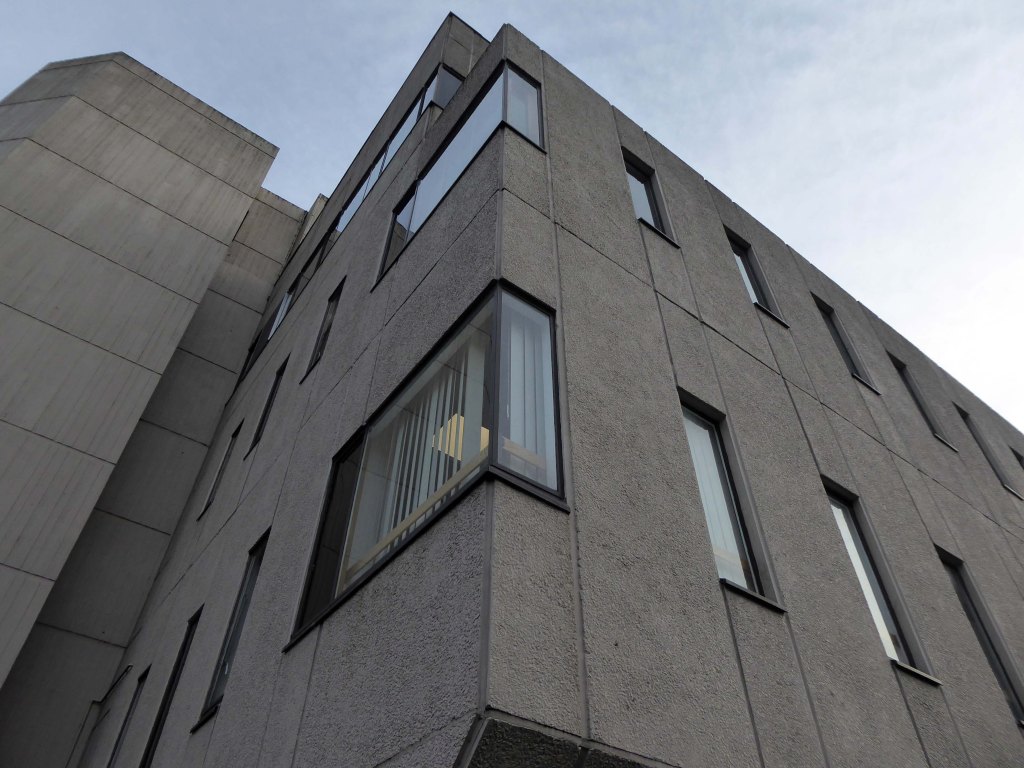
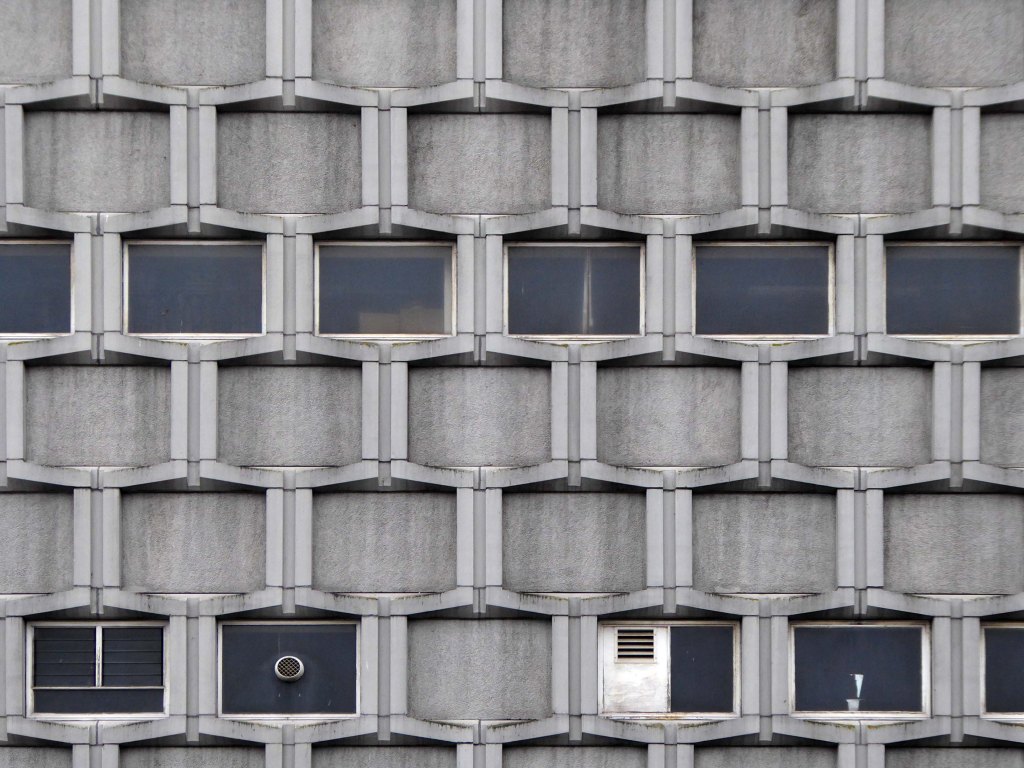
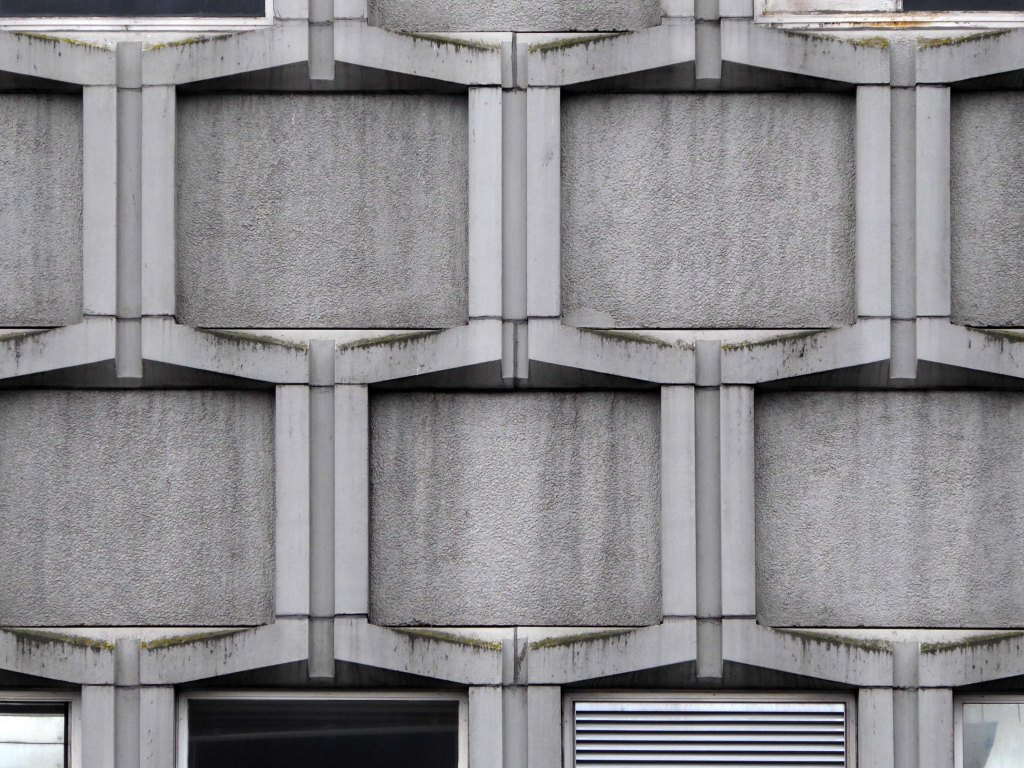
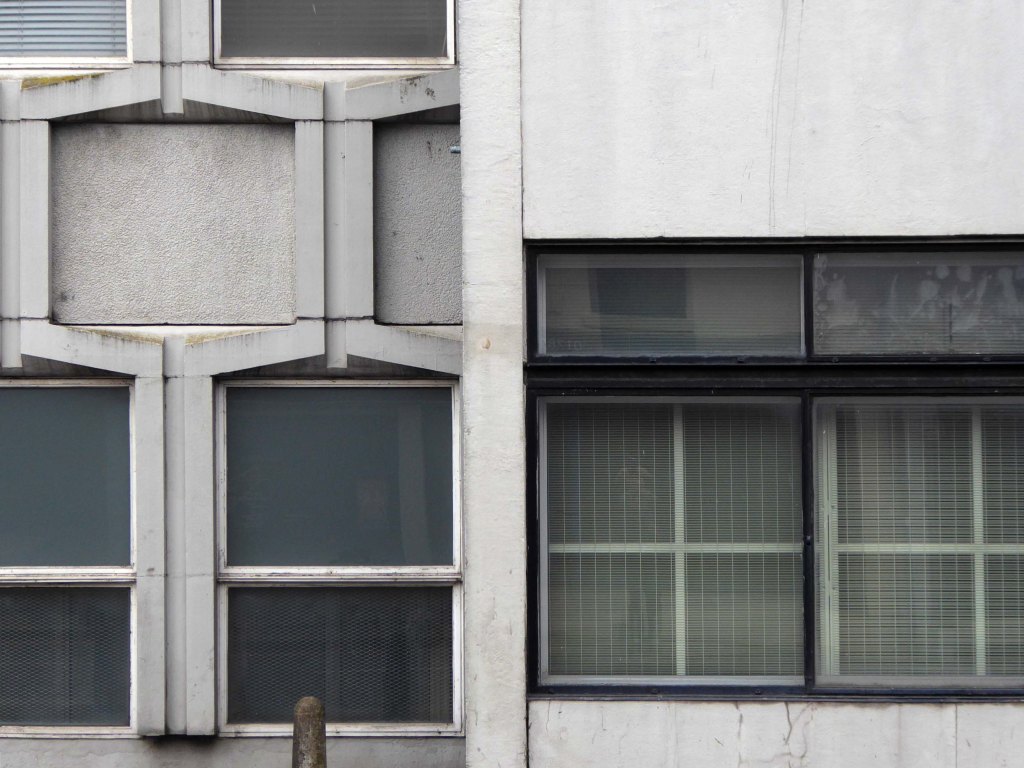
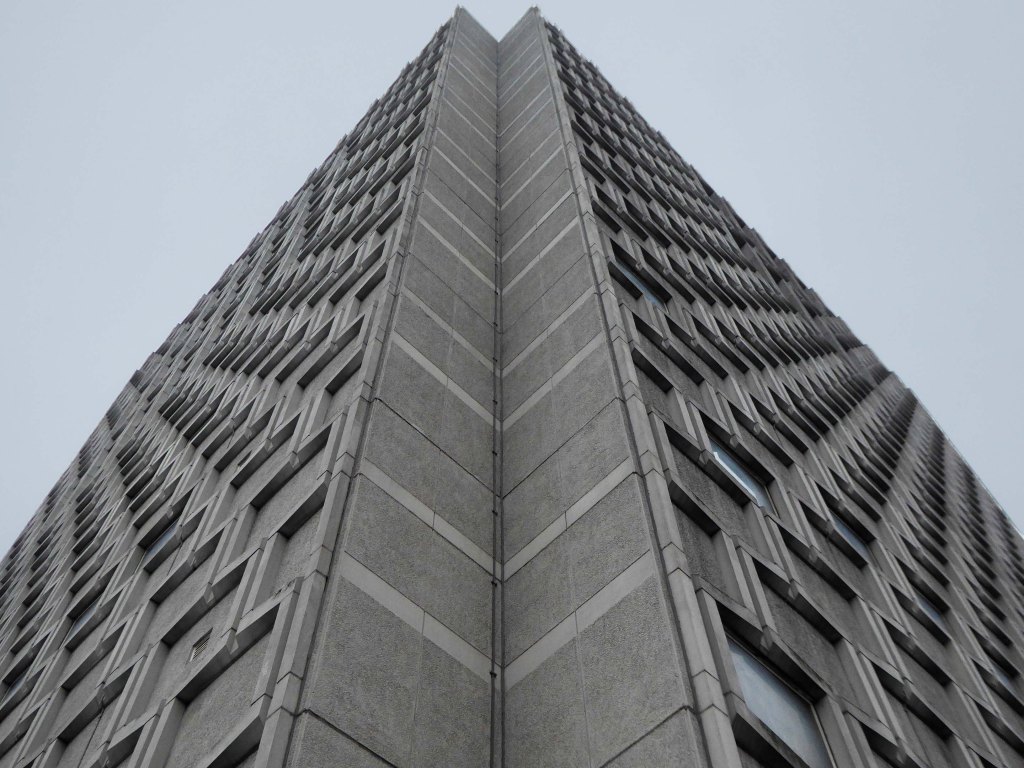
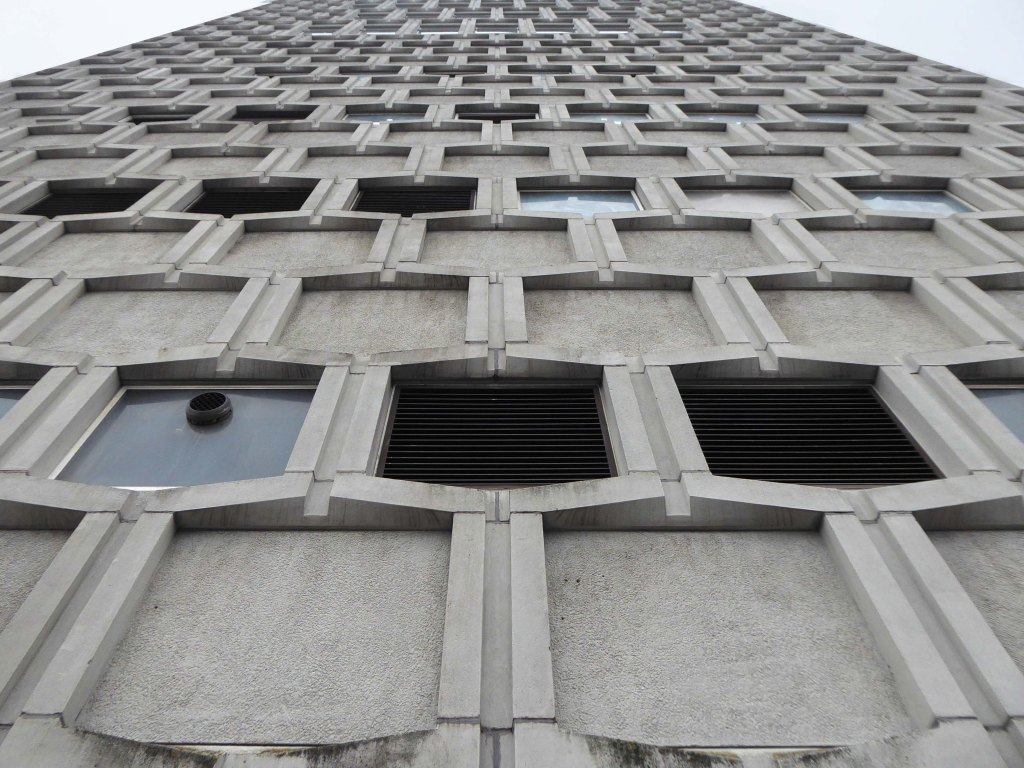
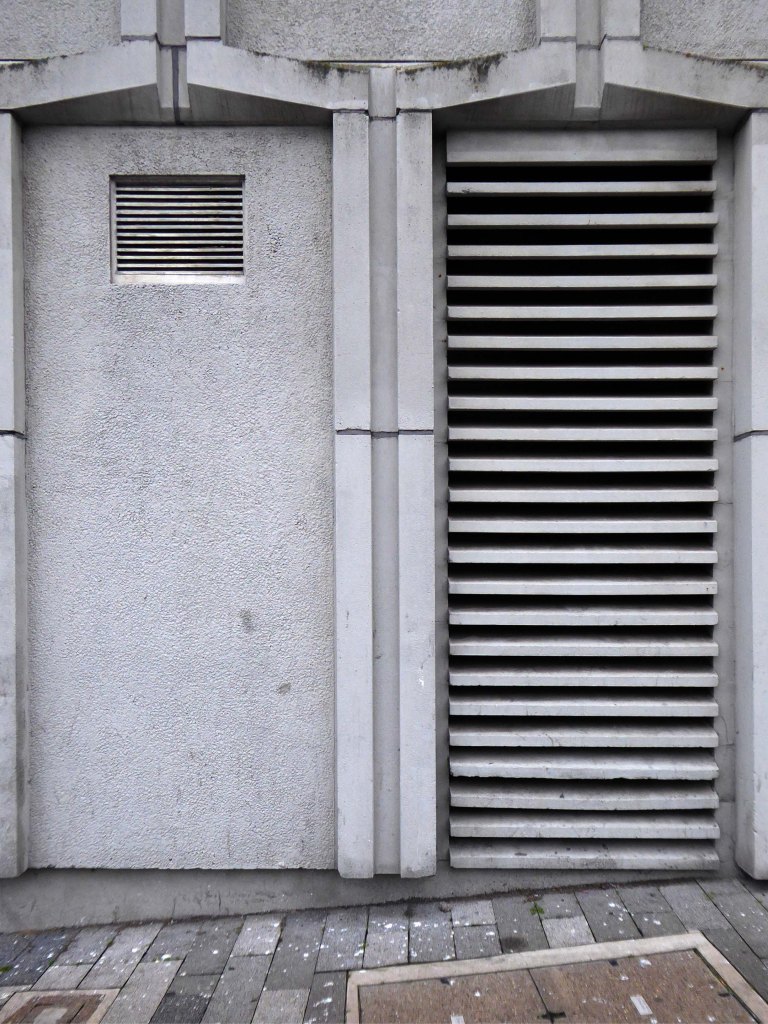
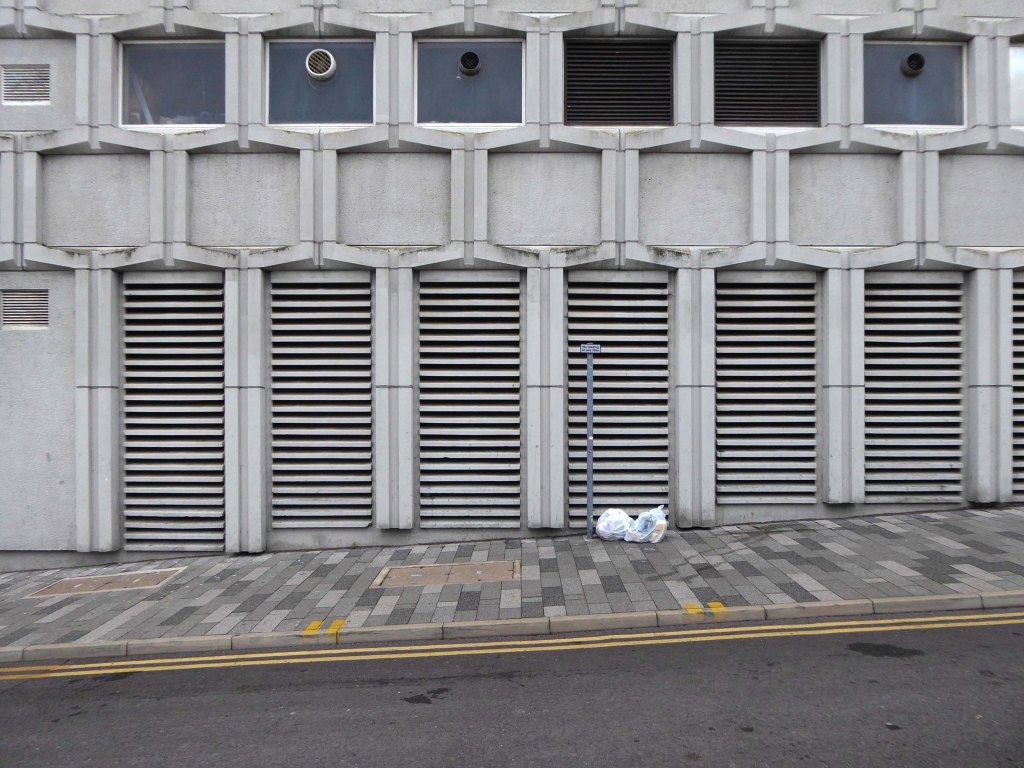
A true brute of a building, relentlessly repeated pre-cast concrete panels and partially mirrored windows, in a predictable grid.

A pale grey monolith on the wrong side of town.

Built in 1976 to house the Warrington & Runcorn Development Corporation.

2007 voted the ugliest kid in town.

Now due for demolition, by way of a suicide note addressed to itself.

It will not be missed by the majority of residents.

Good, it’s horrible and worthy of demolition.

No doubt the Brutalist-loving nutters will be out in force to protect this.

Nobody actually likes brutalist buildings.

They just pretend to like them to make themselves look cool, it’s like craft beer and food that comes in tiny portions.

One lone voice in its defence.

I have started a petition to save this place.

We can’t lose all our Brutalist Architecture to the steel and glass brigade – viva the New Town House.

Place North West

The weary workers are already rehoused in One Time Square.

So I went to take a walk around, before the wrecking ball arrives.

The council said there were:

No operational reasons to keep the building in council use or occupied beyond this point, allowing the site to be cleared for redevelopment.

Justifying the demolition, Warrington said the building has poor energy efficiency, high service costs, and is inflexible for modern office and business working

Cost estimates for refurbishment, M&E installation, and energy efficiency measures to keep the building in office use stand at £5m; even if this is actioned, the building would still have limitations for flexible modern working practices and energy efficiency.

The council had explored renting the building out but said: there was no demand for office space of this scale and quality; a sale was also considered but the council found market demand was not significant.

Residential is the most likely outcome for the site, and it will be built into a masterplan for an area including Scotland Road, Town Hill, and Cockhedge. The council said it would look to sell the site in future.