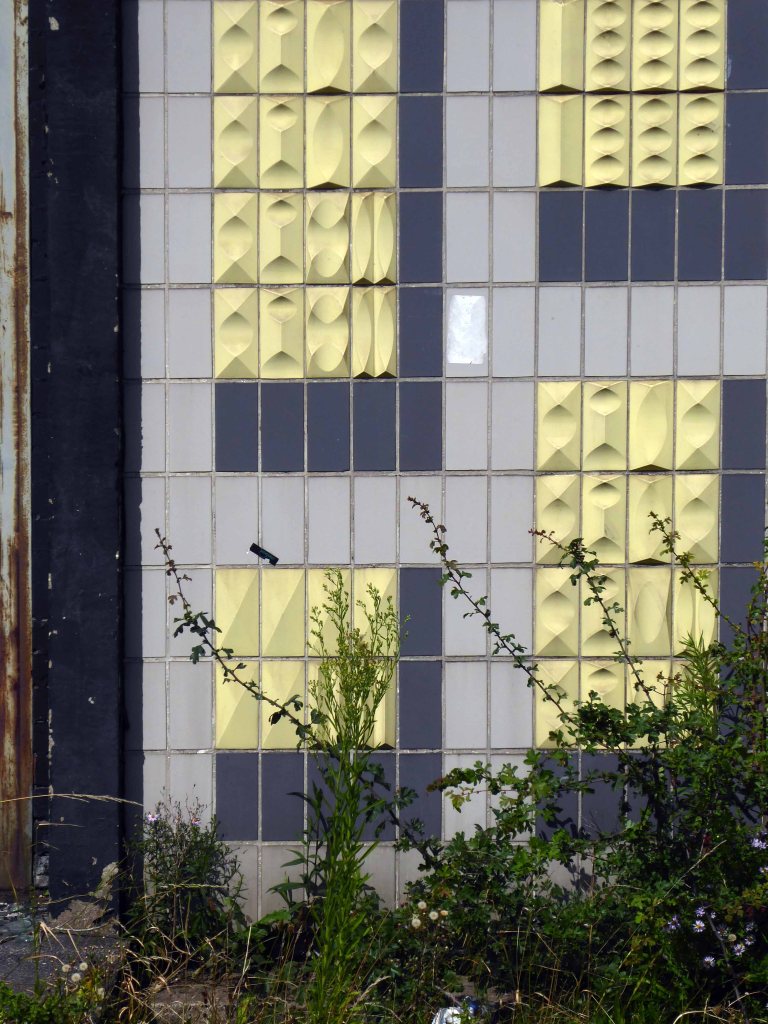
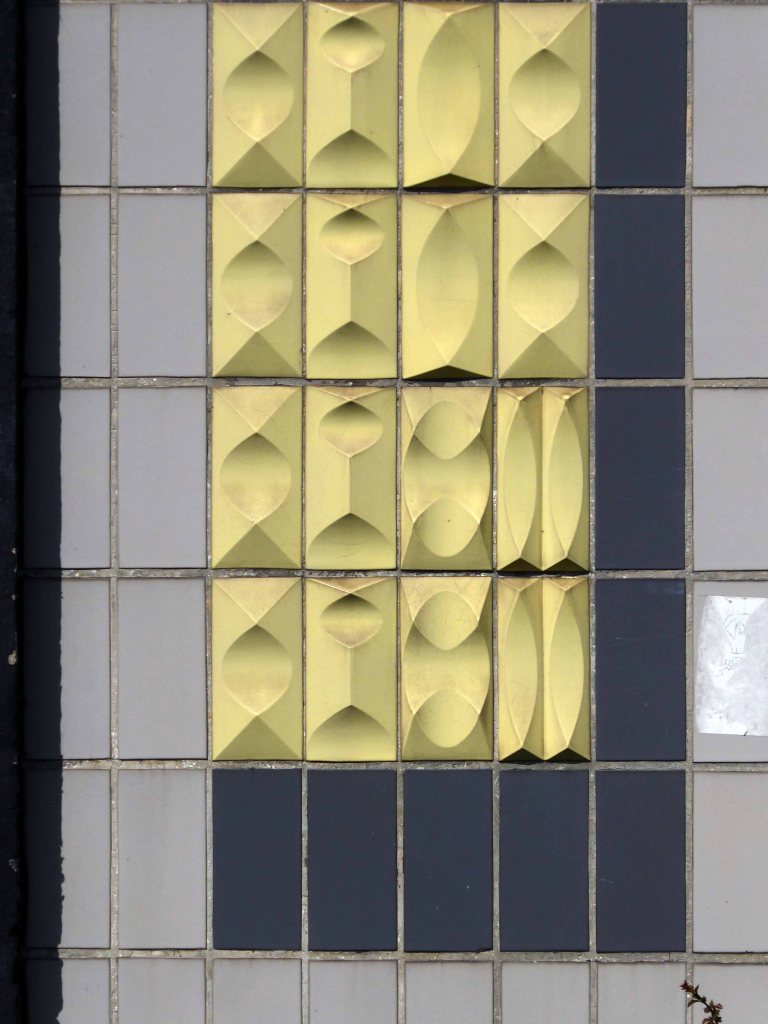
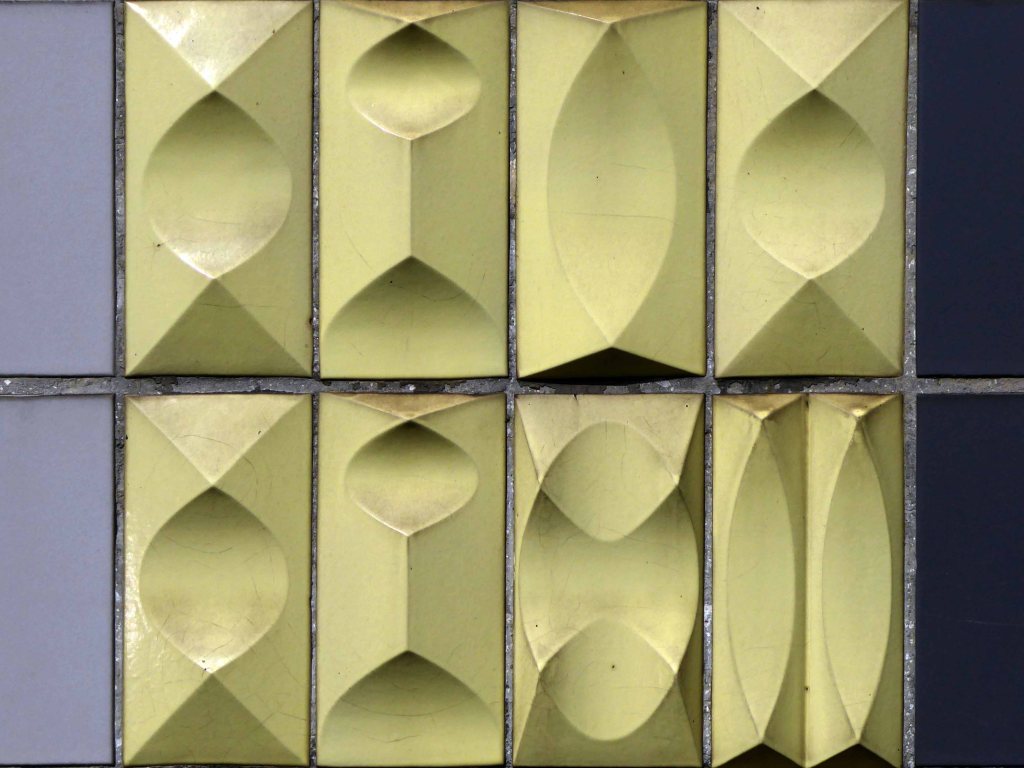
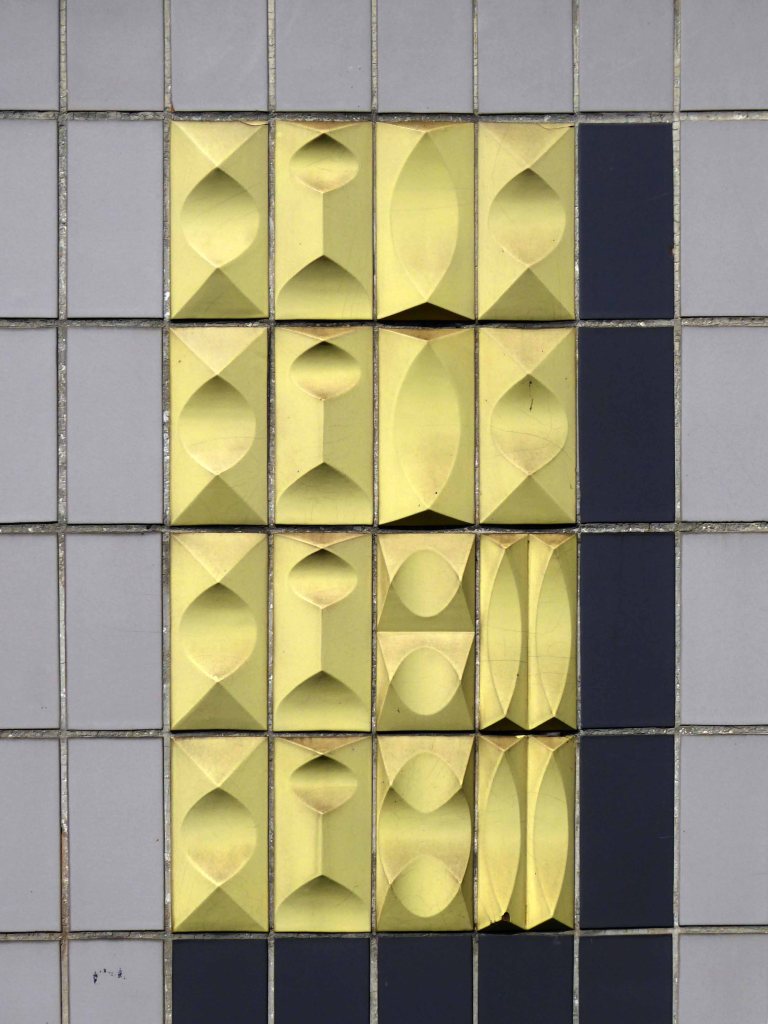
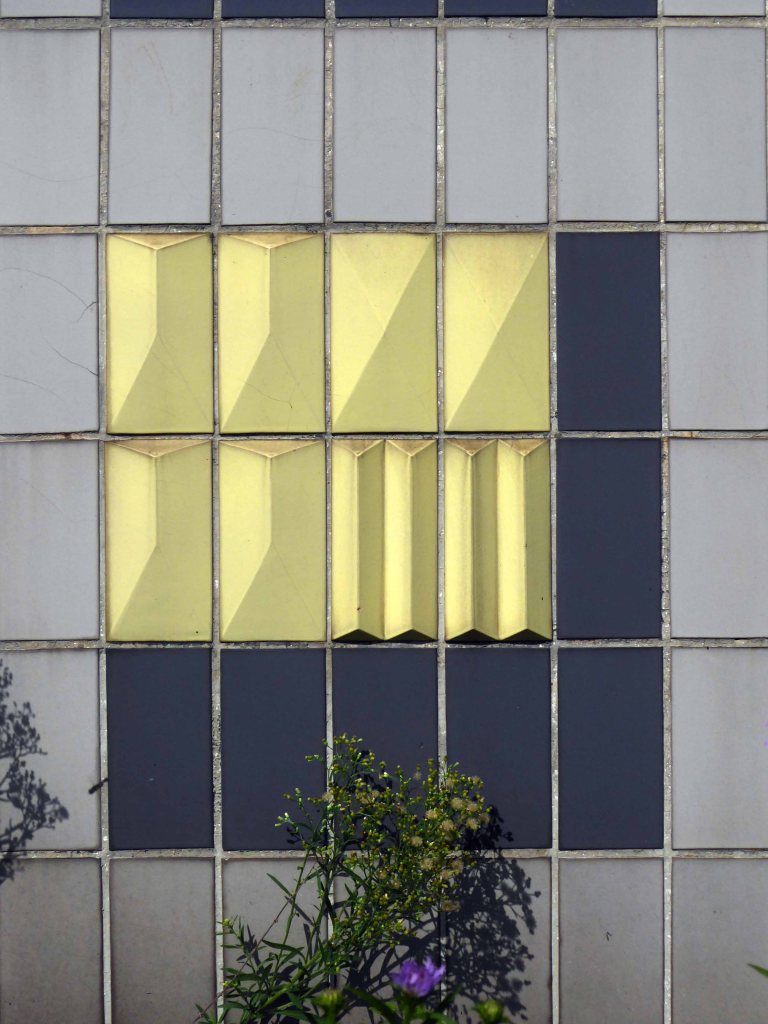
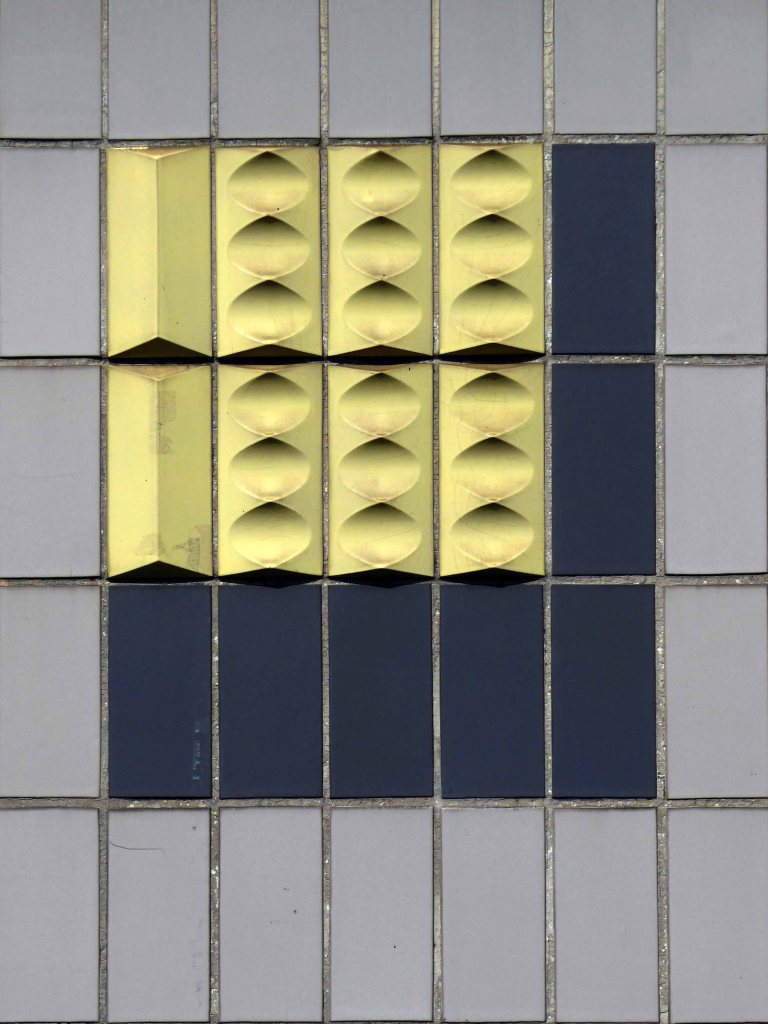
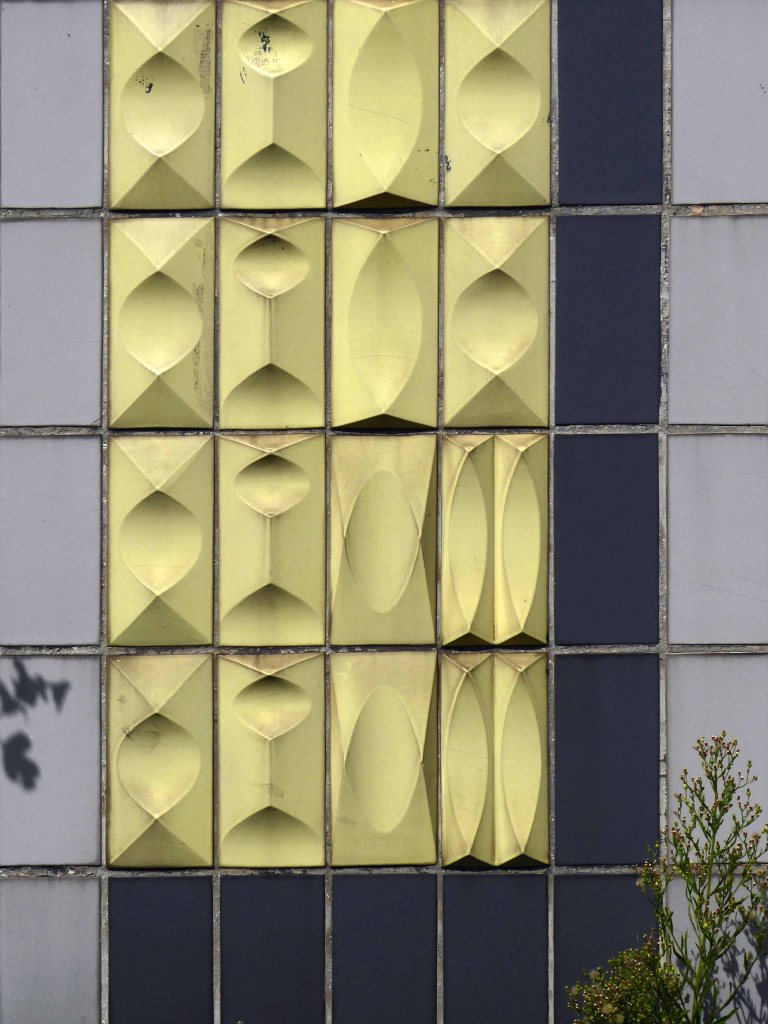
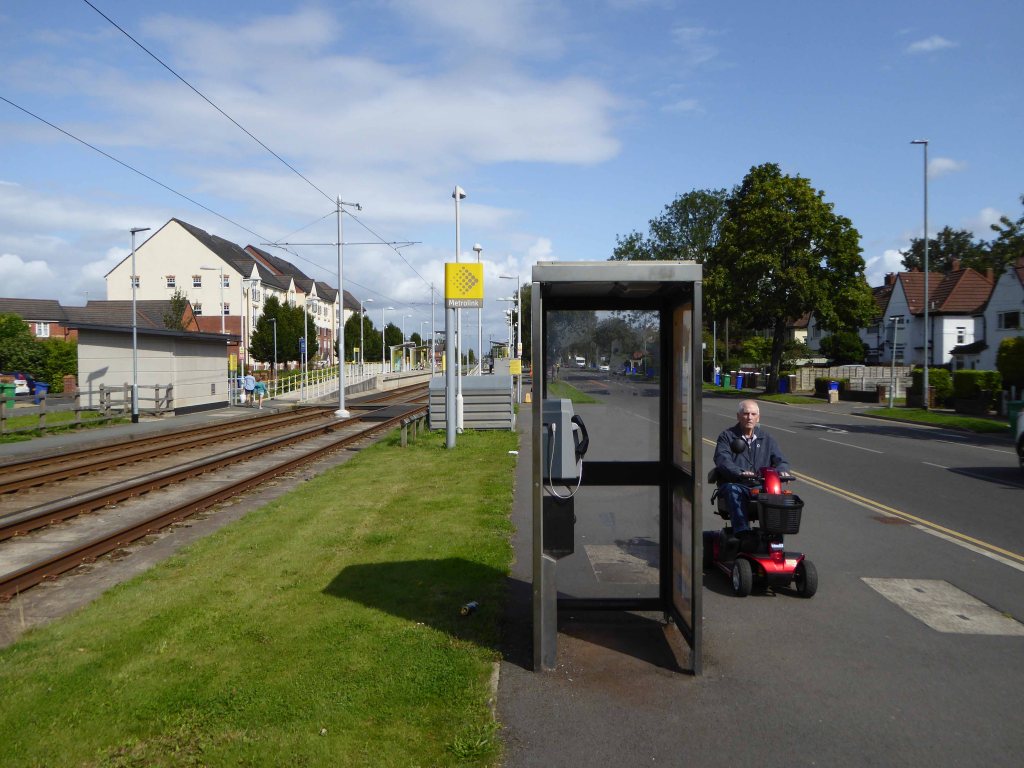
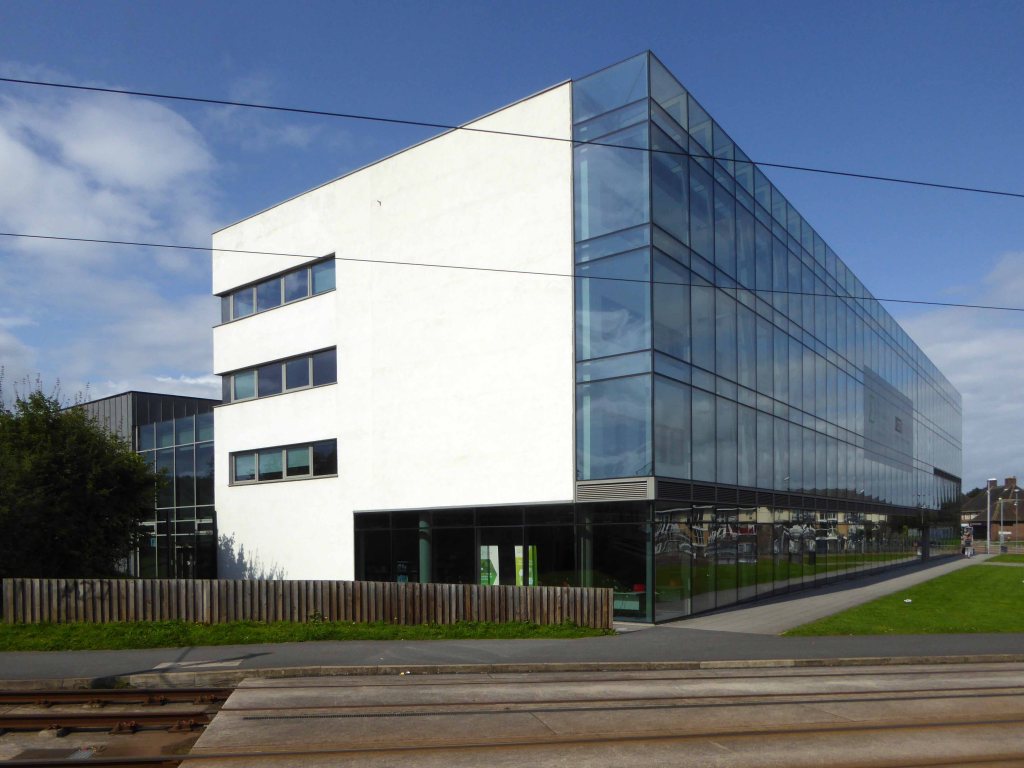
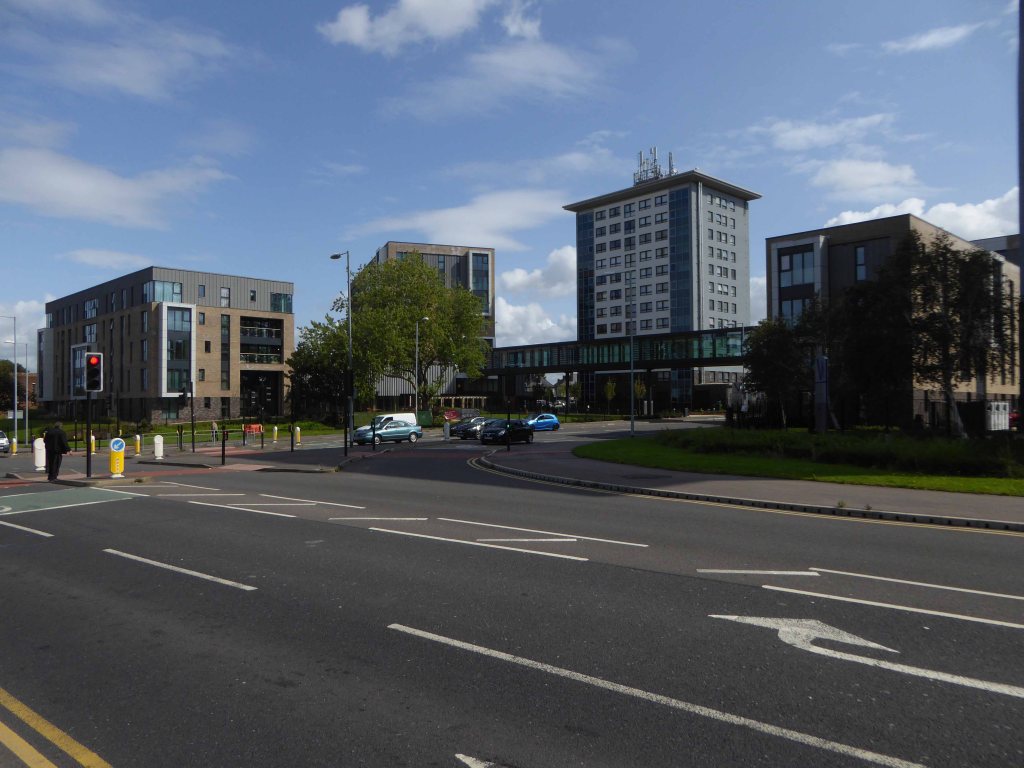
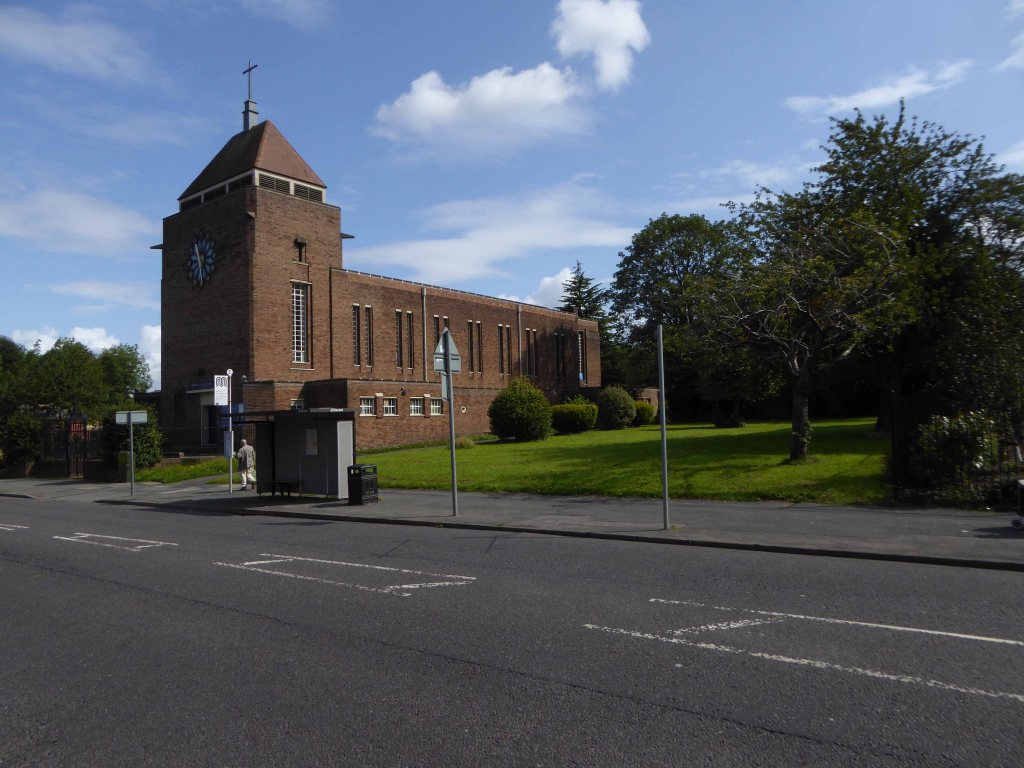
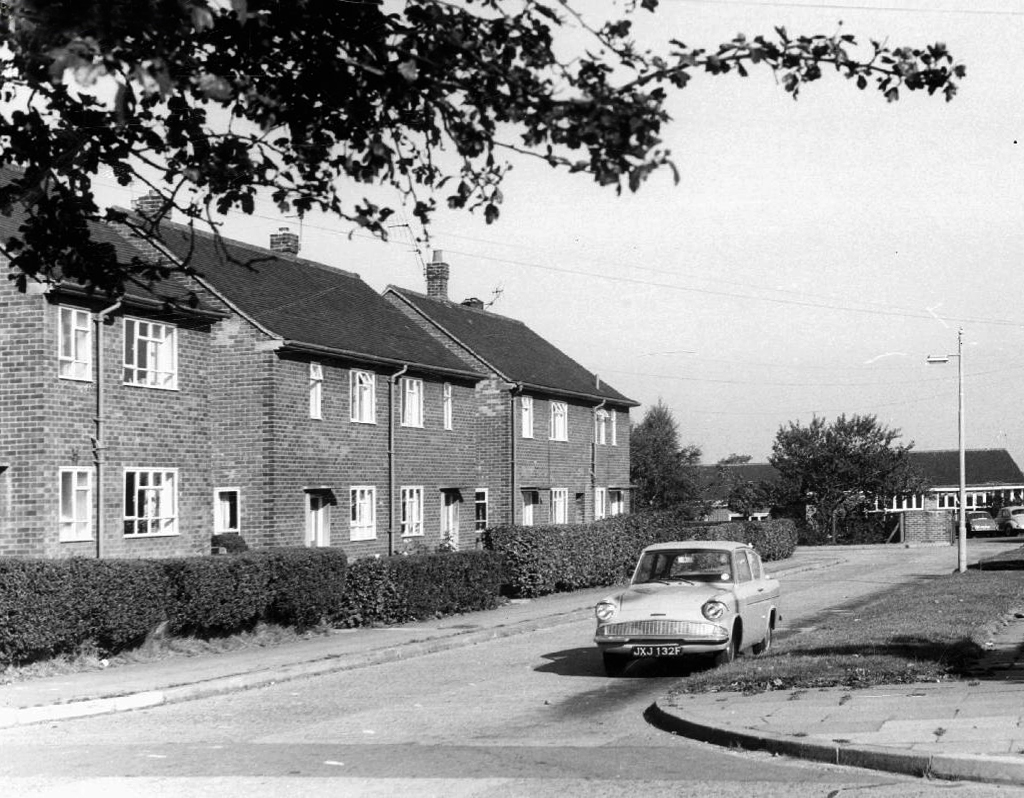
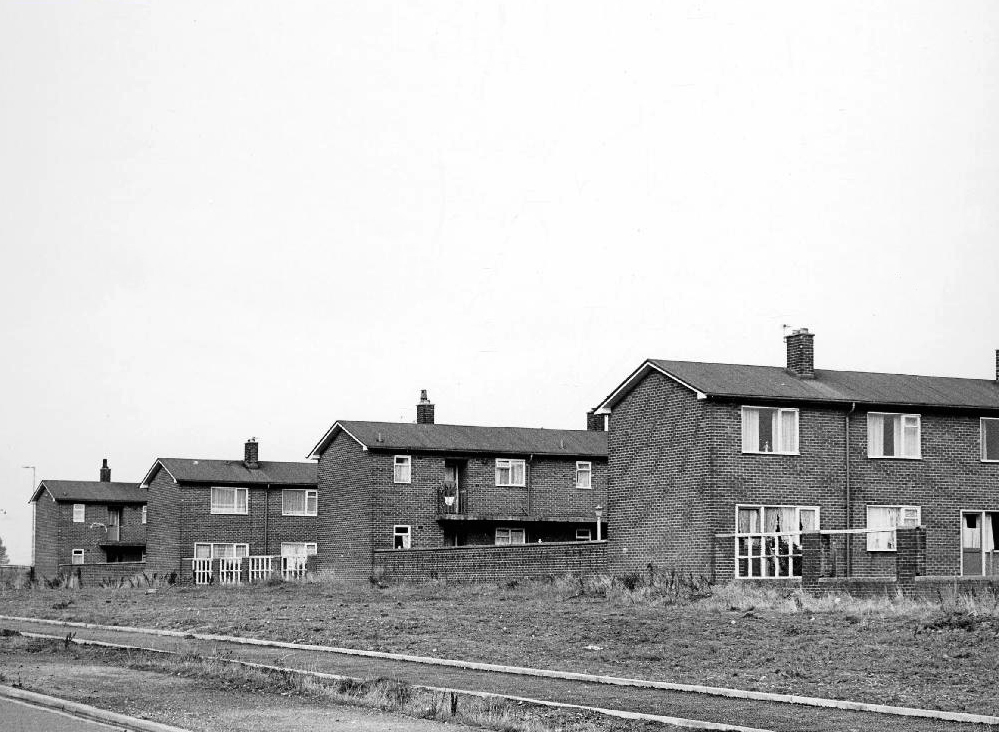
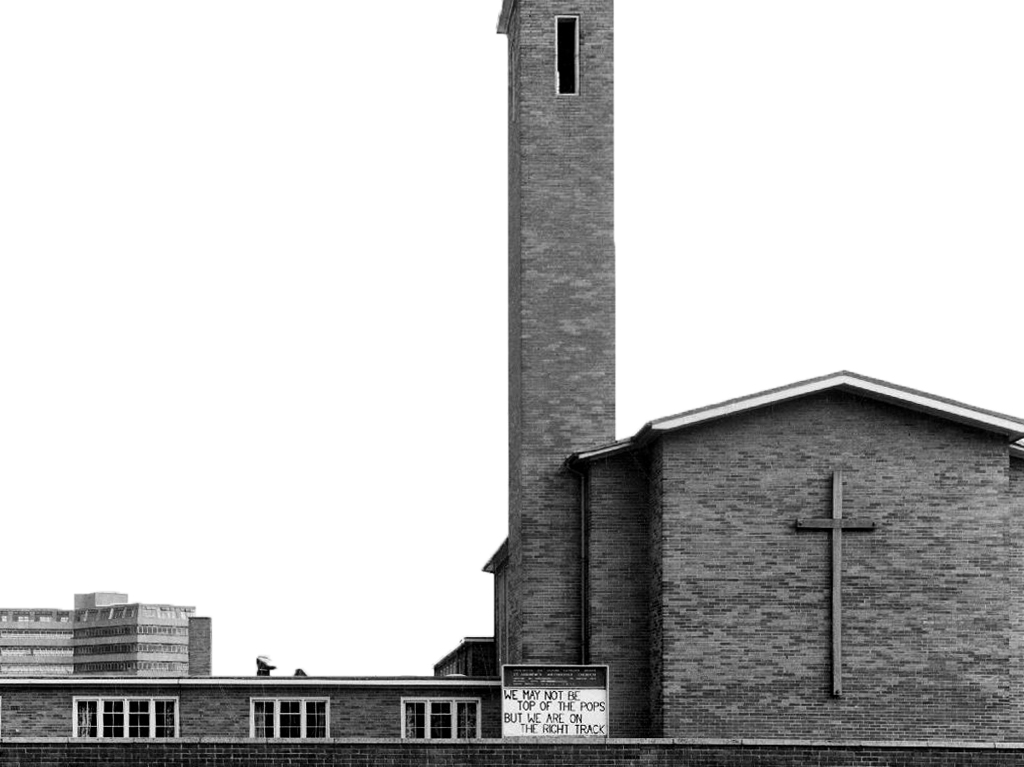
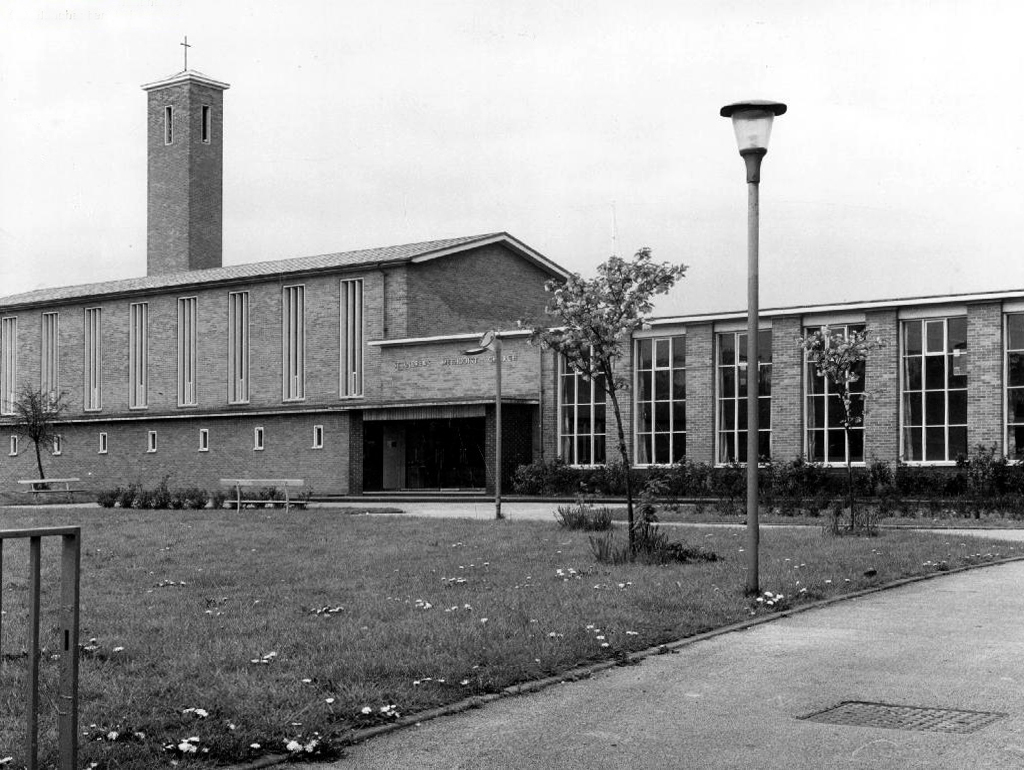
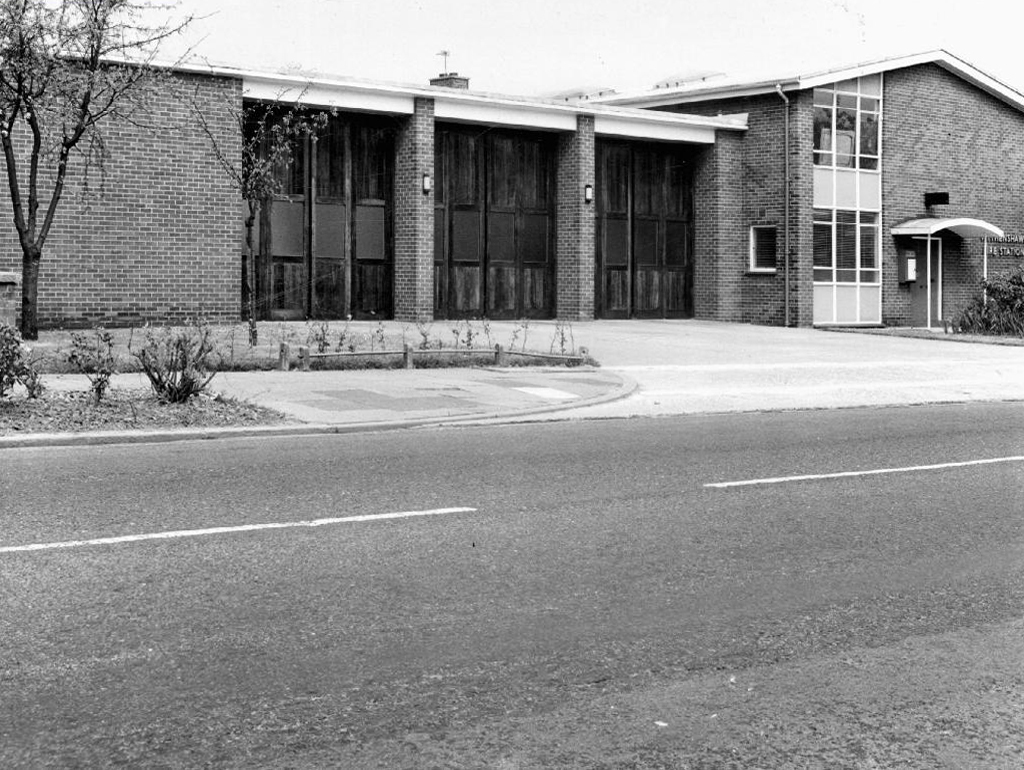
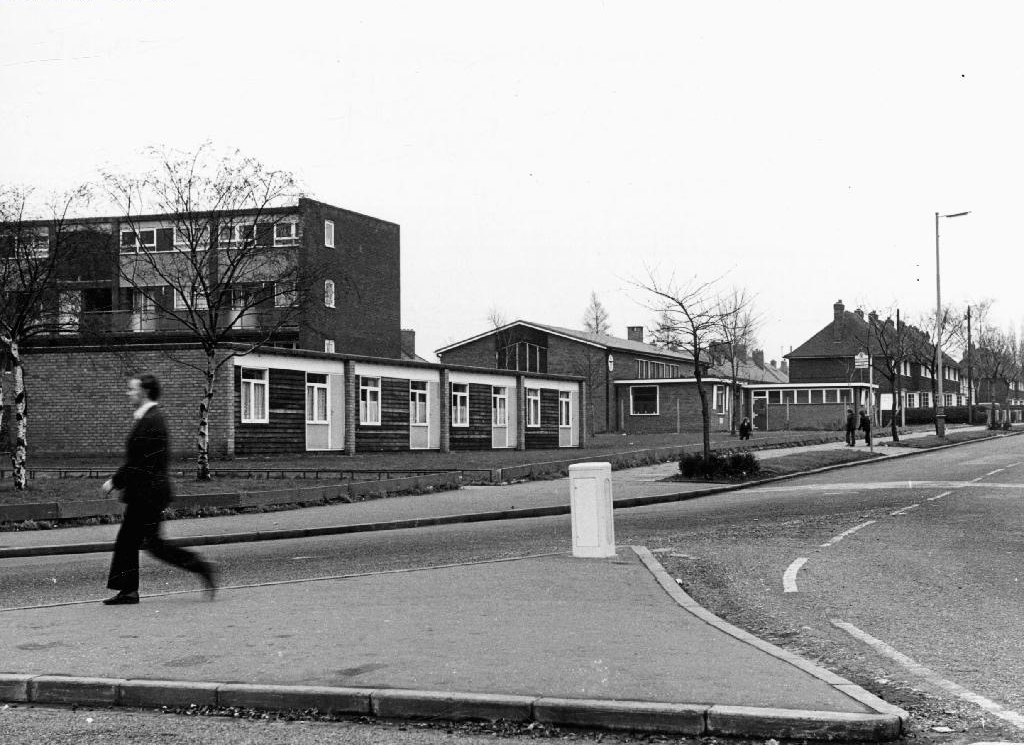
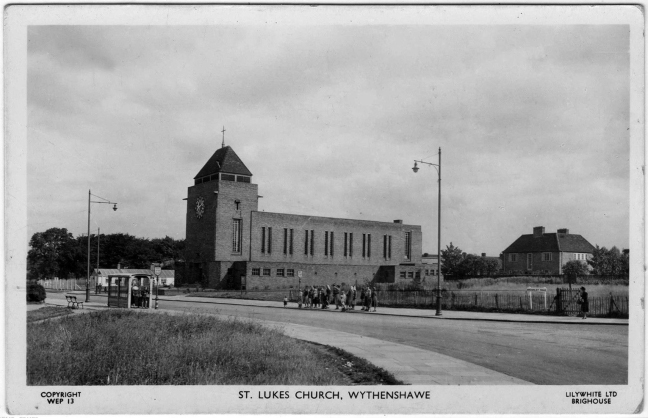
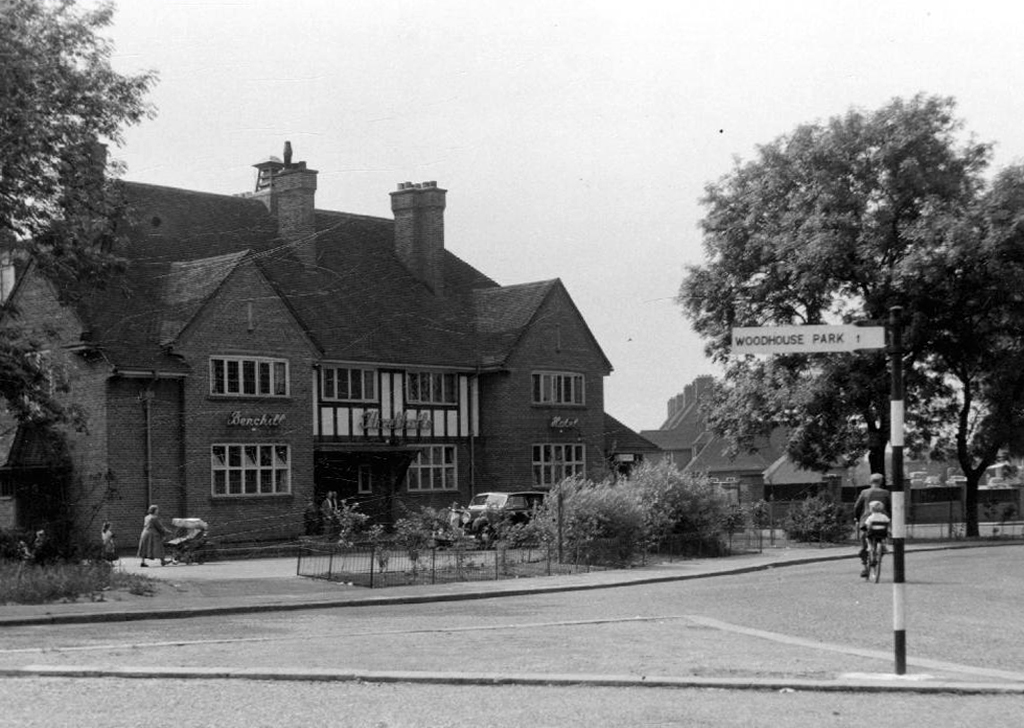
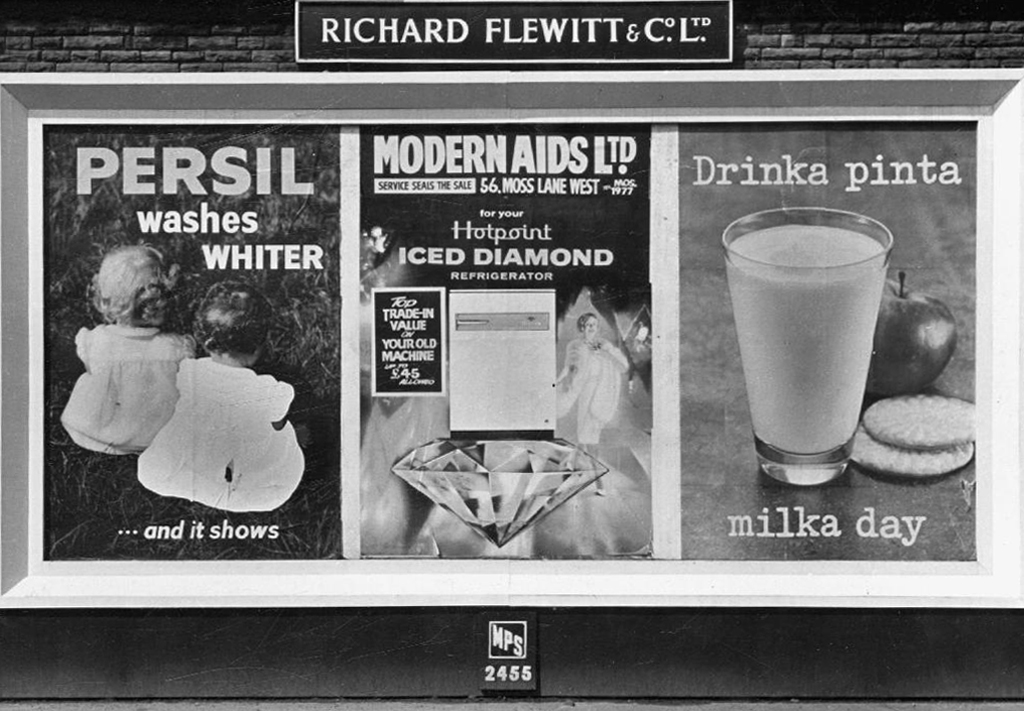
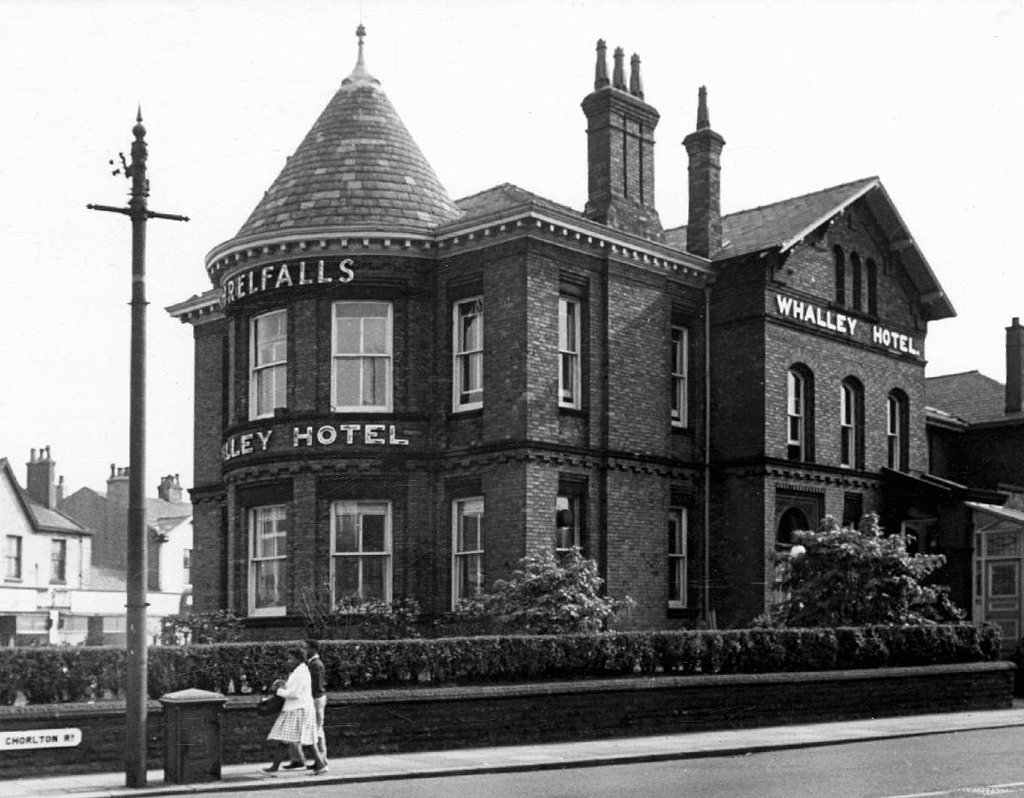
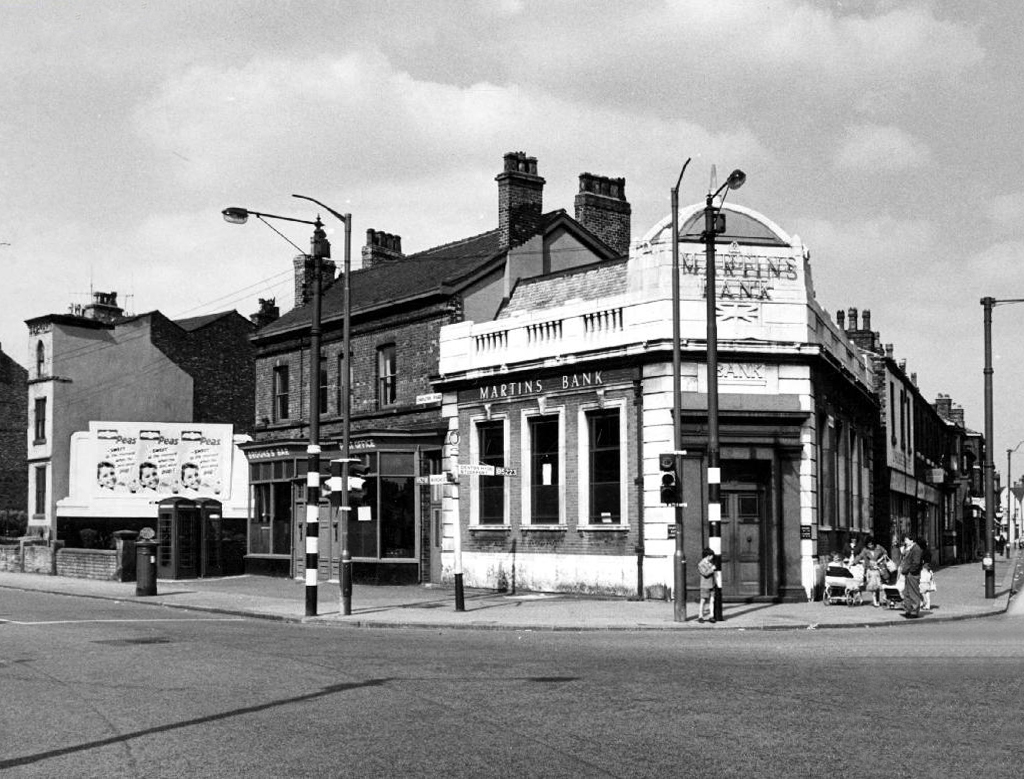
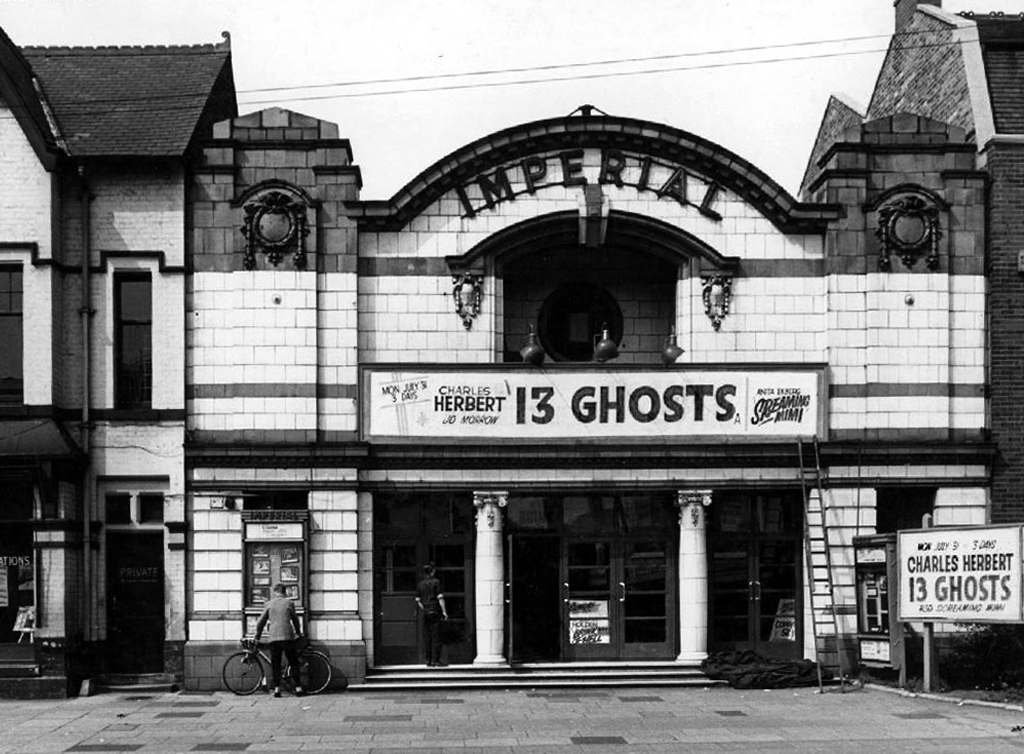
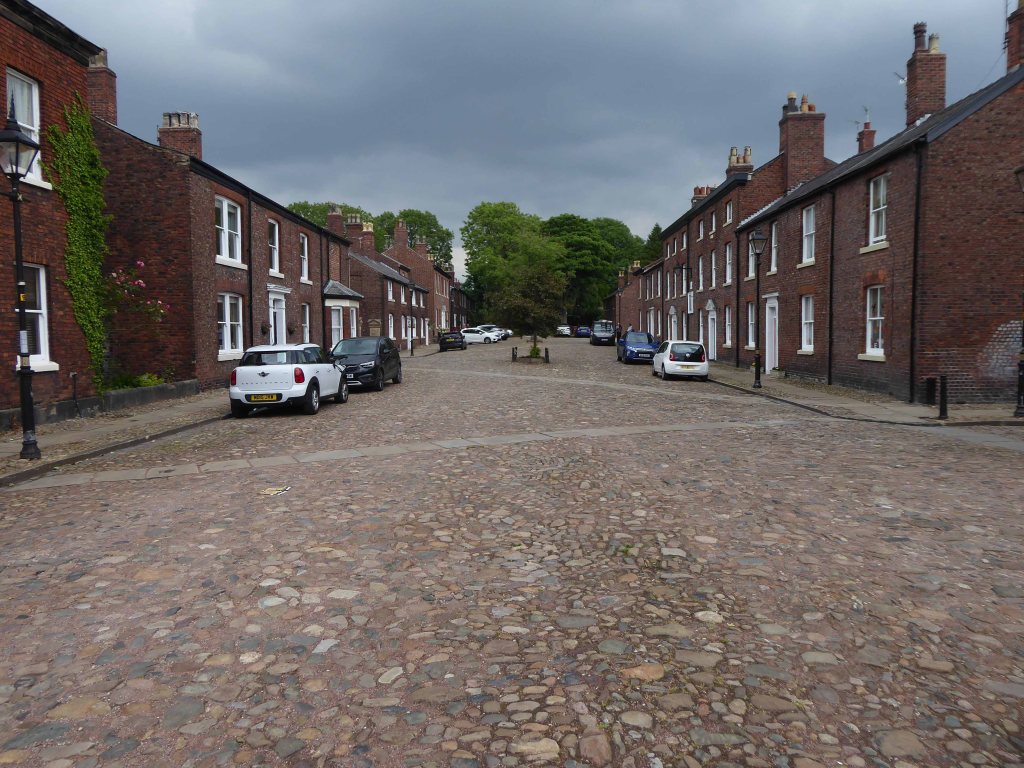
Yuri Gagarin Manchester 1961

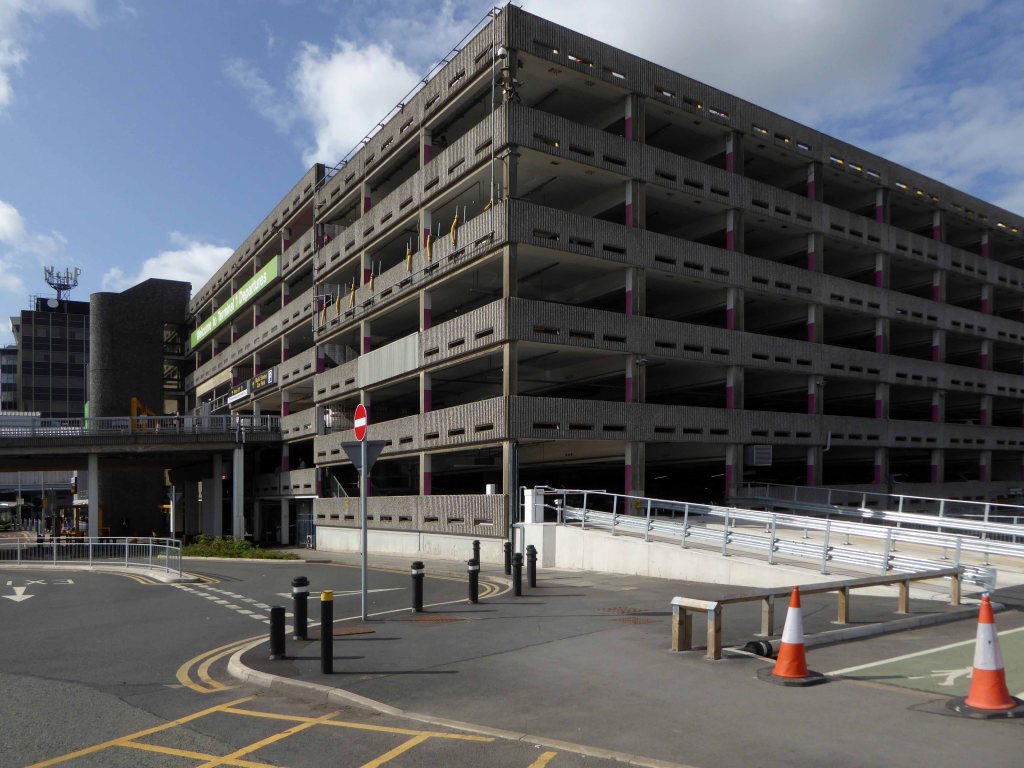
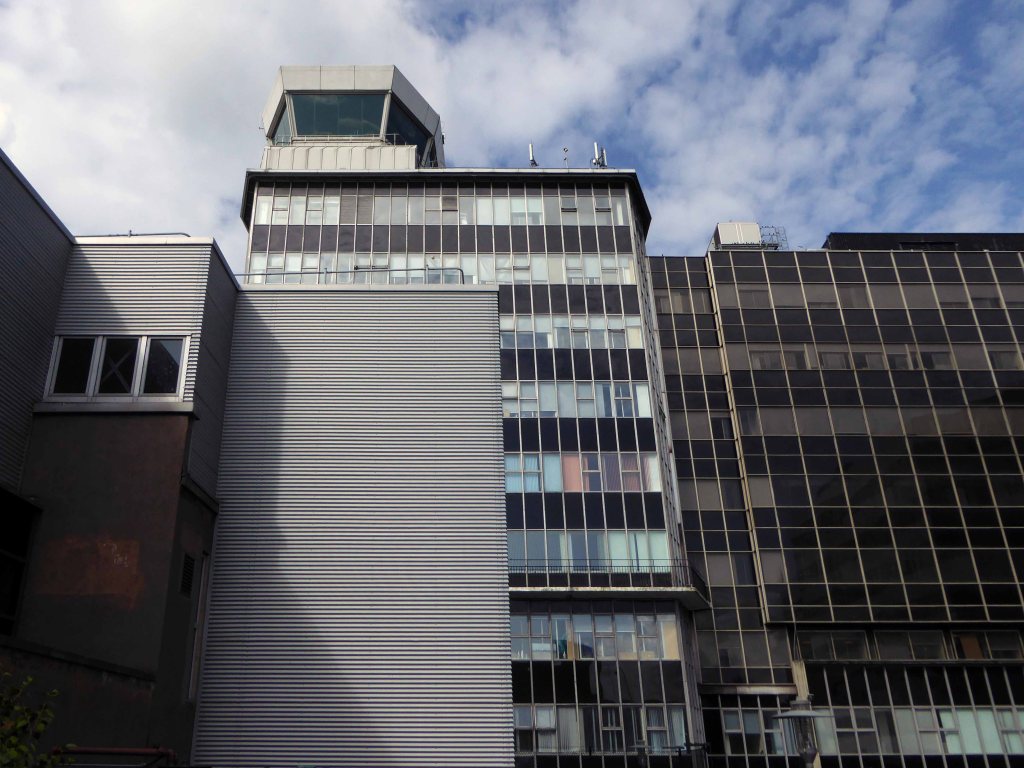
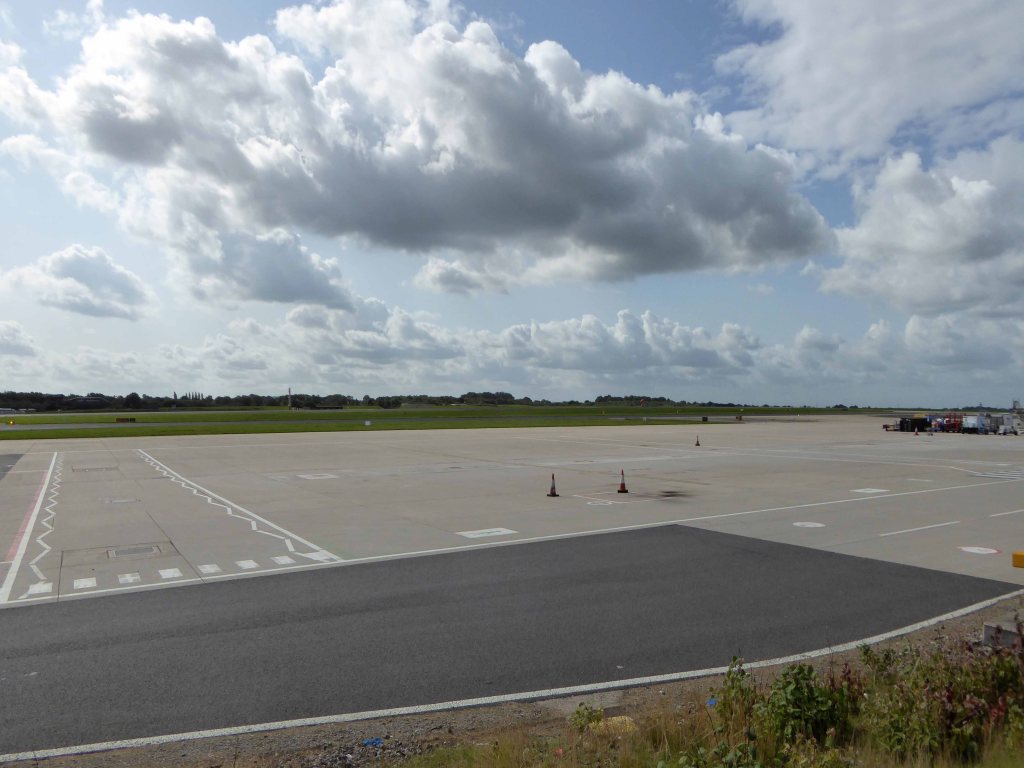
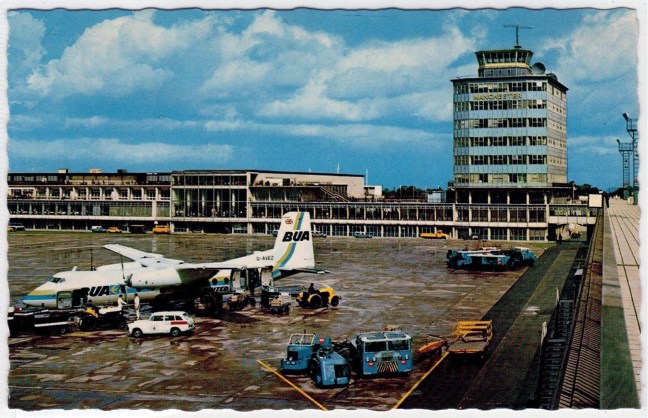
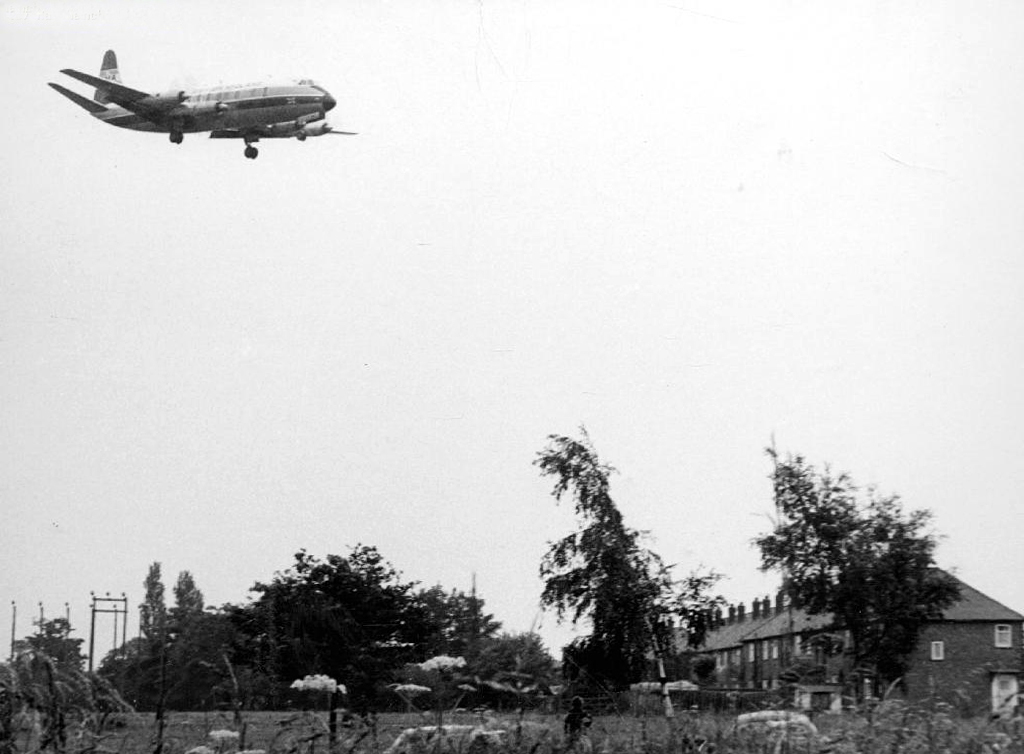
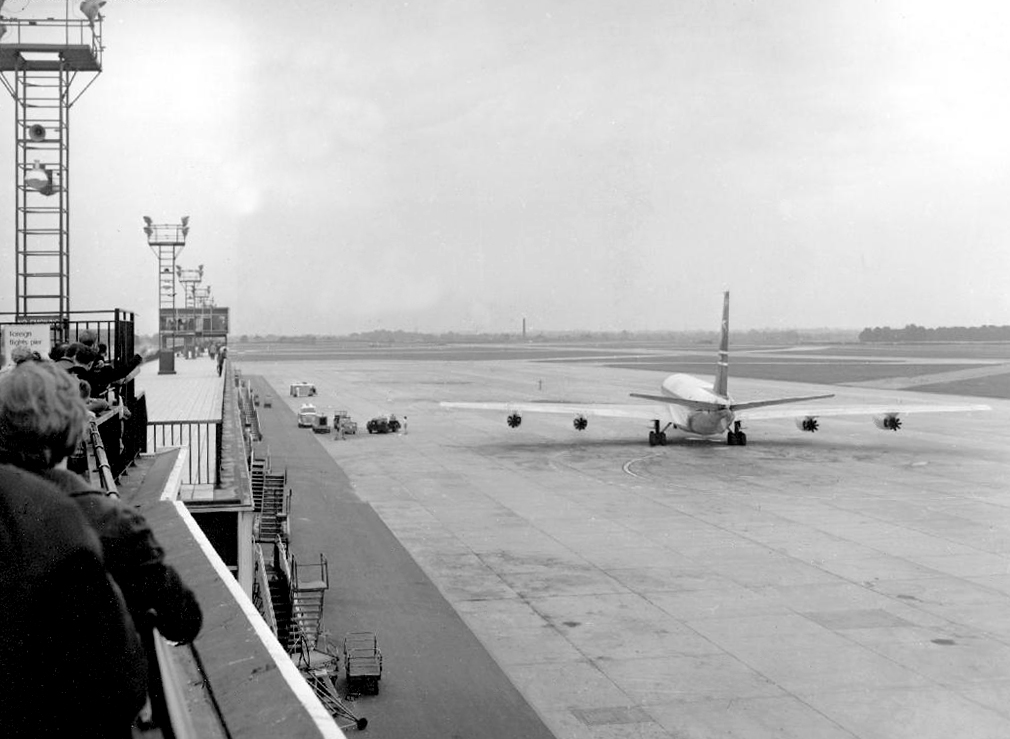
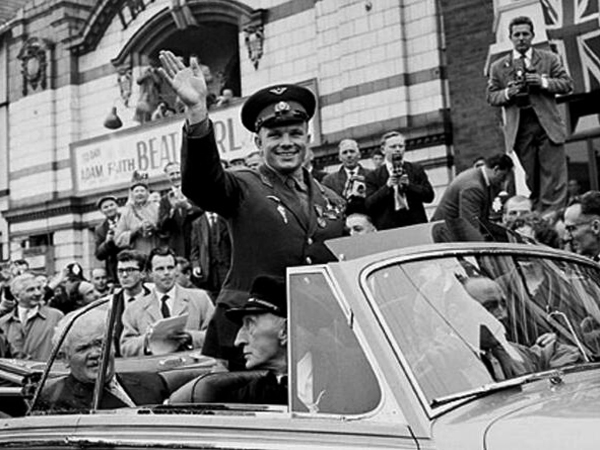
Exactly three months to the day after his flight in Vostok I had ushered in a new age of space exploration, on 12 July 1961, the trim figure of Yuri Gagarin strode down the gangway of a British Viscount airliner and walked briskly out across the runway of Manchester airport towards a sea of expectant faces, and flashing camera bulbs.

Working Class Movement Library

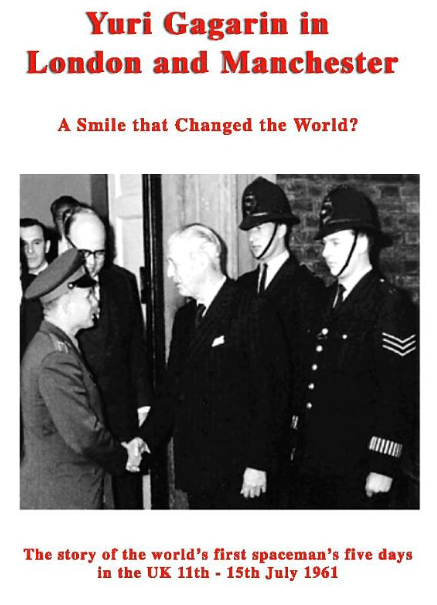
There are many excellent accounts of his visit – for a detailed view Gurbir Singh’s book Yuri Gagarin in London and Manchester is hard to beat.

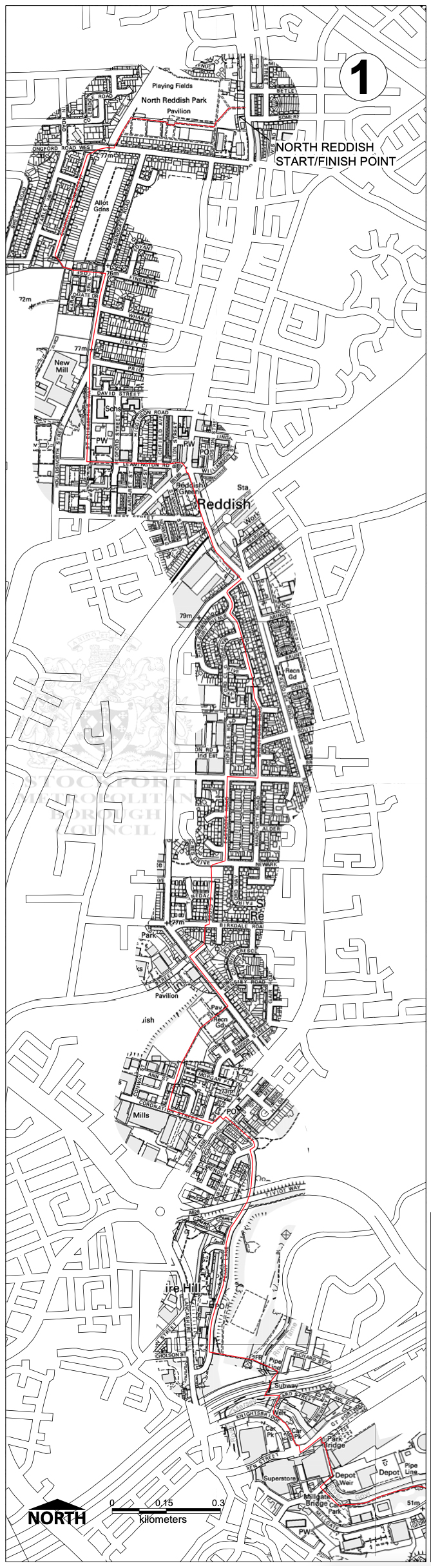
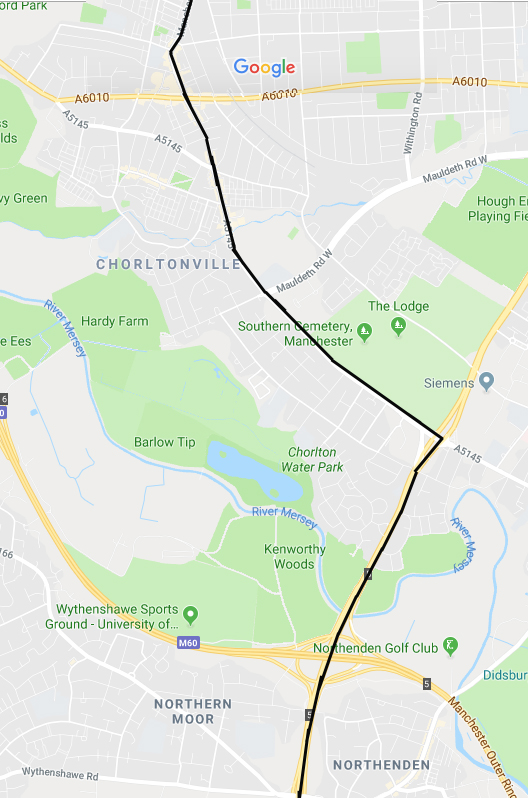
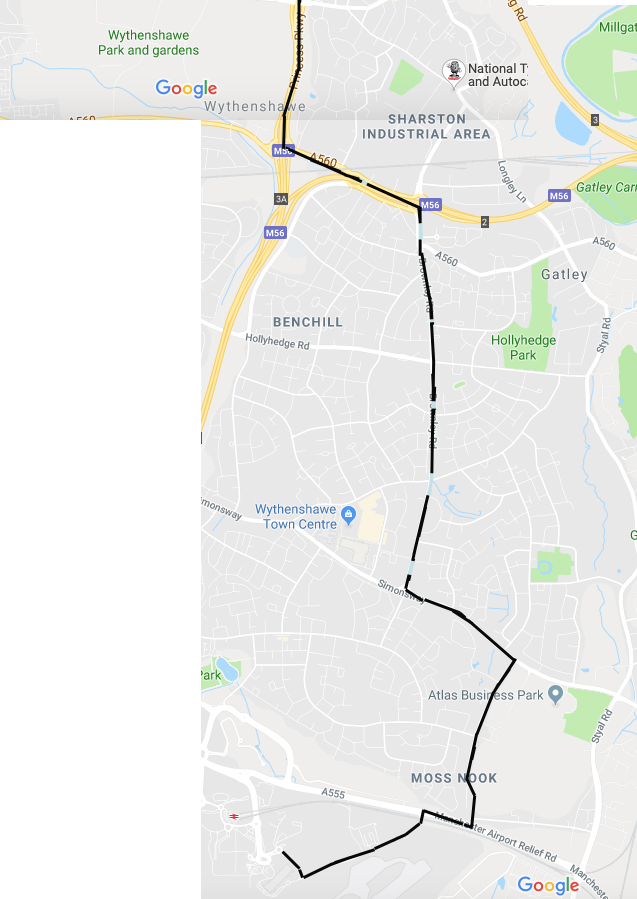
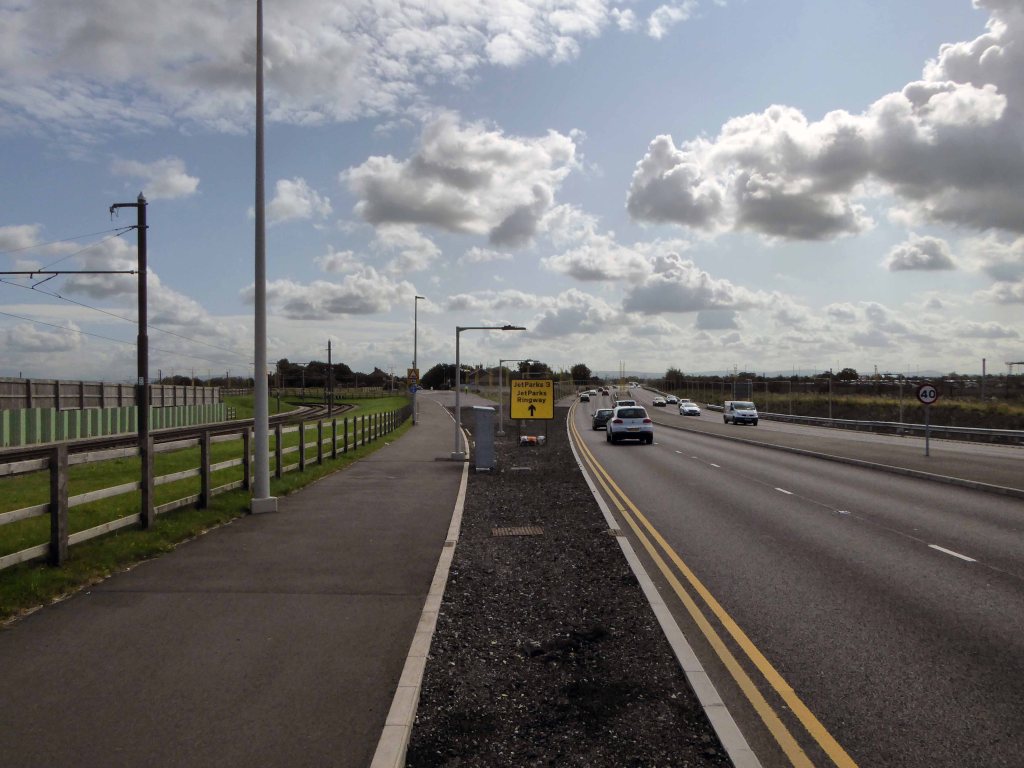
It is from this source that I was able to retrace Yuri’s journey, from the then Ringway Airport, to the offices of the AUFW at Brooks Bar.

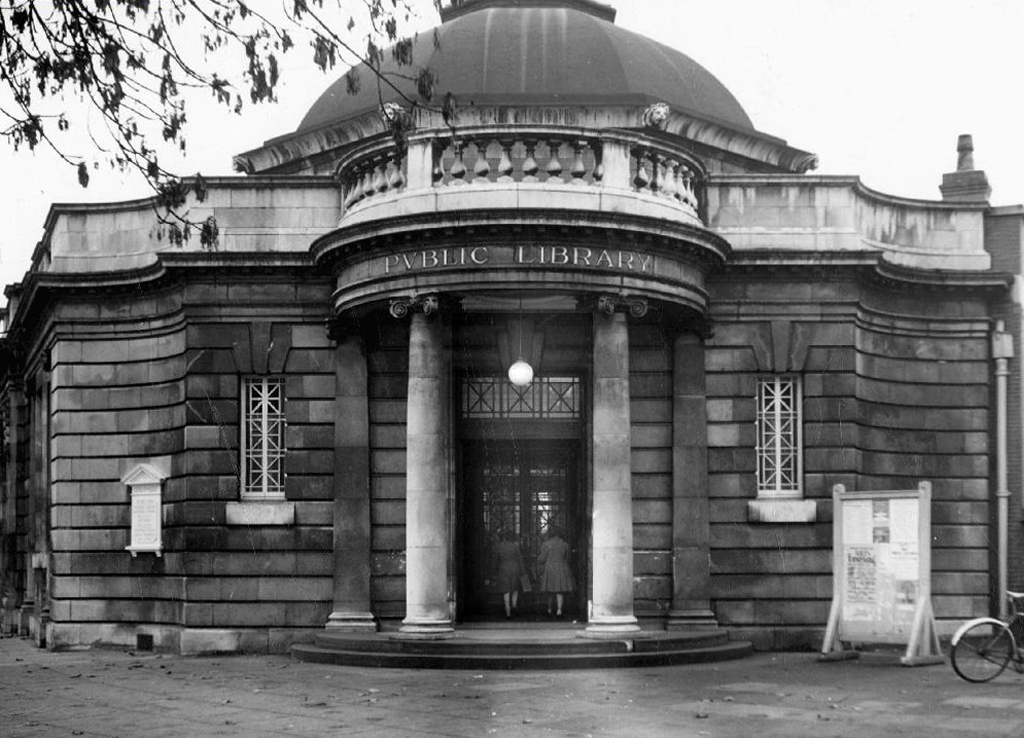
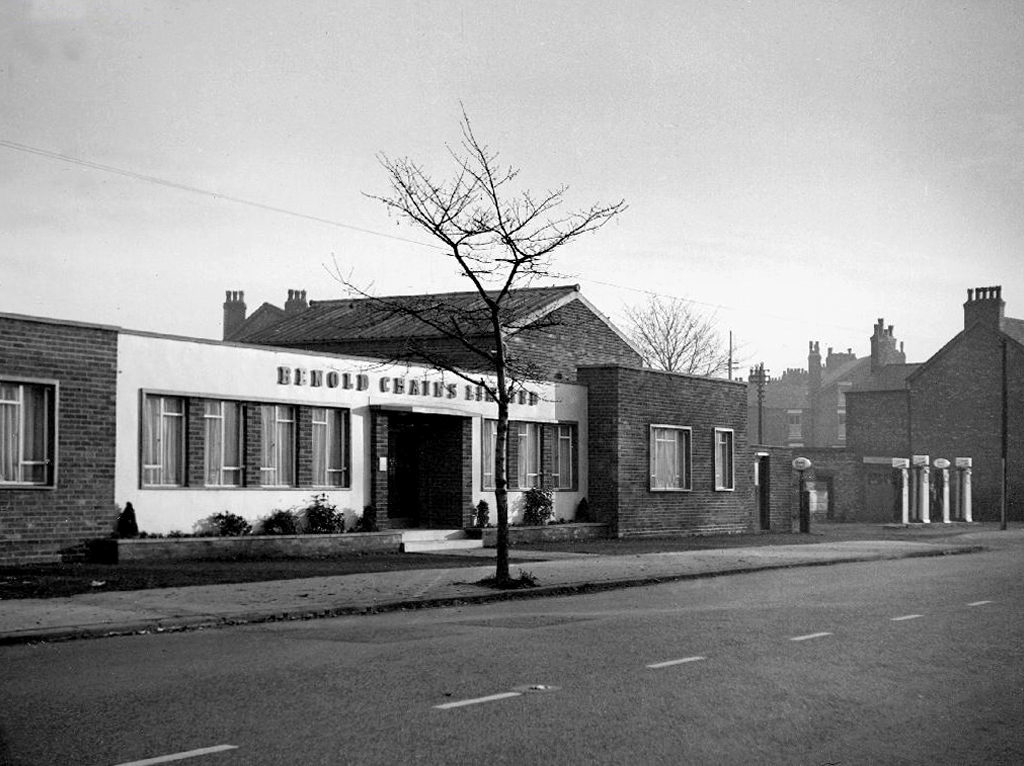
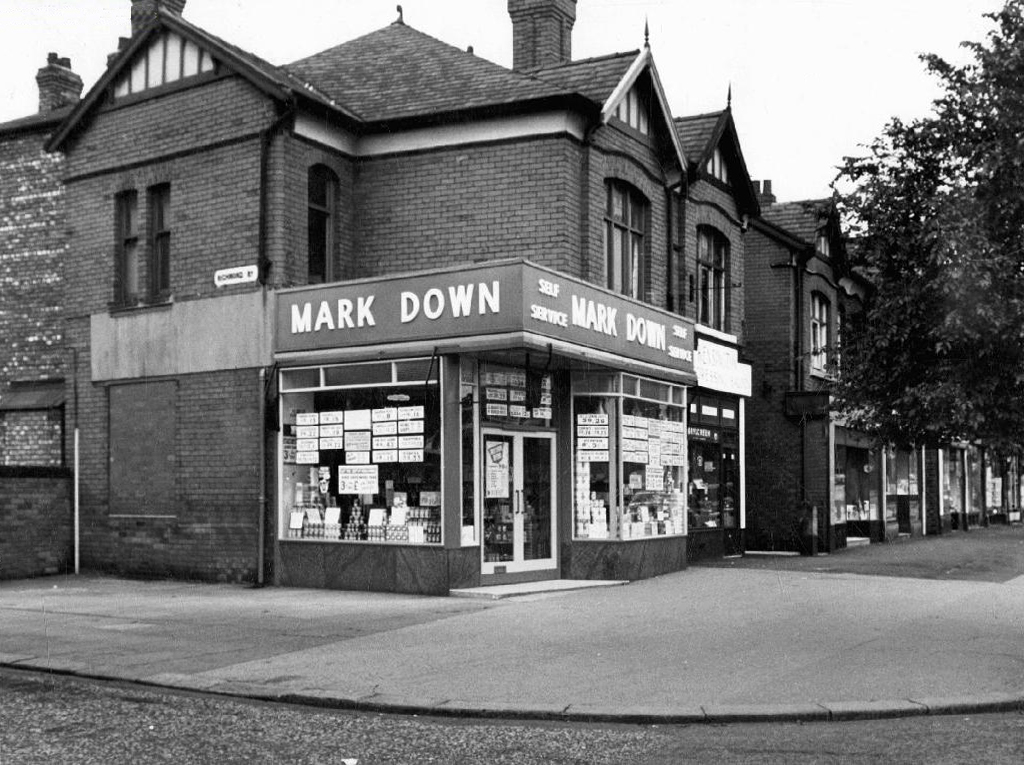
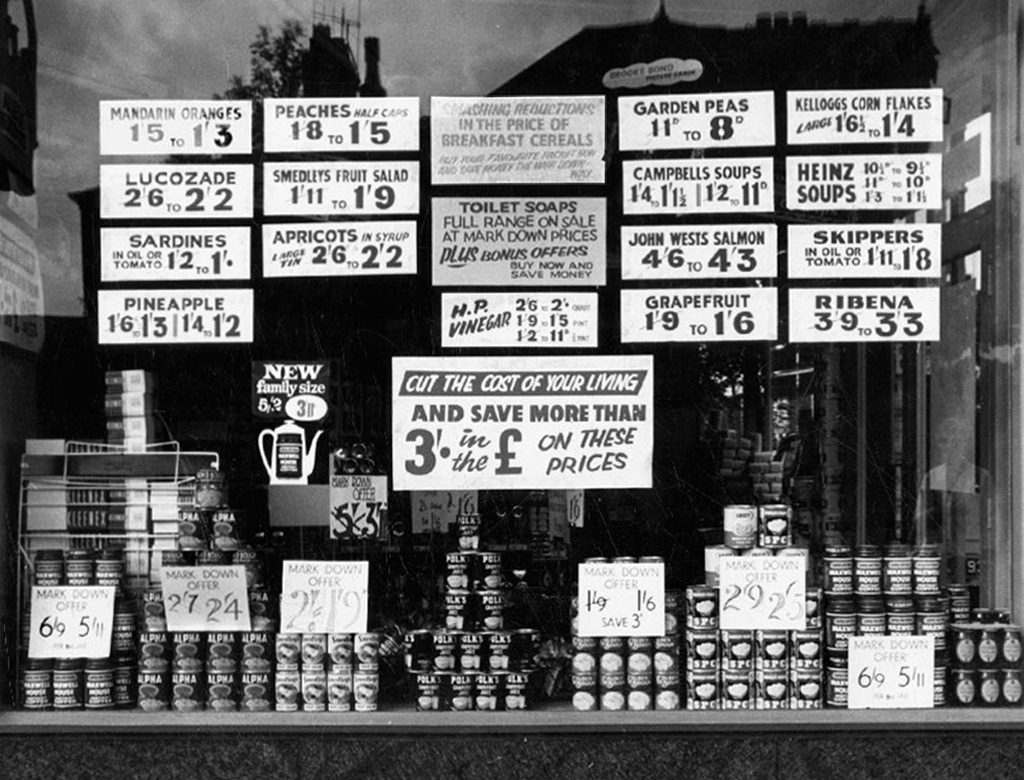
Archive photographs – Local Image Collection

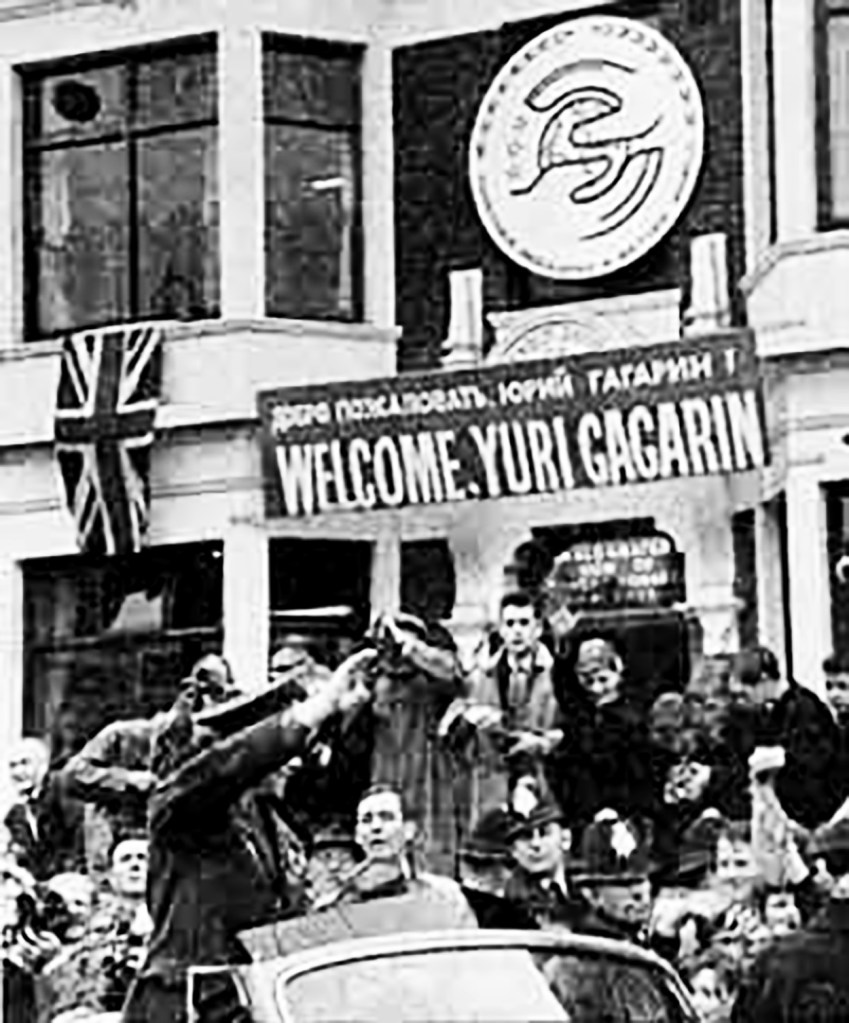
Thousands lined the wet streets of Manchester that day as he passed by in his beige open topped Bentley – standing proud waving to all and sundry.

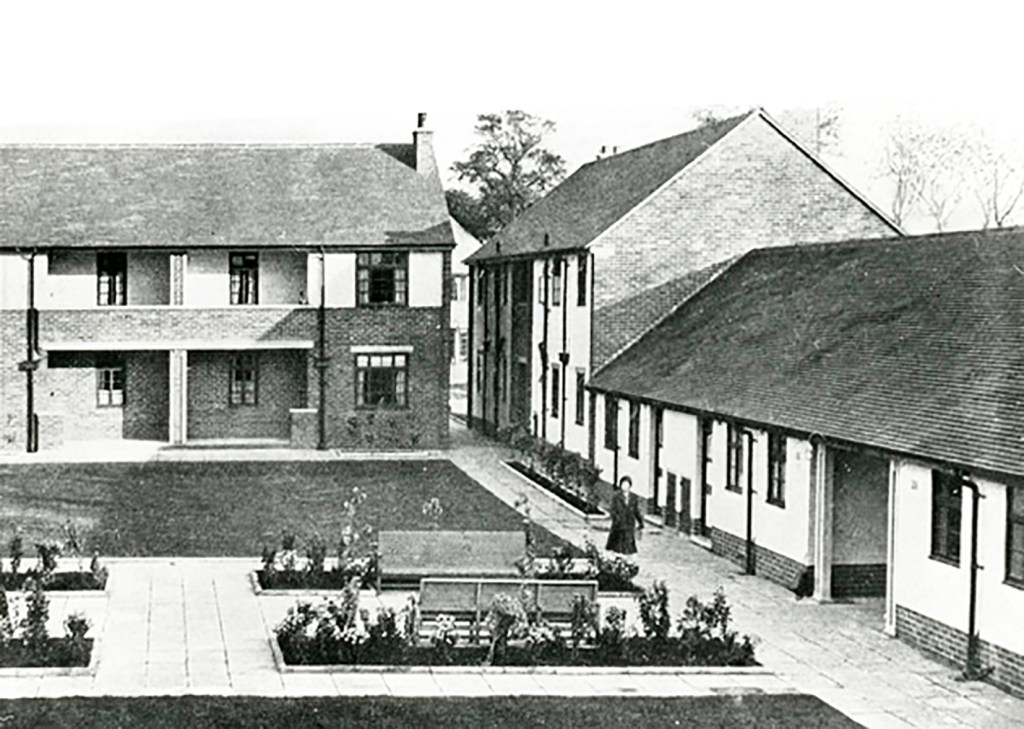
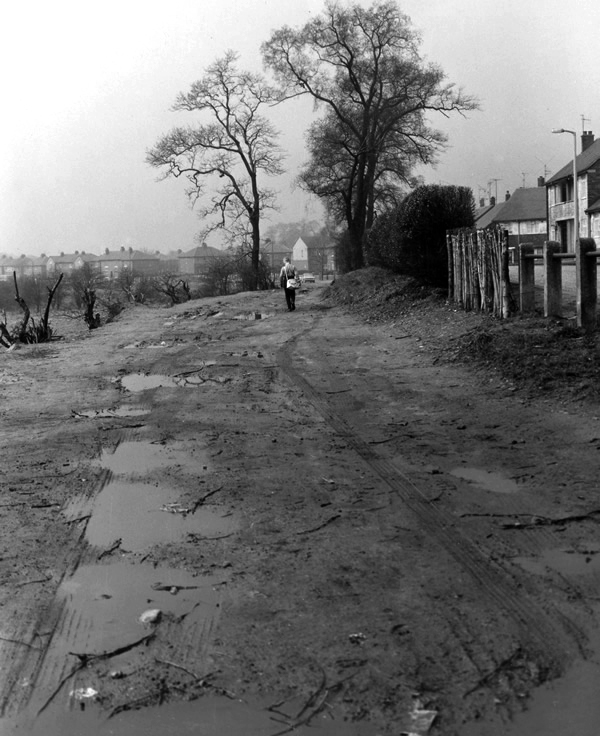
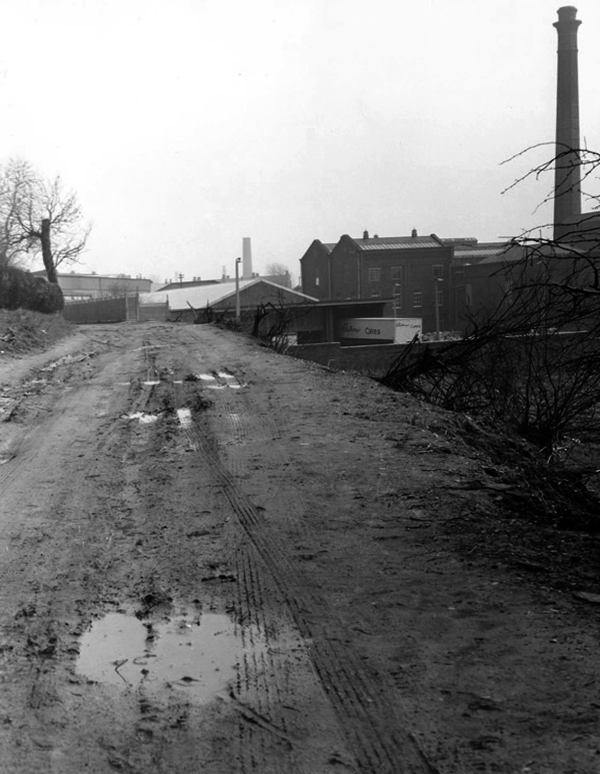
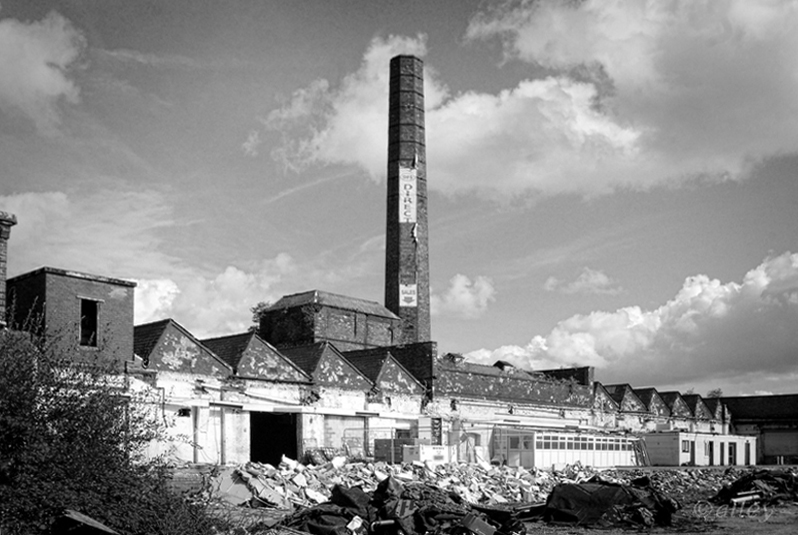
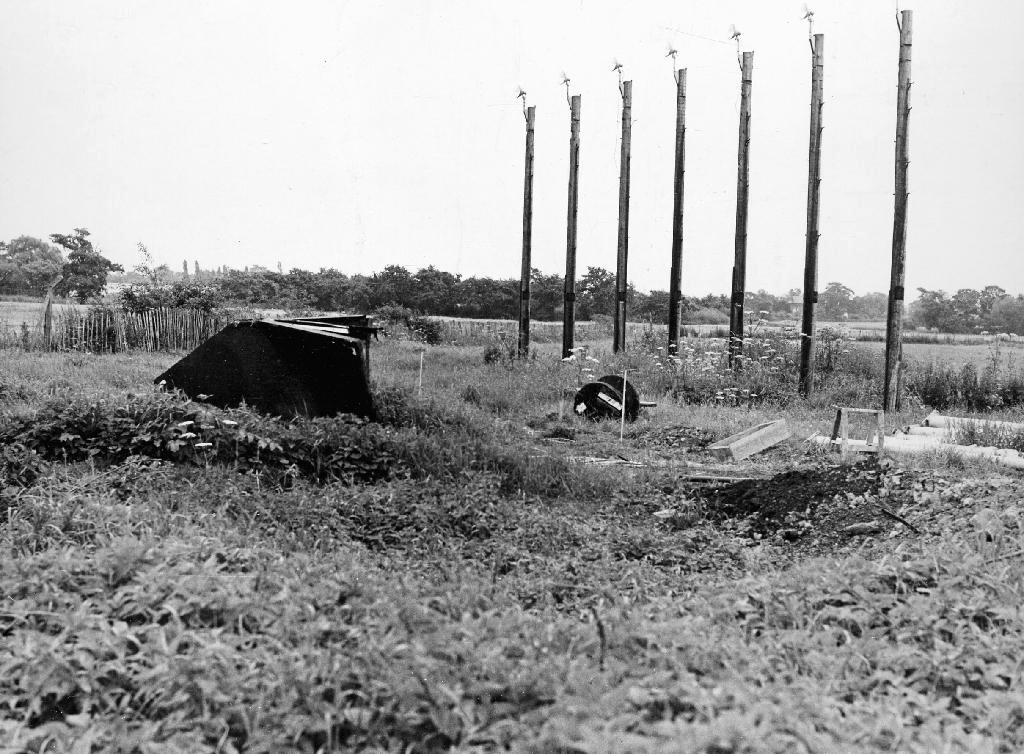
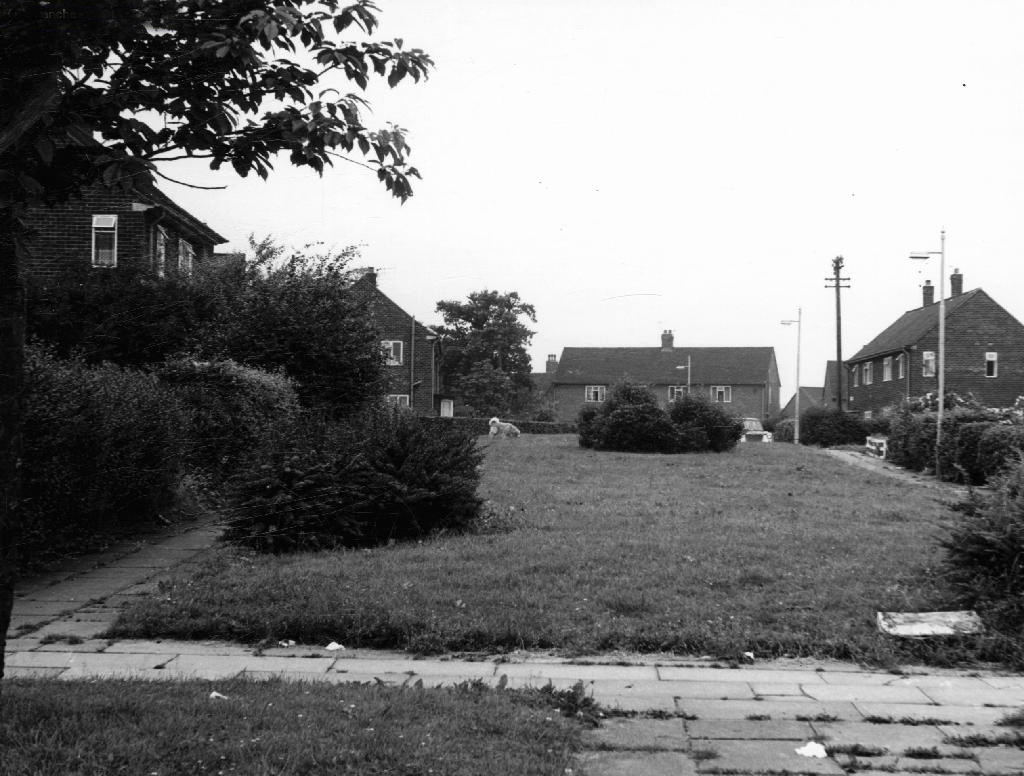
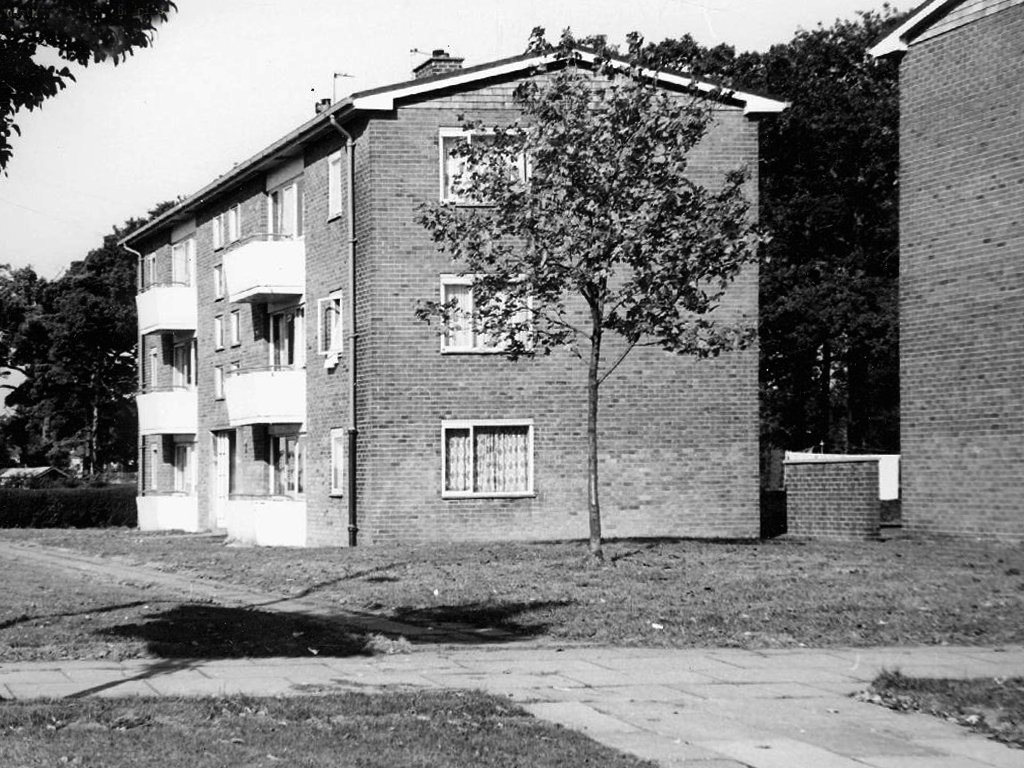
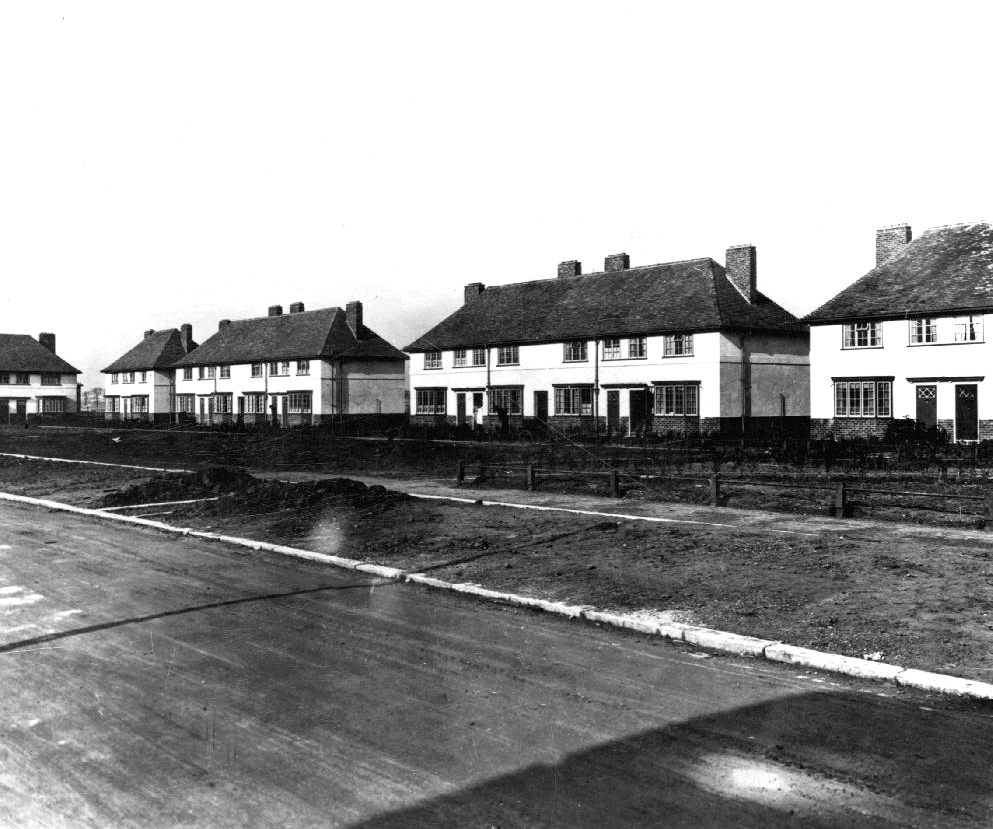
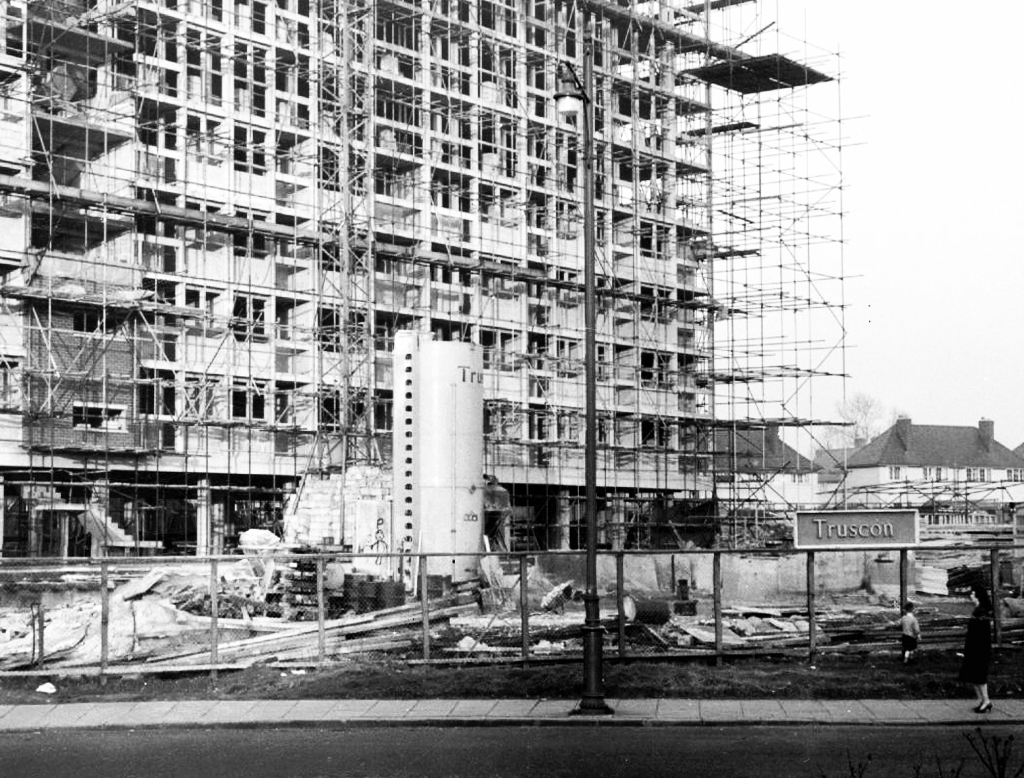
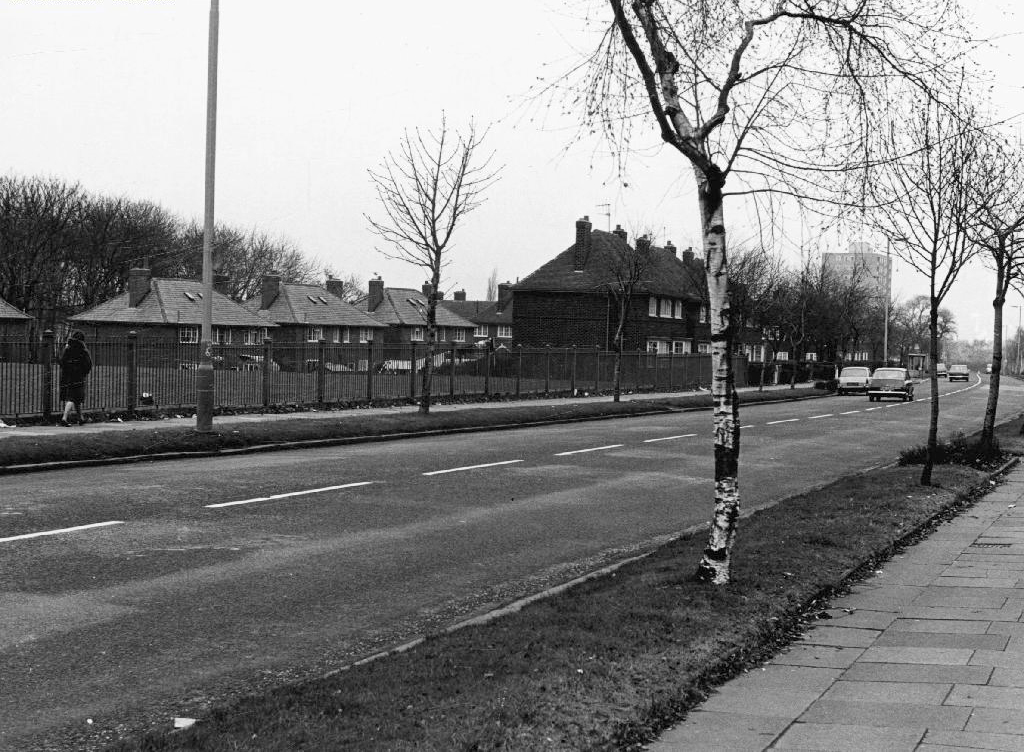
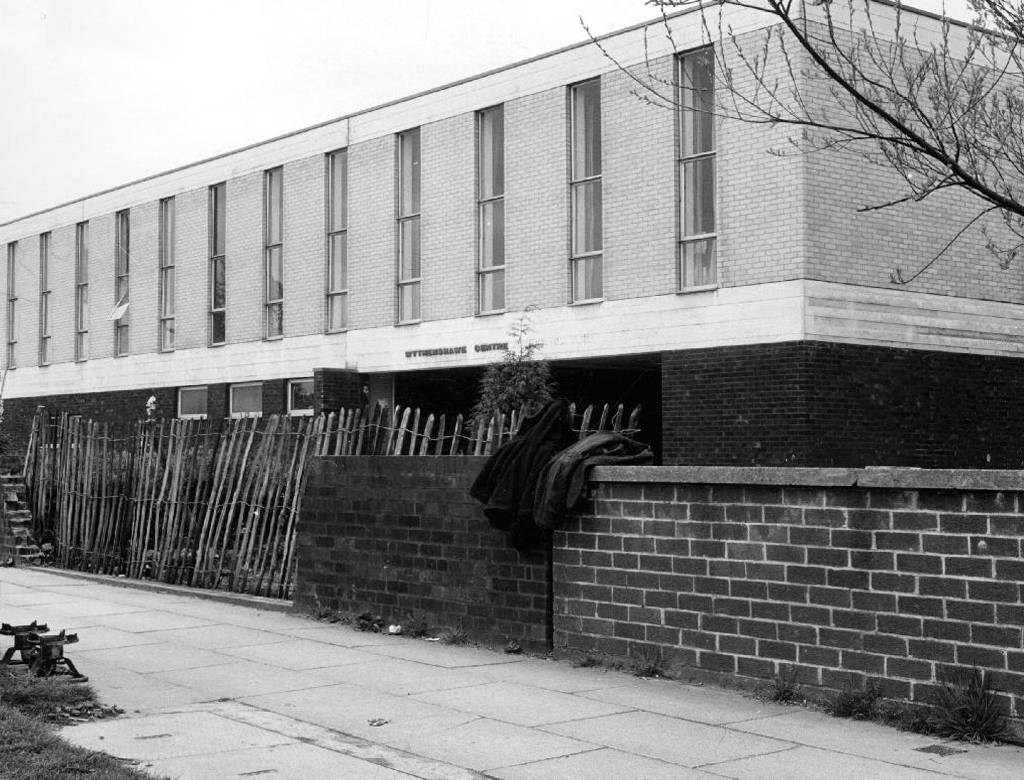
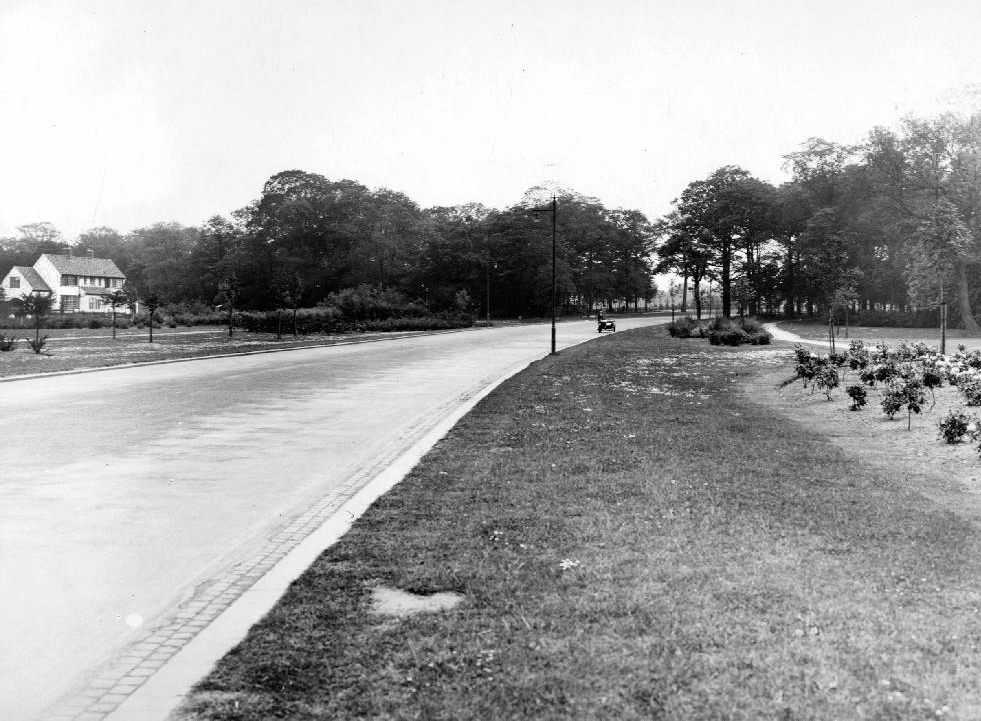
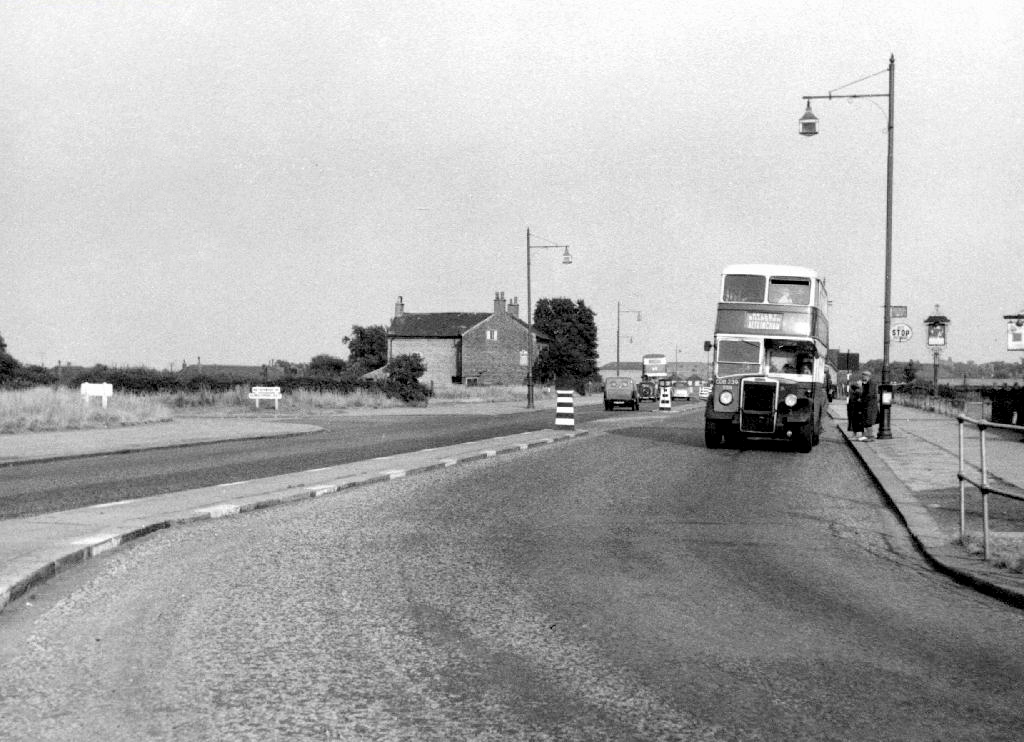
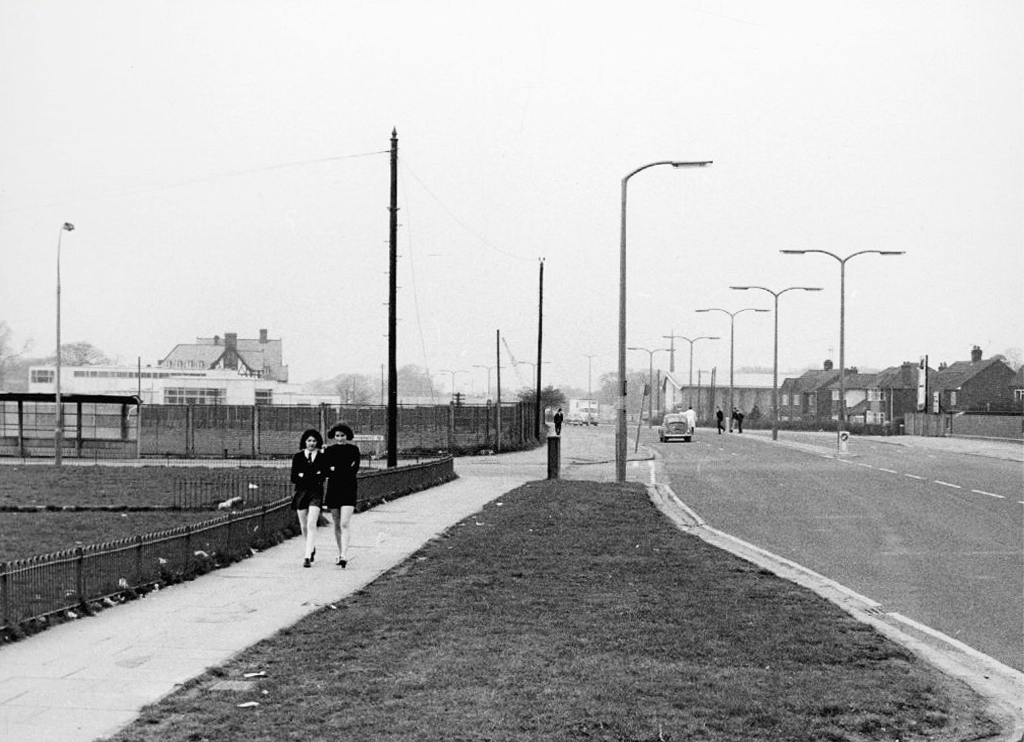
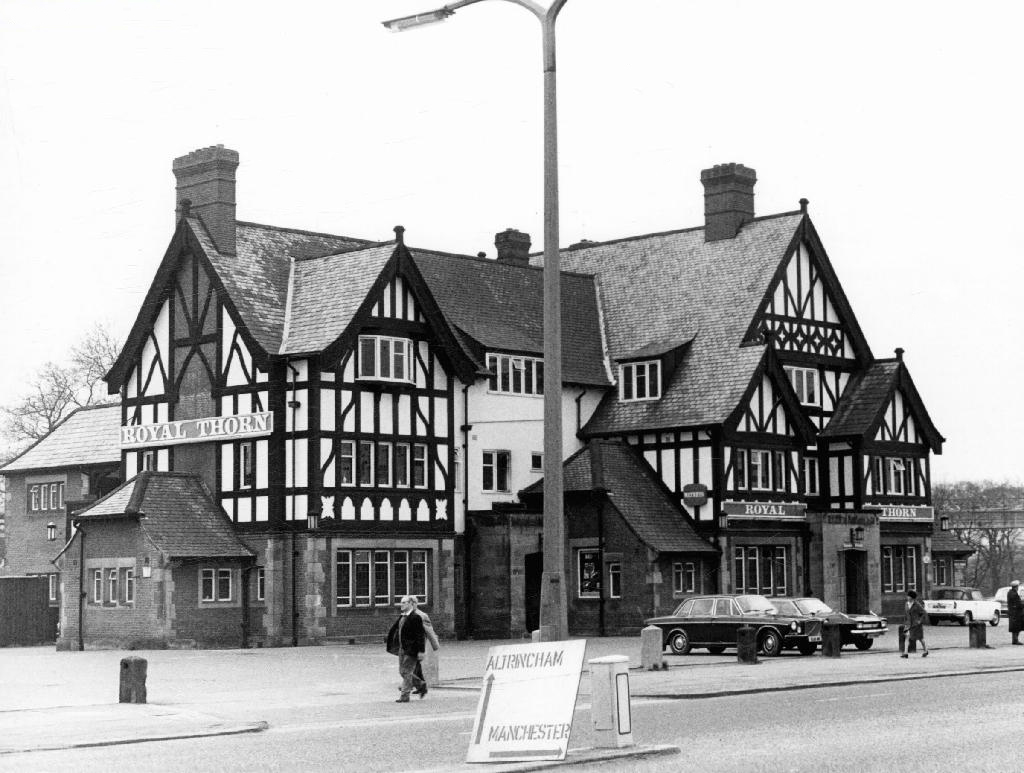
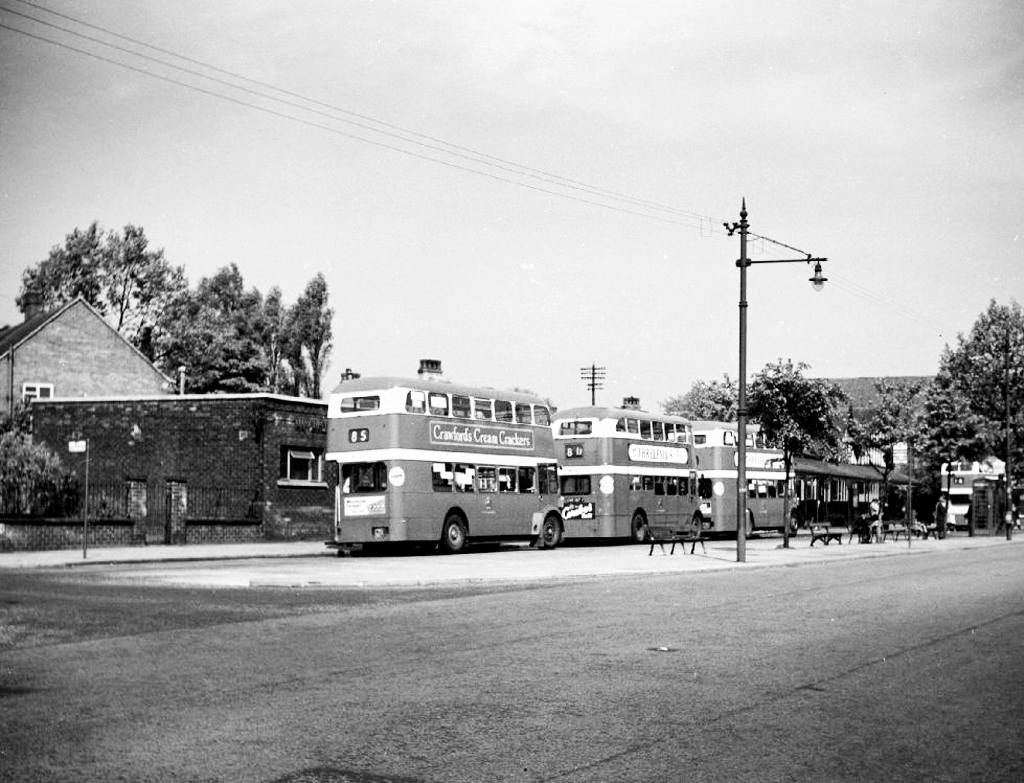
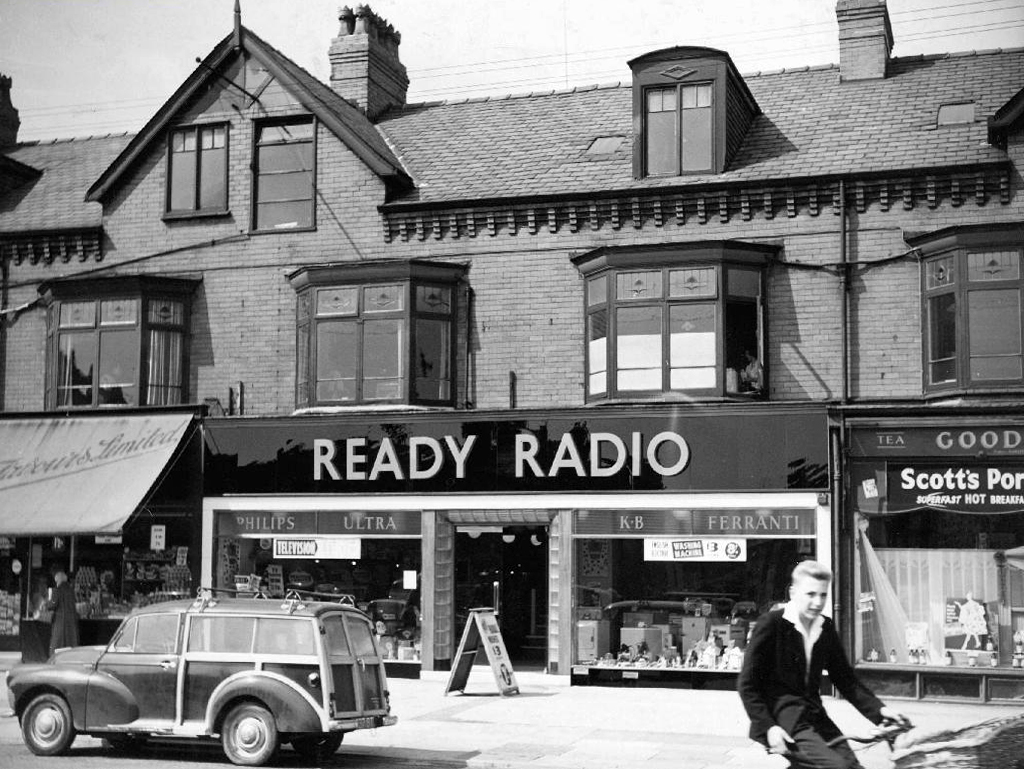
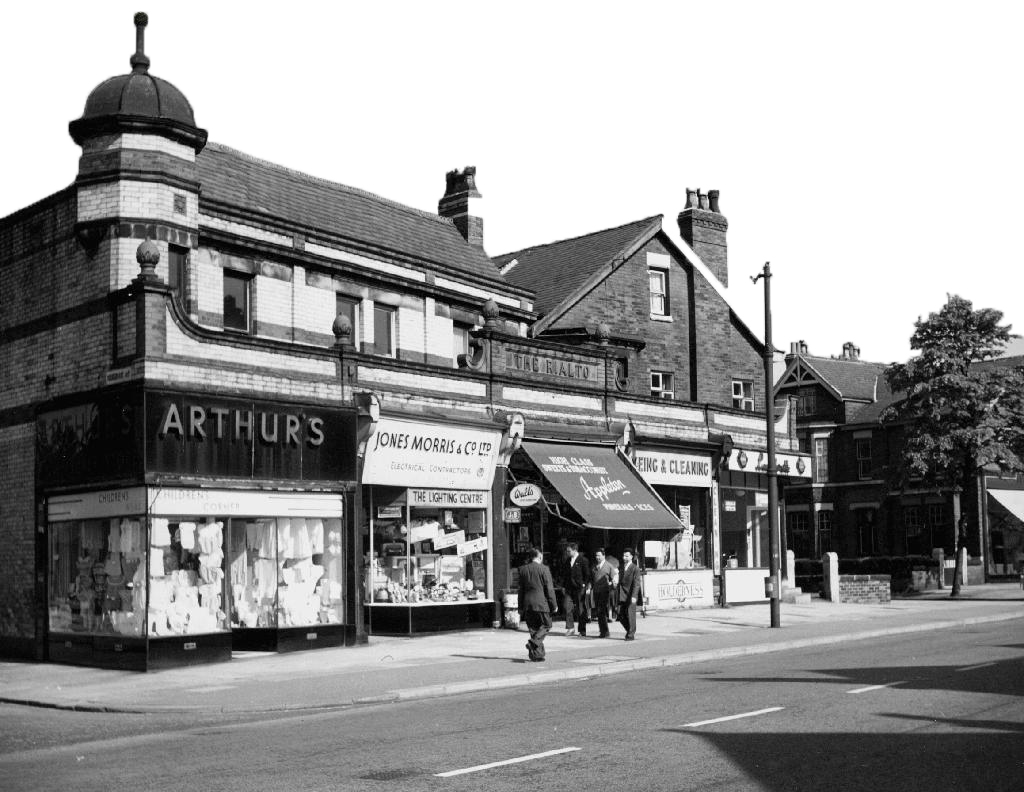
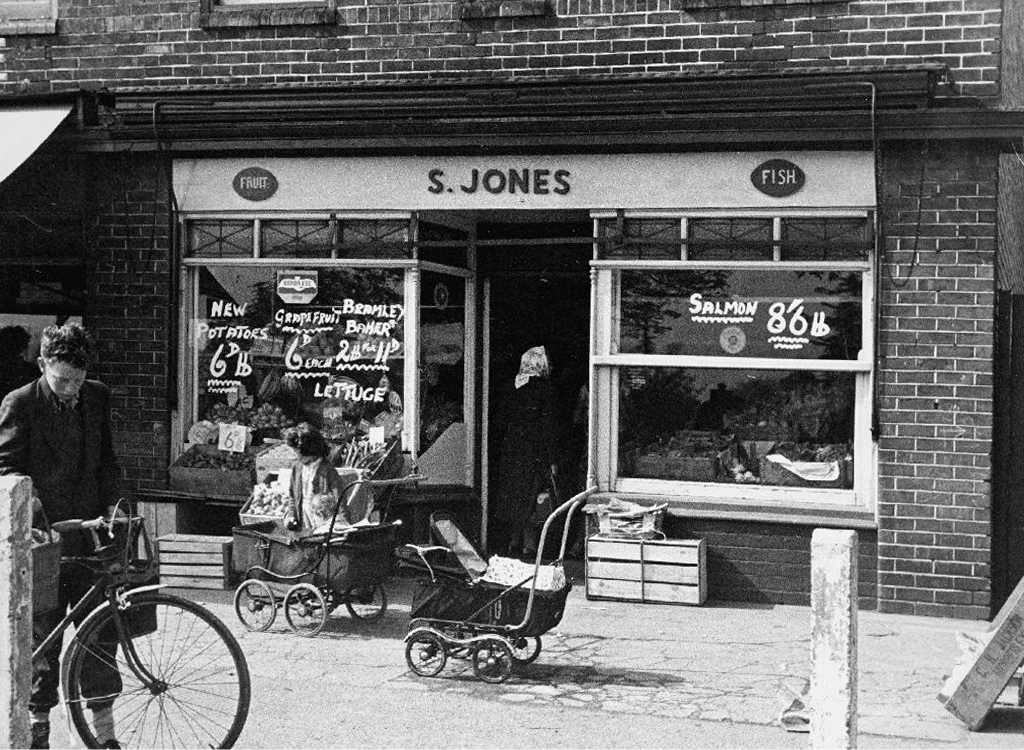
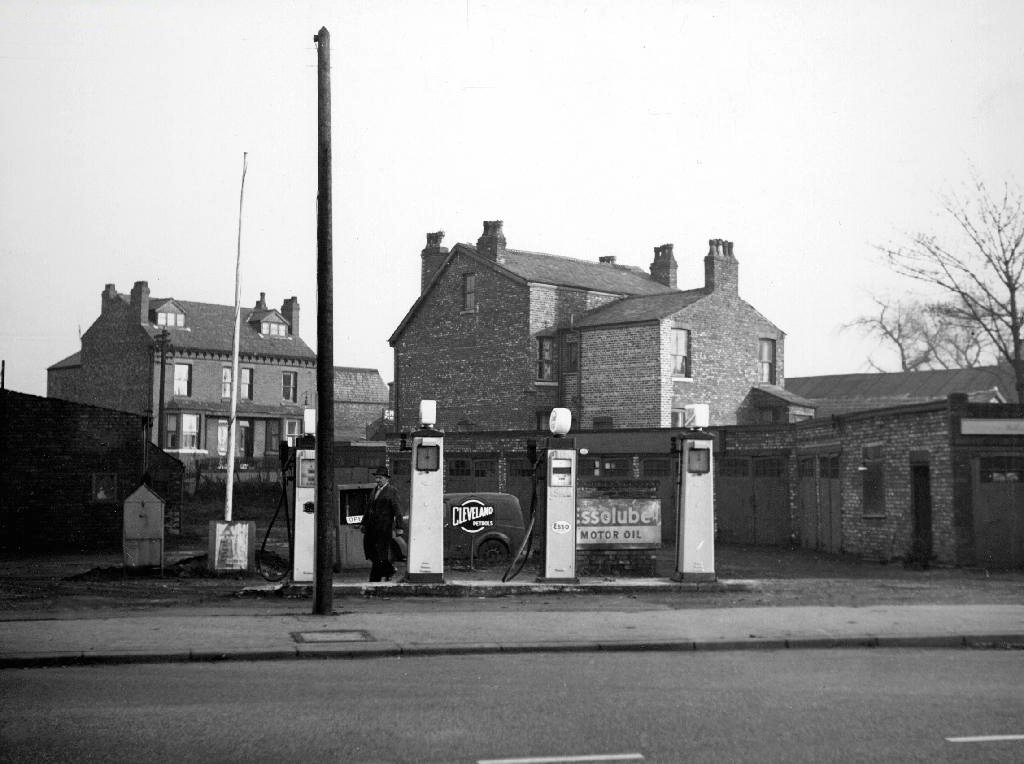
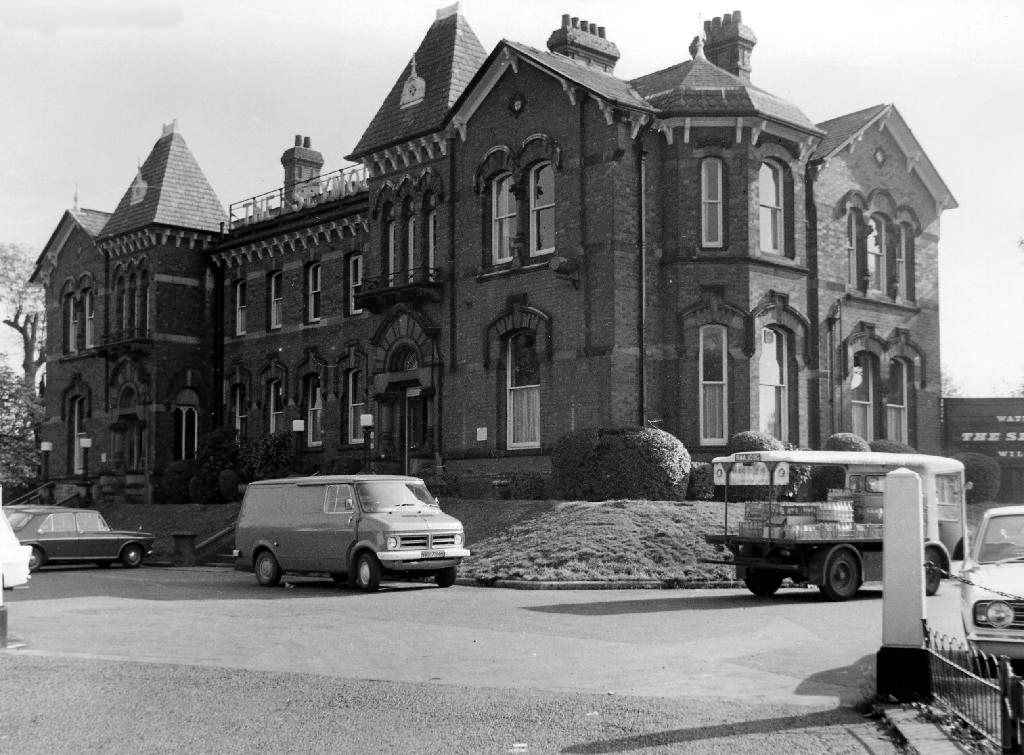
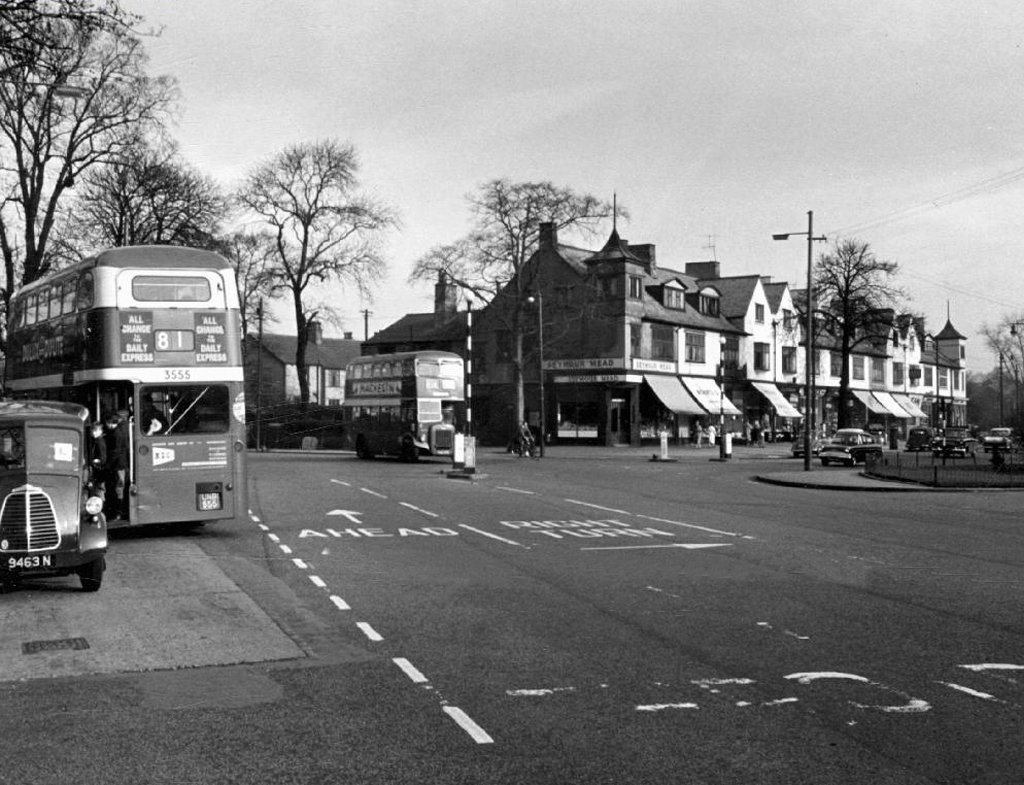
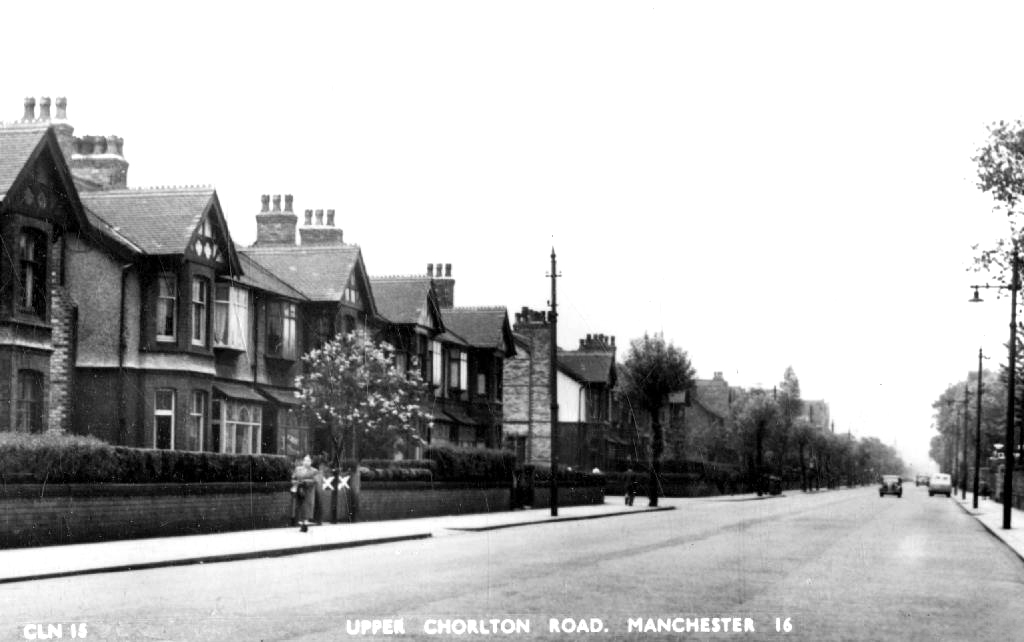
This is Yuri’s journey via the Manchester Local Image Collection.

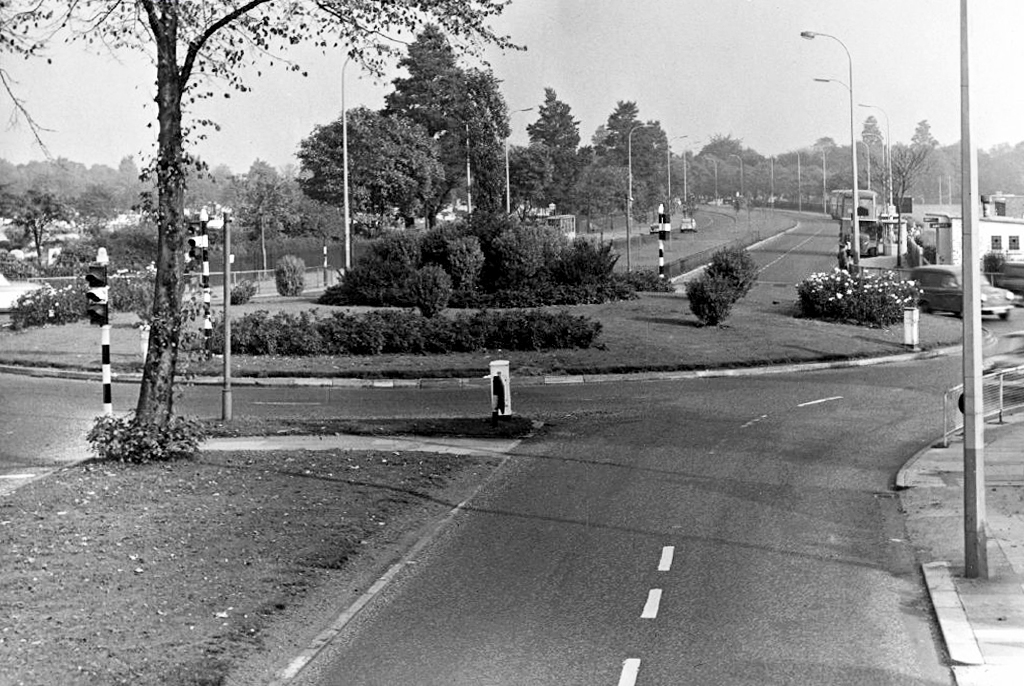
A loose approximation of what he may have see on that day in 1961.

We were allowed out of Brownley Green school to line the road as he passed, great memories.

I stood on Chester Road with my mum, I was 4 years old, but still remember it.

At that time, I was a student, working my socks off in the Central Library, I went outside into St. Peter’s Square to watch him pass, he gave everyone a big smile.

Still tell my children, tiny at the time – you saw the first man in space, I remember his smile.

Worked in an office in Albert Square – had a grandstand view of him arriving at the Town Hall.

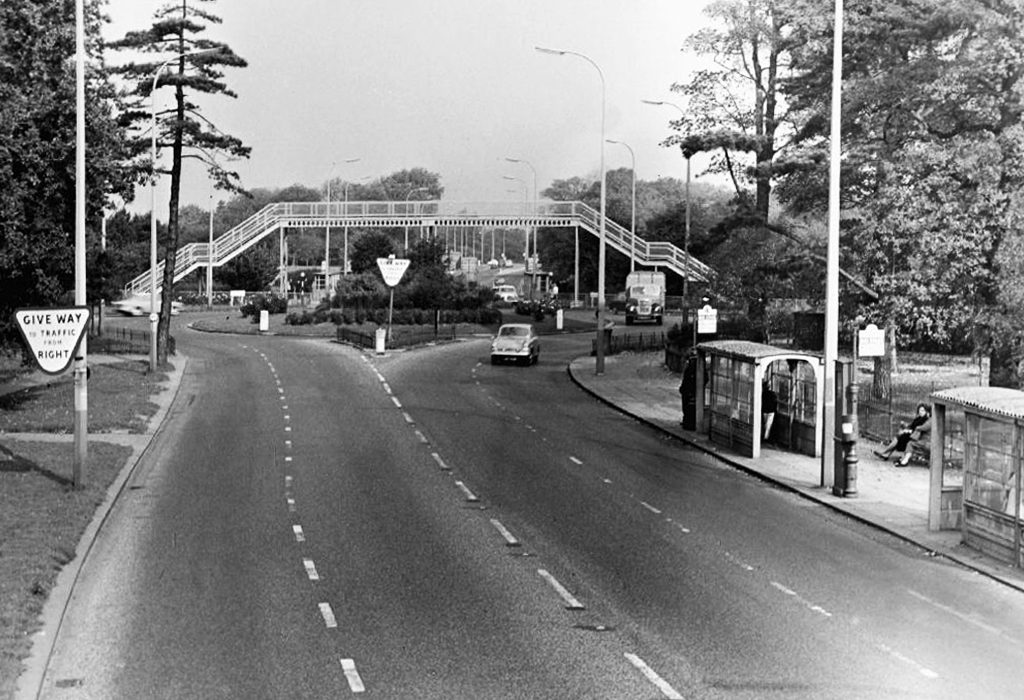
I can remember a police escort taking Yuri to Albert Square via Princess Parkway through Withington, Fallowfield and Moss side, there were hundreds of people lined up watching a waving at him.

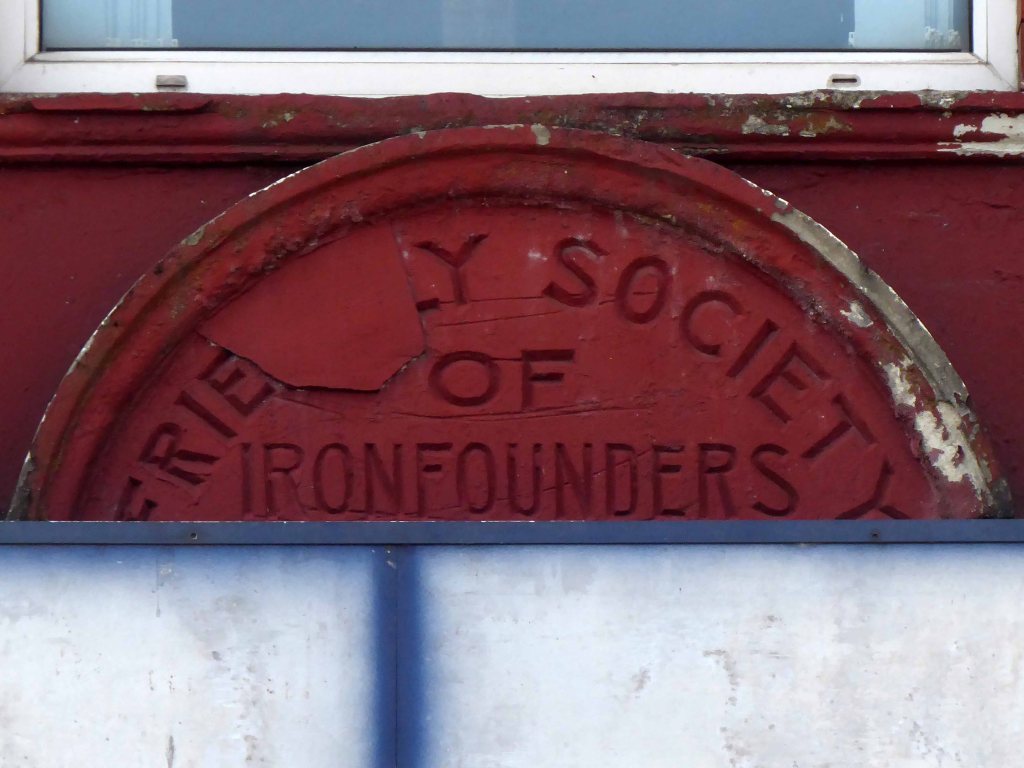
When Gagarin visited Manchester he was given a bronze bust of Lenin made by the Amalgamated Union of Foundry Workers. Four were made in total and my Dad owns one of them.

My Grandad’s funeral was on the day he came, as we passed down Altrincham Rd onto the Parkway policemen who were holding back the crowds saluted, he would have loved it.

Yeah I seen him stood up in a big car with a green uniform on. It was going down Brownley Rd passing Meliden Crescent heading for the Airport in Wythenshawe, I was about 6 years old.

Working for Manchester Parks as a 20 yr old on Princess Parkway and he came past me as I was mowing the grass, in an open top Rolls or Bentley, he saluted me personally as he passed, of course I stood to attention and returned the salute – Magic Moment

Ringway Road

Shadow Moss Road

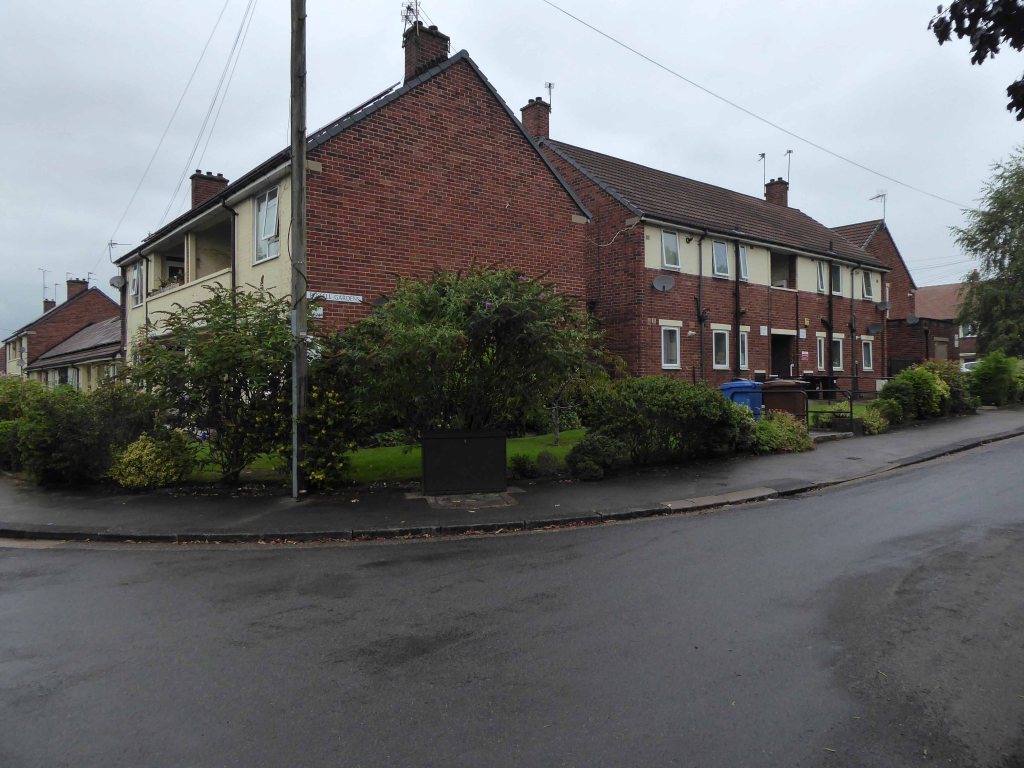
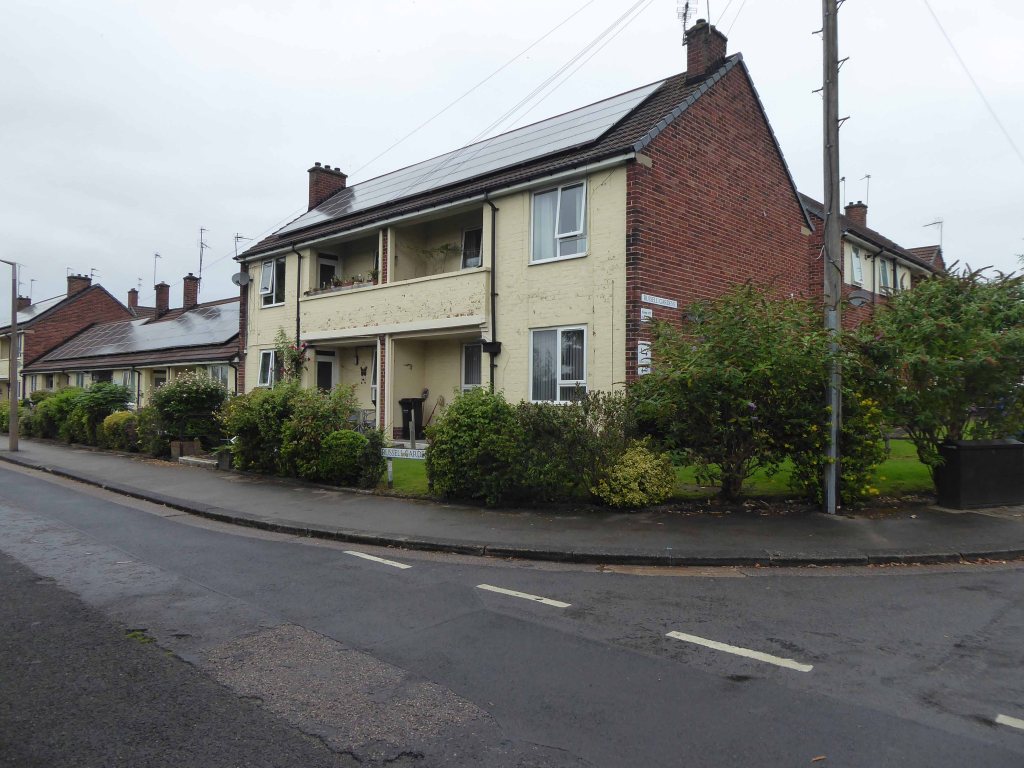
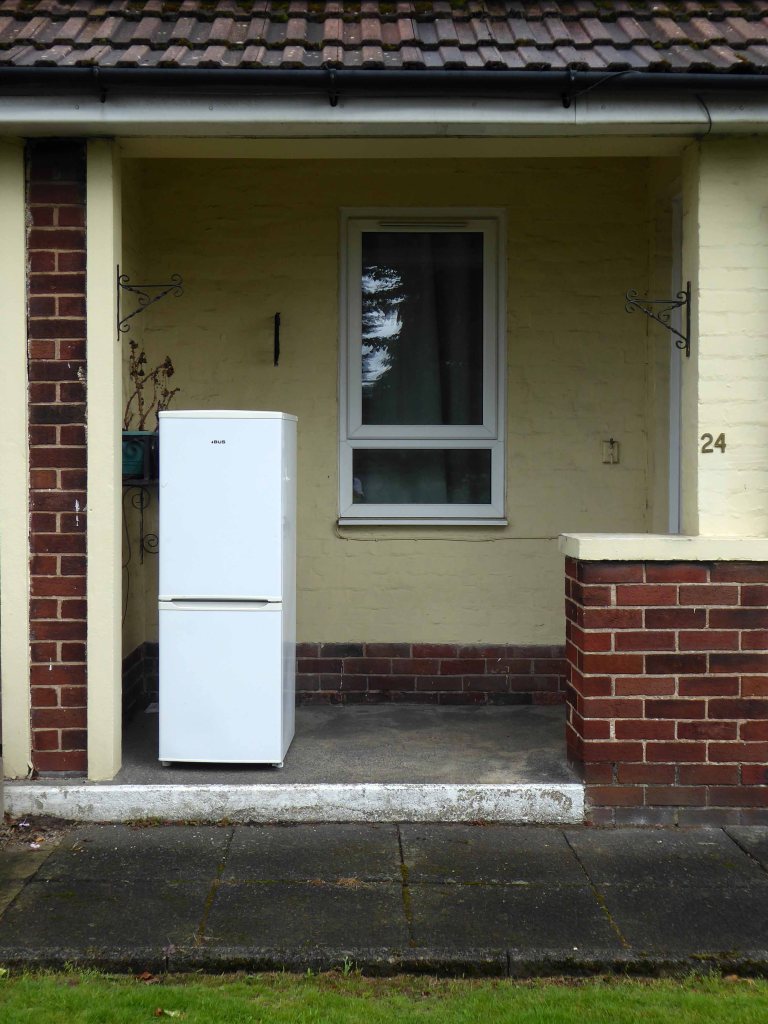
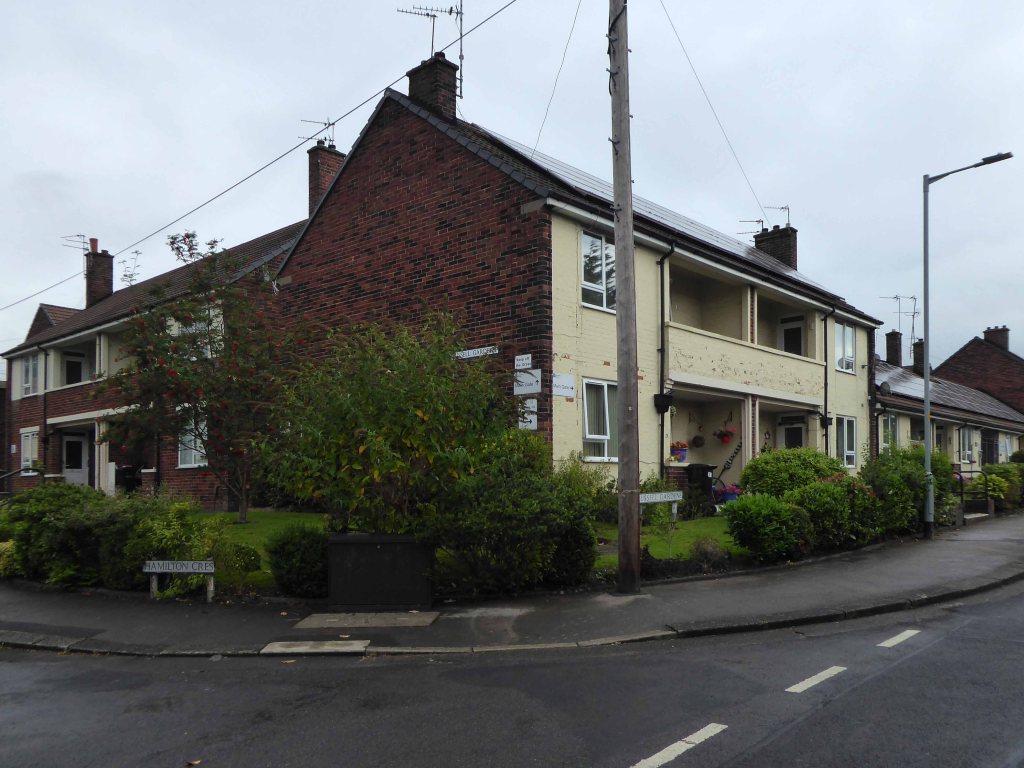
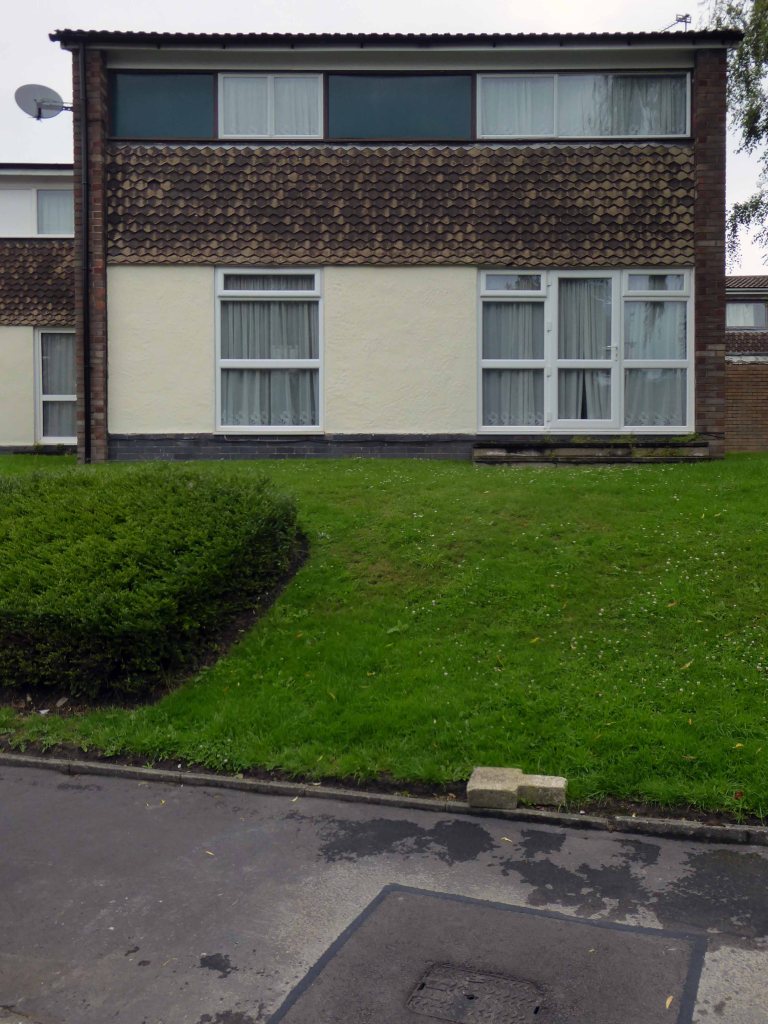
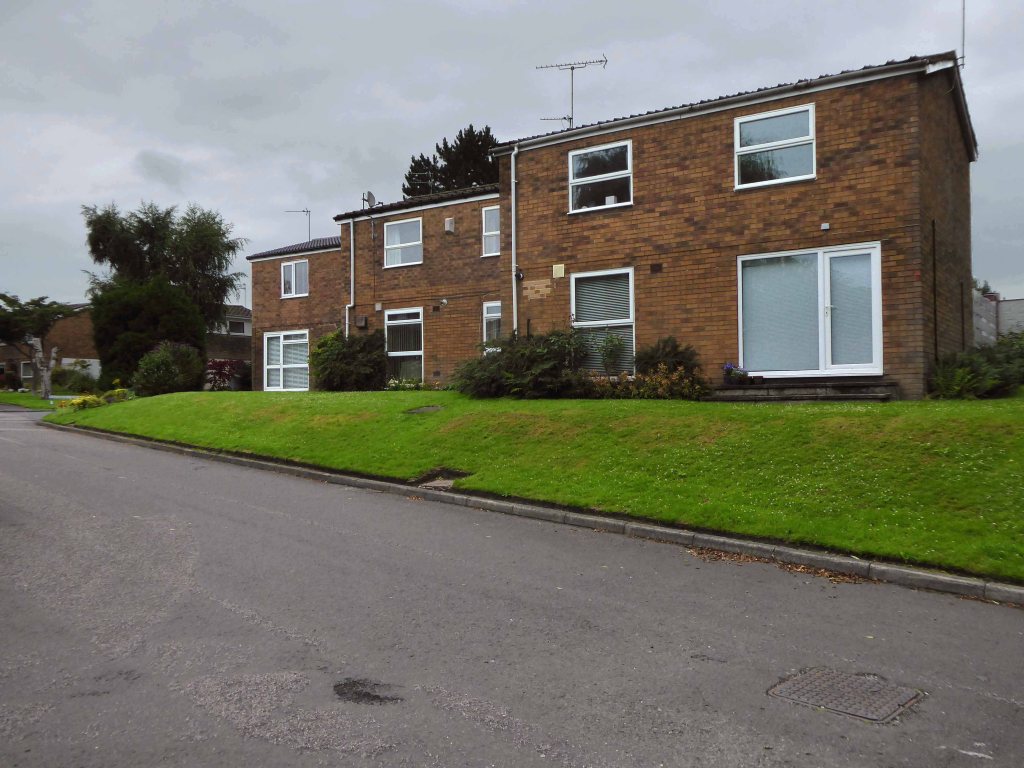
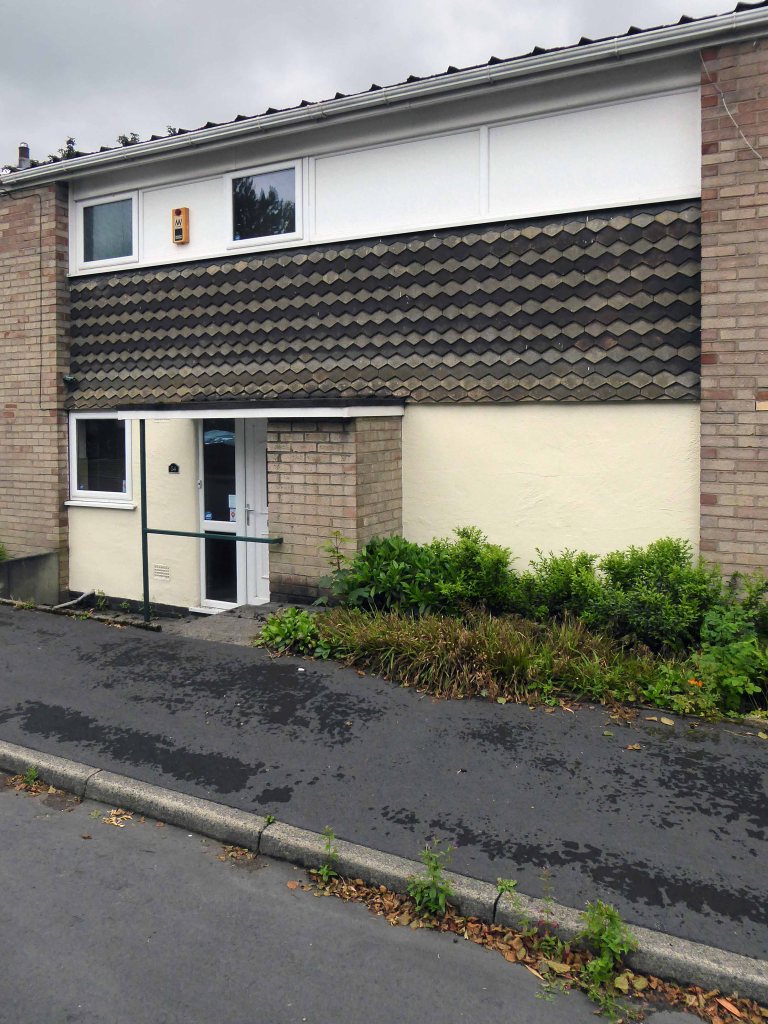
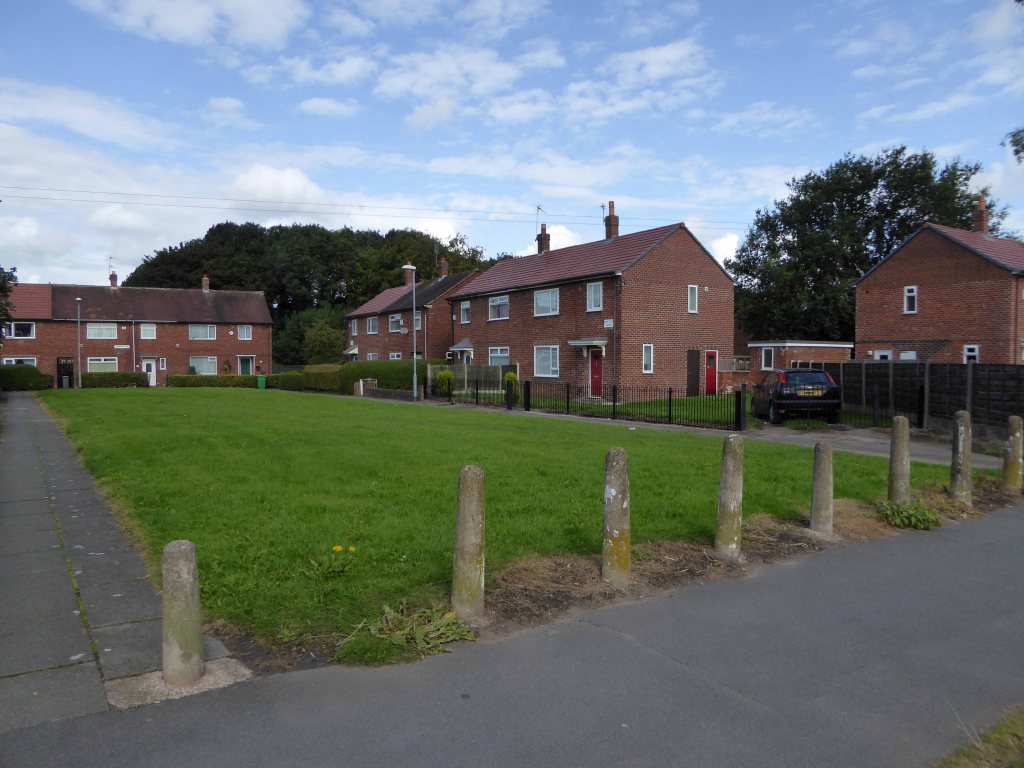
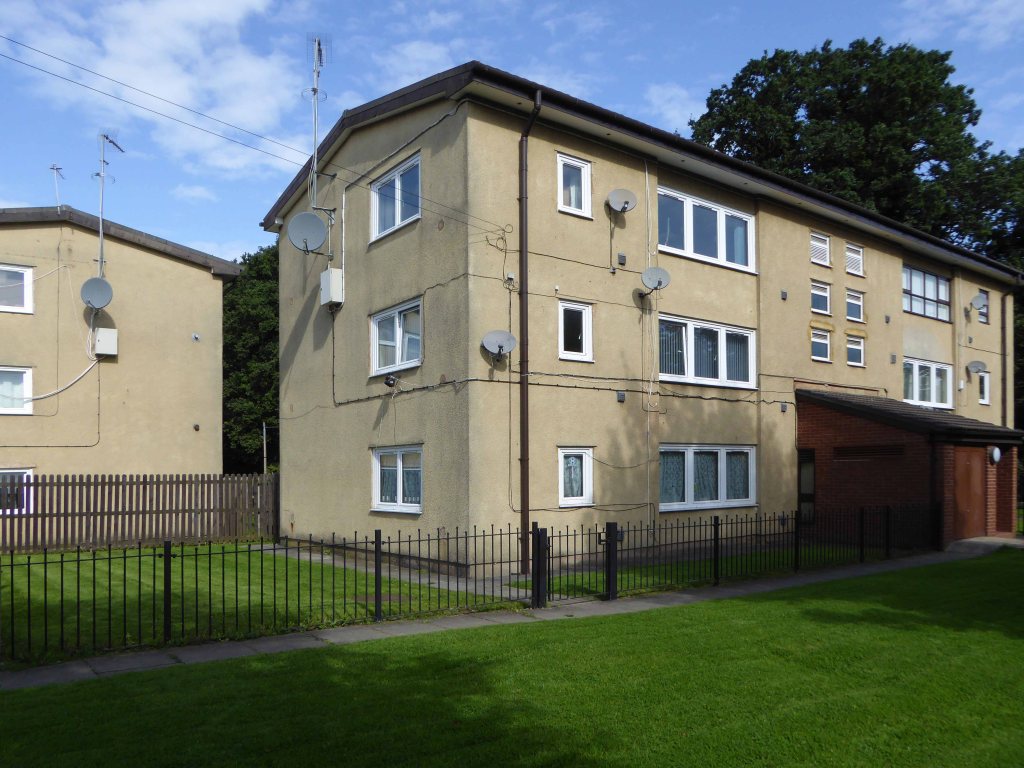
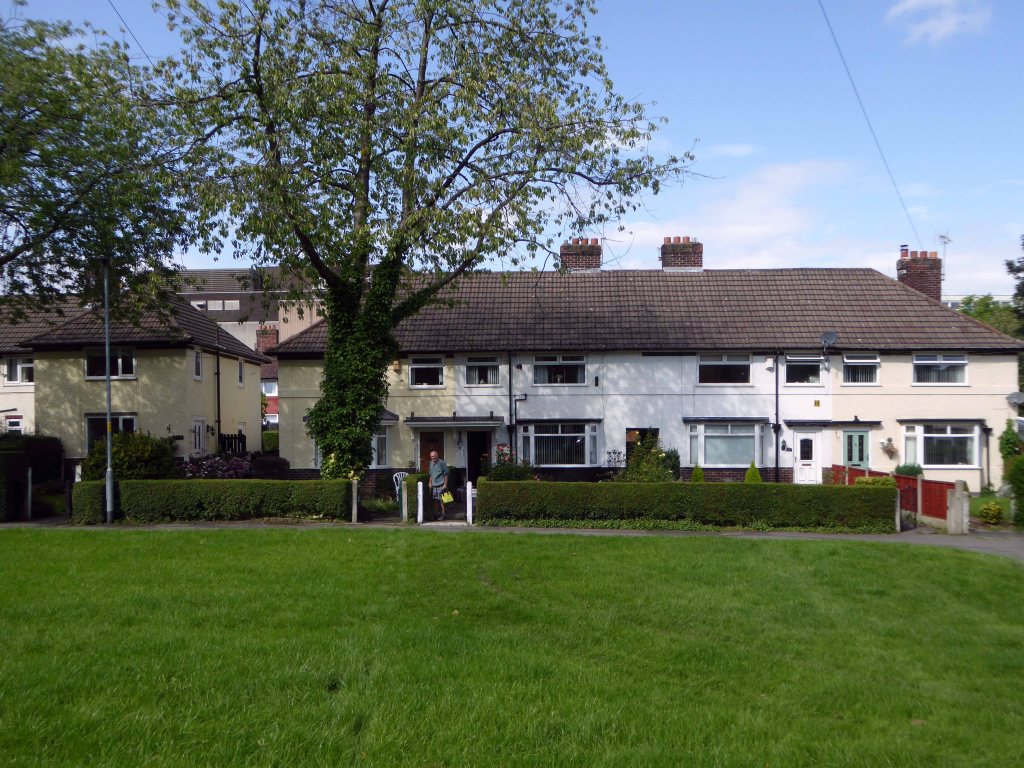
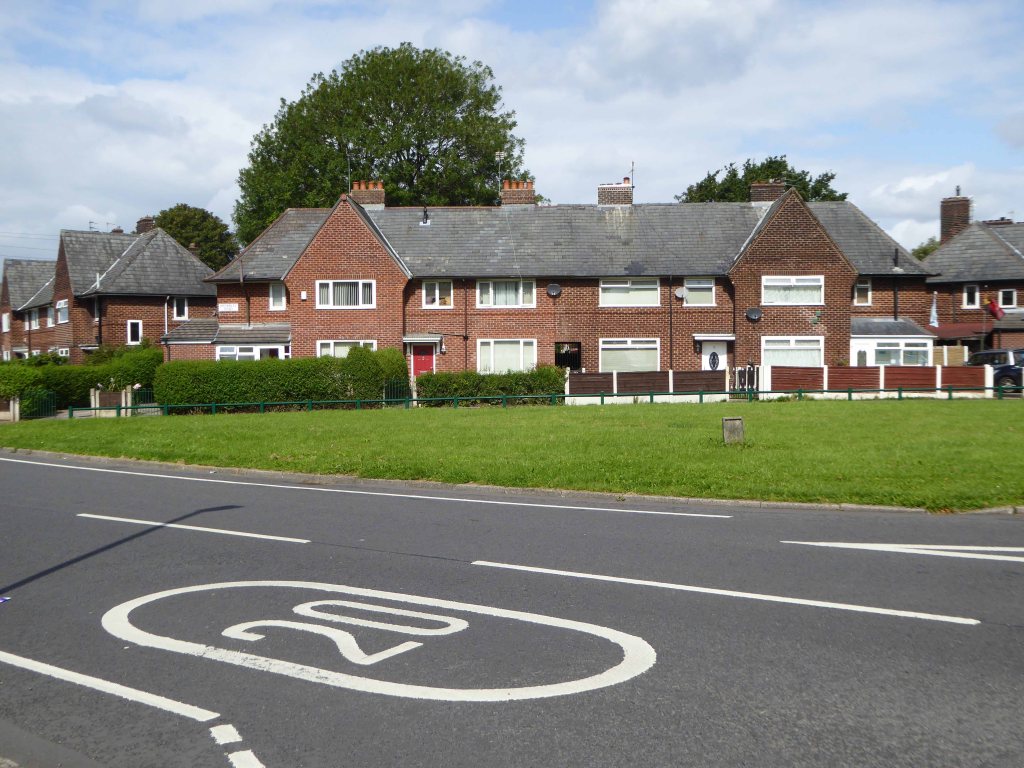
Post-war social housing

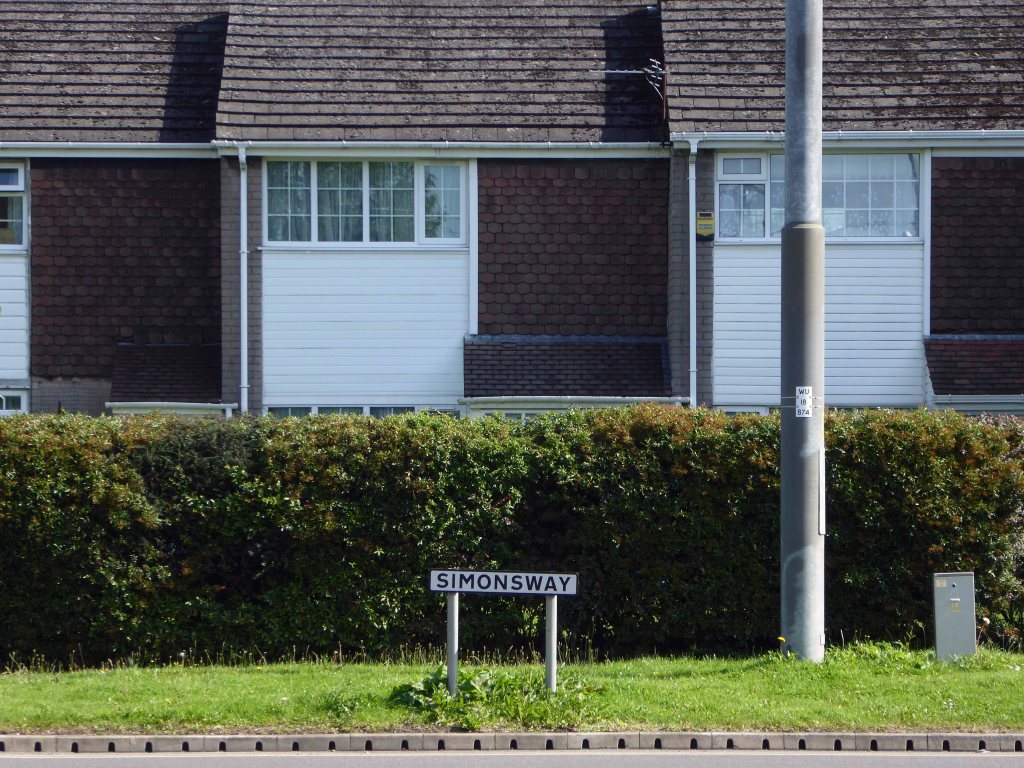
Simonsway

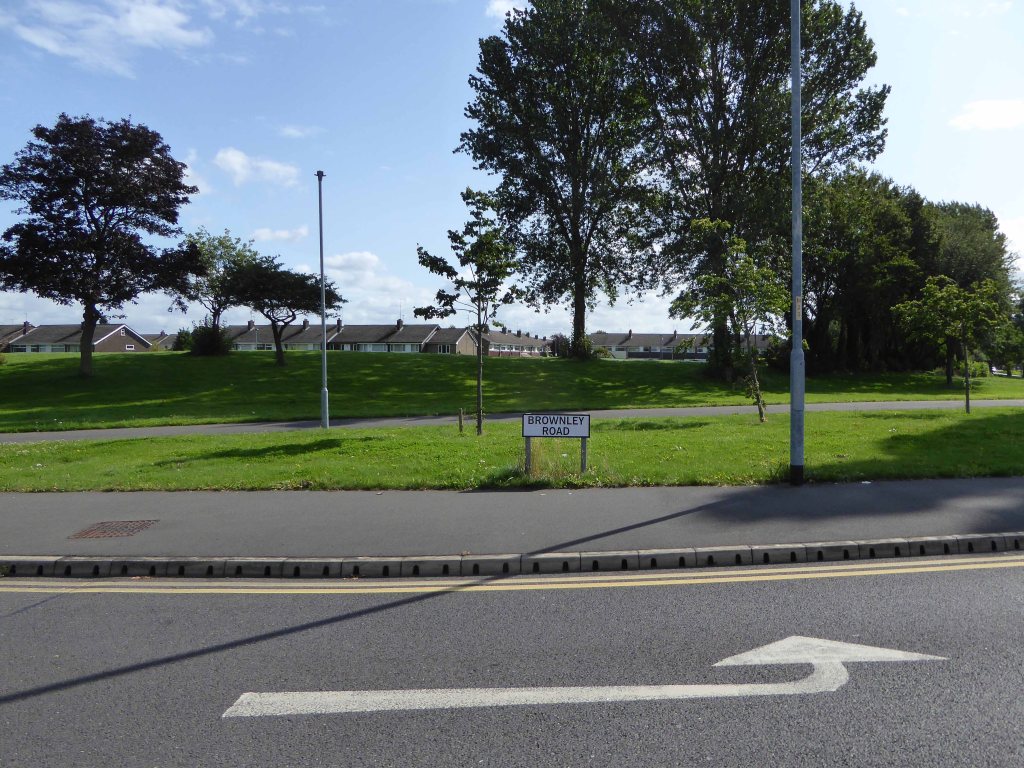
Brownley Road

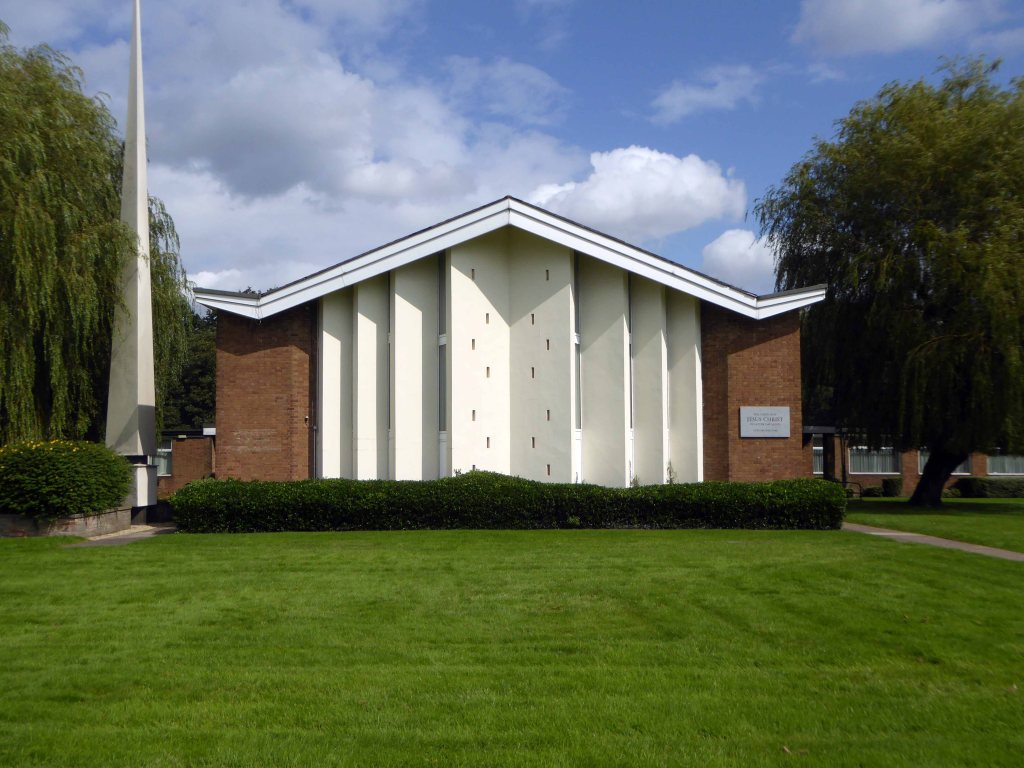
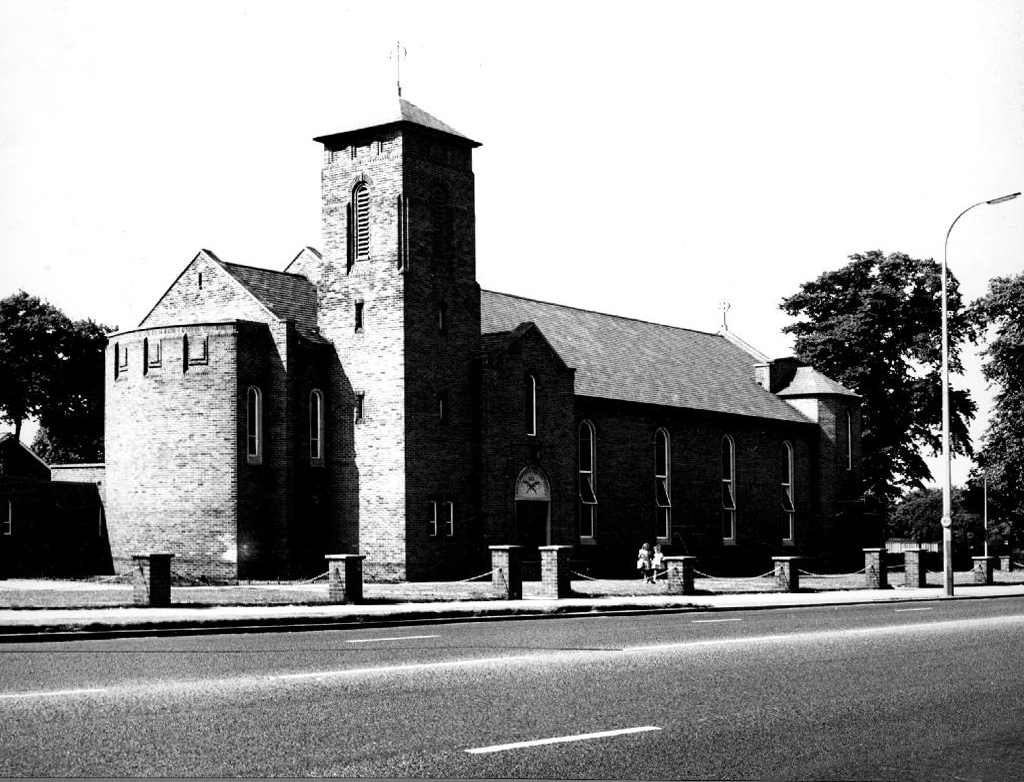
St Andrews Church JCG Prestwich and Son 1960

Housing built 1934

1960 development

St Luke The Physician1938-9 by Taylor and Young

Benchill Hotel – demolished Autumn 2012

Altrincham Road

Royal Thorn – demolished 2001

Princess Parkway

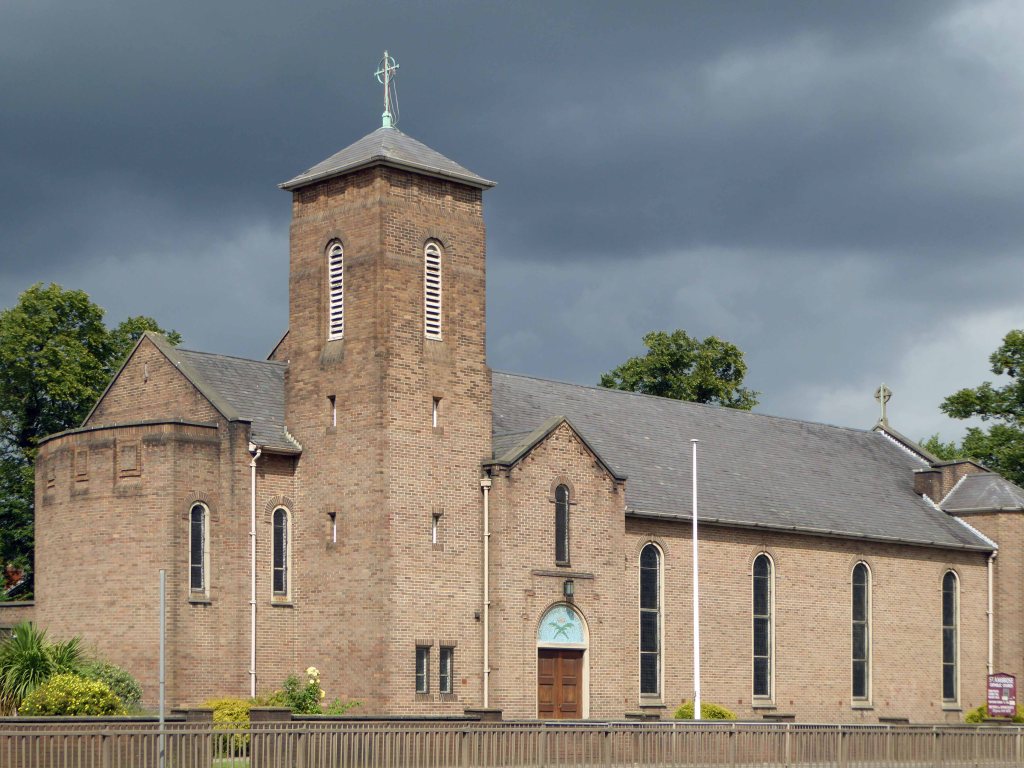
St Ambrose A well-detailed, relatively modest post-war design by Reynolds & Scott, with an impressive and largely unaltered vaulted interior.  The dedication relates to St Ambrose Barlow, a Catholic martyr from nearby Barlow Hall. 

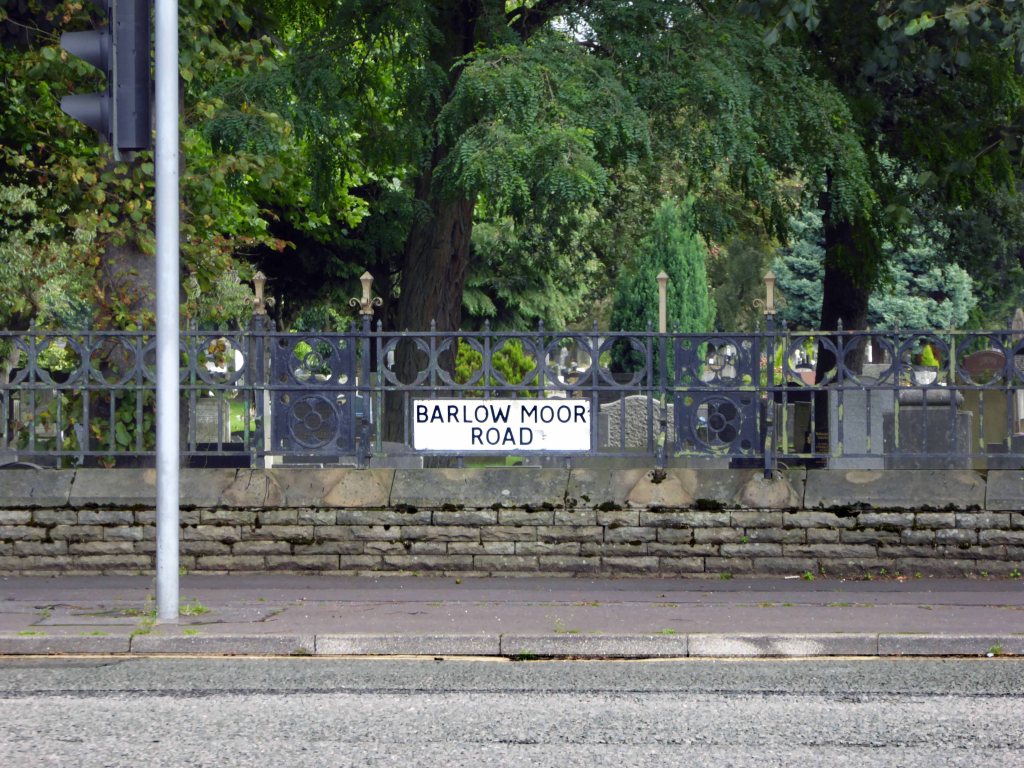
Barlow Moor Road

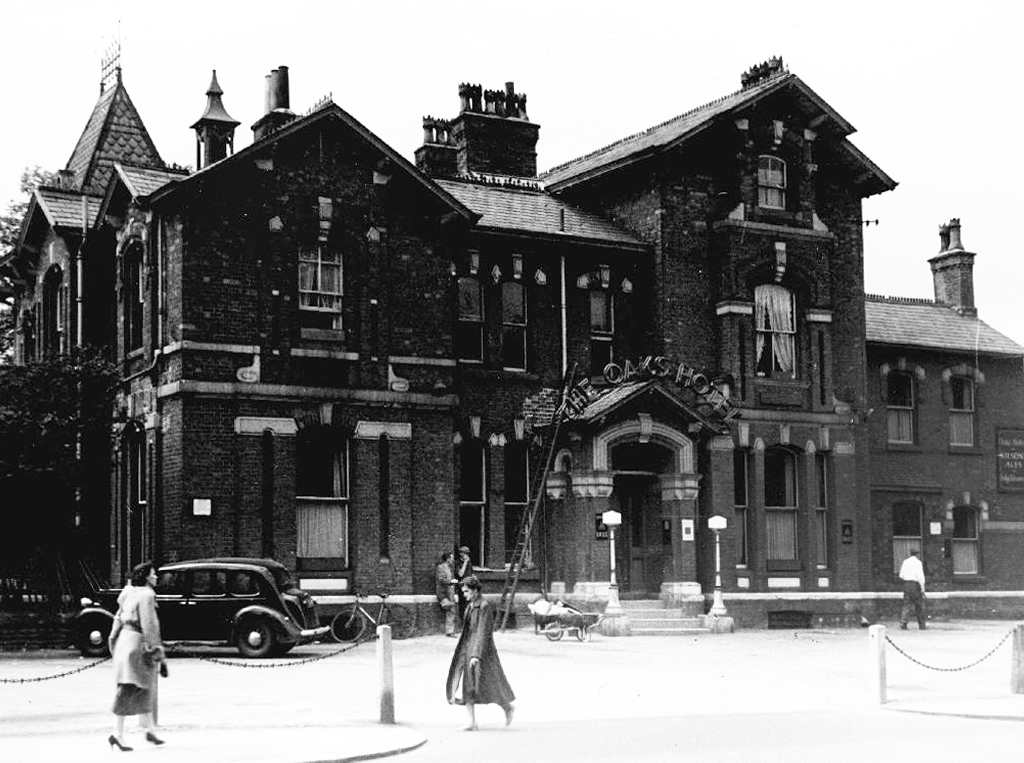
The Oaks demolished in the early 1990s following a brief life as the Sports Bar

Manchester Road

The Seymour – demolished 2002

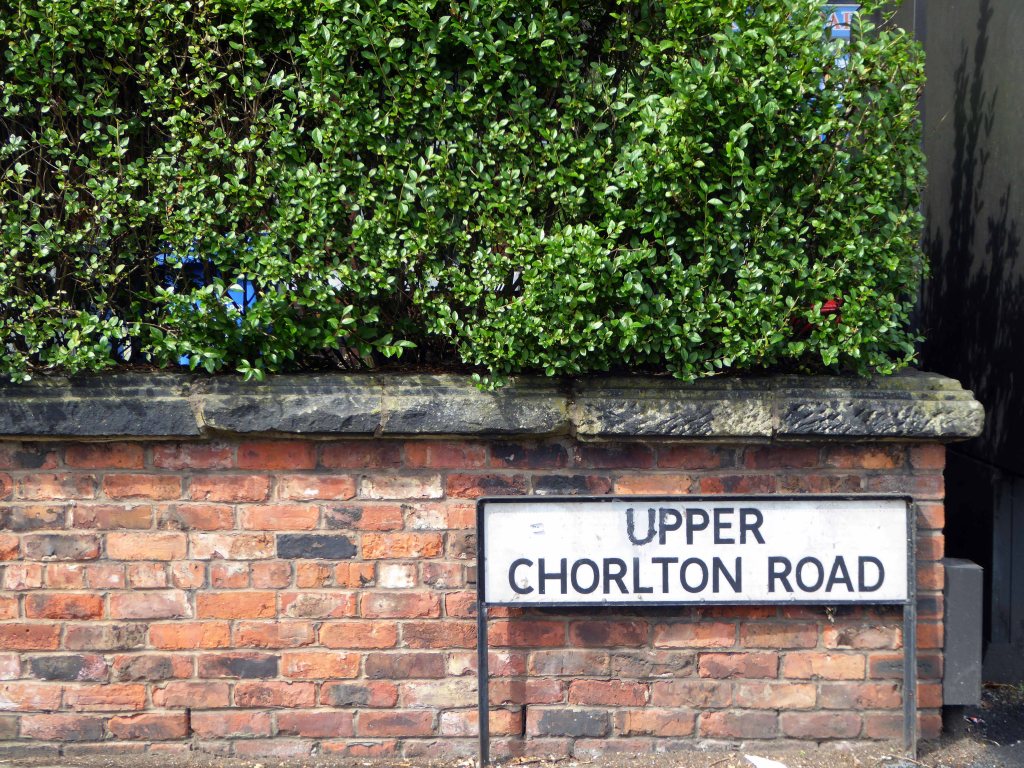
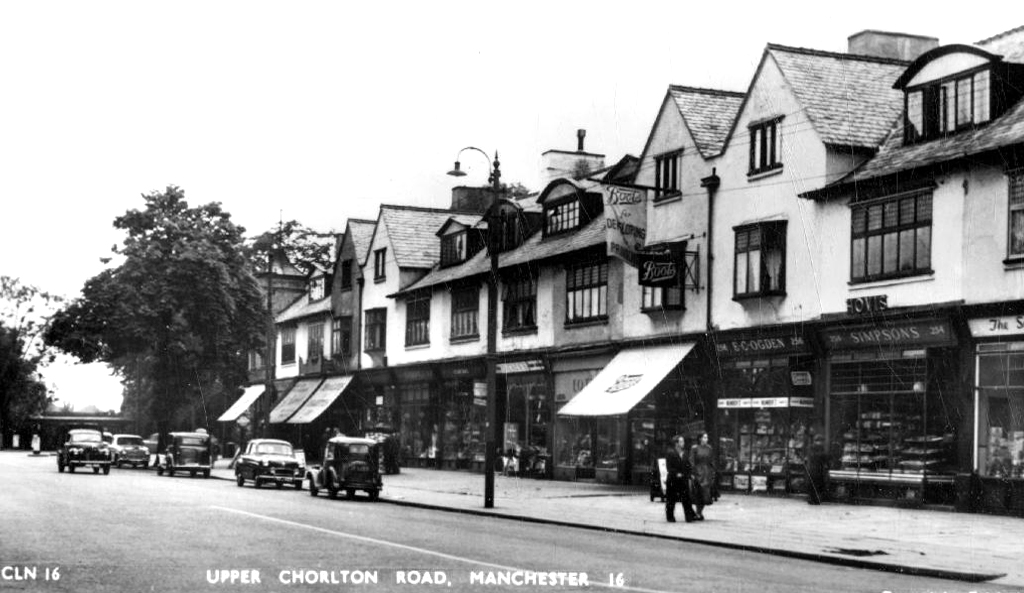
Upper Chorlton Road

The Whalley Hotel closed in 2014

Chorlton Road

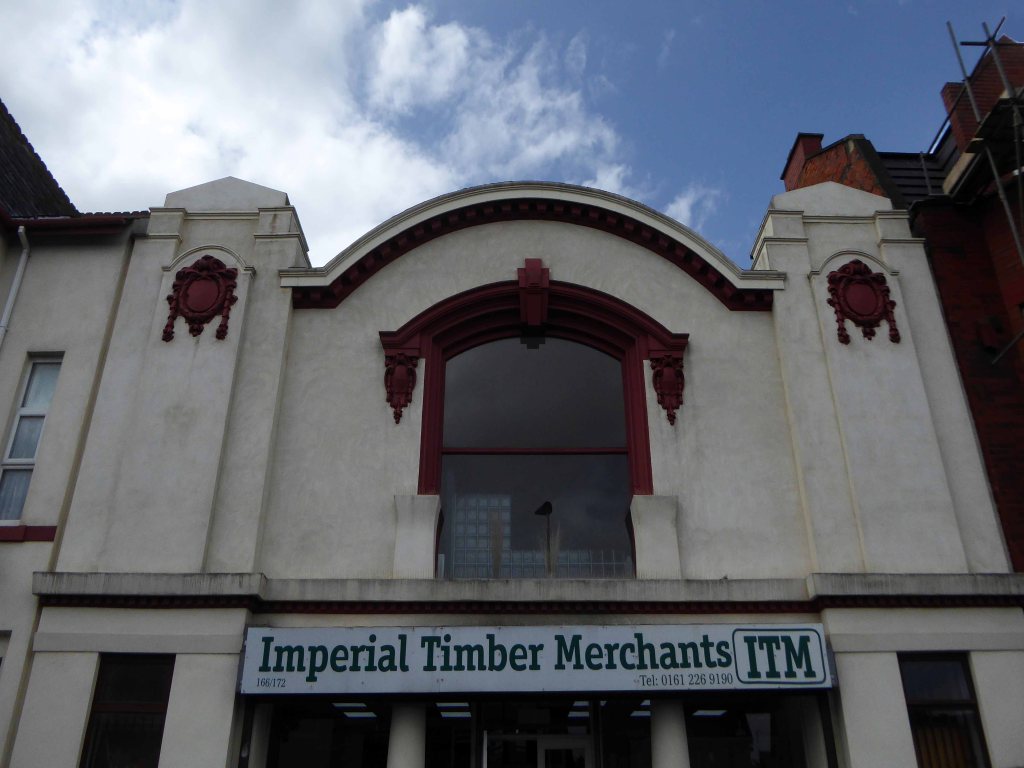
Imperial Picture Theatrewas opened in 1914. Seating was provided in stalls level only. It had a 5 feet deep stage and two dressing rooms. There was also a café in the cinema. Around 1929 it was equipped with a Western Electric sound system.

Architect W.H. Matley

The Imperial Picture Theatre was closed on 15th January 1976 with Charlotte Rampling in Caravan to Vaccares and Jean-Claude Brialy in A Murder Is a Murder Is a Murder.

Cinema Treasures

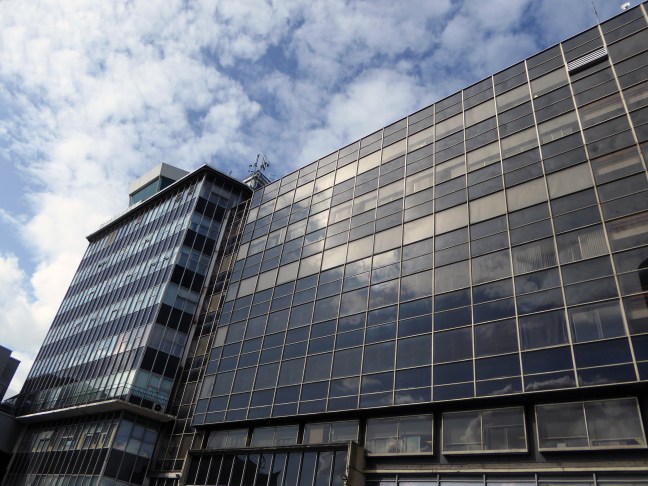
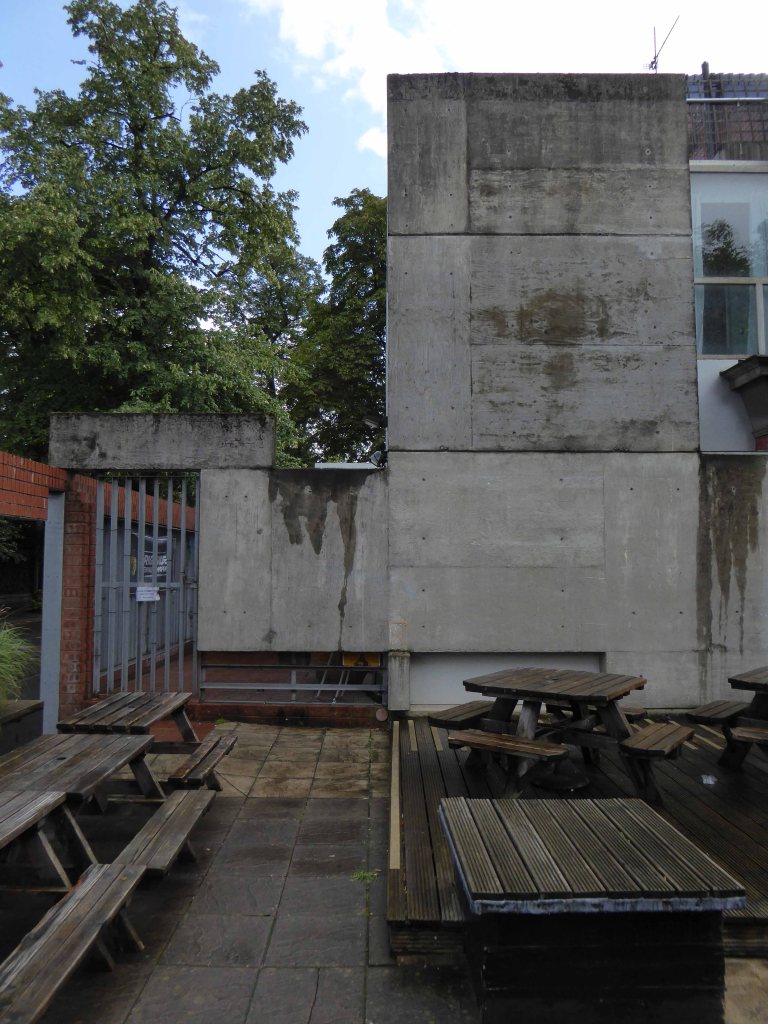
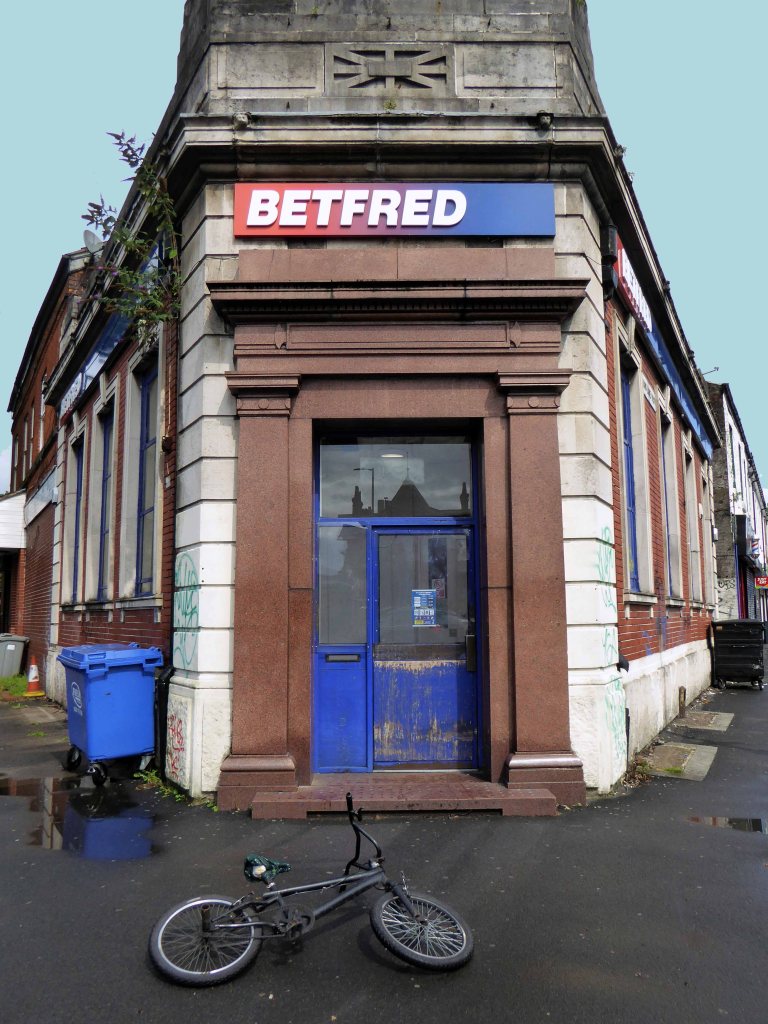
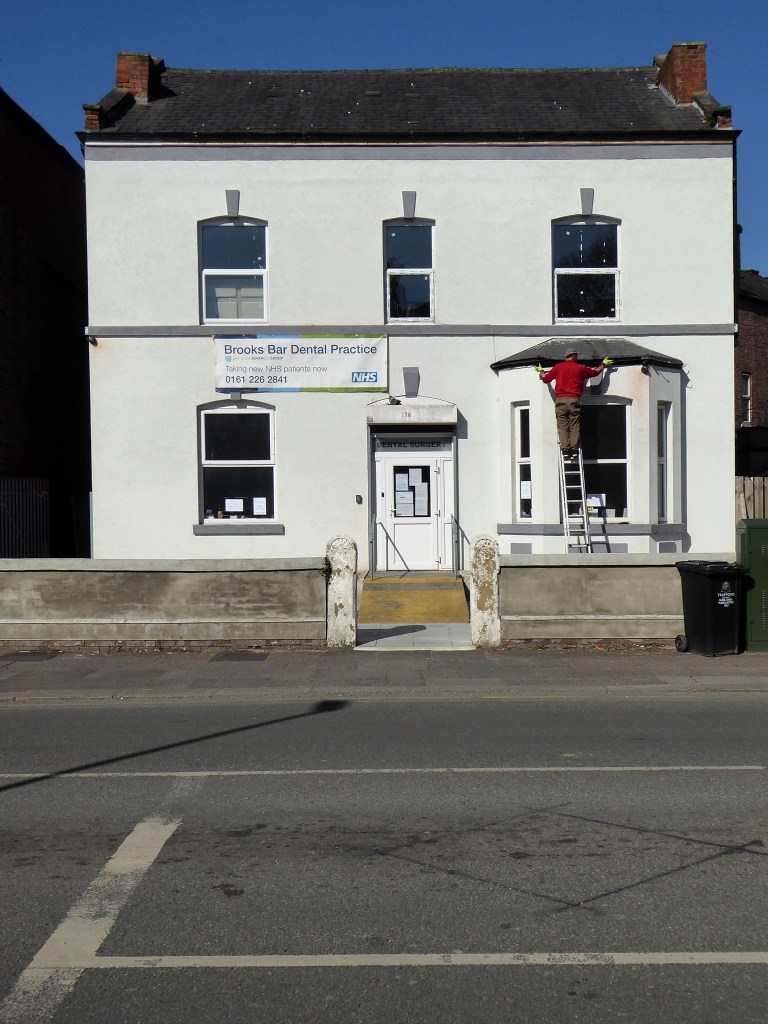
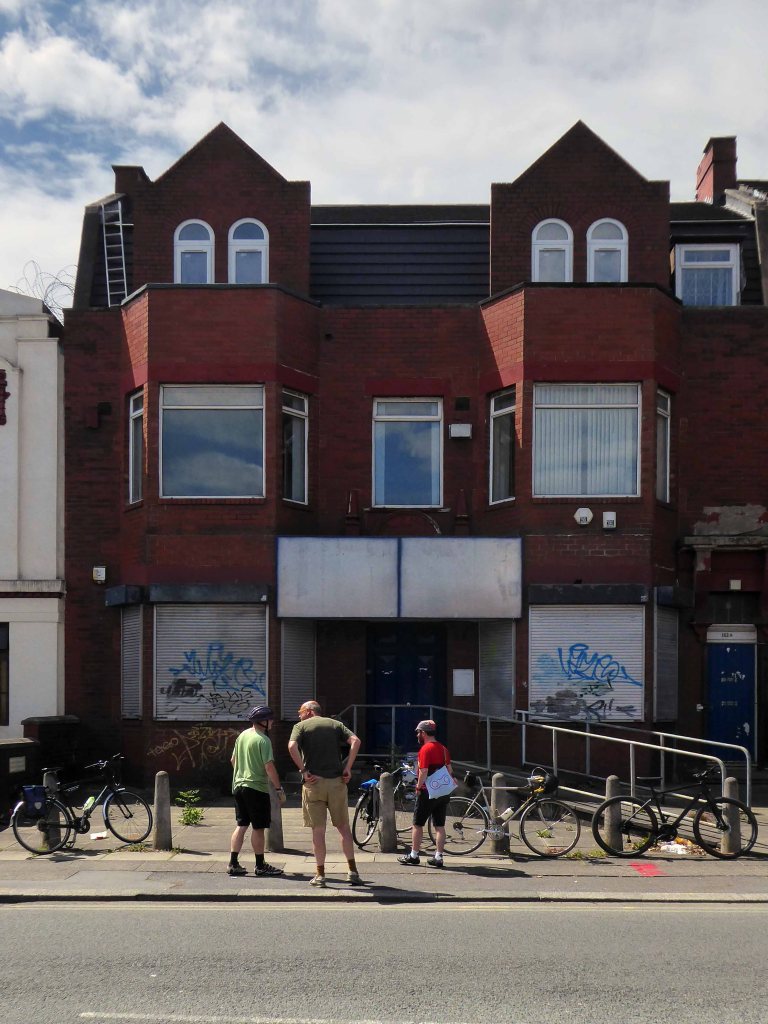
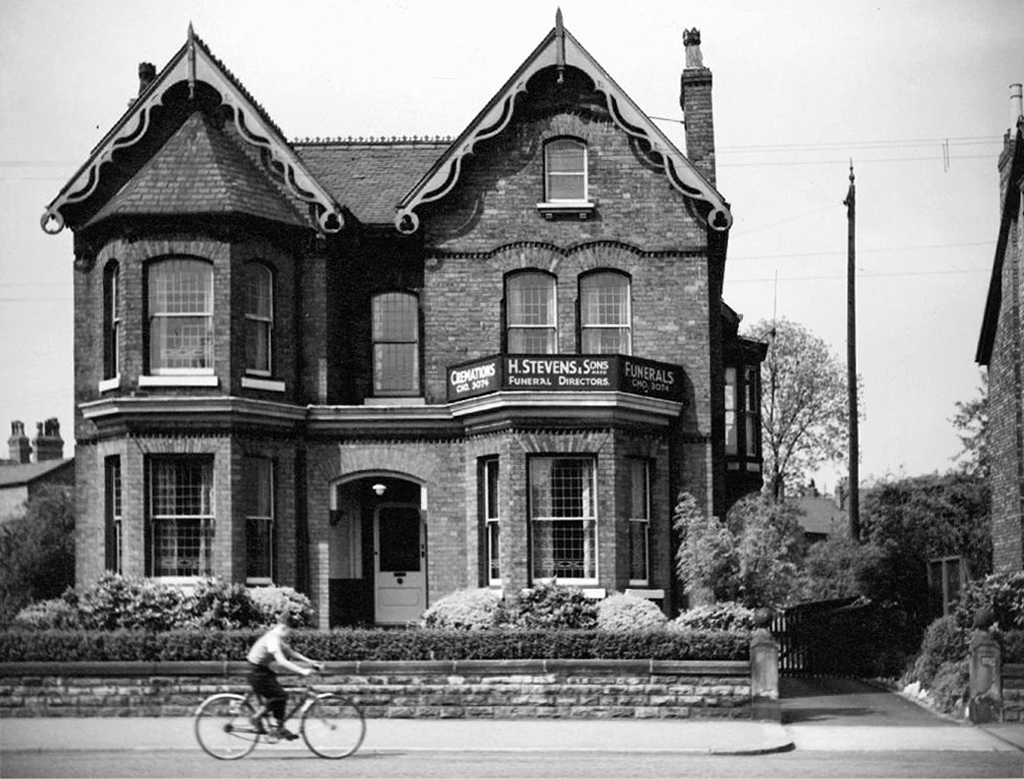
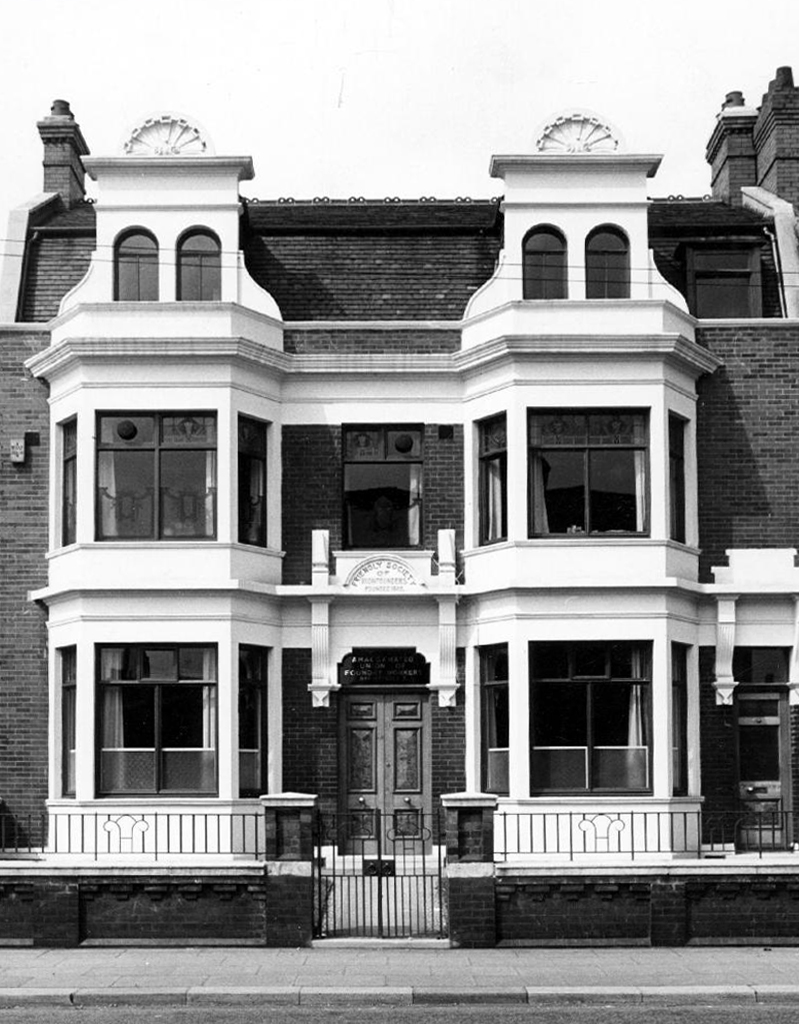
164 Chorlton Road Hulme Manchester – offices of the Amalgamated Union of Foundry Workers, it was at their invitation that Yuri had visited Manchester.

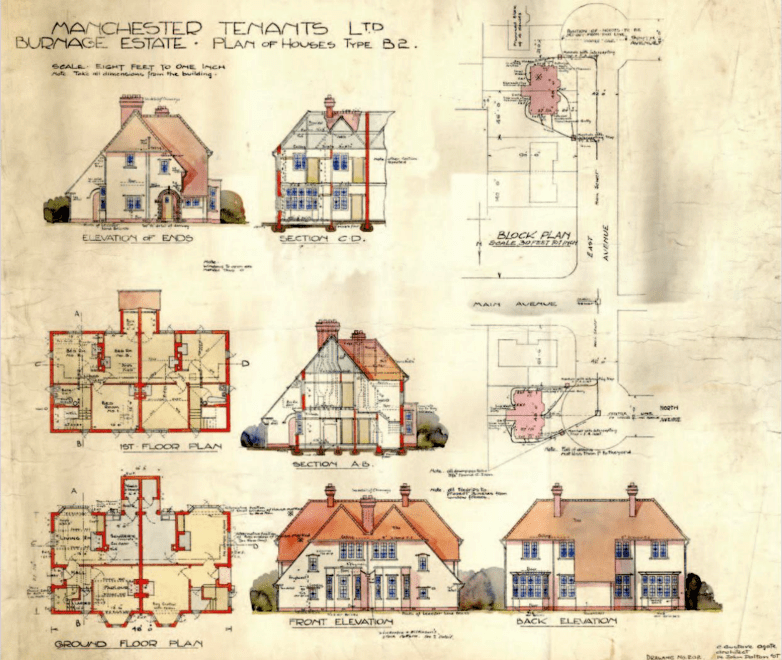
Burnage Garden Village Again

I was last here in 2016 on a much brighter, blue skied day in March.

2020 mid-lockdown and overcast, I took a walk to take another look.

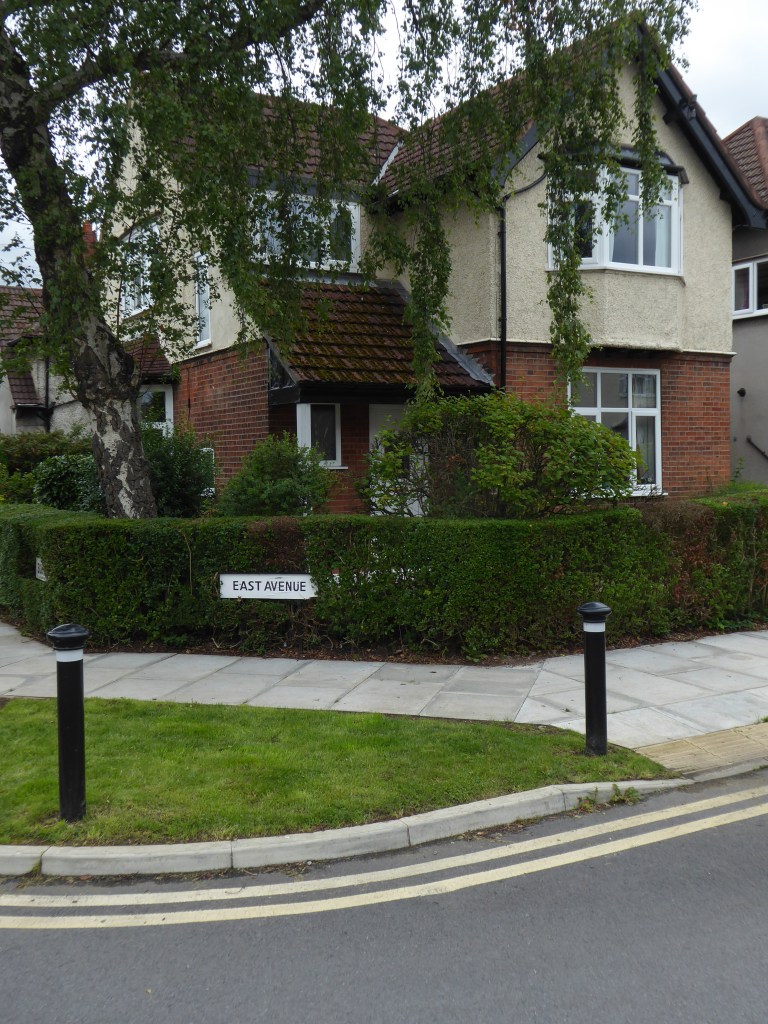
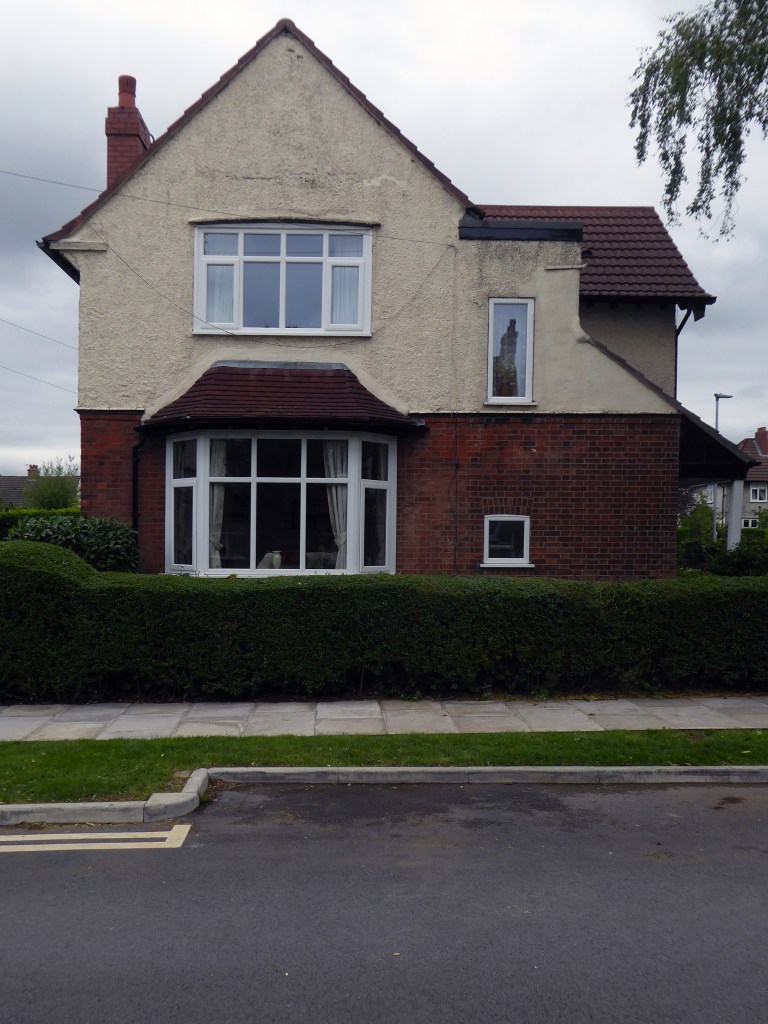
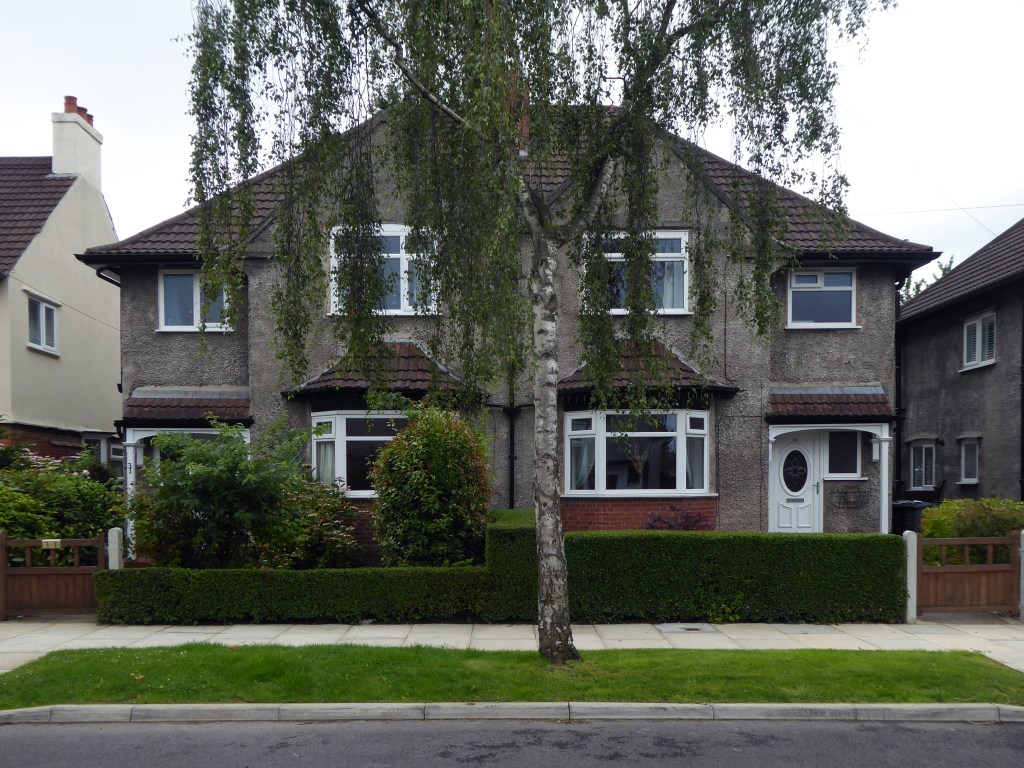
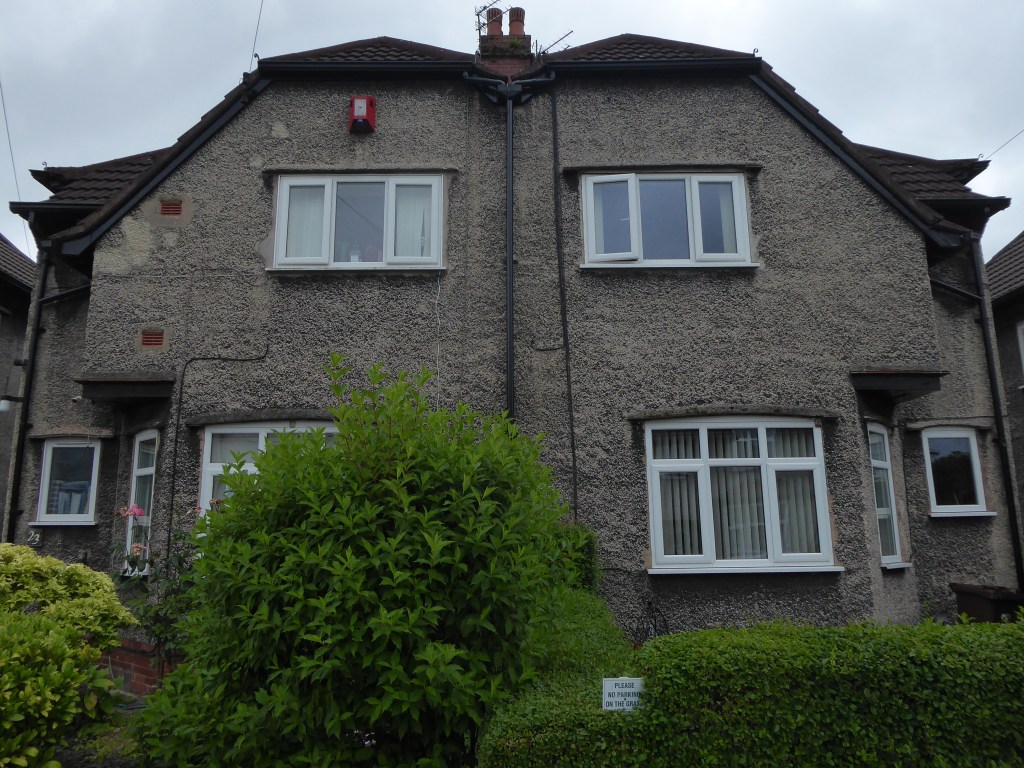
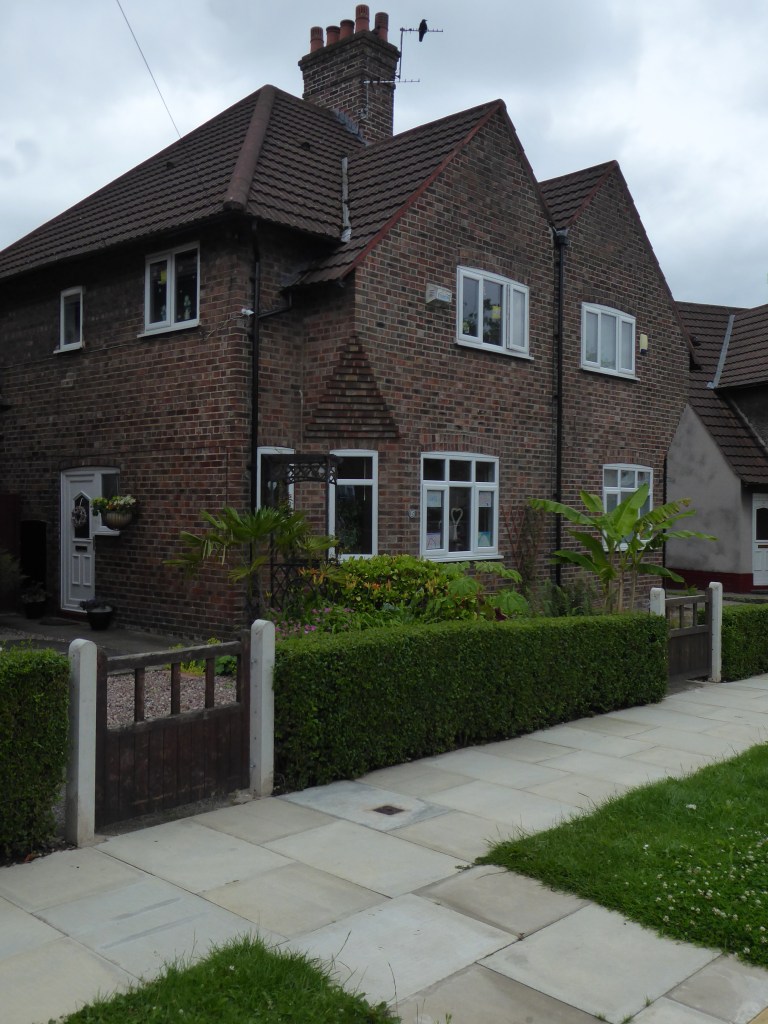
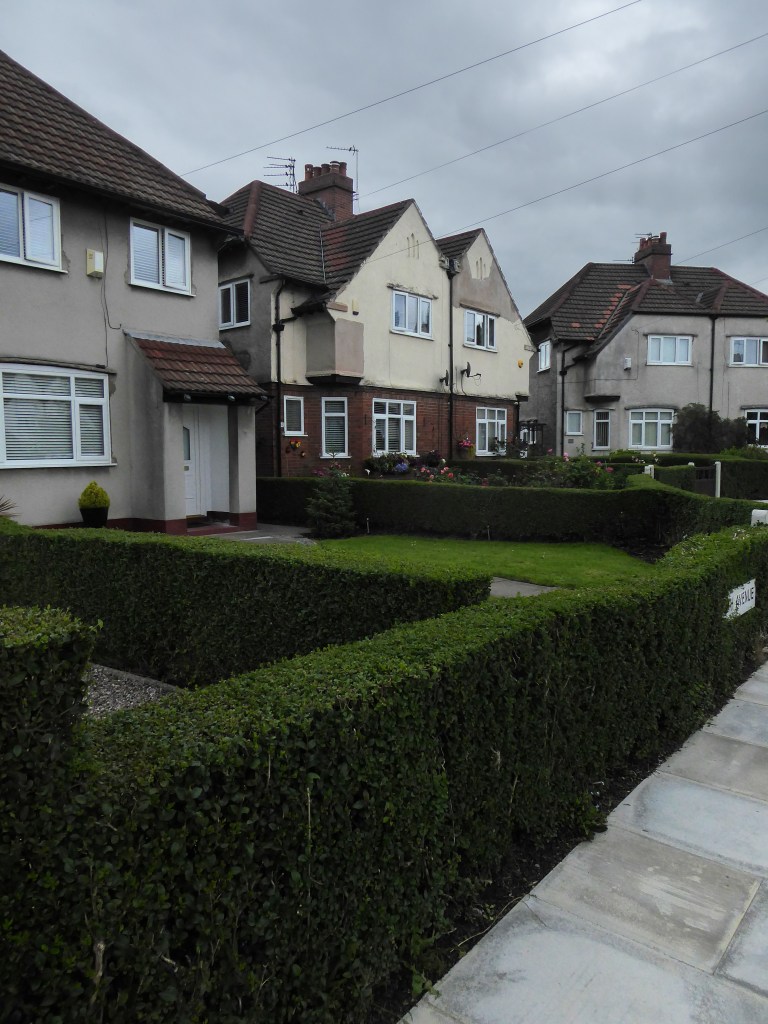
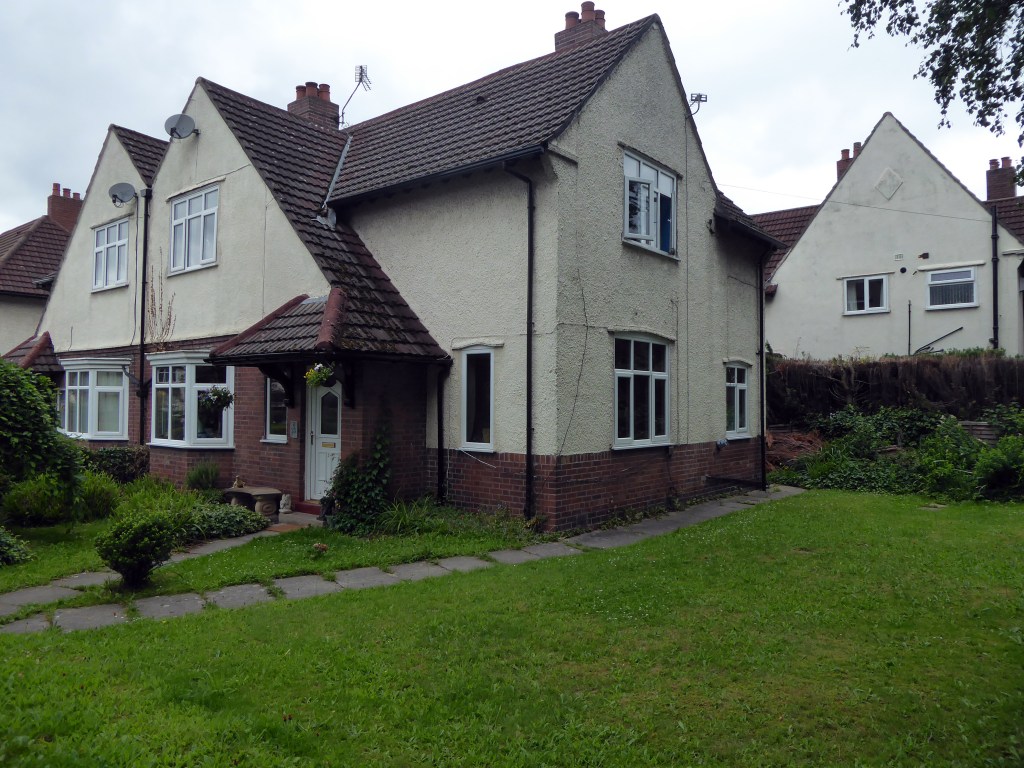
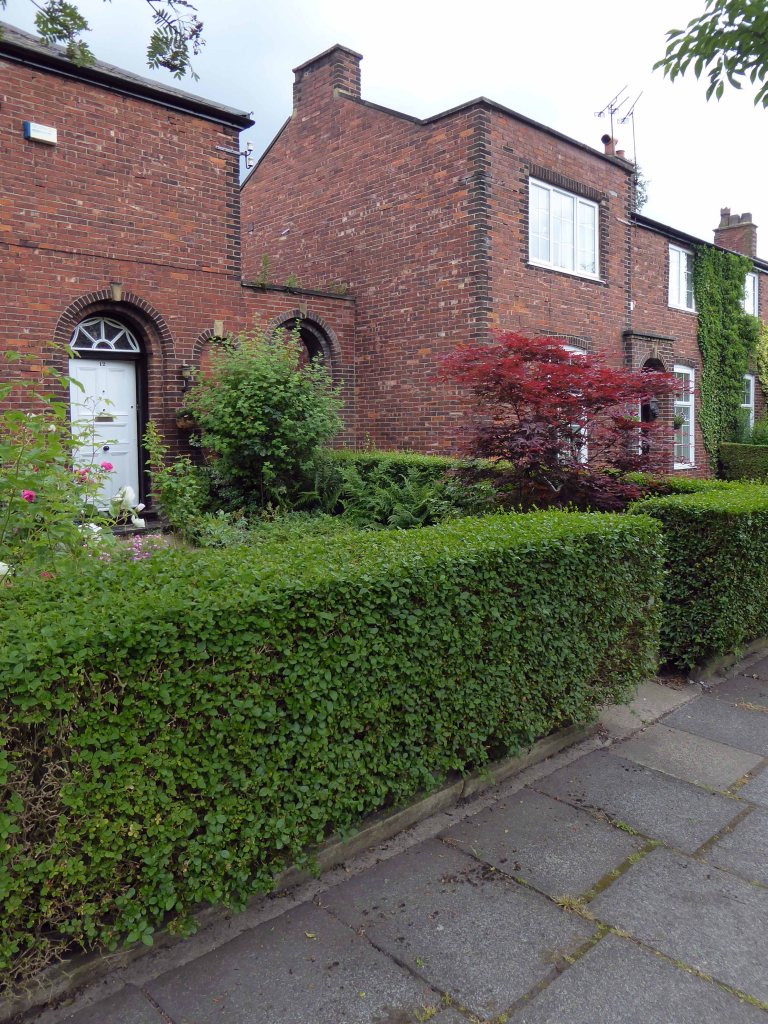
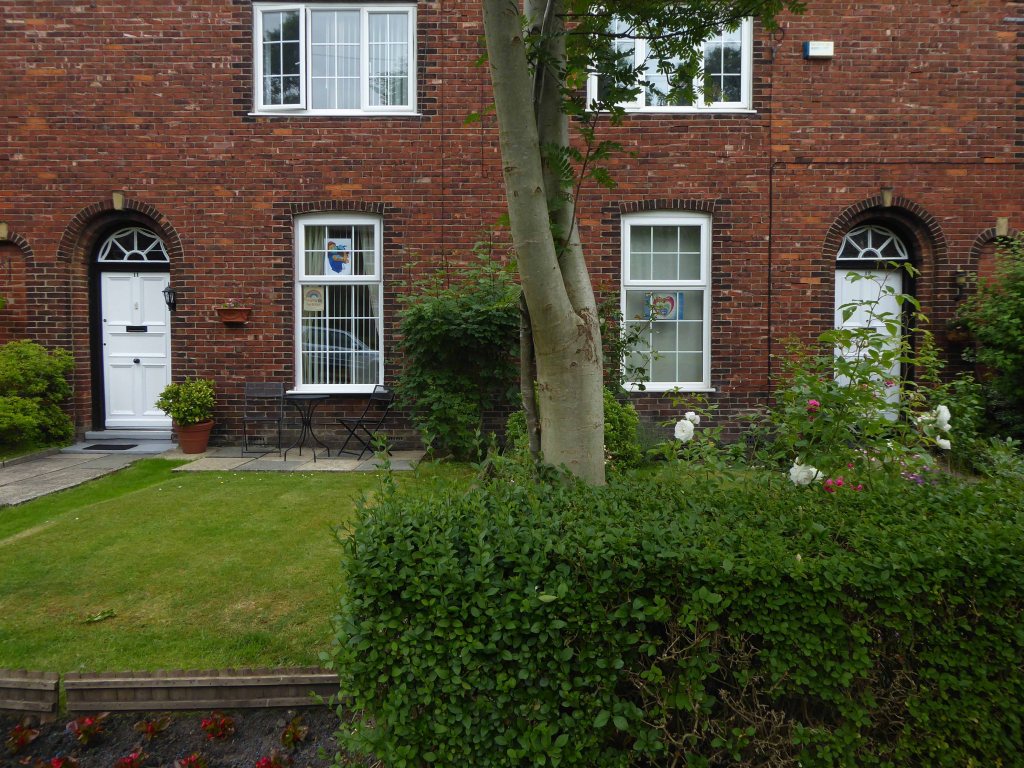
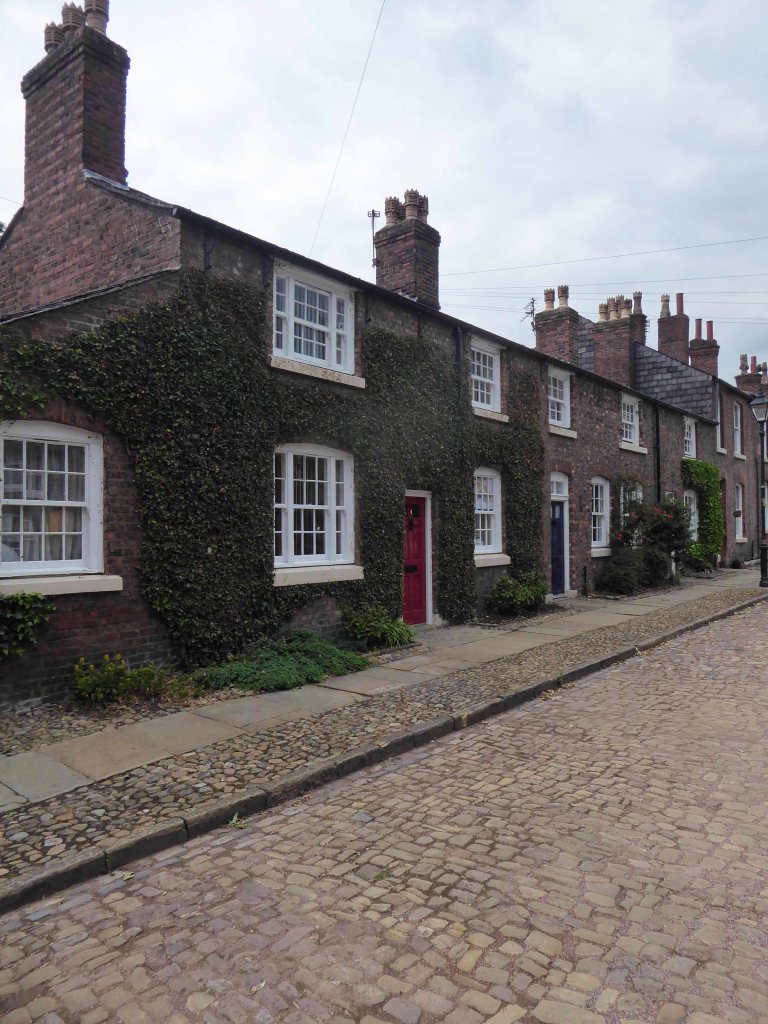
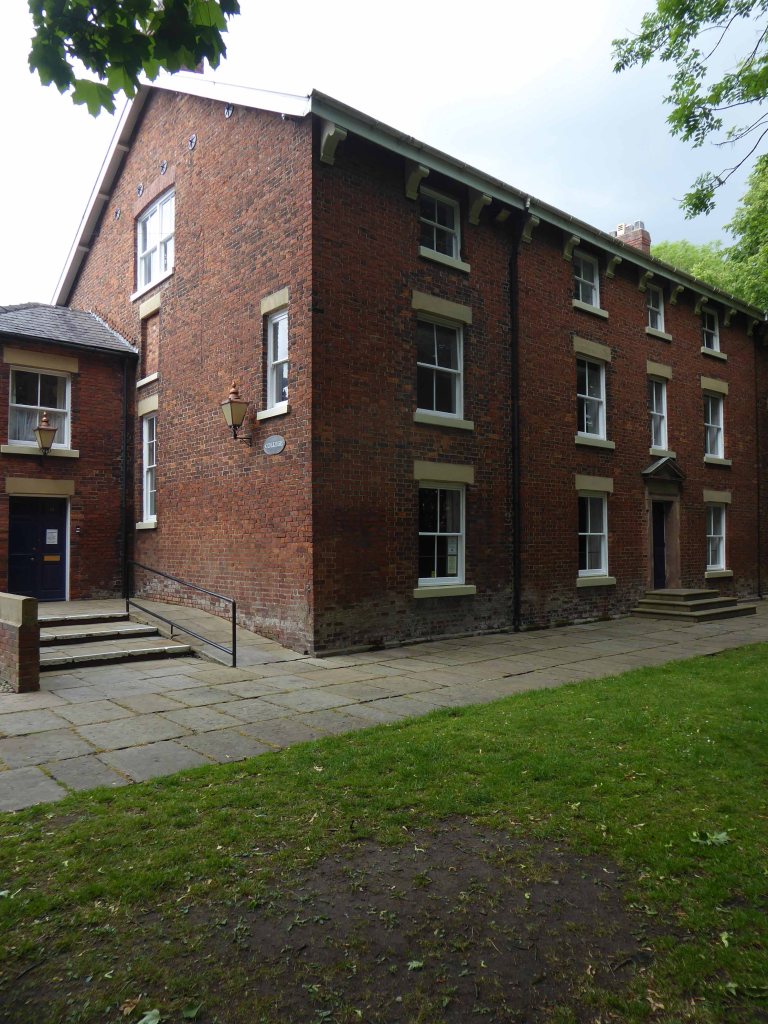
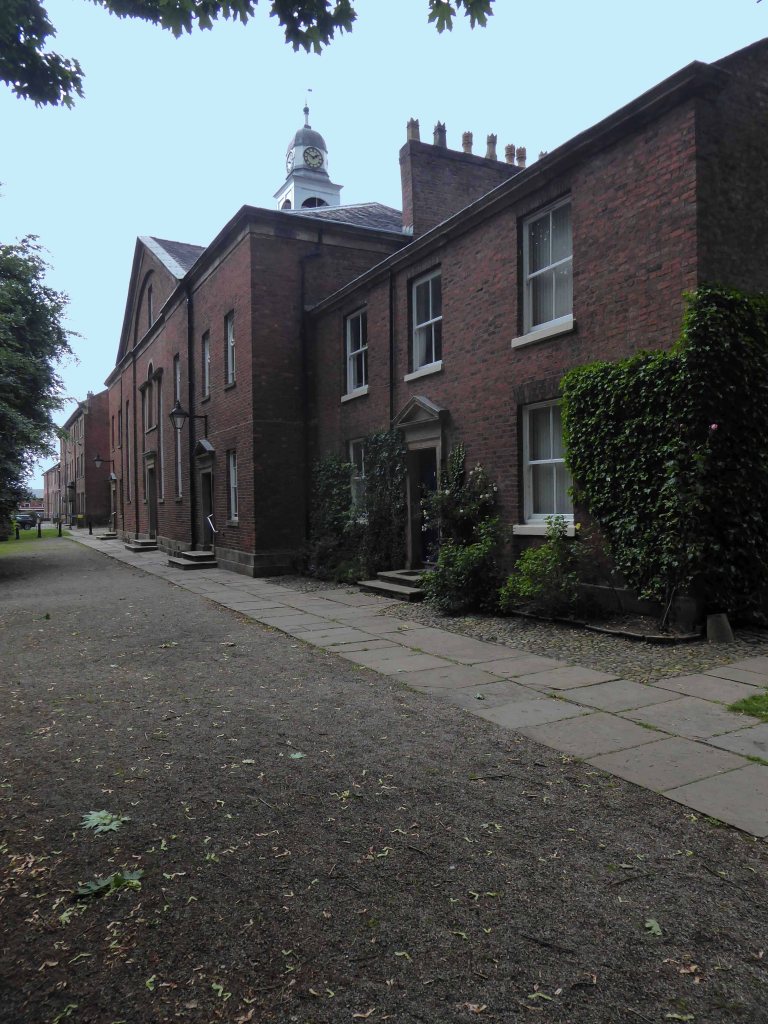
There is a perennial appeal to this well ordered island of tranquility, an archetypal suburbia incubated in 1906, a copy book estate.

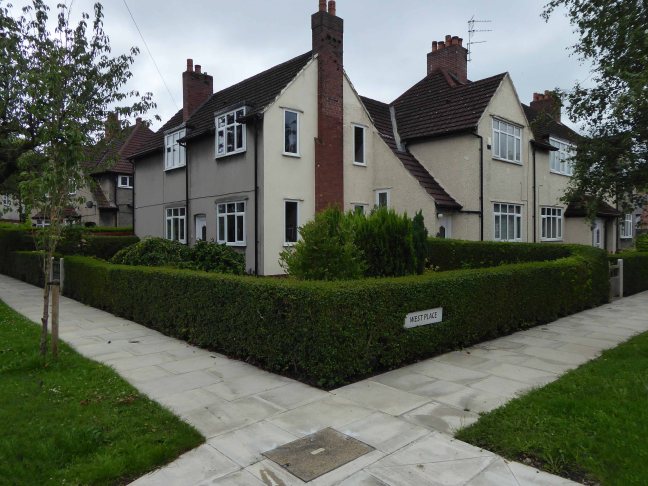
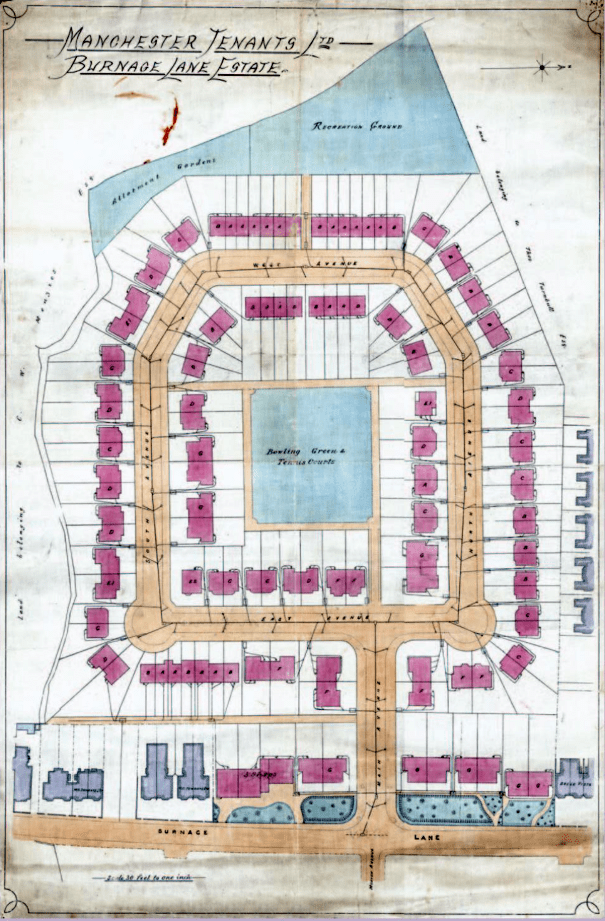
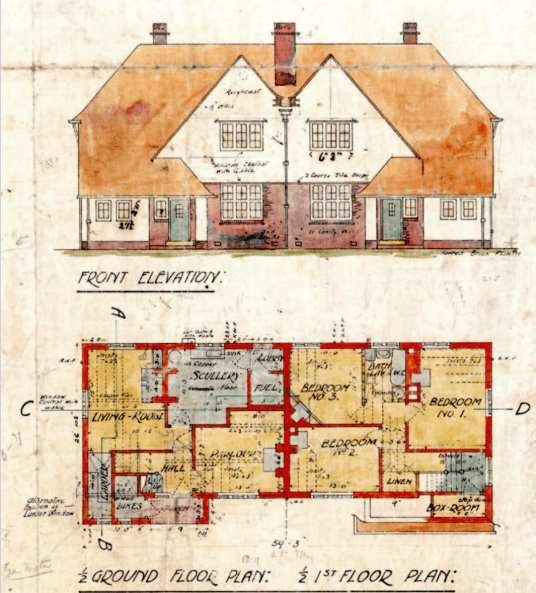
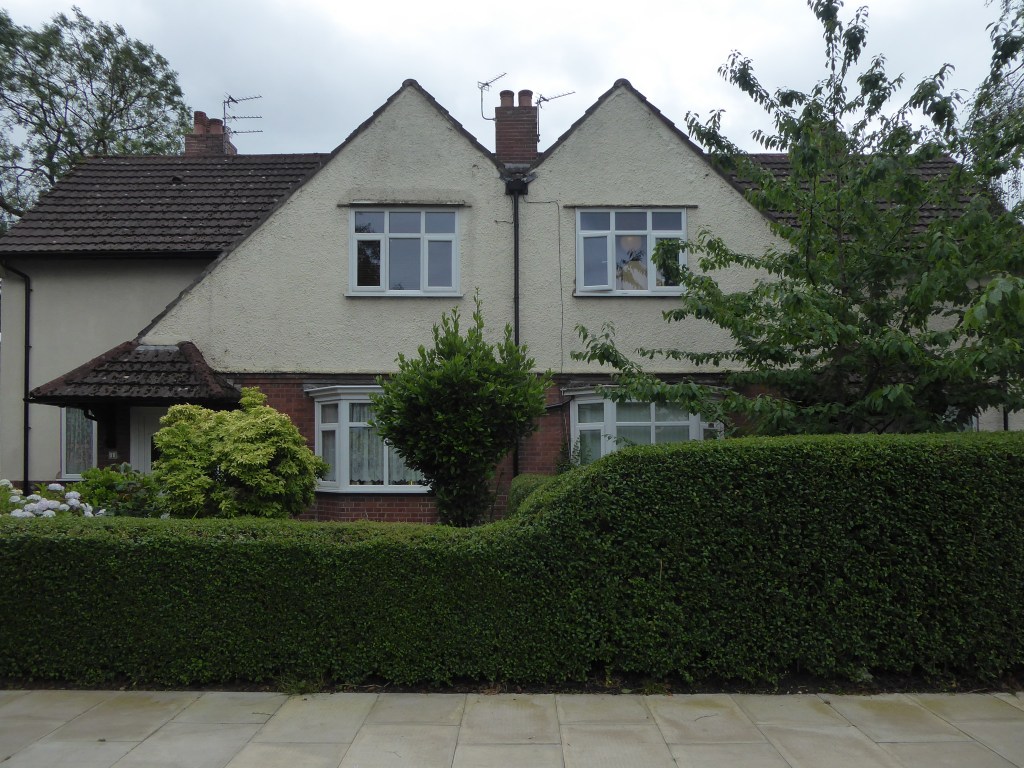
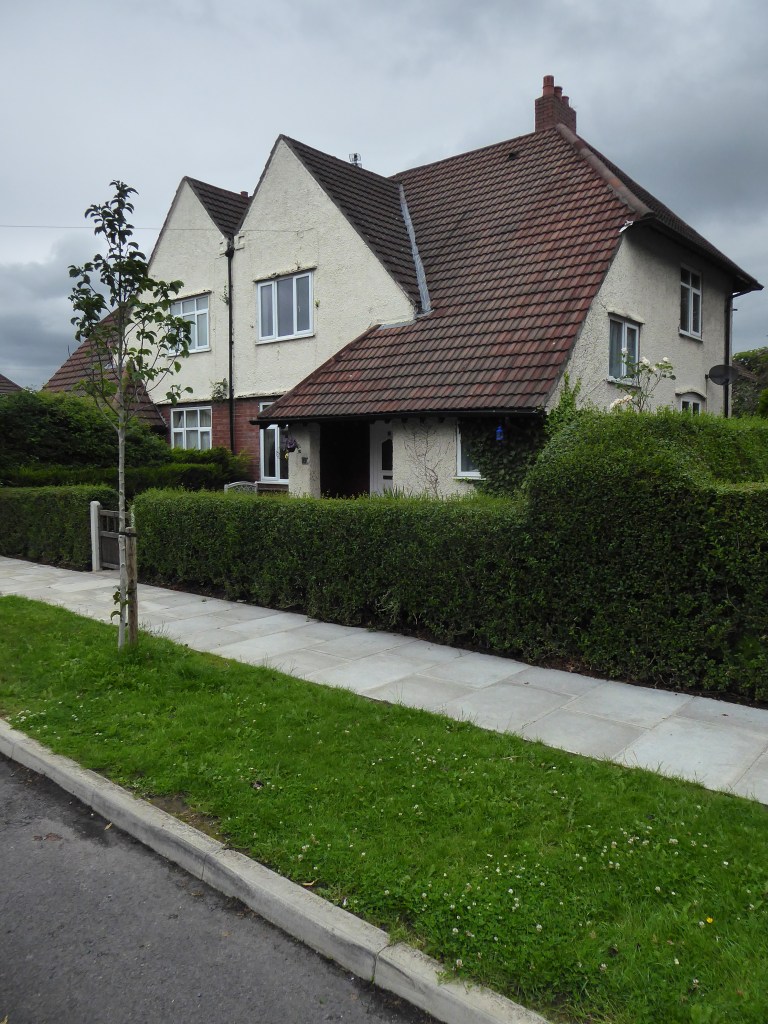
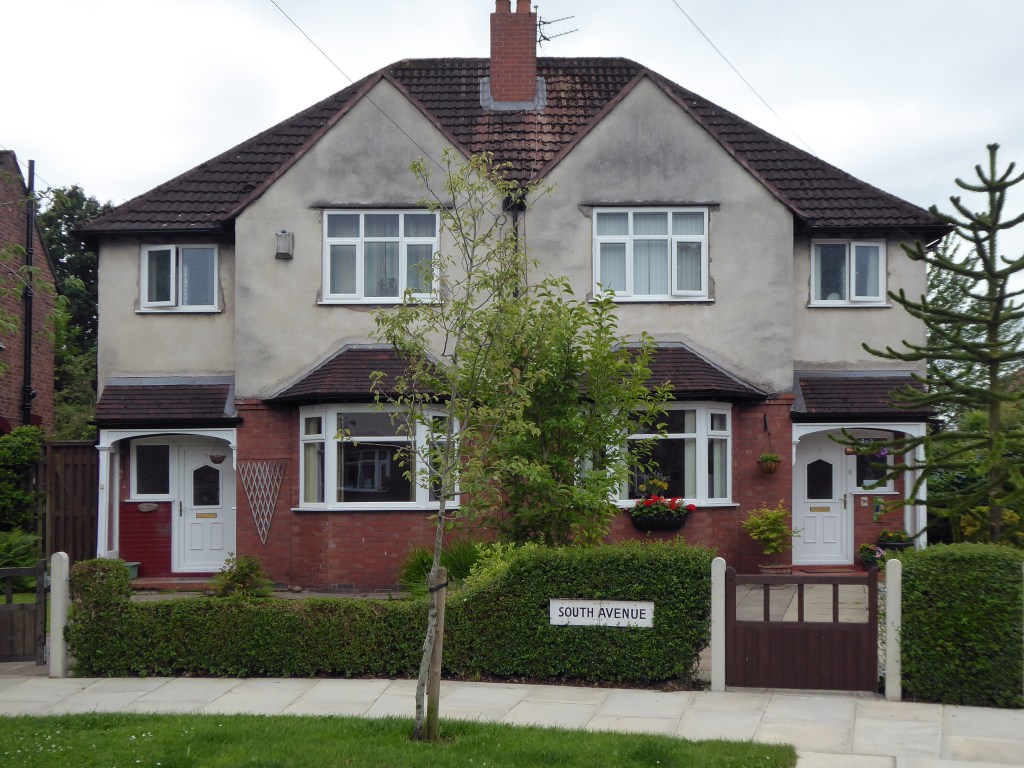
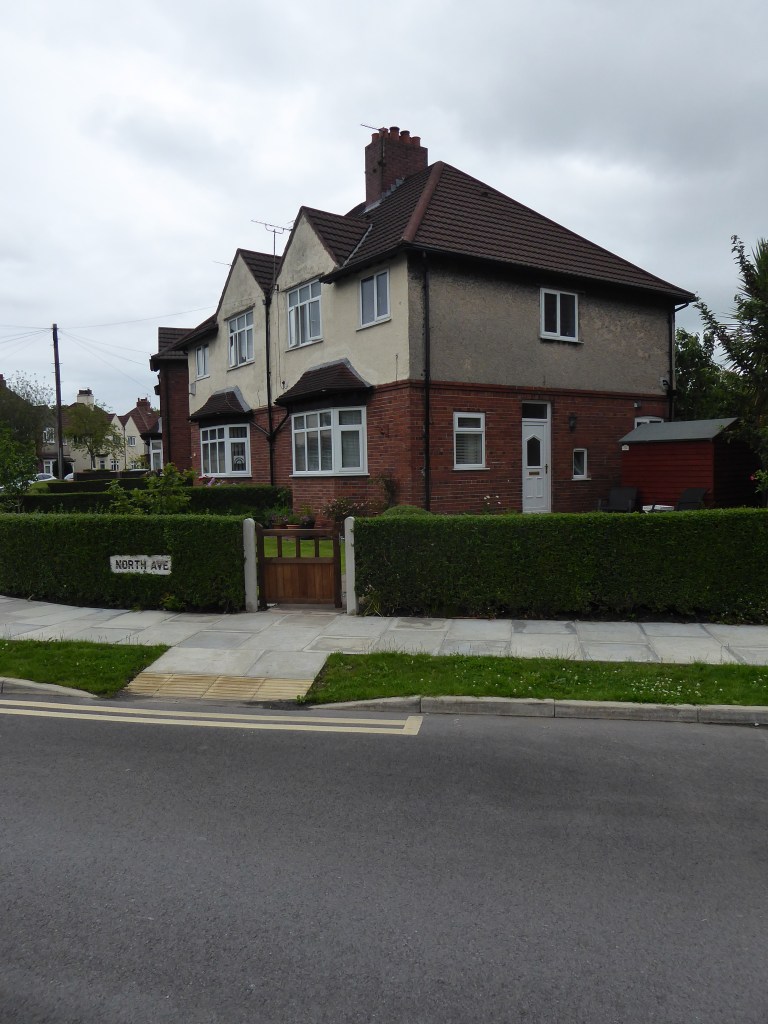
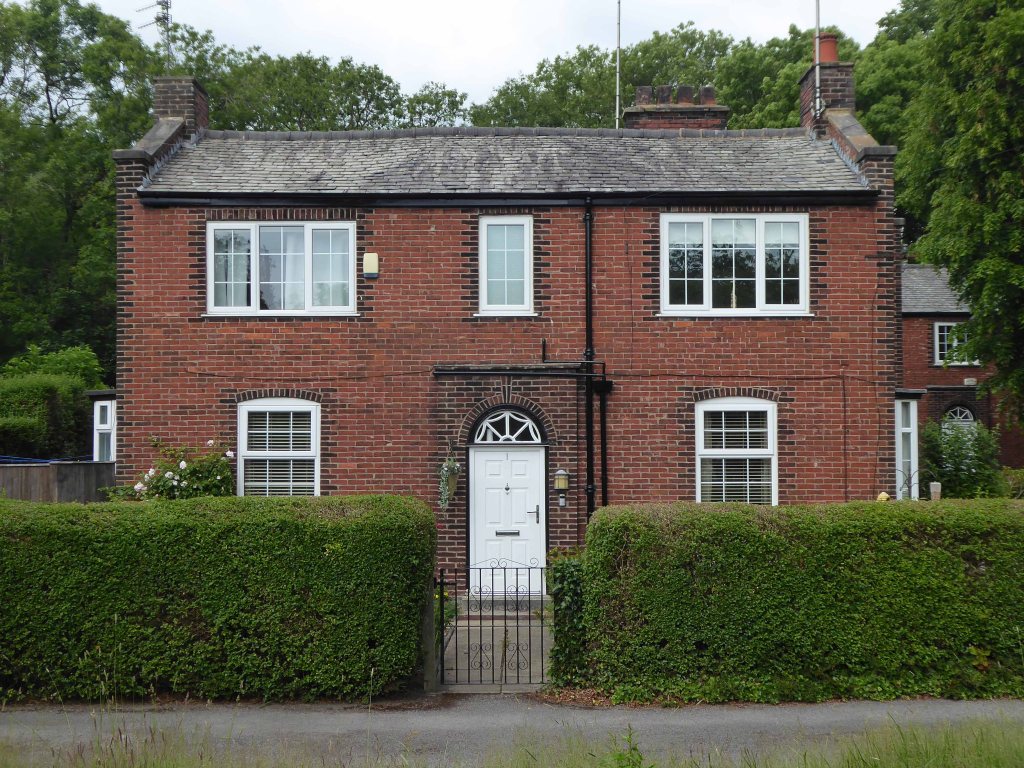
The housing estate of 136 houses known as Burnage Garden Village, a residential development covering an area of 19,113sqm off the western side of Burnage Lane in the Burnage ward. The site is situated approximately six kilometres south of the city centre and is arranged on a broadly hexagonal layout with two storey semi-detached and quasi detached dwelling houses situated on either side of a continuous-loop highway. The highway is named after each corresponding compass point with two spurs off at the east and west named Main Avenue and West Place respectively. Main Avenue represents the only access and egress point into the estate whilst West Place leads into a resident’s parking area.

The layout was designed by J Horner Hargreaves. Houses are loosely designed to Arts and Crafts principles, chiefly on account of being low set and having catslide roofs.

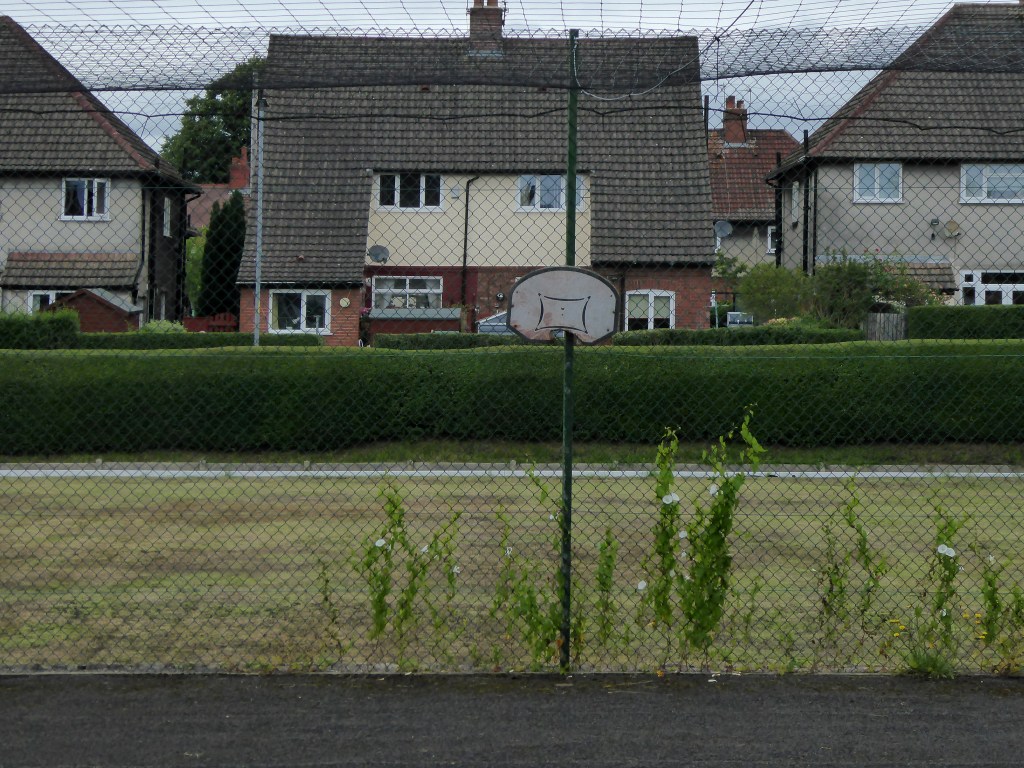
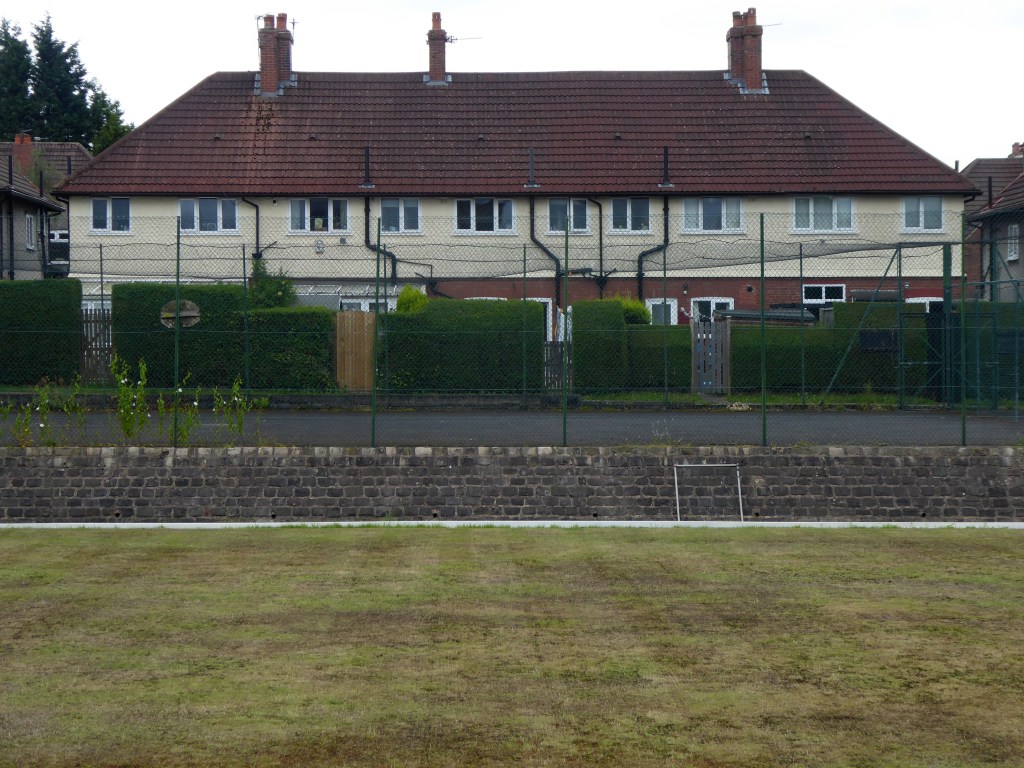
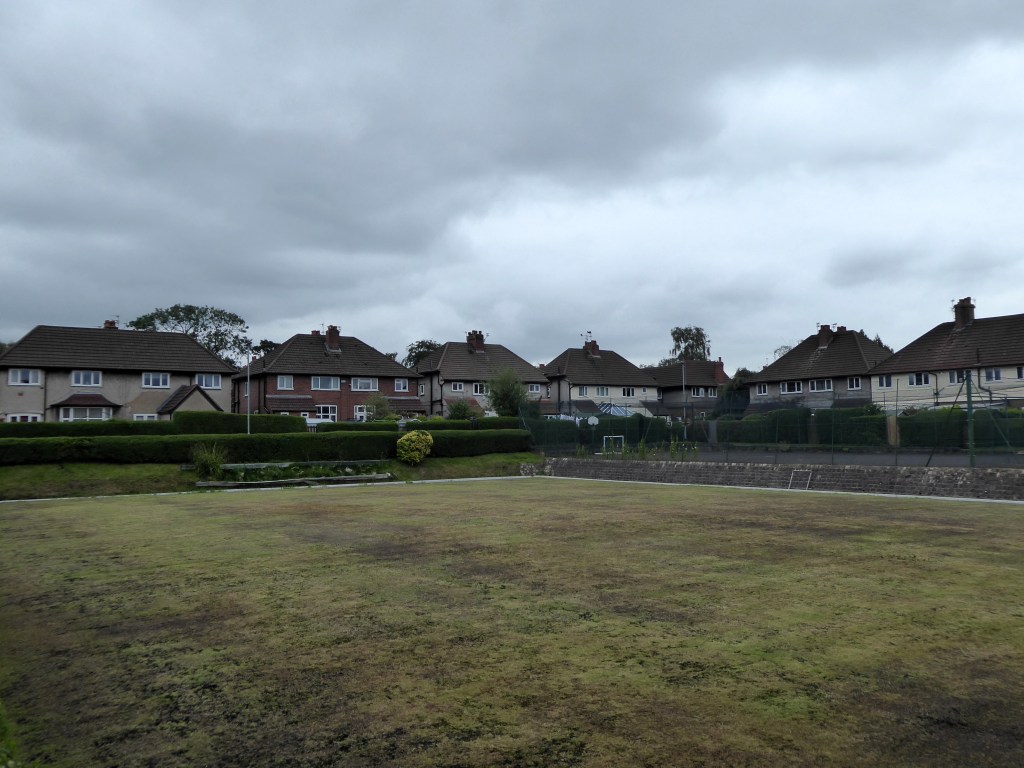
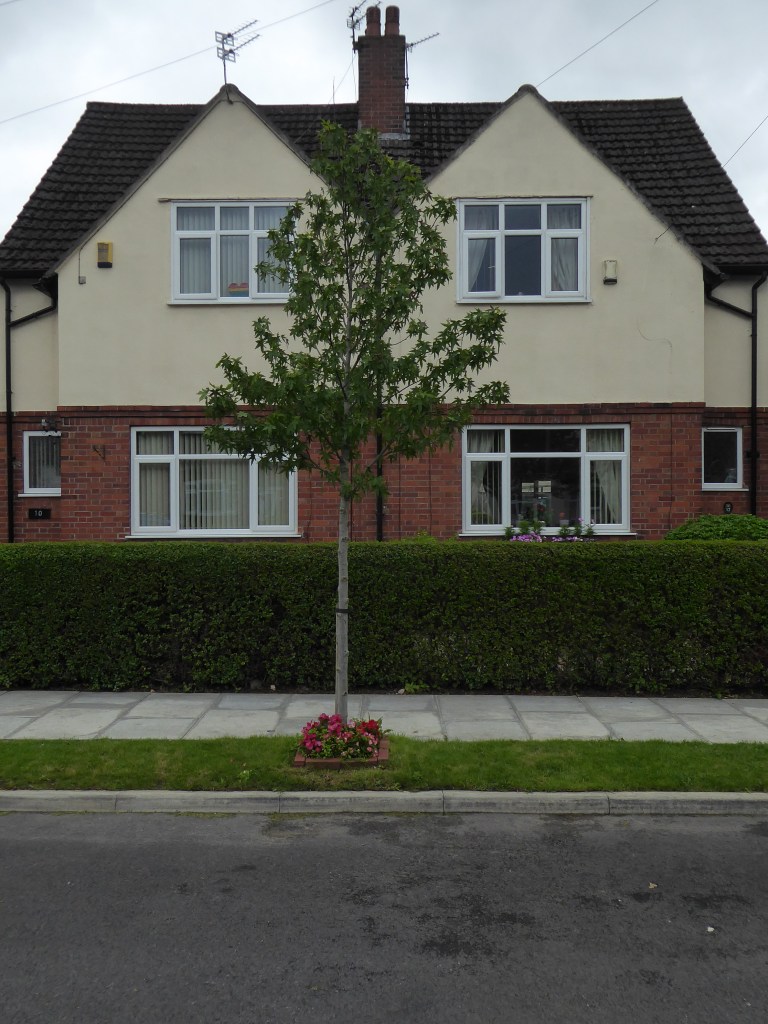
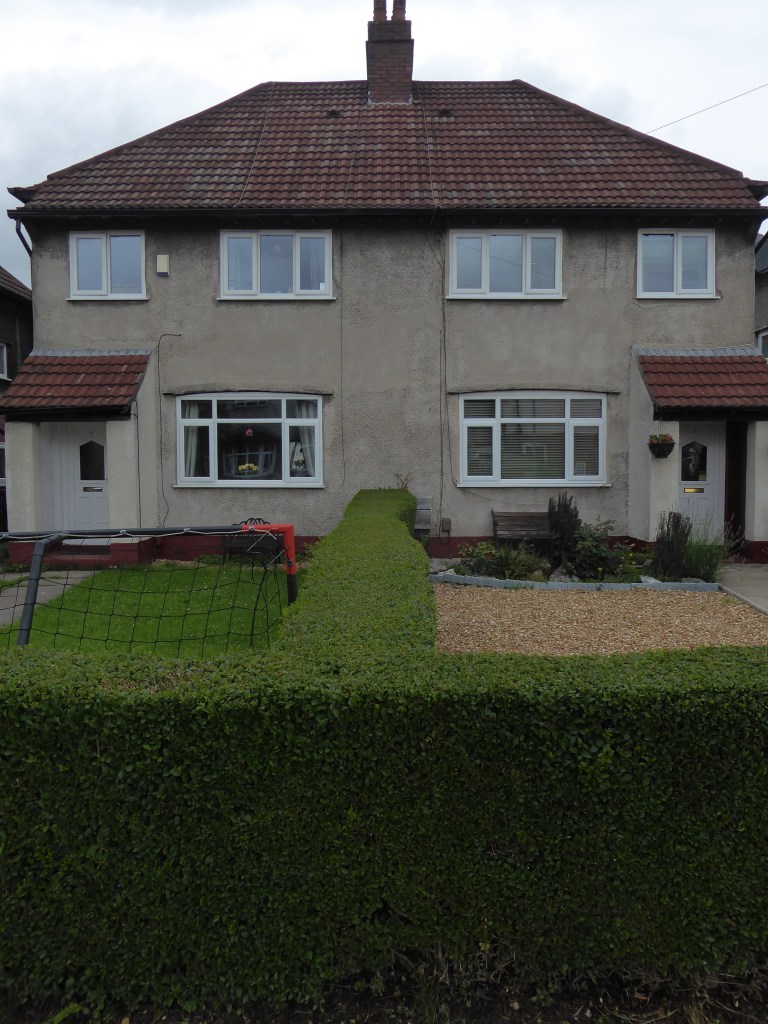
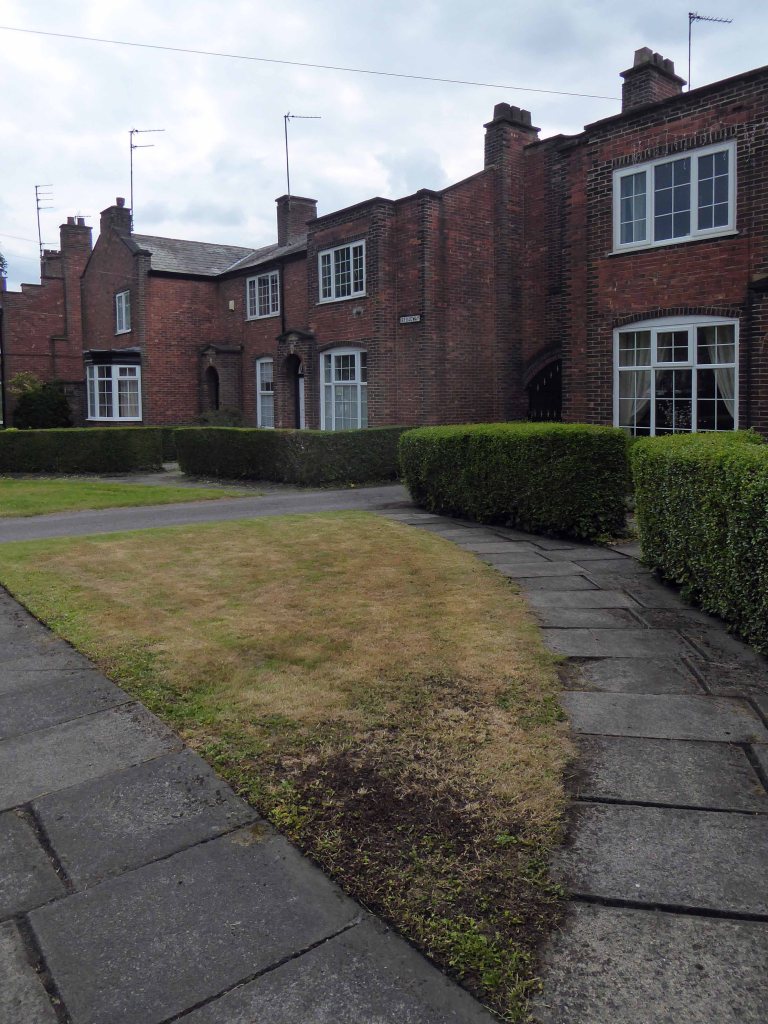
At the centre of the garden village and accessed by a network of pedestrian footpaths, is a resident’s recreational area comprising a bowling green, club house and tennis courts. The estate dates from approximately 1906 and was laid out in the manner of a garden suburb with characteristic hedging, front gardens, grass verges and trees on every street. 

Verges and paving were freshly laid, hedges and gardens well tended, cars parked prettily.

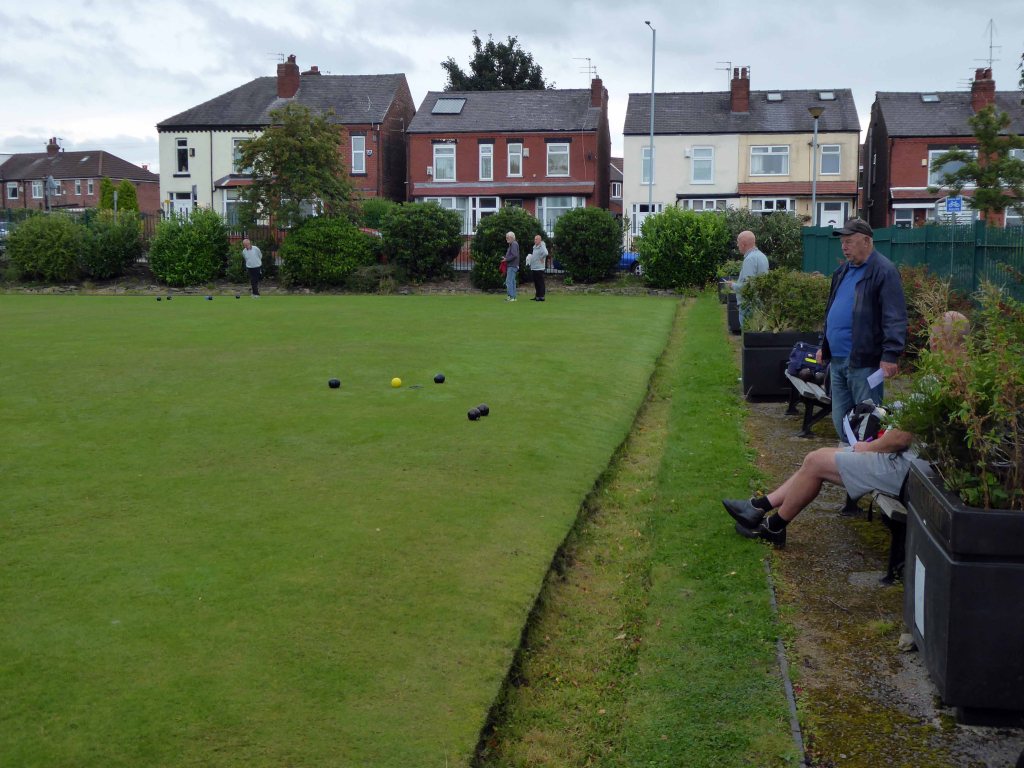
The central communal area calm and restful, but lacking the clunk of lignum vitae wood on jack, hence the scorched earth appearance of the normally well used crown green.

A detailed appreciation the estate is available here.

Let’s take a leisurely look.

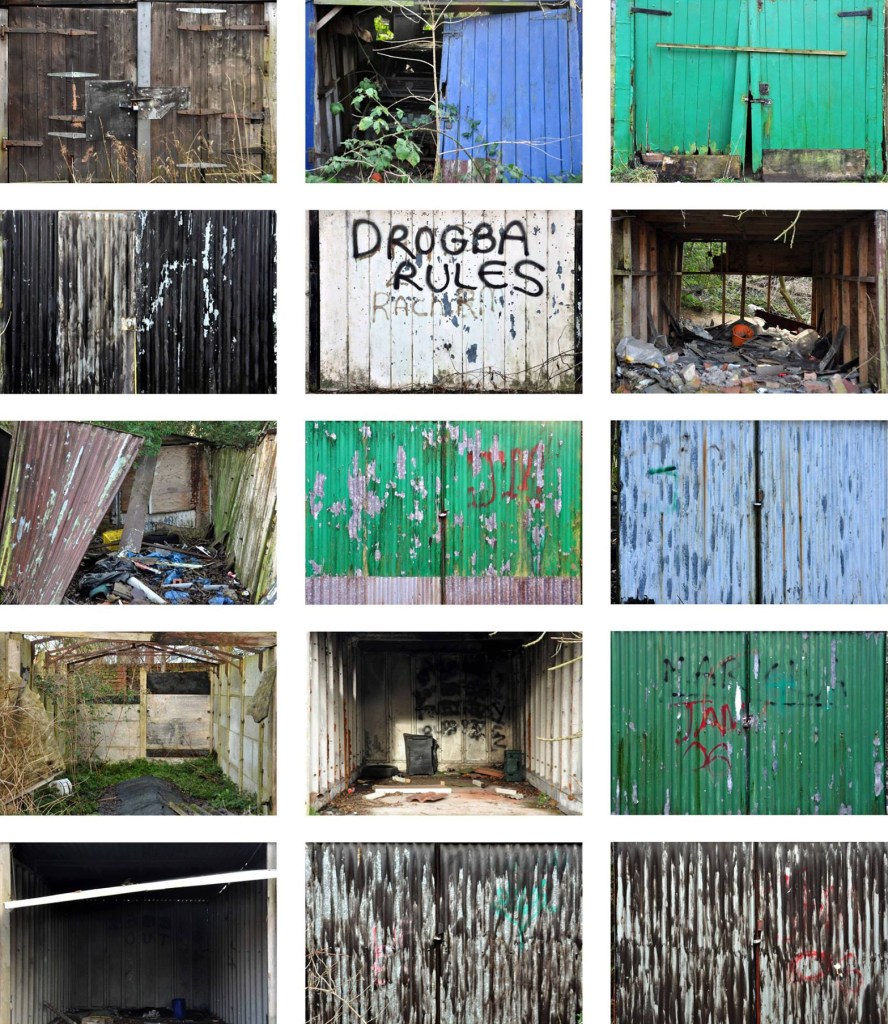
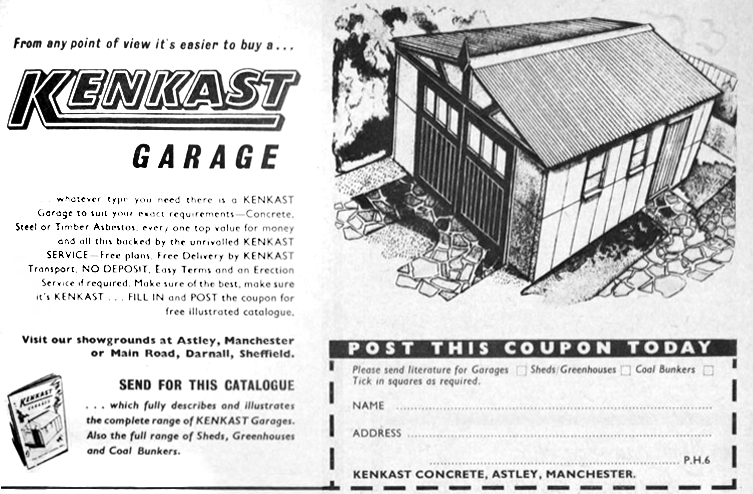
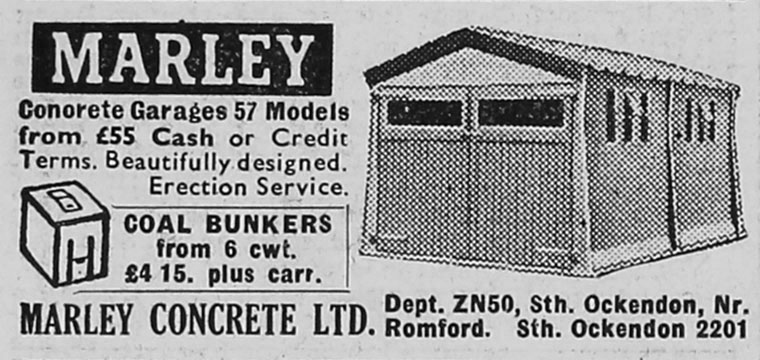
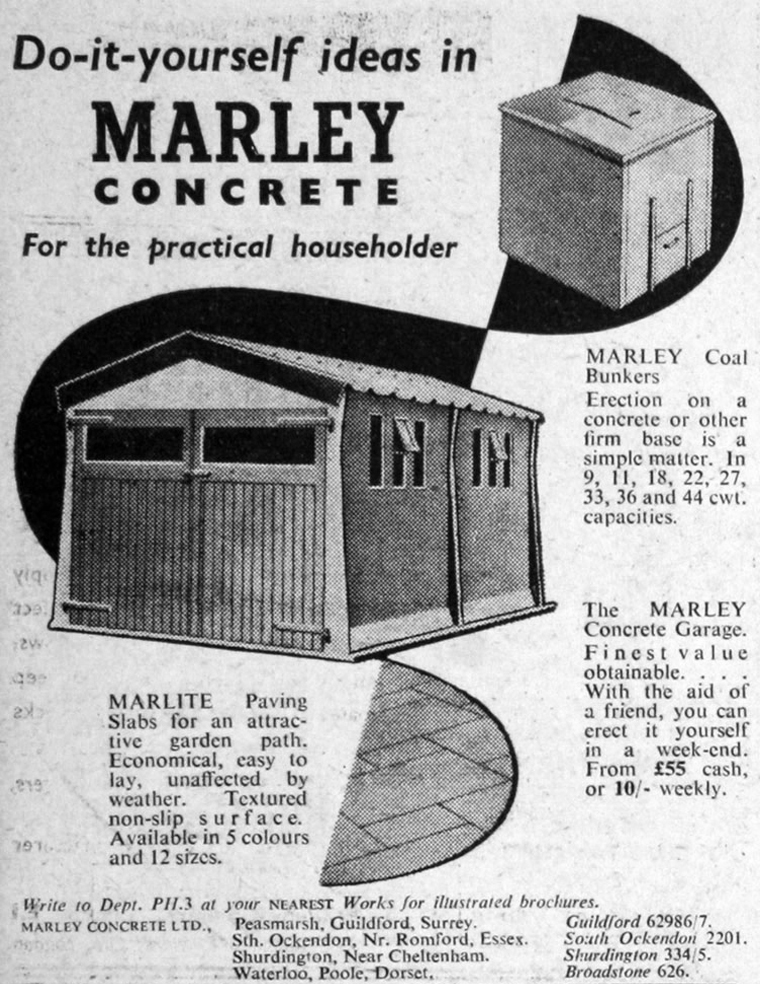
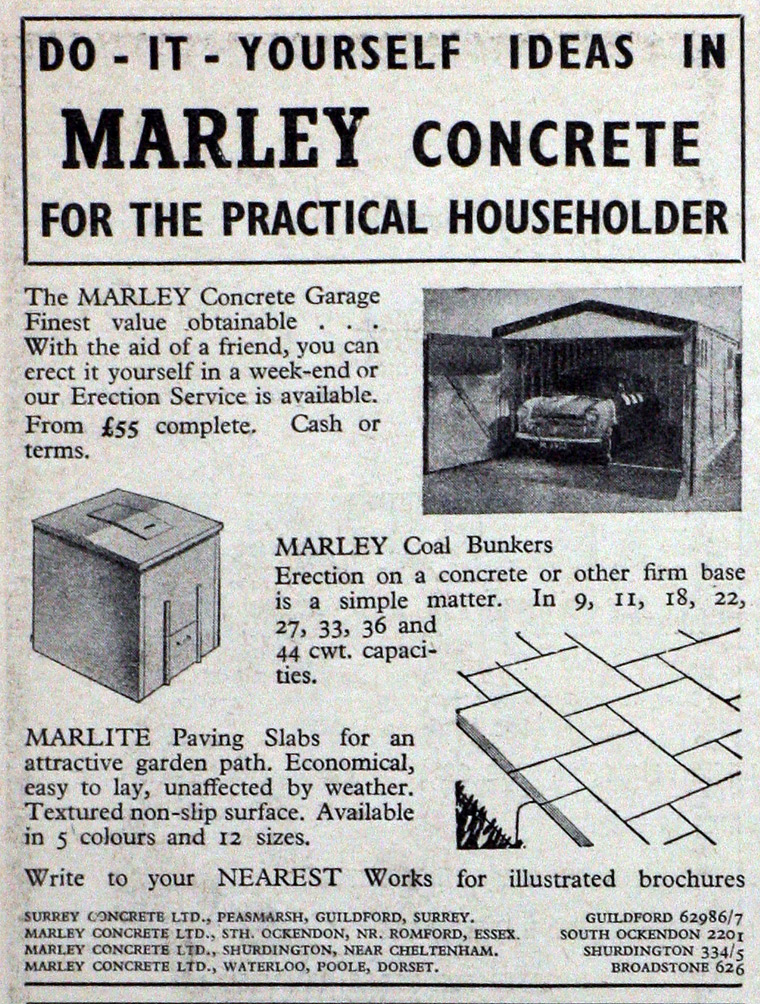
Concrete Garages

In casual conversation with Mr Matt Rettalick, at the Manchester Modernist HQ our attention casually turned to the topic of the prefabricated concrete garage.

I thought little more of it until yesterday, I then I resolved to get to the bottom of the matter.

Joseph Monier was a gardener and his idea was to develop permanent planters at a low price. In 1867, he patented different products made of reinforced concrete.

Pre-Cast History

Precast panelled buildings were pioneered in Liverpool 1905. The process was invented by city engineer John Alexander Brodie, a creative genius who also invented the idea of the football goal net. The tram stables at Walton in Liverpool followed in 1906. The idea was not taken up extensively in Britain. However, it was adopted all over the world, particularly in Eastern Europe and Scandinavia.

Wikipedia

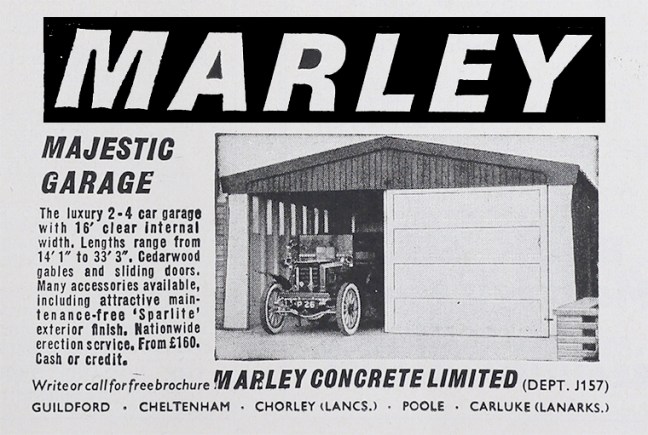
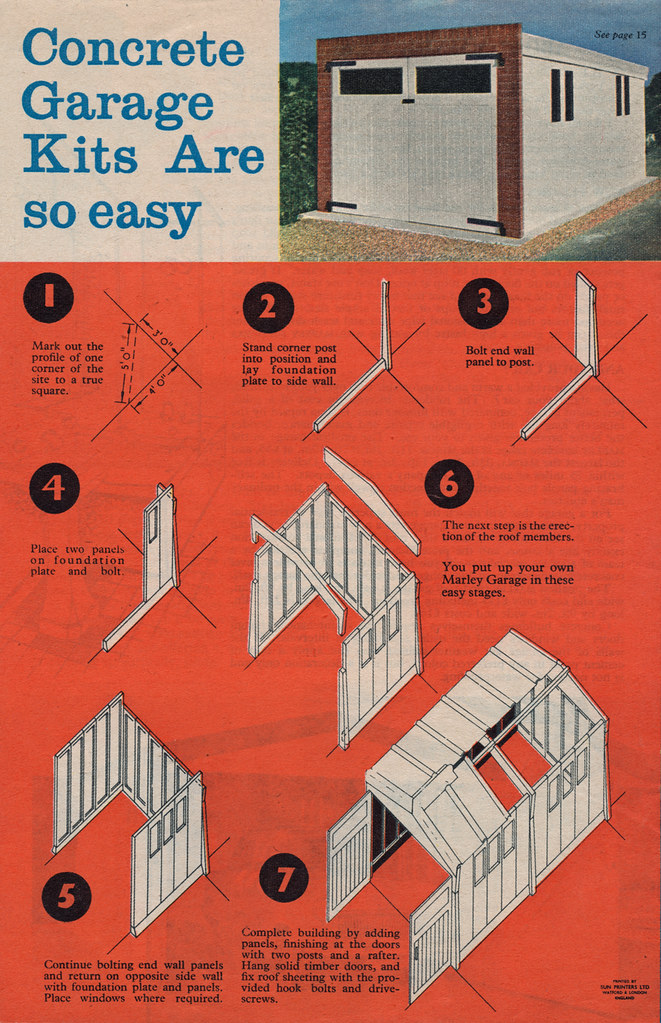
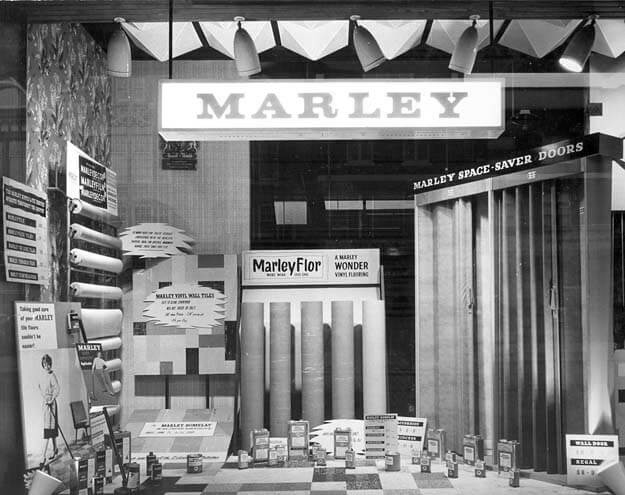
The first concrete kit garages appeared in 1952, manufactured by Marley, earlier models had been constructed from wood, asbestos, corrugated iron or galvanised steel.

The sunrise became a common symbol of inter war optimism.

The increase in car ownership, the growth in the DIY ethic and the lack of an integrated garage, drove the demand for a pre-cast concrete auto-haven at the end of the drive.

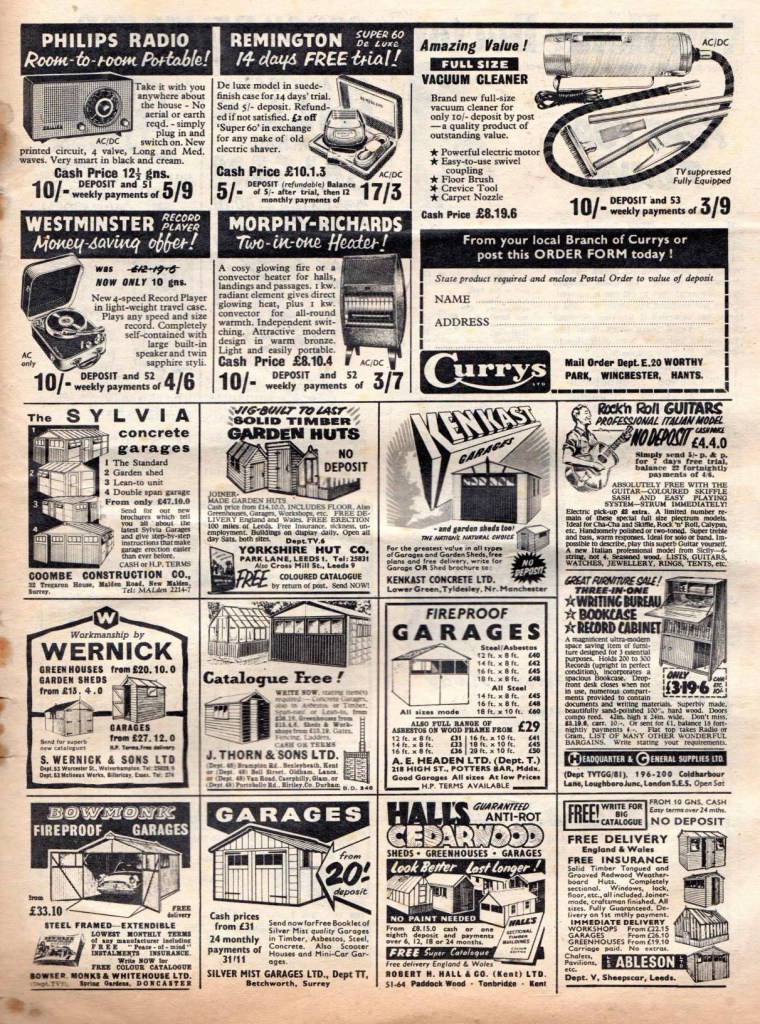
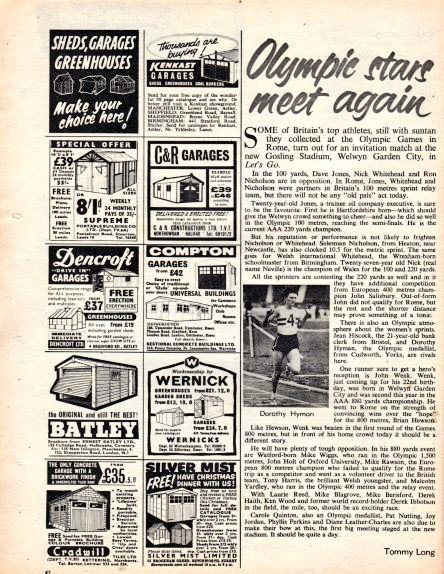
They became a staple of the small ads.

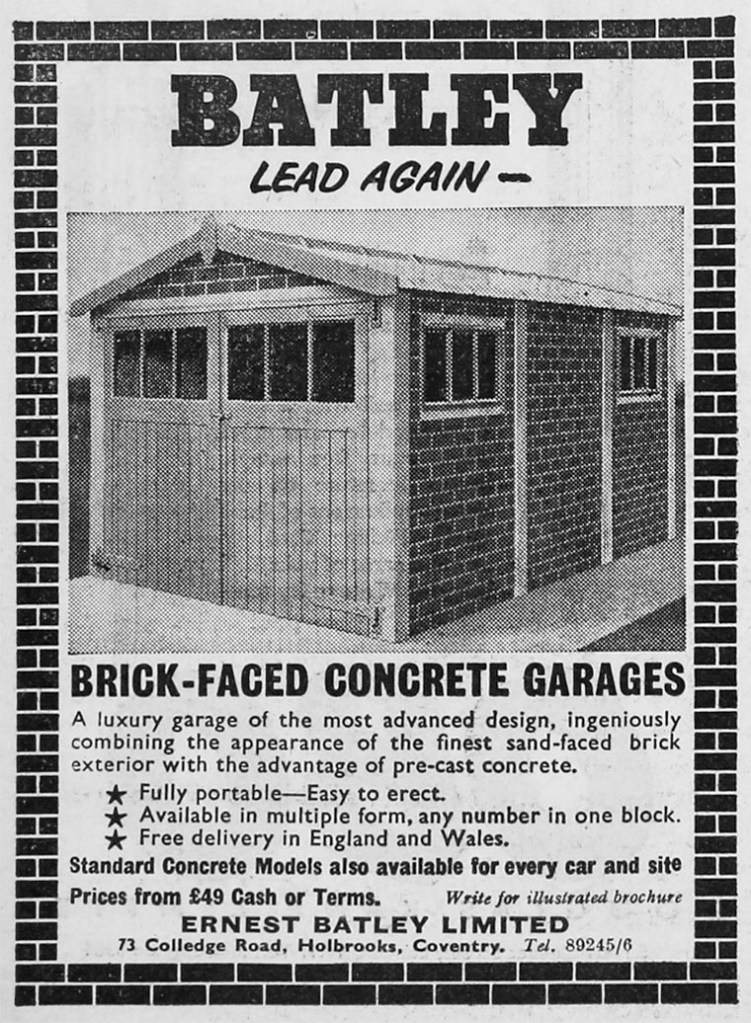
Easy terms built to last.

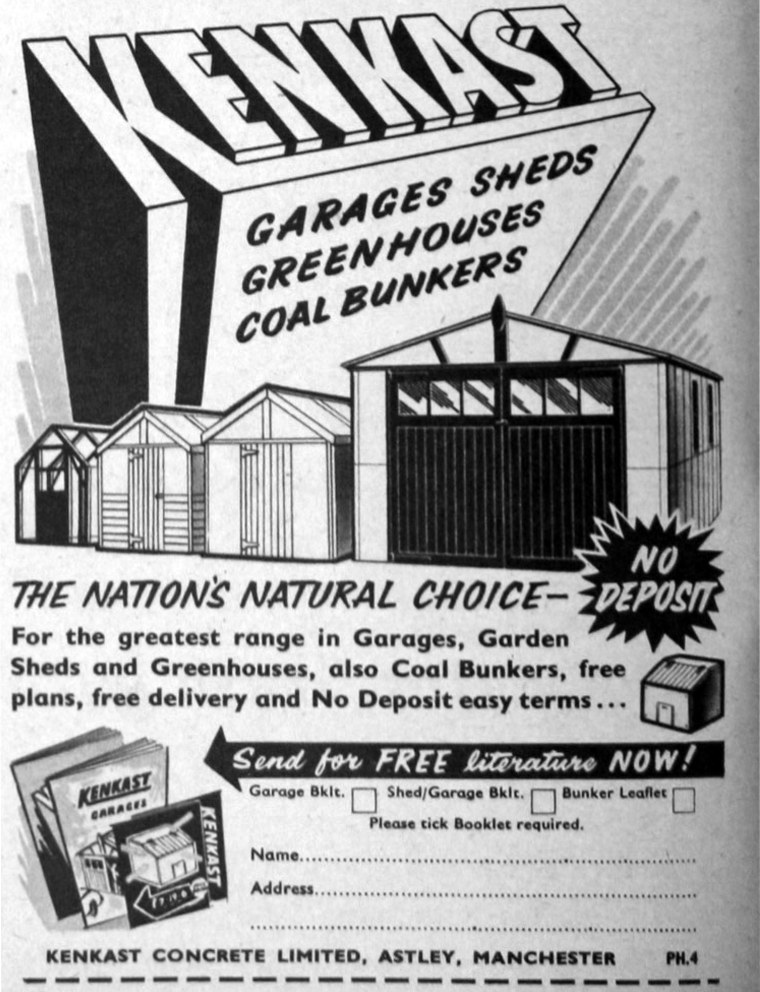
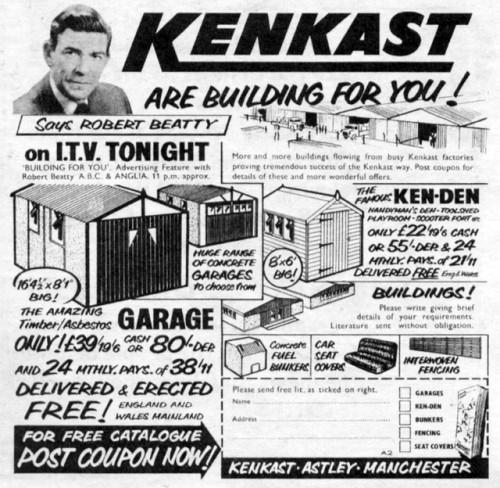
Kenkast is the name which for me resonates down through the years, though there were it seems, several other manufacturers.

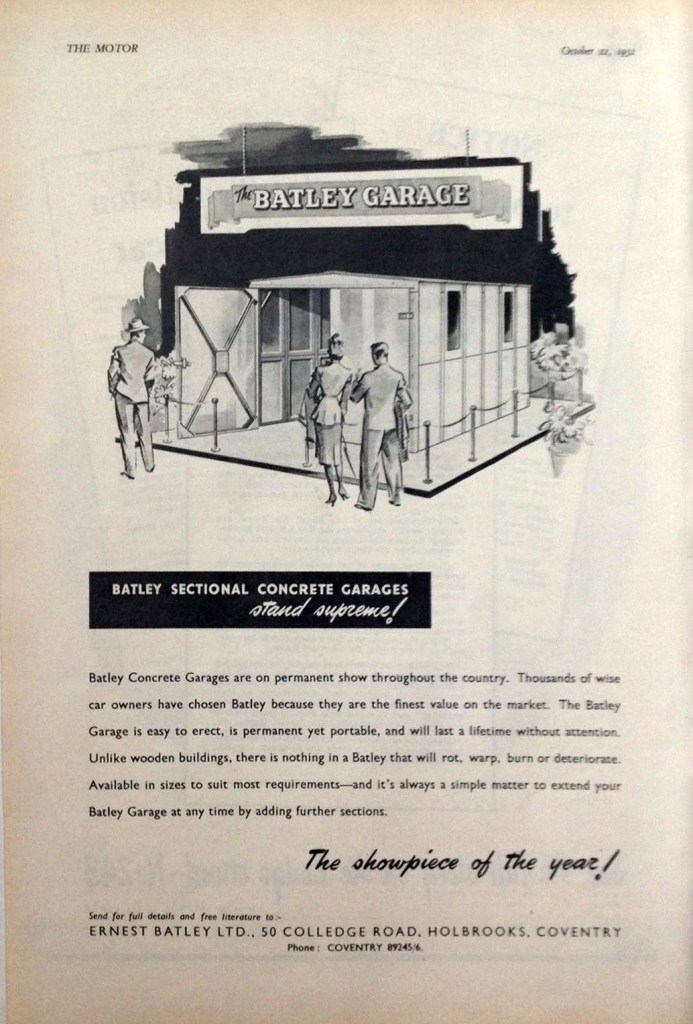
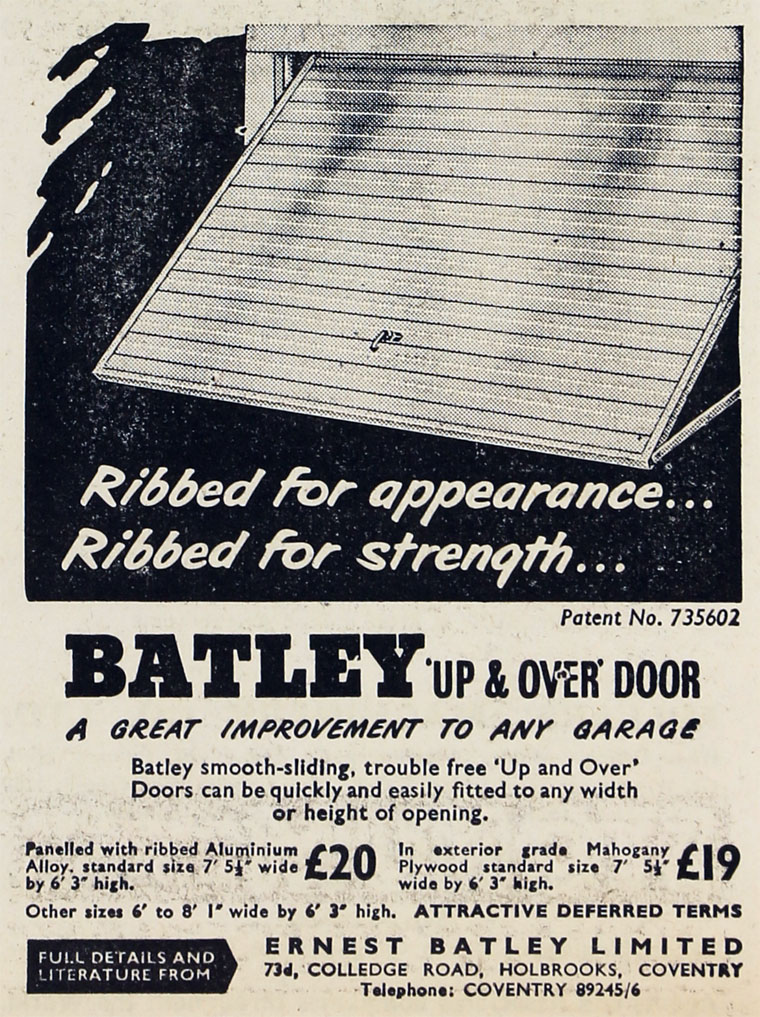
Batley Garages 128 Colledge Road Holbrooks Coventry Warks

Introducing the ultra-modern sprung up and over doors.

And a slap in the face for the truth to materials merchants.

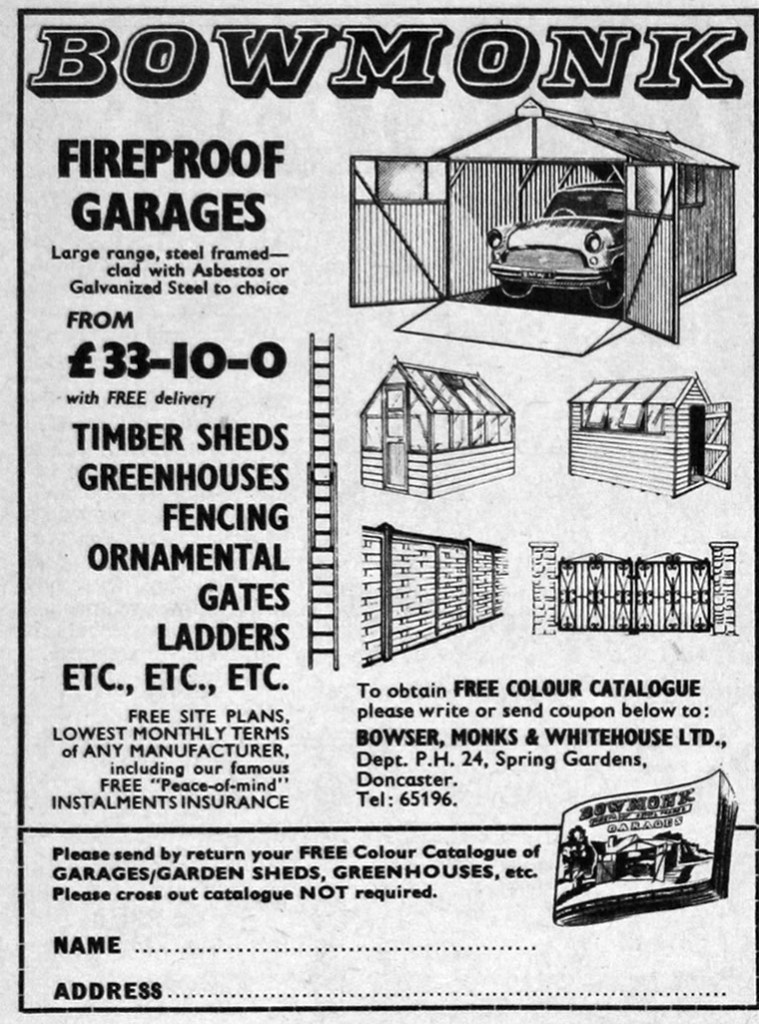
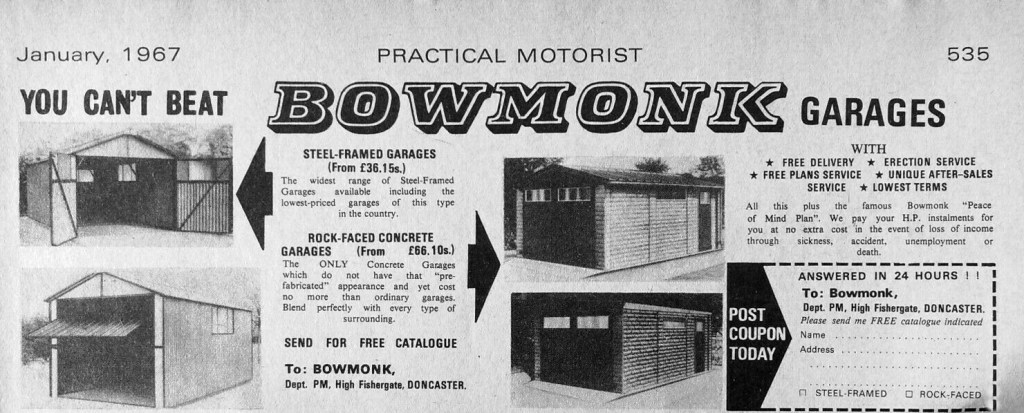
Bowmonk Garages Spring Gardens Doncaster Yorks

Built to last.

A gorgeous Profil/Stymie Bold Italic banner and the promise of the only concrete garage that doesn’t look prefabricated – the ultimate status symbol.

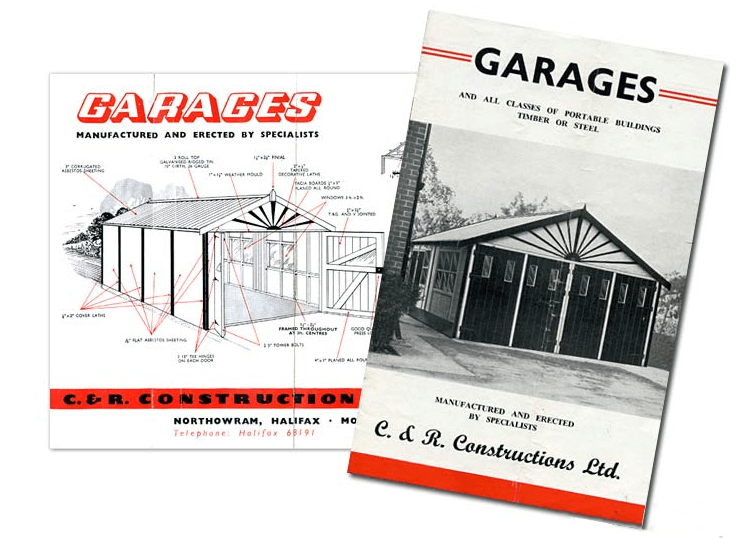
C&R Garages Northowram Halifax

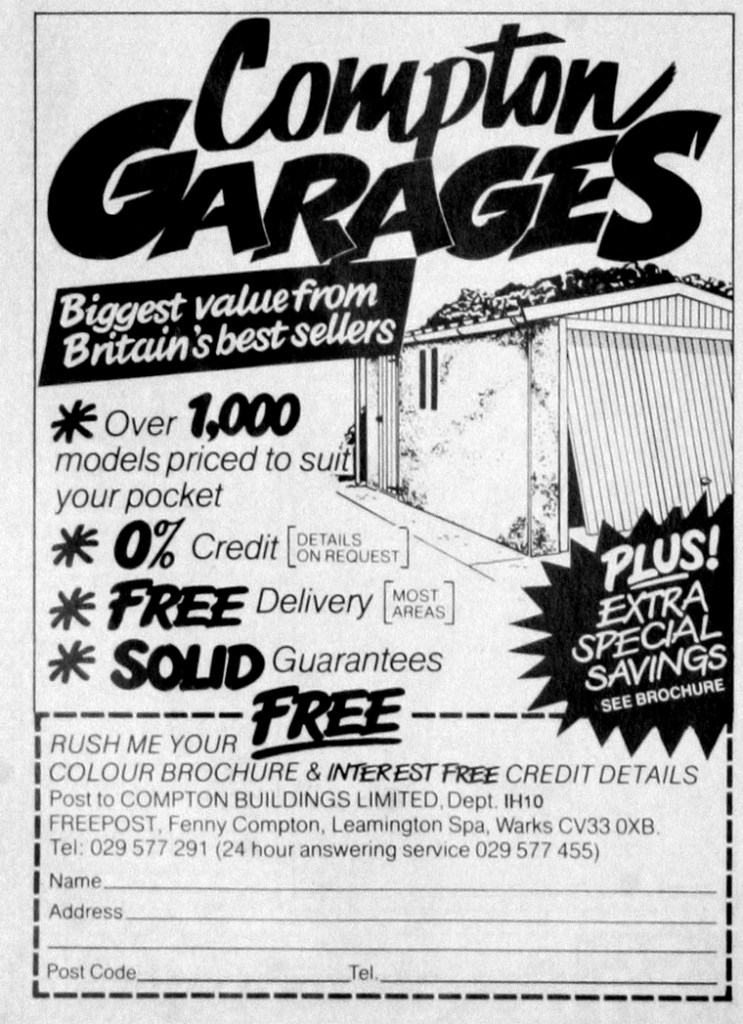
Compton Garages Fenny Compton Leamington Spa Warks

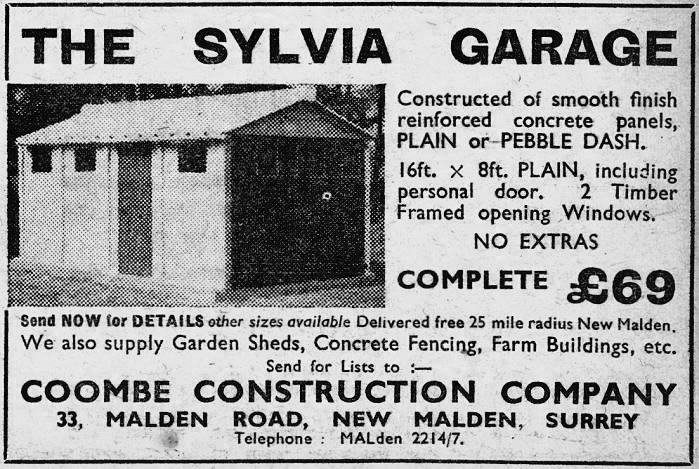
Coombe Construction Malden Road New Malden Surrey

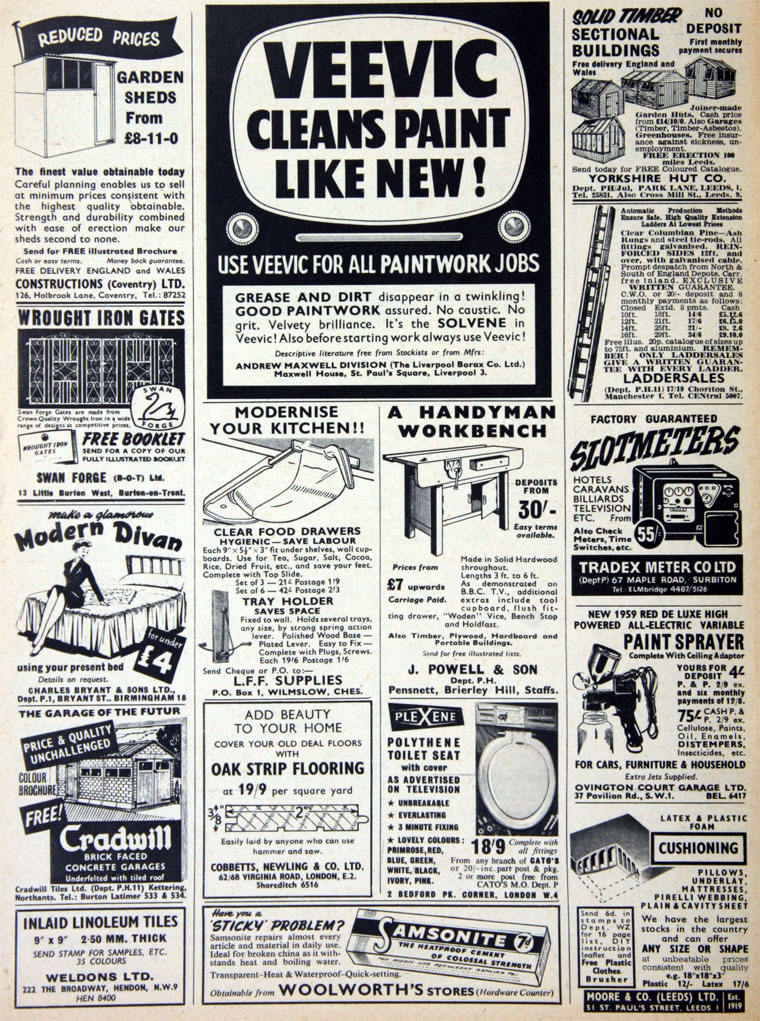
Cradwill Tiles Ltd Kettering Northants

The garage of the future.

Dencroft Garages Bradford Road Batley

Established 1948 and still in business.

Kencast Astley Manchester

Marley South Ockendon Romford

Still in business and responsible through time for a range of products and the development of the DIY Super Store.

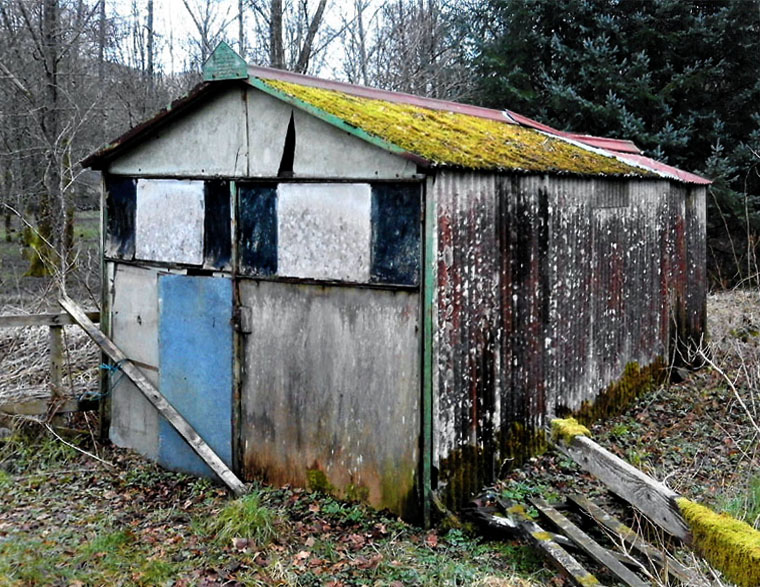
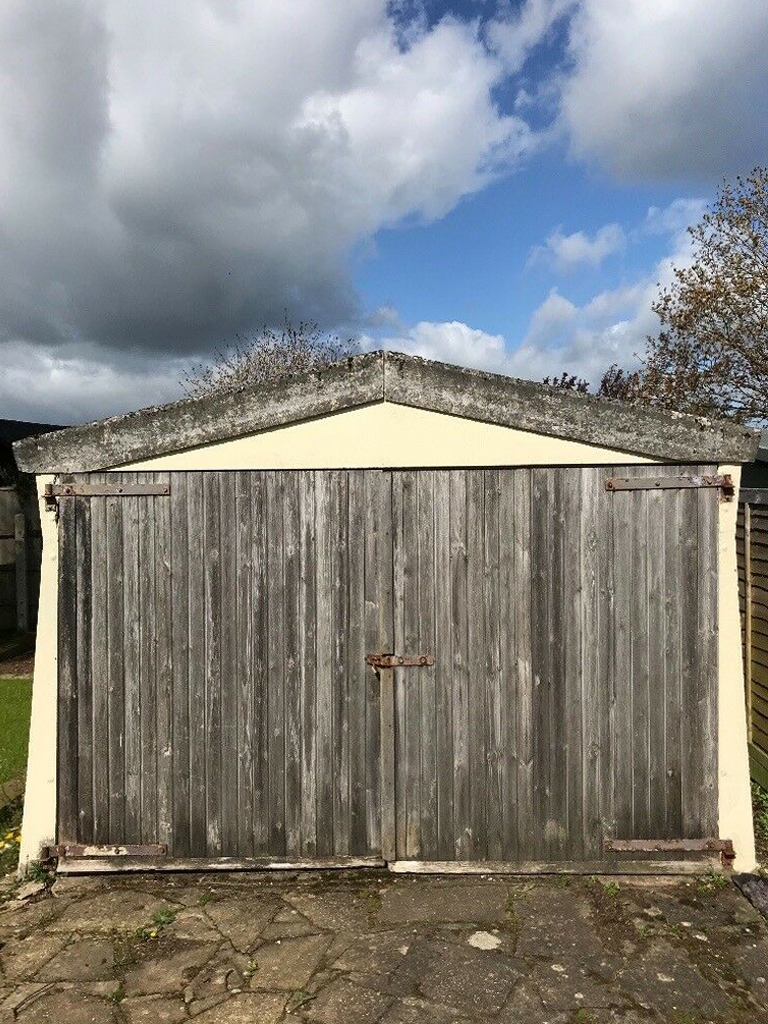
Still standing.

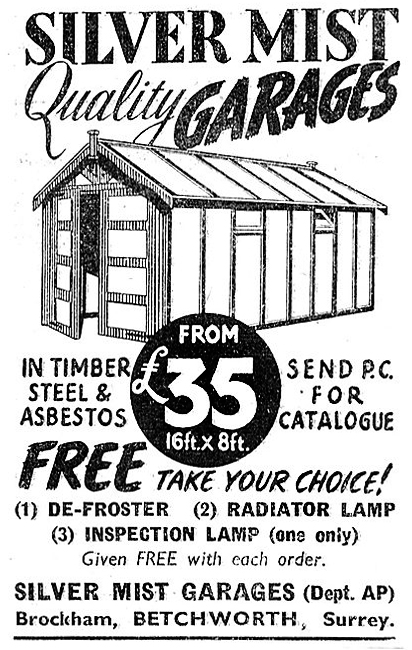
Silver Mist Brockham Betchworth Surrey

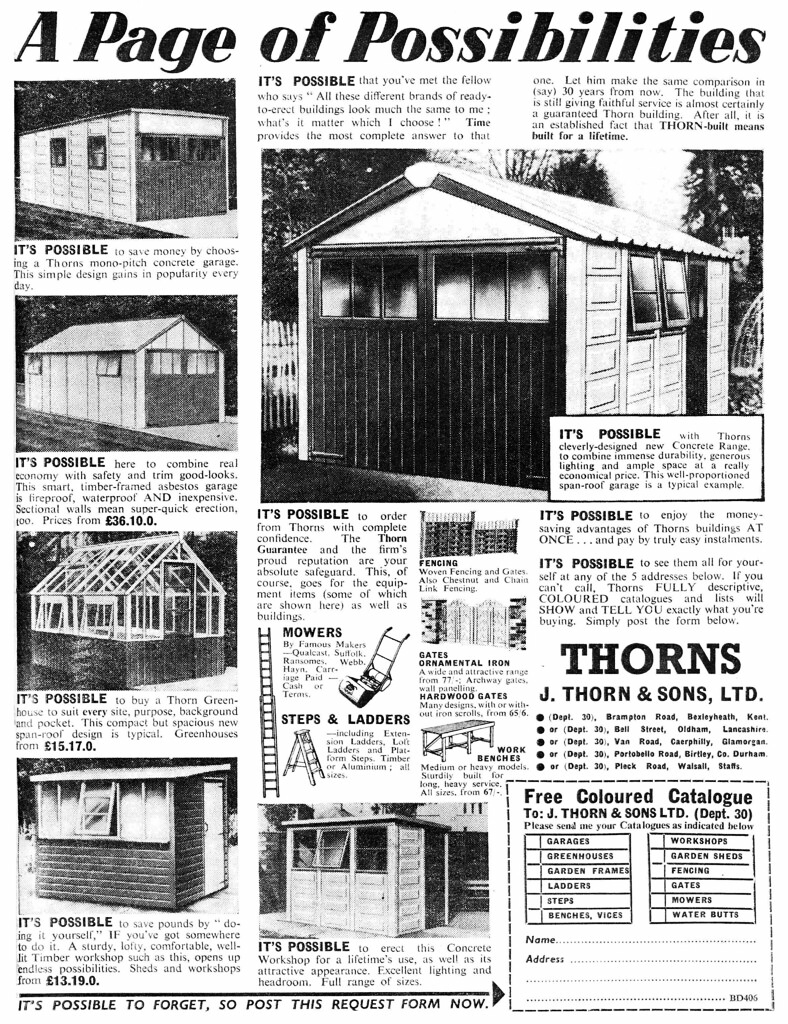
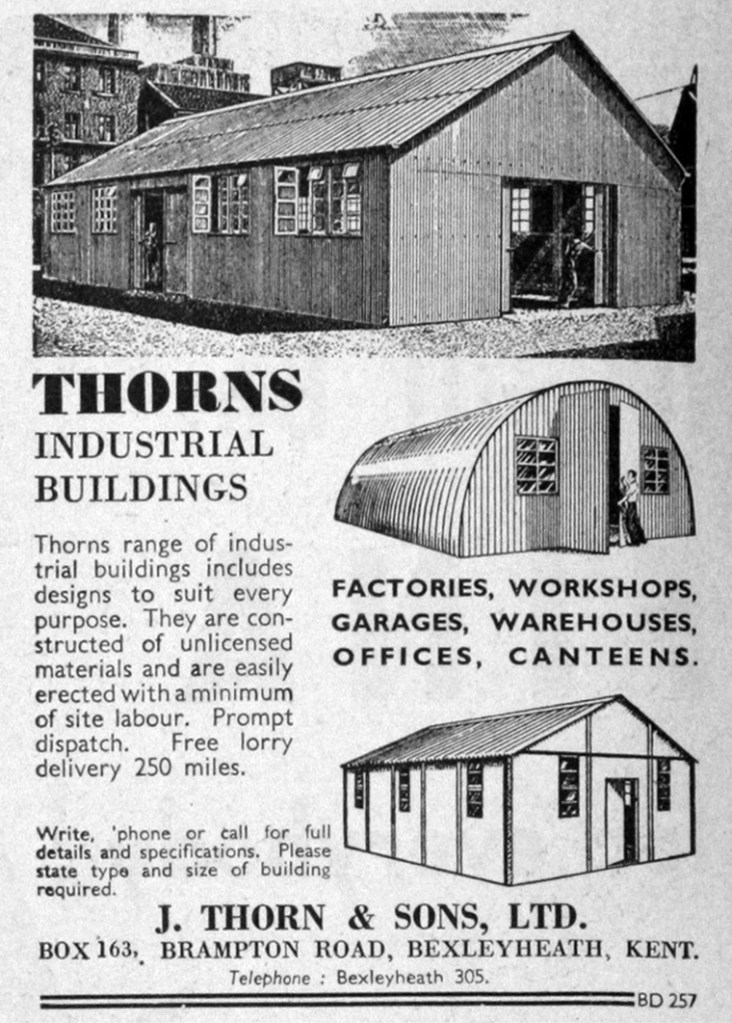
J Thorn & Sons Brampton Road Bexleyheath Kent

Also supplying an exciting array or industrial buildings.

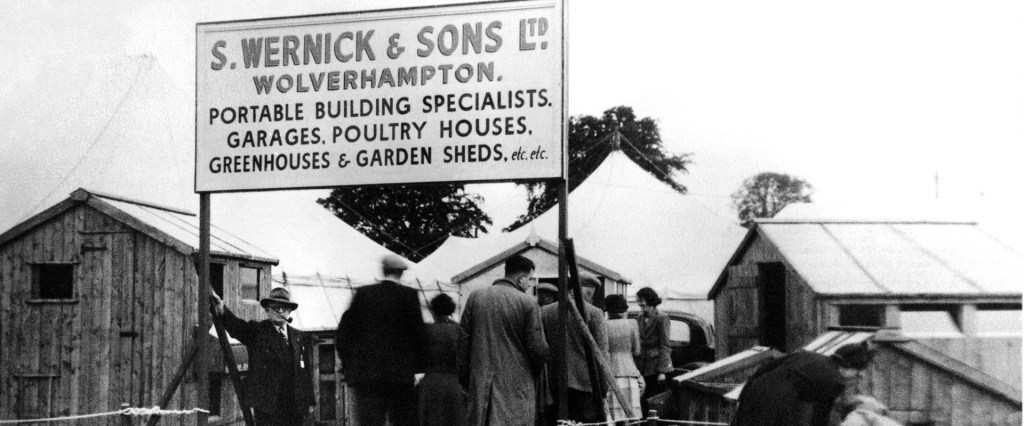
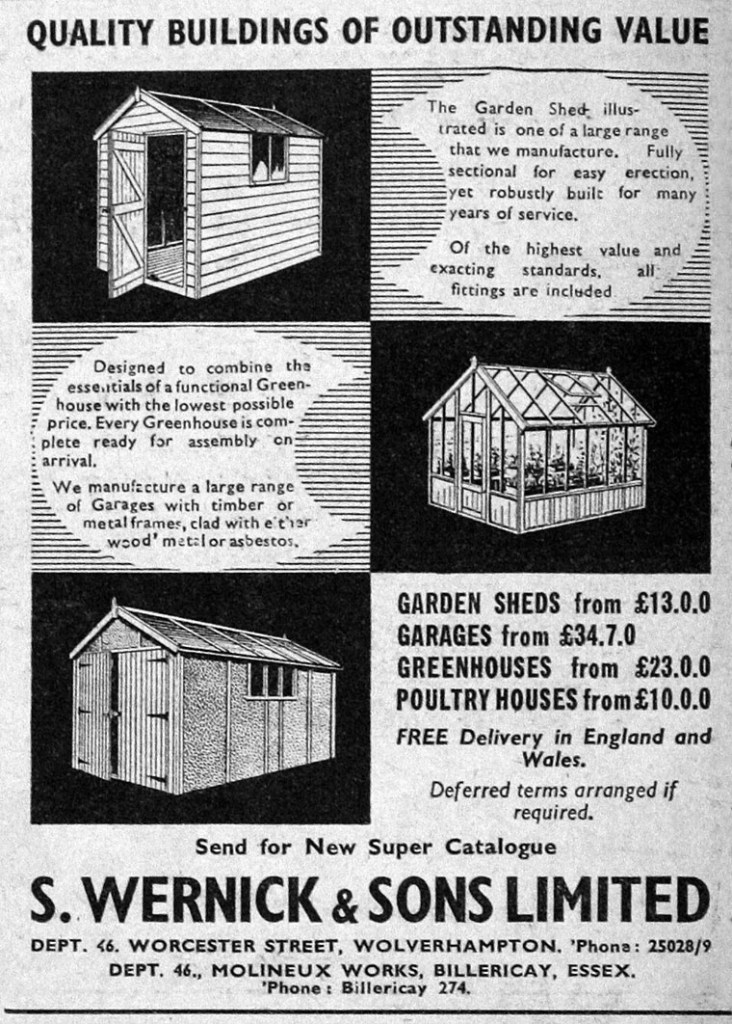
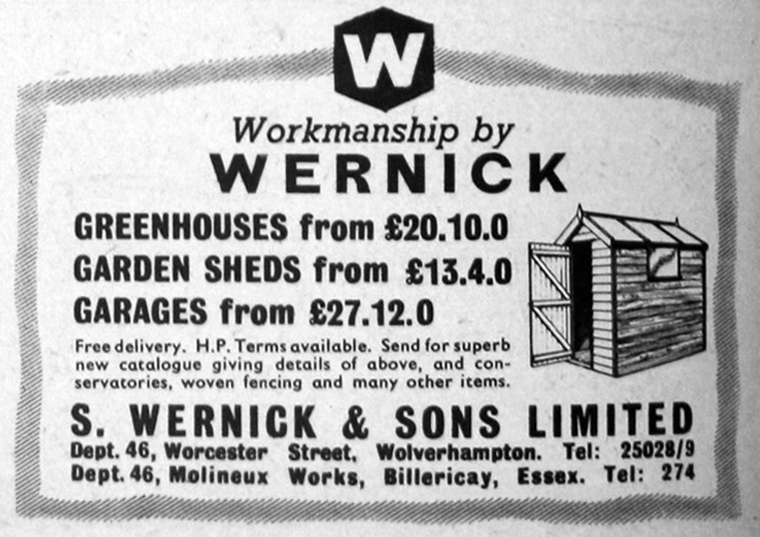
S Wernick & Sons still very much in business

We now live in an age of endless non-stop domestic extension, all of the above are reminders of an age when extra external domestic space was added over a weekend, with help from a friend.

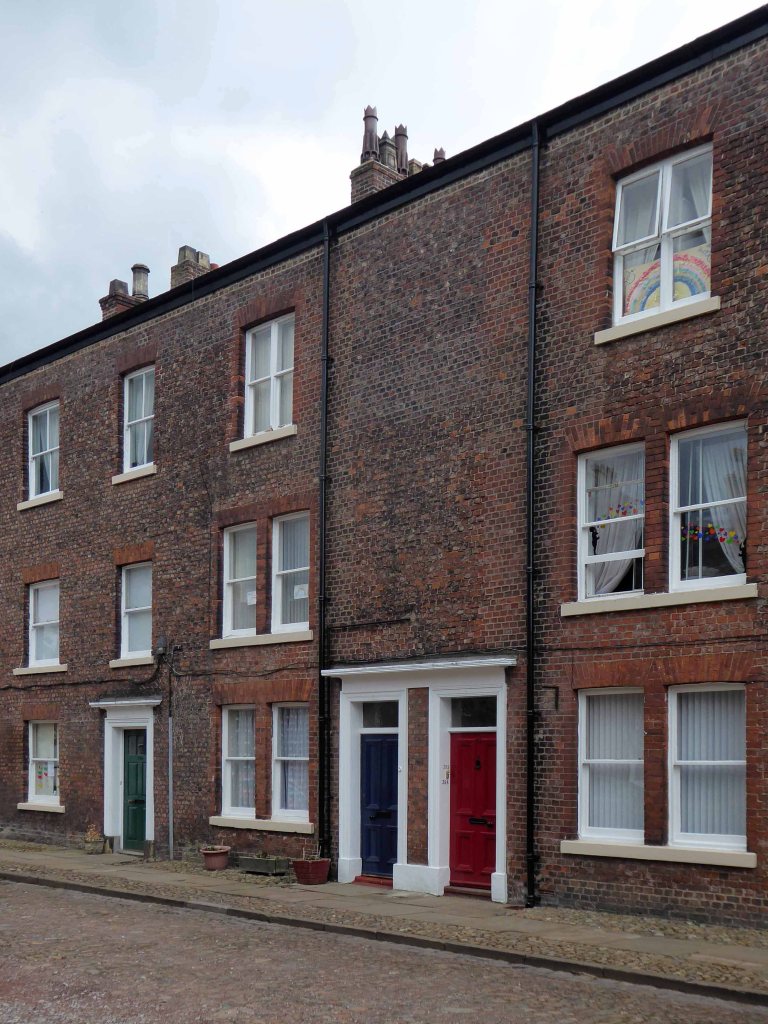
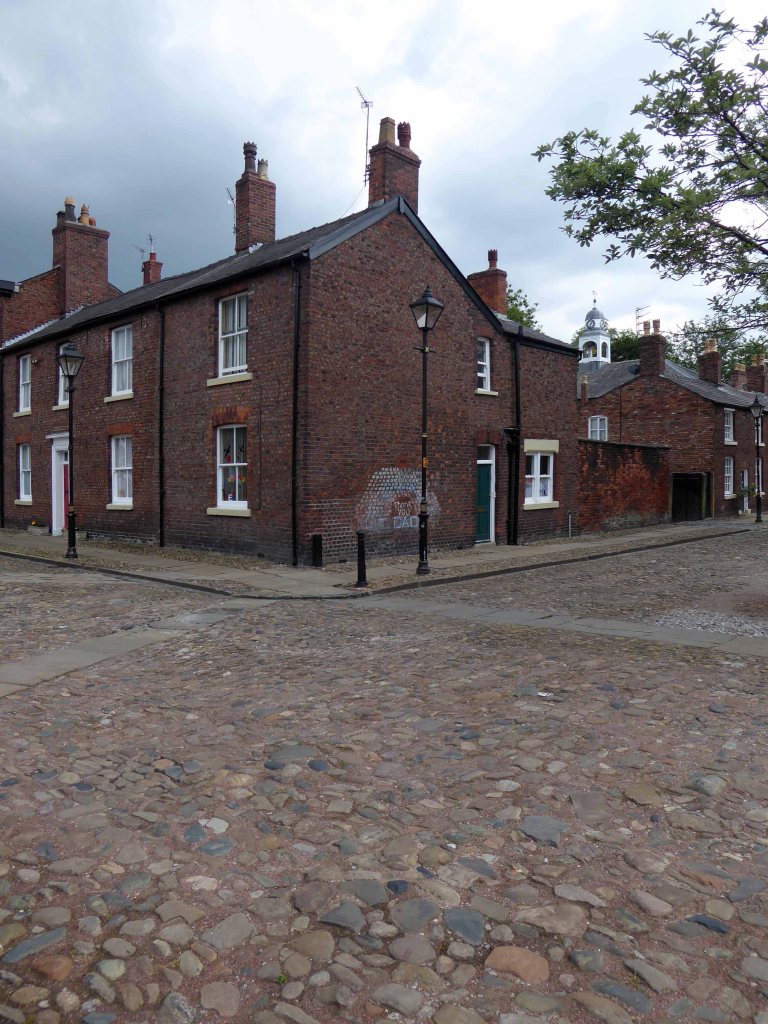
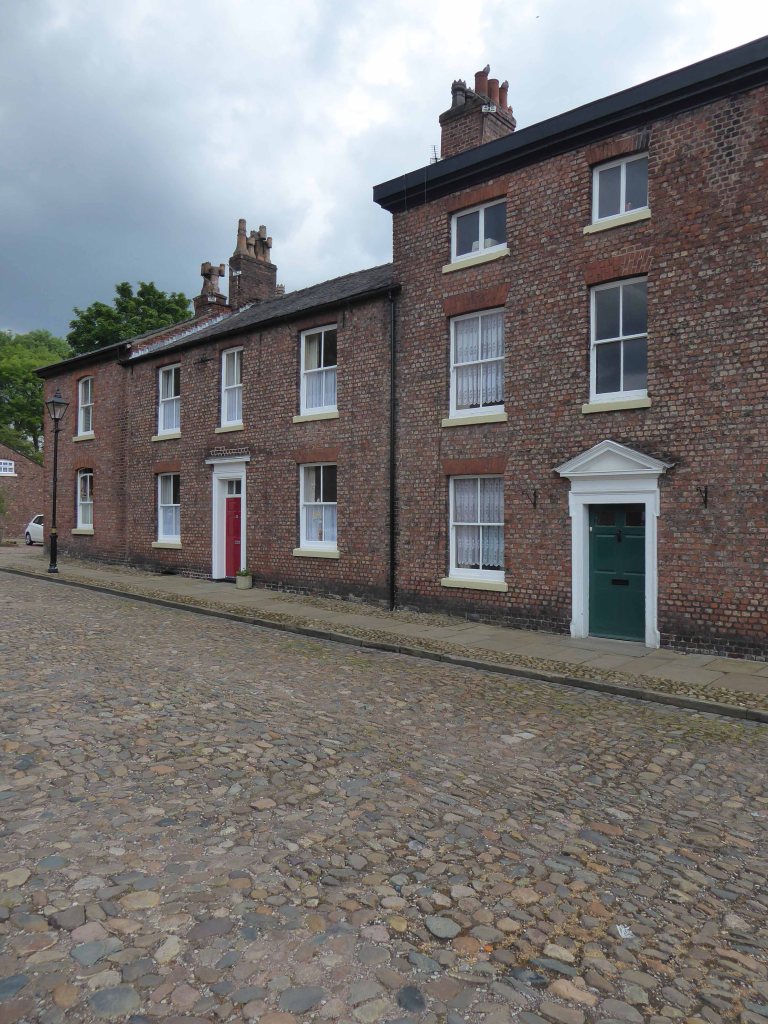
Fairfield Greater Manchester

Fairfield is a suburb of Droylsden in Tameside, Greater Manchester, England. Historically in Lancashire, it is just south of the Ashton Canal on the A635 road. In the 19th century, it was described as “a seat of cotton manufacture”. W. M. Christy and Sons established a mill that produced the first woven towels in England at Fairfield Mill.

Fairfield is the location of Fairfield High School for Girls and Fairfield railway station.

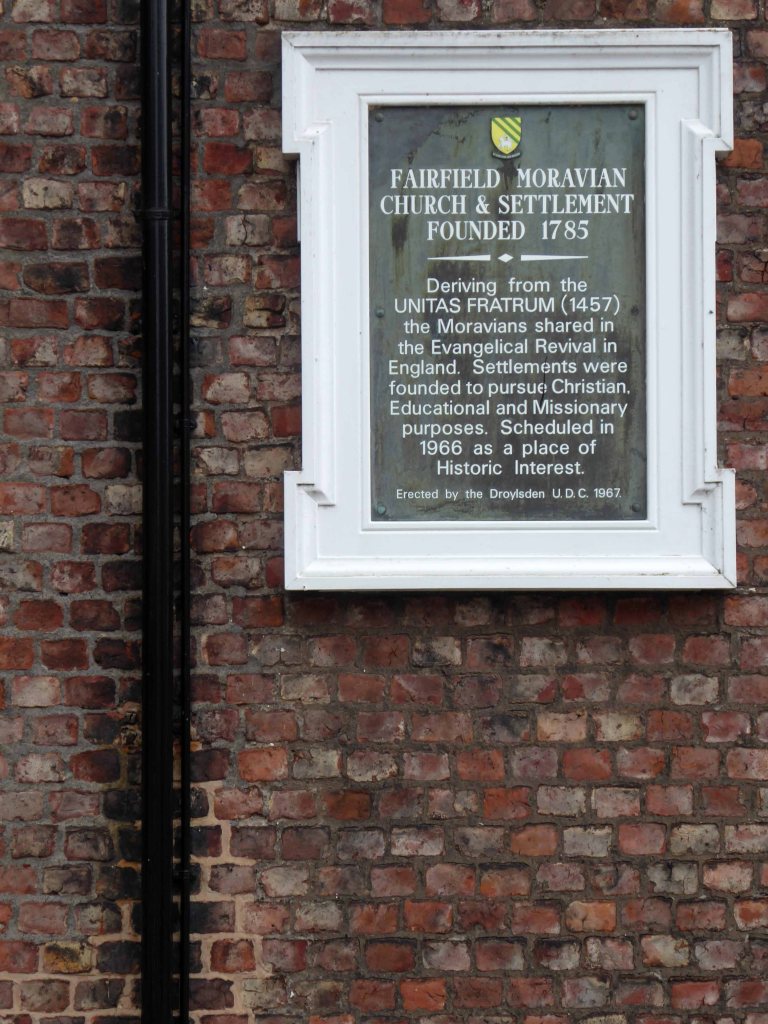
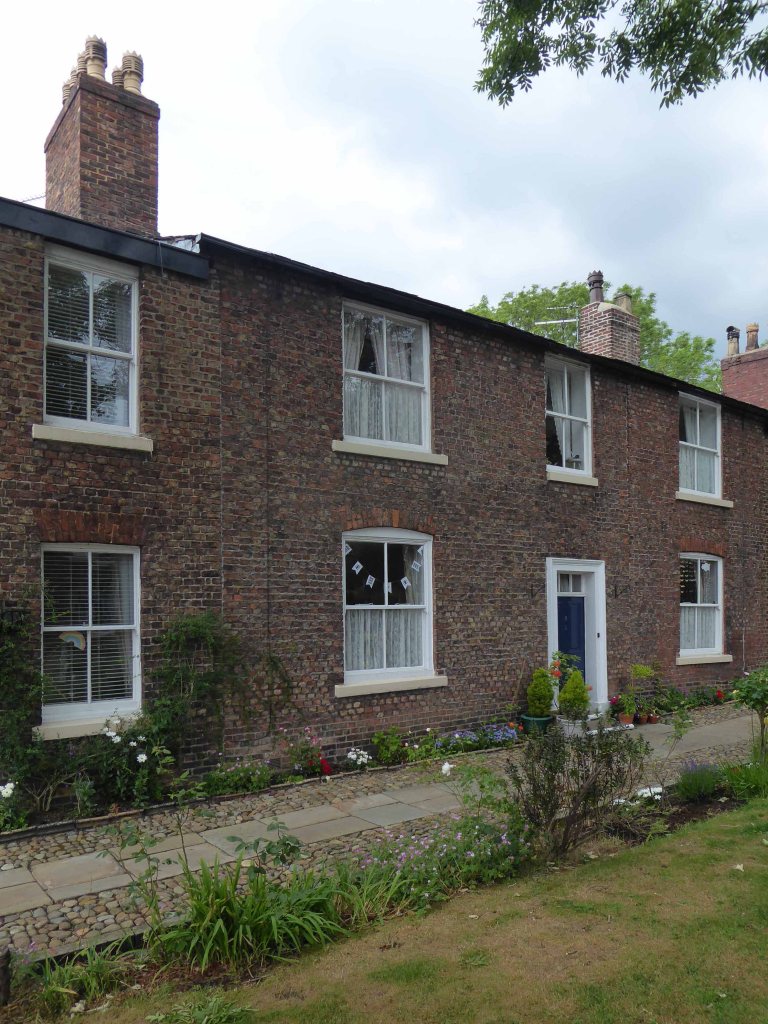
The community has been home to members of the Moravian Church for many years after Fairfield Moravian Church and Moravian Settlement were established in 1783.

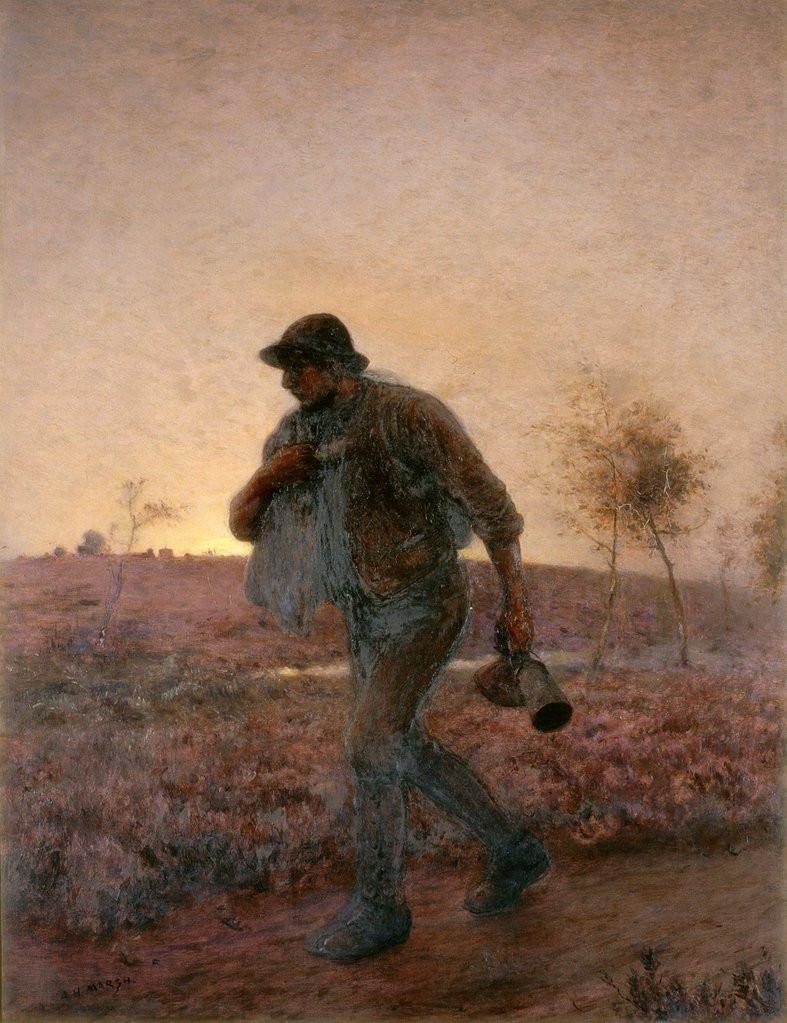
Notable people from Fairfield include the artist Arthur Hardwick Marsh (1842-1909)

Also the merchant banker and art collector Robin Benson (1850–1929).

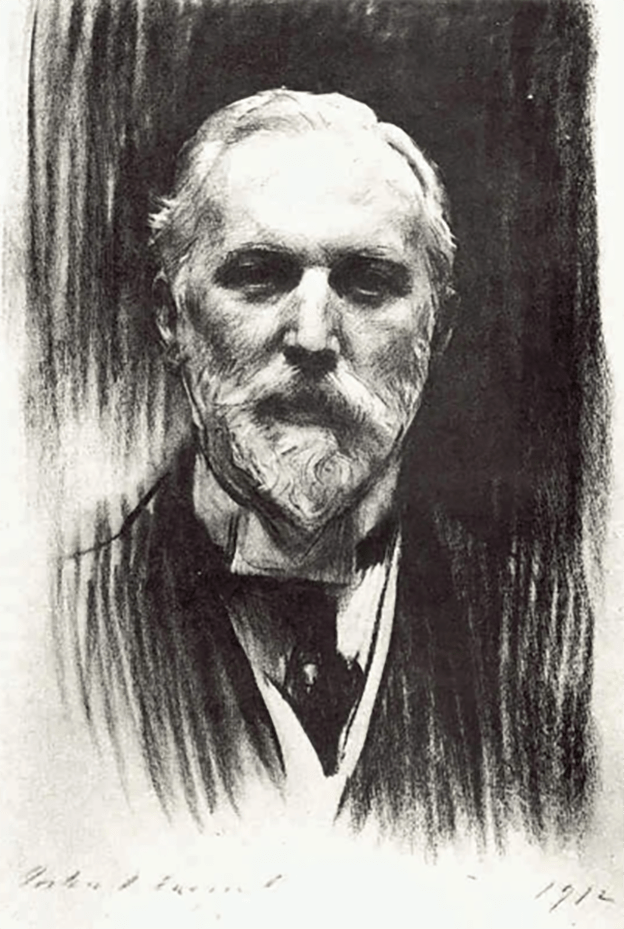
Drawing – John Singer Sargent

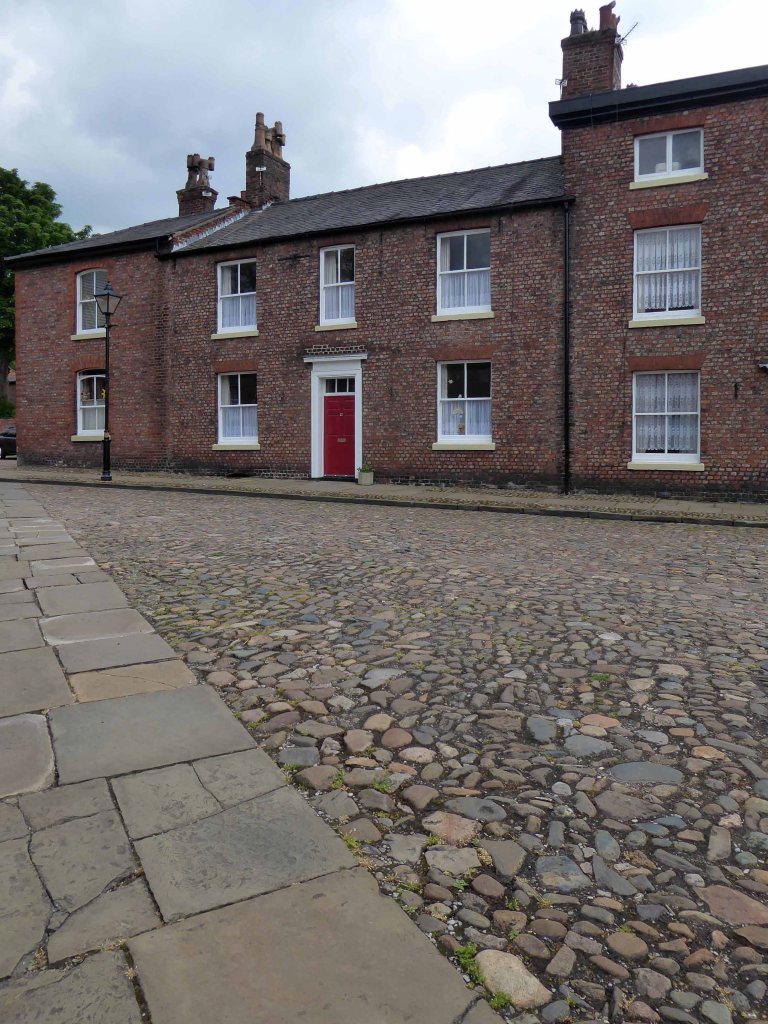
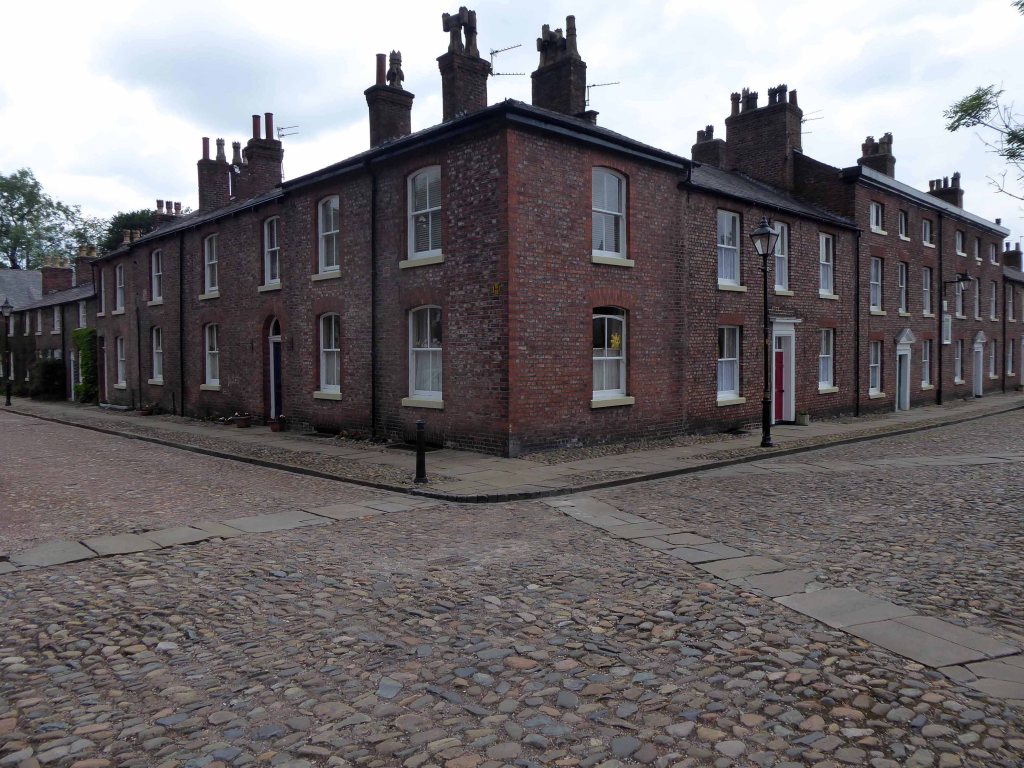
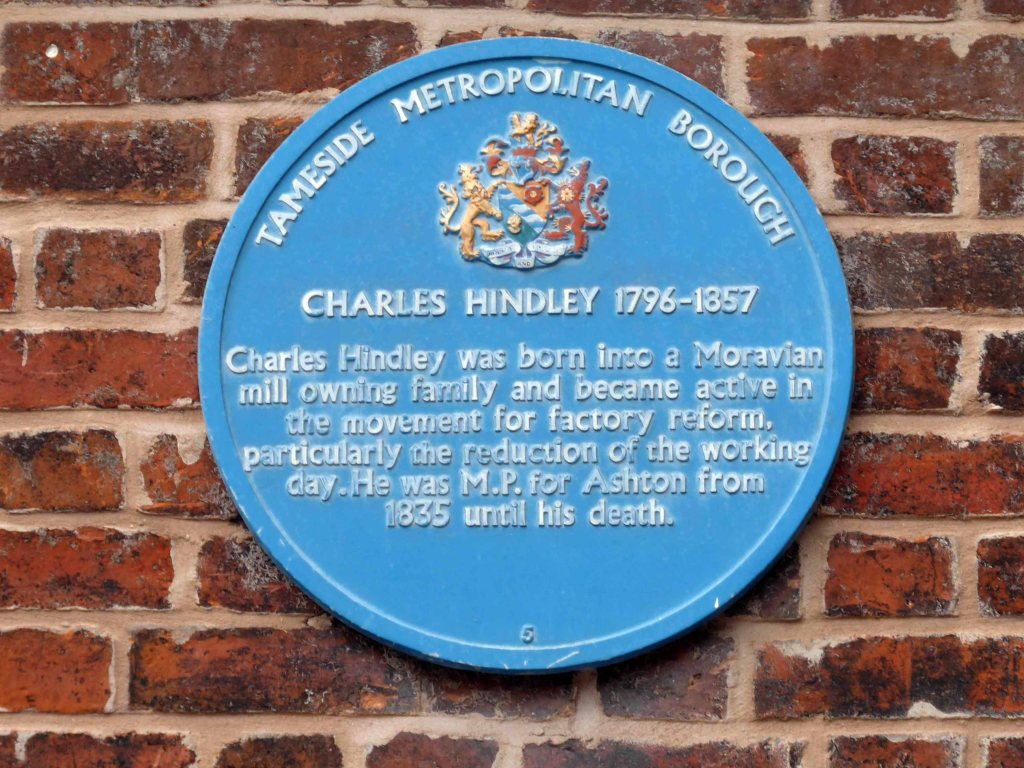
Charles Hindley 1796 – 1857 was an English cotton mill-owner and radical politician the first Moravian to be elected as an MP.

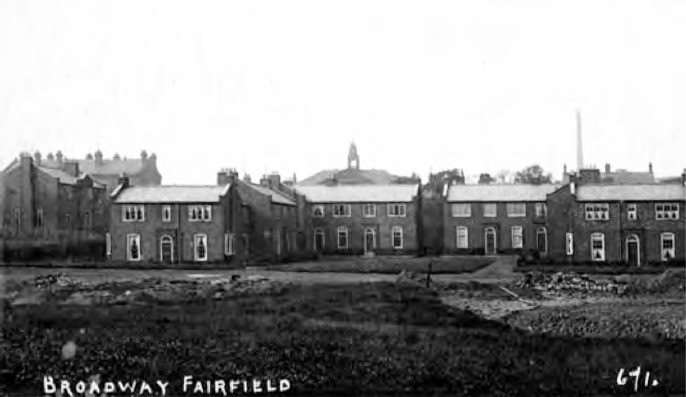
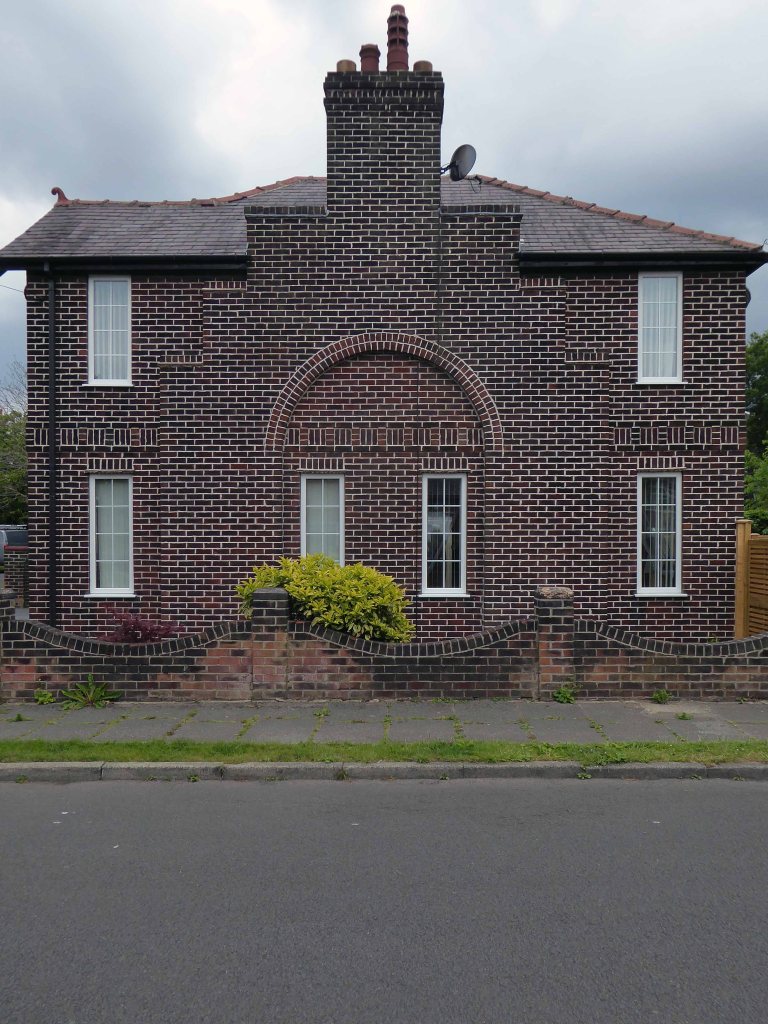
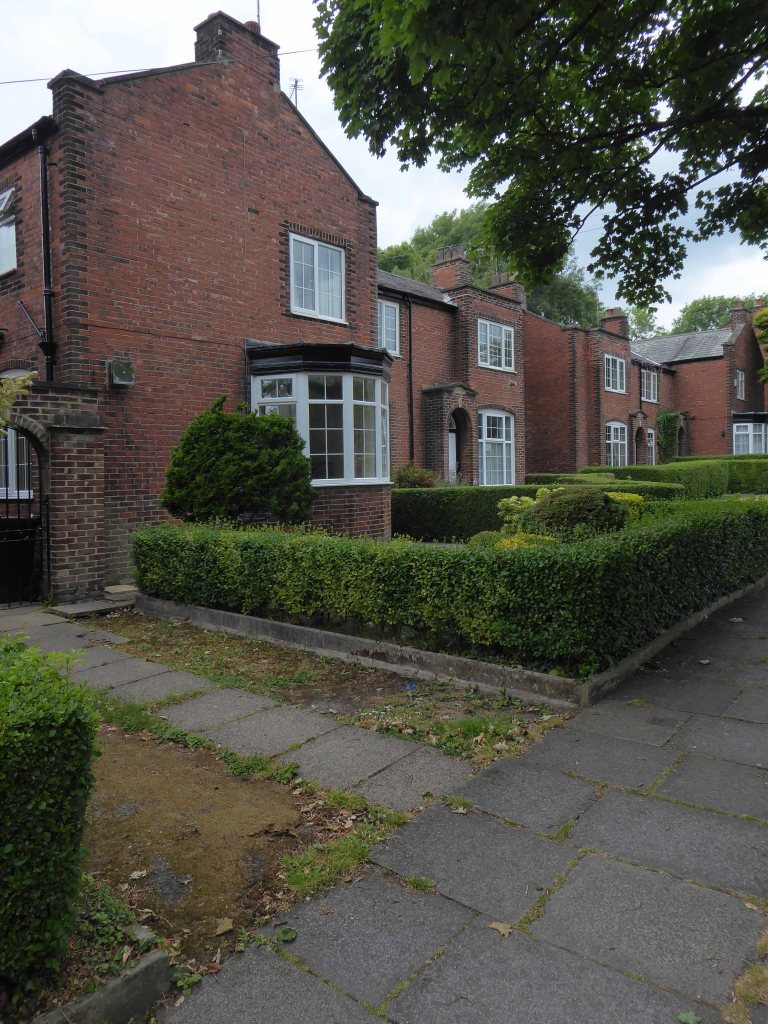
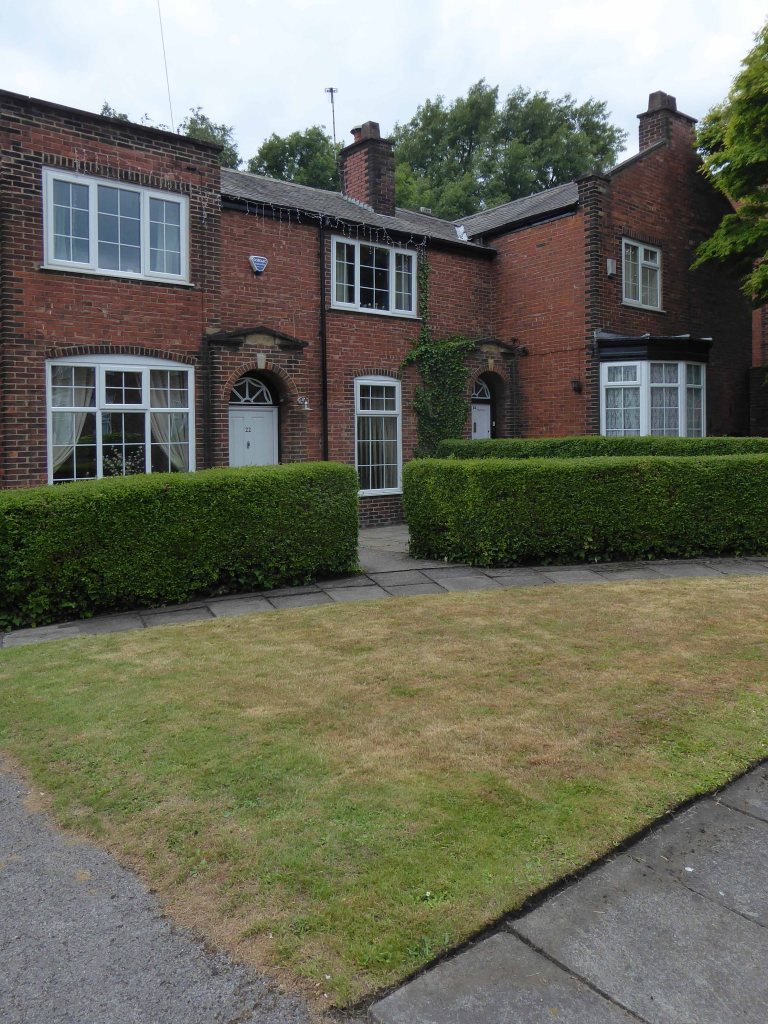
Turning into Fairfield Avenue from Ashton Old Road you’ll find Broadway sitting prettily on your right hand side. It was intended to be an extensive Garden Village but was abandoned at the outbreak of the First World War. The estate consists of 39 houses, built between 1914 and 1920 in a neo-Georgian style. These are a mixture of detached, semi-detached and terraces in a range of sizes.

Edgar Wood and James Henry Sellers were the architects responsible for the scheme.

Broadway is a small scale example of a garden suburb development and is composed of a mixture of detached, semi detached and terraced houses ranging in size and built in a reddish-orange brick with dark brick dressing and patterning. The properties appear to be generously proportioned and they share similarities in design and construction and a unifying scheme of decoration.

It is suggested that theimaginative exploitation of the levels and texture suggest that Woods was responsible for the layout, but the chaste Neo-Georgian character of the houses undoubtedly reflects the taste of Sellers’.

It forms a major part of the Fairfield Conservation Area.

Sneaking through the alley – lined with a Yorkshire Stone fence you enter the Moravian Settlement.

Engraving 1794

The Unitas Fratrum or Moravian Church is an international Protestant Christian group which originated from the followers of Jan Hus in Bohemia (now part of the Czech Republic) during the 15th century. As a result of persecution, the group eventually re-established itself in Saxony in the early 18th century, and it is from there that followers first came to this country in the 1730s, with the intention to go on to carry out missionary work in America and the Caribbean. A decision was taken to establish the first Moravian Settlement in England at Fulneck in Yorkshire in 1744. The first Moravian settlement to be located in Tameside was in Dukinfield during the 1740s. It was there that they laid the foundation stone for their chapel at the top of Old Road in May 1751. By 1783, 40 years after their first arrival in Tameside, the lease on their land at Dukinfield expired, and negotiations for a new one proved difficult. This resulted in the purchase and removal of the community to a 54 acres site at Broad Oak Farm in Droylsden where they established a new settlement known as Fairfield.

As well as providing domestic accommodation, the buildings at Fairfield had industrial functions. During the late 18th and 19th centuries the Settlement would have been a hive of religious and industrial activity, which included the church, schools, domestic dwellings, inn, shop, bakery, laundry, farm, fire engine, night-watchman, inspector of weights and measures, an overseer of roads, physician, as well as handloom weaving and embroidery.

Hastings 2015

I had completed my journey from Weston super Mare, with a final day’s cycle ride from Eastbourne and had two days to spare.

So I took some time to have a mooch around and this dear readers is what I did see.

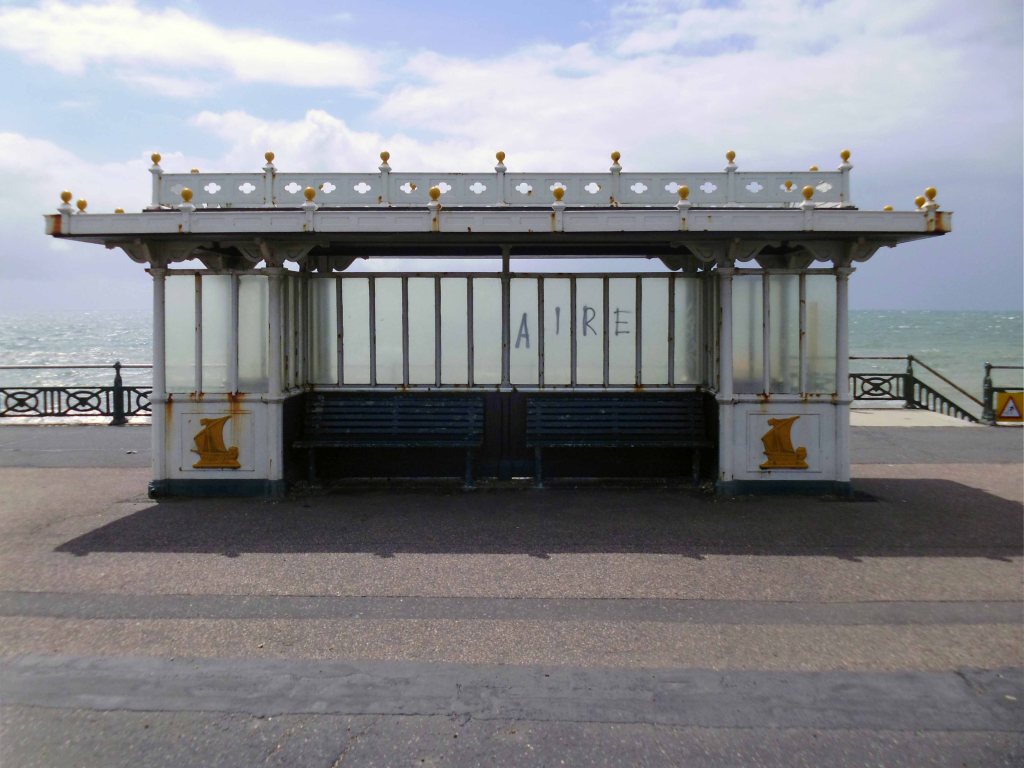
I have snapped the seafront shelters previously and put together one post after another.

These are an integral part of Sidney Little’s concrete promenade scheme

Lurched toward London Road Launderette in St Leonards – which was featured in my 2020 book eight laundrettes.

Next door is this Post Office mosaic.

Back to the front for a more traditional seaside shelter.

Exploring the backstreets in search of fitness for purpose and secret signs.

Then diving in for a delicious dosa at the long gone St Len’s Lakshmi Mahal – since moved to Bexhill on Sea.

Snapping the plaques at the White Rock Theatre.

Currently closed but hopefully open in time for the We Love The Spice Girls.

Popped into Arthur Green – former gent’s outfitters, current bric a brac brokers.

Before we know it, we’re in another laundrette, once more without washing in the Wash Inn.

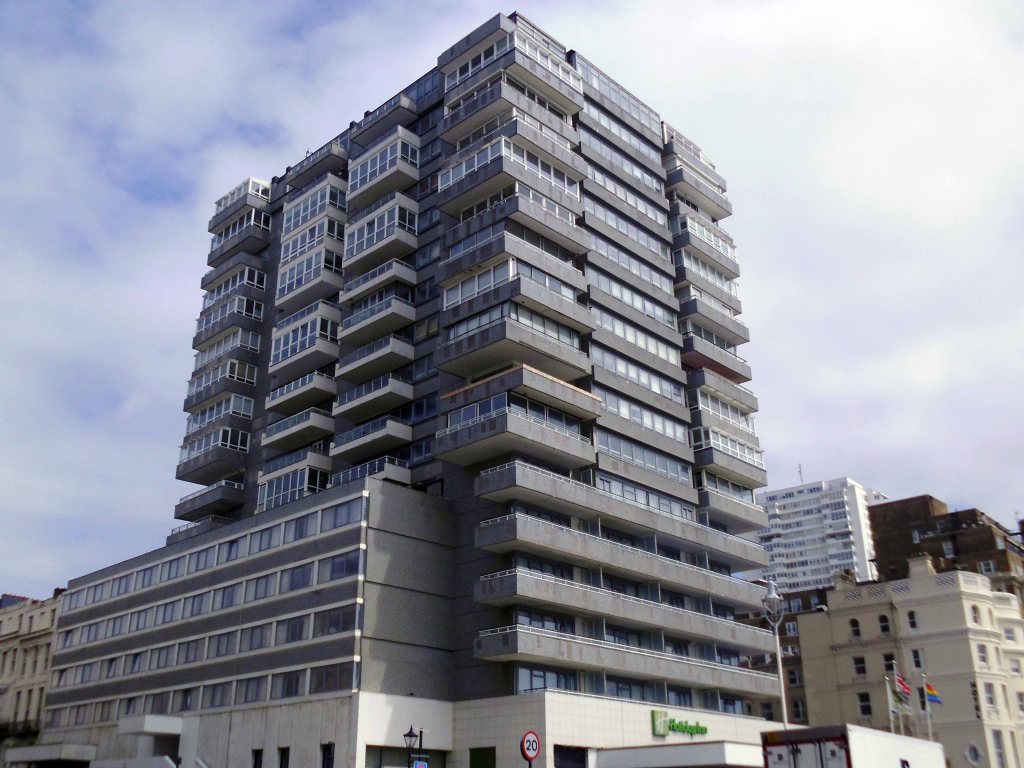
Back along the front to the well appointed and freshly painted Marine Court.

Time to pop into the not always open subsequently closed St Leonard’s Church.

When World War II broke out, Hastings and St Leonards-on-Sea were considered vulnerable to attacks and invasion from abroad. On the night of Saturday 29 July 1944 a doodlebug was hit over the English Channel. Damaged, it nevertheless continued to fly towards the coastline of St Leonards-on-Sea. It was approaching Marine Court which was hosting a servicemen’s party – but it veered and crashed in front of the doors of St Leonard’s Church, making a deep crater. The tower fell into this, and the rest of the church was brought down as well. Although there were no casualties, the church was completely destroyed. Although the problem of rock falls and subsidence associated with the cliffs had continued throughout the life of the church, the War Damage Commission would only pay for it to be rebuilt on the same site. The architectural partnership of brothers Giles and Adrian Gilbert Scott were commissioned to design the new building.

Patrick Reyntiens stained glass

The unique features were inspired by Canon Cuthbert Griffiths, rector from 1929 to 1961. Following a dream, he went to Israel and had the prow of a Galilean fishing boat constructed to form the pulpit.

Marble work on the floor depicts locally caught skate and herring.

Beyond the communion rail are loaves and fishes set in different marble patterns bordered by scallop shells, a copy of the Byzantine mosaic in the Church of the Feeding of the Five Thousand in Galilee.

The structure set into shifting cliffs is subject to subsidence.

Procedures have been completed for St Leonard’s Parish Church on Marina to be closed for worship. 

The service will be next Saturday August 4 2018 at 3pm. 

Because the building cannot be used the service will be at St Ethelburga’s in St Saviour’s Road.

St Leonard’s has been called the church with an inbuilt message.  Even the very stones cry out to those who have eyes to see, ears to hear and a heart to understand and accept the Good News of the Gospel.

St Leonards Church

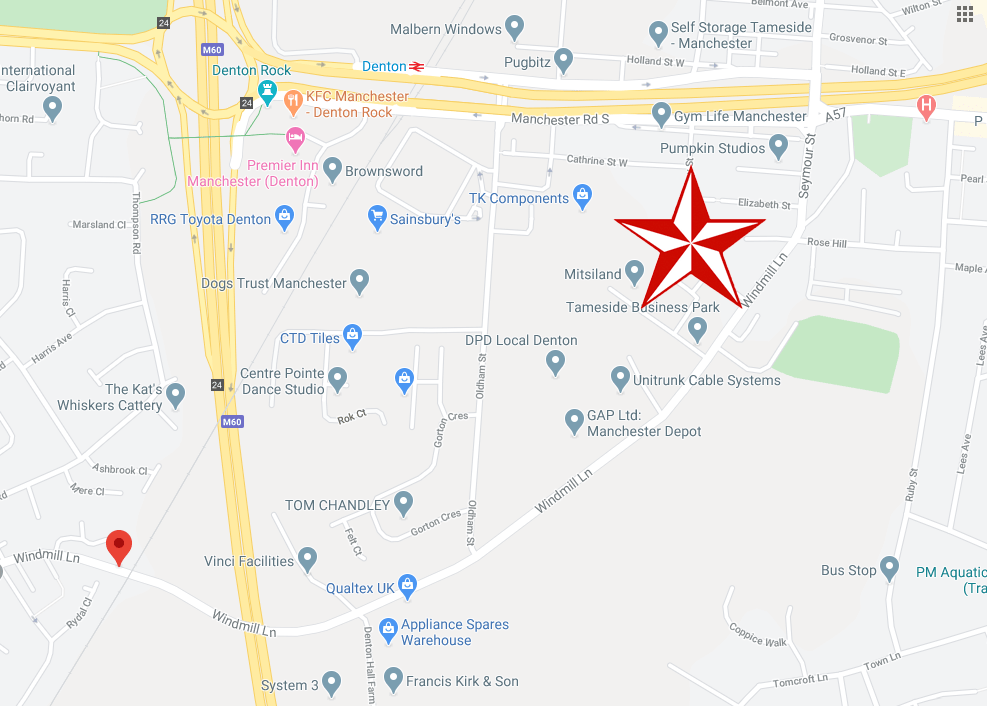
Factory – Windmill Lane Denton

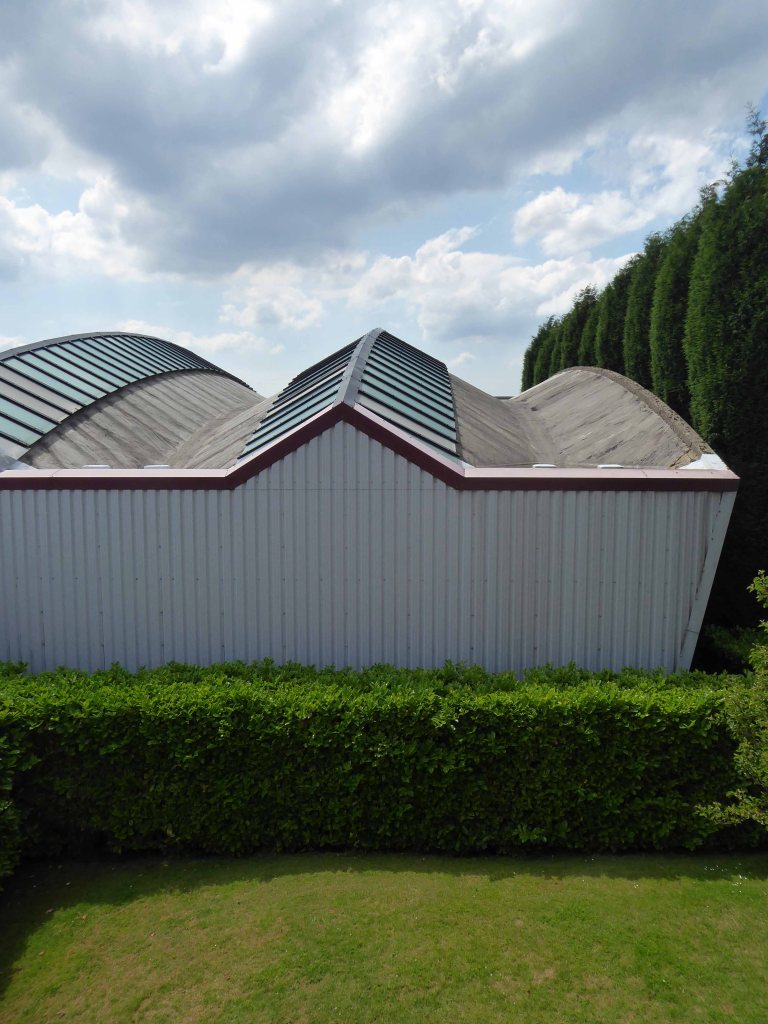
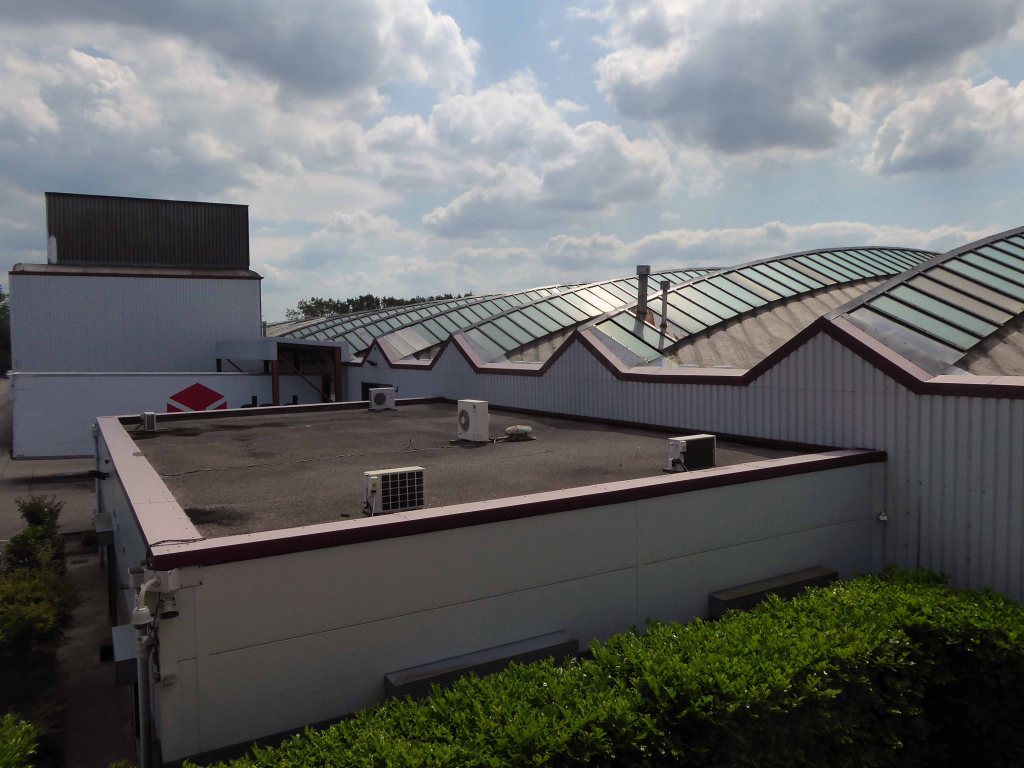
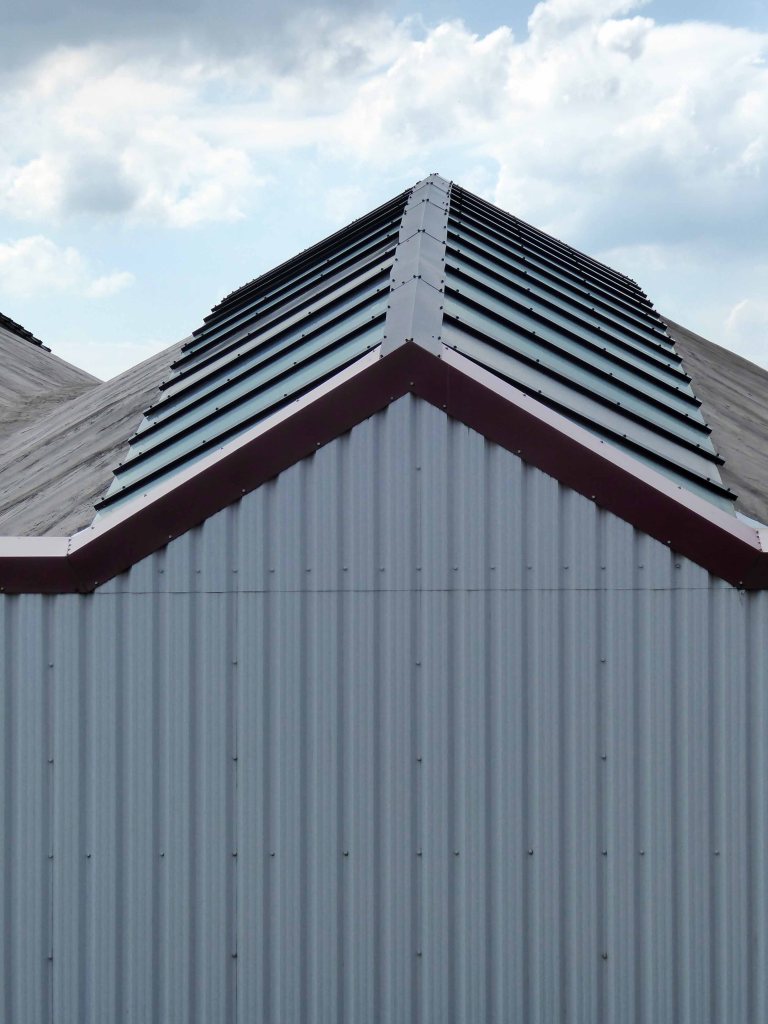
I’ve cycled by here for some fifty years or more – always admiring its serrated roof.

Way back when we would roam around on our bikes, exploring the waste ground adjacent to Jackson’s Brickworks.

Where we would scavenge tape from the Rotunda tip.

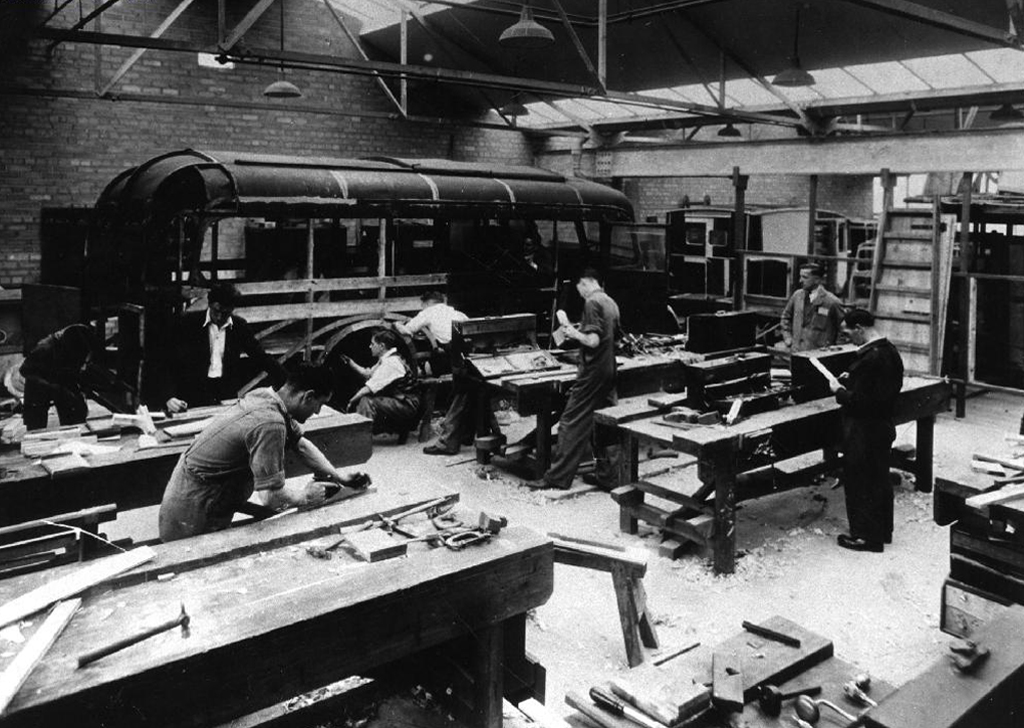
I remember it as a Remploy Centre.

My last 13 years prior to retirement last May were spent at the centre, on Windmill Lane, Denton. Just before I left, a lot of demolition work was done, prior to redevelopment of much of the site.

I seem to remember the place always being referred to locally as Th’ Rehab – the Rehabilitation Centre, a Government training centre, where skills were taught, such as joinery, bricklaying etc, and there was also a Remploy Unit housed there.

Local men could go for a free haircut, administered by a well supervised trainee.

Denton History

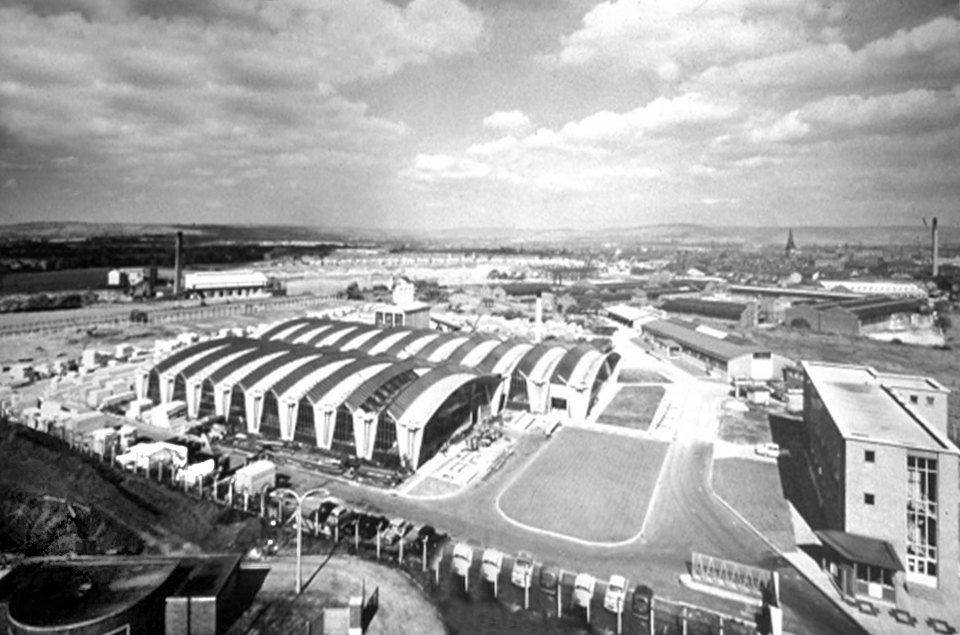
1949 Manchester Local Image Collection

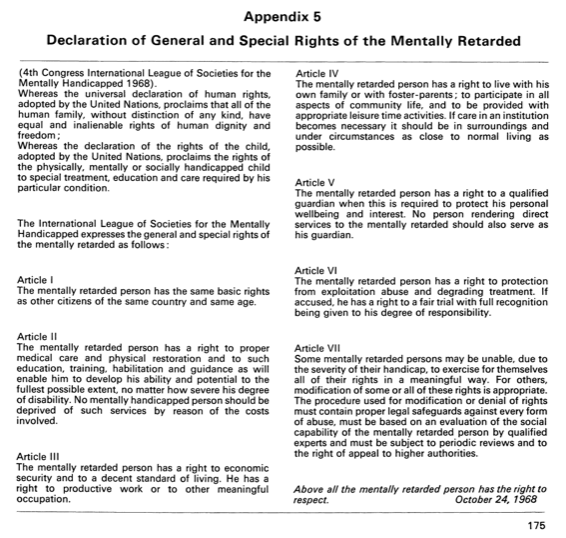
It is listed in a 1968 directory of rehabilitations centres.

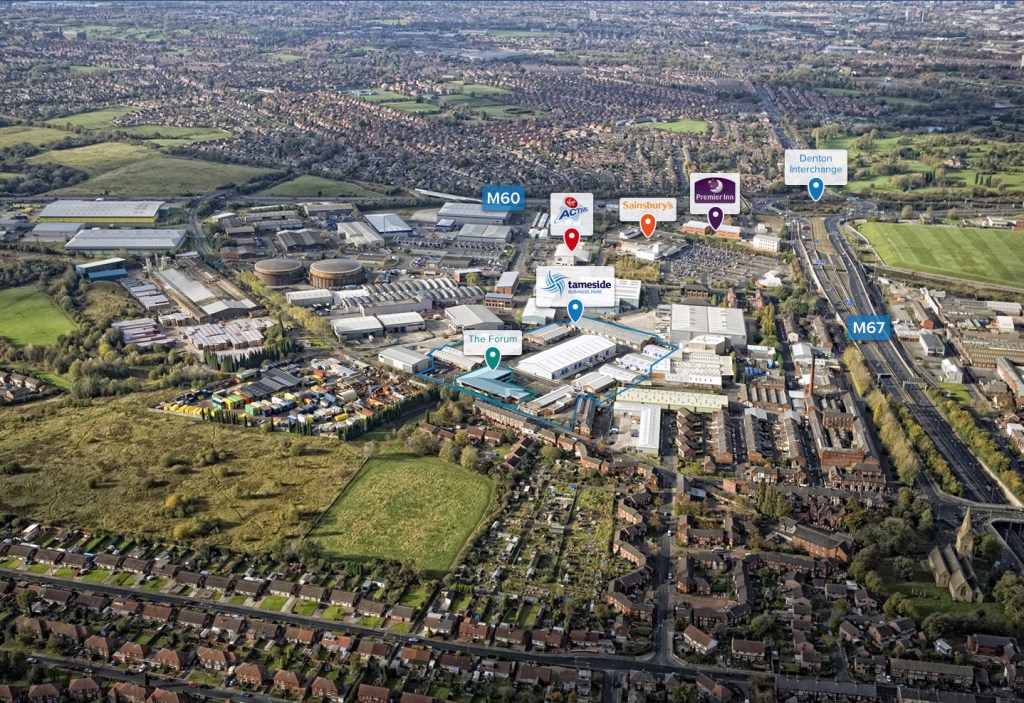
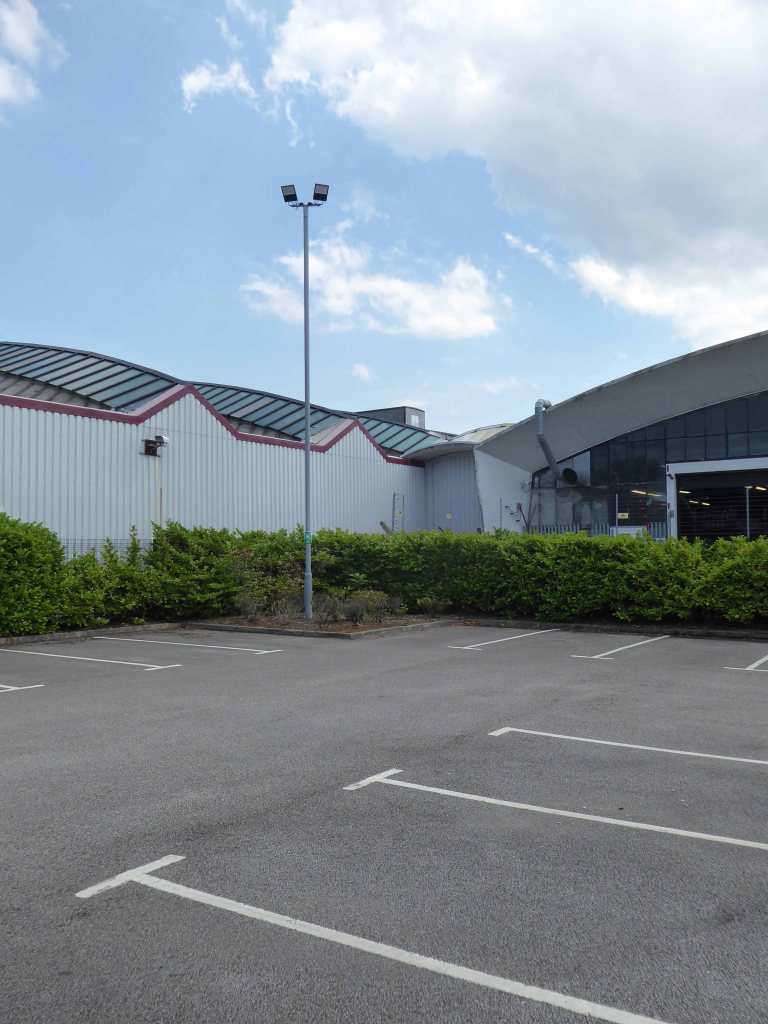
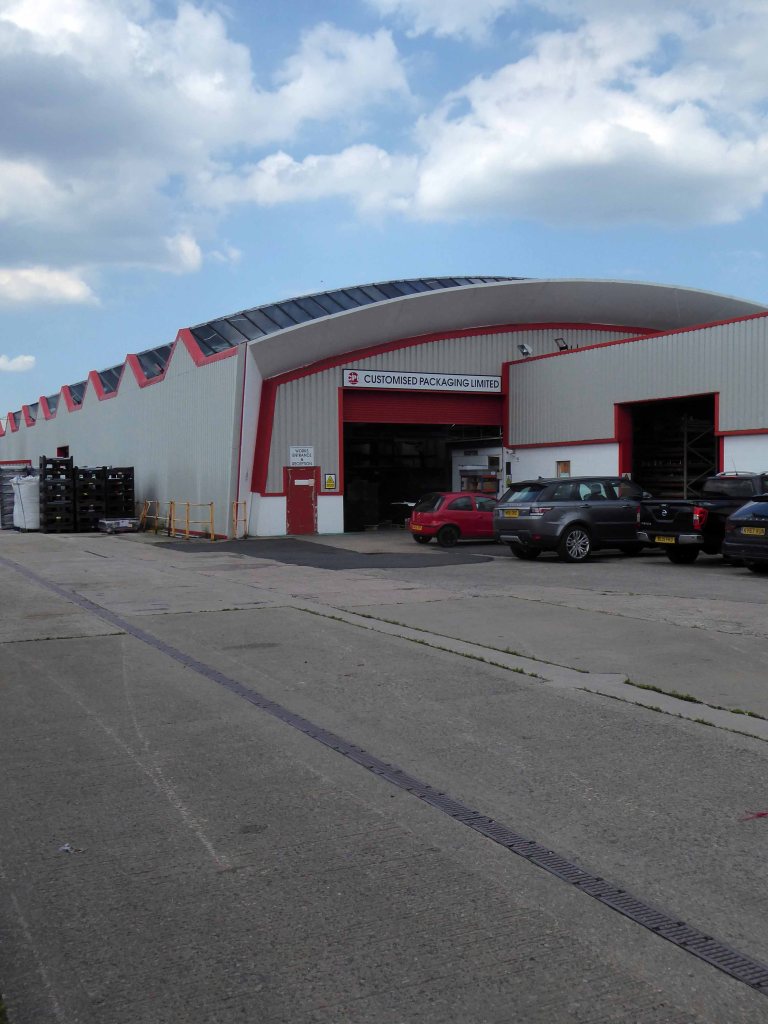
Currently forming part of Tameside Business Park with multiple occupancy.

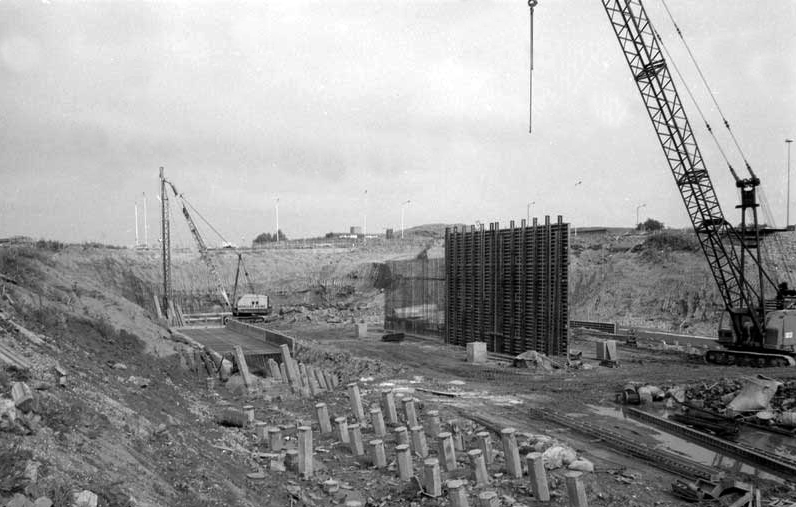
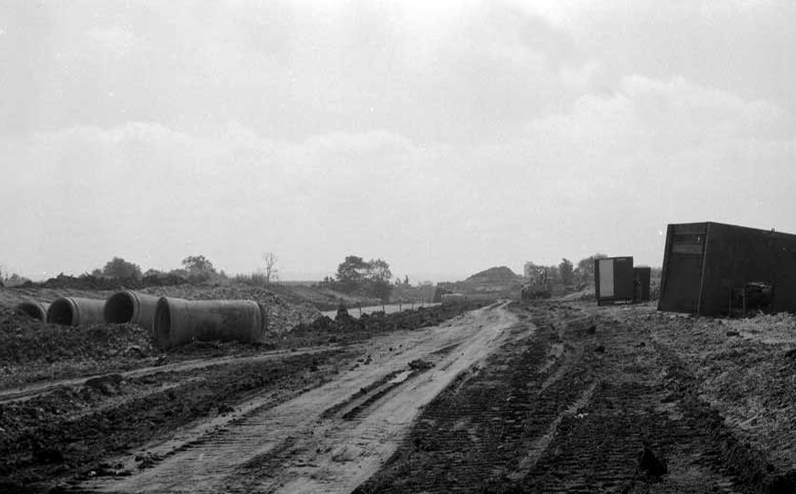
Proximity to the M60, seen here under construction is paramount to its future success.

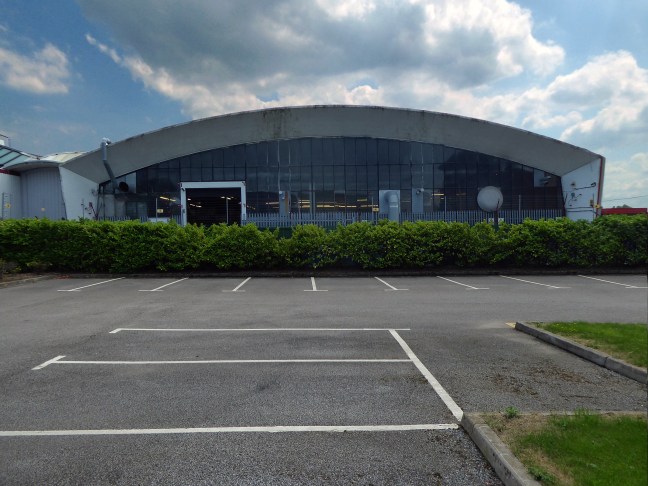
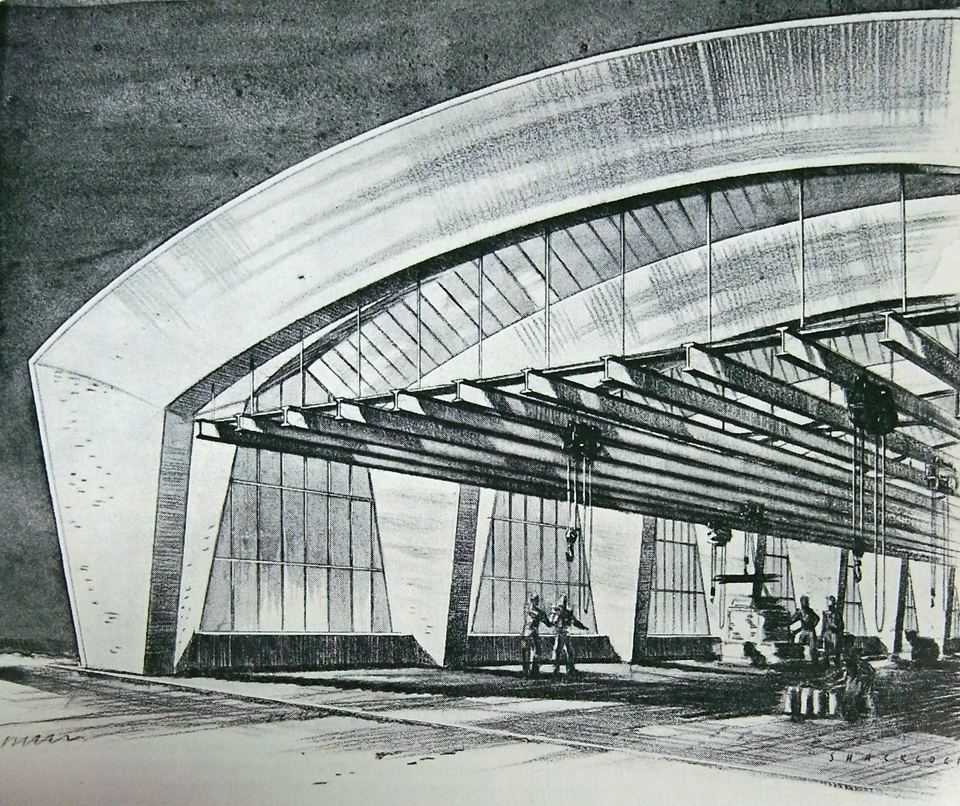
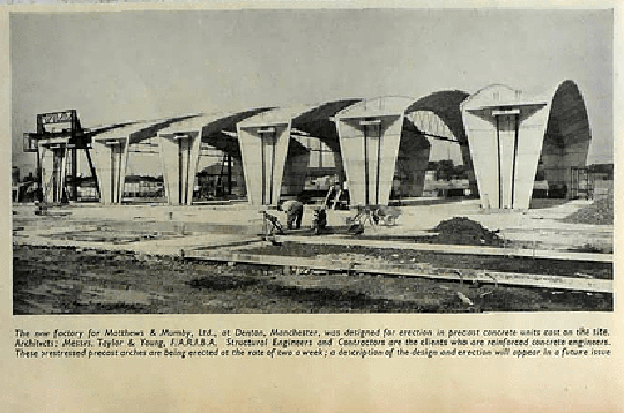
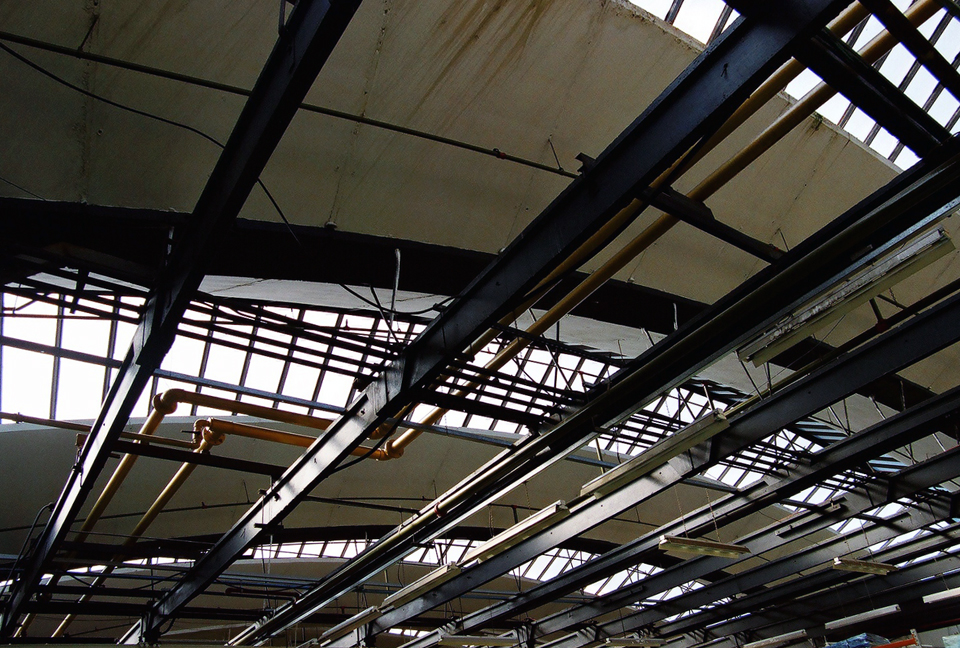
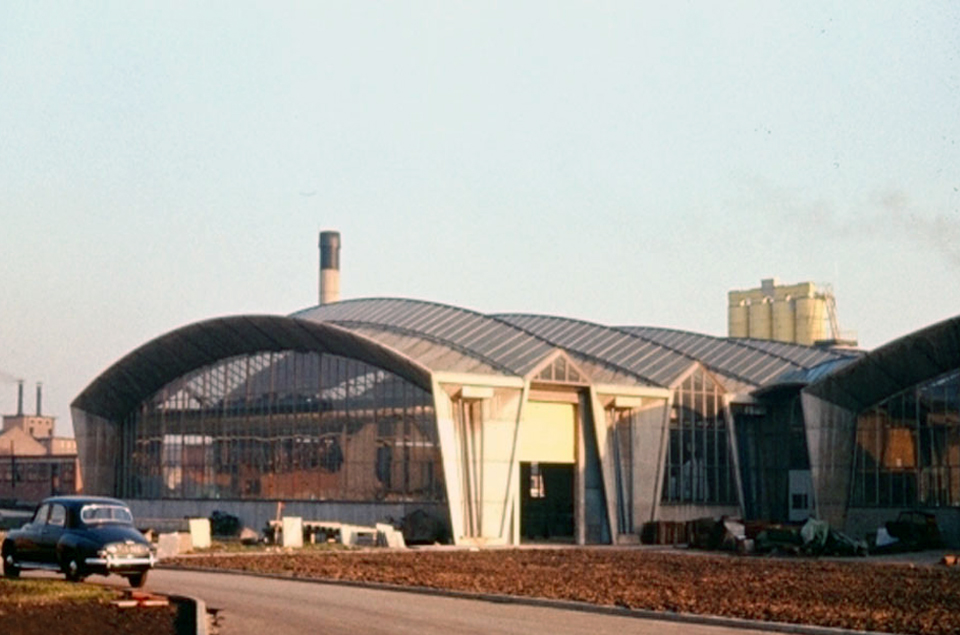
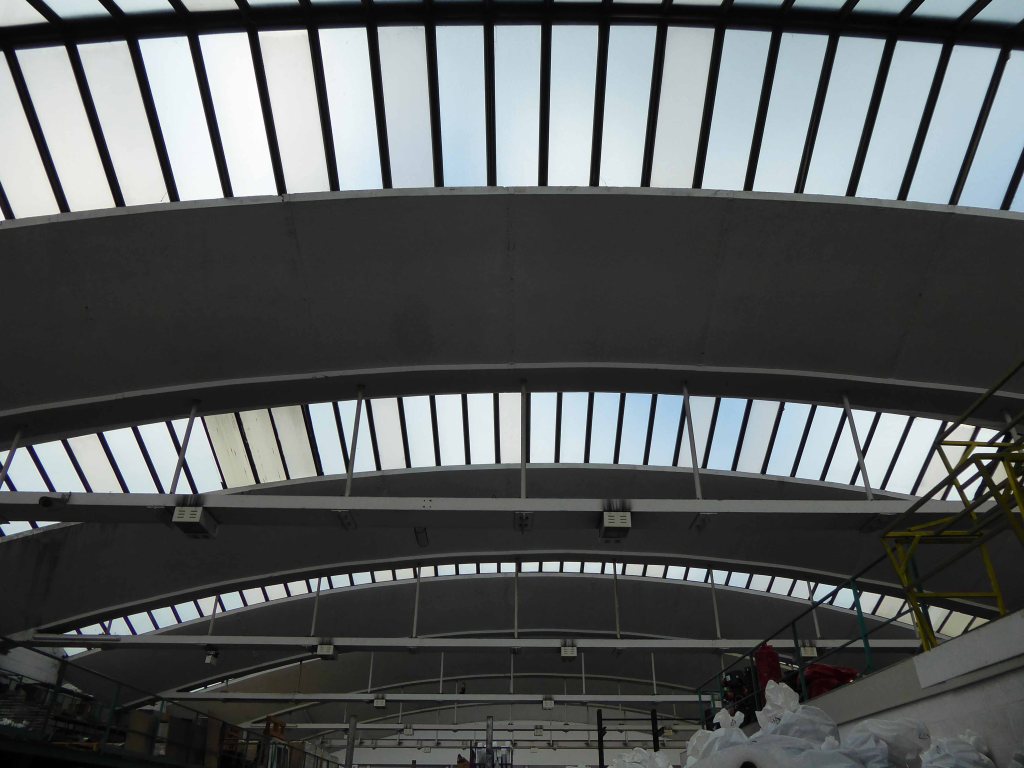
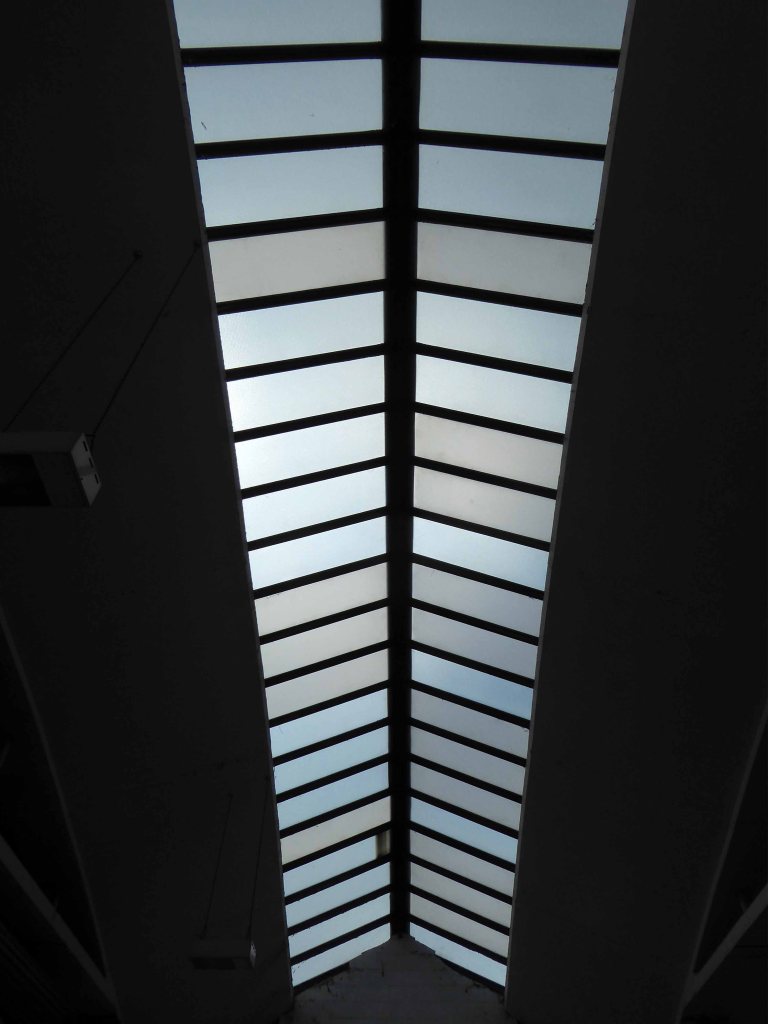
This former production plant for concrete components is now sadly partitioned and houses a number of businesses, only one of which still has a manufacturing base. The engineer for the project was also the client; reinforced concrete engineers, Matthews & Mumby. The intention was to create large floor areas, free from columns, to accommodate fourteen casting beds of about fifty metres in length. The structure of the two sheds was formed from arch units assembled on the ground, jacked into position and post-tensioned to form large tied span arches. Each arch spans approximately thirty metres and was designed to carry up to fourteen one tonne loads along the monorail hangers that ran the length of the factory, centred to each casting bed and suspended from the arches. Lantern section glazing hugs the curve of the arches that act as a reflective surface to provide an even light across the factory floor. The rails and hangers added a further louvered filter to the light, described at the time as ‘the ‘venetian blind’ effect. Originally the elevation between the V shaped columns was also glazed, this has now been filled and significantly reduces the aesthetic presence of the exposed structure and a distinctly ‘modern’ building of the time. 

Mainstream Modern – my thanks to Richard Brook for the text and archive images.

So one sunny day last week, on a lockdown walk I went to take a look around.

The addition of cladding is never an uplifting sight on any site – the integrity of the building is seriously challenged.

Sometimes a former Rehabilitation Centre can do without rehabilitation it seems.

Eastbourne to Hastings

Wednesday 5th August 2015 the last and shortest leg of the journey, feeling fit and well, yet more than somewhat sad that it’s almost all over.

Ten days of cycling almost mostly by the sea – mostly seeing things.

Stopping by Fusciardi’s to say hello to the tiles.

I live in landlocked Stockport, yet yearn for the coastal life.

These recent posts have been put together in June 2020, locked down, going nowhere near there, just here.

There are sections of the seaside ways around yet to be explored, the whole of Cornwall, Wirral to the Lakeland Borders, Cleethorpes to Berwick.

Someday one day soon.

I’d left plenty of time to mooch around Pevensey Bay – Beachlands in particular.

Having made previous visits, I was keen to explore further.

I have paired pairs of homes here – Beachlands.

Along with single singular homes here – Beachlands Again.

What we have here is an abbreviated account of an extraordinary estate.

T Cecil Howitt was responsible for the initial designs, sketches and layout of the first fifty houses in Beachlands, making him both the architect father and inspiration for the estate.

The estate is also home to the so called Oyster Bungalows.

The oyster shell houses, together with the homes on the Beachlands Estate, were a form of kit build, imported from Sweden by local builders Martin and Saunders. The original plan to build envisaged a choice from as many as twelve possible kits, built in four waves, the estate is now studied, photographed and mentioned by architectural historians from across the country.

Pevensey Bay Life

The estate is the embodiment of mutable Modernism – some original details prevail, whilst others are overwritten in the style de jour.

Having strolled and chatted to the warm and friendly residents, what does still permeate the whole development is a loose bonhomie – that easy going, anything goes manner which the seaside embodies.

The Ridgeback World Voyage takes centre stage – thanks for keeping me company every day.

God bless Asda and the tradition of the British gnome – now writ larger than life.

The route from Eastbourne is a low-level level delight which drifts inevitably toward Bexhill on Sea.

Home to the De la Warr Pavillion

It was decided to ask the RIBA to hold a competition to design the new building and the choice of judge was made by its president Sir Raymond Unwin. He selected Thomas S. Tait, who was respected by established architects but was also known to be sympathetic towards the ideals of new ‘modernist’ architects. The Bexhill Borough Council prepared a tight brief that indicated that a modern building was required and that heavy stonework is not desirable.The competition was announced in The Architects Journal of 7 September 1933, with a closing date of 4 December 1933. Two hundred and thirty designs were submitted and they were exhibited at the York Hall in London Road, from 6 February to 13 February 1934. The results were announced in the Architects Journal of 8 February 1934 and the £150 first prize was won by Erich Mendelsohn and Serge Chermayeff.

– It says so here.

A stroll around town to catch a glimpse of the local ghosts.

Then I’m on my way, the last few miles into St Leonards and Hastings.

A few pints of Carnival.

And a final night night.

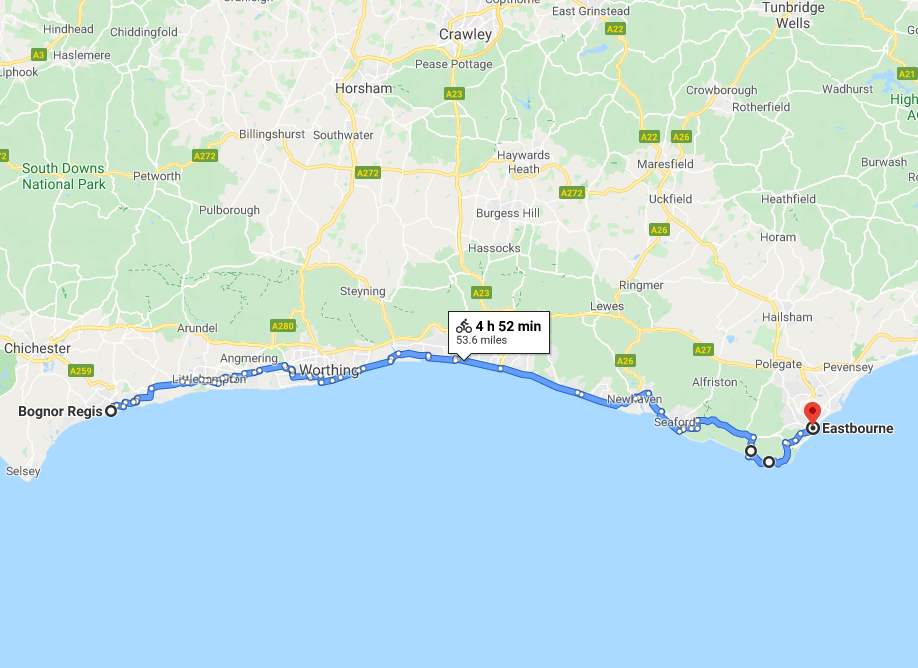
Bognor Regis to Eastbourne

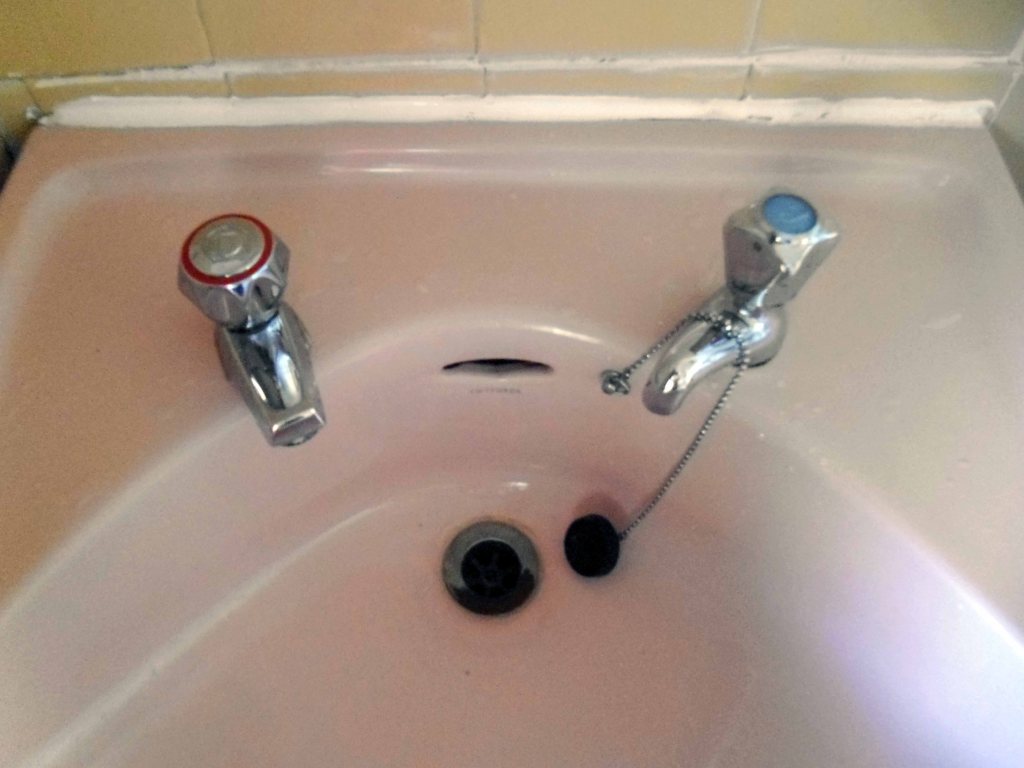
It’s Tuesday 5th August 2015 and the taps don’t match – is this a good omen?

Or simply proprietorial pragmatism?

And why is the sink a funny shape?

Any road up we’re off up the road, the sun’s a shining and here we are in Littlehampton.

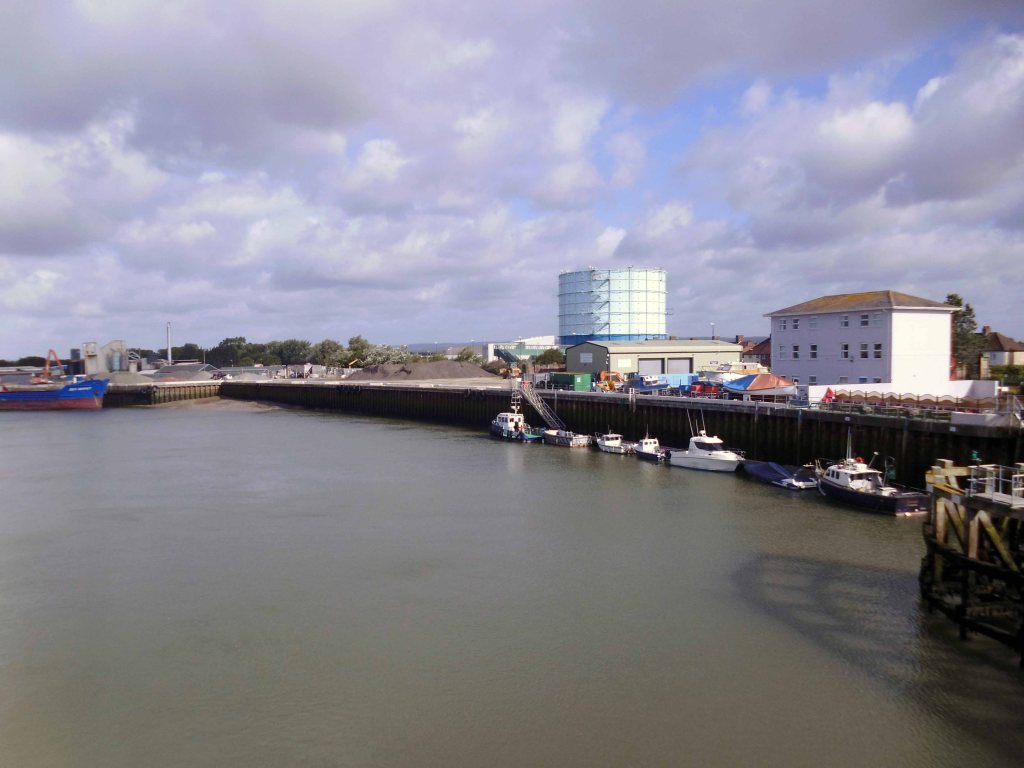
Looking at a pale blue gas holder, some way off in the middle distance.

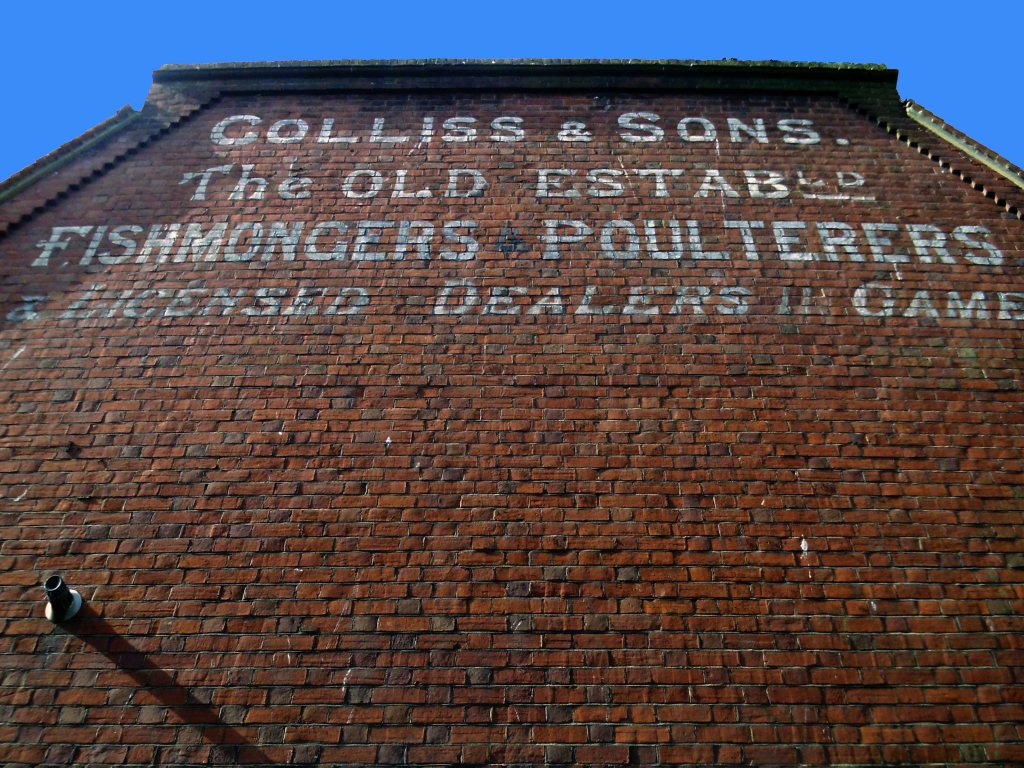
Staring up at a fishmonger’s ghost.

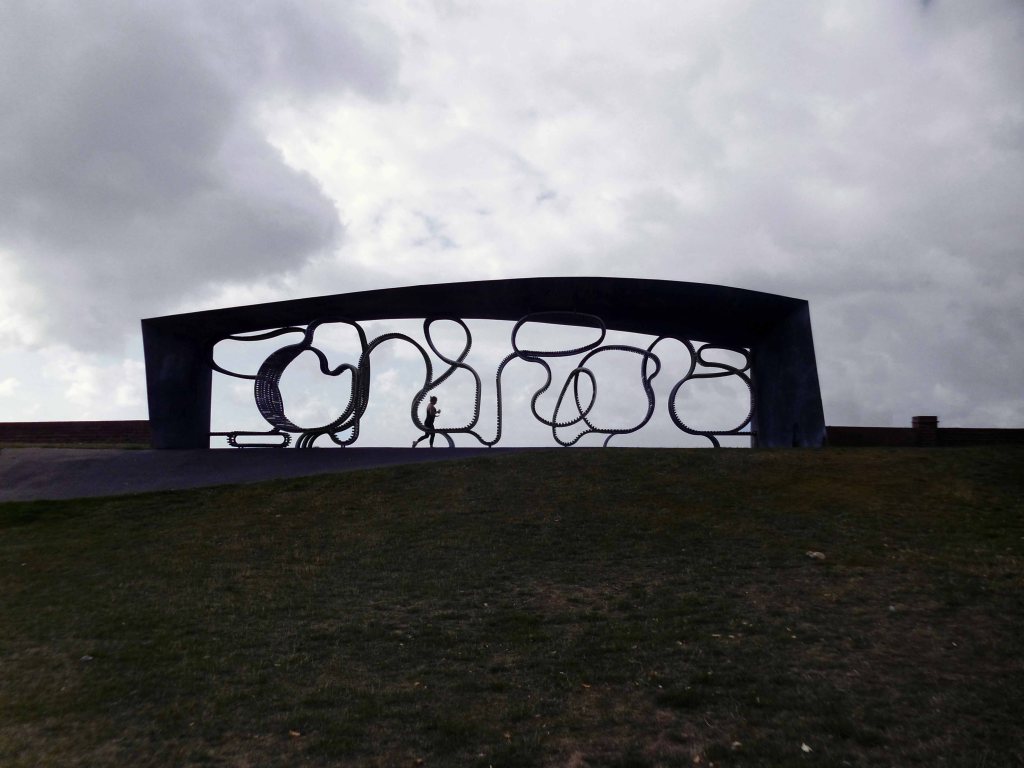
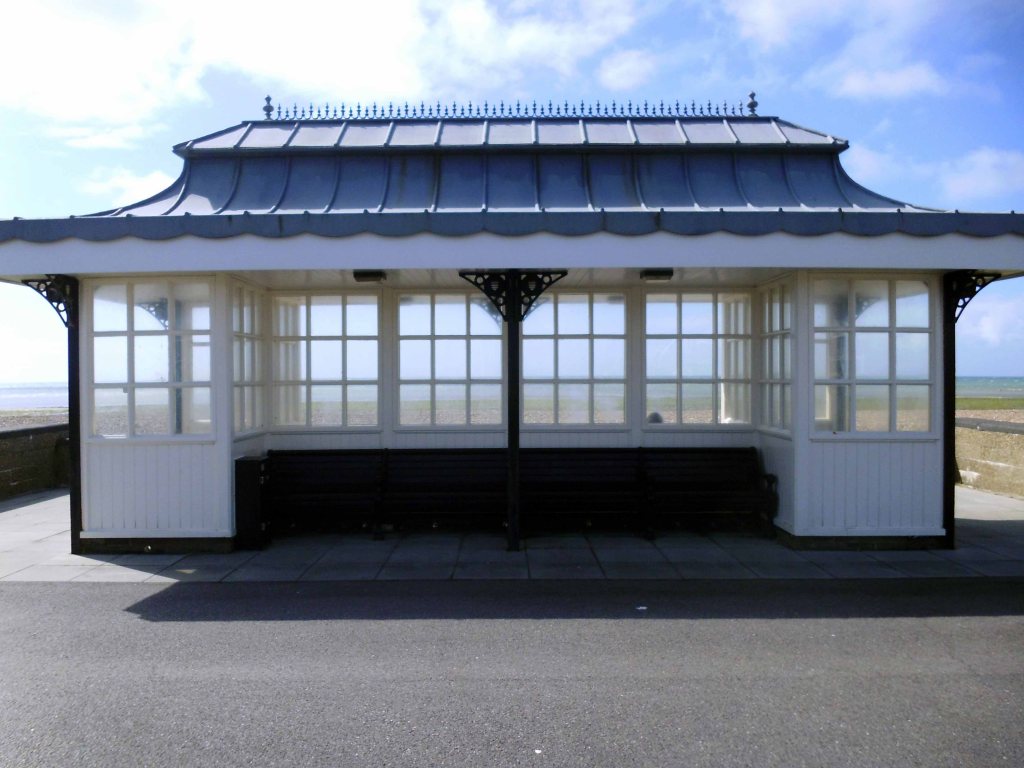
Passing by an ultra-squiggly seaside shelter as a runner passes by.

The Long Bench at Littlehampton is thought to be the longest bench in Britain and one of the longest in the world. The wood and stainless steel bench ‘flows’ along the promenade at Littlehampton in West Sussex – curving round lamp posts and obstacles, twisting up into the seafront shelters, dropping down to paths and crossings.

The bench was opened in July 2010 and can seat over 300 people. It was funded by Arun District Council and CABE’s ‘Sea Change’ capital grants programme for cultural and creative regeneration in seaside resorts. The bench was also supported by a private donation from Gordon Roddick as a tribute to his late wife Anita, the founder of the Body Shop, which first began trading in Littlehampton.

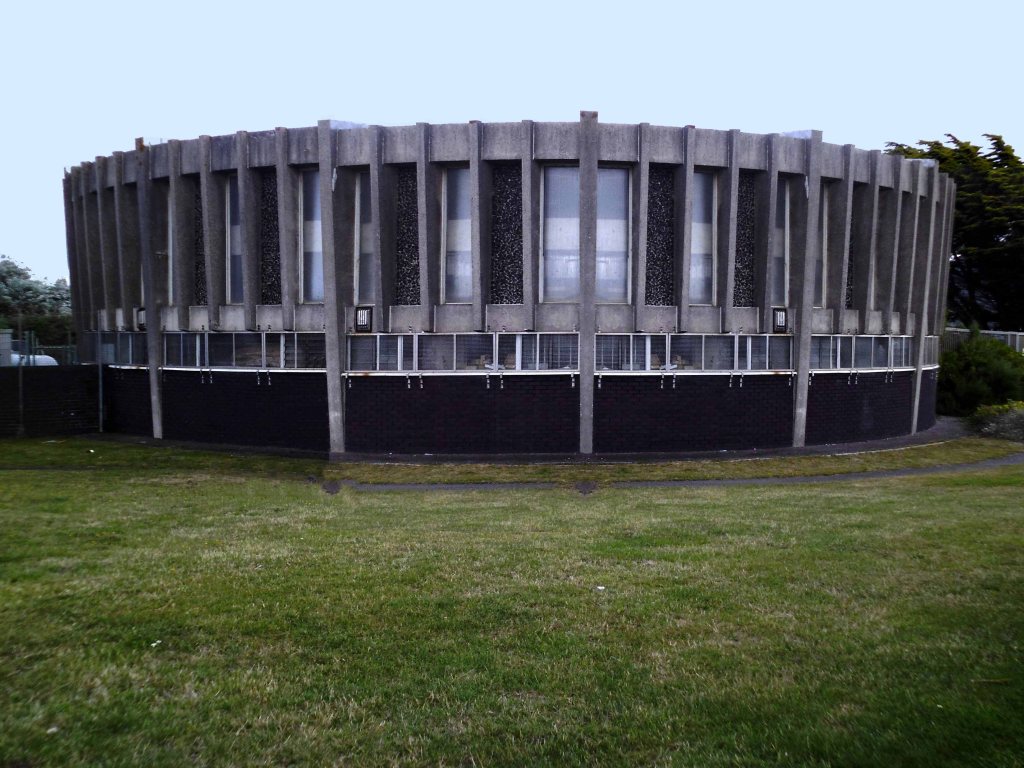
Water treatment plant.

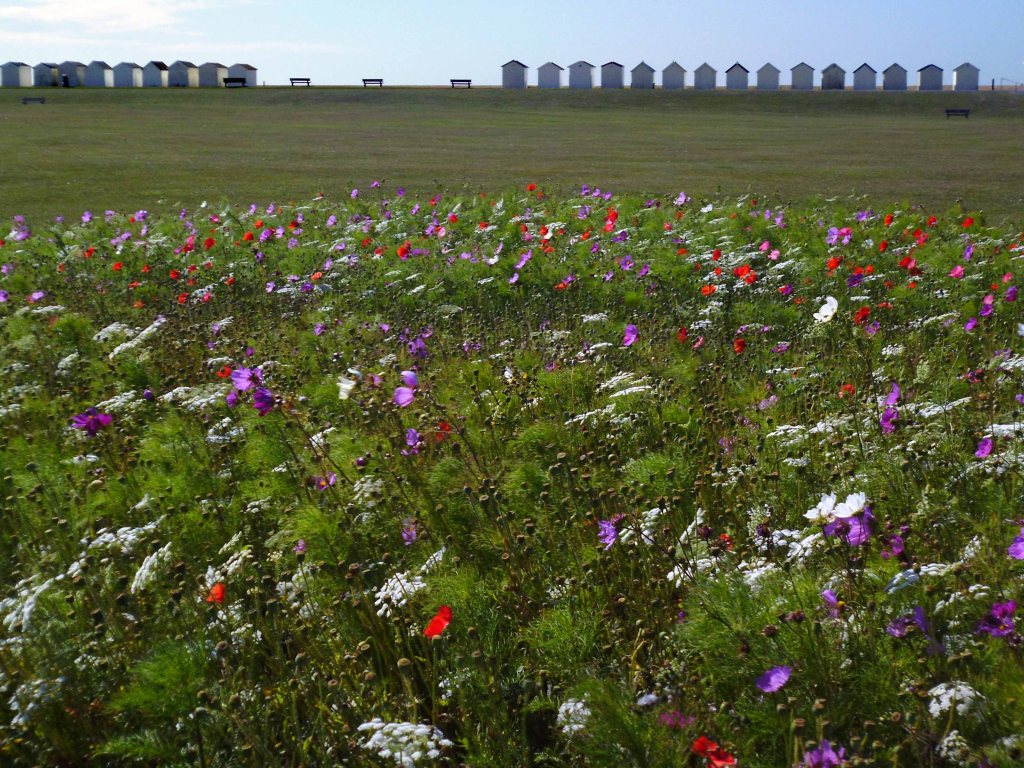
Nothing lifts the spirits quite like a wildflower meadow.

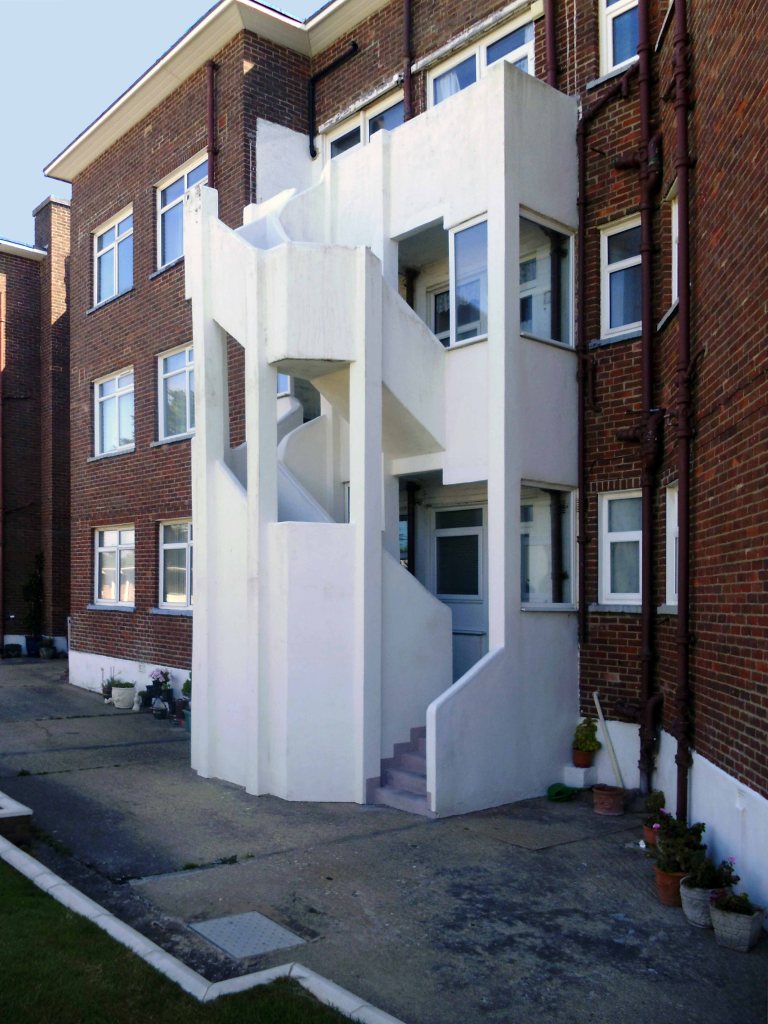
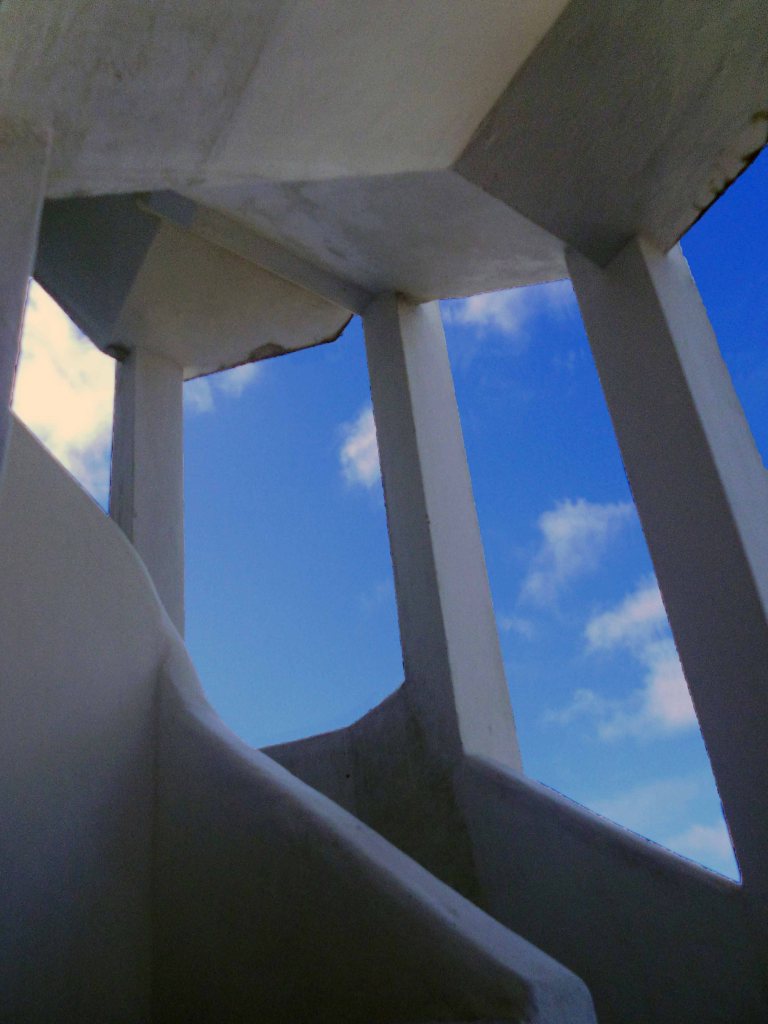
Imagine my surprise having gone around the back – an expressionist concrete spiral stairway.

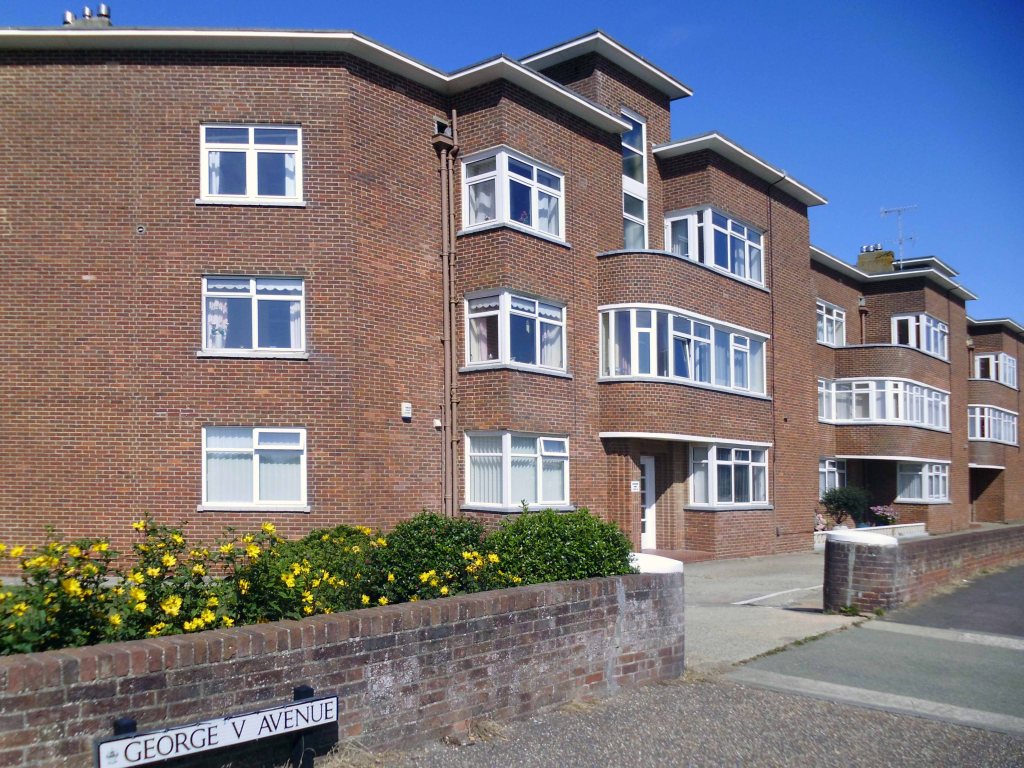
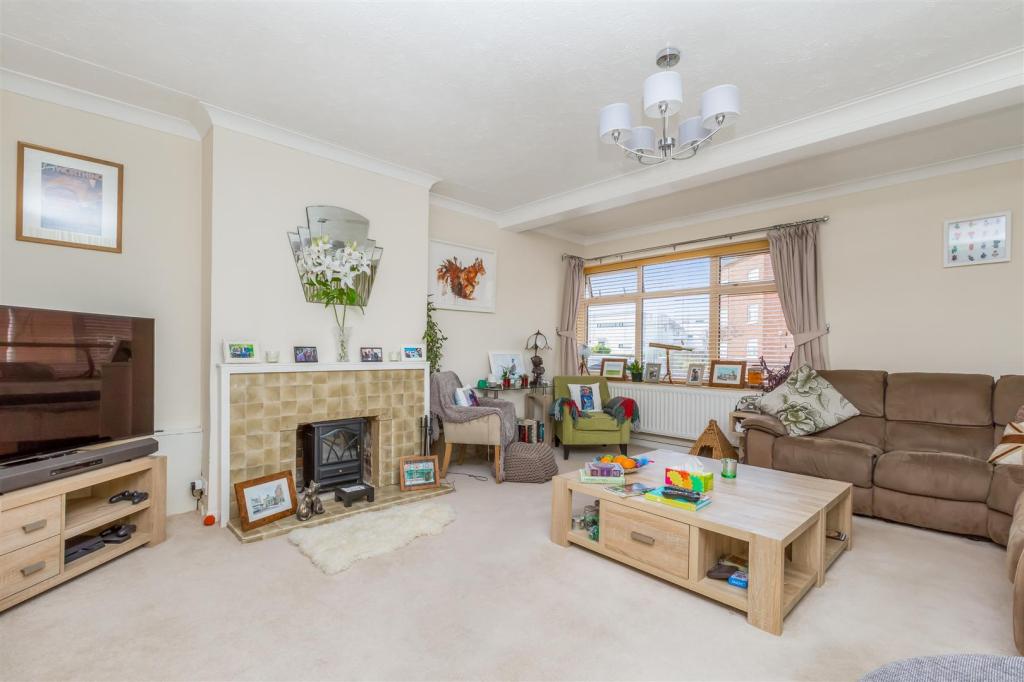
Letting the sky leak in here at Burlington Court in Goring on Sea

The phrase deceptively spacious is one that is often overused within the property industry, however it sums up this ground floor flat prospectively. Offering a great alternative to a bungalow and providing spacious and versatile living accommodation, this is an absolute must for your viewing list.

Prime Location £250,000

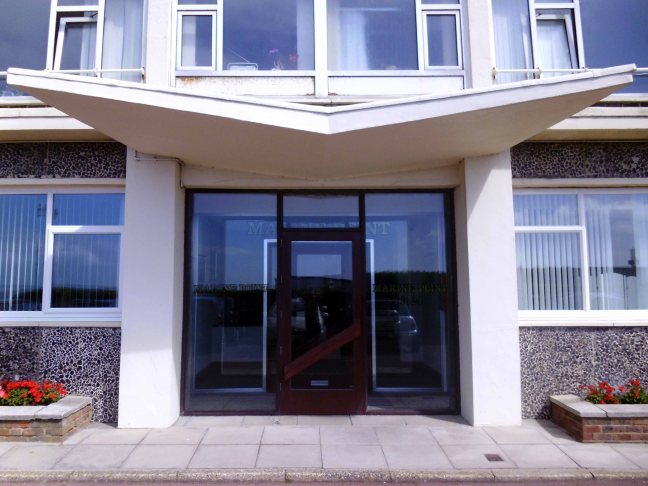
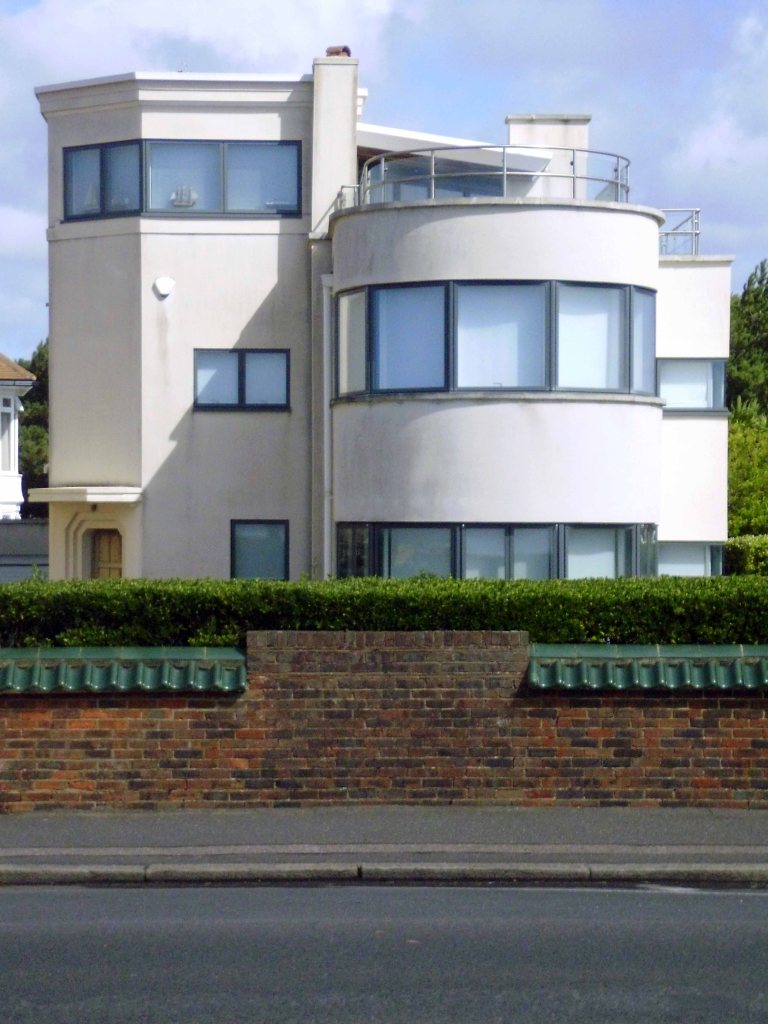
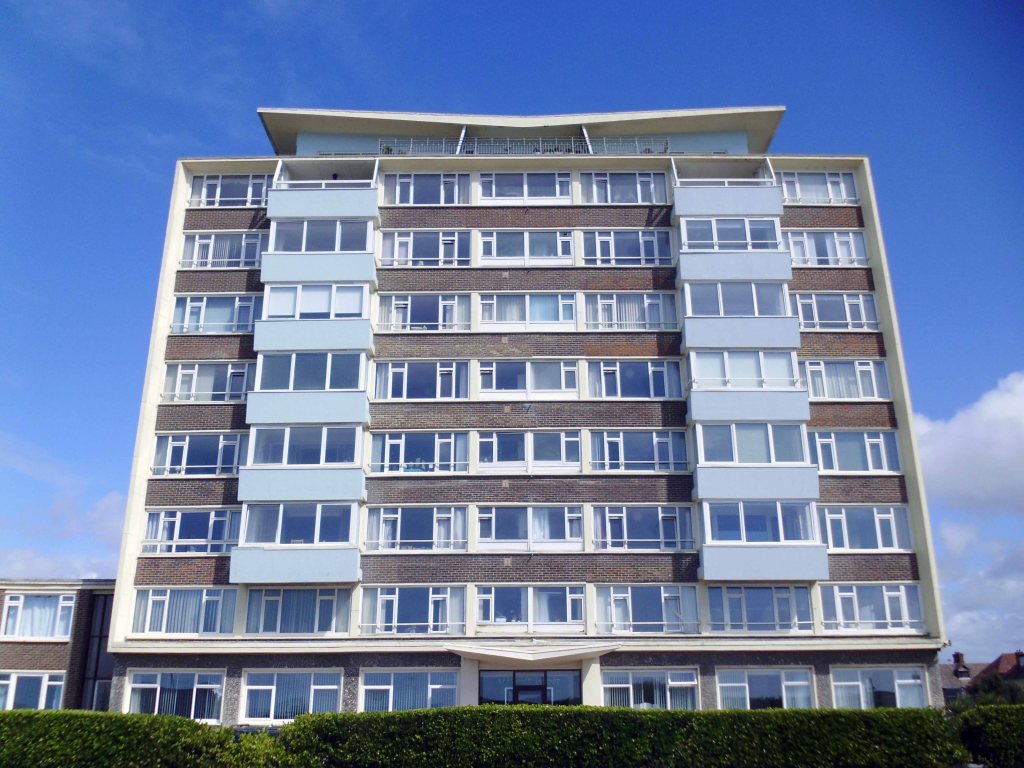
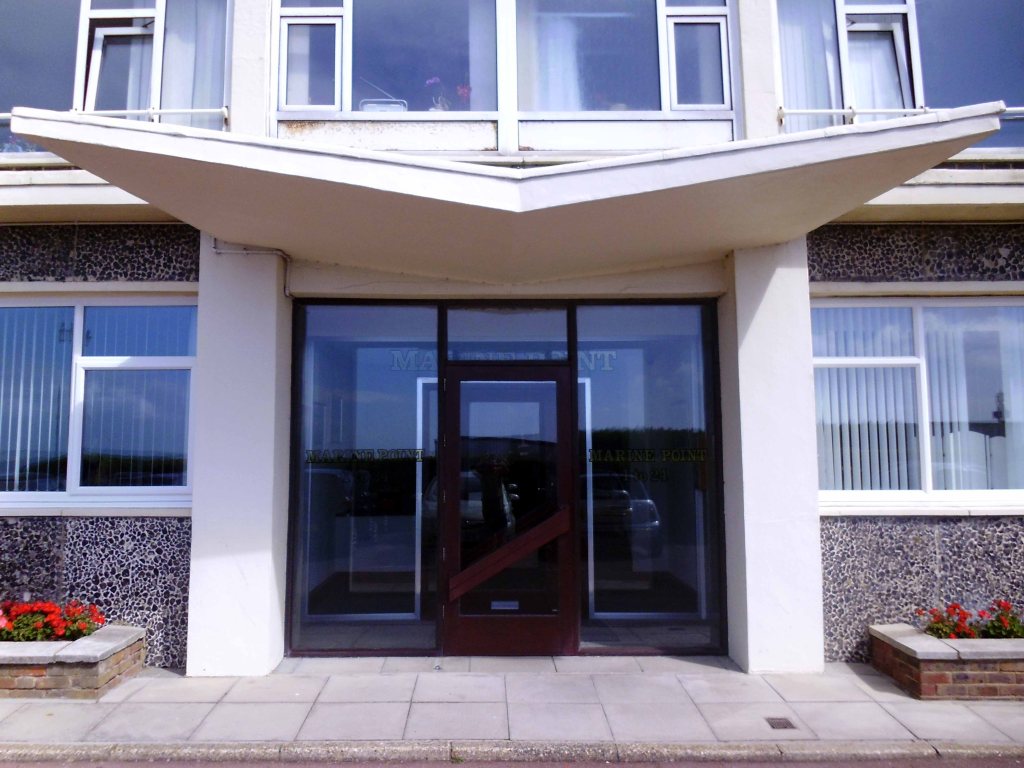
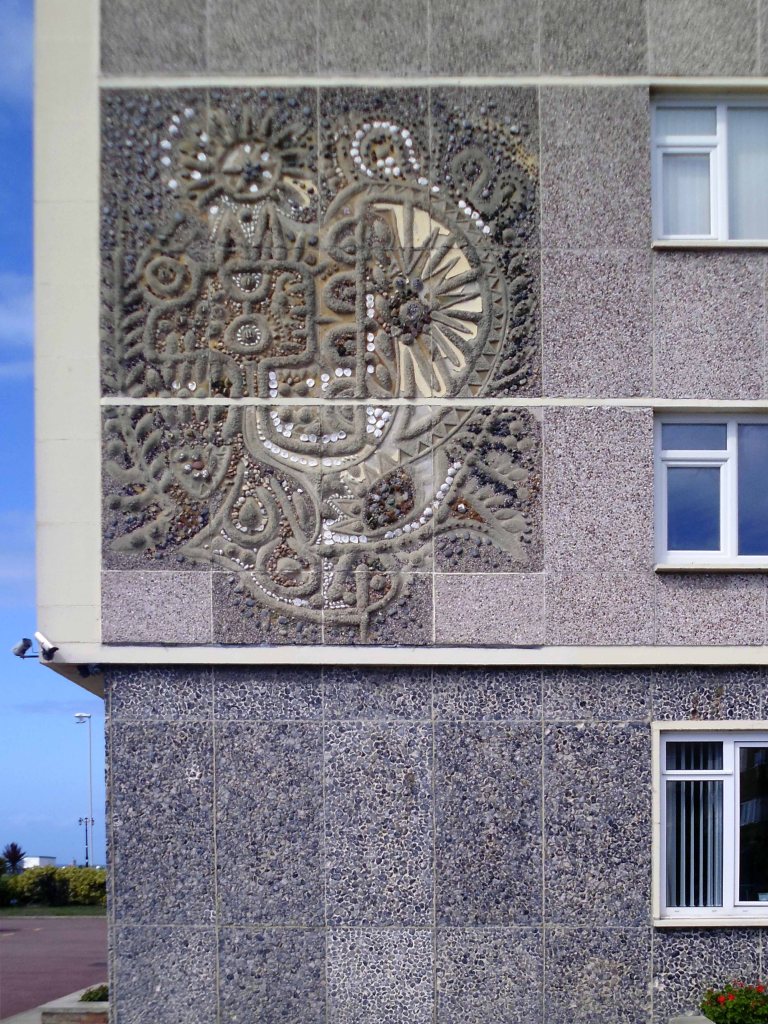
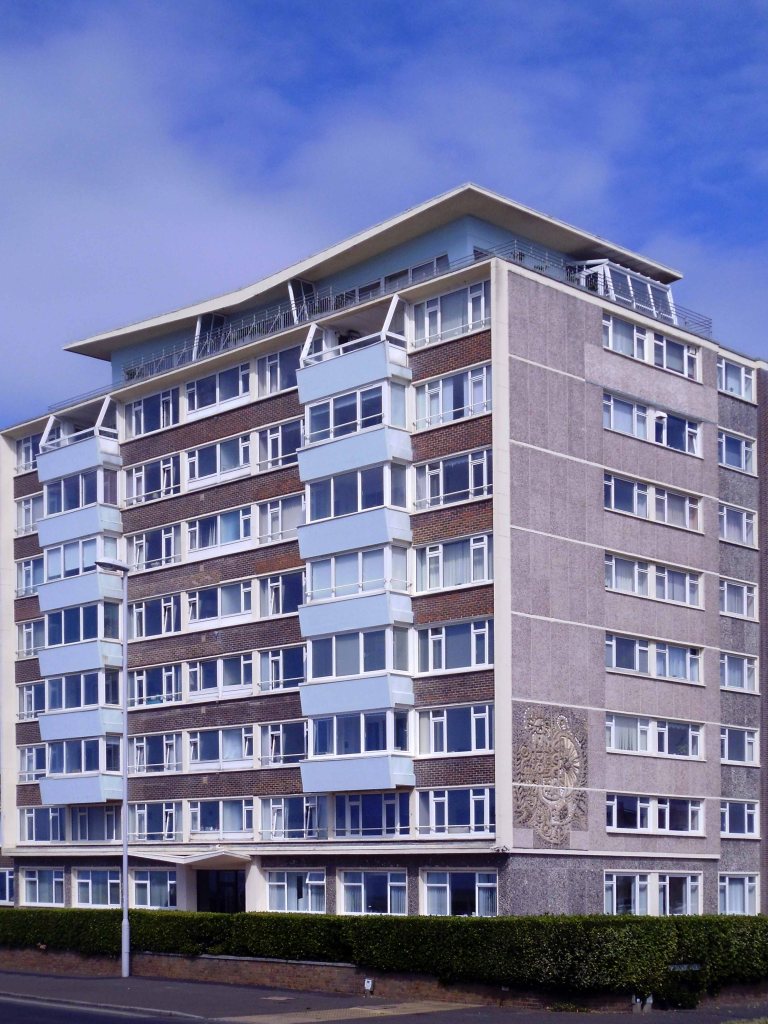
What a delightful Modernist frieze on the side of Marine Point – Worthing!

With lifts to all floors this triple aspect corner apartment is situated on the fifth level and has outstanding panoramic sea views across from Beachy Head to Brighton through to the Isle of Wight. It is also benefits from stunning South Down views to the west and north. The property has been recently refurbished to a high specification and includes features such as: Quick-Step flooring, security fitted double glazed windows, a hallway motion sensor lighting system, extensive storage space and two double bedrooms.  

On The Market £450,000

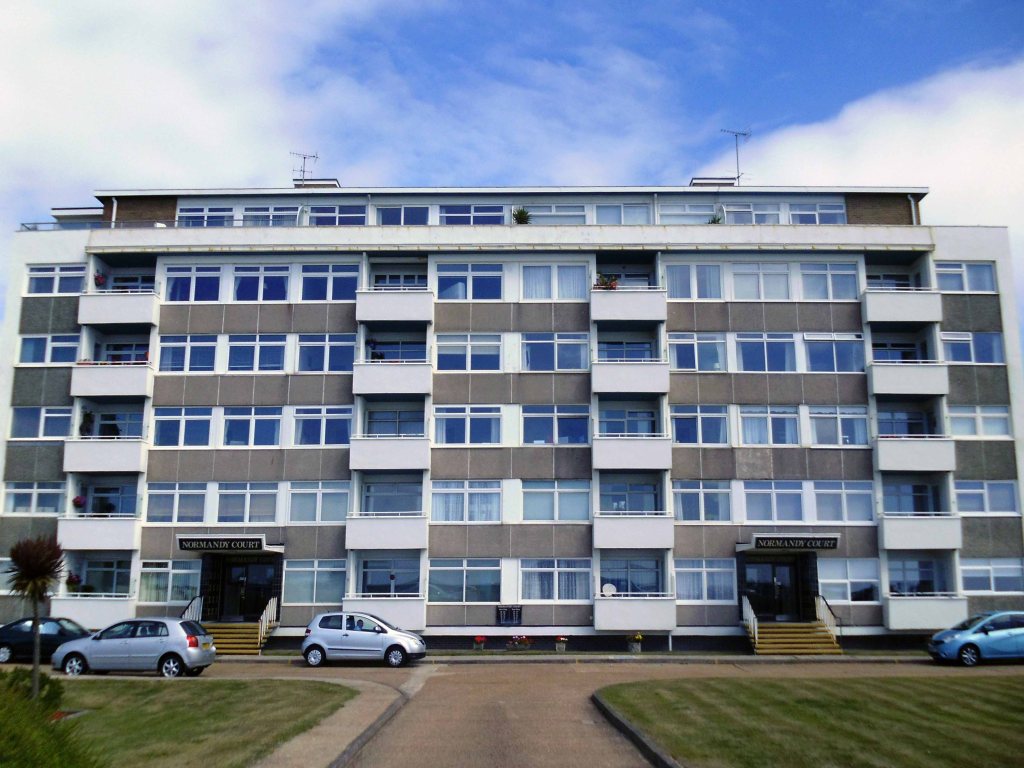
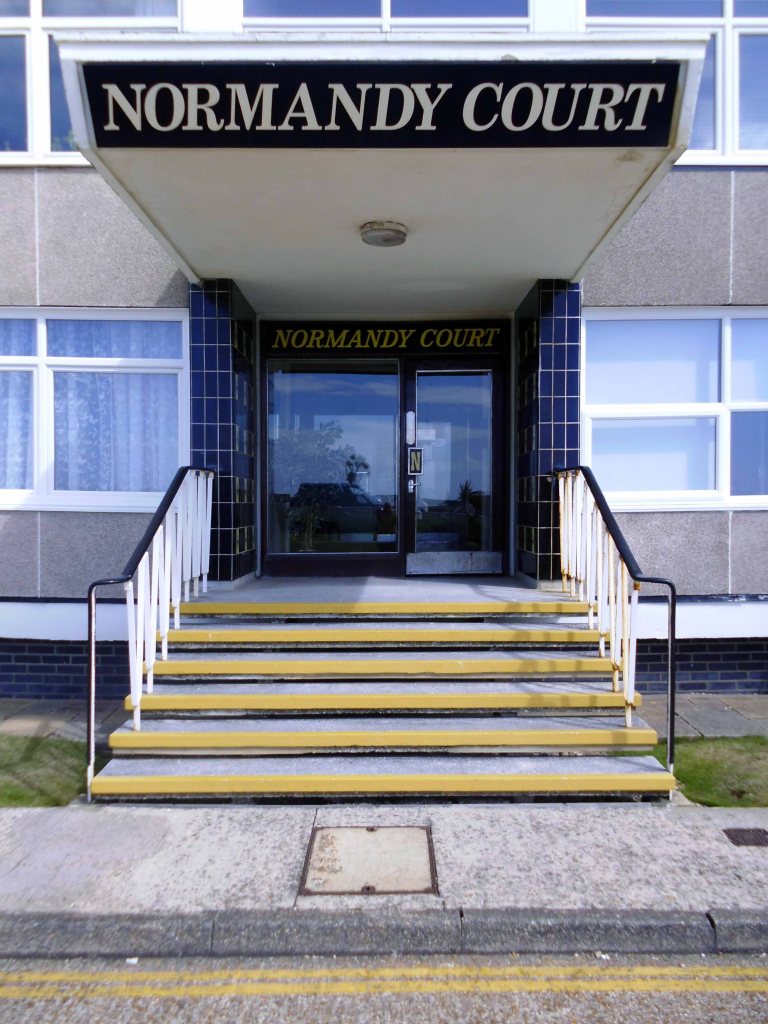
Fox and Sons are delighted to offer For Sale this immaculate seafront penthouse located within the highly desirable Normandy Court situated on the sought after West Parade, Worthing. Upon entry you will notice that the communal areas are kept in good condition throughout.

Fox and Sons £325,00

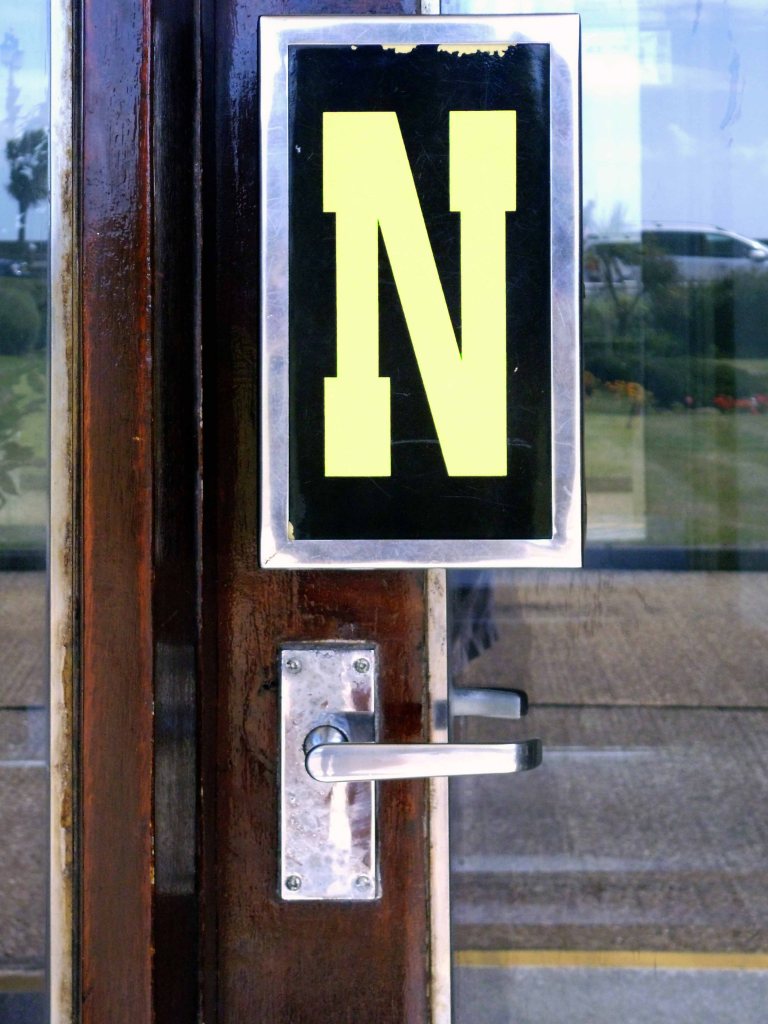
The finest N in the land!

One of the finest modular pre-cast concrete car parks in the land.

Borough council officers have recommended developing the Grafton car park, with a fresh study recommending that building new homes there is key – saying it is important to help revitalise the town centre and bring in new cutlural and leisure activities.

The car park is currently undergoing essential maintenance to be able to keep it open in the short term but the recommendation is that it should eventually be demolished to make way for the new development.

Spirit FM

In the meantime they have painted it a funny colour.

On the concrete Undercliff on my way out of Brighton.

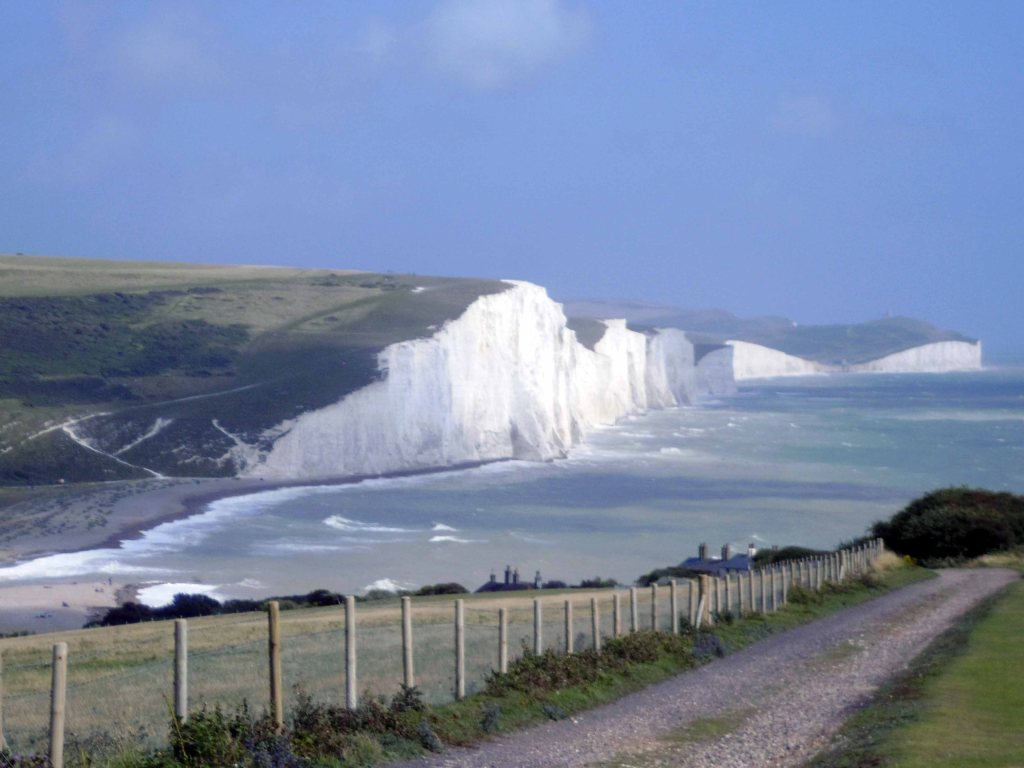
The Seven Sisters in view.

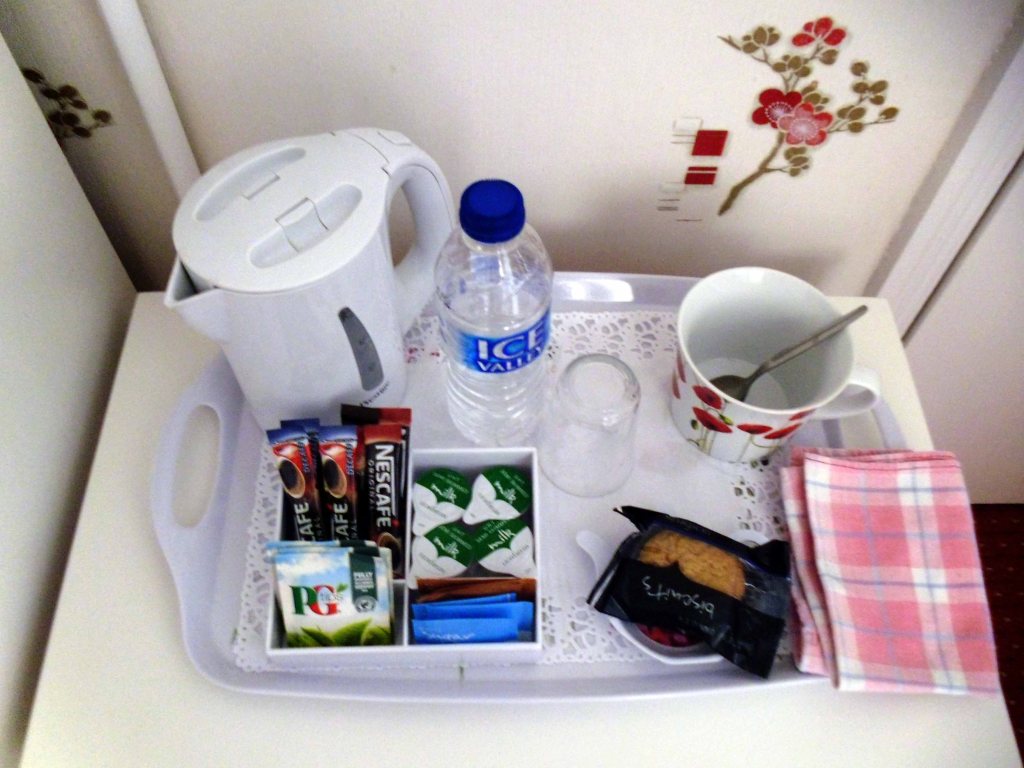
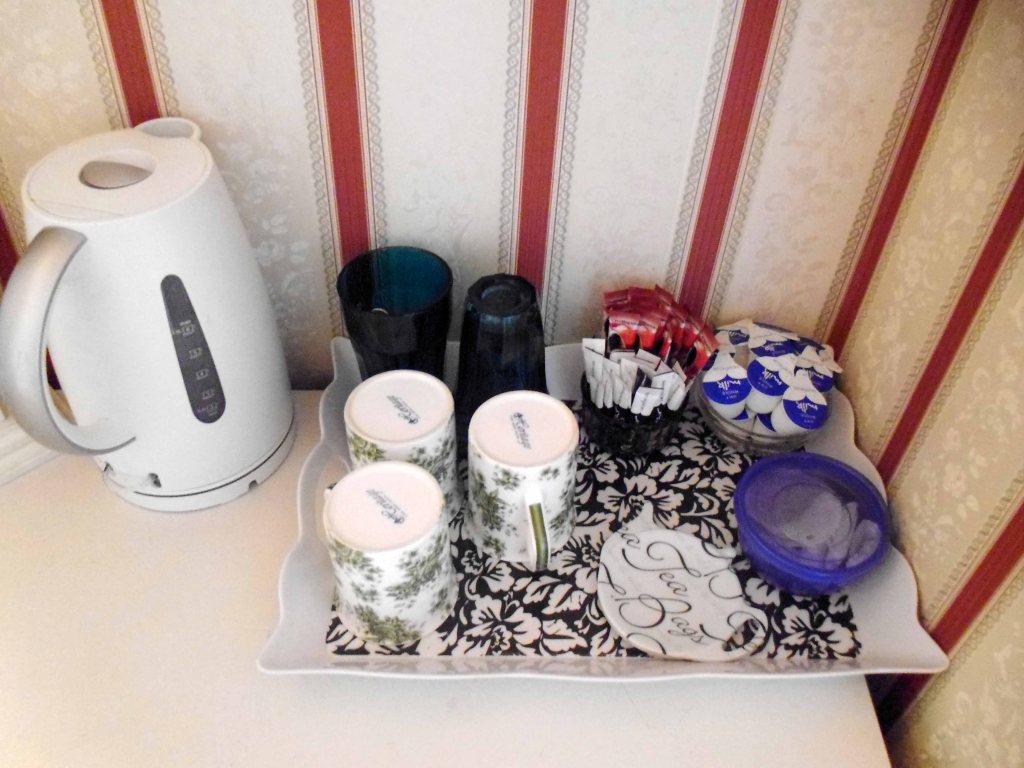
Before you know it you’ve booked into an Eastbourne B&B enjoying the multiple benefits of the complimentary biscuits and a mini-kettle brew.

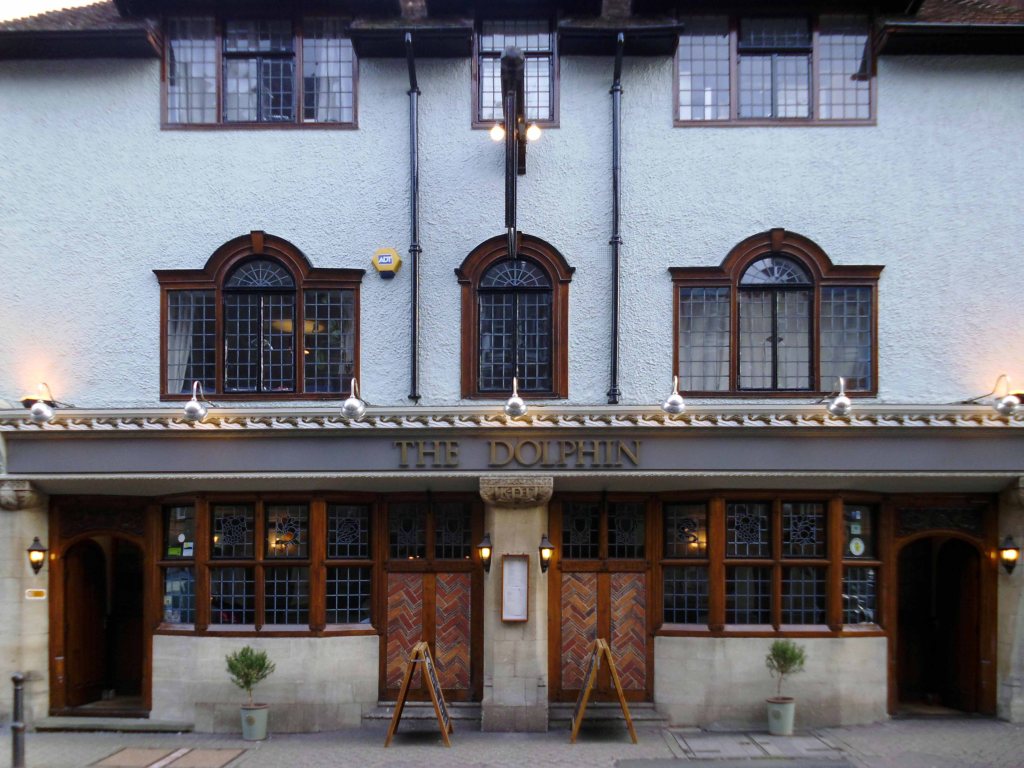
Followed by a pint in the delightful Dolphin.

A stroll around town.

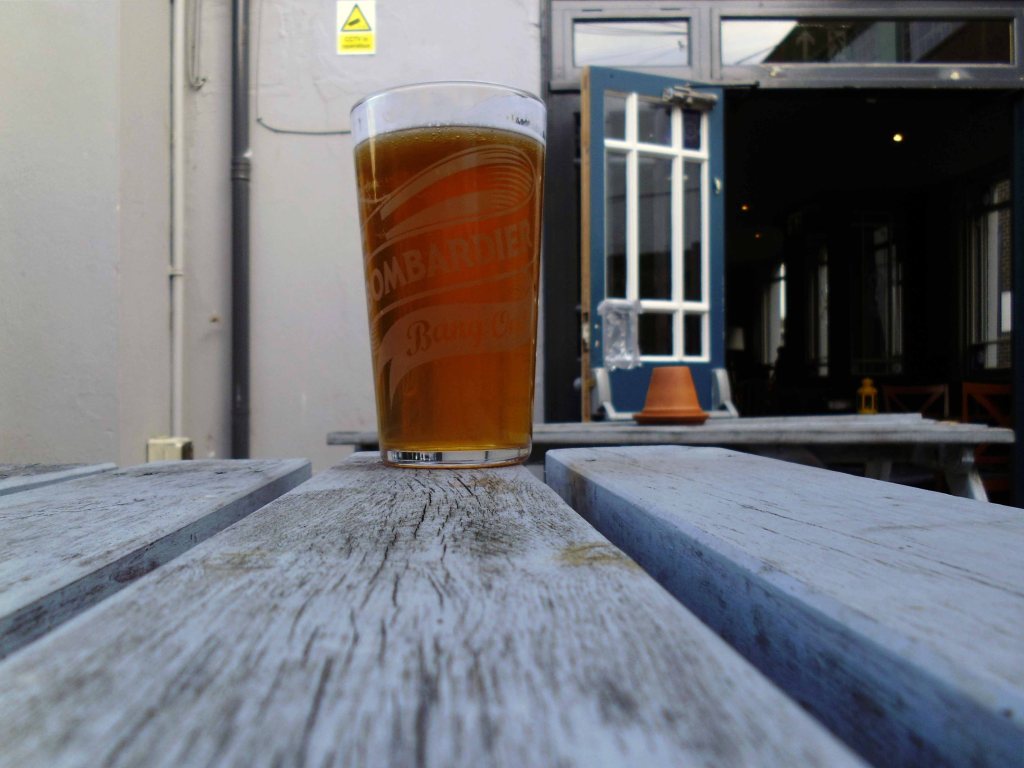
Returning to the backyard of The Dolphin.

Another pint then.

Night night.

Portsmouth to Bognor Regis

Monday 3rd August 2015 one finds oneself wide wake in the Rydeview Hotel.

Faced with a breakfast best described as indescribable.

I arose and departed, not angry but hungry.

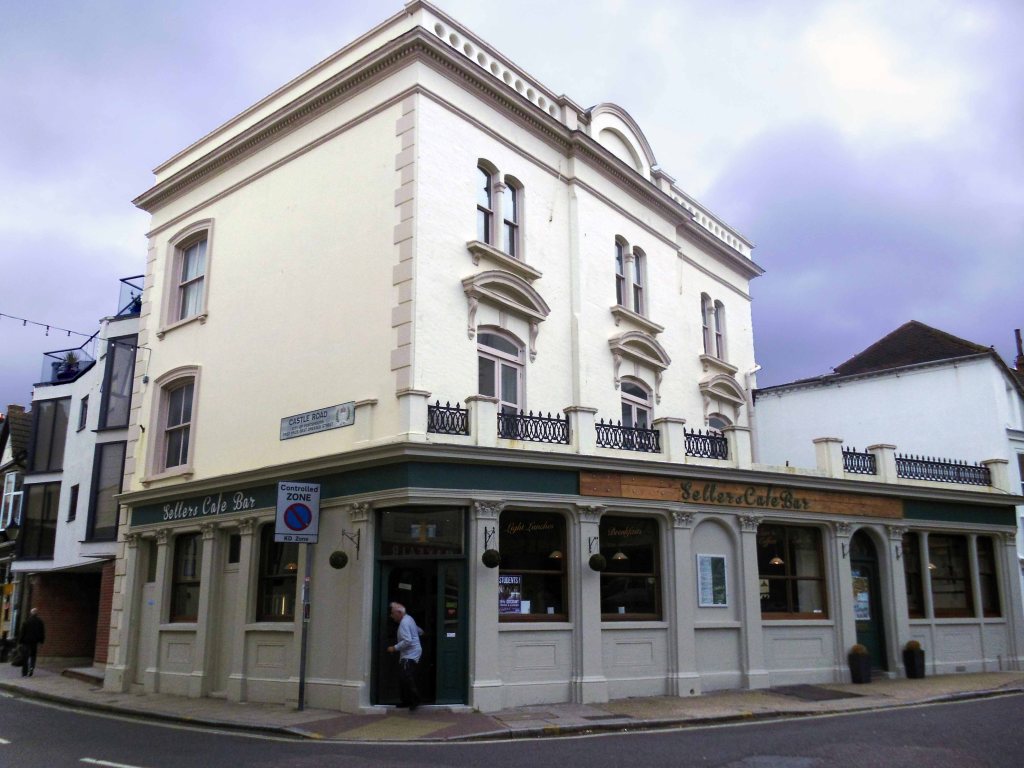
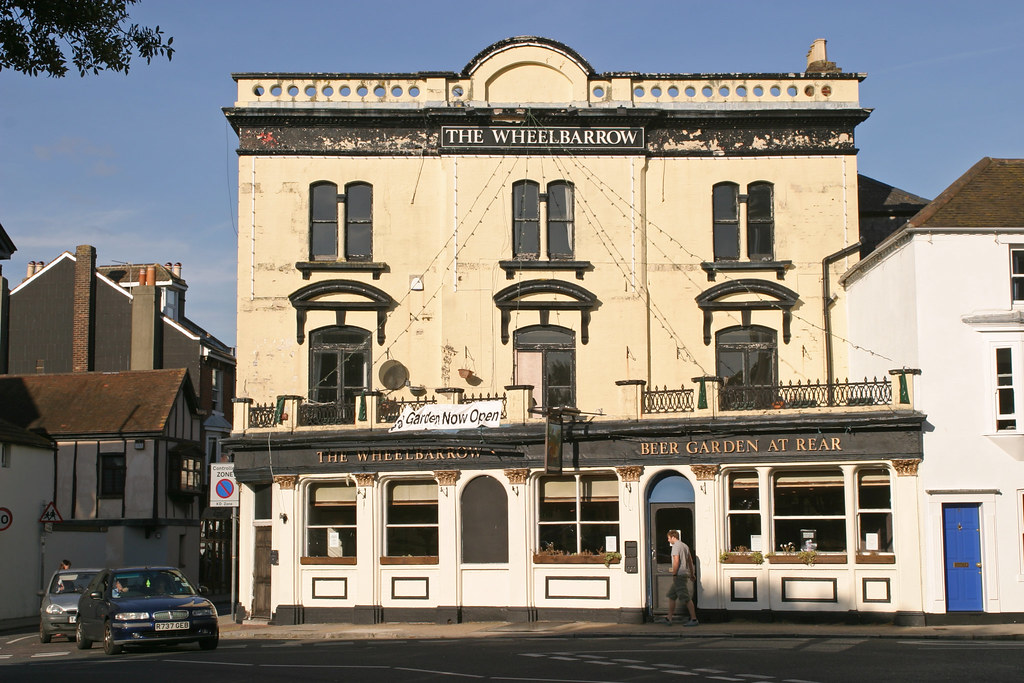
Made my way to the corner of Southsea Common, where once we drank – Tim Rushton and I were often to be found in The Wheelbarrow together.

A boozer no longer, now named for the city’s long gone famous son.

How bad a pub is this? I walk past it to get to my local. Most nights there are six people max in the bar, all huddled around the bar itself, backs to the door. – this often includes the landlord and landlady. They have live music there once in a while and you can’t get served by the one bloke behind the bar – the landlord and landlady never help out, they don’t seem to give a toss.

Beers crap, not worth a visit.

It was never like that in our day.

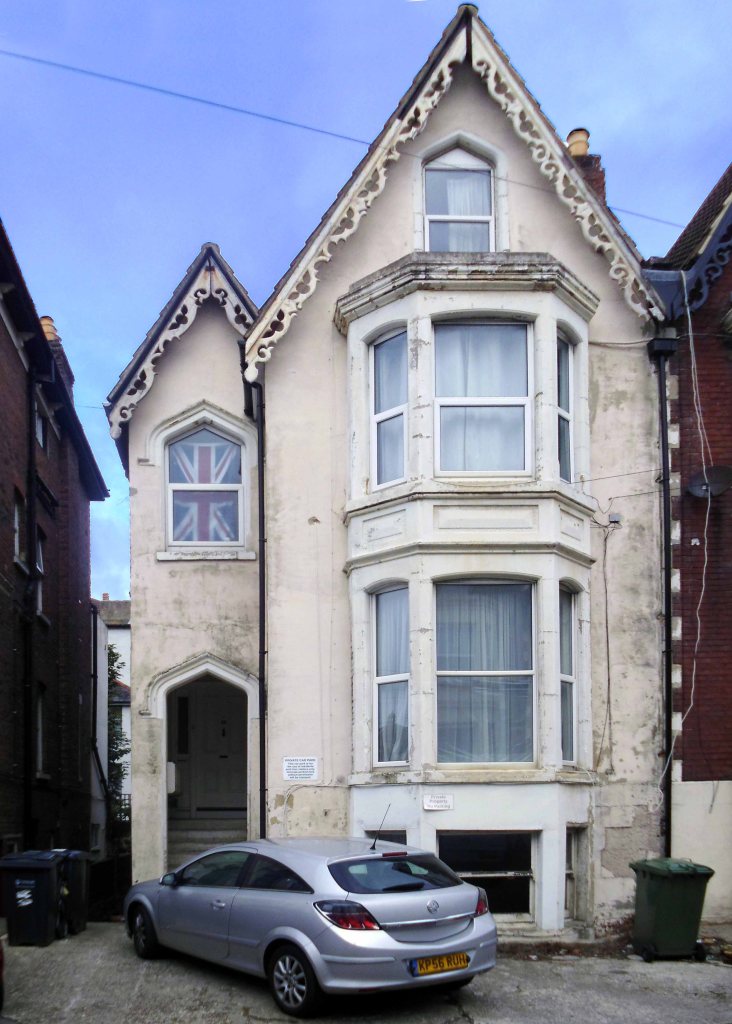
Visiting our former abode on Shaftesbury Road – where I once dwelt along with Tim, Catherine, Liz and Trish.

Yet more Stymie Bold Italic.

Back to the front for a peer at the pier.

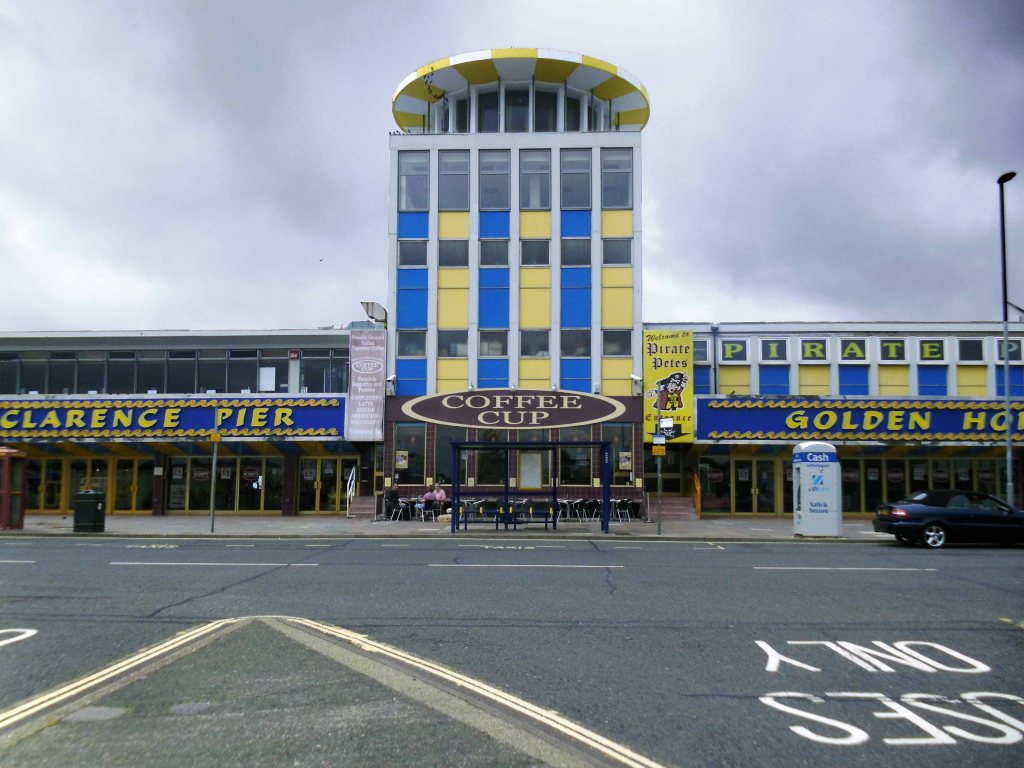
Clarence Pier is an amusement pier located next to Southsea Hoverport. Unlike most seaside piers in the UK, the pier does not extend very far out to sea and instead goes along the coast.

The pier was originally constructed and opened in 1861 by the Prince and Princess of Wales and boasted a regular ferry service to the Isle of Wight. It was damaged by air raids during World War II and was reopened in its current form on 1 June 1961 after being rebuilt by local architects AE Cogswell & Sons and R Lewis Reynish.

Low cloud grey skies and drizzle.

This sizeable two bedroom apartment situated on the seventh floor of the ever popular Fastnet House is offered with no onward chain and the option of a new 999 year lease as well as a share of the freehold. With panoramic views over The Solent towards the Isle Of Wight and Spinnaker Tower, situated in a central location and close to all amenities, this lovely apartment offers luxury living for any prospective buyer. With lift access, the apartment comprises; entrance hallway, a large lounge diner with box bay window boasting stunning sea views across the city and The Solent, master bedroom with built in wardrobes and sea views over The Solent, a spacious second bedroom, fitted kitchen with breakfast bar and a recently updated modern shower room.

On The Market £365,000

We are fully stocked with house coal, smokeless coal, kindling and fire lighters, fire grates, companion sets and fire tools.

Christmas lights have also arrived.

Brockenhurst’s traditional hardware shop since 1926

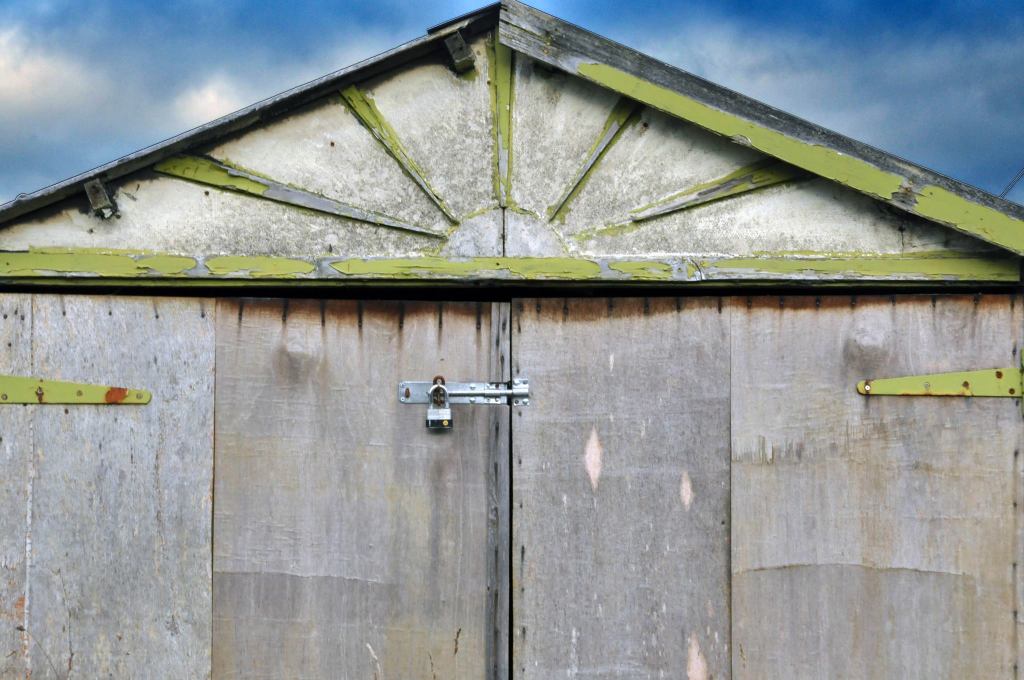
Ghost garage.

Ghost post.

Coal Exchange Peter and Dawn welcome you to their traditional pub in the heart of Emsworth adjacent to the public car park in South Street and close to the harbour.

Lillywhite Bros Ltd is a family run business established over 60 years ago in Emsworth, which is ideally located between Portsmouth and Chichester. It is currently run by brothers Paul and Mike who continue to keep up with modern techniques and equipment, as well as maintaining their traditional values and high standard of customer service.

Next thing you know I’m in Pagham, having become very lost somewhere between there and here, asking for directions from the newsagents and buying a bottle of Oasis.

The newsagent was mildly amused by lack of map, sense and/or sensibility.

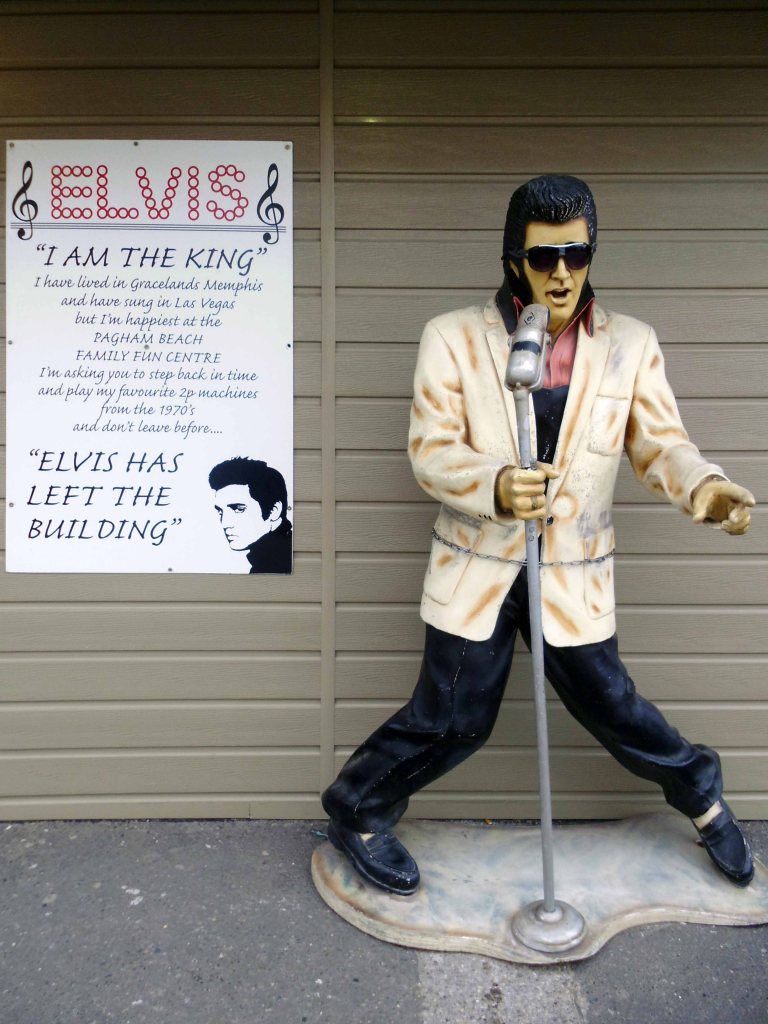
I spent many happy hours here in my youth playing the slots with The King.

We would stay here in Tamarisk with my Aunty Alice and Uncle Arthur and Smudge the cat, an idyllic railway carriage shack two rows back from the pebbled seashore.

We would enjoy a shandy at the King’s Beach with Lydia, Wendy and David.

All gone it seems.

On to Bognor a B&B and a brew – a brief glimpse into my luxury lifestyle.

I’ll take an overcast Monday evening stroll along the prom, where I chanced to meet two landlocked Chinese lads, gazing amazed at the sea – they were on a course in Chichester learning our own particular, peculiar ways.

There was no-one else around.

Who can resit the obvious allure of the novelty item?

Or an Art Deco garage fascia.

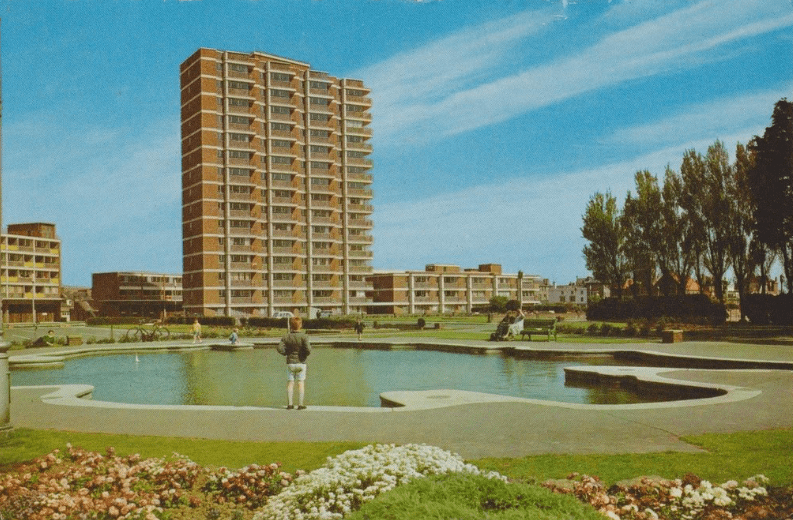
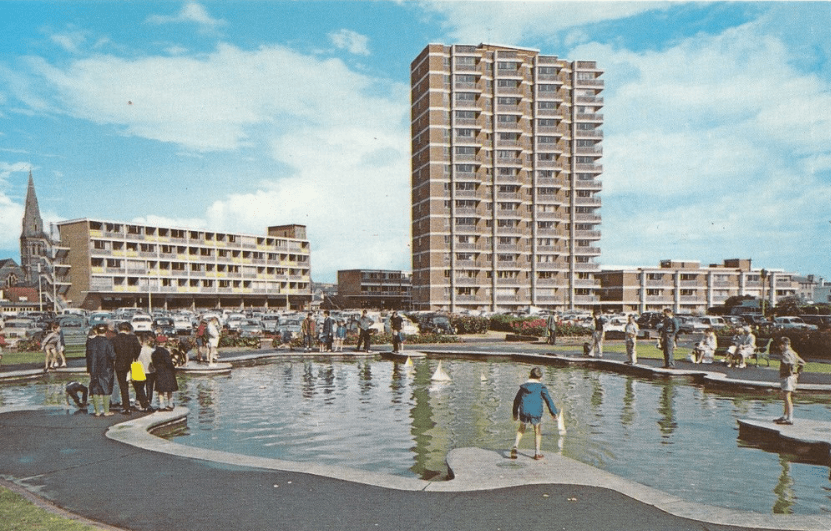
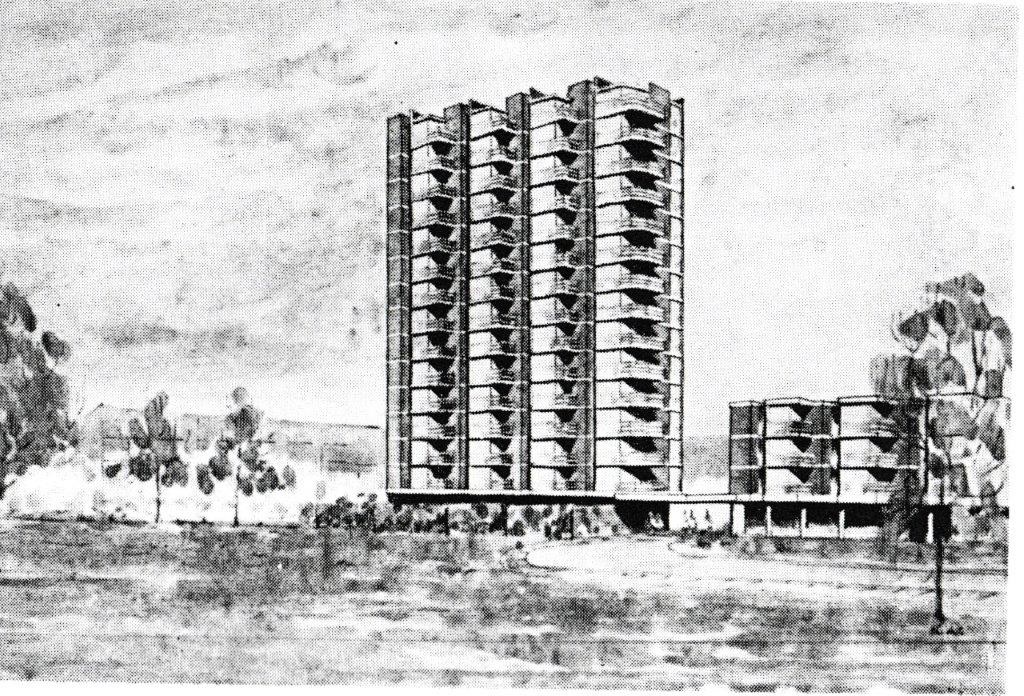
Fitzleet House was built in the 1960s architects: Donald Harwin & Partners, it consists of seventy four flats, fifteen of them are in a three-storey block next to the main building.

PS&B are pleased to offer this sixth floor flat which is situated conveniently close to the town centre and within close proximity of the sea front. The accommodation is newly refurnbished and is offered unfurnished with south/west facing lounge with small balcony with far reaching views to the sea. Kitchen and bathroom with shower over bath and one double bedroom. Further benefiting from having modern electric heating and double glazing, telephone entry system, lift to all floors, communal sky dish and white goods. With regret no pets and no children – £685 rental is payable calendar monthly in advance.

For many years, a gentleman called Todd Sweeney collected sunshine statistics from the roof of Fitzleet House, which were then forwarded to the Met Office in London to assist with national statistics, and in 1983 one group of Cubs arranged a special tea party on the roof of the building as part of the national tea-making fortnight.

Bognor Regis Post

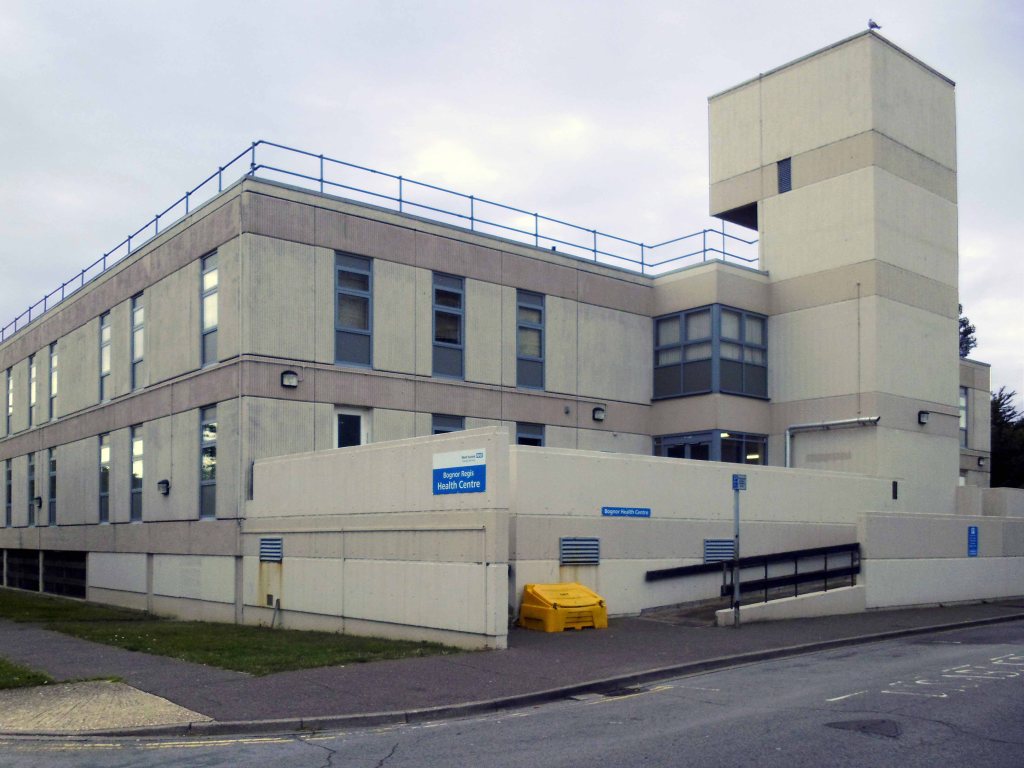
Highlight of the day or any day for that matter the Health Centre.

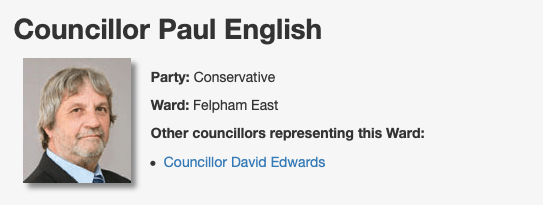
Paul English Conservative Felpham East – asked about the life span of the building given it was built in the 1960s, describing it as ‘incredibly old’.

Mr Clavell-Bate replied – NHS Property Services say it is structurally sound, it has a life expectancy going forward.

Bognor Regis Observer

I was looking forward to going forward Wetherspoon’s – ideologically unsound going forward, with hindsight.

Let’s take a last late night stroll along the promenade.

Night night.

Bournemouth to Portsmouth

Sunday 2nd August 2015 – you awake and you’re still in Bournemouth and still in one piece, the possibility of late night stag and hen madness passed over without incident.

A quick look around town, then let’s get off to Pompey – where I was very proud to be a Polytechnic art student 1973/76, in good old Lion Terrace.

Last night’s late night drinking den with its fabulous faience frontage and doorstep mosaic.

Close by this tiled porch at The Branksome.

Built 1932 by Seal and Hardy as offices for the Bournemouth Echo, steel-framed, the main elevations faced in Monks Park Bath Stone.

Plans to redevelop the listed Daily Echo offices in Bournemouth were withdrawn shortly before they were due to be discussed by councillors.

That Group’s application to extend the Richmond Hill building to create more work space as well as a 30-bed hotel, café, gym and events space had been recommended for refusal before it was pulled from the agenda for Monday’s meeting.

Daily Echo

Vandale House appears to have been refurbished as flats, having lost its architectural type.

The property benefits from modern and contemporary décor throughout, large balcony and views over the Town Centre itself. 

This art deco cinema was built for ABC and designed by their regular architect William Glen, it opened in June 1937.

The ABC, originally the Westover Super Cinema, entertained audiences for almost 80 years before it was closed in 2017 – along with the nearby Odeon – to make way for a new Odeon multiplex at the BH2 complex.

In its rejected plans for the site, Libra Homes had pledged to restore the cinema’s original Art Deco frontage, if it survives under the cladding that was added in the 1960s.

Cinema Treasures

Boscombe Pier – is the perfect vantage point to watch volleyball, table tennis and mini golf. If you are feeling adventurous, try scaling the nearby, purpose built boulders next to the pier or have a go at slacklining!

There are nearby are cafés, takeaways and beach shops all within walking distance from Boscombe Pier. The pier is free to enter and has a plethora of activies that individuals and families can enjoy! 

Designed by Archibald Smith, the 600 foot pier opened on 28th July 1889. In 1924/5 and 1927, the head was renewed in high alumina concrete and, between 1958 and 1960, the neck was reconstructed using reinforced concrete.

The neck building is a design by the Borough Architects, demonstrating great verve and vivacity. The contemporary style associated with Frank Lloyd Wright’s Usonian houses and made popular with Californian homes in the 1940s was well suited to the requirements of an architecture that combined ‘sun and fun’. The contemporary style made a feature of expressing different elements or planes of a composition with different materials, and here the combination is honest and each element well detailed. The sweep of the cantilevered, boomerang-shaped roof is a particularly joyous feature. It is a building that would have been despised as being exactly of its date until recently; now it is a building that can be celebrated for that very reason, and a rare example of pier architecture from these years. 

Historic England Listing

San Remo Towers a block of 164 flats, with penthouse and office, over basement garage. 1935-8 by Hector O’Hamilton.

Facilities offered as inclusive in this price included centralised hot water and central heating, an auto vac’ cleaning system, centralised telephones, a resident manager, a porter, daily maid, boot cleaning and window cleaning services. There was a Residents’ club with a reading room card room, billiard room and library, and a children’s recreation and games room. There were kiosks in the ground-floor lobbies selling tobacco and convenience items, where the staff took orders for the local tradesmen. The fifth-floor restaurant offered a la carte meals, which could be taken at pension rates of 38s per week. A simpler dinner cost 2/6d. The use of an American architect, Hector O Hamilton, may be an explanation for the building’s large range of facilities, including the grand underground car park and sophisticated servicing

Two bed flat £183,000

Carlinford benefits from commanding views over Poole Bay looking to the Isle of Wight across to the Purbecks. Included in the annual service charge is a Caretaker, Gardener & the communal areas are kept in good order. A fabulous location and a great place to call home. 

Two bed flat £350,000

Crossing the New Forest and arriving in Hythe.

Running the length of the pier to catch the ferry across Southampton Water.

Where one is able to see many large ships.

St Patrick’s Catholic Church 1939

W.C. Mangan’s last church in the diocese, with a moderne Gothic character rather than the basilican style he favoured elsewhere. The design is not without character and is in the mainstream of brick church building around middle of the twentieth century.

Taking Stock

First siting of Stymie Bold Italic/Profil since Devon

Sadly the Hovercraft Museum was closed – Founded 1987 as a registered charity, the Museum Trust is the worlds greatest collection of Hovercraft archive, film, and historic craft, dating back to to John Thonycroft’s 1870 air lubricated boat models and the then Dr. Cockerell’s 1955 annular jet experiments.

So excited to be boarding yet another ferry.

Seeing Portsmouth for the first time in a long time.

Finding cheap digs at the Rydeview Hotel.

My partner and daughter stayed here recently and the warm reception we received was great, thought it was going to be real value for money however when getting into the family room, which was a decent size, the curtain was half hanging down, iron marks and stains on the carpet, dirty windows, mould on the bathroom ceiling, hole in the bathroom floor and a very random shower head coming from the toilet that was very unpleasant. When we checked in we asked about breakfast and we were told this was going to be an additional £3 – we thought this was great value for money for a full English only to be left hungry and out of pocket! My daughter had one slice of toast, we asked for the full English what we received was cold and hard beans, and un-cooked egg and a rank sausage, the eating area was dirty – cobwebs everywhere.

I too stayed in the Family room with a delightful mouse for company and enjoyed one of the worst meals I’ve ever not eaten.

I headed for the 5th Hants Volunteers where I formally kept company with Felim Egan, Norman Taylor and Ian Hunter way back when.

Drinking Gales HSB – formerly a local brew now owned by Fullers

Established in 1847 Gales Brewery (George Gale & Co. Ltd) was an old brewery situated in Horndean, on the edge of Waterlooville. It made the nutty HSB – Horndean Special Bitter and the newer Gales Bitter. It took its water from its own well situated under the brewery which is fed from the South Downs, and the yeast and liquor, coupled with the local brewing style, produced beers with a sparse head, quite dark in colour.

In late 2005 Fuller’s Brewery bought Gales for £92 million. In January 2006, Fuller’s began cutting jobs at the Horndean brewery, and it was announced on 27 February 2006 that the brewery would close at the end of March 2006, although distribution and warehousing would continue in the area.

It didn’t tater the same and the pub had been gutted – gutted.

I beat a retreat to the Barley Mow – where I fell in with a gang of former Poly students from the 70s – they had studied and never left.

Eventually we all left.

Night night.

Bridport to Bournemouth

Grub up at the Lord Nelson and saints preserve us, the first sighting of fried bread – not a single hash brownie to be seen. The square plate very much in keeping with the naval nomenclature.

This ‘square plate’ theory is one of the best-known examples of folk-etymology. The phrase exists, the square plates exist, and two and two make five. To be more precise, what we have here is a back-formation. Someone hears the phrase ‘square meal’ and then invents a plausible story to fit it.

Spoil sport!

Anyway it’s Saturday 1st August 2015 and time to make tracks another sunny day in prospect, so much to see and do in Dorset!

The White Horse is a Dorset country inn located in the picturesque village of Litton Cheney in the heart of the Bride Valley. A warm welcome awaits at this traditional rural pub with a roaring log fire, with honest home cooked food using seasonal, locally sourced, produce. Popular with walkers and cyclists, families alike. A perfect place to enjoy good food, great ales, wines and even better company.

My lamb was average but the vegetables were very, very poor, some of the peas were stuck together with ice.

Trip Advisor

Steady rolling hills, I’m a steady rolling man.

The Hardy Monument stands on an exposed location above the village of  Portesham in Dorset. It was built in 1844 in memory of Vice-Admiral Sir Thomas Masterman Hardy, Flag Captain of HMS Victory at the Battle of Trafalgar. Amongst other things, Hardy became famous as it was in his arms that Nelson died, saying the immortal words ‘Kiss me Hardy’.

Contemporary historians argue that this explanation is a Victorian invention, since the earliest recorded use of the term ‘Kismet’ in the English language does not appear until after 1805.

Others also claimed that Nelson had said “Kiss Emma, Hardy”, referring to his mistress and lover Lady Emma Hamilton.

Thomas Hardy was unavailable for comment.

There’s a long, long trail a-winding
Into the land of my dreams,
Where the nightingales are singing
And the white moon beams.

A song my dad would sing me to sleep with, one of my earliest and sweetest memories, his lullabies were often those songs he remembered from his army days.

Following a morning of historical and linguistic conjecture we enter a land of architectural and historical conjecture, right here in Poundbury.

Poundbury is an urban extension to the Dorset county town of Dorchester, built on the principles of architecture and urban planning as advocated by The Prince of Wales in ‘A Vision of Britain’.

Poundbury, the Prince of Wales’s traditionalist village in Dorset, has long been mocked as a feudal Disneyland. But a growing and diverse community suggests it’s getting a lot of things right.

Poundbury should be completed by 2025, by which time it will be home to an estimated 4,500 people, increasing Dorchester’s population by a quarter. Then the Duchy will leave it to run itself. Krier, who is writing a book on Le Corbusier, says he and Prince Charles will then embark on their ultimate project: “We are going to build a small modernist town and show them how to do it.”

Guardian

Fake, heartless, authoritarian and grimly cute.

I myself cycled through in stunned silence, there was nobody about and the overall feel was one of a living filmset, opinion is deeply divided, I remain impartial – ride on.

Dorchester ghost.

Tiny vernacular bus shelter awaits bus and the sheltered.

Woodsford Castle is the surviving range of a 14th-century fortified manor house. King Edward III granted William de Whitefield a licence to crenellate in 1335. The house has the largest thatched roof in the county and has been restored by the Landmark Trust. 

One of our favourite Landmarks, love the table-tennis, the new decor and carpet, spacious but warm.

The house is a Grade I listed building.

I passed by a delightful café – sorry to say that the name escapes me, and ate the most tasty cheese scone with chutney and cream and a brew, thank you ever so much nameless café.

Well let’s go to Wool via Giddy Green.

I live here

St Joseph’s RC Wool

An impressive 1960s church design, responding thoughtfully to the needs of the post-Vatican II liturgy. The function clearly dictates the form, resulting in a building that is visually memorable as well as fit for purpose. Little has been changed since 1971. The Triodetic spaceframe roof structure is not generally associated with churches but enables a large uninterrupted space for the celebration of the Mass. The interior furnishings and fittings are essential to the totality of the design.

Taking Stock

The Roman Catholic Church of St Joseph of 1969-71 designed by Anthony Jaggard of John Stark & Partners is listed at Grade II – a bold exterior employing exposed brickwork, a mineral render, vertical glazing and sparse ornamentation.

Historic England

I fell in love the very moment what I saw it, having climbed over a fence by the railway, as I remember.

Next ting you know I’m in an area of outstanding natural beauty.

Cycling down yet another leafy lane.

Catching the ferry with several other cyclists on our way to Poole.

Walked the bike along the crowded promenade into Bournemouth.

Passed the Grand Cinema.

Located in the Westbourne district of Bournemouth, the Grand Cinema Theatre opened on 18th December 1922 with a production of Anthony and Cleopatra performed on the stage. The following day it screened its first film A Prince of Lovers plus a Harold Lloyd short comedy.

It had a facade coverted with Carter’s Architectural Tiles, manufactured at the Carter pottery in Poole. There was a central bay over the entrance which was topped by a revolving globe, which was illuminated at night. The auditorium had a sliding roof which could be opened in hot summer weather. There was a lift which could be taken instead of the stairs to the balcony level and the cafe. The front of the orchestra pit barrier was also covered in Carter’s tiles.

It was taken over by an independent Snape Entertainments from 21st December 1953 and they operated it as a full time cinema until 8th October 1975 when the film They Love Sex was the last regular film shown. It went over to become a full time bingo club, until a mix of part week bingo and films were introduced from 27th March 1976.

The Grand Cinema is a Grade II Listed building.

Cinema Treasures

Finally found, following another find a room farrago – a less that grand tiny room in a big hotel, full of stag and hen parties – as was the whole town.

Seeking solace in the Goat and Tricycle – a beer house that boasts a huge range of hand pulled cask ales including Wadworth classics: Horizon, 6X, Swordfish and Wadworth IPA. The pub also has up to six Guest ales which change every few days, so there is always plenty of variety to choose from.

I would have chosen to keep the original names, the recent trend for the comic rebranding is quite literally ridiculous.

It was originally two separate pubs The Pembroke Arms to the left, it’s old Marston’s Dolphin Brewery tiles intact. The Pembroke Shades where the bar is now, was on the right. The Shades ran a boxing club where Freddie Mills, who lived opposite, is said to have trained, he went on to win the World Light Heavyweight belt.

I worked in the Shades on and off for 8 years. I still see a lot of the old crew, I am about to set up a Shades Re-union – we had one some years ago it was fab!

Do you remember John Bell, he was part time glass collector, full time alcoholic. Mary the Irish Landlady – she ‘s still going strong, unfortunately John Bell passed away.

Cheers Linda Jones

With a pint of beer.

I walked up the road aways for a pint elsewhere.

Finally returning to the Triangle.

Enough is enough it’s been another long day.

Night night.

Okehampton to Plymouth

Tuesday 28th July 2015 waking up early on the outskirts of Okehampton – I went next door to explore – the Wash and Go.

I went back to Okehampton.

Headed out of town along the old railway line to Plymouth – where rests the solemn remains of previous railway activity and Meldon Quarry.

It’s believed that the first quarrying began around the late 1700s when the local limestone was extracted. Over the years this gradually gave over to aggregate quarrying and apelite quarrying until it final closure. The original owners of the quarry were the London and South Western Railway and then came Britsh Rail and finally EEC Aggregates.

Crossing Meldon Viaduct.

Meldon Viaduct carried the London and South Western Railway across the West Okement River at Meldon on Dartmoor. The truss bridge, which was constructed from wrought iron and cast iron not stone or brick arches, was built under the direction of the LSWR’s chief engineer, WR Galbraith. After taking three years to build, the dual-tracked bridge opened to rail traffic in 1874. Usage was limited to certain classes of locomotive because the viaduct had an axle load limit. Although regular services were withdrawn in 1968, the bridge was used for shunting by a local quarry. In the 1990s the remaining single line was removed after the viaduct was deemed to be too weak to carry rail traffic.

The crossing is now used by The Granite Way, a long-distance cycle track across Dartmoor. The viaduct, which is a Scheduled Monument, is now one of only two such surviving railway bridges in the United Kingdom that uses wrought iron lattice piers to support the cast iron trusses – the other is Bennerley Viaduct between Nottinghamshire and Derbyshire.

Wikipedia

We’re off across the edge of Dartmoor.

On an old railway line with prefabricated concrete railway huts.

And a bus stop at Mary Tavy a village with a population of around 600, located four miles north of Tavistock.

And a population of one delightful litter bin.

And CJ Down Coach Hire – the pride of Dartmoor.

Don’t the road look rough and rocky, will the sea look wide and deep?

Time for a timely tea and flapjack stop.

So far so good the nicest weather of the tour, shortest yet most amenable distance through moorland, upland and downland – with a final traffic free descent into Plymouth.

Back in the land of the tower block.

Chichester House Citadel Road The Hoe Plymouth PL1 3BA

  • Spacious One Bedroom Apartment
  •  Good Size Living Room
  •  Modernisation Required

Lang Town and Country

Past the former Odeon

Architects Percy Bartlett and William Henry Watkins

Built on the site of the Andrews New Picture Palace, which had opened in 1910, and was demolished in 1930. The Gaumont Palace was opened on 16th November 1931 with Jack Hulbert in “The Ghost Train” and Sydney Howard in “Almost a Divorce”.

The imposing brick building has a white stone tower feature in the central section above the entrance. Seating inside the auditorium was provided for 1,462 in the stalls and 790 in the circle.

It was re-named Gaumont in 1937 currently closed and at risk.

Cinema Treasures

The post war redevelopment of Plymouth produced this sizable Portland Stone Shopping Centre.

A Plan for Plymouth’ was a report prepared for the City Council by James Paton Watson, City Engineer and Surveyor, and Patrick Abercrombie, Consultant Architect, published in 1943.

Planning is not merely the plotting of the streets of a town; its fundamental essence is the conscious co-relation of the various uses of the land to the best advantage of all inhabitants. Good planning therefore, presupposes a knowledge and understanding of the people, their relationship to their work, their play, and to each other, so that in the shaping of the urban pattern, the uses to which the land is put are so arranged as to secure an efficient, well- balanced and harmonious whole.

The Civic Centre soon to be redeveloped.

The magnificent dalle de verre fascia of the Crown and County Courts.

having had a good old look around I sought shelter for the night, with some difficulty I found a profoundly plain room. The town seemingly full of itinerant contractors, filling the vast majority of available space.

Not to worry let’s have a look at the seafront.

Tinside Lido by J Wibberley Borough Engineer, with Edmund Nuttall and Sons and John Mowlem and Company, builders, with entrance building of 1933 by the same engineer.

Set in a beautiful location overlooking the sea at the tip of Plymouth Hoe and voted one of the top 10 best outdoor pools in Europe, Tinside Lido is an attraction not to be missed.

Built in 1935, Tinside is a slice of the quintessential British seaside from a bygone era. The Lido is a wonderful example of art-deco style and is Grade II listed.

Time for a timely 99 tub – what ho!

Followed by several pints of Dartmoor Jail in the delightful Dolphin Hotel.

The Dolphin Hotel is a pub on the Barbican , the building, which is known as either the Dolphin Inn or Dolphin Hotel, is a Grade II listed building. It notable as the setting of several of the artist Beryl Cook’s paintings.

The three storey building was constructed in the early 19th century, although it may contain fabric from an earlier structure. It has a slate mansard roof surrounded by a tall parapet with a moulded cornice. The front has white stucco with plaster reliefs of dolphins. The pub is associated with the Tolpuddle Martyrs, some of whom stayed at the hotel on their return from exile in Australia in 1838, when a Mr Morgan was the landlord.

It is a no-frills unmodernised pub famous for its cask ale, draught Bass served straight from the barrel. The sign on the front of the building has always called the pub the ‘Dolphin Hotel’. In 2010 the pub was refurbished, but vandalised in 2014.

A wobbly walk home and a good night’s rest

Night night.

Weston super Mare

Although there is evidence in the local area of occupation since the Iron Age, it was still a small village until the 19th century when it became a seaside resort, and was connected with local towns and cities by a railway, and two piers were built. The growth continued until the second half of the 20th century, when tourism declined and some local industries closed. A regeneration programme is being undertaken with attractions including the Helicopter Museum, Weston Museum, and the Grand Pier. The Paddle Steamer Waverley and MV Balmoral offer day sea trips from Knightstone Island to various destinations along the Bristol Channel and Severn Estuary. Cultural venues include The Playhouse, the Winter Gardens and the Blakehay Theatre.

Wikipedia

I arrived mid-morning on Saturday 25th July 2015 – having travelled some two hundred miles or so from Stockport by train.

The Iron Age seemed to be over and regeneration slowly but surely under way.

This marked the start of another coastal tour, following last year’s epic which began in Hastings.

This time I was heading for Hastings – but that can wait until tomorrow, let’s have a look around town.

Directly opposite the station is a group of Seaside Moderne homes in various states of whiteness – standing in line along Neva Road.

Reasonably priced, cheaper than Frinton – check it out

I pushed my bike along the prom heading for my pre-booked digs in a stylish seafront hotel.

Past the Marine Causeway linking the shore to some kind of modern day Post Modern Shangri-La.

A mystical, harmonious valley, gently guided from a lamasery, enclosed in the western end of the Kunlun Mountains, possibly not.

You can stroll onto Knightstone Island, where you will find some cafes serving light snacks and refreshments, or to the other side which takes you along the causeway, accessible to walk across according to the tides. At the other side of the Causeway you will find a small rocky beach with tidal rockpools ideal for exploring.

Just along the prom stands one of my all time favourite seaside shelters.

Even further along – what’s all this here then?

The foundation stone of the Birch-designed Birnbeck Pier was laid in 1864. It opened on 5th June 1867 and consisted of a 1040 foot cantilever construction to Birnbeck Island and a short jetty extending westwards from the island.

National Piers Society

It seems to have changed hands several times in its relatively short life, including the stewardship of the infamous Urban Splash and the mysterious mystery owners, the current custodians it seems, have done little to secure a secure future.

It remains alone and untended, stretching aimlessly out to sea.

In April 2015, Friends Of The Old Pier Society created a novel fund raising scheme in which 1p and 2p coins would be lined up to stretch from the Grand Pier to Birnbeck Pier.

September 2019 Councillor Mr Crockford-Hawley said:

It’s this end of Weston which is the sore, it’s the carbuncle, it’s clearly well past its prime and it needs some serious attention. I mean it would be wonderful if somebody came along with an open ended bank account and said ‘yup, I’d love to restore it for the sake of restoring it’, but quite clearly there’s got to be an economic future for the pier, there’s got to be a purpose for the pier.

Possibly a wealthy Beatle could bail the ailing pier out of deep water?

Having made a bob or two since they appeared here in 1963.

Next thing I know I’m outside the imposing and impressive sounding Ocean Hotel. Sad to say on the day/night of my visit it wasn’t just this weary traveller that appeared to be over tired, happy to report the the New Ocean Hotel has been revamped and in tip-top condition by all accounts.

Any road up, let’s get out, take a walk up the road – have look at some local type.

Watney’s mythical Red Barrel.

Watney’s was the Evil Corporation which sought to crush plucky small brewers and impose its own terrible beer on the drinking public. It acquired and closed beloved local breweries, and it closed pubs, or ruined them with clumsy makeovers.

Its Red Barrel was particularly vile – a symbol of all that was wrong with industrial brewing and national brands pushed through cynical marketing campaigns.

A page-spread from Design Research Unit 1945-1972 – Koenig Books 2011 via A Practice for Everyday Life via Boak and Bailey – who examine the truth behind the myth.

A palimpsest ghost within a ghost.

A seaside outing for dear old Brush Script – a casual connecting script typeface designed in 1942 by Robert E. Smith for the American Type Founders.

The face exhibits an exuberant graphic stroke emulating the look of handwritten written letters with an ink brush.

It came third as a Least Favorite nomination in a 2007 designers’ survey.

It was rated fifth in The Eight Worst Fonts In The World list in Simon Garfield’s 2010 book Just My Type.

Why have just one identity when you can have two, welcome to the 21st Century schizoid Savoy – don’t it jus’ make you want to stomp?

First but surely not the last sighting of Profil aka Stymie Bold Italic – in a none inline variant.

Classical kerning down at the local estate agents, tasteful Gill Condensed Bold – from the hand and eye of the far from tasteful Eric.

Ay up it’s a launderette that almost thinks it’s a scooter!

Cheap beer, raffle, singer and bingo on a Wednesday afternoon.

Amazing and great atmosphere with friendly service staff and atmosphere, love it, real nice people

Facebook

Russell Davies Flickr

Keeler Productions has taken over Locking Road Car Park, opposite Tesco, and The Regent Restaurant, in Regent Street, to film a BBC period series The Trial of Christine Keeler, based on the Profumo Affair in the 1960s.

Weston Mercury

Enough of all that period drama, let’s have a look at some period architecture.

Madeira Court – 67 flats built in 1988.

Weekly Social Activities include – coffee mornings, card evenings and occasional days out, organised by social club. New residents accepted from sixty years of age, both cats and dogs generally accepted.

I can find no reference for this dalle de verre stained glass window.

Boulevard United Reformed Church – Waterloo Street

Architects Gordon W. Jackson and Partners 1959

Constructed on part of the site of the former Electric Premier Cinema, the Odeon Theatre was opened on 25th May 1935 with Jack Buchanan in Brewster’s Millions. Built as one of the original Odeon Theatres in the then emerging Oscar Deutsch Odeon Theatres circuit, it was built on a prime corner street position in this sea-side town and was the first of several Odeon Theatre’s to be designed by architect Cecil T Howitt.

The Odeon was Grade II Listed on 21st August 1986.

Cinema Treasures

The Weston-super-Mare Odeon was built by C Bryant & Son Ltd of Birmingham on the site of the former Electric Premier Cinema. It opened on 25 May 1935, at which time it was described in the souvenir programme as ‘modernity at its best’, with seating accommodation that was ‘luxurious and spaced to give ample room for true comfort’.

A short walk along the prom snapping shelters and the sheltered – no two the same.

I then chanced to fall into a Beer Festival and bad company – the rest is a blur, see you all tomorrow there’s some cycling to be done.

Night night.

Clacton to Great Yarmouth

Day four Thursday 4th September 2014 – leaving Clacton on Sea for Frinton on Sea is the equivalent of crossing continents, time zones, aesthetic and social sensibilities.

Leaving the razzle-dazzle, frantic fish and chip frazzle, for the sedate repose of germ free Frinton.

Green sward and restrained modernist shelters adorn the foreshore.

I love the bold optimism of Maritime Moderne – the bright eyed, forward looking window grid of these fine flats.

I have a cautious admiration for the faux Deco newcomers.

The modernist estate was attempted many times in the interwar years; visions of rows of fashionable white walled, flat roofed houses filled developers eyes. In practice the idea was less popular with potential house buyers. In the Metro-Land suburbs of London, estates were attempted in Ruislip and Stanmore, with a dozen houses at most being built. One estate that produced more modernist houses than most, albeit less than planned, was the Frinton Park estate at Frinton-on-Sea on the Essex coast.

Oliver Hill was known for his house designs, which spanned styles from Arts and Crafts to Modernist. Hill was to draw up a plan for 1100 homes, as well as a shopping centre, luxury hotel and offices. The plan was for prospective buyers to buy a plot and then engage architects to design their new house from a list of designers drawn up by Hill. The list featured some of the best modernist architects working in Britain at the time; Maxwell FryWells Coates, F.R.S. Yorke and Connell, Ward & Lucas.

As wonderful as this sounds today, the buying public of 1935 did not quite agree. The majority of potential buyers were apparently put off by the Estates insistence on flat roofs and modernist designs. Plan B was to build a number of show homes to seduce the public into buying the modernist dream. Of 50 planned show homes, around 25 were built, with about 15 more houses built to order. The majority of these were designed by J.T. Shelton, the estates resident architect, with a number designed by other architects like Hill, Frederick Etchells, RA Duncan and Marshall Sisson.

Modernism in Metroland

One million four hundred thousand pounds later

Nine hundred and fifty thousand pounds

These survivors are now much sought after residences.

The Modern House

The town is also home to this traditional confectioners – Lilley’s Bakery.

Leaving the coast for pastures new – well, a ploughed field actually.

Crossing the River Orwell over the Orwell Bridge on my way to Ipswich.

The main span is 190 metres which, at the time of its construction, was the longest pre-stressed concrete span in use in the UK. The two spans adjacent to the main span are 106m, known as anchor spans. Most of the other spans are 59m. The total length is 1,287 metres from Wherstead to the site of the former Ipswich Airport. The width is 24 metres with an air draft of 43 metres; the bridge had to be at least 41 metres high. The approach roads were designed by CH Dobbie & Partners of Cardiff. 

The bridge is constructed of a pair of continuous concrete box girders with expansion joints that allow for expansion and contraction. The girders are hollow, allowing for easier inspection, as well as providing access for services, including telecom, power, and a 711mm water main from the nearby Alton Water reservoir.

The bridge appears in the 1987 Cold War drama The Fourth Protocol, in which two RAF helicopters are shown flying under it, and at the end of the 2013 film The Numbers Station.

Wikipedia

Time for a Stymie Bold Italic stop – much to the obvious consternation of an over cautious customer.

It seems to still be extant – but with a tasteful coat of subdued grey paint according to its Facebook page.

Having completed this journey in 2016, then reacquainting myself in 2020, I have little recollection of visiting Ipswich, but I did, yet there are no snaps.

I photographed this and several other water towers, precisely where, I could not honestly say.

Suffice to say that it is somewhere – as is everything else.

An admiring nod to Bernd and Hilla Becher.

This the only time that I chose to have a glass of beer whilst awheel, normally waiting until the evening – I couldn’t resist this charming looking brew pub in Framlingham.

Earl Soham is a village close by, on the A1120. The Earl Soham Brewery beers started out in  life being brewed in local man Maurice’s old chicken shed. You may be pleased to hear they have a slightly more sophisticated set-up now, without forgetting their humble roots.

If you haven’t tasted them before, we think you’ll be as delighted with them as our regulars, and you can be guaranteed of a warm welcome if you come to try them out.

The Station

The sort of wayside boozer where I could have easily idled away an hour or two – hopefully I’ll pass by again some time and linger longer.

Another water tower – somewhere.

The most enchanting of shop fascias.

Something of a curiosity – David Frost’s father’s ironmongers in Halesworth – and the Ancient House with its ancient carving.

The bressumer beam at the front of the is linked with Margaret de Argentein in the late 14th and 15th century, it is believed t it could have been a manor or toll house. 

Currently trading as a Bistro with paranormal problems;

Things in the window were swaying the other day and when we went to stop them they almost fought back.

I’ve seen two ghosts in the kitchen. One was clearly a man, the other was when I thought my daughter was over my shoulder but when I looked around she wasn’t there, and we were the only two in the building.

Eastern Daily Press

The long and ever so slightly winding road of the lowlands, sad eyed.

Service station highlight of the tour – with its National graphic identity intact.

A no longer a bakers bakery.

Ghost sign.

All at sea again – caravans to the left of us, sea to the right of us, onwards onwards.

The eternal puzzle of the paddling pool.

Terracotta tiling on the Lifeboat House.

Crossing the estuary of the River Yare – yeah, yeah!

Finally arriving in Joyland.

Rides include the world famous Snails and Tyrolean Tub Twist.

A huge toy town mountain incorporates the Spook Express kiddie coaster, Jet Cars and Neptune’s Kingdom undersea fantasy ride, Pirate Ship, Major Orbit, Balloon Wheel and Skydiver complete the rest of the rides.

Hungry – why not grab a bite at the American Diner.

I actually went to the Wetherspoons.

Though the town is full of tiny pubs.

And a chippy.

I wandered the highway byways and promenade of Great Yarmouth, all alone in a neon nightmare!

Finally settling down for a pint or two – again.

Lastly encountering the late night skaters.

Night night.

Southend to Clacton

Day three Wednesday 3rd September – leaving Southend under a cloud.

The huge slab of the Civic Centre shrouded in sea mist

Oops actually Alexander House – built around 1970 to house the then new V.A.T. HQ.

Designed by borough architect – PF Burridge.

Queen Mum Opens Civic Centre – It took a while to get there, since 1958 when the council agreed to embark on a quest to build a new home for itself;  but on 31st October 1967 HRH the Queen Mother did the honours and formally opened the spanking new Civic Centre.  During its build Southend was classed as being in the top ten in the country for full employment, due to this workers were hard to come by and bus loads of workers were brought in to complete this and the many other projects shooting up along Victoria Avenue at the same time. 

Cllr Beryl Scholfield commented later on the day – The Queen Mother opened the Civic Centre in 1967, when my husband was chairman of the town hall committee, and we had lunch with her at Porters.  We were presented to her when she came in. There were no more than about 30 of us there.  It was a most exciting day.

She was as natural as you see her on the television.

Postscript 2002

A Union Jack lowered to half-mast in tribute to the Queen Mum has been stolen from Southend’s Civic Centre. A council spokeswoman today denounced the theft as – a despicable act at a time of great sadness and national mourning.

The outrage has caused extra sadness for royalist residents in the town because of the Queen Mother’s special place in the history of the Civic Centre.

The Leda and the Swan statue by Lucette Cartwright, which used to be in the Civic Centre atrium, gets a polish in May 1987.

A bronze statue depicting a mythological rape has finally found a new home at the mayor of Southend’s official residence. The controversial statue of Leda and the Swan was specially commissioned by Southend Council in the Sixties and first stood outside the courthouse in Victoria Avenue.

Later it was moved to the Civic Square and then to the courtyard of the Palace Theatre, in Westcliff. Later, it was moved to the Civic Centre when it caused outrage among staff. Workers claimed the statue, representing the rape of Leda by the Greek god Zeus disguised as a swan, glorified rape as an art form.

Last week, the statue was removed from the Civic Centre and is now at the mayor’s residence, Porters, in Southend.

Rob Tinlin, Southend Council’s chief executive and town clerk said – The statue of Leda and the Swan was located at the Civic Centre until a suitable location was found. The statue is permanently on display in the garden of the mayor’s residence, Porters in Southchurch Road.

It is in an appropriately landscaped area next to the pond.

Photo Phil Parsons

Misty eyed I missed the sculptural fountain – William Mitchell I presume?

Said farewell to Neptunes unilluminating assorted fish.

Heading out of town past noisy scenes of quiet despair, no more fancy goods, no more confectionary – shake that.

Heading inland, away from the wibbly wobbly estuarine coast of higgledy piggledy Essex, through freshly mown pasture and solitary haywains.

This is Constable country:

Like many artists practising at the time, Constable used sketches as source material for fully worked-up compositions. He did not find the production of finished paintings easy, which probably contributed to his late recognition by the art establishment.

V&A

Passing by solitary bus shelters, patiently awaiting passengers.

Waterworks works in the palatial neo-classical manner, with a restrained nod to incipient Art Deco.

Encountering the occasional leafy lane.

I eventually found myself on the outskirts of Colchester, outside St Theresa Of Lisieux .

A striking pre-cast concrete frame design of 1971, with a dramatic and well-lit interior, lively modulation of wall surfaces and some furnishings and artworks of note.

Architect – JH Dabrowski 

The entrance façade has a large gable and projecting entrance canopy, above which is a bronze statue of the Risen Christ, by local artist Tita Madden – 1977

This is a large modern church, built with a pre-cast concrete frame with a crossover roof beam system, allowing for dramatic internal effects. Within the bays created by the frame, the walling is mostly brick, with some pre-cast concrete panels, and large areas of glazing. Concrete is also used for the window mullions and surrounds. Each bay has the brickwork slightly angled or faceted, giving the design a great sense of movement and liveliness, both inside and out.

Taking Stock

Struggling to go around a Straight Road.

£240,000 will get you an Art Deco maisonette in Vint Crescent from Wowhaus:

This one is a ground floor apartment, which has undergone a complete refurbishment, but with one on keeping those period features to the fore – period features such as original radiators and those distinctive windows and doors are intact, rubbing shoulders with some new, high-end finishes like oak floors and updated kitchen and bathroom.

Foolishly I became more than somewhat lost and on making enquiries concerning my whereabouts and destination, I was met with gently derisive laughter. Therefore, I bypassed Colchester, took the wrong route along a mainly main road and ended up much too quickly in Clacton.

Home to several shops to let, as we shall subsequently see.

Also home to a fabulous concrete frieze on the exterior wall of the library.

Quickly ensconced in my bijou digs – I hit the town to take a look around.

I was staying right opposite this here boozer – a little too early for a pint, I’ll pop back in a bit.

Seaside shelter in a faux vernacular manner, calm seas ‘neath an azure sky – perfect.

Artifice and authenticity the sunbathing citizens sit beside an inflatable pool – perched above the sea on the pier.

Clacton Pier, which opened on 27 July 1871 was officially the first building erected in the then-new resort of Clacton-on-Sea. A wooden structure 160 yards in length and 4 yards wide, the pier served as a landing point for goods and passengers, a docking point for steamships operated by the Woolwich Steam Packet Company, and a popular spot for promenading. By 1893, Clacton had become such a popular destination for day trippers that the pier was lengthened to 1180 ft (360m) and entertainment facilities, including a pavilion and a waiting room, were added to accommodate them.

Wikipedia

The pier seems to have changed hands several times, as is the way with such things, subjected to fires, storms and pestilence – yet still prevails.

Key attractions include Stella’s Revenge – a family Galaxi rollercoaster. Formerly operated at Barry Island Pleasure Park as Galaxy, and later Viper.

Pause to consider the prospect of magical fun, fun, fun.

Let’s return to dry land, where we find certain signs of decline in these uncertain times.

Hope springs eternal in the Arcade hairdressers.

We place our trust in the tried and tested condiments of this most sceptered of isles.

Life goes on at the Linen Shop – yet another Profil/Stymie gem!

A limited choice is widely available from the far from extensive menu, though mushrooms do come with princely, premium price tag attached.

Another long day closes with a well deserved pint – God bless the Old Lifeboat House and all who sail in her.

Night night.

Margate to Southend

Early morning passing by the yet to be reopened Dreamland, back then just a work in progress, it has had a more than somewhat chequered past.

Dogged persistence has assured its future:

Just before Christmas 1919, and almost exactly one year after the end of the Great War, John Henry Iles purchased Margate’s The Hall By The Sea, thus initiating the history of what would become Dreamland.

The Dreamland cinema replaced a smaller cinema on the site, with this modernist masterpiece opening in 1935. The super-cinema, designed by architects Julian Leathart and WF Granger.

After several years of campaigning to save the Dreamland site from redevelopment, and successful funding bids to the Heritage Lottery Fund and Department for Culture Media and Sport’s SeaChange Scheme, the Dreamland restoration project went live in January 2010, appointing a professional team to deliver The Dreamland Trust’s vision for a reimagined Dreamland, however, the battle was not over.

After a long restoration project, Dreamland opened its doors to the public on June 19 2015. The park was further reimagined and expanded in 2017 following additional investment, with new thrill rides, a much bigger events space, fresh designs, and a new welcome for a new generation of visitors.

Dreamland

Just enough time to take a quick look inside the Arlington House car park then off we go again.

Tuesday 2nd September leaving Margate and cycling along the North Kent Coast.

Hotter than July and into a headwind.

A flat concrete surface raised above the oyster beds.

The Whitstable Oyster Fishery Company traces its roots back to 1793, but oysters have been a part of Whitstable’s history for far longer.

The Romans loved Whitstable oysters and documentation proves that they were sending oysters back to Rome in around 80AD.

Whitstable Oyster Company

JMW Turner also found time to record the area.

Sold for £ 252,000 inc. premium

Along the long straight coastline the distinctive and distinguished silhouette of Reculver Castle can be seen in the distance.

Two thousand years ago the geography of this area was very different. The Wantsum, a sea channel up to 3 miles wide, cut off the Isle of Thanet from the mainland, and the Roman fort of Reculver stood on a promontory at the north end of the channel where it joined the Thames estuary. Today the Wantsum has silted up and become dry land.

By the 5th century the Romans had abandoned their defence of Britain and the fort at Reculver had fallen into disuse.

An Anglo-Saxon monastery was founded on the site in 669, reusing the existing defences, and the church of St Mary was built near the centre of the earlier fort. Documentary evidence suggests that the site had ceased to function as a monastic house by the 10th century, after which time the church became the parish church of Reculver.

Remodelling of the church in the 12th century included the addition of tall twin towers.

The medieval church was partly demolished in 1805, when much of the stone was reused to construct a new church on higher ground at Hillborough, but the twin towers were left. They were bought, repaired and underpinned by Trinity House in 1809.

English Heritage

I breezed through Herne Bay past the curiously named Bun Penny pub

Burnt down in 2011 – the subject of ever changing plans and possibilities.

A derelict Herne Bay pub has been transformed into luxury seafront apartments and this is how much they cost.

We would encourage owners of other empty properties in the Herne Bay area to get in touch as we find new ways to rejuvenate the town and attract new people to work, live and visit.

Kent Live

Further along the unstable concrete coast we approach Whitstable.

With its chi-chi cafes and bars, tastefully ramshackle shacks and snacks.

Profil fronted fascias for family run department stores.

Whites of Kent is a family company now into the third generation of close family members. The original story begins with a young ambitious girl of 18 who knew all about stocking repair machines. She travelled to Australia by boat then on to Switzerland and Paris where she trained women and gave demonstrations on the stocking machines.

In 1954 the retail side commenced again with a ladies underwear shop in Faversham’s Market Street, followed by a fashion shop in Market Street and then our current shop in Court Street.

We have in the past had shops in Sandwich, Sittingbourne, Herne Bay, West Malling, Folkestone and Cliftonville. Currently we have Whites of Kent shops in Faversham, Whitstable and Dover selling lingerie, linen, hosiery, underwear, slippers and more. See our Shop page for addresses, phone numbers and opening times.

Whites of Kent

A fine display of tobacconist’s ghost signs.

The road winds through the low marshes, across estuaries and inlets, between Seasalter and Graveney.

Home to a down home, home made fishing fleet.

Members of the 1st Battalion London Irish Rifles guarding the downed Junkers Ju 88A1

On September 27 1940 – a Luftwaffe bomber was shot down by two Spitfires over Graveney Marsh after a raid on London. This was the last ground engagement involving a foreign force to take place on the mainland of Great Britain.

Wikipedia

As is common in post-industrial England industrial buildings become executive homes, busy ports become marinas or moribund marshes.

Ready for conversion to a bijou des-res.

It was time to make time through the garden of England – pressing on past hillbilly hideaways.

Housing late Ad Reinhardt’s.

My painting represents the victory of the forces of darkness and peace over the powers of light and evil.

Founded in the early 1700s by Edward Rigden. Registered in 1902 as Rigden & Co. Merged with George Beer & Co. Ltd in 1922 to form George Beer & Rigden, not being limited until 1927.

Was acquired by Fremlins Ltd in 1948 and brewing ceased 1954.

Brewery History

Dulled by dual carriageways and the dirty urban dust of a sunny late summer’s day – I was more than happy to discover this Modernist church in Rainham.

St Thomas of Canterbury RC

A  modern  church  of  1956-58  by  Eduardo  Dodds.  The  atmospheric interior is decorated with fine sculpture by Michael Clark, and ceramic panels by Adam Kossowski. The tower is a local landmark. The former temporary church of 1934 survives as the Parish Centre.

Taking Stock

Followed by another brick behemoth the Gaumont Chatham.

The Palace Cinema was built by a subsidiary of the Gaumont British Theatres chain, and opened on 30th November 1936. The exterior had a tall square clock tower, which was outlined in neon at nightArchitect Arthur W. Kenyon

Re-named Gaumon from 18th December 1950, closed by the Rank Organisation on 2nd February 1961 with John Gregson in The Captain’s Table.

It was converted into a 24-lane Top Rank Bowling Alley, which opened in December 1961. Eventually, this was the last of the Top Rank Bowls to close, closing on 31st October 1970.

The building was converted into a B&Q hardware store, and the interior has been gutted. It was later in use as a camping centre, which remains open in 2010 as Camping International. The building is now known as Clock Tower House.

Cinema Treasures

Queen Elizabeth II Bridge Toll.

Designed by German civil engineer Hellmut Homberg, the two main caissons supporting the bridge piers were constructed in the Netherlands. ] The bridge deck is about 61 metres high, and it took a team of around 56 to assemble its structure.

The bridge was opened by Queen Elizabeth II on 30 October 1991. The total cost of construction was £120 million. The proposed name had been simply the Dartford Bridge, but Thurrock residents objected and suggested the Tilbury Bridge, leading to a compromise. At the time of opening, it had the longest cable-stayed span of any bridge in Europe.

Wikipedia

I arrived at the Dartford Crossing hot and hungry – wandering towards the tunnel entrance, only to be apprehended by the authorities.

What are you doing here?

I pleaded for a glass of water and directions, happily I received both from a friendly member of staff.

Picked up by Range Rover and driven over to Essex free of charge.

Wearily I made my way across the county, no time for snaps it seems, simply wishing to hit town before nightfall. None of my B&Bs were booked ahead of time and I’ve never had a ‘phone. Finding a bed for the night proved troublesome – knocking on the door of a minor hotel, I was rebuffed by a Beatle suited, be-wigged figure:

Are you to take the vacancies sign down then – says I.

No – says he.

Under cover of darkness I holed up in a contractors’ flop house on the front, no-frills communal showers, short shrift and cold linoleum, but a welcome repose none the less.

Some pints don’t touch the sides – this and several others didn’t, ‘neath the flickering lights of Southend by night.

A wobbly walk along the prom.

Fetching up with pic of the Kursaal.

The Kursaal is a Grade II listed building in Southend-on-Sea which opened in 1901 as part of one of the world’s first purpose-built amusement parks. The venue is noted for the main building with distinctive dome, designed by Campbell Sherrin, which has featured on a Royal Mail special edition stamp.

Wikipedia

Night night.

Hastings To Margate

Early one morning, six o’clock on Saturday 30th August 2014 to be precise – I set out on my bike from my humble Stockport home, Pendolino’d to Euston, London Bridged to Hastings.

It was my intention to follow the coast to Cleethorpes, so I did.

Five hundred miles or so in seven highly pleasurable days awheel, largely in bright late summer sun. Into each life however, some rain must fall, so it did.

Kent, Essex, Suffolk, Norfolk and Lincolnshire flashed by slowly in lazy succession, to the right the sea – you can’t get lost, though I did. Following Sustrans signs is relatively easy, as long as they actually exist, when I reached Kings Lynn I decided to buy a map.

I set out at eight o’clock on Monday 1st September – I had taken early retirement in March. I would have normally been enrolling new students and teaching photography in a Manchester Further Education College, as I had done for the previous thirty years.

Not today thanks.

With the wind and my former career behind me, I cycled on with an unsurpassable sense of lightness and elation.

This is what I saw.

Above and below is Marine Court

The building was designed by architects Kenneth Dalgleish and Roger K Pullen, with overt references to the Cunard White-Star Line Queen Mary, which had entered commercial transatlantic service in 1936. The east end of Marine Court is shaped to imitate the curved, stacked bridge front of the Queen Mary; the eastern restaurant served to imitate the fo’c’sle deck of the ship.

Modernist Britain

The then Jerwood Gallery looking towards the Old Town’s distinctive fisherman’s sheds.

One grey beach hut bucks the trend.

This is all that remains of the St Leonard’s Lido

Photo Historic England

This is one of many seaside shelters devised by Sidney Little in constructing the concrete promenade – let’s head east.

The view across the Romney Marshes from Camber toward Dungeness – which on this occasion I bypassed.

Harold Gilman

Beloved of many passing painters.

The first Profil aka Stymie Bold Italic encounter – Lyons of Lydd Romney.

Designed by Max and Eugen Lenz and first cast by Haas in 1947.

Fonts in Use

Heading towards Hythe on the coastal defence path.

Out of Tune Folkestone Seafront, opposite The Leas Lift – is home to AK Dolven’s installation. It features a 16th-century tenor bell from Scraptoft Church in Leicestershire, which had been removed for not being in tune with the others. It is suspended from a steel cable strung between two 20m high steel beams, placed 30m apart.

For Folkestone Triennial 2014, Alex Hartley’s response to the title Lookout is inspired by the imposing architecture of the Grand Burstin Hotel, which overlooks the Harbour. For his project Vigil, Hartley will use state of the art climbing technology to make a lookout point suspended from the highest point of the hotel. This climber’s camp will be inhabited for the duration of the Triennial, by the artist and by volunteers, all of whom will keep a log of what they observe. 

The current hotel was built in 1984 from the foundations of the Royal Pavilion Hotel, originally built in 1843. Out of the 4,094 reviews currently on TripAdvisor 974 are of the terrible rating which doesn’t inspire much hope.

The most recent review is titled – Dirty Dated Hotel With Clueless Staff.

Kent Live 2018

Gold rush with spades after artist Michael Sailstorfer hides £10,000 of gold on foreshore for town’s Triennial arts festival.

Guardian

Abbot’s Cliff acoustic mirrors

Before the advent of radar, there was an experimental programme during the 1920s and 30s in which a number of concrete sound reflectors, in a variety of shapes, were built at coastal locations in order to provide early warning of approaching enemy aircraft. A microphone, placed at a focal point, was used to detect the sound waves arriving at and concentrated by the acoustic mirror. These concrete structures were in fixed positions and were spherical, rather than paraboloidal, reflectors. This meant that direction finding could be achieved by altering the position of the microphone rather than moving the mirror.

Graham Stephen

Eric Ravilious Abbot’s Cliff – 1941

Charles Stewart Rolls was a Welsh motoring and aviation pioneer. With Henry Royce, he co-founded the Rolls-Royce car manufacturing firm. He was the first Briton to be killed in an aeronautical accident with a powered aircraft, when the tail of his Wright Flyer broke off during a flying display in Bournemouth.

In September 1953 it was announced that Roger K Pullen and Kenneth Dalglish had won and were to receive 100 guineas, for a design for the Gateway Flats.

Local folks would love to re-open The Regent

Behind the Art Deco facade of the Regent was once a grand ironwork and glass Pavilion, built to house regular performances by military bands, which the Edwardian holidaymakers loved. The Lord Warden of the Cinque ports, Lord Beauchamp, officially opened the Pavilion Theatre on Deal’s seafront in 1928.

Cinema Treasures

Deal Pier was designed by Eugenius Birch and opened on 8th November 1864, in 1954 work started on Deal’s third and present-day pier. The new pier took three years to build and was formally opened by the Duke of Edinburgh on 19 November 1957. It was the first seaside pleasure pier of any size to be built since 1910. Designed by Sir W Halcrow and Partners, the 1026ft-long structure comprises steel piles surrounded by concrete casings for the main supports. The pier head originally had three levels but, these days, the lower deck normally remains submerged.

Deal Web

Seafront Shelters Deal

The Kent coastline is home to a vast variety of homes from the crazy clad Prairie Style ranch house to the Debased Deco.

Following ten fun hours of cycling time for a timely rest in the B&B.

Passing by the prestigious Turner Contemporary

The building was designed by David Chipperfield – It was built on the raised promenade following a flood risk analysis. Construction started in 2008, and was completed for opening in April 2011, at a cost of £17.5 million. The gallery opened on 16 April 2011.

Wikipedia

Finally as the sun sets in the west, a pint of something nice in the Harbour Arms.

Night night.

Trafford Centre – Manchester

Welcome to the world renowned shopping and entertainment destination.

intu Trafford Centre

Intu, who own the Manchester shopping centre, expects to breach covenants on its current debts as shopping centres struggle in the face of the coronavirus pandemic.

Lancashire Live

This is a journey from the corner shop to the high street, by the banks of the Bridgewater Canal, a whole retail history told during troubled times.

The Trafford Centre opened in 1998 and is the third largest shopping centre in the United Kingdom by retail size. It was developed by the Peel Group and is owned by Intu Properties following a £1.65 billion sale in 2011 the largest single property acquisition in British history. As of 2017, the centre has a market value of £2.312 billion.

Wikipedia

The advent of the motor car, and the development of out of town shopping has seriously affected the viability of the traditional town centre and the almost long gone local shop.

And now in turn the mall is threatened by the increase in online trade and the current lockdown.

The Trafford Centre reopens on June 15th, no doubt the sensation seeking, thrill a moment shoppers will return in droves, to further satiate their unquenchable desire for stuff and more stuff, in a pseudo Romano Soviet oligarch setting.

As of Monday 8th the space was mostly devoid of both customers and cars – there are two home stores open, we arrived on foot and took a look around.

Redrock – Stockport

Much maligned, universally loathed – the Stockport leisure facility everyone loves to hate.

What’s the story?

No more darkness, no more night.
Now I’m so happy, no sorrow in sight.
Praise the Lord, I saw the Light
.

1900

The area between Princes Street and Bridgefield Street was a tight warren of housing, shops and industry, eventually demolished in the 1970s, designated as slum clearance.

Prior to the arrival of the ring road the space remained undeveloped and turned over to car parking.

Little changes as the M60 is opened.

Images TS Parkinson –  Stockport Image Archive

So for over forty years the land lies pretty vacant, but far from pretty.

Until 2015 when planning permission is granted for the £45m Redrock leisure scheme, which includes a 10-screen cinema, restaurants and shops.

Councillor Patrick McAuley, the council’s executive member for economic development and regeneration, said:

This is a very exciting time for Stockport. Developments such as these help our ambition of putting Stockport on the map to bring more people to work, shop and socialise here. We have been keen to involve the public in plans for both developments, by holding various consultation exercises.

We look forward to an exciting few years improving Stockport’s offer.

So good bye to all this, the local authority is making serious progress, developing Stockport’s future, against a background of structural decline and the dominance of Manchester city centre.

The architects for the scheme are BDP – the building was not well received as it was awarded the Carbuncle of the Year 2018.

Judges were left unimpressed by the – awkward form, disjointed massing and superficial decoration, while readers called it an absolute monstrosity.

Though to be fair The Light has a house style that leans heavily towards the anonymous industrial shed.

Sittingbourne

The development has however become a commercial success – once inside customers seem more than happy with the facilities.

The people of Stockport have welcomed us with open arms since opening in 2017. We’ve now had over one million guests join us for everything from the latest blockbusters to opera, theatre and concerts.

It’s been that busy that we’ve just added two additional screens and now offer freshly made pizzas, burgers and sliders. We’ve got plenty more exciting additions up our sleeve for next year too!

Tom DeanBusiness Manager at The Light Cinema

Yet it continues to attract wave after wave of criticism on local Facebook groups, perhaps the former car parking area should be reinstated, or the Victorian slums rebuilt?

I went to take a look for myself during lockdown – see what you think.

Real attempts have been made to make the landscaping and street view amenable to pedestrians, it feels like an attractive and safe urban space.

The view from the north is less successful, the scale and decorative work looks over ostentatious and confused.

Look away if you wish, it won’t be here forever – and if you fancy something different try The Plaza or The Savoy.

Possibly see what’s playing at The Palladium.

That should keep everyone happy shouldn’t it?

A Short Walk Around Guide Bridge

This is a short walk from Mediprop to Guide Bridge Station under half a mile, over two hundred years of history.

Hovering above ground level, rising above the rail.

Between the Ashton Canal.

The canal received its Act of Parliament in 1792. It was built to supply coal from Oldham and Ashton under Lyne to Manchester. The first section between Ancoats Lane to Ashton-under-Lyne and Hollinwood was completed in 1796.

And the Great Central Railway originally Sheffield, Ashton-under-Lyne and Manchester Railway.

The Great Central Railway in England came into being when the Manchester, Sheffield and Lincolnshire Railway changed its name in 1897, anticipating the opening in 1899 of its London Extension. On 1 January 1923, the company was grouped into the London and North Eastern Railway.

I had walked beside the elevated path, alongside the canal coming home from school, rode by it whilst working as a Guide Bridge goods guard.

This was busy railway, steel coal, oil and people hurtling back and forth across the Pennines, under the DC wires of the Woodhead Line.

One memorable night the Royal Train stayed overnight, in what are now the SB Rail OTM sidings.

Toffs in dinner jackets were leaning from the windows, as we gazed in awe from the platform.

Swietelsky is one of Austria’s leading construction companies with international contracts encompassing highways, tunnelling, residential and commercial developments, alpine construction and railways.

The journey ends by the seriously depleted station buildings, the buffet bar, depot and engine shed long gone.

Along with the Jone’s Sewing Machine Company all long gone.

Thomas Chadwick later joined Bradbury & Co. William Jones opened a factory in Guide Bridge, Manchester in 1869. In 1893 a Jones advertising sheet claimed that this factory was the – Largest Factory in England Exclusively Making First Class Sewing Machines. The firm was renamed as the Jones Sewing Machine Co. Ltd and was later acquired by Brother Industries of Japan, in 1968. The Jones name still appeared on the machines till the late 1980s.

From 1987 until 1999 Brother were sponsors of Manchester City FC.

The site is now home to new homes and homeowners, as the area seeks to capitalise on the spread of wealth from Central Manchester.

Arnfield Woods is an exclusive development offering two, three and four bedroom homes, located adjacent to the Guide Bridge train station, which provides direct access into Manchester City Centre  and direct access into Glossop.

The world turns:

Time changes everything except something within us which is always surprised by change.

Thomas Hardy.

Let’s take a walk together.