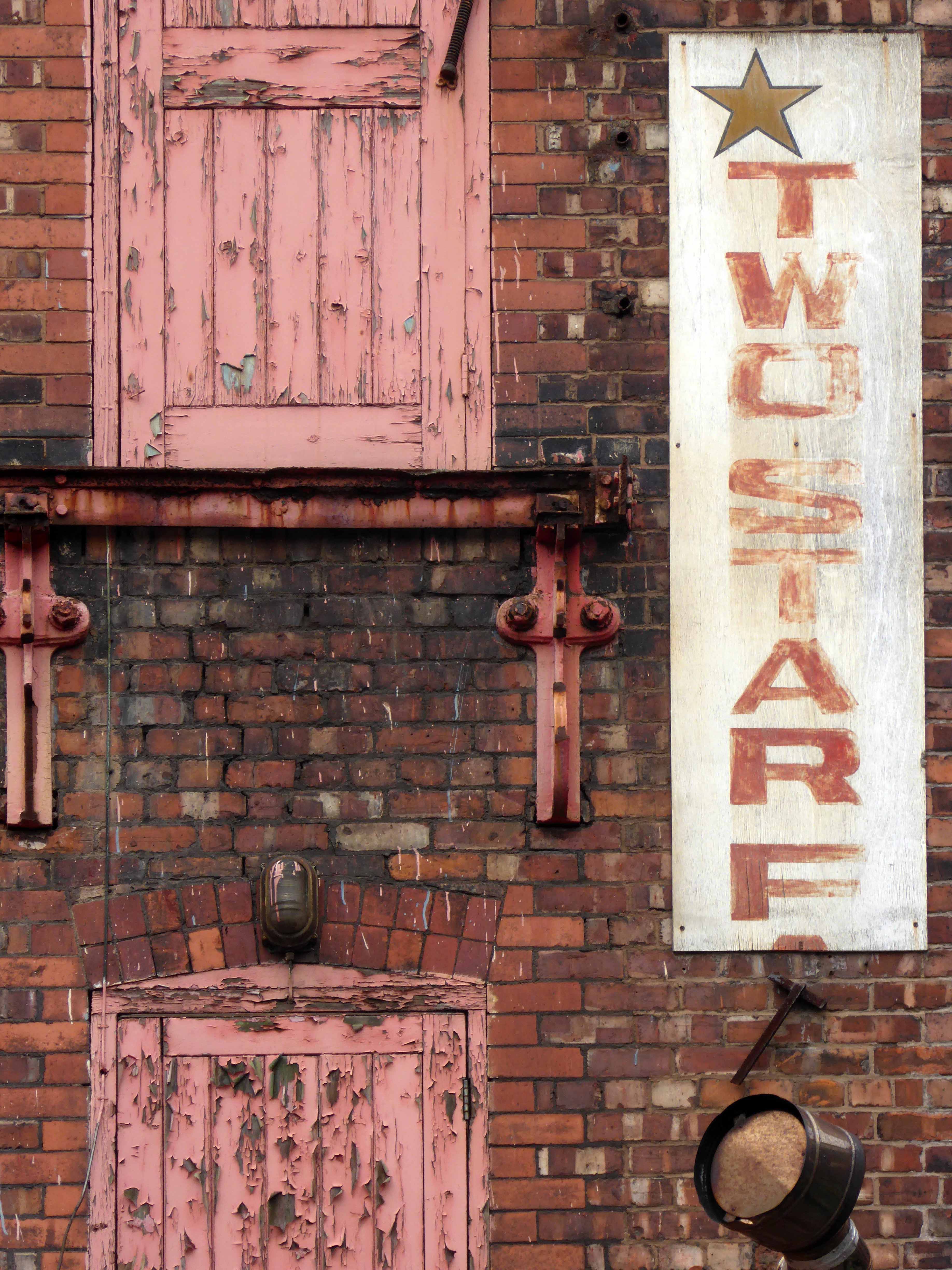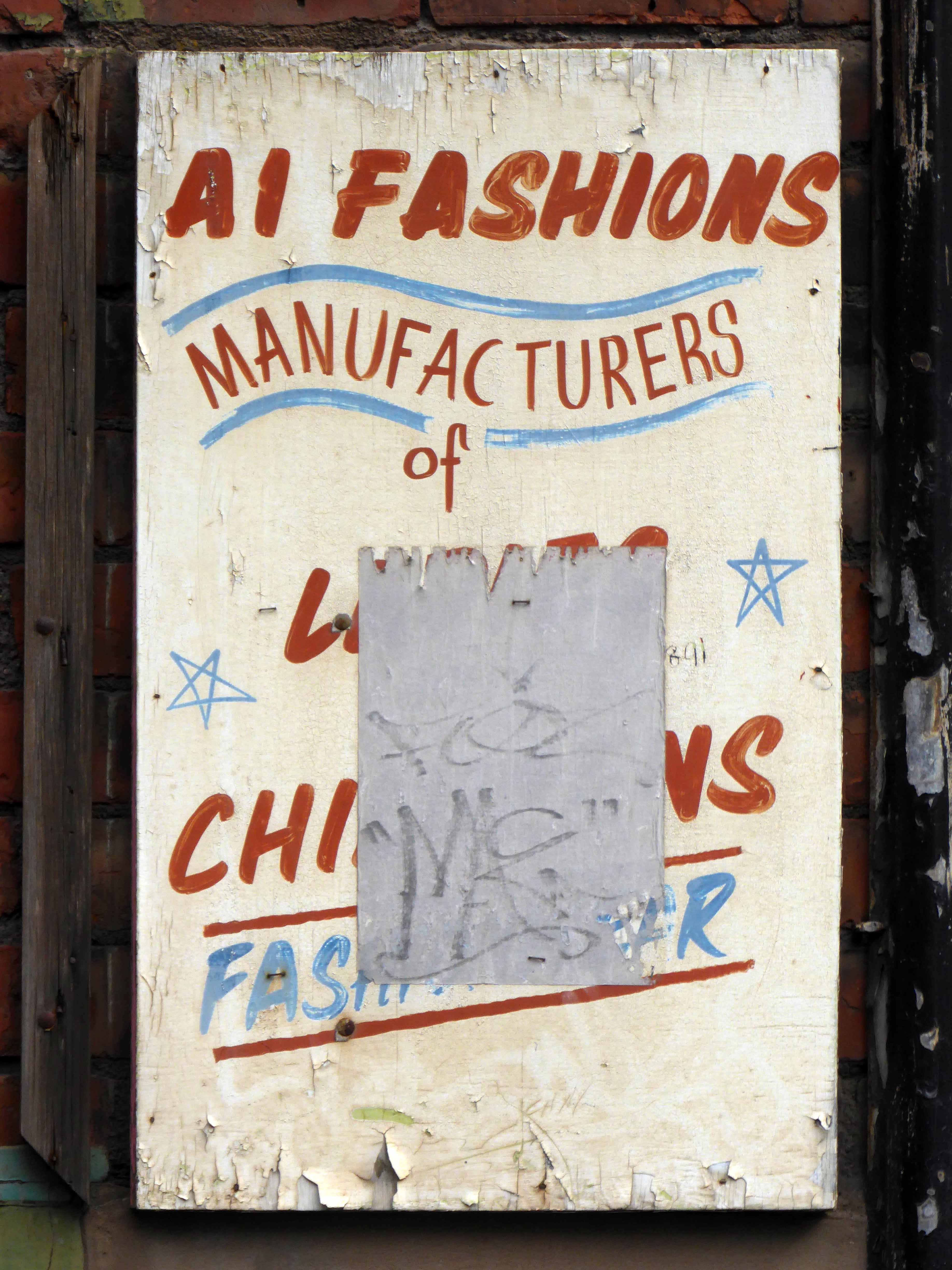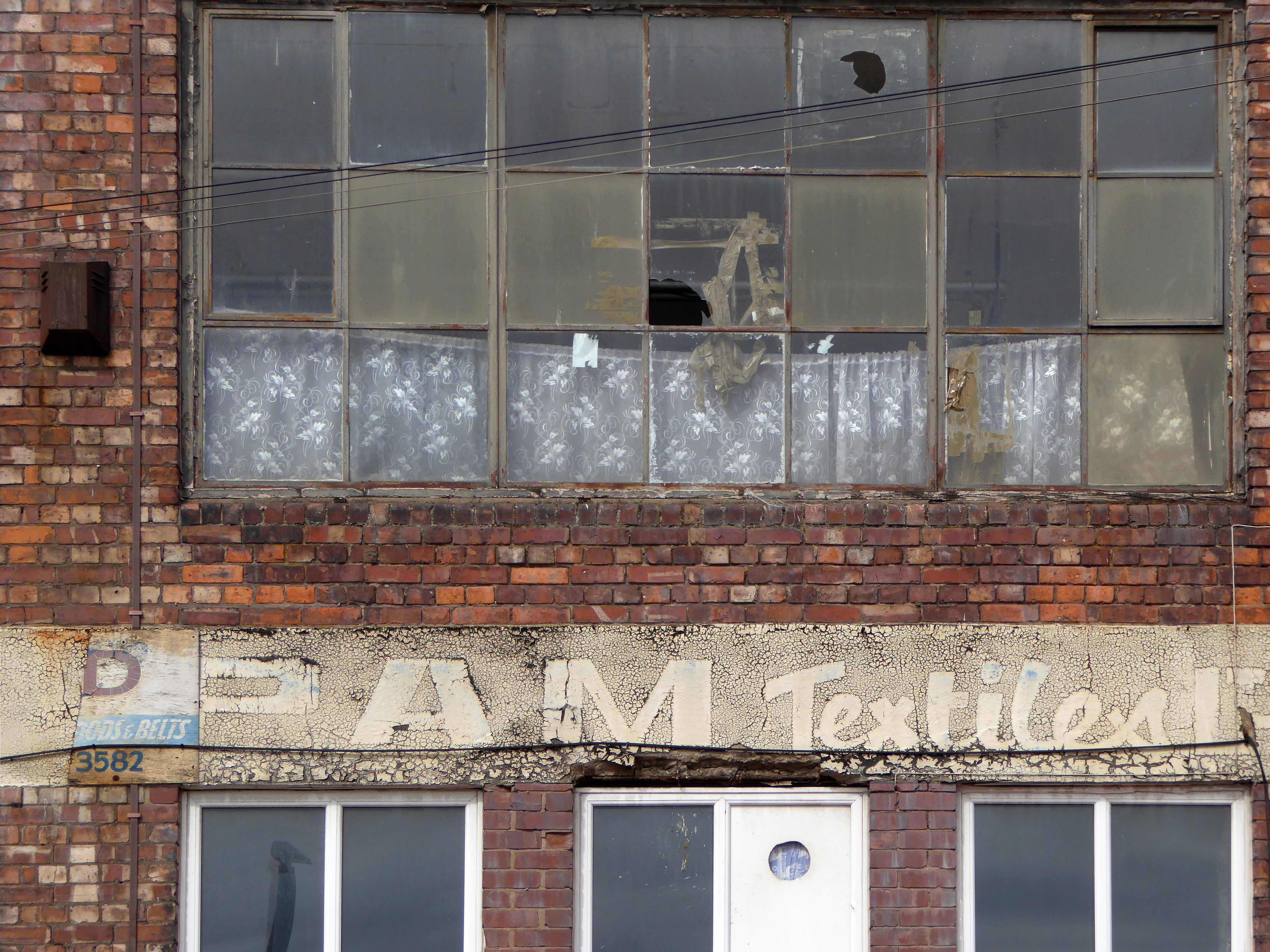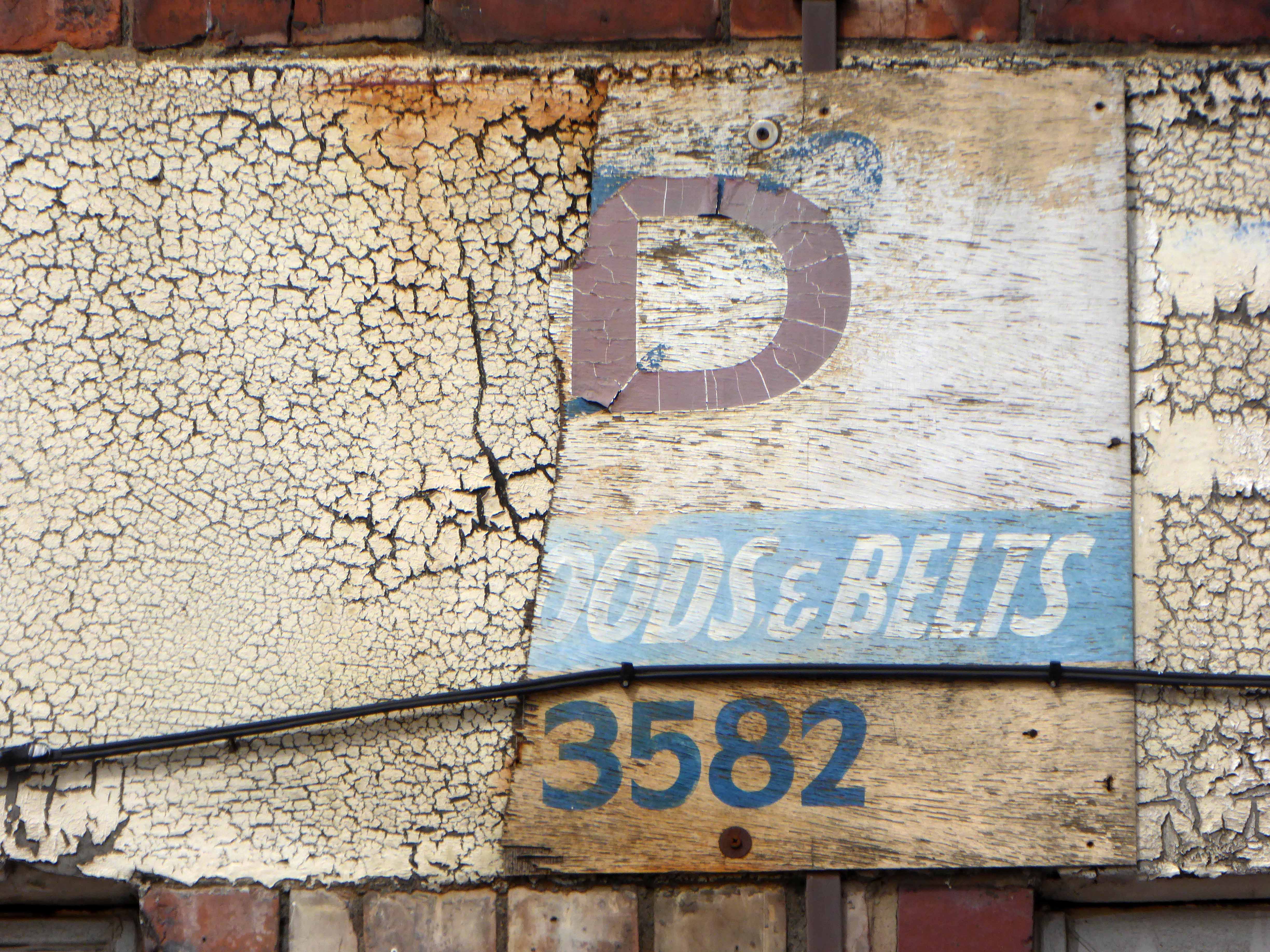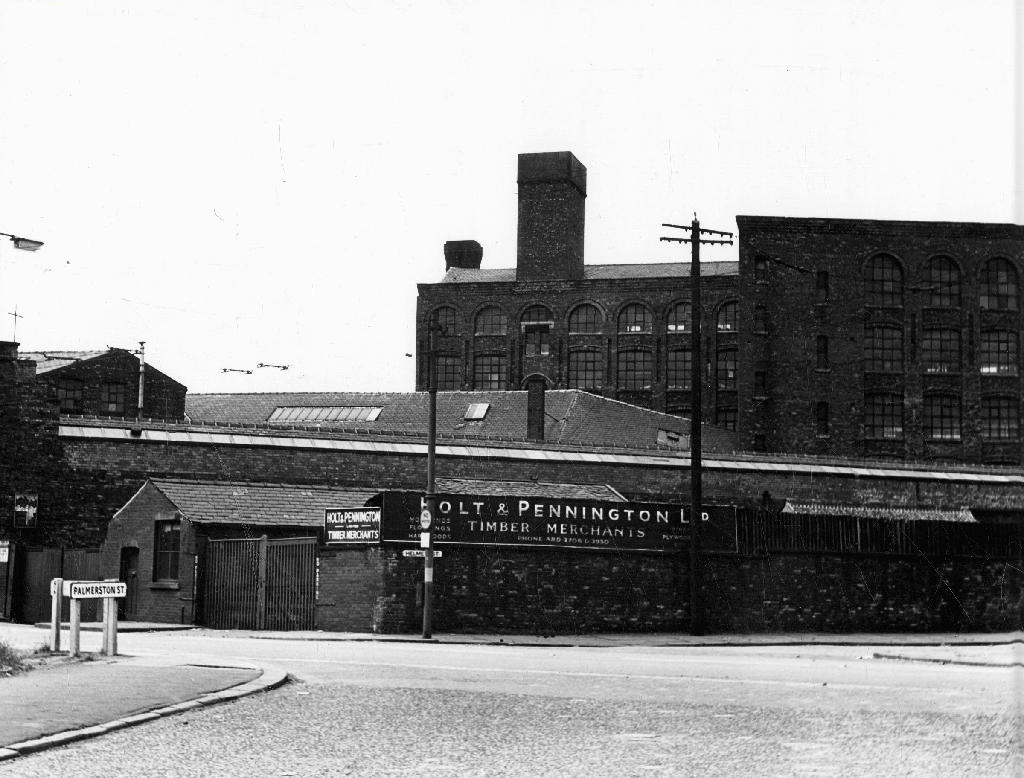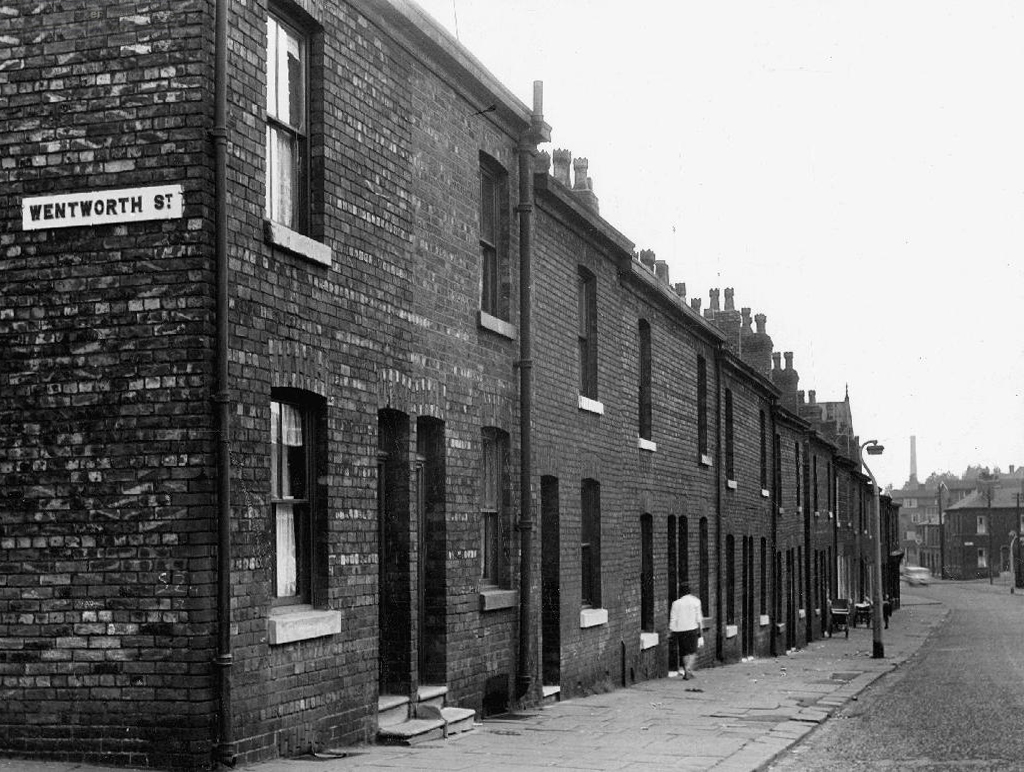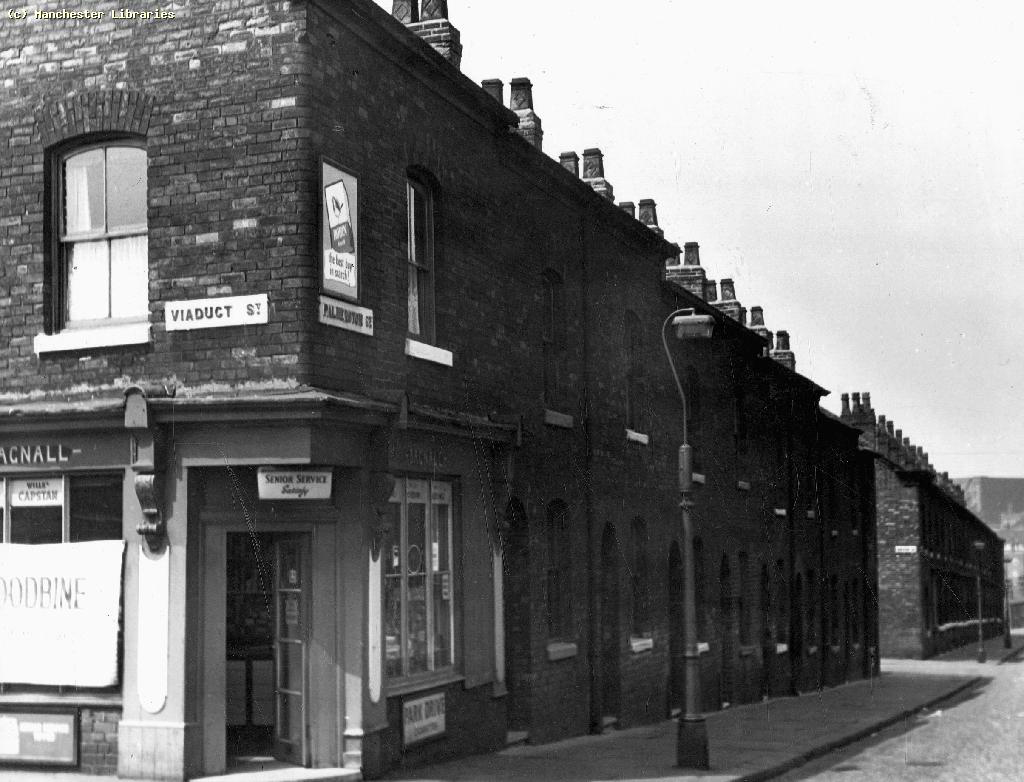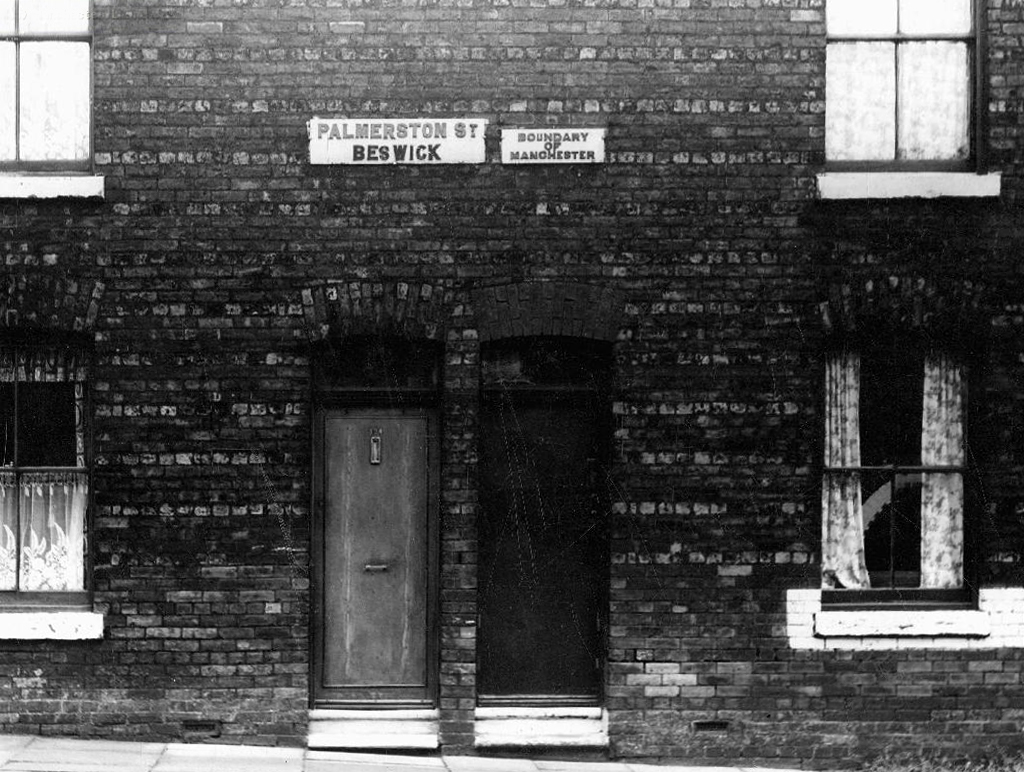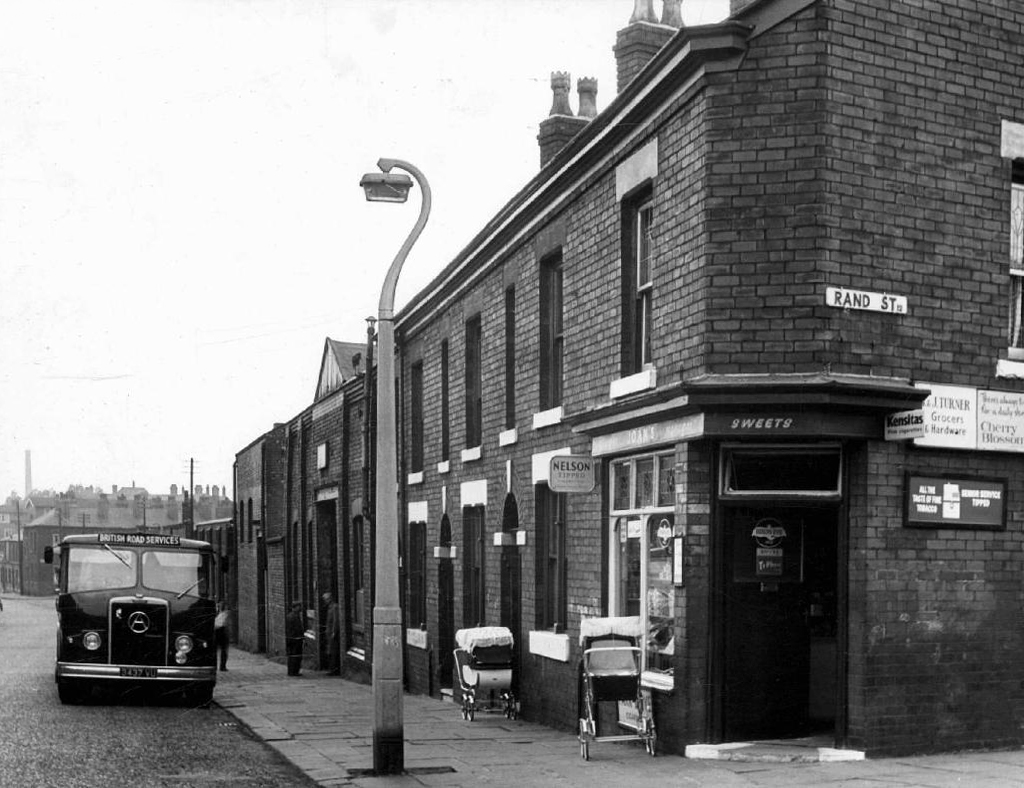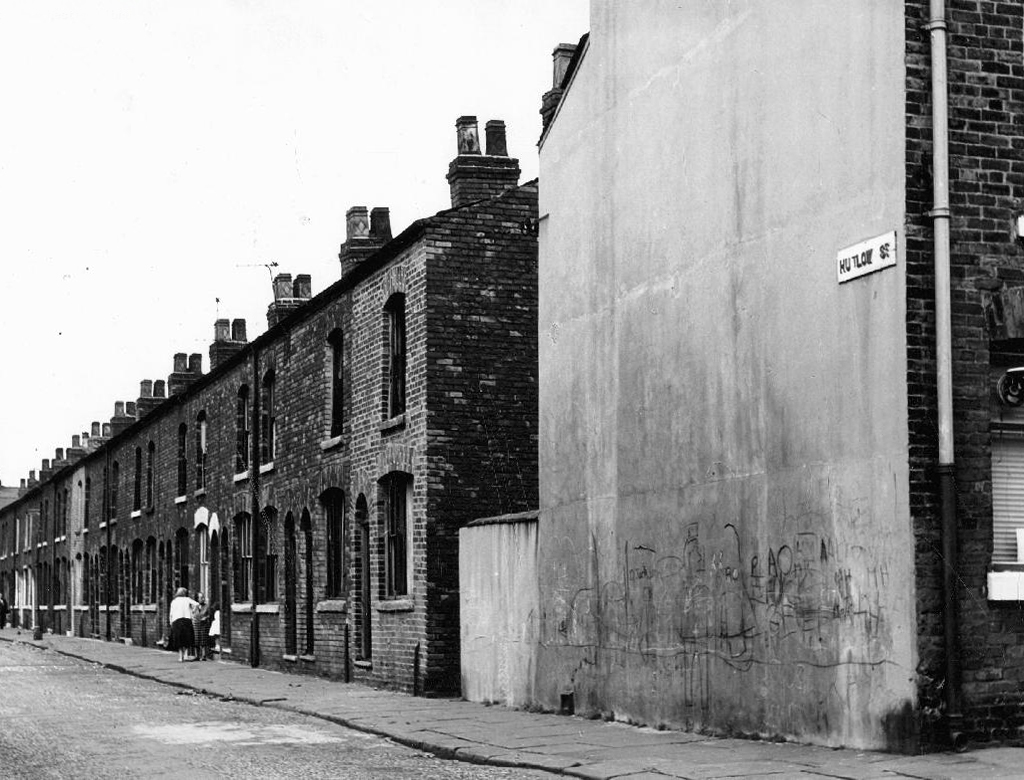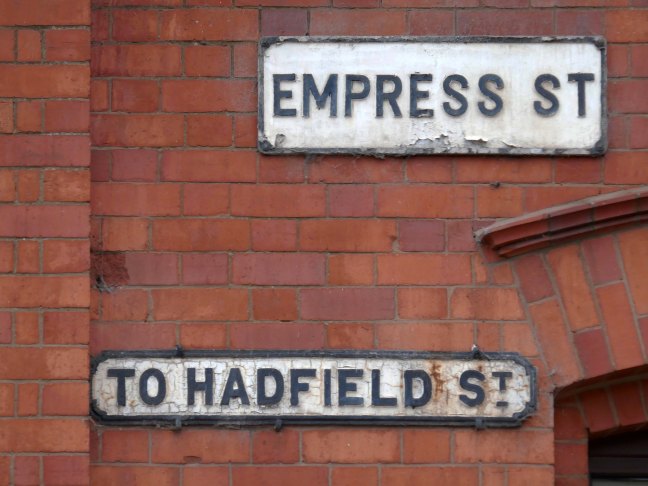
Industry Around Cornbrook

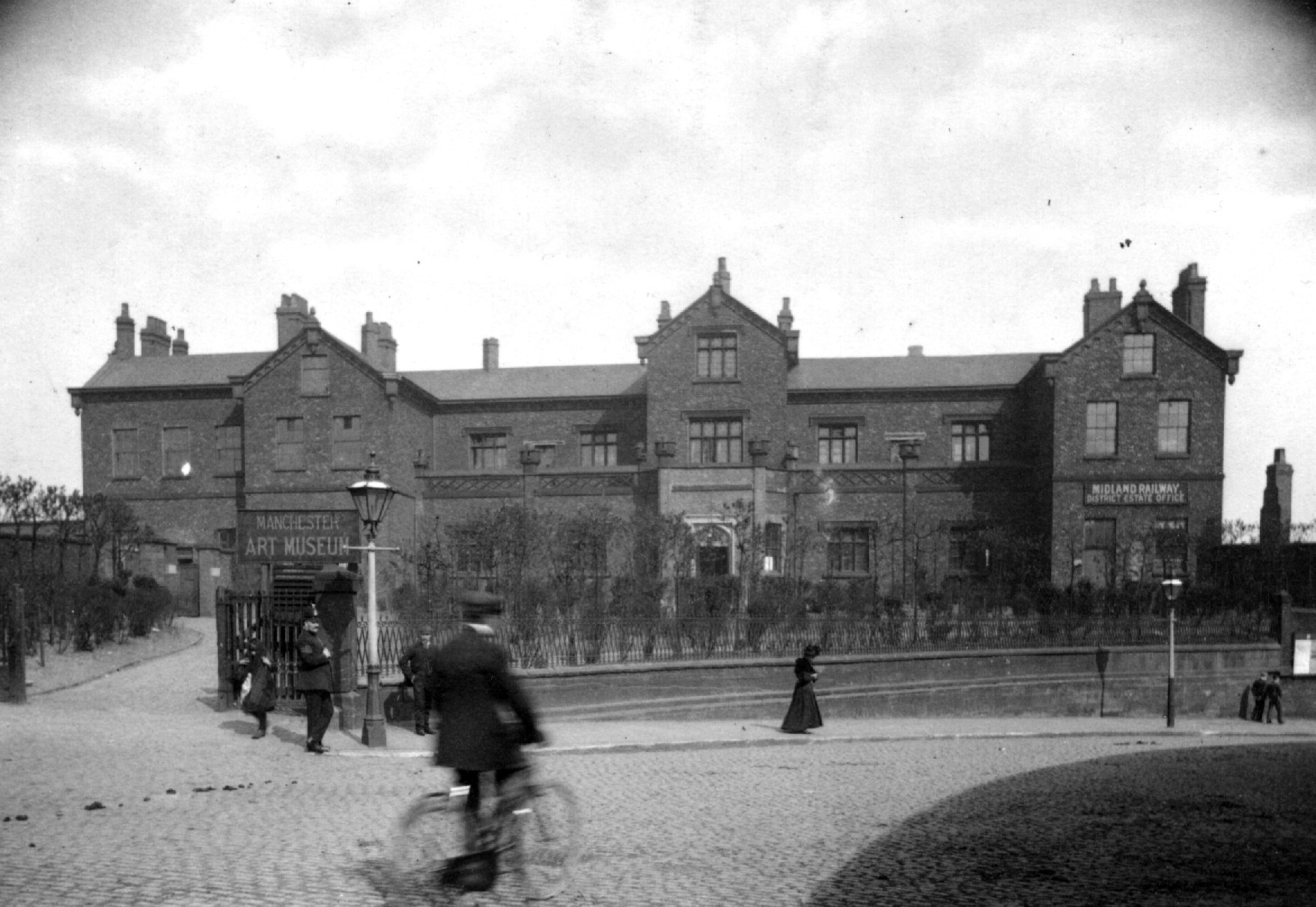
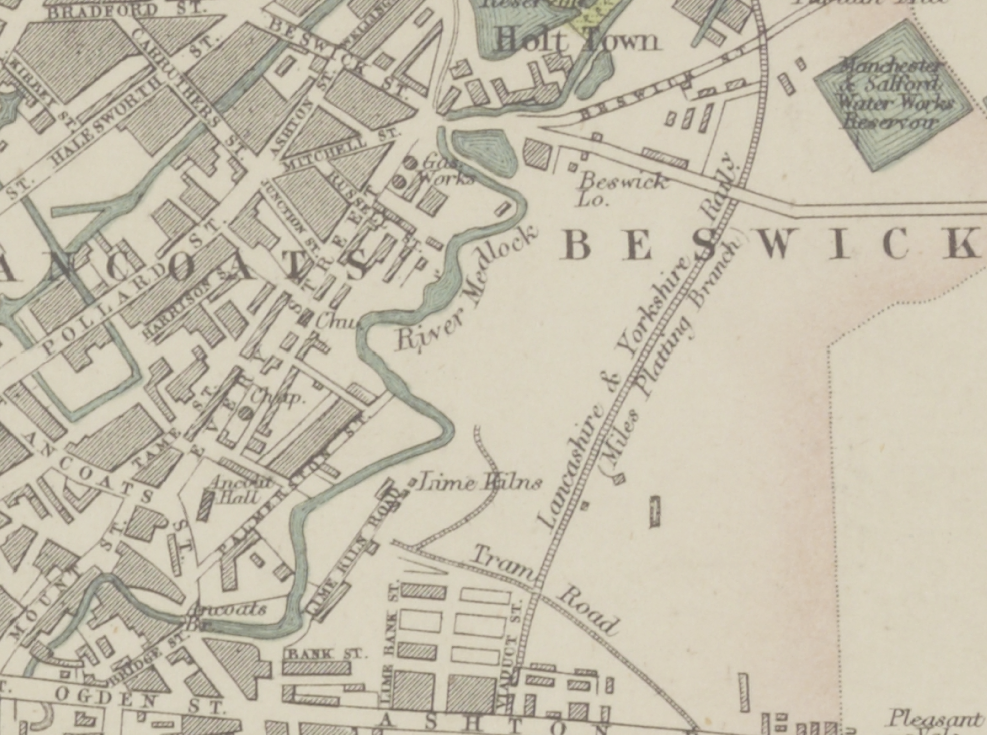
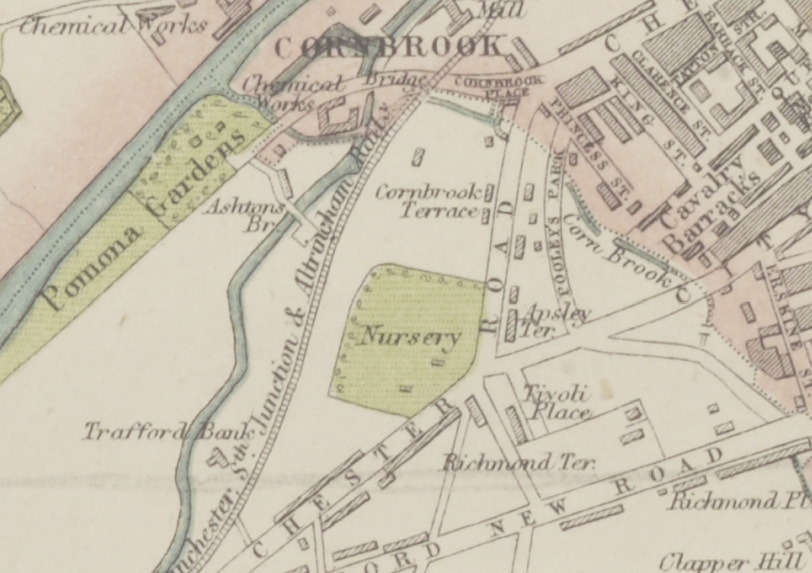
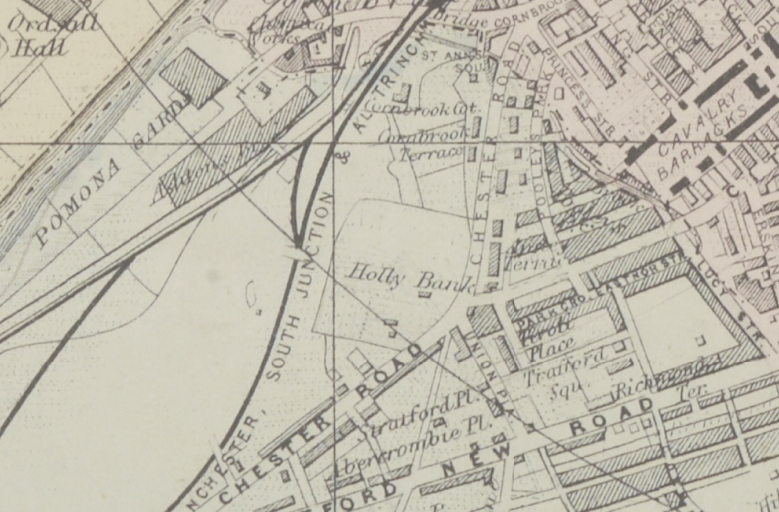
In 1870 the street pattern has yet to be established, between the South Junction railway and Chester Road. The area is occupied by a Nursery. Pomona Gardens sits beside the river, and the Corn Brook is clearly visible. To the right are the Hulme Barracks, closed and demolished in 1914.
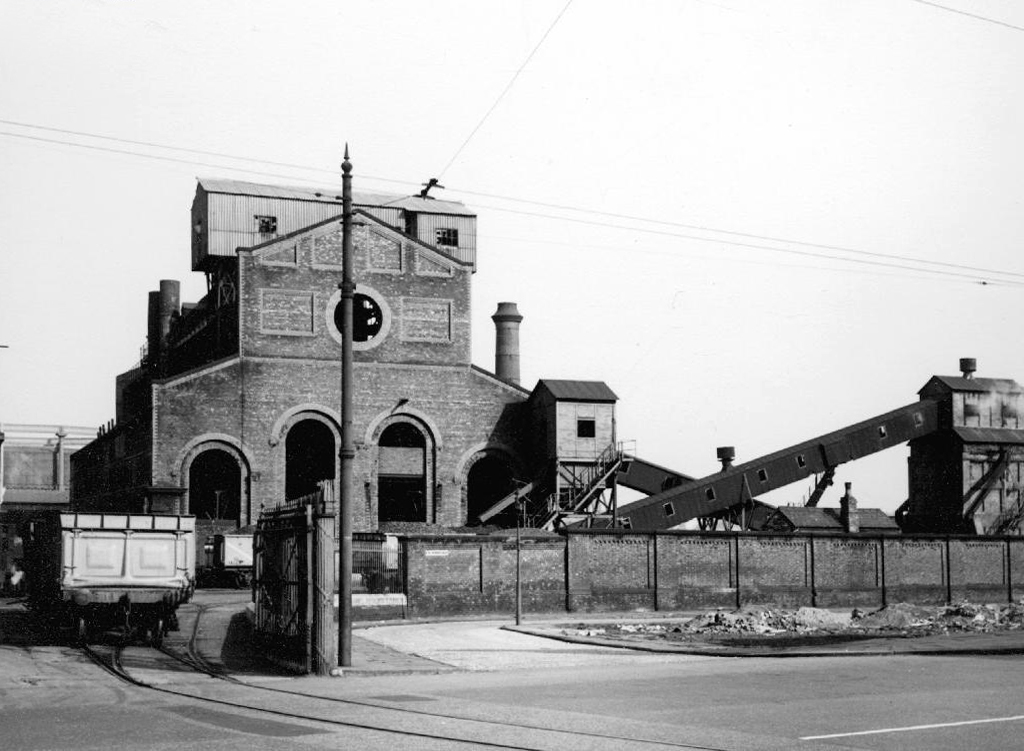
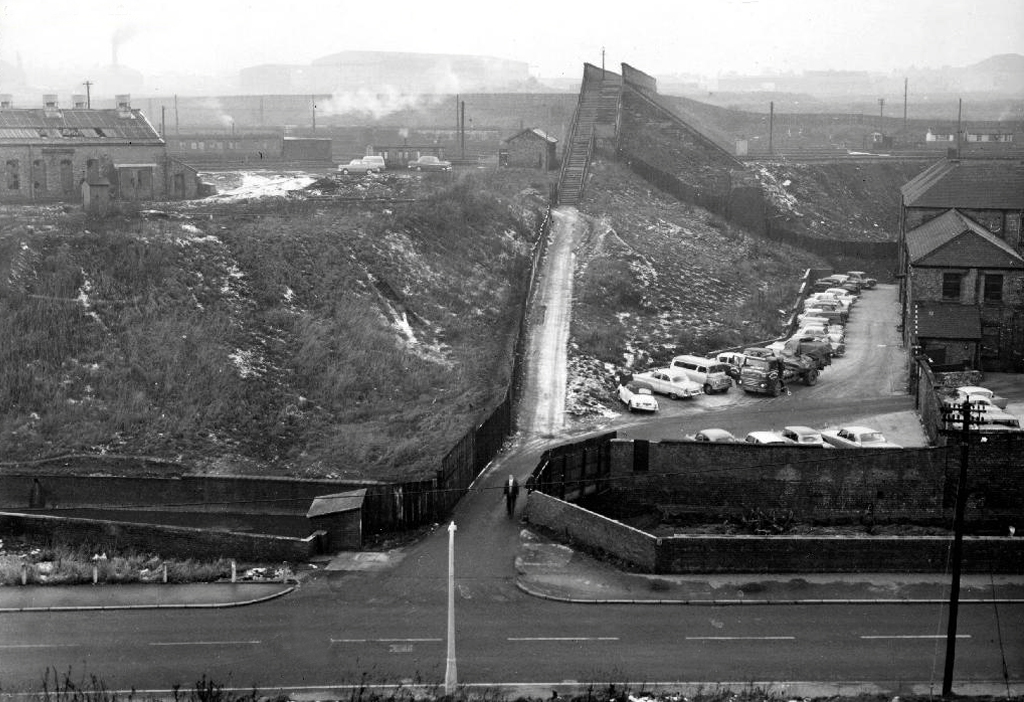
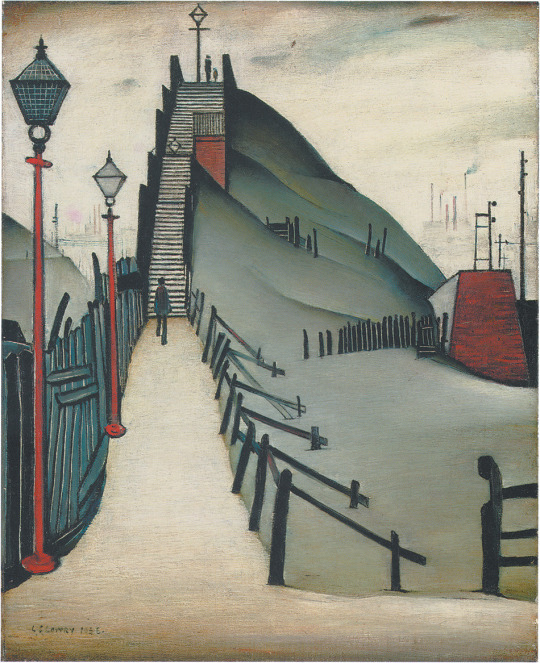
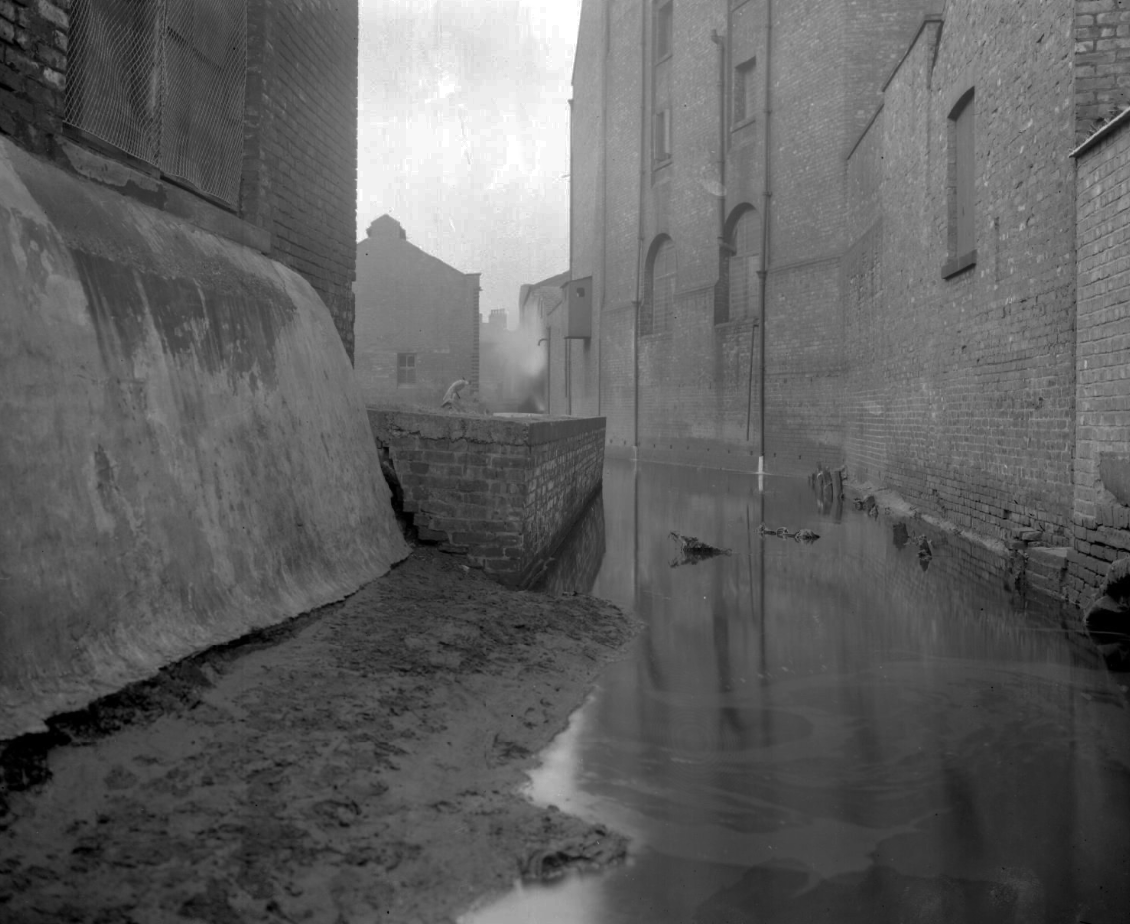
Corn Brook Textile Street 1947
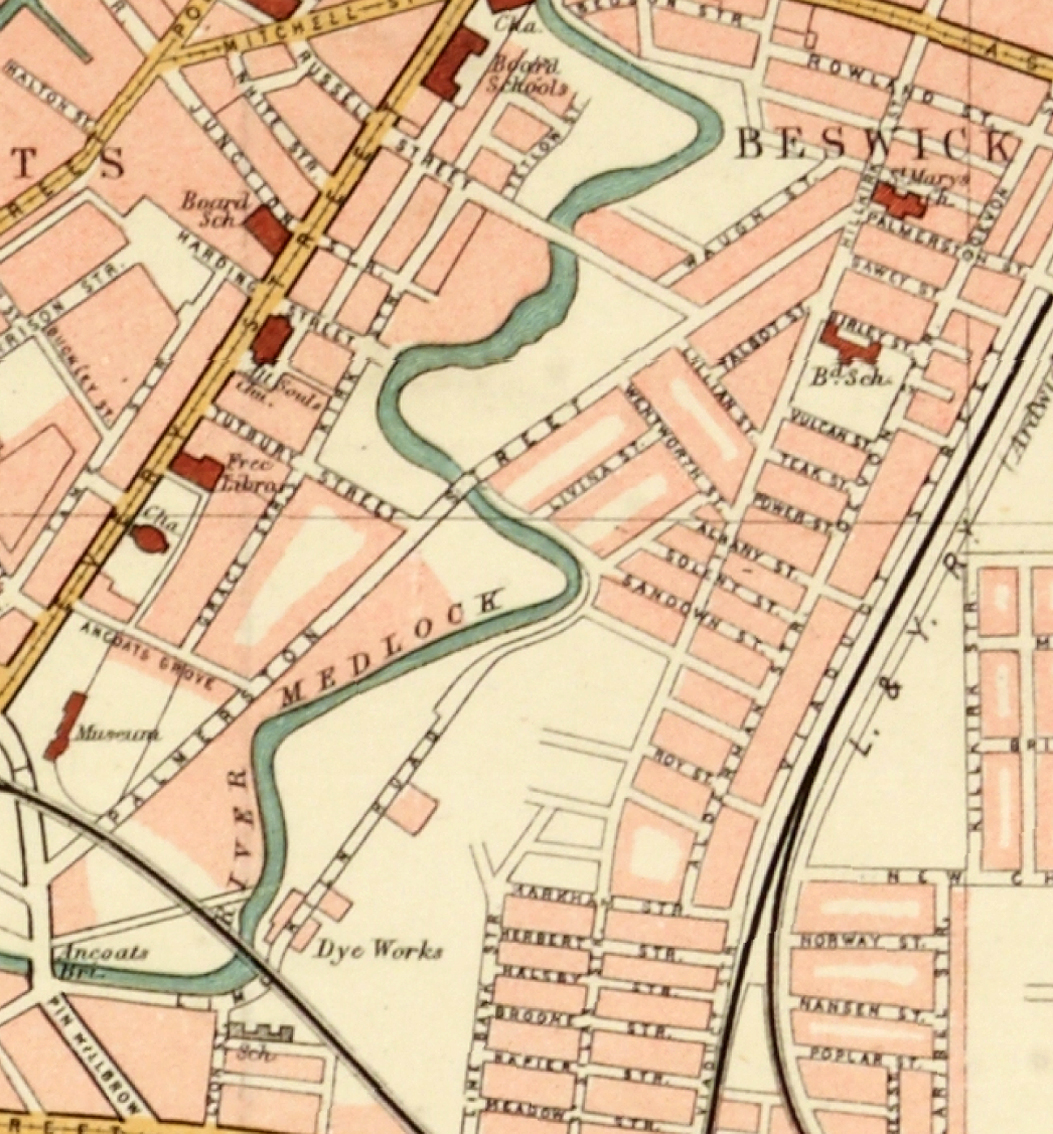
In 1884 there is new housing to the right of Chester Road.
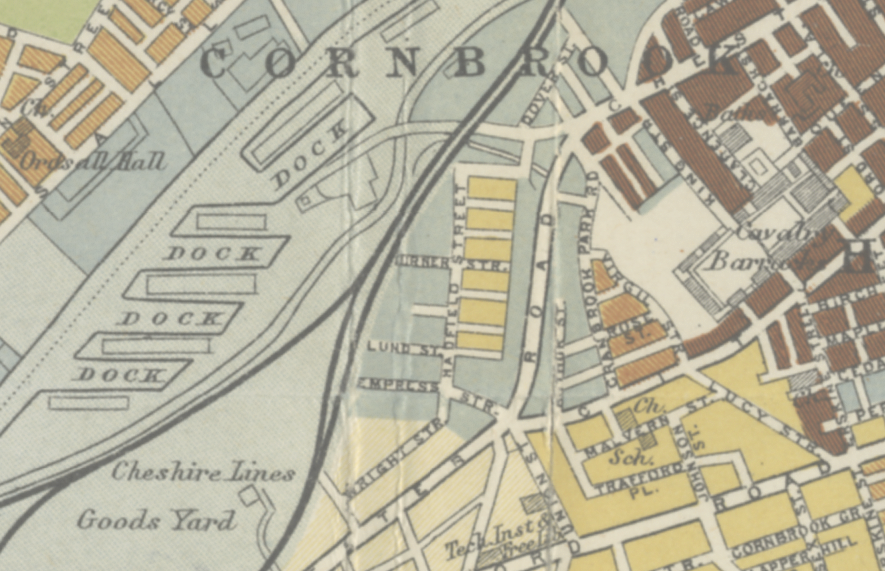
In 1904 the Pomona Docks have been established and the are around Hadfield Street fully developed.
Pomona Docks 1923
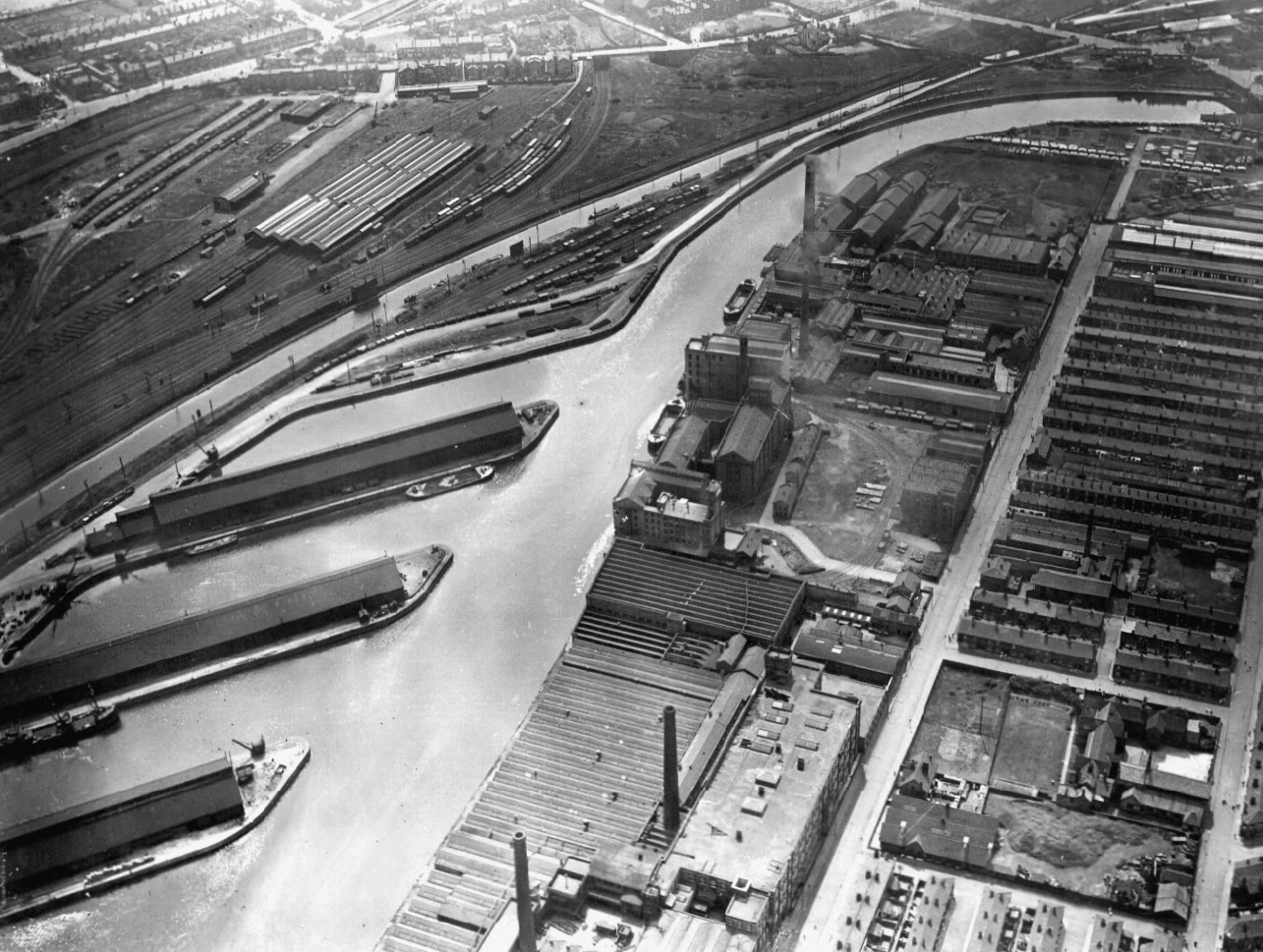
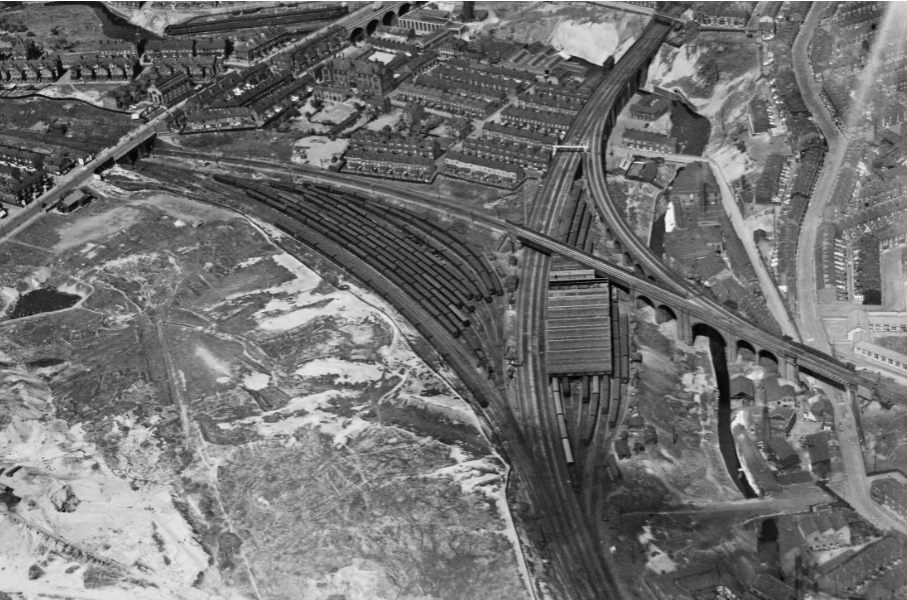
This is an aerial view from 1930, there area is now a dense network of streets to the north of Chester Road, transport infrastructure, housing and industry sit side by side.
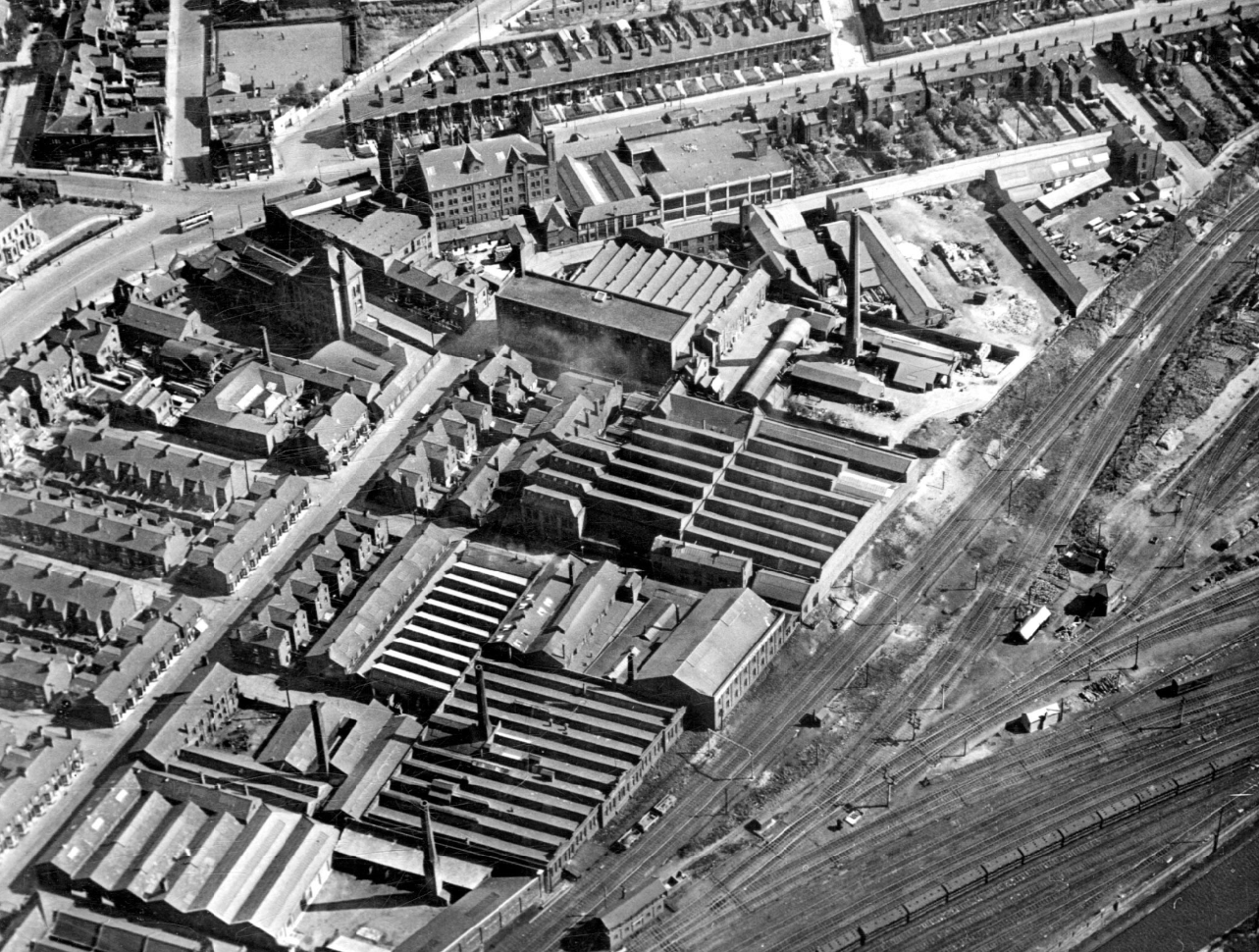
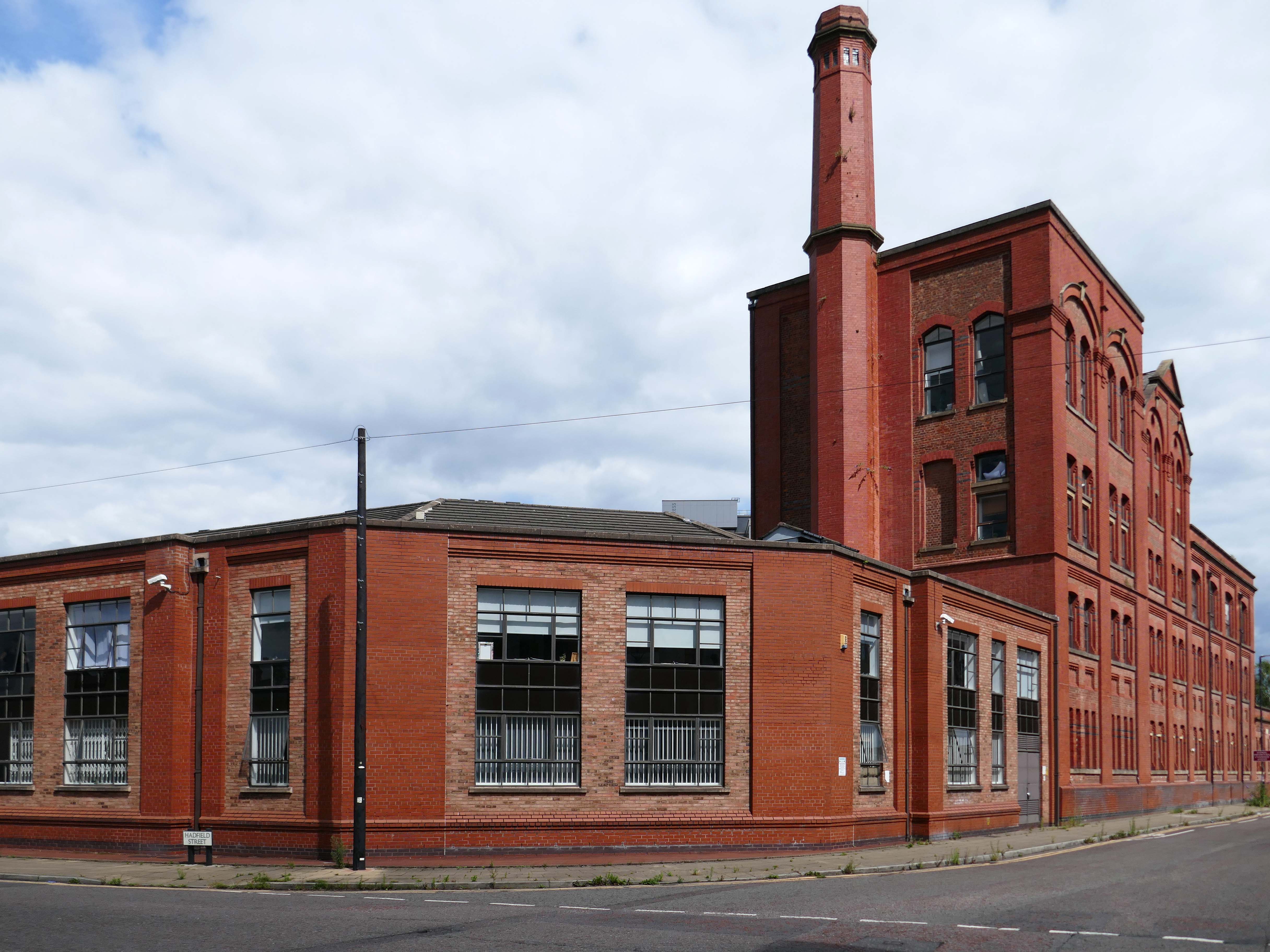
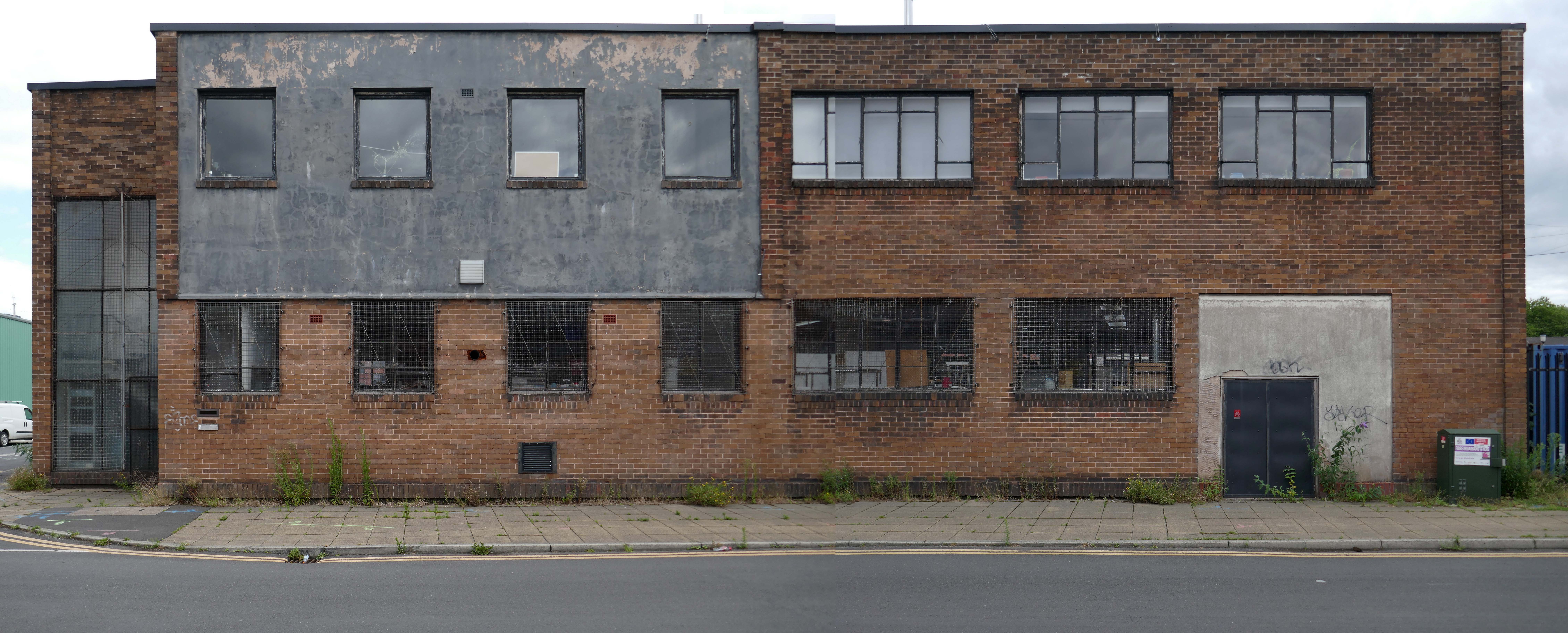
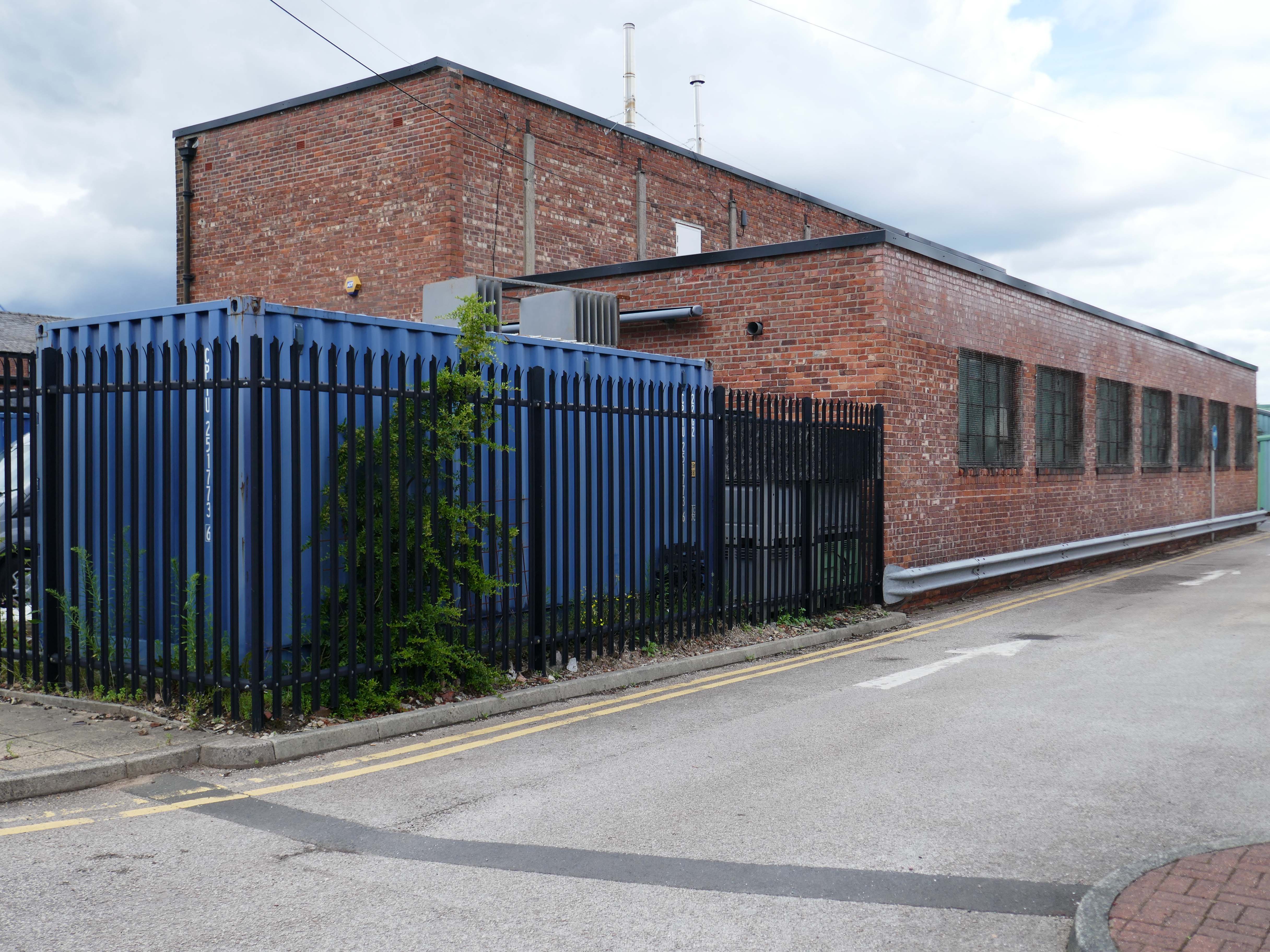
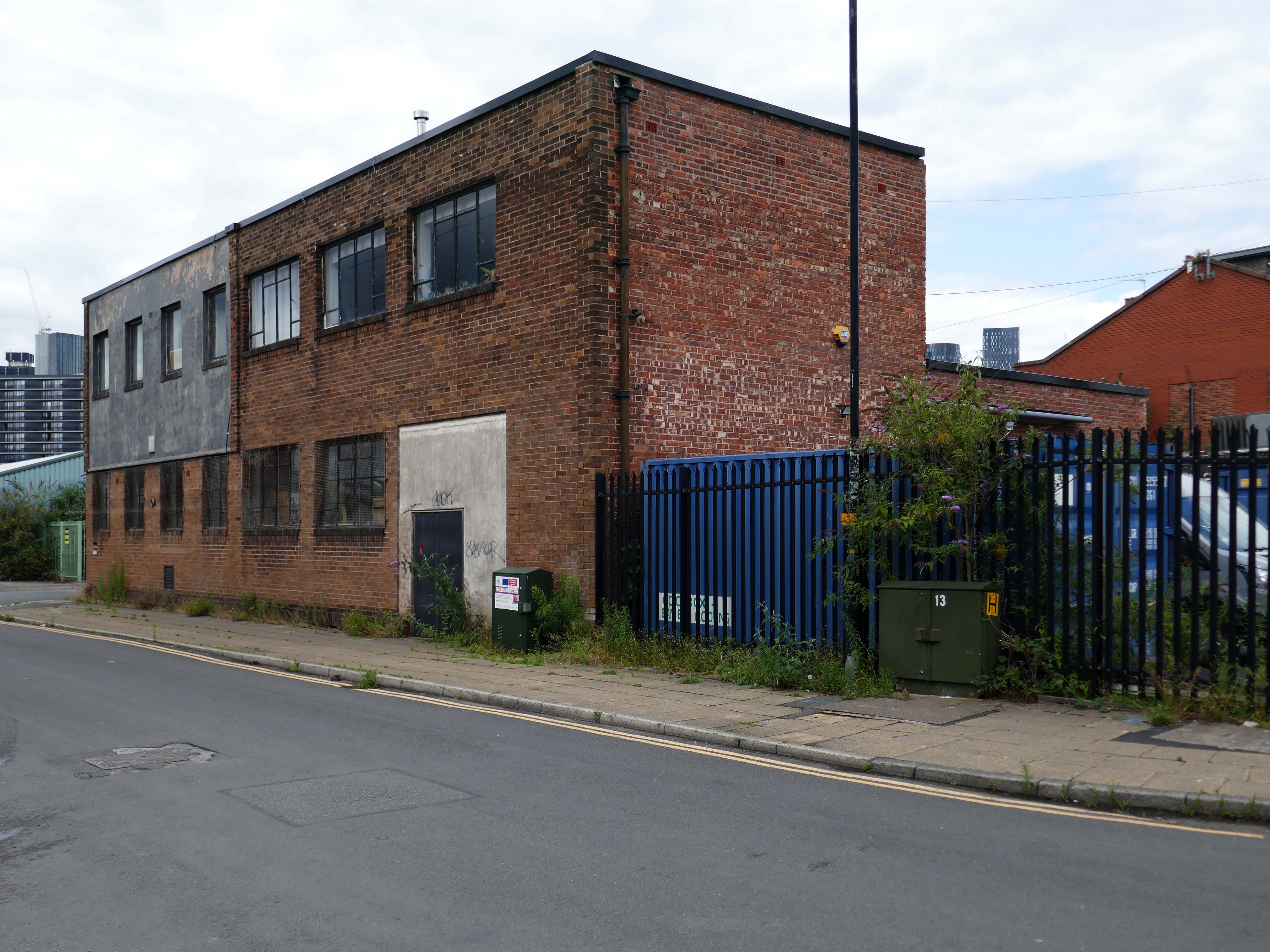
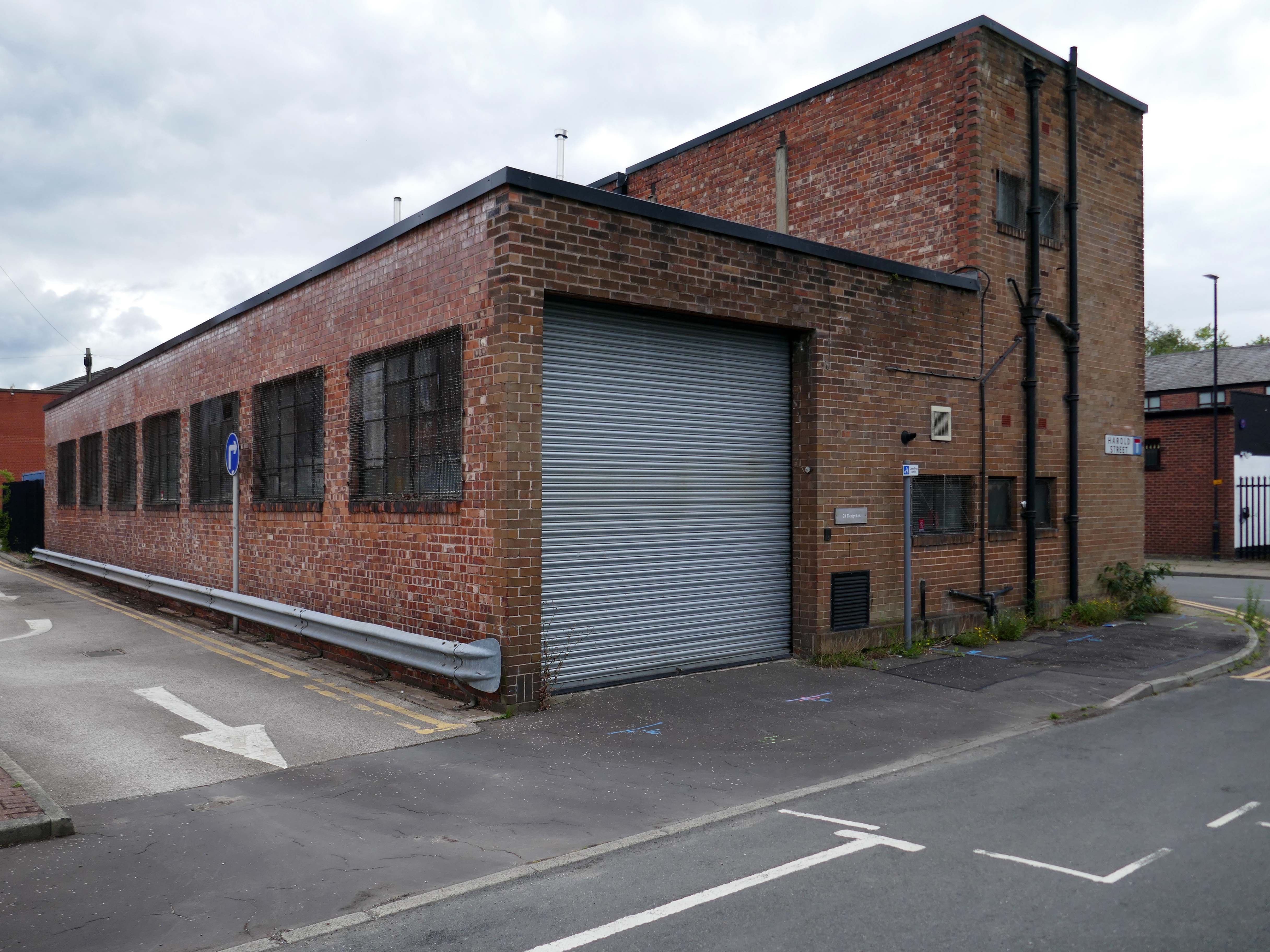
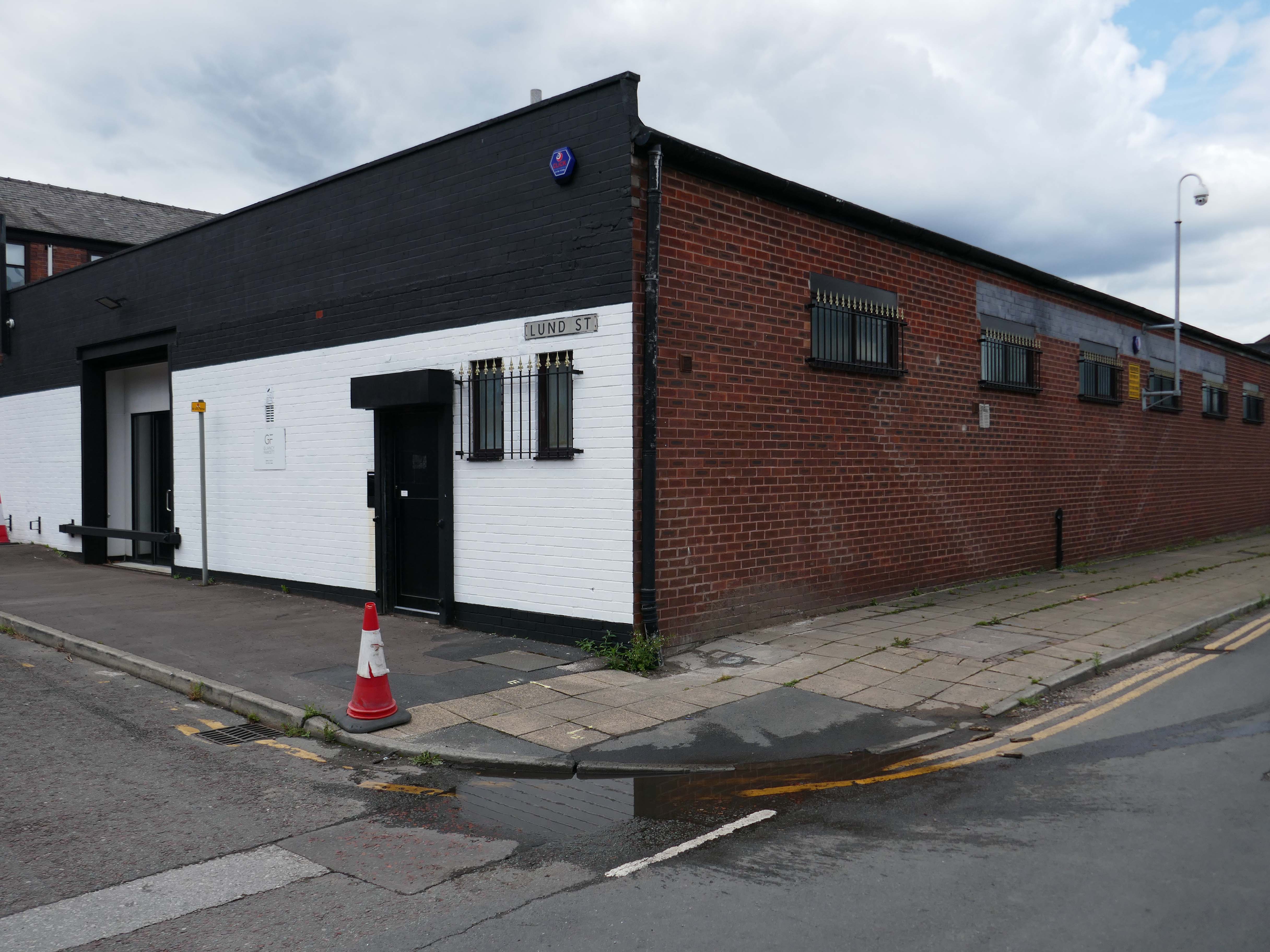
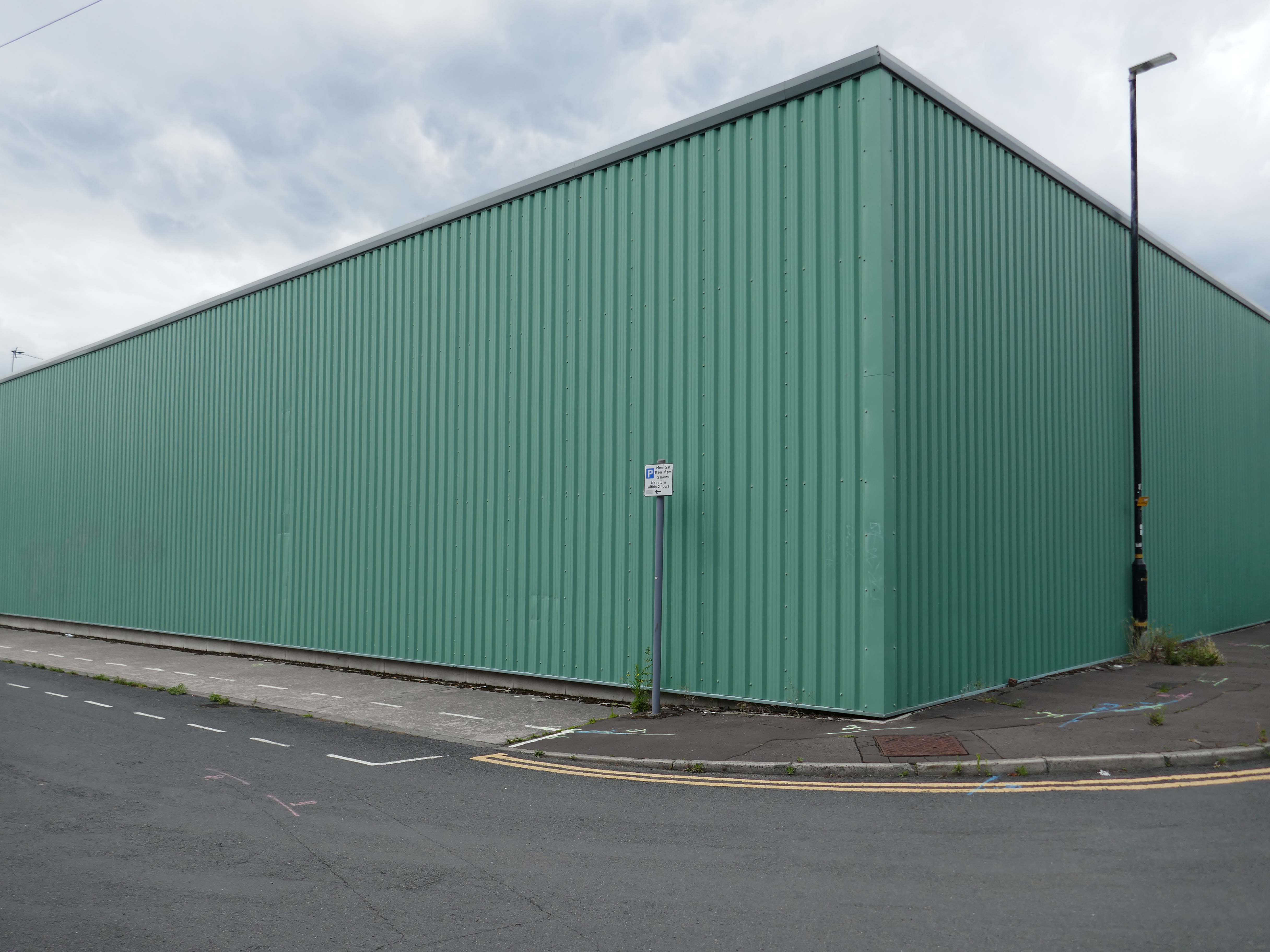
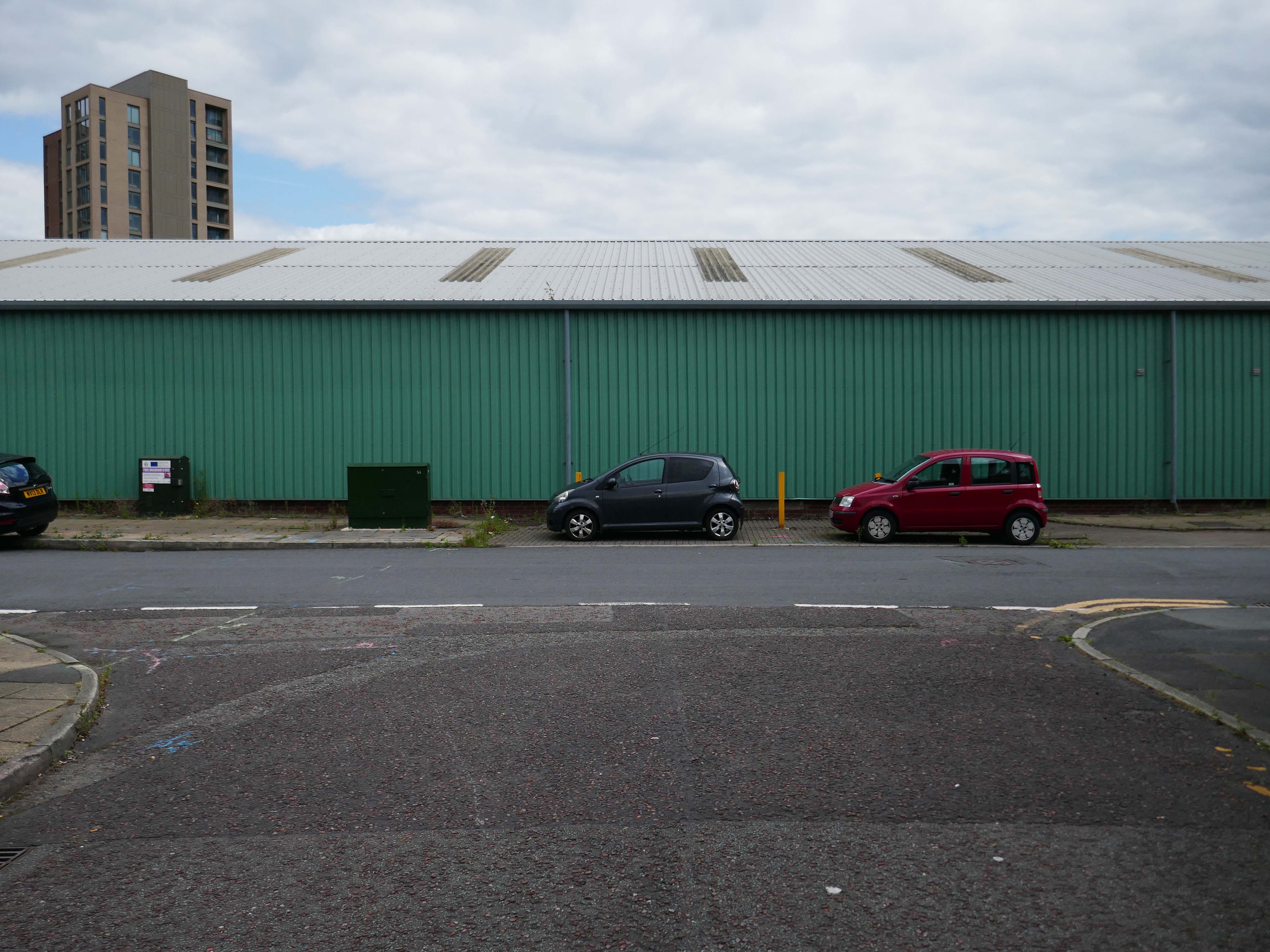
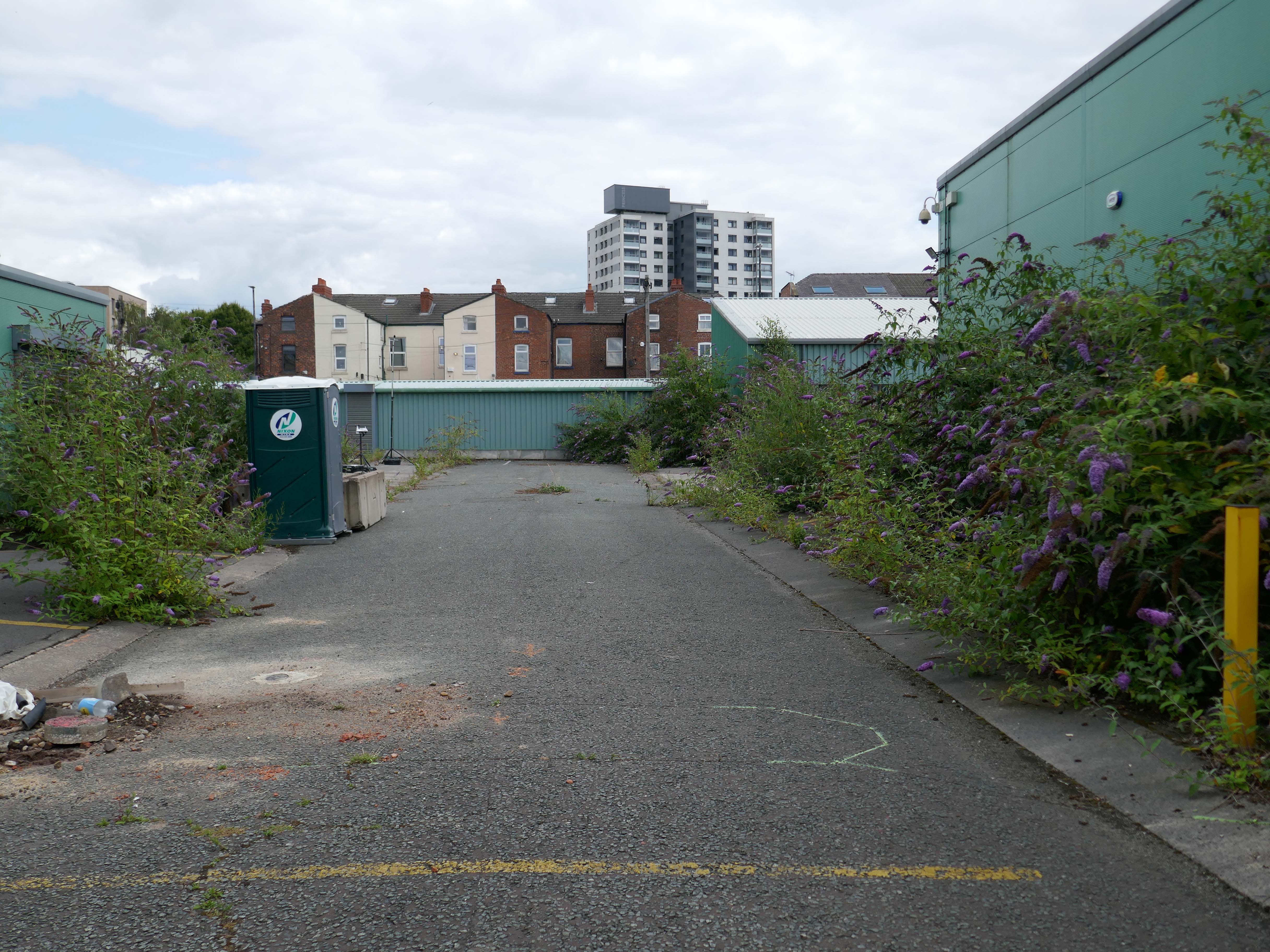
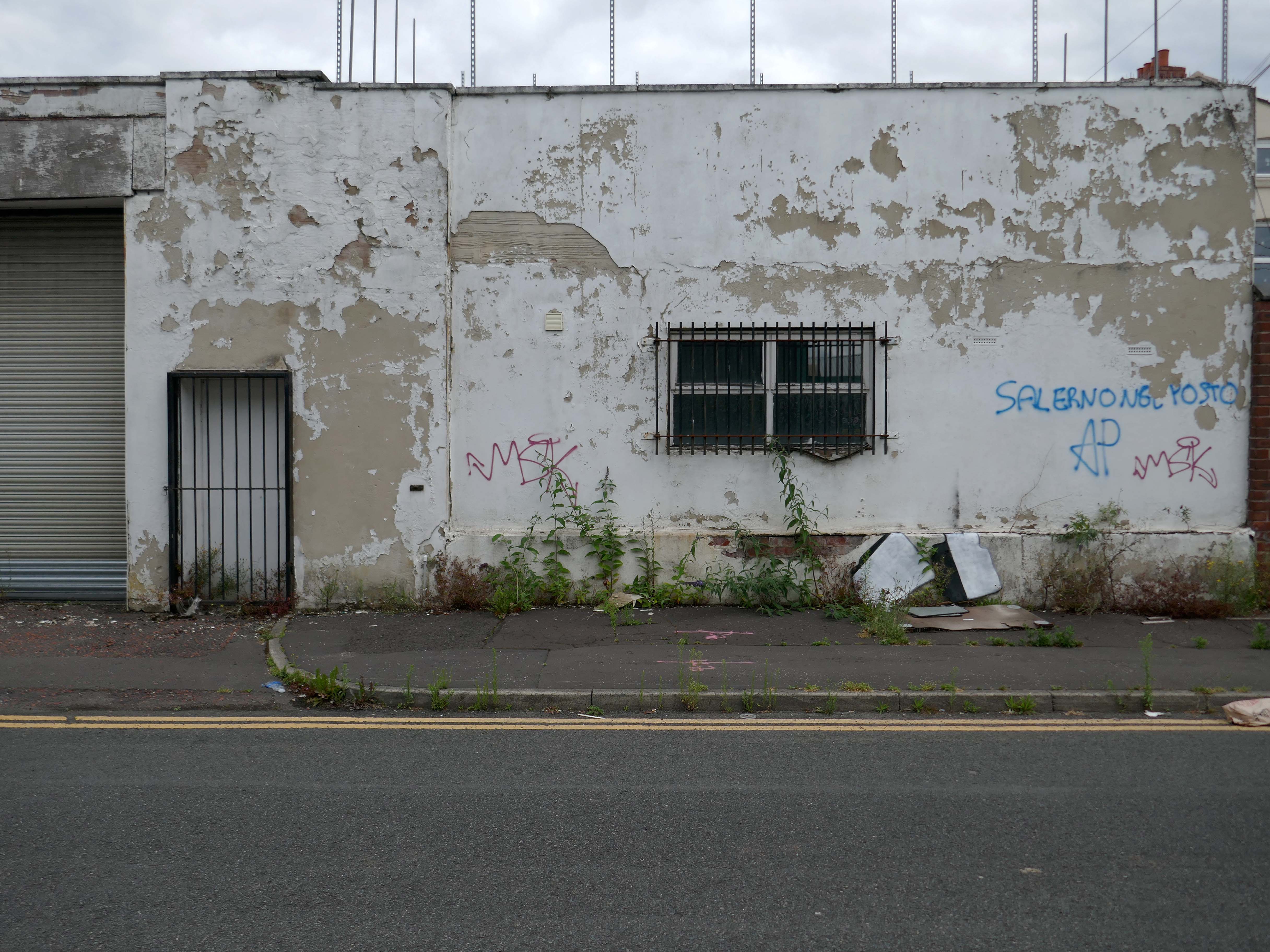
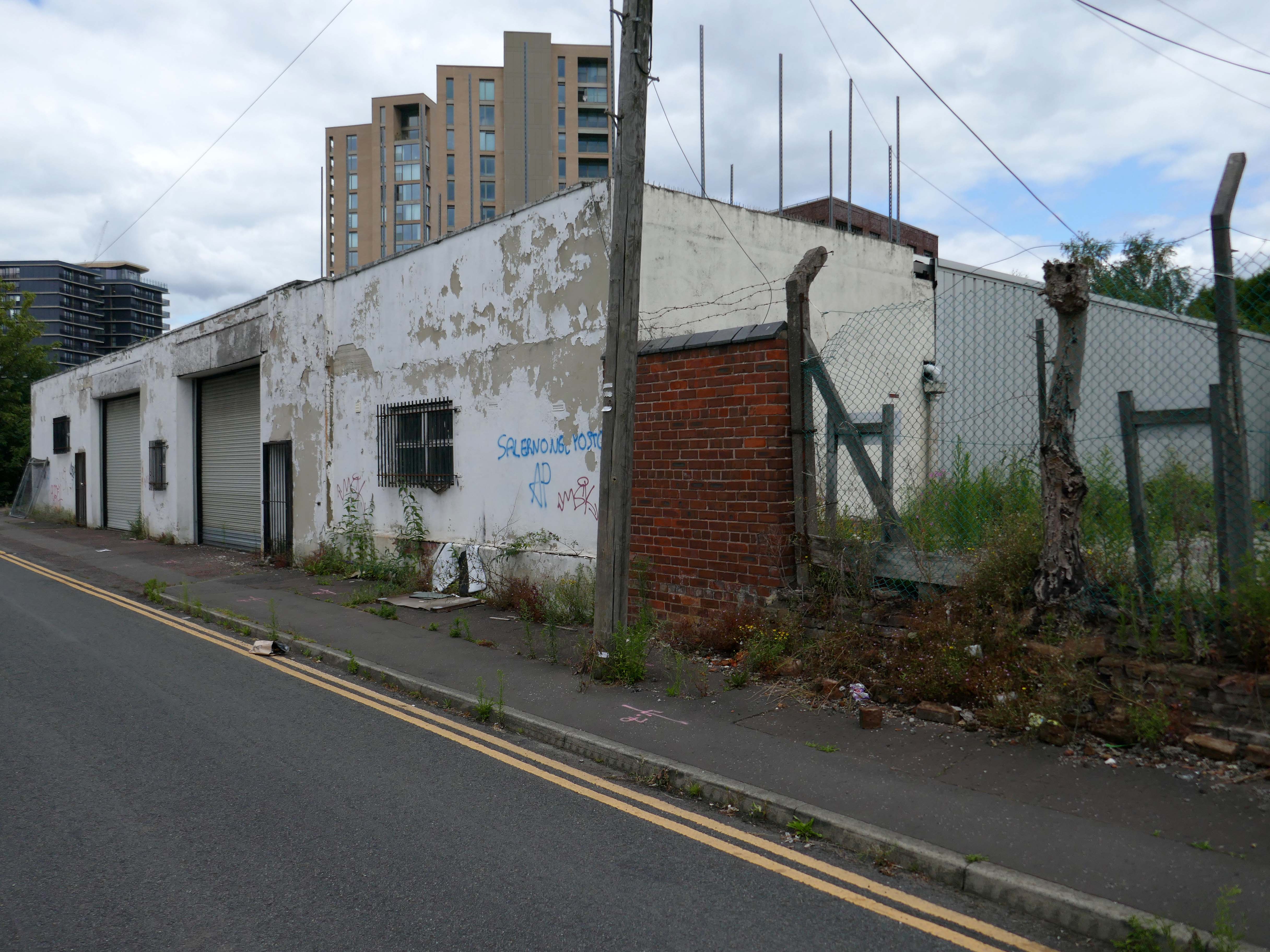
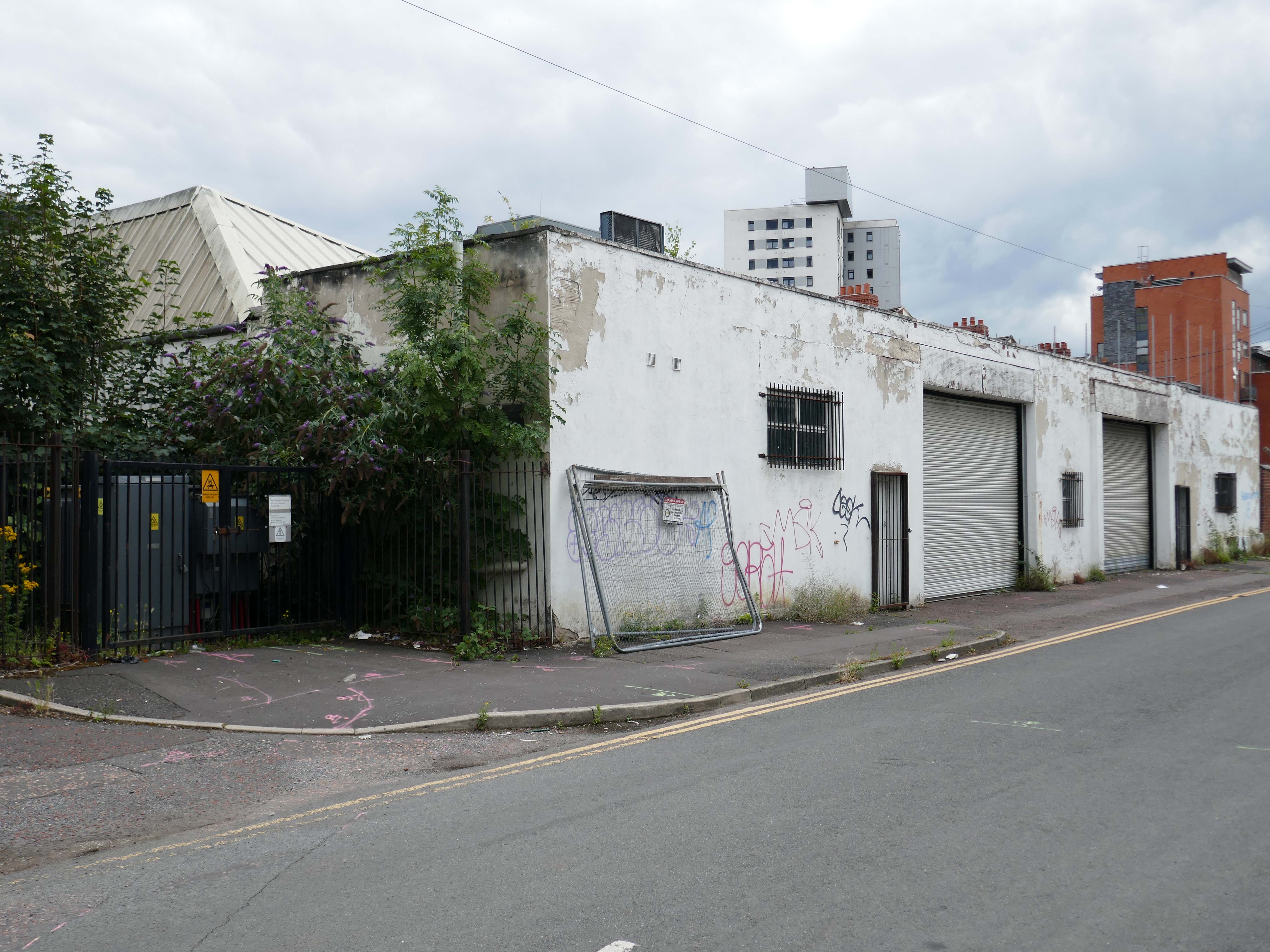
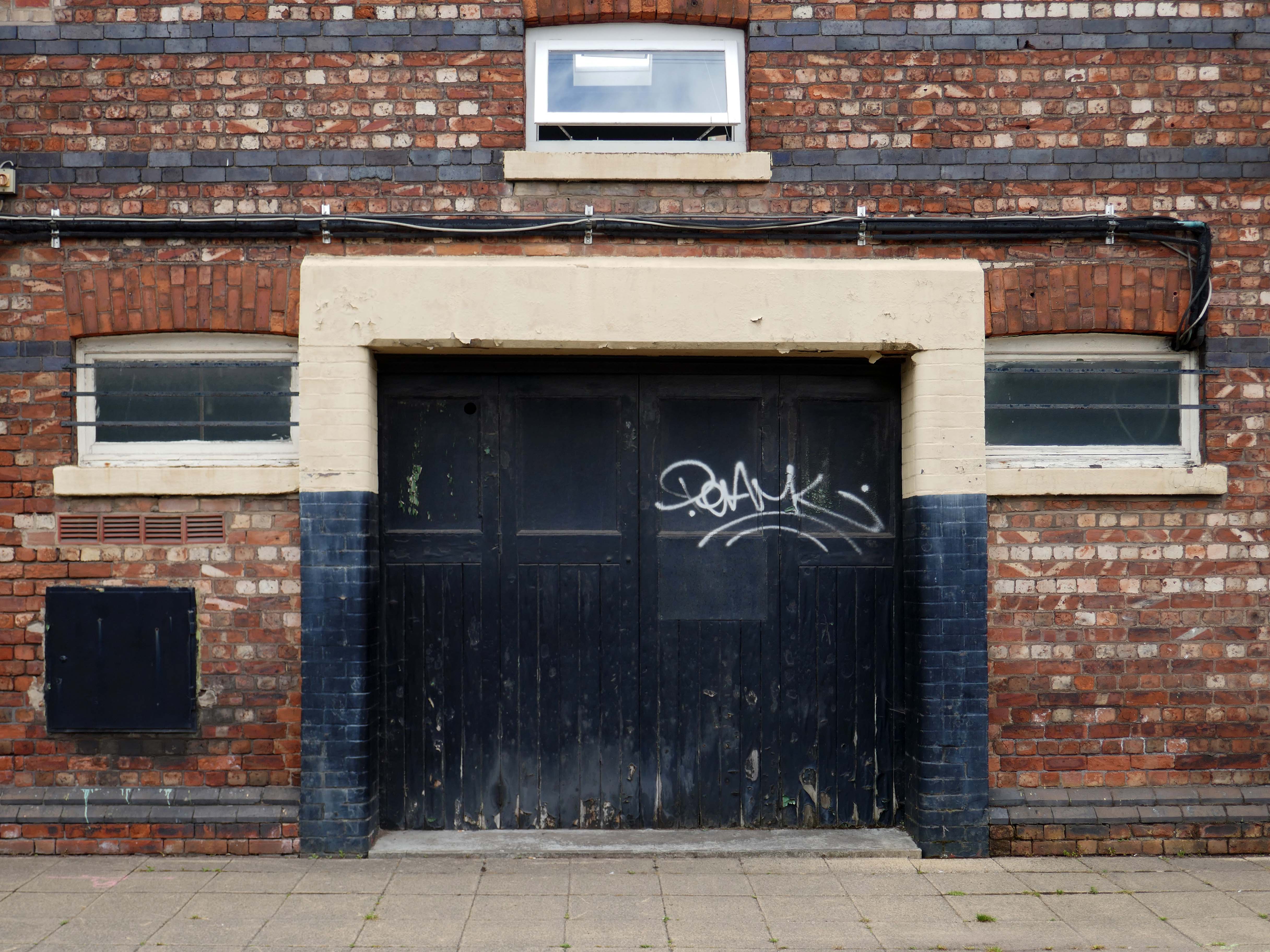
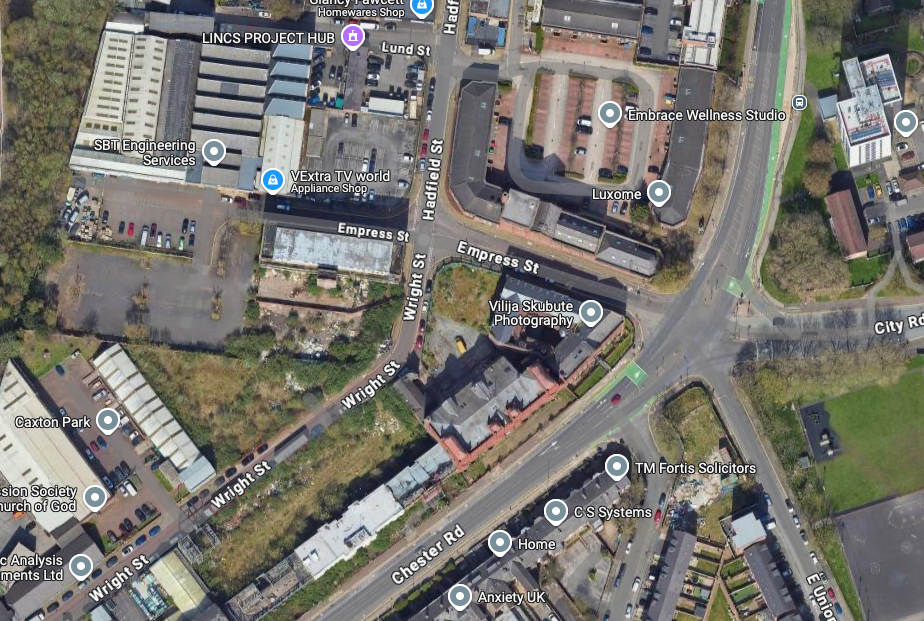
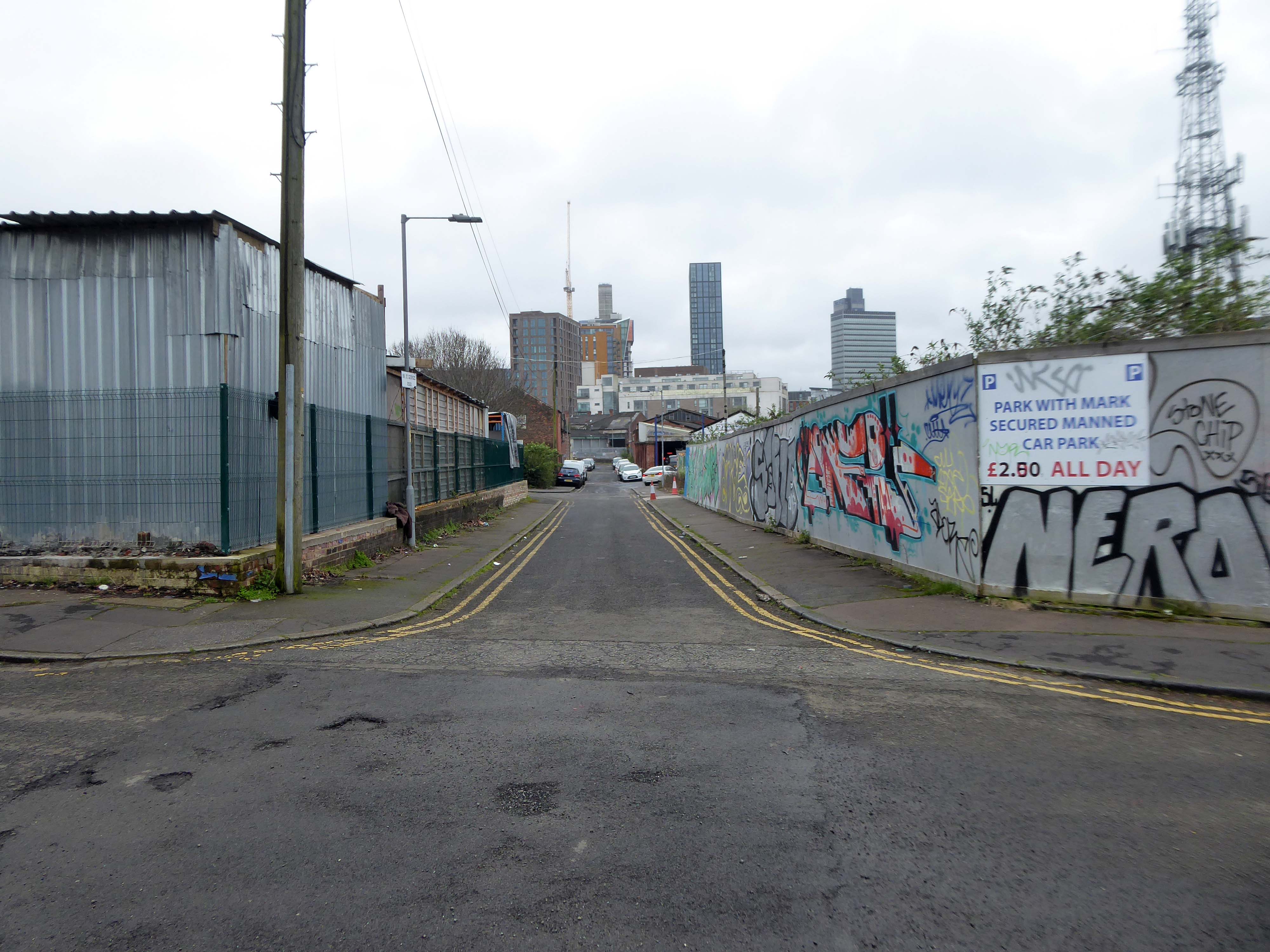
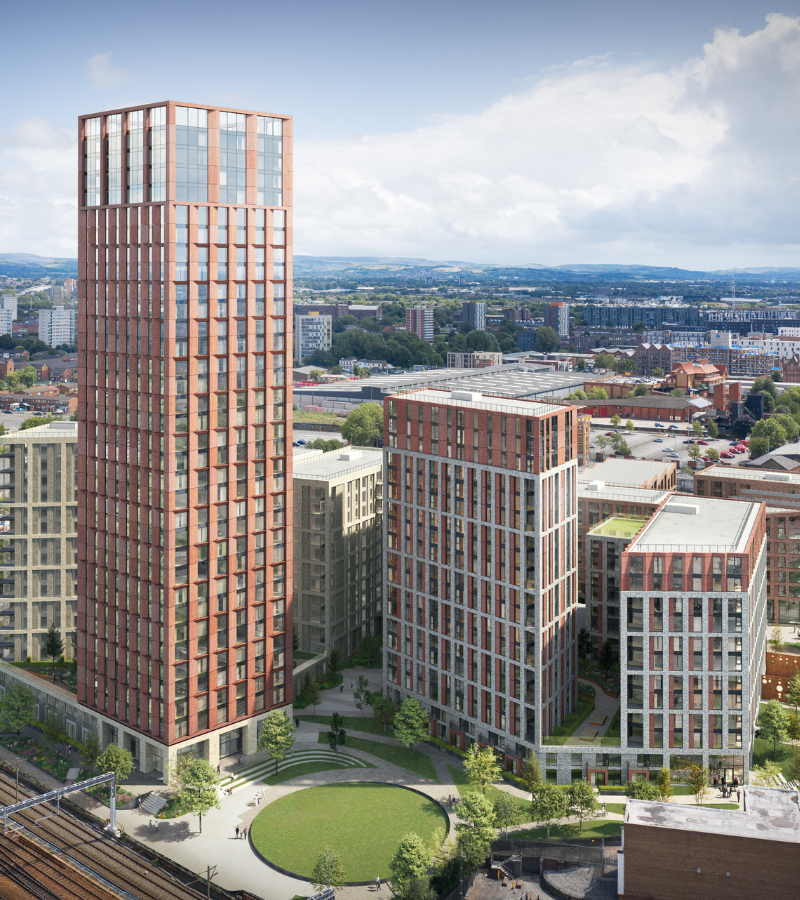
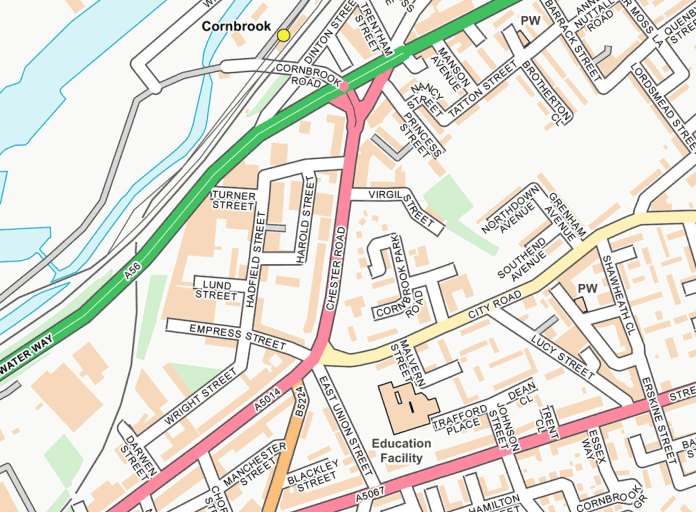
2025 the street pattern is still extant – but what has survived?
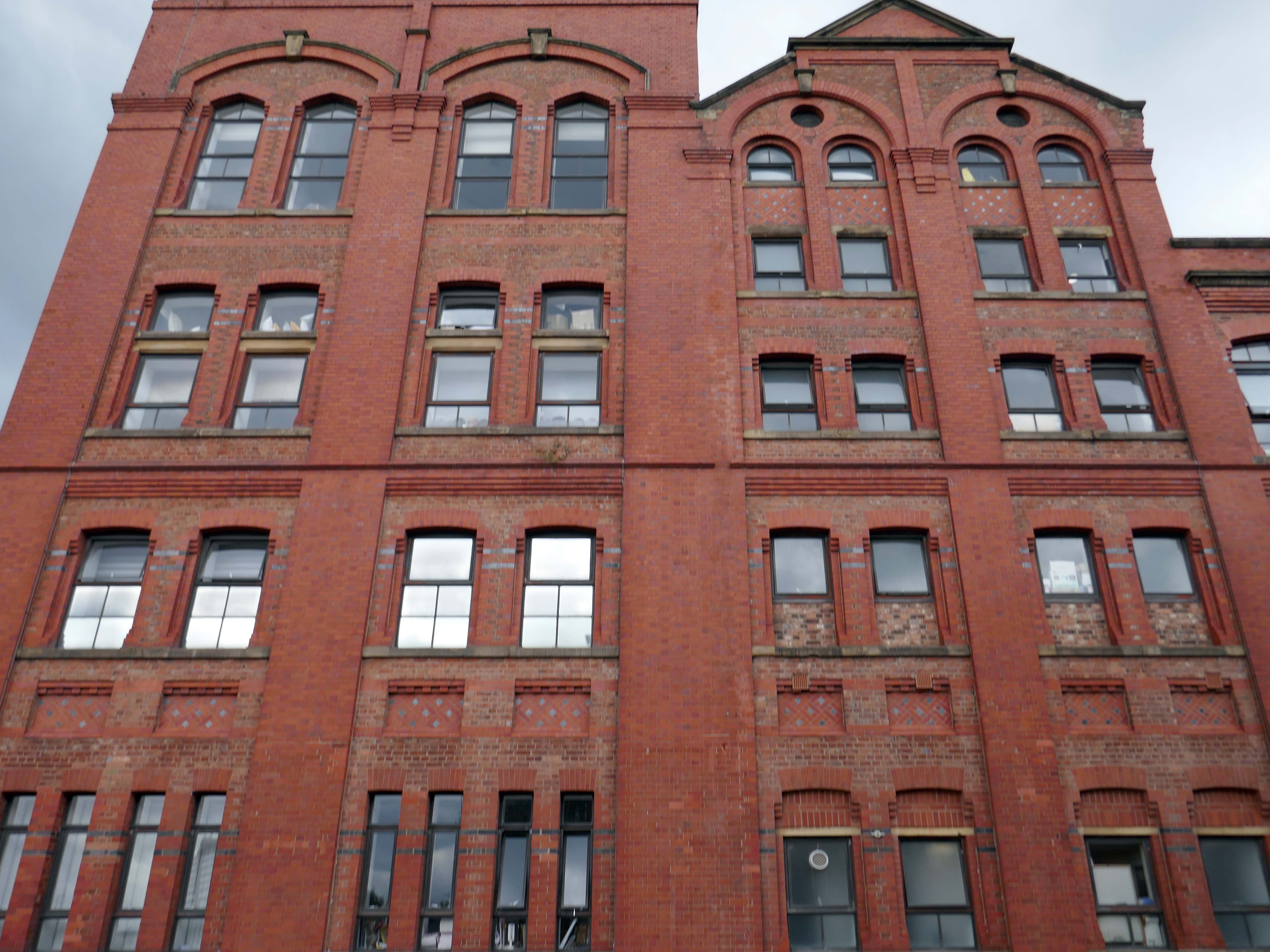
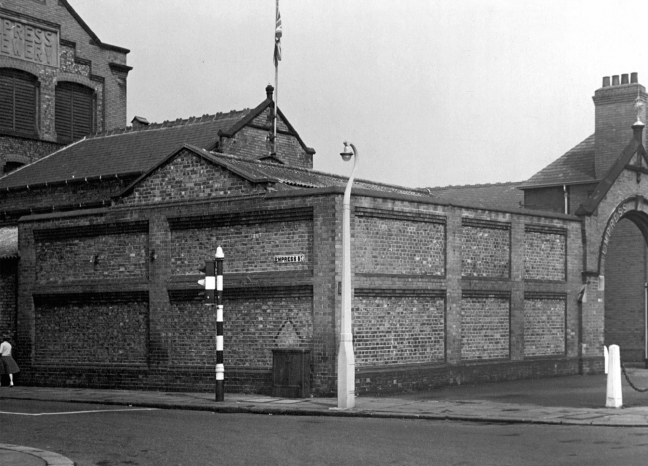
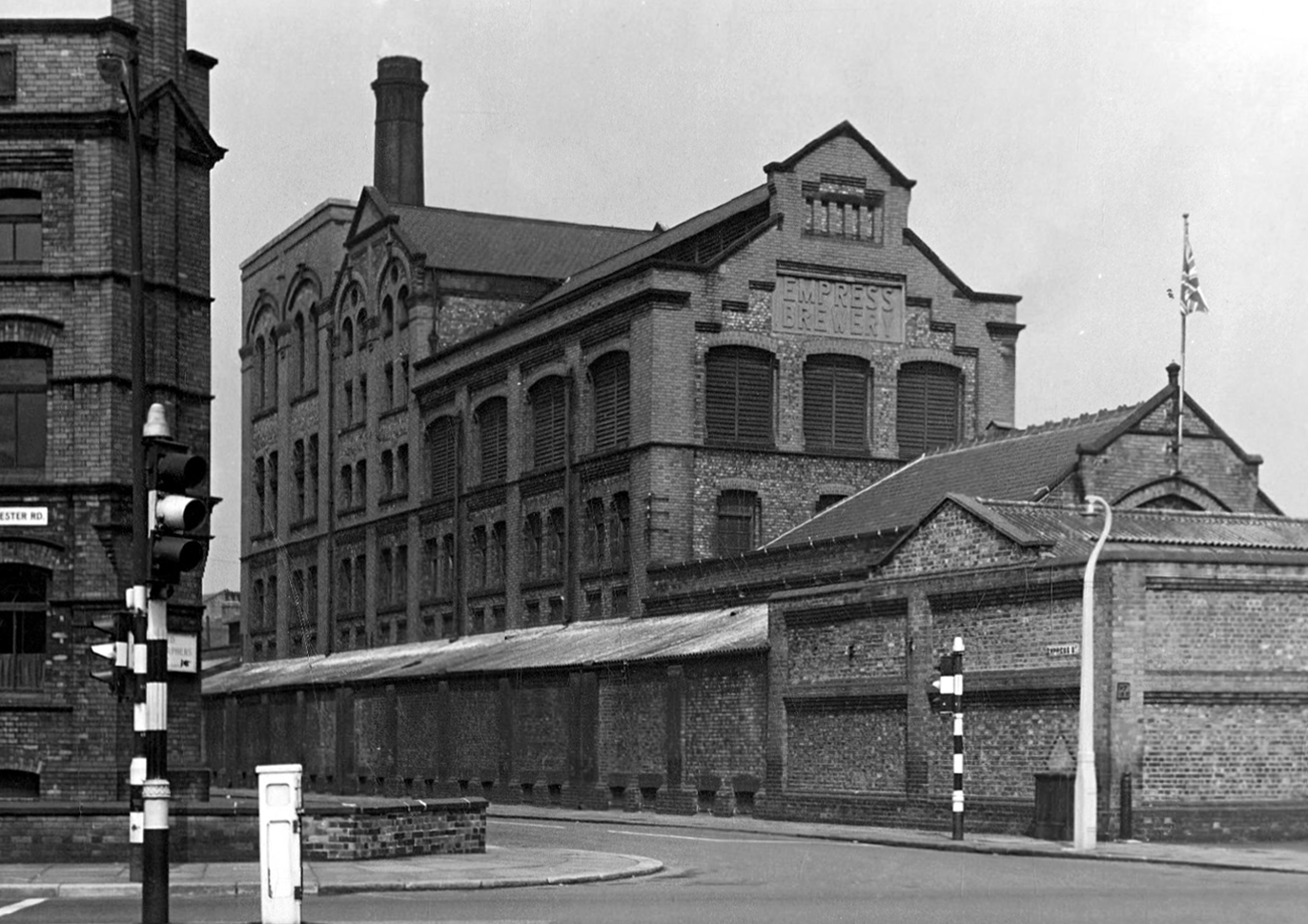
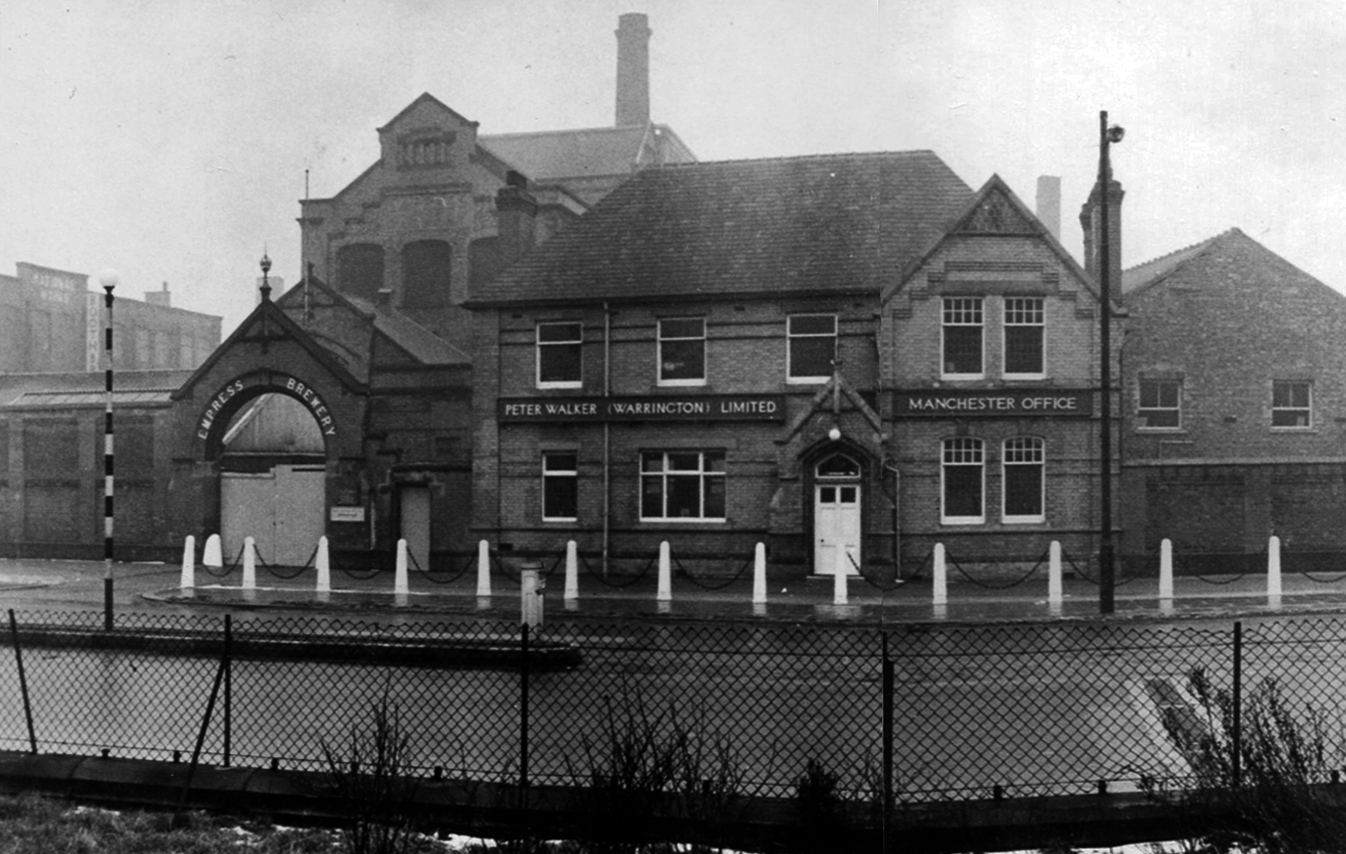
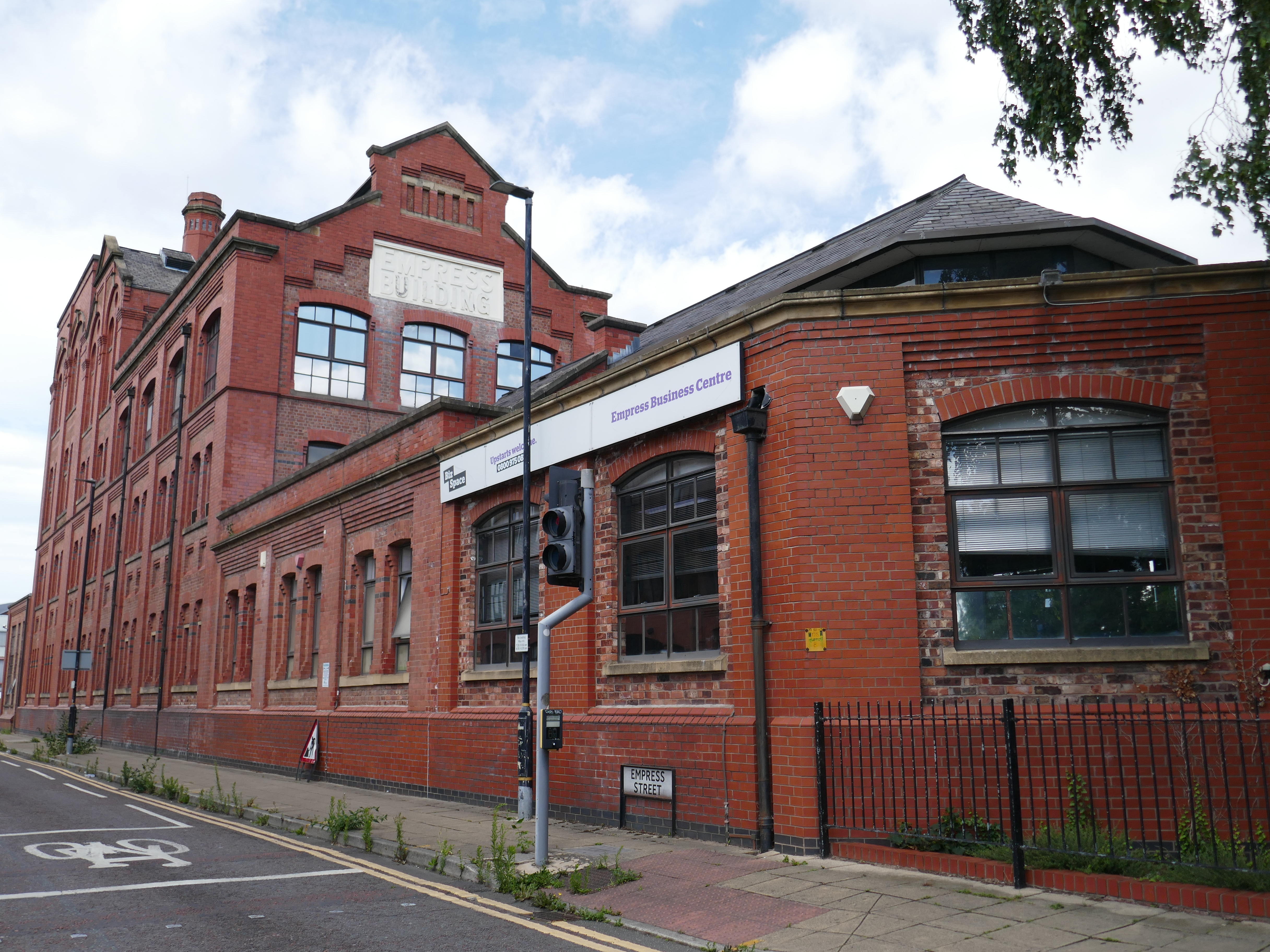
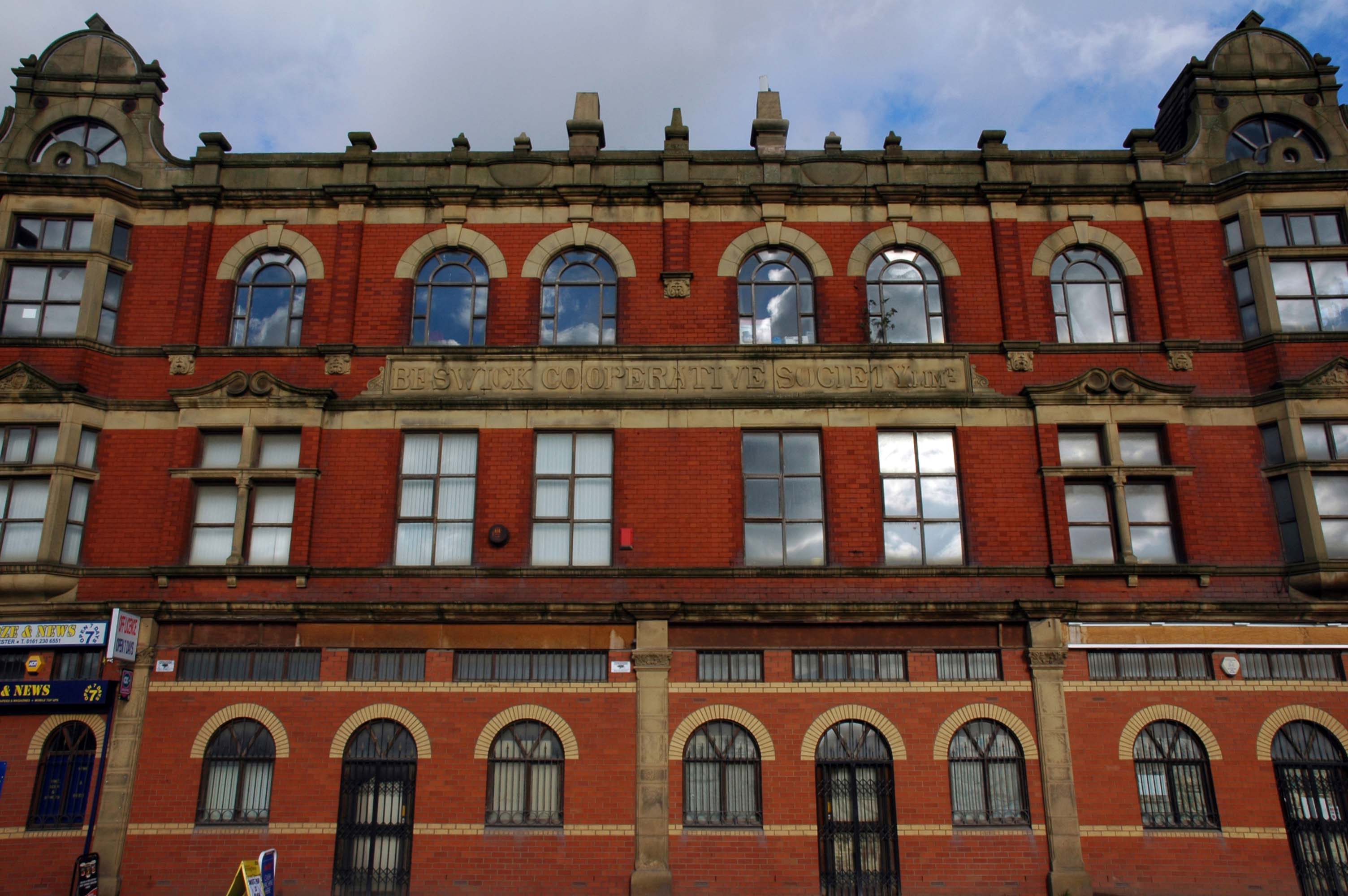
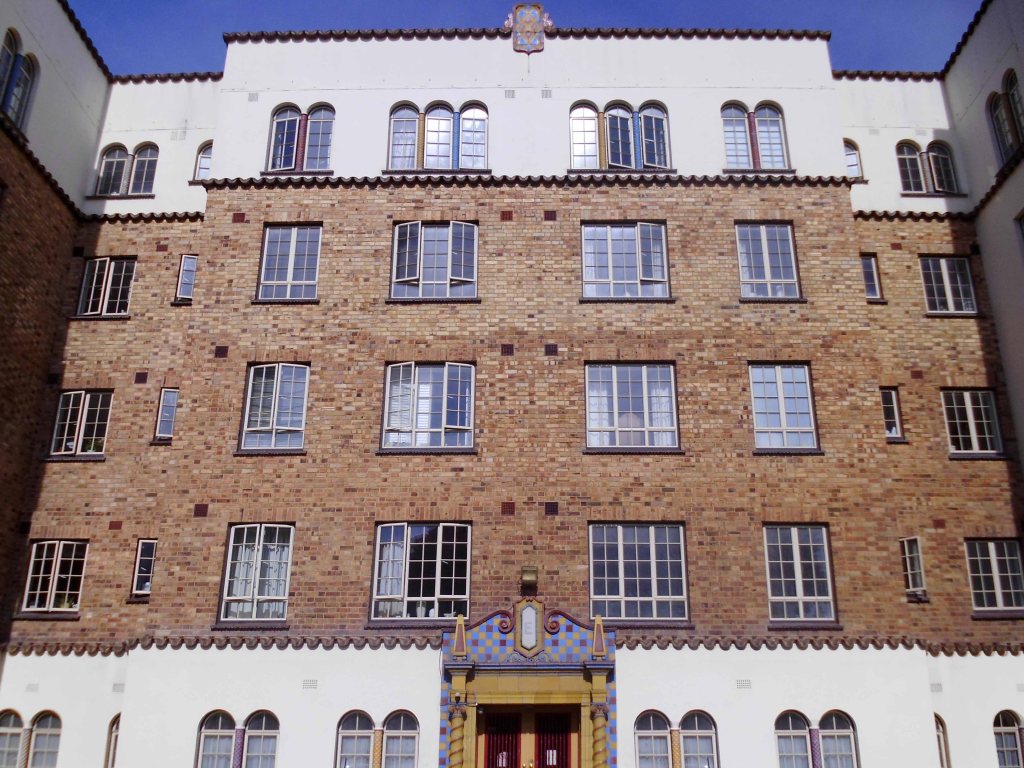
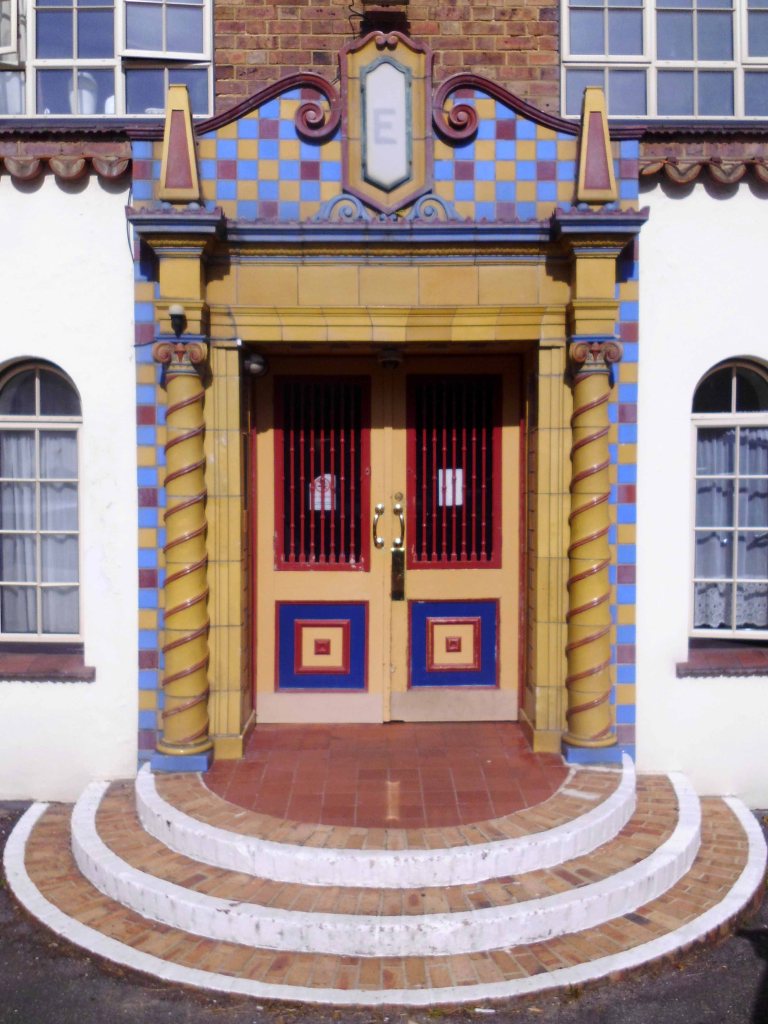
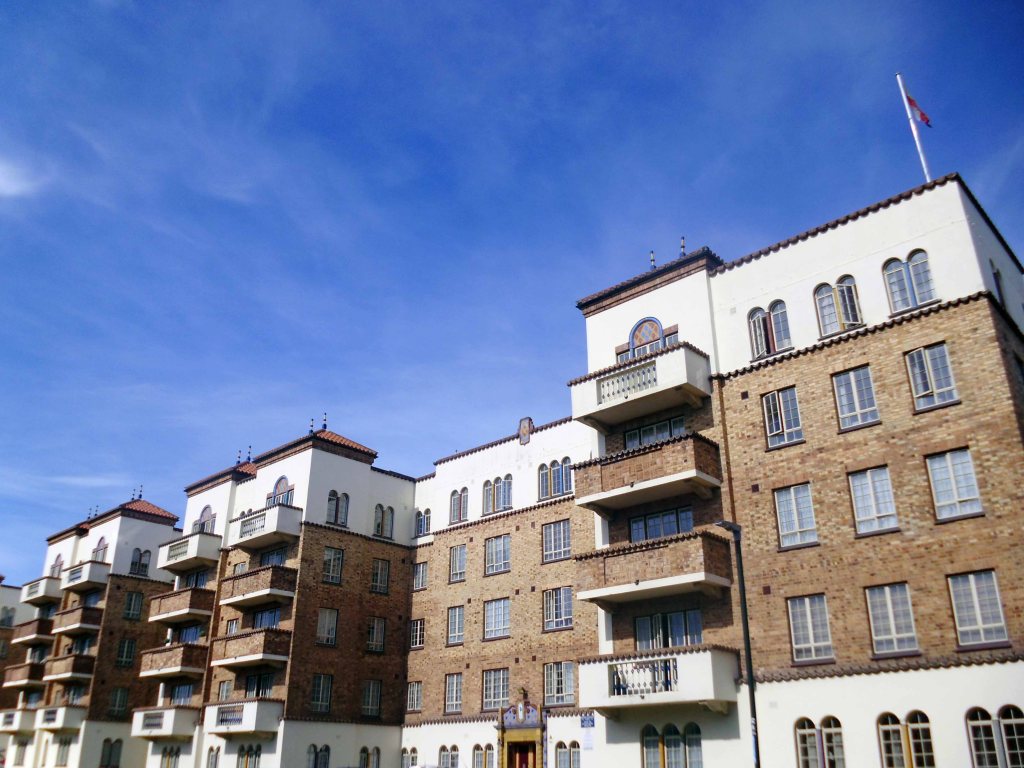
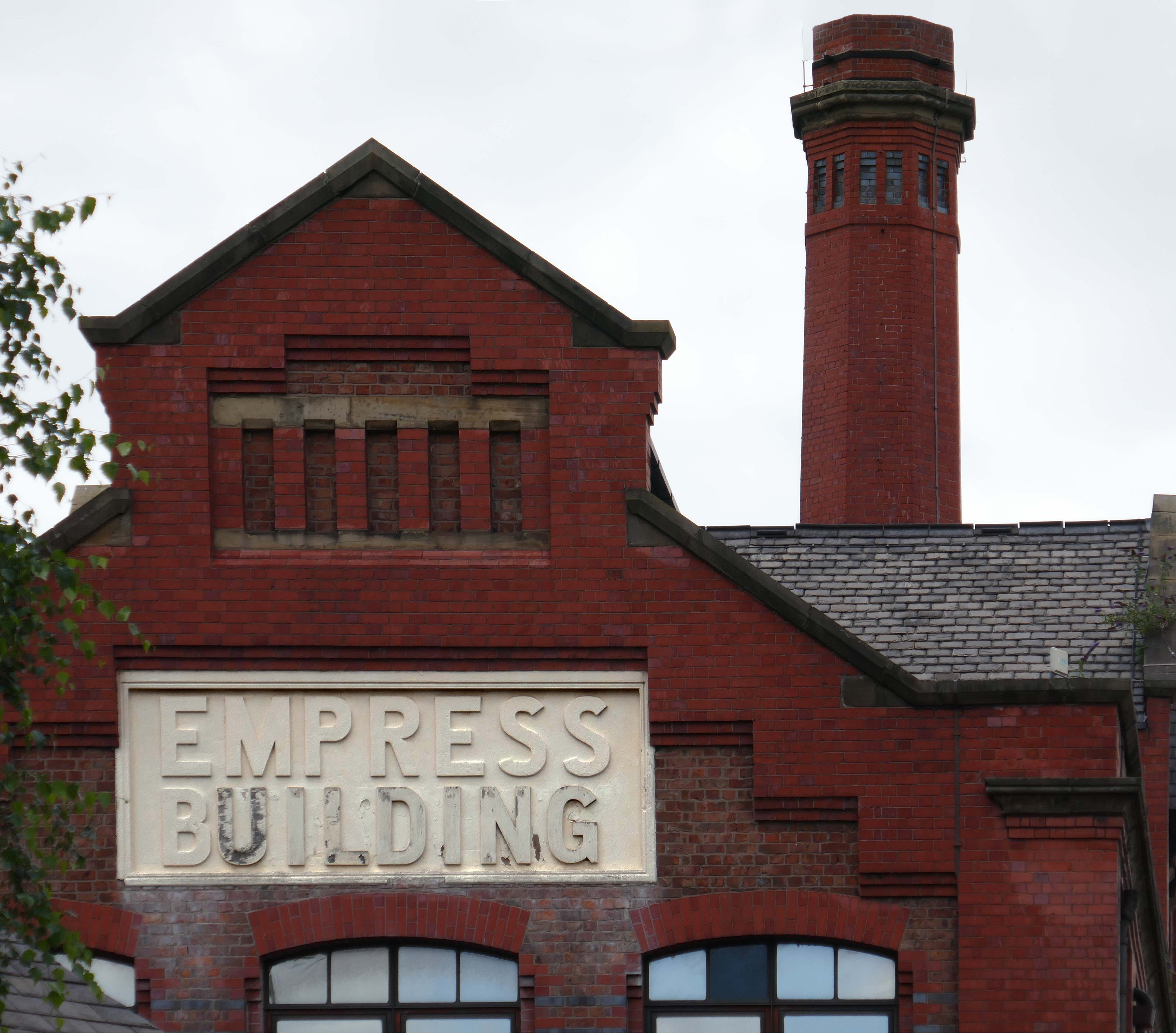
The Empress Brewery as seen on the previous Chester Road post.

The Empress Brewing Company was established by Charles Dawes in c. 1880, the brewery closed in 1955.

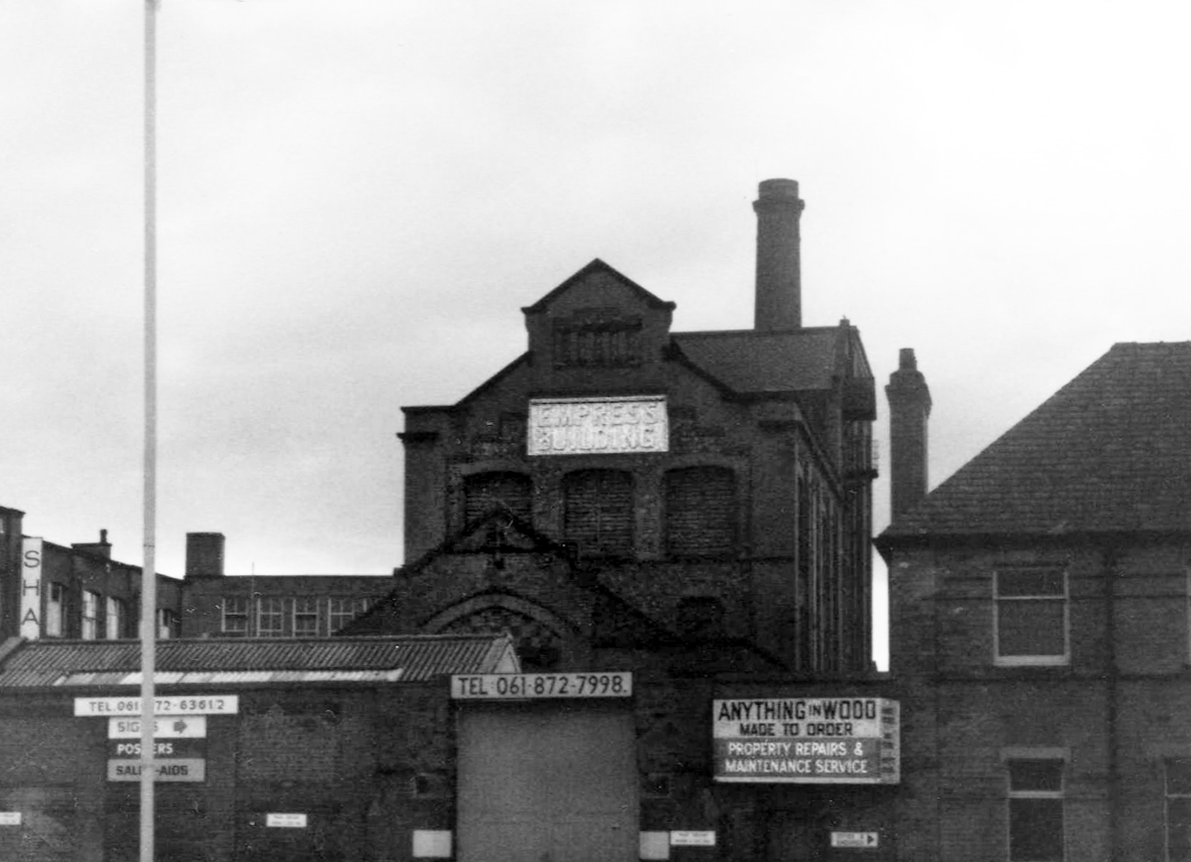
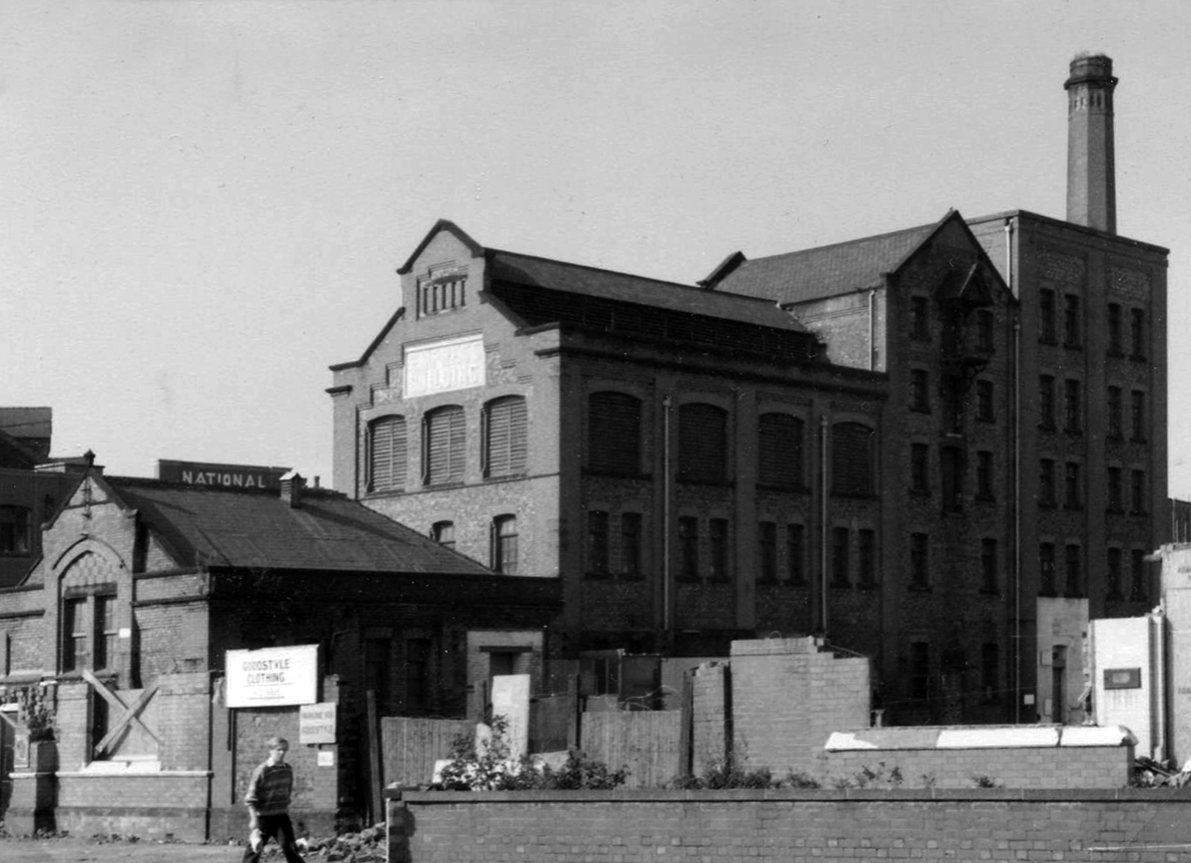
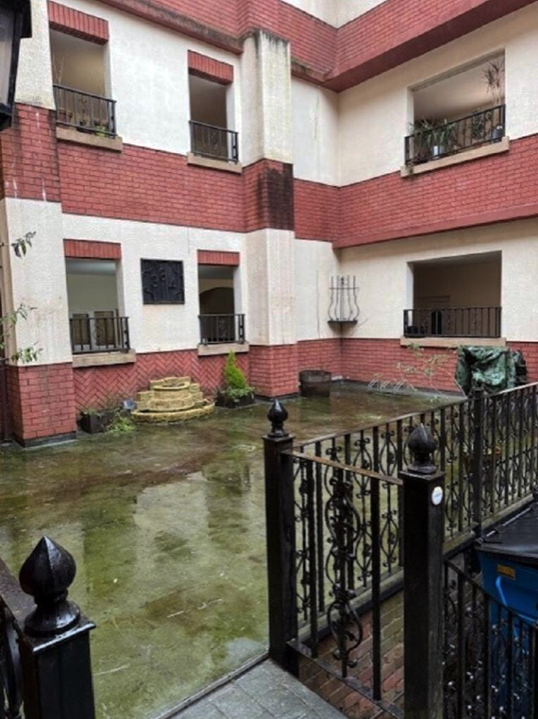
The building was converted into offices in 1992 as part of the development of the Empress Business Centre, which saw new office and business units built to form a courtyard.

24 Design Ltd Hadfield Street – an exhibition design and build practice, working extensively within the museum and heritage sector.

Glancy Fawcett Lund Street, A project-based, luxury lifestyle supplier delivering exquisite homeware for superyachts, residences and private jets.

Concept Life Sciences Hadfield Street, your trusted partner from concept to clinic. We are your integrated drug discovery and development partner for complex challenges, renowned scientific knowledge, and strategic execution across all modalities from small molecule and biologics to cell and gene therapies.

They seem to have left the building.

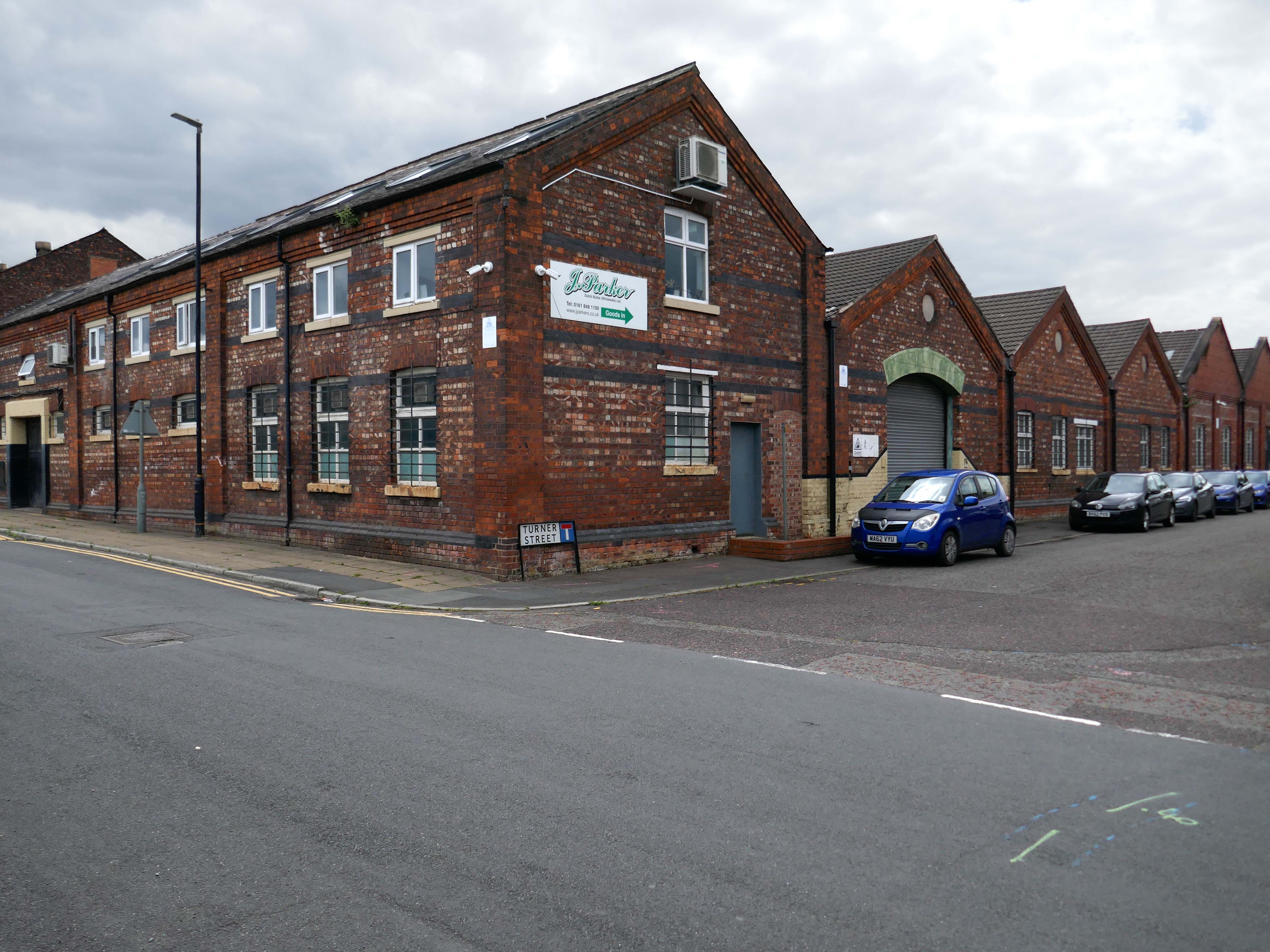
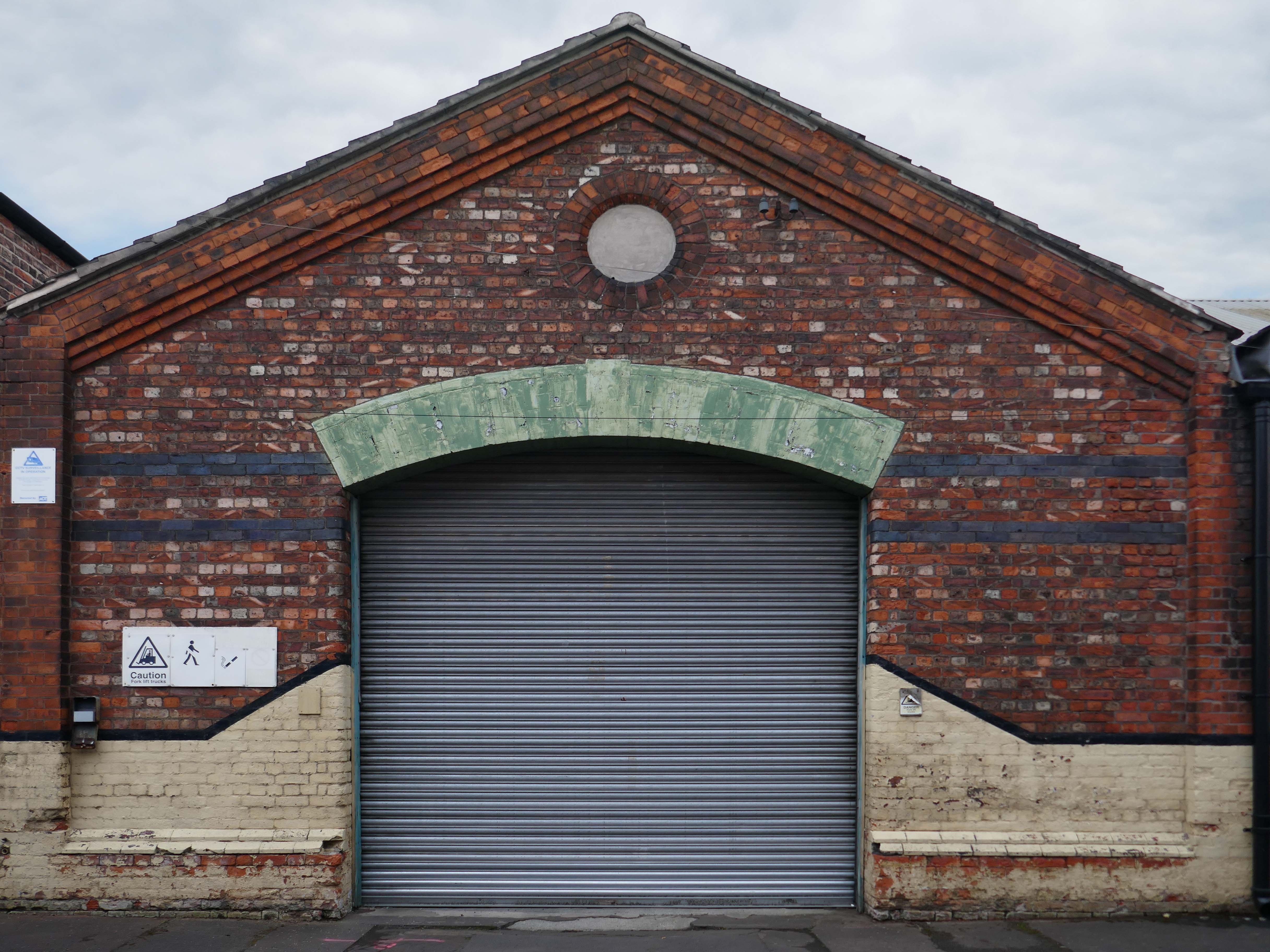
J Parker‘s Ltd Hadfield Street, Dutch bulb importers – competitive prices across all our garden plant and bulb ranges, huge range, unbeatable prices, established 1933.

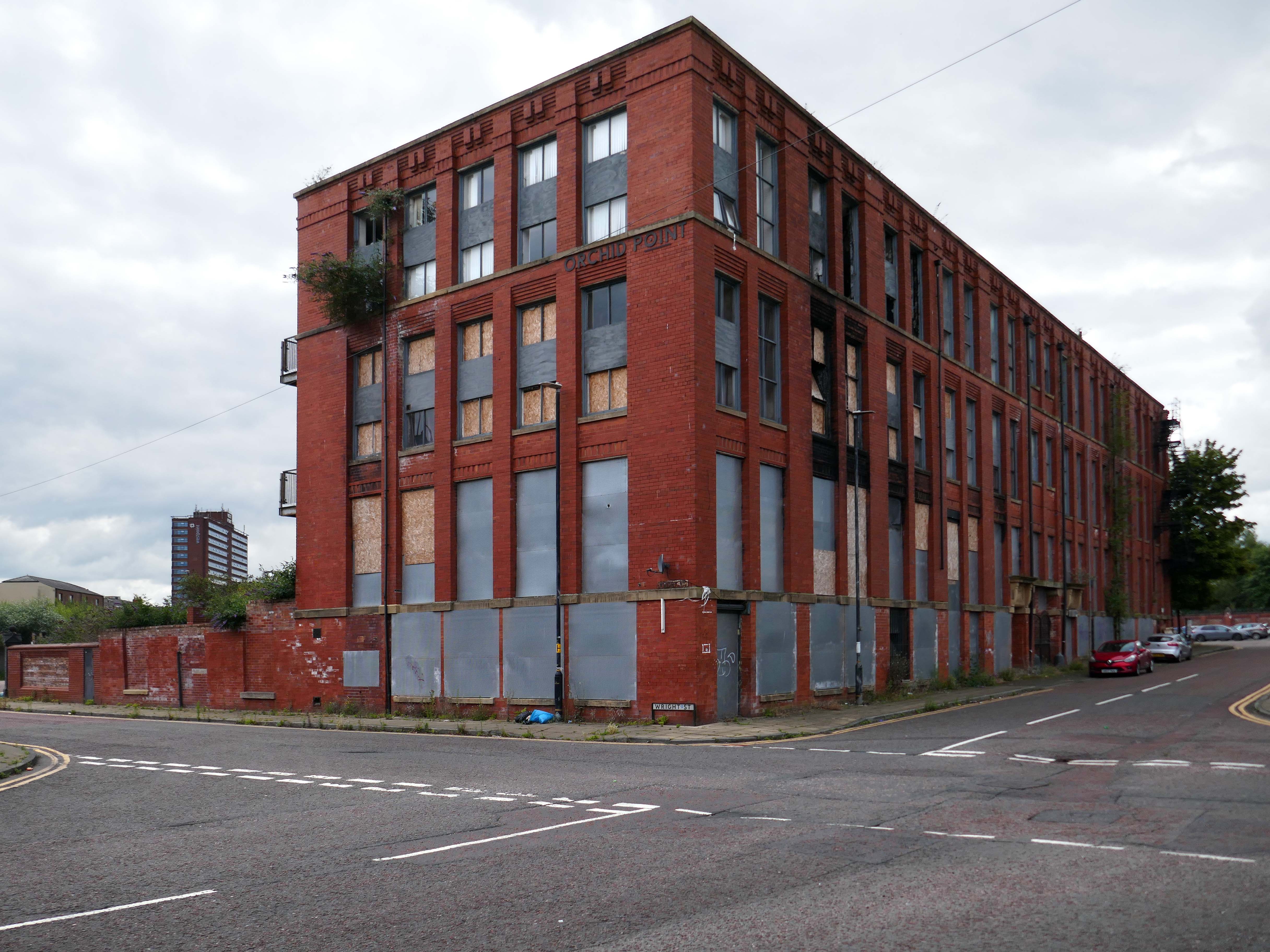
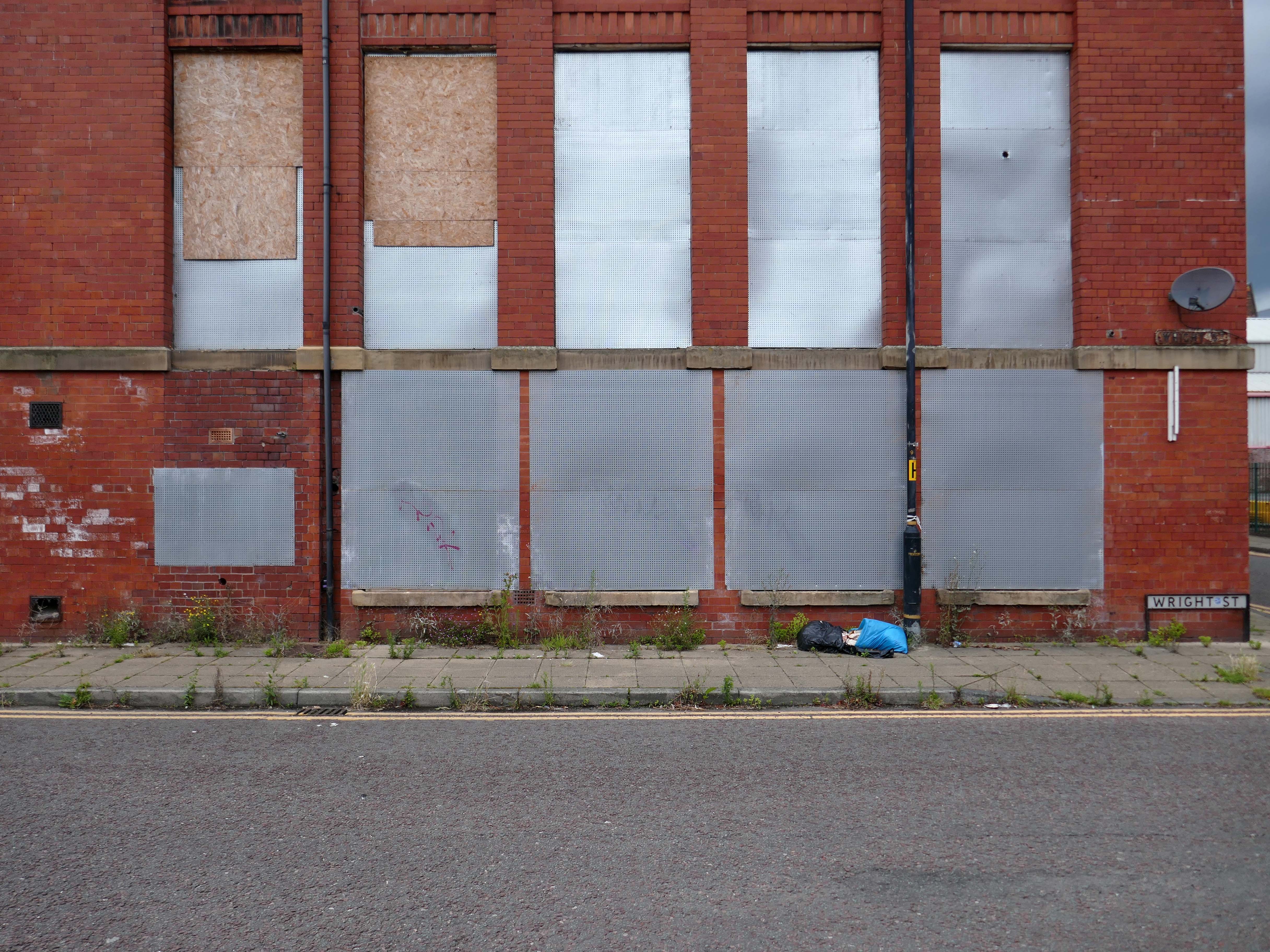
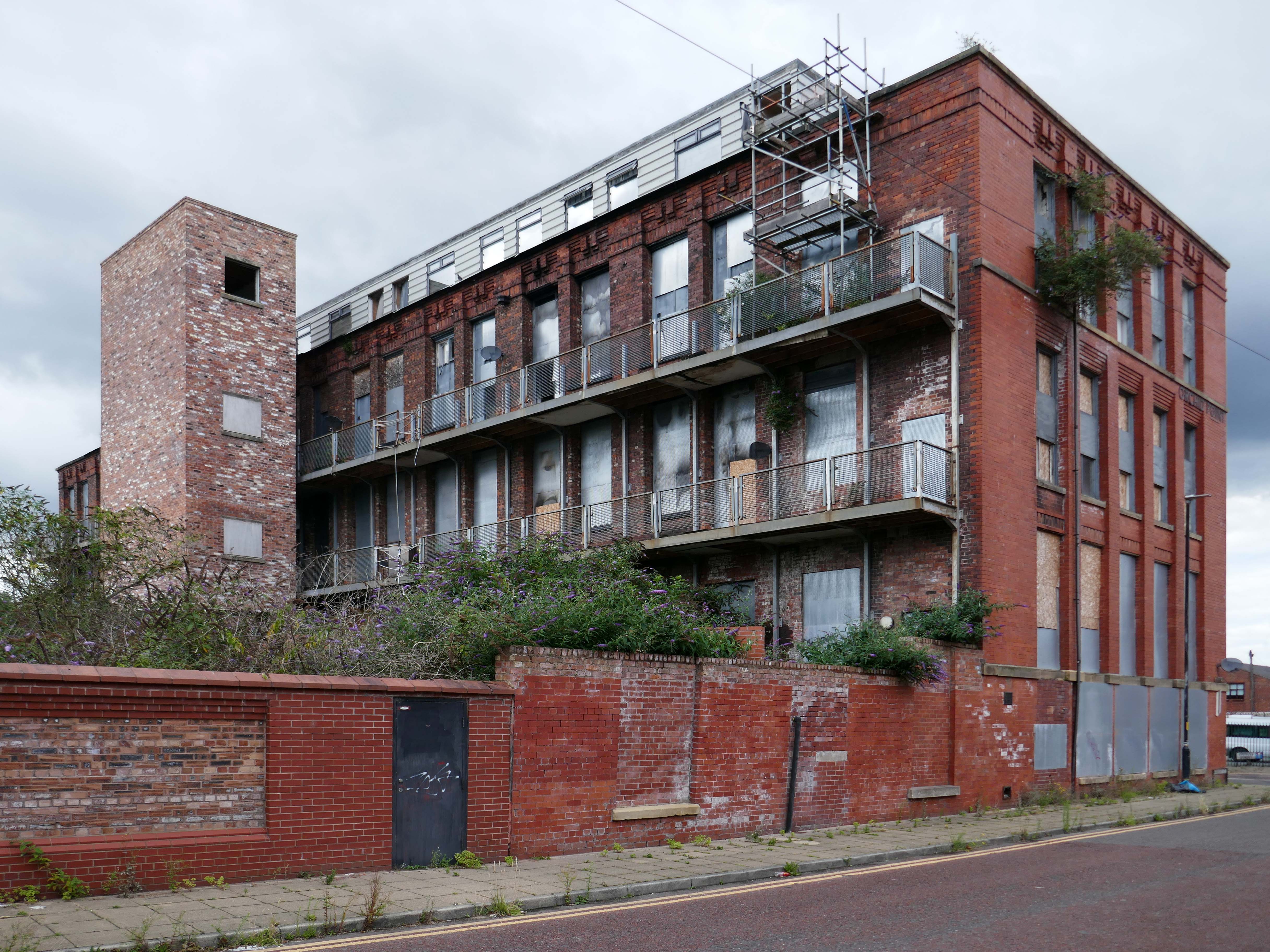
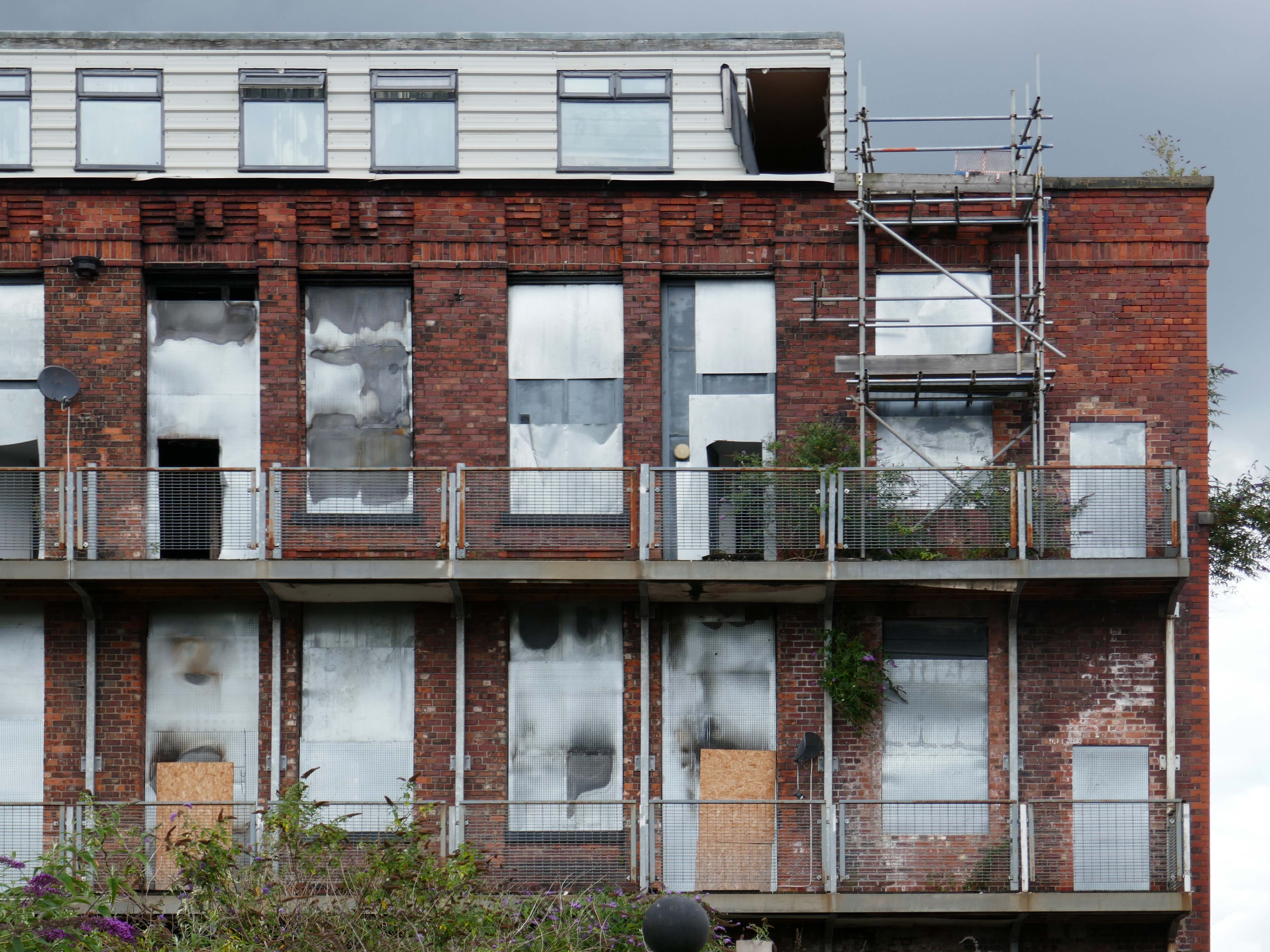
Empress Mill latterly Orchid Point Empress Street.

Built between 1903 and 1909, it echoes the industrial character of the larger industrial buildings on Chester Road and Empress Street. The property is listed as a smallware factory in the occupation of Woolf & Higham manufacturers of small wares, upholsterers’ trimmings, worsted bindings, woven venetian ladder tapes, cotton and linen venetian blind webs, spindle bandings, window blind cords, carpet bindings, bed laces. The works is shown on the Ordnance Survey of 1955 as an Engineering Works – Printing Machinery.

Local Heritage List

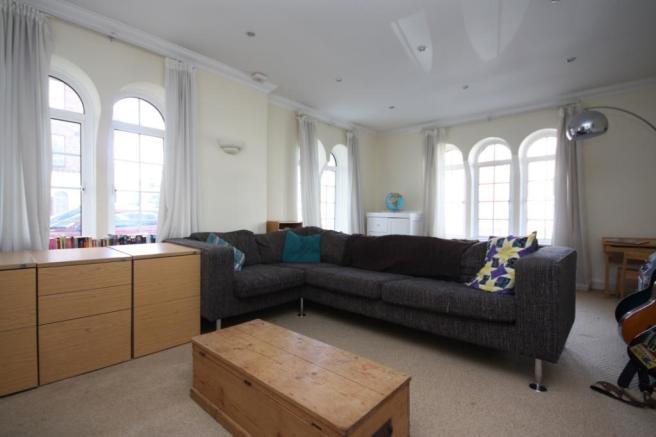
In 2011, FreshStart Living purchased the building, alongside others nearby, as part of a £9 million development ‘breathing new life’ into this corner of Old Trafford with 116 one and two-bedroom apartments. But, on the inside, leaking roofs, mould, exposed electrical wires and a dodgy gas connection paint a completely different picture.

Not long after purchasing it, we discovered the entire building was being powered by a generator.

MEN

Three bedroom apartment to rent Orchid Point – when buy to let goes wrong.

Empress Mill was turned into an apartment block as part of a development called Orchid Point. It is understood some residents were allowed to move in twelve years ago, but these residents were asked to move out after a number of years due to safety issues.

On February 20th 2023, the Empress Mill was one of a number of buildings described as unsafe and unsecure by Trafford Council.

The emergency services were called to Empress Mill at 5.15am on Friday. Ten appliances from across the region, including specialist appliances called a stinger and a scorpion, attended the abandoned mill turned apartment block off Chester Road and firefighters battled the blaze into the afternoon.

Messenger Newspapers

Officers from Trafford Council have taken firm action to put a stop to anti-social behaviour at a vacant block of flats in the Old Trafford area.

Drug addicts and thieves have descended on Aura Court since much of it was closed in August 2020 by Greater Manchester Fire Service due to a decaying non-compliant fire escape.

About Manchester

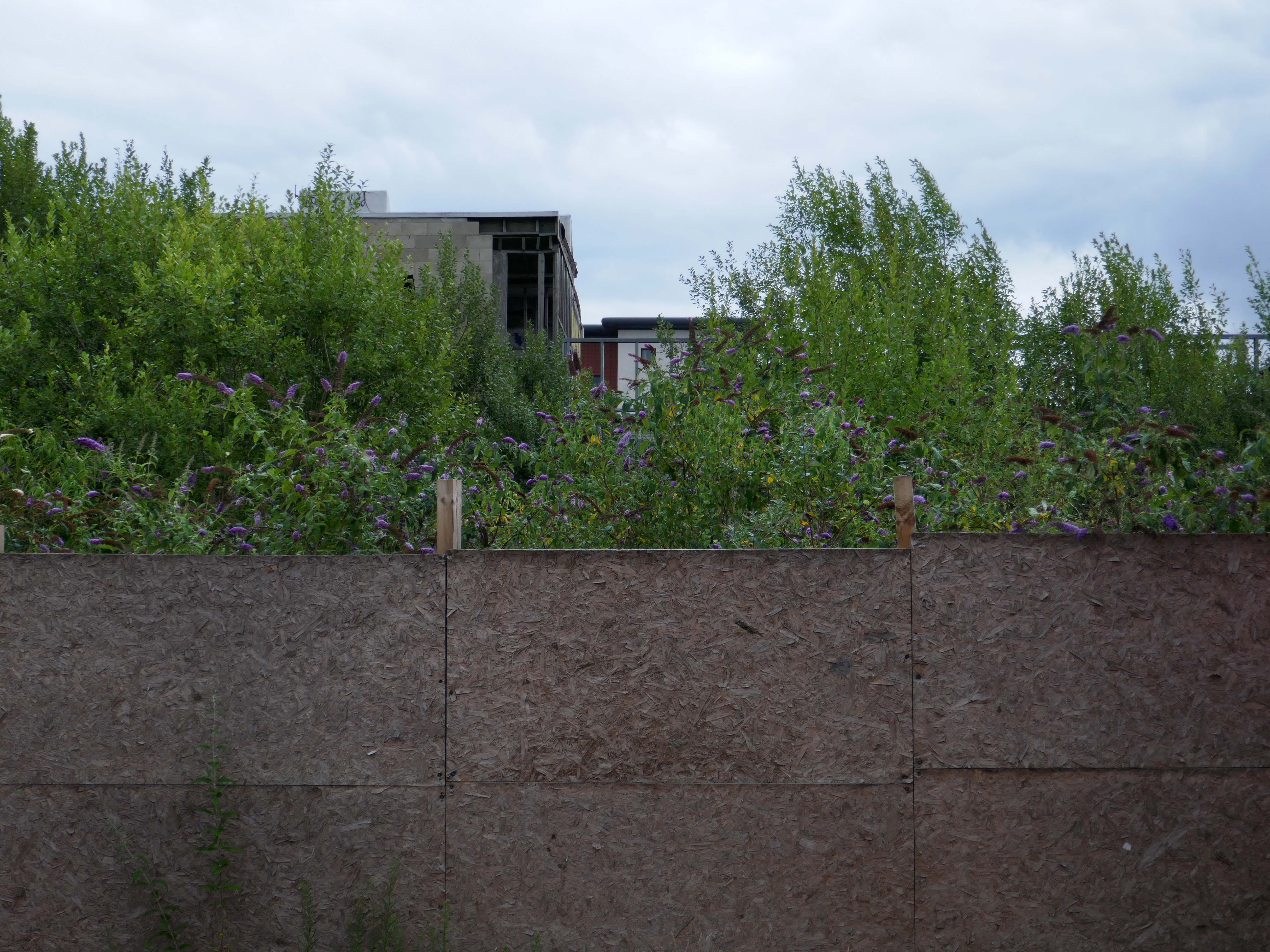
The site along with Venos and Progress House is up for sale.

A rare development opportunity in Central Manchester with excellent access to Manchester City Centre 
Close to Salford Quays, Old Trafford Football and Cricket Grounds along with White City Retail Park 
The total site covers an area of approximately 2.10 Acres, historic planning consents granted on the site for in excess of 200 flats plus additional commercial accommodation.

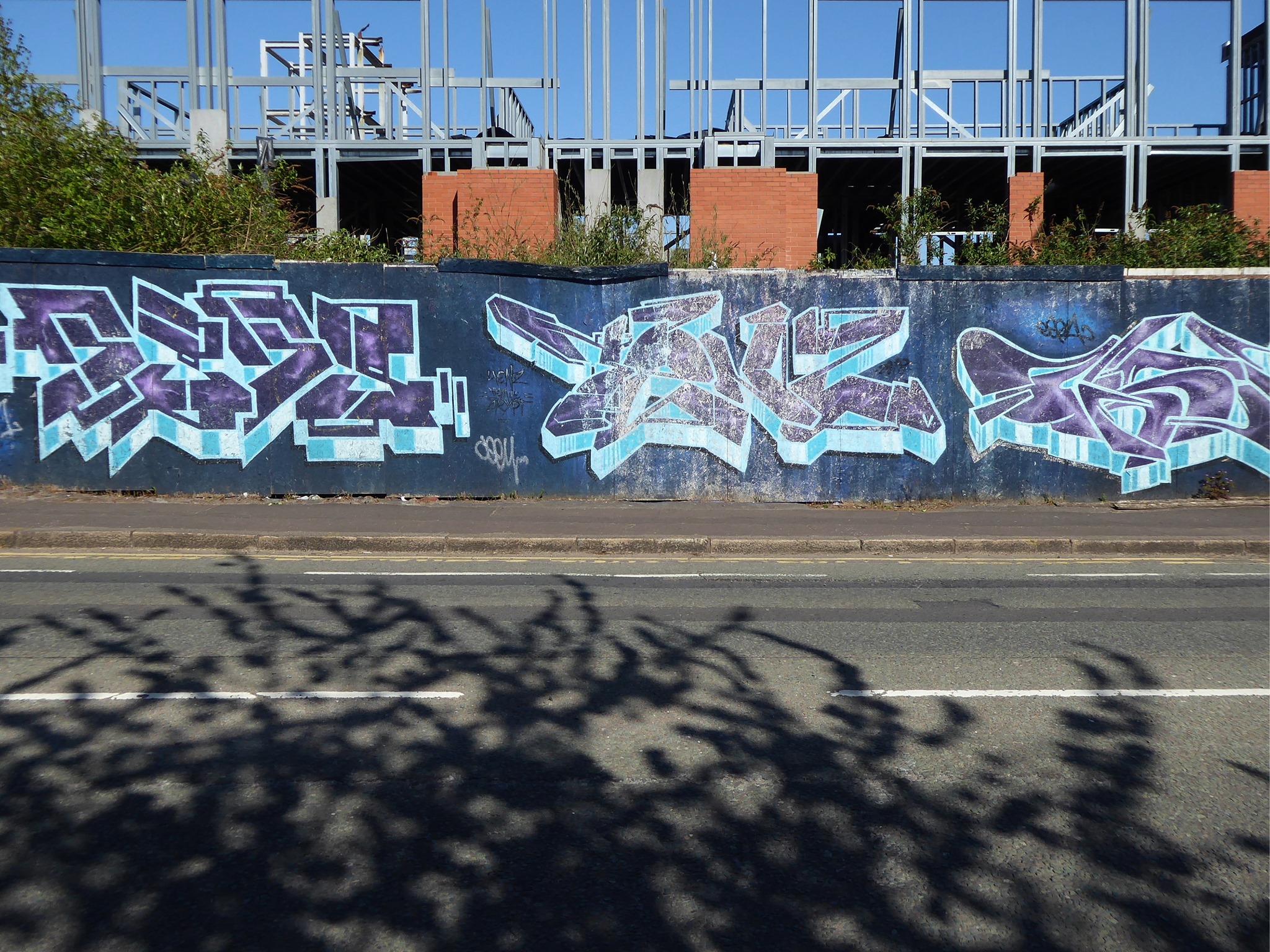
Rear of the Venos site.

Magenta Property has acquired Trafford Press and Empress Mill off Chester Road, the site of a 200 home residential scheme that stalled in 2016.

Headed up by Rohit and Parminder Lakhanpaul, Magenta bought the Old Trafford buildings for £1.5m, according to Land Registry. 

Place North West

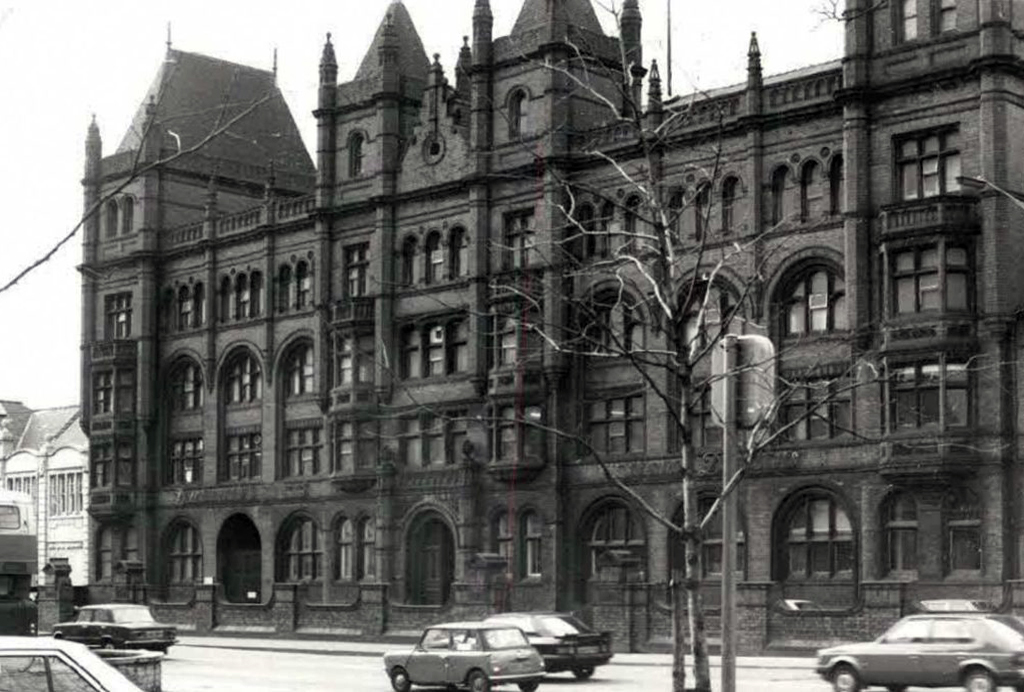
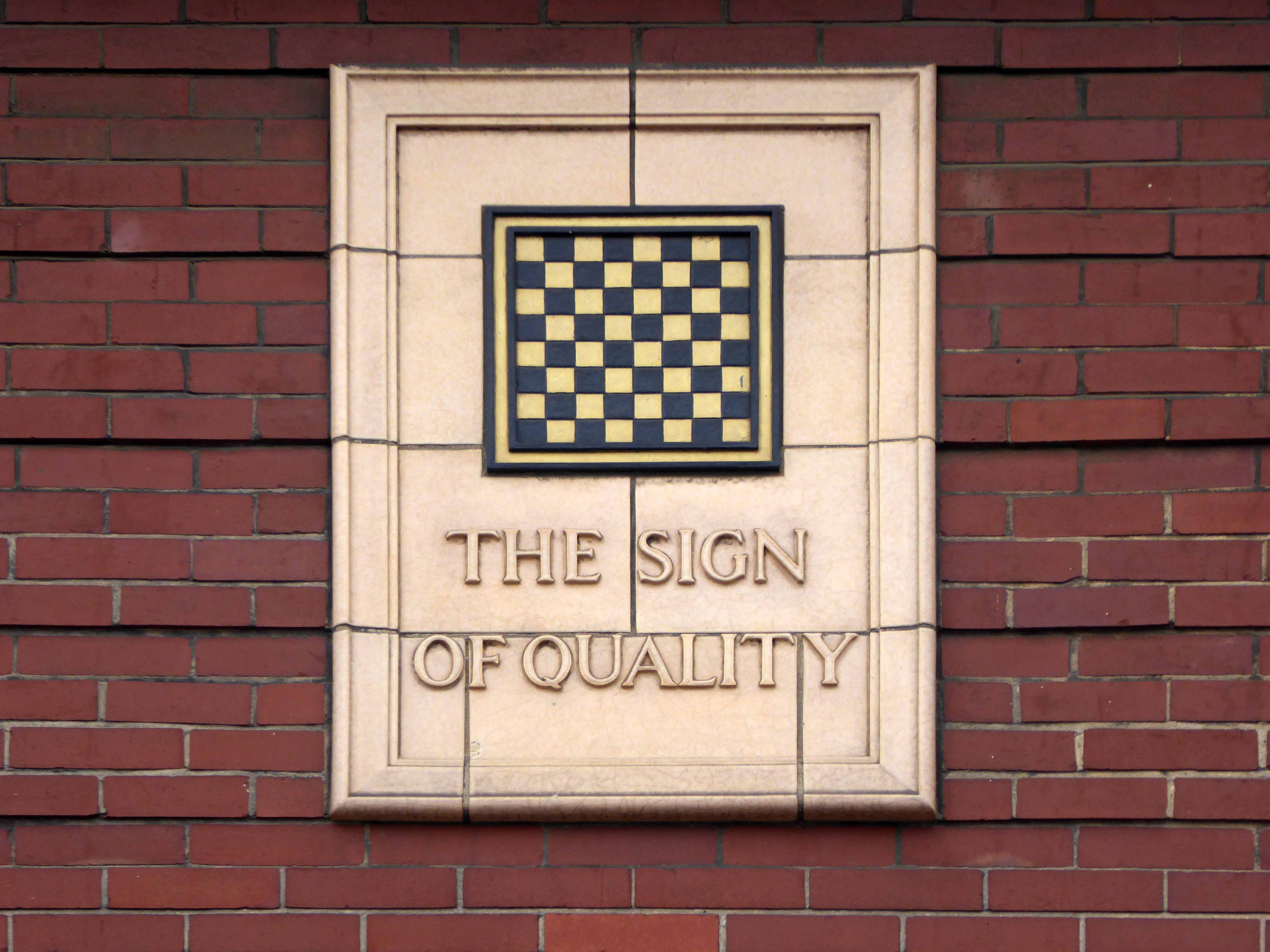
Duckworths Essence Distillery built in 1896 to a design by the architectural practice of Briggs and Wolstenholme, it is Grade II Listed in June 2018.

Duckworth’s specialised in the manufacture of concentrated soluble essences, essential oils and colours supplied to the aerated water trade – local ‘pop’ men. They were leaders in the field, supplying flavours and essences around the world and developing products tailored to specific markets. 

Duckworth & Co was acquired by Cargill Flavor Systems Ltd in 2003, the company vacated the Chester Road premises in 2006.

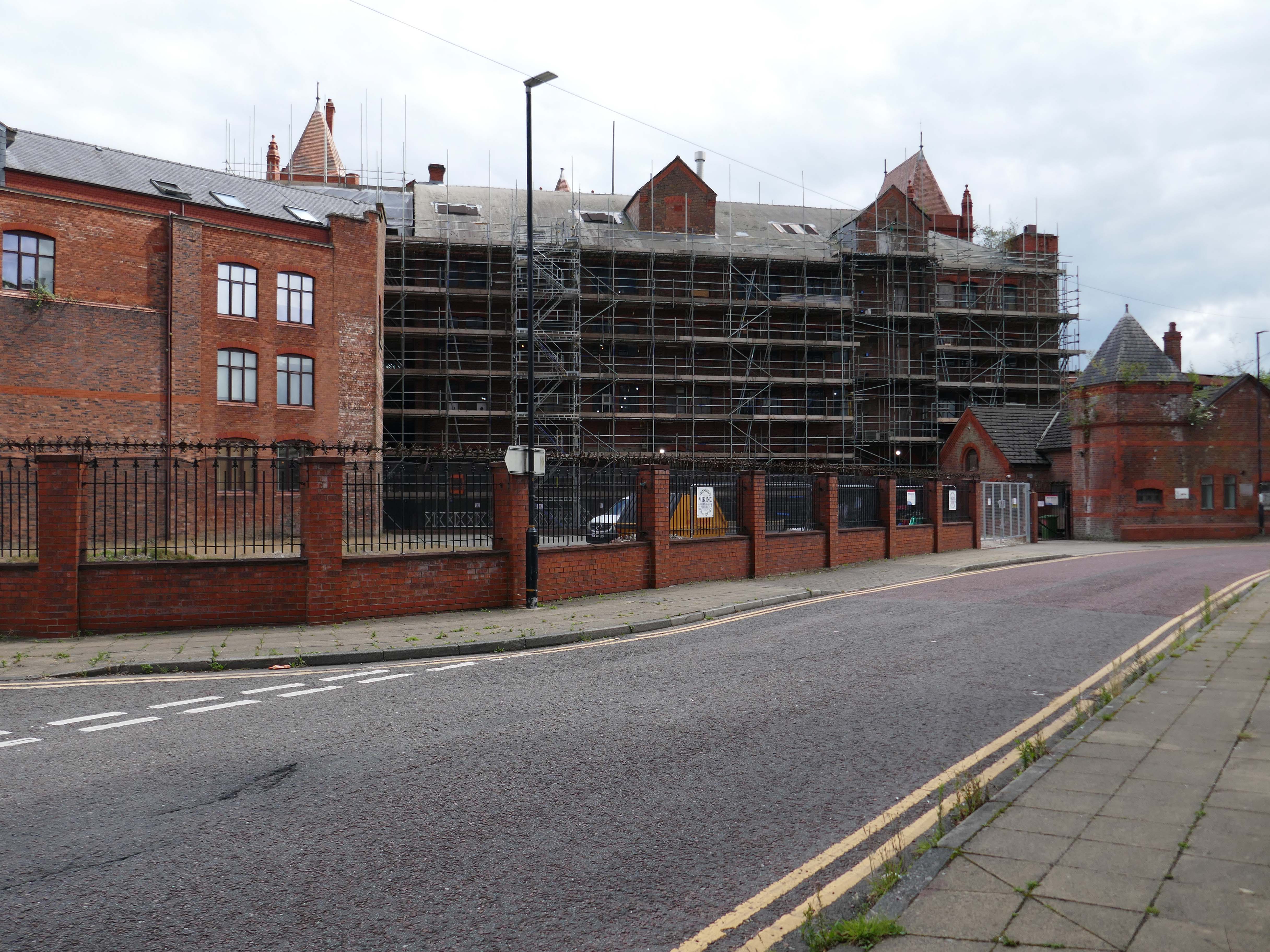
After buying the building in 2007 for a reported £3.6m, the Church of Scientology planned to re-open the building by either 2010 or 2011.

Leaders of the religious group have submitted a new application to carry out external and internal works. A design and access statement written on behalf of the church by NJSR Chartered Architects proposes a comprehensive revamp of the building.

The overall aim of the project is the refurbishment and conversion of the Duckworth Essences Building into a place of religious study and worship.

Messenger 2024

The building is currently enclosed in scaffolding.

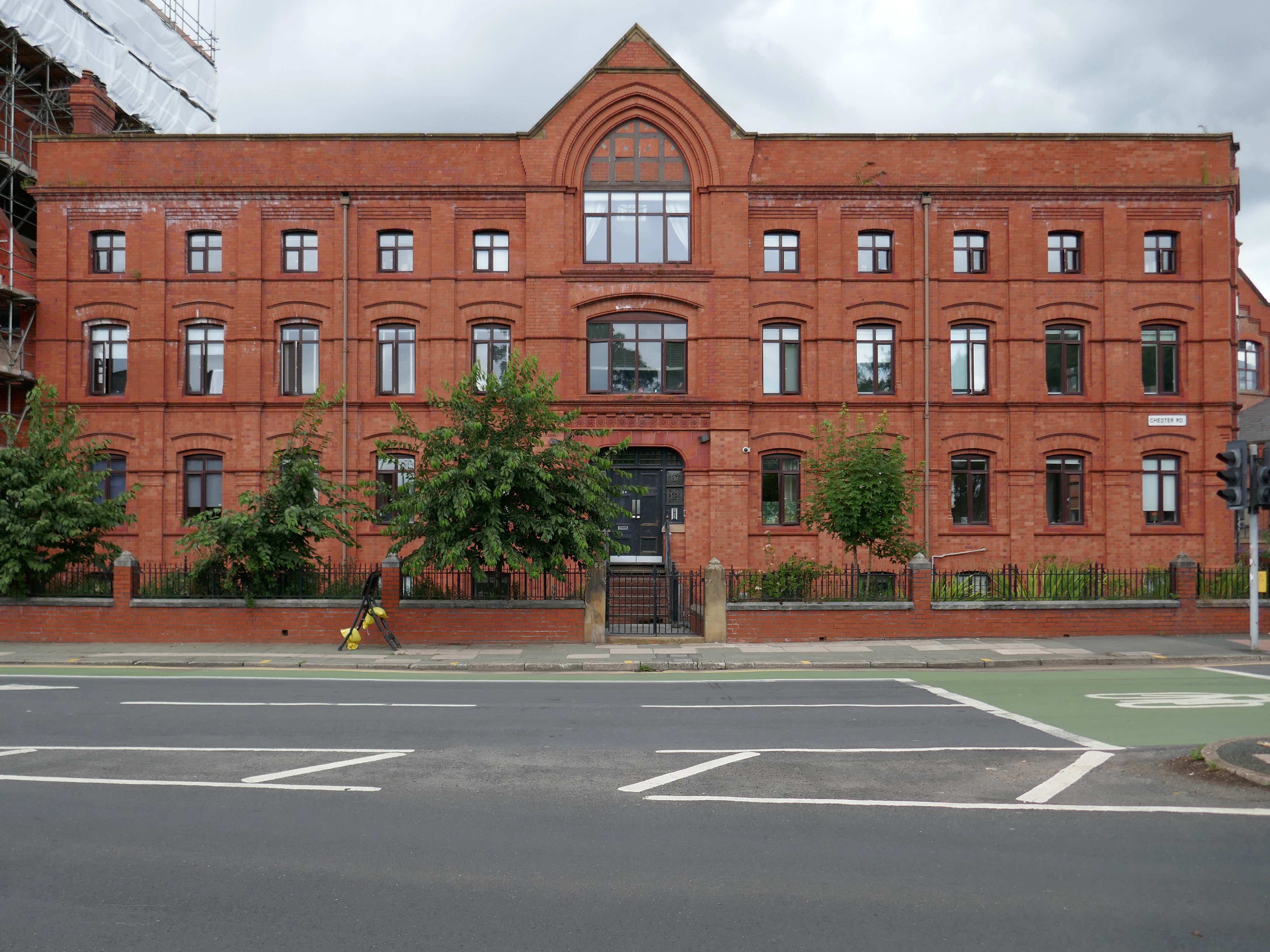
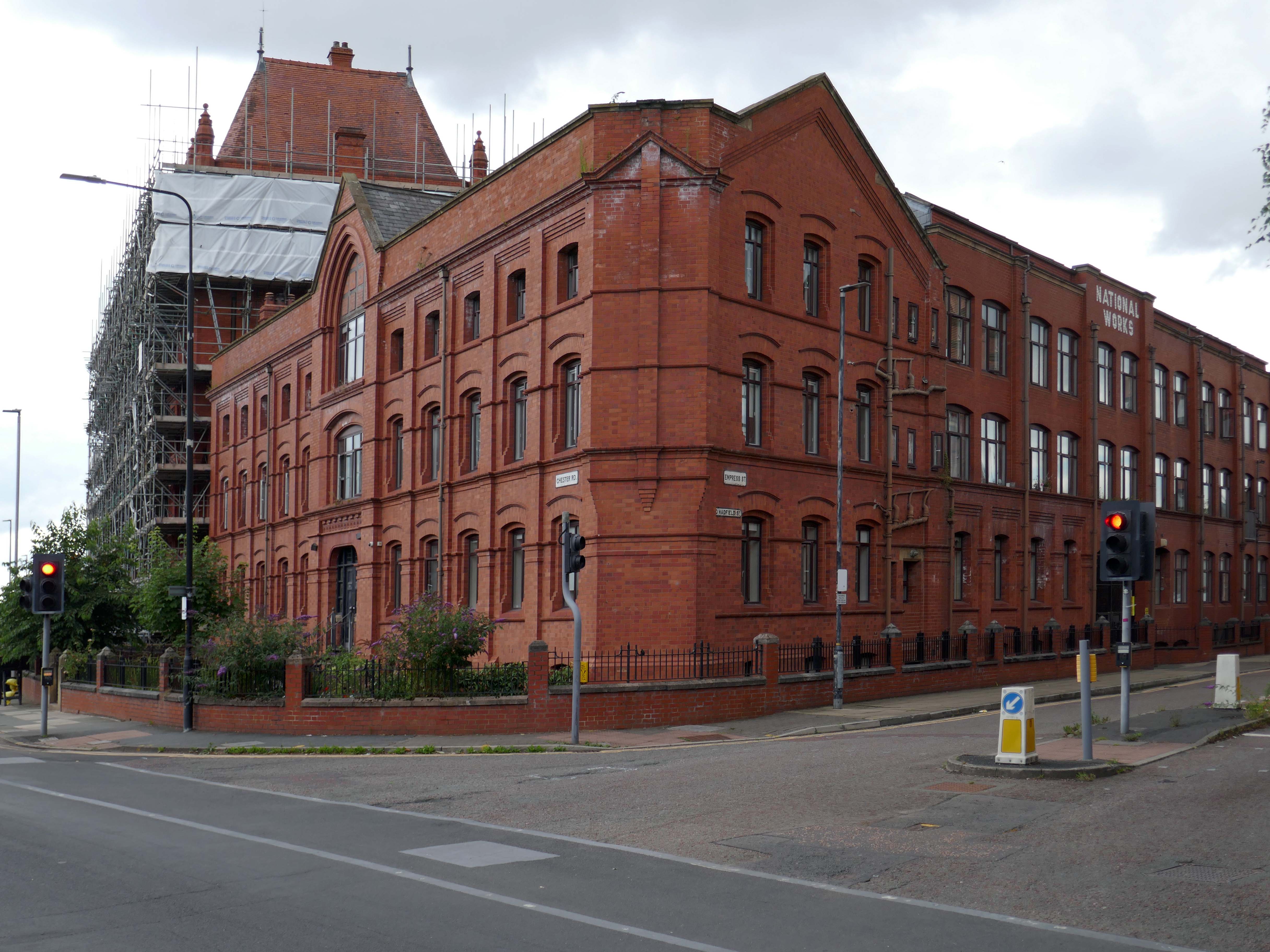
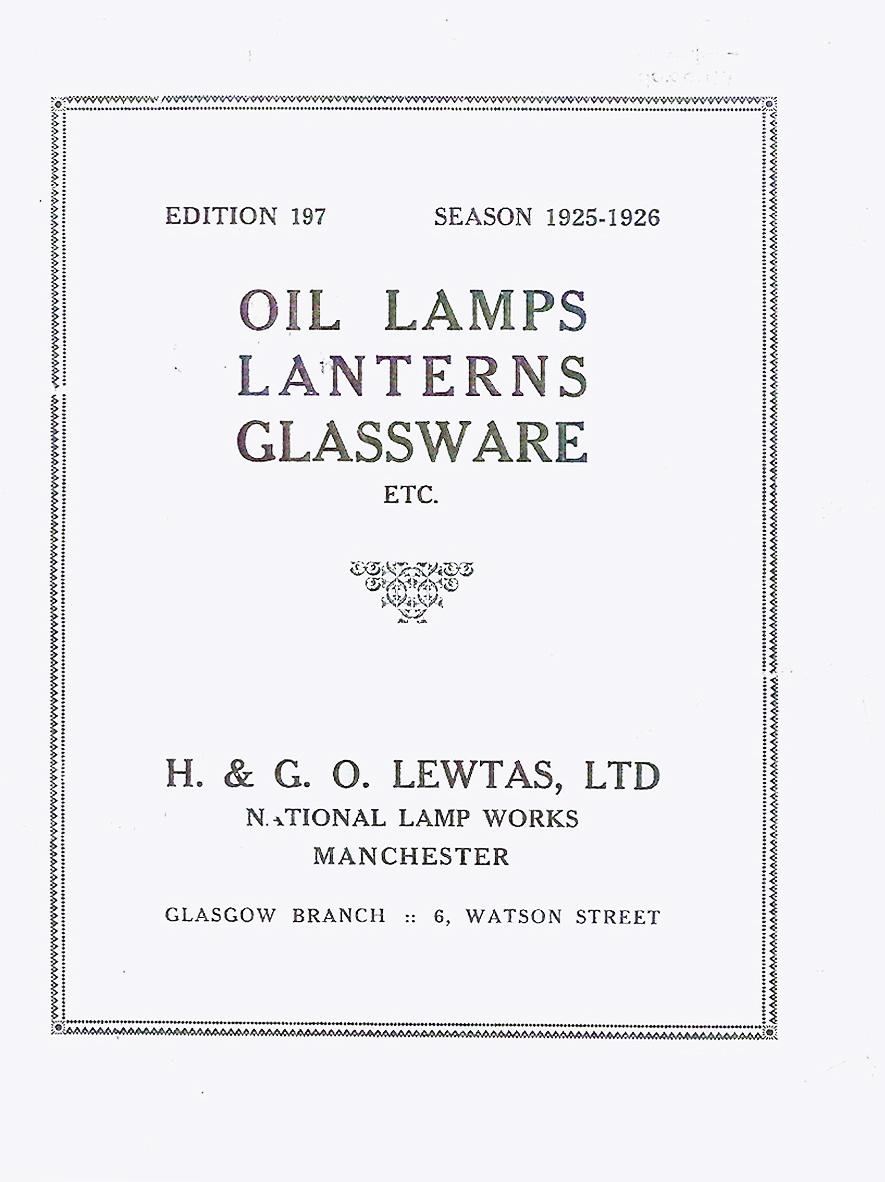
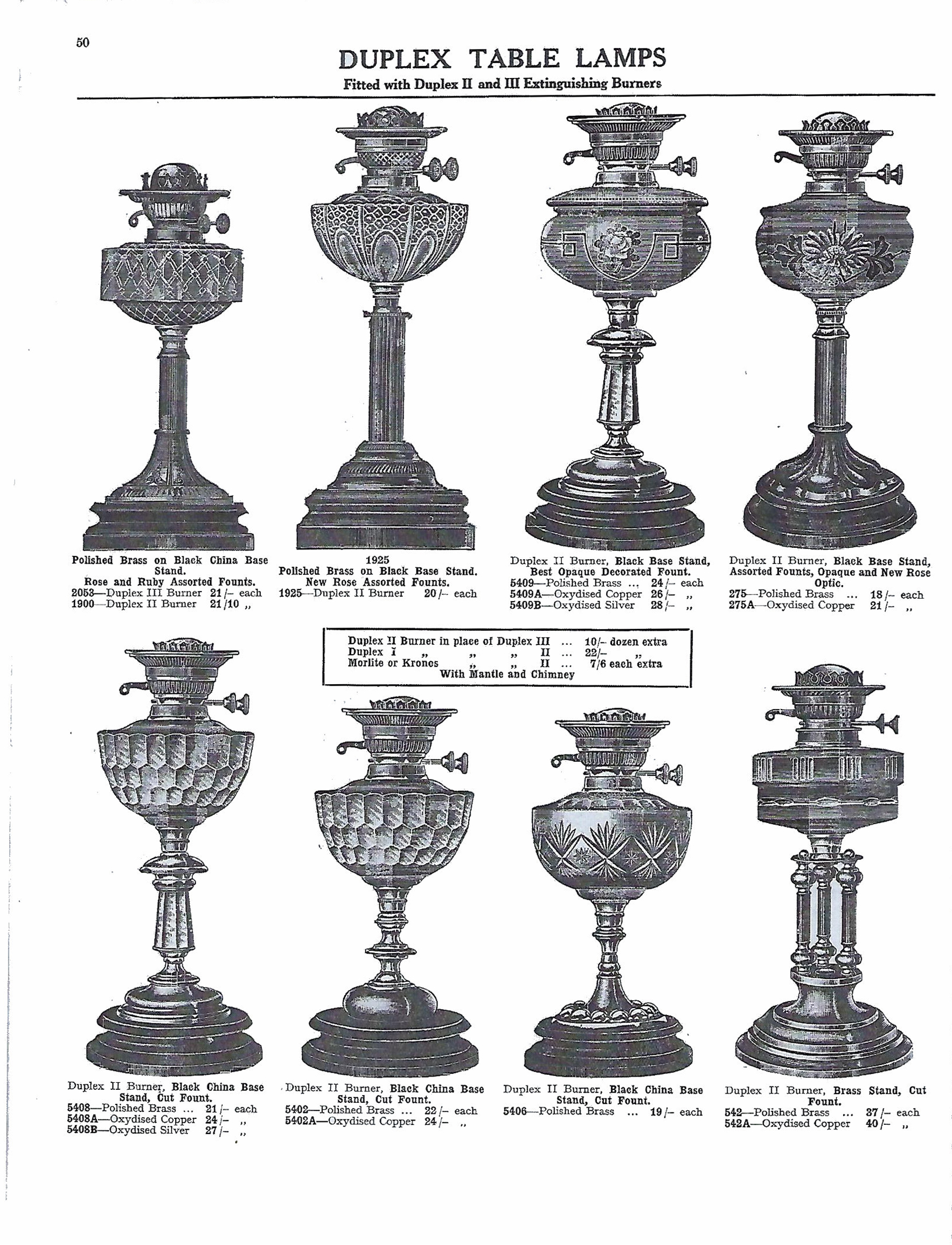
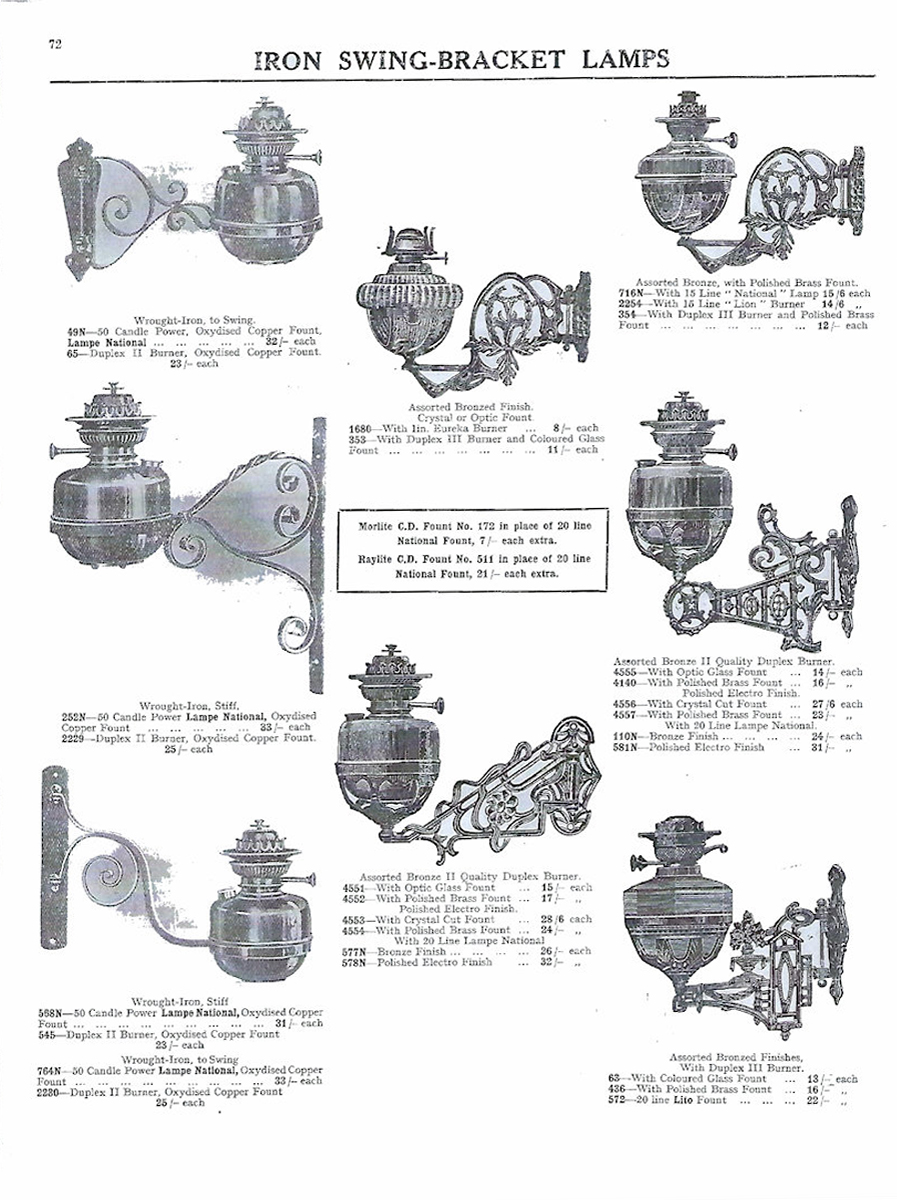
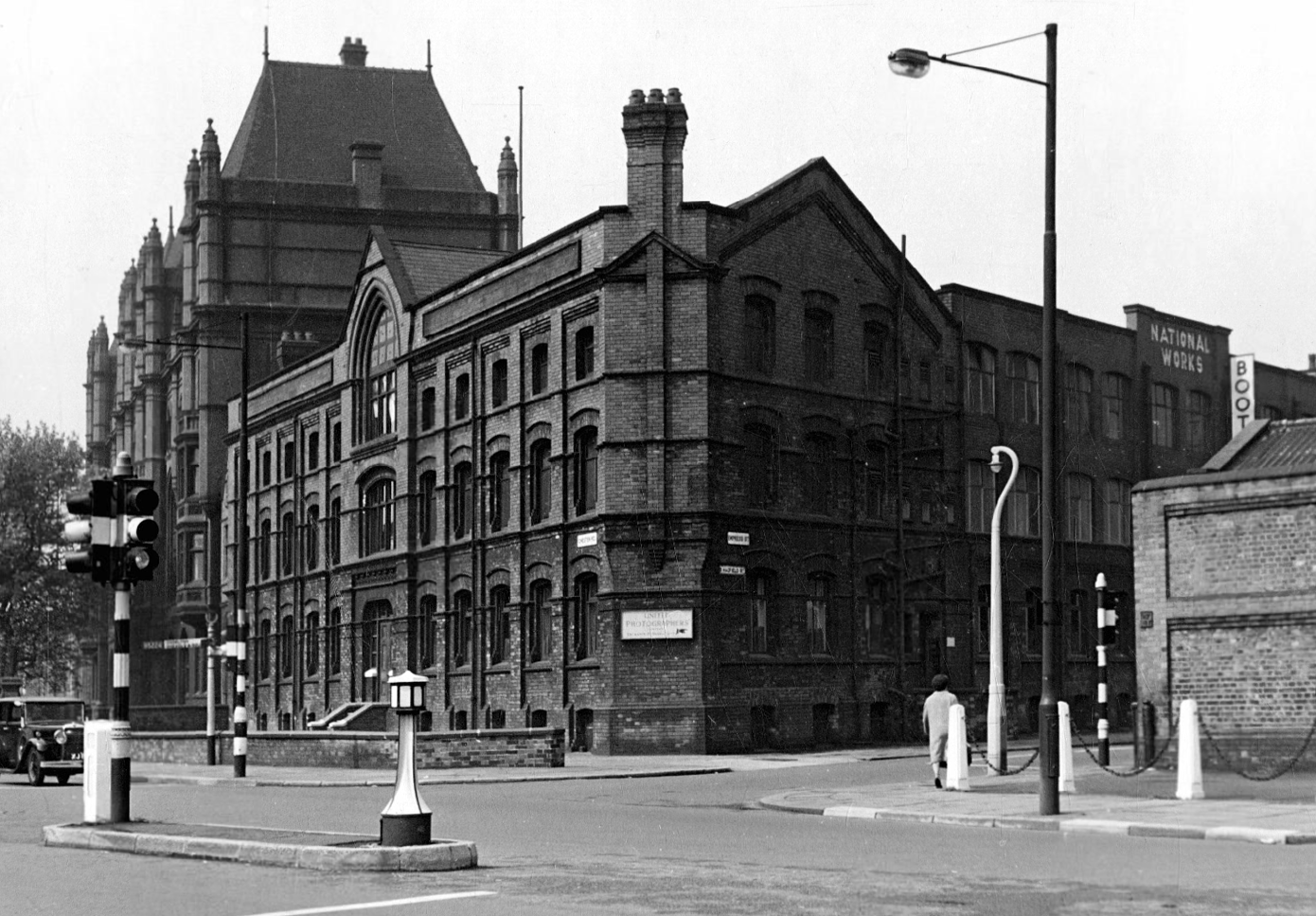
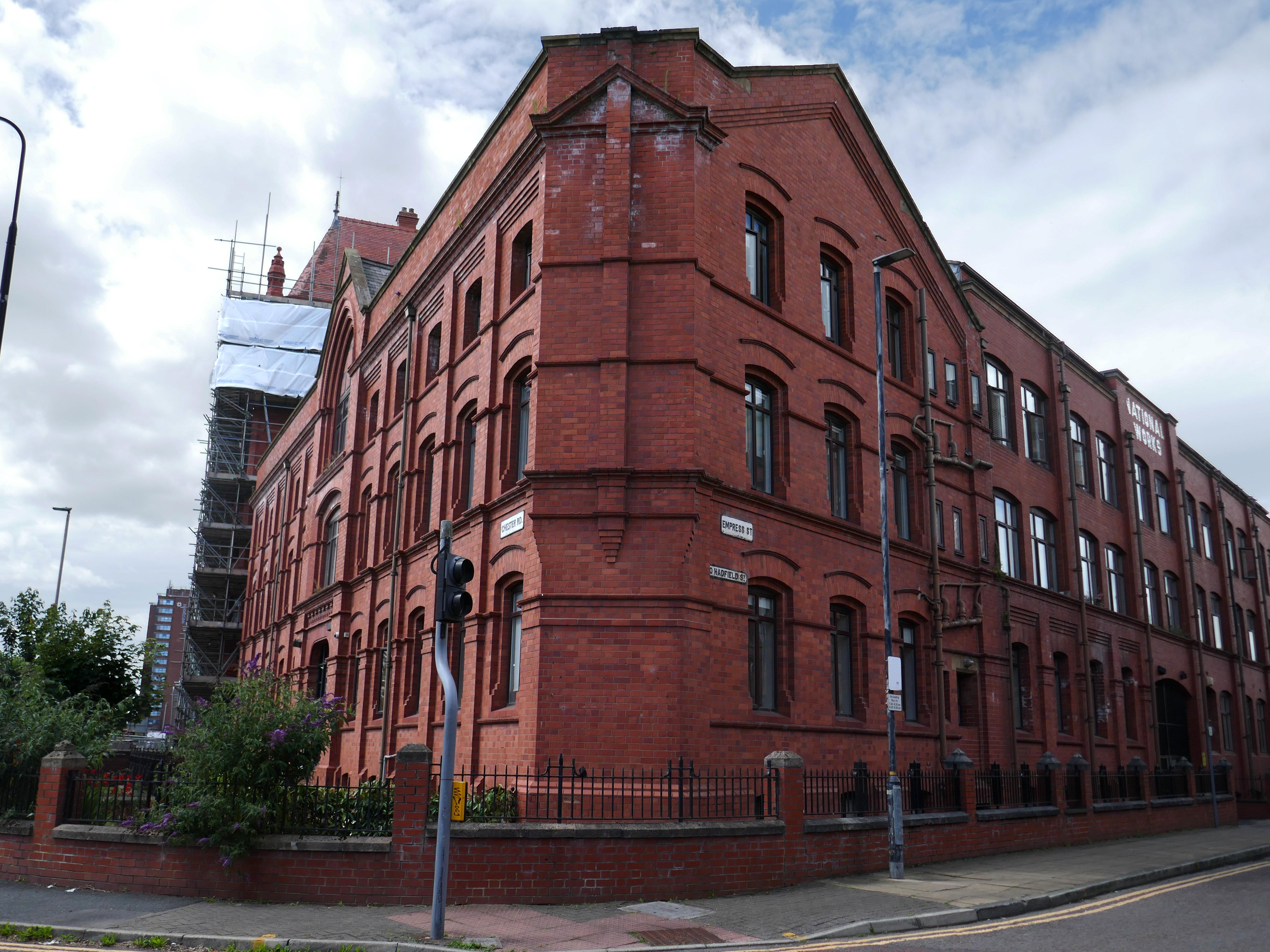
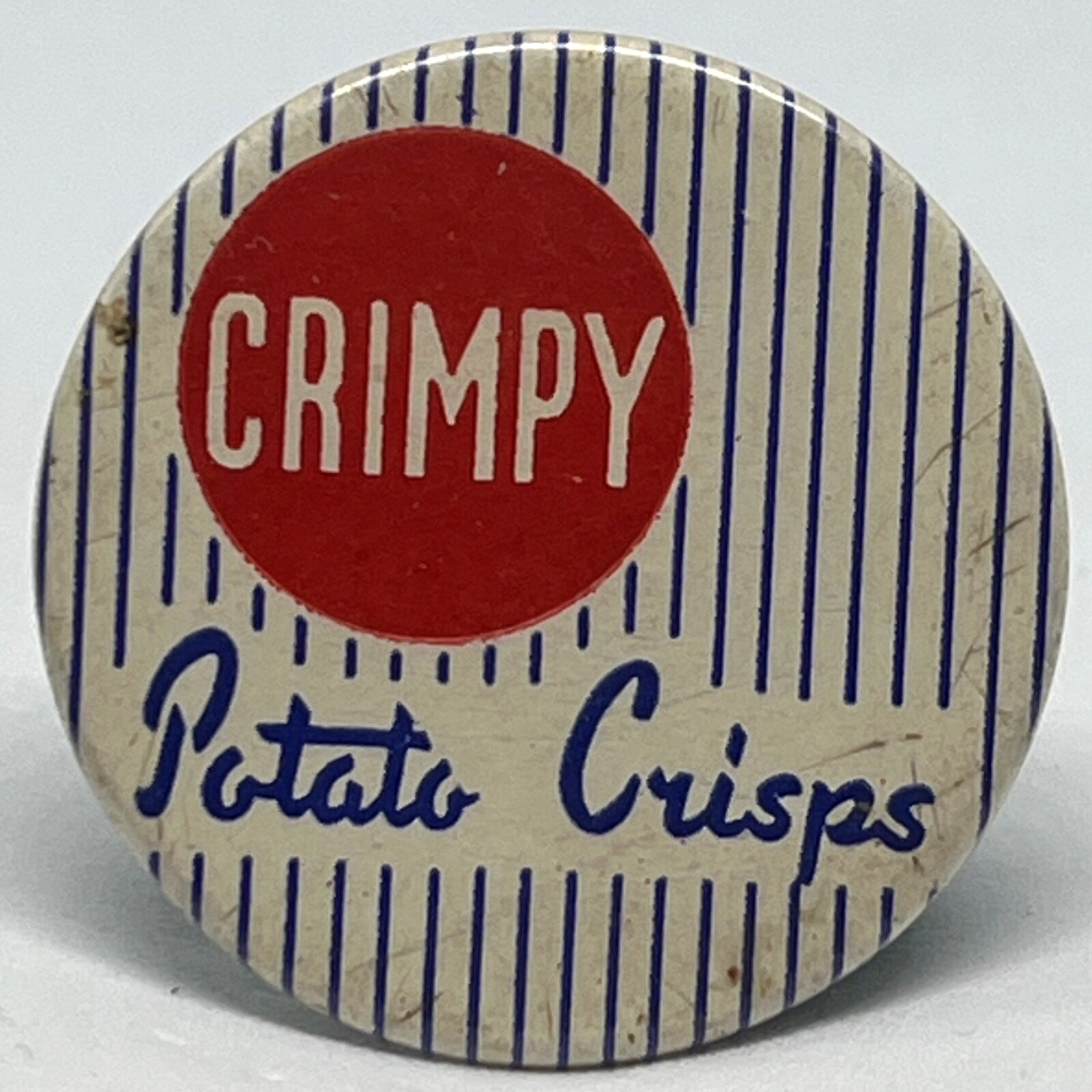
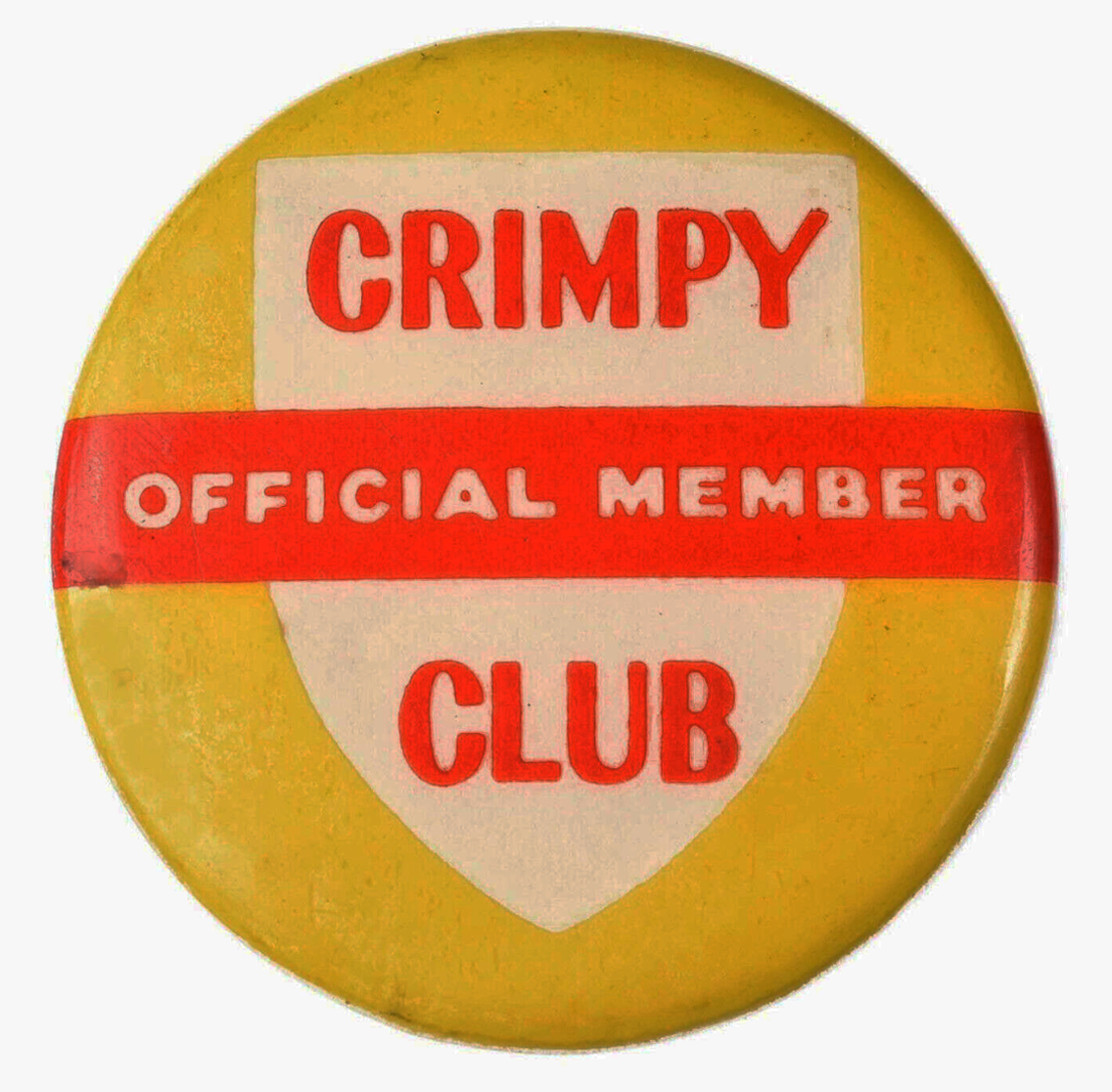
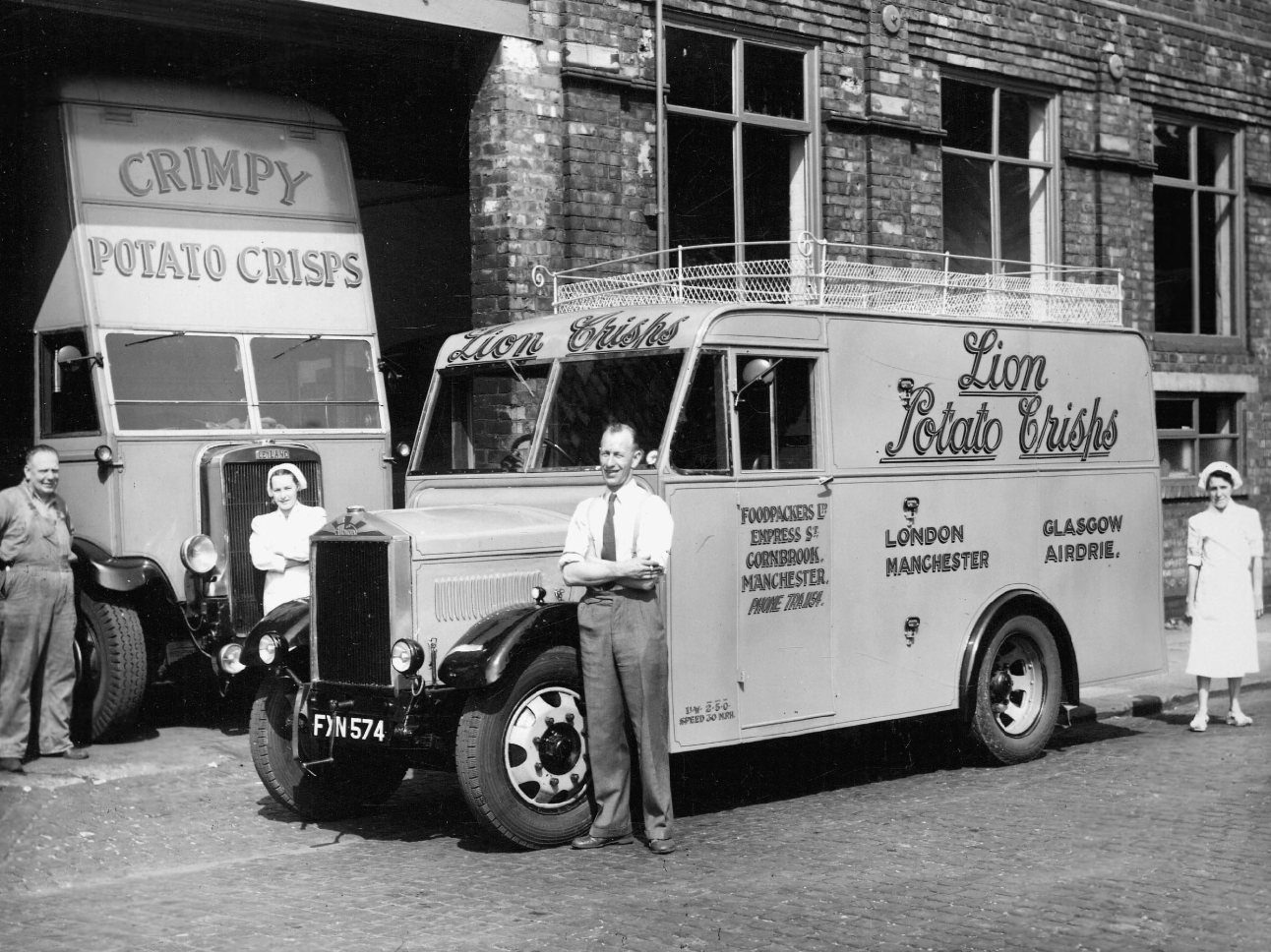
Next door is the National Works originally home to H, G & O Lewtas, lamp manufacturers, in Slater’s trade directory for 191 and later Crimpy Crisps.

Currently home to homes.

Ford more facts and snaps please see Chester Road and Tram Trip to Altrincham.

All archive photographs Local Image Collection.

Chester Road

Walking from Cornbrook toward Stretford along Chester Road – which is one half of my Tram Trip to Altrincham

There is a cluster of former industrial buildings around Empress Street.

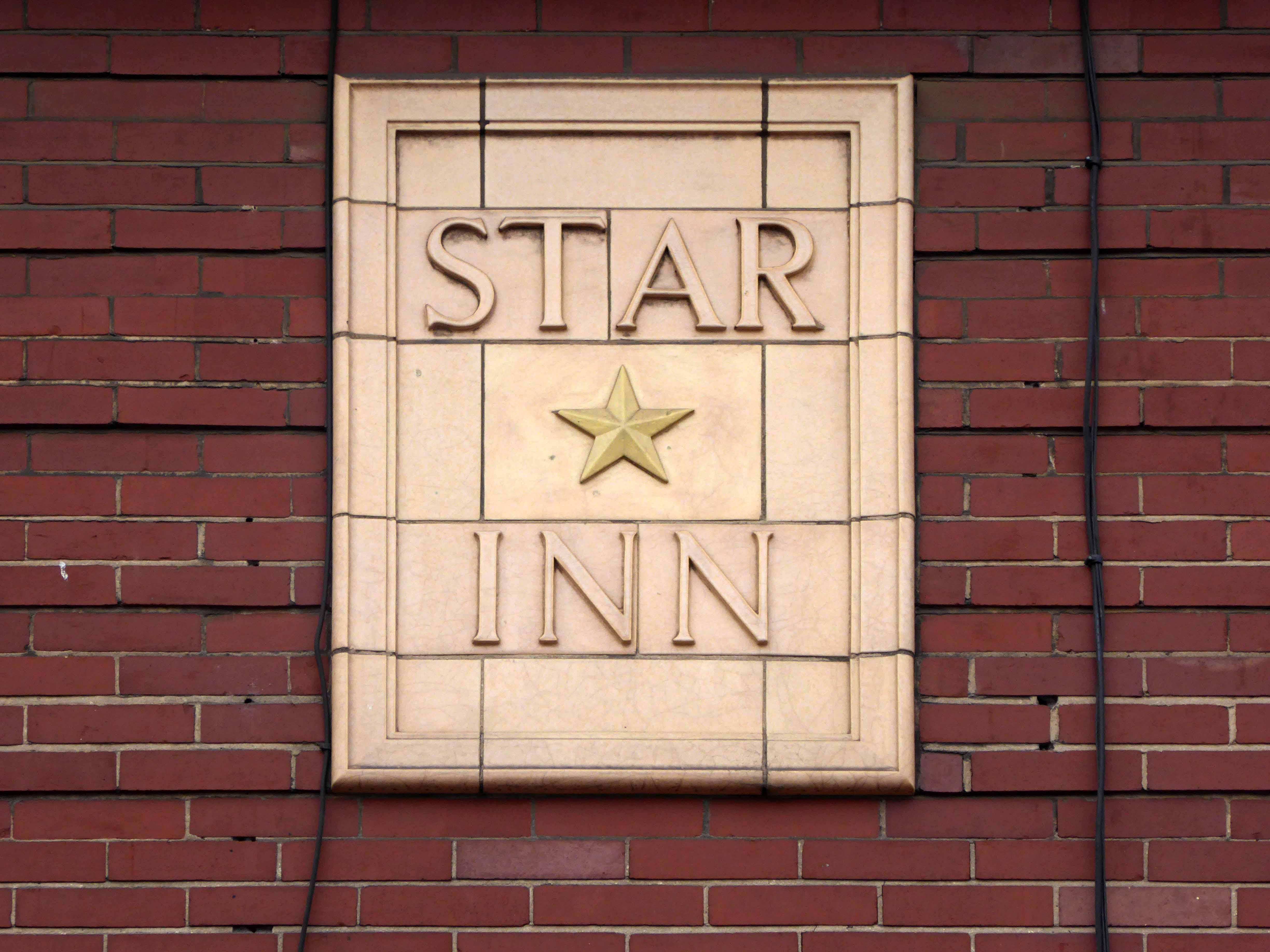
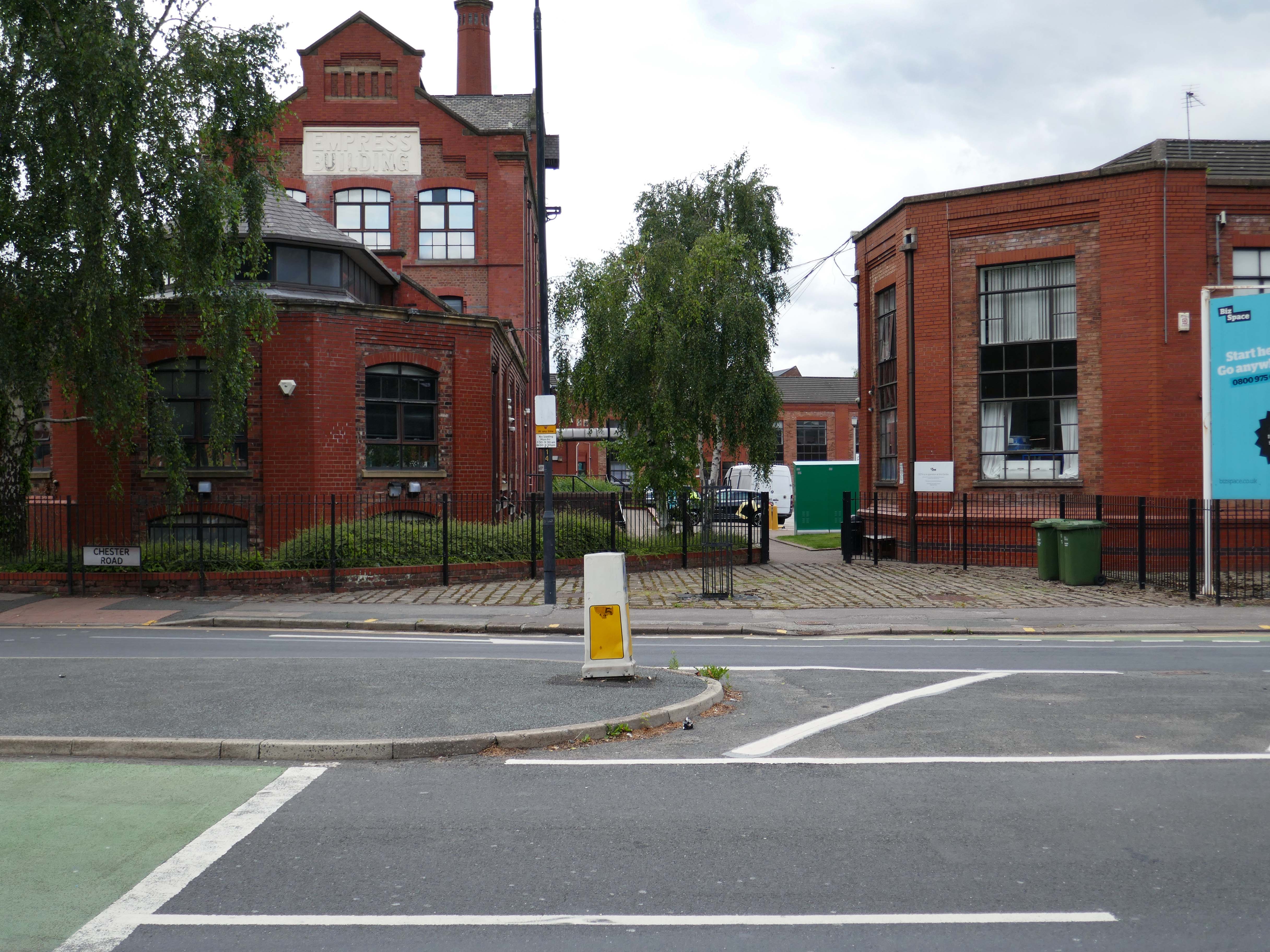
First up is the Empress Brewery.

The Empress Brewing Company was established by Charles Dawes in c. 1880, although the company was sold to William Henry Fulford in 1884, who had recently sold the Monarch Brewery in Salford. Fulford was based at the Empress Brewery on Clarence Street in Manchester, but had relocated to new premises on 383 Chester Road. These had been built in 1889 and operated initially as the Old Trafford Brewing Company, but the name had changed to the Empress Brewery Company by 1895. The company acquired a number of breweries and associated licenced house during the early 20th century, however, in 1929 it was taken over by Peter Walker and Son. The brewery closed in 1955.

Local Heritage List

The building was converted into offices in 1992 as part of the development of the Empress Business Centre, which saw new office and business units built to form a courtyard.
Empress had 236 public houses

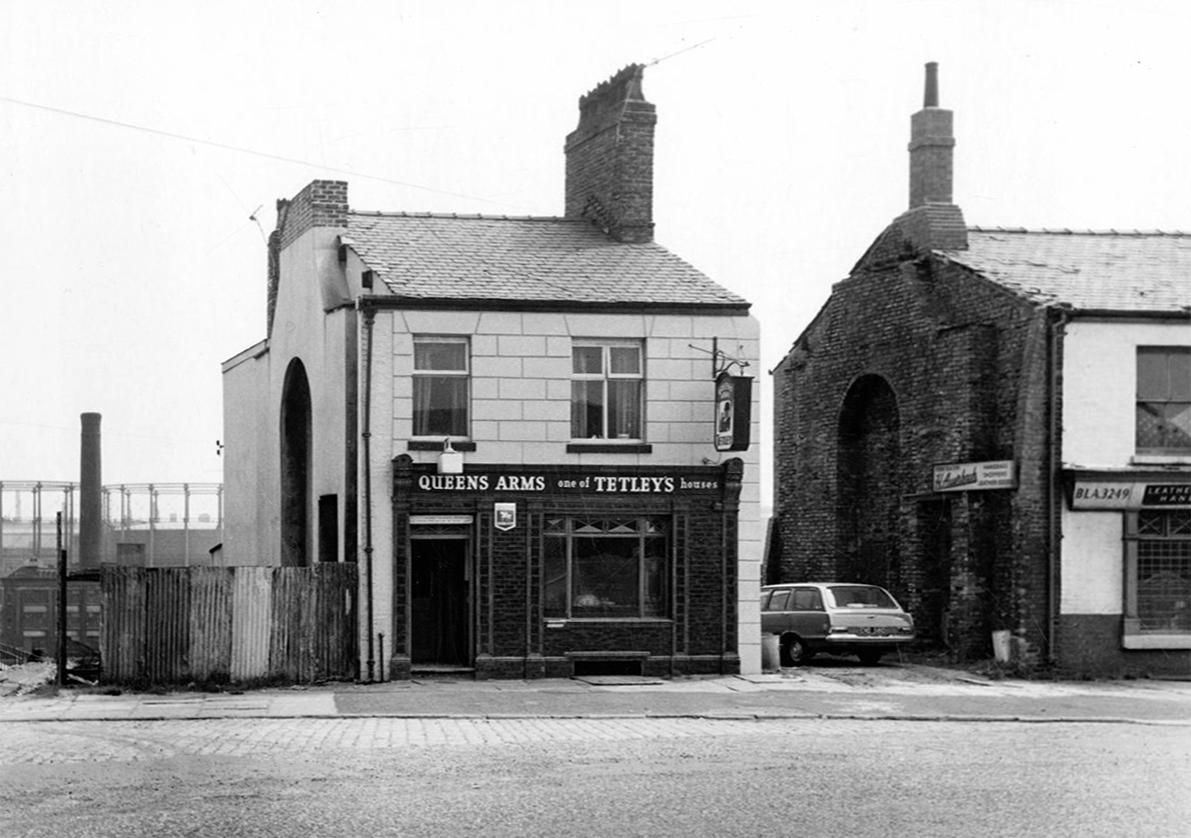
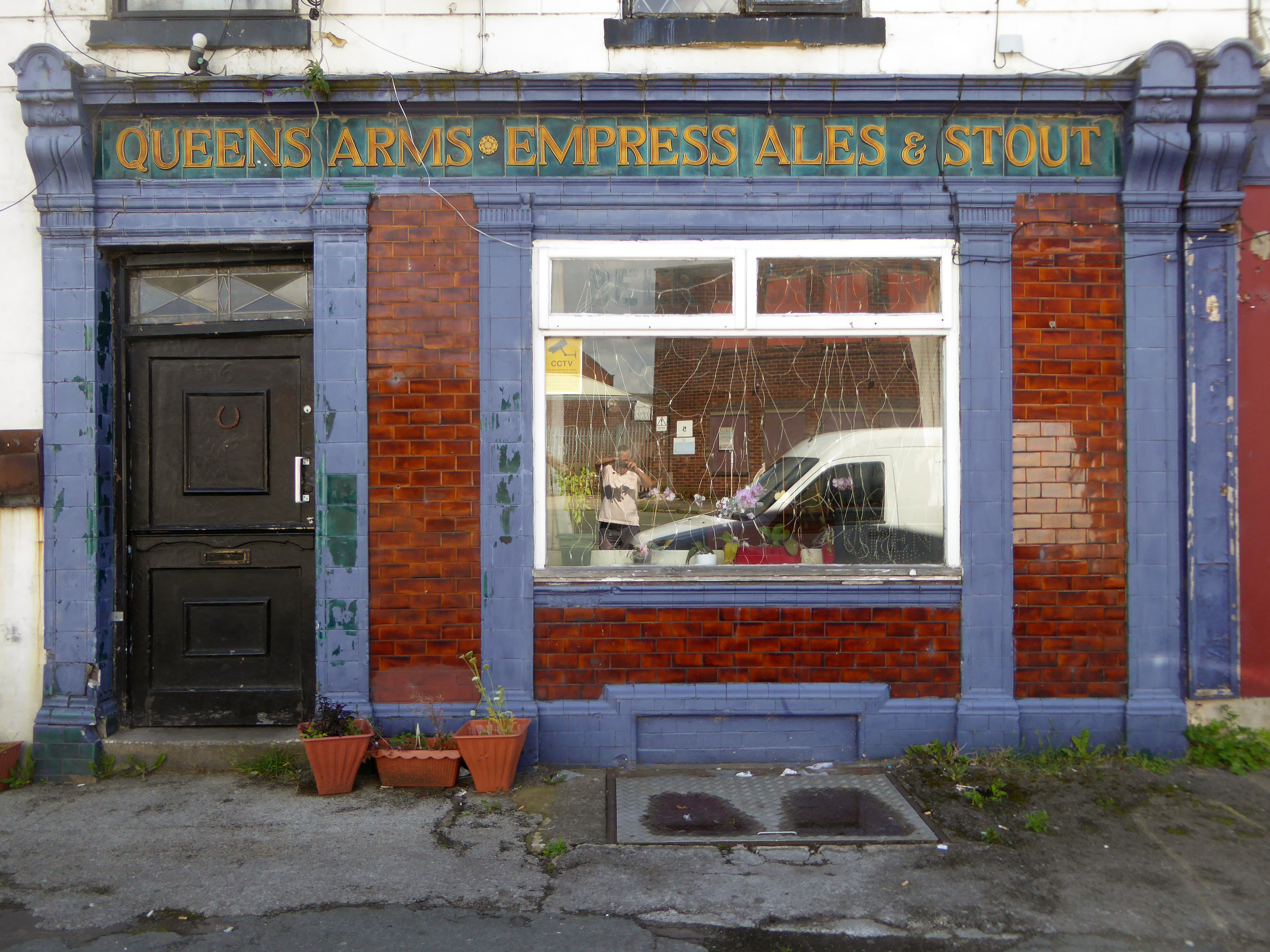
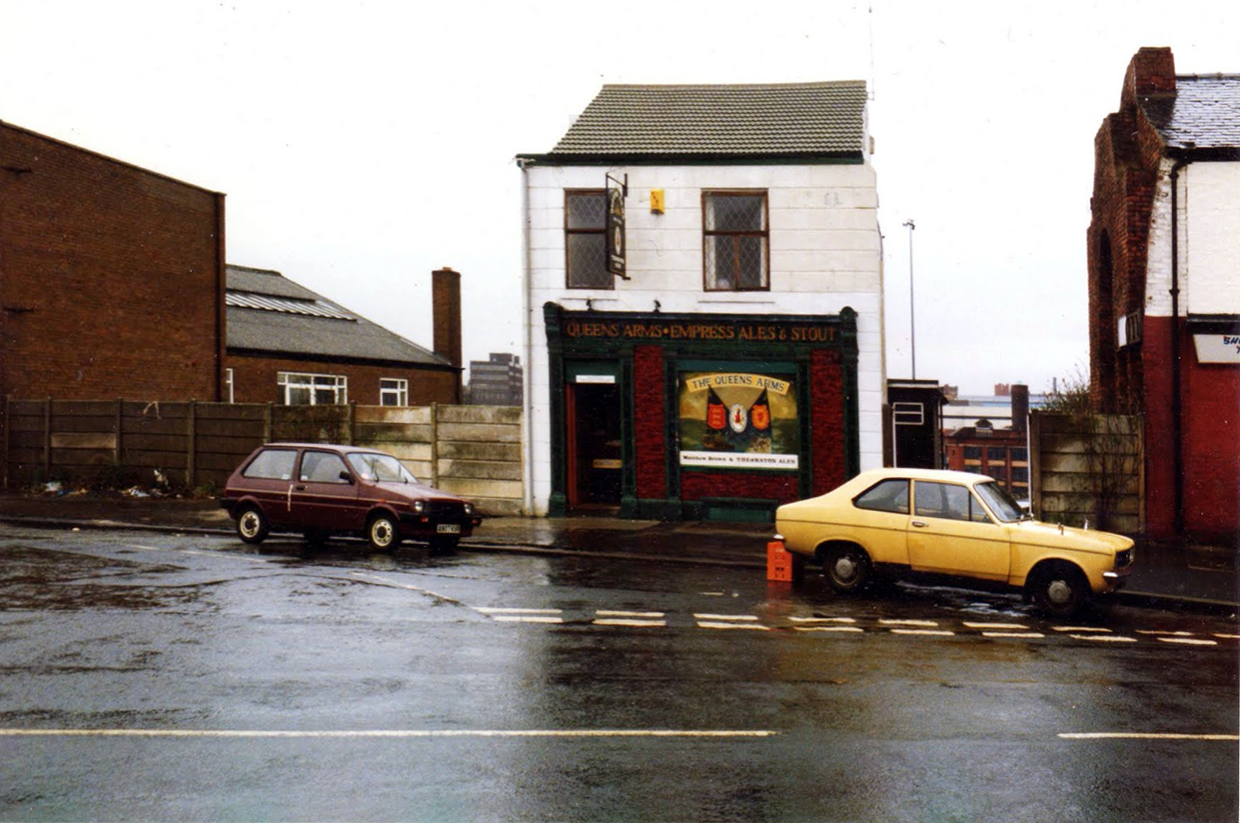
Including the Queens Arms on Honey Street Red Bank, one of the first independent real boozers back in the 1980’s, subsequently it has seen various uses last seen on my Collyhurst Circular walk.

1967 Local Image Collection

This is the brewery building over time.

Here it is in July 2025

Across the way is the National Works.

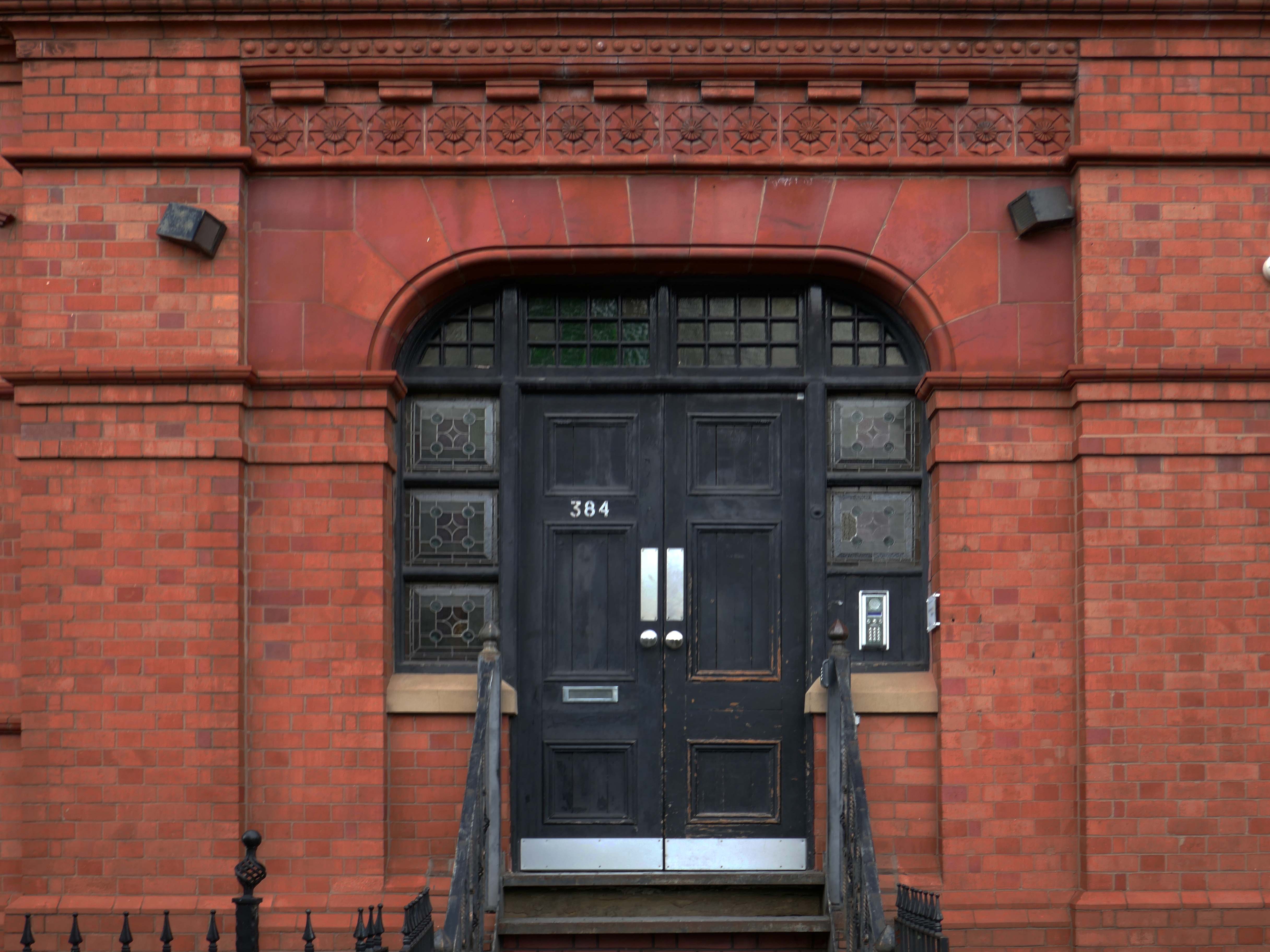
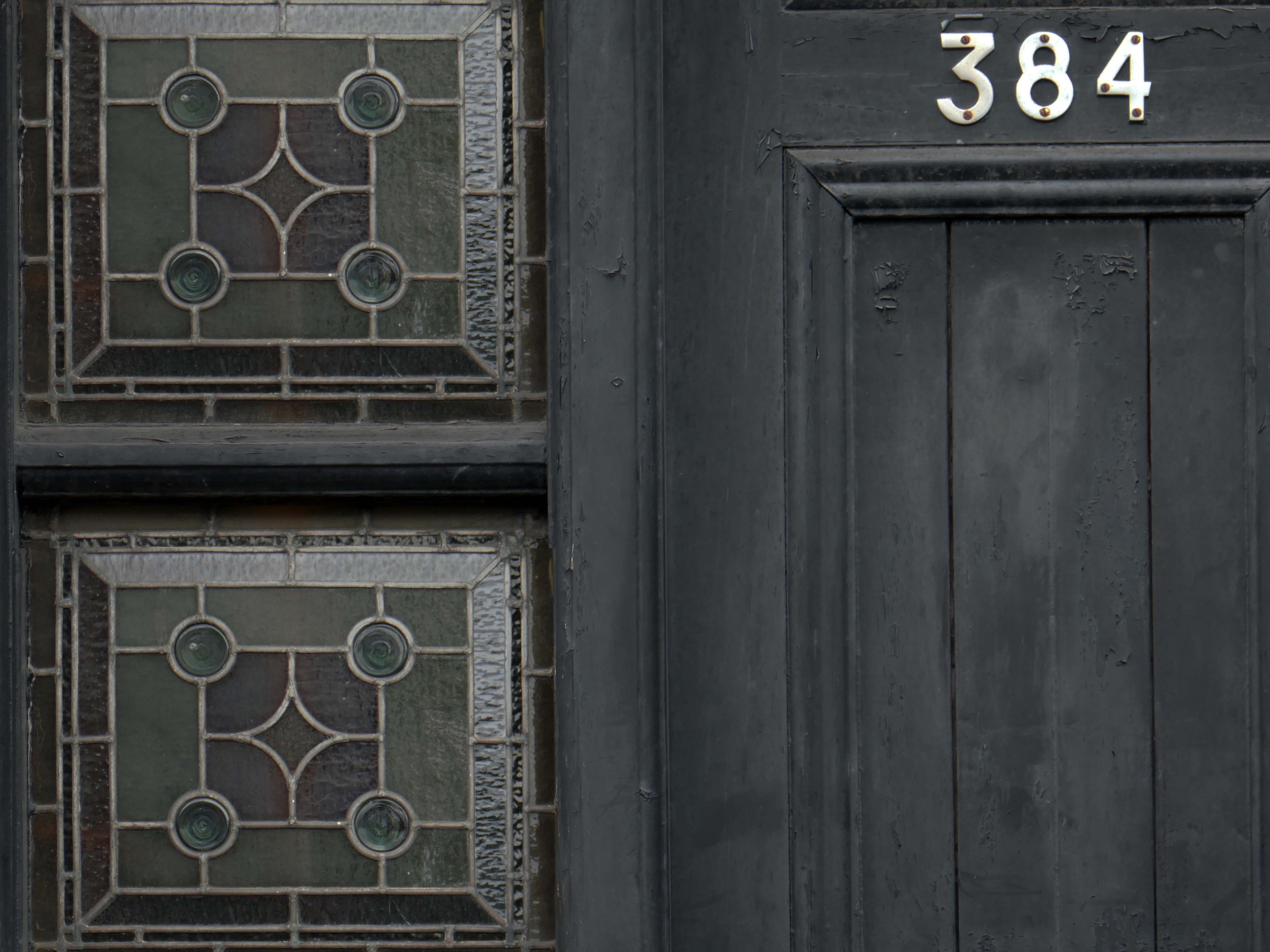
The development of the site can be traced from the sequence of Ordnance Survey 1:2500 maps. The First Edition of 1893 shows the site as undeveloped. The First Revision map of 1908 shows 384 Chester Road to have been developed, and the site of the National Works to have been occupied by an open-fronted L-shaped range along the western and southern sides, with a detached rectangular building in a central courtyard. It is possible that these buildings all formed part of 384 Chester Road, listed as being occupied by H, G & O Lewtas, lamp manufacturers, in Slater’s trade directory for 1911. The Second Revision map of 1922 shows the early building to have been subsumed by the current building.

1961 Local Image Collection

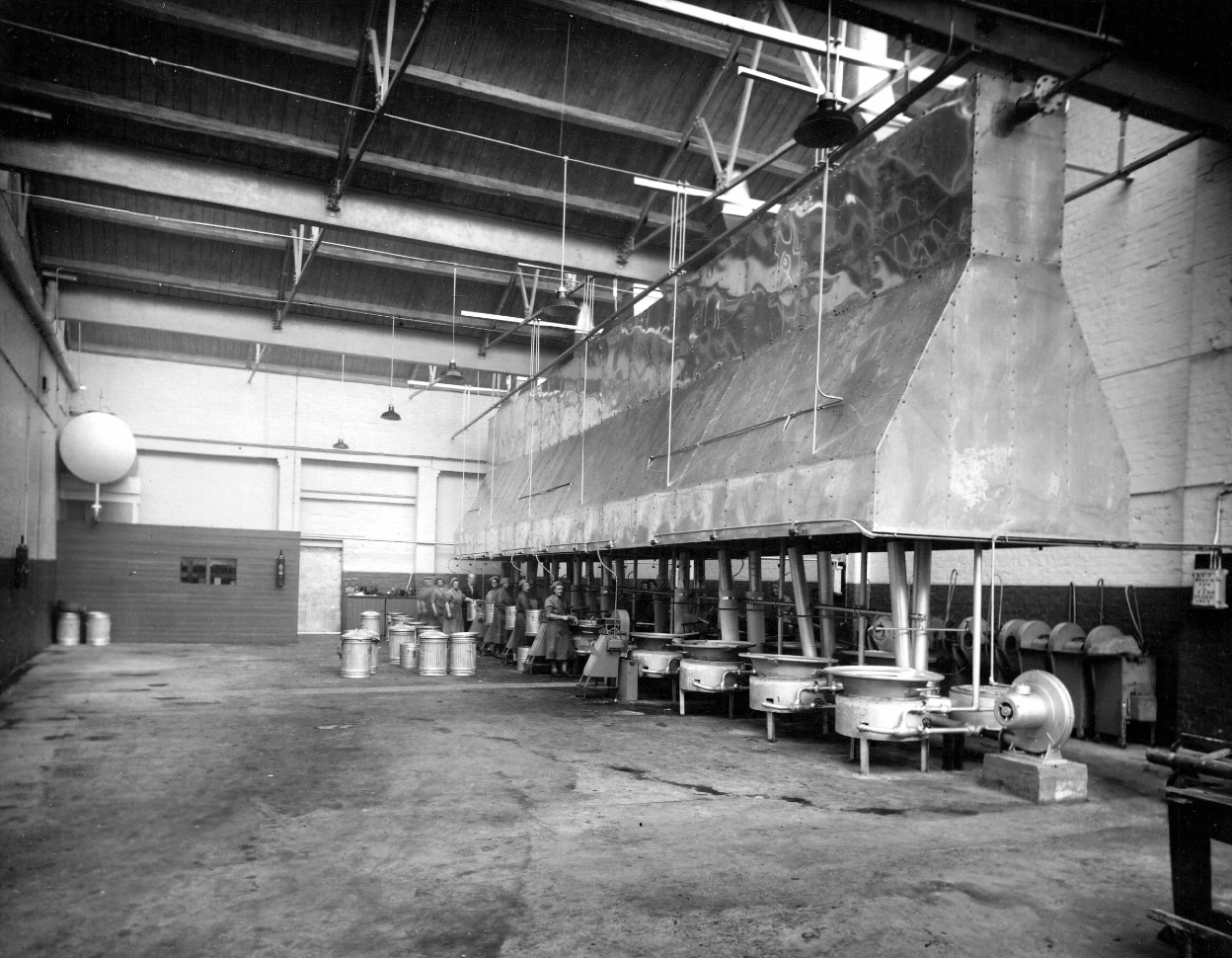
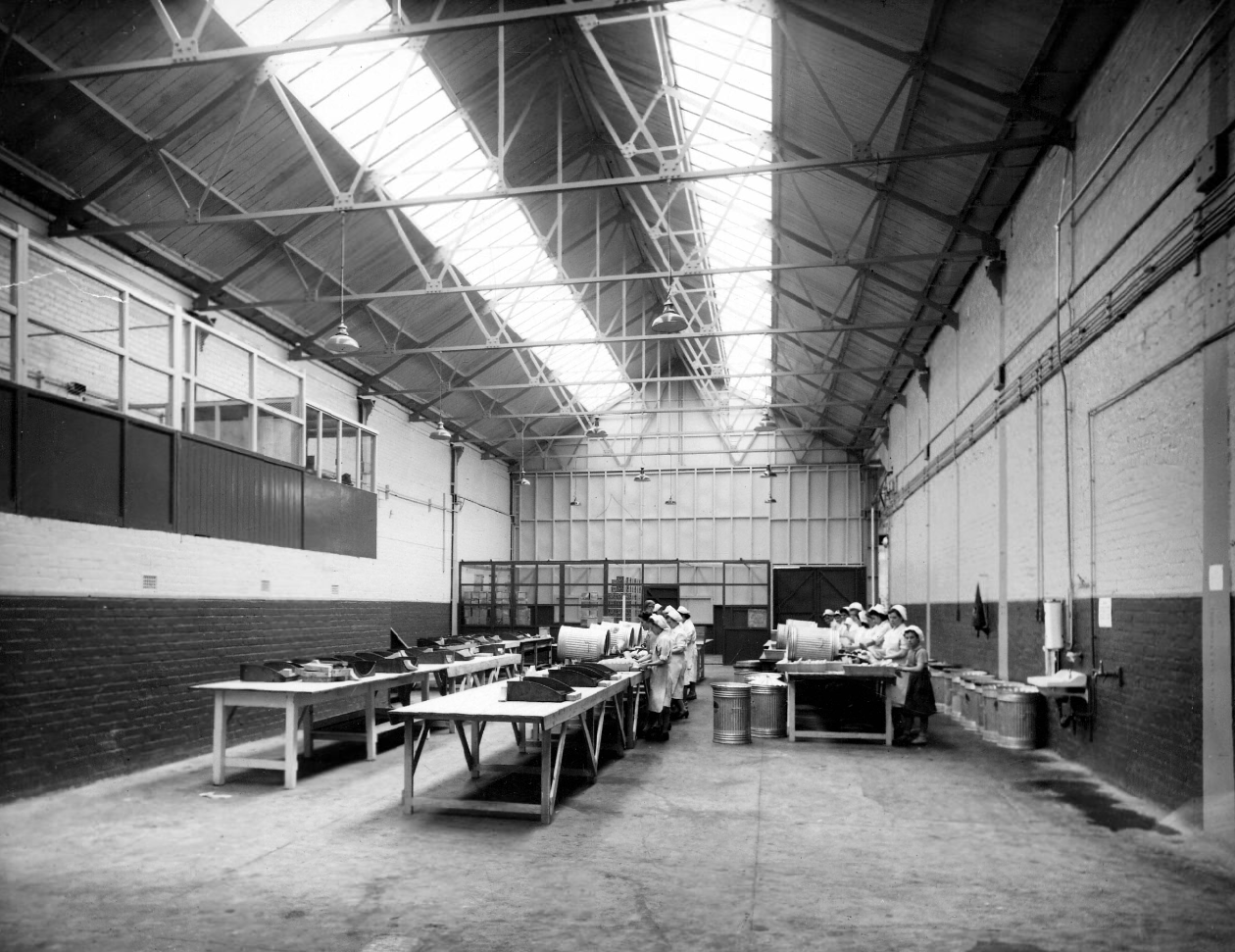
Later the home of Lion Foodpackers Ltd and Crimpy Crisps.

1947 Local Image Collection

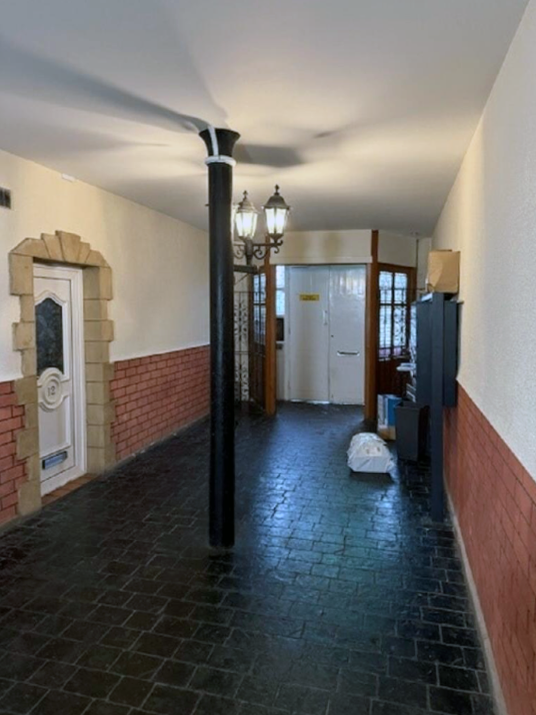
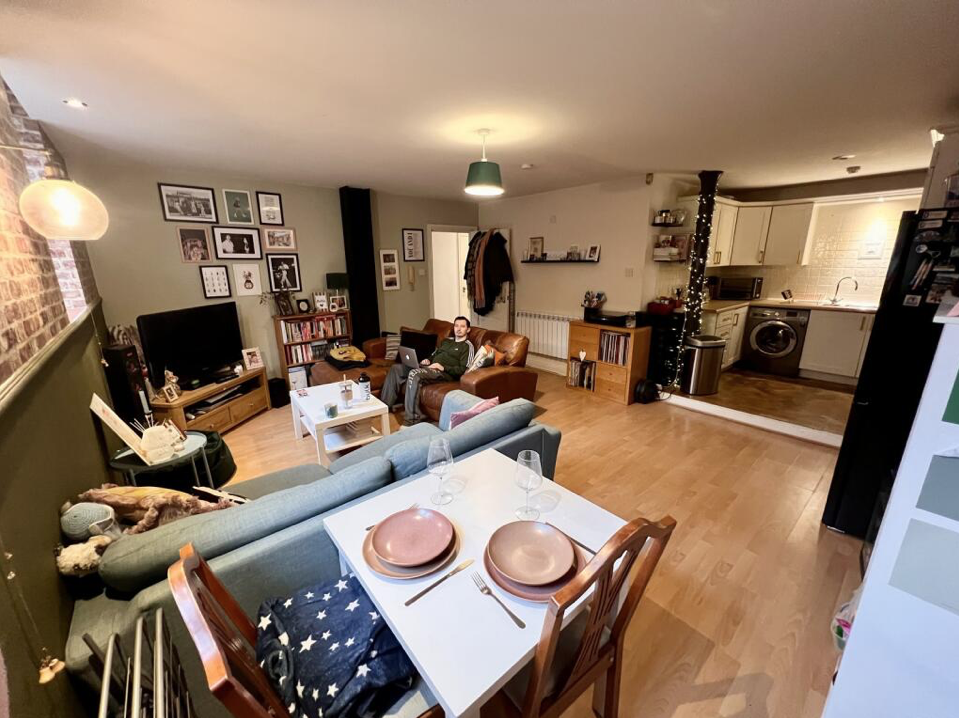
The building has been converted into apartments.

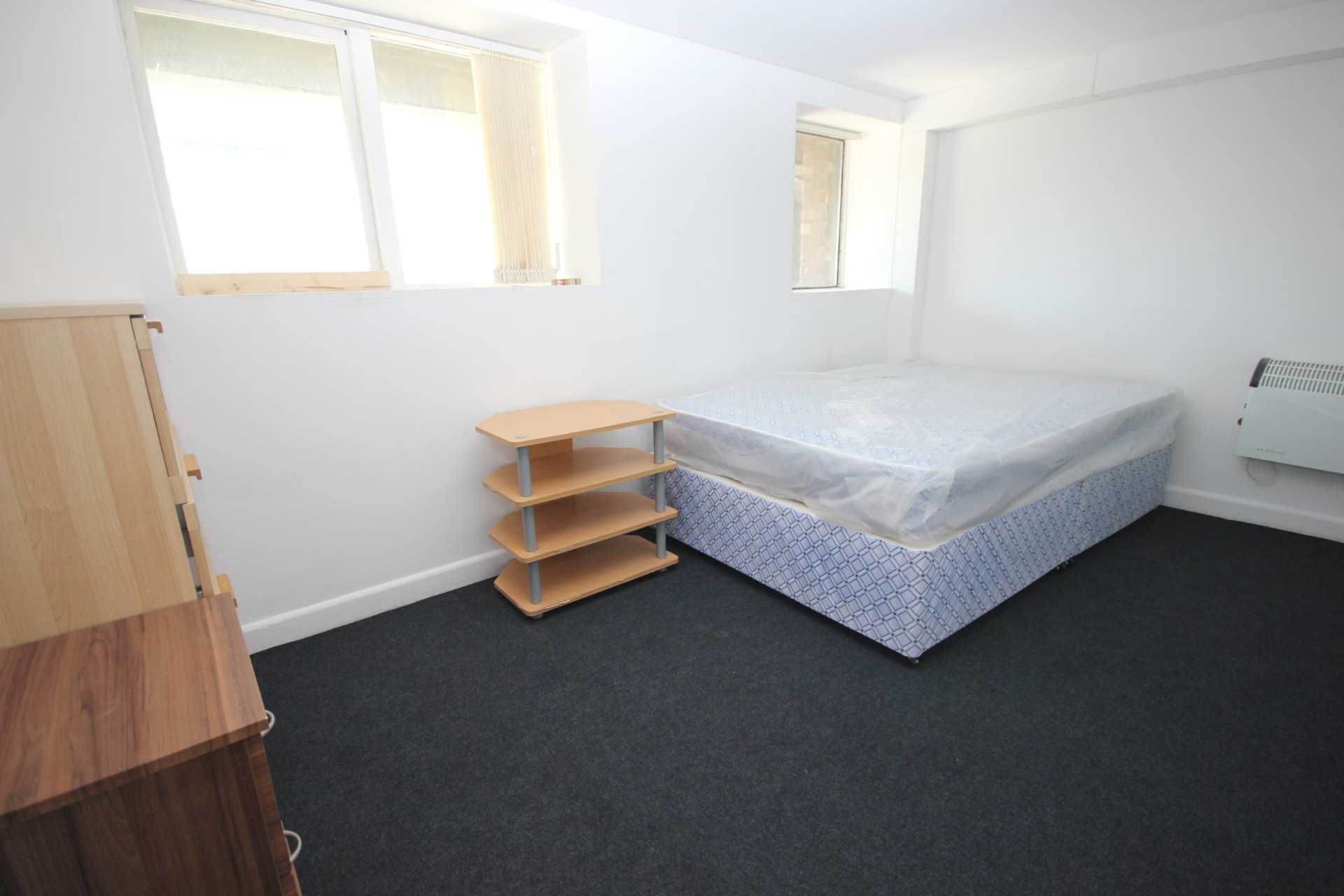
Situated on the lower ground floor of a gorgeous, red brick, landmark building, this 2 double bedroom apartment merits further inspection. A good size living room opens on to a good fitted kitchen. It also has a great, spacious shower room. It also benefits from a parking space, although a great attraction is the location, being just 1 mile from Deansgate and the City along with being 10 minutes walk to a Metro station.

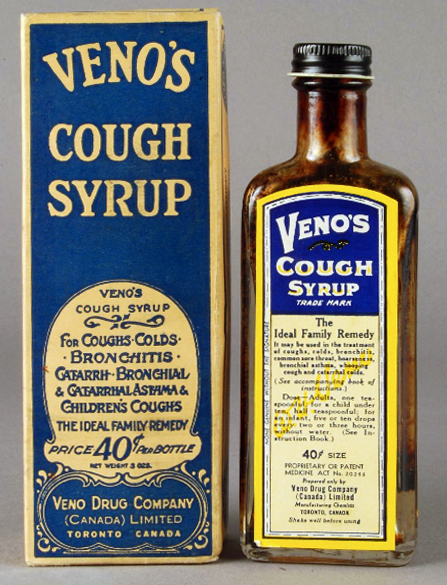
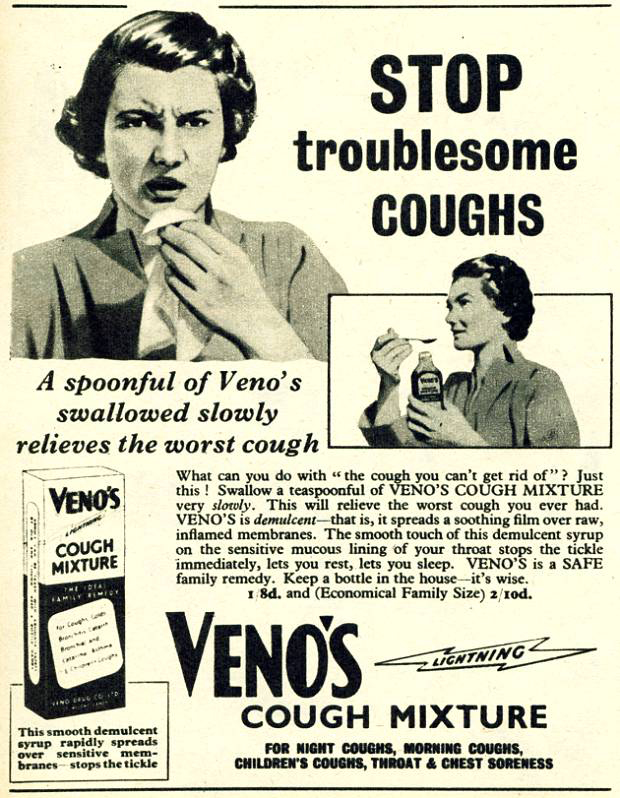
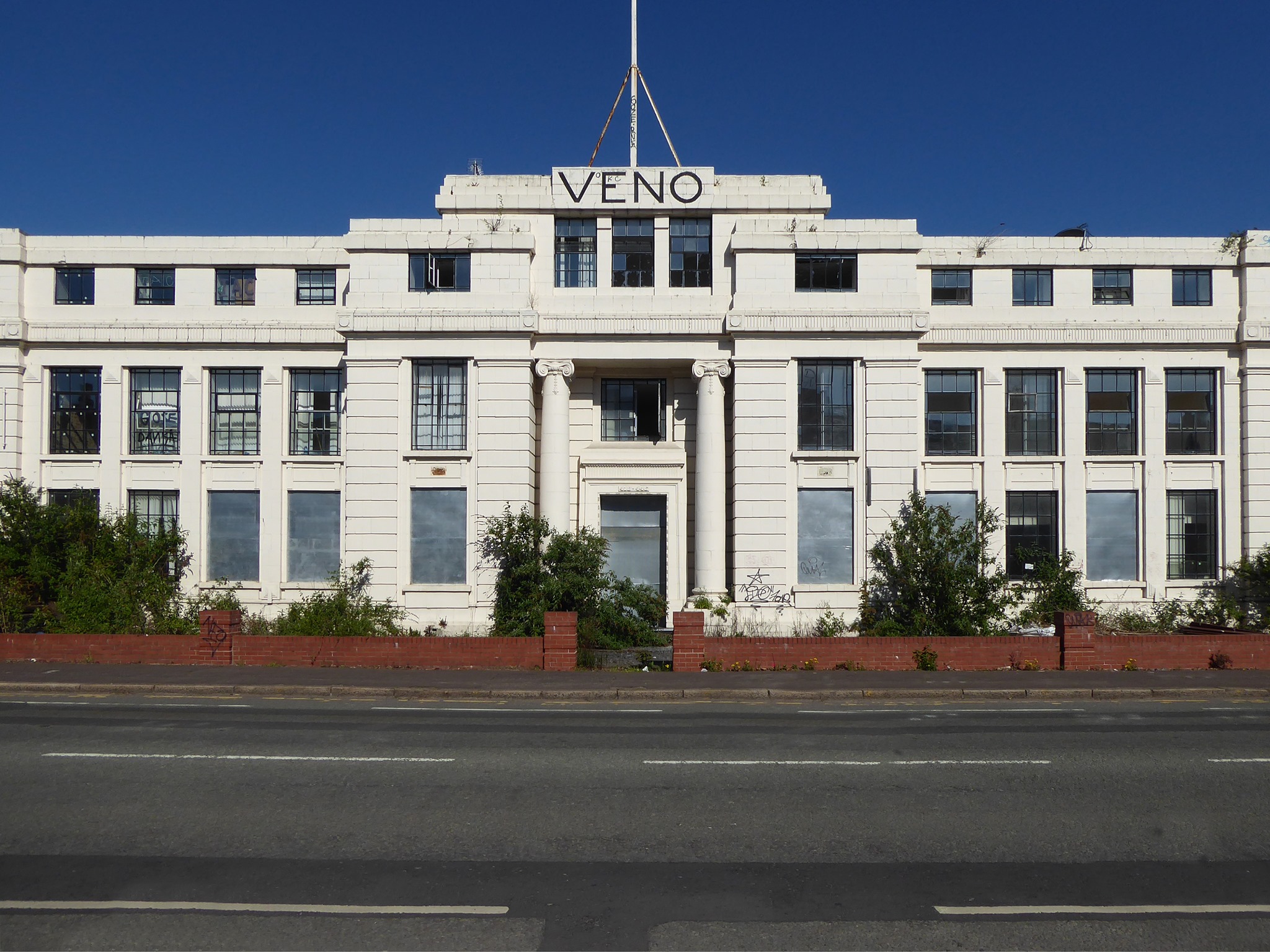
Then we have the Veno’s Building, which was once a pharmaceutical company founded by William Henry Veno. He established a company in the US before returning to Britain and founded the Veno drug Company in Manchester in 1898.

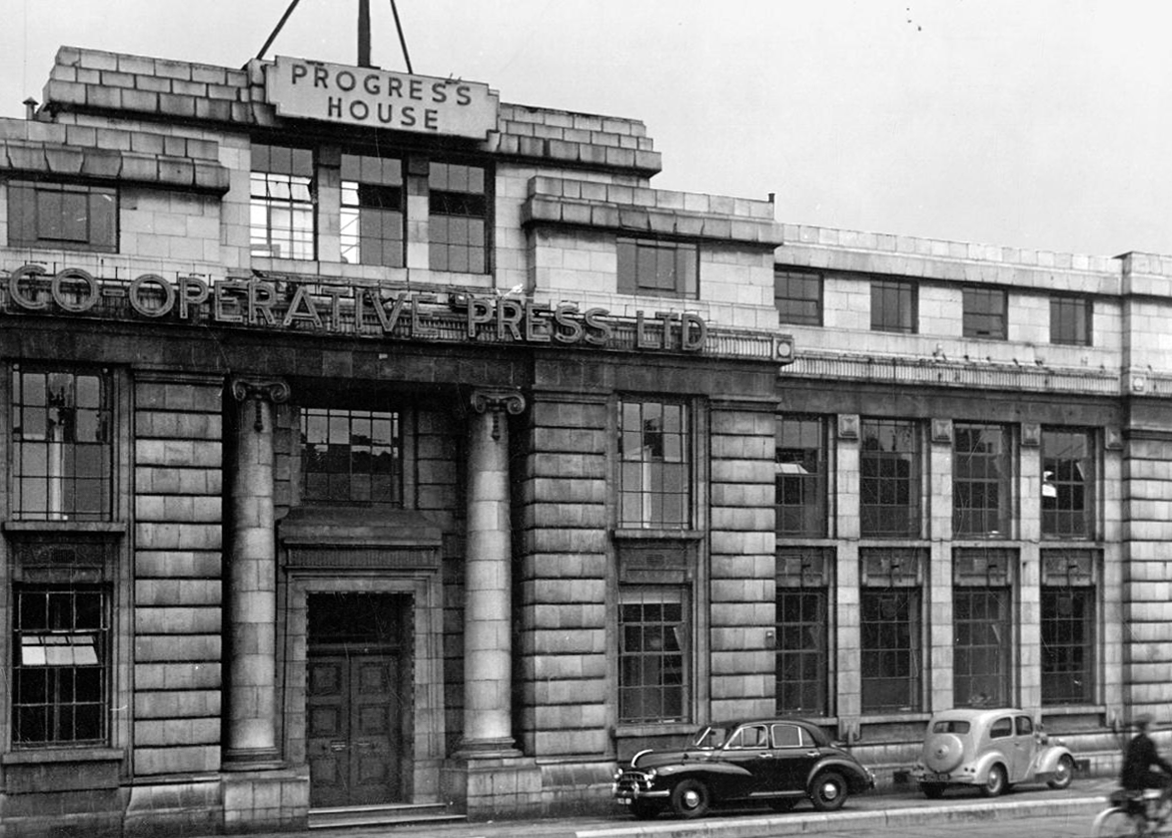
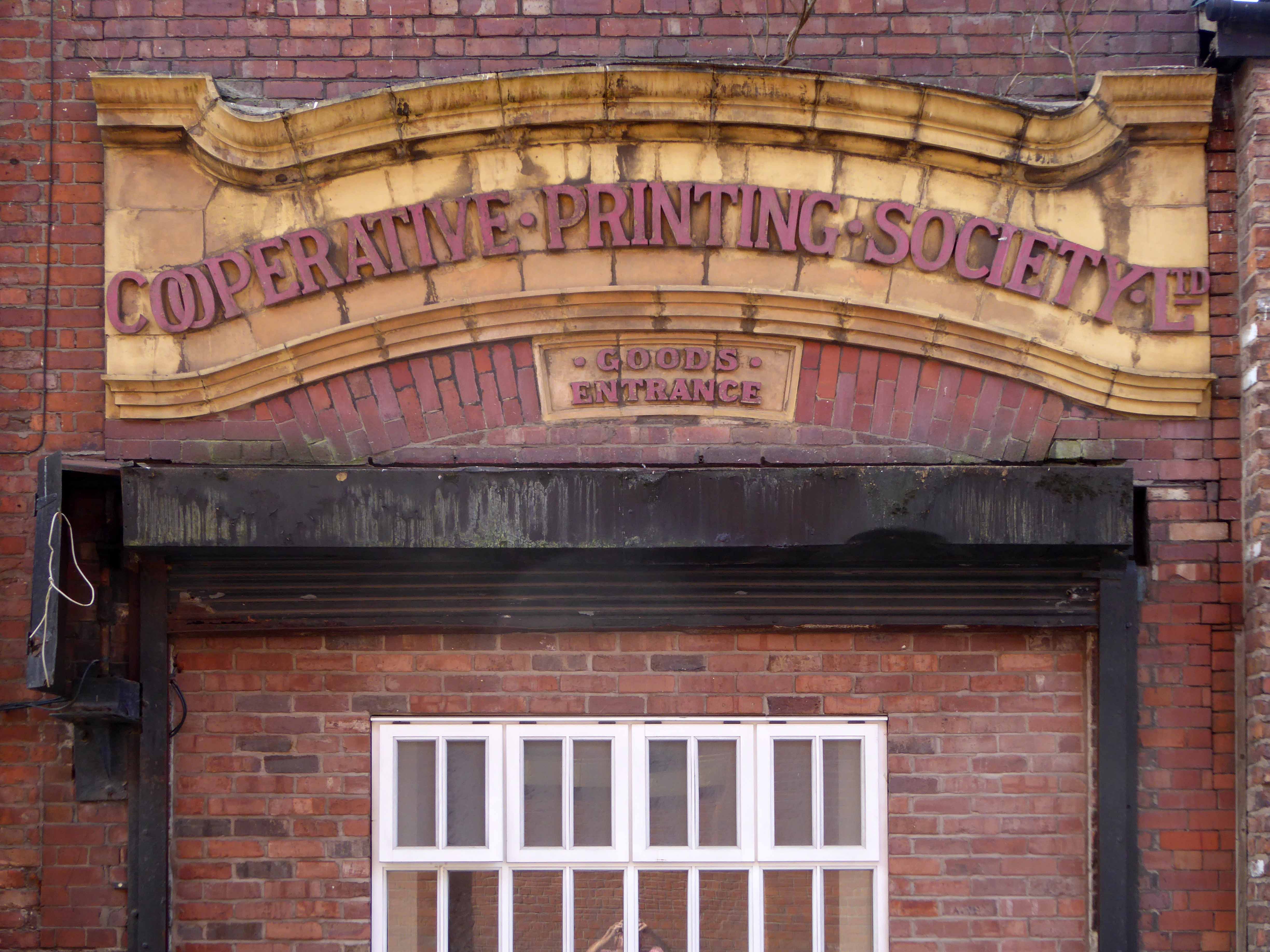
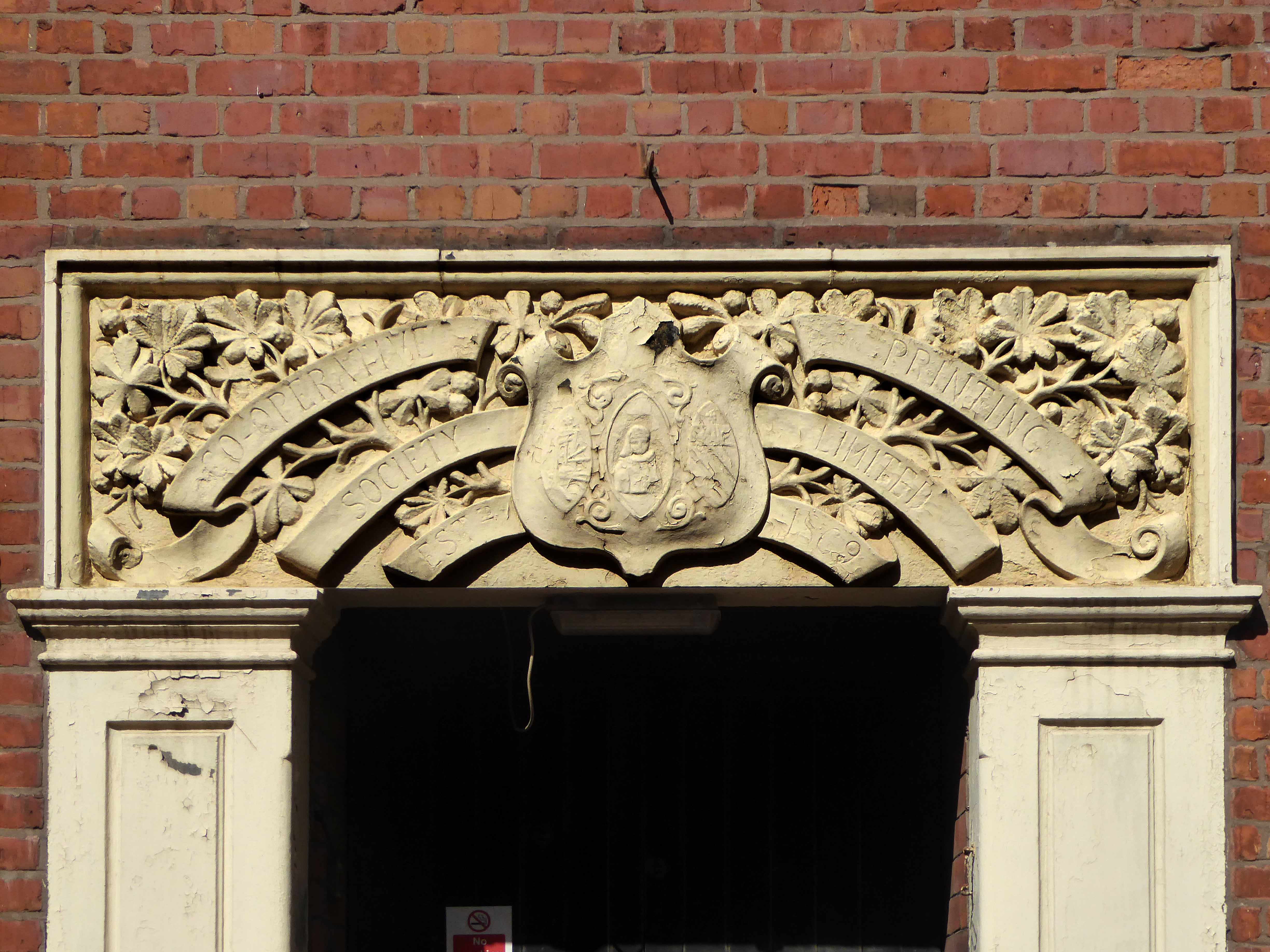
In 1925 the company was sold to Beecham Estate and Pills Ltd. In the 60s the building was under the name Progress House and was home to the Co-Operative Press Limited, later to become Trafford Press. 

Derelict Places

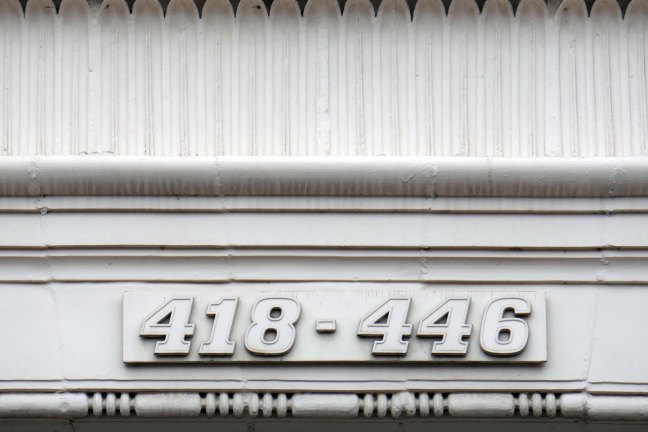
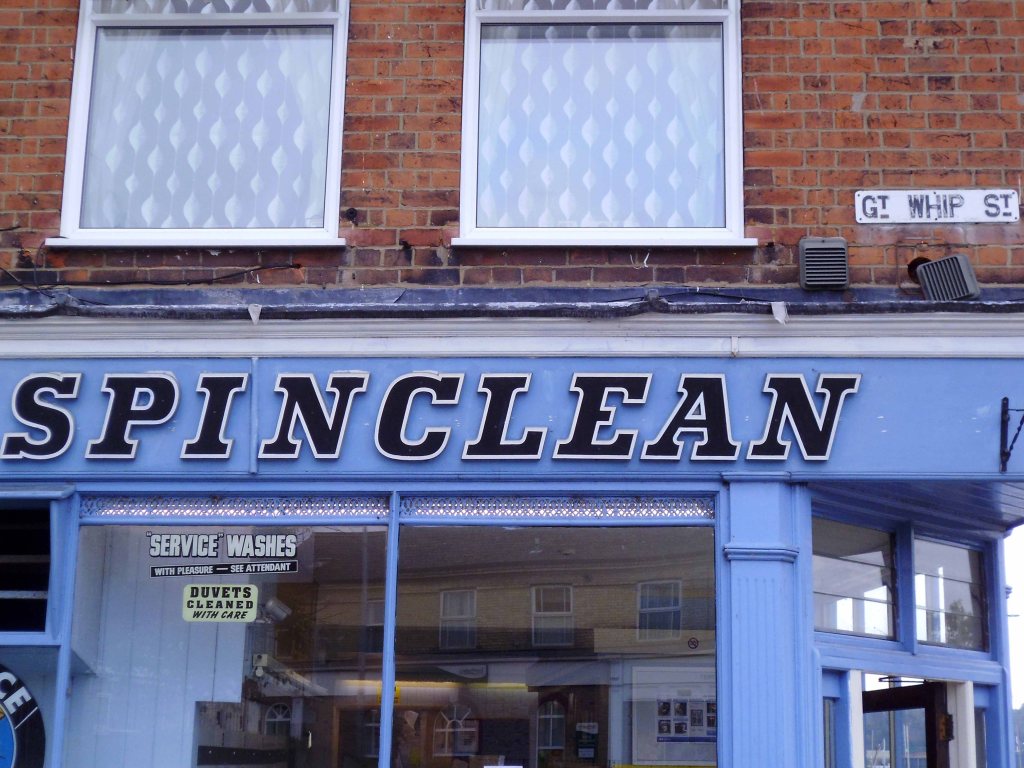
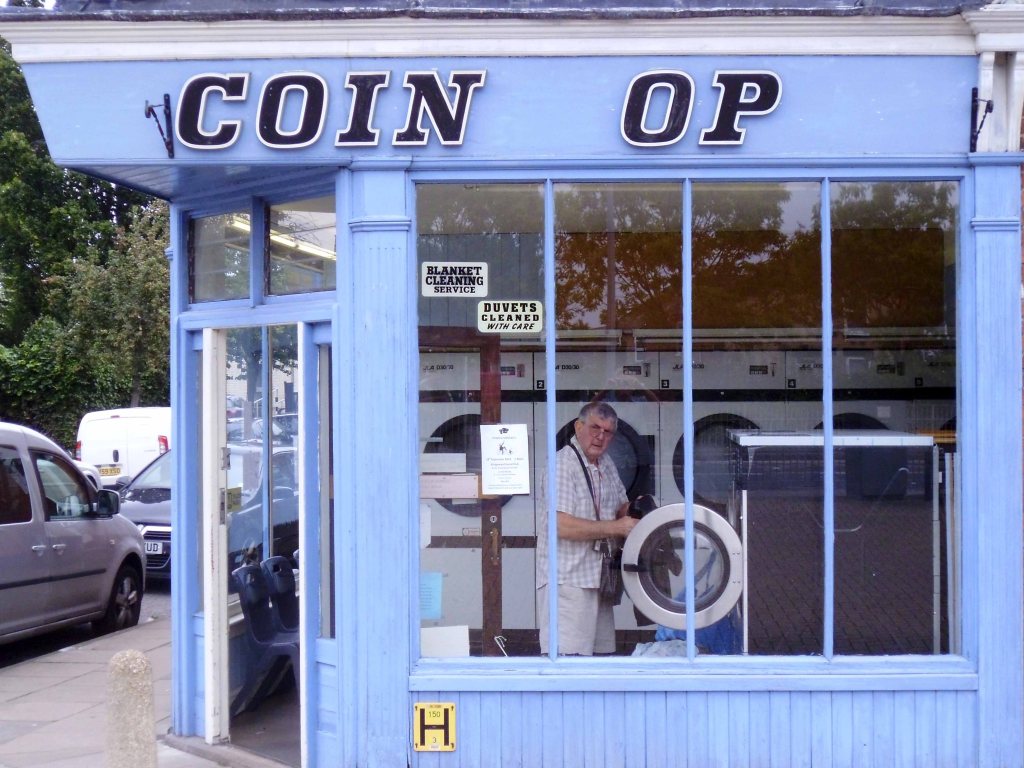
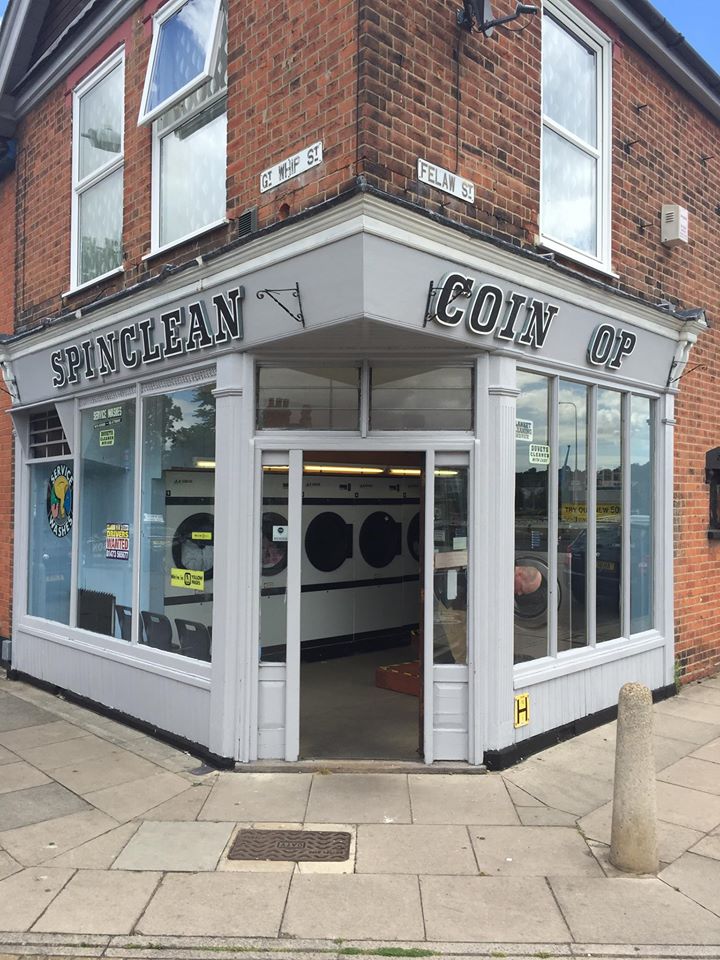
Rare sighting of a Profil aka Stymie Bold Italic hyphen.

Designed by brothers Max and Eugen Lenz and first cast by Haas in 1947.

The front elevation was originally in red brick, with a later faience facade applied.

Veno’s a stalled and cursed development. In 1925 William Henry Veno sold his company for £500,000, a decision he later rued. He sought to enhance his million pound fortune but lost everything through speculative investments and the 1929 Depression. He shot himself at his home during a fit of impulsive insanity.

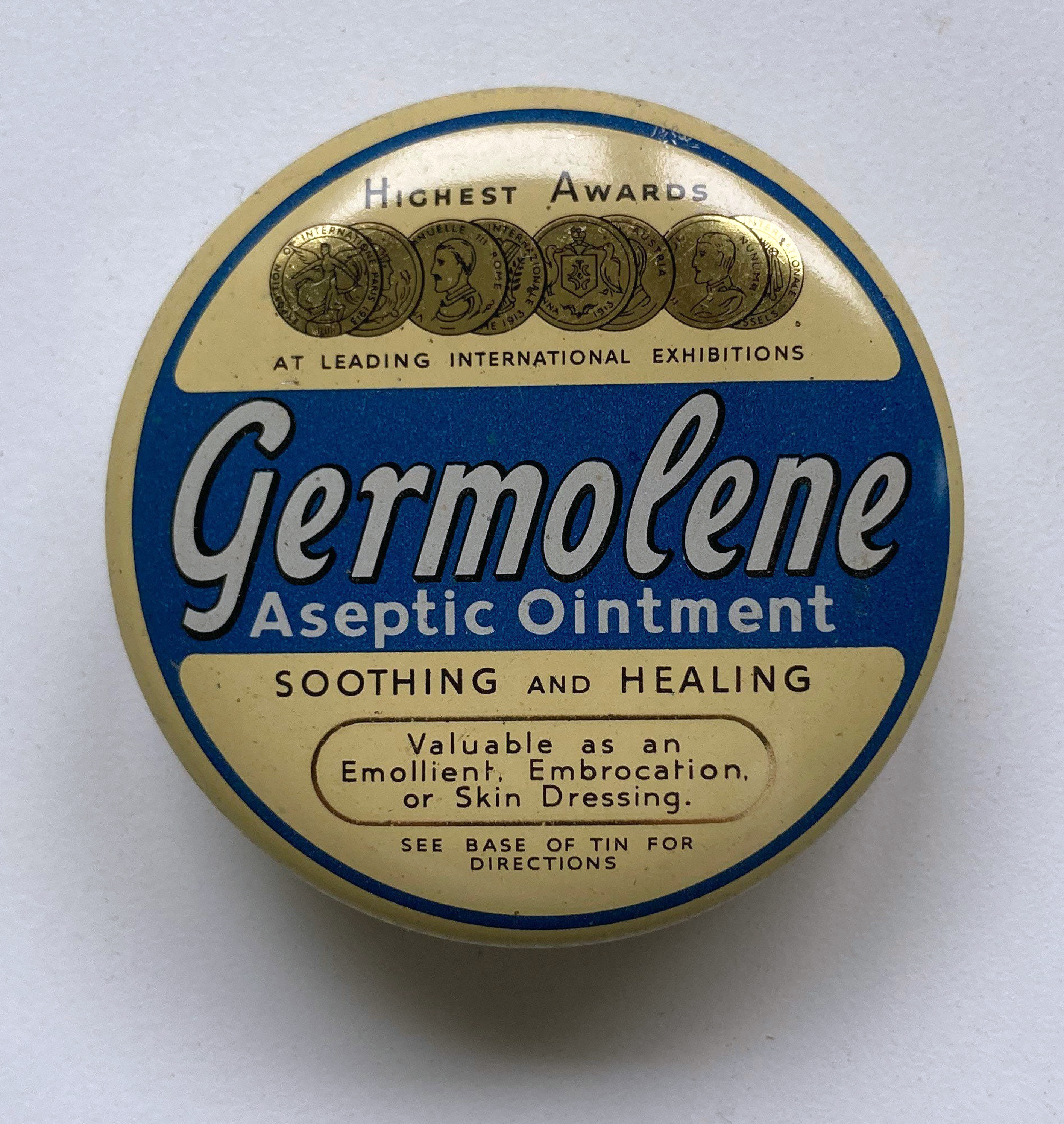
It was also the home of Germolene, a thick antiseptic ointment with a distinctive pink colour and scented with oil of wintergreen

Blackburn Walk

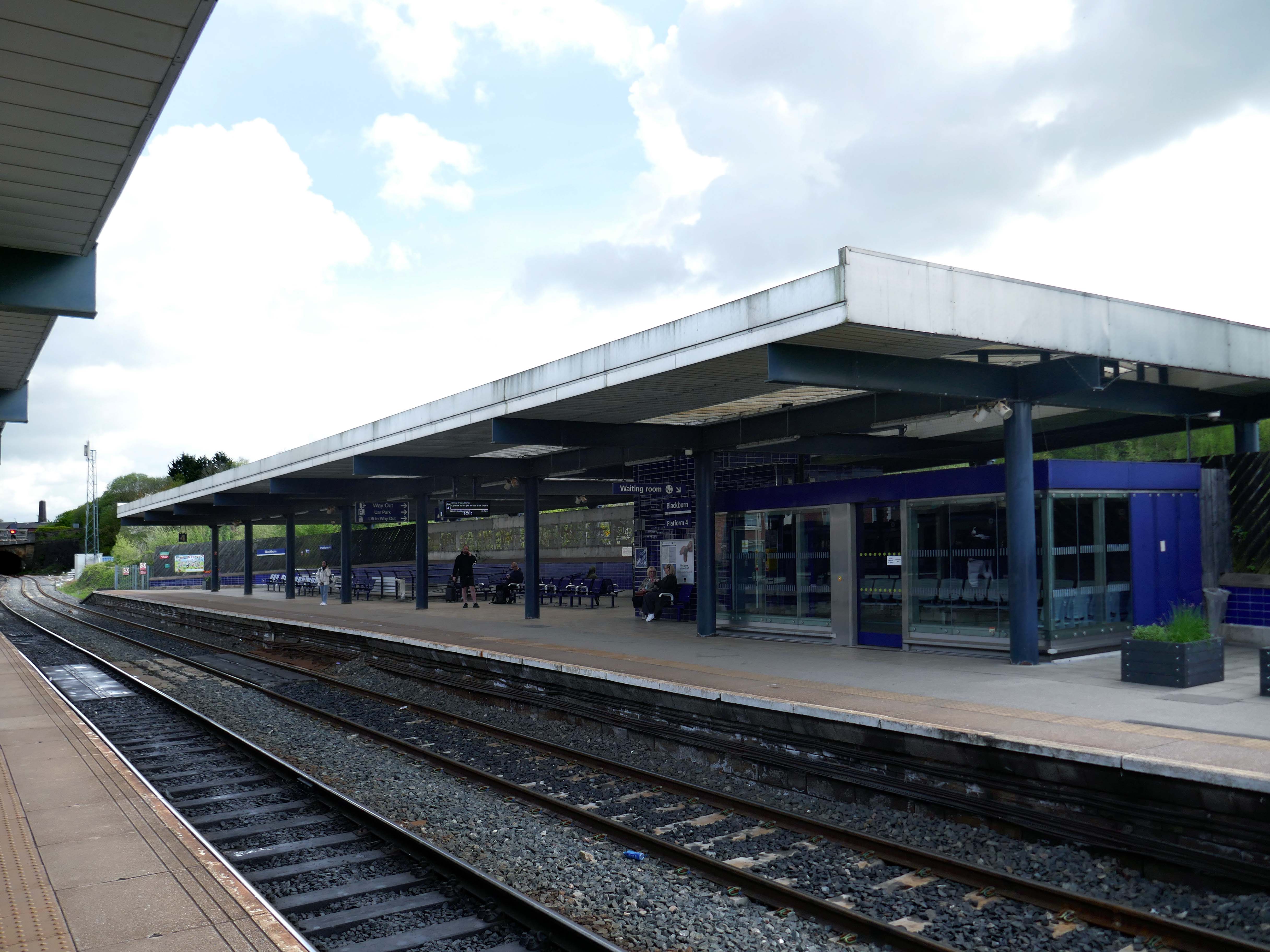
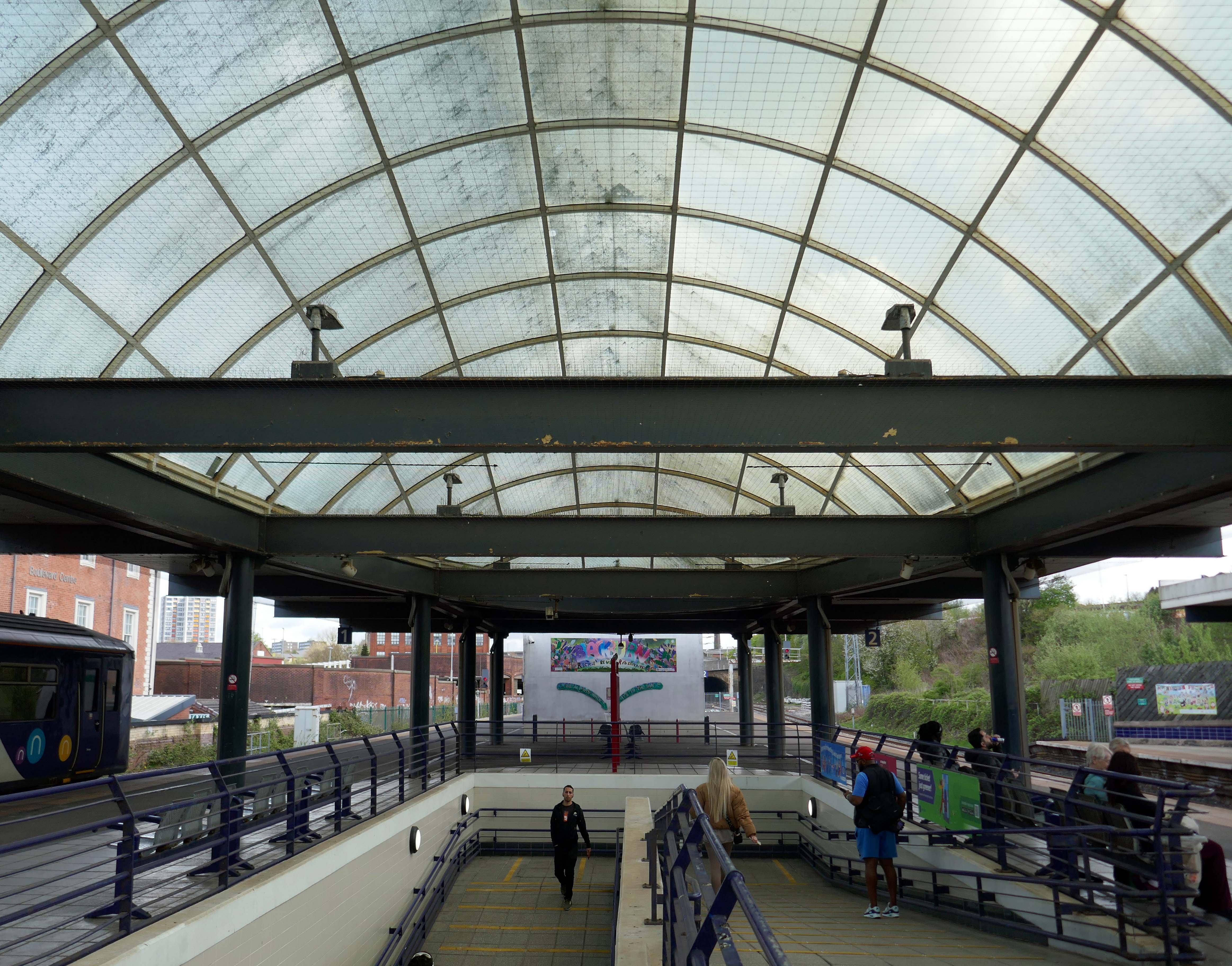
Arriving at the Railway Station

The station was covered by twin train sheds, an architecturally detailed canopy that covered all platforms. In 2000, due to its decaying state, it was removed, changing the nature of the station in a £35 million regeneration project. A new building was built on the main island platform. The Grade II listed original entrance built in the 1880s,including the station buffet and former booking hall, was retained and refurbished.

Wikipedia

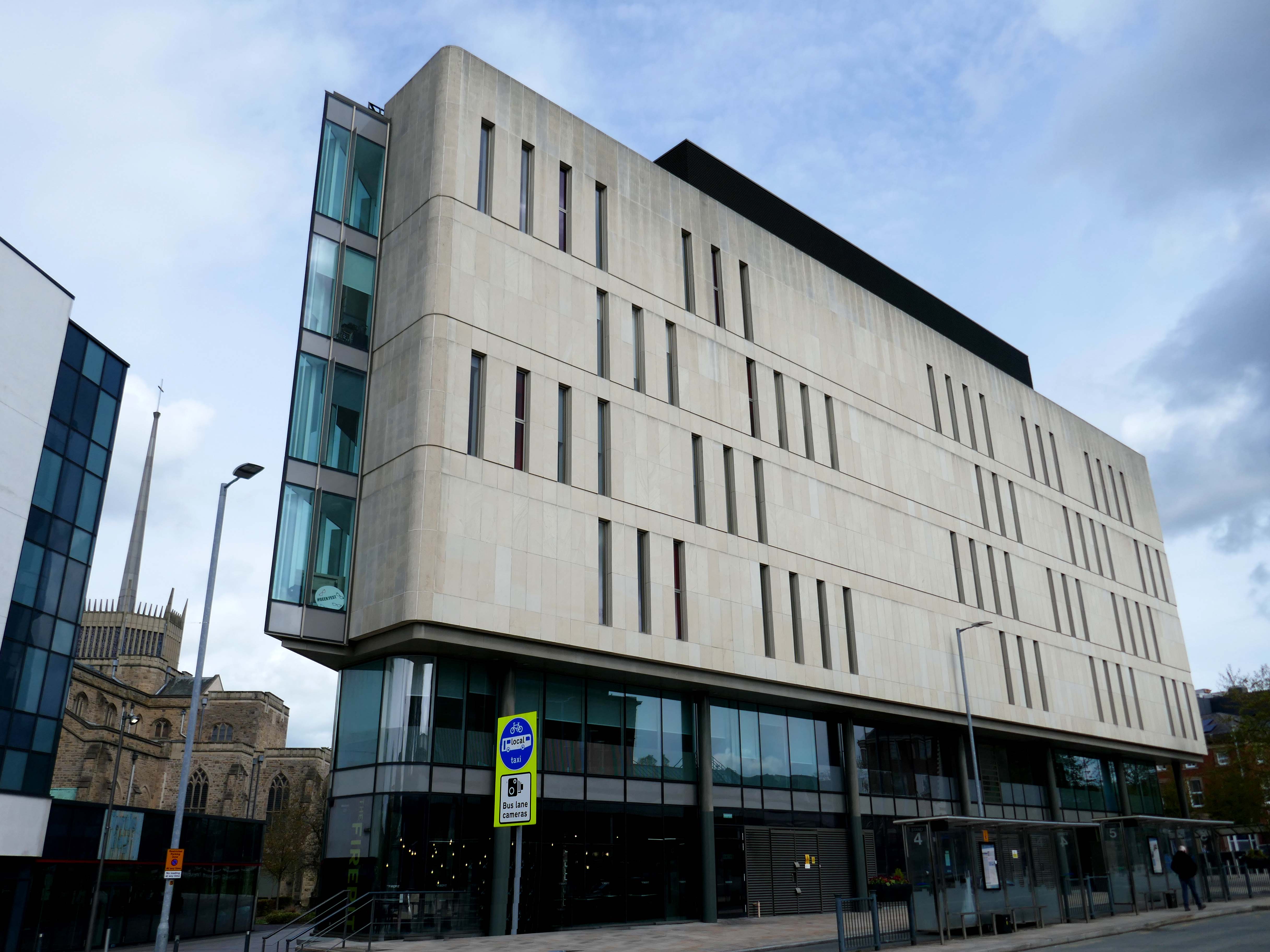
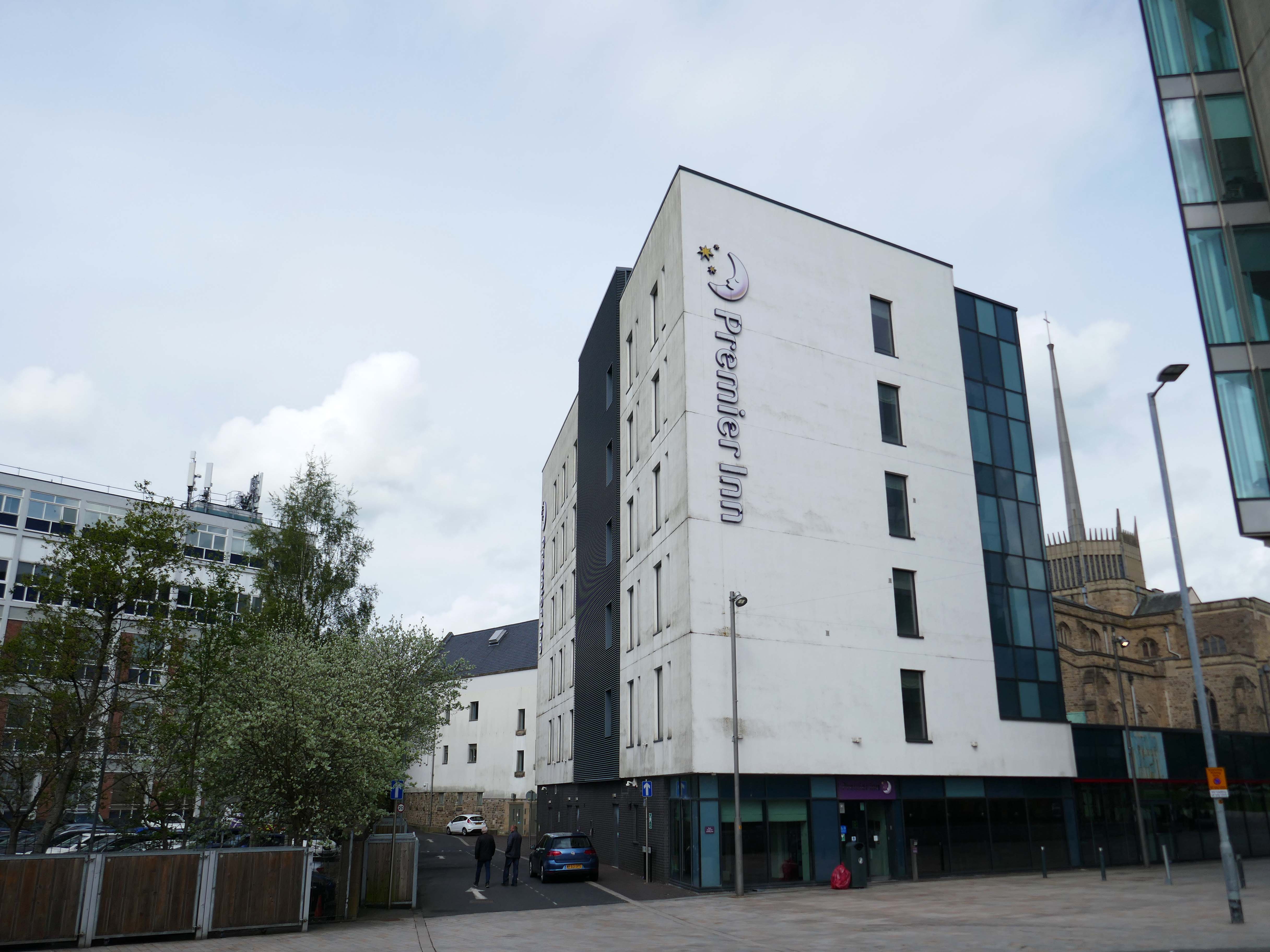
Facing the station the 2015 development of hotel and office space.

Arriving by train into Blackburn Rail Station, visitors get the full impact of this carefully planned but ambitious regeneration project. Maple Grove’s aspiration was to offer something befitting of a city centre in one of the region’s largest towns.  Cathedral Square comprises a six storey BREEAM Excellent office building, designed by BDP, a Premier Inn Hotel, restaurants and cafes positioned around a new public square that acts as a link between the rail station, cathedral and beyond to the shopping centre.

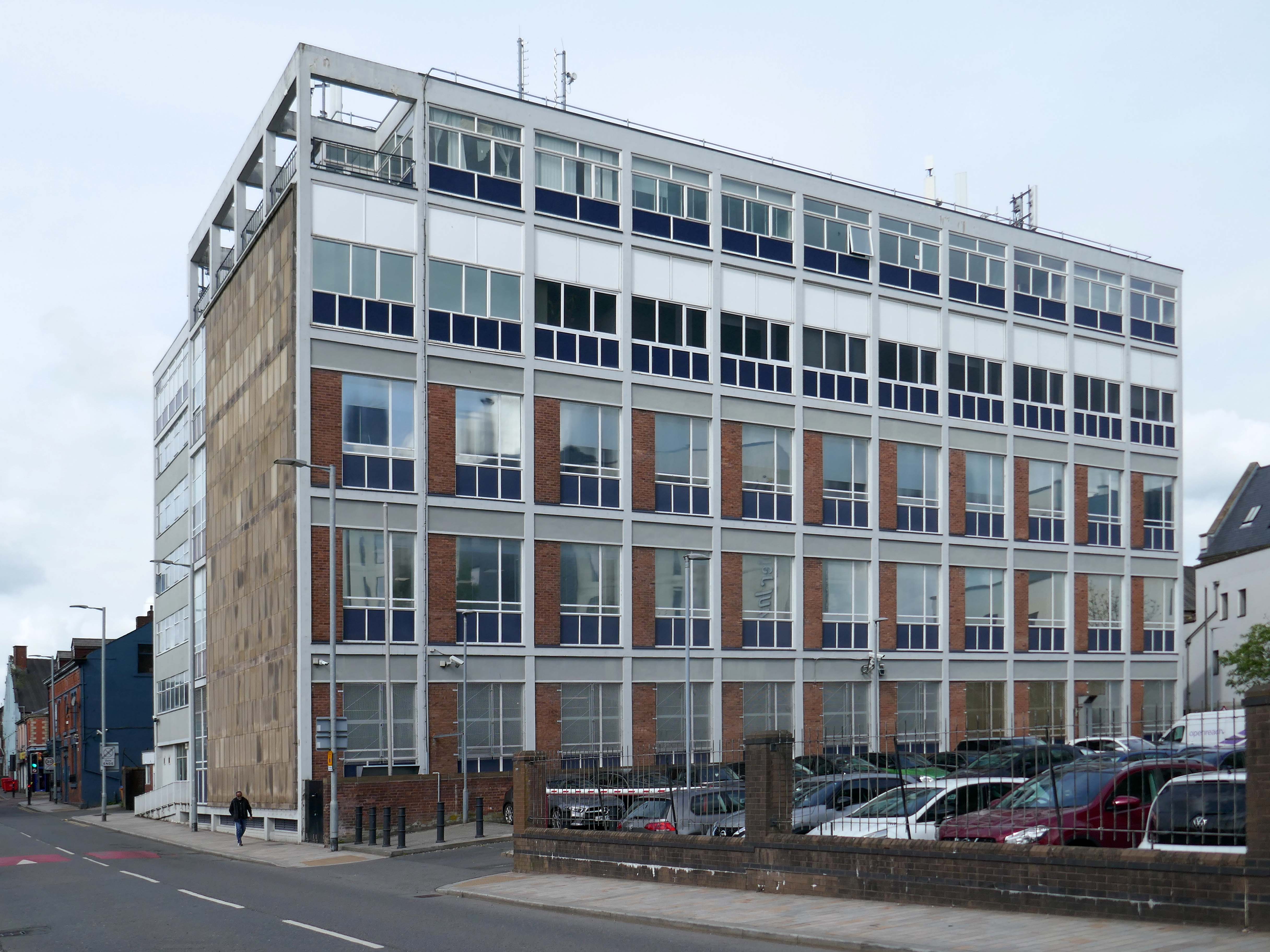
Left onto Jubilee Street where we find the Telephone Exchange.

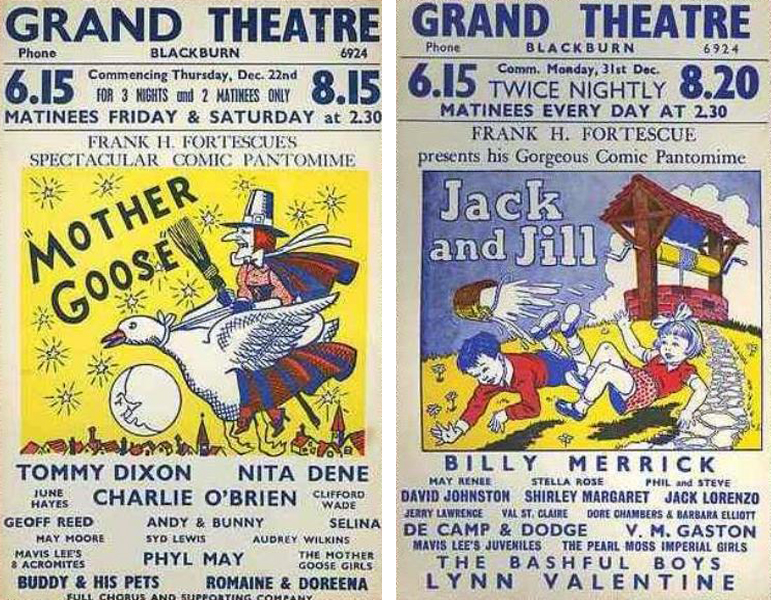
The site was formerly occupied by the Grand Theatre – in the 1950’s, Blackburn had no fewer than fourteen cinemas.  The Grand carried on being a live venue until its closure in 1956, before finally being demolished in 1958.

Blackburn Past

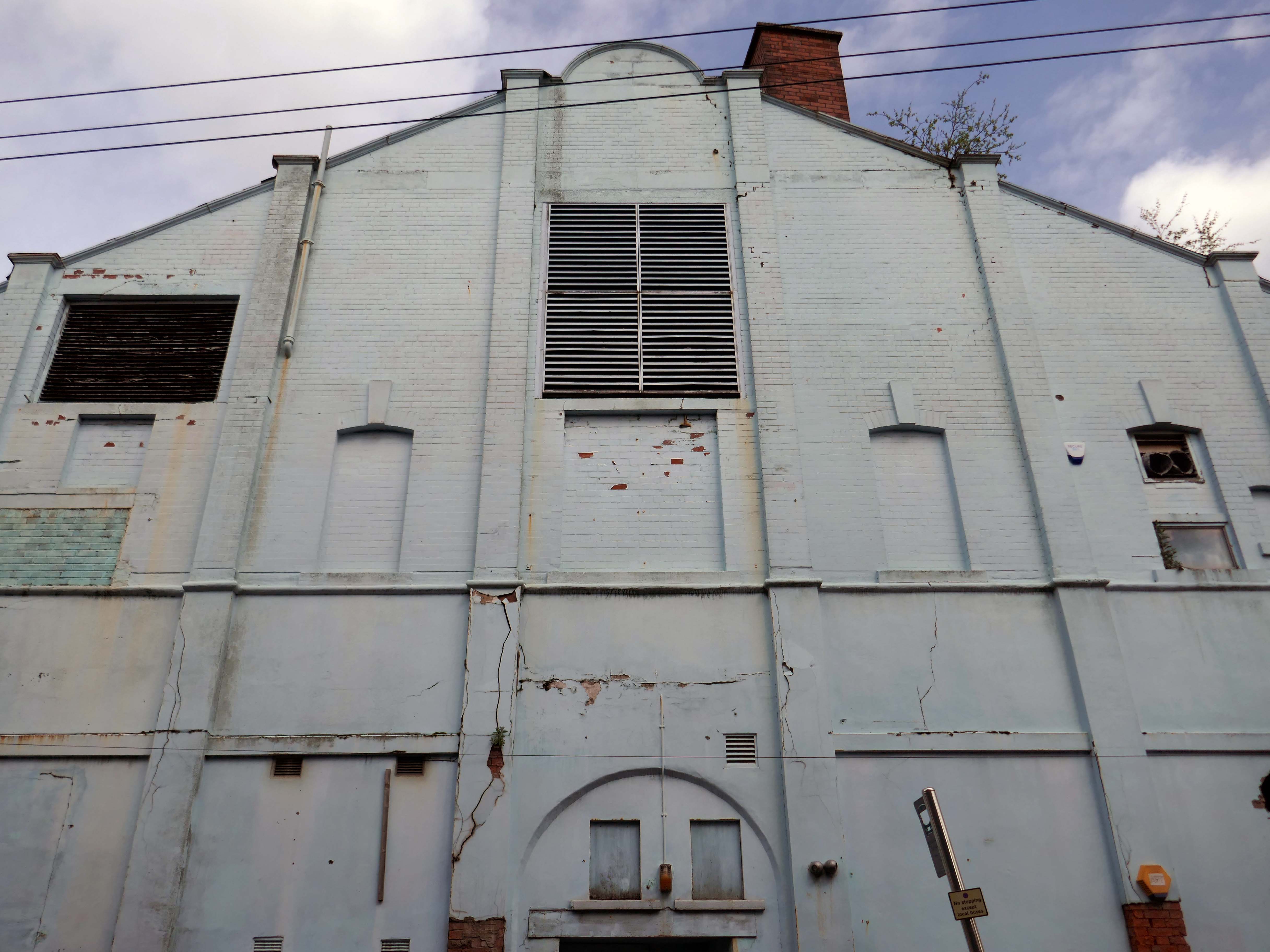
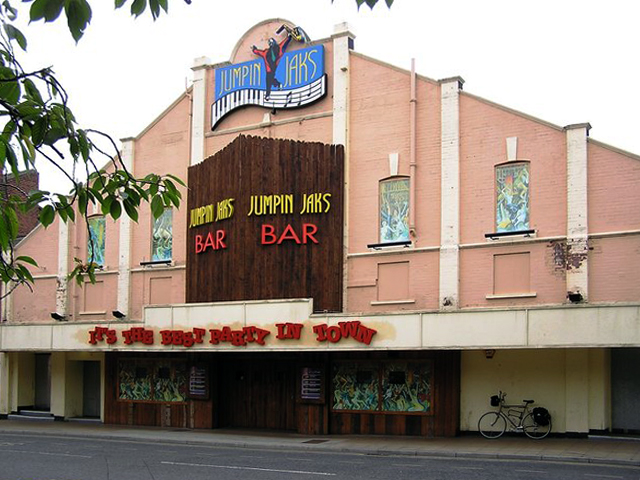
Further down the road the rear of another former cinema – The Olympia

The Olympia was opened on 19th May 1909 as a roller skating rink. It was a short lived venture and closed in November 1911. It was converted into the Olympia Theatre, presenting music hall/variety, opening on 12th December 1911. Seating was provided for 2,000, many on long wooden benches. The proscenium was 32 feet wide and the stage 50 feet deep. It was soon screening films as part of the programme.

It was converted into a full time cinema in 1921, although there were still some variety acts on the programme. All the original wooden benches used for seating in the theatre were removed and replaced by regular tip-up seats, reducing the seating capacity to 1,360. During the 1940’s, the Olympia Cinema boasted a café for the convenience of its patrons and it was operated by Jacksons’ Amusements, Ltd.

The Olympia Cinema was mainly independently operated, and closed in 1957. It stood empty for two years, then in 1959, it was taken over by Mecca Ltd, and converted into the Locarno Ballroom, later becoming a Mecca Bingo Club. It later became the Golden Palms Nightclub, Jumpin’ Jax, and since 2009 it operated as a trendy nightclub named Liquid & Envy.

Cinema Treasures

By July 2018 it was known as Switch.

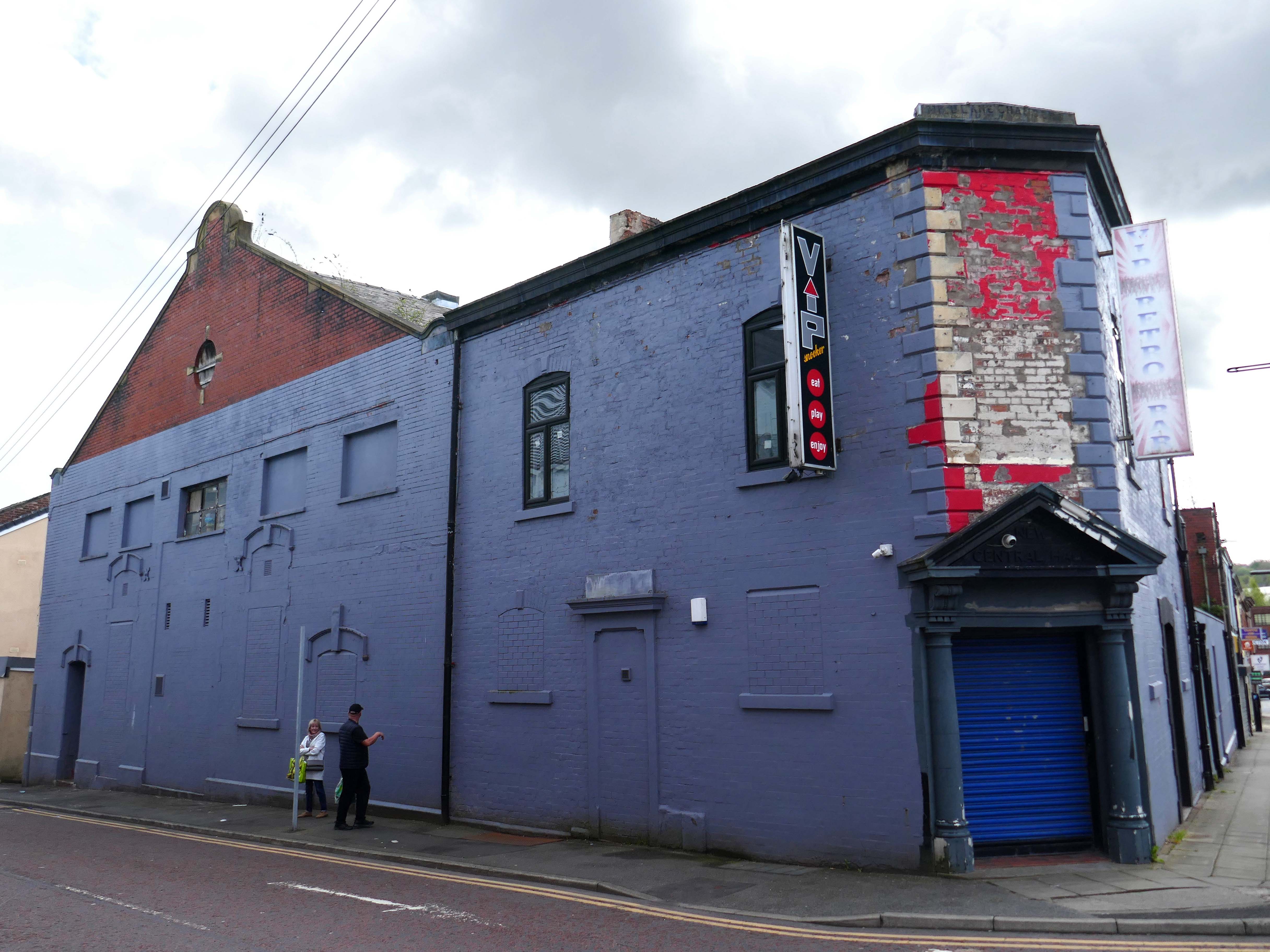
Across the way The Central Hall.

Previous to 1900 the site at the corner of Mincing Lane and Mill Lane had housed a temporary circus, known as Ohmy’s Circus. The New Central Hall was built and opened in April 1900, and was used as a roller skating rink until November 1909, when it was converted into the 1,000-seat Central Hall Cinema.

Altered and enlarged to 1,372 seats in 1923, it was re-named New Central Hall Cinema. The proscenium was 20 feet wide, later enlarged to 22 feet.

The Central Cinema was closed in January 1957. Then in 1974, it was renovated and was converted into a Walkers Bingo Club, which remained open until at least 1995. It recently operated as a Riley’s American Pool and Snooker Club until early 2009. In November 2009 after a refurbishment, it re-opened as the VIP Snooker Club.

Cinema Treasures

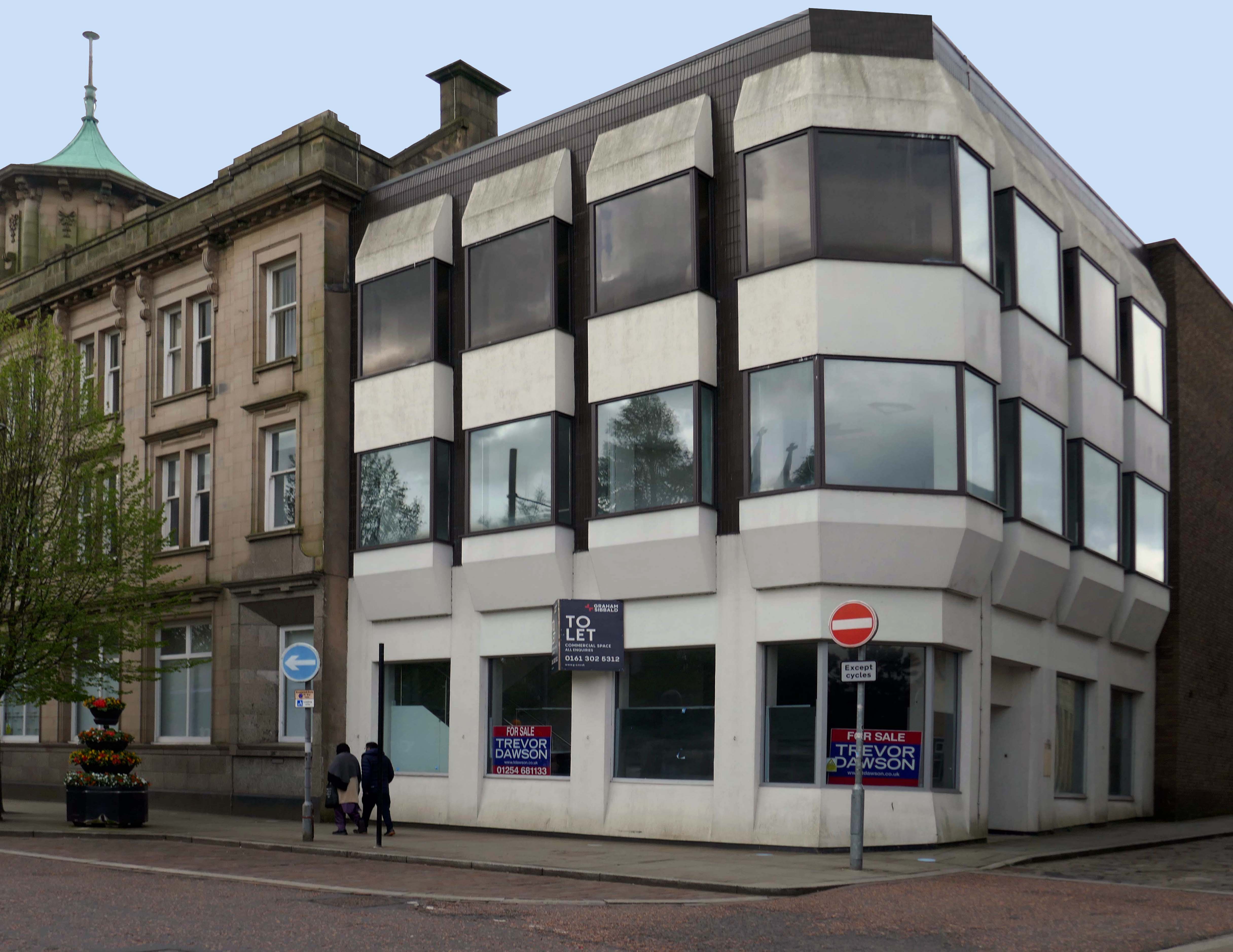
Turn right into Darwen Street along to the former Barclays Bank.

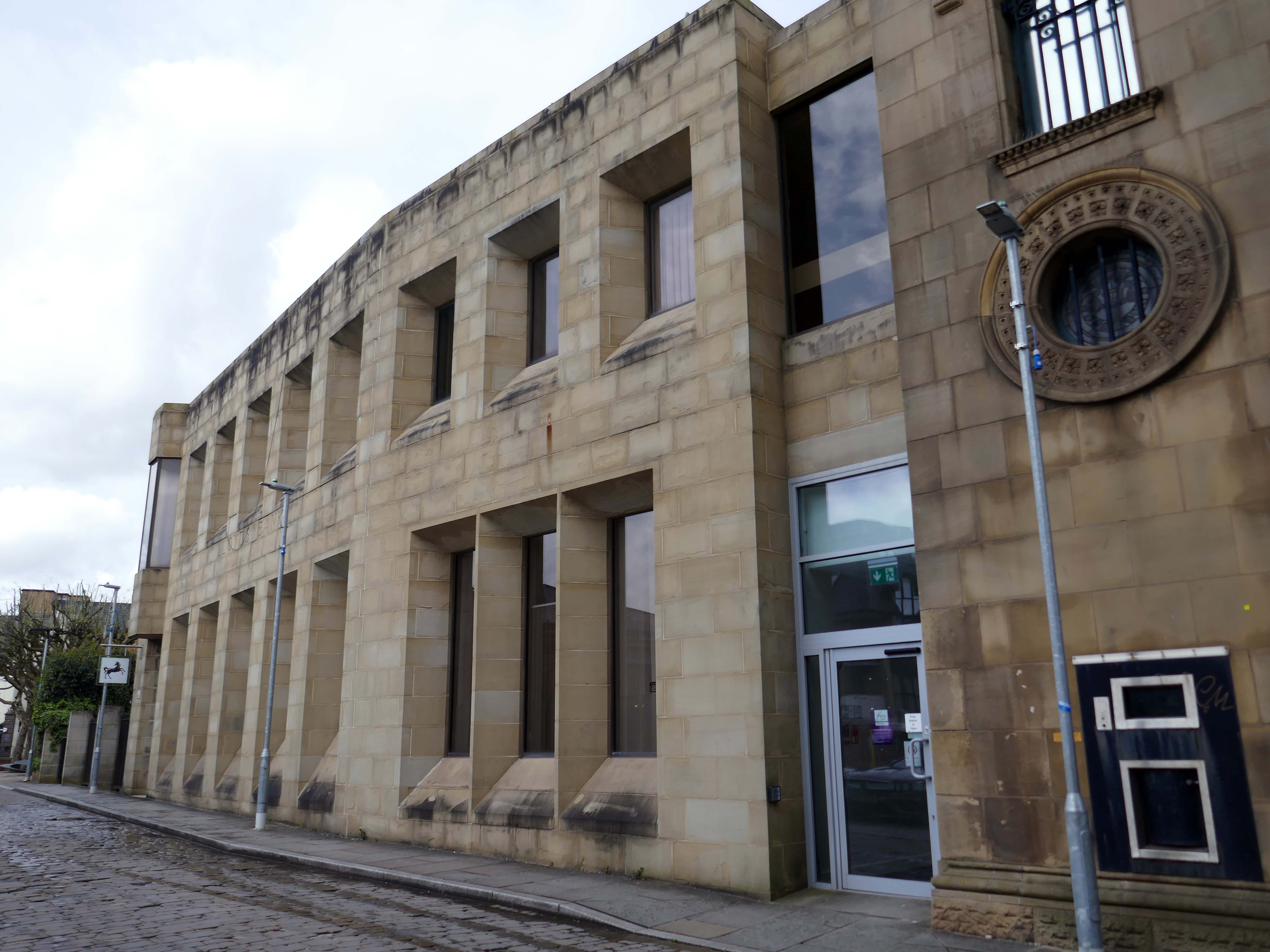
Next door Lloyd’s Bank extension.

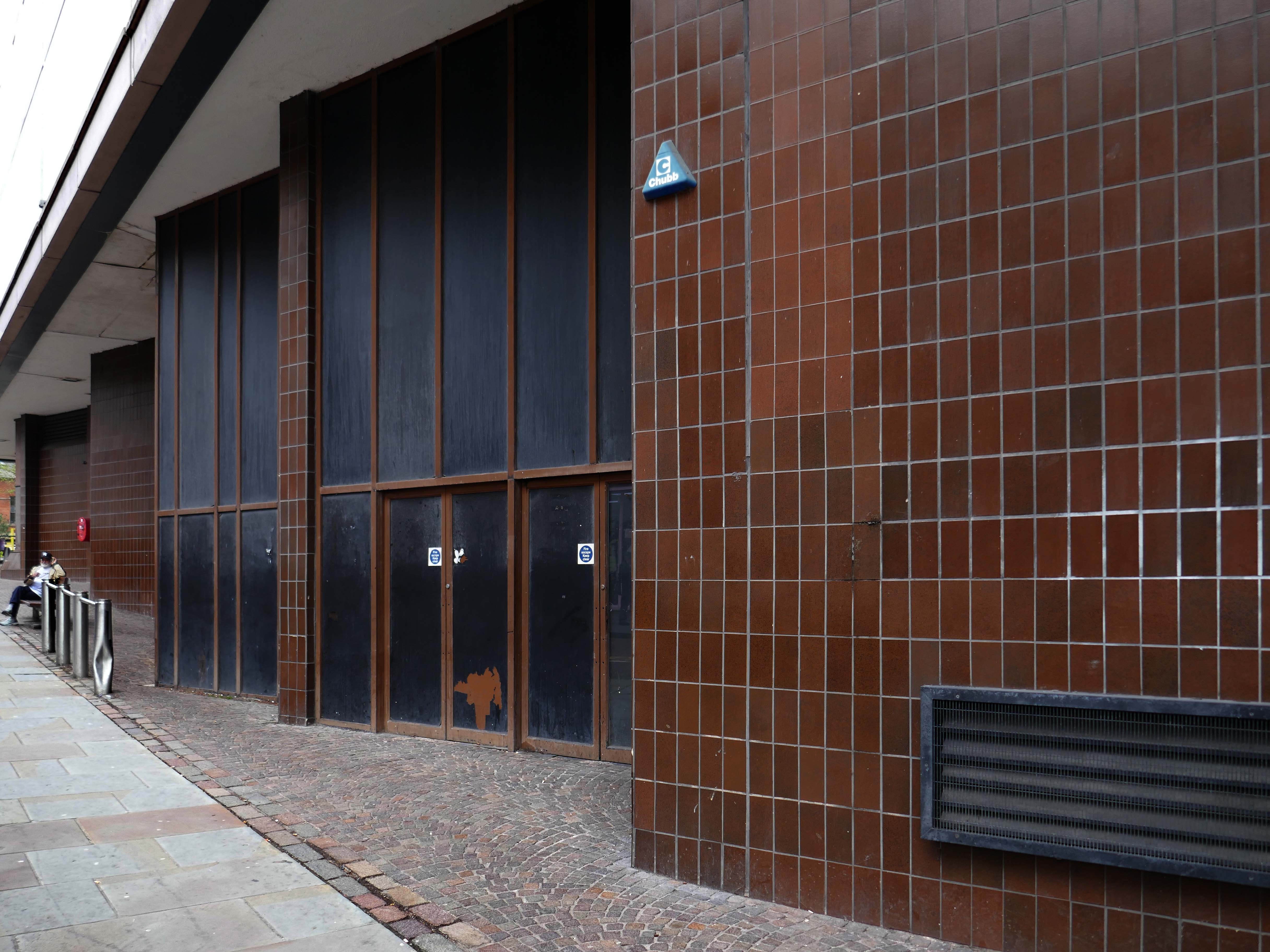
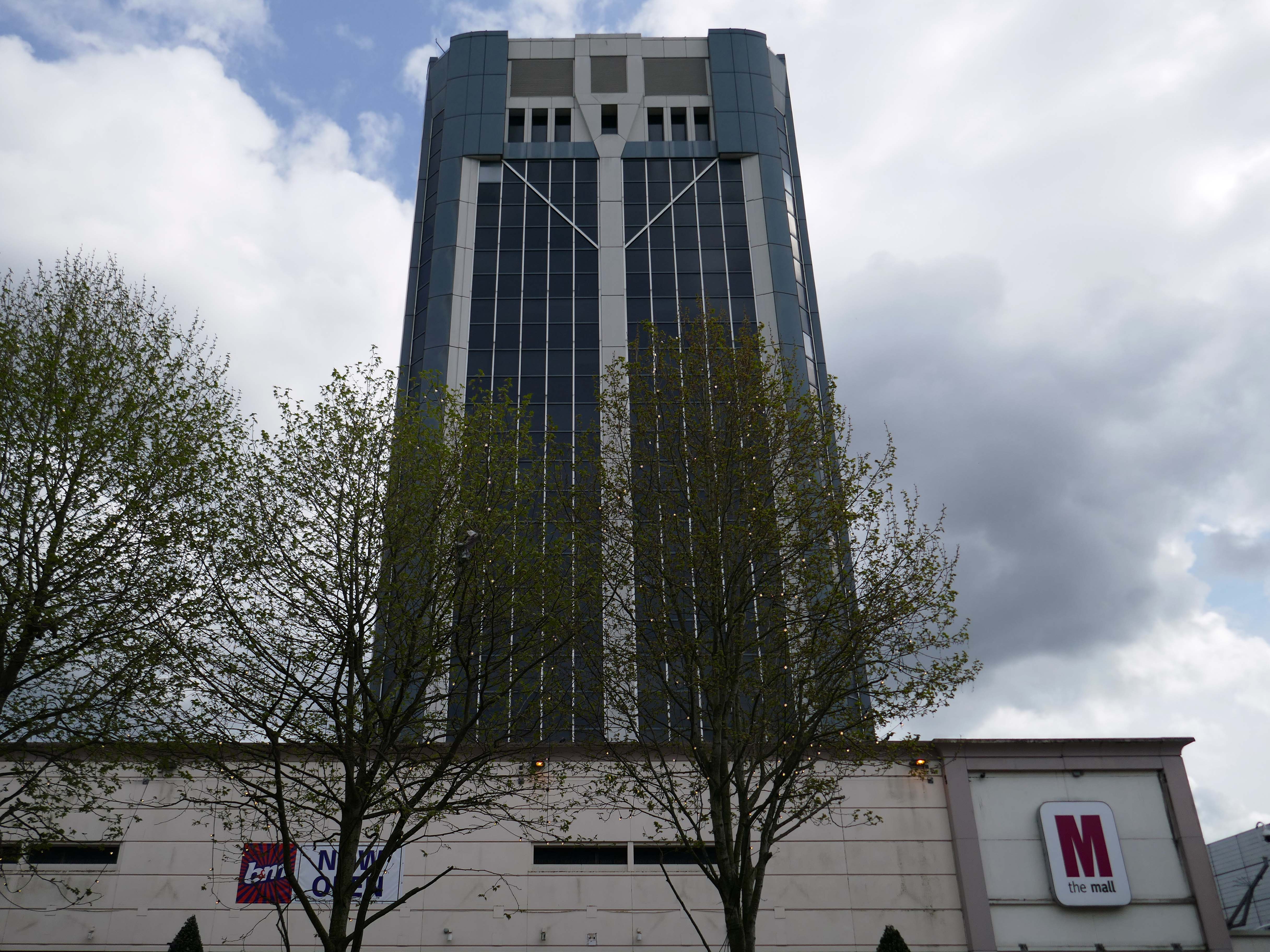
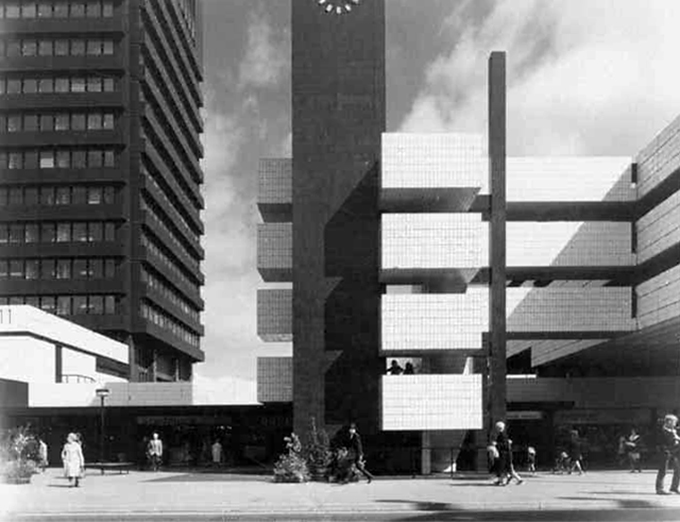
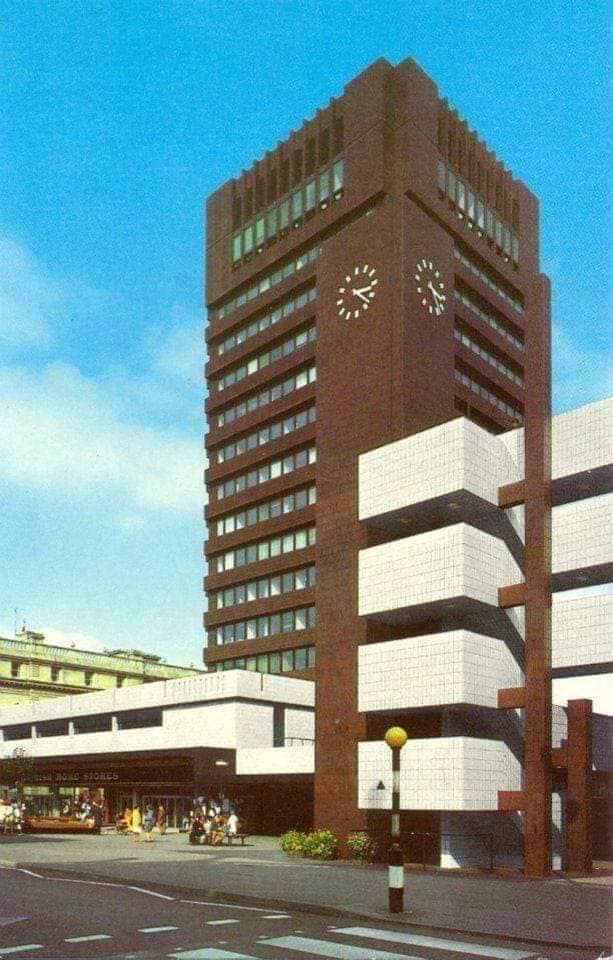
On Astley Gate the brown tiled remains of the Shopping Centre now known as The Mall.

The shopping centre was built in three phases, with the final phase opening in 1979. The centre was refurbished in 1995, during which the lower floor of the former Co-Operative Department Store was transformed into the Ainsworth Mall.

The centre was bought by Standard Life in 1993 and its name was subsequently changed to Blackburn Shopping Centre. Standard Life sold the centre in 2003 to Reit Asset Management.

In 2004, Reit Asset Management sold the centre to The Mall Fund. The centre was sold again in 2022 to the Adhan Group from The Mall Fund for £40 million.

Wikipedia

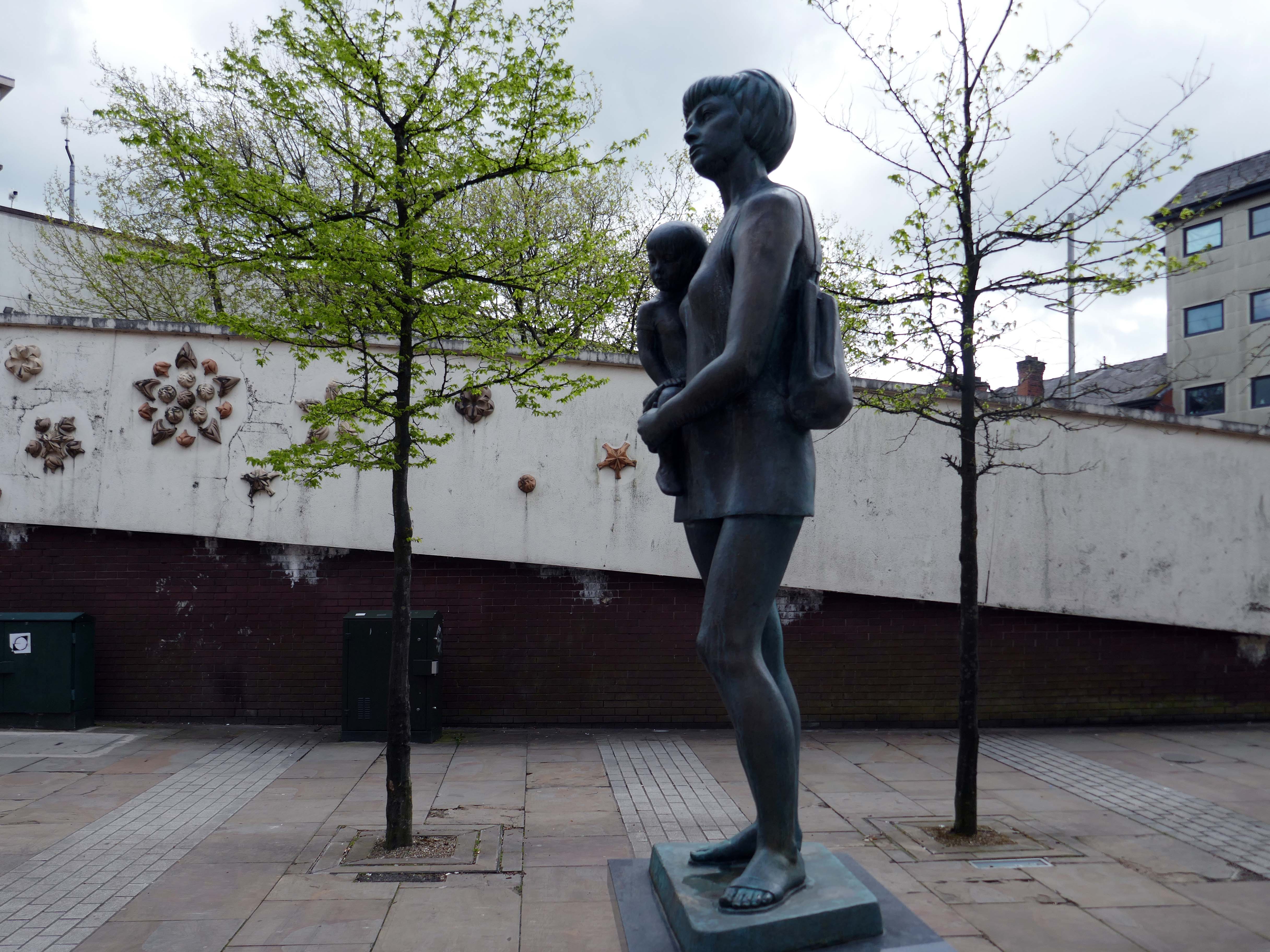
Around the corner the Mother and Child monument, created by Welsh sculptor Robert Thomas in 1974, who used his wife and child as models.

In 1974 the statue was placed in Lord Square, removed in 2007 and placed in storage, it was placed in Cardwell Place in 2012.

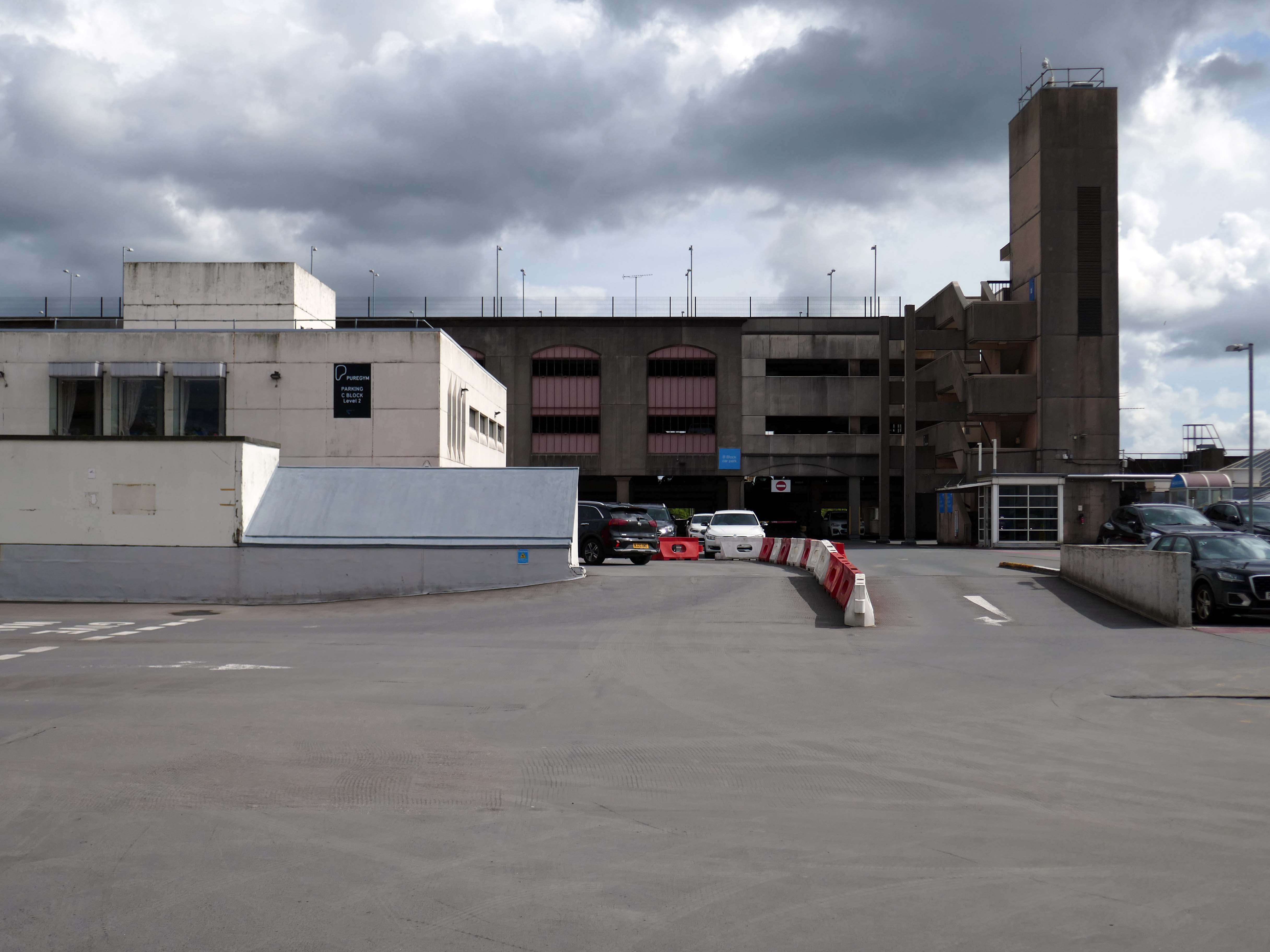
The Mall has been significantly remodelled, along with the adjacent Tower Block.

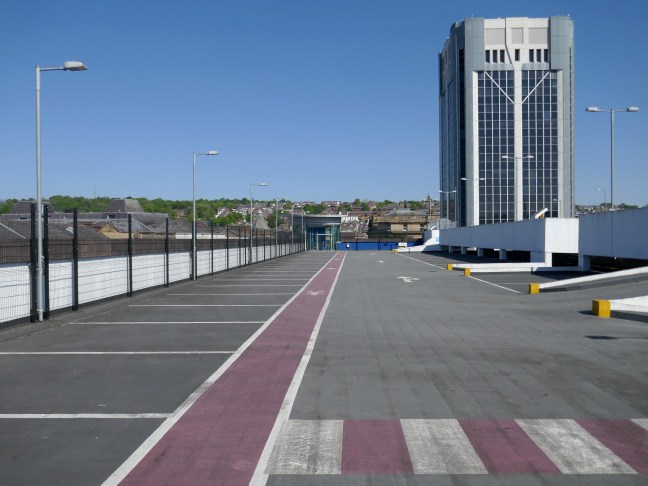
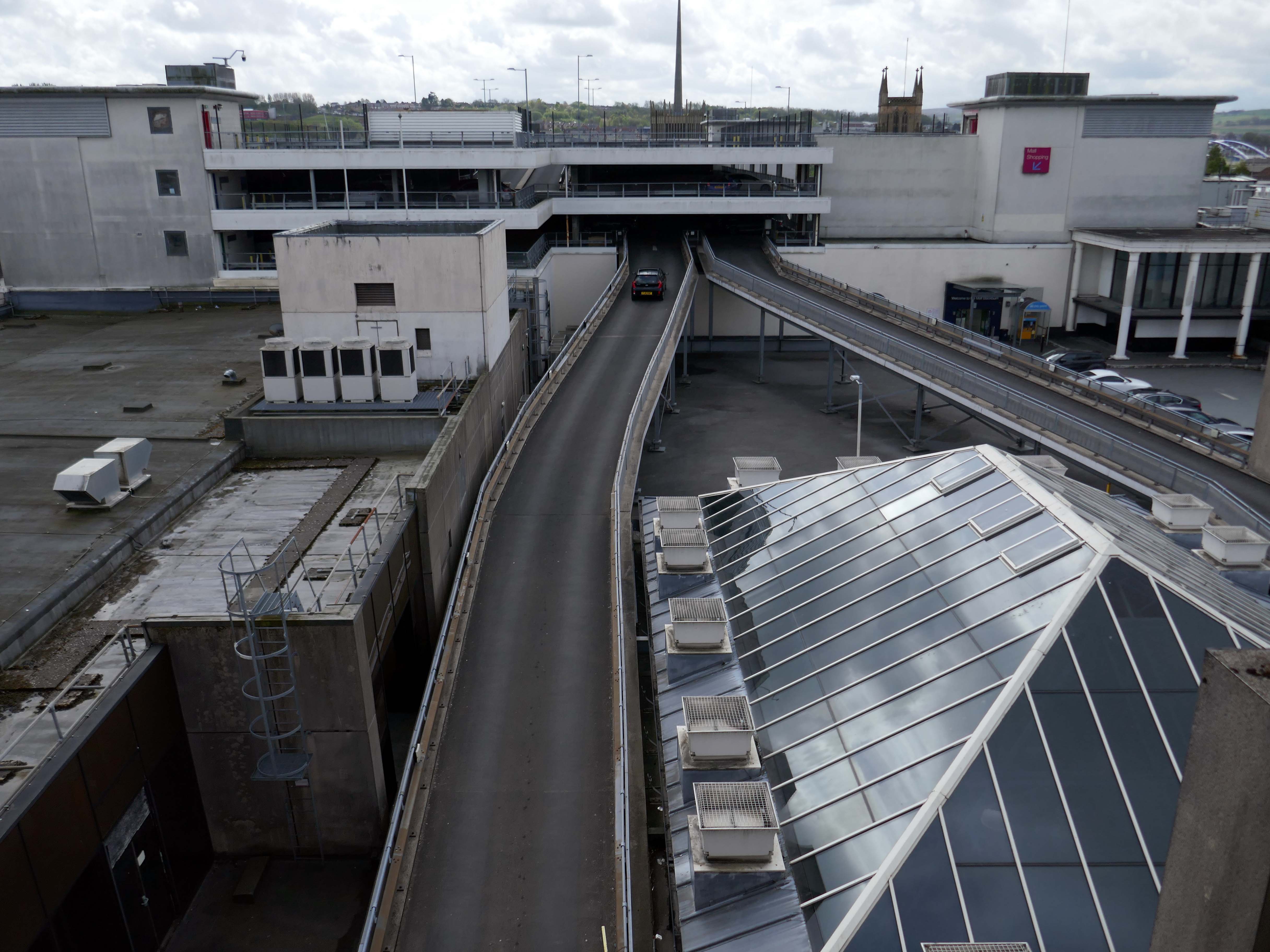
Above the Mall is a dizzying array of multi storey car parks – reflecting the various stages of development.

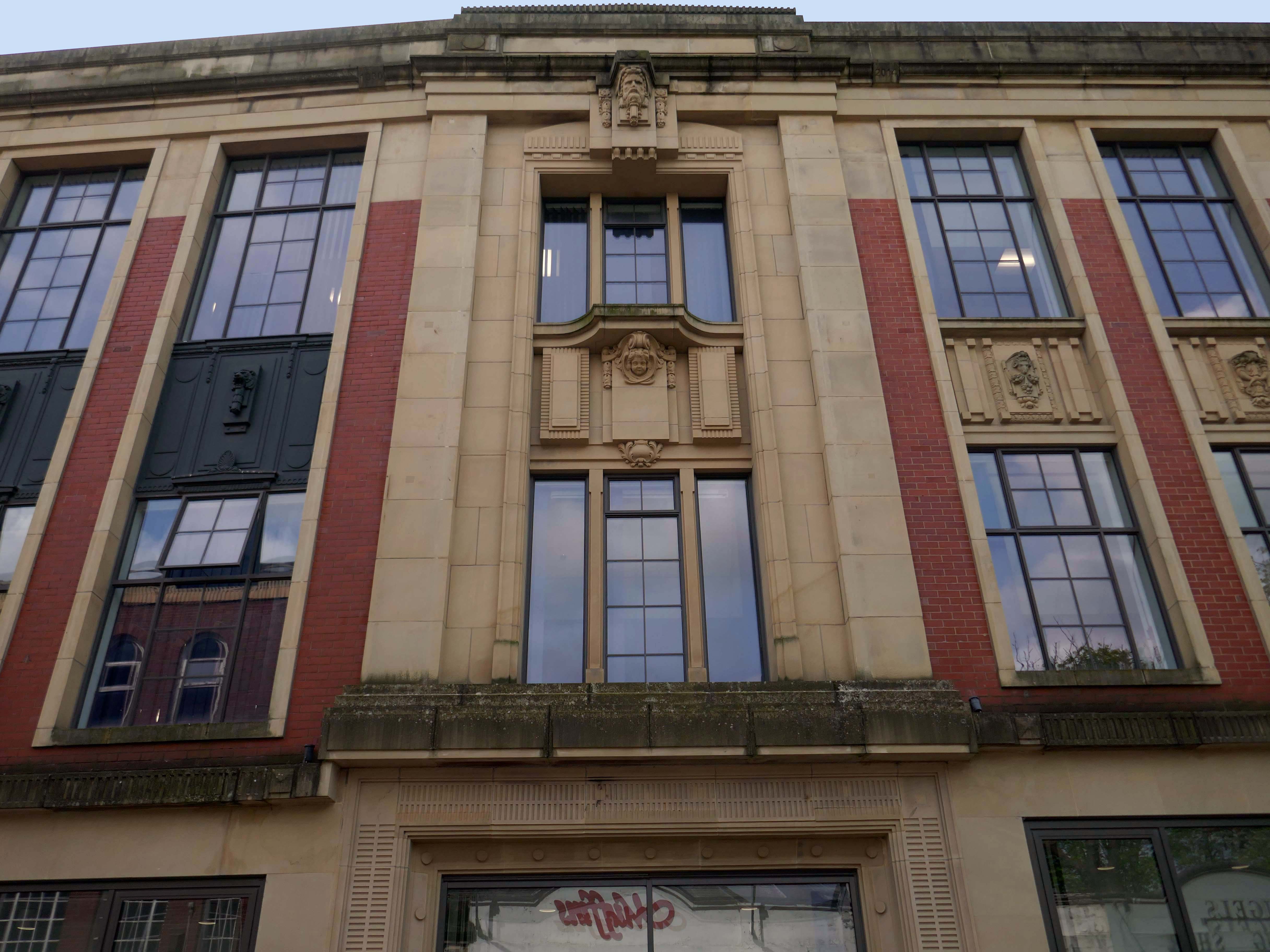
Next to the Central Library, the former Co-op Emporium by Walter Stirrup in Town Hall Street, opened in 1930, was converted into a £1m library by BDP, it opened on September 1st 1975.

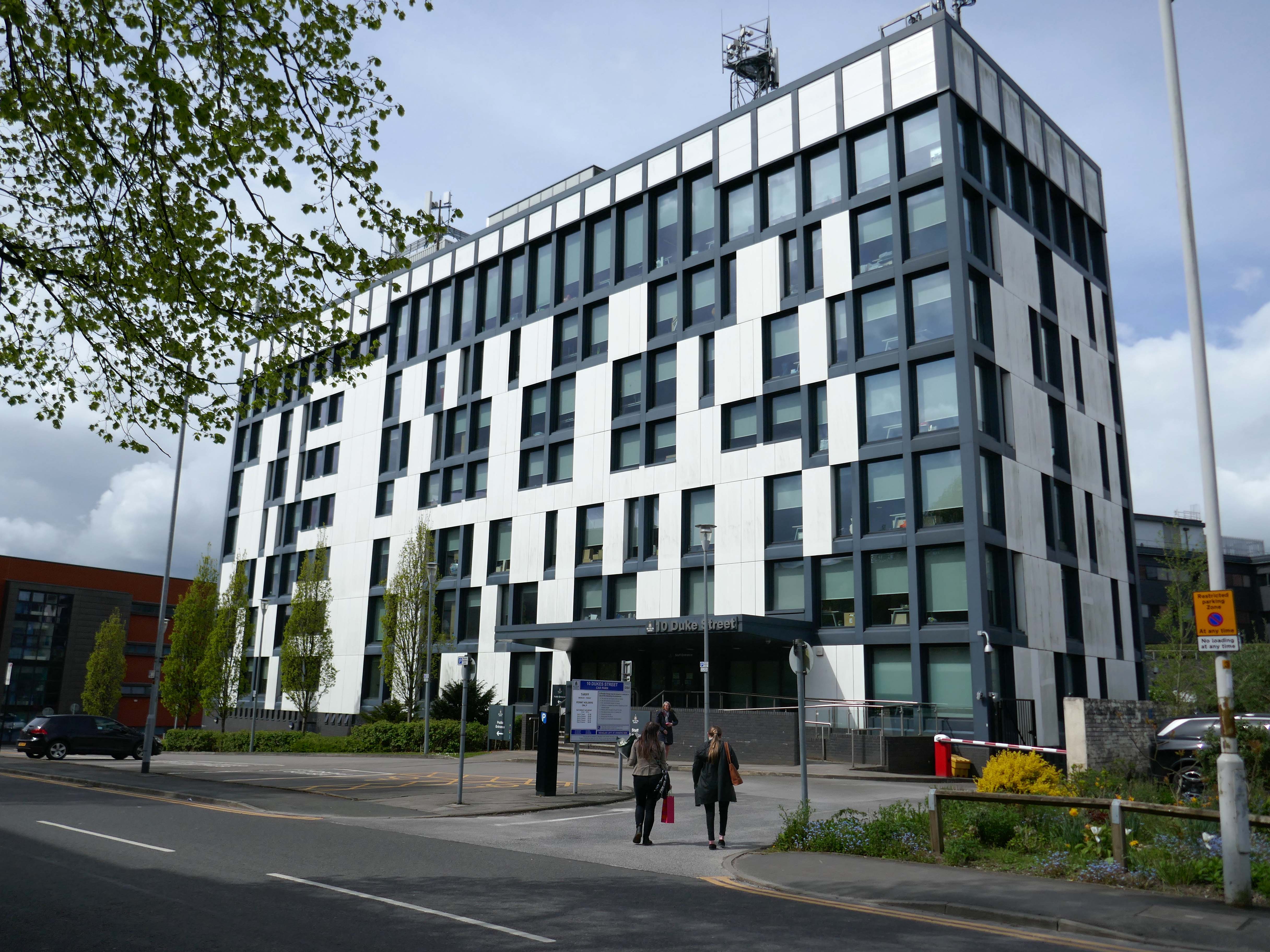
Onward to 10 Duke Street – home to council offices and the NHS, the Tower Block is now no longer in use.

Blackburn’s former town hall tower block has over the years become one of our most recognisable buildings.  Sadly it is now starting to be given derogatory names, such as the ‘Big Empty’ and ‘Mothballed Monolith’.  But compared to how it looked some years ago, before being reclad in today’s design, it still impresses many visitors to our town.  Wouldn’t it be great if Blackburn’s ‘Big Empty’ could become full again.

Roving Mick

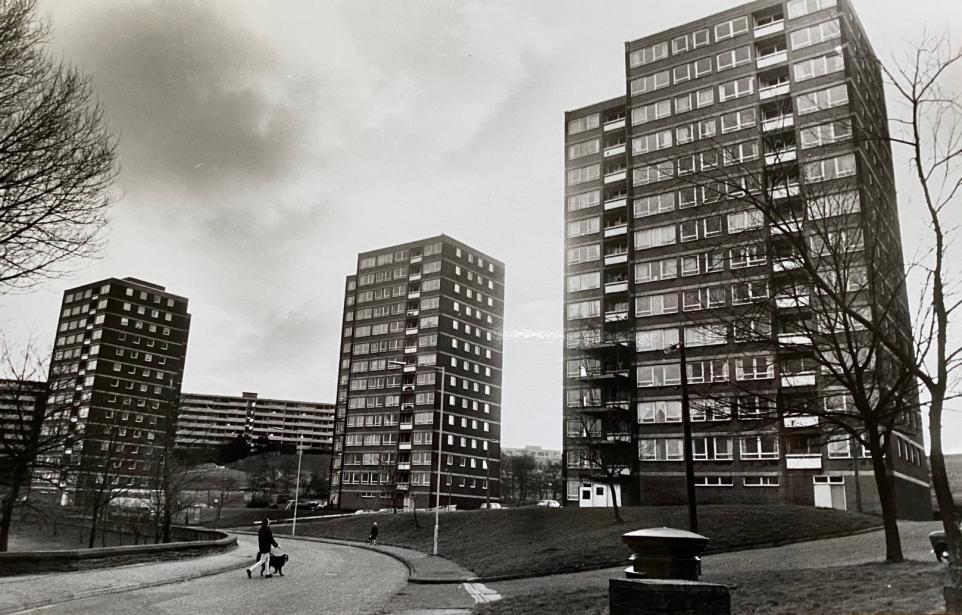
These tower blocks were the flats at Queens Park and in the background you can see the co-called ‘deck-access’ flats at Shadsworth.

Bowland House was one of three tower blocks built in 1963 and the only one still standing after the others, Ribble and Pendle, were torn down in 2001 to be replaced by homes.

In 2022 Bowland House was refurbished.

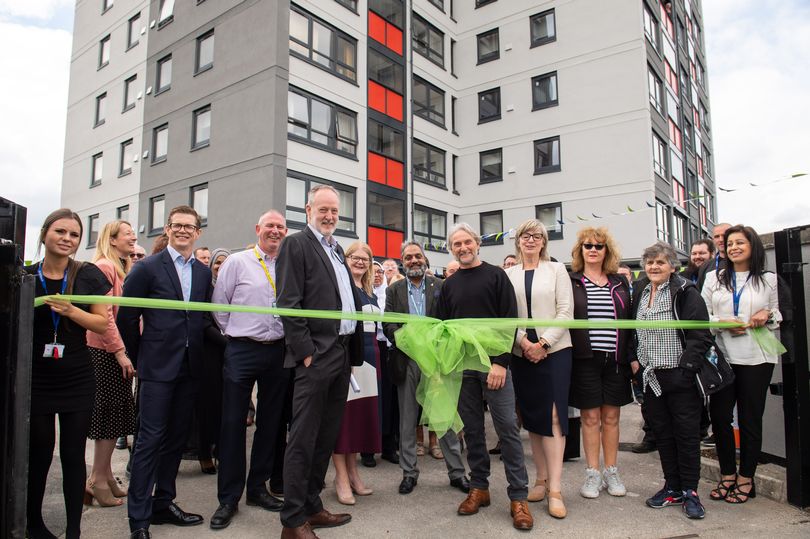
Former four-time World Superbike champion Carl Fogarty was the guest of honour as Great Places’ Bowland House in Blackburn was officially unveiled.

Lancs Live

On the approach to Birley Street we walk through a mixed development of low rise housing, set in grassed and pedestrianised areas.

Birley Street Tower Blocks

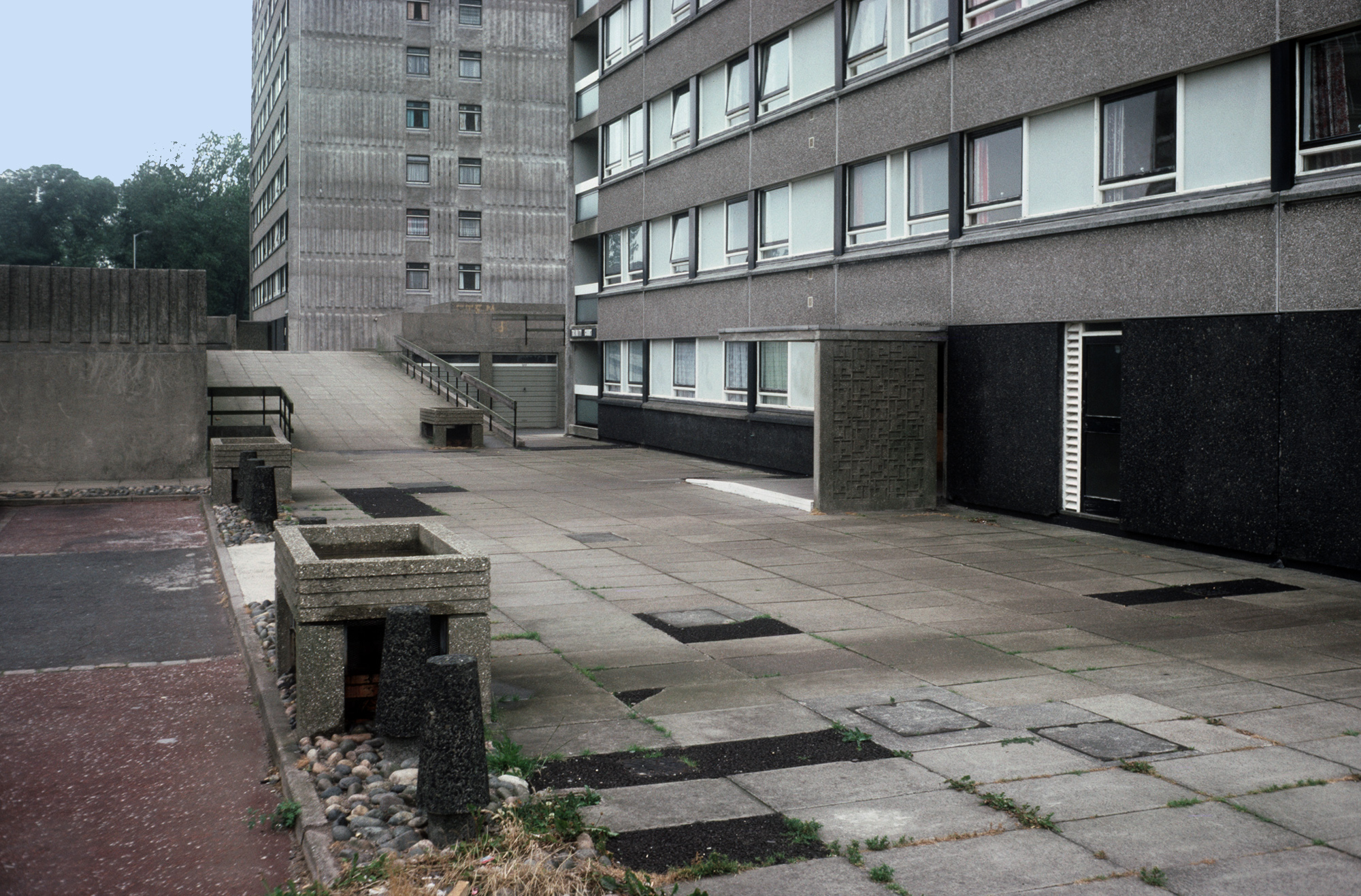
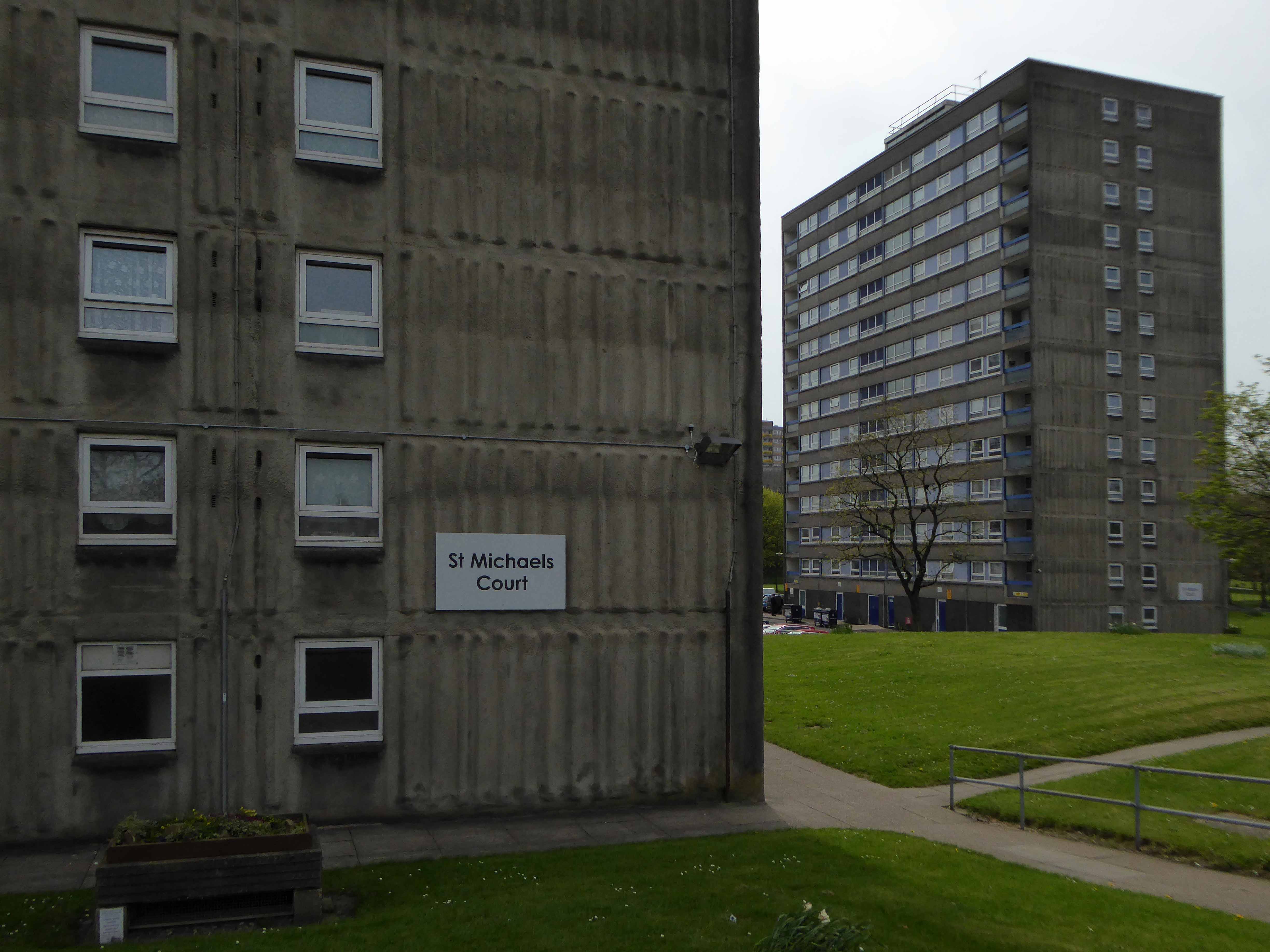
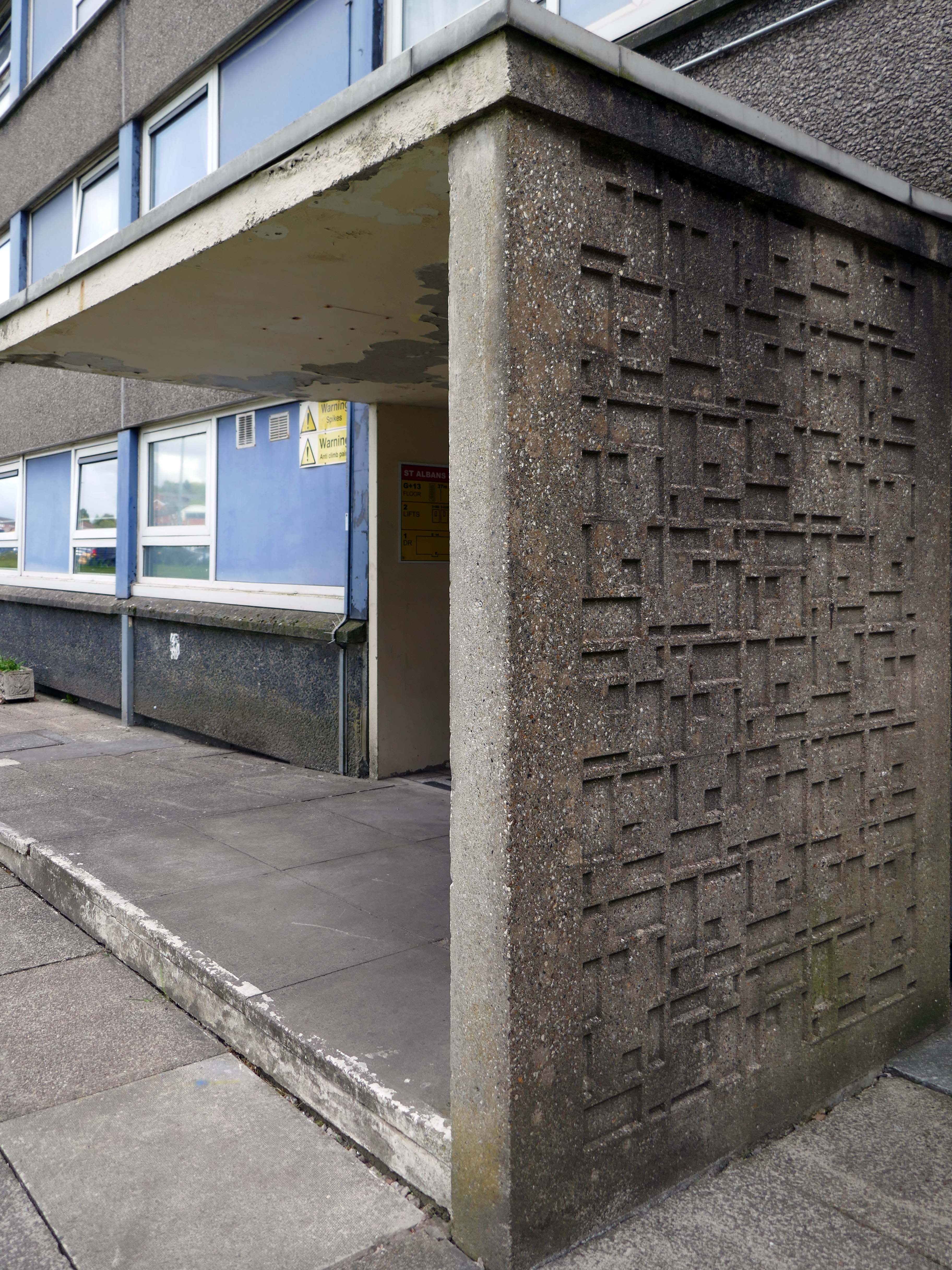
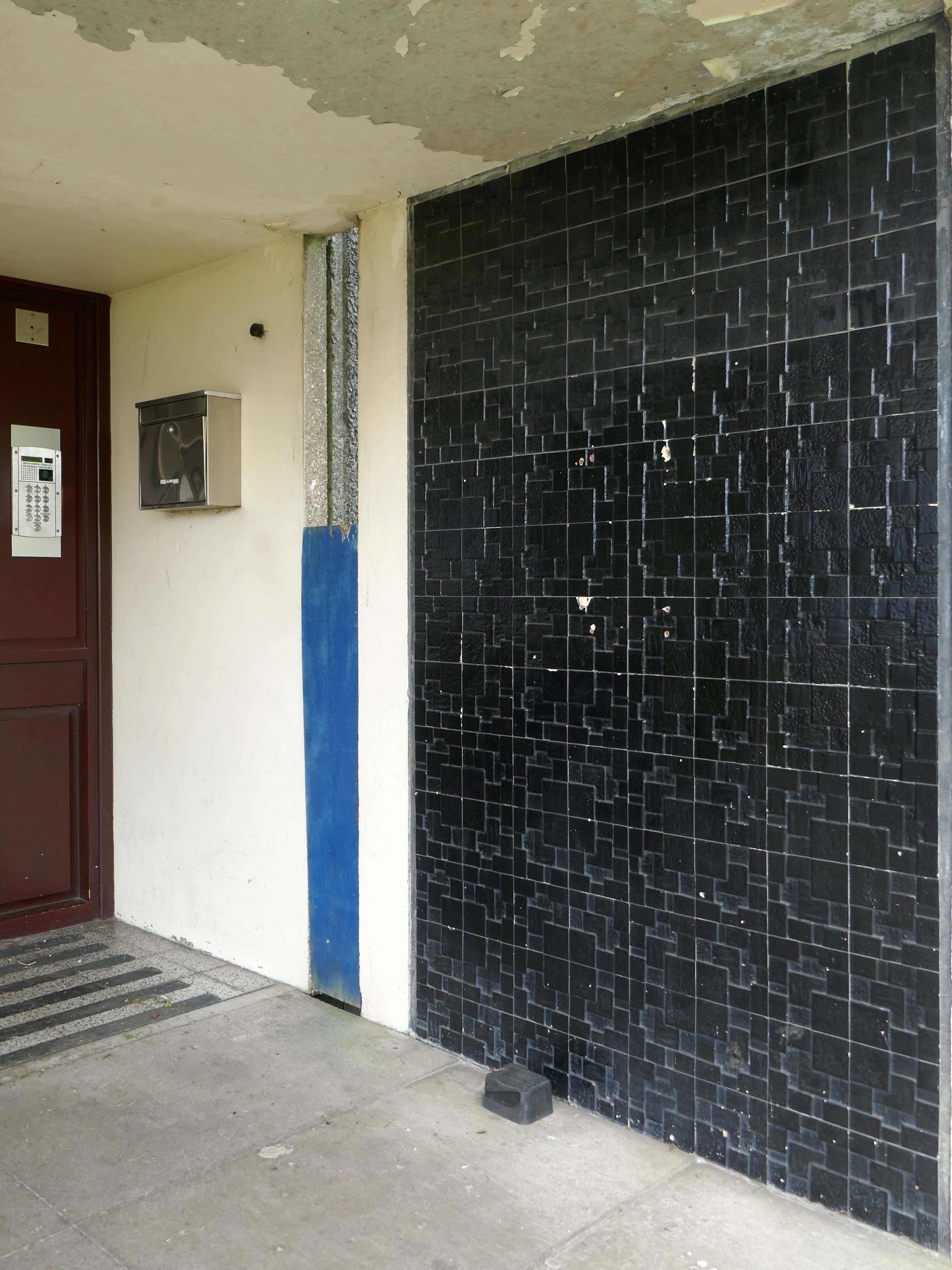
Three thirteen-storey slab blocks built as public housing using the Sectra industrialised building system. The blocks contain 183 dwellings in total, consisting of 72 one-bedroom flats and 111 two-bedroom flats. The blocks are of storiform construction clad with precast concrete panels. The panels are faced with exposed white Cornish aggregate. Spandrel panels set with black Shap granite aggregate are used under the gable kitchen windows. The blocks were designed by the Borough architect in association with Sydney Greenwood. Construction was approved by committee in 1966.

Pastscape

1987 view of Birley Street development, with Trinity Court in the foreground: Tower Block

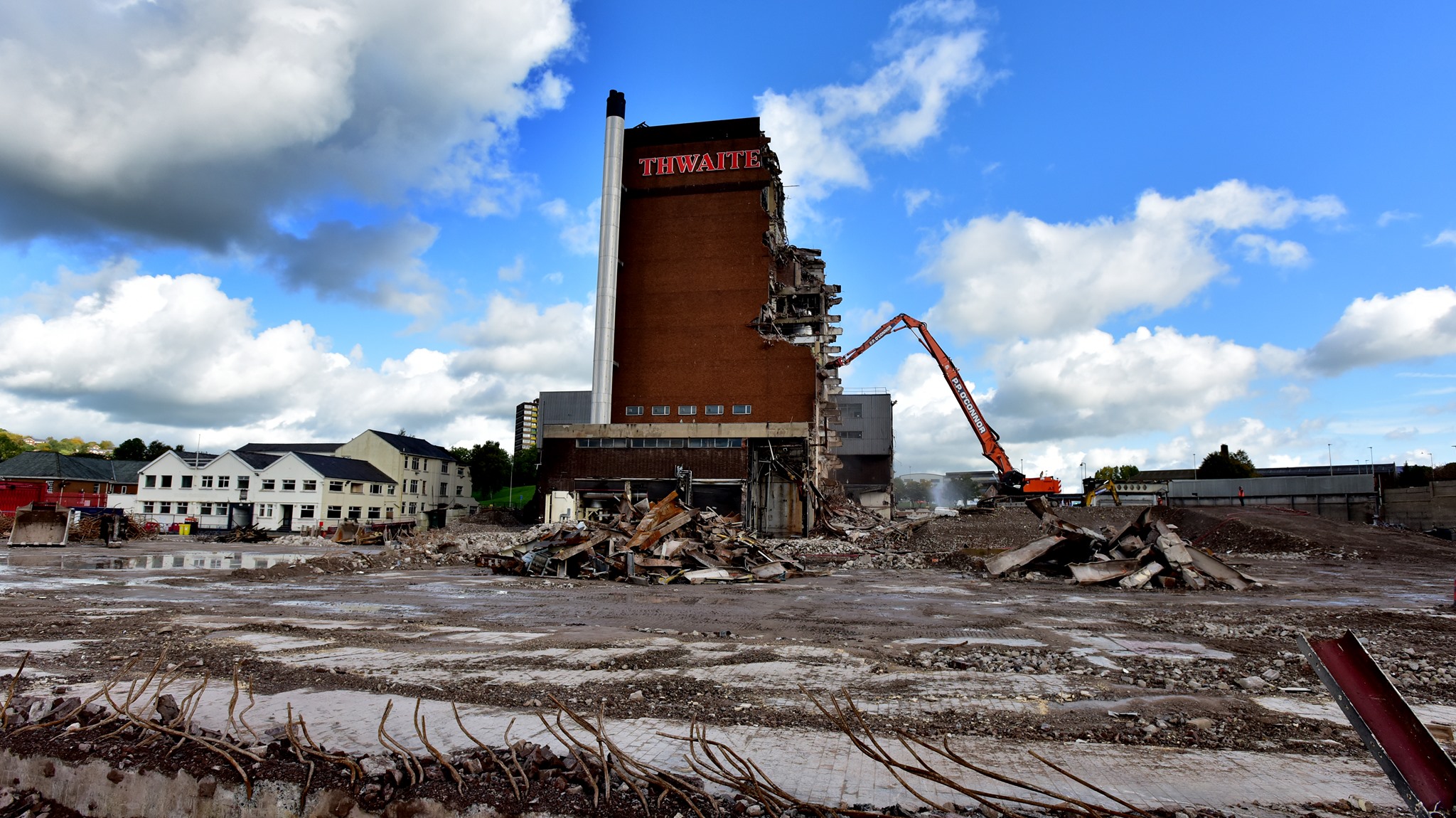
Back now into the centre – passing the now empty site of Thwaites Brewery, demolished in 2019.

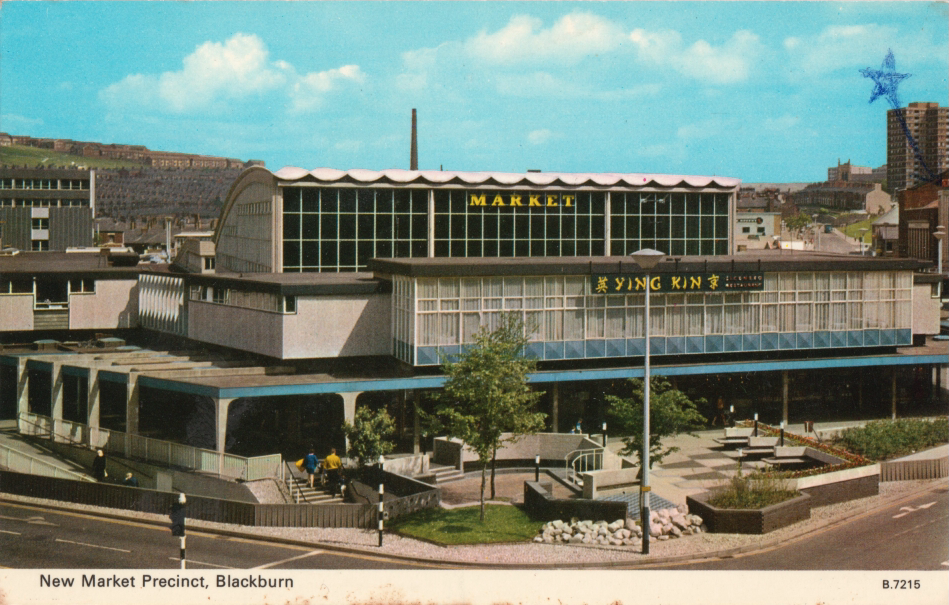
Also missing in action is the 1960’s Market Hall – architect Tom Brennan.

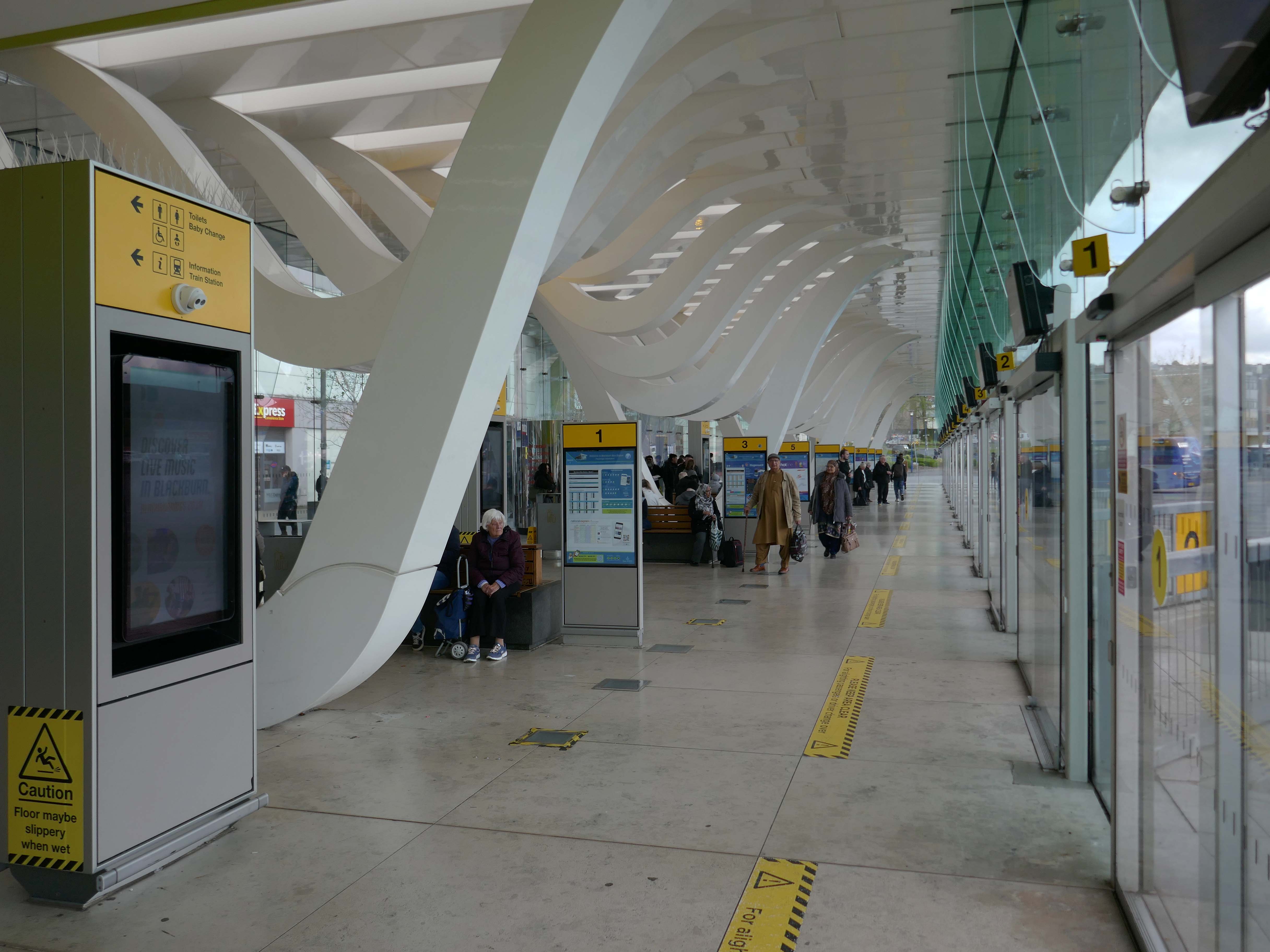
The new Bus Station designed by Capita Symonds – replacing the old bus station.

The outward facing elements of the building are flat and orthogonal. In contrast, the underside of the canopy is free flowing and consists of a number of glazed slots cut in the canopy to allow daylight to penetrate onto the concourse area. Directly below each of the slots is a hanging loop which appears to be pulled down from the canopy to reveal a glazed opening. The composition of these draws inspiration from the cotton weaving looms, and drying cotton bundles, a reference to the town’s industrial past.

There are four loop types (A, B, C & D) which are arranged to alter the scale of the concourse and create a rhythm of peaks and troughs along its length. Loop A is designed to provide support to the whole canopy allowing the canopy to appear as one floating unified element.

Archello

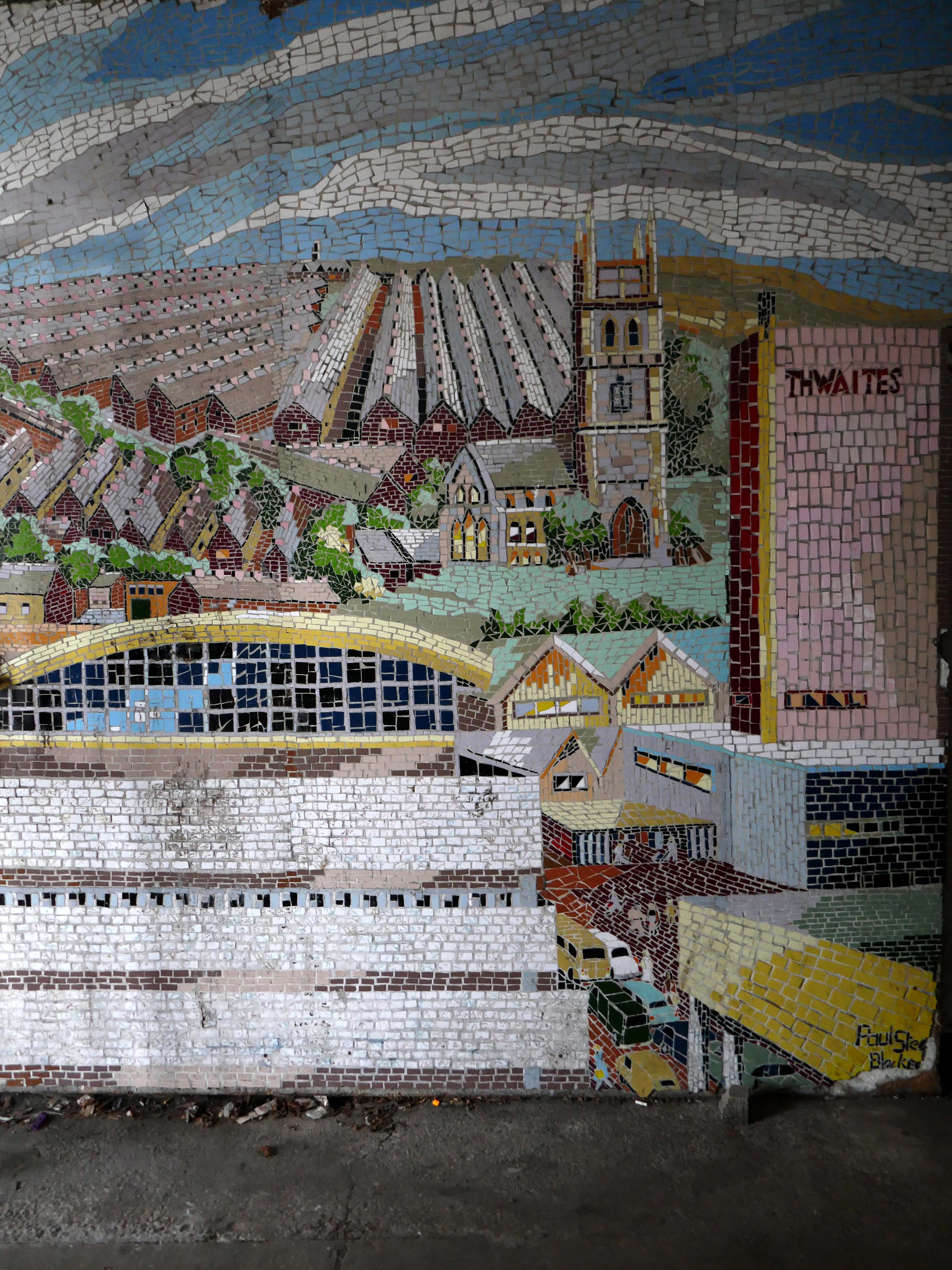
Tucked away this mosaic panorama of the town.

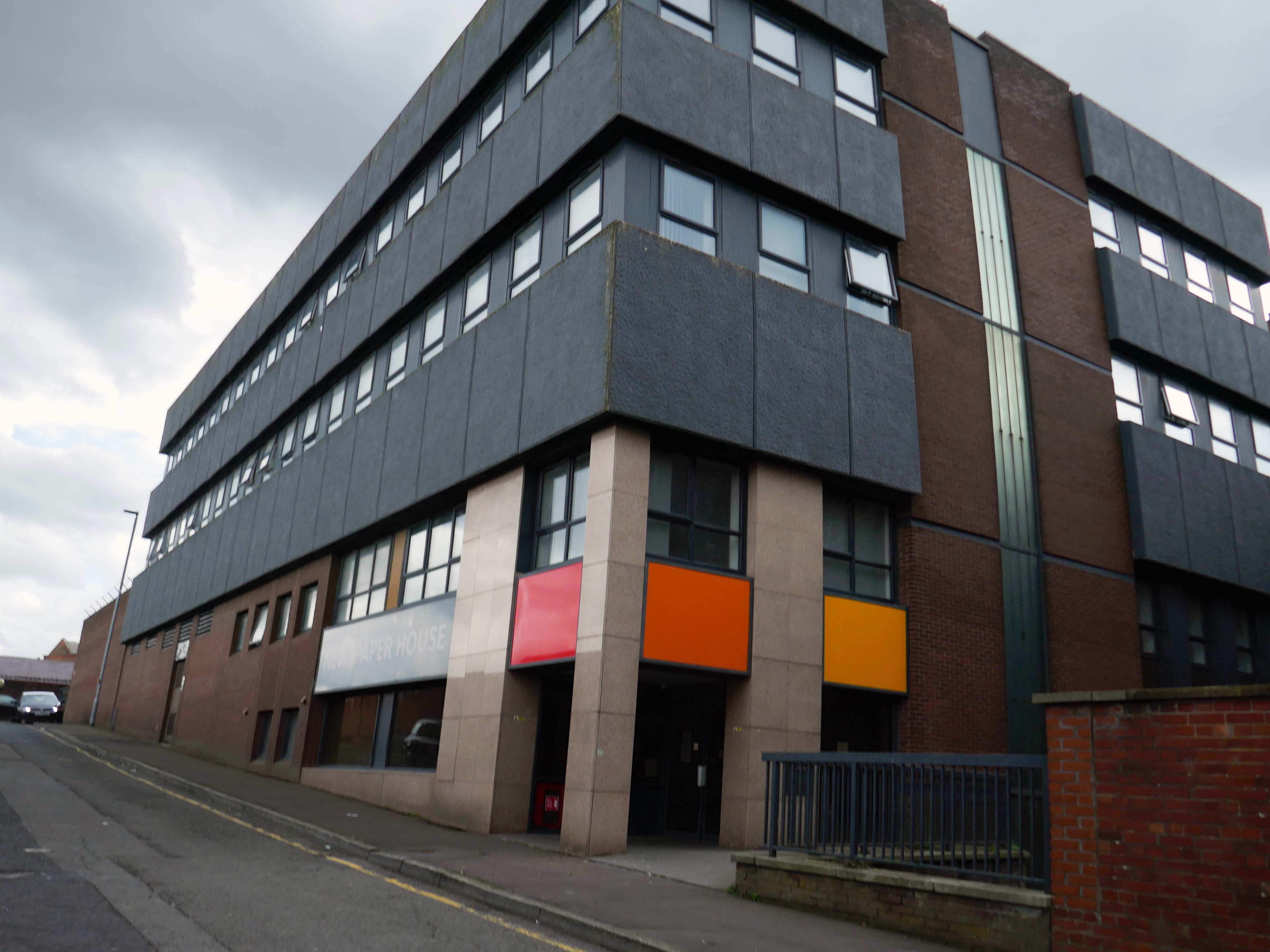
Newspaper House – once the home to the Lancashire Telegraph, converted to apartments in 2017.

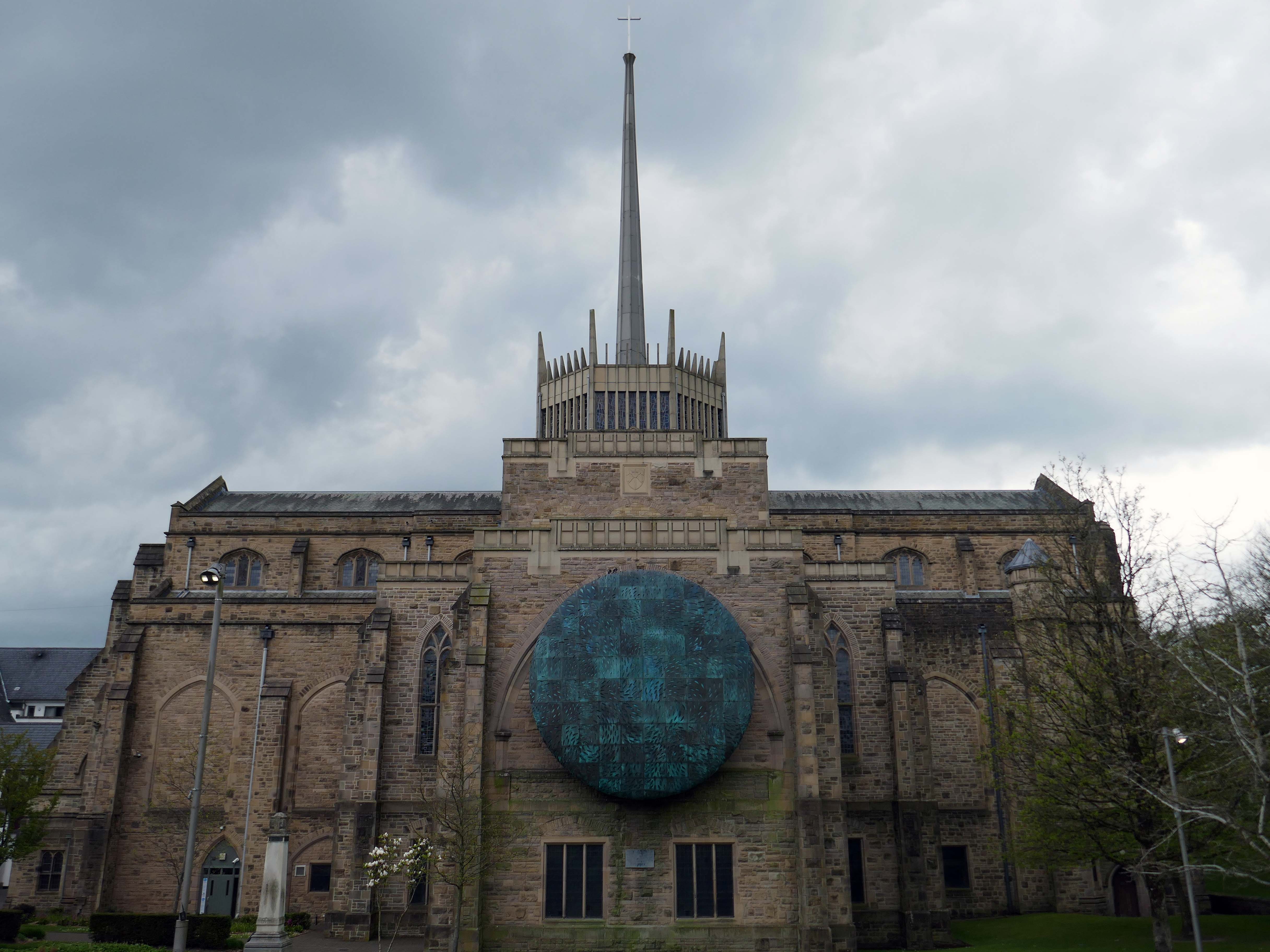
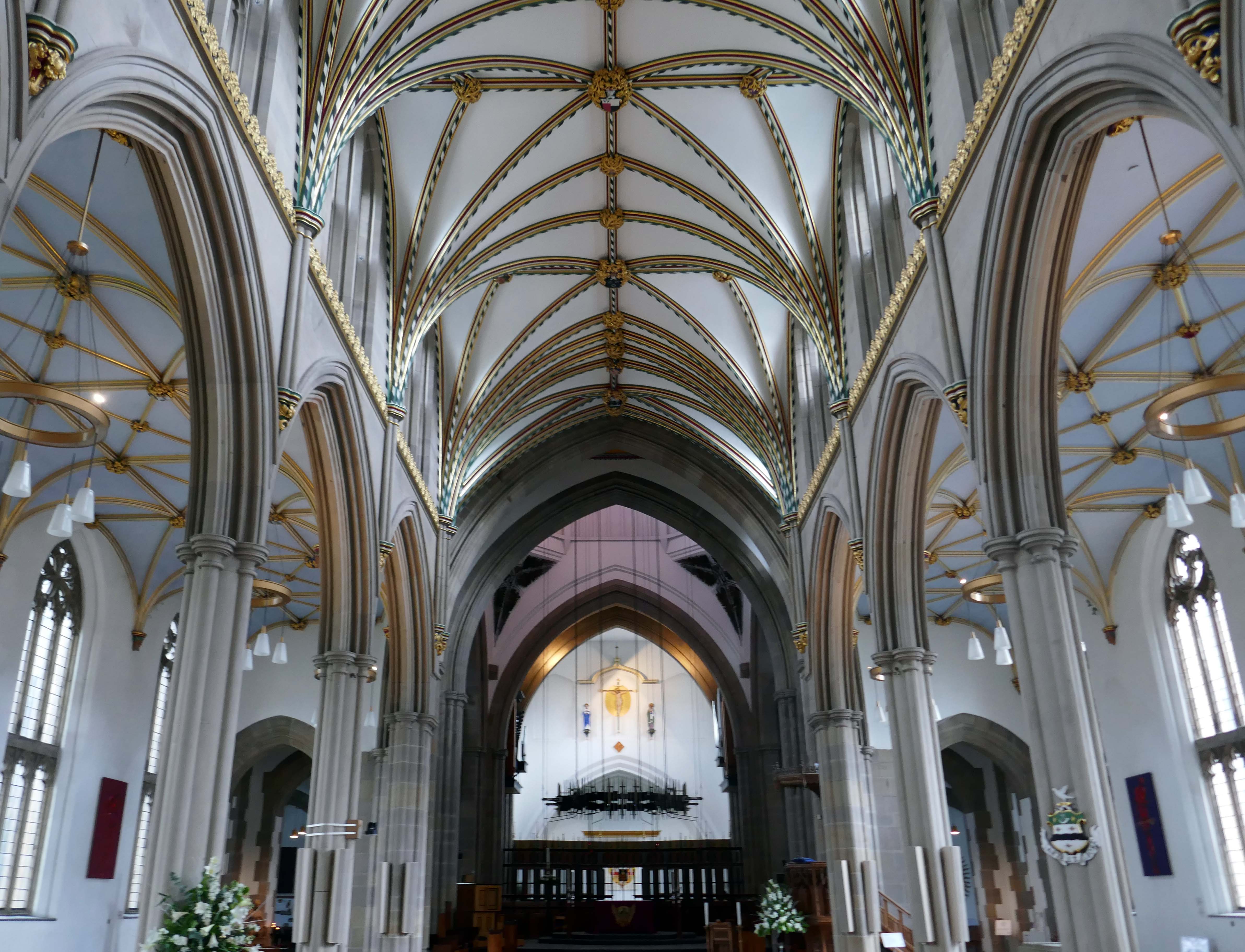
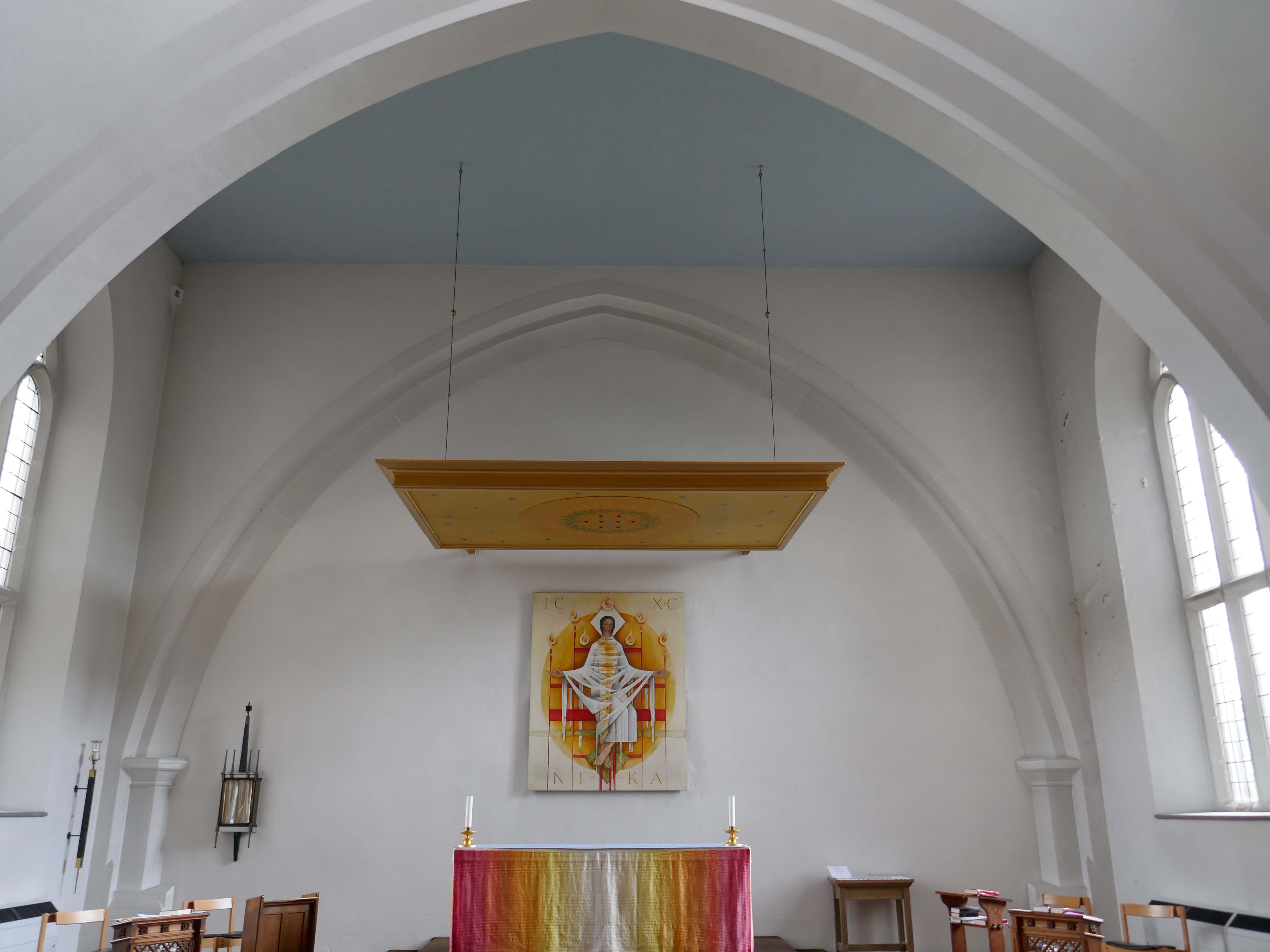
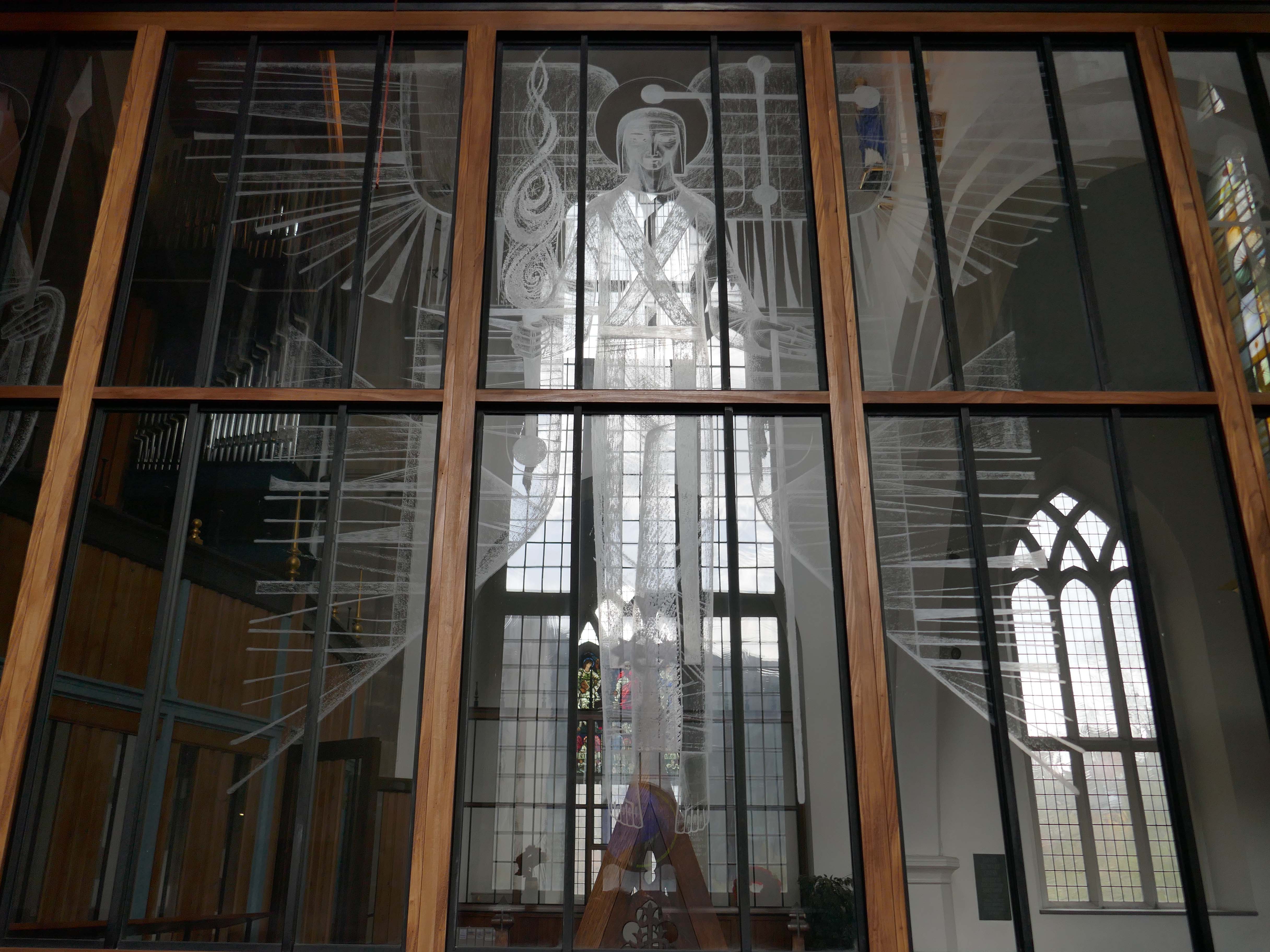
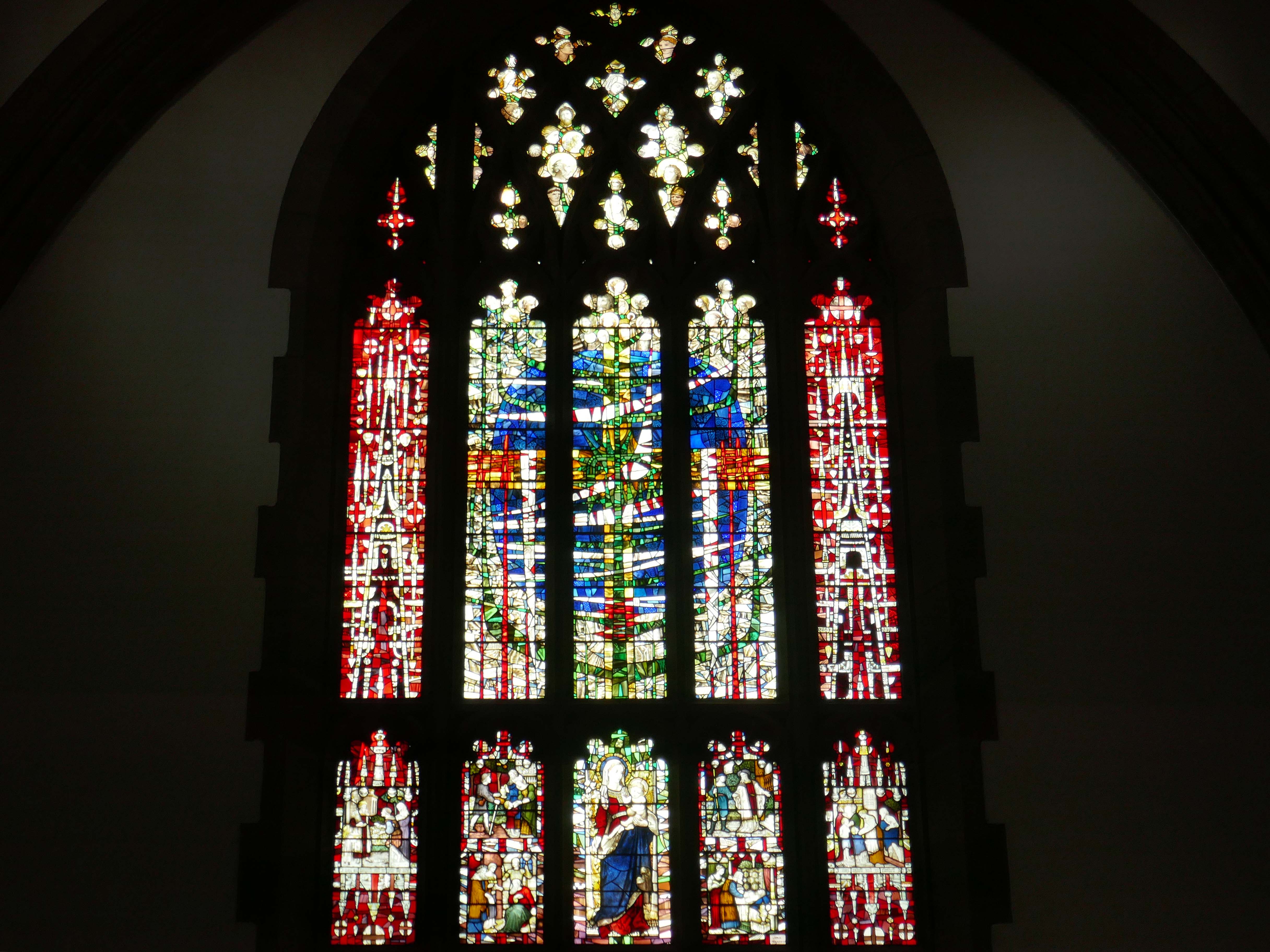
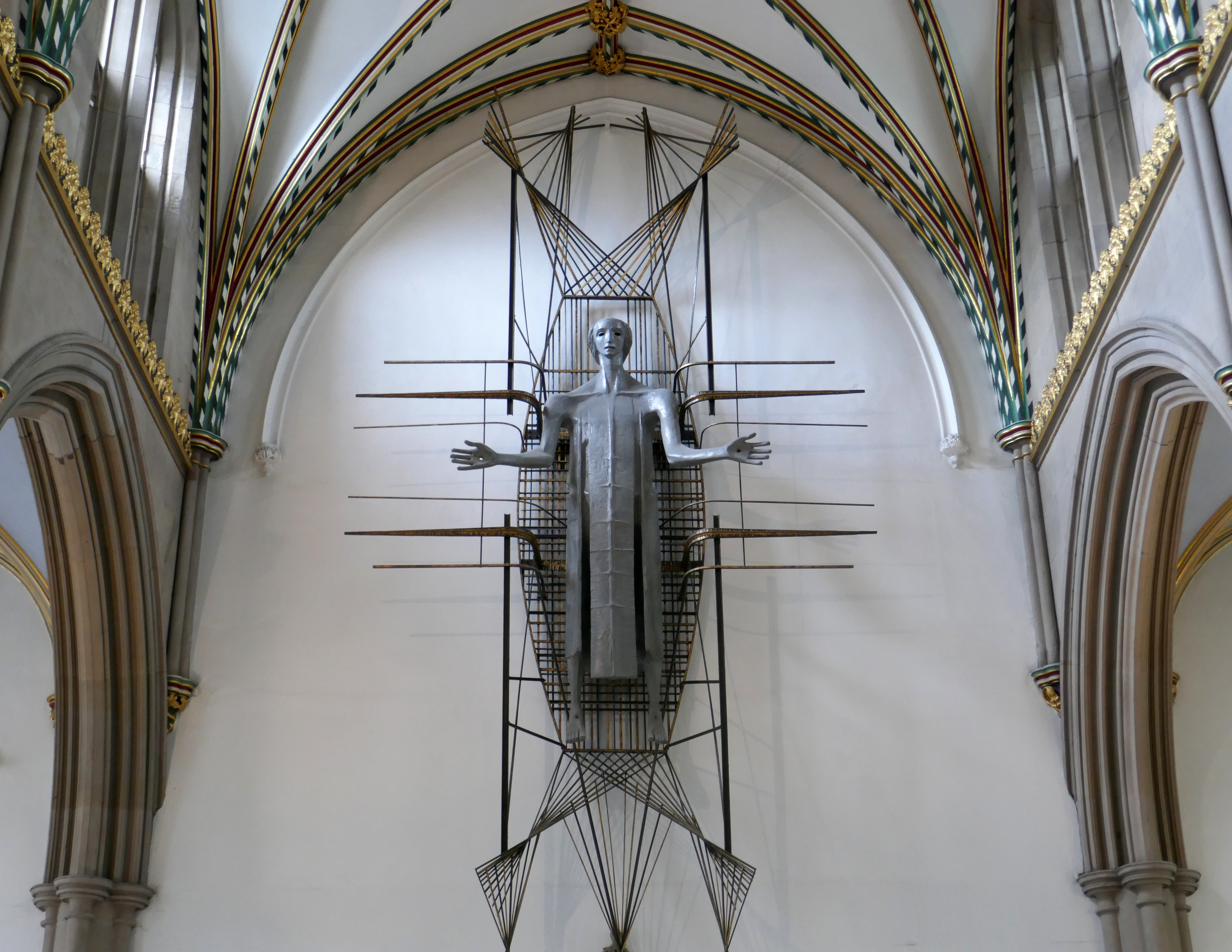
Finally to the Garde II* listed Blackburn Cathedral church – since 1926, formerly parish church, 1820-6 by John Palmer of Manchester.

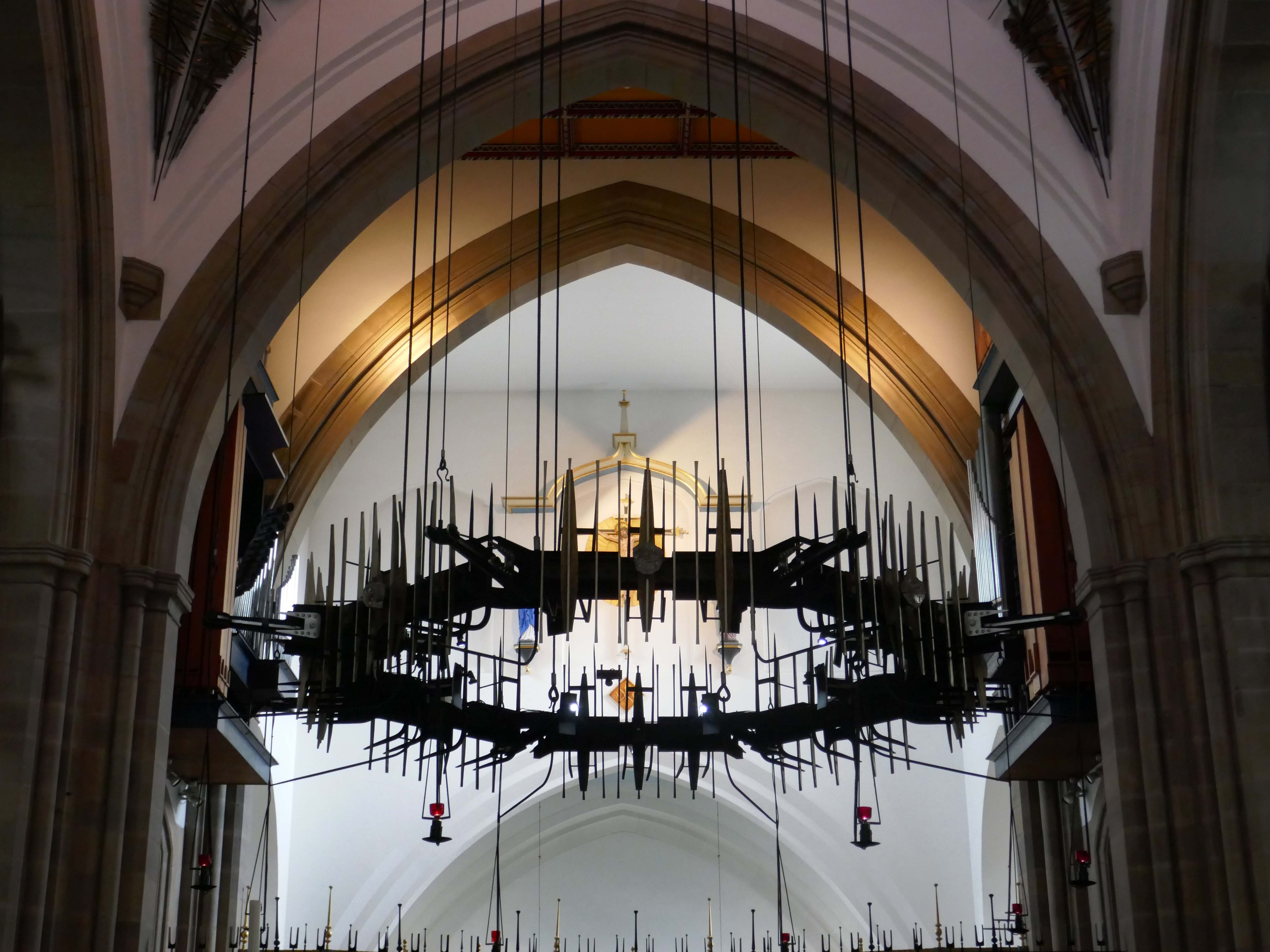
Central concrete corona by Lawrence King 1961 – it was rebuilt in stone by Brian Lowe in 1998.

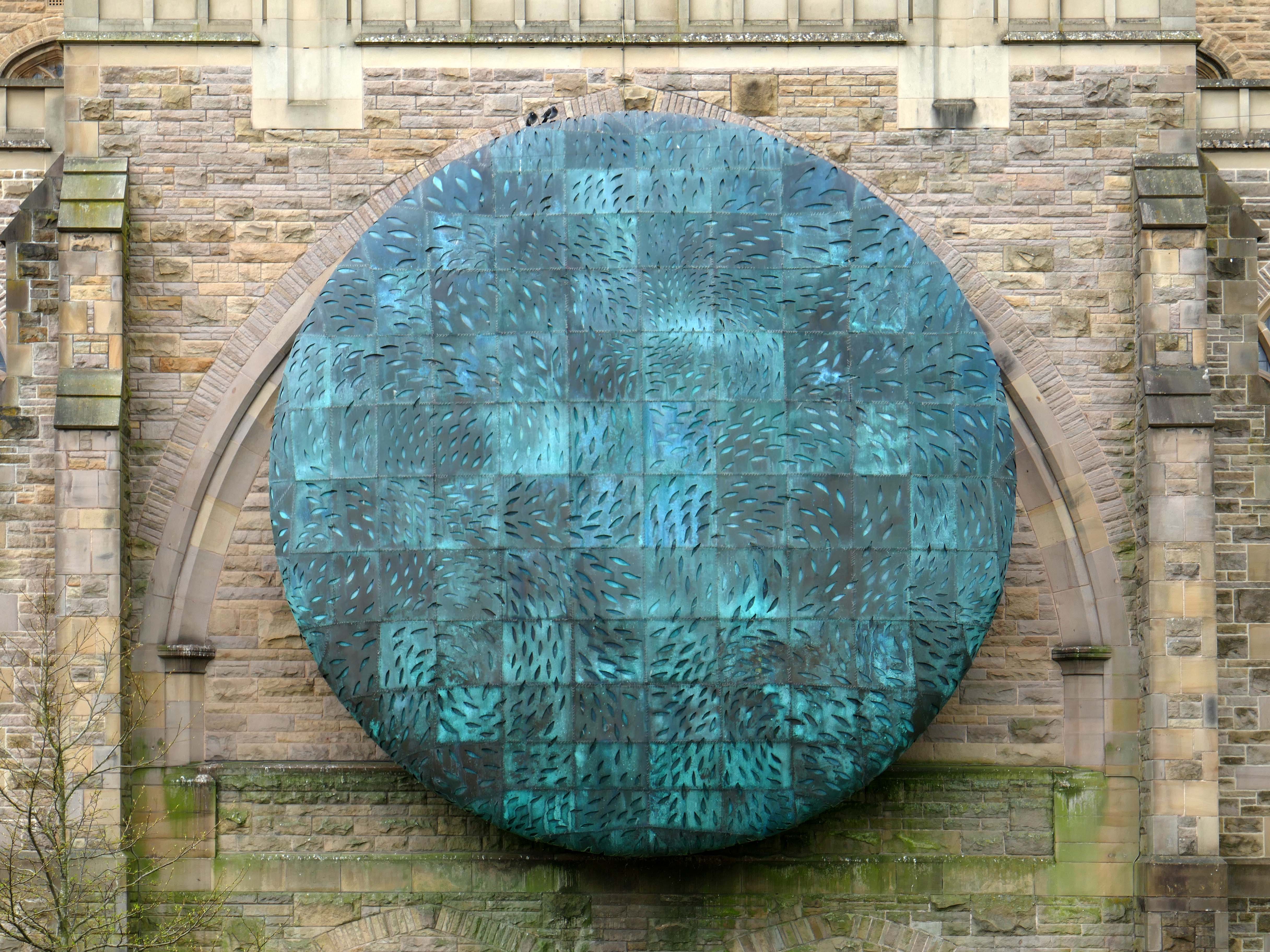
The Healing of Nations in steel and copper by Mark Jalland 2001.

It is a reflection on the opening of chapter 22 of the book of Revelation, new Jerusalem, and ‘the leaves of the tree are for the healing of the nations’.

Traditionally a stained-glass window at the east end of a cathedral would reflect a spectrum of light into the building but this sculpture projects the light out in a kaleidoscope of colour reminding us of Jesus the light of the world and the hope that we have in him. 

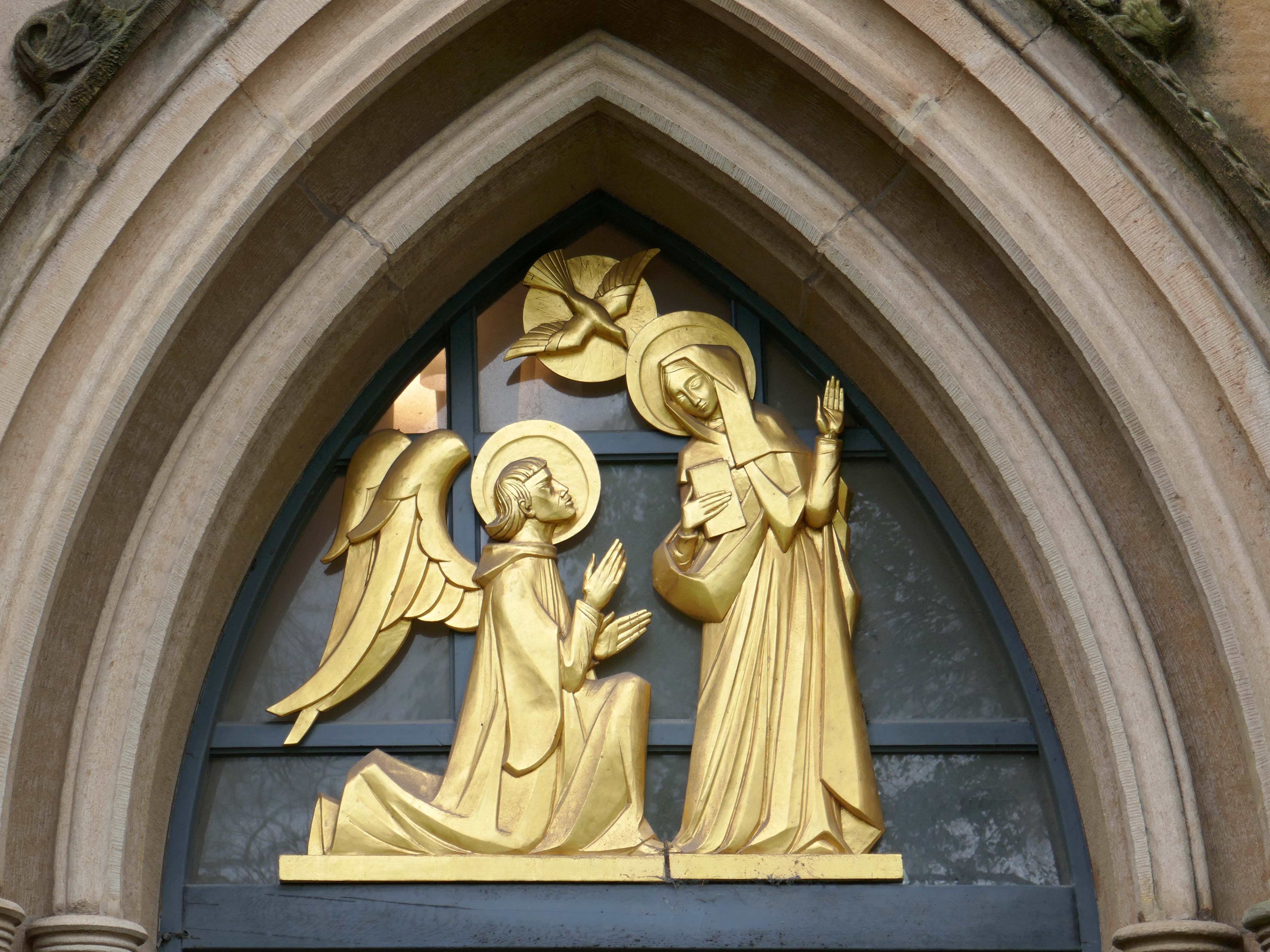
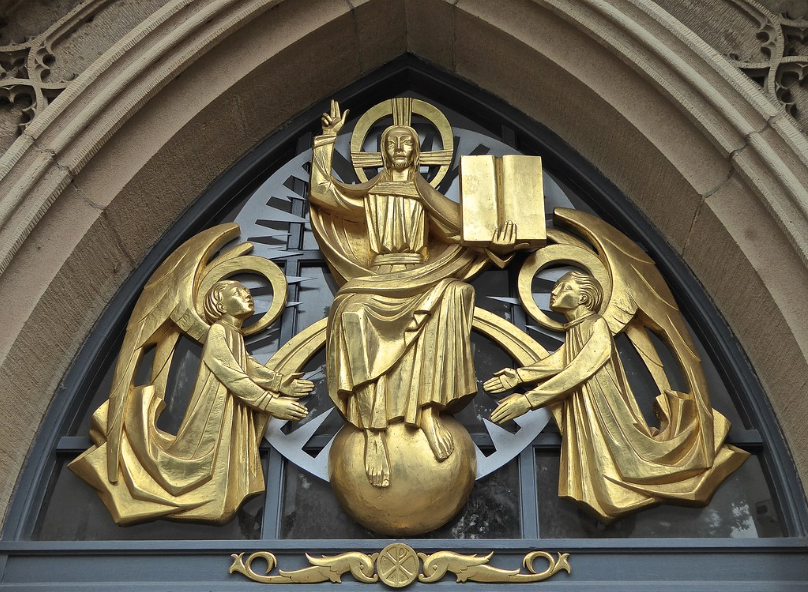
Annunciation and Christ in Majesty sculptures by Siegfried Pietsch 1965.

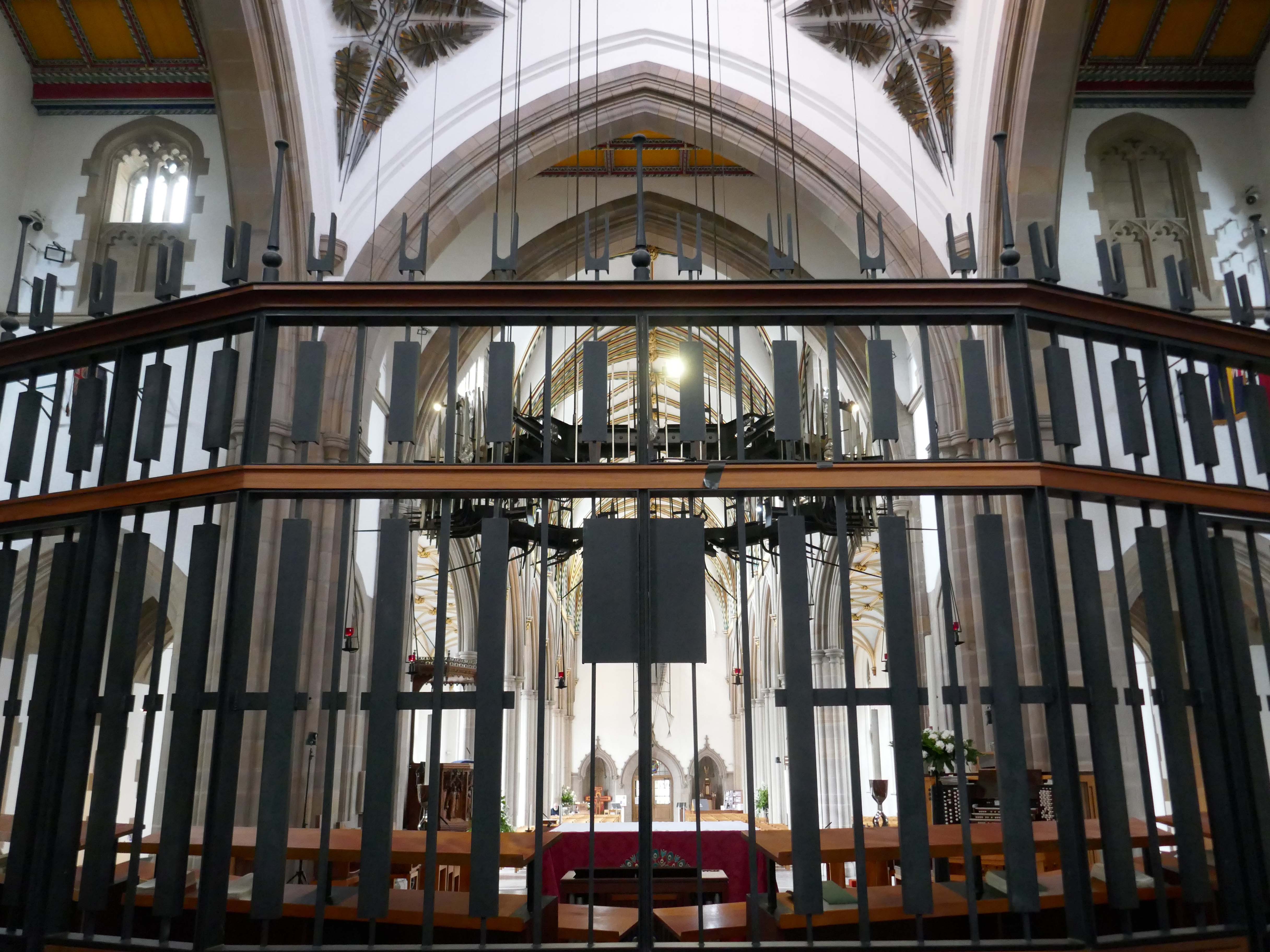
Crown of Thorns by John Hayward.

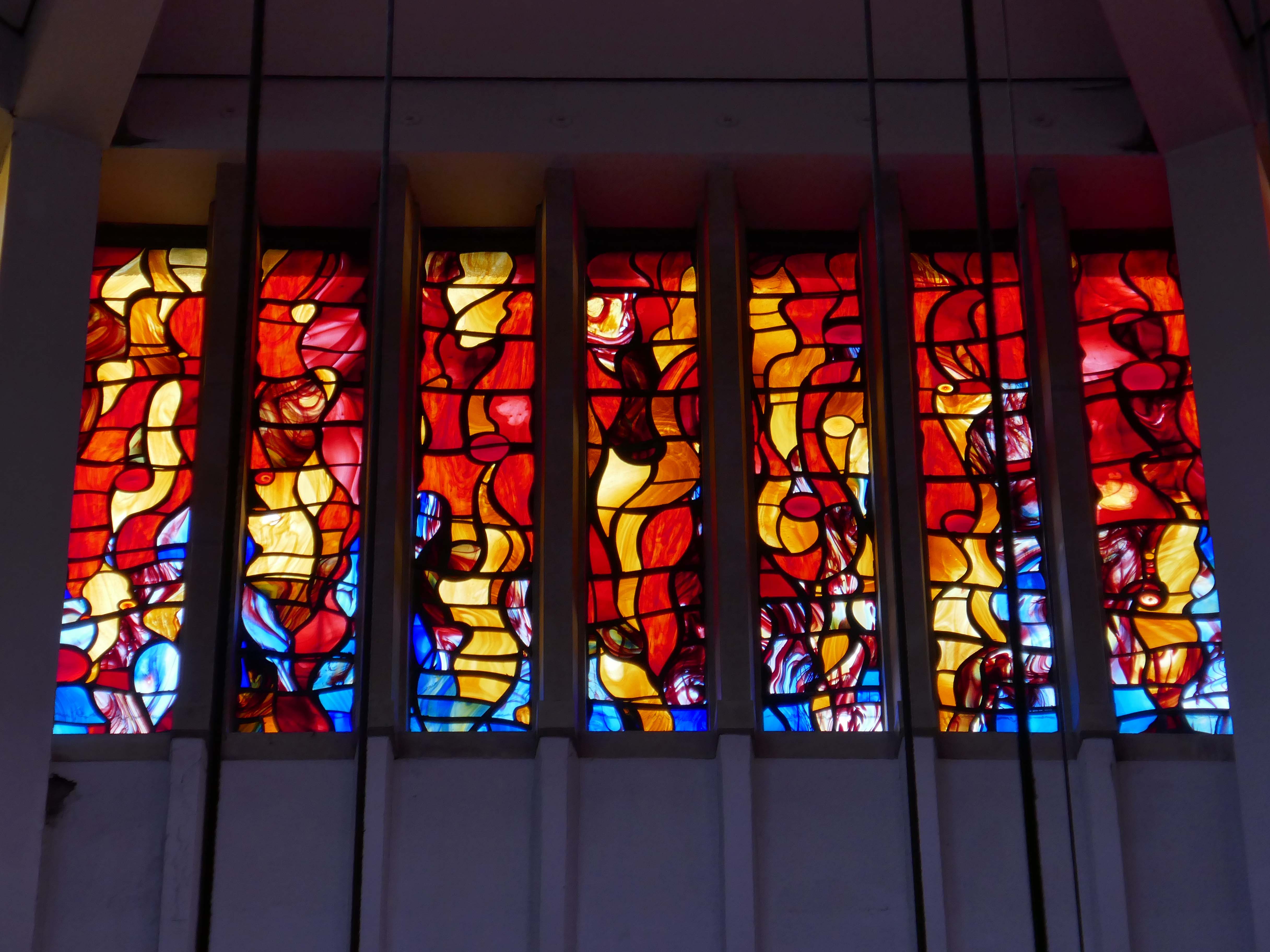
Lantern stained glass 1999 by Linda Hadfield, formerly Walton.

Further work by John Hayward.

Josefina de Vasconcellos

Collyhurst Pubs

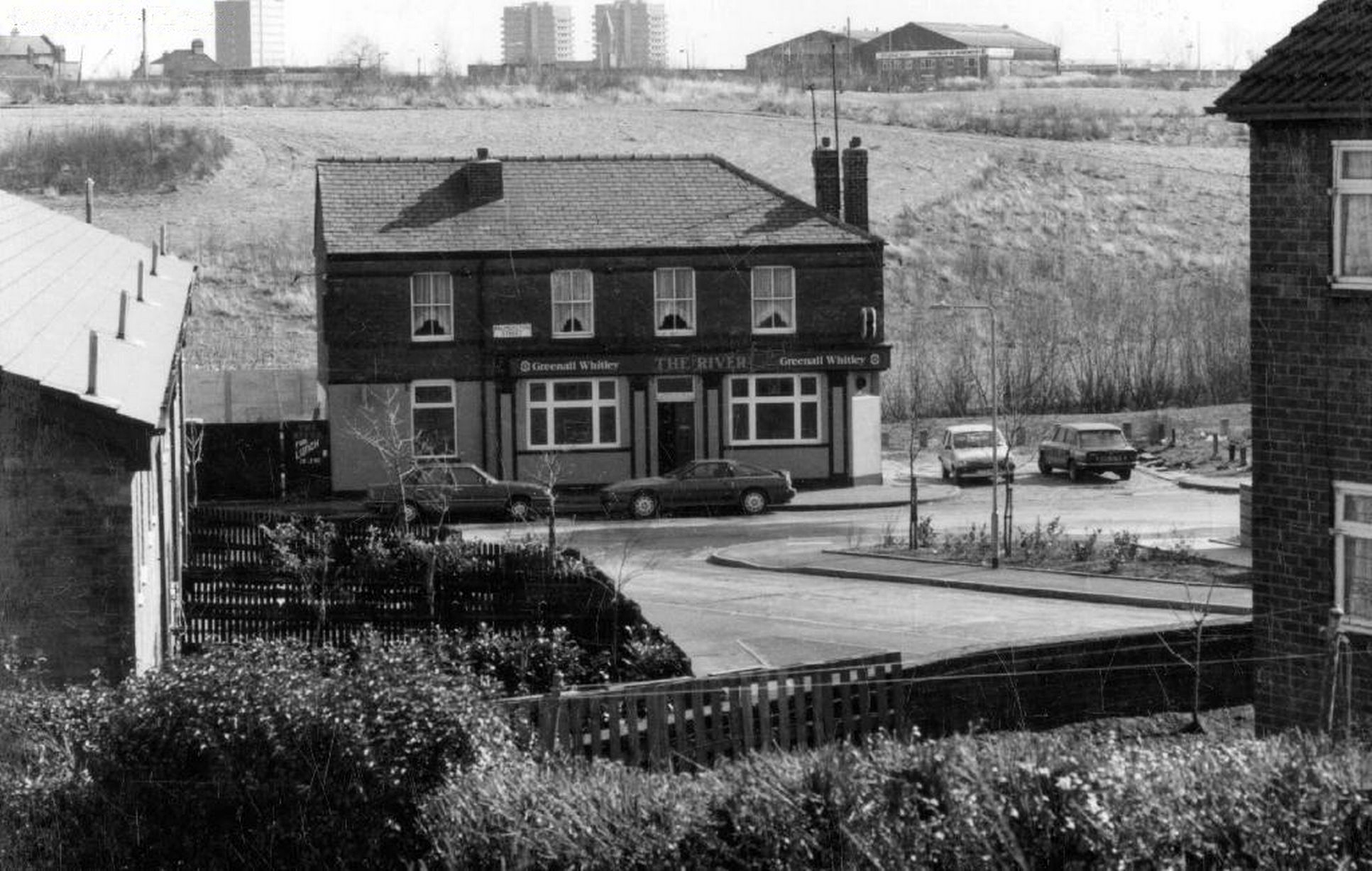
Taking images from the Local Image Collection I have compiled a section of pubs in the Collyhurst area.

There are but a few still open – many long gone, since demolished.

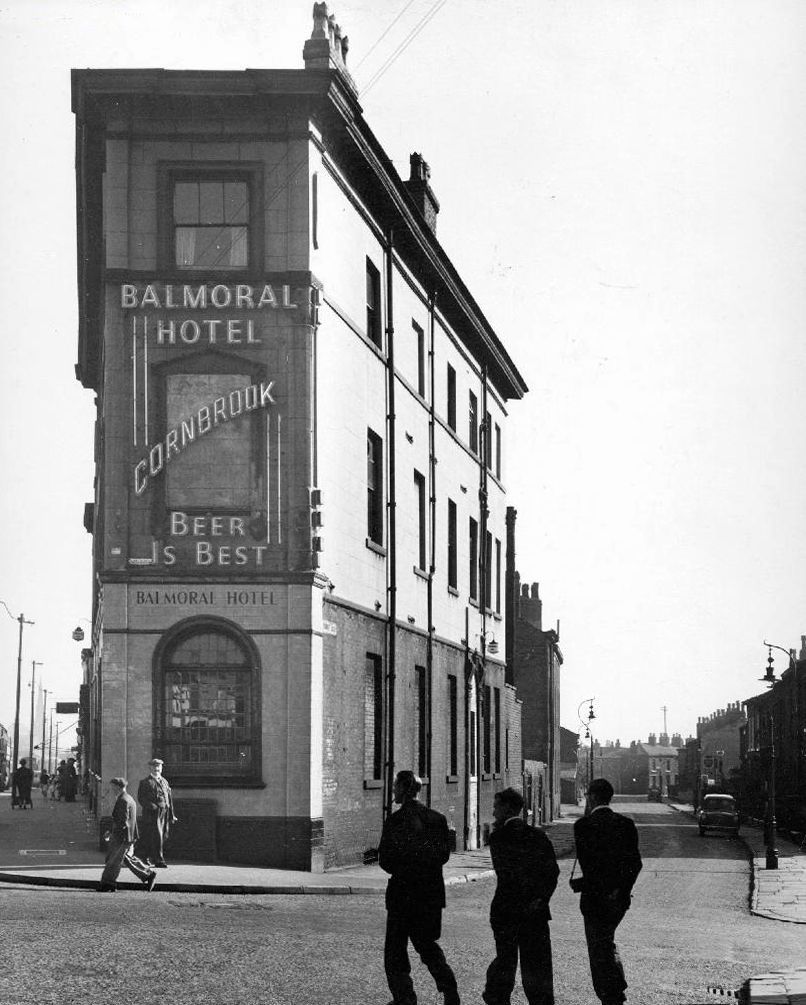
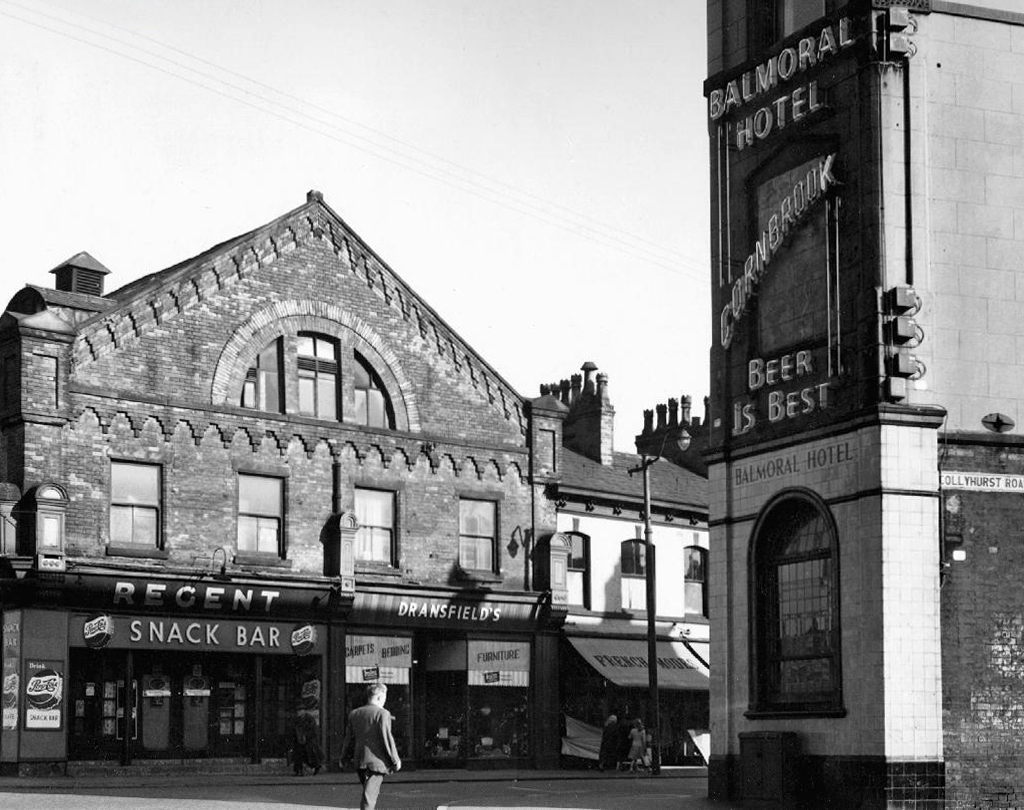
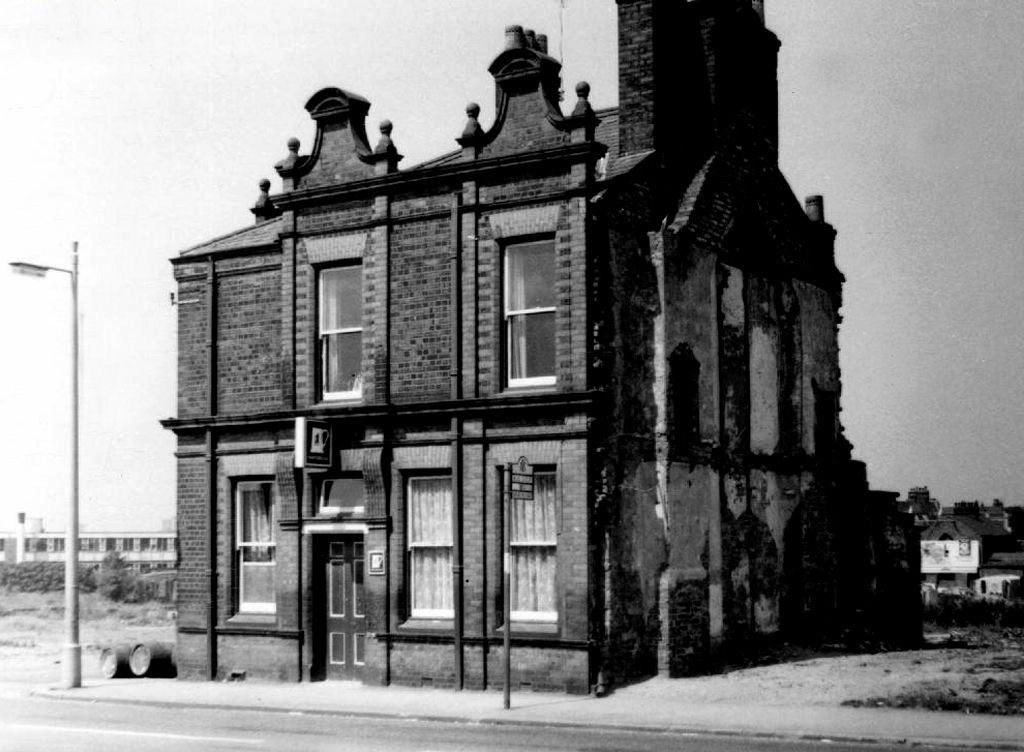
Balmoral HotelCornbrook Brewery

W Kaye 1958

Billy Greens – formerly the Vauxhall

S Marland

Collyhurst InnManchester Brewery Company later Wilsons

W Kaye 1958

The Balloon VaultsWalker & Homfray’s

H Whitehead 1971

The Globe Inn Threlfall’s later Whitbread

Dawson 1971

The Grapes Tavern Joseph Holt

W Kaye 1964

Joiners Arms Wilsons

W Kaye 1959

Lorimers Arms

S Marland 2022

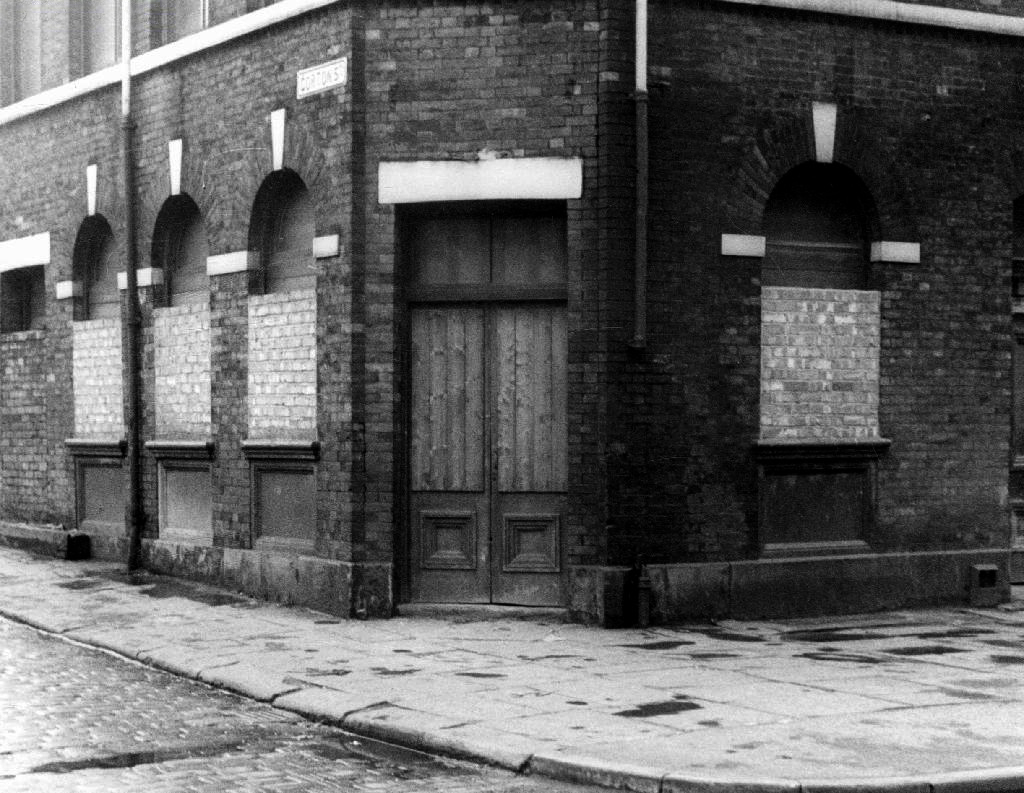
Lord ClydeCornbrook

1958

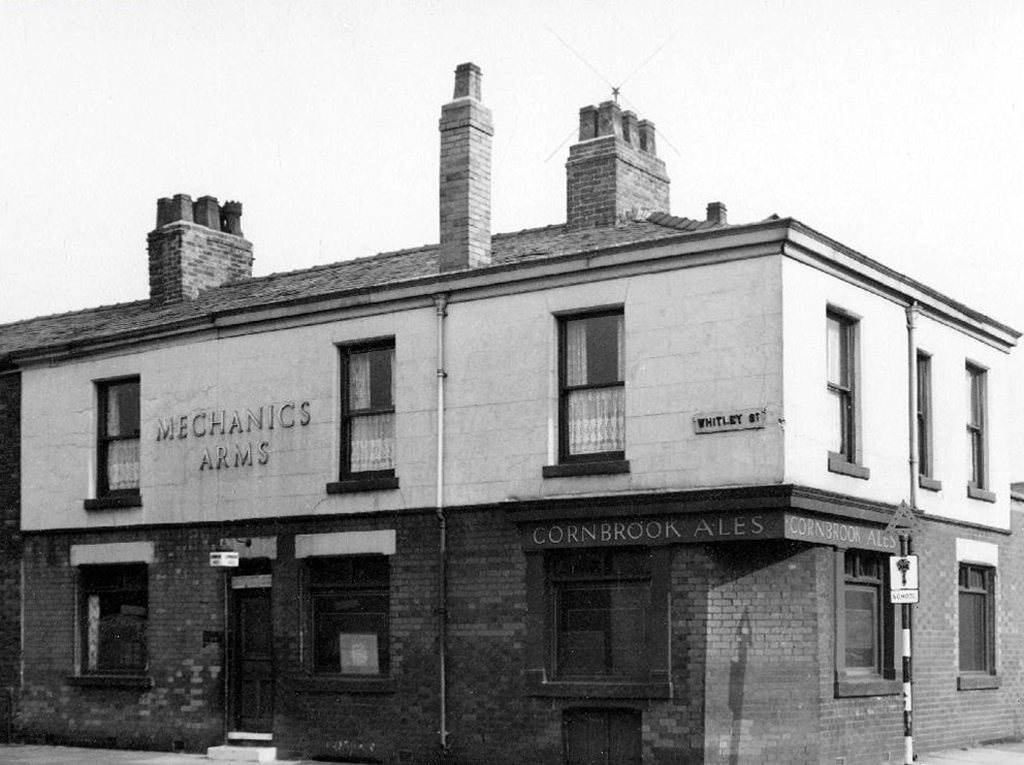
Mechanics ArmsCornbrook

E Stanley 1958

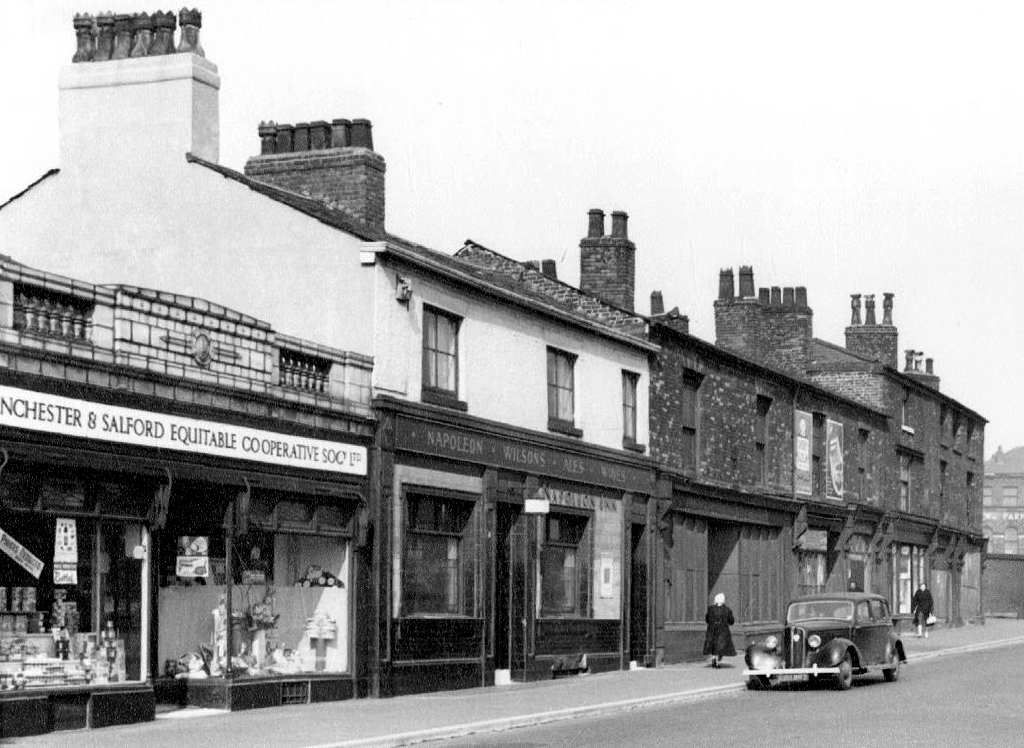
NapoleonMcKenna’s later Walker & Homfray then Wilsons

L Kaye 1958

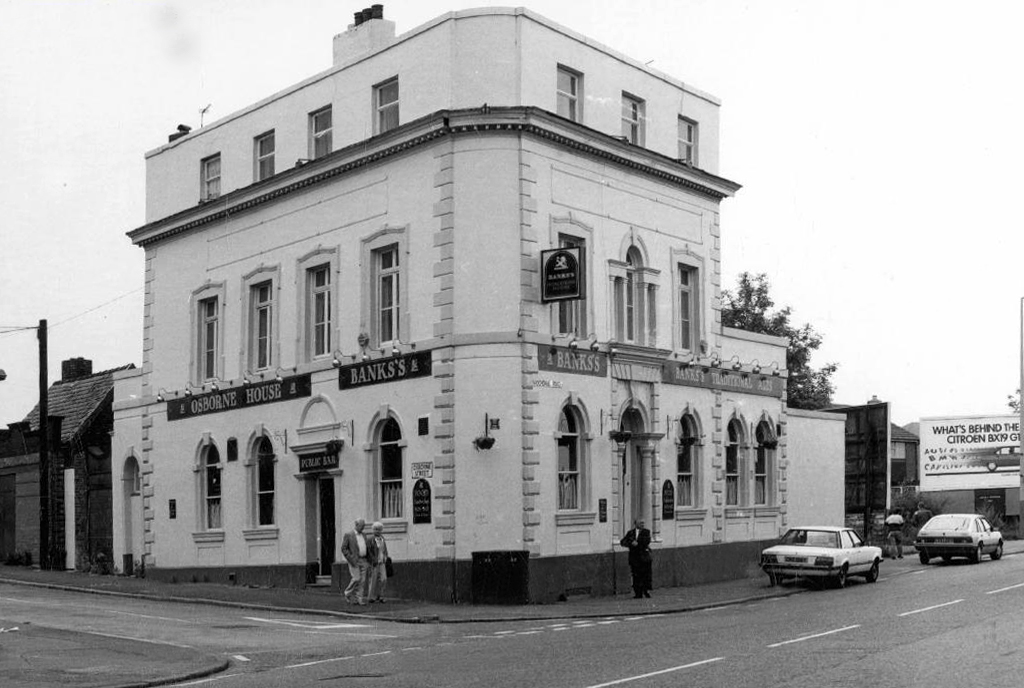
The OsborneWilsons later Banks’s

1976

1986

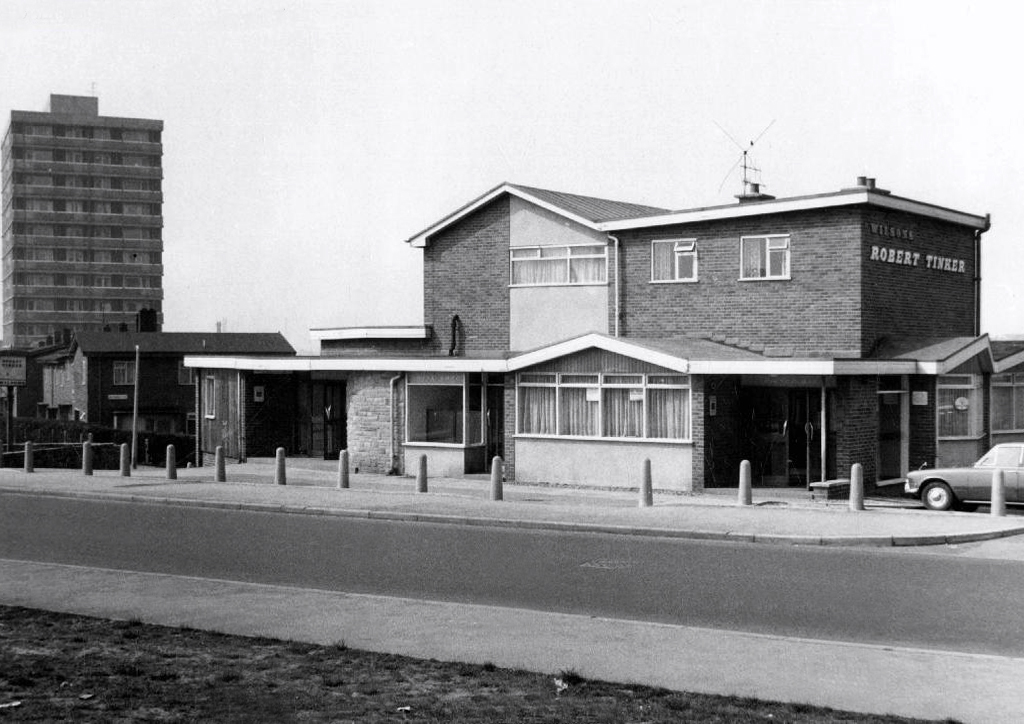
Robert TinkerWilsons

A Dawson 1971

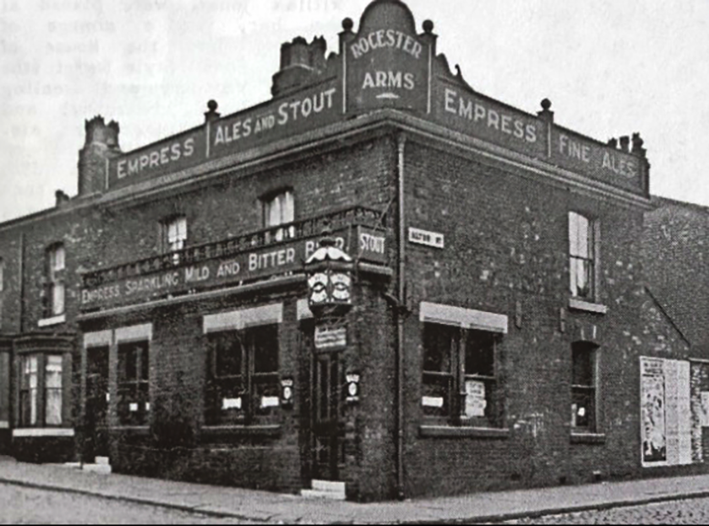
Rocester ArmsEmpress Brewery

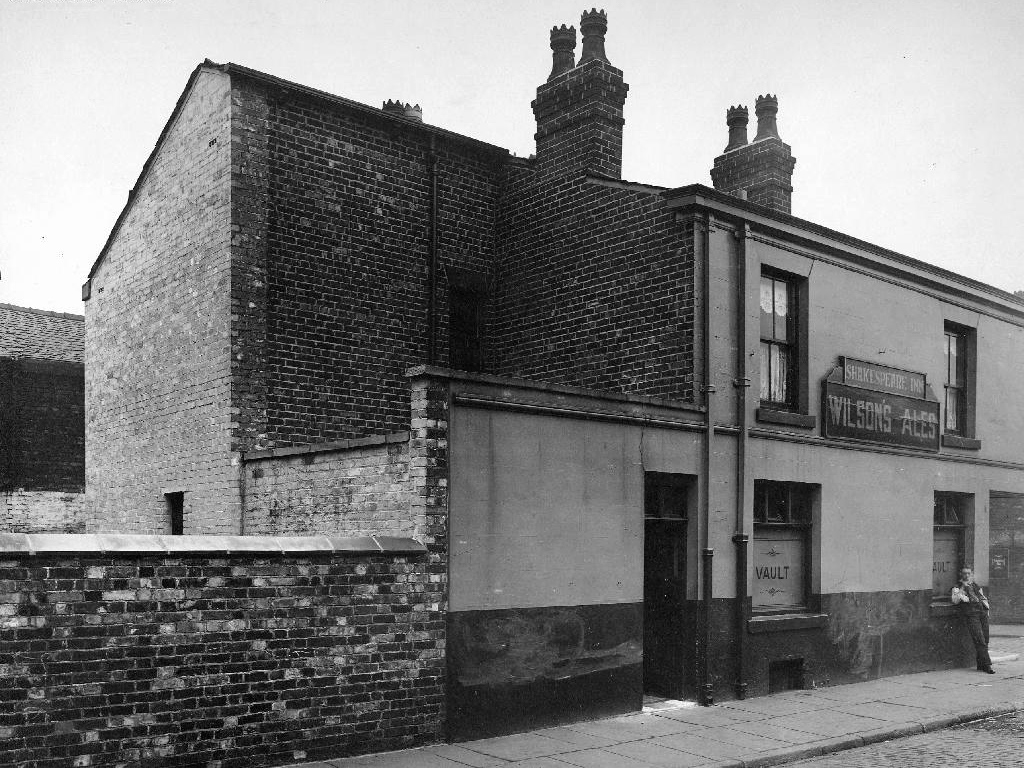
Shakespeare InnWilsons

1934

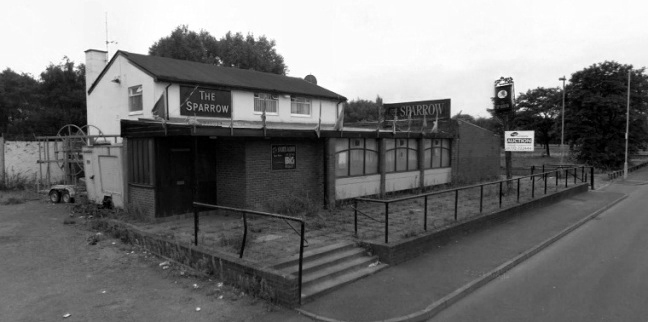
The Sparrow

Google 2012

The Swan Wilsons

A Dawson 1971

Three Tuns Manchester Brewery Company later Threlfall’s

L Kaye 1958

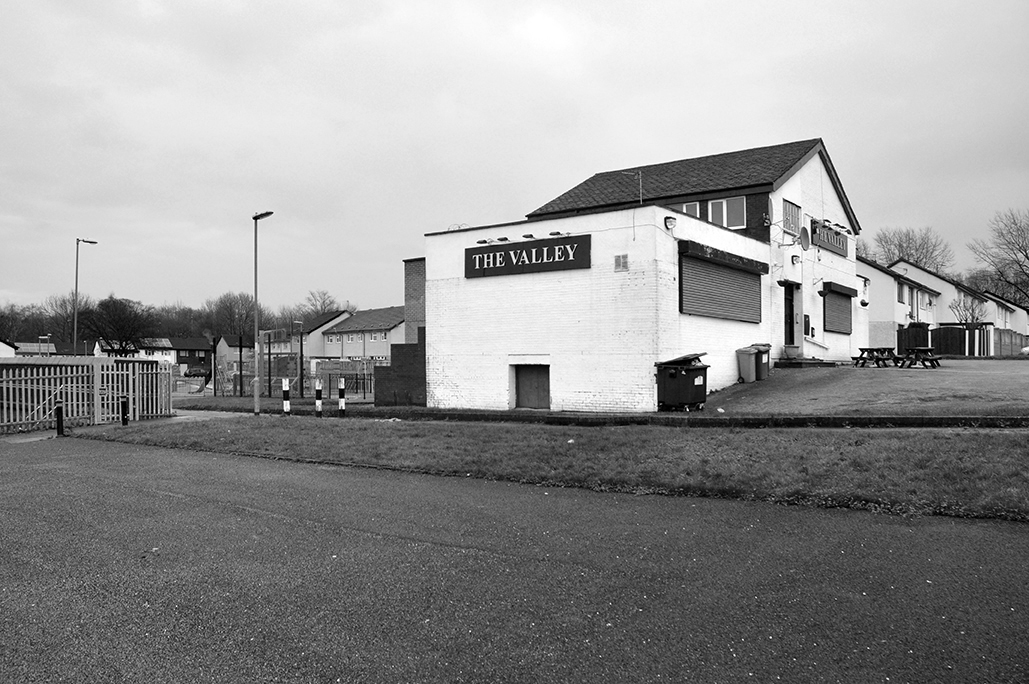
The Valley – now open as The Vines

S Marland

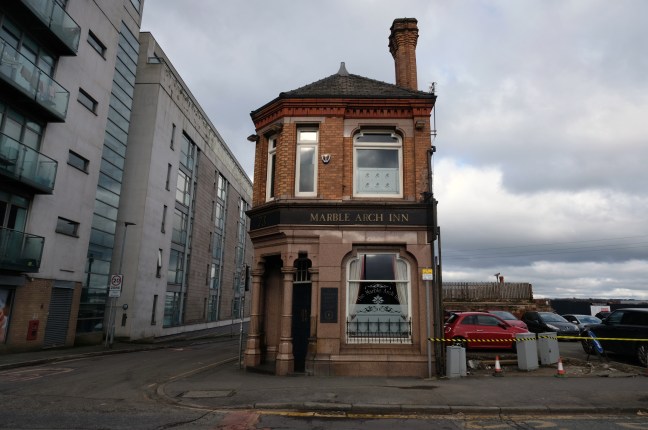
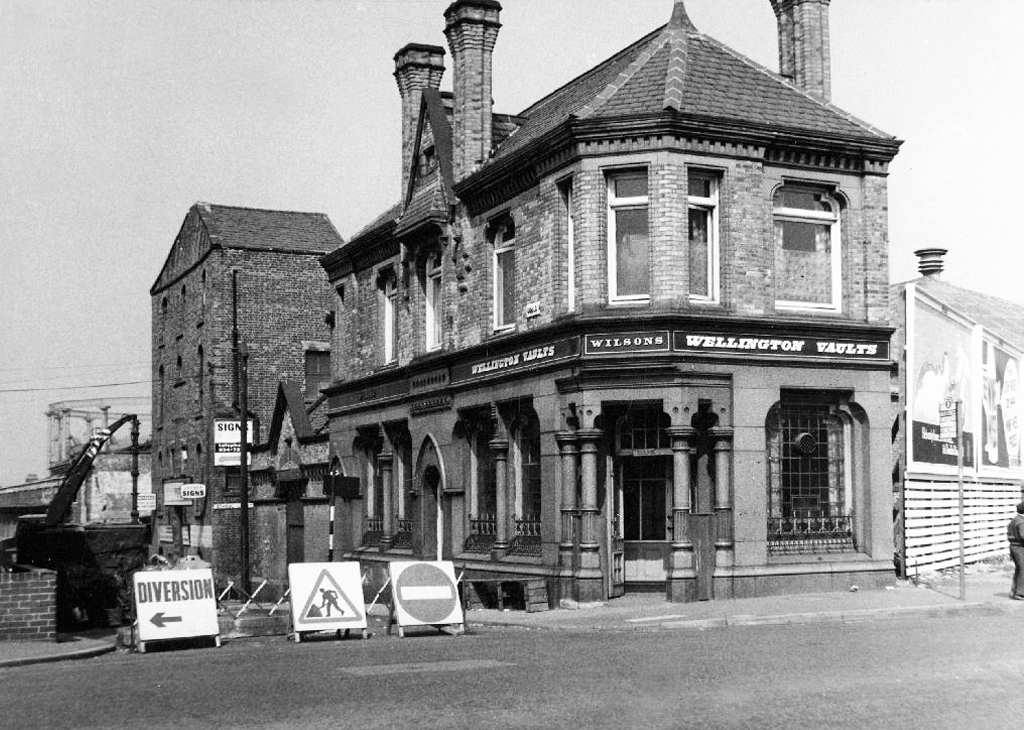
The Wellington Vaults – Wilsons now open as the Marble Arch

A Dawson 1971

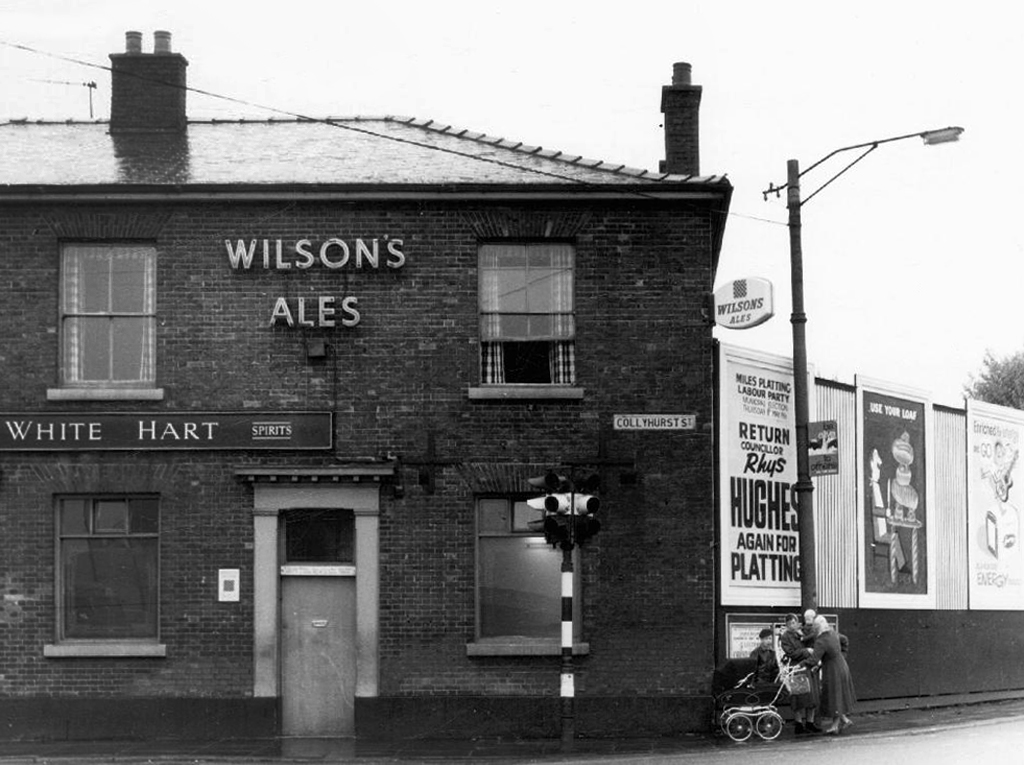
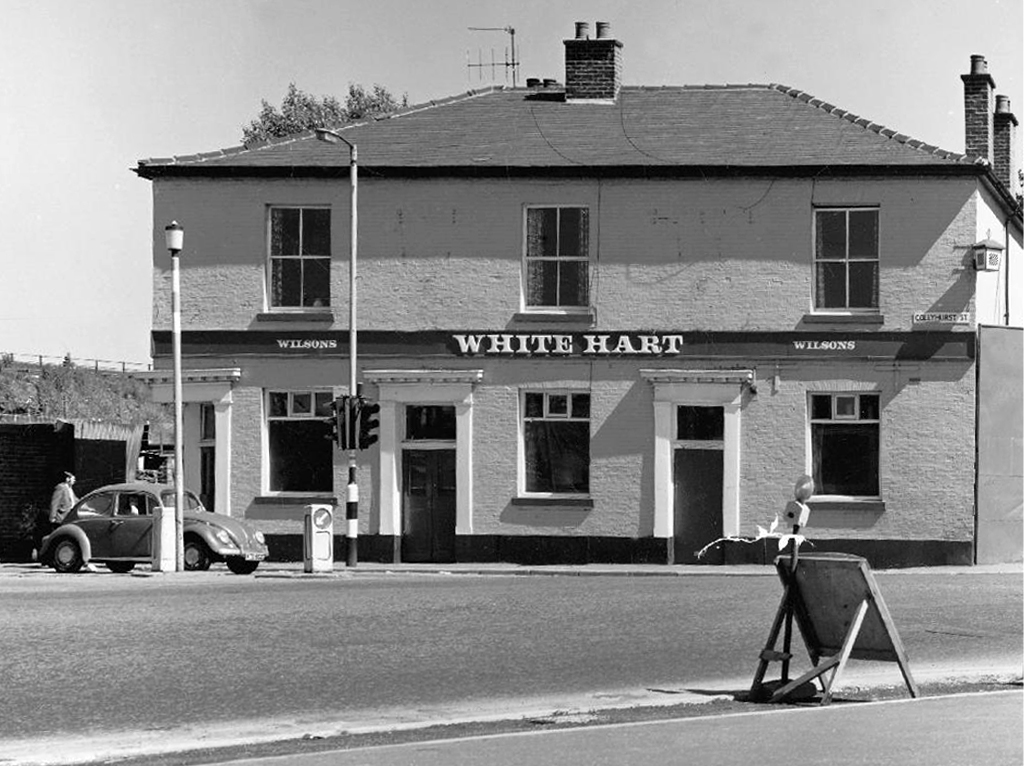
White HartWilsons

T Brooks 1961

1976

Oldham Road Pubs – Manchester

This is Oldham Road Manchester – this also Memory Lane.

Walking from the city centre to Failsworth I noted the absence of public houses, some long since demolished, some now serving other purposes – very few open selling beer.

Many of the breweries no longer trading.

Much of this the consequence of changing economic circumstances, the decline in manufacturing and subsequent serious absence in regular drinkers.

I encountered a similar situation on Hyde Road.

Where possible I have linked back to Pubs of Manchester Blogspot and the Brewery History Society.

There may well be errors and omissions which I am happy to correct – have a look let me know.

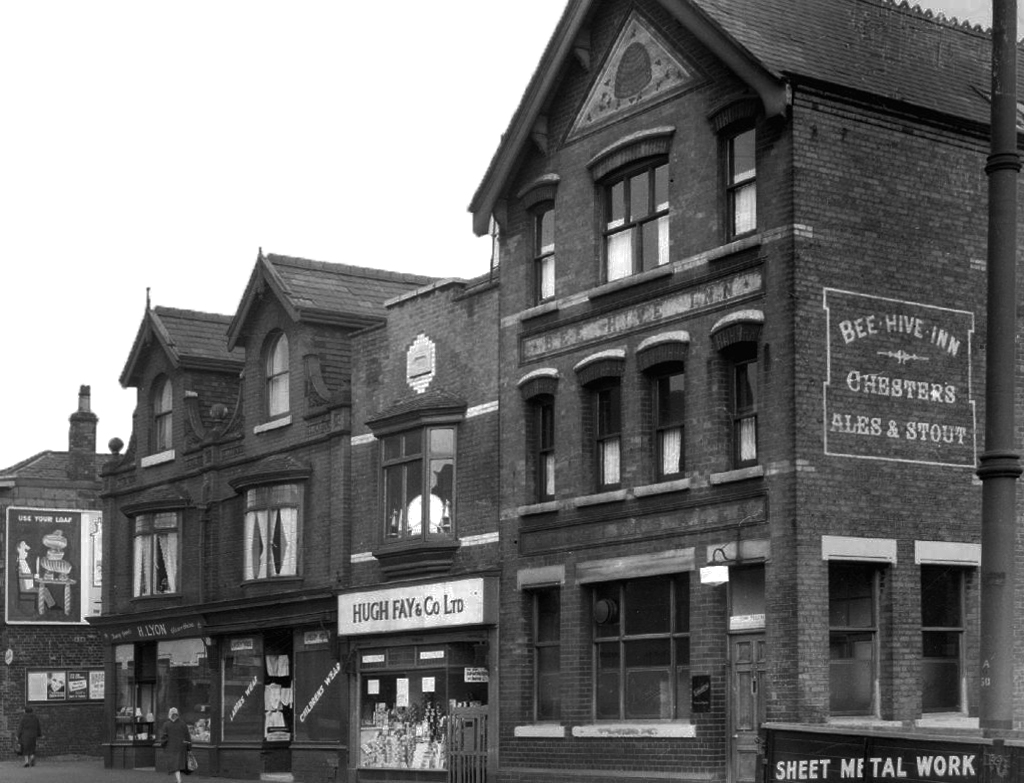
Bee Hive InnChesters Brewery

Bird In Hand – latterly Ace of Diamonds on the 2nd April 2010 the Ace of Diamonds burnt down.

Hardys’ Ales

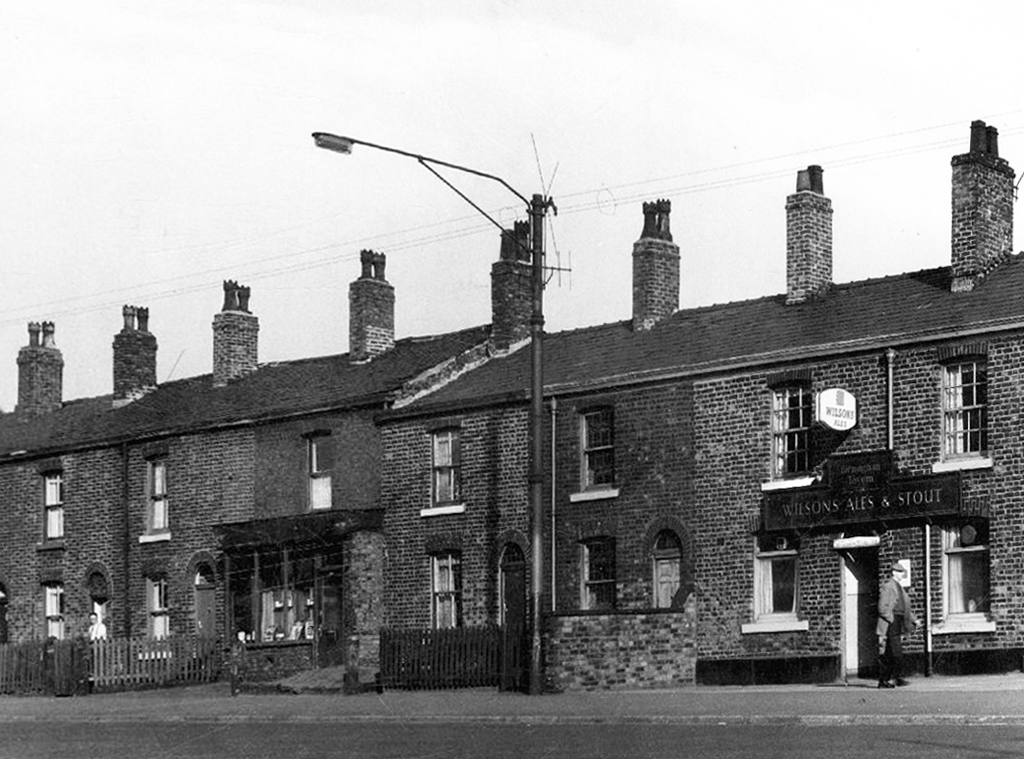
Birmingham TavernWilsons Brewery

Cheshire CheeseJohn Smiths

City ArmsGroves and Whitnalls

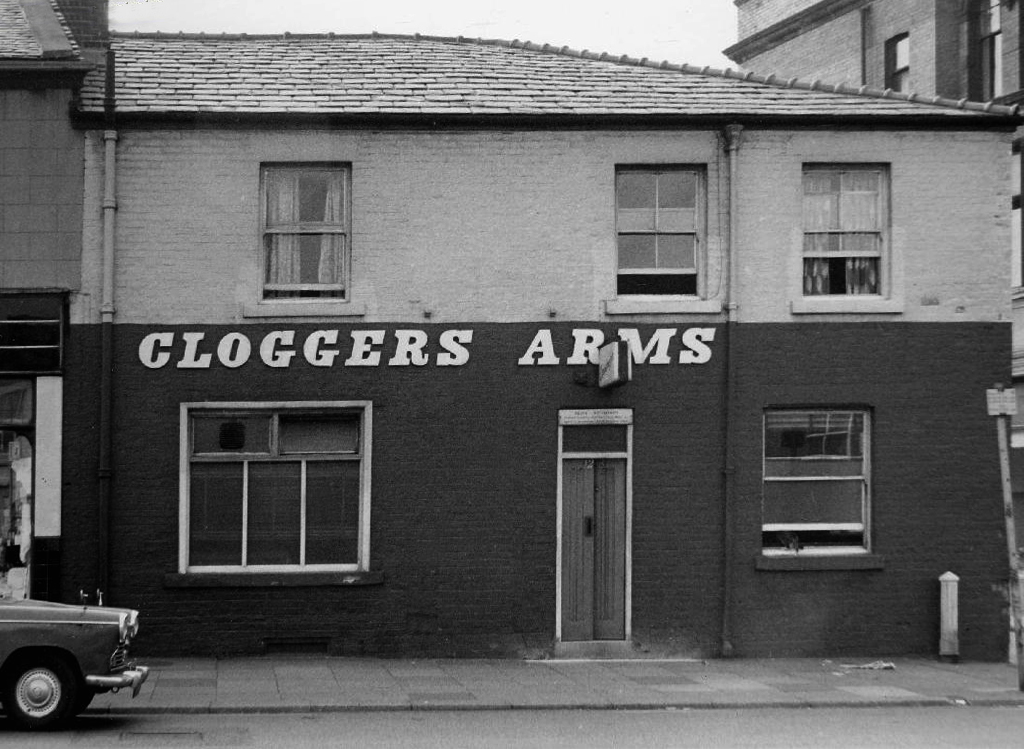
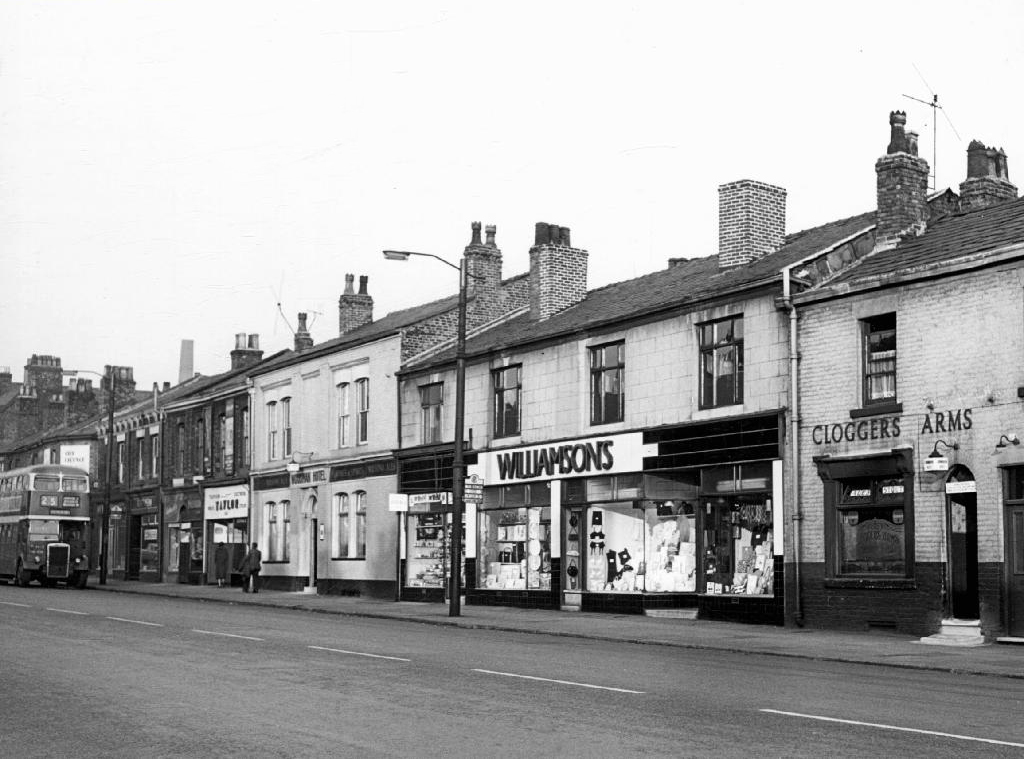
Cloggers Arms – Wilsons

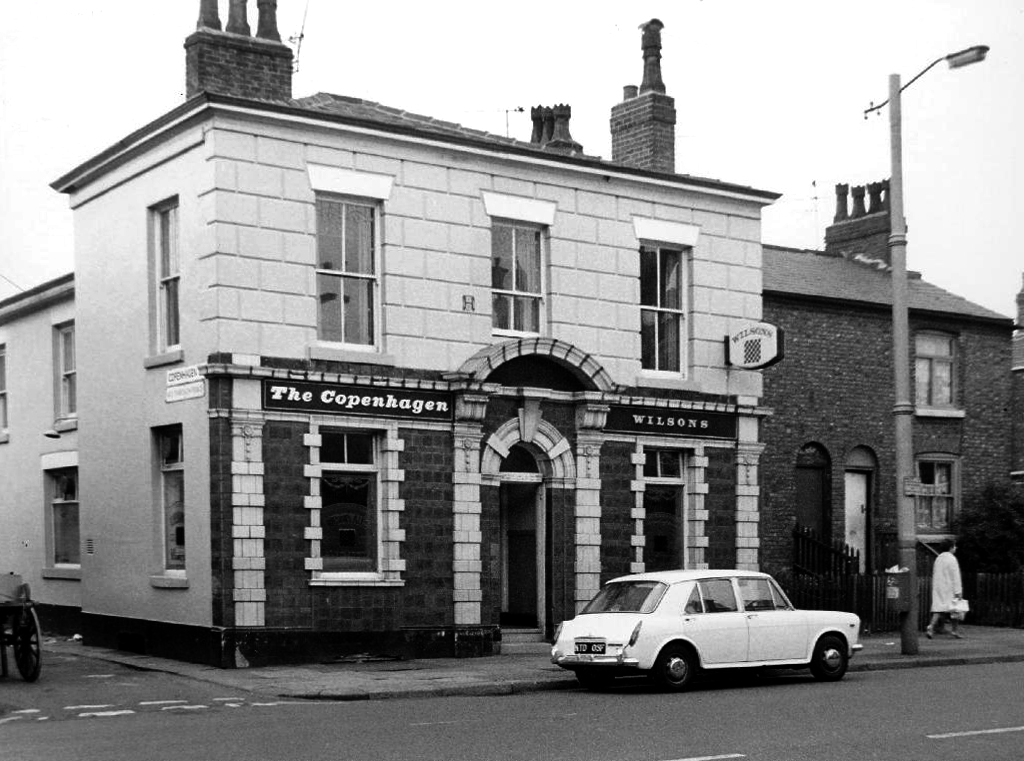
The Copenhagen – Wilsons

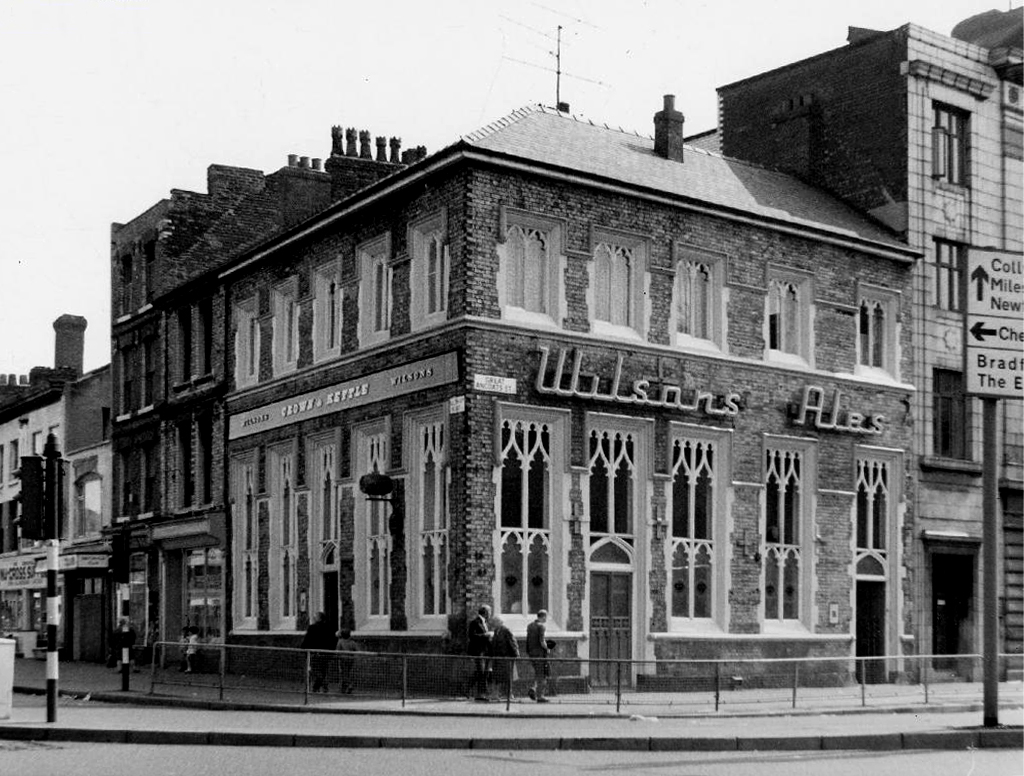
Crown & Kettle – Wilsons though now a free house.

I do remember the huge Winston Churchill relief in the Room and R100 Airship wooden panelling in the lounge. Also of note were the ornate plater work ceilings and pendulous lighting, much damaged as the pub awaited restoration.

Duke of York – Wilsons Free House

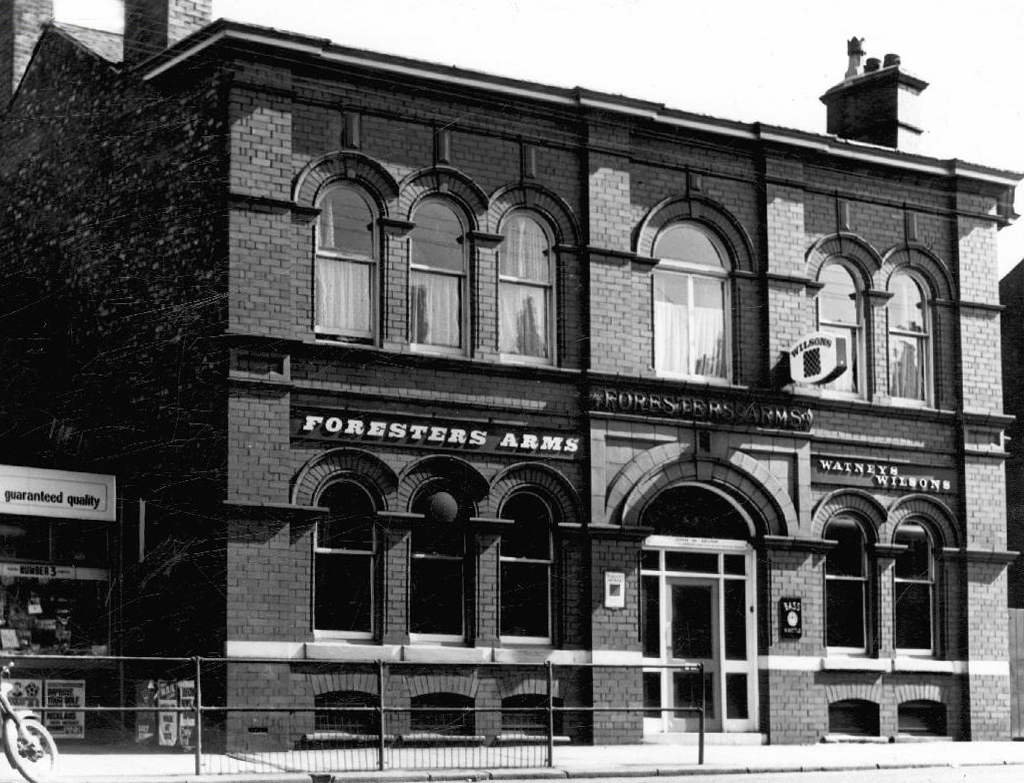
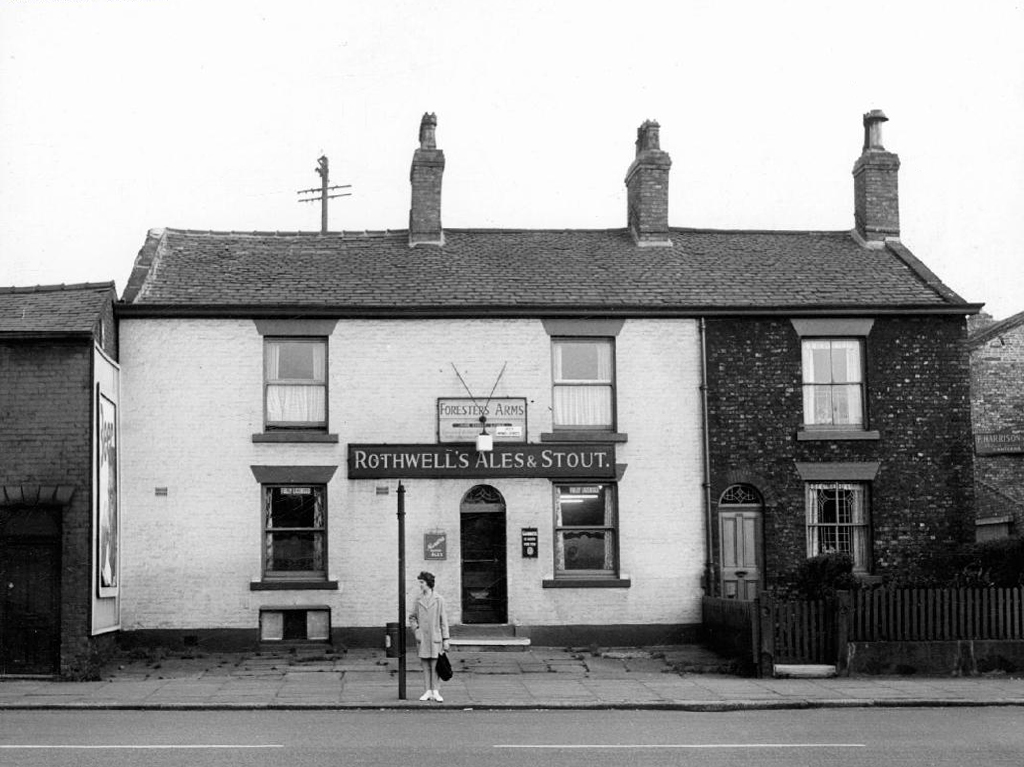
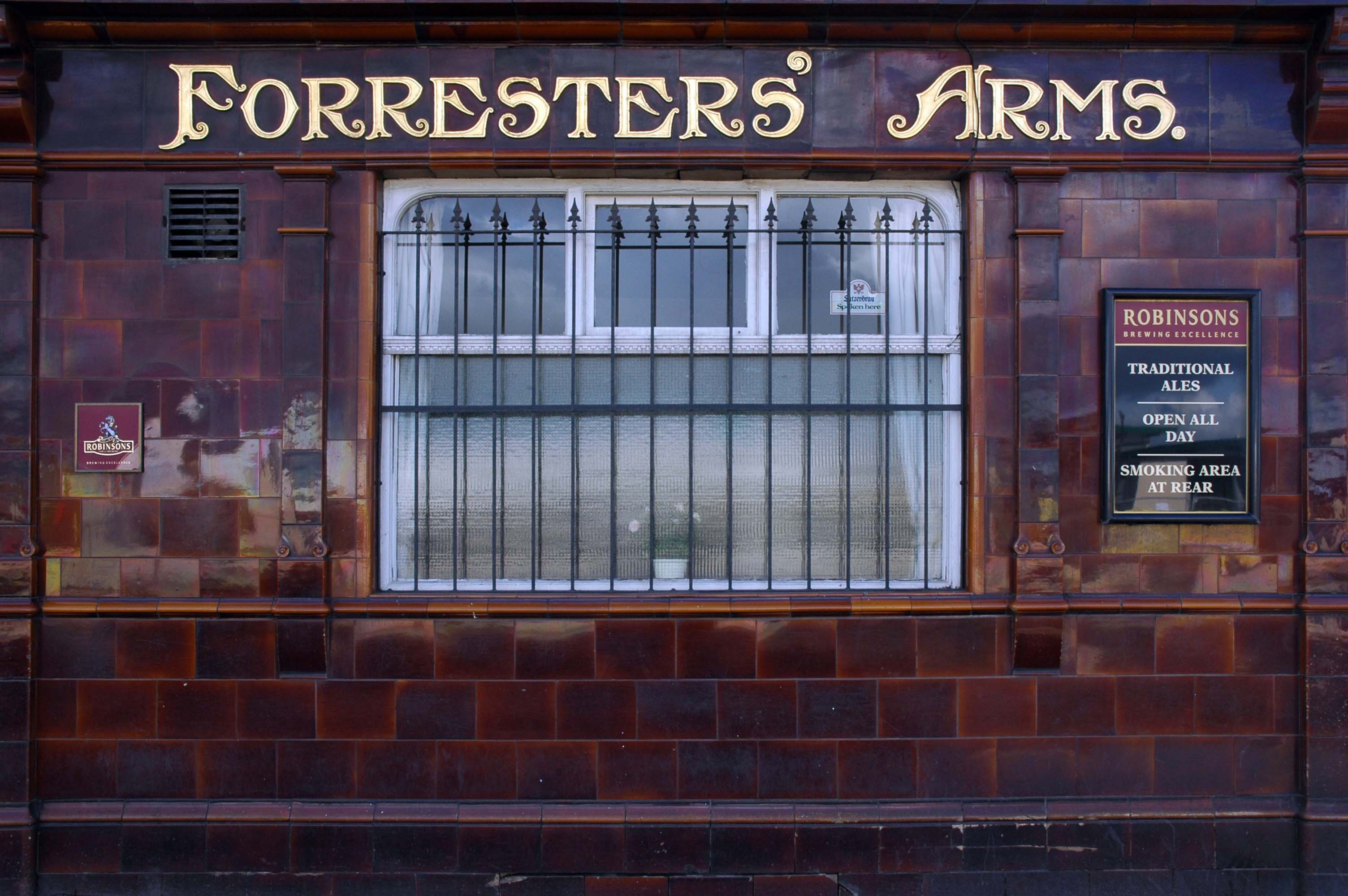
Foresters Arms – Wilsons

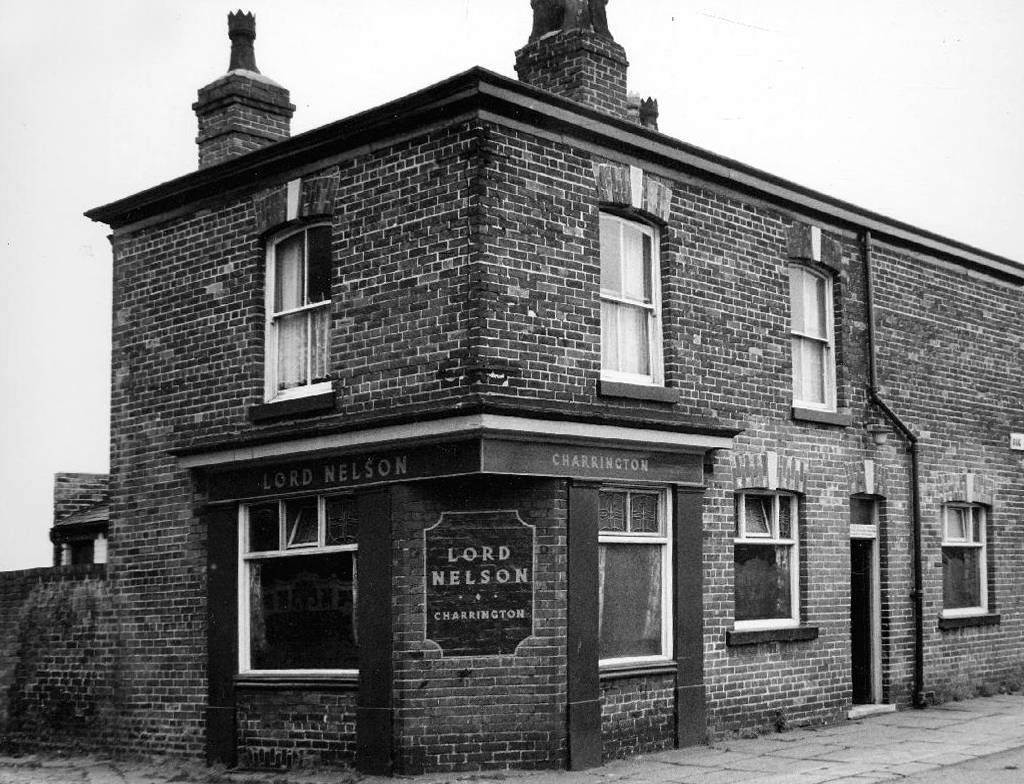
Lord NelsonCharrington

O’Connell ArmsWhitbread

Old Pack Horse – Wilsons

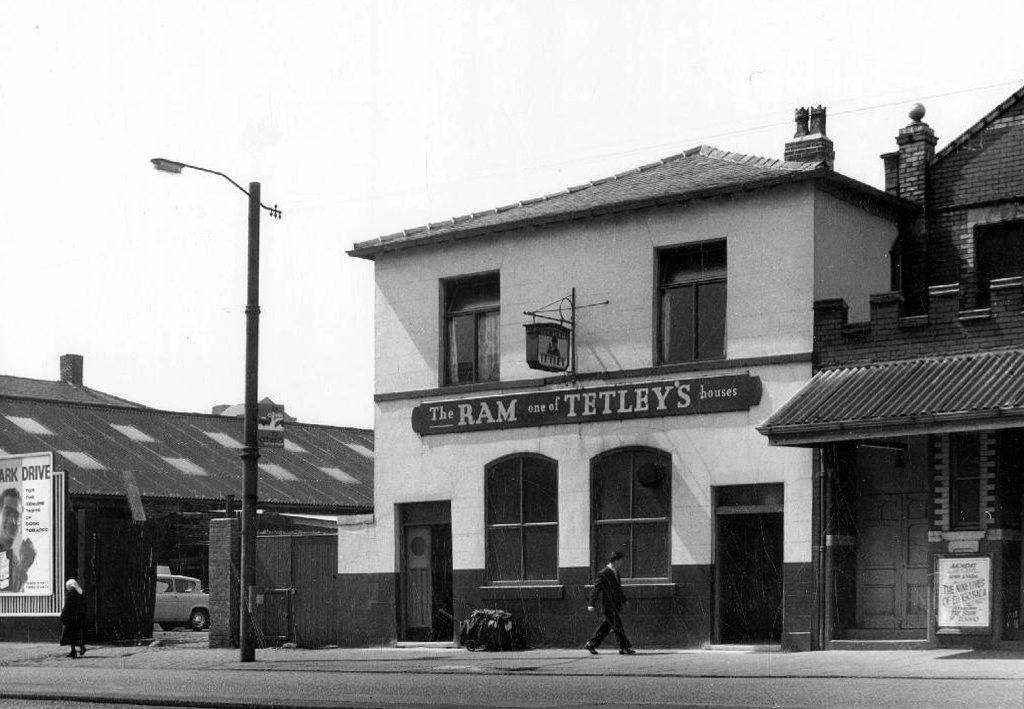
The RamTetley’s

Royal Oak Hotel – Wilsons

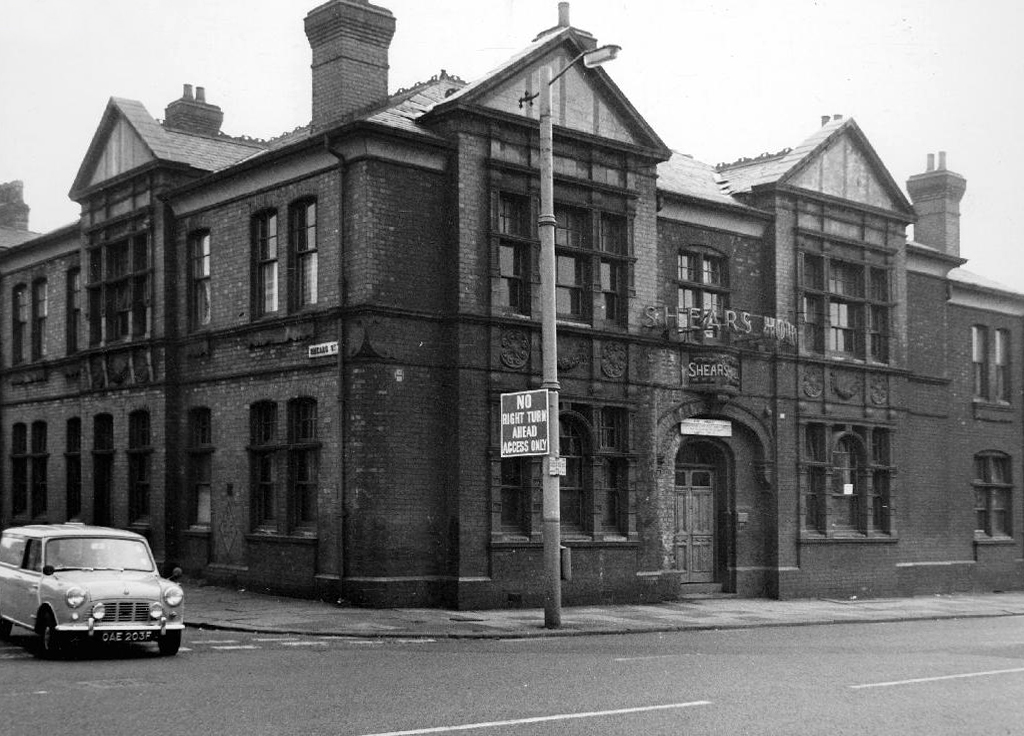
Shears Hotel

St Vincent Cornbrook

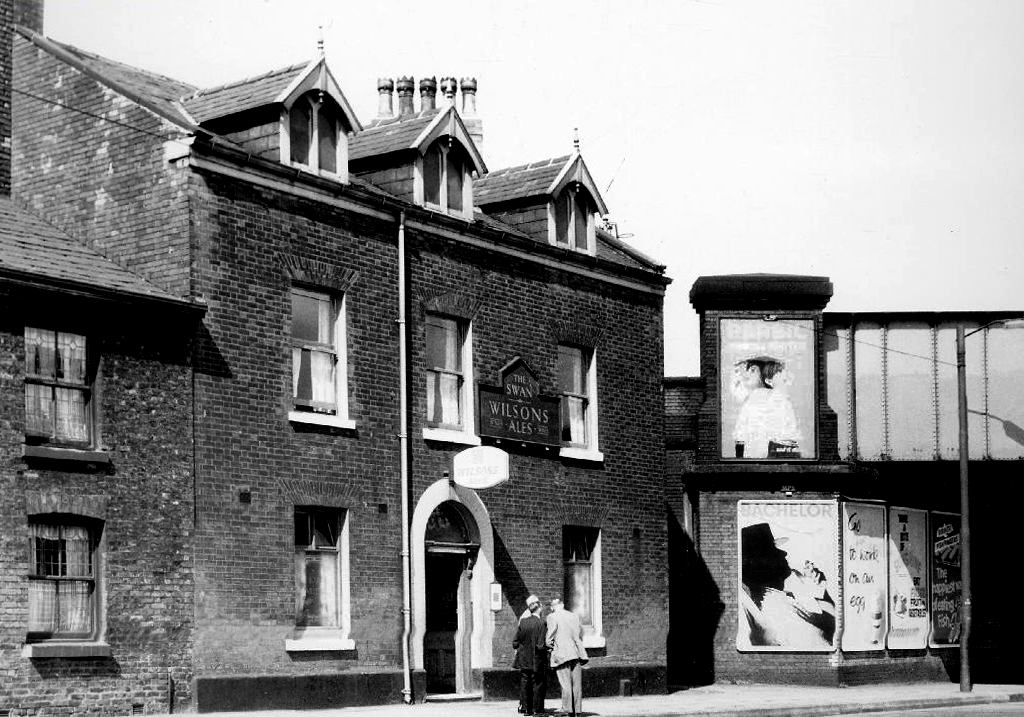
The Swan – Wilsons

Three Crowns – Wilsons

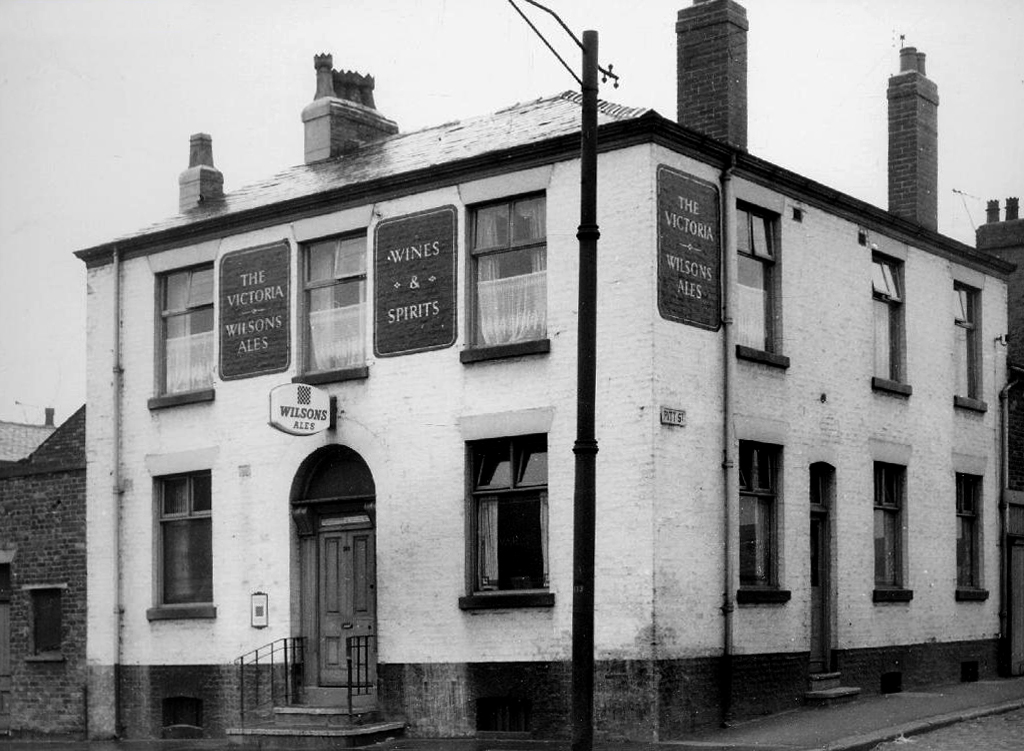
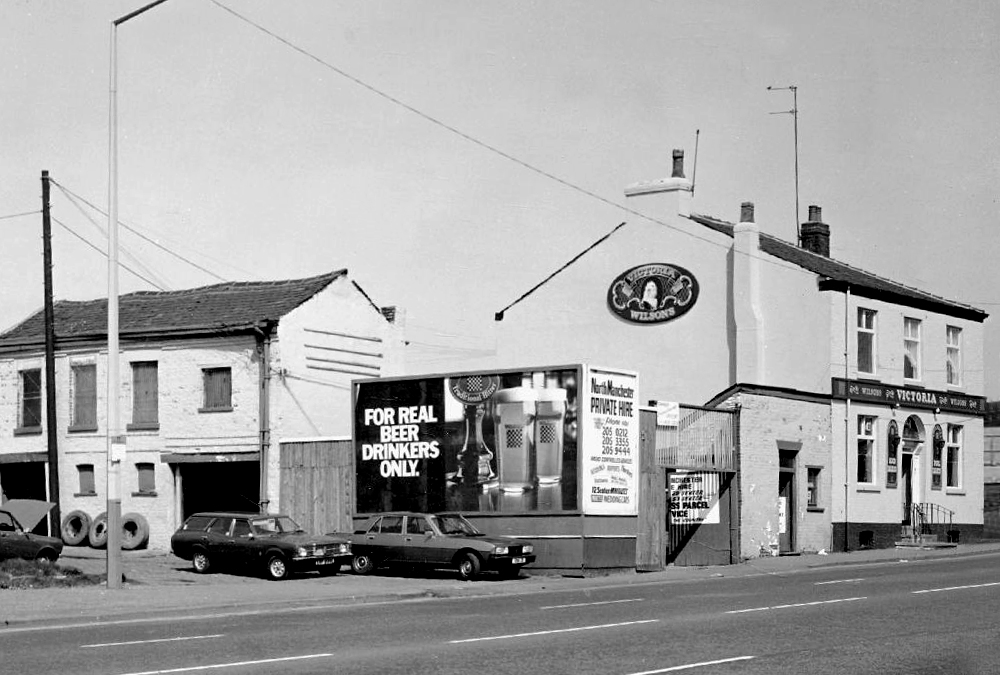
The Victoria – Wilsons

Vulcan Hotel Threlfalls

Wosons House?

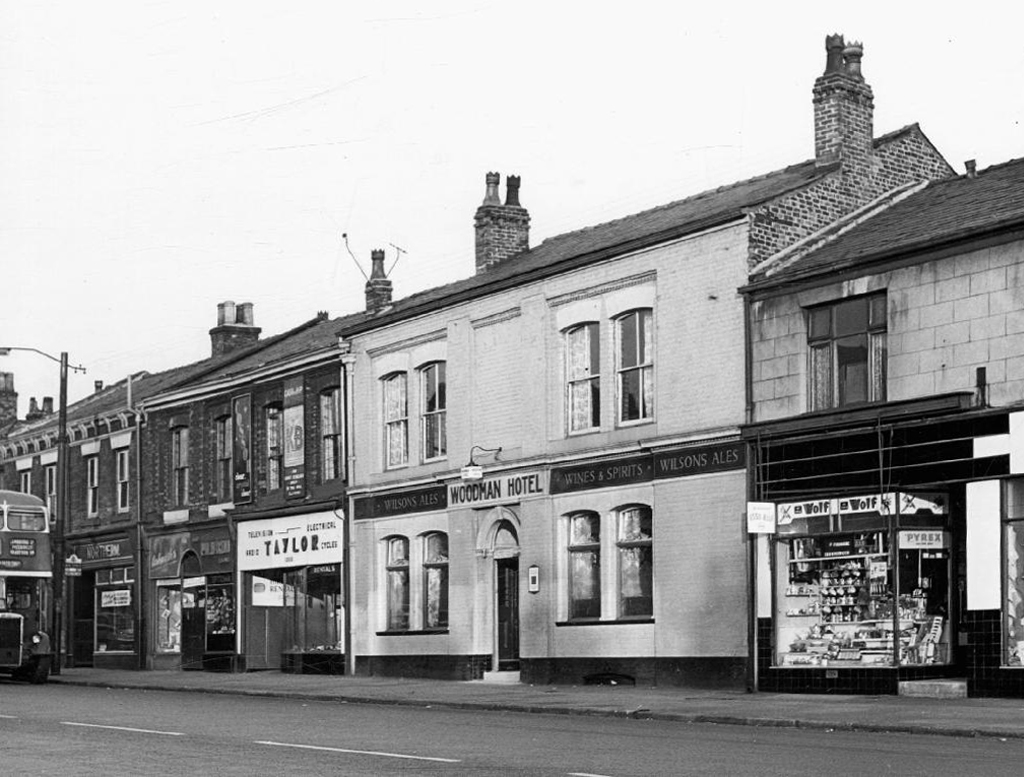
Woodman Hotel – Wilsons

All photographs from the Manchester Local Image Collection.
Manchester Arterial – A635

The road now begins slightly further south than it used to. Instead of starting on Fairfield Street in Manchester city centre, it begins immediately as the Mancunian Way ends, which at this point is the unsigned A635(M). The motorway flows directly into our route. There’s a TOTSO right at a set of lights, and we pick up the old alignment, which now starts as the B6469.

We can see the new City of Manchester Stadium on the left, site of the 2002 Commonwealth Games and now home to Manchester City FC. The road switches between S2 and S4 as it passes through the rather run-down urban areas of Ardwick and Gorton. A short one-way system at a triangular-shaped junction with the A662 leads onto a wider stretch as we near the M60 junction. This area is set to see significant industrial growth, with whole swathes of land either side of the now D3 road cleared and ready for development.

Sabre Roads

In 2014, having taken early retirement from teaching photography, I embarked on a series of walks along the arterial roads of Manchester.

See also Bury New Road and Cheetham Hill Road and Rochdale Road and Oldham Road and Ashton New Road

Hyde Road Stadium – Manchester

Hyde Road was a football stadium in West Gorton, Manchester, England.

It was home to Manchester City FC and their predecessors, from its construction in 1887 until 1923, when the club moved to Maine Road.

Billy Gillespie on the ball.

Before its use as a football ground, the site was an area of waste ground, and in its early days the ground had only rudimentary facilities. The first stand was built in 1888, but the ground had no changing facilities until 1896; players had to change in a nearby public house, the Hyde Road Hotel.

As a Chester’s house, a condition of the club’s official link to the pub was that supporters and club officials and players would sup Chesters ales, and in return Stephen Chesters Thompson of the brewery helped finance stadium improvements.

The move of MCFC to Maine Road in 1923 following a fire at the Hyde Road ground, didn’t adversely affect the Hyde Road Hotel and it continued to serve the West Gorton community and the once-bustling Hyde Road thoroughfare.  

As late as the 1980s, renamed the City Gates, it was a popular watering hole before the match for supporters travelling in from East Manchester.  It was kitted out in all sorts of MCFC memorabilia and was run by George Heslop, City legend of the 1960s, after he’d had the Royal George in town.

Sadly, as the community around it was decimated, the pub struggled and its last hurrah was as the City Gates theme pub.  The business failed in 1989 and the pub sat empty and rotting for twelve years until it was demolished, despite a half-hearted fans campaign to save it.  Two keystones from the Hyde Road Hotel reside in the MCFC memorial garden and are all that remain of this significant Manchester pub.

Pubs of Manchester

Sadly one of many Hyde Road pubs to bite the dust

By 1904 the ground had developed into a 40,000-capacity venue, hosting an FA Cup semi-final between Newcastle United and Sheffield Wednesday the following year.

The stands and terraces were arranged in a haphazard manner due to space constraints, and by 1920 the club had outgrown the cramped venue. A decision to seek an alternative venue was hastened in November 1920, when the Main Stand was destroyed by fire. Manchester City moved to the 80,000-capacity Maine Road in 1923, and Hyde Road was demolished shortly afterward. One structure from the ground is still in use in the 21st century, a section of roofing which was sold for use at The Shay, a stadium in Halifax.

Maine Road – which in turn closed on May 11th 2003, City losing 1-0 to Southampton

City are now at home at the Etihad – formerly the Commonwealth Games Stadium.

The area was also home to the Galloway Boiler Works – you can see the employees of 1900 here.

The northeastern end of City’s stadium was known as the Galloway End.

Bennett’s Iron Foundry also occupied the site – excavation of which, is currently taking place.

Bilclam furniture now sells for big money.

The foundry employed some of the club’s players, and the Galloway Boiler Works, supplied some of the materials to develop the Hyde Road ground.

Chorlton History

I had always known the area as the Olympic Freight Depot – seen from the passing train.

I cycled by the other day and the containers are long gone – the site is being cleansed to a depth of two metres.

Loitering by the gates, I asked if I may take some snaps .

Please y’self – so I did.

So what’s next on the cards, for this little corner of local history – set twixt Bennett Street and Hyde Road?

New homes is on the cards – and on the hoardings.

Plans have been revealed for a 337-home development on the Olympic Freight depot in West Gorton.

Brought forward by Sheffield-based Ascena Developments, the planning application to Manchester City Council outlines proposals for 191 houses and 146 apartments, split across two blocks.

Alongside the homes, the development would include a 3,000 sq ft circular community centre and café, shop, and a unit which is earmarked for a chip shop.

Place Northwest

However:

Kellen Homes has been granted planning consent to redevelop the thirteen-acre Olympic Freight depot on Bennett Street in Manchester into 272 homes. 

The developer, owned by Renaker founder Daren Whitaker, lodged plans for the West Gorton scheme last year following the withdrawal of an earlier and larger scheme drawn up by Sheffield-based Ascena Developments. 

So no chip shop, I assume?

Place Northwest

The site will require significant remediation, impacting the scheme’s viability, the report states.

As a result, no affordable housing is proposed.  

Thanks.

Collyhurst Cheetham Circular

It’s Friday, the rain has almost stopped and I have a job to do.

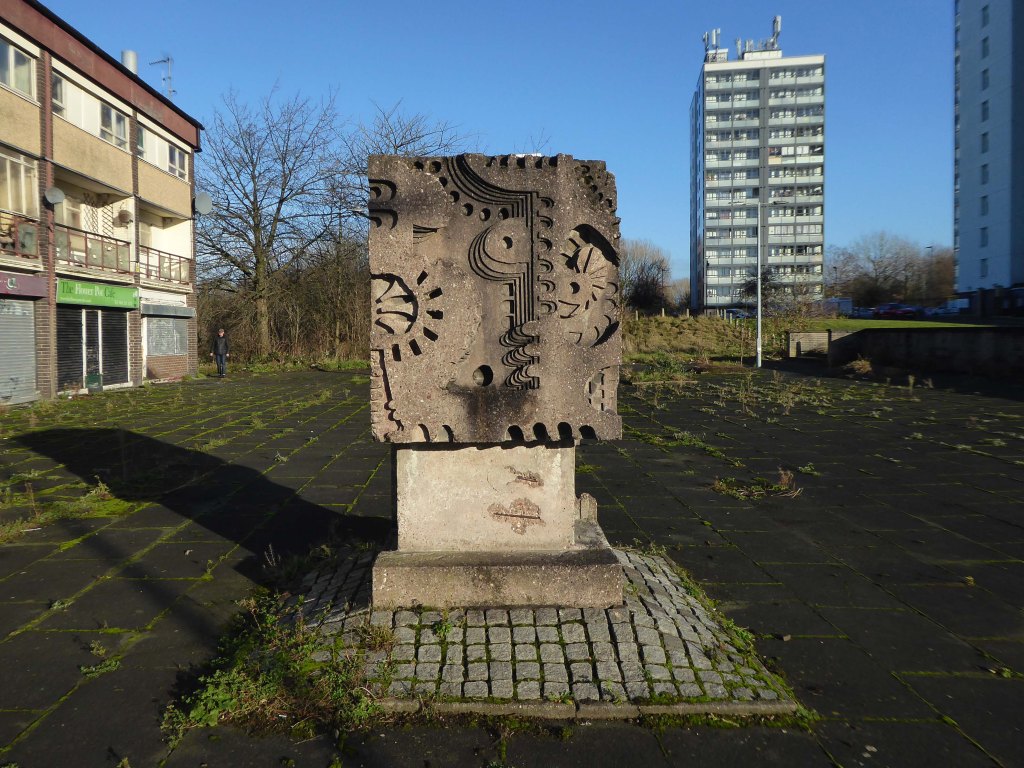
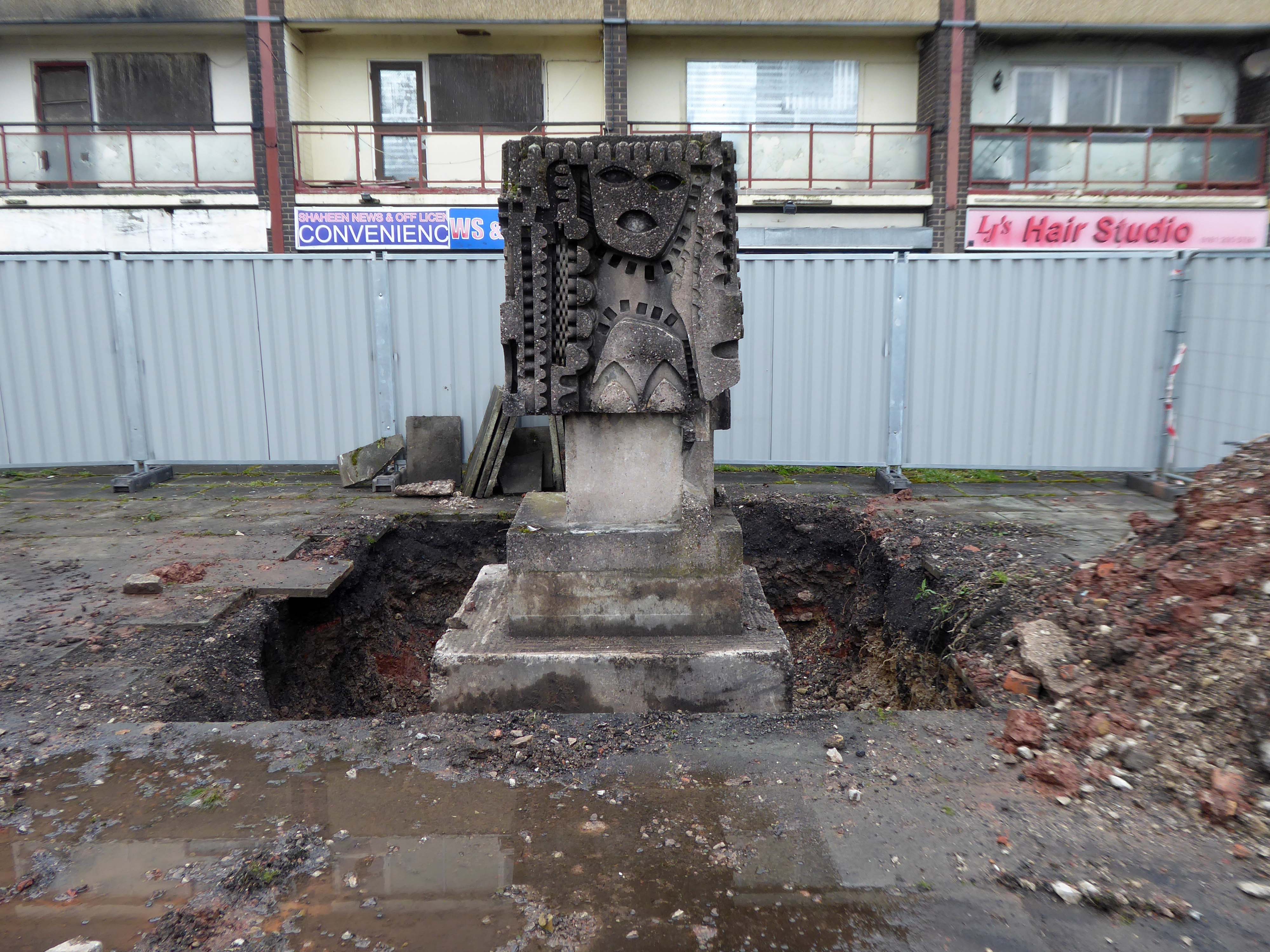
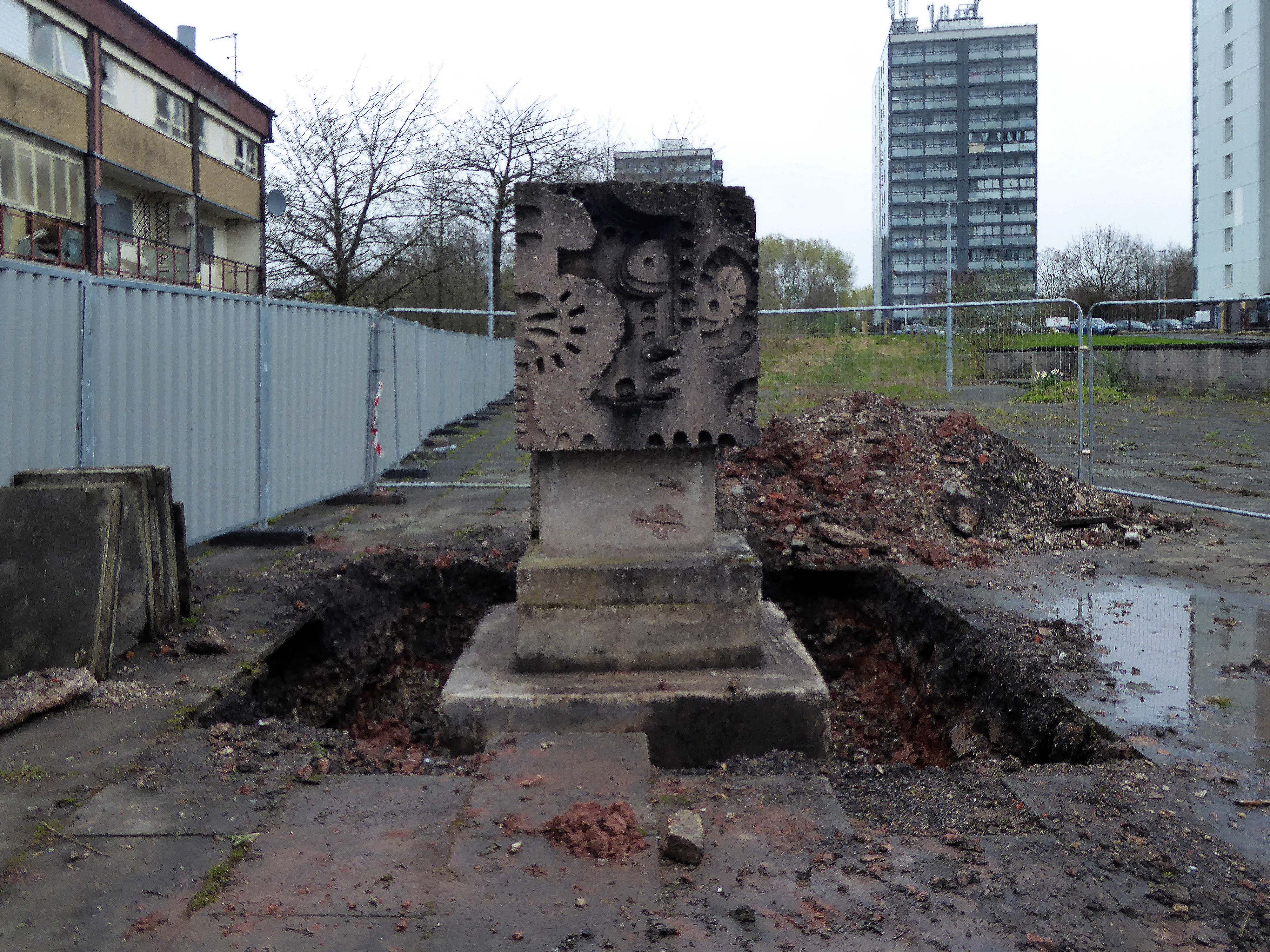
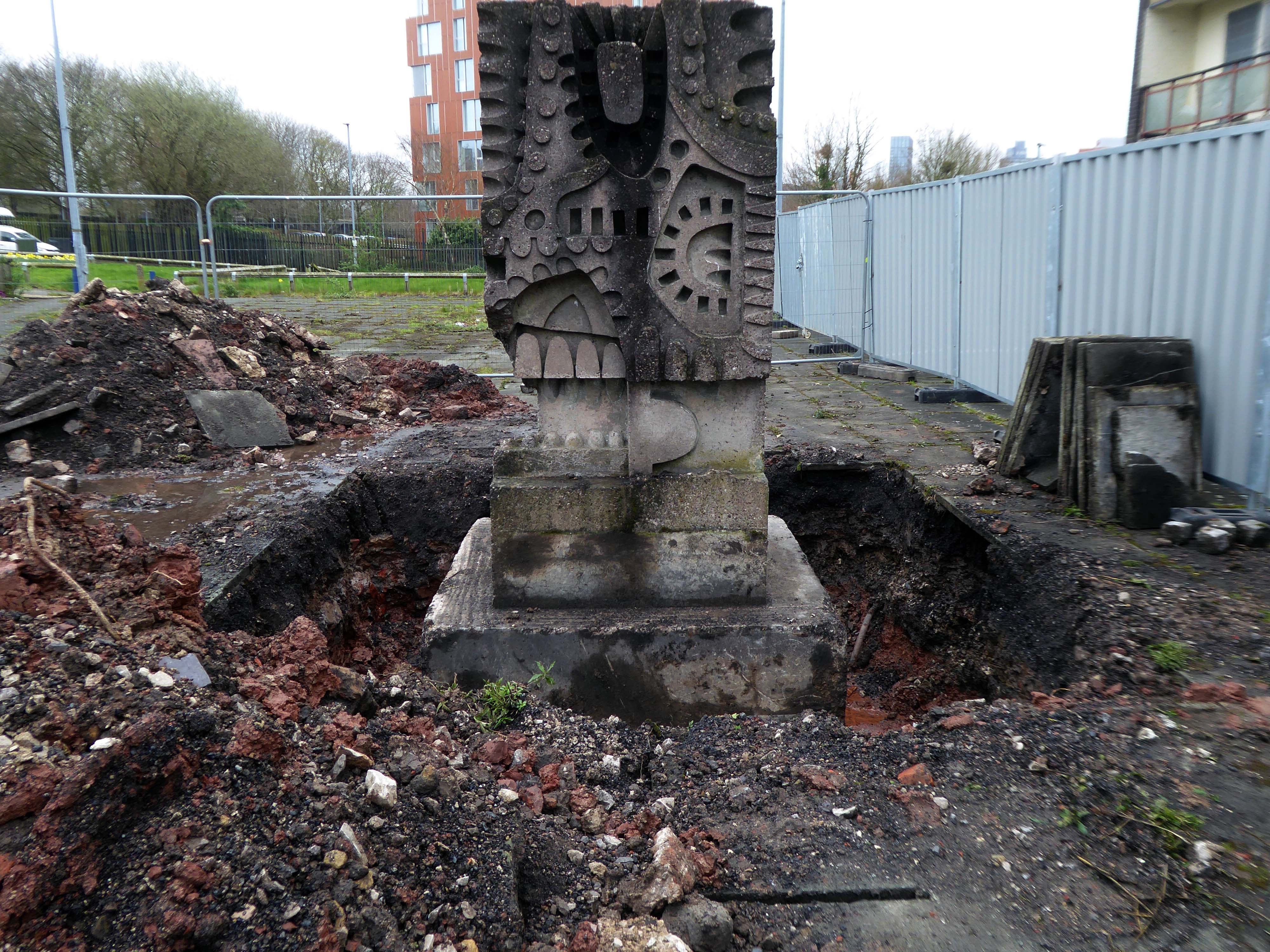
The putative William Mitchell totem in Eastford Square is being moved.

Having taken a particular interest in this particular piece of public art for some time – I need to go and take a little look.

But what will we see along the way, as we hasten along Rochdale Road?

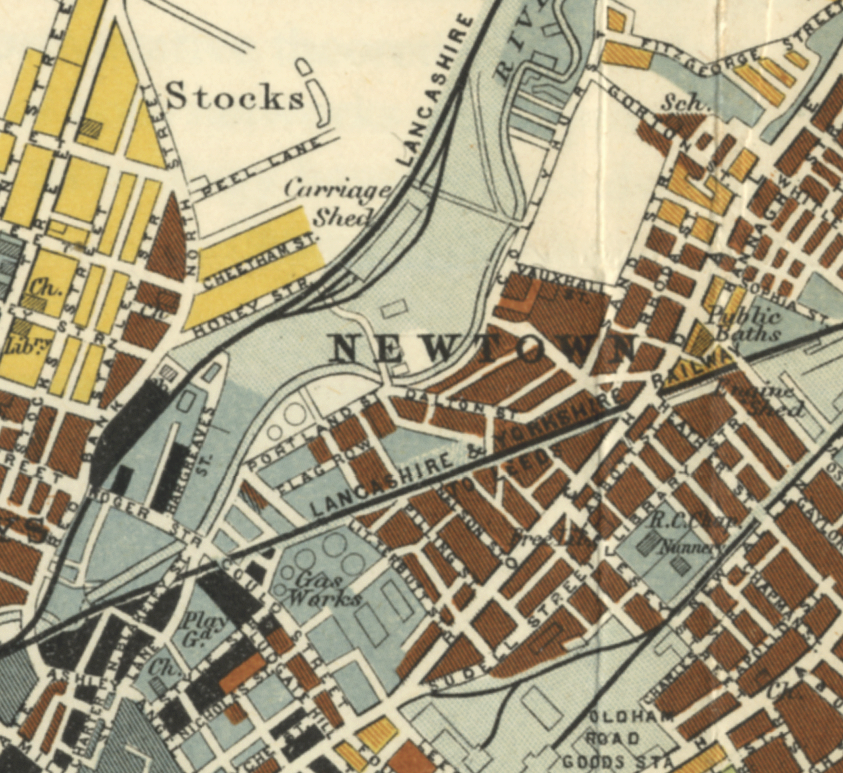
Which once looked like this, way back when in 1904.

Though some things inevitably come and go, as some things are prone to do.

The city is undergoing yet another reinvention as Manchester becomes – an attractive place to invest and do business.

See, I am doing a new thing!

Now it springs up; do you not perceive it?

I am making a way in the wilderness and streams in the wasteland.

Isaiah 43:19

Once there was a gas works here – adjoining Gould Street, seen here in 1958.

The Gould Street Gas Works was a gas manufacturing plant located in Manchester, England. Originally built in 1824, the plant was operated by the Manchester Corporation Gas Department and was in operation from 1833 to 1969. It was named after the street on which it was located, which was named after John Gould, who was a prominent Manchester businessman in the 19th century.

Derelict Manchester

The Gasworks New Town neighbourhood is one of seven envisioned by the £4bn Victoria North masterplan. It will feature nine buildings ranging from 8 to 34 storeys. The 6.6-acre site has most recently been home to a car park but the green development will overwhelmingly prioritise walking and cycling over driving. It will result in tens of millions of pounds being pumped into the city’s economy over the lifetime of the development.

Plans for a trailblazing city centre regeneration scheme that will create more than 1200 homes has been approved by Manchester City Council.

MCR Property

A total of 85 of the 1200, will be affordable homes available through Shared Ownership. 

Though as of March 31st 2023 ground is yet to be broken, no signs of the:

New centre of gravity for central Manchester that will create thousands of jobs and inject tens of millions of pounds into the city’s economy.

So you zig-zag wanderers, make the most of these wide open expanses of affordable car parking, while you can.

The future may yet be here today – or the next.

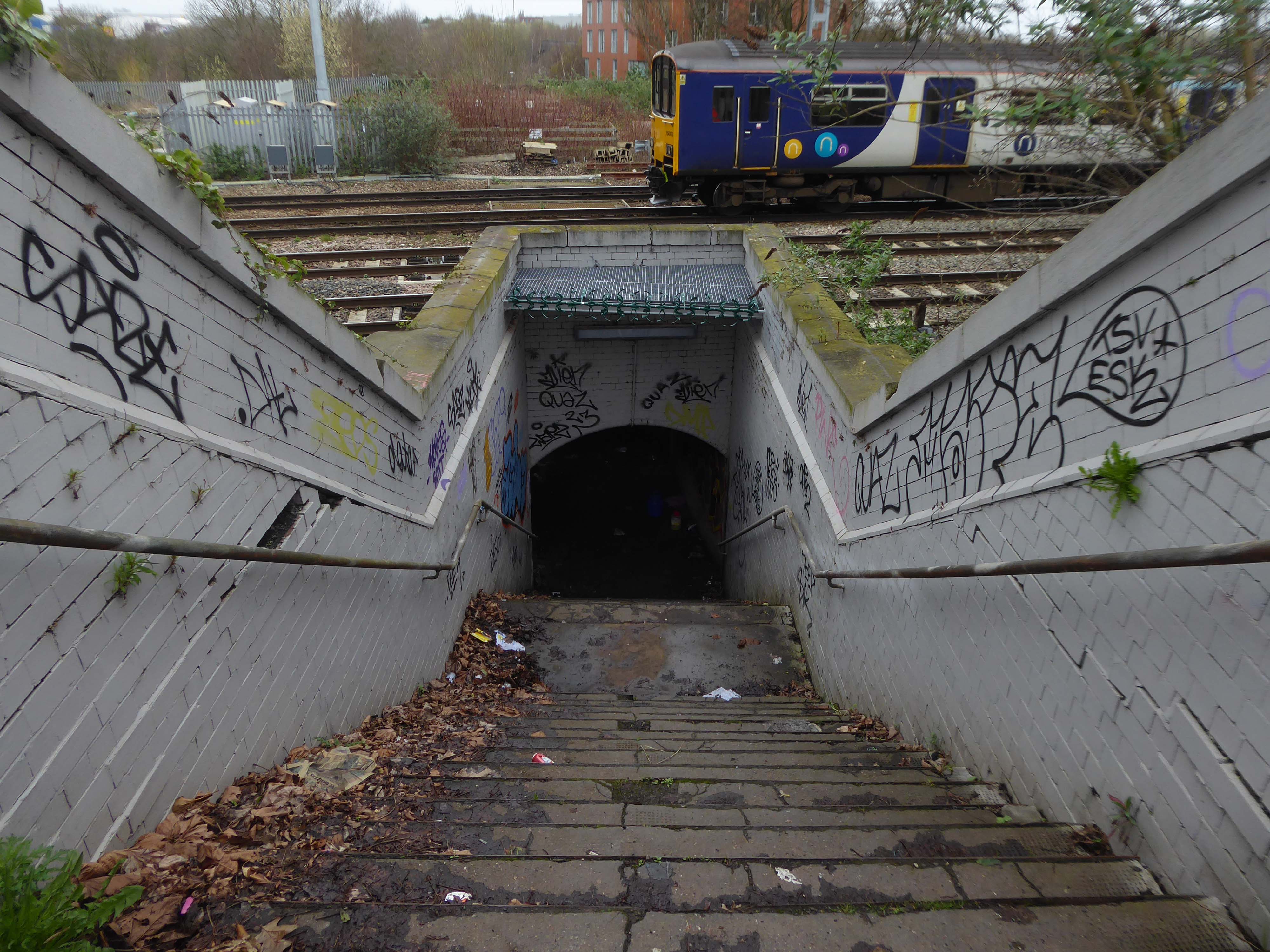
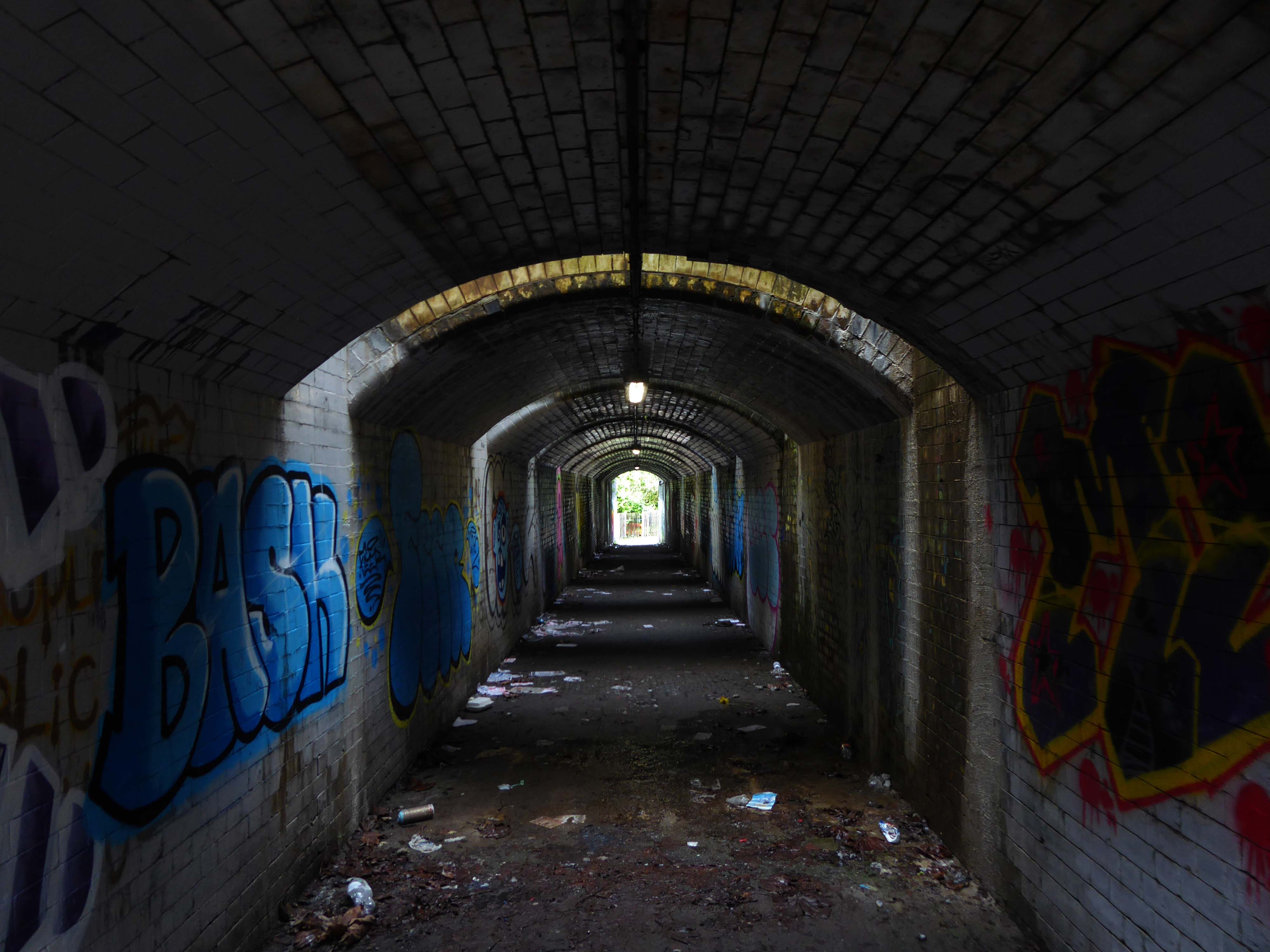
Let’s duck under the railway, through this sad damp pedestrian tunnel – the domain of the cash strapped daytime drinker, transient tagger and disaffected leaflet distributor.

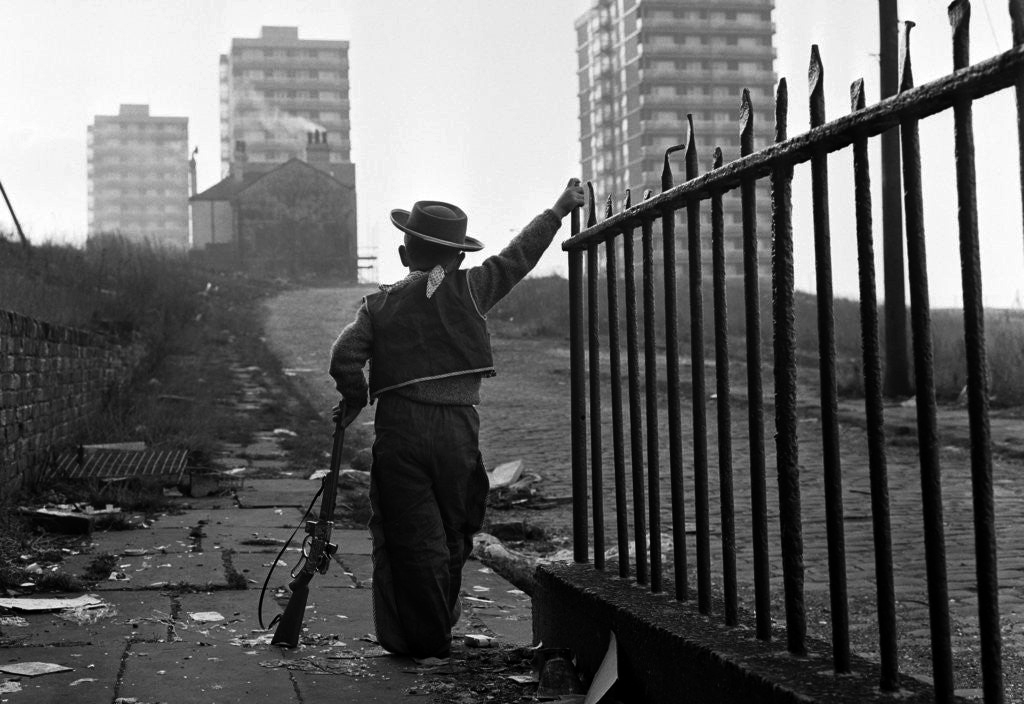
Next thing you know you have emerged into the daylight on Dalton Street – we have been here before seeking the Collyhurst Cowboy.

Photograph: Dennis Hussey

Onwards to Eastford Square.

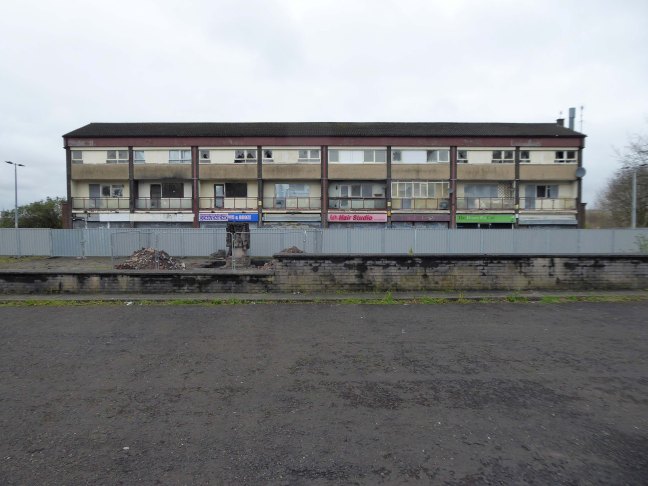
The shops and maisonettes are due to be demolished any day now – no longer to gaze open-eyed upon the former quarry of Sandhills.

Around the front the diggers have been a digging – digging up around the base of the totem.

The work is to be re-sited by the nearby tower blocks.

The end is nigh.

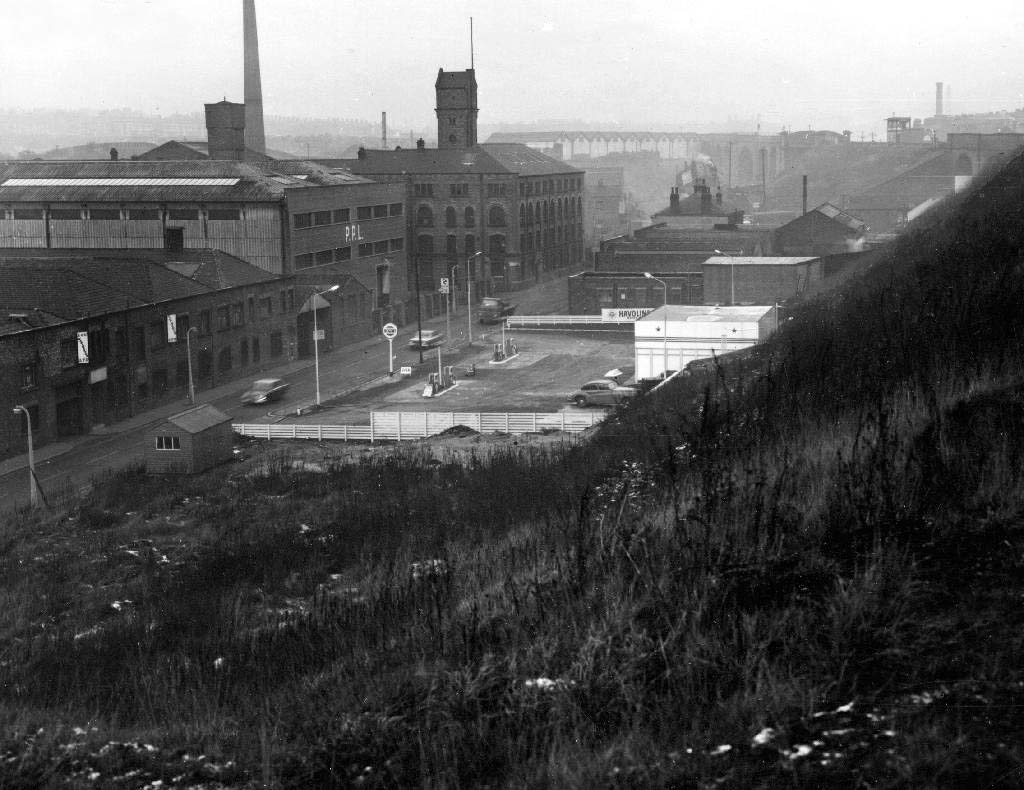
Heading now for Collyhurst Road and the Irk Valley – seen here in 1960.

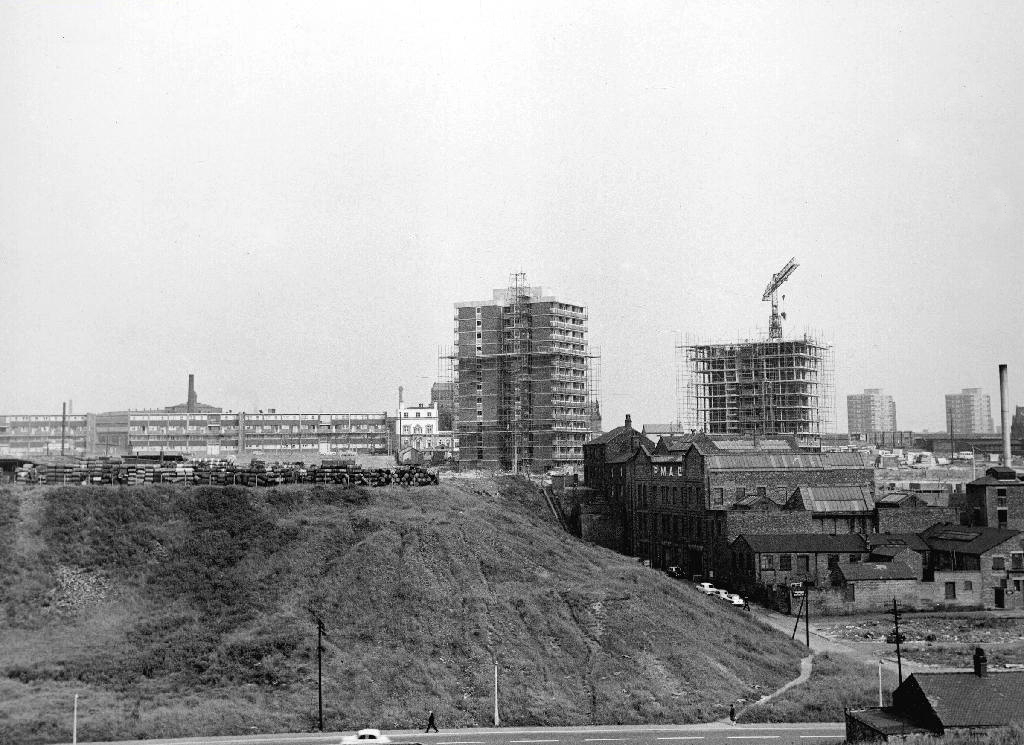
Looking back on the Square and the Dalton Street flats – Humphries, Dalton, Roach, Vauxhall and Moss Brook Courts under construction.

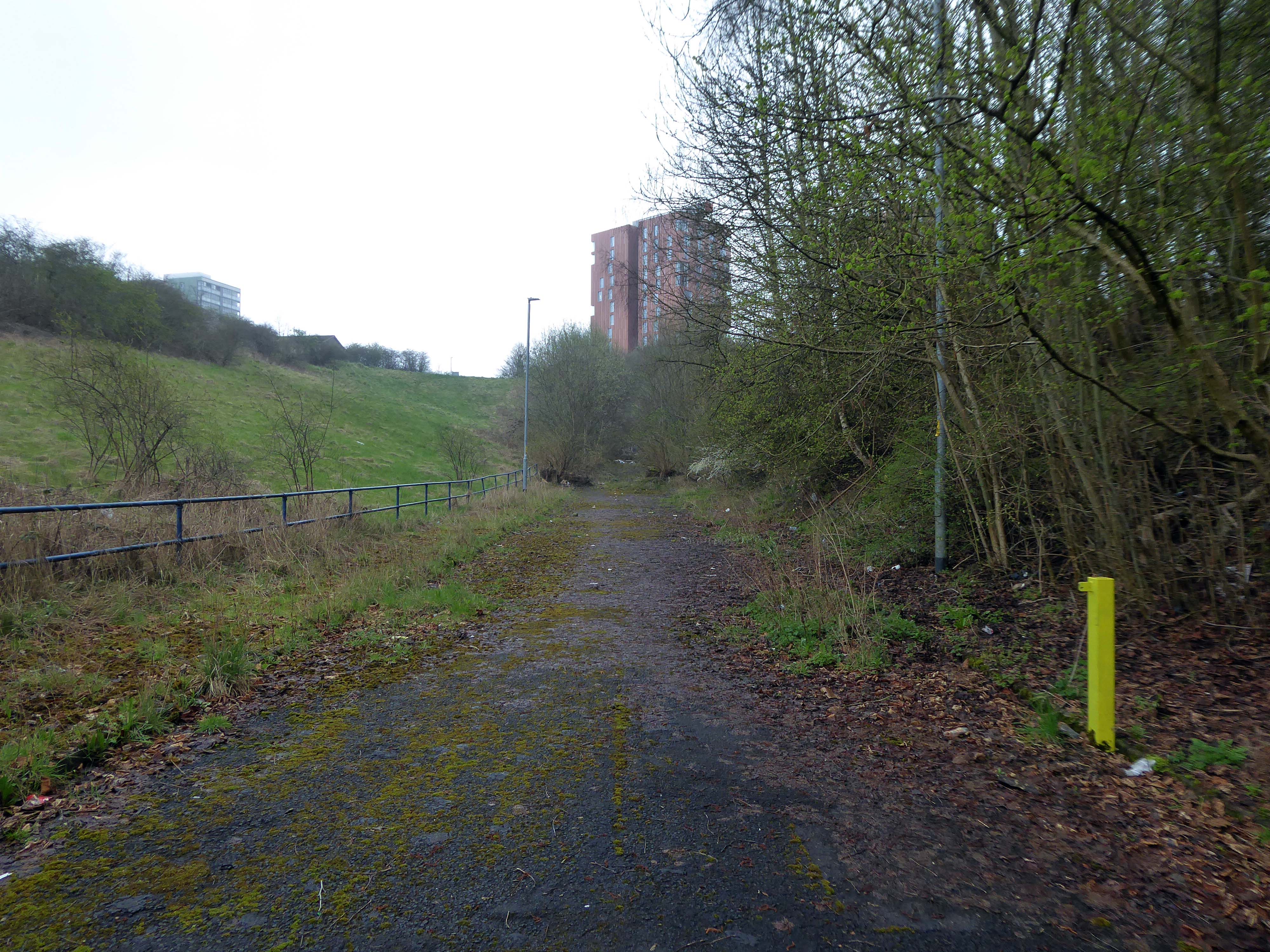
Vauxhall Street now but a shadow of its former self – the last traces of industry long gone.

Reclaimed over time by trees and dense underbrush.

Crossing Collyhurst Road and up and over the railway via Barney’s Steps also known as the Lowry Steps.

LS Lowry

By the late 1950’s the whole of this area which we called Barney’s Tip became a refuse tip for Manchester City Council.

Britain from Above

The area is in the process of being reconfigured as a delightful country park.

The investment will also help develop an initial phase of the planned City River Park incorporating St Catherine’s Wood as part of a network of public open space, including improvements along the River Irk and works to improve flood resilience, unlocking the potential of the Irk Valley that will characterise the wider Northern Gateway project.

About Manchester

The first phase of the City River Park will begin work to transform former railway architecture to develop the new Viaduct Linear Park north of Victoria Train Station, new stepped public realm space – Red Bank Terraces, along with new green space by the River Irk and the key improvements to St Catherine’s Wood.  

Manchester Gov UK

The Victoria North Express is coming your way!

Pressing on we pass the Showman’s quarters.

Collingham Street is lined with trucks, trailers, stalls and mobile homes.

But there’s nothing temporary about this Cheetham Hill neighbourhood; most residents have lived here for years and many plan to spend the rest of their lives here.

Founded more than forty years ago, it was created by the Showman’s Guild of Great Britain – and it’s reserved exclusively for fairground workers both retired and current.

Built on Queens Road tip, a former rubbish dump, and rented out by Manchester Council, many of the 52 homes belong to older retired showmen or families for whom an itinerant lifestyle has become more challenging.

It’s a close-knit community with a unique shared history.

MEN.

Emerging eventually onto Rayburn Way.

Home to the Eden Girls Leadership Academy and Eden Boys Leadership Academy.

And a whole host of delightful light industrial units.

Let’s all go west – along North Street.

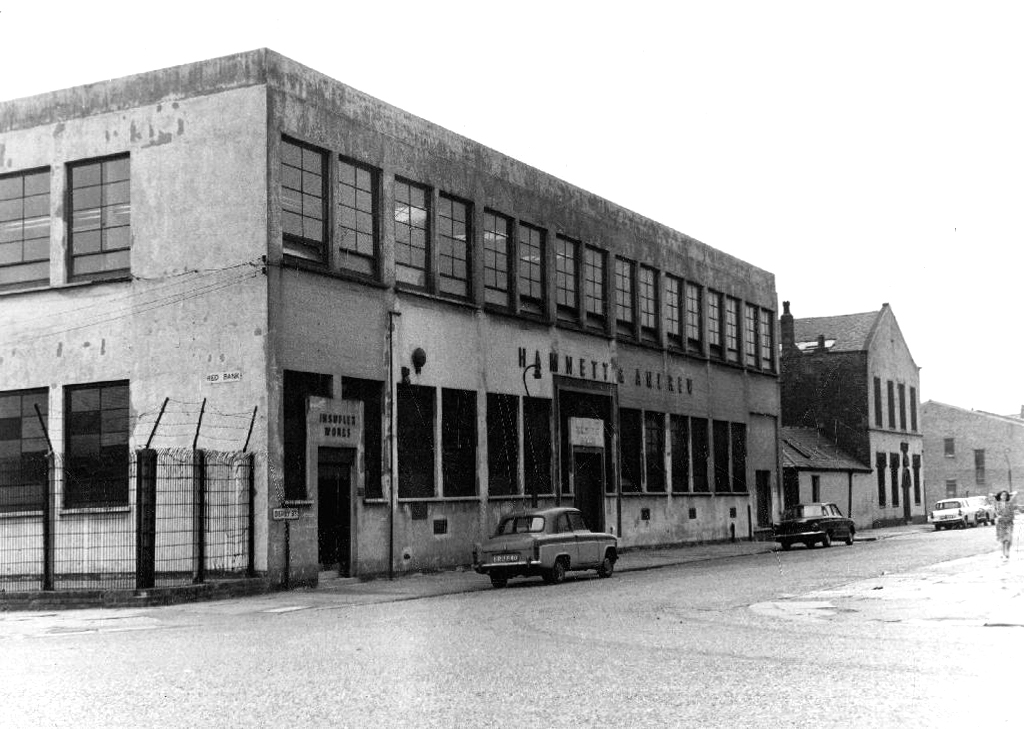
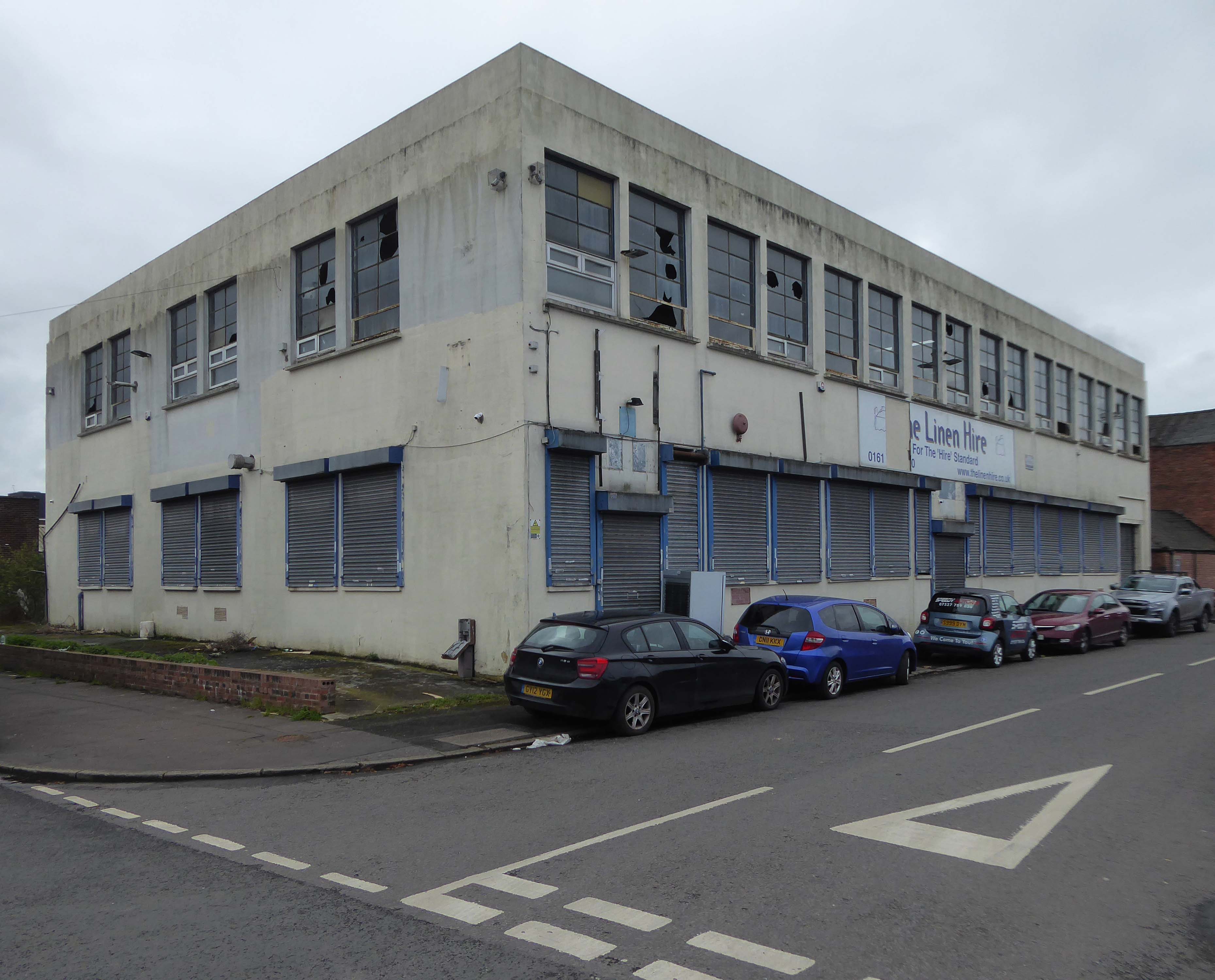
On the corner of Derby Street and Honey Street we find Hamnett & AndrewInsuflex Works

Later transformed into Linen Hire, though I fear that further linen hire may well be in abeyance, on a permanent basis.

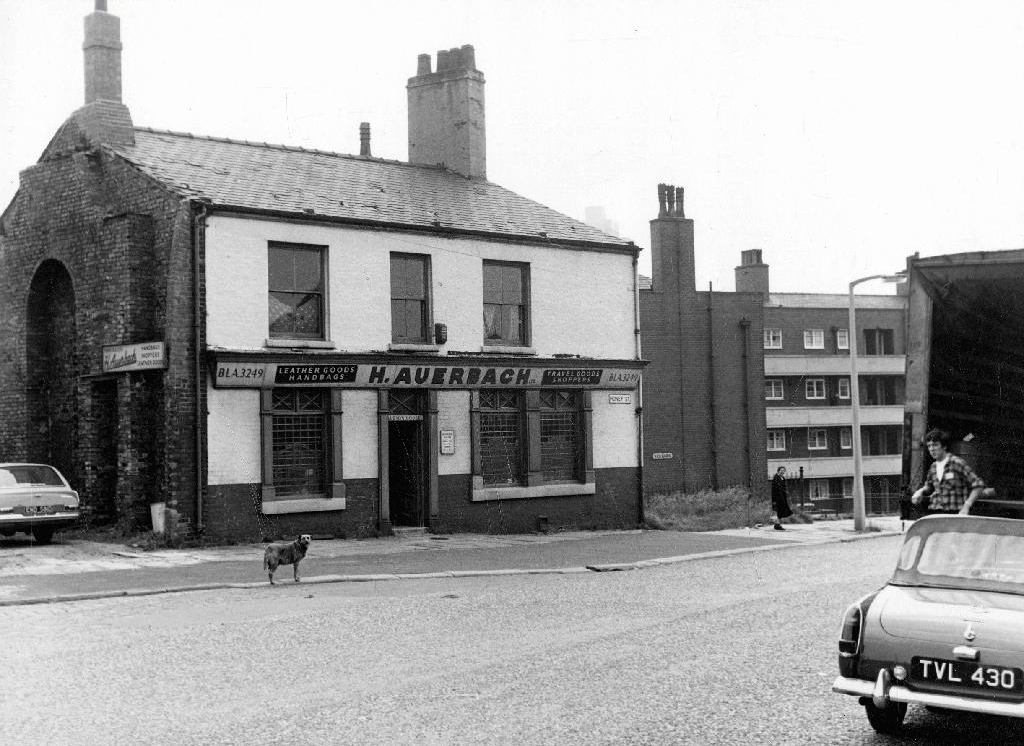
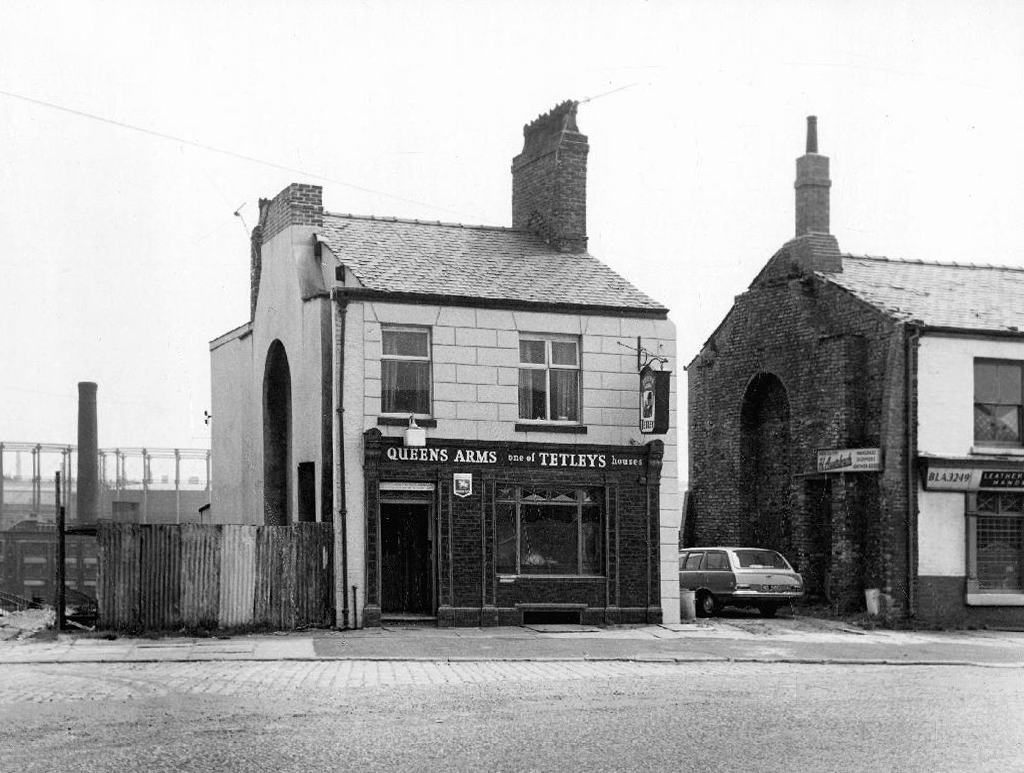
What was happening at the Queens Arms back in 1966?

These were the older premises.

Then next door, the newer premises.

Photo: Alison G

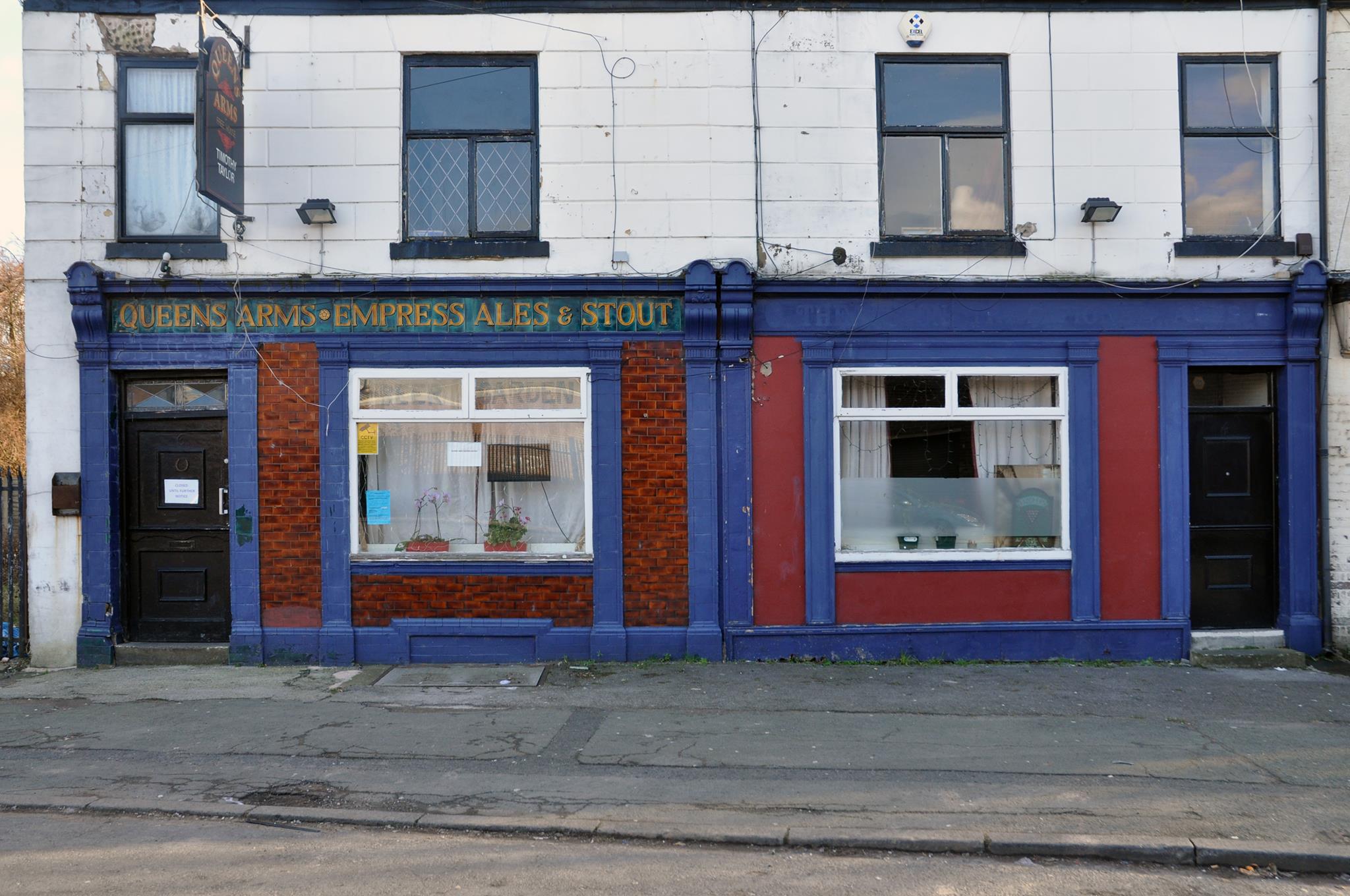
The Queens Arms was held in high regard amongst the real ale crowd and had been a regular fixture in the Good Beer Guide.  

As recently as 2007 it was named the City Life Pub of the Year, 

Empress Brewery Co Ltd – 383 Chester Road, Old Trafford.

Registered as above May 1896 – 236 public houses. 

Acquired by Walker Cain Ltd. 1929 and brewing ceased.

Brewery History

The pub was extended in 1987.

Seen here in 2015 closed for the foreseeable.

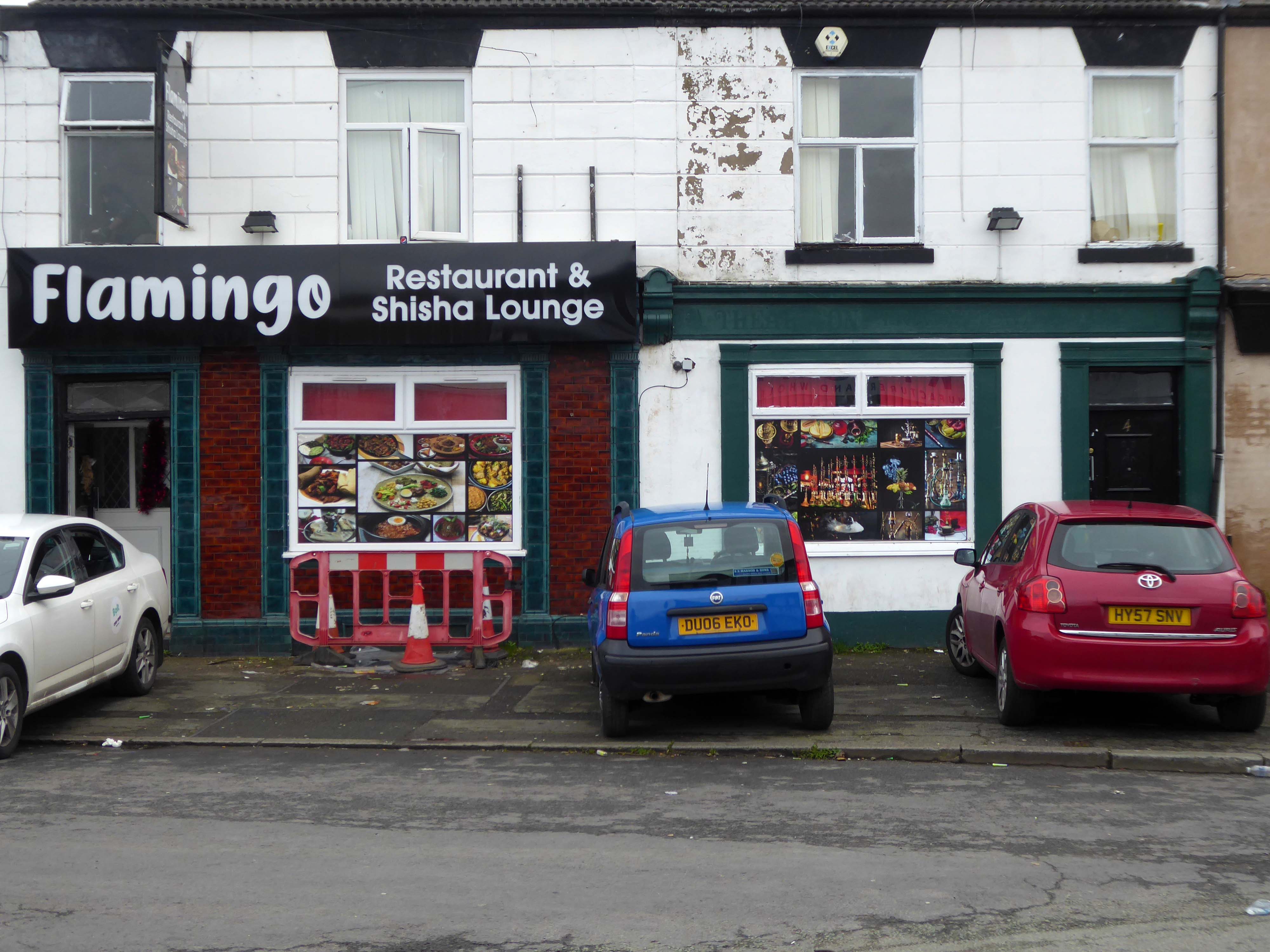
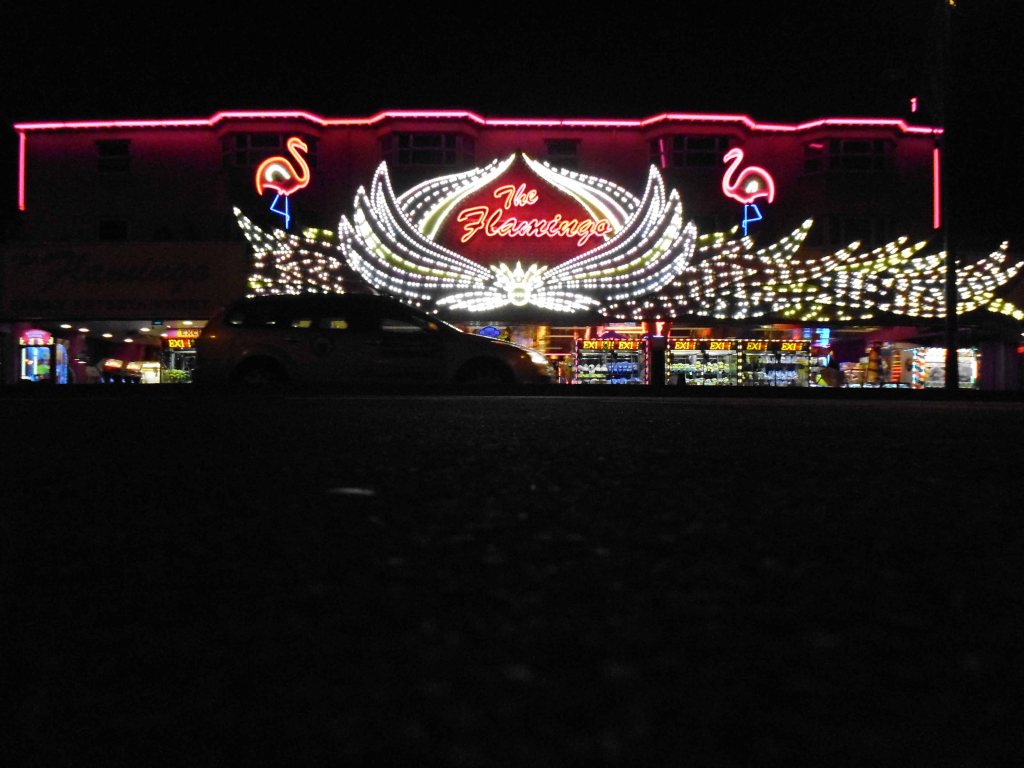
Recently becoming Flamingo – well strike me pink!

Though not without its own particular issues it would seem, according to the MEN.

The licensing out of hours team has received noise complaints relating to the premises which was found to be open beyond permitted hours when visited. Officers also identified breaches of the Health Act during inspections in which people were seen smoking shisha pipes in an enclosed extension at the back.

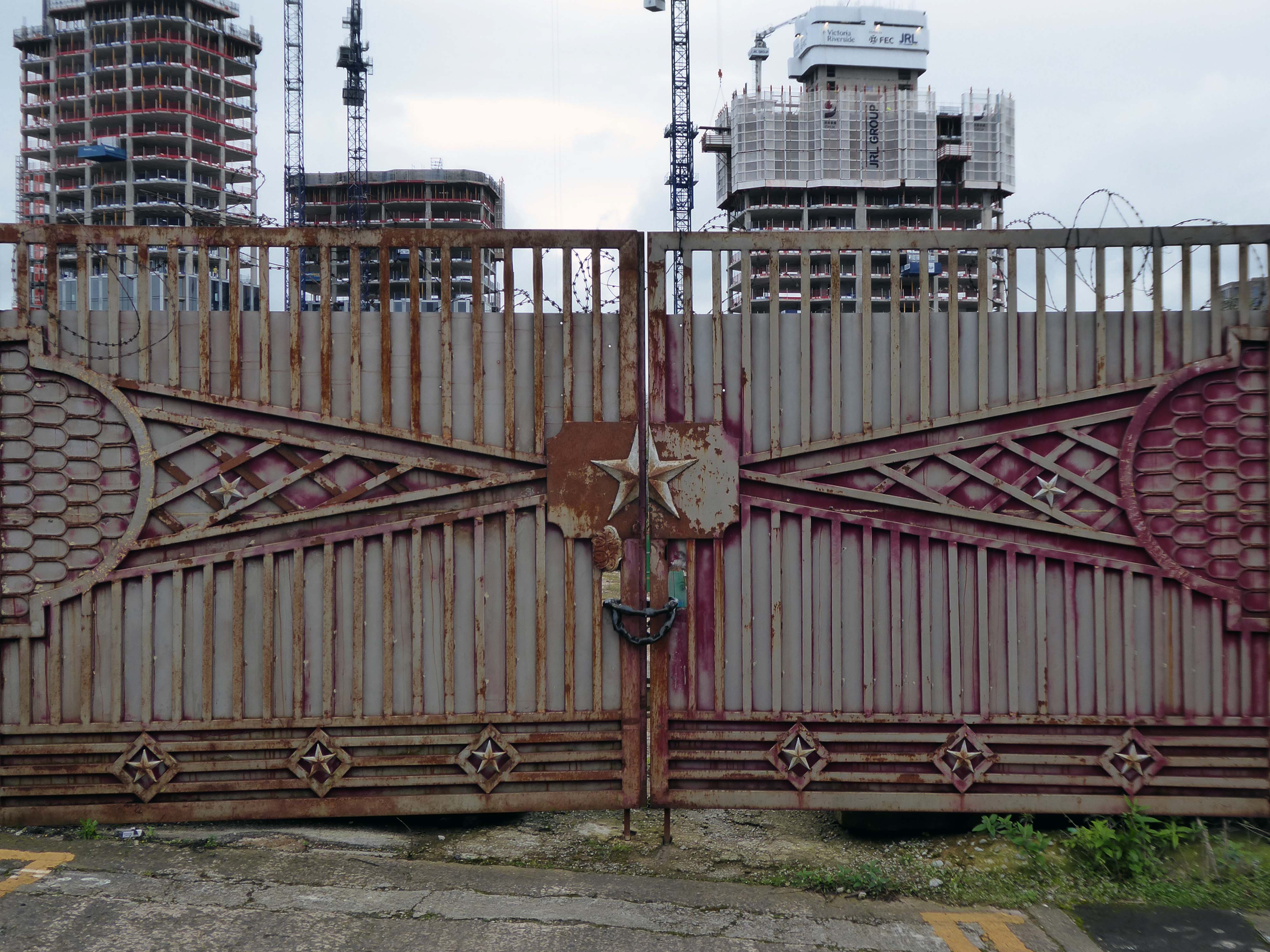
We will leave the Flamingo be and head back into town – but not without giving a nod to this confusing collision between this self-made scrapyard-man chic gate and the ever changing skyline of overheated urban regeneration.

The new creation has come: The old has gone, the new is here!

Corinthians 5:17

Archival photographs – Manchester Local Image Collection

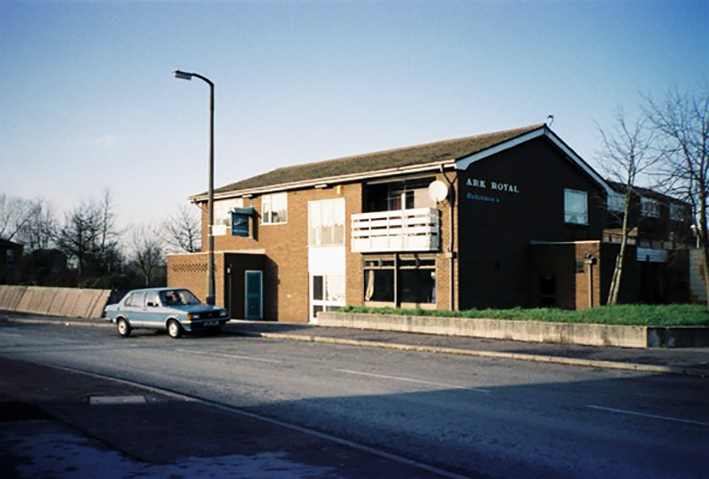
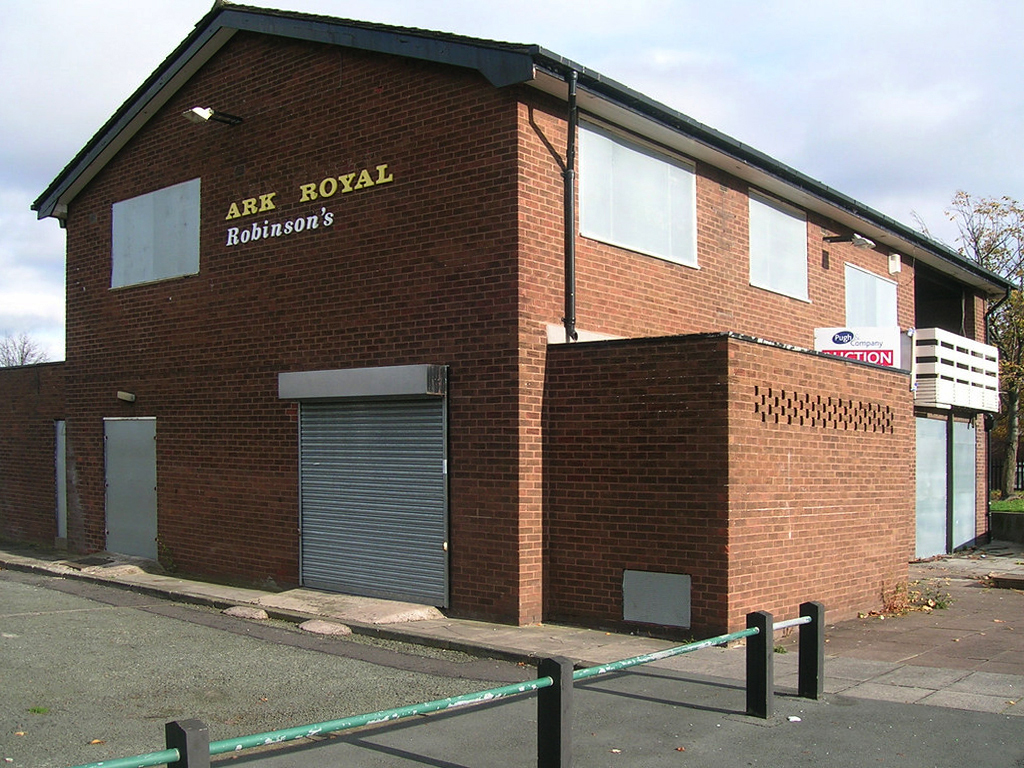
The Ark Royal – Harpurhey

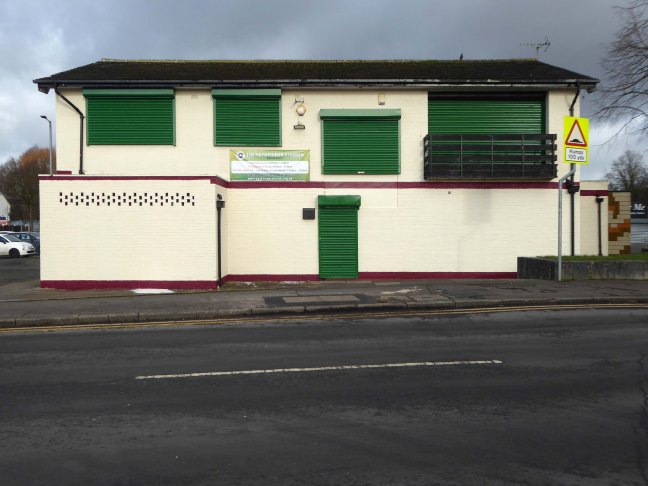
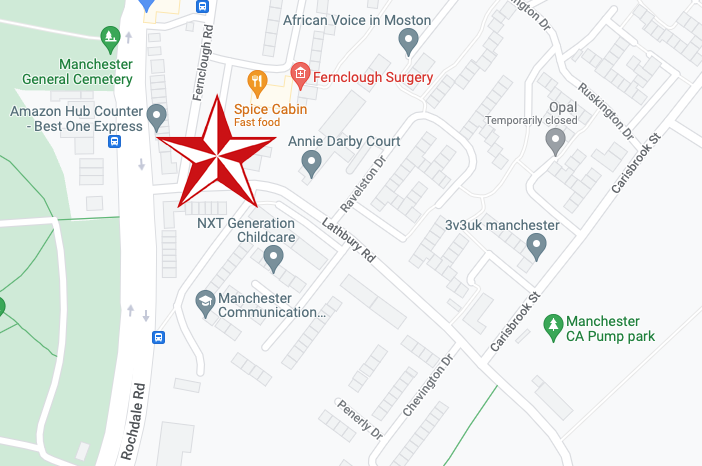
Lathbury Road Harpurhey M9 5SY

Looks to me as though the pub was launched in the 1960’s along with the surrounding houses and shops.

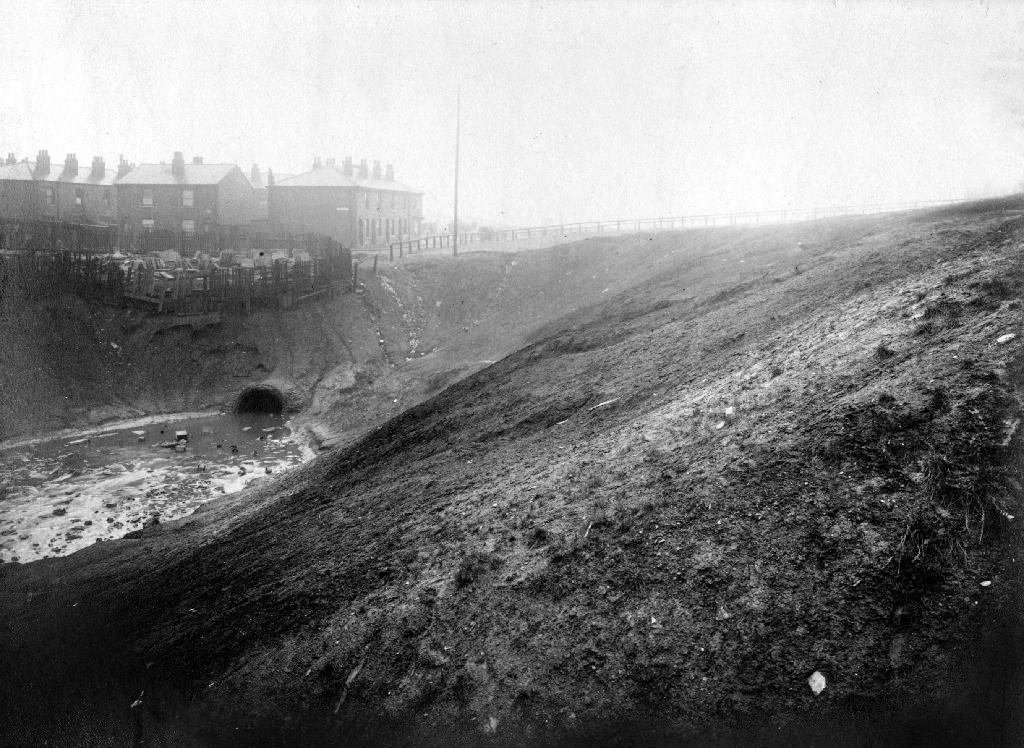
In 1910 Lathbury Road looked like this.

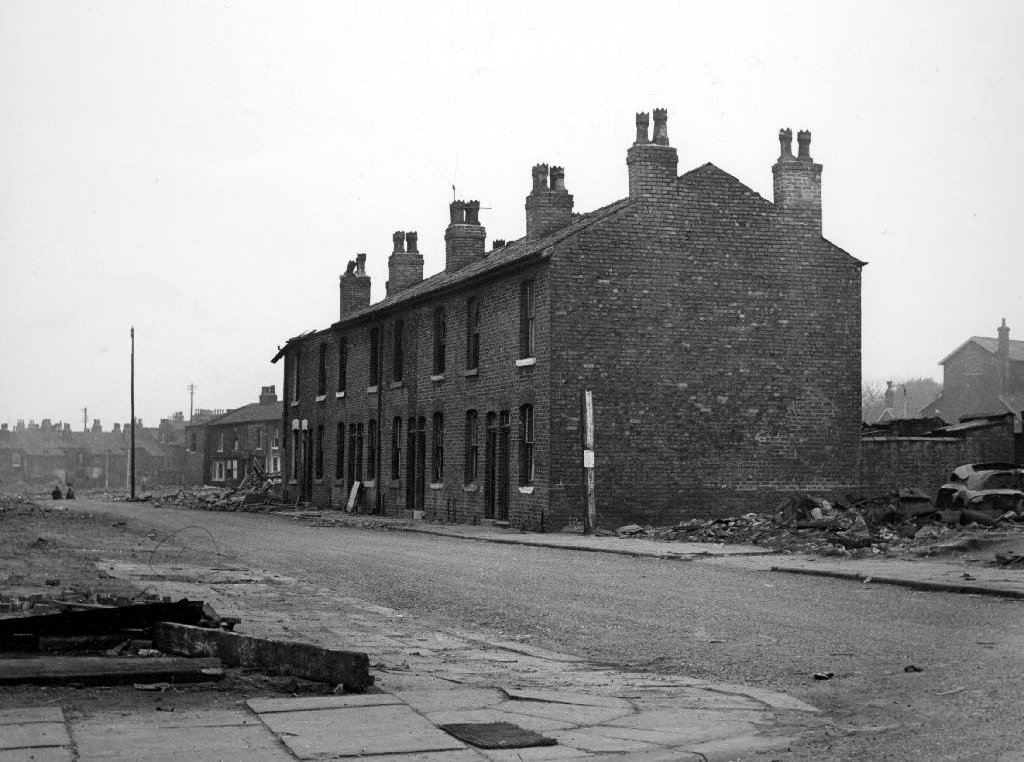
In 1968 the area was part of the Manchester slum clearance programme.

Photo: Tommy Brooks

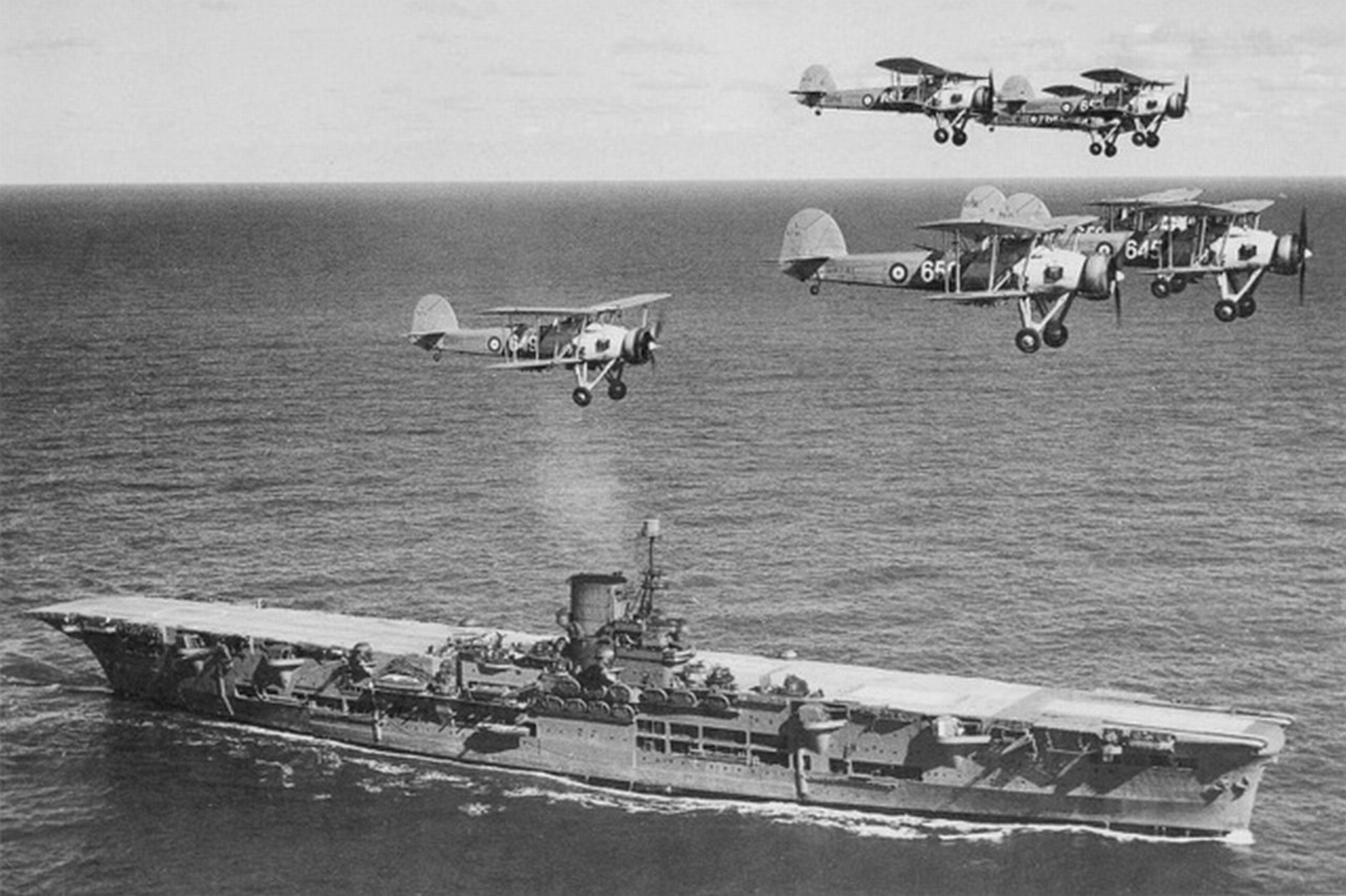
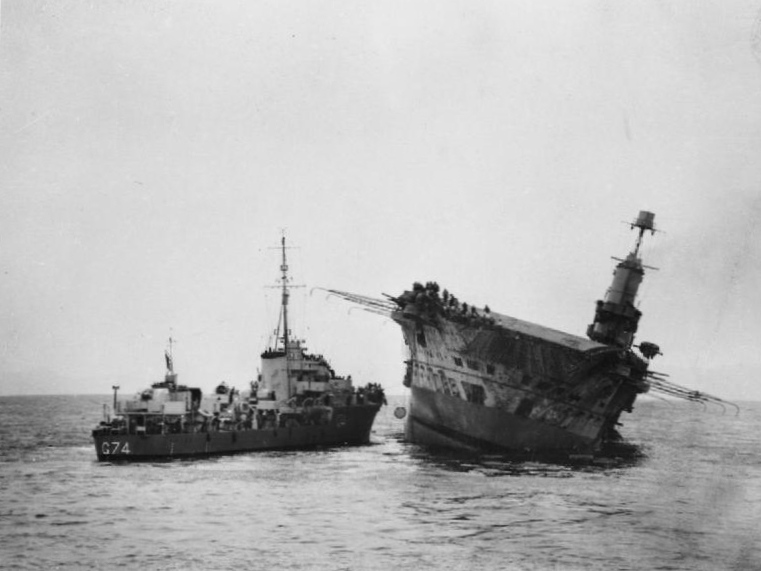
The real Ark Royal was built by Cammel Laird at Birkenhead, completed in November 1938.

Torpedoed and subsequently sunk on 10th November 1941.

The pub closed in 2007 – here it is in 1992.

Photo: Alan Winfield

Another great looking estate pub that was on the same estate as the Hipp which it was also fairly close to.


There was the usual two rooms inside, I had a drink in the bar room which was quite busy on my Friday afternoon visit, there was also a more comfortable lounge.


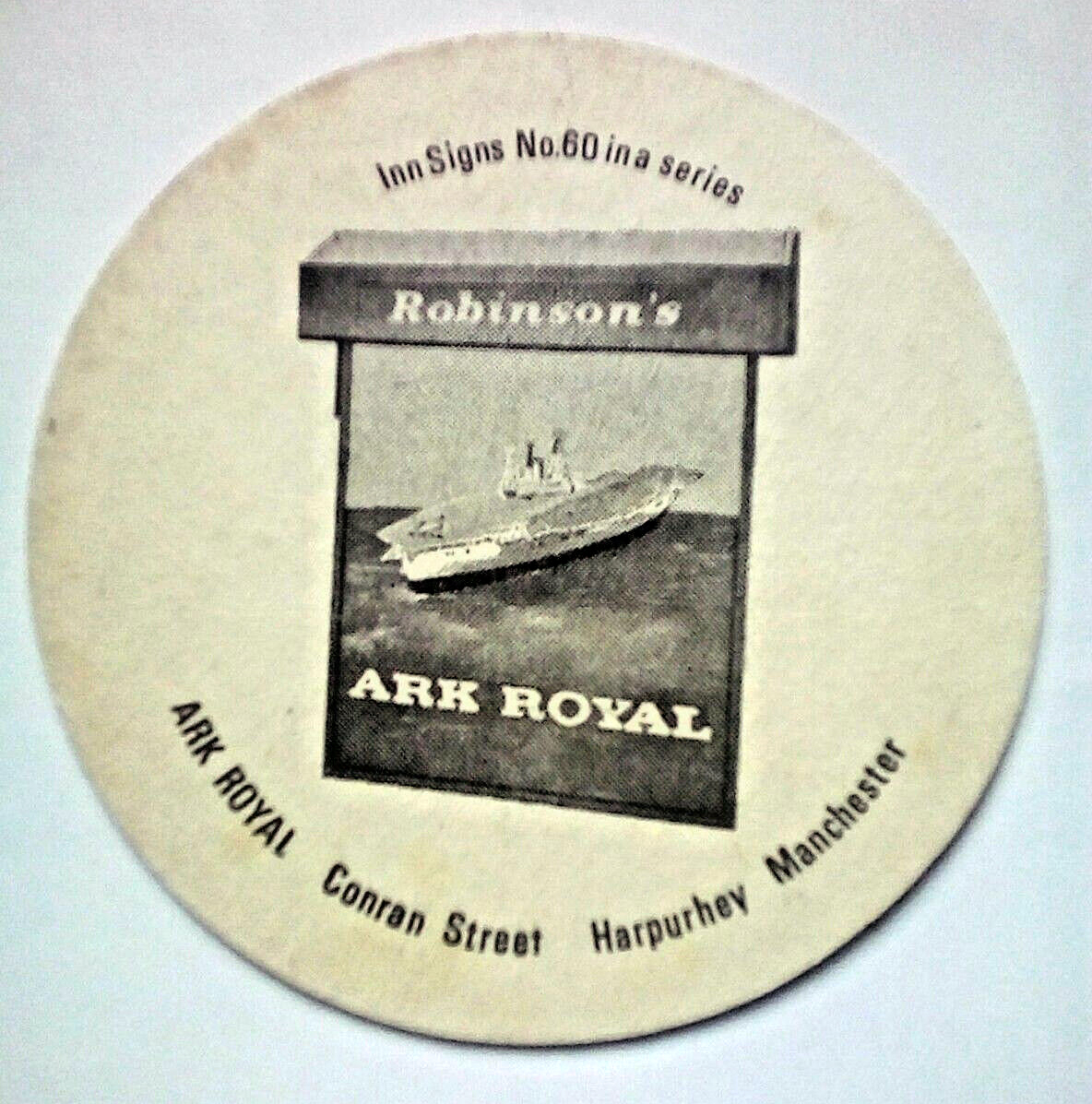
The pub was a Robinsons tied house, there were two real ales on, I had a drink of Robinsons Bitter which was a nice drink, there was also Robinsons Mild on.


Another pub that was was well pleased to do.

Never Ending Pub Crawl

Here its is in 2007.

Photo: Mikey

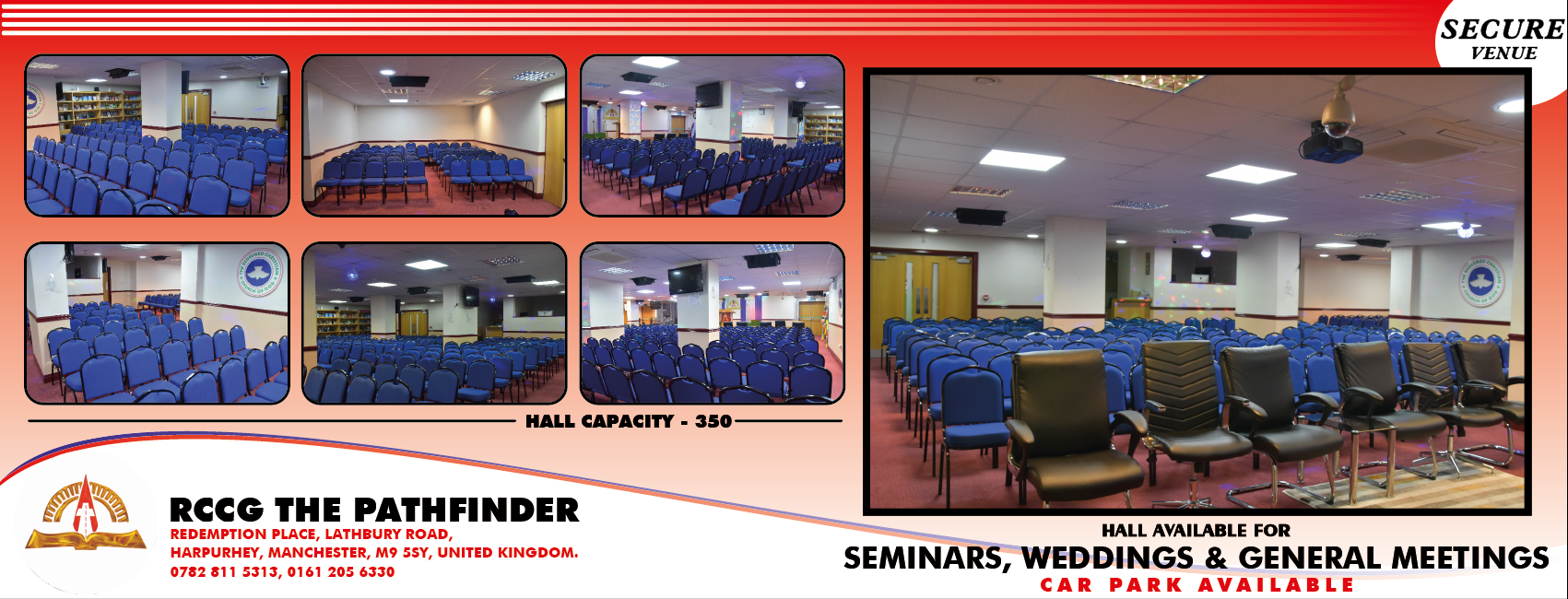
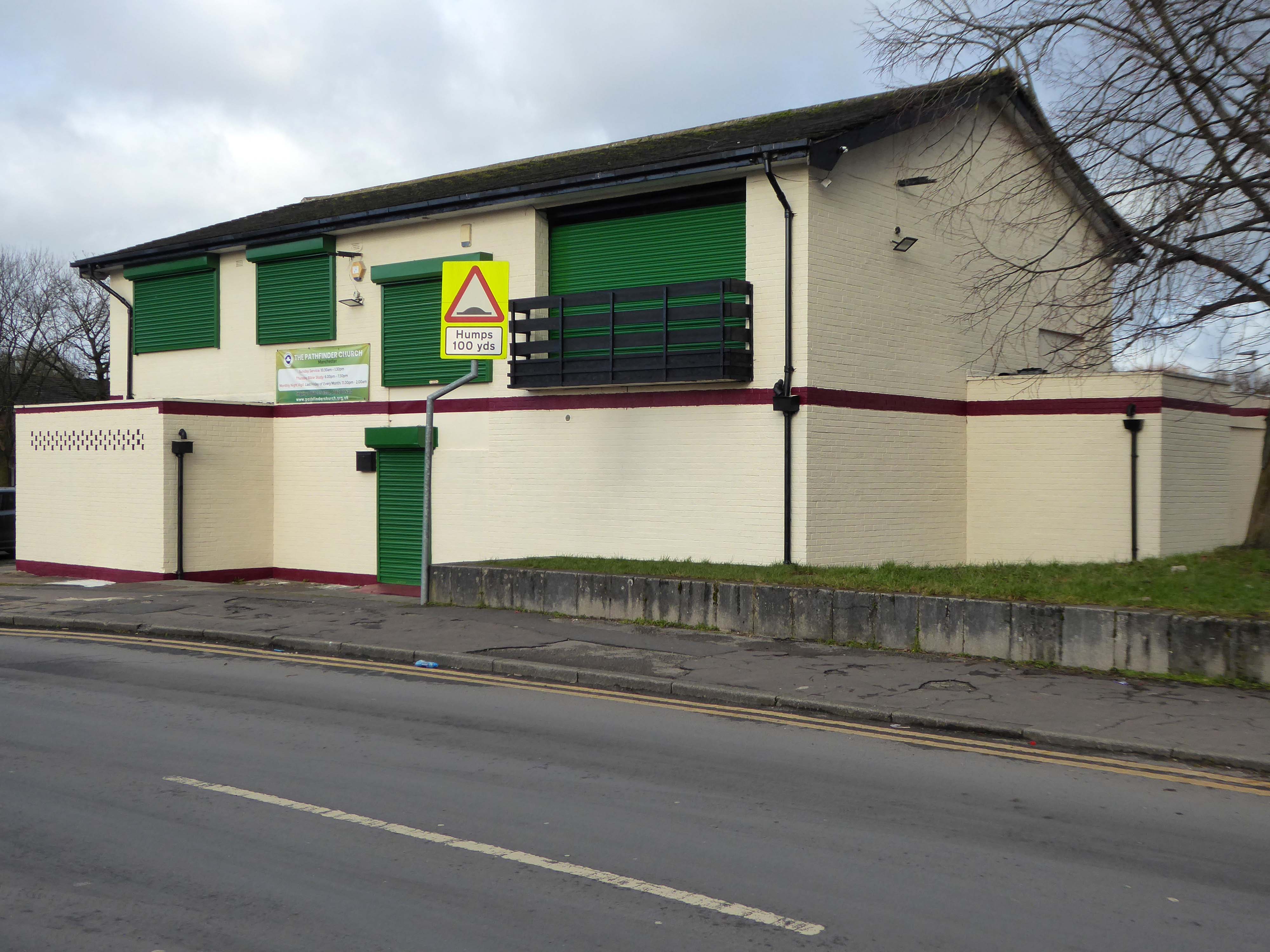
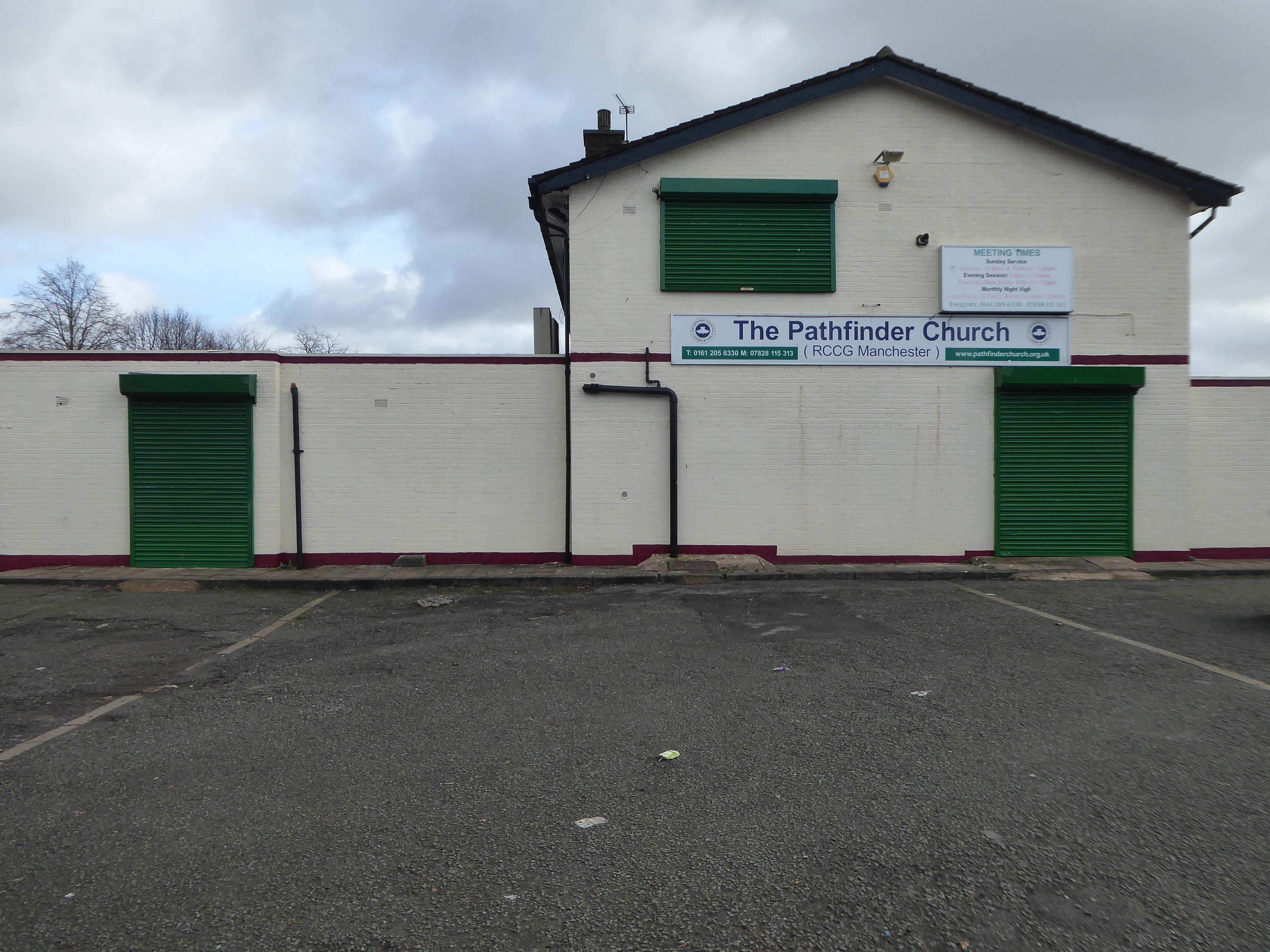
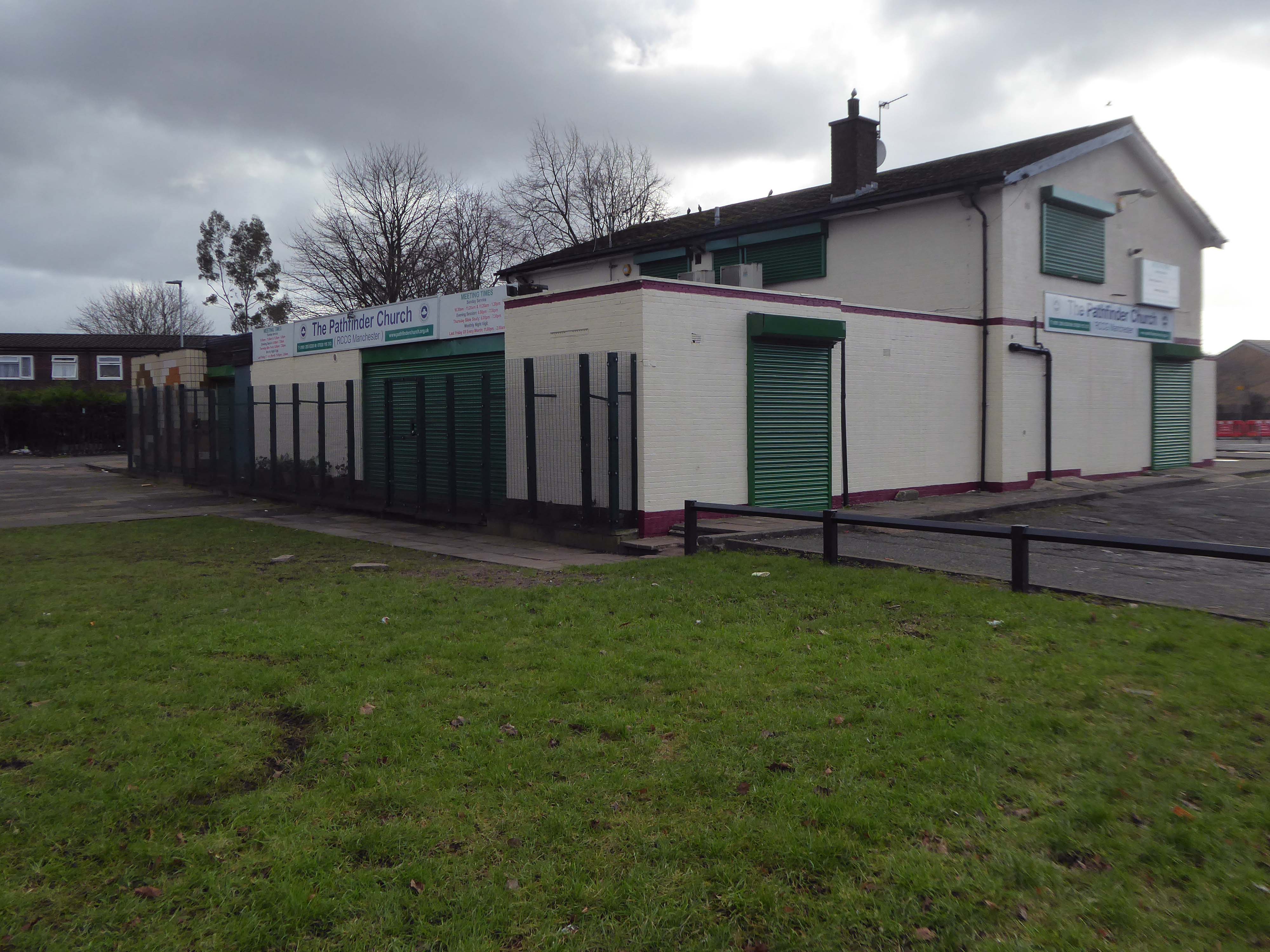
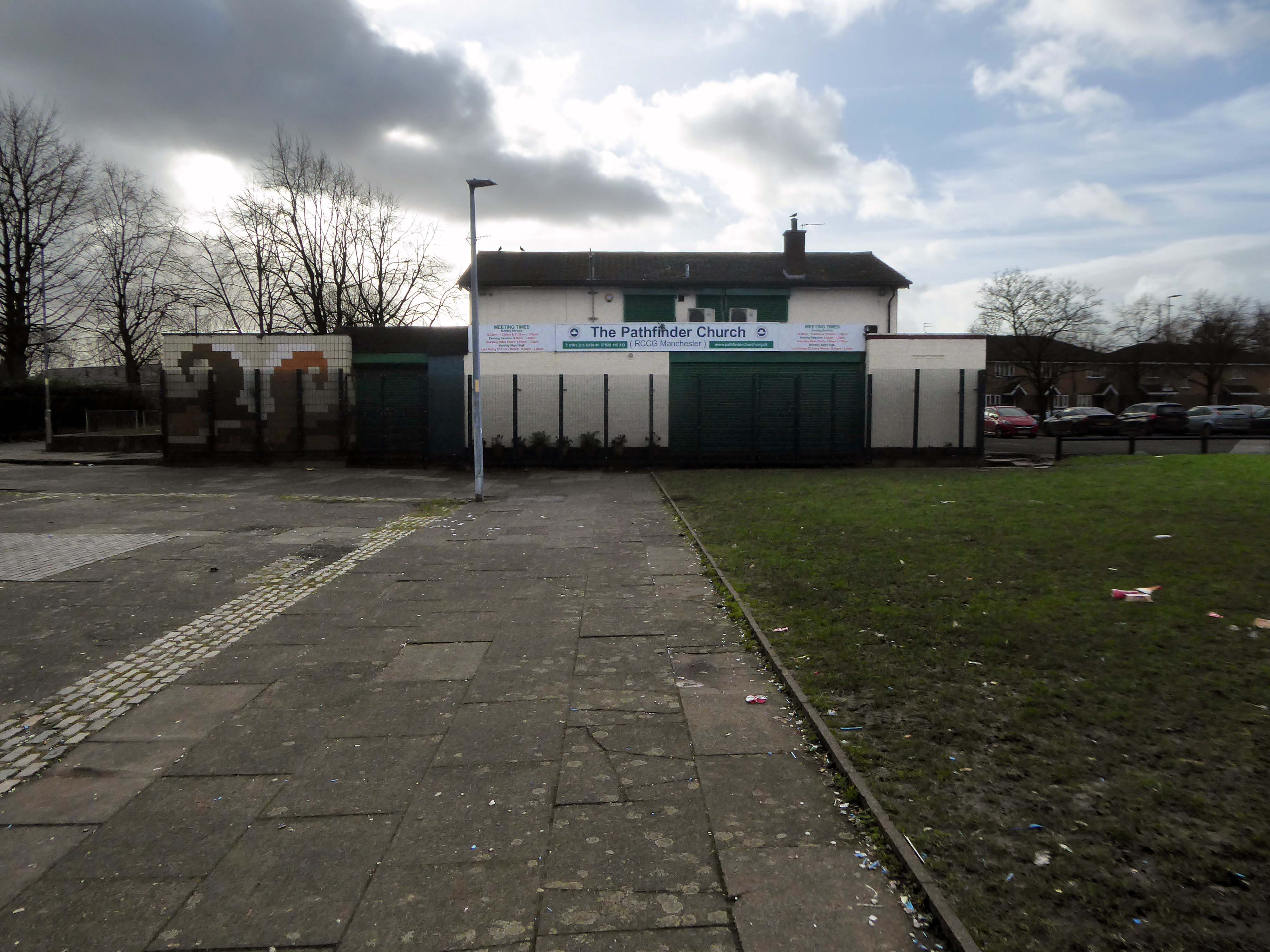
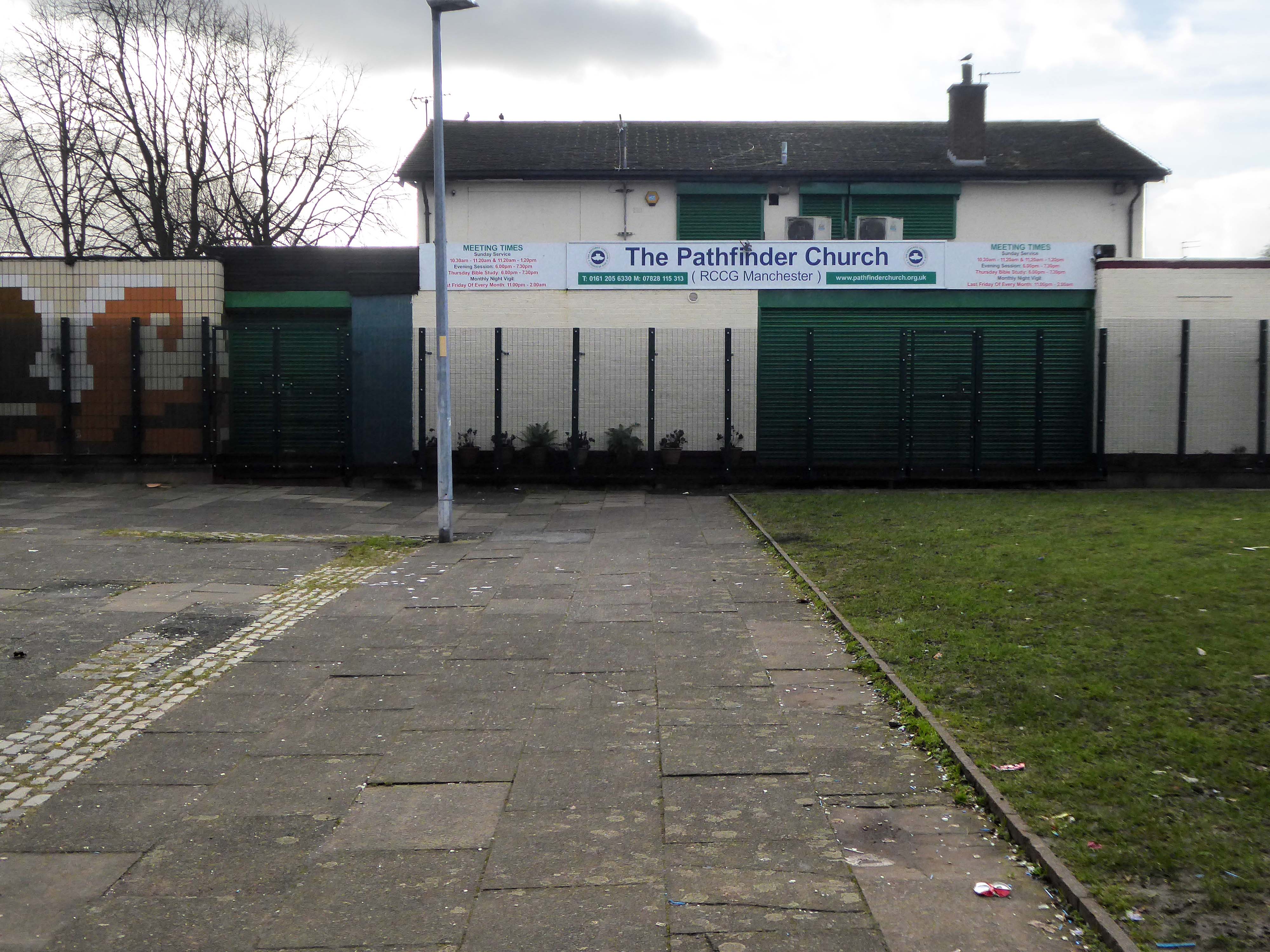
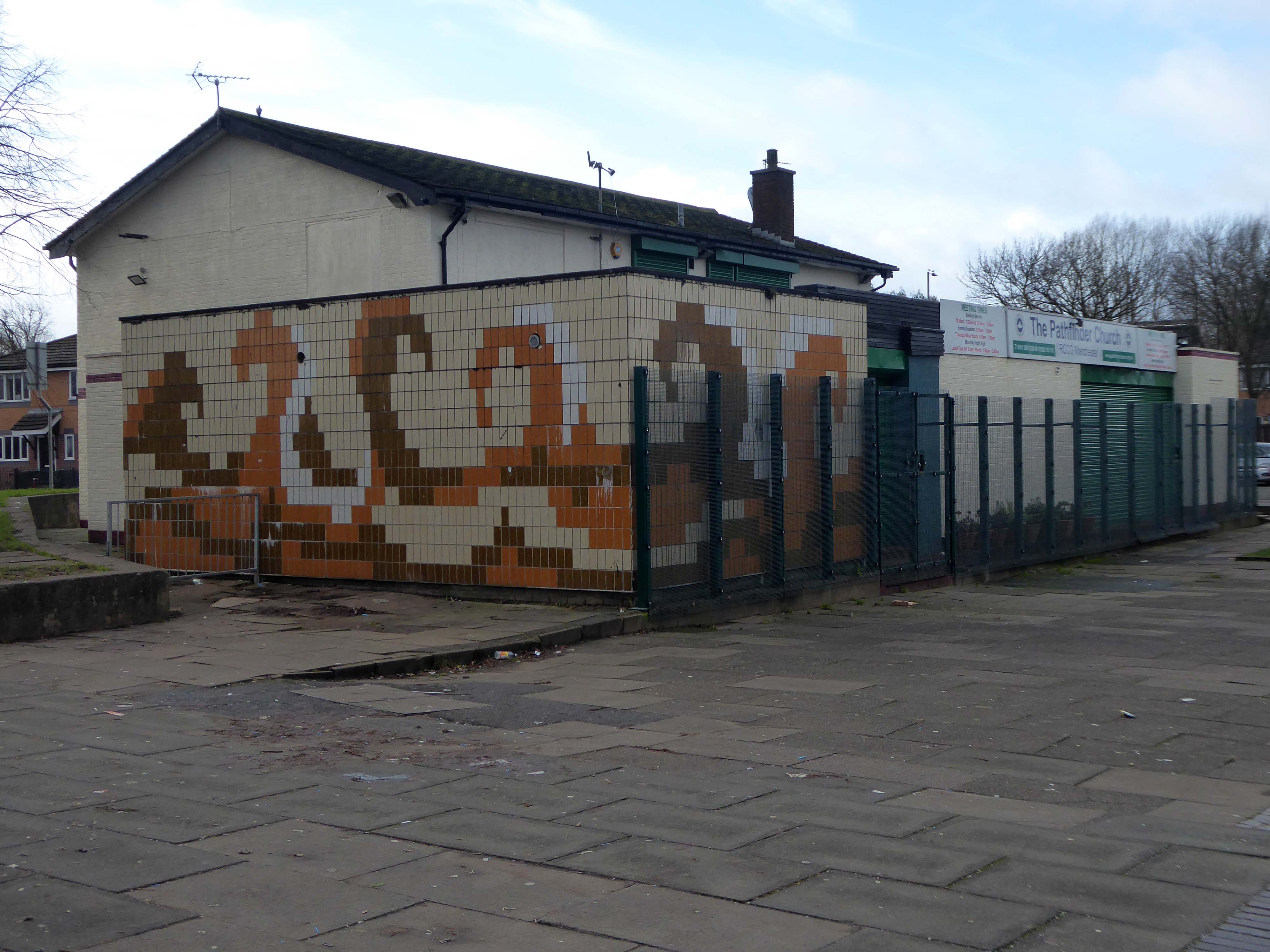
The pub currently trades as the Pathfinder Church.

We are committed to the growth and development of individual, our local and international communities. In the interim may I use this medium to invite you to be part of the move of God in our church, the Pathfinder.

The Lord bless your richly as you navigate through in Jesus name.

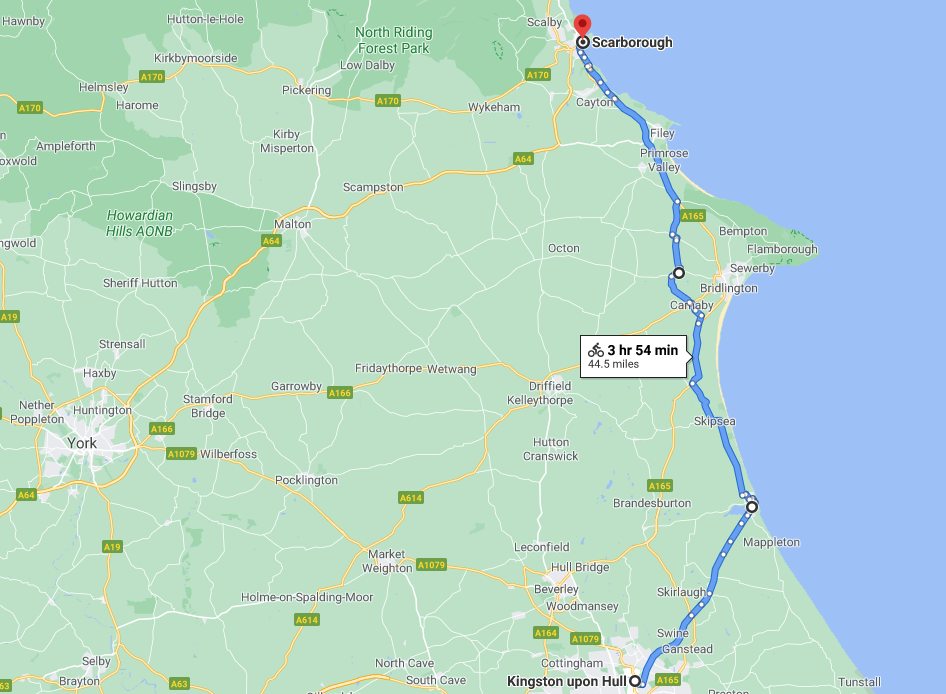
Hull to Scarborough

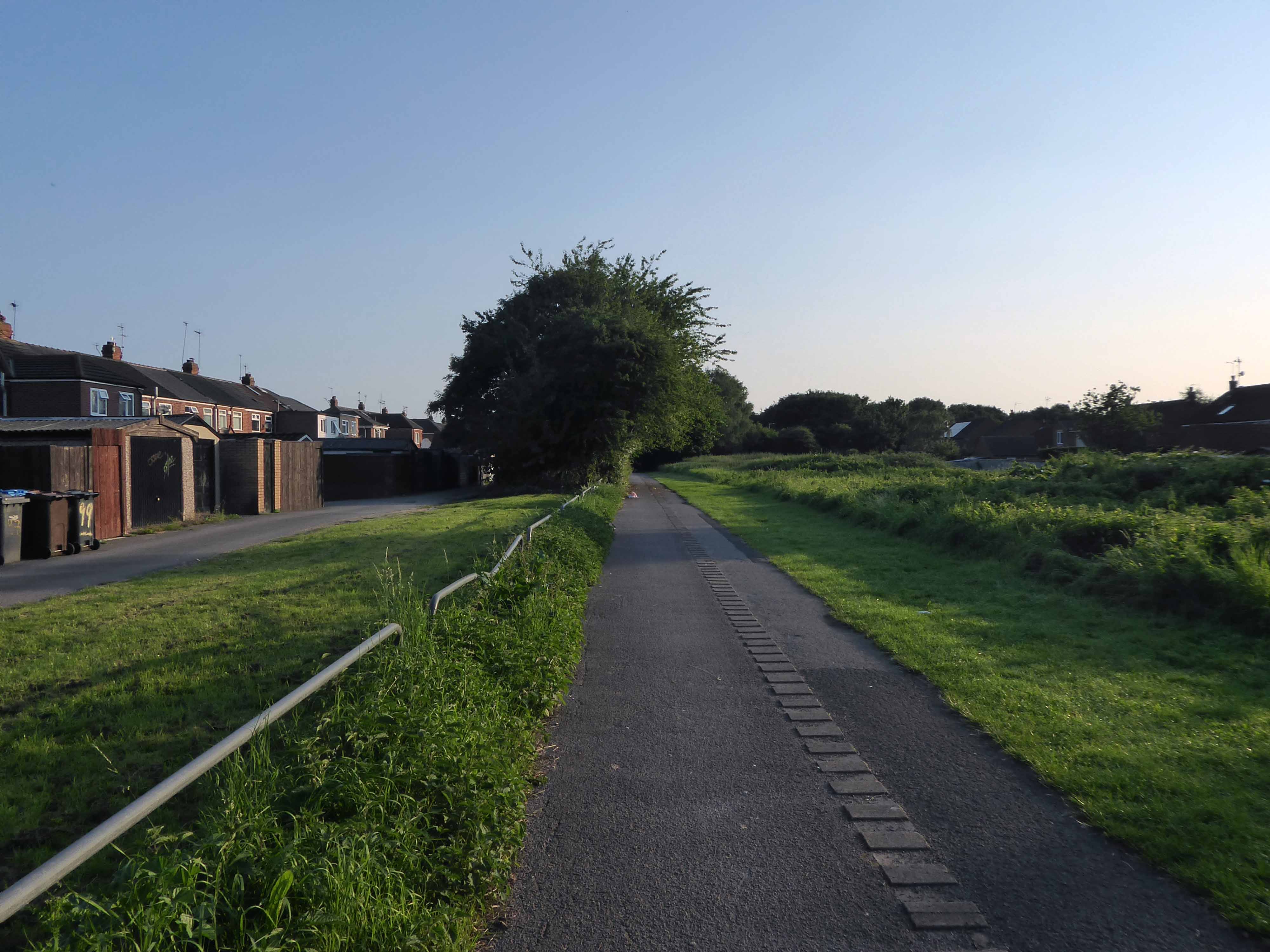
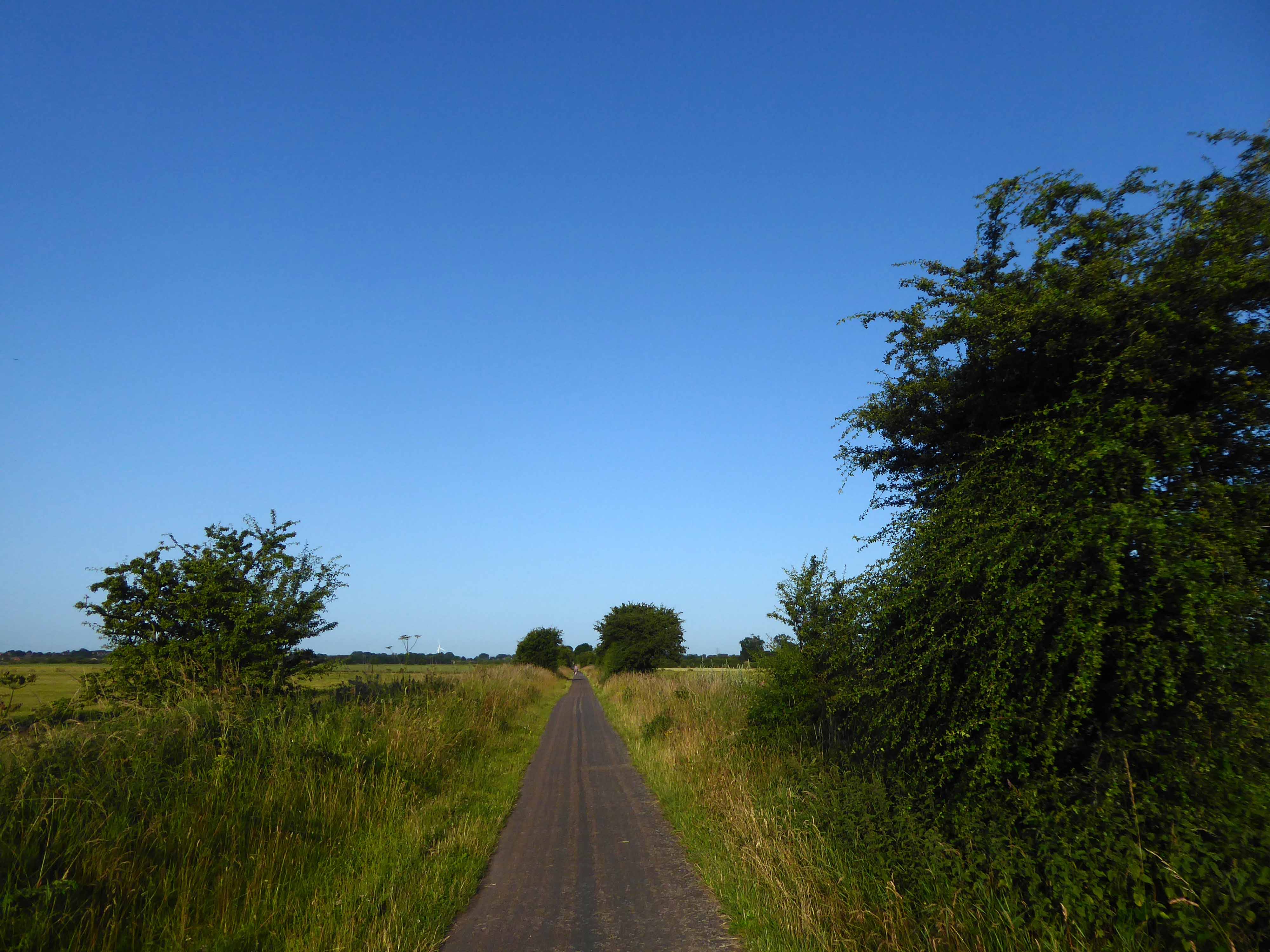
Heading out of Hull one sunny Sunday morning along Sustrans Route 65.

The first leg of my journey northwards to Berwick, many thanks to all those kind souls who filled my water bottle, directed, redirected and misdirected me along my merry way.

I suddenly found myself on Sustrans Route 66 – nominally lost.

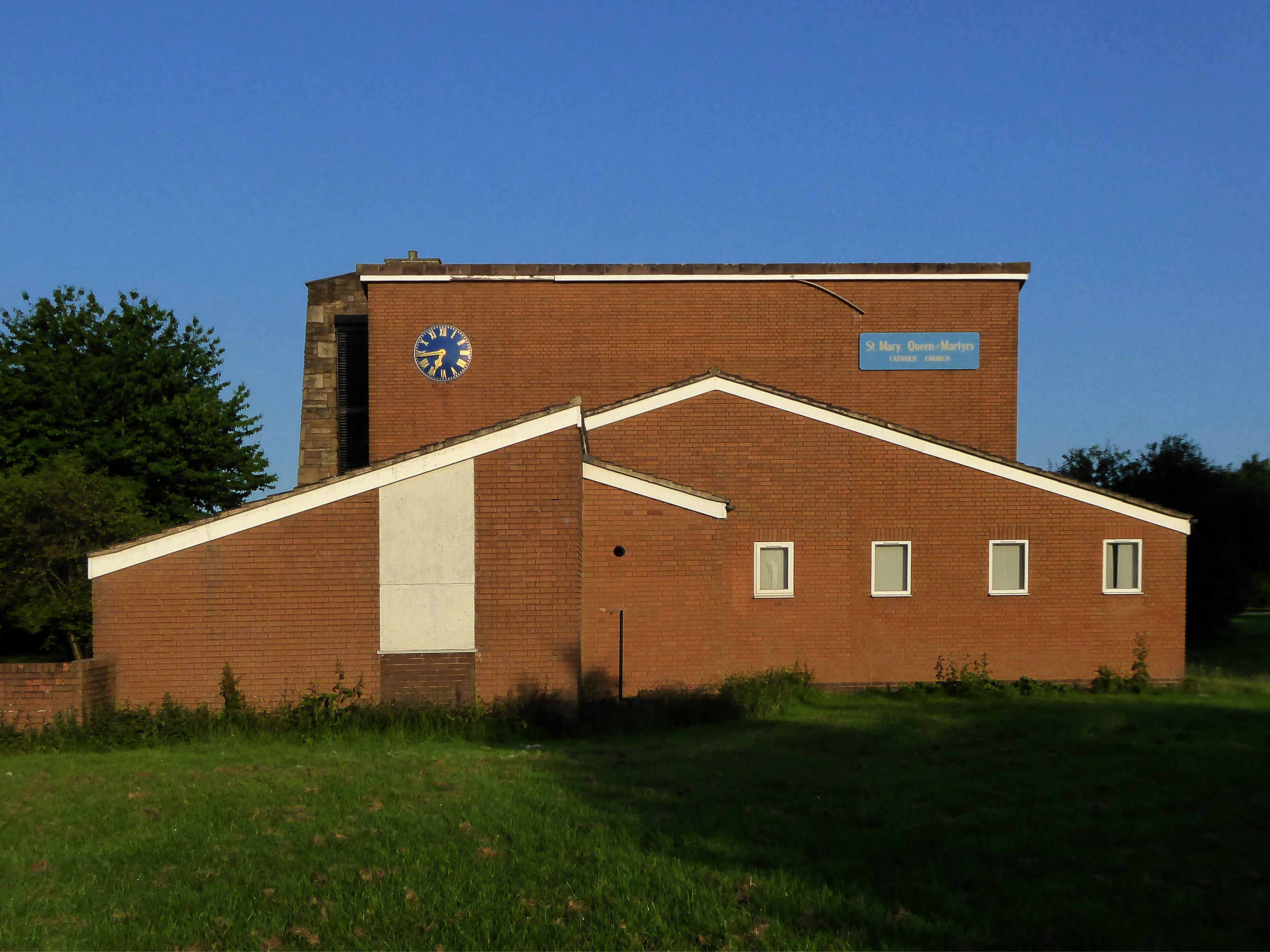
Good fortune however had pointed me in the direction of this functional yet charming brick built church, on the edge of a huge roundabout – St Mary Queen of Martyrs RC in Bransholme.

The new St Mary Queen of Martyrs church was built at Bransholme in 1976-7 and the old St Mary’s church closed and demolished in 1982.

Architect for the new church was JT Reid of The Reid Partnership – Pontefract.

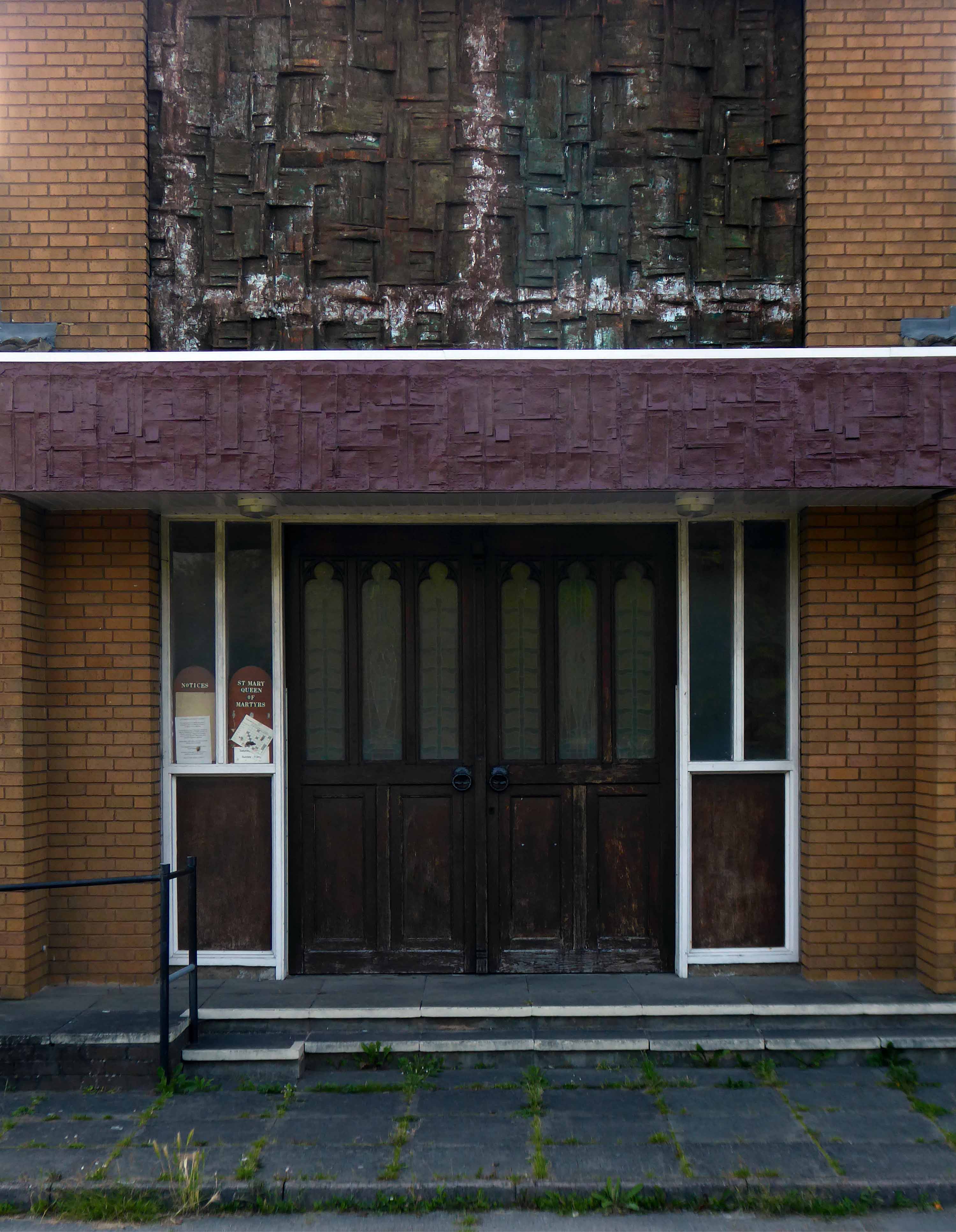
The entrance graced by these textured fascias.

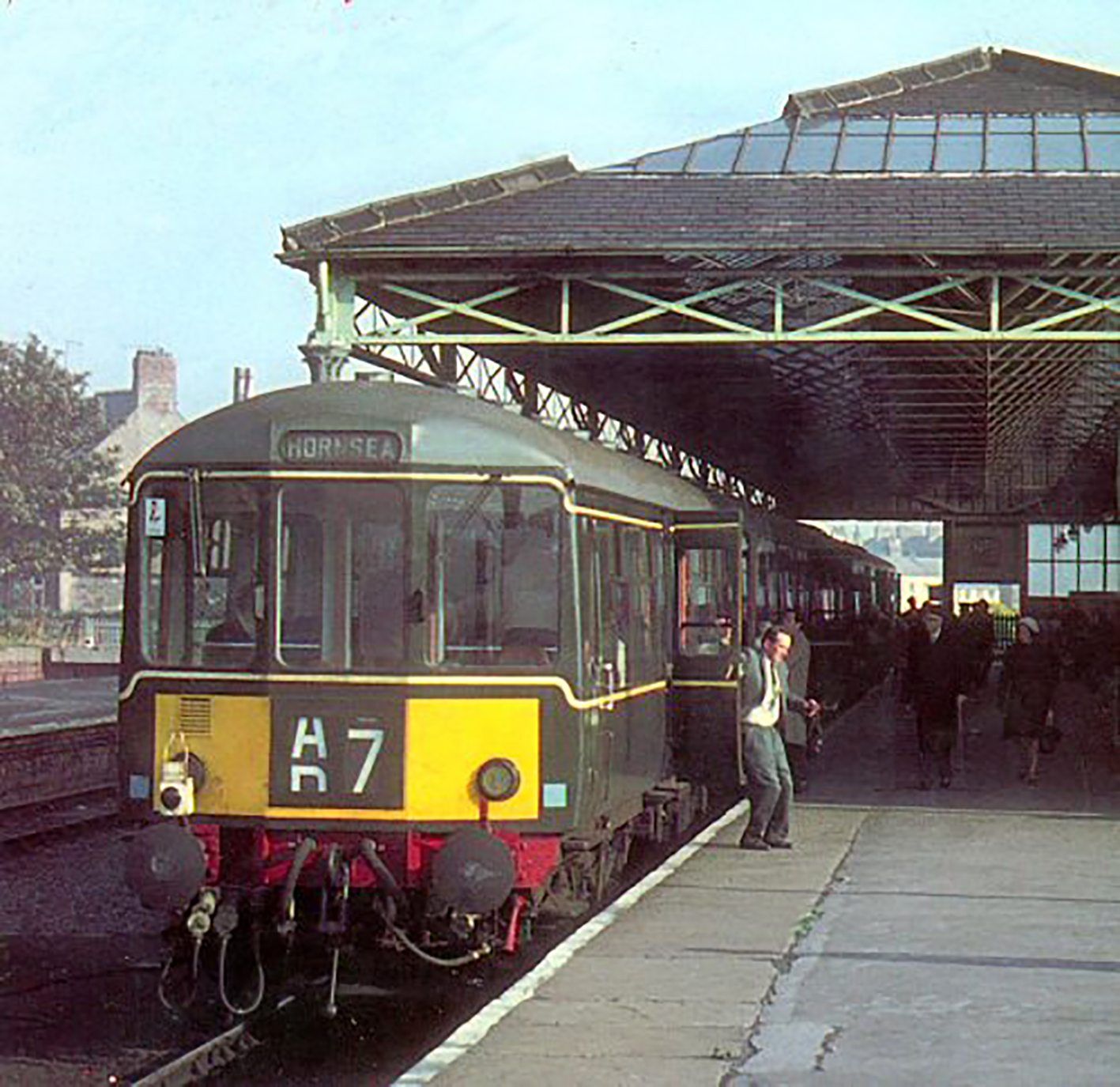
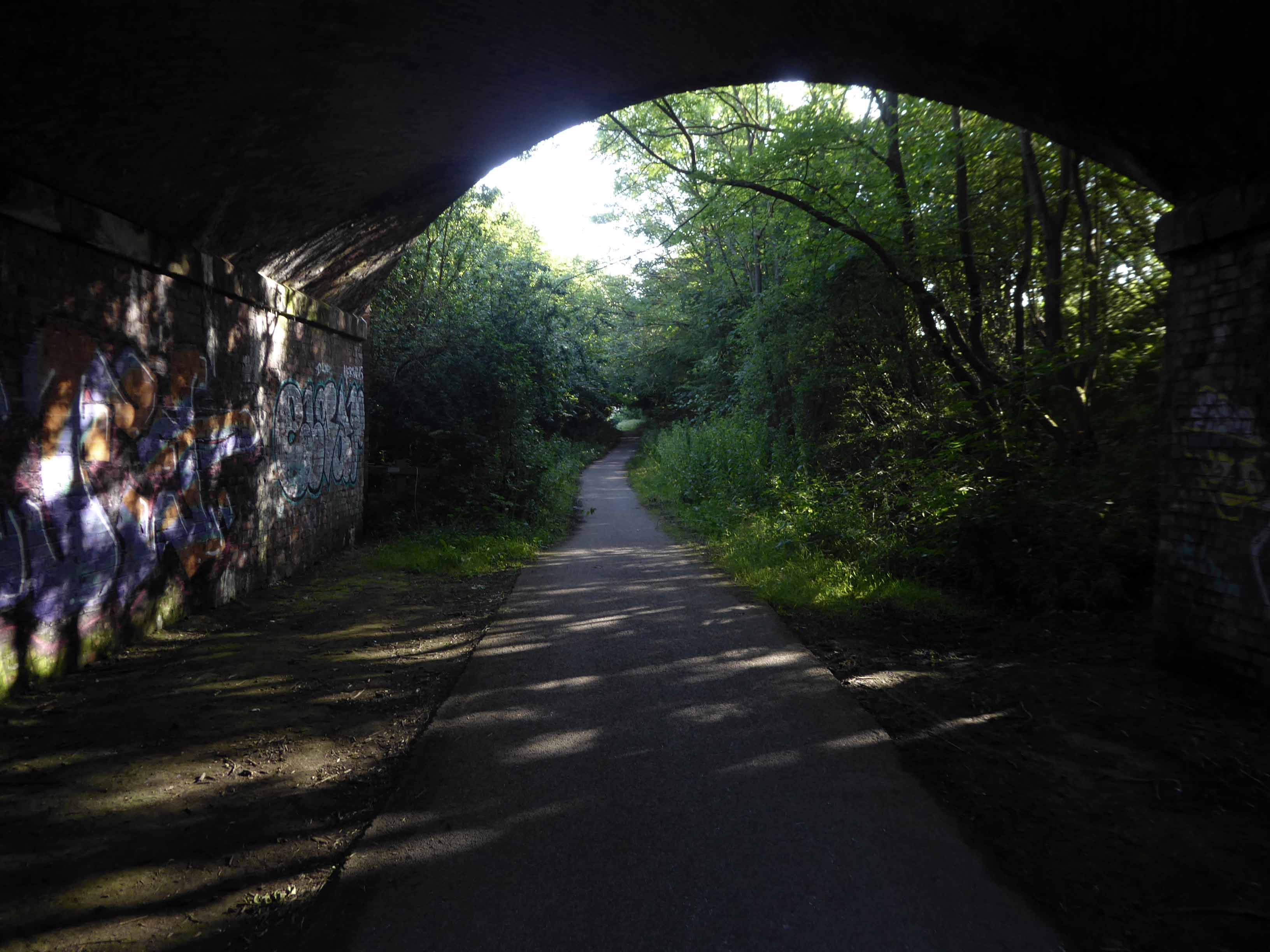
Following a series of brief engagements with various local benefactors, I regained my intended route and joined the Hornsea Rail Trail – the bed of the former branch line.

The line was officially opened on 28 March 1864, the last passenger train ran on 19 October 1964.

Goods traffic continued to use the line as far as Hornsea Bridge until 3 May 1965.

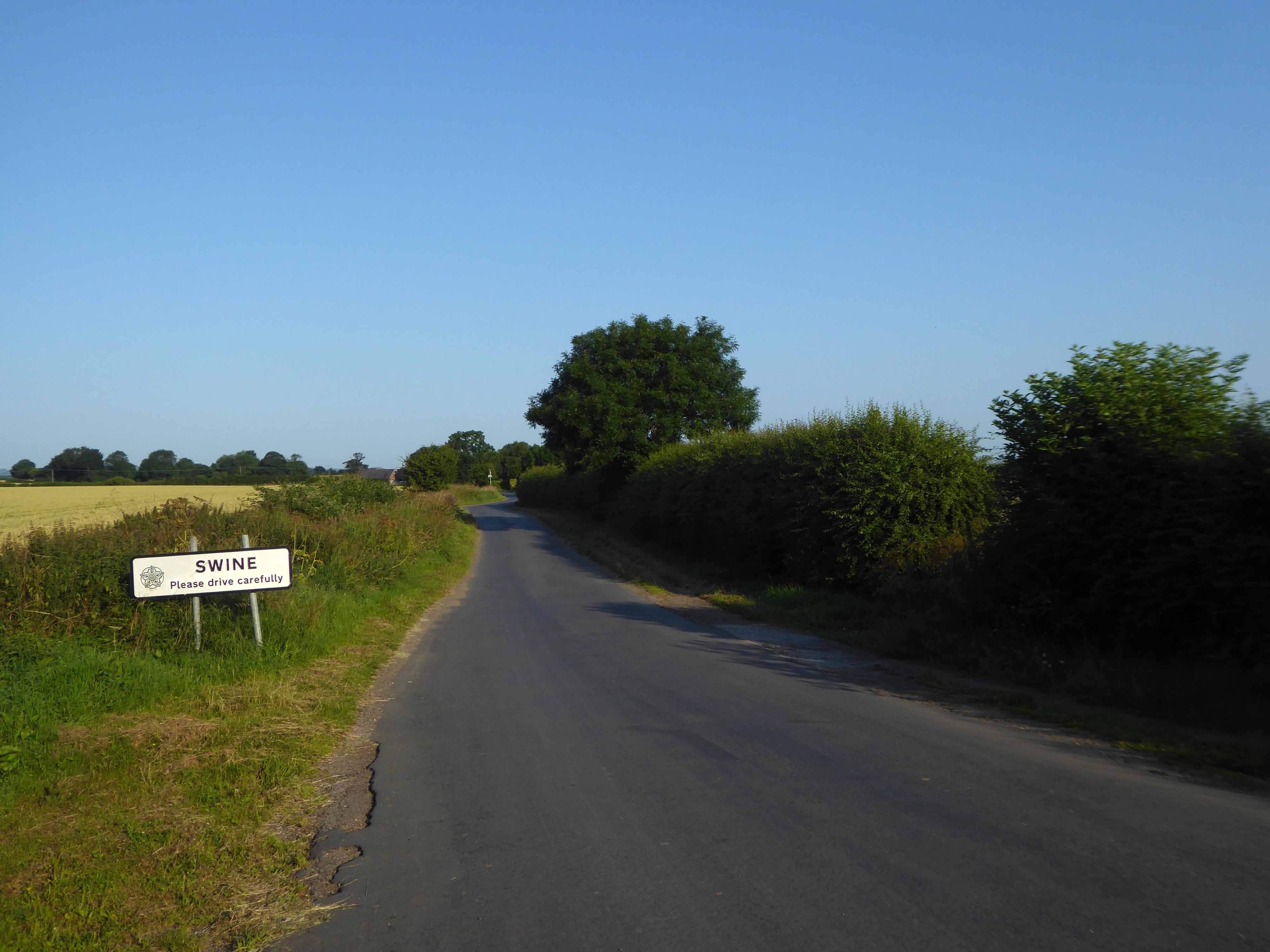
The place-name Swine is first attested in the Domesday Book of 1086, where it appears as Swine.

It appears as Suine in a charter of circa 1150, the name perhaps derives from the Old English swin meaning creek.

Wikipedia

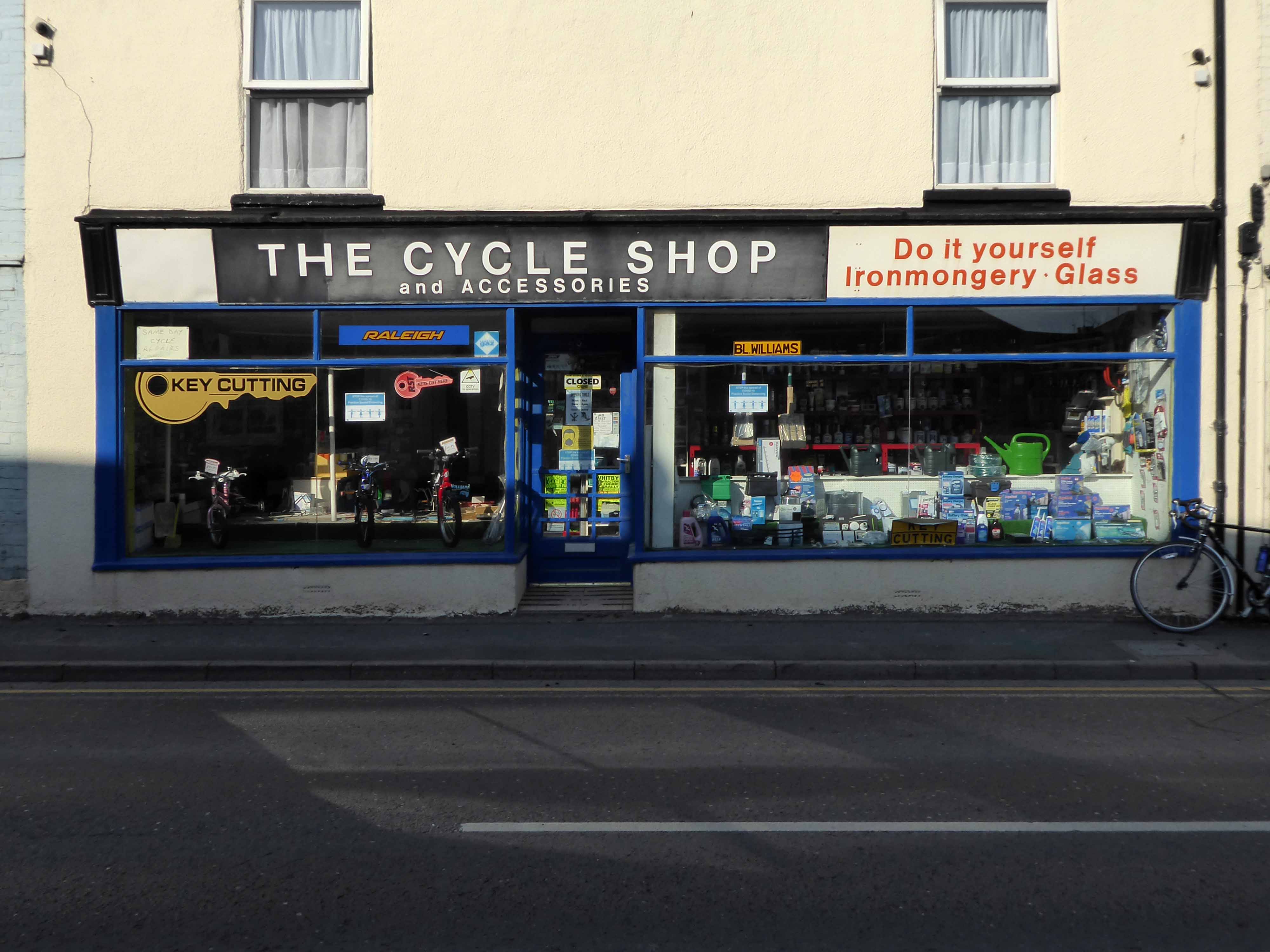
Eventually arriving in Hornsea – on this occasion having little or no need of Do it Yourself, Ironmongery or Glass requisites.

And being Sunday, it was shut.

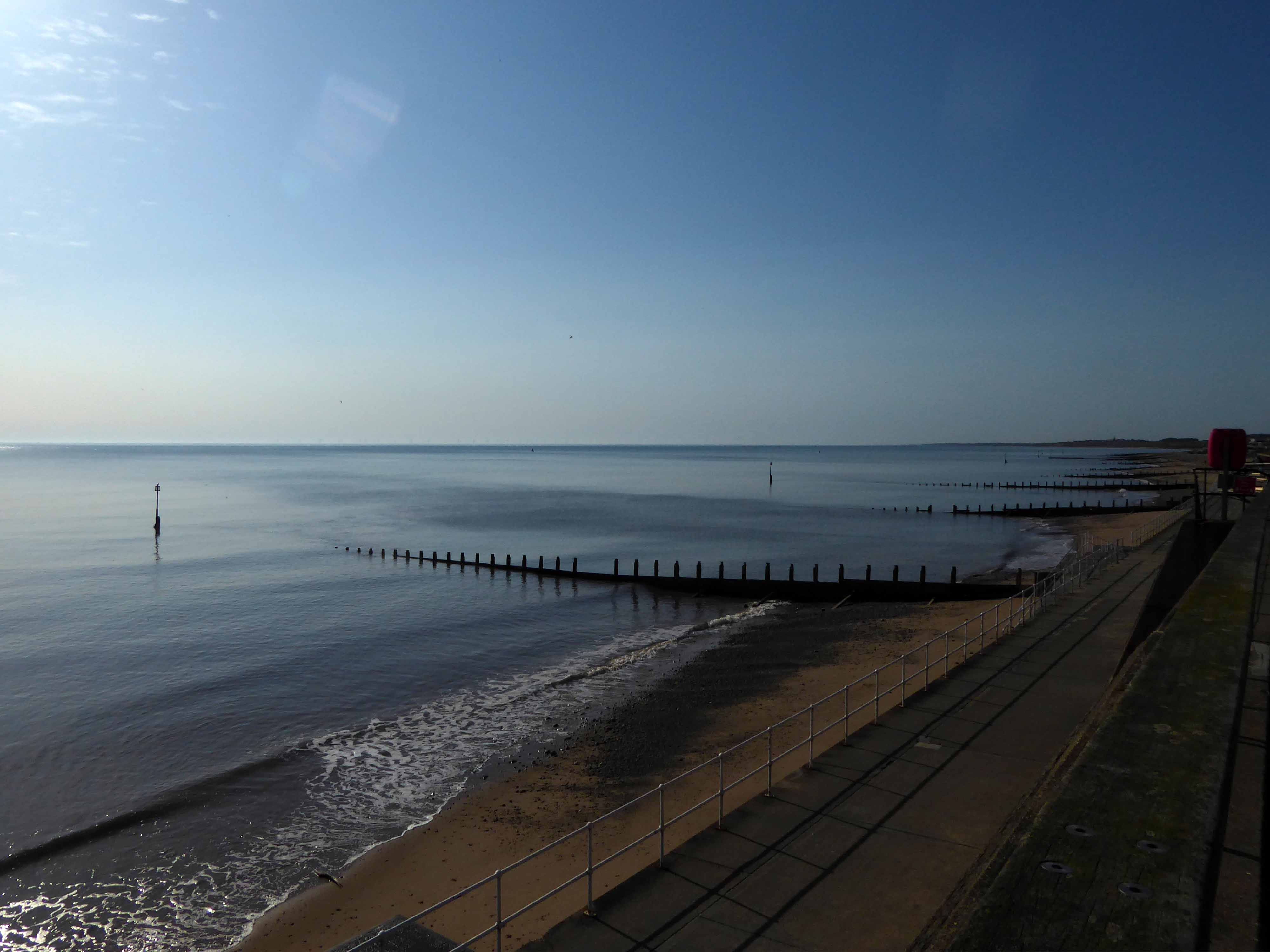
I tarried a while on the well appointed seafront.

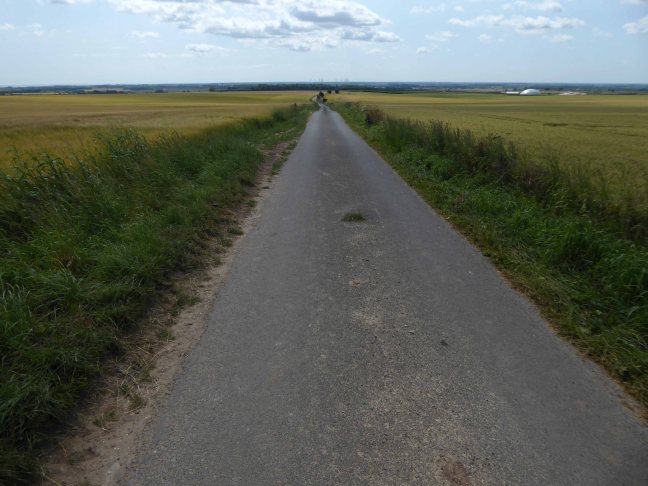
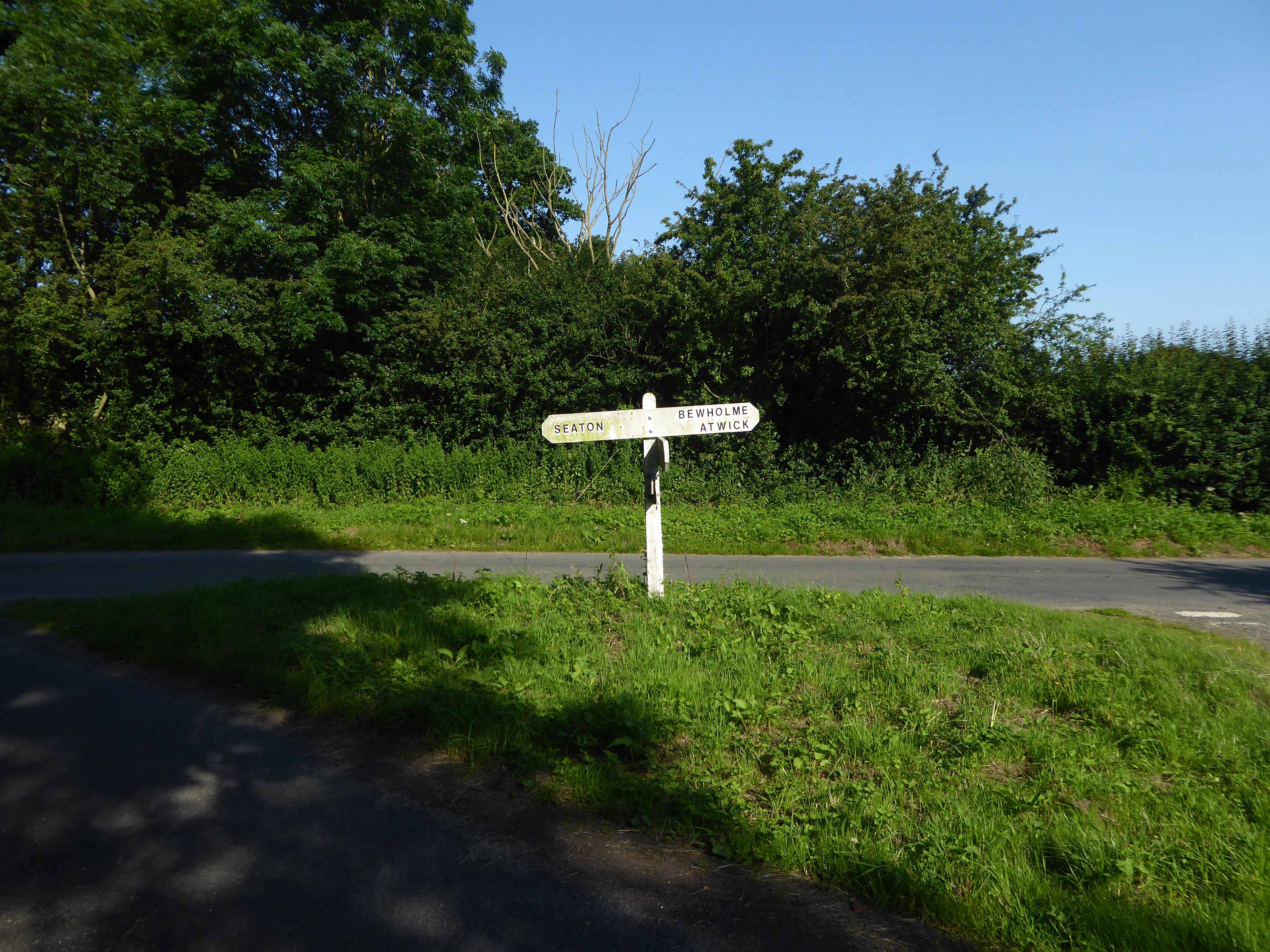
Gliding along leafy, green hedge-lined lanes.

Following a dead end lane to the place of dead roads.

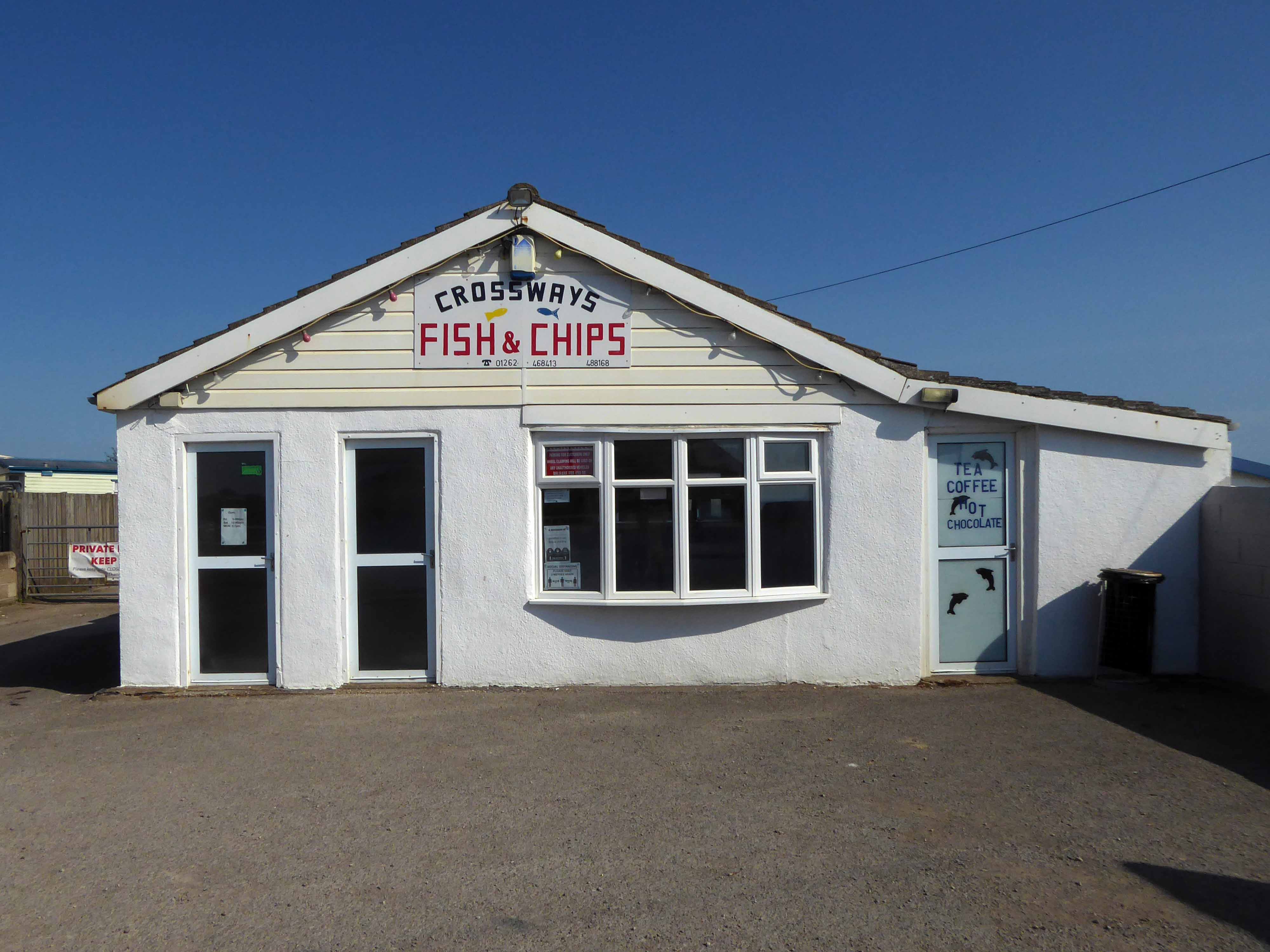
Skipsea – home to Crossways Fish & Chips

Here you will be offered perfectly cooked fish.

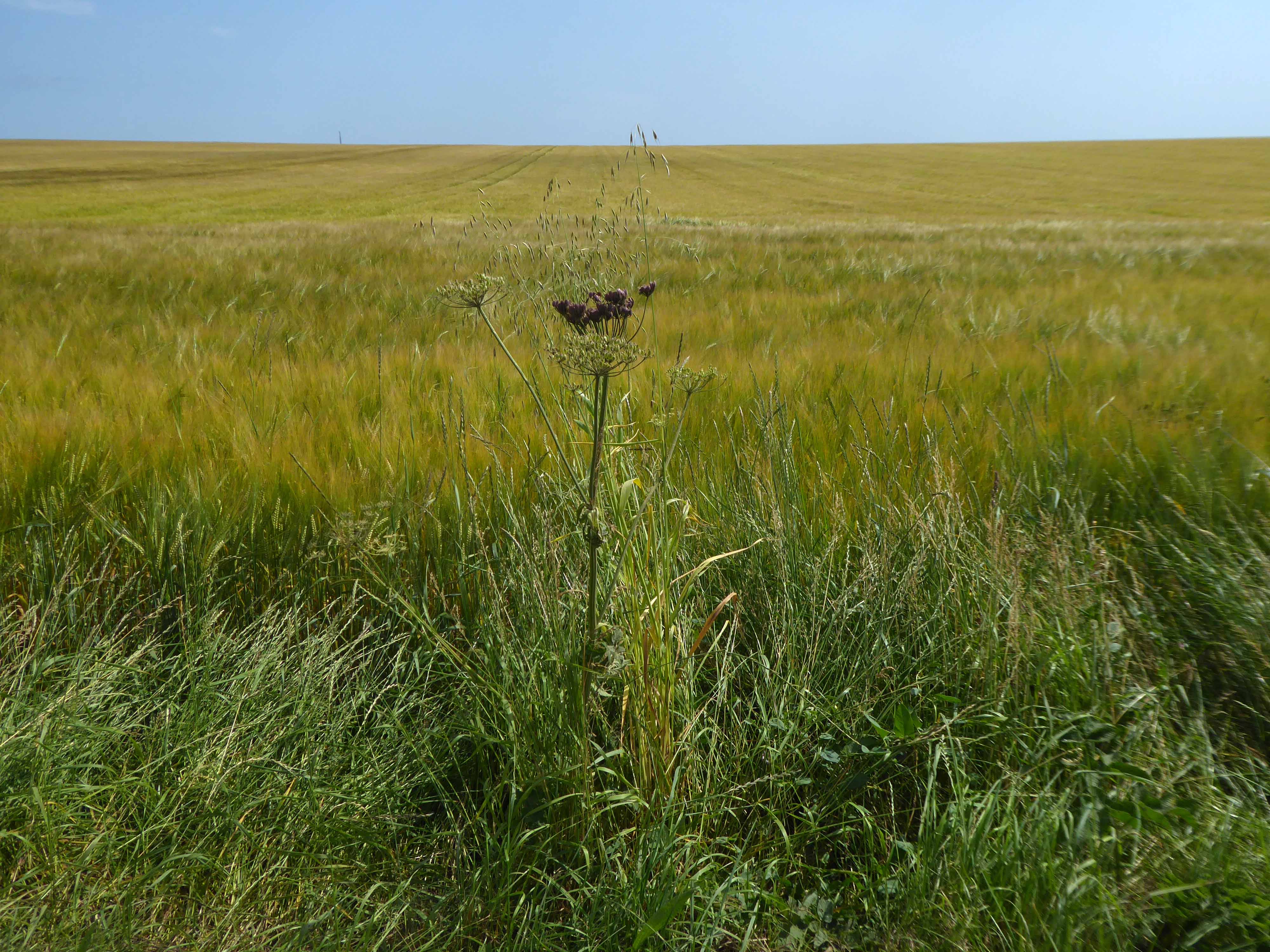
Retracing and crossing the Yorkshire Wolds.

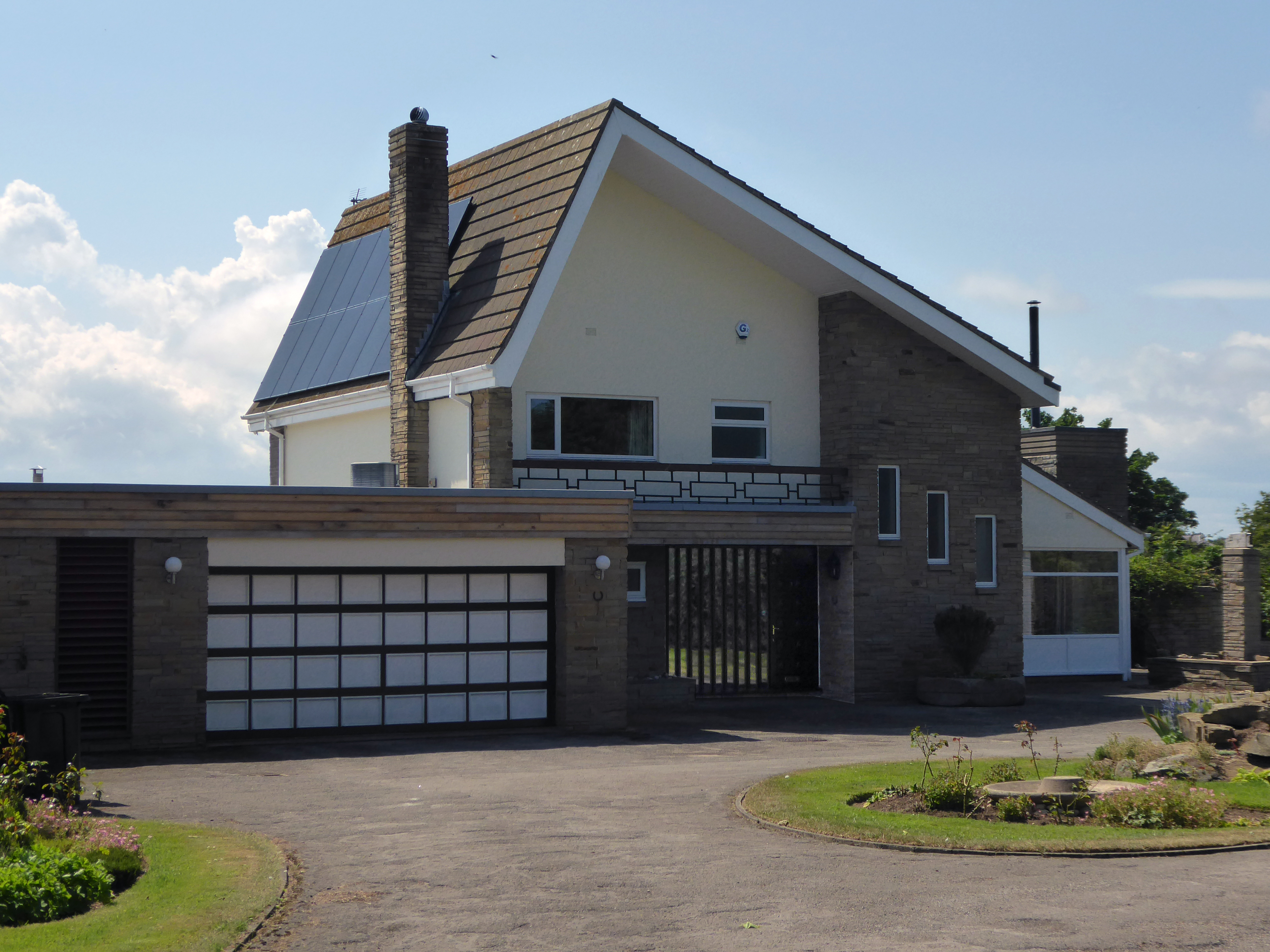
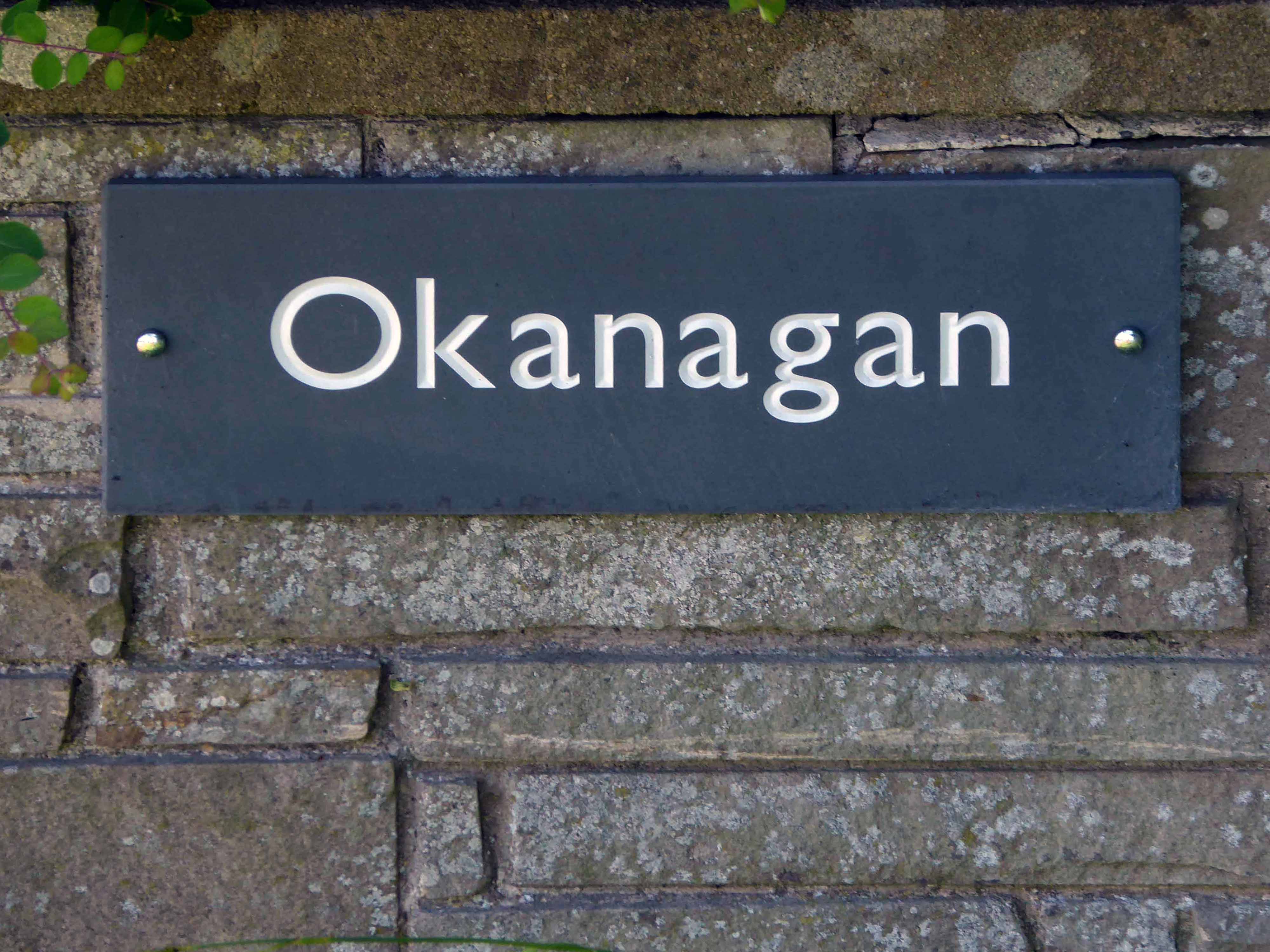
Zigging and zagging here and there, in search of a route, any route, I came upon Okanagan – a delightful asymmetric Prairie Style modern home.

Filey Road, Gristhorpe, Filey, Scarborough, North Yorkshire – currently valued at £562,000.

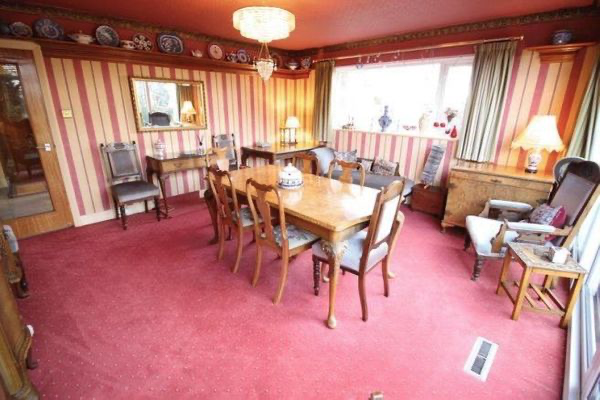
The interior decorative order currently out of synch with the post war exterior.

Hurrying along to reach town by tea time – I descended deftly into Scarborough.

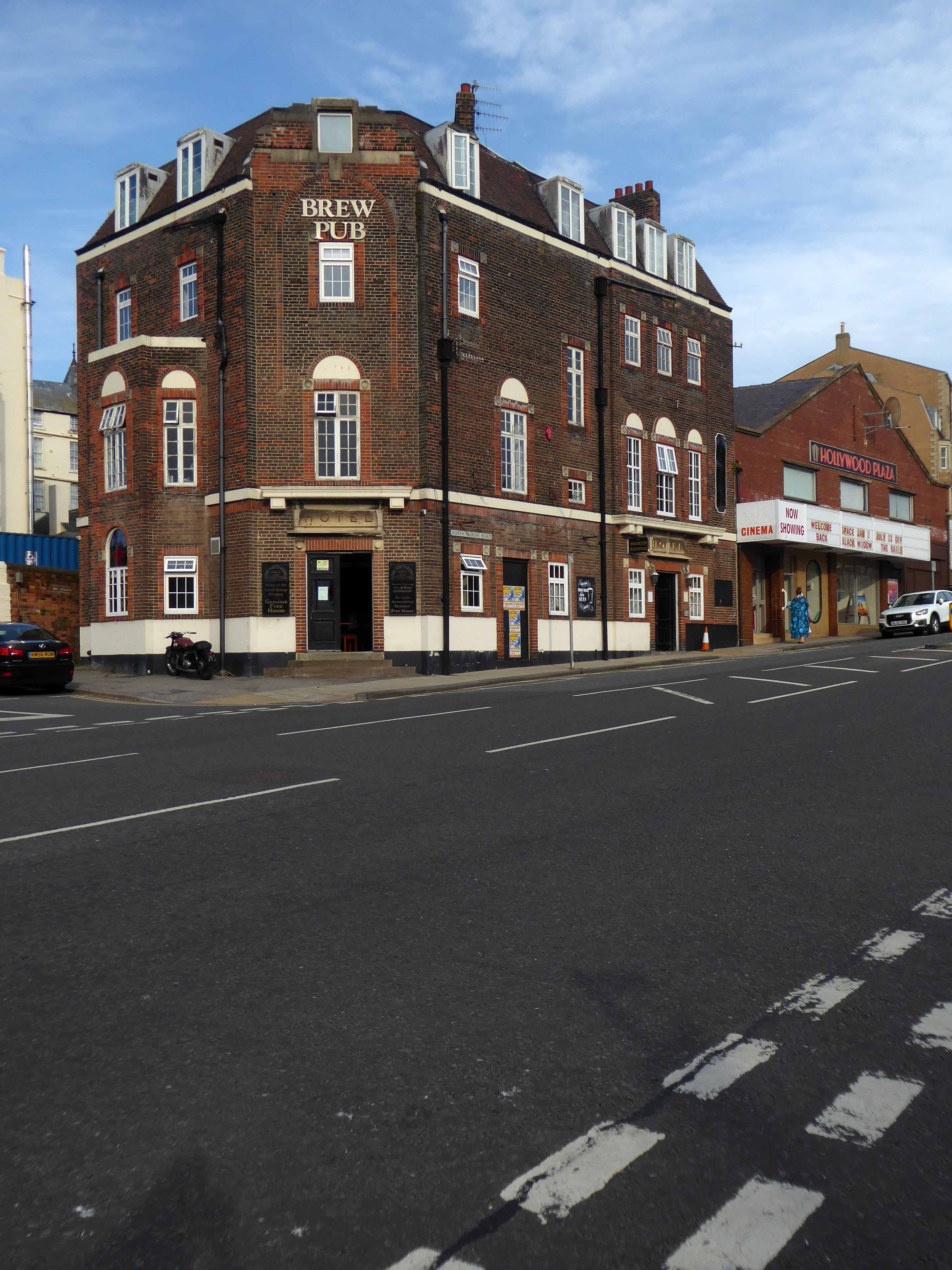
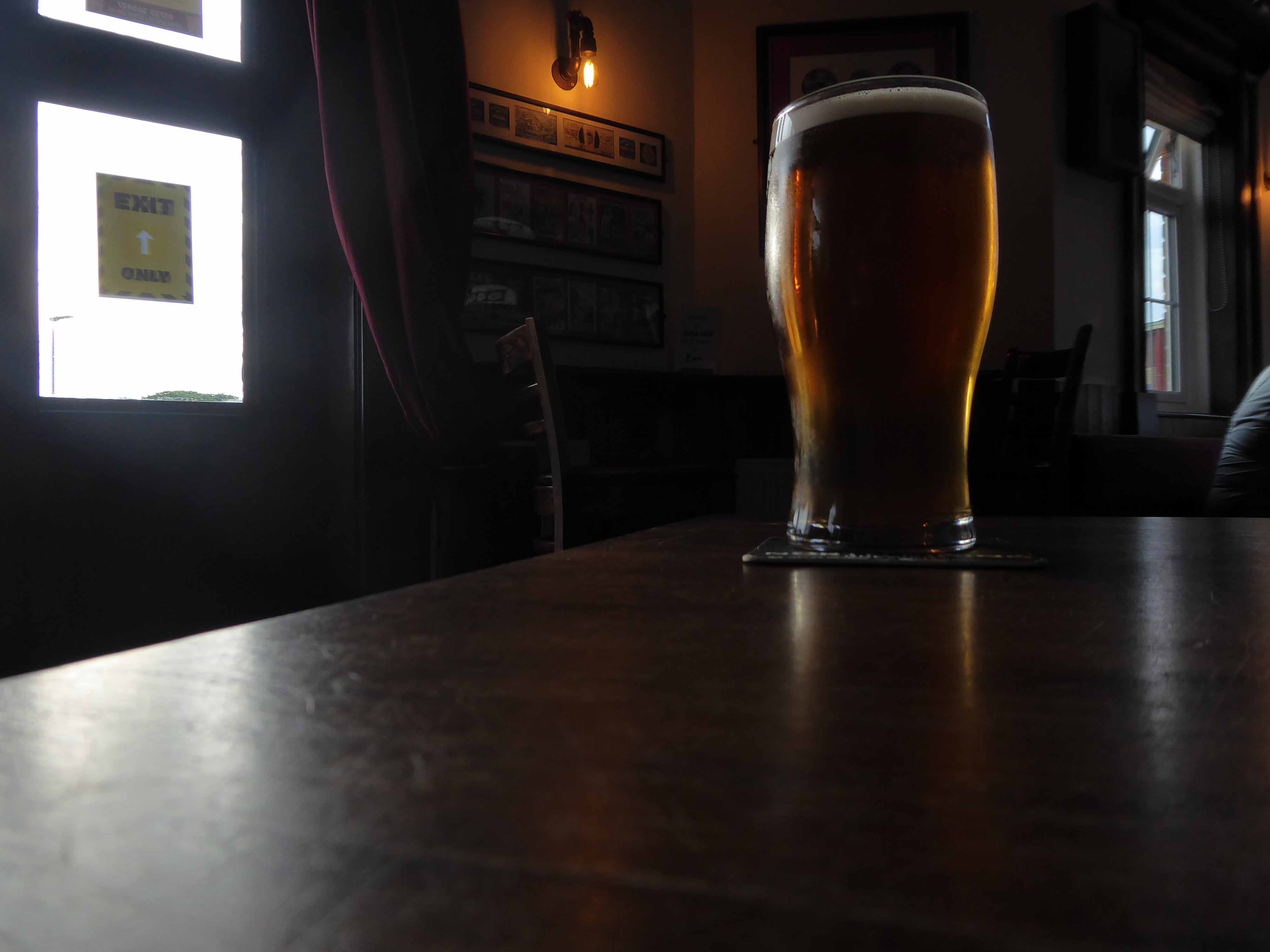
Where I hooked up with local lad Ben Vickers for a pint in the North Riding Hotel.

The rest is, as they say – a mystery.

Rye To Deal

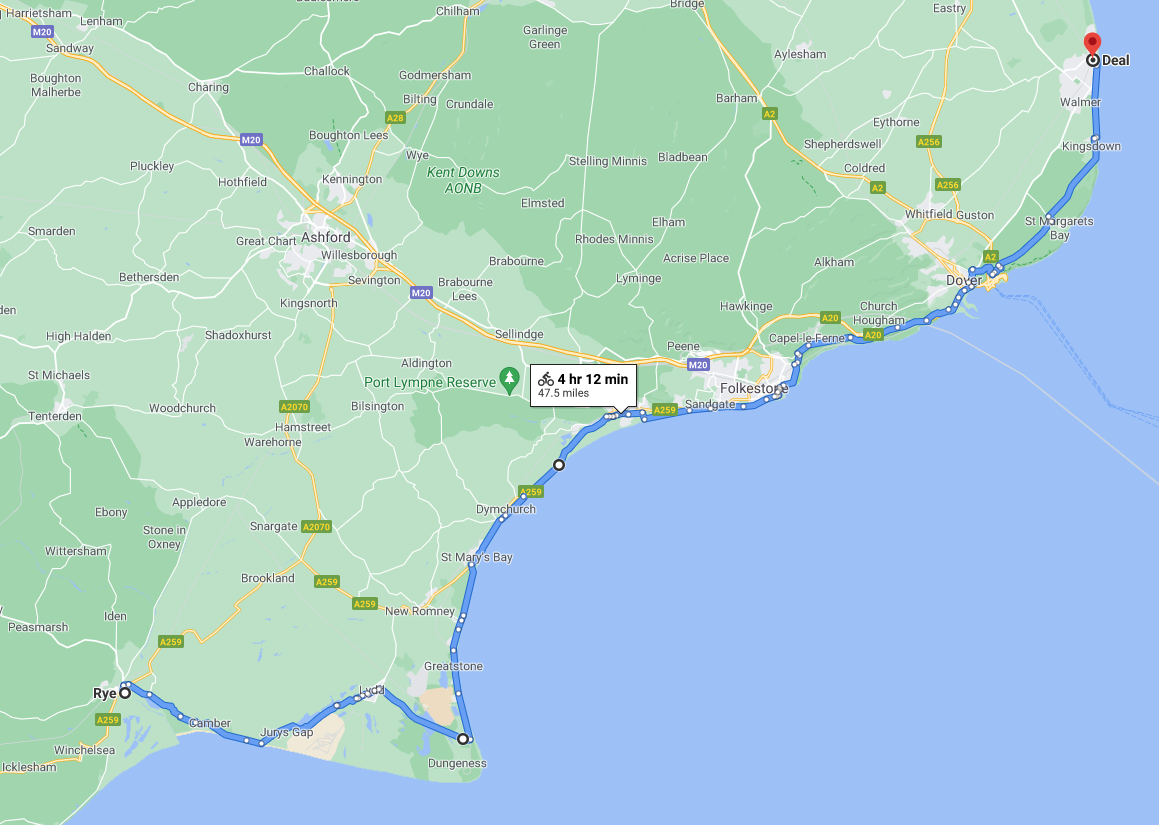
I’ve been here before on a longer Hastings to Margate leg, here’s a shorter hop.

Late night arrival in Rye, early morning departure following a hearty hotel breakfast.

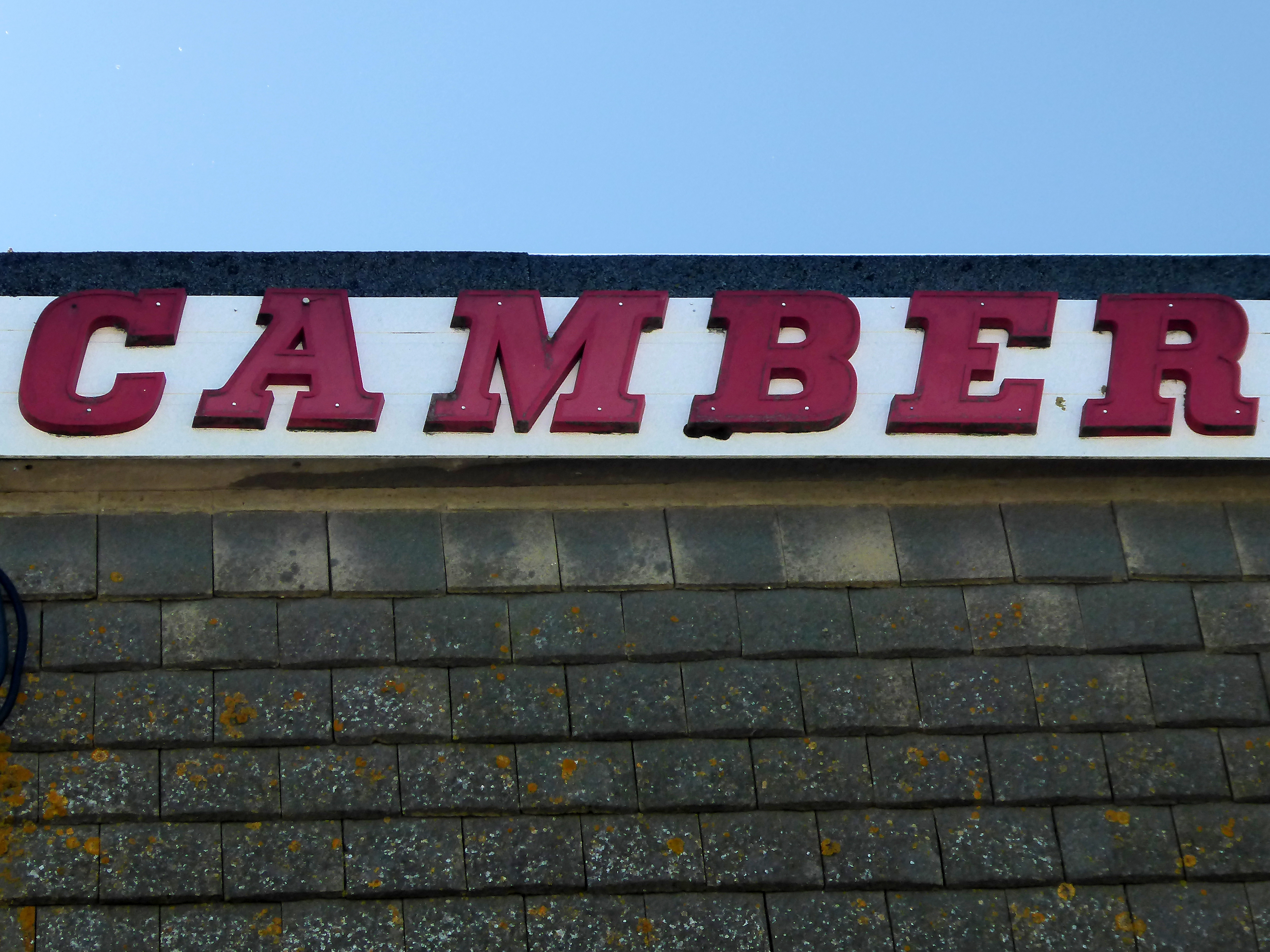
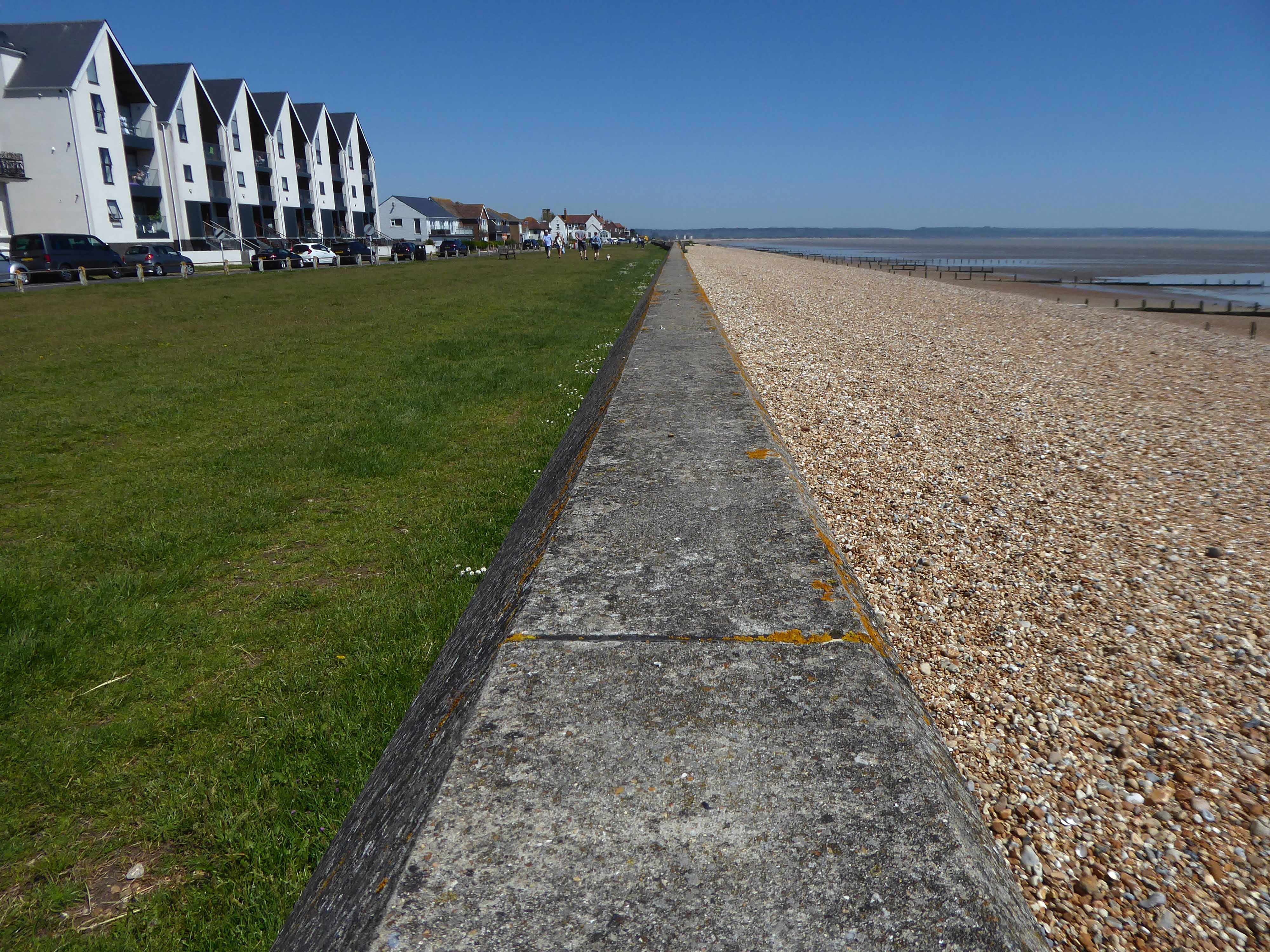
Firstly along tracks, then parallel to the road on sequestered farmland, through the flat salt marshes of Camber.

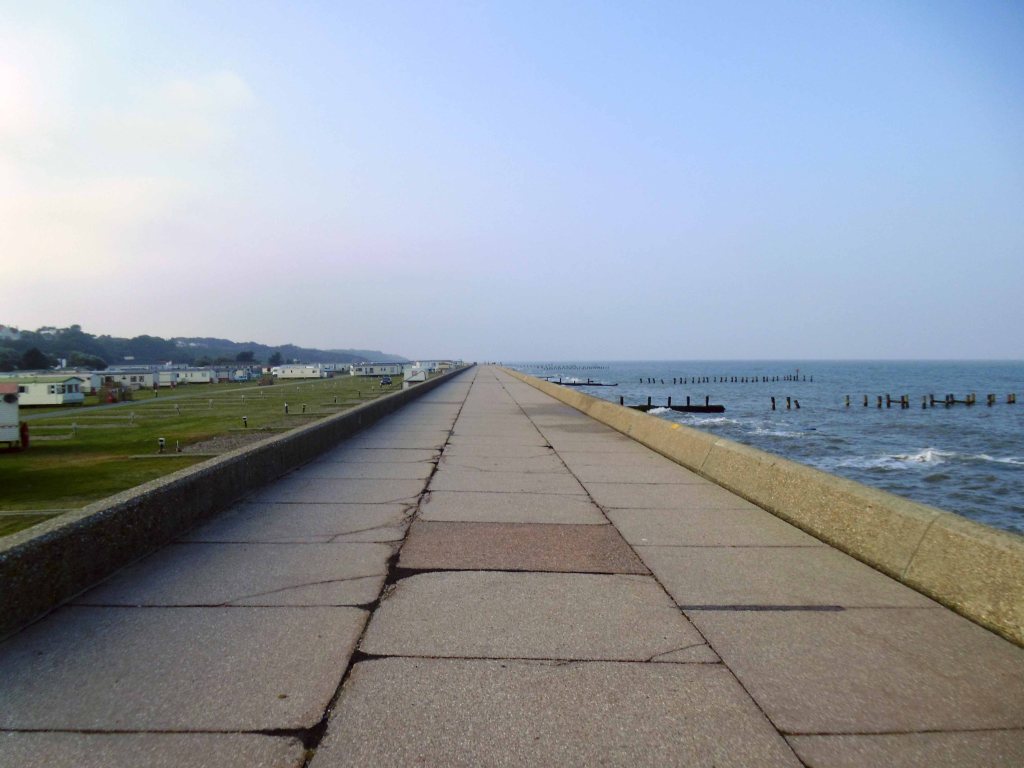
Where Tim stops, in order to fail to buy fruit.

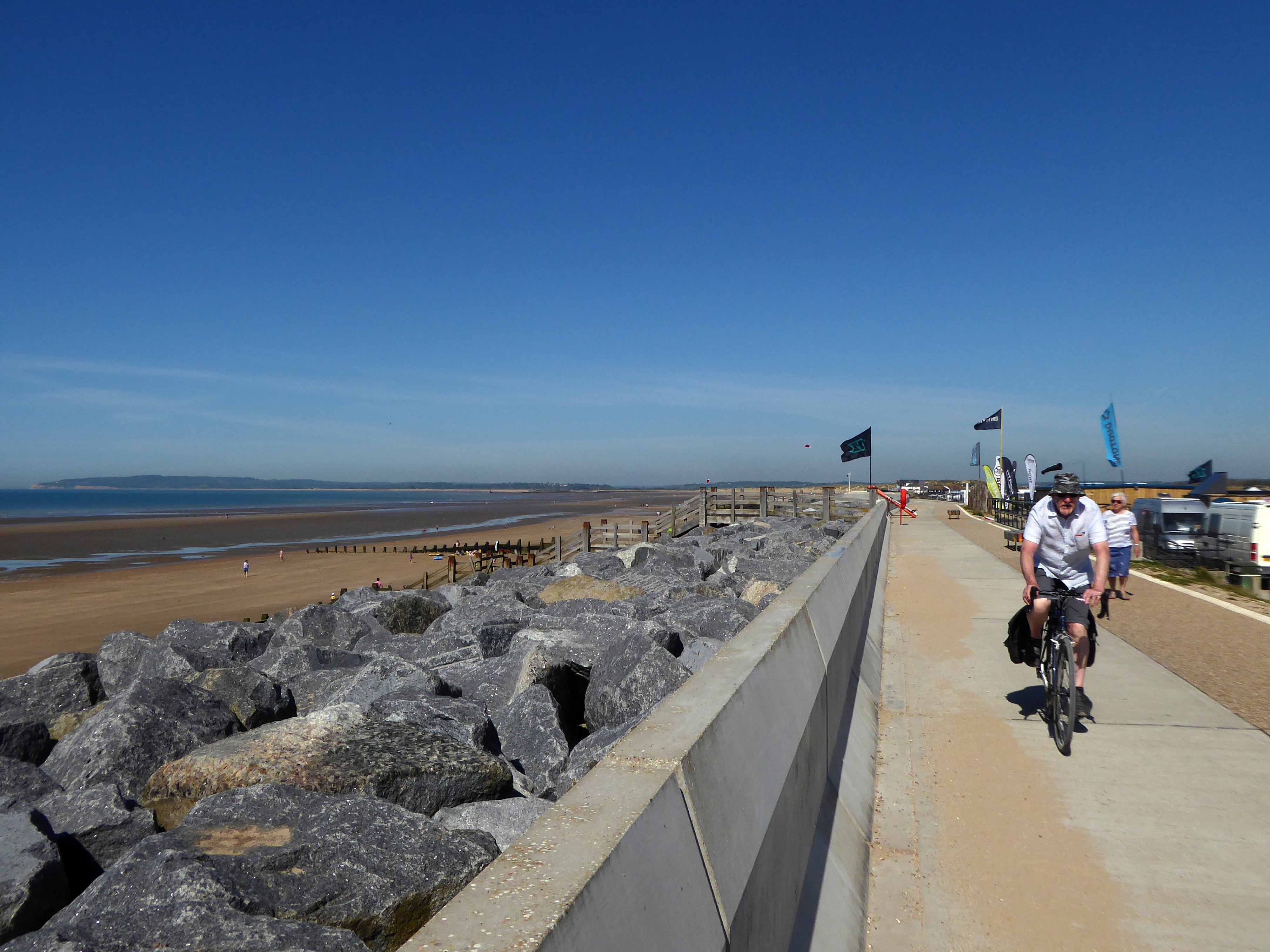
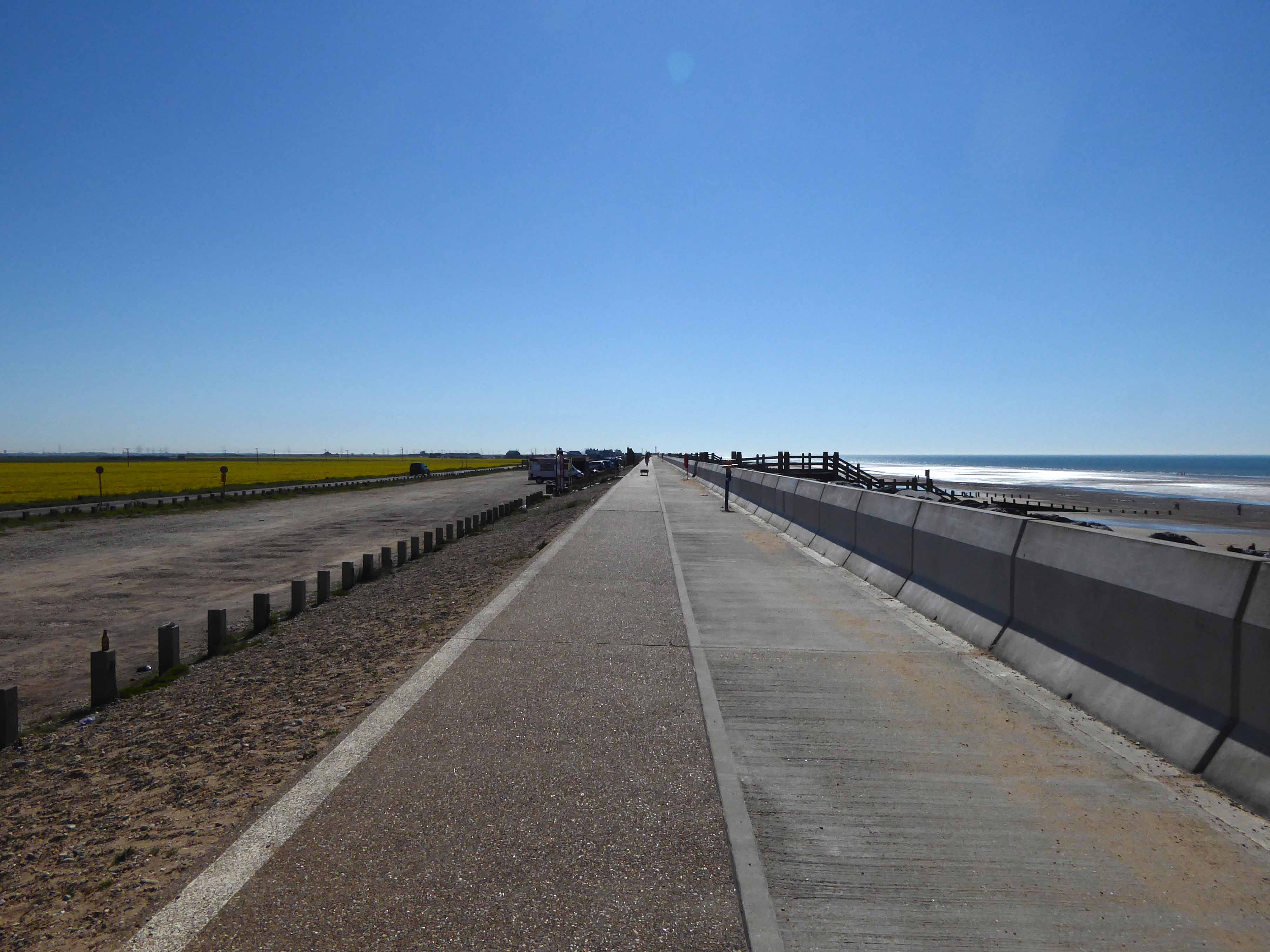
Brief relief from the track along the concrete sea defences and path.

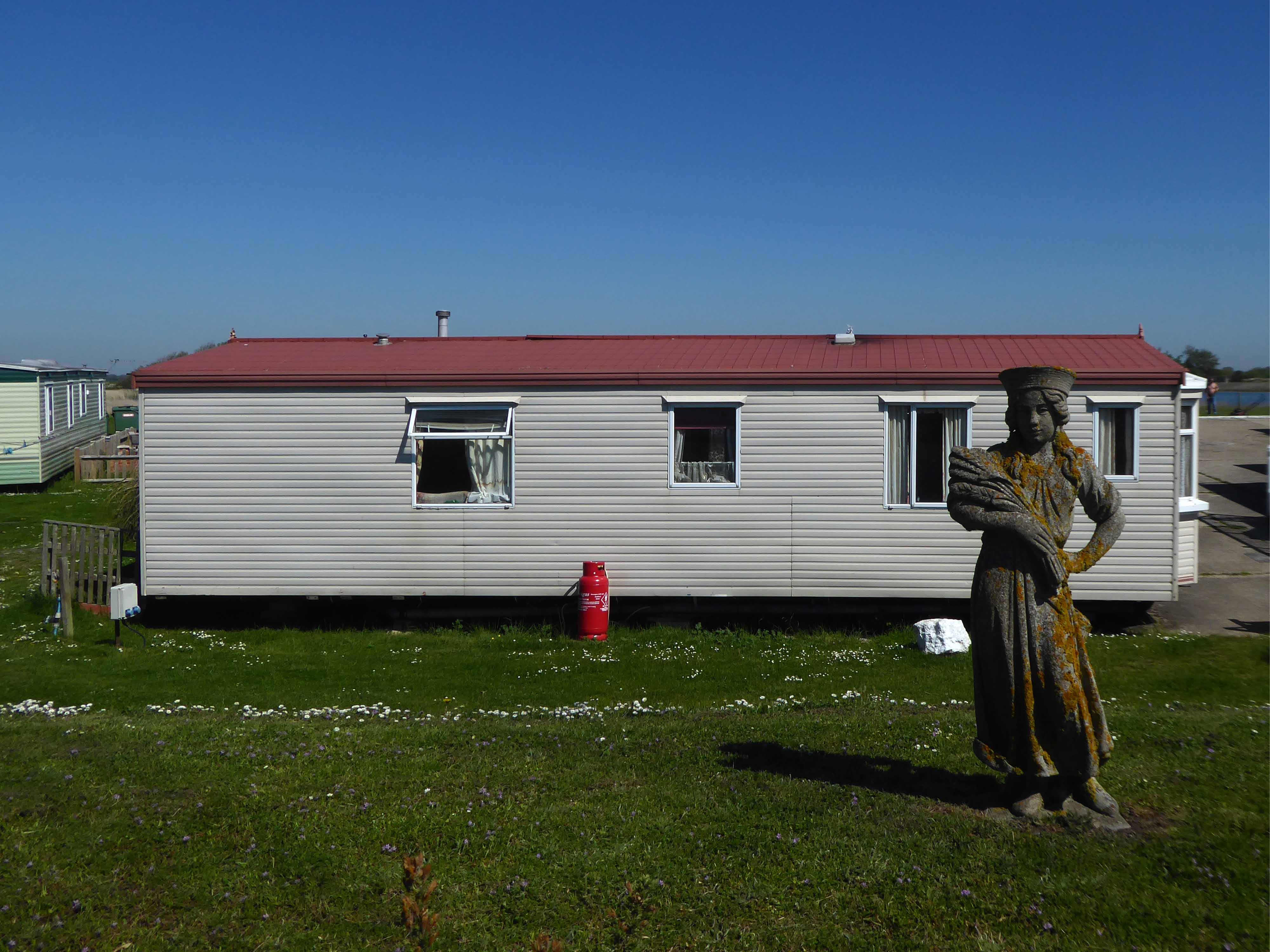
Passing the temporary dwellings, beside the shifting sands and shingle.

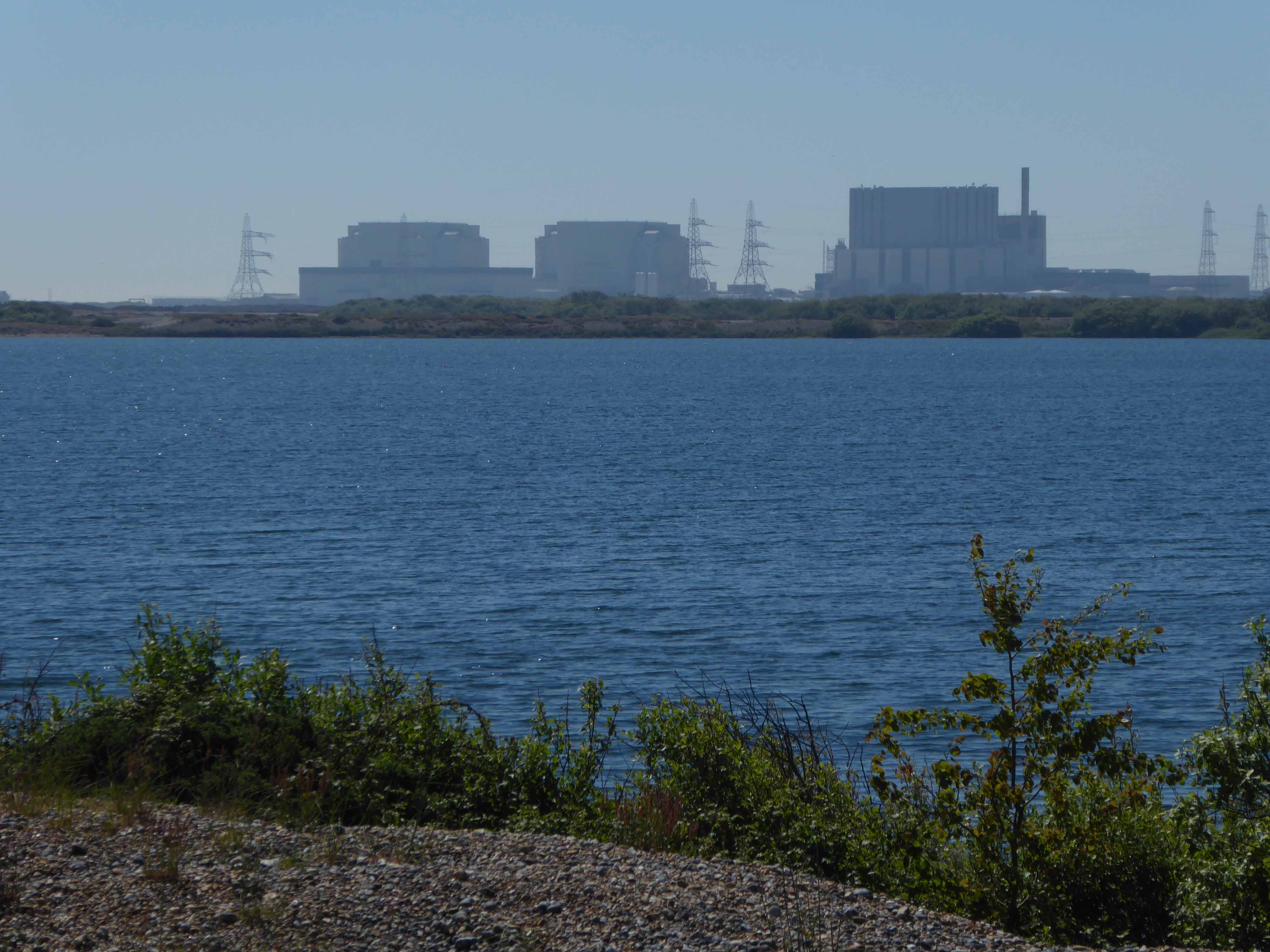
Glancing toward Dungeness Power Station.

Dungeness nuclear power station comprises a pair of non operational nuclear power stations, located on the Dungeness headland in the south of Kent. Dungeness A is a legacy Magnox power station that was connected to the National Grid in 1965 and has reached the end of its life. Dungeness B is an advanced gas-cooled reactor (AGR) power station consisting of two 1,496 MWt reactors, which began operation in 1983 and 1985 respectively, and have been non-operational since 2018 due to ongoing safety concerns.

There were many problems during construction of the second power station, which was the first full-scale AGR. It was supposed to be completed in 1970, but the project collapsed in 1969. The CEGB took over project management and appointed British Nuclear Design and Construction (BNDC) as main contractor. There were more problems and by 1975 the CEGB was reporting that the power station would not be completed until 1977 and the cost had risen to £280 million. By completion the cost had risen to £685 million, four times the initial estimate in inflation-adjusted terms.

In March 2009, serious problems were found when Unit B21 was shut down for maintenance, and the reactor remained out of action for almost 18 months. In 2015, the plant was given a second ten-year life extension, taking the proposed closure date to 2028. In September 2018, both units were shut down and were expected to restart in December 2020. On 7 June 2021, EDF announced that Dungeness B would move into the defuelling phase with immediate effect.

Wikipedia

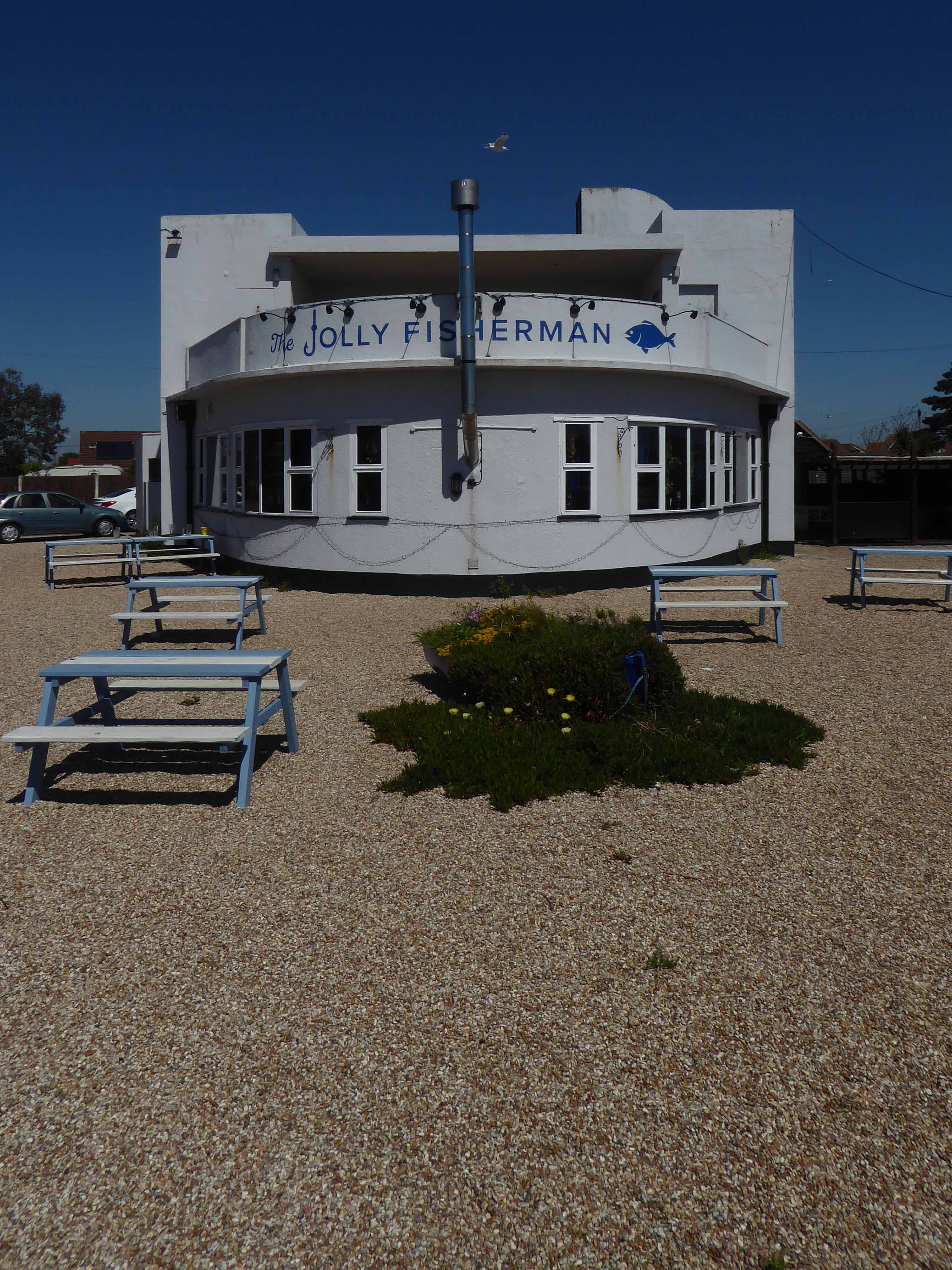
Pausing for a moment to take a drink, sadly not a drink in the Jolly Fisherman – unlike another comical pair.

During their 1947 UK tour, Stan Laurel and Oliver Hardy were invited to re-open the Romney, Hythe and Dymchurch Light Railway.

After travelling down by regular train, the pair performed a couple of skits to entertain the crowds – and the gathered news crews – before riding the light railway.

The duo then lunched with dignitaries at the Jolly Fisherman, before returning for tea at the railway’s restaurant at Hythe.

Dover Kent

The original pub

On Monday and inquest was held on the body of Mr. John Adams, landlord of the “Jolly Fisherman,” who was found drowned in a well near his house.

From the evidence it appeared that the deceased left home on Saturday morning for the purpose, according to his usual custom, of walking to New Romney, to see if there were any letters for Dungeness. Not returning at the usual time, his wife became alarmed, and a messenger was dispatched to Romney to see if he had been to the Post-office. It was ascertained he had not, and the search was forthwith made.

About 2 o’clock one of the coastguardsmen, Edward Hooker, bethought him to look into the well, which is about 250 yards from the deceased’s house. In doing so he was horrified to find the poor fellow head downwards, partly immersed in water. Assistance was at once procured, and he was removed to his house, quite dead. There was about 4 feet of water in the well.

In the absence of any testimony to establish the inference of suicide, and open verdict of Found Drowned was returned. The deceased was about 50 years of age.

It has been stated that the deceased had of late, been rather abstracted, but no evidence was adduced to establish the truth of this assertion.

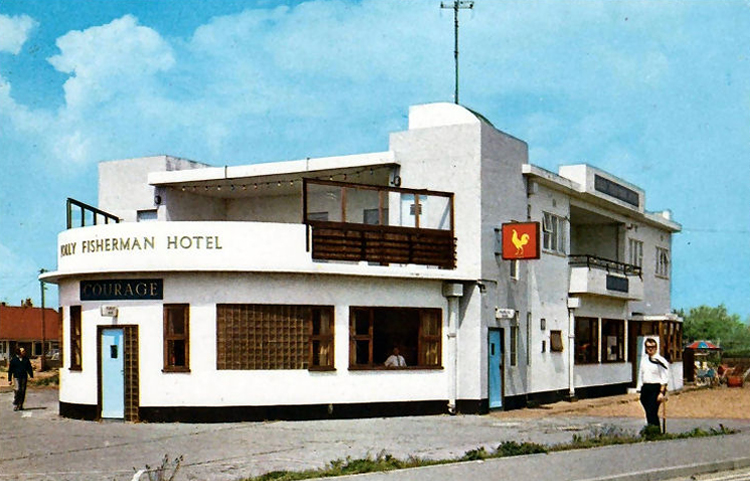
The present Jolly Fisherman pub is located in the centre of Greatstone at the junction of Dunes Road and The Parade.

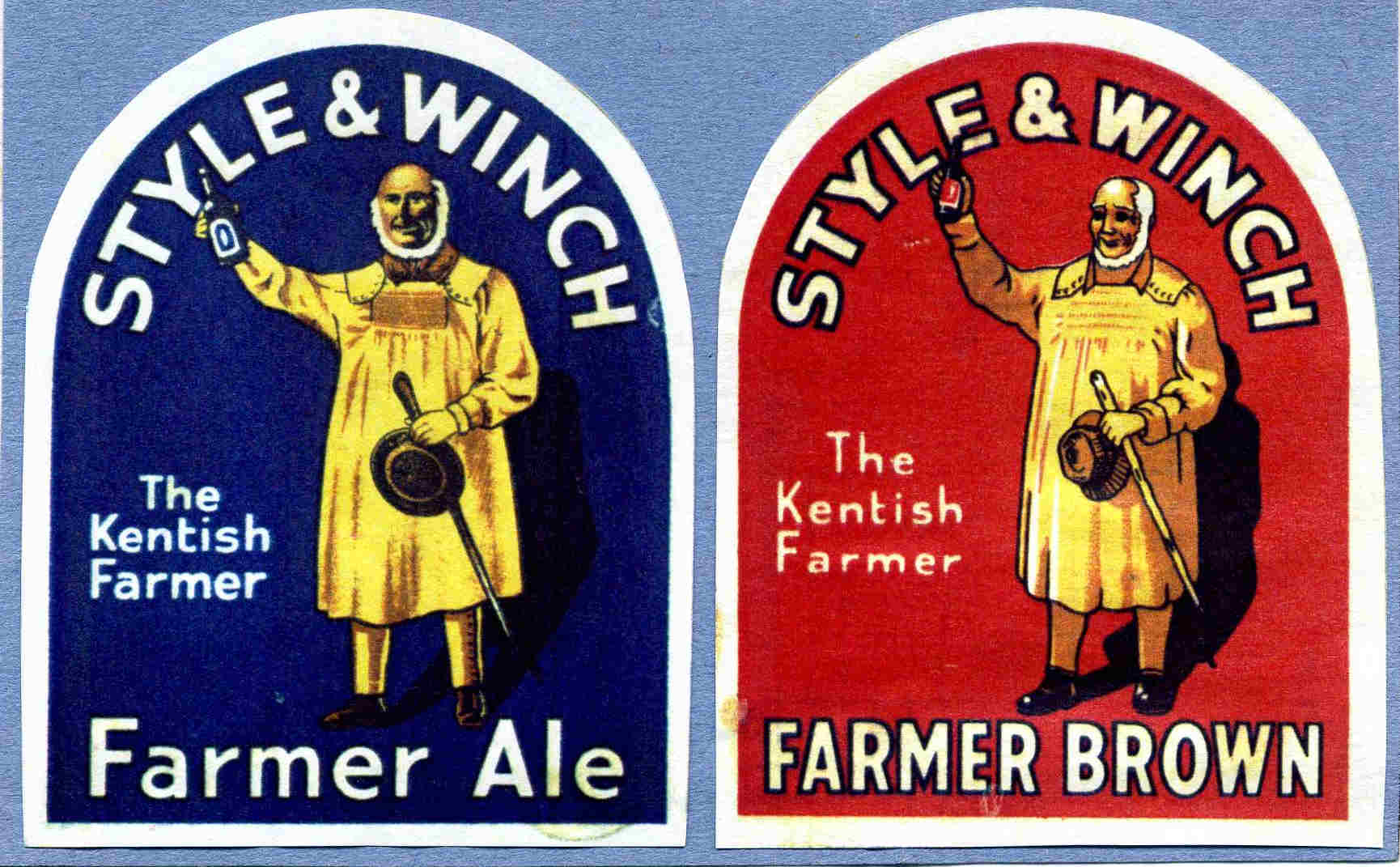
This was built by the brewers Style and Winch Ltd, who owned the old Jolly Fisherman, in about 1935 as a pub and hotel.

Postcard of 1975

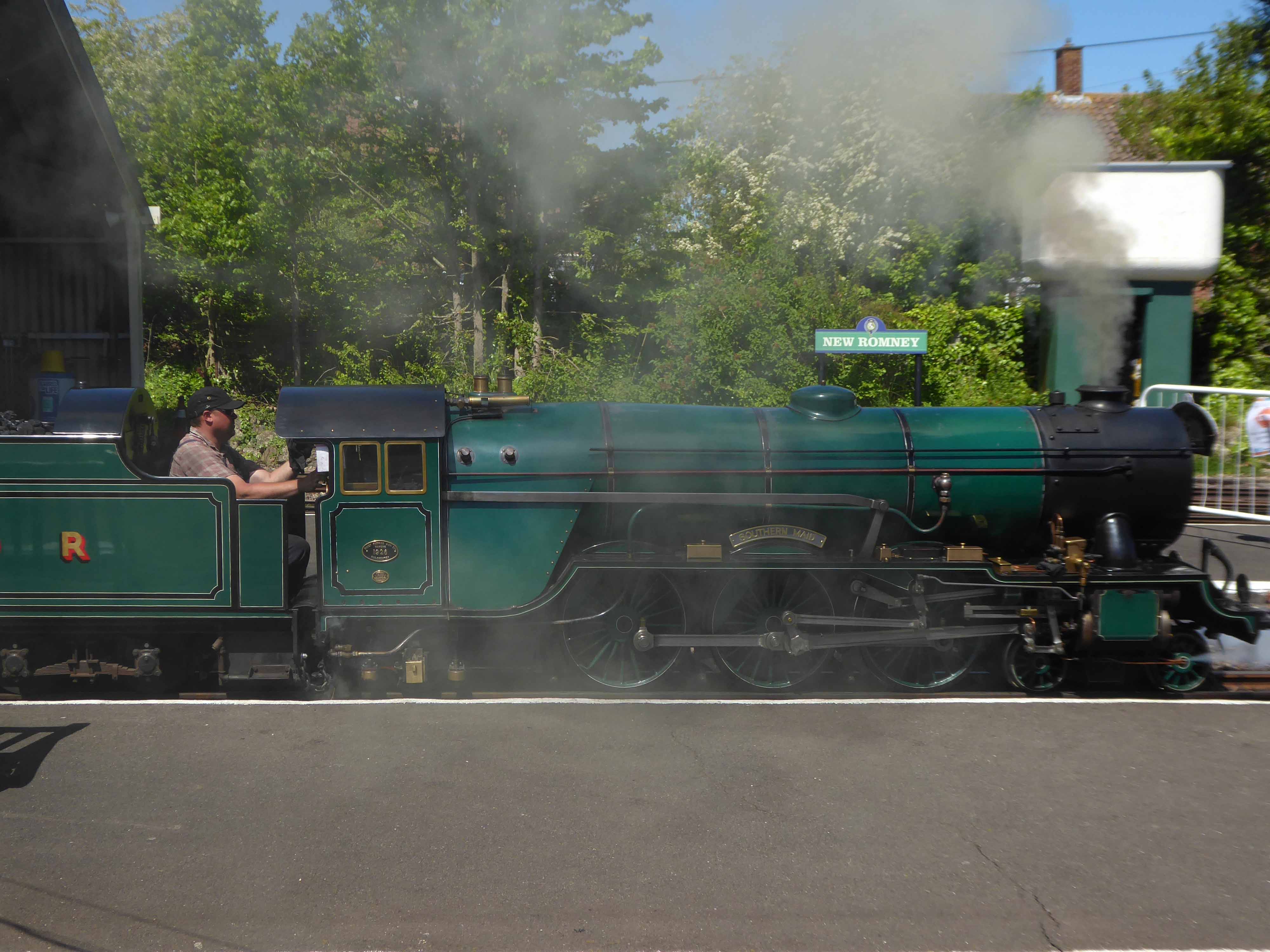
Here we are now taking time out at New Romney, in order to view the locomotives in steam, at the Romney, Hythe and Dymchurch Light Railway.

The RH&DR was the culmination of the dreams of Captain J. E. P. Howey — a racing driver, millionaire land owner, former Army Officer and miniature railway aficionado and Count Louis Zborowski — eminently well-known racing driver of his day – famous for owning and racing the Chitty Bang Bang Mercedes.

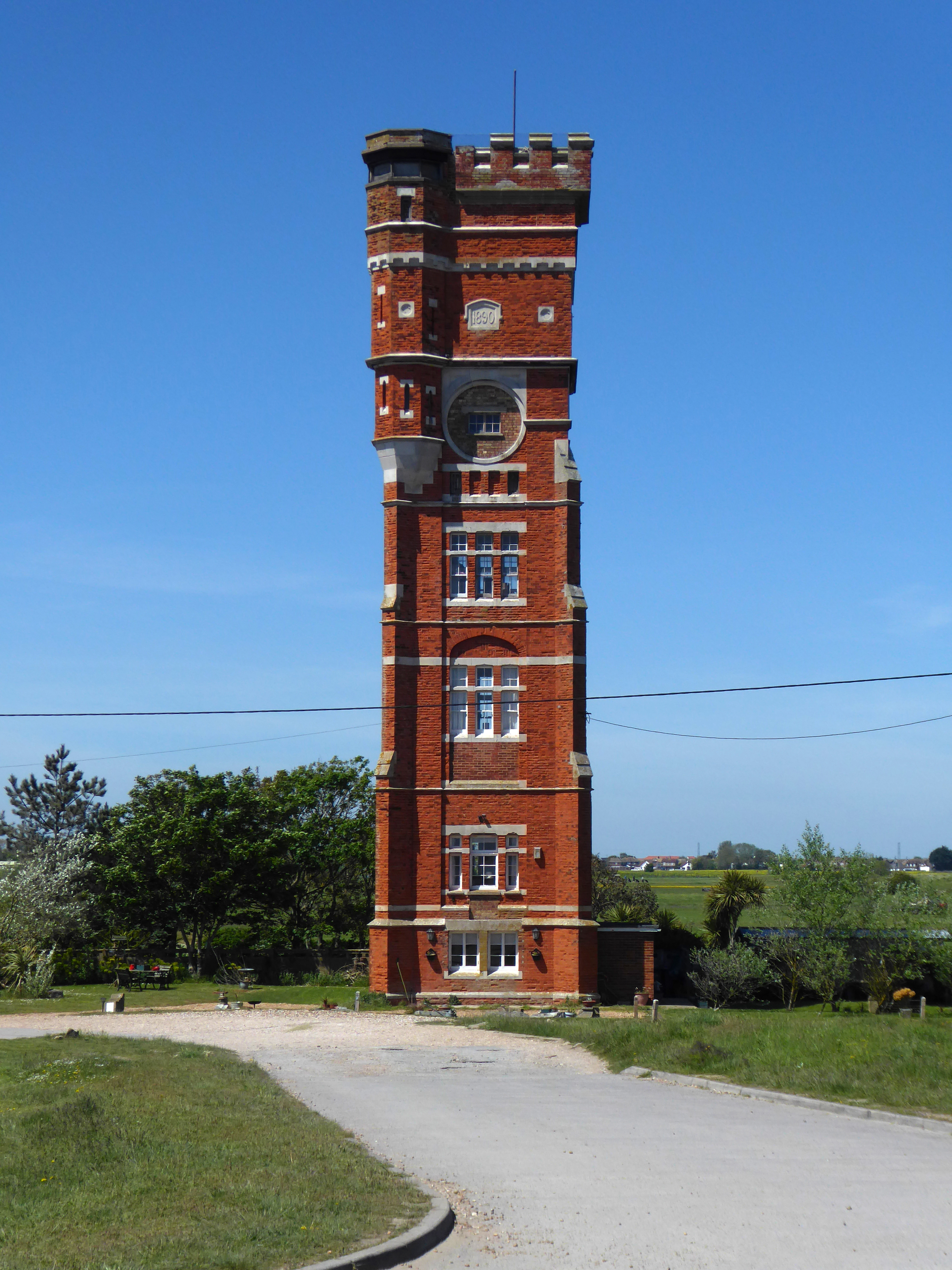
The 120ft Grade II Listed water tower at Littlestone was built in 1890 by Henry Tubbs to supply water to his properties in Littlestone, including Littlestone Golf Club and his proposed housing development. 

Henry Tubbs wanted to turn Littlestone into a major resort, and embarked on an ambitious building programme, including the Marine Parade and Grand Hotel. His plans for a pier were not realised, however, and it was eventually built at Eastbourne instead.

The tower is constructed in red brick which shows the external features of the tower very well. It narrows at about the third story and its appearance changes depending on your viewpoint. At the top there is a sort of turret, giving the building a slightly military look.

The military used the Tower during World War Two as a lookout post and they made some changes to the structure, partly the reason for its slightly wobbly look. The Army also added a substantial concrete stairway inside.

Unfortunately the water tower didn’t function properly and the water was found to contain too much salt to be of any use. In 1902 the Littlestone and District Water Company built a tower at Dungeness to supply all of New Romney, Littlestone, Greatstone and Lydd. The tower at Littlestone fell into disuse, but now serves as a residence.

The Romney Marsh

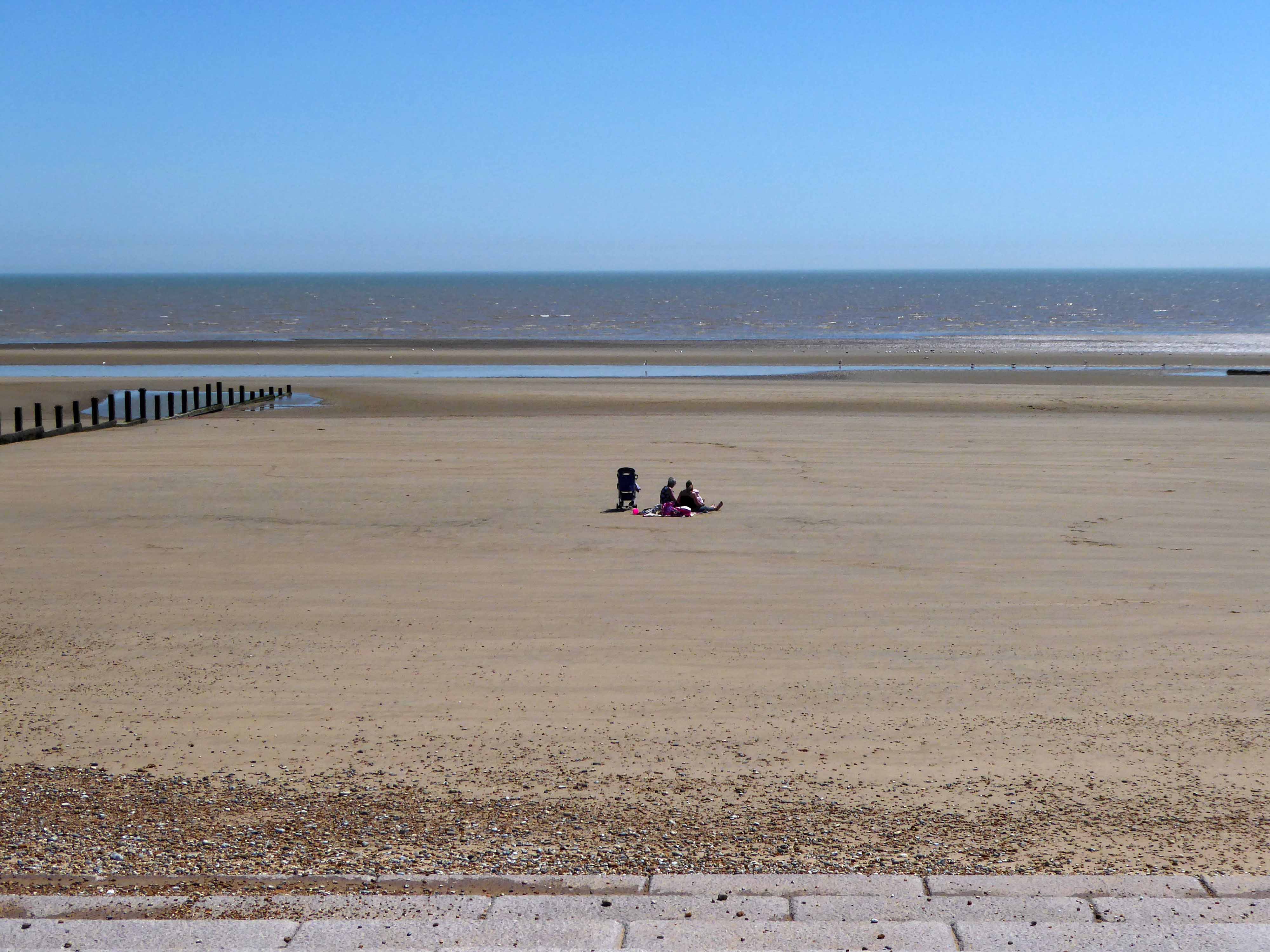
The failed resort of Littlestone continues to fail.

Whilst Folkestone thrives.

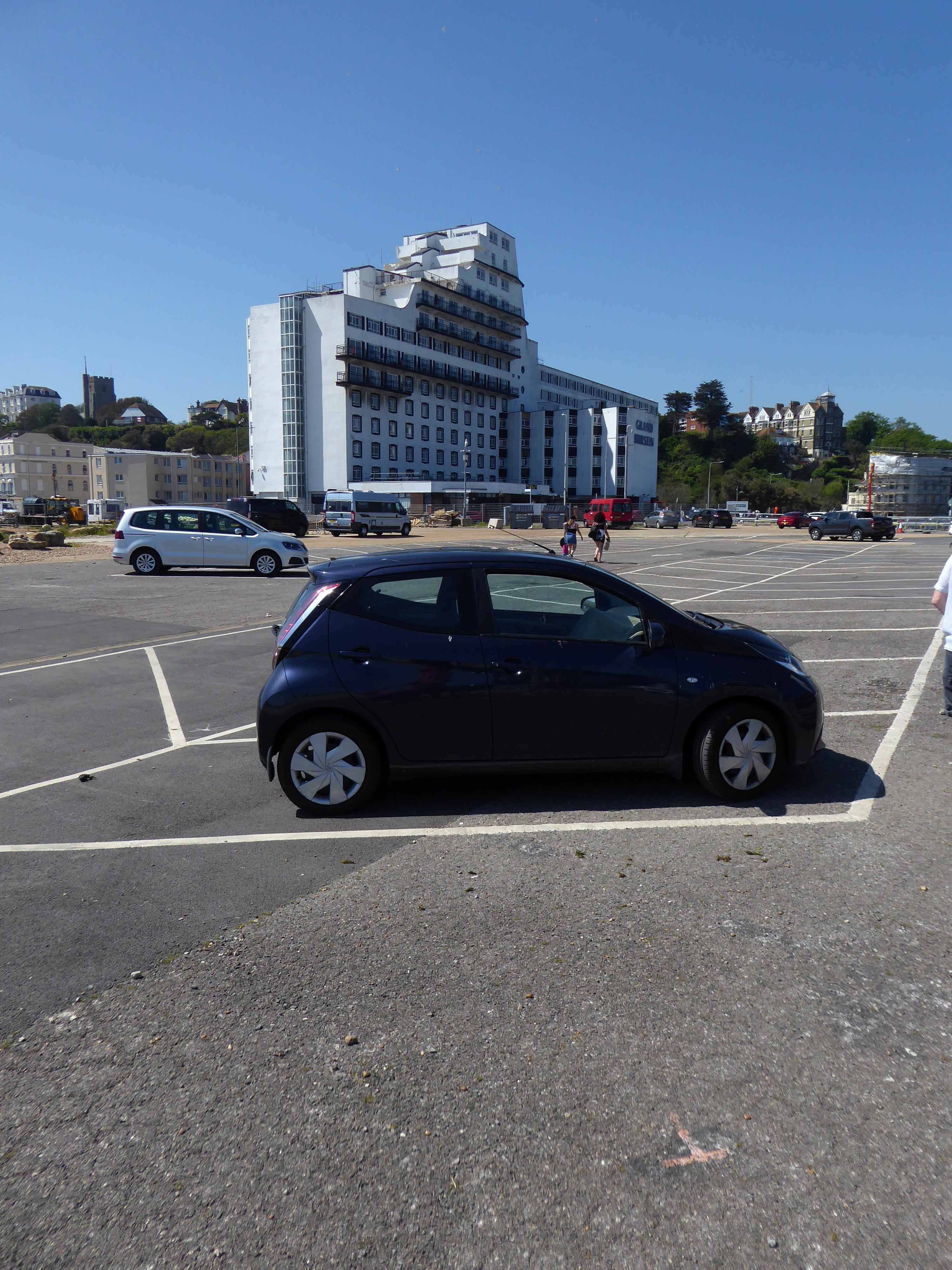
Even the Grand Burstin has been improved.

23 November 2009 

This place has got to be up for Worst Hotel in the UK. 

We made the mistake of staying there for our first anniversary, and we sorely regretted it. First, after the initial shock that awaits anyone entering the lobby, we were given probably the filthiest room in hotel history.

It reeked of smoke and urine.

The management’s disorganisation landed us free meals, even if they paid us £10 per person to eat that stuff it wouldn’t be worth it:

Canned fruits, red meat galore with no other option, greasy bacon, value bread, omelet made with the least real eggs possible, all served with the same urine smell in the restaurant and by the most apathetic staff ever.

We left as soon as possible.

Seeing that place in the rear-view mirror was the highlight of our visit.

Trip Advisor

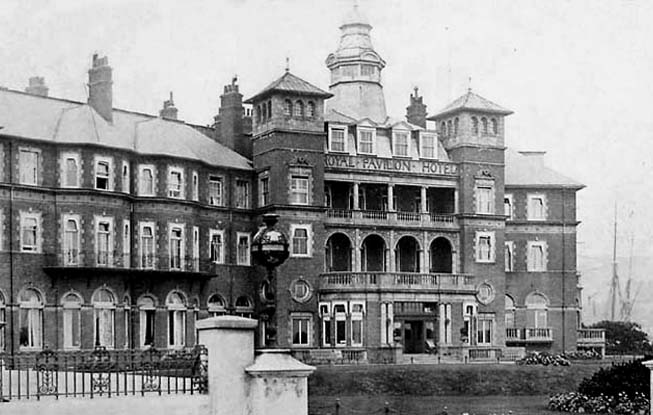
The current hotel was built in 1984 from the foundations of the Royal Pavilion Hotel, originally built in 1843, parts of which form the new Burstin Hotel, such as the Victorian restaurant.

It’s along climb out of Folkestone, there are no snaps – simply memories of a weary ascent.

Eventually we top out and roll along over the white cliffs of Dover.

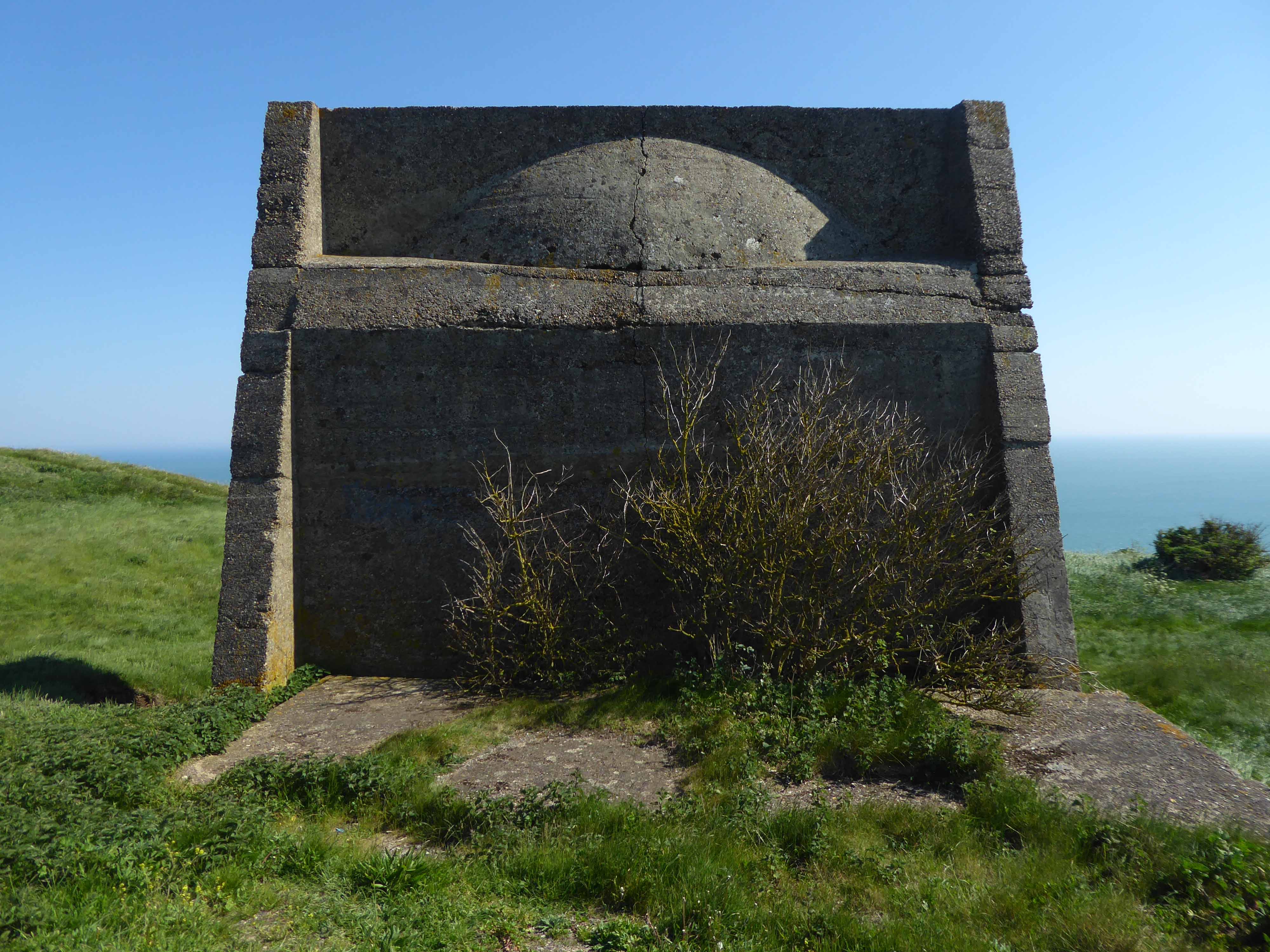
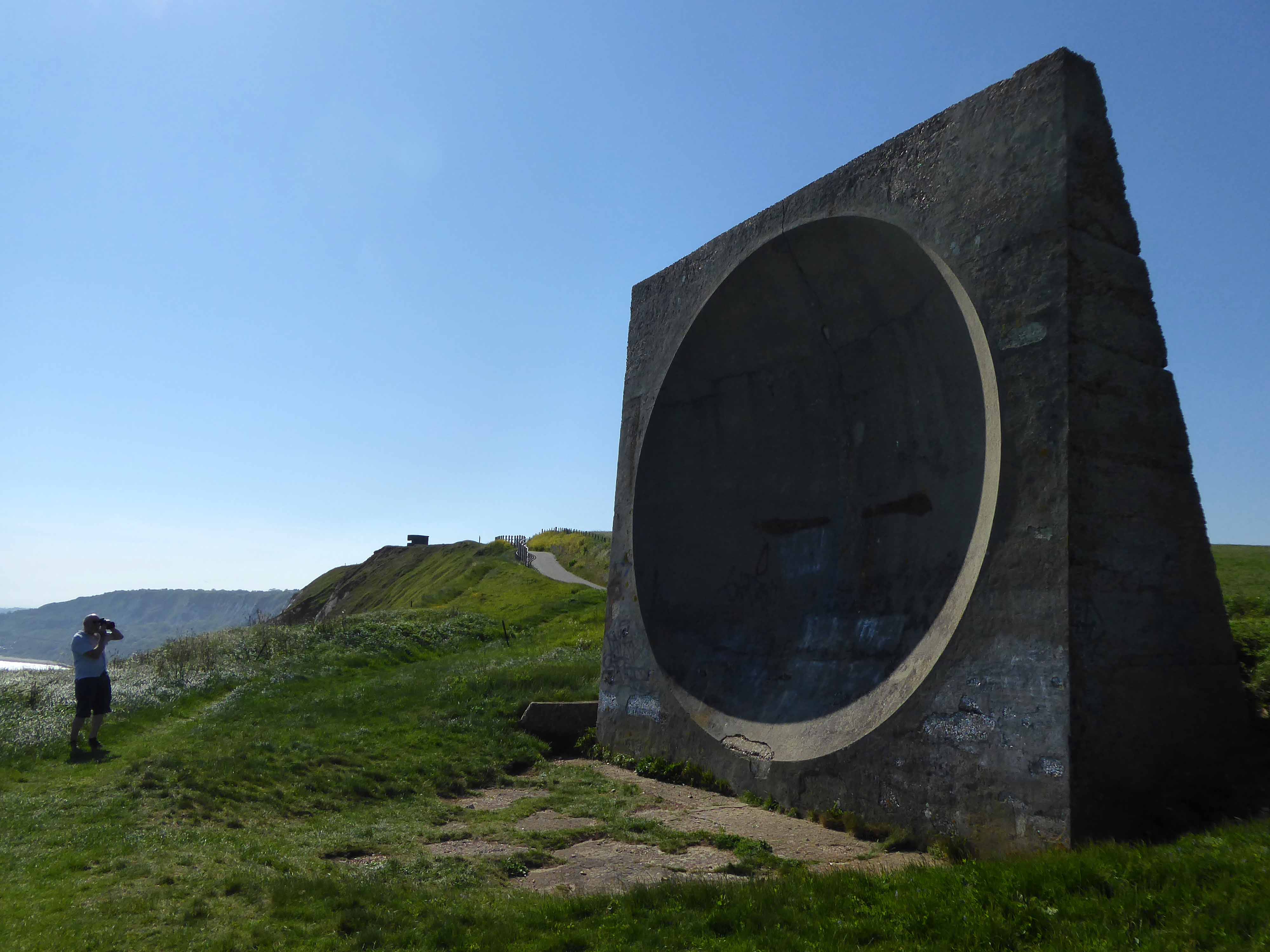
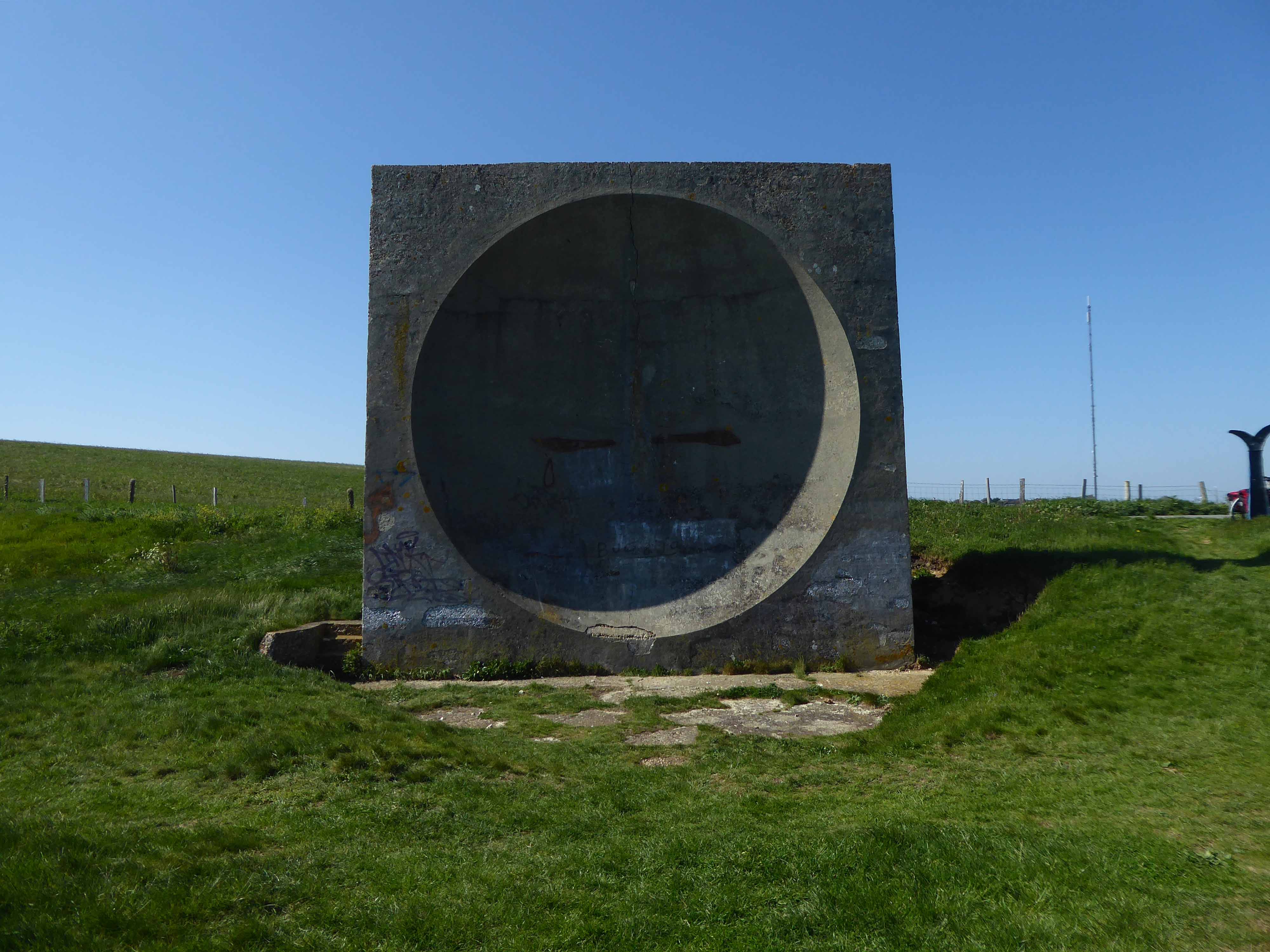
Where we discover this delightful concrete listening post.

Abbot’s Cliff Acoustic Mirrors 

Before the advent of radar, there was an experimental programme during the 1920s and 30s in which a number of concrete sound reflectors, in a variety of shapes, were built at coastal locations in order to provide early warning of approaching enemy aircraft. A microphone, placed at a focal point, was used to detect the sound waves arriving at and concentrated by the acoustic mirror. These concrete structures were in fixed positions and were spherical, rather than paraboloidal, reflectors. This meant that direction finding could be achieved by altering the position of the microphone rather than moving the mirror.

Graham Stephen

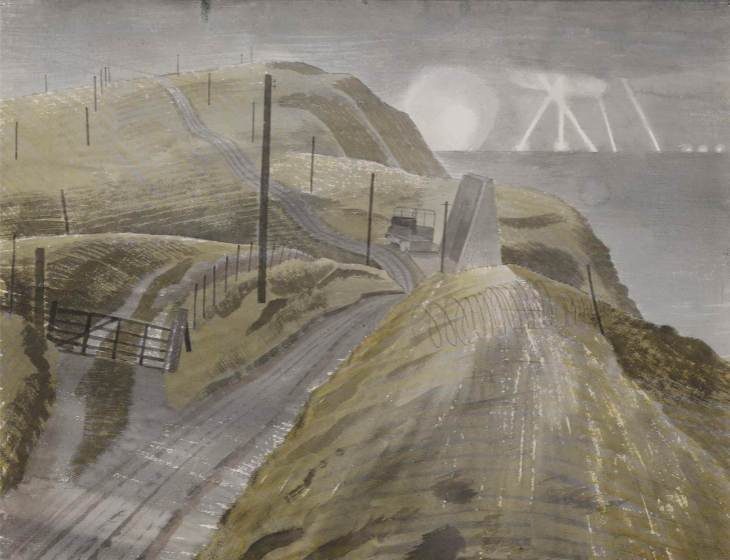
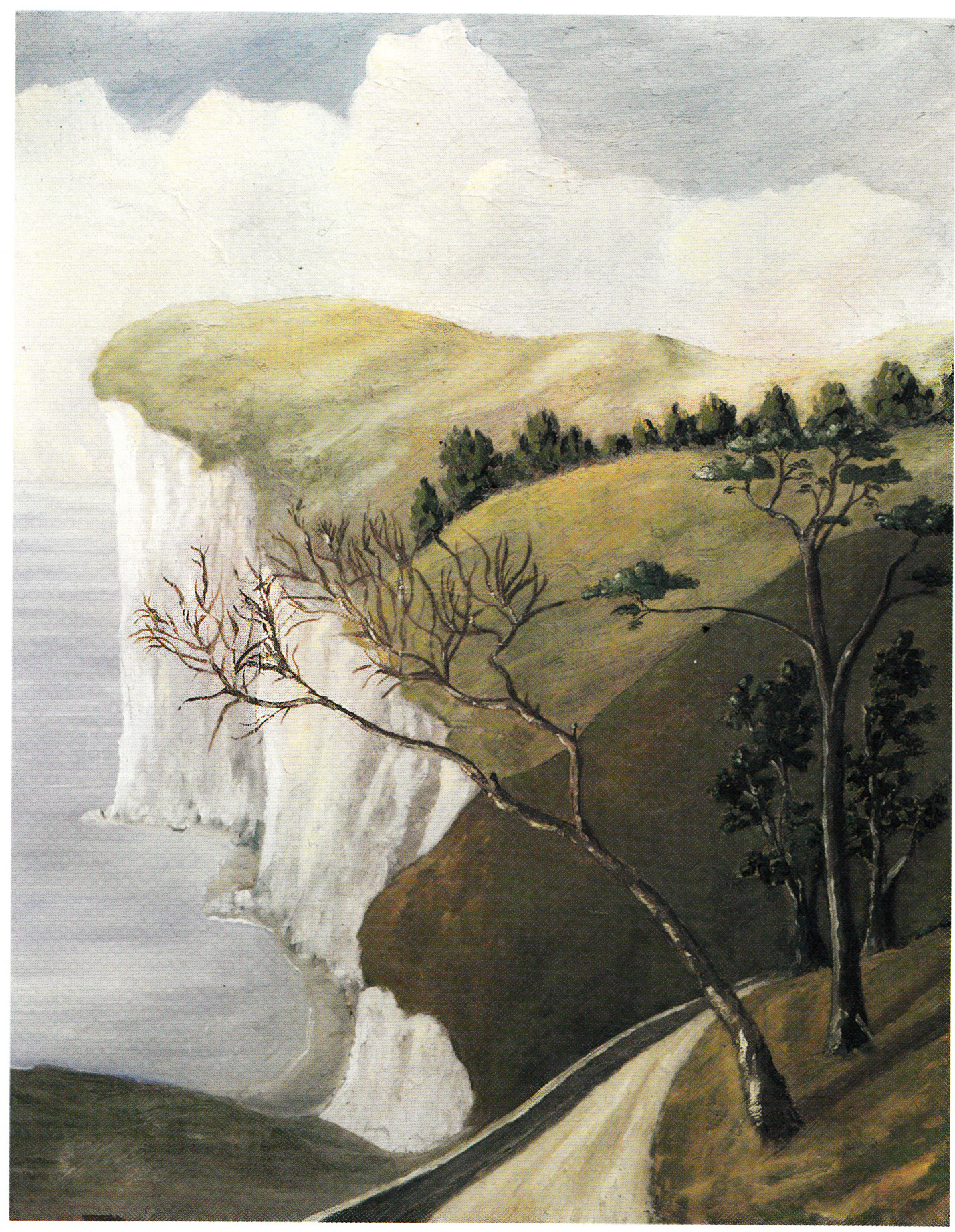
Eric Ravilious Abbot’s Cliff – 1941

Descending into Dover, ascending again, hot and weary.

Appreciating the slow traffic free drag down to St Margarets Bay – sadly no photos, suffice to say one of the most elegant lanes of the trip, once home to Sir Noël Pierce Coward.

In Coward’s seven years in the Bay he entertained a large array of famous friends from the arts, film and stage.  Katherine Hepburn stayed  here with Spencer Tracey and swam daily from the shore. Daphne Du Maurier, Ian Fleming, Gertrude Lawrence and John Mills all came to relax, play Canasta and Scrabble or join Coward in his painting studio where he produced oils of the Bay.

St Margarets History

Arriving in Deal we quickly buzzed off to the Green Berry, one of my favourite pubs.

Followed by a twilight kebab on the prom.

Finally fetching up in the Wetherspoons.

The Sir Norman Wisdom

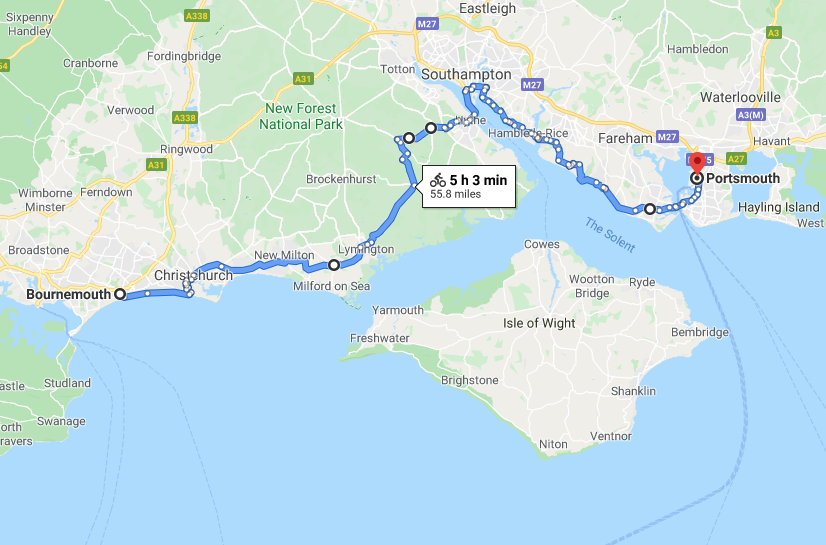
Bournemouth to Portsmouth

Sunday 2nd August 2015 – you awake and you’re still in Bournemouth and still in one piece, the possibility of late night stag and hen madness passed over without incident.

A quick look around town, then let’s get off to Pompey – where I was very proud to be a Polytechnic art student 1973/76, in good old Lion Terrace.

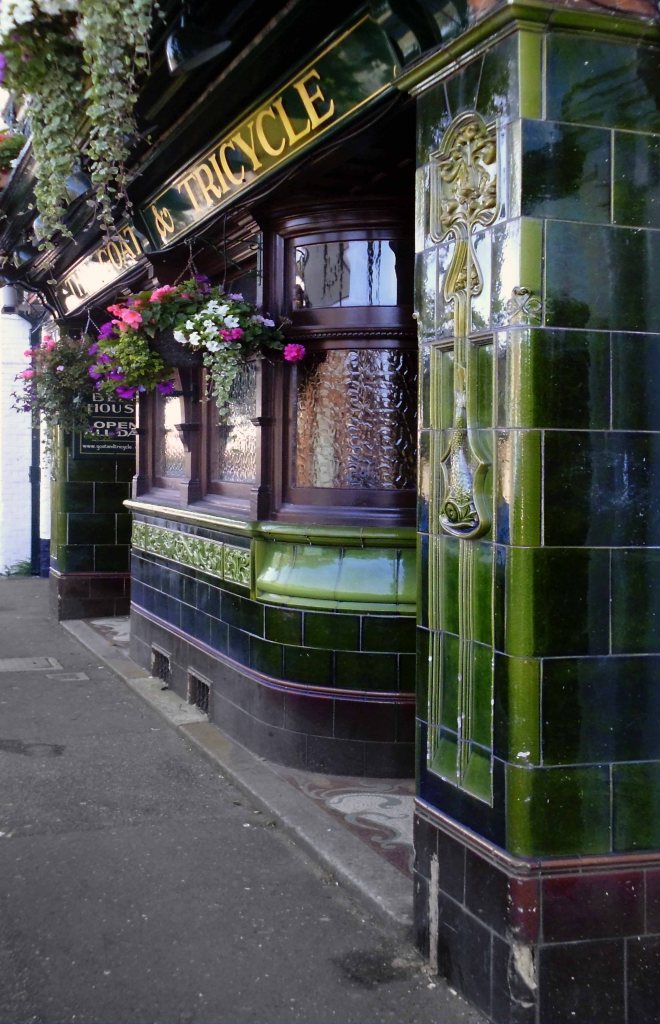
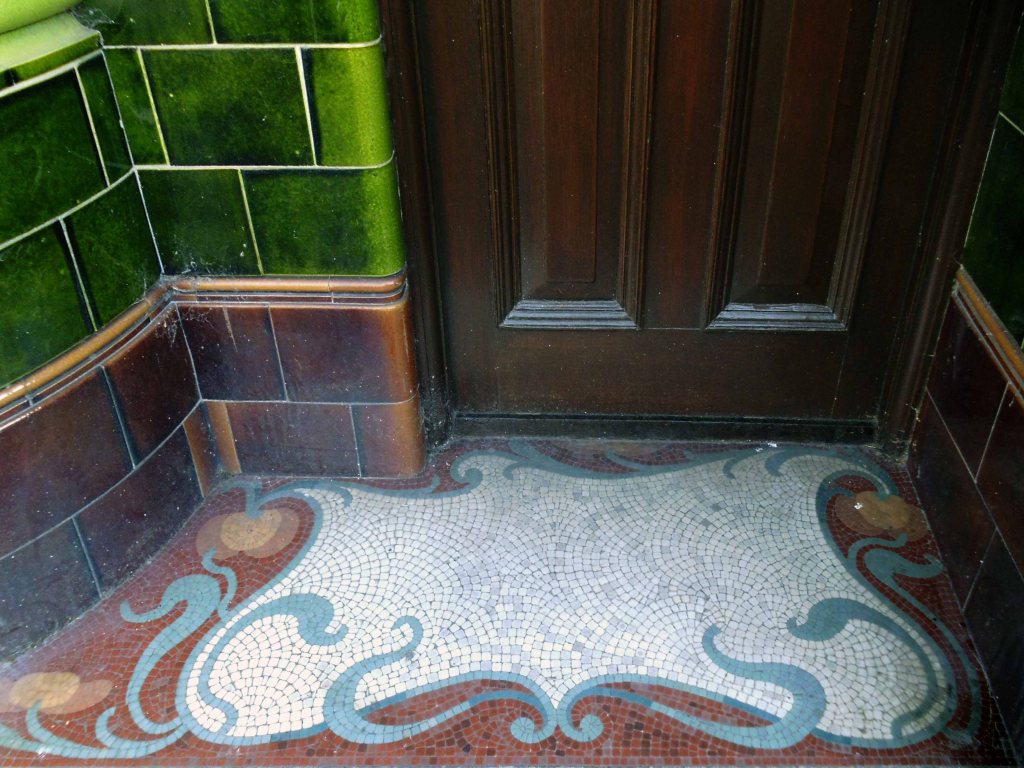
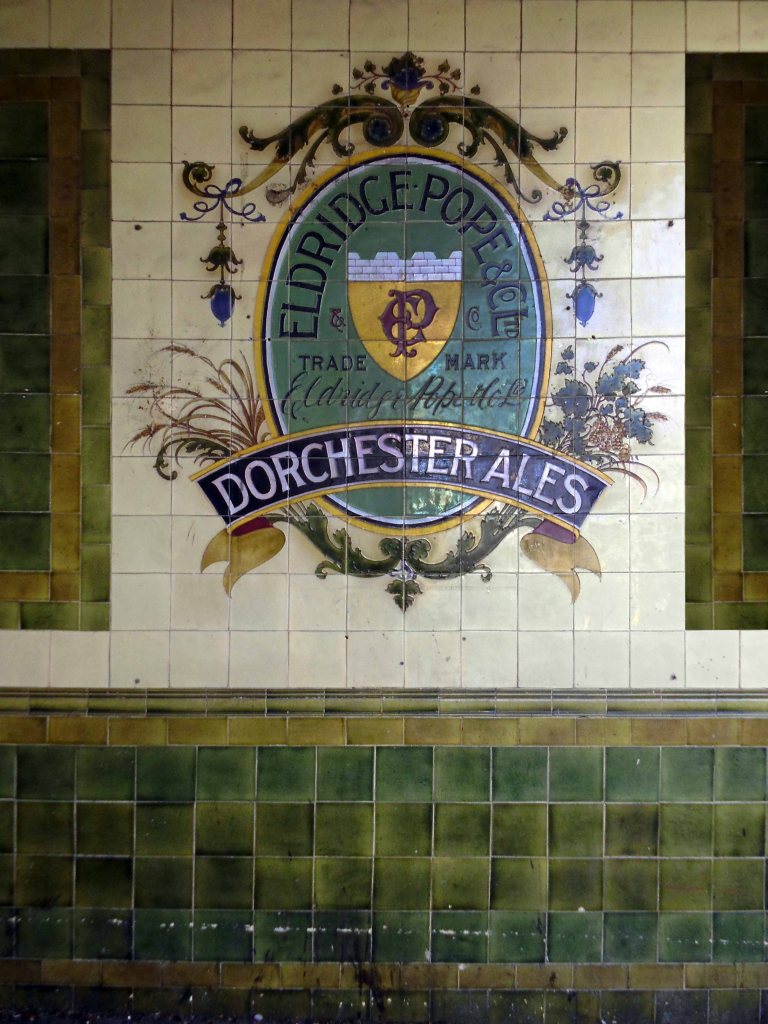
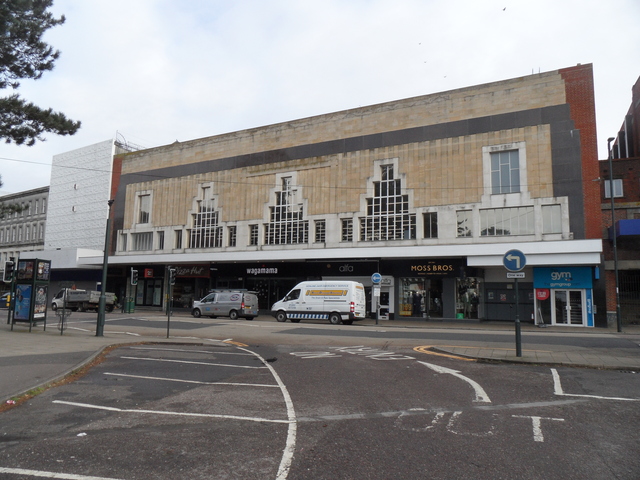
Last night’s late night drinking den with its fabulous faience frontage and doorstep mosaic.

Close by this tiled porch at The Branksome.

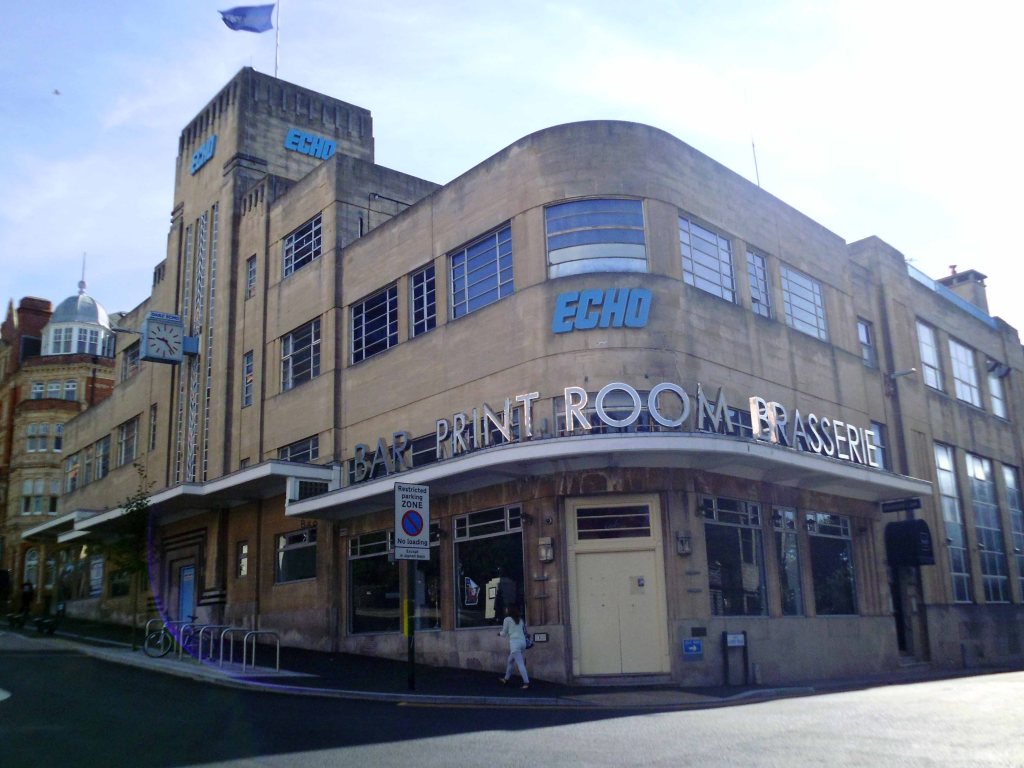
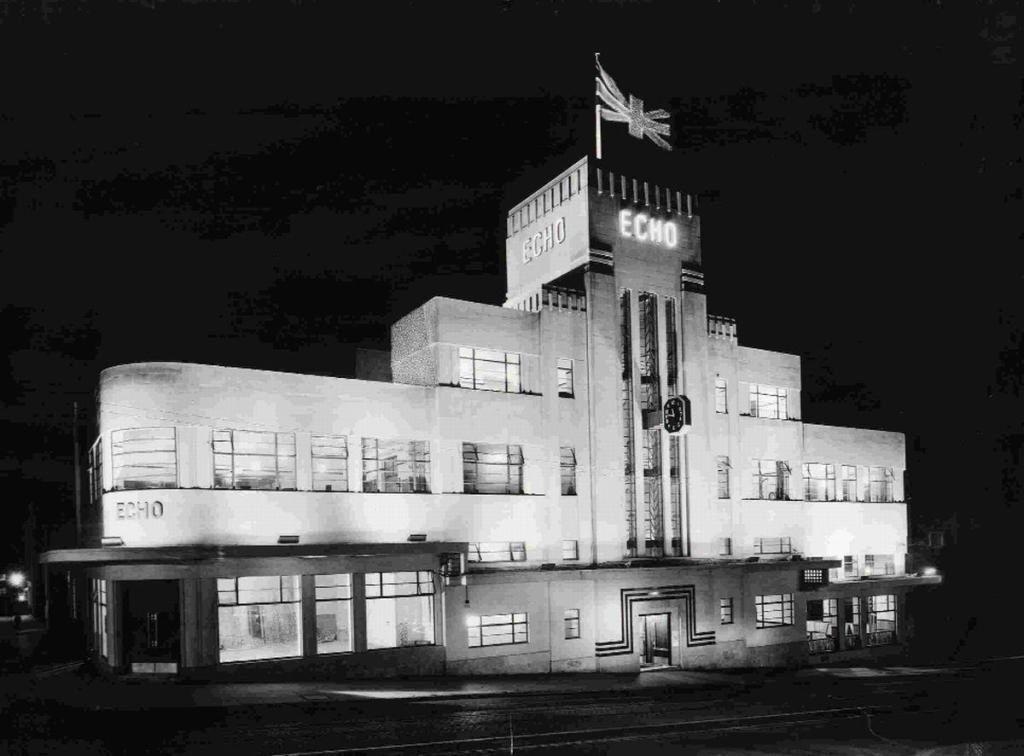
Built 1932 by Seal and Hardy as offices for the Bournemouth Echo, steel-framed, the main elevations faced in Monks Park Bath Stone.

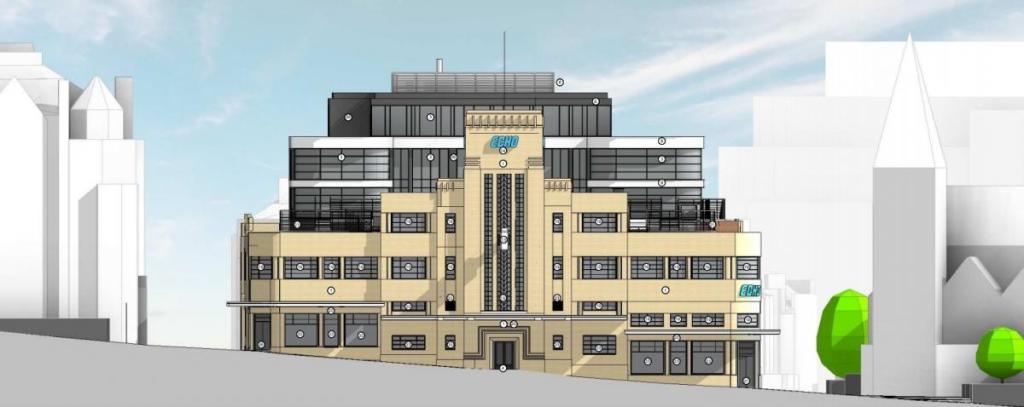
Plans to redevelop the listed Daily Echo offices in Bournemouth were withdrawn shortly before they were due to be discussed by councillors.

That Group’s application to extend the Richmond Hill building to create more work space as well as a 30-bed hotel, café, gym and events space had been recommended for refusal before it was pulled from the agenda for Monday’s meeting.

Daily Echo

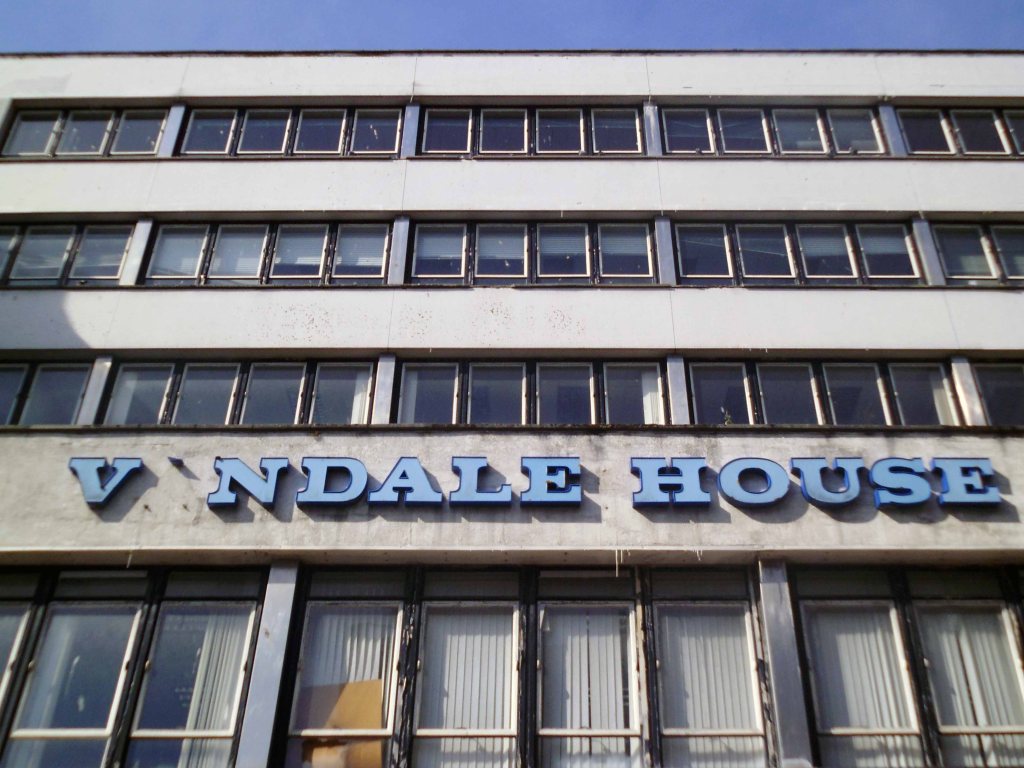
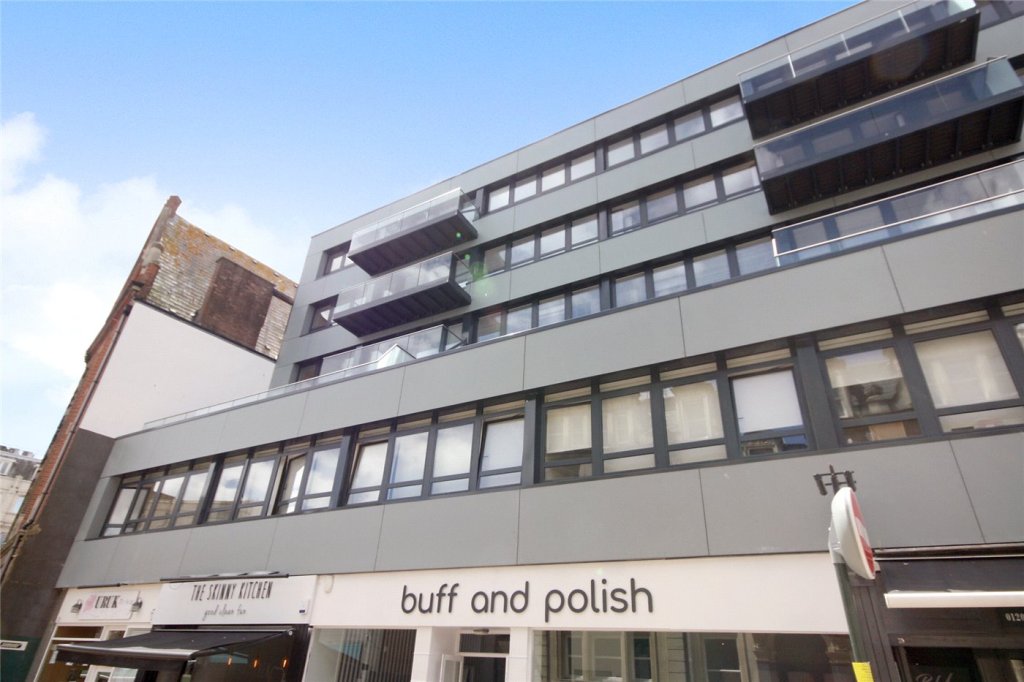
Vandale House appears to have been refurbished as flats, having lost its architectural type.

The property benefits from modern and contemporary décor throughout, large balcony and views over the Town Centre itself. 

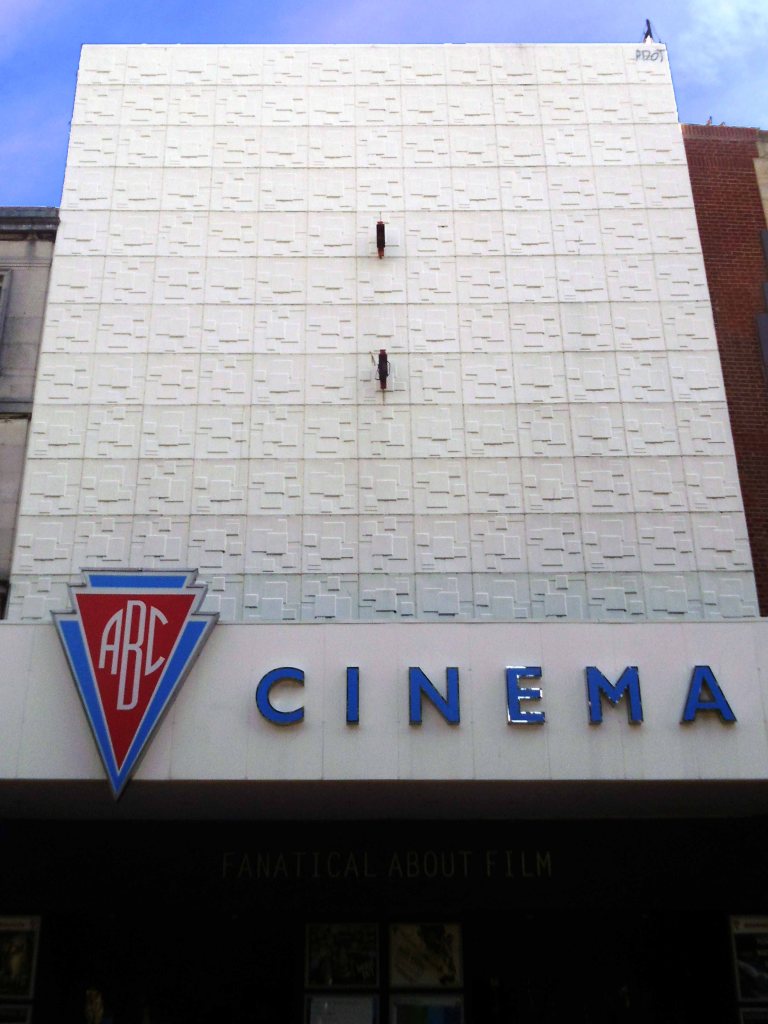
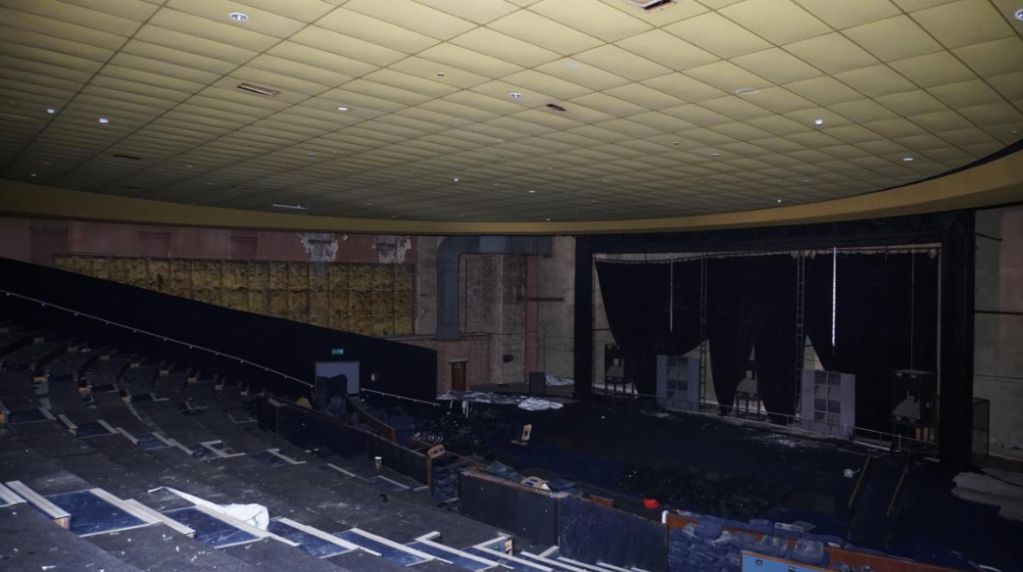
This art deco cinema was built for ABC and designed by their regular architect William Glen, it opened in June 1937.

The ABC, originally the Westover Super Cinema, entertained audiences for almost 80 years before it was closed in 2017 – along with the nearby Odeon – to make way for a new Odeon multiplex at the BH2 complex.

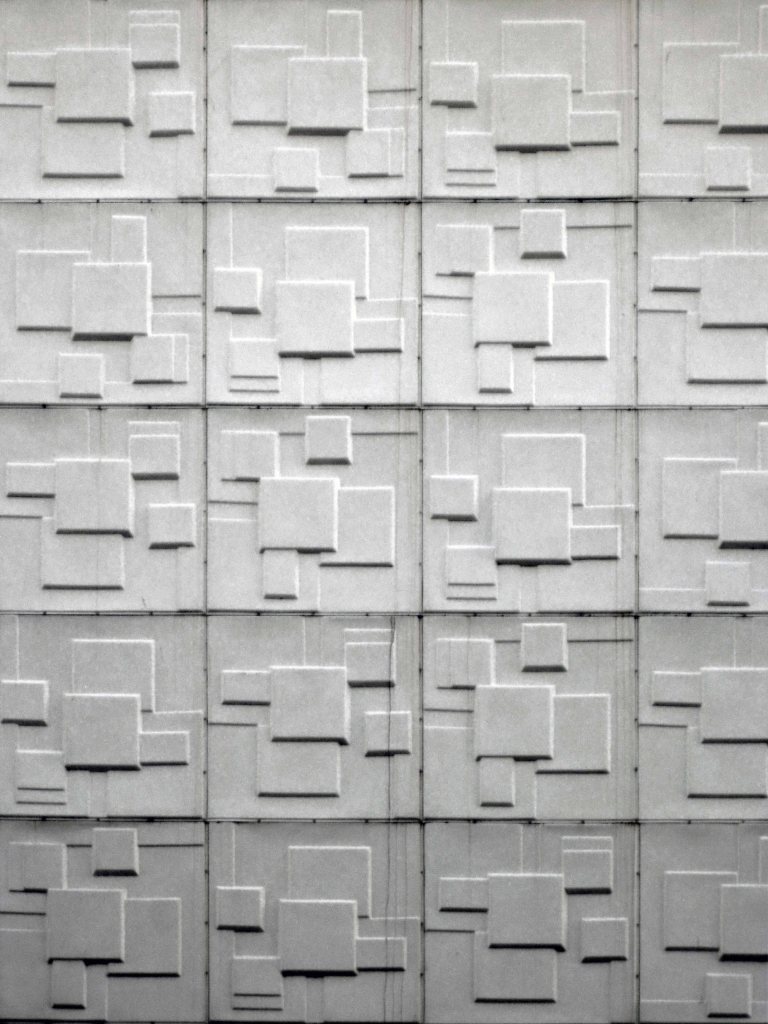
In its rejected plans for the site, Libra Homes had pledged to restore the cinema’s original Art Deco frontage, if it survives under the cladding that was added in the 1960s.

Cinema Treasures

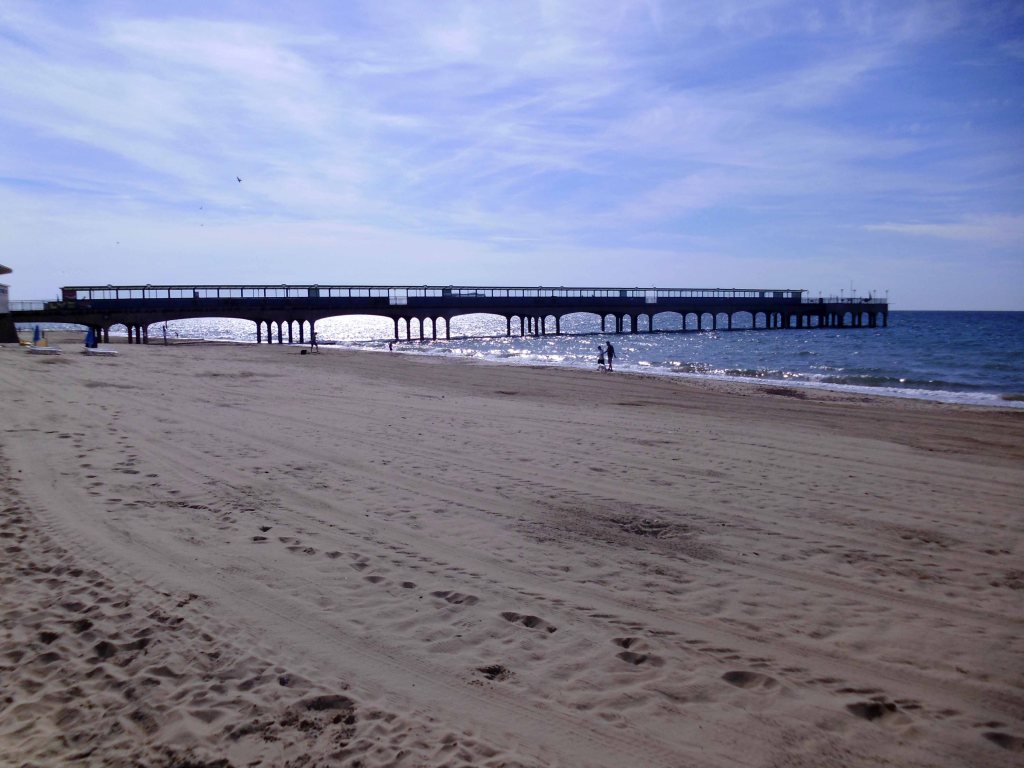
Boscombe Pier – is the perfect vantage point to watch volleyball, table tennis and mini golf. If you are feeling adventurous, try scaling the nearby, purpose built boulders next to the pier or have a go at slacklining!

There are nearby are cafés, takeaways and beach shops all within walking distance from Boscombe Pier. The pier is free to enter and has a plethora of activies that individuals and families can enjoy! 

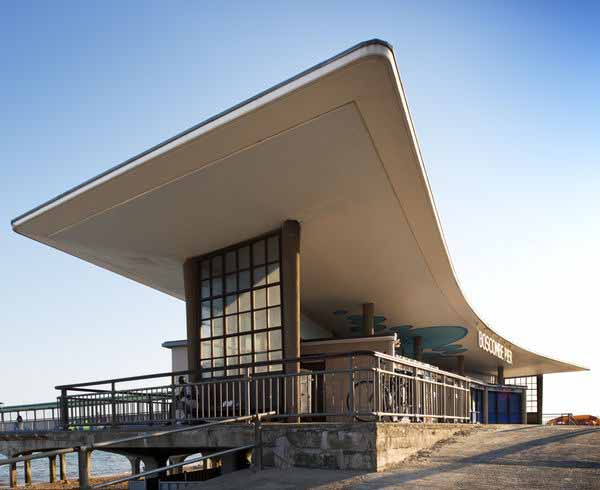
Designed by Archibald Smith, the 600 foot pier opened on 28th July 1889. In 1924/5 and 1927, the head was renewed in high alumina concrete and, between 1958 and 1960, the neck was reconstructed using reinforced concrete.

The neck building is a design by the Borough Architects, demonstrating great verve and vivacity. The contemporary style associated with Frank Lloyd Wright’s Usonian houses and made popular with Californian homes in the 1940s was well suited to the requirements of an architecture that combined ‘sun and fun’. The contemporary style made a feature of expressing different elements or planes of a composition with different materials, and here the combination is honest and each element well detailed. The sweep of the cantilevered, boomerang-shaped roof is a particularly joyous feature. It is a building that would have been despised as being exactly of its date until recently; now it is a building that can be celebrated for that very reason, and a rare example of pier architecture from these years. 

Historic England Listing

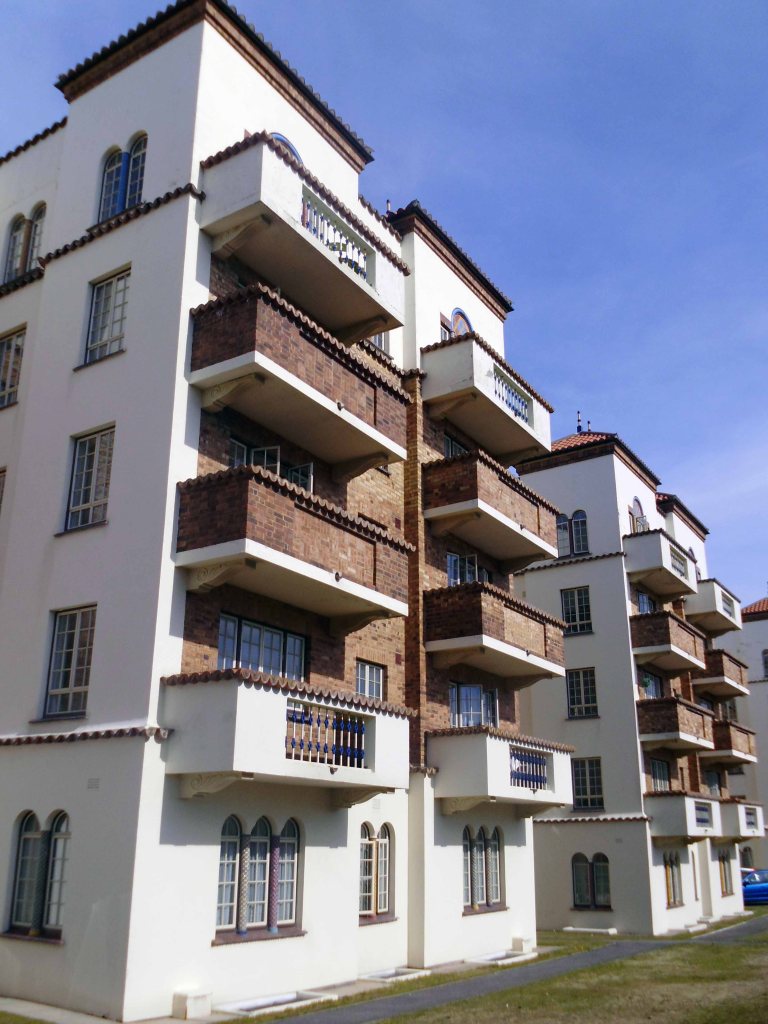
San Remo Towers a block of 164 flats, with penthouse and office, over basement garage. 1935-8 by Hector O’Hamilton.

Facilities offered as inclusive in this price included centralised hot water and central heating, an auto vac’ cleaning system, centralised telephones, a resident manager, a porter, daily maid, boot cleaning and window cleaning services. There was a Residents’ club with a reading room card room, billiard room and library, and a children’s recreation and games room. There were kiosks in the ground-floor lobbies selling tobacco and convenience items, where the staff took orders for the local tradesmen. The fifth-floor restaurant offered a la carte meals, which could be taken at pension rates of 38s per week. A simpler dinner cost 2/6d. The use of an American architect, Hector O Hamilton, may be an explanation for the building’s large range of facilities, including the grand underground car park and sophisticated servicing

Two bed flat £183,000

Carlinford benefits from commanding views over Poole Bay looking to the Isle of Wight across to the Purbecks. Included in the annual service charge is a Caretaker, Gardener & the communal areas are kept in good order. A fabulous location and a great place to call home. 

Two bed flat £350,000

Crossing the New Forest and arriving in Hythe.

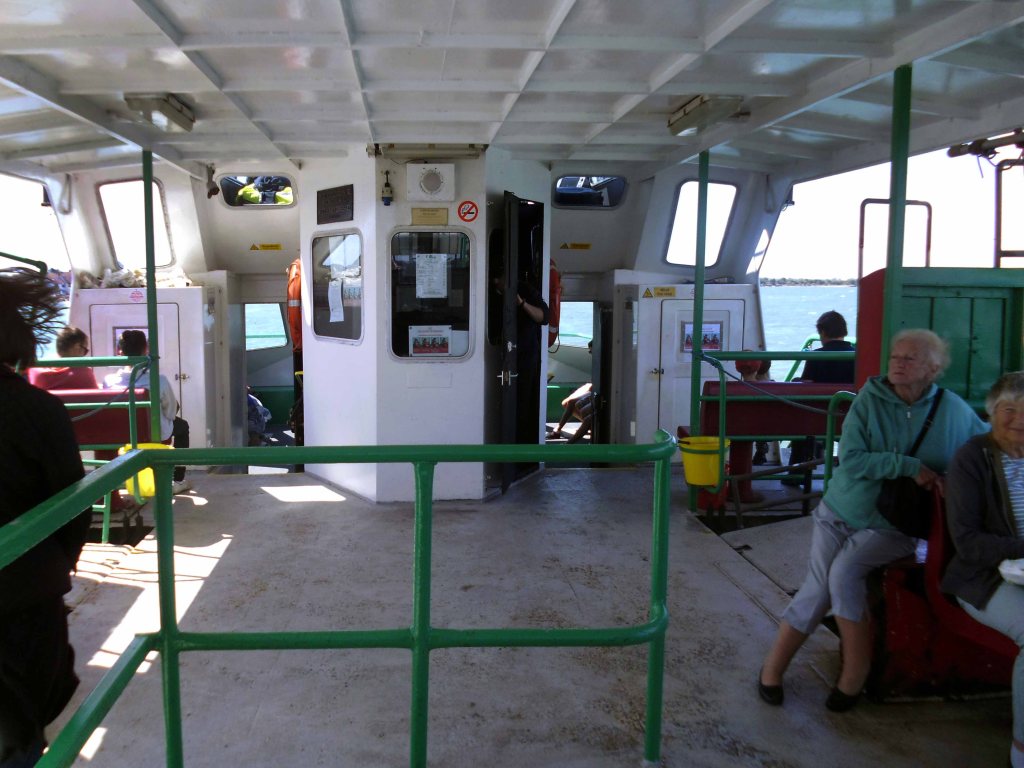
Running the length of the pier to catch the ferry across Southampton Water.

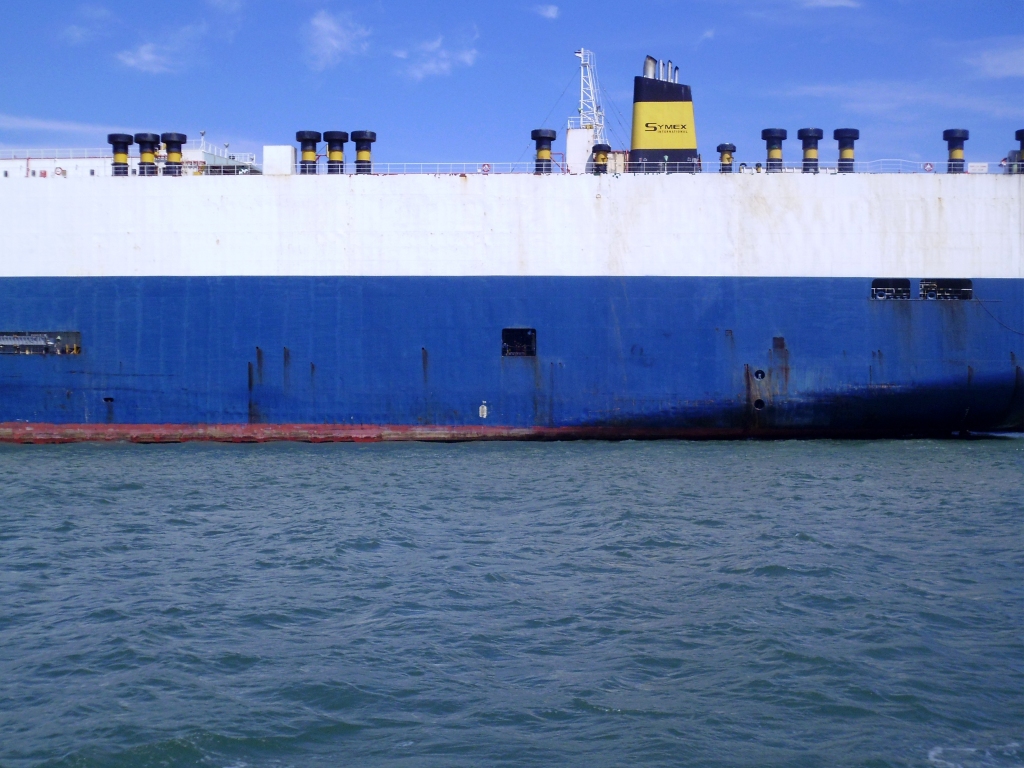
Where one is able to see many large ships.

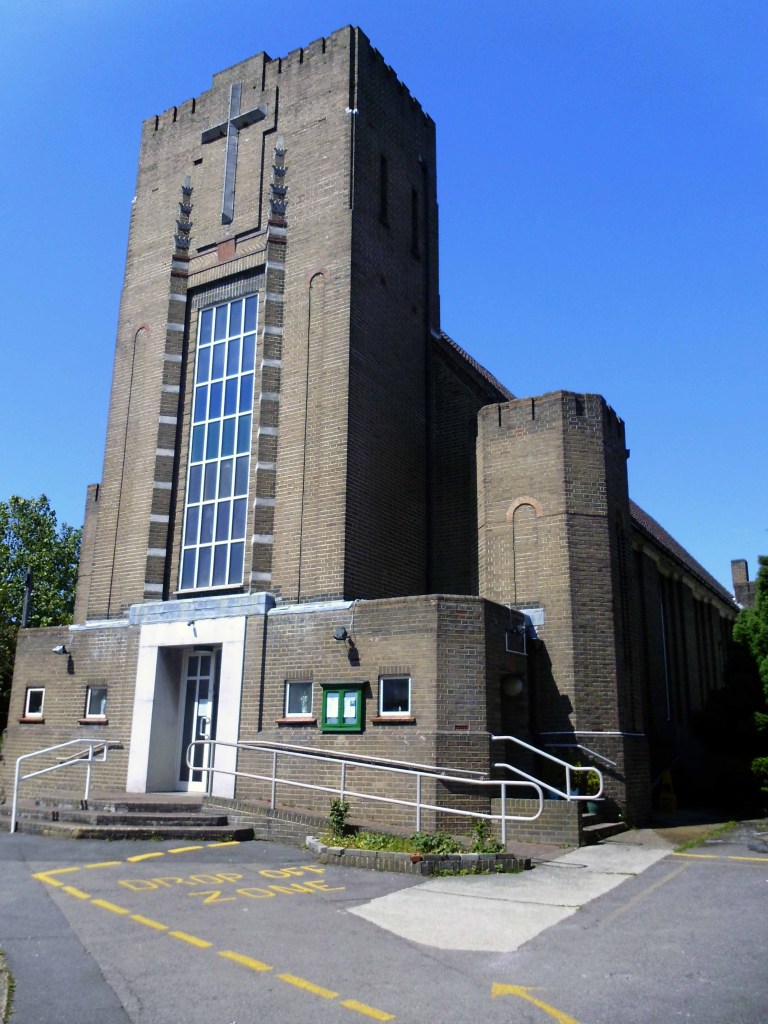
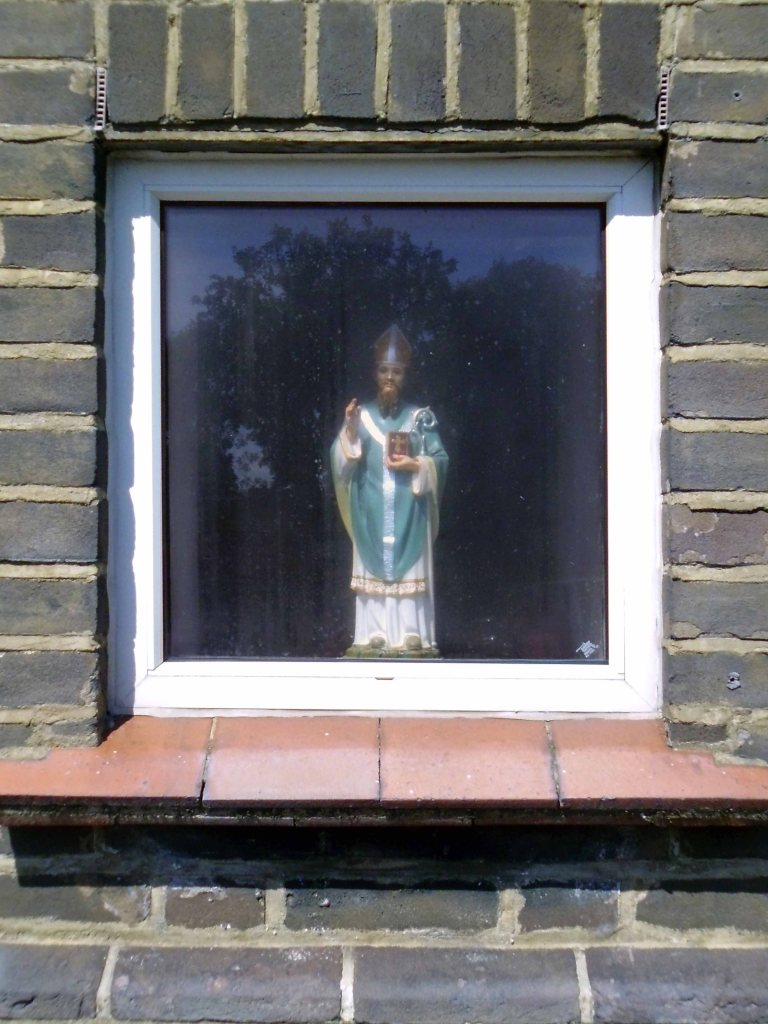
St Patrick’s Catholic Church 1939

W.C. Mangan’s last church in the diocese, with a moderne Gothic character rather than the basilican style he favoured elsewhere. The design is not without character and is in the mainstream of brick church building around middle of the twentieth century.

Taking Stock

First siting of Stymie Bold Italic/Profil since Devon

Sadly the Hovercraft Museum was closed – Founded 1987 as a registered charity, the Museum Trust is the worlds greatest collection of Hovercraft archive, film, and historic craft, dating back to to John Thonycroft’s 1870 air lubricated boat models and the then Dr. Cockerell’s 1955 annular jet experiments.

So excited to be boarding yet another ferry.

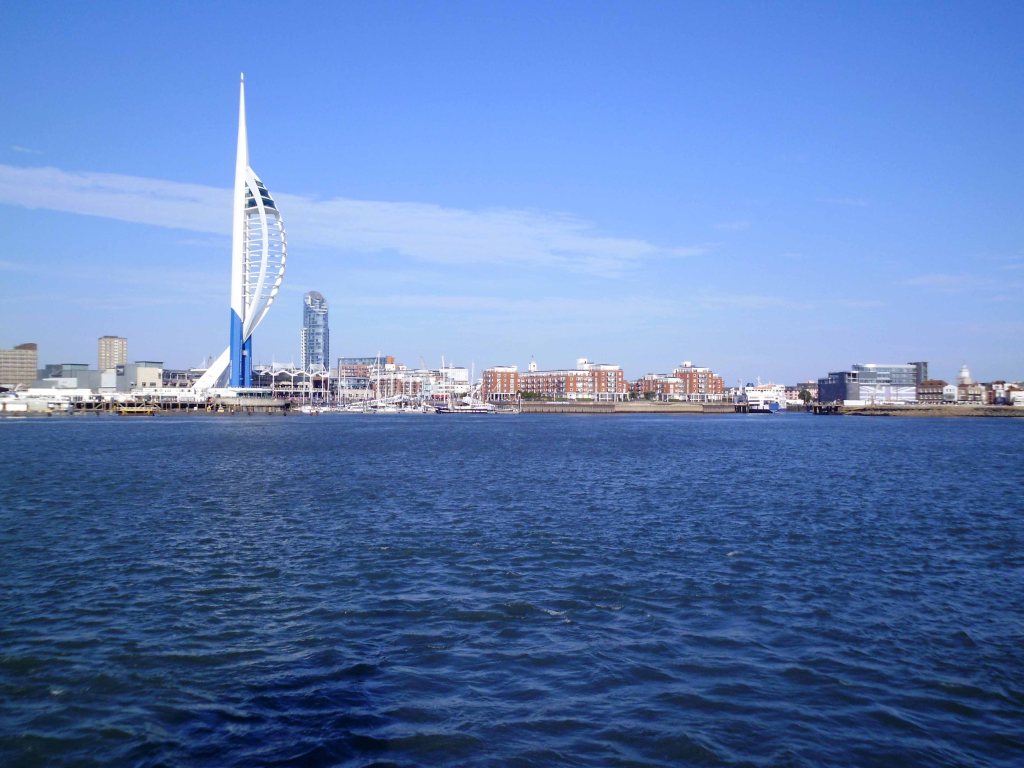
Seeing Portsmouth for the first time in a long time.

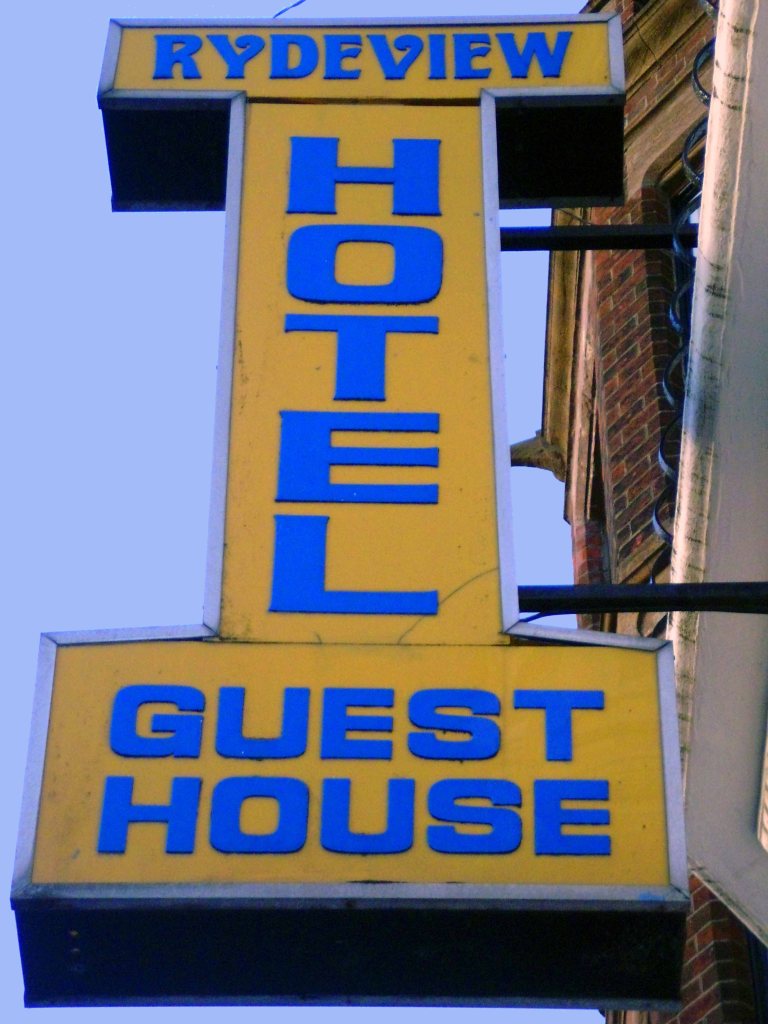
Finding cheap digs at the Rydeview Hotel.

My partner and daughter stayed here recently and the warm reception we received was great, thought it was going to be real value for money however when getting into the family room, which was a decent size, the curtain was half hanging down, iron marks and stains on the carpet, dirty windows, mould on the bathroom ceiling, hole in the bathroom floor and a very random shower head coming from the toilet that was very unpleasant. When we checked in we asked about breakfast and we were told this was going to be an additional £3 – we thought this was great value for money for a full English only to be left hungry and out of pocket! My daughter had one slice of toast, we asked for the full English what we received was cold and hard beans, and un-cooked egg and a rank sausage, the eating area was dirty – cobwebs everywhere.

I too stayed in the Family room with a delightful mouse for company and enjoyed one of the worst meals I’ve ever not eaten.

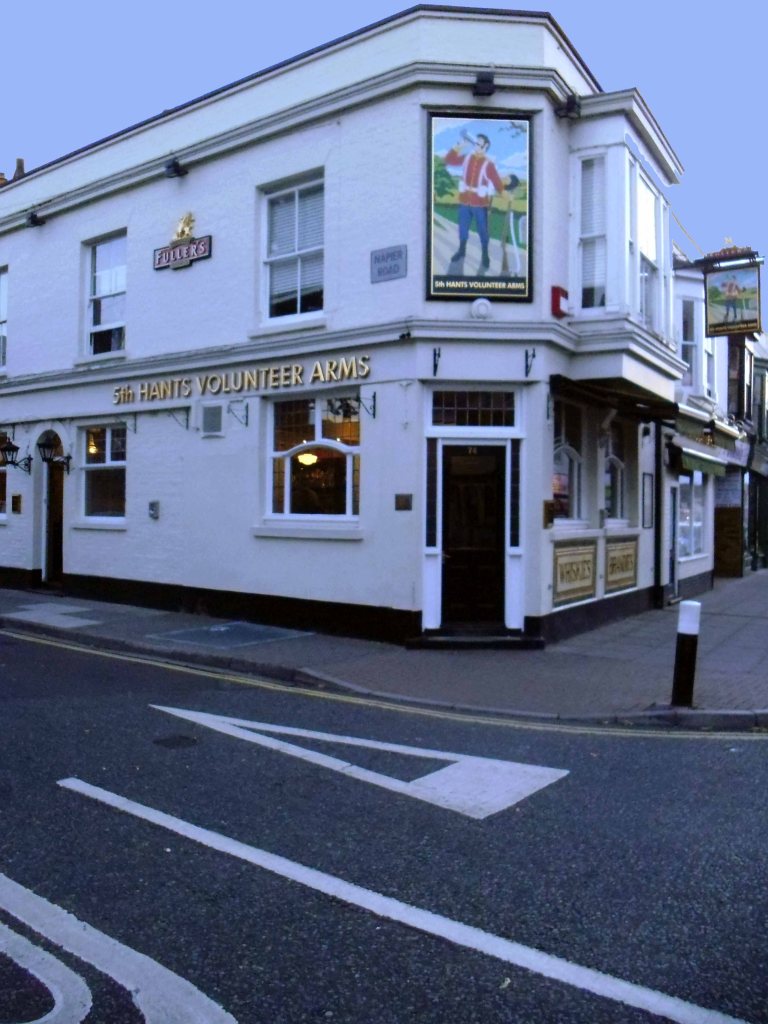
I headed for the 5th Hants Volunteers where I formally kept company with Felim Egan, Norman Taylor and Ian Hunter way back when.

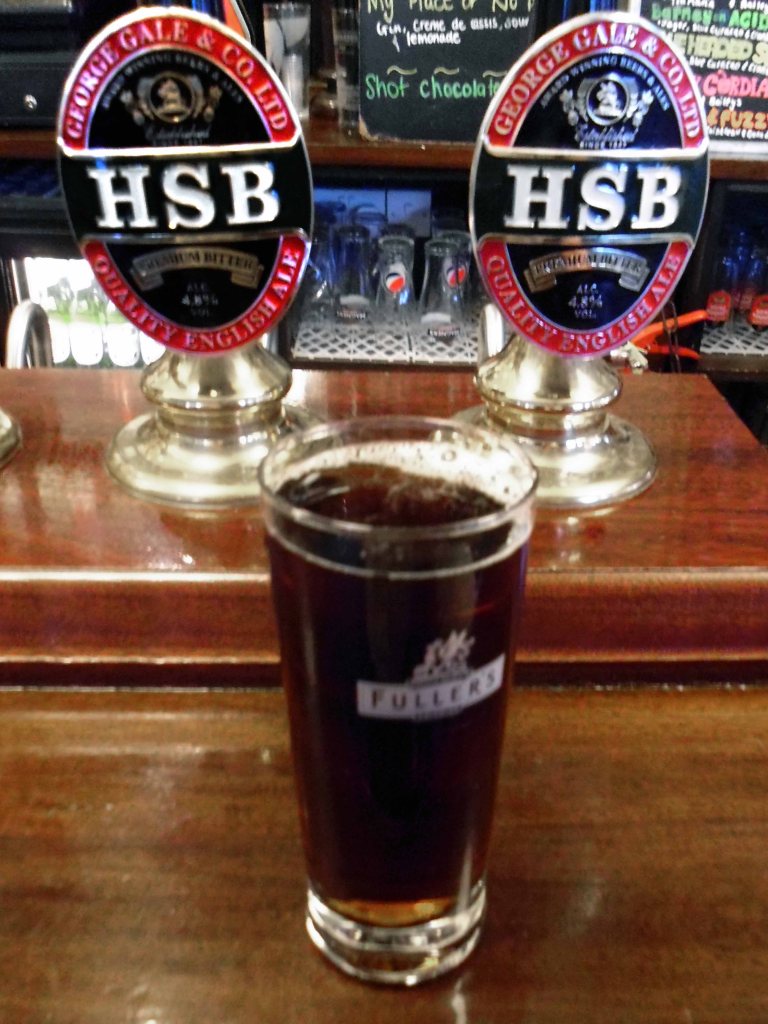
Drinking Gales HSB – formerly a local brew now owned by Fullers

Established in 1847 Gales Brewery (George Gale & Co. Ltd) was an old brewery situated in Horndean, on the edge of Waterlooville. It made the nutty HSB – Horndean Special Bitter and the newer Gales Bitter. It took its water from its own well situated under the brewery which is fed from the South Downs, and the yeast and liquor, coupled with the local brewing style, produced beers with a sparse head, quite dark in colour.

In late 2005 Fuller’s Brewery bought Gales for £92 million. In January 2006, Fuller’s began cutting jobs at the Horndean brewery, and it was announced on 27 February 2006 that the brewery would close at the end of March 2006, although distribution and warehousing would continue in the area.

It didn’t tater the same and the pub had been gutted – gutted.

I beat a retreat to the Barley Mow – where I fell in with a gang of former Poly students from the 70s – they had studied and never left.

Eventually we all left.

Night night.

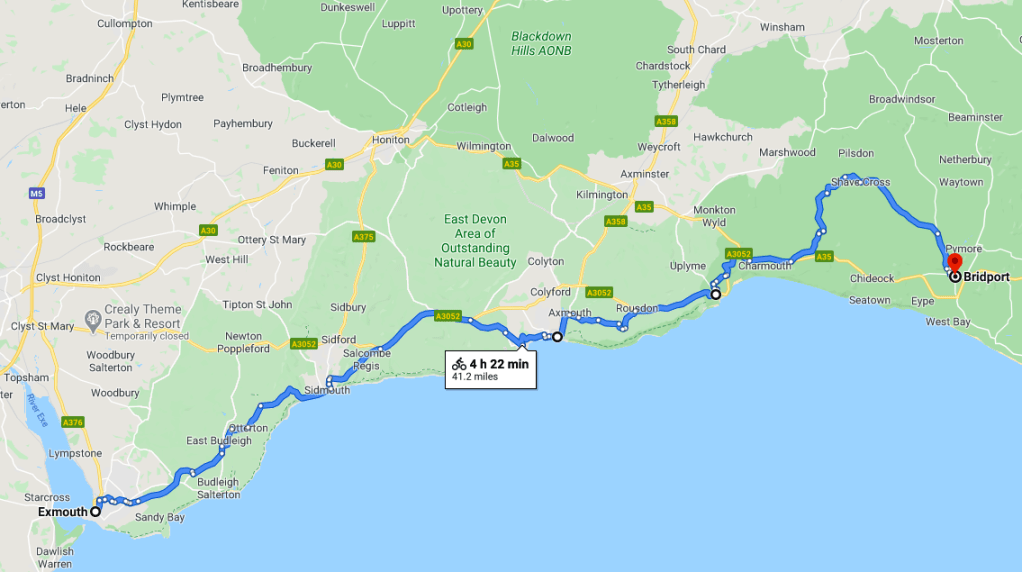
Exmouth to Bridport

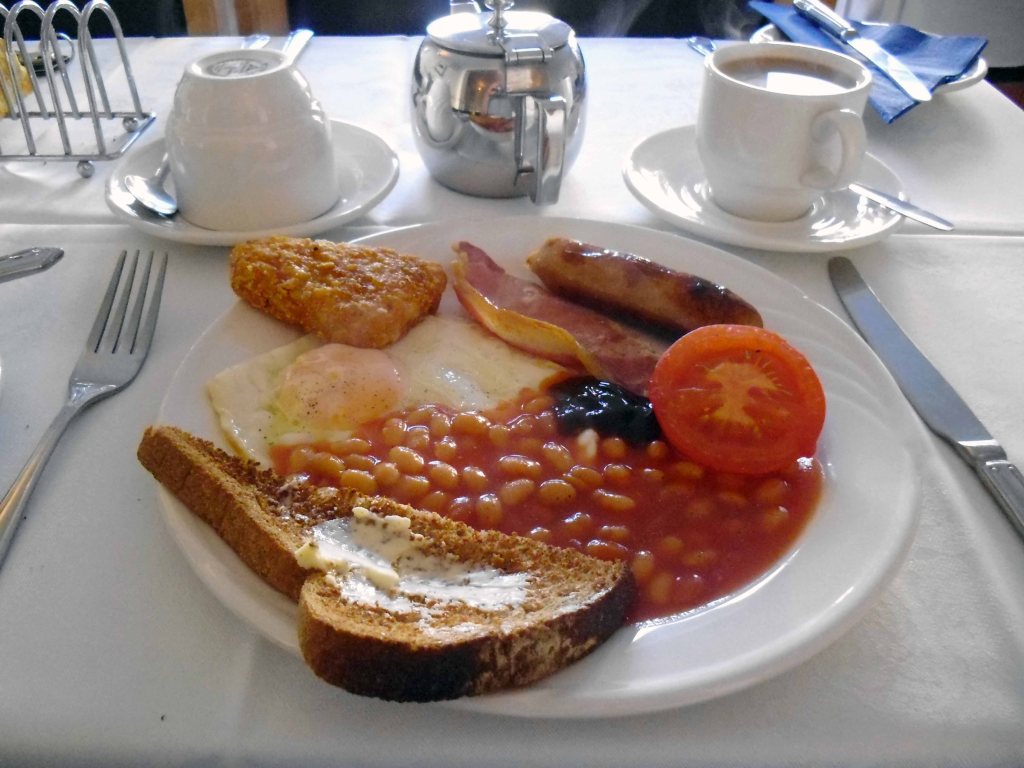
Another day another breakfast – reduced rations and rashers, the now inevitable hash brown and a far too common failure to recognise my preference for tinned tomatoes.

Soldier on.

Friday 31st July 2015 leaving town beneath the bright morning sun.

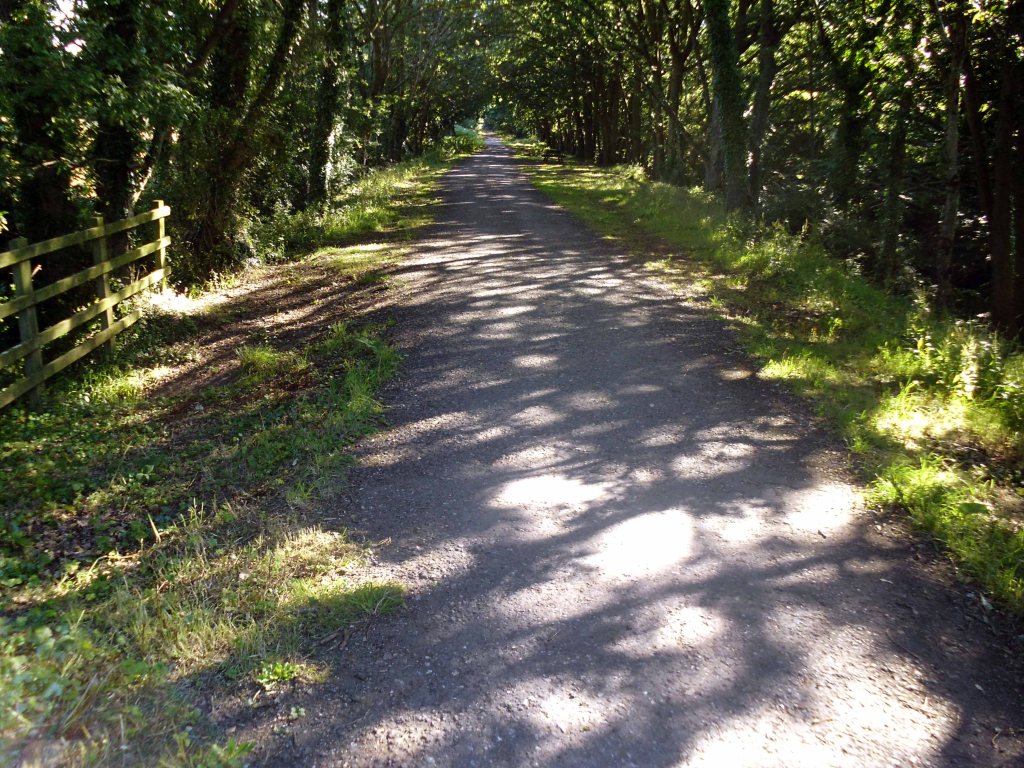
Following a shady lane.

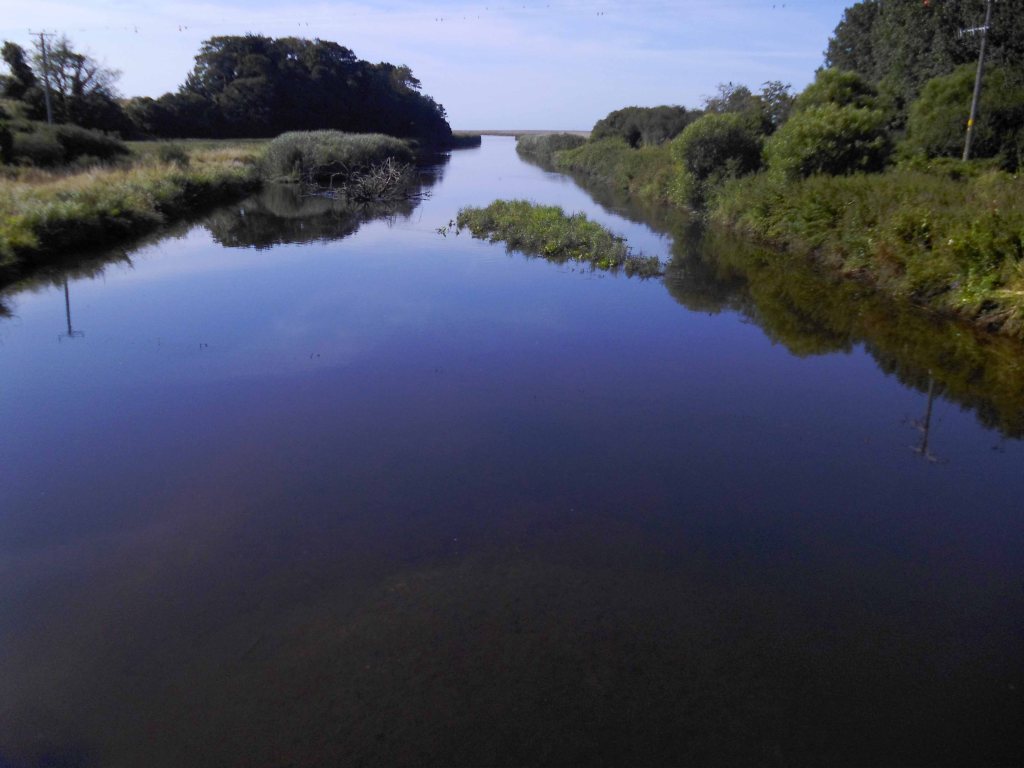
Crossing a drain.

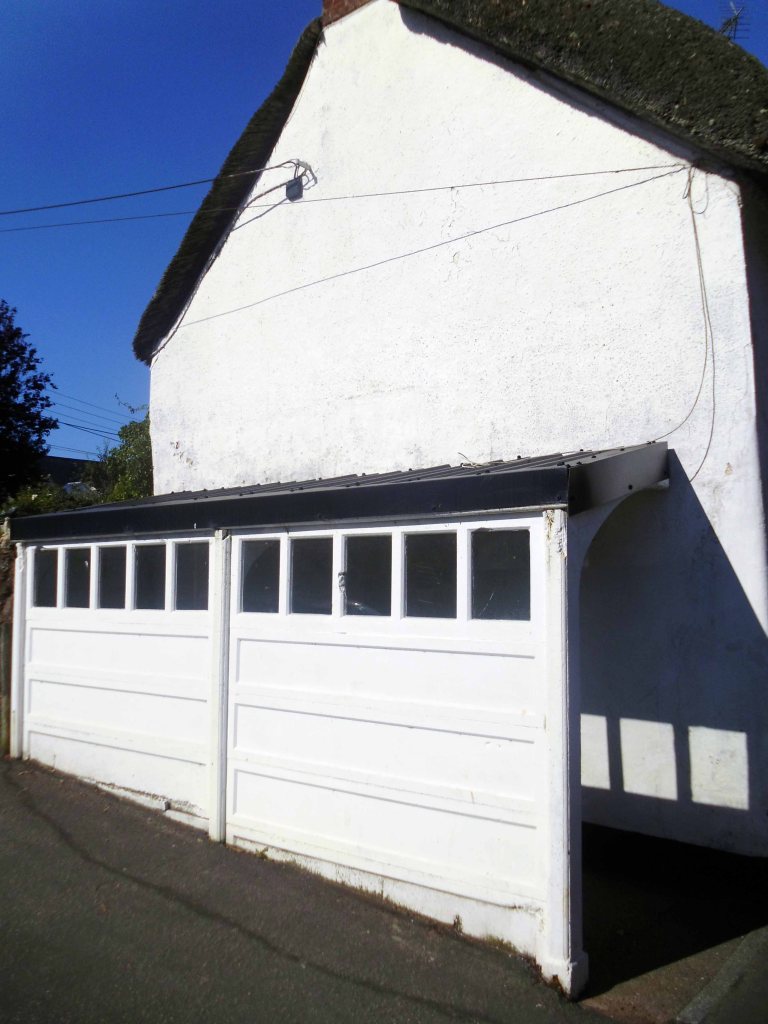
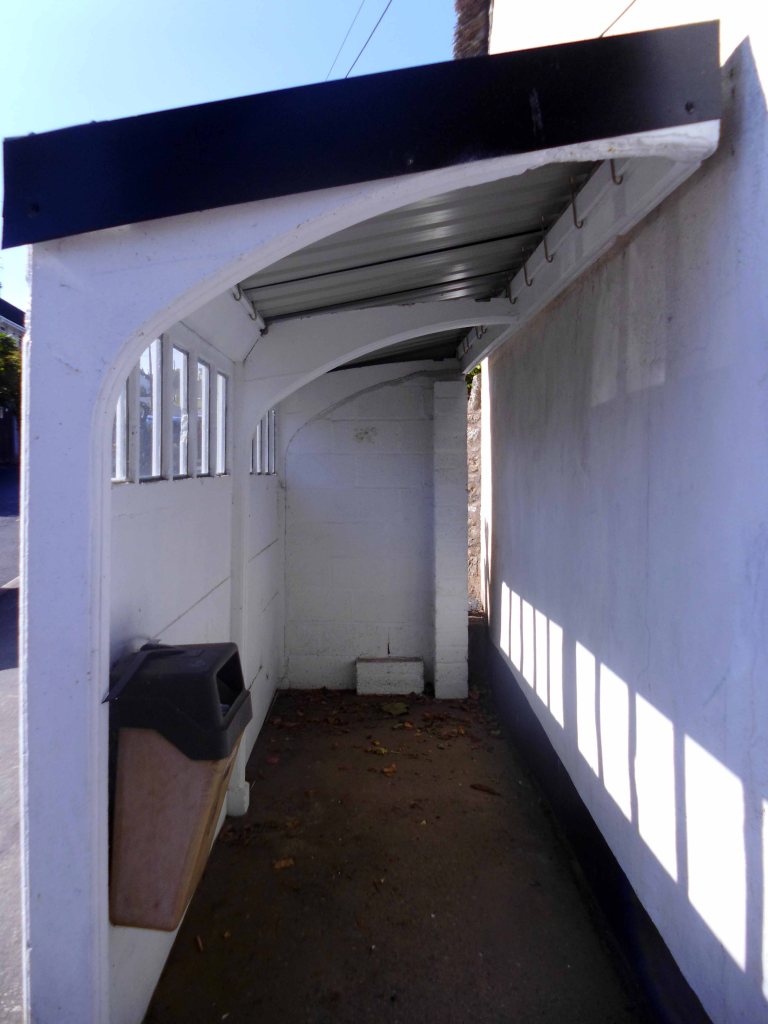
Noting one curious prefabricated concrete lean to too.

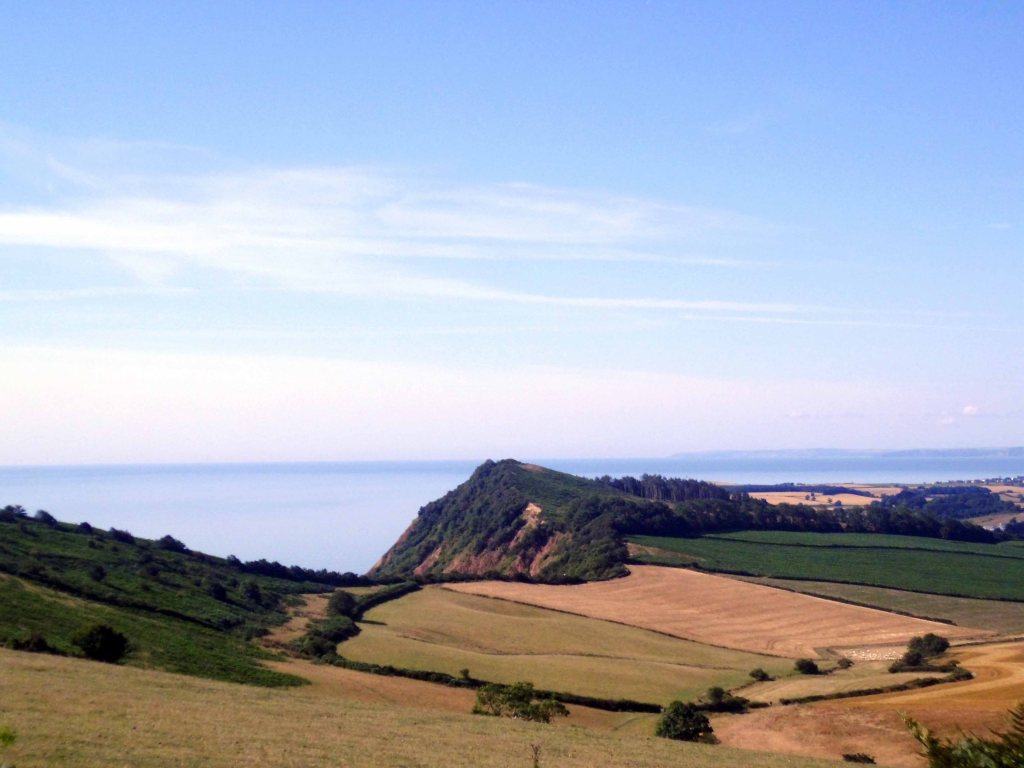
Up over the Devon Downs.

Arriving in Sidmouth

A beautiful coastal town with a regency feel which is ideal for visitors of all ages. Sat in the middle of spectacular countryside Sidmouth is home to beautiful beaches, stylish eating places and great shopping, with everything from unusual gifts, designer clothing and lifestyle goods available.

The day of my visit the Folk Festival was in full swing – I encountered hardened drunken cider drinkers, drunk in the park and more tie-dyed clothing, than you would consider it humanly possible to produce.

With a hey nonny no I left town – up a very steep hill.

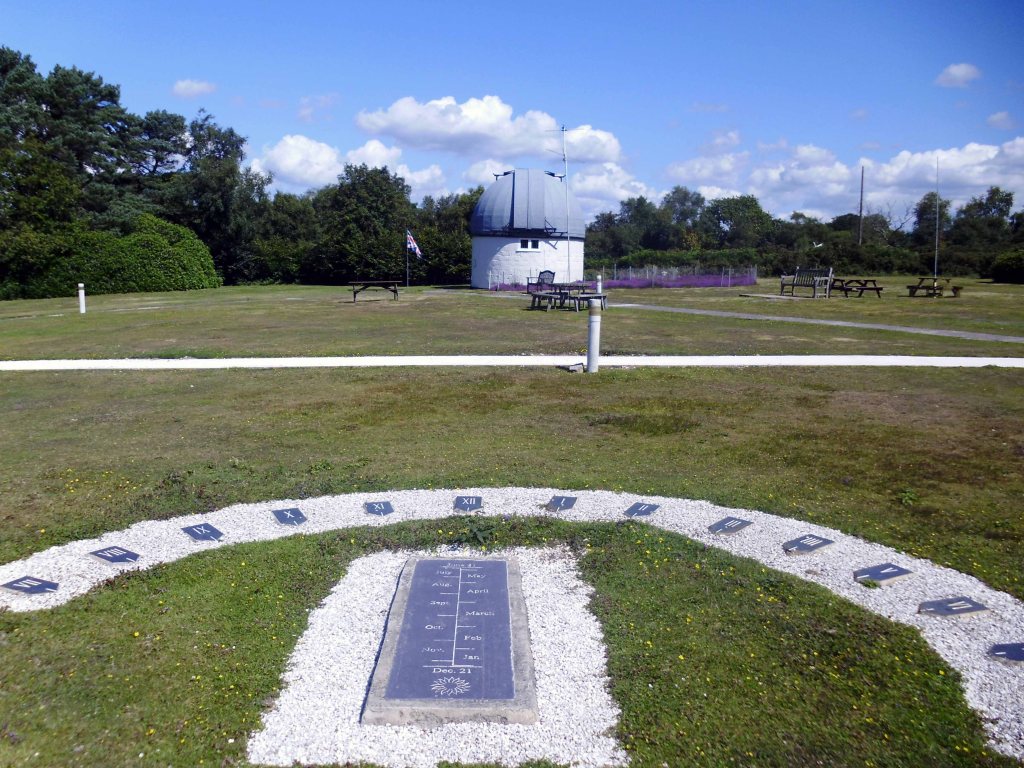
At the top of the hill, I unexpectedly came upon an observatory.

The Norman Lockyer Observatory to be precise.

It is both a historical observatory and home to an active amateur astronomical society. It is a centre for amateur astronomy, meteorology, radio astronomy, and the promotion of science education.

The observatory is regularly open to the public, staffed entirely by volunteers, and each summer hosts the South West Astronomy Fair.

Norman Lockyer was a Victorian amateur astronomer, who discovered the element Helium in the Sun’s corona in 1868 and was one of the founders of the science journal Nature in 1869. He became the director of the Solar Physics Observatory at South Kensington and the first professor of astronomical physics in the Normal School of Science – now the Royal College of Science, in 1887, he was knighted in 1897.

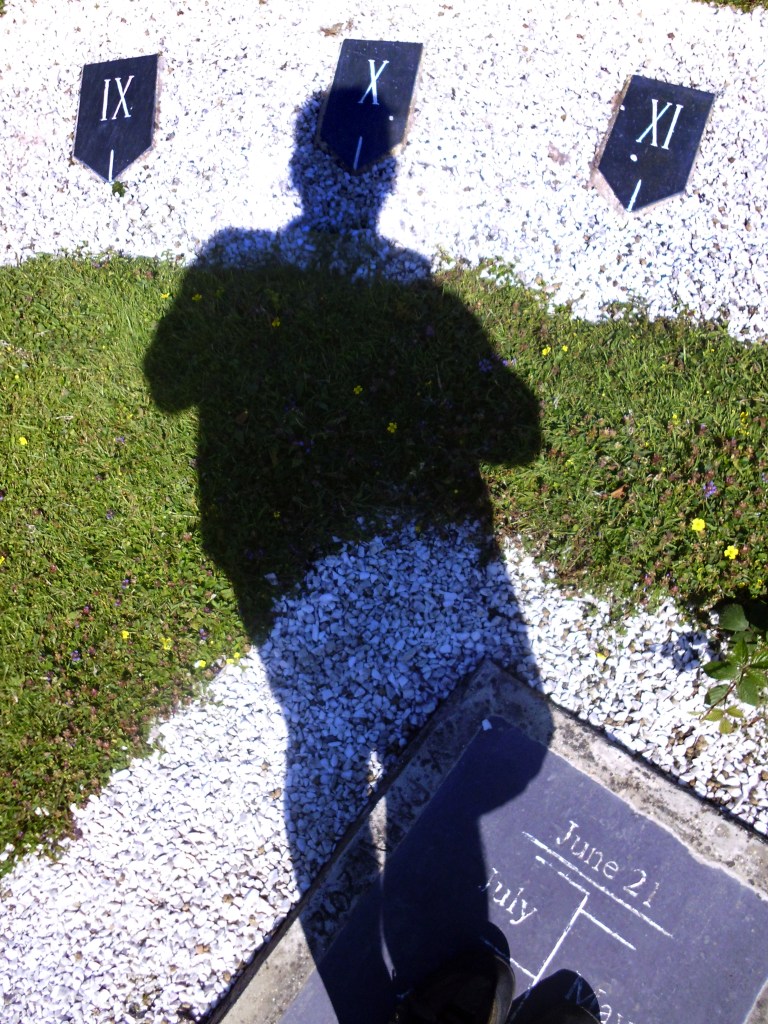
Using one’s own skill and ingenuity it is entirely possible to deduce that one arrived at such an august hill top observatory – at exactly X o’clock!

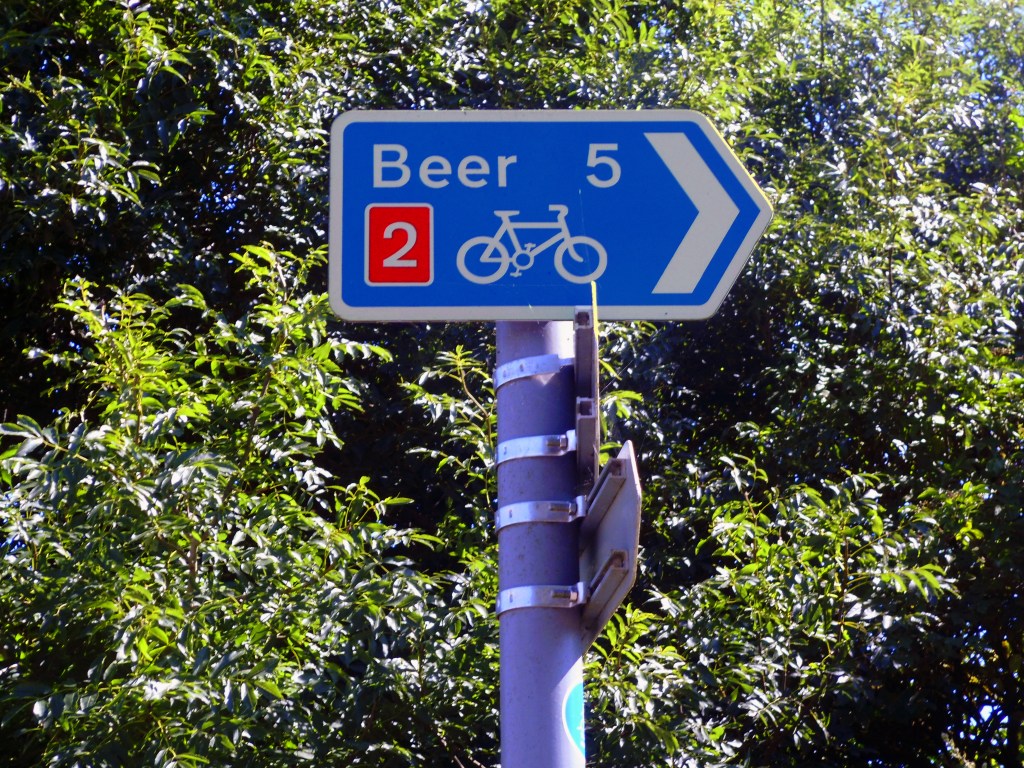
We’re now on the road to Beer, more of which in a moment first we’re on the way to Branscombe.

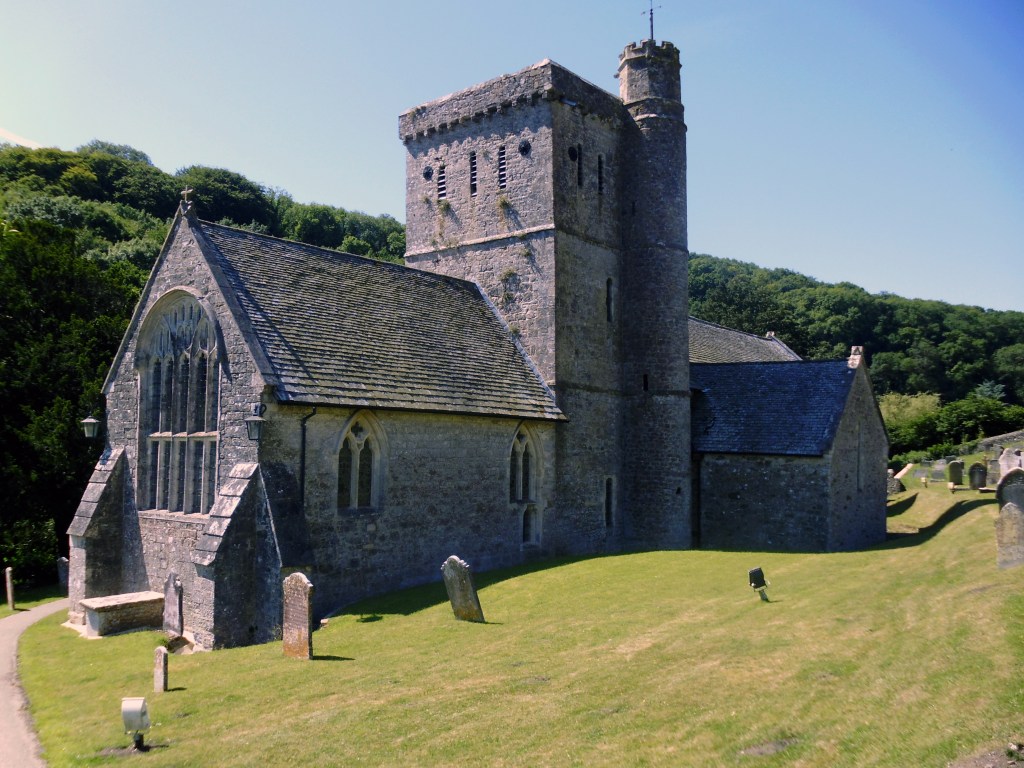
The Church of St Winifred’s set in a sylvan glade.

Characteristic Saxon chiselling on stones hidden in the turret staircase suggest the probability of an earlier, 10th century, Church on the site. Saint Winifred’s is among the oldest and most architecturally significant parish churches of Devon. The 12th century square central tower is one of only four completely Norman towers in Devon.

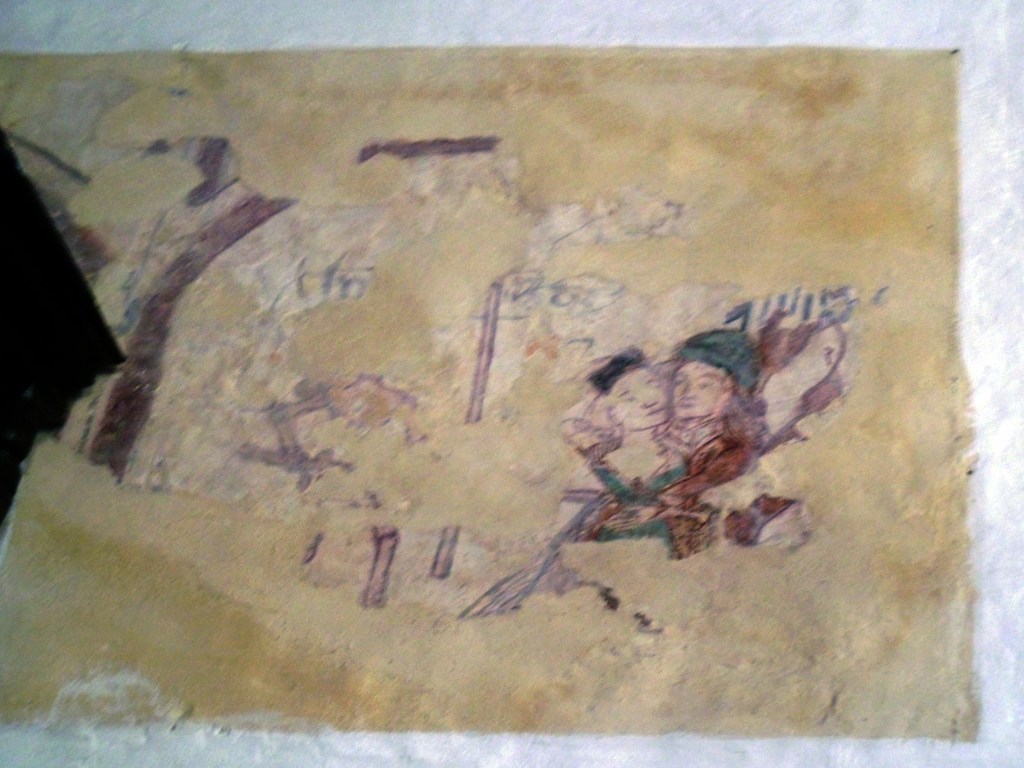
The church contains a rare surviving example of wall painting, dated about 1450 and discovered in 1911, the couple in this fragment illustrate Lust.

Sadly much of our ecclesiastical art was removed, destroyed or over painted during the Reformation, exacerbated by Cromwell and a general disdain for pictures and such.

Lust was also to be removed, destroyed or over painted.

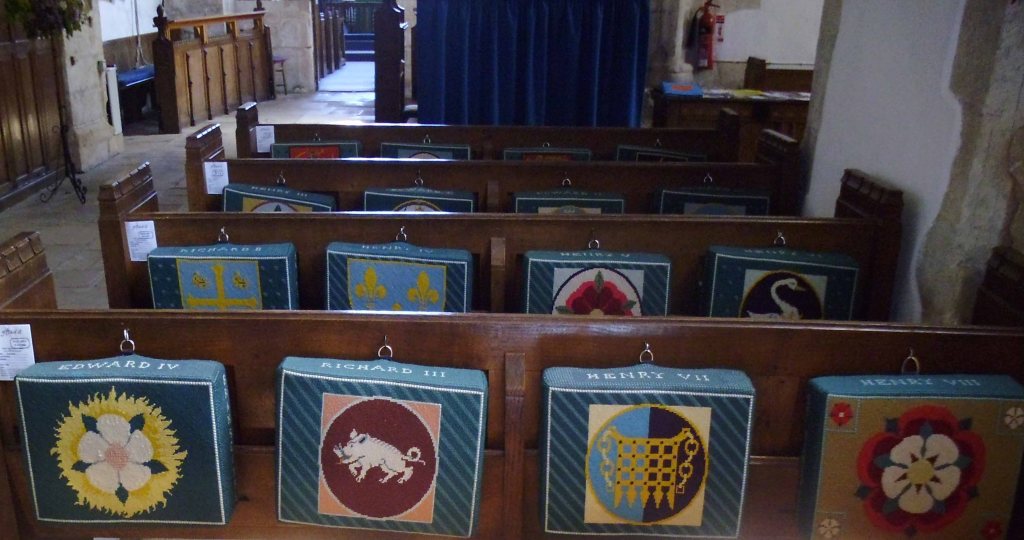
The reverence for royal succession was and is actively encouraged.

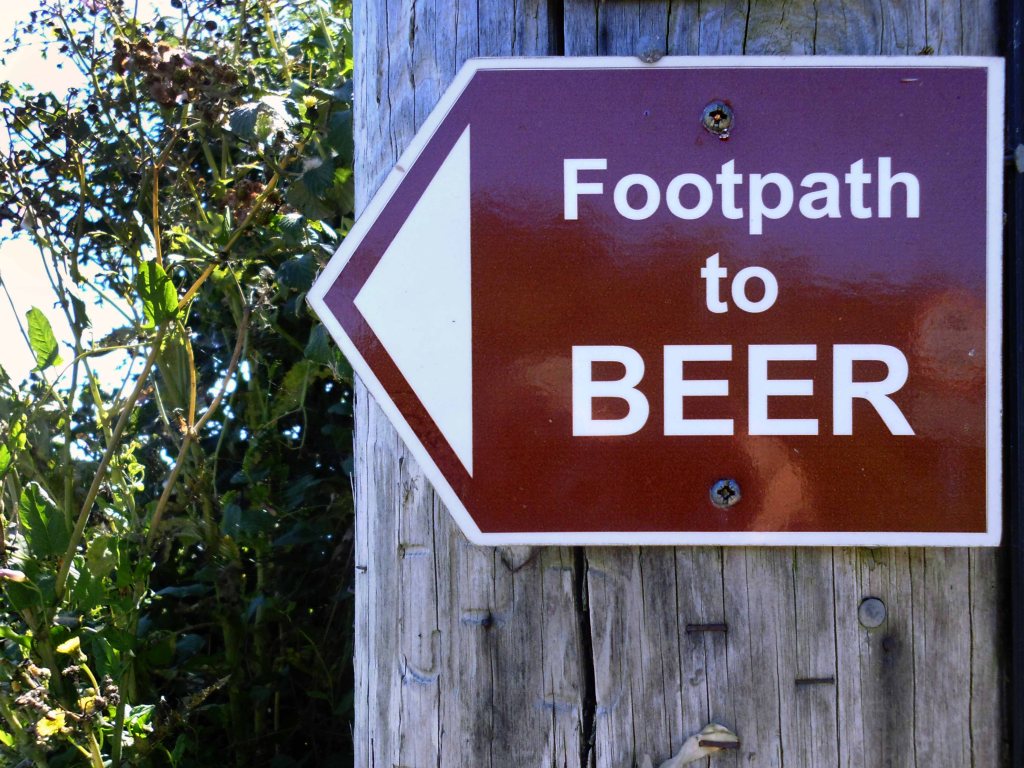
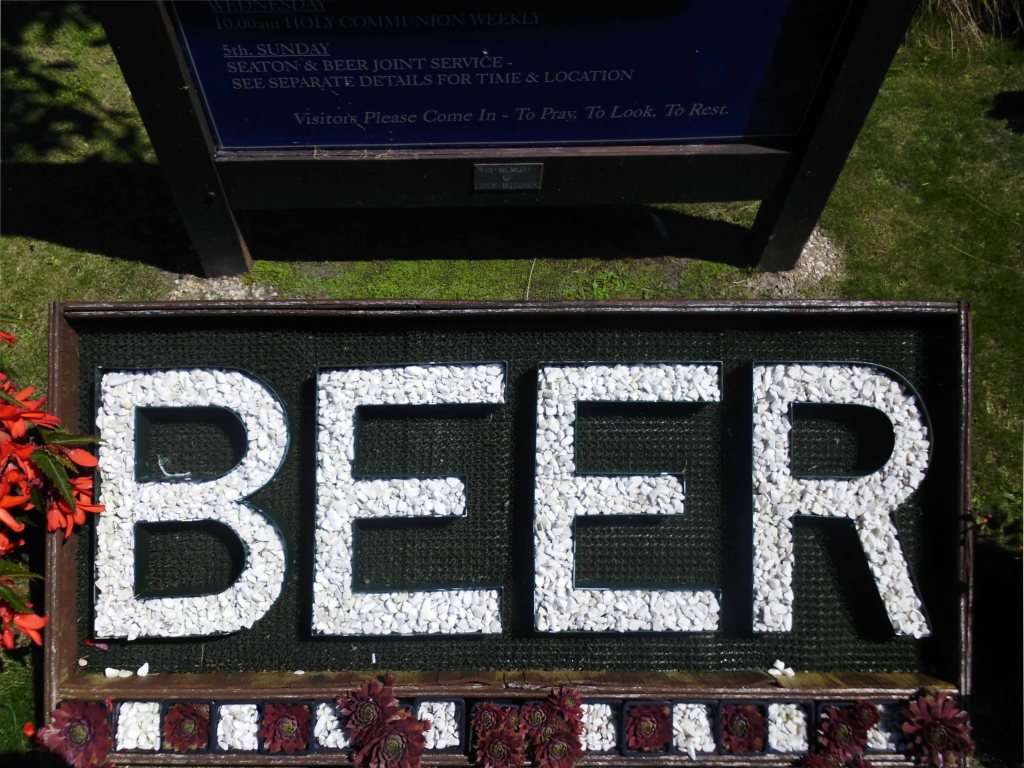
Well that’s quite enough of that, next stop Beer!

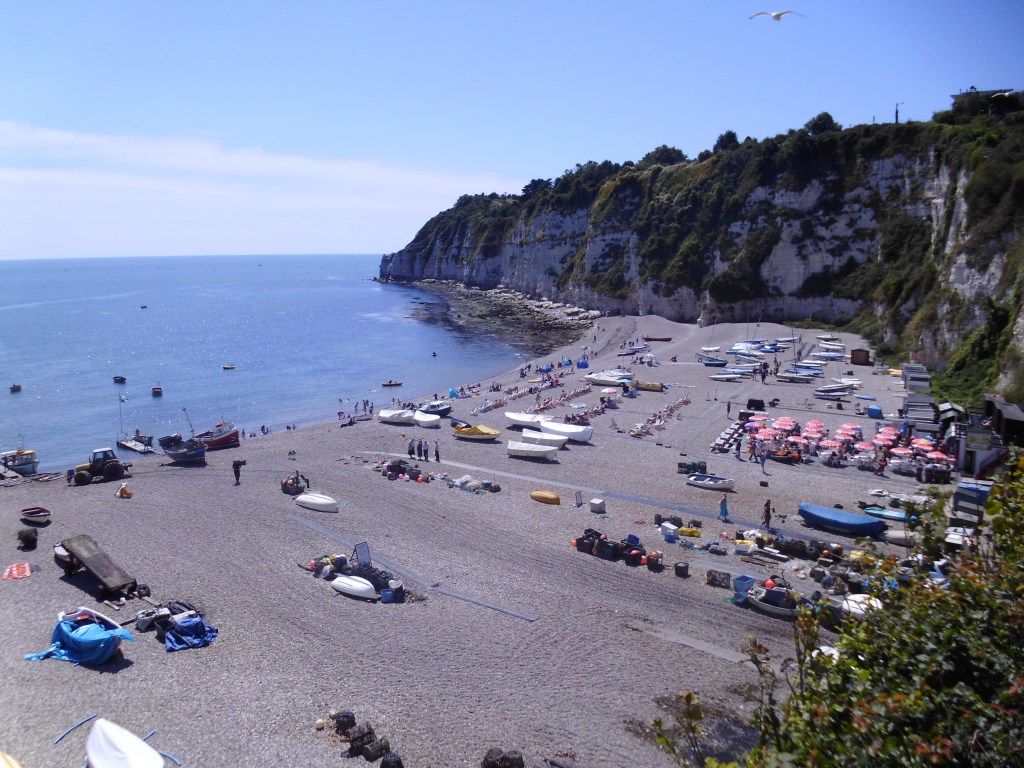
The beautiful picturesque village of Beer is located on the UNESCO World Heritage Jurassic Coast in Devon.  Surrounded by white chalk cliffs, the shingle beach is lined with fishing boats still bringing in their daily catches and is famous for its mackerel.

On the edge of the South West Coast Path, Beer has some of the most stunning coastal walks in the county, one of the best being from Seaton to Beer with dramatic views across the Jurassic Coastline. Beer was also named recently by Countryfile as the Top Picnic spot in the UK from Jubilee Gardens at the top of the headland, chose for its stunning view of the beach and village from the hillside.

A narrow lane leads to the bay, clogged with oversized Toytown motor cars, full of folk in search of something which they’re doing their level best to remove, destroy or over paint.

Toytown is home to Larry the Lamb,and his clever sidekick, Dennis the Dachshund. Each day a misunderstanding, often arising from a device created by the inventor, Mr. Inventor, occurs which involves Ernest the Policeman, the disgruntled Mr Growser the Grocer and the Mayor.

Delightful home compromised by the curse of the ubiquitous uPVC.

Next thing you know we’re in Seaton.

Whether you are looking for interesting attractions, wanting to explore stunning natural landscapes, experience thrilling outdoor activities, or just wanting somewhere to stay, eat or shop, you’ll find it all in Seaton.

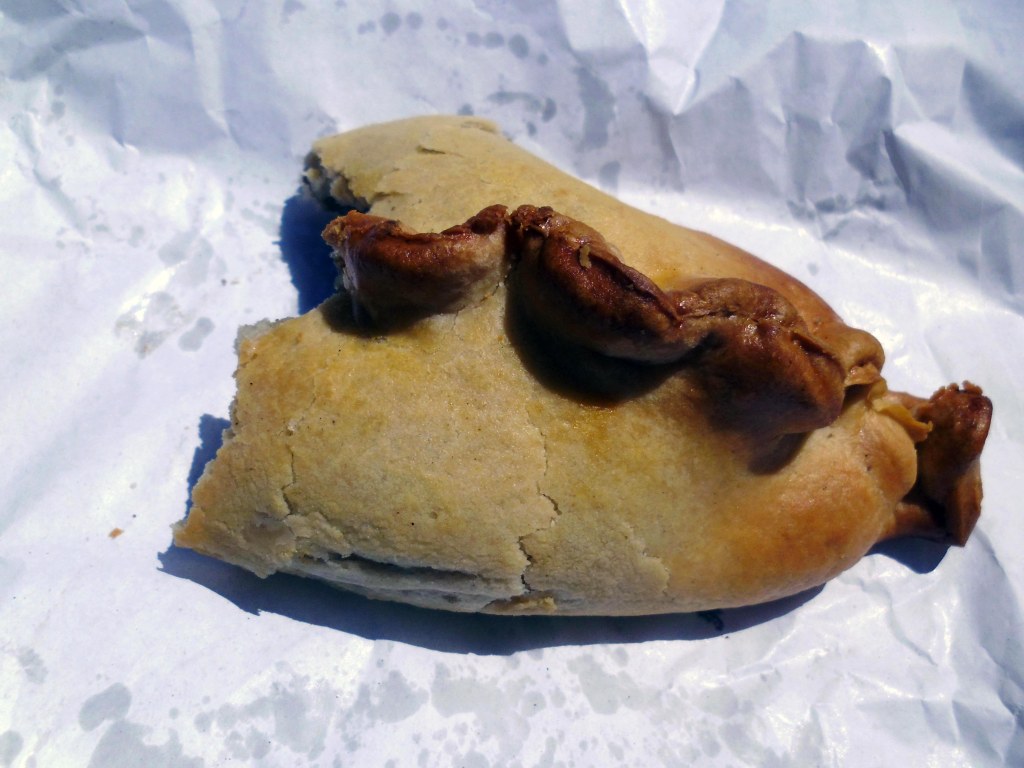
I found a pie shop and a pastie.

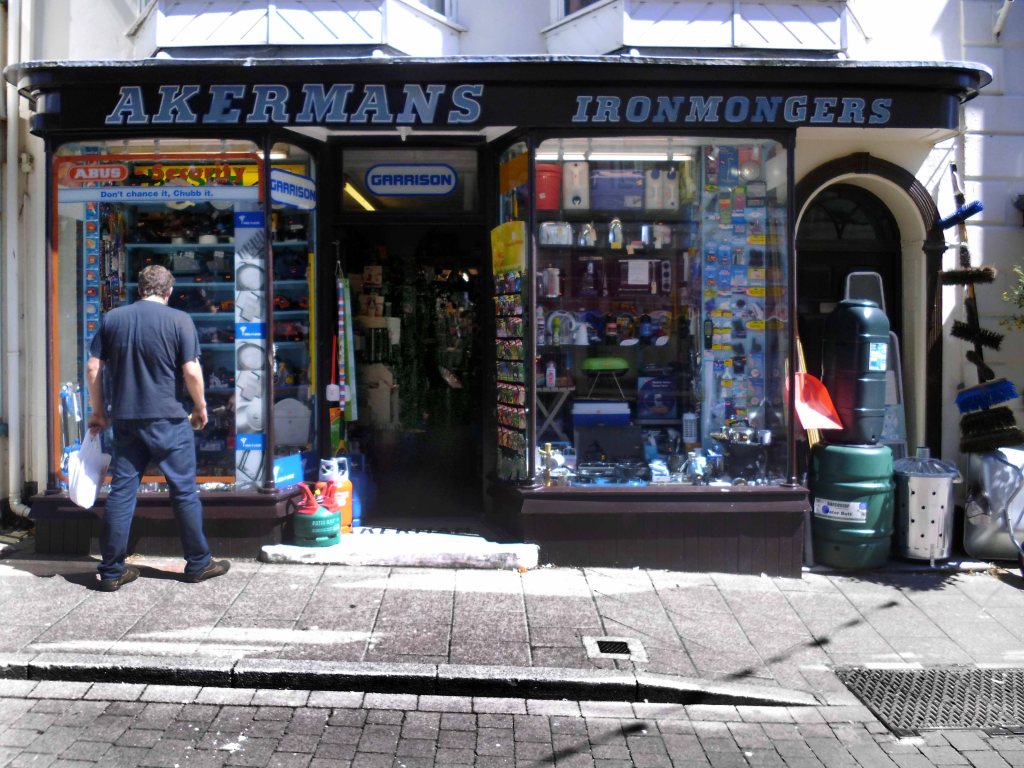
I found an ironmongers with a Stymie Bold Italic/Profil fascia.

Frequented by men who tend to adopt a combative stance when confronted with displays of ironmongery.

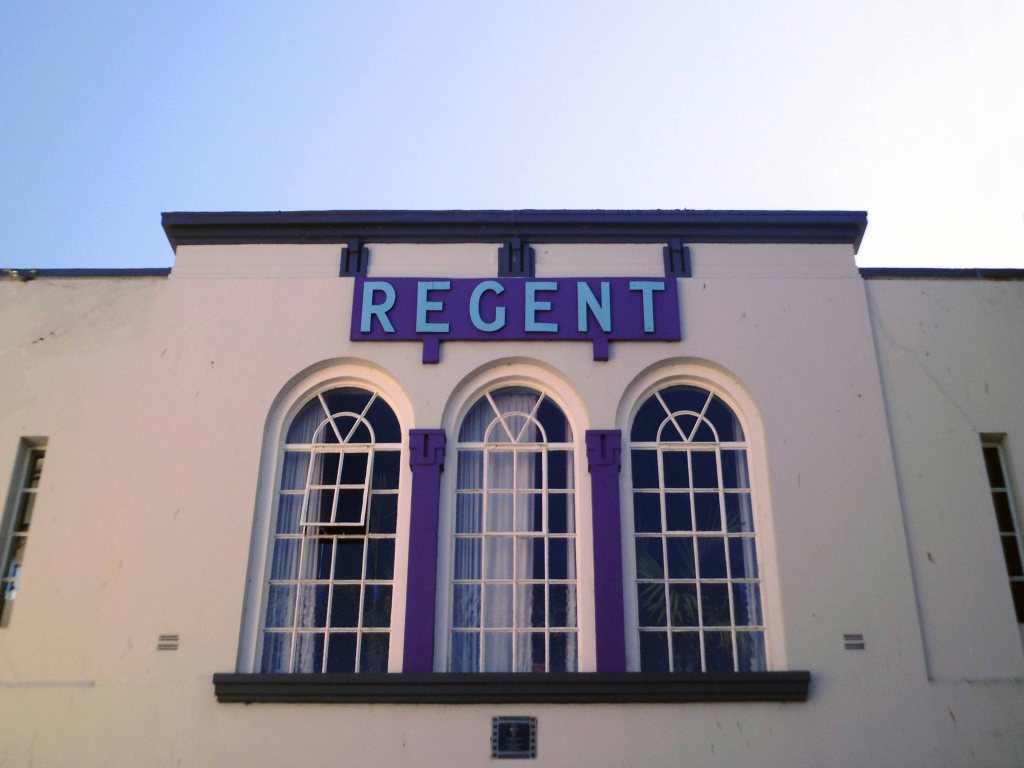
I found the road to Lyme Regis and the Regent Cinema.

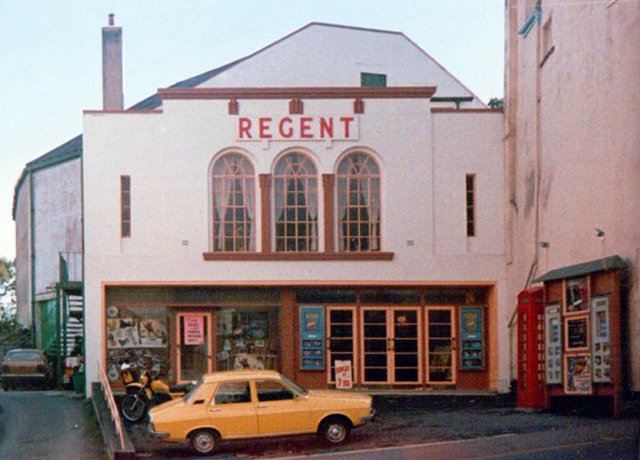
1985

The Regent Cinema opened on 11th October 1937 with Hugh Wakefield in The Limping Man. It was built for and was operated by an independent exhibitor.

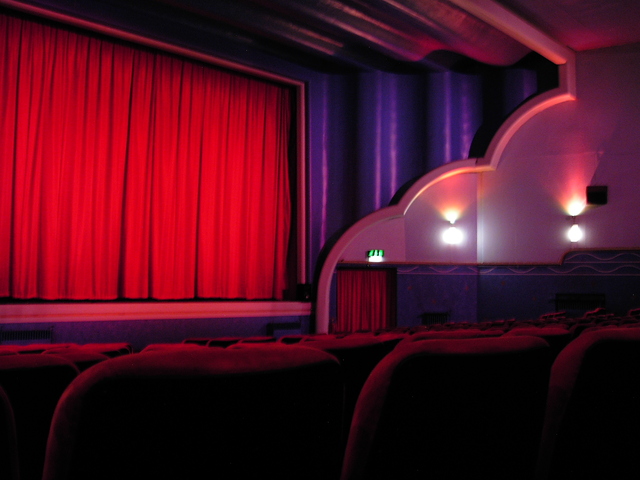
Bristol based architect William Henry Watkins designed a splendid Art Deco style inside the cinema which has seating on a stadium plan, originally the seating capacity was for 560. It has a raised section at the rear, rather than an overhanging balcony. Lighting in the auditorium is of a ‘Holophane’ type, which changes colours on the ceiling. The proscenium opening is 35 feet wide. There was a cafe located on the first floor level.

In recent Years it has been operated by the independent Scott Cinemas chain. The Regent Cinema has been recently restored. From October 2000, English Heritage gave it a Grade II Listed building status.

Cinema Treasures

2016 – Following the devastating fire at the Regent Cinema on Tuesday 22nd March, we can now confirm that the auditorium block of the Regent has been damaged beyond repair, and will have to be rebuilt. Damage to front of house areas is largely cosmetic, and will be attended to as part of the wider build scheme. We have every intention to rebuild the cinema to its former glory.

2019 – The WTW-Scott Cinema group is still actively engaged in a potential rebuild scheme for the Lyme Regis cinema. We’re currently working on our fourth set of design proposals, from which we need to reach the point where the rebuild scheme is both financially and architecturally viable. At present, we have not consulted with local authorities as there is little point in wasting everybody’s time presenting a scheme design that isn’t viable. New build cinemas are architecturally very complicated, and the Lyme Regis venue being a listed building presents challenges to overcome, all of which add significantly to any build schedule. Once we have a viable, workable scheme, we look forward to working with the local authority and Historic England to progress this.

The remainder of my time in Lyme was spent desperately seeking a bed for the night, to no avail. Following multiple enquiries and dead end directions to no-go destinations, I headed out of town.

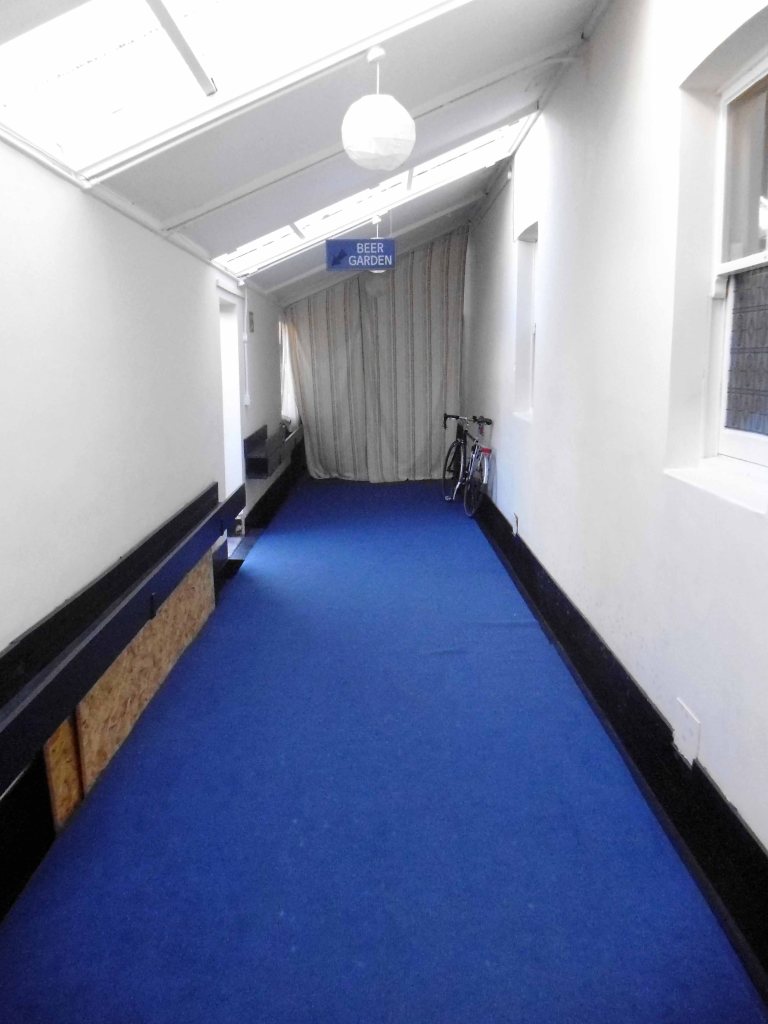
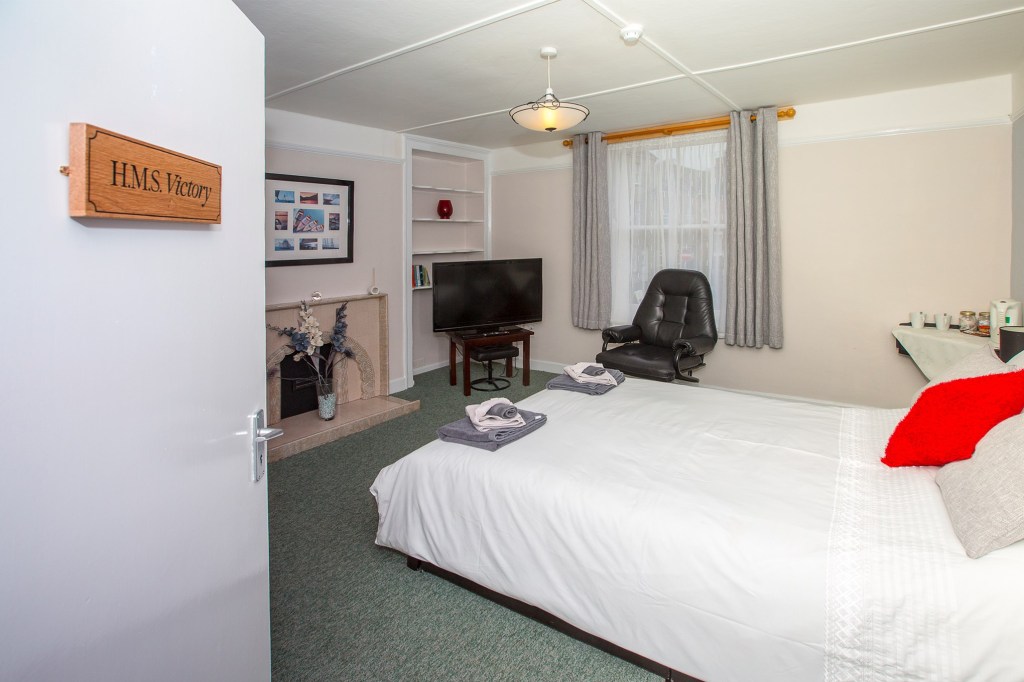
Bridport bound – where I chanced upon a Pub/B&B the magnificent Lord Nelson where the owners allowed me to store my bike in the ninepin bowling alley.

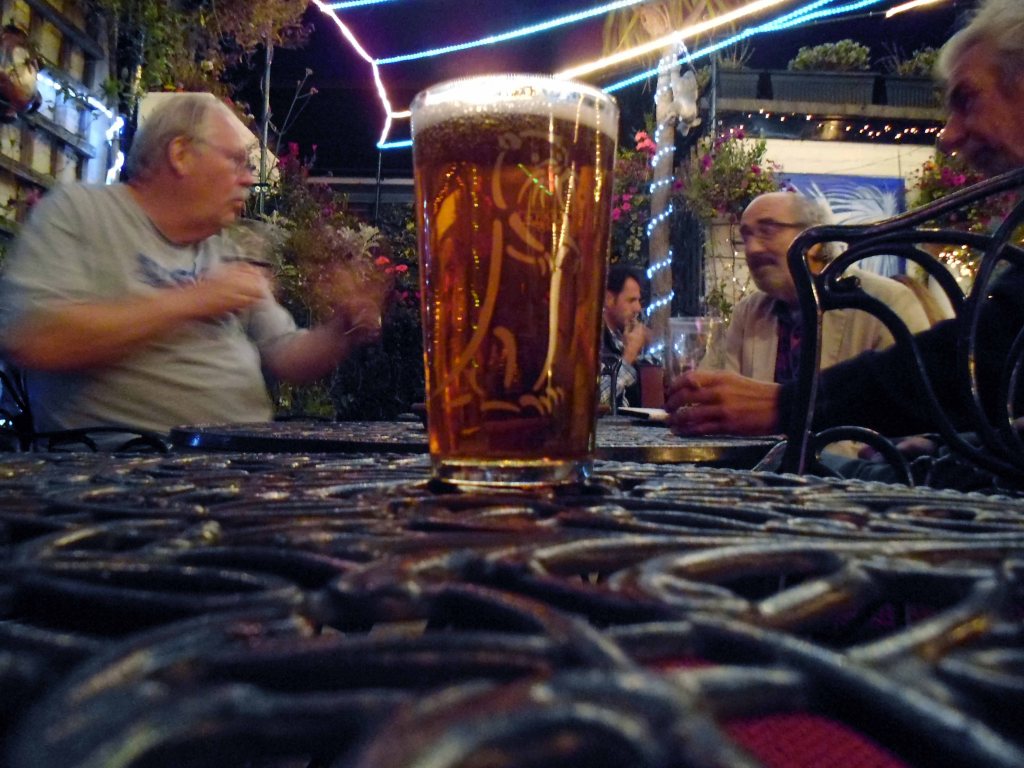
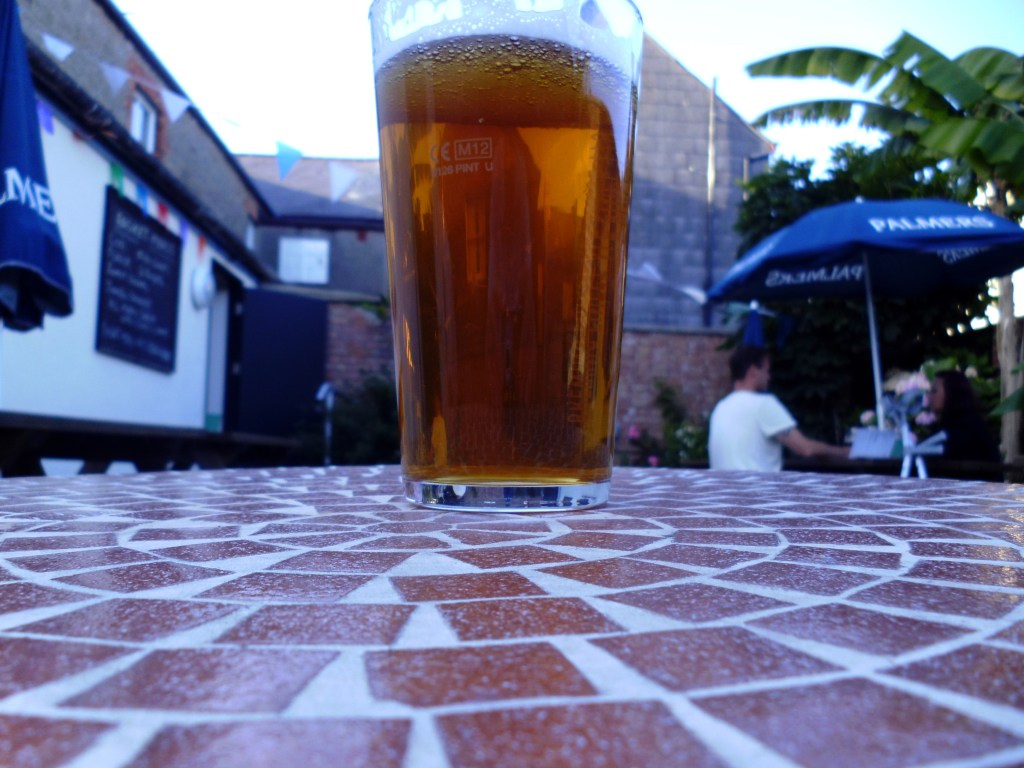
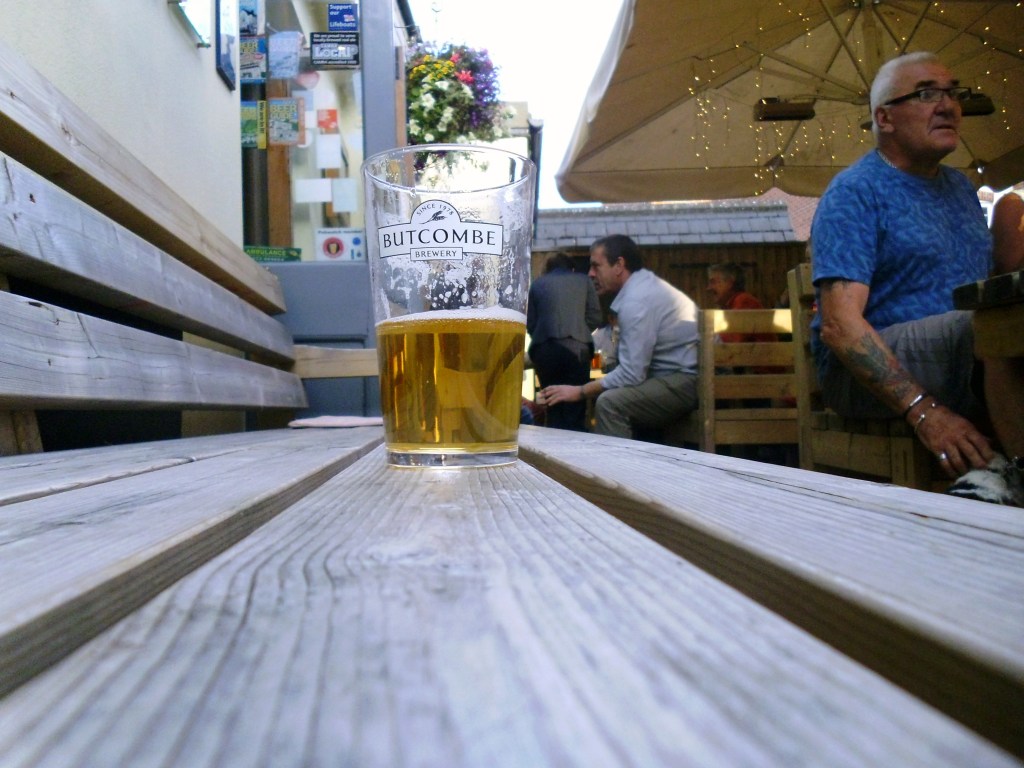
I sat in the beer garden at the Lord Nelson and boozed – chatting to a local lad that worked in the local brewery, brewing the local beer, that was served in this very same local pub.

Palmers Ales are brewed in one of Britain’s oldest and prettiest breweries and have been since 1794. The only thatched brewery in the UK, Palmers sits adjacent to the river Brit just a mile from Dorset’s Jurassic Coast. All our fine ales are brewed using water from our own naturally rising spring. 

Our Head Brewer uses only the finest Maris Otter malt and carefully selected whole leaf hops to produce ales in a way they have been made for generations. Palmers historic brewhouse has a traditional Mash Tun, an open top Copper, along with top fermentation, this is the way ale should be brewed.

I finished up somewhere else, sat outside chatting to someone else, about something else.

Wandered happily home to bed.

Night night.

Clacton to Great Yarmouth

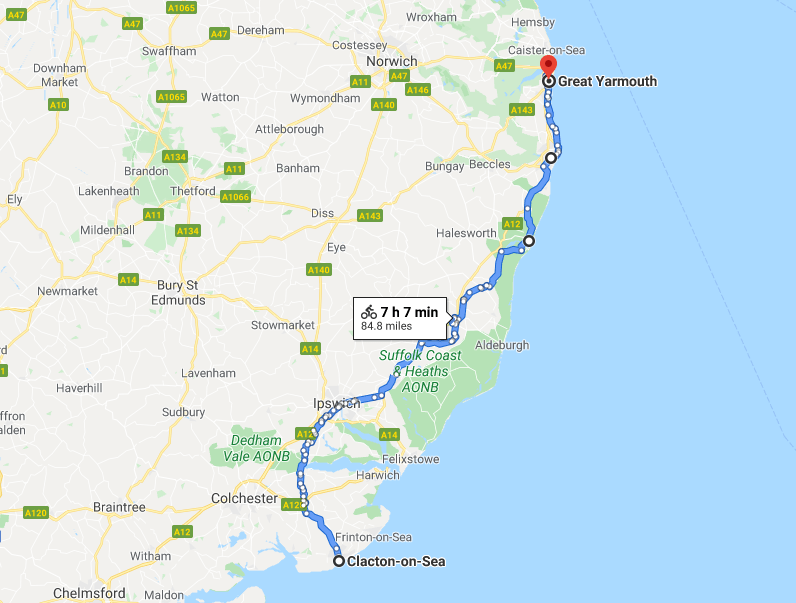
Day four Thursday 4th September 2014 – leaving Clacton on Sea for Frinton on Sea is the equivalent of crossing continents, time zones, aesthetic and social sensibilities.

Leaving the razzle-dazzle, frantic fish and chip frazzle, for the sedate repose of germ free Frinton.

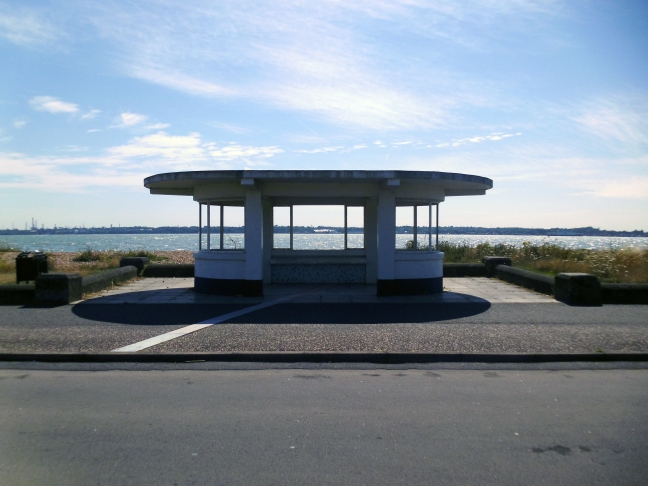
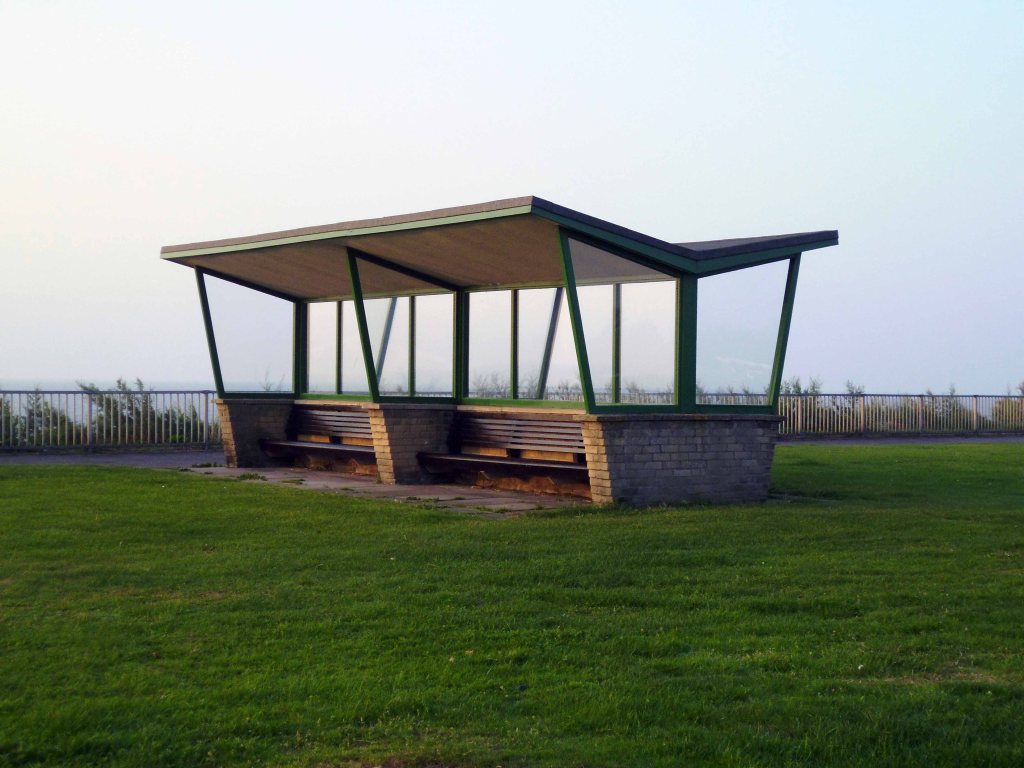
Green sward and restrained modernist shelters adorn the foreshore.

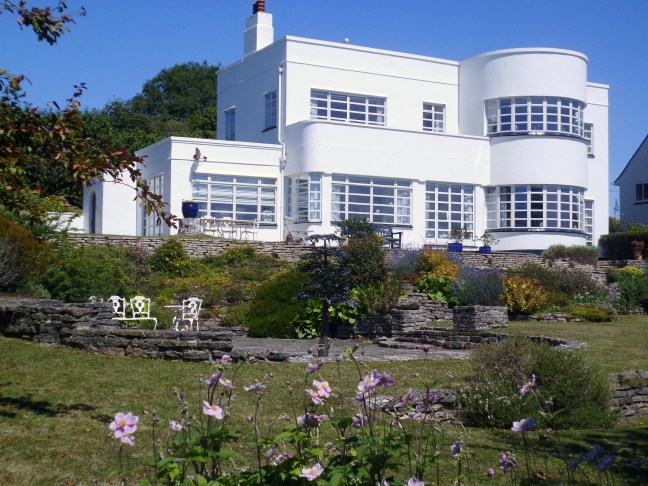
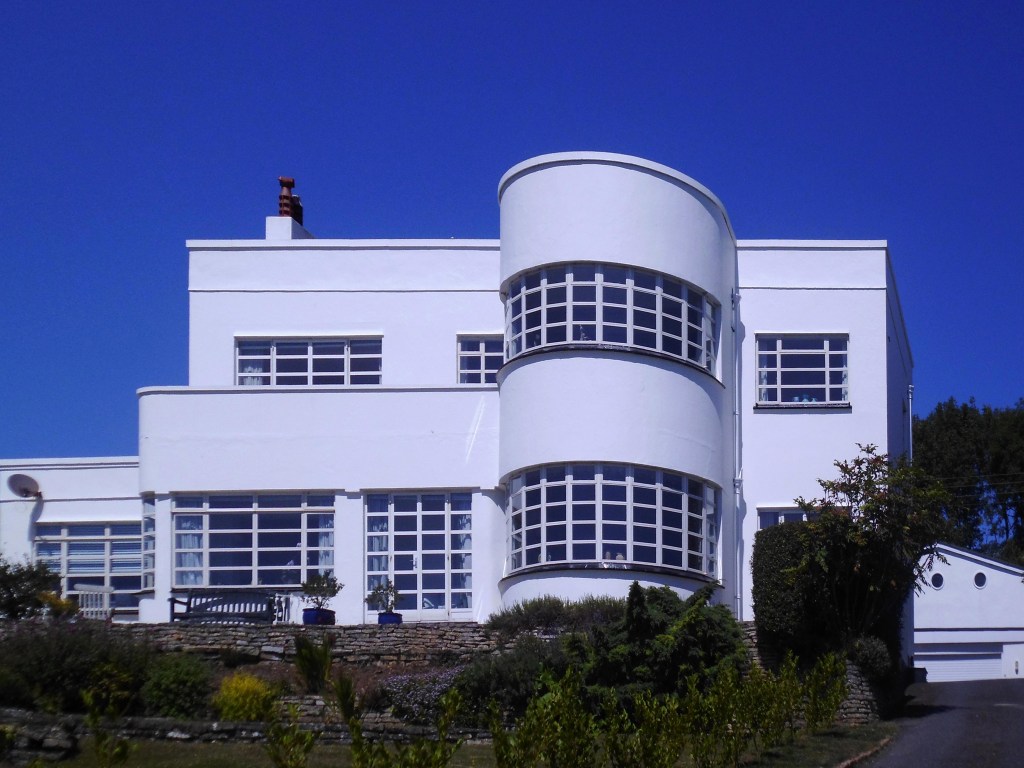
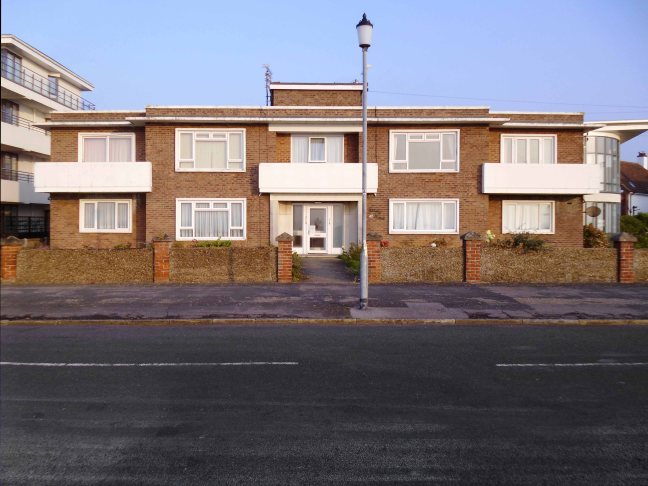
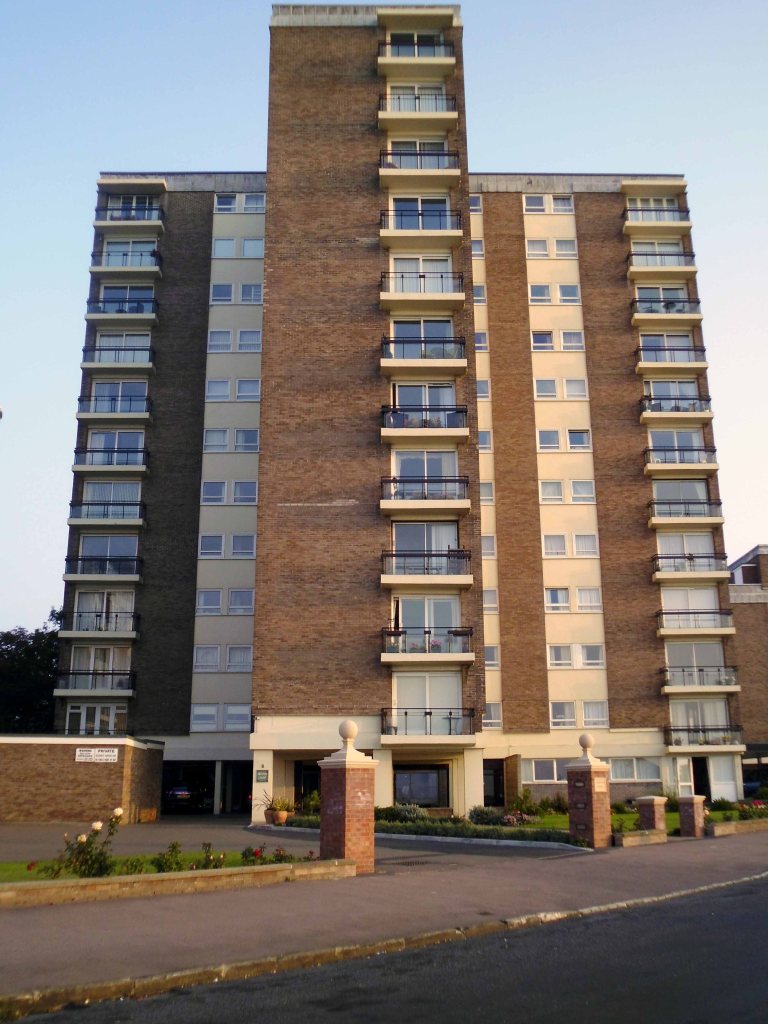
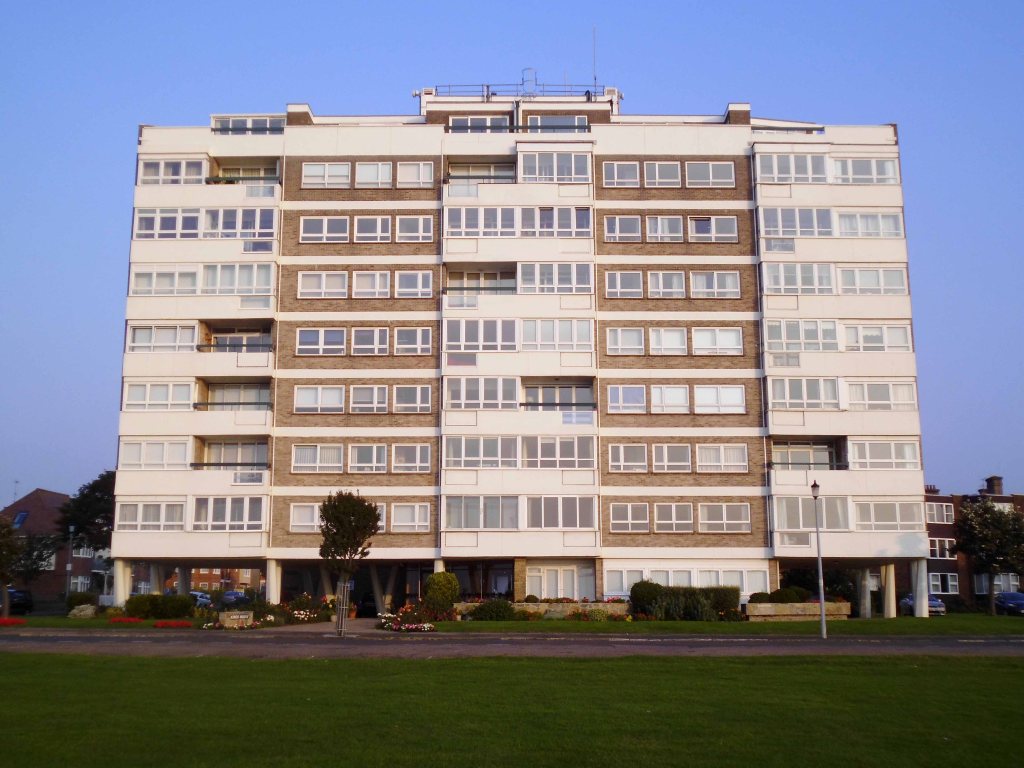
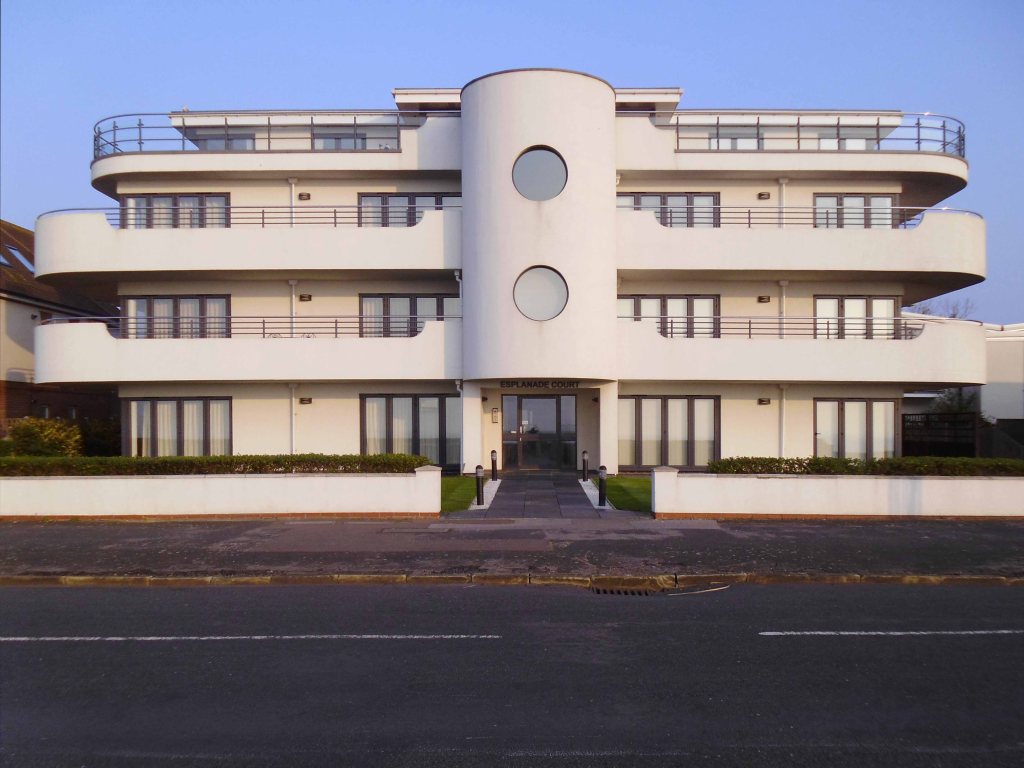
I love the bold optimism of Maritime Moderne – the bright eyed, forward looking window grid of these fine flats.

I have a cautious admiration for the faux Deco newcomers.

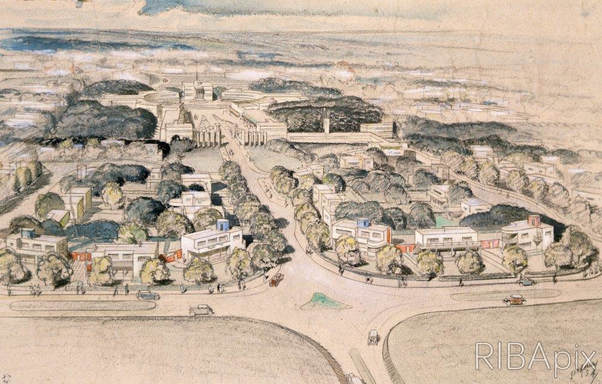
The modernist estate was attempted many times in the interwar years; visions of rows of fashionable white walled, flat roofed houses filled developers eyes. In practice the idea was less popular with potential house buyers. In the Metro-Land suburbs of London, estates were attempted in Ruislip and Stanmore, with a dozen houses at most being built. One estate that produced more modernist houses than most, albeit less than planned, was the Frinton Park estate at Frinton-on-Sea on the Essex coast.

Oliver Hill was known for his house designs, which spanned styles from Arts and Crafts to Modernist. Hill was to draw up a plan for 1100 homes, as well as a shopping centre, luxury hotel and offices. The plan was for prospective buyers to buy a plot and then engage architects to design their new house from a list of designers drawn up by Hill. The list featured some of the best modernist architects working in Britain at the time; Maxwell FryWells Coates, F.R.S. Yorke and Connell, Ward & Lucas.

As wonderful as this sounds today, the buying public of 1935 did not quite agree. The majority of potential buyers were apparently put off by the Estates insistence on flat roofs and modernist designs. Plan B was to build a number of show homes to seduce the public into buying the modernist dream. Of 50 planned show homes, around 25 were built, with about 15 more houses built to order. The majority of these were designed by J.T. Shelton, the estates resident architect, with a number designed by other architects like Hill, Frederick Etchells, RA Duncan and Marshall Sisson.

Modernism in Metroland

One million four hundred thousand pounds later

Nine hundred and fifty thousand pounds

These survivors are now much sought after residences.

The Modern House

The town is also home to this traditional confectioners – Lilley’s Bakery.

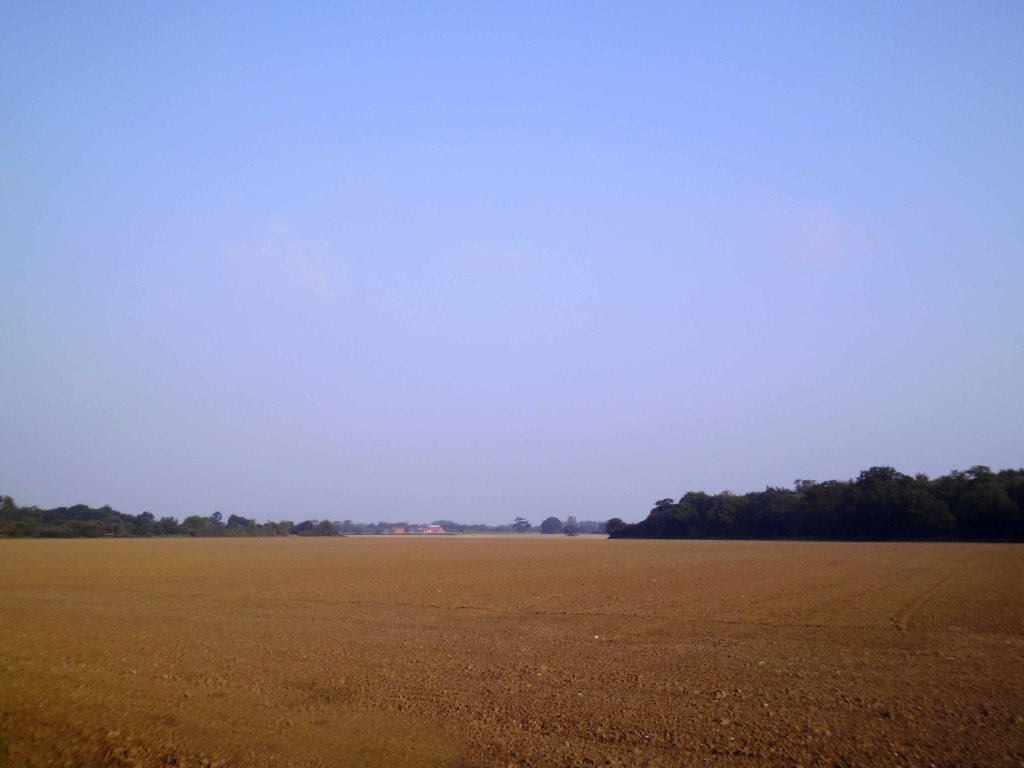
Leaving the coast for pastures new – well, a ploughed field actually.

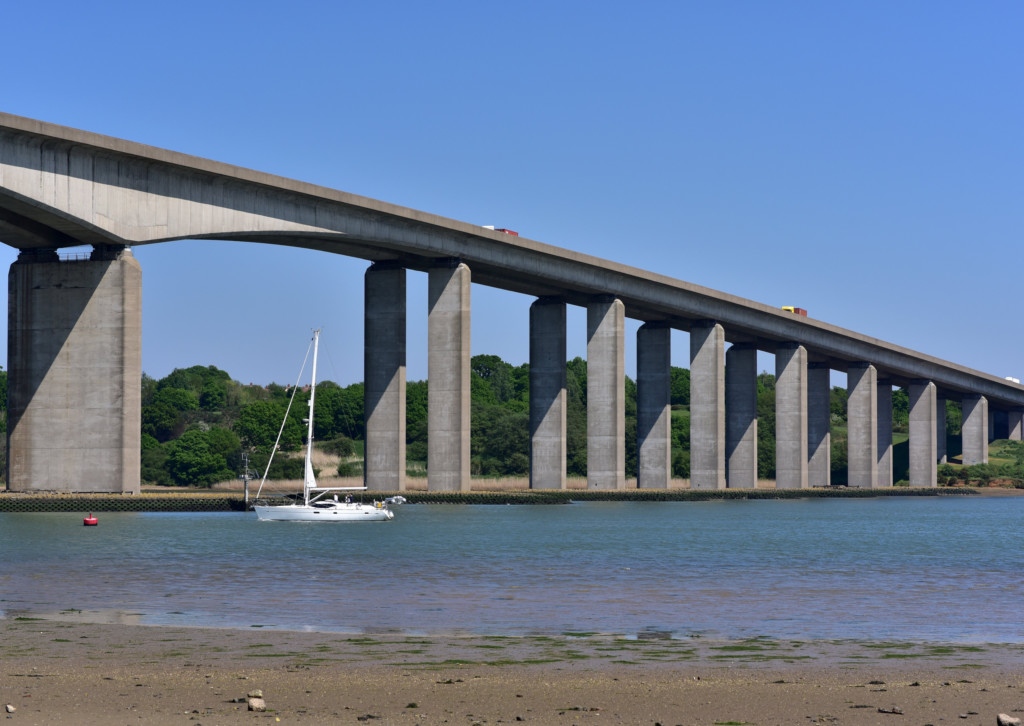
Crossing the River Orwell over the Orwell Bridge on my way to Ipswich.

The main span is 190 metres which, at the time of its construction, was the longest pre-stressed concrete span in use in the UK. The two spans adjacent to the main span are 106m, known as anchor spans. Most of the other spans are 59m. The total length is 1,287 metres from Wherstead to the site of the former Ipswich Airport. The width is 24 metres with an air draft of 43 metres; the bridge had to be at least 41 metres high. The approach roads were designed by CH Dobbie & Partners of Cardiff. 

The bridge is constructed of a pair of continuous concrete box girders with expansion joints that allow for expansion and contraction. The girders are hollow, allowing for easier inspection, as well as providing access for services, including telecom, power, and a 711mm water main from the nearby Alton Water reservoir.

The bridge appears in the 1987 Cold War drama The Fourth Protocol, in which two RAF helicopters are shown flying under it, and at the end of the 2013 film The Numbers Station.

Wikipedia

Time for a Stymie Bold Italic stop – much to the obvious consternation of an over cautious customer.

It seems to still be extant – but with a tasteful coat of subdued grey paint according to its Facebook page.

Having completed this journey in 2016, then reacquainting myself in 2020, I have little recollection of visiting Ipswich, but I did, yet there are no snaps.

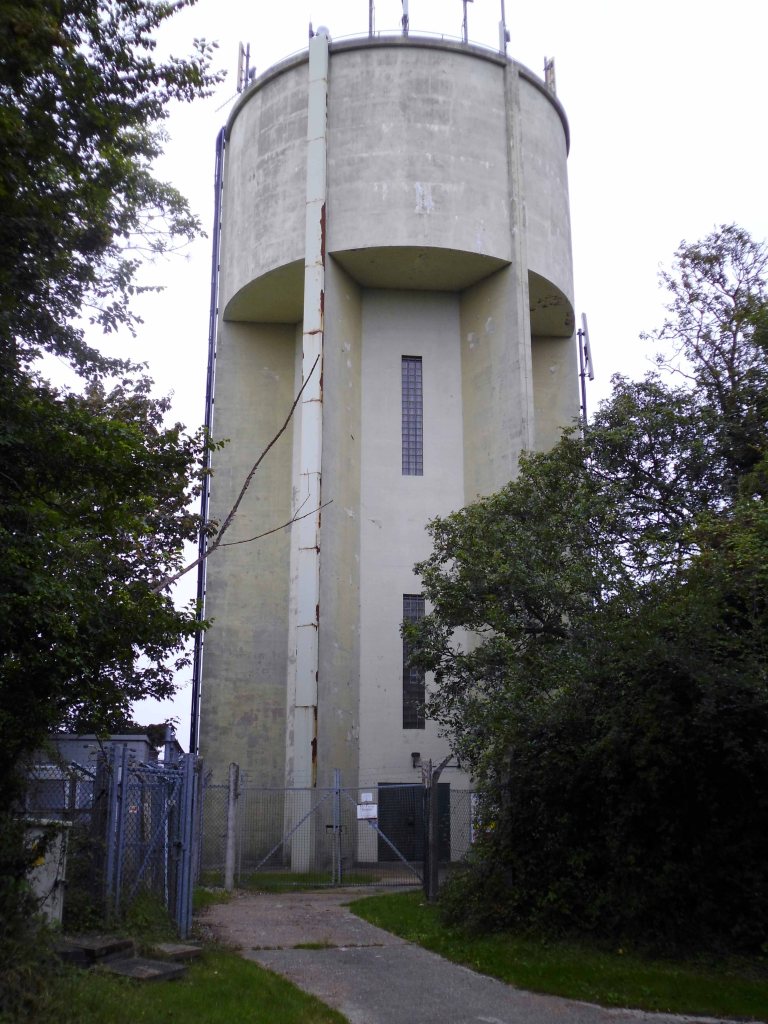
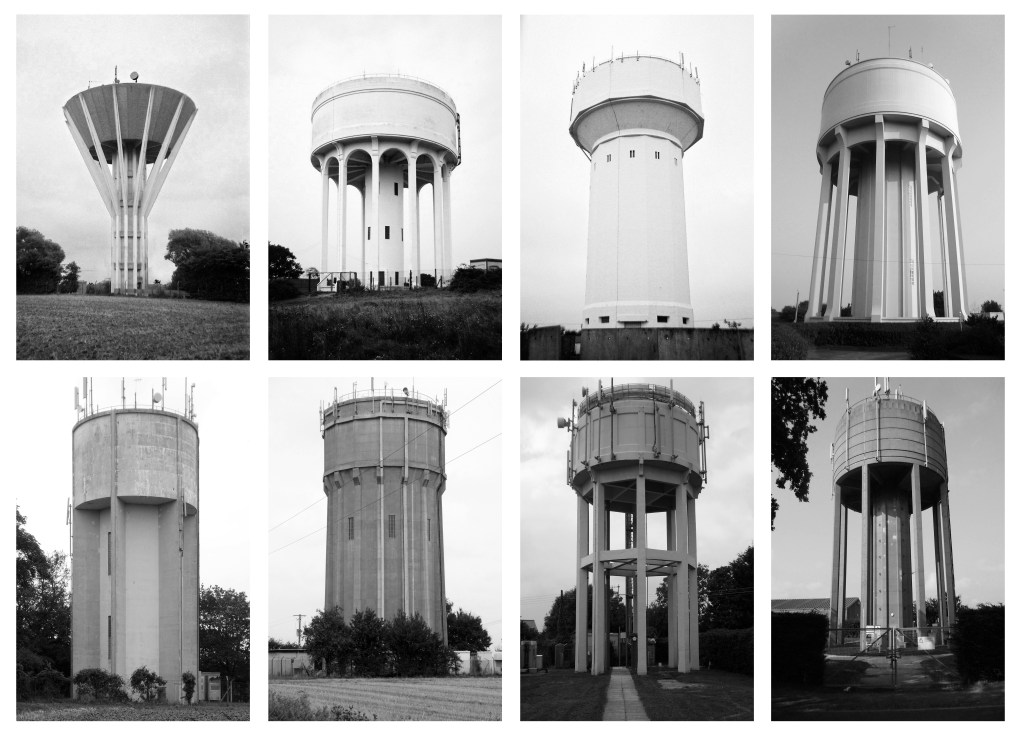
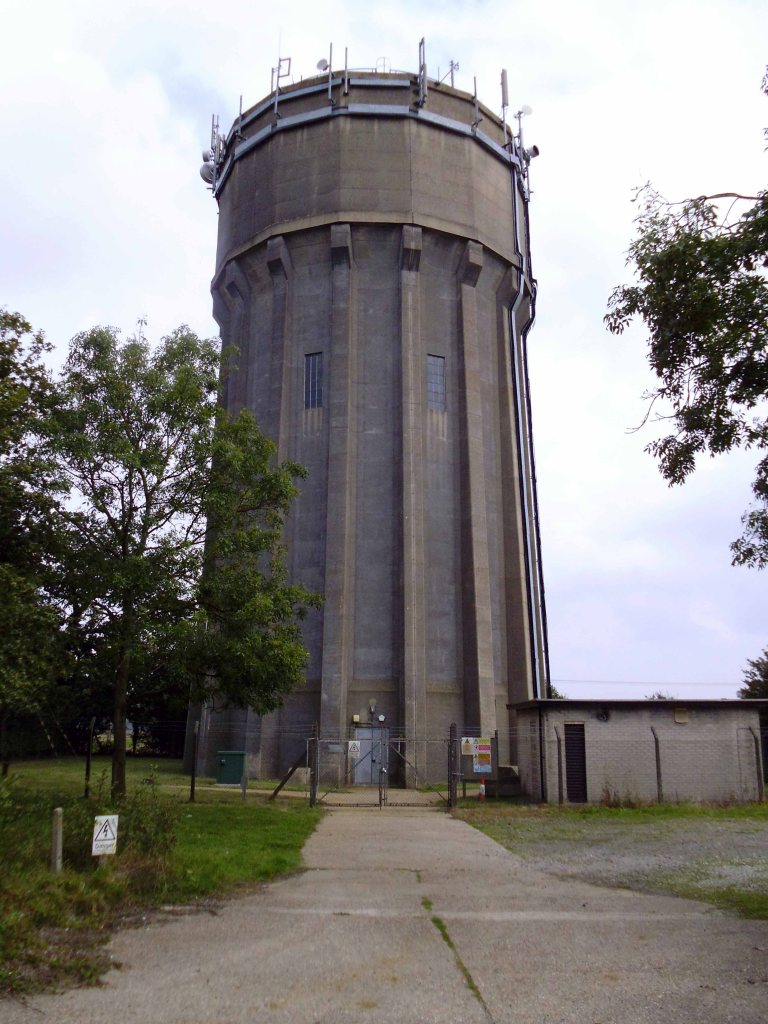
I photographed this and several other water towers, precisely where, I could not honestly say.

Suffice to say that it is somewhere – as is everything else.

An admiring nod to Bernd and Hilla Becher.

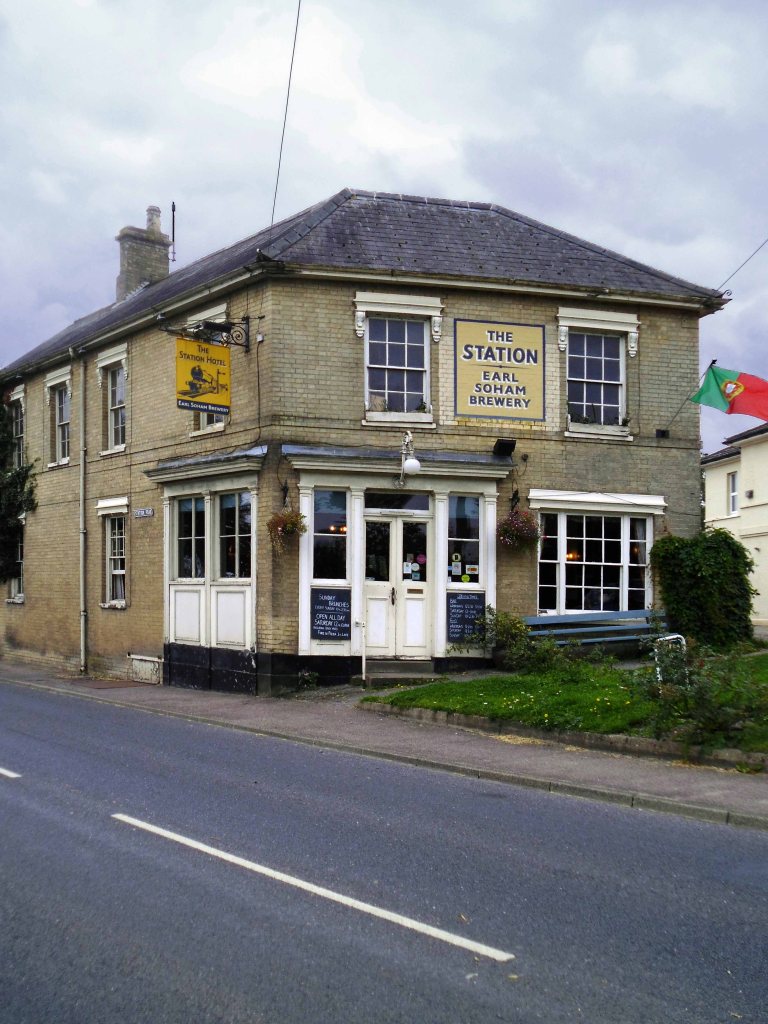
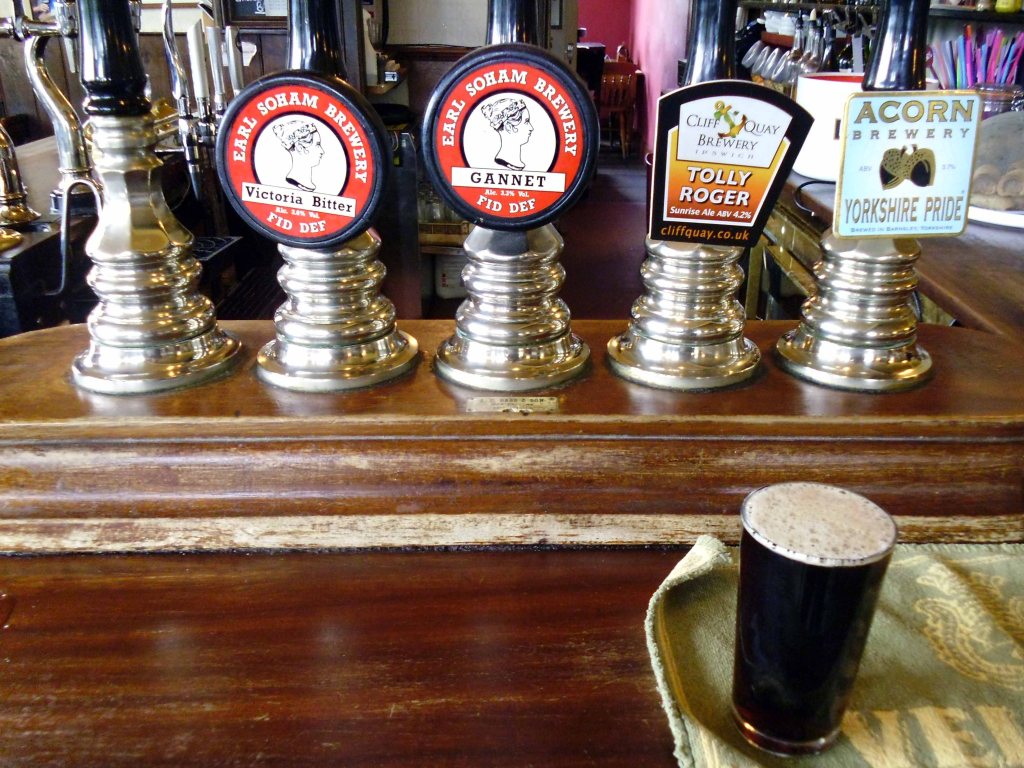
This the only time that I chose to have a glass of beer whilst awheel, normally waiting until the evening – I couldn’t resist this charming looking brew pub in Framlingham.

Earl Soham is a village close by, on the A1120. The Earl Soham Brewery beers started out in  life being brewed in local man Maurice’s old chicken shed. You may be pleased to hear they have a slightly more sophisticated set-up now, without forgetting their humble roots.

If you haven’t tasted them before, we think you’ll be as delighted with them as our regulars, and you can be guaranteed of a warm welcome if you come to try them out.

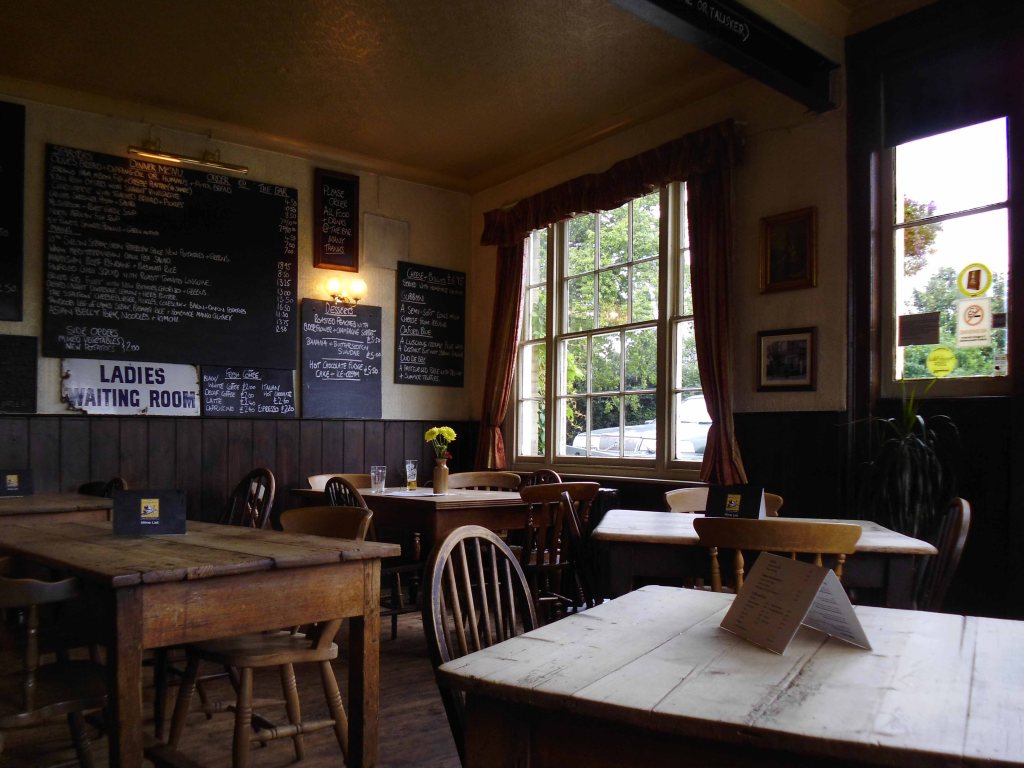
The Station

The sort of wayside boozer where I could have easily idled away an hour or two – hopefully I’ll pass by again some time and linger longer.

Another water tower – somewhere.

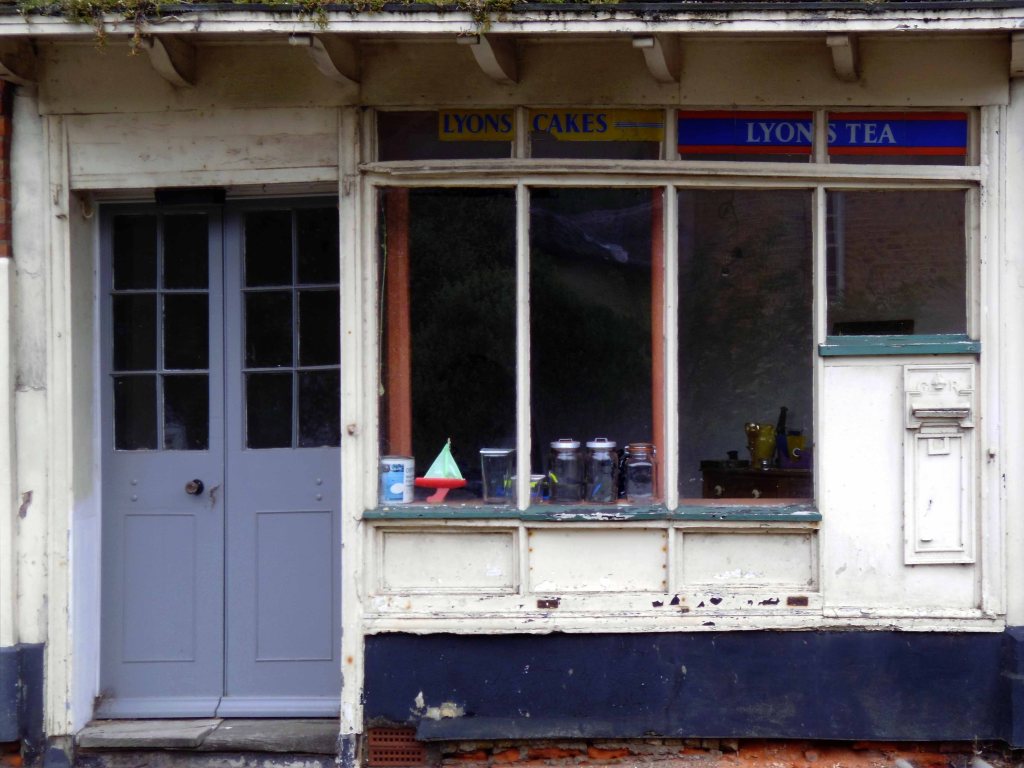
The most enchanting of shop fascias.

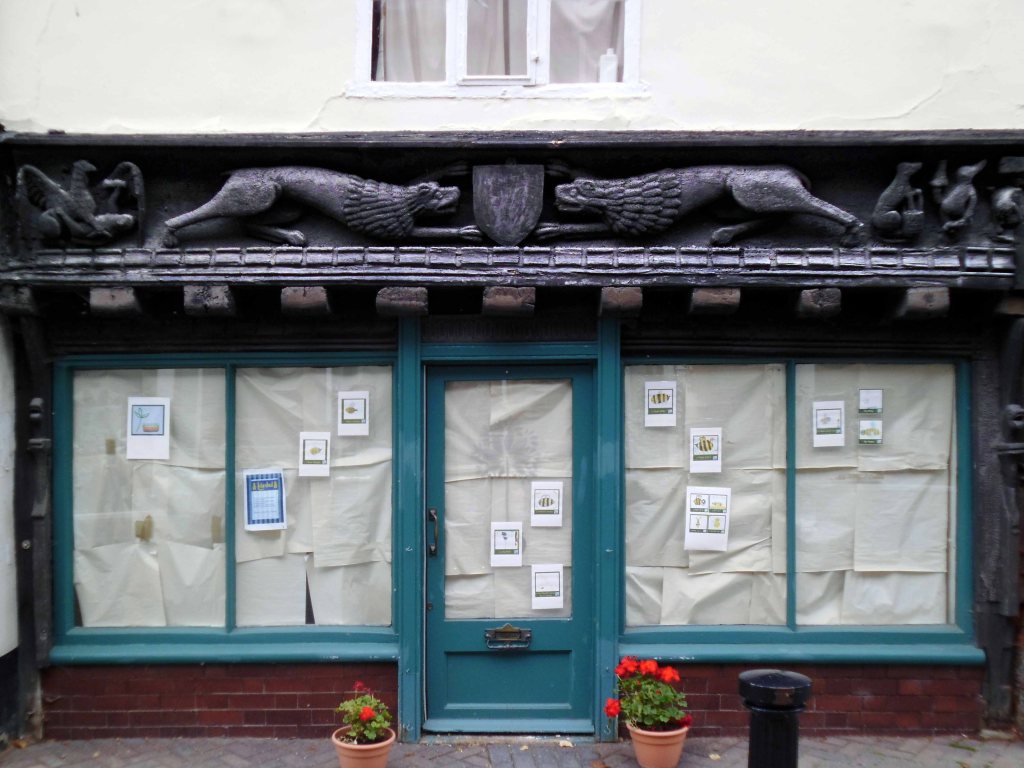
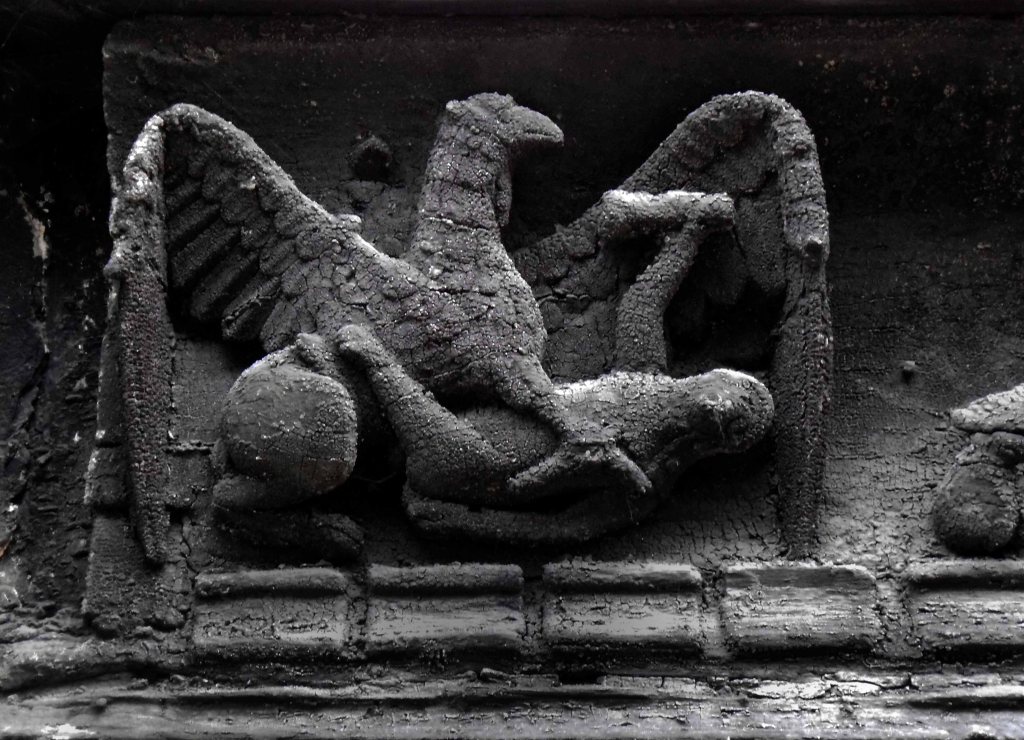
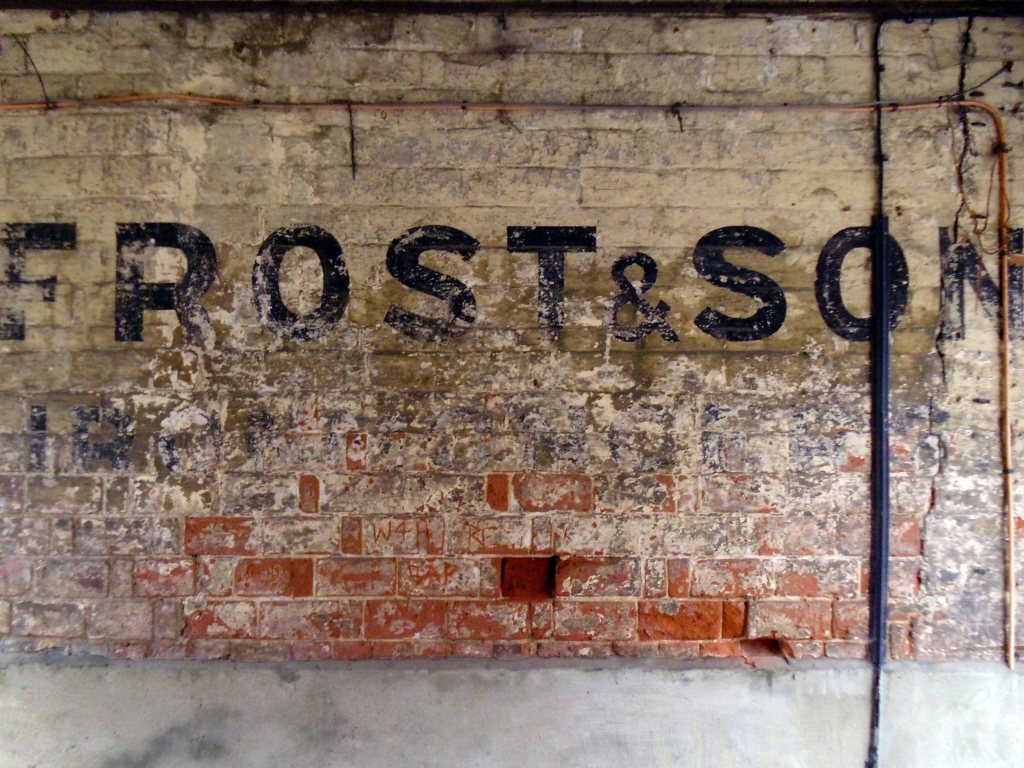
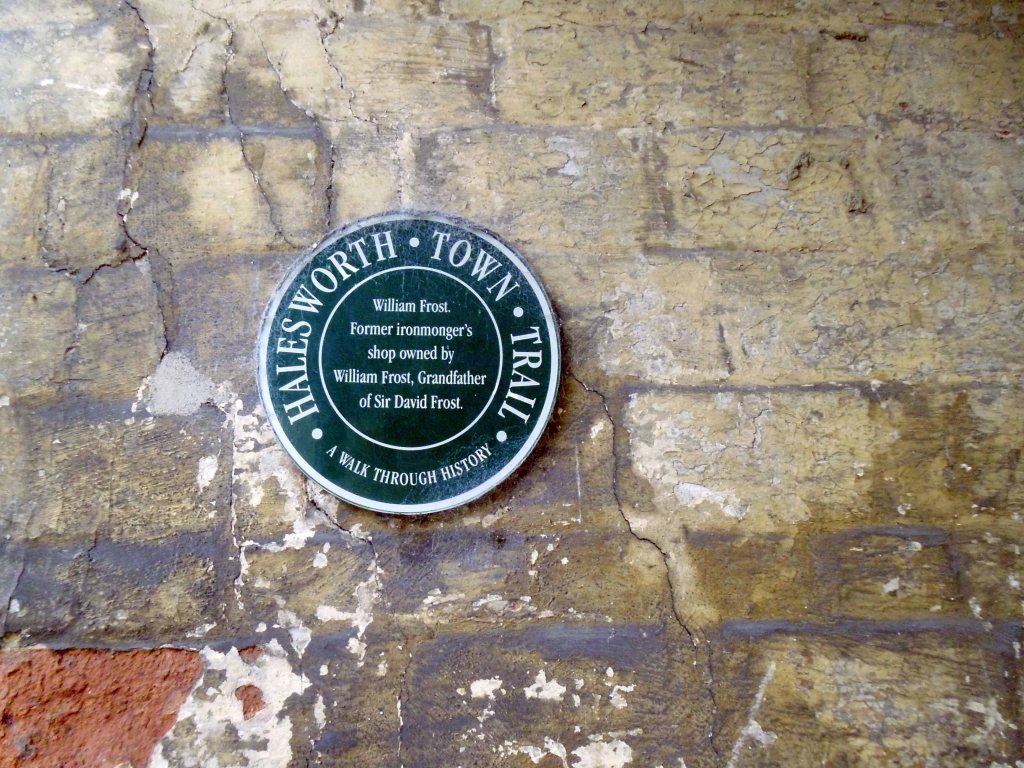
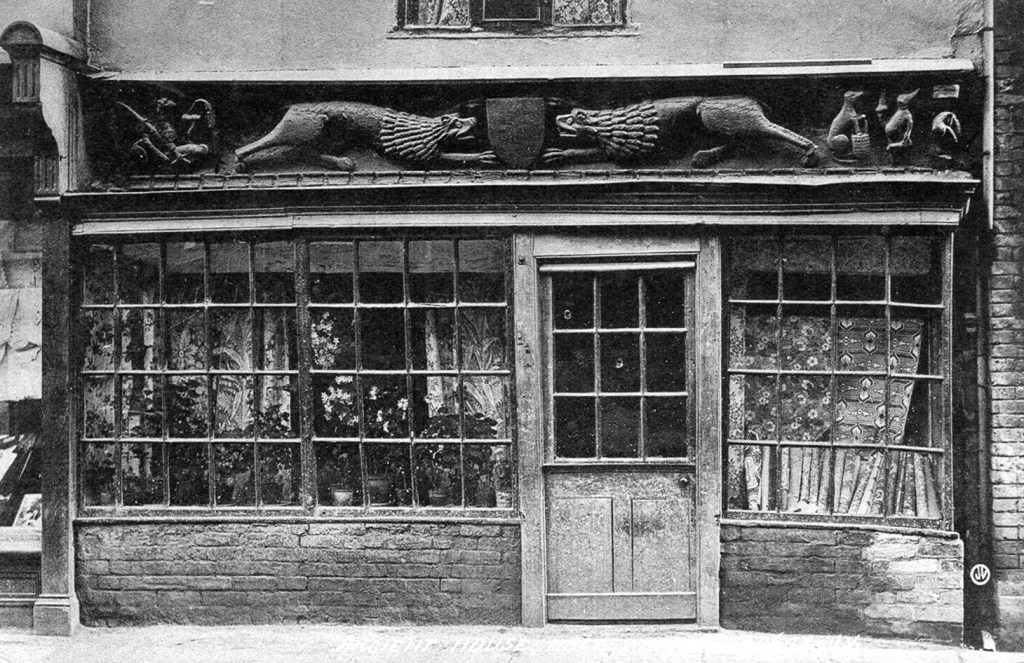
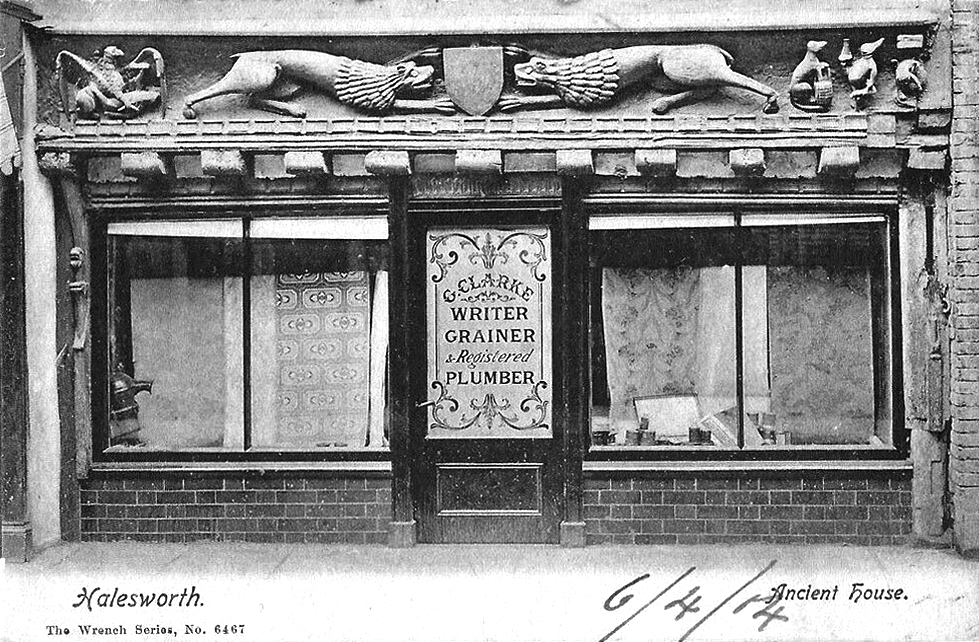
Something of a curiosity – David Frost’s father’s ironmongers in Halesworth – and the Ancient House with its ancient carving.

The bressumer beam at the front of the is linked with Margaret de Argentein in the late 14th and 15th century, it is believed t it could have been a manor or toll house. 

Currently trading as a Bistro with paranormal problems;

Things in the window were swaying the other day and when we went to stop them they almost fought back.

I’ve seen two ghosts in the kitchen. One was clearly a man, the other was when I thought my daughter was over my shoulder but when I looked around she wasn’t there, and we were the only two in the building.

Eastern Daily Press

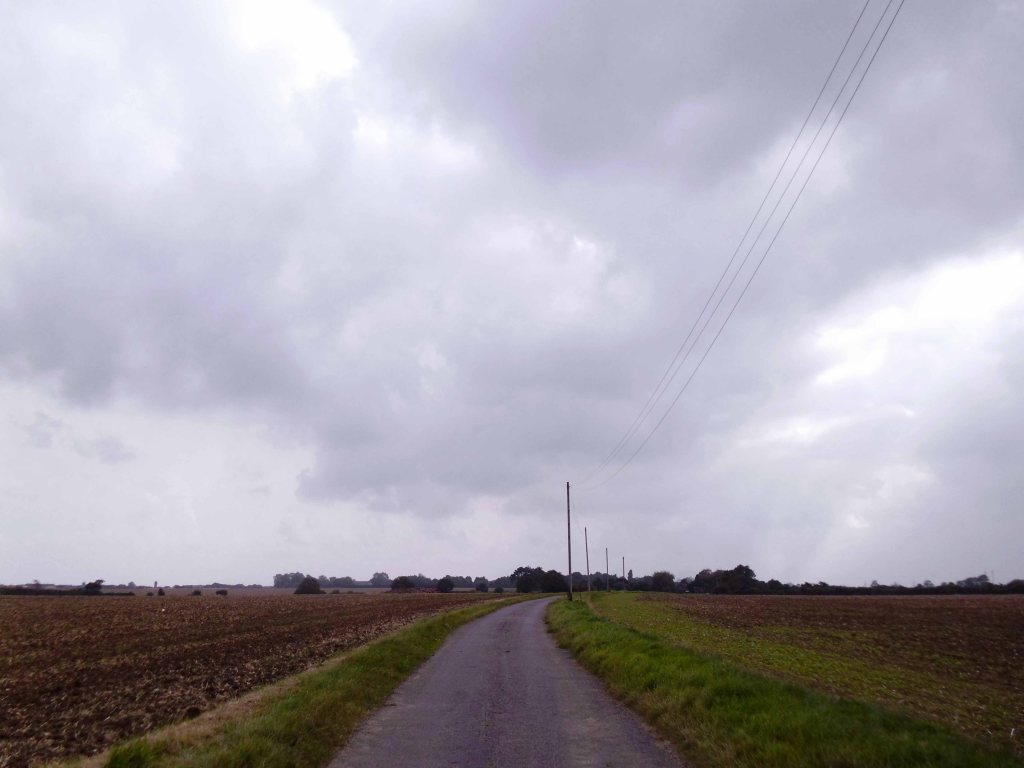
The long and ever so slightly winding road of the lowlands, sad eyed.

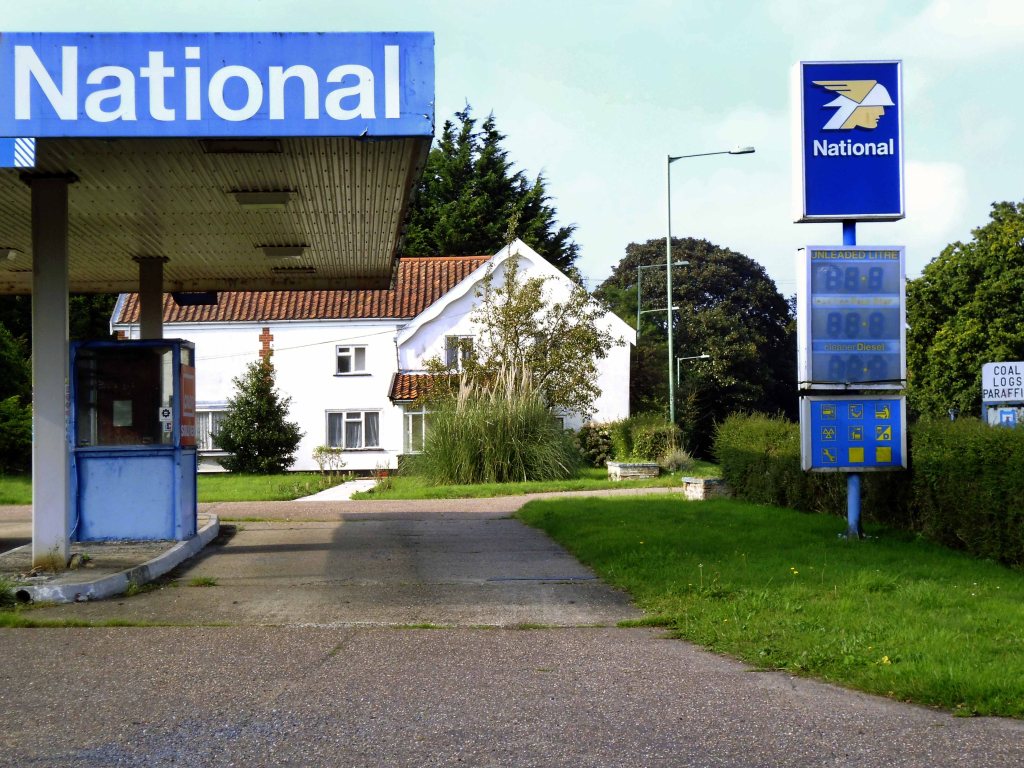
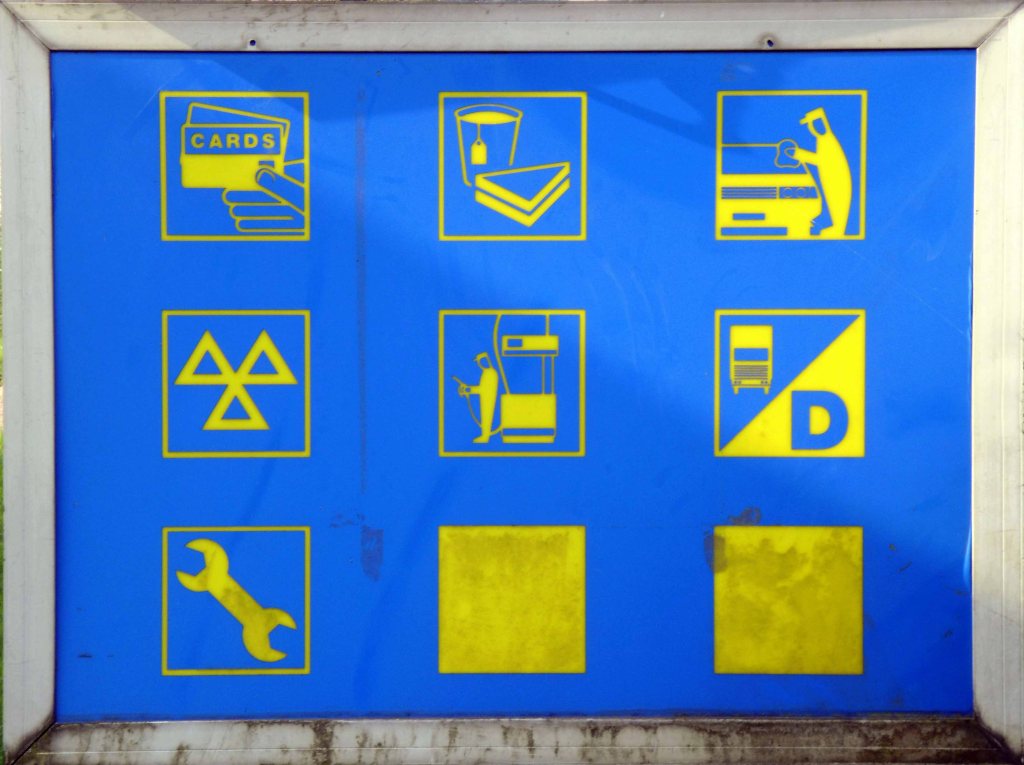
Service station highlight of the tour – with its National graphic identity intact.

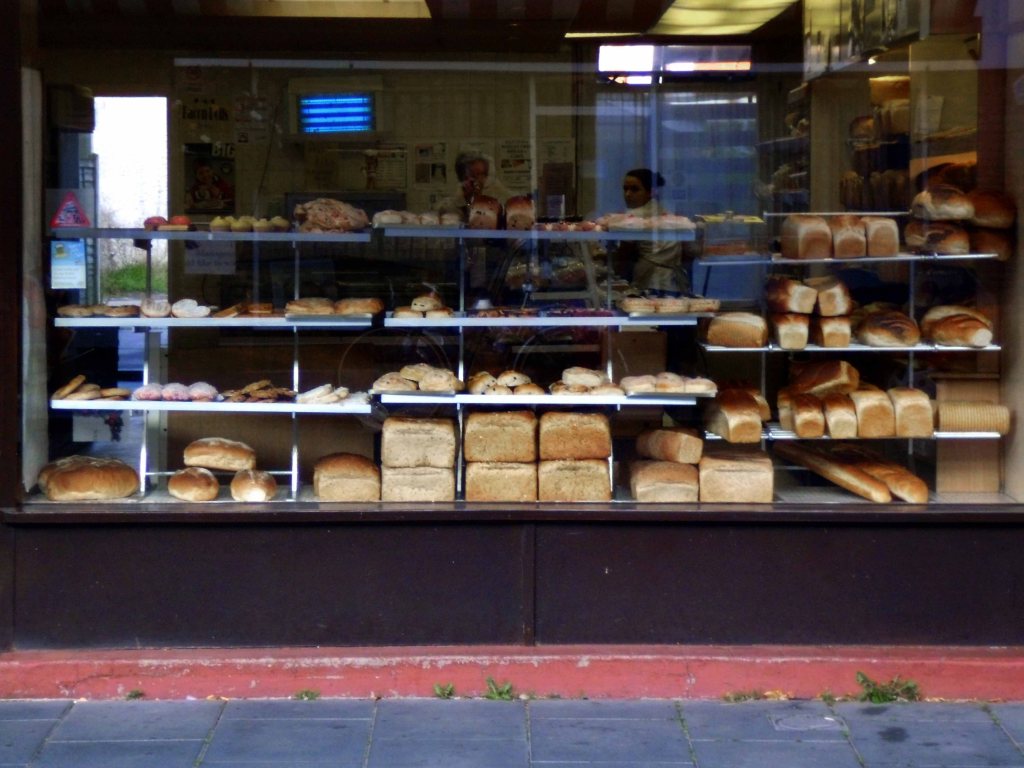
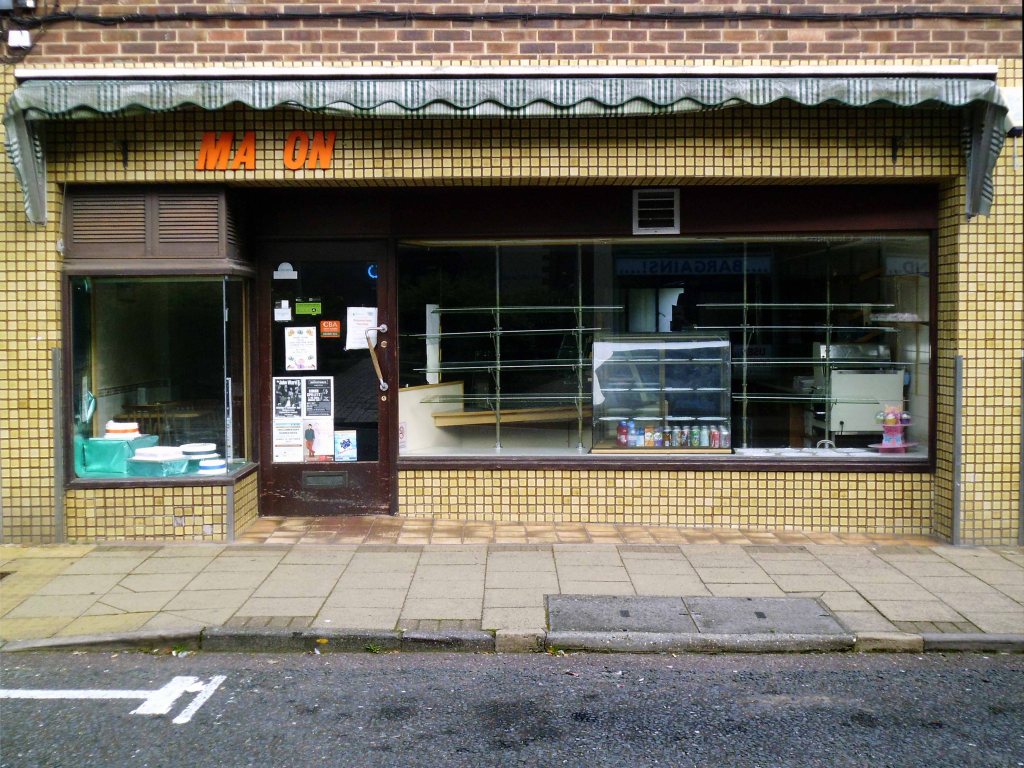
A no longer a bakers bakery.

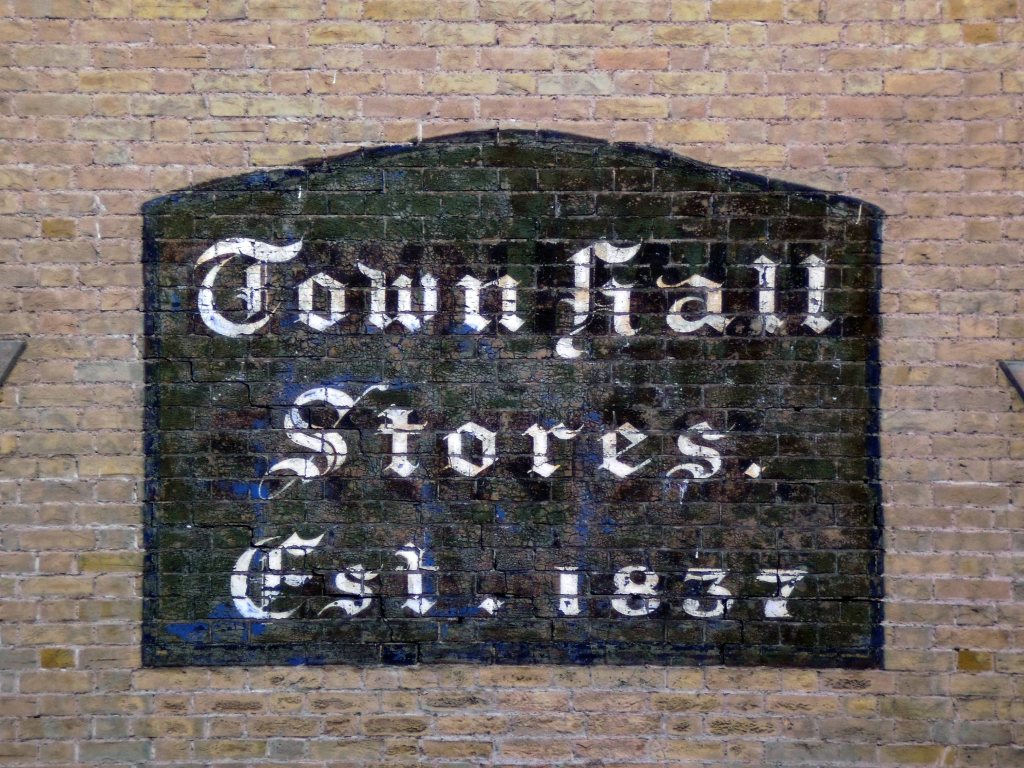
Ghost sign.

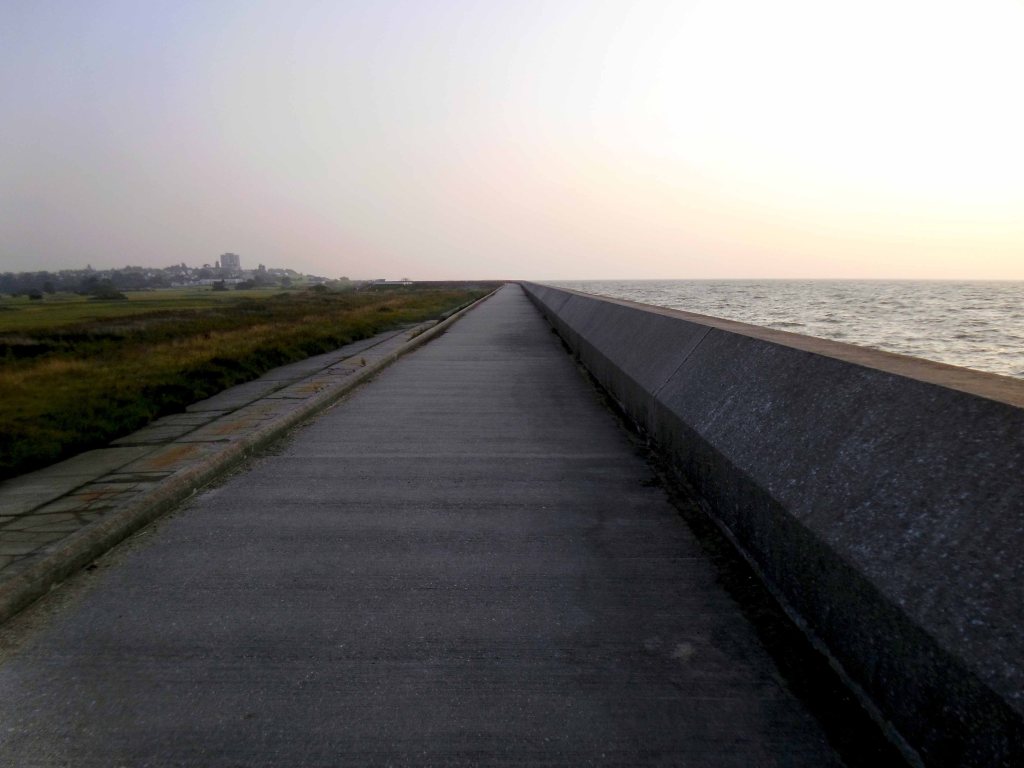
All at sea again – caravans to the left of us, sea to the right of us, onwards onwards.

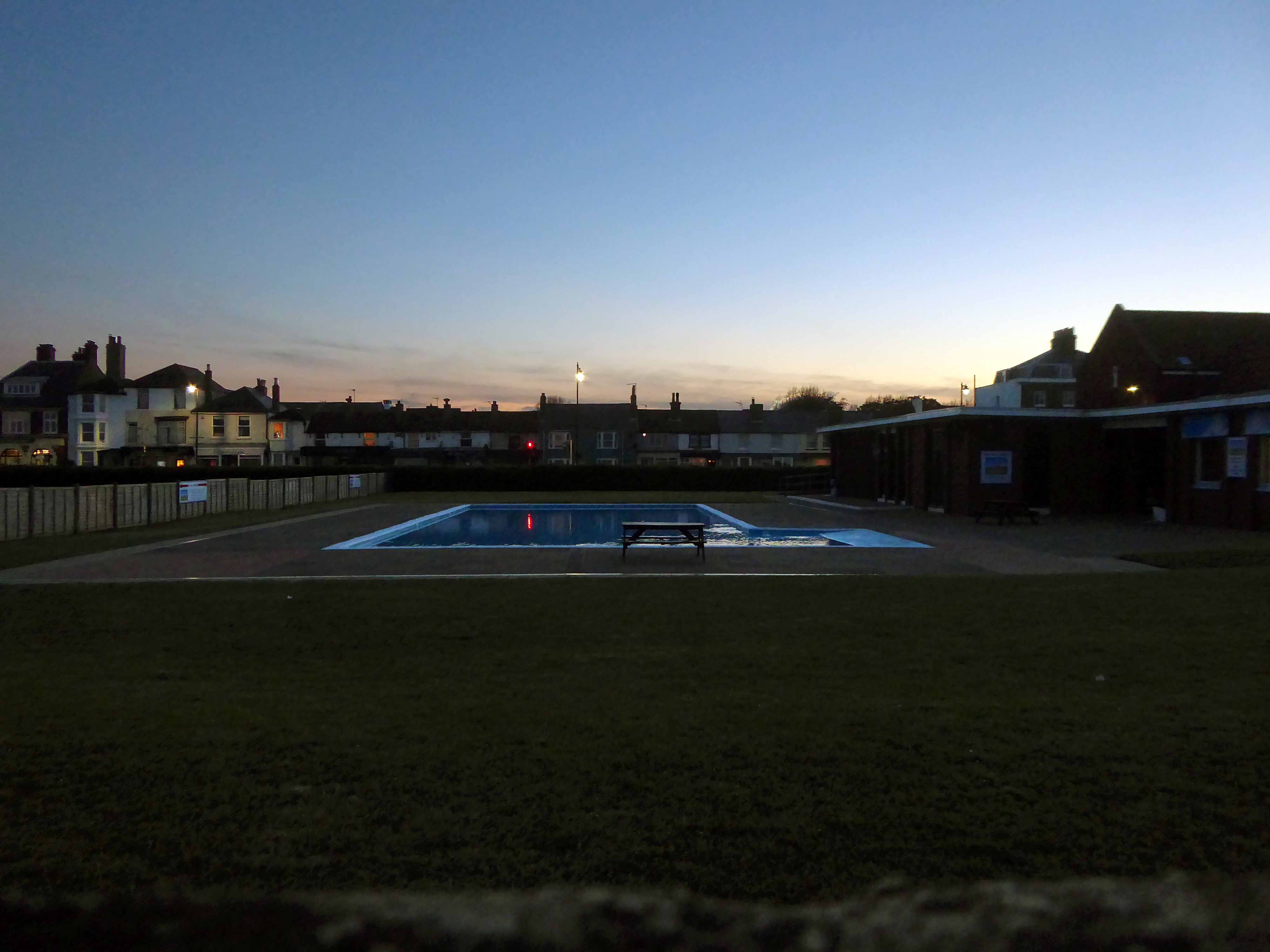
The eternal puzzle of the paddling pool.

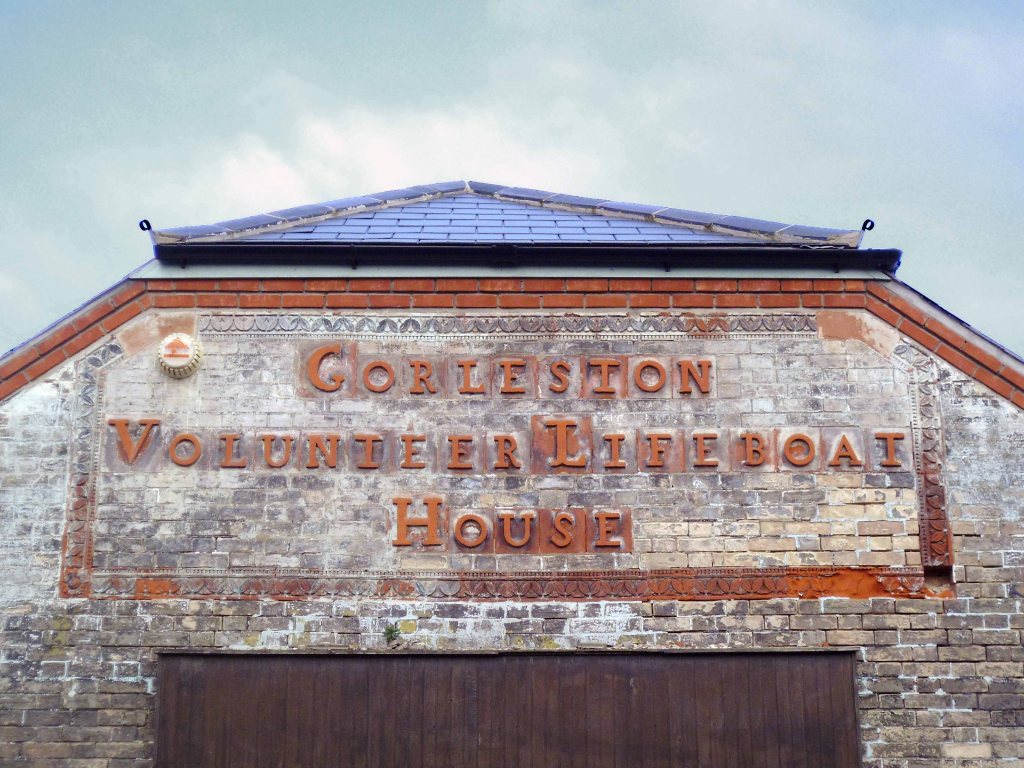
Terracotta tiling on the Lifeboat House.

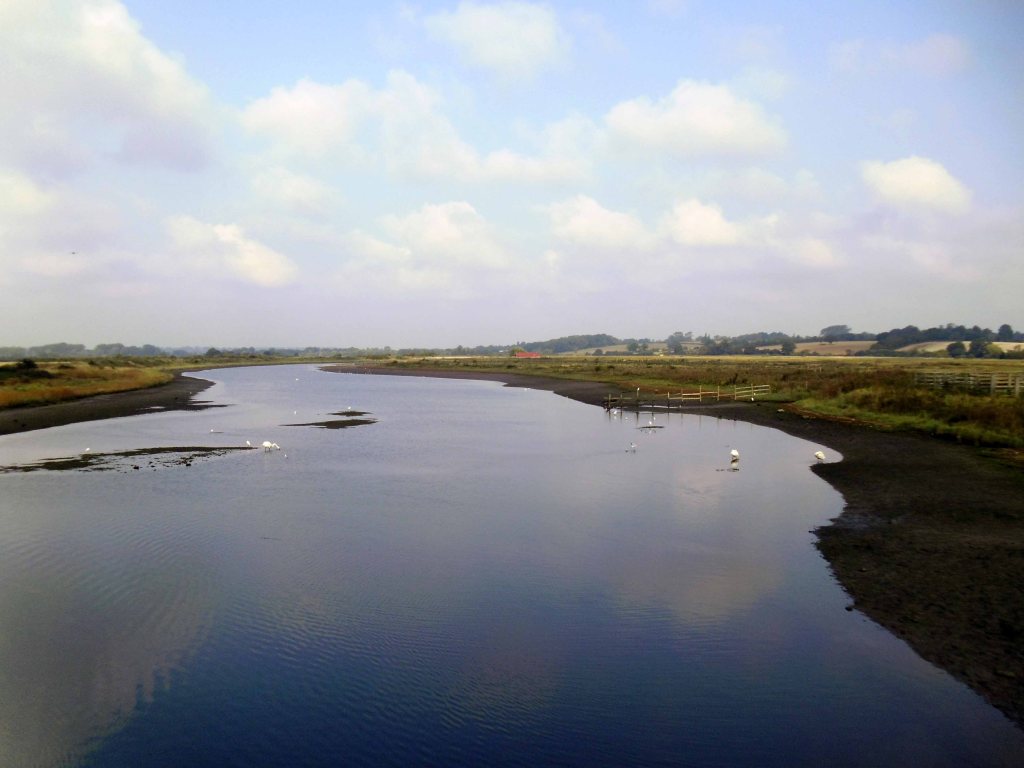
Crossing the estuary of the River Yare – yeah, yeah!

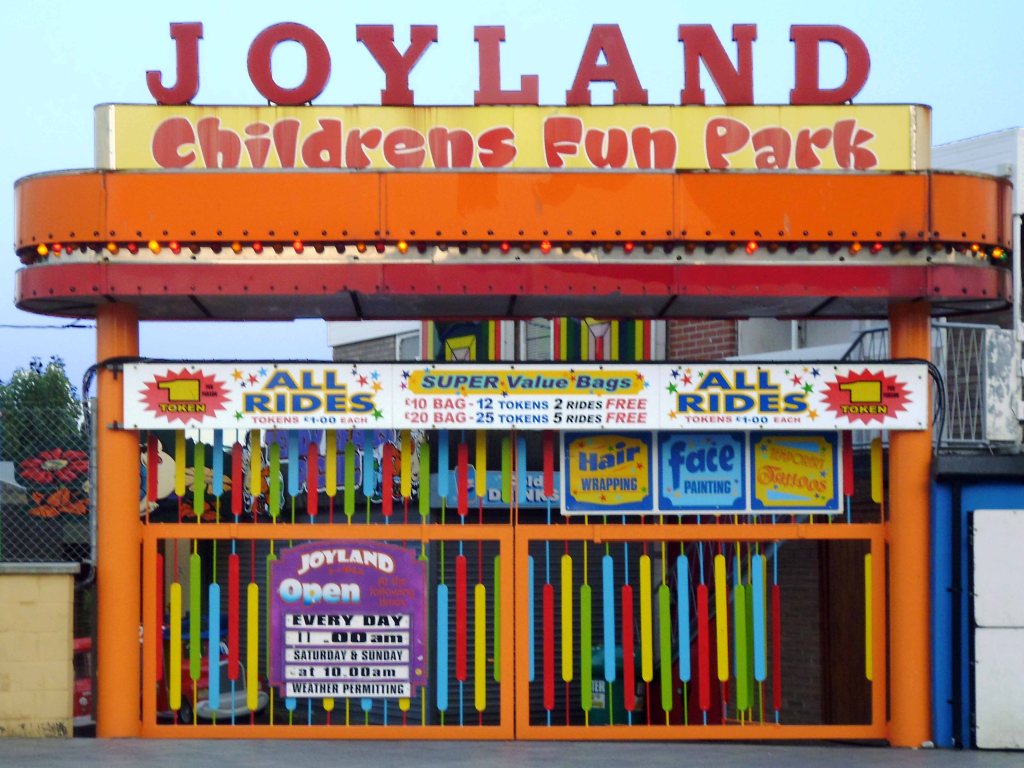
Finally arriving in Joyland.

Rides include the world famous Snails and Tyrolean Tub Twist.

A huge toy town mountain incorporates the Spook Express kiddie coaster, Jet Cars and Neptune’s Kingdom undersea fantasy ride, Pirate Ship, Major Orbit, Balloon Wheel and Skydiver complete the rest of the rides.

Hungry – why not grab a bite at the American Diner.

I actually went to the Wetherspoons.

Though the town is full of tiny pubs.

And a chippy.

I wandered the highway byways and promenade of Great Yarmouth, all alone in a neon nightmare!

Finally settling down for a pint or two – again.

Lastly encountering the late night skaters.

Night night.

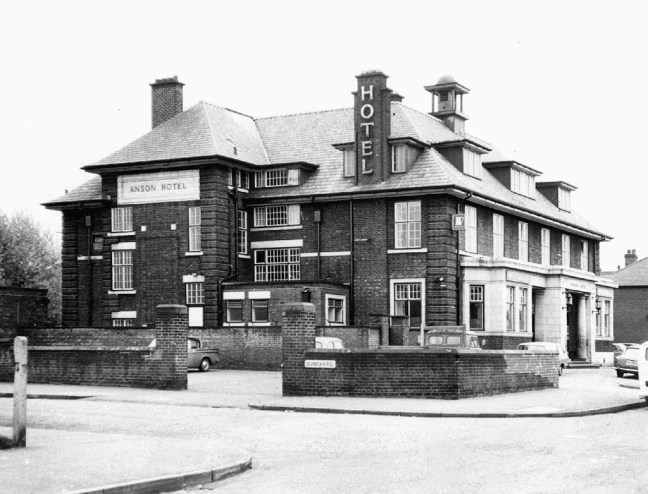
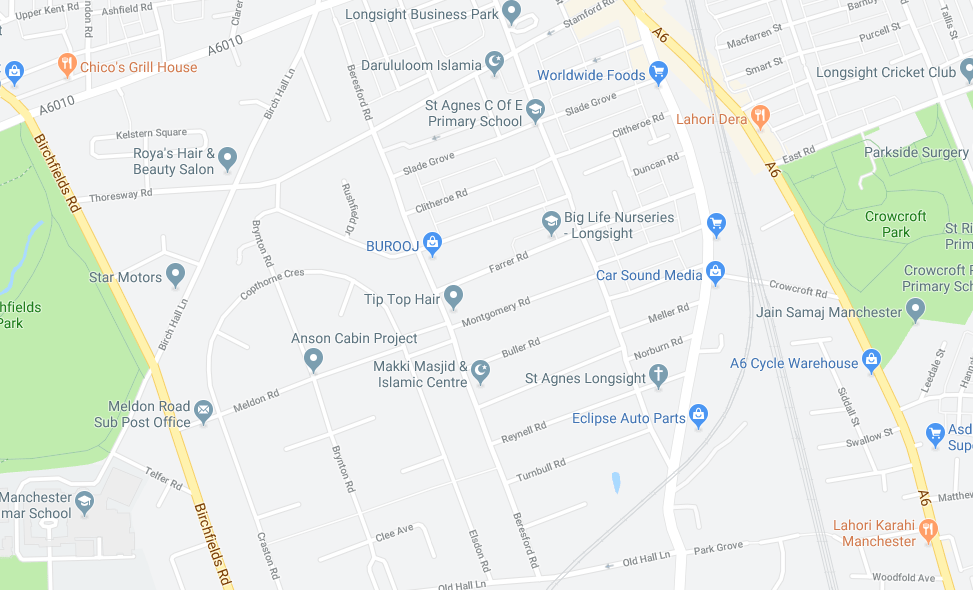
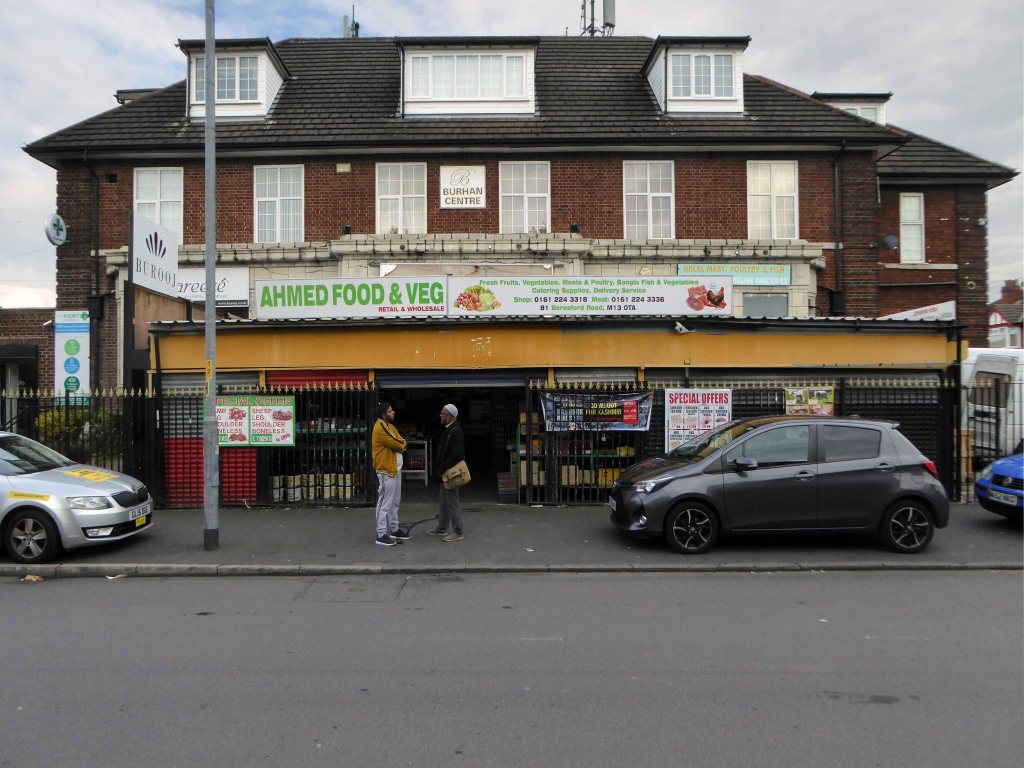
Anson Hotel – Beresford Road Manchester

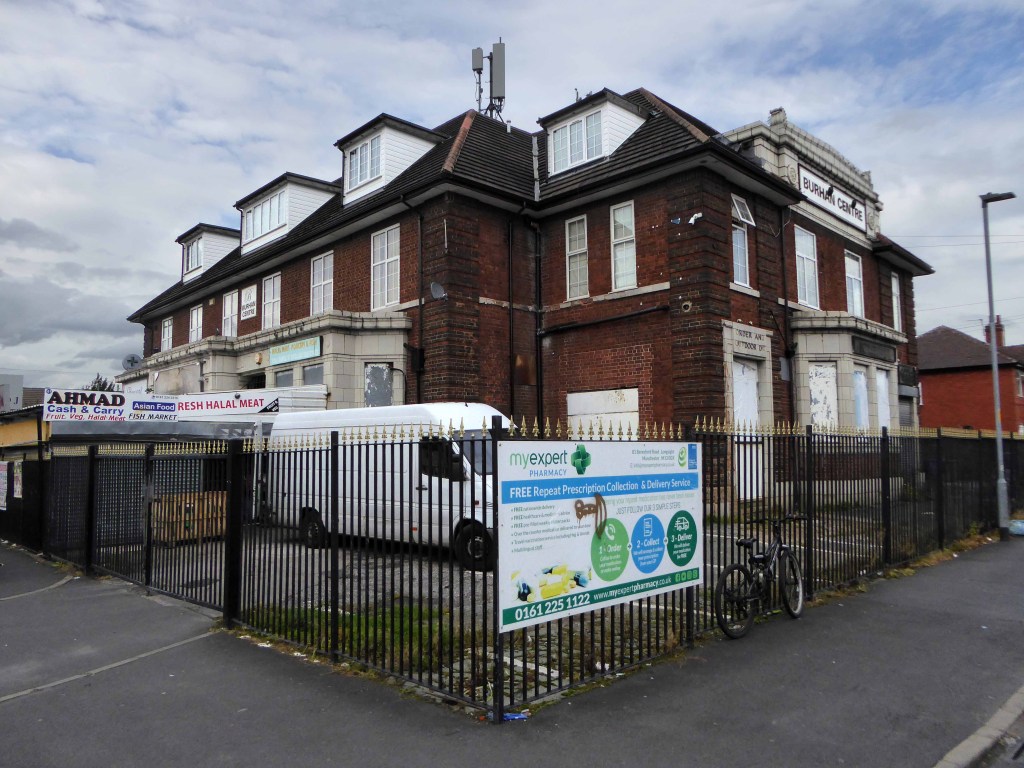
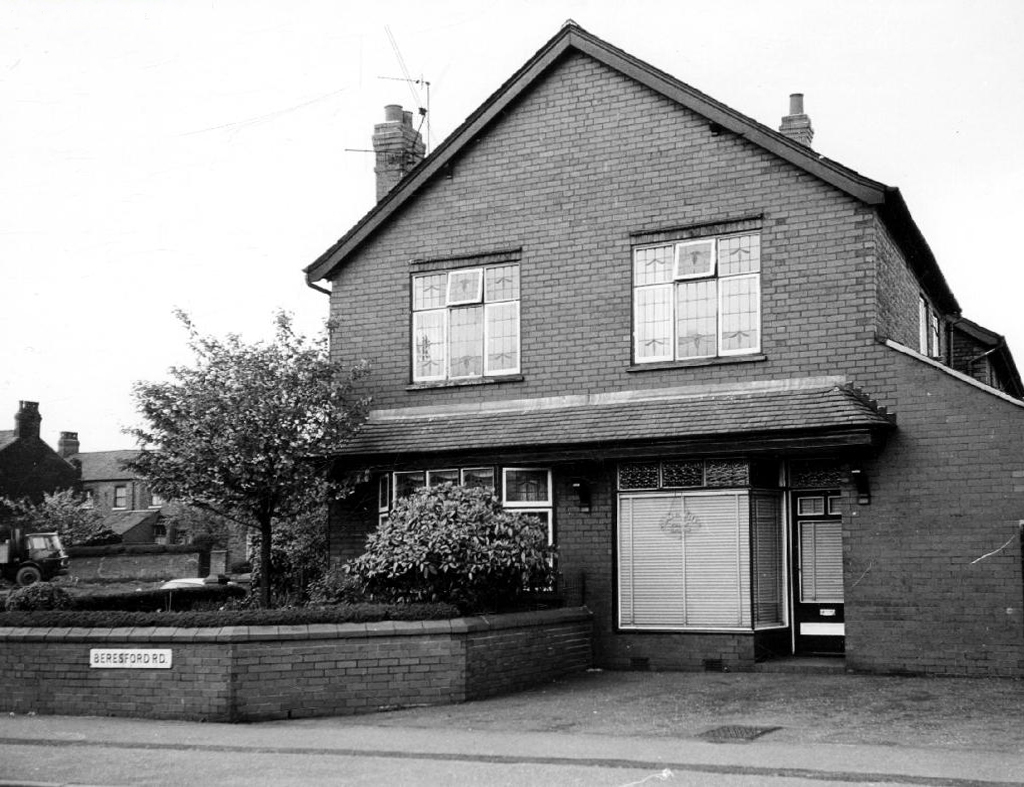
Cycling back from Town, zig zagging between the A6 and Birchfields Road, I headed down Beresford Road and bumped into a behemoth.

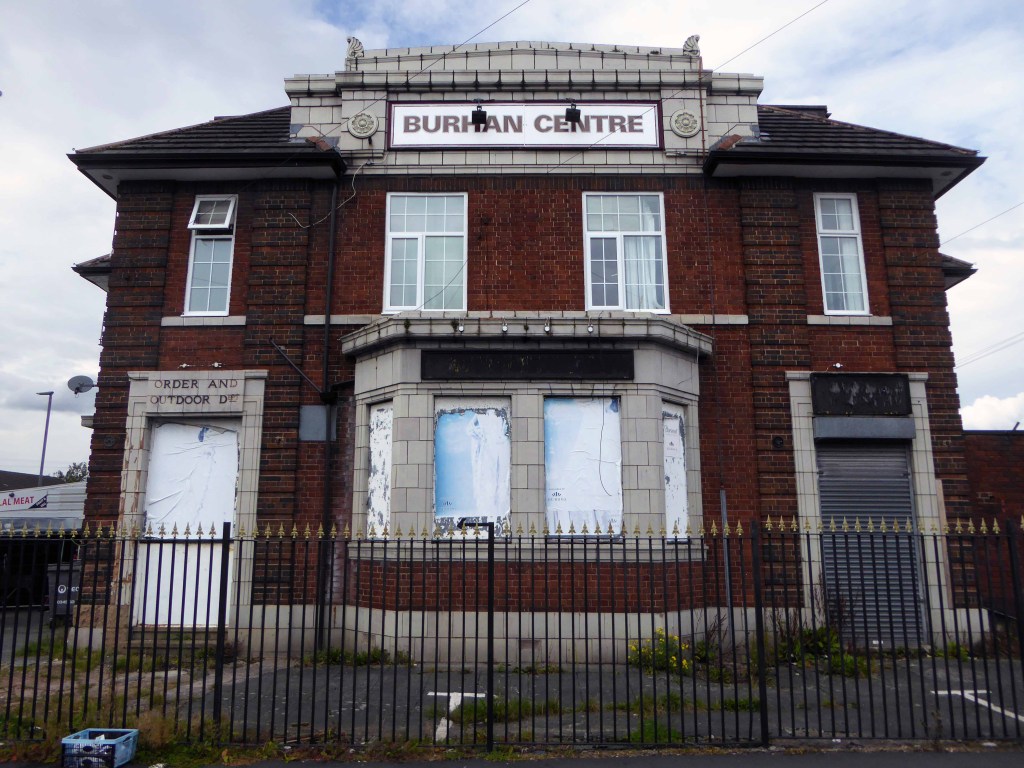
A huge inter-war Whitbread boozer long since closed, now a retail food outlet and badged as the Buhran Centre, also trading as Burooj.

This change of use is far from uncommon, the demographics, socio-economic conditions and drinking habits which shape this and countless other pubs, have since shifted away from the lost world of this immense, roadhouse-style palace of fun.

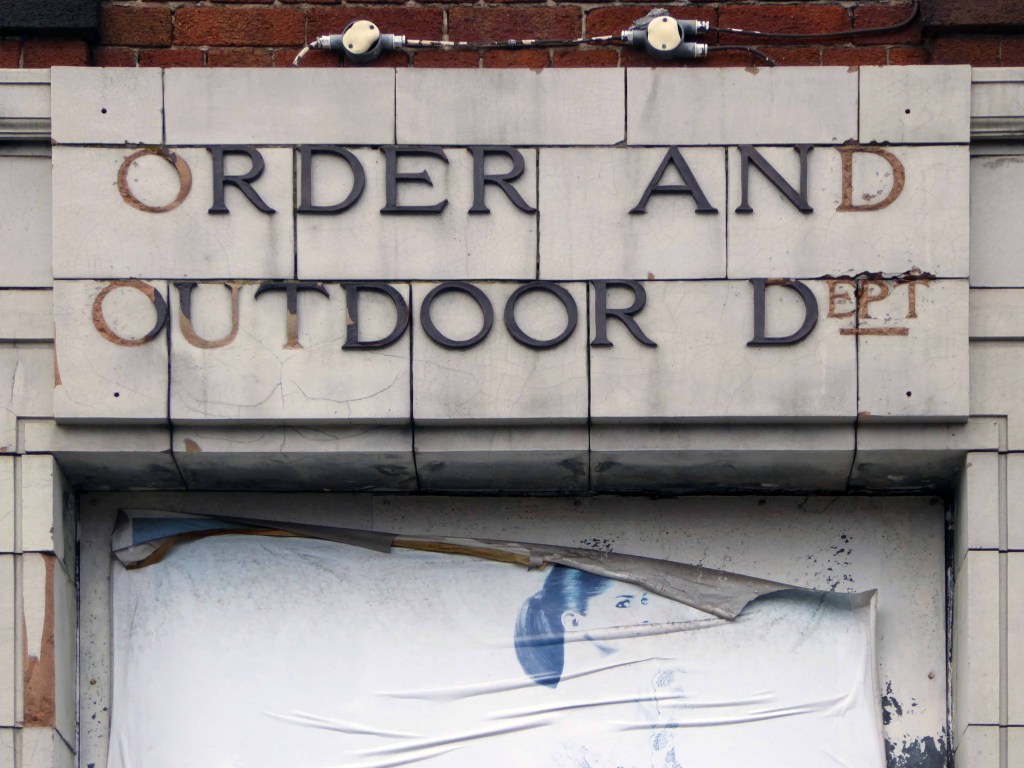
No more outdoor or orders here – the supermarket now supplies the supplies for the self satisfied home drinker.

The sheer scale of the building guaranteed its demise, a three storey house with no more stories to tell.

Searching online for some clues as to its history there is but one mention, on the Pubs of Manchester:

This is my attempt, in some small way, to redress the balance, snapping what remains of this once top pub.

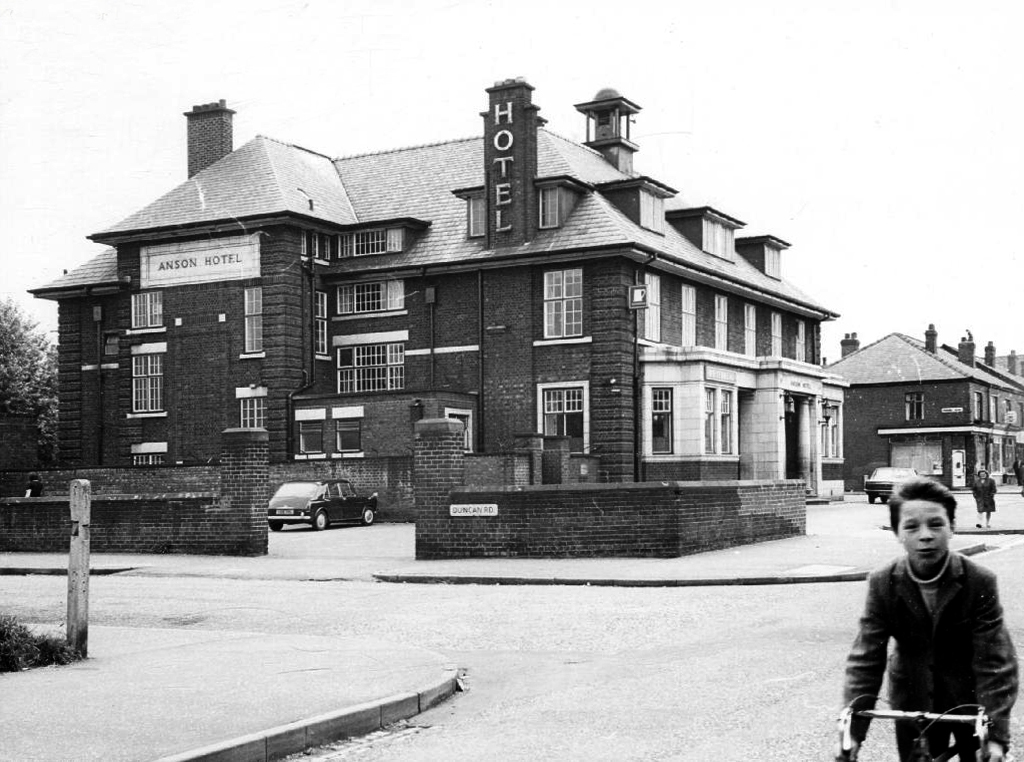
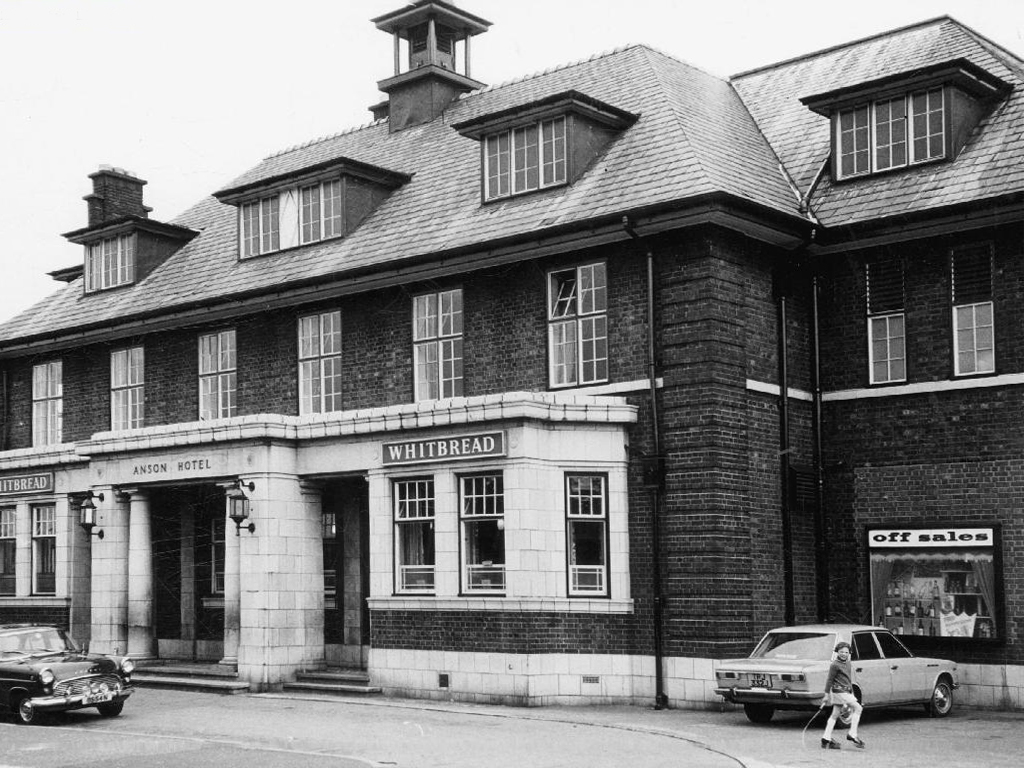
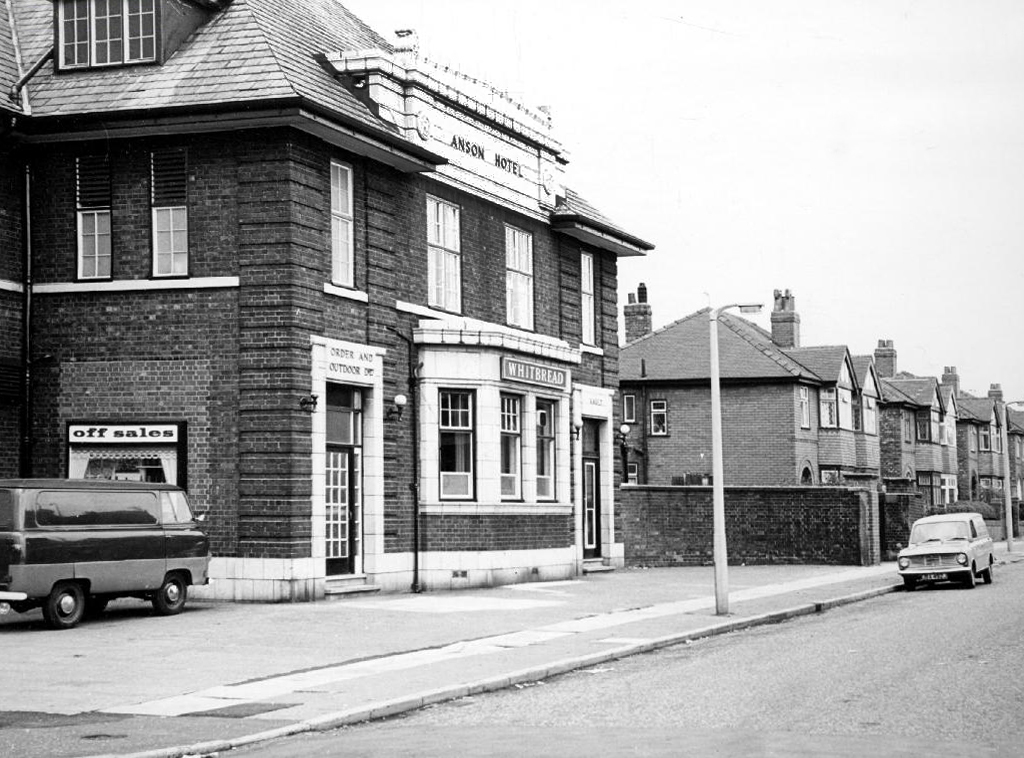
Safe home I searched the Manchester Local Image Collection, hoping to find some clues and/or images elucidating Beresford Road and the Anson in times gone by.

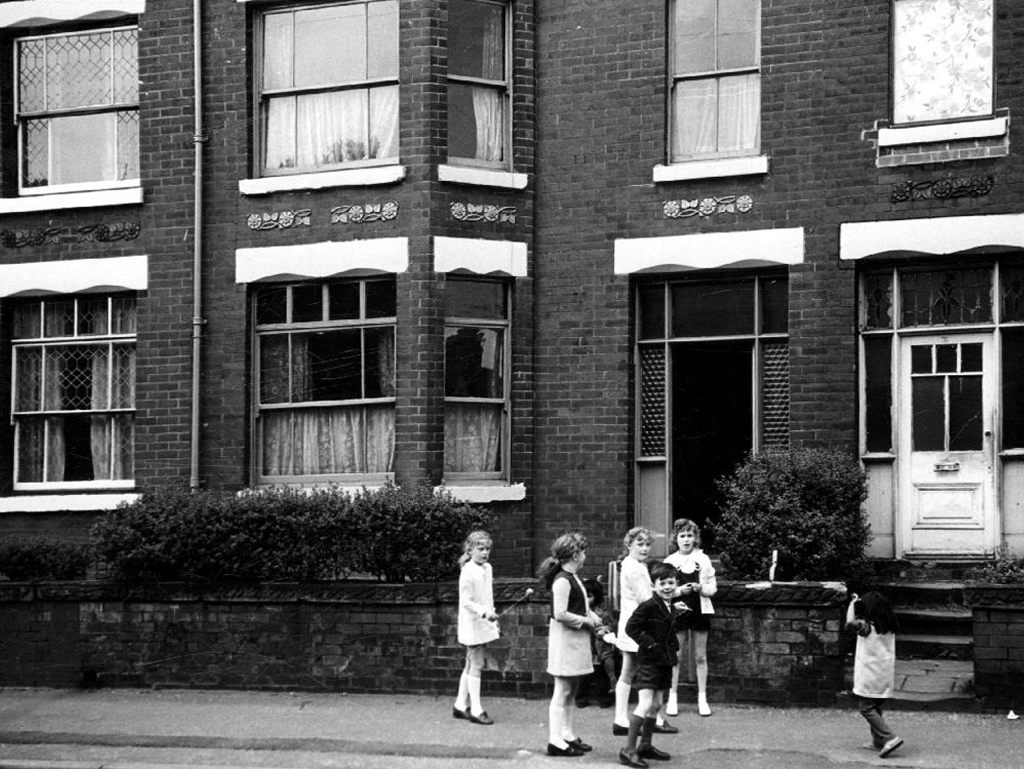
I found a typical inner Manchester suburban thoroughfare, a healthy mix of homes socially and privately owned, industry, independents shops, schools and such. Kids at play, passers-by passing by, captured in 1971 by the Council’s housing department photographers.

This was not a Golden Age – wasn’t the past much better, brighter, cheerier and cleaner reminiscence – simply a series of observations.

Things change.

Including the Anson Hotel.

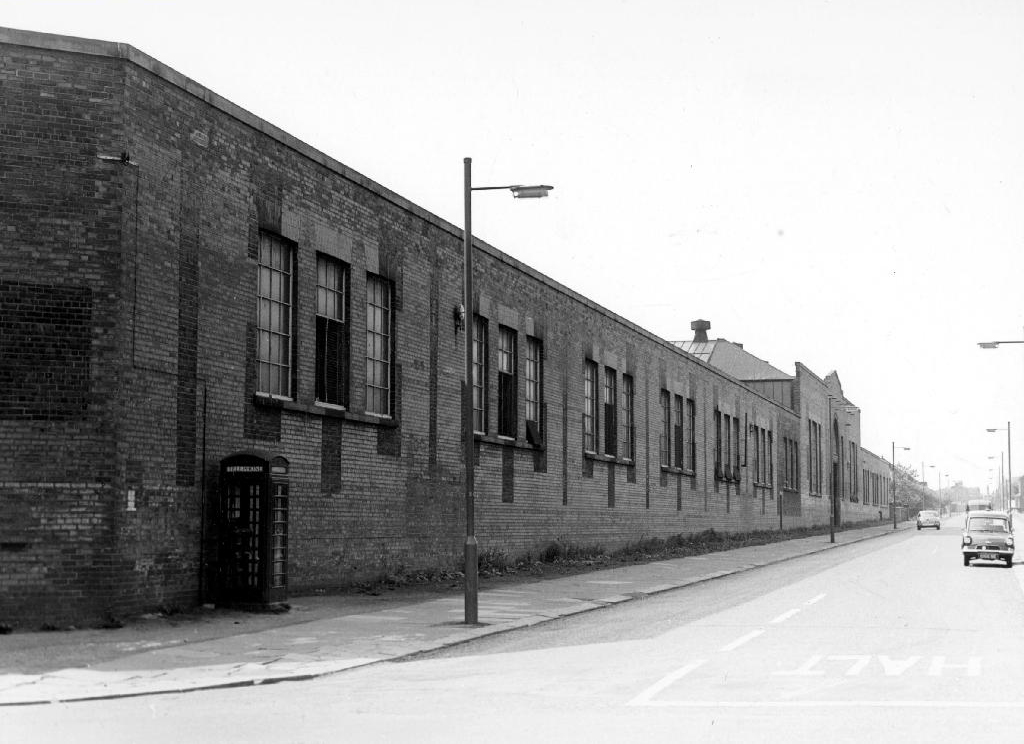
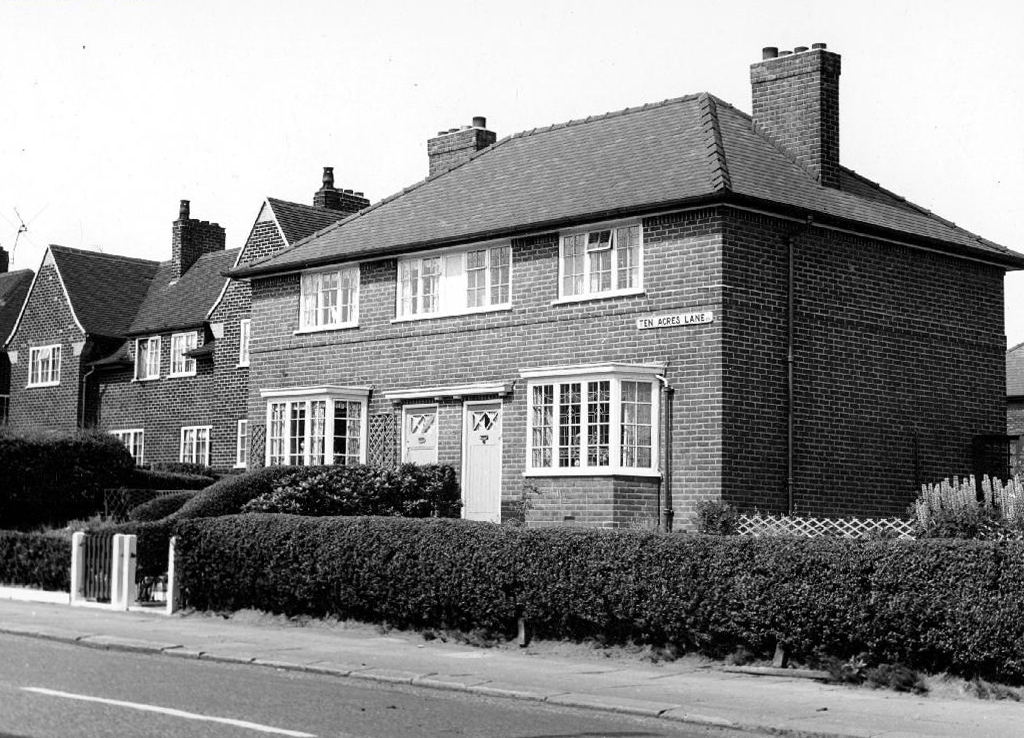
Ten Acres Lane – Manchester

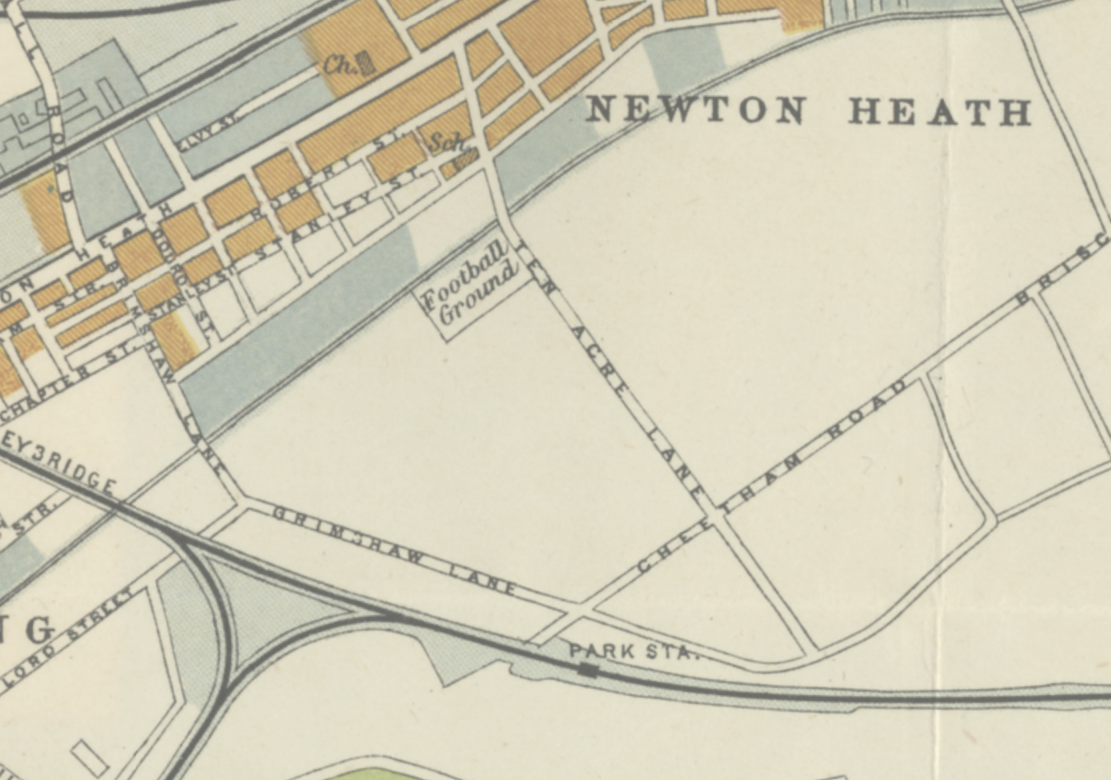
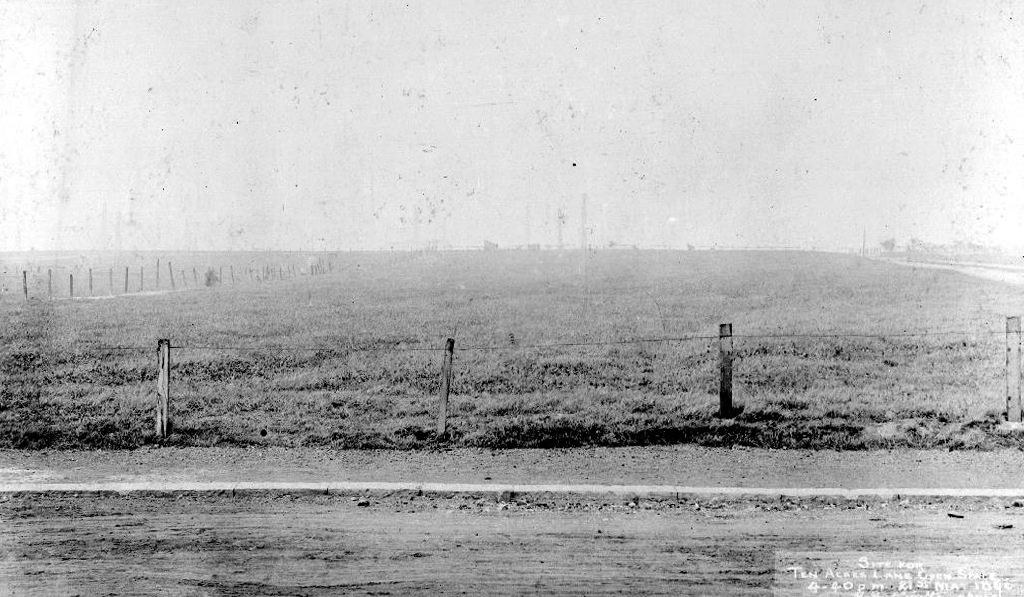
Ten Acres Lane 1904 running south from Oldham Road – not quite crossing under the Ashton and Stalybridge Railway.

I was propelled by the vague memory of an Ashton Lads football match way back in the 1970s – my dad Eddie Marland managed the team in the Moston and Rusholme League.

There was land given over to recreation from 1900, the area is famed for its links to the inception of Manchester United and almost but not quite became home to FC United.

The Recreation Grounds in 1900.

To the left of the inter-war housing in 1963.

So I took a trip back in time along the lane – courtesy of the Local Image Collection.
In 1896 the area was largely farmlan

Baguley Fold Farm – occupying land adjacent to the Medlock Valley.

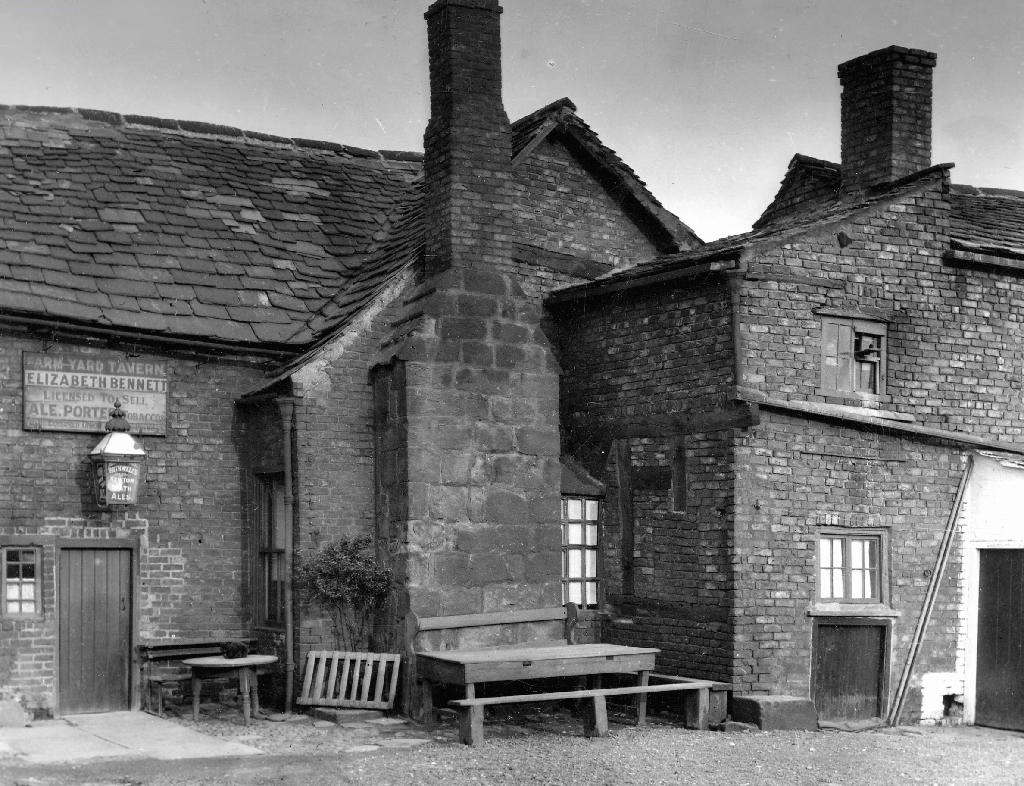
Farm Yard Tavern closed in 1917 a Rothwell’s pub supplied from Heath Brewery on Oldham Road.

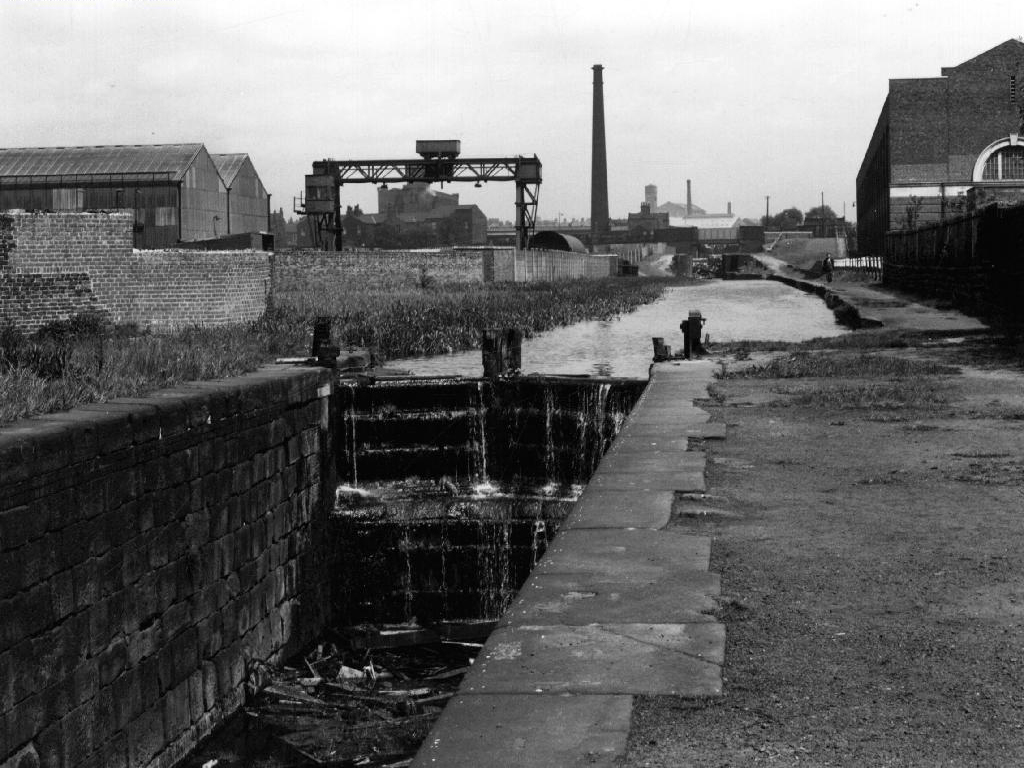
This was an area dominated by the Rochdale Canal and criss-crossed with rail links.

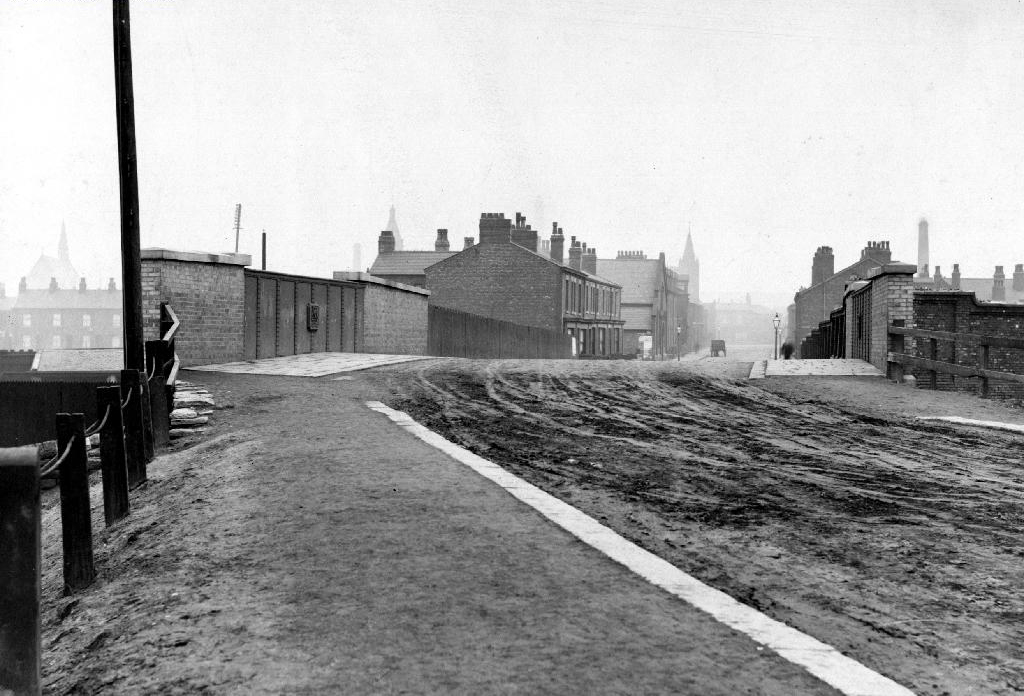
The canal bridge 1904.

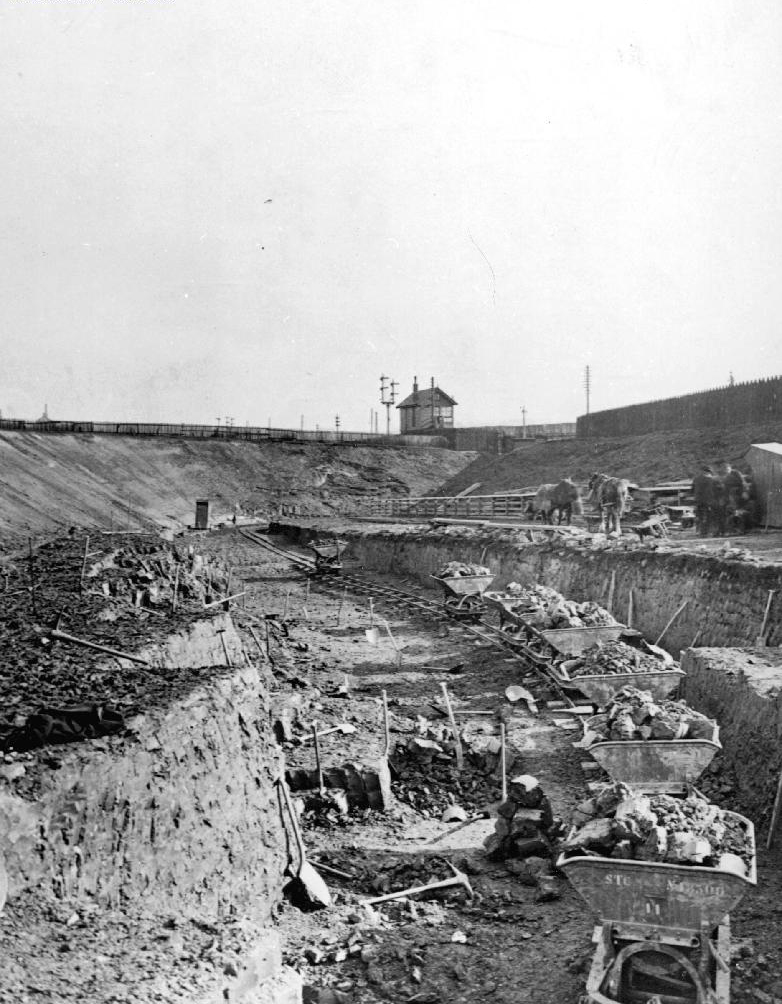
Construction work 1920.

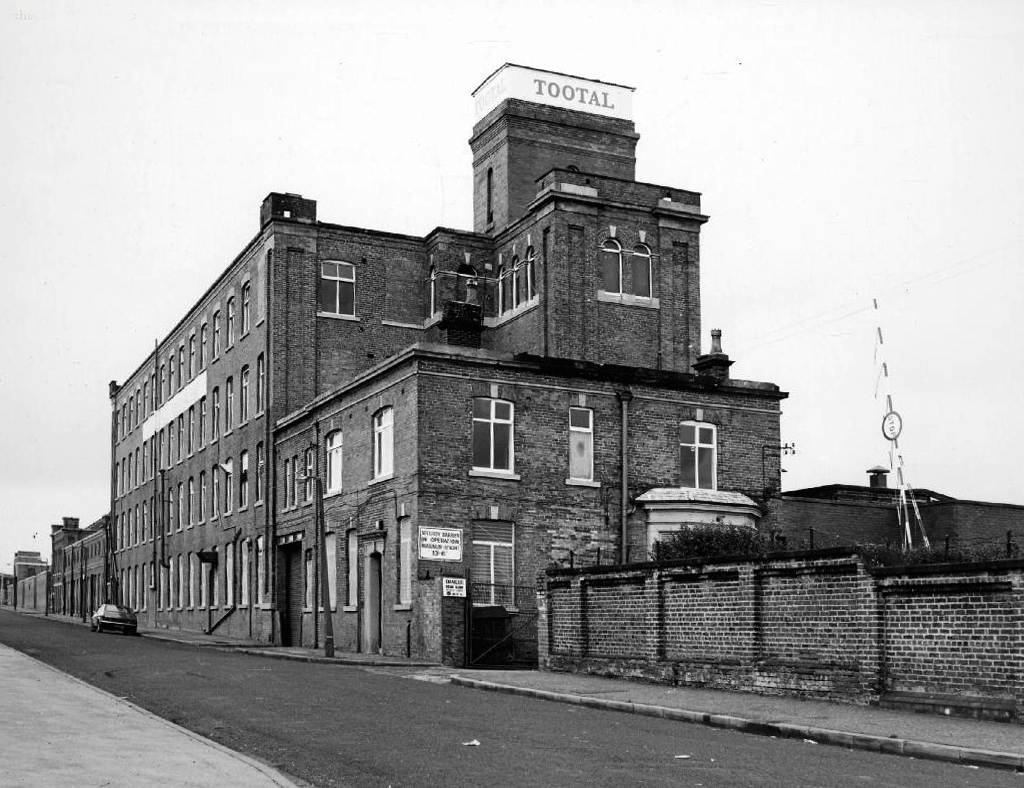
Tootal’s Mill.

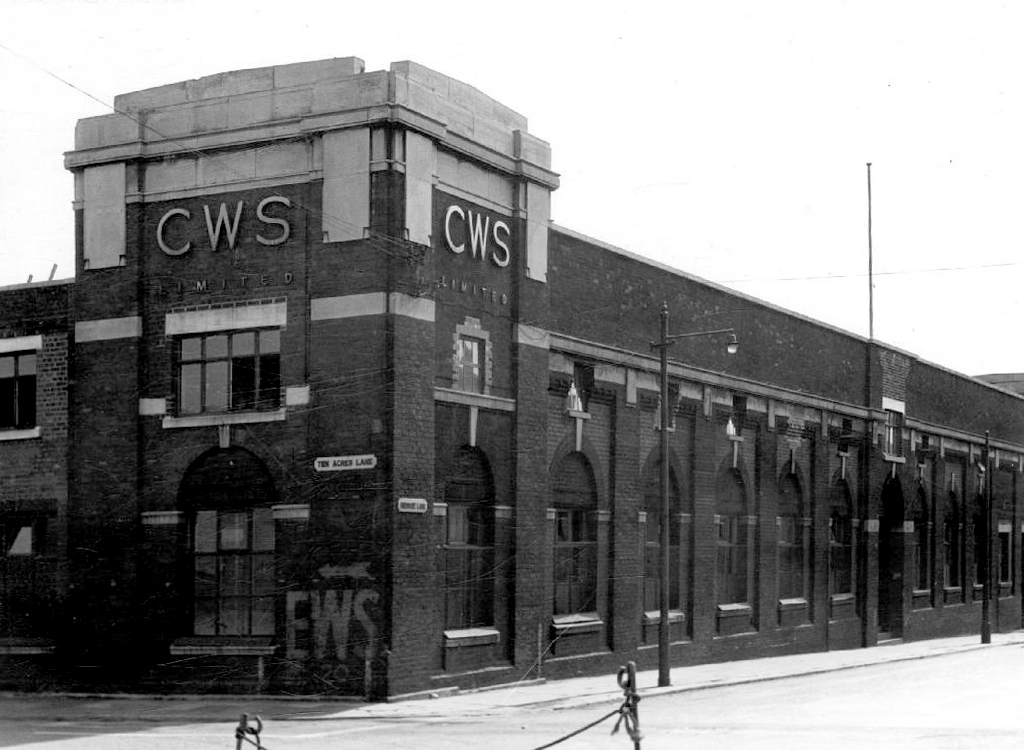
CWS warehouse and works corner of Briscoe Lane.

Mather And Platt’s adjoining the Rochdale Canal.

The area was also home to Jackson’s Brickworks.

There was a Co-op shop.

Going going gone St Paul’s Church seen here in 1972.

Victorian terraces and inter-war social housing – homes for a large industrial work force.

Many of the sights and sites above are still extant though their appearance and uses have changed along with the times. Manchester inevitably continues to from and reform for good or ill.

Sadly the old Rec the Moston and Rusholme League and my dad are all long gone – though it’s just as well to remember them all fondly, as we travel through our familiar unfamiliar city.

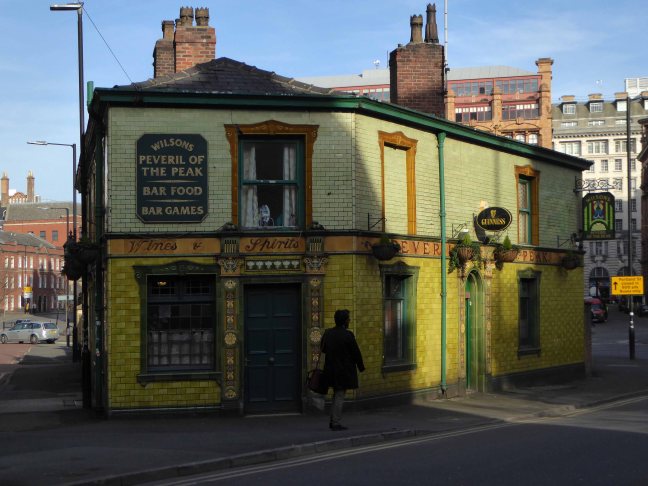
Peveril Of The Peak – Manchester

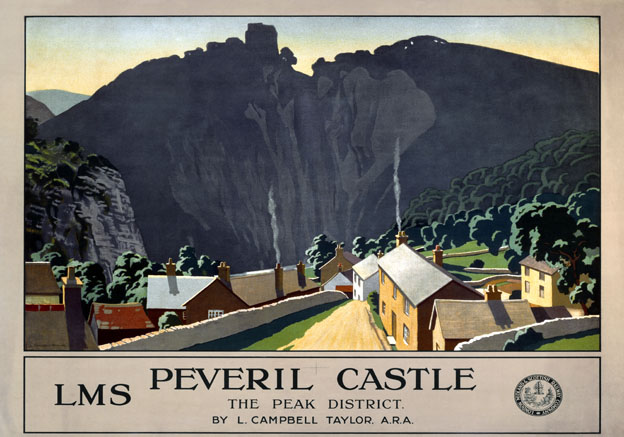
To begin at the beginning or thereabouts, Sir Walter Scott publishes his longest novel Peveril of the Peak in 1823.

Julian Peveril, a Cavalier, is in love with Alice Bridgenorth, a Roundhead’s daughter, but both he and his father are accused of involvement with the Popish Plot of 1678.

Most of the story takes place in Derbyshire, London, and on the Isle of Man. The title refers to Peveril Castle in Castleton, Derbyshire.
Poster produced in 1924 for London Midland & Scottish Railway – artwork by Leonard Campbell Taylor who was born in 1874 in Oxford and went to the Ruskin School of Art.
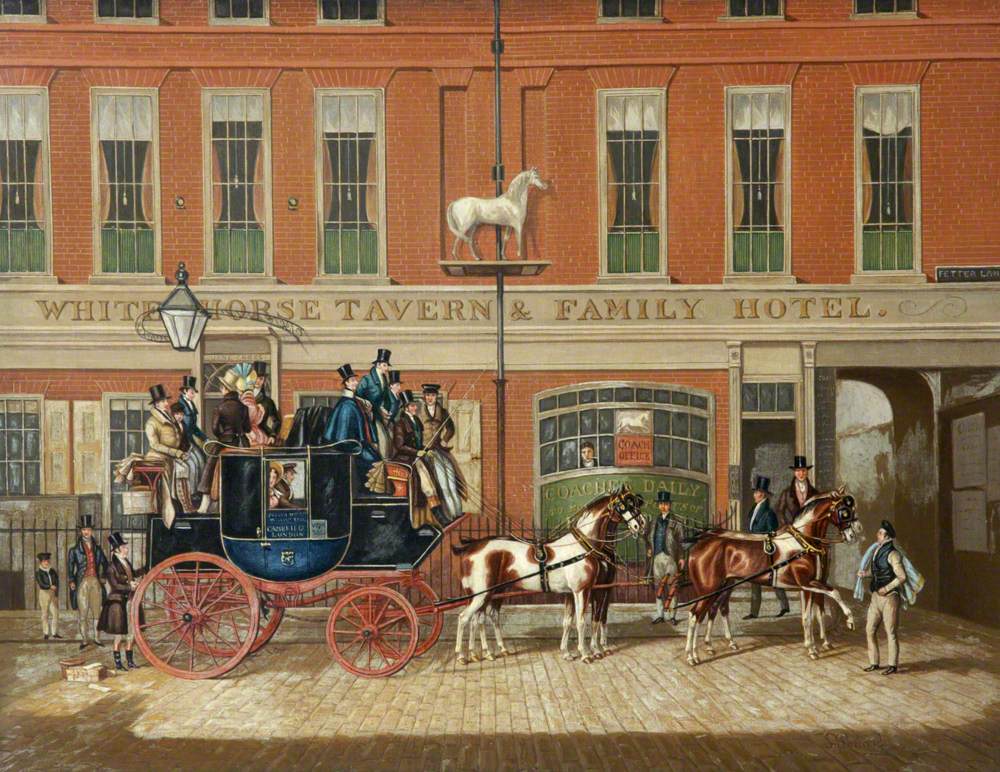
The pub also shares its name with the London to Manchester stagecoach.

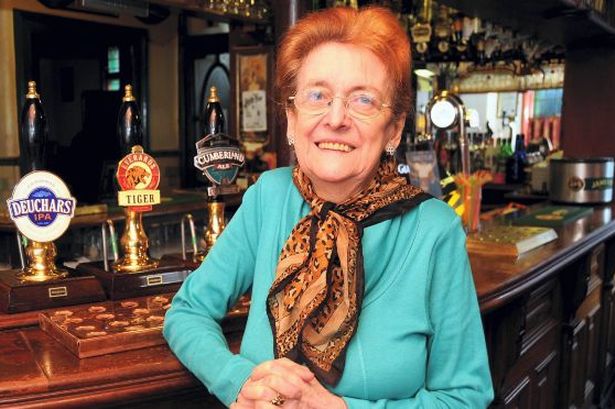
Which is all very well as the pub is largely known locals as The Pev – ably run since January 1971 by Nancy Swanick.

Nancy and son Maurice, who runs the cellar, also say they have shared the pub with a paranormal presence over the years.

Customers have seen pint glasses levitate off the bar and fall into the glass-wash, it’s like having our own ghostly helper!

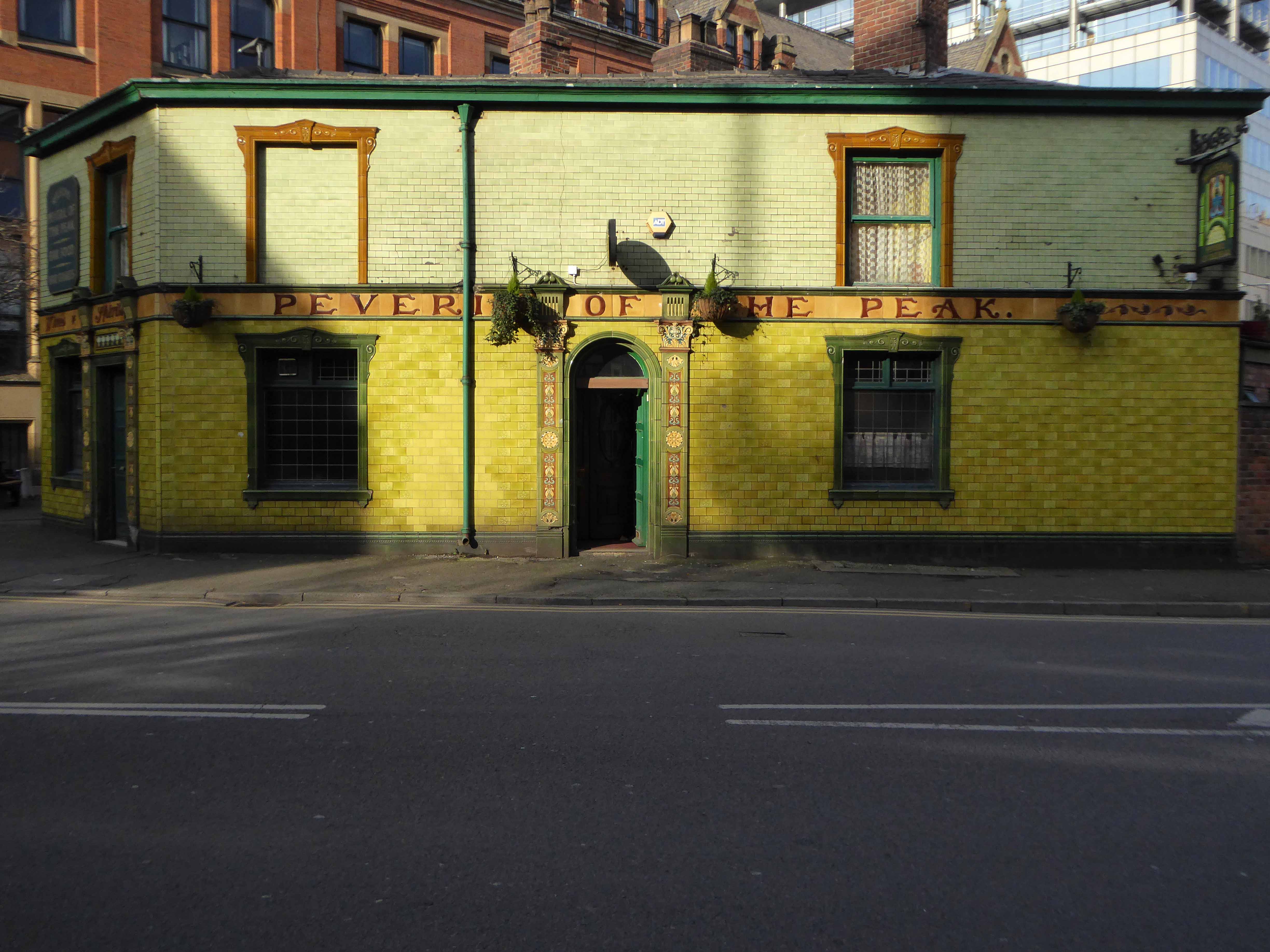
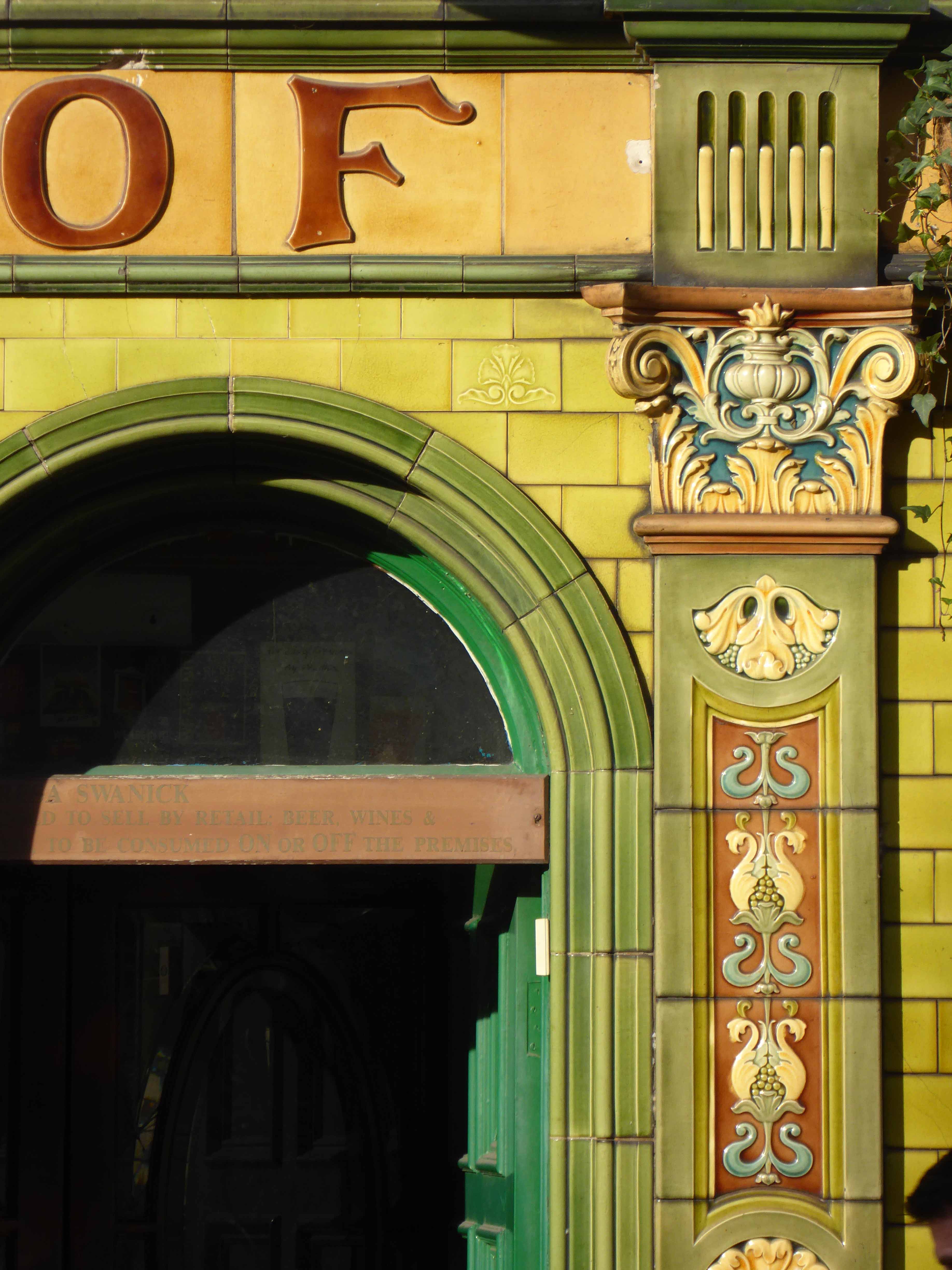
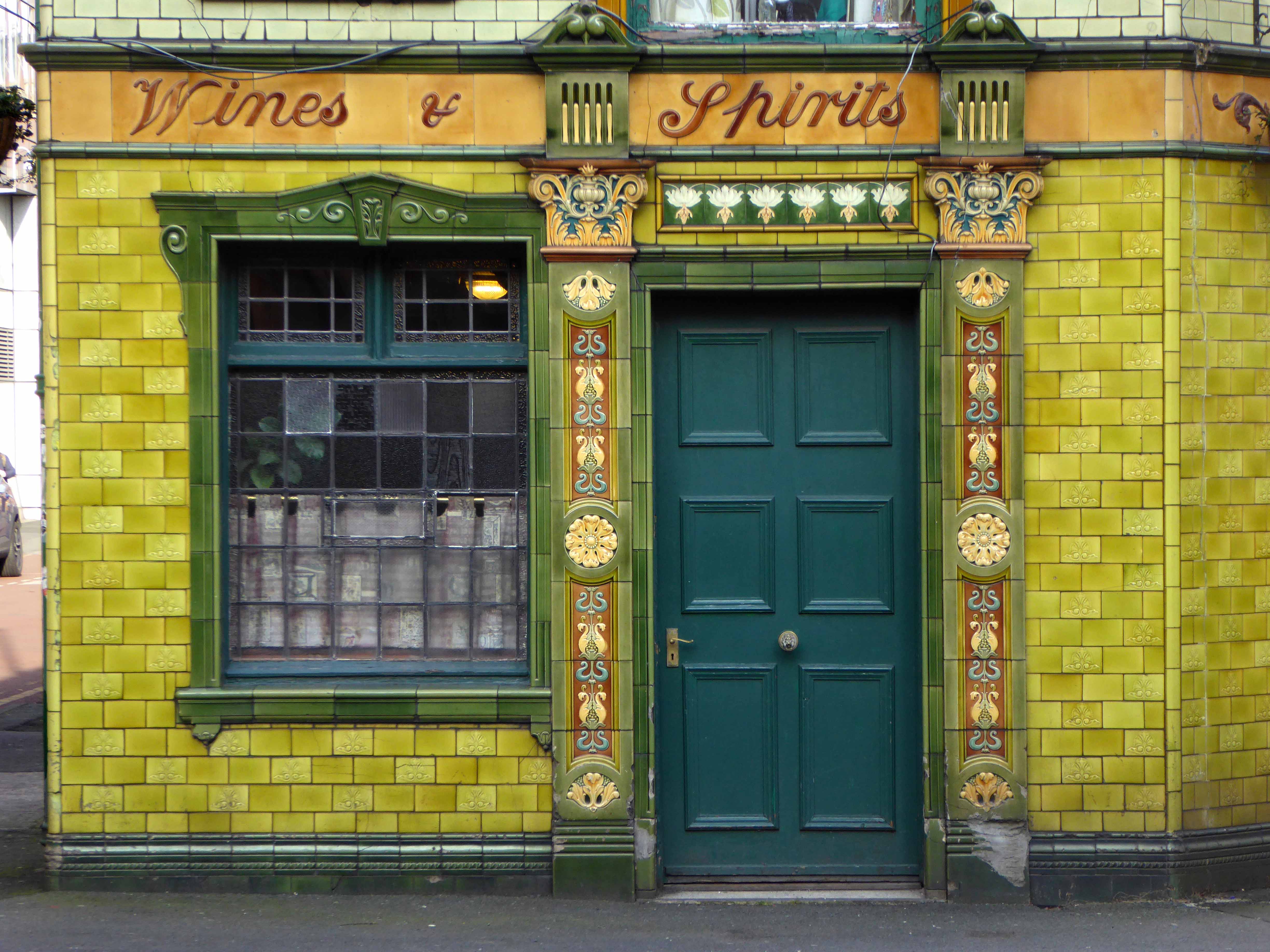
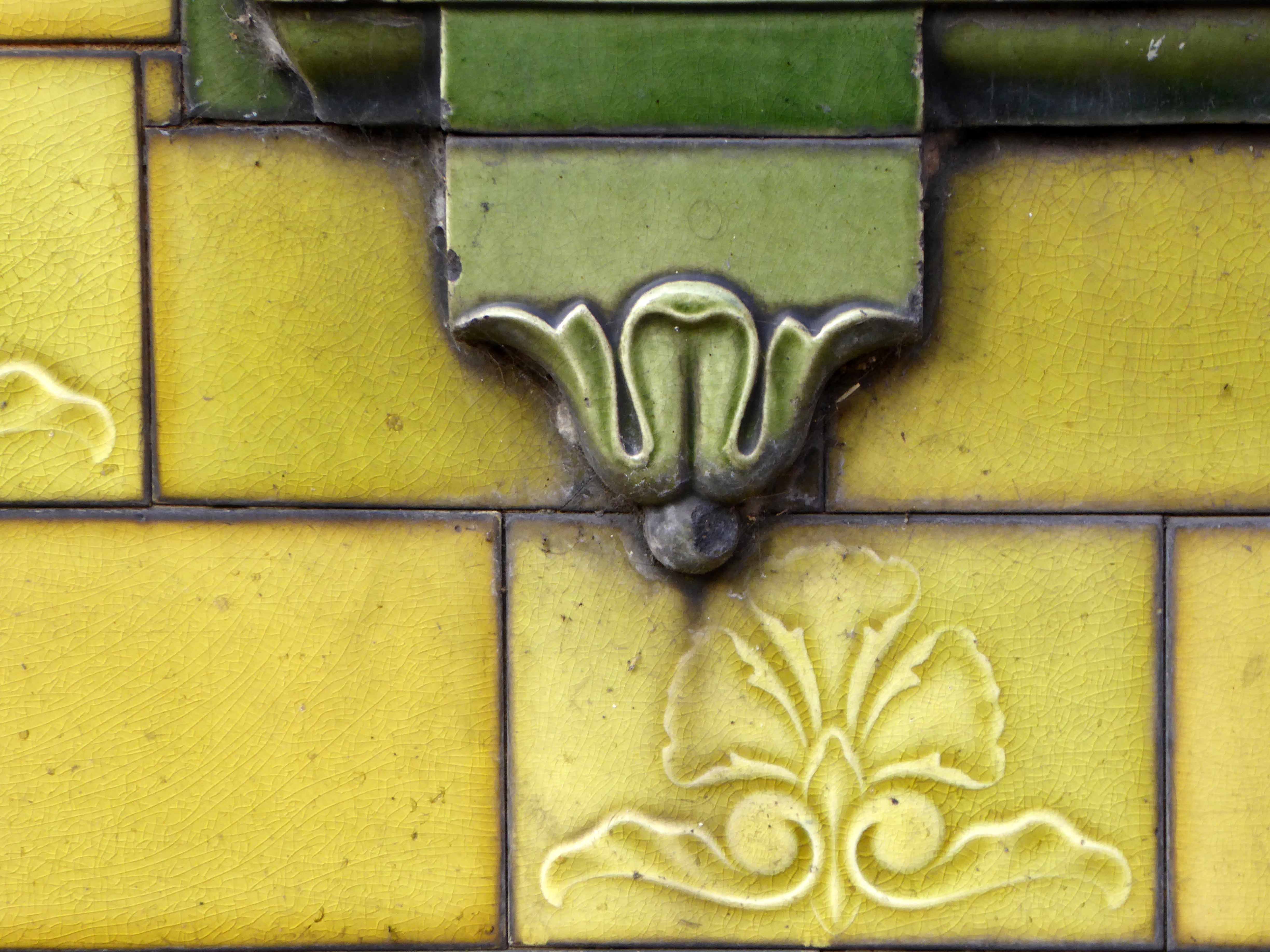
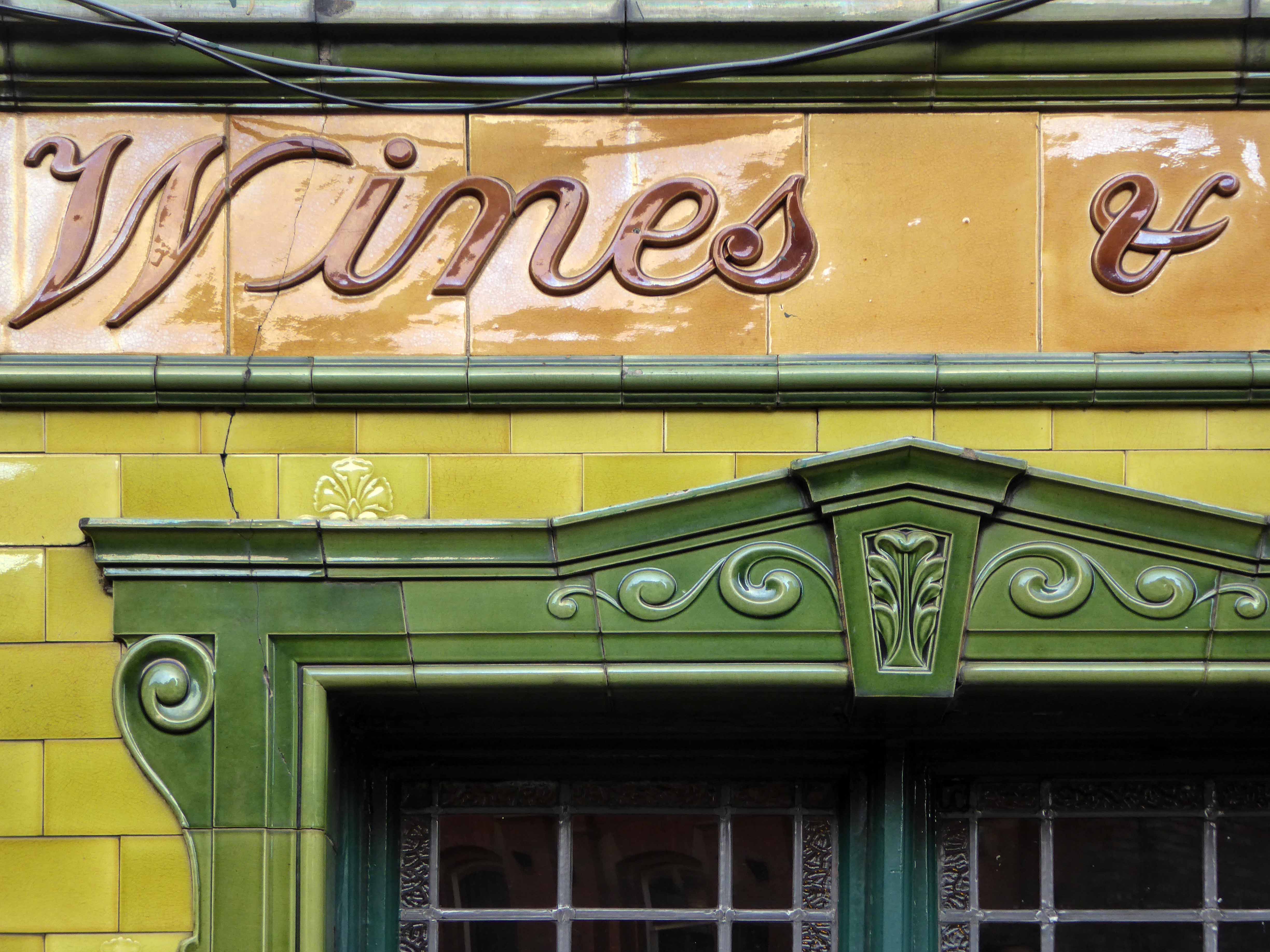
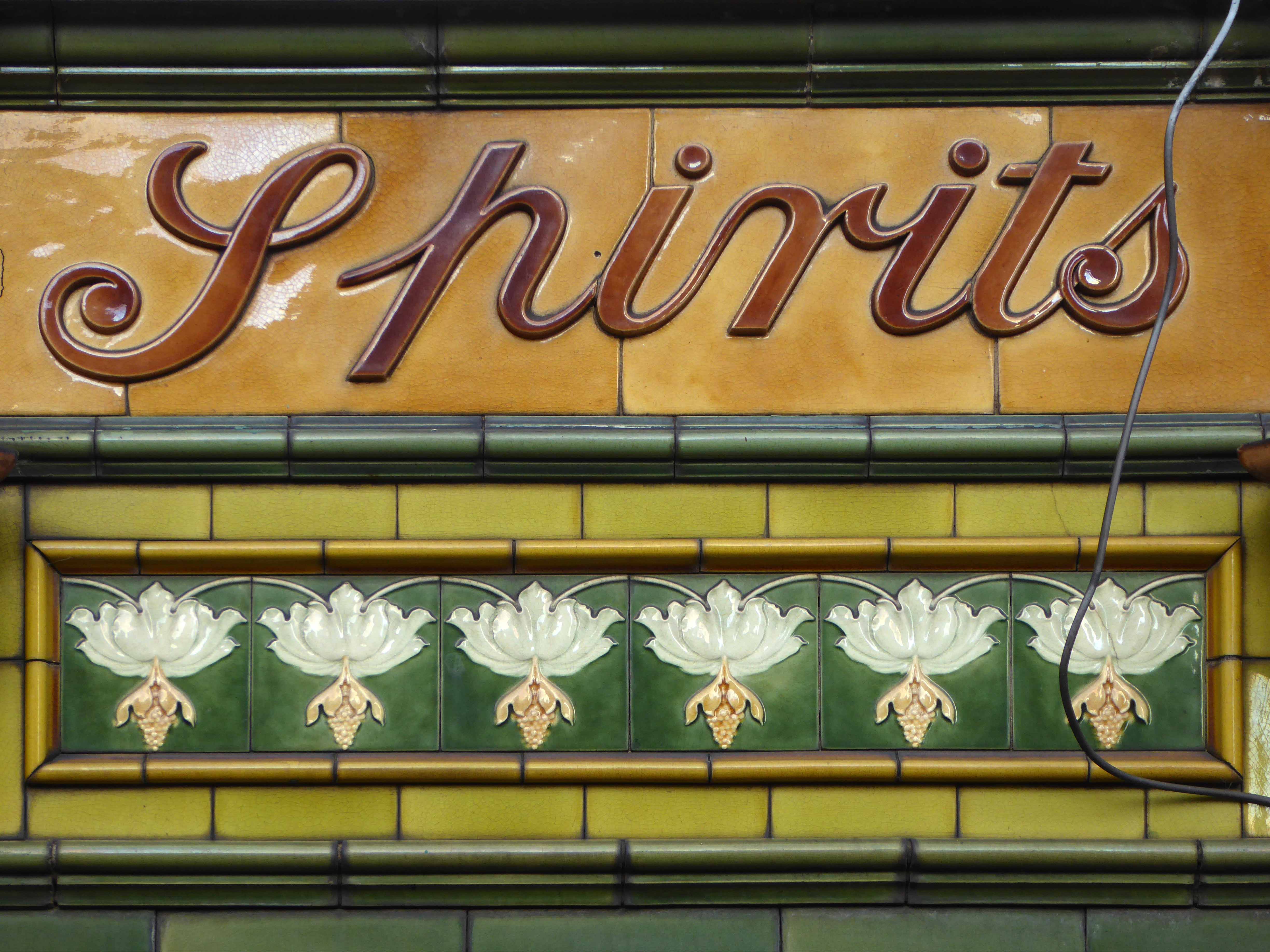
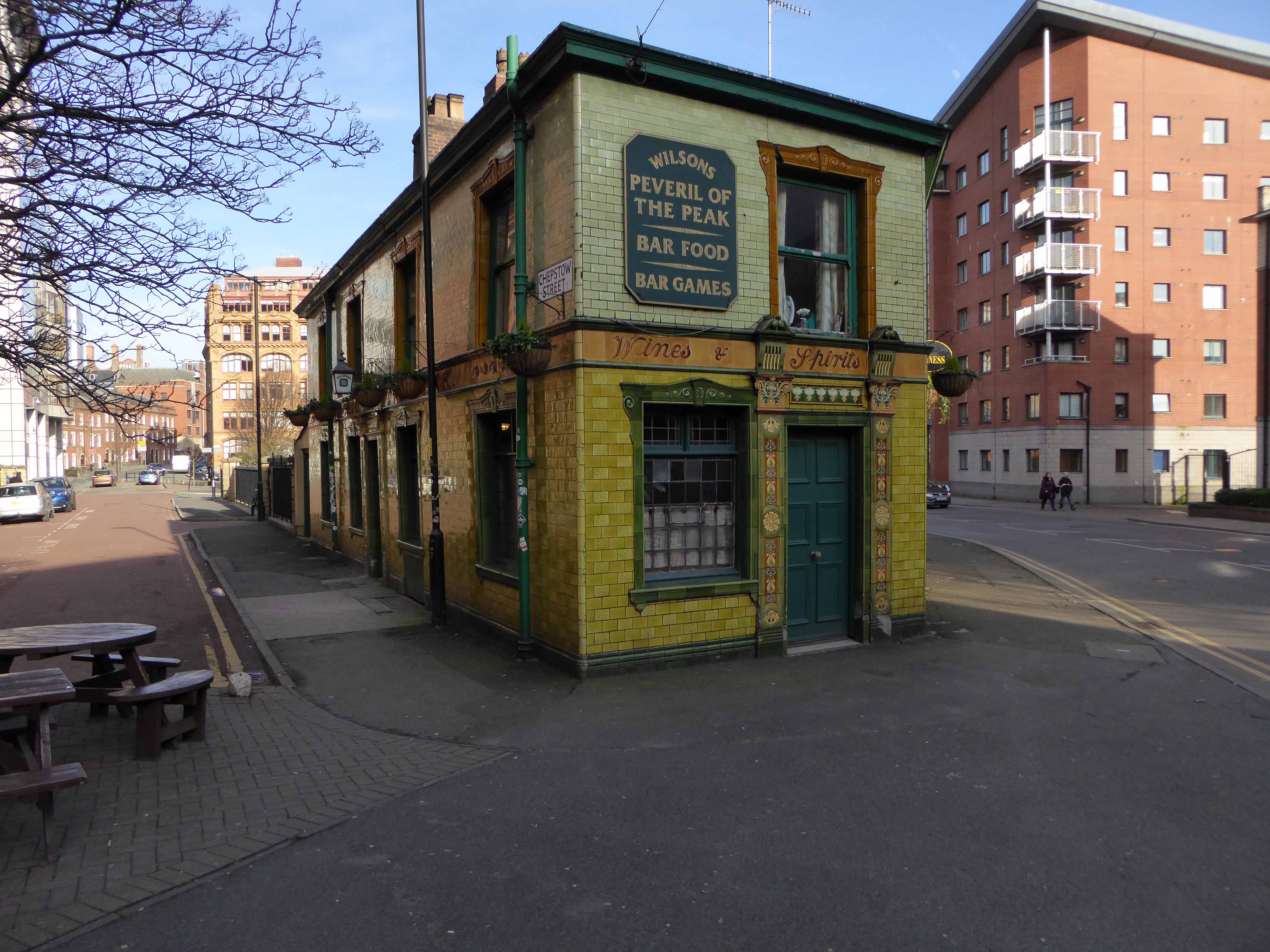
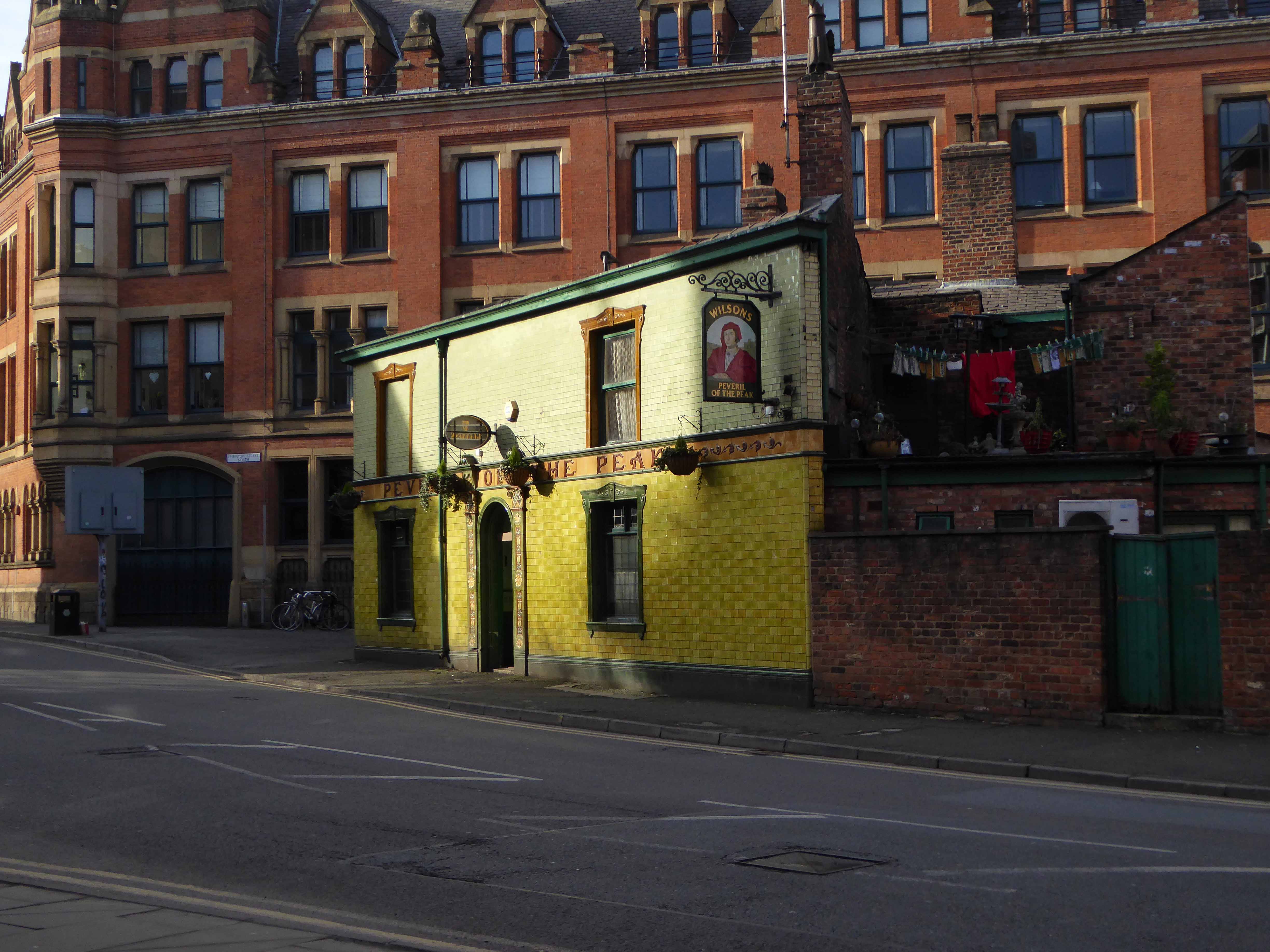
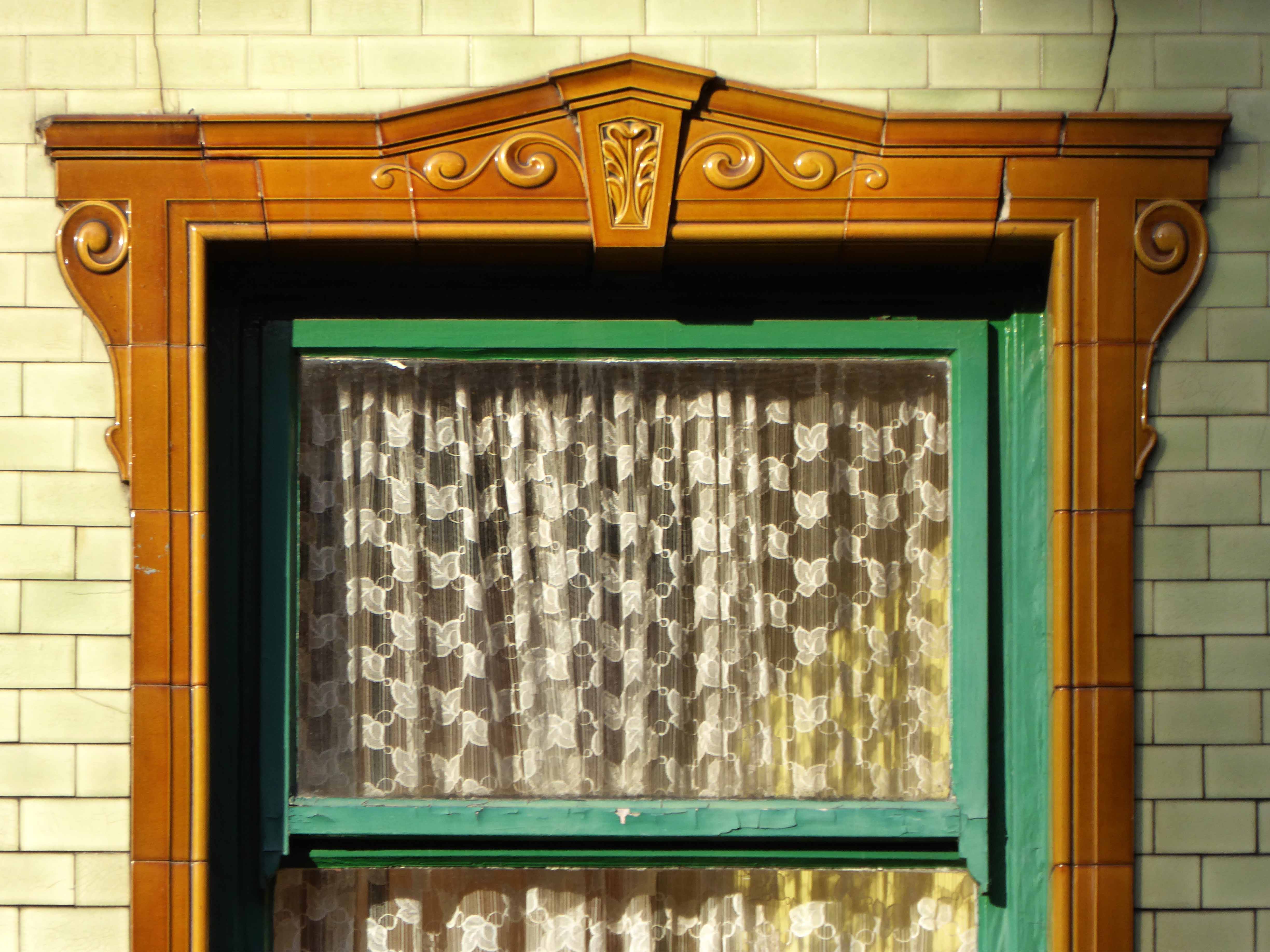
The pub was Grade II listed in June 1988 – a fine tiled exterior and 1920’s interior refit largely untouched, it stands distinctly unattached to anything, decidedly somewhere betwixt and between Chepstow Street and Great Bridgwater Street.

Originally a Wilson’s house – the brewery lantern survives over the door.

I’ve taken a drink or two in here over the past thirty or so years, played pool and table football, watched the half time Hallé musicians swish in and out for a swifty.

A little island of green in a sea of grey.

Pop in for one if you’re passing

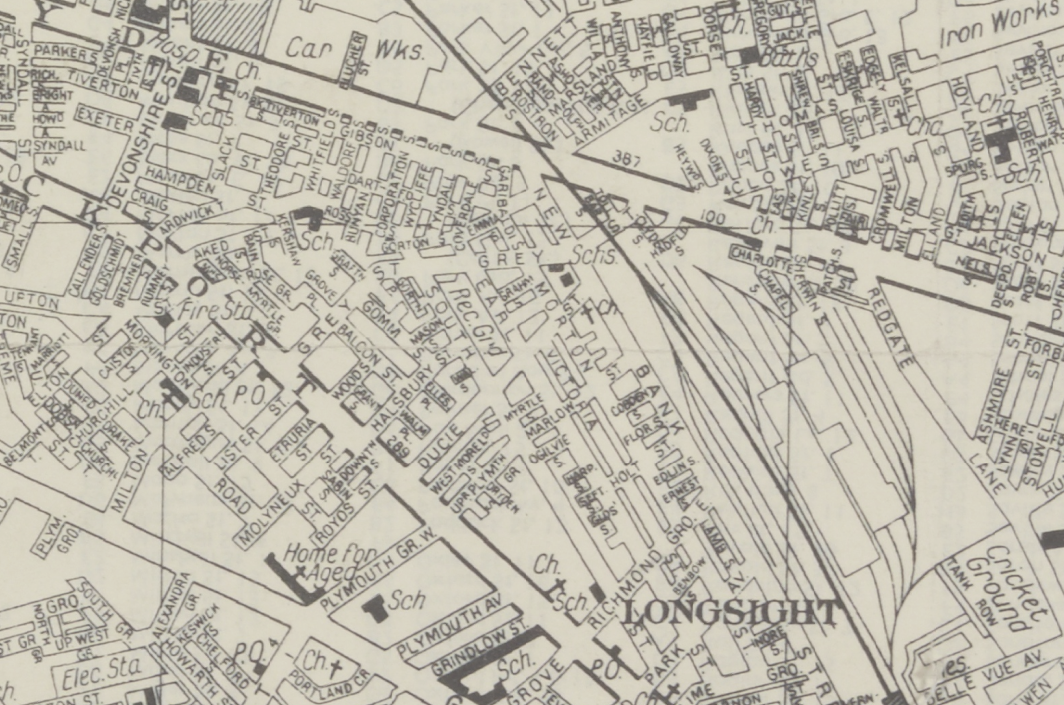
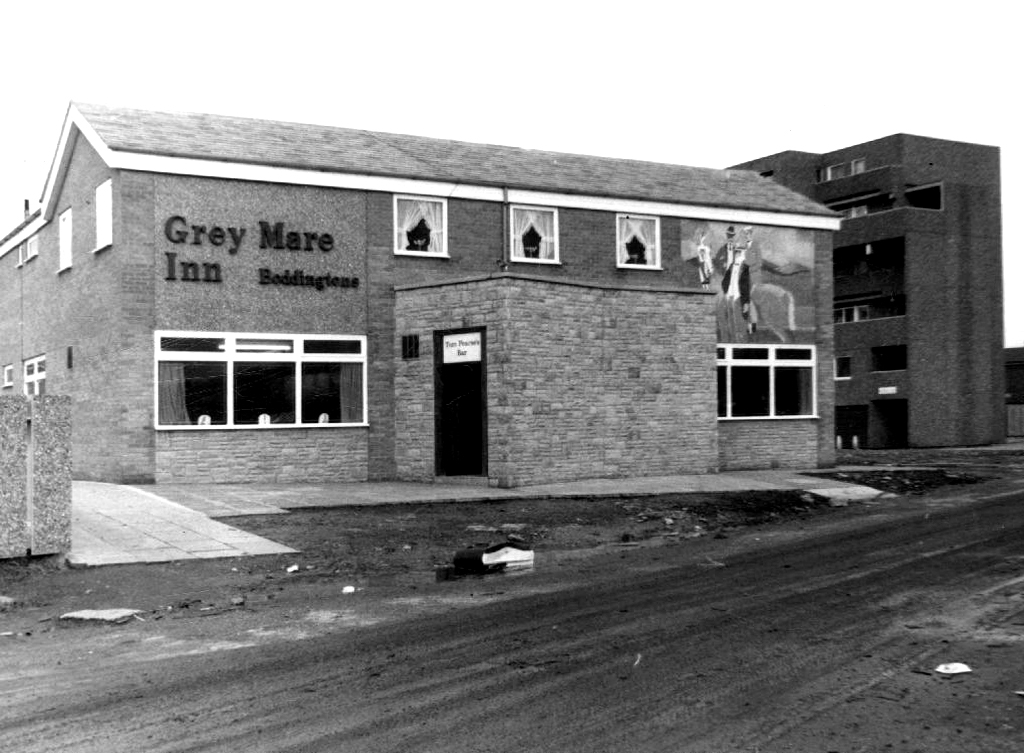
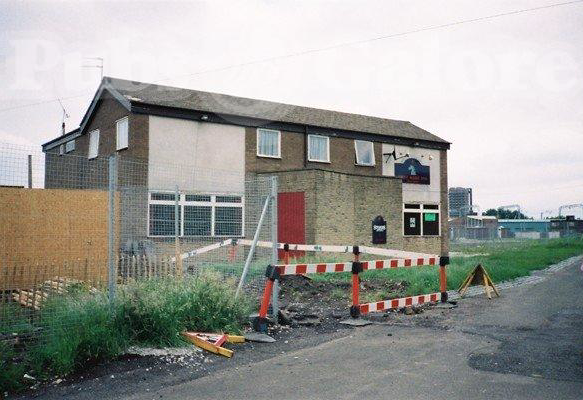
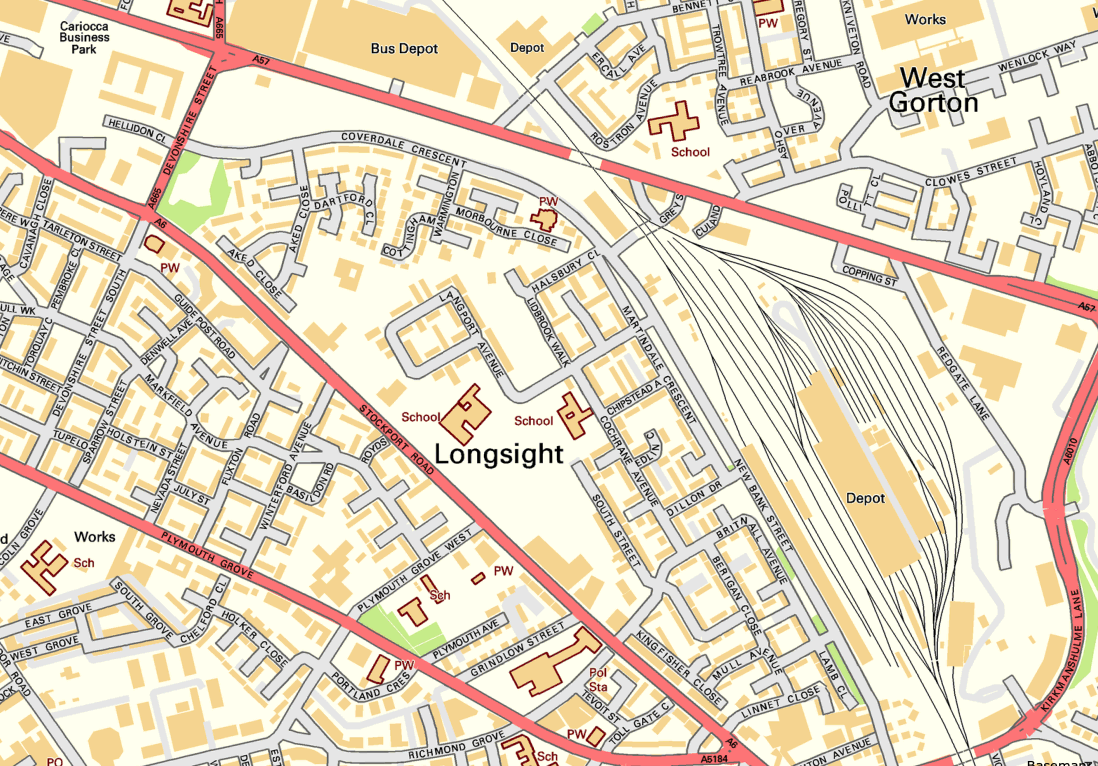
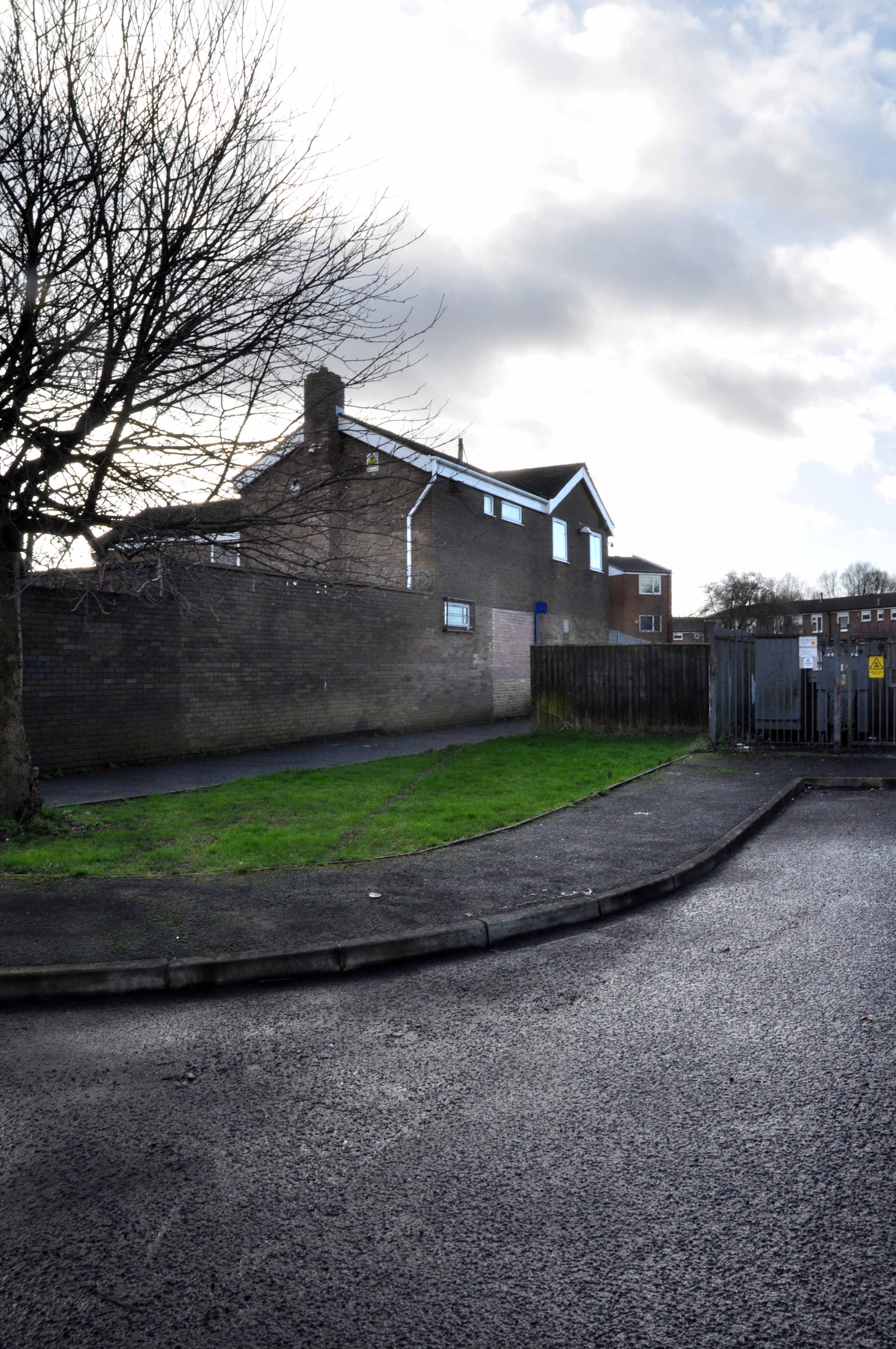
Grey Mare – Longsight

Exeter Close/Warmington Drive Manchester Longsight M12 4AT

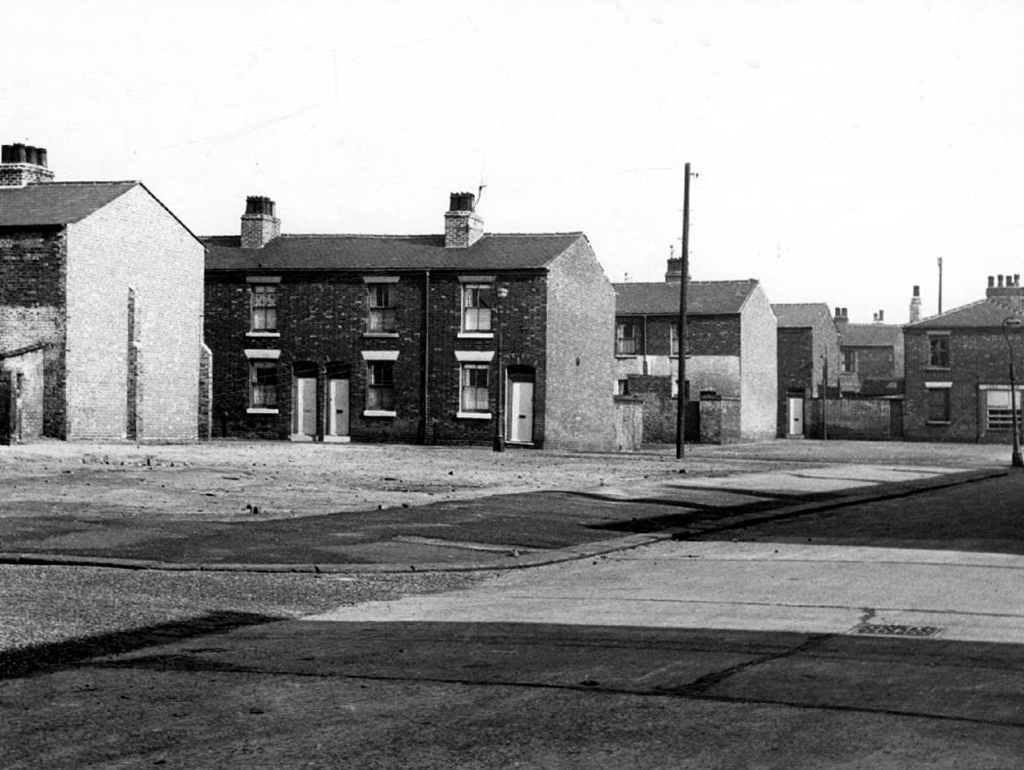
Once there was this.

Once there was that.

Then there wasn’t.

That’s just the way of it.

Screenshot 2018-11-12 at 12.57.23.png

A dense web of streets awash with back to backs, jobs for all – in conditions perceived to be unfit for purpose.

Of a total of 201,627 present dwellings in Manchester, some 54,700, or 27.1 per cent., are estimated to be unfit. A comparison of slum clearance action taken by six major local authorities, Manchester, Leeds, Birmingham, Liverpool, Sheffield and Bristol, shows that for the five years ending 30th June, 1965, Manchester was top of the league, both in compulsory purchase orders confirmed and the number of houses demolished or closed.

Manchester’s figures -13,151 houses demolished or closed .

Alfred Morris MP Hansard
webmedia-6.php

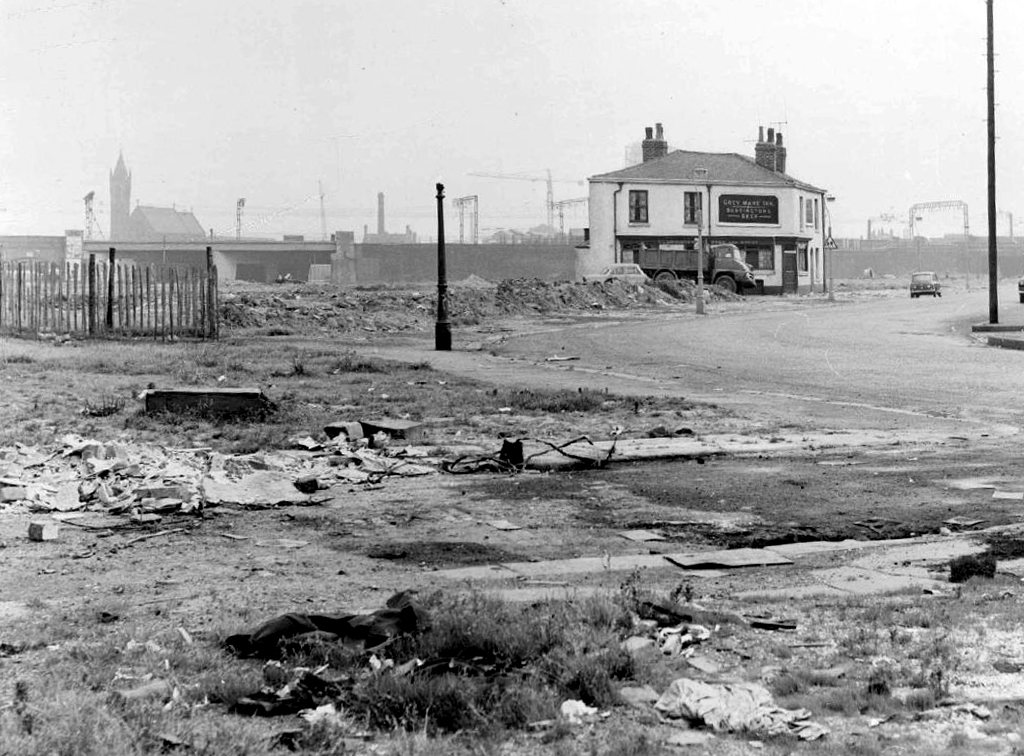
Along came a wrecking ball and left the pub bereft

webmedia-3.php

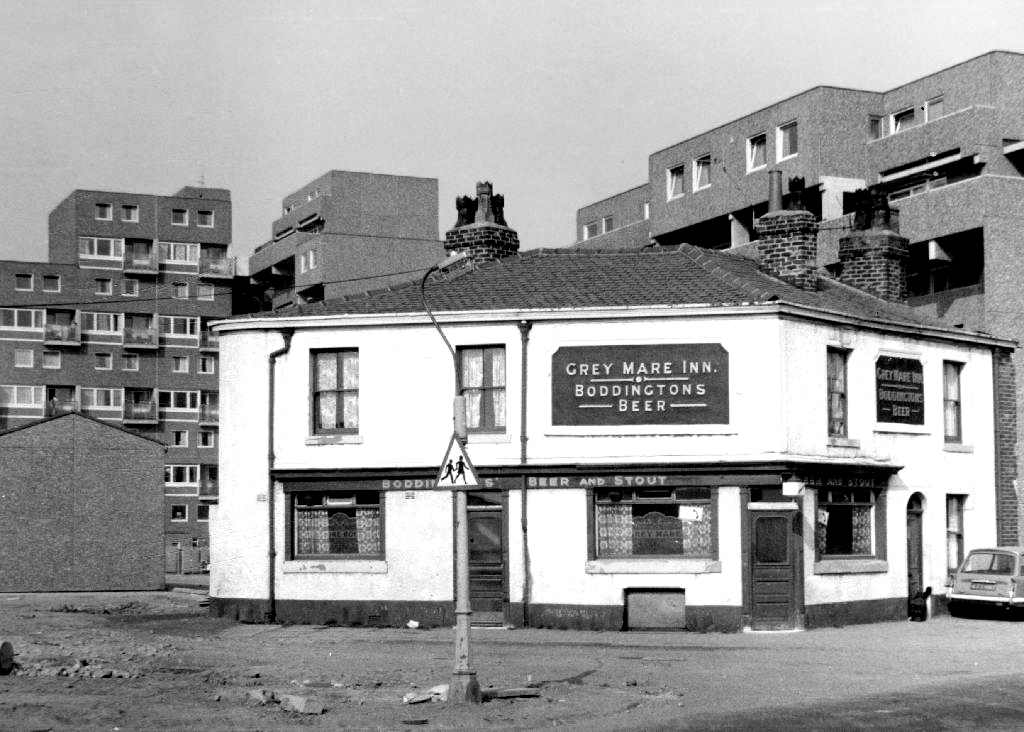
The original Grey Mare on Grey Street

Whenever mass slum clearance was carried out, the pubs tended to remain, often for just a short time  because – the story goes – demolition workers refused to touch them, as they wanted somewhere to drink during and after their shift.

webmedia.php

Then along came the cavalry – the bold boys from Fort Ardwick – Coverdale Crescent Estate

webmedia-1.php

A new dawn – and a new pub.

This vision of municipal modernity was short lived, the estate was demolished in the 1980s and the new Coverdale Estate was constructed on the site in 1994.

Screenshot 2018-11-12 at 13.30.46

Image – Pubs Galore

Built in 1972 the pub outlived the system built blocks that surrounded it.

Screenshot 2018-11-12 at 12.57.53

Another new gold dream, another day.

DSC_0066

Despite the high hopes embodied by the low rise rebuilding of the new estate.

The Grey Mare shuts its doors – forever.

DSC_0039

DSC_0040


DSC_0042

DSC_0043

DSC_0044

DSC_0046

DSC_0047

DSC_0048

DSC_0049

DSC_0050

DSC_0051

DSC_0053

DSC_0054

DSC_0056

DSC_0057

DSC_0058

DSC_0059

DSC_0061

DSC_0062

DSC_0063


Type Travel – Manchester

This is a journey through time and space by bicycle, around the rugged, ragged streets of East Manchester.

Undertaken on Sunday September 2nd 2018.

This is type travel – the search for words and their meanings in an ever changing world.

map

Hyde Road

P1280955
P1280956

The Star Inn – former Wilsons pub

Devonshire Street North

P1280961

Former Ardwick Cemetery

P1280962

Great Universal Stores former mail order giant

Palmerston Street

P1280979

The River Inn abandoned pub

Every Street

P1290001

All Souls Church – listed yet unloved

Pollard Street East

P1290008.jpg
Screen Shot 2018-09-04 at 08.37.57

The Bank Of England abandoned pub

P1290020

Ancoats Works former engineering company

Cambrian Street

P1290024.jpg

The Lunchbox Café Holt Town

Upper Helena Street

P1290028

The last remnants of industrial activity

Bradford Road

P1290046

Brunswick Mill

P1290048

The little that remains of Raffles Mill

P1290052

Old Mill Street

P1290054

Ancoats Dispensary loved listed and still awaiting resuscitation

P1290056.jpg

New life New Islington

Redhill Street

P1290057

Former industrial powerhouse currently contemporary living space

Henry Street

P1290063

King George VI and Queen Elizabeth passed by in 1942

Jersey Street

P1290064

Former School the stone plaque applied to a newer building

Gun Street

P1290065

The last of the few Blossom Motors

Addington Street

P1290067
P1290069

Former fruit merchants – refurbished and home to the SLG creative agency

Marshall Street and Goulden Street area

P1290070
P1290071
P1290073
P1290081
P1290086
P1290087

The last remnants of the rag trade

Former bed spring manufacturer – latterly became the County Archive.

Sudell Street

P1290089
P1290090

All that’s left of Alexandra Place

P1290092

Entrance to the former Goods Yard

Back St Georges Road

P1290096

Sharp Street

P1290099
P1290100

Simpson Street

P1290101

Where once the CWS loomed large

Charter Street

P1290102
P1290107

Ragged but right

Aspin Lane

P1290109
P1290117

Angel Meadow 

Corporation Street

P1290118

Palmerston Street – Beswick Manchester

To begin at the beginning – some years ago I traced the route of the River Medlock, I chanced upon a forlorn pub called The River, all alone, desolate and boarded up, presiding over an area that I assumed, would once have supplied ample trade to a busy boozer.

I returned last week in search of some rhyme or reason, for such a seemingly sad and untimely decline.

So here we are back at in Manchester 1813, the seeds of the Industrial Revolution sewn in adjacent Ancoats, the fields of Beswick still sewn with seeds, the trace of Palmerston Street nought but a rural track.

Screen Shot 2018-08-07 at 15.25.02

Sited on land between Great Ancoats Street and Every Street was Ancoats Hall, a post-medieval country house built in 1609 by Oswald Mosley, a member of the family who were Lords of the Manor of Manchester. The old timber-framed hall, built in the early 17th century, and demolished in the 1820s was replaced replaced by a brick building in the early neo-Gothic style.

1-P1100618

This would become the Manchester Art Museum, and here the worst excesses Victorian Capitalism were moderated by philanthropy and social reform.

When the Art Museum opened, its rooms, variously dedicated to painting, sculpture, architecture and domestic arts, together attempted to provide a chronological narrative of art, with detailed notes, labels and accompanying pamphlets and, not infrequently, personal guidance, all underlining a sense of historical development.

m08910-ancoats-old-hall-manchester-archives-photo-by-anderton

Housing and industry in the area begins to expand, railways, tramways, homes and roads are clearly defined around the winds of the river.

1870

In 1918 the museum was taken over by the city, it closed in 1953 and its contents were absorbed into the collection of Manchester City Art Gallery, as the State increasingly took responsibility for the cultural well being of the common folk.

ancoatshall-1964

The building was finally demolished in the 1960’s – just as the area, by now a dense warren of back to back terraces, was to see further change.

map

Along the way was the the River Inn, seen here with a fine Groves and Whitnall’s faience tiled frontage.

webmedia-4.php

The street also offered rest, relaxation and refreshment through the Church, Pineapple and Palmerston pubs, as recored here on the Pubs of Manchester blog.

Church Palmerston

Pineapple Palmerston St

webmedia.php copy

The River seen here in the 1970’s struggled on until 2007.

webmedia-2

Further along we find the Ardwick Lads Club, further evidence of the forces of social reform, that sadly failed to survive the forces of the free market and the consequent Tory cuts in public spending and wilful Council land-banking.

The Ardwick Lads’ and Mens’ Club, now the Ardwick Youth Centre, opened in 1897 and is believed to be Britain’s oldest purpose-built youth club still in use [and was until earlier in 2012]. Designed by architects W & G Higginbottom, the club, when opened, featured a large gymnasium with viewing gallery – where the 1933 All England Amateur Gymnastics Championships were held – three fives courts, a billiard room and two skittle alleys (later converted to shooting galleries). Boxing, cycling, cricket, swimming and badminton were also organised. At its peak between the two world wars, Ardwick was the Manchester area’s largest club, with 2,000 members.

44551888

On the 10th September 2012 an application for prior notification of proposed demolition was submitted on behalf of Manchester City Council to Manchester Planning, for the demolition of Ardwick Lads’ Club  of 100 Palmerston Street , citing that there was “no use” for the building in respect to its historic place within the community as providing a refuge and sporting provision to the young of Ancoats.

At the top turn of the street stood St Mary’s – the so called Lowry church.

marys

Screen Shot 2018-08-03 at 14.43.17

Used as a location for the film adaptation of Stan Barstow’s A Kind Of Loving

st mary's

nr003658-54_1

The homes and industry attendant schools and pubs were soon to become history, all that you see here is more or less gone. Slum clearance, the post-war will to move communities away from the dense factory smoke, poor housing stock and towards a bright shiny future elsewhere.

Whole histories have subsequently been subsumed beneath the encroachment of buddleia, bramble, birch and willow.

hillkirk

Screen Shot 2018-08-03 at 14.44.39

webmedia-3.php

webmedia-1.php

webmedia-2.php

webmedia-6.php

webmedia-7.php

webmedia.php

The land now stands largely unused and overgrown, awaiting who knows what, but that’s another tale for another day.

Archive images from the Manchester Local Image Collection.