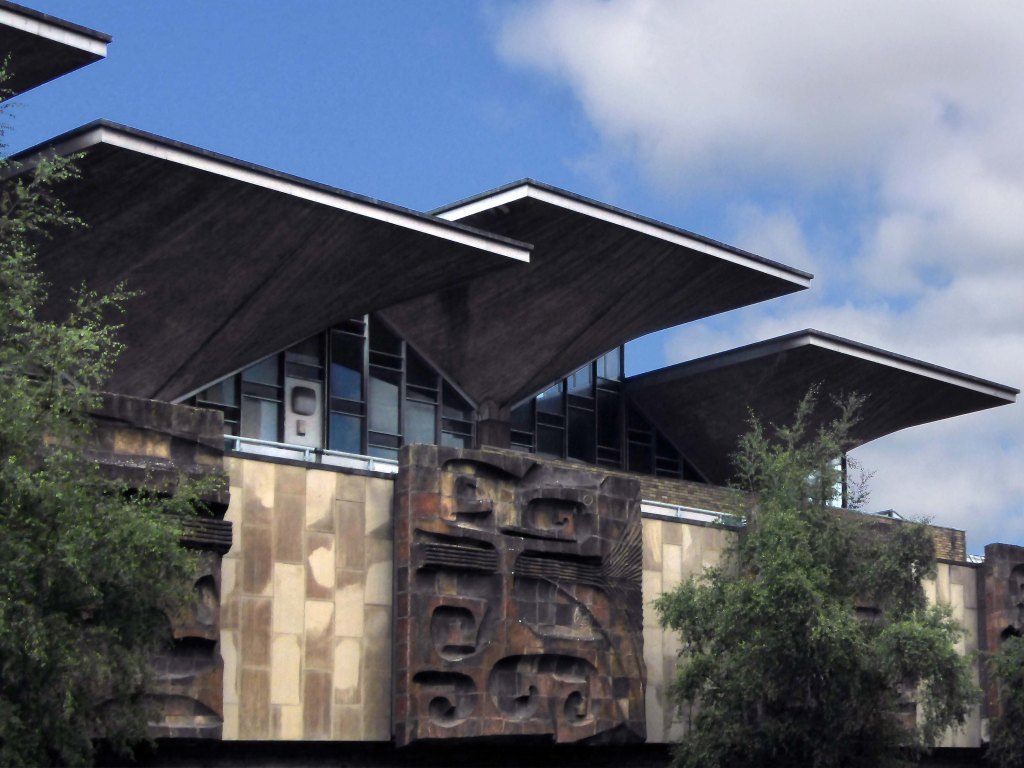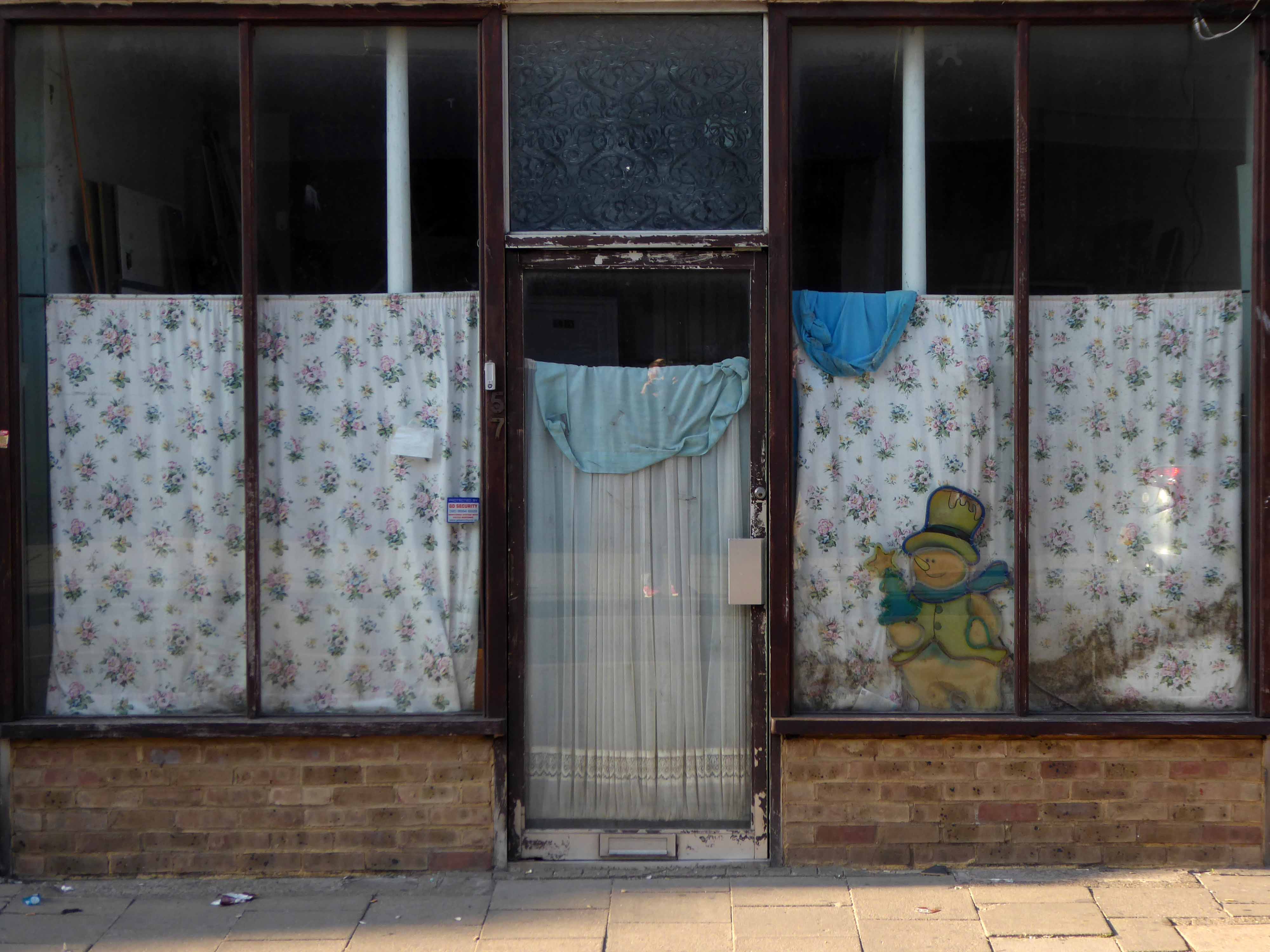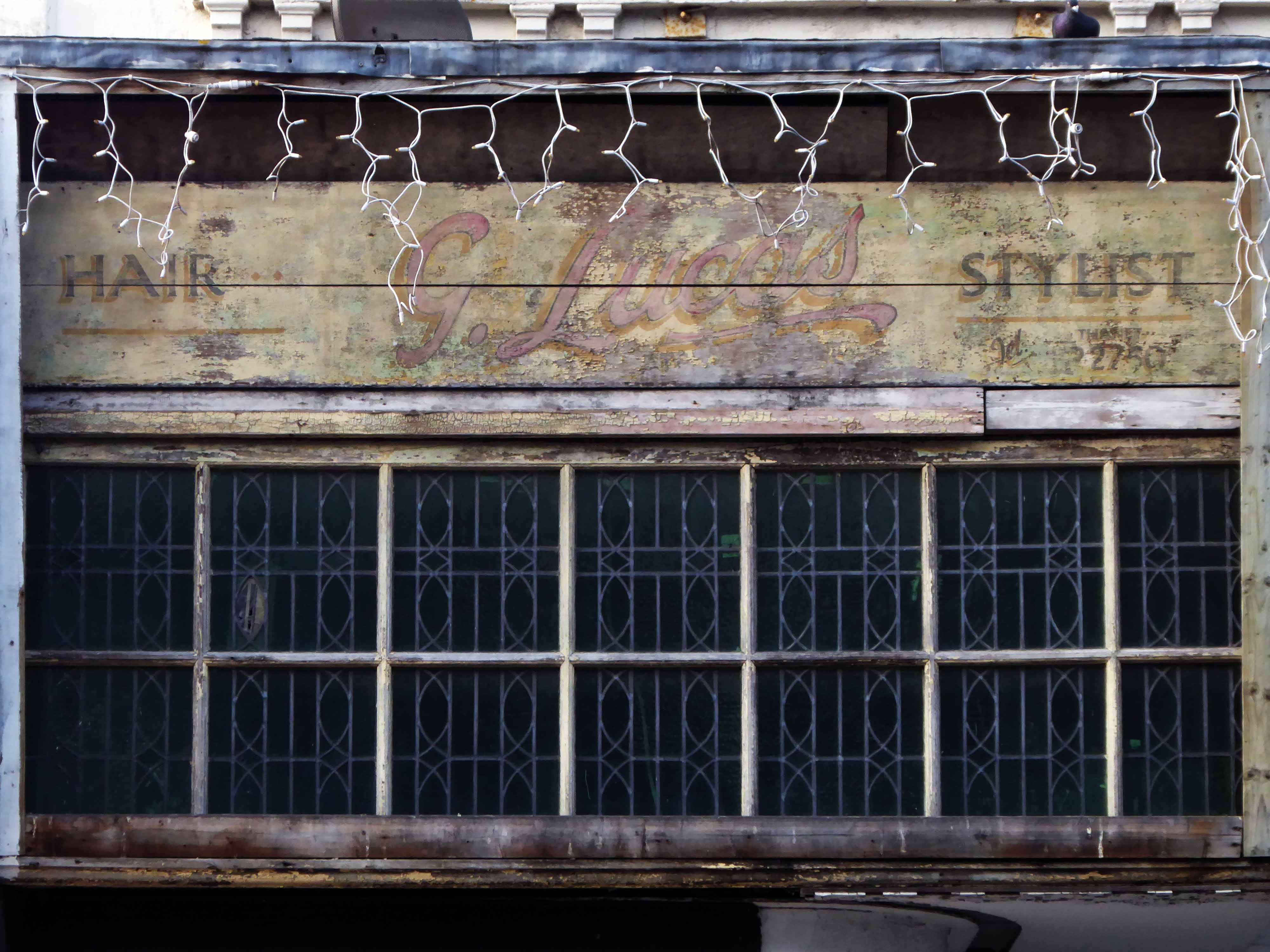
Deal To Margate

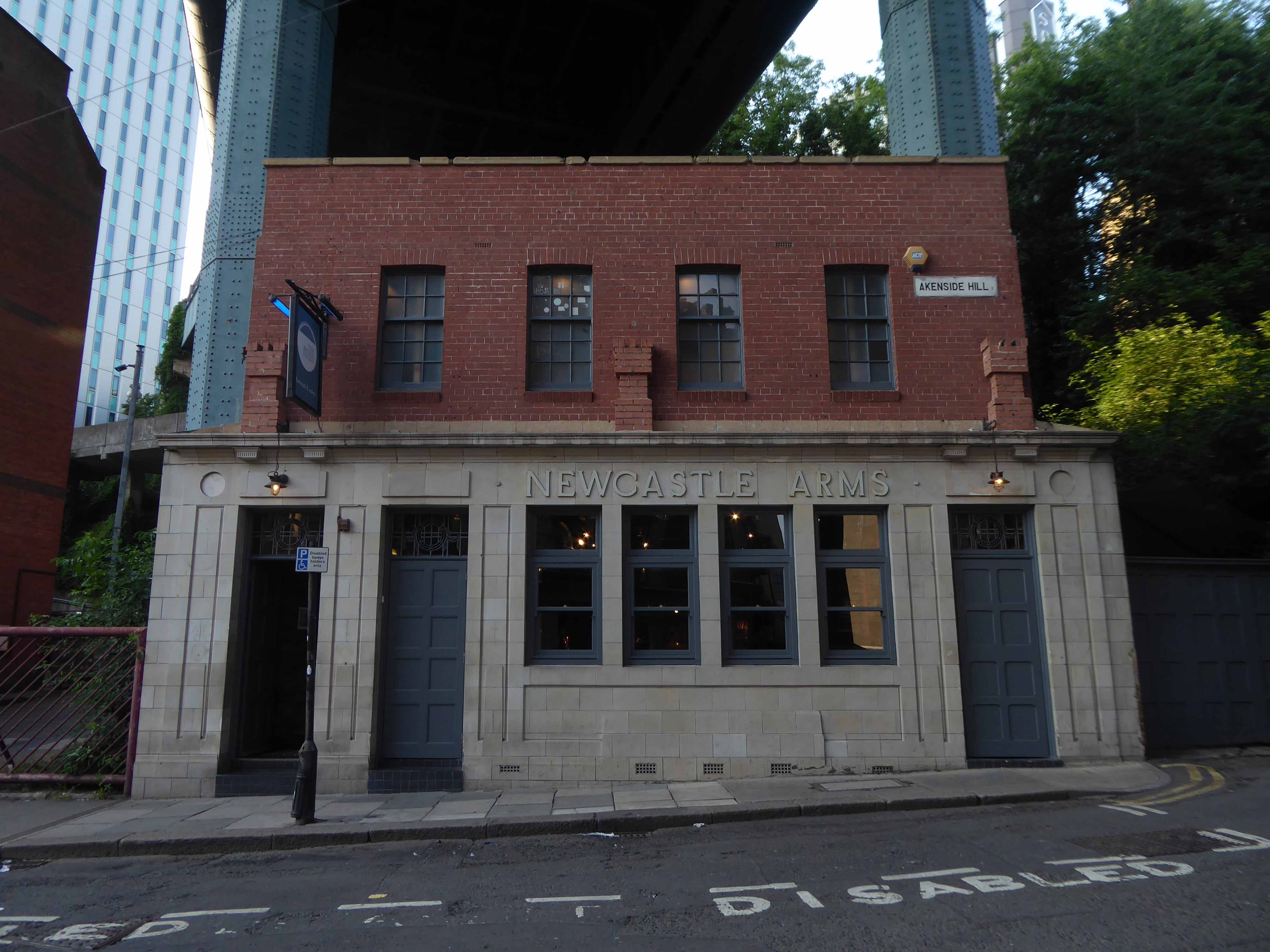
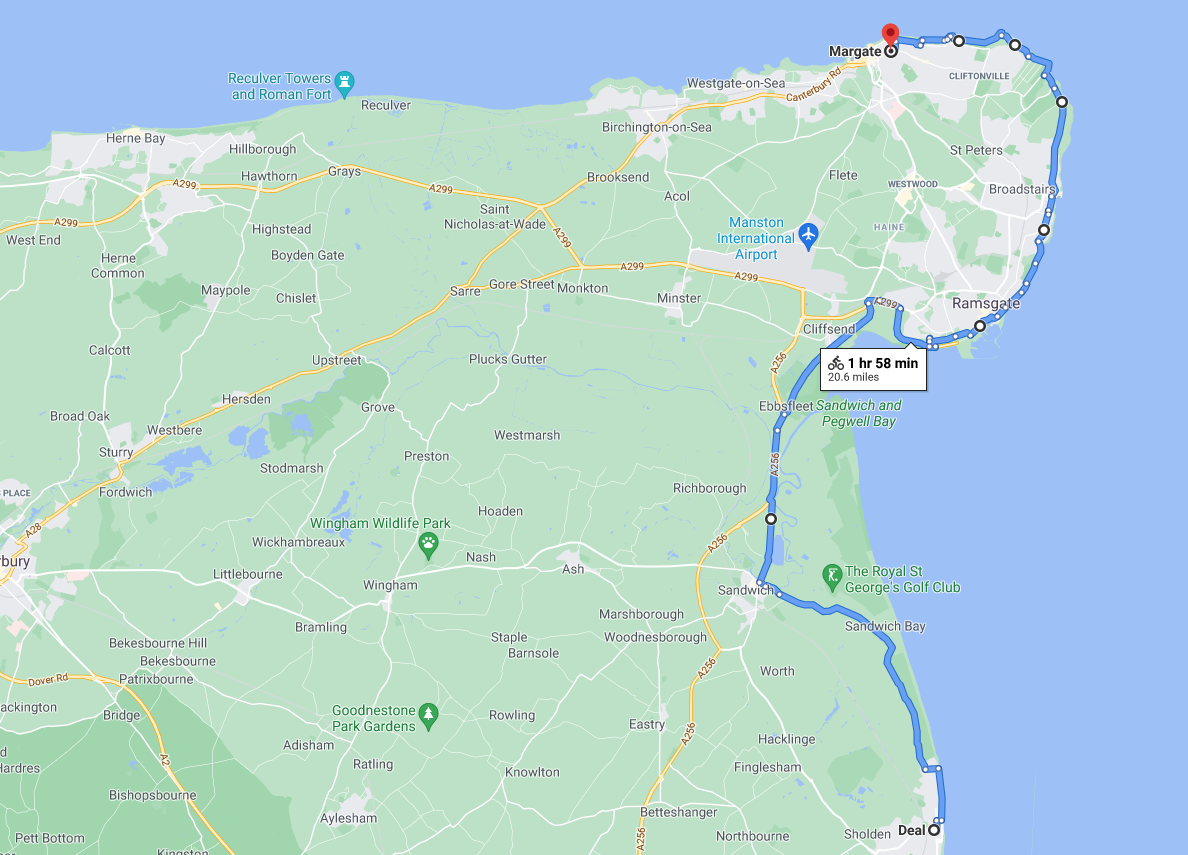
We awoke, we dawdled around Deal, prior to our delightful breakfast.

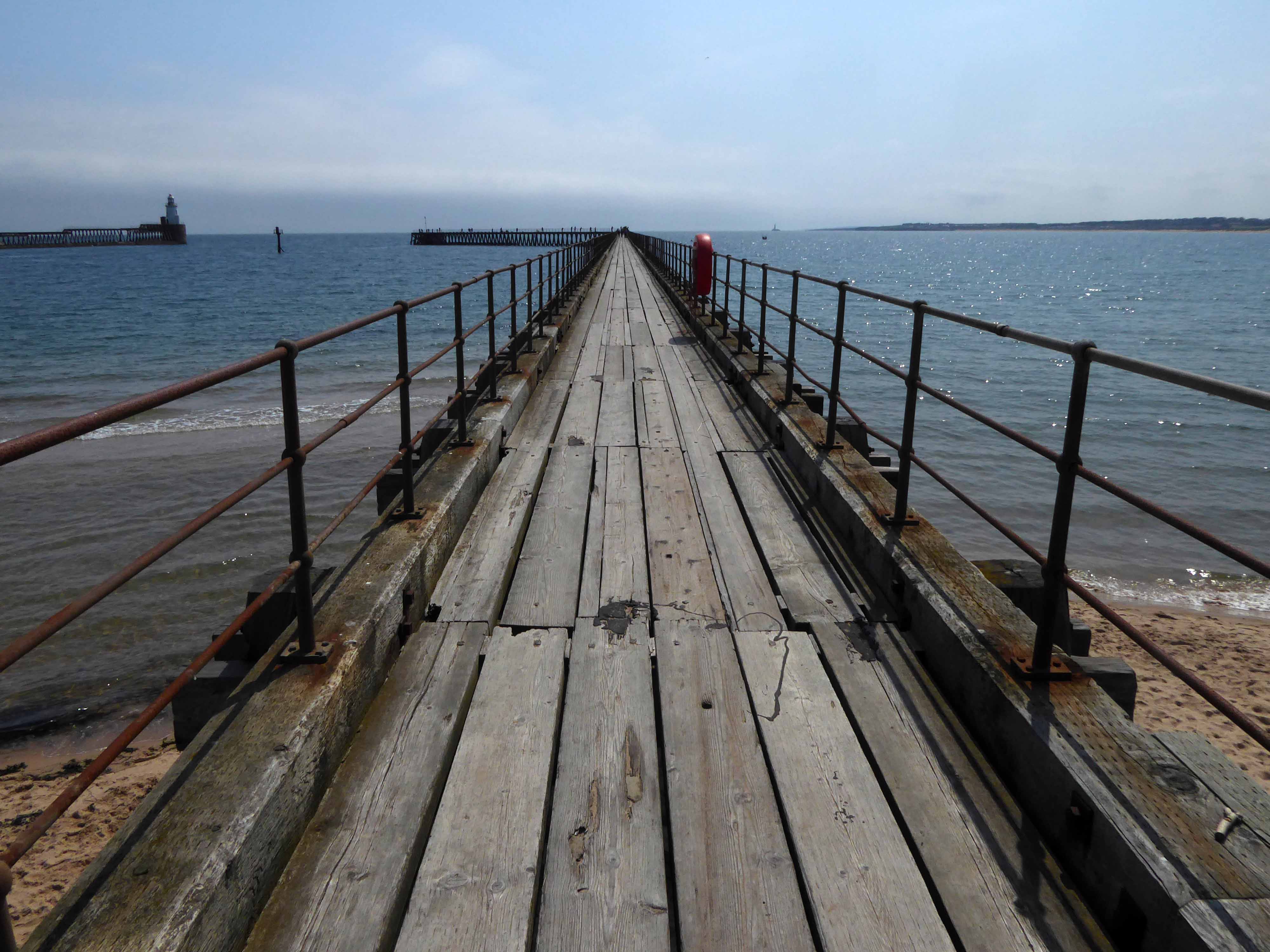
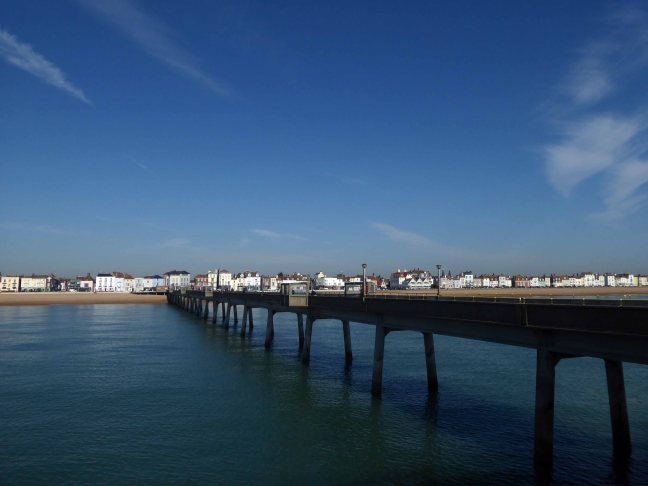
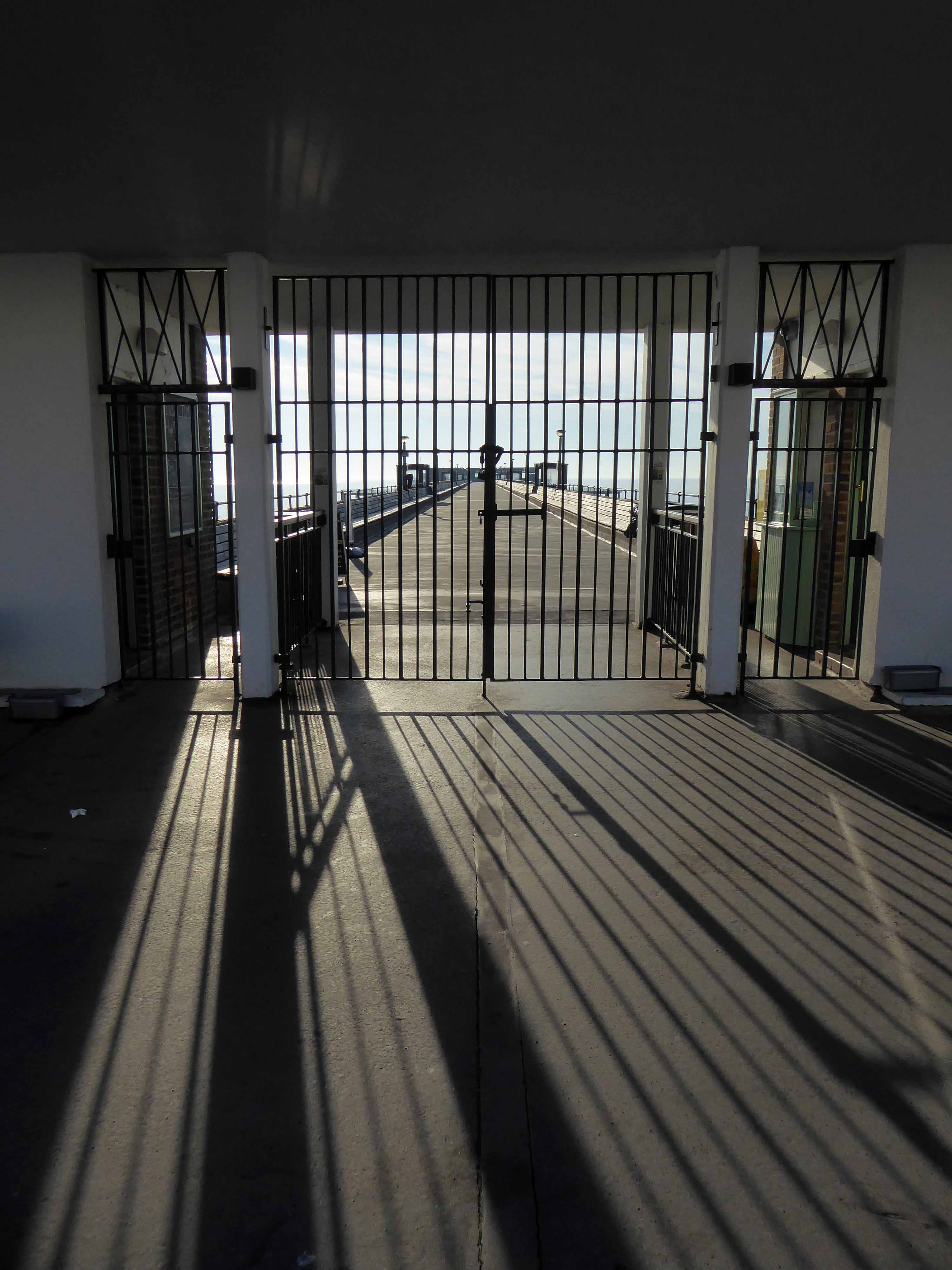
Though the pier appeared to be closed.

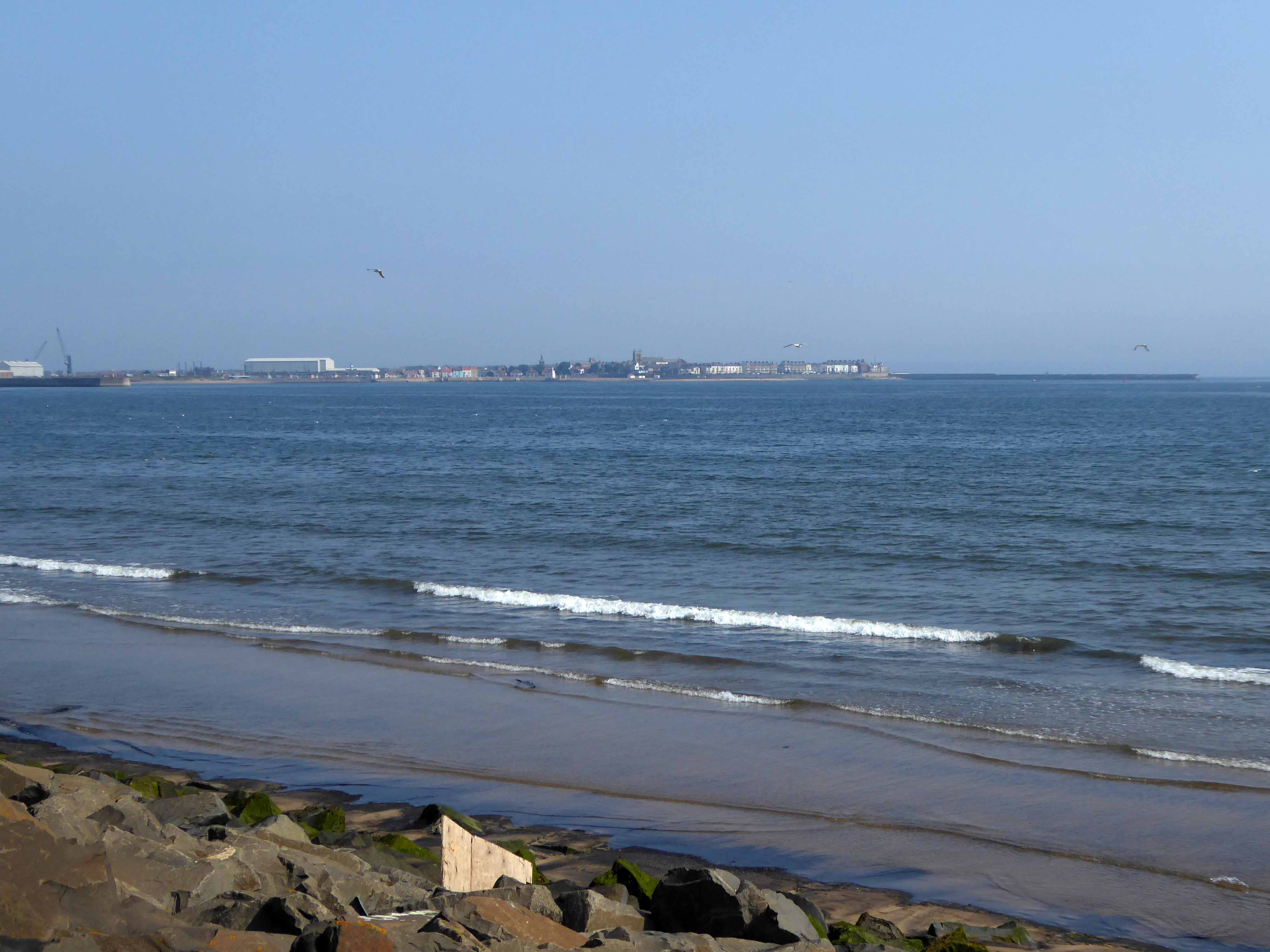
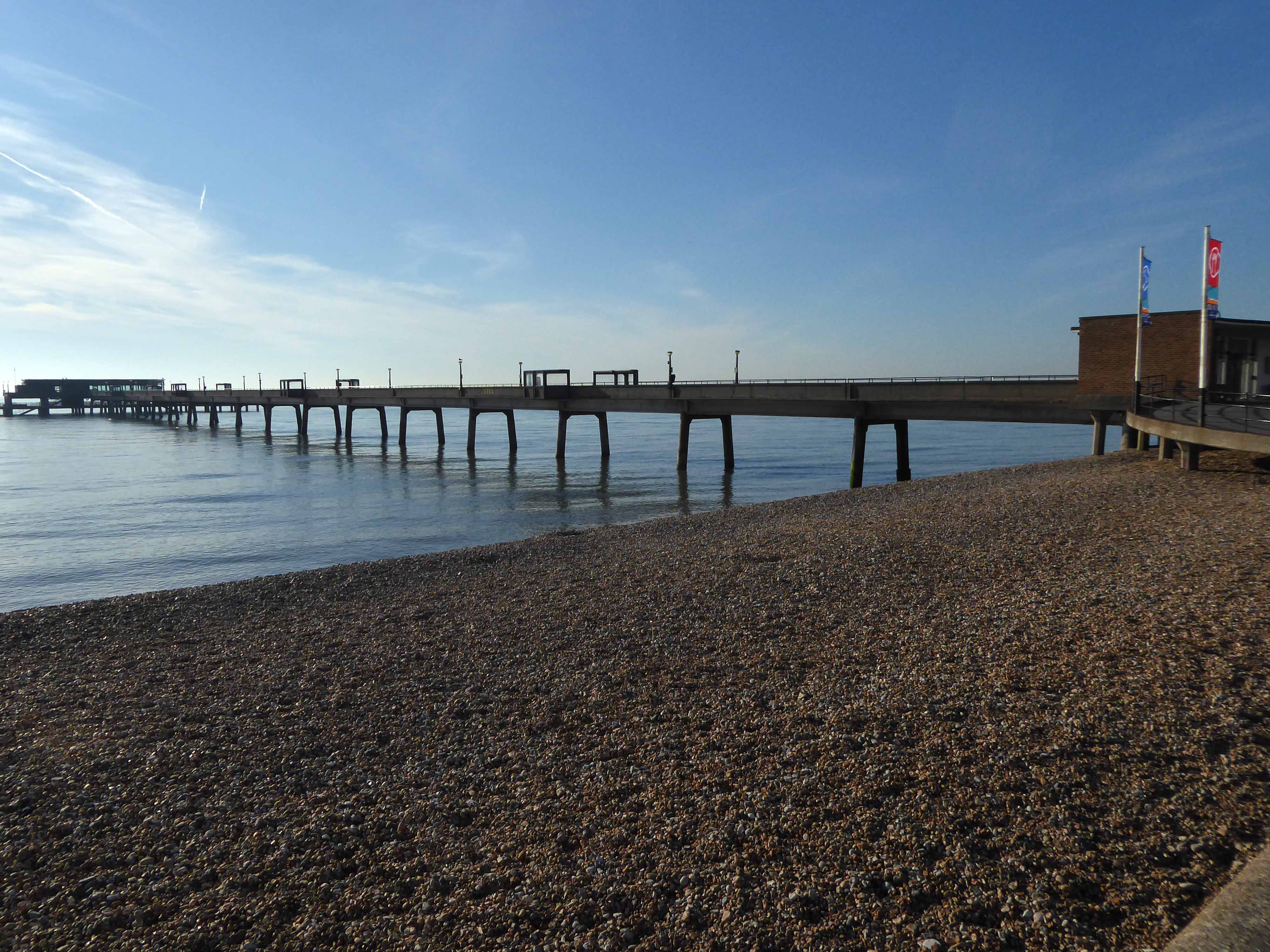
Extending elegantly over a still, still sea.

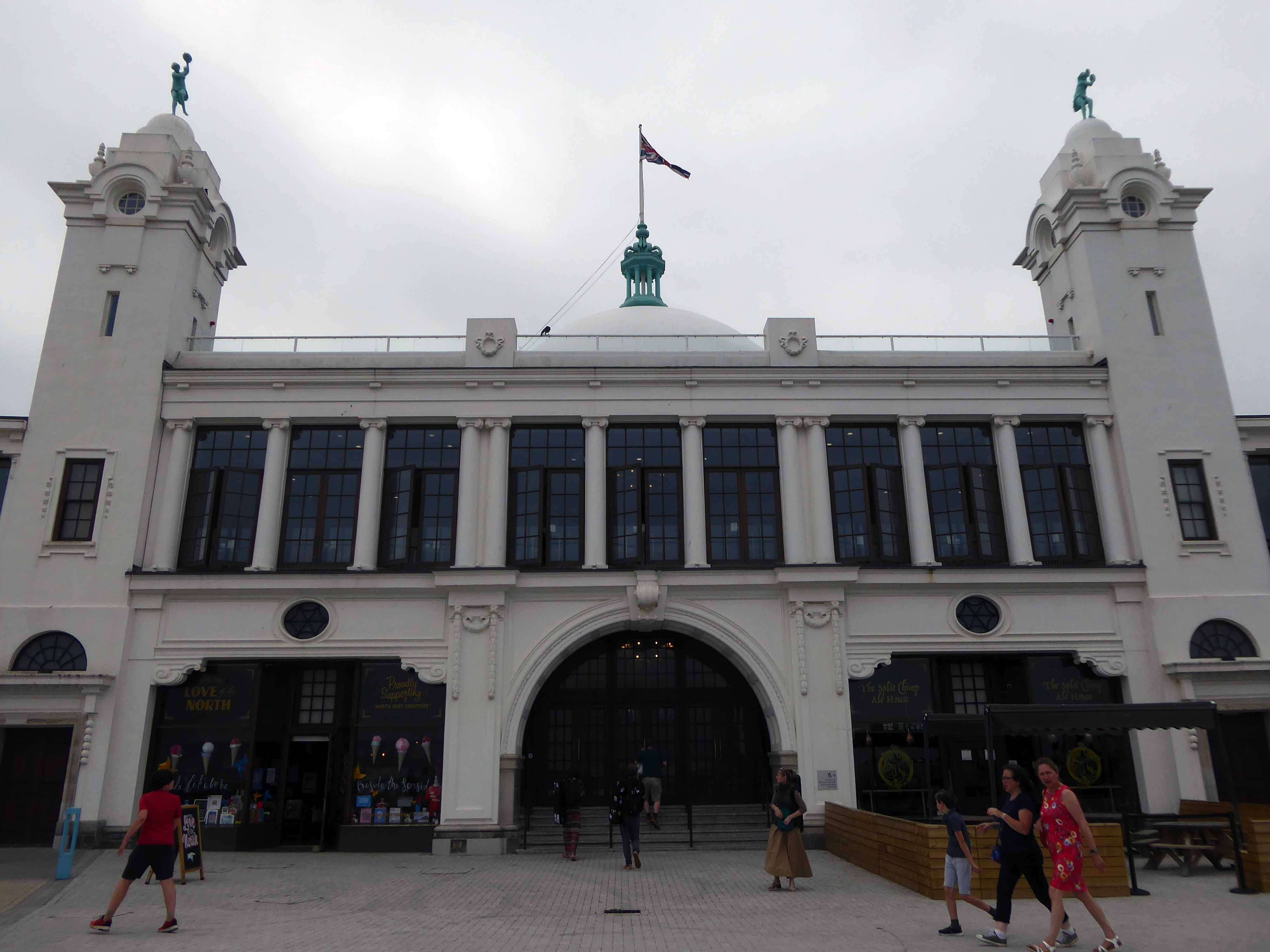
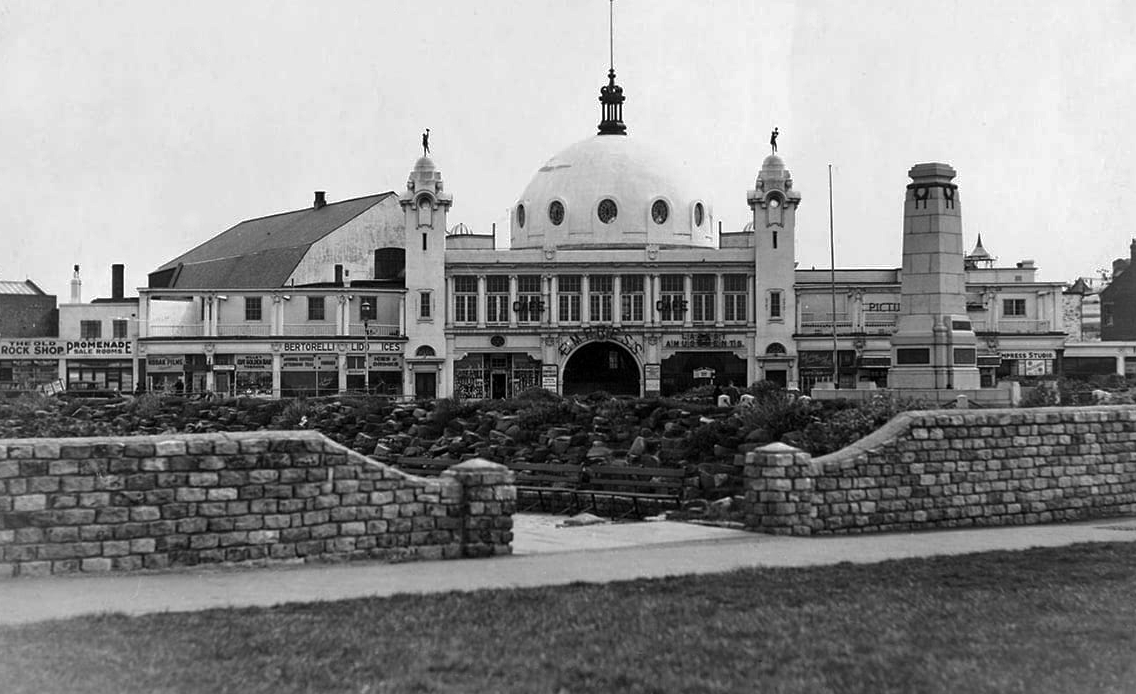
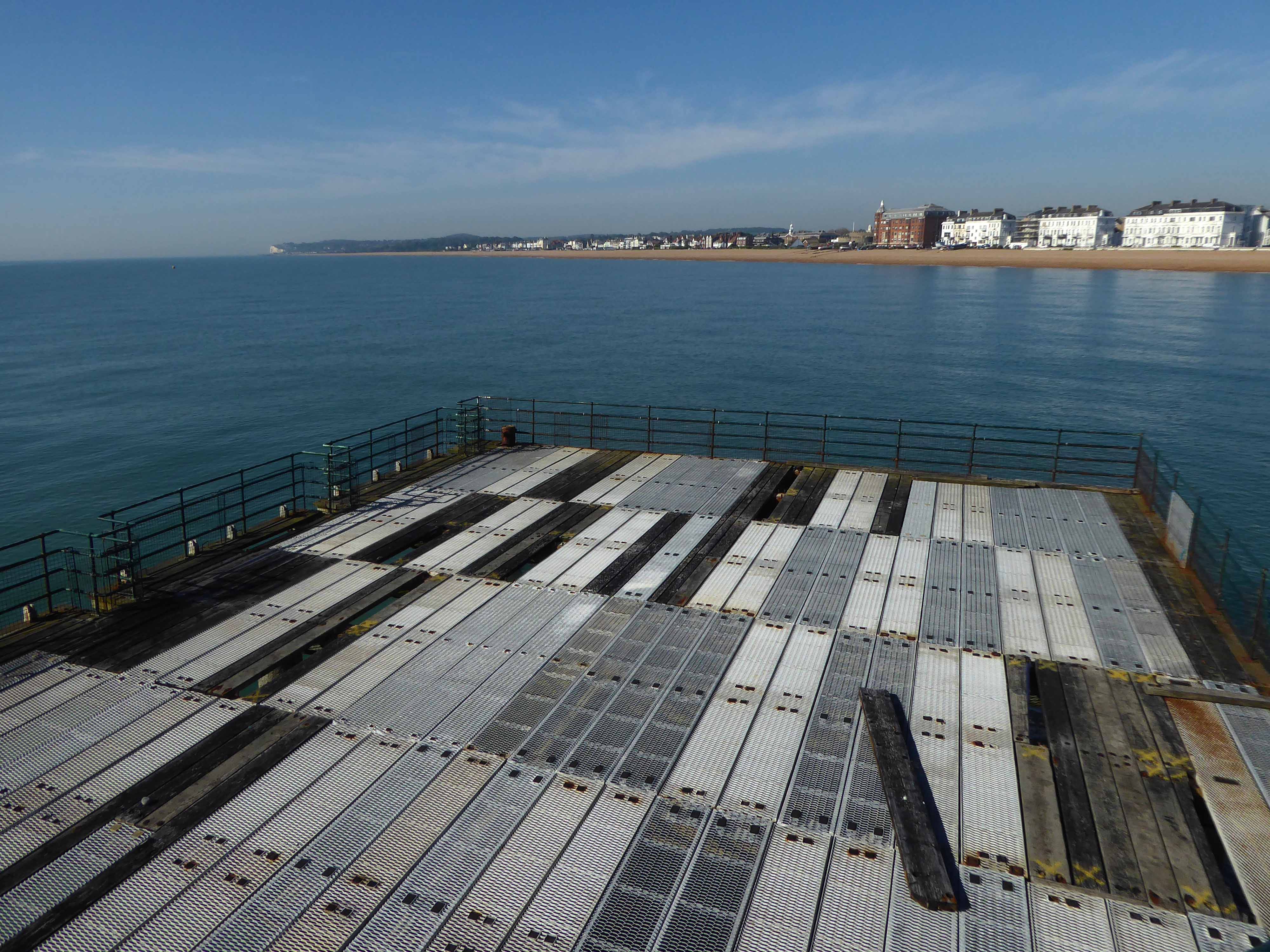
The present pier, designed by Sir W. Halcrow & Partners, was opened on 19 November 1957 by the Duke of Edinburgh. Constructed predominantly from concrete-clad steel, it is 1,026 ft in length – a notice announces that it is the same length as the RMS Titanic, but that ship was just 882 feet, and ends in a three-tiered pier-head, featuring a cafe, bar, lounge, and fishing decks.

The lowest of the three tiers is underwater at all but the lowest part of the tidal range, and has become disused.

Wikipedia

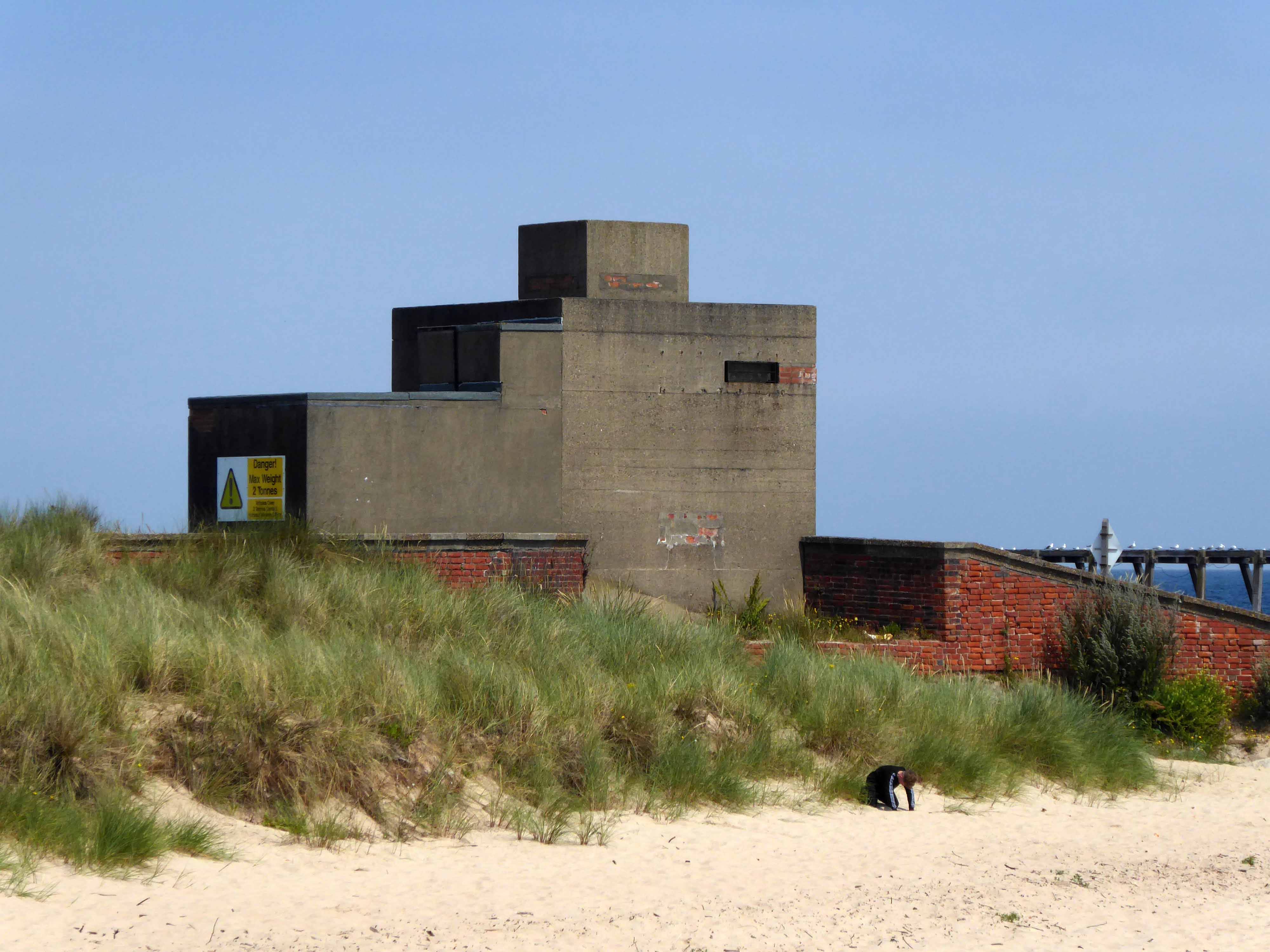
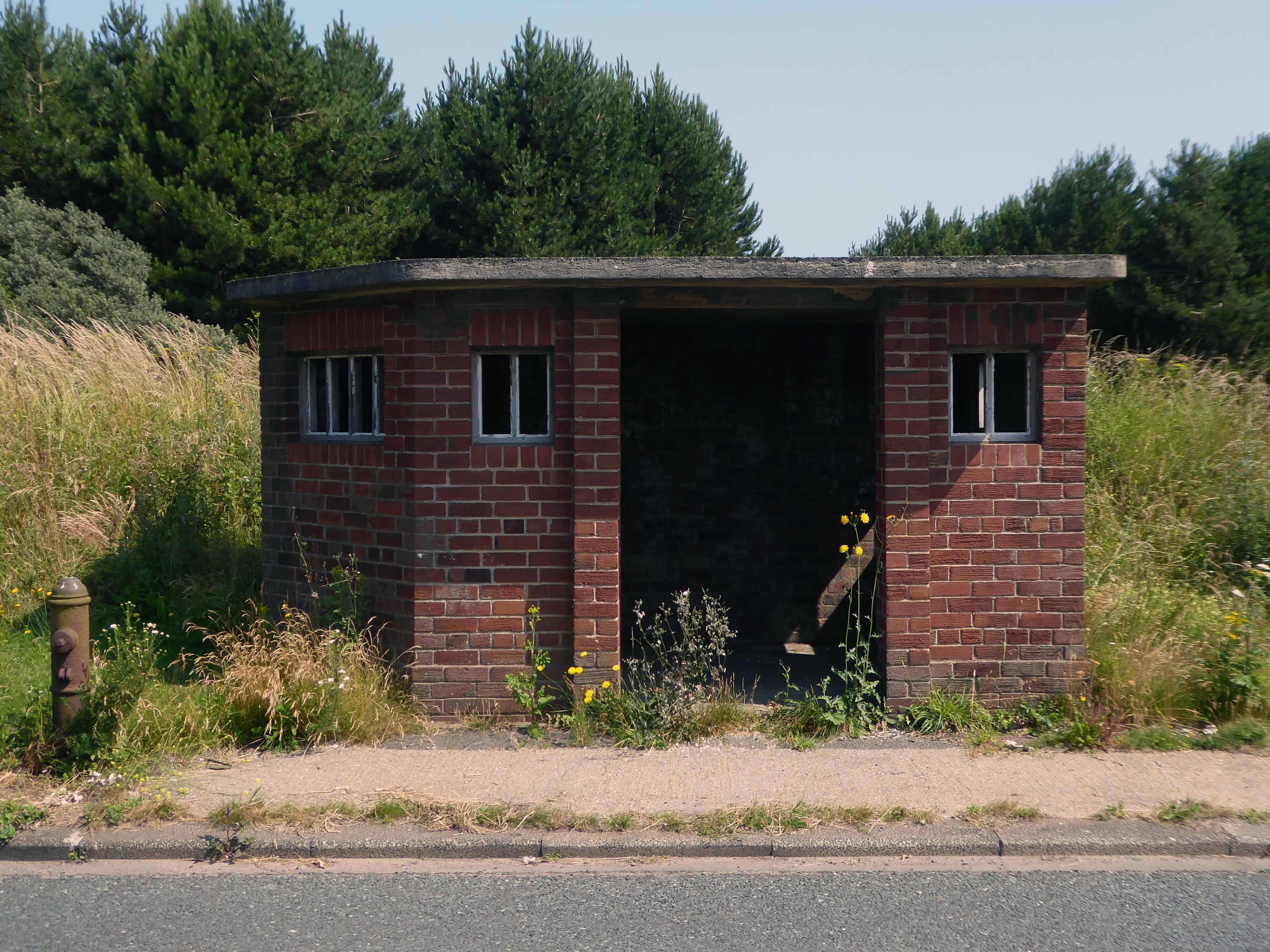
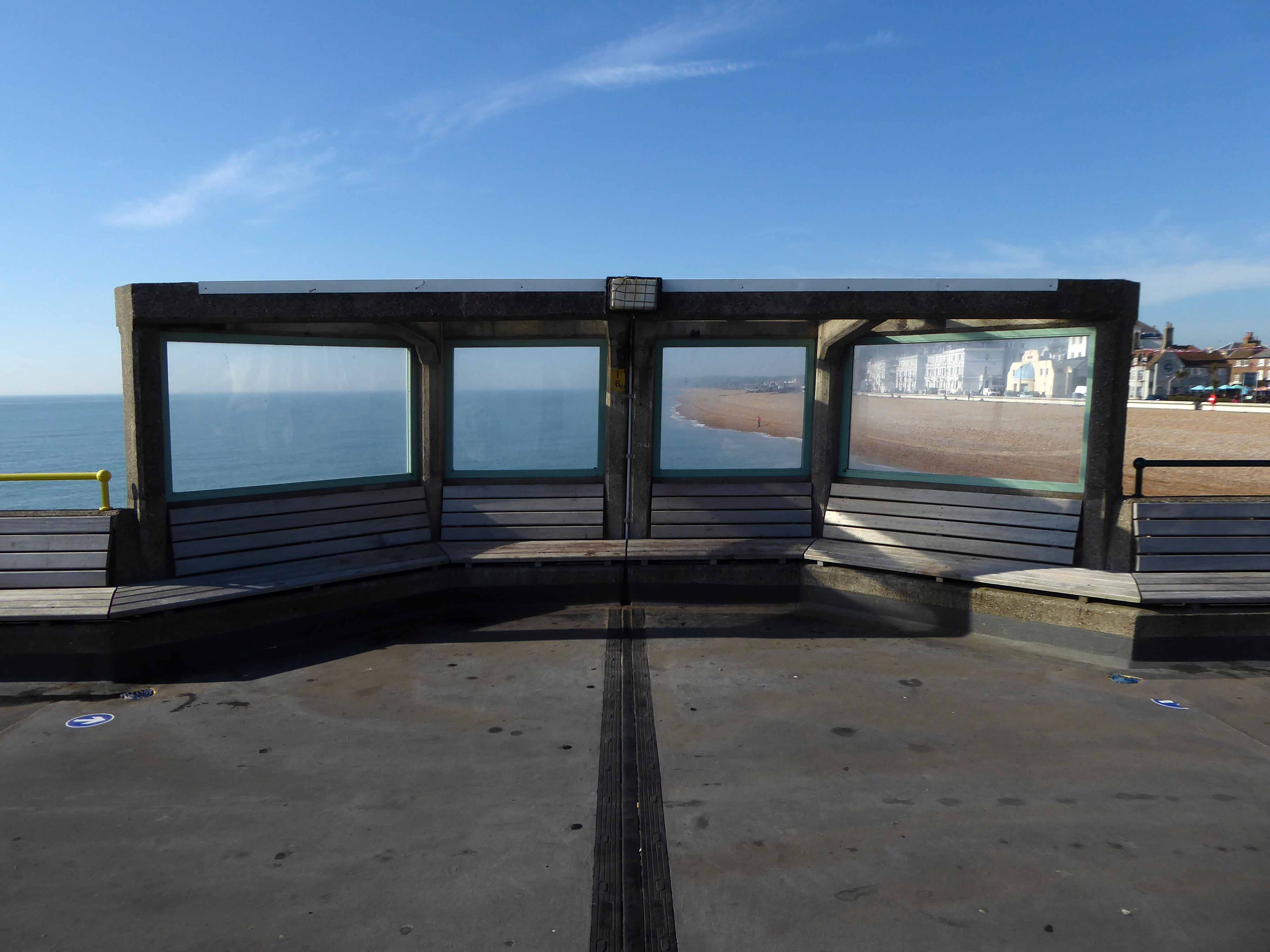
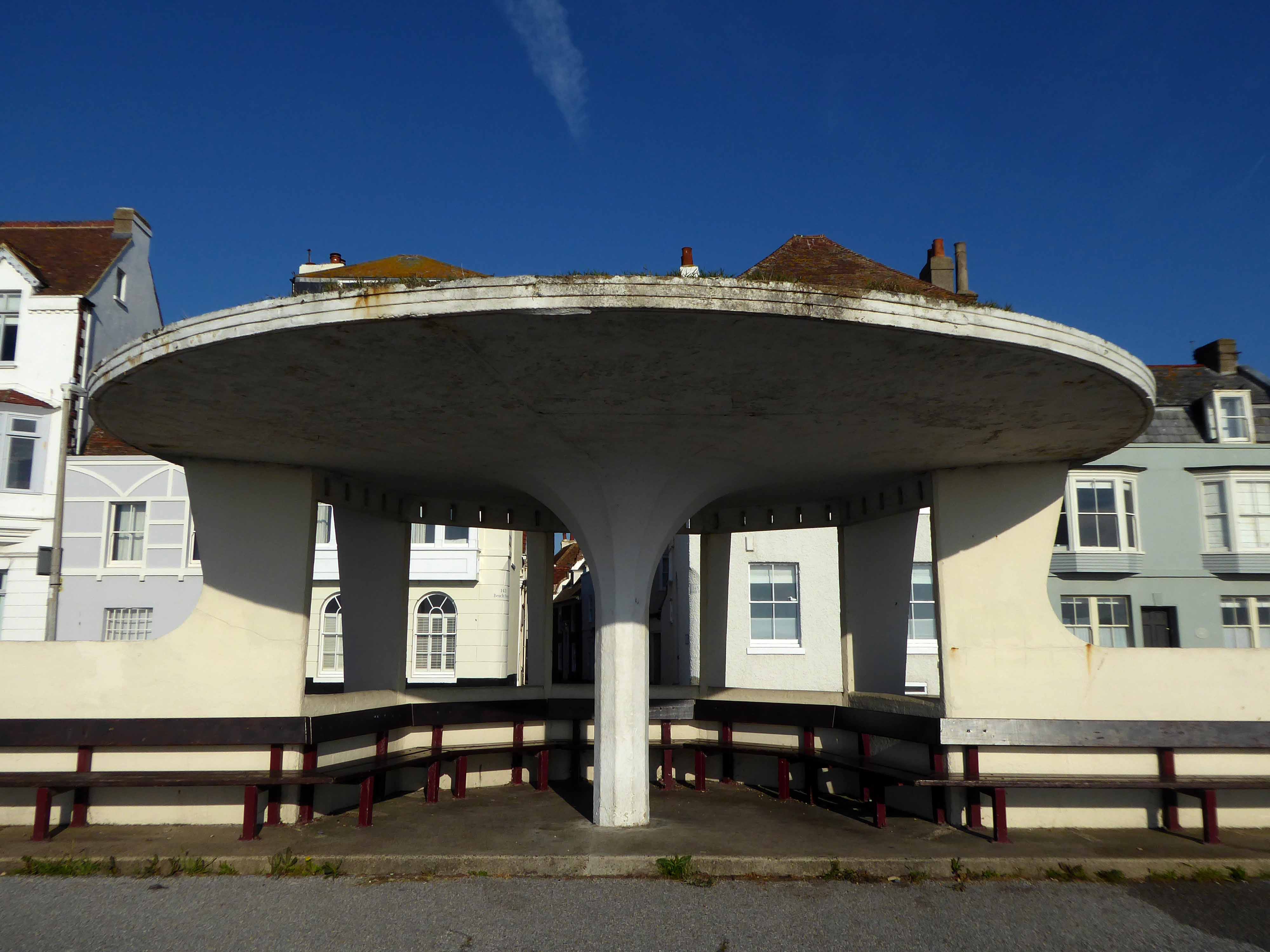
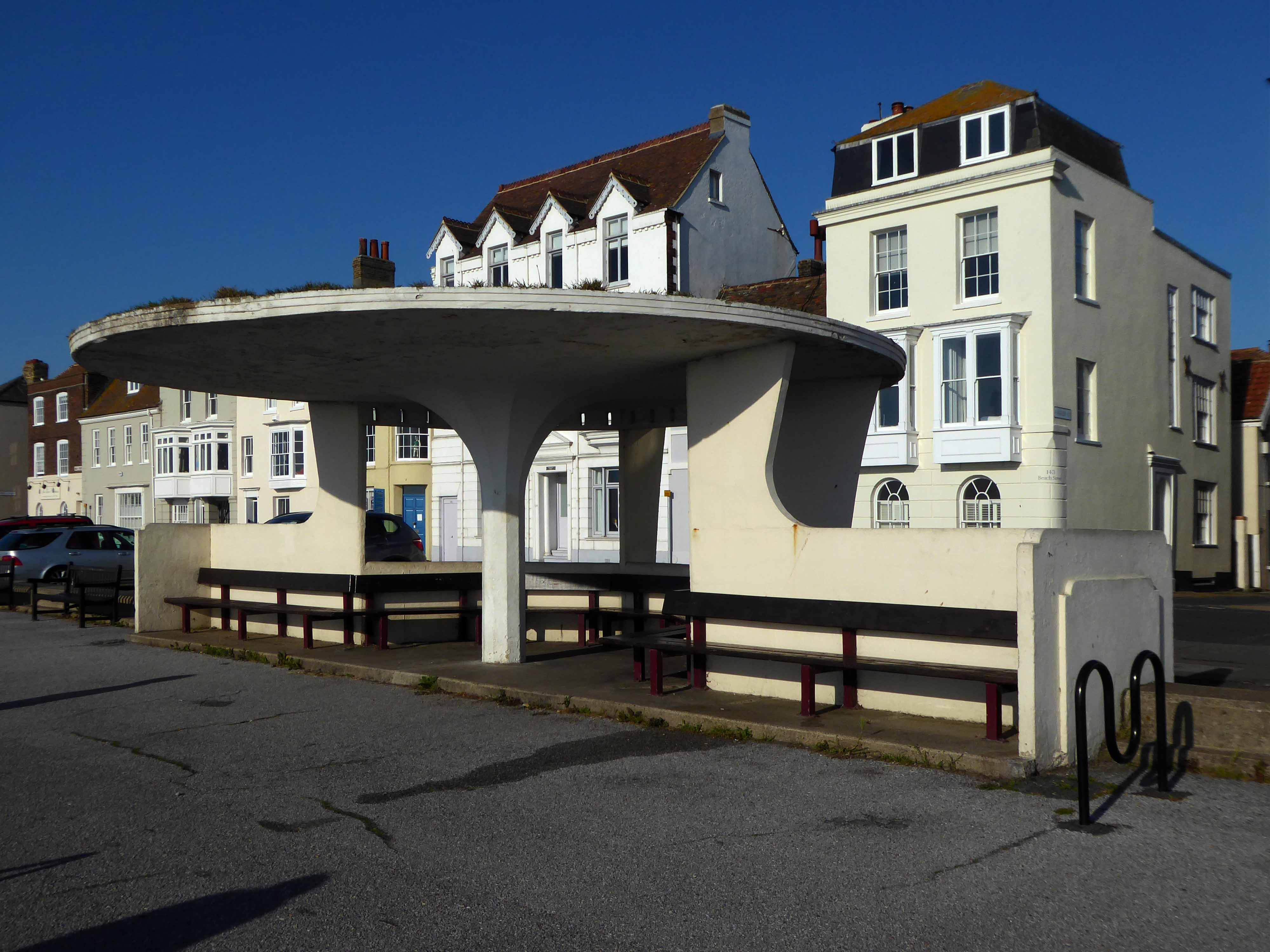
Deal is home to some of the most extraordinary concrete shelters.

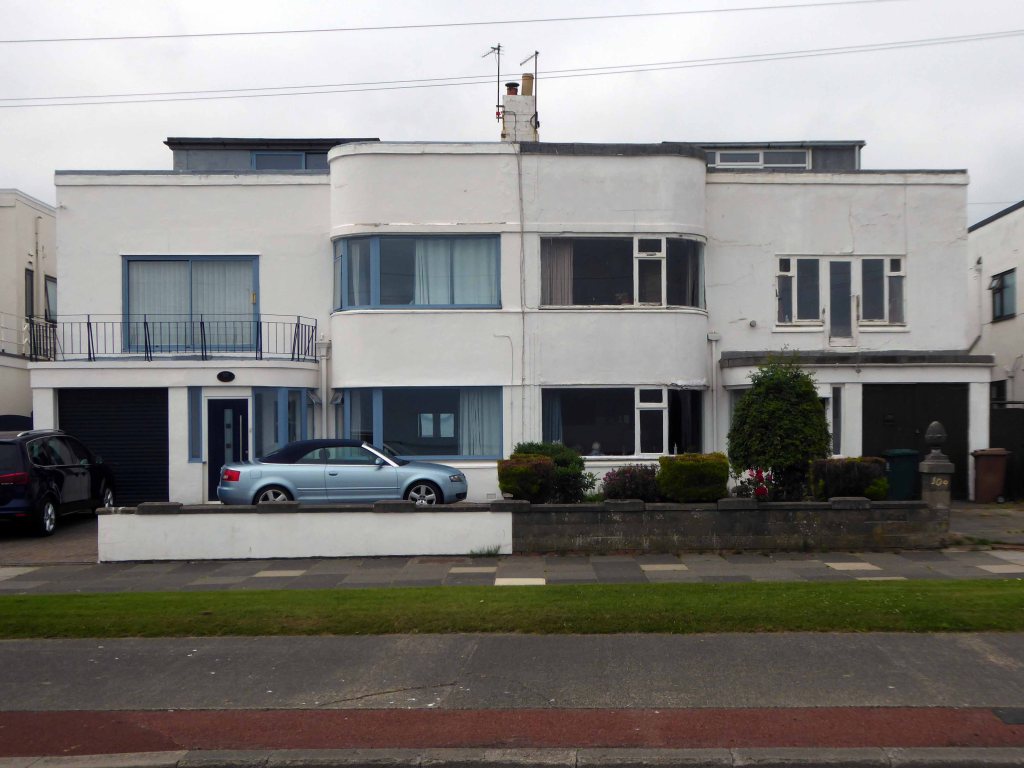
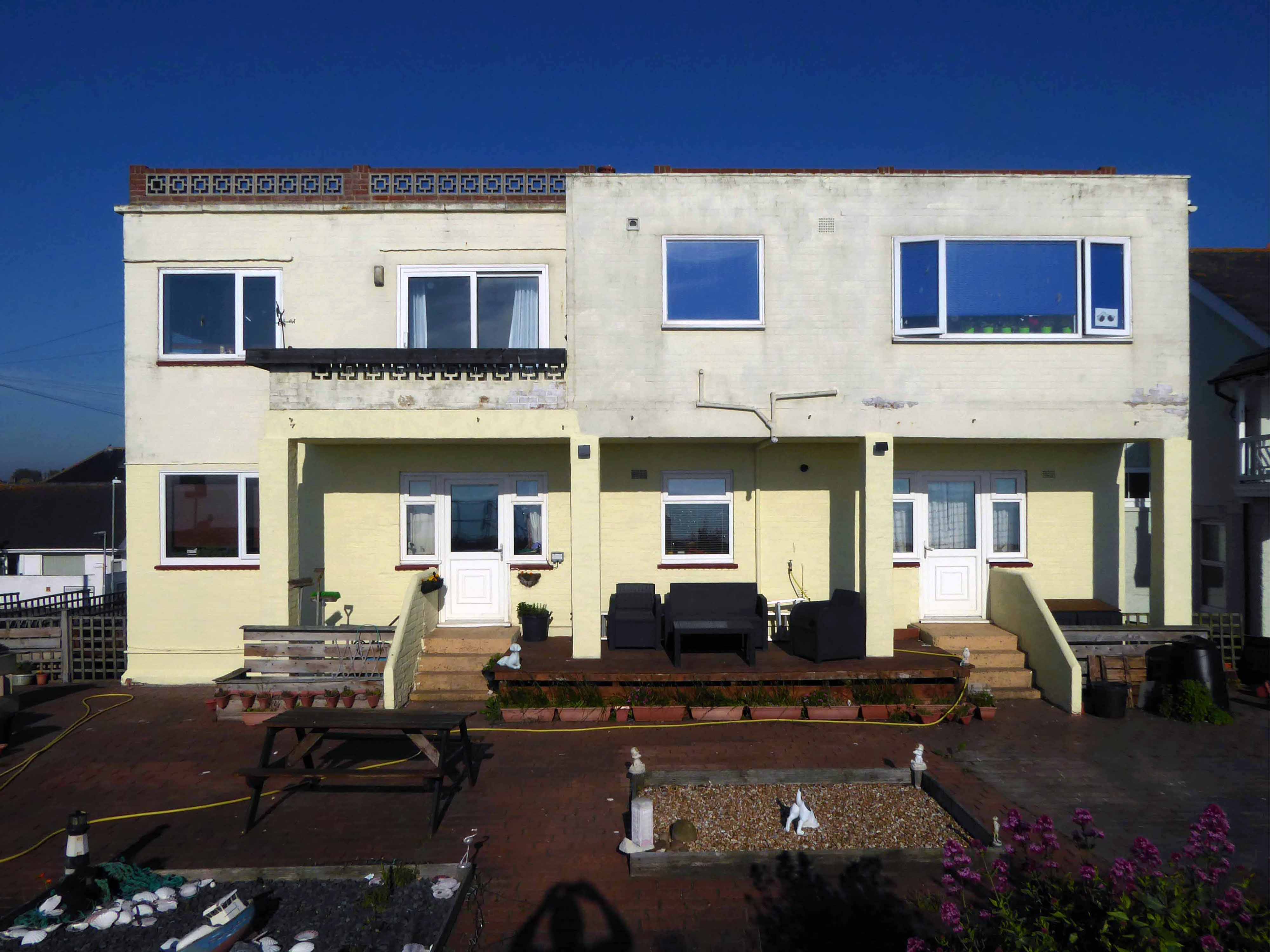
Home to some understated Seaside Moderne homes too.

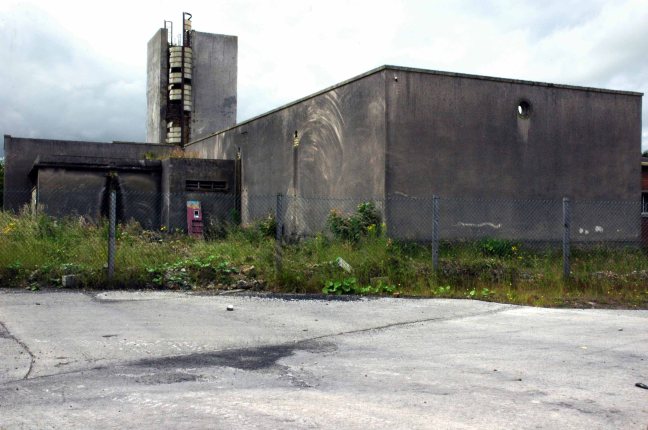
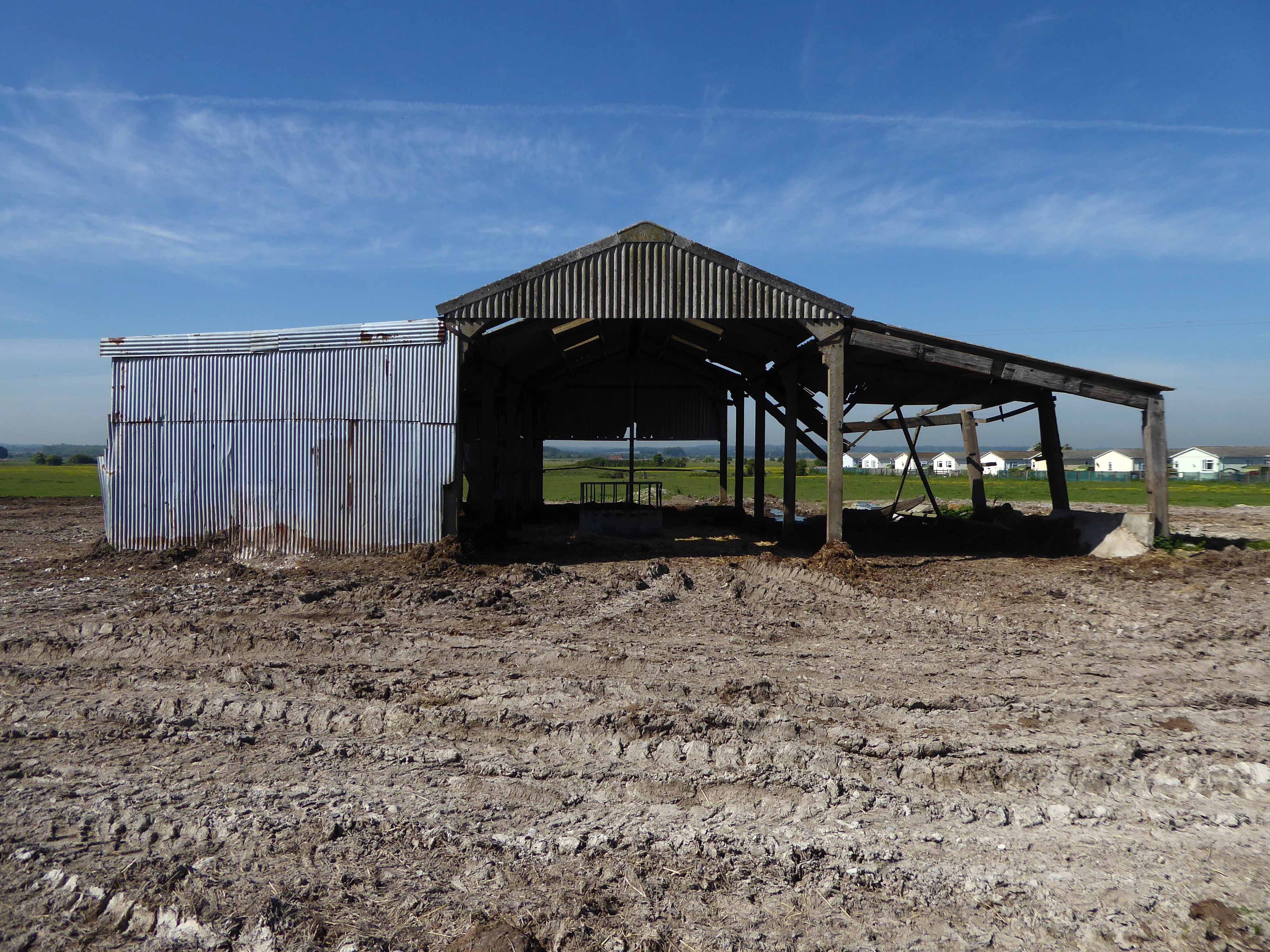
Well fed, we set out along the private road that edges the golf course, encountering some informal agricultural architecture.

We took time to explore Pegwell Bay Hoverport – currently trading as a Country Park.

Pausing in Ramsgate to admire Edward Welby Pugin’s Grade II Listed – Granville Hotel.

The Granville development, so named after George Leverson Gower, second Earl Granville (1815-1891), was a venture undertaken by Edward Welby Pugin, together with investors Robert Sankey, George Burgess and John Barnet Hodgson on land acquired from the Mount Albion Estate in 1867. The scheme was to be an important new building in the eastward expansion of the town and the emergence of a fashionable new suburb. At the outset, the intention was to build a relatively restrained speculative terrace of large townhouses with some additional facilities. However, as the scheme progressed and it became apparent that buyers could not be secured, revised plans for an enlarged hotel complex were adopted in 1868 and brought to completion in 1869. These plans, which added a series of grand rooms including a banqueting hall, receptions rooms and an entrance hall in addition to a tunnel to connect to the railway line on the seafront, gardens, a complex of Turkish baths and a vast landmark tower (originally 170ft high, although truncated at a relatively early date), were remarkably ambitious. Ultimately, as it would transpire, the scheme was rather too ambitious on Pugin’s part; with his increasing reliance on loans eventually culminating in bankruptcy in October 1872, an event which precipitated his demise as an architect, tragically followed by his death just three years later.

Historic England

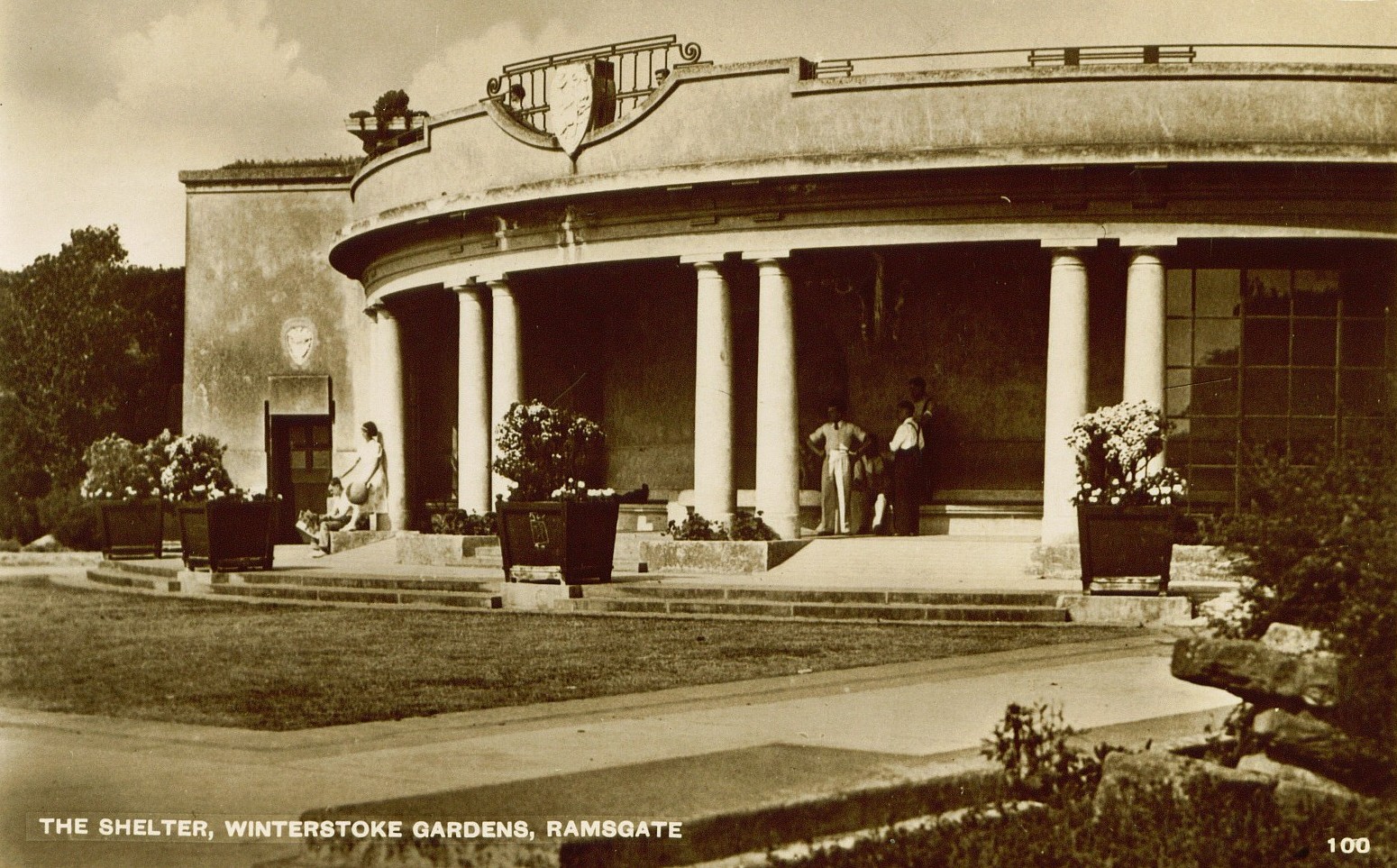
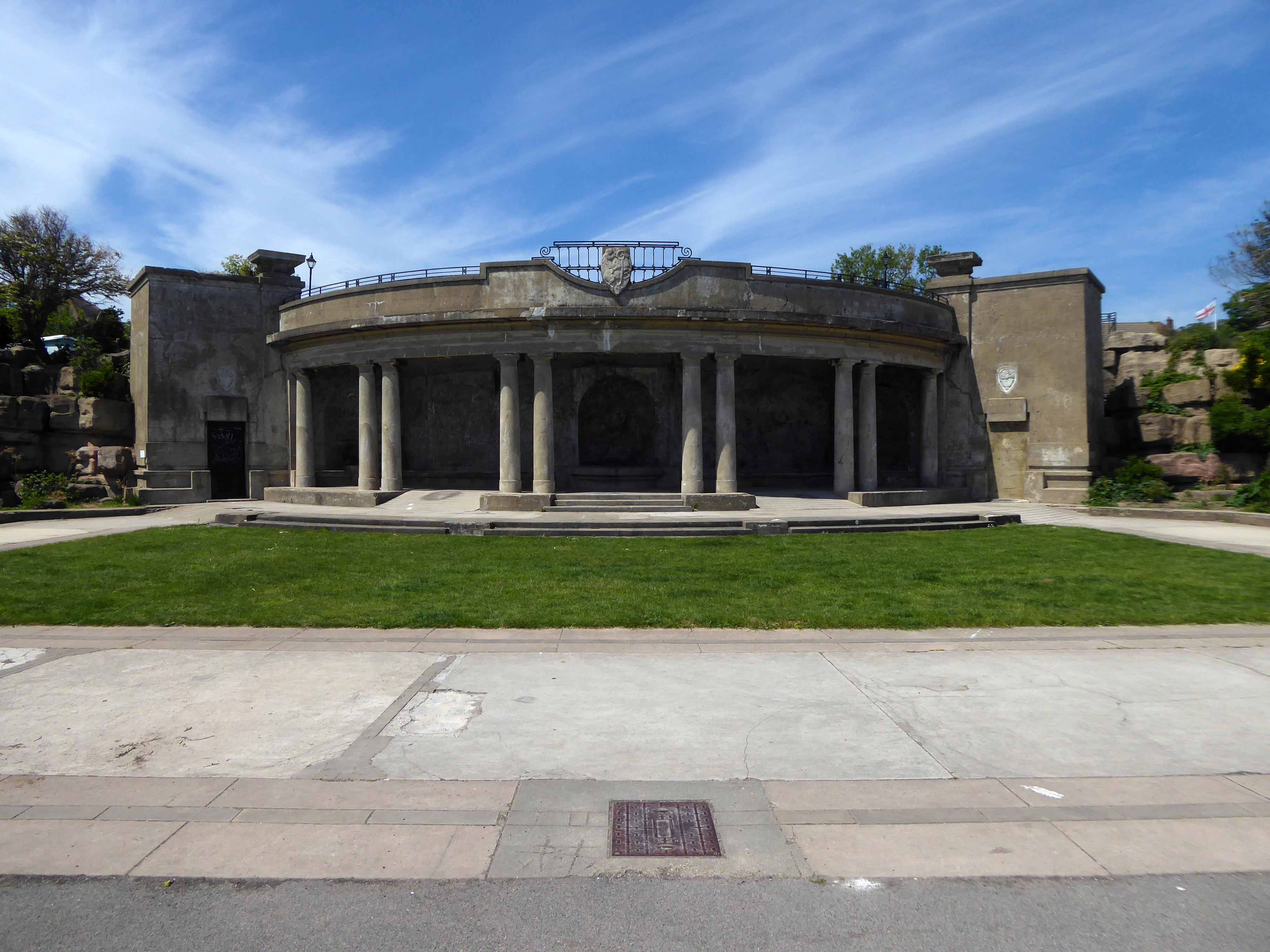
Overlooking the sea, the ornamental gardens were laid out and presented to the Borough of Ramsgate by Dame Janet Stancomb-Wills in 1920 and opened to the public in June 1923 by the Mayor of Ramsgate Alderman A. W. Larkin. They are maintained by Thanet District Council and were Grade II listed on 4 February 1988. 

The gardens were designed by the architects Sir John Burnet & Partners, and constructed by Pulham and Son. The main feature of the gardens, is a semi-circular shaped colonnade carved into the pulhamite recess.

On the upper terrace, approached by broad flights of steps, the gardens proper are reached. In the centre, and immediately over the shelter, is a circular pool enclosed on the north side by a semi-circular Roman seat.

Wikipedia

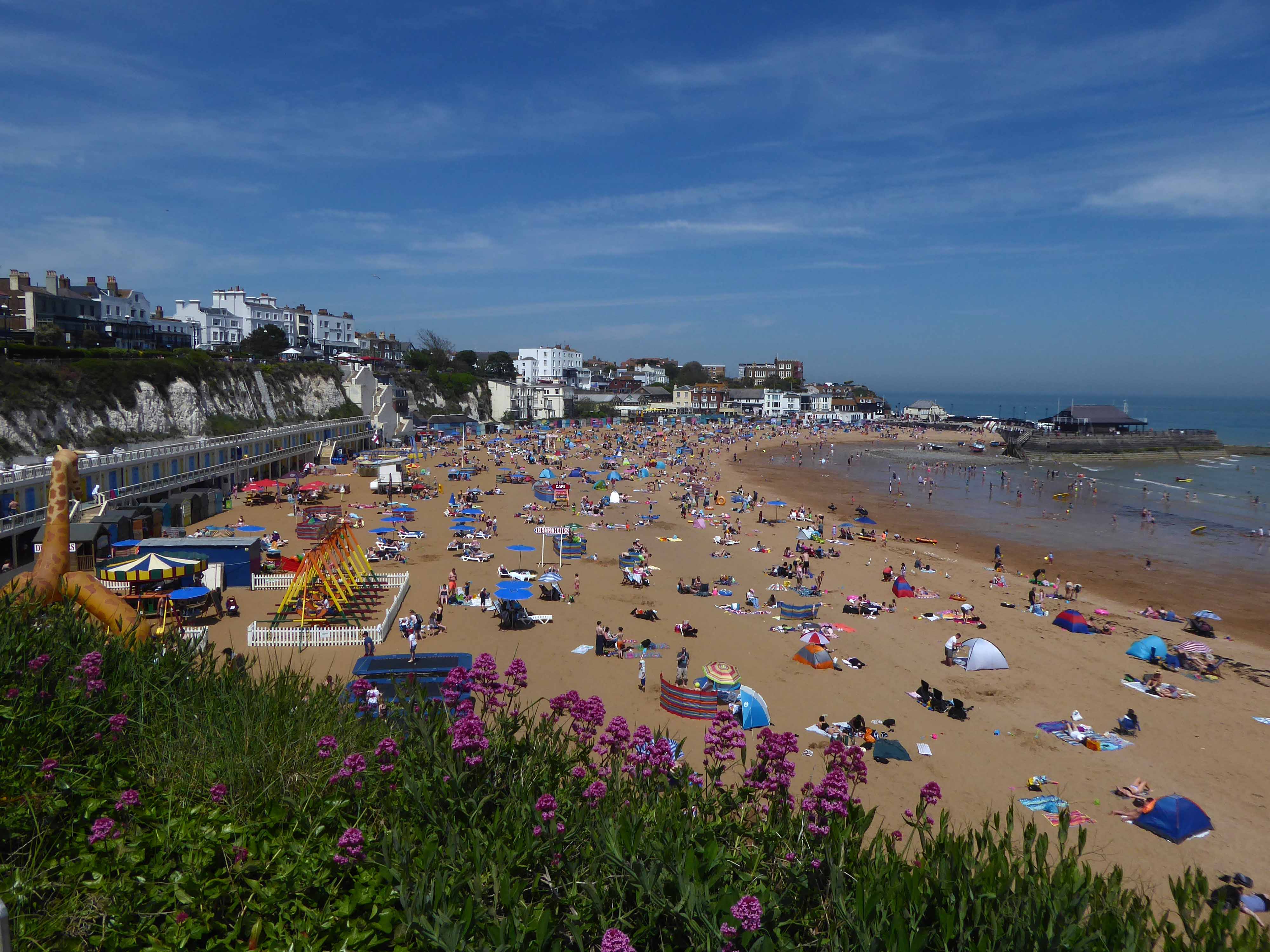
Broadstairs was alive with Bank Holiday activity.

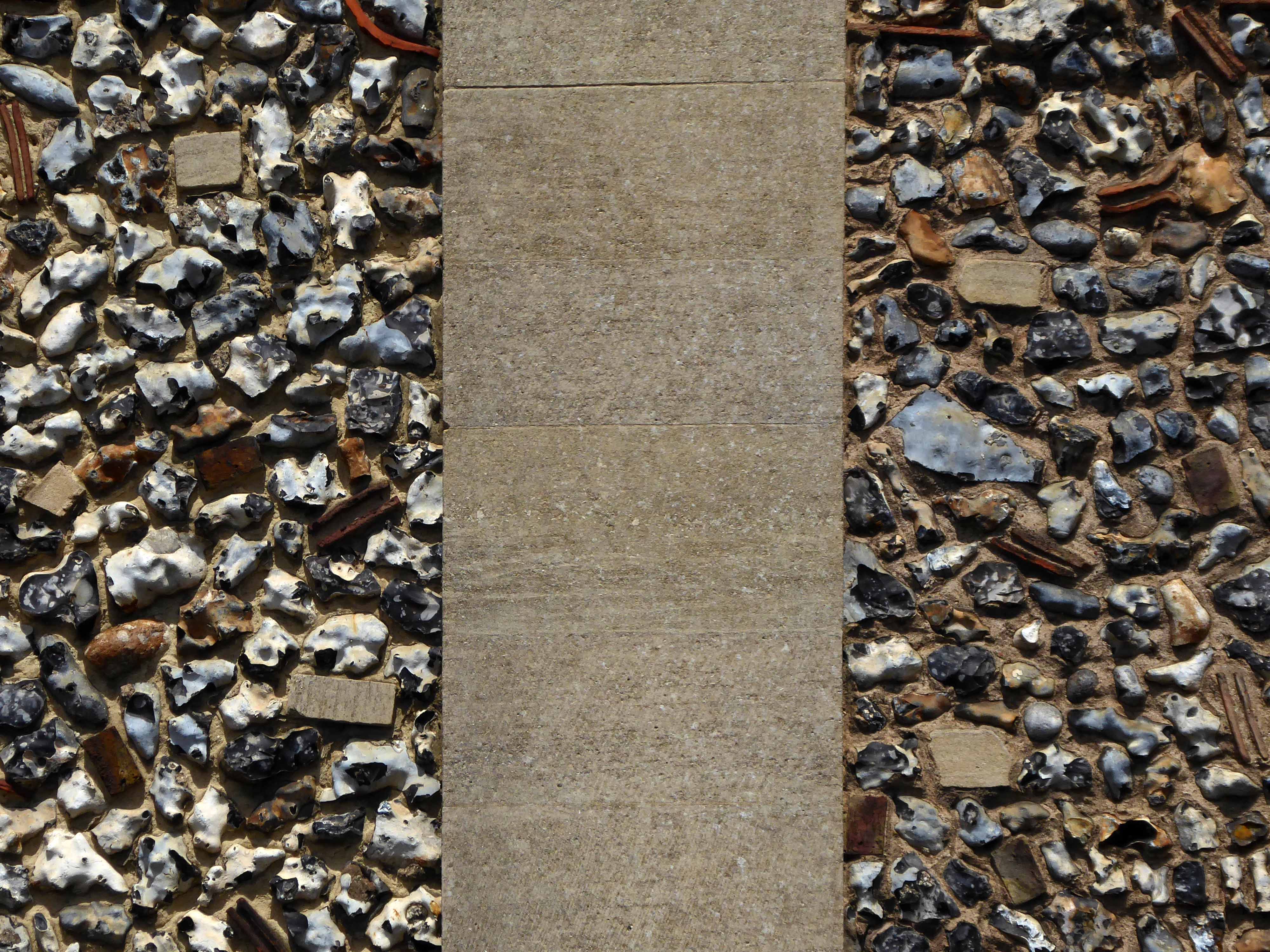
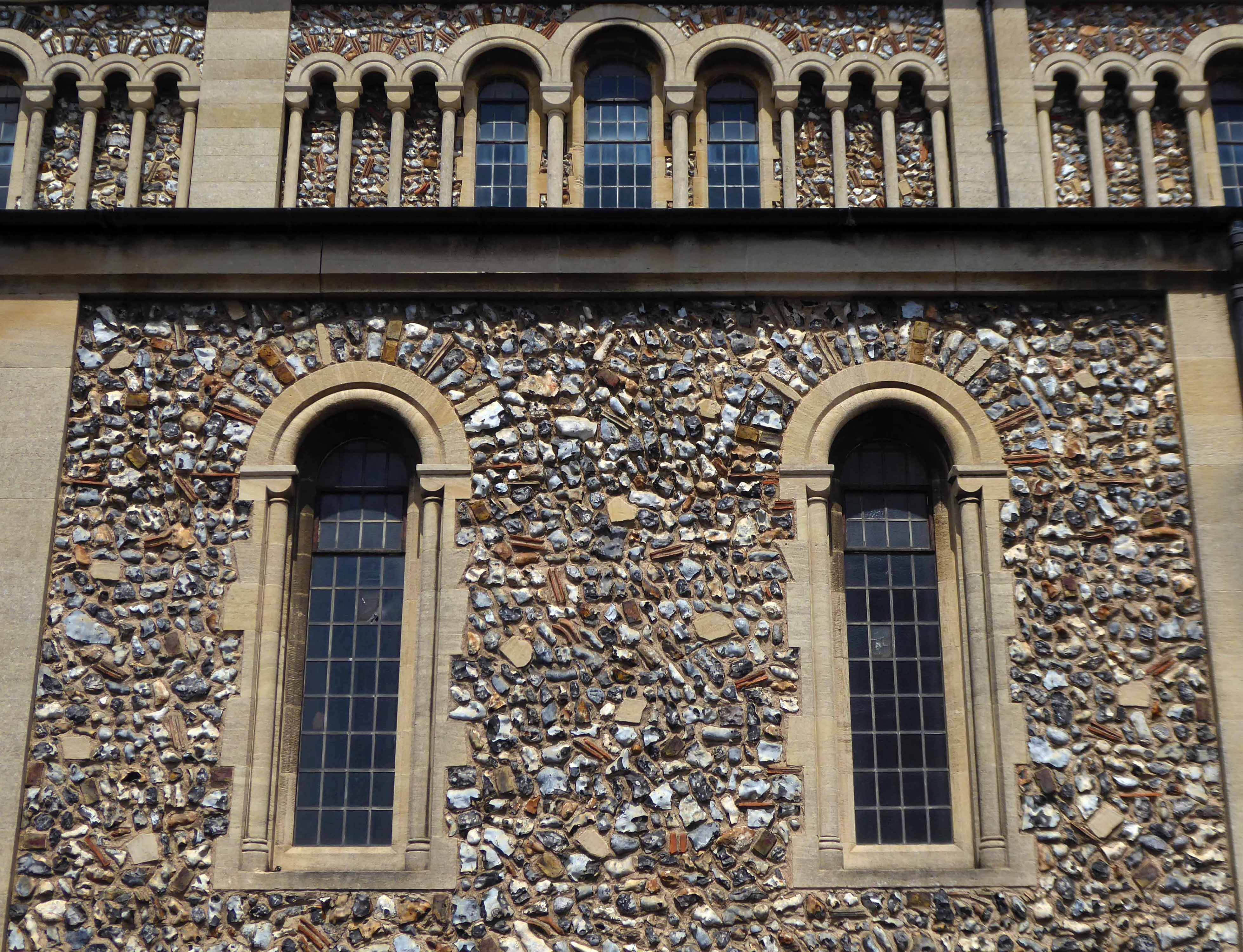
On leaving the town we encounter this engaging flint church – Holy Trinity

Erected 1829-1830. David Barnes Architect, extended 1925.

Built of flint and rubble.

One of the first visitors to this church was Charles Dickens who offered a very unflattering description in his work, Our English Watering Place:

We have a church, by the bye, of course – a hideous temple of flint, like a petrified haystack.  Our chief clerical dignitary, who, to his honour, has done much for education, and has established excellent schools, is a sound, healthy gentleman, who has got into little local difficulties with the neighbouring farms, but has the pestilent trick of being right.

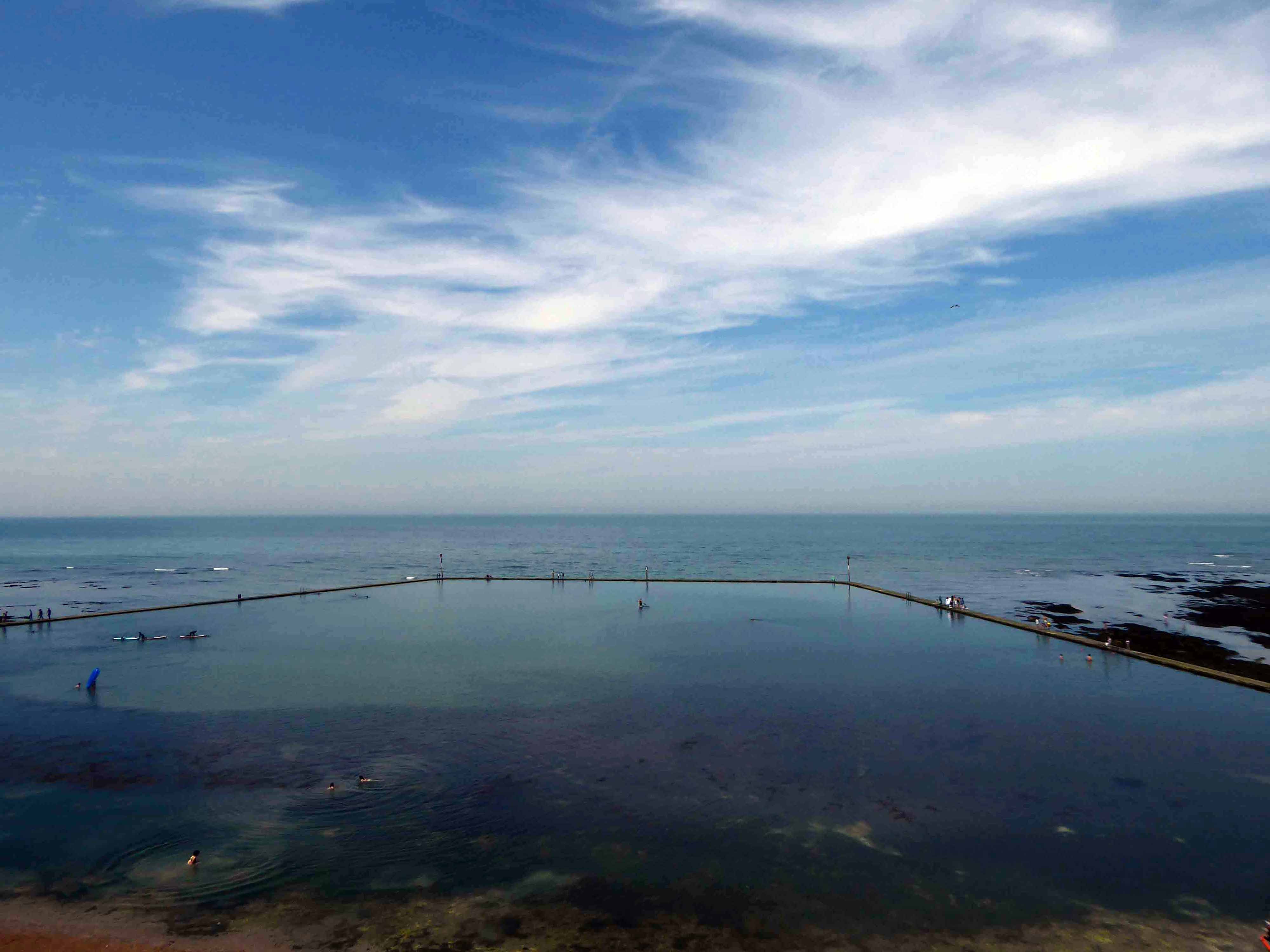
In Margate the tidal pools are full of waveless sea water and kiddy fun.

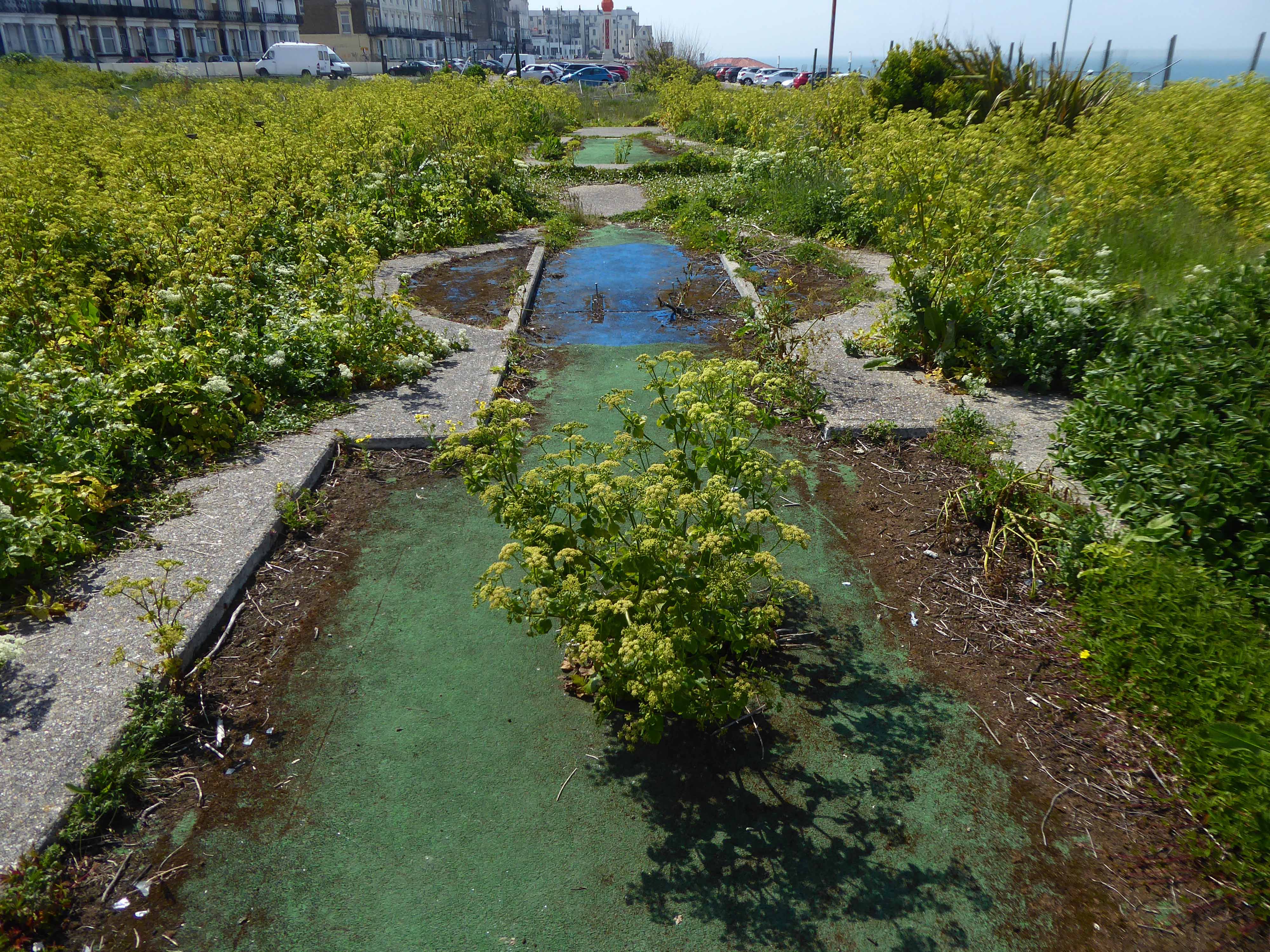
The former crazy golf course is undergoing an ongoing programme of involuntary rewilding.

The Turner Contemporary was hosting an impromptu al fresco sculpture show.

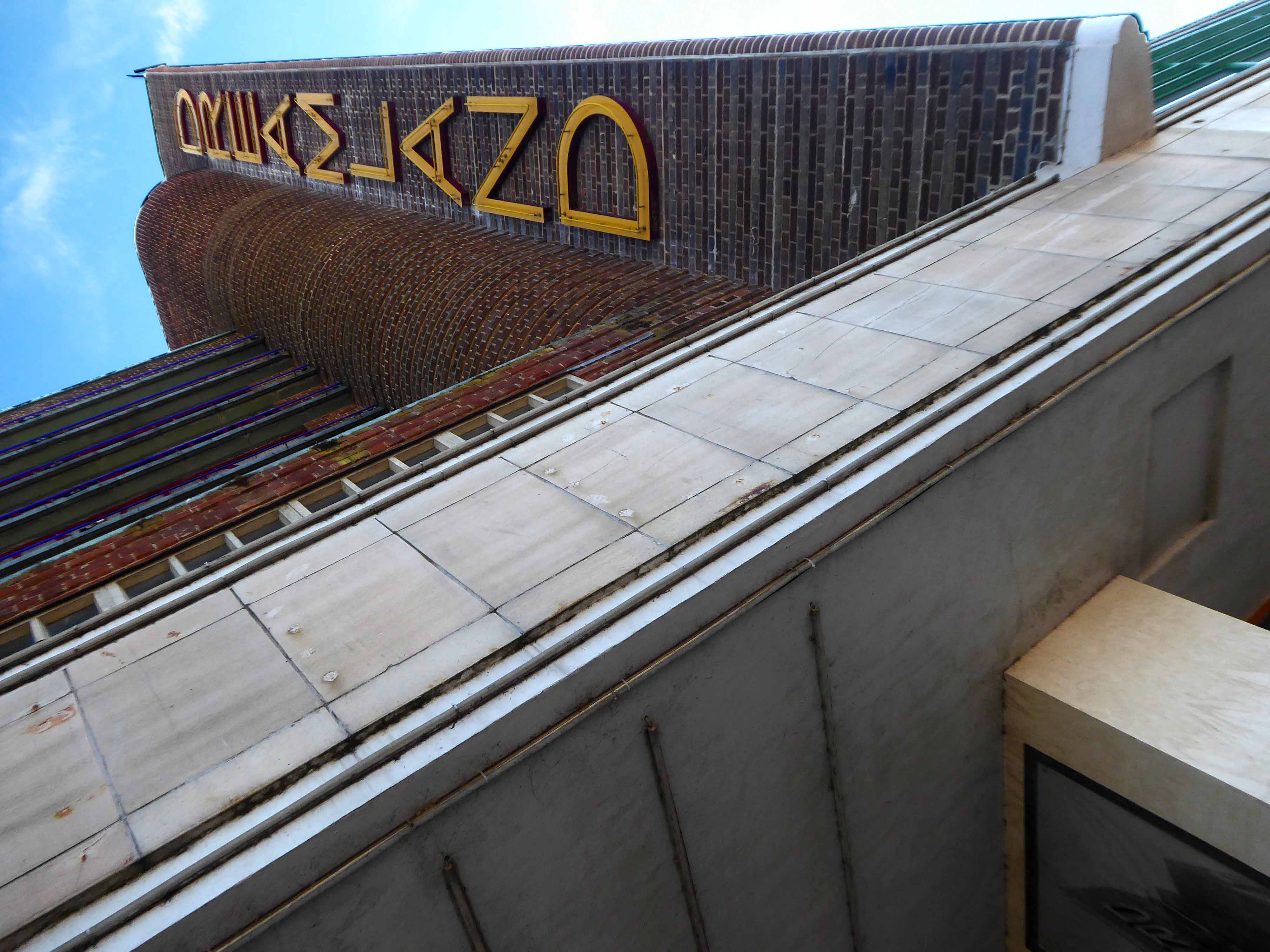
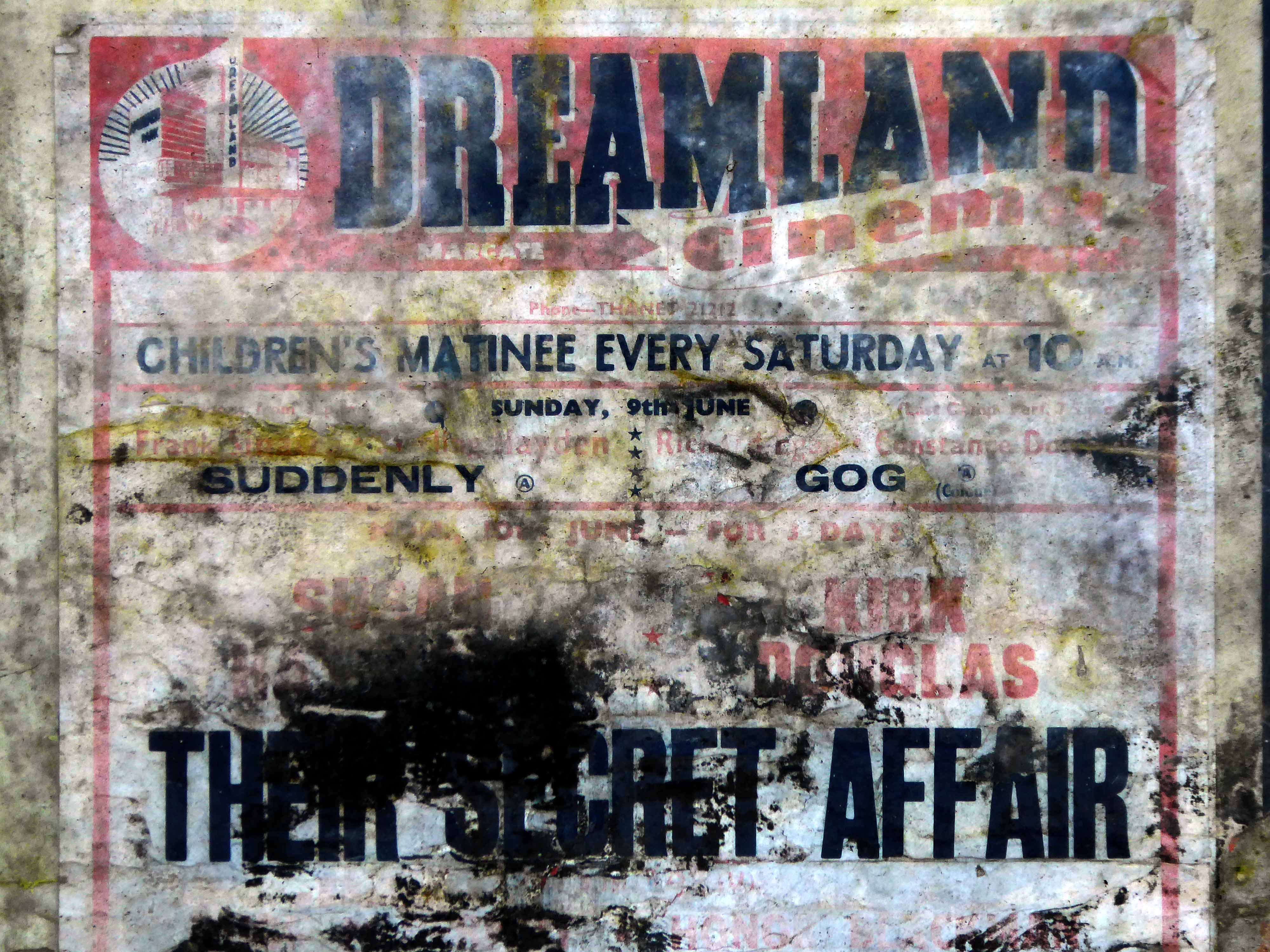
Dreamland was still dreaming.

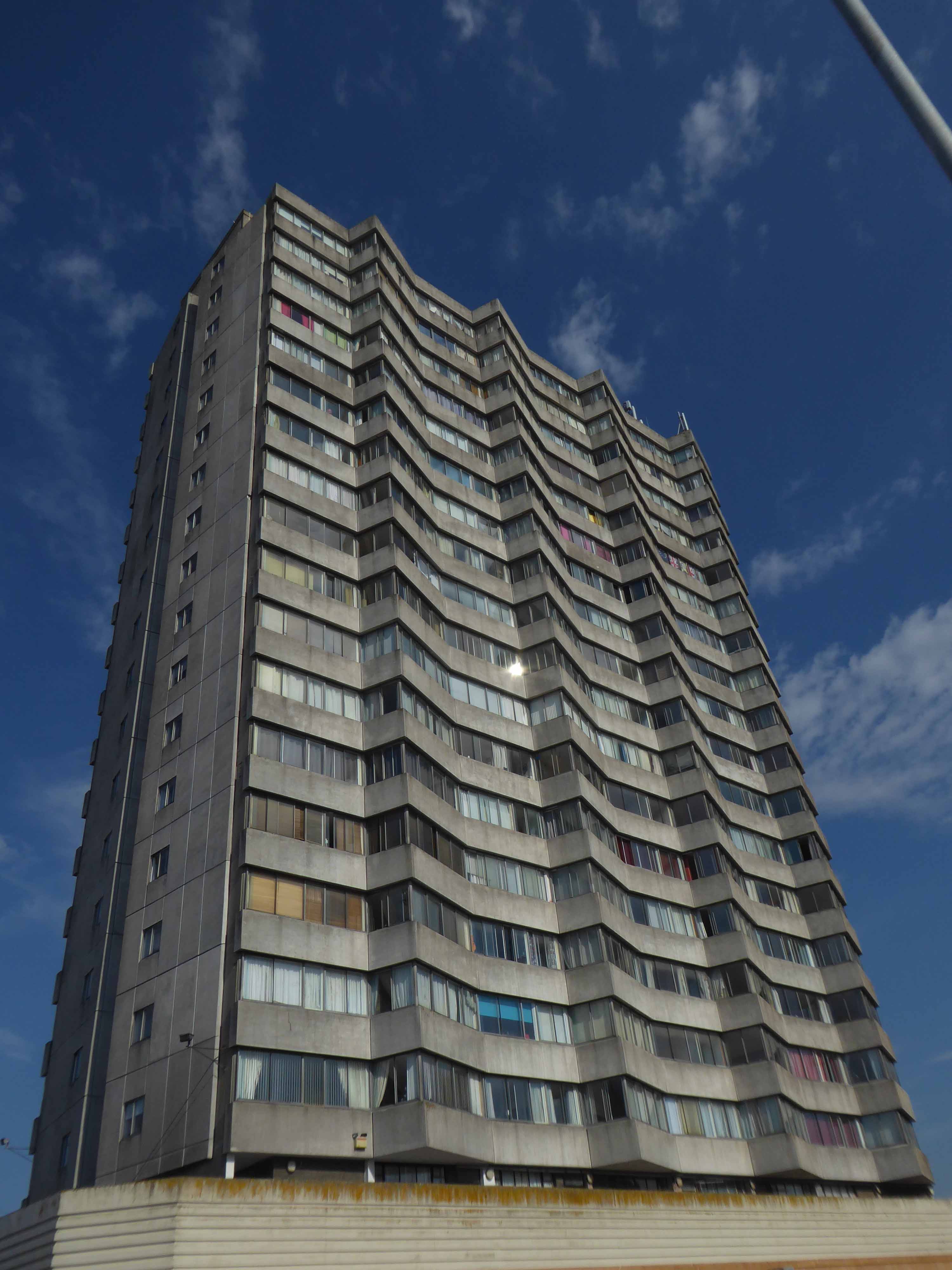
And Arlington House staring steadfastly out to sea.

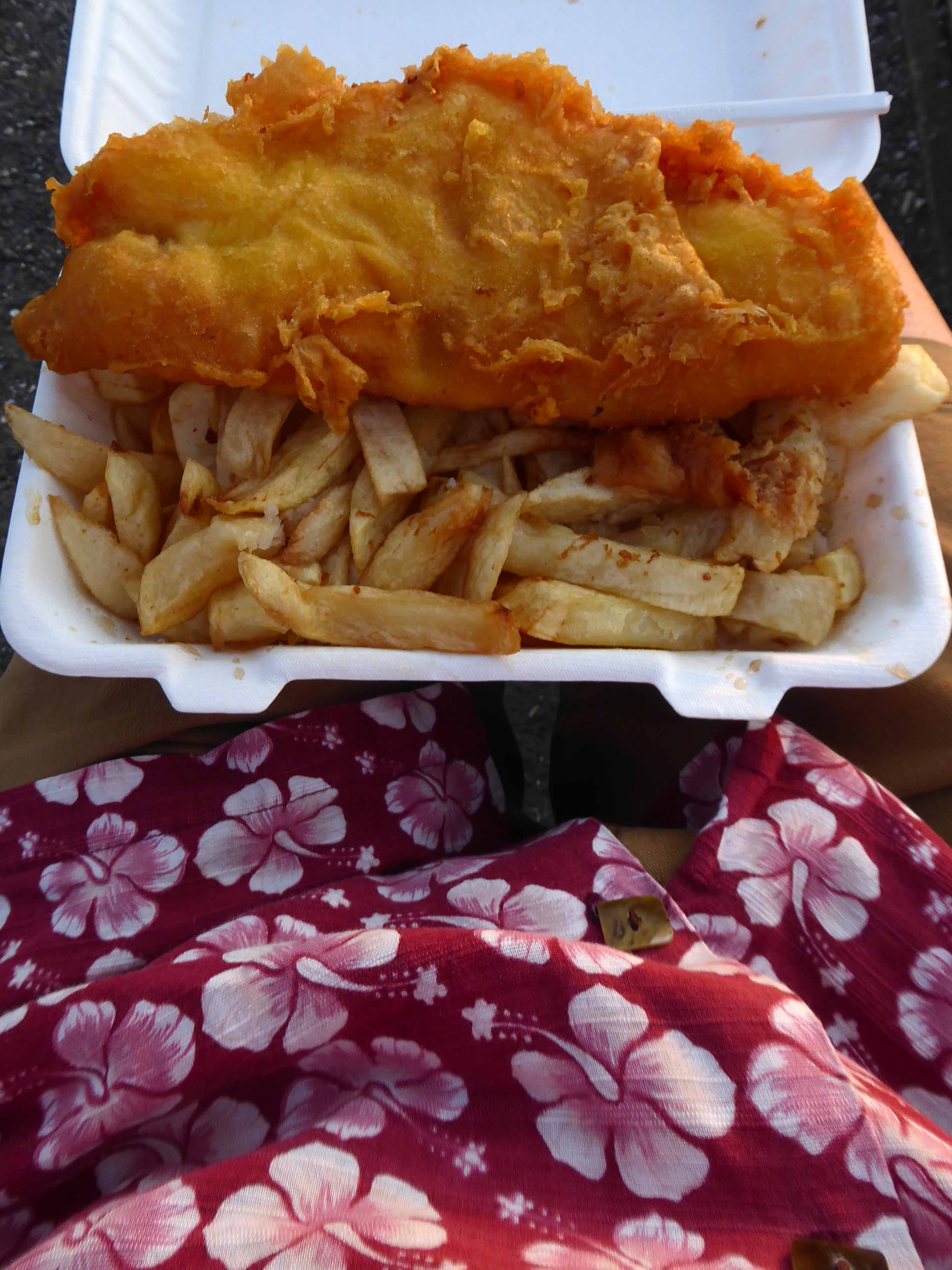
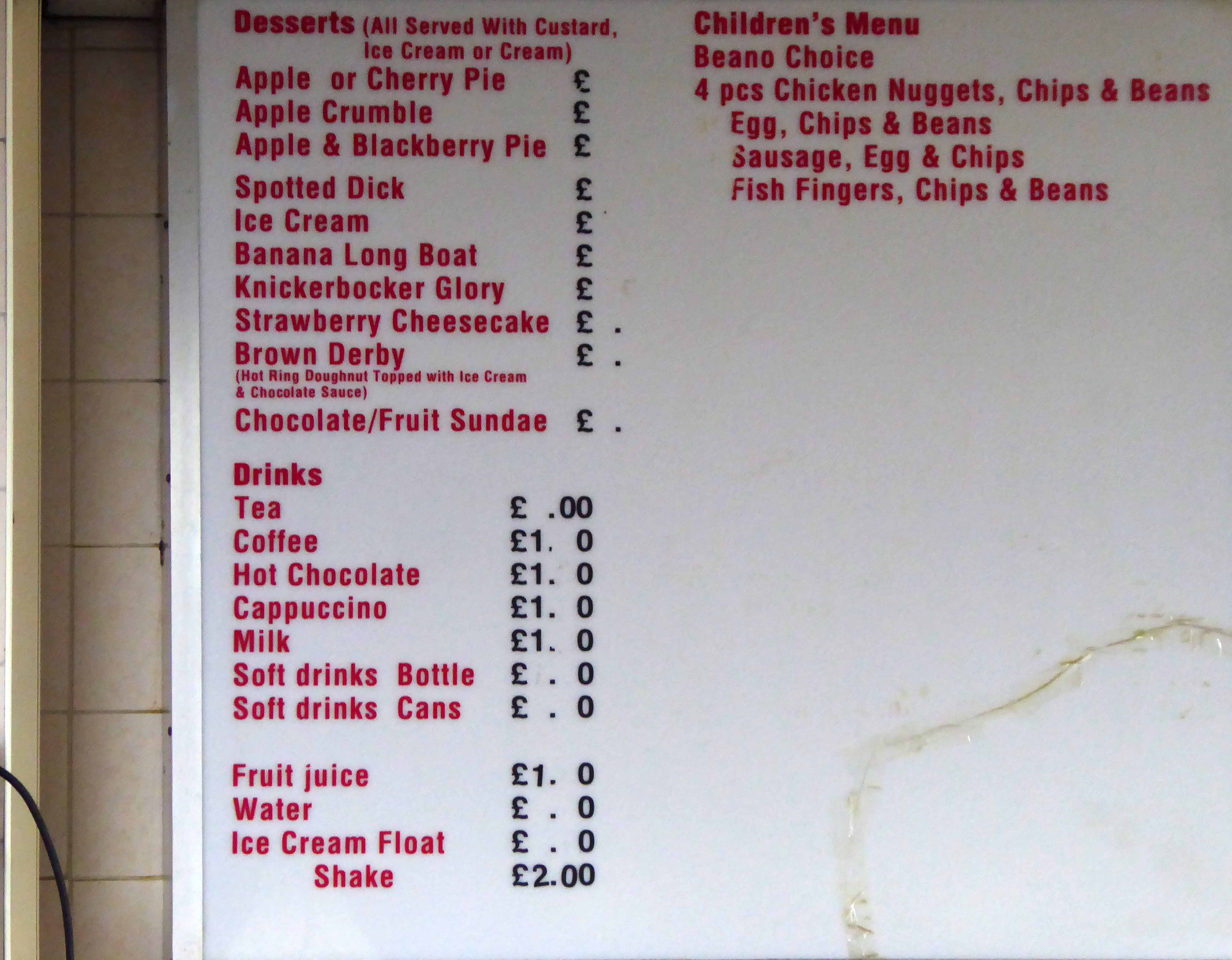
Time now for tea and a welcome plate of chish and fips at the Beano Cafe.

I miss my haddock and chips from Beano in Margate, brought to you with a smile and he remembers everyone.

Great customer service and friendly staff, see you soon.

The food is awful and the customer service is even worse: when we complained about the food the staff argued with us and wouldn’t do anything to change the food or refund, avoid at all costs!

Trip Advisor

Time for a wander around Cliftonville.

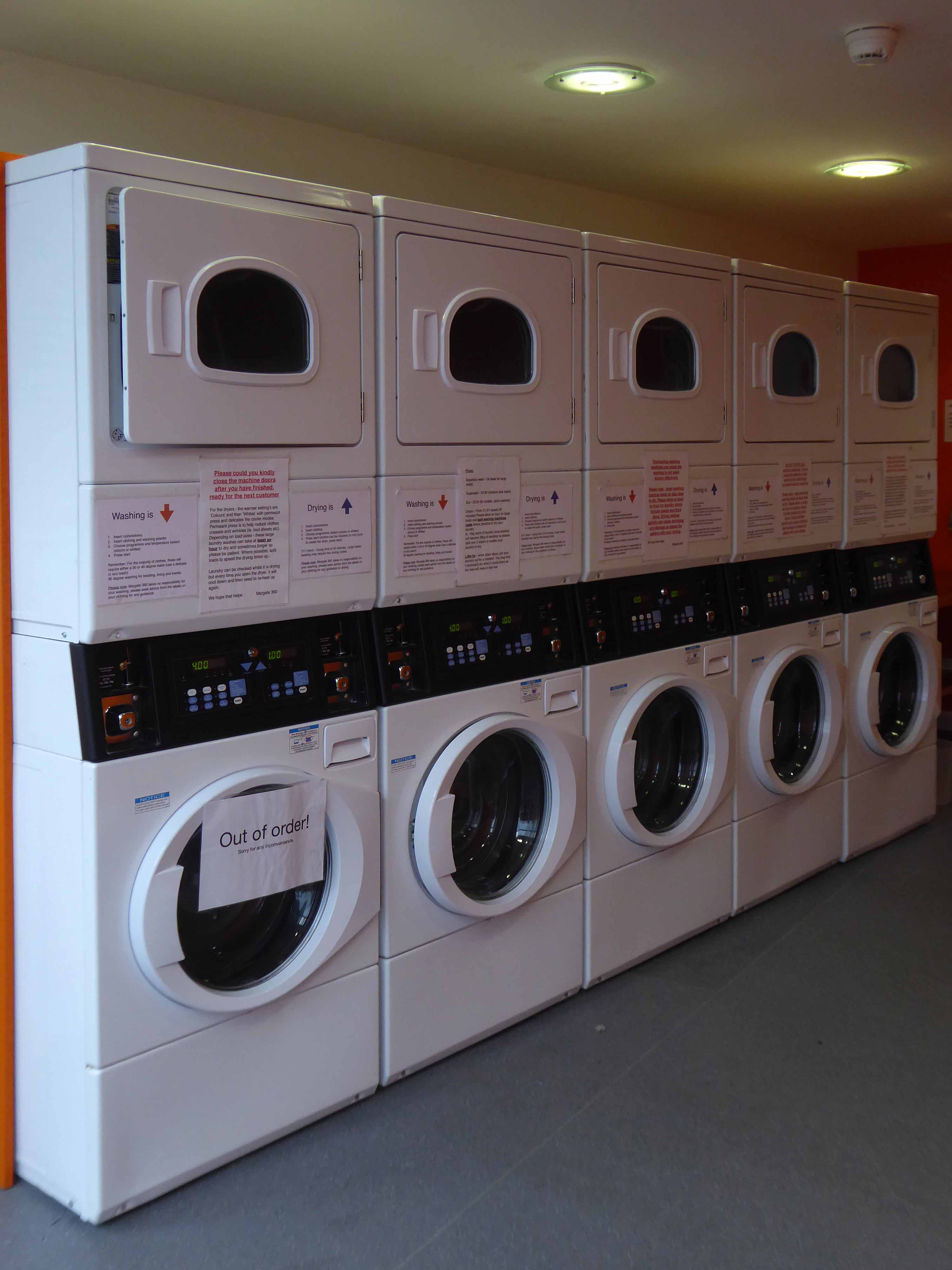
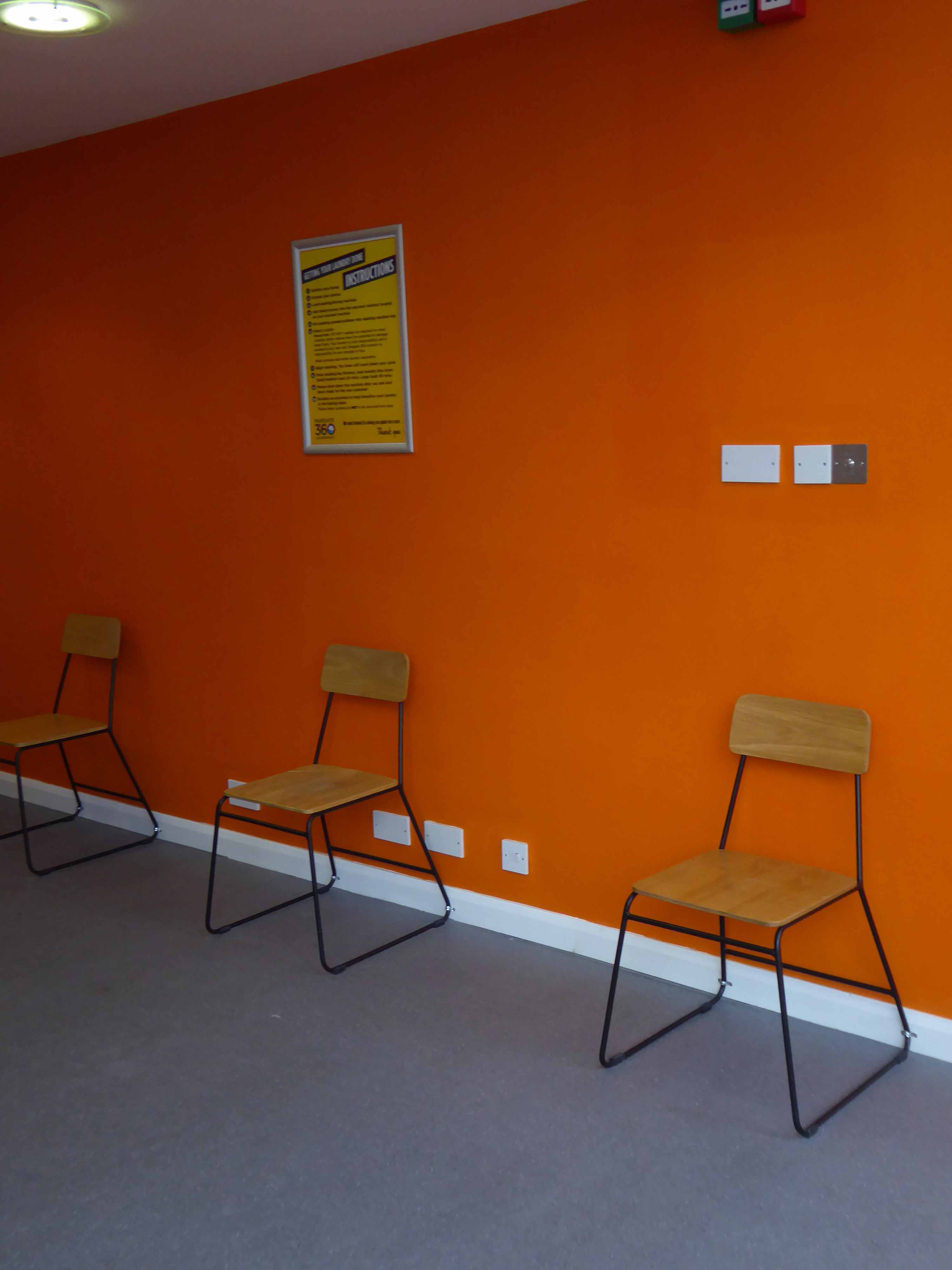
Discovering a shiny new launderette.

And a launderette that wasn’t a launderette – it’s a Werkhaus that isn’t a workhouse.

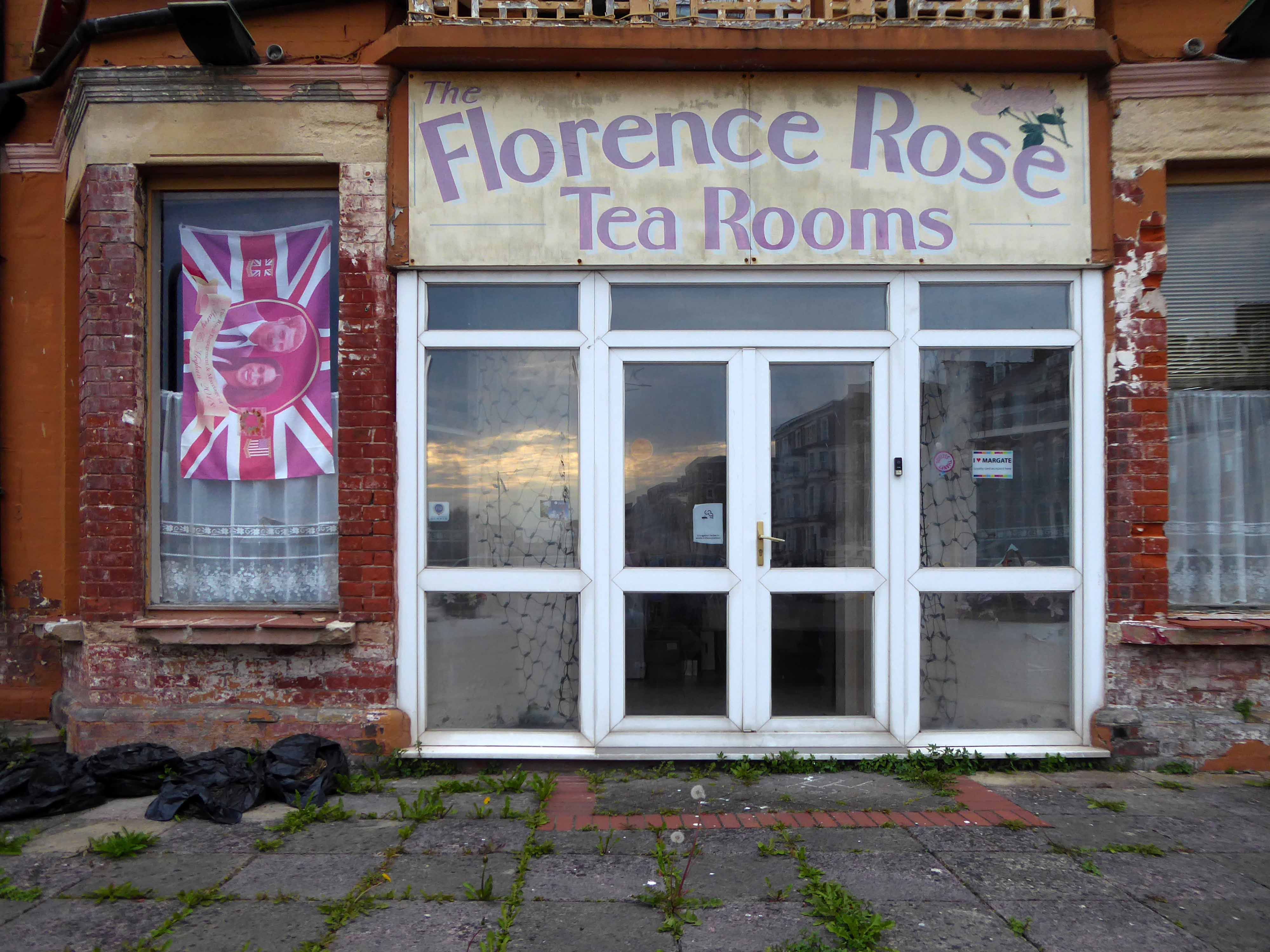
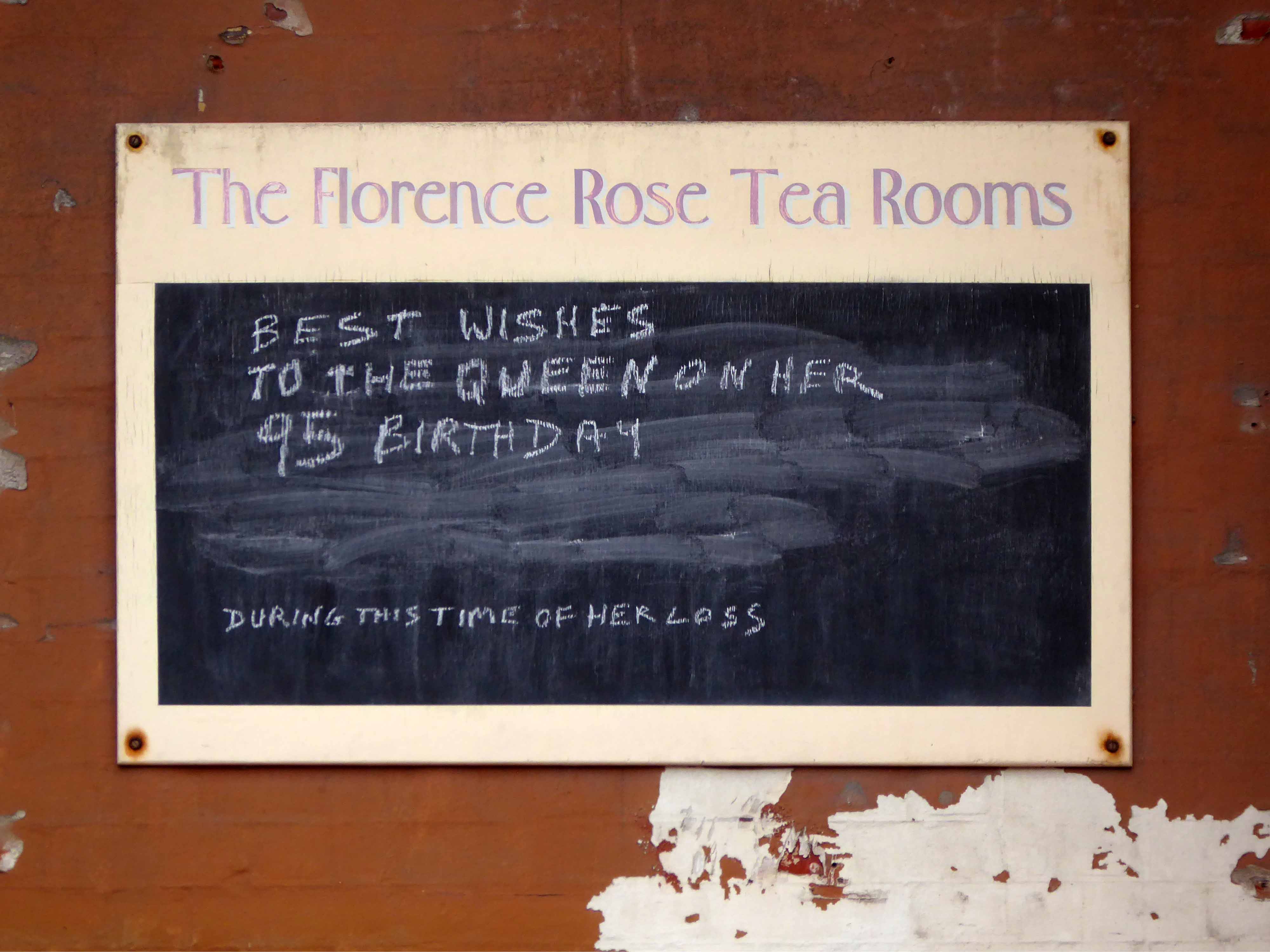
And a patriotic tea rooms.

So farewell then the south coast – we’re off home on the train in the morning.

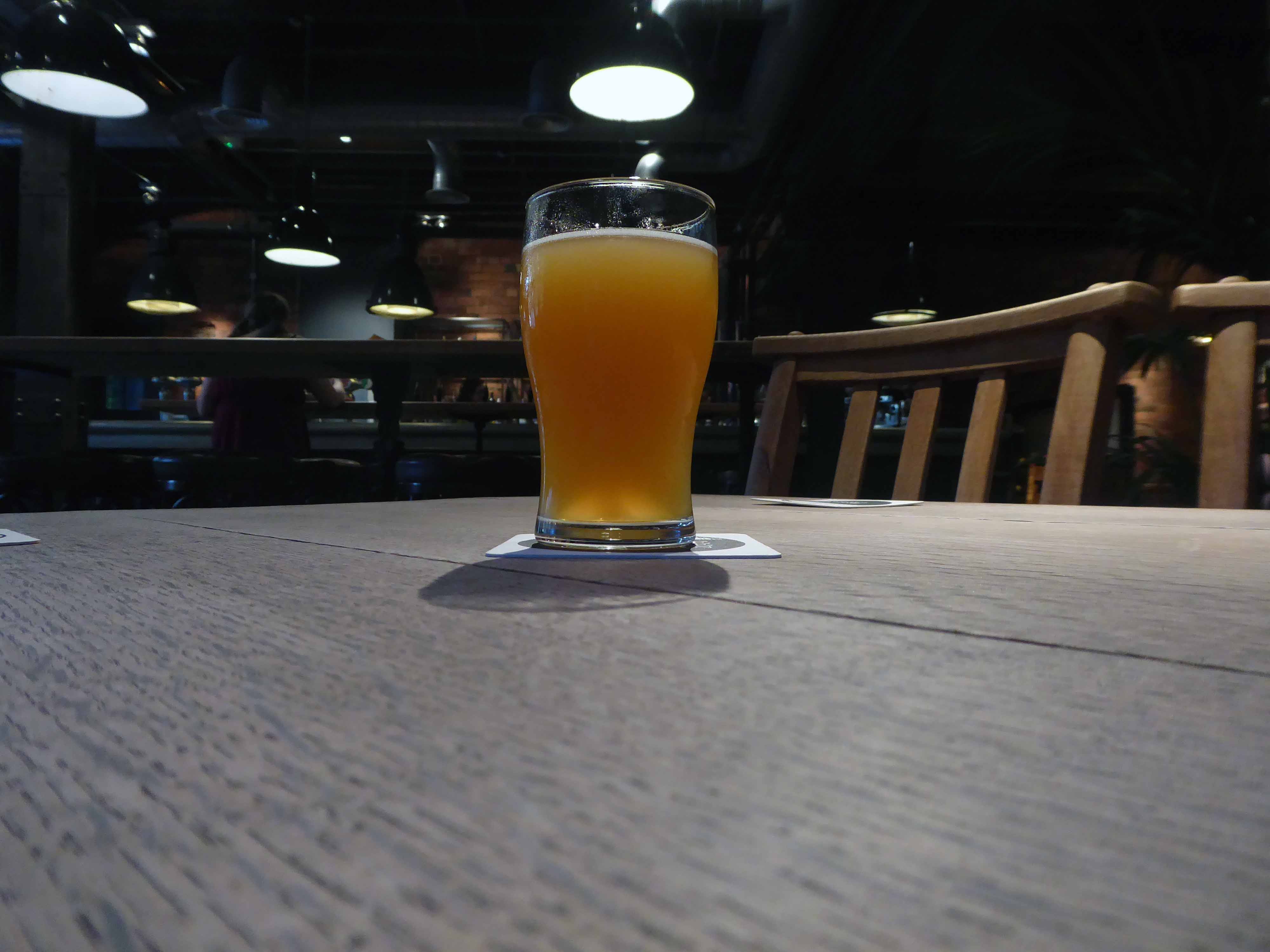
But first a pint or two.

Hull Walk 2021

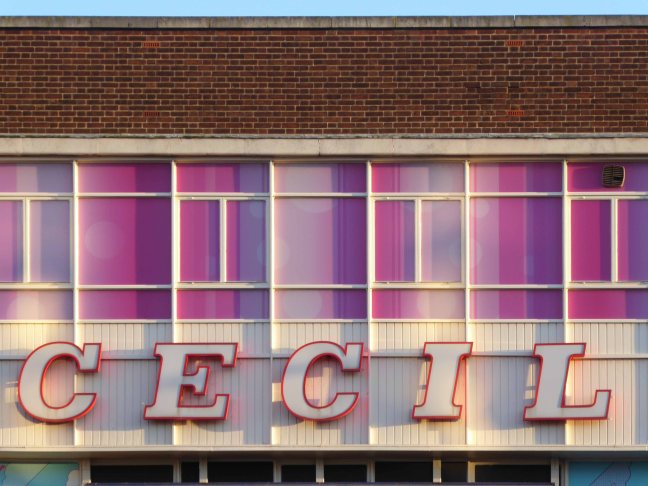
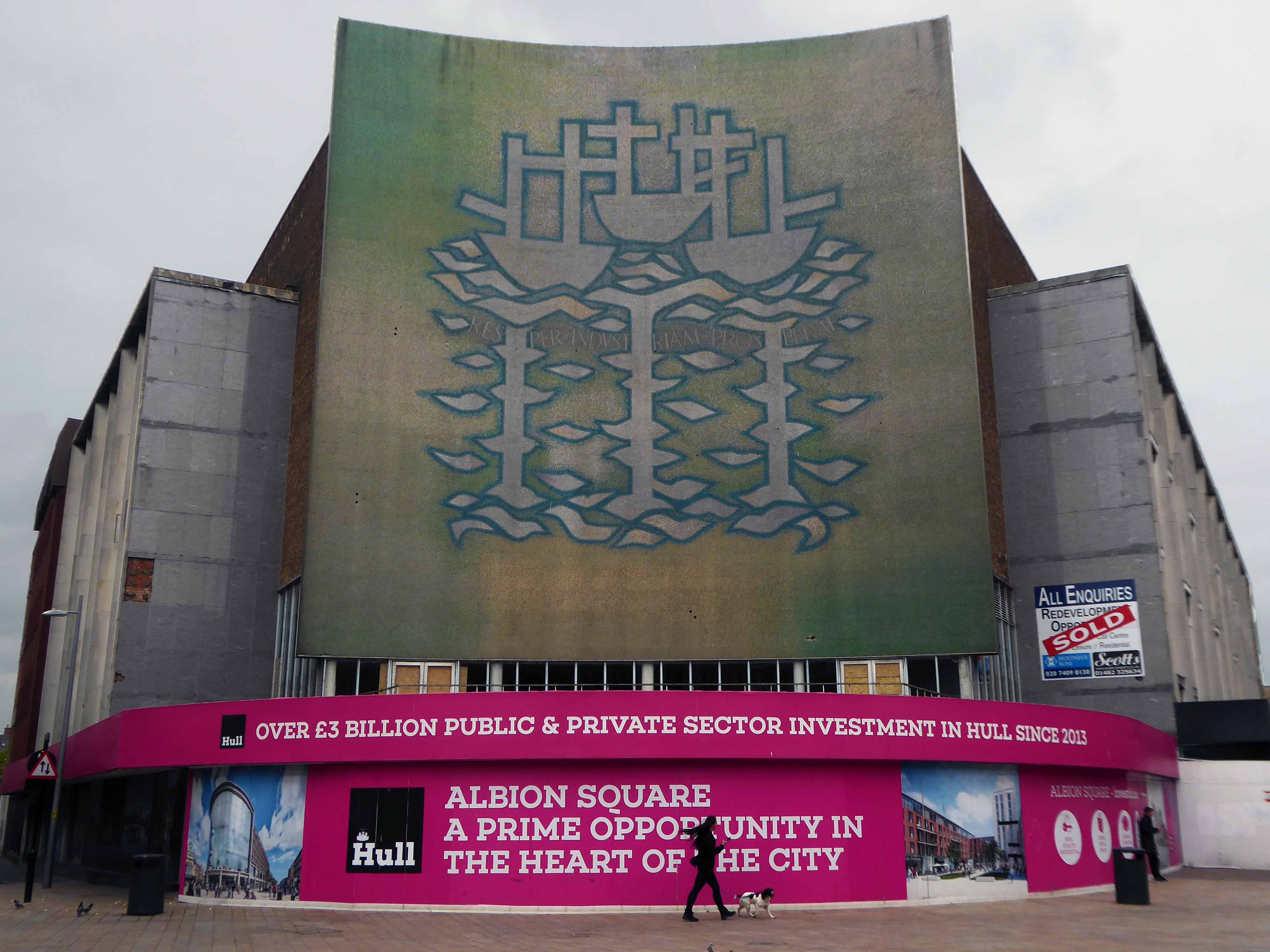
Turn right out of the station toward the Cecil Cinema.

The Theatre De-Luxe was built in 1911 at the corner of Anlaby Road and Ferensway with its entrance in Anlaby Road and its auditorium along the side of the pavement in Ferensway. Kinematograph Year Book of 1914 lists 600 seats and the owners as National Electric Picture Theatres Ltd.

In 1925, the theatre was rebuilt to a radically altered ground-plan and renamed the Cecil Theatre. 

The Cecil Theatre’s demise came during bombing on the night of 7/8 May 1941 when German incendiary bombs reduced the building to a shell; and it remained like that until demolition in 1953.

Work on the new Cecil Theatre was begun in April 1955 and it was opened on 28th November 1955 with 1,374 seats in the stalls and 678 in the balcony.

Architects: Gelder and Kitchca

At the time of opening it had the largest CinemaScope screen in the country measuring 57 feet wide, and the first film shown was Marilyn Monroe The Seven Year Itch.

In the 1980’s it was taken over by the Cannon Cinemas chain. The cinema operation was closed on 23rd March 1992 and the cinemas were ‘For Sale and/or Lease. It was taken over by Take Two Cinemas and renamed Take Two Cinema. It was closed on 27th February 1997 and the two screens in the former circle were stripped out and converted into a snooker club.

Whilst bingo continues in the former stalls area of this post war 
cinema, the former mini cinemas in the circle still contain the snooker tables, but the space is unused. The screen in the former restaurant/cafe area remains basically intact, but is unused.

Cinema Treasures

Whilst circumnavigating the Cecil one can’t help but notice the KCOM HQ – and its distinctive white telephone kiosks.

The work of City Architect A Rankine OBE RIBA

When Hull City Council founded KCOM back in 1904, as Hull Telephone Department, it was one of several local authorities across the country granted a licence to run its own phone network.

1952 Call Father Christmas service was introduced.

Having heard of a recorded message service in Scandinavia, Hull Councillor J M Stamper suggested the idea of putting Father Christmas on the telephone. The Call Father Christmas service was introduced shortly afterwards, the first of its kind in the UK. By dialling a Hull Central number children could hear recordings of a Christmas story and carol singing. 

The success of the Father Christmas service led to the creation of other recorded information lines, such as Bedtime Stories, Teledisc and Telechef. 

This recipe line was introduced in 1950s and was still going strong until the 1990’s, with 50s recipes such as meat loaf and corned beef with cabbages being replaced by dishes such as Italian Chicken Bake.

Returning to Ferensway we are confronted by the Danish Seaman’s Church.

Sea trade created a large Danish community which Hull’s very own Amy Johnson was descended from. Her grandfather was Anders Jorgensen, who anglicised his name to the more pronounceable Andrew Johnson. A Danish pastor was appointed and an old chapel in Osborne Street was purchased in 1841.

It was on May 9, 1954, that the present church, with its now familiar separate bell tower, was consecrated by the Bishop of Copenhagen.

Around the corner we find Porter Street Housing.

Hull was the most severely damaged British city or town during the Second World War, with 95 percent of houses damaged. It was under air raid alert for one thousand hours. Hull was the target of the first daylight raid of the war and the last piloted air raid on Britain.

Of a population of approximately three hundred and twenty thousand at the beginning of the war, approximately one hundred and fifty two thousand were made homeless as a result of bomb destruction or damage. 

Overall almost one thousand two hundred people were killed and three thousand injured by air raids.

Despite the damage the port continued to function throughout the war.

The earliest housing was built just after World War II, starting with what is known locally as Australia Houses

A circular five storey housing block off Porter and Adelaide Streets, with a communal garden in the middle. These flats consist of deck access flats and some traditional style Art Deco tenements. Some are three bedroom, and have been refurbished over the years.

UK Housing

Porter Street – three six-storey blocks containing seventy dwellings of 1954

Contractor J Mather

New Michael Street and Melville Street aka Upper Union Street one hundred and eight dwellings in three nine-storey blocks of 1958

Contractor Truscon

The designer behind Hull’s tower blocks was Andrew Rankine RIBA, who from 1939 remained City Architect until his retirement in 1961.

Just around the corner:

Over the last three years both companies have worked on undertaking the complex development of an off-site constructed, low carbon, Code 5 housing product. Working with Hodson Architects on the design the project will provide 3-bed family houses on the Thornton Estate in Hull. The scheme will increase provision of suitably sized accommodation in the area for families.

The project will see Premier Interlink manufacture the steel framed modules at the factory in Brandesburton East Yorkshire starting this March. The five houses are to be prefabricated off-site, with each house comprising of four separate units which are then assembled on site. This offers the benefit of reducing construction time, improving efficiency, reducing material wastage and offering an improved thermal envelope.

Premier Modular

The Goodwin Trust, a brilliant and pioneering community group, decided the new version of pre-fab, or ‘modular’ housing, was exactly what was needed to provide affordable housing for the people it also cares for in so many other different ways.

Locality

Onward to Holy Apostles Church now home to Hull Truck and renamed Thornton Village Hall.

Architects: Ferrey and Mennim

Back toward the station and Hammonds of Hull/House of Fraser – soon to be a food court, artisan everything outlet.

Built in 1952 on Paragon Square to designs by T. P. Bennett, with extensions added in 1954 and 1957. Within a couple of years the business had grown again by opening its own hairdressing salon, and in 1960 added a new warehouse to accommodate their furniture workshops and stock rooms. This itself was extended within four years, while a fourth floor was added to the main store.

On the right a civic building Festival House of 1951.

Architect: John Brandon-Jones.

Apprenticed to Lutyens‘ assistant Oswald Milne and later working with Charles Cowles-Voysey

With his good friend, John Betjeman, he helped found the Victorian Society in 1958.

On 1st May 1951, the foundation stone of Festival House was laid, to commemorate the first permanent building to be built in the city centre since the 1941 Blitz. Placed under the stone was a time capsule containing coins, stamps, a Festival of Britain programme, a copy of that day’s Hull Daily Mail, and a booklet about the city. Festival House was owned by Hull Corporation on behalf of the people of Hull.

Before us Alan Boyson’s Three Ships – now listed and set for preservation.

The fate of the attached former CO-OP/BHS is less secure.

Architect: Philip Andrew

Onward to the Queens Gardens the almost filled in former Queens Dock – forever fourteen feet below sea level.

We encounter Tonkin Liu’s Solar Gate – a sundial that uses solar alignment to mark significant times and dates in Hull. The super-light innovative two-shell structure is place-specific, responding to pivotal historic events and to the cultural context of its location in Hull’s Queens Gardens adjacent to the ancient site of Beverley Gate.

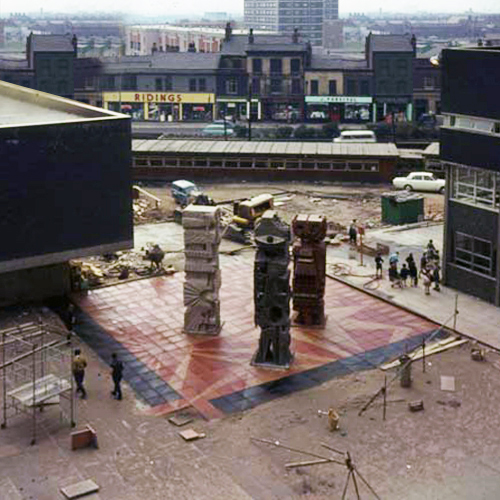
Carved stone panels Kenneth Carter 1960 – Ken’s art career began as an inspiring teacher, first at his alma mater, Hull College of Art, and later as principal lecturer at Exeter College of Art.

A number of decorative fountains featured in the ponds; those at the eastern end designed as part of the sculptured panels of 1960, by Robert Adams, described by Herbert Read as belonging to: 

The iconography of despair. Here are images of flight, of ragged claws, scuttling across floors of silent seas, of excoriated flesh, frustrated sex, the geometry of fear.

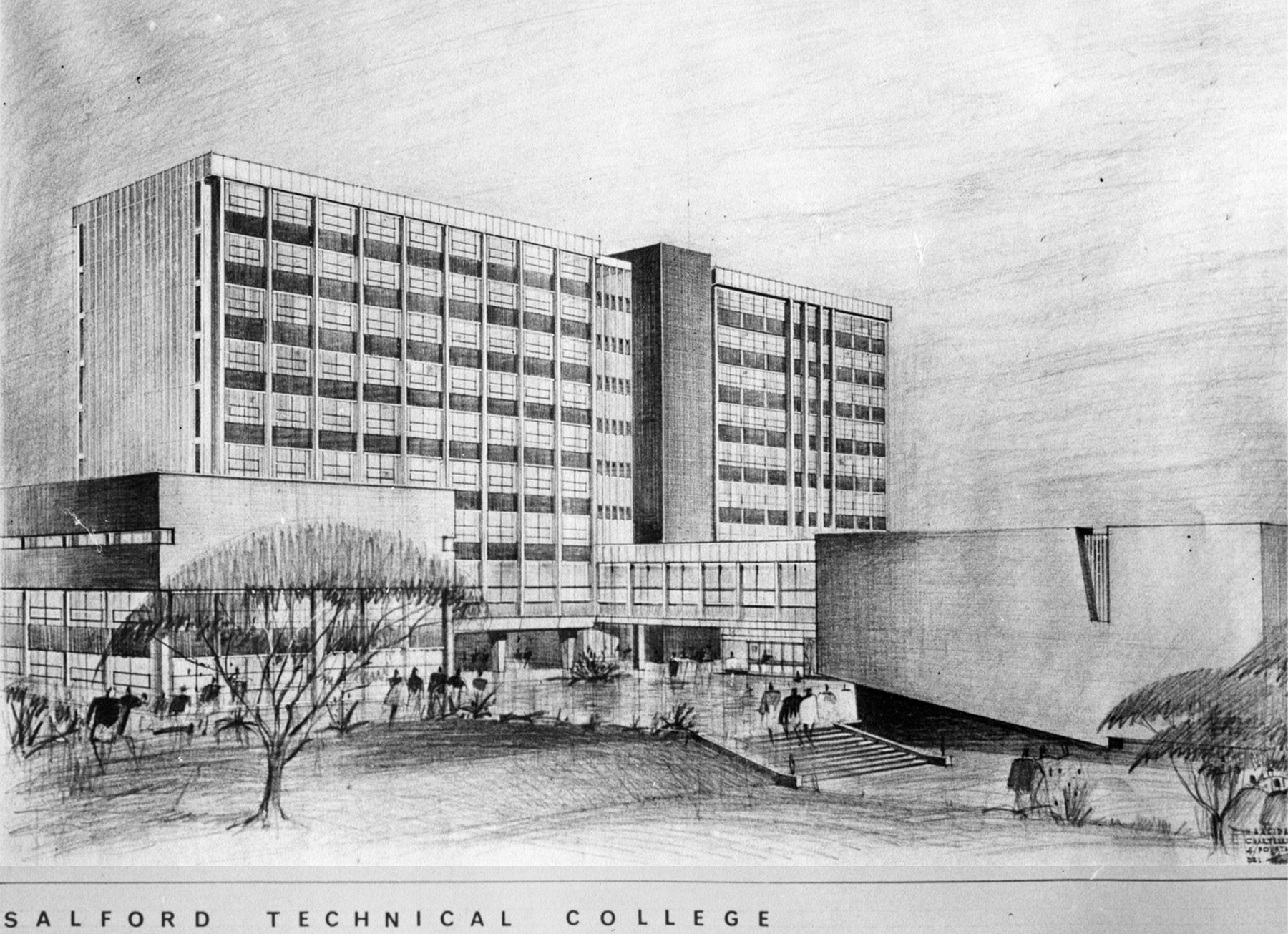
And behind we glimpse Frederick Gibberd’s fine Technical College.

Adorned by the William Mitchell relief.

Southampton to Portsmouth

We arrived safely by train from Stockport at Southampton Central.

Following lengthy consideration we headed off on our bikes.

Whilst halting to review our progress, I realised that I had lost the map, a map vital to our further progress.

Returning to the station I found it nestled against the kerb.

Further assessment of our onward journey resulted in yet another retracing of steps.

In the shadow of Southampton Station dwarfed by Norwich House.

Resolute, we confront the fact that we are unsure of the route and following close scrutiny of the map, our environs and the surrounding signage, we proceed eastward towards our destination.

Wyndham Court – architects Lyons Israel Ellis, E.D. Lyons being the partner in charge along with Frank Linden and Aubrey Hume.

Leaving the city and heading along the Weston Shore – Southampton Water.

To our right several Seaside Moderne shelters

Tim feasts on a Mint Club biscuit.

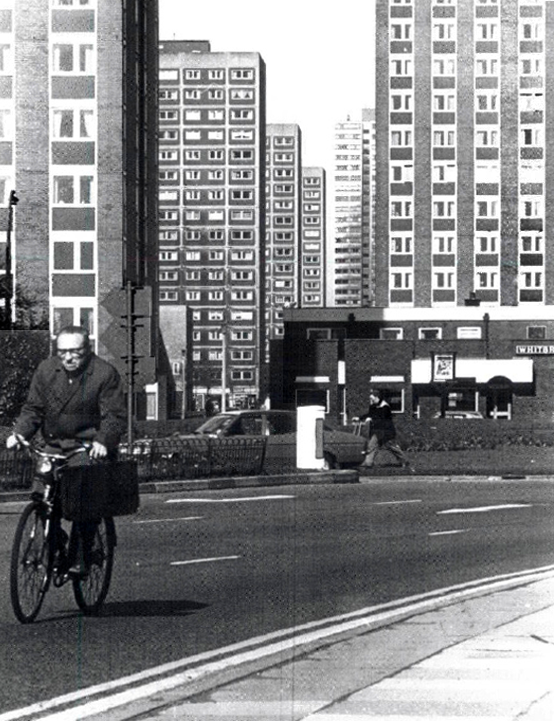
To our left are the tower blocks of Weston Farm Foreshore – L. Berger City Architect 1963

Seen here in 1985 – Tower Block.

In the distance Canberra Towers Ryder and Yates 1967

Residents living on the second floor of 24-floor block Canberra Towers, on Kingsclere Avenue in Weston, were told to evacuate as flames erupted inside a kitchen.

The Daily Echo spoke to the residents of the affected flat, who said the cat knocked paper that was on top of the microwave, which then fell onto the toaster.

Tracey Long said:

I’ve got two cats, and Sponge was the one who knocked the paper.

He knocked paper off the microwave and into the toaster, it was quite scary.

I lost him in the flat but now I’ve found him again.

Daily Echo

Arriving just in time to be too late, next thing you know we’re bobbing along on the Hamble Warsash Ferry.

The obliging ferry folk having taken us across the estuary, despite our tardiness.

The village and the River featured in the 1980s BBC television series Howards’ Way.

Sadly little evidence of the successful TV show remains, however happily Henry VIII’s Dock and an Iron Age Fort have prevailed.

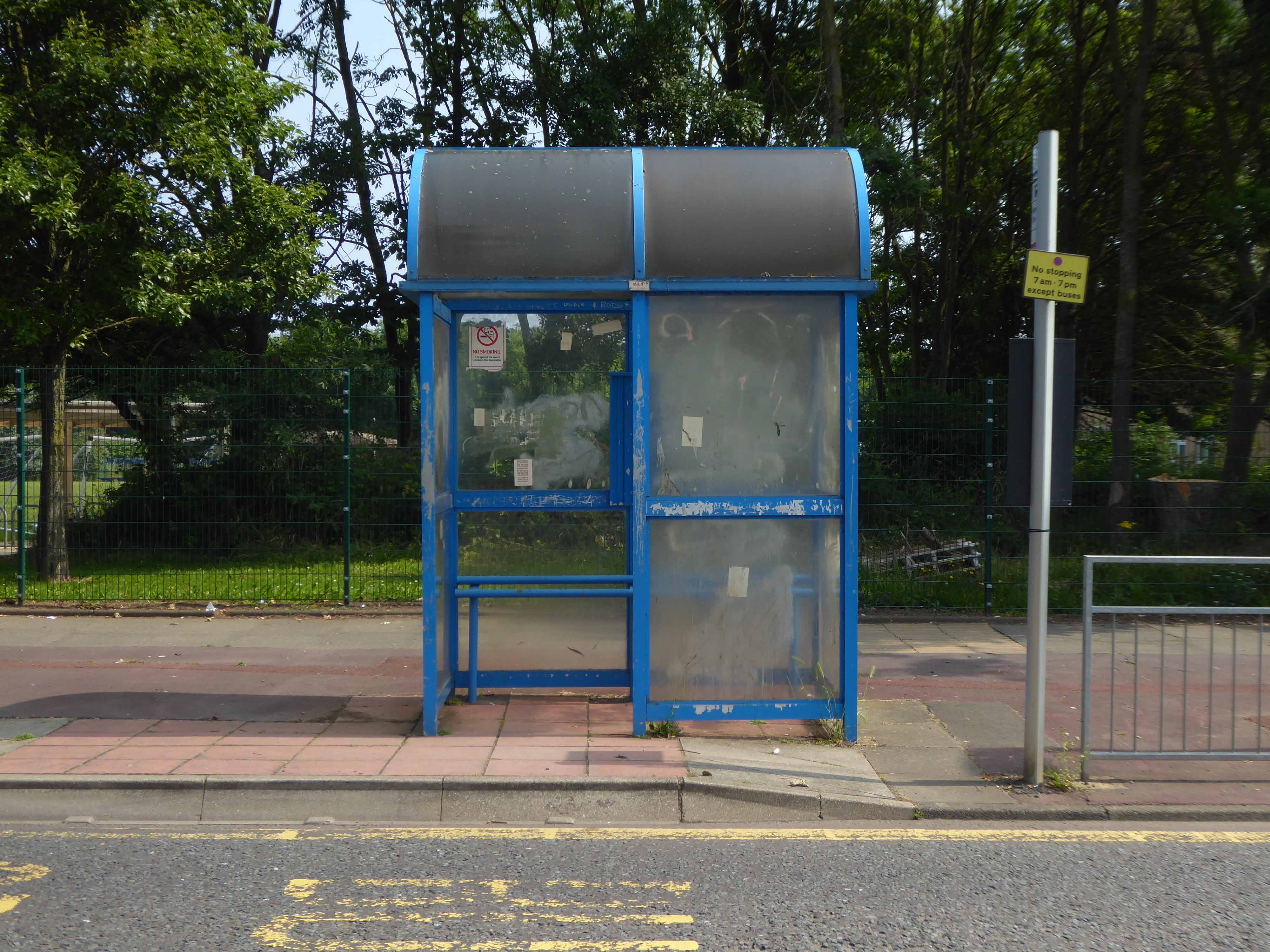
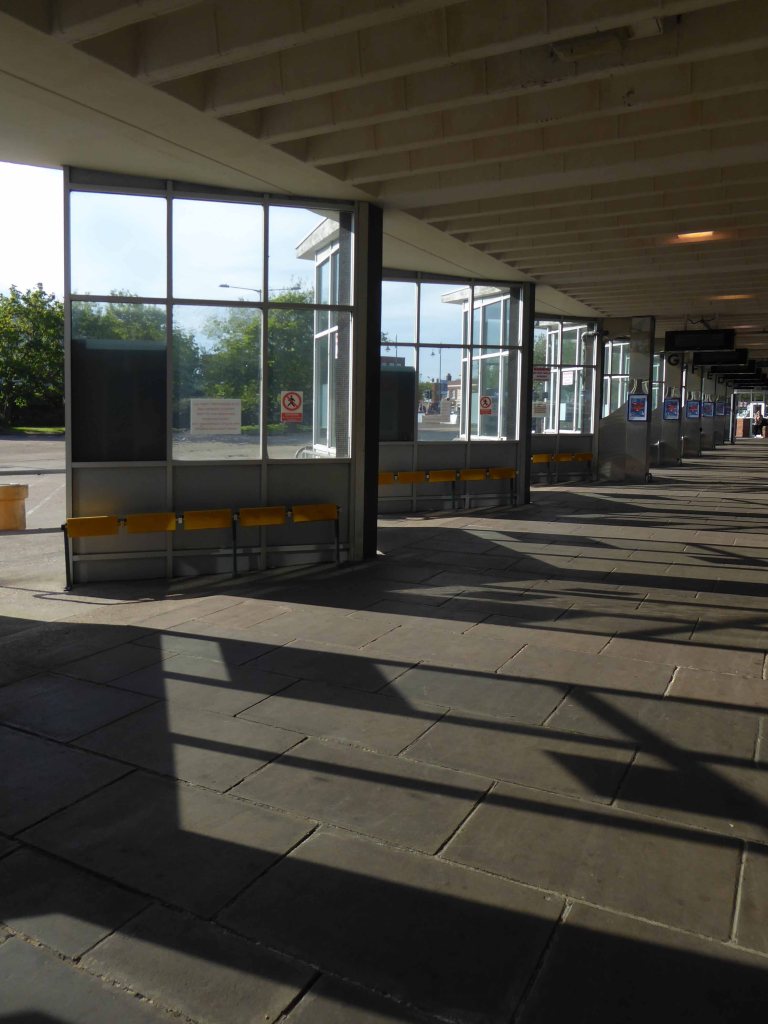
Onward to Gosport where we happen upon a diminutive yet perfectly formed Bus Station.

Originally built in the 1970s, the bus station was described in 2012 as knackered by the council chief executive at the time, Ian Lycett, and an investment plan was drawn up.

Talk of redevelopment then resurfaced in 2015, before the site was put on the market in 2016.

The News

Keith Carter, retiring owner of Keith’s Heel Bar in Gosport Precinct, has described the bus station as a missed opportunity.

The nearby Harbour and Seaward Towers have faired a little better, newly clad and their tiled murals intact.

While working for George Wimpey and Co. Ltd, and together with J E Tyrrell, Chief Architectural Assistant to Gosport Borough Council, Kenneth Barden was responsible for tiled murals on Seaward Tower and Harbour Tower, two sixteen-storey tower blocks built in 1963 on the Esplanade in Gosport. 

They really are something they really are.

And so following a ride on the Gosport Ferry we arrive at Portsmouth Harbour.

The land where British Rail signage refuses to die!

I have passed this way before on a Bournemouth to Pompey trip and both Tim and I were students at the Poly here in the 70s – more of which later.

Tiles – St Pauls Road Preston

Preston Vocational Centre PR1 1PX

Traversing the mighty A6, as it passes through Preston and on up along St Pauls Road.

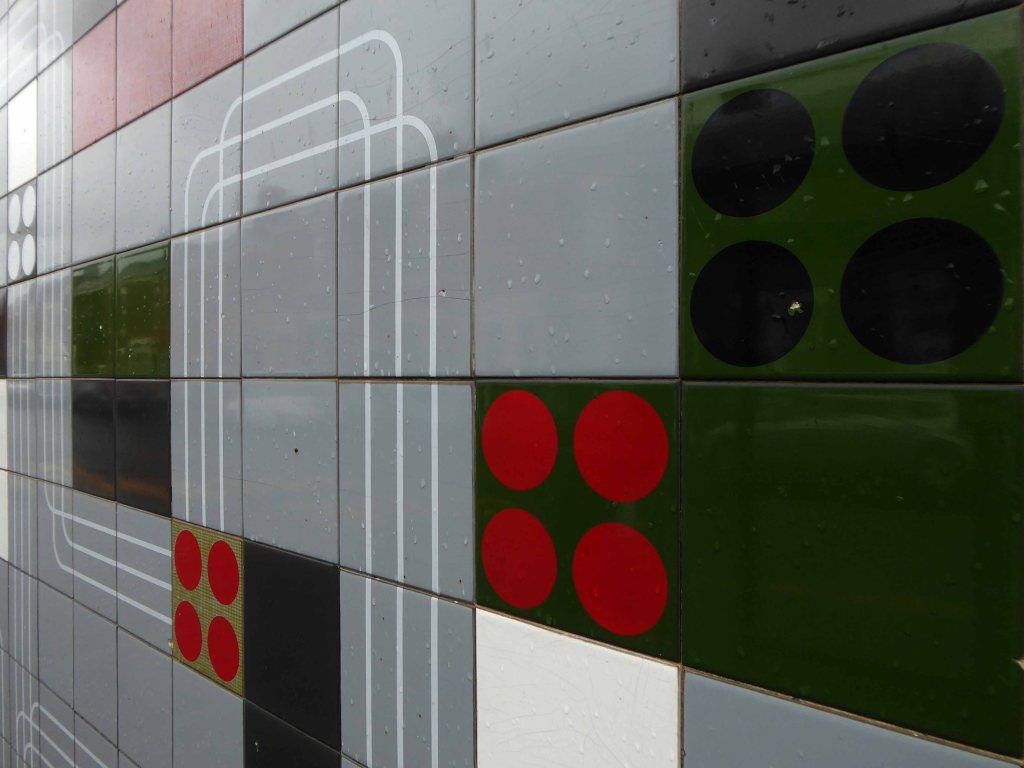
You’re in for a big surprise, for on the wall of the Vocational Centre is a splendid display of tiles.

Fiercely geometric, featuring strong linking lines and dynamic dotty dots, softened by a delicate hand-drawn woven mesh.

The varied and distinctive palette set against a pale mid-grey ground.

Well worth the walk even on the rainiest of days in early May.

Reminiscent of the Carter’s Tiles adorning Castle House stairwells in Sheffield.
But actually manufactured by Pilkington’s.

East Park Gates Hull – Concrete Walls

Holderness Rd Hull HU8 8JU

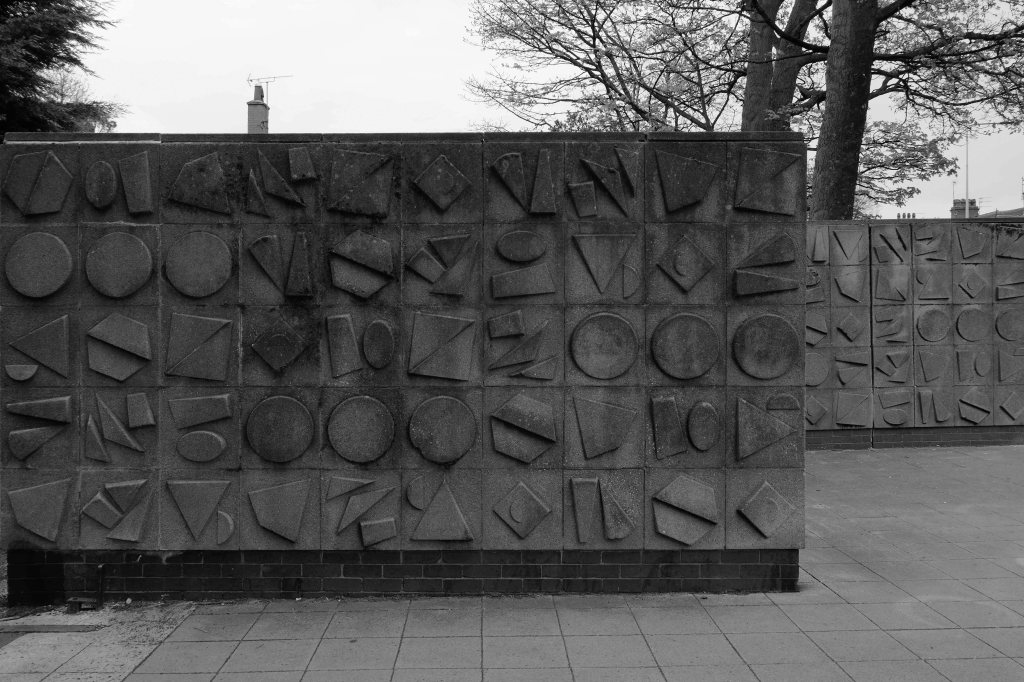
At the entrance to the park on Holderness Road are eight concrete walls.

They are covered in square, cast concrete modular panels.

Said to be the work of the City Architect in 1964.

Municipal Dreams lists the City Architect at that time to be JV Wall, having replaced David Jenkin in that same year.

My money’s on Wall – well it makes sense don’t it?

I had taken the bus from Hull Interchange on a chill April morning.

The driver obligingly giving me a shout at the appropriate stop – right outside the gates.

They are not universally loved:

A further testament to the concrete pourer’s art is to be found adorning the entrance to East Park. They are so horrible that I could find nothing on the net to indicate who designed them, shame is a powerful motive for reticence. So here they stand to welcome the visitor; after this the actual park couldn’t be any worse.

Hull and Hereabouts

I can only assume that the actual park is held in much higher regard, listed and adored by all.

To my mind they are a bold addition to the park’s entrance, very much of their time, yet at the same time, ever so very now!

The has been a gentle patination to the raw surfaces and limited external intervention from the local Tyke taggers.

Take a look make up your mind – yay or nay?

It looks like they’re here to stay.

If you like this then you’ll like this and possibly this.

From Huyton to Hull and back to UMIST – it’s concrete walls all the way.

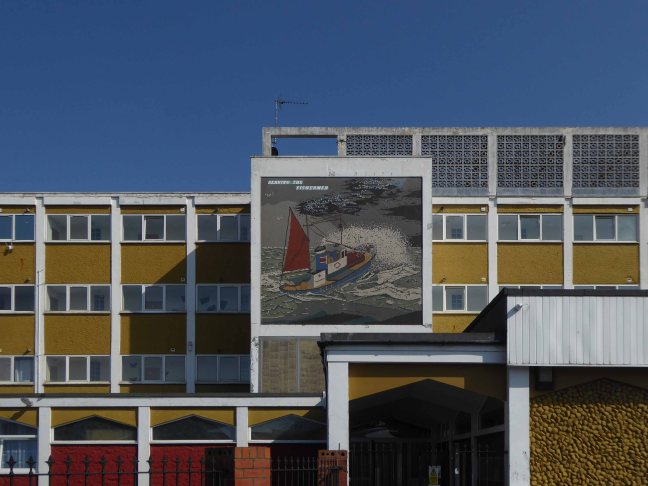
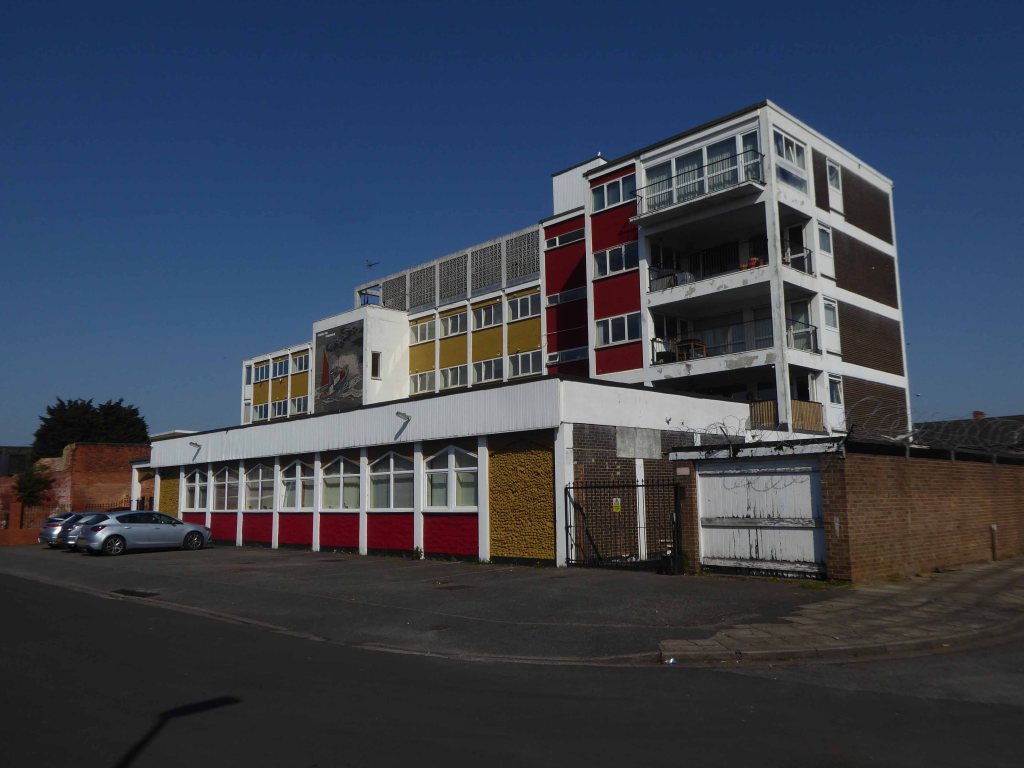
Fishermen’s Mission – Grimsby

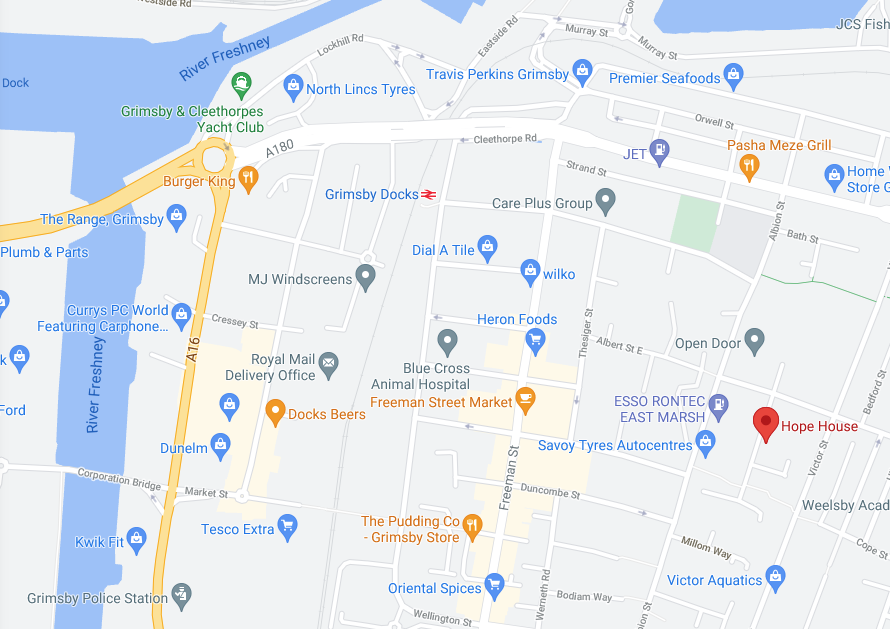
Hope Street Grimsby DN32 7QL

If asked to name the UK’s biggest fishing port many people will answer Grimsby.

That was certainly true in the 1950’s when over 500 trawlers set out to sea, today only a handful of boats remain.

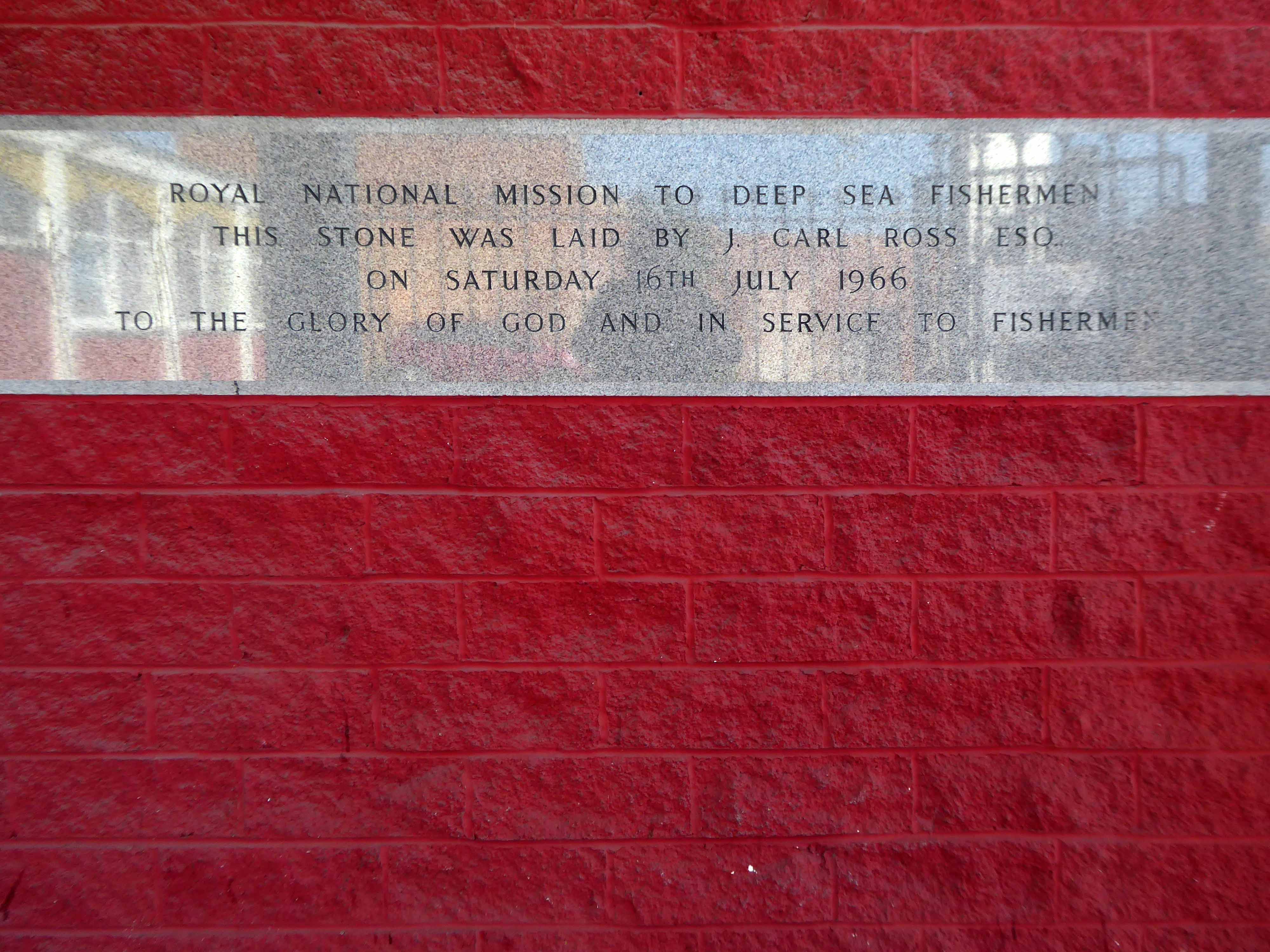
The Fishermen’s Mission

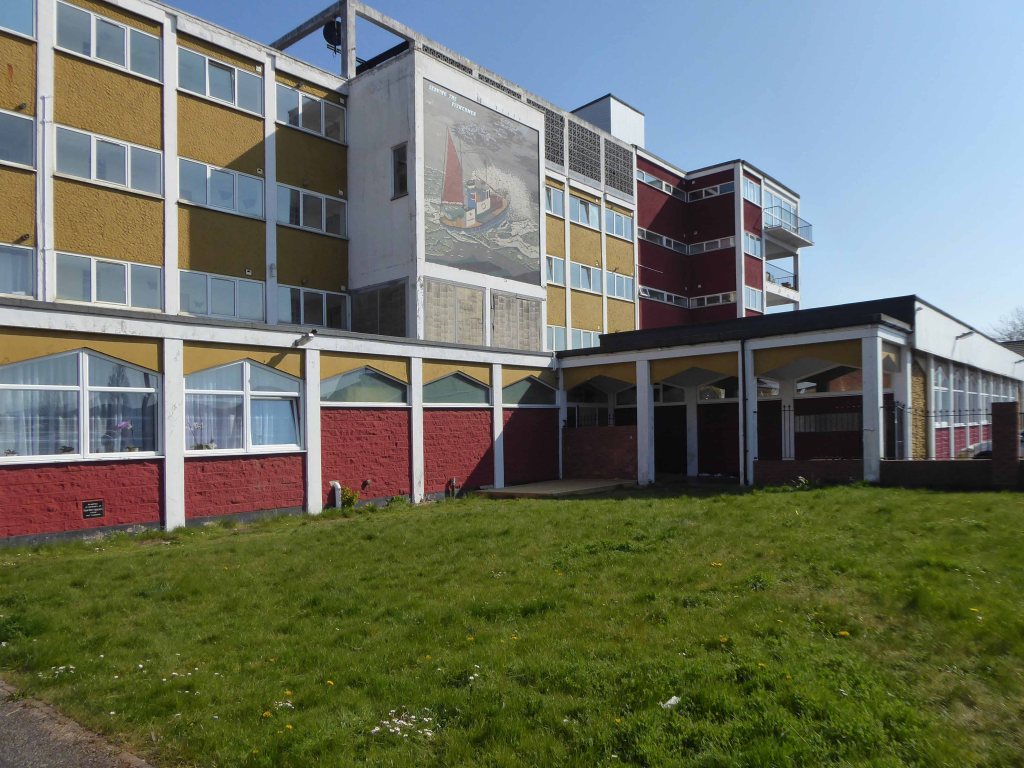
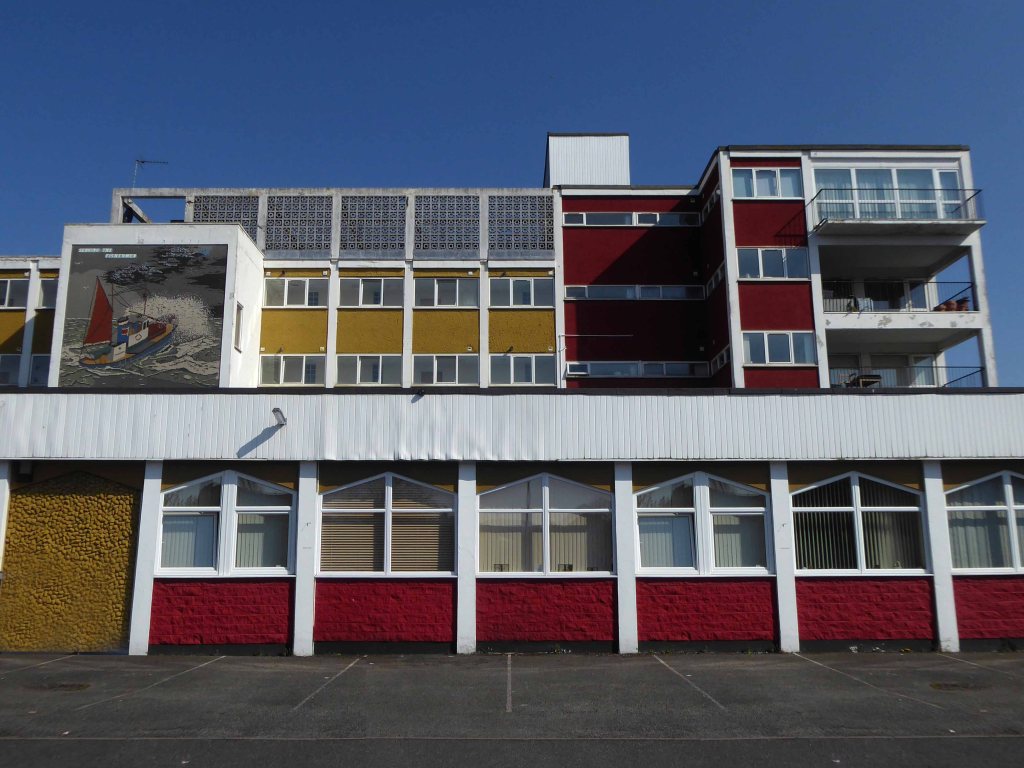
Opened in 1966 the Mission met the needs of those engaged in the most perilous of occupations.

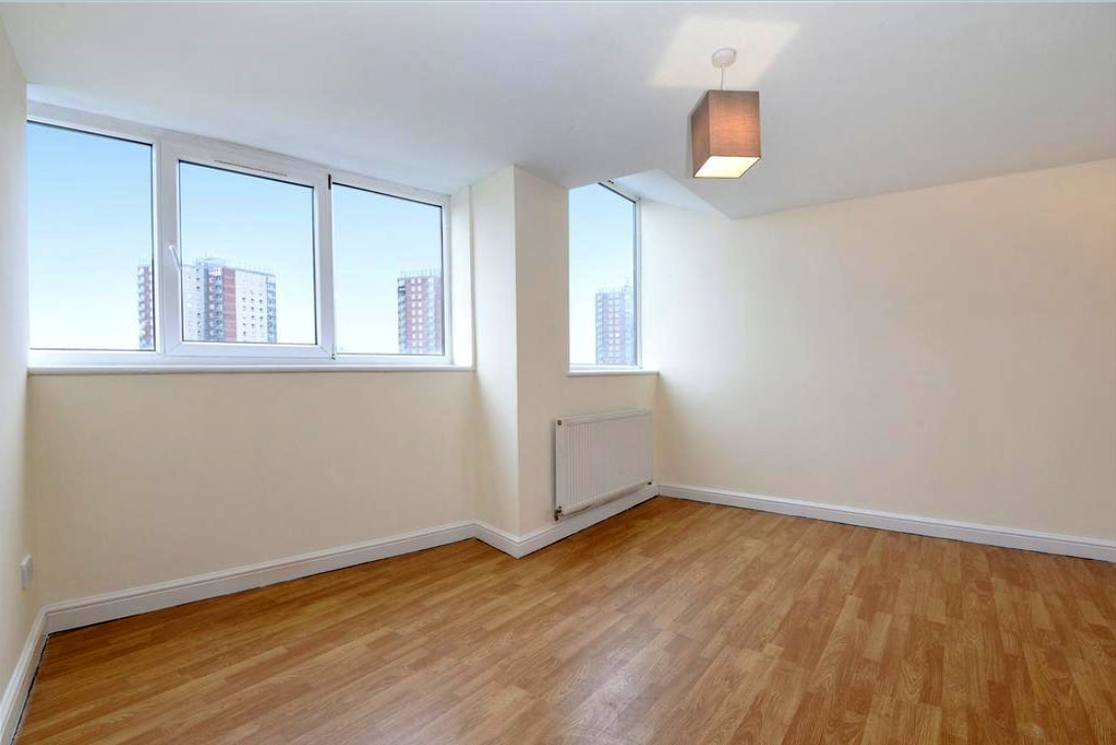
Today it is a residential housing block – with flats for sale and rent.

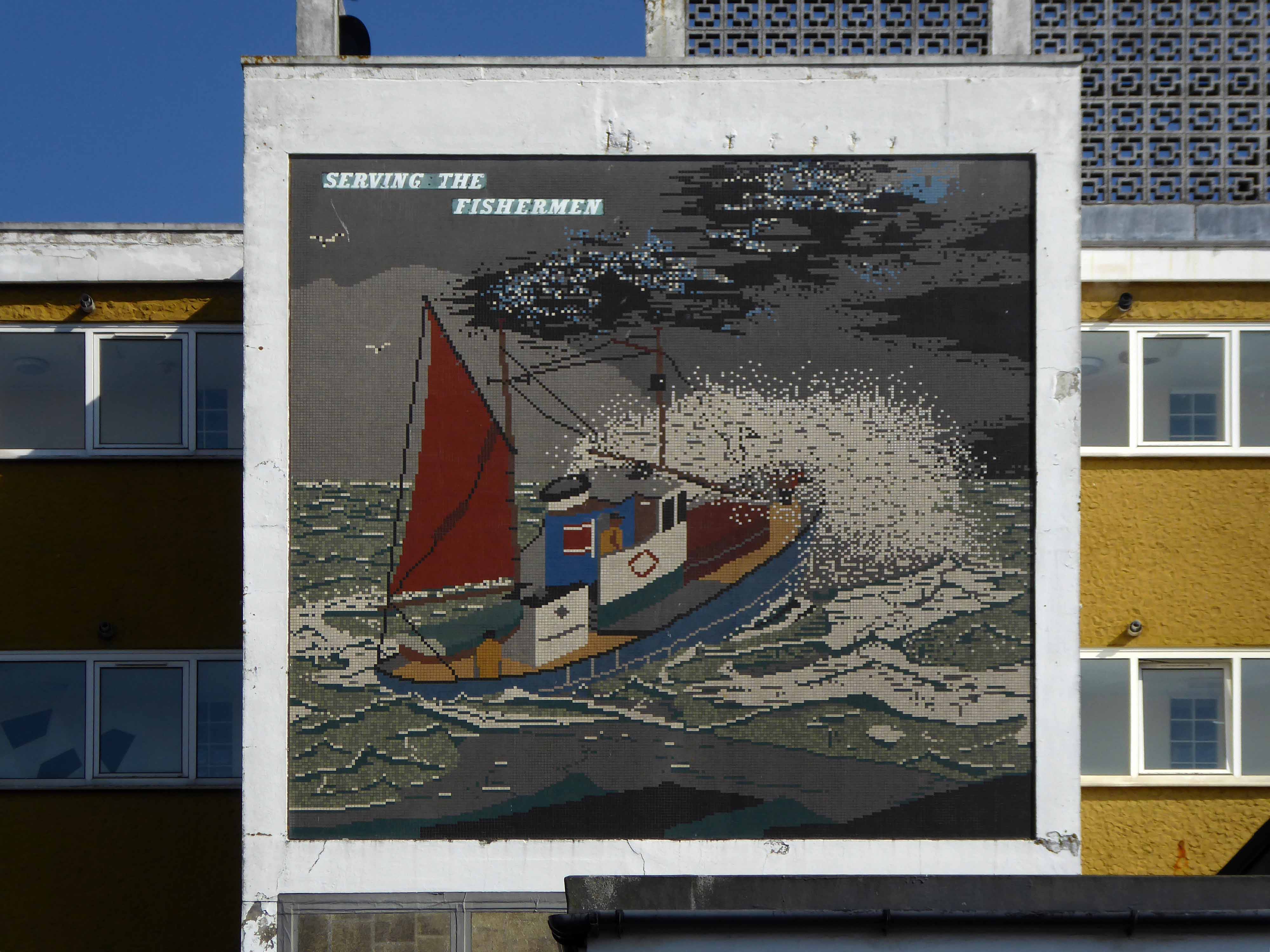
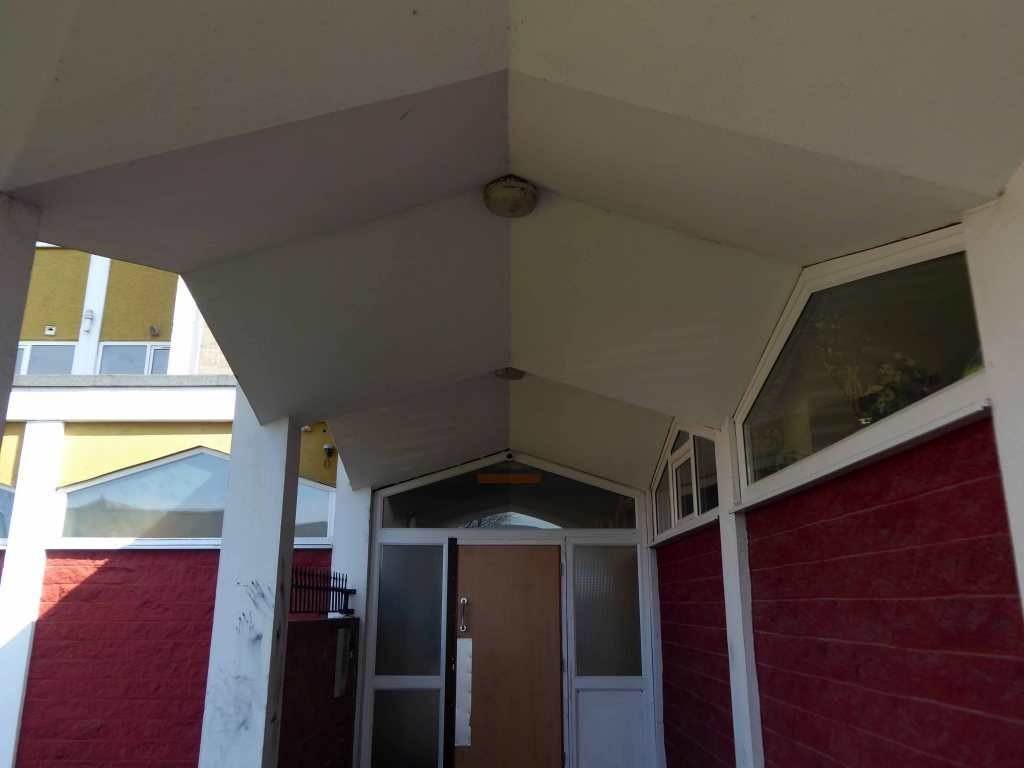
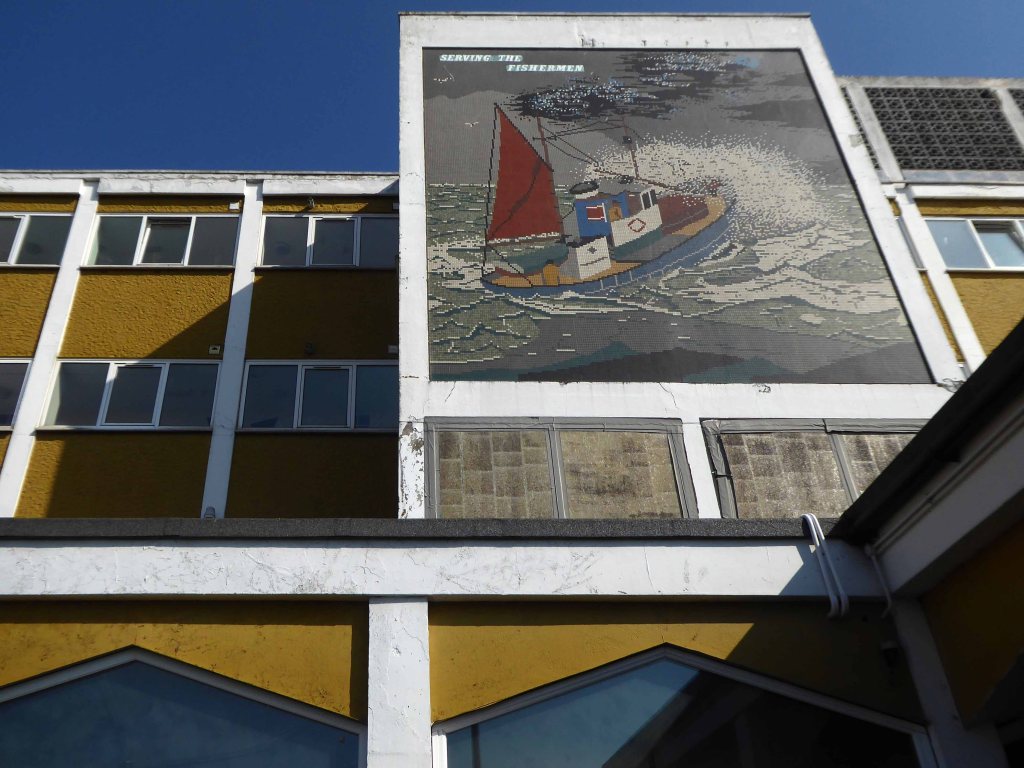
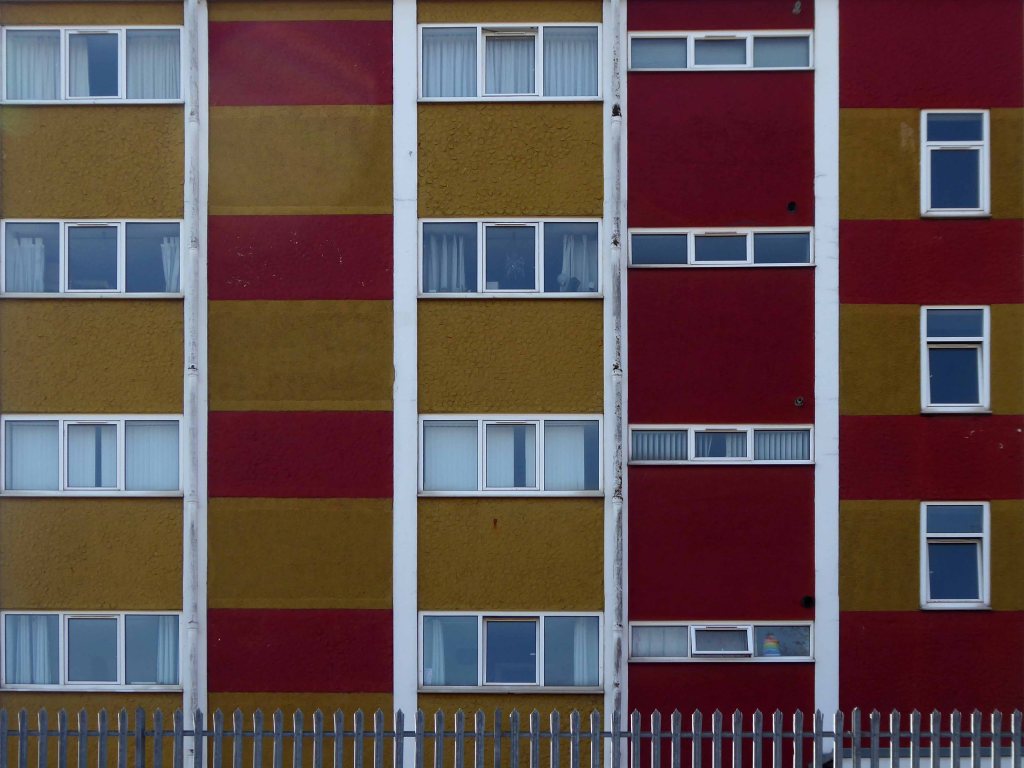
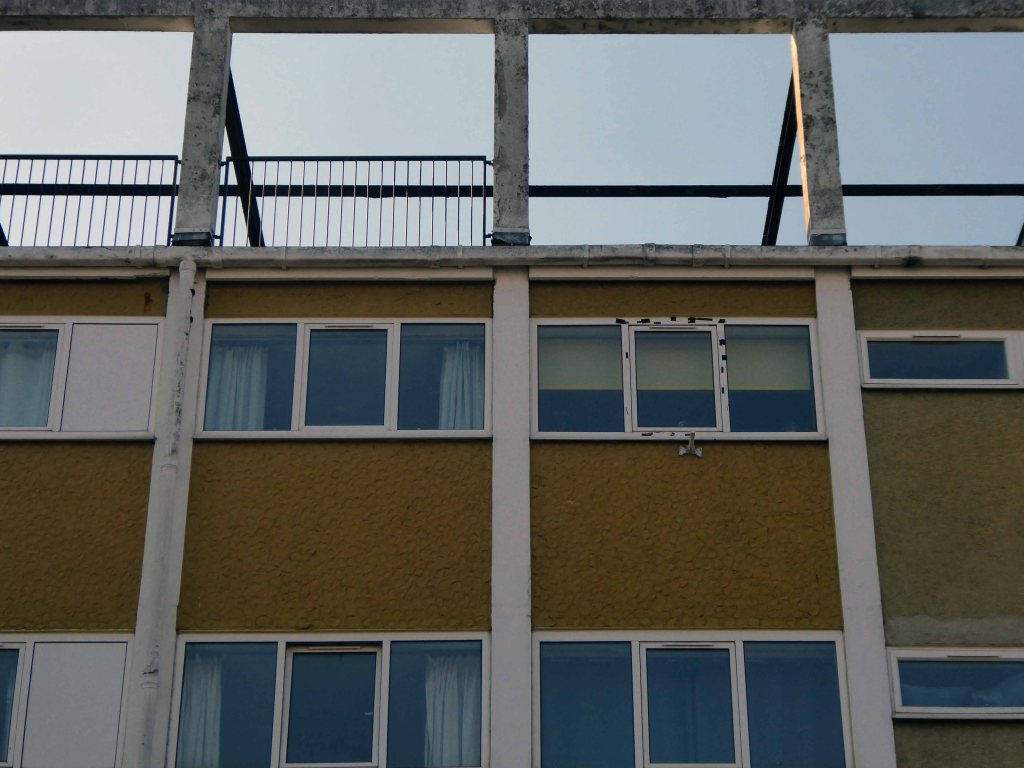
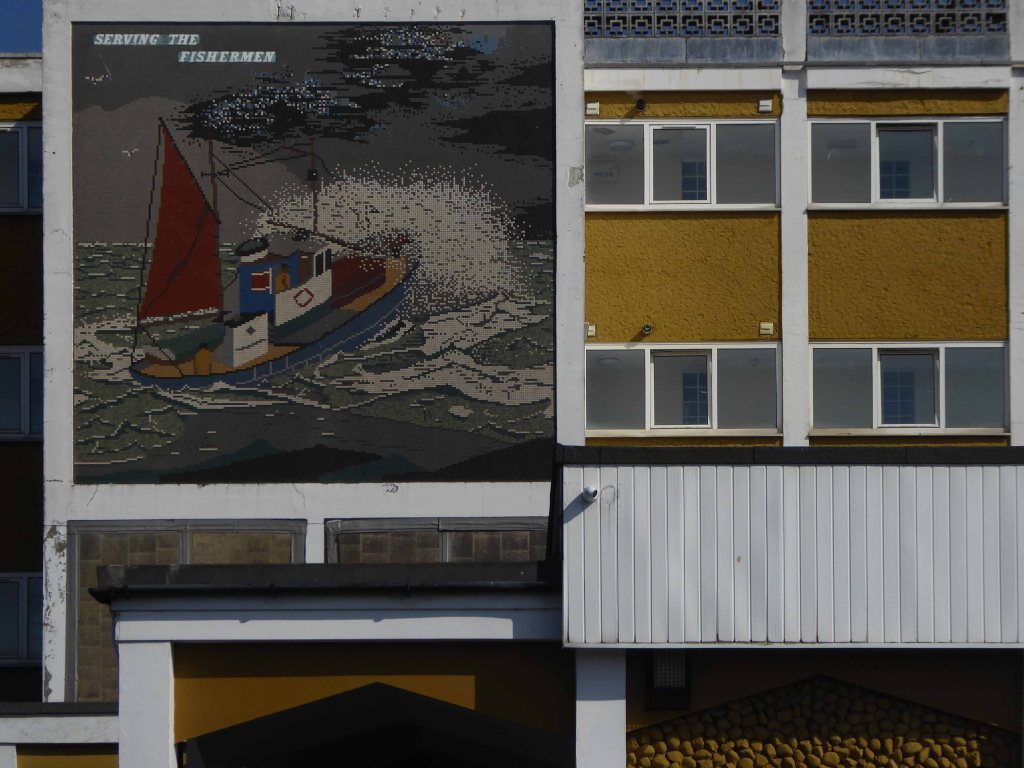
Part of the town’s history a striking building, in many modern ways – most notably its strikingly modern mosaic.

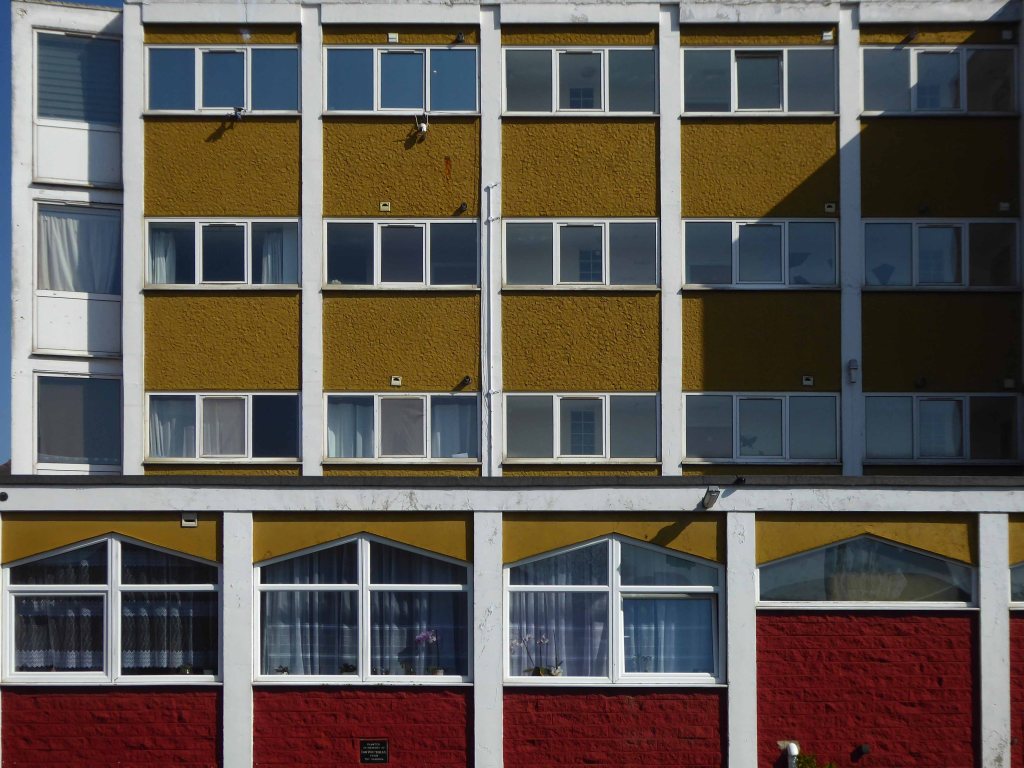
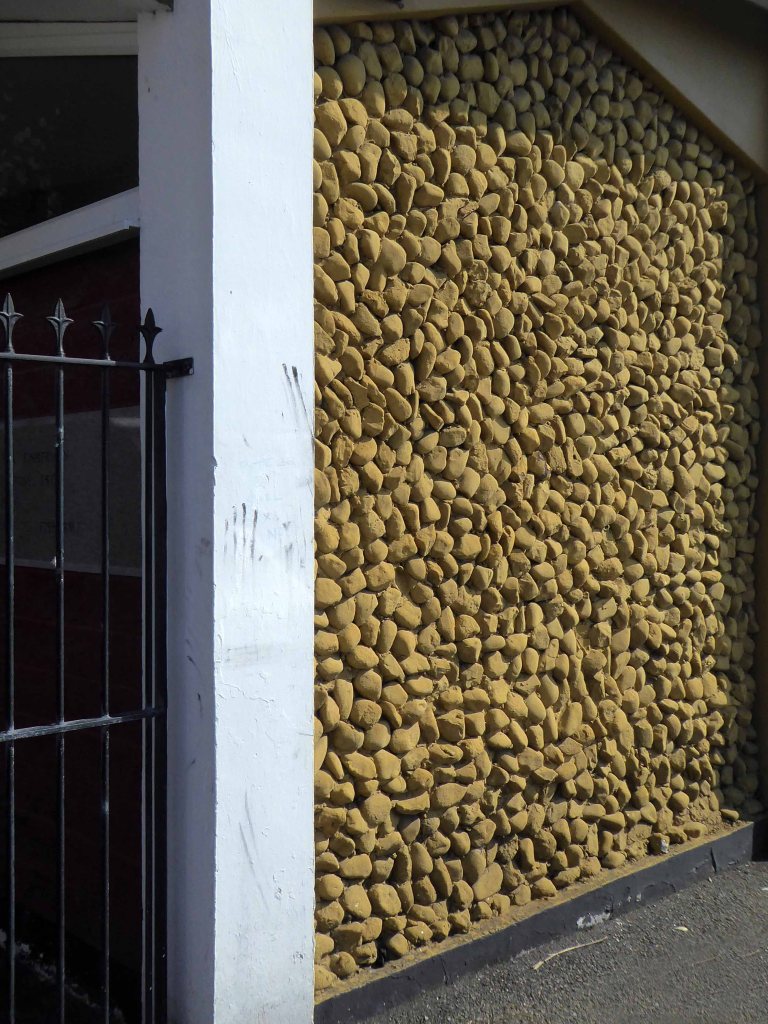
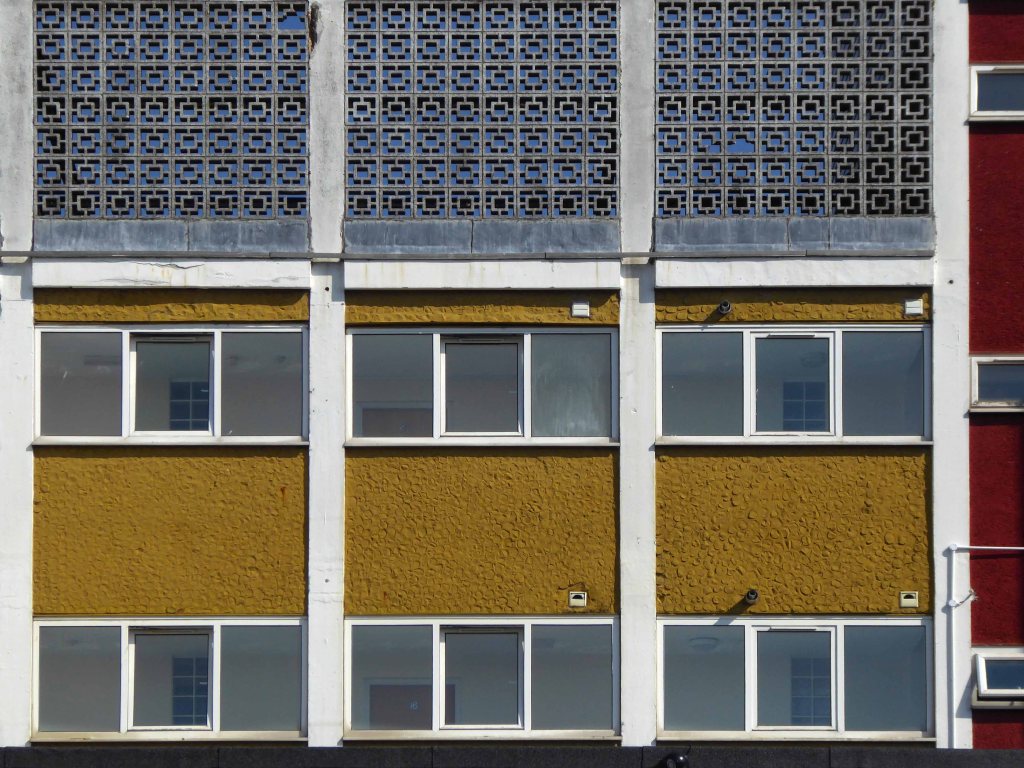
Along with its striking colour scheme interesting use of textured materials and angular geometry.

UMIST – Manchester

Every now and then, I get the yen to come back here again.

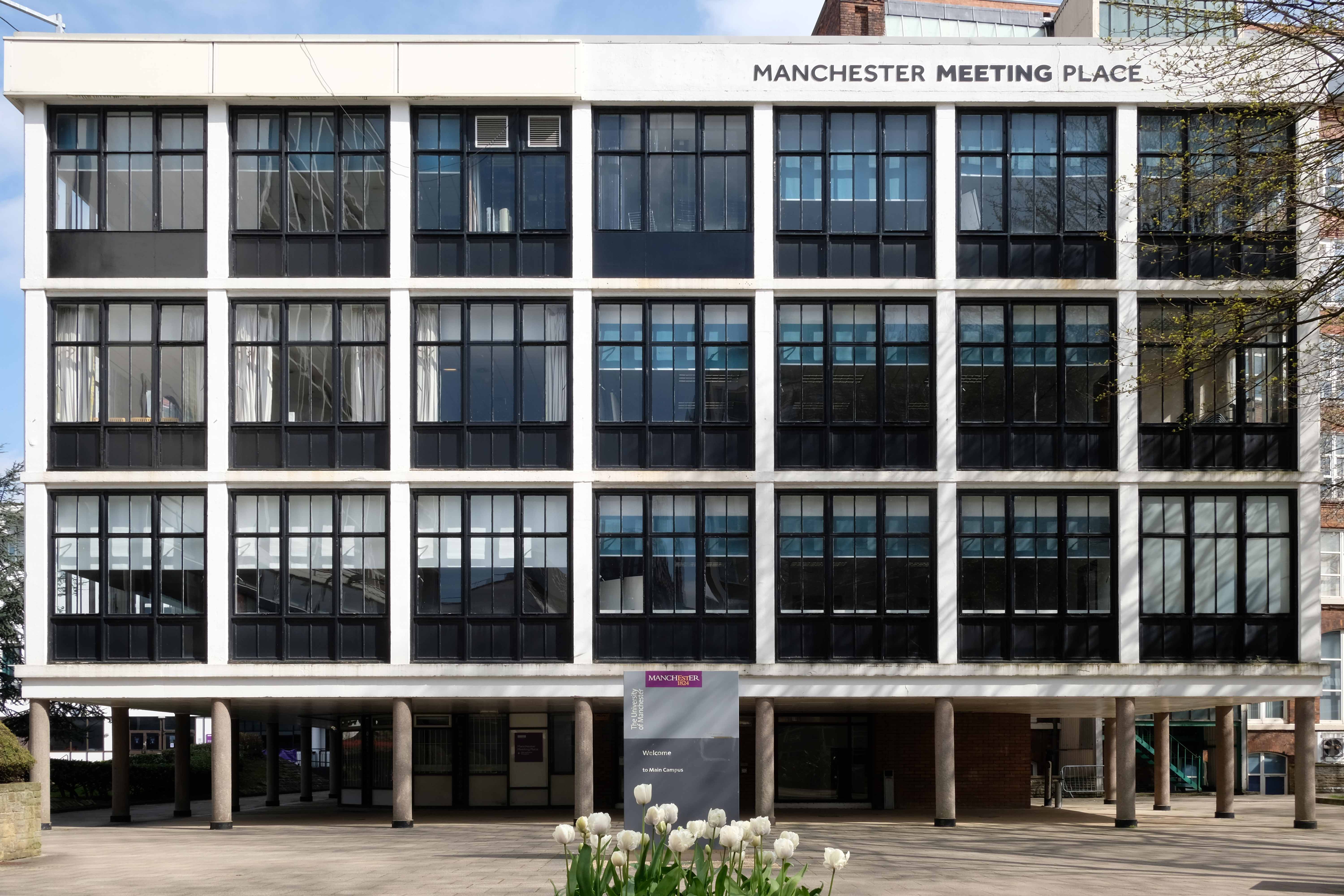
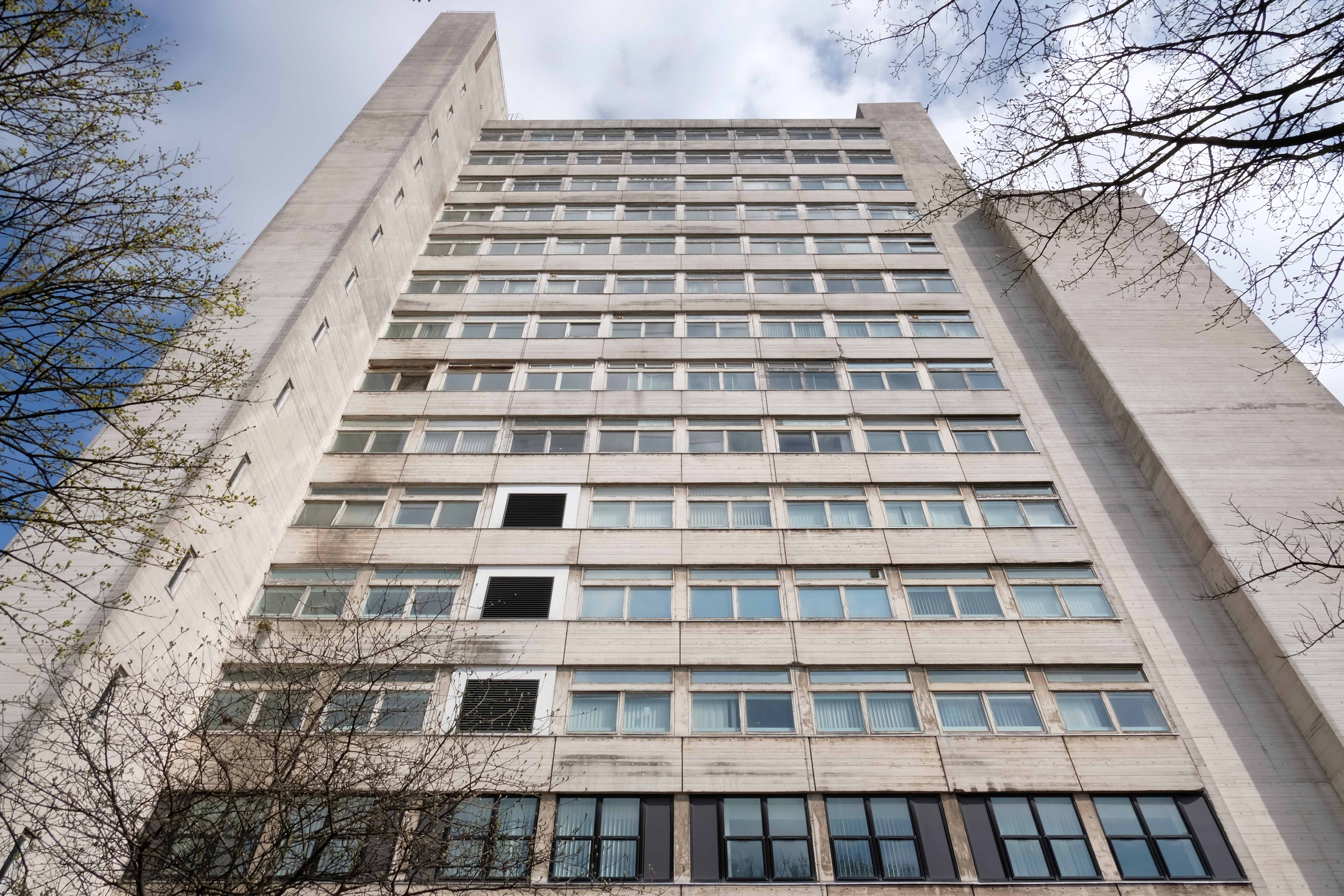
Having included the site on one of my Manchester Modernist Walks, I pop by protectively just to make sure everything’s still there.

The custodians The University of Manchester may well be averse to listing and have already removed Chandos Hall.

Forever.

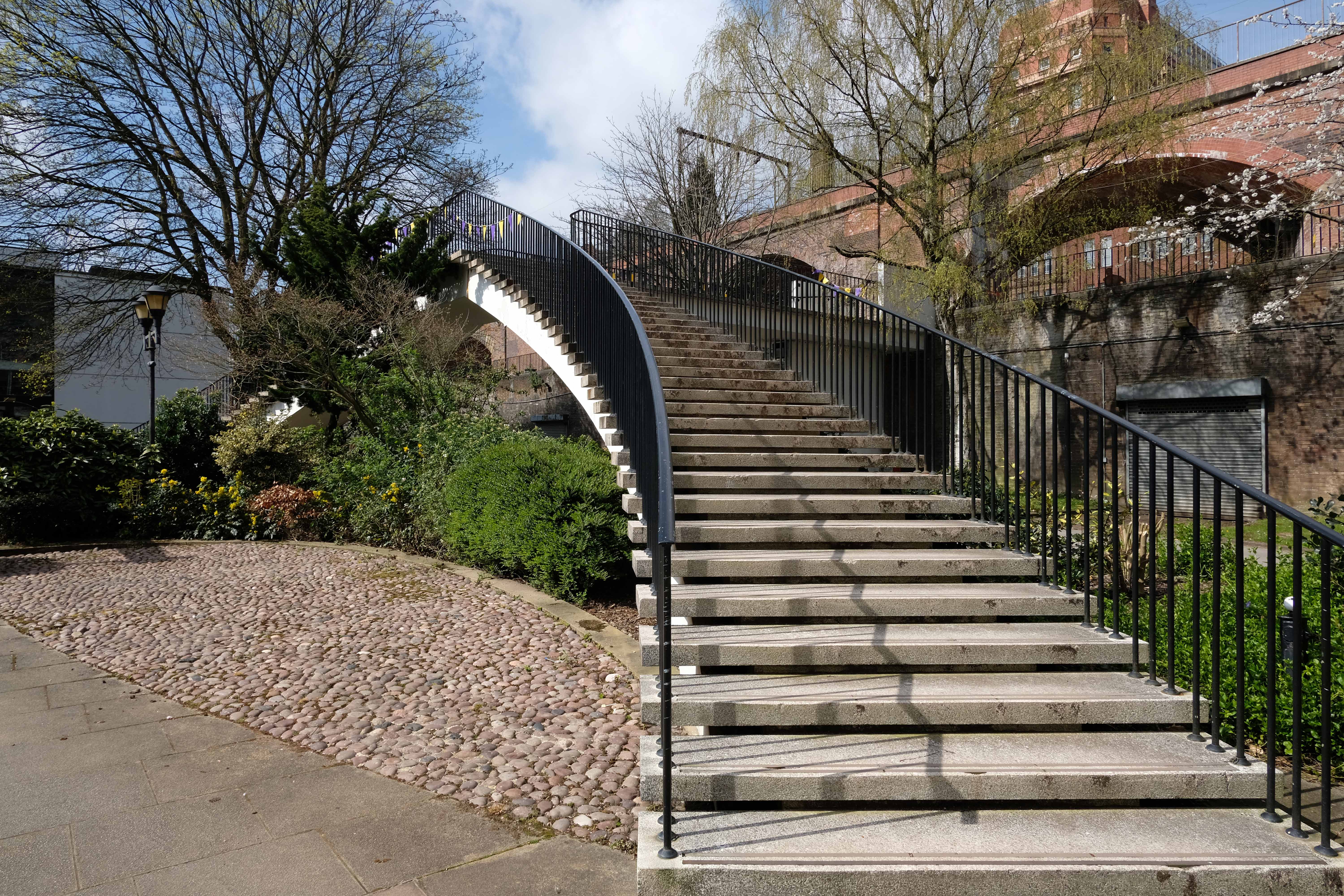
In addition, a whole block and a walkway have been subtracted.

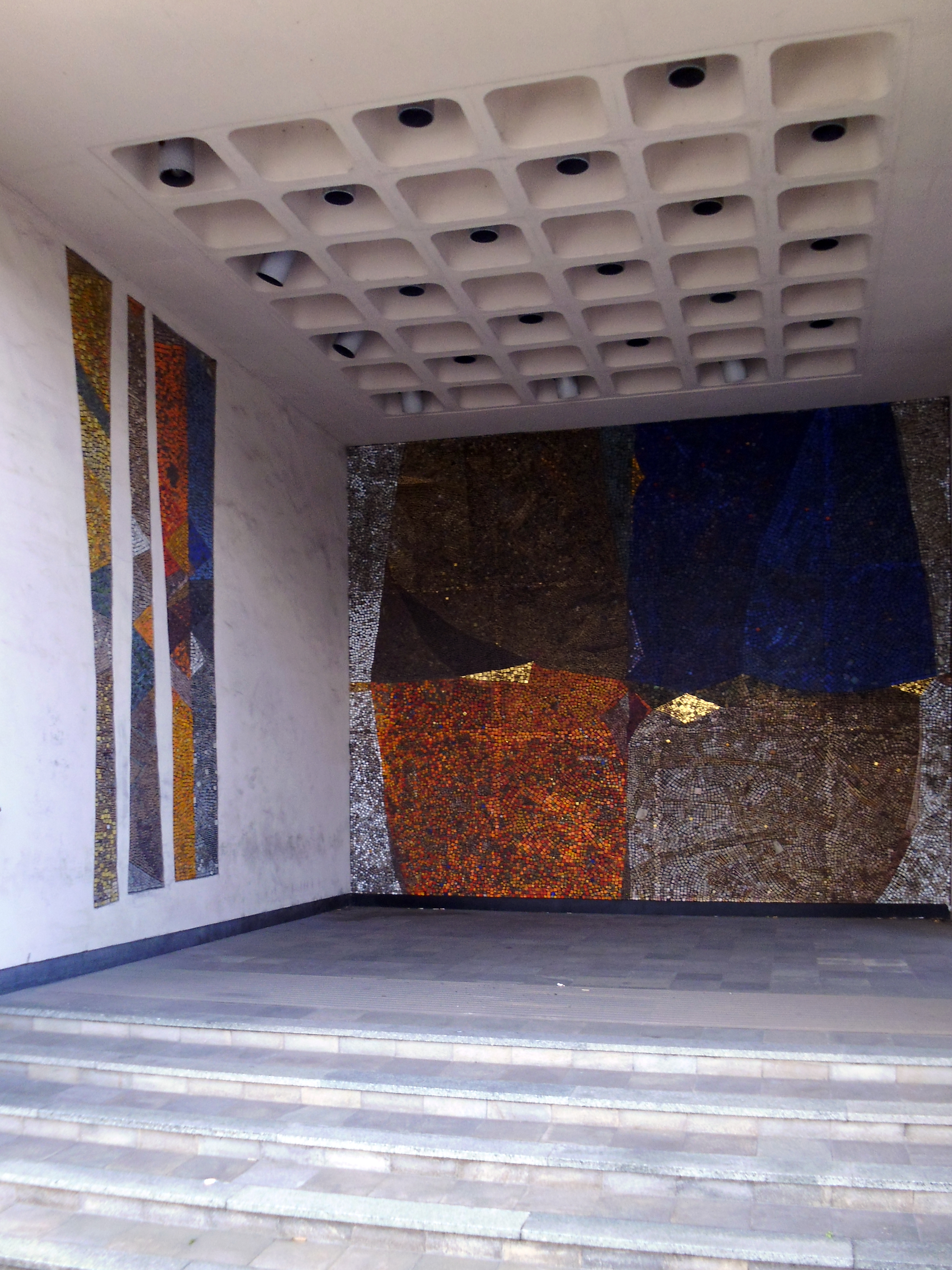
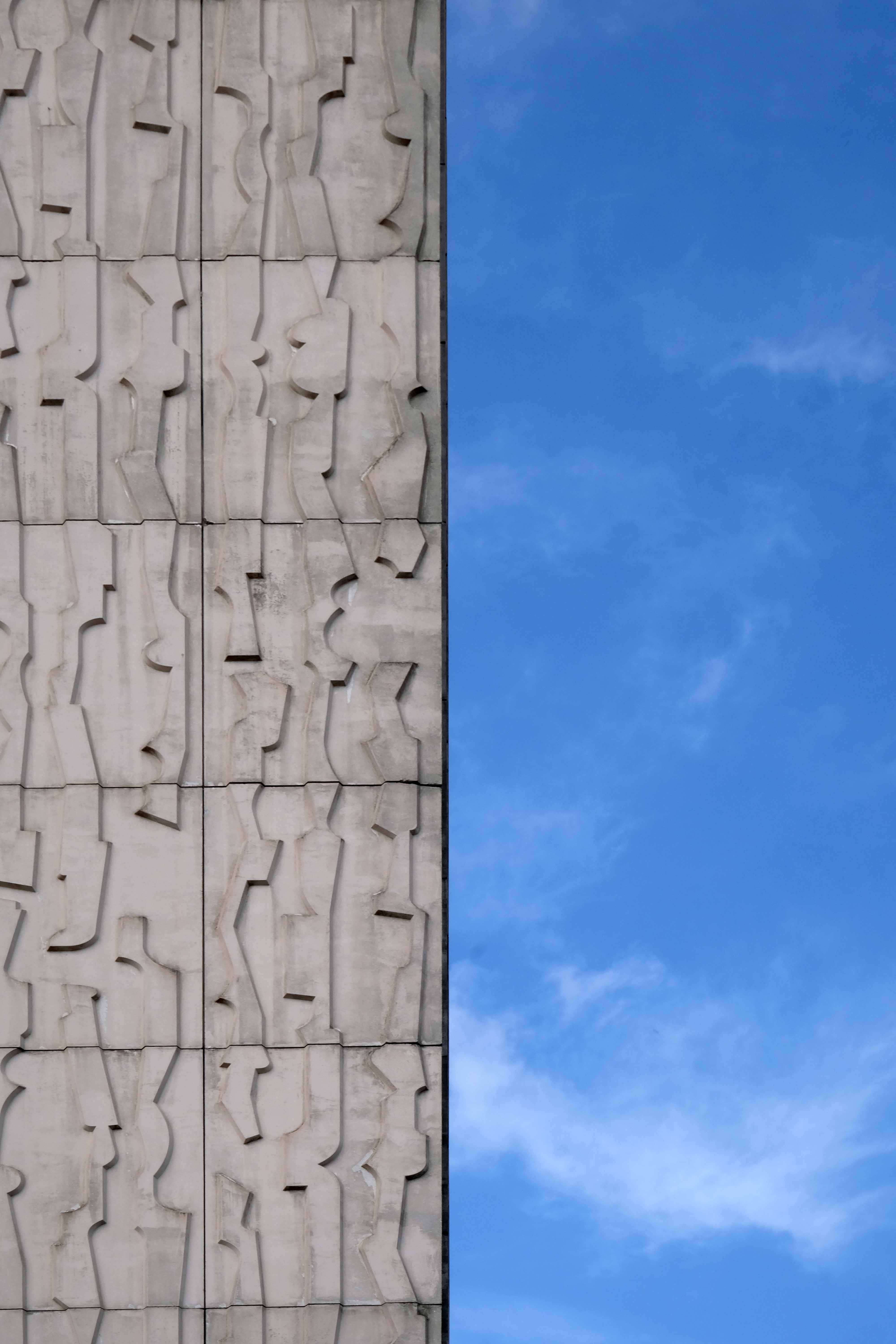
Thereby placing the Hans Tisdall mosaics: The Alchemist’s Elements in jeopardy – currently held in storage, who knows what fate awaits them?

Discussions have taken place pre-lockdown, another year on and possibly the possibility of a positive resolution.

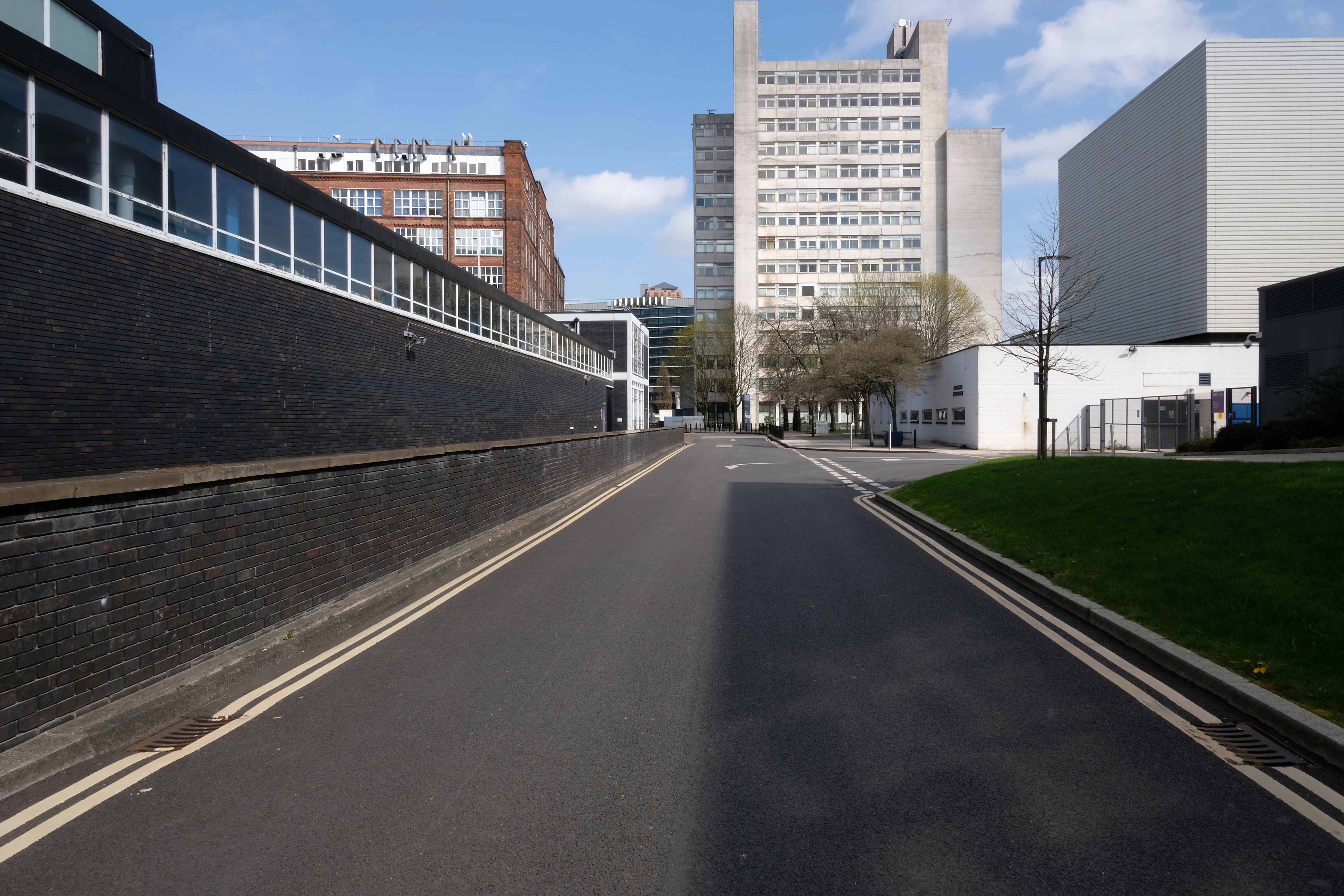
Consequently I always approach the site with a slight sense of foreboding, it’s Easter and there’s nobody about.

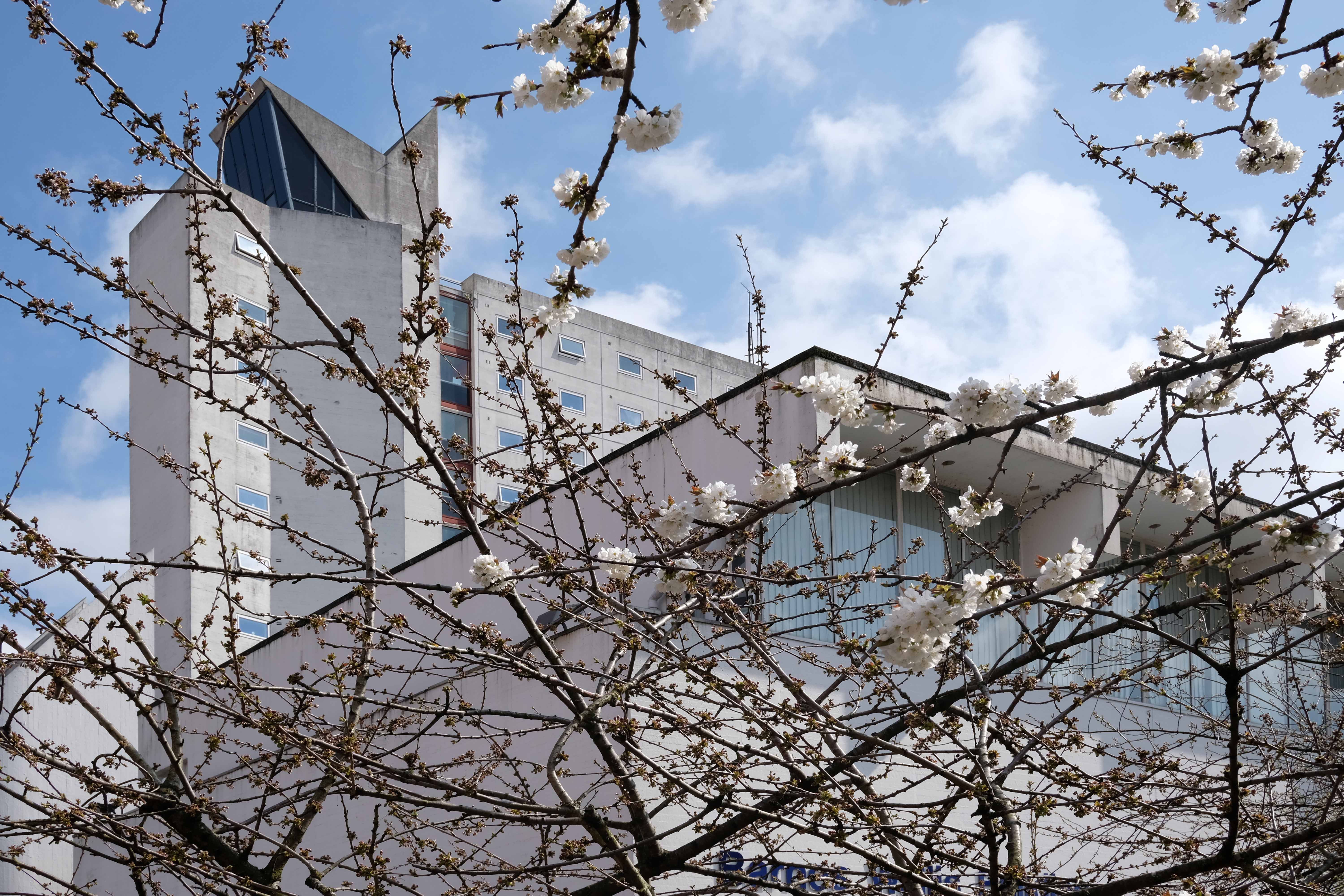
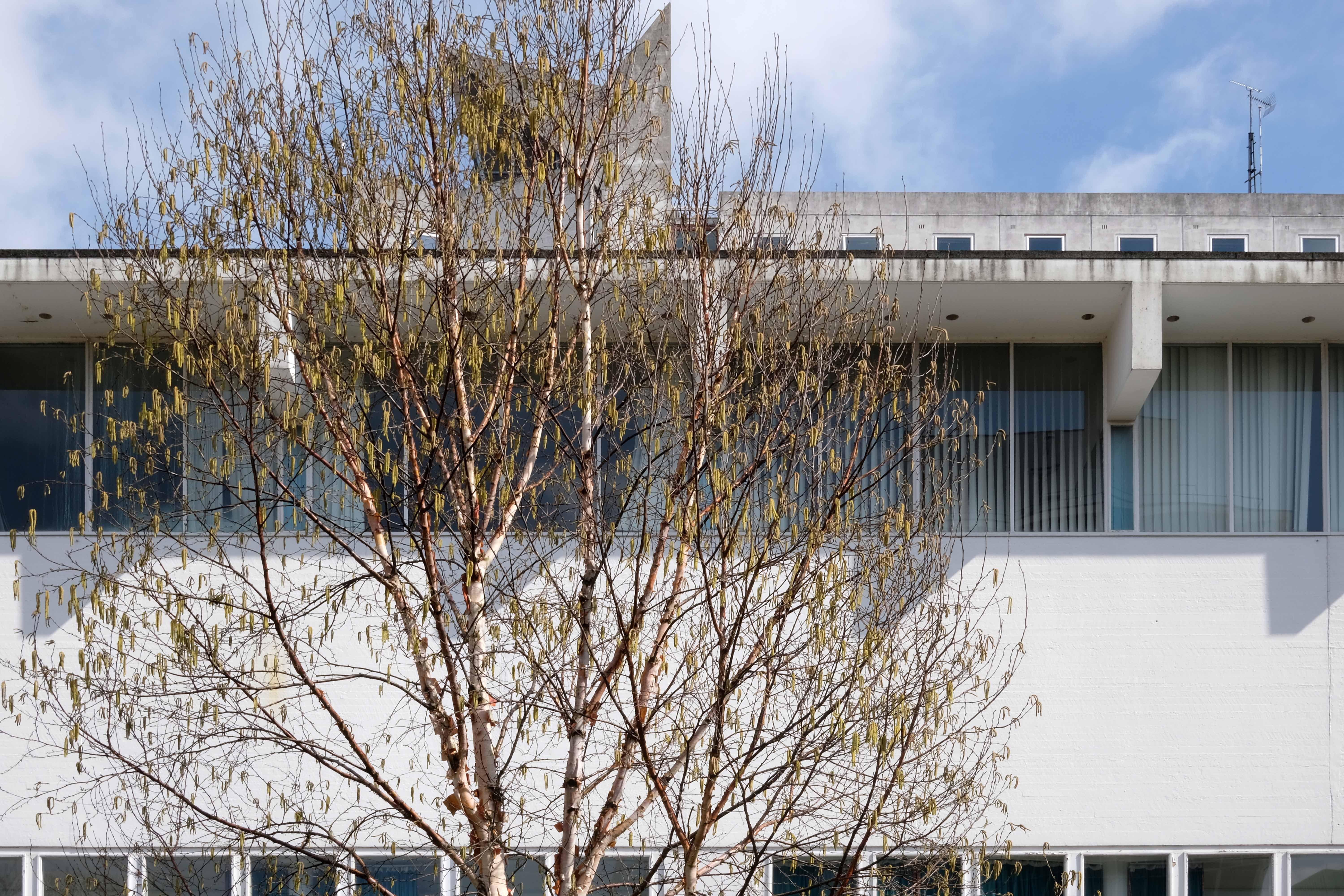
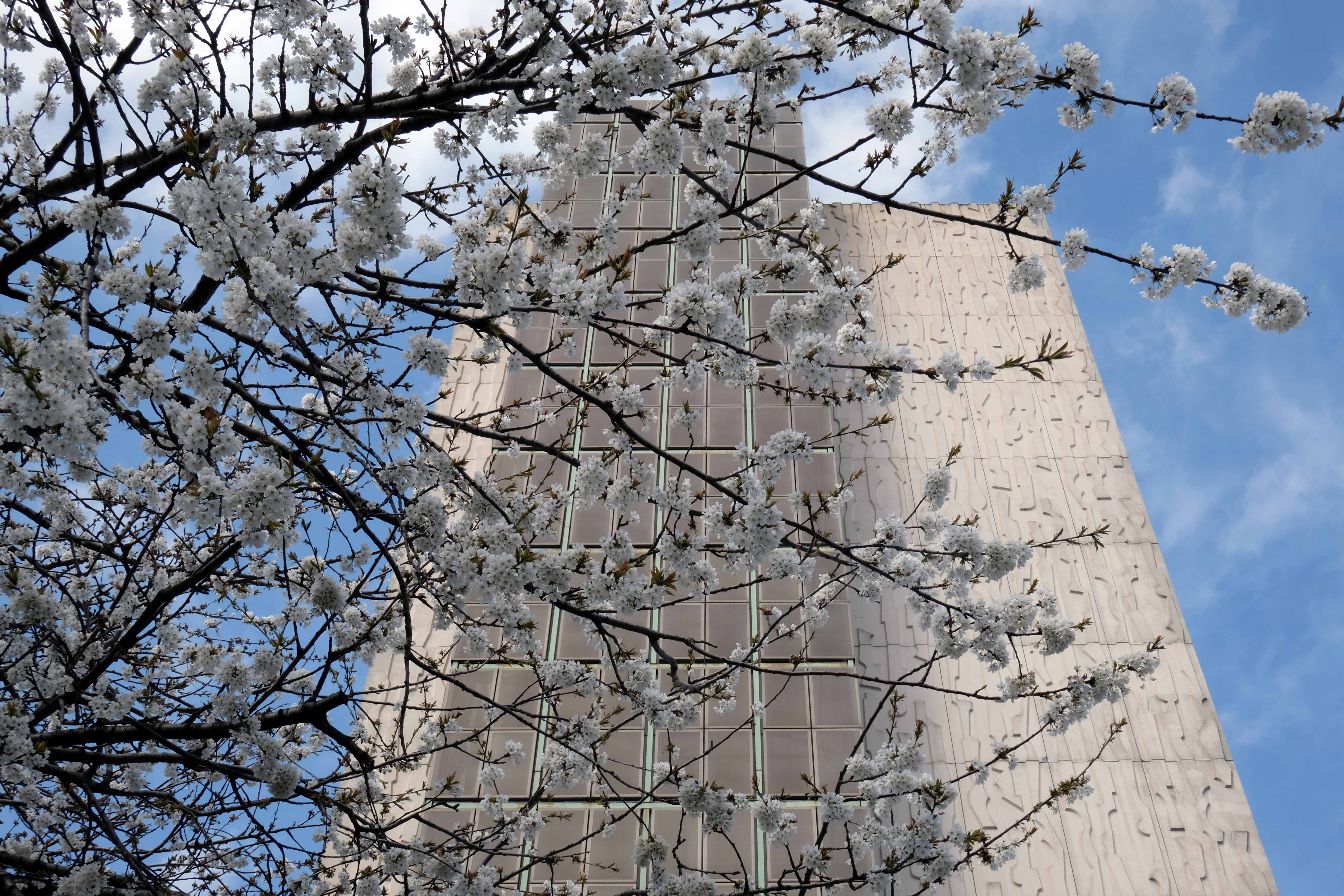
The trees are just about to burst into leaf, there are bright bursts of cherry blossom on the bough.

The sun shines down from a big blue sky, strewn with wisps of cloud.

Let’s have a look around – it’s springtime for UMIST and Modernity!

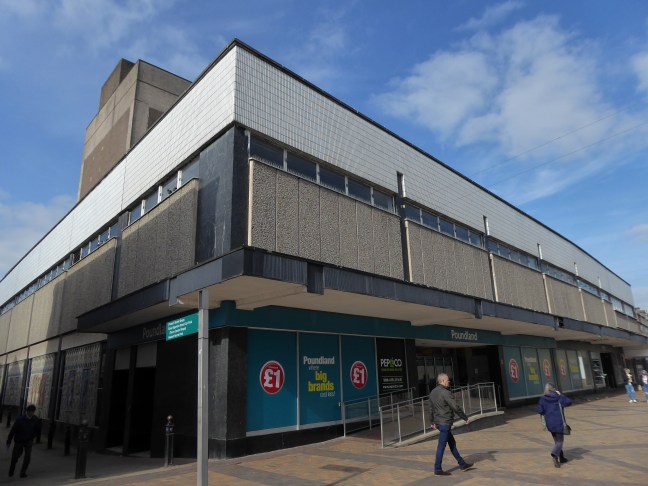
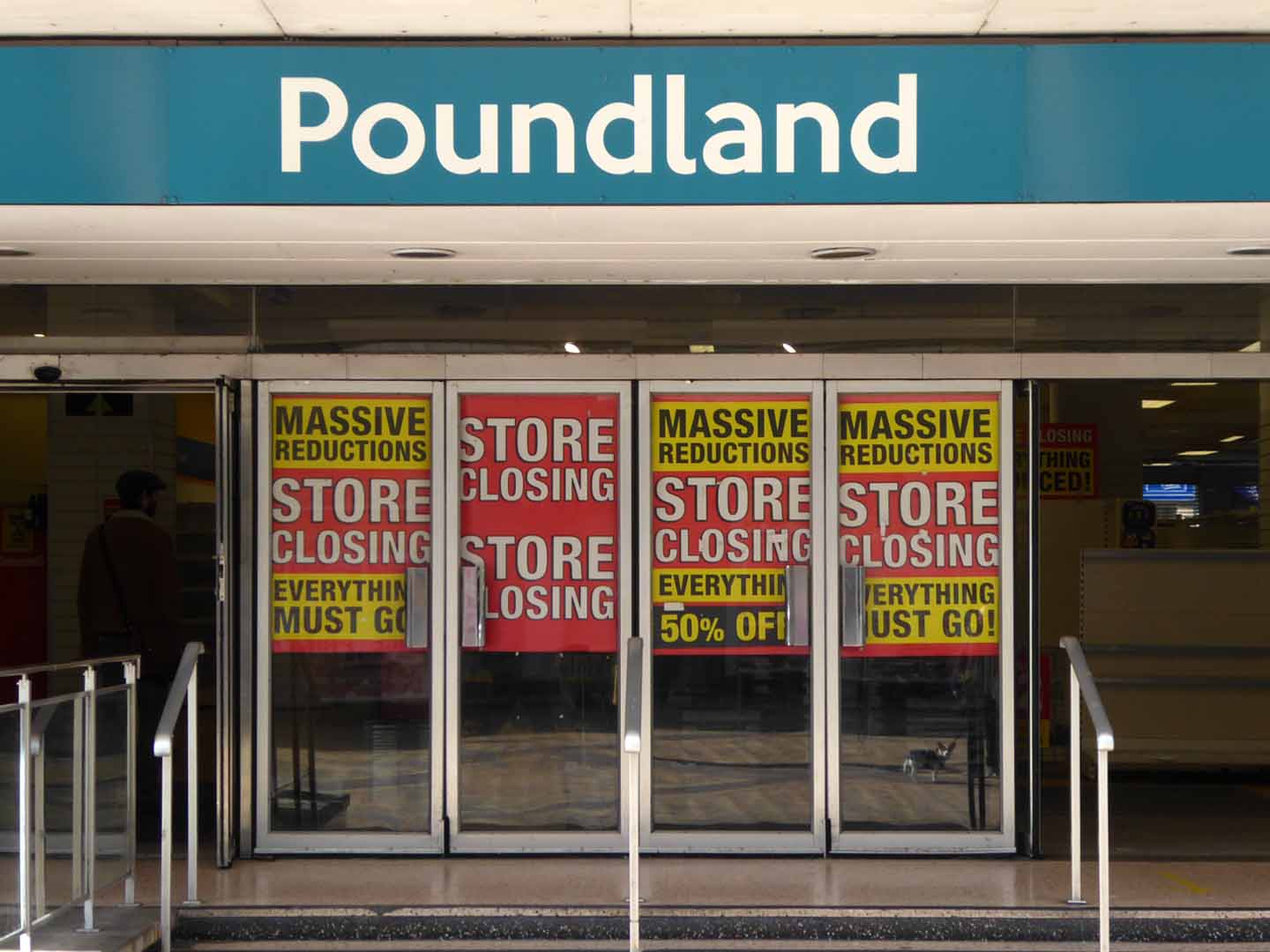
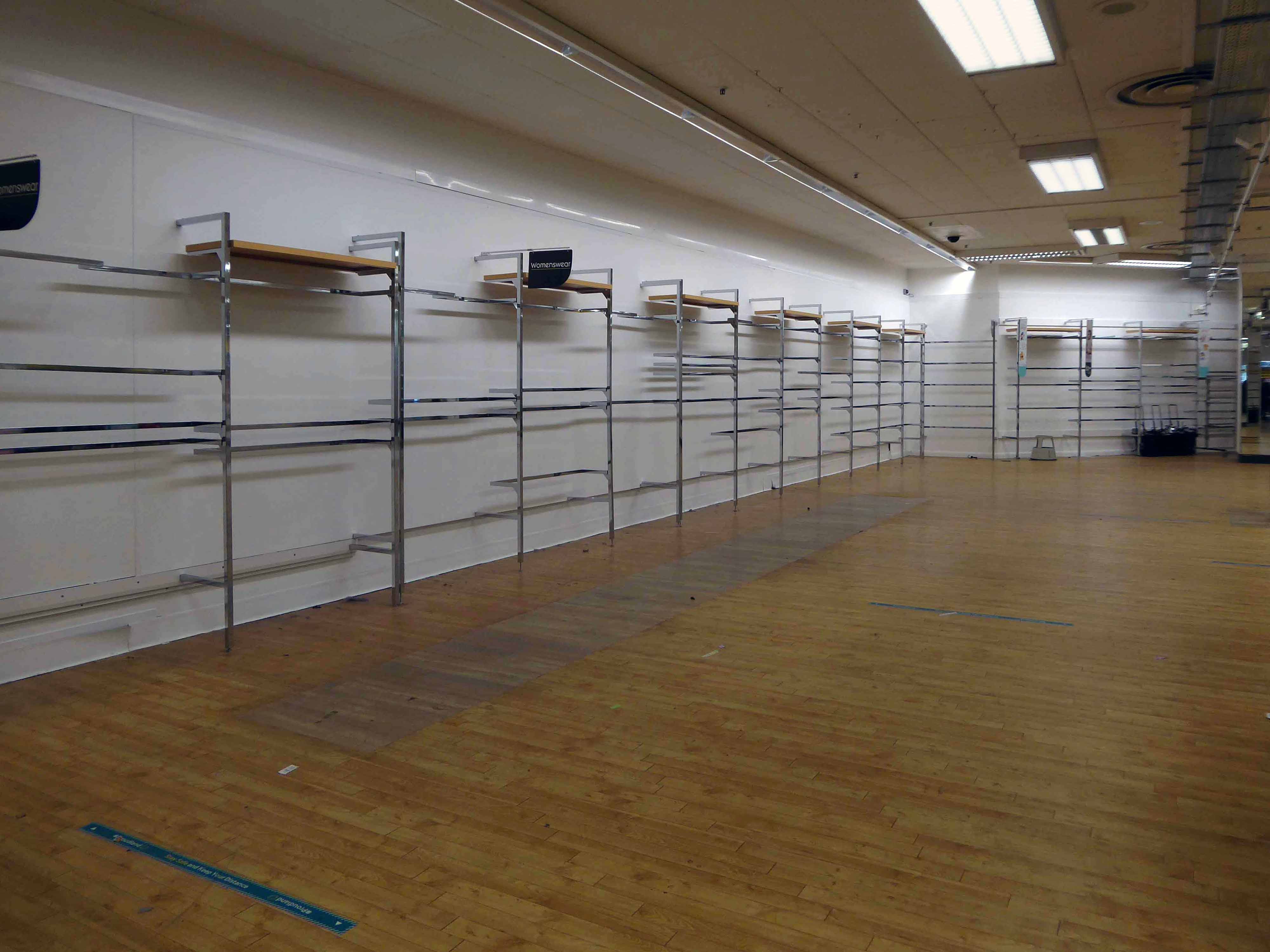
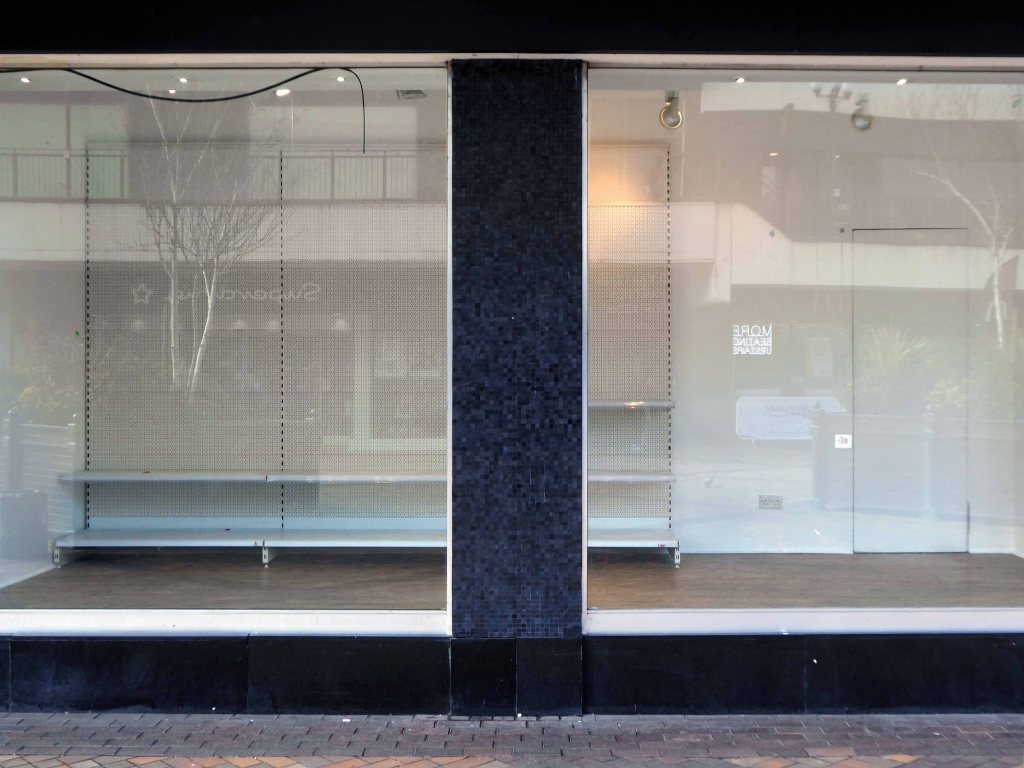
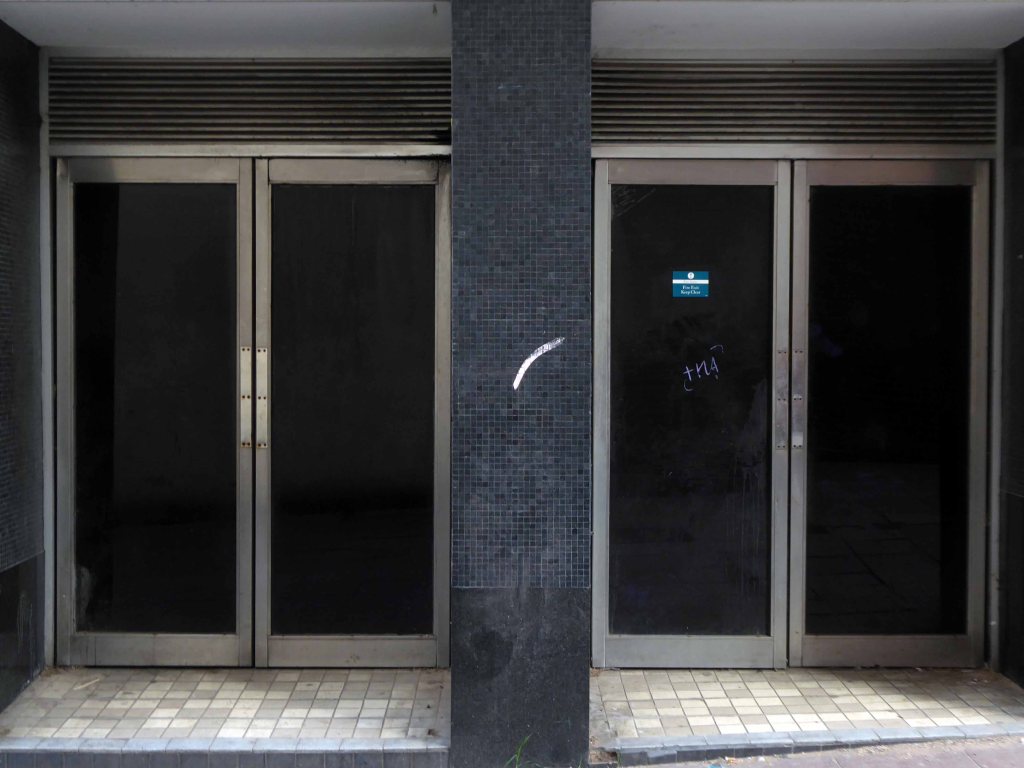
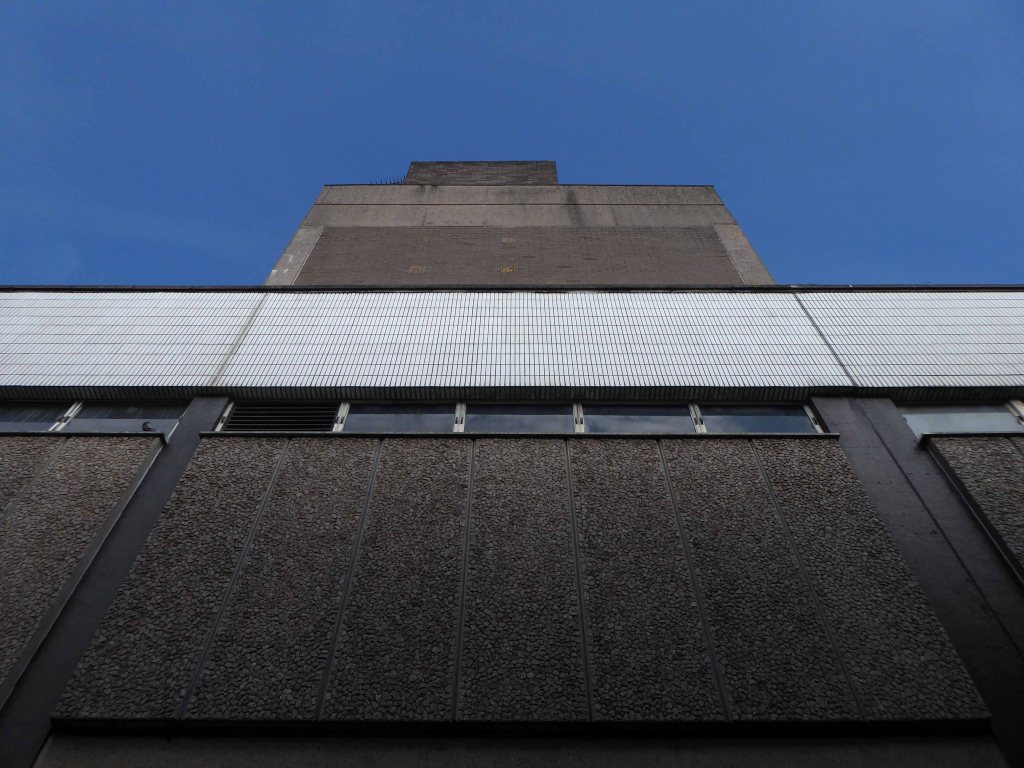
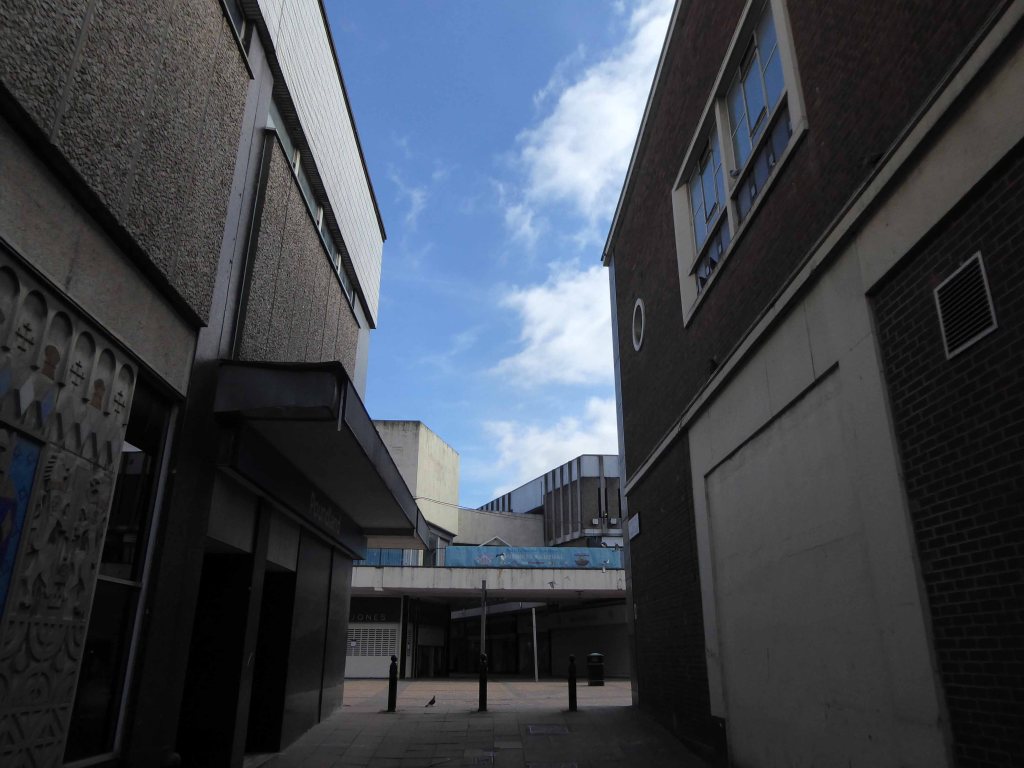
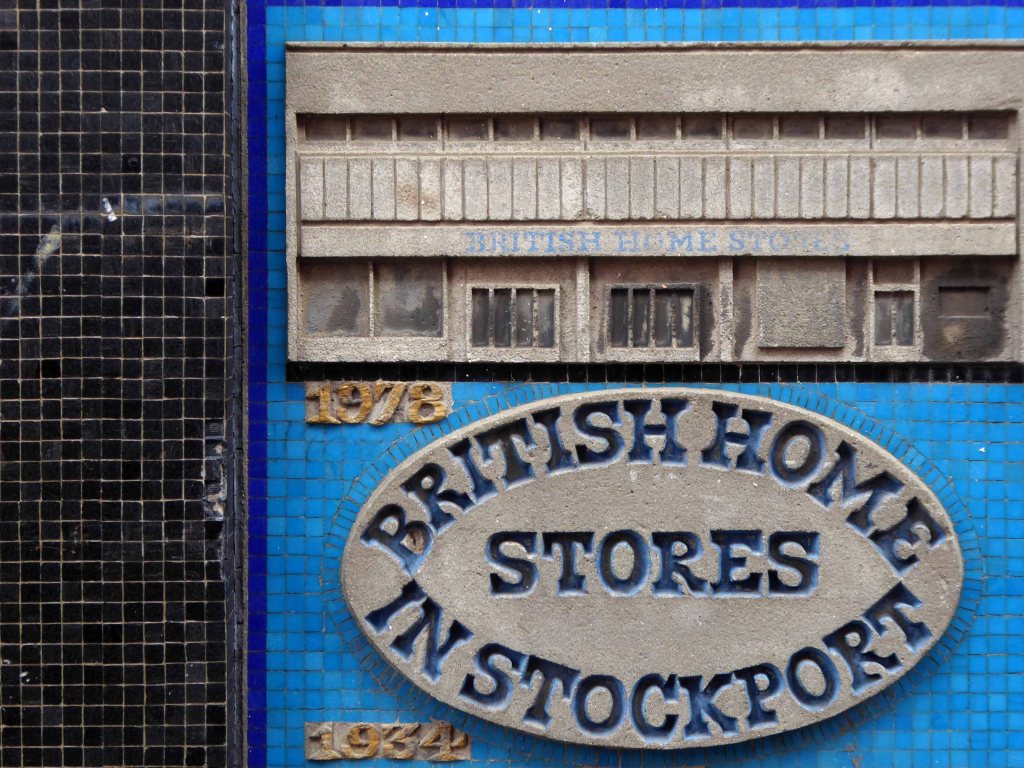
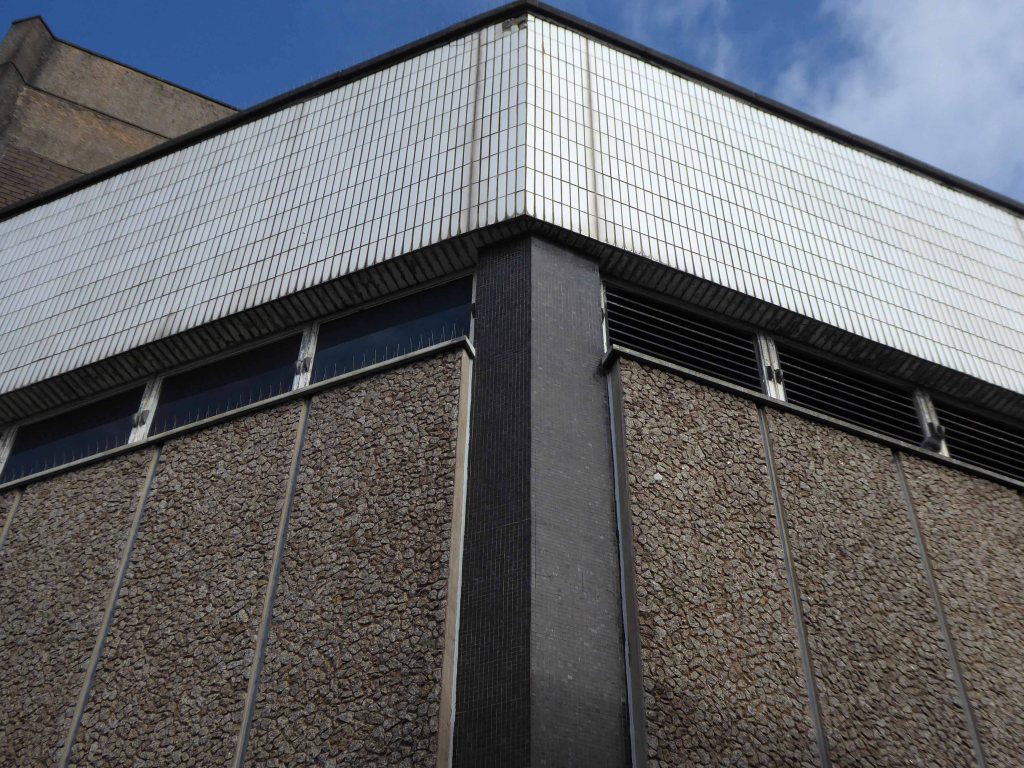
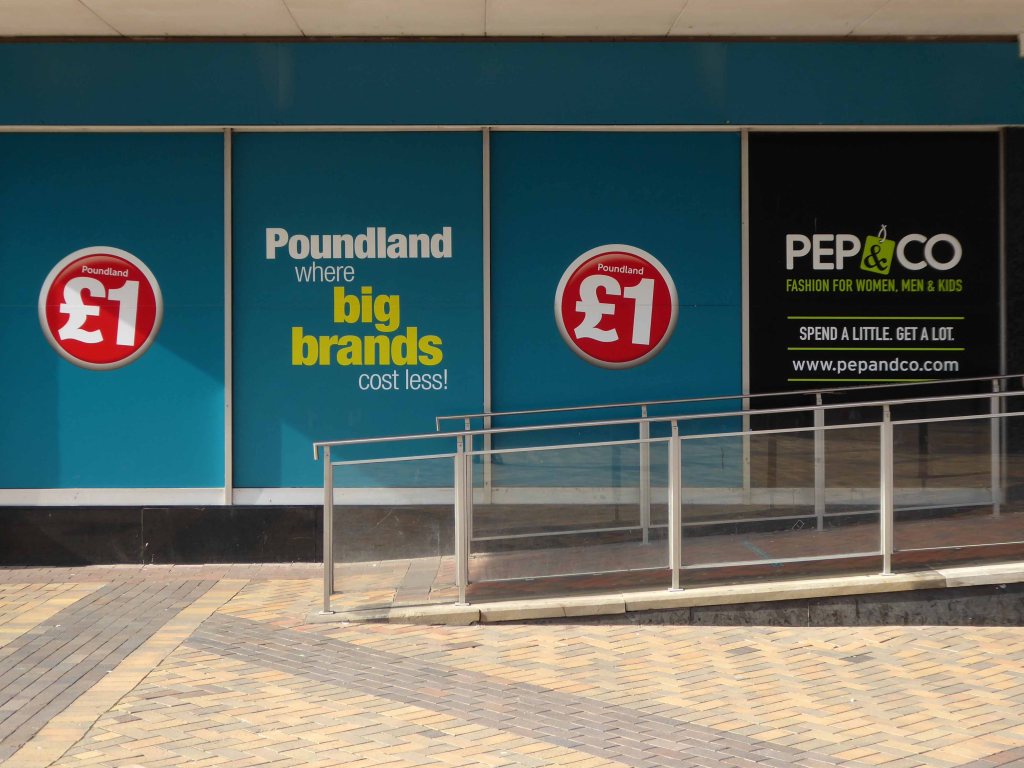
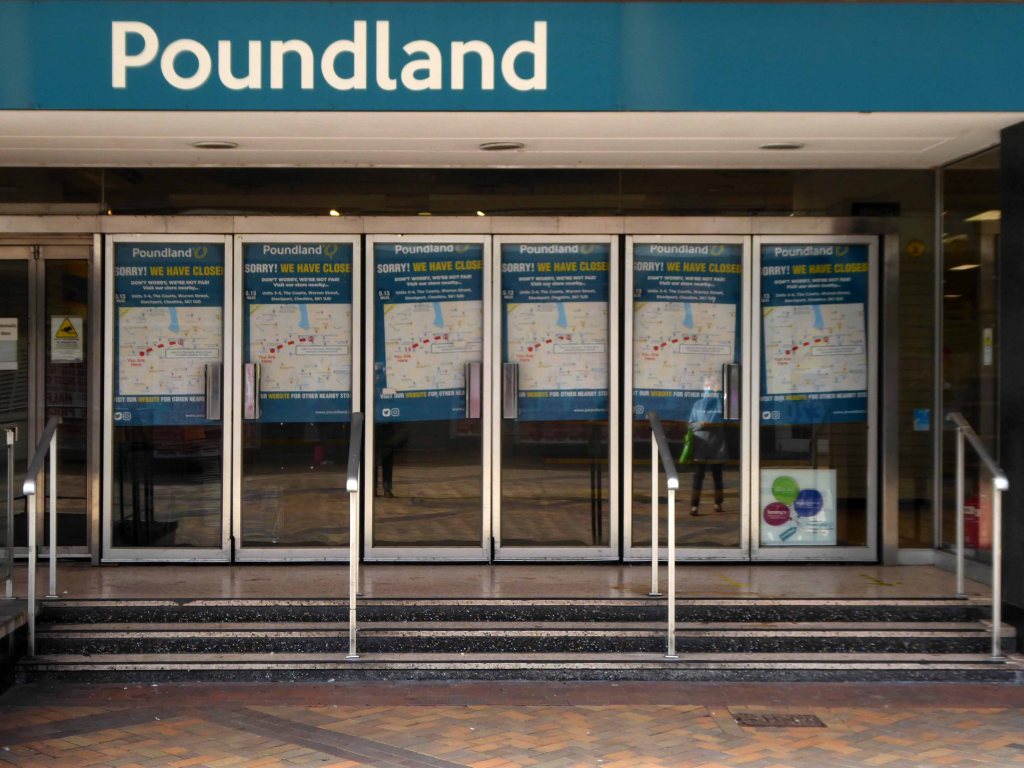
Poundland née BHS – Stockport

Stockport council bought the building in 2019 following the collapse of BHS three years earlier.

The report says the store is now in a poor condition, looks ‘dated and tired’ and ‘contributes to negative perceptions’ of Merseway.

MEN

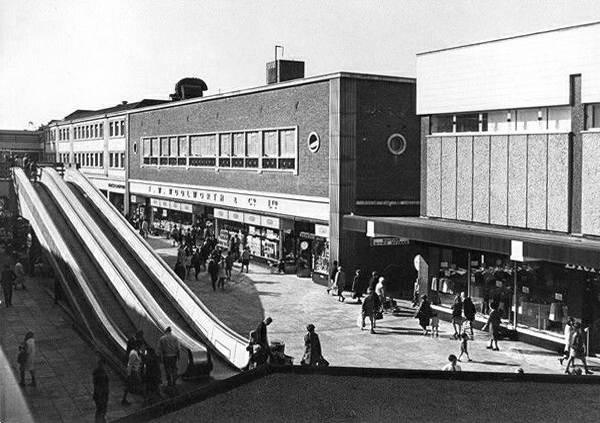
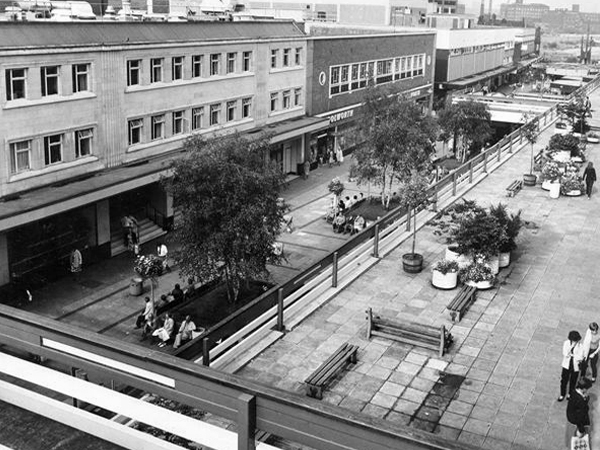
You were conceived as an integral part of the Merseyway development, which on its inception, was held in the highest regard.

Innovative architecture with confidence, integrity and a clear sense of purpose.

The failure of BHS was a national disgrace, venal management, asset stripping, avaricious, grasping rodents ruled the day.

Dominic Chappell, who had no previous retail experience, bought the high street chain from the billionaire Sir Philip Green for £1 in March 2015. The company collapsed with the loss of 11,000 jobs 13 months later, leaving a pension deficit of about £571m.

Guardian

A sad end for a company with a long history and presence on the high street.

With an architectural heritage to match:

BHS’s chief architect at this time was G. W. Clarke, who generally worked alongside W. S. Atkins & Partners, as consulting engineers. The stores – like Woolworth’s buildings – were composite structures, with steel frames and concrete floors. Clarke sometimes appointed local architects.

At first, like C&A, BHS retained the narrow vertical window bays and margin-light glazing that had characterised high street façades in the 1930s, but by the end of the 1950s Clarke had embraced a modified form of curtain-walling.

This architectural approach became firmly associated with BHS, with framed curtain wall panels – like giant TV screens – dominating the frontages of many stores.

Building Our Past

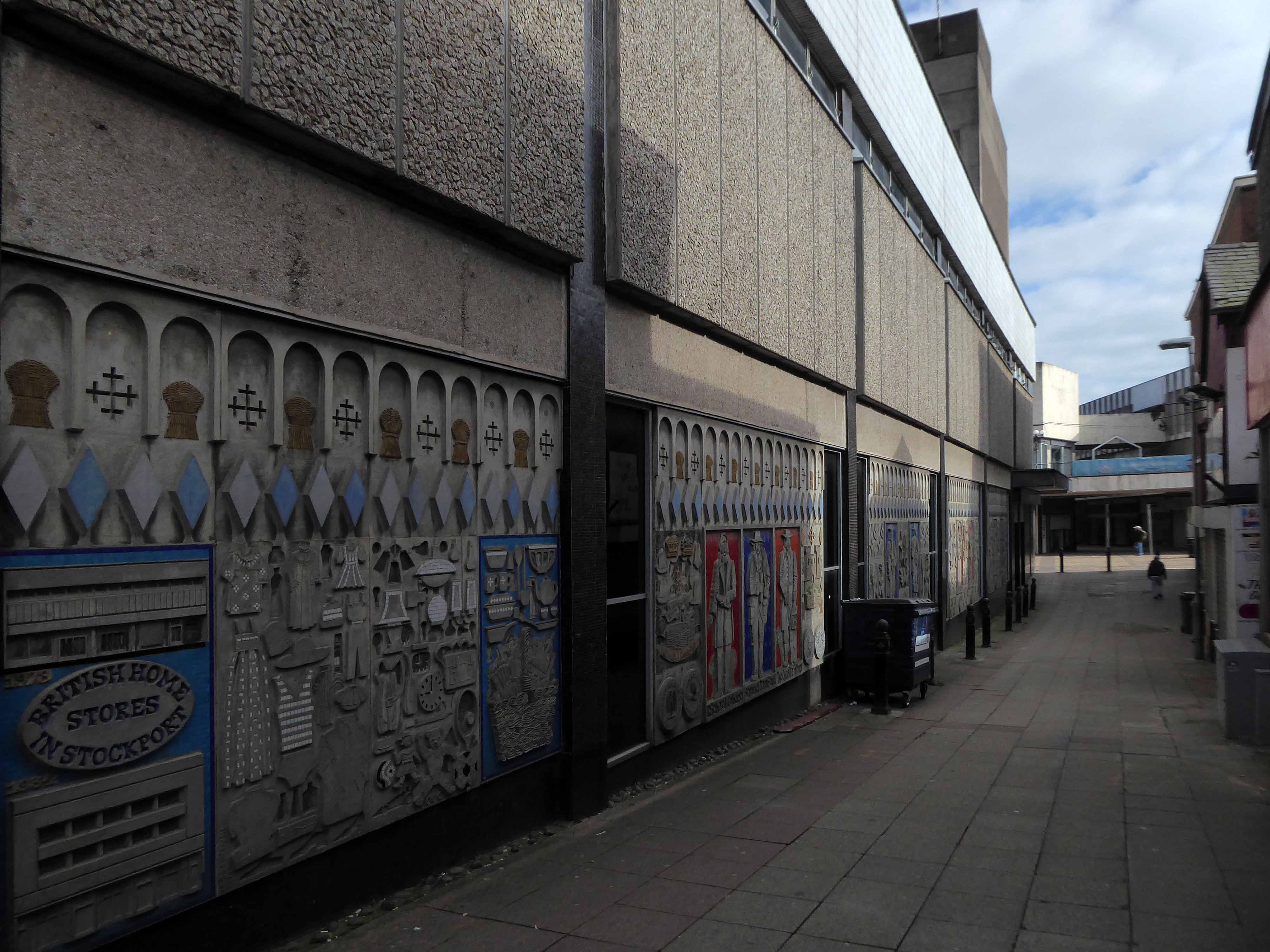
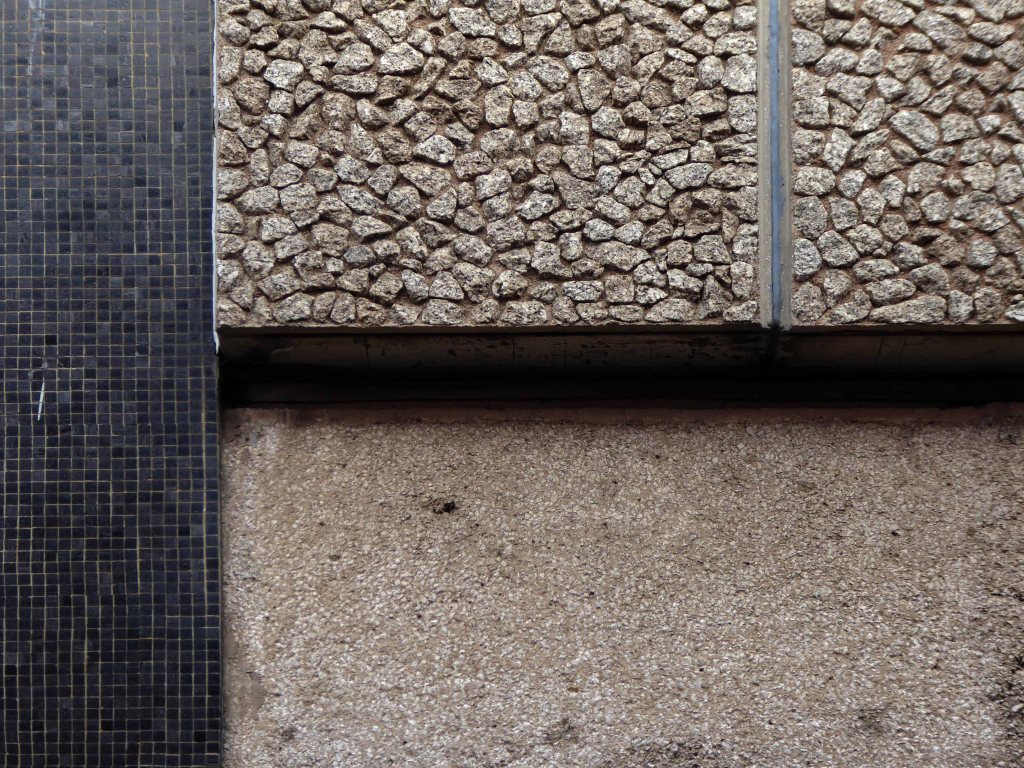
Of note are the Joyce Pallot and Henry Collins concrete panels on the Deanery Row elevation.

There have been moves to have the work listed, without success.

Of late the store has been home to Poundland – though time has now been called.

Poundland’s retailing concept is extremely simple: a range of more than three thousand – representing amazing value for money.

Our pilot store opened in the Octagon Centre, Burton-upon-Trent, in December of 1990, followed by new stores in High Street, Meadowhall and other quality trading locations.  Shoppers loved the concept and so did fellow retailers and landlords.  The stores proved to be a huge success. Meadowhall’s success was repeated by further stores opening by the end of the year.

The store has been a success even during COVID restrictions, let us hope that the planned return goes ahead.

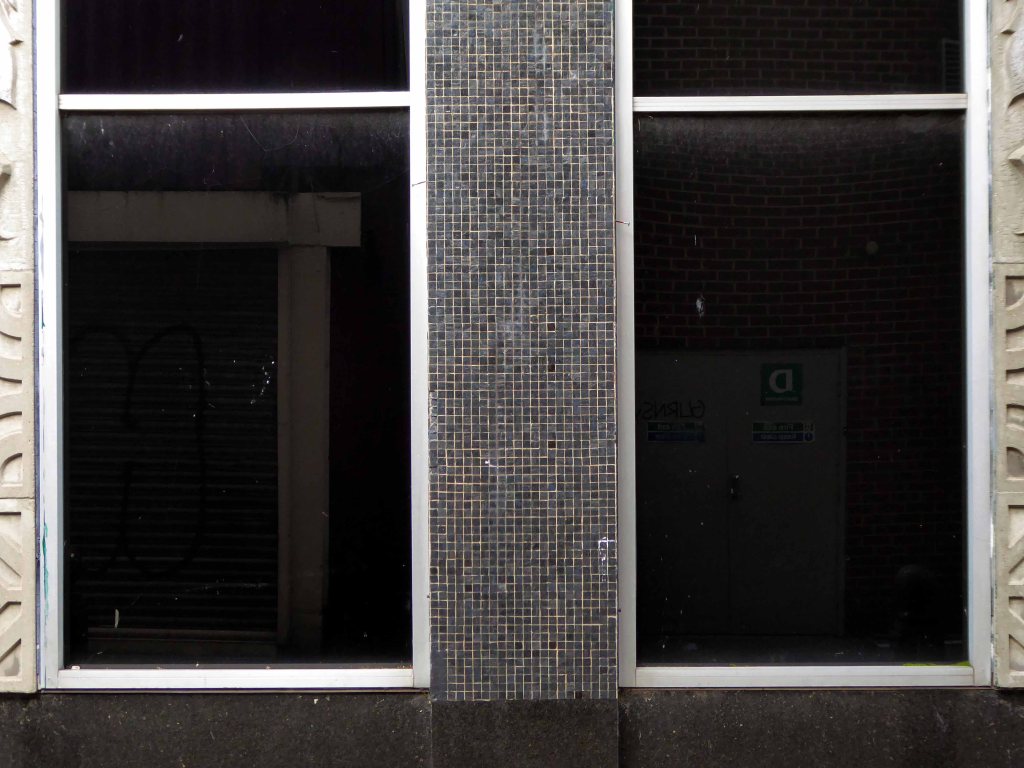
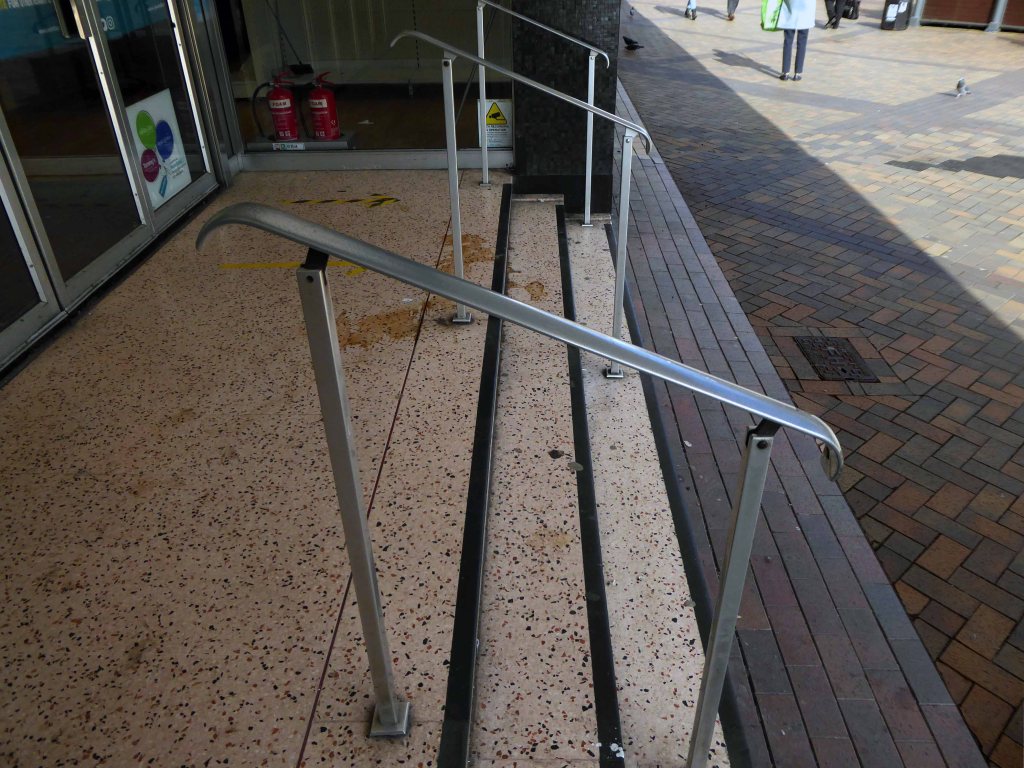
So here is my record of the building as is, a tad tired, but in its day a simple and authoritative amalgam of volumes and materials.

Mixing variegated grades of concrete, tiling, mosaic, brick, steel and glass.

St Cuthbert’s Miles Platting Manchester

Junction of Fir Road and Oldham Road

One fine day, I chanced to walk by just as the service was finishing.

I asked Assistant Curate Rev. Peter Scott if it would be possible to photograph the interior of the church, he kindly consented.

Here are the results, along with shots of the excitingly angular exterior.

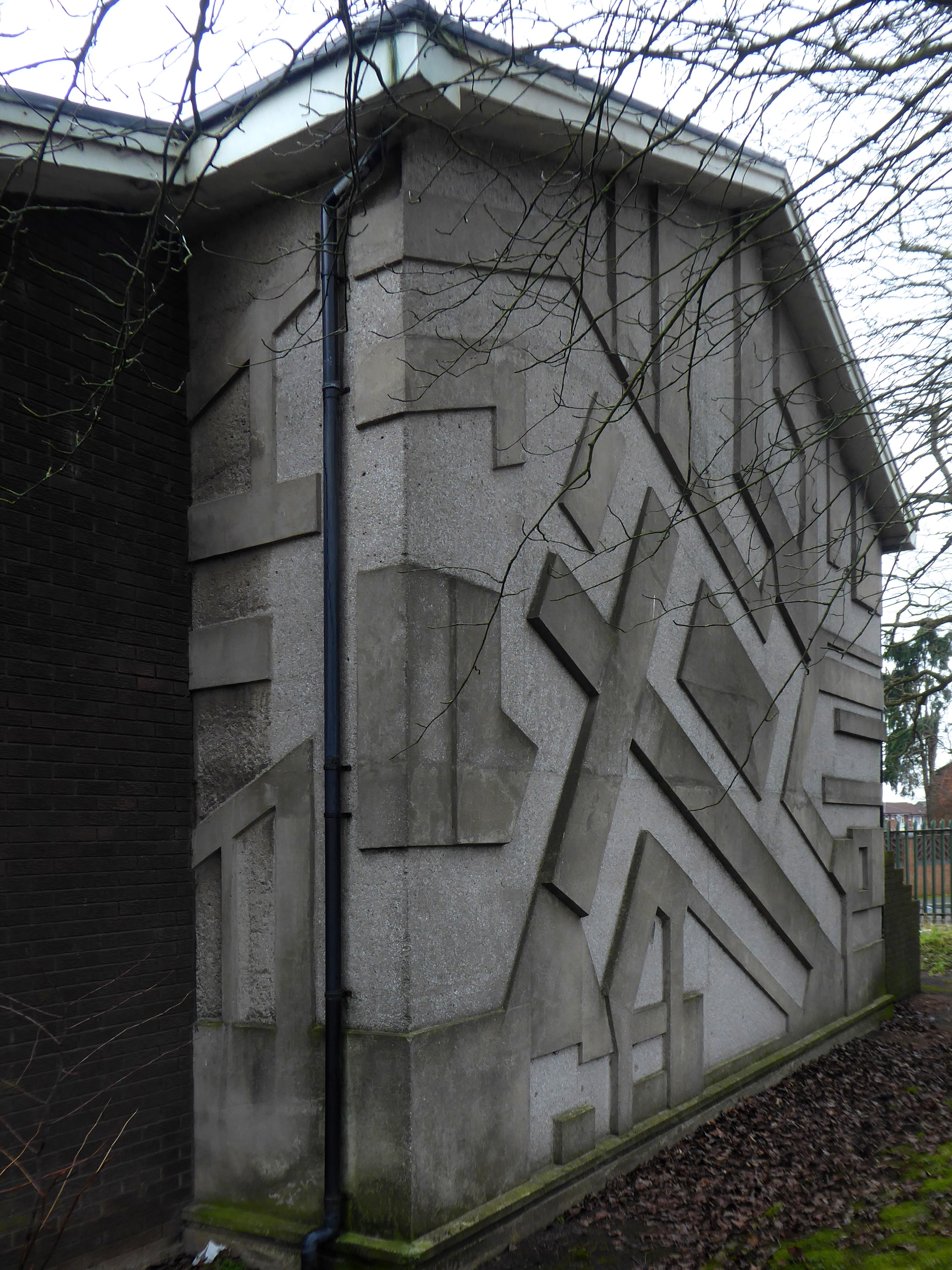
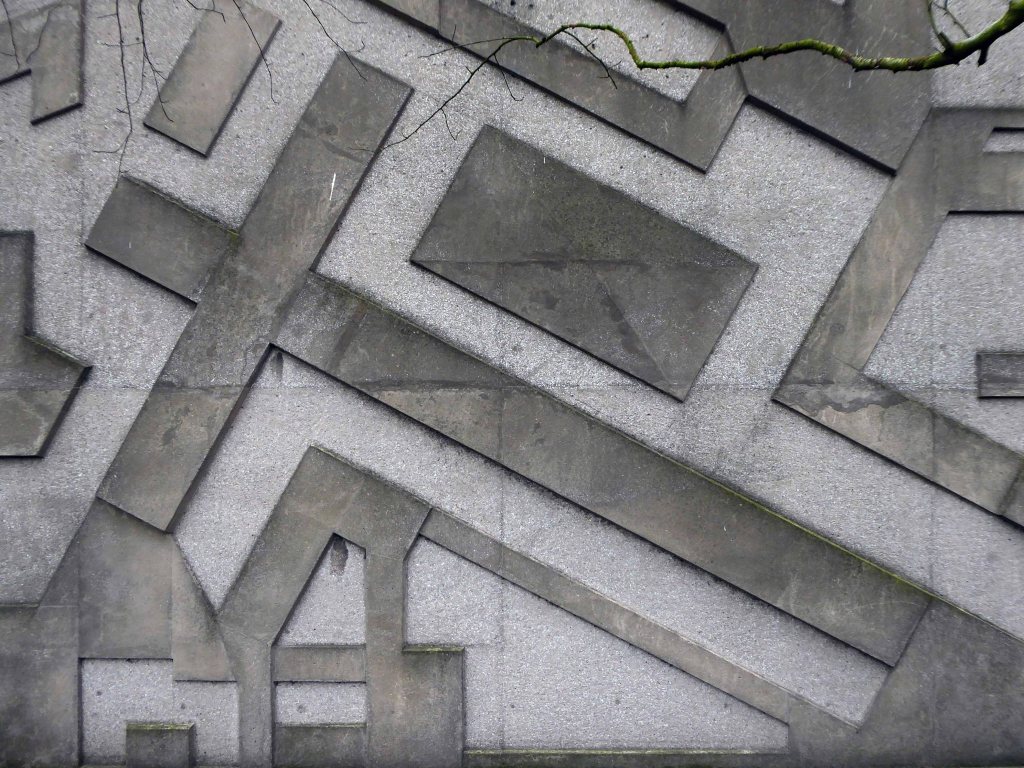
The church’s exterior is home to a dramatic concrete relief.

Let’s take a look inside, complex volumes and multiple window-lighting points, along with simple decorative order.

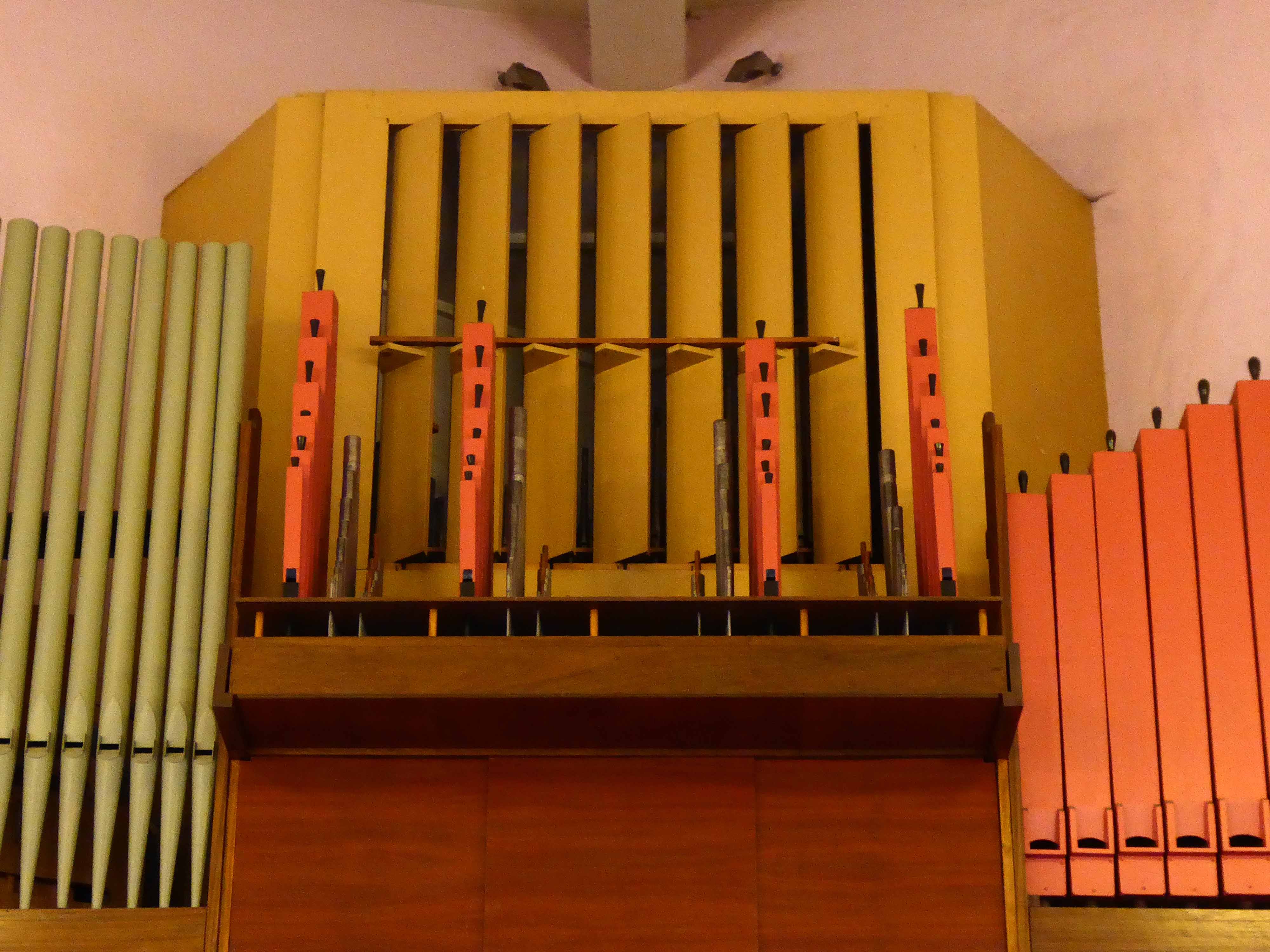
Of particular note – the organ pipes located above the main entrance.

Once again I can’t thank Rev. Peter Scott enough for giving us access to this beautiful church, serving the parishioners of Miles Platting.

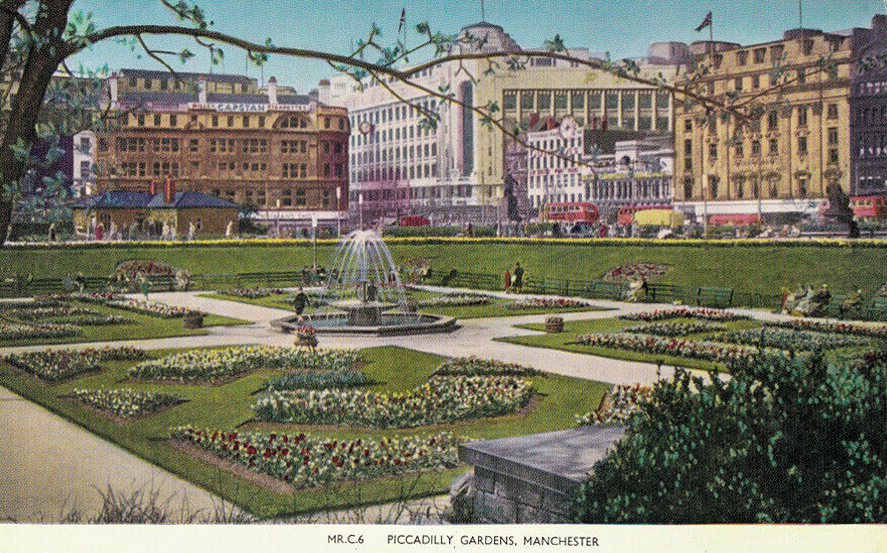
Piccadilly Plaza And Gardens

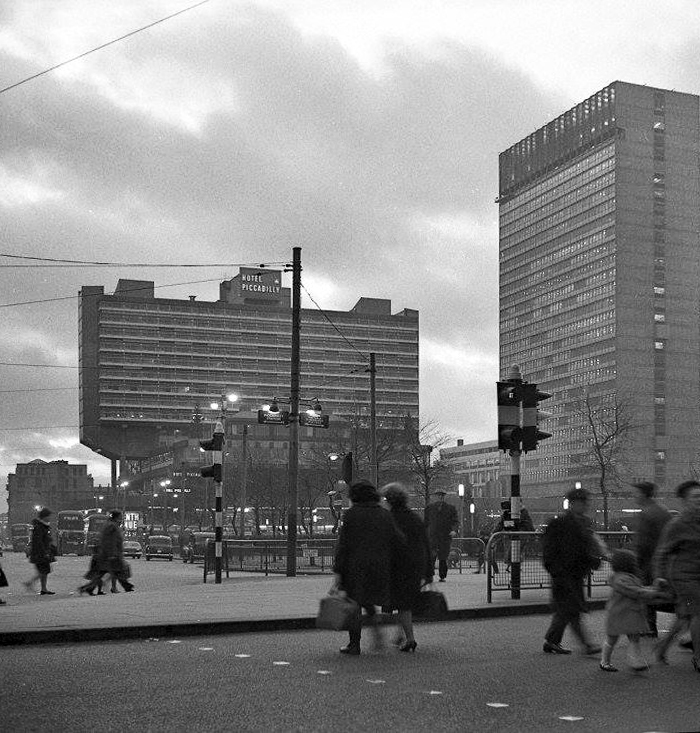
Here we are, right at the heart of Manchester.

Anything worth looking at?

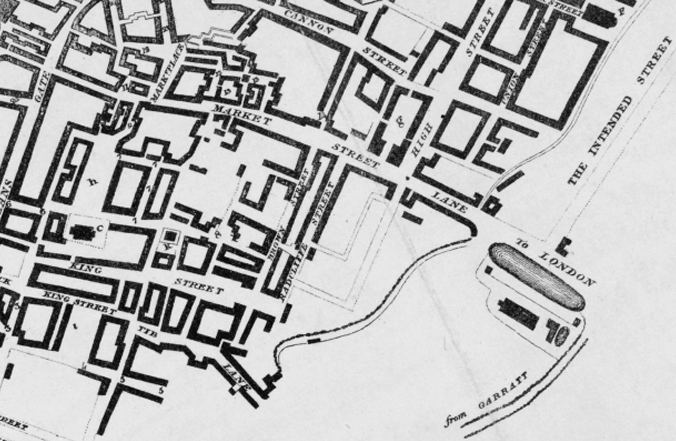
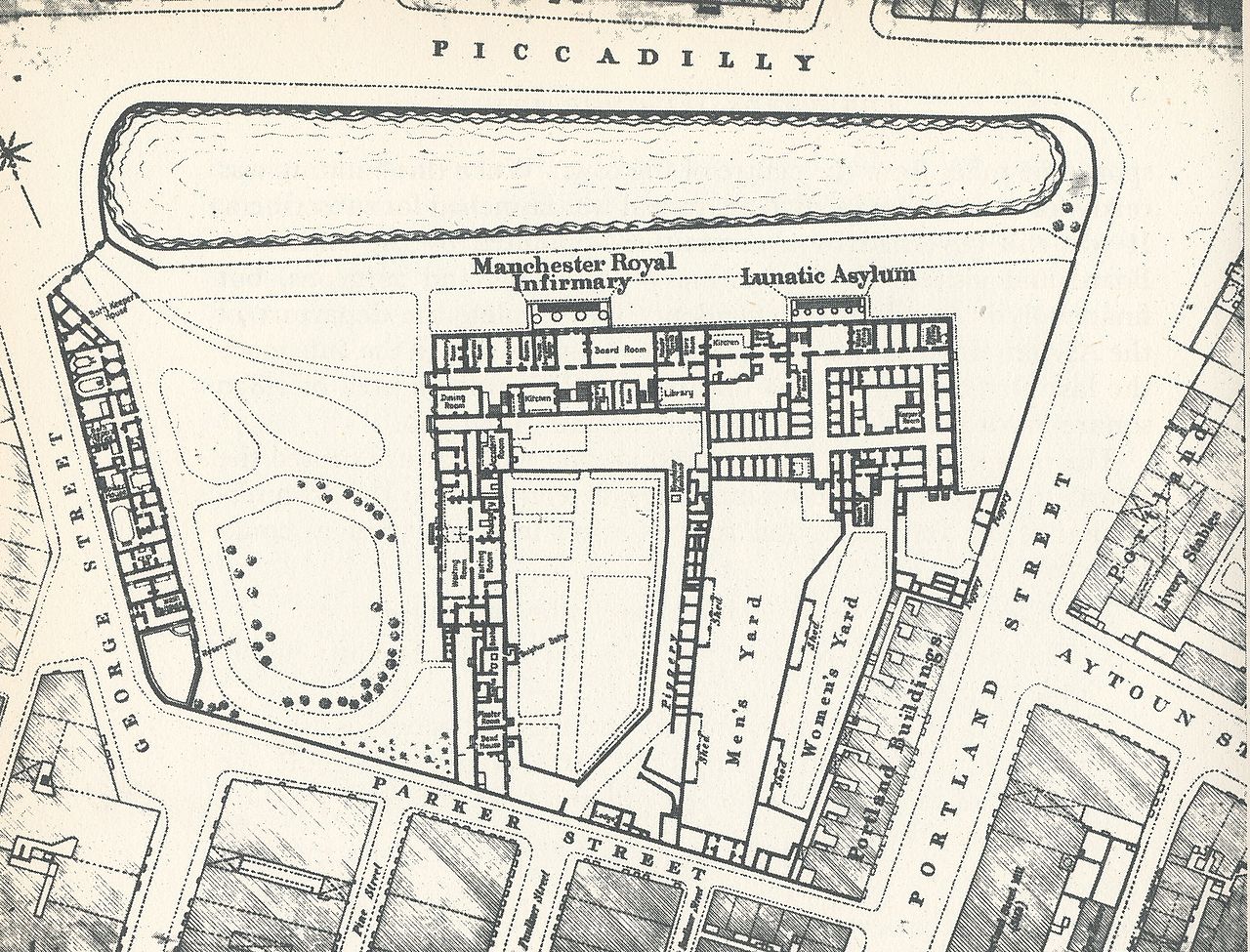
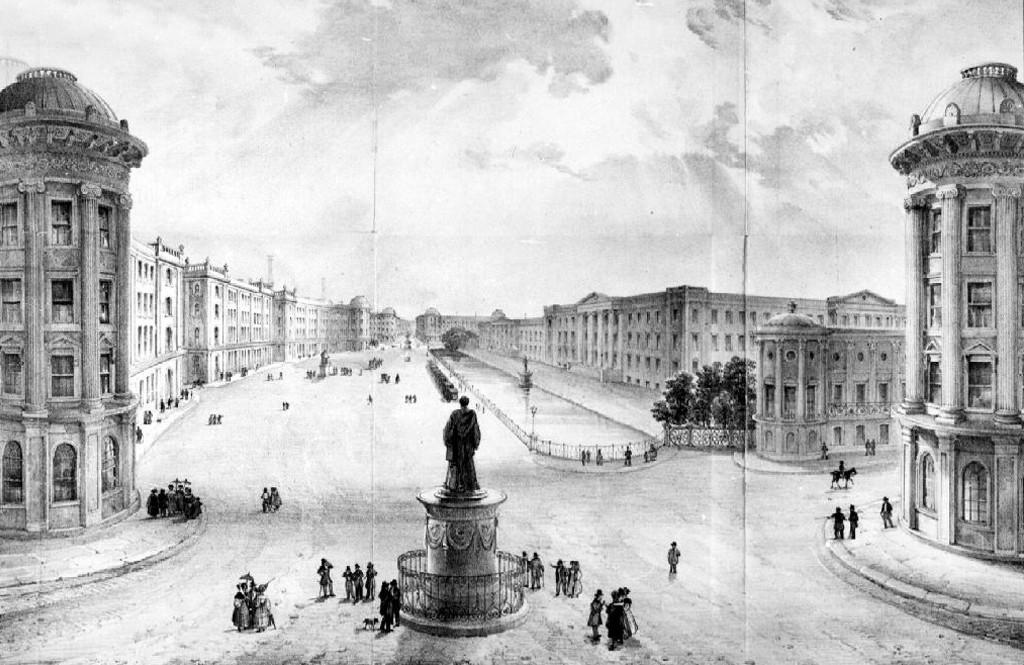
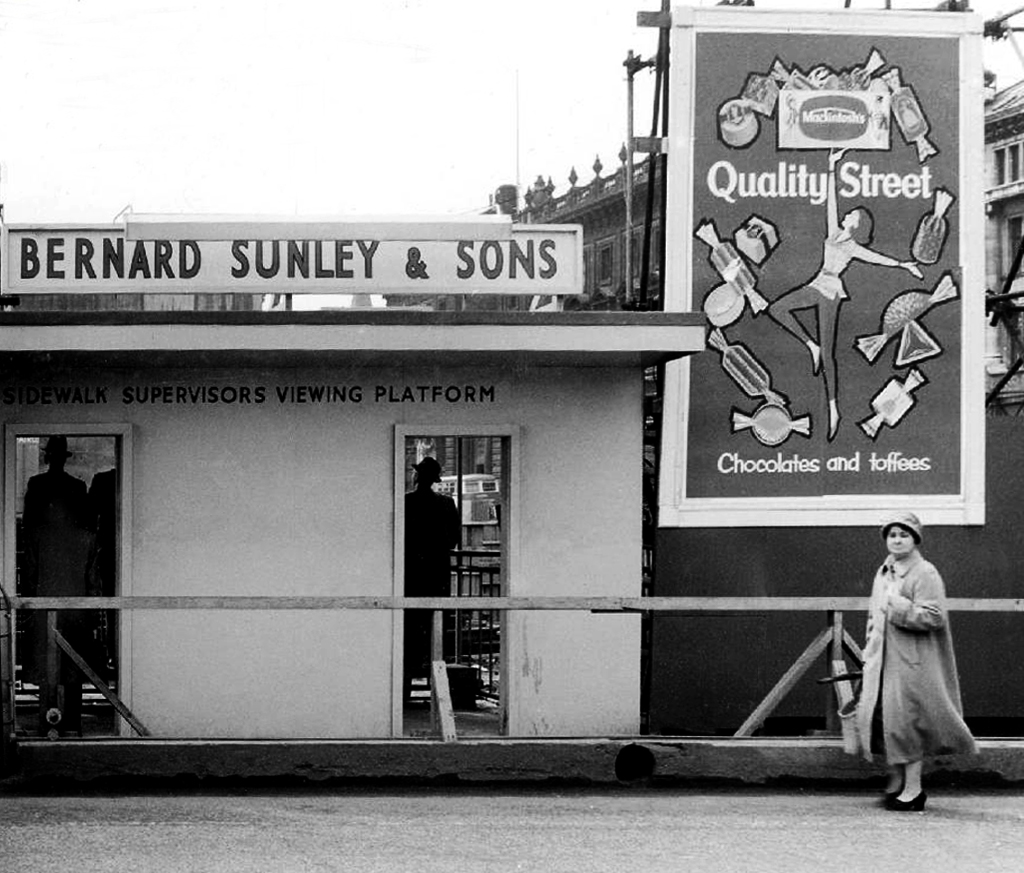
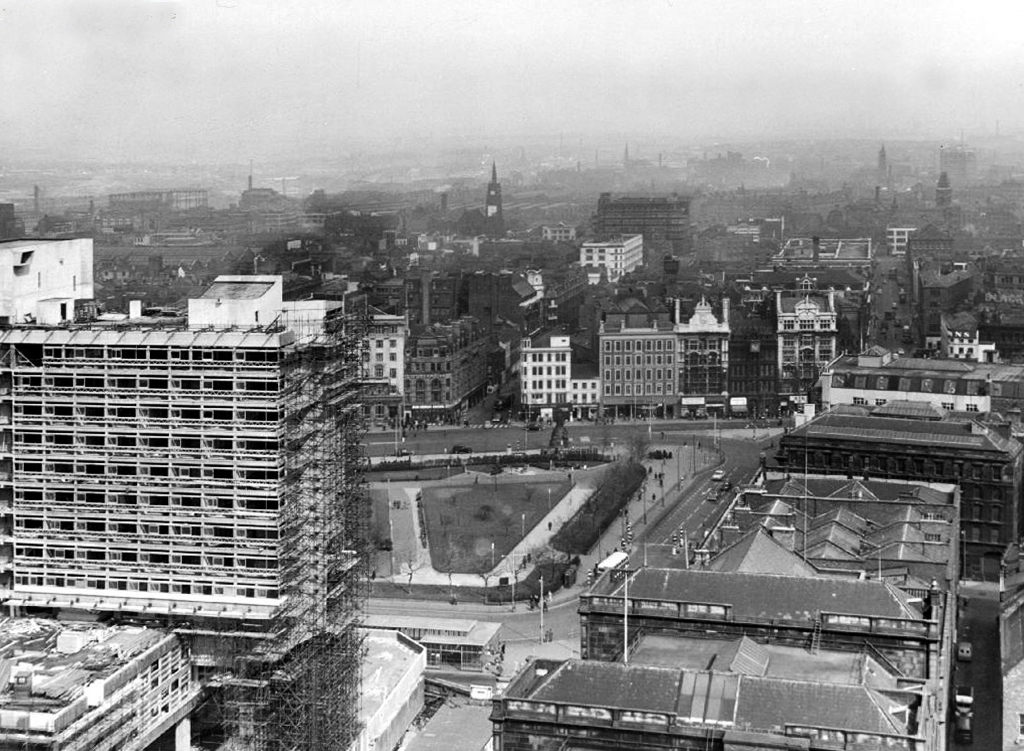
Well not a great deal, it’s 1772 and the Gardens and Plaza, are as yet undreamt of – the area was occupied by water-filled clay pits called the Daub Holes, eventually the pits were replaced by a fine ornamental pond.

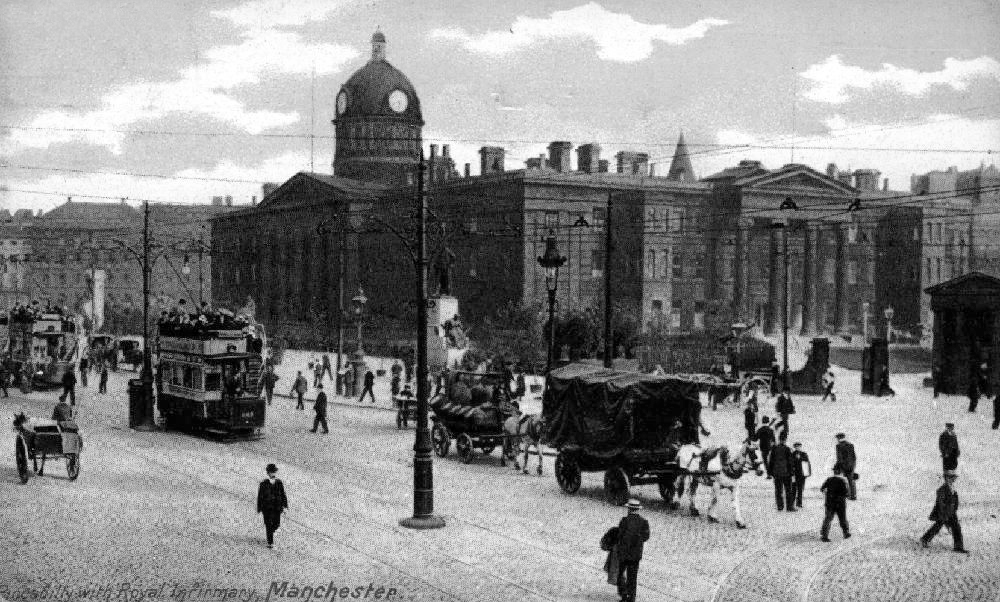
In 1755 the Infirmary was built here; on what was then called Lever’s Row, in 1763 the Manchester Royal Lunatic Asylum was added.

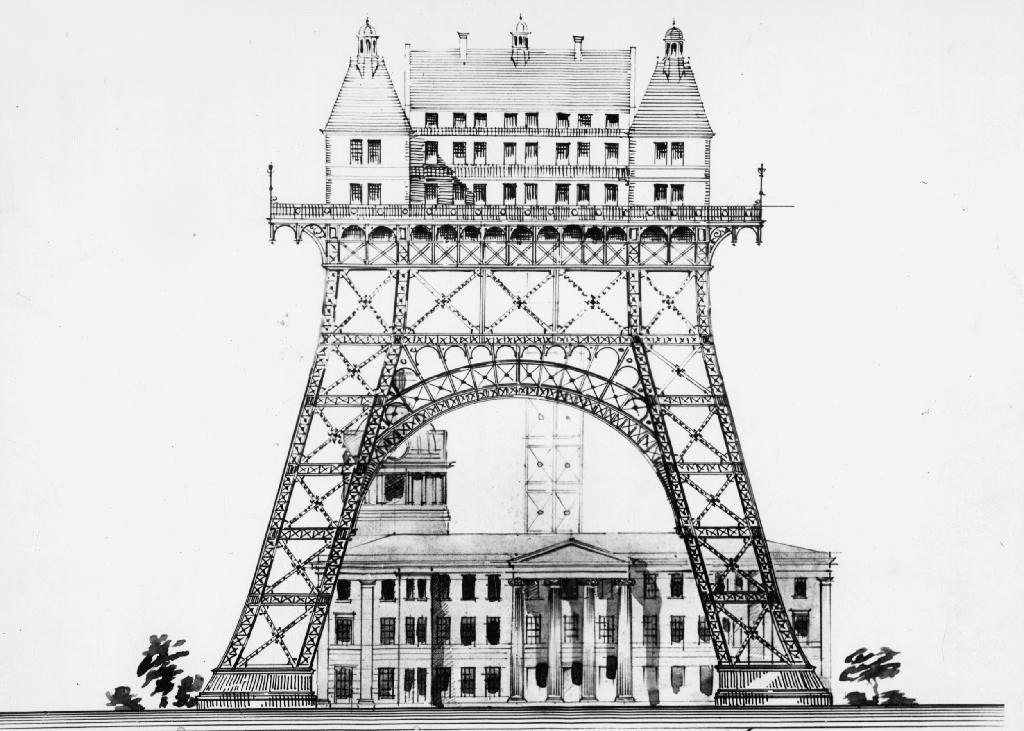
There were grander unrealised plans.

Including an aerial asylum.

The Manchester Royal Infirmary moved to its current site on Oxford Road in 1908. The hospital buildings were completely demolished by April 1910 apart from the outpatient department, which continued to deal with minor injuries and dispense medication until the 1930s.

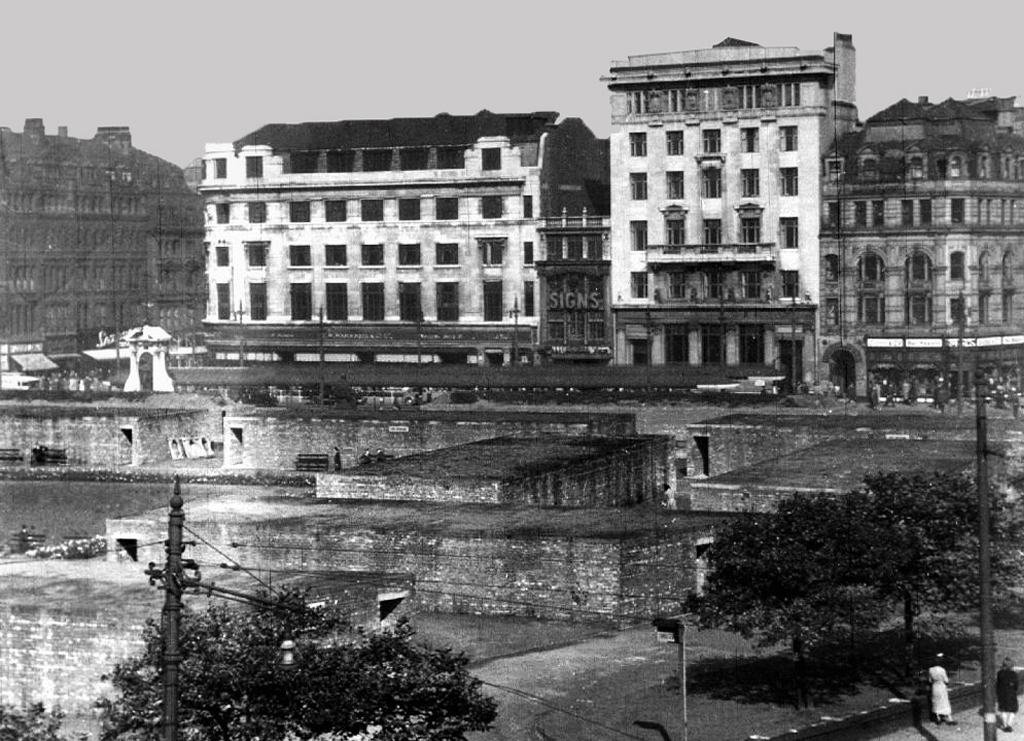
After several years in which the Manchester Corporation tried to decide how to develop the site, it was left and made into the largest open green space in the city centre. The Manchester Public Free Library Reference Department was housed on the site for a number of years before the move to Manchester Central Library.

The sunken garden was a remnant of the hospital’s basement.

Wikipedia

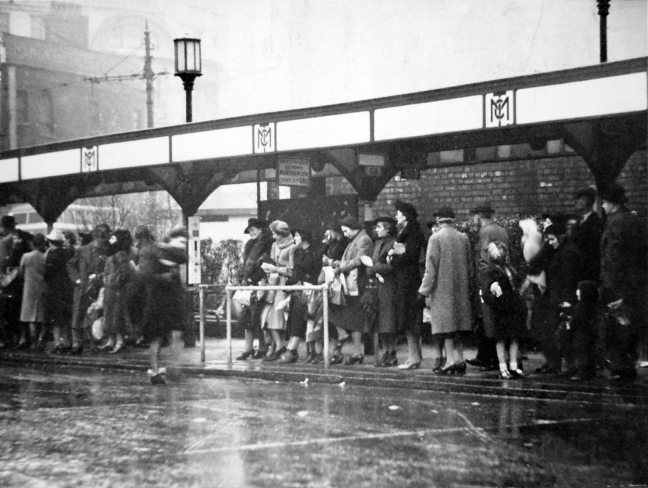
During World War II the gardens were home to air raid shelters.

The Gardens became a festival of floral abundance – in folk memory twinned with the Hanging Gardens of Babylon, but with slightly less hanging.

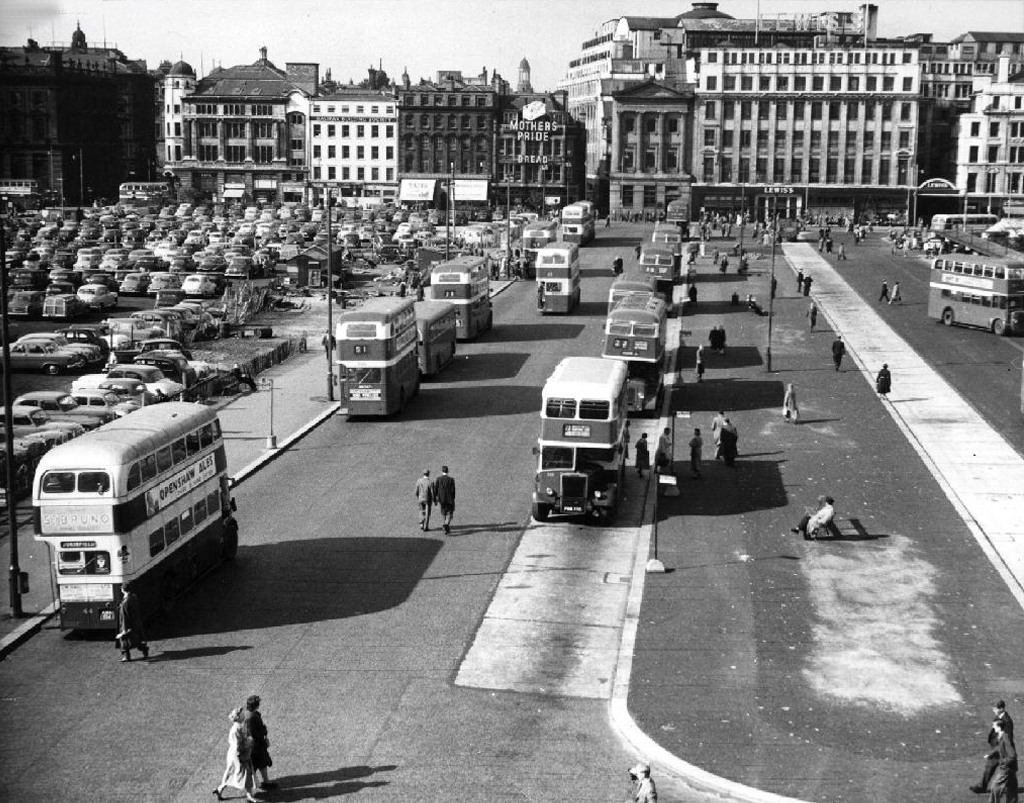
The area has also acted as a public transport hub.

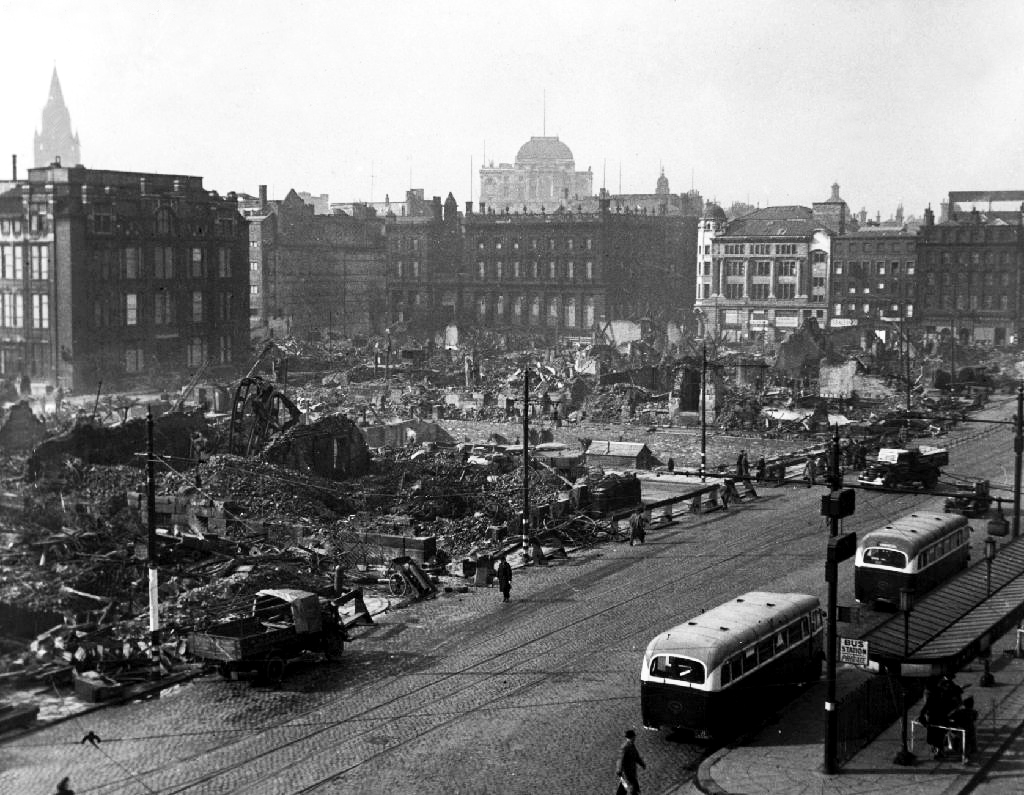
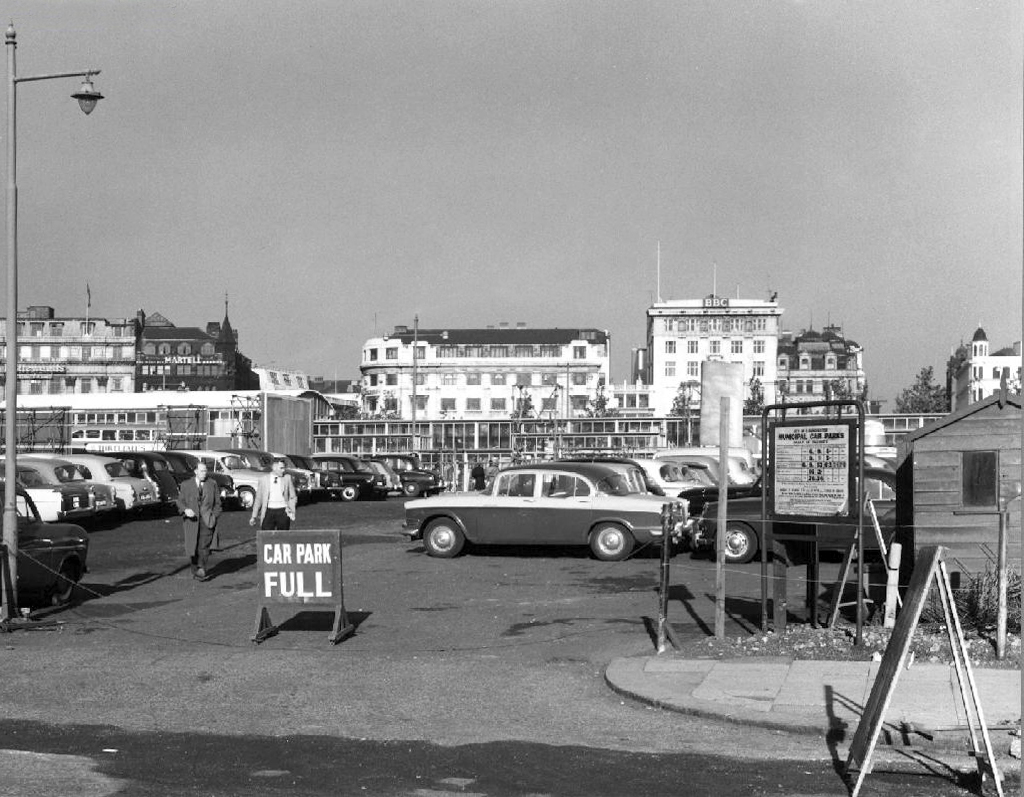
And following post war bomb damage.

A delightful car park.

But this simply can’t carry on, keep calm and demand a Plaza!

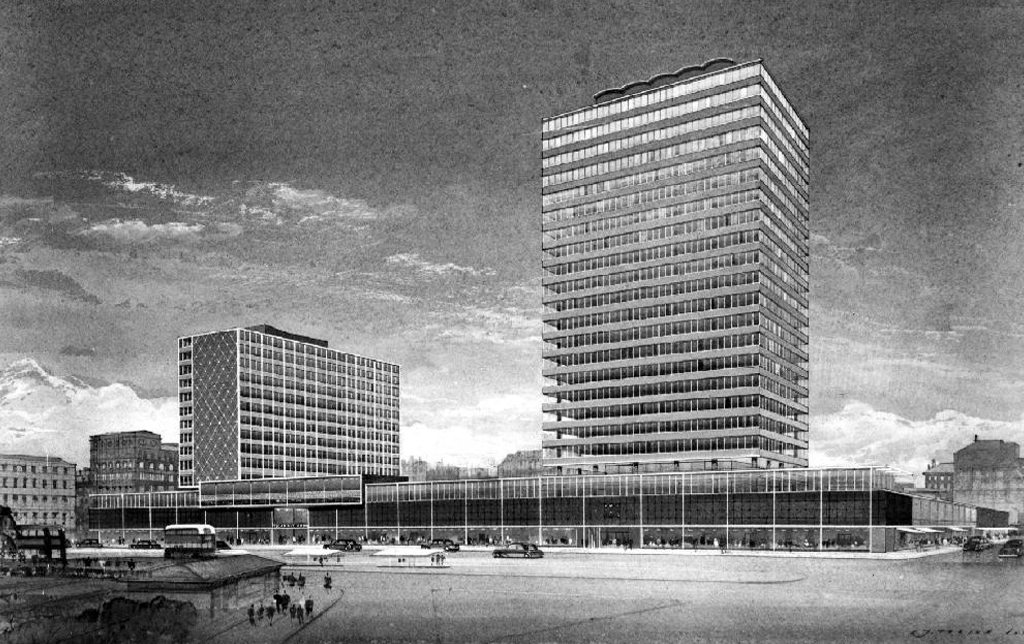
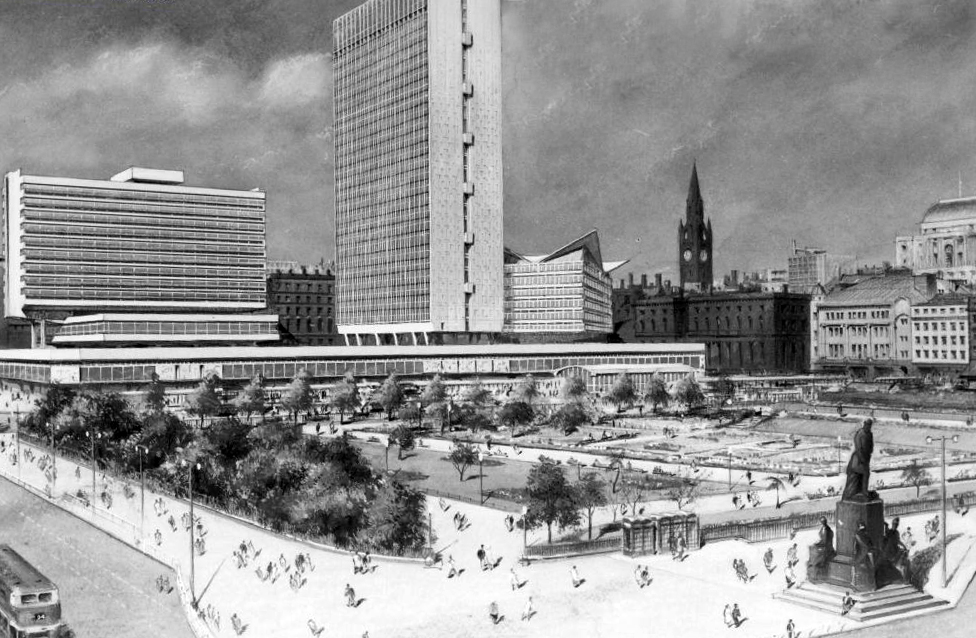
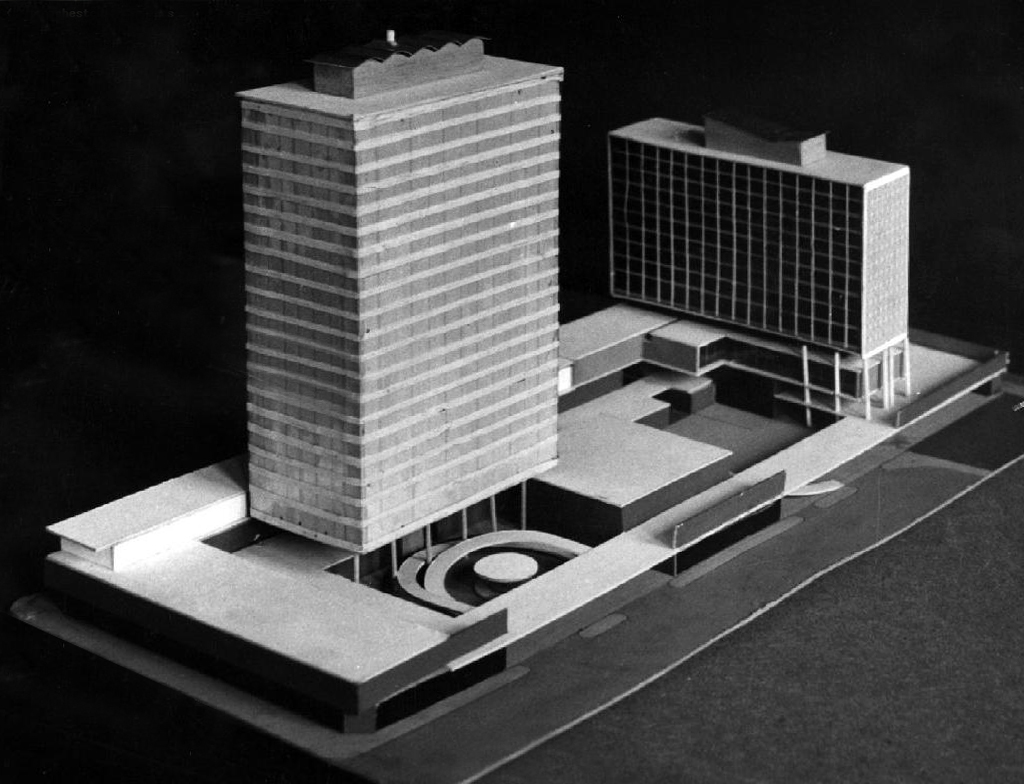
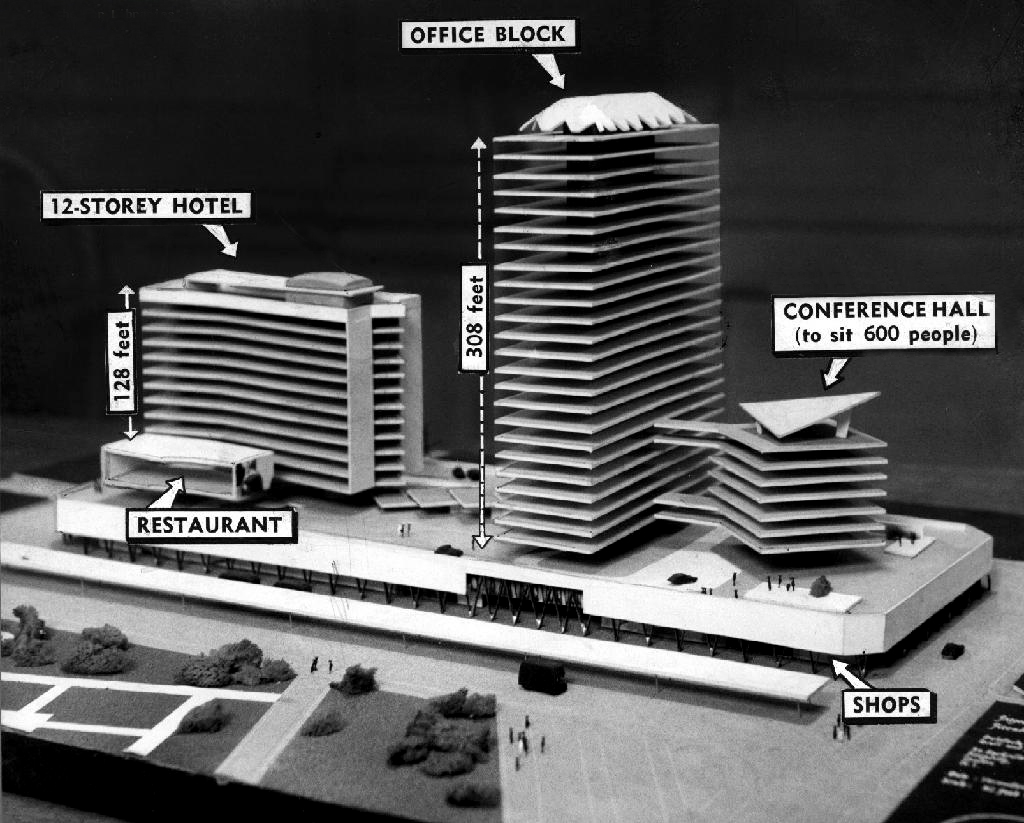
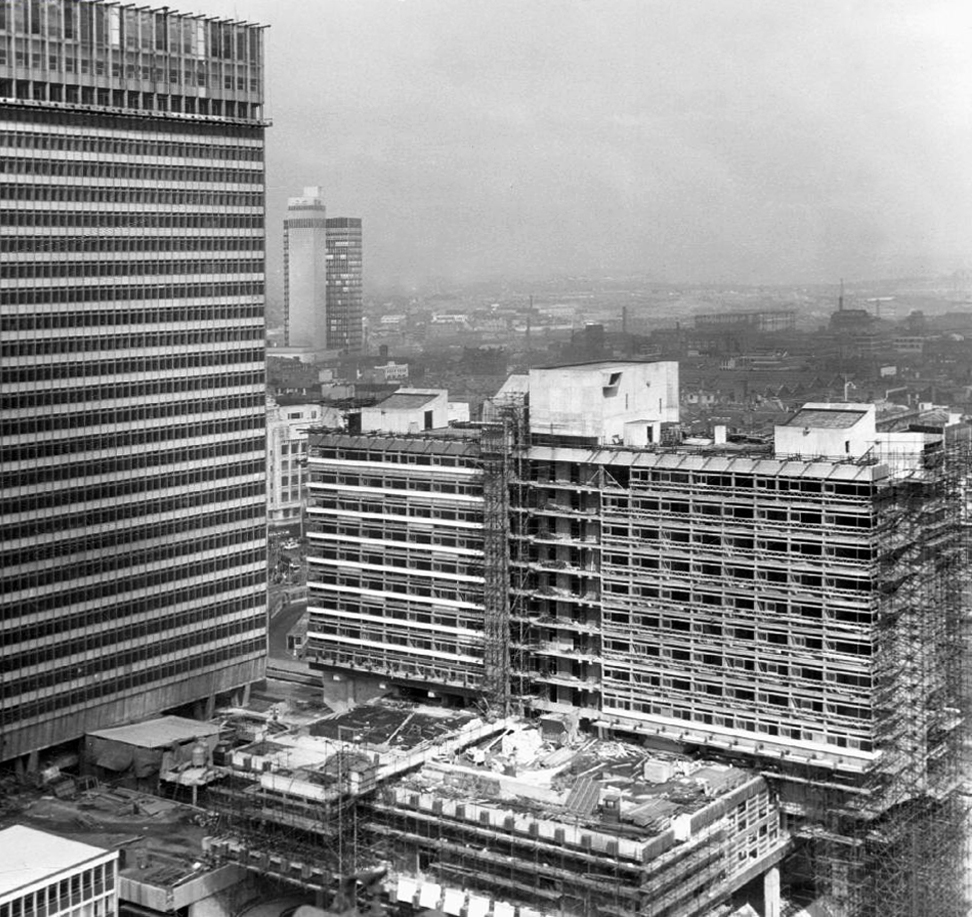
Drawings are drawn, models are modelled.

1965 Architects: Covell Matthews + Partners

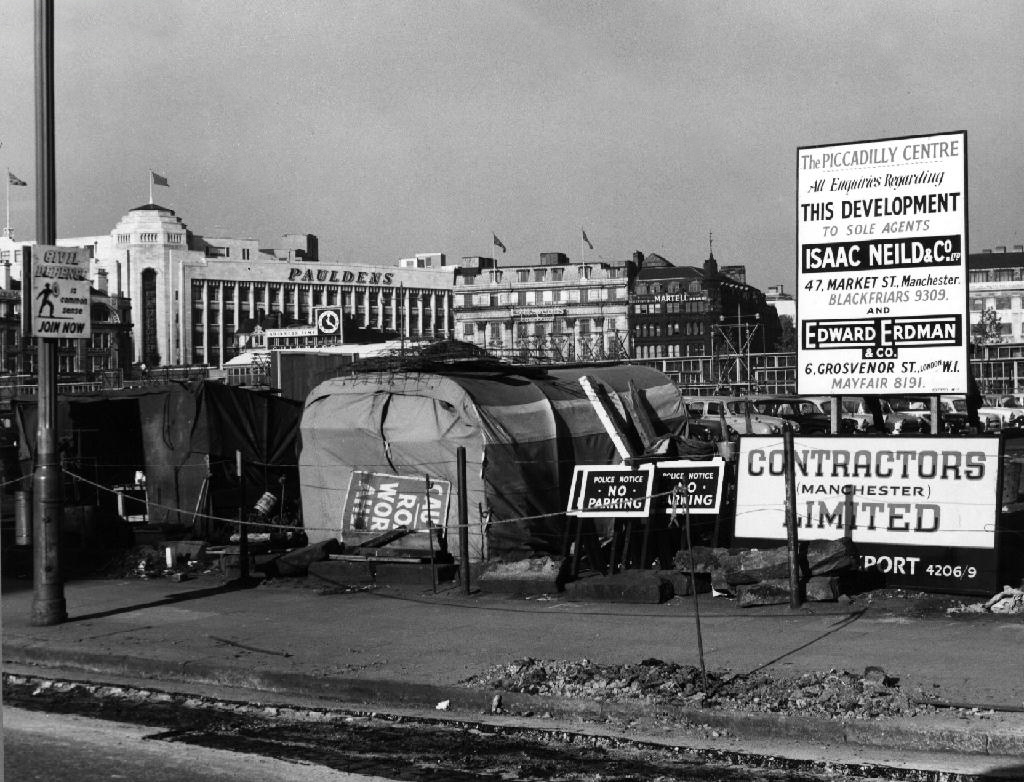
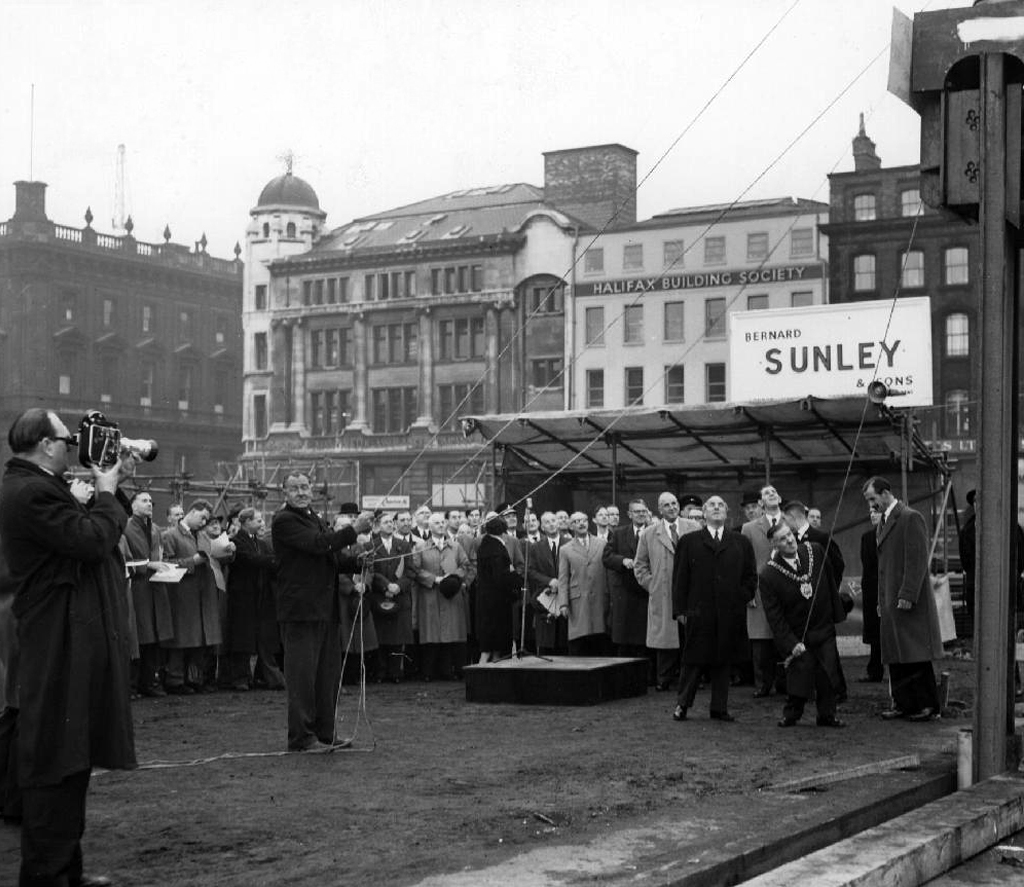
Work is commenced, post haste.

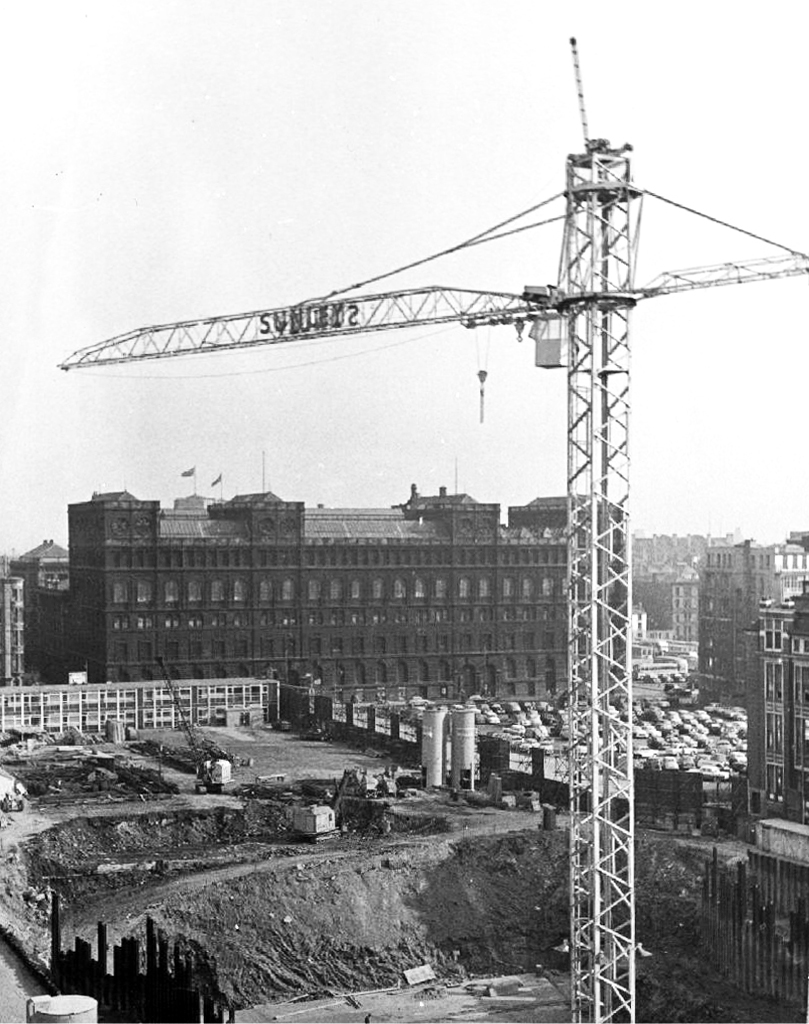
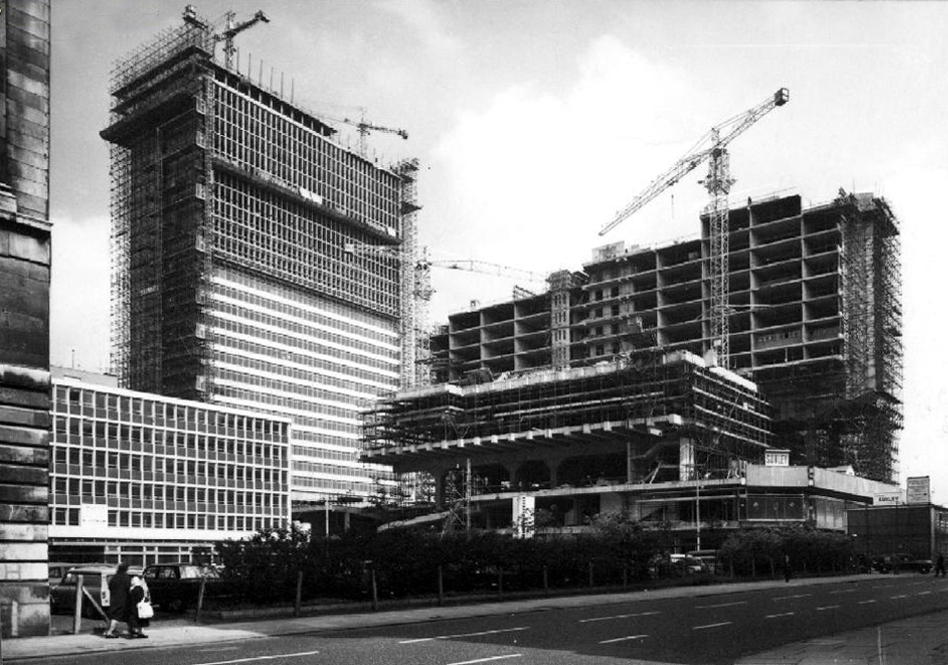
Towering cranes tower over the town, deep holes are dug with both skill and alacrity.

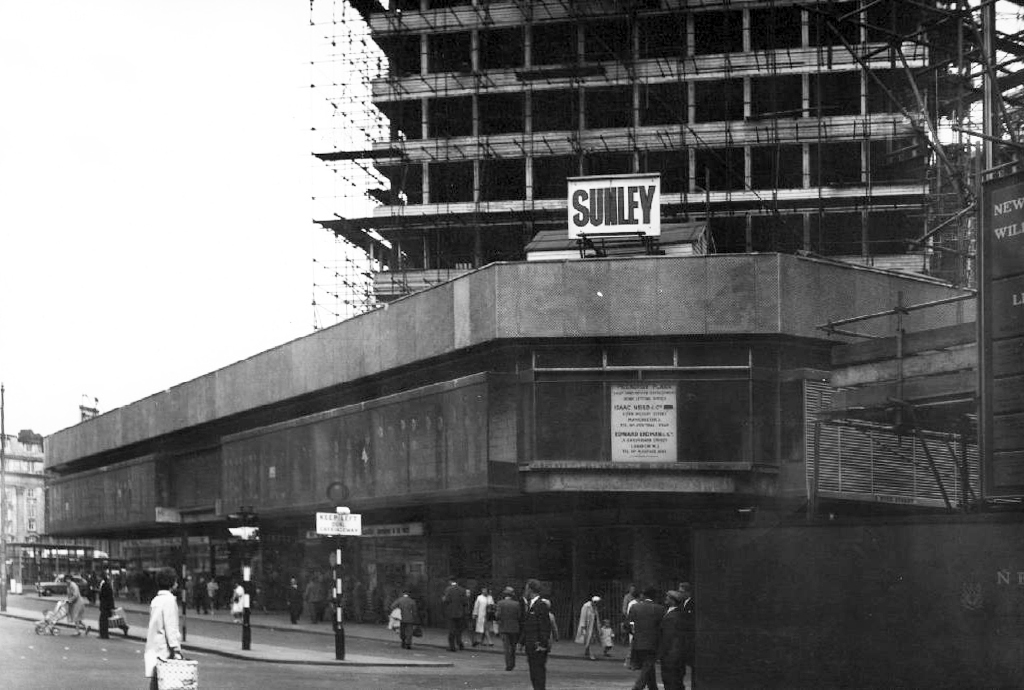
A Plaza begins to take shape, take a look.

Nearly done.

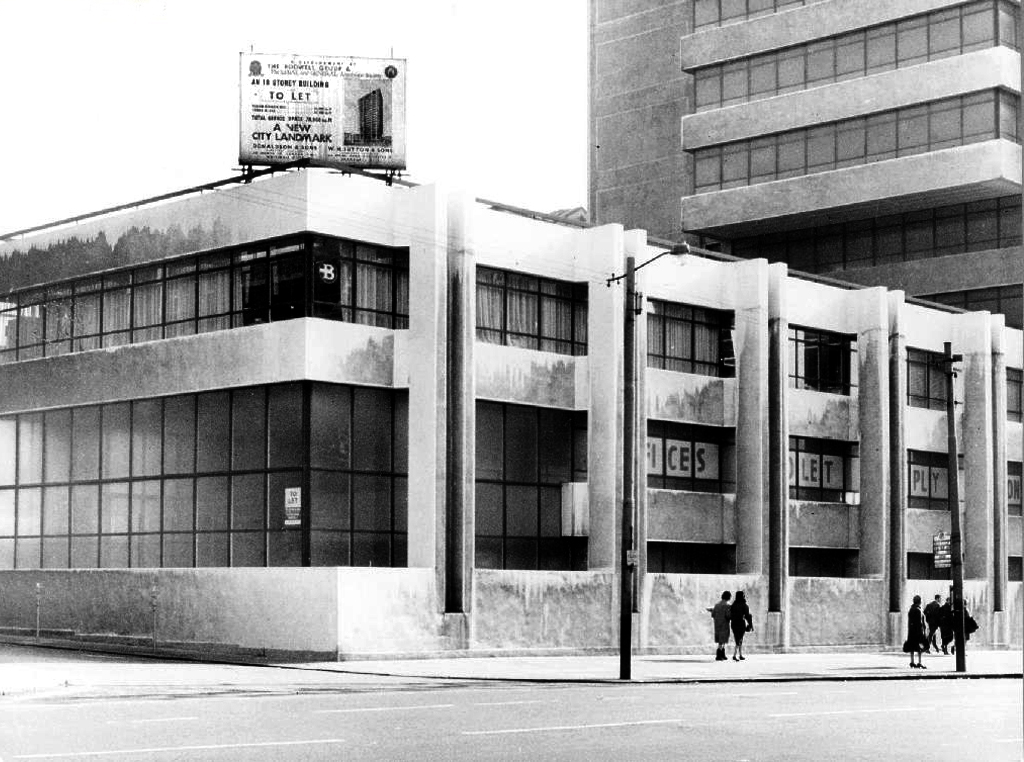
All we need now are tenants.

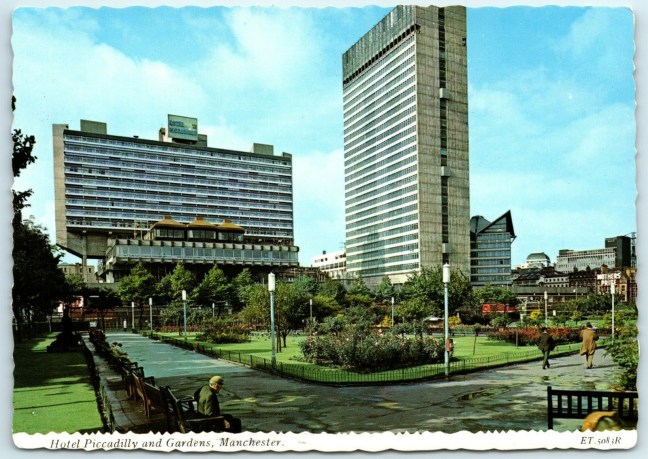
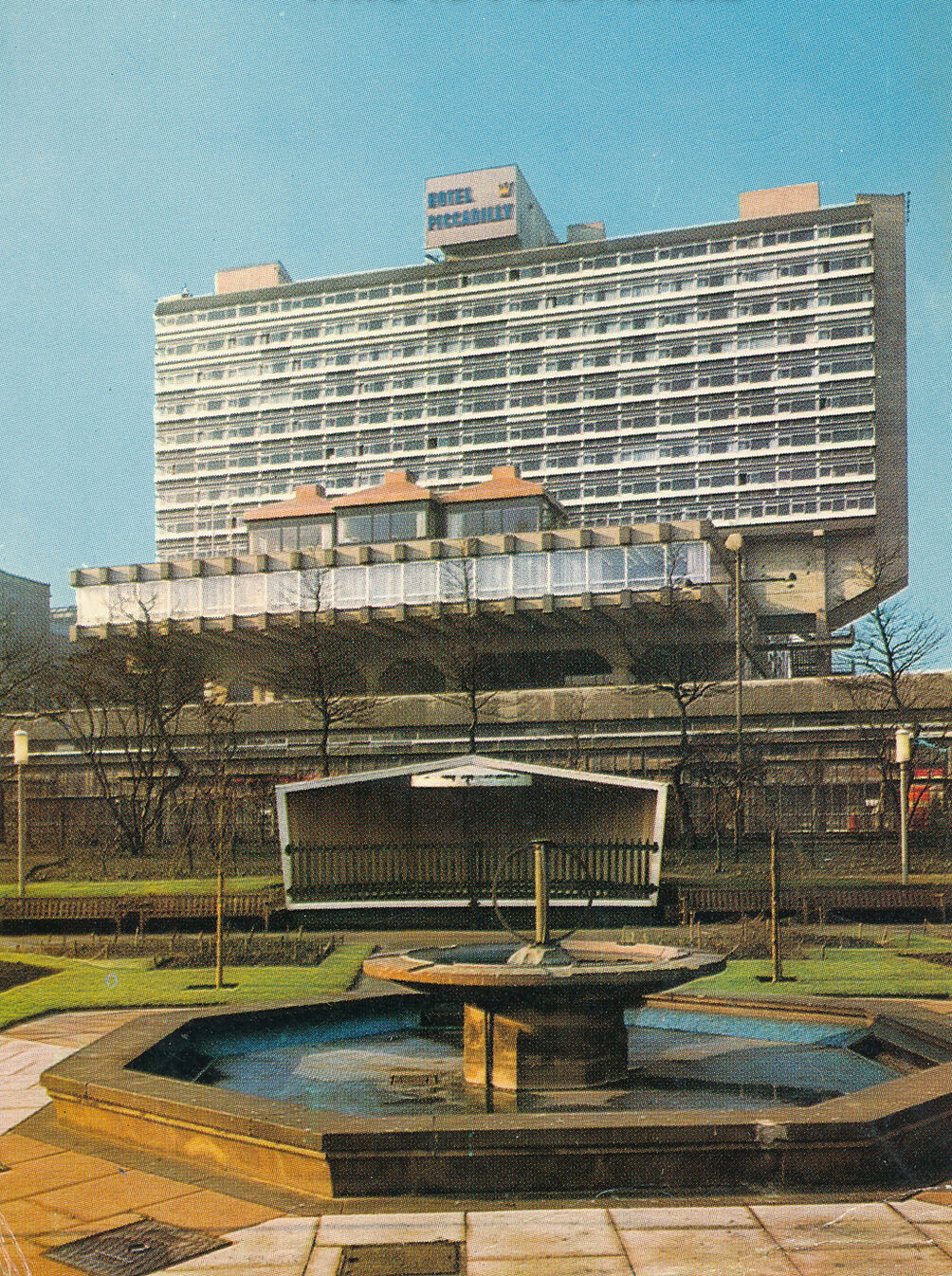
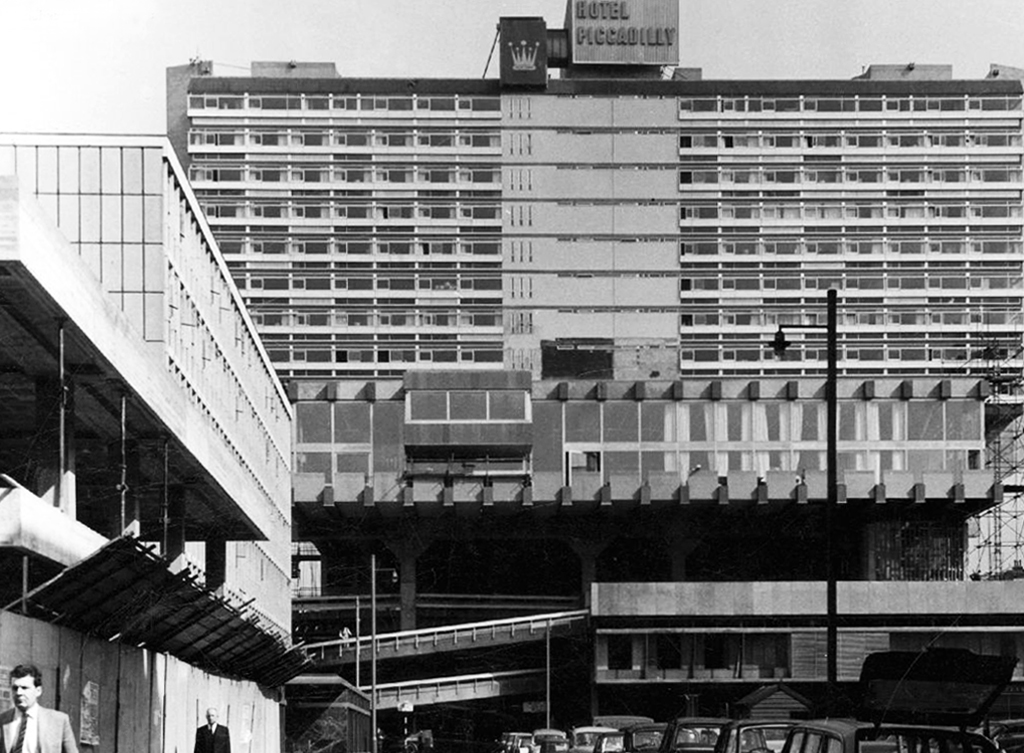
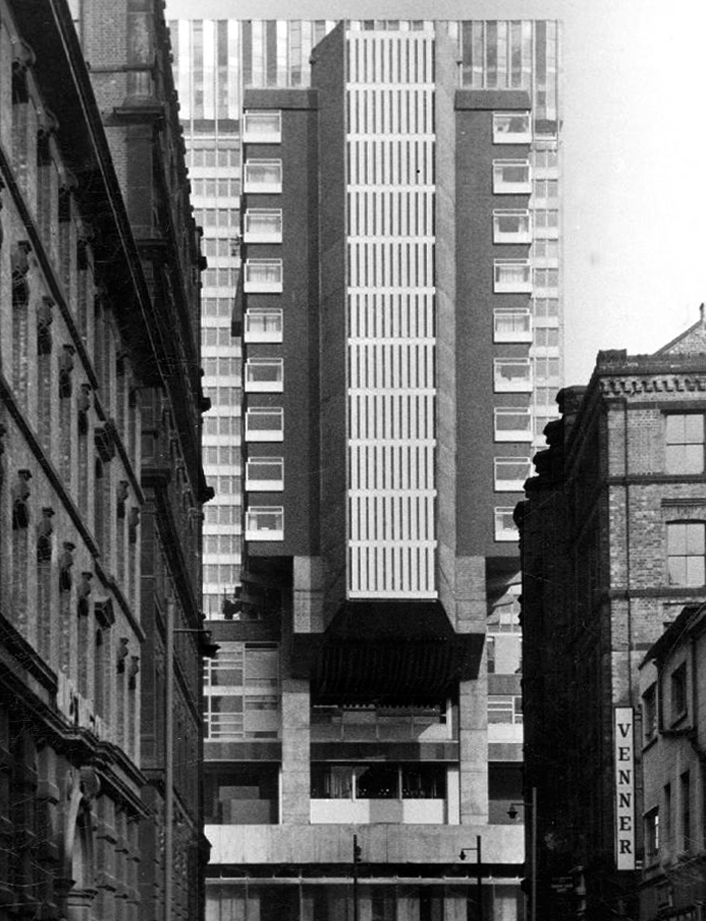
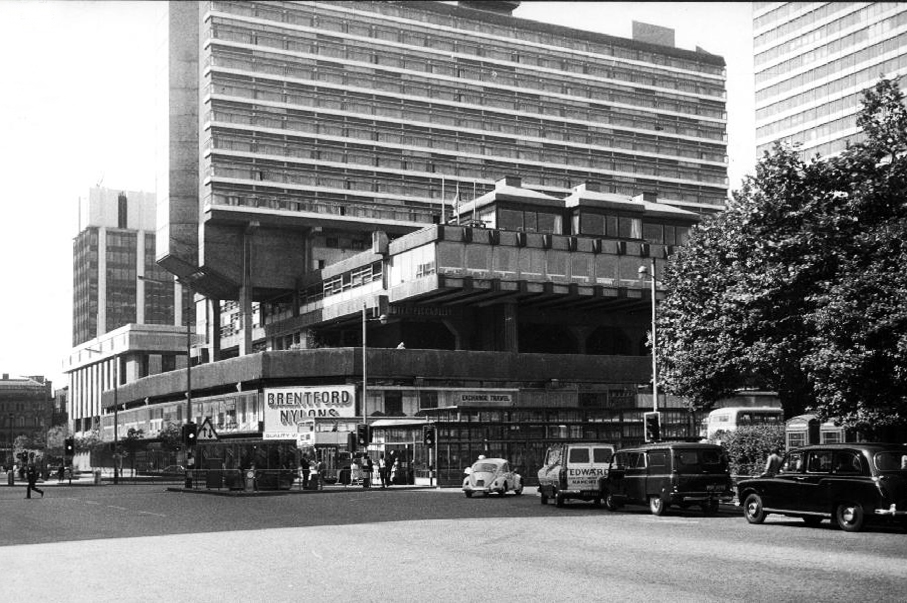
Piccadilly Plaza now contains the renovated Mercure Hotel it was formerly known as the Ramada Manchester Piccadilly and Jarvis Piccadilly Hotel; the refurbishment was completed in 2008.

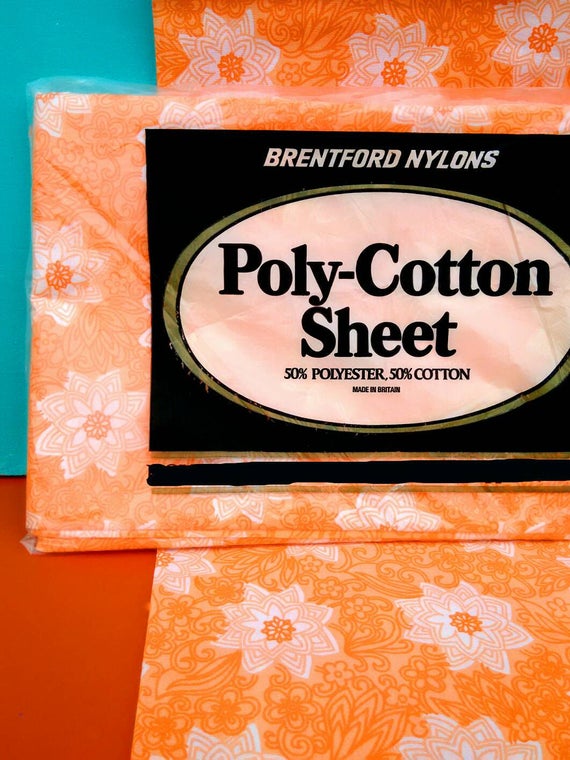
The retail units famously contained Brentford Nylons.

The company was eventually sold at a knock-down price and the new owner did not think the name worth having.

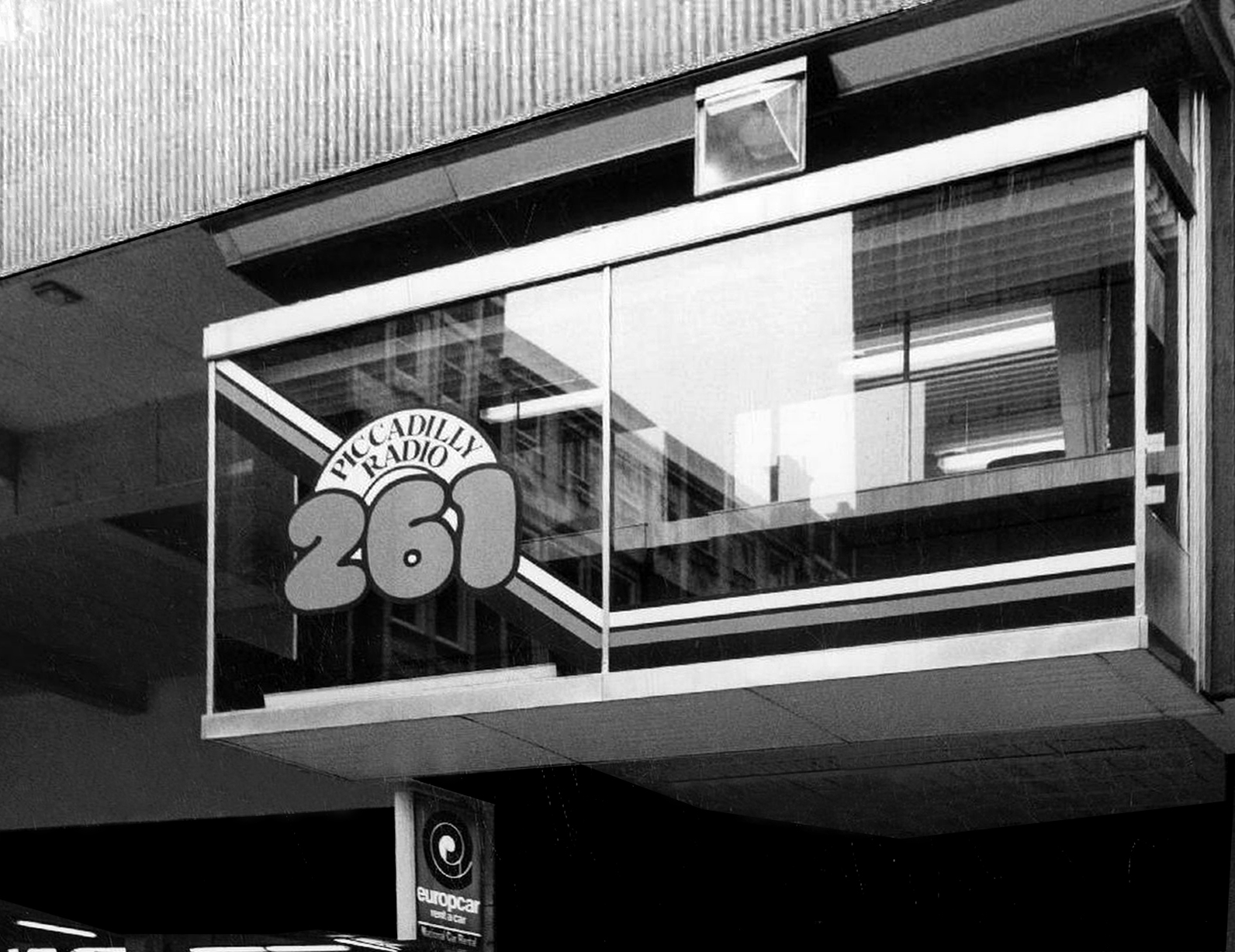
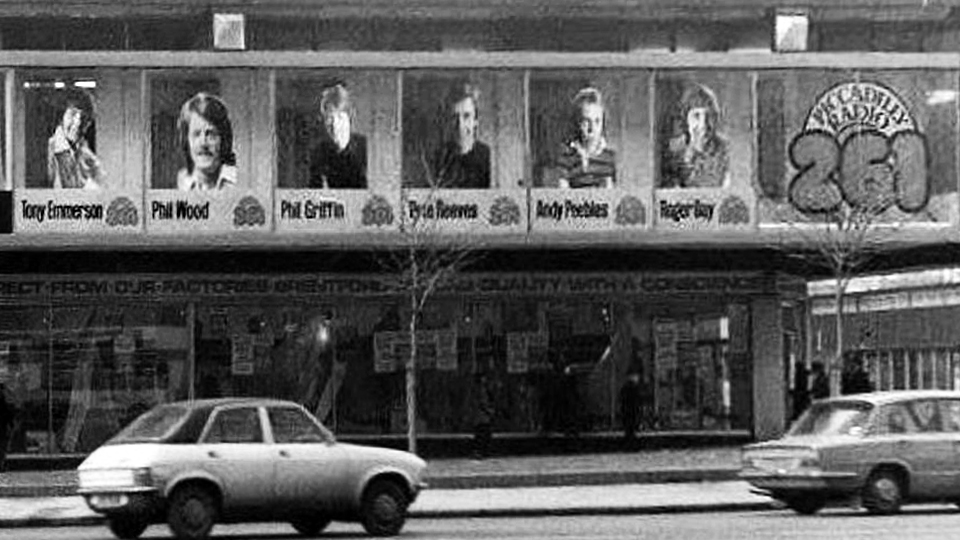
The noisy upstairs neighbours were Piccadilly Radio.

The first broadcast was at 5am on April 2nd 1974, it was undertaken by Roger Day, with his first words to the Manchester audience: “It gives me great pleasure for the very first time to say a good Tuesday morning to you… Hit music for the North West…we are Piccadilly Radio” before spinning Good Vibrations.

It was the first commercial radio station to broadcast in the city, and went on to launch the careers of a host of star DJs, the likes of Gary Davies, Chris Evans, Andy Peebles, Timmy Mallett, Mike Sweeney, Pete Mitchell, James Stannage, Steve Penk and James H Reeve.

Manchester Evening News

And of course my good friend Mr Phil Griffin.

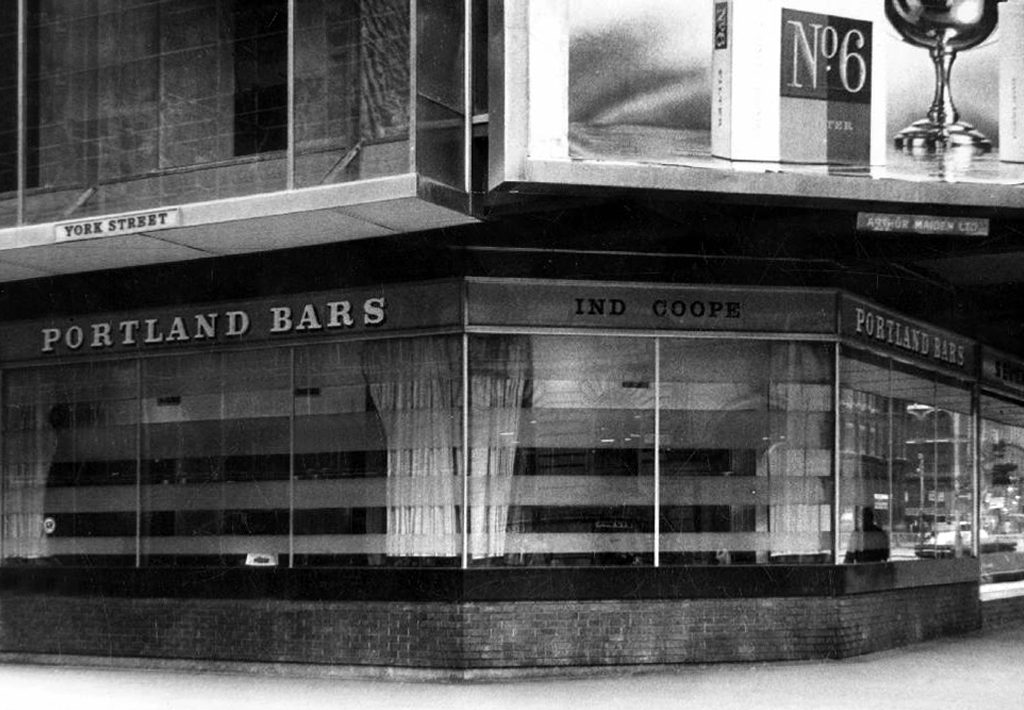
Just around the corner the Portland Bars.

Waiting for a mate who worked at Piccadilly Radio we ventured down the stairs next door to get a drink and because of our clothes/leather jackets we were chucked back up the steps. We should of stood our ground like one of my mates who was told he could stay if he turned his jacket inside out, thinking he wouldnt do it, but he did and had a drink with his red quilted lining on the outside.

MDMA

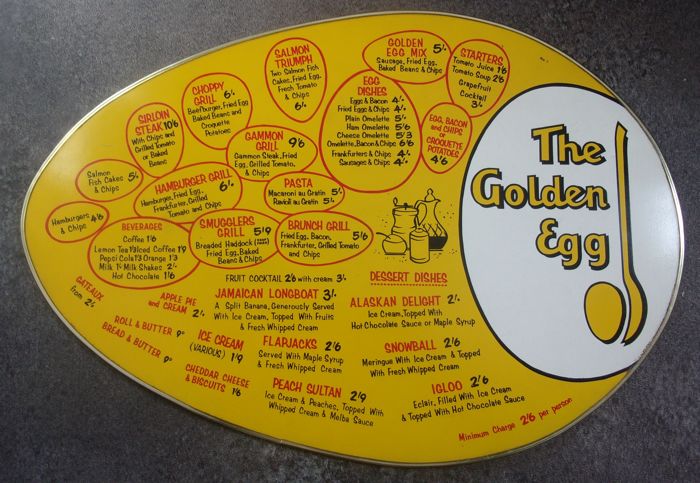
Oh and not forgetting the Golden Egg.

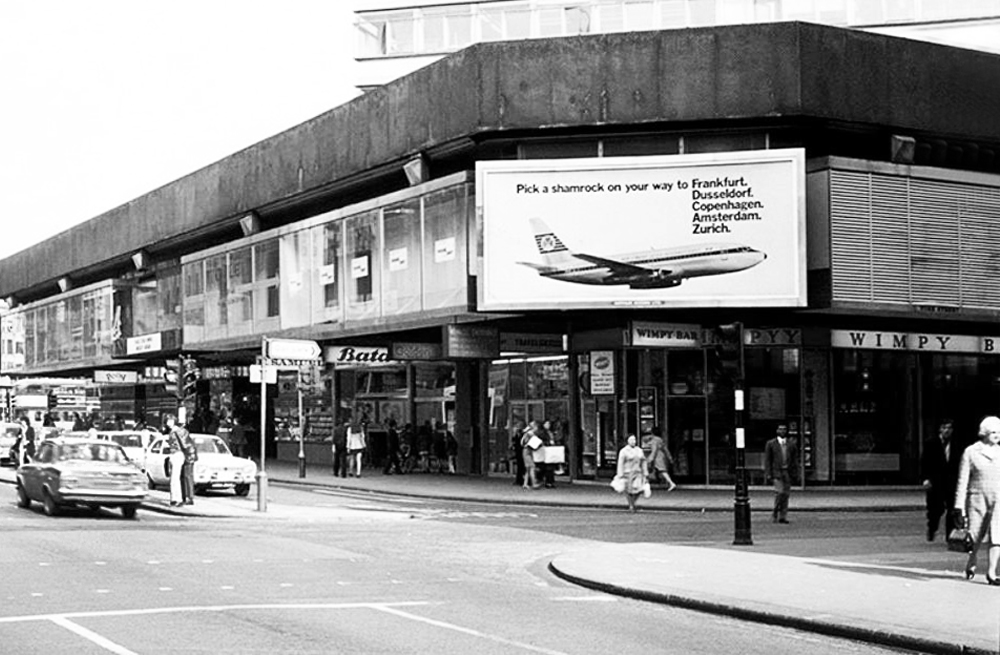
Bata Shoes and a Wimpy Bar.

“Food served at the table within ten minutes of ordering and with atomic age efficiency. No cutlery needed or given. Drinks served in a bottle with a straw. Condiments in pre-packaged single serving packets.”

In addition to familiar Wimpy burgers and milkshakes, the British franchise had served ham or sardine rolls called torpedoes and a cold frankfurter with pickled cucumber sandwiches called Freddies.

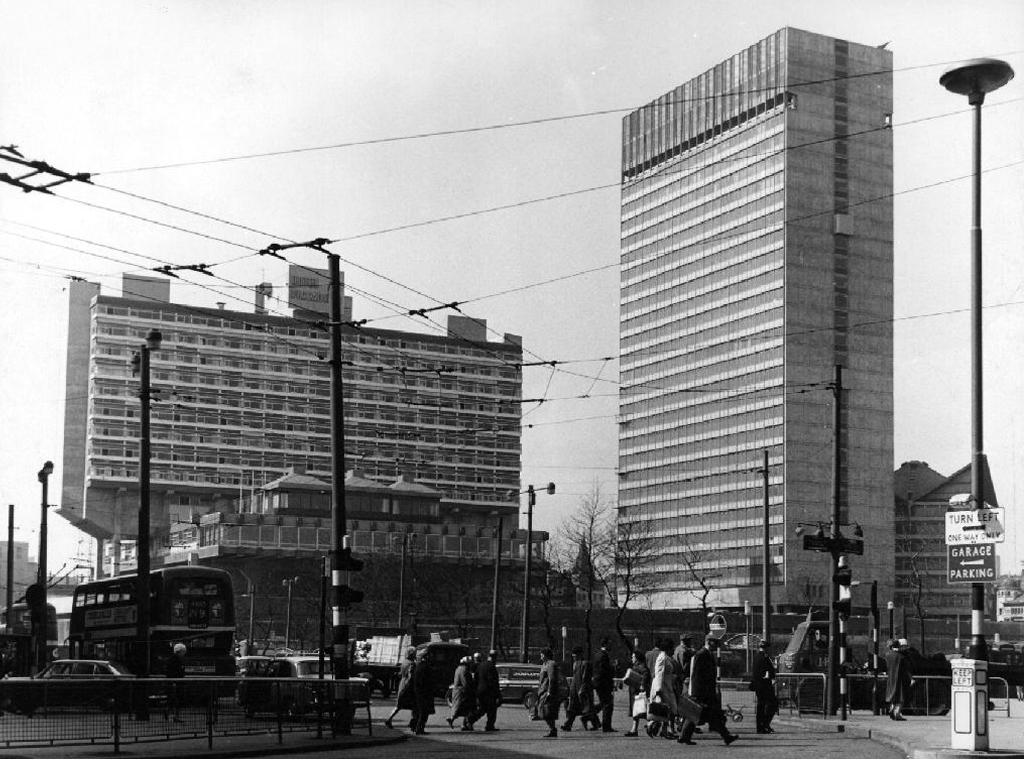
Even on the greyest days the Plaza was a beacon of Modernity.

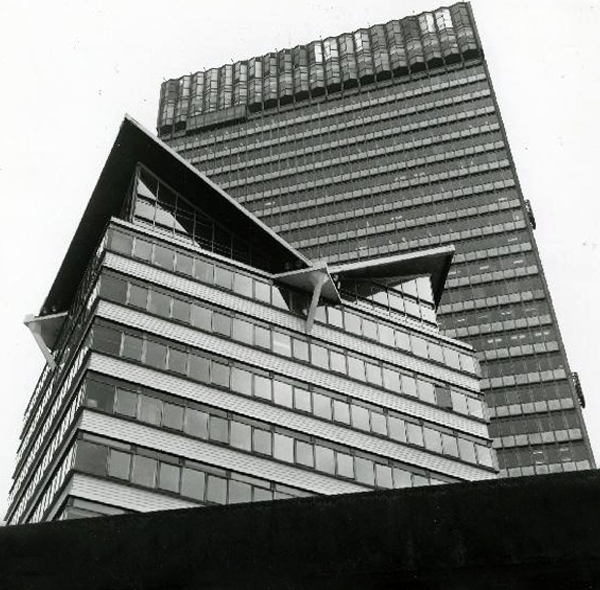
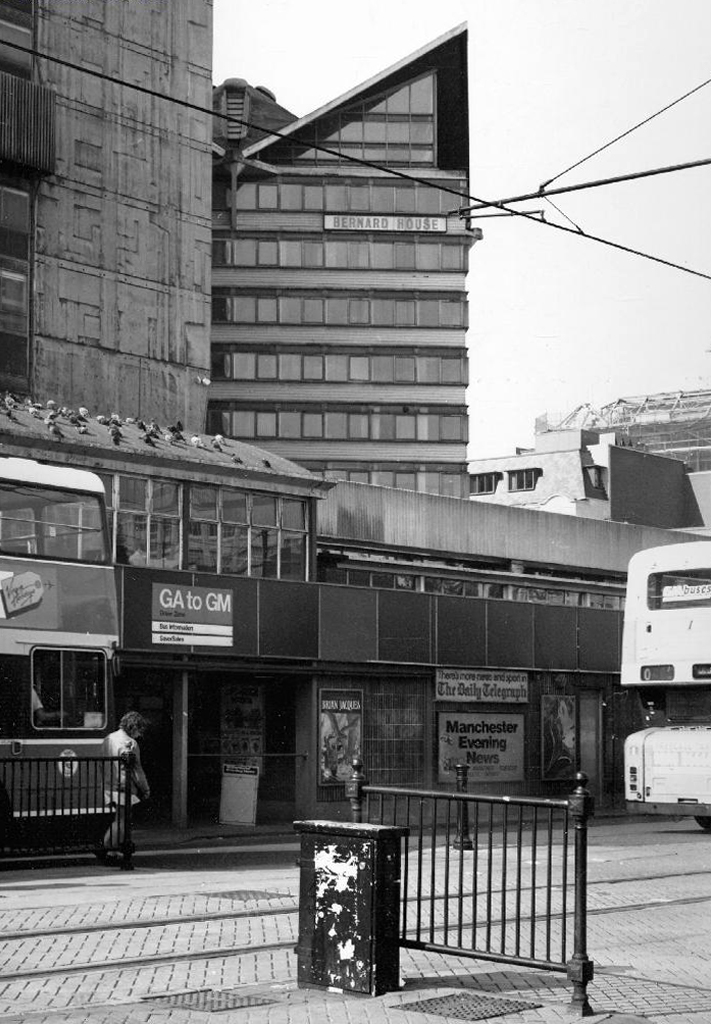
Though sadly we eventually lost Bernard House.

However, City Tower still prevails as a mixed use office block, adorned east and west with big bold William Mitchell panels.

Which were to be illuminated by ever changing images, produced by photo electric cells – sadly unrealised.

So goodbye Piccadilly – farewell Leicester Square? – it’s a long, long way to the future, and we’re barely half way there.

While we’re in the vicinity take a quick trip up and down the car park ramp.

Notably the entrance to the Hotel Piccadilly was on the first floor, accessed by non-existent highways in the sky – sweet dreams.

Black and white archive photographs – Local Image Collection

Three Tuns – Coventry

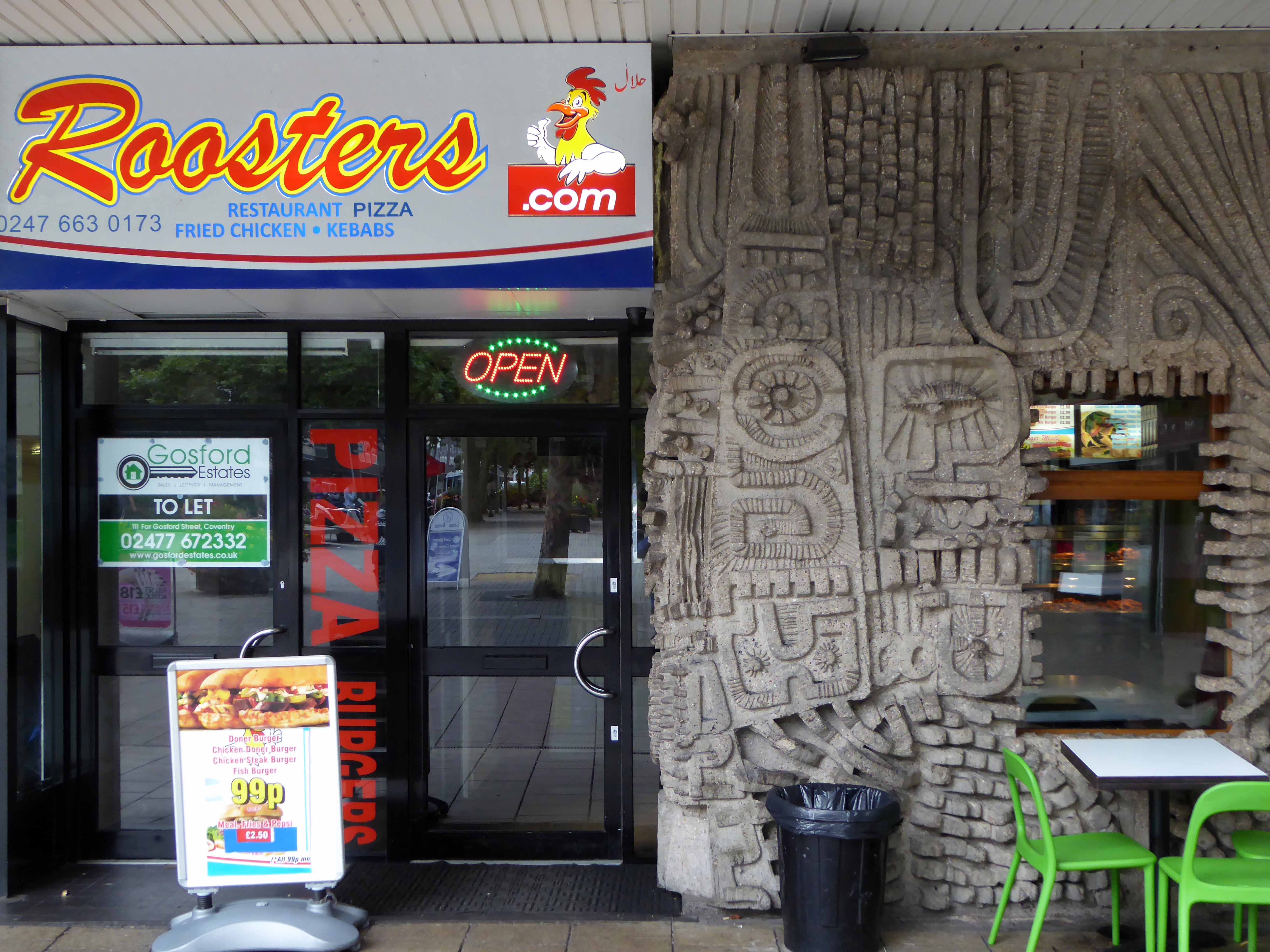
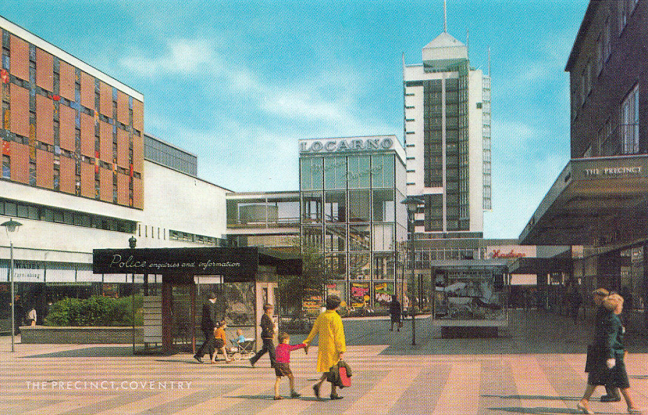
At the heart of the Precinct – I found the former Three Tuns pub stood standing – still.

Subsequently imaginatively reimagined as Roosters.

The exterior – and interior for that matter, adorned with the decorative concrete work of William Mitchell.

The area also being blessed with his cast panels and modular tower block fascia.

The precinct is currently, yet again, being considered for constructive rehabilitation, as part of the city’s City of Culture concatenations.

The threat to Modernism is no new thing, and the hurried scrabble for progress, ever so often erases the recent history of that progress.

I popped in way back in 2016, and Mr and Ms Rooster were more than happy, if not a tad perplexed, to have me snap around their chicken shack.

Sufficiently satiated, why not take a stroll around town, whilst it’s still there.

Take in the Cathedral – soon to be become the Kwik-Fit National Museum of Tyre Fitting.

The Indoor Market, Upper Precinct and Co-op

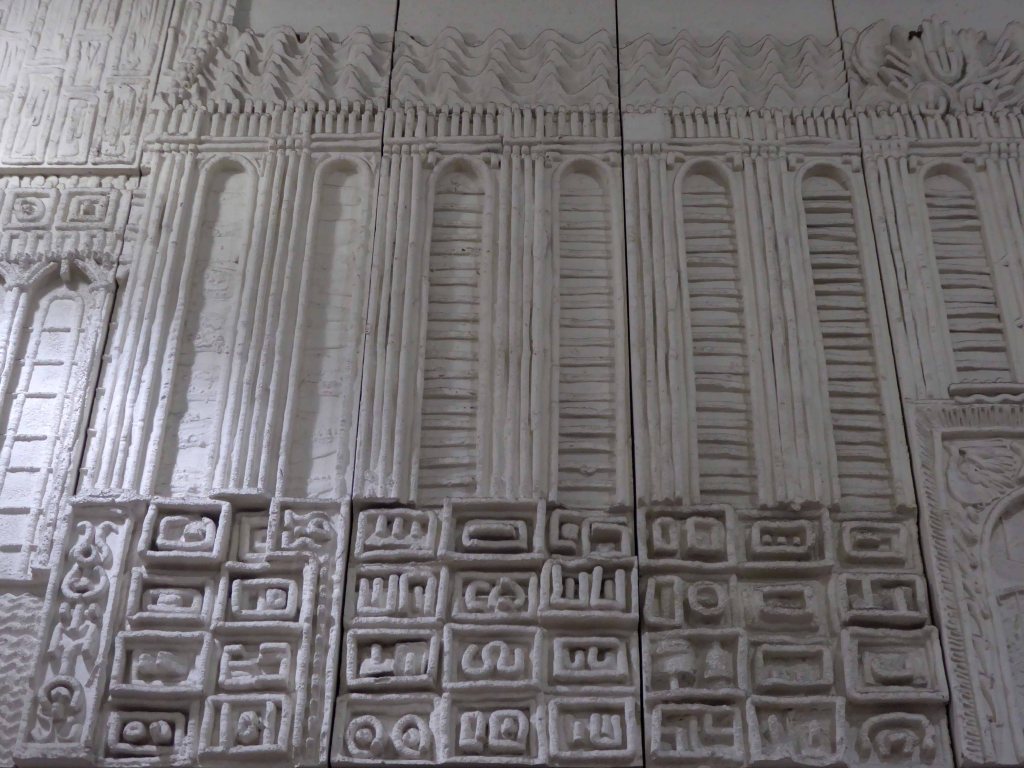
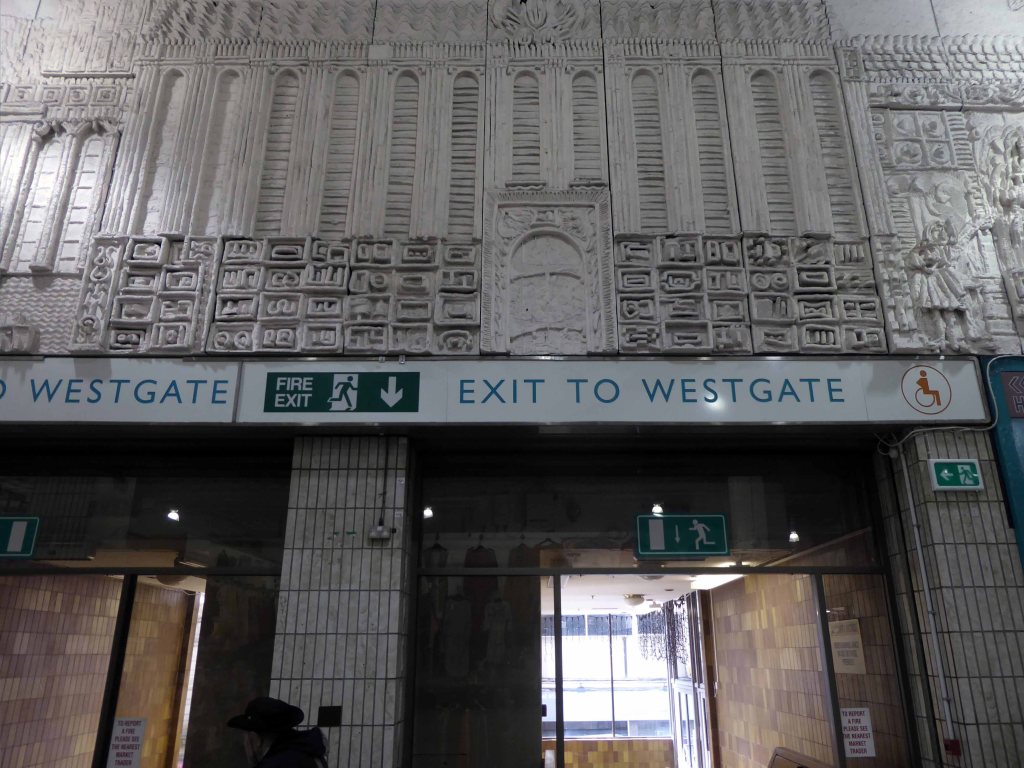
Above the current market office is an impressive painted mural by art students from Dresden commissioned especially for the market in the 1950s in a Socialist Realist manner, depicting farming and industrial scenes. 

The Gordon Cullen tiles have been renovated and re-sited within the exit corridor.

Still in clear view the stone relief work of John Skelton November 1956. Three of the eight column have incised Hornston stone works, depicting the activities of the CWS.

Get yourself there pronto – current restrictions considered of course.

You just might be in time to see the Station.

Coventry forever changes.

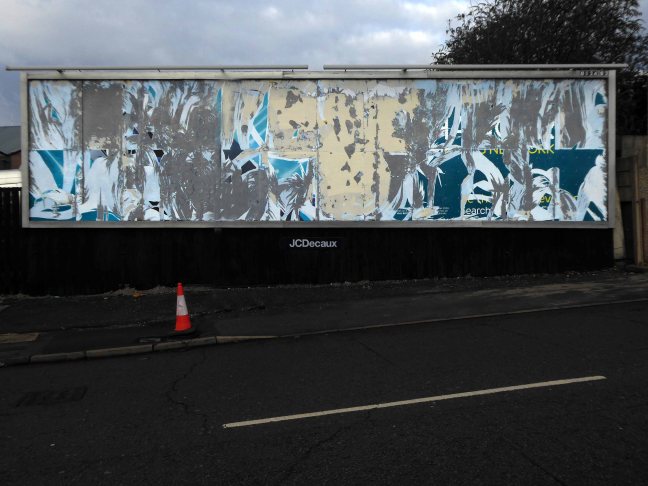
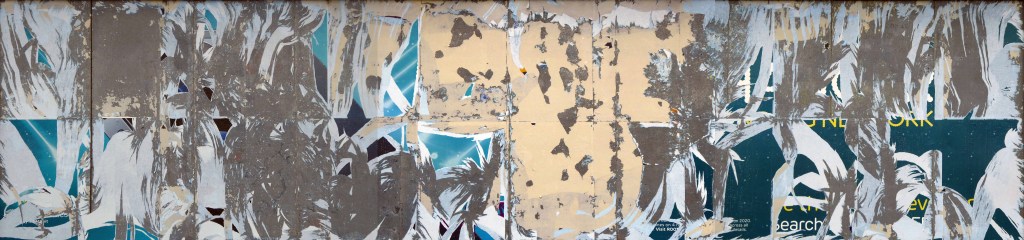
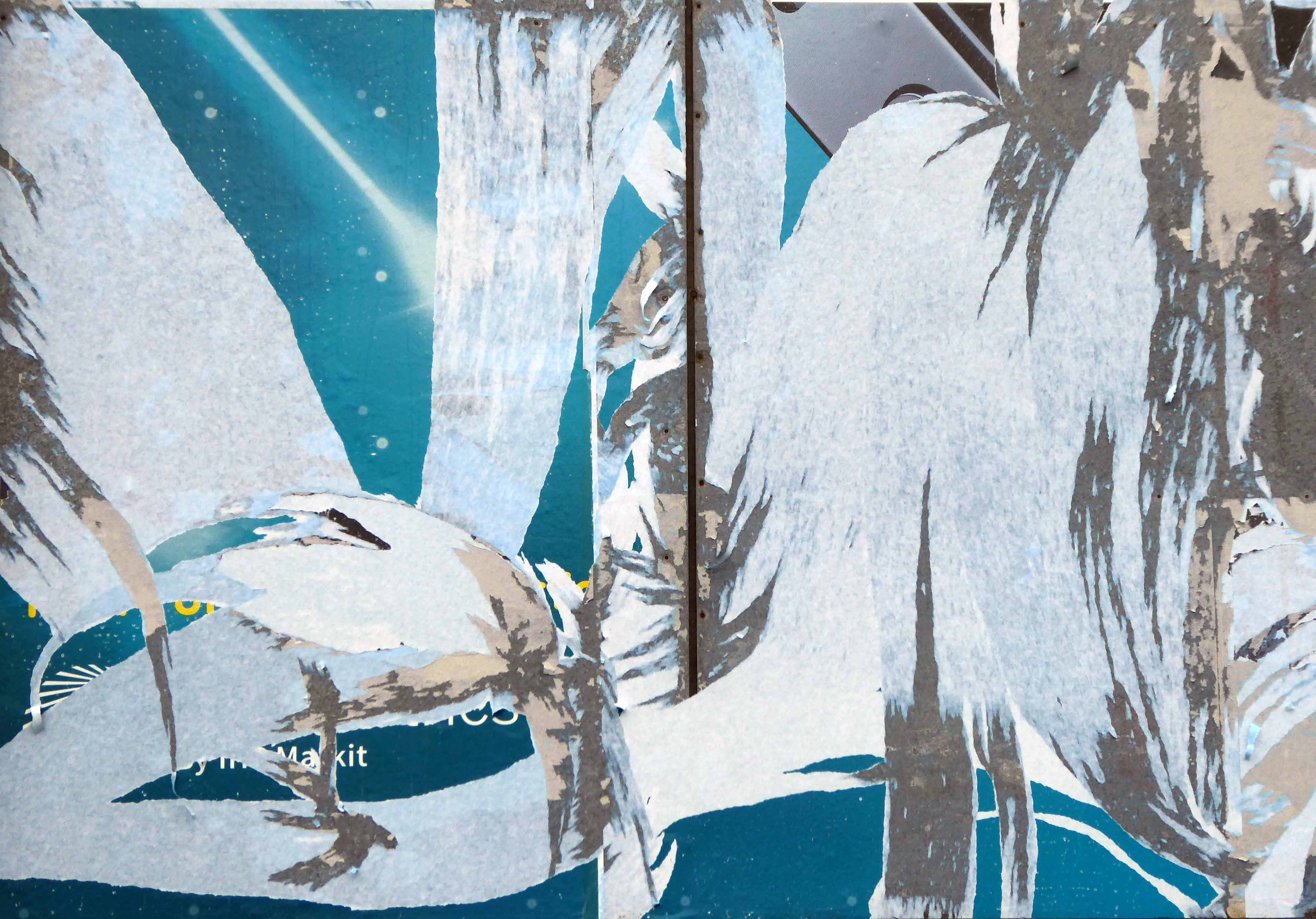
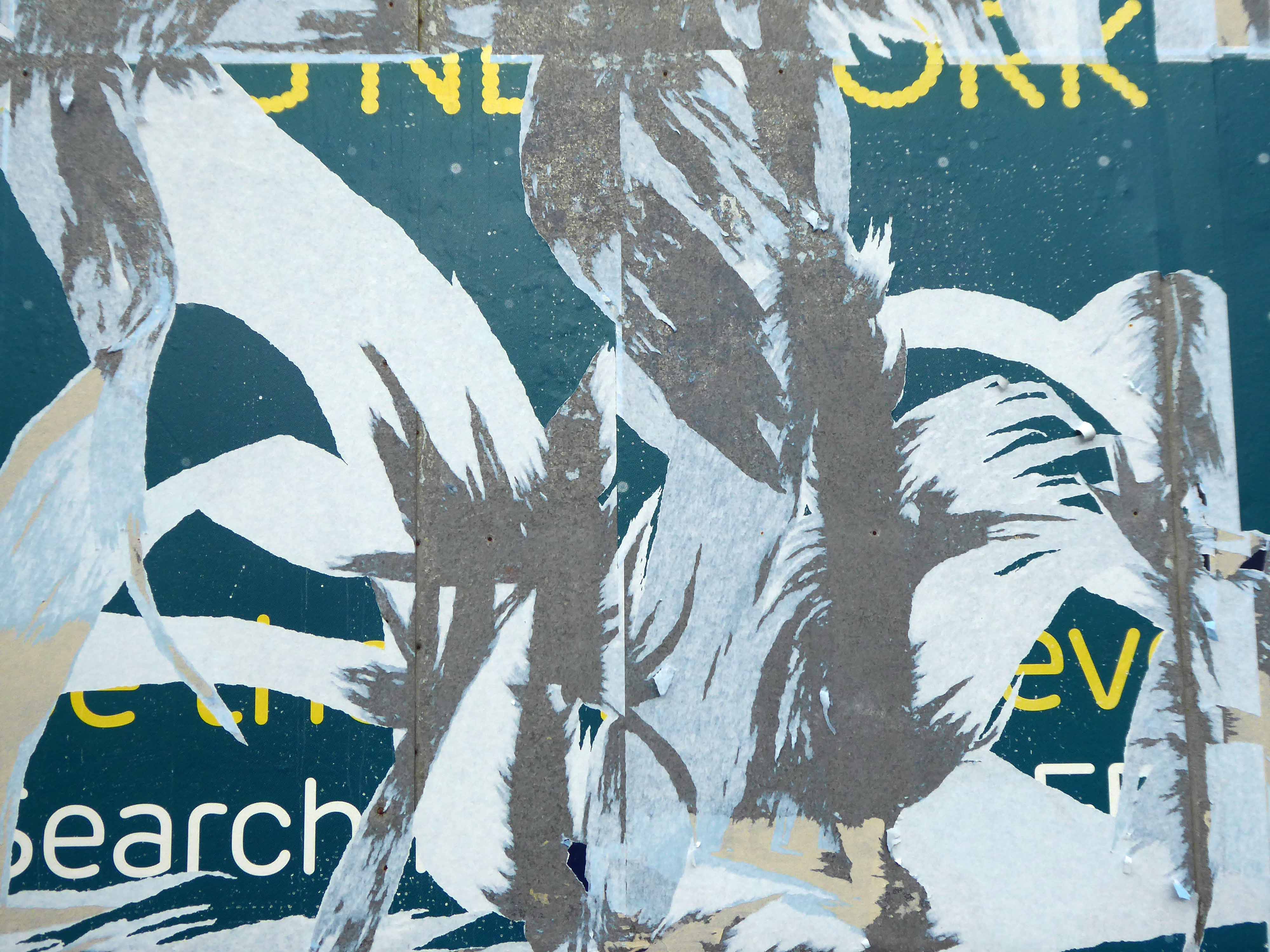
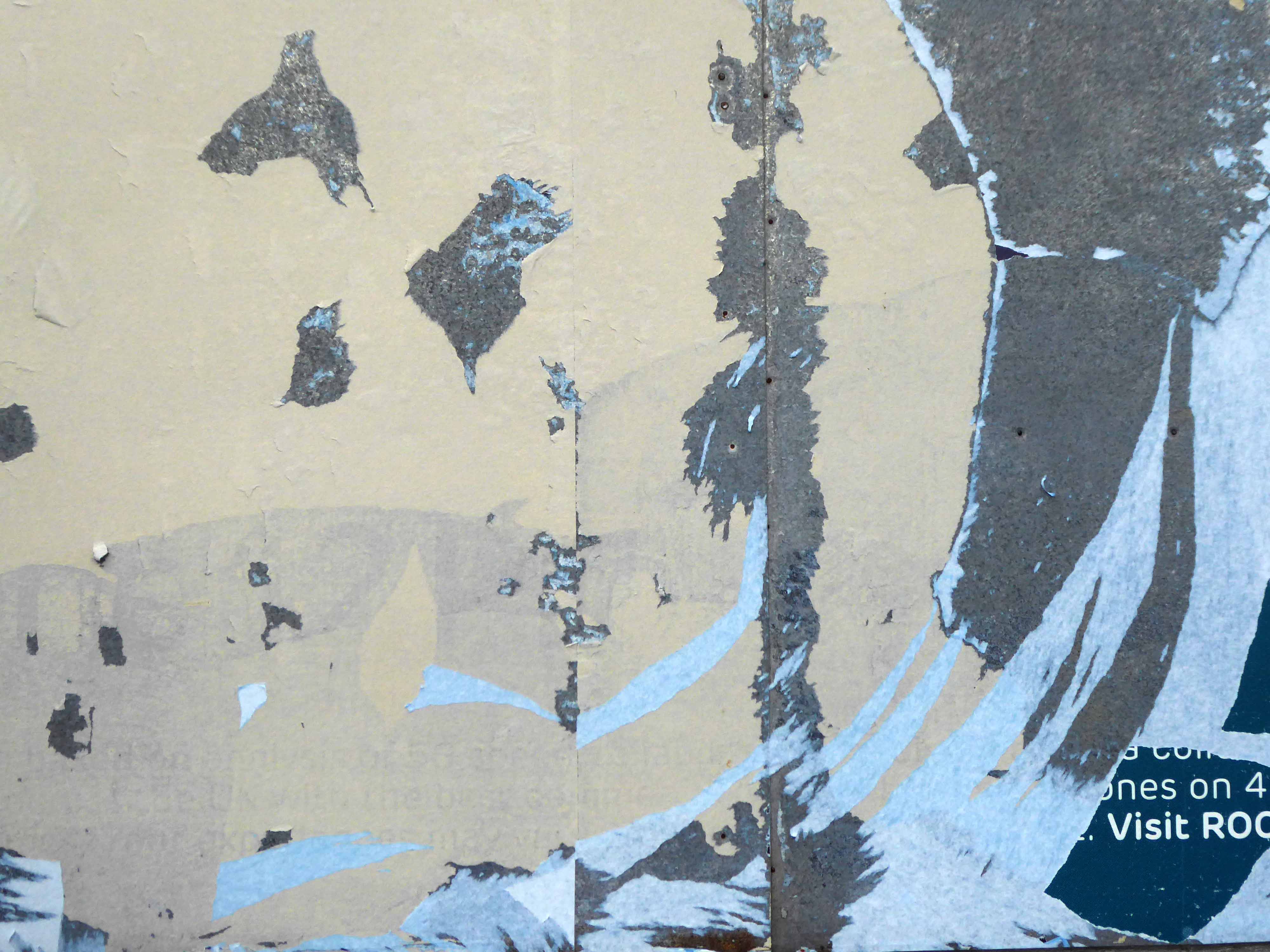
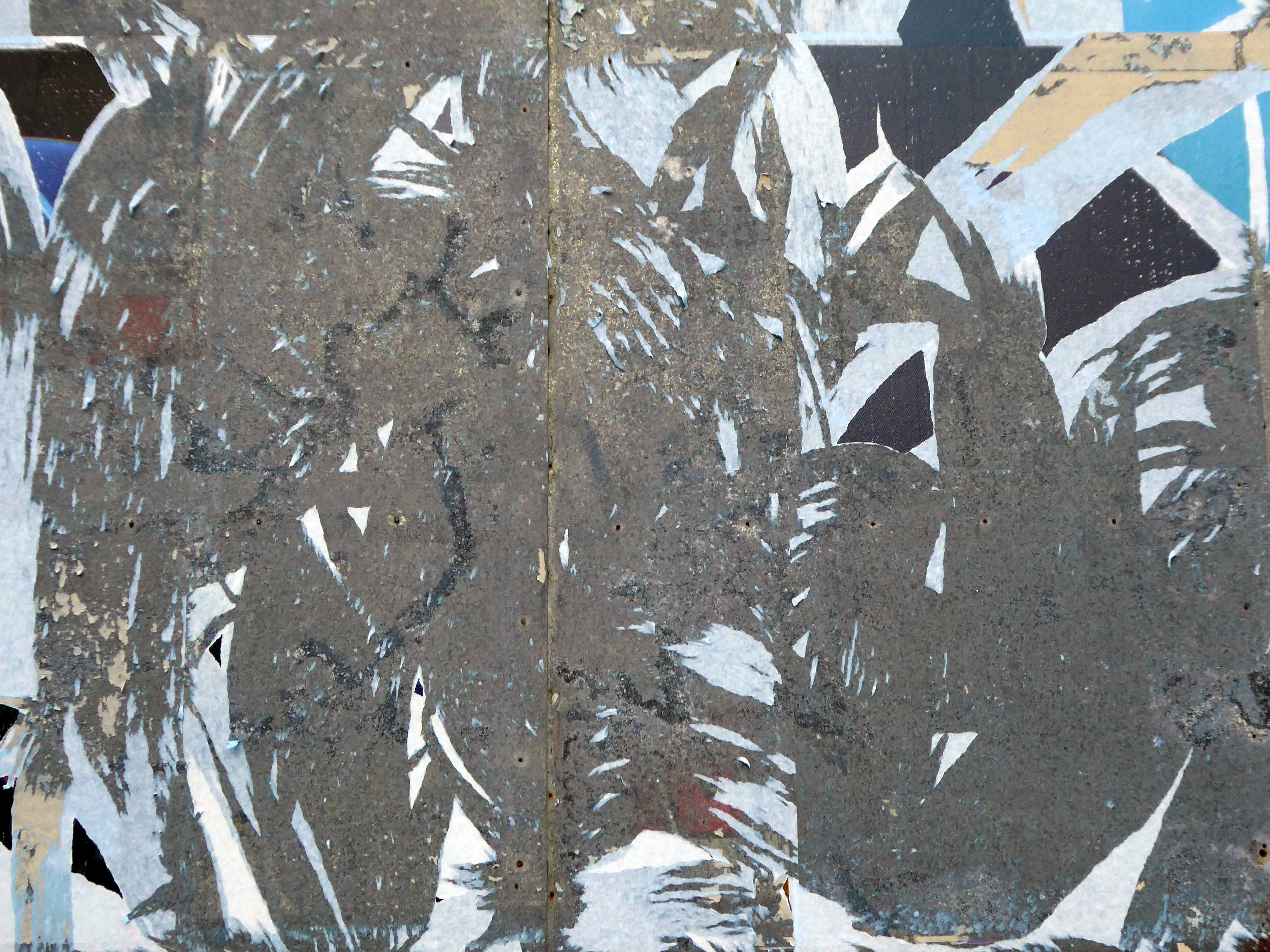
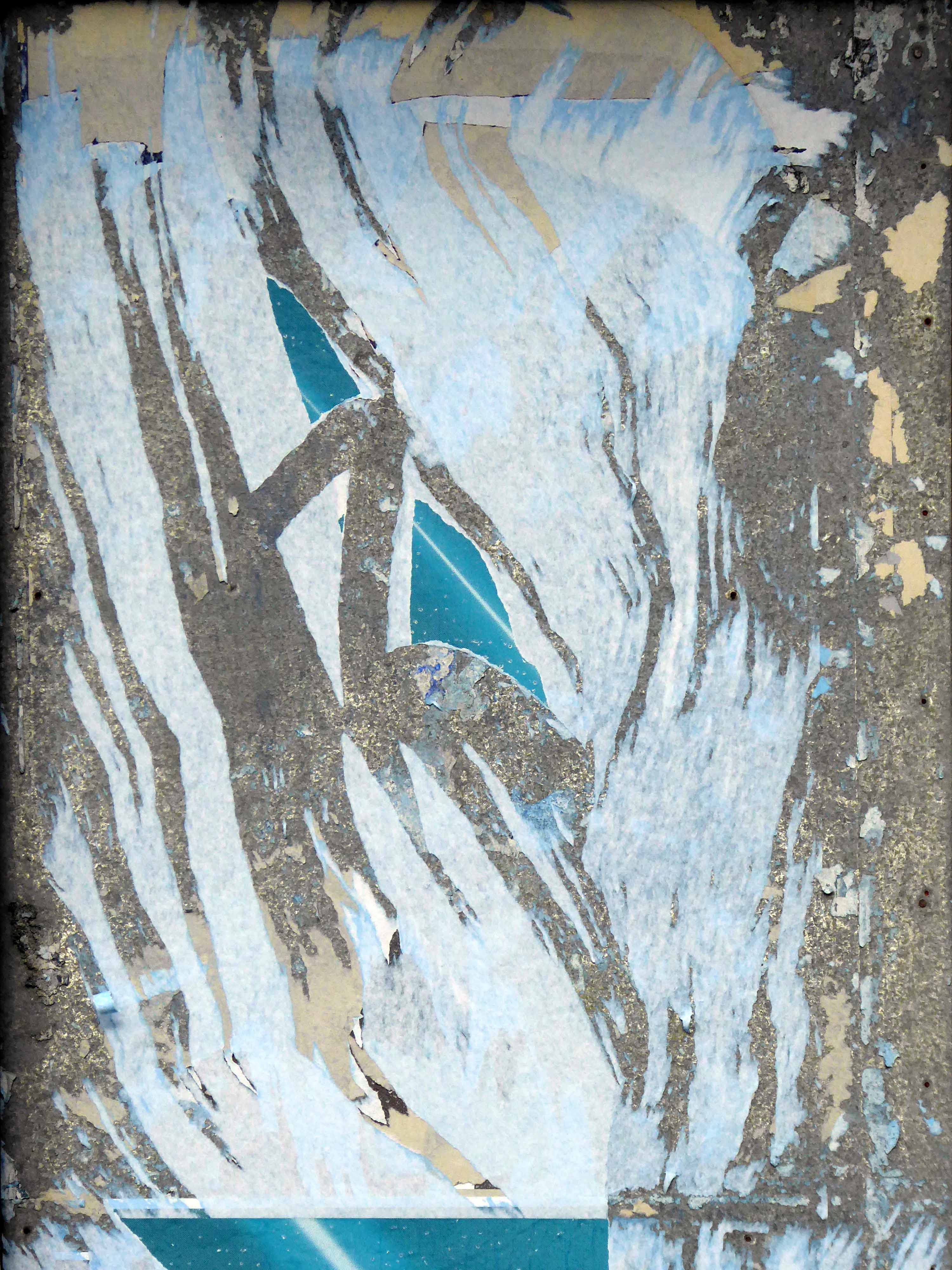
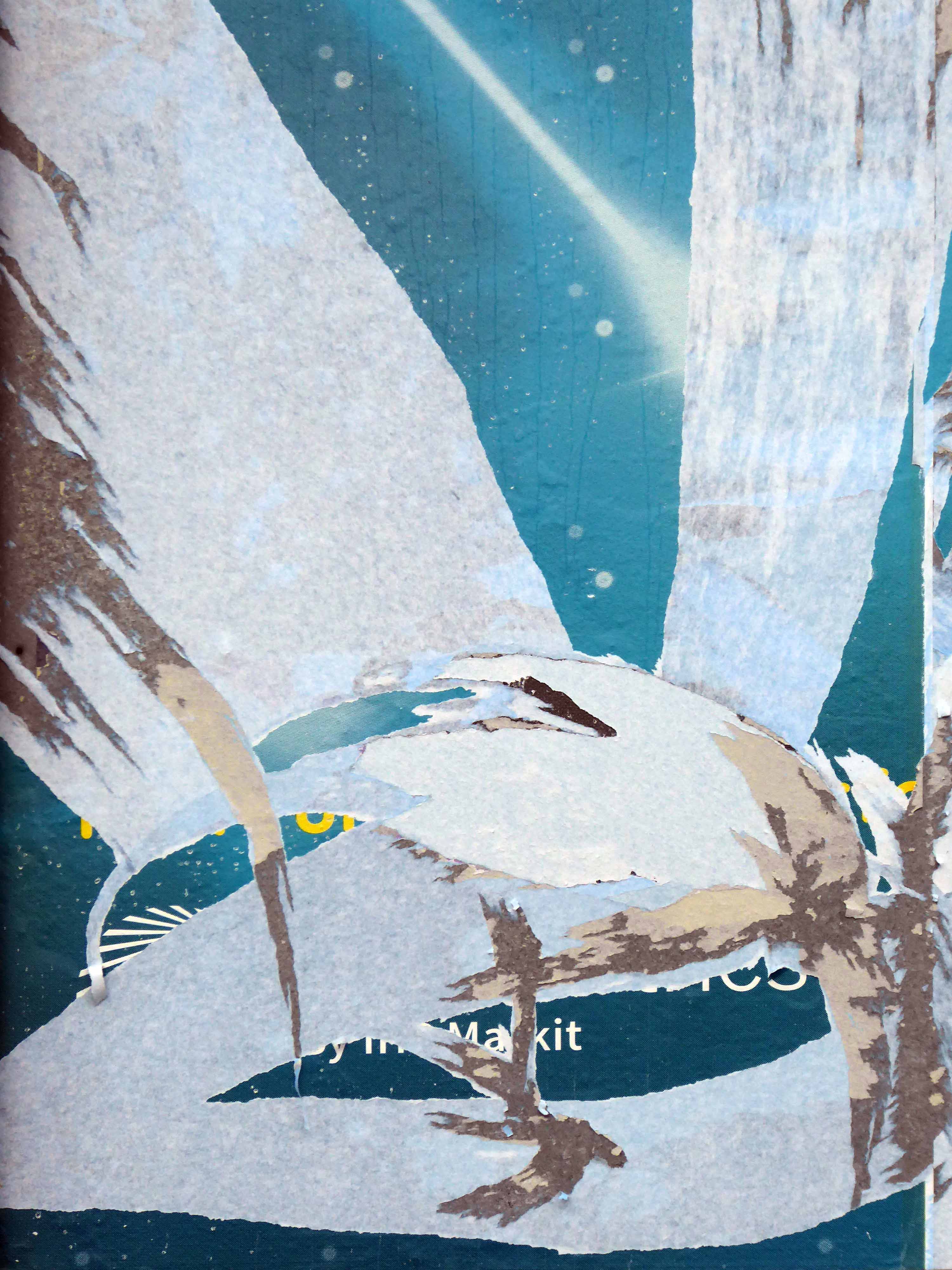
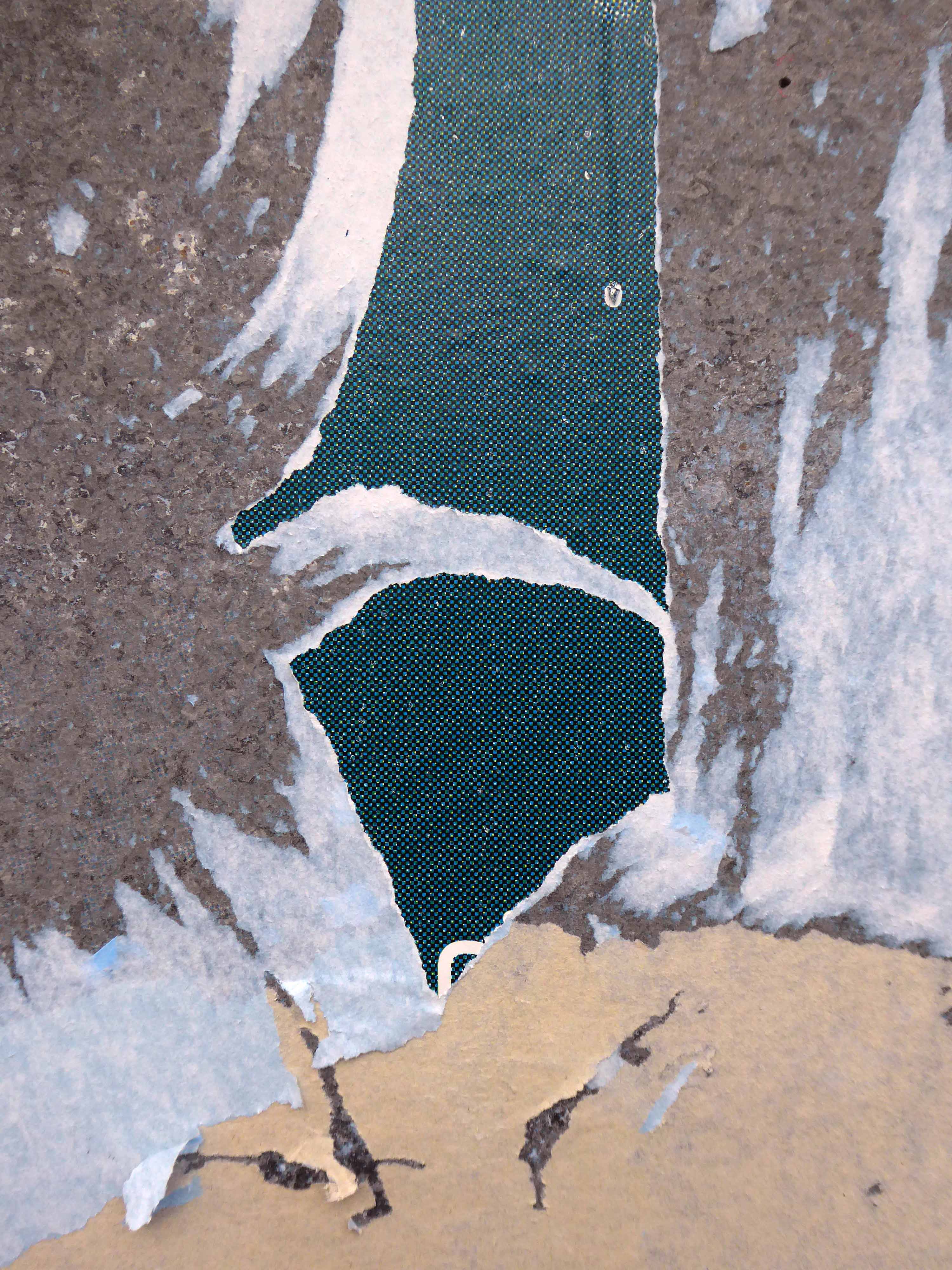
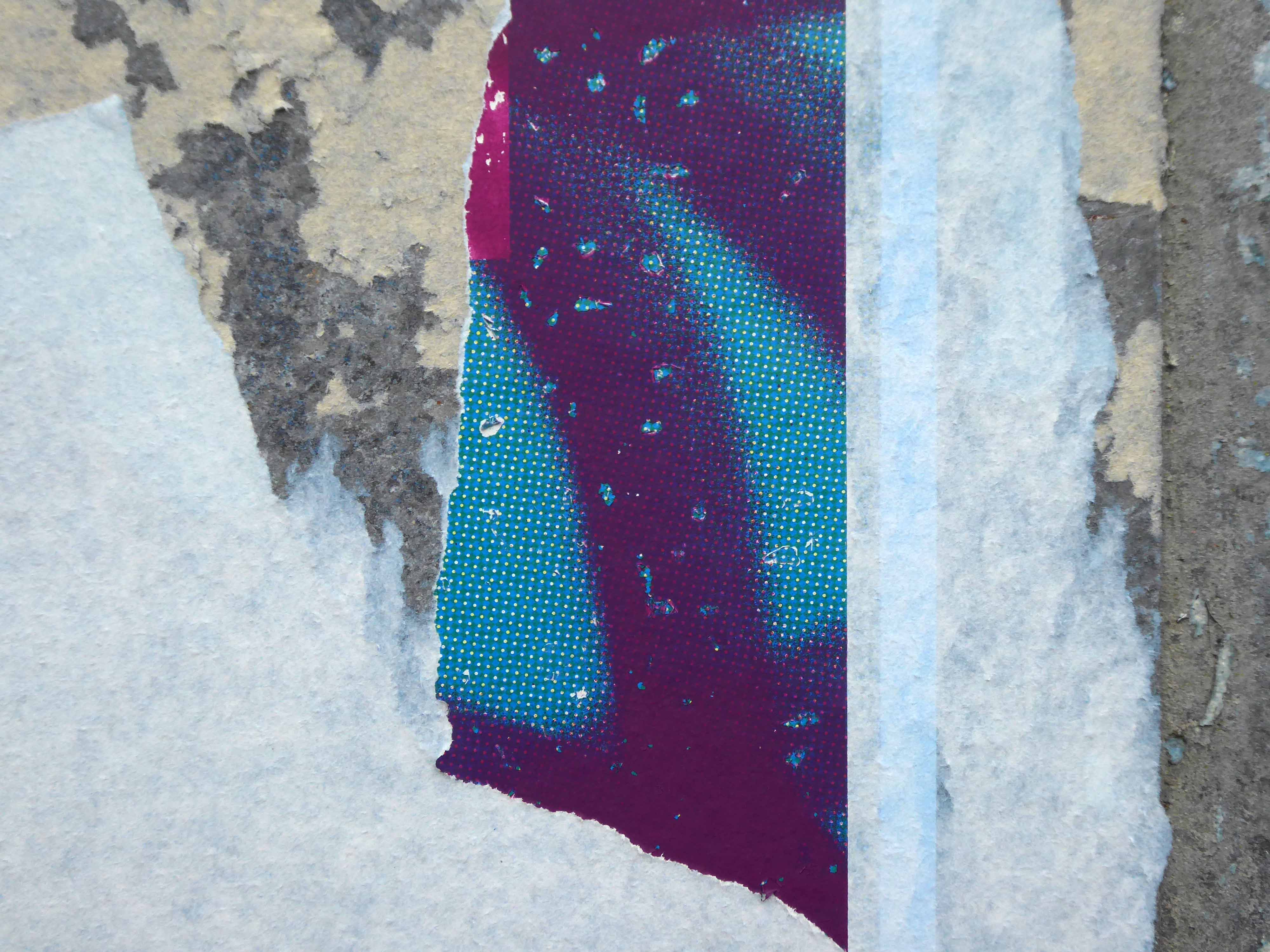
Torn Poster – Georges Road Stockport

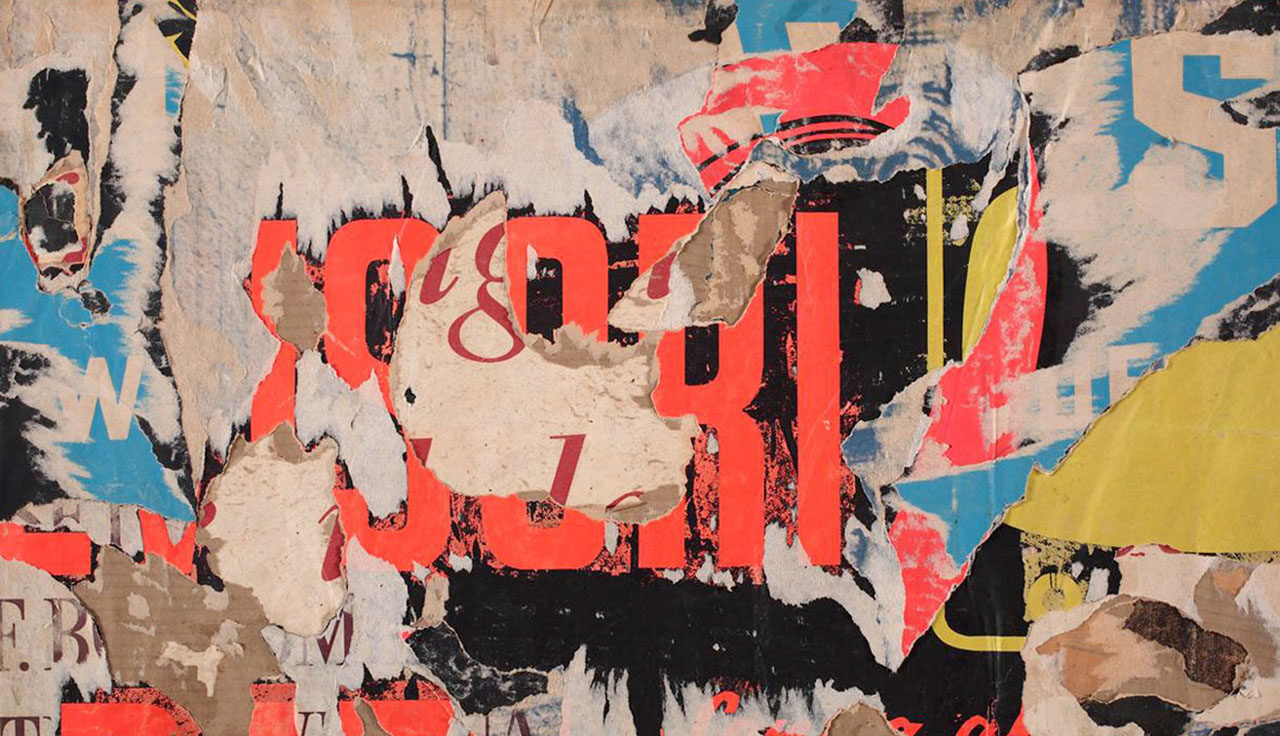
Mimmo Rotella Best known for his works of décollage and psychogeographics, made from torn advertising posters. He was associated to the Ultra-Lettrists an offshoot of Lettrism and later was a member of the Nouveau Réalisme, founded in 1960 by the art critic Pierre Restany.

Inspiration to all lovers of the torn poster, The Society of the Spectacle reduced to the exasperating Esperanto of the inexplicable.

Working towards the demise of the – autocratic reign of the market economy.

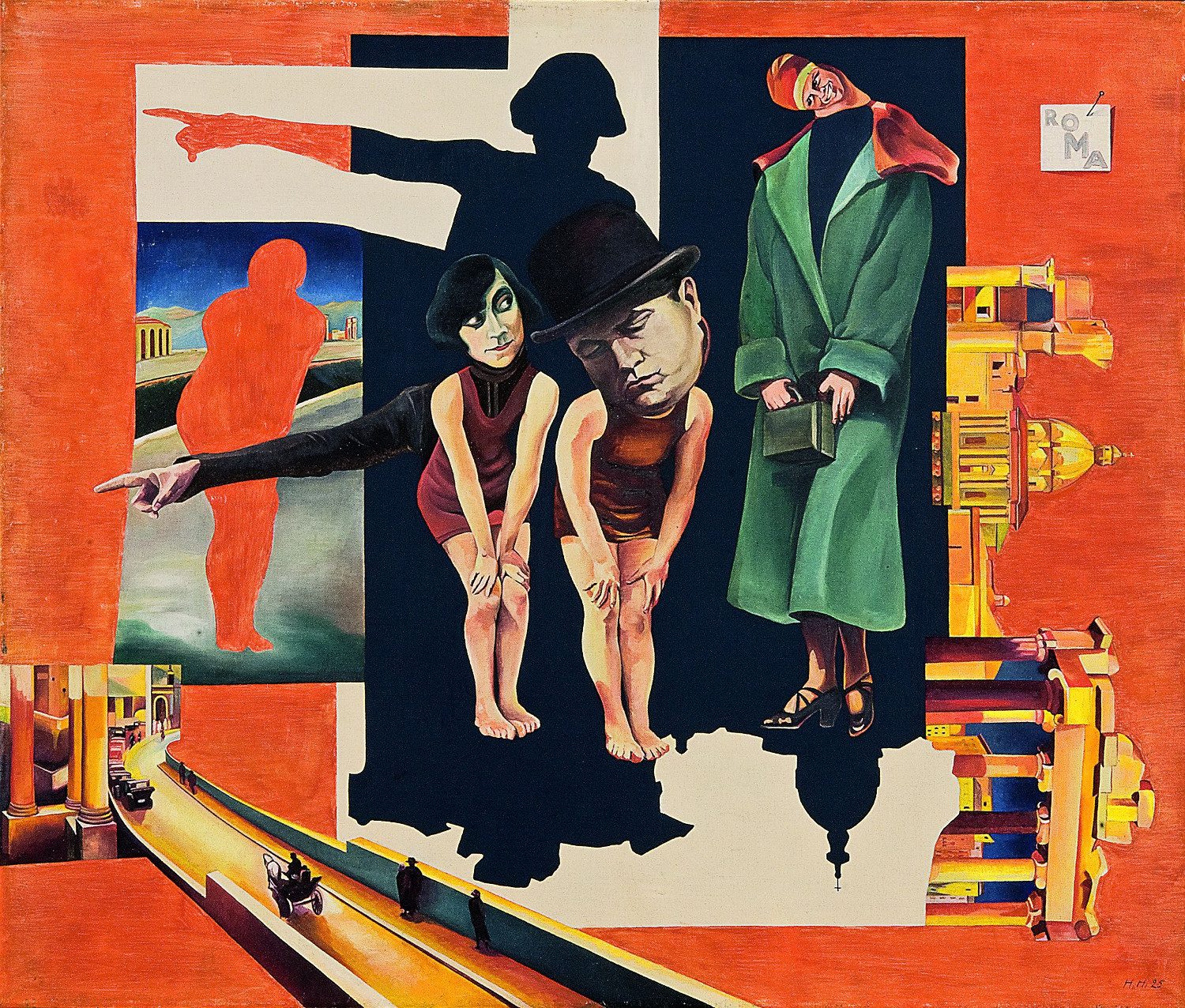
Hannah Höch 

I wish to blur the firm boundaries which we self-certain people tend to delineate around all we can achieve.

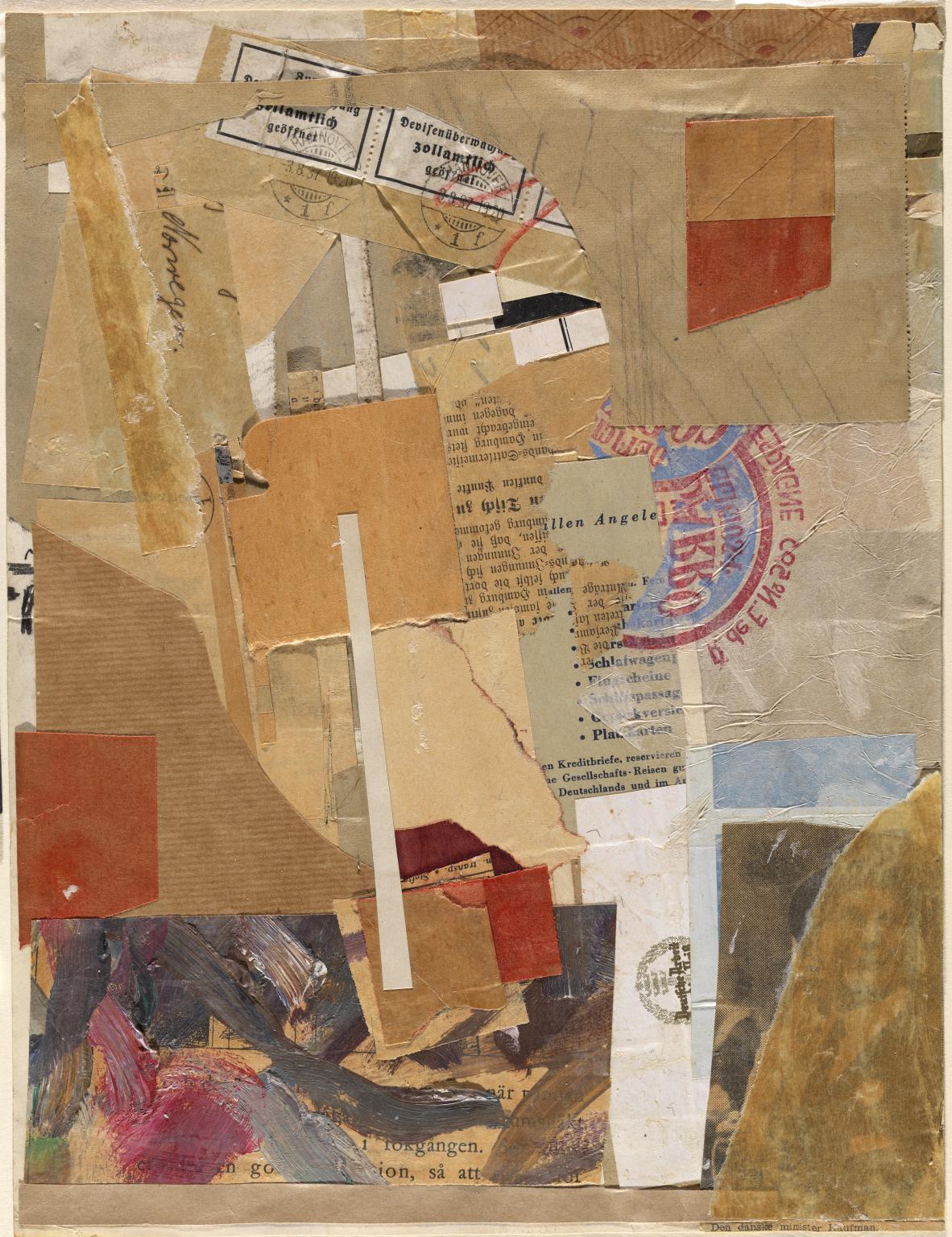
My name is Kurt Schwitters – I am an artist and I nail my pictures together.

New things had to be made out of fragments.

Together they begin to define the realm of cut and paste collage technology, the chance encounter, the hastily arranged marriage and the jarring clash of culture and counter-culture.

They are my guiding lights – by which to live, look and learn, to loop the Möbius loop into an expanding geometry of new meanings.

The lines curve toward each other and intersect.

JCDecaux was founded in 1964 in Lyonby Jean-Claude Decaux. Over the years it has expanded aggressively, partly through acquisitions of smaller advertising companies in several countries. They currently employ more than 13,030 people worldwide and maintain a presence in over 75 countries.

Outdoor advertising, reaches more than 410 million people on the planet every day.

Some days everything falls apart.

William Mitchell – Bradford

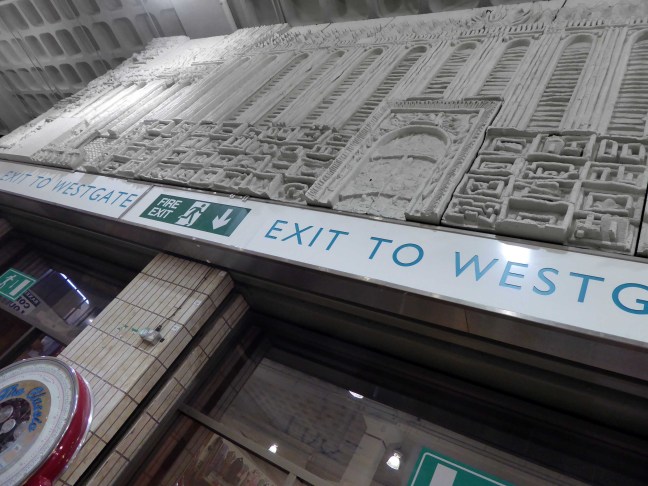
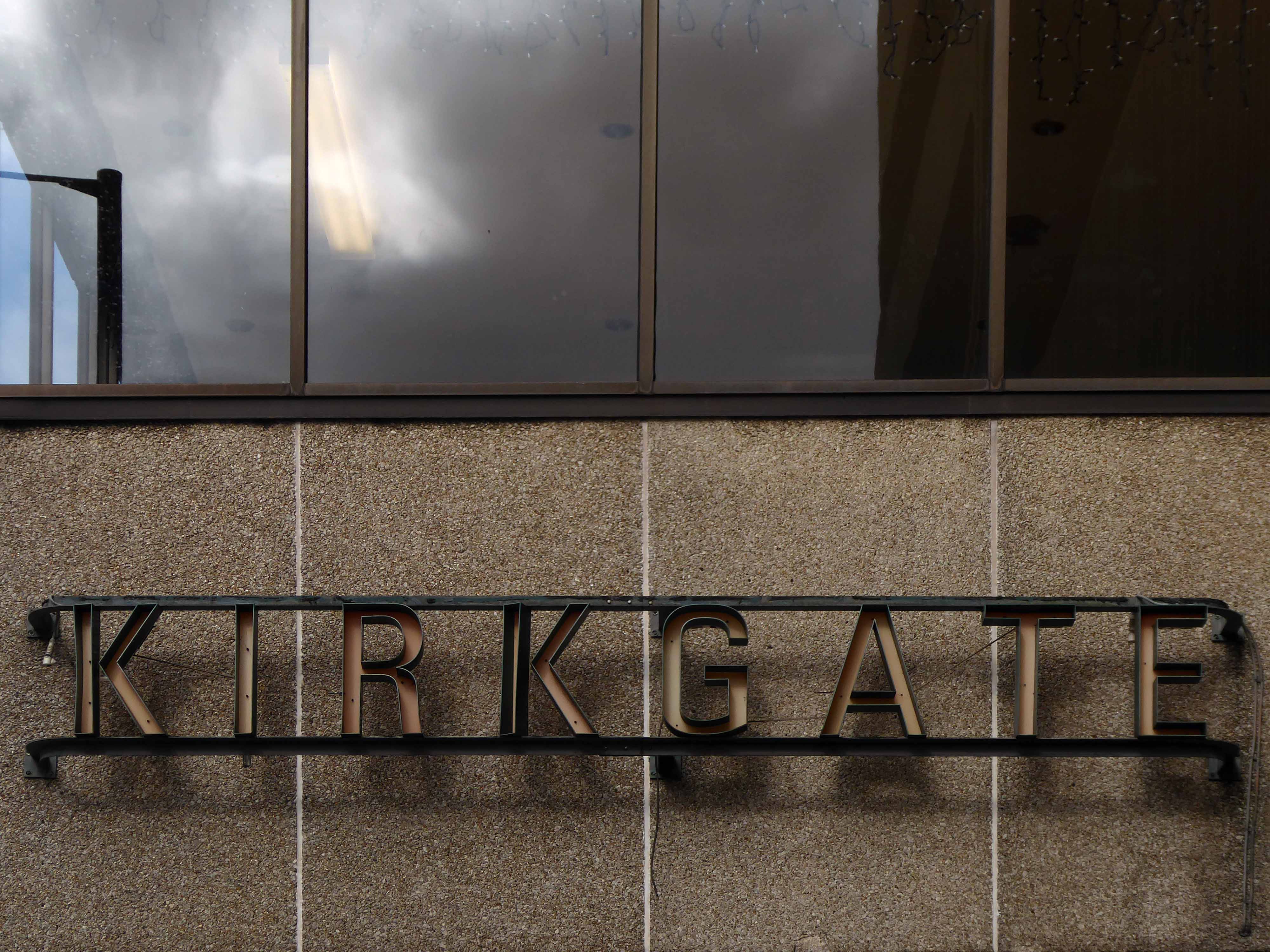
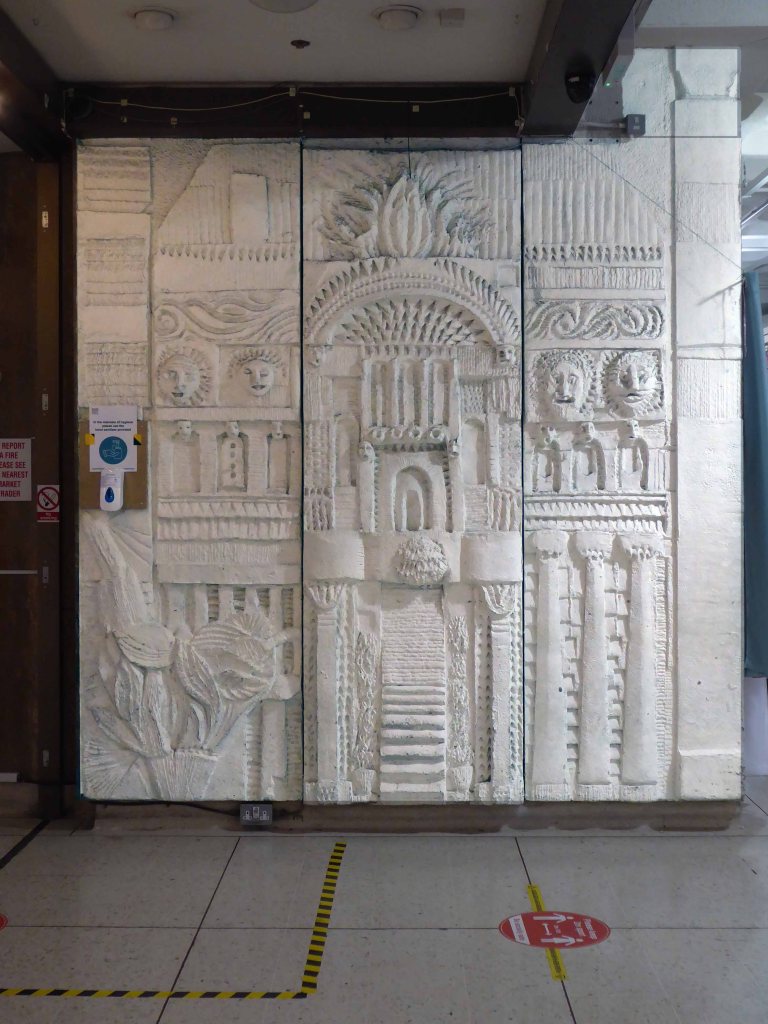
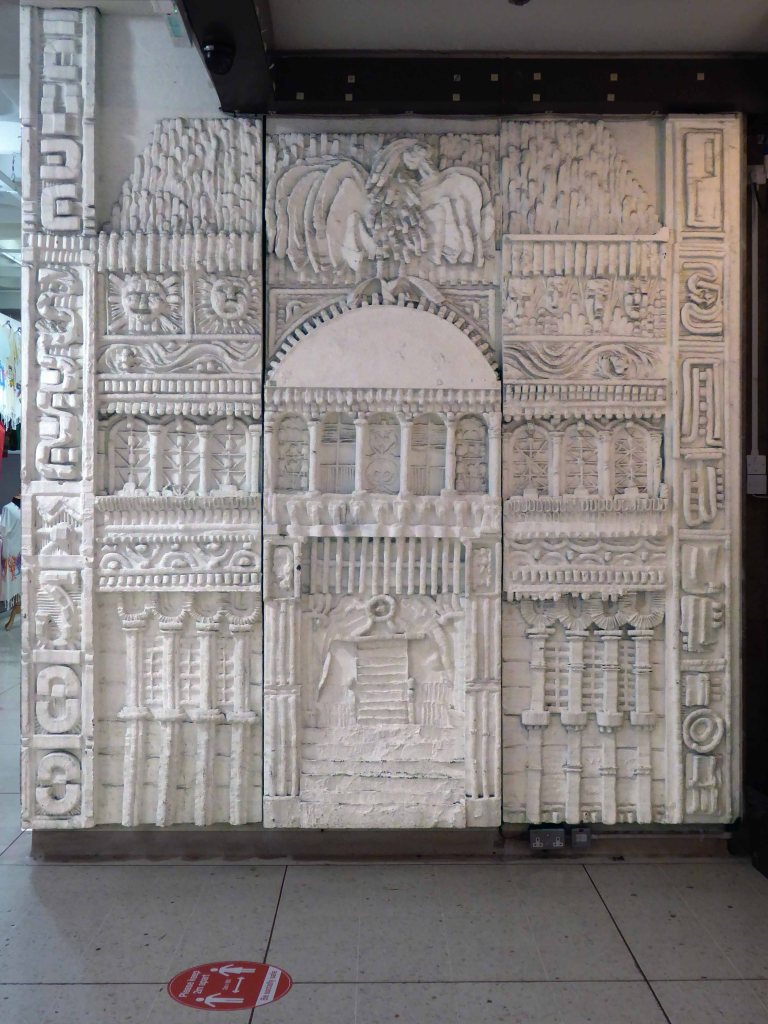
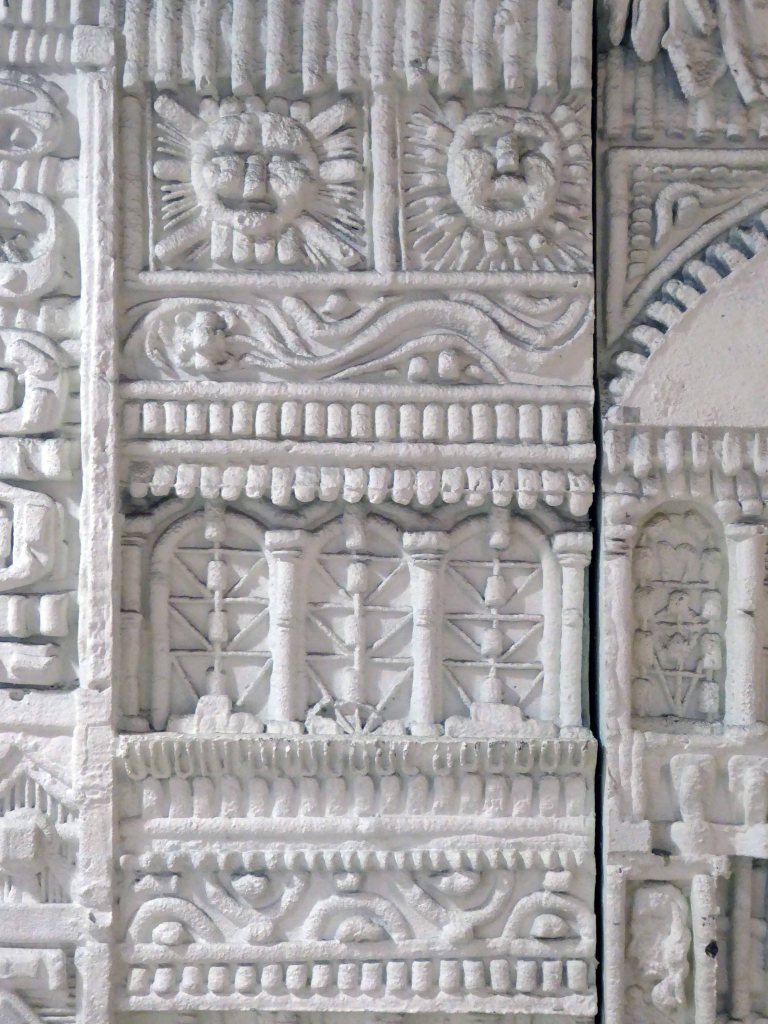
This is one of many visits to the Kirkgate Market in Bradford, in order to take a look at the William Mitchell murals.

Positioned above the entrance/exit and either side of the exit/entrance.

They have had over time various companions to keep them company.

They are currently friendless – the Kirkgate Market is to be closed, its future uncertain – and by inference Big Bill’s public art is under threat too.

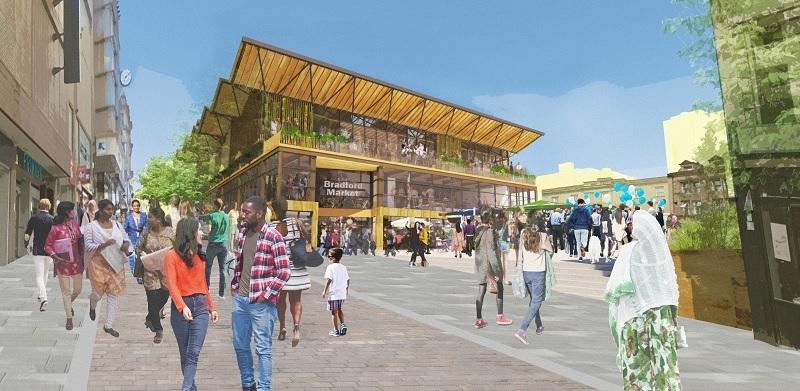
The Council has announced to its traders in Kirkgate Market and the Oastler Centre that it will not be carrying out the proposed refurbishment of Kirkgate Market as the new market in Darley Street will now accommodate non-food sales on one trading floor with the other trading floor being dedicated to fresh foods and the 1st floor for hot food and beverage sales.

The Telegraph and Argus

We don’t want to eliminate existing customers, or the low income customers who use the existing markets.

Mr Wolstenholme

Do they however wish to eliminate the murals?

As per they are unlisted, largely unnoticed and as such very vulnerable, get it while you can, take a trip to Bradford real soon.

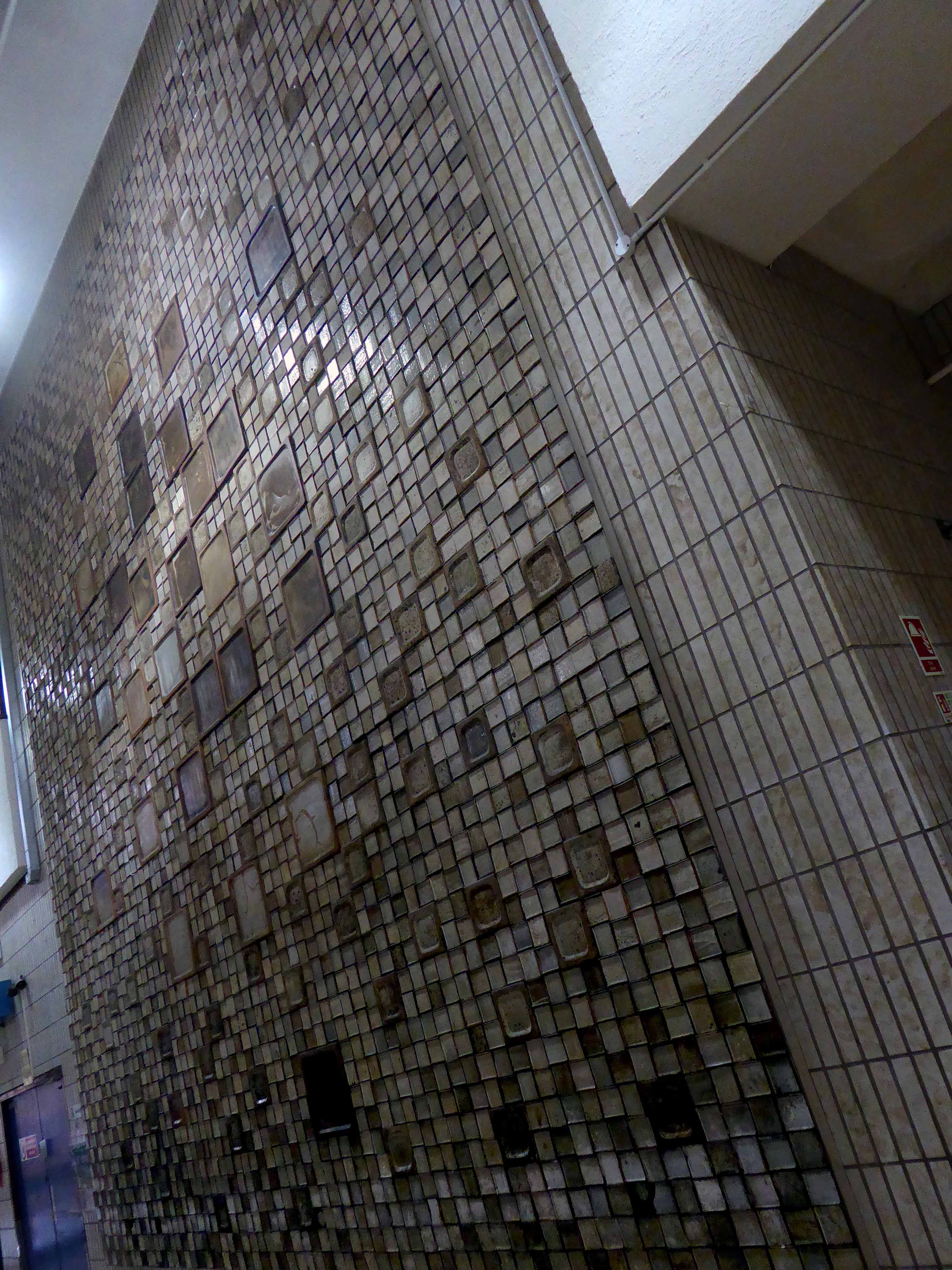
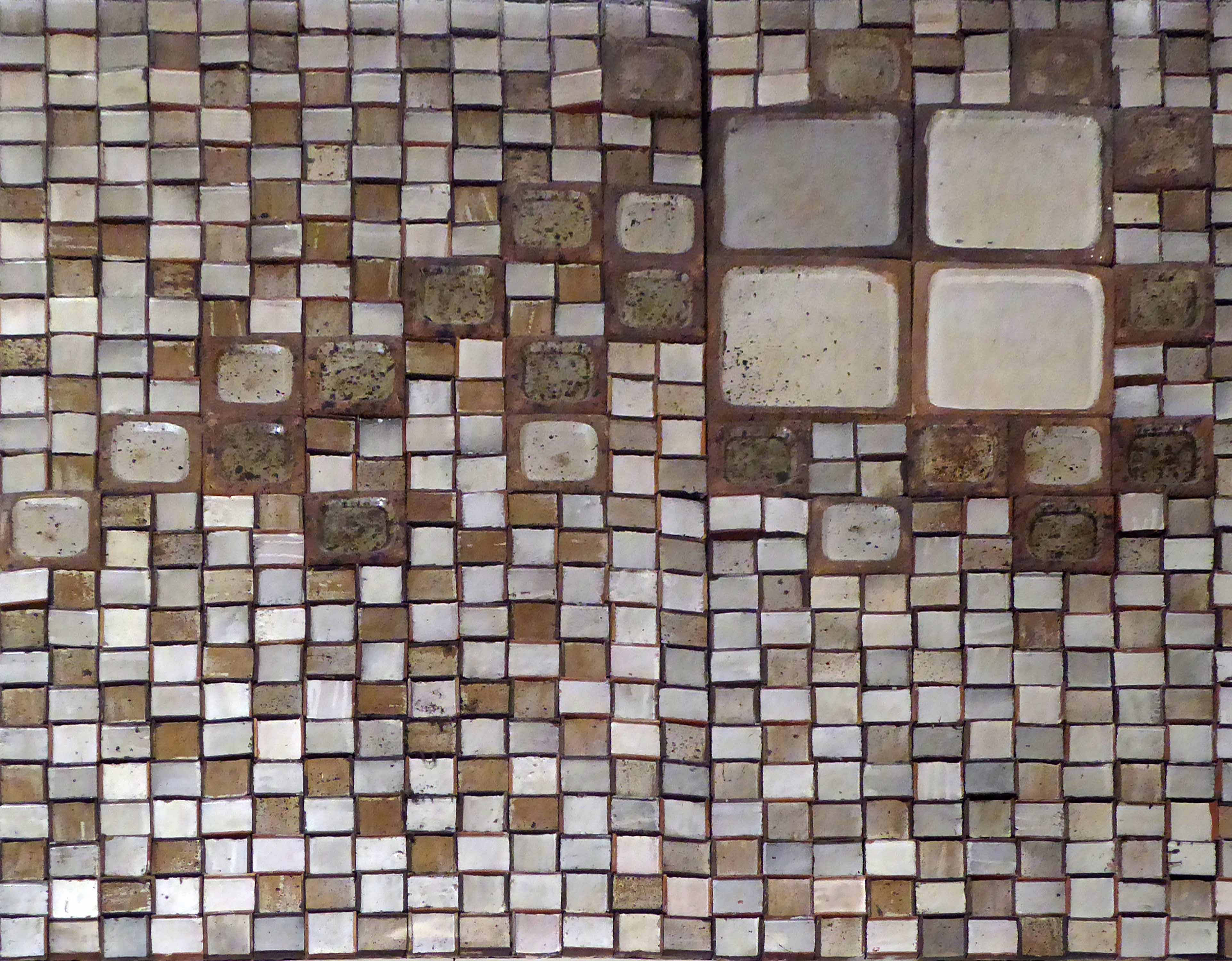
Mention must also be made of the tiled ceramic mosaics which adorn one wall and the three panels on the raised area above the stalls.

Authorship unknown.

I was most intrigued by these tiles – I have not seen this type before – they have a resemblance to to Transform tiles that were produced in Staffordshire in the 1970s, but they are different in several ways.

The November 1973 T&A microfilm appears to have been stolen from Bradford Library so I can’t check reports and features from the time of the opening of the market on November 22 1973.

I would be grateful for any memories and news.

Christopher Marsden 2012

Rotherham Modernism

There comes a time in everyone’s life, when one simply must go to Rotherham, at least once – so I did.

To keep company with my personal town guide, Sheffield Modernist and local resident, Helen Angell.

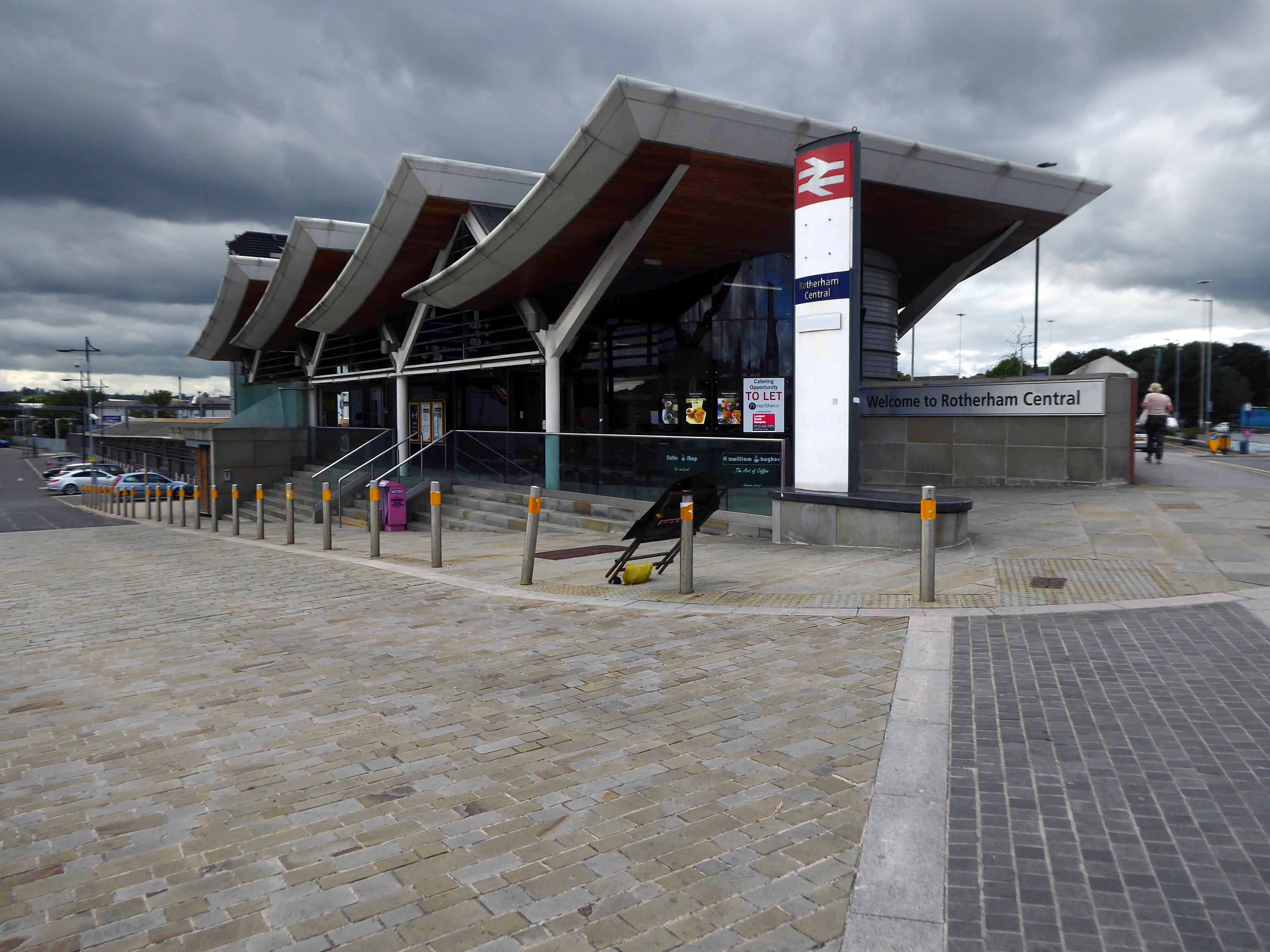
I arrived early at Rotherham Central, so went for a solo wander.

The station was originally named Rotherham, becoming Rotherham and Masborough in January 1889 and finally Rotherham Central on 25 September 1950.

The newish Rotherham Central station was opened to passengers on 11 May 1987, the present iteration on Friday 24 February 2012, as part of the Rotherham Renaissance plans for the regeneration of the town.

Wikipedia

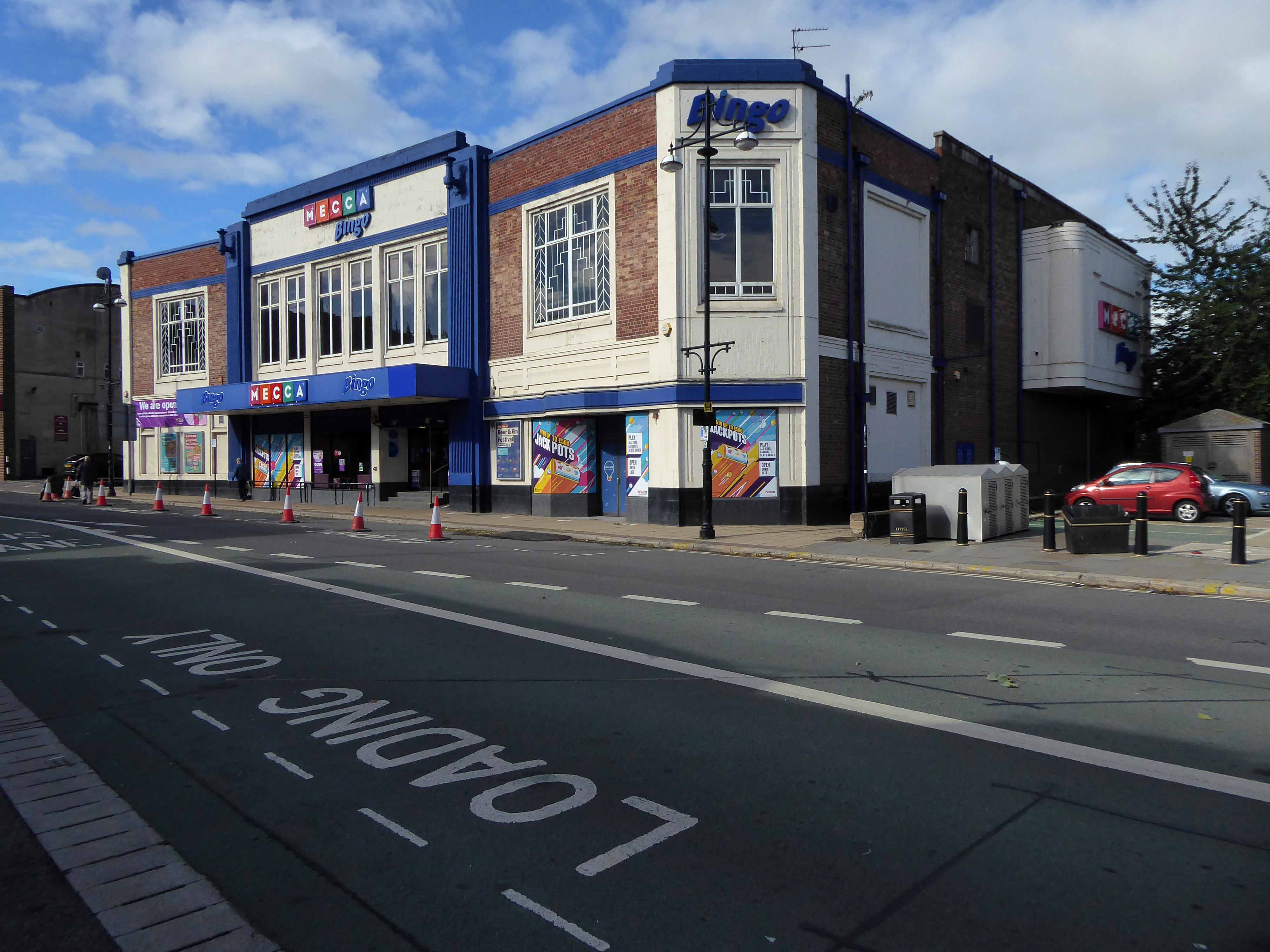
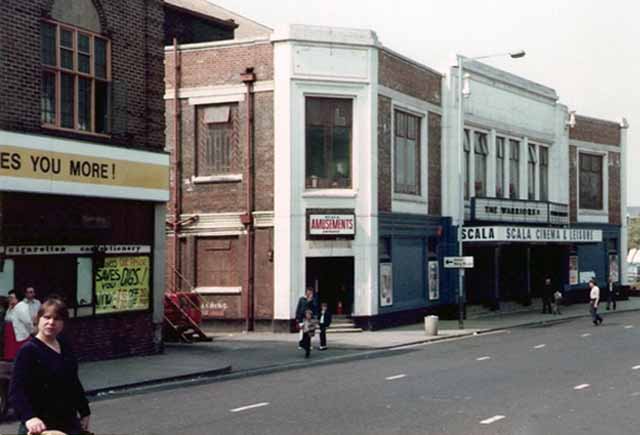
Opened 22 December 1934 as the Regal Cinema with Leslie Howard in Girls Please. Sandy Powell, the famous comedian attended opening night this 1,825 seat. It was designed by the Hull based architectural firm Messrs Blackmore & Sykes for local exhibitor Thomas Wade and was leased to the Lou Morris chain.

By 1937 it was operated by the London & Southern Super Cinemas Ltd. chain. The Regal Cinema was leased to the Odeon circuit in 1946 and was re-named Odeon. It was sold by the Rank Organisation to an independent operator in 1975 and renamed Scala Cinema, by 1981 using the circle only.

Closed 23rd September 1983 with the film Porky’s.

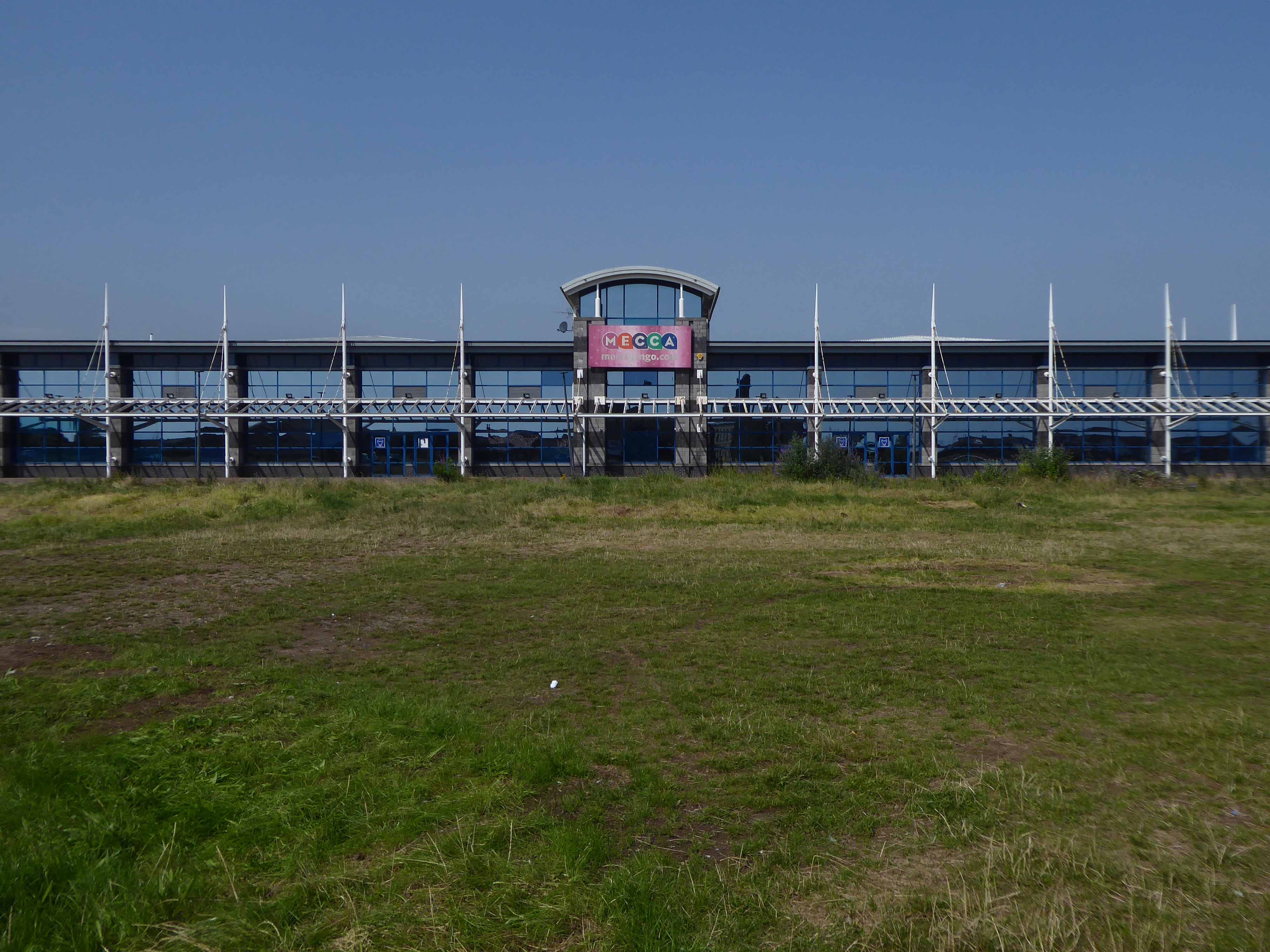
Became a bingo hall initially named Ritz but now Mecca. On 20th February 2020 the building was put up for sale by auction at an asking price of £600,000+, but failed to sell, with the maximum reached £590,000. Mecca bingo continues in the building.

Cinema Treasures

Curious corner retail development and sculpture of the Sixties – with pub archeology.

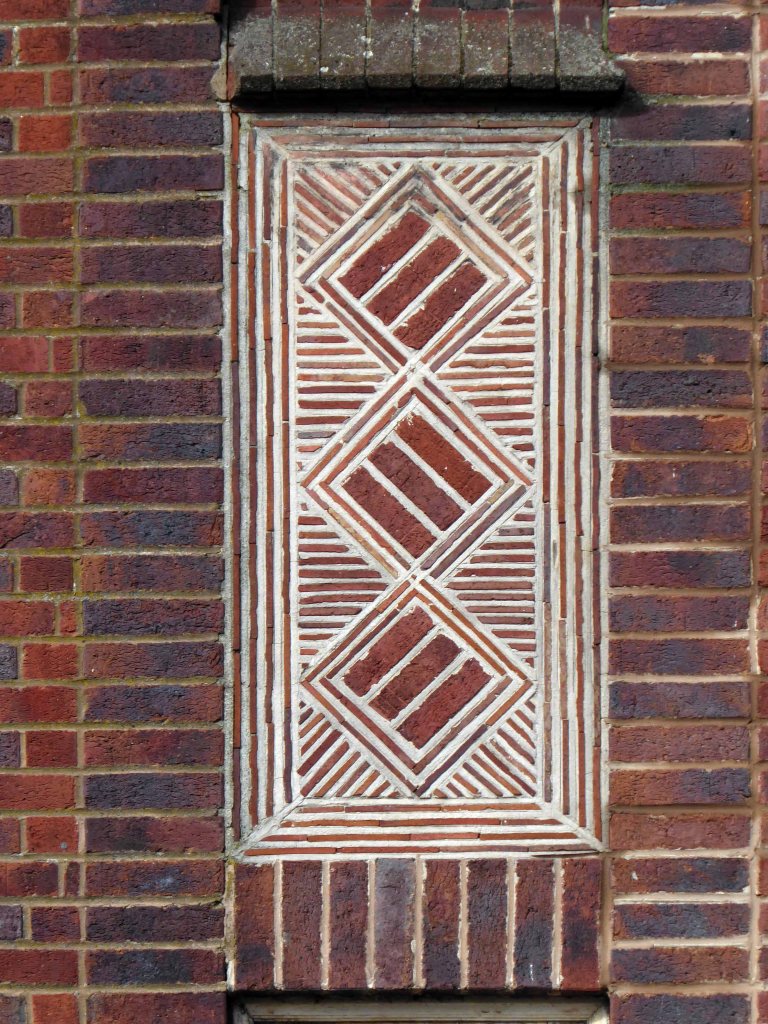
Art Deco detail and tiling.

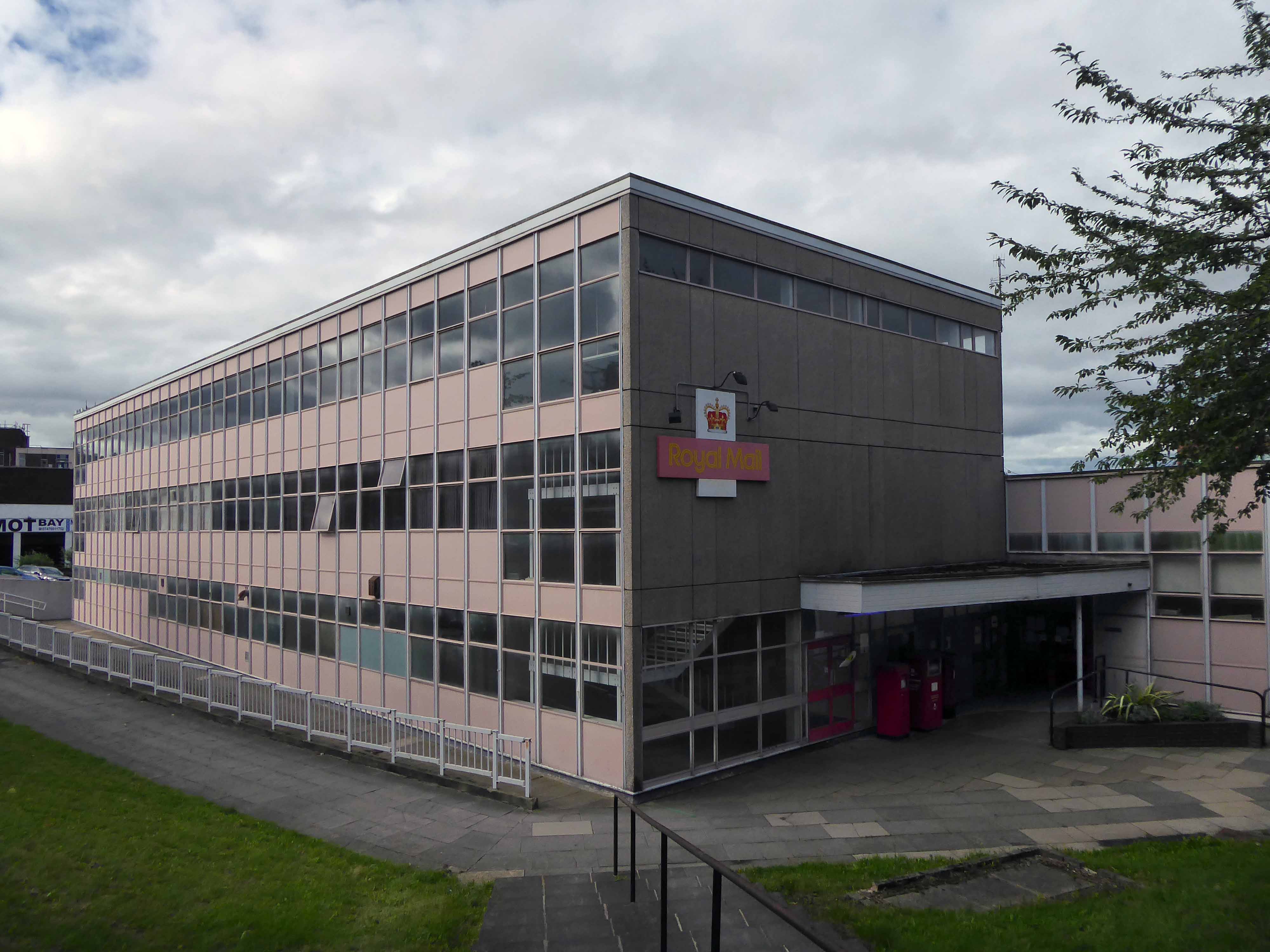
Royal Mail Sorting Office.

Retail detail.

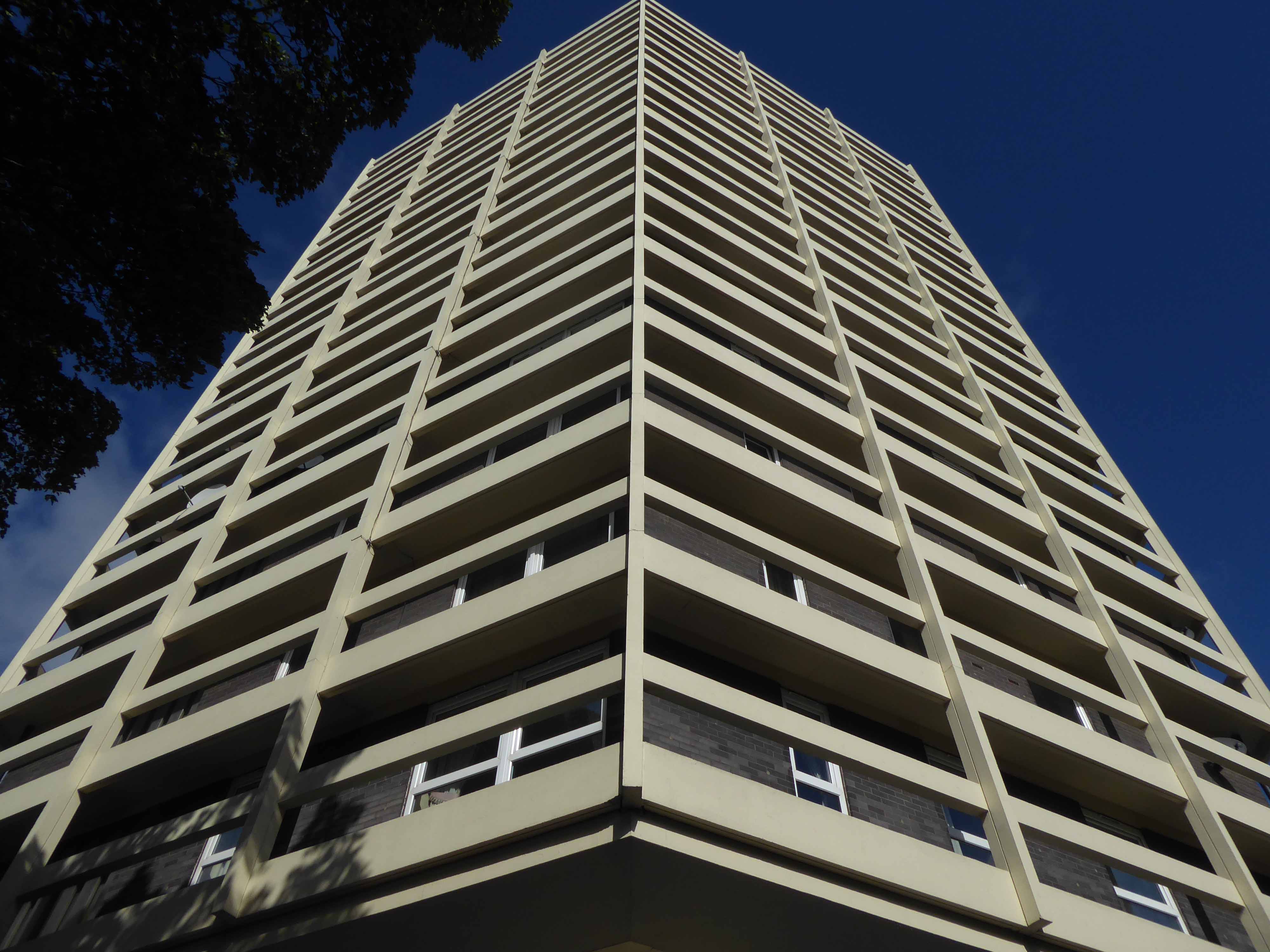
Beeversleigh Flats – built between 1968-71. 

Main contractors J. Finnegan it’s thirteen storeys high – housing forty eight dwellings.

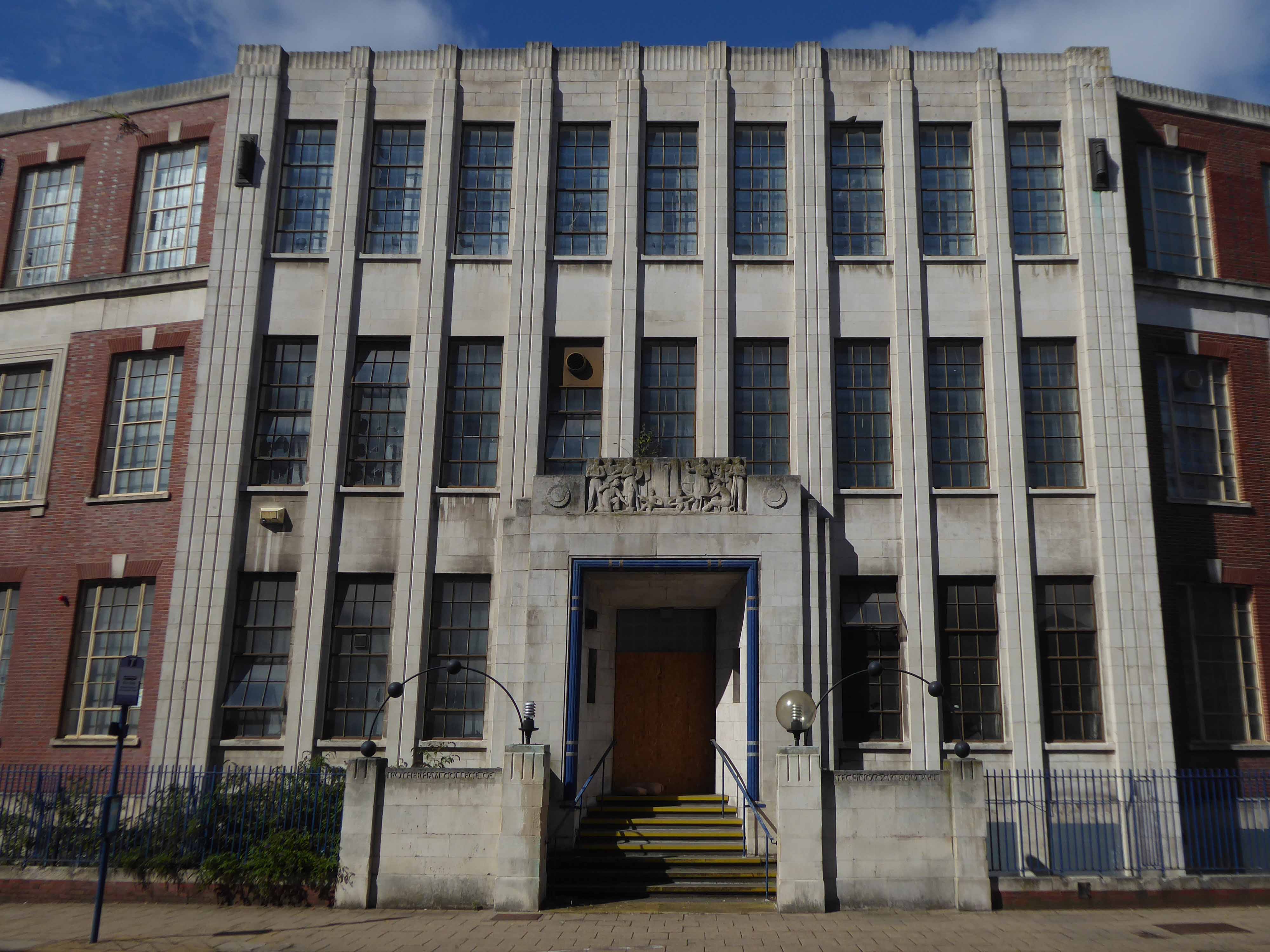
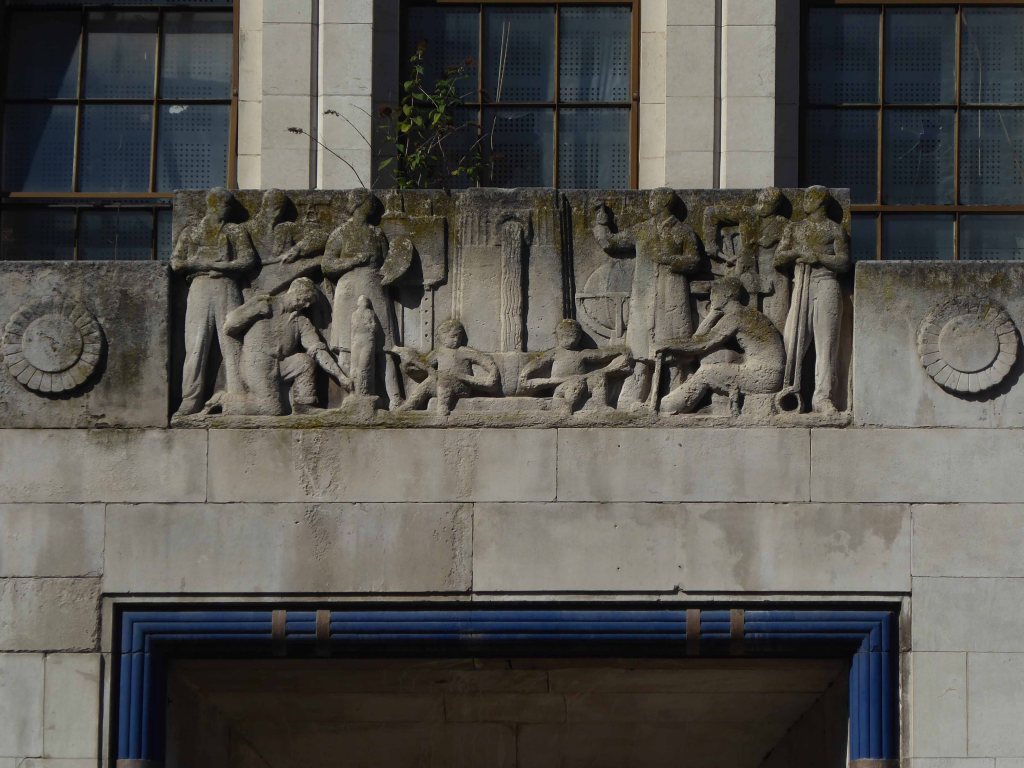
Interwar Technical College – Howard Building

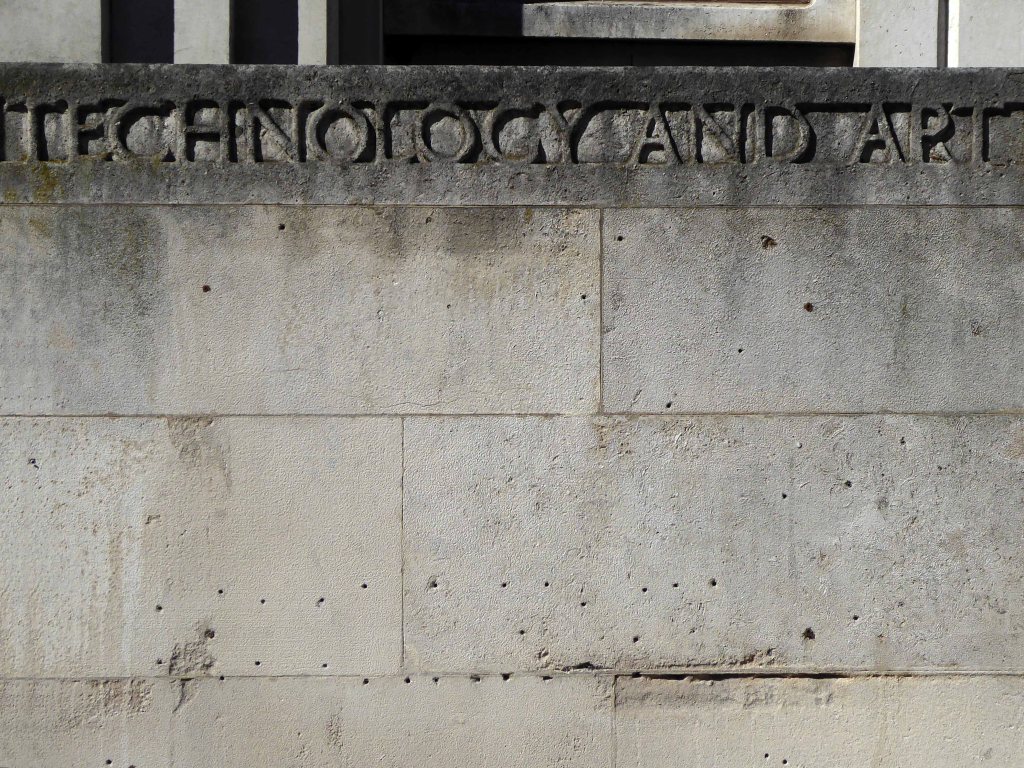
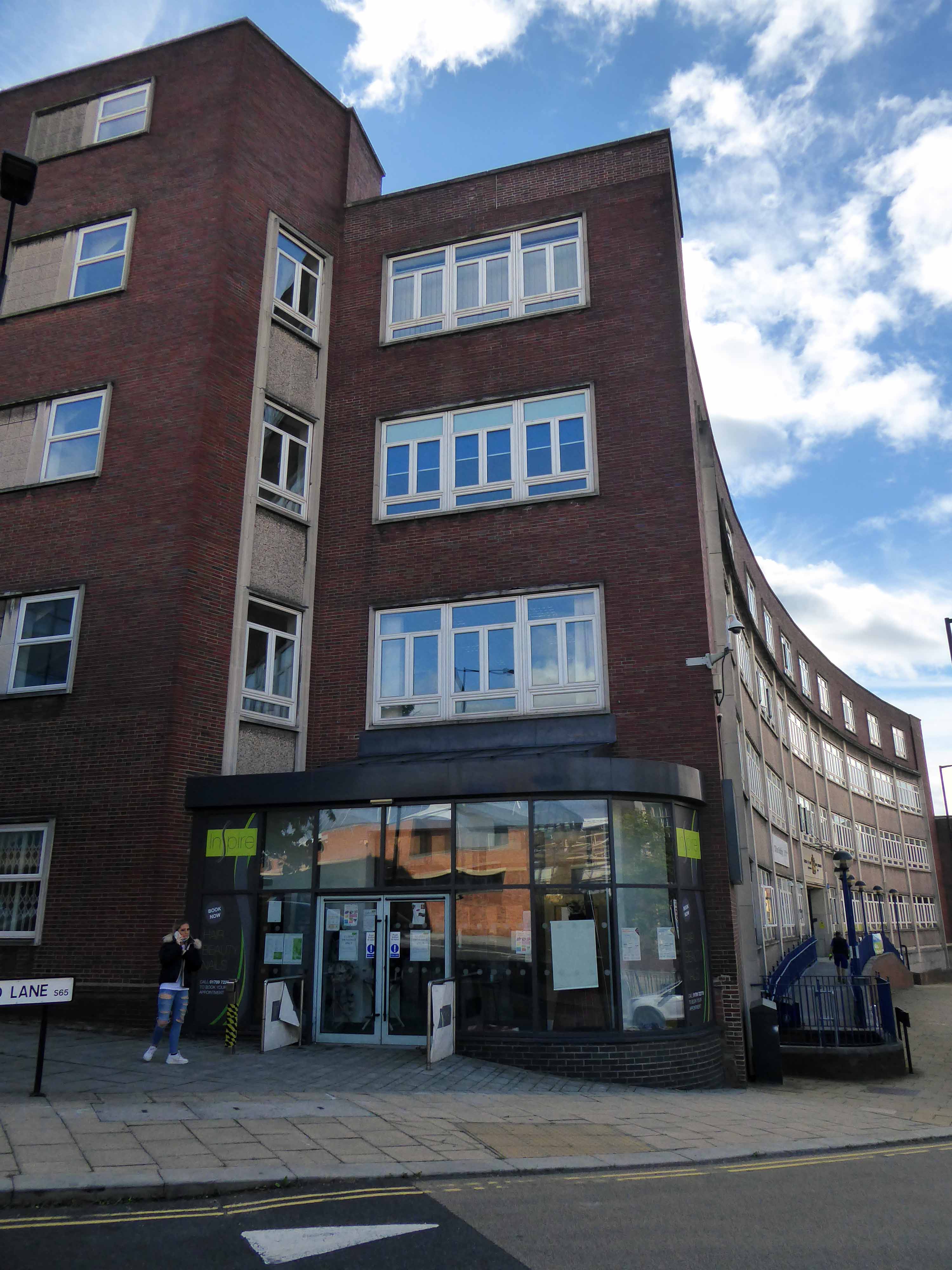
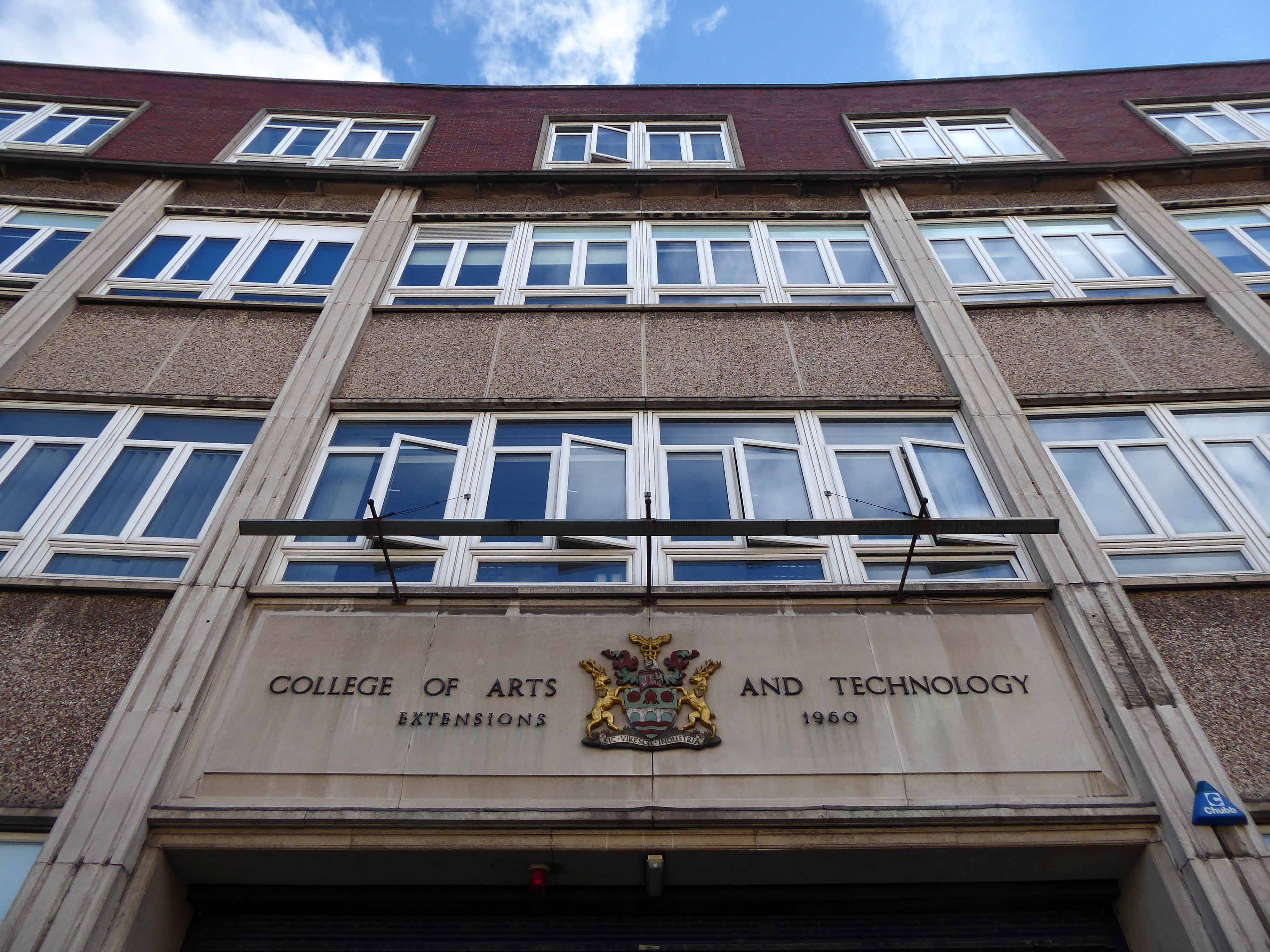
From the 1930s, it provided technical-orientated education from the Howard Building on Eastwood Lane, Rotherham. In 1981, three neighbouring colleges of arts, technology and adult education were merged into one. As a result, the college became known as Rotherham College of Arts and Technology.

Revised plans to convert the historic Howard Building in Rotherham town centre into self-contained studios and apartments have been approved by the planning board at Rotherham Council.

The prominent former college building was sold prior to going to auction last September after it was advertised as a development opportunity and given a guide price of £250,000 by local auctioneers, Mark Jenkinson & son.

2015

28 Days Later

A group of rogue property directors with links to a prominent derelict building in Rotherham have been banned for a total of 54 years. The six, of Absolute Living Developments, were found to have misled more than 300 people to invest at least £12 million in residential properties.

The firm was linked through a lender to Avro Developments, which had plans passed in 2015 to renovate former college block the Howard Building in Rotherham town centre.

Rotherham Advertiser 2019

Clifton Building

Next to the market.

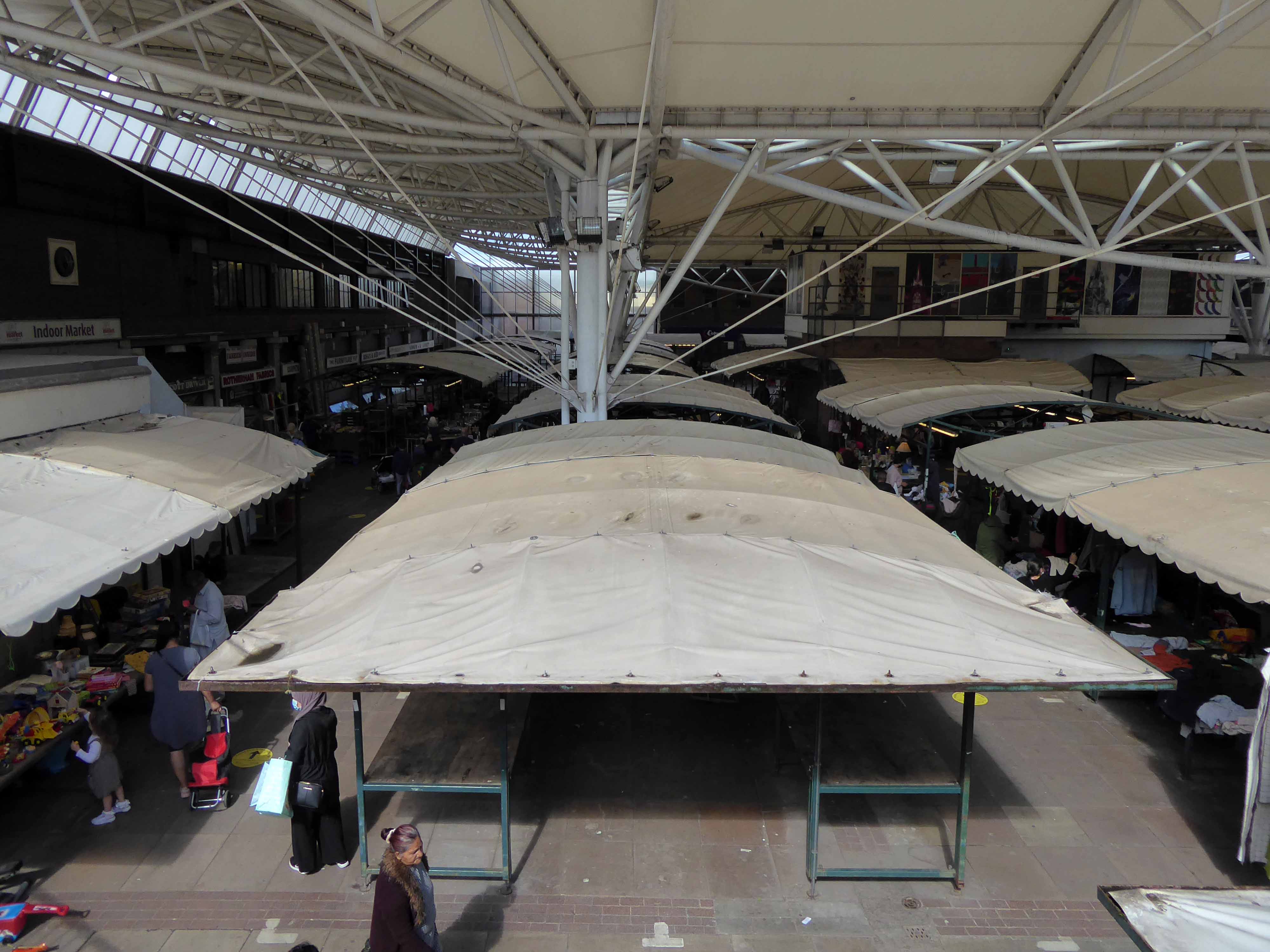
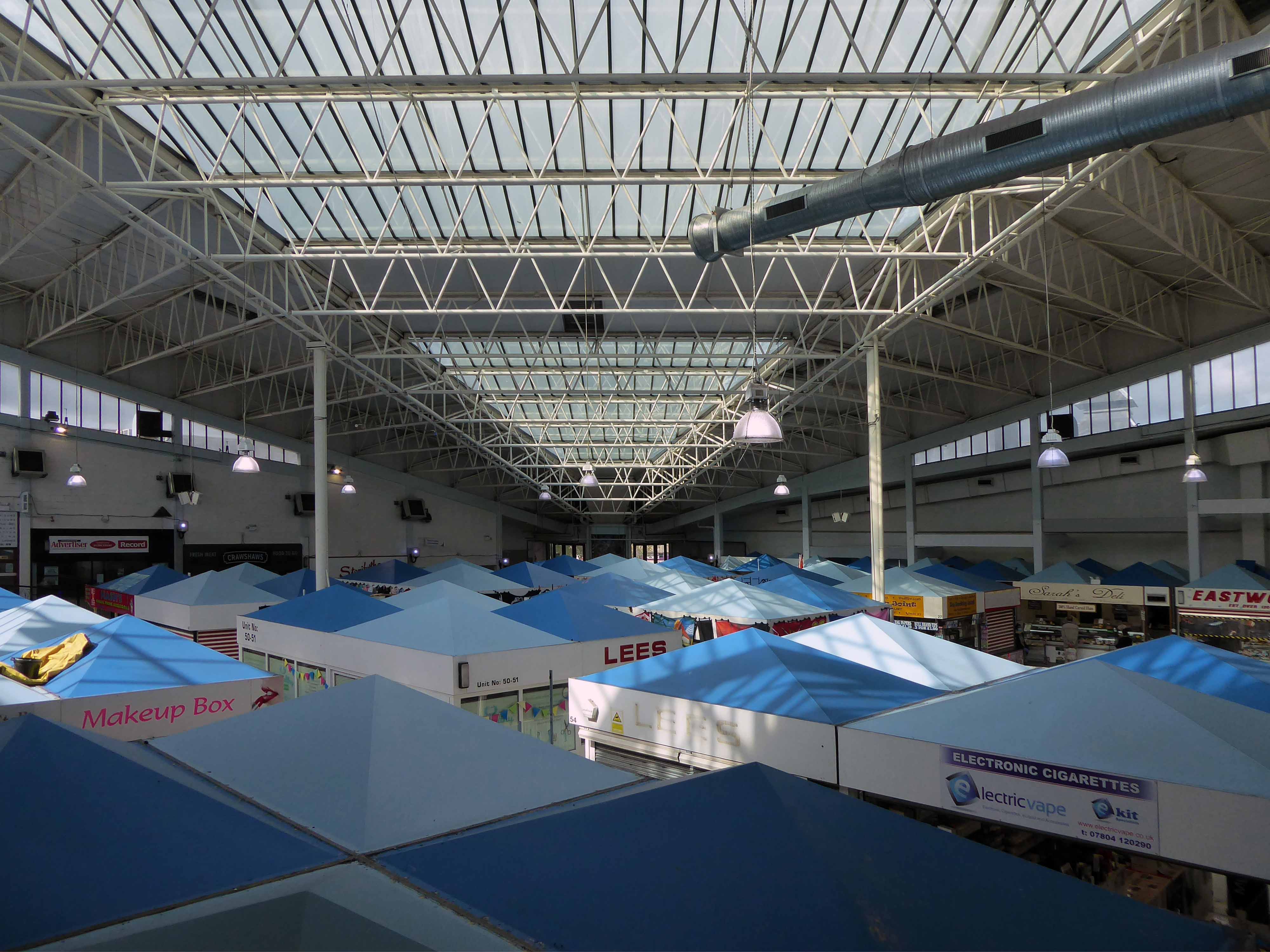
With a strident high tech canopy, very recently added – though Rotherham’s history stems back 800 years when it is thought that the original royal market charter was granted by King John in the year 1207.

There are traces of the 1970’s rebuild.

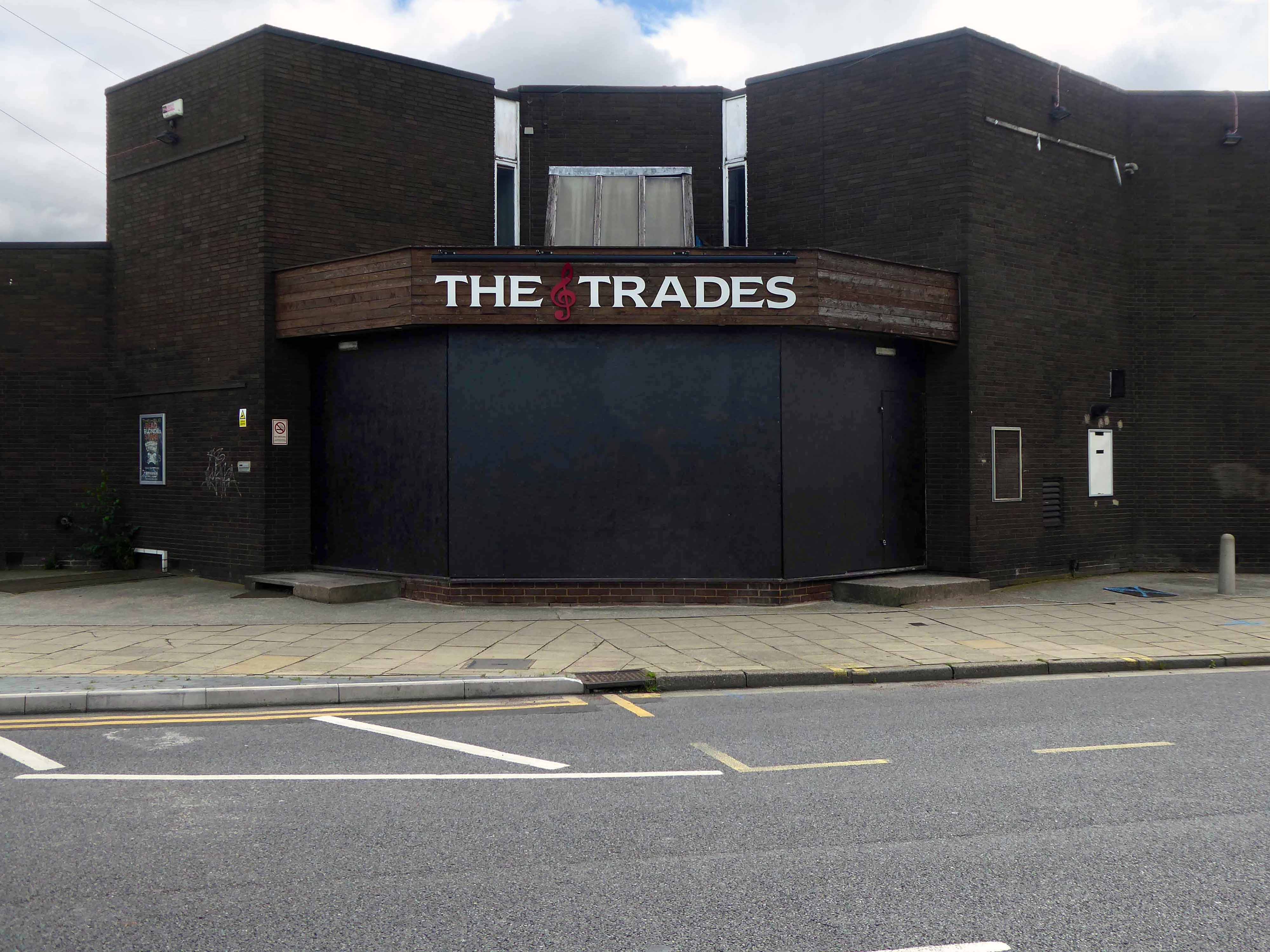
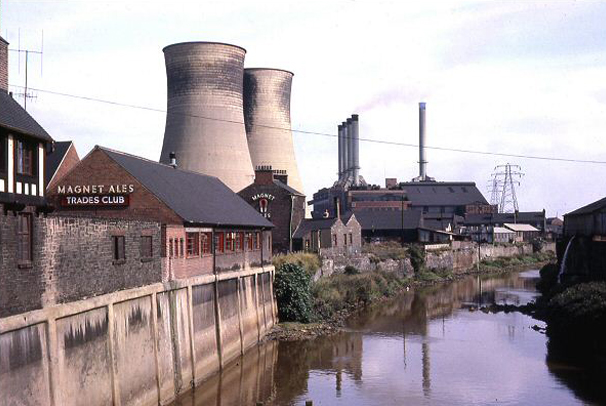
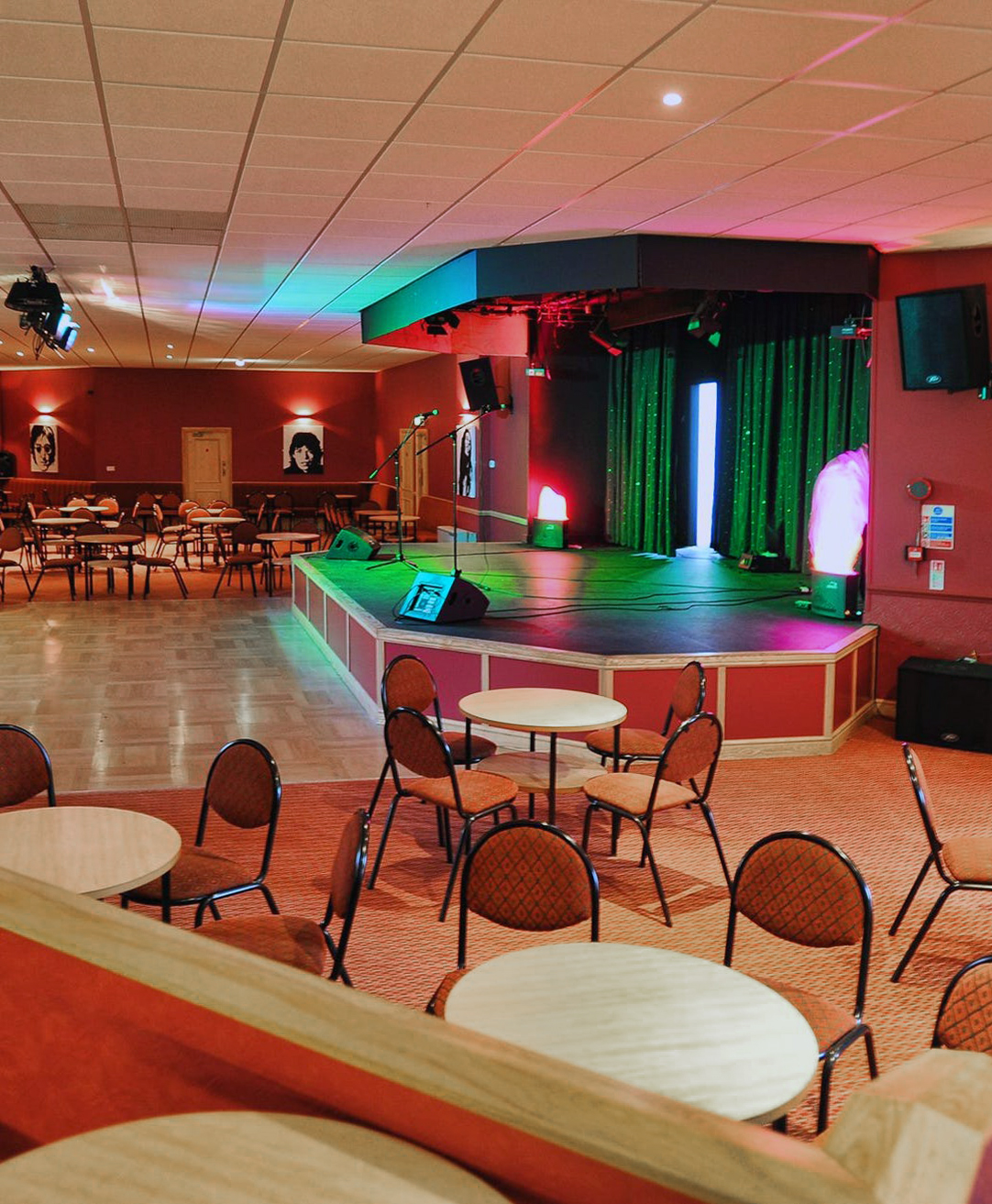
Bunker-like The Trades former music venue/pub, which replaced the former riverside Trades Club.

The PA now silenced.
This was an amazing event. The bands were really good and the drinks offers, while limited, were good. The ceiling in the ladies toilets had fallen through and was dripping, presumably there had been a leak from all the rain, but this didn’t lessen the awesome experience.

October 2019

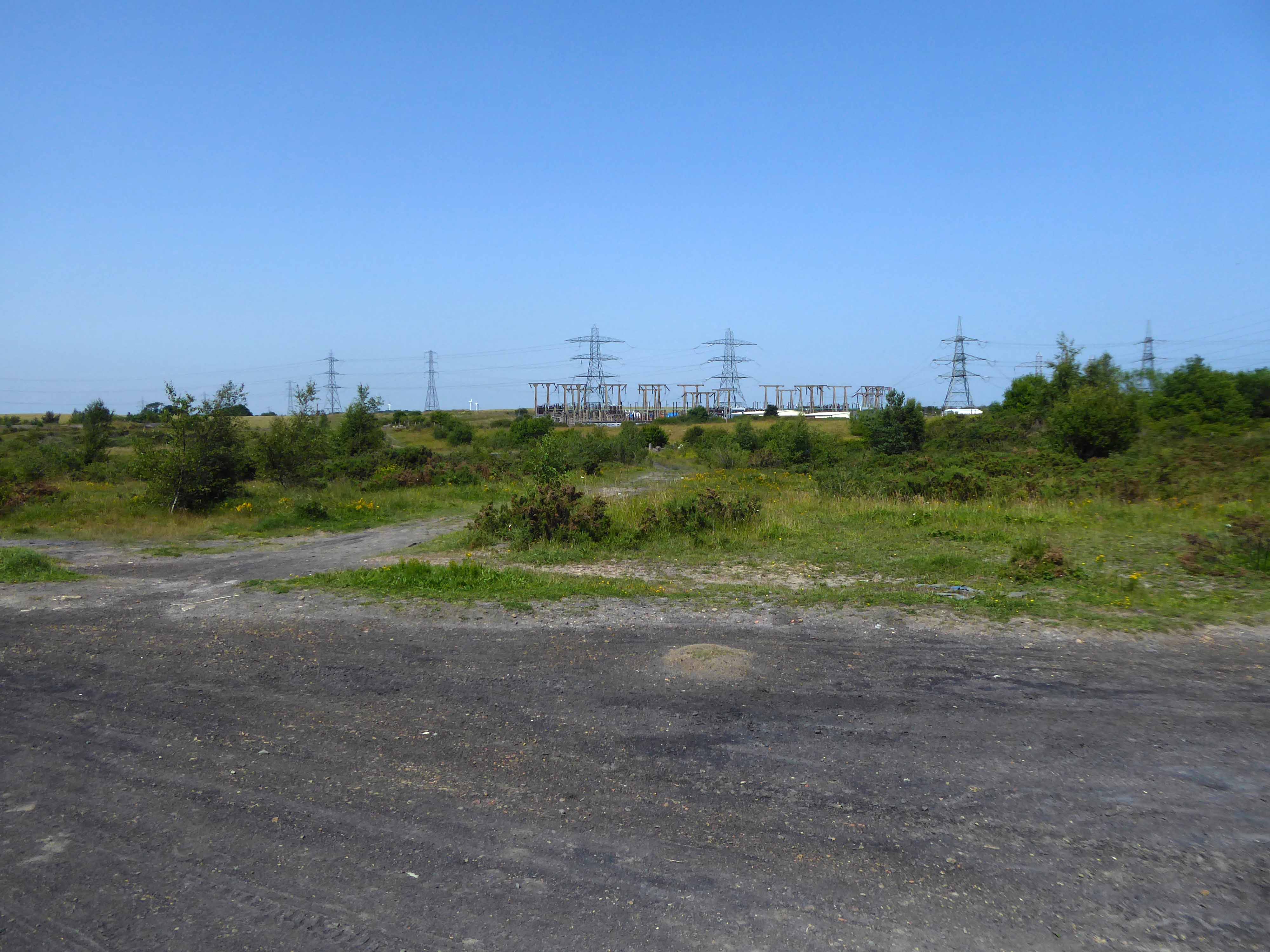
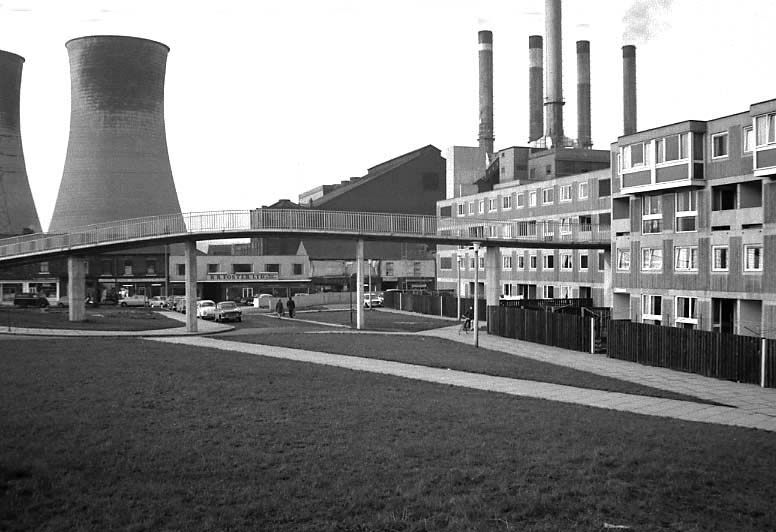
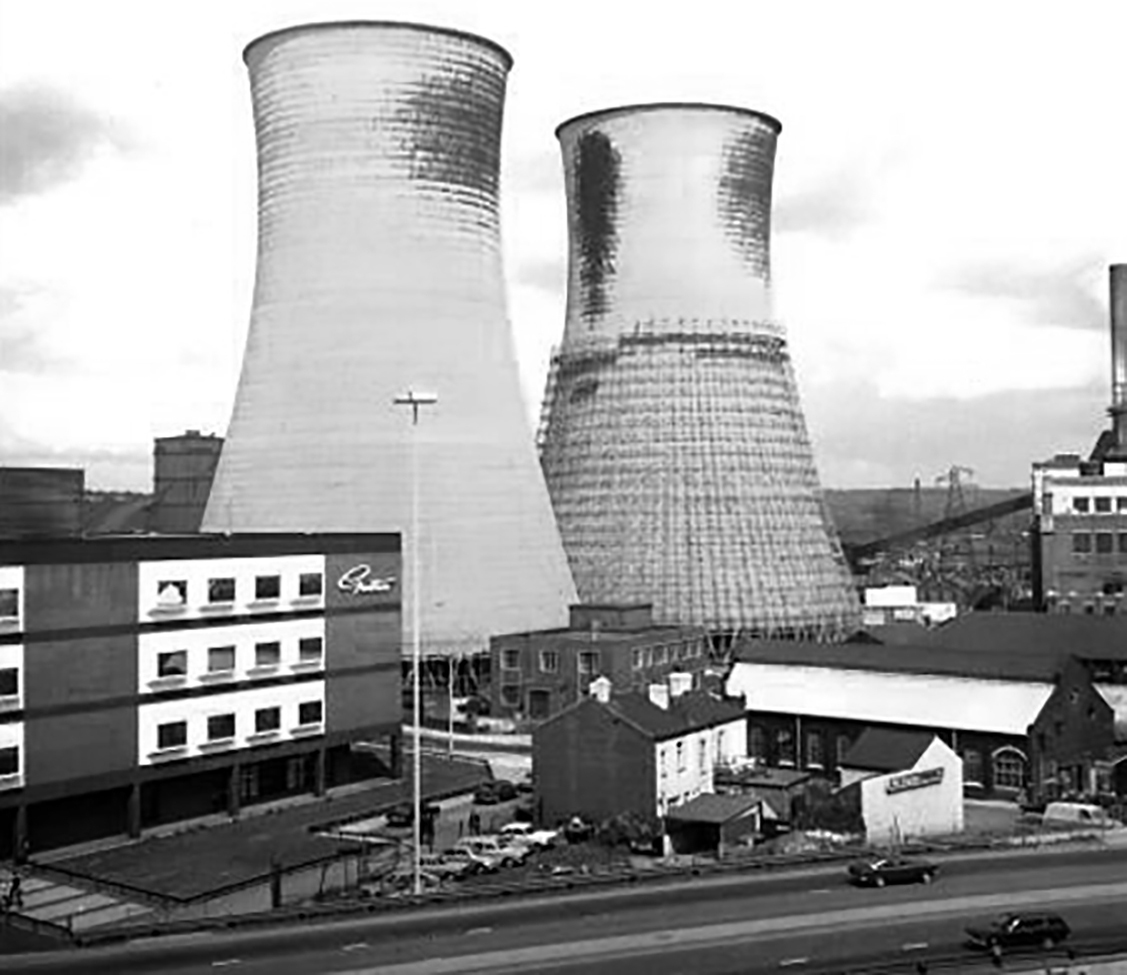
The cooling towers and flats are long gone – the coal-fired power station operated from 1923 until October 1978.

The Prince of Wales Power Station in Rotherham was located on Rawmarsh Road and was opened by the Prince of Wales – the future King Edward VIII.

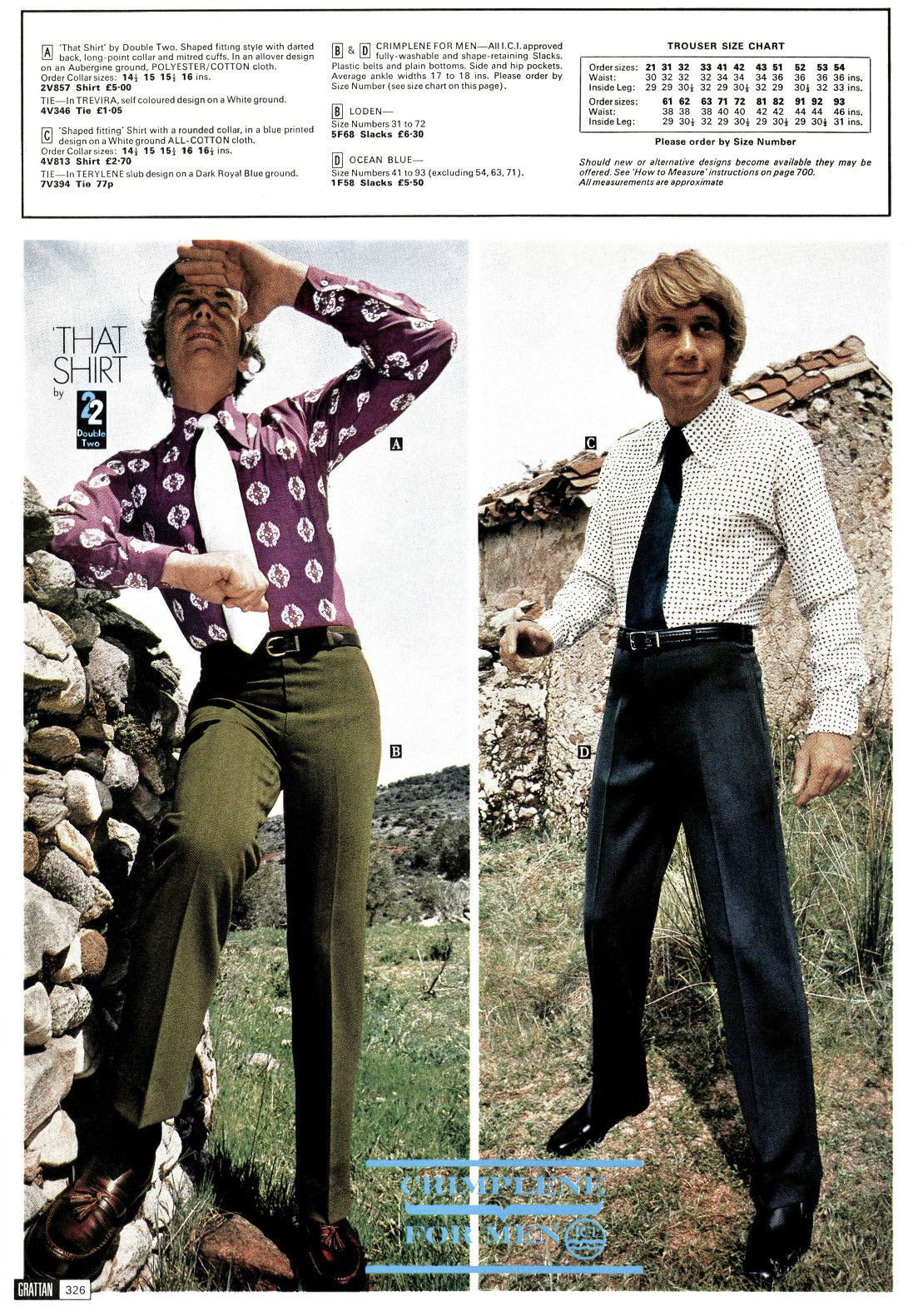
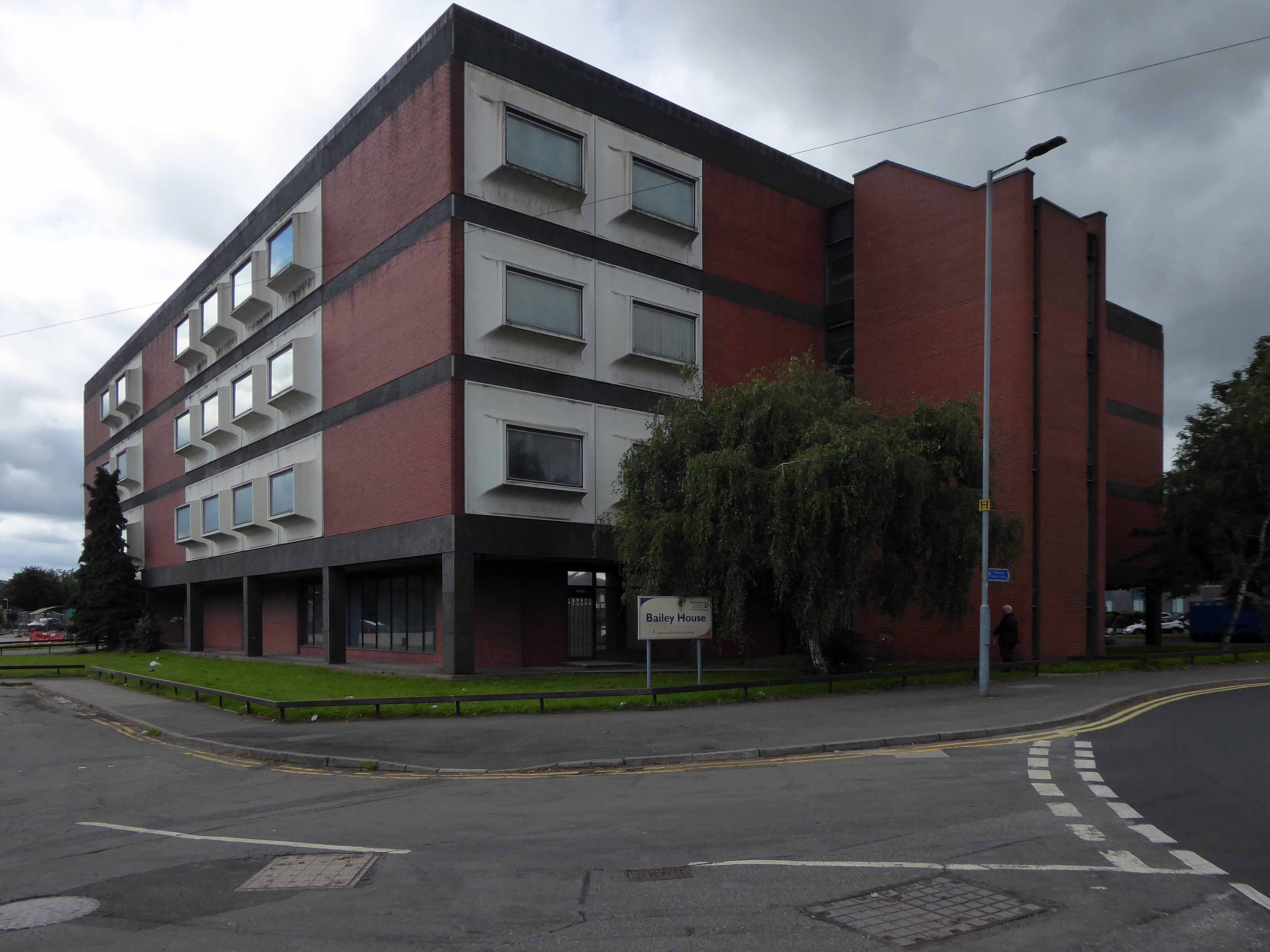
The former Grattans catalogue offices can be seen to the left.

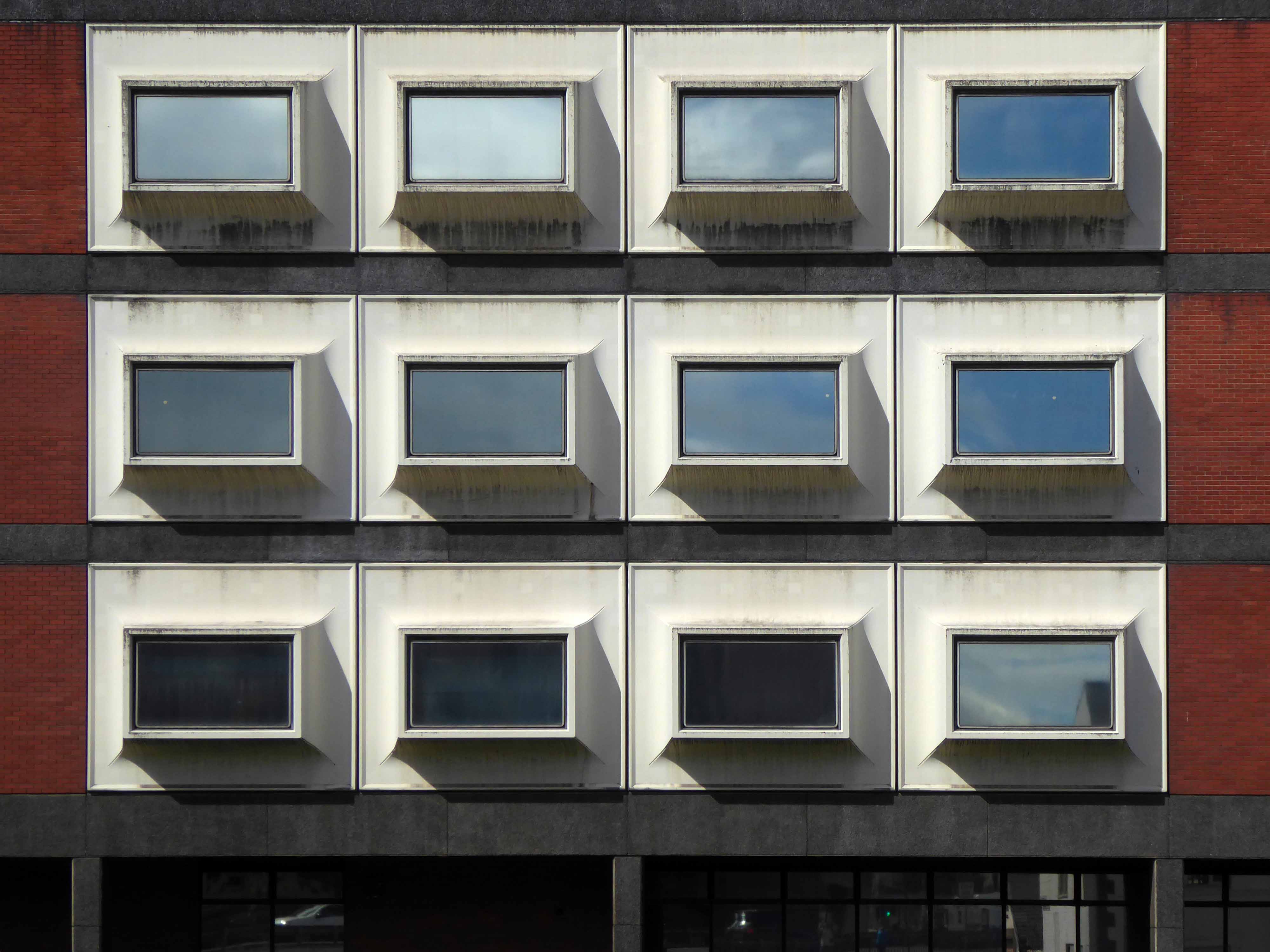
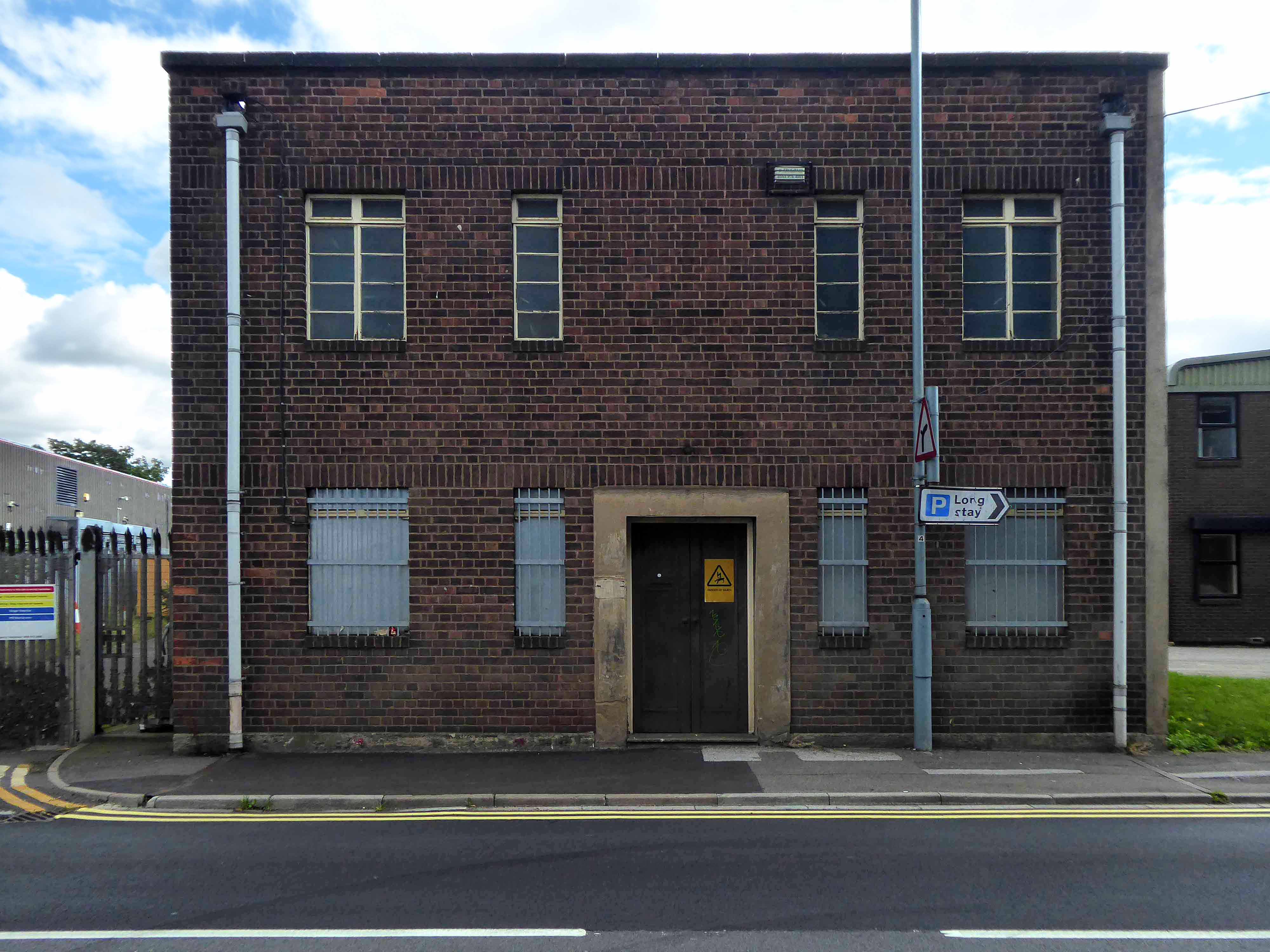
Renamed Bailey House and still in use by the local authority, its days it seems are numbered.

The building is named after Rotherham-born engineer Sir Donald Bailey whose ingenious bridge designs played a key role in shortening World War II, the house in which Bailey was born, 24 Albany Street is still standing.

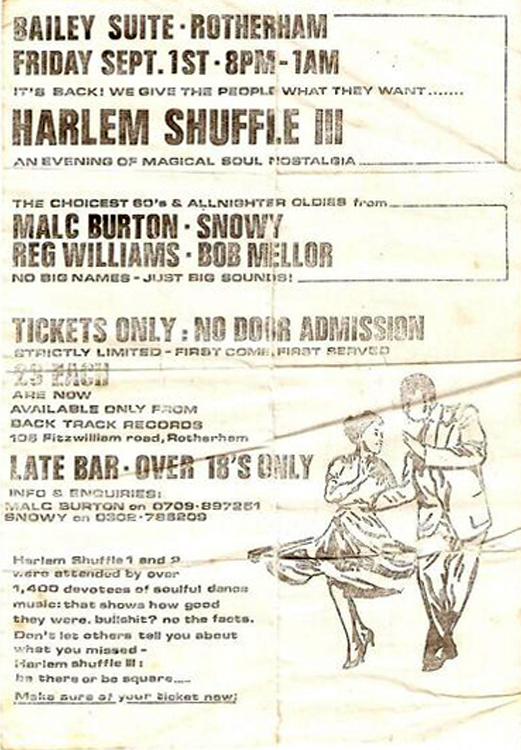
Sadly no longer home to the Harlem Shuffle

No big names – just big sounds.

There are some surviving power station buildings.

Along with electrical infrastructure.

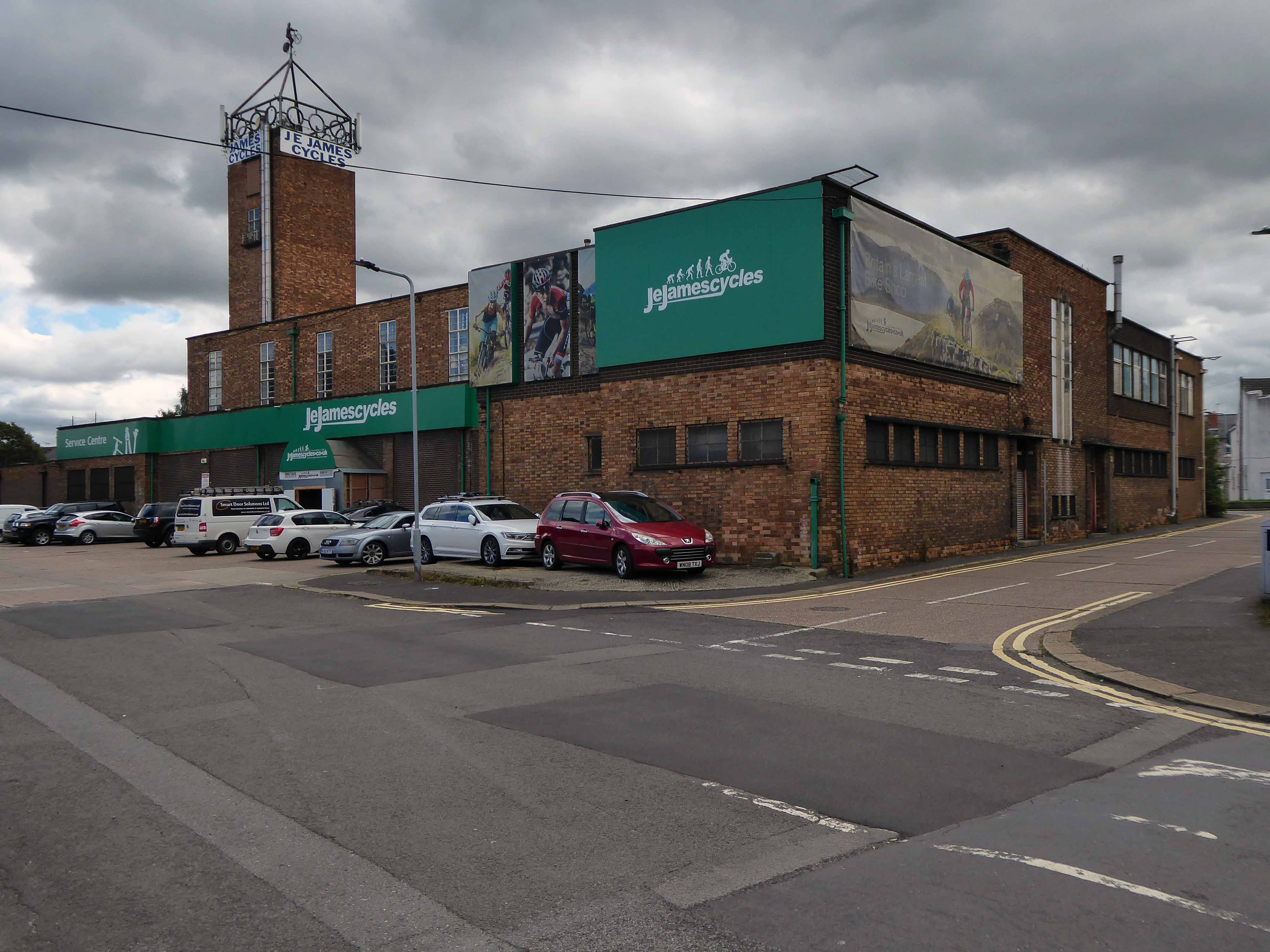
Up the road next, to the former fire station, which now houses J E James Cycles.

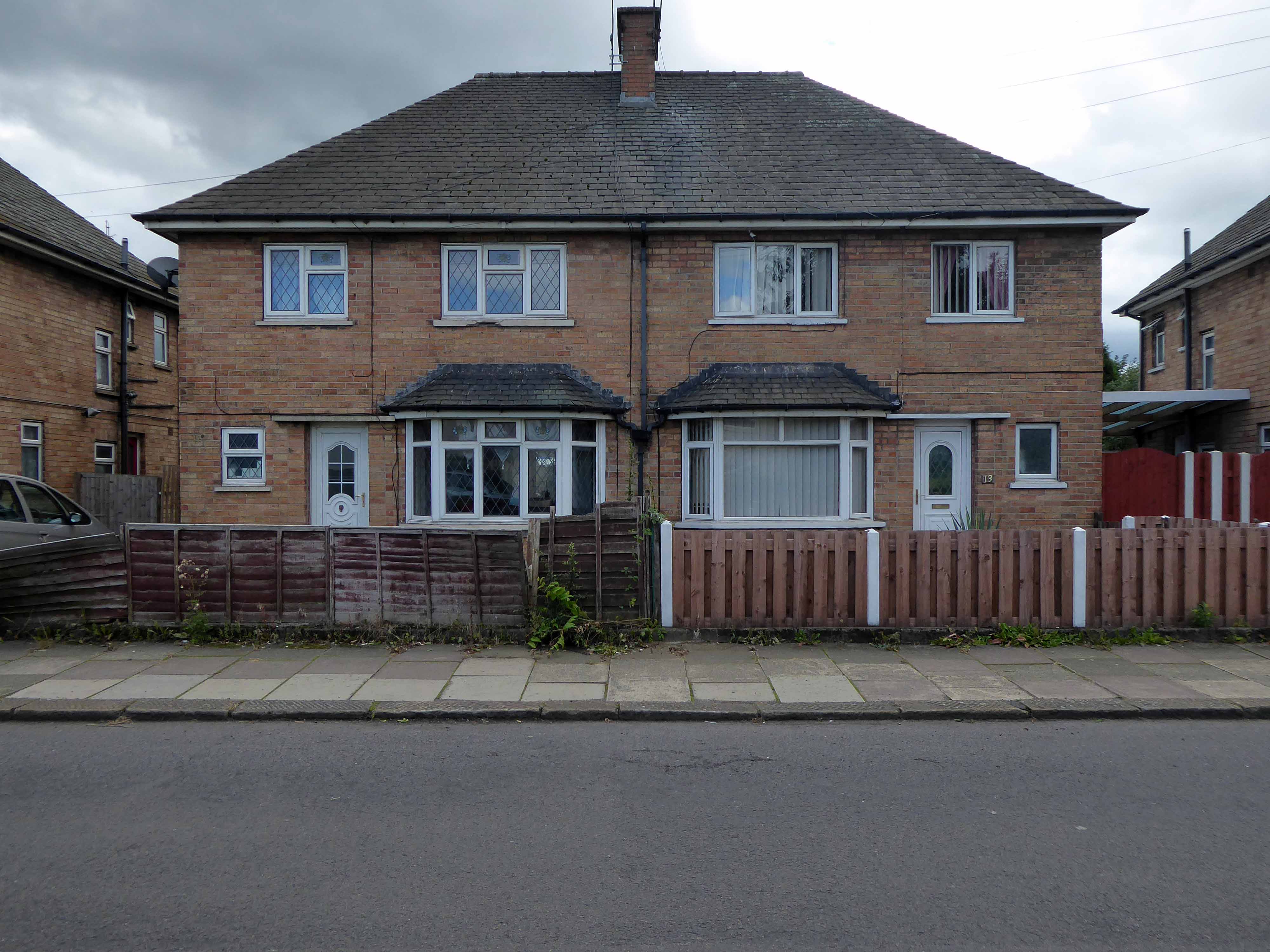
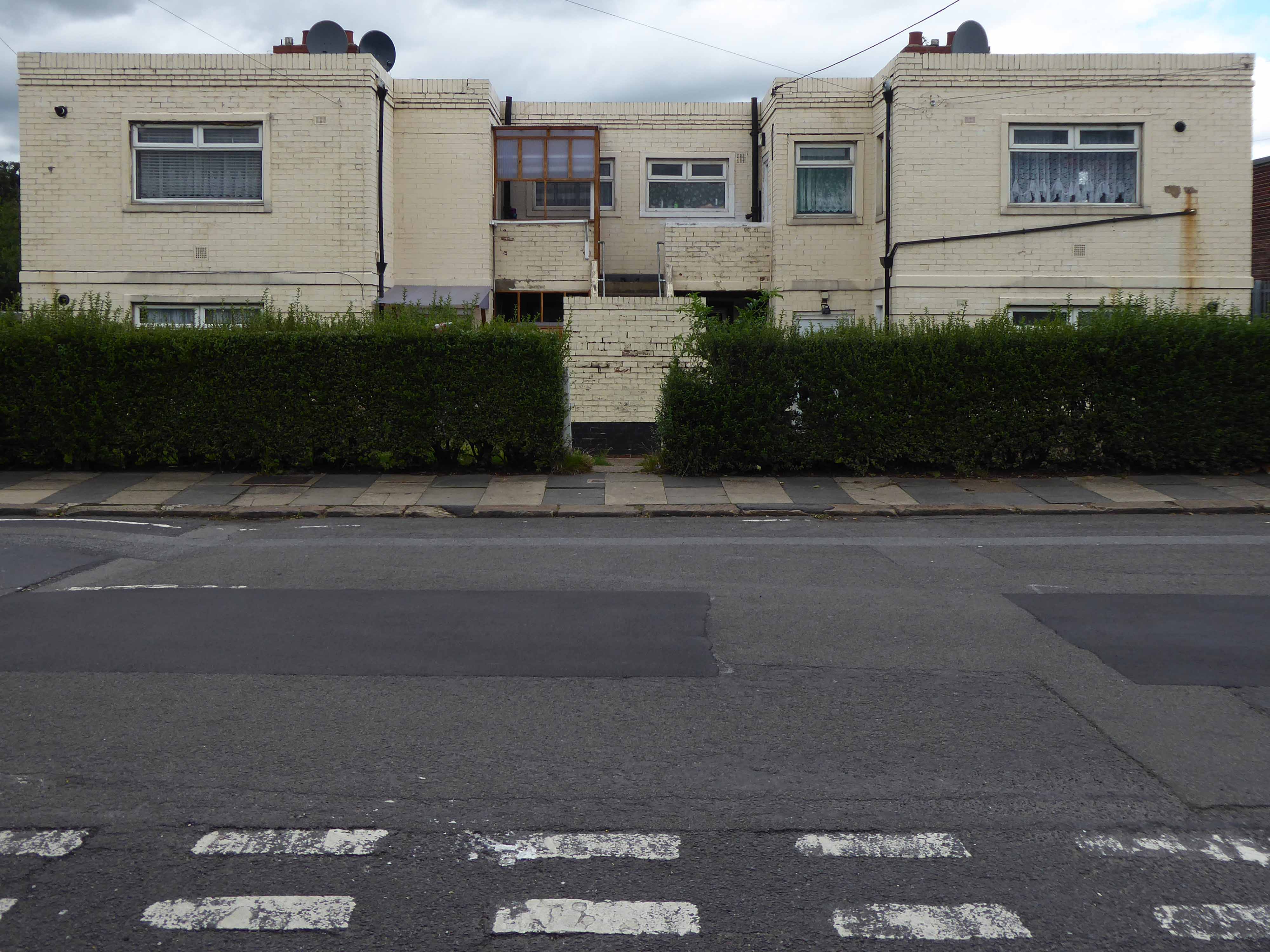
It is surrounded by typically atypical inter war housing.

I could make the wild assumption, that these flat roofed maisonettes were originally homes fit for firefighters.

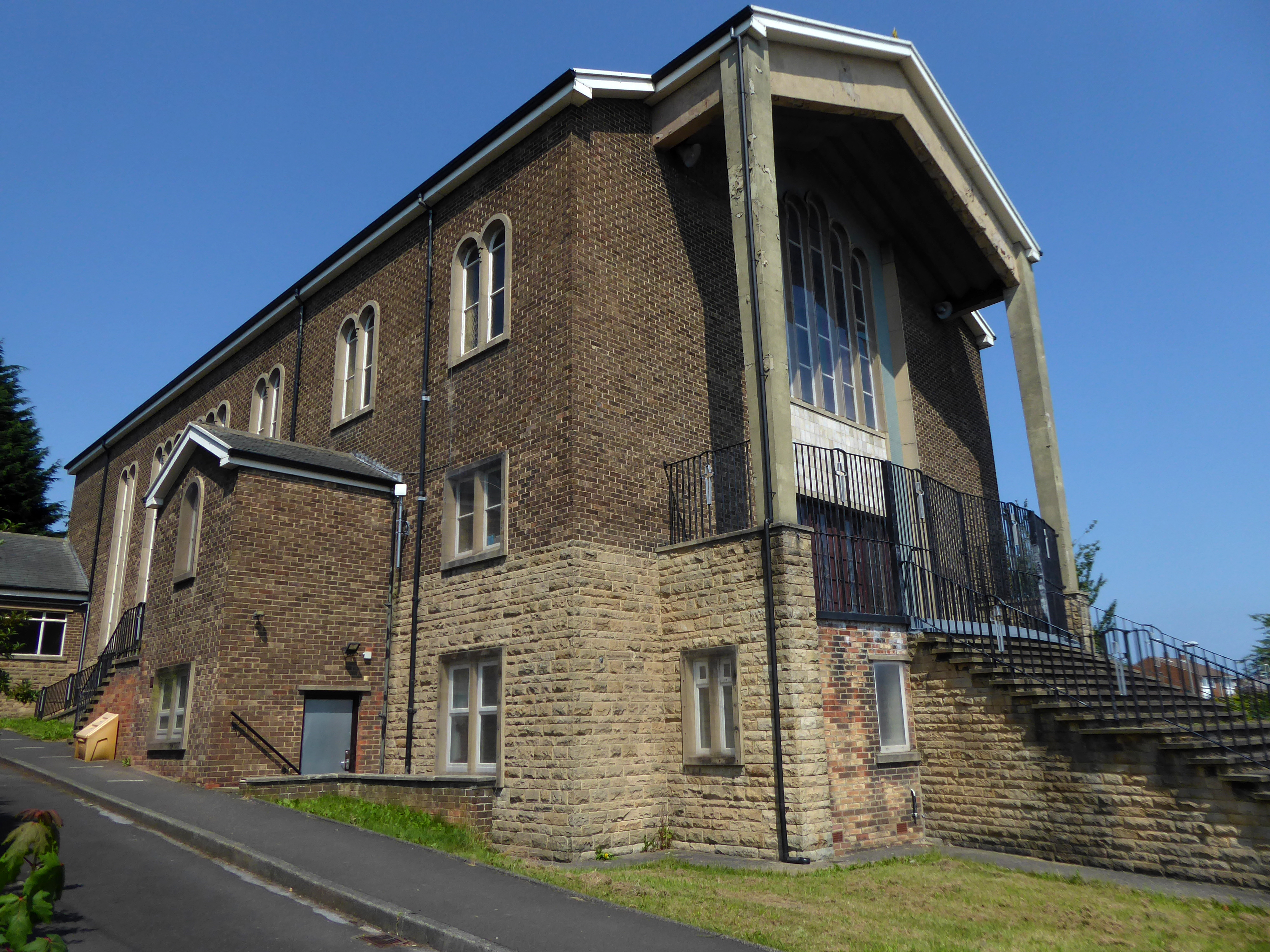
A passing nod towards a former Methodist Chapel.

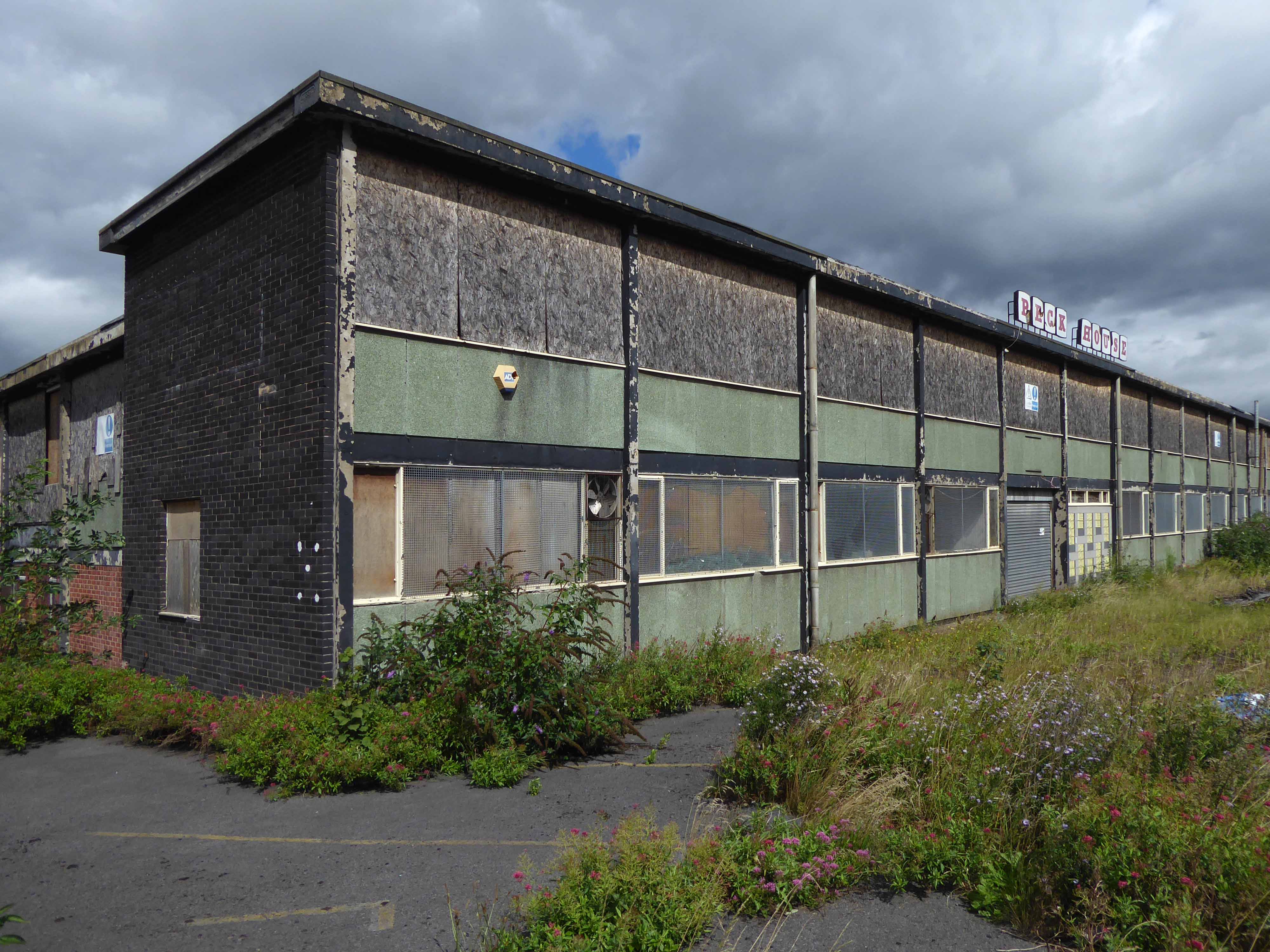
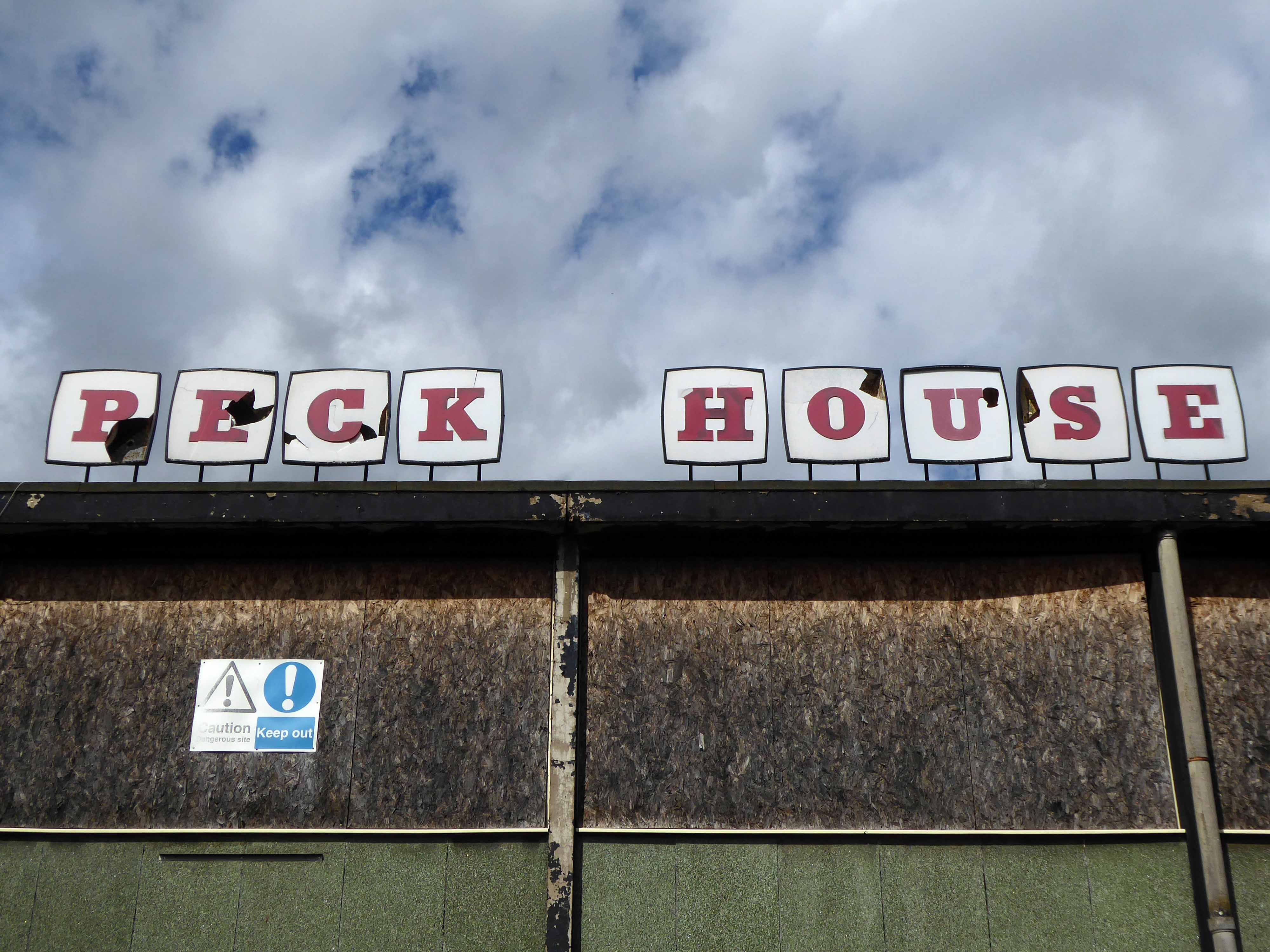
Further on up the road to Peck House.

And the attendant tiles.

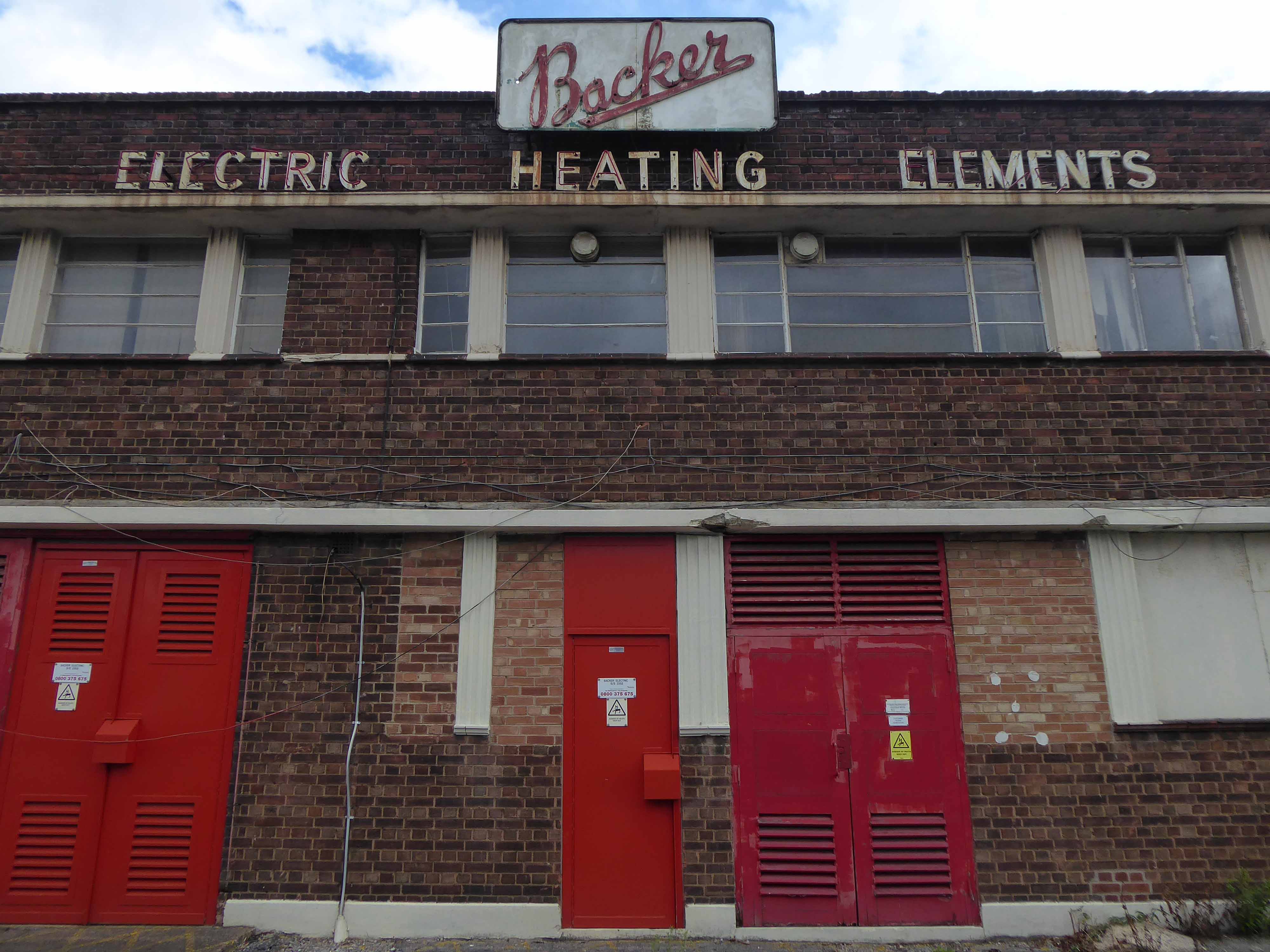
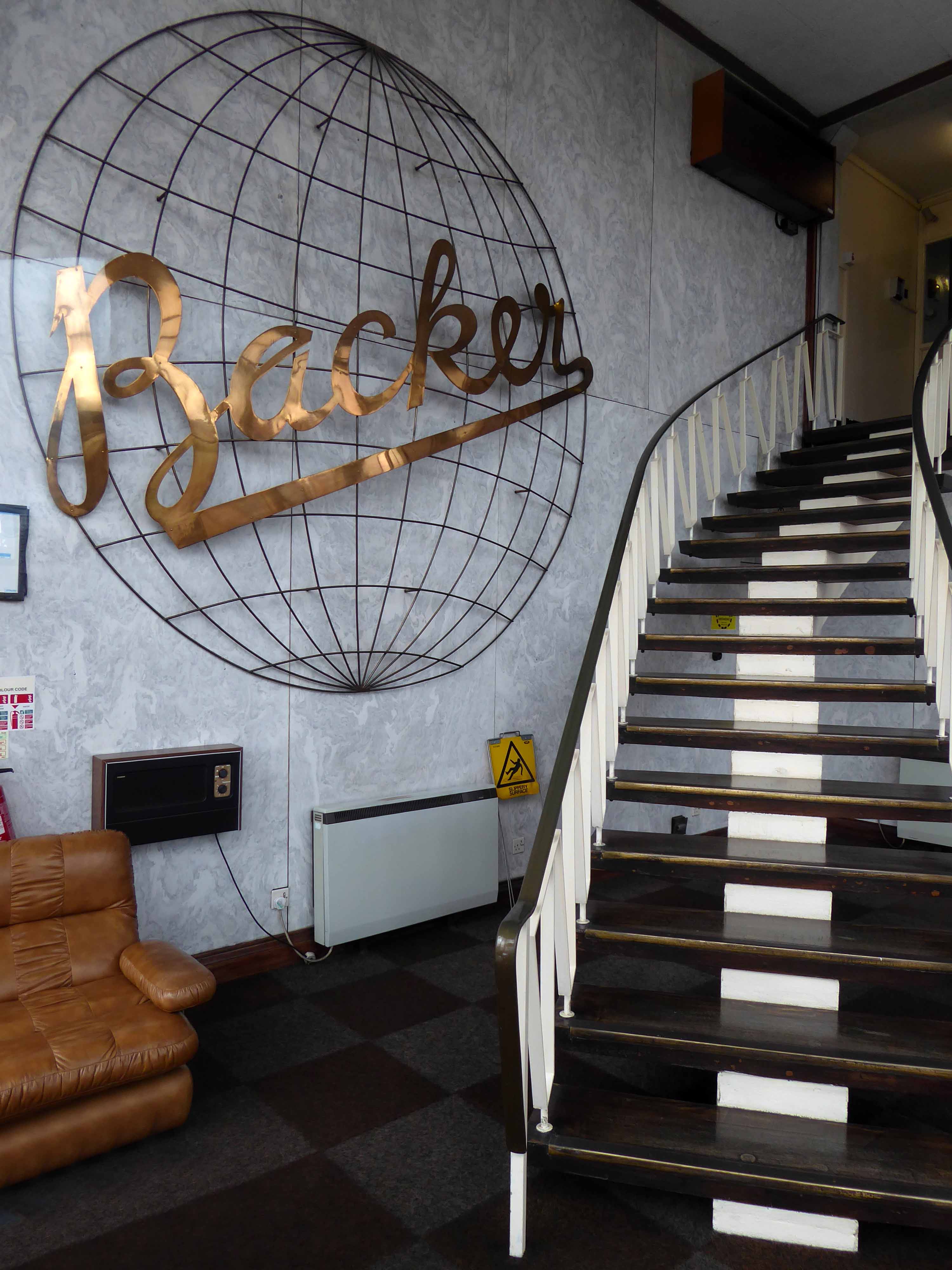
Just around the corner Backer Heating – still trading.

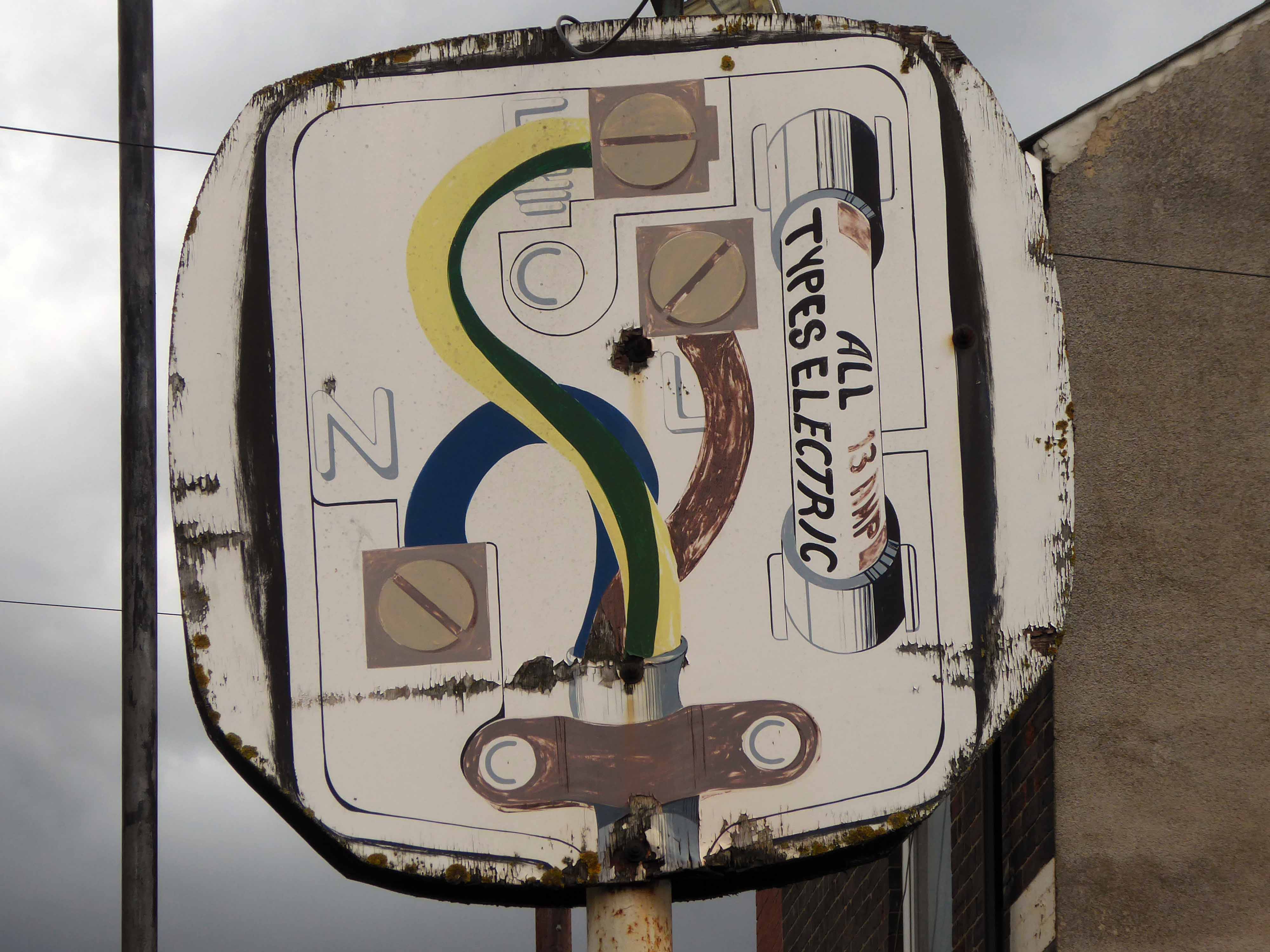
Returning toward town and enchanted by a giant 13 amp plug.

Under the underpass.

Then the other underpass.

Finally through the last underpass.

With a final notable note regarding Rotherham’s hand painted council commissioned signage – I’d like to think that they have a sign writer in their employ.

Many thanks to my learned companion Helen – thanks for a fine day out, so much to see and do!

Elim Pentecostal Church – Halifax

Hall St Halifax HX1 5AY

Elim Church

Having walked from Hebden Bridge to Halifax with Mr Phil Wood, we approached Hall Street – and gazed admiringly at this striking building, from across the A58.

Attributed to C.S. Oldfield and it was completed in 1972 apparently they did the relief too.

20th Century Society

A low serrated, ridge and furrow conical roof, corona and steel spire breaking the skyline.

Very much a building of two halves, the single storey hall, adjoining the body of the church, which is raised on a plinth.

They are linked by an internal hallway.

An intriguing mix of restrained classical detailing, along with the more modernistic roof and internal structure.

From the outside it is possible to discern the stained glass panels in the corona.

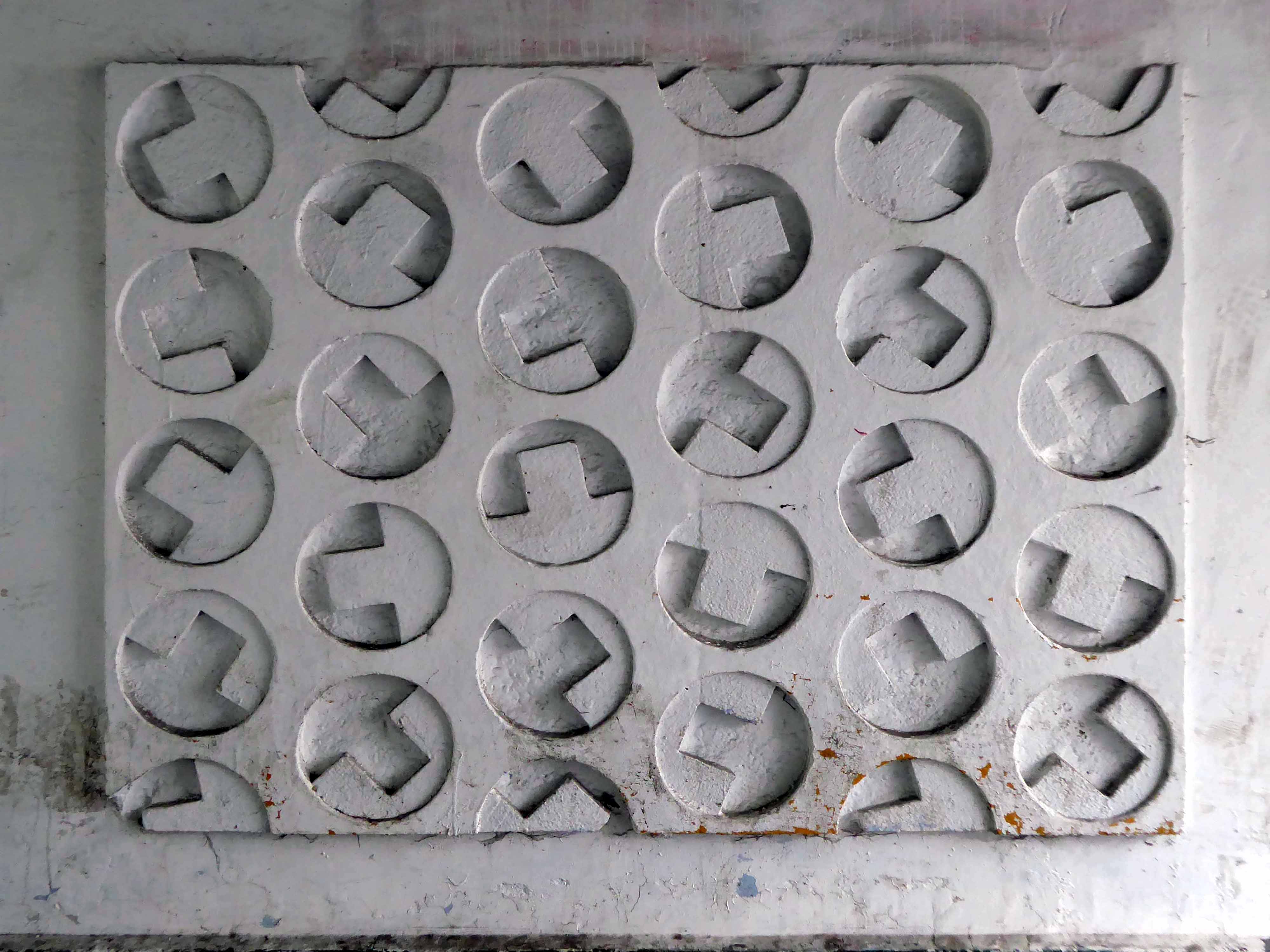
To the right of the main entrance is a modular sculptural relief, modelled in concrete cast in fibreglass.

There are eight individual modules, set in a grid of six by eleven – sixty six in total, rotated to break up the rhythm of the piece.

I was blessed on the day of my visit, with permission to photograph the interior, many thanks to Pastor Mark.

Water Pumping Plant – Bridlington

Walking the wet walkway of Bridlington’s south shore, I was pleasantly surprised by this semi-distant concrete construction.

Which cleverly accommodates a convenient public convenience.

The pumping station is the most immediately obvious aspect of the scheme , situated as it is on the promenade.

Hanson UK supplied the concrete, with a range of complex mixes required.

You’re trying to make concrete with as little water in it as possible, but it still has to move to be placed into position. The only way to achieve this is with powerful admixtures, which deflocculate the cement despite the lack of water in it to lubricate it.

This difficulty also applied to almost all the concrete above ground level for durability reasons – anything that could come into contact with seawater had to be able to withstand it.

The final major complication was the aesthetic requirements from the local council. All the visible concrete had to match an older Victorian Spa, located a little way up the beach, which had previously been refurbished using Hanson concrete.

We were asked to match the colour, shading and texture of the new concrete to the spa.

The team was forced to use white cement, which had been used in the spa, but because of durability requirements they needed to use a cement replacement to improve the overall chemical resistance of the product. They used ground granulated blast furnace slag to replace 55 per cent of the white cement, which is white in colour itself. This had the added sustainability benefit of replacing imported white cement with a local waste byproduct.

Hanson UK

All this to house the Yorkshire Water treatment plan and allow Bridlington to regain its Blue Flag status.

The extended pipework carrying the waste water far far away.

At the Headworks the Arup design concept was to extend the pumping station using pre-cast concrete panels that are sensitive to the existing facade. The development of 2015 succeeds in integrating a Brutalist aesthetic, into a largely Victorian setting. Incorporating several levels of seating and associated street furniture, affording some shelter and clear sight lines with transparent panels.

UK Water Projects

The artwork in front of the huts on Bridlington Promenade by Rachel Welford looks fantastic. The huts built by our contractors Morgan Sindall Grontmij (MGJV) were completed in August and they’re available for hire through the East Riding of Yorkshire Council. The beach huts are larger than the other beach huts on the Promenade and include disabled access and are especially suitable for family groups. Complementary artwork, also designed by Rachel Welford has been incorporated in the glass balustrade in front of the huts.

Yorkshire Water

Boyes Bridlington

29 King Street Bridlington East Riding of Yorkshire YO15 2DN

Supplier of a variety of discounted homewares and DIY products, toys, clothes and stationery.

In 1881 William Boyes opened a small store in Eastborough, Scarborough selling odd lots and remnants from merchants. There was great poverty in the working classes and housewives were even keener for a bargain than they are today. When customers found that they could buy enough material to make a coat or a dress cheaper than anywhere else, they soon spread the word and trade increased to such an extent that William had to look for larger premises.

William rented a large warehouse just off the main street where business continued to grow. By 1886 he purchased further units in Market Street and Queen Street and knocked them into one large store and named it ‘The Remnant Warehouse’. Older customers in Scarborough still refer to the shop as ‘The Rem’. As time went on William expanded his range and bought other clearance lines from merchants developing the warehouse into a department store.

Business continued to grow and go from strength to strength and in 1910 the expansion of the company started. Today W Boyes and Co Ltd operate over 60 stores throughout Yorkshire, the North East, Lincolnshire and Nottinghamshire & Leicestershire.

Boyes

In 1969 Hammonds of Hull purchased the Carltons department store located in Bridlington, and within a year had demolished and rebuilt the store. The company’s independence did not last much longer, as in 1972 House of Fraser purchased the business for £8 million. The stores were then grouped under the Binns brand. The Bridlington store was closed in 1995 and the store stood empty for three years until Boyes opened in 1998 

My sincere thanks to Kate Yorke for her detective work.

I have been here before, enchanted by the exterior tiles, of unknown origin – yet strongly redolent of William Mitchell’s work.

These are on the southern face of the building.

On the opposing side.

They flow through into the entrance lobby.

Exploring further I encountered these striking ceramic tiles on the stairwells.

With a matching set on the others side of the store.

It’s a constant delight to discover the decorative art of the Sixties preserved in situ. Remnants of a time when investment in original work was de rigueur, reflecting the pride which companies had in their buildings and the respect they held for their customers.

The stores trade as Boyes – pronounced Boys but often mispronounced as Boys-es.

It is still owned and family run with Andrew Boyes and his son Richard as joint managing directors.

The Scarborough store was home to a number of animals in the past, including monkeys, chipmunks and budgies. The animals were used as way of encouraging customers to visit the store and purchase something whilst they visited. Two of the monkeys, Jacko and Dinah, are famous to a generation of Scarborough shoppers.

Wikipedia

Peck House Rotherham

Peck House, a long vacant commercial property on a prominent route into Rotherham, could be flattened for redevelopment as the owners begin discussions with the Council over its future.

The building on Eastwood Trading Estate, and its unique stylings, was the headquarters of Joseph Peck departments stores
.

Rotherham Business News 2017

The owners of the site, Backer Electric, occupy the adjacent building where they continue to manufacture heating elements, supplying products in high volume to the majority of household brand names. Options to reuse Peck House and the site have been investigated for a number of years.

A structural survey was carried out which found the building to be structurally sound and secure and therefore the Council has not been in a position to insist on its demolition.

In 1985, plans came forward to change of use of the retail/wholesale store to a church. In 2004, outline plans were submitted for a development including a hotel, restaurant, hot food takeaway and petrol station for the wider area. In 2014, Peck House was one of a number of sites discounted as the location for a new £5m primary school.

As of Wednesday 26th August 2020 it’s still there underdeveloped and overgrown.

In the company of local resident Helen Angell and having become aware of the site through the paintings of Mandy Payne and the photographs of Sean Madner – I was eager to pay a visit.

Joseph Peck departments stores originated in Rotherham in the late 1800s and had branches in Worksop, Barnsley and Sheffield.

I have only been able to find evidence of the Sheffield store – which may not be linked.

Though there are references to a Rotherham store on Bridgegate.

Joseph Peck was in Bridgegate in Rotherham, and in the late 40’s at Christmas, they had a grotto and a Father Christmas. The queues of parents and children would go down the yard and up Bridgegate. My mum and dad always took my brother and I to see Father Christmas and get a present from him. The store was a department store selling just about everything that was available just after the war. Mum took my brother and I coming up to one Christmas, she was trying to find a bicycle for my brother and I, but they didn’t have one. As we came out of the store, one of old fashioned three wheel railway delivery lorries was just pulling out of the yard. On the back was a blue bike. Mum stopped the driver and asked him where he was taking it. He told her ‘Redgates at the bottom of Ecclesall Road in Sheffield. She shouted ‘Taxi’, and told the driver to ‘follow that lorry’. Just before the lorry arrived on The Moor, she told the taxi driver to overtake the lorry and go to Redgates. We rushed in, she found the manager and asked him about the bike. He hadn’t known that one was being delivered so Mum told him she’d have it without even asking the price. The lorry driver didn’t even have to take it off the lorry, and delivered it to our house next day.

My elder brother had it first, then me, then my younger brother, and finally our young sister. It was still being used when I flew the nest in 1959. 

Merry Christmas everybody.

Sheffield Forum

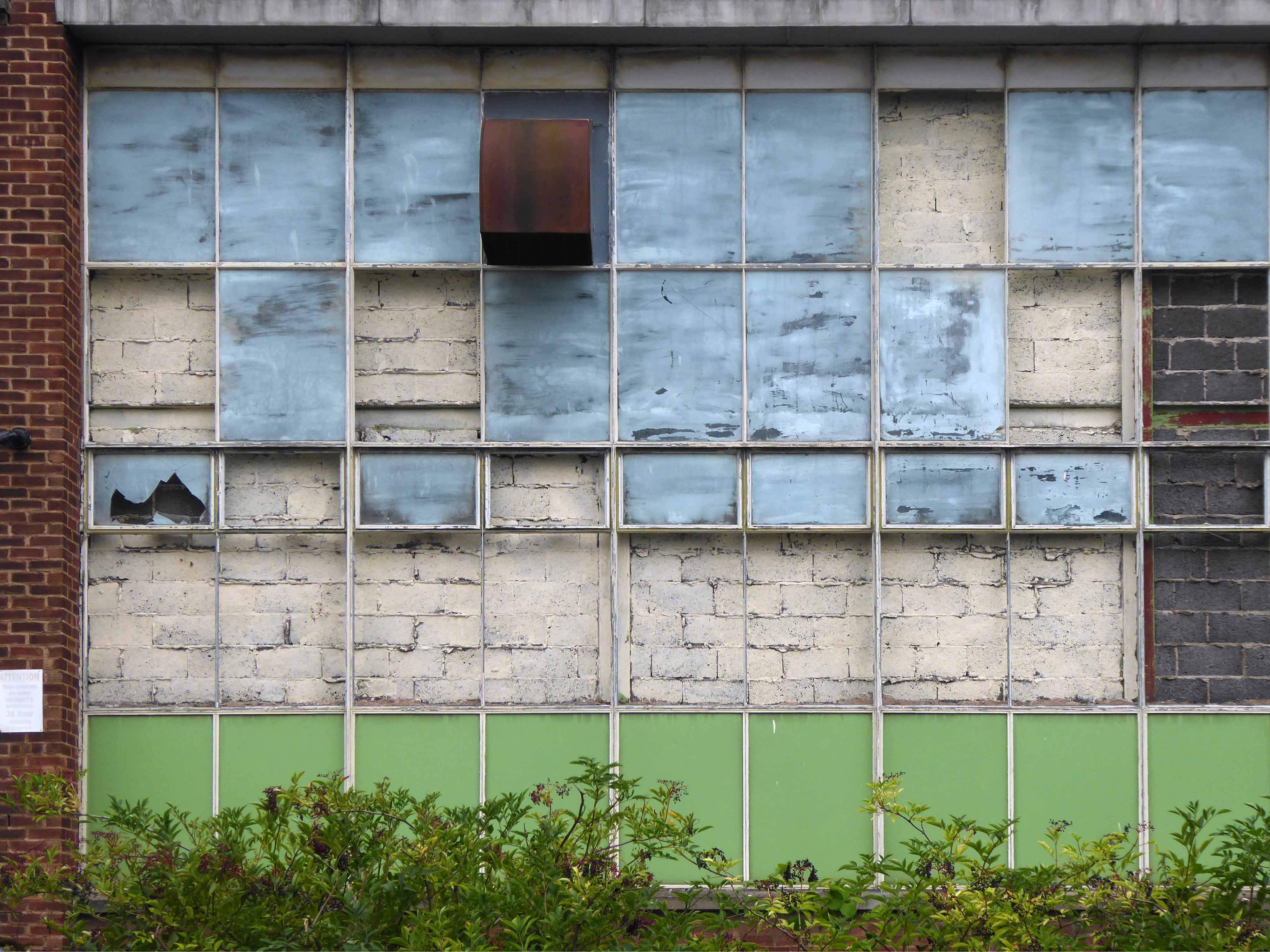
So here we are confronted with some tip top architectural type high atop the low-rise industrial facility.

What’s more there is a panel of ceramic tiles many with a pronounced profile in relief – a fugue in lemon, grey and a deep Prussian Blue.

No reference to the manufacturer or date online sadly, suffice to say that they are truly enchanting – look!

Rotherham Underpass #3

First there was the first, then secondly the second – this is the third and last underpass.

A fitting finish to the series as we pass through the final subterranean frontier out into the clear light of the South Yorkshire day.

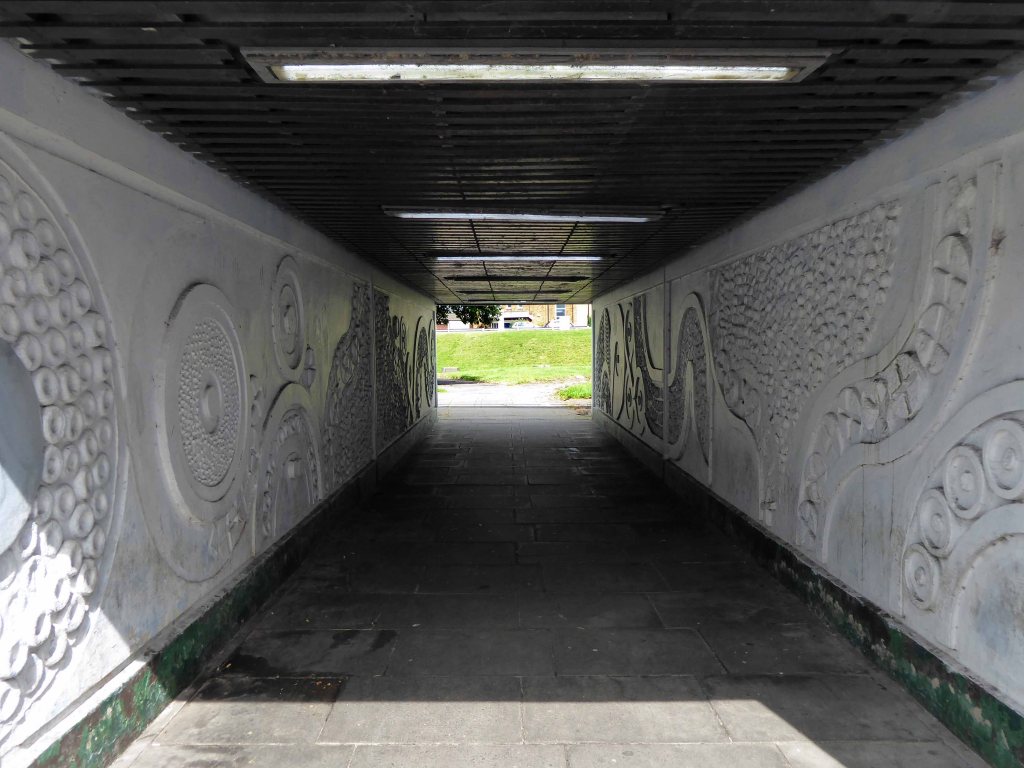
Each one is a neglected gem of municipal modernism, the underpass a feature under threat, the pedestrian often subsumed by the drive to accommodate the motor car.

As of last Wednesday, we all seem to have tenuously hung on in there.

Oh we’ll hear the thunder roar, feel the lightning strike.
At a point we’ll both decide to meet at the same time tonight
.

Rotherham Underpass #2

Having posted the first underpass – let’s take a look at the second.

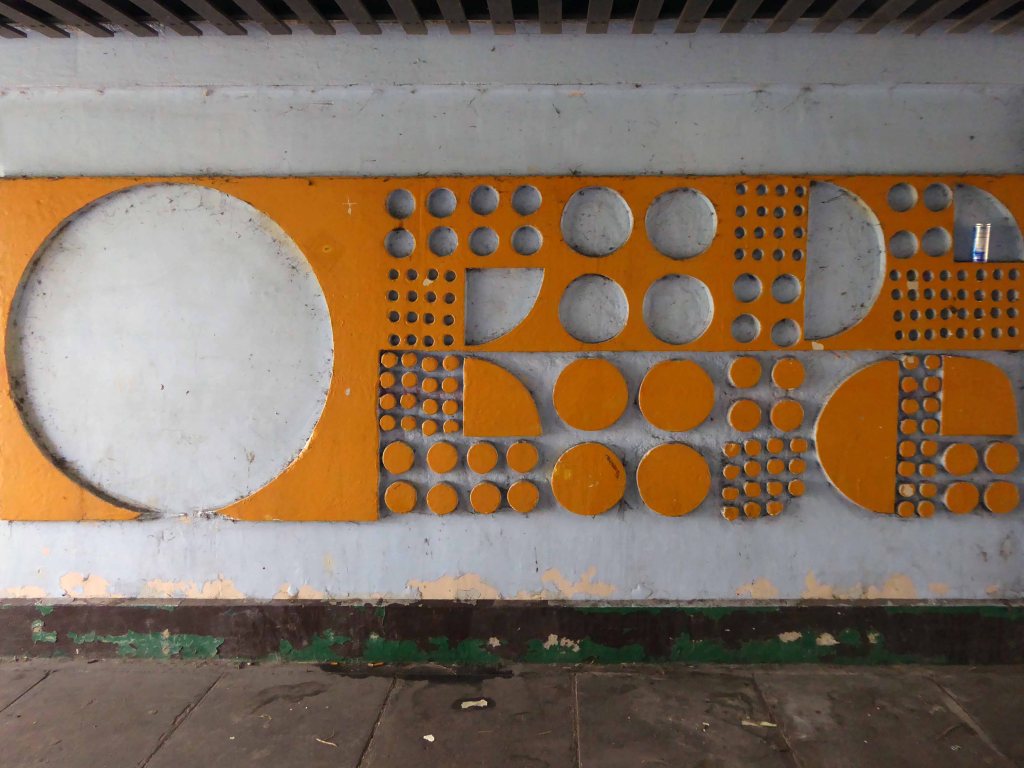
Orange on white, circles within circles squared.