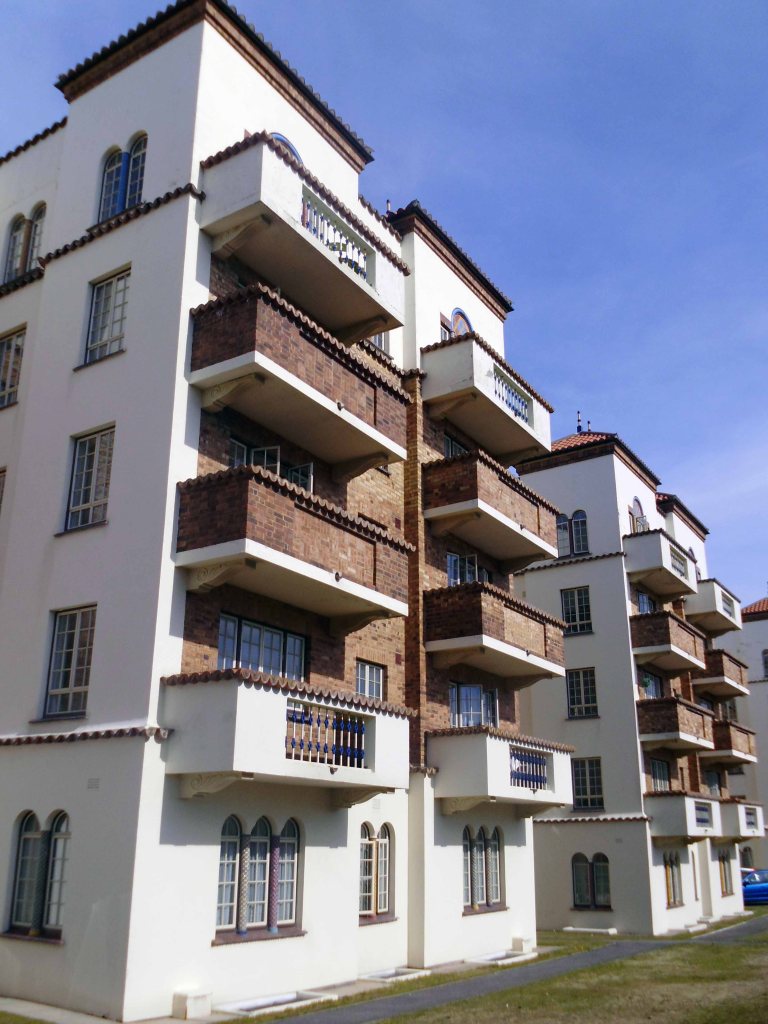
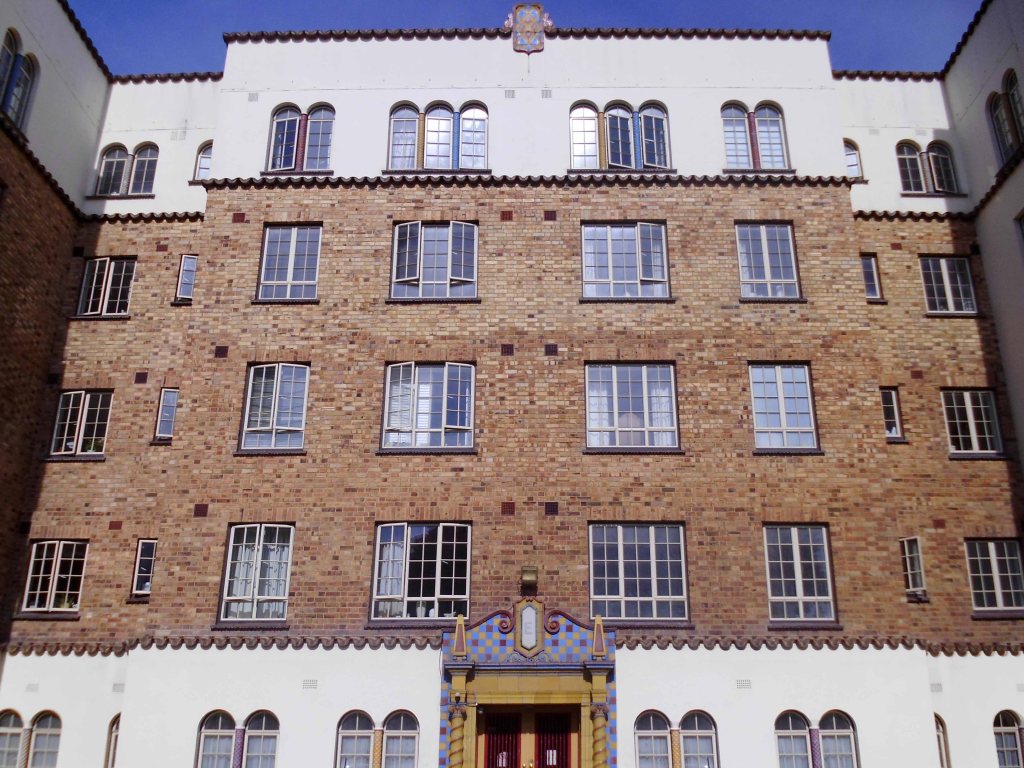
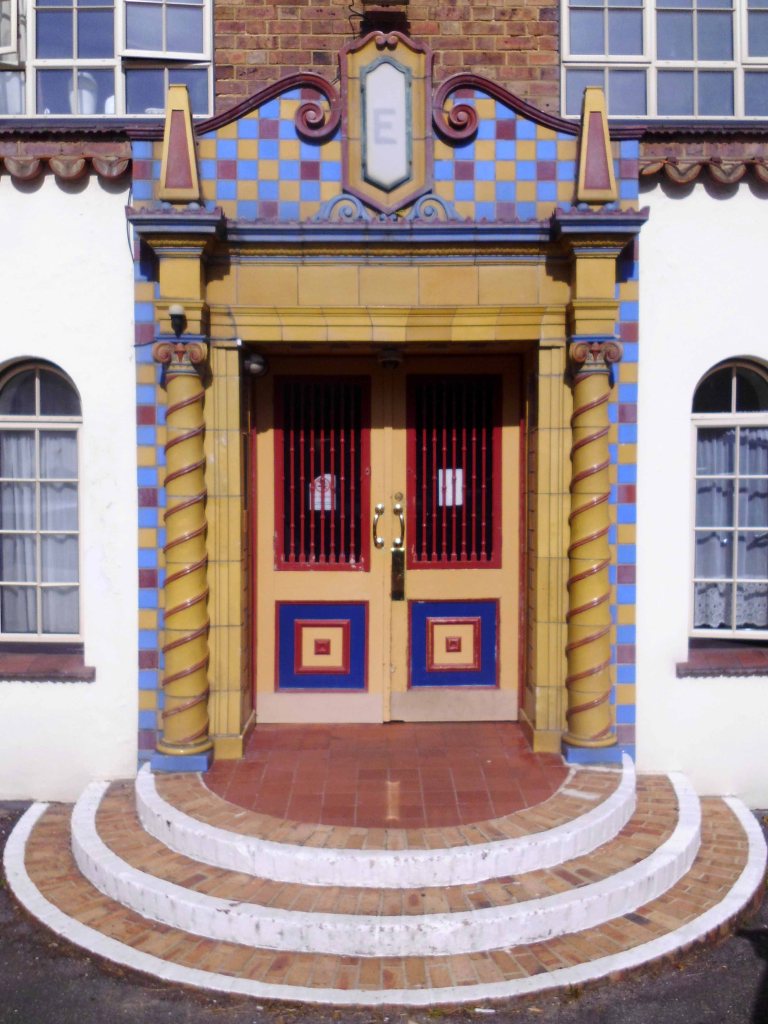
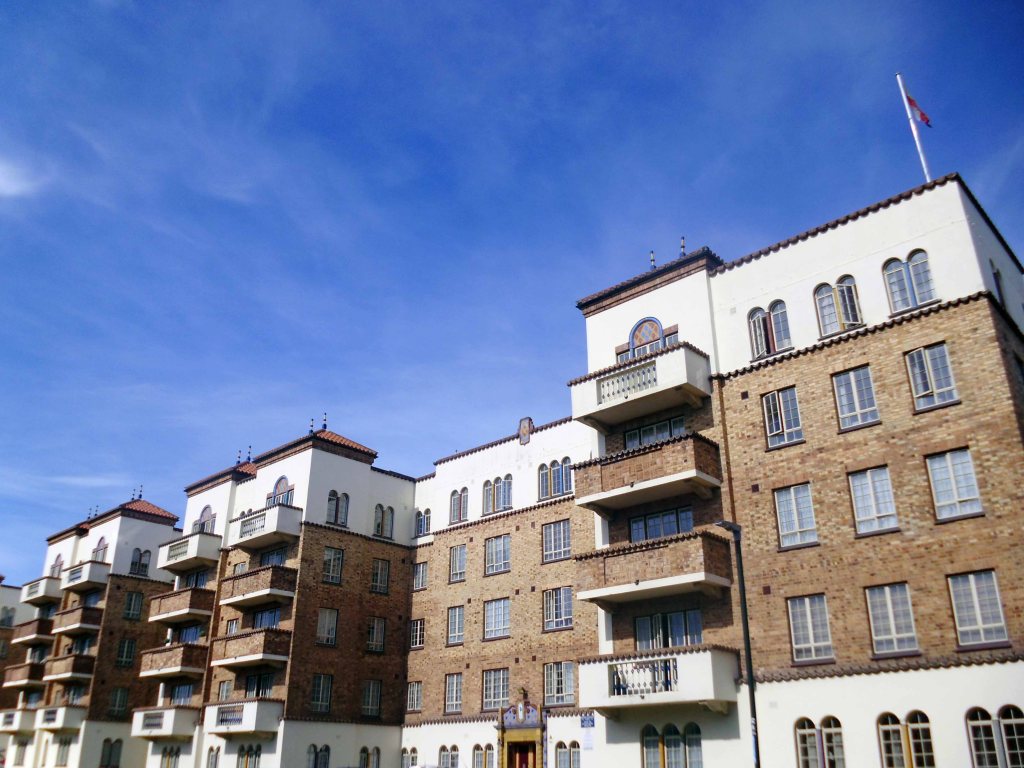
Here we are again, having posted a post way back when – on Seaside Moderne.
Where the whole tale is told – the tale of Borough Architect John Charles Robinson‘s inter-war Deco dream tempered by Municipal Classicism. A stretch of Pulhamite artificial rock cliffs 100ft high between the new gardens and the lower promenade constructed in 1923. The lower promenade at sea level was remodelled during 1923–5 with a colonnaded middle walk.
So here we are again September 2020, a country in Covid crisis bereft of crowds.
I took a short walk along its length – to the lift and back.
The Cabin Lift is designated at Grade II for the following principal reasons: * It is a nationally rare type of seaside structure that is of interest as part of the history and development of certain seaside resorts * It is of a well-executed design and uses good-quality material to good effect that can be particularly appreciated from the upper promenade * It is a conspicuous and eye-catching structure especially when viewed to maximum effect from the lower promenade * The Cabin Lift’s architectural merit contributes significantly to Blackpool’s importance as a holiday resort of national and international renown.
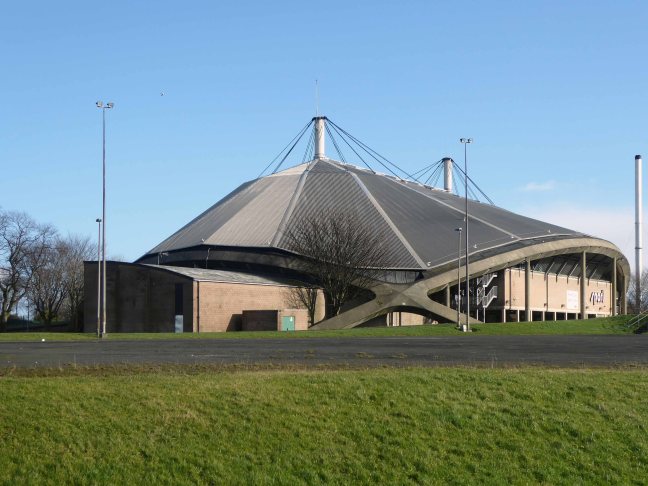
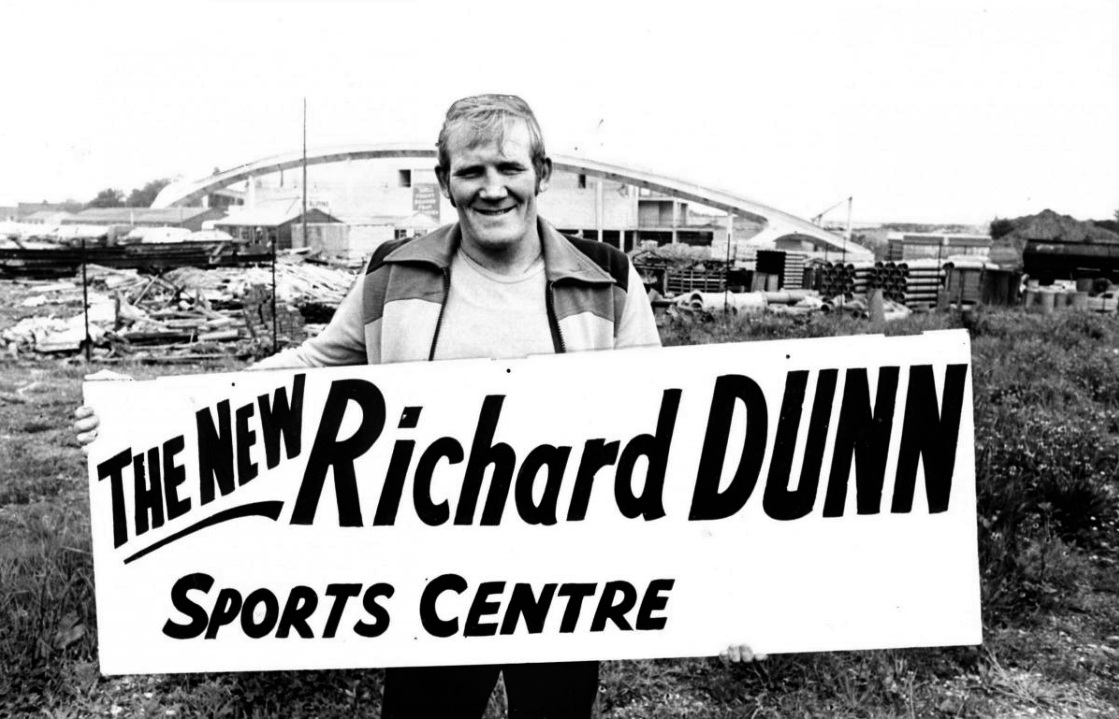
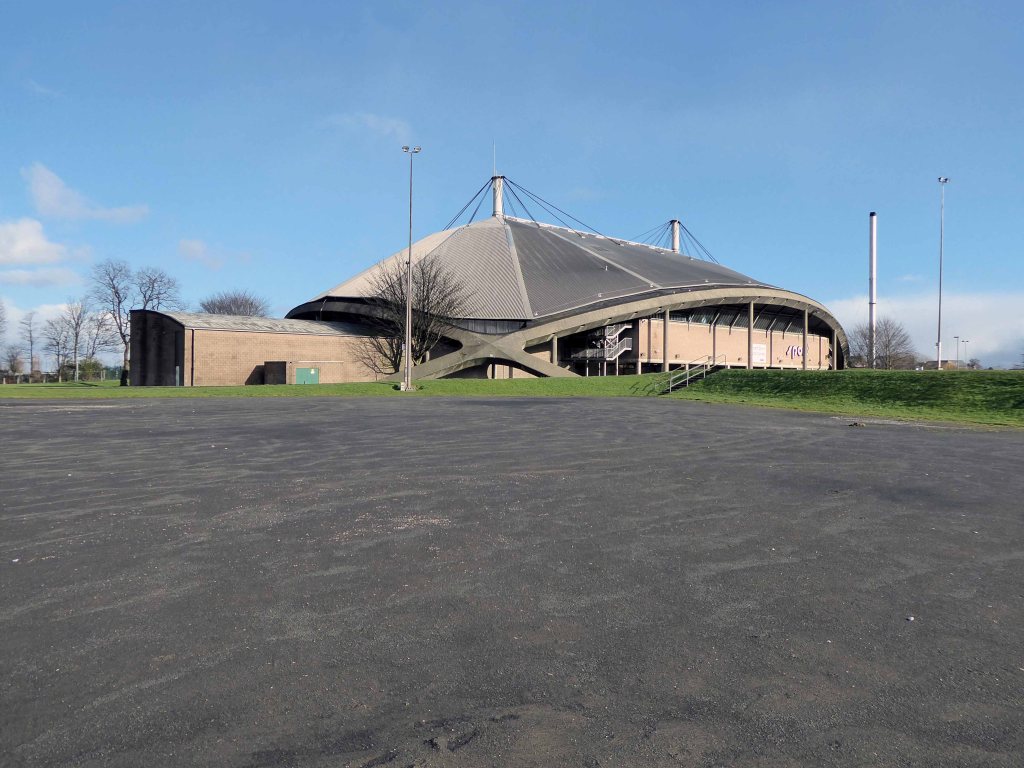
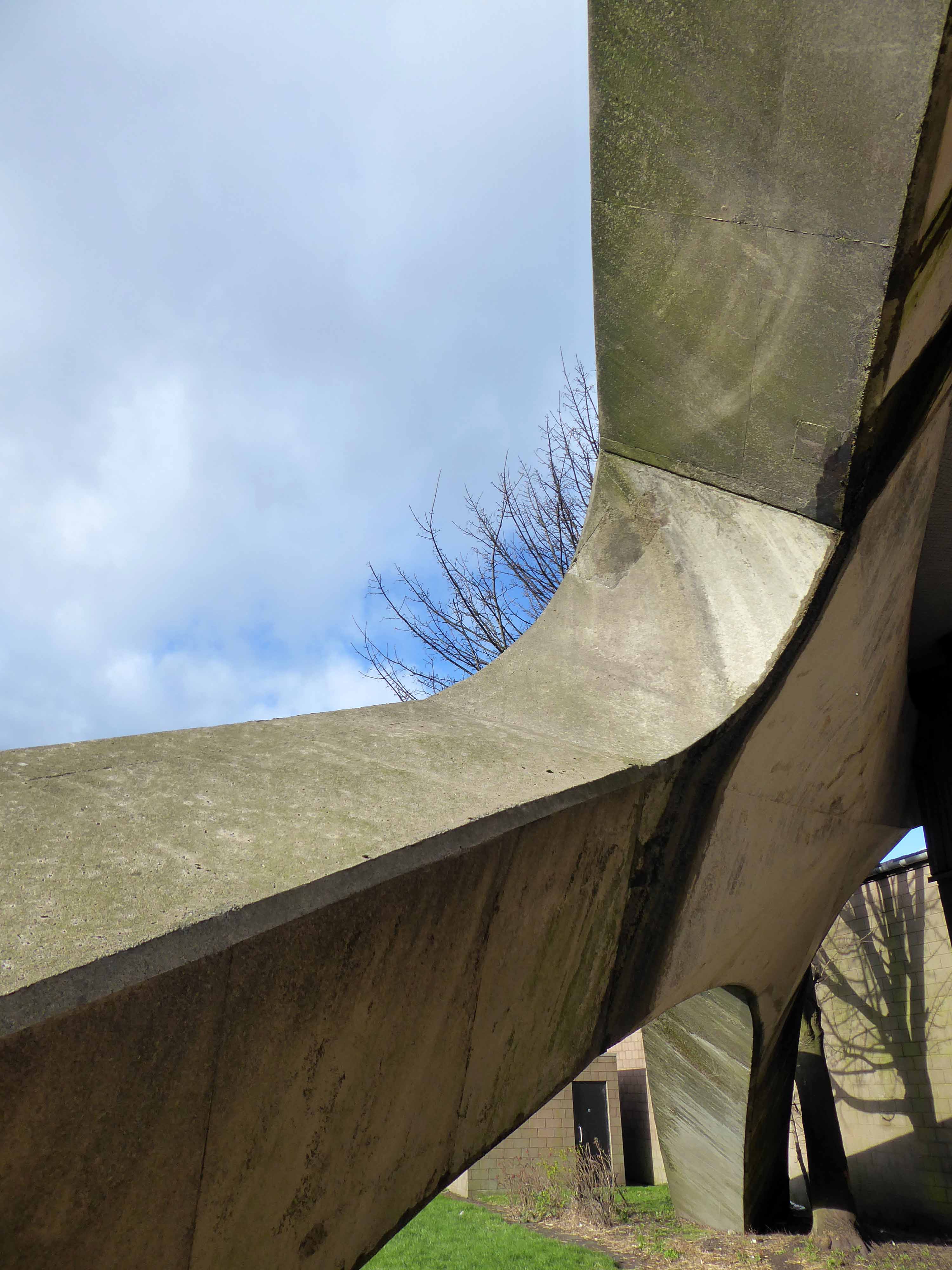
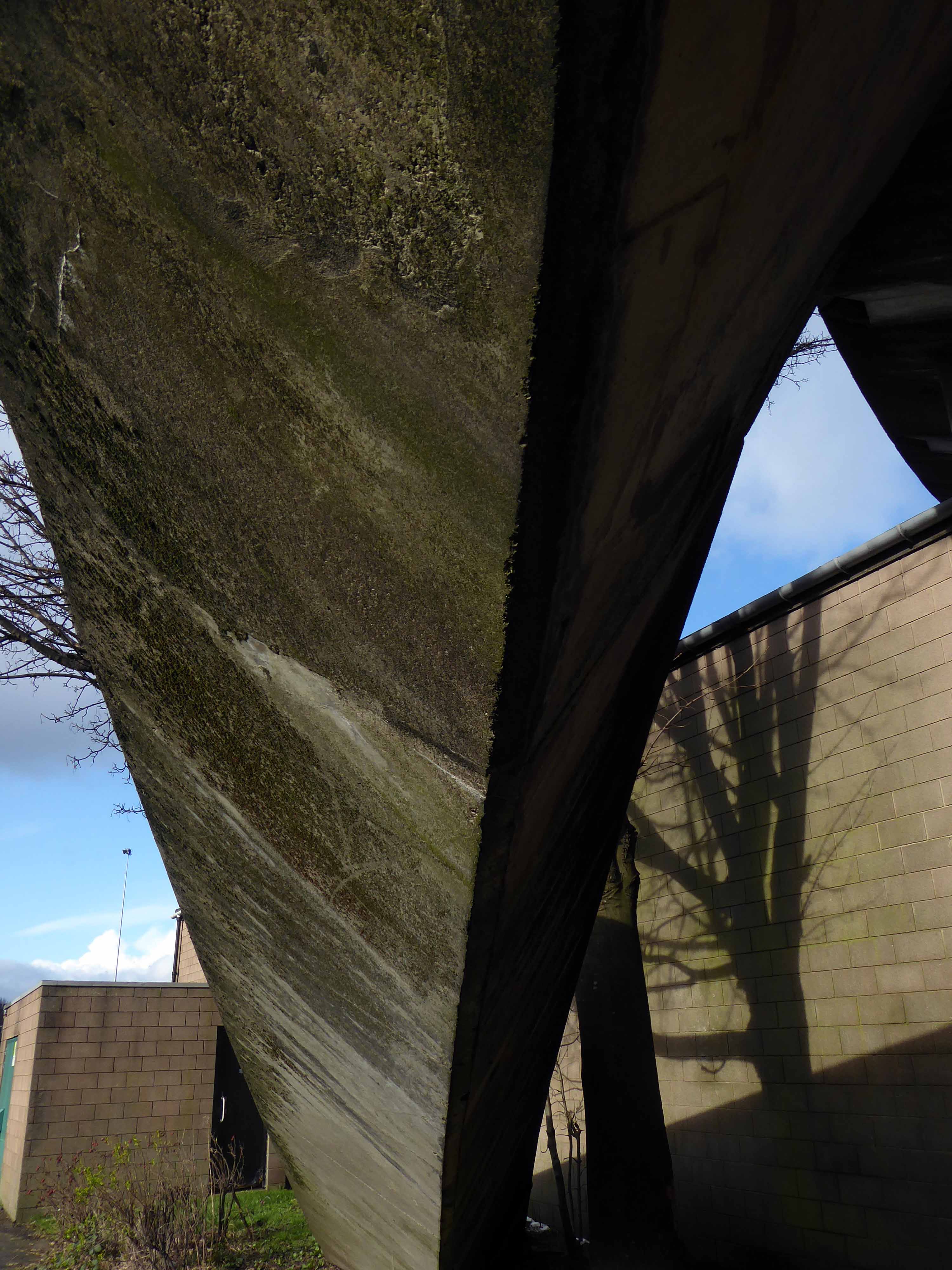
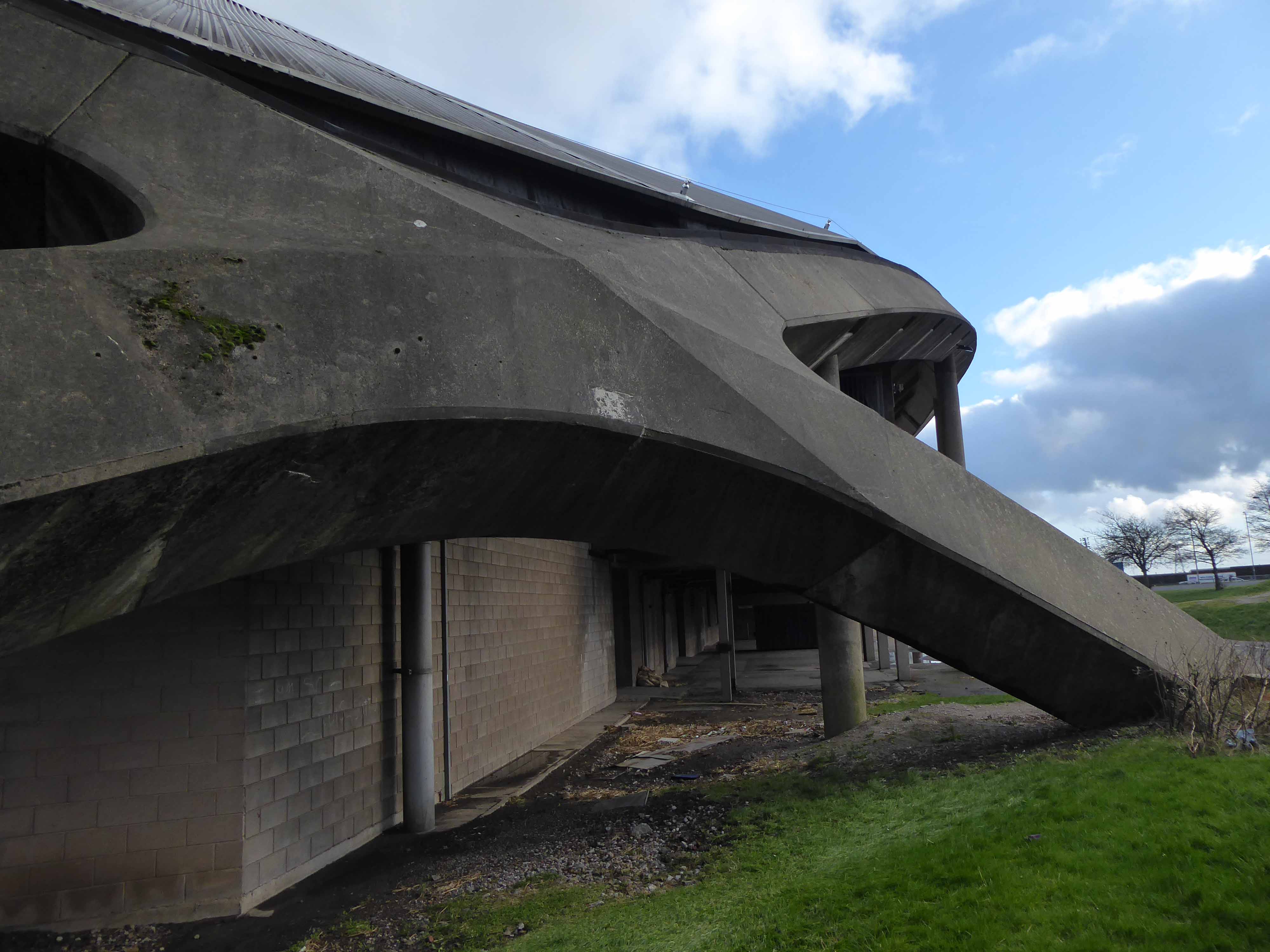
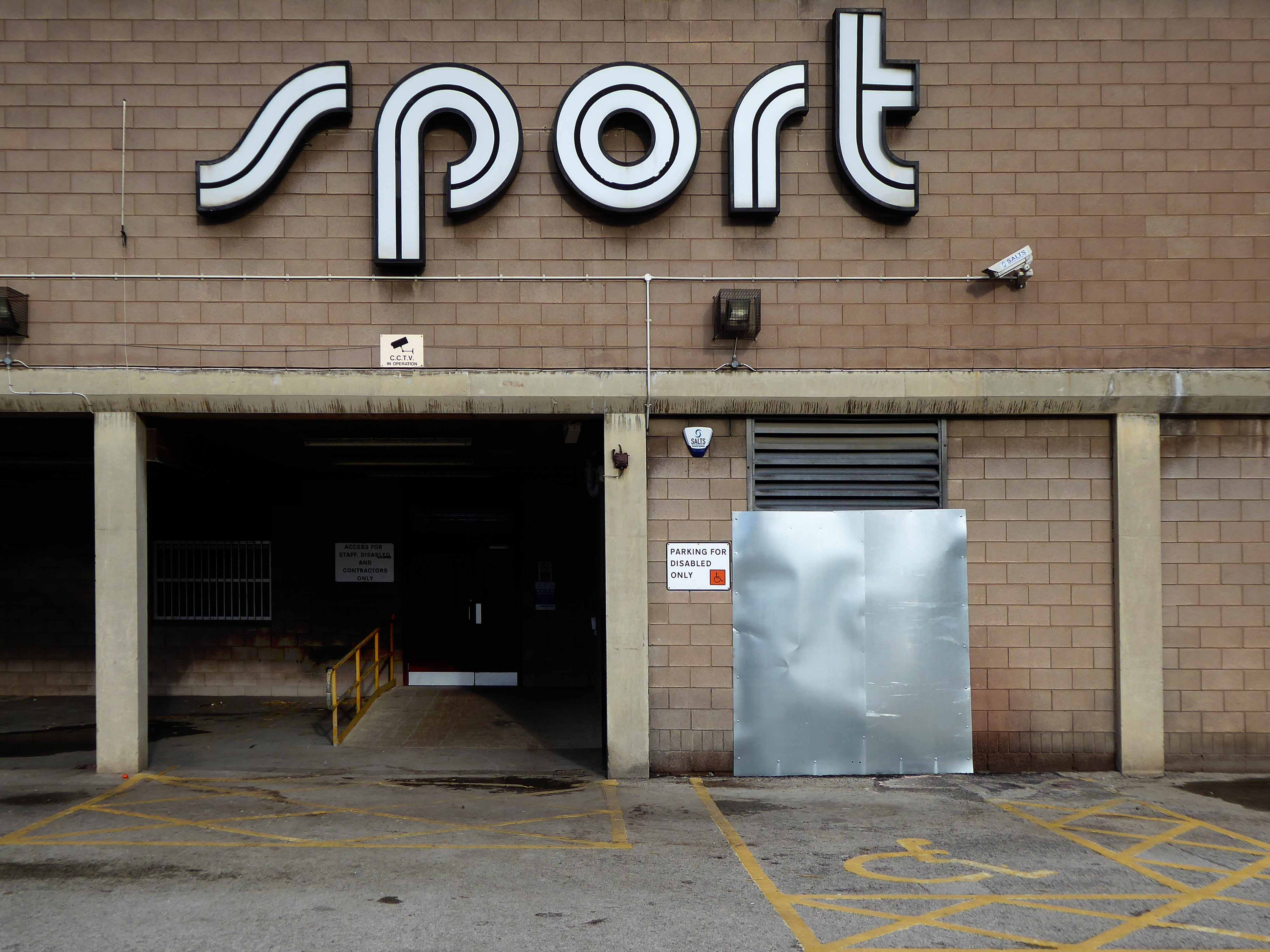
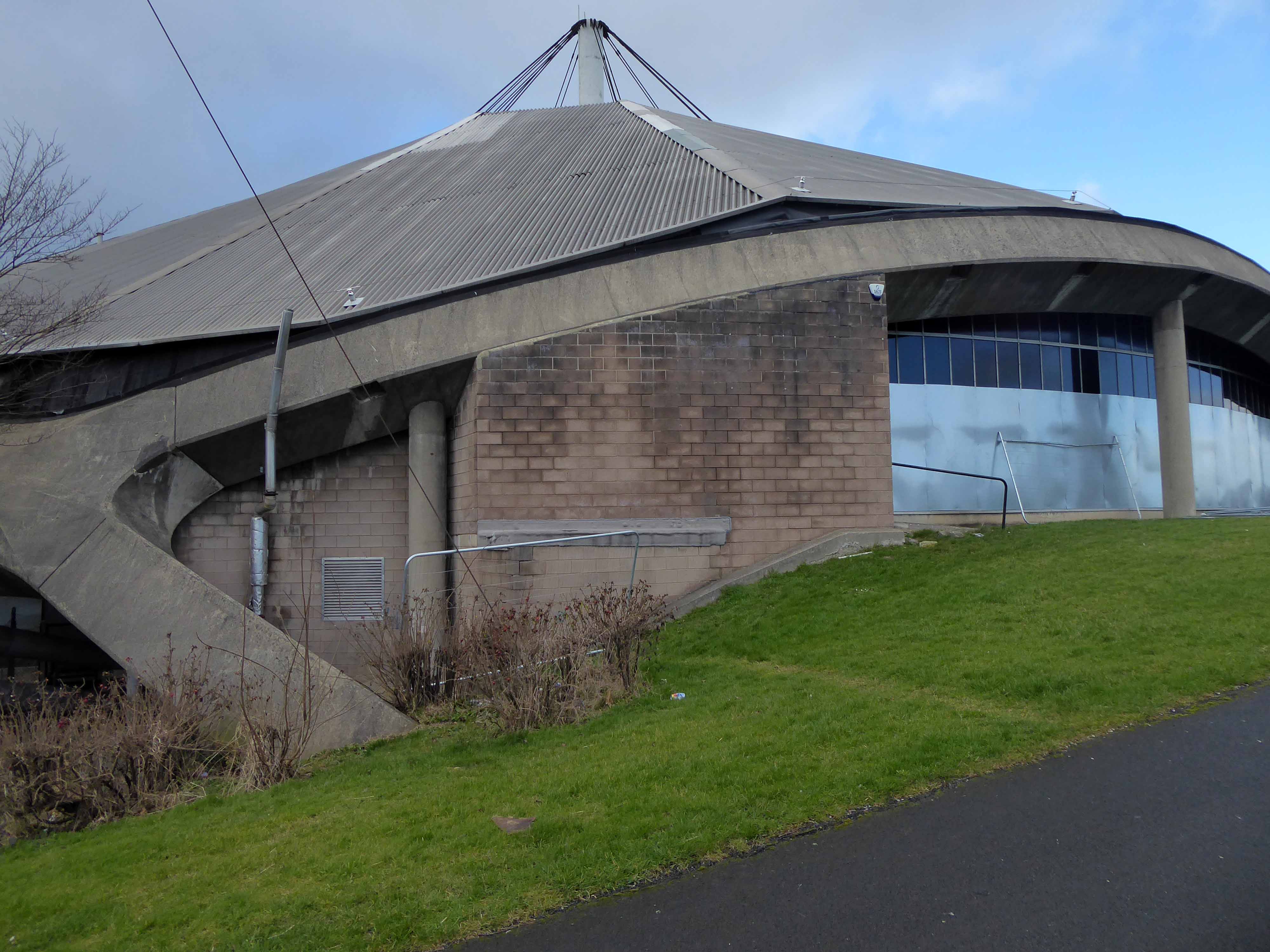
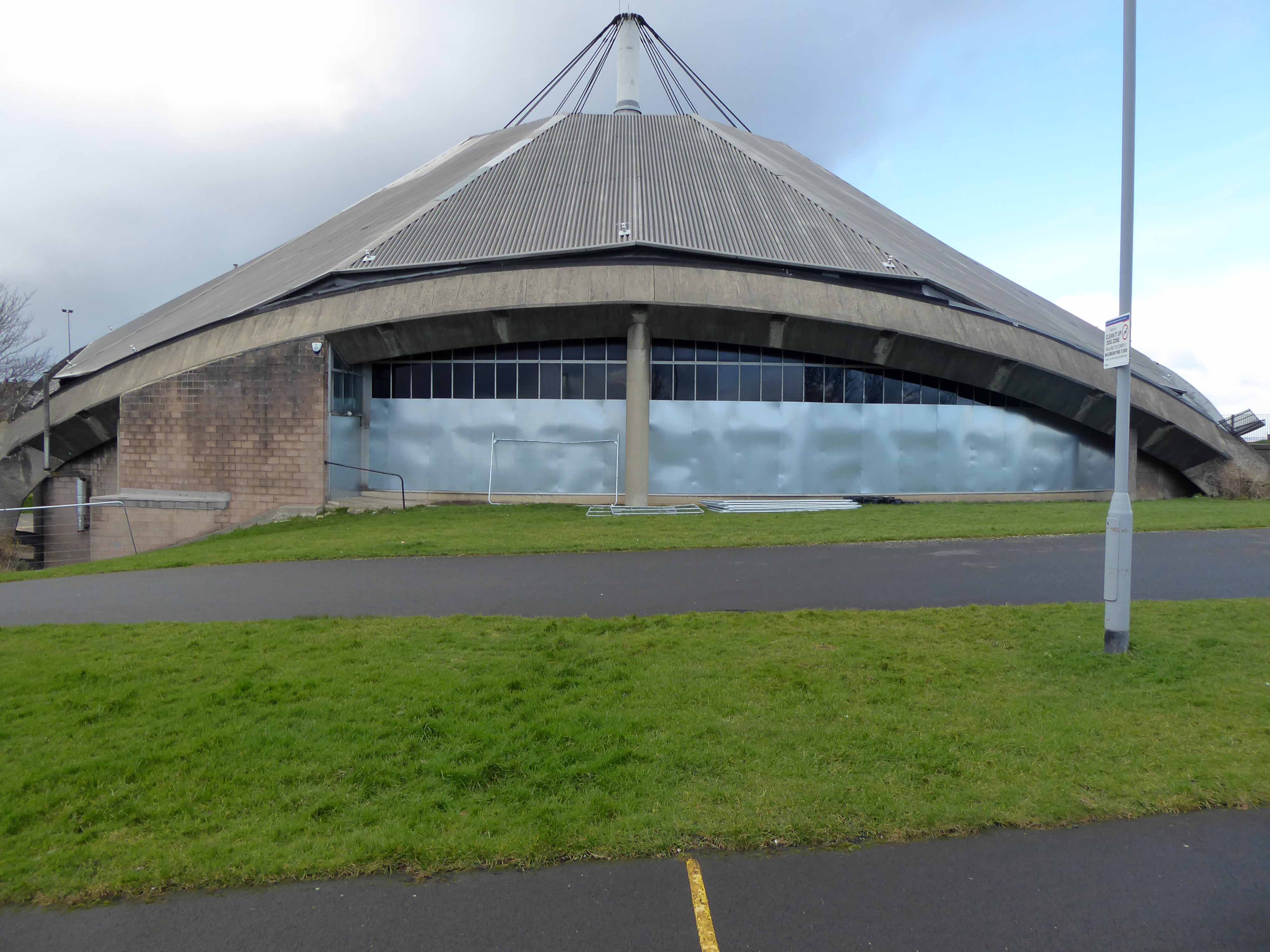
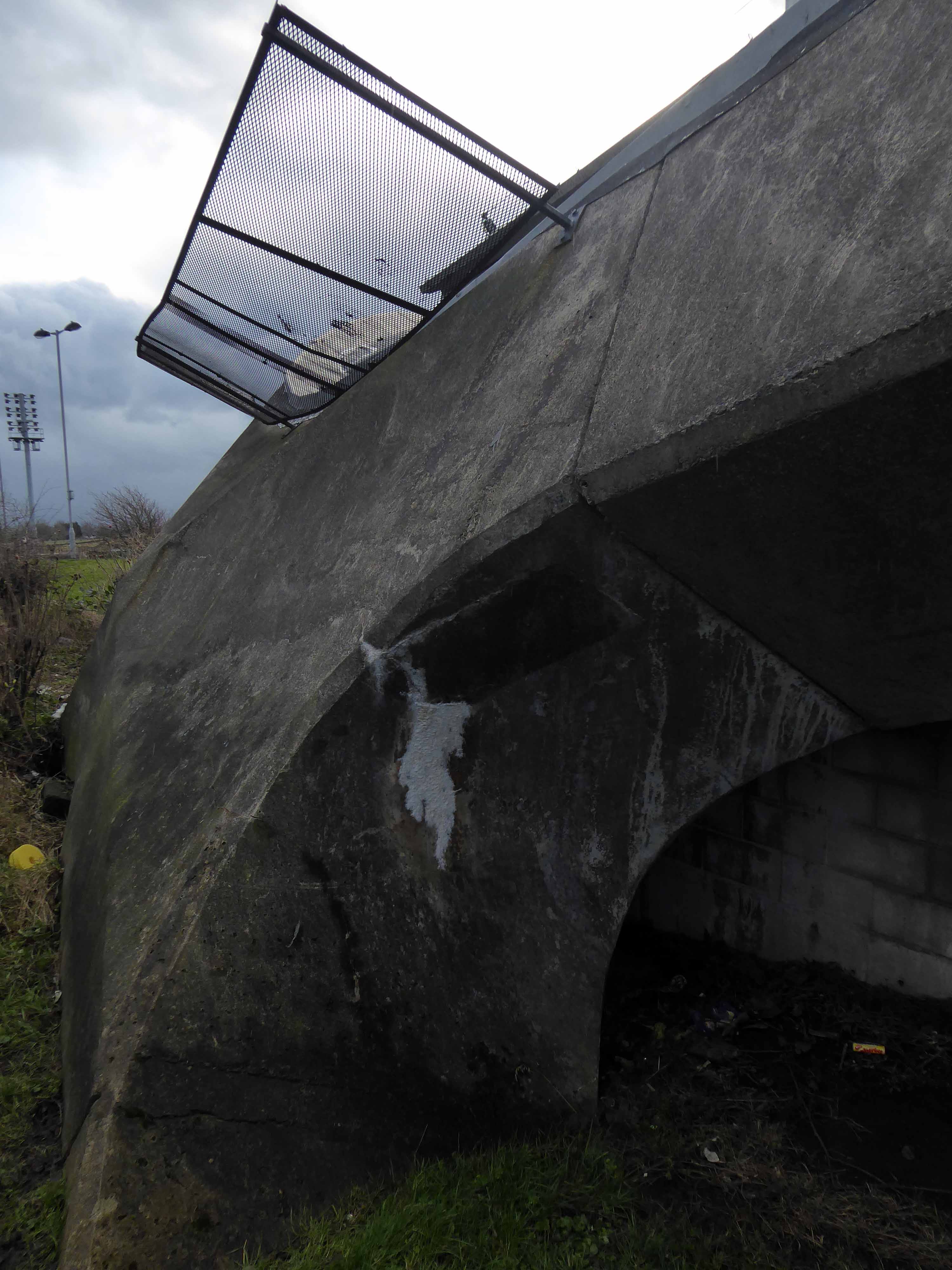
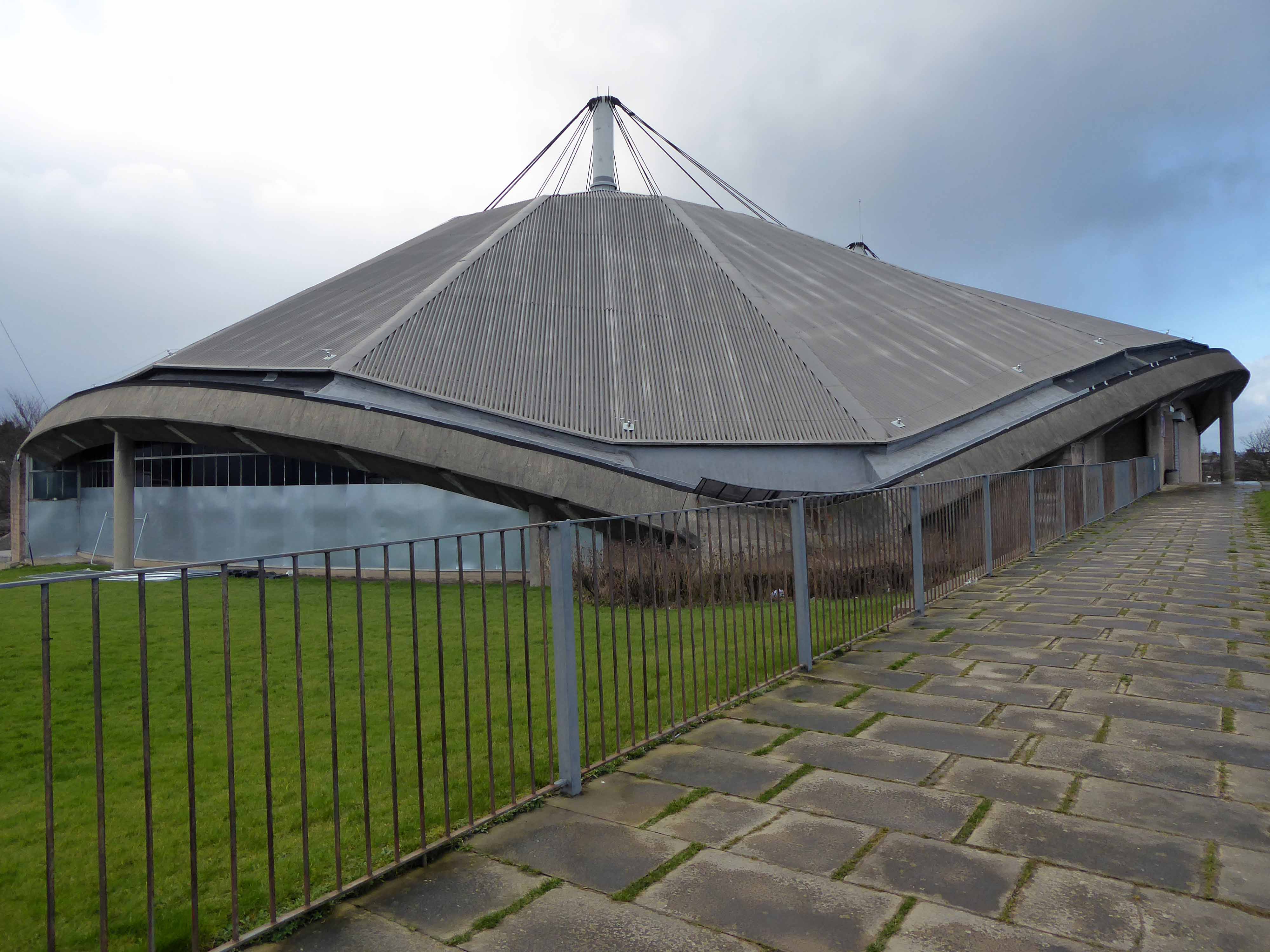
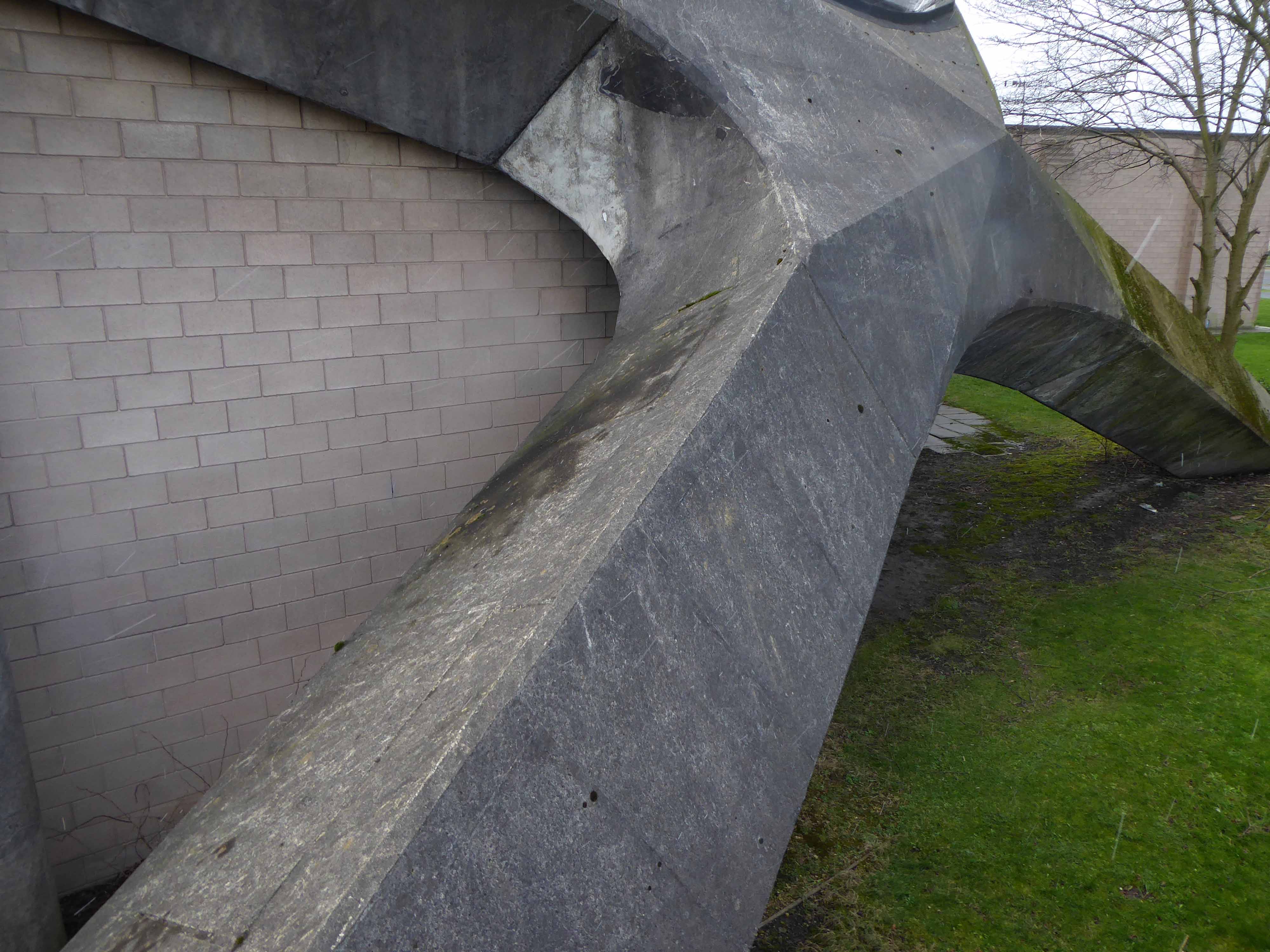
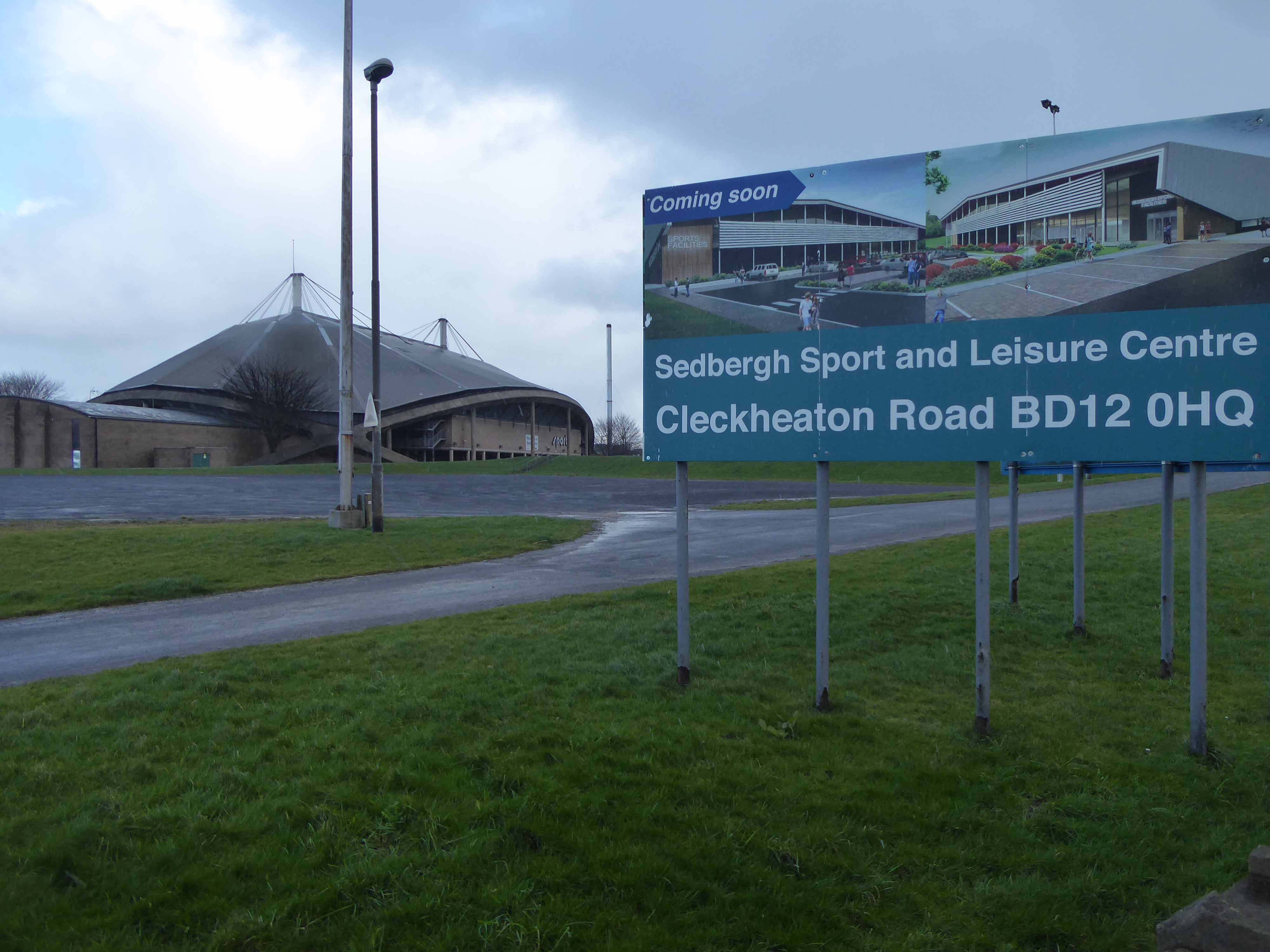
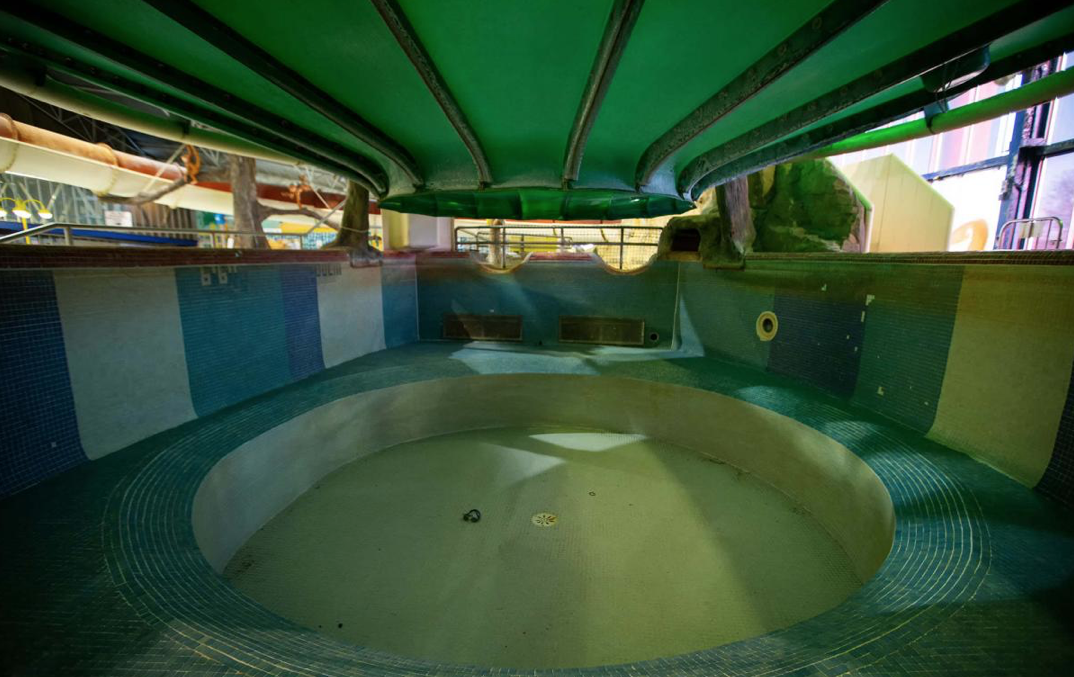
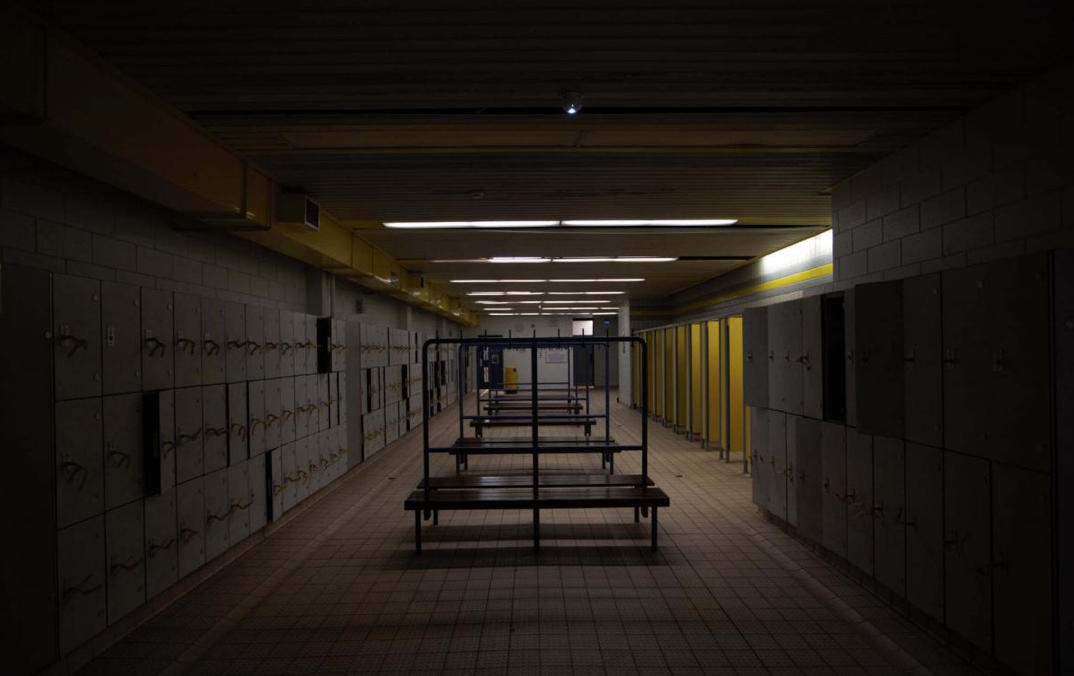
Named for local lad pugilist Richard Dunn, the ambitious imagining of architect Gordon Elliott – the sports centre opened in 1978.
The Richard Dunn Sports Centre, originally Odsal Sports Centre, was designed by myself Trevor Skempton, as part of a team in the office of Owen Perry, Bradford City Architect until 1974.
Gordon Elliot then took over; as Chief Architect for the Met District, after the construction contract had been let.
Comprising pools, sports hall, dance studio, sauna, gym and ancillary facilities the centre was certainly state of the art.
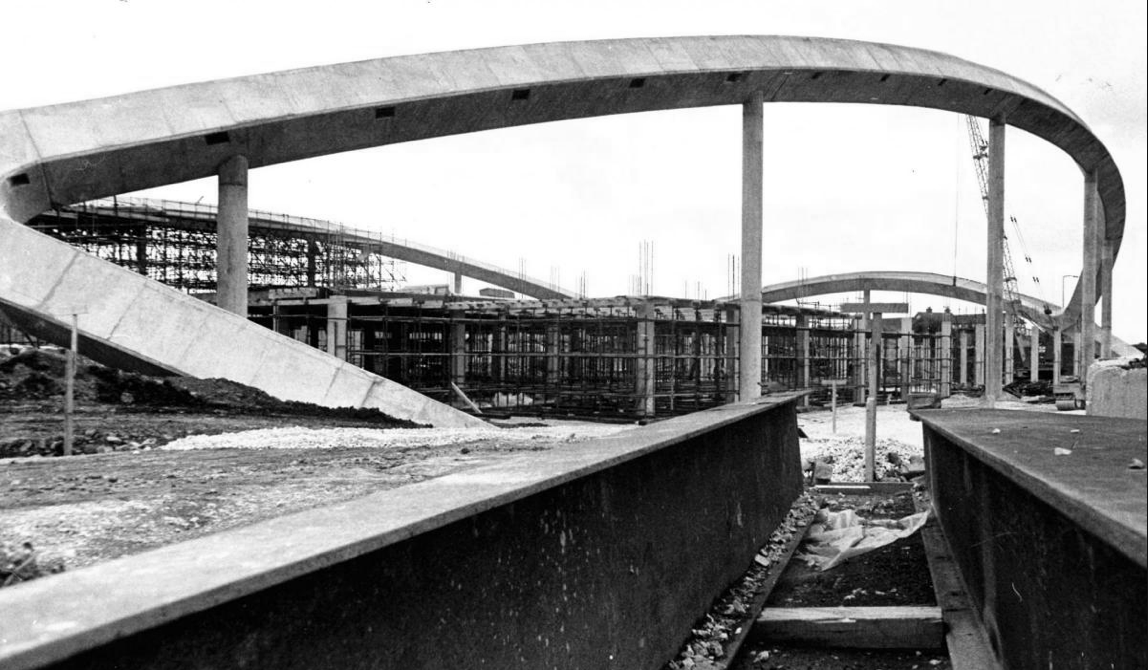
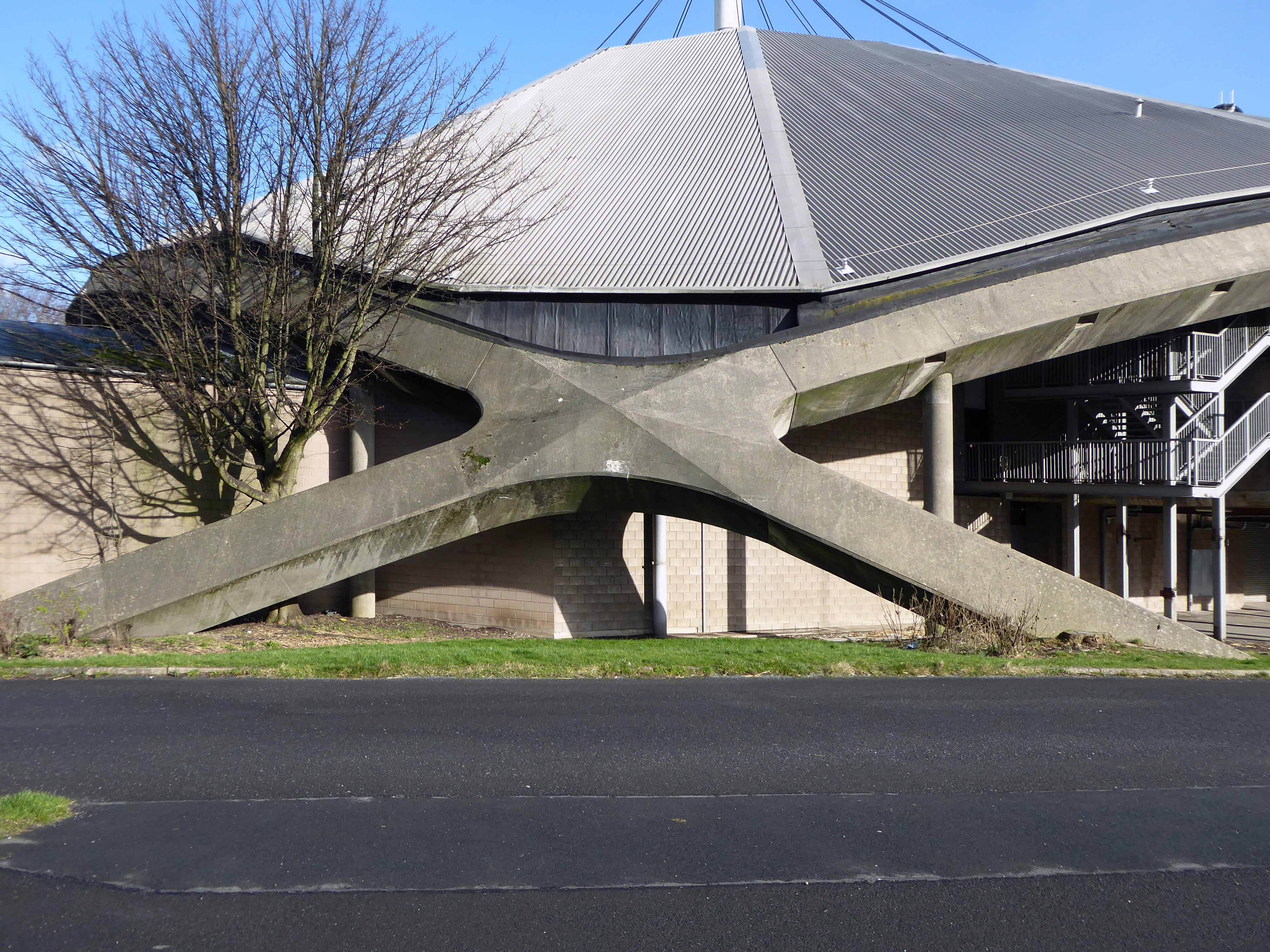
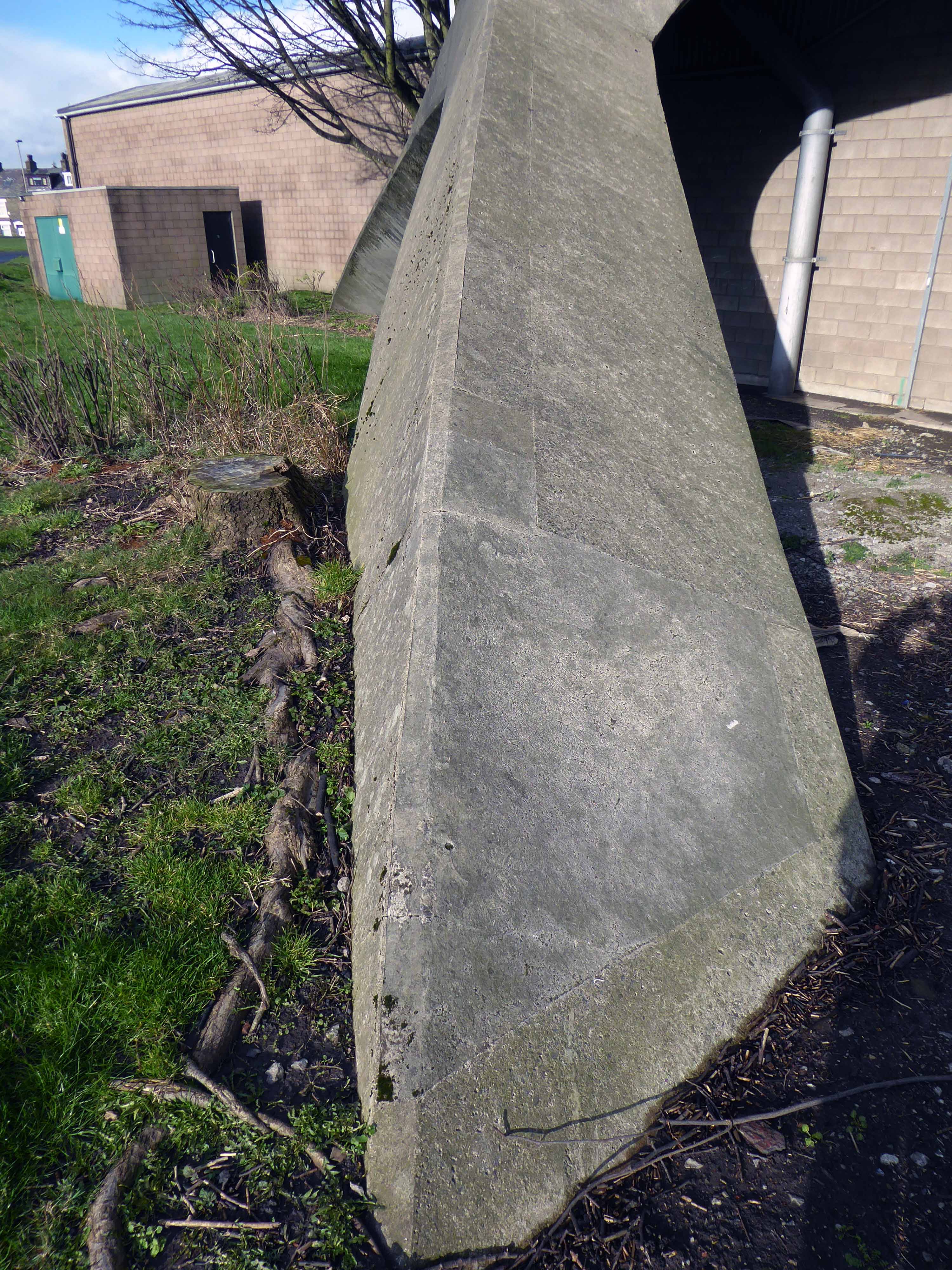
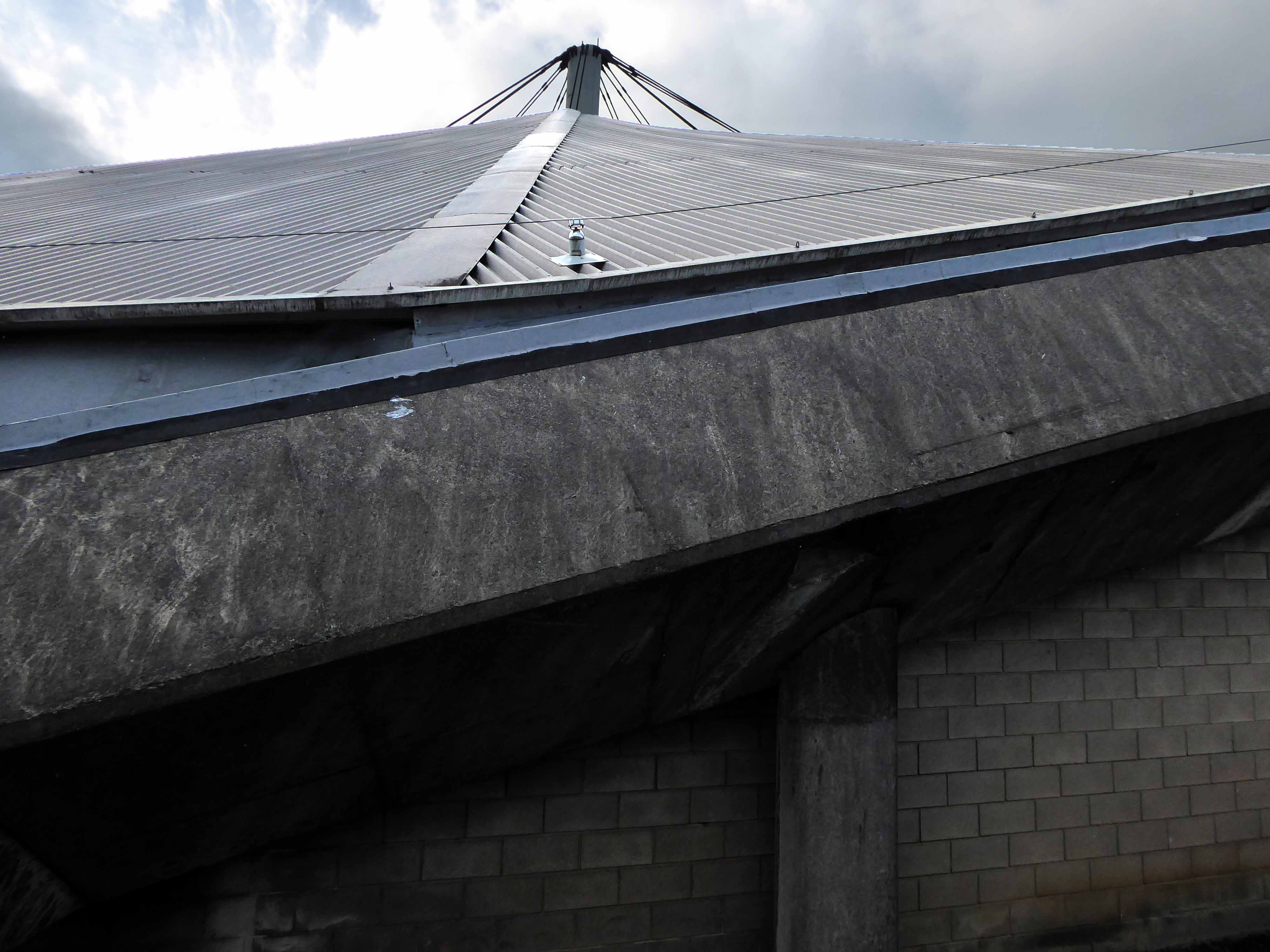
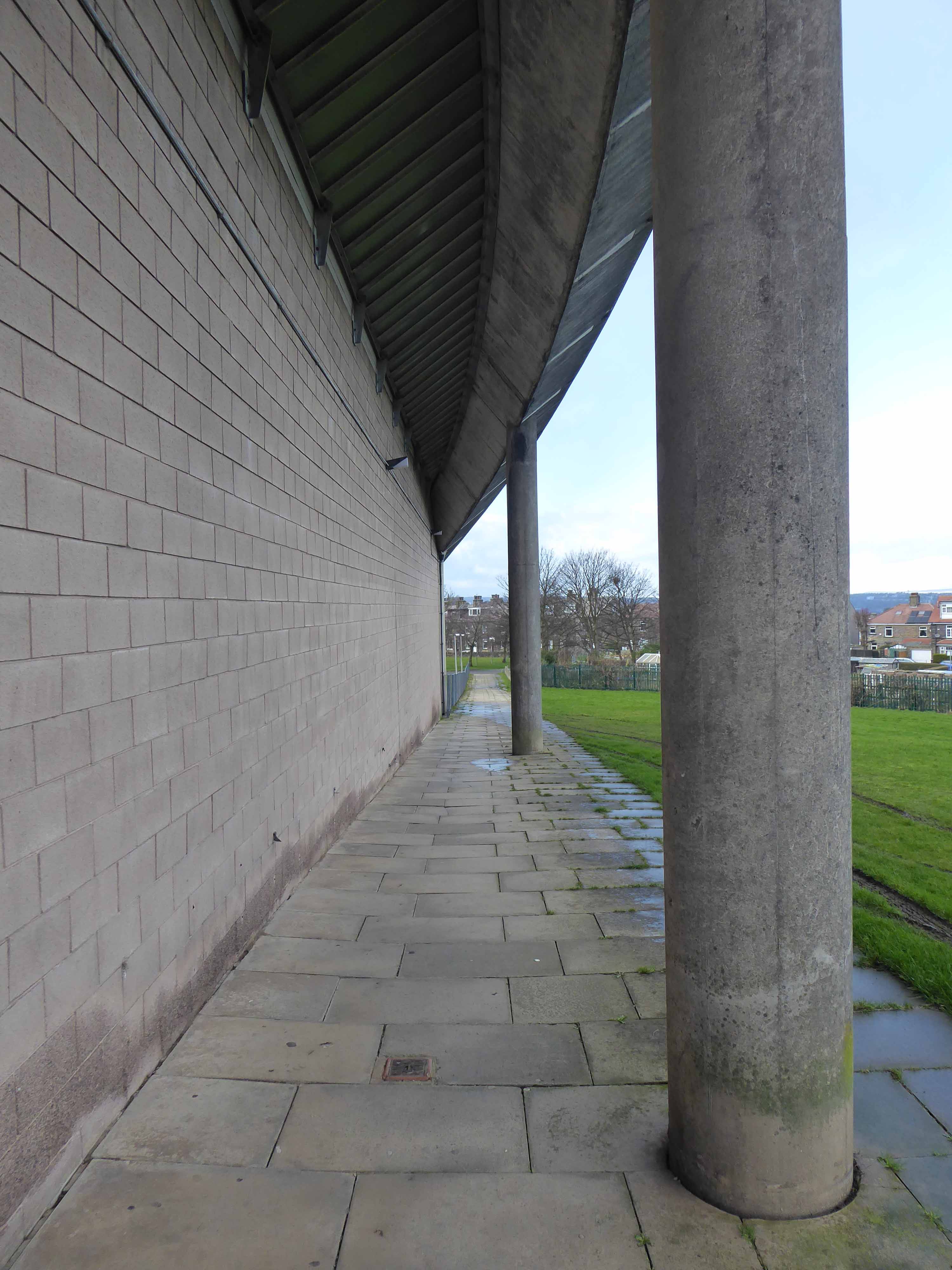
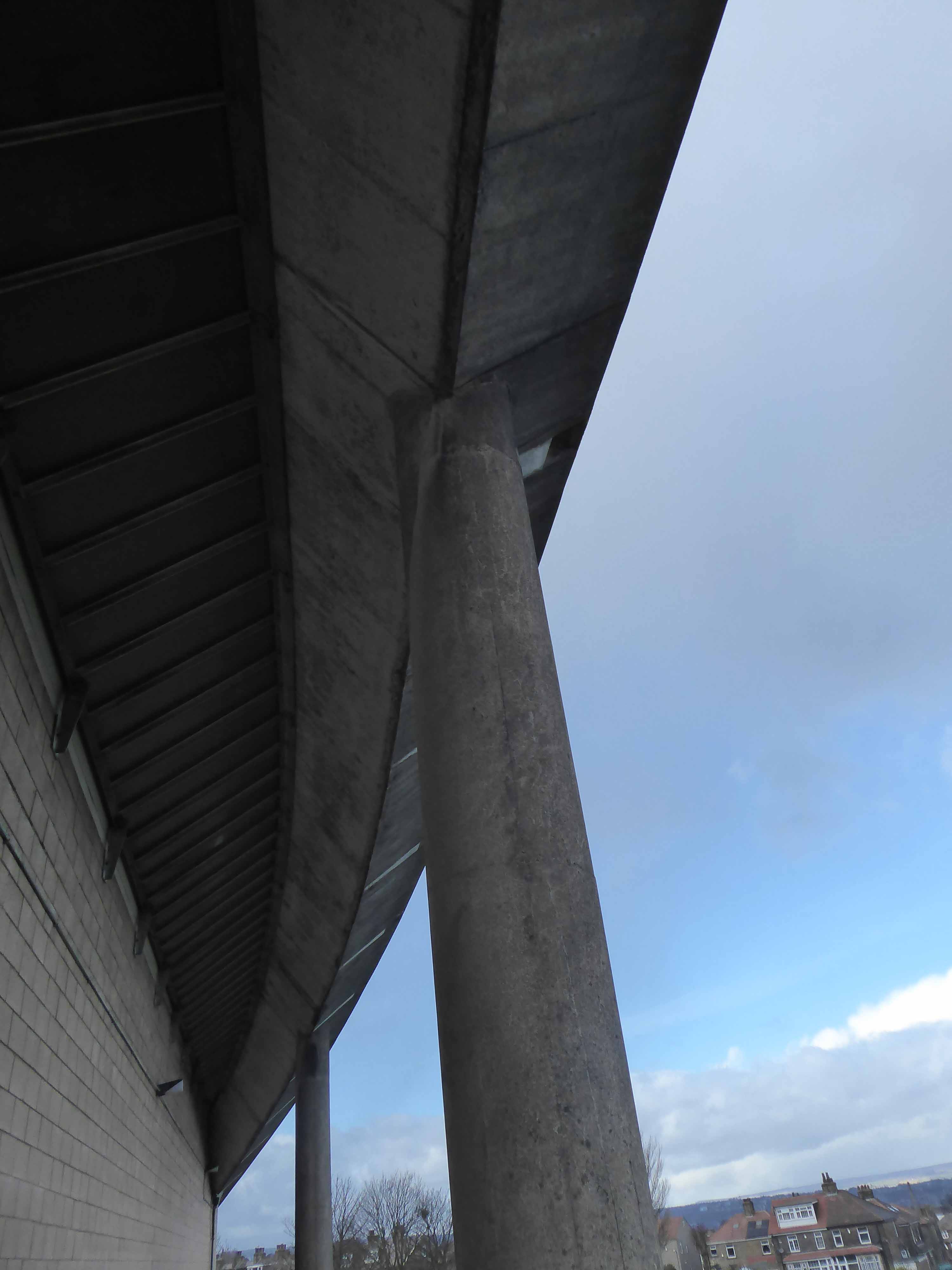
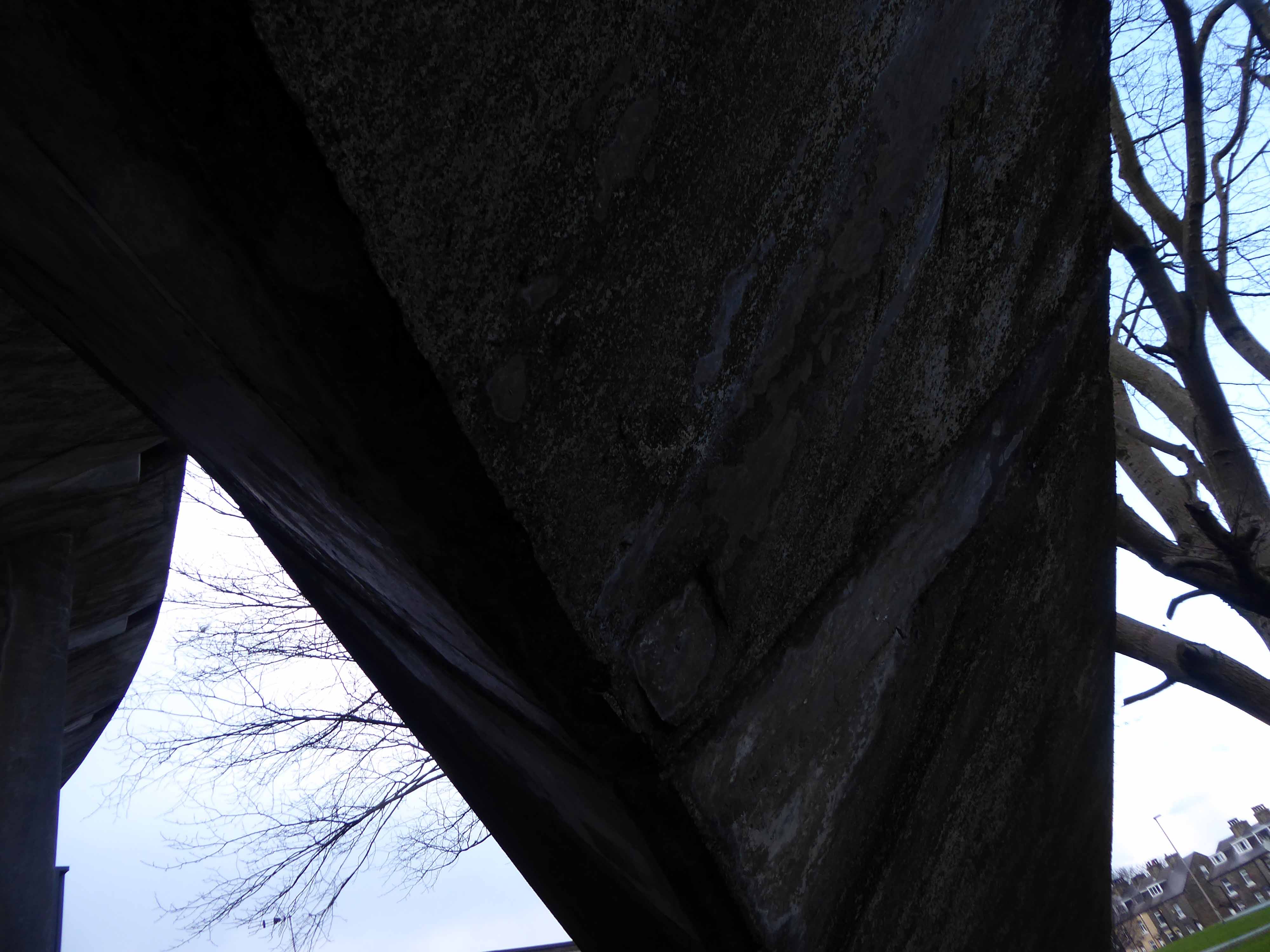
Sweeping interlocking arcs of concrete, were at the heart of the structure.
Topped out with a suspended canopy.
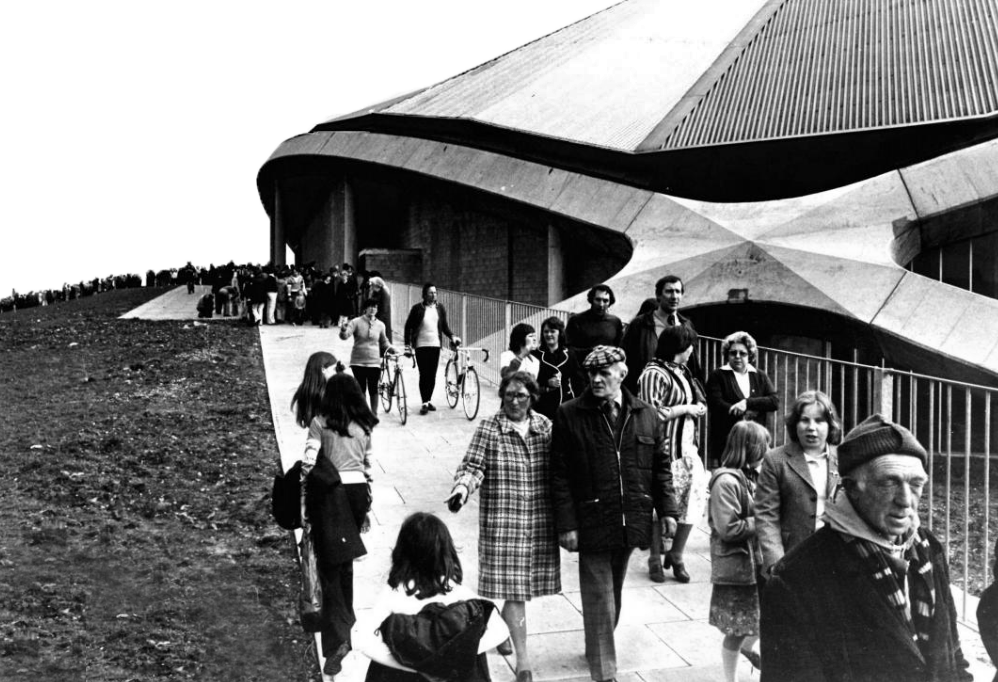
Attracting huge crowds on the occasion of its opening.
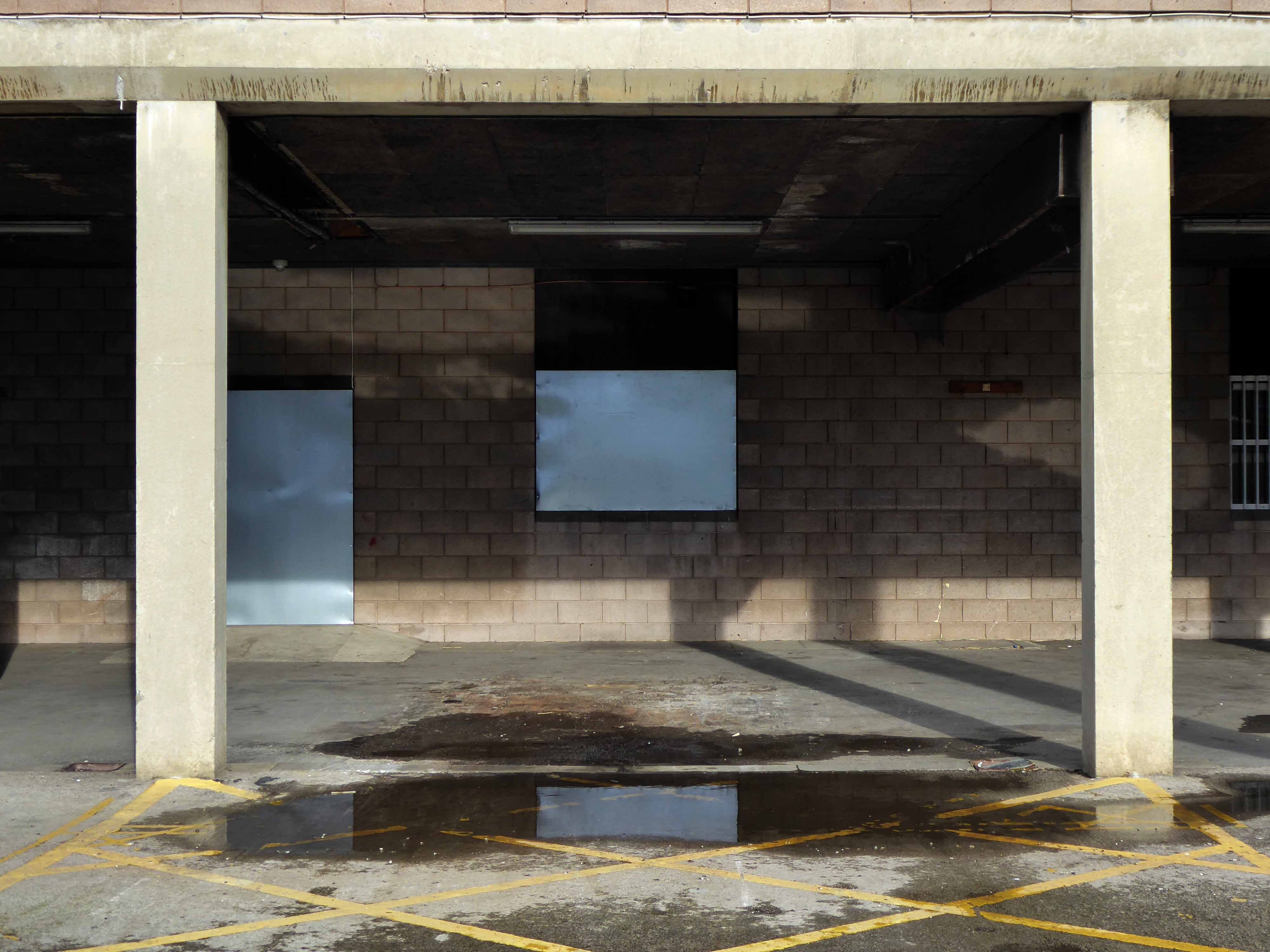
It’s remarkable – here are my photographs from February 2020.
I advise you to get along and take a look, just as soon as humanly possible.
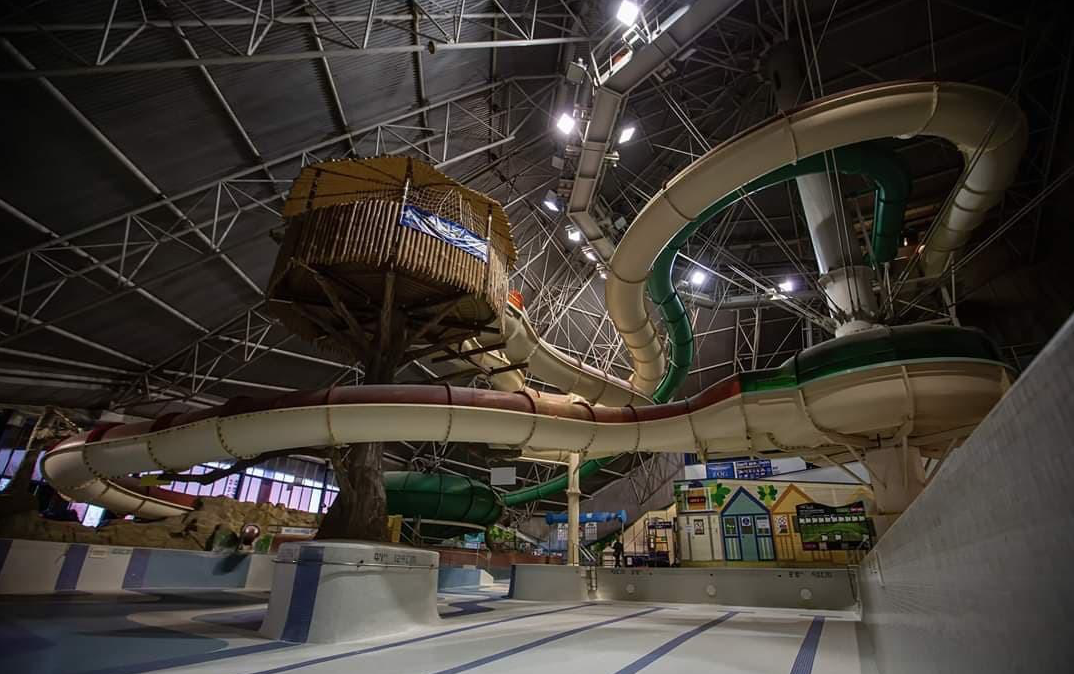
Recently John Mann was granted permission to snap the deserted interior.
The ghostly gasps of the exercising public exorcised forever.
Eileen Ayres, who has worked at Richard Dunns from before it even opened to the public said:
When I came here this place was super, super modern – state of the art. Now we’re moving to Sedbergh it is great to be in a state of the art facility again. The younger staff are so excited about the move to a new, modern sports centre.
I have a lot of memories of here, a lot of staff I’ve met and become friends with over the years. We’ve had a lot of events here, international events that have taken place here over the years. When Richard Dunn was new a lot of people wanted to hold these events here. Now we have a new leisure centre I hope some of these events come back to Bradford.
I started at 23, I said I was just coming for a year. Here we are 41 years later.
When asked if she thinks it is right to be closing down Richard Dunn she said:
In my heart no, but realistically it has to go. It is run down – it would be way too expensive to run or refurbish. You can’t keep putting money into old things.
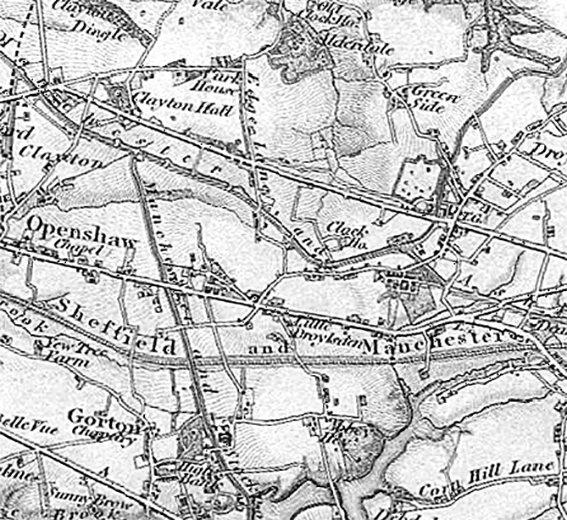
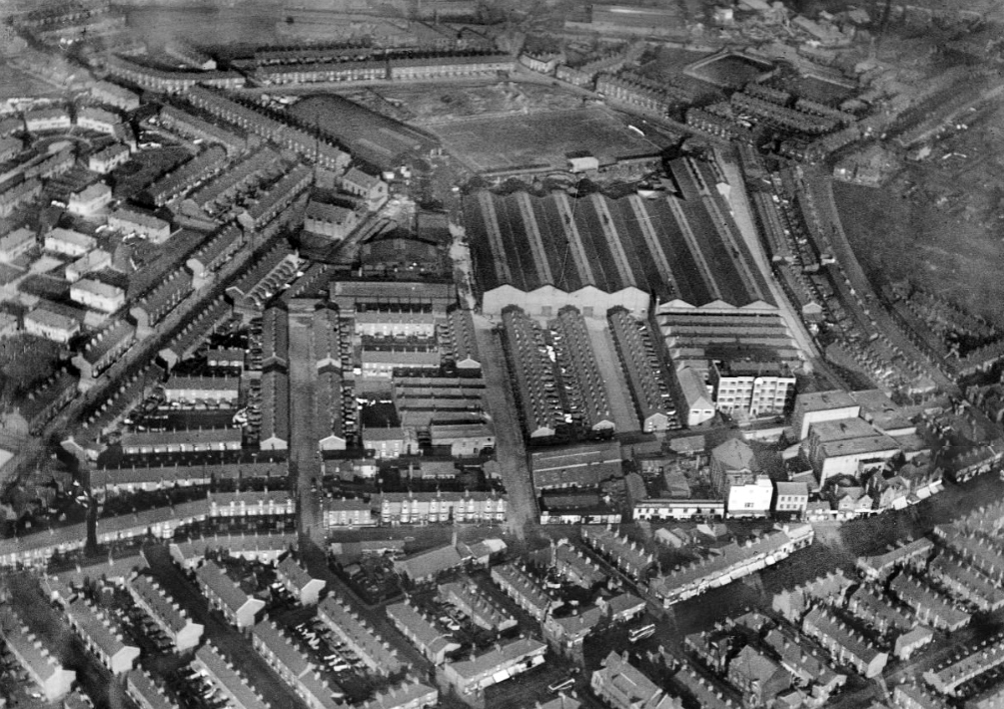
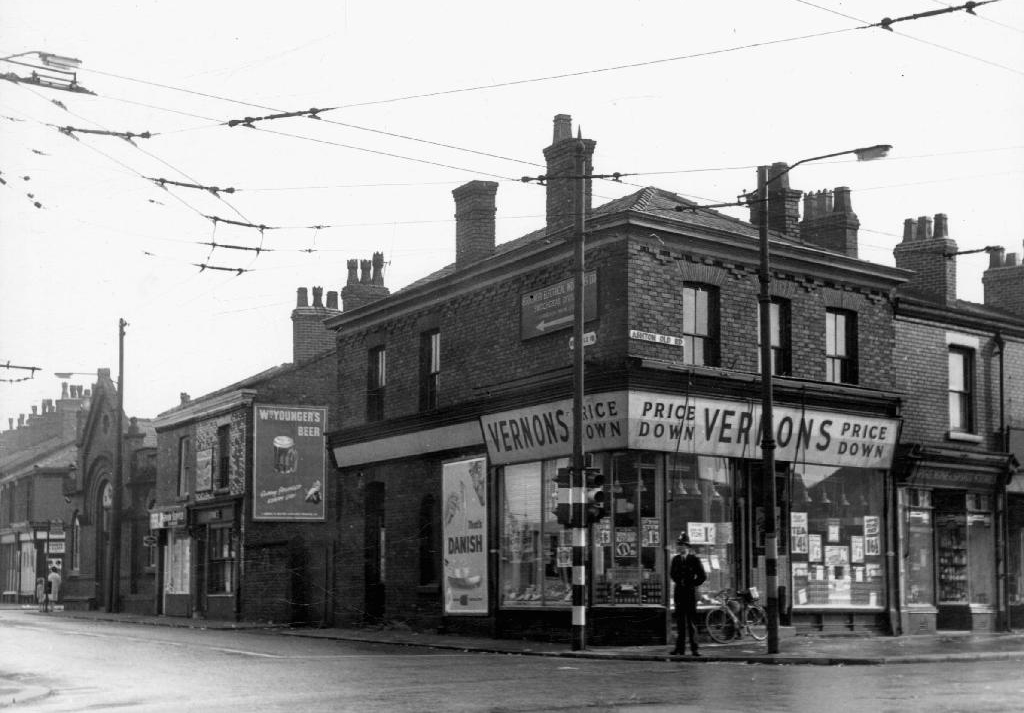
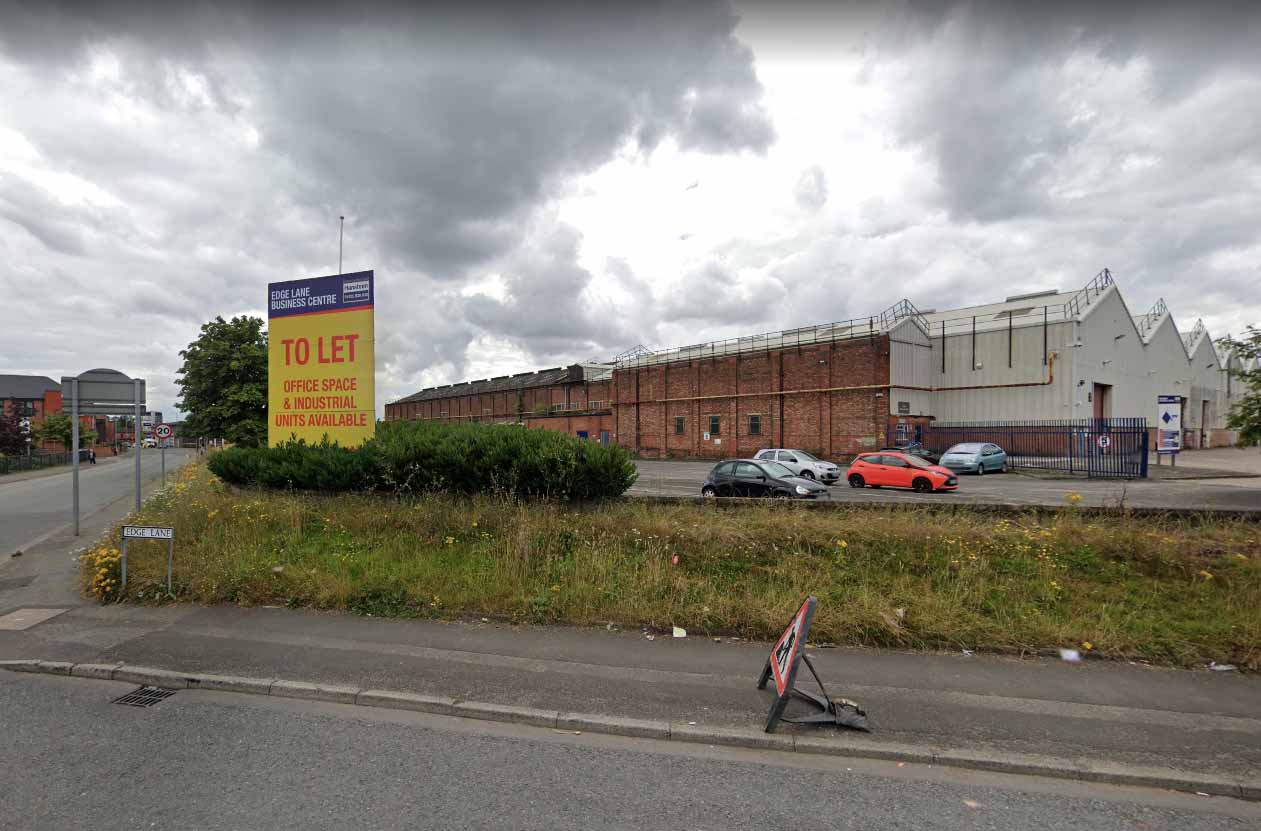
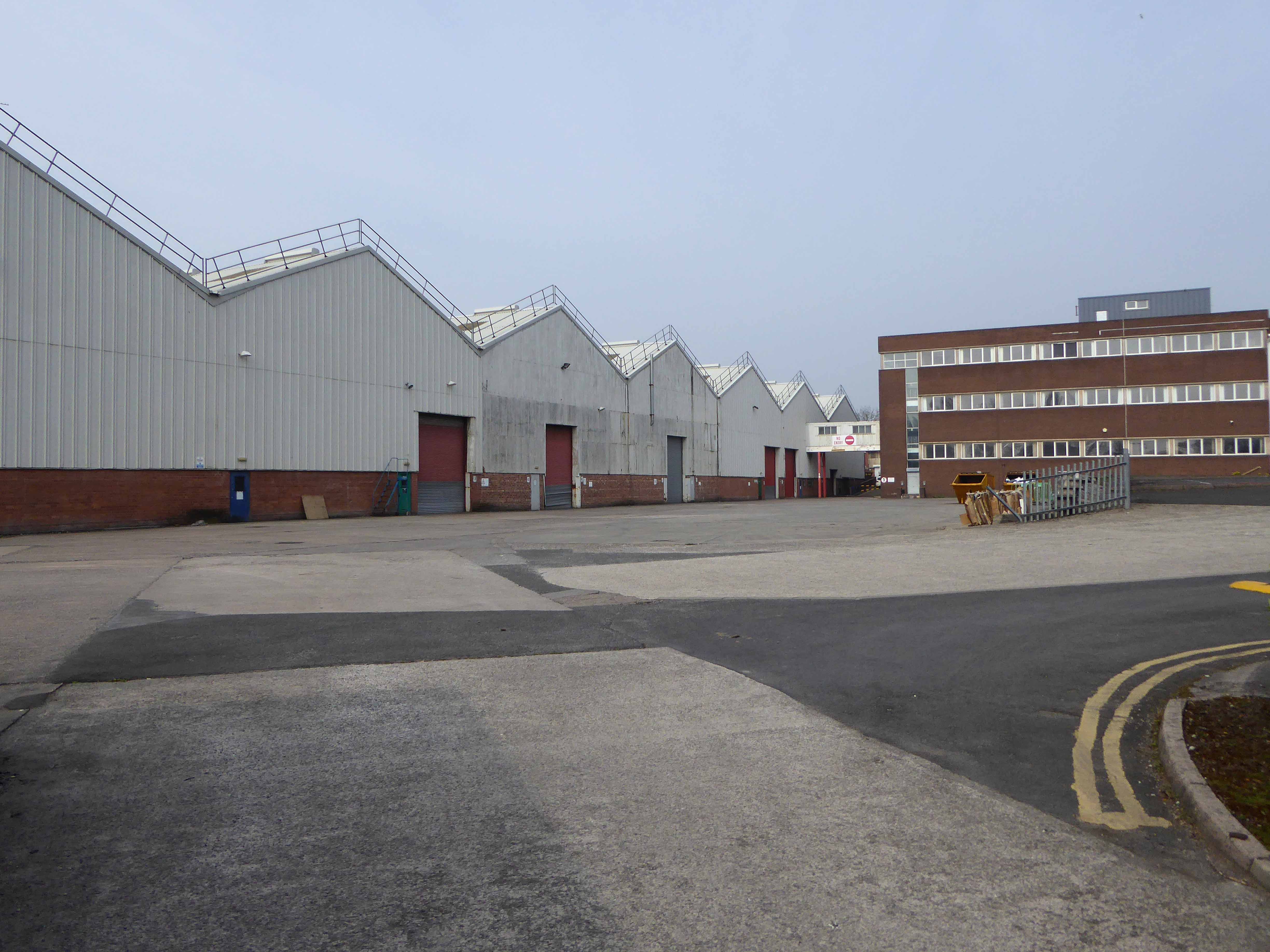
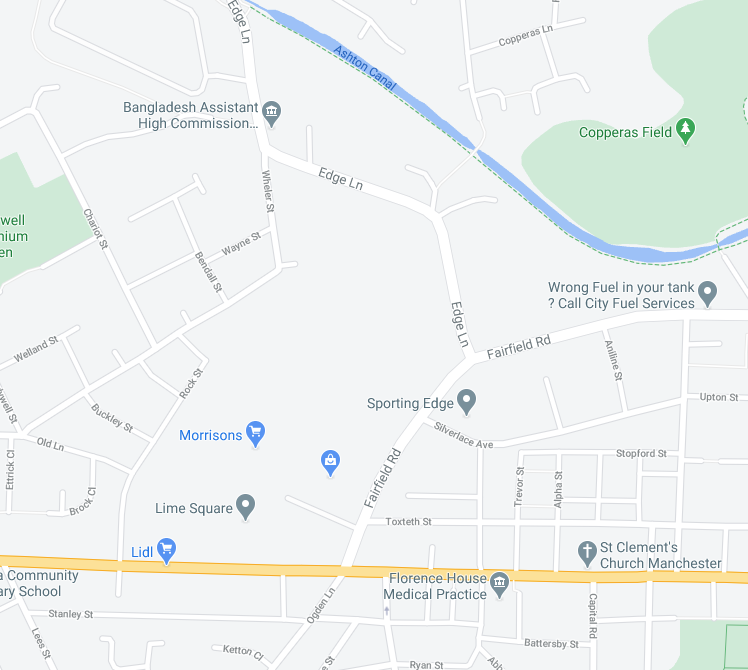
Ferguson Pailin Electrical Engineering are established in 1913 on Fairfield Road/Edge Lane.
By 1939 the factory is fully formed and the area a dense warren of industry and terraced housing.
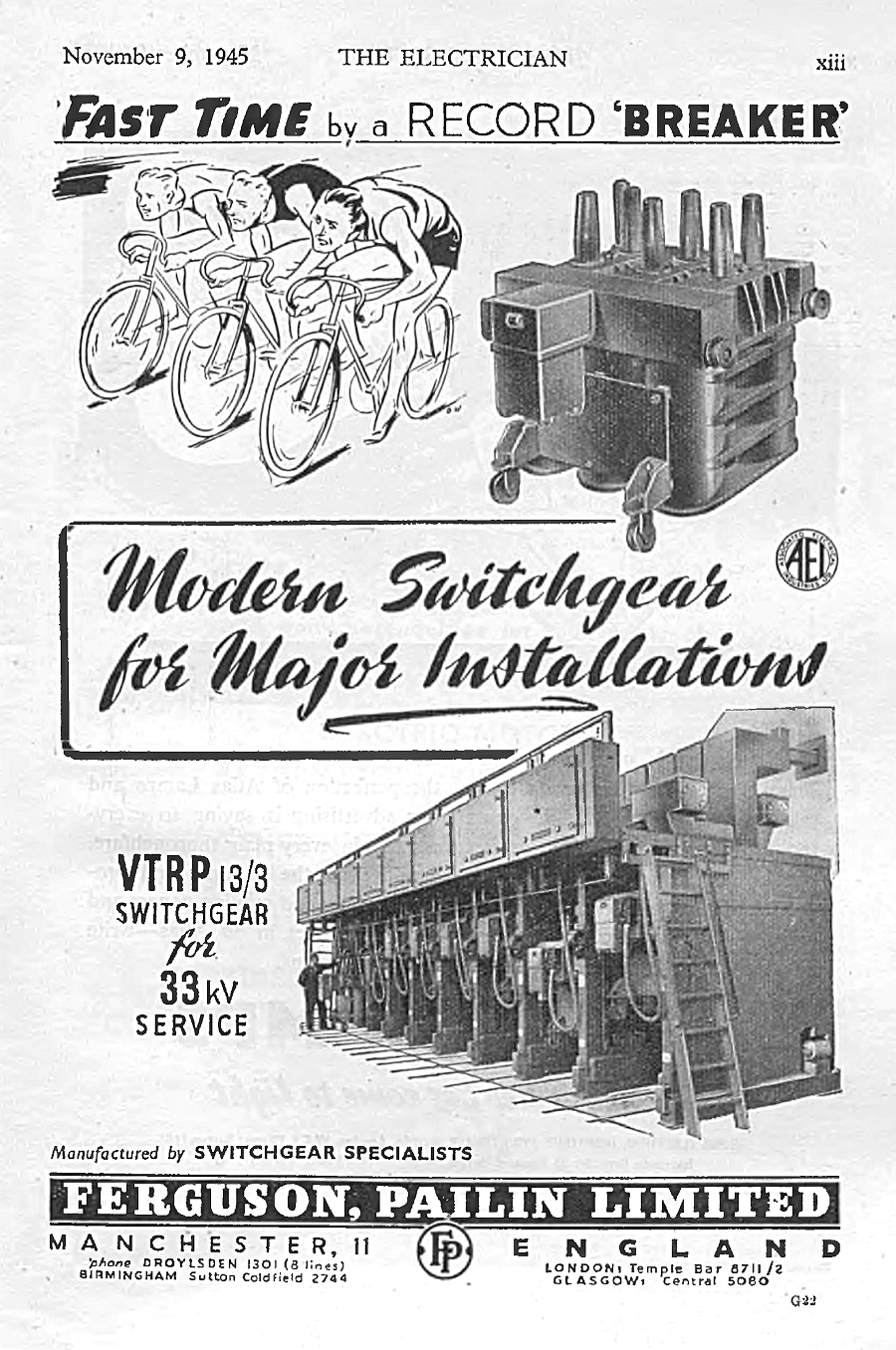
Makers of heavy duty electrical switchgear and general electrical engineers, of Higher Openshaw, Manchester.
1913 Ferranti Ltd sold its switchgear patents and stock to Ferguson, Pailin Ltd. Samuel Ferguson and George Pailin had worked for Ferranti as switchgear engineers. They left in 1913 to set up their own switchgear business at a factory in Higher Openshaw, Manchester.
The company was acquired by Associated Electrical Industries (AEI) in 1928. Following the restructuring of AEI in 1960, Ferguson, Pailin & Co ceased to be a separate subsidiary and was merged into AEI switchgear. Following the takeover of AEI by GEC in 1967, the Higher Openshaw works became part of GEC Switchgear. In 1989, GEC merged its electrical engineering interests with those of Alsthom to form GEC Alsthom. The factory was later closed by Alstom in 2003, with most of the employees finishing on 22 November 2002.
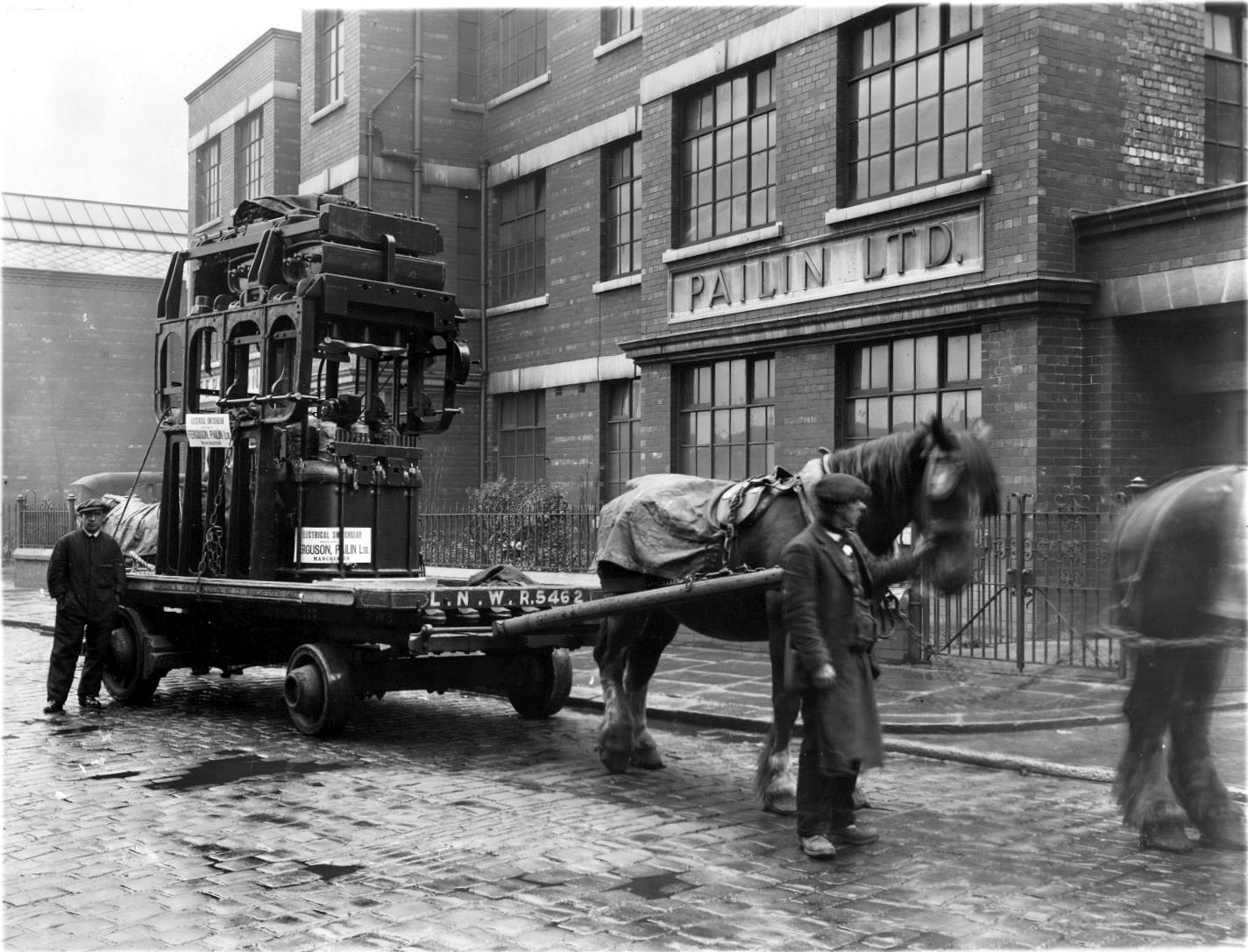
The company has a Facebook page which shares former employees memories – from which these archive photographs were taken.
Notably the firm provided extensive leisure facilities for their employees.
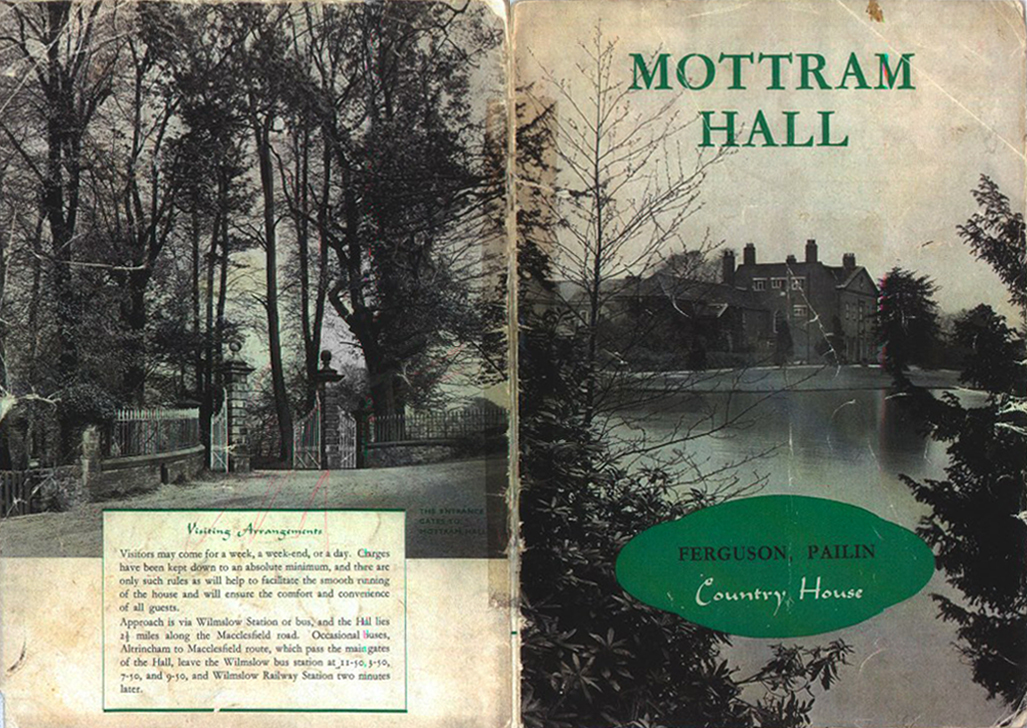
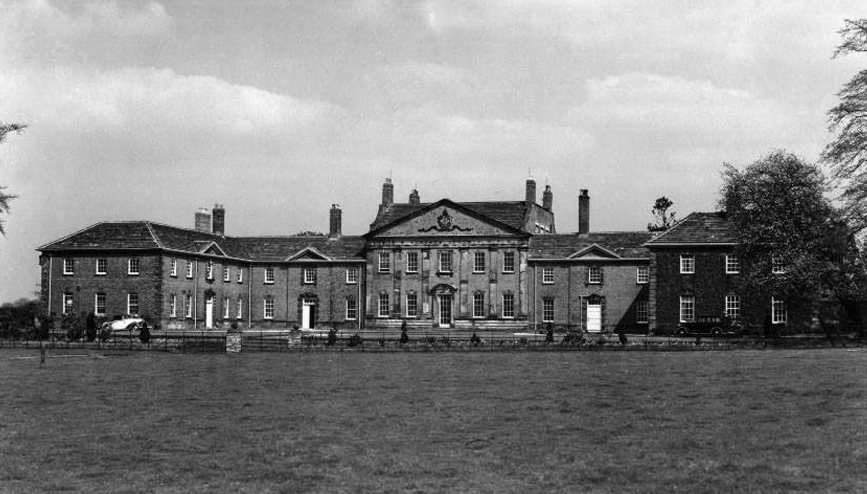
The company acquired Mottram Hall to give employees an opportunity to go on affordable holidays during World War II. The company bought three properties in 1939/40 in order to provide holidays for staff and workers during the war. Mottram Hall was bought for the works, a small hotel in Llandudno for the middle level staff and a property in Criccieth for senior staff. Mottram Hall was sold as surplus to requirements by GEC in 1968 and is now a luxury country house hotel.
Sadly the days when benevolent employers thought to take care of their employees in such a manner, are largely a thing of the past.
For business guests, our sleek and sophisticated conference rooms feature the latest technology to get your agenda off to a prompt and professional start. Plus, catering facilities and a plush break out space for comfortable downtime between meetings.
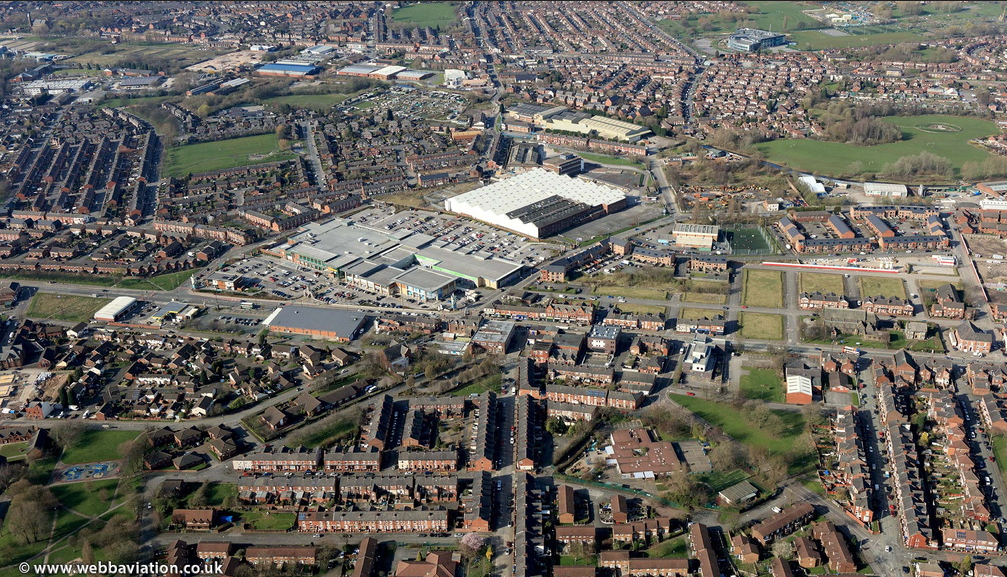
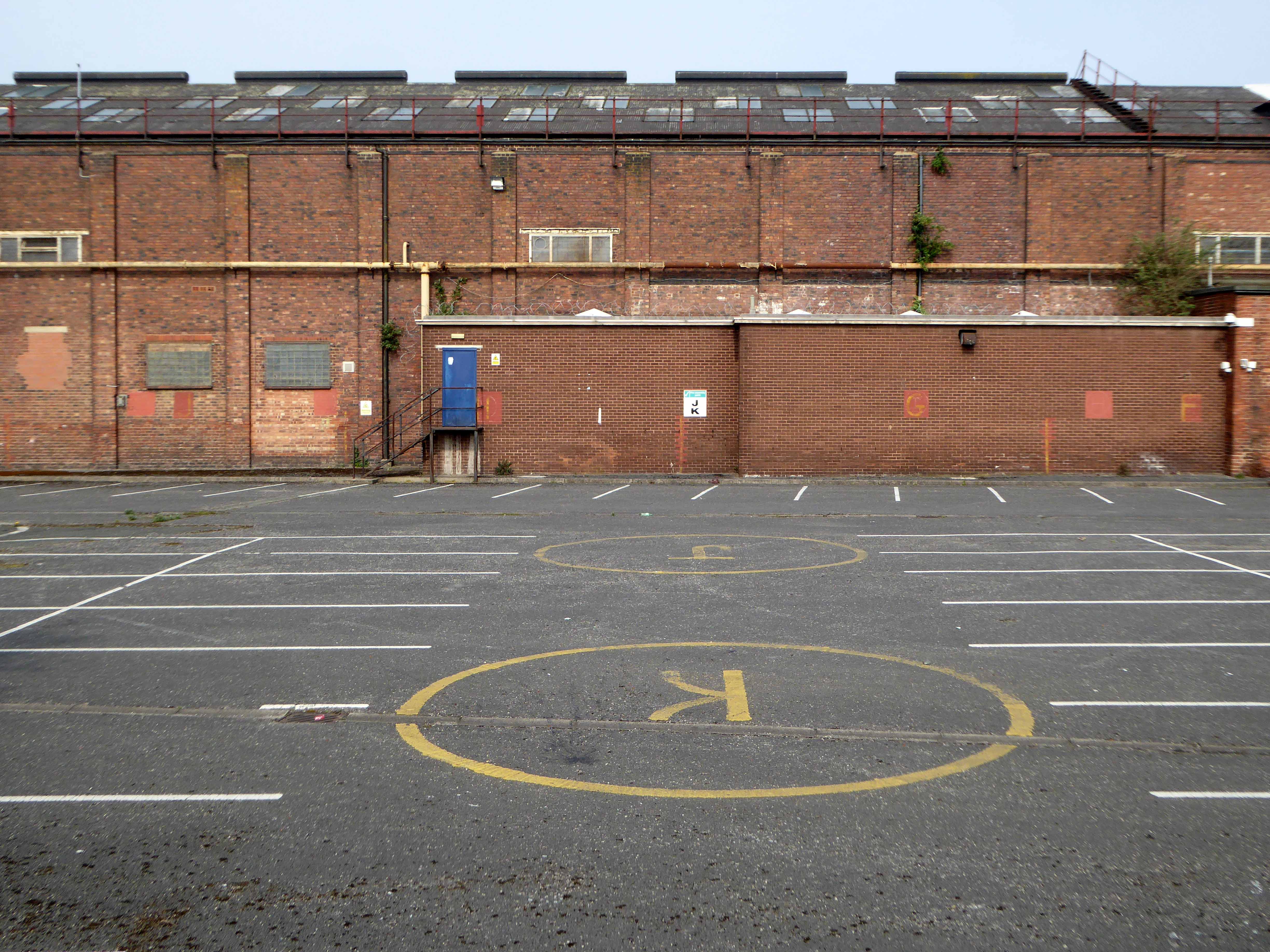
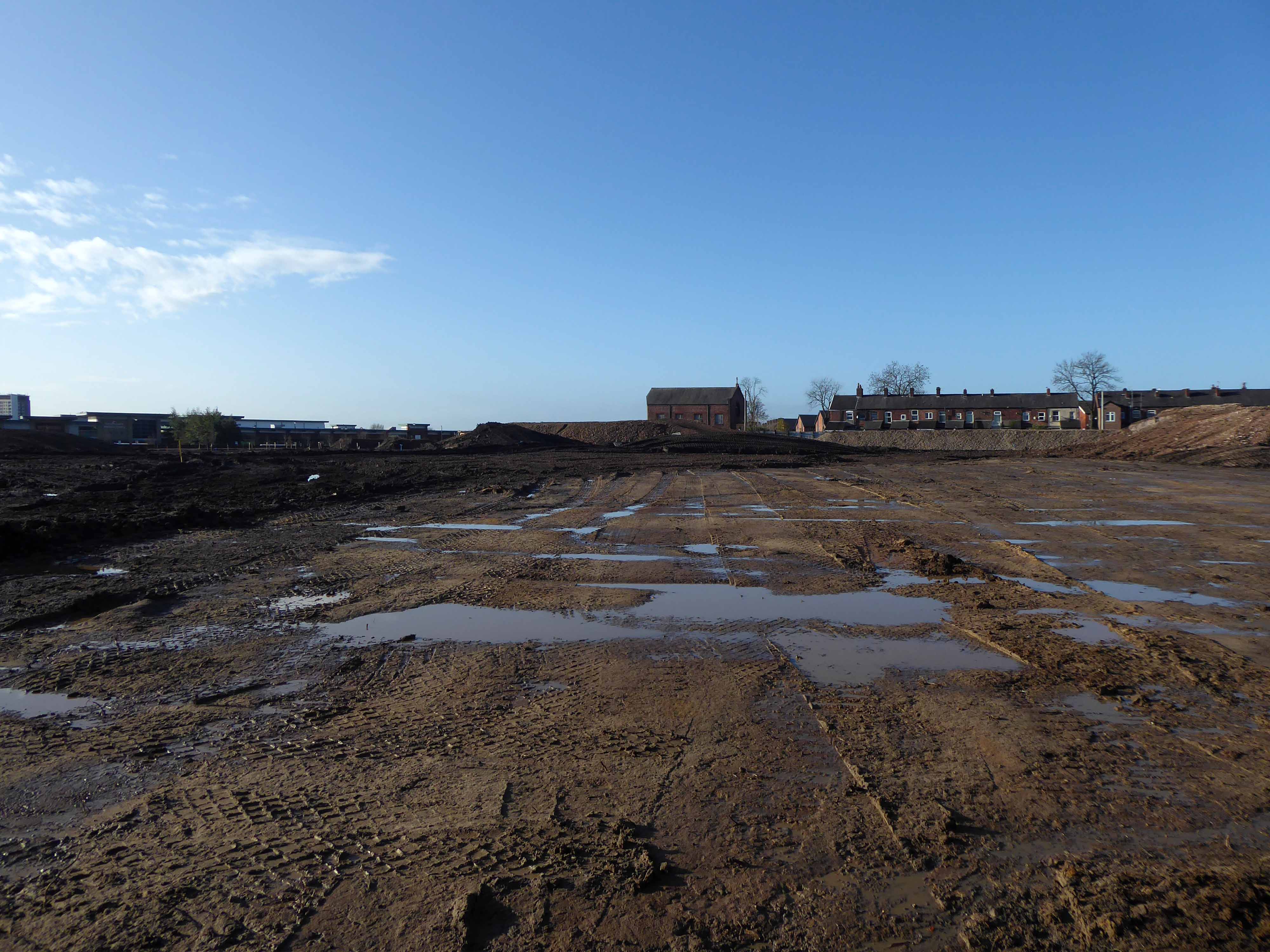
Last time I passed through many of the factory buildings were still extant though underused. A portion of the site lost to the development of the Lime Square Shopping Centre.
Lime Square is a shopping destination which is helping to put the heart back into Openshaw district centre here in east Manchester. Lime Square is home to the stunning Steamhammer sculpture and a host of great High Street names.
By and large replacing the plethora of busy local businesses which once thrived in the area.
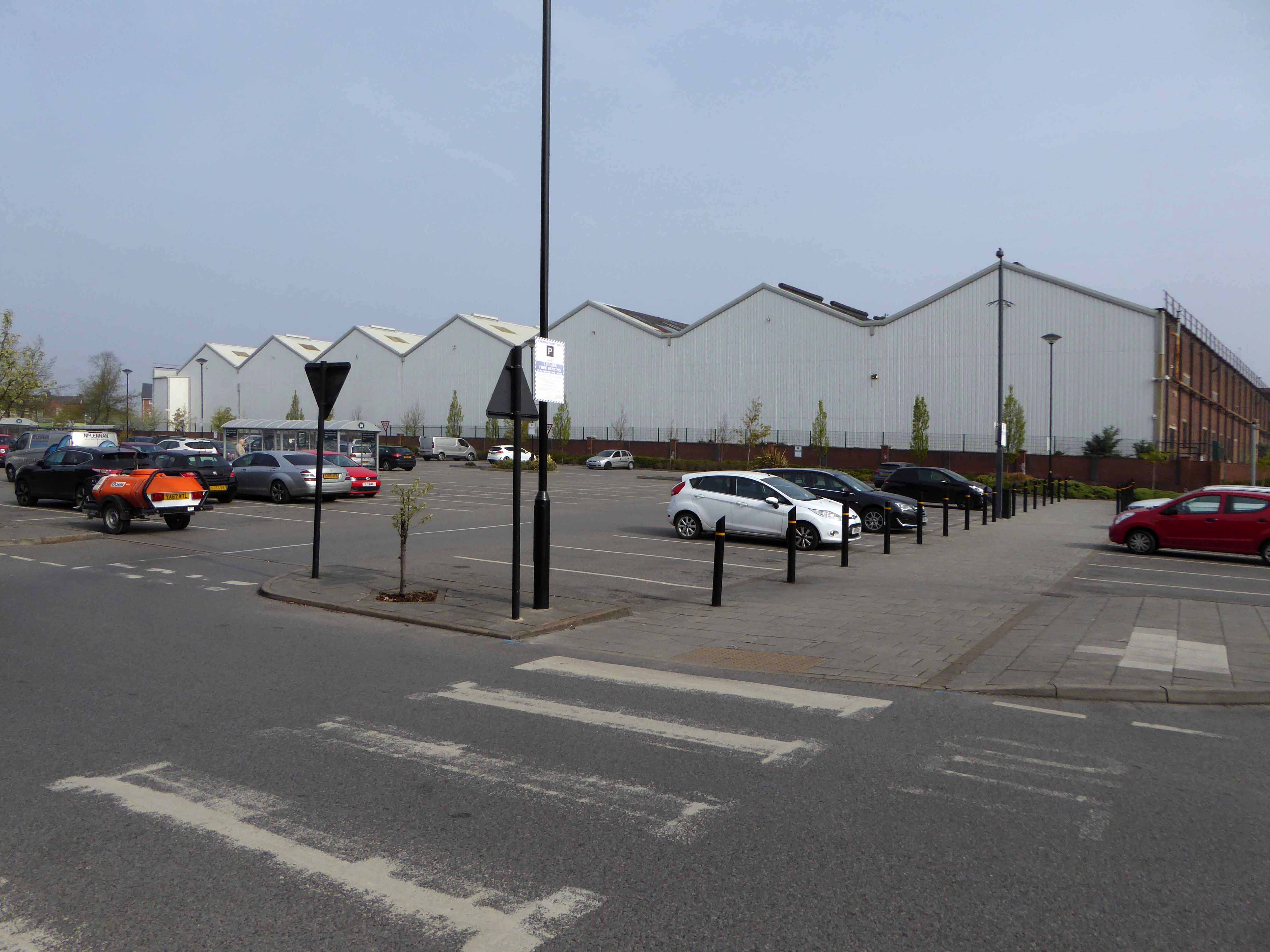
Part of the site became the site of a car park for B&M Bargains.
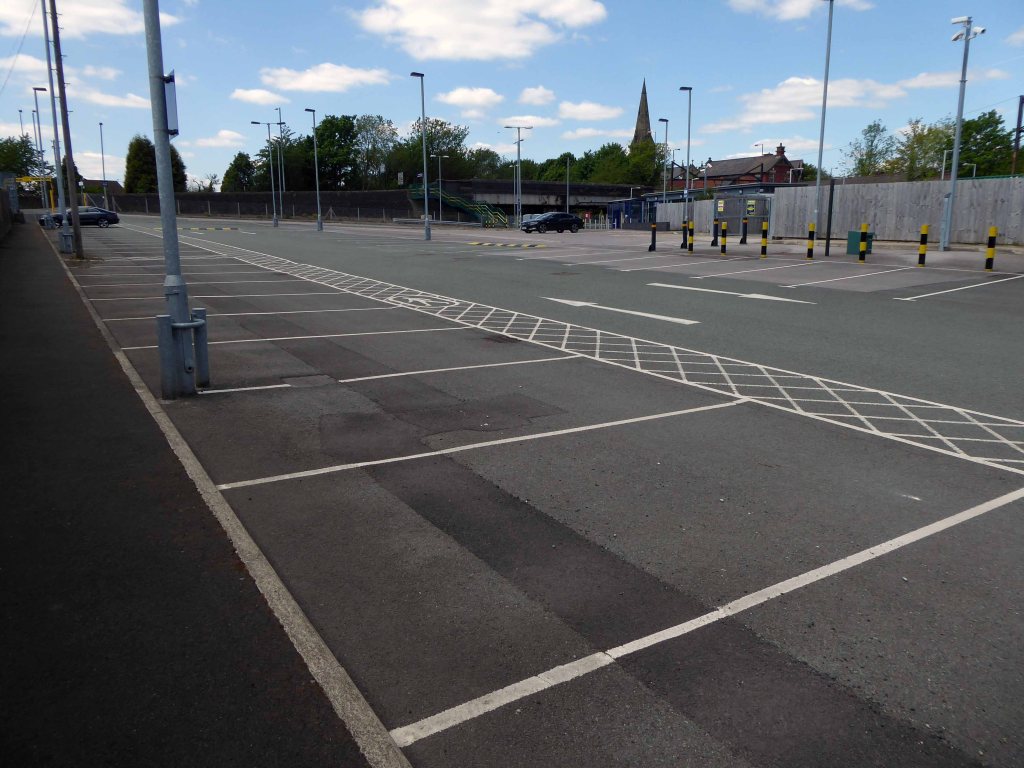
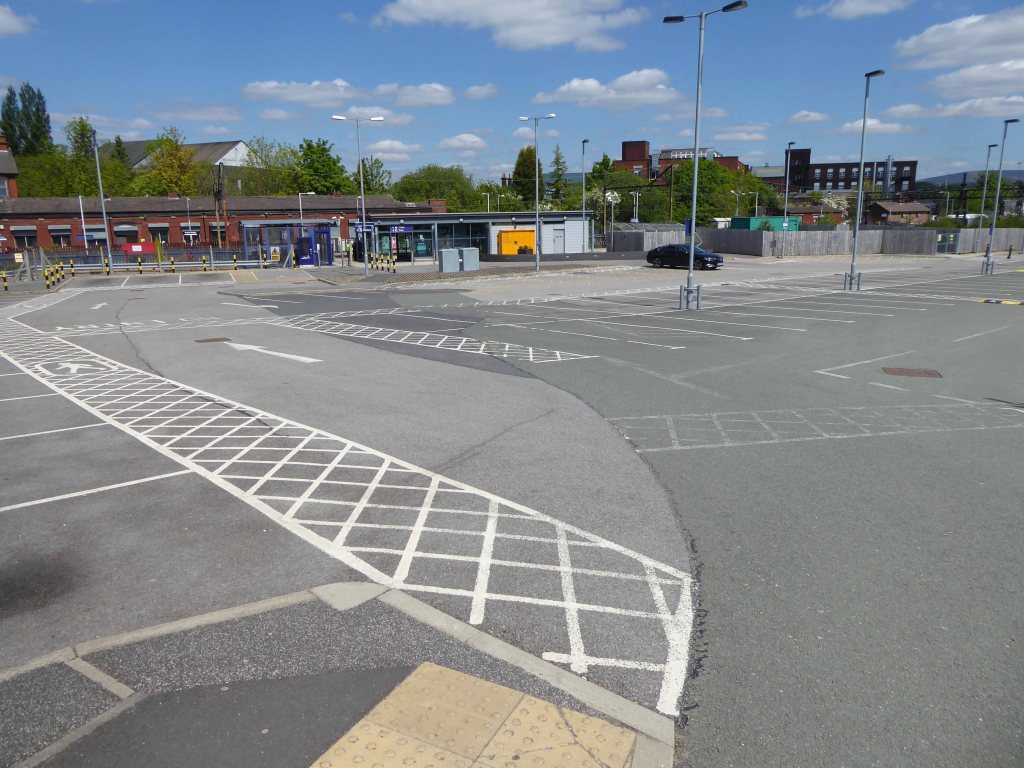
Empty car parking and to let signs in superabundance.
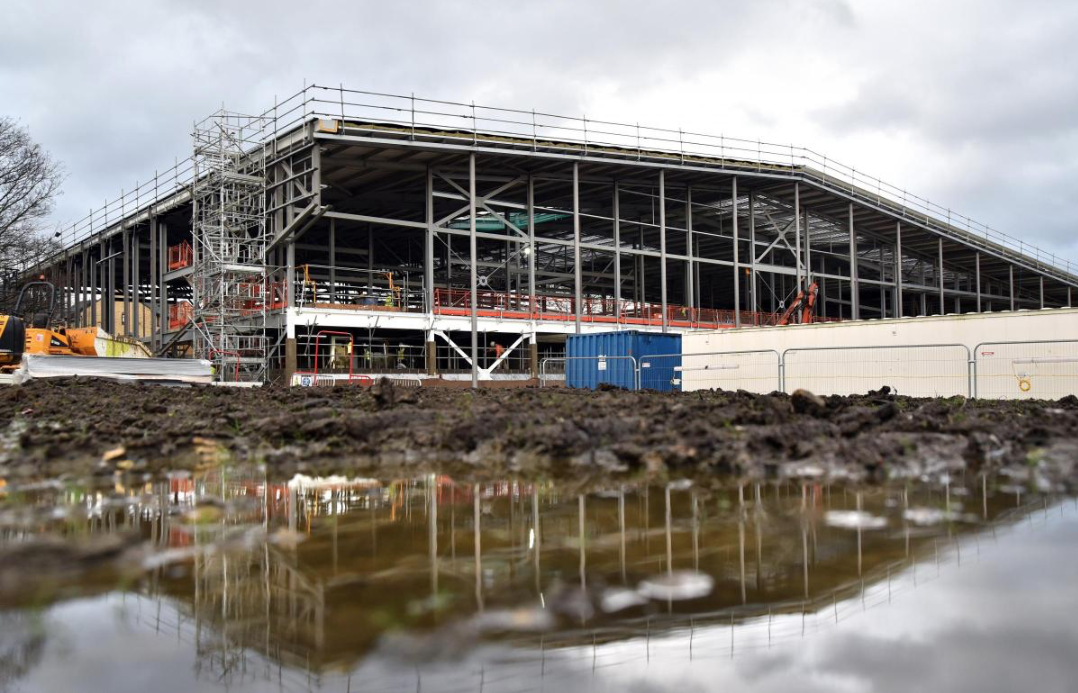
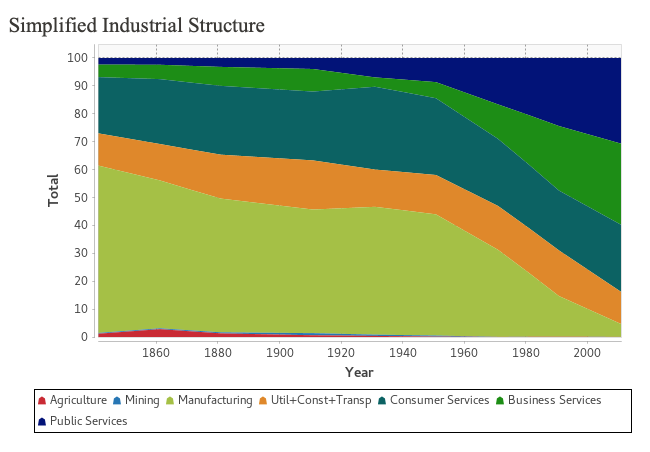
So there we are the end of an era – the decline in manufacturing, the structure ending life as an empty warehouse.
But wait, what’s all this?
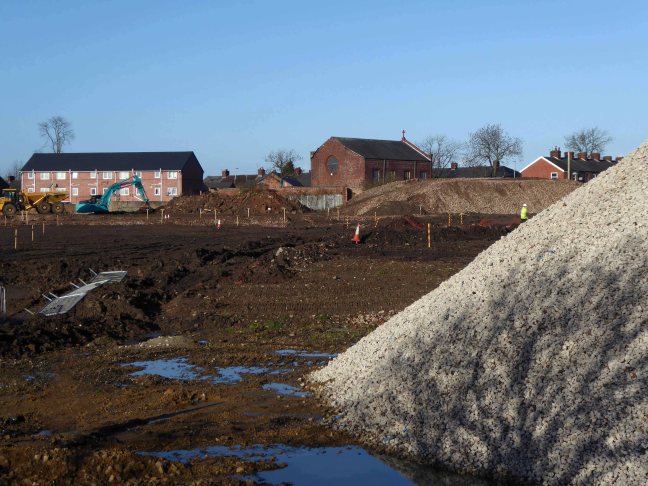
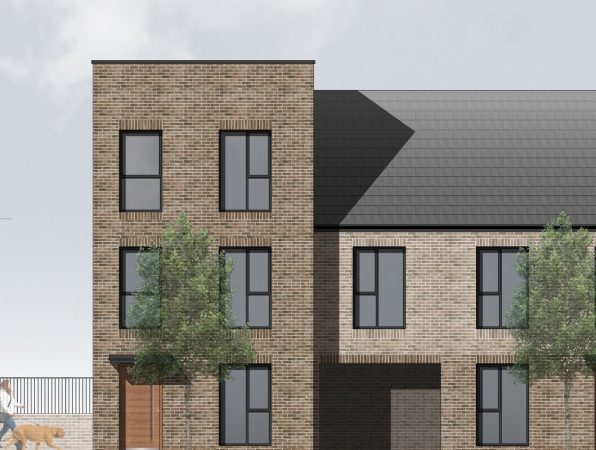
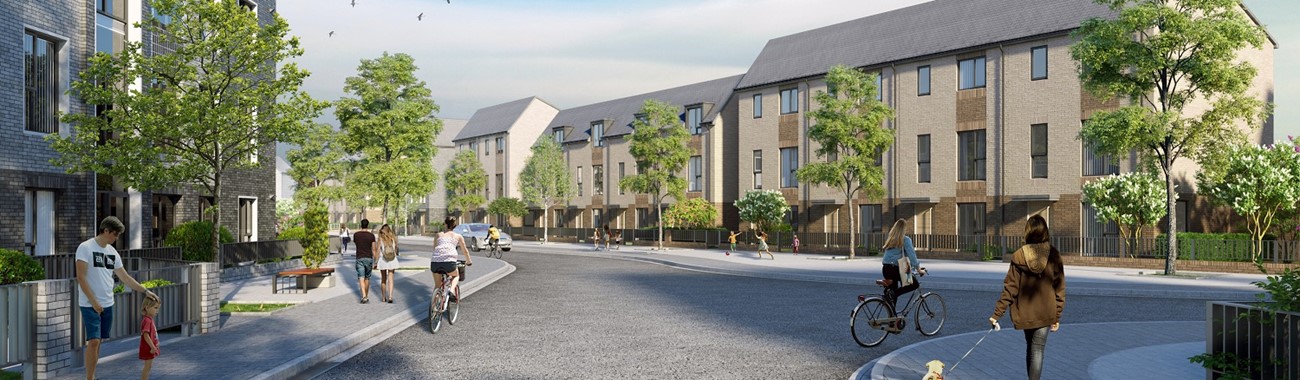
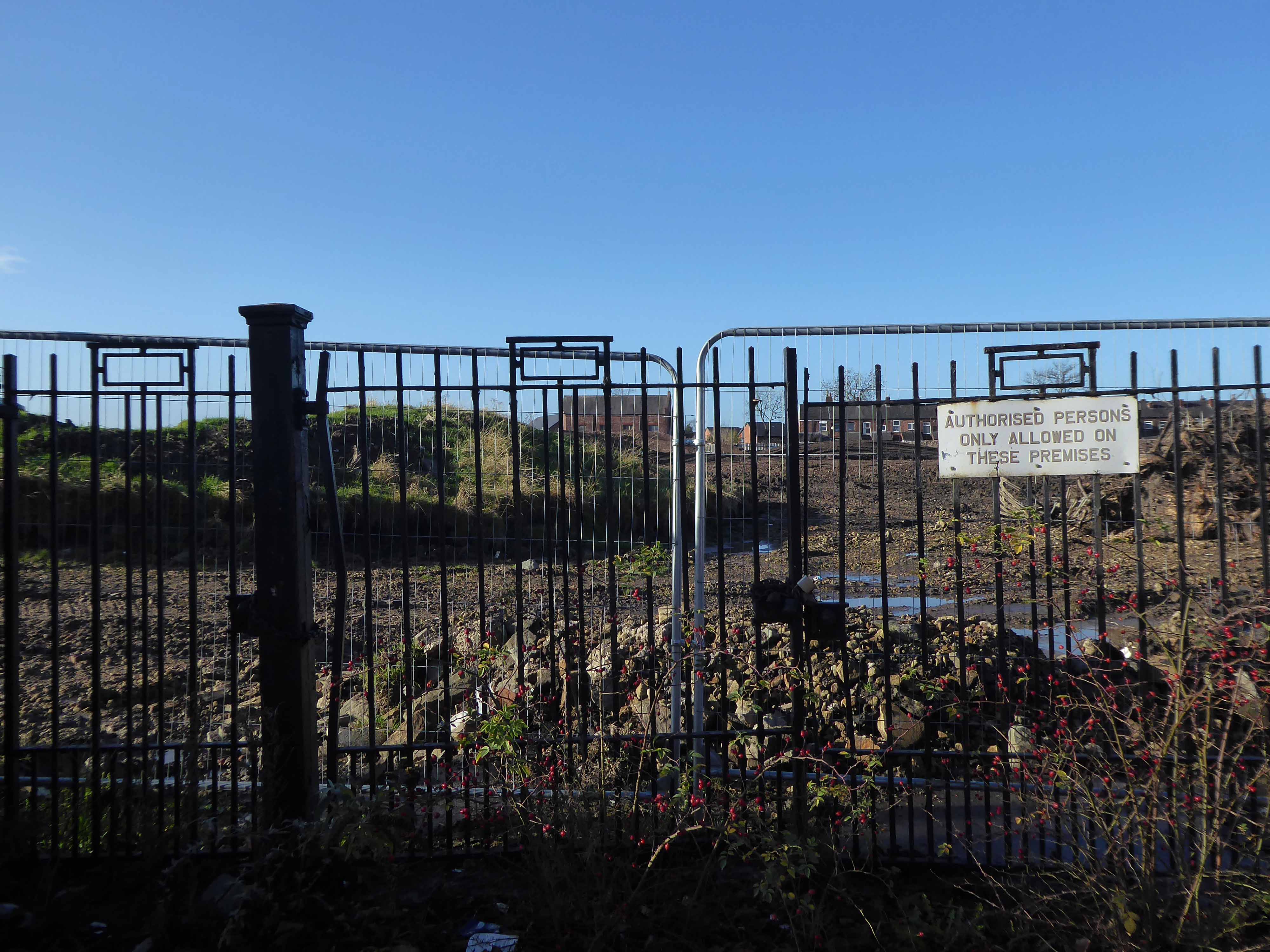
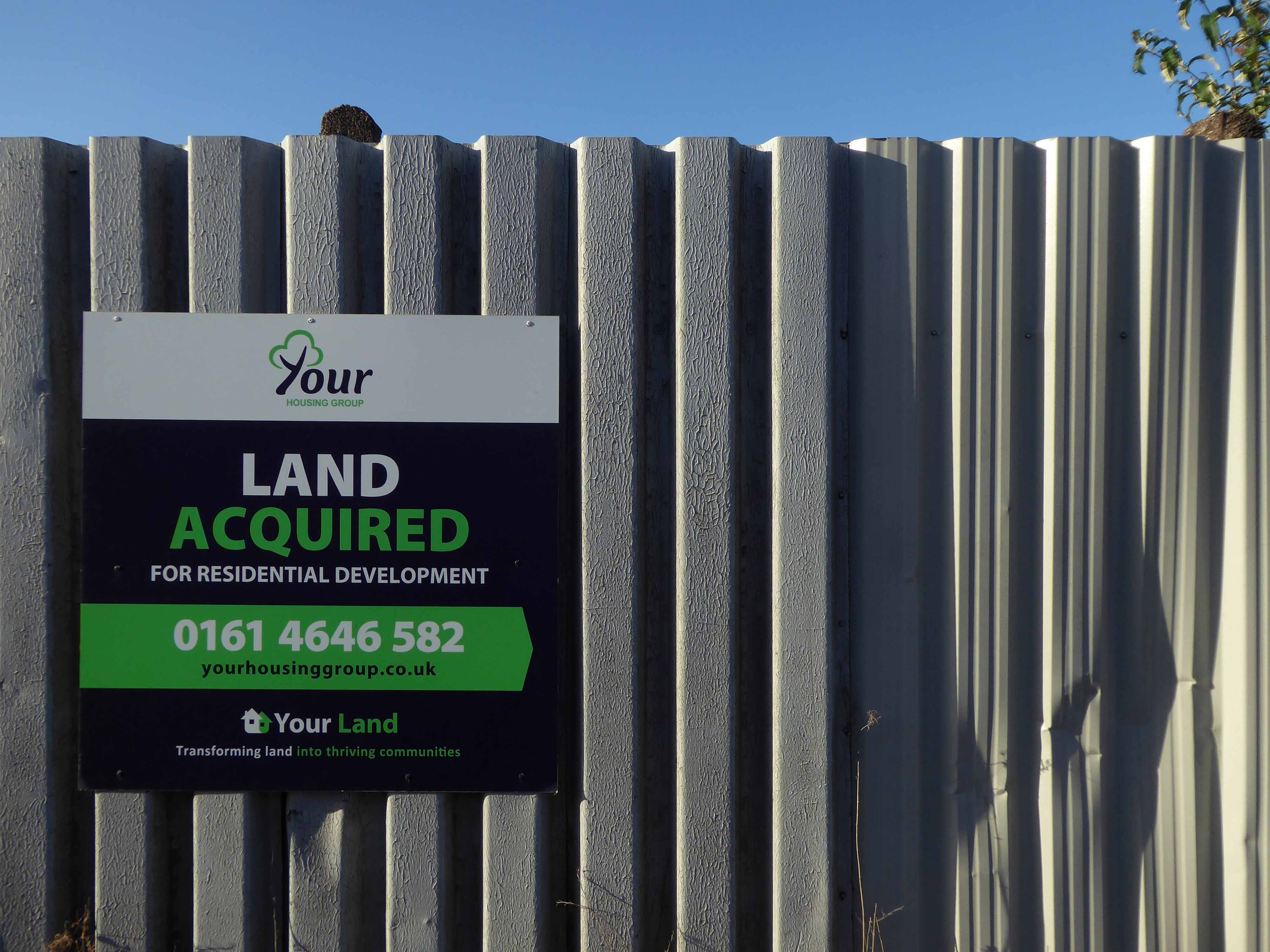
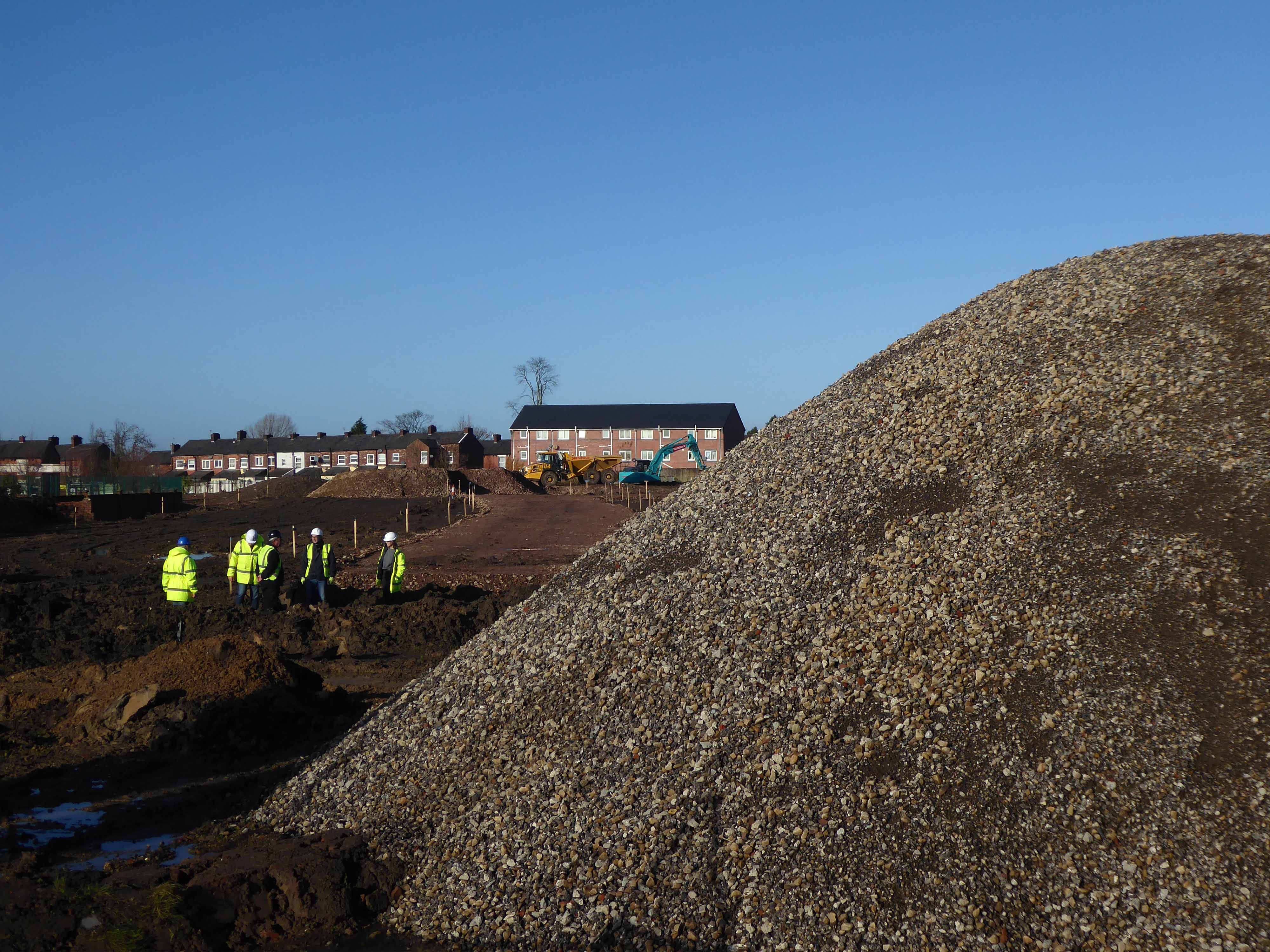
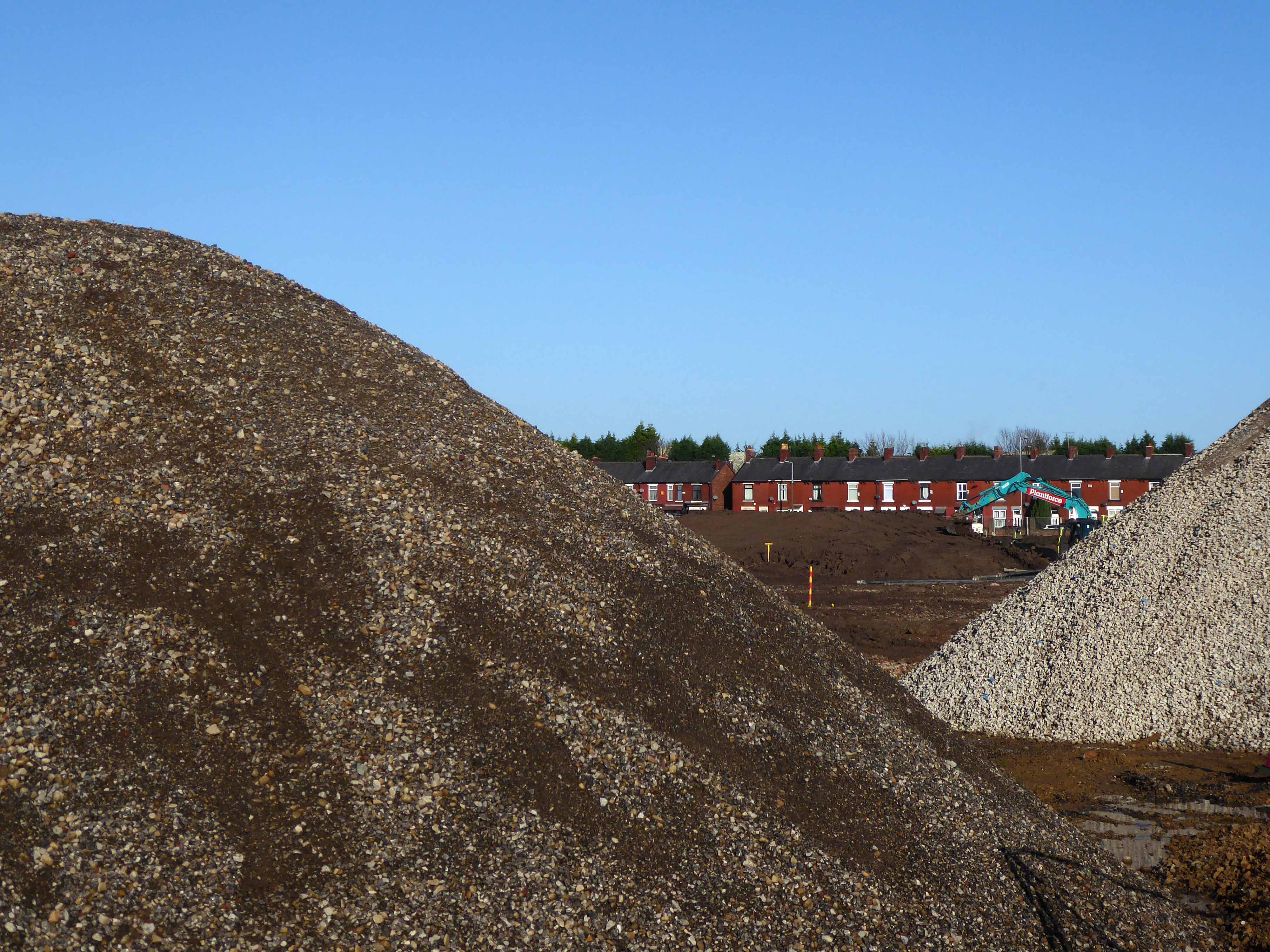
Your Housing Group, the Warrington-based affordable housing provider, wants to build a residential scheme on the site of a former warehouse on Edge Lane, with work starting this summer subject to consent.
The project in Openshaw comprises 216 homes available on a mix of tenures, according to a planning application submitted to Manchester City Council. A total of 72 will be for sale as shared ownership schemes, another 72 will be for private rent, and 72 will be for affordable rent.
So there we are another phase of development for one small area of Manchester, should you change to pass, just spare a moment to recall those thousands of souls that laboured their whole working lives – right here on Fairfield Road and Edge Lane.
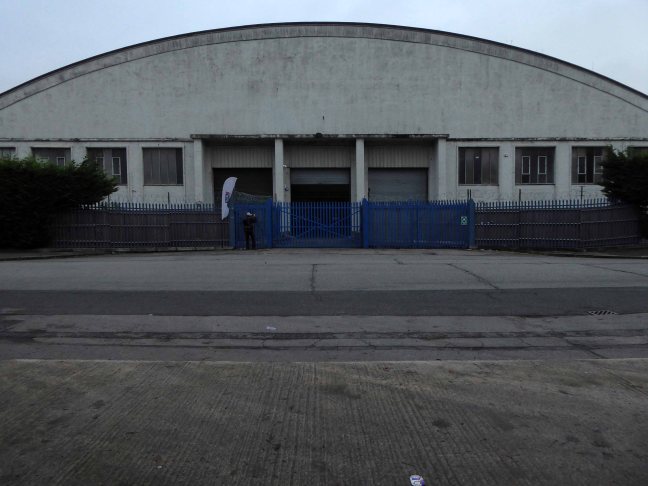
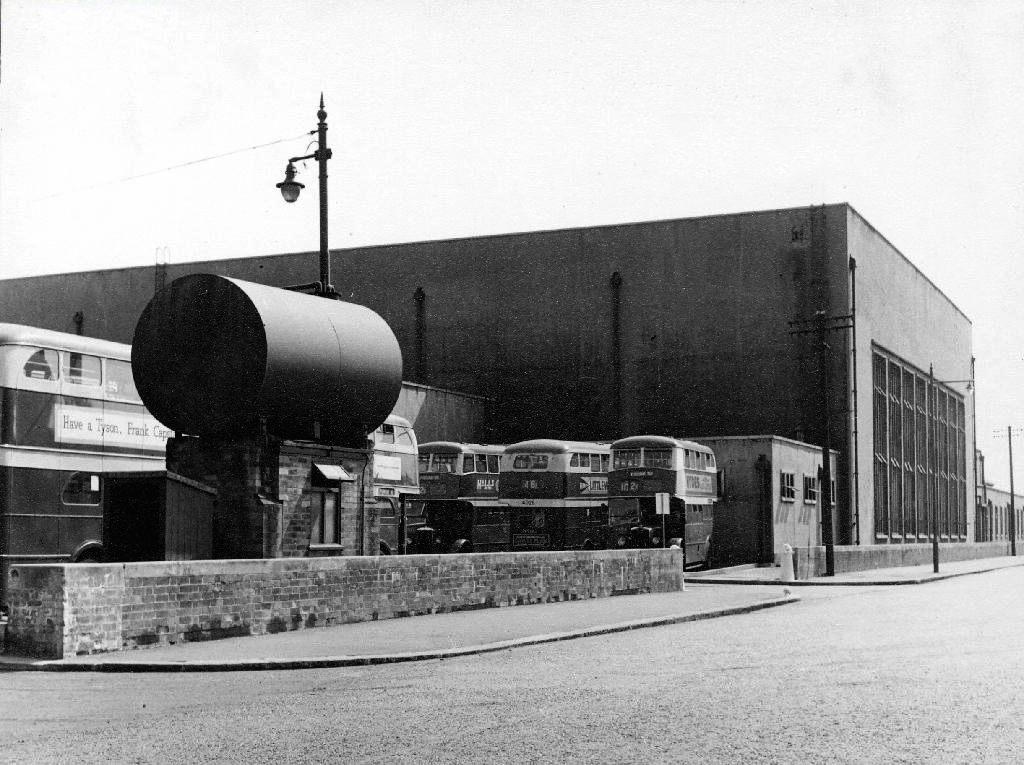
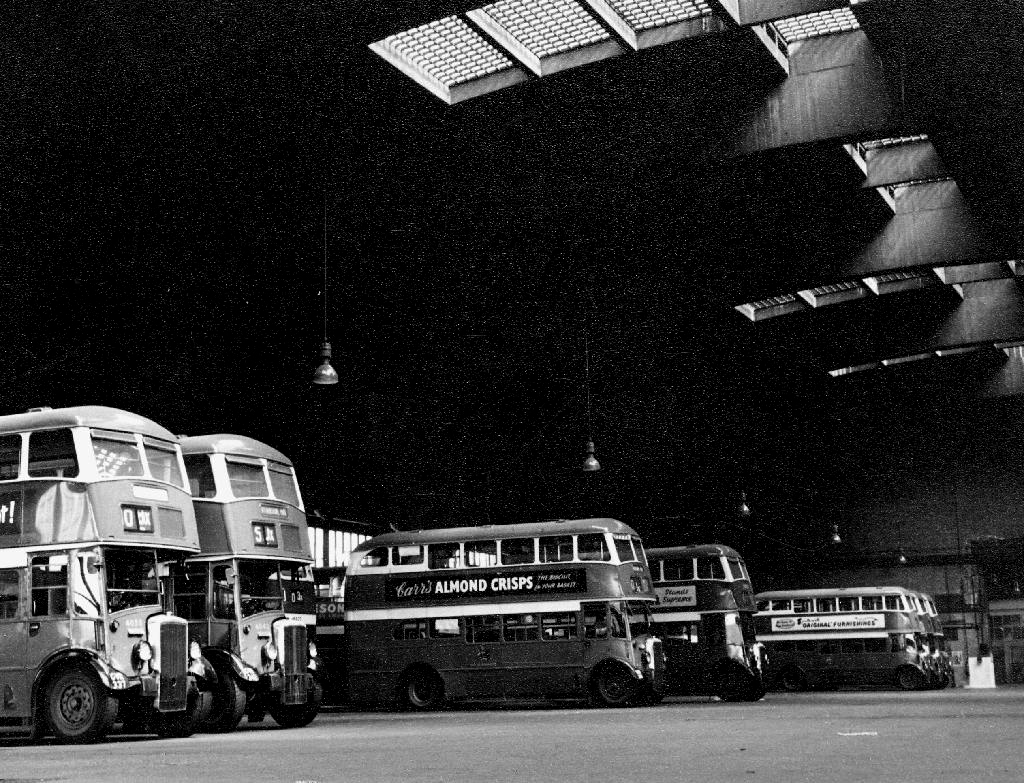
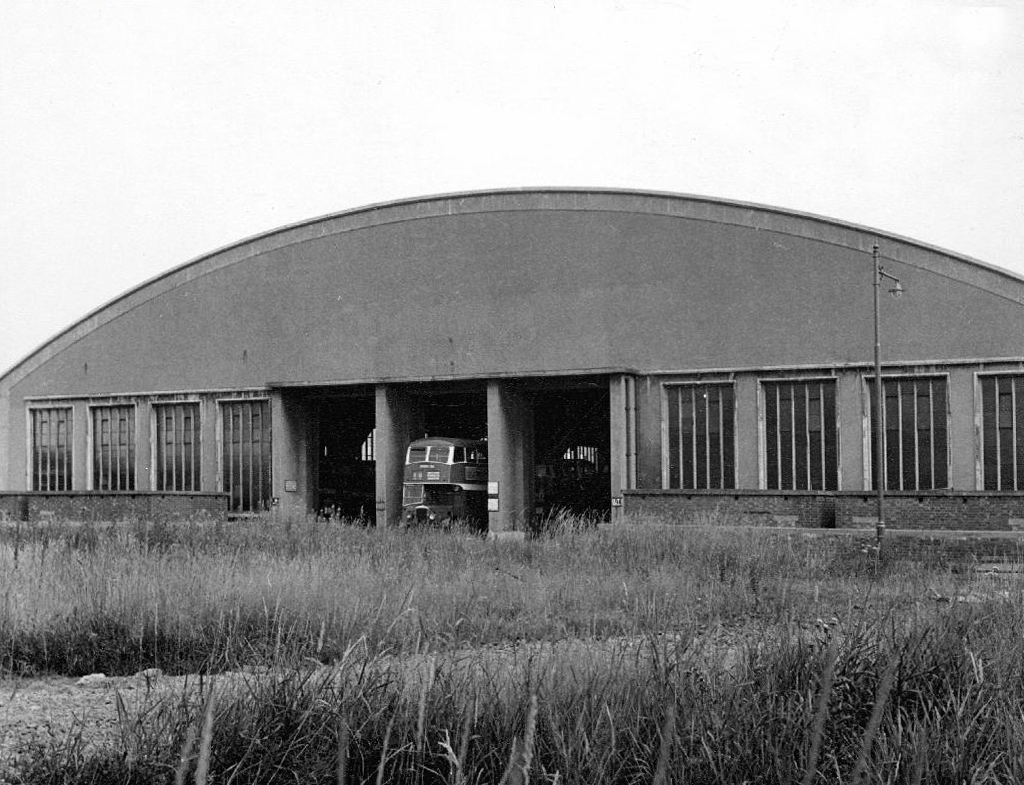
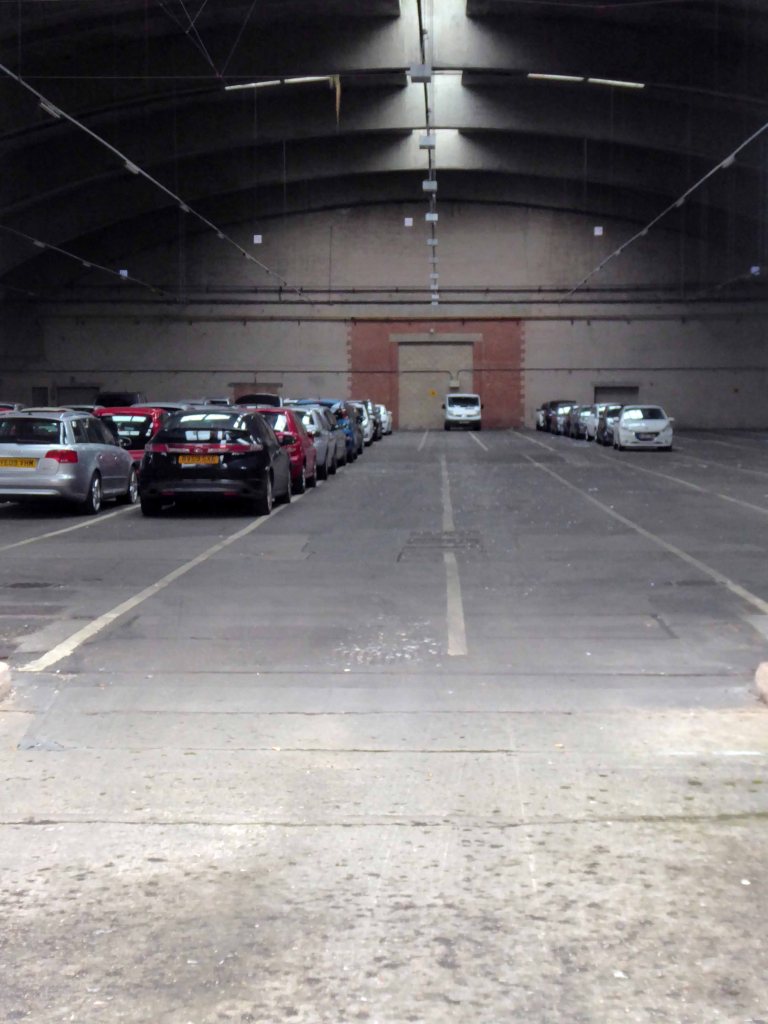
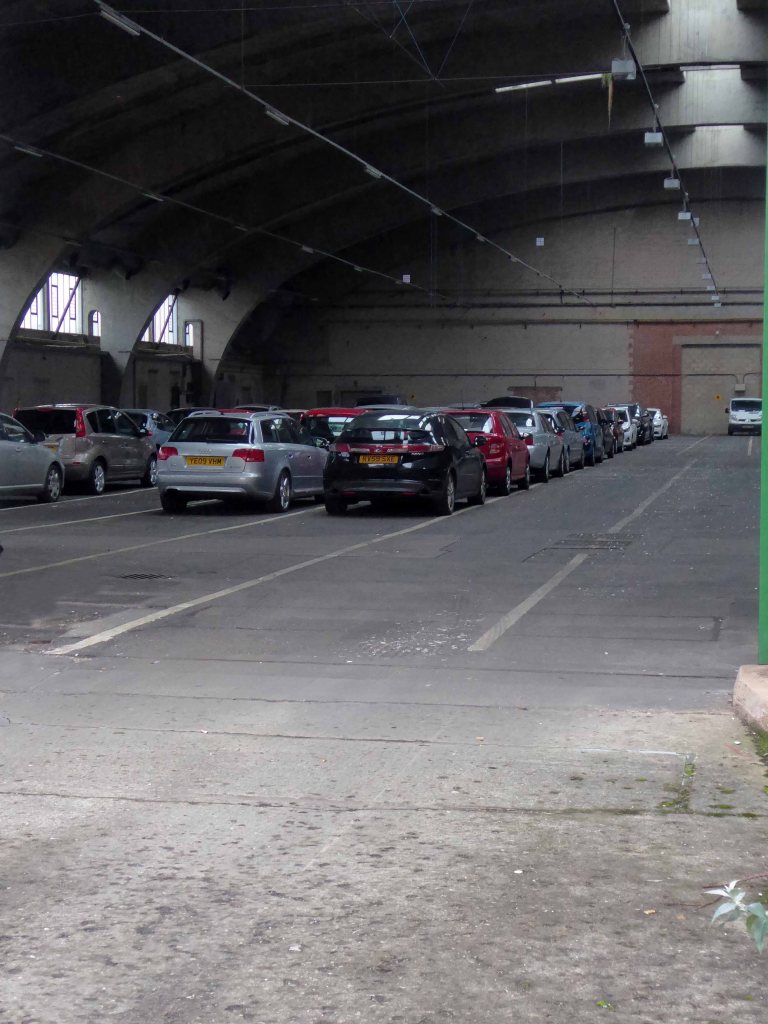
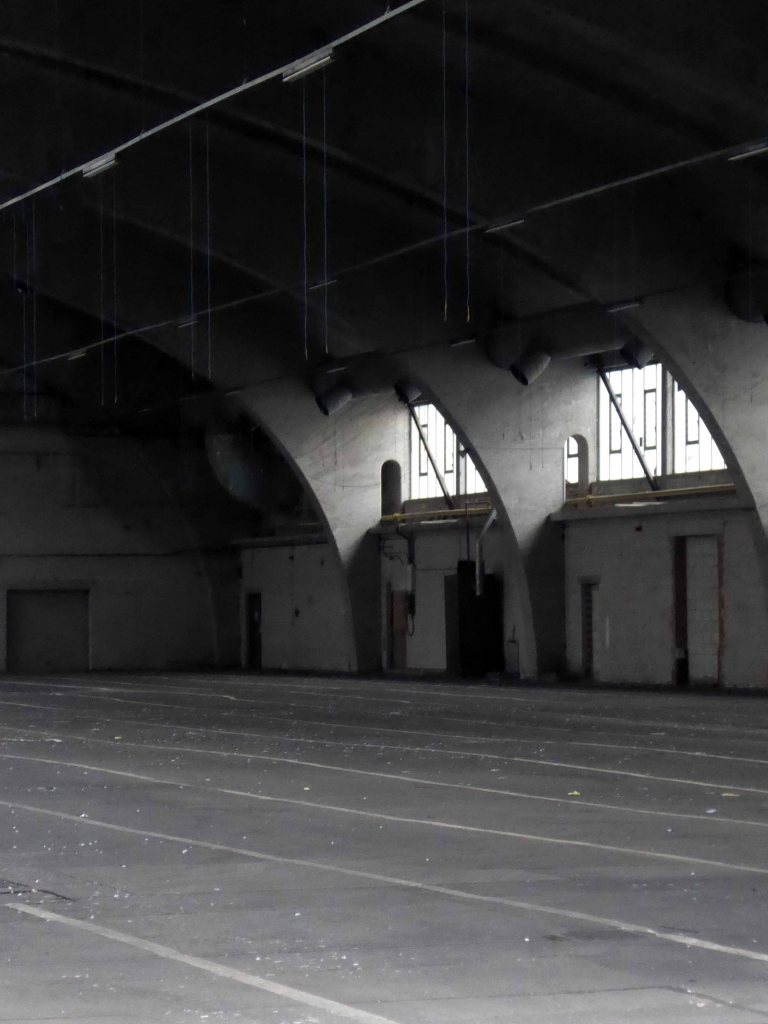
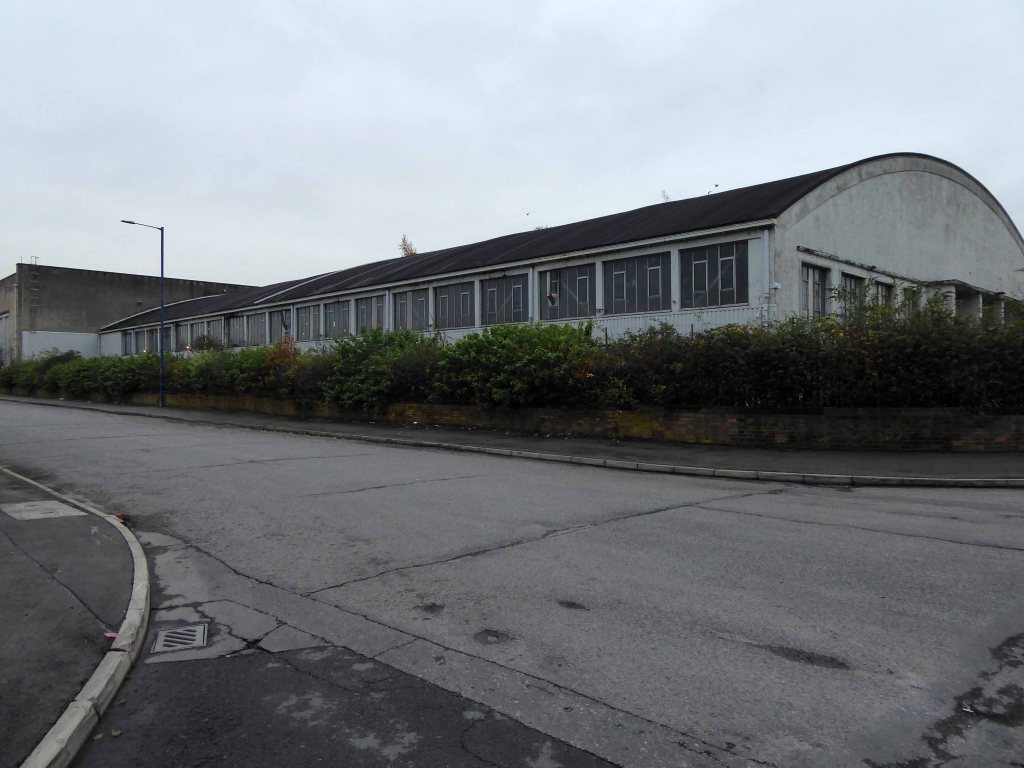
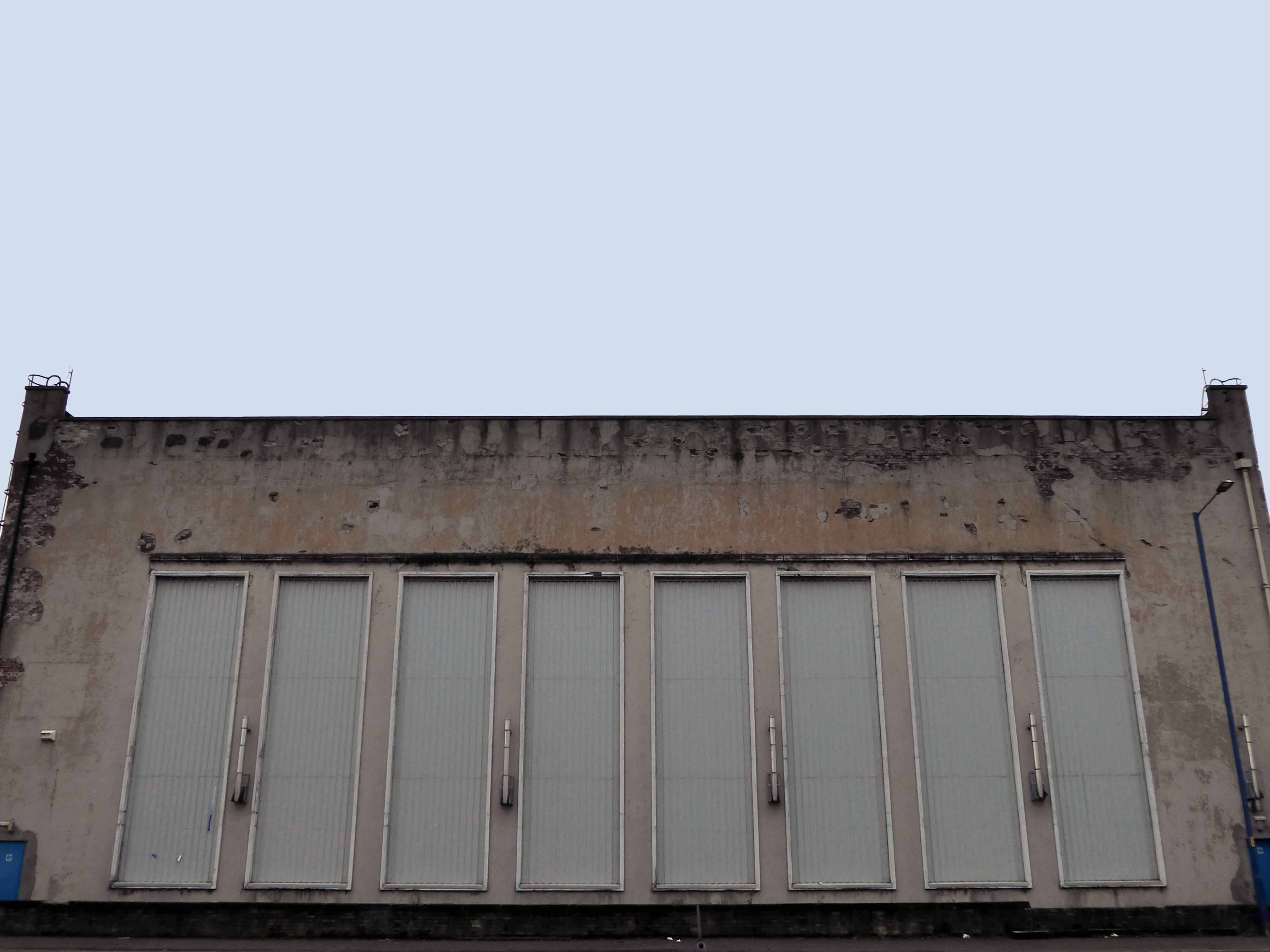
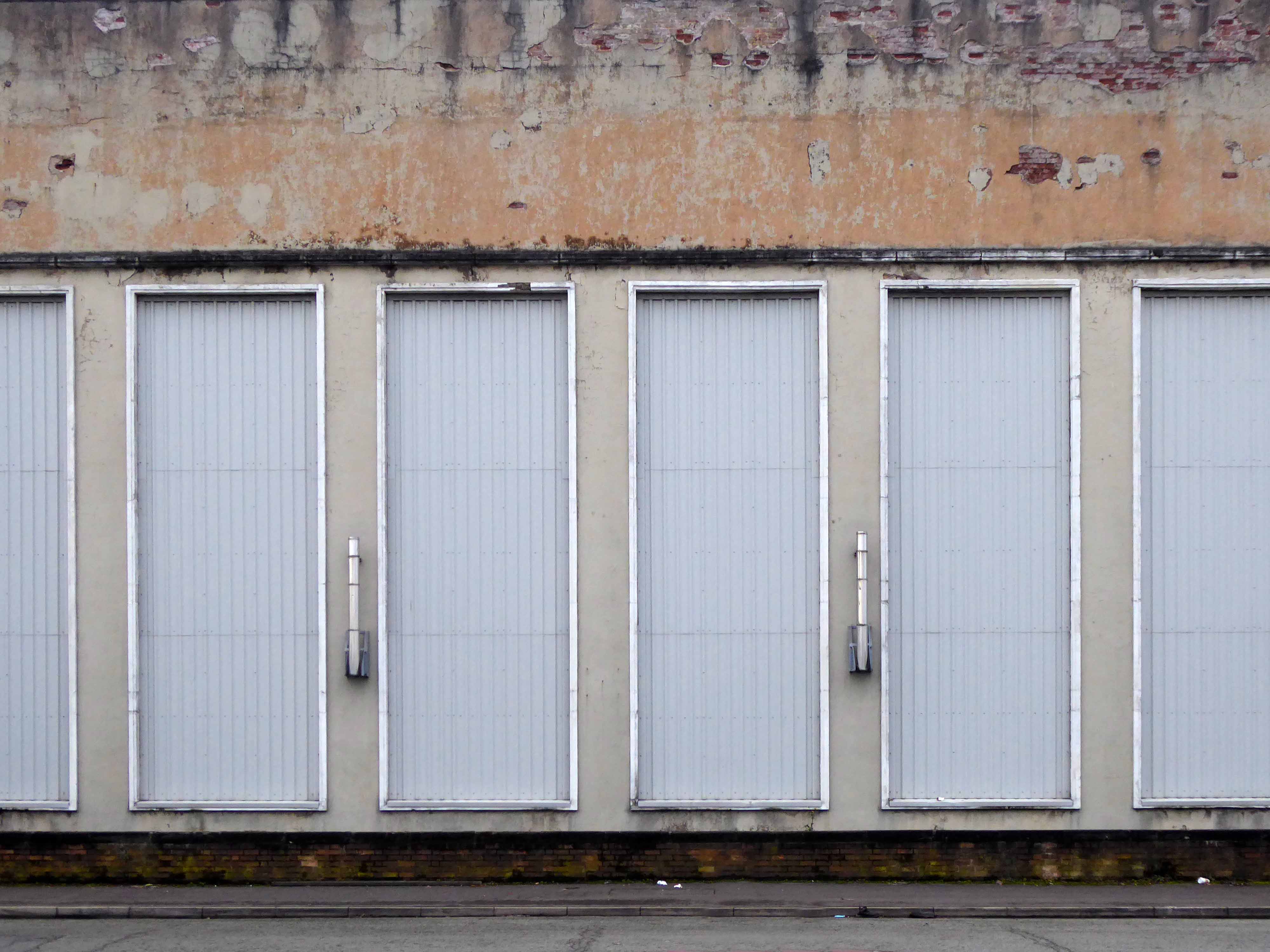
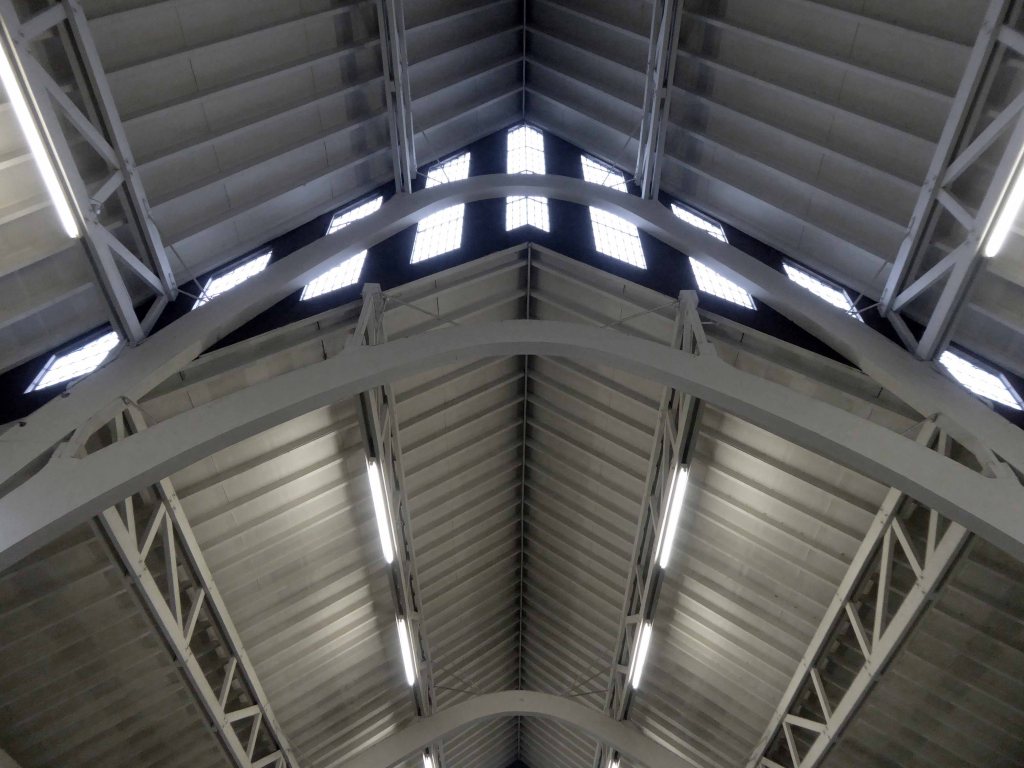
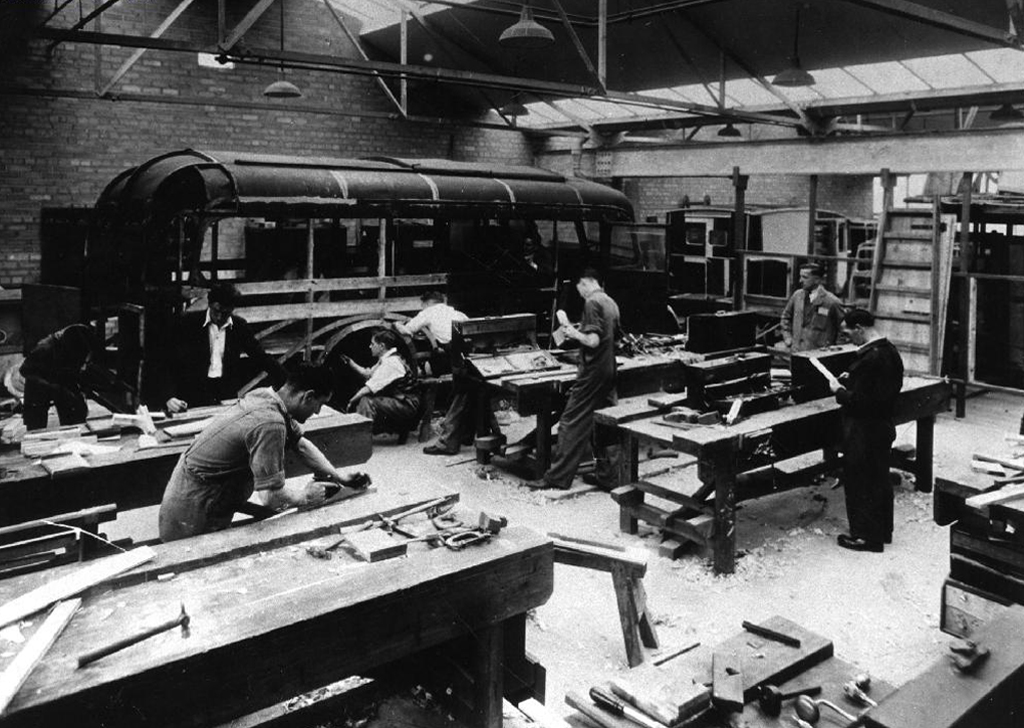
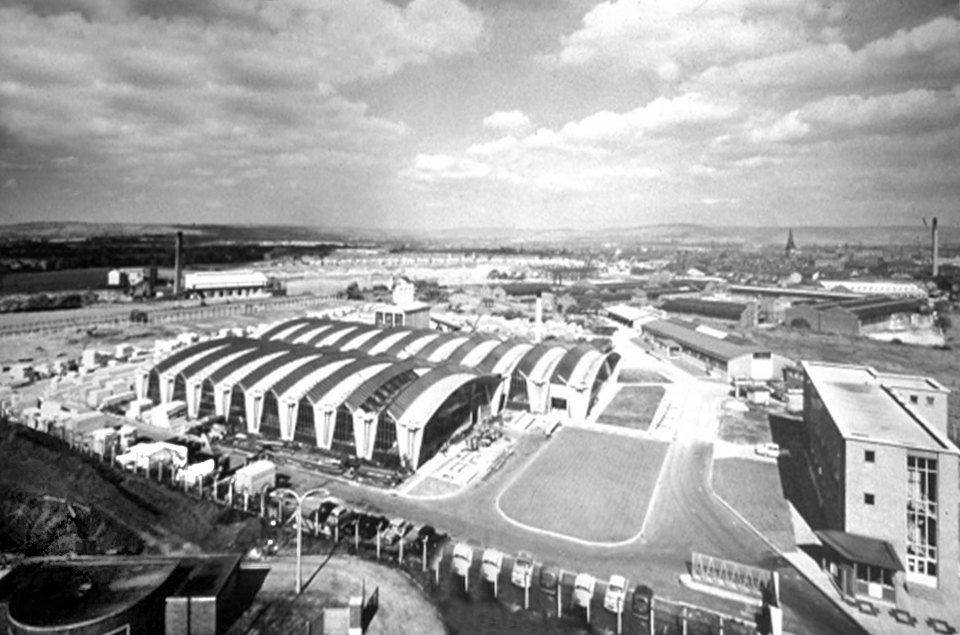
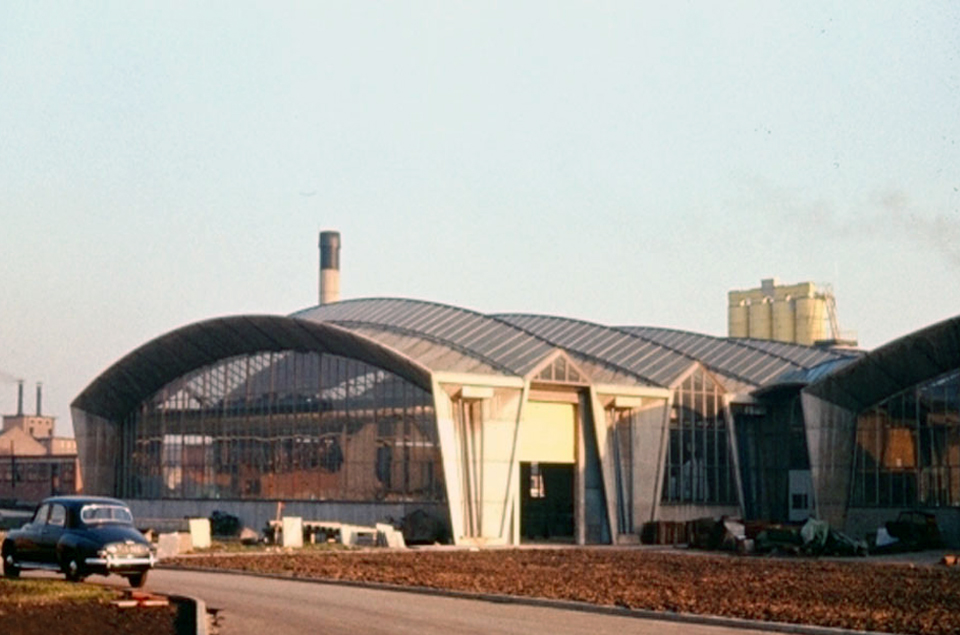
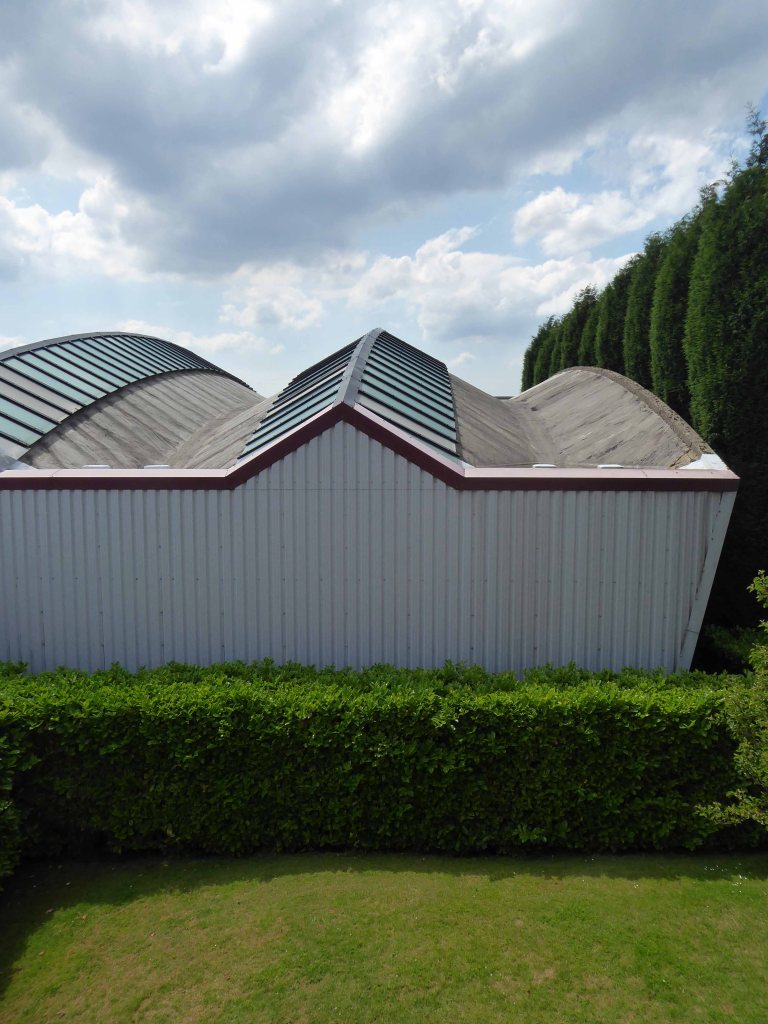
This building formed part of the later phasing of the proposed Garden Suburb of Wythenshawe. It was intended to house up to 100 double-decker buses but was put to use as a factory for components for Lancaster bombers during the war. It is included here for the functionalist qualities of the building and the acknowledgement of the daring of the City Architects Department. Academic papers, as late as 1952, cited this simple structure as exemplar of its type; Elaine Harwood notes, ‘this was the pioneering example of the means of construction, and the model for larger shells at Bournemouth and Stockwell’. The arches that support the shell have a span of over fifty metres and are spaced at twelve metre intervals. The concrete shell roof is of the short-barrel type commonly used on single span buildings such as hangars, it is uniformly around seventy millimetres thick. The only single span structure larger than this was indeed an aircraft hangar, at Doncaster Airport, demolished around 1990. This building is now in the ownership of an airport parking company that utilise it as vehicle storage; close to its original function.
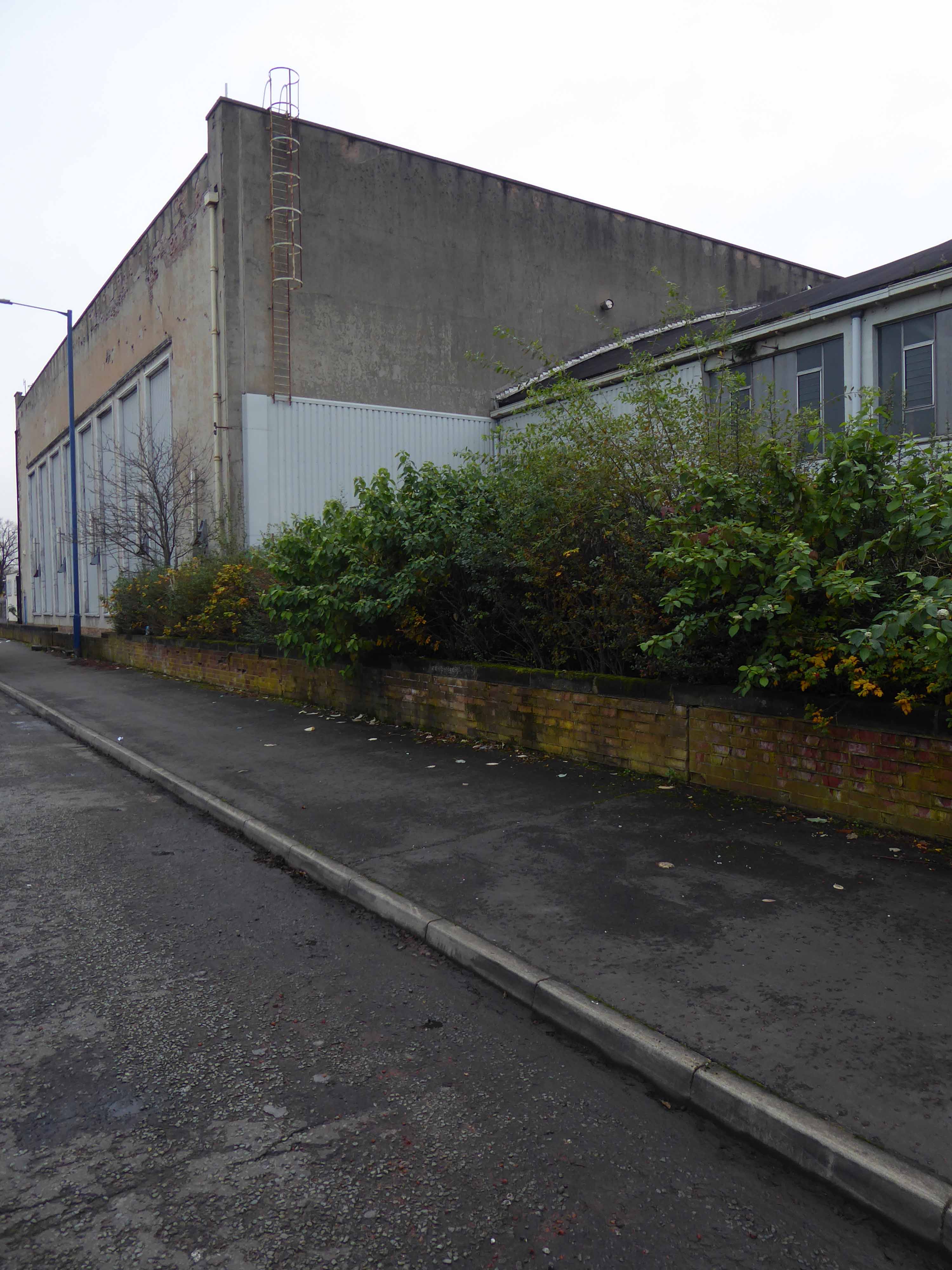
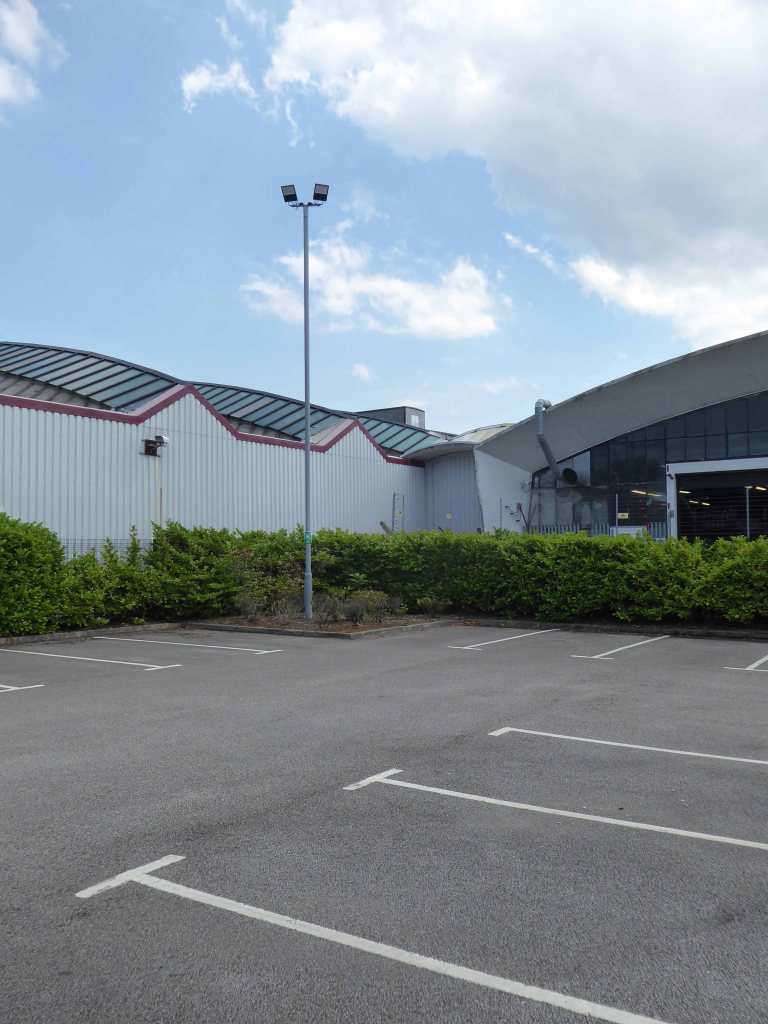
Walking from our house to Sharston, this was the furthest point west – I kept on walking towards the security gates, they opened – I snapped, they closed.
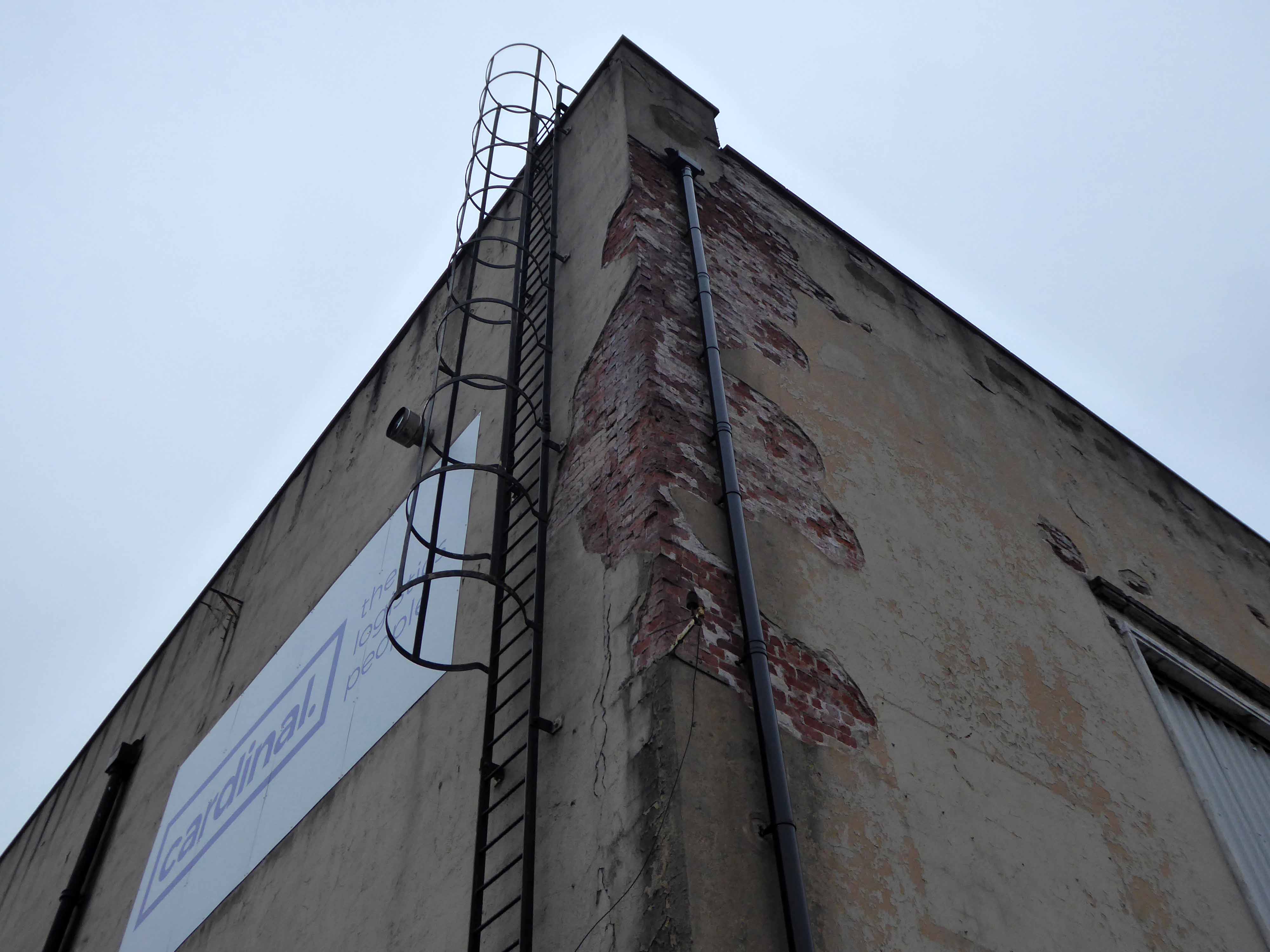
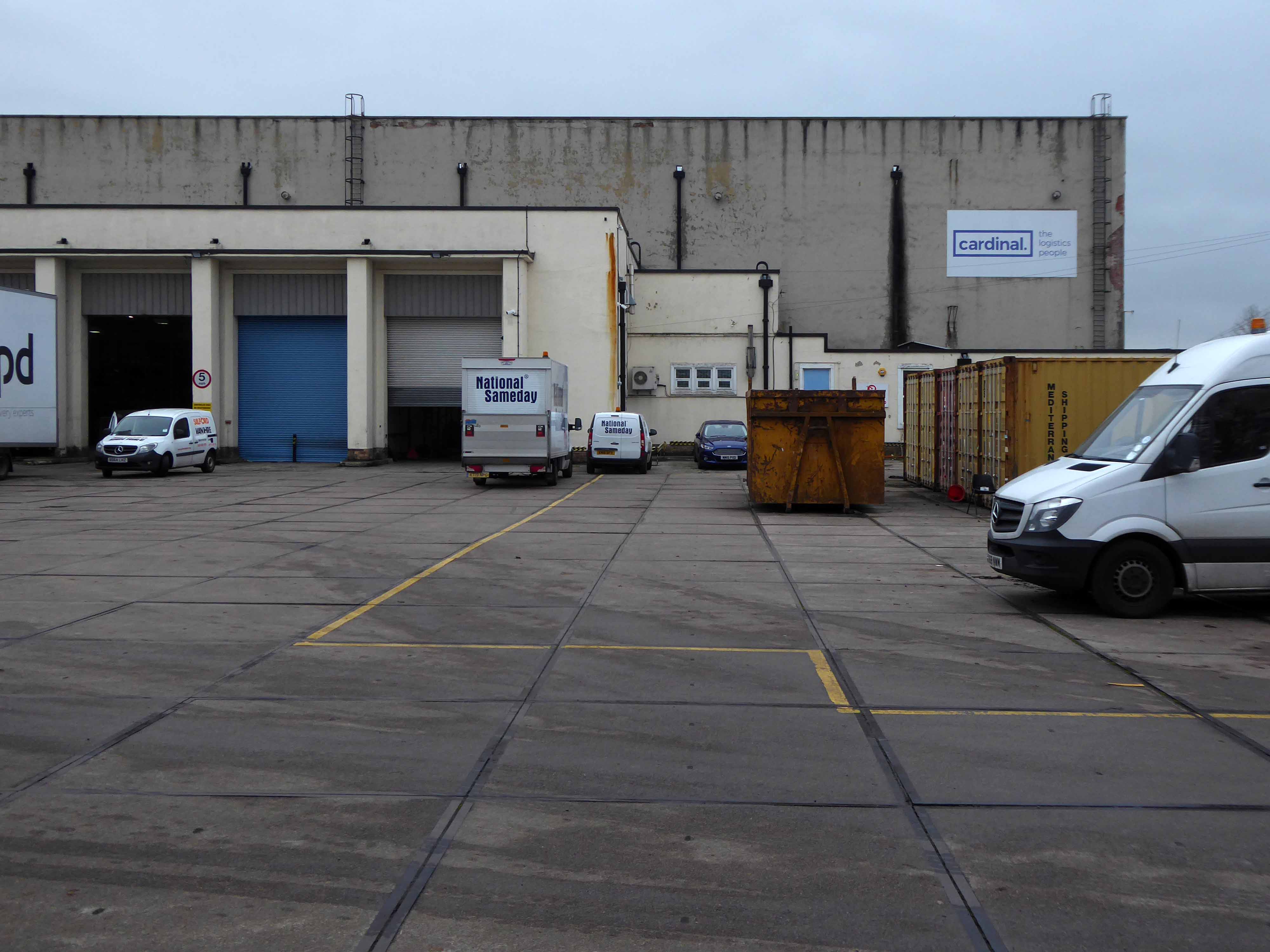
This is now the home of Manchester Airport Parking – no place for a pedestrian, I walked away, slowly circumnavigating this uplifting, uplifted behemoth.
There comes a time in everyone’s life, when one simply must go to Rotherham, at least once – so I did.
To keep company with my personal town guide, Sheffield Modernist and local resident, Helen Angell.
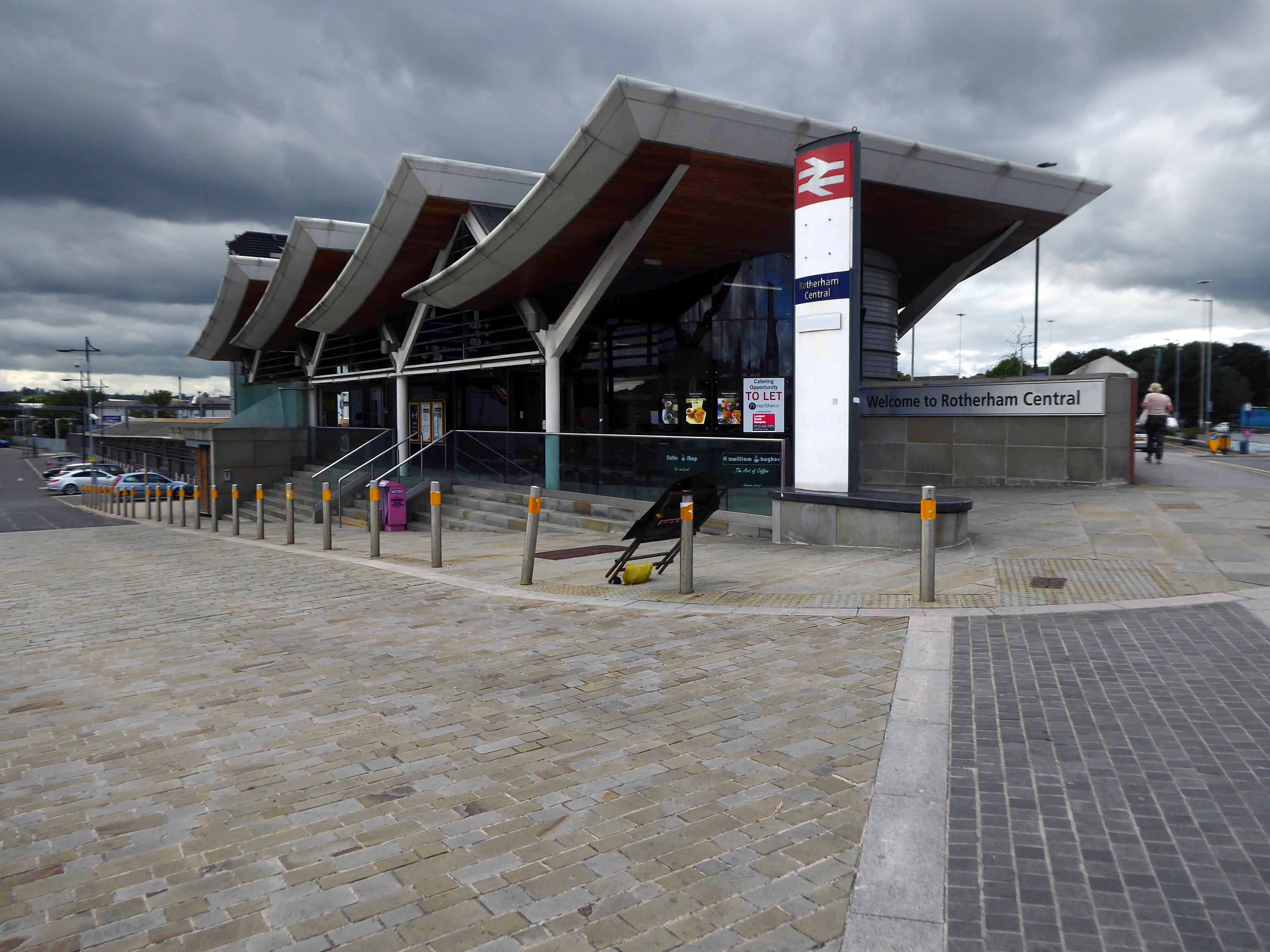
I arrived early at Rotherham Central, so went for a solo wander.
The station was originally named Rotherham, becoming Rotherham and Masborough in January 1889 and finally Rotherham Central on 25 September 1950.
The newish Rotherham Central station was opened to passengers on 11 May 1987, the present iteration on Friday 24 February 2012, as part of the Rotherham Renaissance plans for the regeneration of the town.
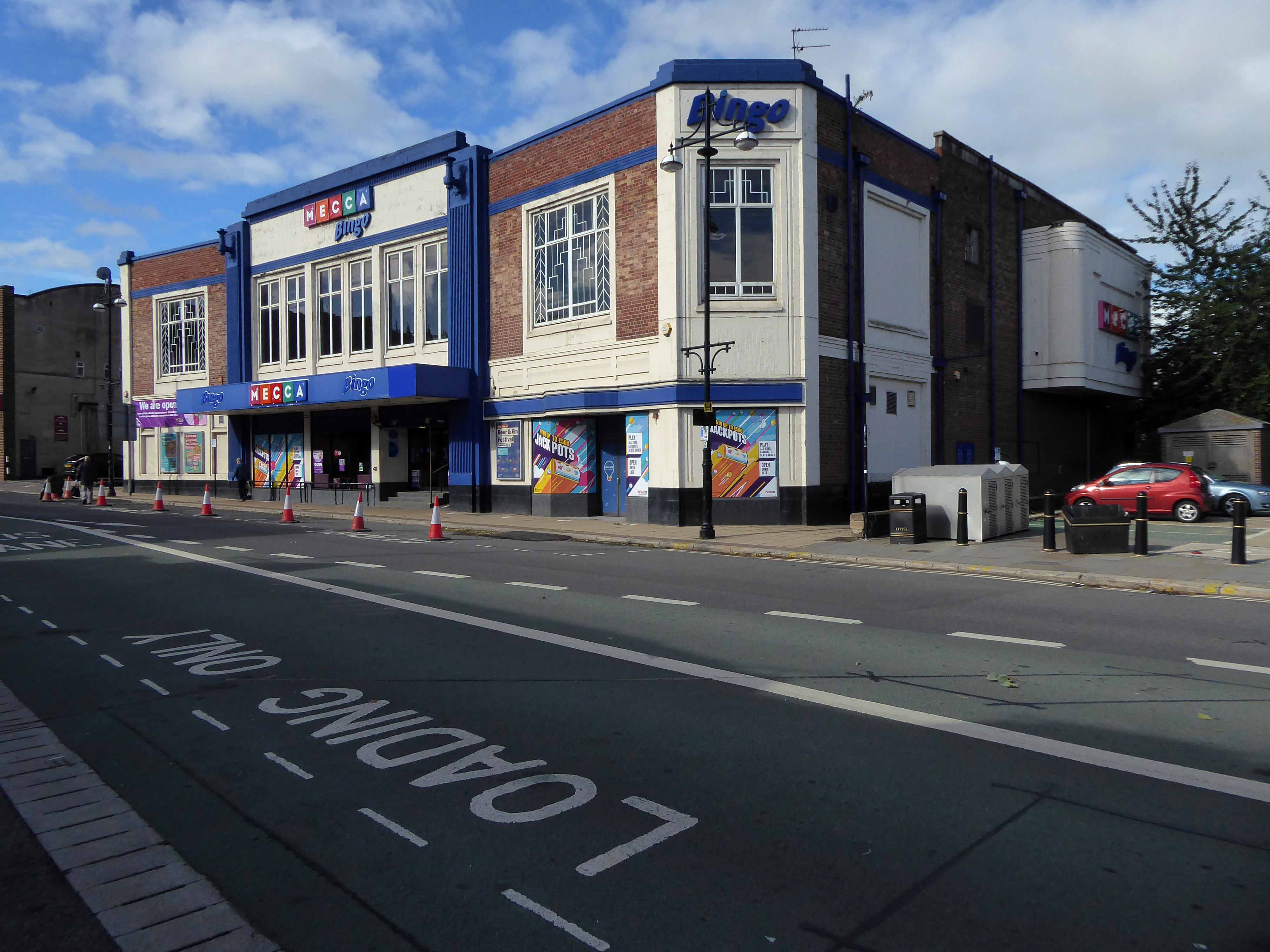
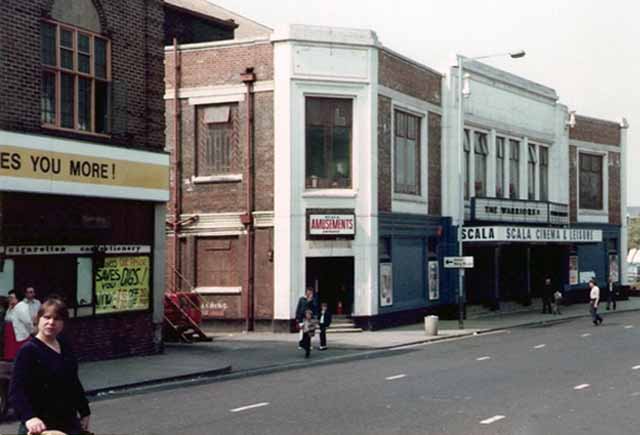
Opened 22 December 1934 as the Regal Cinema with Leslie Howard in Girls Please. Sandy Powell, the famous comedian attended opening night this 1,825 seat. It was designed by the Hull based architectural firm Messrs Blackmore & Sykes for local exhibitor Thomas Wade and was leased to the Lou Morris chain.
By 1937 it was operated by the London & Southern Super Cinemas Ltd. chain. The Regal Cinema was leased to the Odeon circuit in 1946 and was re-named Odeon. It was sold by the Rank Organisation to an independent operator in 1975 and renamed Scala Cinema, by 1981 using the circle only.
Closed 23rd September 1983 with the film Porky’s.
Became a bingo hall initially named Ritz but now Mecca. On 20th February 2020 the building was put up for sale by auction at an asking price of £600,000+, but failed to sell, with the maximum reached £590,000. Mecca bingo continues in the building.
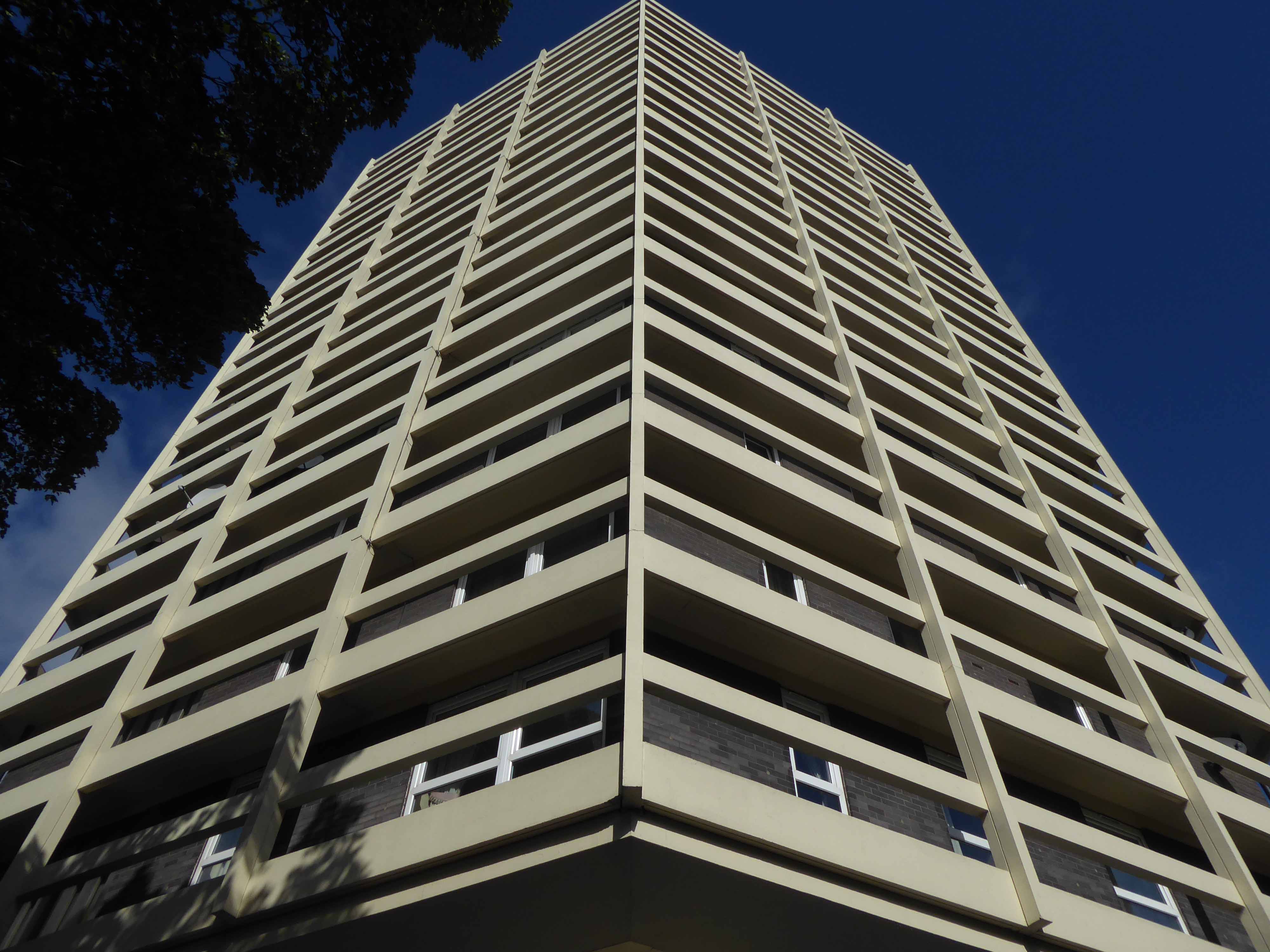
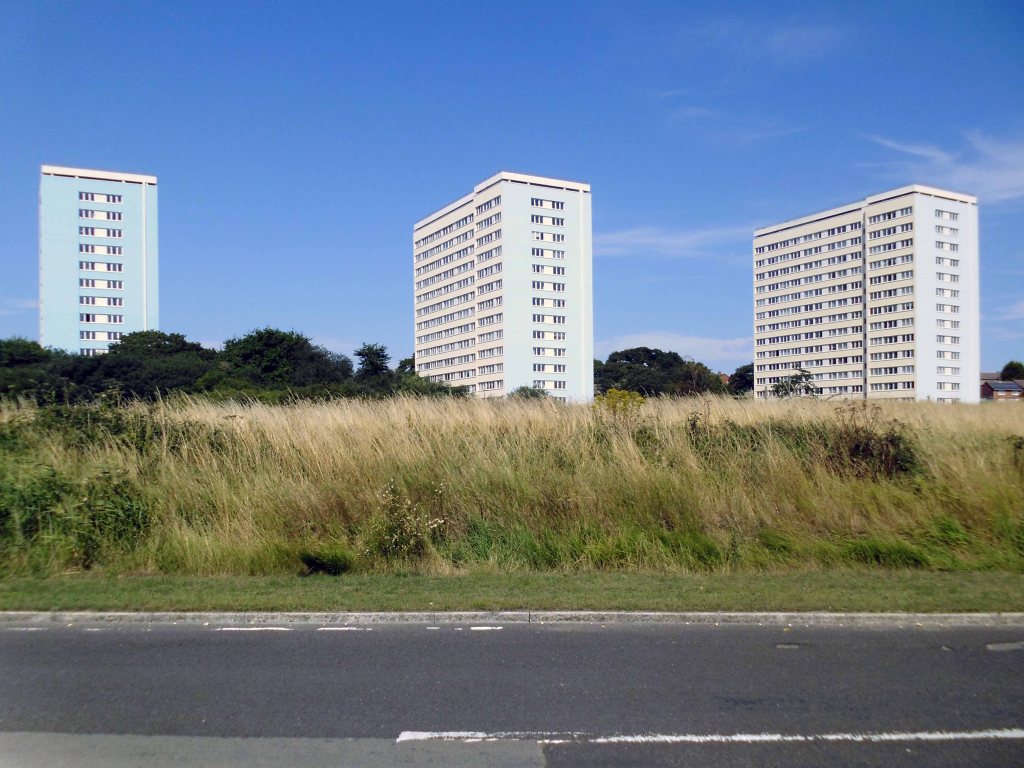
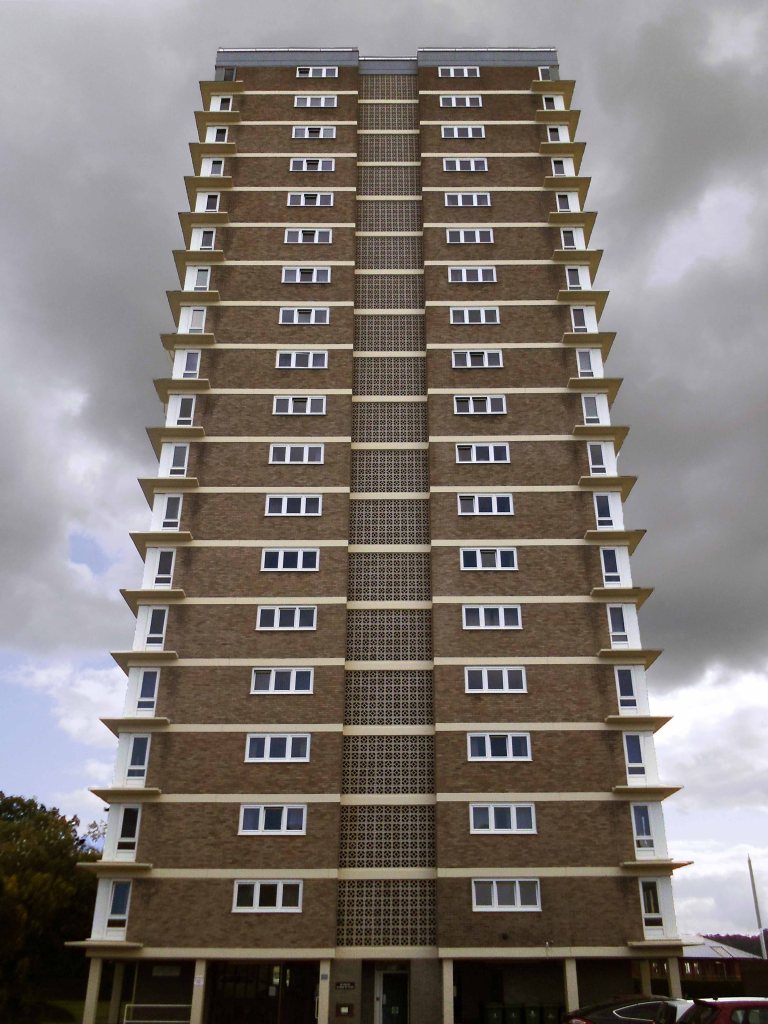
Main contractors J. Finnegan it’s thirteen storeys high – housing forty eight dwellings.
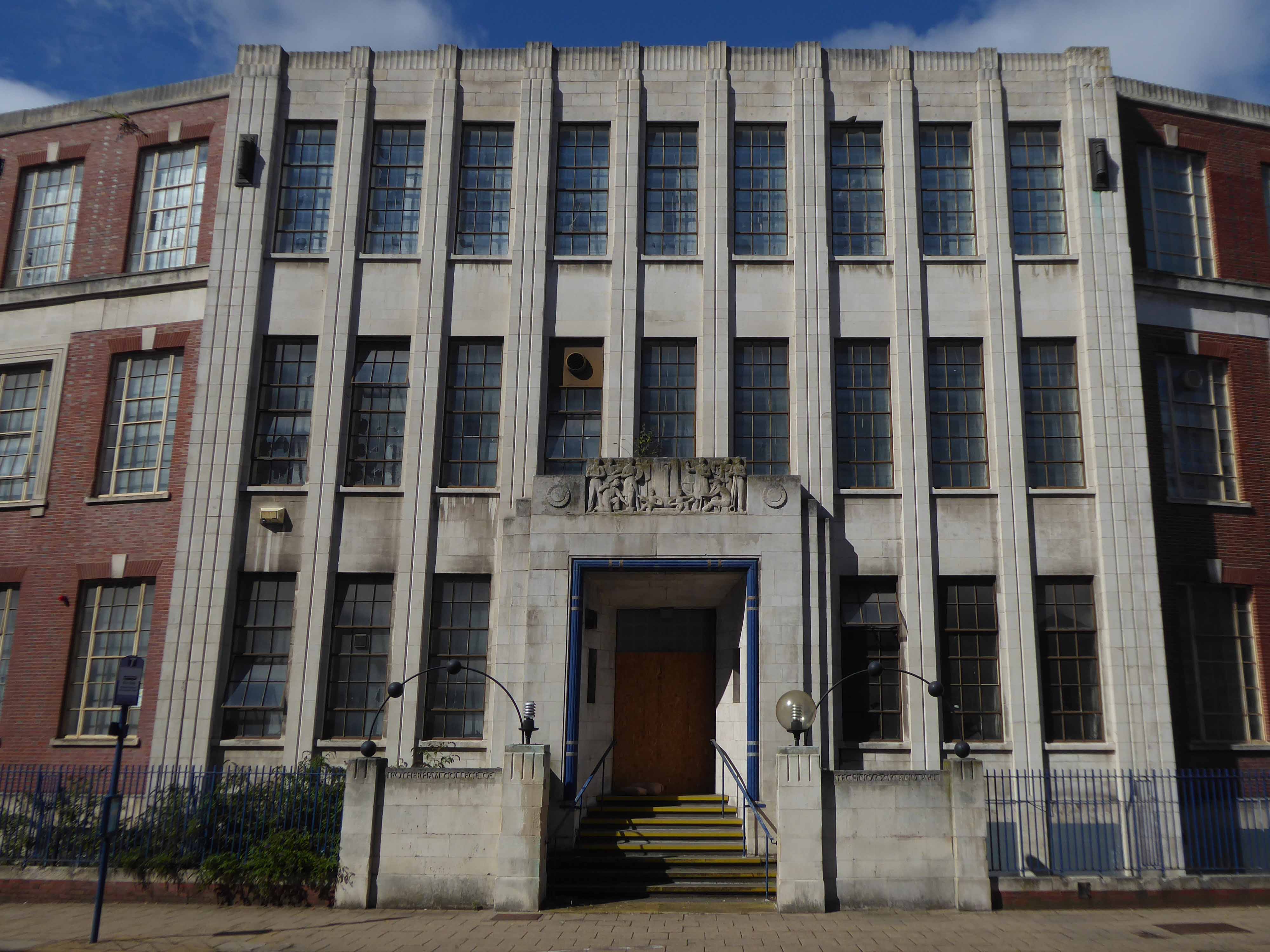
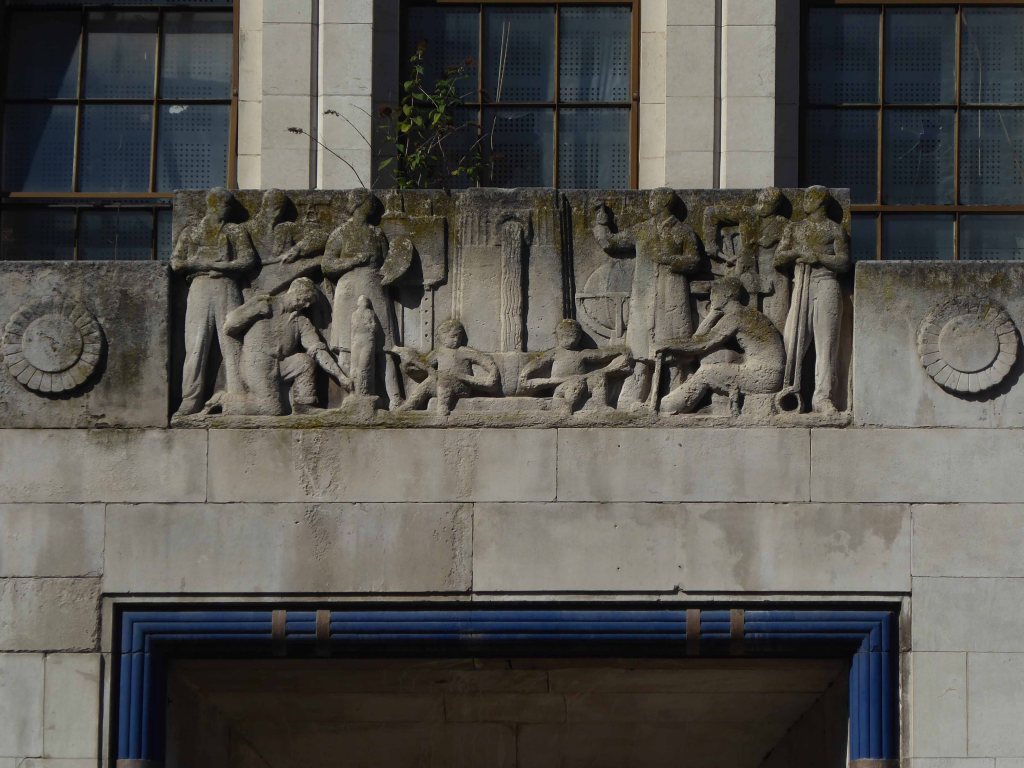
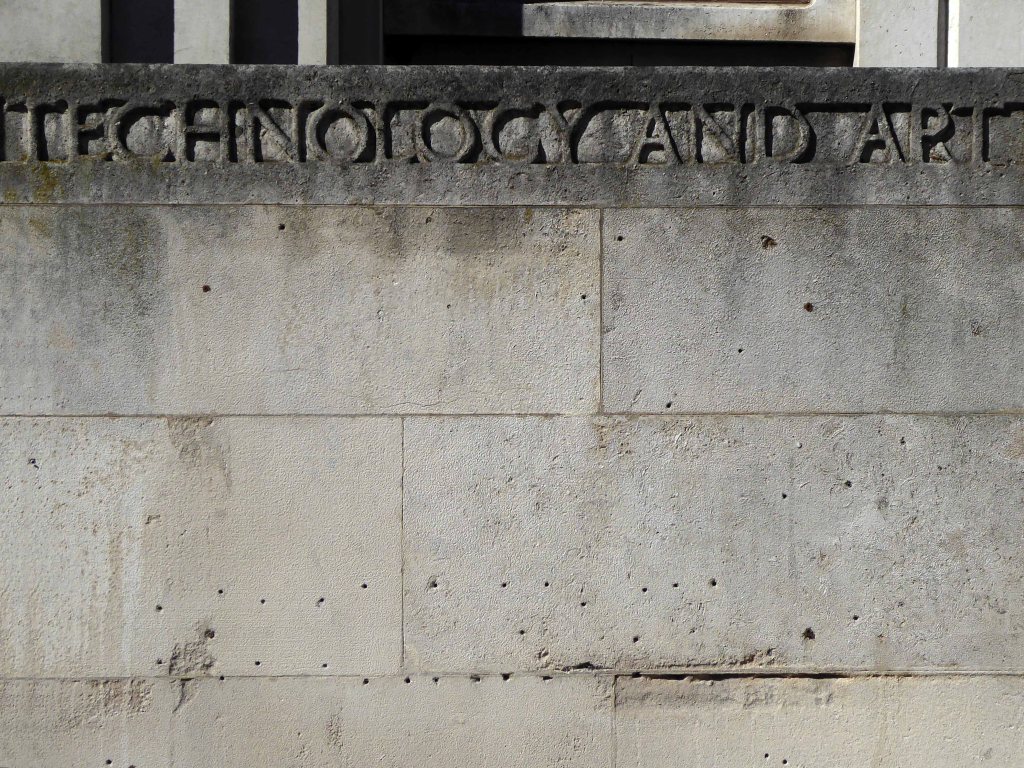
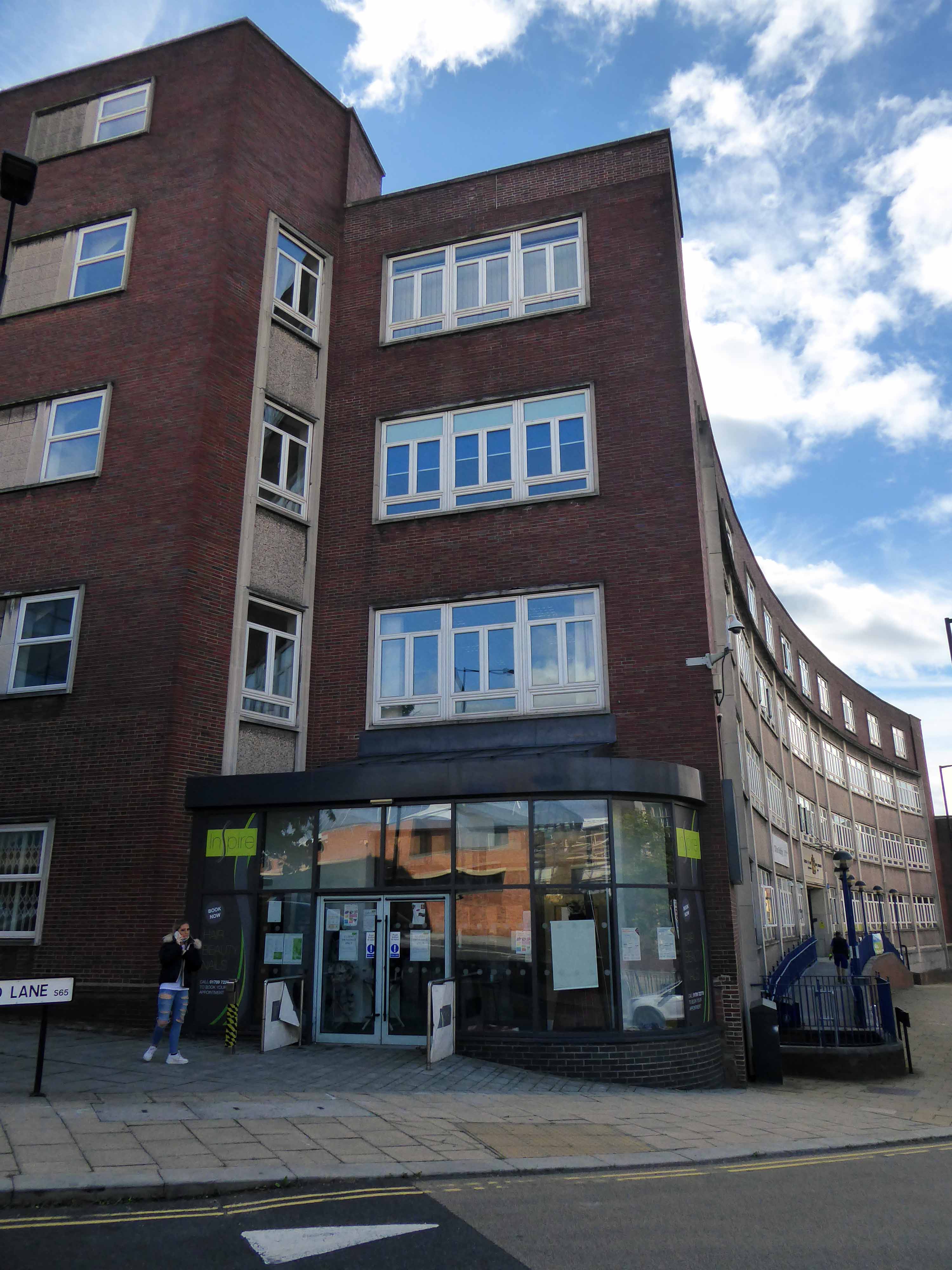
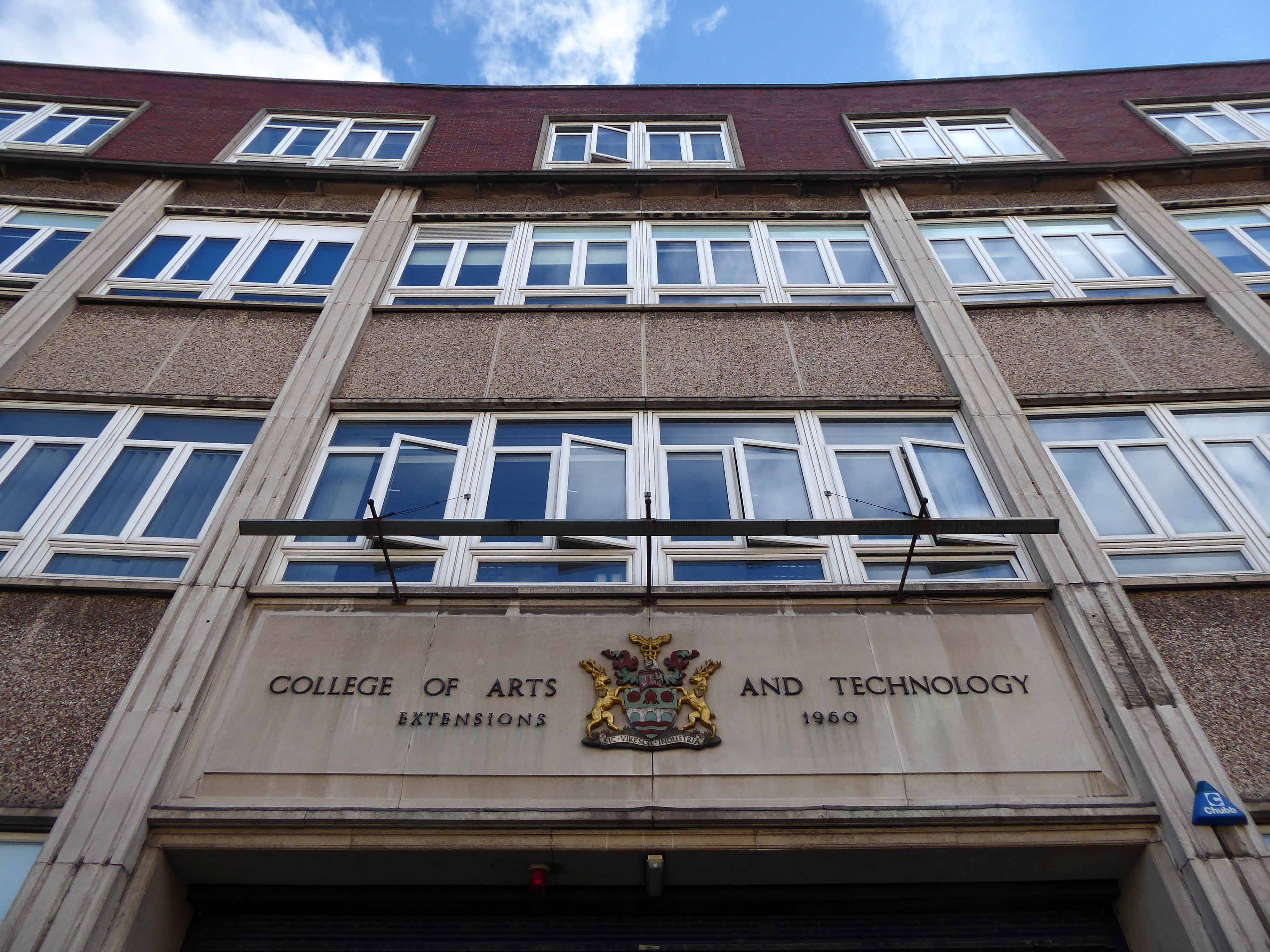
Interwar Technical College – Howard Building
From the 1930s, it provided technical-orientated education from the Howard Building on Eastwood Lane, Rotherham. In 1981, three neighbouring colleges of arts, technology and adult education were merged into one. As a result, the college became known as Rotherham College of Arts and Technology.
Revised plans to convert the historic Howard Building in Rotherham town centre into self-contained studios and apartments have been approved by the planning board at Rotherham Council.
The prominent former college building was sold prior to going to auction last September after it was advertised as a development opportunity and given a guide price of £250,000 by local auctioneers, Mark Jenkinson & son.
A group of rogue property directors with links to a prominent derelict building in Rotherham have been banned for a total of 54 years. The six, of Absolute Living Developments, were found to have misled more than 300 people to invest at least £12 million in residential properties.
The firm was linked through a lender to Avro Developments, which had plans passed in 2015 to renovate former college block the Howard Building in Rotherham town centre.
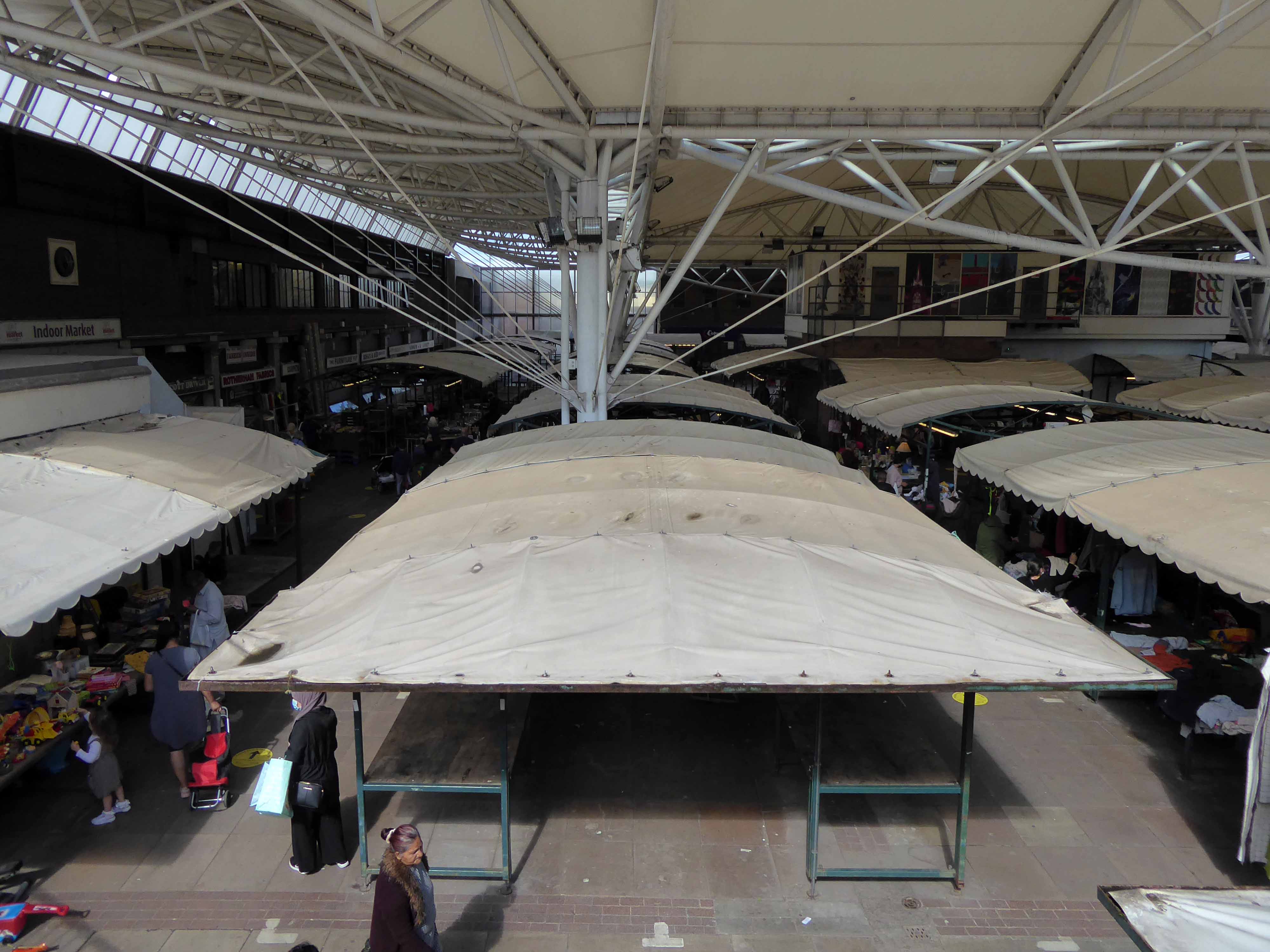
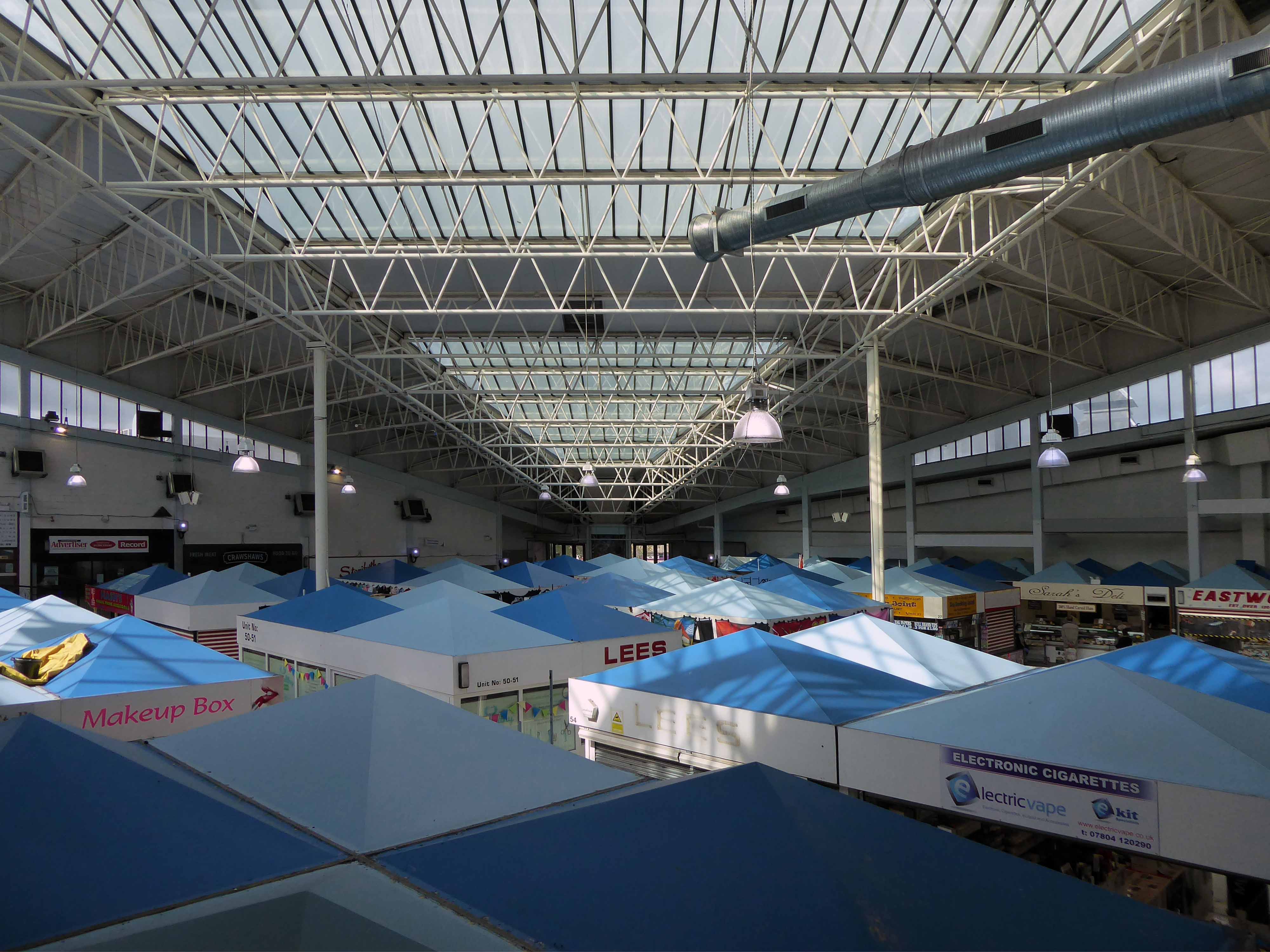
With a strident high tech canopy, very recently added – though Rotherham’s history stems back 800 years when it is thought that the original royal market charter was granted by King John in the year 1207.
There are traces of the 1970’s rebuild.
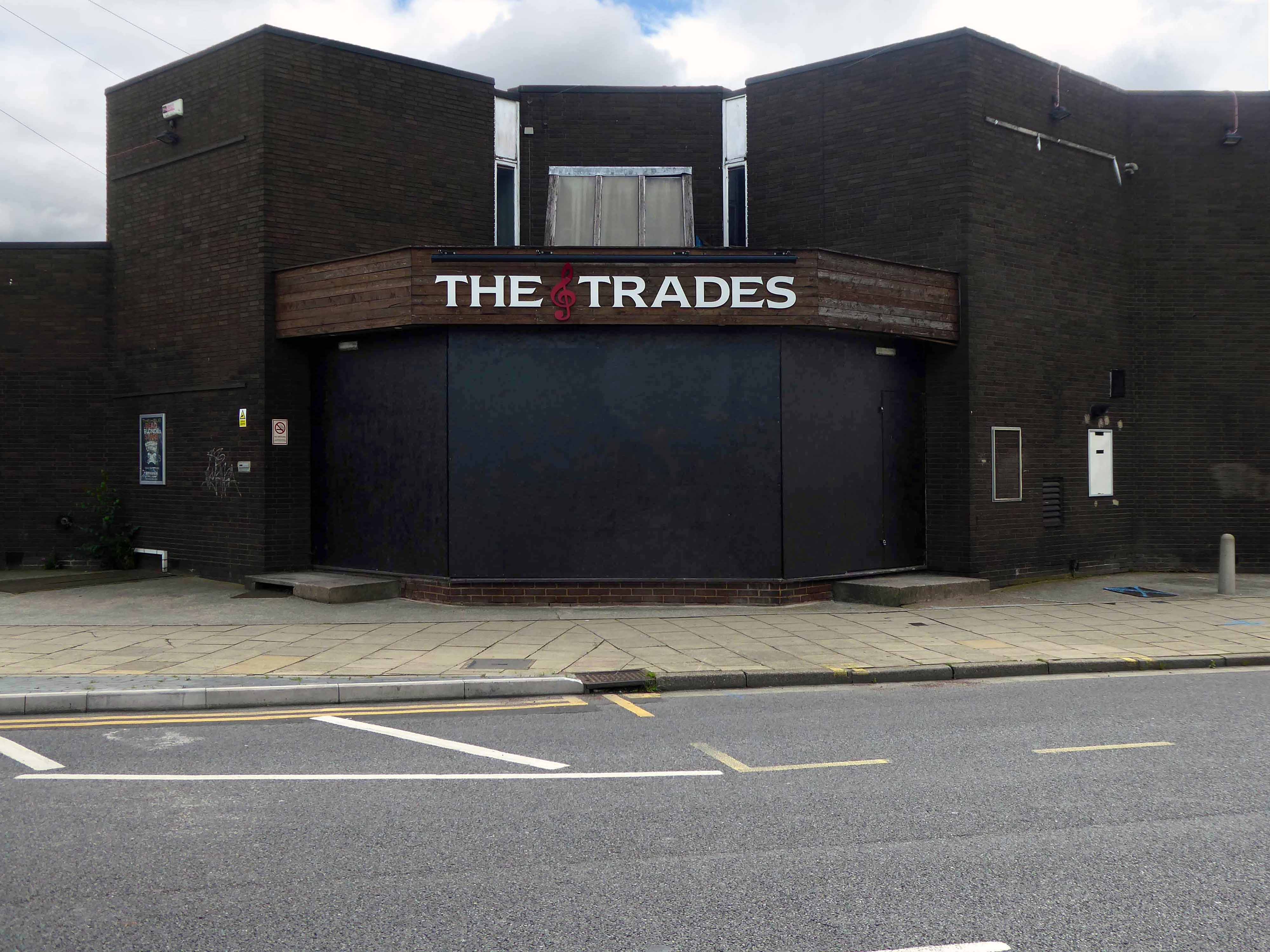
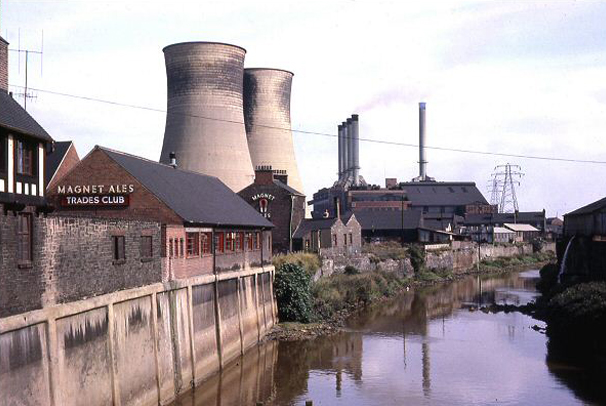
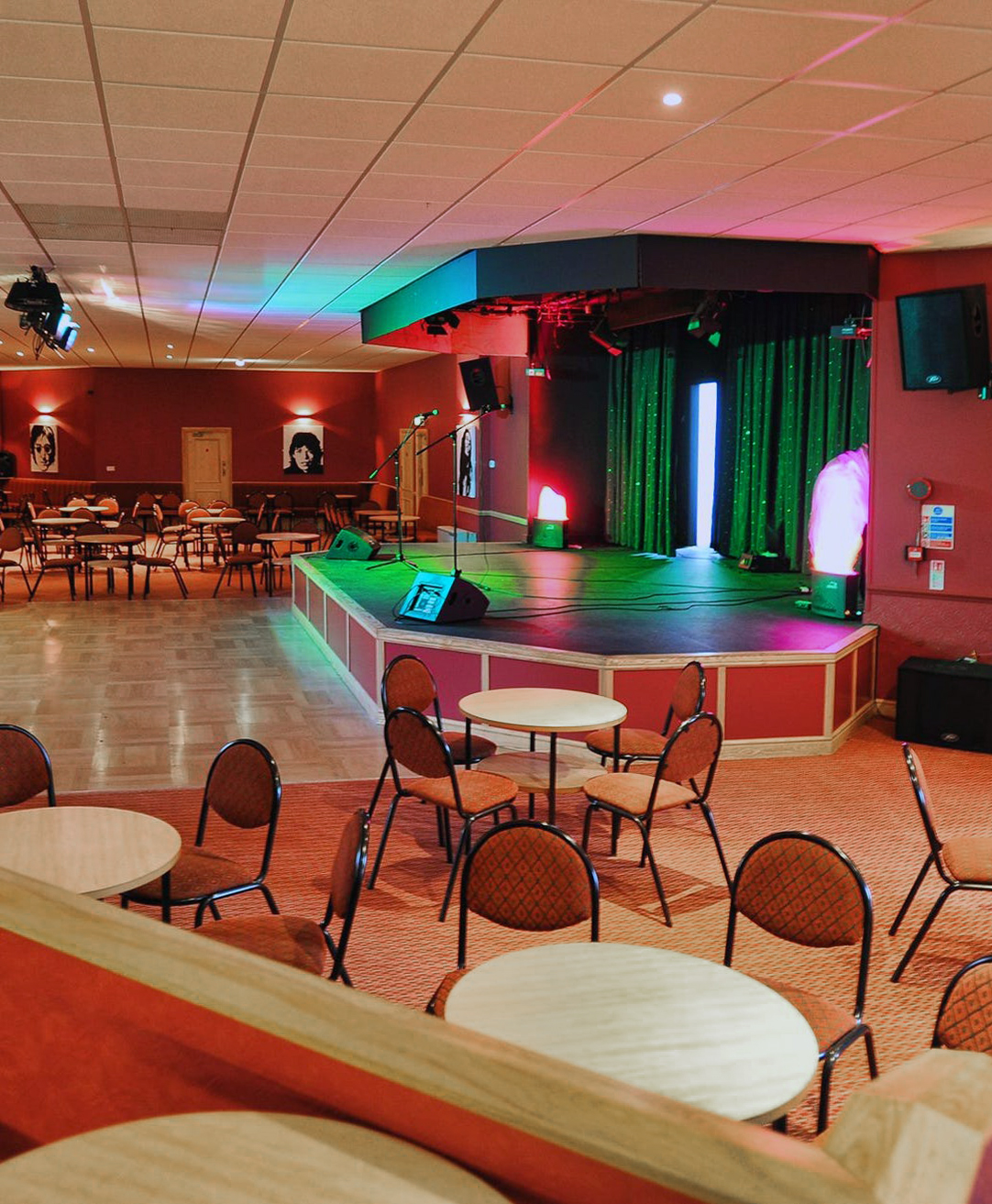
Bunker-like The Trades former music venue/pub, which replaced the former riverside Trades Club.
The PA now silenced.
This was an amazing event. The bands were really good and the drinks offers, while limited, were good. The ceiling in the ladies toilets had fallen through and was dripping, presumably there had been a leak from all the rain, but this didn’t lessen the awesome experience.
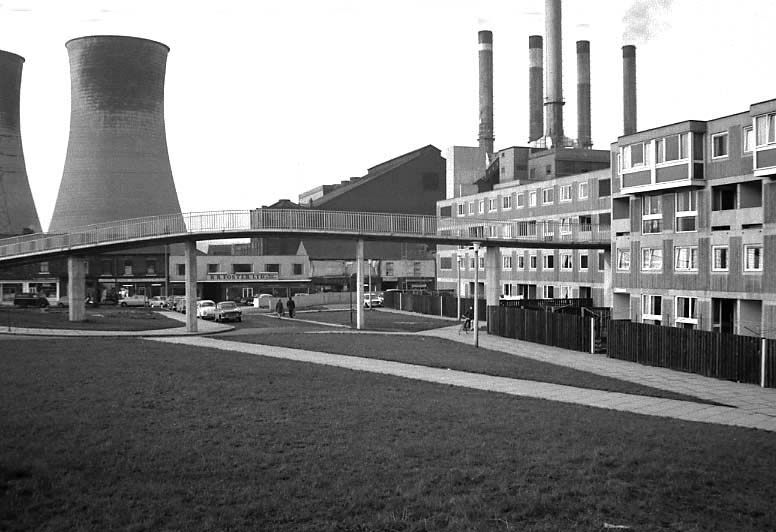
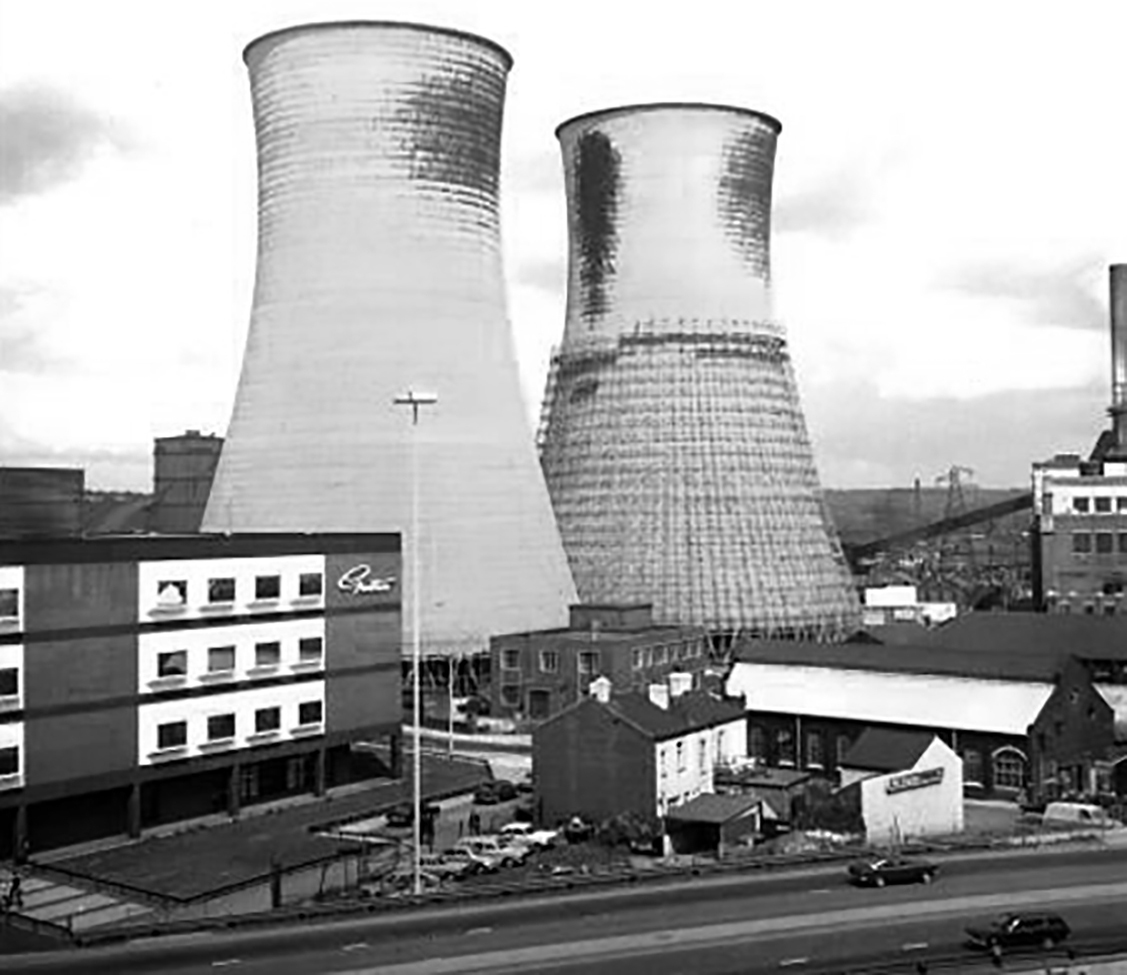
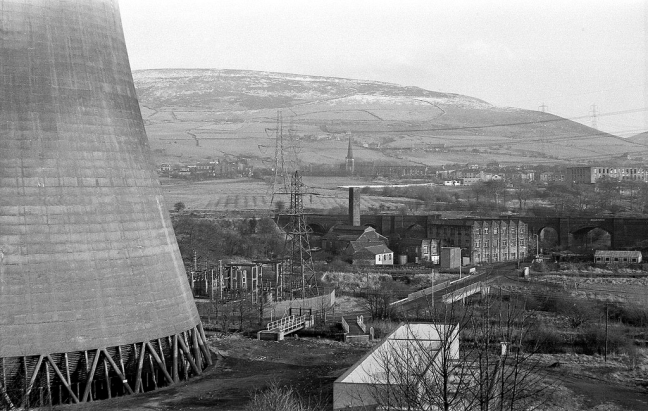
The cooling towers and flats are long gone – the coal-fired power station operated from 1923 until October 1978.
The Prince of Wales Power Station in Rotherham was located on Rawmarsh Road and was opened by the Prince of Wales – the future King Edward VIII.
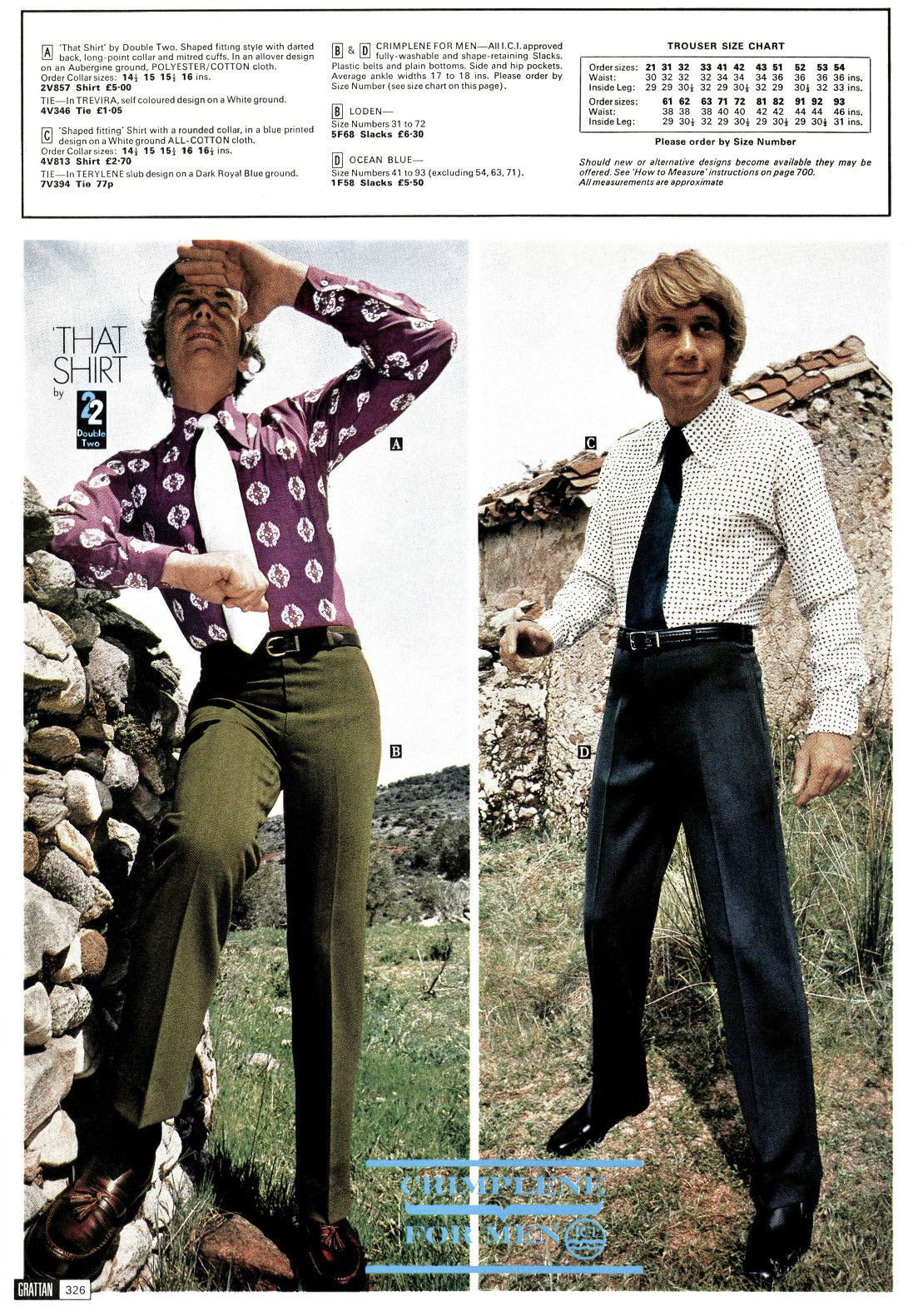
The former Grattans catalogue offices can be seen to the left.
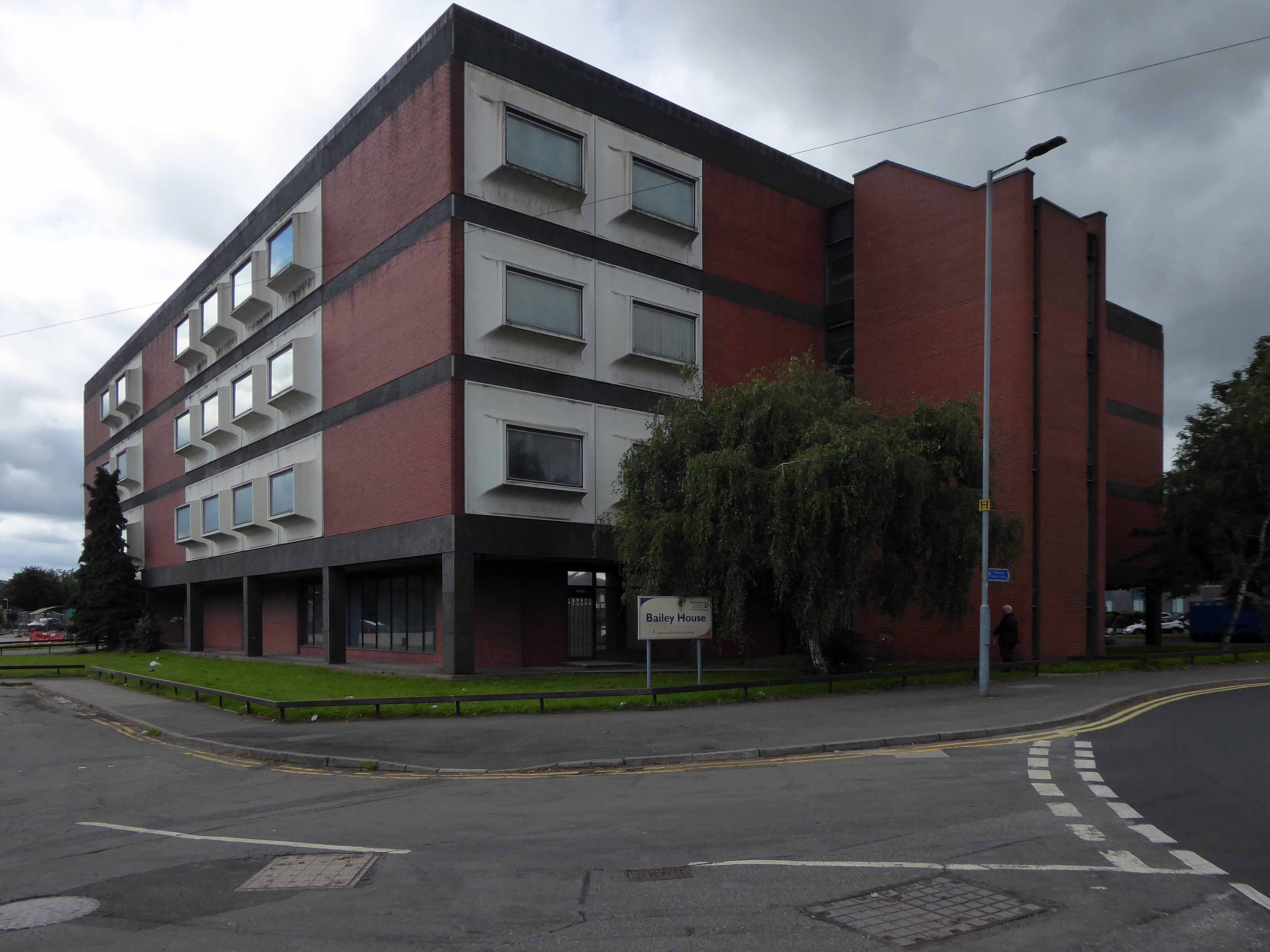
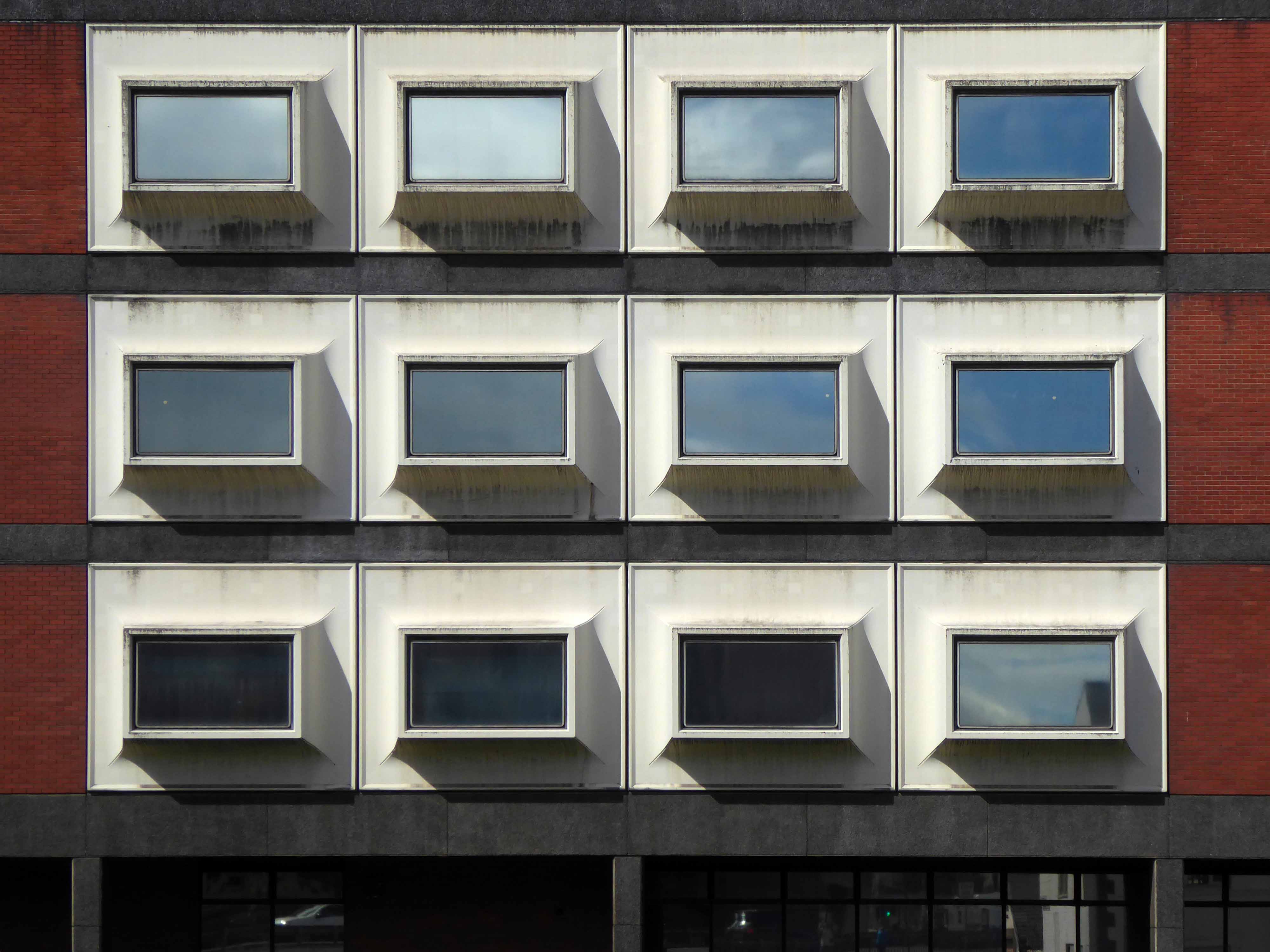
Renamed Bailey House and still in use by the local authority, its days it seems are numbered.
The building is named after Rotherham-born engineer Sir Donald Bailey whose ingenious bridge designs played a key role in shortening World War II, the house in which Bailey was born, 24 Albany Street is still standing.
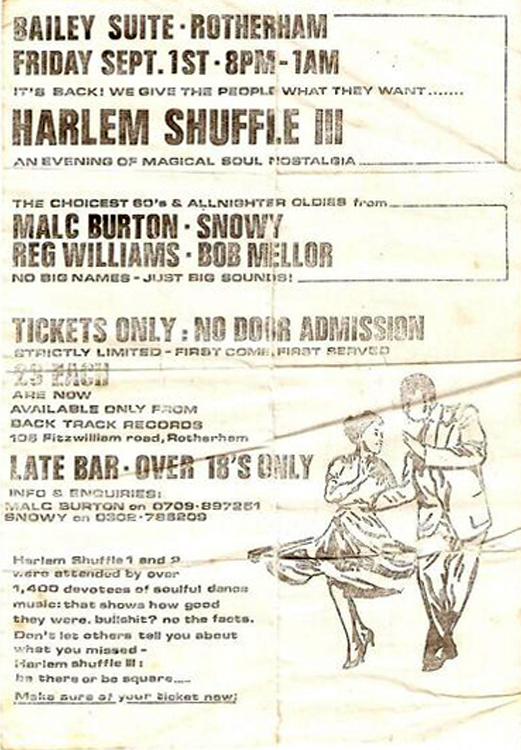
Sadly no longer home to the Harlem Shuffle
No big names – just big sounds.
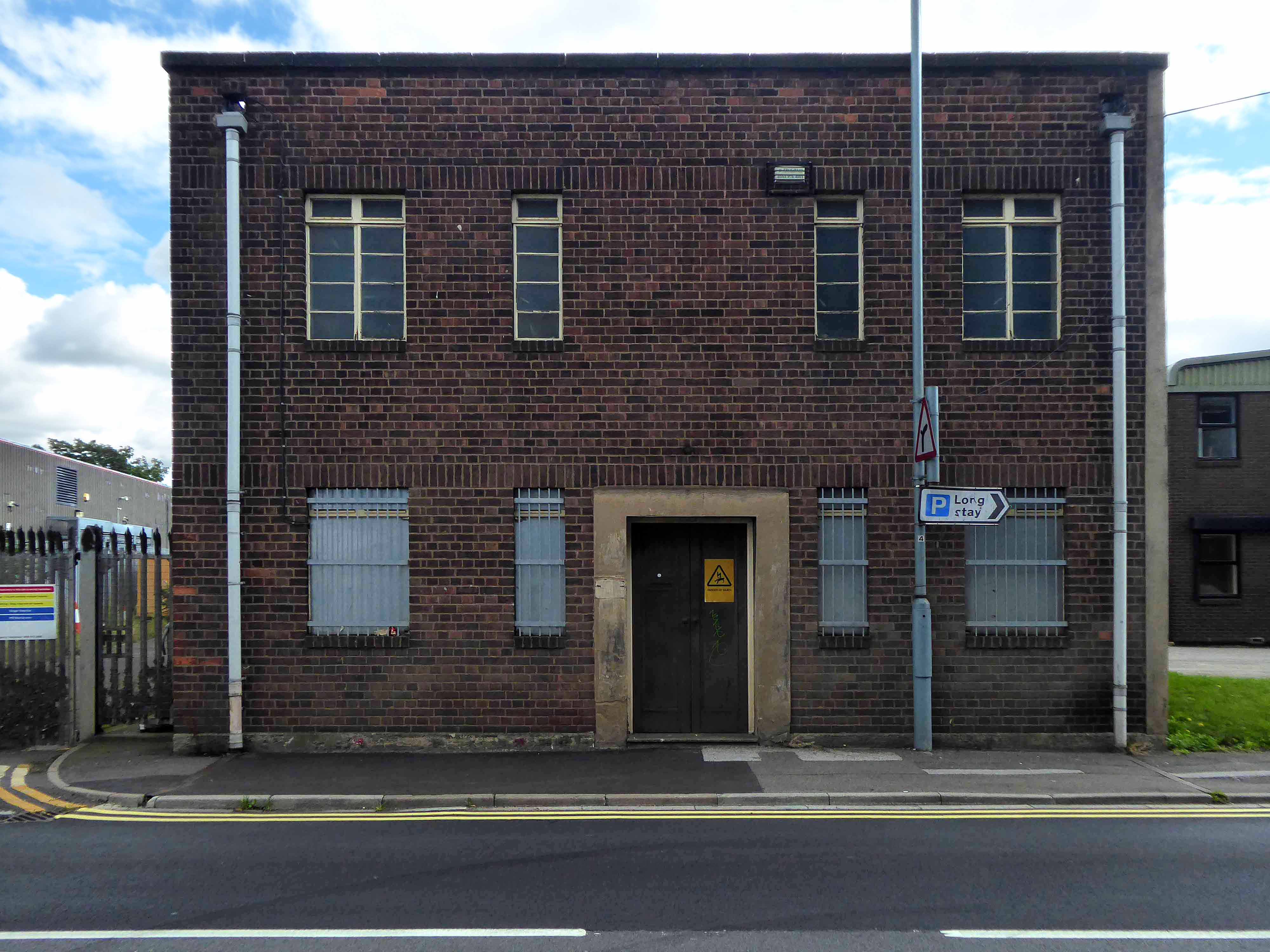
There are some surviving power station buildings.
Along with electrical infrastructure.
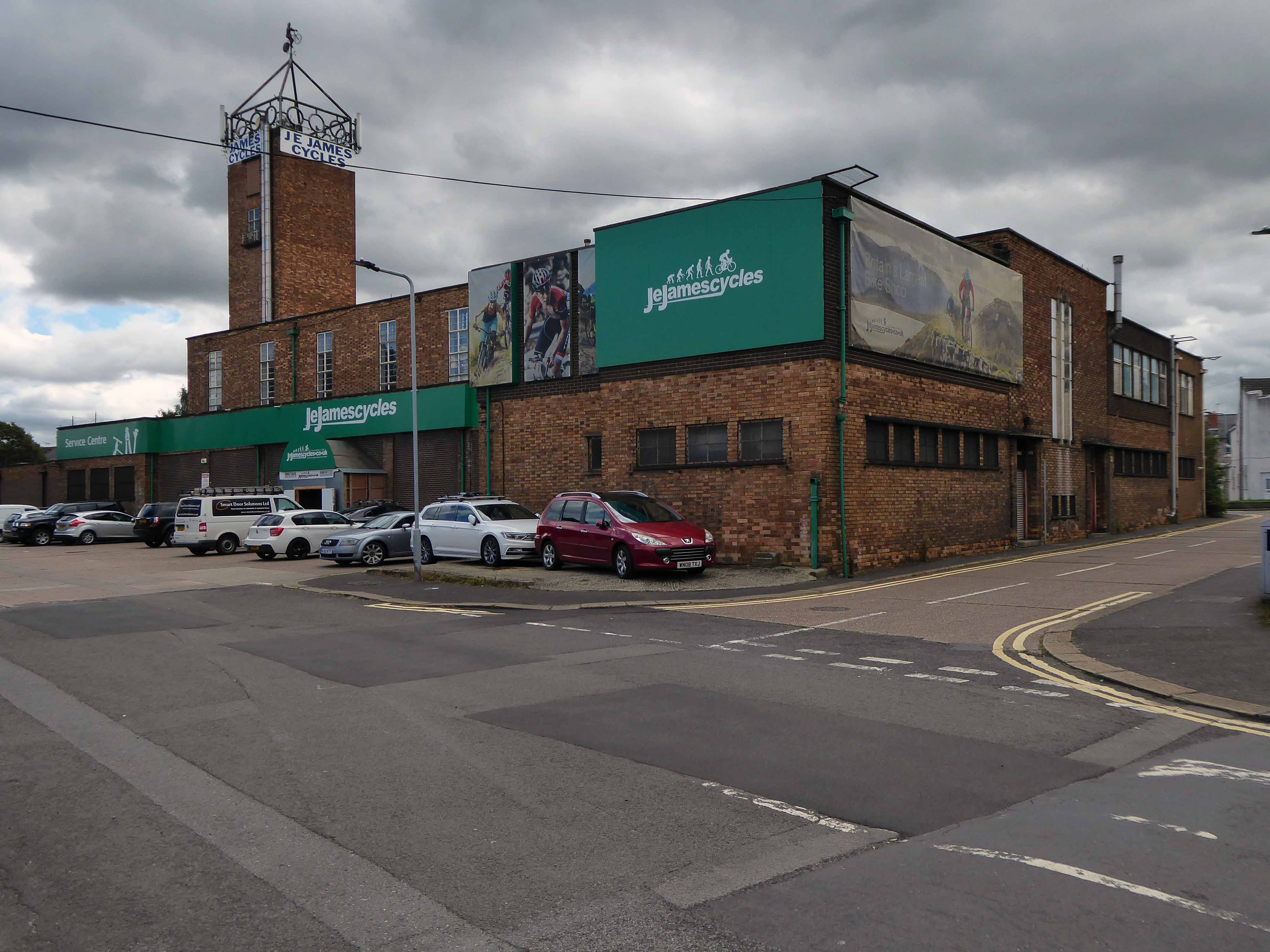
Up the road next, to the former fire station, which now houses J E James Cycles.
It is surrounded by typically atypical inter war housing.
I could make the wild assumption, that these flat roofed maisonettes were originally homes fit for firefighters.
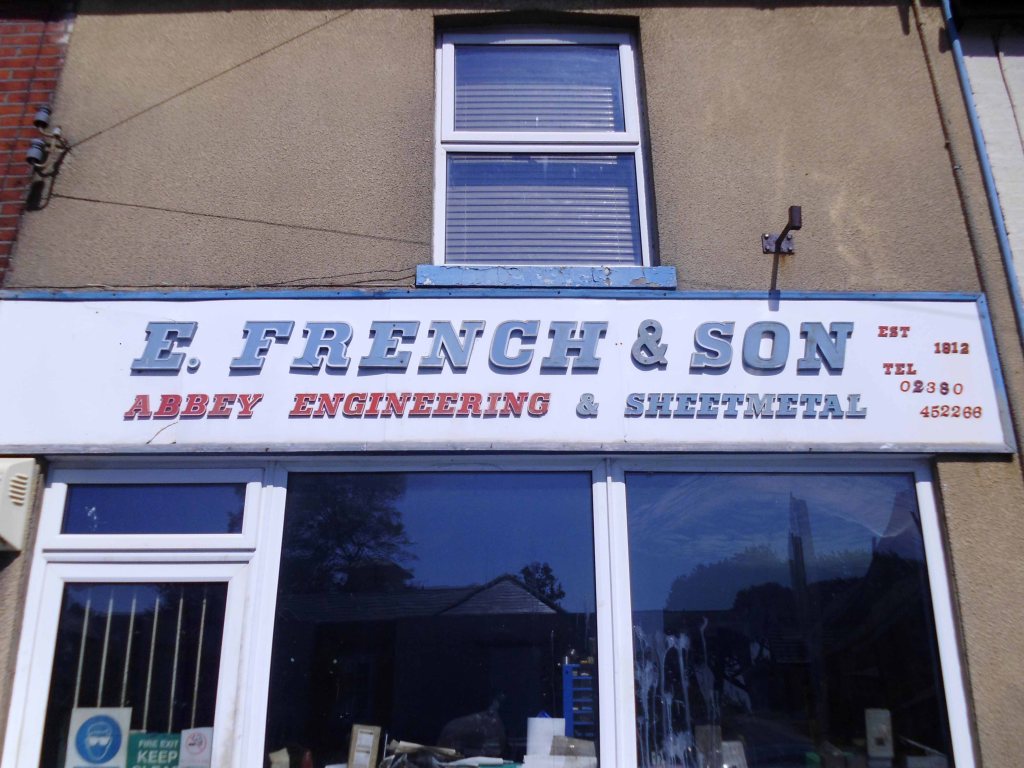
With a final notable note regarding Rotherham’s hand painted council commissioned signage – I’d like to think that they have a sign writer in their employ.
Many thanks to my learned companion Helen – thanks for a fine day out, so much to see and do!
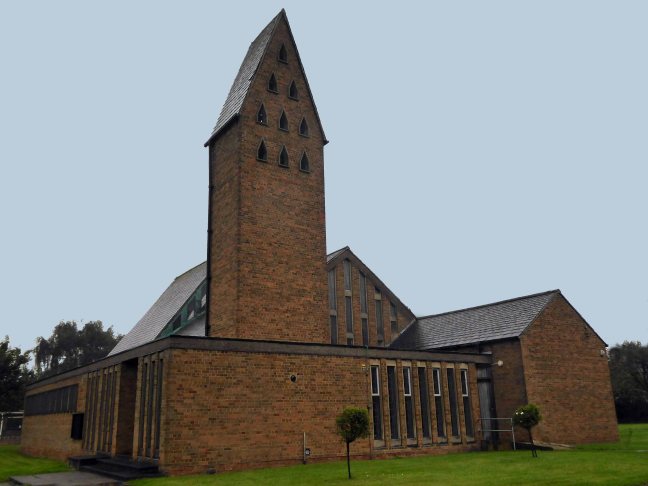
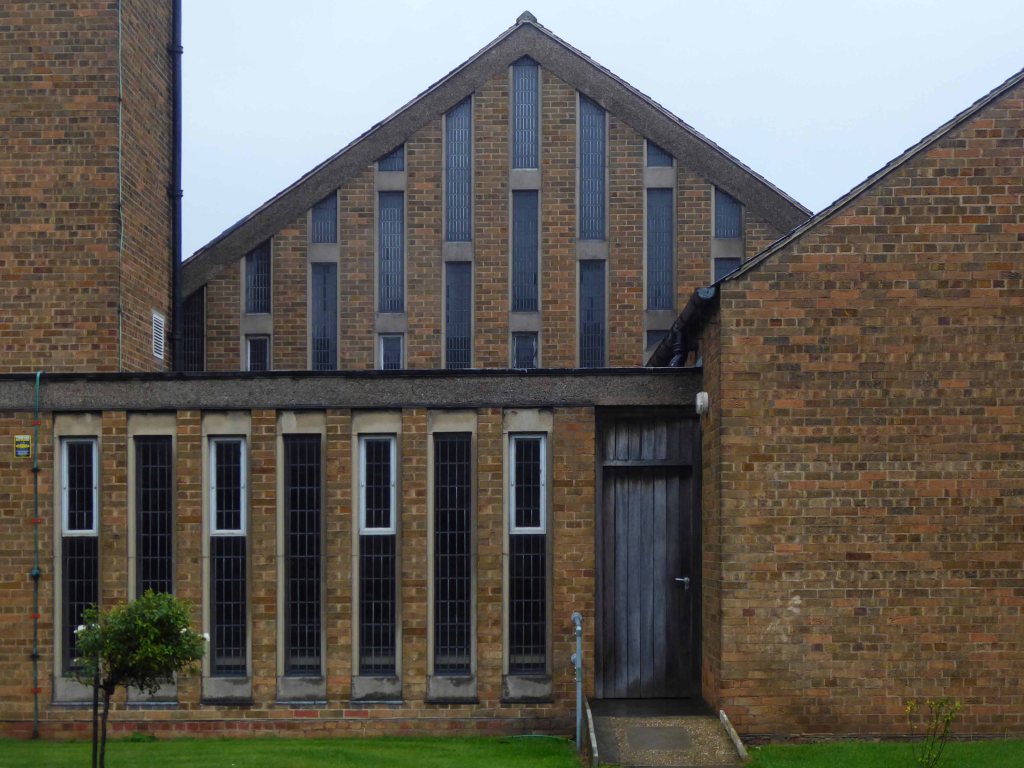
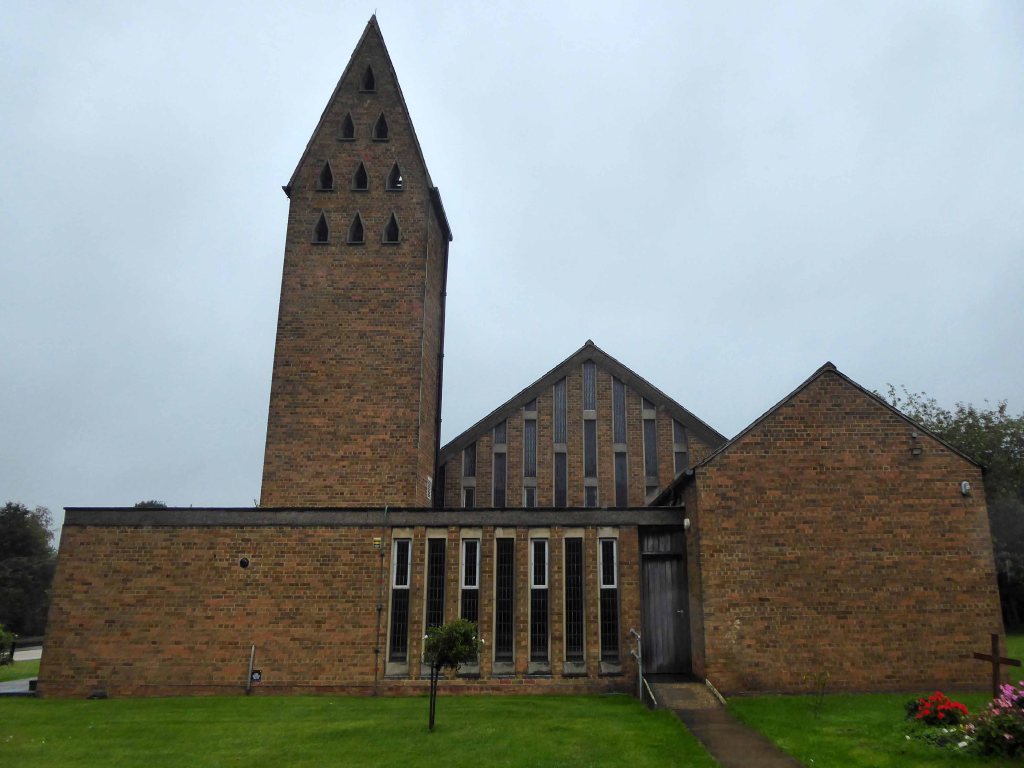
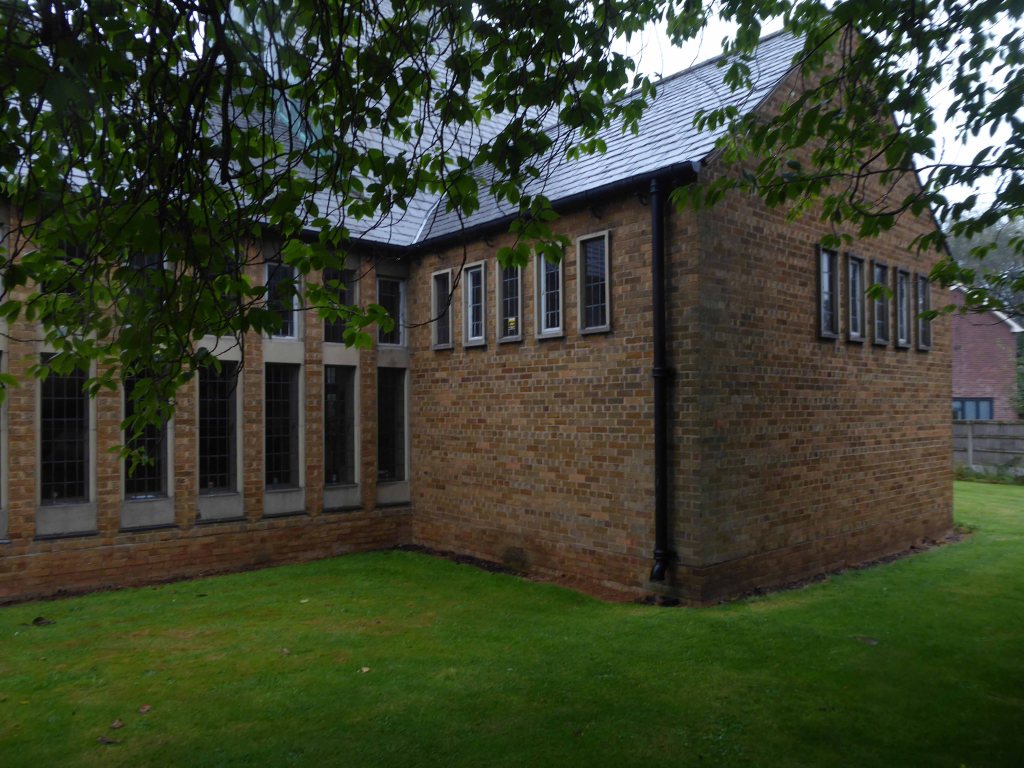
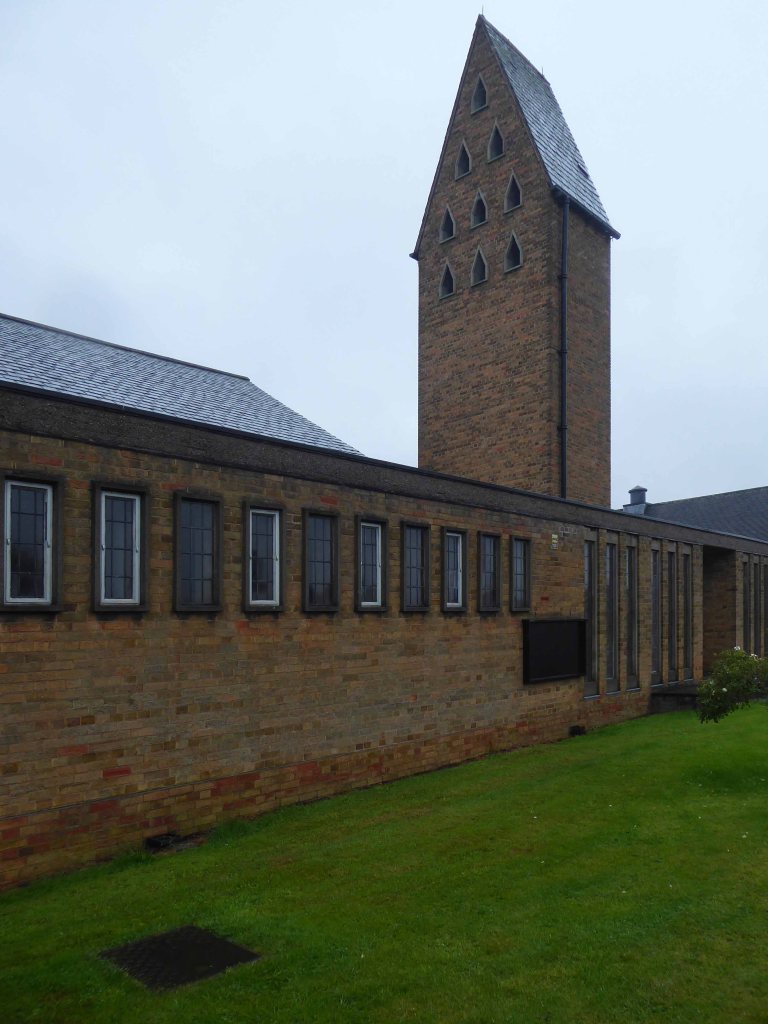
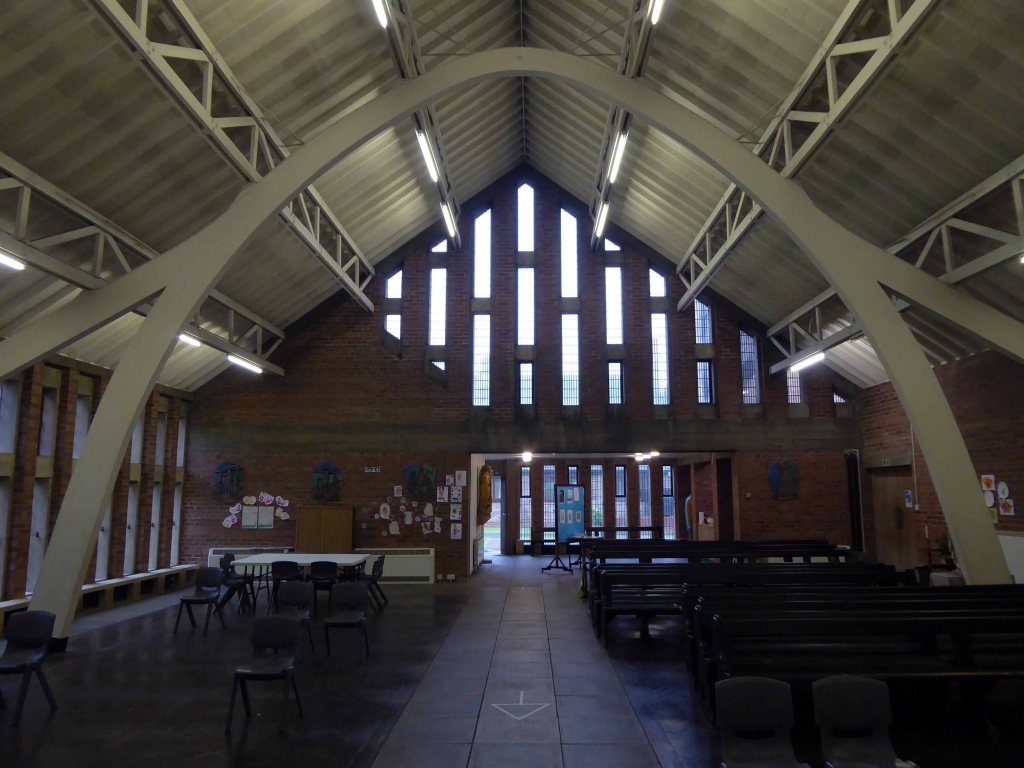
They are all built in his distinctive manner, brick and concrete, steel, wood and glass. Often working within tight budgets, respectful of the Christian Church’s early heritage, expressing mass and volume with simple geometry.
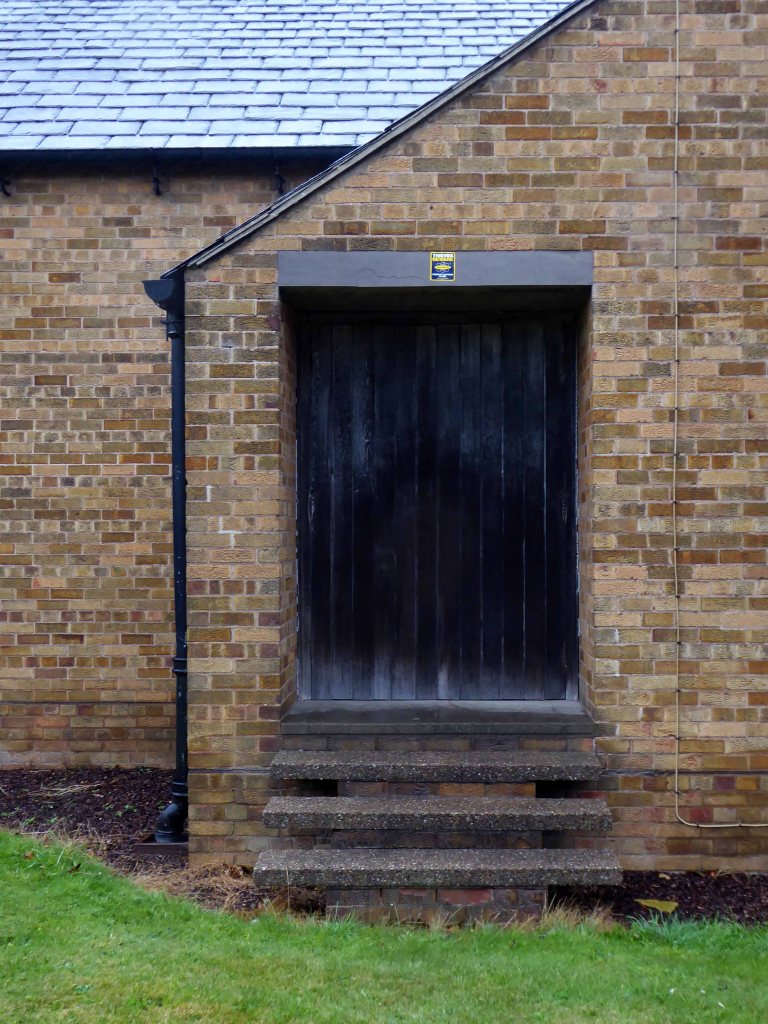
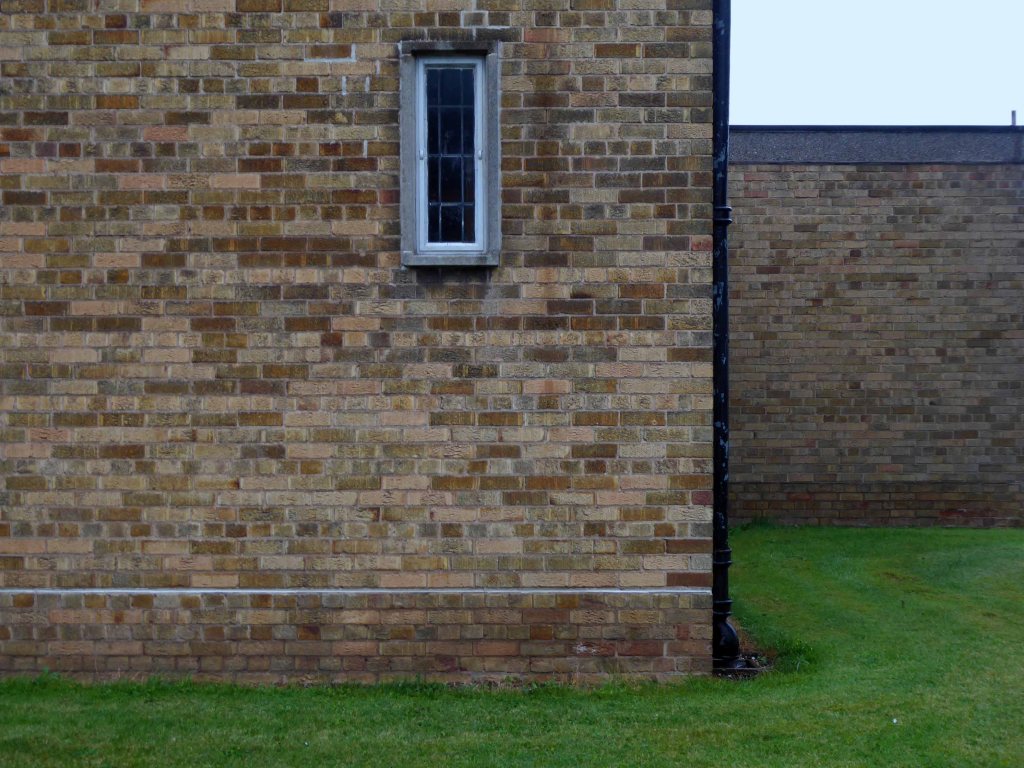
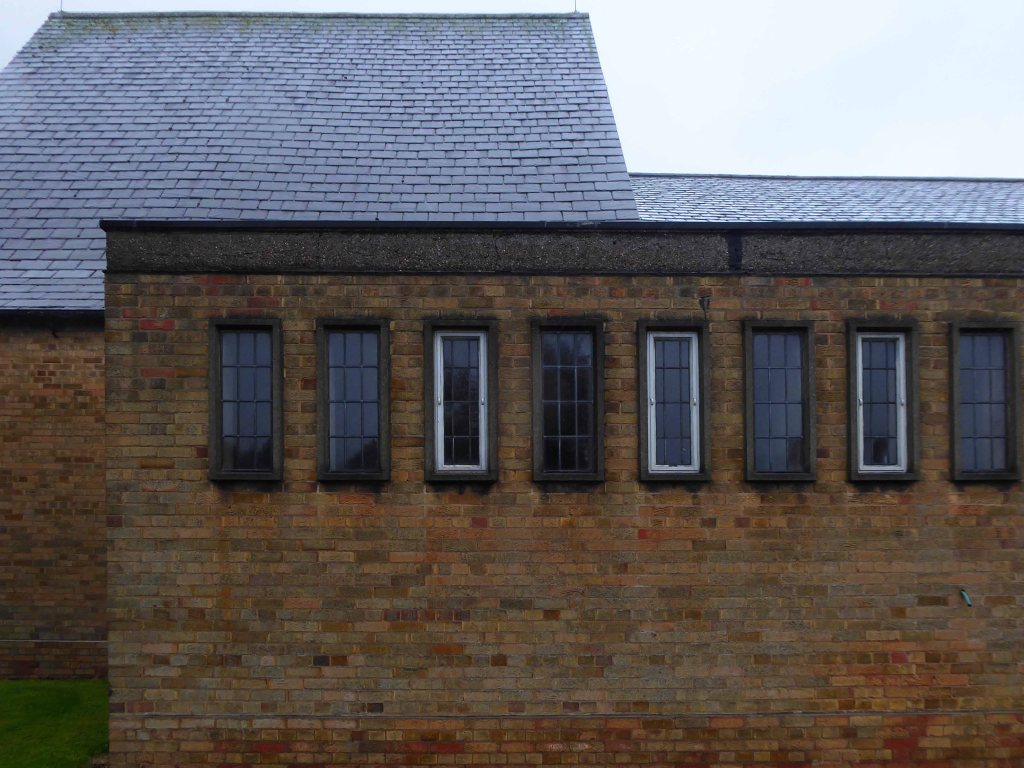
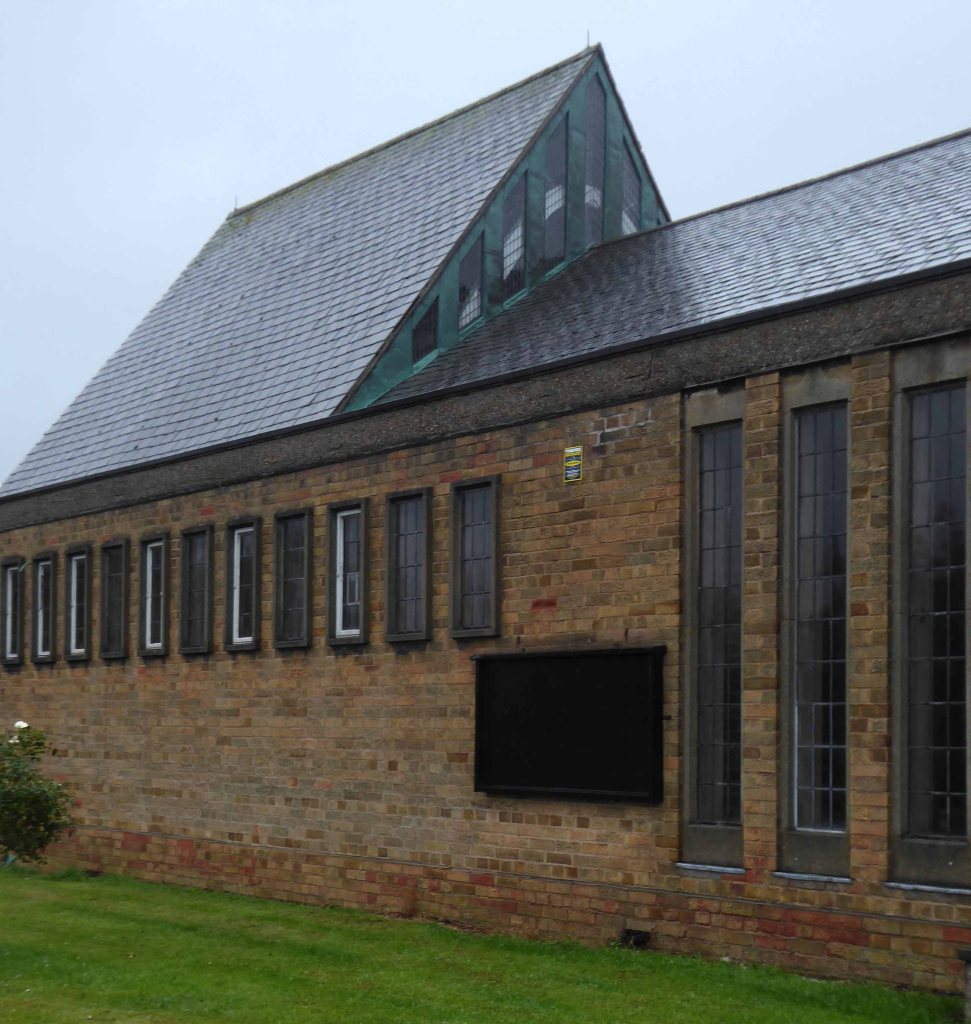
The exterior skin pierced by multiple rectangular windows, the interior revealing an elegant calm space with attendant simple decorative elements and fittings.
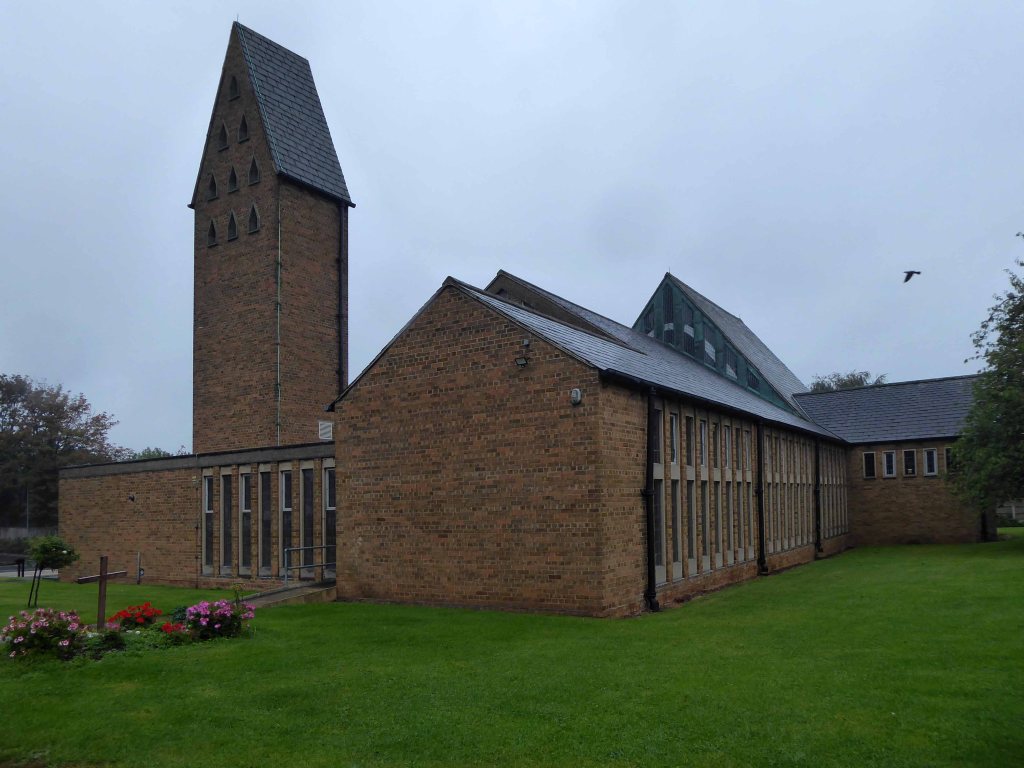
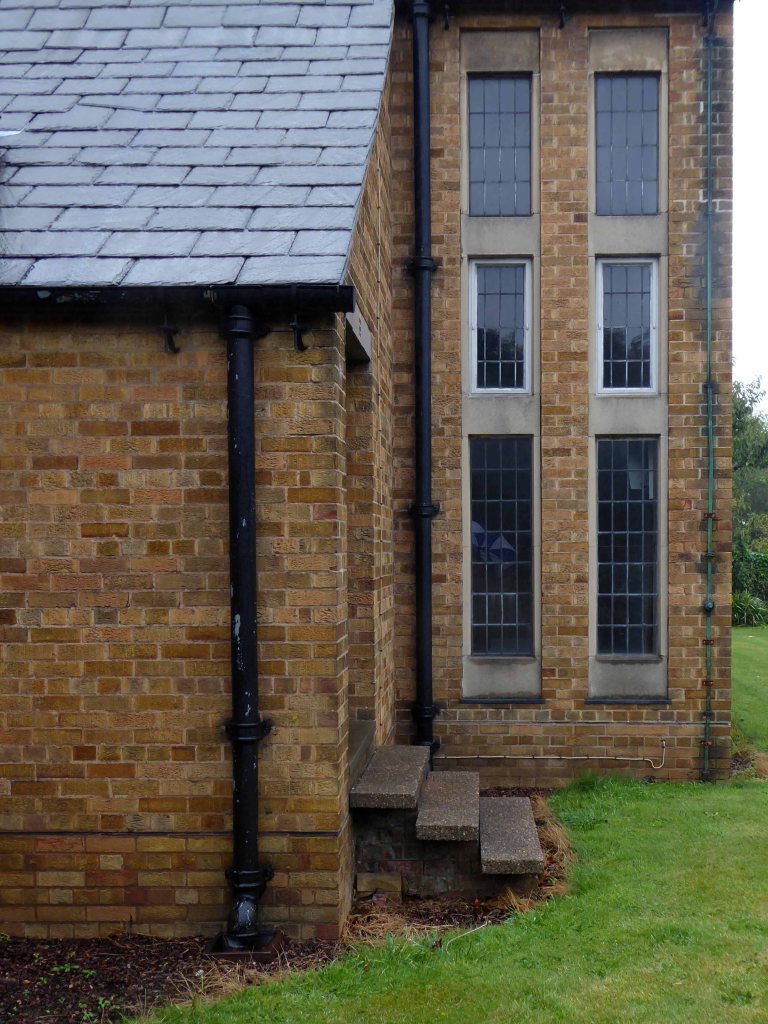
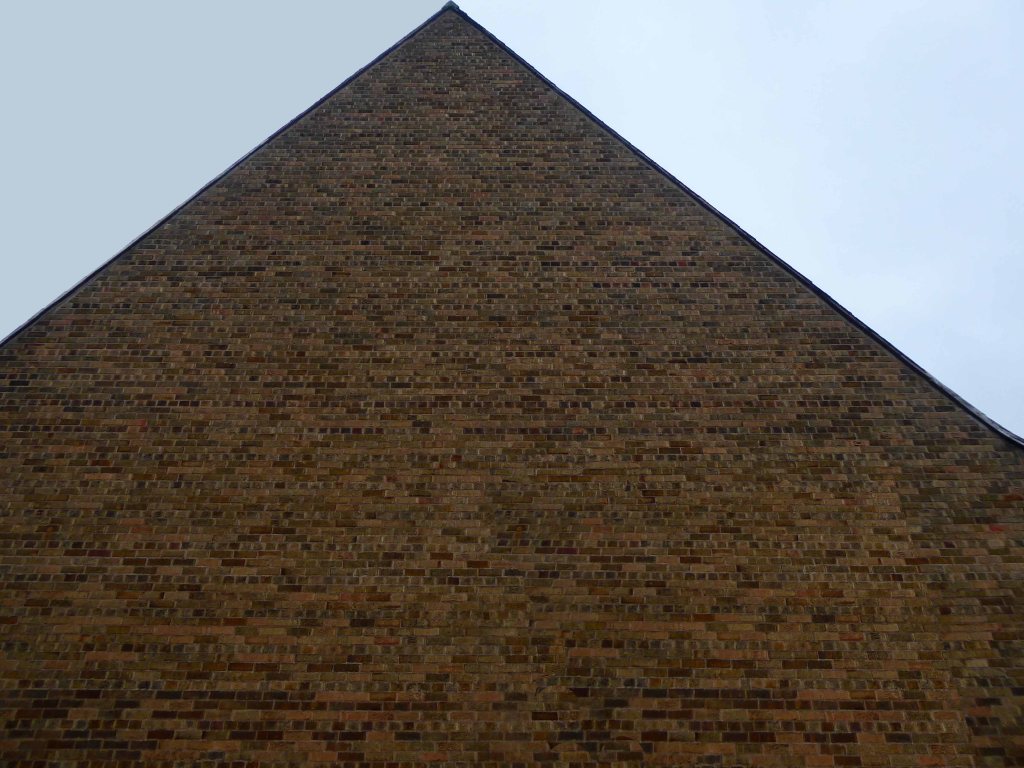
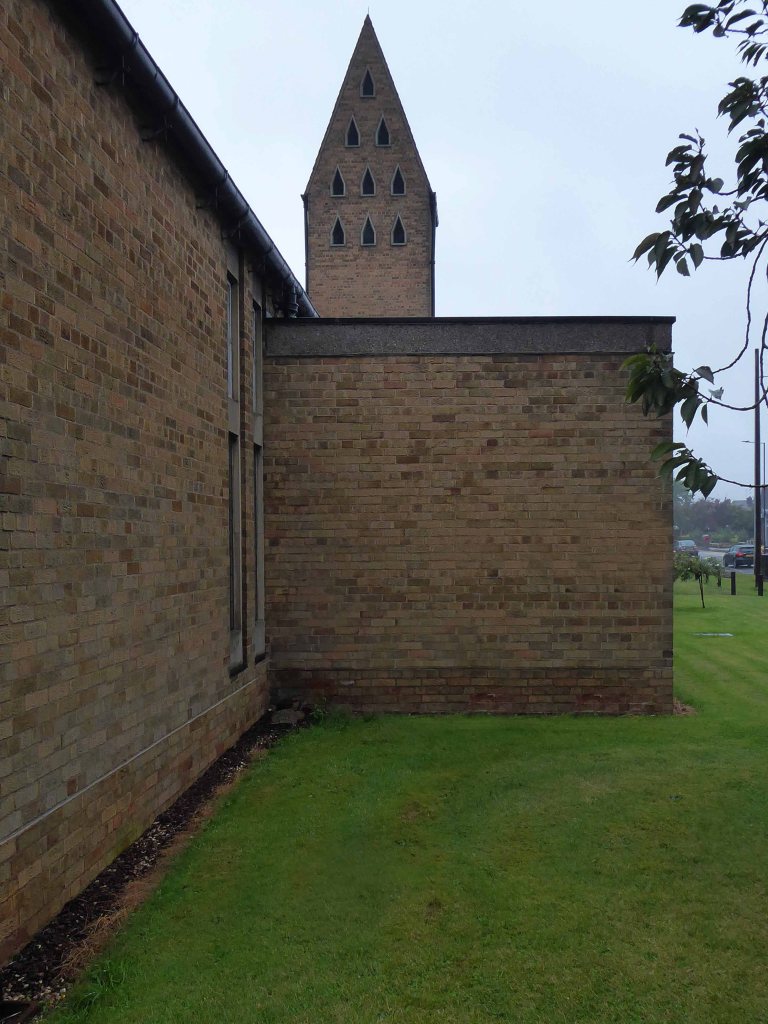
The body of the church has two asymmetric orthogonal outriders and a tall bell tower.
The transept chapel
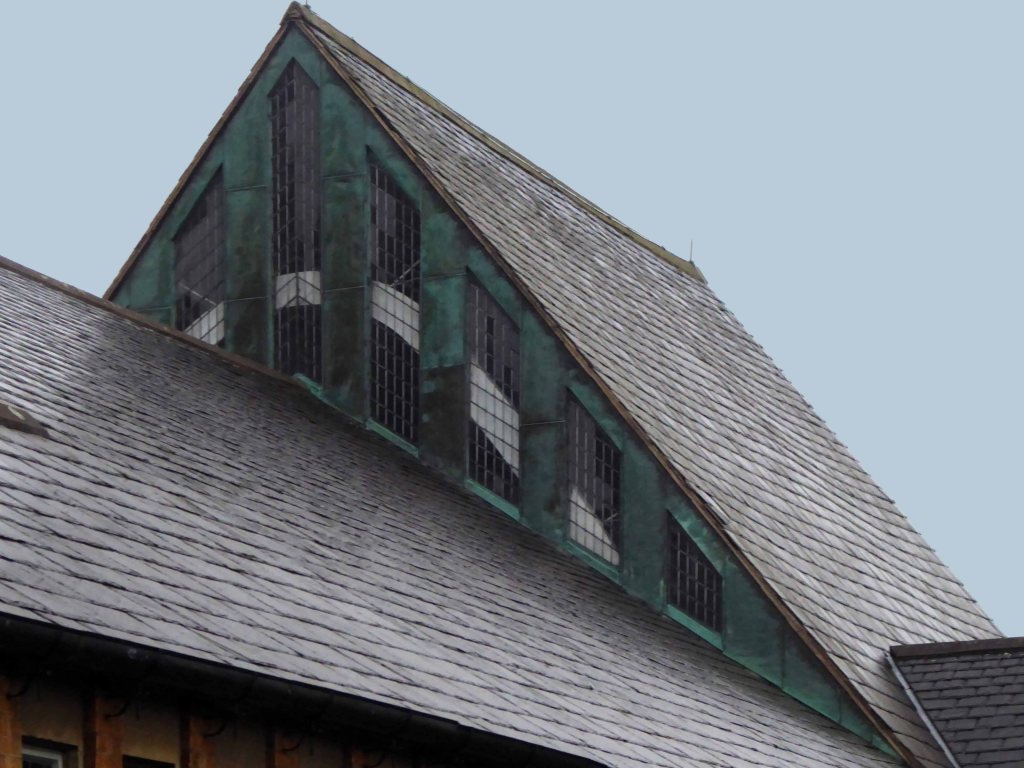
The chancel and apse has a raised roof with a glazed face.
Let’s literally take an anti-clockwise look around the outside.
I was warmly welcomed by The Revd David D’Silva, Curate-in-Charge and kindly given free access to the church’s interior.
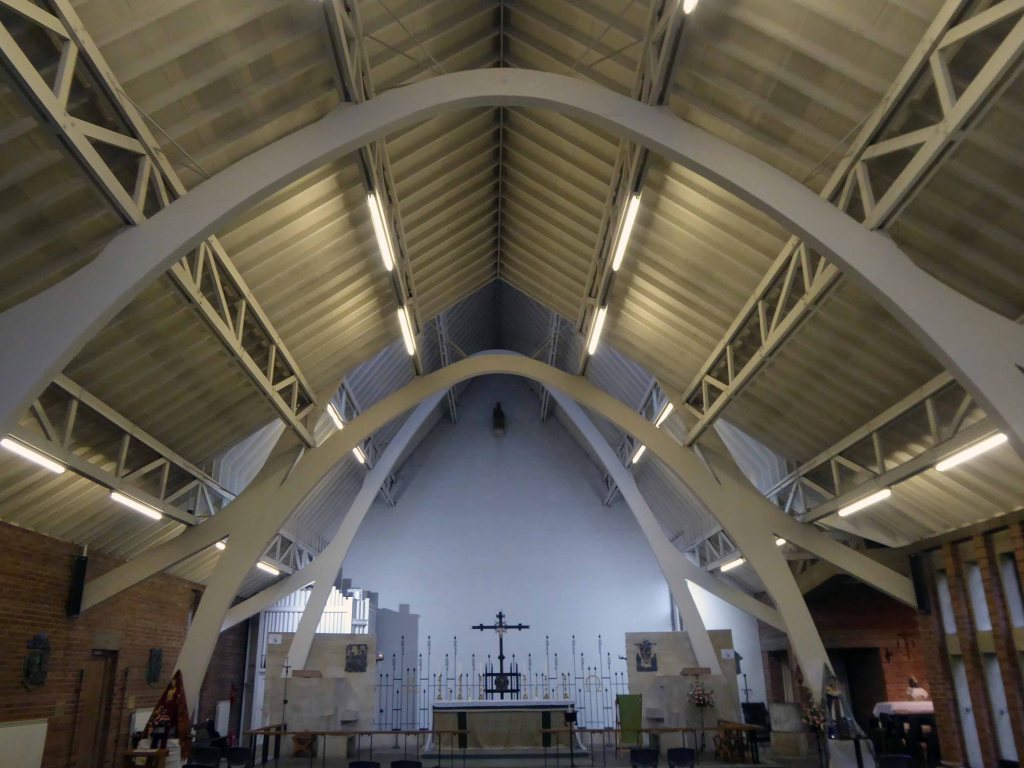
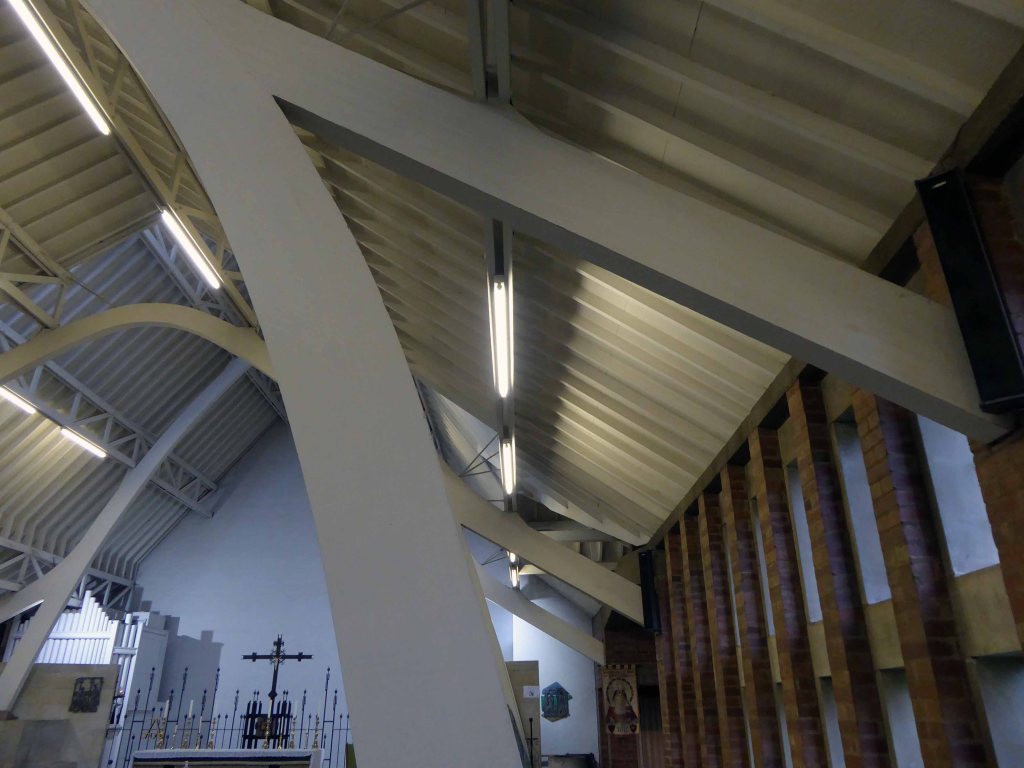
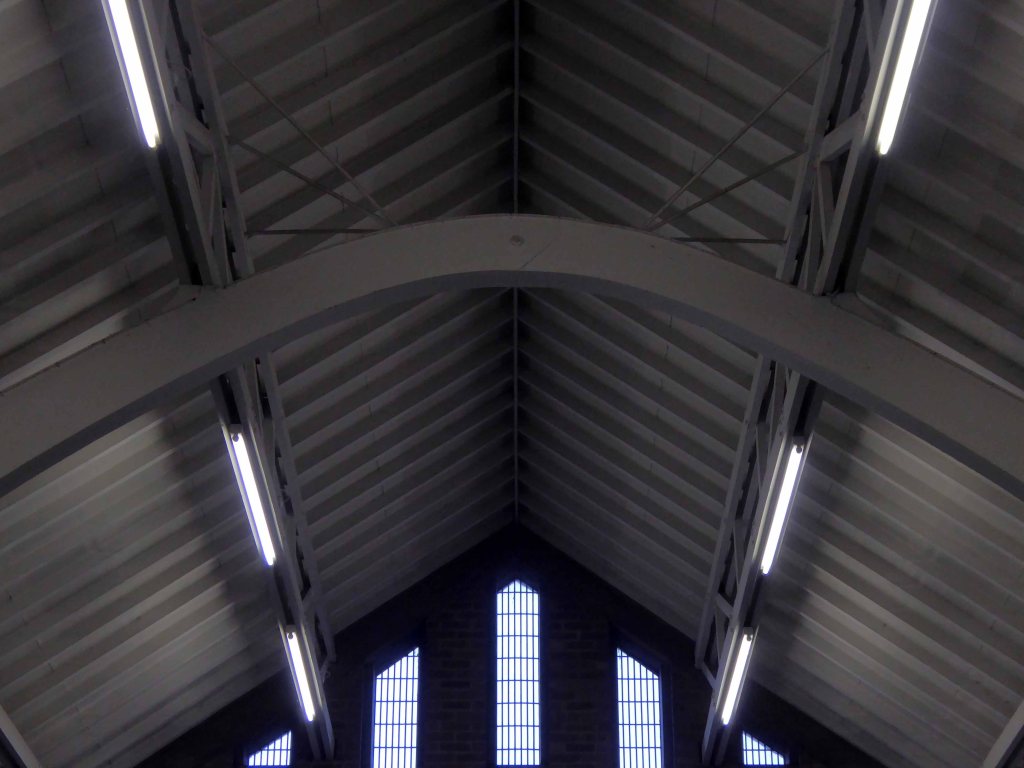
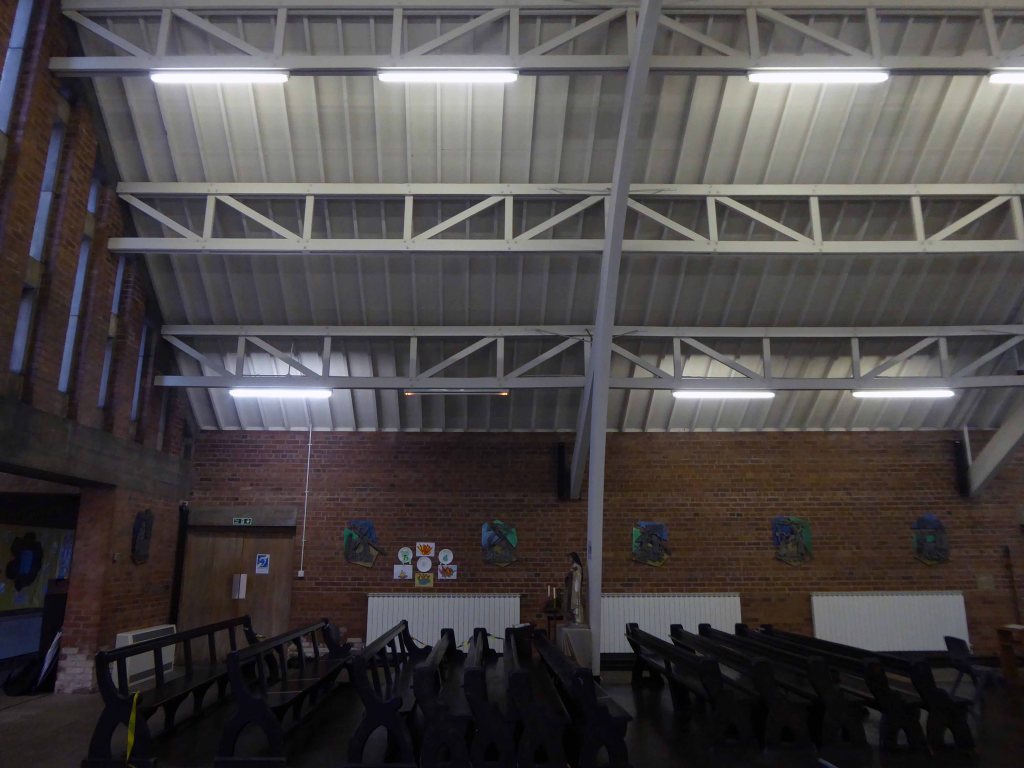
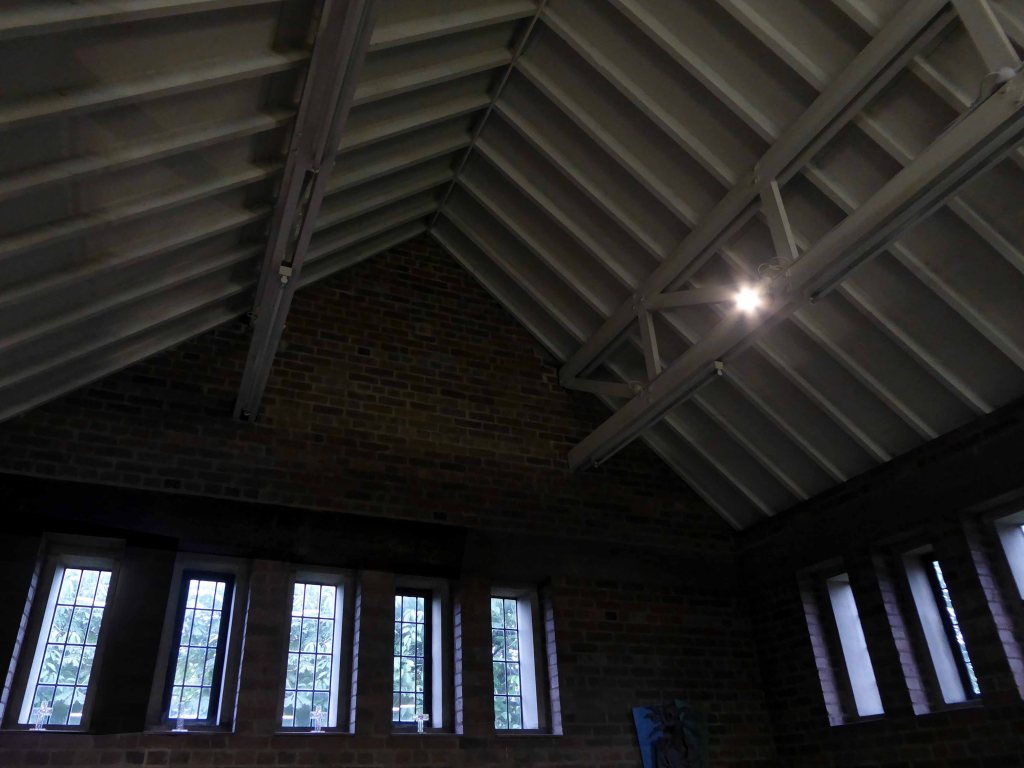
The wooden framed roof supported by huge parabolic arches of laminated timber.
There are retrieved pews, temporarily reordered to accommodate Covid requirements.
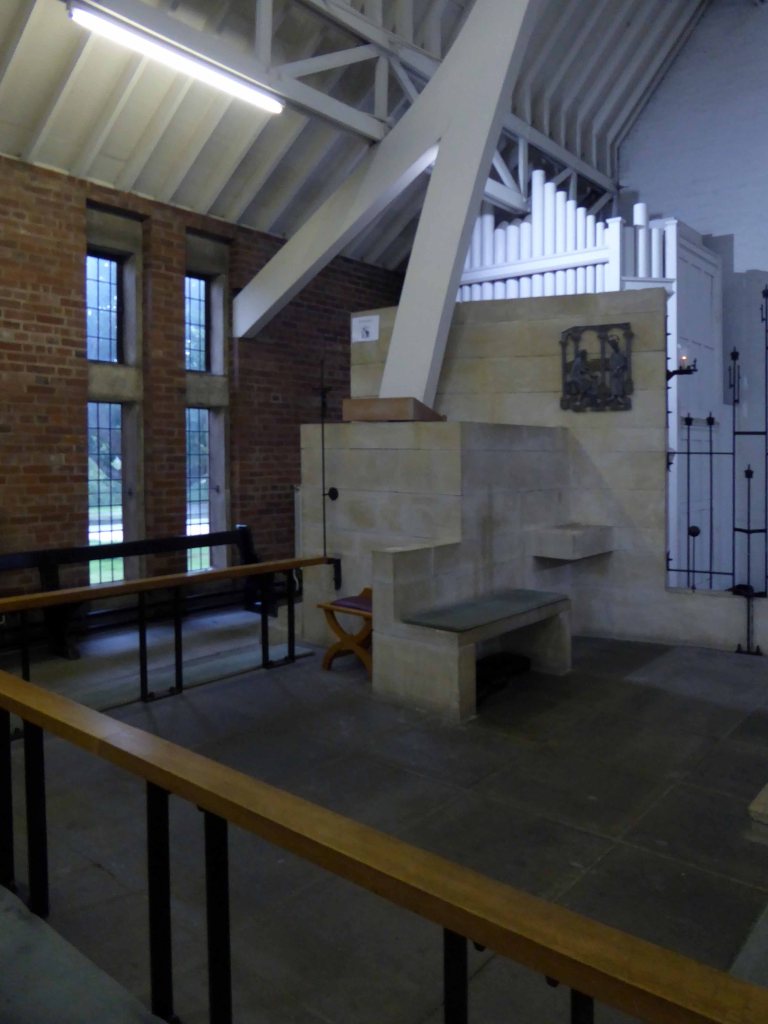
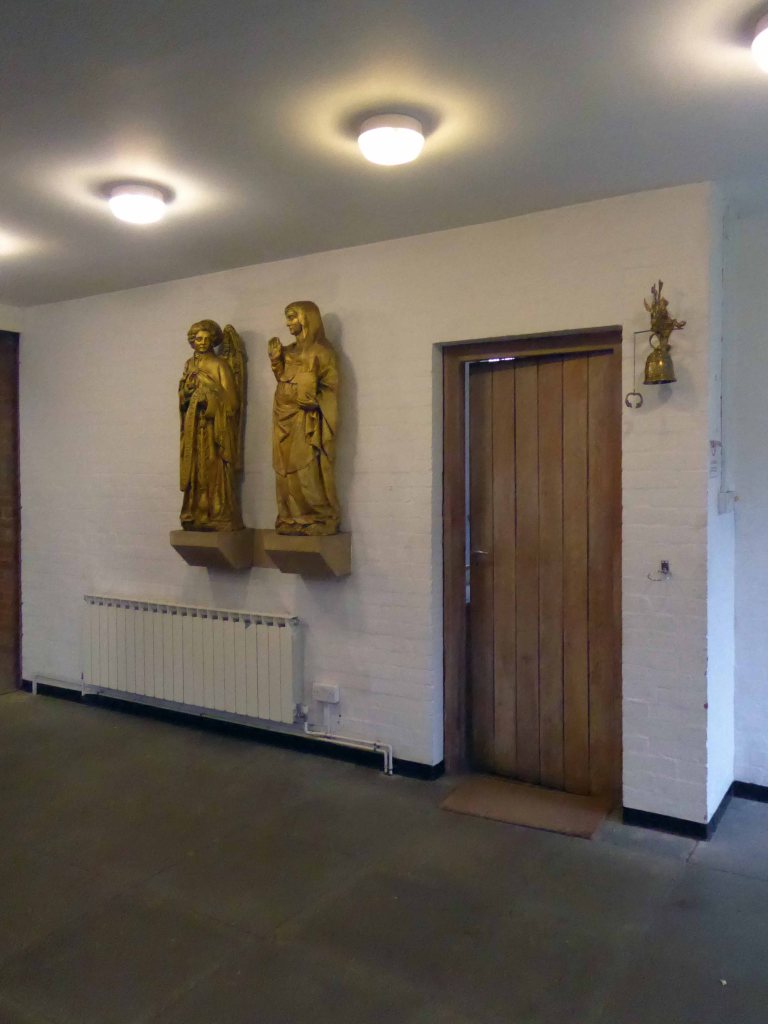
Pugin statuary.
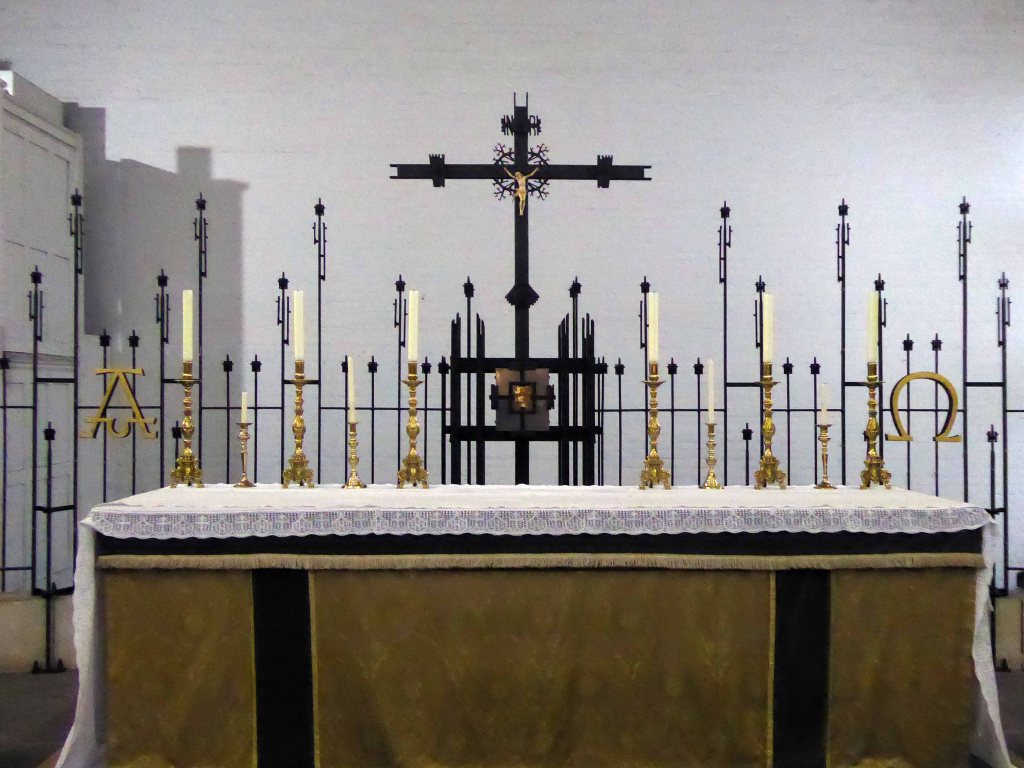
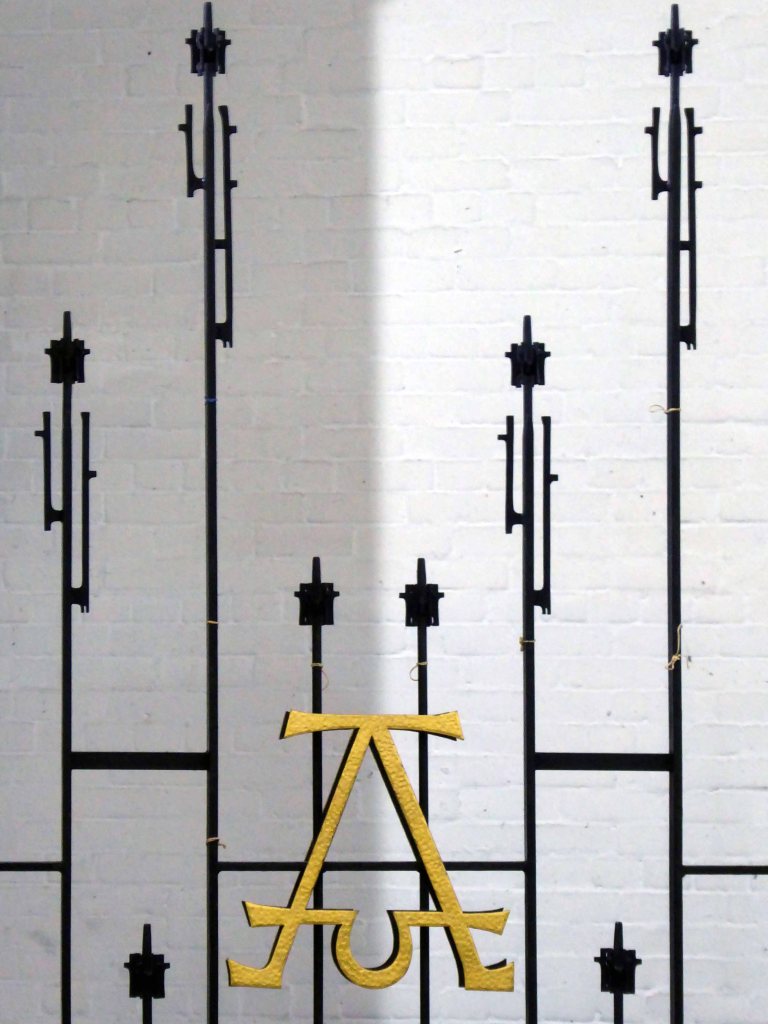
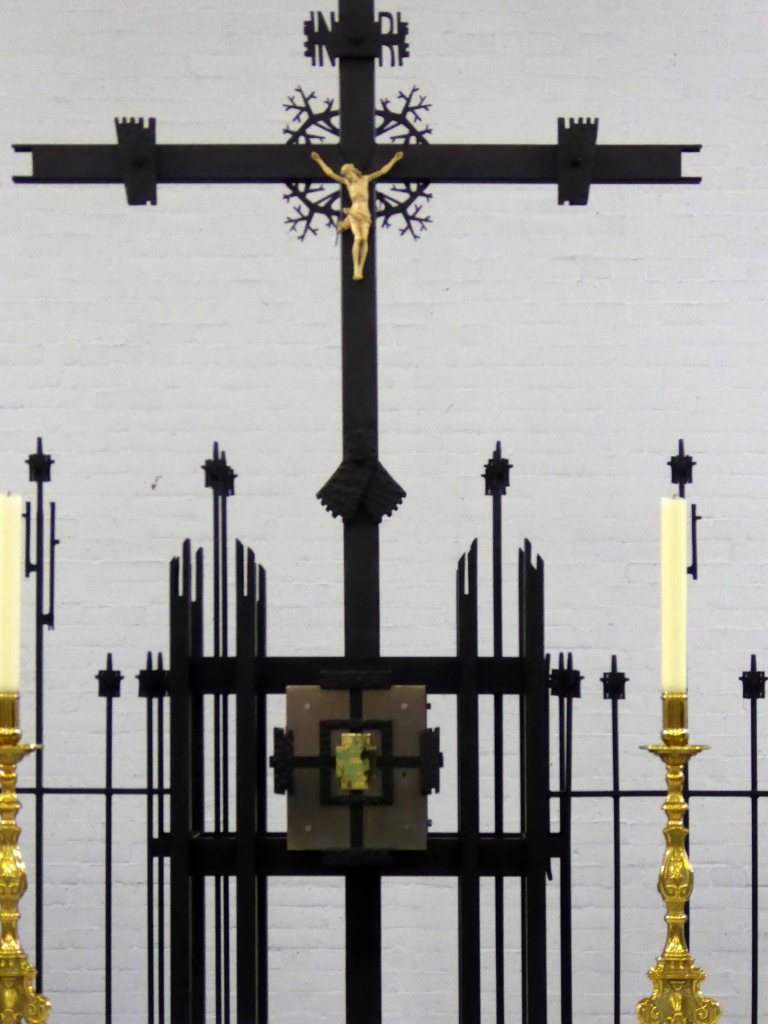
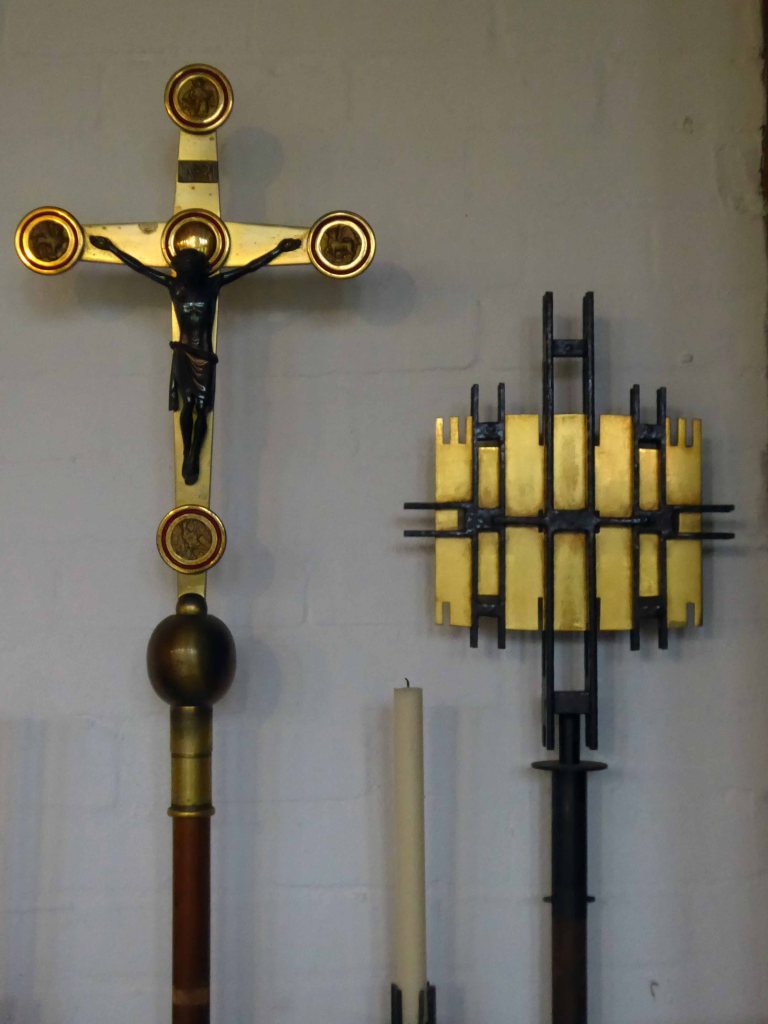
Pace’s own detailed design work in the altar screen and crucifix.
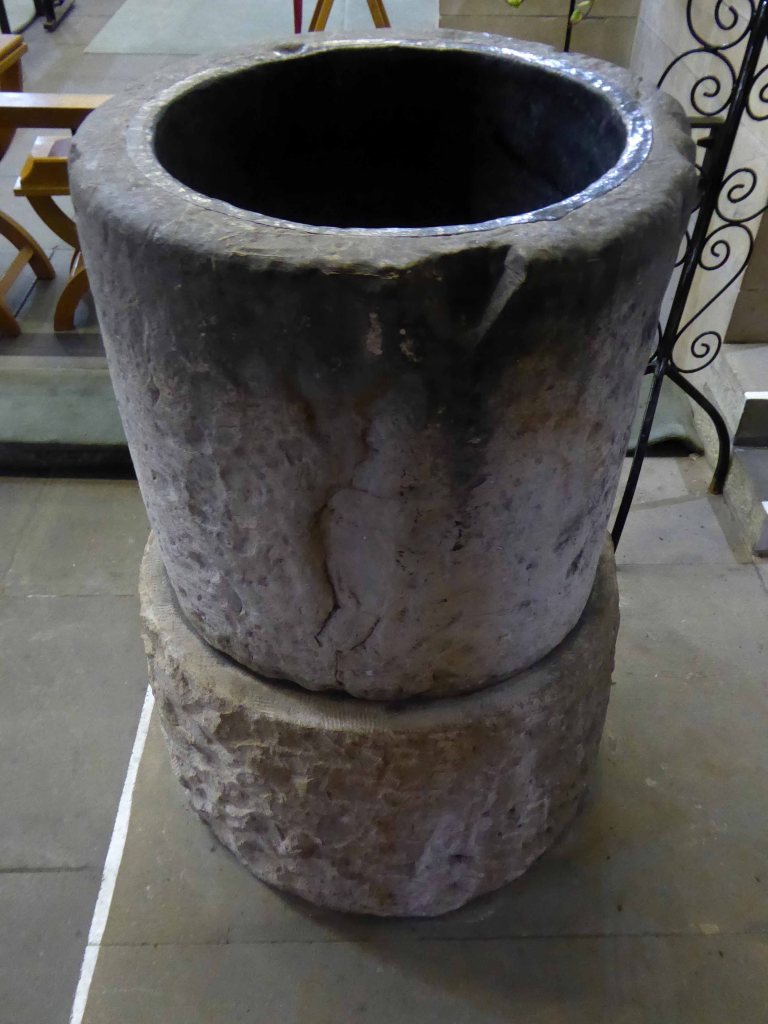
A Mediaeval font.
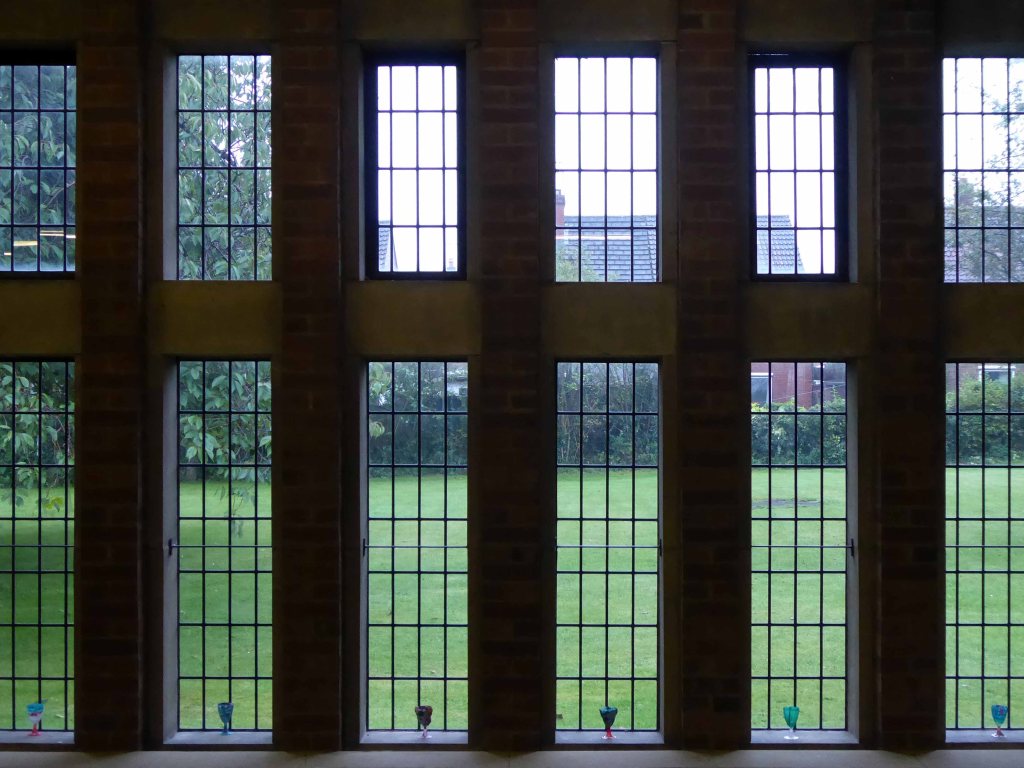
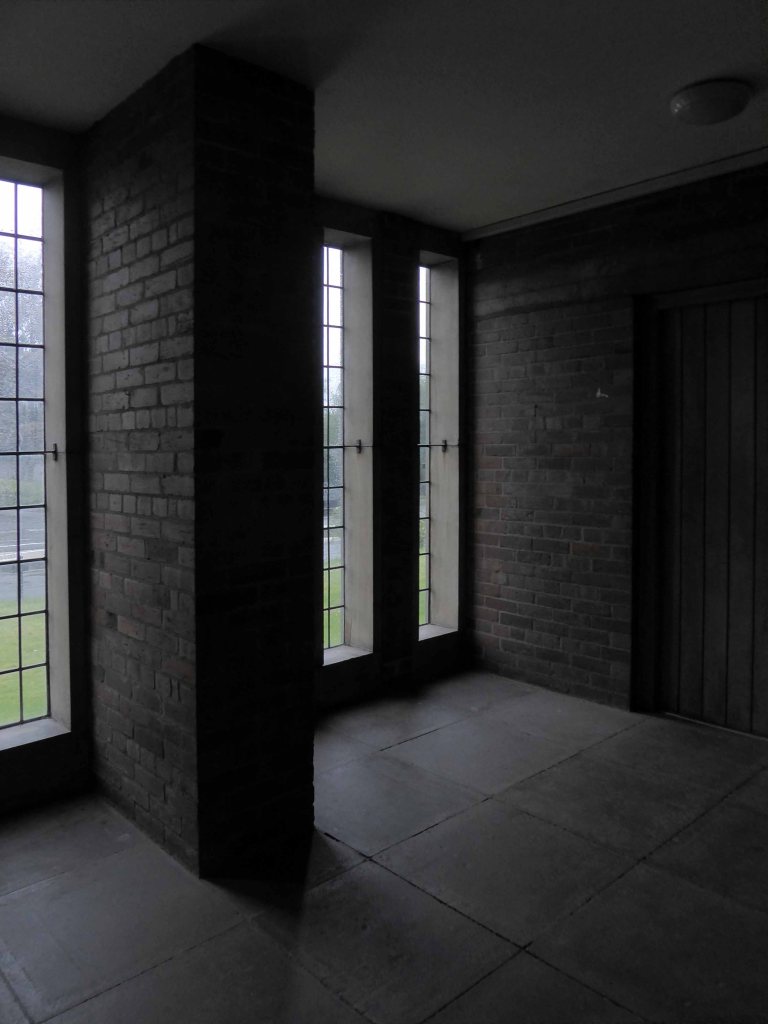
Light enters from several sources on three elevations.
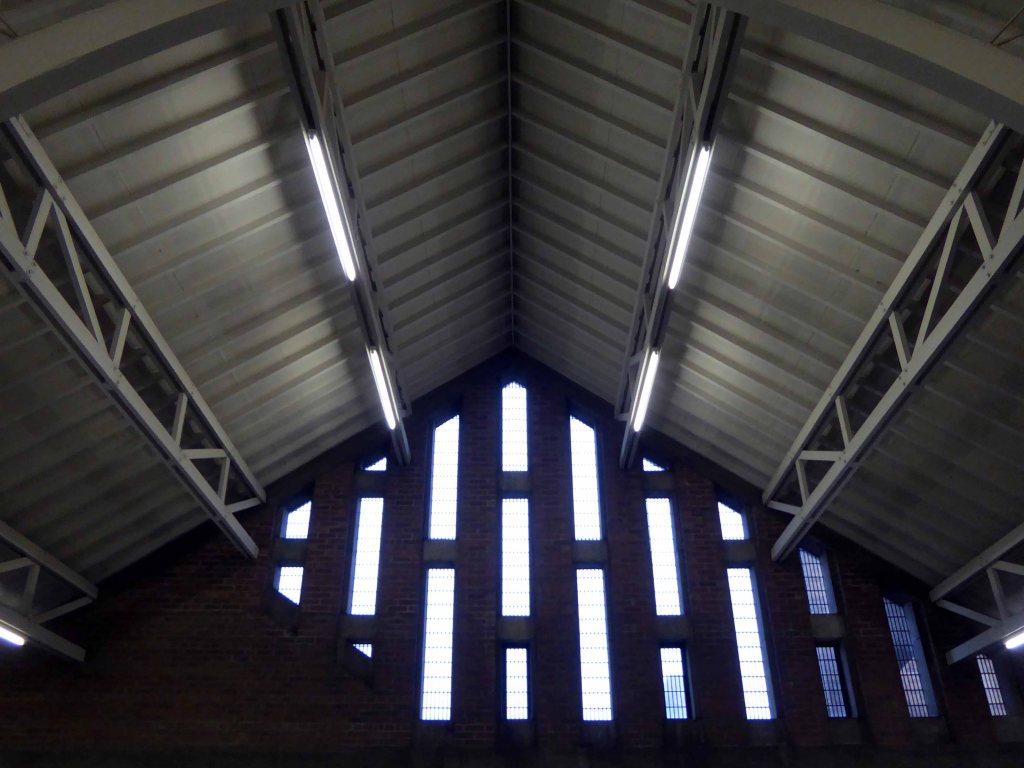
And through the glazed area of the raised gable.
A delightful morning’s work visiting this well used and cared for church.
Avoiding heavy showers and even heavier seas, I’m here again.
Three ways in and out of a doughnut on Scarborough’s South Bay.
One way in and out of the North Sea.
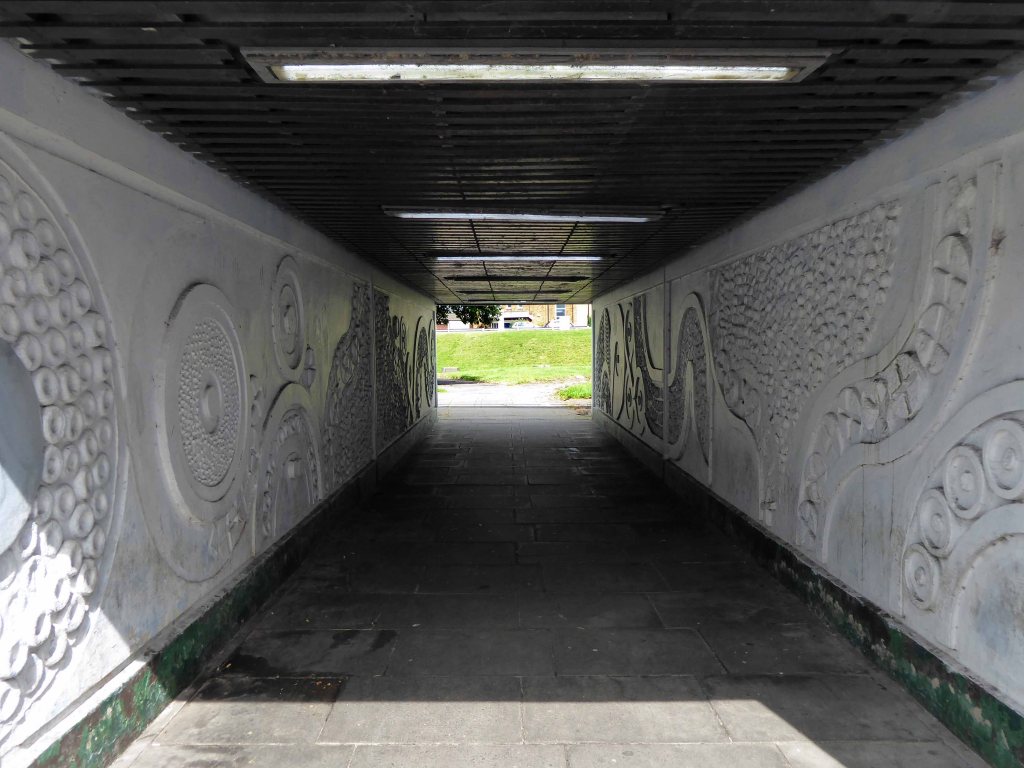
The underpass it seems is generally under threat, unsafe, often unloved and underground – often underused.
Once thought to be the answer to the threat posed to the pedestrian, by increased motor traffic, they are now deemed unsafe – poorly lit, badly maintained and scenes of anti-social activity.
Havens for those who are a threat to themselves.
Don’t let that put you off, get down and get with it!
Why not treat yourself to a walk around the South Bay Underground Car Park?
I’ll do anything twice or more – so here we are again, this time on foot.
Let’s start at the very beginning, a very good place to start – in the middle, the section from the town centre to Hazel Grove.
Maps are available here for free – we declined the offer, deciding to follow signs instead, many of which were missing or rotated, the better to misinform and redirect – such is life.
We are mostly lost most of the time, whether we like it or know it or not.
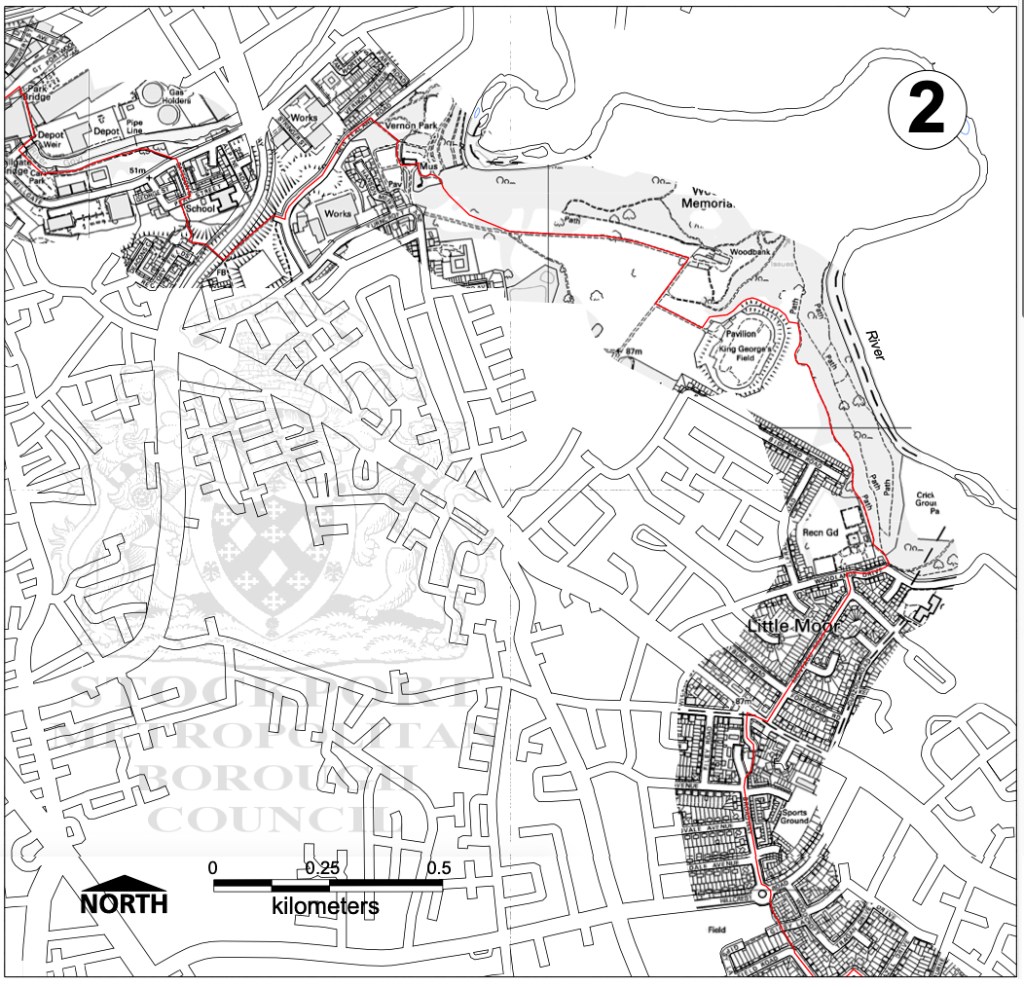
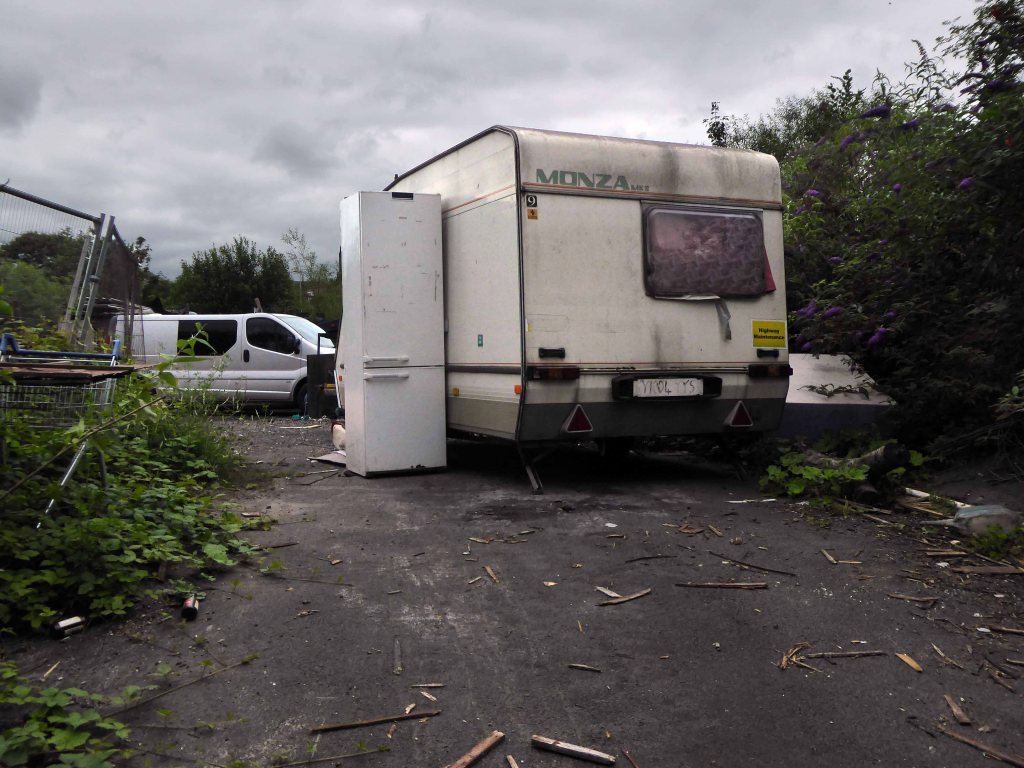
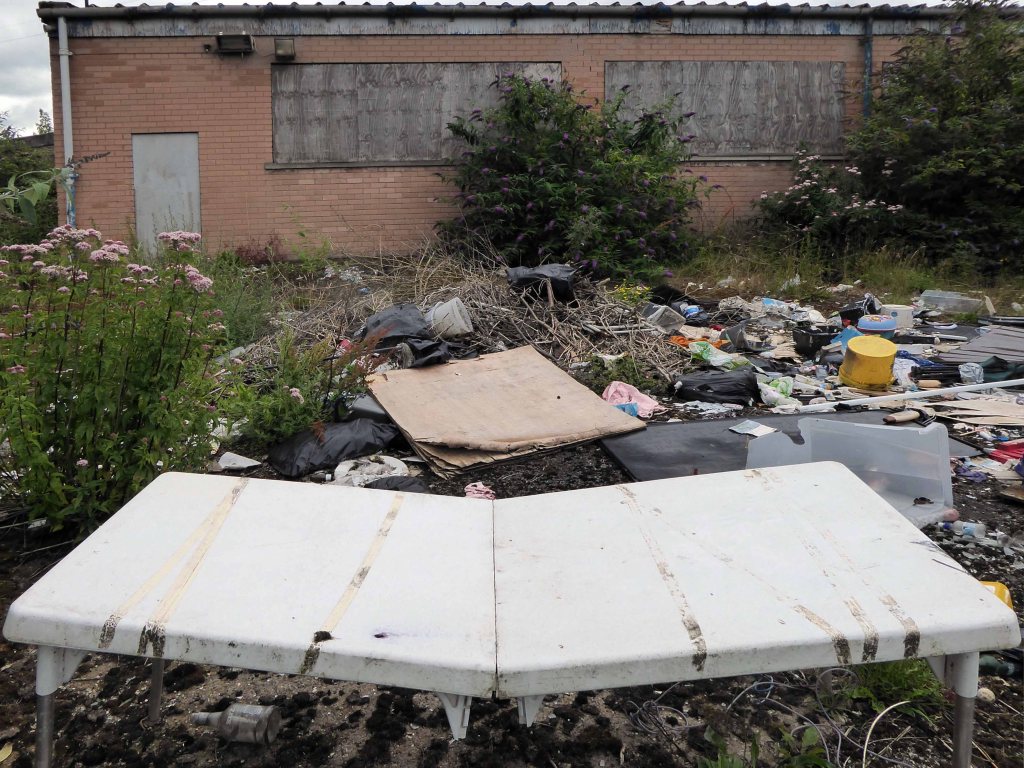
We begin at the confluence of the rivers Mersey and Goyt – which no longer seems to be a Way way, the signs having been removed, and proceed down Howard Street, which seems to have become a tip.
The first and last refuge for refuse.
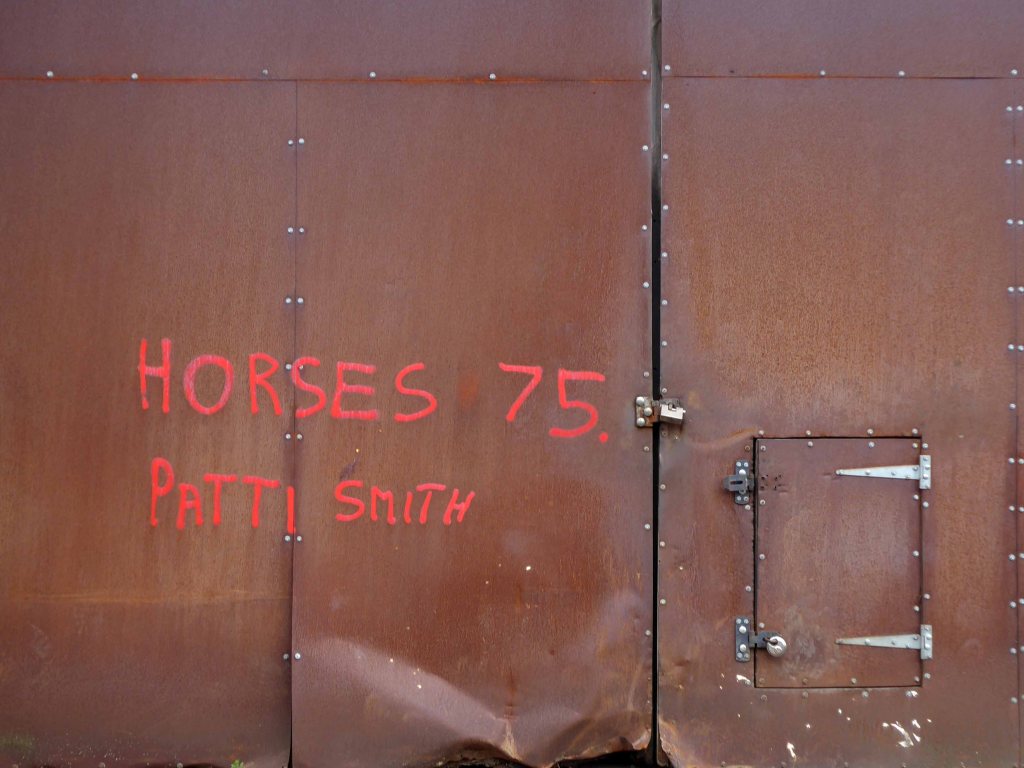
Passing by the kingdom of rust – Patti Smith style.
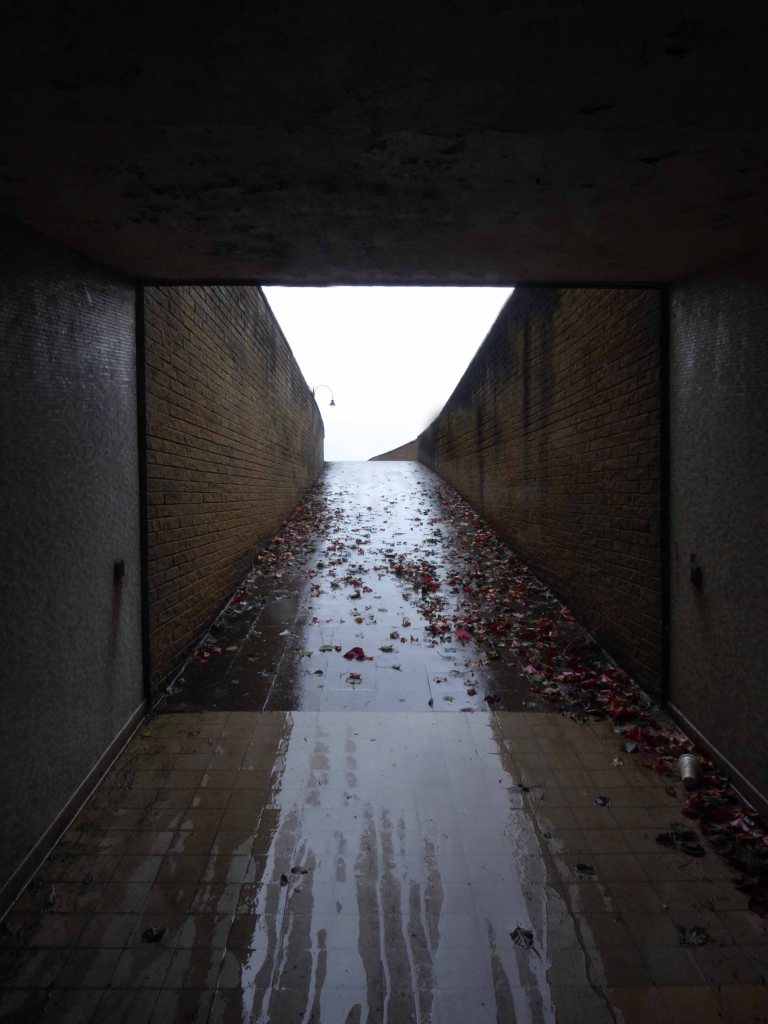
Passing under the town’s complex internal motorway system by underpass.
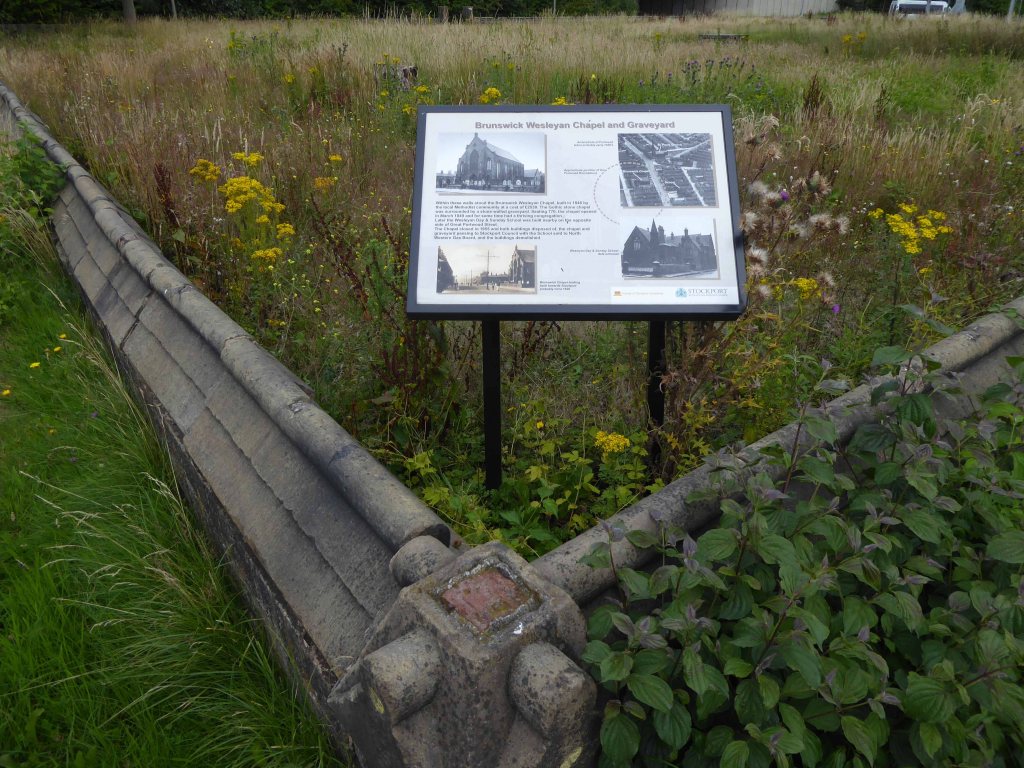
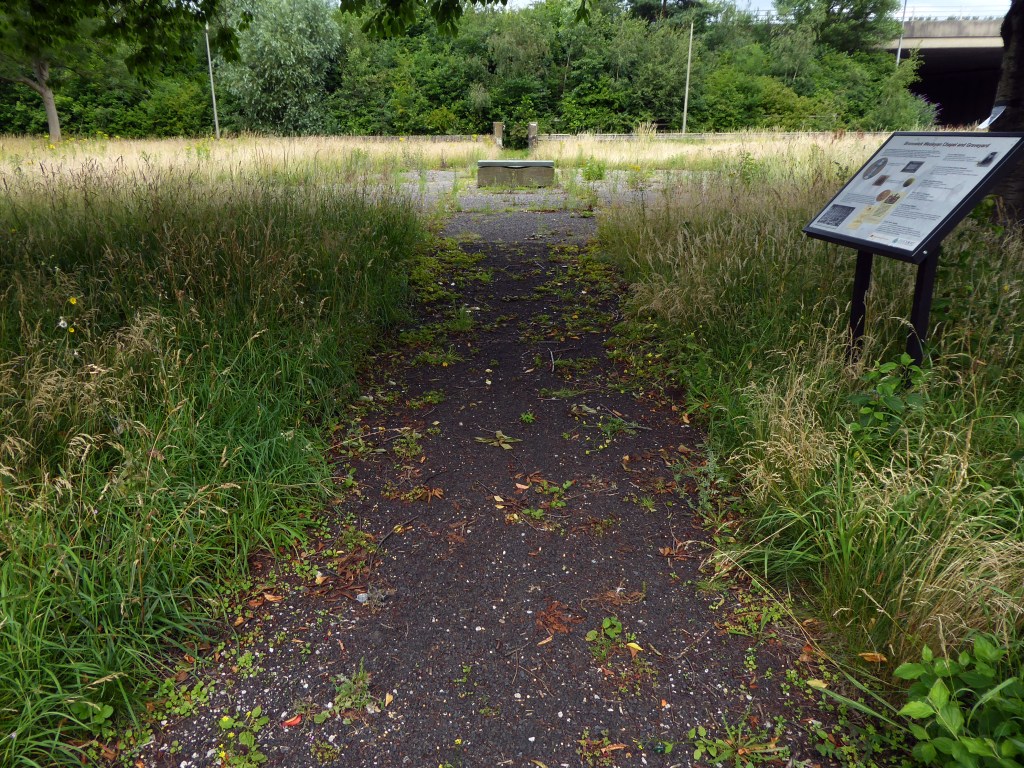
Almost opposite the entrance to the museum, now set in shrubbery, are the foundations, laid in September 1860, of what was to be a forty metre high Observatory Tower. Despite a series of attempts, funds for the tower could not be raised and the ‘Amalgamated Friendly Societies of Stockport’ eventually had to abandon the idea.
Historic England
Out east and passing alongside the running track.
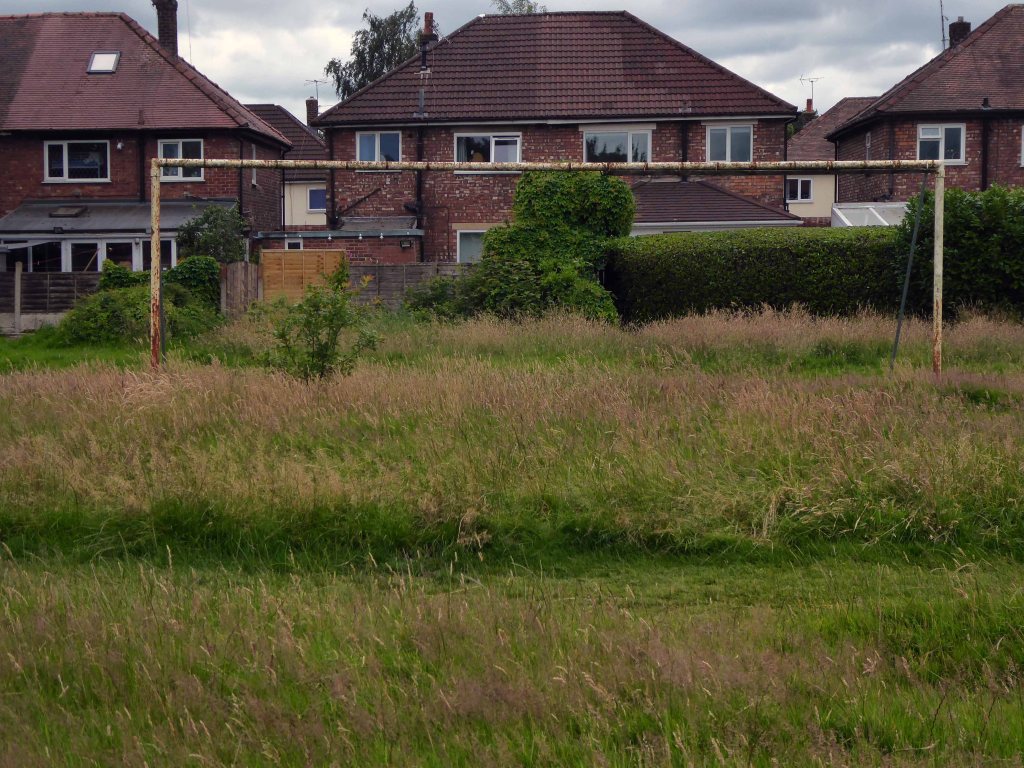
Lush meadows now occupy the former football field, twixt inter-war semis and the woodland beyond.
Out into the savage streets of Offerton where we find a Buick Skylark, incongruously ensconced in a front garden.
The only too human imperative to laugh in the face of naturalism.
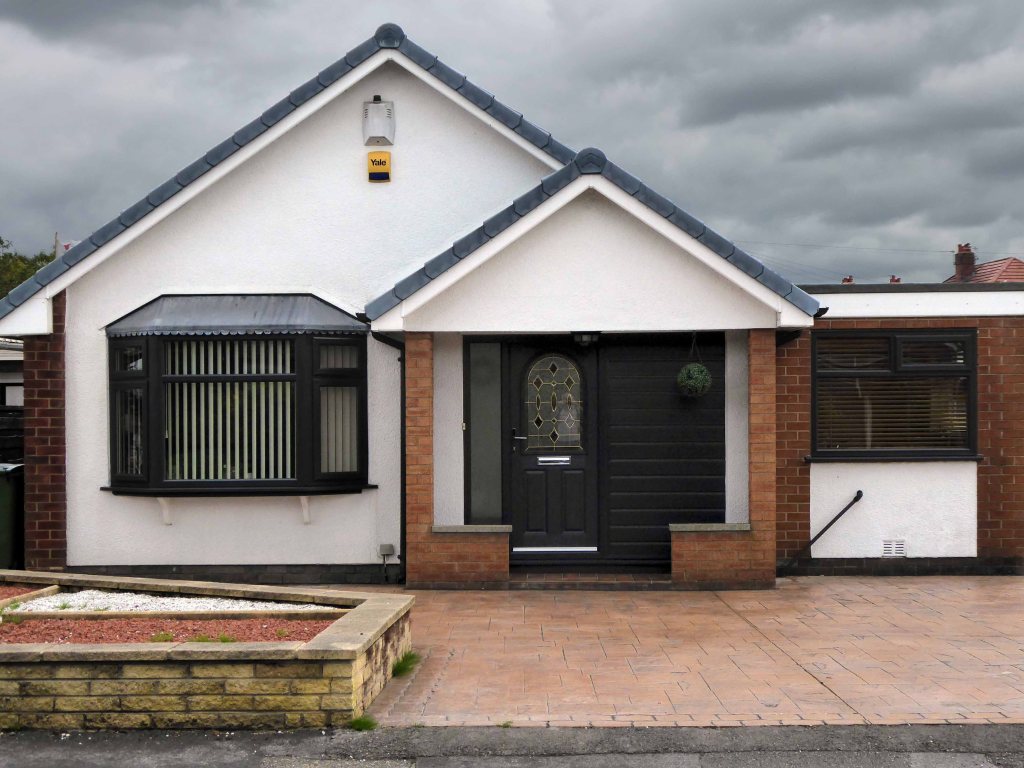
We have crossed over Marple Road and are deep in the suburban jungle of mutually exclusive modified bungalows.
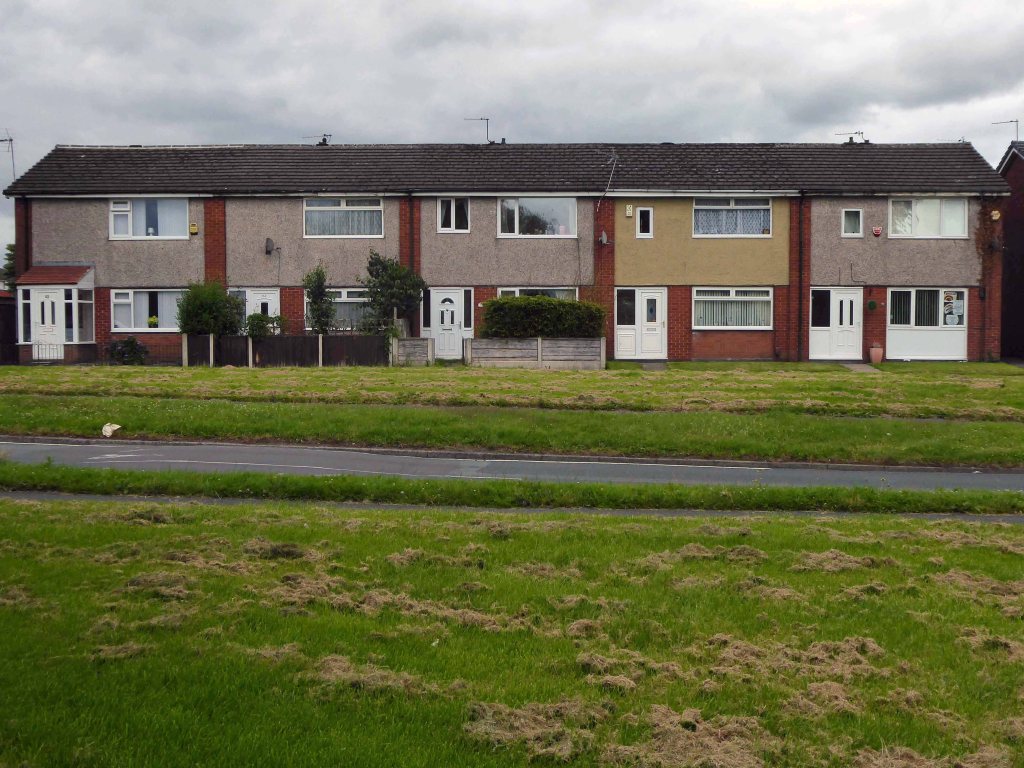
Off now into the wide open spaces of the Offerton Estate – the right to buy refuge of the socially mobile, former social housing owning public.
People living on Offerton Estate have been filmed for a programme entitled ‘Mean Streets’ which aims to highlight anti-social behaviour in local communities.
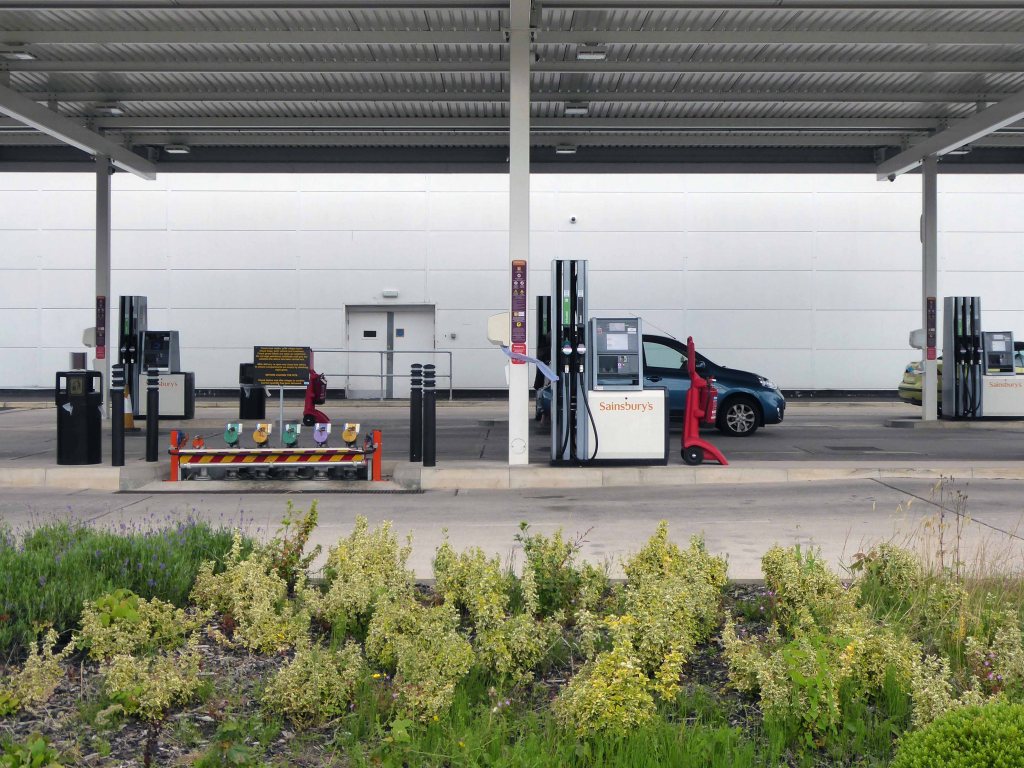
The next thing we know we’re in a field, a mixed up melange of the urban, suburban and rural, on the fringes of a Sainsbury’s supermarket filling station.
We cross the A6 in Hazel Grove and here for today our journey ends
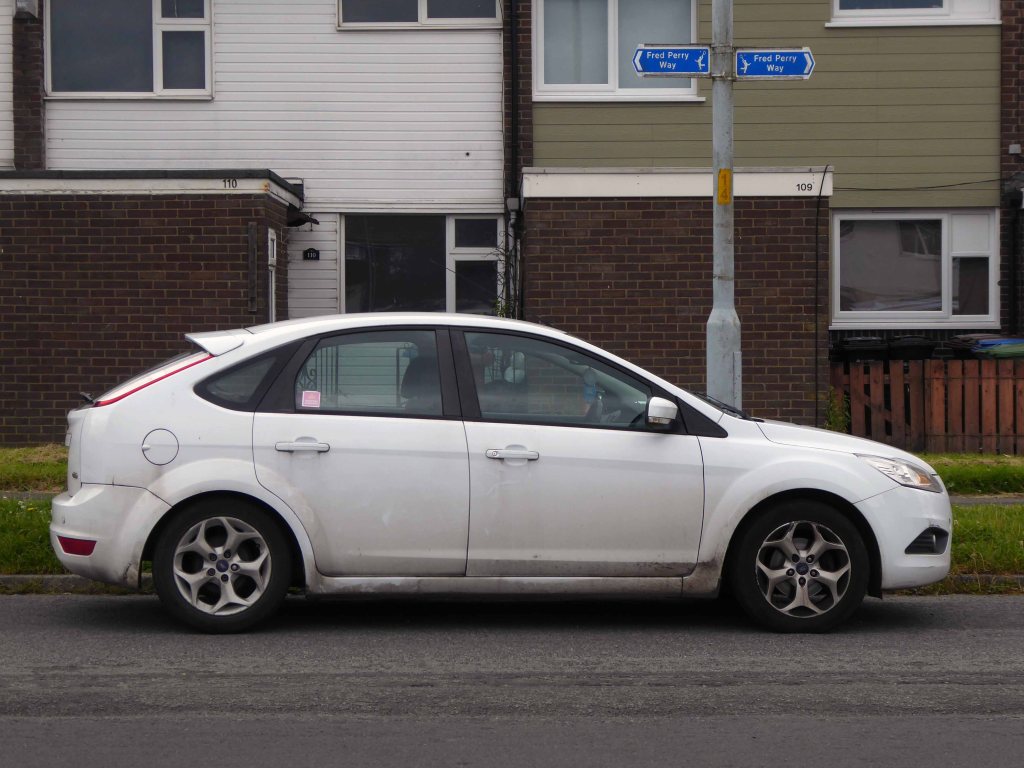
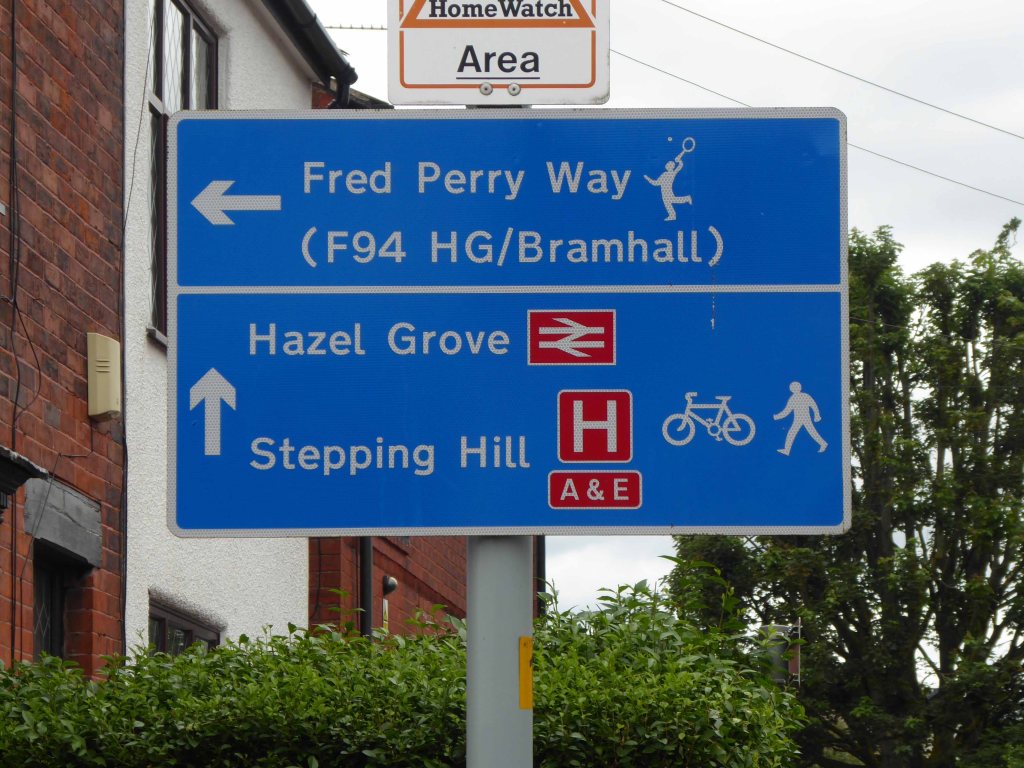
Ignoring the sign we went in the opposite direction.
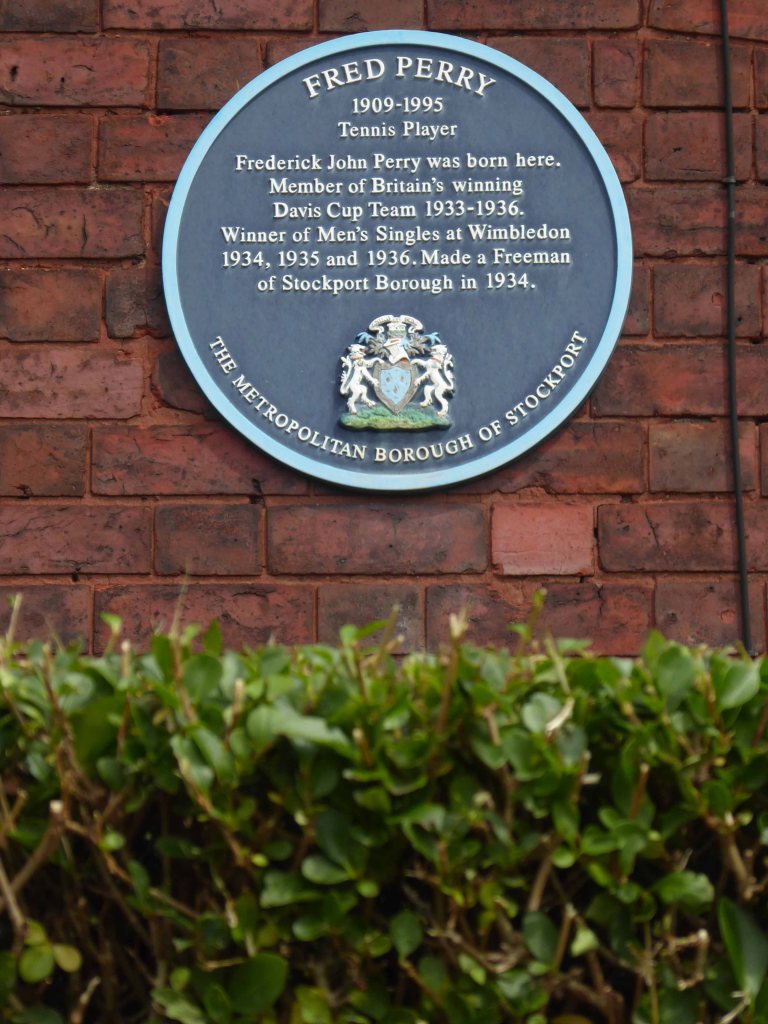
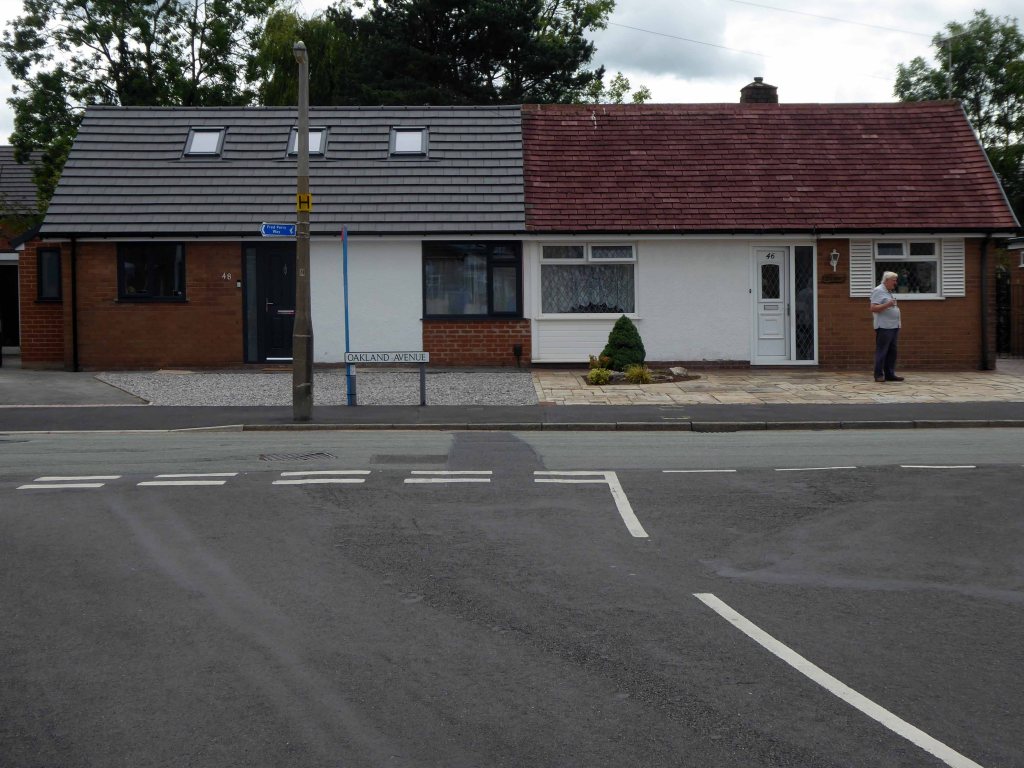
As we reach the edge of Mirrlees Fields – the site of the only Fred Perry laurel leaf logo emblazoned way marker.
The Fields are currently designated as a green space and are not available for residential development. But MAN would like to overturn this designation for over one third of the Fields.
MAN Energy Solutions UK is the original equipment manufacturer of Mirrlees Blackstone diesel engines.
Before the Blackstone MAN came in 1842 – the fields were all fields.
The Cheshire Lines Committee CLC operated Stockport, Timperley and Altrincham Junction Railway line from Portwood to Skelton Junction, a section of what became the Woodley to Glazebrook line.
It remained a part of the CLC, which was jointly owned from 1923 by the London and North Eastern Railway and the London Midland and Scottish Railway , until 1948 when it became part of the British Railways London Midland Region.
Closed in 1982, following the demise of the Woodhead route; the track was subsequently lifted in 1986.
in the age of steam mainline St Pancras trains and local stoppers flew by.
My interest lies in the small portion of track at the end of Georges Road – I worked as a Guide Bridge goods guard in and out of the scrap yard there, in the Seventies.
Now I walk past almost every day and it’s almost all gone.
The bridge which it supported now demolished, time called long ago in the long lost Gardeners Arms – originally a Bell’s Brewery pub latterly a Robinsons house.
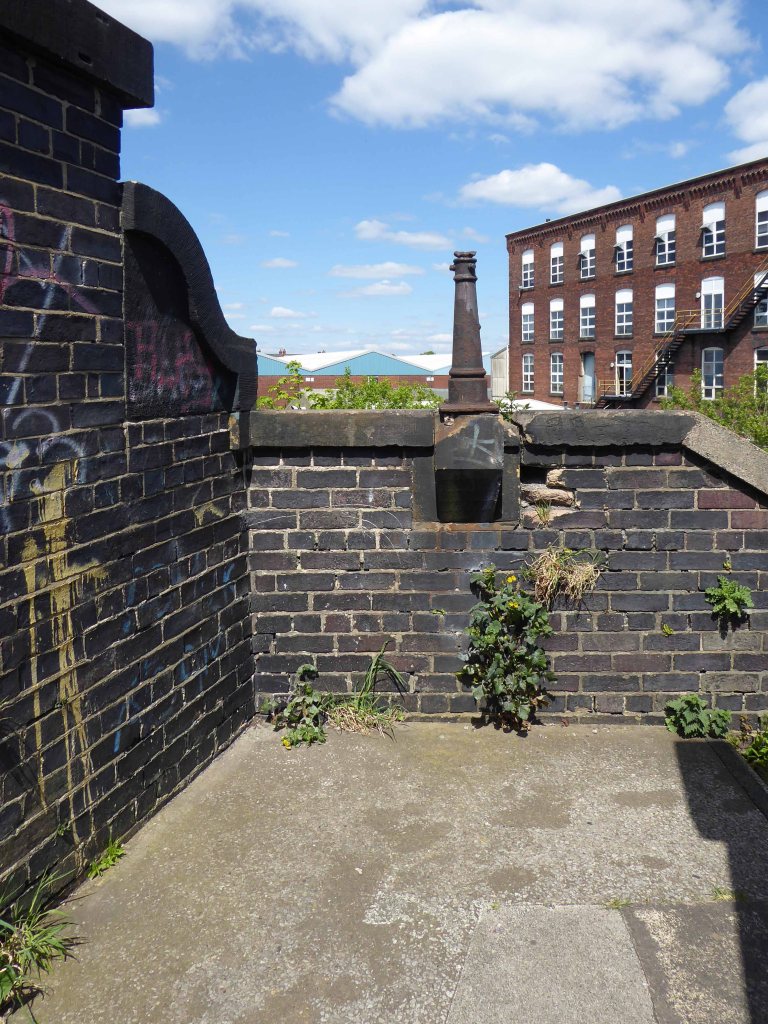
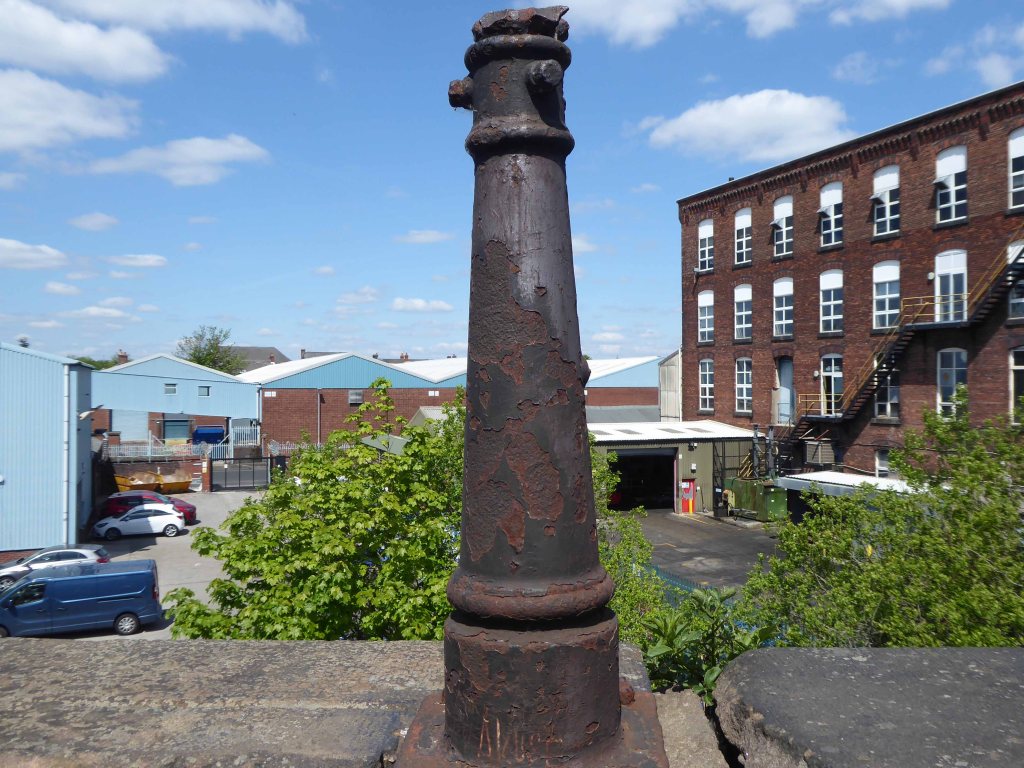
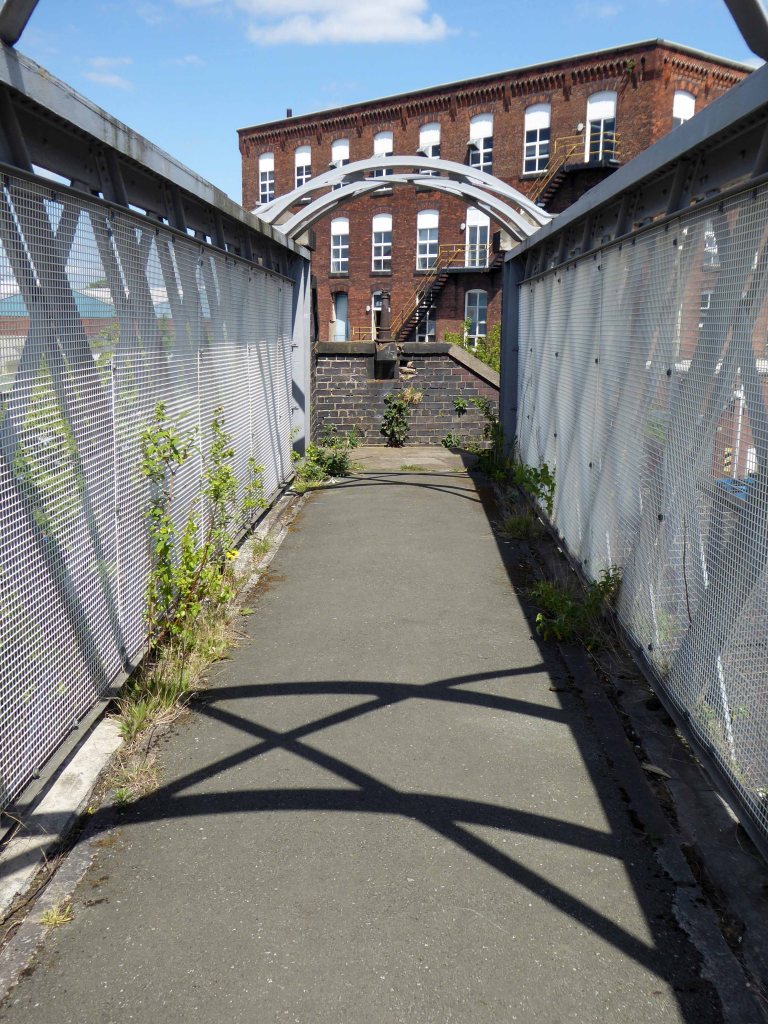
What remains is a triangular island faced in glazed and blue engineer’s brick, topped out with trees.
I have entertained the idea of accessing the area by ladder, exploring and possibly setting up camp – though I think the proximity to an almost constant flow of traffic, would prove less than commodious.
It evokes for me an elevated affinity with Ballard’s Concrete Island.
He reached the foot of the embankment, and waved with one arm, shouting at the few cars moving along the westbound carriageway. None of the drivers could see him, let alone hear his dry-throated croak, and Maitland stopped, conserving his strength. He tried to climb the embankment, but within a few steps collapsed in a heap on the muddy slope.
So here it is as is complete with tags, signs, cracks and all.
It remains as a monument to those who built and worked on the railway.
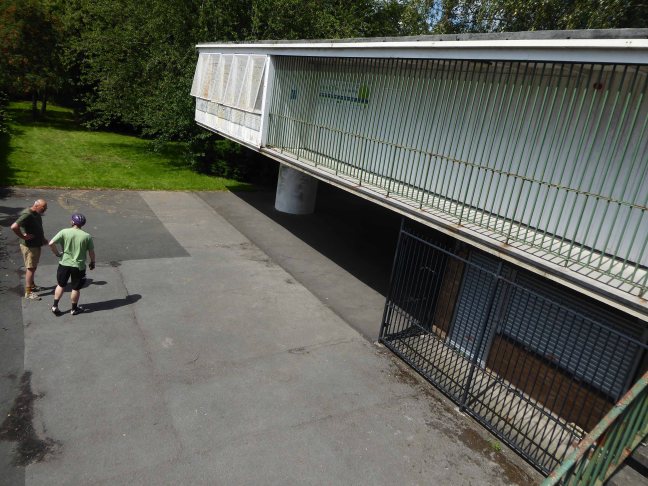
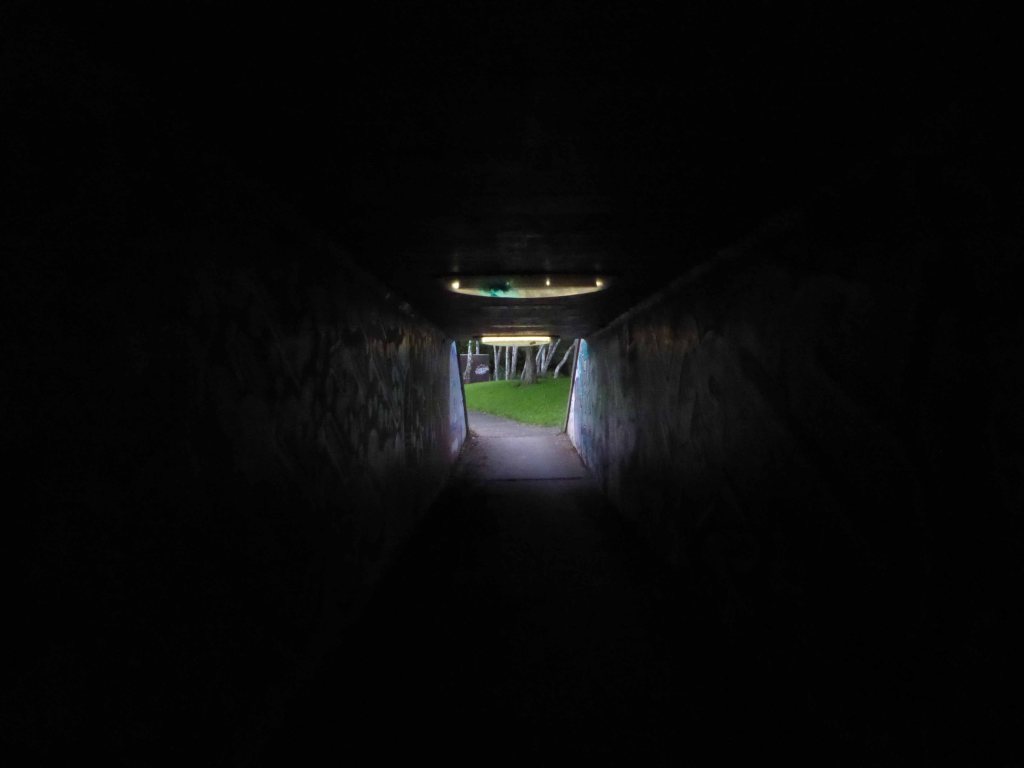
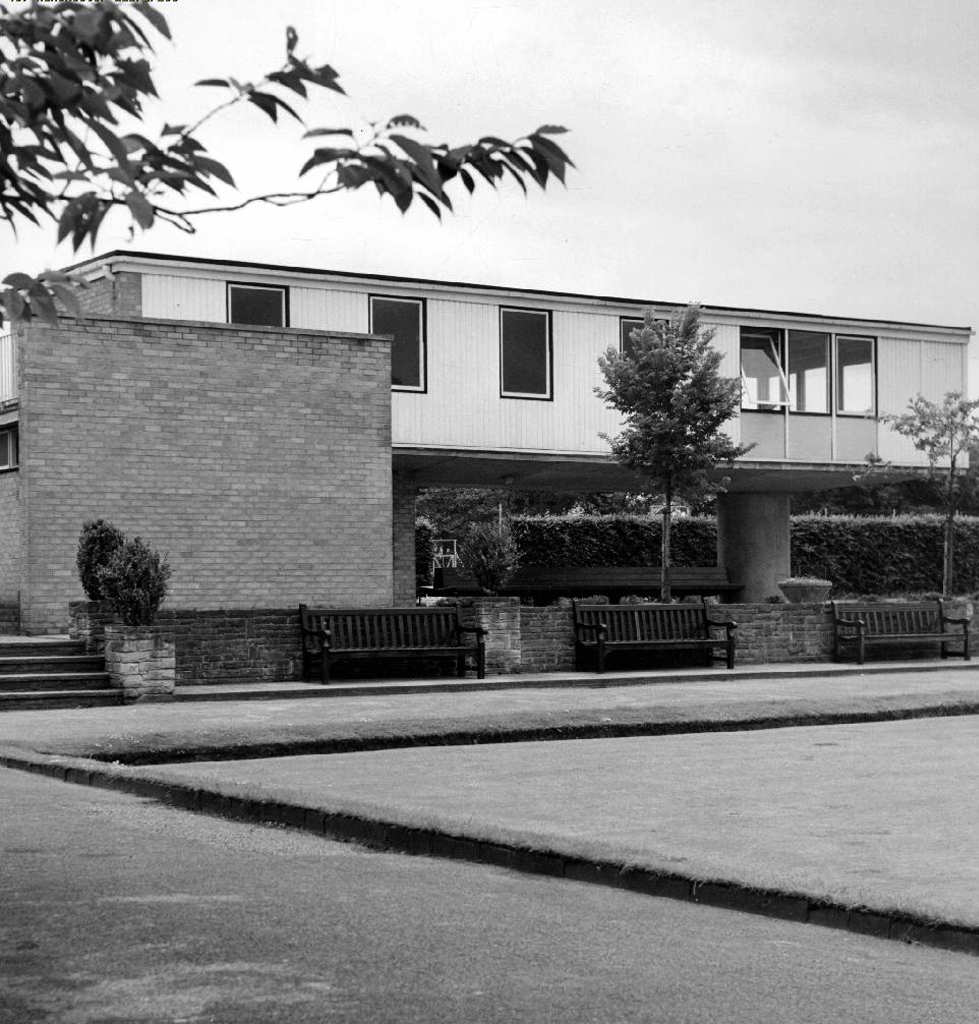
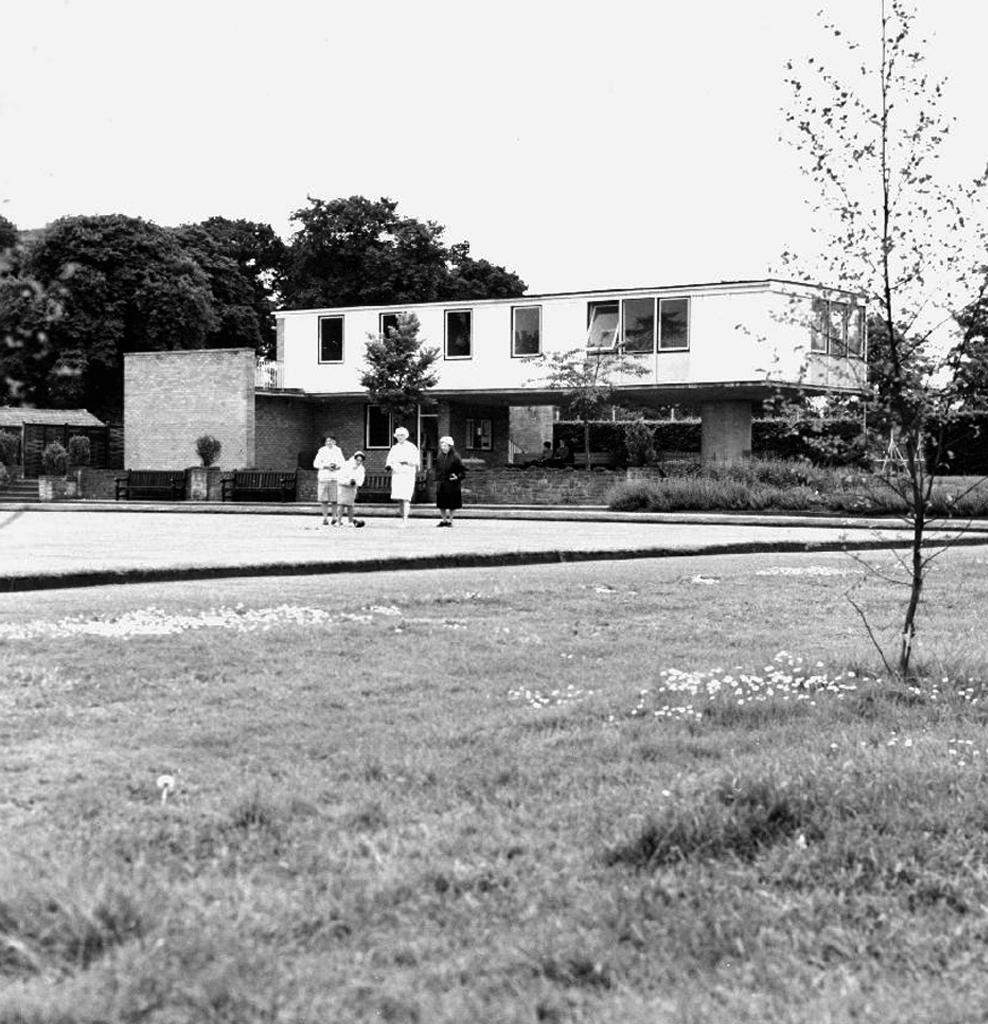
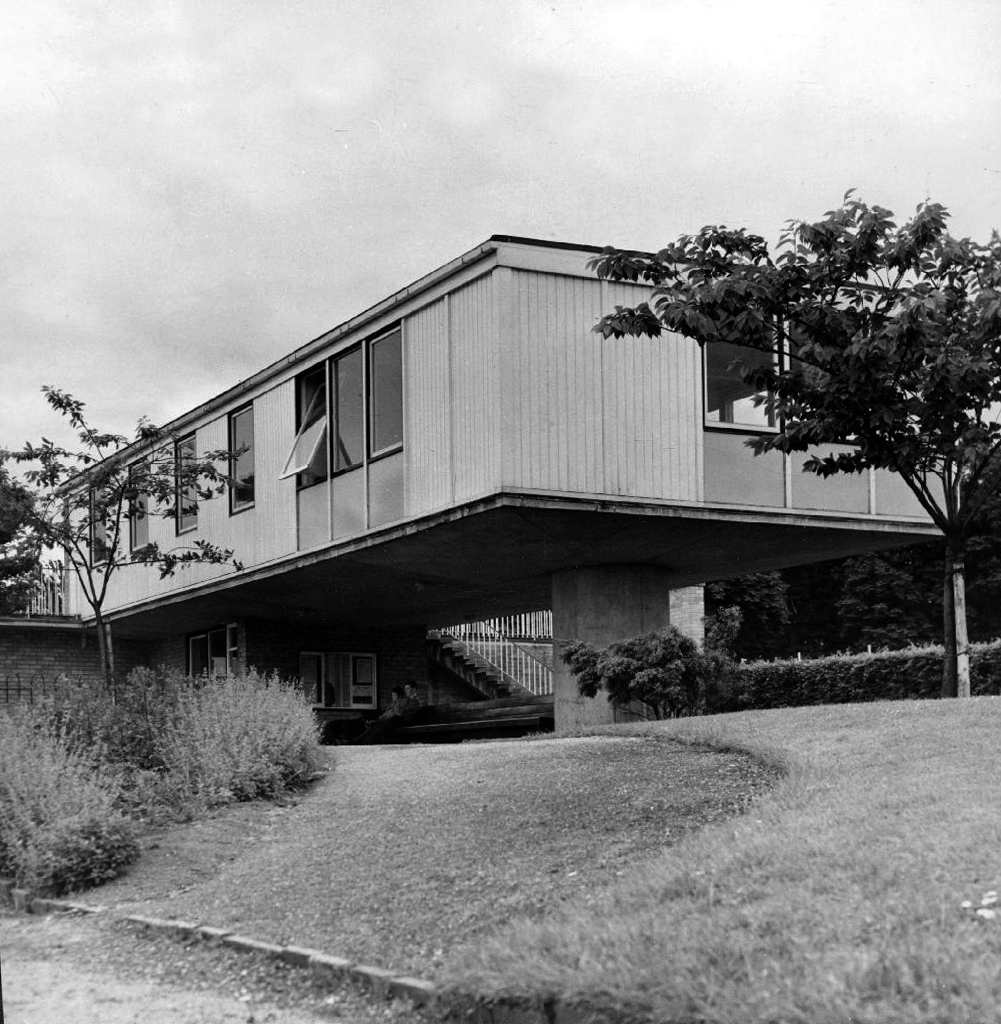
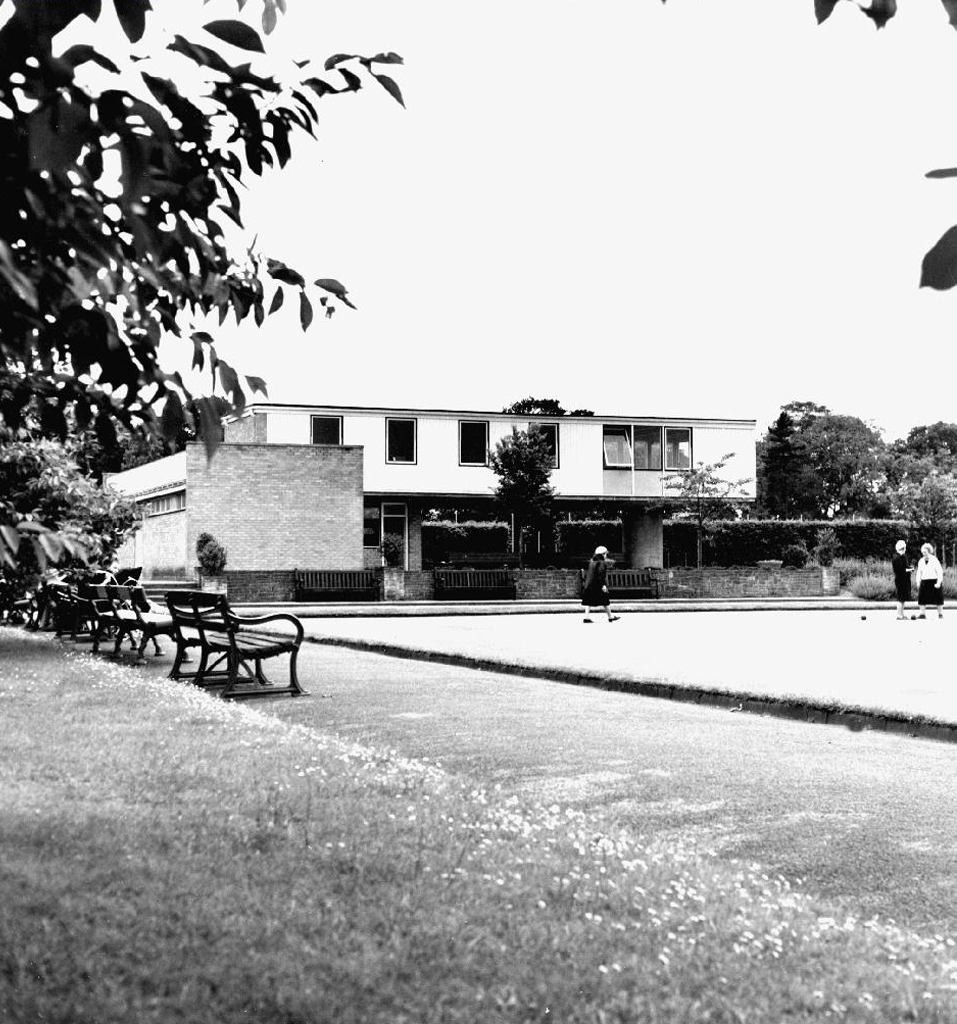
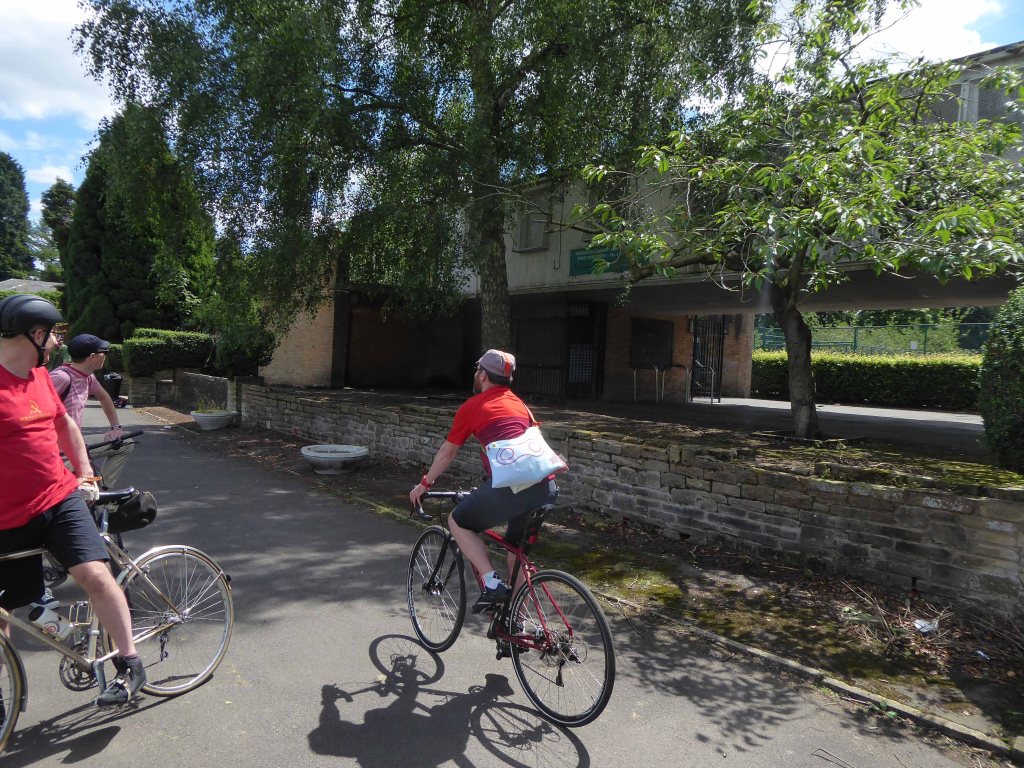
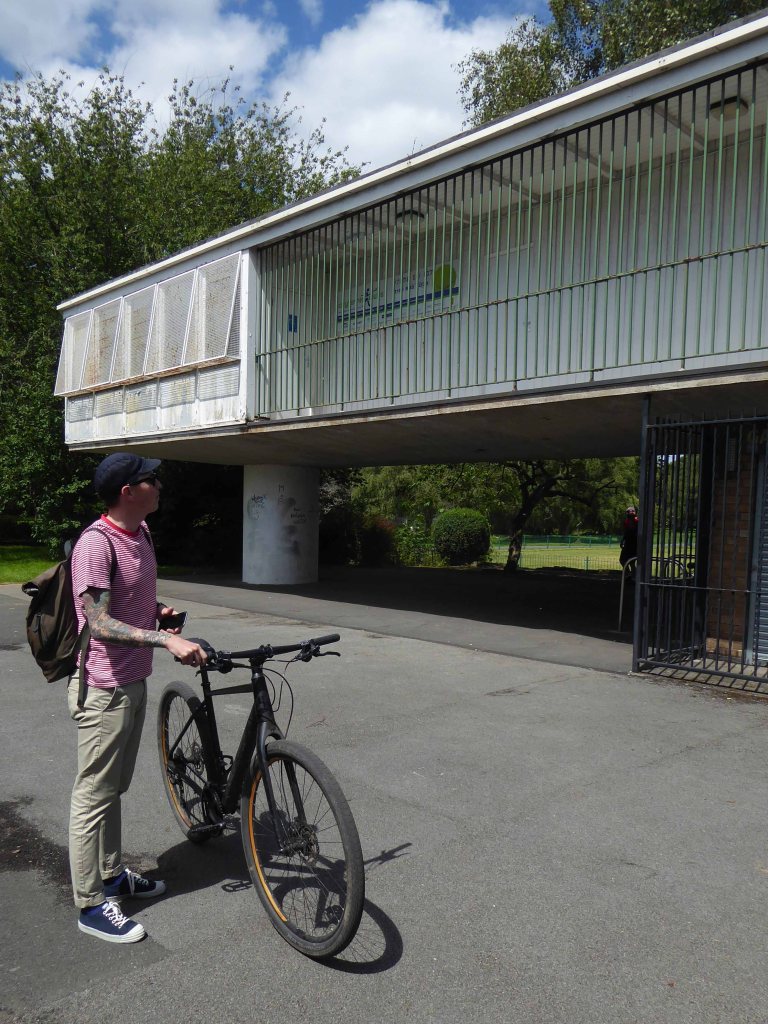
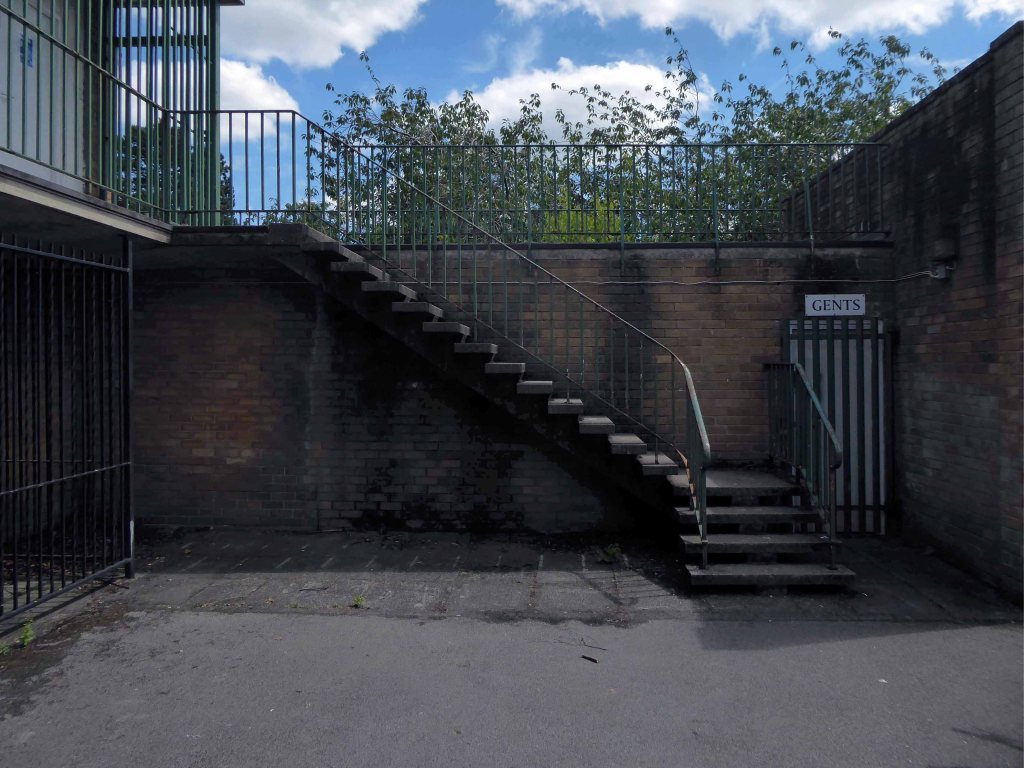
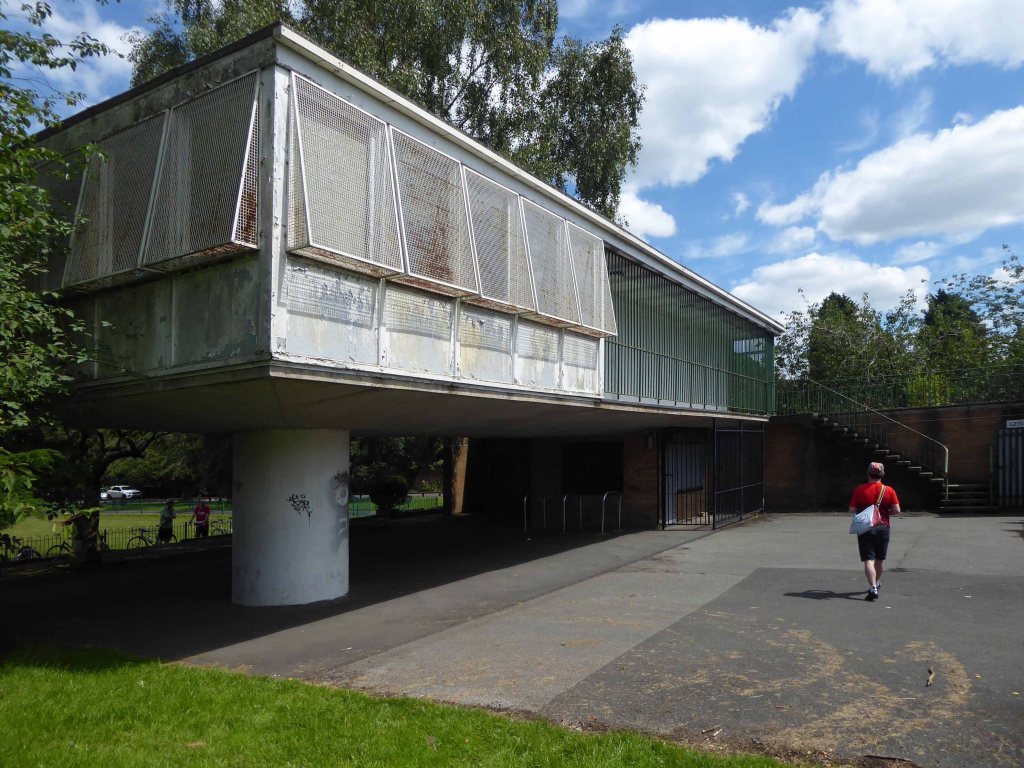
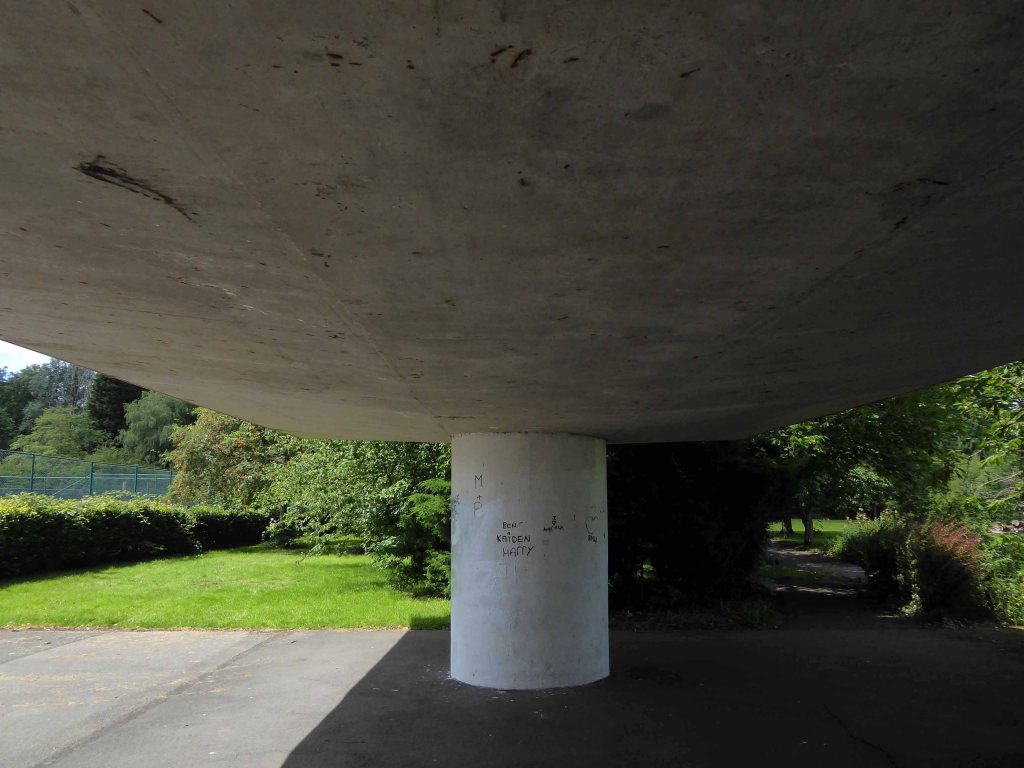
A collective decision was made to pass under the cantilevered and much revered bowls and tennis pavilion.
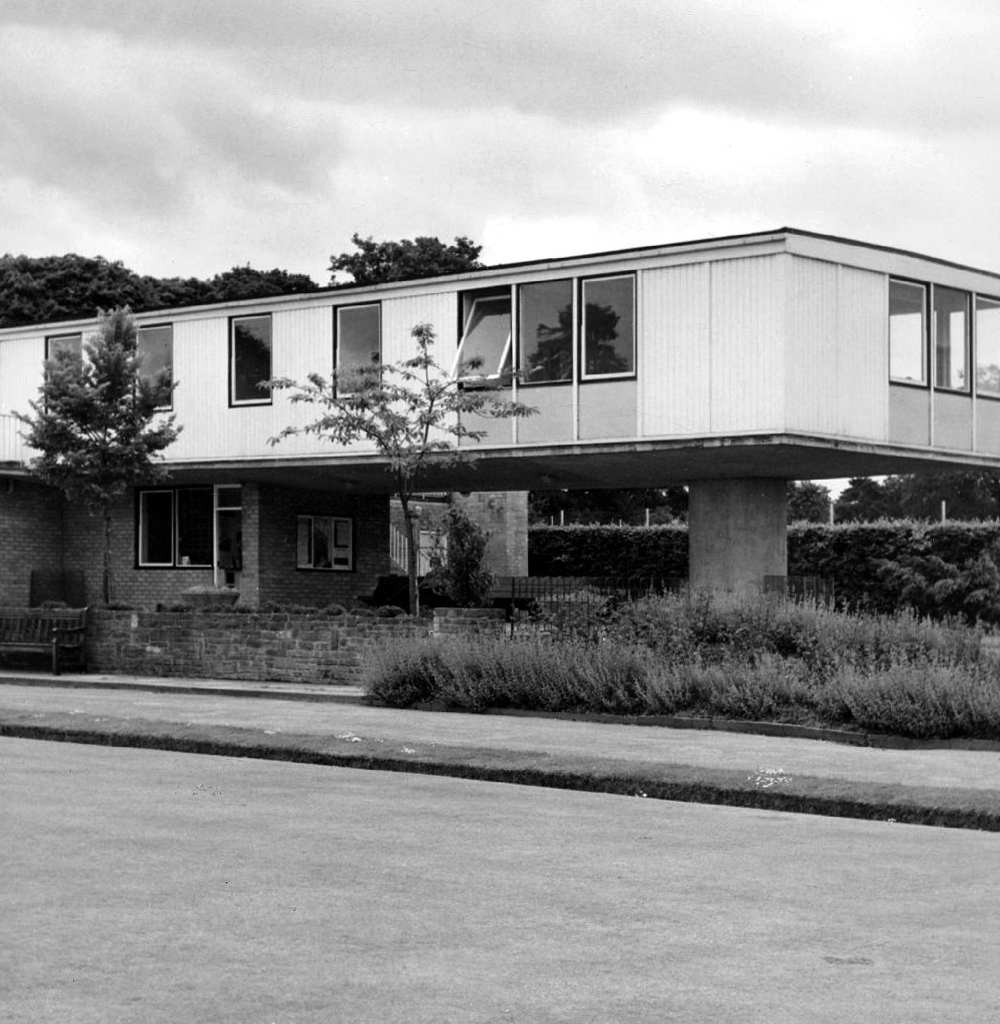
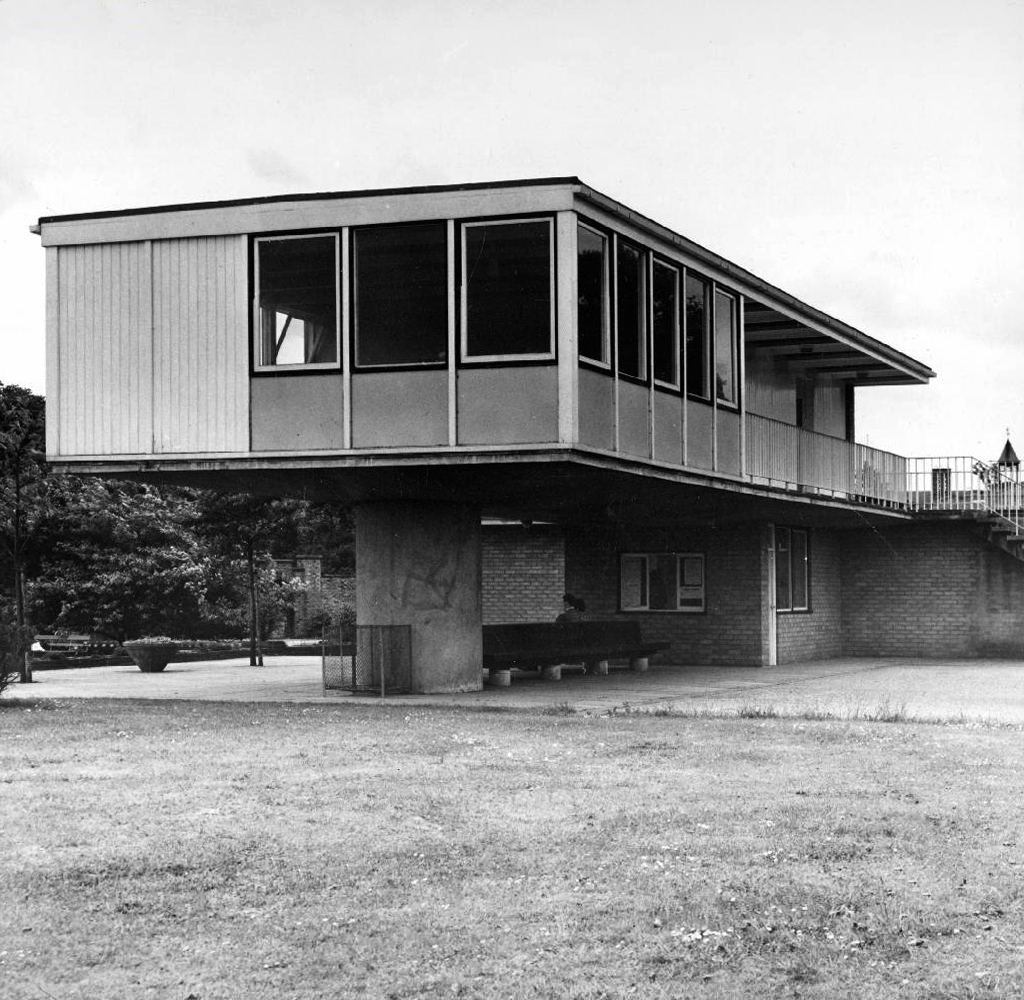
The building opened in 1960, designed by L.C. Howitt City Architect.
In striking contrast to Wythenshawe Hall of 1540 – recently restored following an arson attack, the bowls and tennis pavilion shows no inclination toward Tudor-bethan revivalism.
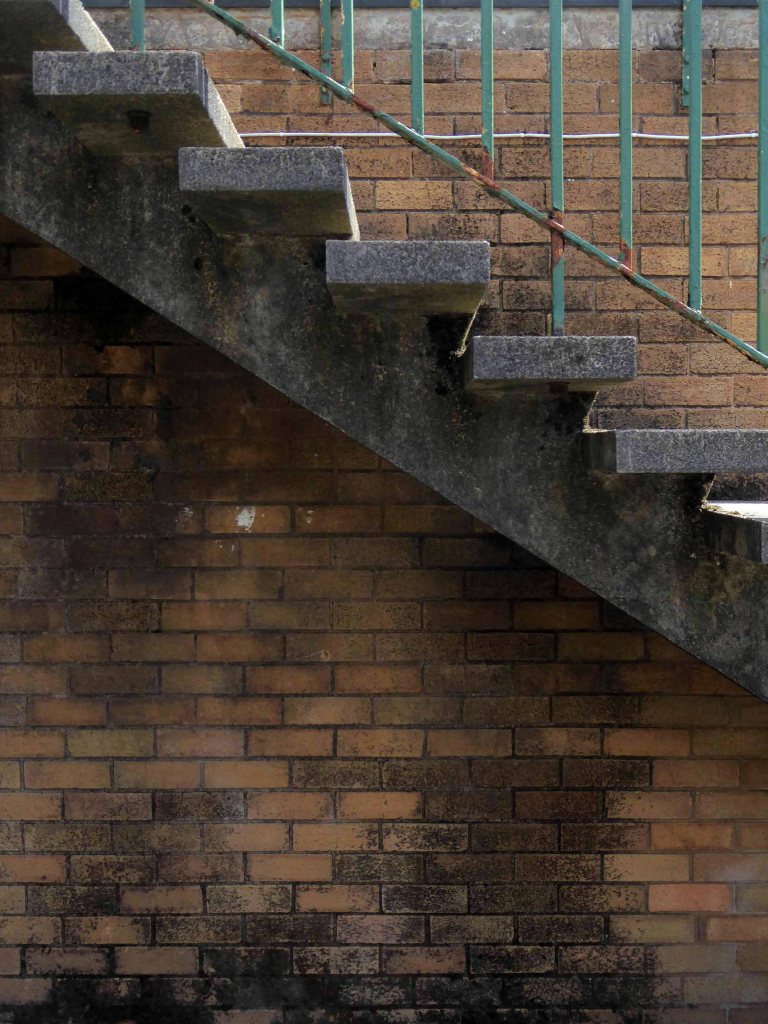
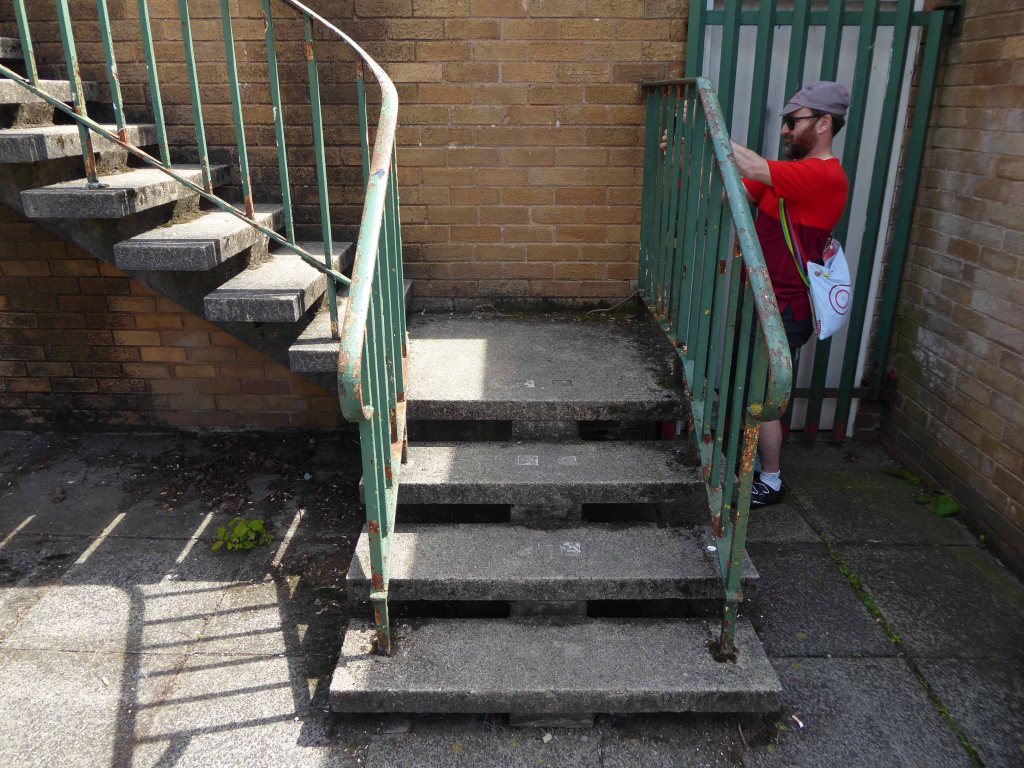
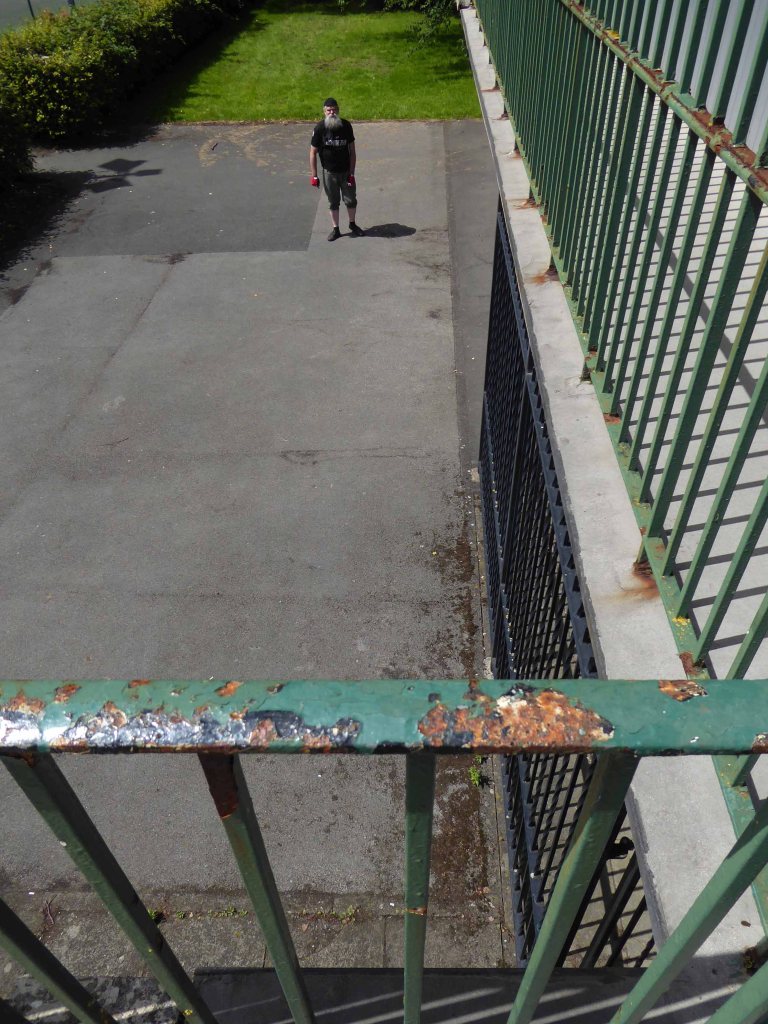
Sleek and aloof, supported by a single piloti, offering elevated and ground level views of the sporting areas.
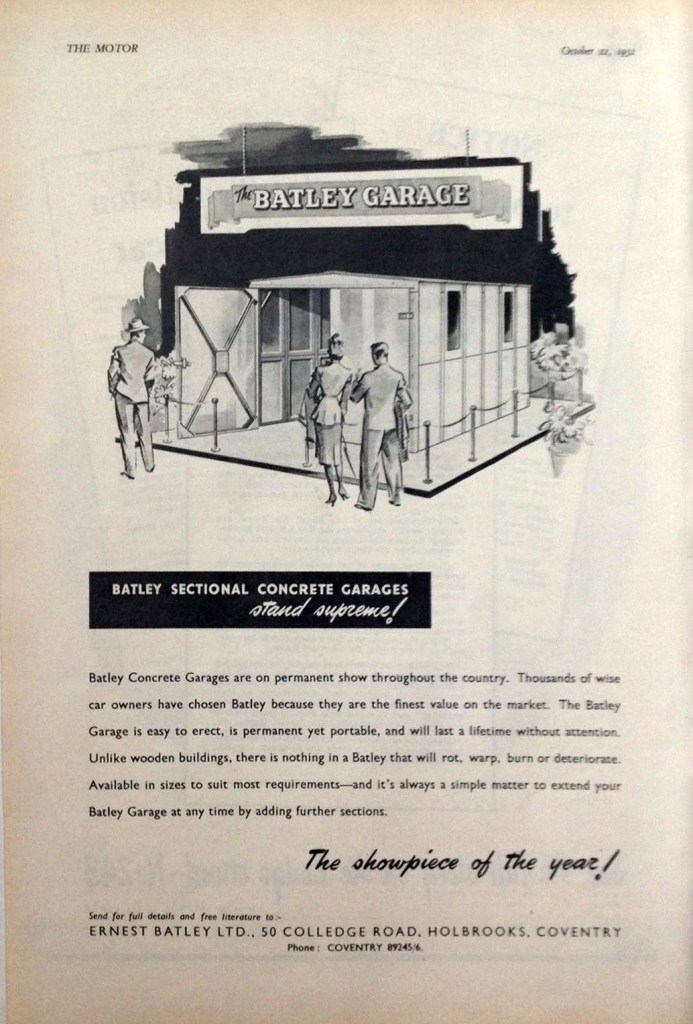
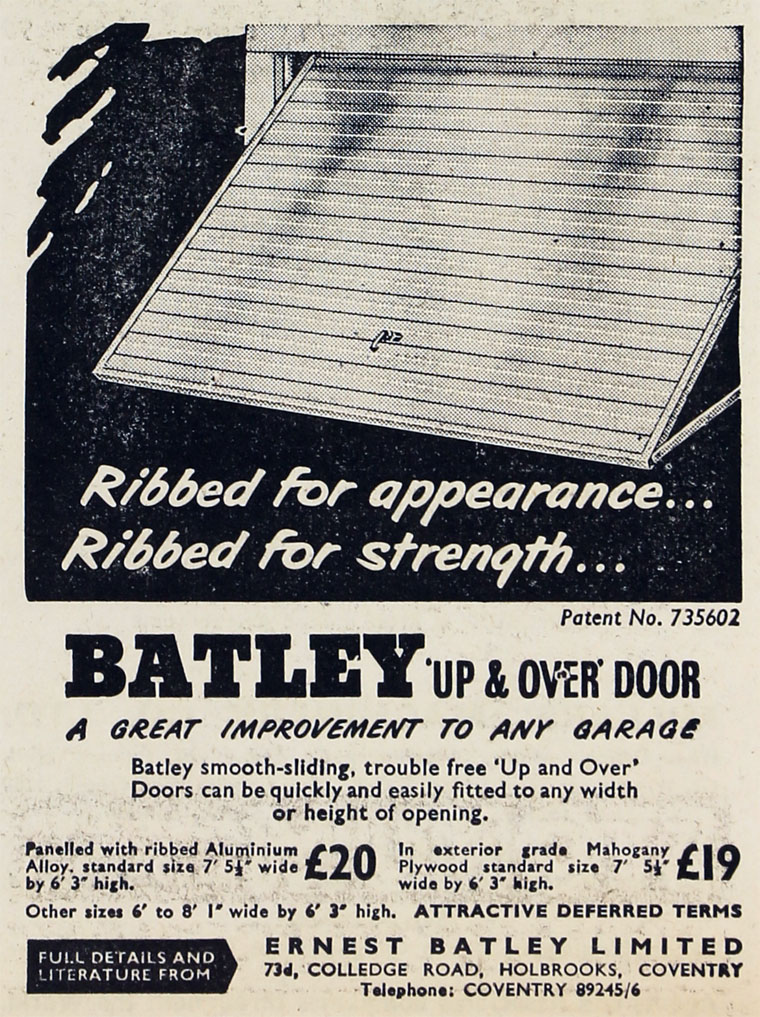
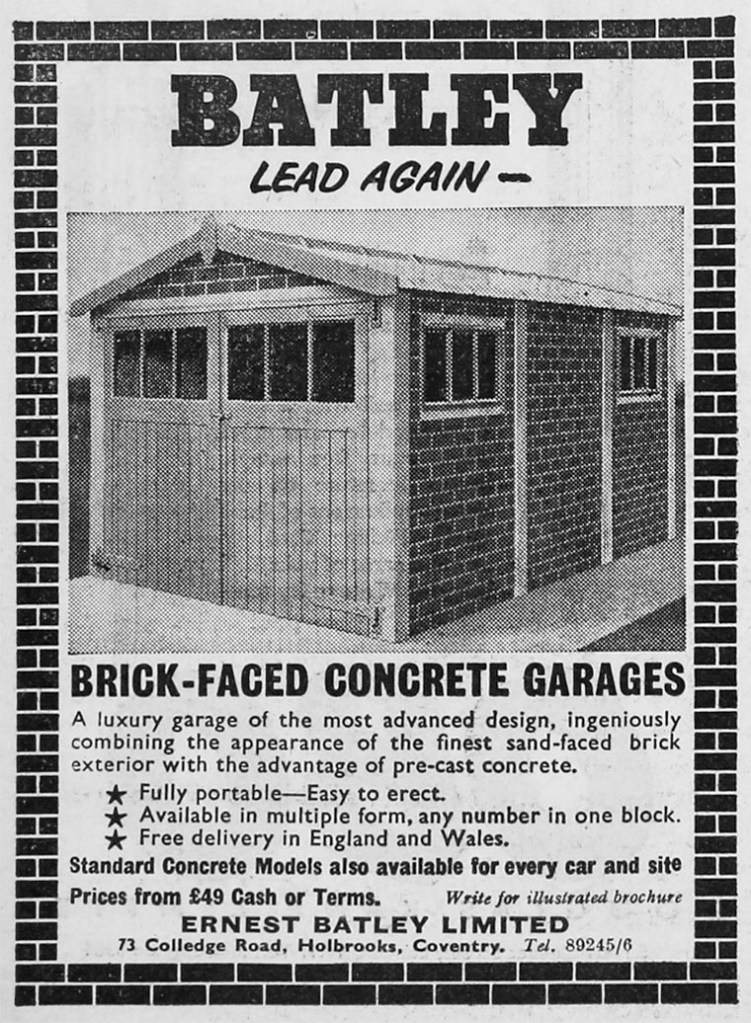
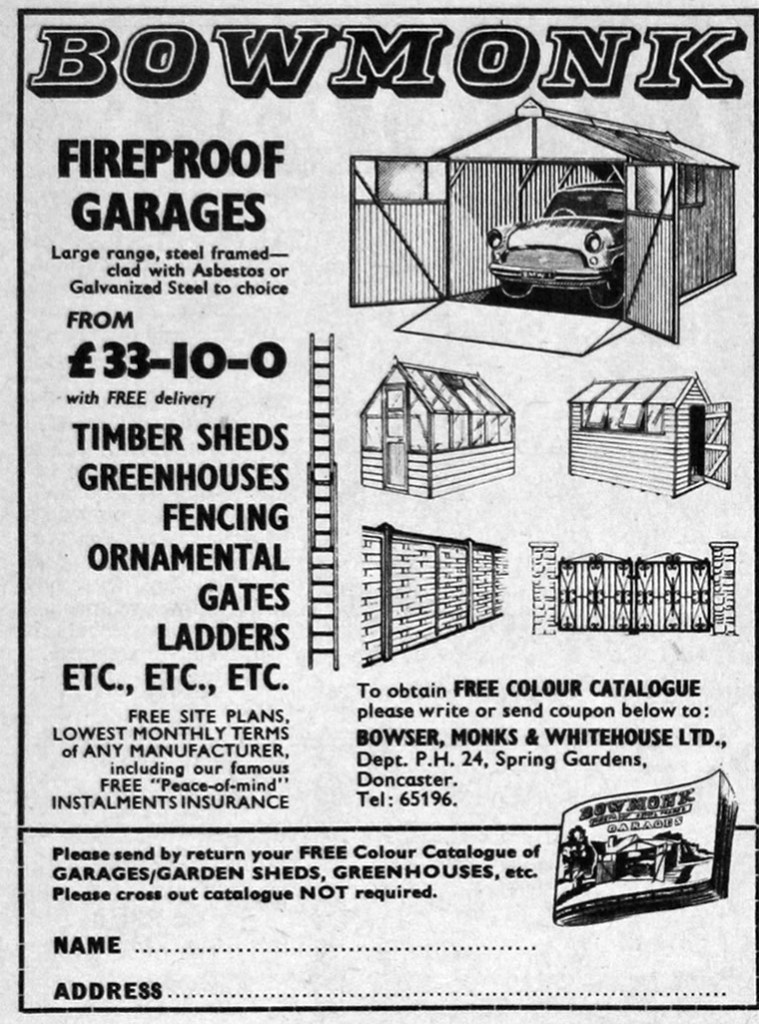
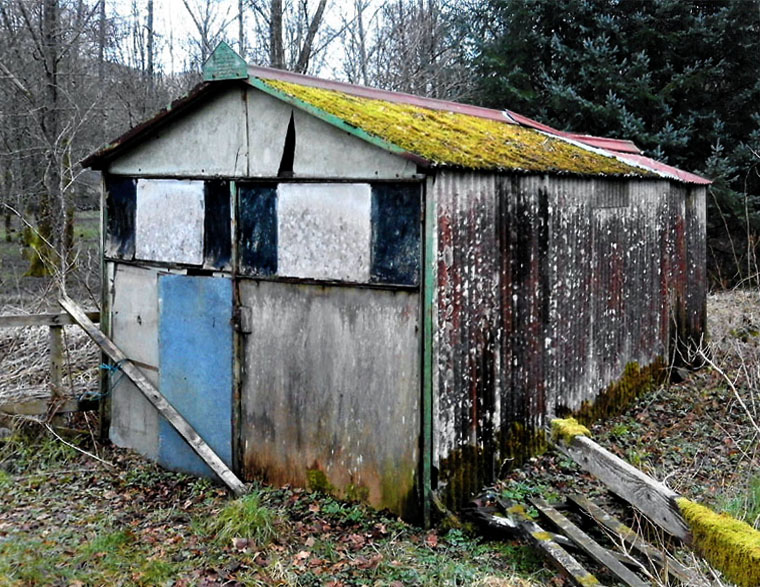
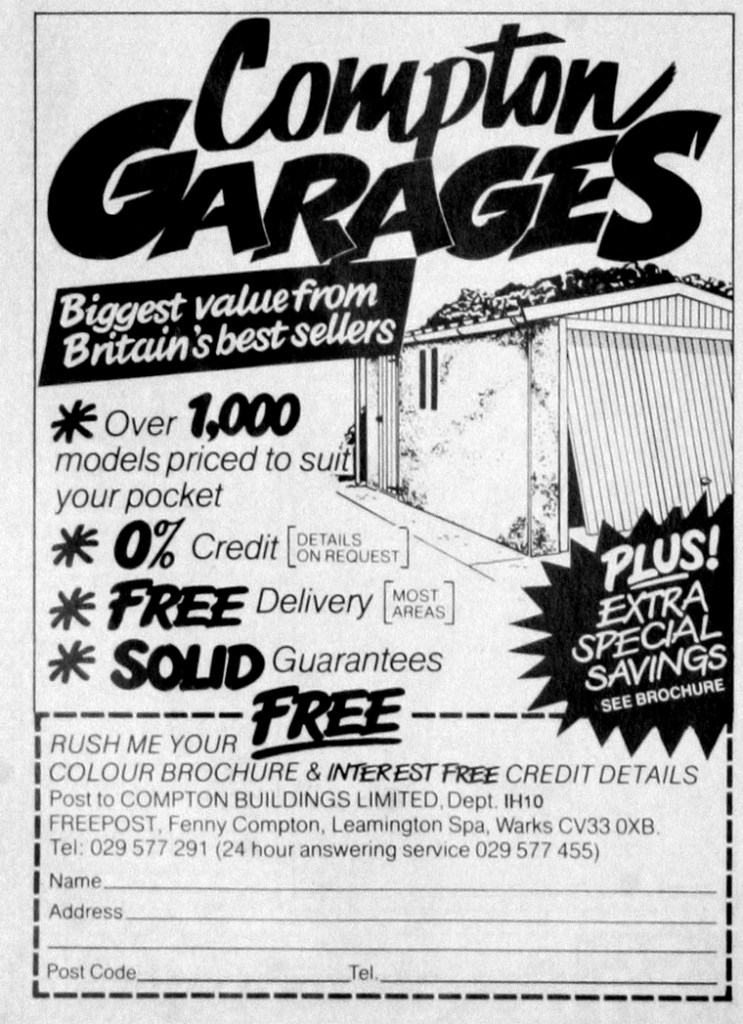
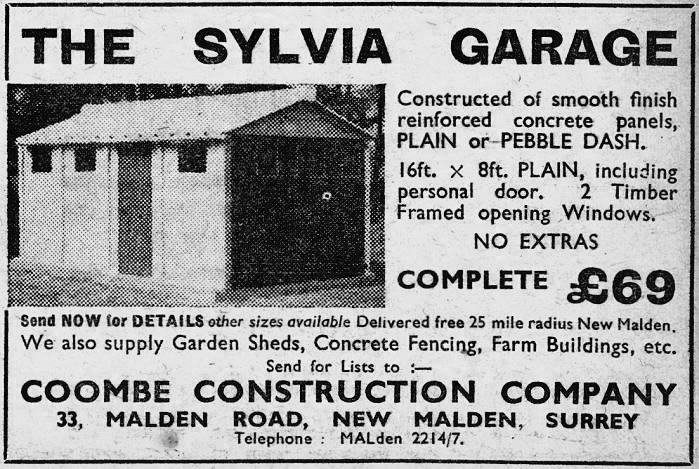
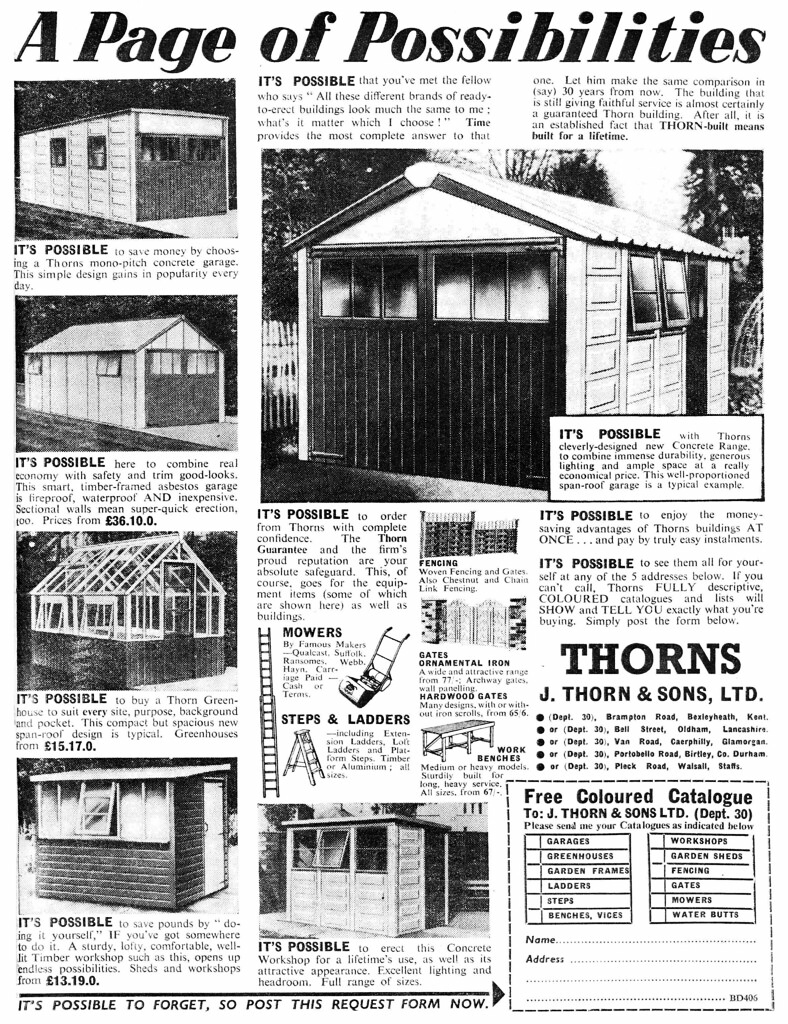
In casual conversation with Mr Matt Rettalick, at the Manchester Modernist HQ our attention casually turned to the topic of the prefabricated concrete garage.
I thought little more of it until yesterday, I then I resolved to get to the bottom of the matter.
Joseph Monier was a gardener and his idea was to develop permanent planters at a low price. In 1867, he patented different products made of reinforced concrete.
Precast panelled buildings were pioneered in Liverpool 1905. The process was invented by city engineer John Alexander Brodie, a creative genius who also invented the idea of the football goal net. The tram stables at Walton in Liverpool followed in 1906. The idea was not taken up extensively in Britain. However, it was adopted all over the world, particularly in Eastern Europe and Scandinavia.
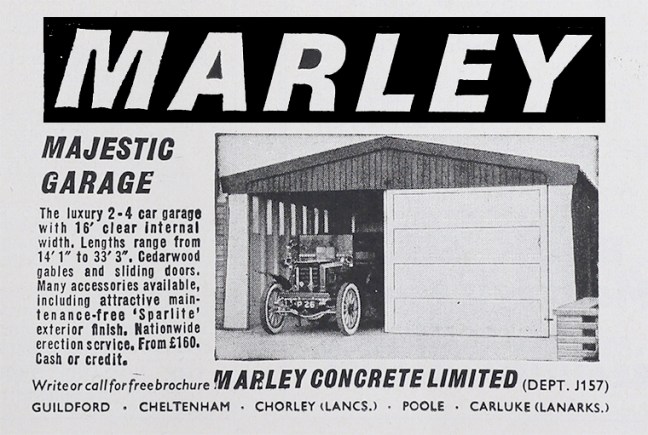
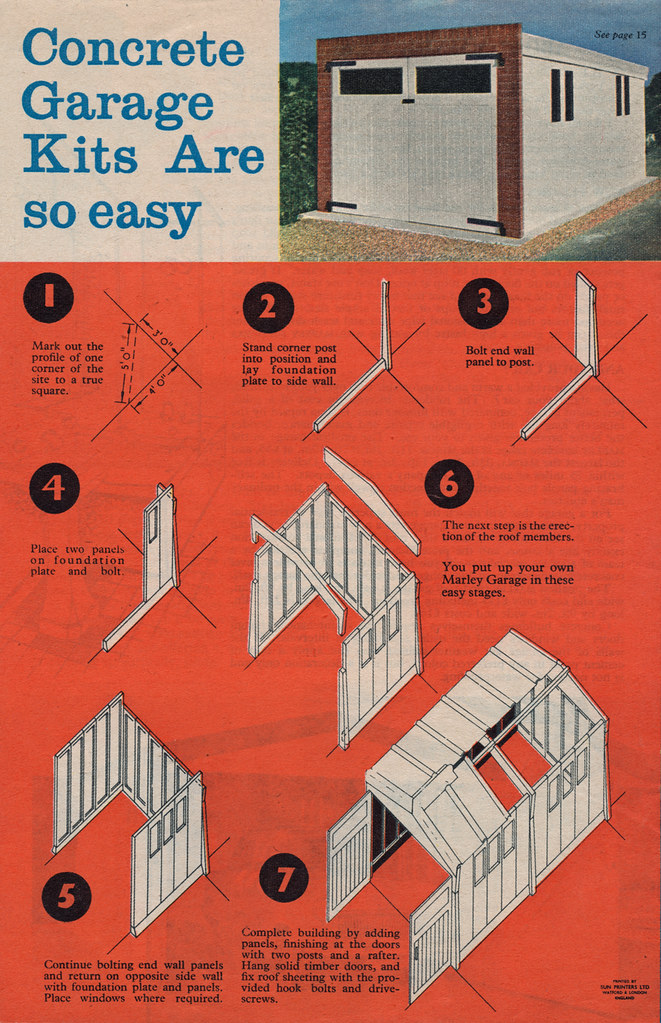
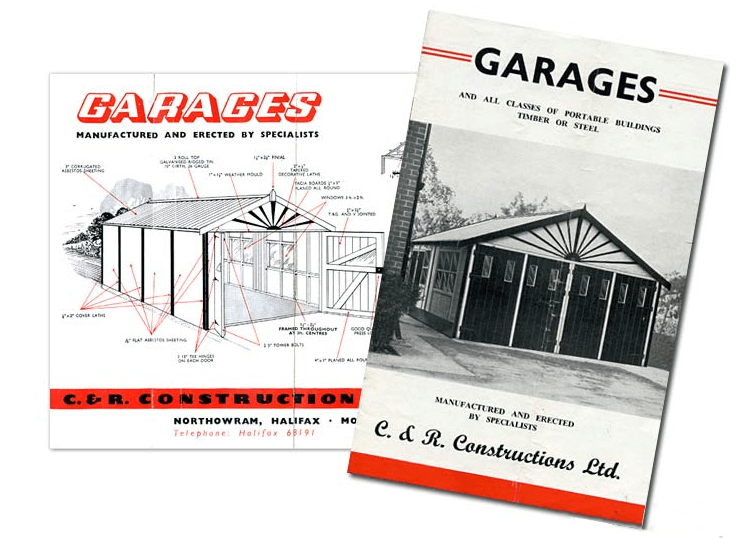
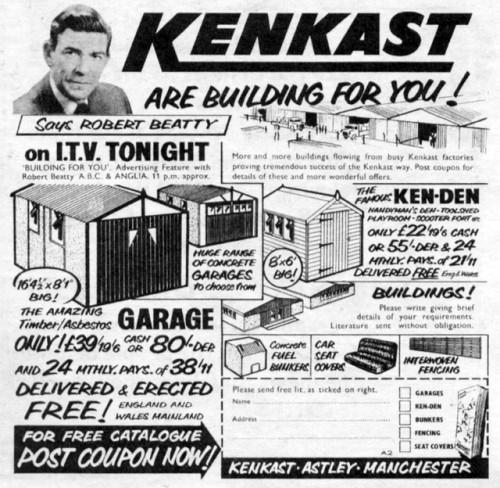
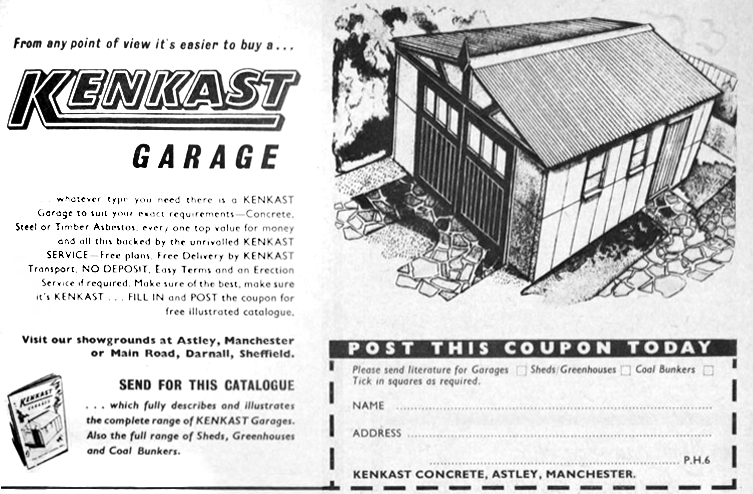
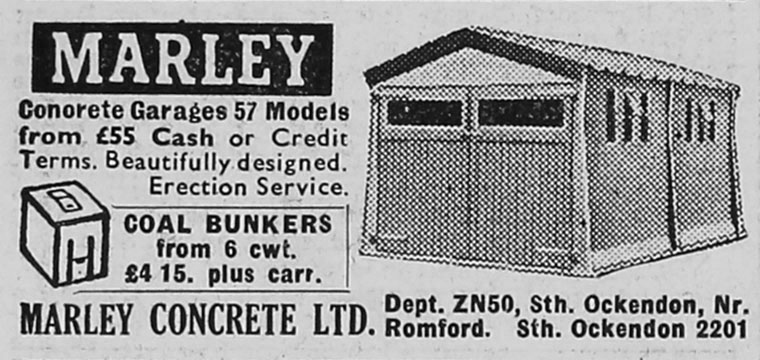
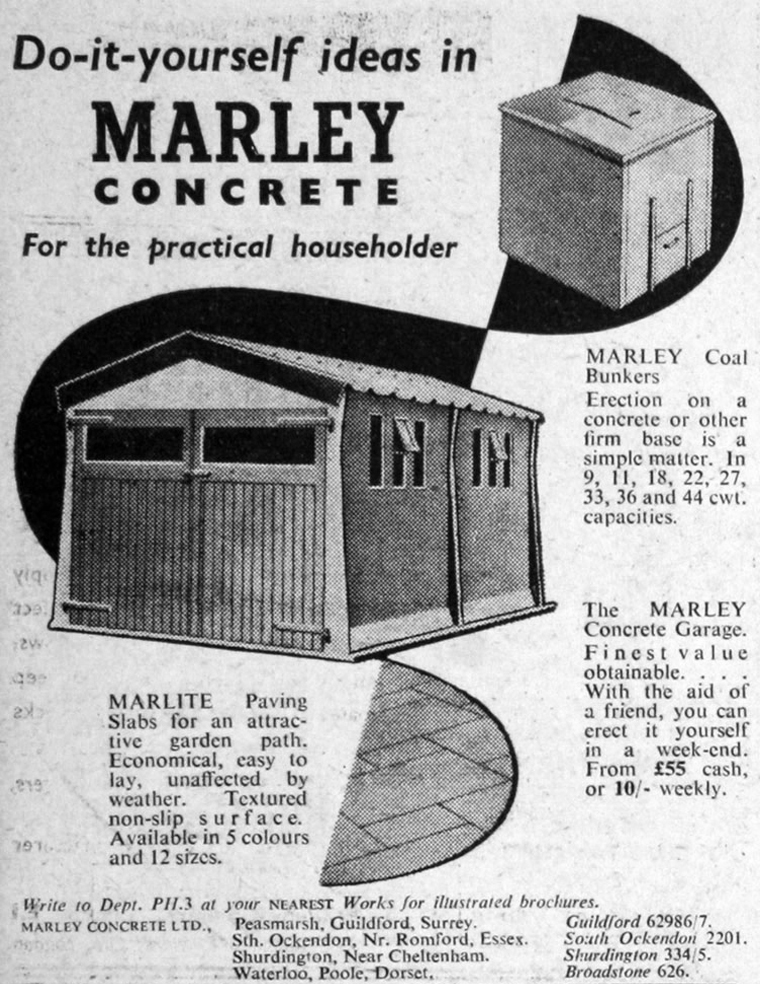
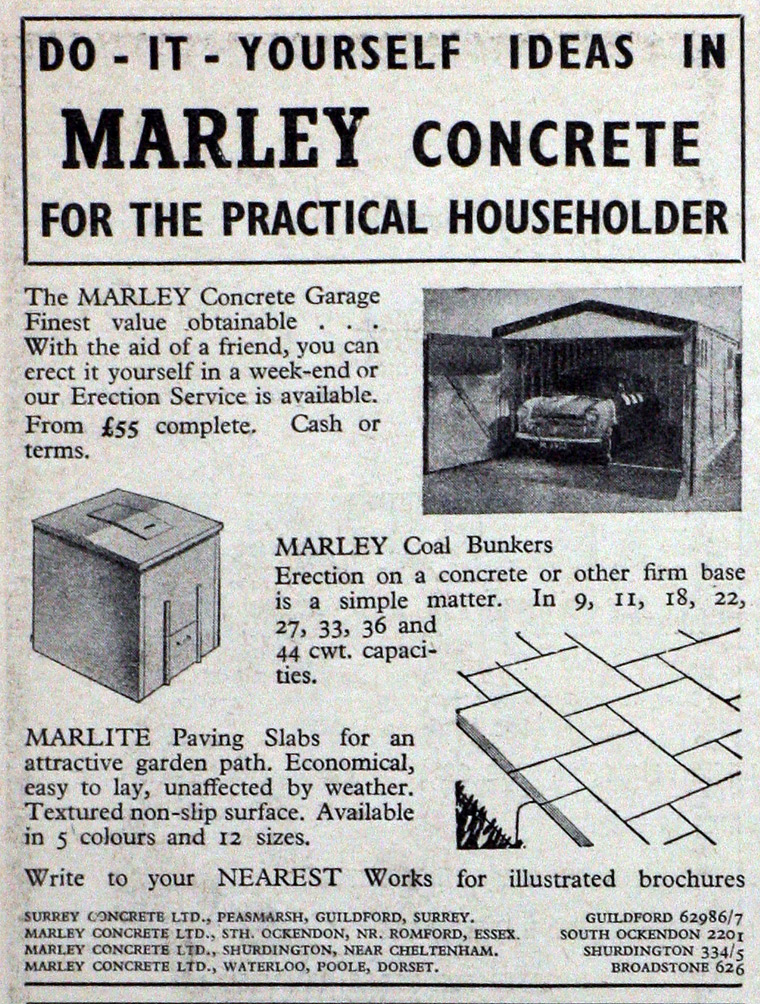
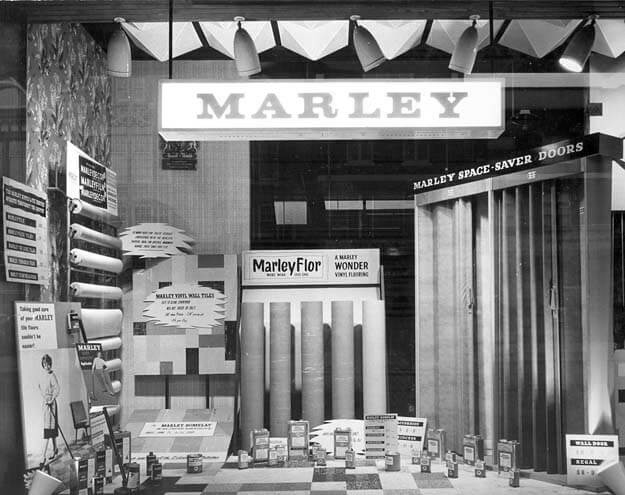
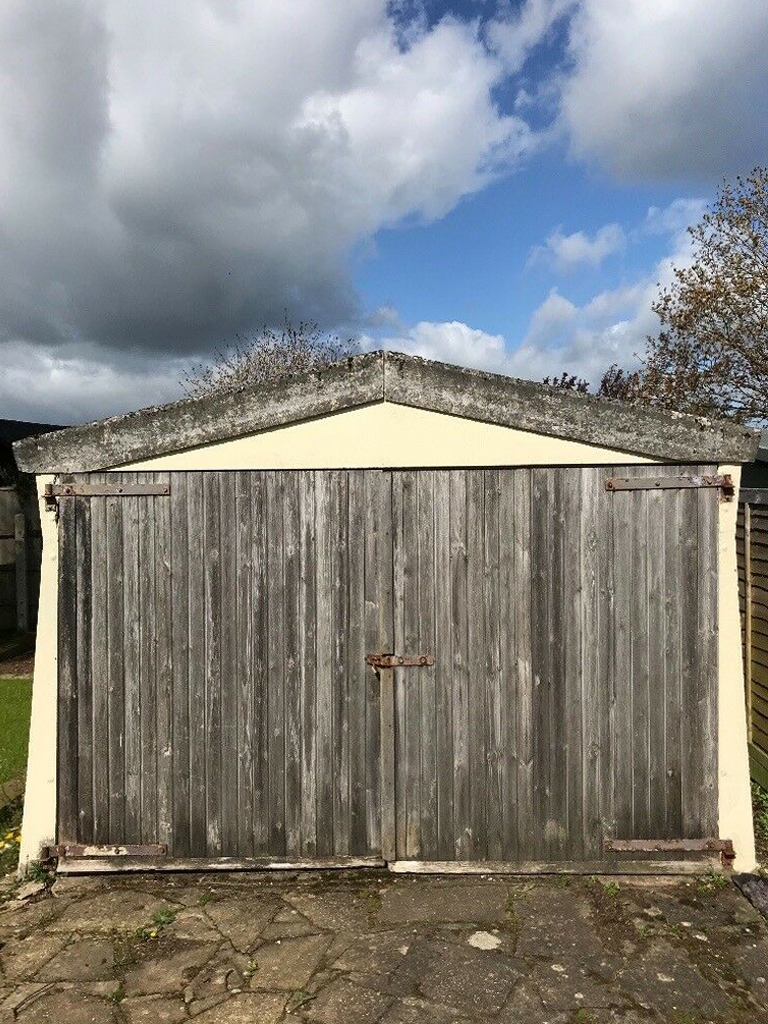
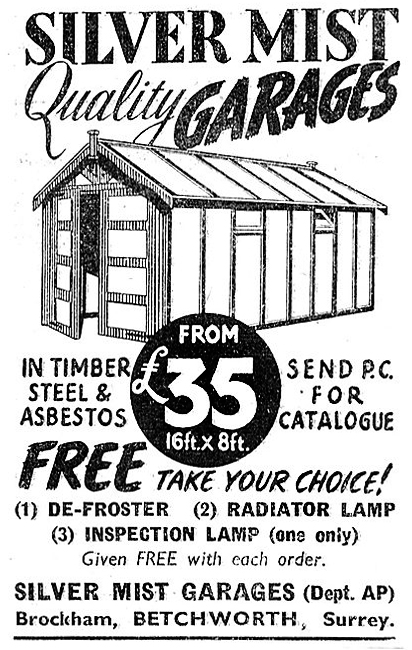
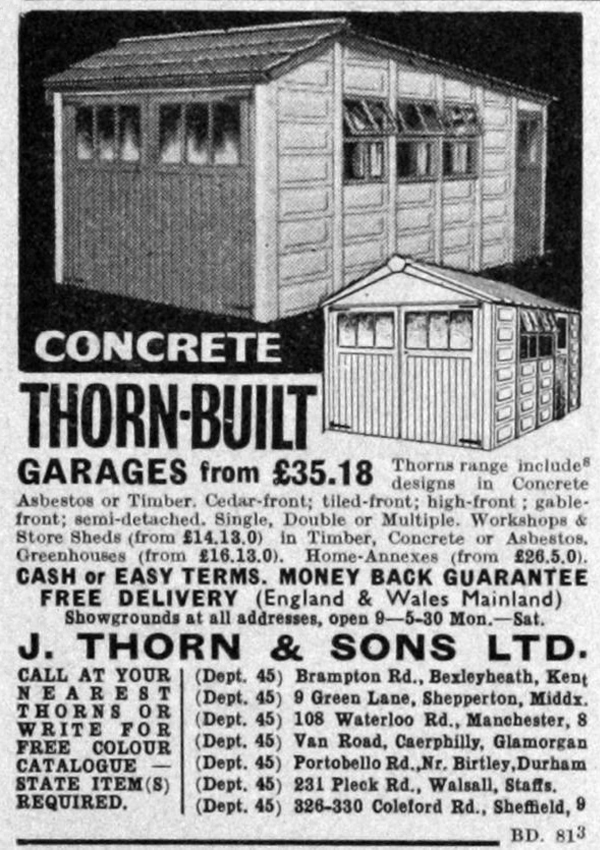
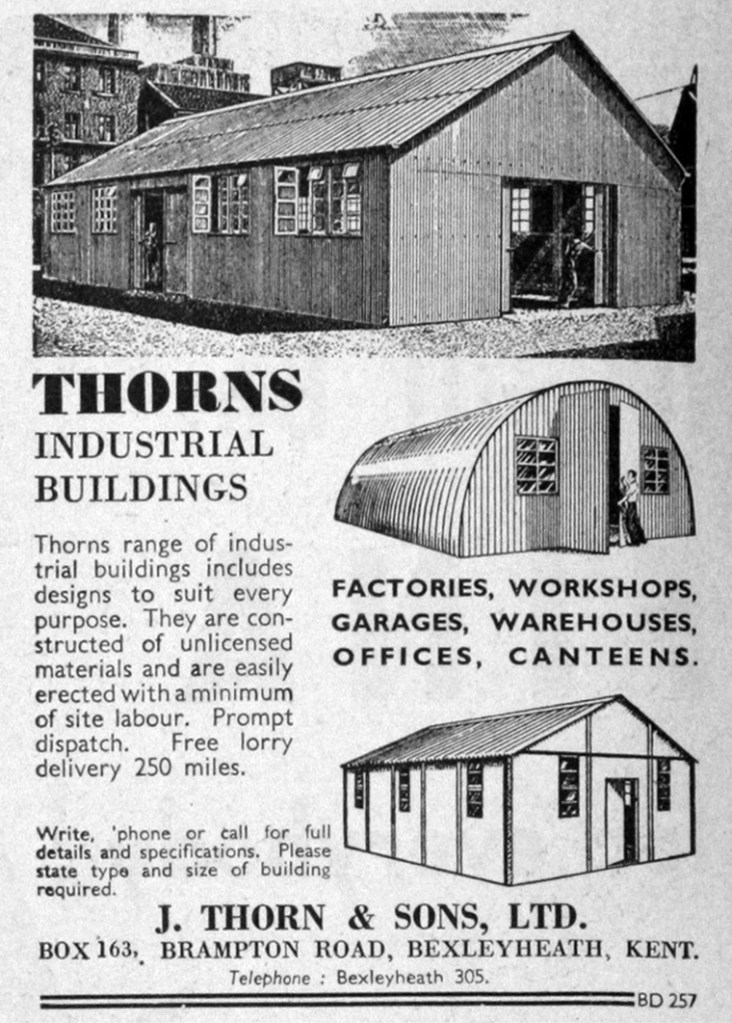
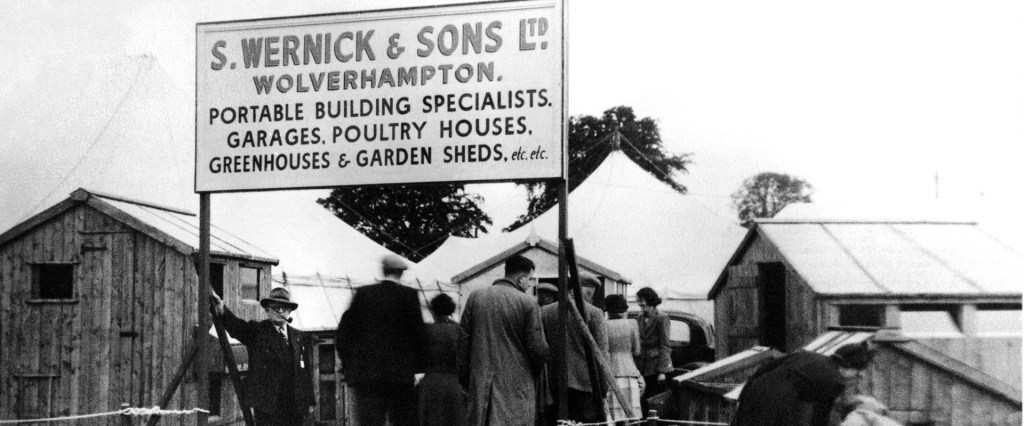
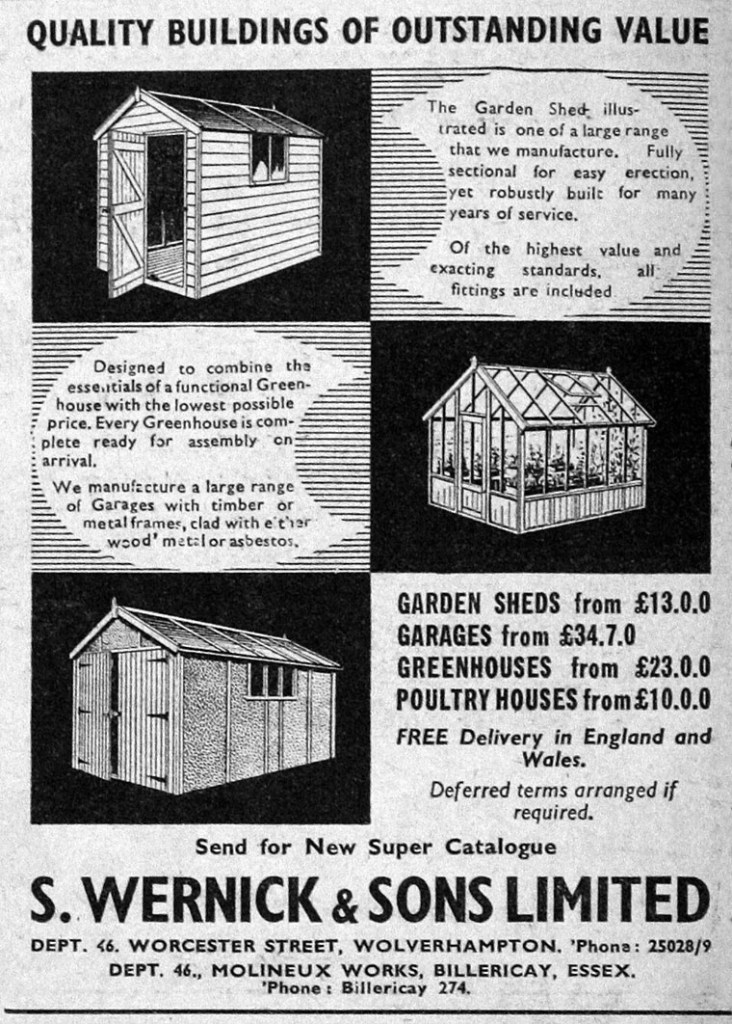
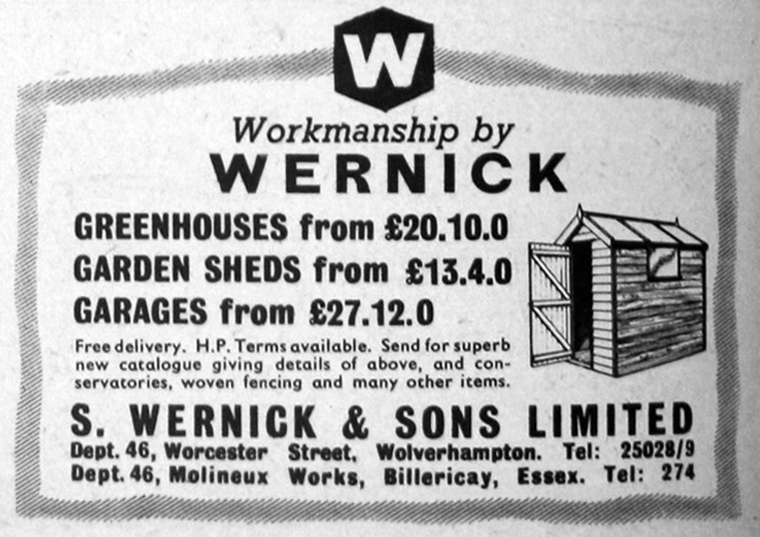
The first concrete kit garages appeared in 1952, manufactured by Marley, earlier models had been constructed from wood, asbestos, corrugated iron or galvanised steel.
The sunrise became a common symbol of inter war optimism.
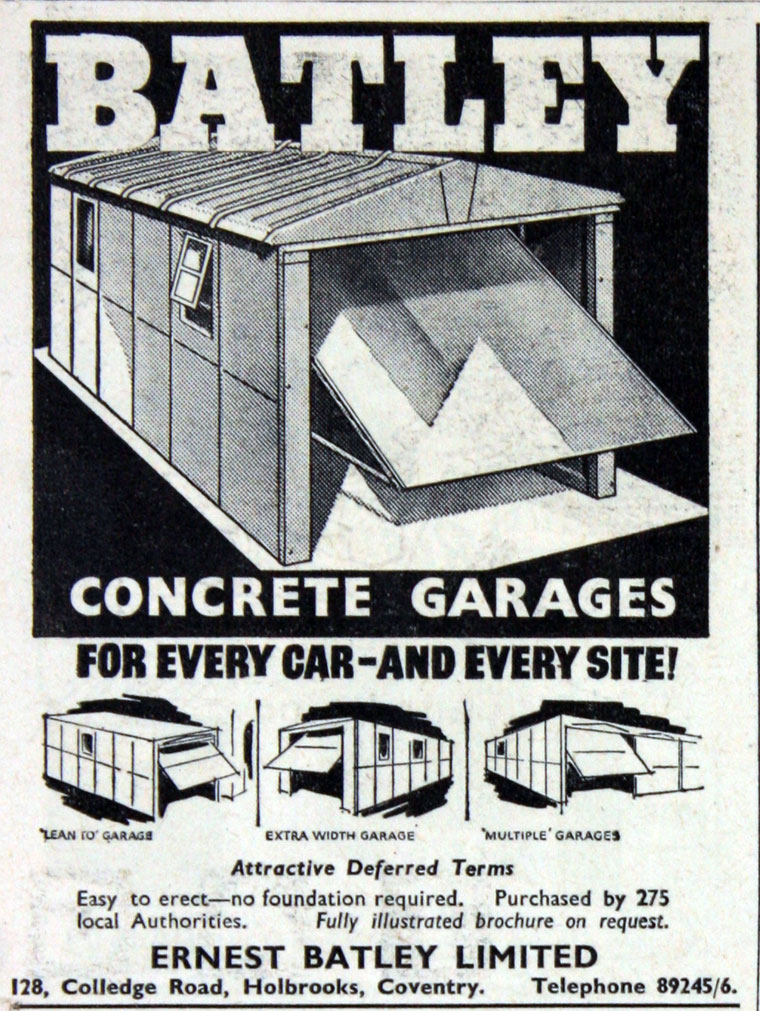
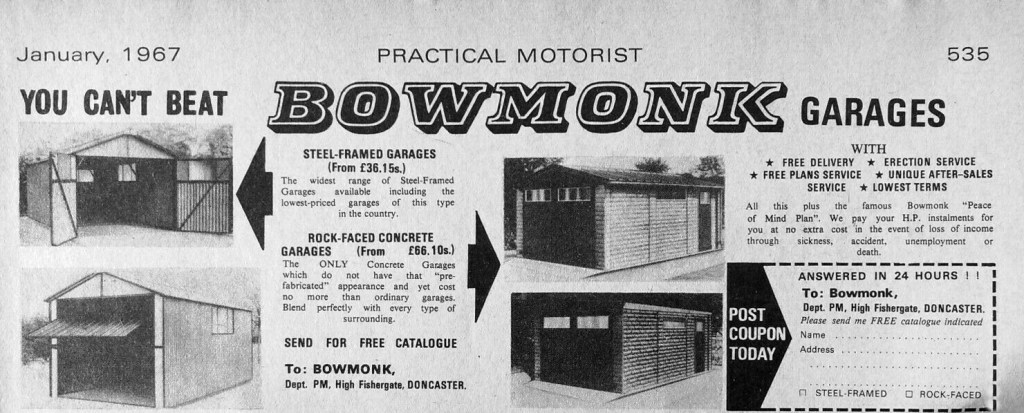
The increase in car ownership, the growth in the DIY ethic and the lack of an integrated garage, drove the demand for a pre-cast concrete auto-haven at the end of the drive.
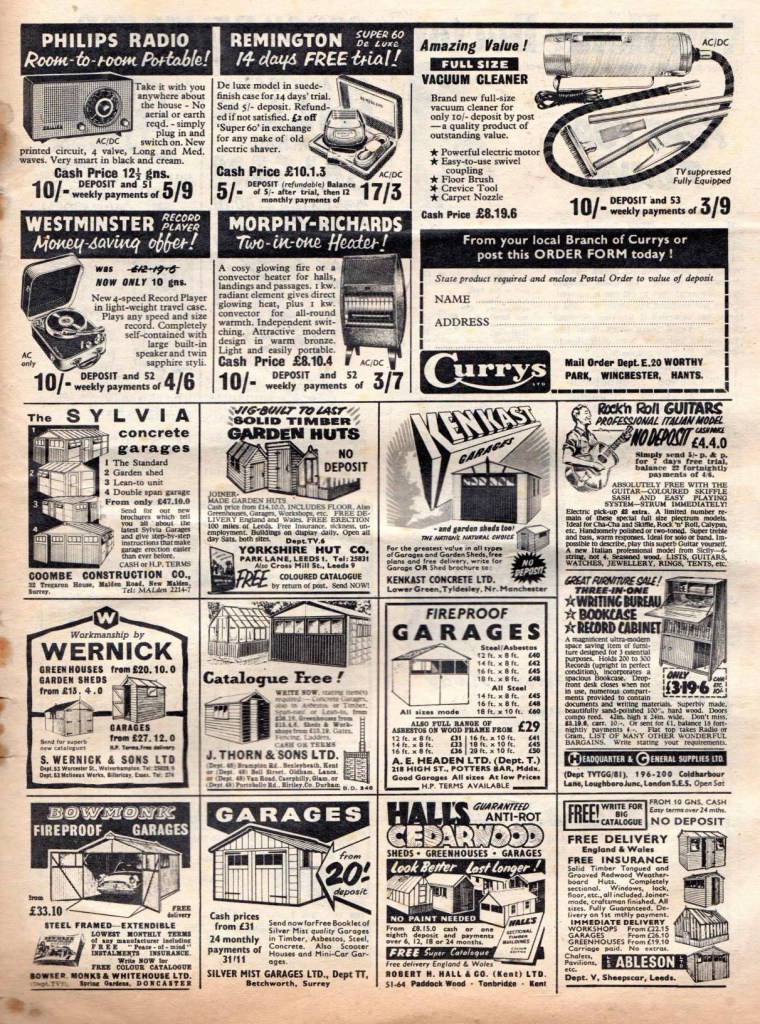
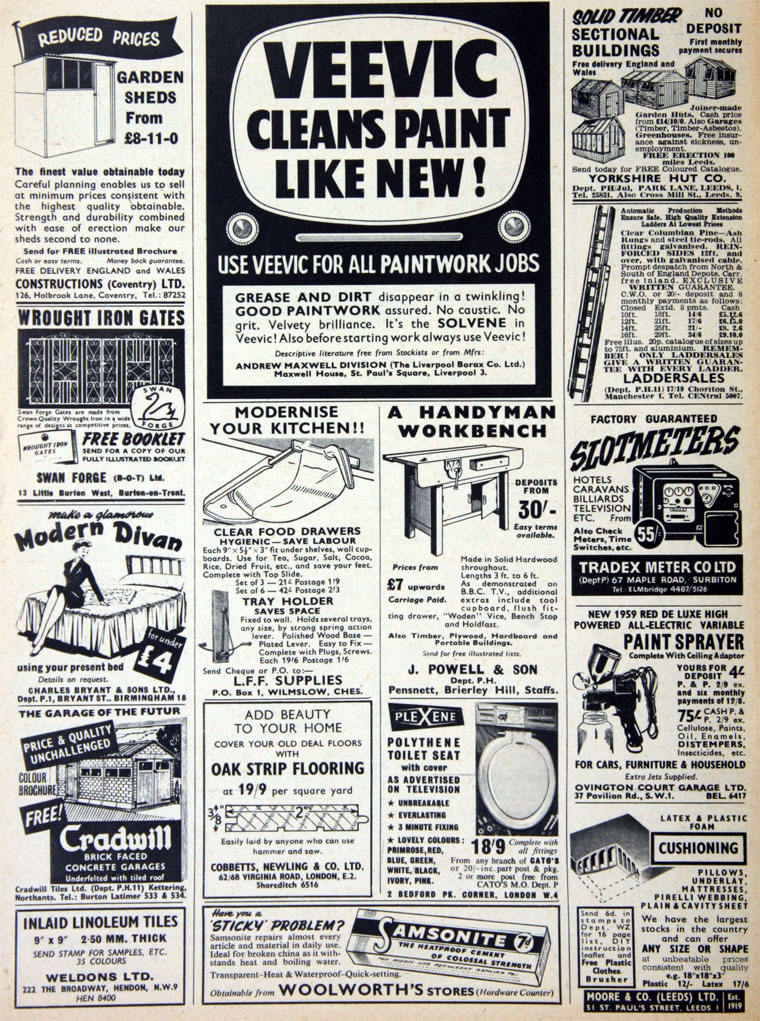
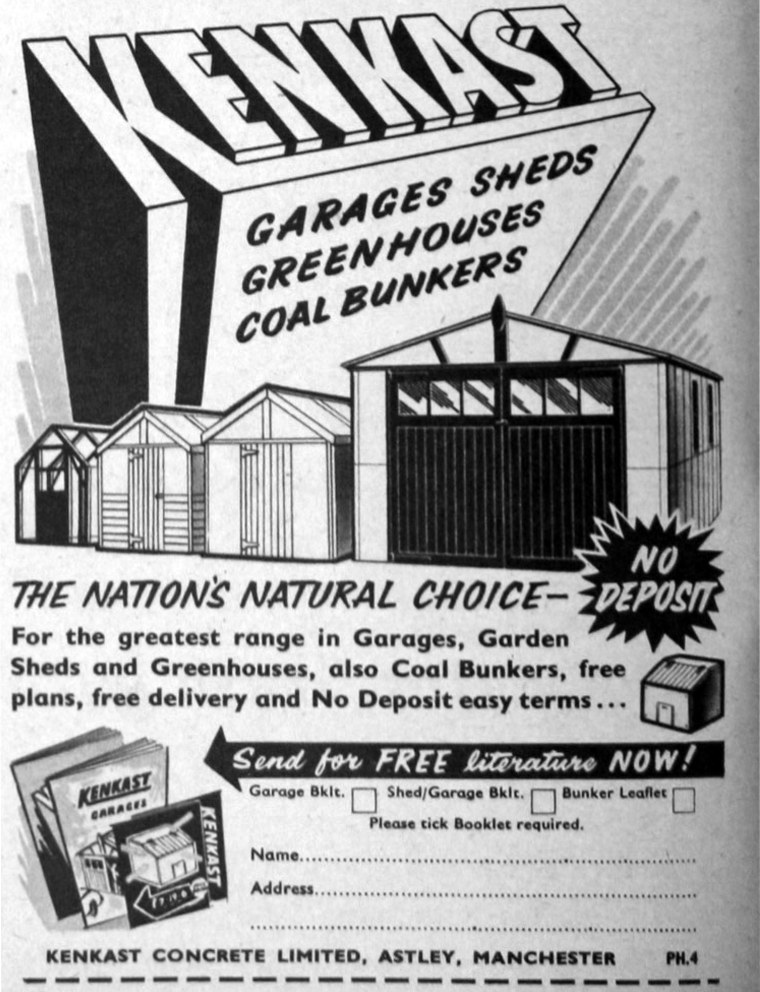
They became a staple of the small ads.
Easy terms built to last.
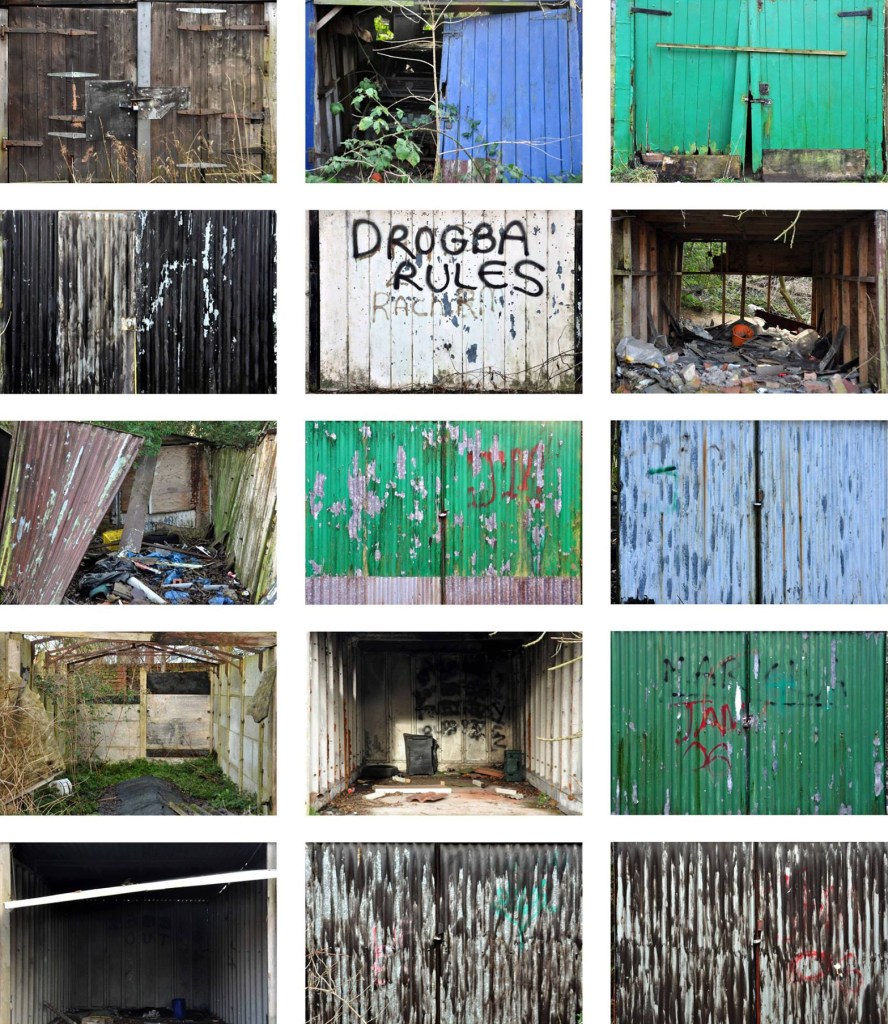
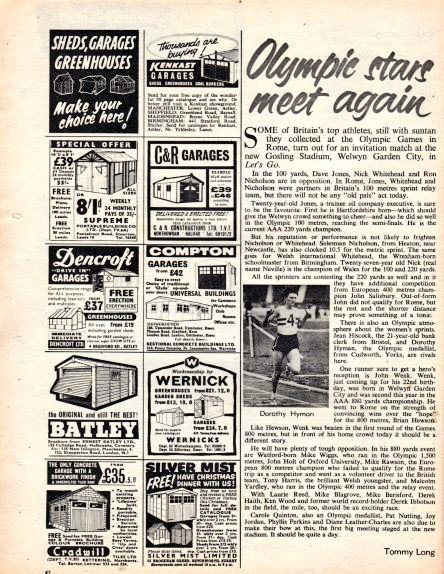
Kenkast is the name which for me resonates down through the years, though there were it seems, several other manufacturers.
We now live in an age of endless non-stop domestic extension, all of the above are reminders of an age when extra external domestic space was added over a weekend, with help from a friend.
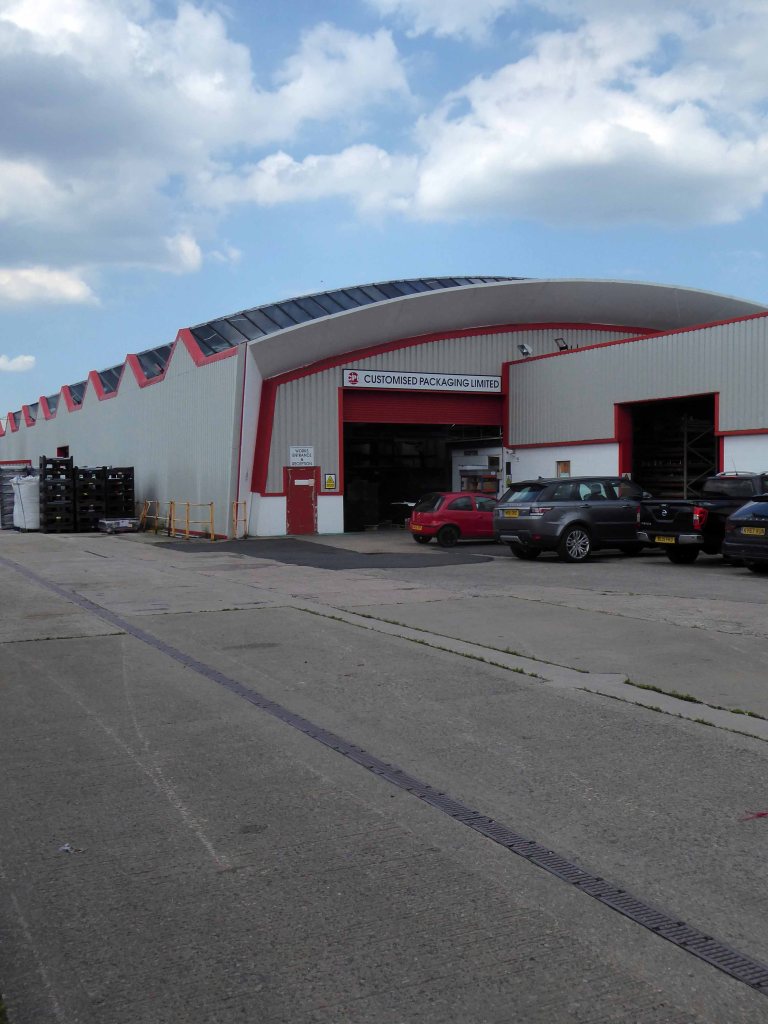
I’ve cycled by here for some fifty years or more – always admiring its serrated roof.
Way back when we would roam around on our bikes, exploring the waste ground adjacent to Jackson’s Brickworks.
Where we would scavenge tape from the Rotunda tip.
I remember it as a Remploy Centre.
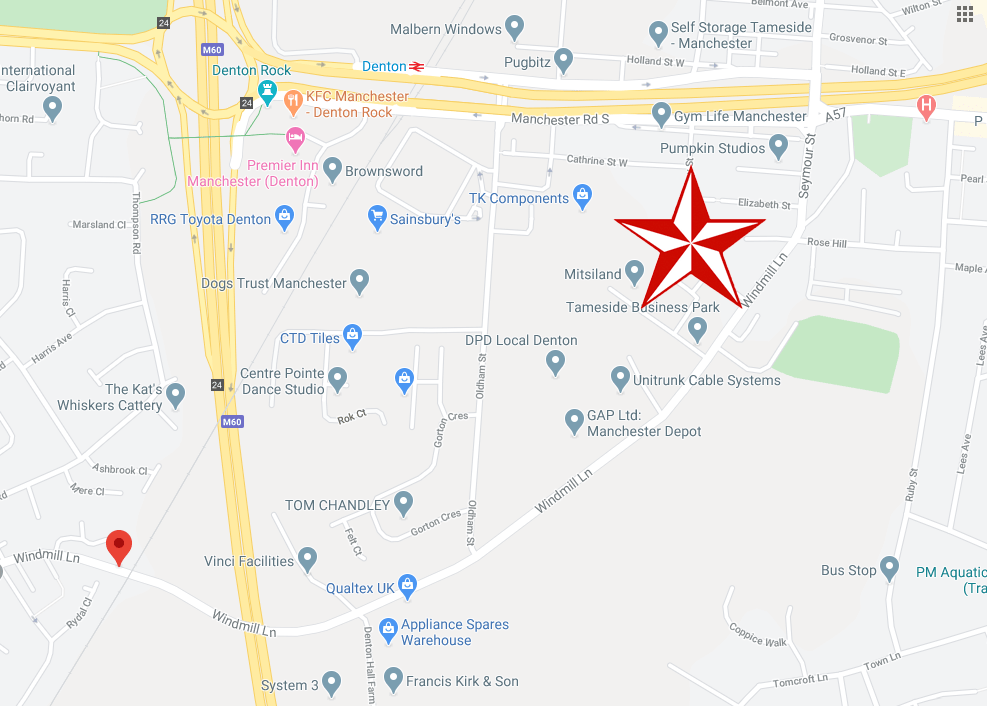
My last 13 years prior to retirement last May were spent at the centre, on Windmill Lane, Denton. Just before I left, a lot of demolition work was done, prior to redevelopment of much of the site.
I seem to remember the place always being referred to locally as Th’ Rehab – the Rehabilitation Centre, a Government training centre, where skills were taught, such as joinery, bricklaying etc, and there was also a Remploy Unit housed there.
Local men could go for a free haircut, administered by a well supervised trainee.
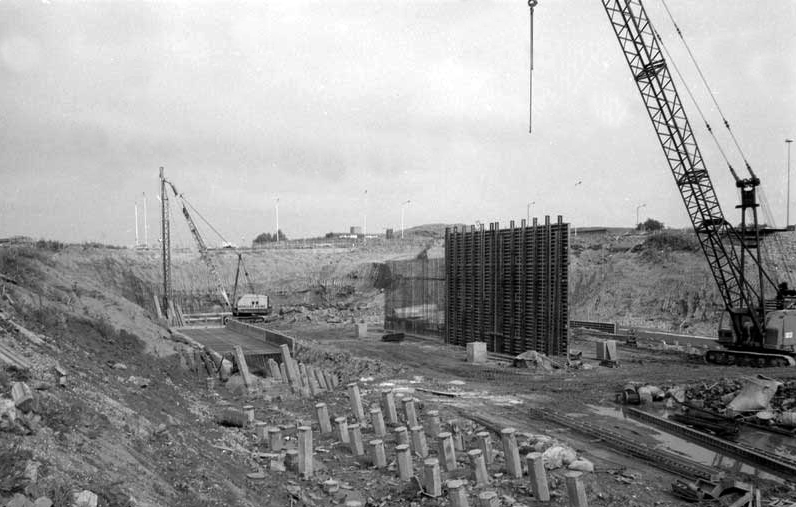
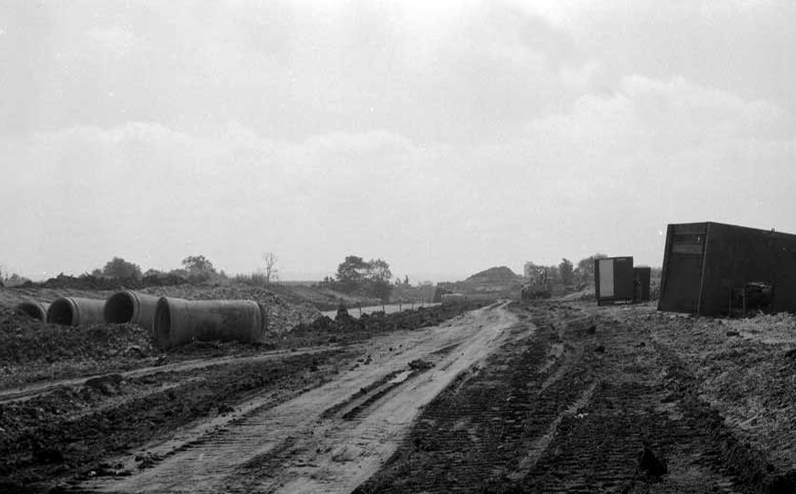
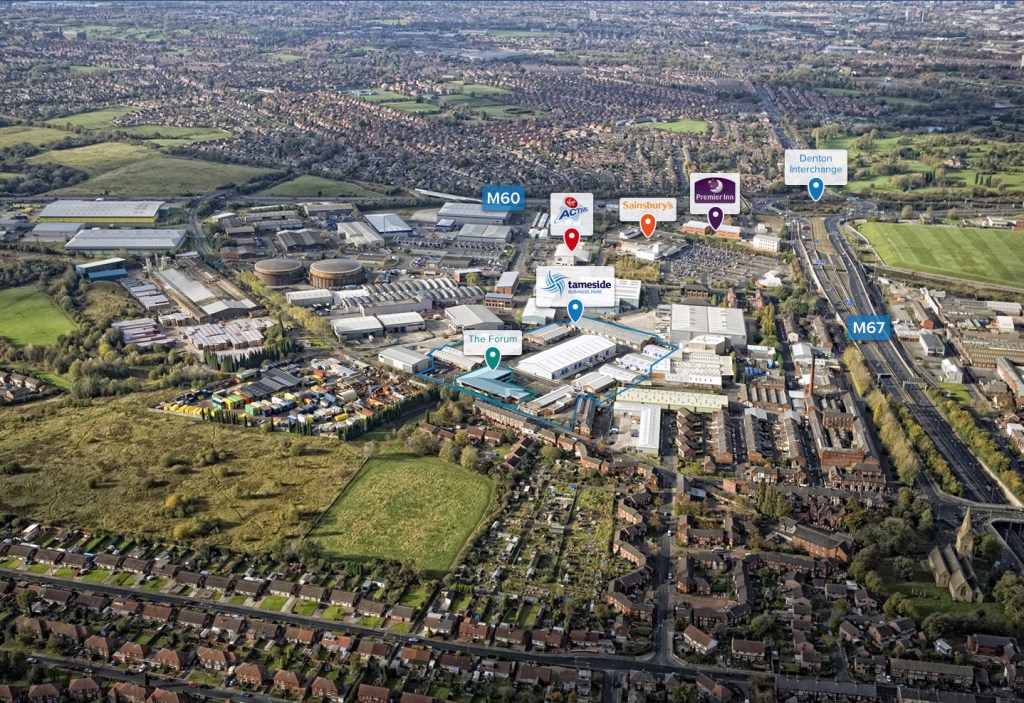
Proximity to the M60, seen here under construction is paramount to its future success.
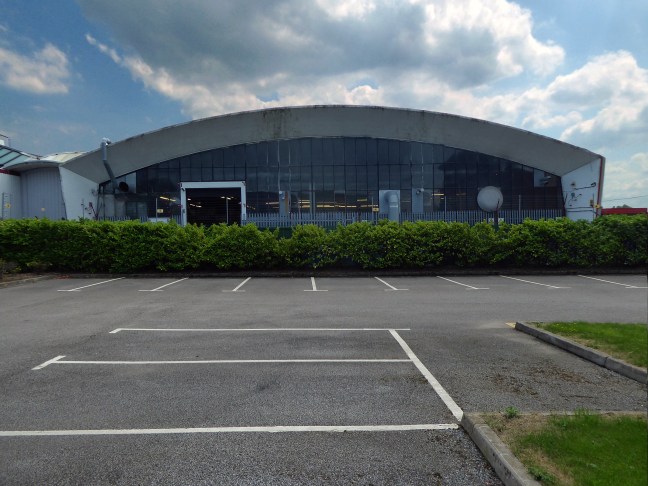
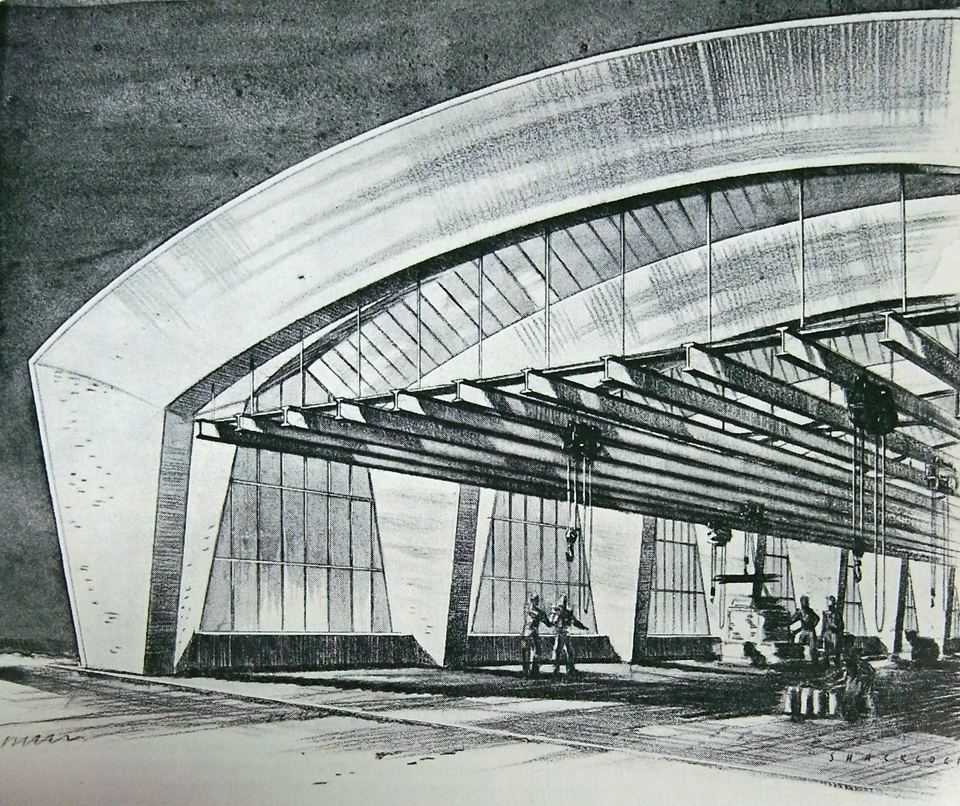
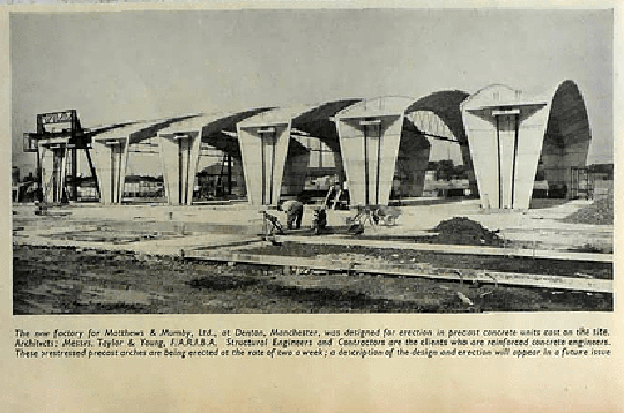
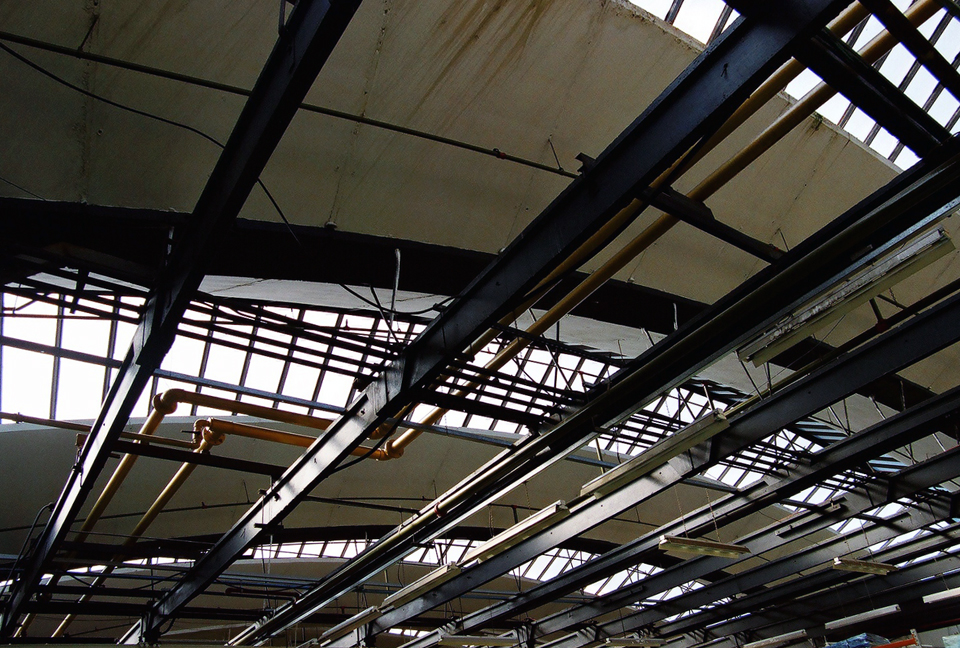
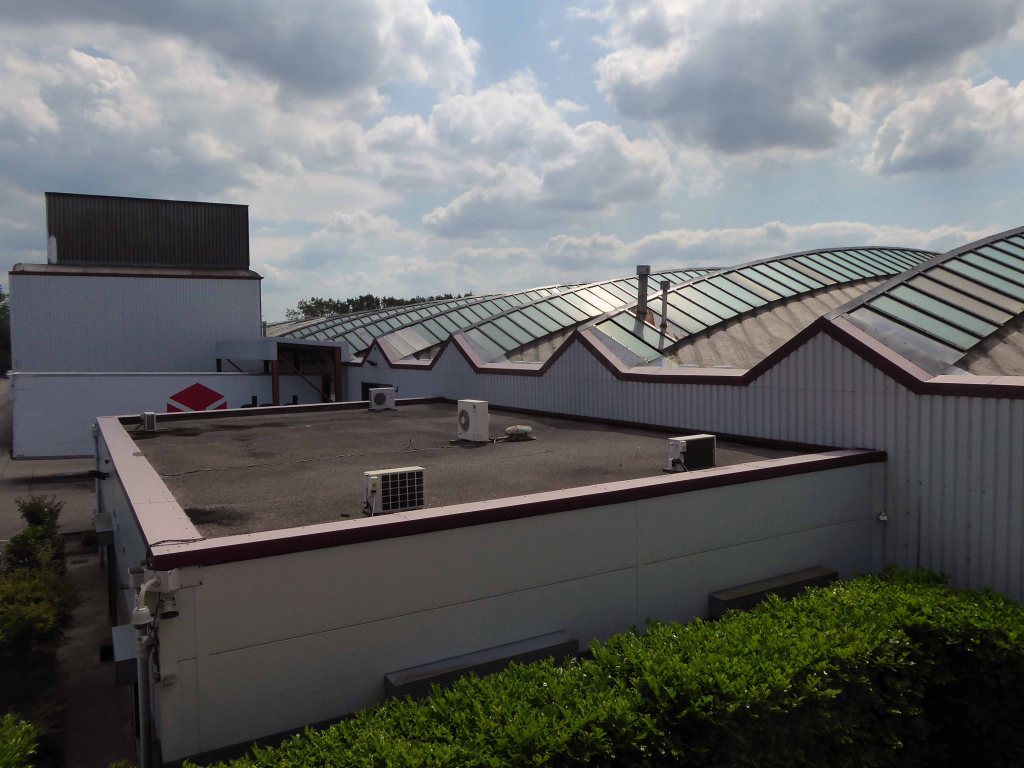
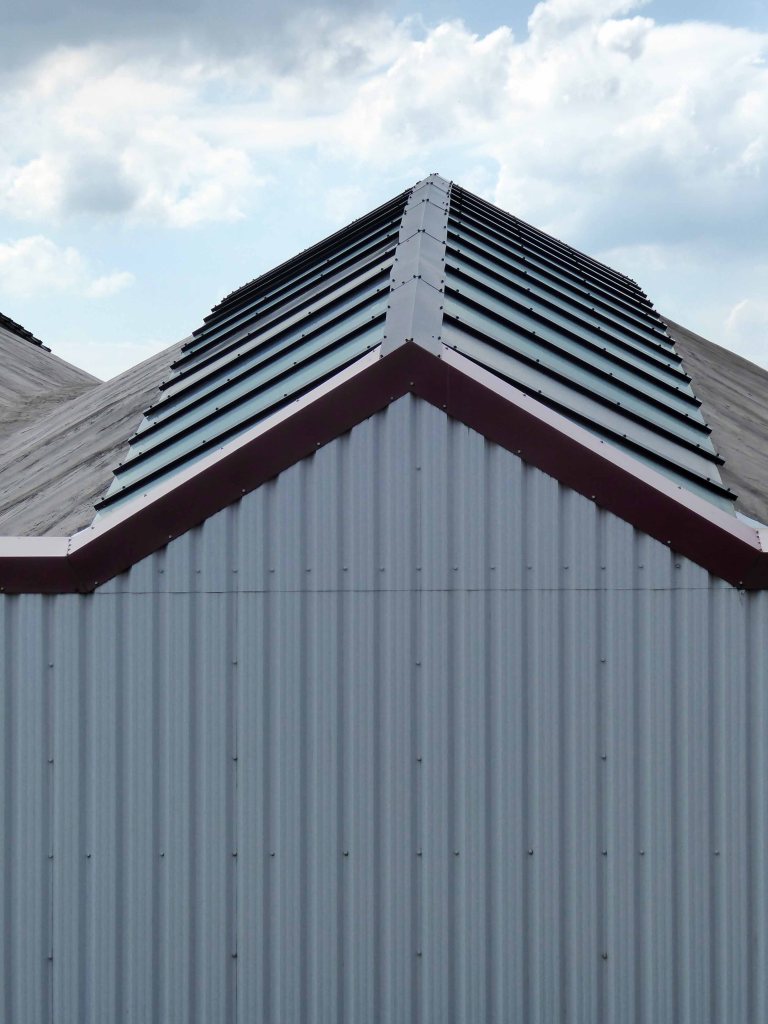
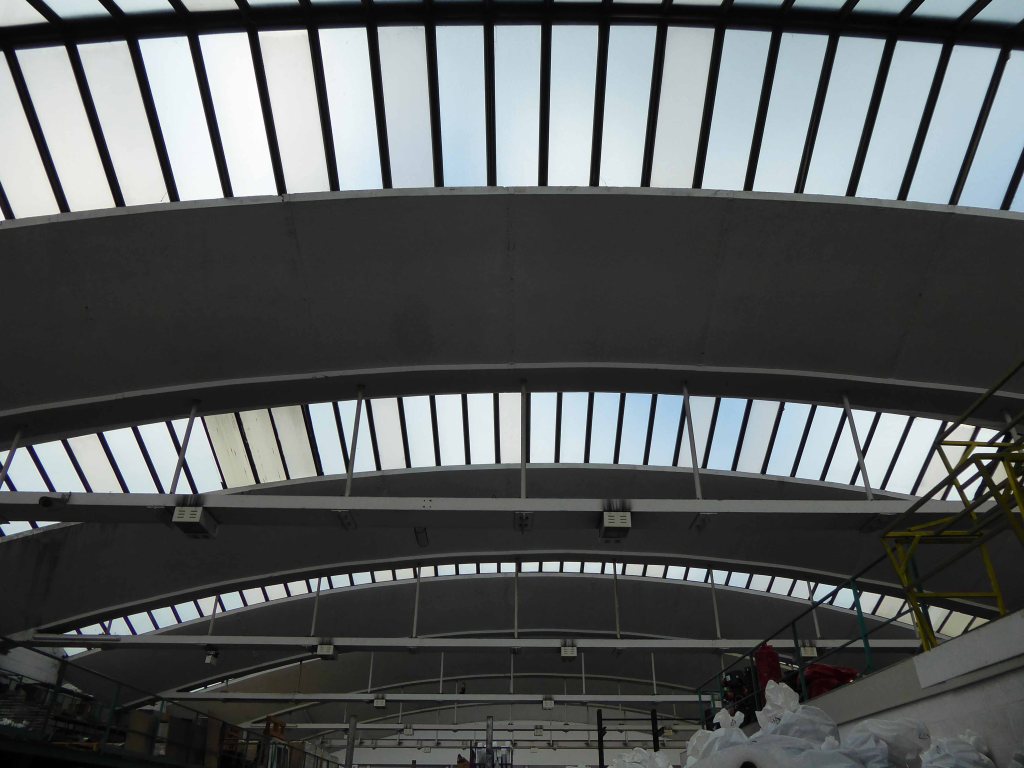
This former production plant for concrete components is now sadly partitioned and houses a number of businesses, only one of which still has a manufacturing base. The engineer for the project was also the client; reinforced concrete engineers, Matthews & Mumby. The intention was to create large floor areas, free from columns, to accommodate fourteen casting beds of about fifty metres in length. The structure of the two sheds was formed from arch units assembled on the ground, jacked into position and post-tensioned to form large tied span arches. Each arch spans approximately thirty metres and was designed to carry up to fourteen one tonne loads along the monorail hangers that ran the length of the factory, centred to each casting bed and suspended from the arches. Lantern section glazing hugs the curve of the arches that act as a reflective surface to provide an even light across the factory floor. The rails and hangers added a further louvered filter to the light, described at the time as ‘the ‘venetian blind’ effect. Originally the elevation between the V shaped columns was also glazed, this has now been filled and significantly reduces the aesthetic presence of the exposed structure and a distinctly ‘modern’ building of the time.
Mainstream Modern – my thanks to Richard Brook for the text and archive images.
So one sunny day last week, on a lockdown walk I went to take a look around.
The addition of cladding is never an uplifting sight on any site – the integrity of the building is seriously challenged.
Sometimes a former Rehabilitation Centre can do without rehabilitation it seems.
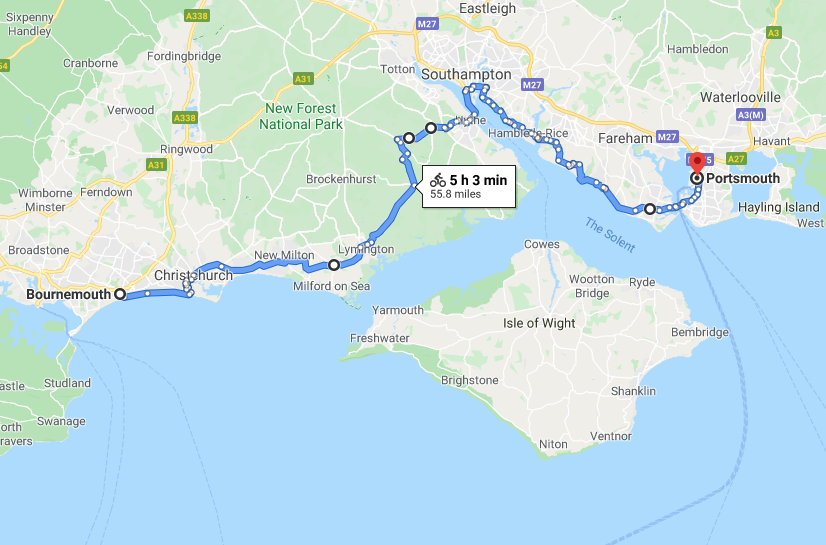
Sunday 2nd August 2015 – you awake and you’re still in Bournemouth and still in one piece, the possibility of late night stag and hen madness passed over without incident.
A quick look around town, then let’s get off to Pompey – where I was very proud to be a Polytechnic art student 1973/76, in good old Lion Terrace.
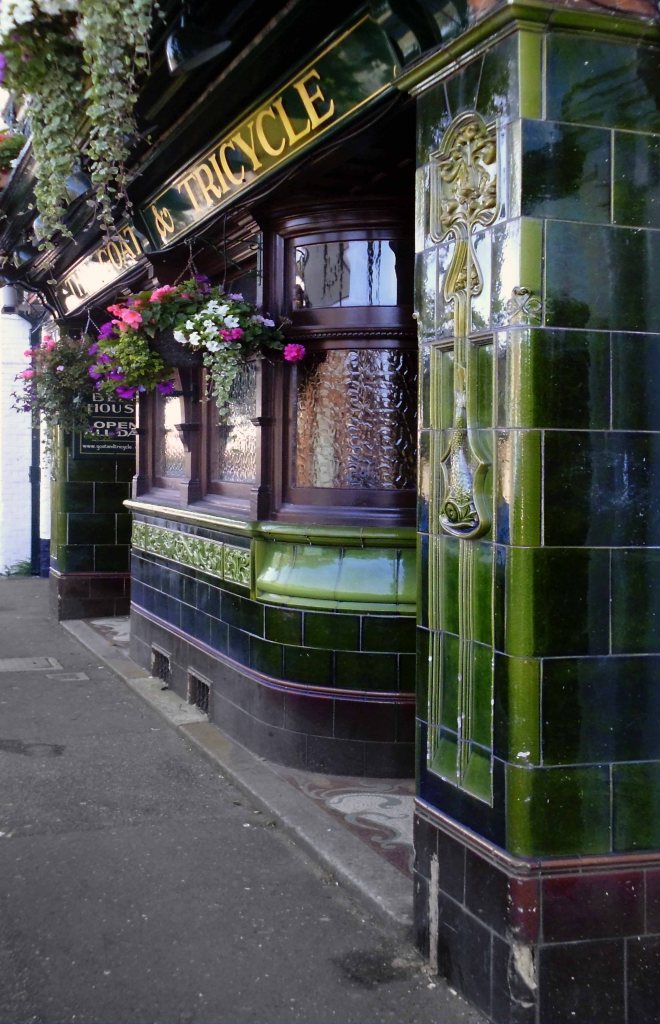
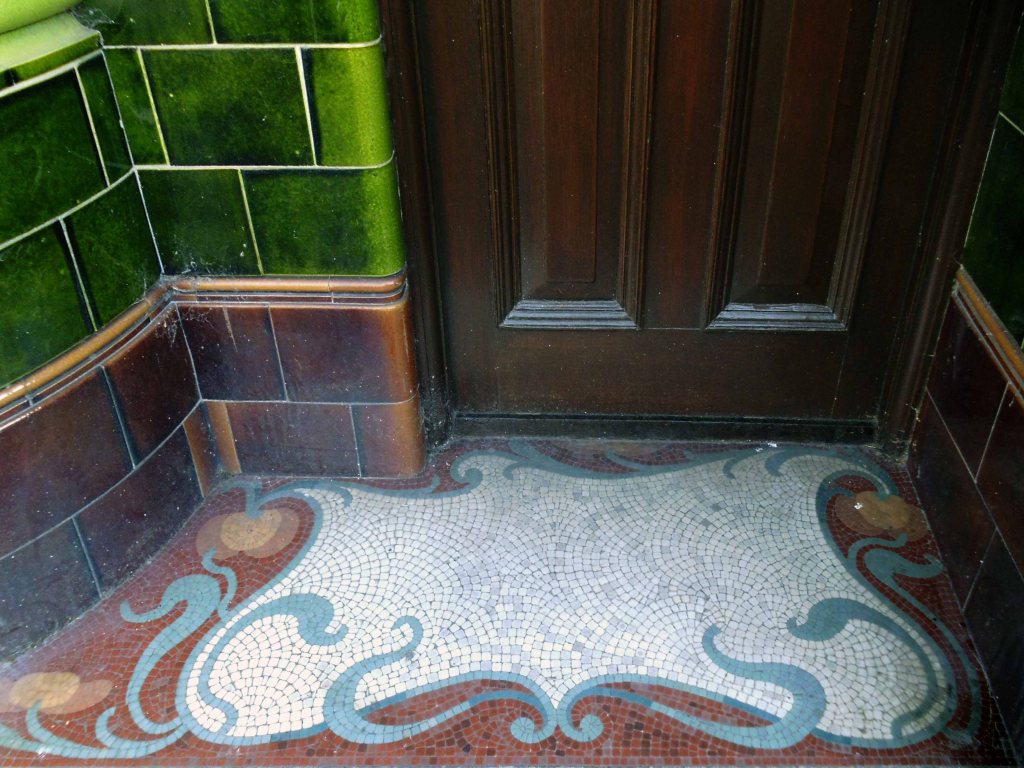
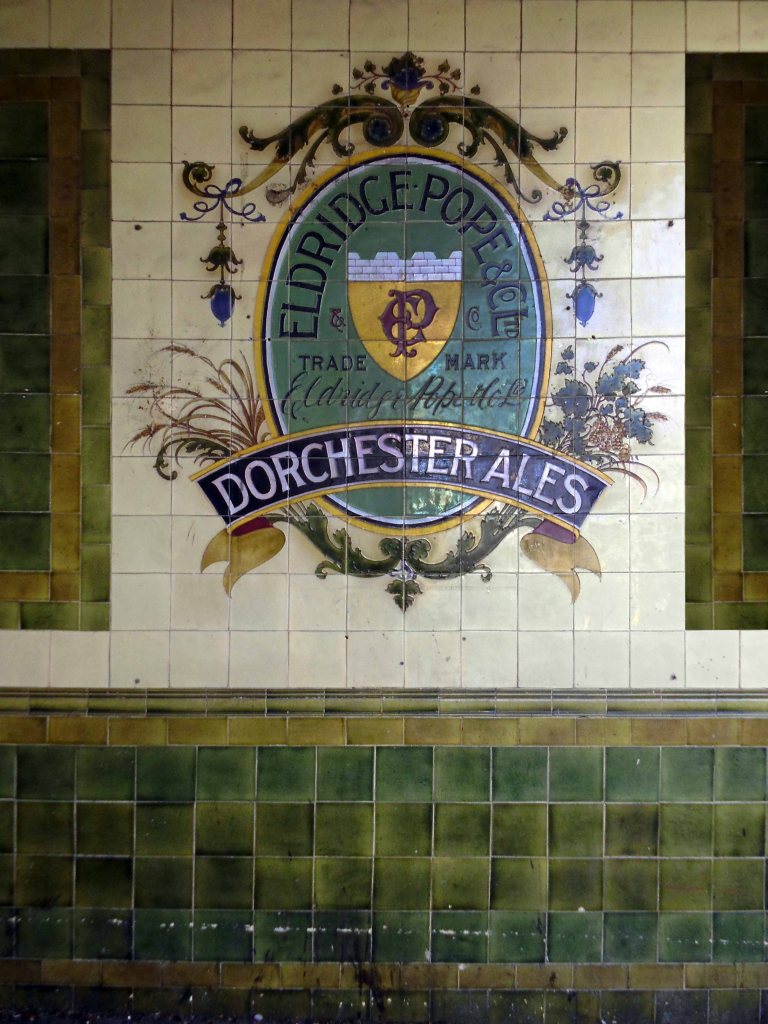
Last night’s late night drinking den with its fabulous faience frontage and doorstep mosaic.
Close by this tiled porch at The Branksome.
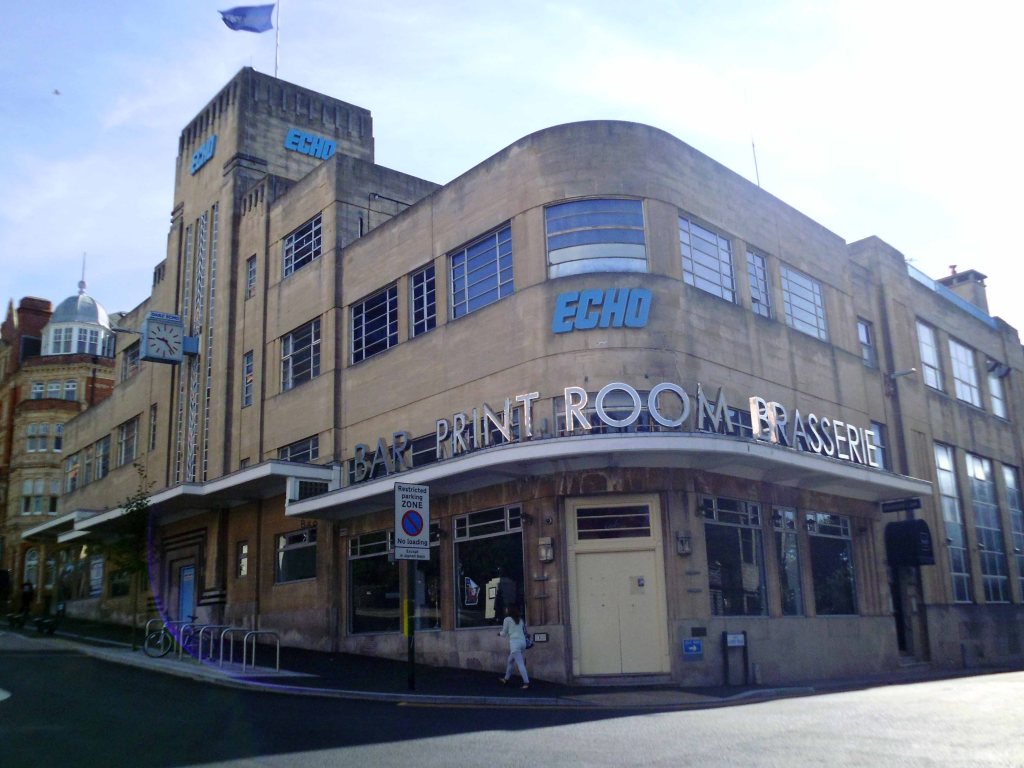
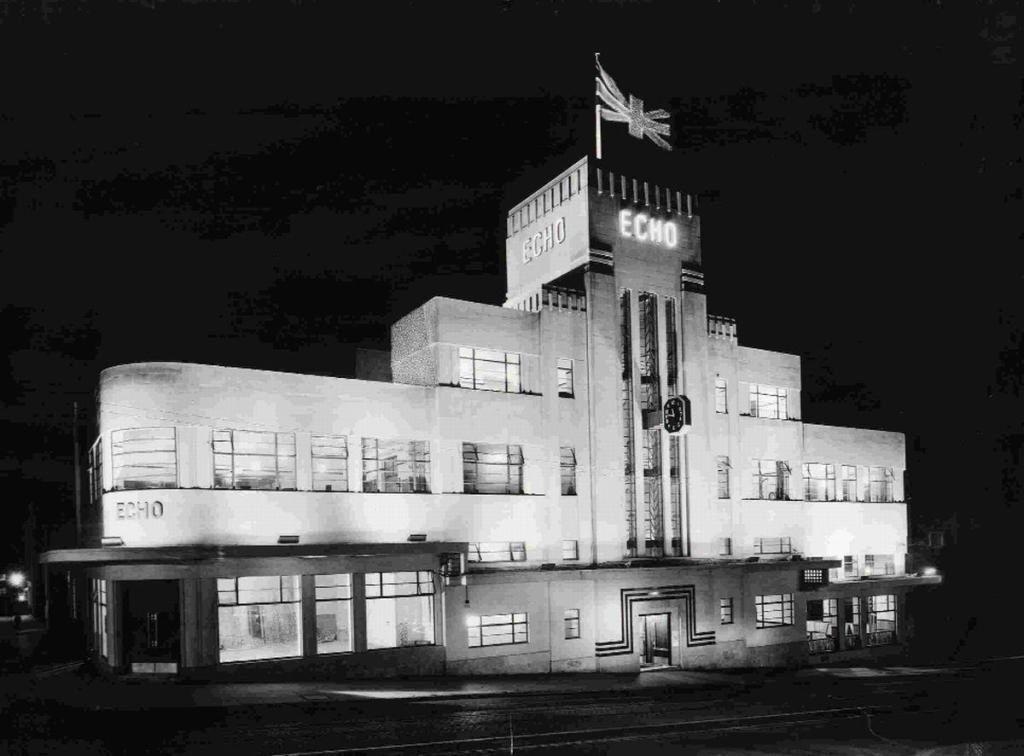
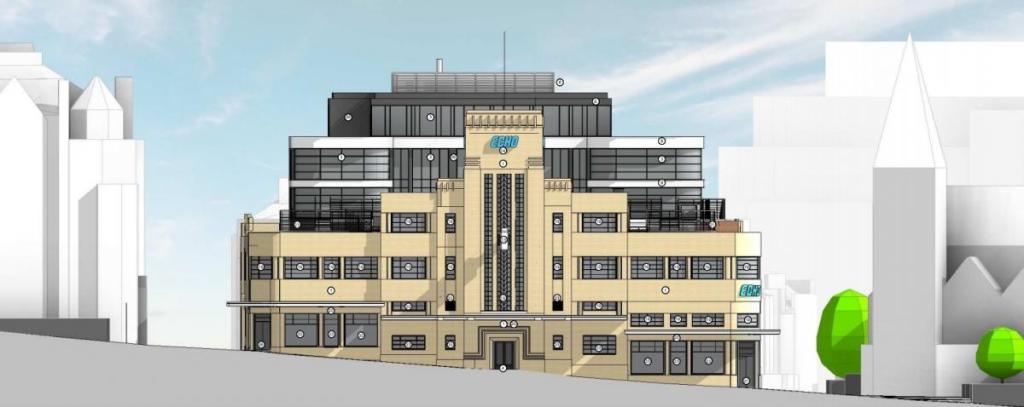
Built 1932 by Seal and Hardy as offices for the Bournemouth Echo, steel-framed, the main elevations faced in Monks Park Bath Stone.
Plans to redevelop the listed Daily Echo offices in Bournemouth were withdrawn shortly before they were due to be discussed by councillors.
That Group’s application to extend the Richmond Hill building to create more work space as well as a 30-bed hotel, café, gym and events space had been recommended for refusal before it was pulled from the agenda for Monday’s meeting.
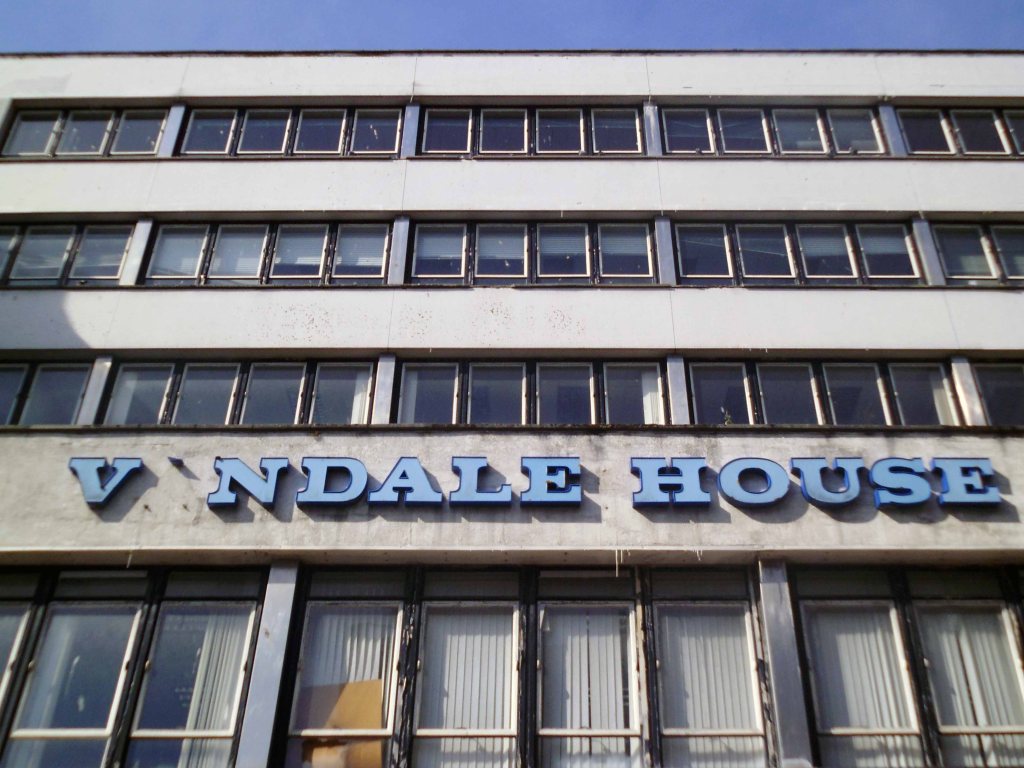
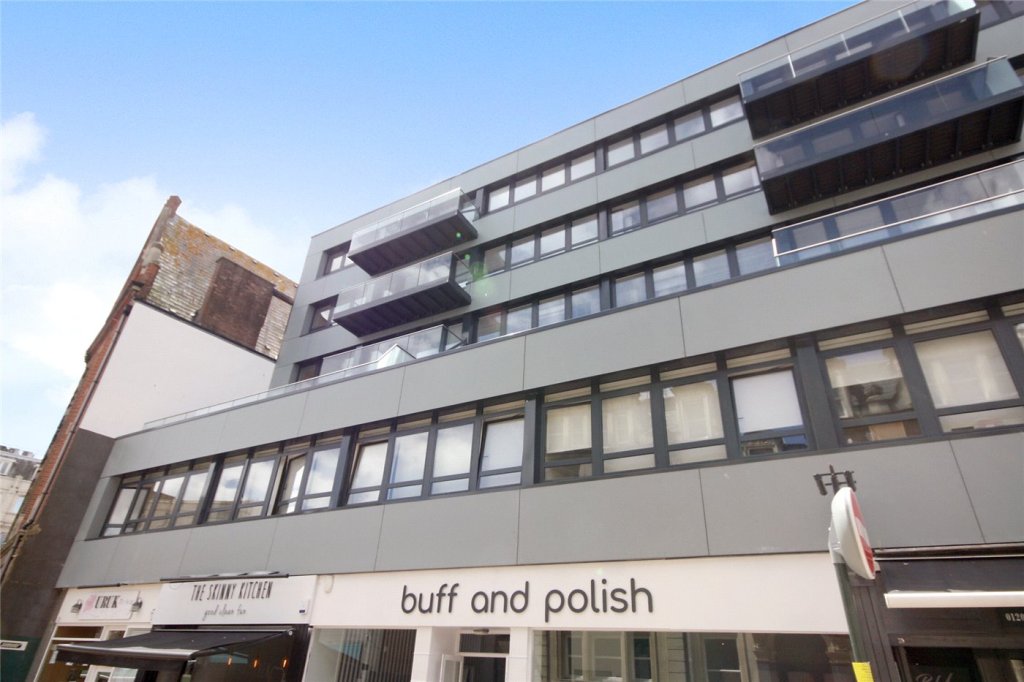
Vandale House appears to have been refurbished as flats, having lost its architectural type.
The property benefits from modern and contemporary décor throughout, large balcony and views over the Town Centre itself.
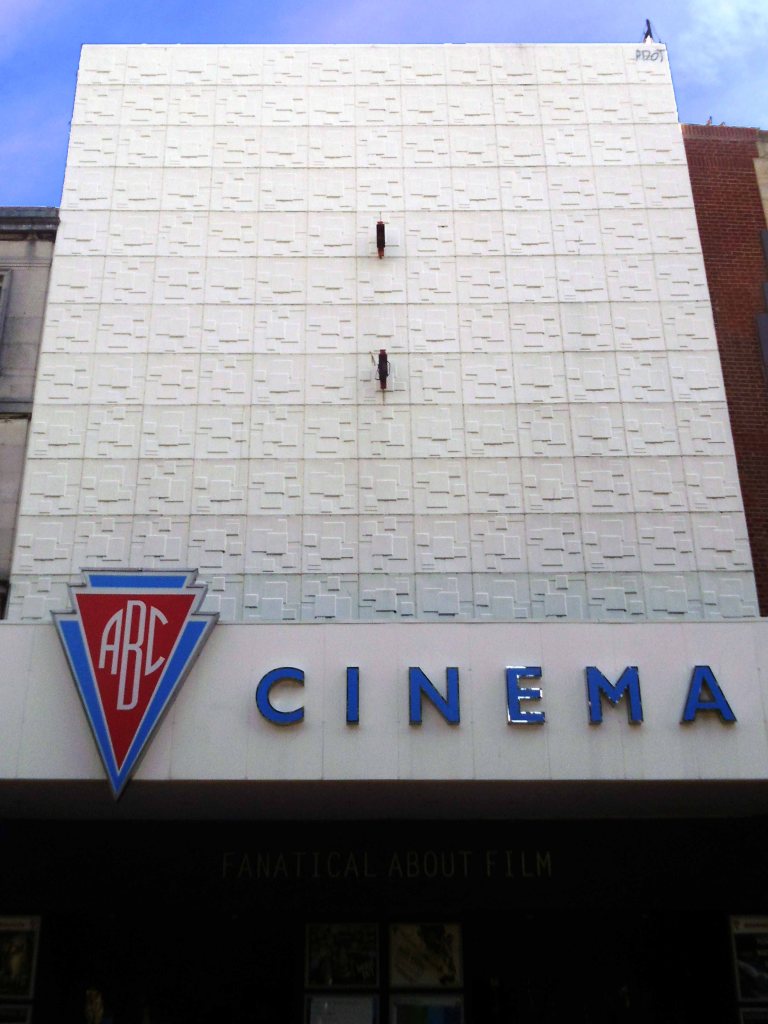
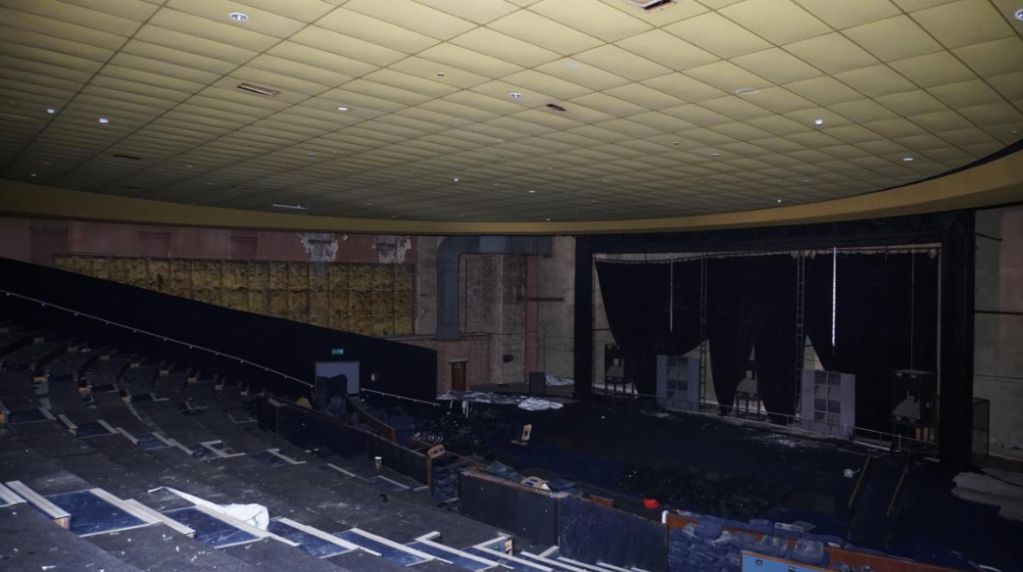
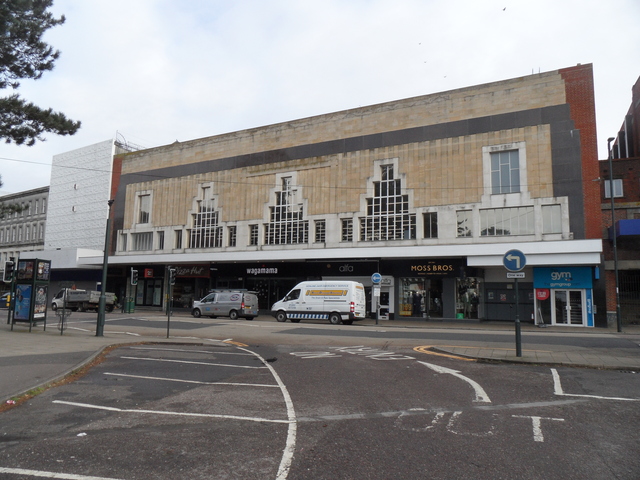
This art deco cinema was built for ABC and designed by their regular architect William Glen, it opened in June 1937.
The ABC, originally the Westover Super Cinema, entertained audiences for almost 80 years before it was closed in 2017 – along with the nearby Odeon – to make way for a new Odeon multiplex at the BH2 complex.
In its rejected plans for the site, Libra Homes had pledged to restore the cinema’s original Art Deco frontage, if it survives under the cladding that was added in the 1960s.
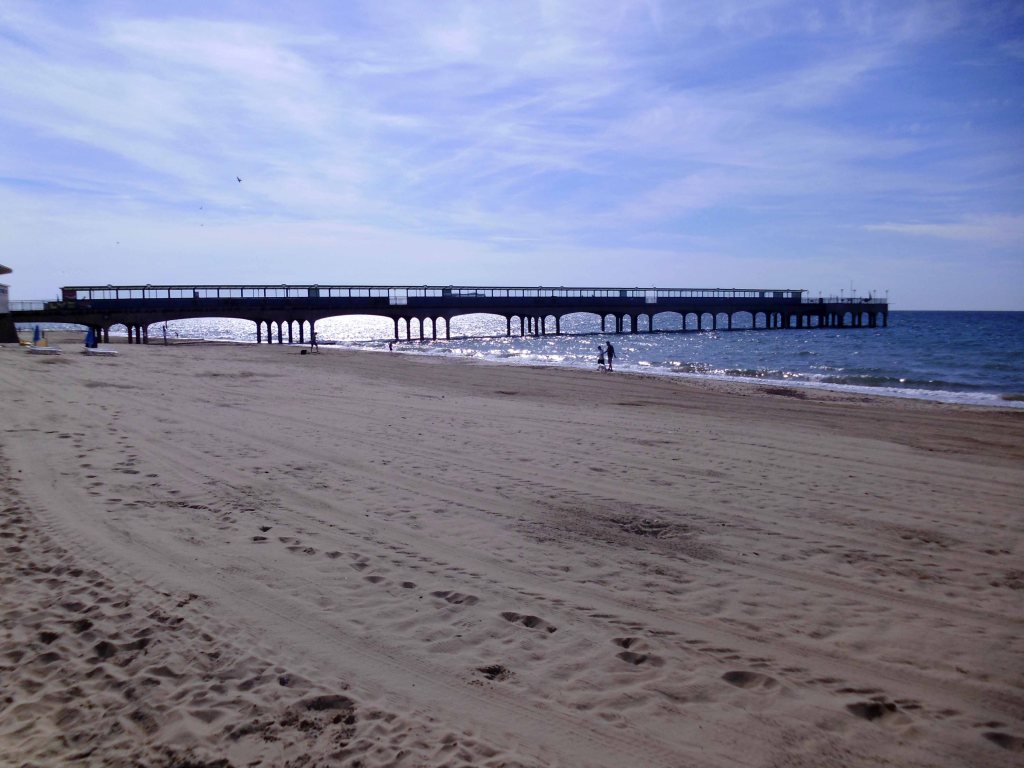
Boscombe Pier – is the perfect vantage point to watch volleyball, table tennis and mini golf. If you are feeling adventurous, try scaling the nearby, purpose built boulders next to the pier or have a go at slacklining!
There are nearby are cafés, takeaways and beach shops all within walking distance from Boscombe Pier.The pier is free to enter and has a plethora of activies that individuals and families can enjoy!
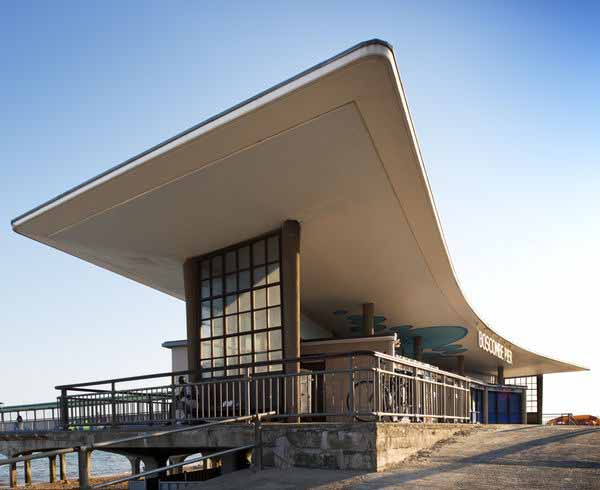
Designed by Archibald Smith, the 600 foot pier opened on 28th July 1889. In 1924/5 and 1927, the head was renewed in high alumina concrete and, between 1958 and 1960, the neck was reconstructed using reinforced concrete.
The neck building is a design by the Borough Architects, demonstrating great verve and vivacity. The contemporary style associated with Frank Lloyd Wright’s Usonian houses and made popular with Californian homes in the 1940s was well suited to the requirements of an architecture that combined ‘sun and fun’. The contemporary style made a feature of expressing different elements or planes of a composition with different materials, and here the combination is honest and each element well detailed. The sweep of the cantilevered, boomerang-shaped roof is a particularly joyous feature. It is a building that would have been despised as being exactly of its date until recently; now it is a building that can be celebrated for that very reason, and a rare example of pier architecture from these years.
San Remo Towers a block of 164 flats, with penthouse and office, over basement garage. 1935-8 by Hector O’Hamilton.
Facilities offered as inclusive in this price included centralised hot water and central heating, an auto vac’ cleaning system, centralised telephones, a resident manager, a porter, daily maid, boot cleaning and window cleaning services. There was a Residents’ club with a reading room card room, billiard room and library, and a children’s recreation and games room. There were kiosks in the ground-floor lobbies selling tobacco and convenience items, where the staff took orders for the local tradesmen. The fifth-floor restaurant offered a la carte meals, which could be taken at pension rates of 38s per week. A simpler dinner cost 2/6d. The use of an American architect, Hector O Hamilton, may be an explanation for the building’s large range of facilities, including the grand underground car park and sophisticated servicing
Carlinford benefits from commanding views over Poole Bay looking to the Isle of Wight across to the Purbecks. Included in the annual service charge is a Caretaker, Gardener & the communal areas are kept in good order. A fabulous location and a great place to call home.
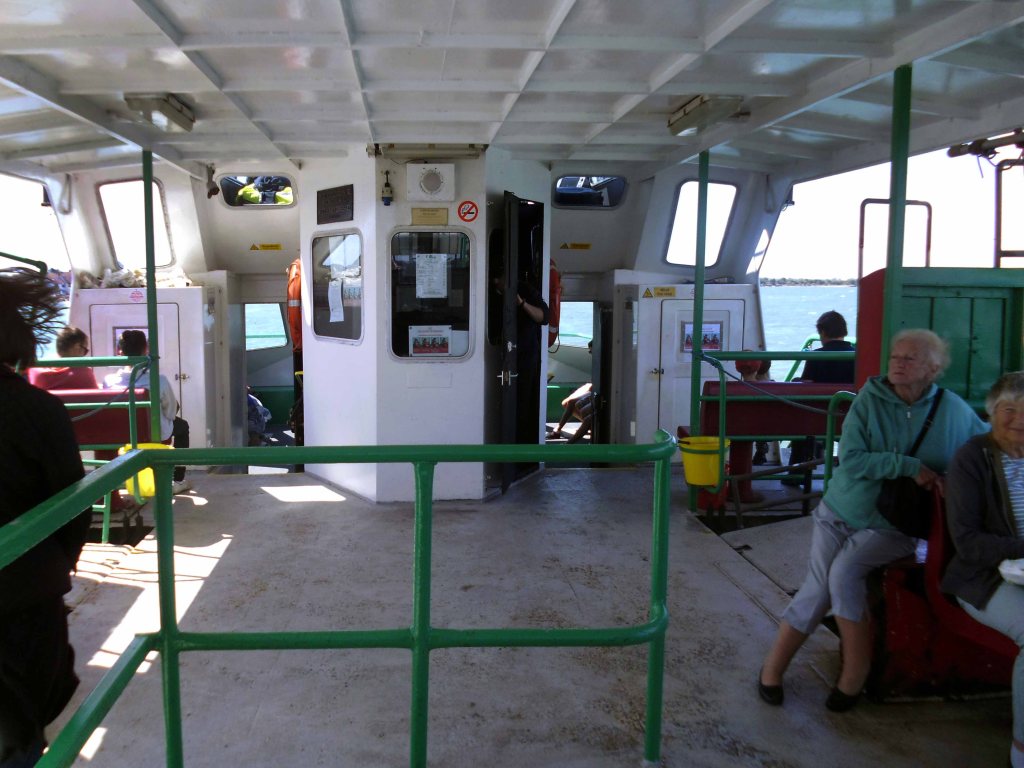
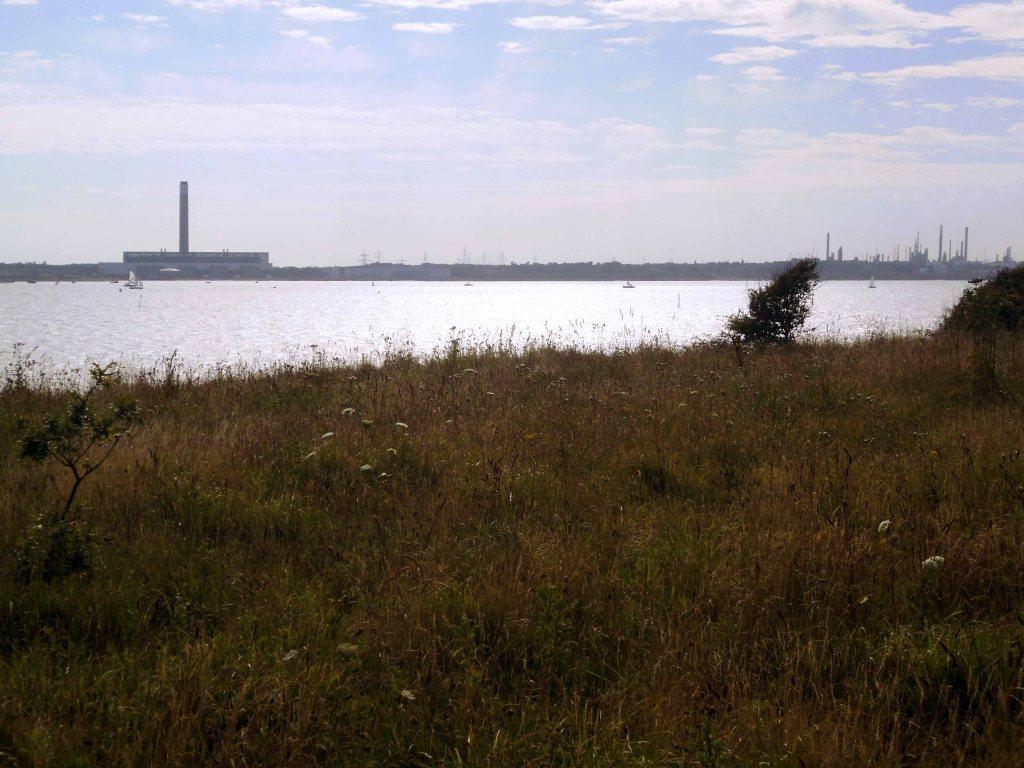
Running the length of the pier to catch the ferry across Southampton Water.
Where one is able to see many large ships.
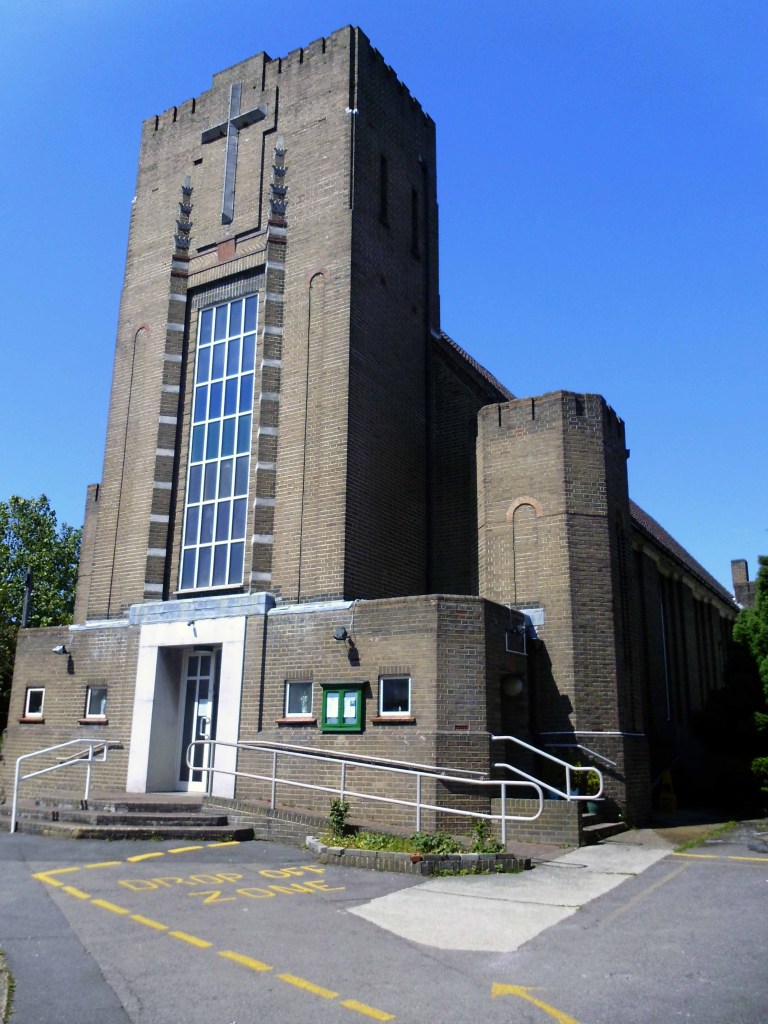
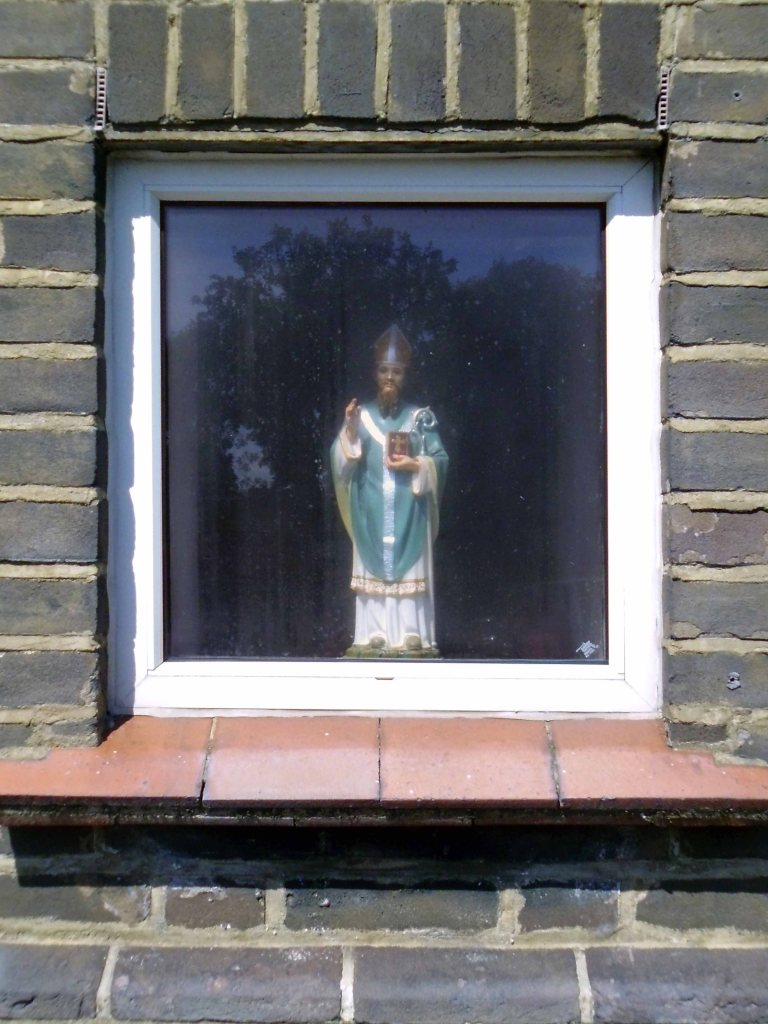
St Patrick’s Catholic Church 1939
W.C. Mangan’s last church in the diocese, with a moderne Gothic character rather than the basilican style he favoured elsewhere. The design is not without character and is in the mainstream of brick church building around middle of the twentieth century.
First siting of Stymie Bold Italic/Profil since Devon
Sadly the Hovercraft Museum was closed – Founded 1987 as a registered charity, the Museum Trust is the worlds greatest collection of Hovercraft archive, film, and historic craft, dating back to to John Thonycroft’s 1870 air lubricated boat models and the then Dr. Cockerell’s 1955 annular jet experiments.
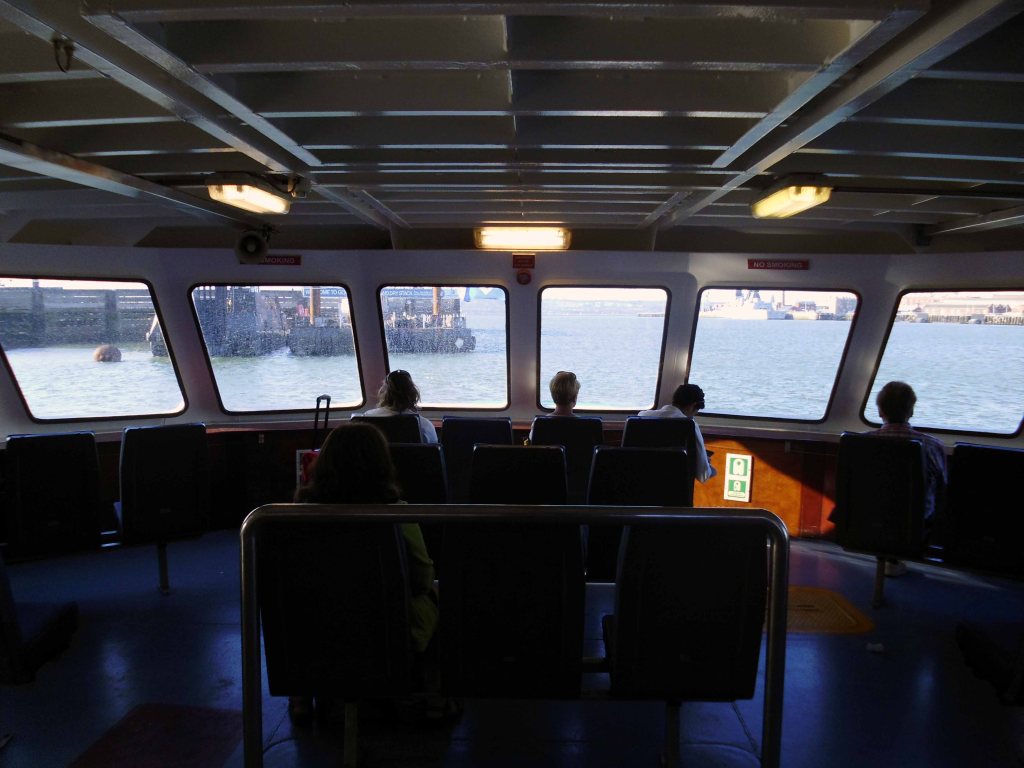
So excited to be boarding yet another ferry.
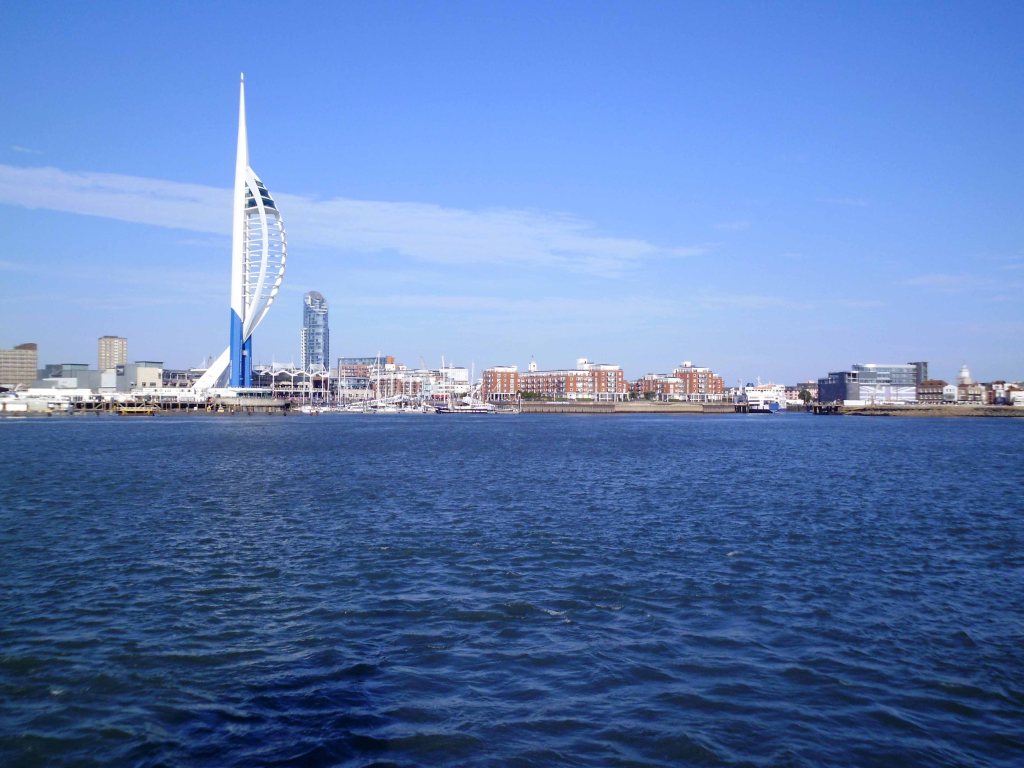
Seeing Portsmouth for the first time in a long time.
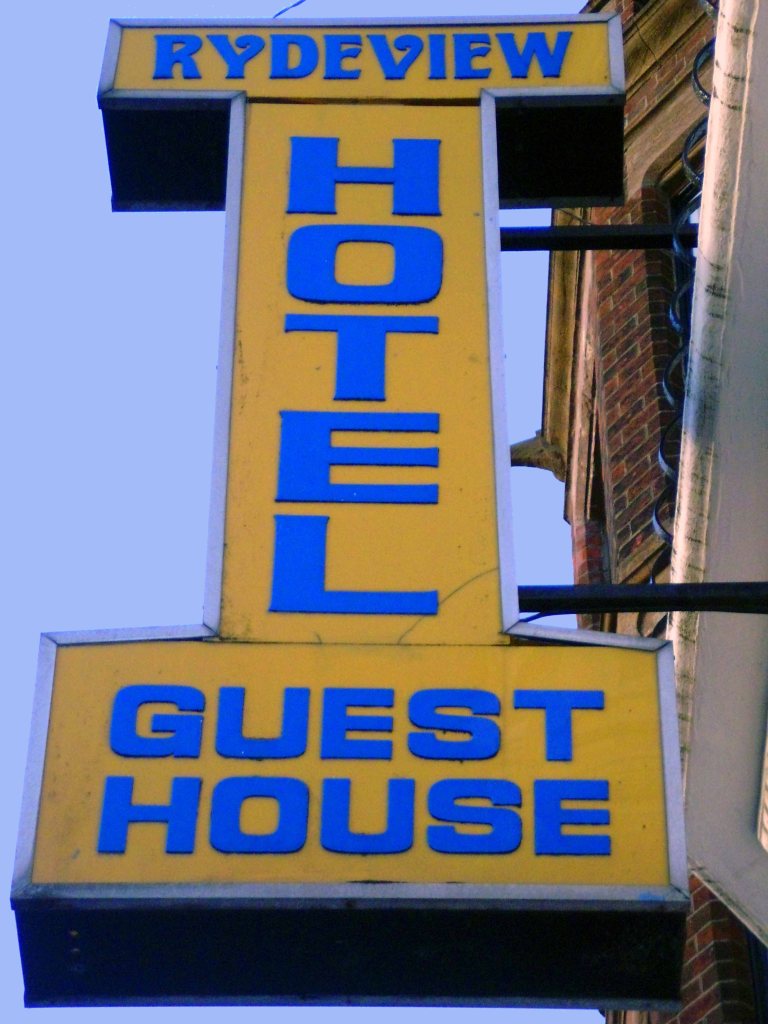
Finding cheap digs at the Rydeview Hotel.
My partner and daughter stayed here recently and the warm reception we received was great, thought it was going to be real value for money however when getting into the family room, which was a decent size, the curtain was half hanging down, iron marks and stains on the carpet, dirty windows, mould on the bathroom ceiling, hole in the bathroom floor and a very random shower head coming from the toilet that was very unpleasant. When we checked in we asked about breakfast and we were told this was going to be an additional £3 – we thought this was great value for money for a full English only to be left hungry and out of pocket! My daughter had one slice of toast, we asked for the full English what we received was cold and hard beans, and un-cooked egg and a rank sausage, the eating area was dirty – cobwebs everywhere.
I too stayed in the Family room with a delightful mouse for company and enjoyed one of the worst meals I’ve ever not eaten.
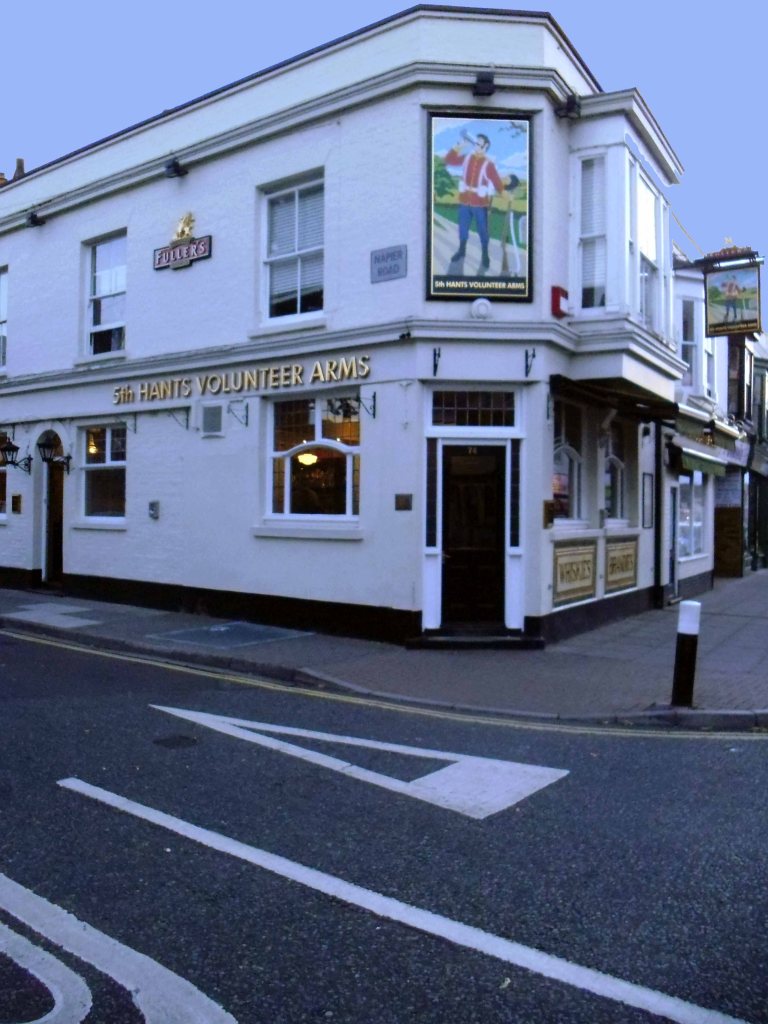
I headed for the 5th Hants Volunteers where I formally kept company with Felim Egan, Norman Taylor and Ian Hunter way back when.
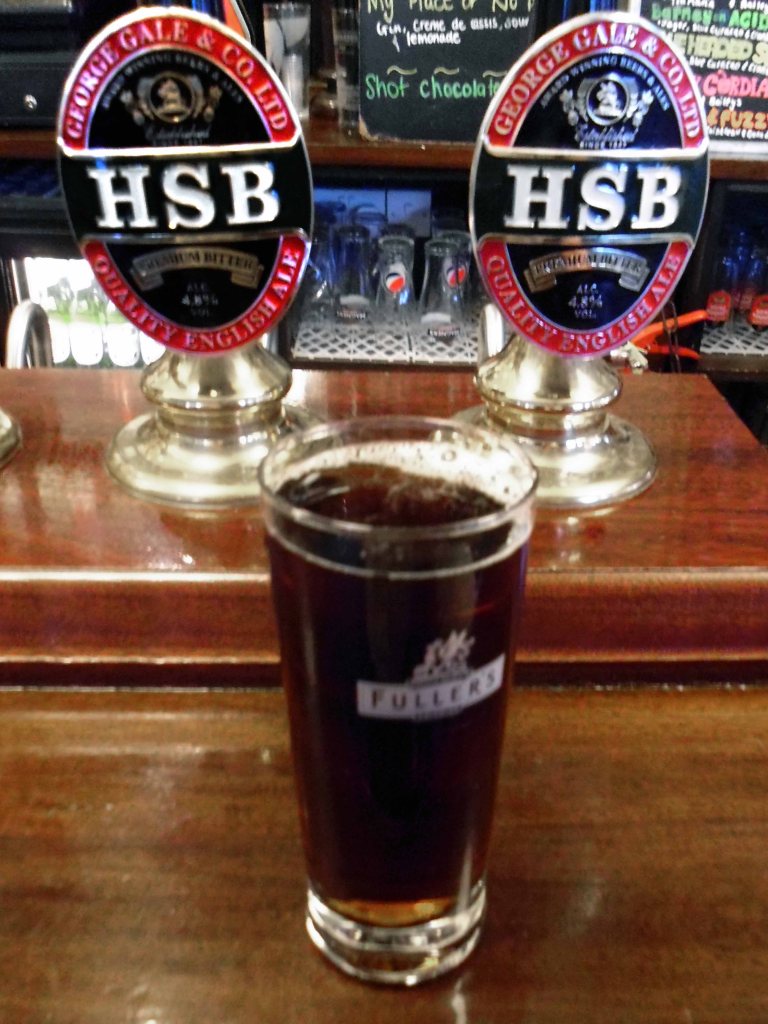
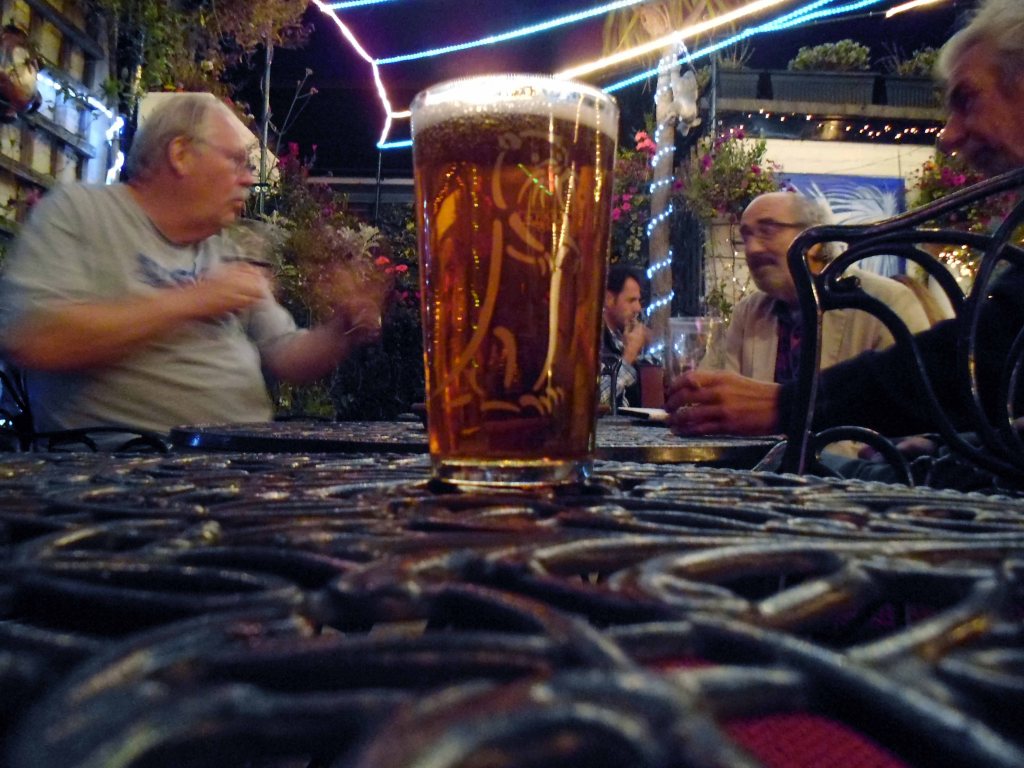
Drinking Gales HSB – formerly a local brew now owned by Fullers
Established in 1847 Gales Brewery (George Gale & Co. Ltd) was an old brewery situated in Horndean, on the edge of Waterlooville. It made the nutty HSB – Horndean Special Bitter and the newer Gales Bitter. It took its water from its own well situated under the brewery which is fed from the South Downs, and the yeast and liquor, coupled with the local brewing style, produced beers with a sparse head, quite dark in colour.
In late 2005 Fuller’s Brewery bought Gales for £92 million. In January 2006, Fuller’s began cutting jobs at the Horndean brewery, and it was announced on 27 February 2006 that the brewery would close at the end of March 2006, although distribution and warehousing would continue in the area.
It didn’t tater the same and the pub had been gutted – gutted.
I beat a retreat to the Barley Mow – where I fell in with a gang of former Poly students from the 70s – they had studied and never left.
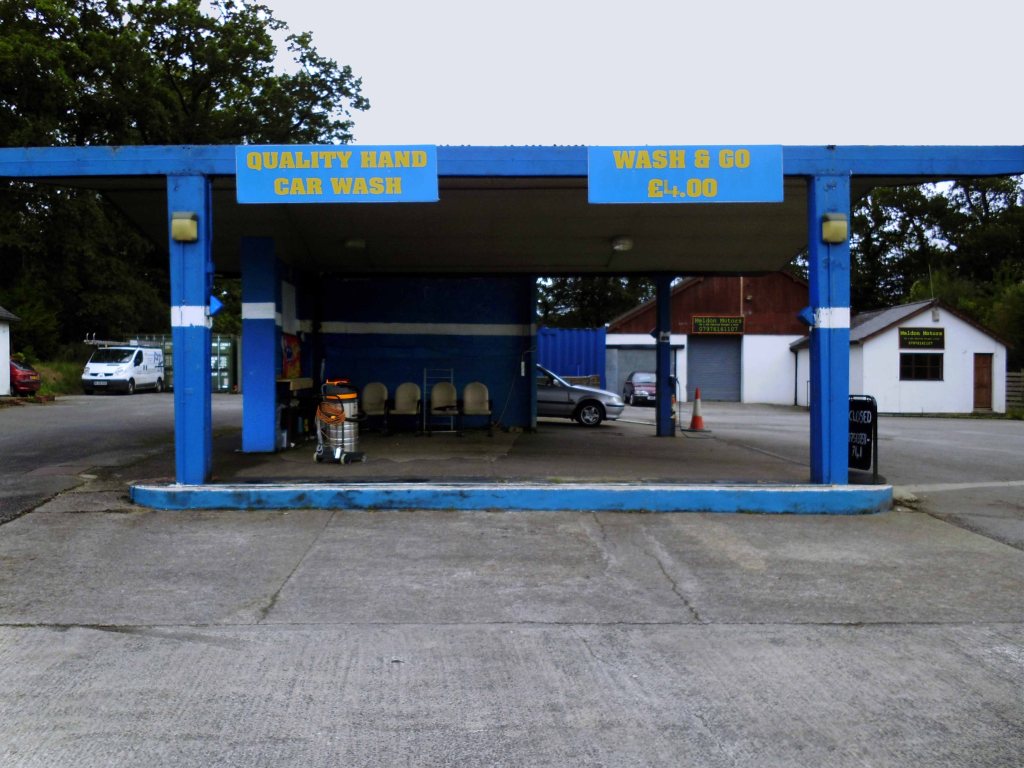
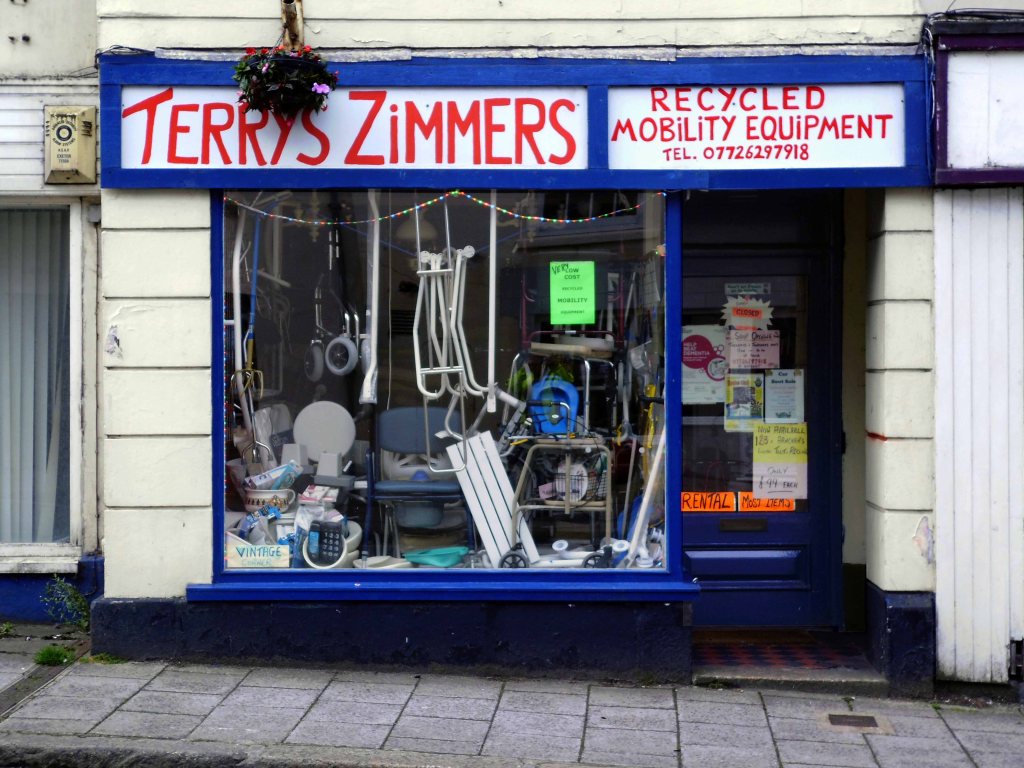
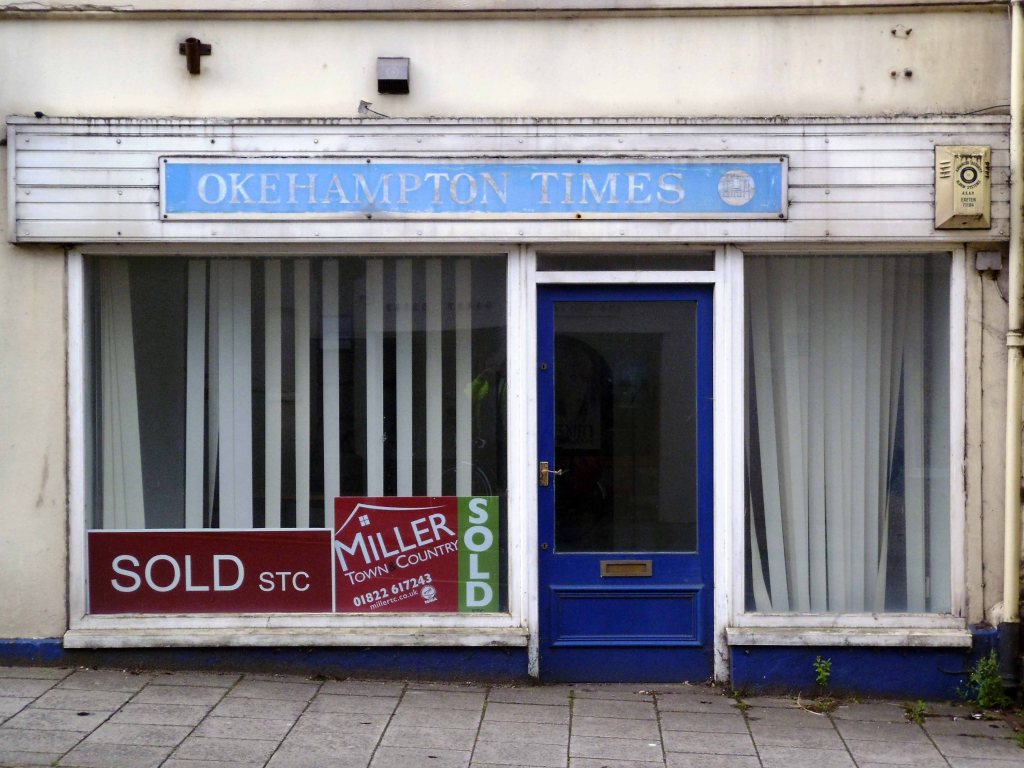
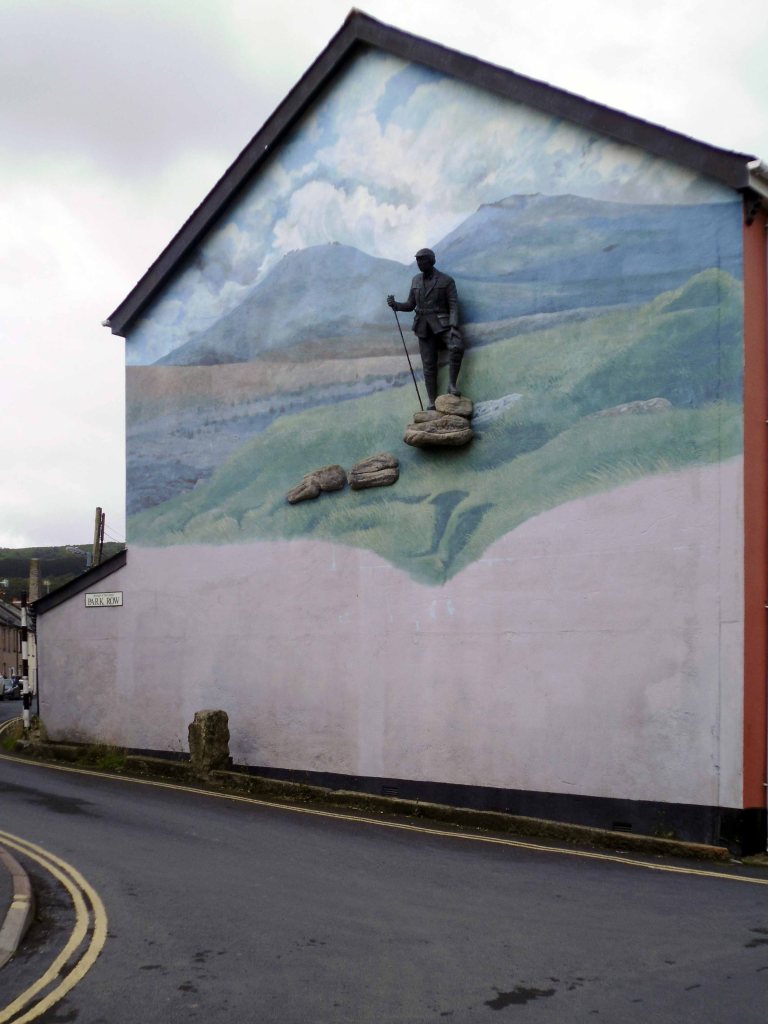
Tuesday 28th July 2015 waking up early on the outskirts of Okehampton – I went next door to explore – the Wash and Go.
I went back to Okehampton.
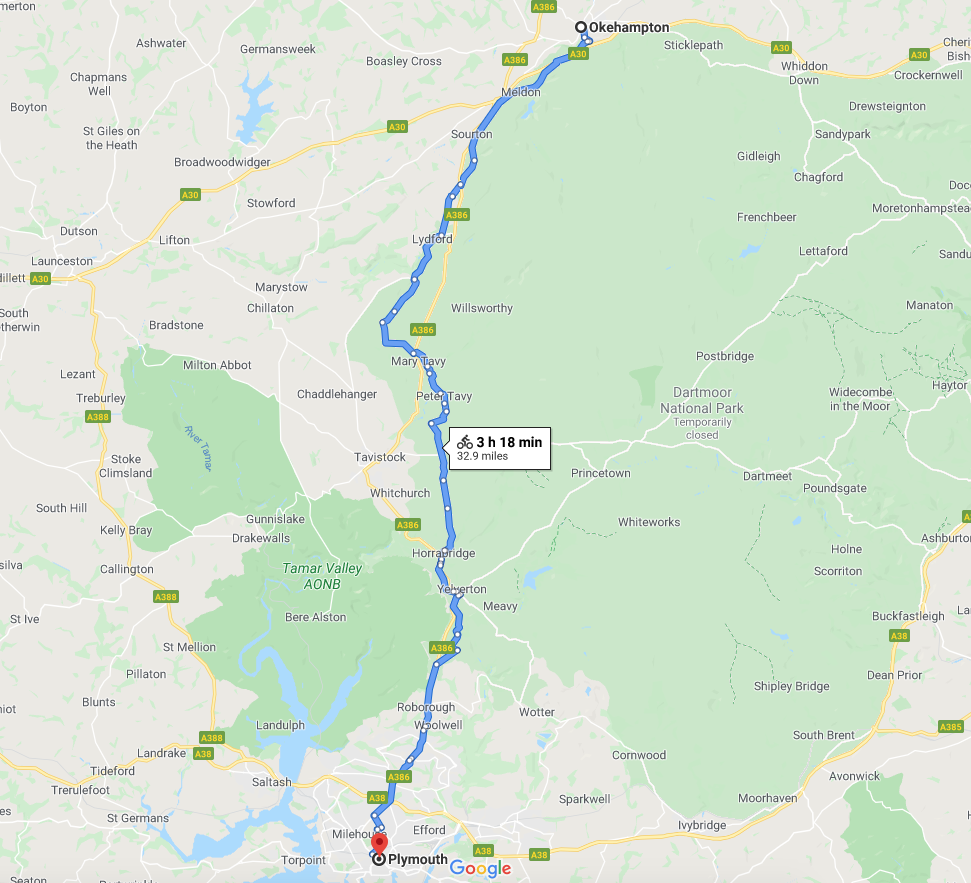
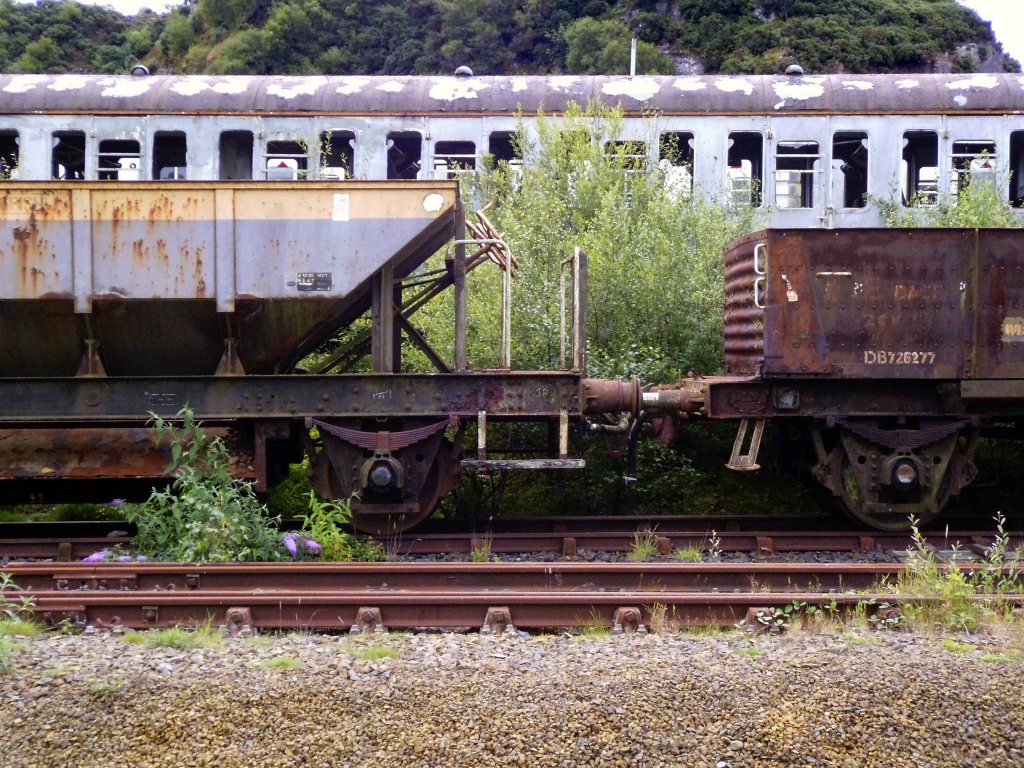
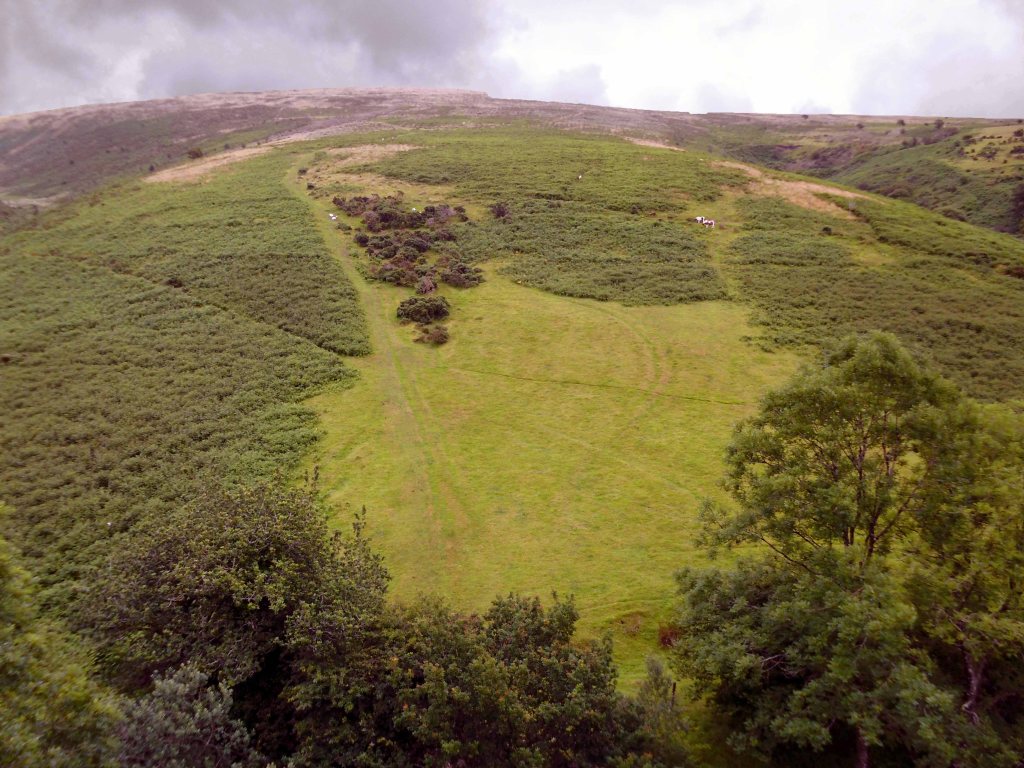
Headed out of town along the old railway line to Plymouth – where rests the solemn remains of previous railway activity and Meldon Quarry.
It’s believed that the first quarrying began around the late 1700s when the local limestone was extracted. Over the years this gradually gave over to aggregate quarrying and apelite quarrying until it final closure. The original owners of the quarry were the London and South Western Railway and then came Britsh Rail and finally EEC Aggregates.
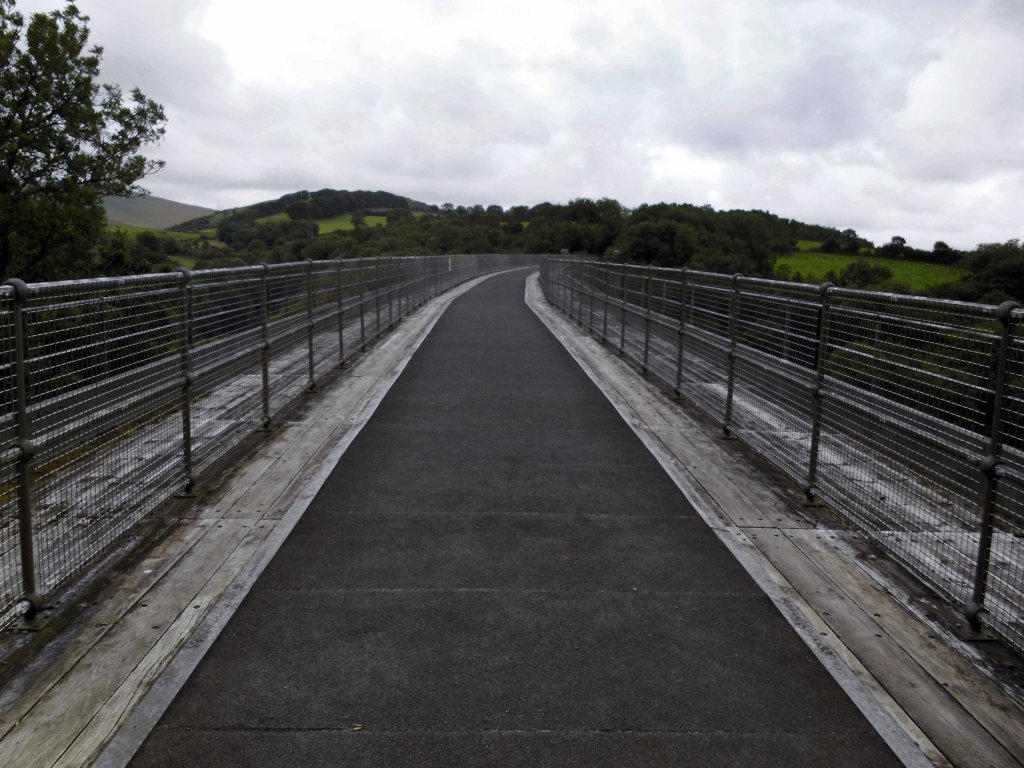
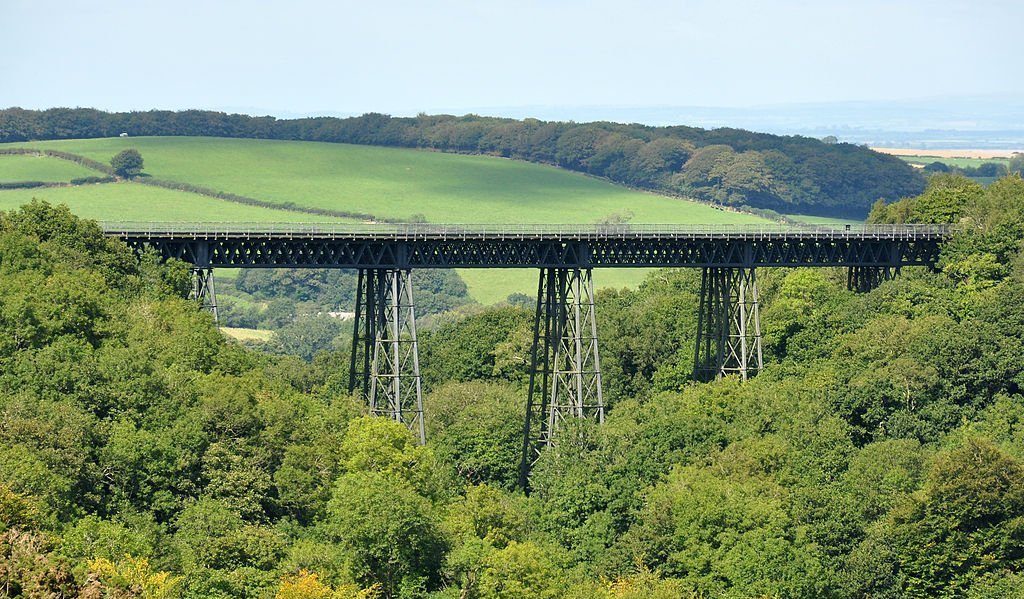
Crossing Meldon Viaduct.
Meldon Viaduct carried the London and South Western Railway across the West Okement River at Meldon on Dartmoor. The truss bridge, which was constructed from wrought iron and cast iron not stone or brick arches, was built under the direction of the LSWR’s chief engineer, WR Galbraith. After taking three years to build, the dual-tracked bridge opened to rail traffic in 1874. Usage was limited to certain classes of locomotive because the viaduct had an axle load limit. Although regular services were withdrawn in 1968, the bridge was used for shunting by a local quarry. In the 1990s the remaining single line was removed after the viaduct was deemed to be too weak to carry rail traffic.
The crossing is now used by The Granite Way, a long-distance cycle track across Dartmoor. The viaduct, which is a Scheduled Monument, is now one of only two such surviving railway bridges in the United Kingdom that uses wrought iron lattice piers to support the cast iron trusses – the other is Bennerley Viaduct between Nottinghamshire and Derbyshire.
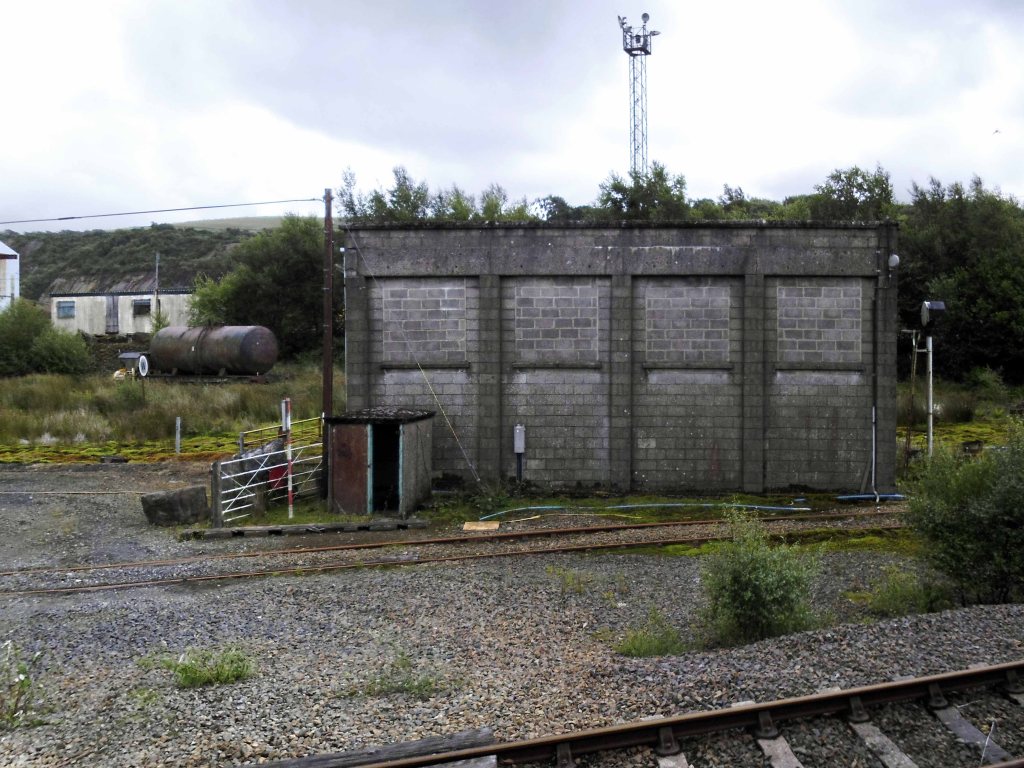
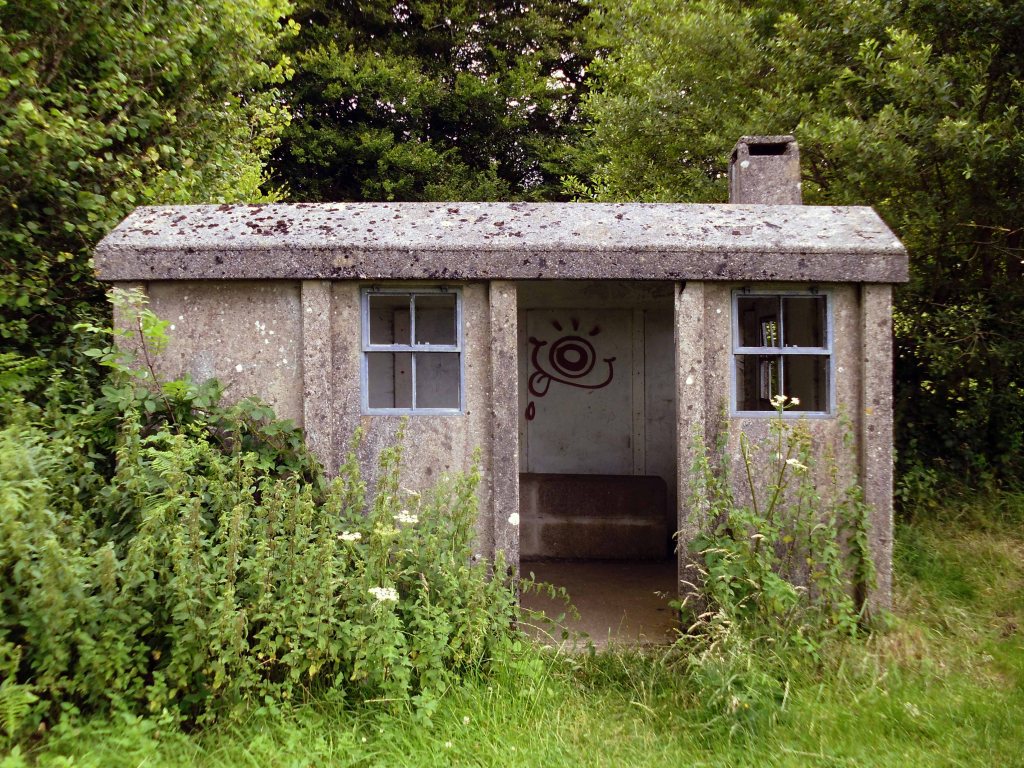
On an old railway line with prefabricated concrete railway huts.
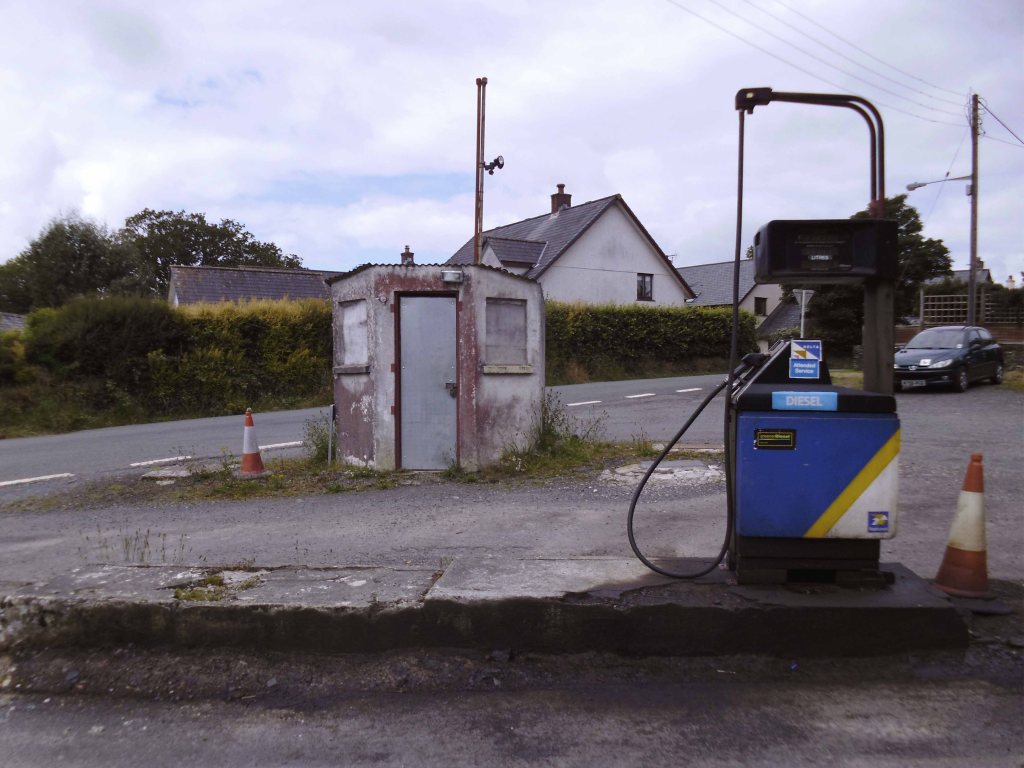
And a bus stop at Mary Tavy a village with a population of around 600, located four miles north of Tavistock.
And a population of one delightful litter bin.
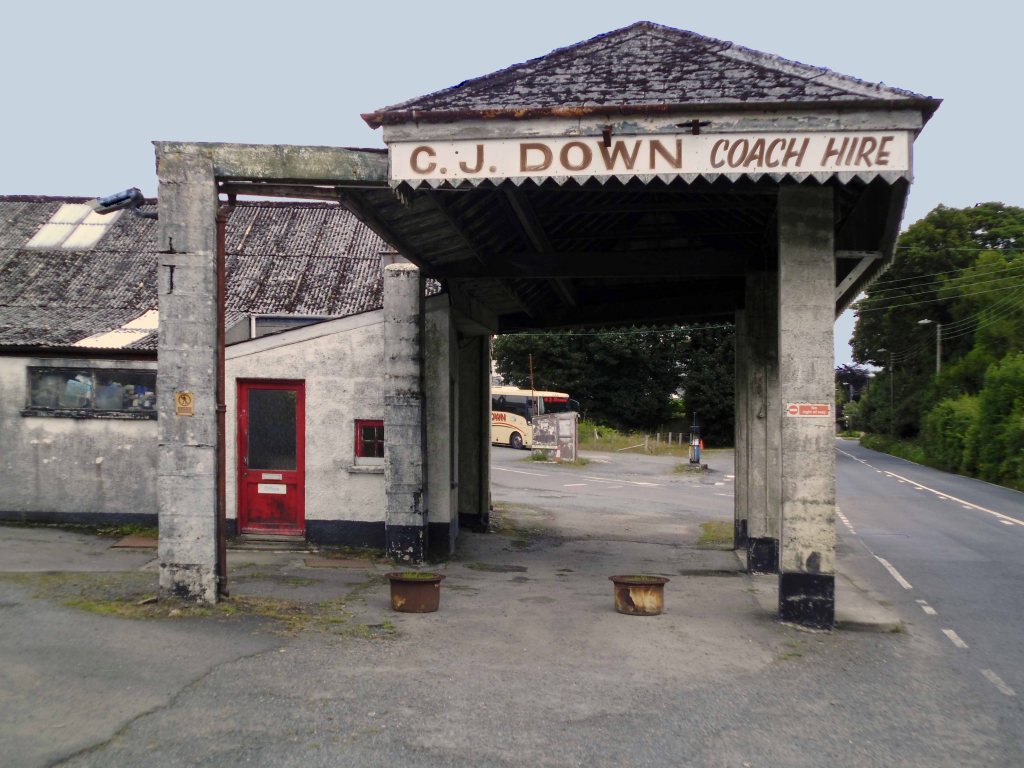
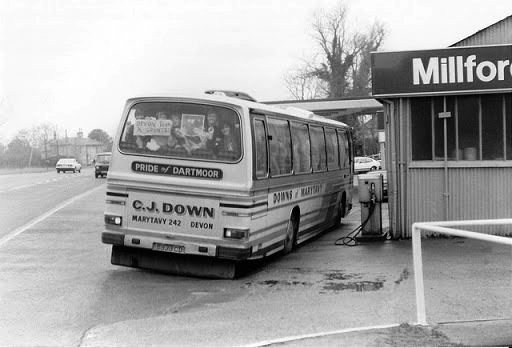
And CJ Down Coach Hire – the pride of Dartmoor.
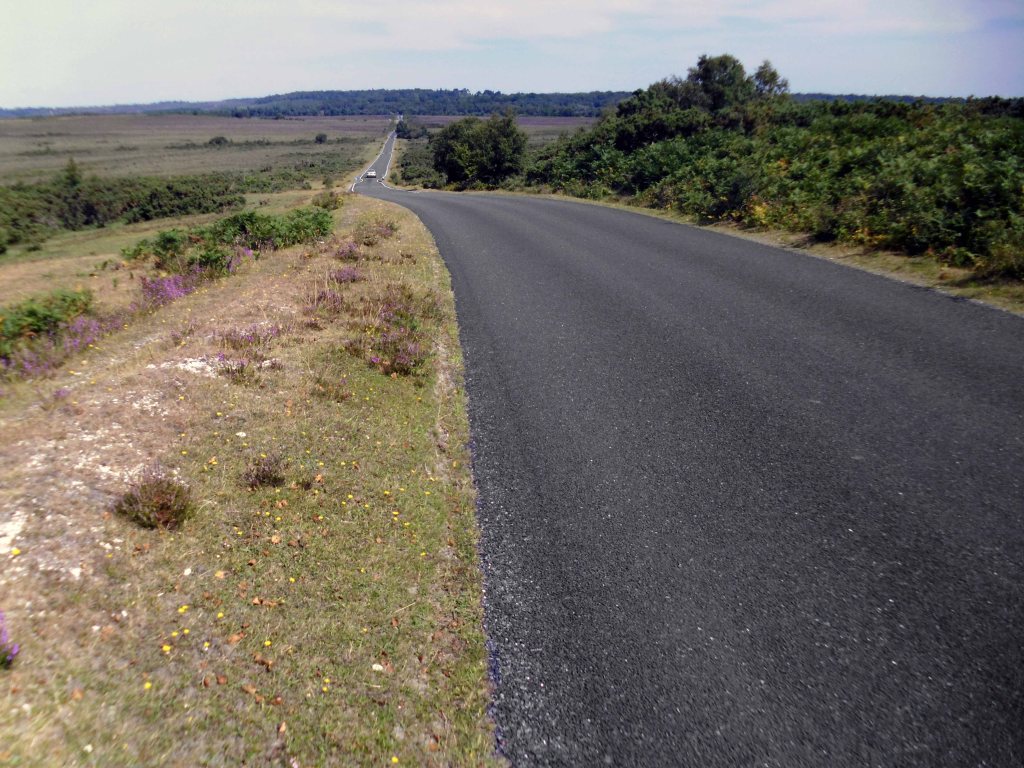
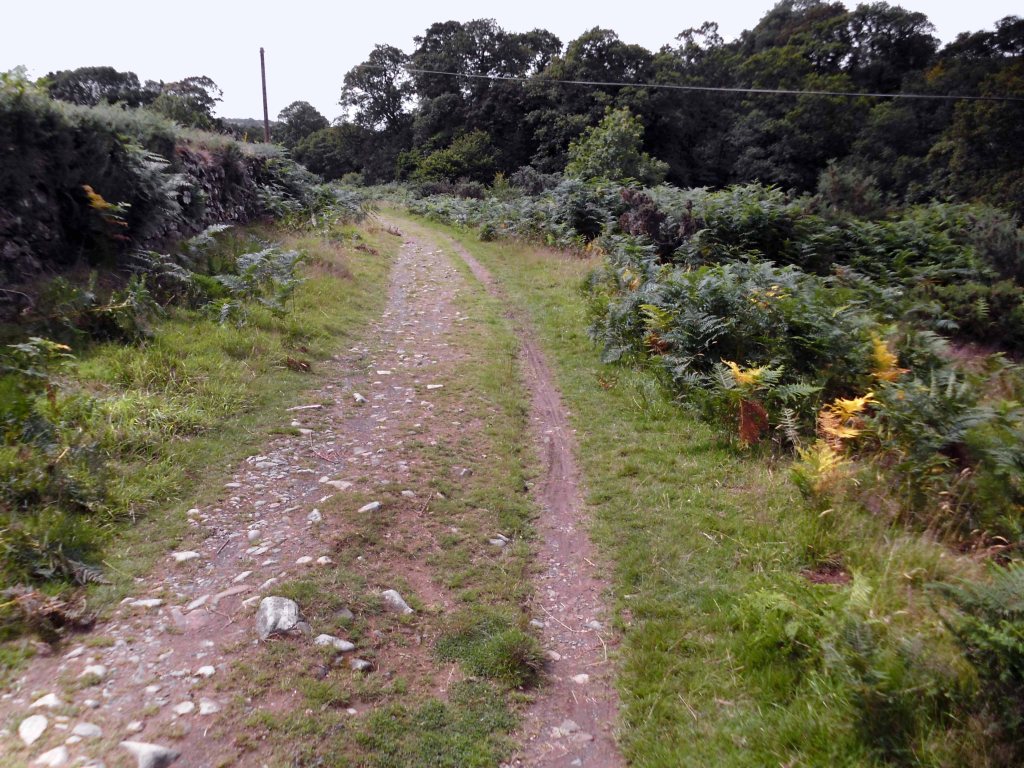
Don’t the road look rough and rocky, will the sea look wide and deep?
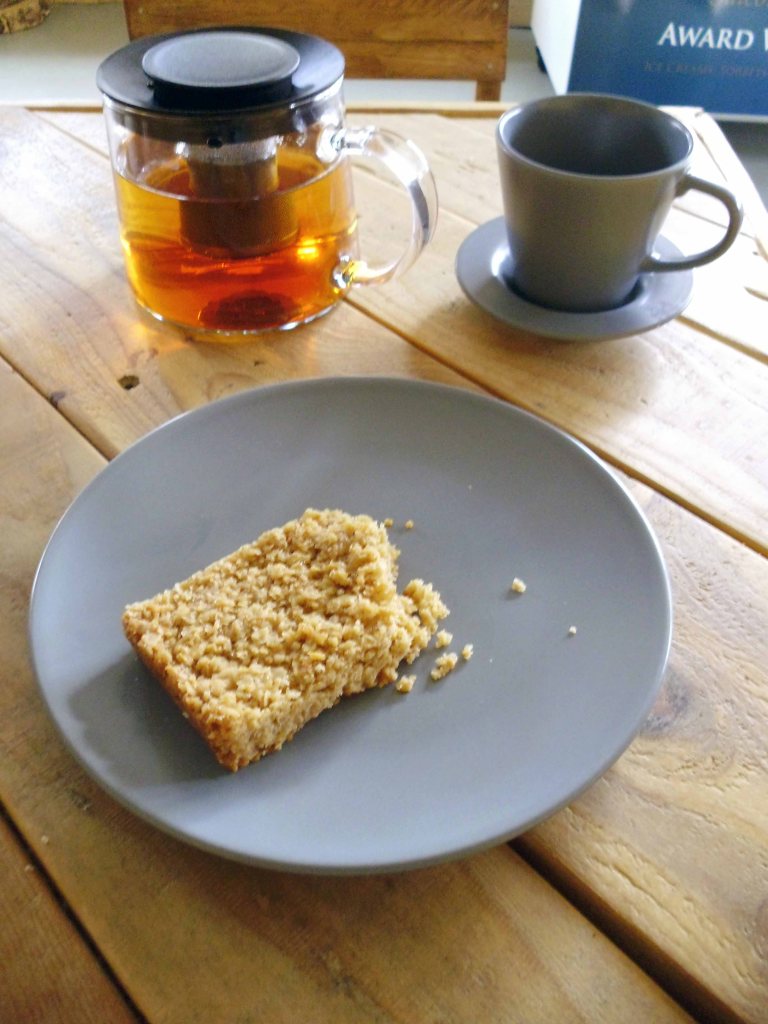
Time for a timely tea and flapjack stop.
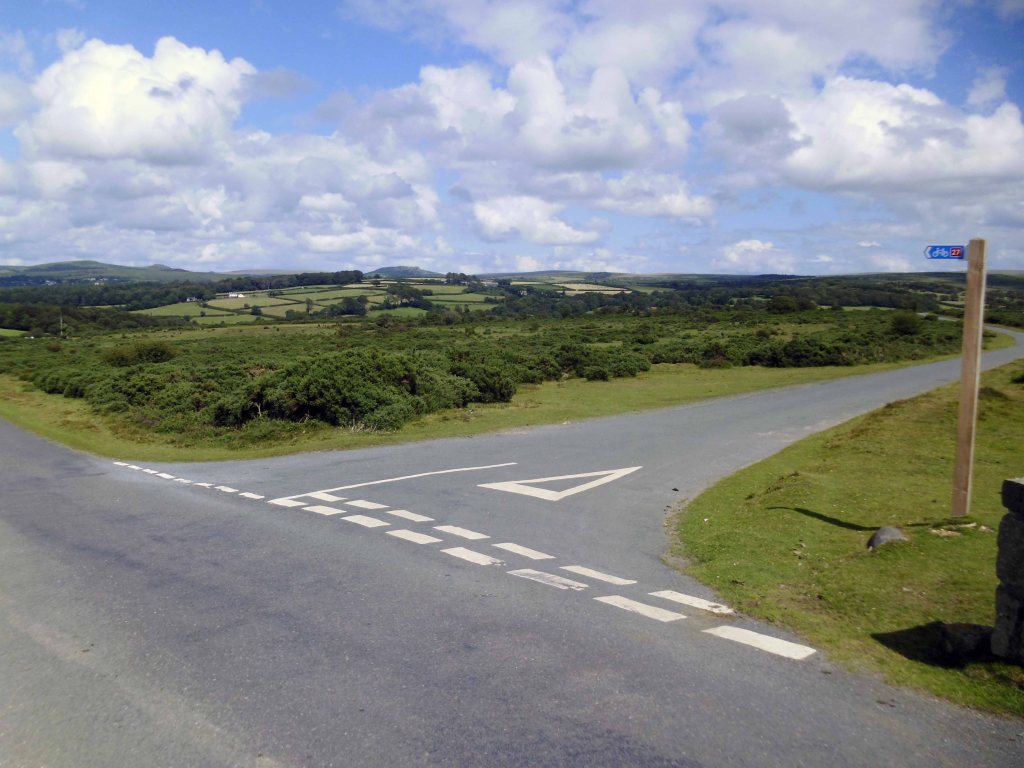
So far so good the nicest weather of the tour, shortest yet most amenable distance through moorland, upland and downland – with a final traffic free descent into Plymouth.
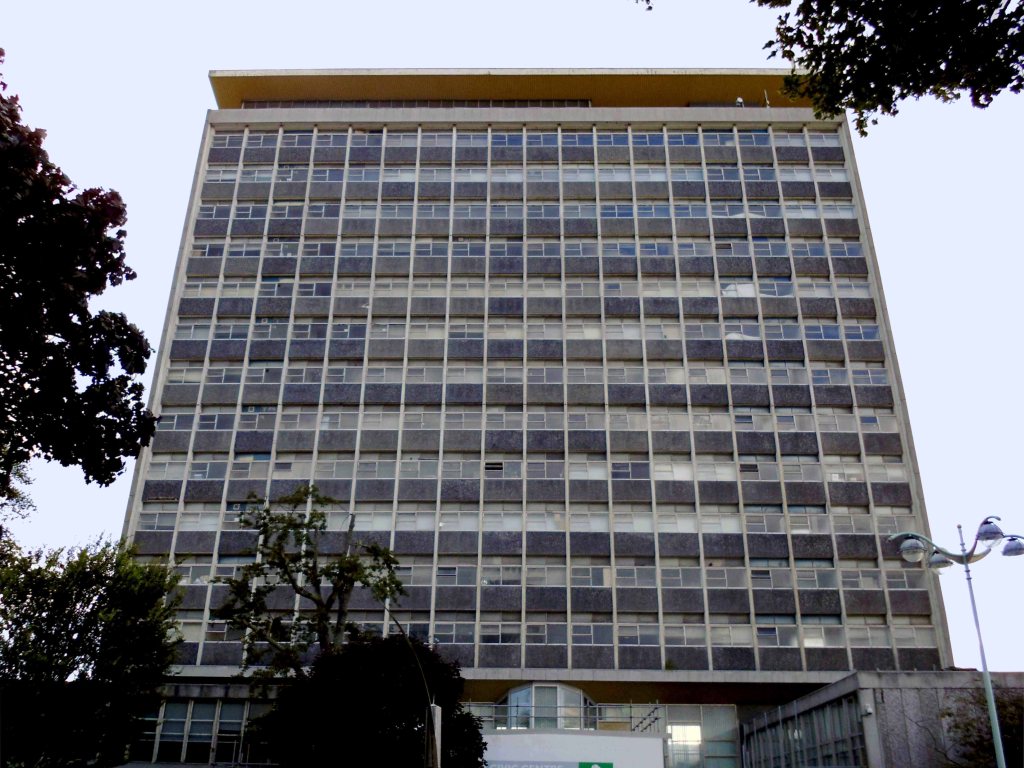
Back in the land of the tower block.
Chichester House Citadel Road The Hoe Plymouth PL1 3BA
Architects– Percy Bartlett and William Henry Watkins
Built on the site of the Andrews New Picture Palace, which had opened in 1910, and was demolished in 1930. The Gaumont Palace was opened on 16th November 1931 with Jack Hulbert in “The Ghost Train” and Sydney Howard in “Almost a Divorce”.
The imposing brick building has a white stone tower feature in the central section above the entrance. Seating inside the auditorium was provided for 1,462 in the stalls and 790 in the circle.
It was re-named Gaumont in 1937 currently closed and at risk.
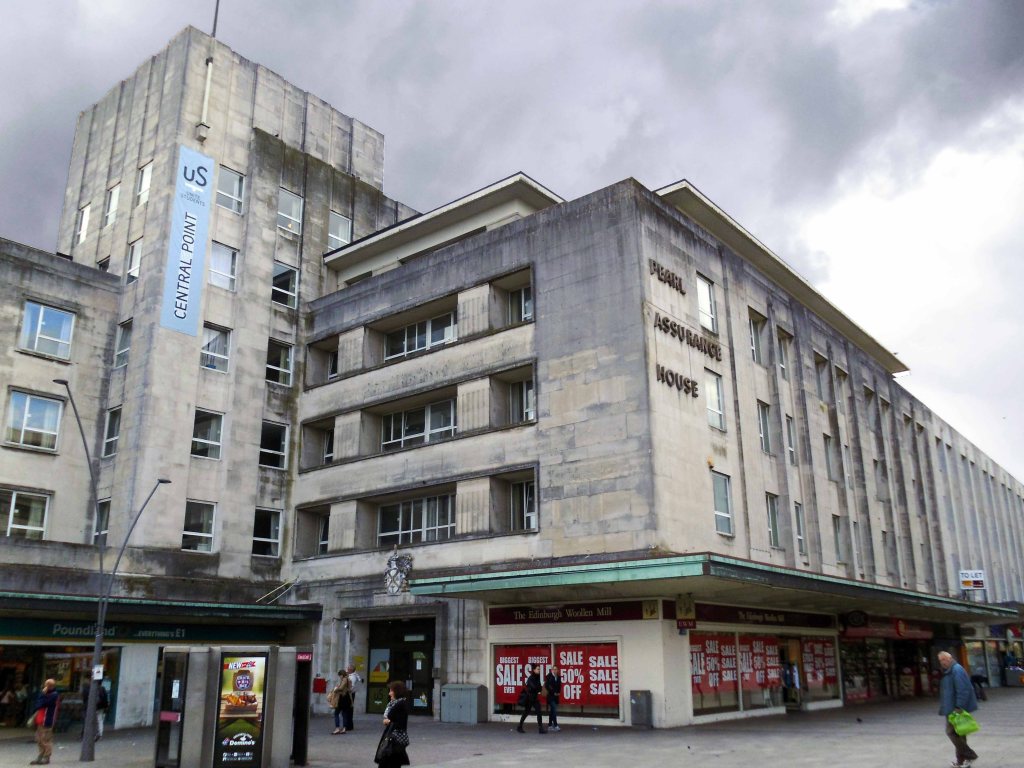
The post war redevelopment of Plymouth produced this sizable Portland Stone Shopping Centre.
‘A Plan for Plymouth’ was a report prepared for the City Council by James Paton Watson, City Engineer and Surveyor, and Patrick Abercrombie, Consultant Architect, published in 1943.
Planning is not merely the plotting of the streets of a town; its fundamental essence is the conscious co-relation of the various uses of the land to the best advantage of all inhabitants. Good planning therefore, presupposes a knowledge and understanding of the people, their relationship to their work, their play, and to each other, so that in the shaping of the urban pattern, the uses to which the land is put are so arranged as to secure an efficient, well- balanced and harmonious whole.
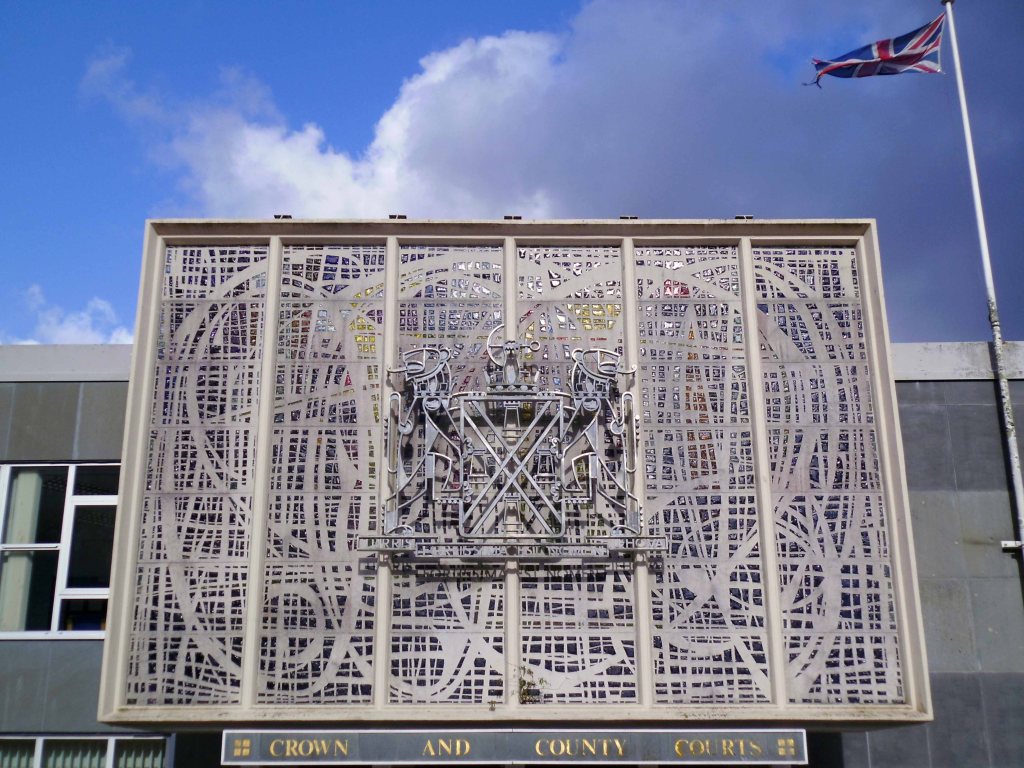
The magnificent dalle de verre fascia of the Crown and County Courts.
having had a good old look around I sought shelter for the night, with some difficulty I found a profoundly plain room. The town seemingly full of itinerant contractors, filling the vast majority of available space.
Not to worry let’s have a look at the seafront.
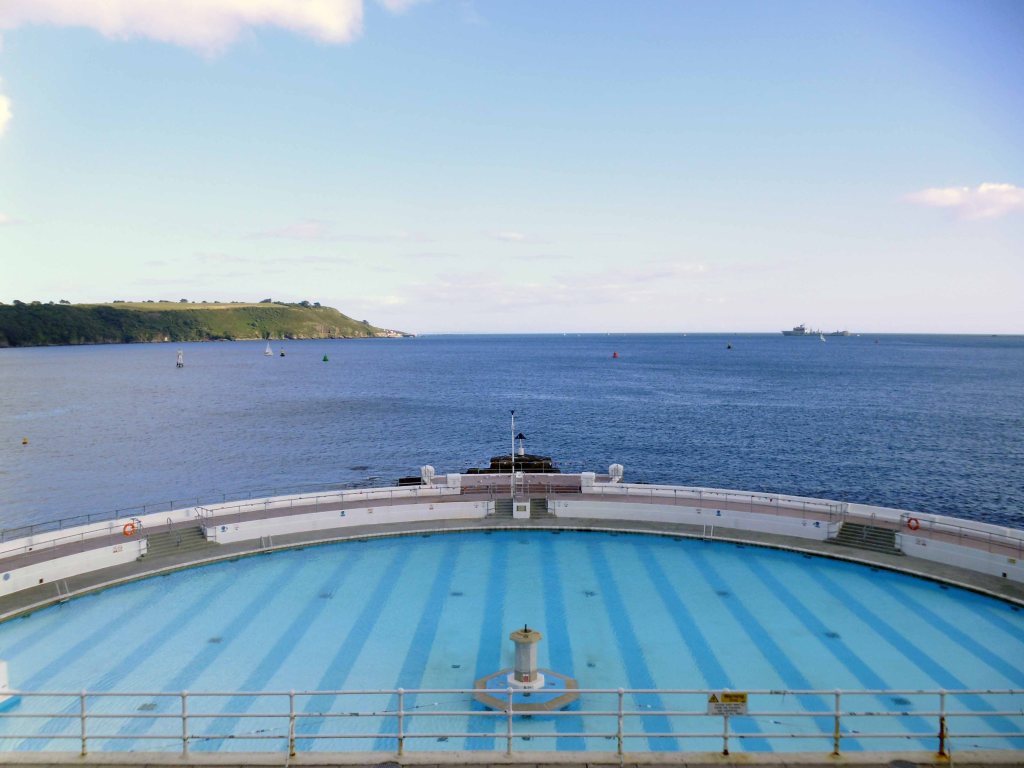
Tinside Lido by J Wibberley Borough Engineer, with Edmund Nuttall and Sons and John Mowlem and Company, builders, with entrance building of 1933 by the same engineer.
Set in a beautiful location overlooking the sea at the tip of Plymouth Hoe and voted one of the top 10 best outdoor pools in Europe, Tinside Lidois an attraction not to be missed.
Built in 1935, Tinside is a slice of the quintessential British seaside from a bygone era. The Lido is a wonderful example of art-deco style and is Grade II listed.
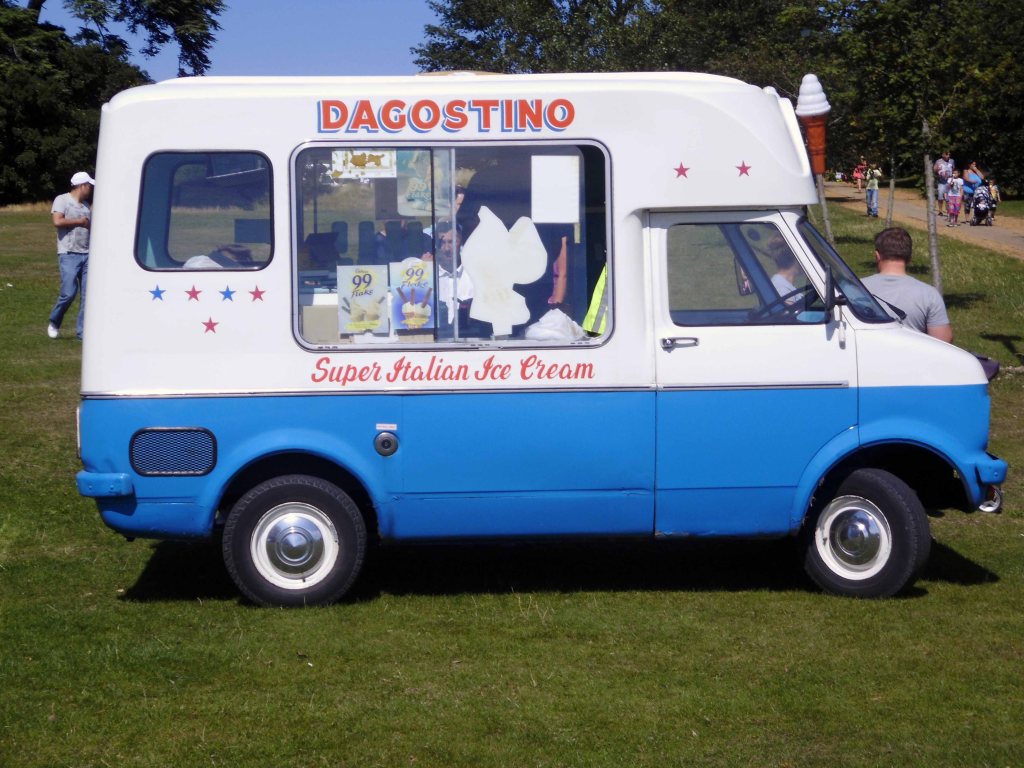
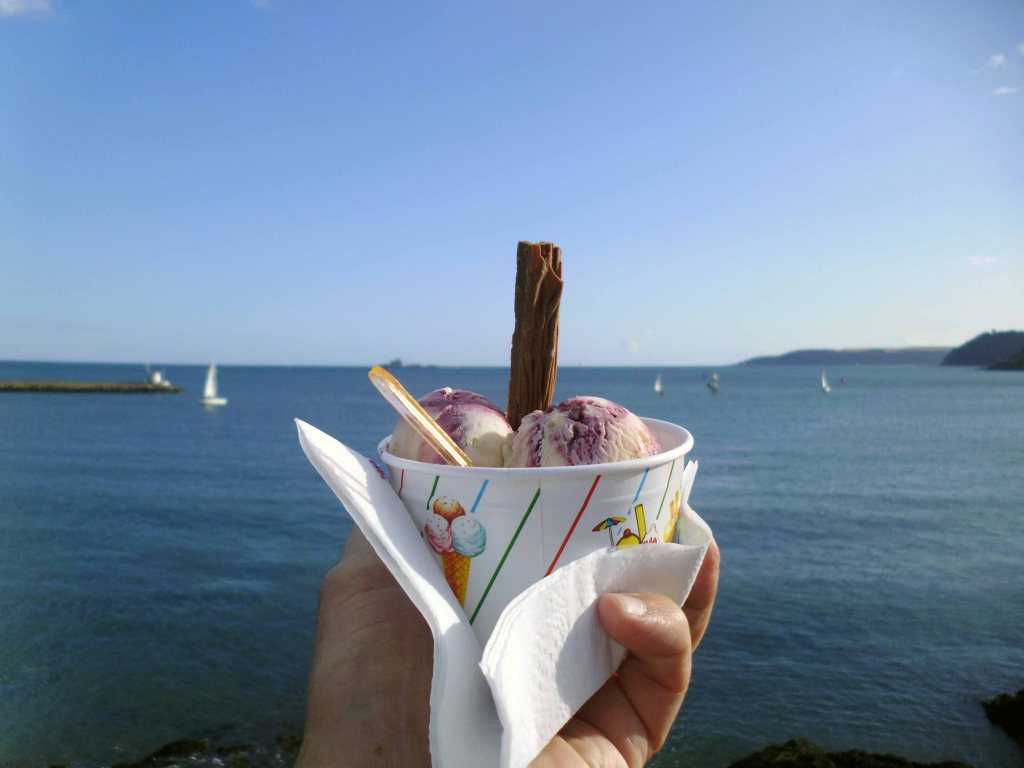
Time for a timely 99 tub – what ho!
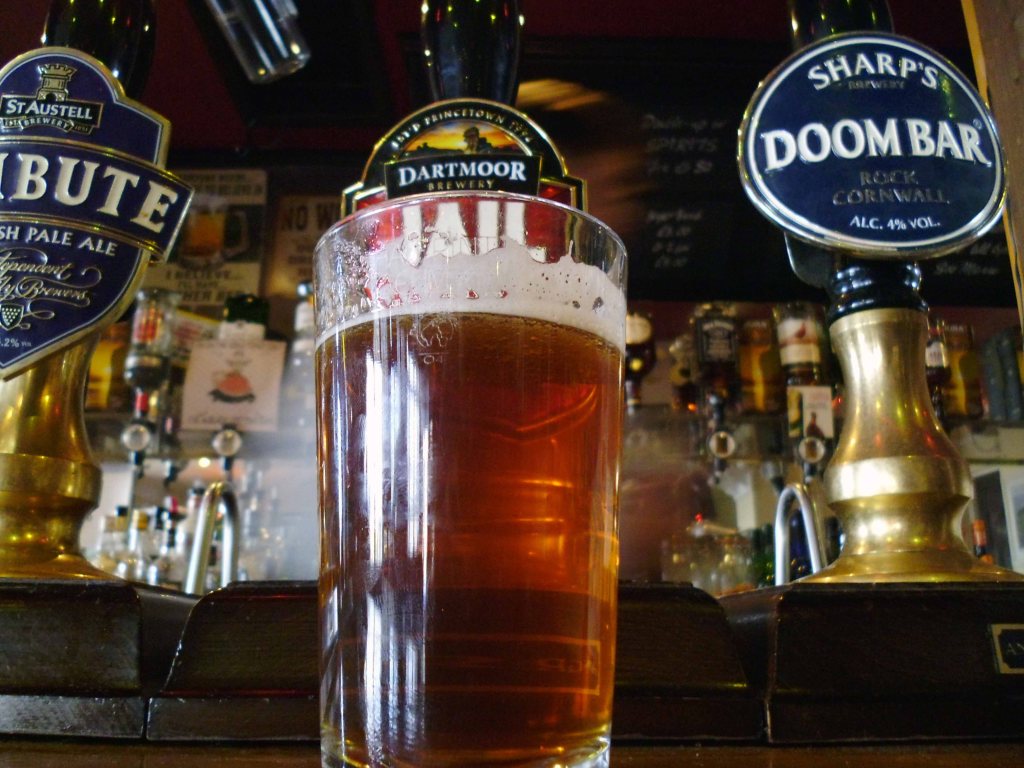
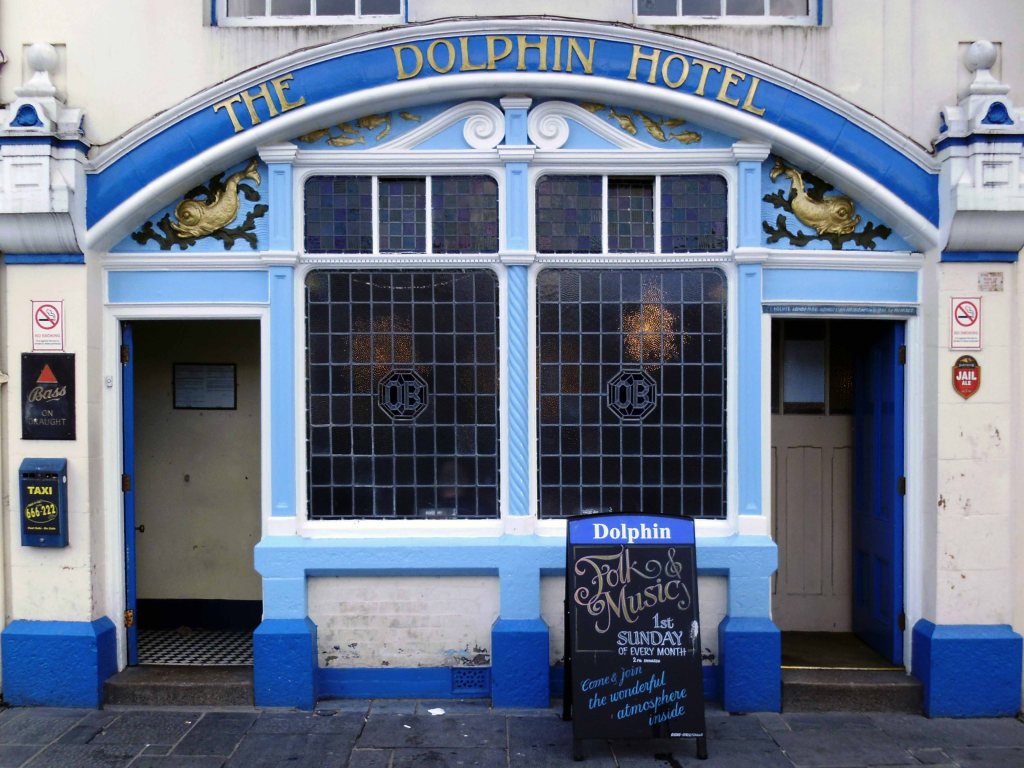
Followed by several pints of Dartmoor Jail in the delightful Dolphin Hotel.
The Dolphin Hotel is a pub on the Barbican , the building, which is known as either the Dolphin Inn or Dolphin Hotel, is a Grade II listed building. It notable as the setting of several of the artist Beryl Cook’s paintings.
The three storey building was constructed in the early 19th century, although it may contain fabric from an earlier structure. It has a slate mansard roof surrounded by a tall parapet with a moulded cornice. The front has white stucco with plaster reliefs of dolphins. The pub is associated with the Tolpuddle Martyrs, some of whom stayed at the hotel on their return from exile in Australia in 1838, when a Mr Morgan was the landlord.
It is a no-frills unmodernised pub famous for its cask ale, draught Bass served straight from the barrel. The sign on the front of the building has always called the pub the ‘Dolphin Hotel’. In 2010 the pub was refurbished, but vandalised in 2014.
This may seem sufficient to satiate the local historian’s voracious appetite for facts and general tittle tattle, but wait.
384 King’s Road was once home to pop sensation Steven Patrick Morrissey – seen here imitating himself in Elisabeth Blanchet’s photograph.
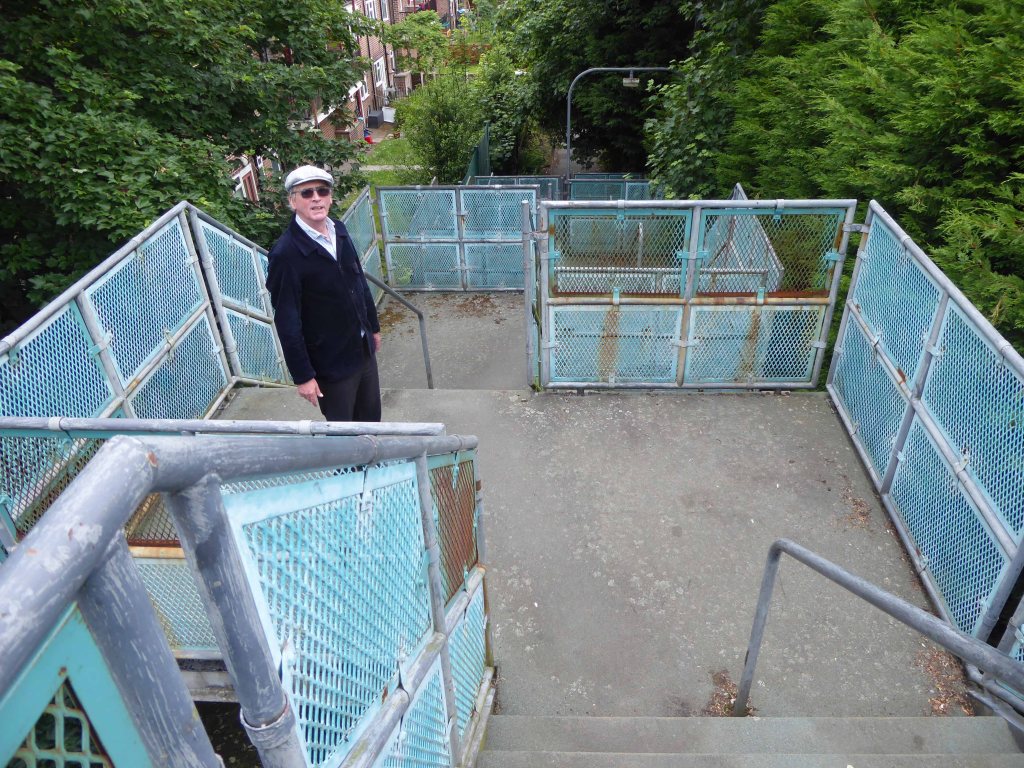
More than once this charming lad would have walked the bridge himself – on the way to goodnesses knows where.
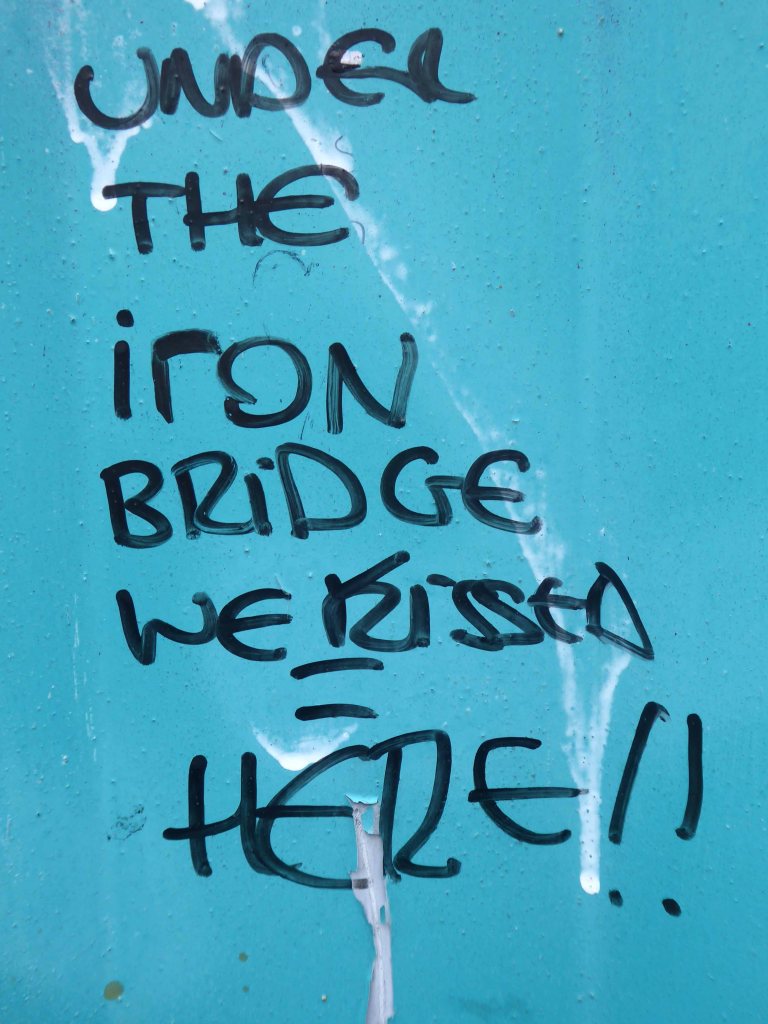
In later life he changed his name to The Smiths and wrote a chart topping tune Still Ill name checking the Iron Bridge.
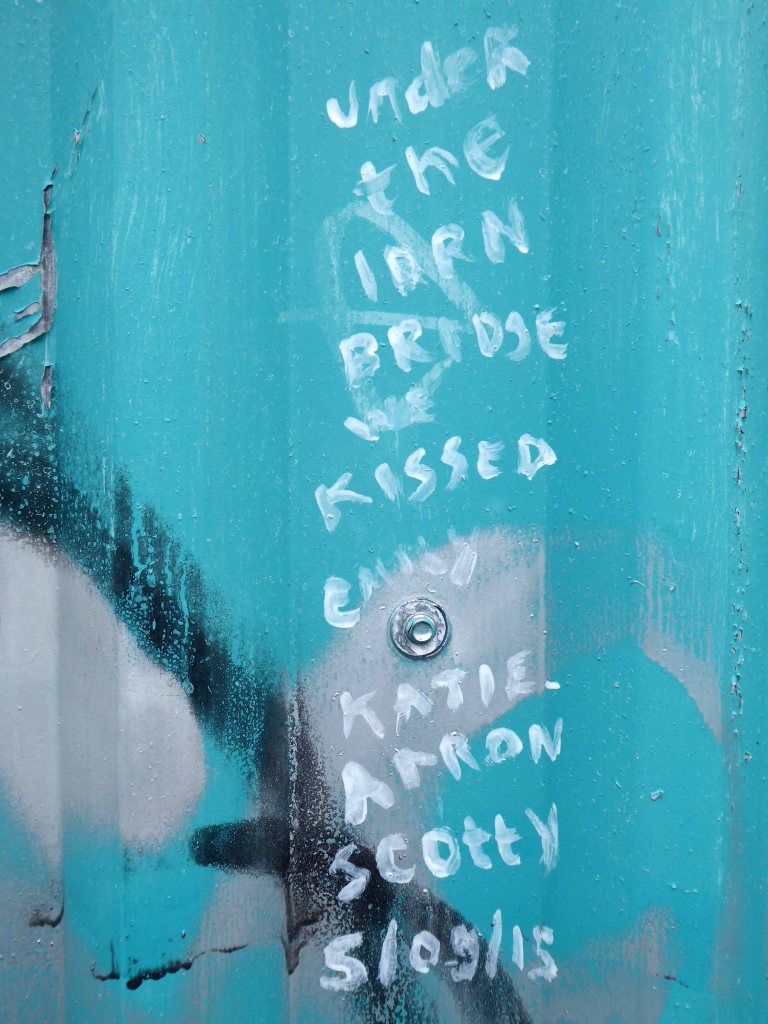
Under the iron bridge we kissed And although I ended up with sore lips It just wasn’t like the old days anymore No, it wasn’t like those days, am I still ill?
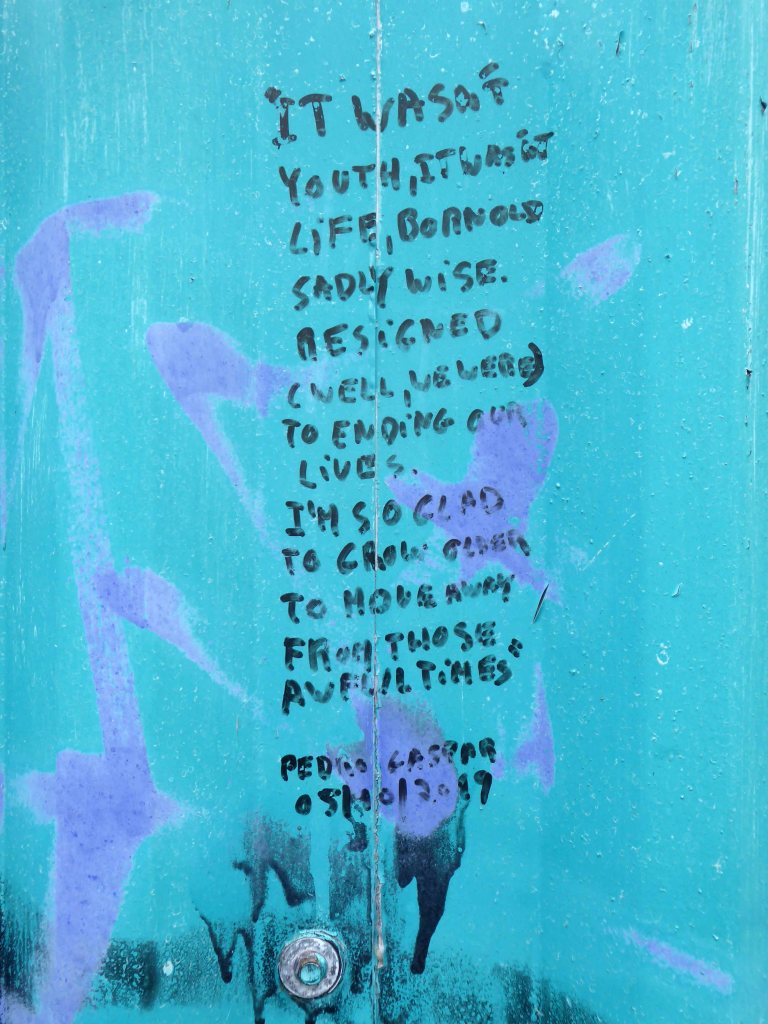
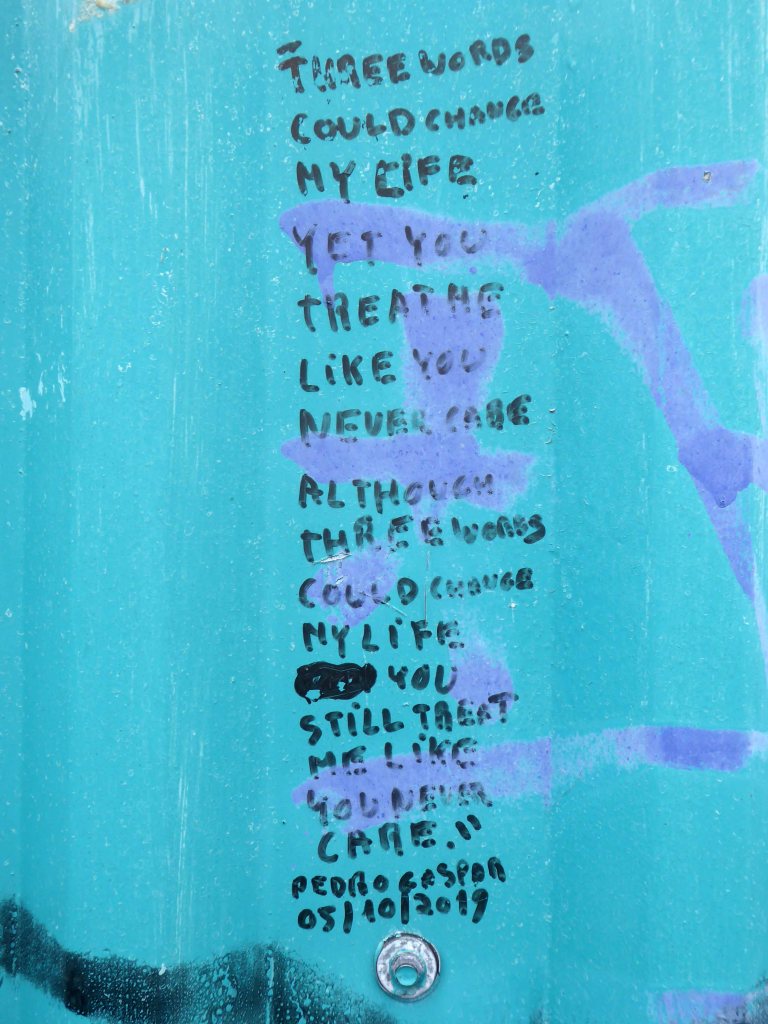
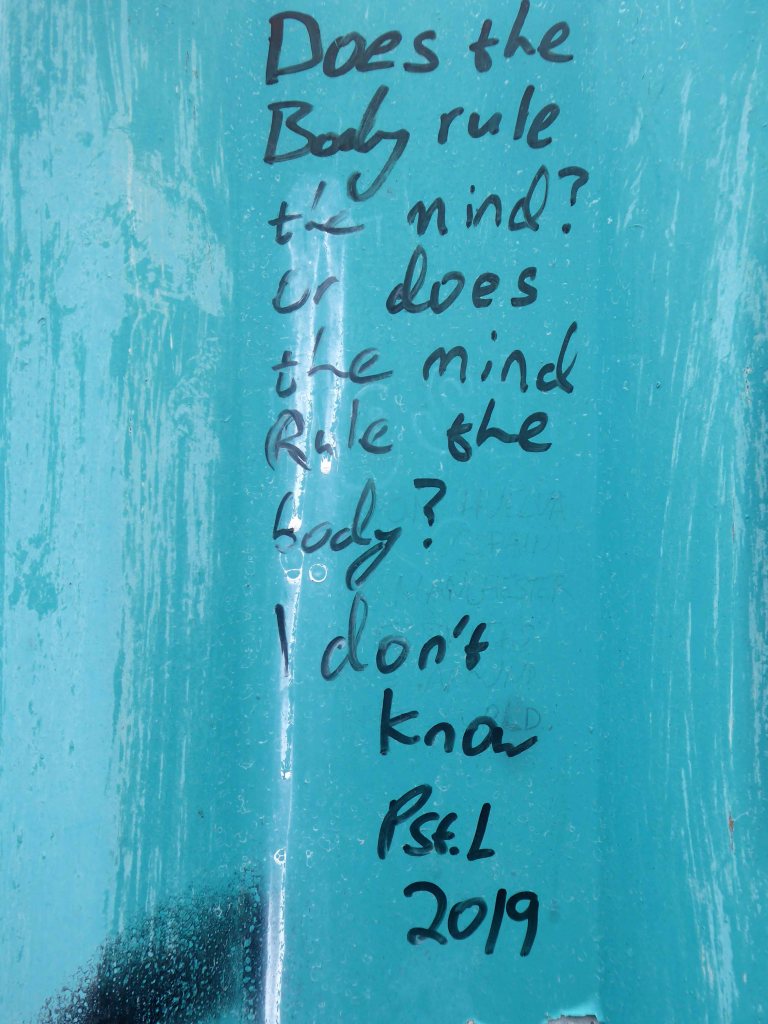
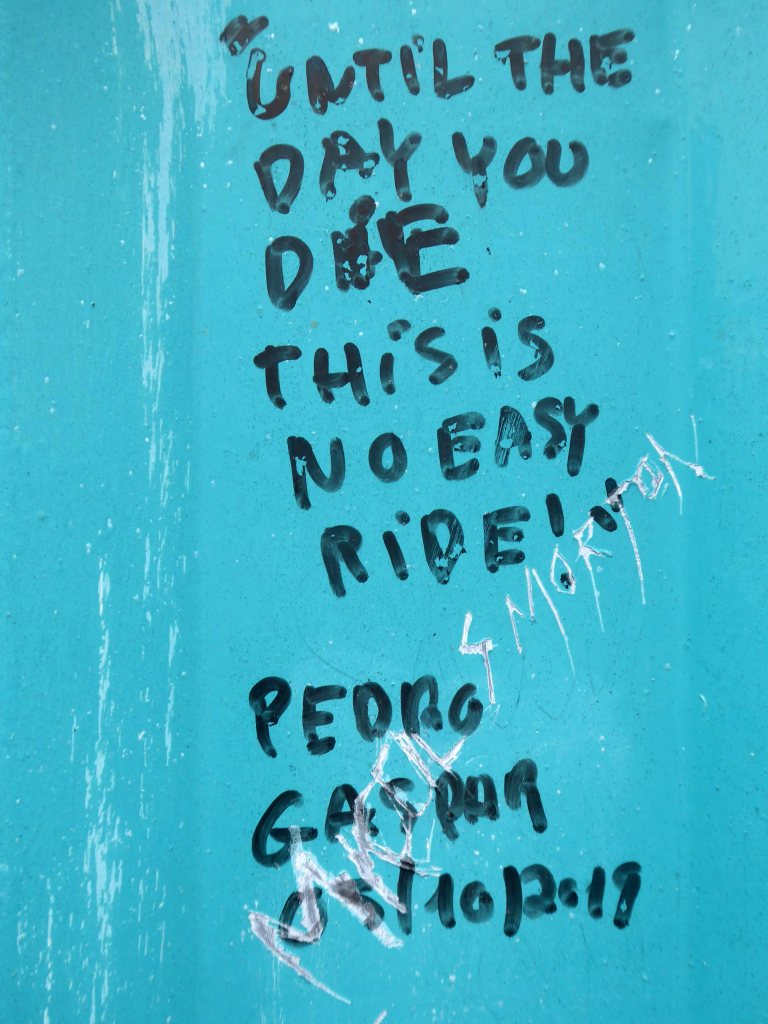
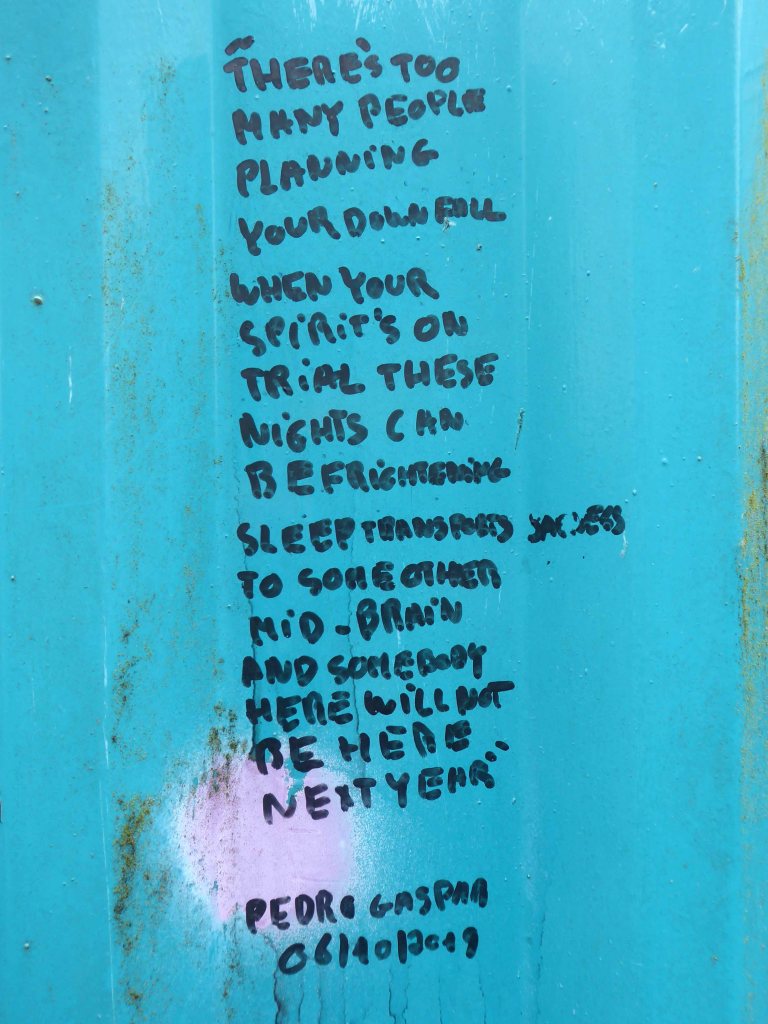
The location is now a place of pilgrimage for Morrissey’s deluded fans, who with depressing regularity, adorn the structure with their misquoted quotes.
Sun drenched faux-Californian Mr Morrissey does seem to be still ill in his own unique and unpleasant manner.
Let’s take a look at what he’s been missing.
What indifference does it make?
Self confessed Smiths sceptic Mr Mark Greer – currently incognito.
We recently took a look around Redrock, today we visit the next door neighbour – the car park ramp.
Replacing the old Debenham’s ramp.
Linking the old world of Merseyway with the shiny new NCP.
I don’t drive no car so I have to make do with the ecologically sound and ever so affordable means of pedestrian trespass, proceeding incautiously I recorded my journey into the unknown.
Returning safely to Basecamp I investigated further, circumnavigating the drainage area.
I have to admit that I am over fond of this small sacred space, a modern impenetrable temple of Brutalism. My ambition is to stage an art/music event within, just wait and see/hear if I don’t!
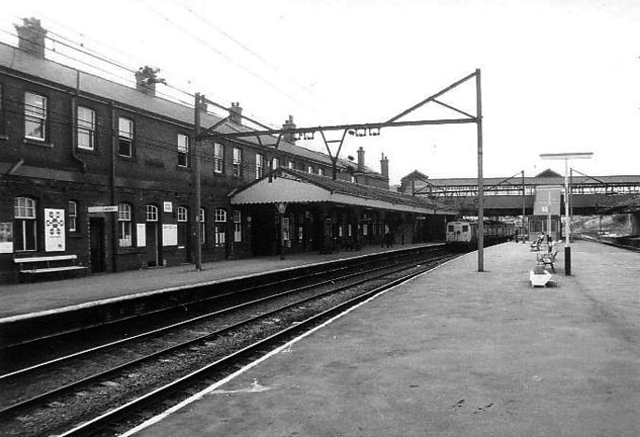
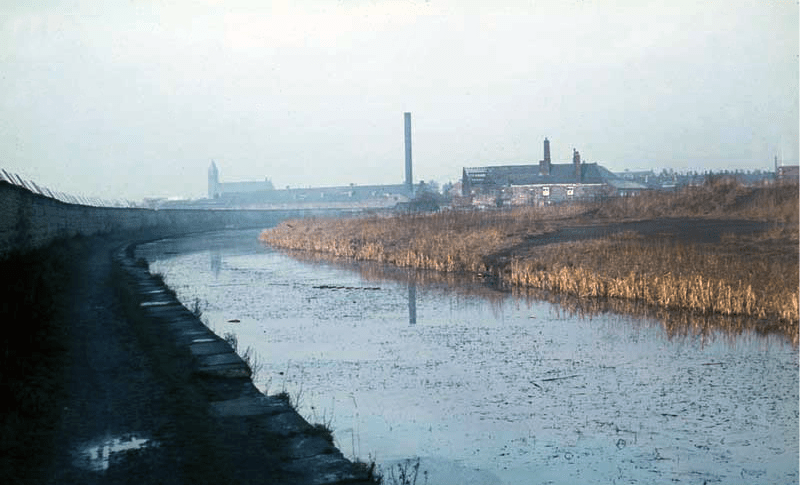
The canal received its Act of Parliament in 1792. It was built to supply coal from Oldham and Ashton under Lyne to Manchester. The first section between Ancoats Lane to Ashton-under-Lyne and Hollinwood was completed in 1796.
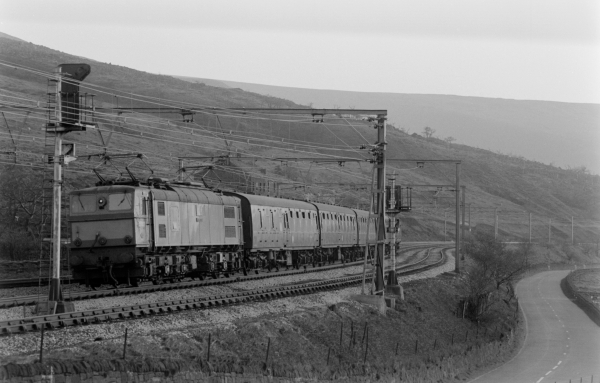
The Great Central Railway in England came into being when the Manchester, Sheffield and Lincolnshire Railway changed its name in 1897, anticipating the opening in 1899 of its London Extension. On 1 January 1923, the company was grouped into the London and North Eastern Railway.
I had walked beside the elevated path, alongside the canal coming home from school, rode by it whilst working as a Guide Bridge goods guard.
This was busy railway, steel coal, oil and people hurtling back and forth across the Pennines, under the DC wires of the Woodhead Line.
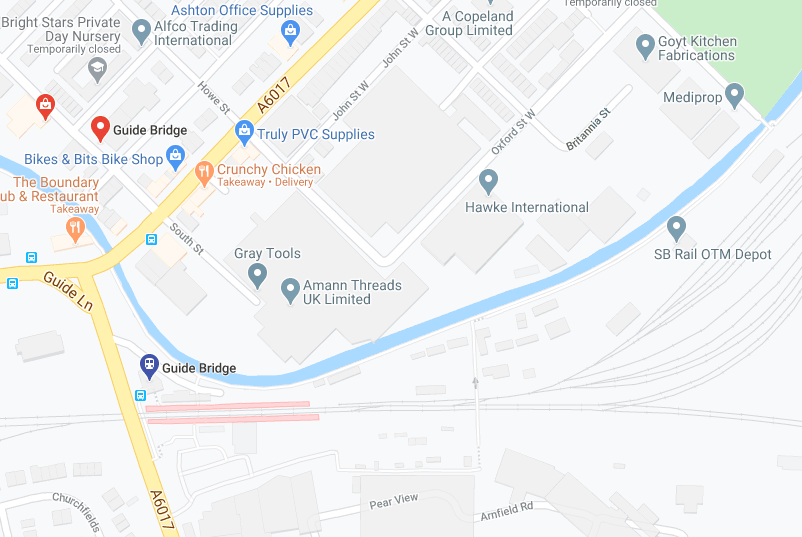
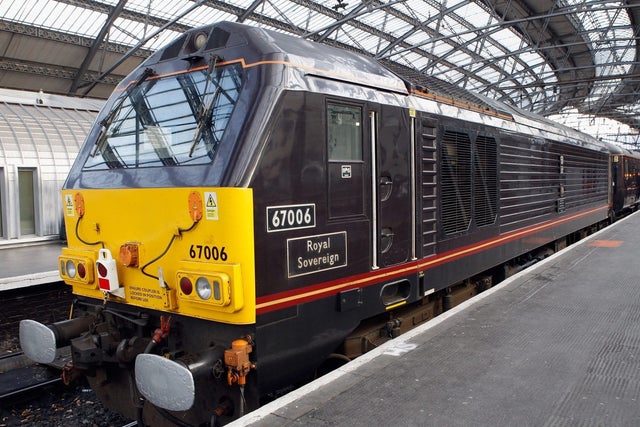
One memorable night the Royal Train stayed overnight, in what are now the SB Rail OTM sidings.
Toffs in dinner jackets were leaning from the windows, as we gazed in awe from the platform.
Swietelsky is one of Austria’s leading construction companies with international contracts encompassing highways, tunnelling, residential and commercial developments, alpine construction and railways.
The journey ends by the seriously depleted station buildings, the buffet bar, depot and engine shed long gone.
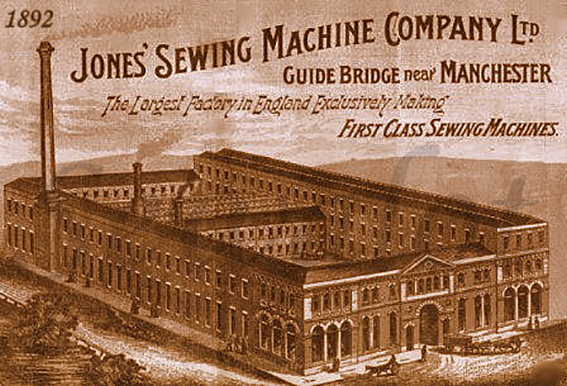
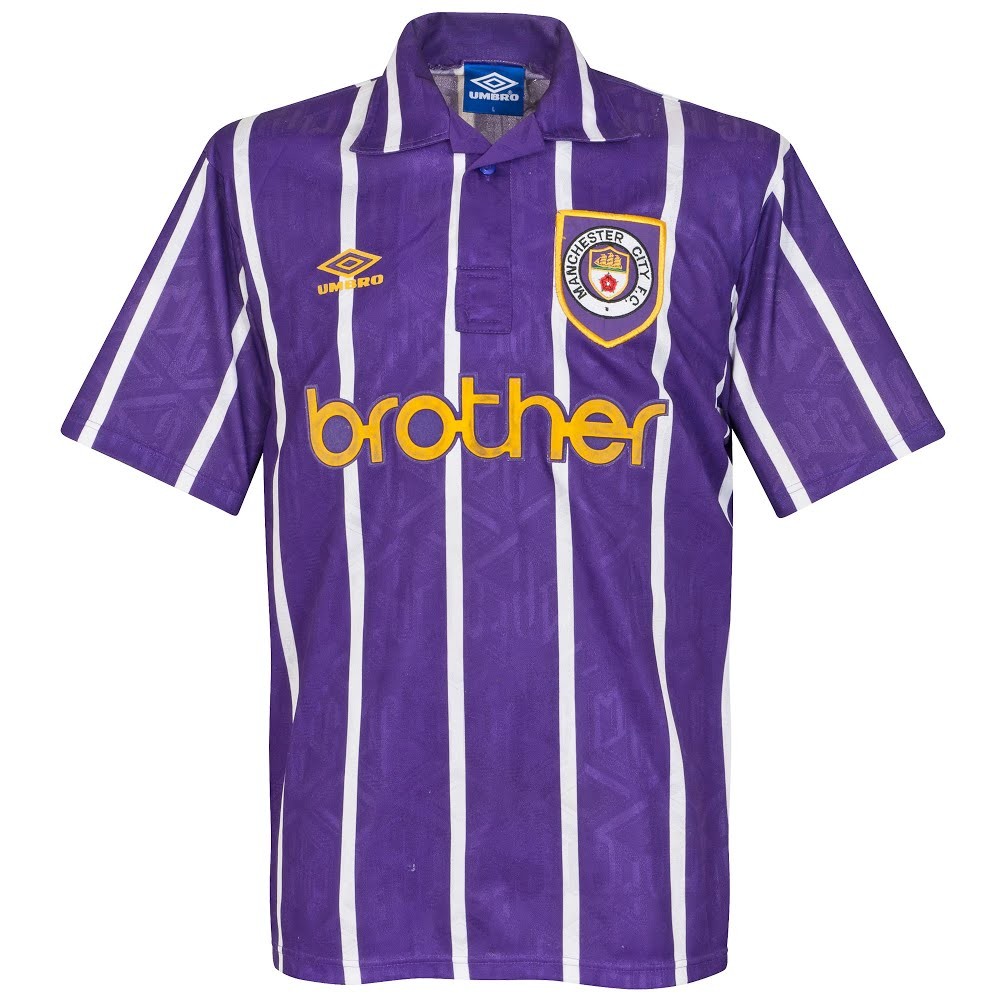
Thomas Chadwick later joined Bradbury & Co. William Jones opened a factory in Guide Bridge, Manchester in 1869. In 1893 a Jones advertising sheet claimed that this factory was the – Largest Factory in England Exclusively Making First Class Sewing Machines. The firm was renamed as the Jones Sewing Machine Co. Ltd and was later acquired by Brother Industries of Japan, in 1968. The Jones name still appeared on the machines till the late 1980s.
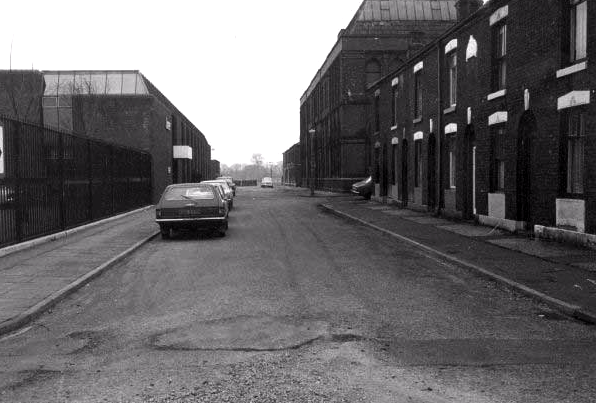
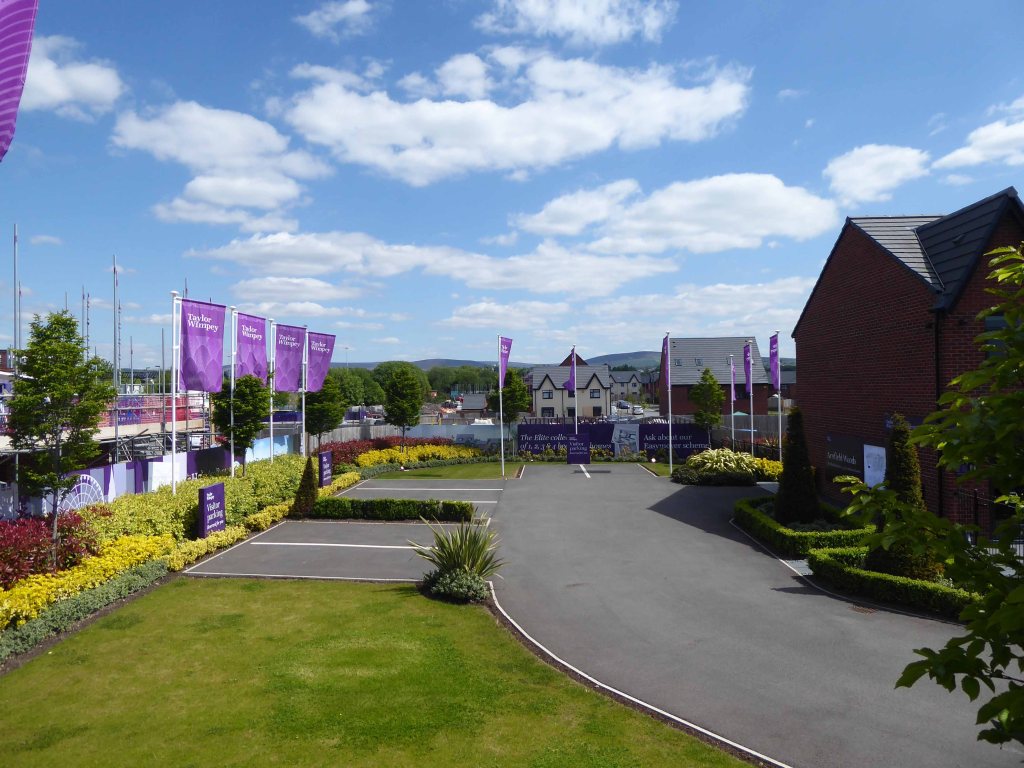
The site is now home to new homes and homeowners, as the area seeks to capitalise on the spread of wealth from Central Manchester.
Arnfield Woods is an exclusive development offering two, three and four bedroom homes, located adjacent to the Guide Bridge train station, which provides direct access into Manchester City Centre and direct access into Glossop.
The world turns:
Time changes everything except something within us which is always surprised by change.
The area was formerly a dense web of housing and industry.
With the gas works at its heart .
High speed gas once the fuel of the future is almost a thing of the past. Coal Gas produced in coke retorts long gone, North Sea Gas hissed off.
Low carbon heating will replace domestic boilers from 2025, the need for gas storage holders is minimal.
Goodnight Mr Therm.
There are currently 53 listed holders on the Historic England site.
Some have been repurposed – WilkinsonEyre has completed work on Gasholders London; a development of 145 apartments within a triplet of listed gasholder guide frames.
Little now remains of the Portwood Gas Works.
These are the rearranged remnants re-sited by Dunelm Mill – it’s curtains for our industrial heritage.
Your business is unique, so we don’t offer a one-size-fits-all.
Instead, we layer six Protective Services for your complete security.
Unlock six Protective Services
One of the UK’s largest retail parks, Stockport Retail Park benefits from a strategic location on the M60 Manchester orbital motorway making it one of the city’s most accessible parks. The park forms a natural extension to the town centre, offering a wide range of uses from value convenience to fashion and home as well as a number of cafés and restaurants.
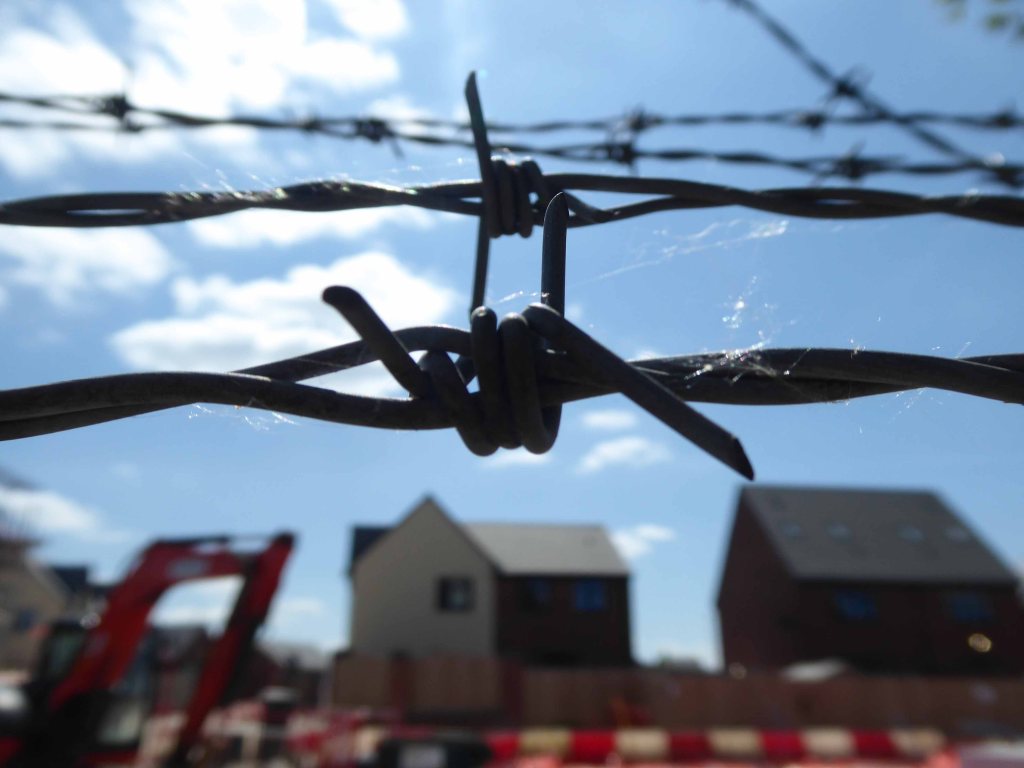
This is the post industrial landscape of consumption and its infrastructure that faces the defunct and mothballed site, whatever next?
All that is solid melts into air as Marx and Marshall Berman told us.
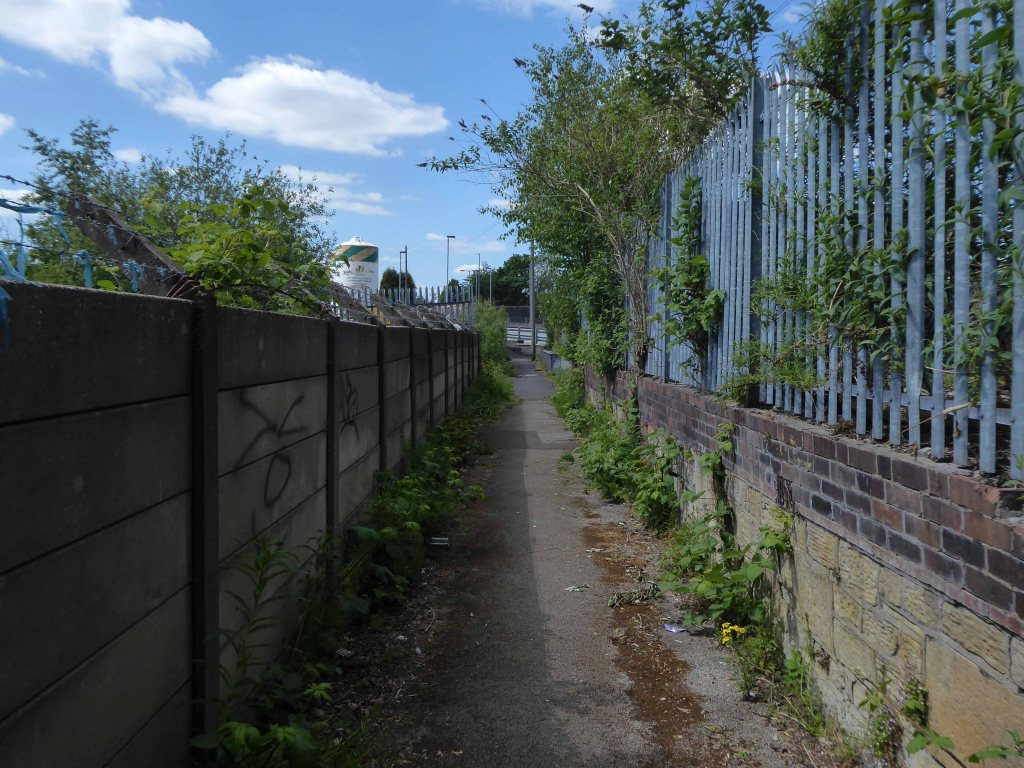
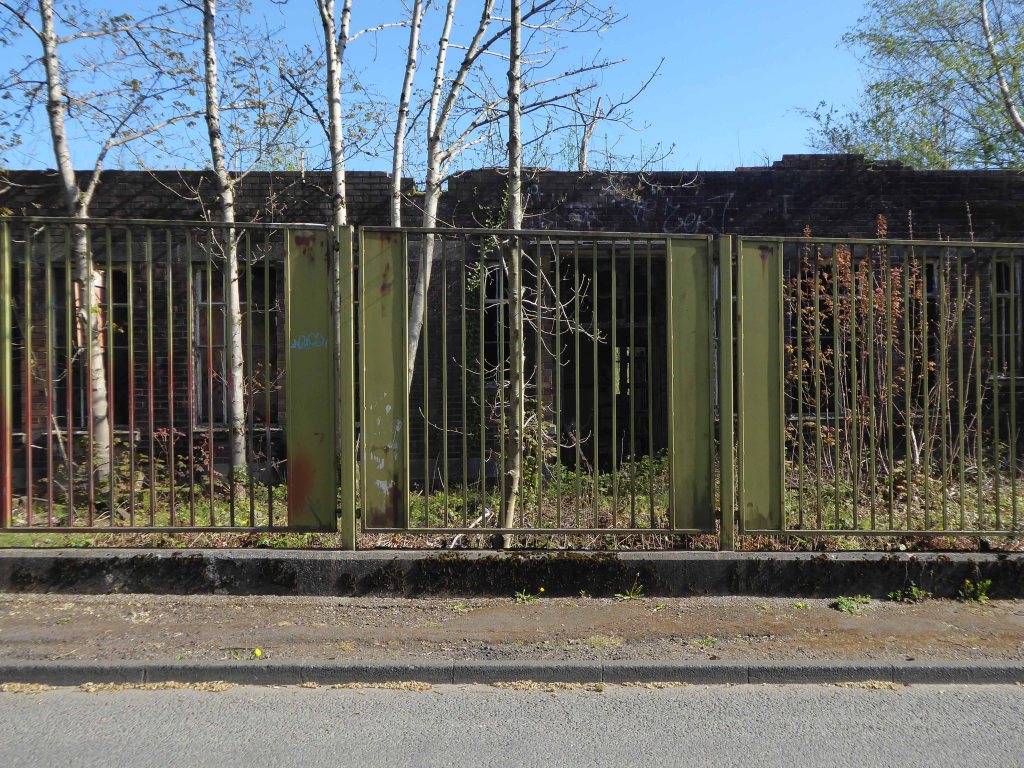
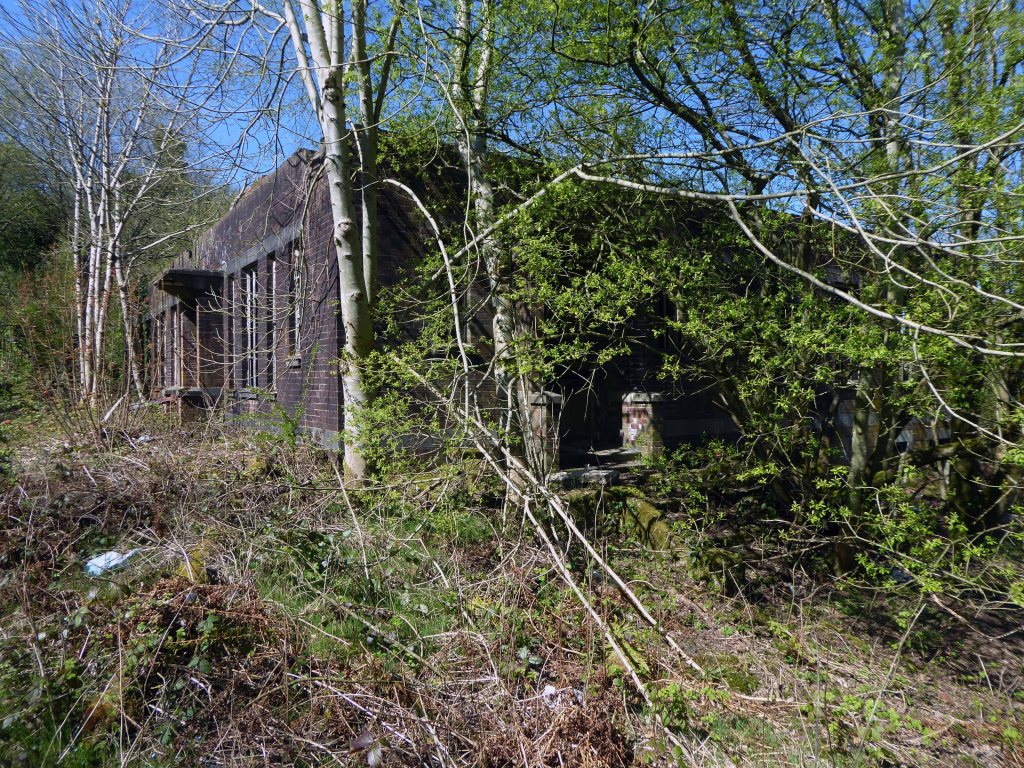
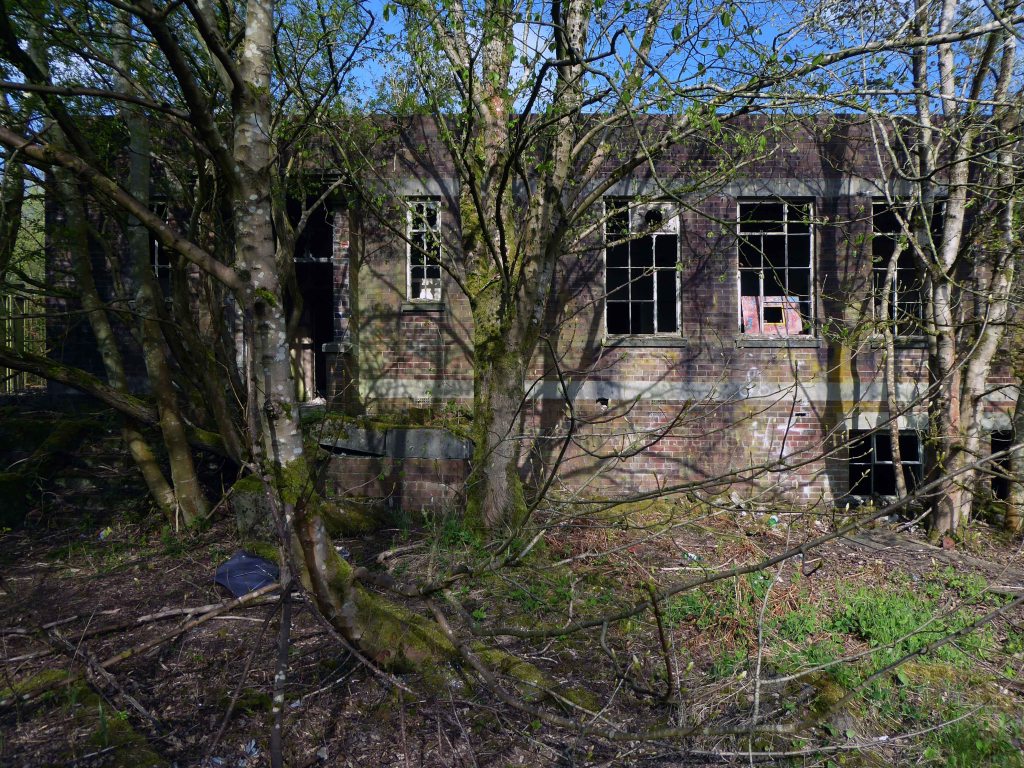
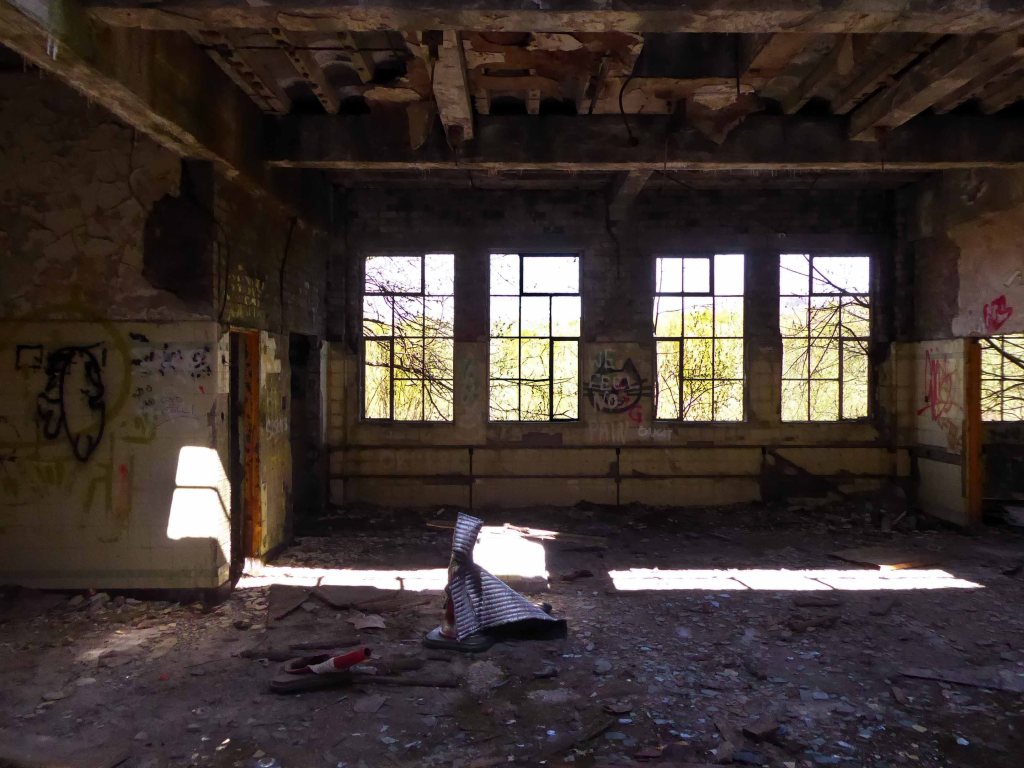
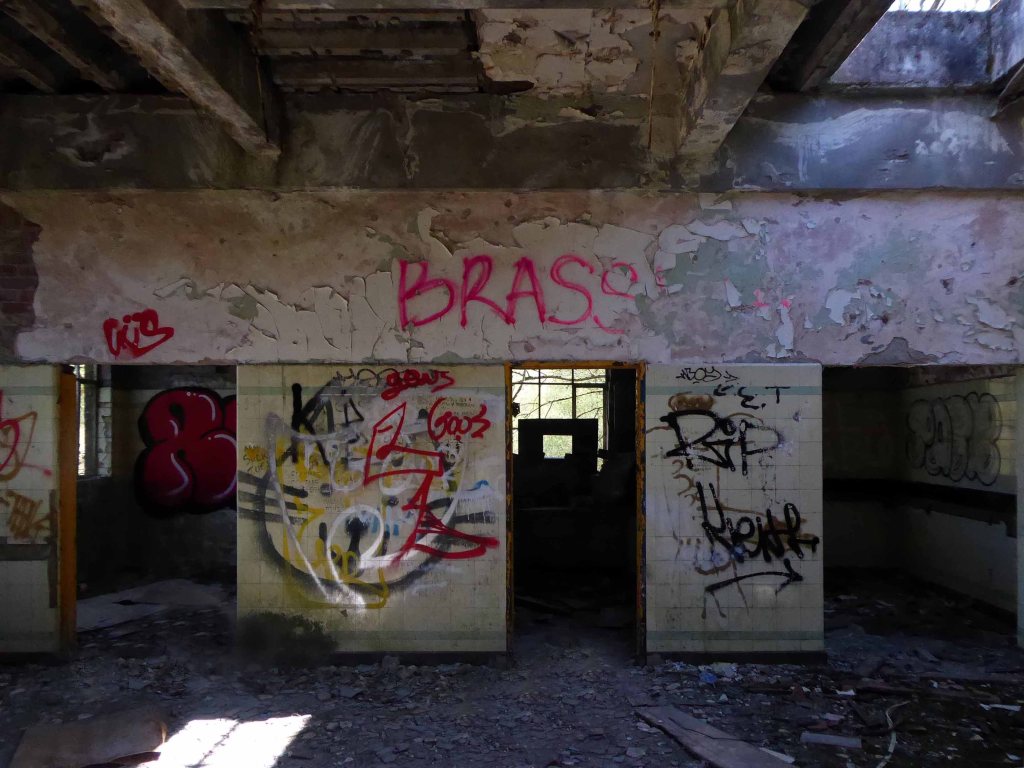
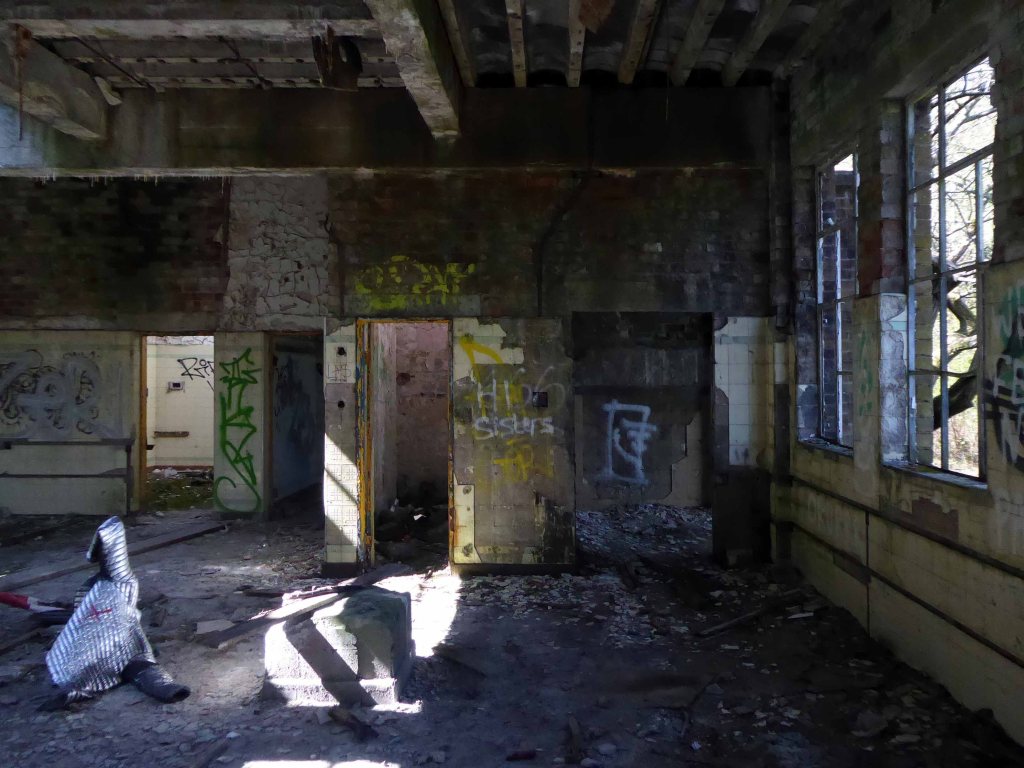
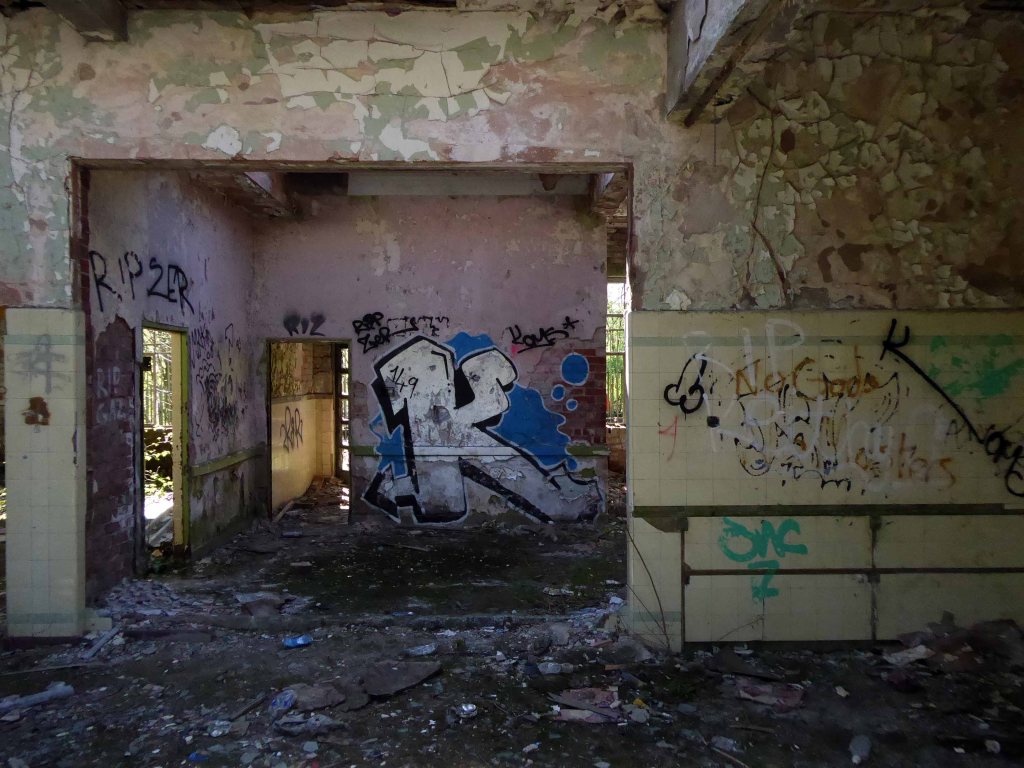
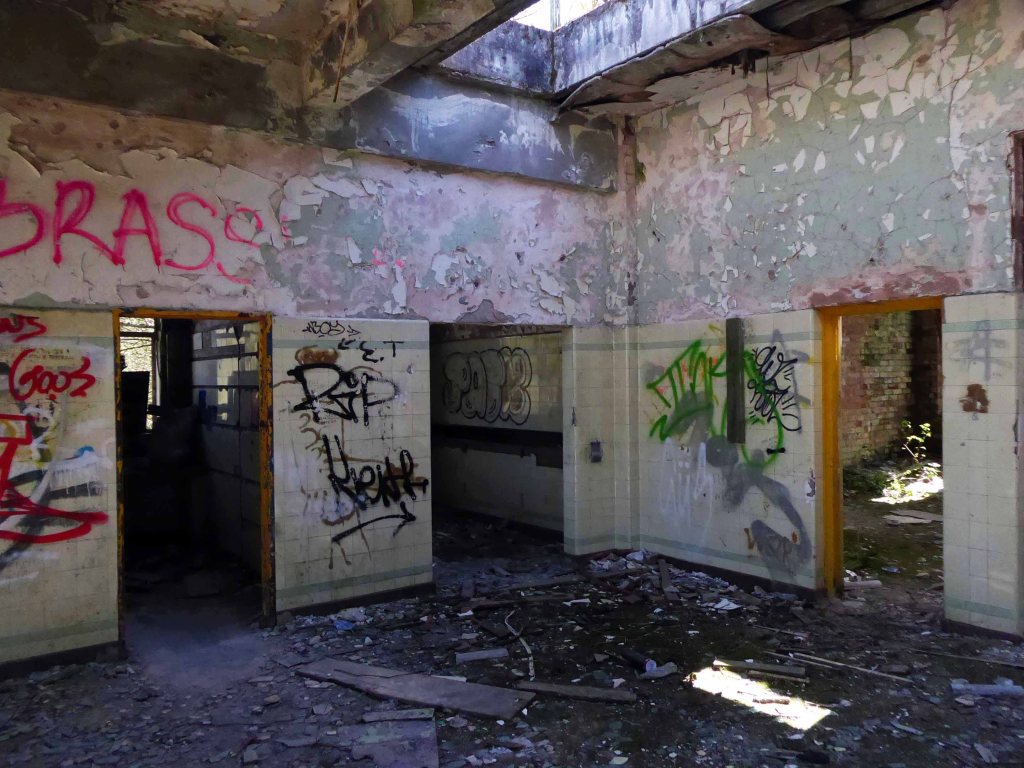
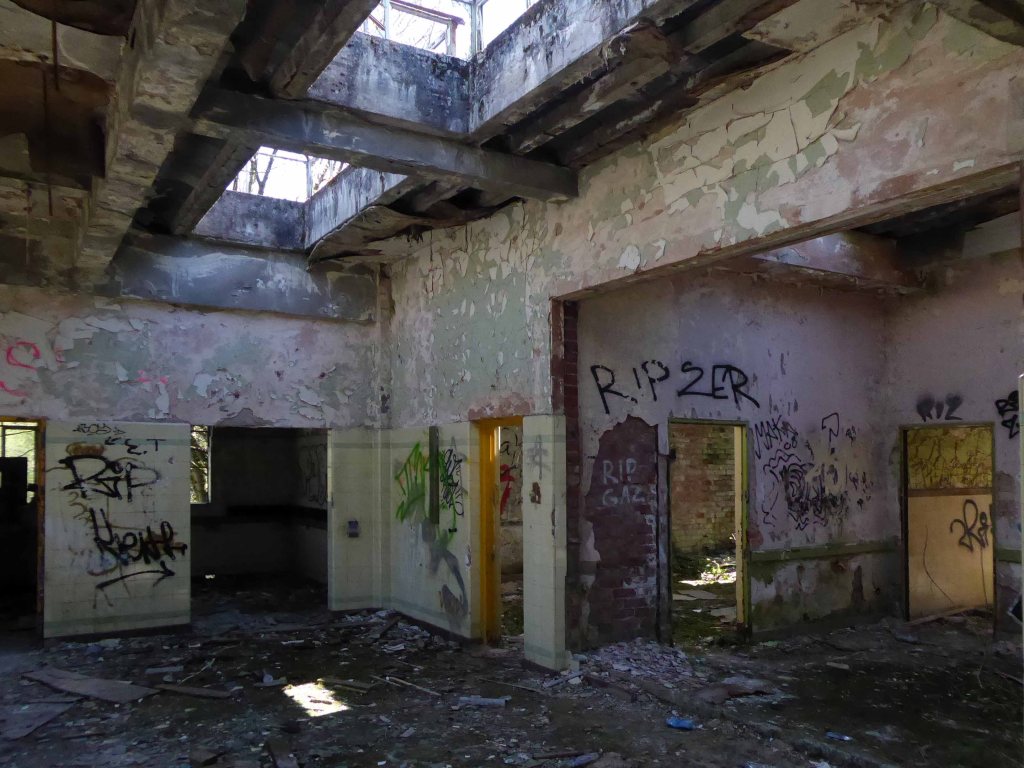
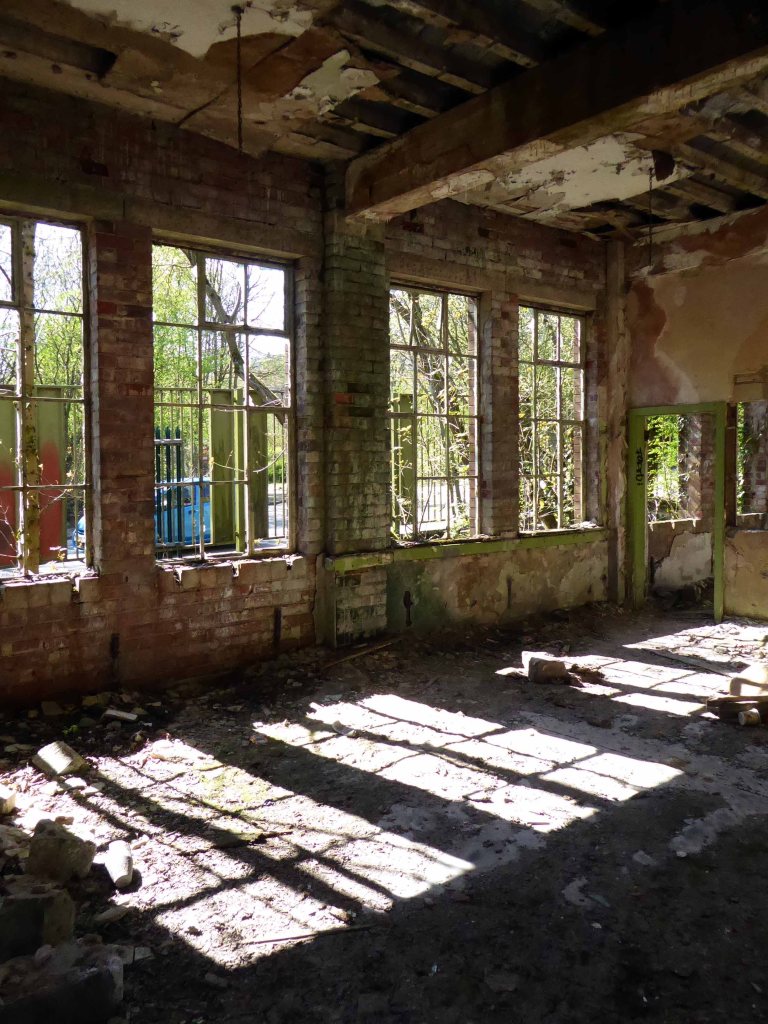
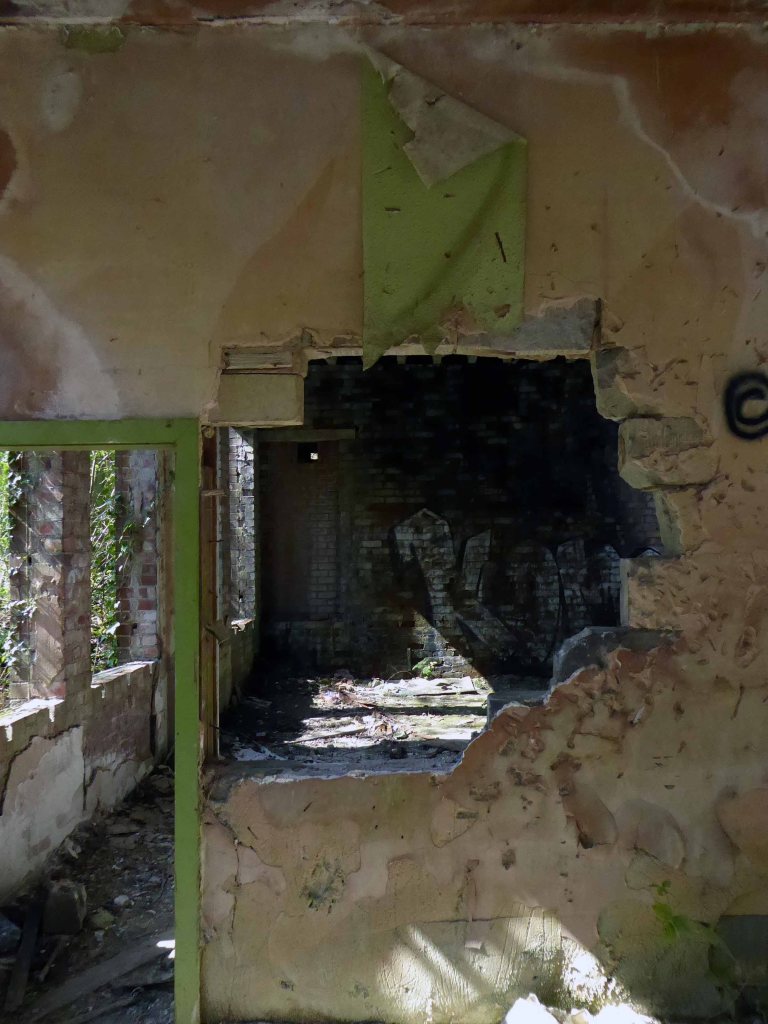
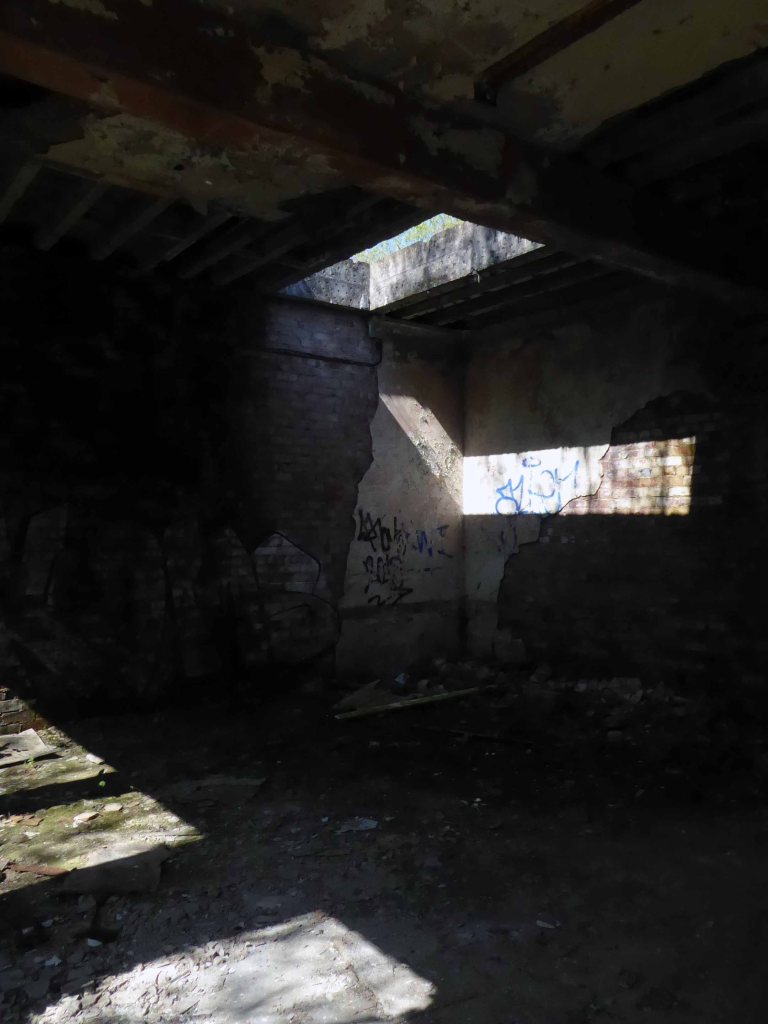
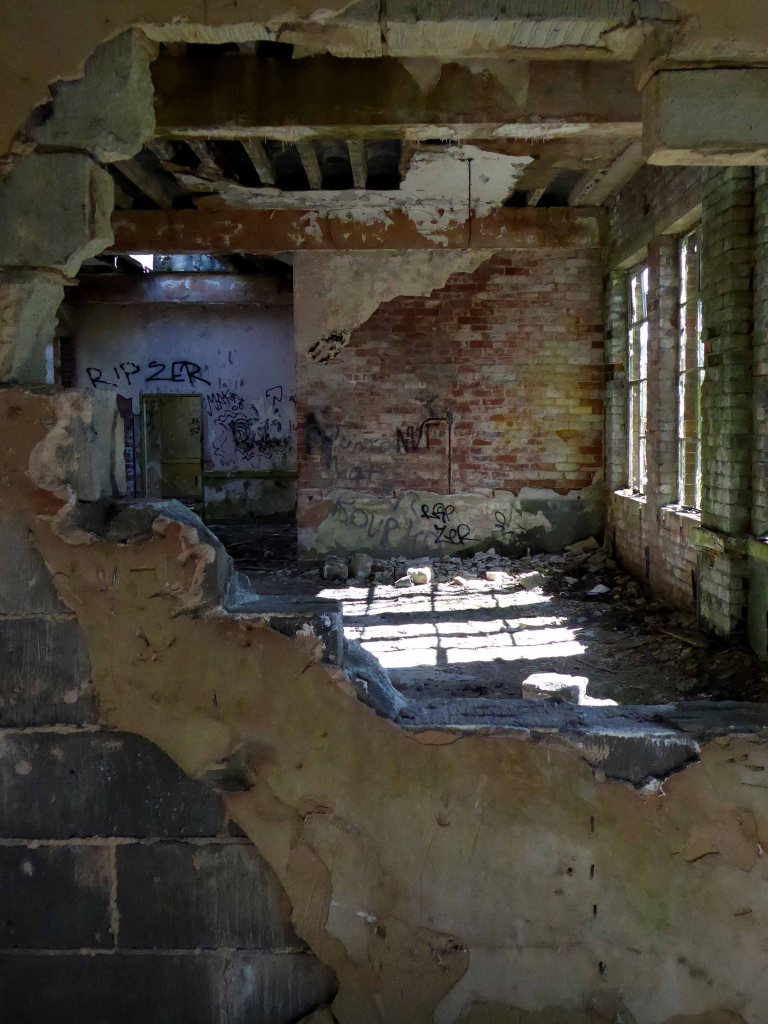
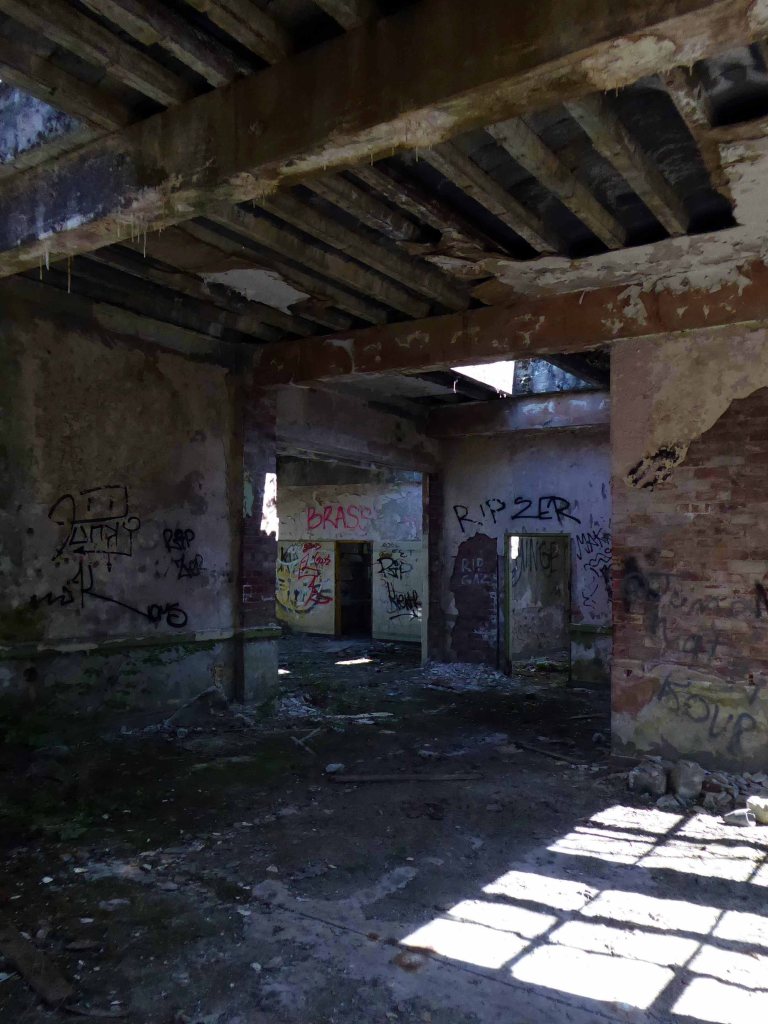
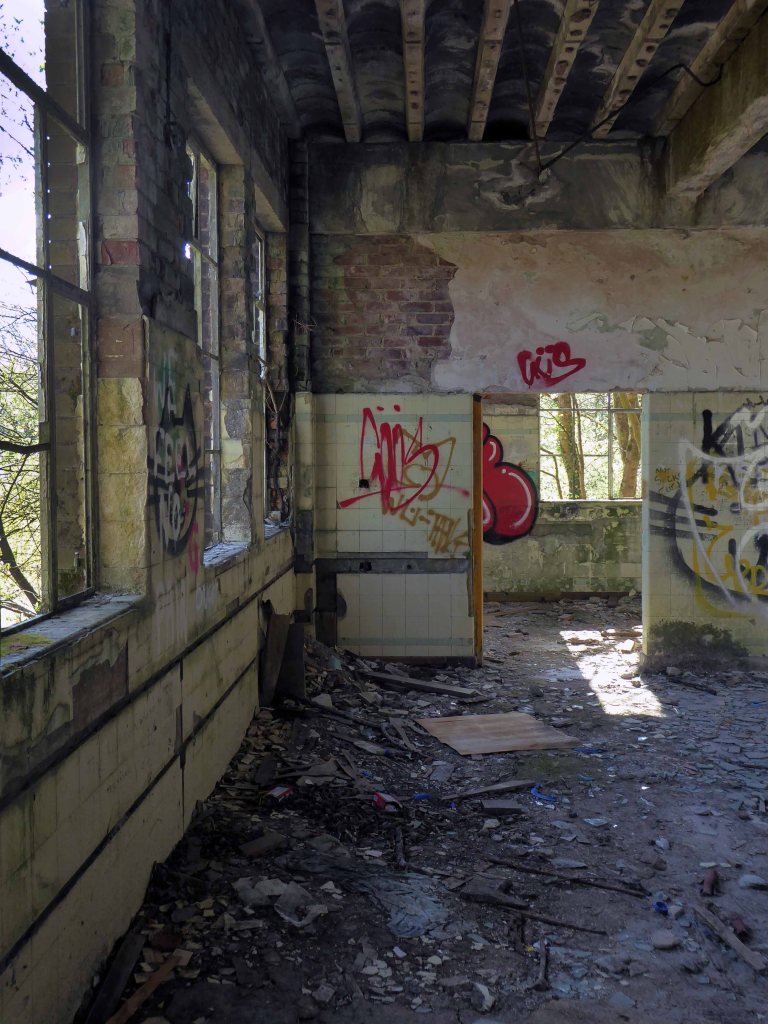
Though remnants remain – this is a short journey through a hole in fence, down into the warren of power station offices past.
They have been stripped of their former use and meaning, transformed into a transitory art performance space, paint and plaster now peeling, appealing to the passing painter, partially reclaimed by nature.