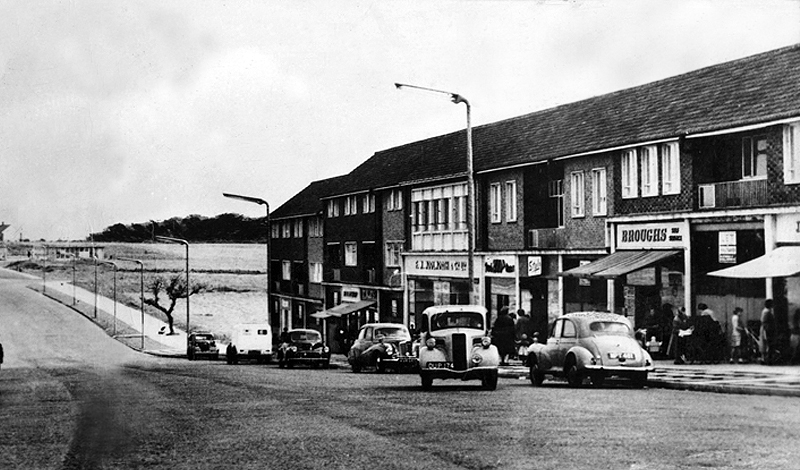
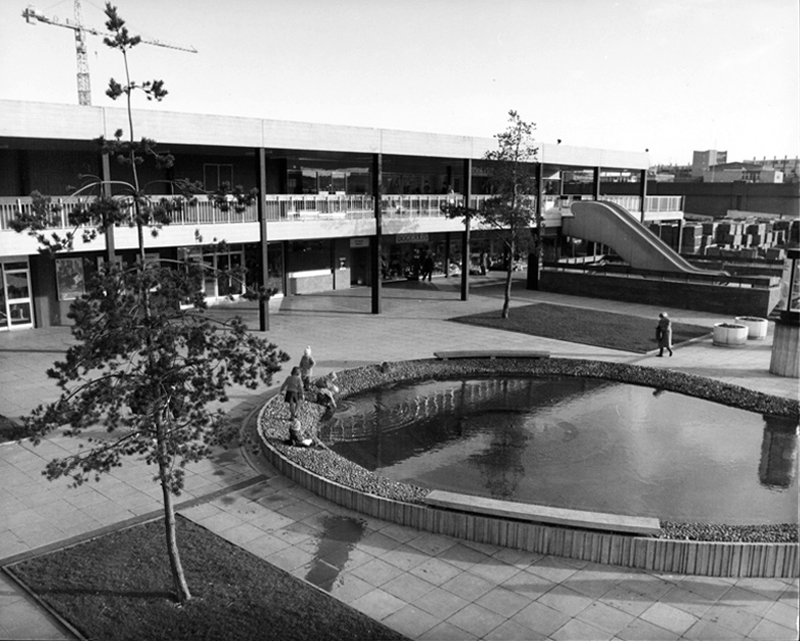
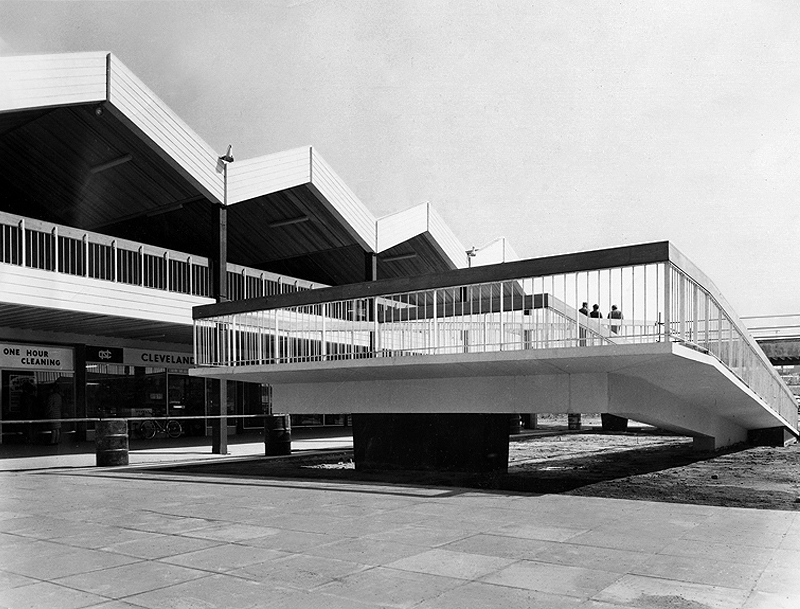
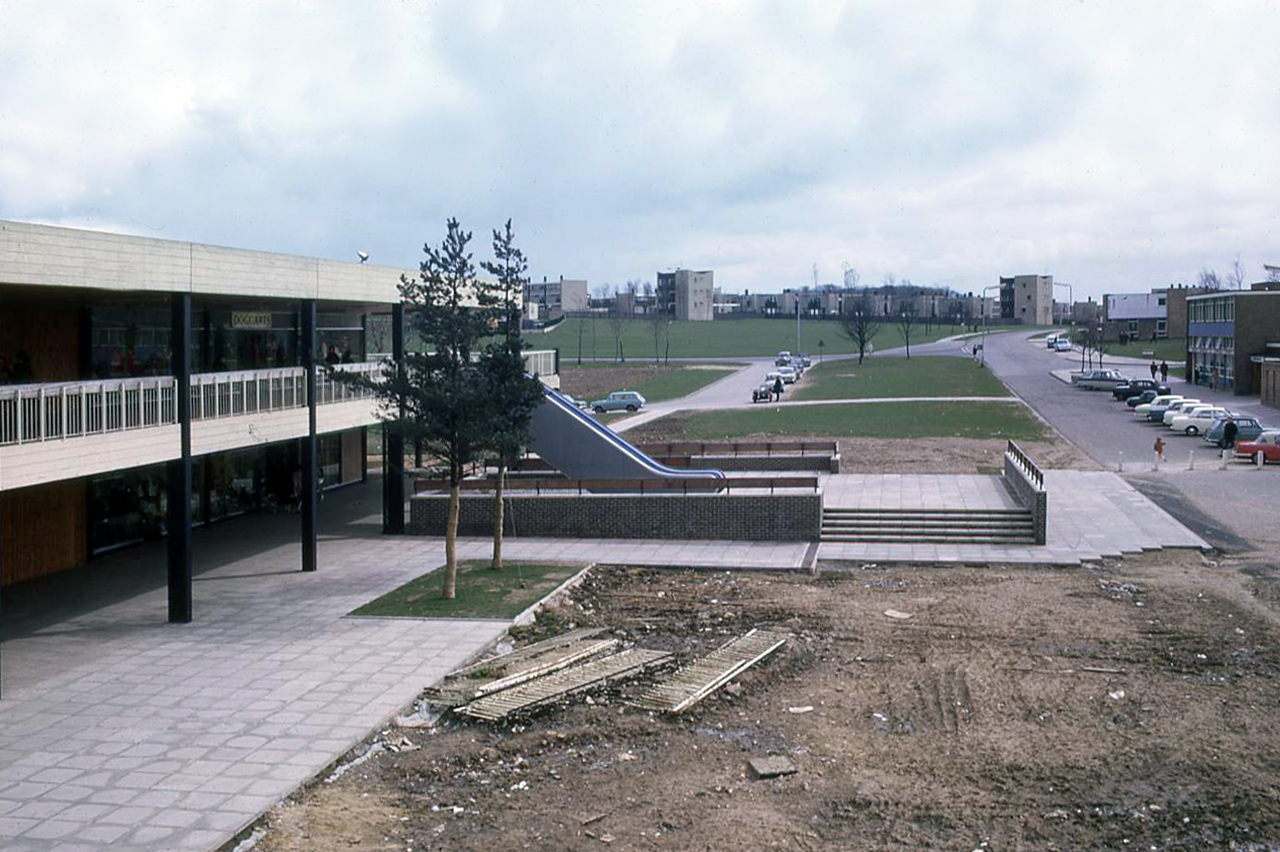
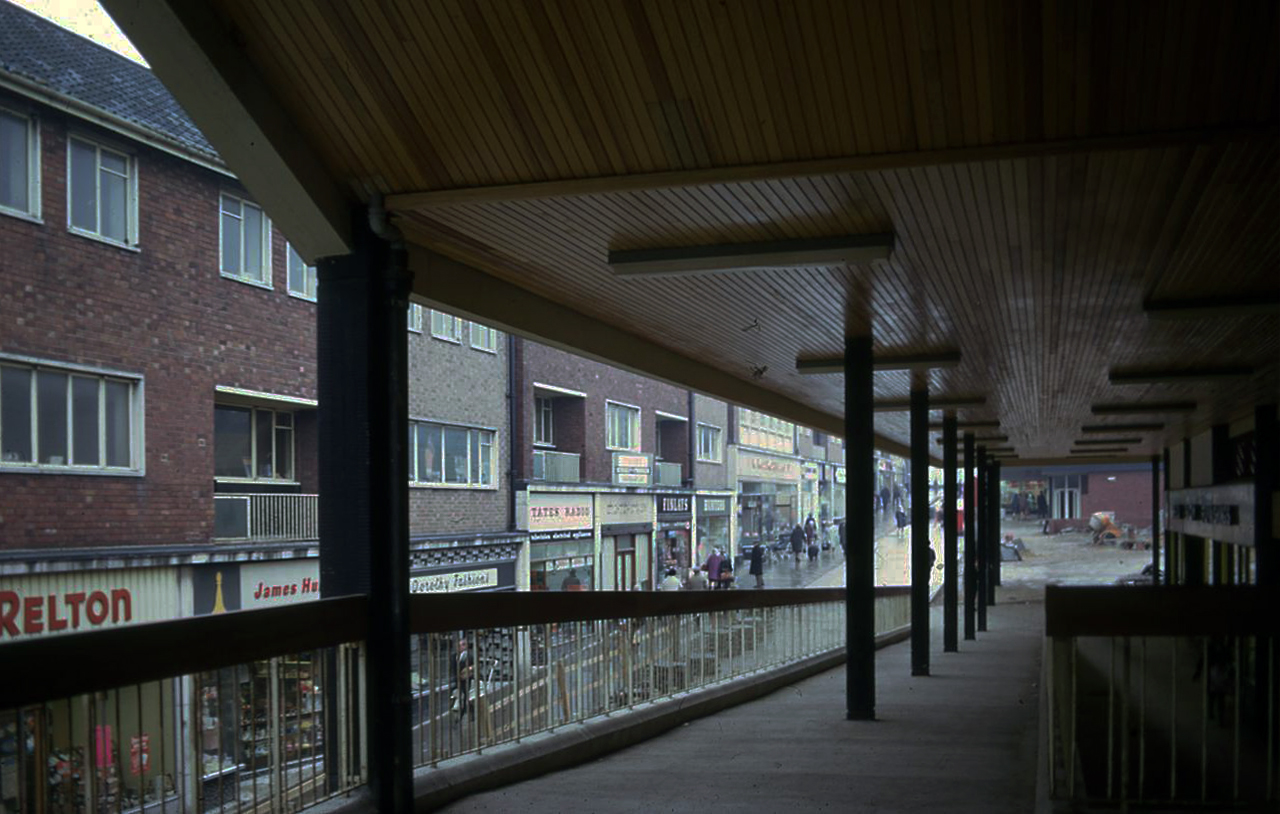
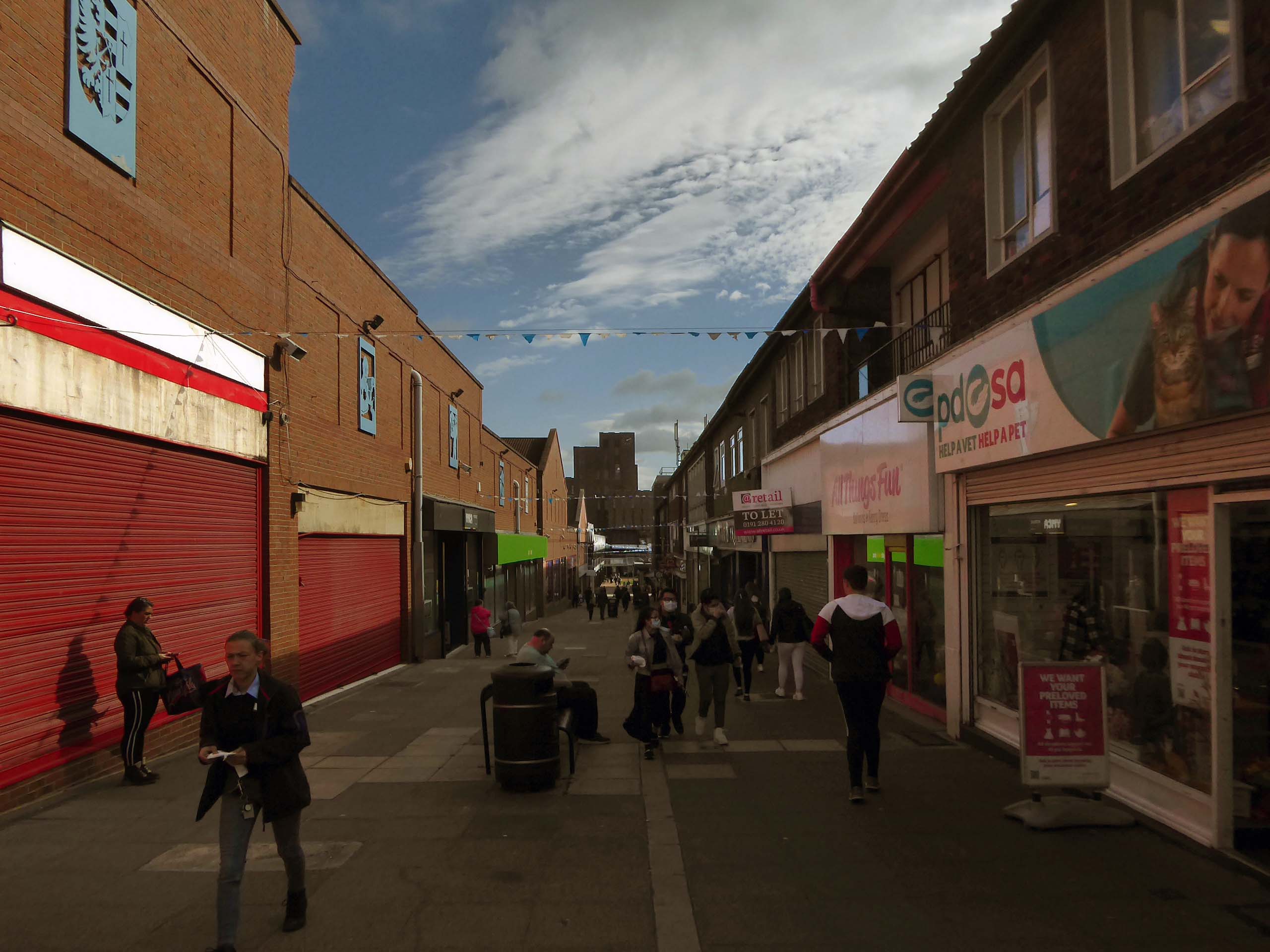
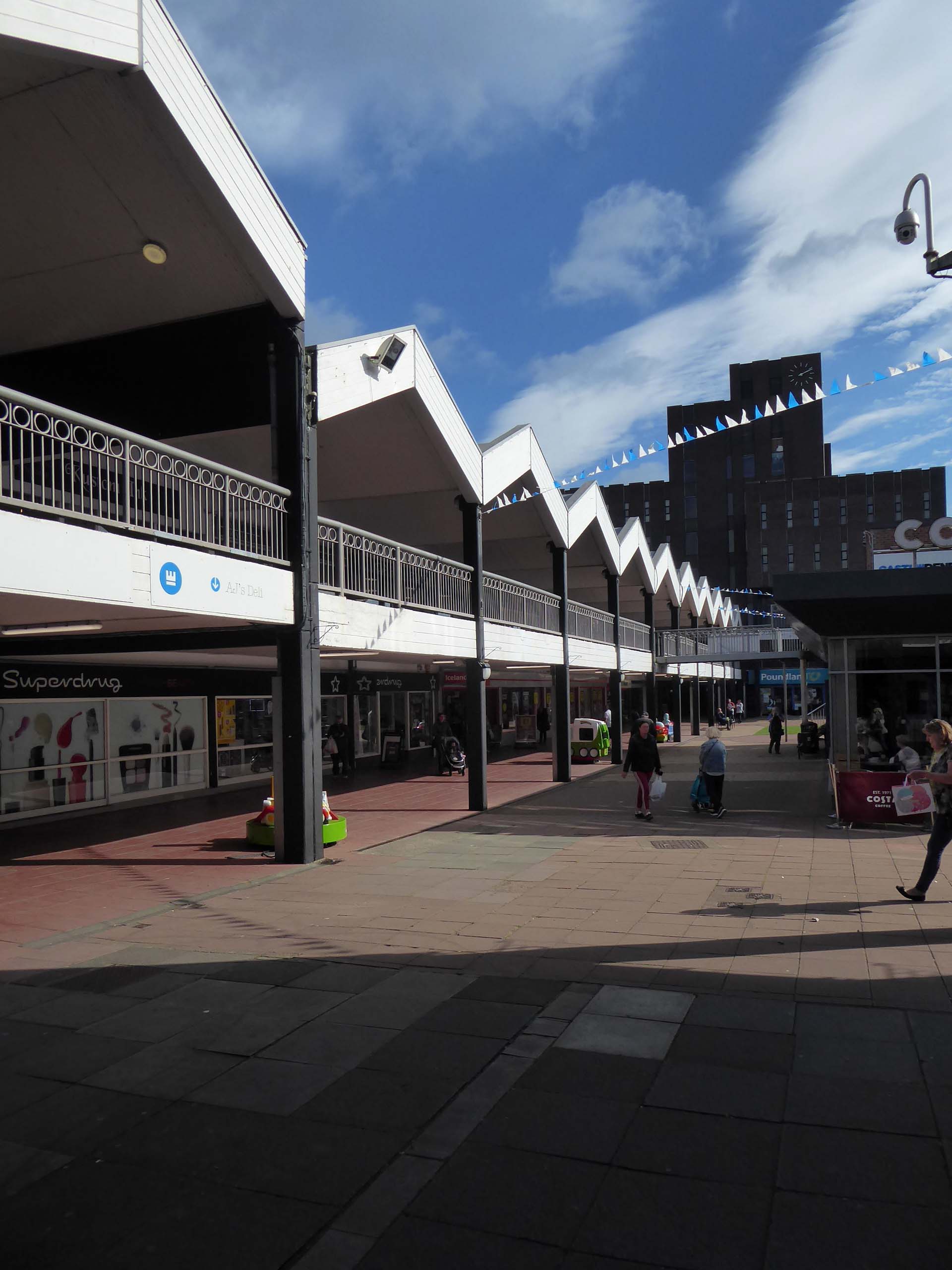
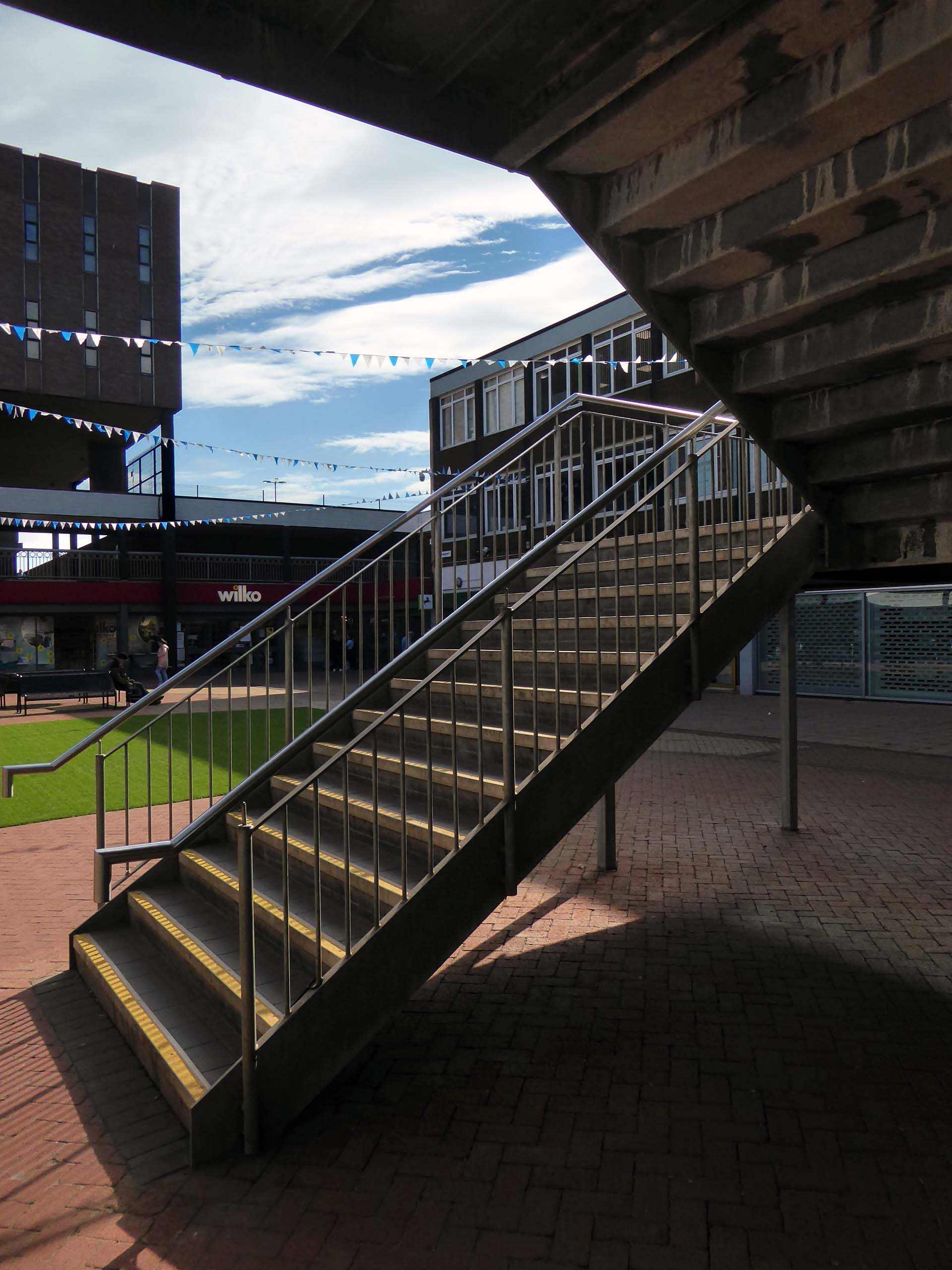
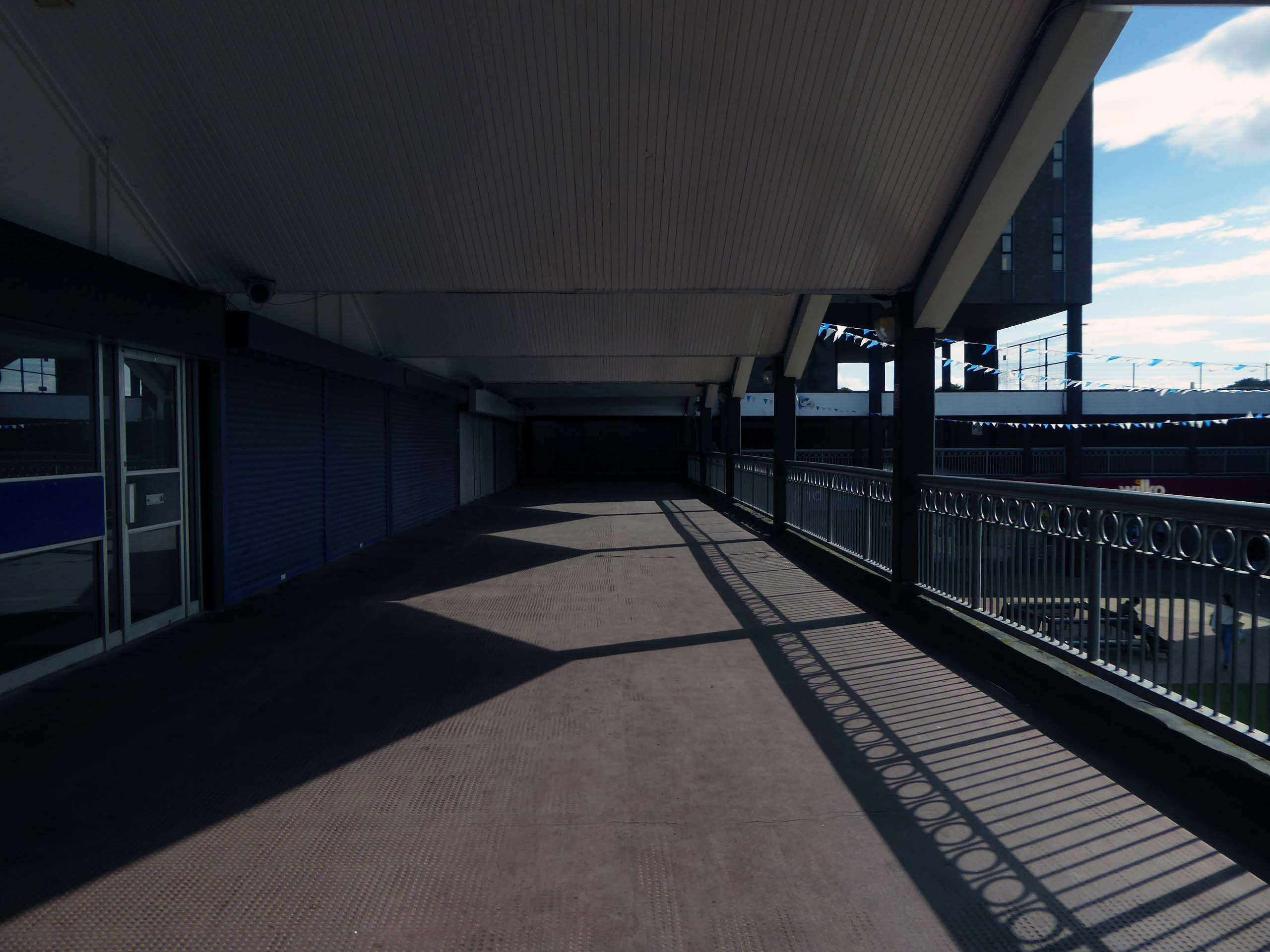
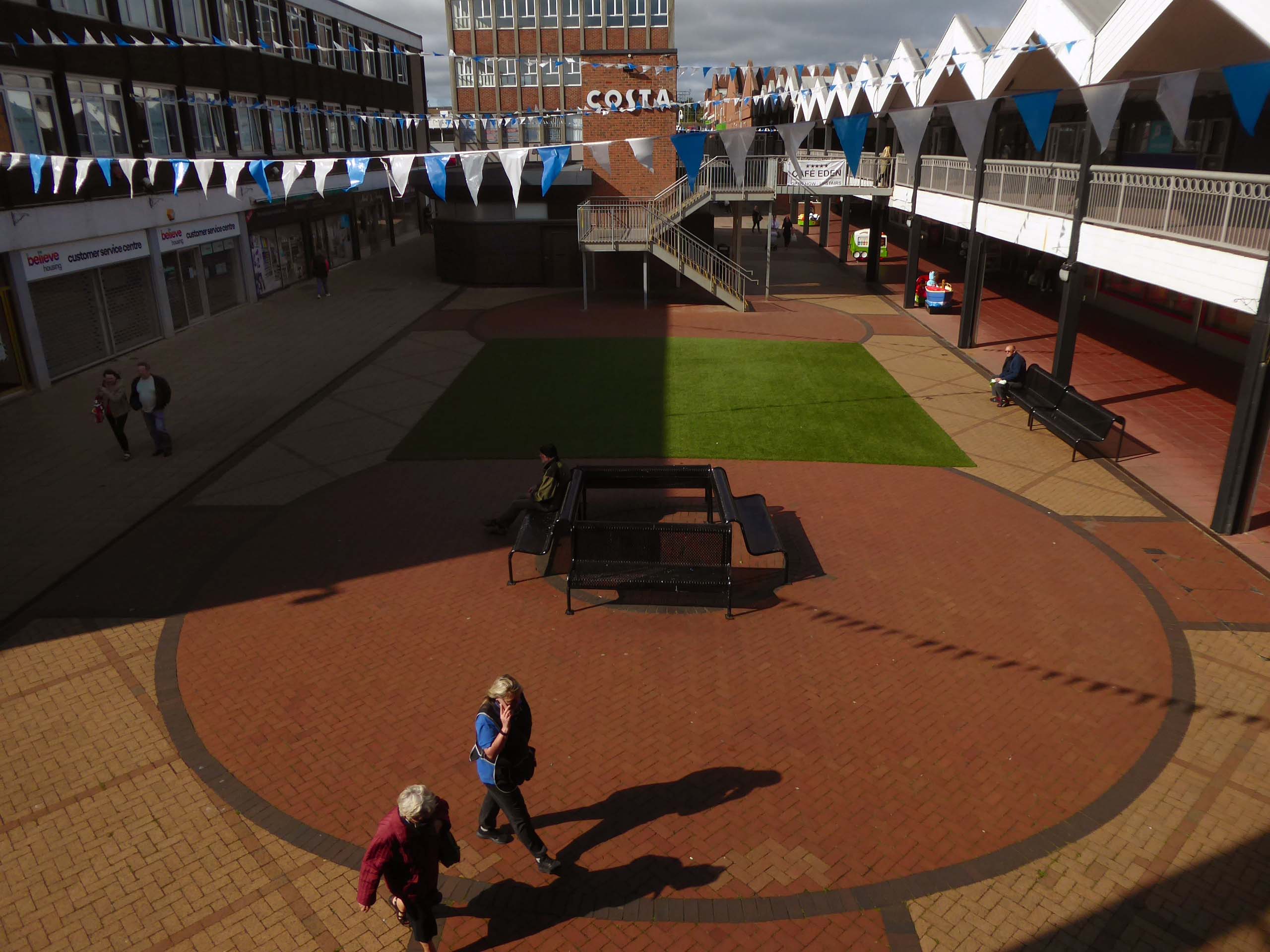
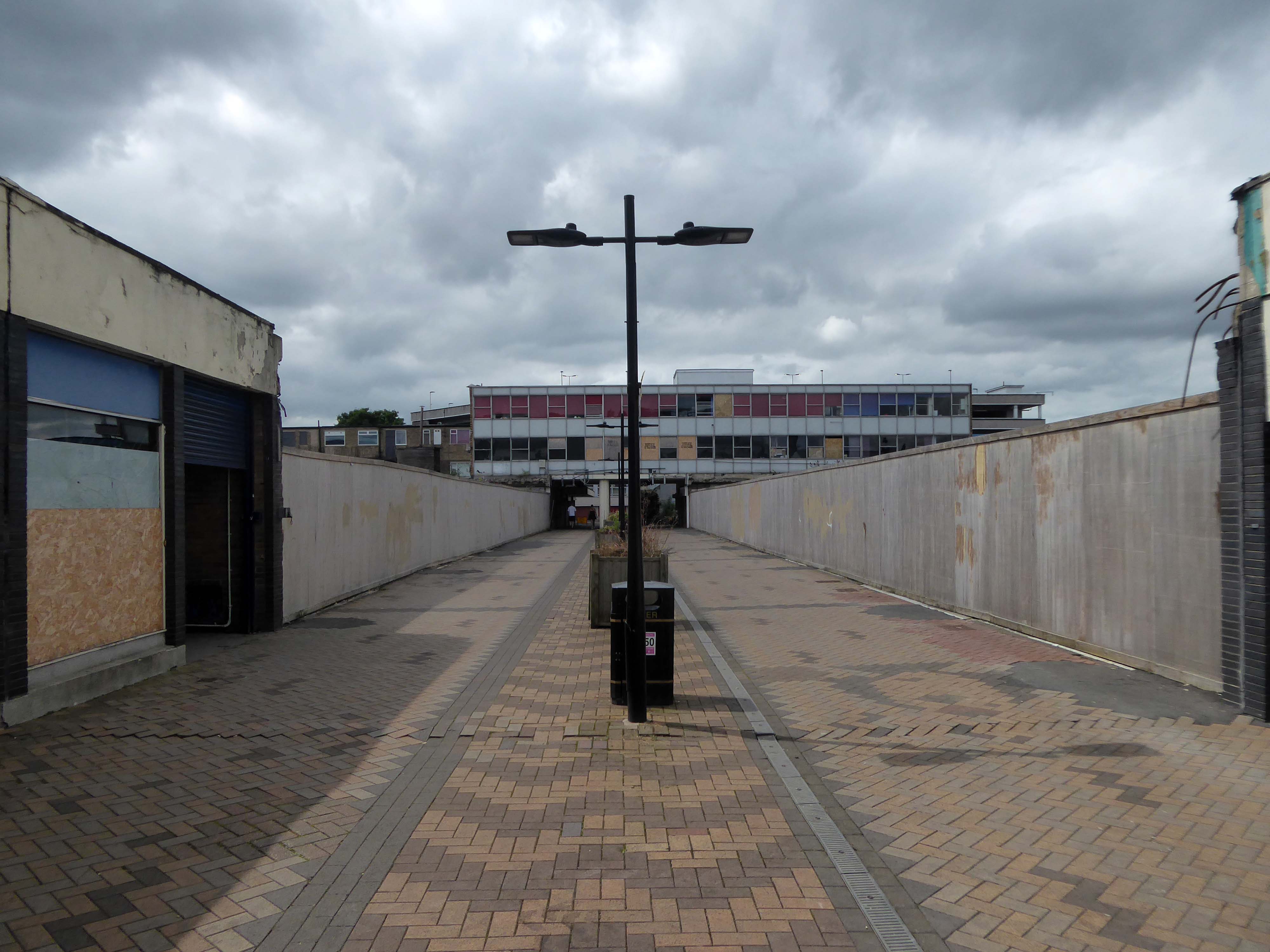
Plans for the new town centre started to be developed in 1960 by Chief Architect Roy Gazzard. The process would go through eight sets of revisions before they were finally approved in 1968. Yoden Way was then pedestrianised, and the small row of shops built in 1950’s was incorporated into the new shopping precinct, forming the north western end of Yoden Way. Like many other town centres across Britain undergoing modernisation, the high-street was split onto two levels, with ramps providing access to raised walkways.
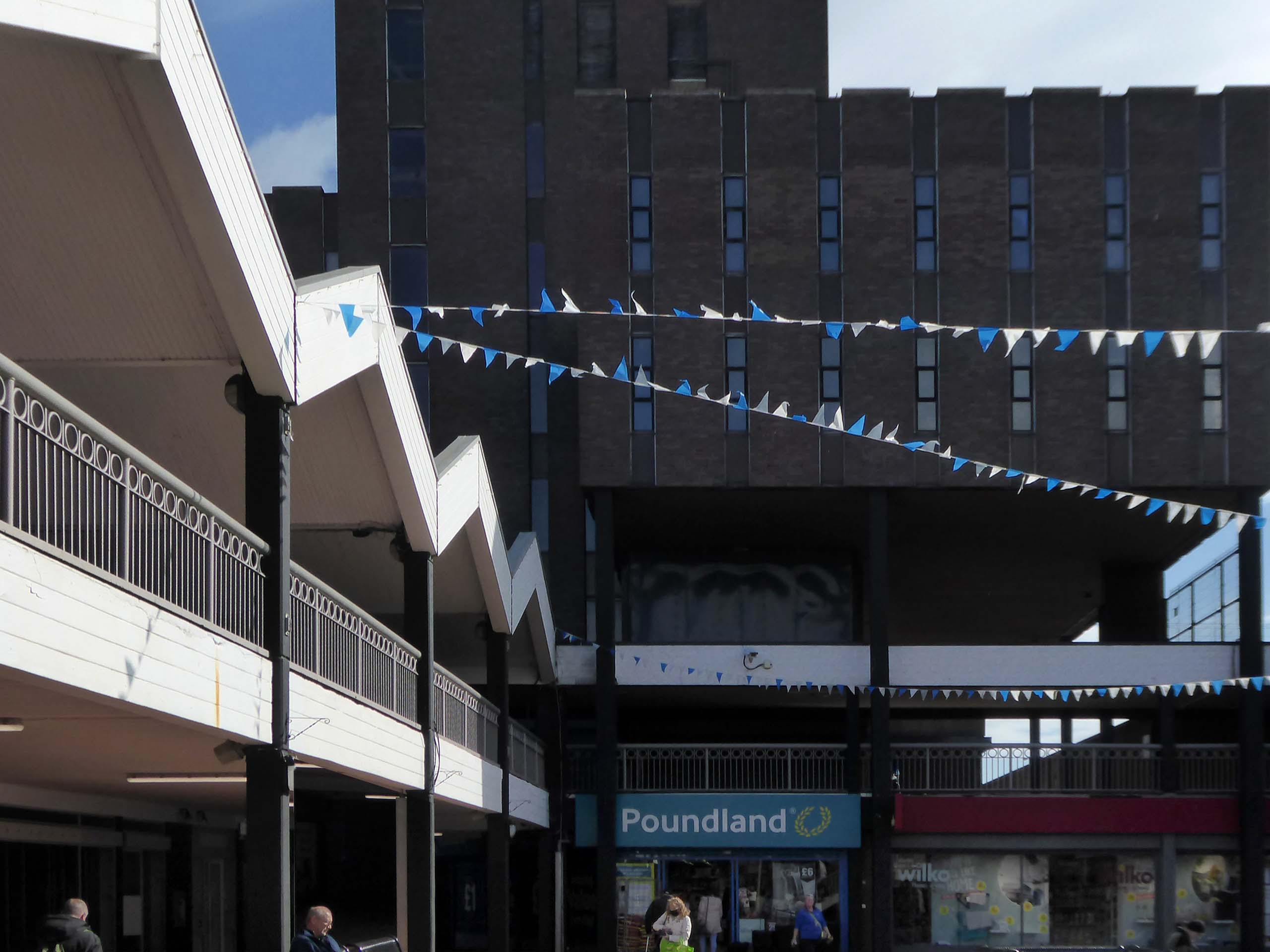
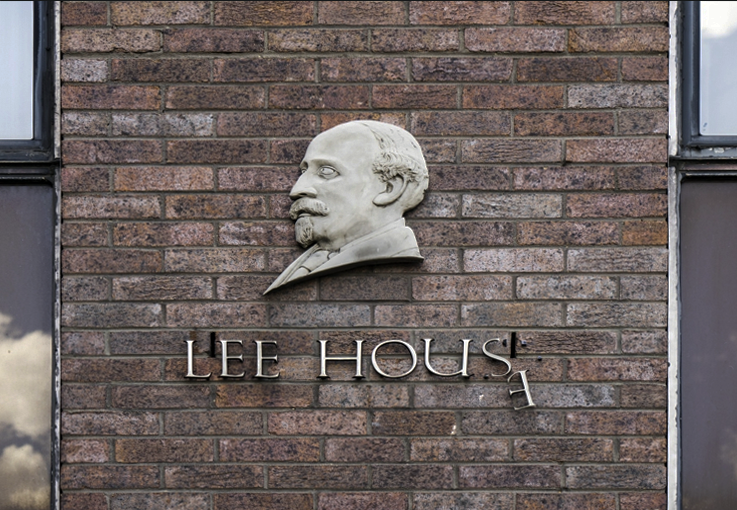
The construction of Lee House – named after Peter Lee, started in 1974. Once completed, the Development Corporation moved its Headquarters from Old Shotton Hall to Lee House in 1976, occupying the building until it was sold in 1984 and remaining staff relocated to Newton Aycliffe.
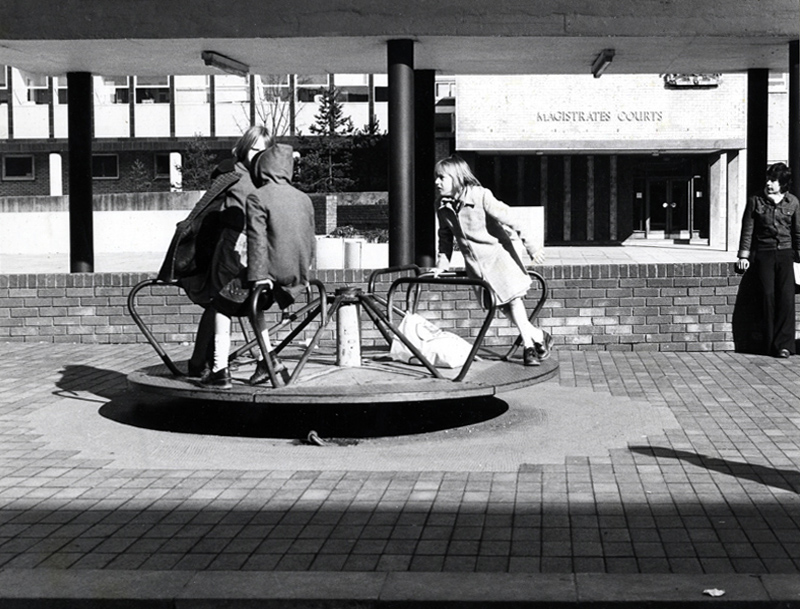
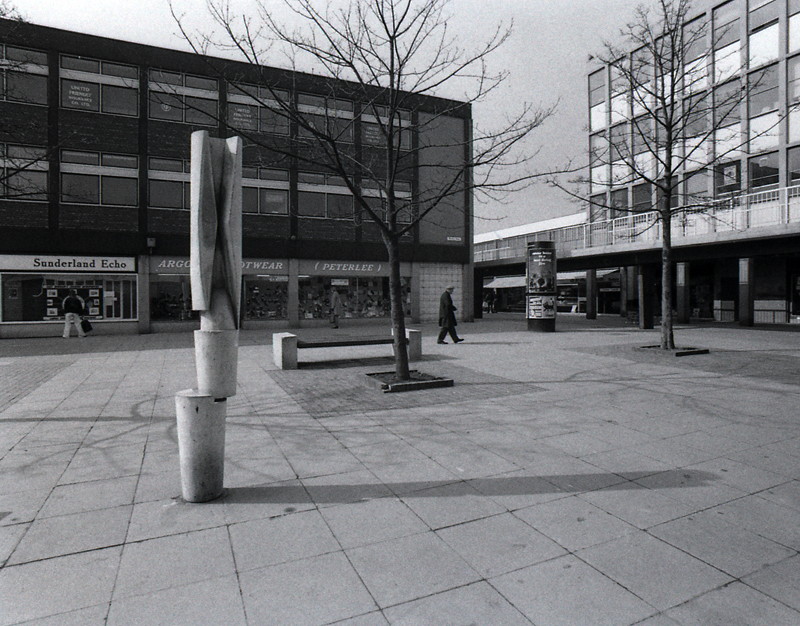
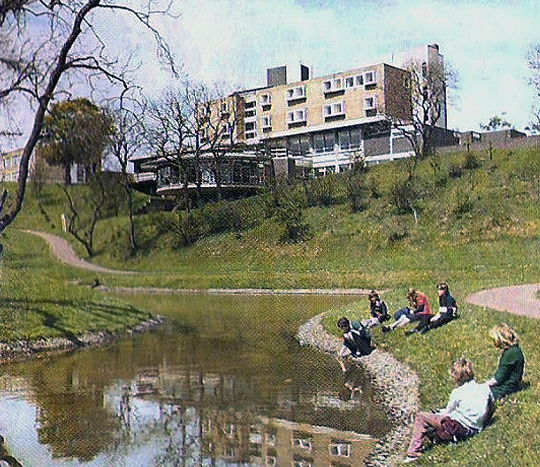
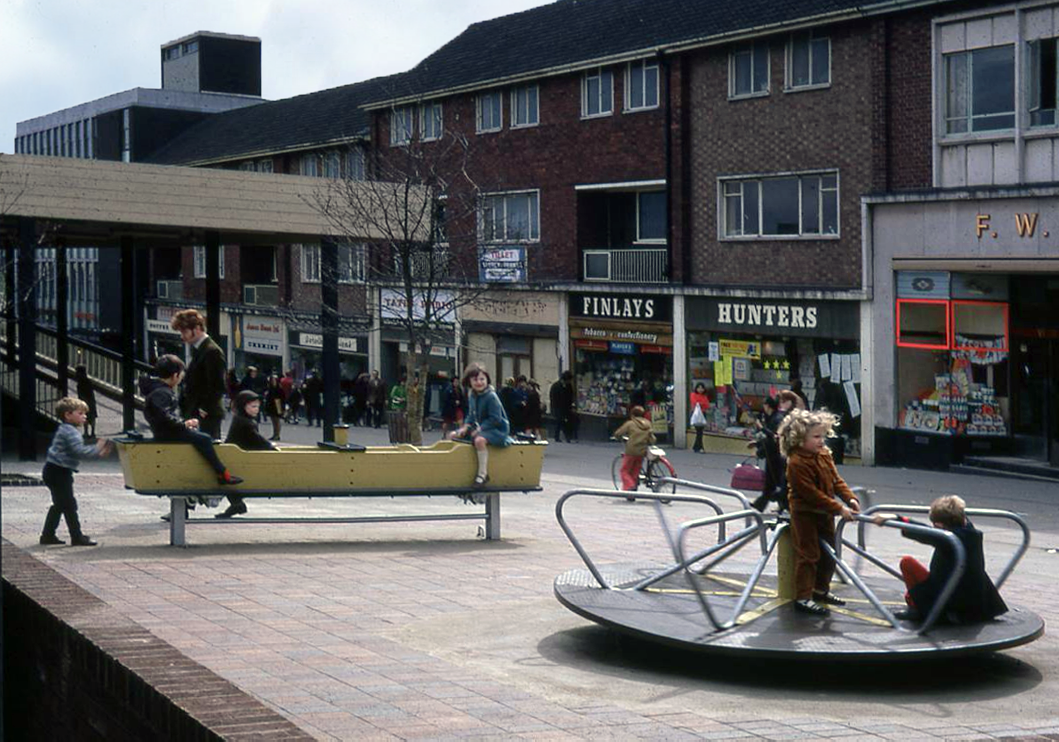
Enhancing the built environment, Peterlee Town Centre was furnished with play equipment, an ornamental pond, open air escalators, and a sculpture by John Pasmore – son of Victor.
These features were later removed after the town centre was sold to Teesdale Investments – Peterlee Limited in 1985.
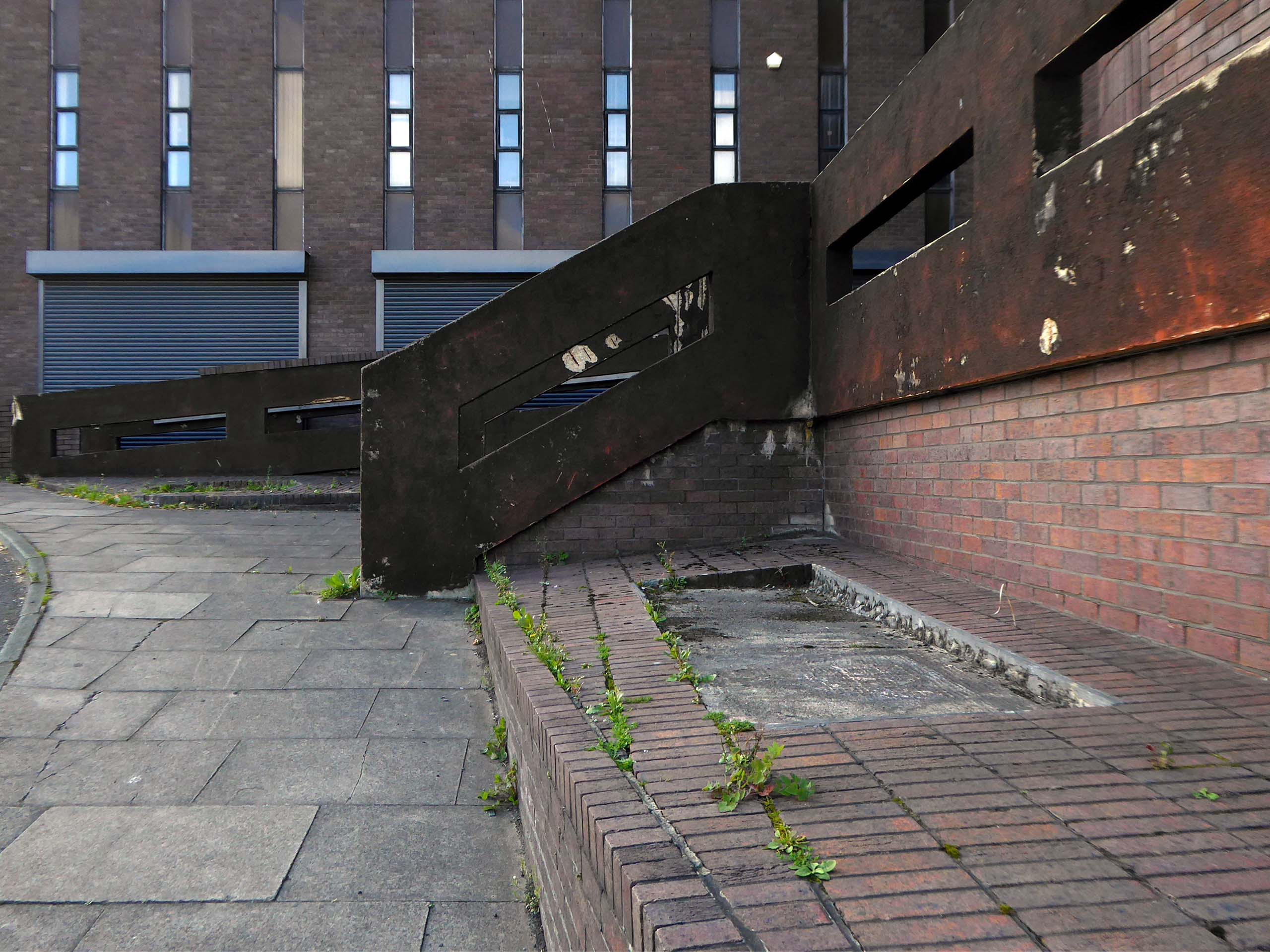
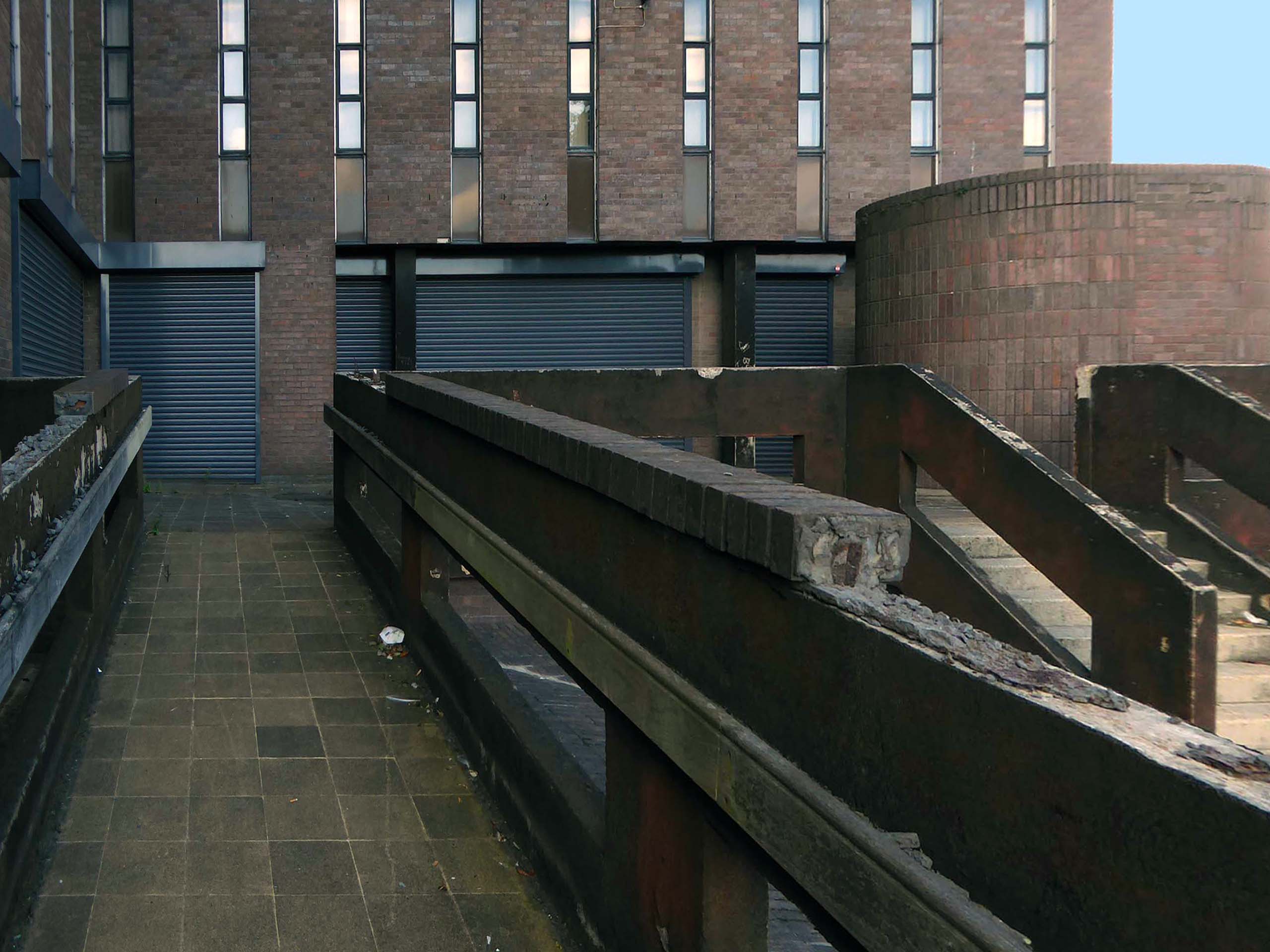
Access ramp at the bottom end of Yoden Way, prior to the construction of Lee House in 1973.
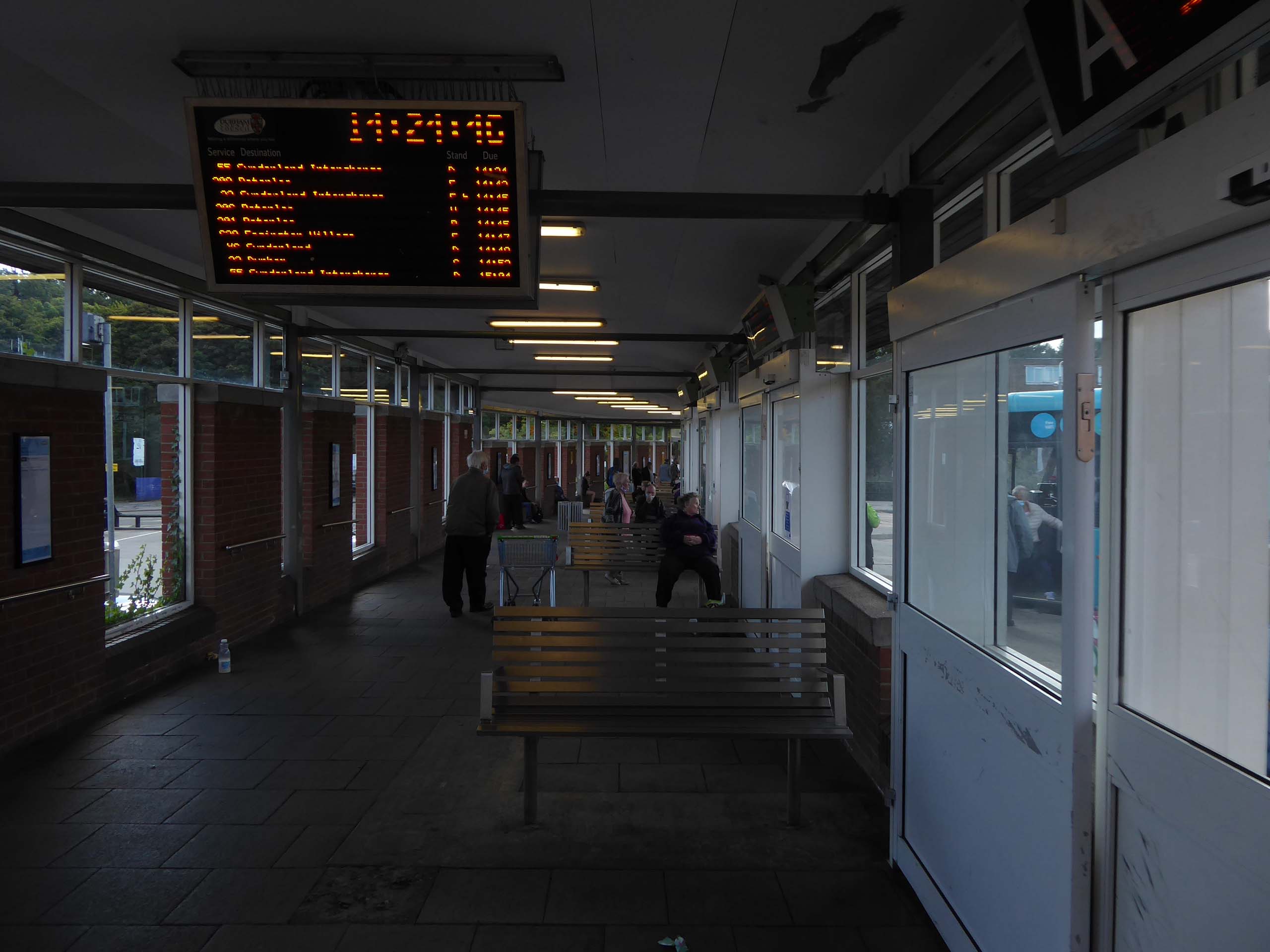
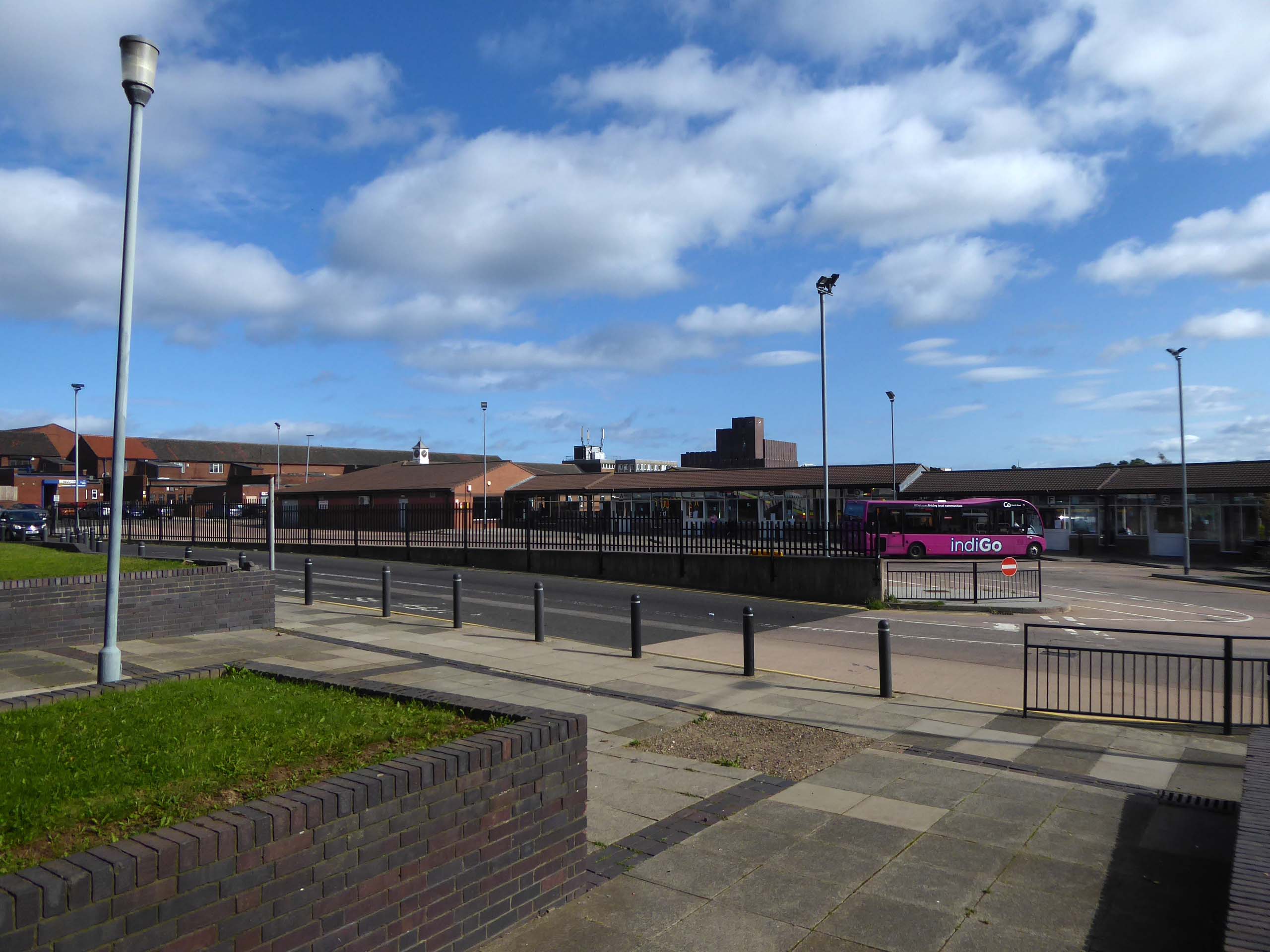
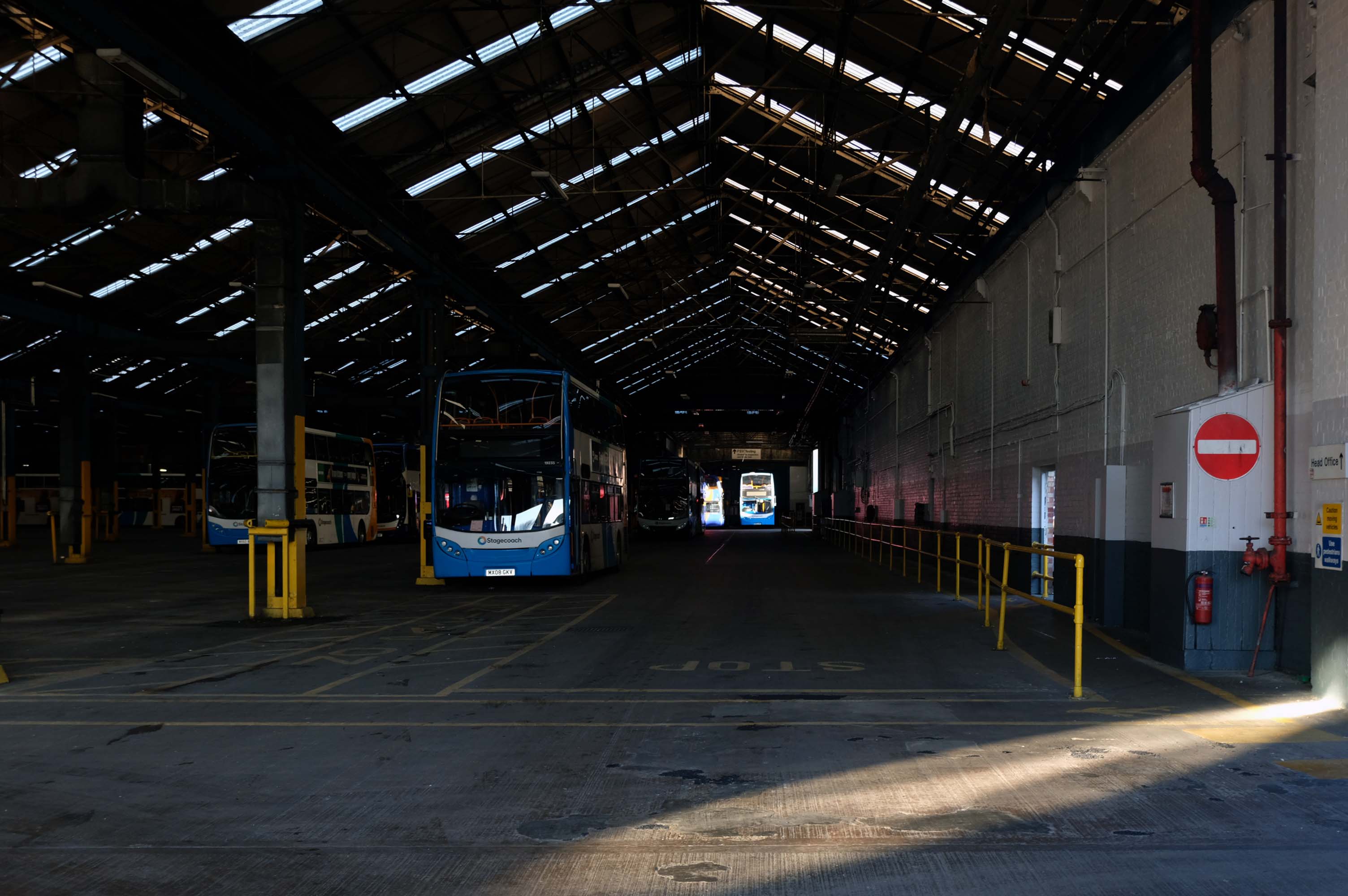
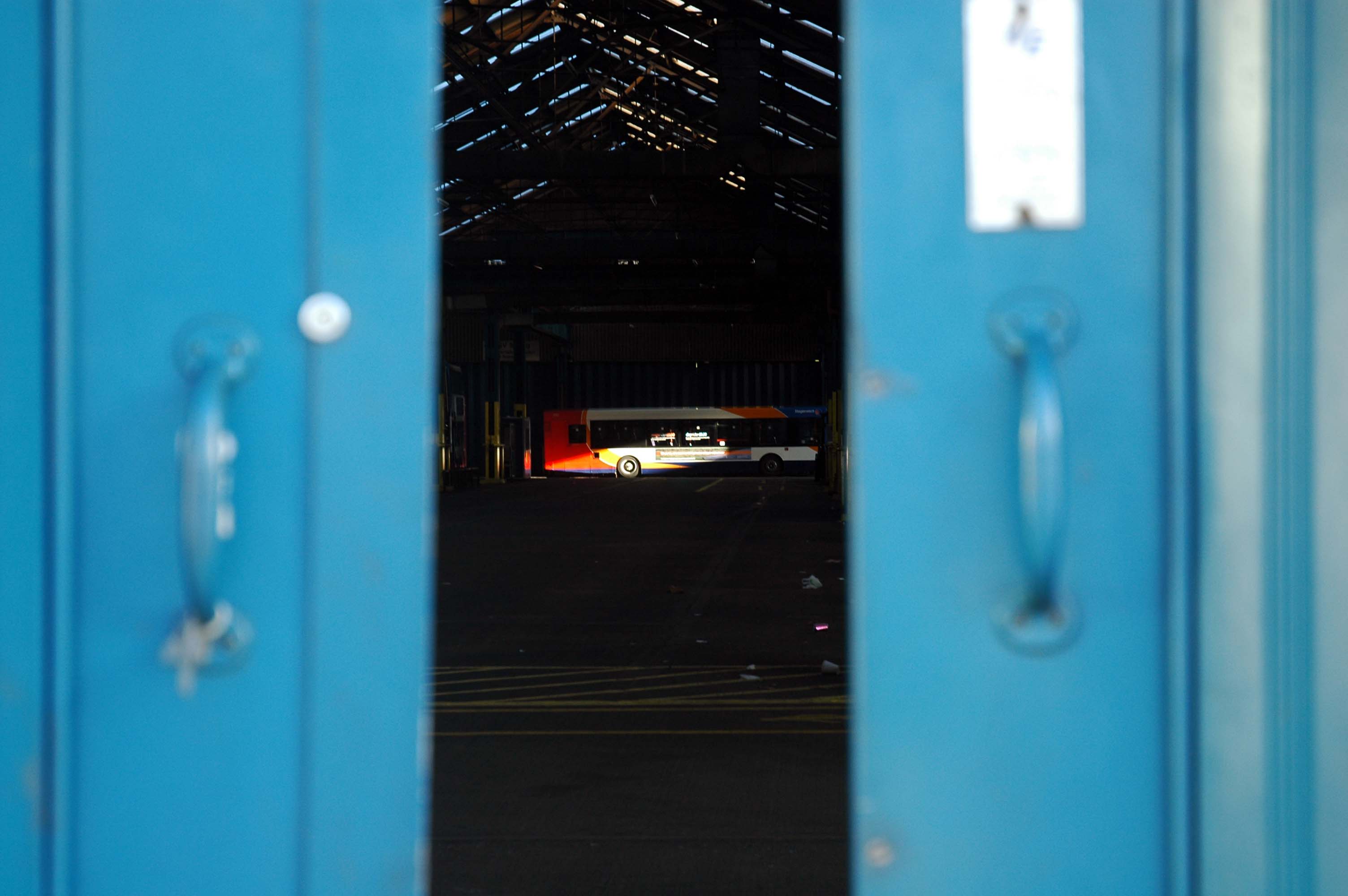
It’s 2021 and I arrive at the Bus Station.
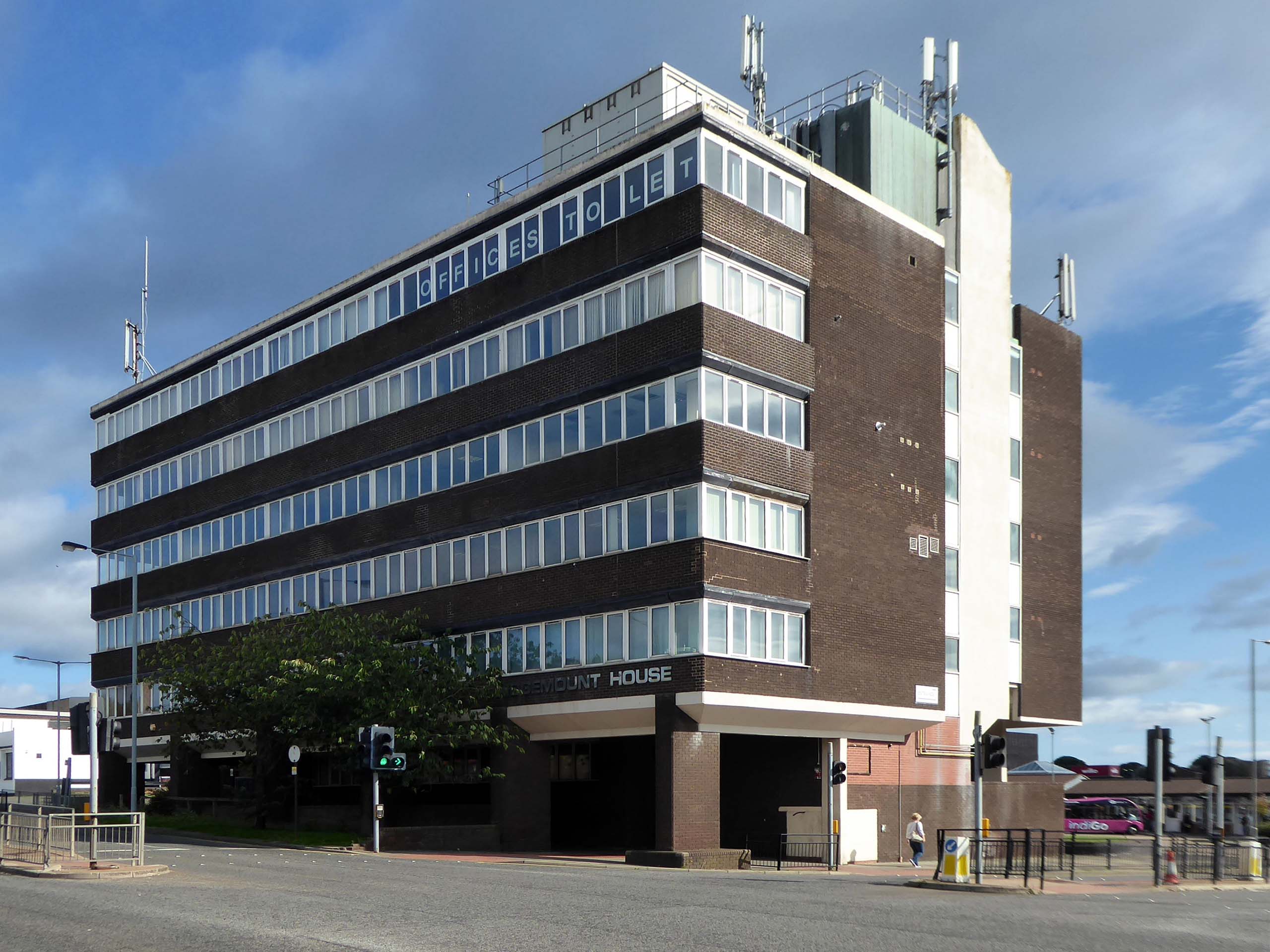
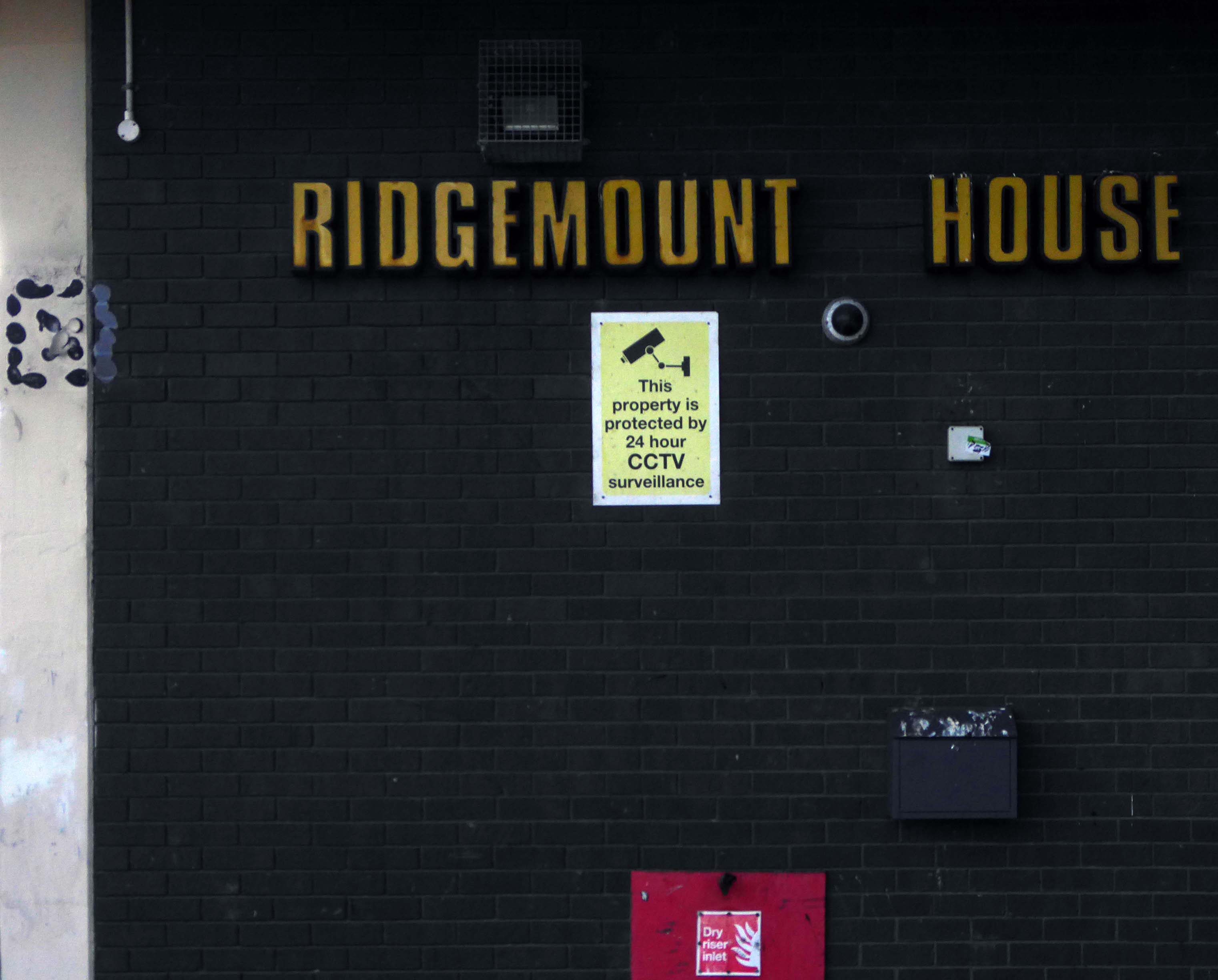
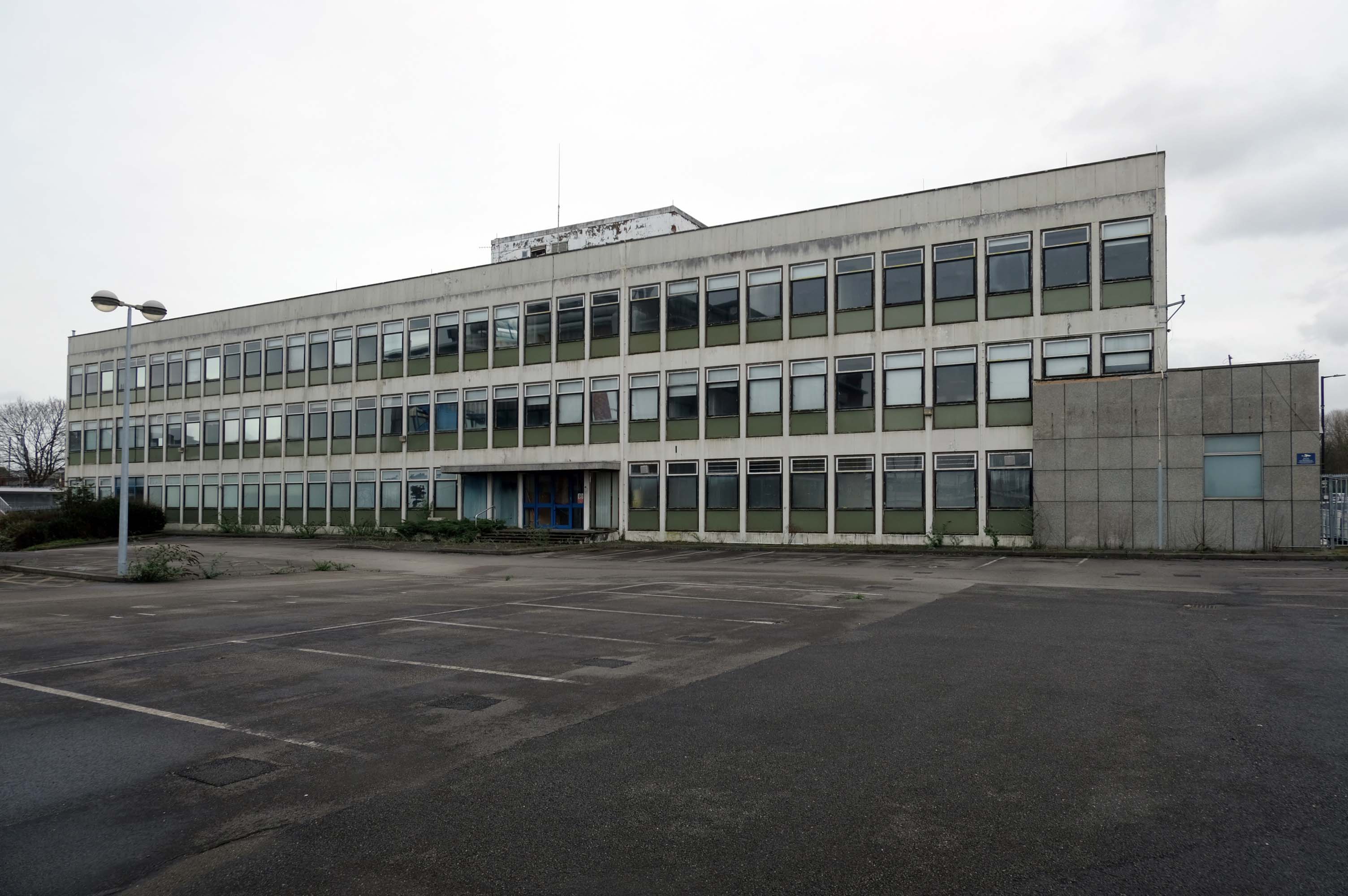
Immediately adjacent is Ridgemount House. – once home to the Job Centre.
Firefighters were called to the disused Ridgemount House on Bede Way in Peterlee on Wednesday August 16th 2023 at about 8.20pm after reports of a blaze.
Crews found a fire had broken out in the first floor of the building, which was found to be the home of thousands of pounds worth of cannabis plants back in 2020, after a man converted two floors for use as a drug farm.
Tarlochan Singh, owner of Ridgemount House, has been prosecuted following the discovery of several serious fire safety breaches at the property.
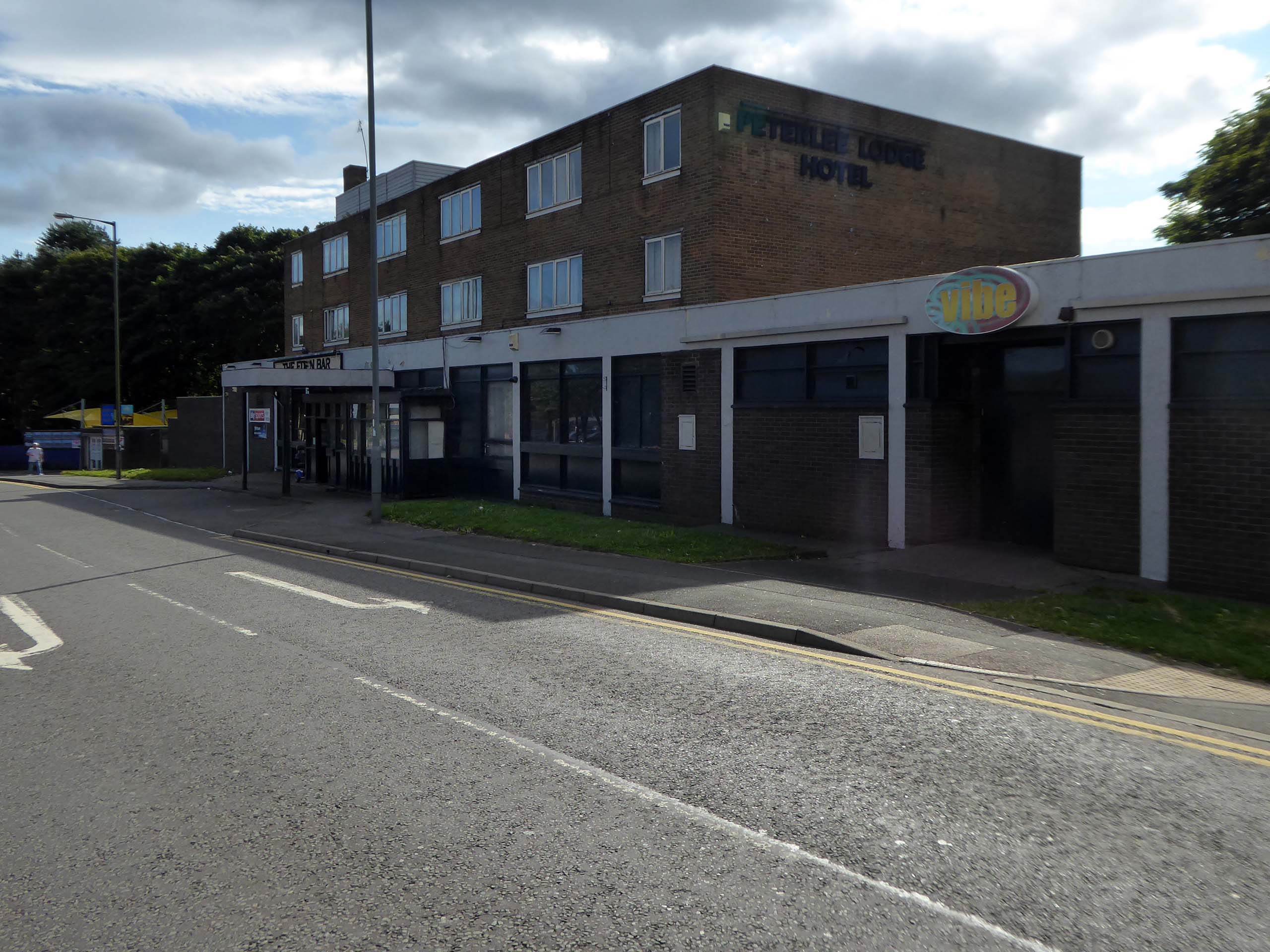
Readers have voted Peterlee nightspot Vibe as the ‘most tragic hometown club’ in the North East
Formerly known as The Dance Factory, Vibe, in Peterlee town centre, is a place famous for it’s almost impossible to get off ‘tramp stamp’ and next door neighbour The Lodge, where many locals will go for pre-drinks and some karaoke before heading to the club.
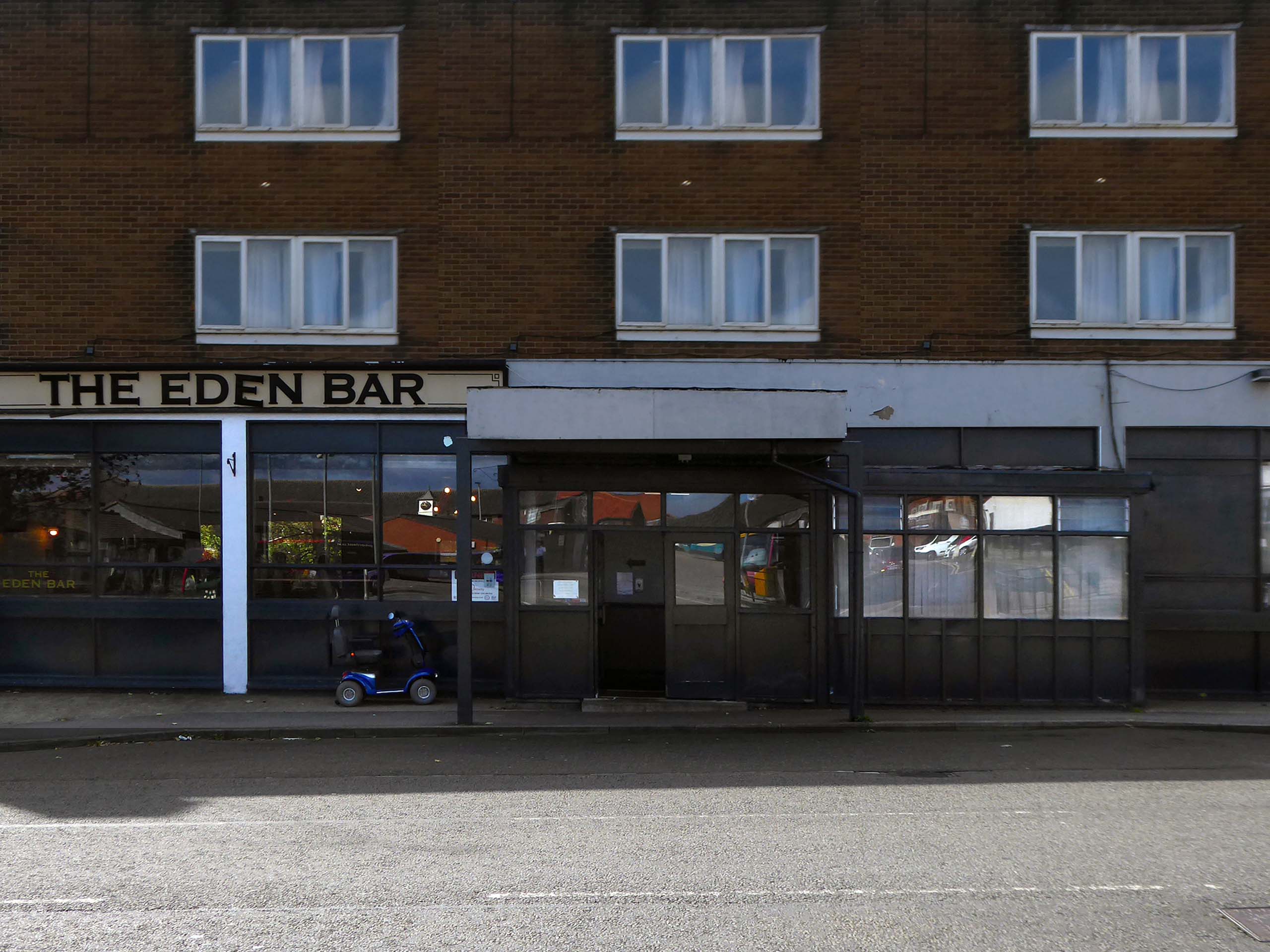
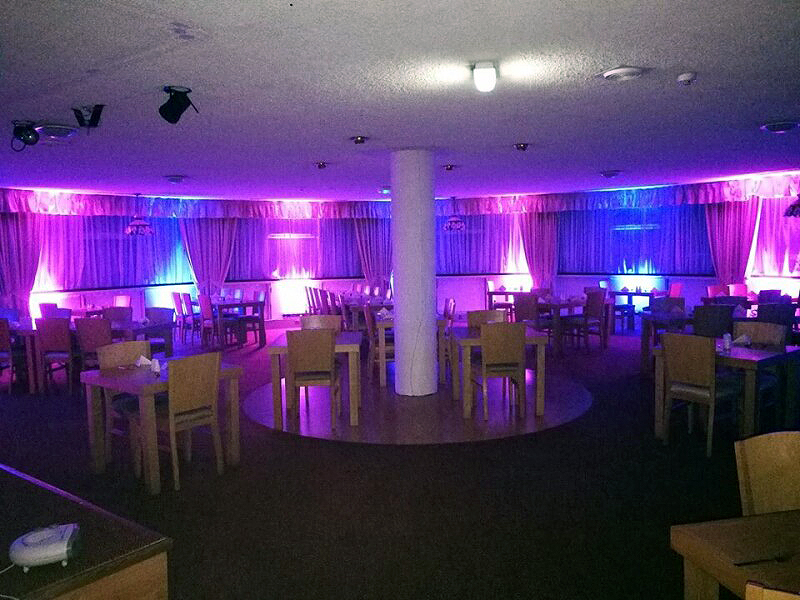
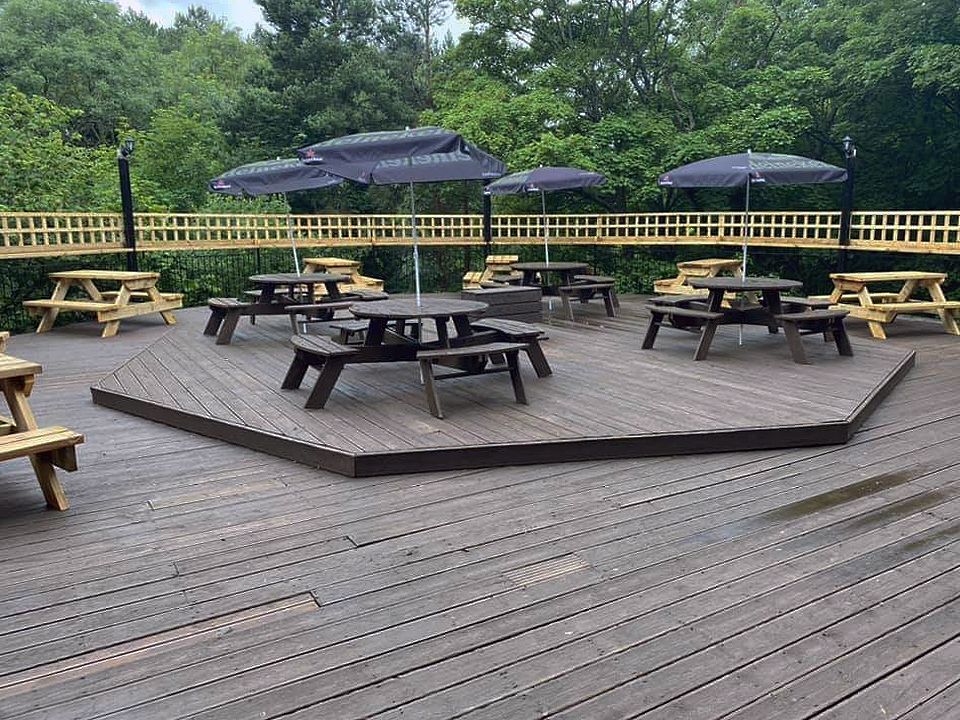
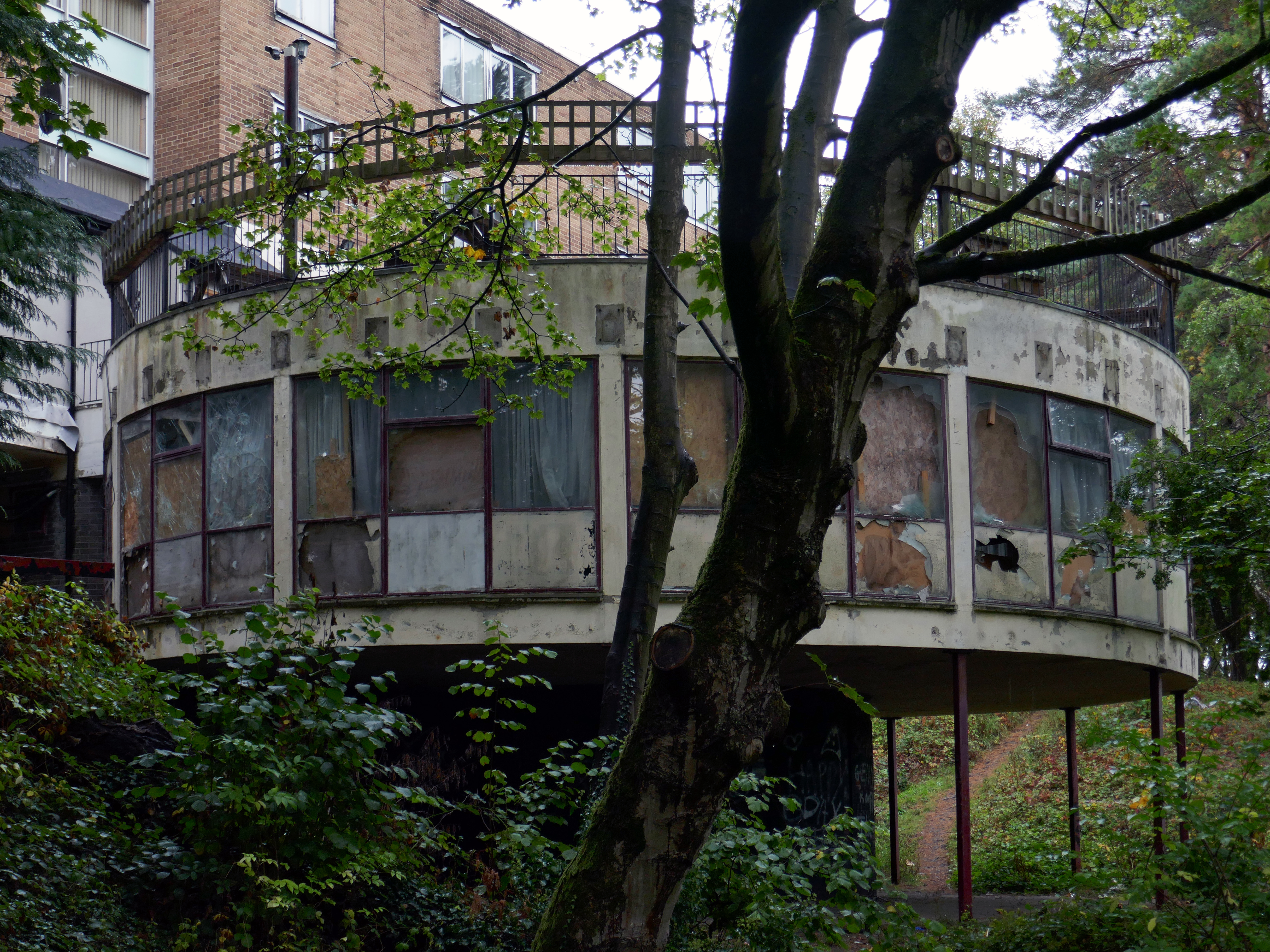
The bar which once boasted a bijou rotunda with an exclusive upper terrace, has now closed.
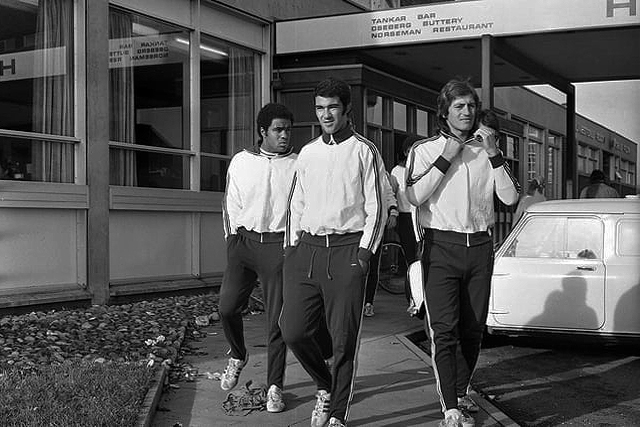
Back in 1973 the hotel was badged as the Norseman.
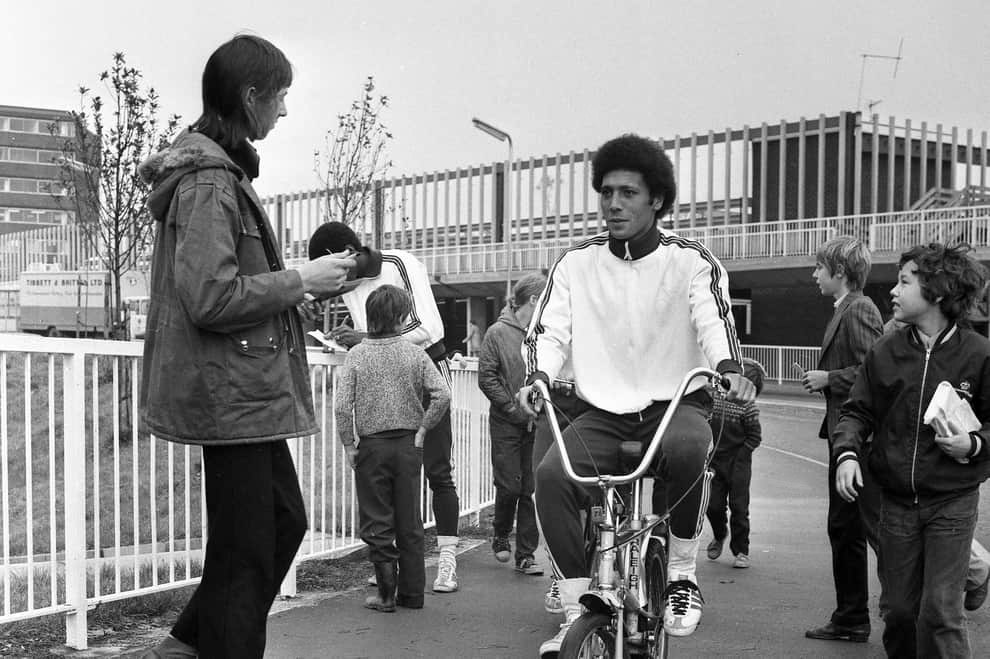
The giants of Sporting Lisbon faced Sunderland in the European Cup Winners Cup and they spent the build-up to the tie in the Norseman Hotel. They met local children, took a walk in the dene, signed autographs and even tried riding a Chopper bike. The side lost 2-1 at Roker Park to a talented Sunderland team before overcoming the Black Cats 2-0 back in Portugal.
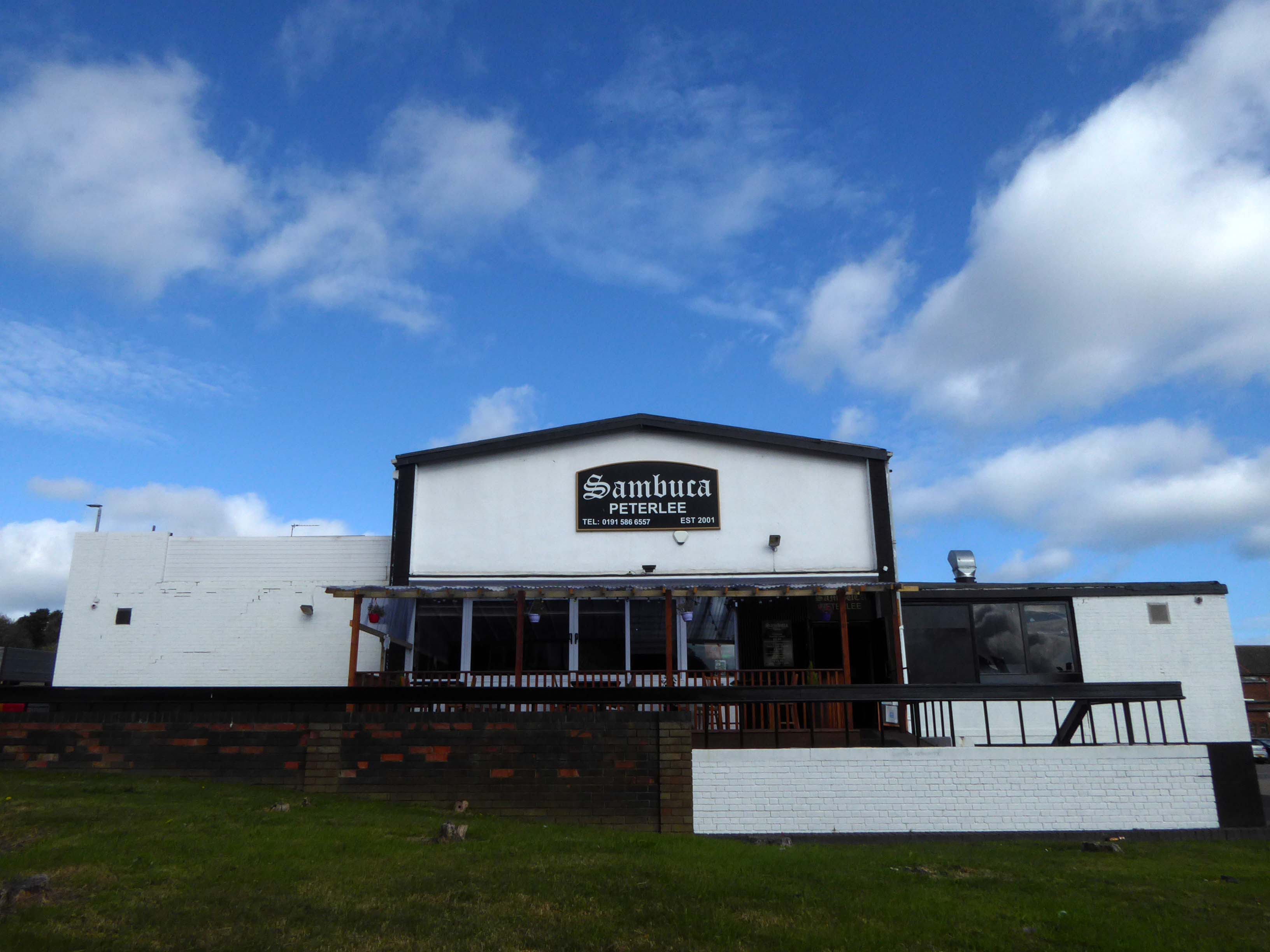
Back in 2021 Sambuca was the other town centre bar – badged with Olde English type.
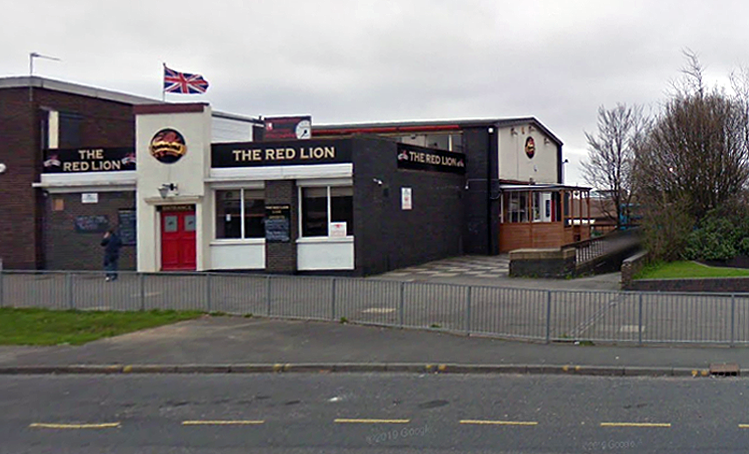
Formerly the Red Lion a Cameron’s estate pub.
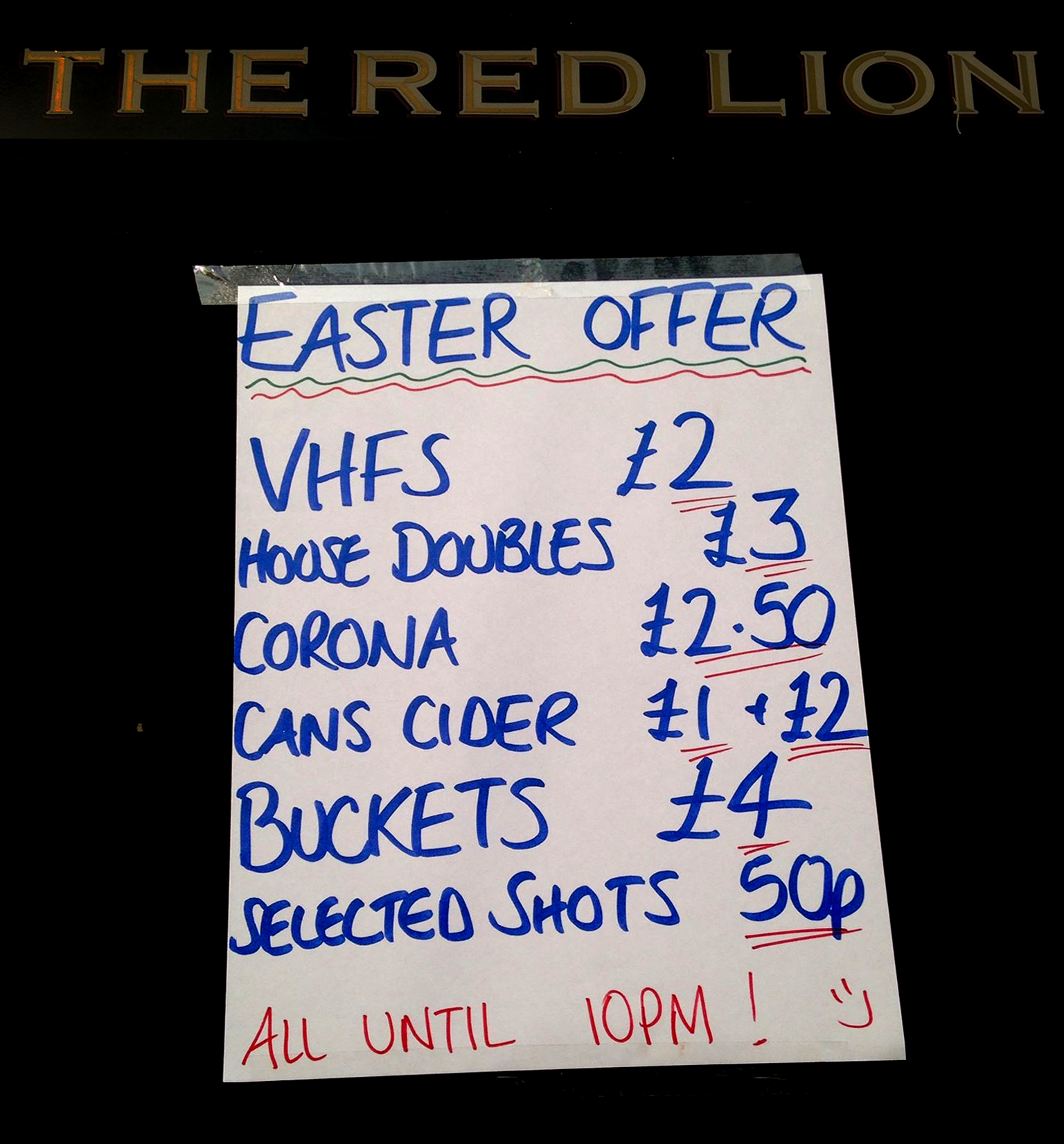
April 20th 2014 – Happy Easter everyone. We are open today all the way to 10pm – £2 bottles VHFs, house spirits only £3 double, buckets £4, Corona £2.50 selected shots 50p, cider cans £1 + £2 Karaoke – from now on everyone who sings gets a free shot Then we have the best in all your favourite dance ‘n’ house tunes to take you into Monday.
Onward to the Shopping Centre.
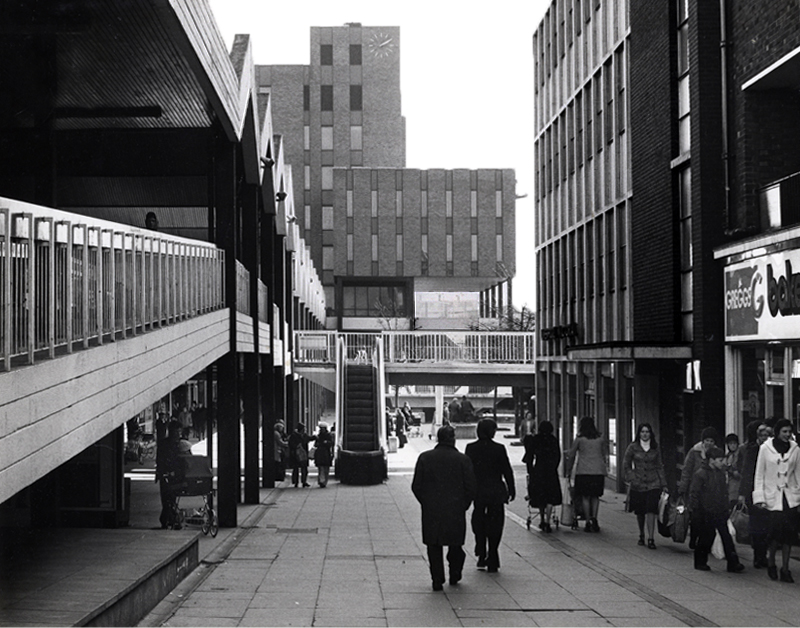
Yoden Way looking towards Lee House in 1977.
Photographs: JR James
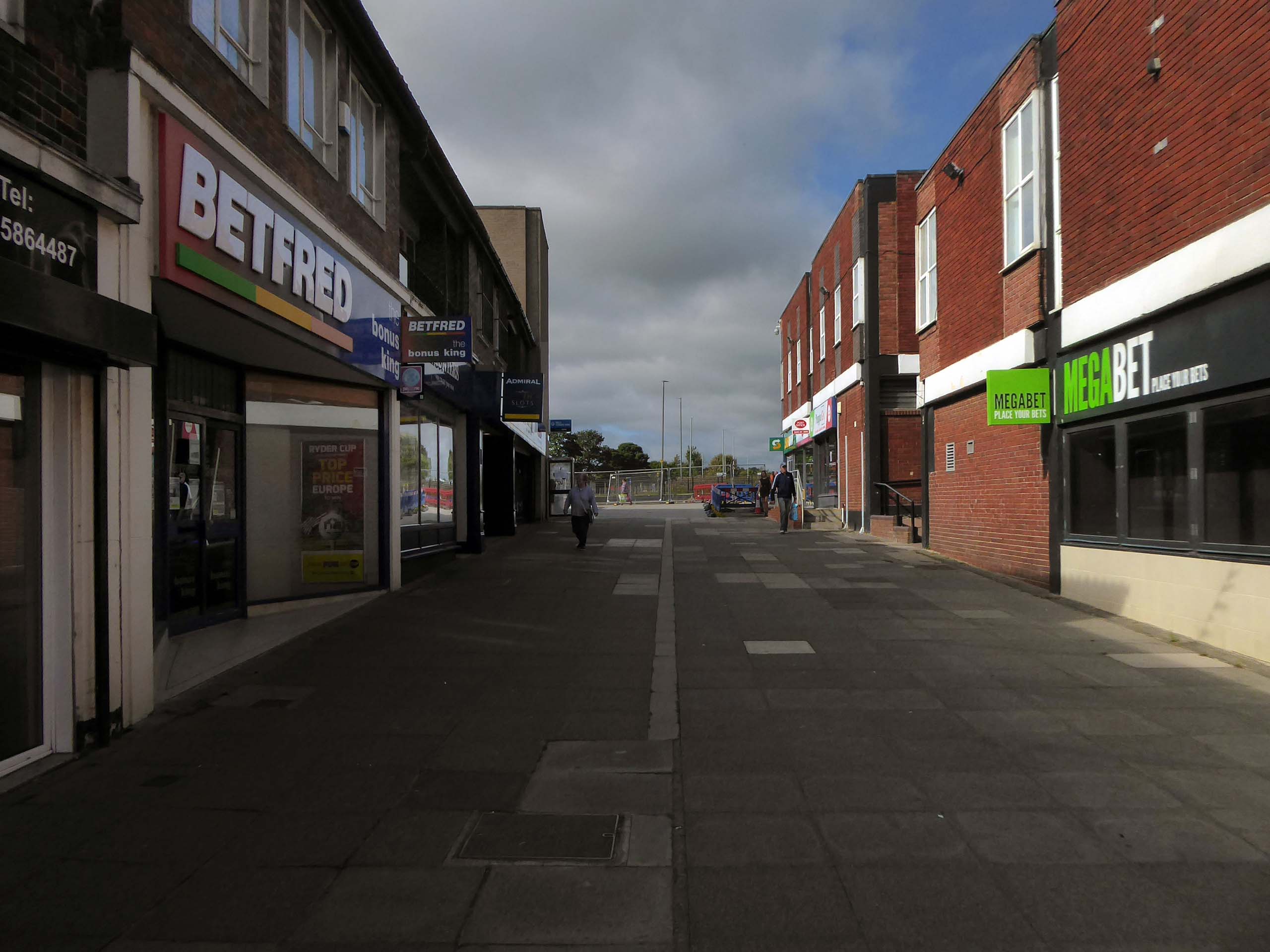
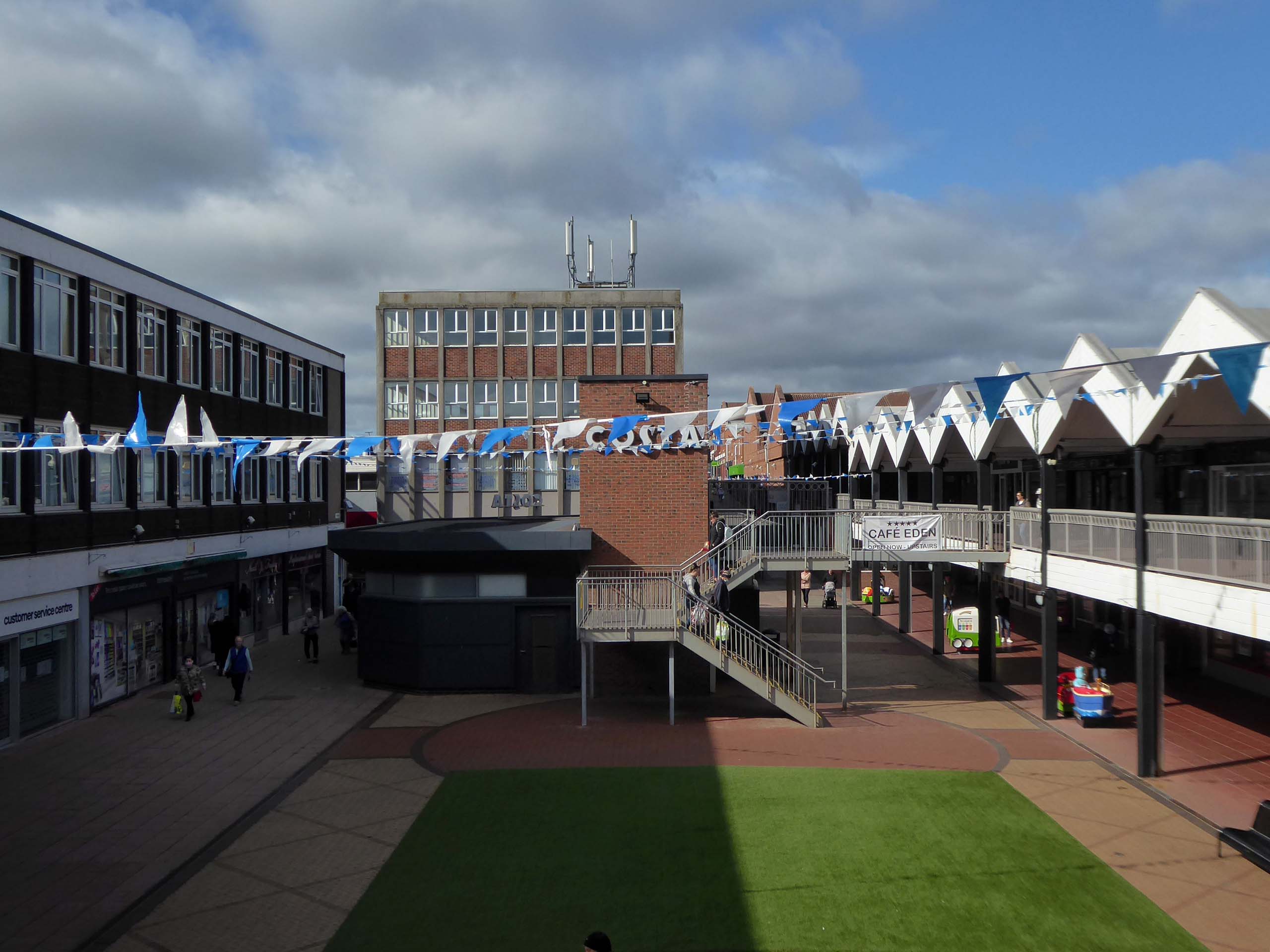
The 1950’s shops are still in situ.
Though some of the original architectural detailing and features are no more.
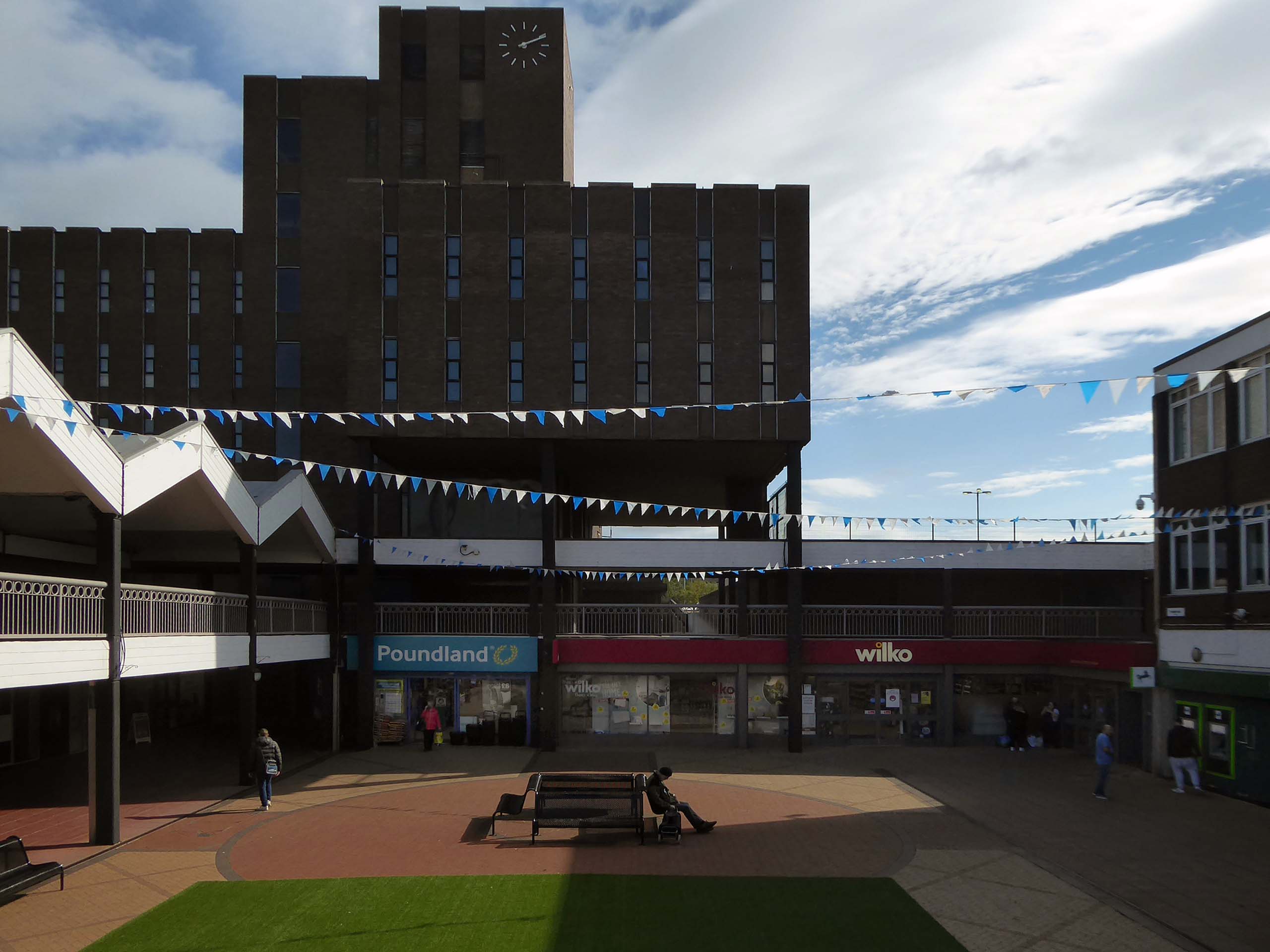
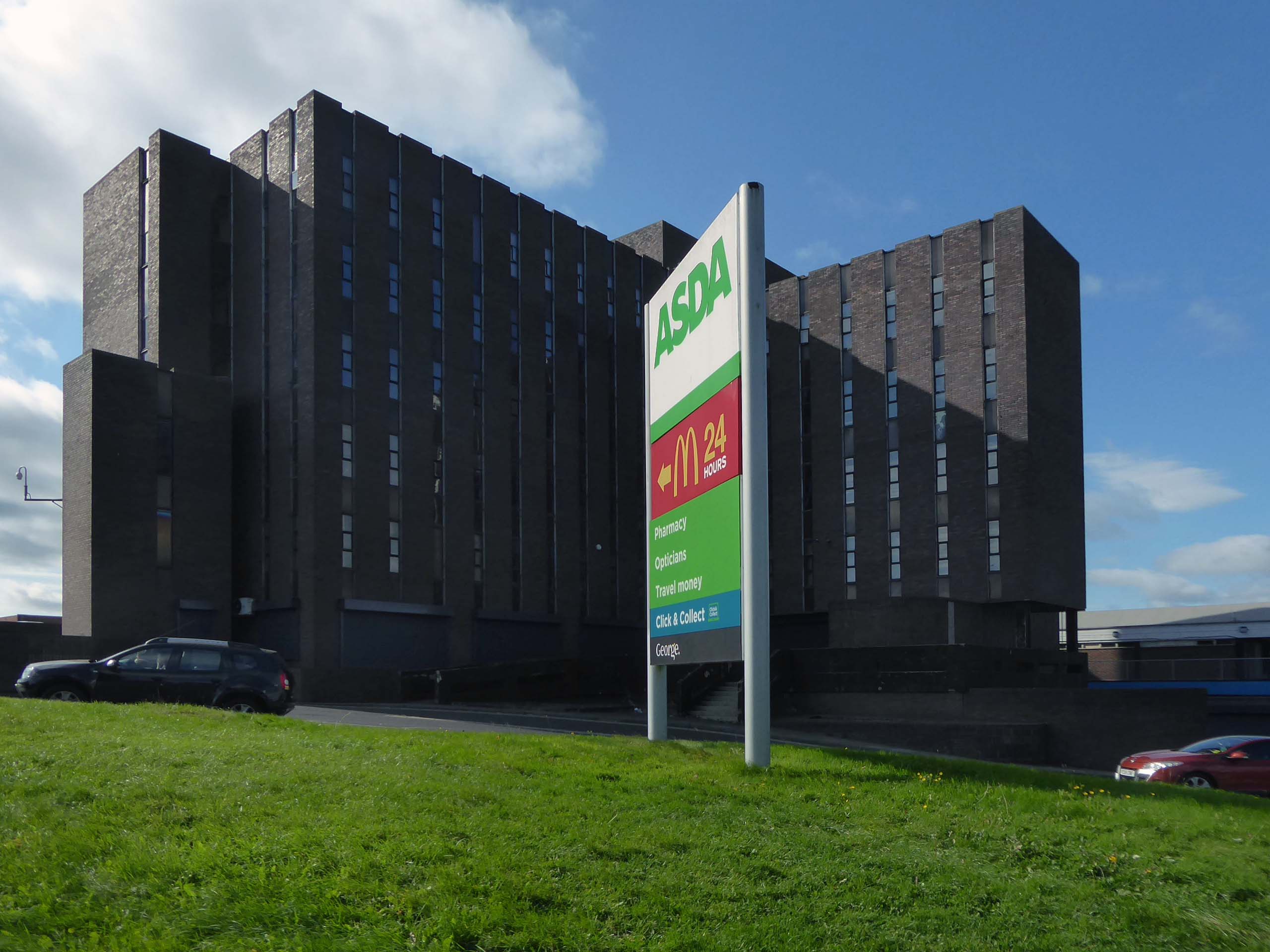
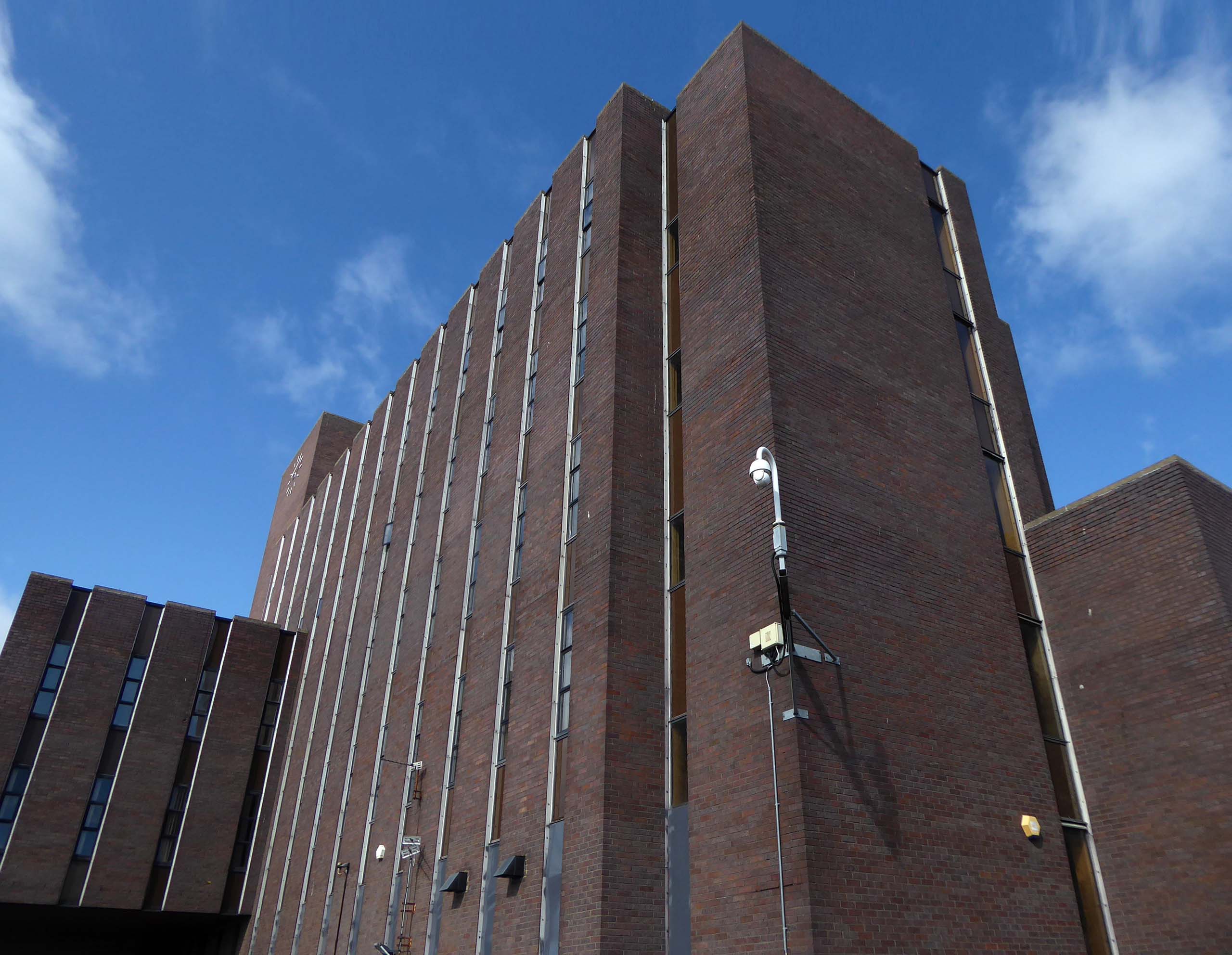
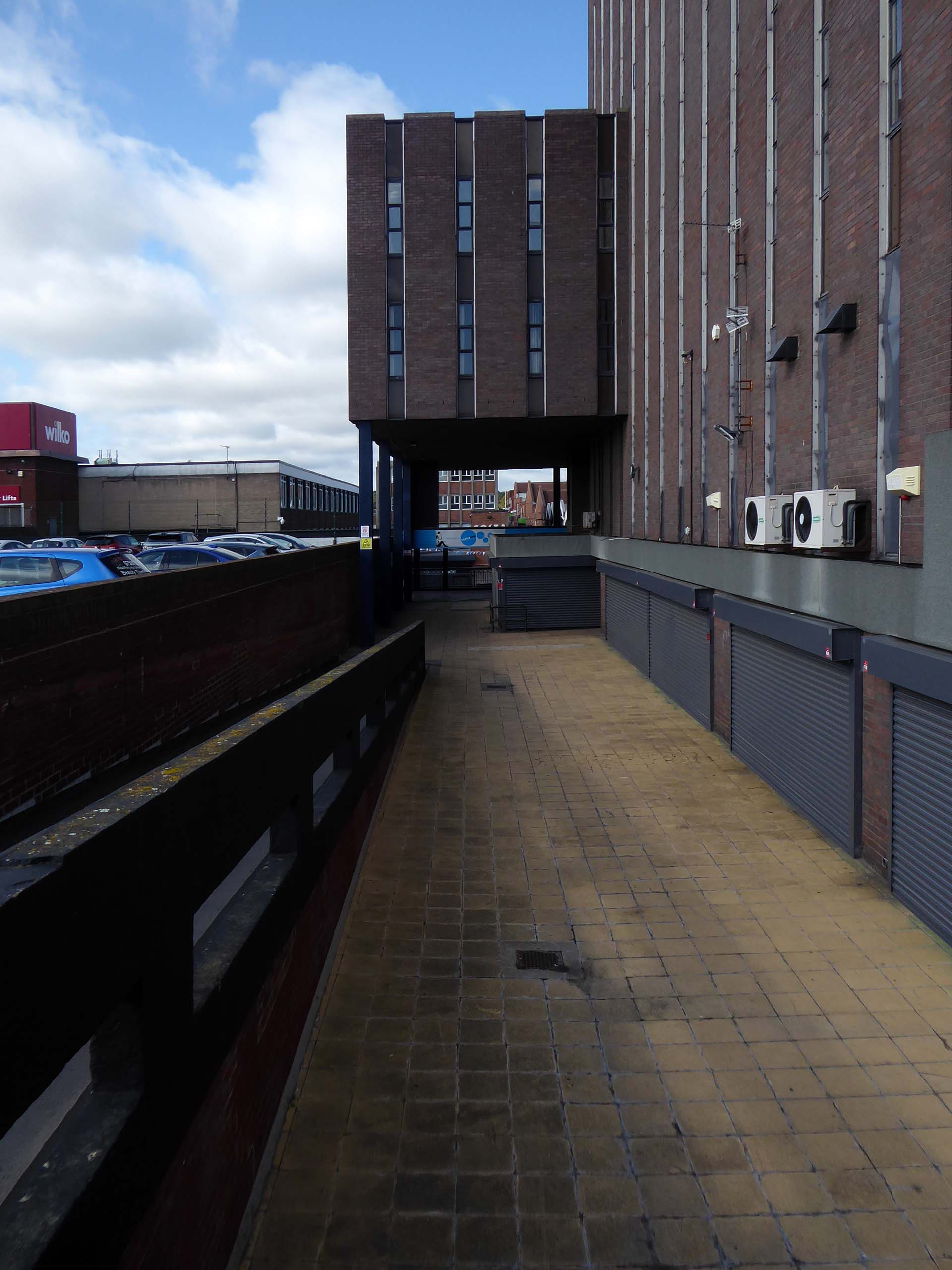
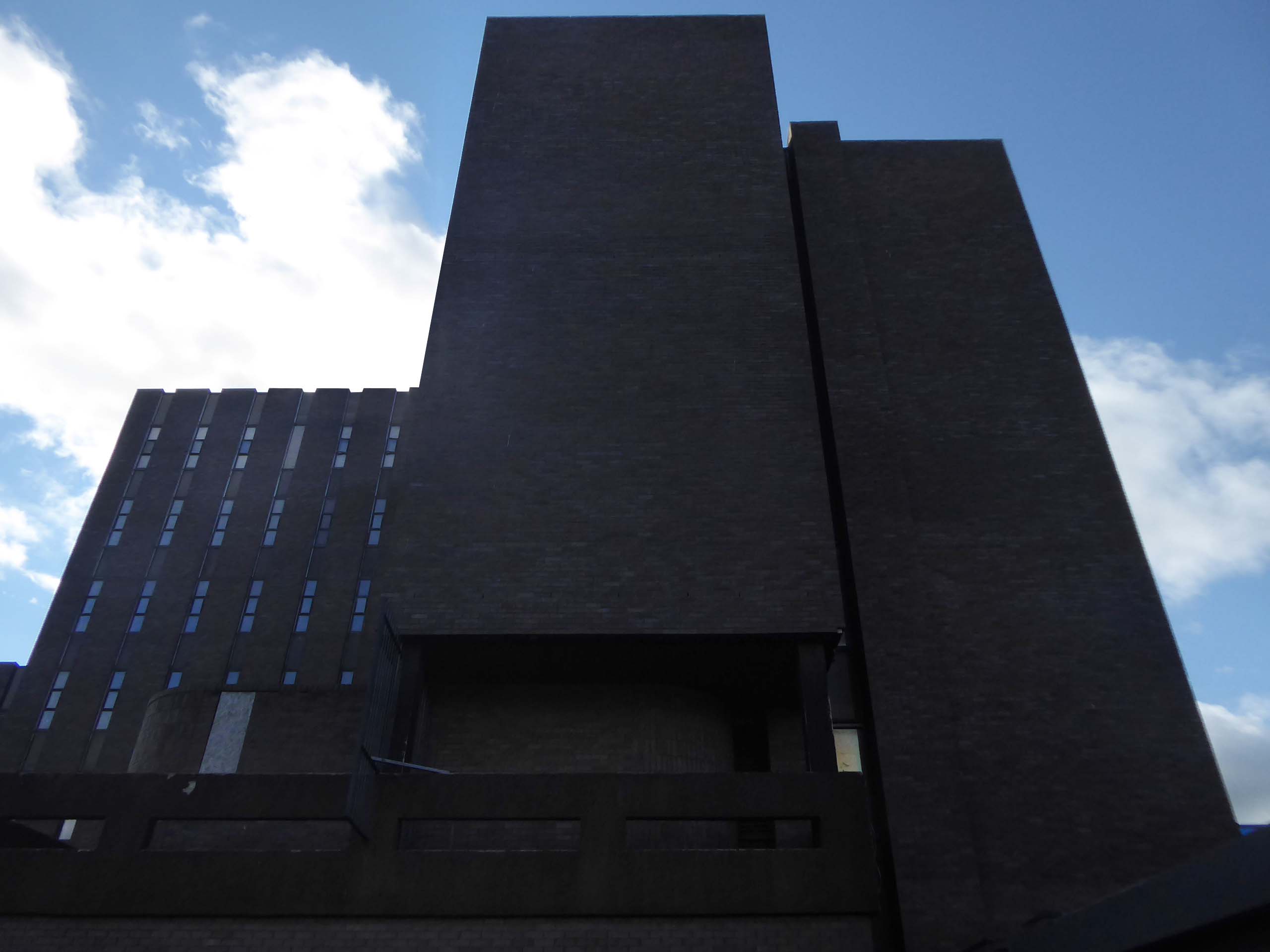
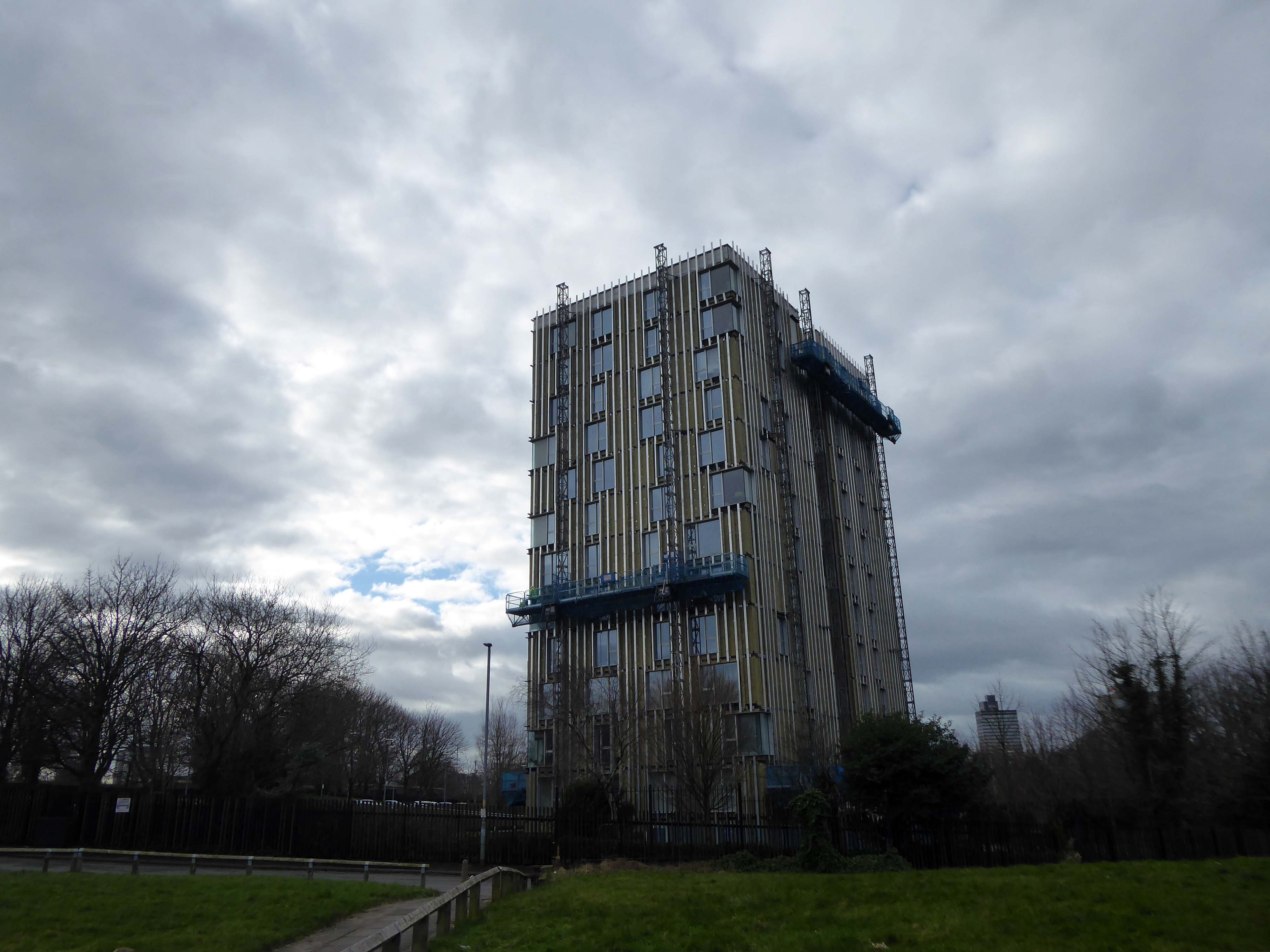
Lee House is still standing but vacant.
Lee House was once home to charity and community groups, but in 2015 the building owners ordered them to vacate the property.Even the building’s clock has stopped working and has been stuck on the same ten-past-two reading.
However, Durham County Council has now confirmed the building is in new hands. Economic development manager Graham Wood said: “We have worked with the previous owner to try to ensure the building is secured while we await proposals for its long-term future.
Four fire engines rushed to Lee House on Upper Yoden Way in Peterlee on Friday afternoon September 19th 2025 after a fire broke out on the first floor of the seven floor building.
Walking from Cornbrook toward Stretford along Chester Road – which is one half of my Tram Trip to Altrincham
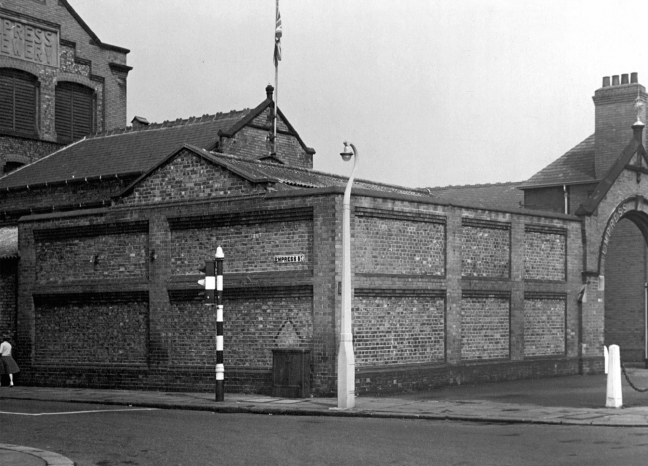
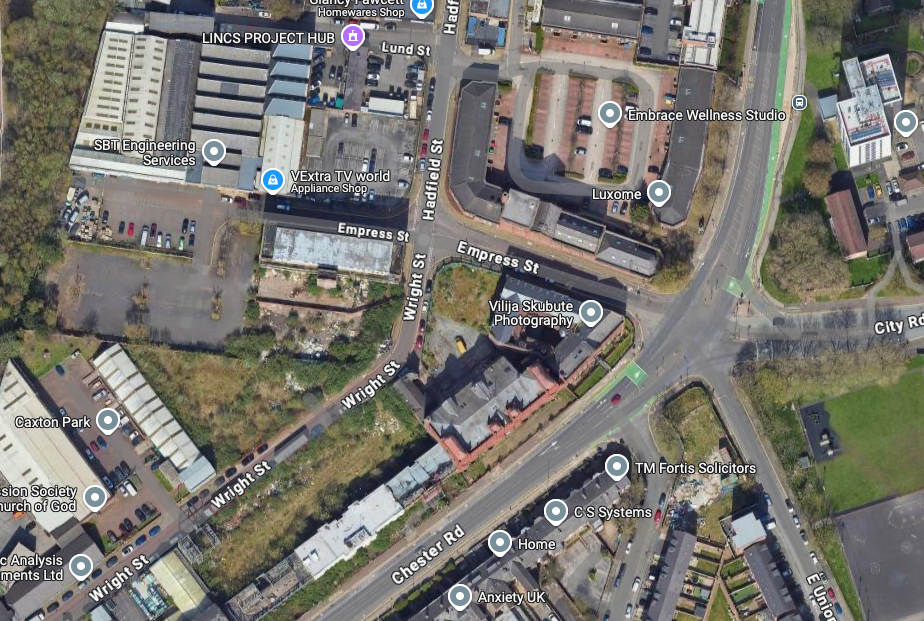
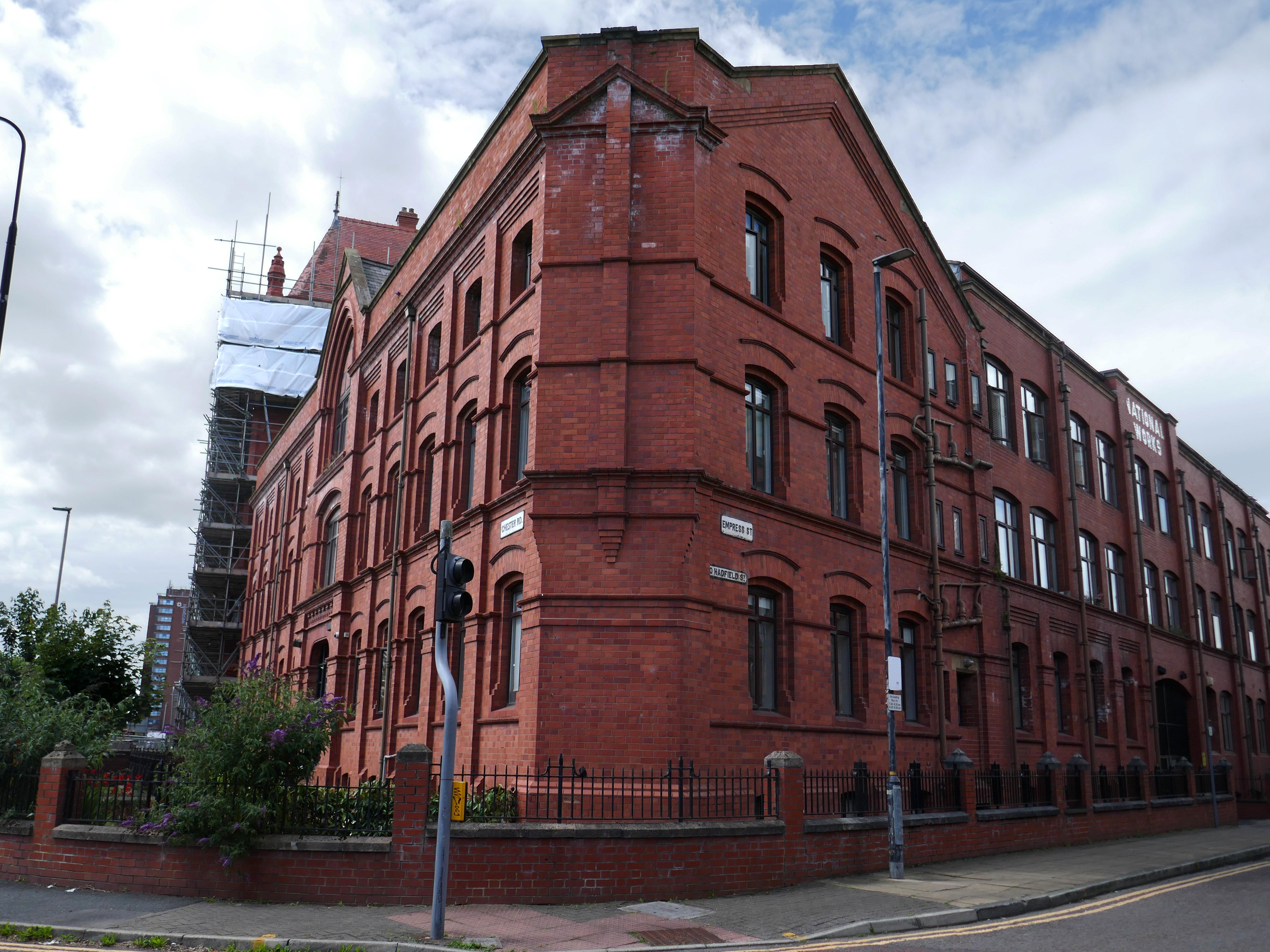
There is a cluster of former industrial buildings around Empress Street.
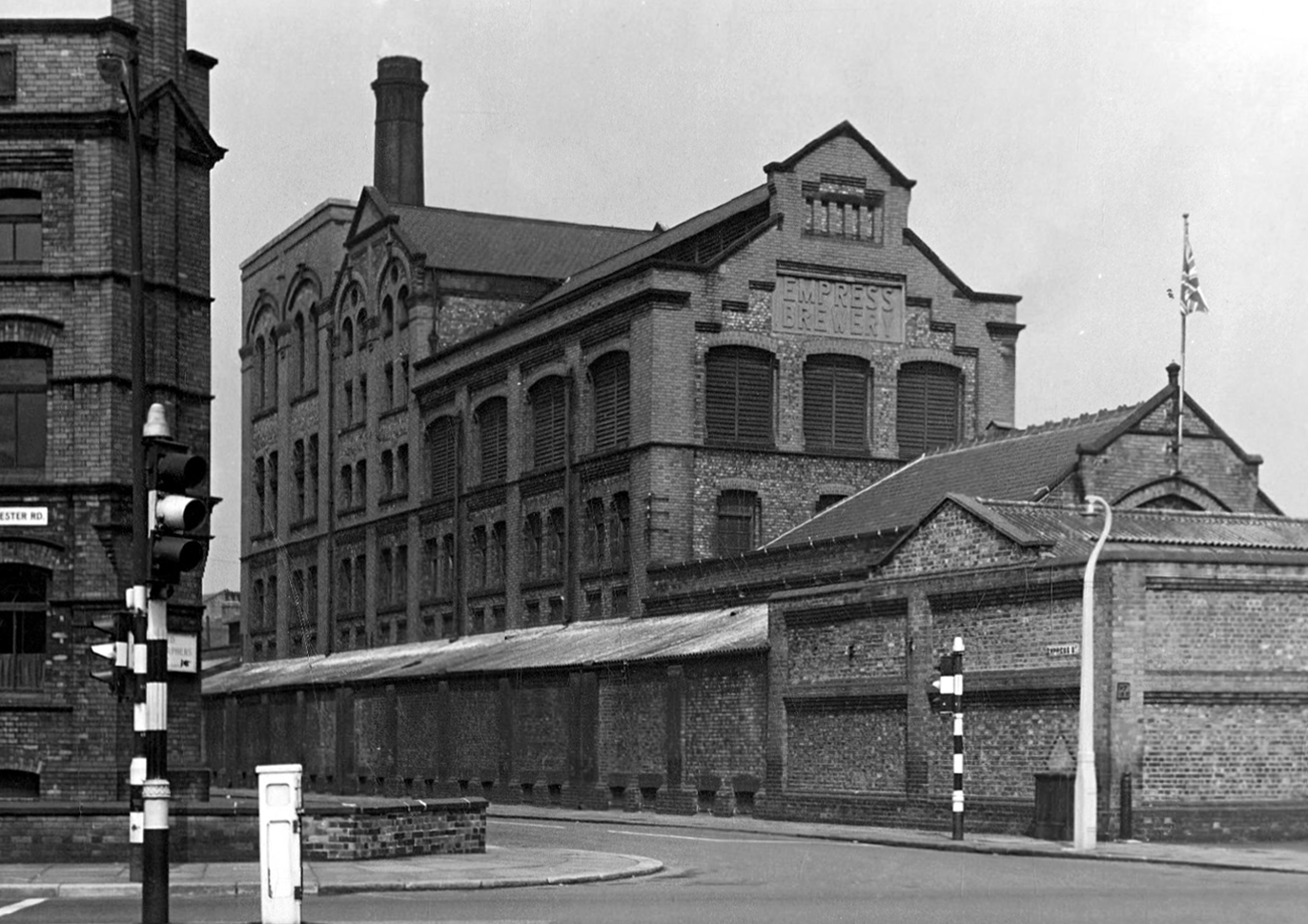
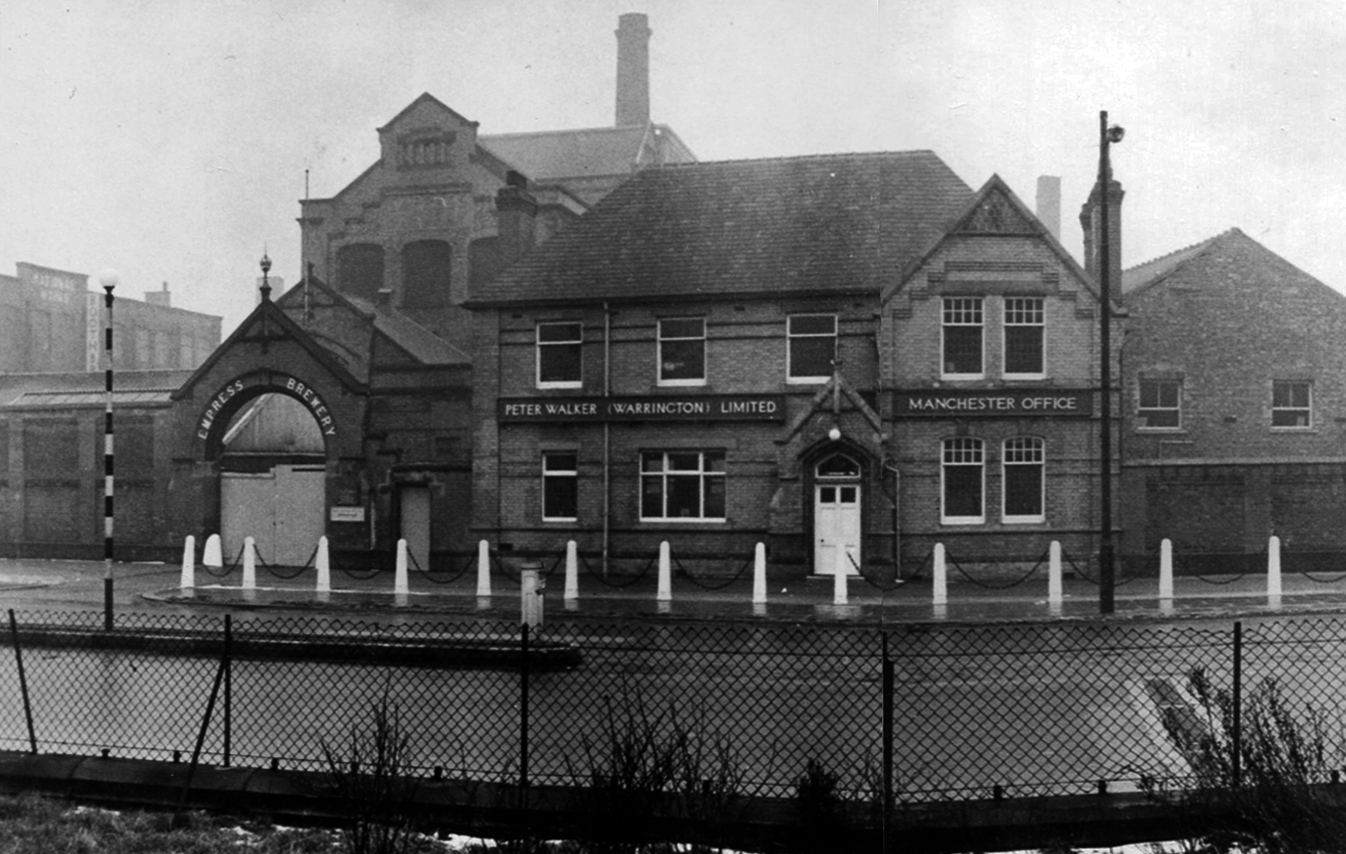
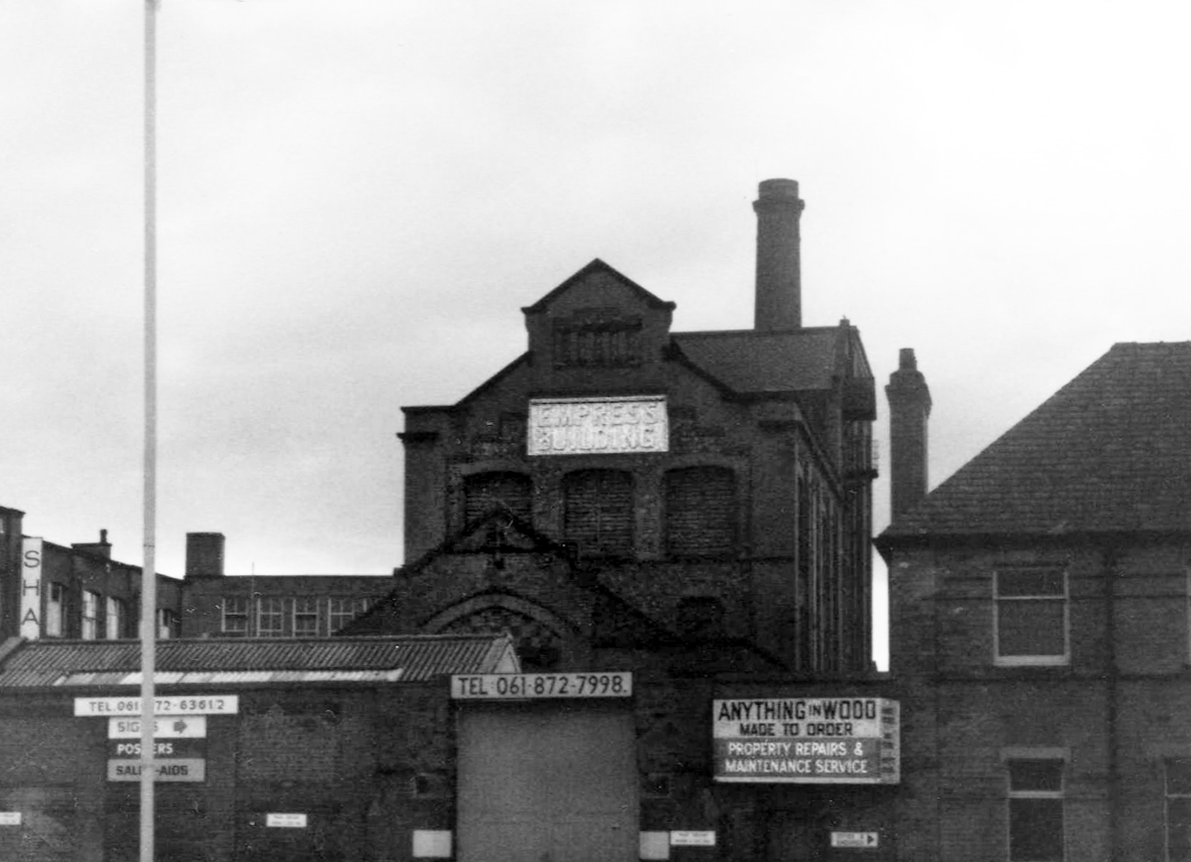
First up is the Empress Brewery.
The Empress Brewing Company was established by Charles Dawes in c. 1880, although the company was sold to William Henry Fulford in 1884, who had recently sold the Monarch Brewery in Salford. Fulford was based at the Empress Brewery on Clarence Street in Manchester, but had relocated to new premises on 383 Chester Road. These had been built in 1889 and operated initially as the Old Trafford Brewing Company, but the name had changed to the Empress Brewery Company by 1895. The company acquired a number of breweries and associated licenced house during the early 20th century, however, in 1929 it was taken over by Peter Walker and Son. The brewery closed in 1955.
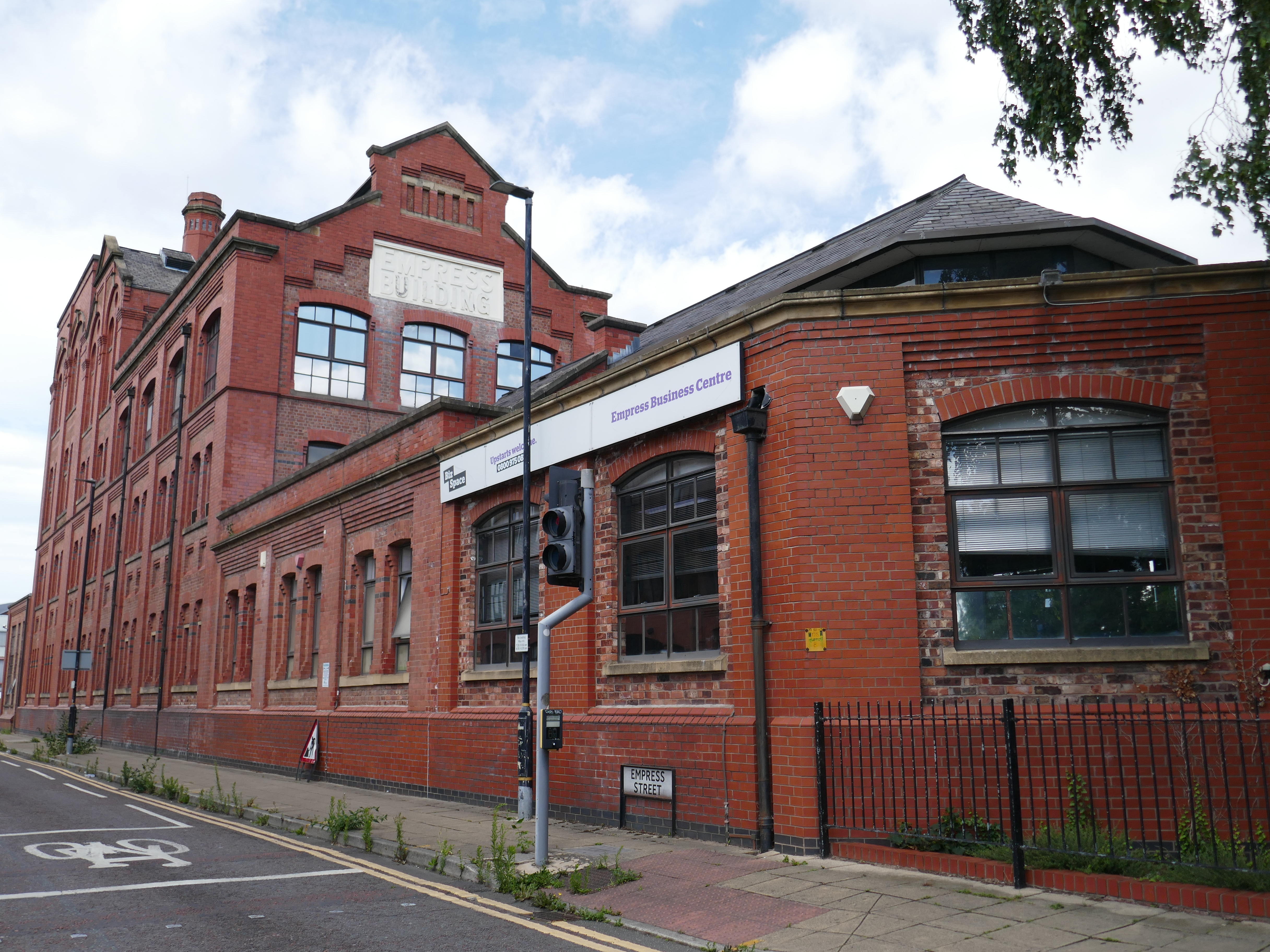
The building was converted into offices in 1992 as part of the development of the Empress Business Centre, which saw new office and business units built to form a courtyard.
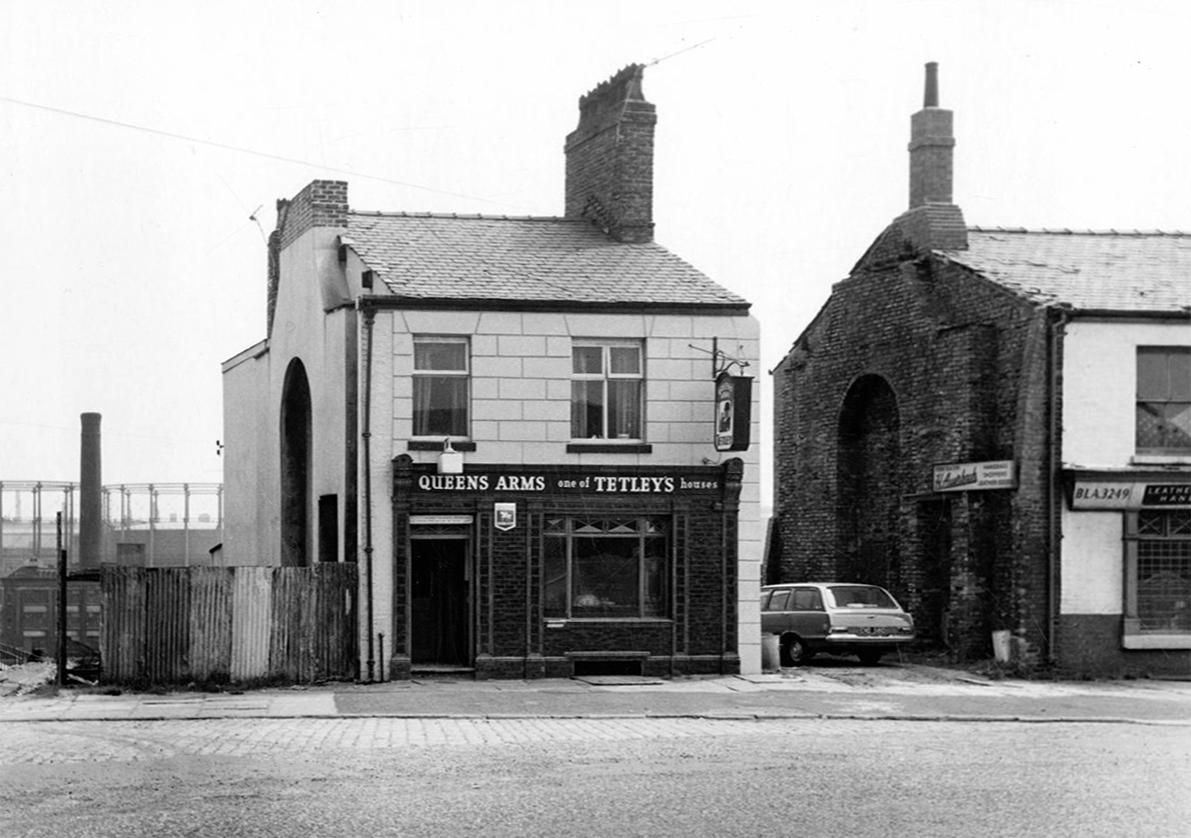
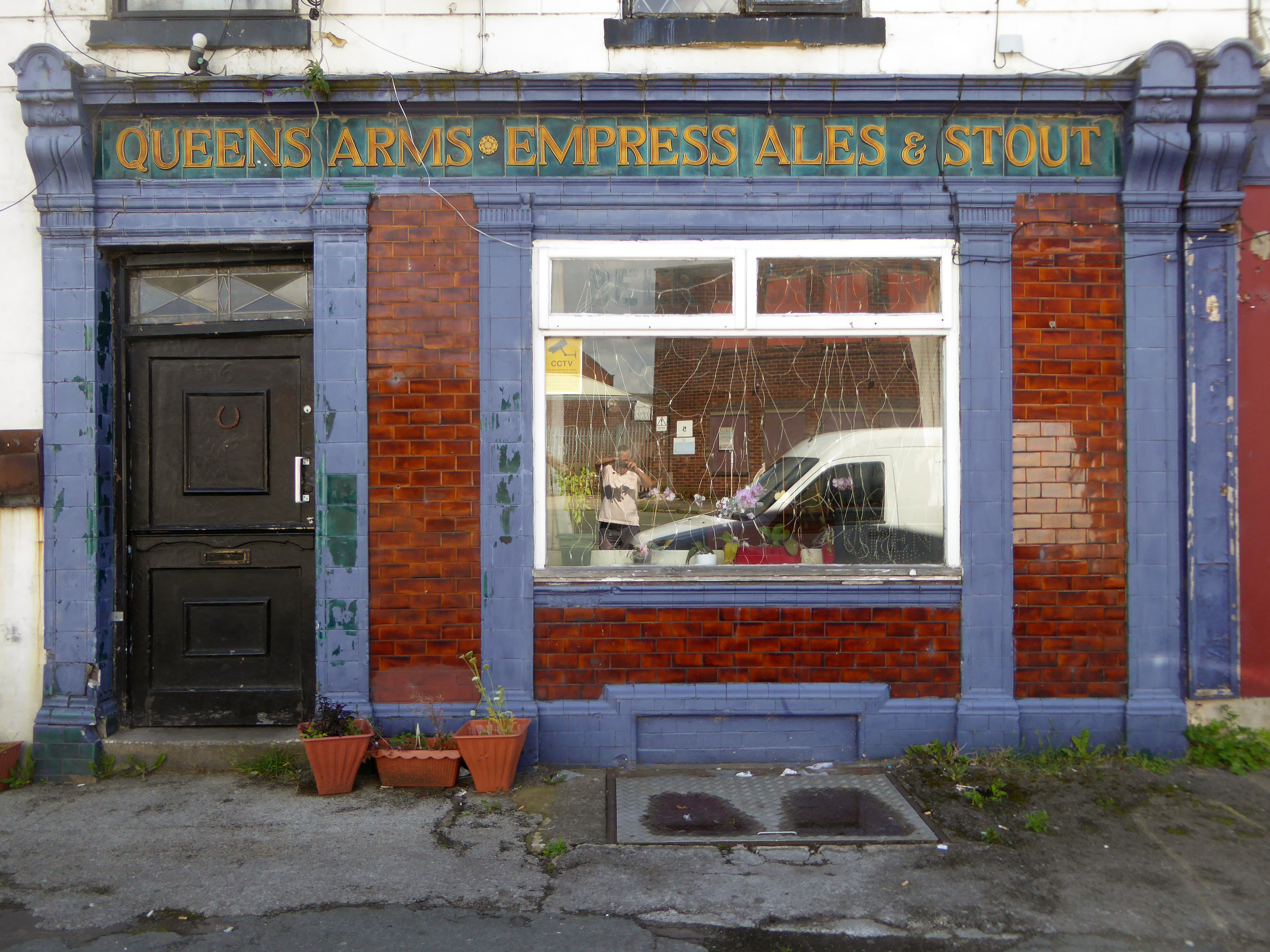
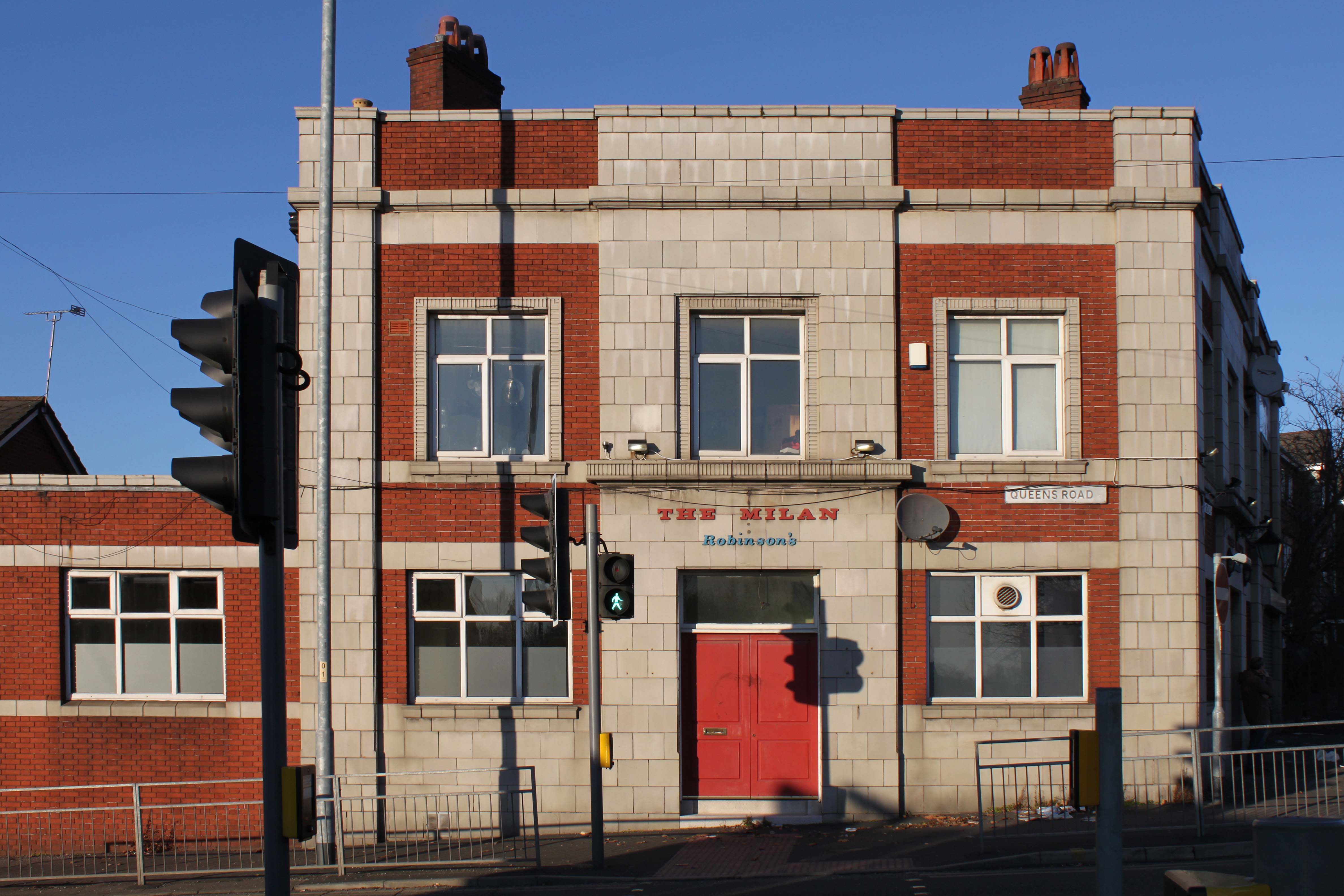
Including the Queens Arms on Honey Street Red Bank, one of the first independent real boozers back in the 1980’s, subsequently it has seen various uses last seen on my Collyhurst Circular walk.
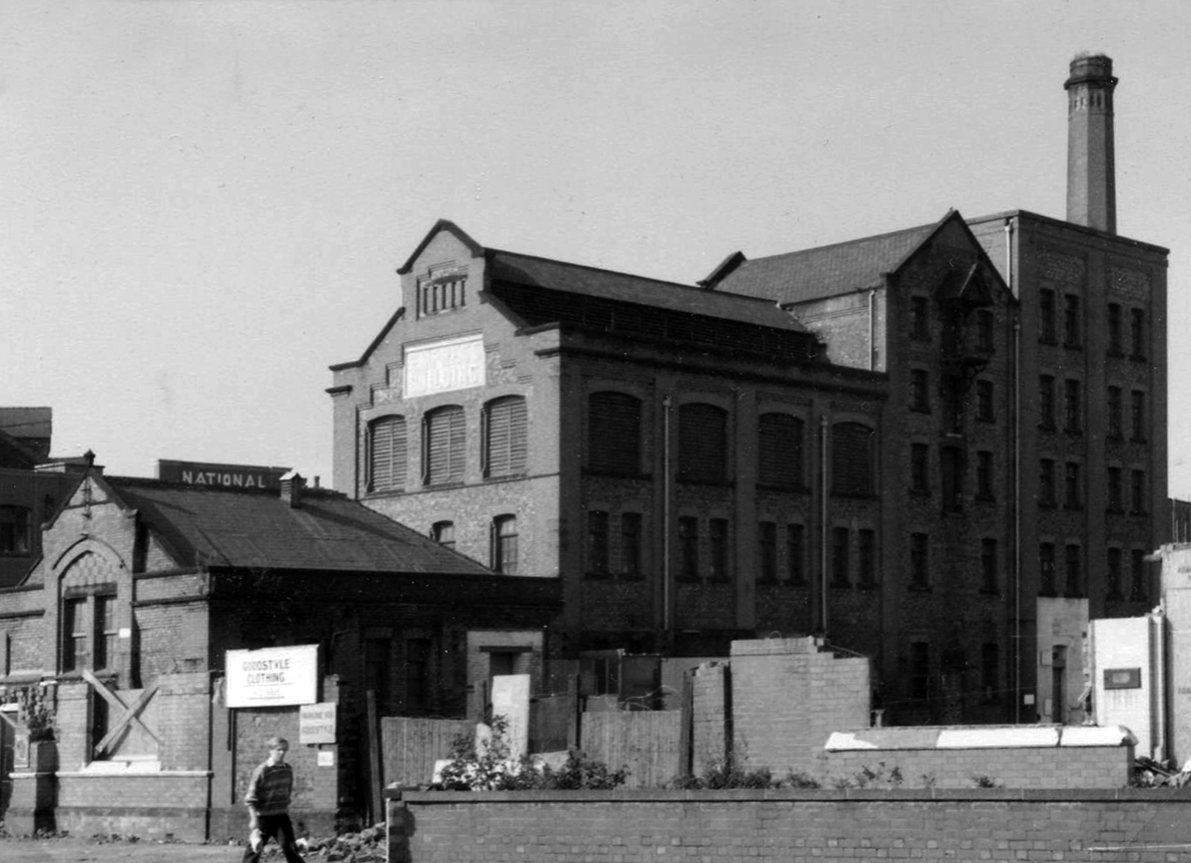
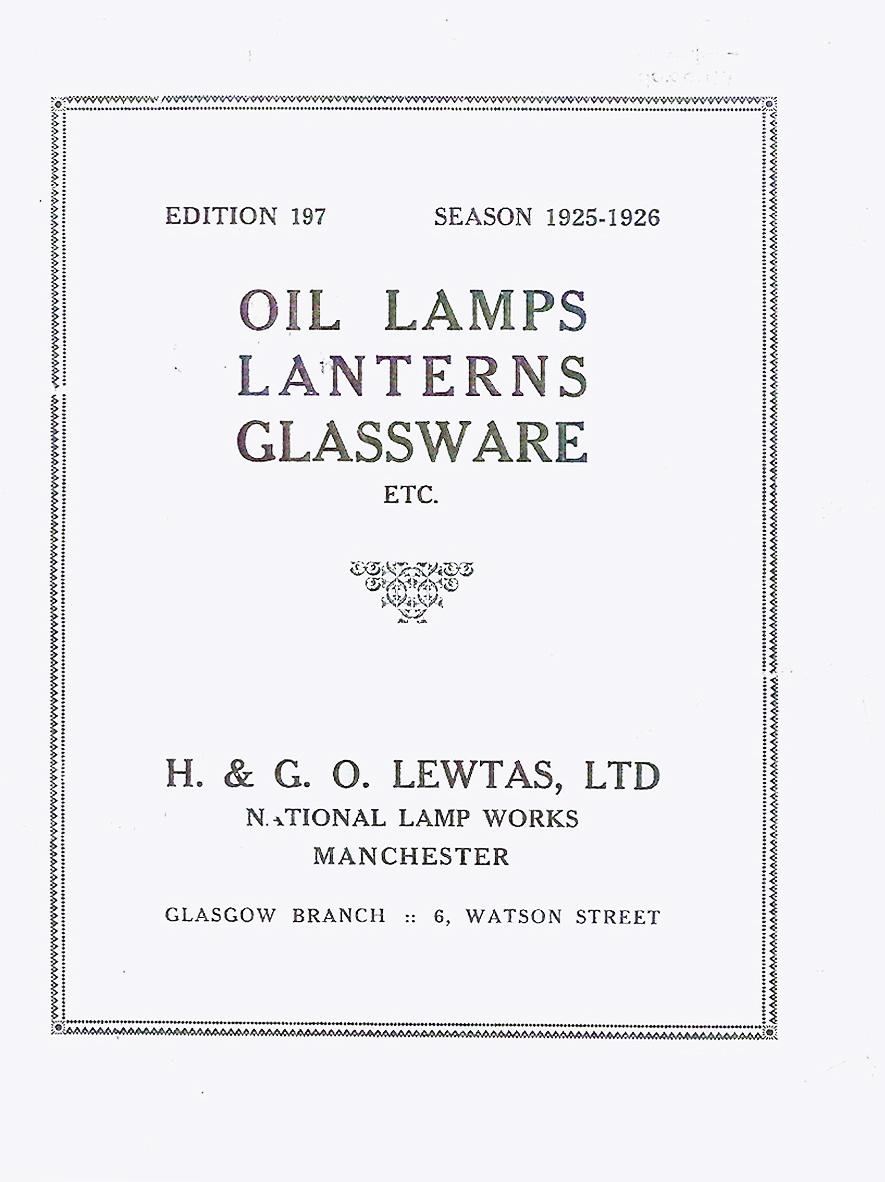
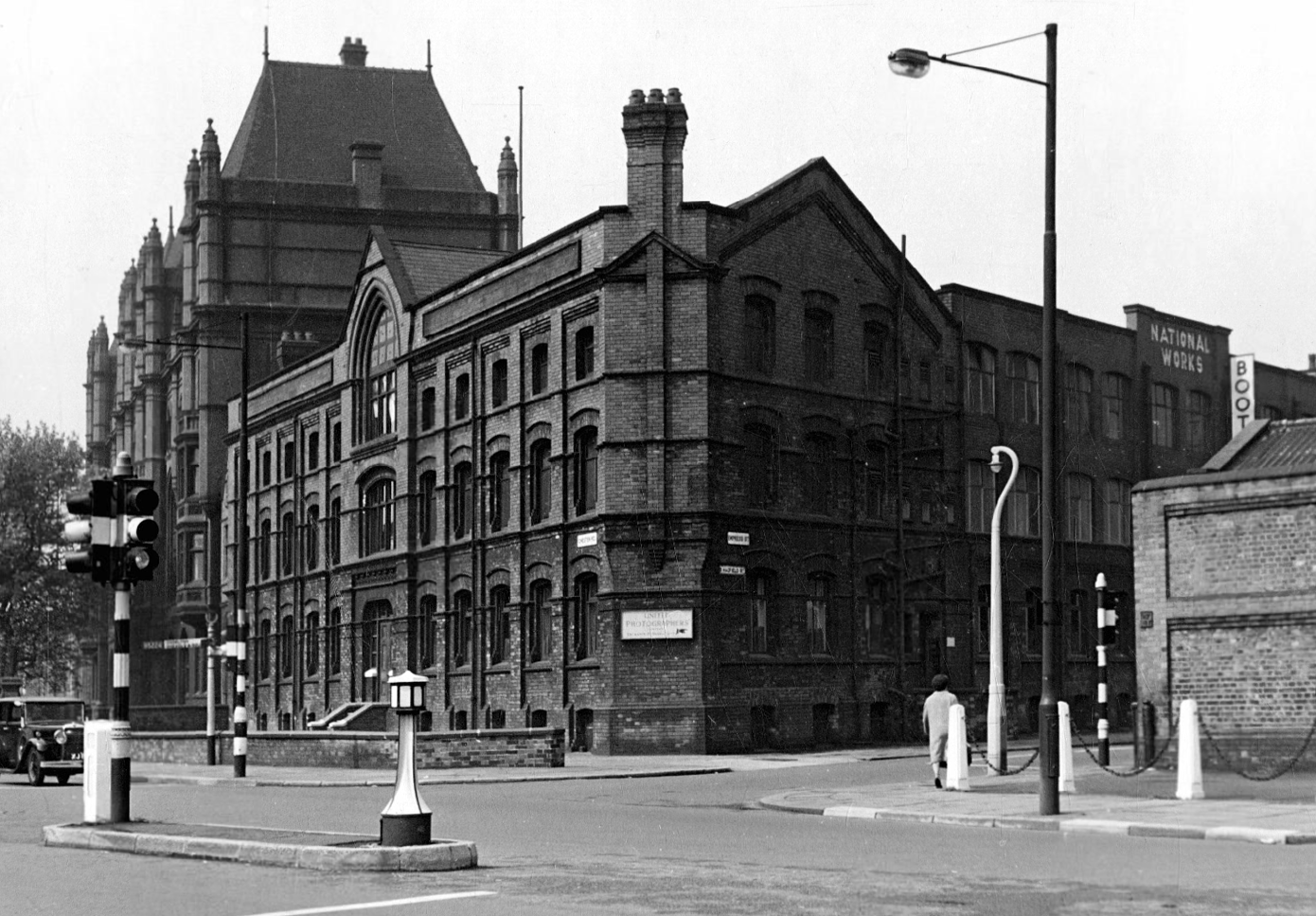
The development of the site can be traced from the sequence of Ordnance Survey 1:2500 maps. The First Edition of 1893 shows the site as undeveloped. The First Revision map of 1908 shows 384 Chester Road to have been developed, and the site of the National Works to have been occupied by an open-fronted L-shaped range along the western and southern sides, with a detached rectangular building in a central courtyard. It is possible that these buildings all formed part of 384 Chester Road, listed as being occupied by H, G & O Lewtas, lamp manufacturers, in Slater’s trade directory for 1911. The Second Revision map of 1922 shows the early building to have been subsumed by the current building.
1961 Local Image Collection
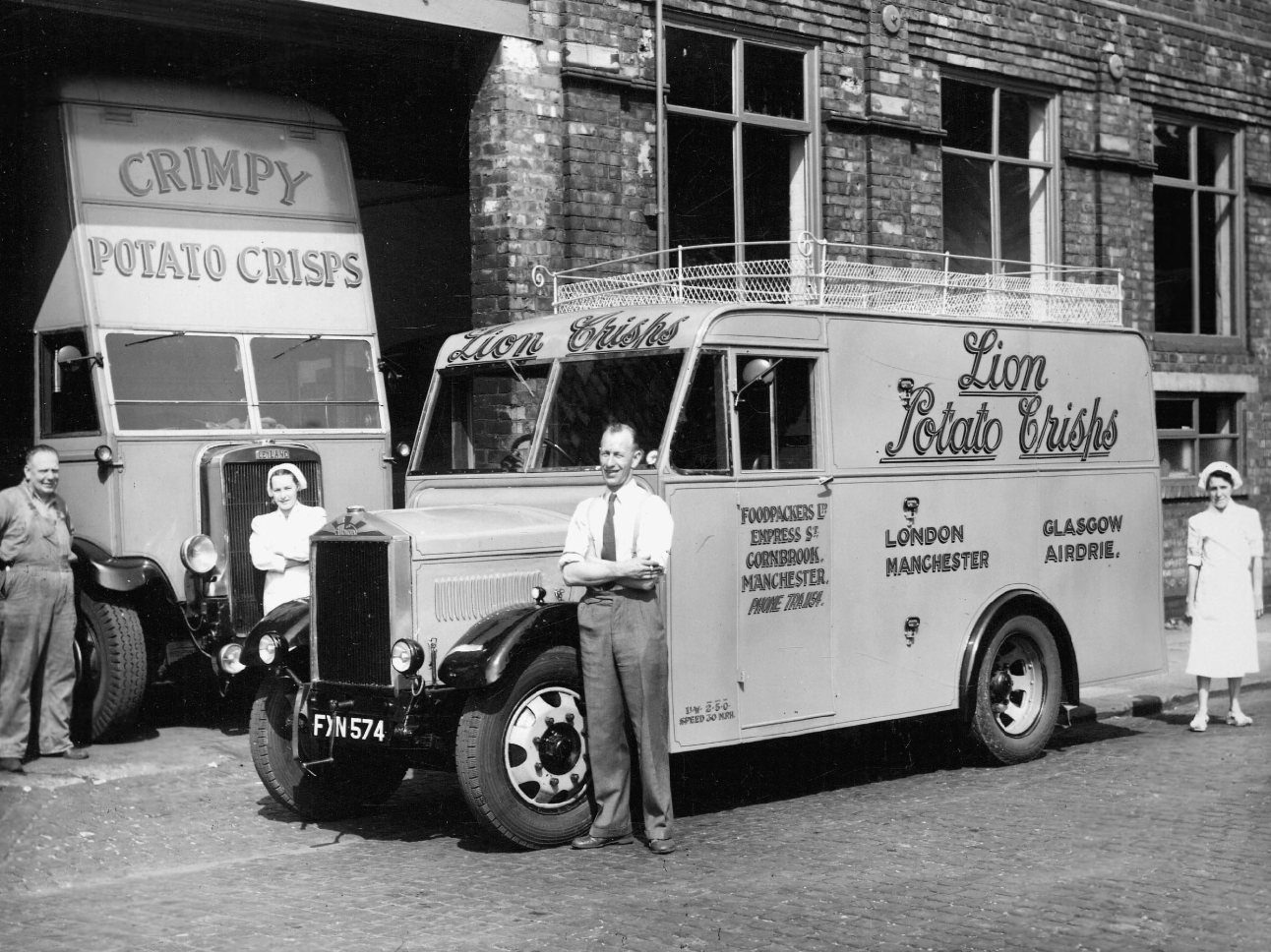
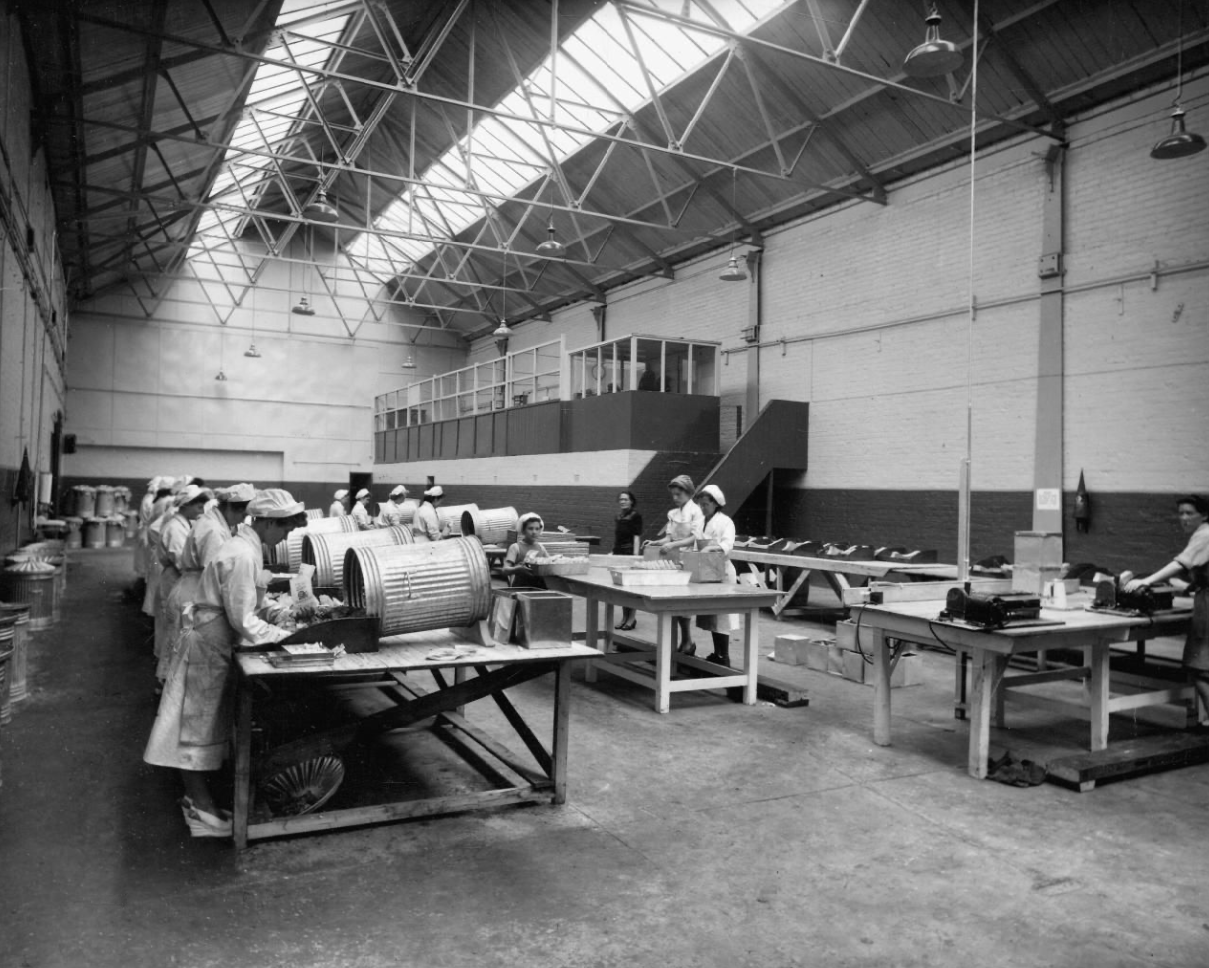
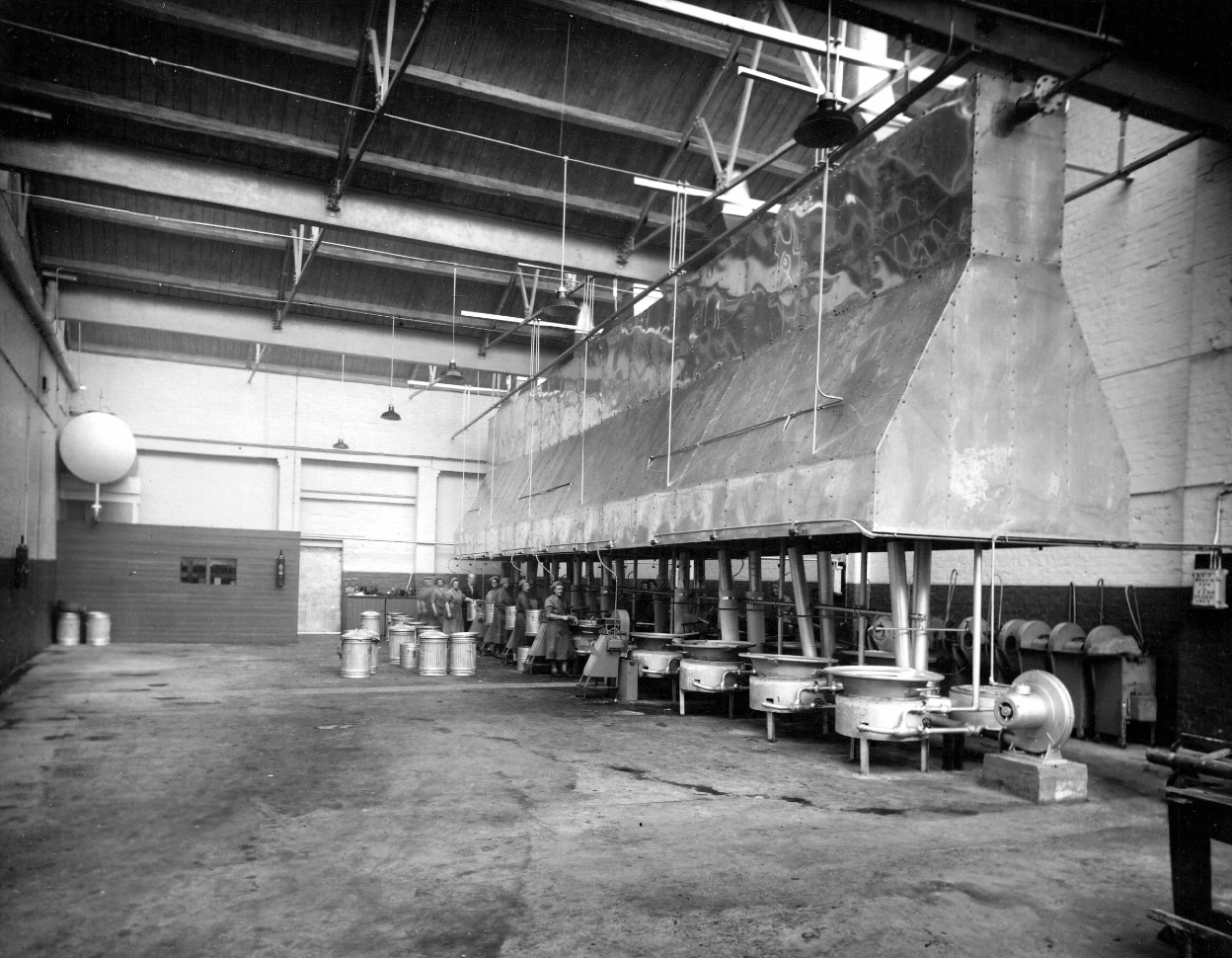
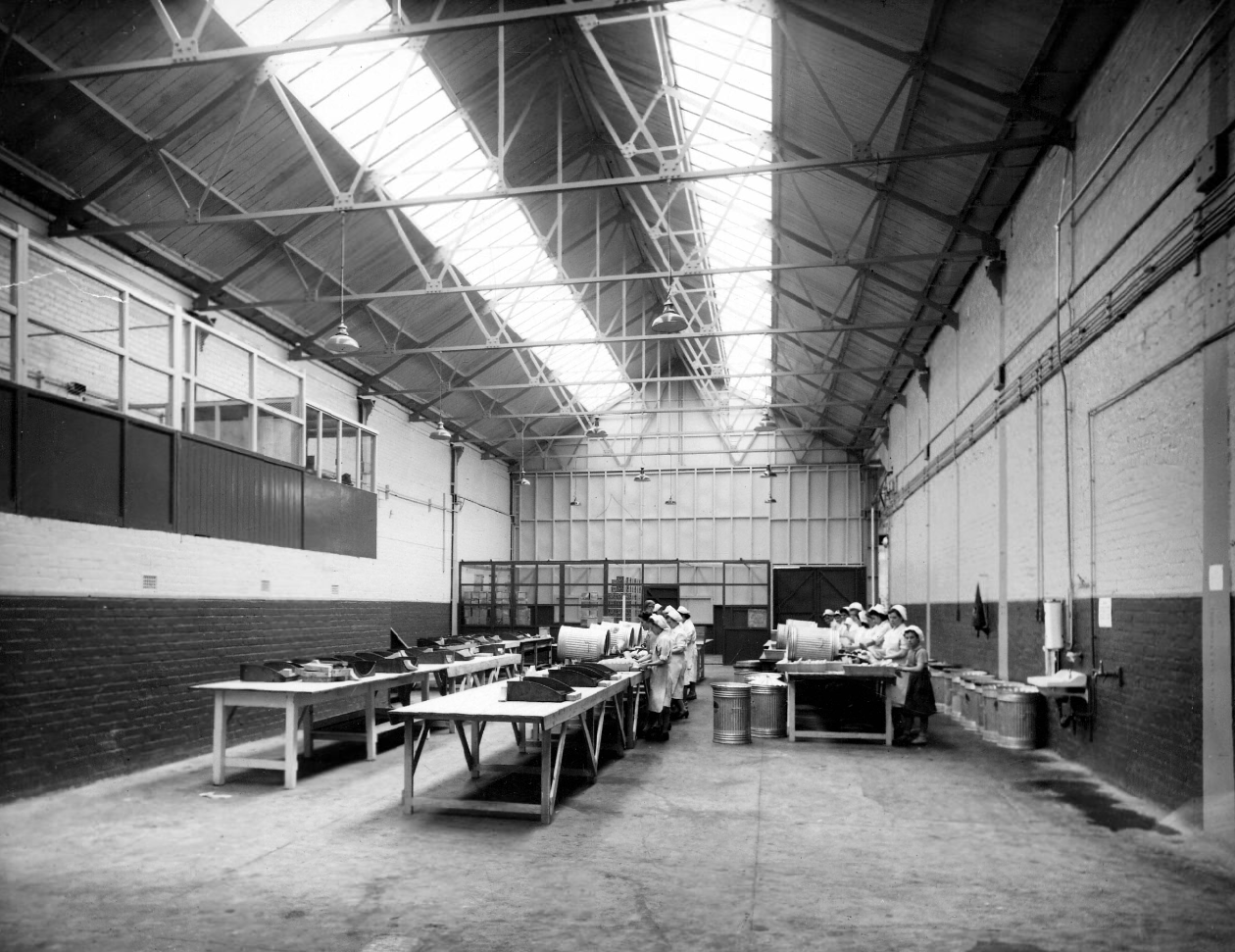
Later the home of Lion Foodpackers Ltd and Crimpy Crisps.
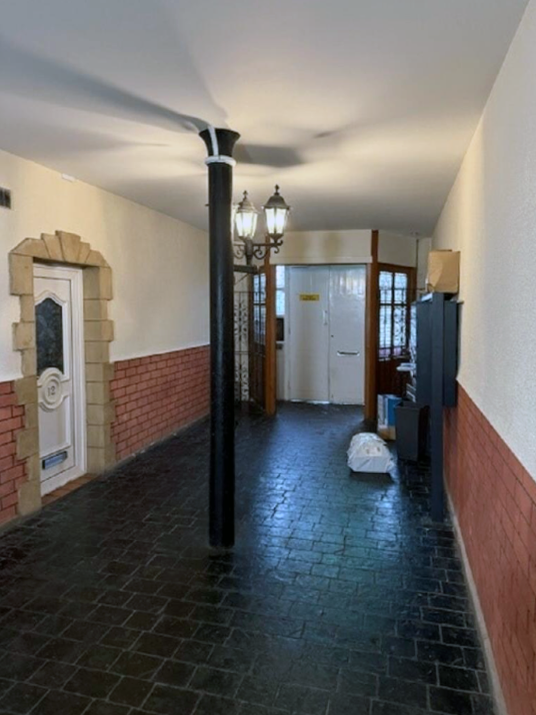
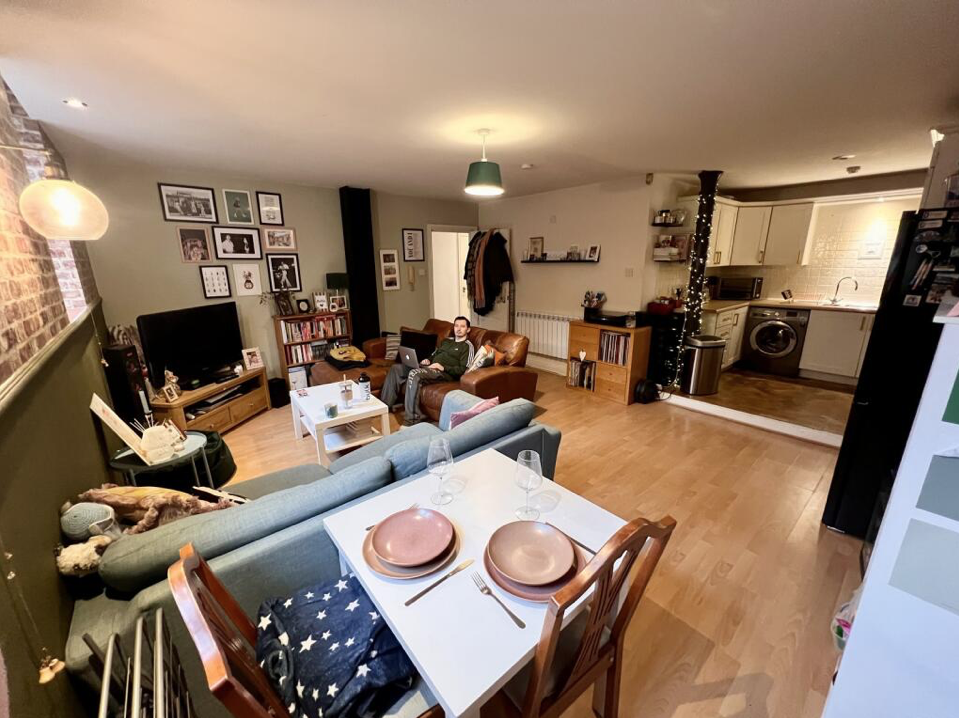
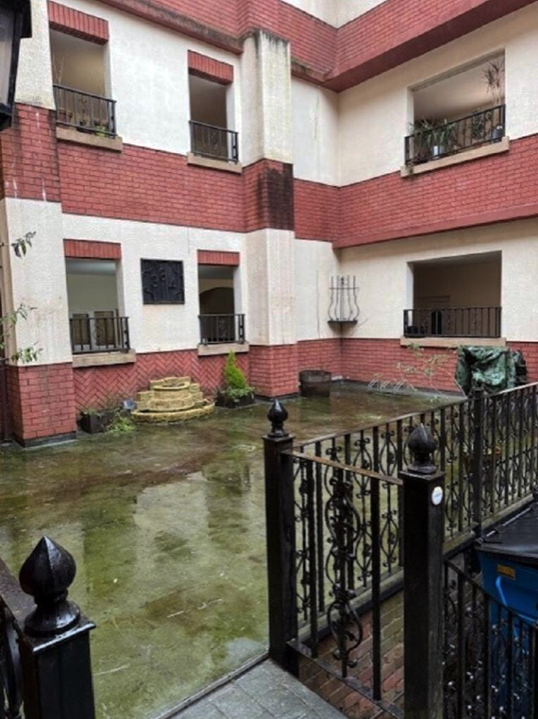
Situated on the lower ground floor of a gorgeous, red brick, landmark building, this 2 double bedroom apartment merits further inspection. A good size living room opens on to a good fitted kitchen. It also has a great, spacious shower room. It also benefits from a parking space, although a great attraction is the location, being just 1 mile from Deansgate and the City along with being 10 minutes walk to a Metro station.
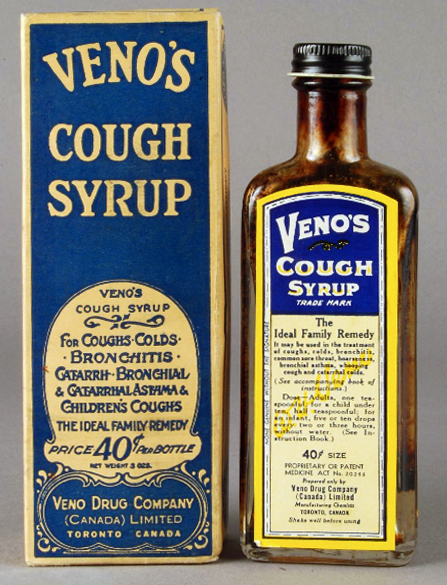
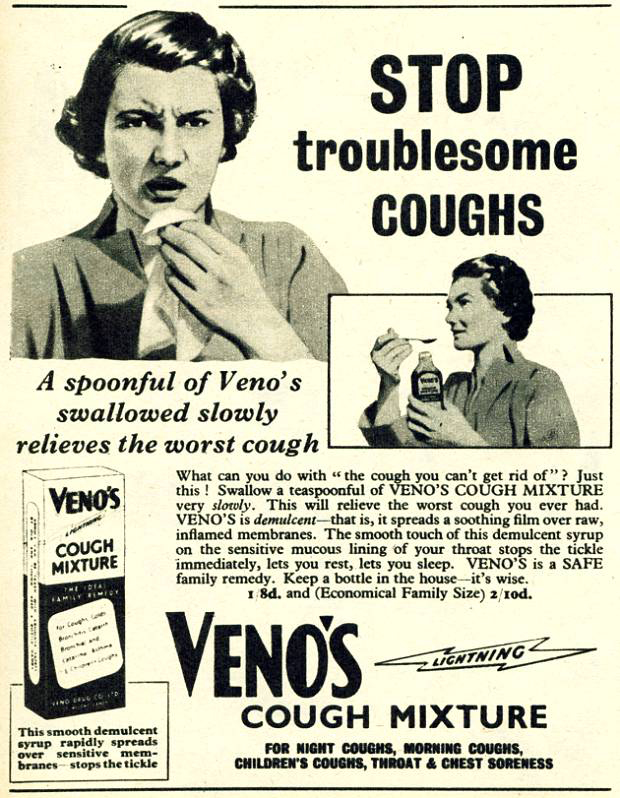
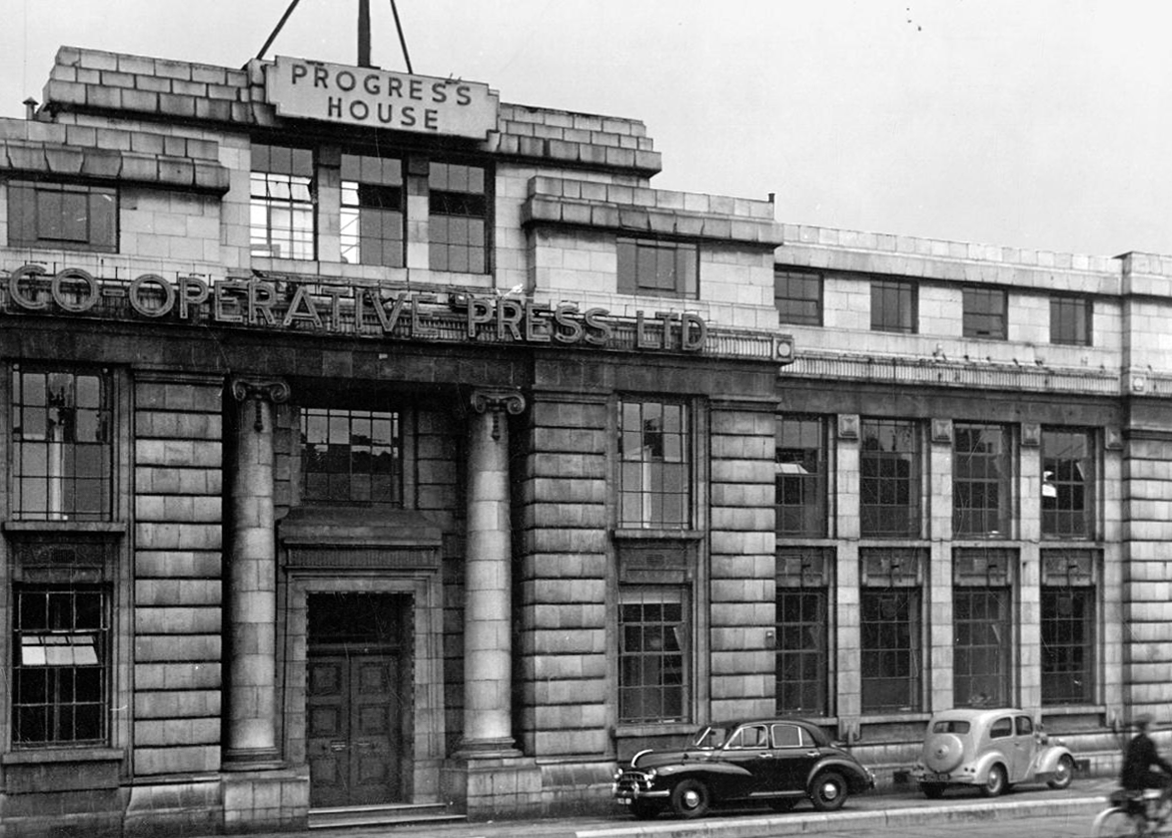
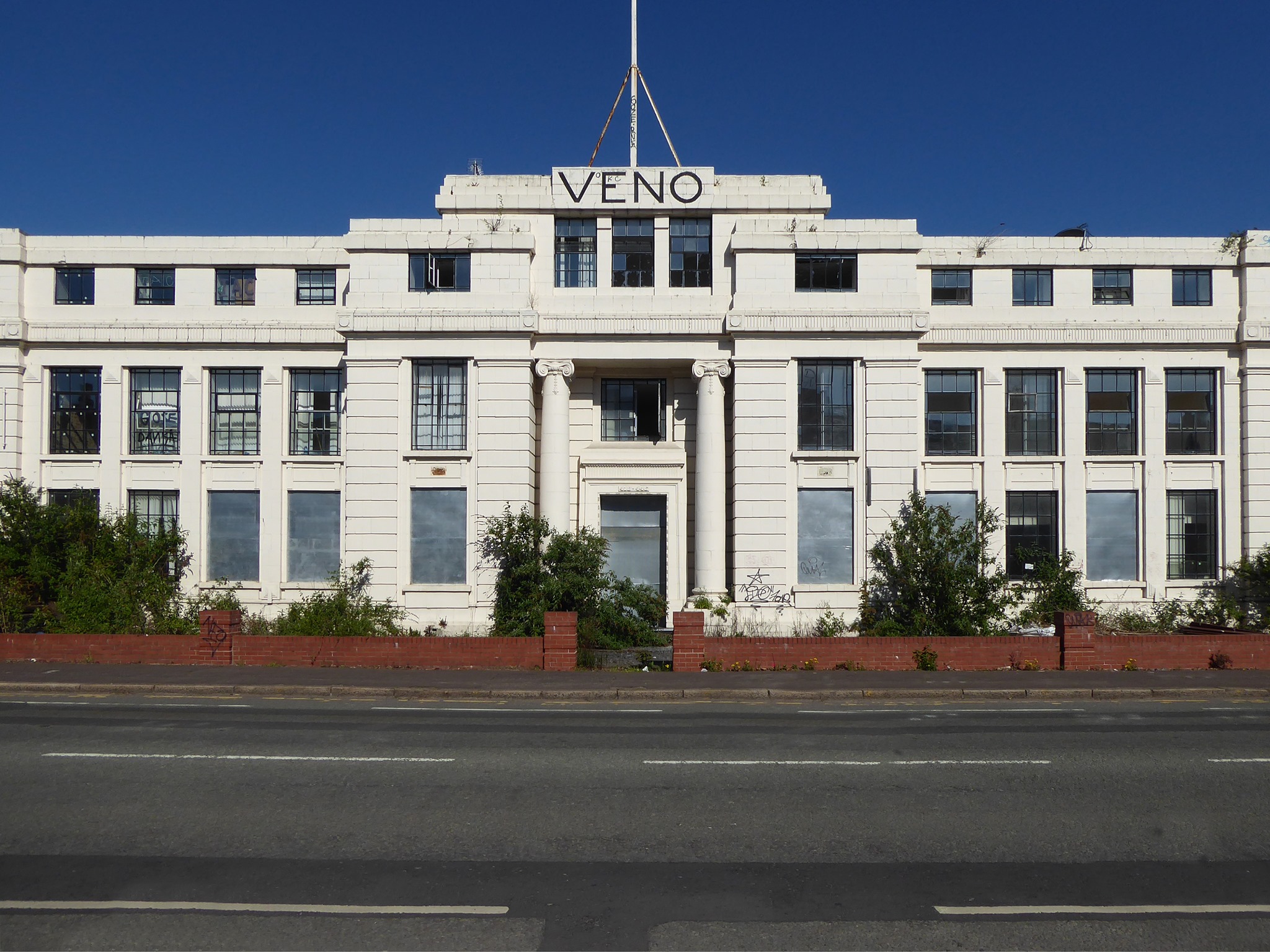
Then we have the Veno’s Building, which was once a pharmaceutical company founded by William Henry Veno. He established a company in the US before returning to Britain and founded the Veno drug Company in Manchester in 1898.
In 1925 the company was sold to Beecham Estate and Pills Ltd. In the 60s the building was under the name Progress House and was home to the Co-Operative Press Limited, later to become Trafford Press.
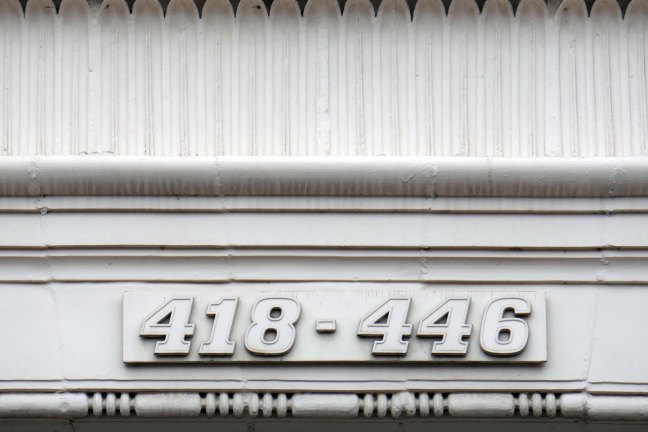
Rare sighting of a Profil aka Stymie Bold Italic hyphen.
Designed by brothers Max and Eugen Lenz and first cast by Haas in 1947.
The front elevation was originally in red brick, with a later faience facade applied.
Veno’s a stalled and cursed development. In 1925 William Henry Veno sold his company for £500,000, a decision he later rued. He sought to enhance his million pound fortune but lost everything through speculative investments and the 1929 Depression. He shot himself at his home during a fit of impulsive insanity.
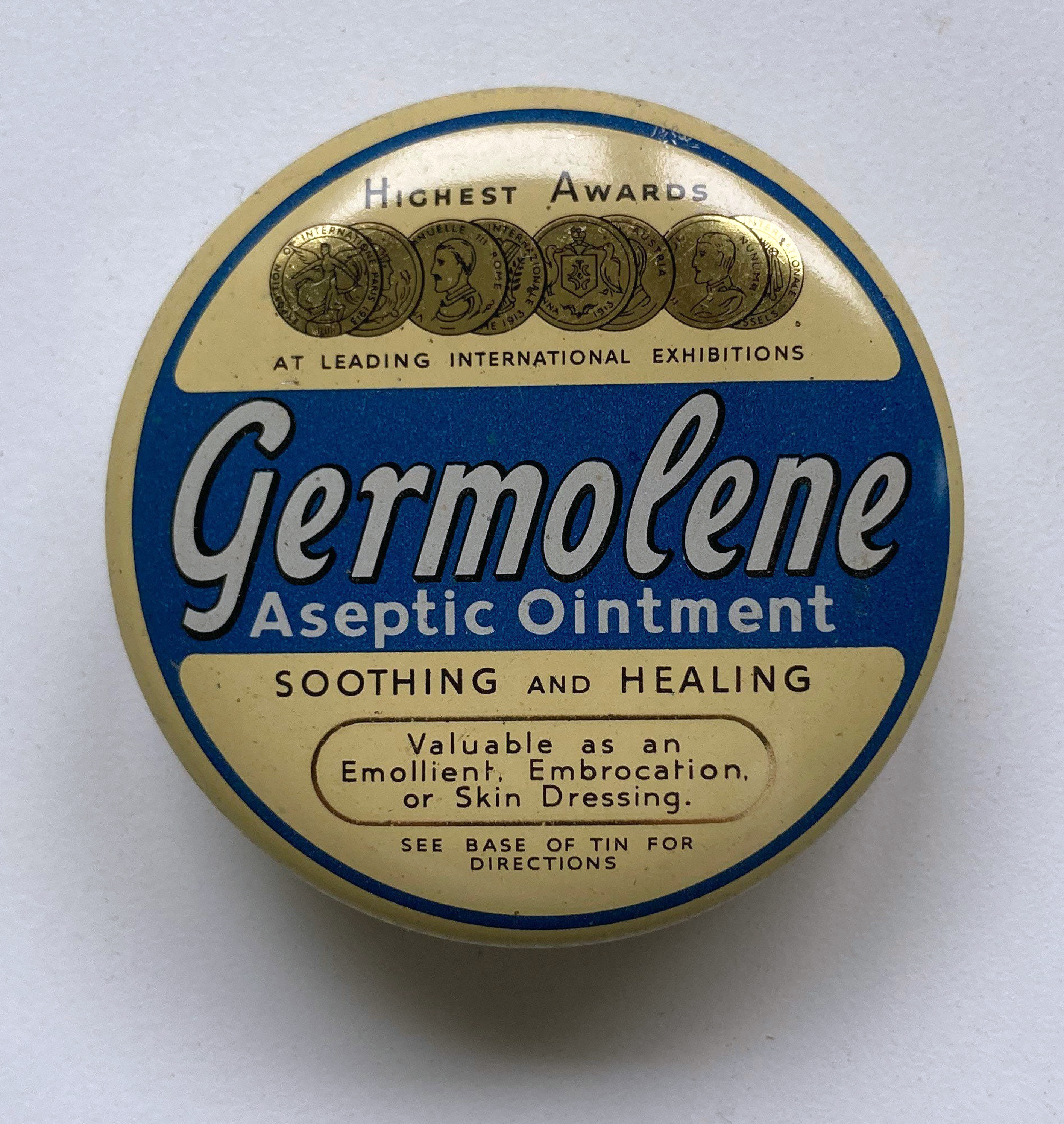
It was also the home of Germolene, a thick antiseptic ointment with a distinctive pink colour and scented with oil of wintergreen
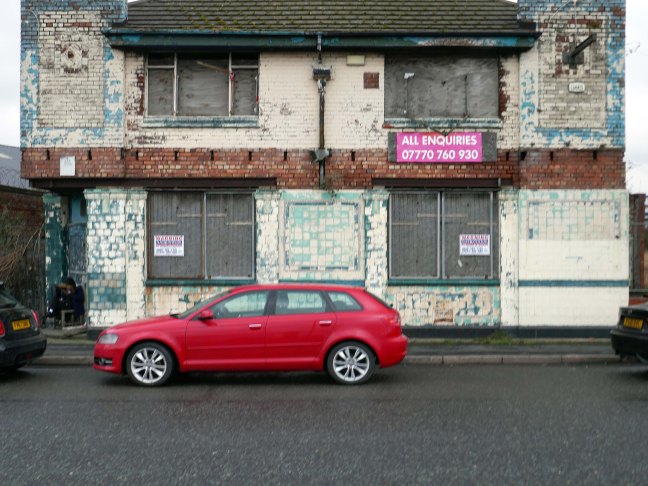
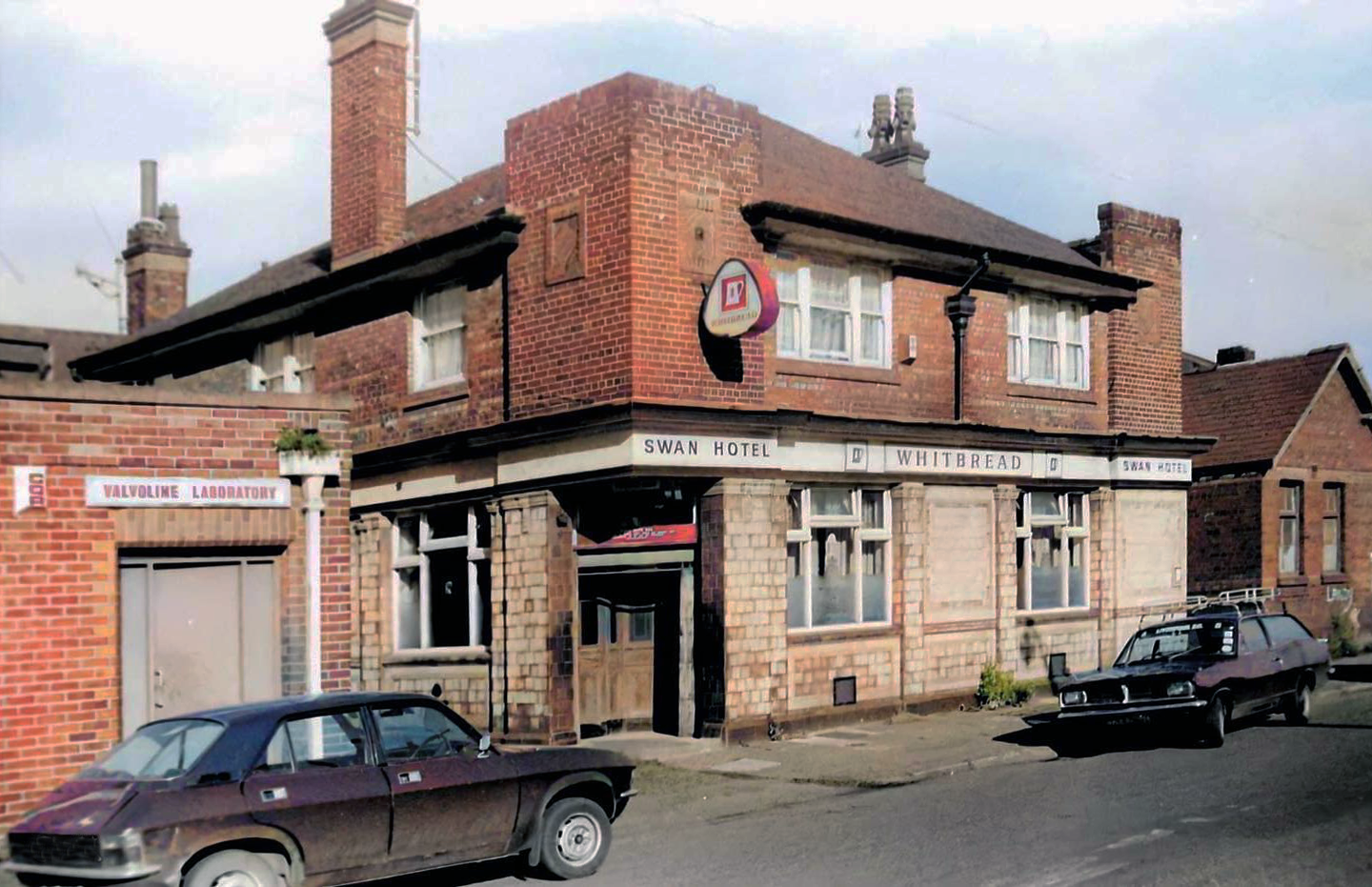
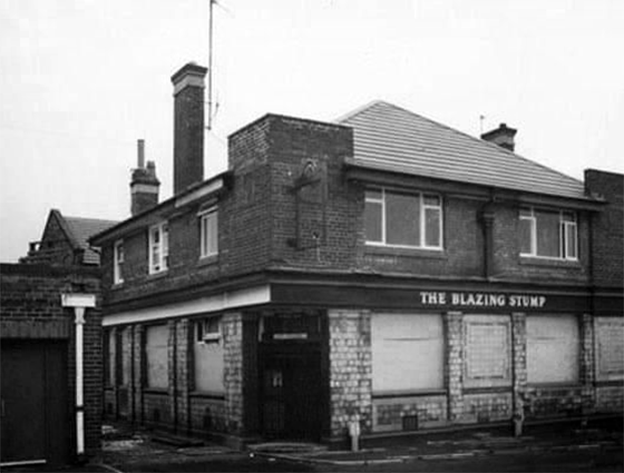
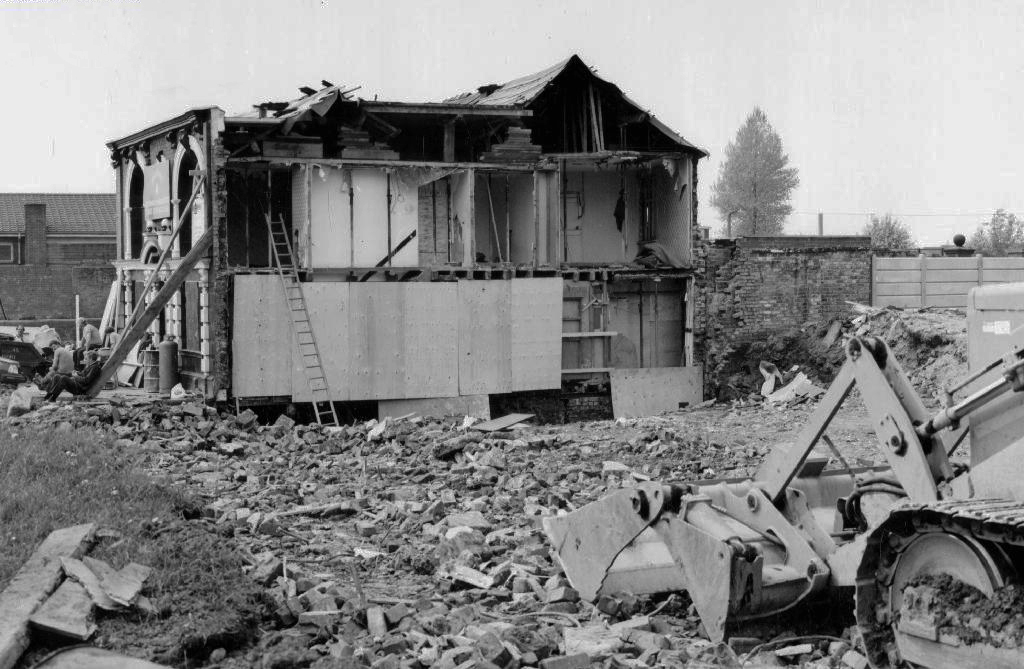
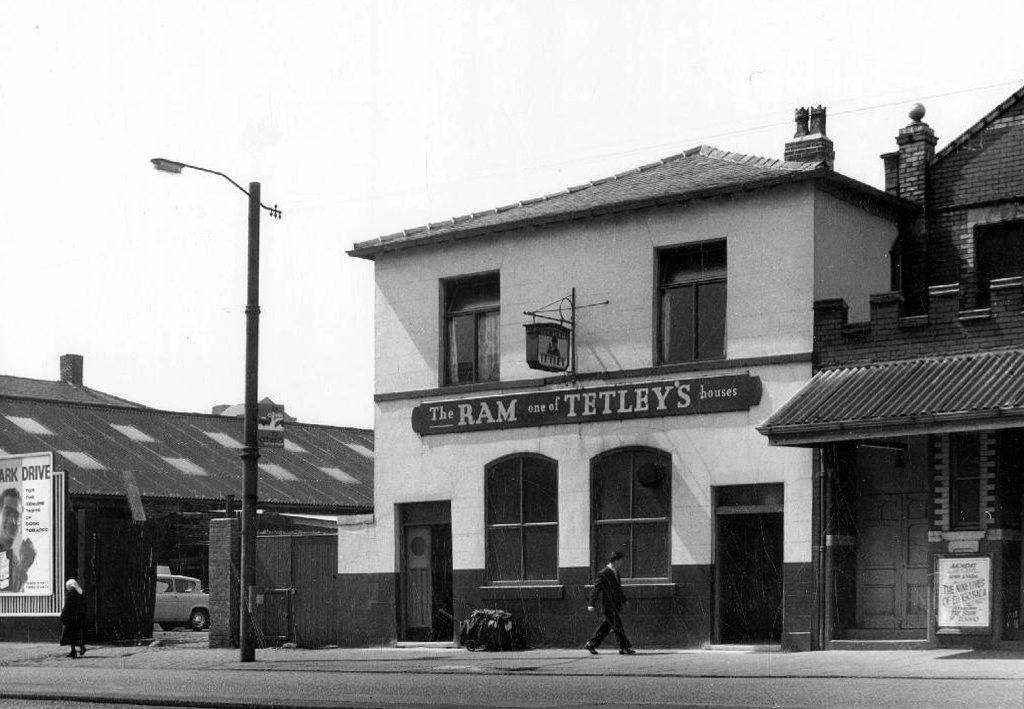
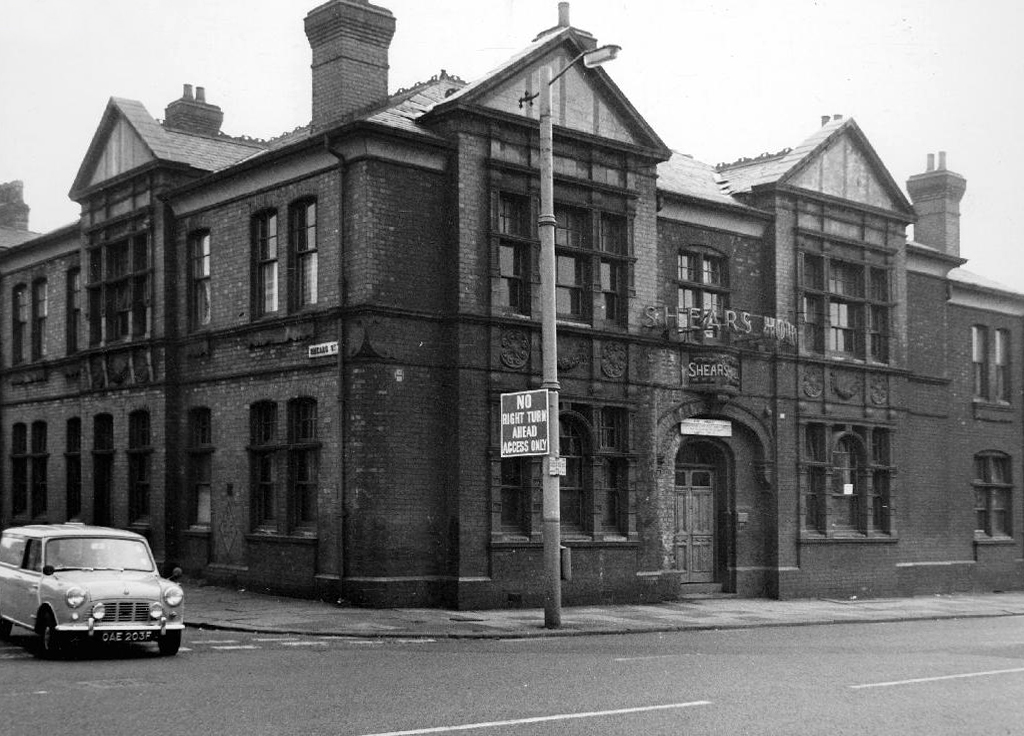
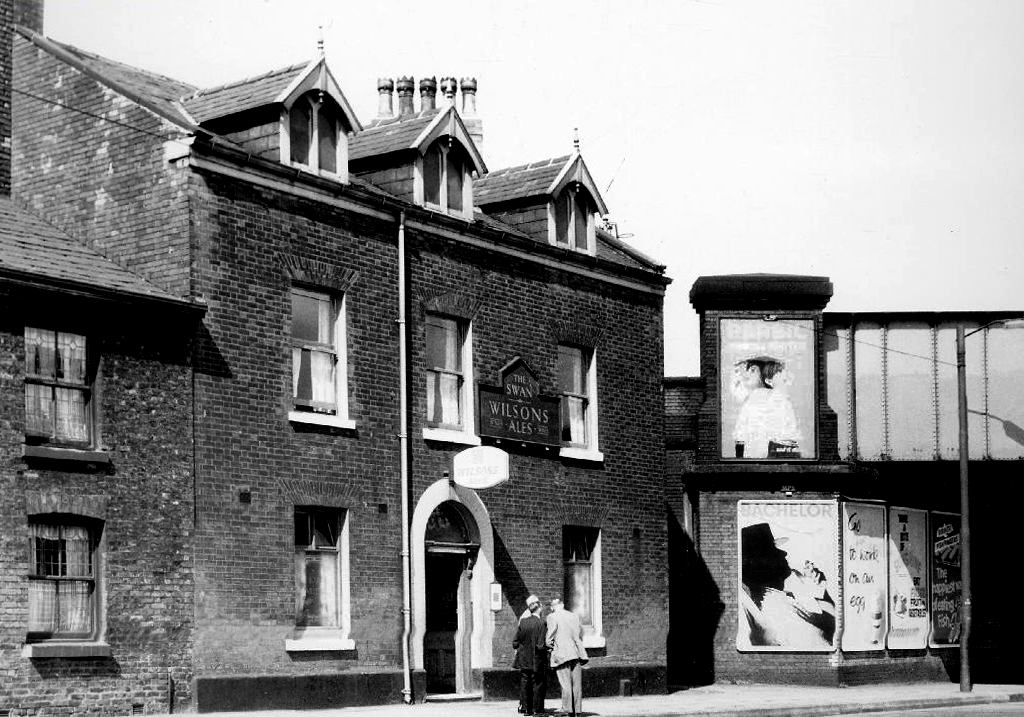
At one time named the Royal Swan, in the later years its name was changed to the Blazing Stump and before closure became a night club known as Bonkers.
A lost venue once loved for being the “wackiest fun pub” in the 1980s.
Date of closure unknown but thought to be late 1980s or early 1990s.
On the Dock Road was the ‘Swan Hotel which also opened in 1878. The nickname of the Swan Hotel was ‘The Blazing Stump’ and the story goes that an old seadog with a wooden leg used it to poke the fire. In those days pitch was used as a wood preservative, which is probably why his wooden leg caught fire when poking the fire one time too many – hence ‘The Blazing Stump.’
Due to its location near the Wallasey Docks majority of the customers who visited the pub came off the grain or ore boats. The pub would be thronged with Norwegians, Greeks, Germans, Swedes and Arabs and local people. When the pub was full the place had an unusual and interesting flavour because of this rare variety of people.
The ‘Stump’s’ days were numbered when less and less ships visited the Wallasey docks. The building still stands but remains unused, with the owner looking for a big payout sale. Or who knows, the doors may just open once more.
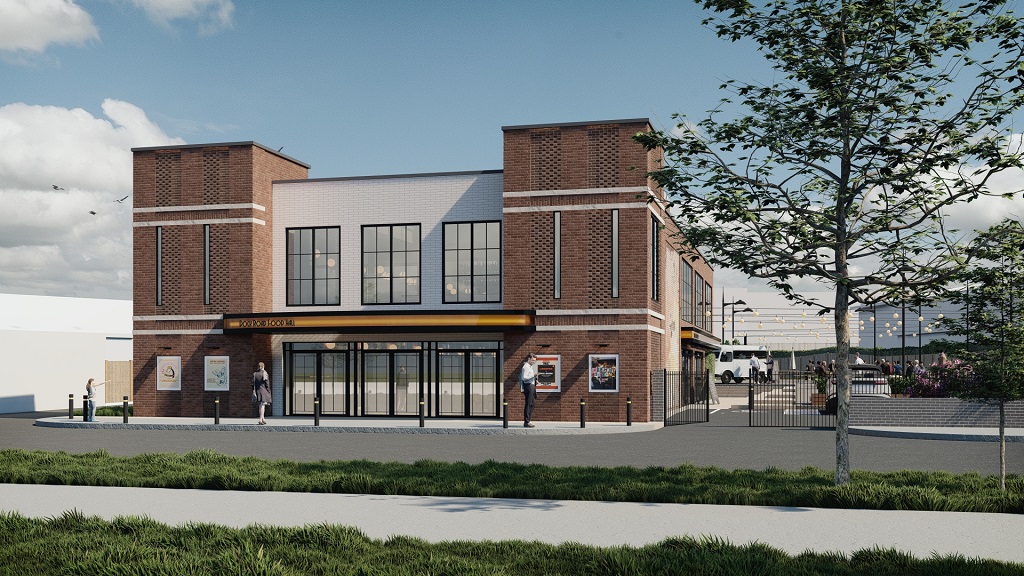
Now construction company AP Mitchell and Evoke Architecture have submitted plans to Wirral Council to completely turn the site around.
The plans include outdoor seating areas with benches, an outdoor event space, food and drinks vendors, and a large bar. A private function space will sit inside the new building which will be called the Dock Road Food Hall.
The design works carefully to balance modern design with reminiscent character features, sympathetic to the original building and surrounding historic buildings of similar style. The result is a contemporary structure that aligns with the evolving character of Dock Road and the Wirral Waters masterplan.
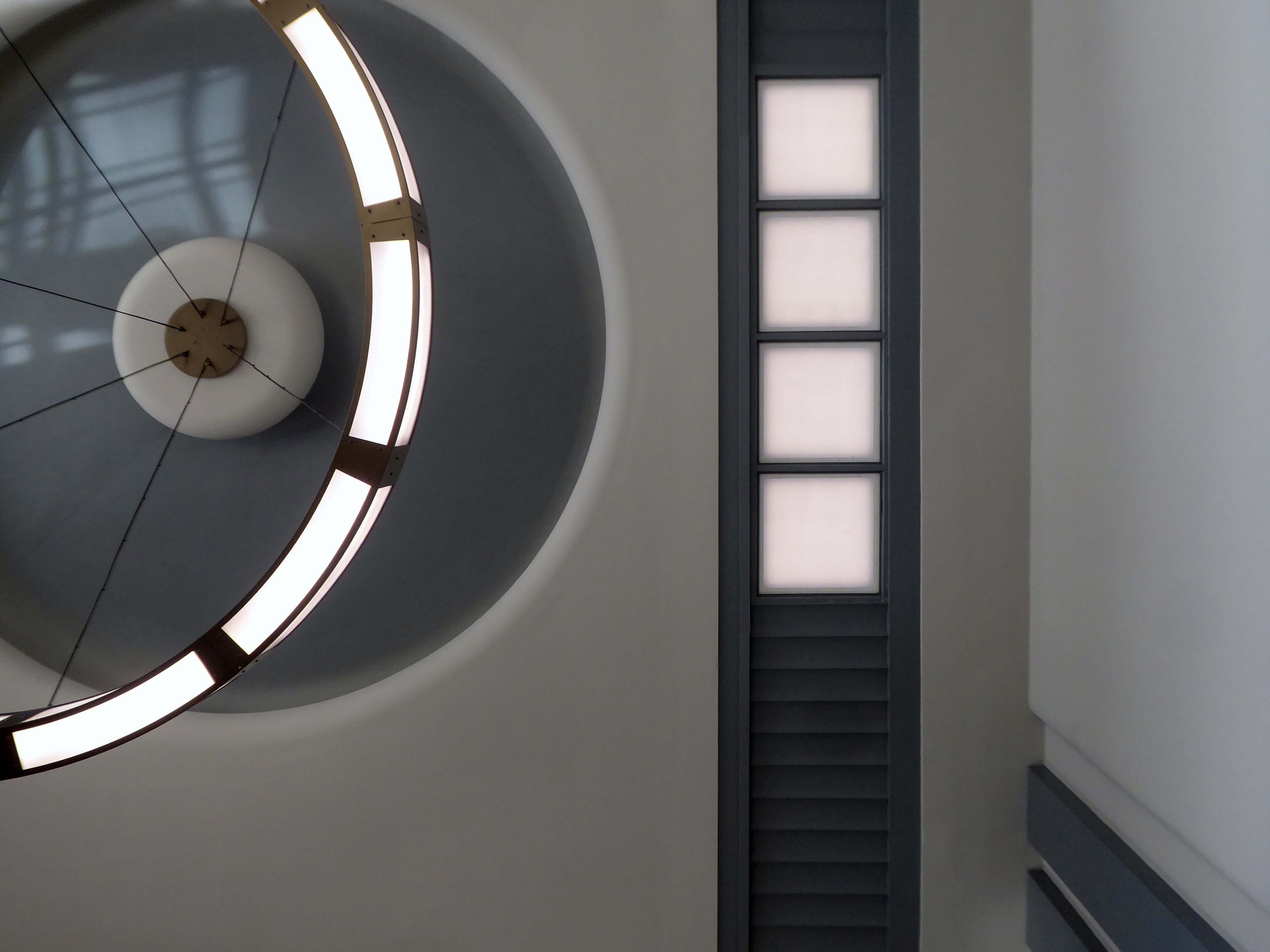
Arriving by train and ascending into the light – here’s the station lights.
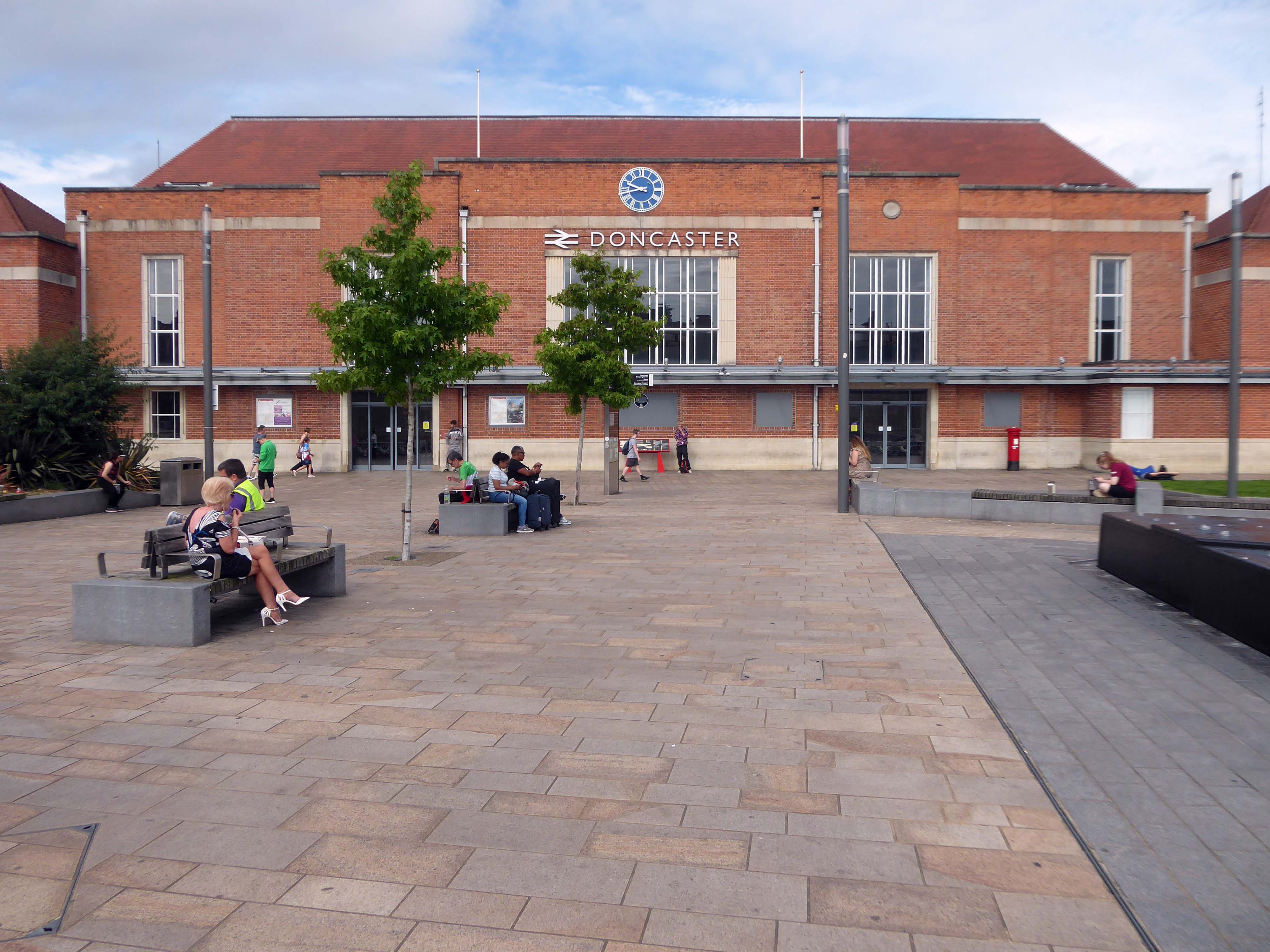
The railway station has sharpened up its apron and facade.
We have transformed the station forecourt. It has become a quality gateway which delivers a great first impression for visitors arriving in Doncaster by train. This will help stimulate interest from investors and developers, helping to attract new investment and create jobs for the borough and wider region.
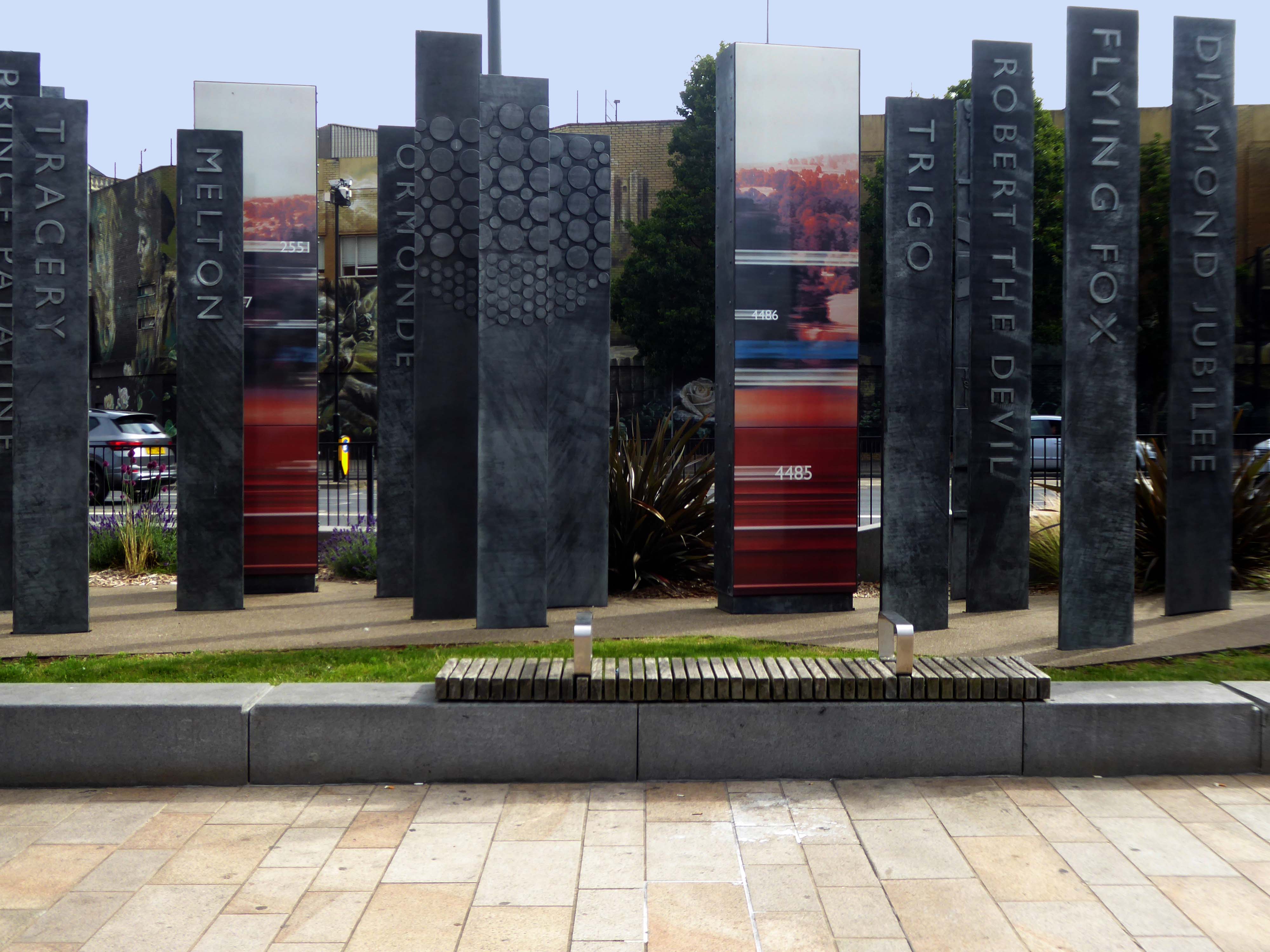
Celebrating engineering, speed and connectivity and stretching forty metres in length the public art at Doncaster Station consists of forty seven monoliths which are a nod to Doncaster’s past, present and future. With a fountain and three impressive water walls, the art takes centre stage in the new public space as you step out of the train station and head into the town centre.
The concept was devised by Doncaster Council and further developed by Chris Brammall.
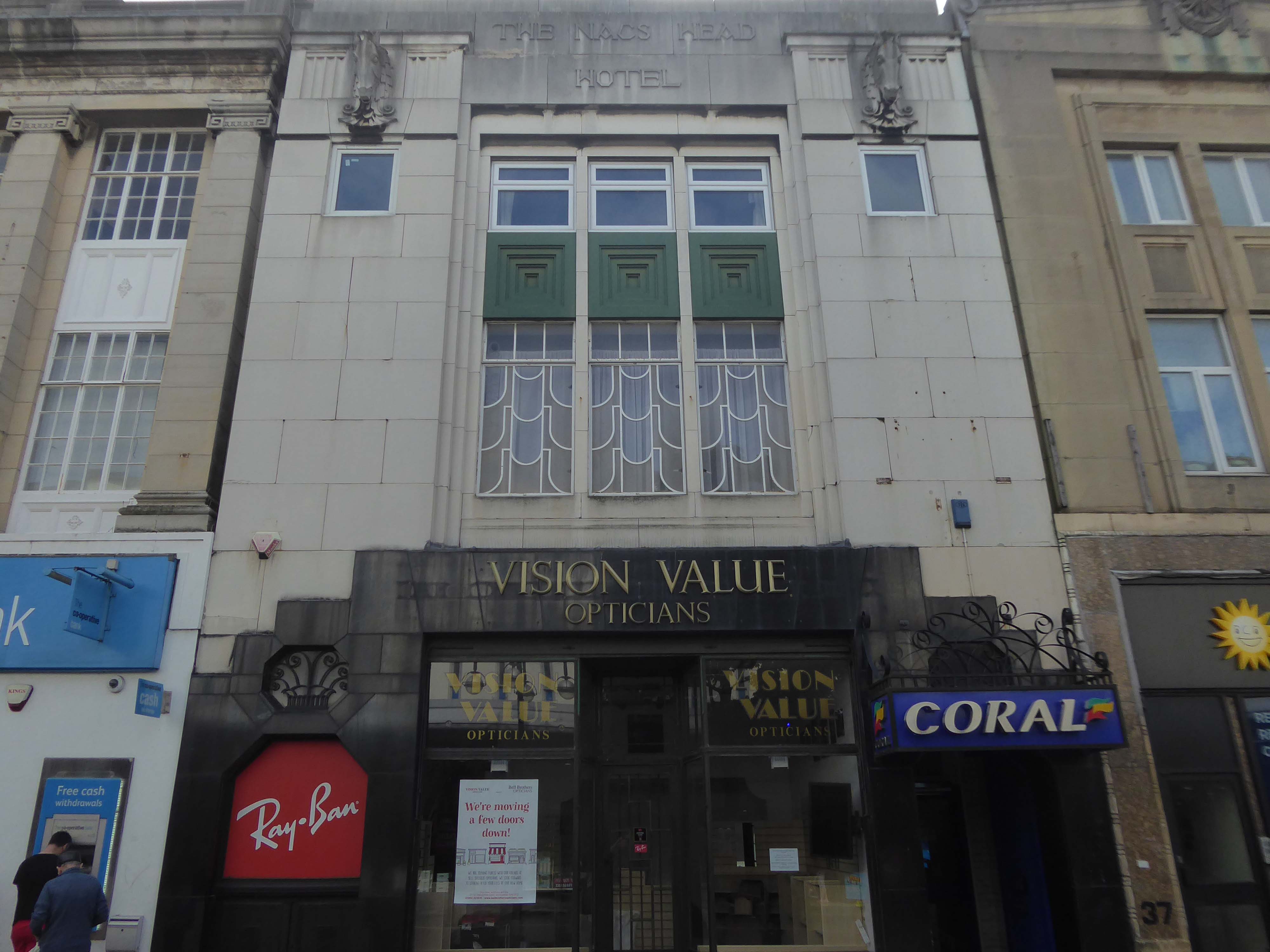
Typically the high and low streets of Britain’s industrial towns and cities, are an amalgam of architectural style and fashion, spanning at least two or three centuries.
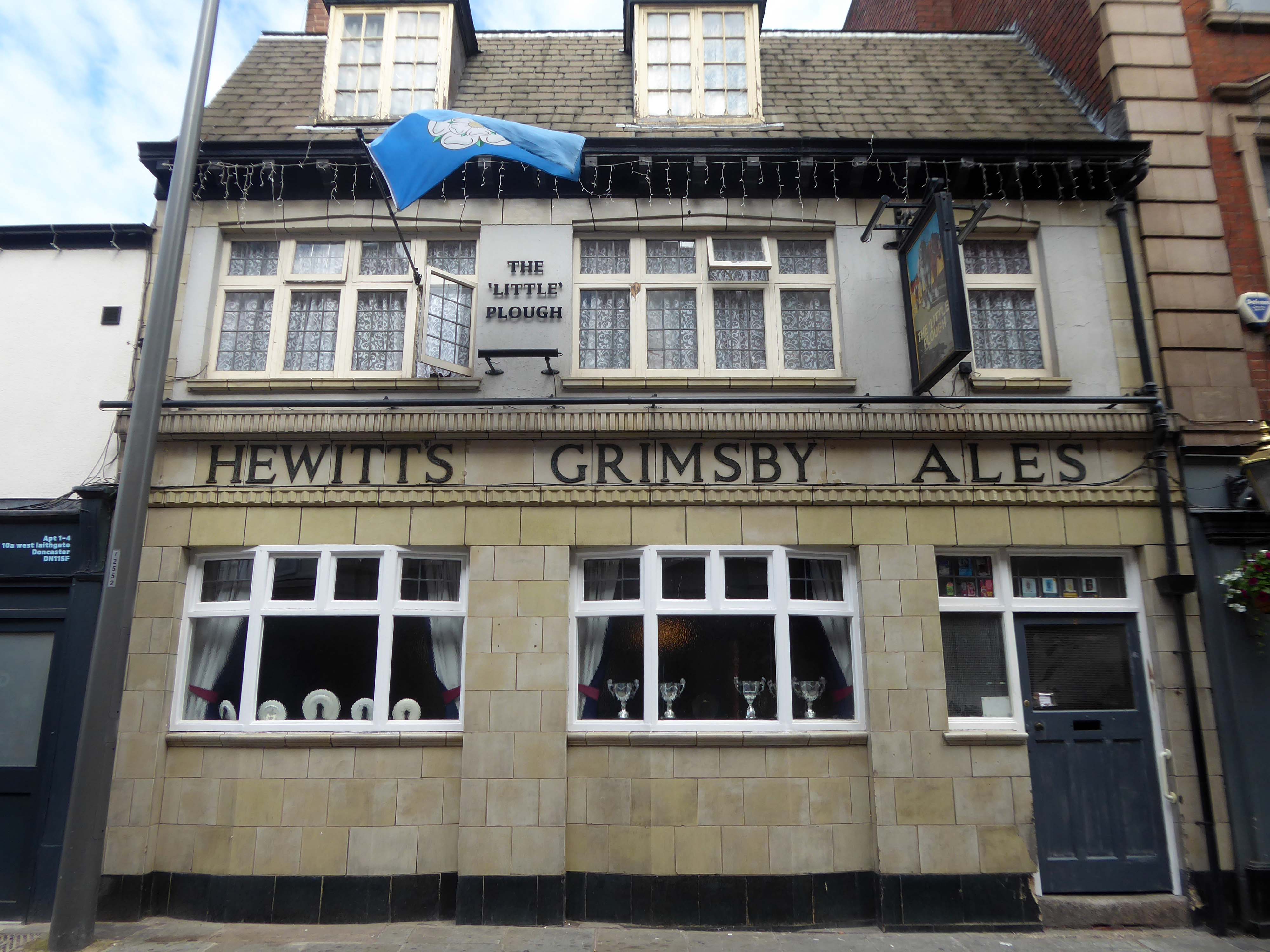
Behind the buff faience frontage is a lovely, small two-room pub with a well preserved interior created under plans of 1934. It was remodelled by the Grimsby brewers Hewitt Brothers Ltd who were Doncaster’s biggest pub owners for many years.
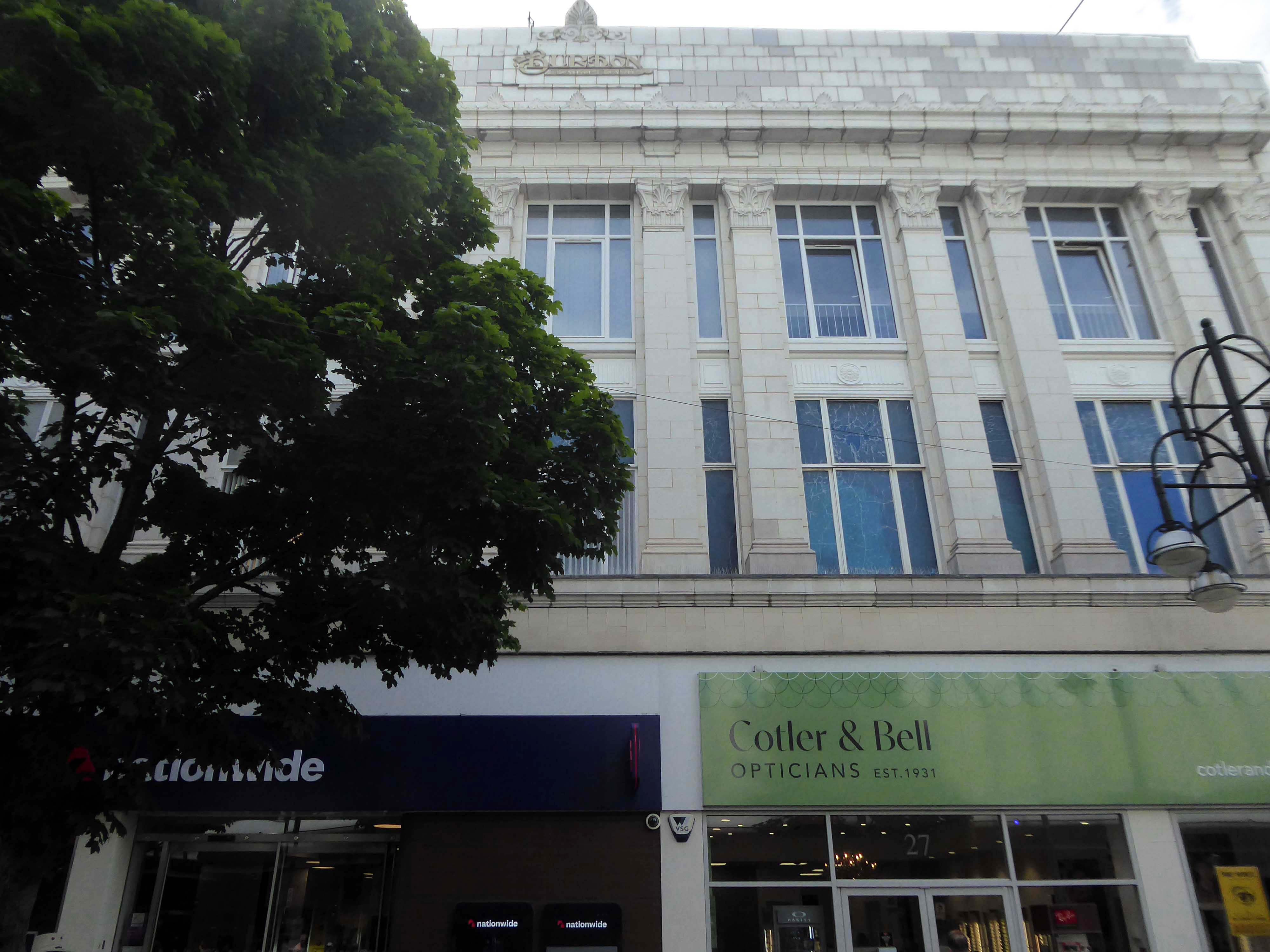
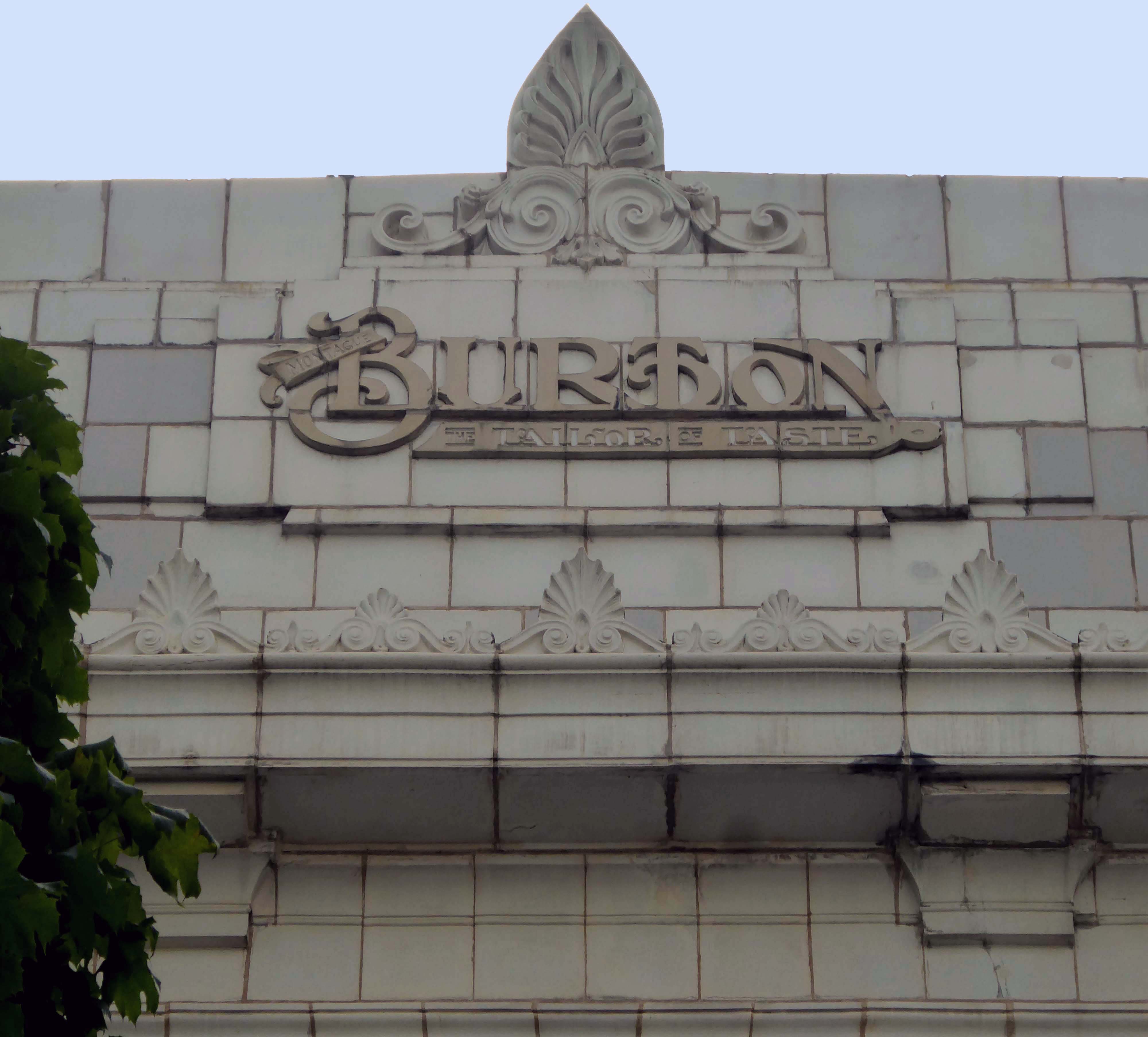
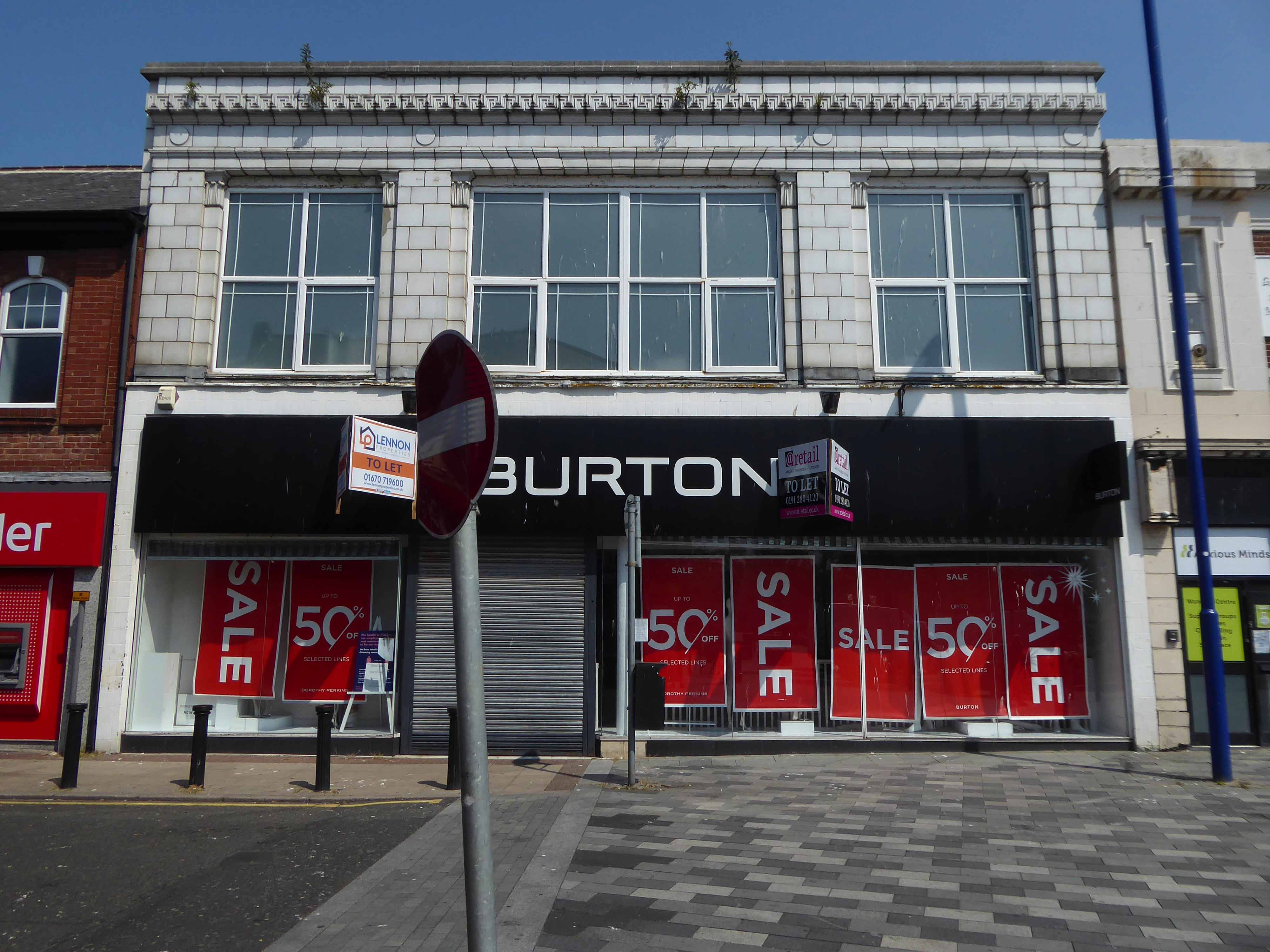
Of course, every town had a Burton’s – the tailor of taste.
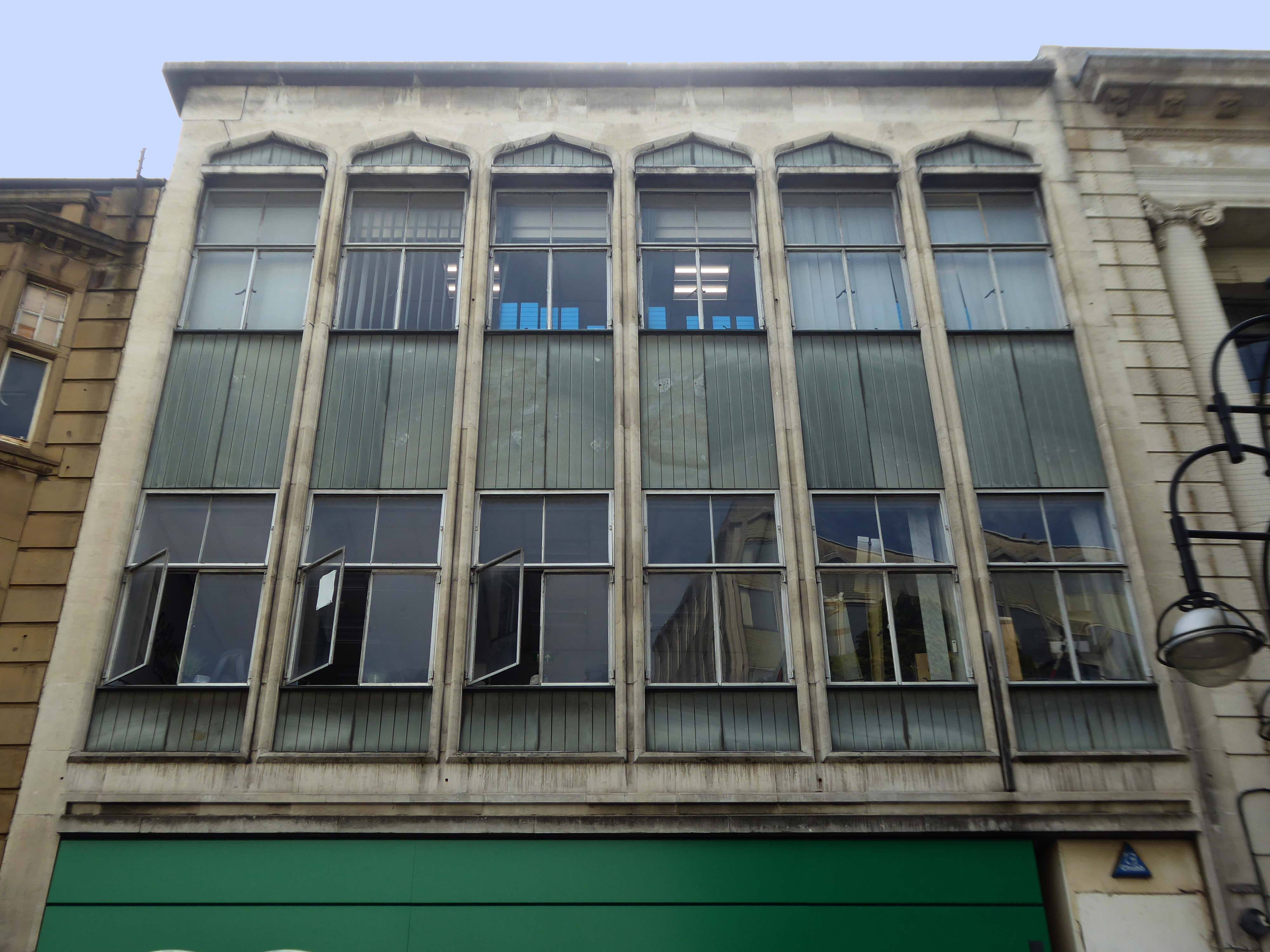
This post war infill has that distinctive Festival of Britain feel, original metal window frames, Portland stone and blueish slate like panels.
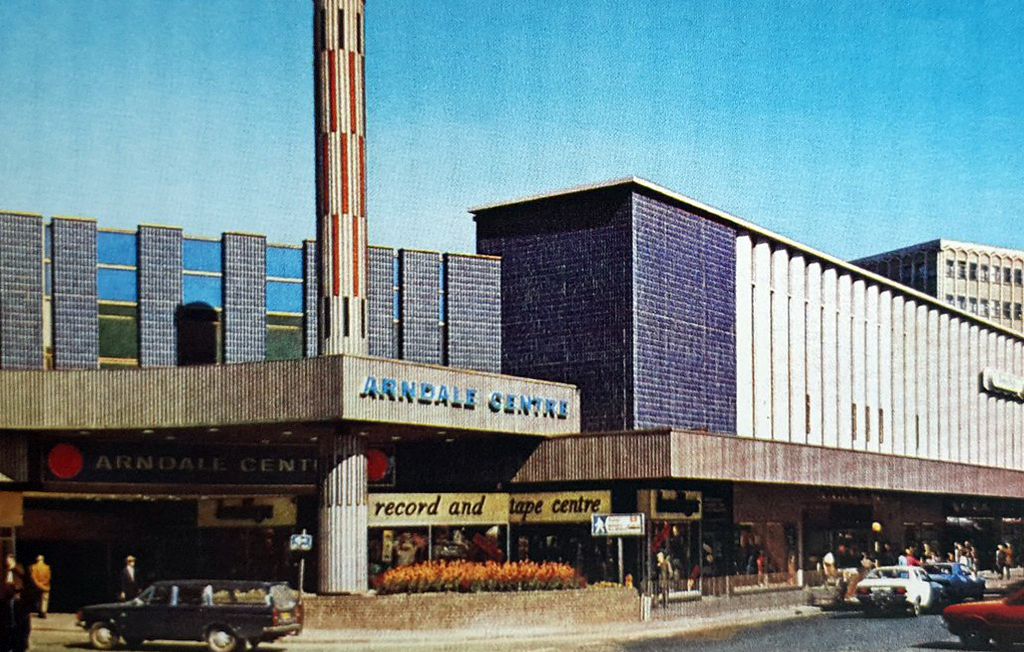
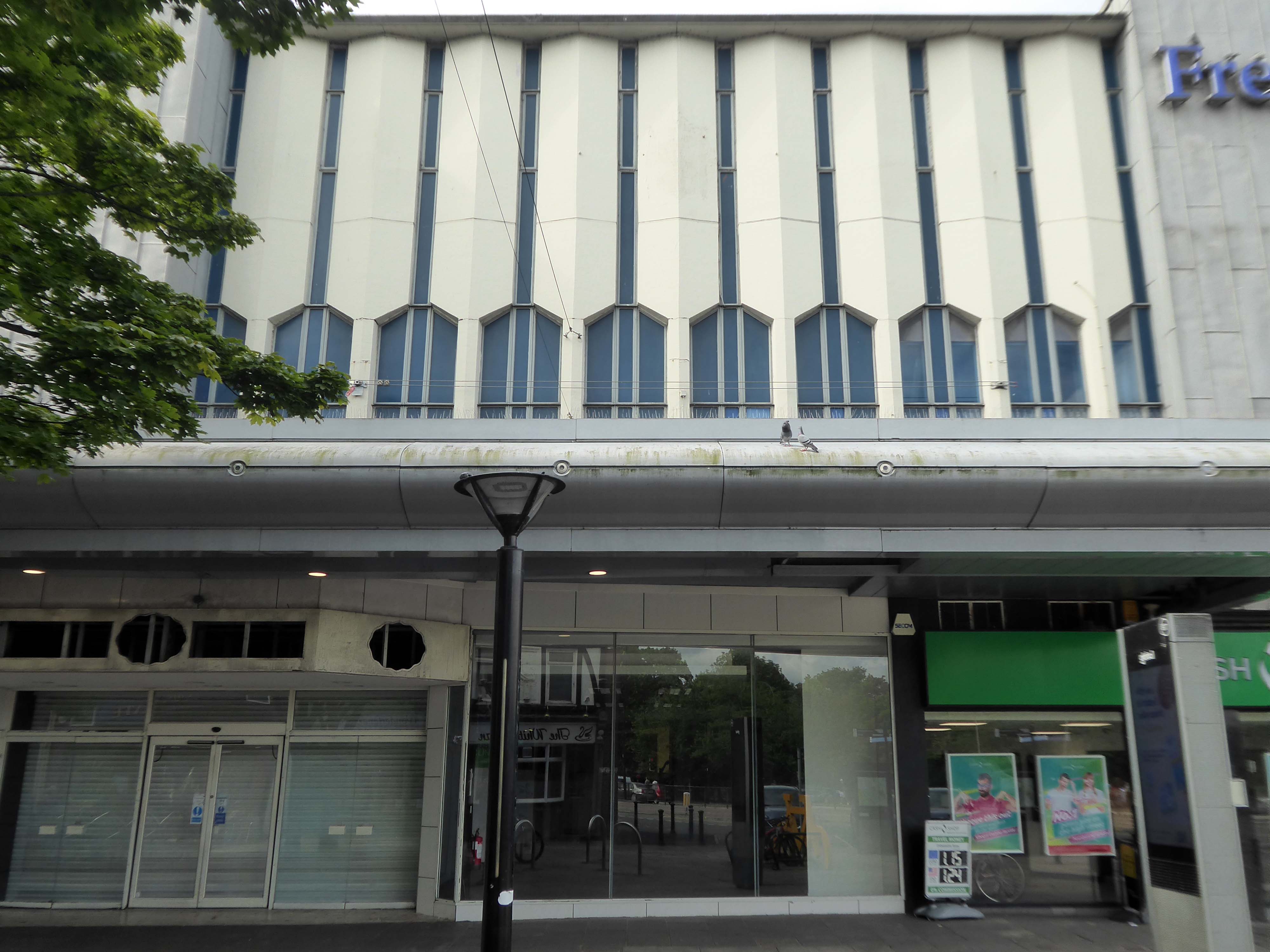
The revamped Frenchgate Shopping Centre, officially opened on October 4th 1968, has in places an upper tier, resistant to zinc over cladding.
The centre has been the heart of the city for over 40 years and was originally called the Arndale Centre because it was built, owned and managed by the Arndale Group. It was renamed in 1988 after a change of ownership, with the new name reflecting the name of the street which passes to the east of the centre and which is one of Doncaster’s main shopping streets.
The sale of the centre came just a year after Frenchgate had undergone a £200 million facelift to transform it into the country’s first shopping centre with integrated public transport and retail interchange.
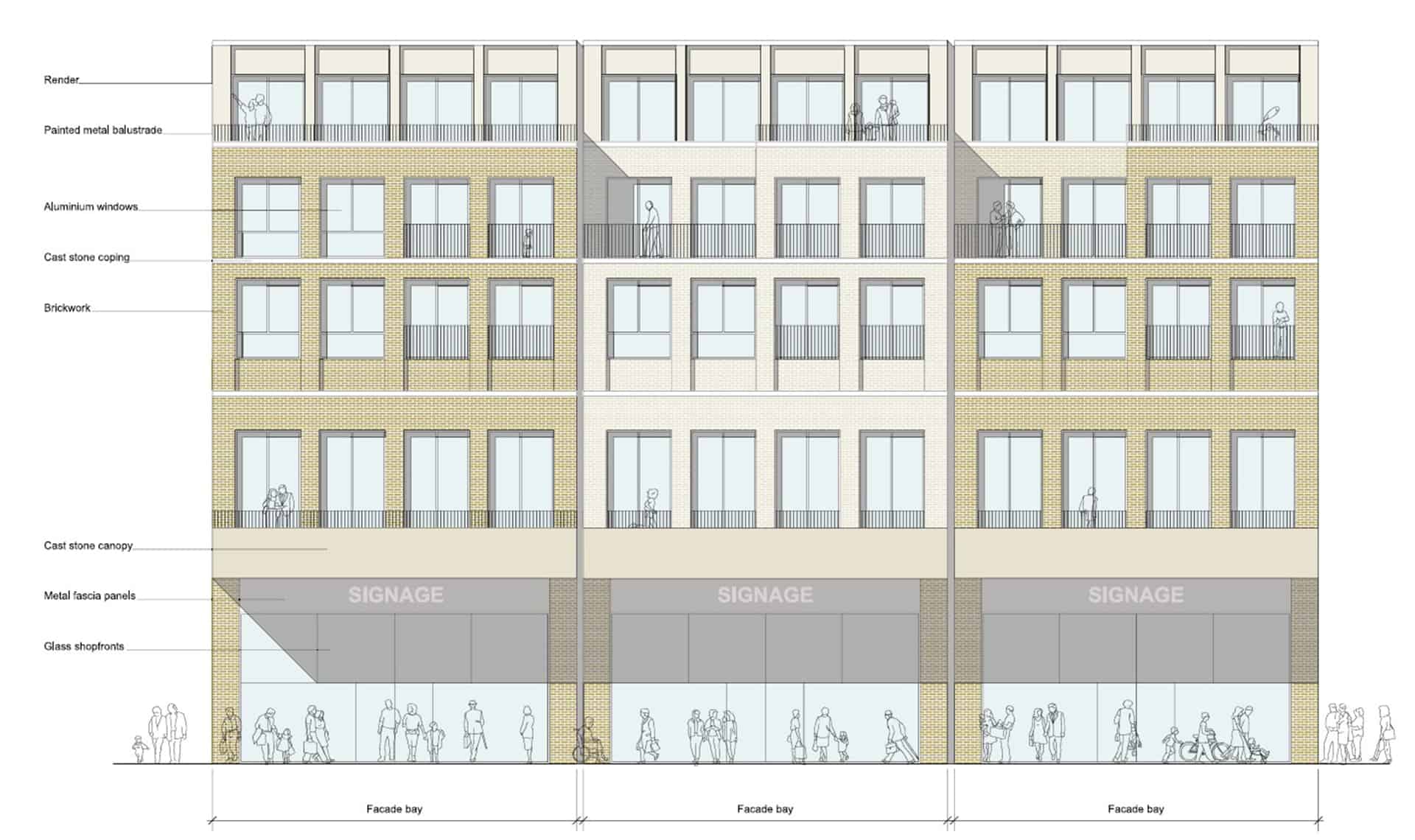
We propose this is fundamentally transformed though the addition of apartments that wrap along the back of the first-floor retail with a further 2.5 new storeys placed on top. We also feel additional height -up to seven or eight storeys, is justifiable to the corner of Frenchgate and Trafford Way.
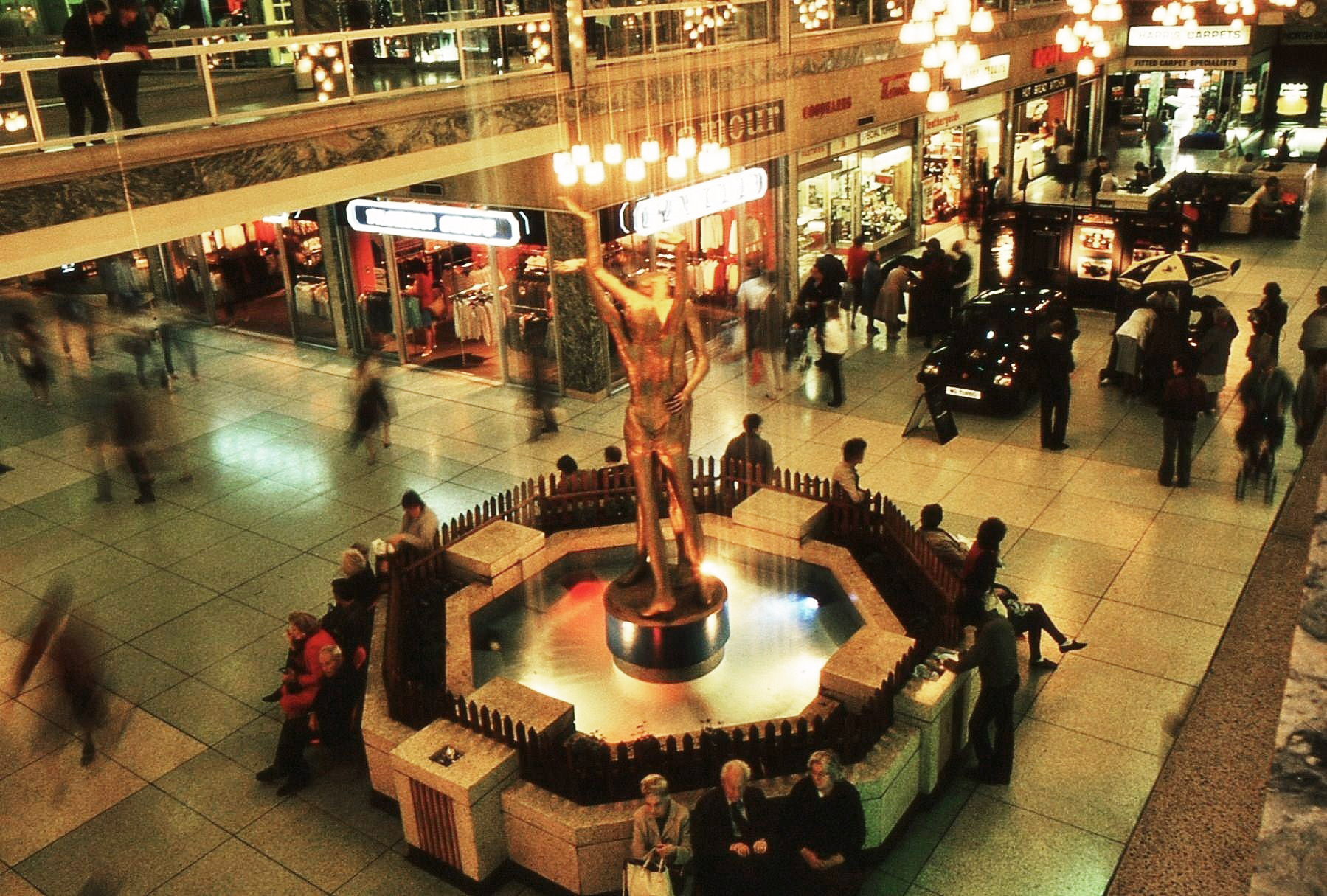
The Lovers were once located in the Arndale, removed to a local garden, unloved – then later reinstated in the Waterdale Centre, where we will embrace them a little later.
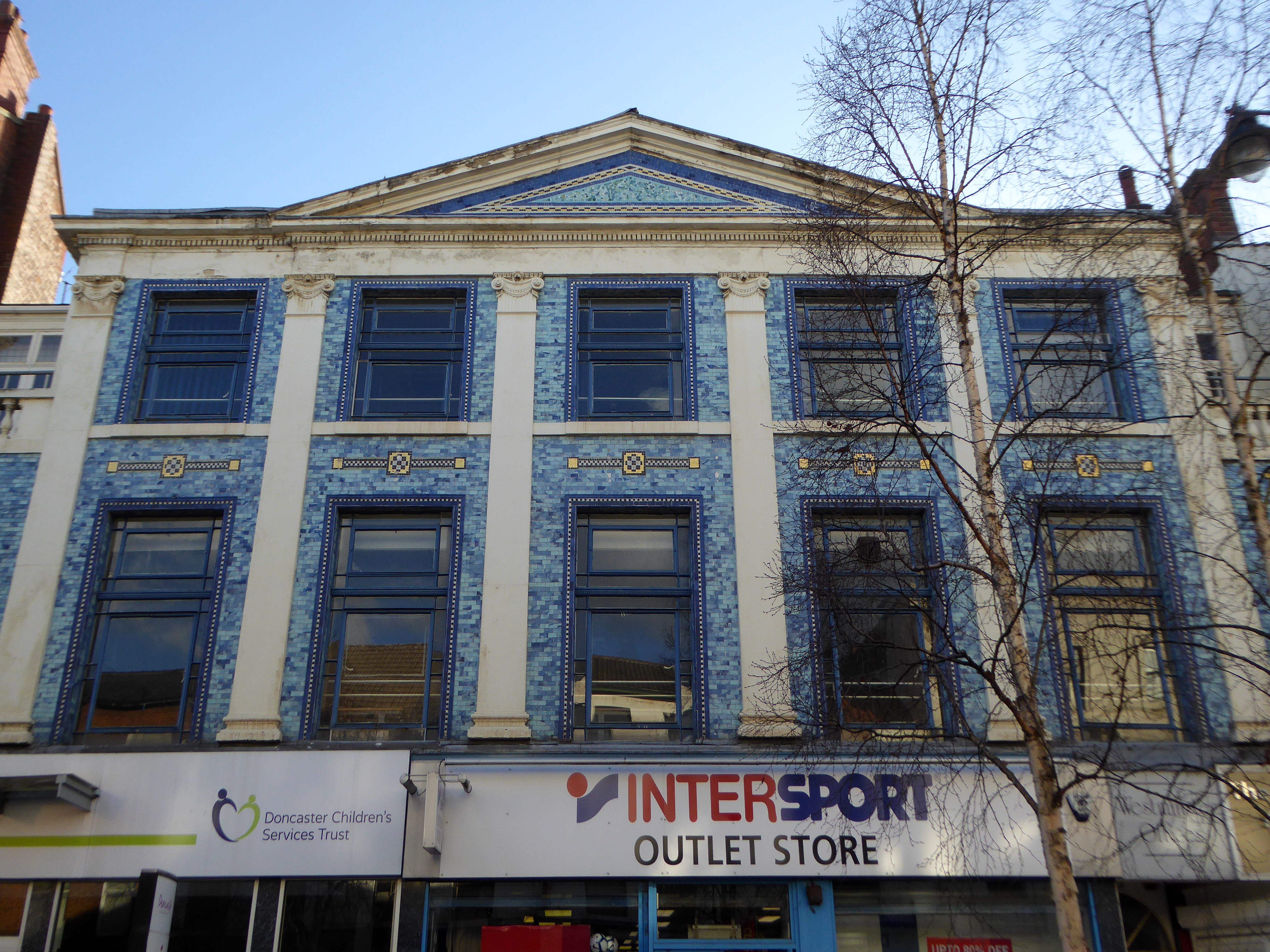
Turn right to take in the 1920s mosaic remake remodel of the Grade II listed Blue Building.
The Blue Building which used to be the Doncaster Design Centre and Tourist Information Centre was originally the home of John Whitaker, a wine merchant, and son of James Whitaker who was Mayor of Doncaster in 1758.
In 1925 the complete building was demolished apart from the facade which was retained and given a facing of decorative blue tiles. The intention was to build a shopping arcade from High Street to Printing Office Street. Only part of the arcade, known as the Westminster Arcade was built. It had a number of shops, the largest being that of Woodhouse & Co Furnishers.
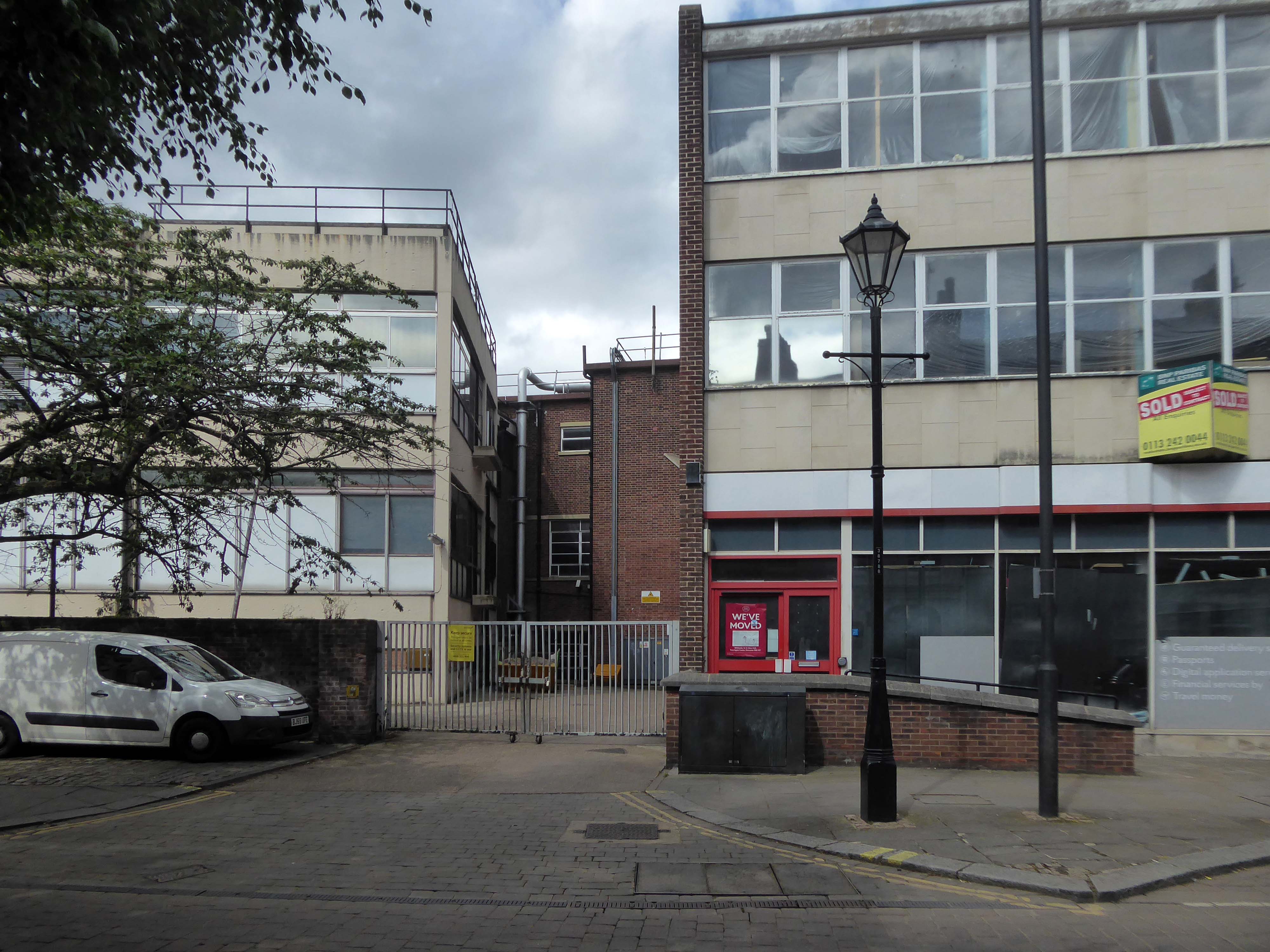
Two adjacent 60s extensions – to the right a redundant post office to the left an almost redundant telephone exchange, with the earlier brick built exchange in smack dab the middle.
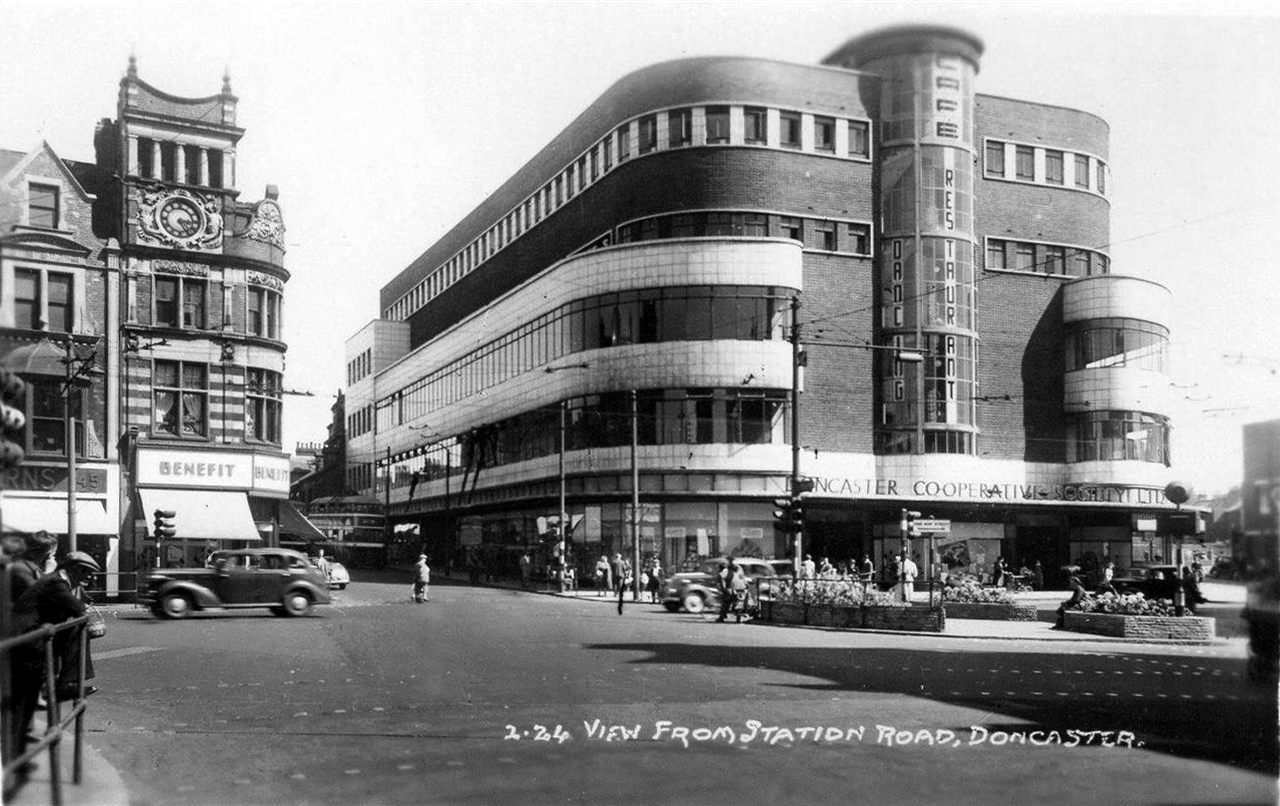
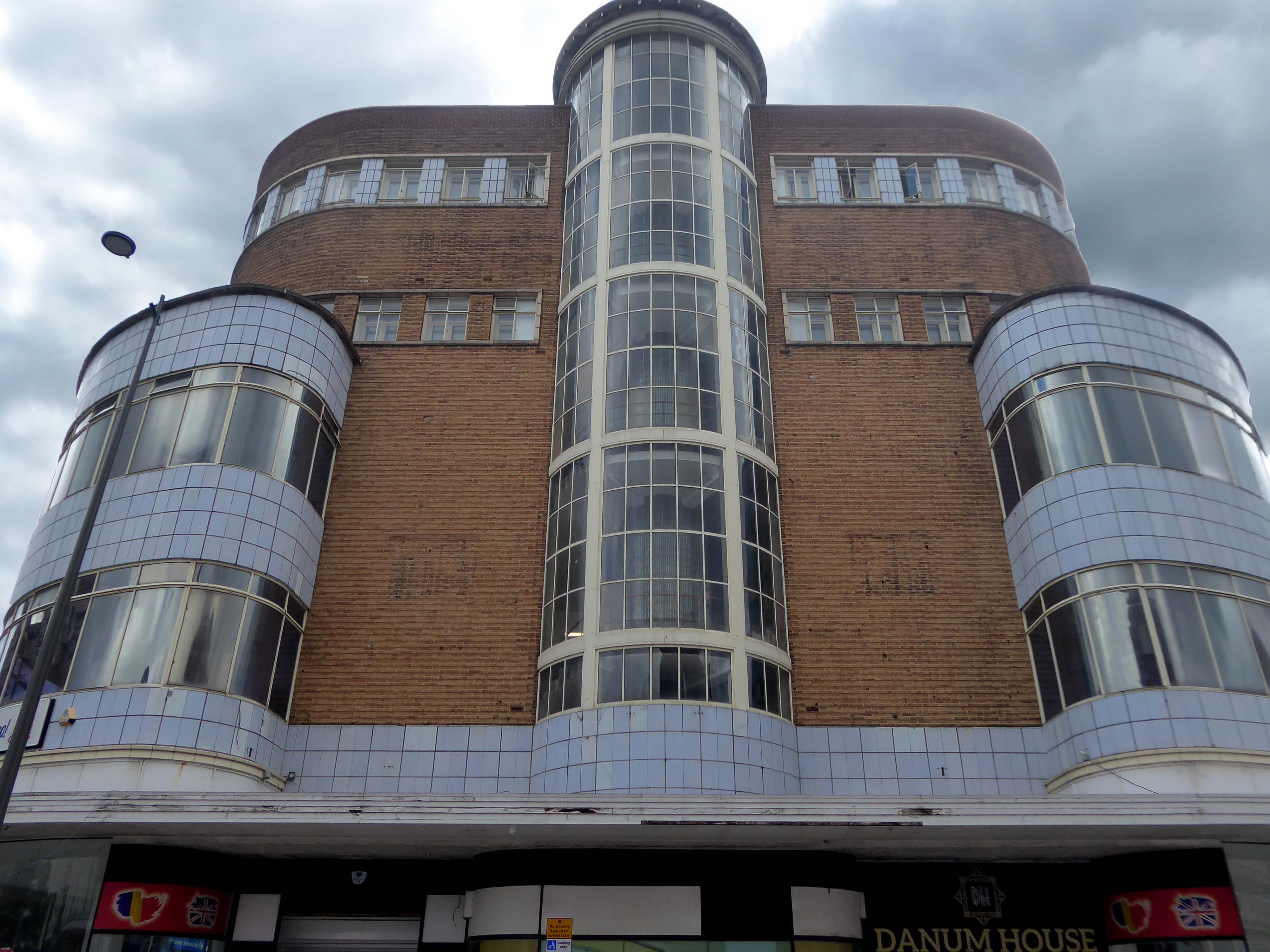
Turn another corner and it’s all at the Co-op now – the Grade II listed Danum Co-operativeBuilding, department store and offices: 1938-40 designed by T H Johnson & Son for the Doncaster Co-operative Society Ltd.
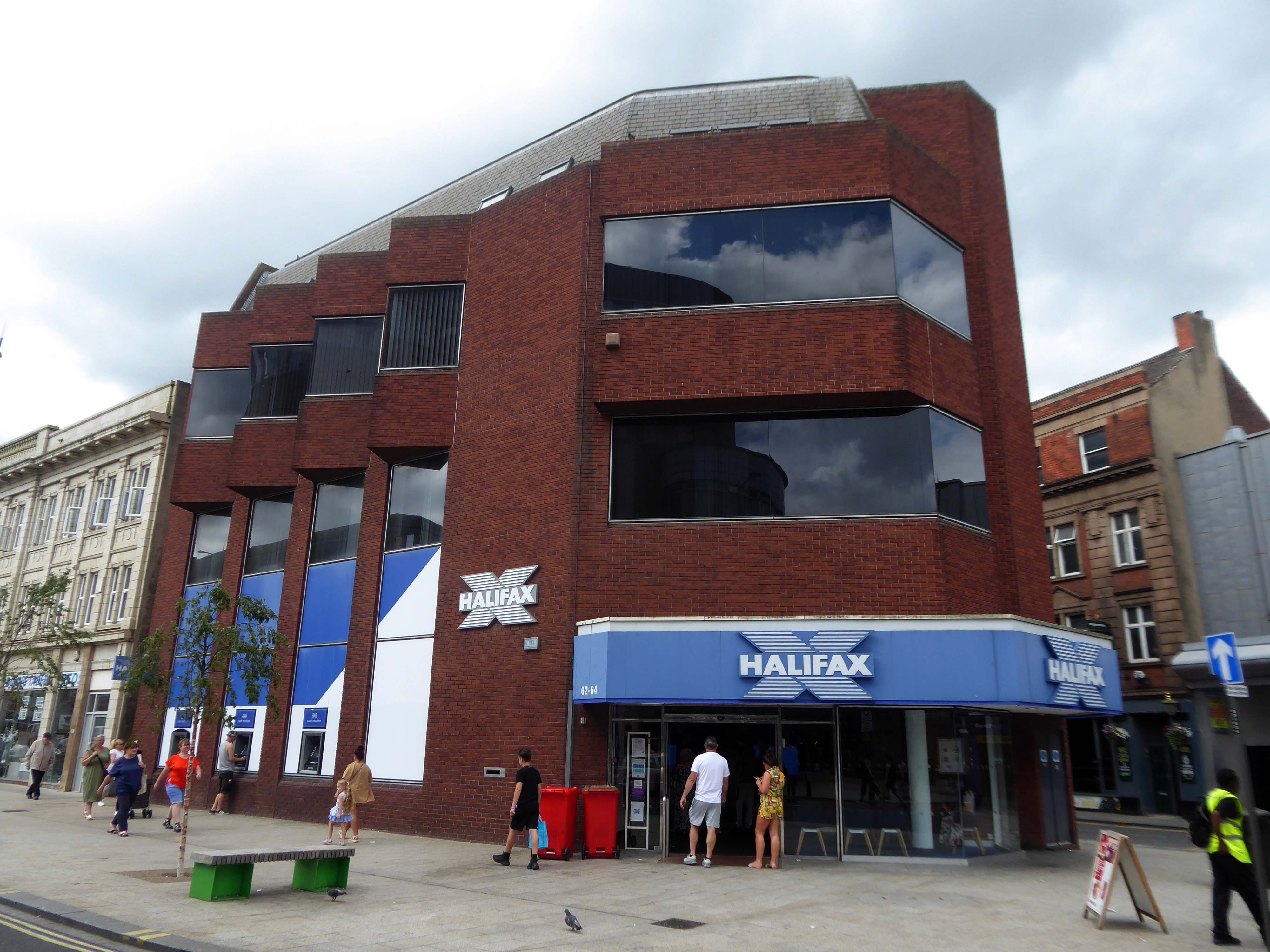
Over the road a zig-zag Halifax Building Society branch, tightly contorted by its corner footprint.
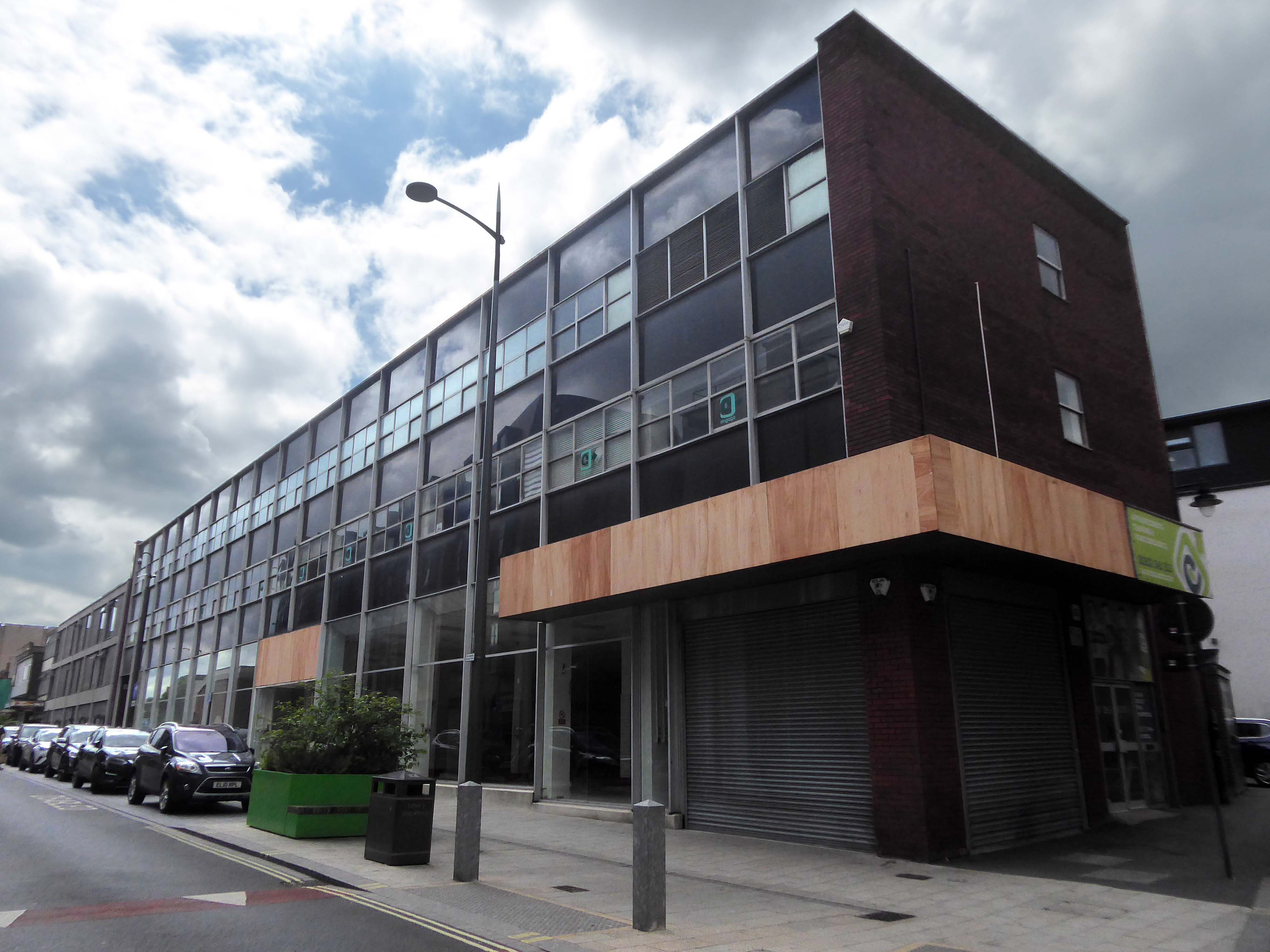
To the right of the Danum, this former Boyes store, having relocated to the Wilko site, the building is ripe for residential conversion.
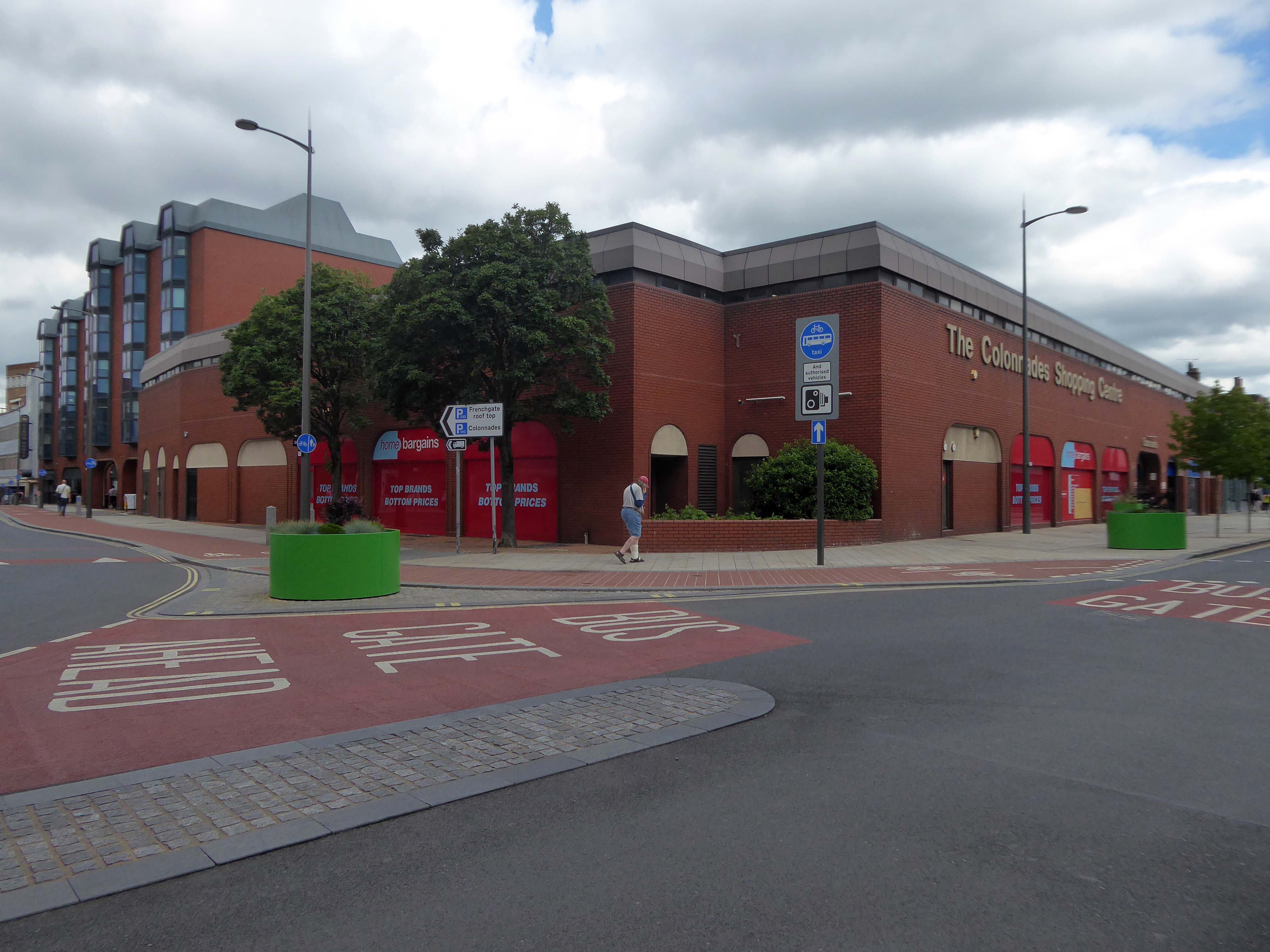
To the left the Colonnades Shopping Centre a fierce angular glass and brick bunker of mixed office and retail space – the sole occupant seeming to be Home Bargains.
A £3.3m makeover of the Colonnades shopping mall in Doncaster town centre was completed in 2019.
The scheme of works was co-ordinated by Doncaster Council and funded by the Sheffield City Region Local Growth Fund.
Built in the 1980s, the brick built building received a major overhaul. The investment saw the visual appearance enhanced inside and out. The five floors were transformed into the prime office space needed in the town centre and the enhancements to the retail area were also finished.
The shift in the town’s axis to the Frenchgate and Market areas, seems to have taken the wind out of its sails.
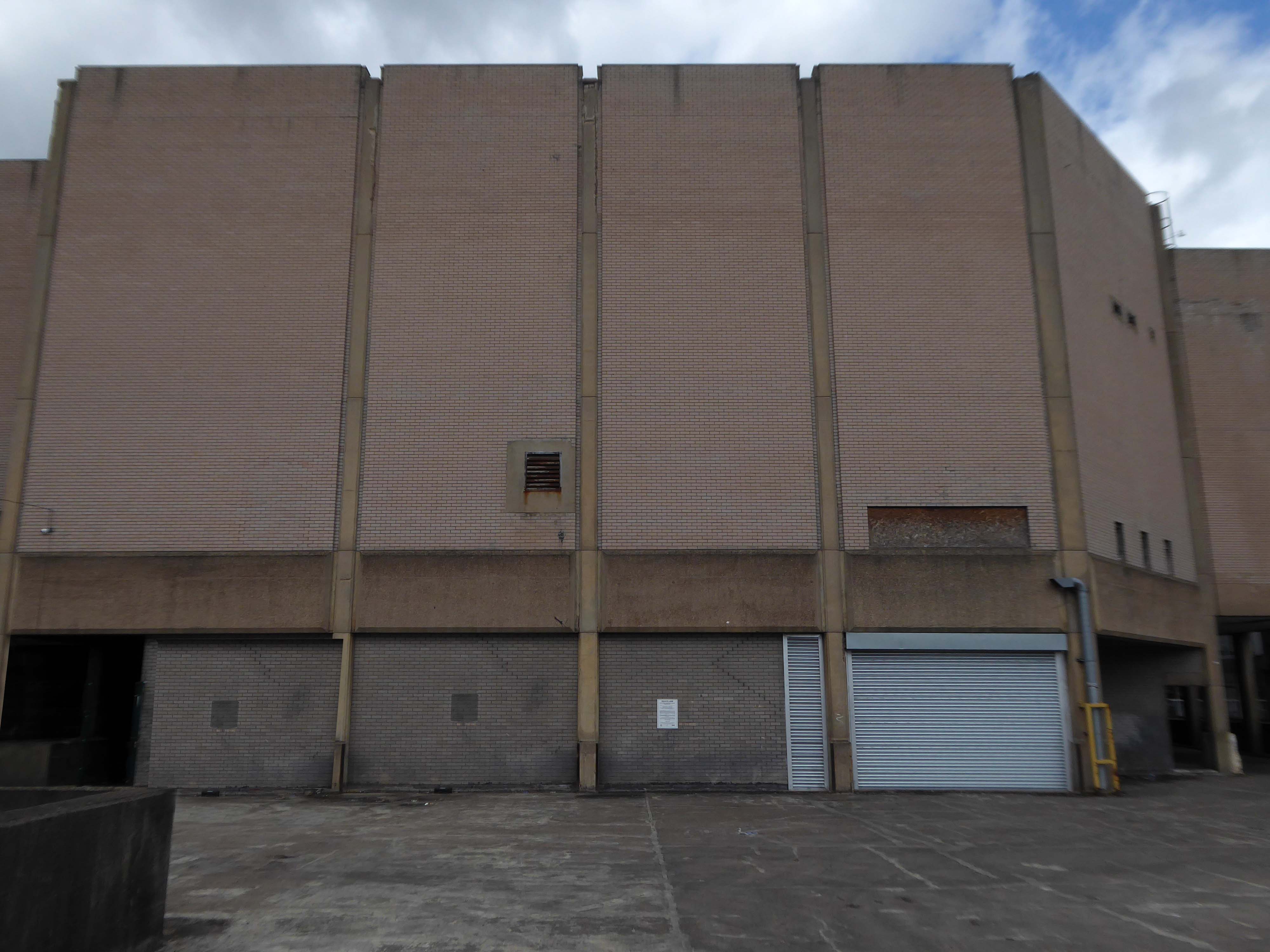
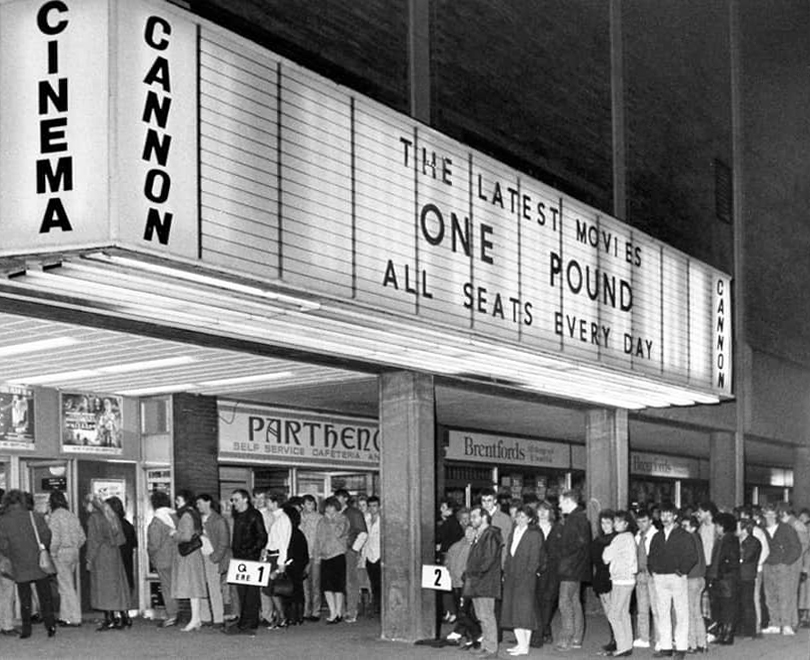
The former flicks now a redundant pale brick behemoth – no more and ABC.
Doncaster’s new £250,000 ABC cinema, part of the Golden Acres development near the town centre, was opened on May 18th 1967.
Closed in January 1981 for conversion into a triple screen it re-opened on 9th April 1981 with seating in the three screens for 477, 201 and 135.
The Cannon Group took control in the mid-1980’s and it was re-named Cannon and it closed on 18th June 1992, screening its opening film Doctor Zhivago.
Cinema Treasures
The Golden Acres development seemed to have morphed into the Waterdale Centre.
It is currently being reshaped to provide a line of desire twixt the Civic and Cultural areas, from the town centre. There are still the remnants of homes, shops and a pub amongst the demolition – almost inevitably there is new paving.
Waterdale is a well-known part of Doncaster’s town centre. During its heyday it was a bustling area with people flocking to shops and the like – it was a place you had to visit while you were in town. However, it had suffered a steady decline which continued when the southern bus station closed – Frenchgate Interchange opening, and Doncaster College moved to the Hub at the Waterfront. With limited public transport entering the area and no student population on its doorstep, less people had reason to pass through.
Demolition of the College.
The Civic and Cultural Quarter is transforming Waterdale reconnecting it to the town centre. The quality and content of the plans is raising the profile of this part of town to new levels. The carefully thought out layout and consistent building design is giving the area a clear identity. It is already becoming a big attraction that draws people in and encourages redevelopment in the neighbouring areas.
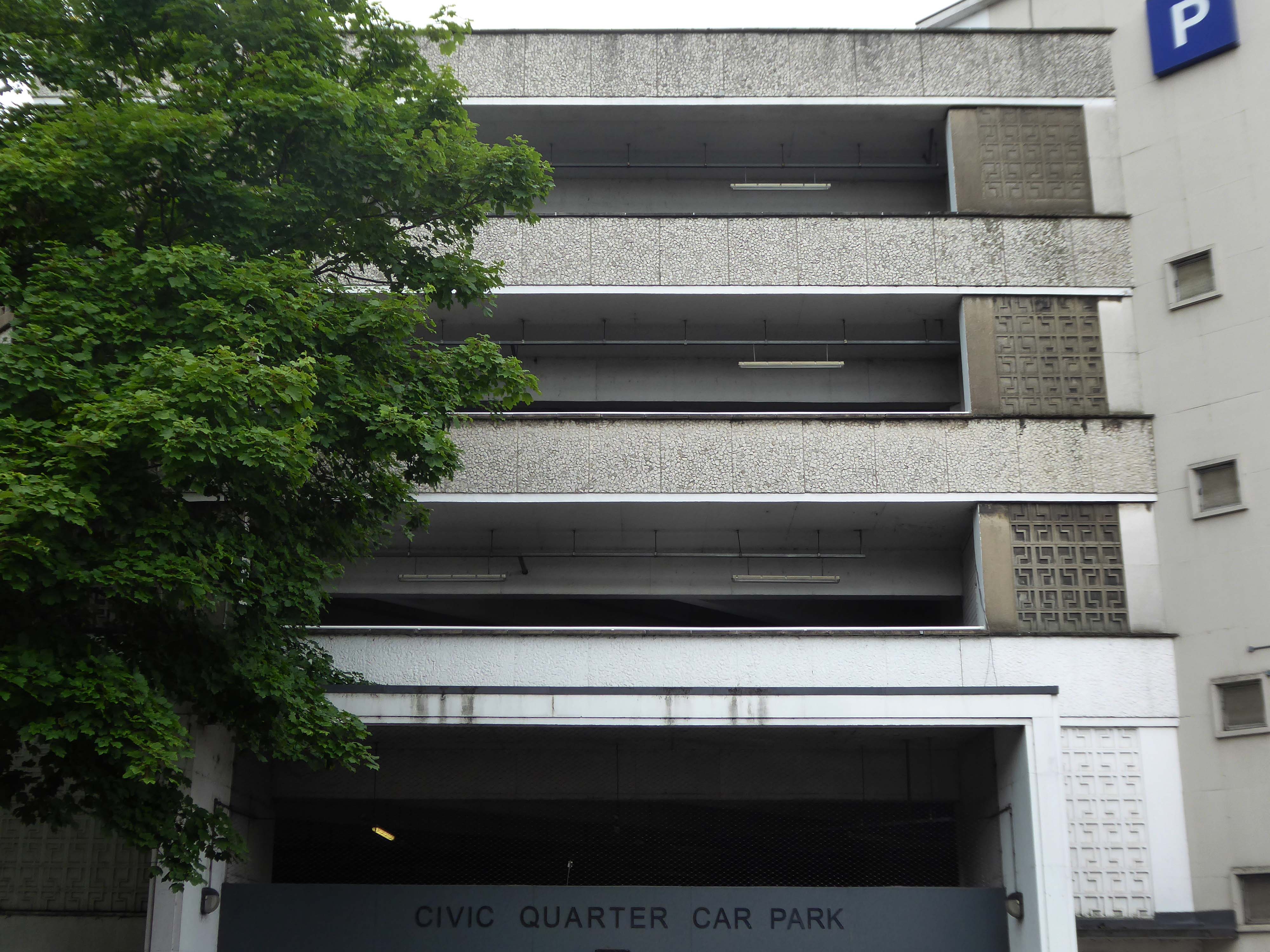
The weary walker is diverted toward the Civic Quarter Car Park.
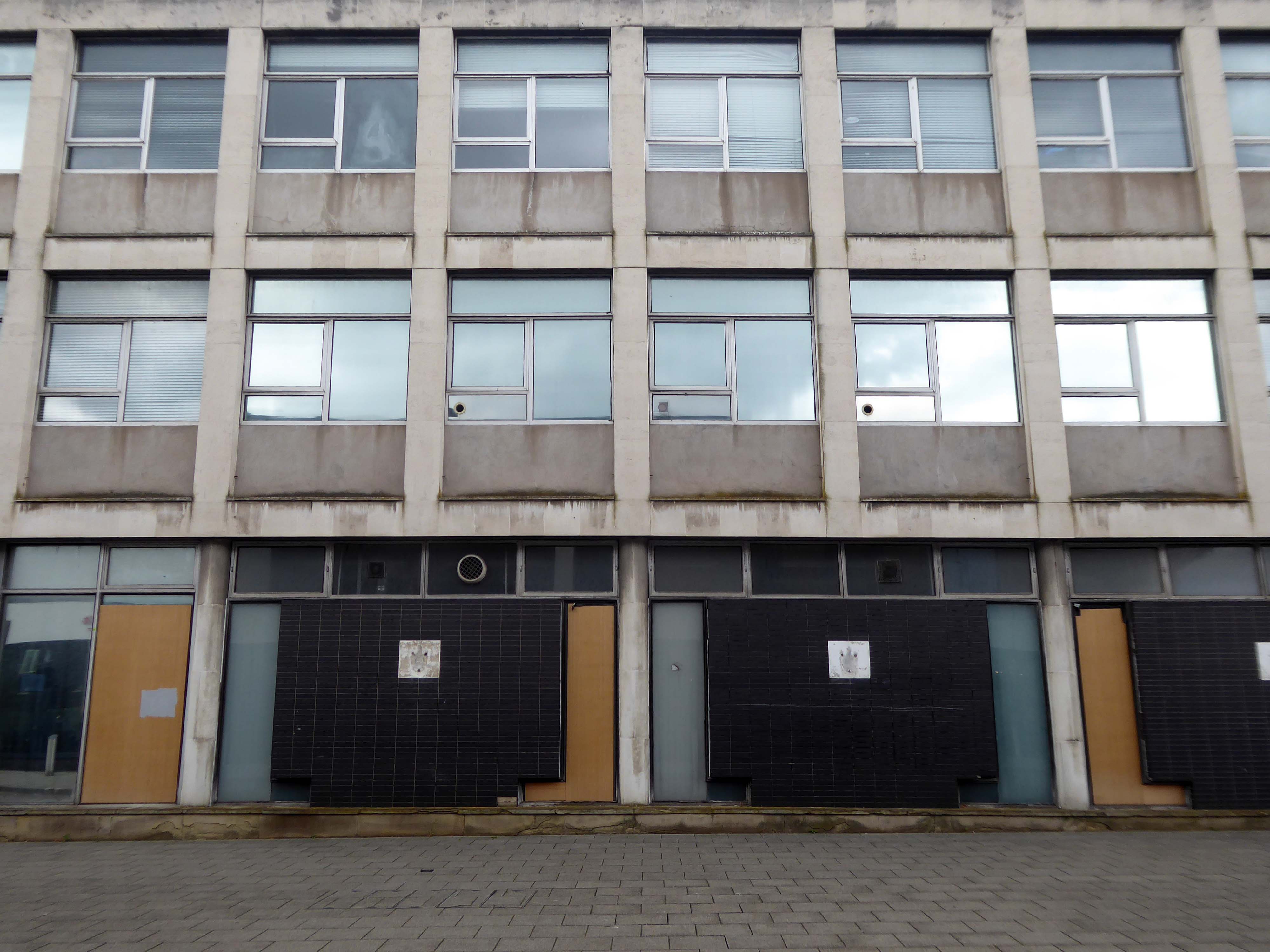
The former Civic Offices are to be demolished.
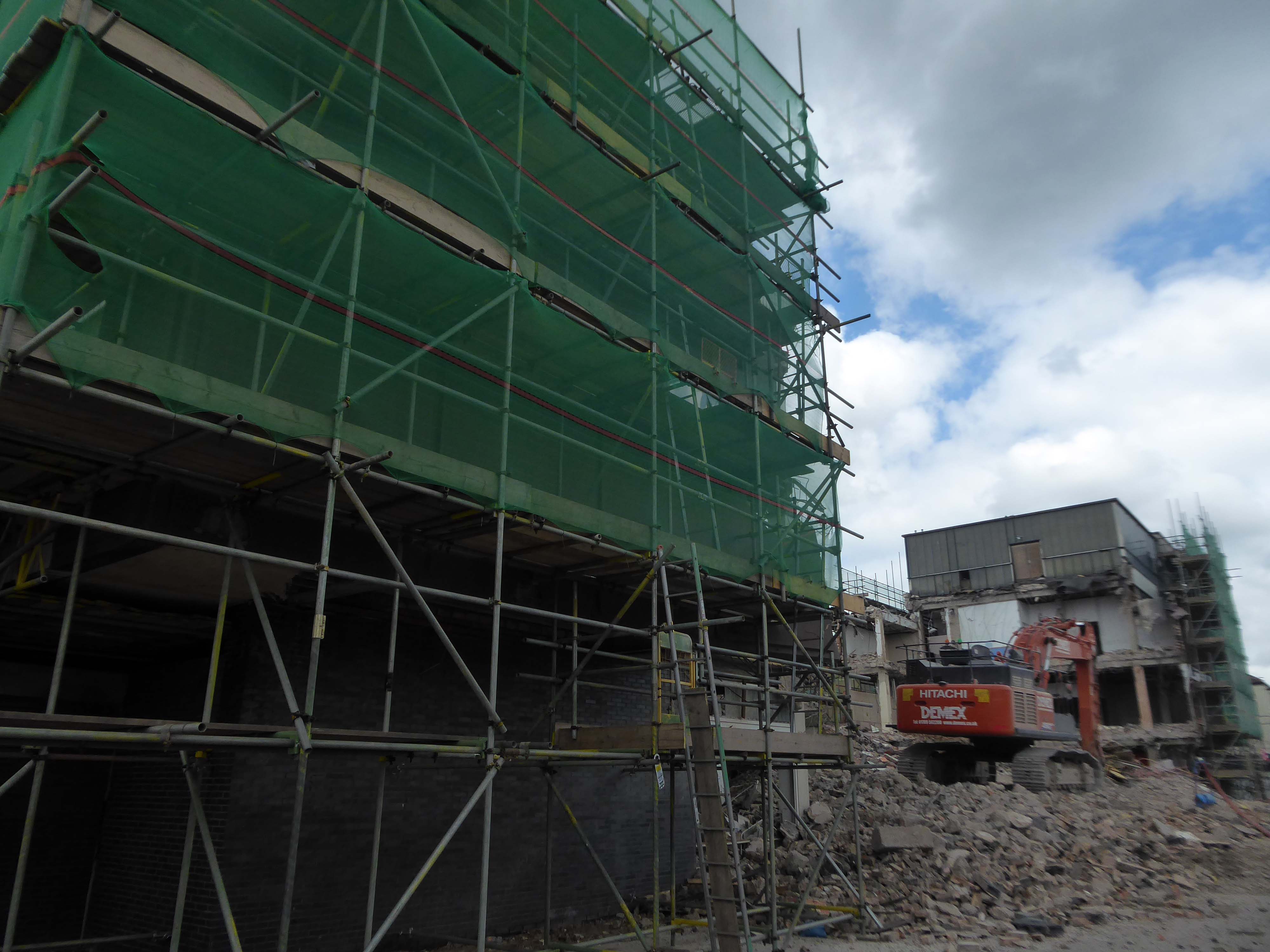
Demolition of the Central Library is well under way.
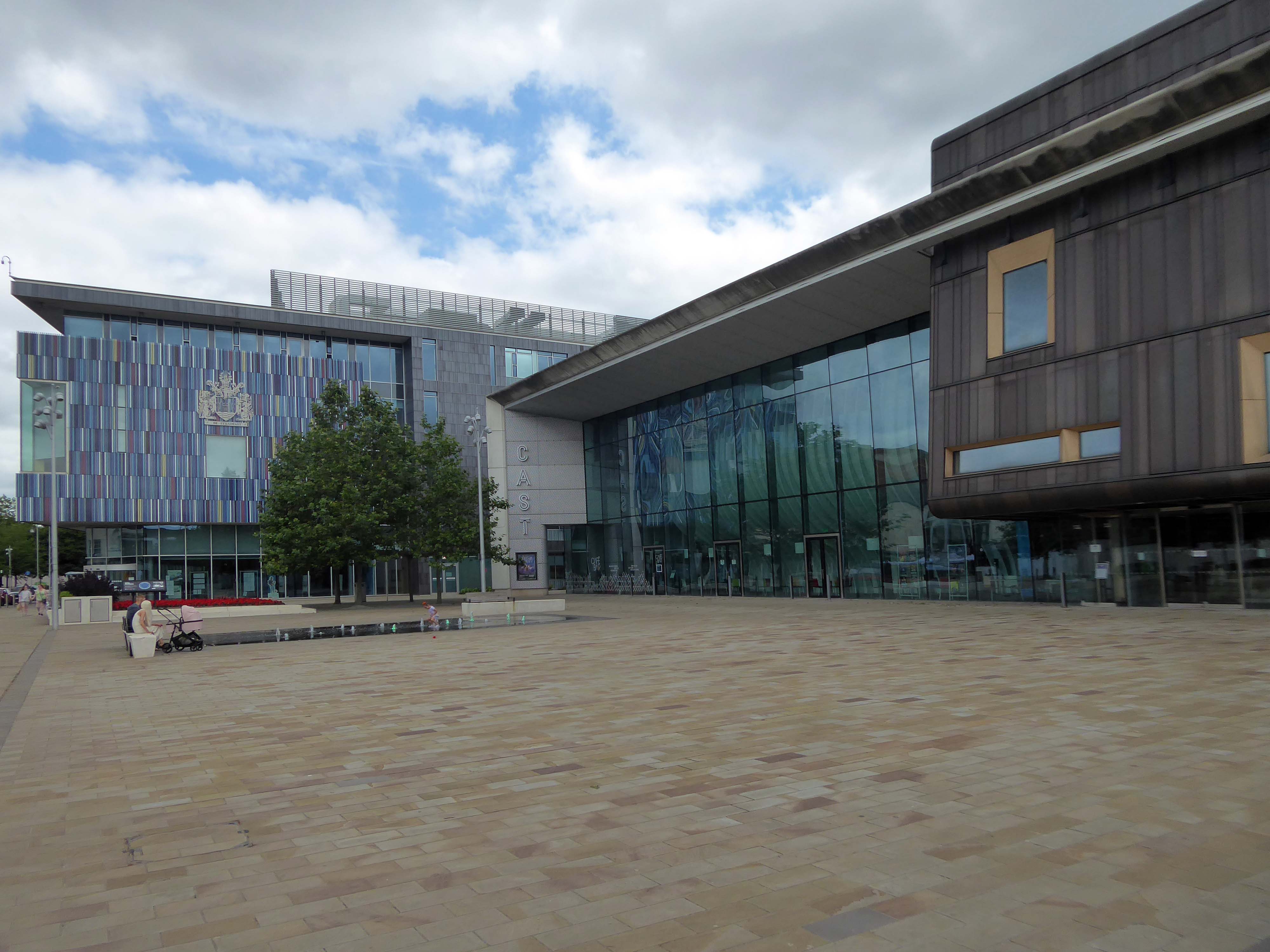
Facing the former library we find the CAST Theatre, Civic Buildings and Savoy Cinema, grouped around Sir Nigel Gresley Square.
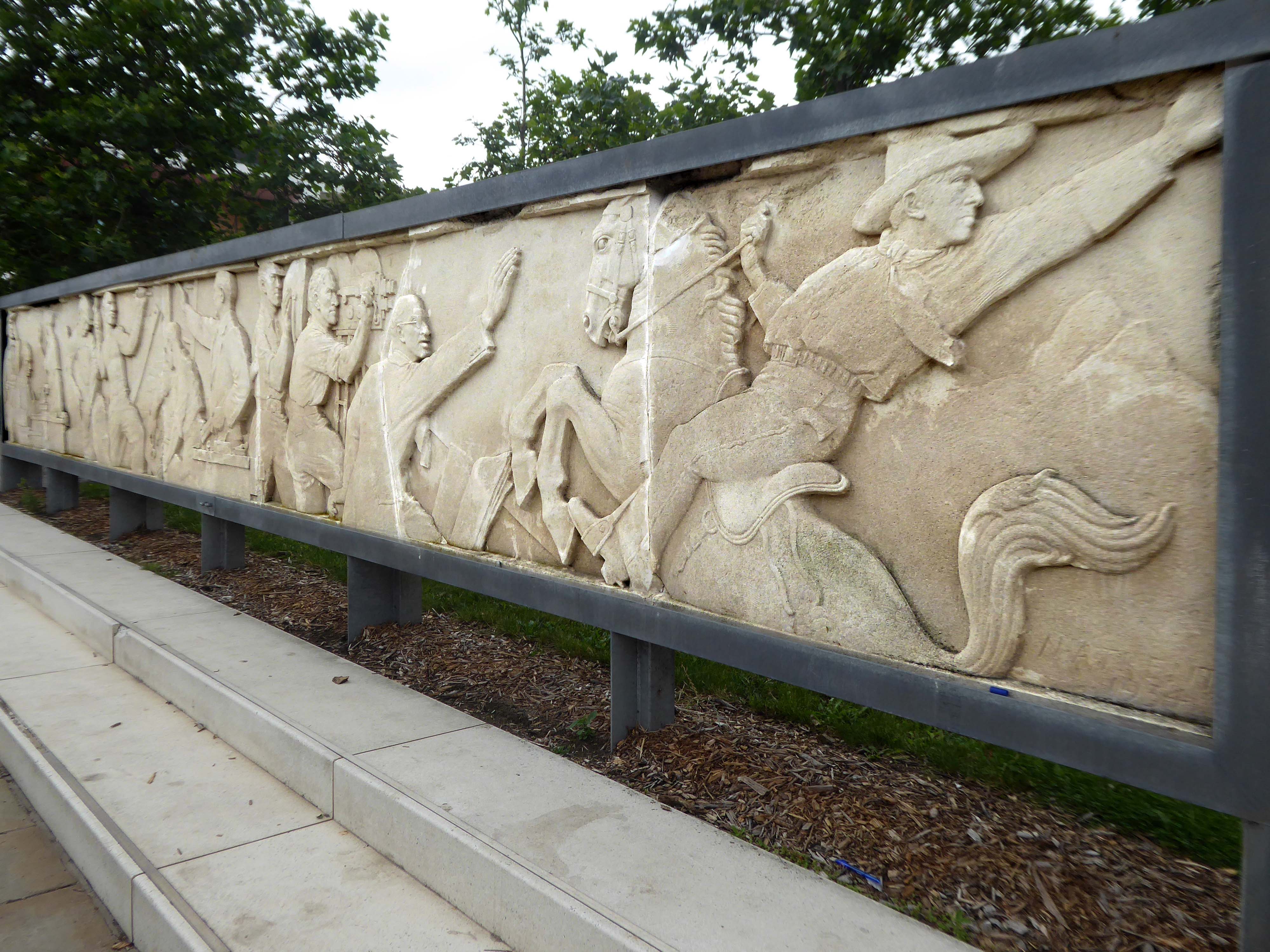
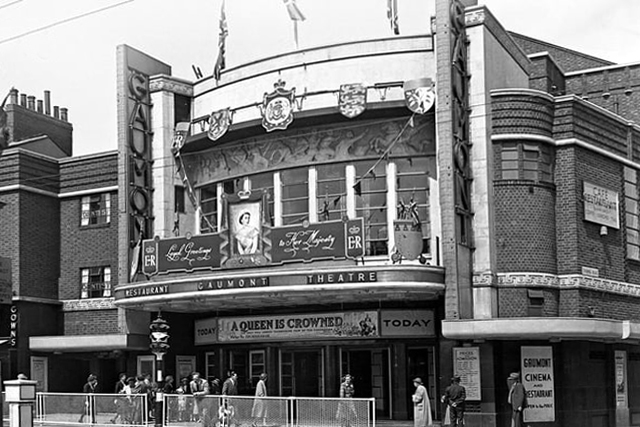
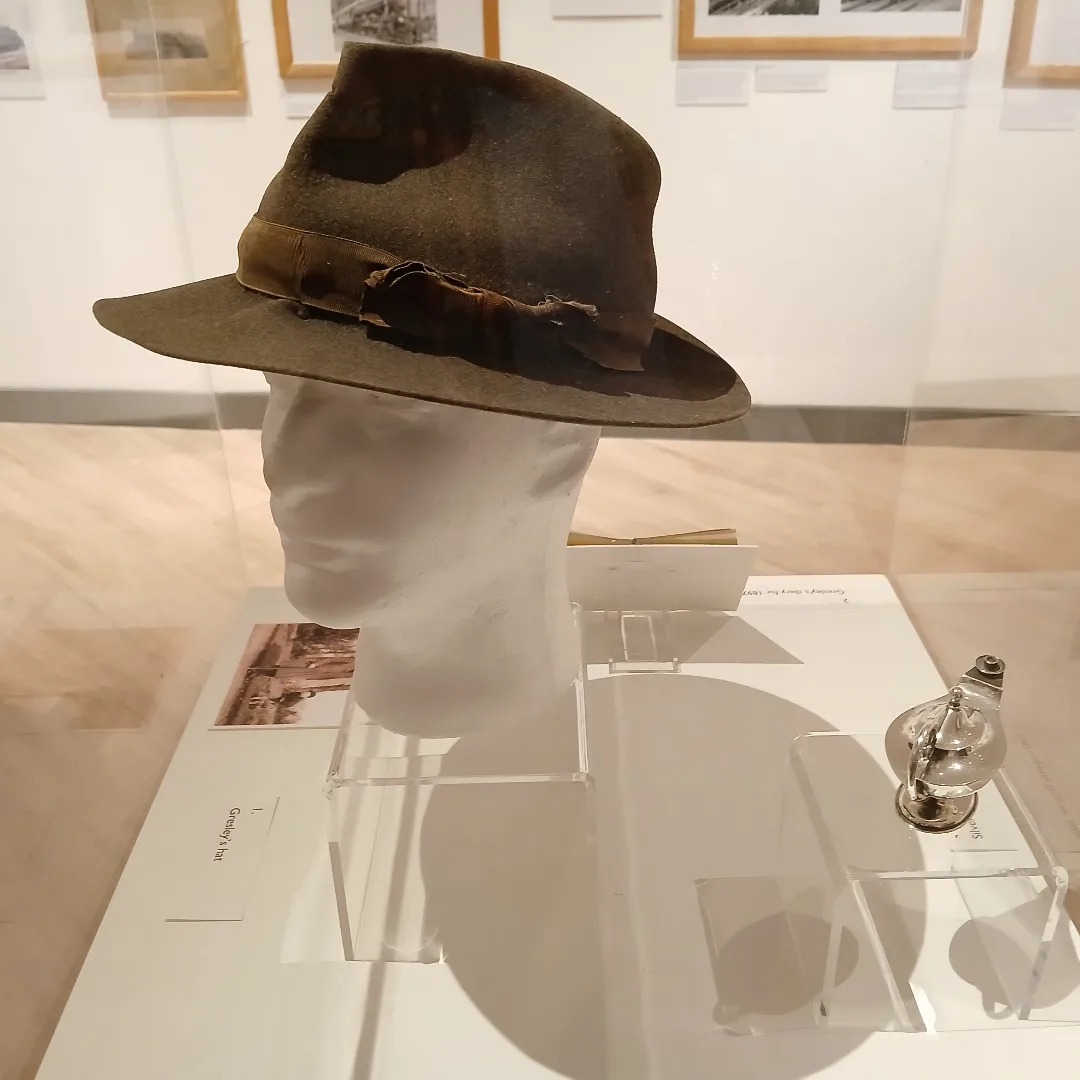
Within the square is a frieze, salvaged from the former Gaumont Cinema, the work of sculptor Newbury Abbot Trent.
The Gaumont Palace Theatre in Hall Gate at the corner of Thorne Road, Doncaster opened on 3rd September 1934 with Jesse Matthews in Evergreen.
It was designed by architects WE Trent and W Sydney Trent.
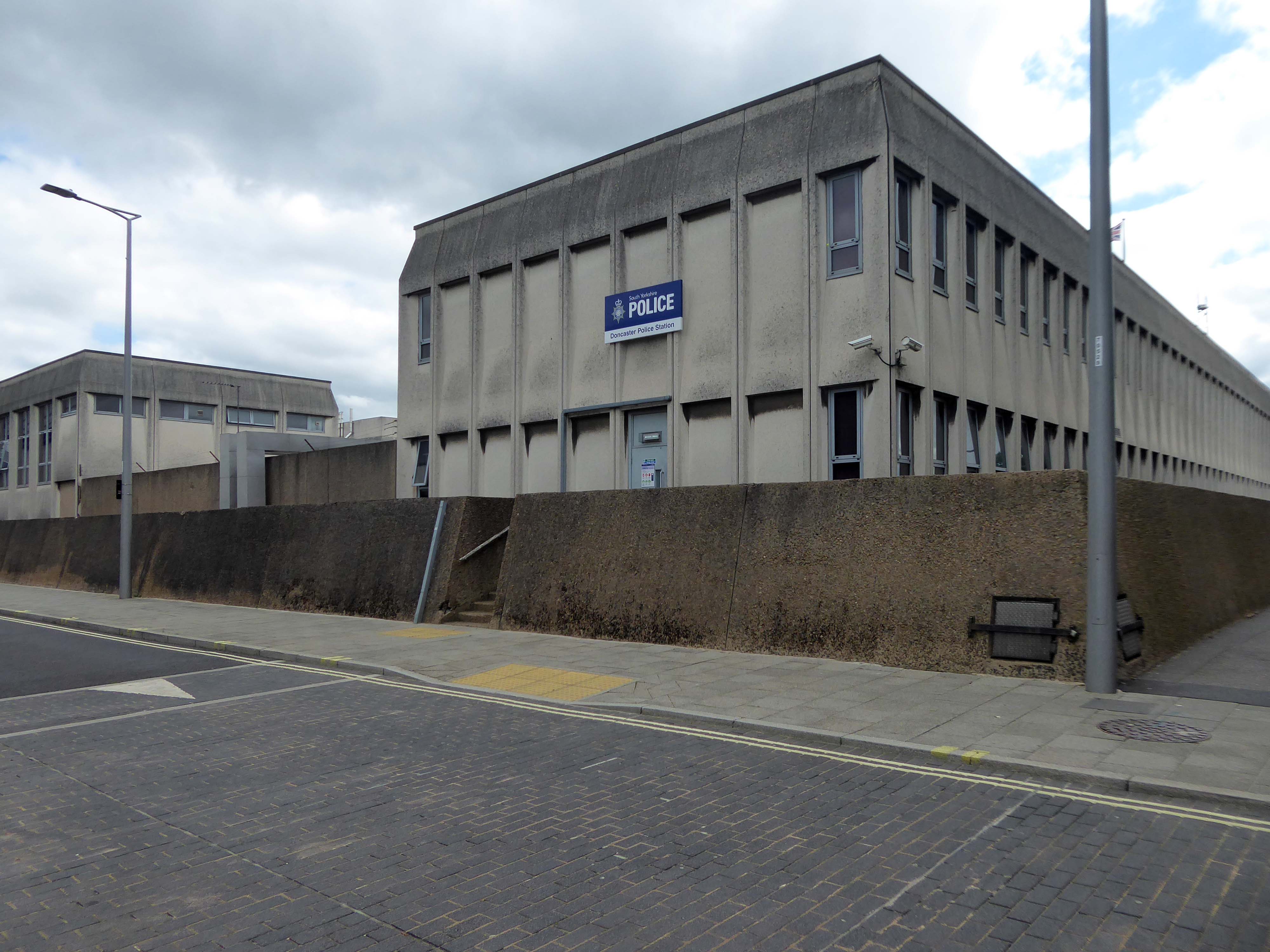
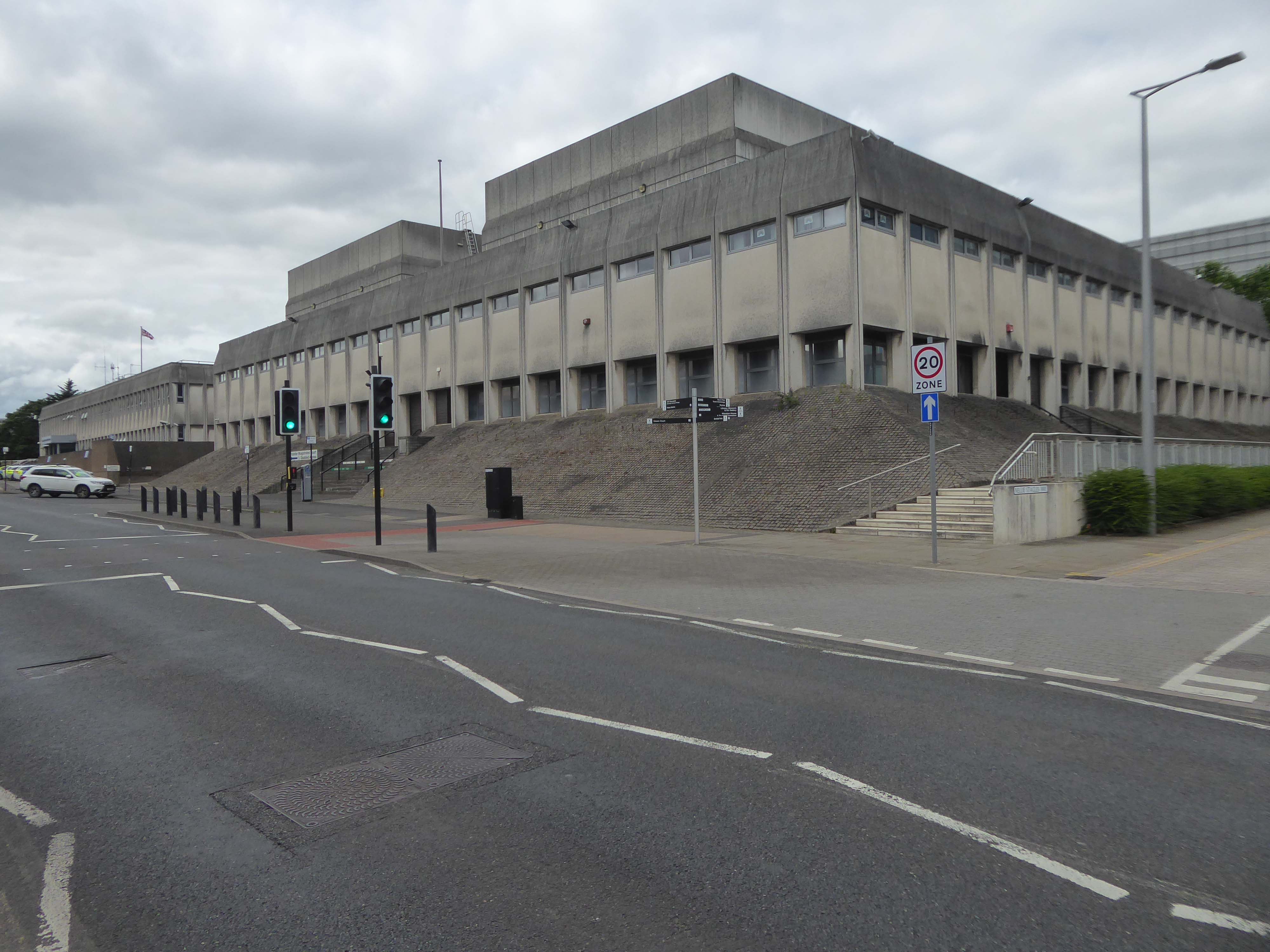
In 1949 WH Price the Borough Surveyor produced an outline plan for the area, with a green space at its heart, it was never realised. In 1955 Frederick Gibberd produced his plan to include a ten storey Town Hall, Art School, Technical College and Civic Theatre, revised and reduced in 1963 – eventually his Police Station and Law Courts were completed in 1969.
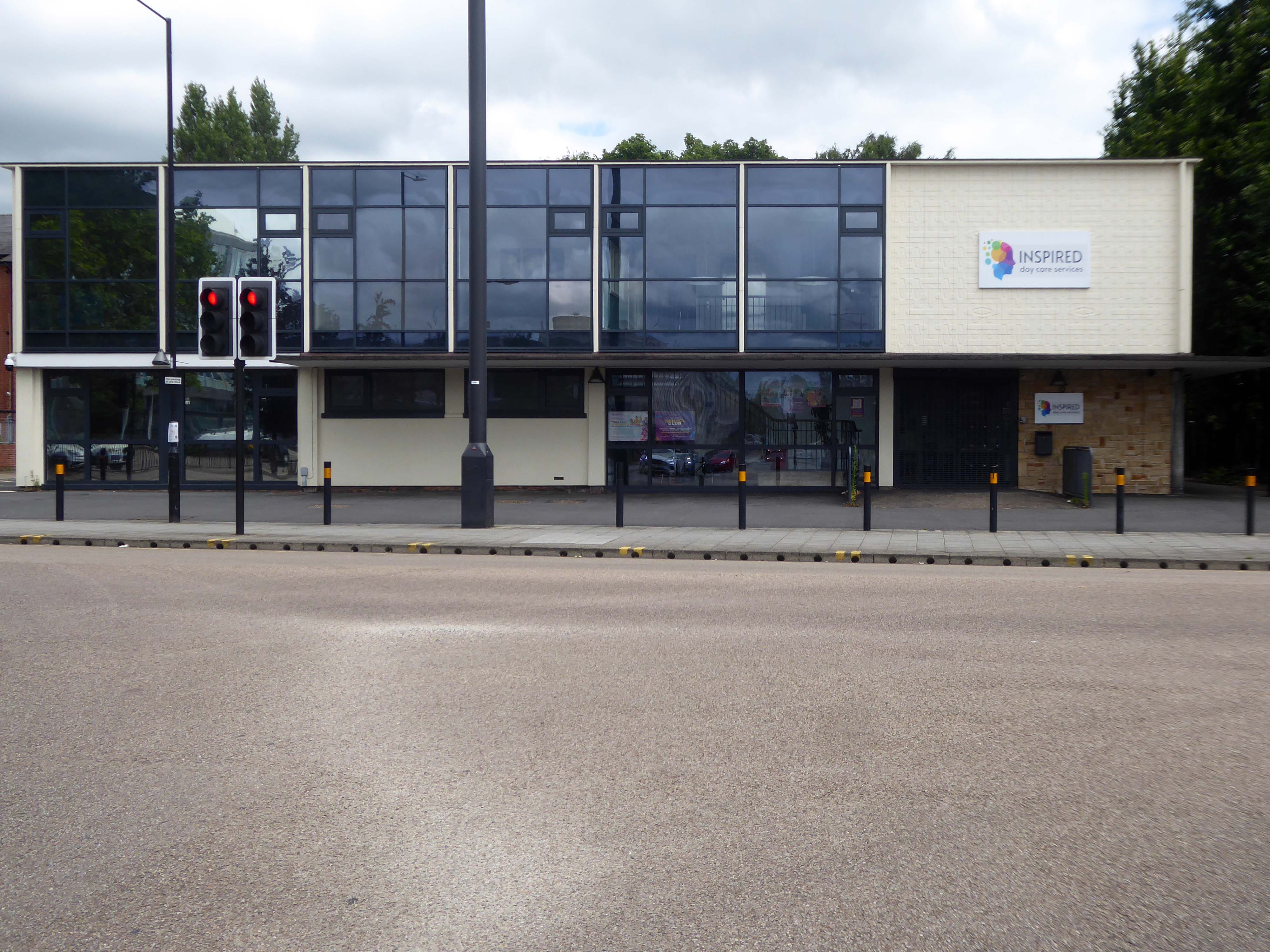
The former NHS Clinic at the ‘T Junction’ is transformed into a day care service.
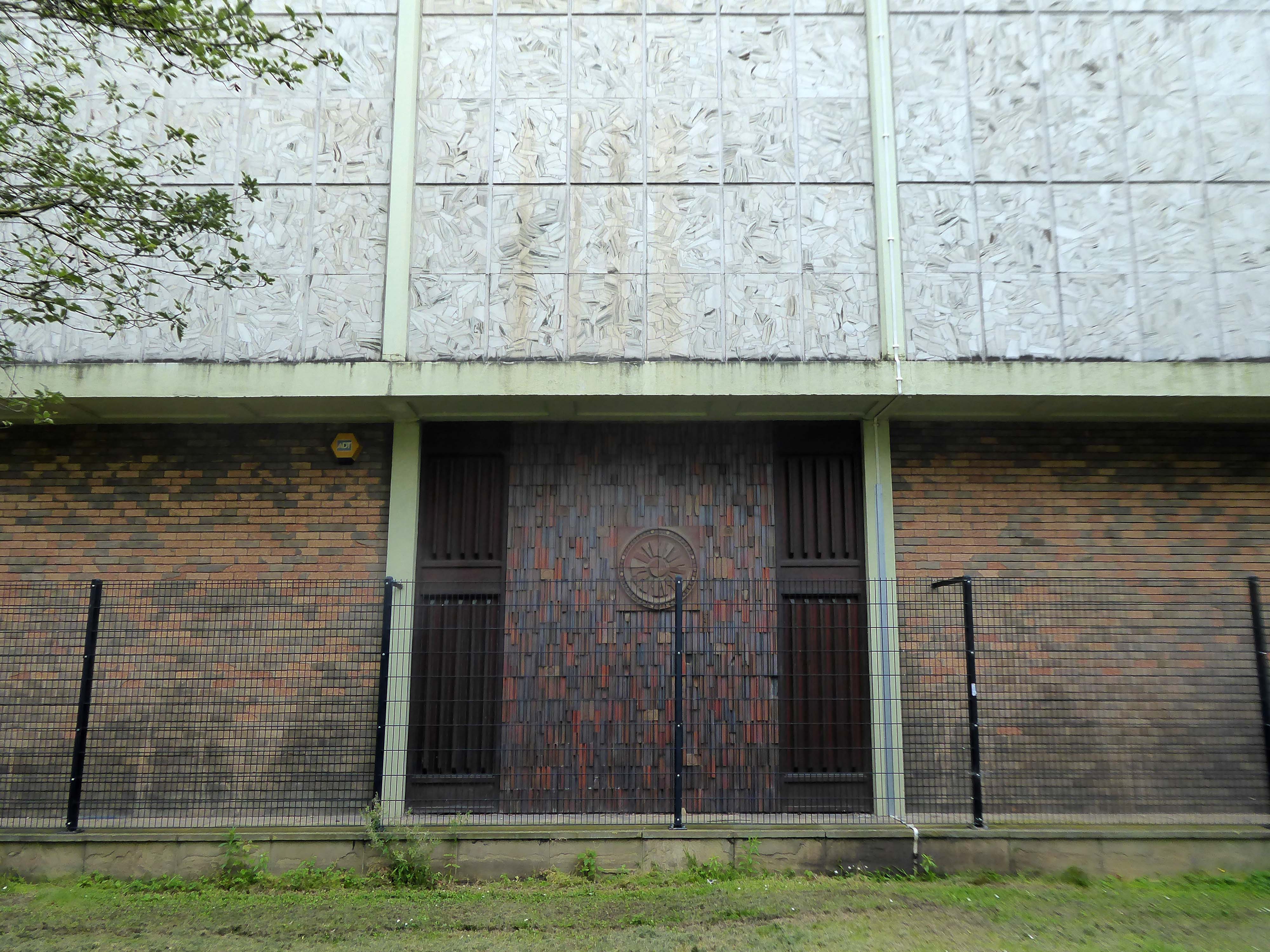
The building was designed in the office of the Doncaster Borough Architect’s Department in a team led by borough architect Mr LJ Tucker.
The ceramic designs were a later addition when it was discovered that the large open areas of glass overheated almost everything inside, the work was undertaken by LJ Tucker and family.
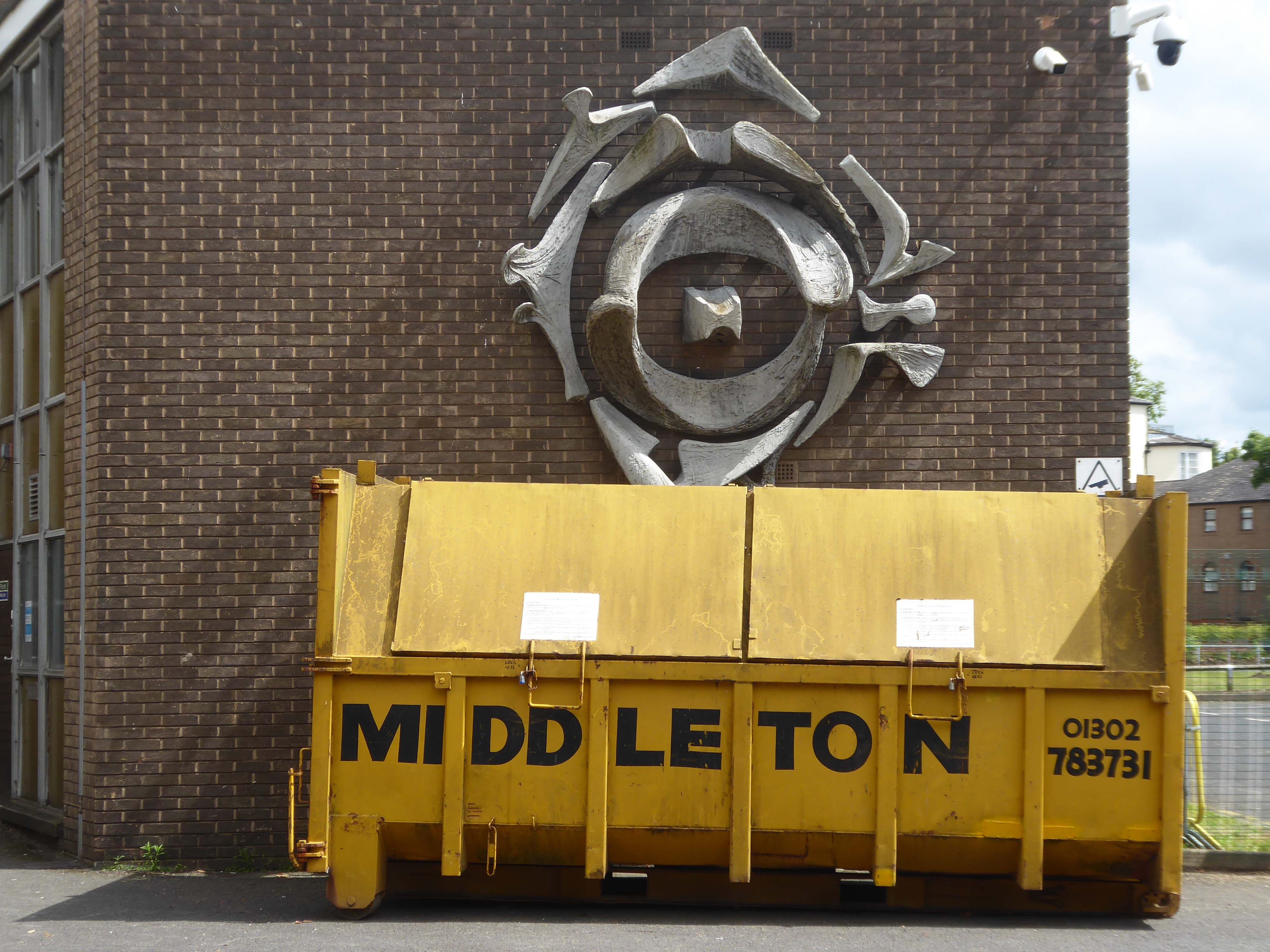
The sculptural work by Franta Belsky, now has a skip for company.
As a footnote the work by Fabio Barraclough reveals a murky past.
Barraclough was born in Madrid in 1923, to a Spanish mother and Yorkshire father who founded Madrid’s Chamber of Commerce. He moved to London with his family in the 1930s as a refugee from Francoist Spain. He taught fine art and sculpture at Rugby School, where colleagues considered him “highly entertaining, a most unorthodox and highly gifted” teacher. He established himself during the 1960s and early 1970s as an authority on sculpture, publishing in academic journals and becoming a member of the Royal British Society of Sculptors.
In 2000, it was revealed that Barraclough, while outwardly living the life of anti-apartheid activist since the 1970s, had been a paid informant of the South African state security police. The media was used to promote his image as a “brilliant, liberal artist with apparently impeccable credentials” in order to gain public trust, while he was funnelling money from anti-apartheid groups to the police. He died on 6th January 2019.
Over the way faros the green sward is St Peter in Chains RC – A large and striking design by JH Langtry-Langton, incorporating important furnishings by J F Bentley from the predecessor church, along with good furnishings of the 1970s. The churches houses the modern successor to the medieval shrine of Our Lady of Doncaster.
Figurative stained glass by Patrick Feeny for Hardman in 1973 and abstract glass fitted in 2000 as part of reordering and revival of the shrine.
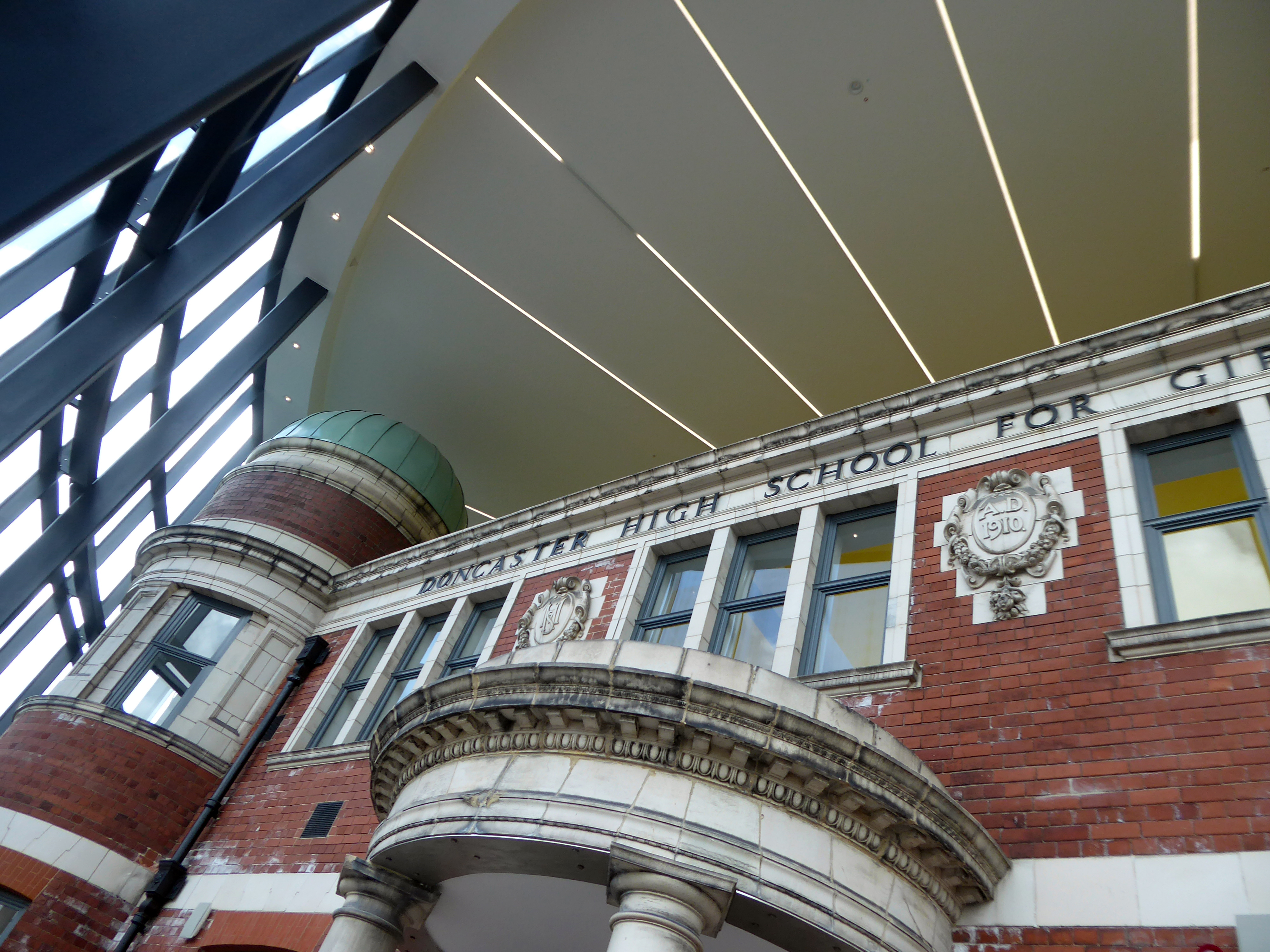
Designed by architects Bond Bryan and built by main contractor Willmott Dixon, the new cultural and learning hub has been created following the restoration of four existing buildings.
A key focal point of the scheme is the restored frontage of the Edwardian former Doncaster High School for Girls, which has been framed by Senior’s slimline SF52 aluminium curtain wall and showcased within a new steel-frame building. The glazed facade, which was fabricated and installed by Senior’s supply chain partner Chemplas, also features Senior’s aluminium commercial doors.
This is Oldham Road Manchester – this also Memory Lane.
Walking from the city centre to Failsworth I noted the absence of public houses, some long since demolished, some now serving other purposes – very few open selling beer.
Many of the breweries no longer trading.
Much of this the consequence of changing economic circumstances, the decline in manufacturing and subsequent serious absence in regular drinkers.
I do remember the huge Winston Churchill relief in the Room and R100 Airship wooden panelling in the lounge. Also of note were the ornate plater work ceilings and pendulous lighting, much damaged as the pub awaited restoration.
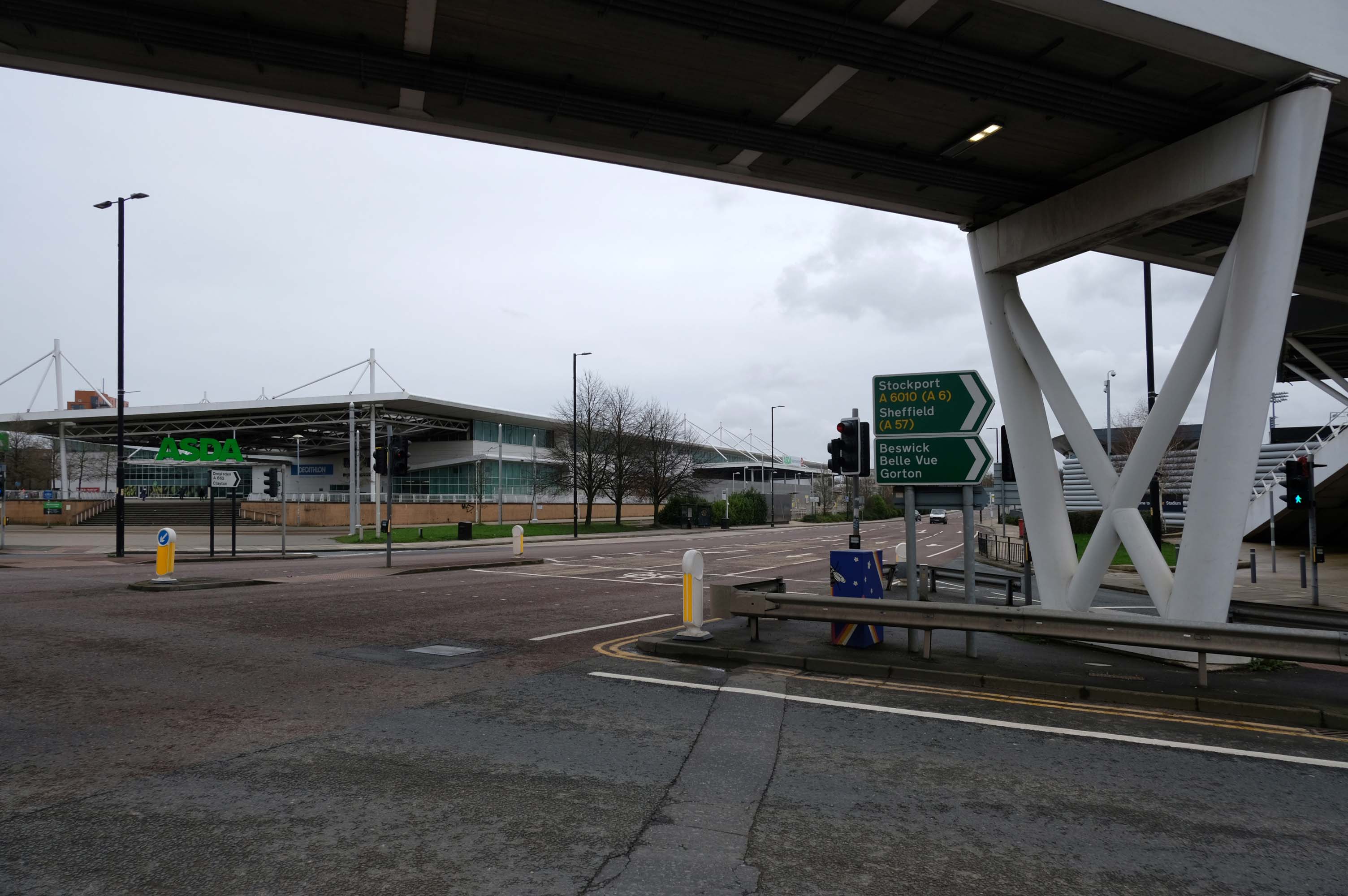
The A57 was nearly a coast to coast route. It passes through three major city centres (Liverpool, Manchester, and Sheffield – with elevated sections in each) and several smaller ones, multiplexes with the A6 and the A1, follows the banks of two canals and negotiates the remotest part of the Peak District. In one city it part of it is a tram route, whilst in another its former route is also a tram route. After all these adventures, it sadly gives up just 40 miles short of the east coast, Lincoln apparently proving too big an obstacle.
The A57 crosses the River Irwell at Regent Bridge before entering its moment of motorway glory as the A57(M) Mancunian Way skirting the south of Manchester’s city centre on an elevated section and crossing the A56 and A34. This includes a half-completed exit that goes the wrong way up Brook Street – a one way street. The original A57 ran further north through the city centre along Liverpool Road (now the A6143) and Whitworth Street – B6469 as far as the A6 London Road which marked the start of a multiplex.
At the end of Mancunian Way, we reach a TOTSO, straight on being the short unsigned A635(M) and thence the A635 – for Saddleworth Moor, Barnsley and Doncaster whilst the A57 turns south, briefly multiplexing with the A6, and then branching off along Hyde Road. This section of road was extensively cleared for the westward extension for the M67, and consequently has seen a lot of redevelopment.
The road now begins slightly further south than it used to. Instead of starting on Fairfield Street in Manchester city centre, it begins immediately as the Mancunian Way ends, which at this point is the unsigned A635(M). The motorway flows directly into our route. There’s a TOTSO right at a set of lights, and we pick up the old alignment, which now starts as the B6469.
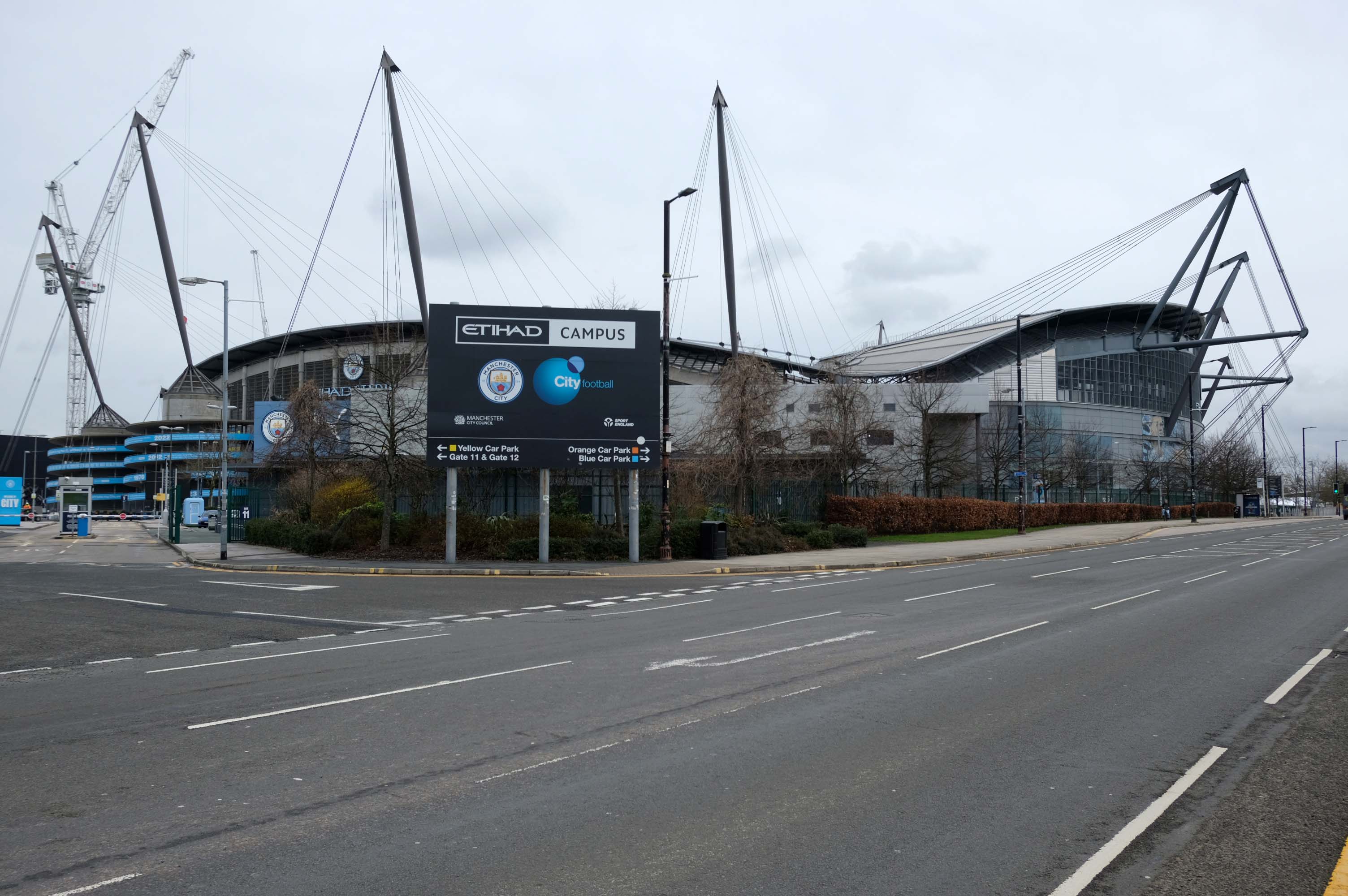
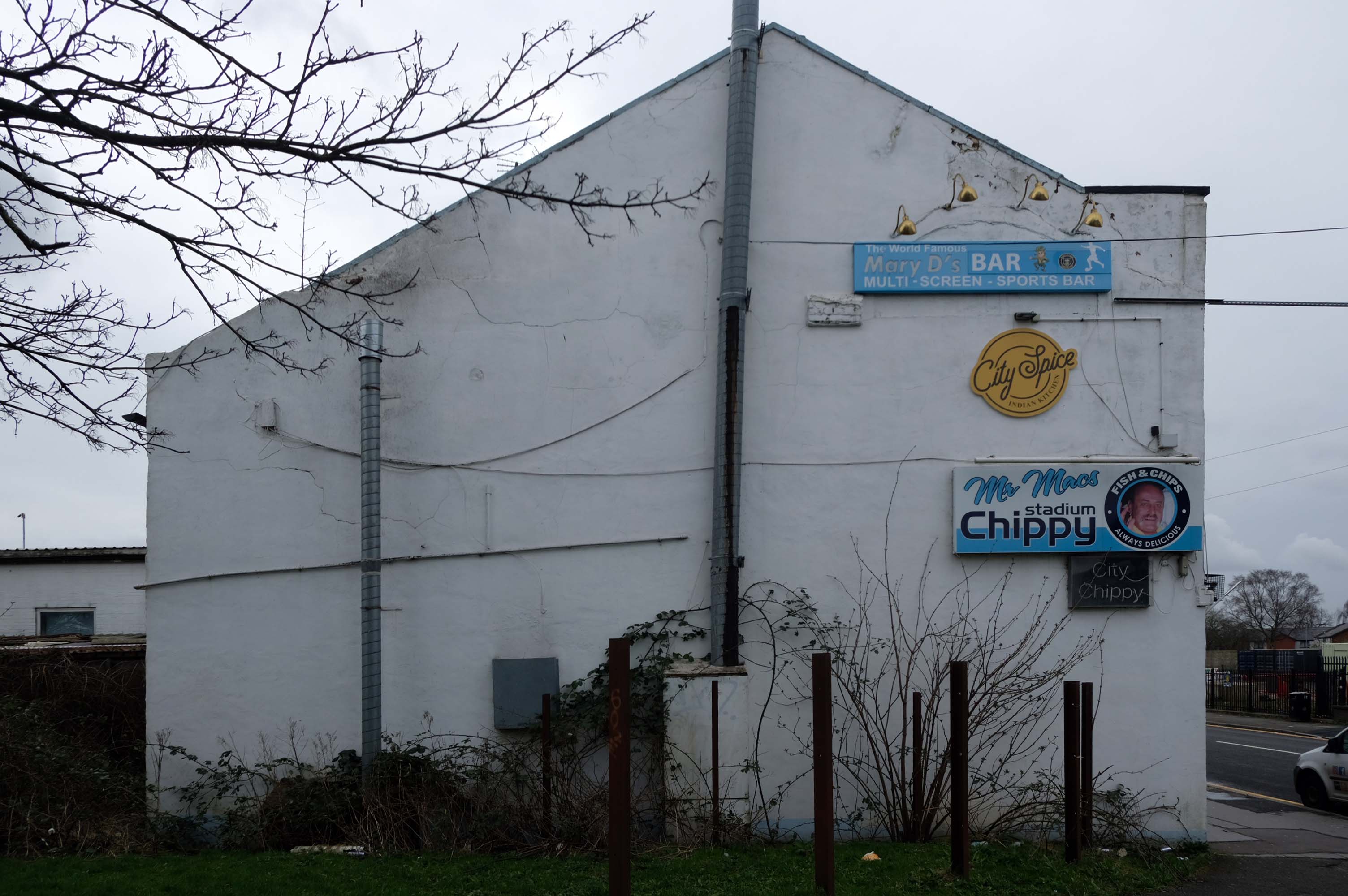
We can see the new City of Manchester Stadium on the left, site of the 2002 Commonwealth Games and now home to Manchester City FC. The road switches between S2 and S4 as it passes through the rather run-down urban areas of Ardwick and Gorton. A short one-way system at a triangular-shaped junction with the A662 leads onto a wider stretch as we near the M60 junction. This area is set to see significant industrial growth, with whole swathes of land either side of the now D3 road cleared and ready for development.
The obvious place for the A664 to start is on the A665 Manchester & Salford Inner Relief Route, which at this point is actually two parallel one-way streets. However, many maps show the road continuing a short distance into the city centre to end at traffic lights by the Shudehill Interchange – this is presumably for historic reasons: the road originally continued along the High Street to its terminus on the A6 Market Street.
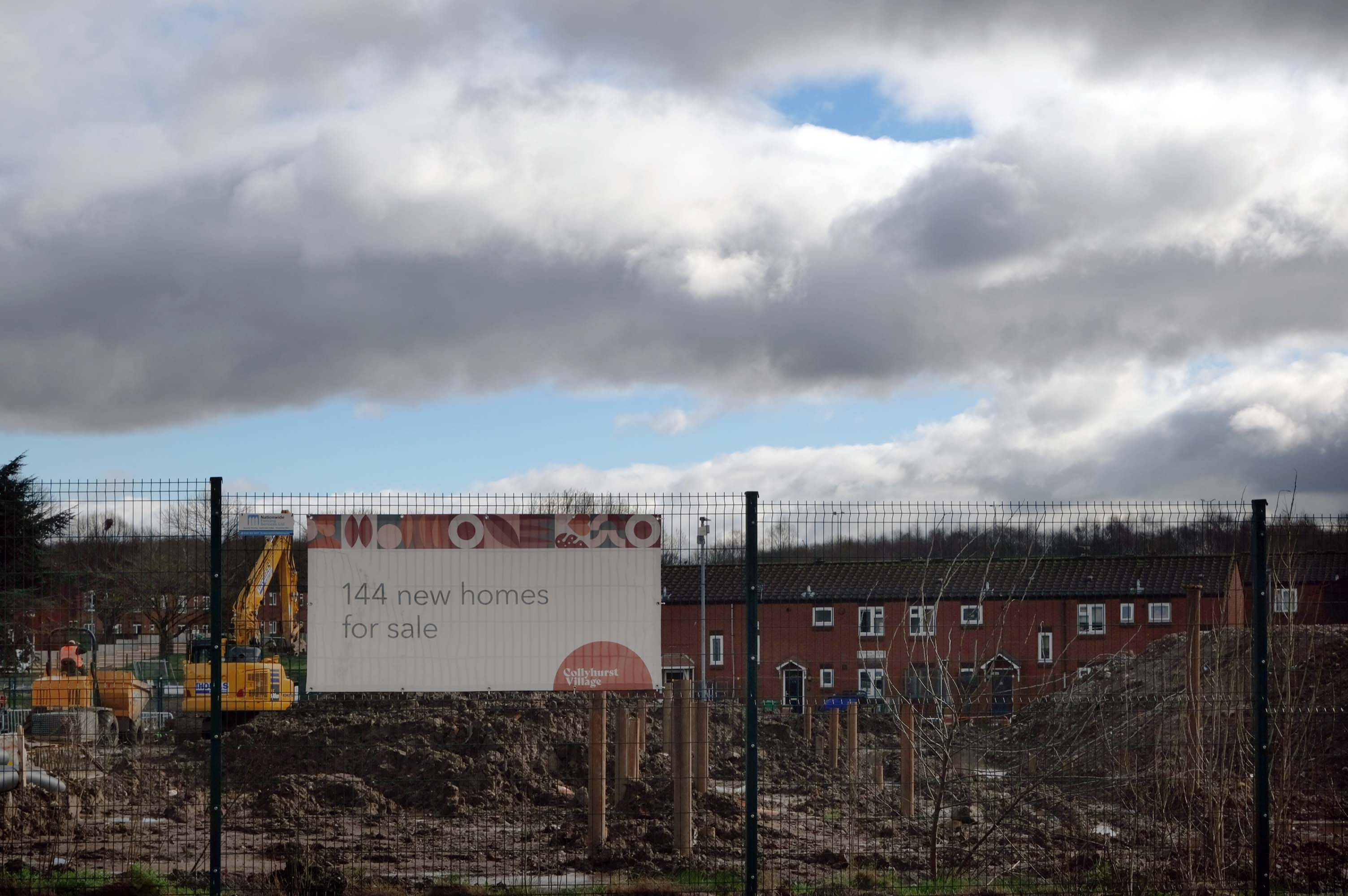
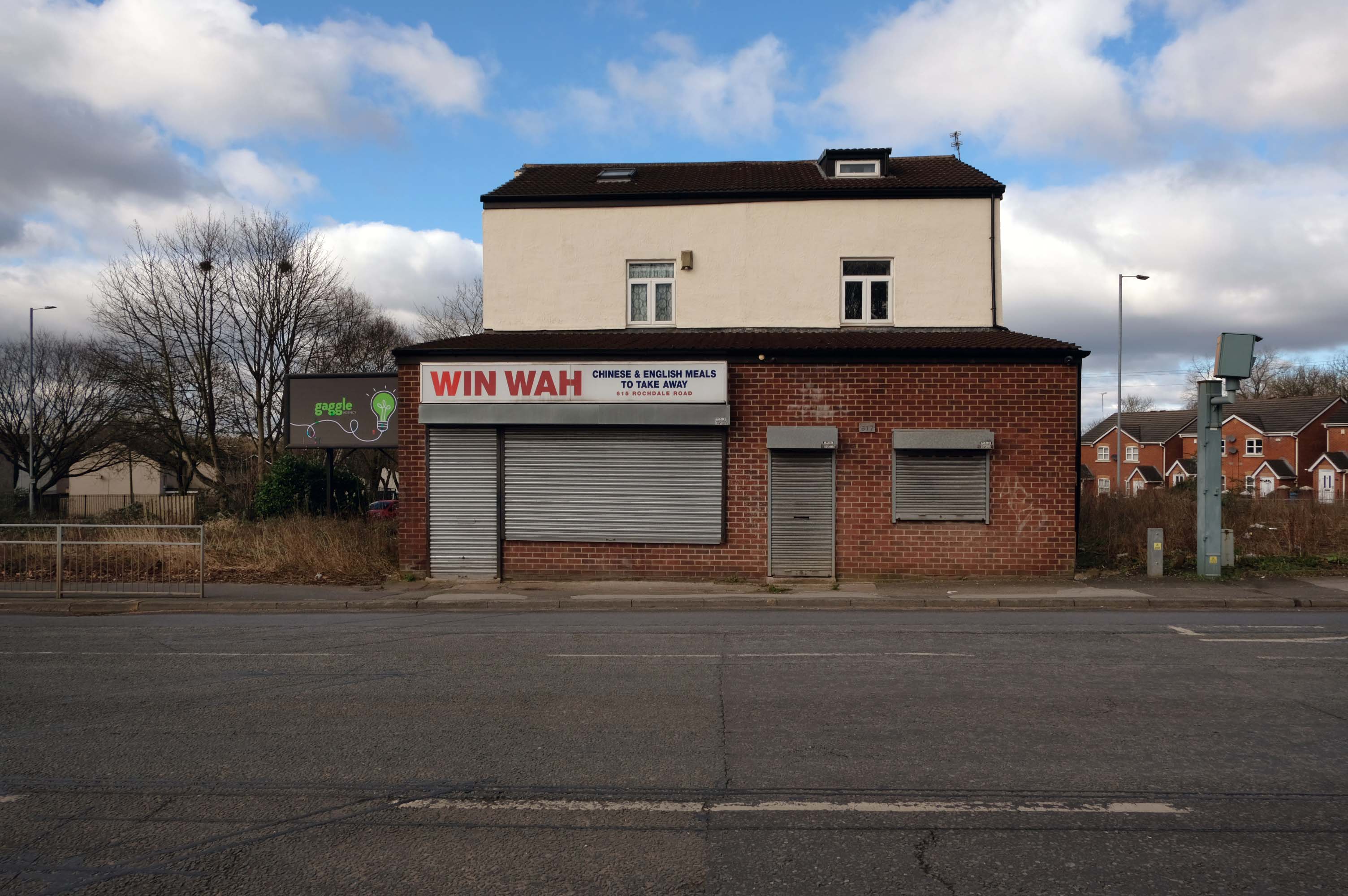
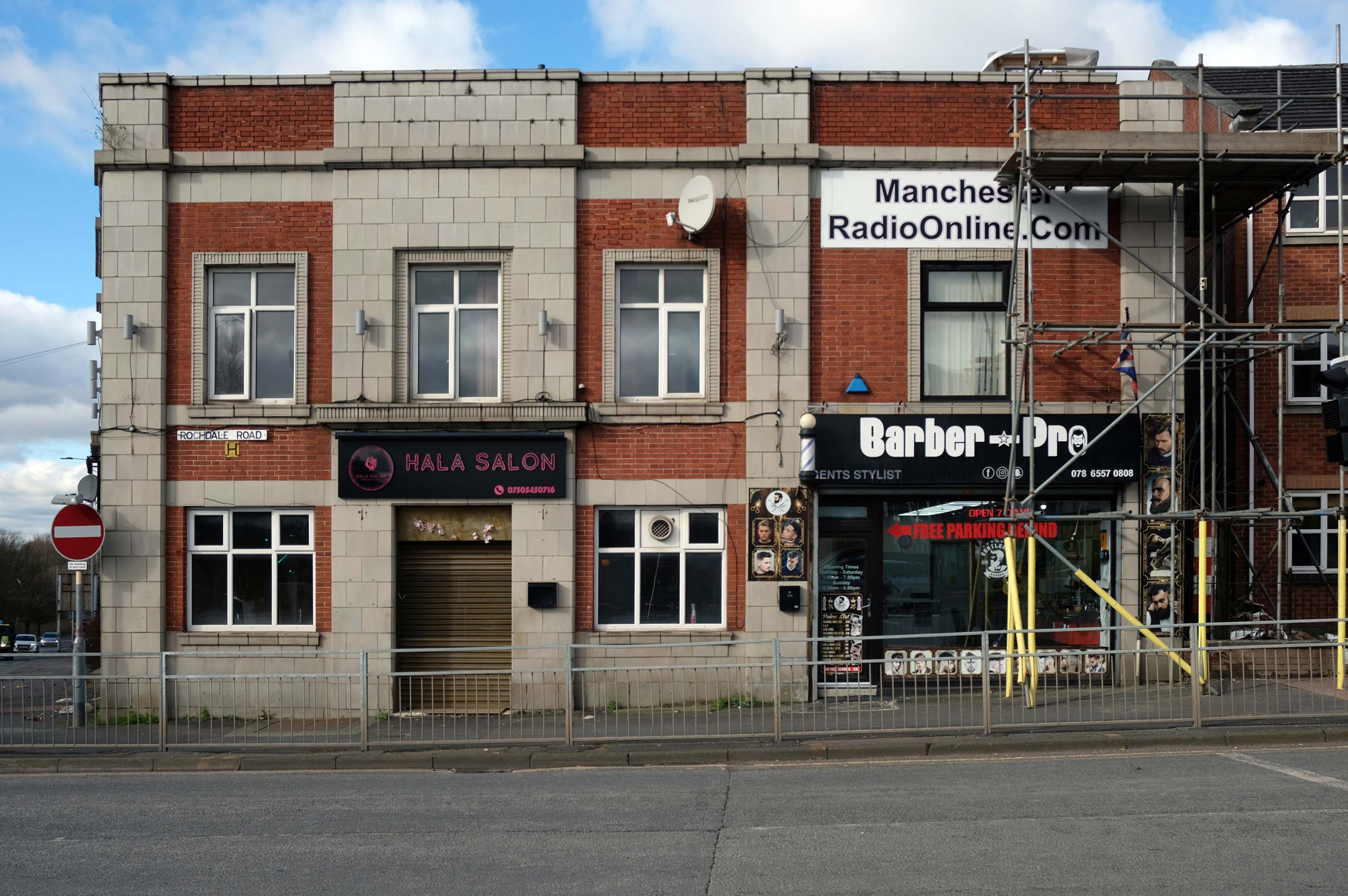
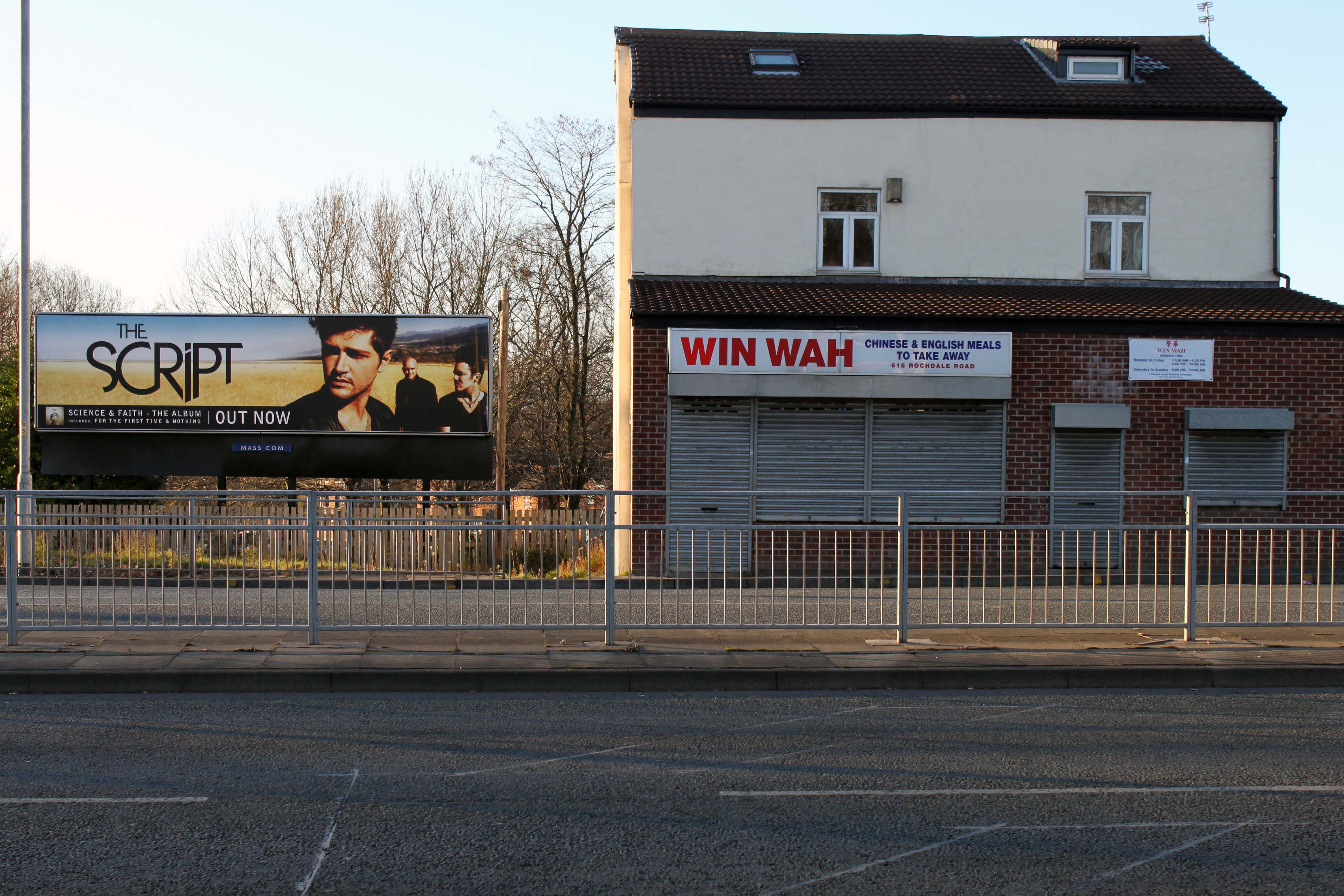
The road heads northeastwards through the suburbs, the street name Rochdale Road, already emphasising its destination. Initially dual, the road narrows just before crossing the bridge over the railway line east of Victoria station. It continues through Collyhurst and widens again just before crossing the A6010 Intermediate Ring Road, which here is made up of two parallel one-way streets, requiring two separate sets of traffic lights to cross.
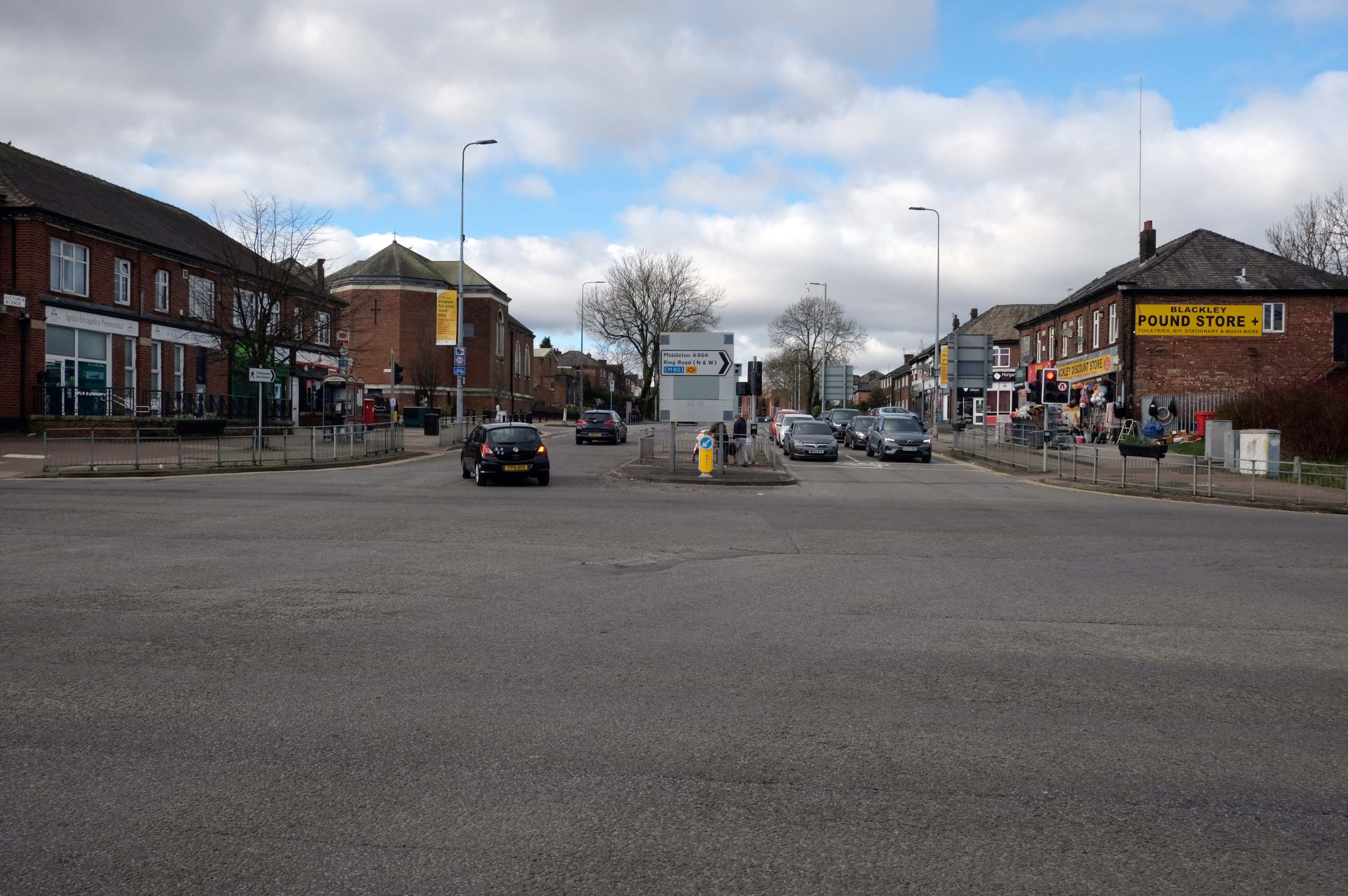
Now non-primary – but still dual for a short distance more, the road runs in a more northerly direction through Blackley, where it becomes wooded for a short distance as it passes the Boggart Hole Clough park. Slightly further on the road has been straightened, after which it bears right to widen considerably and cross the A6104 at traffic lights just before M60 J20, which only has west-facing sliproads. The road narrows again on the far side of the motorway and leaves Manchester for Rochdale at the same point.
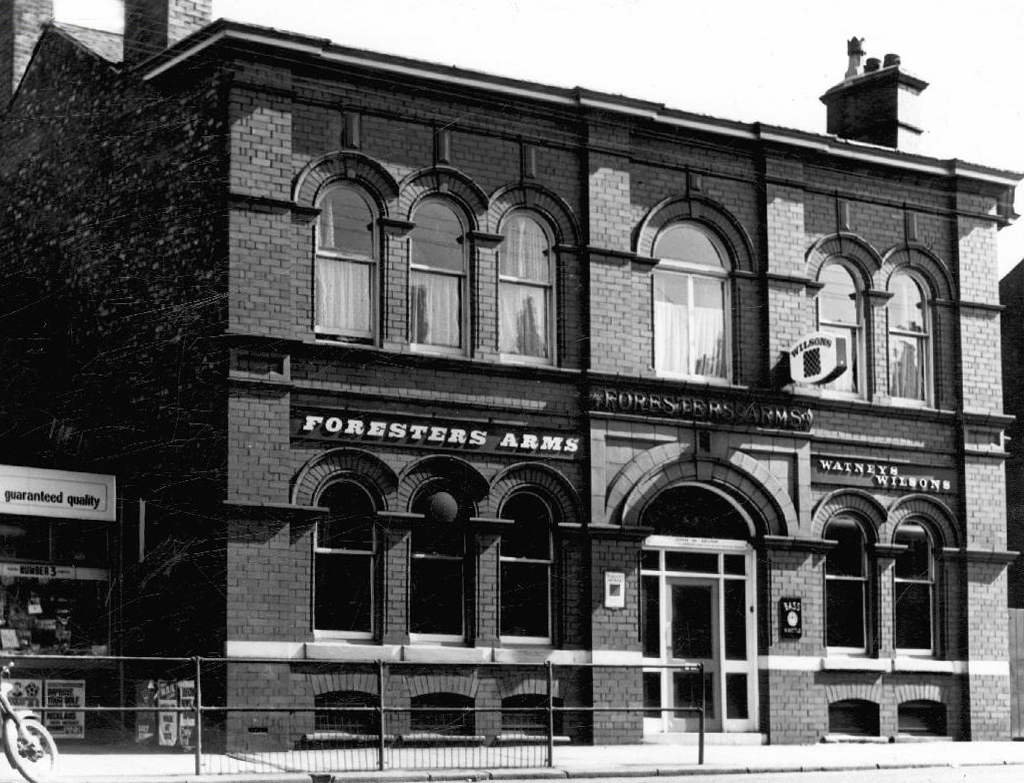
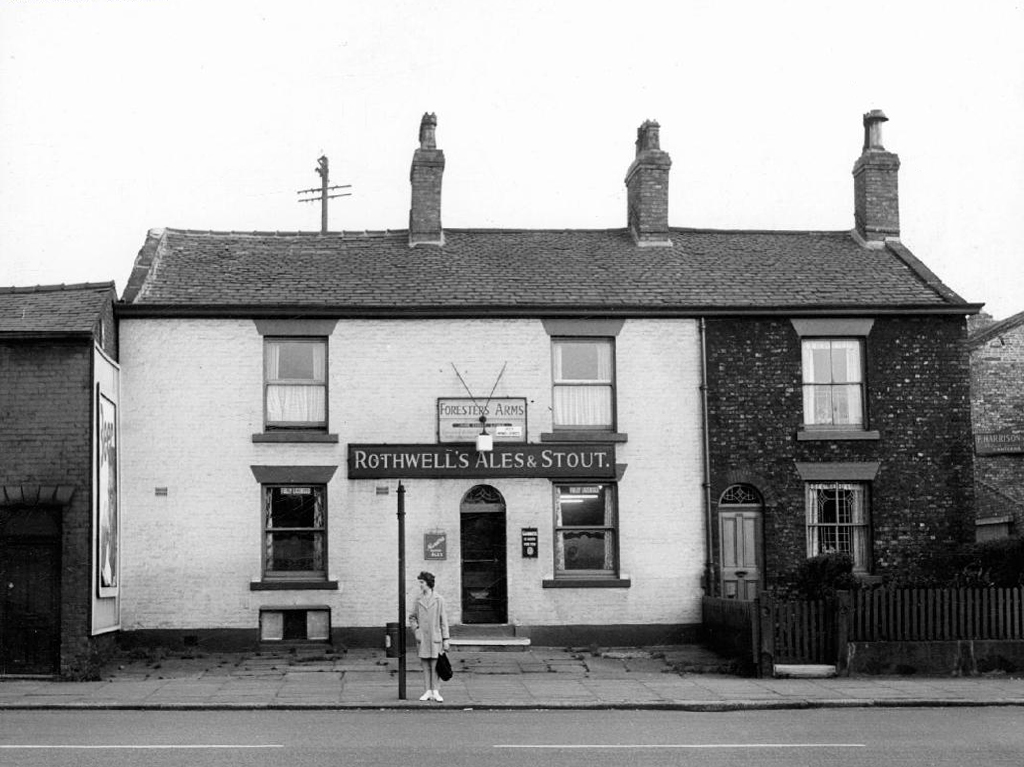
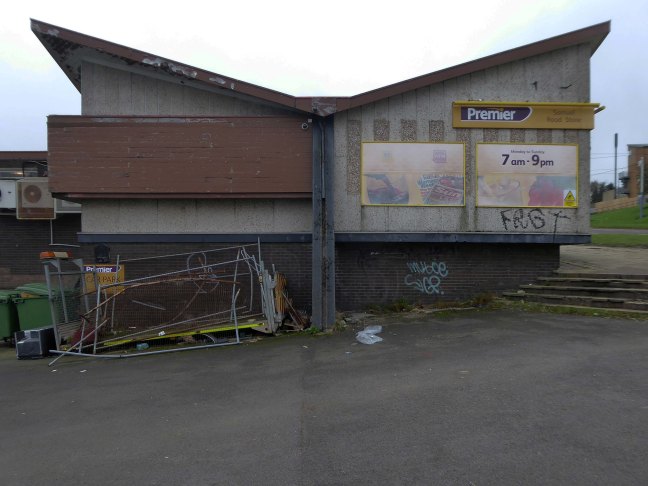
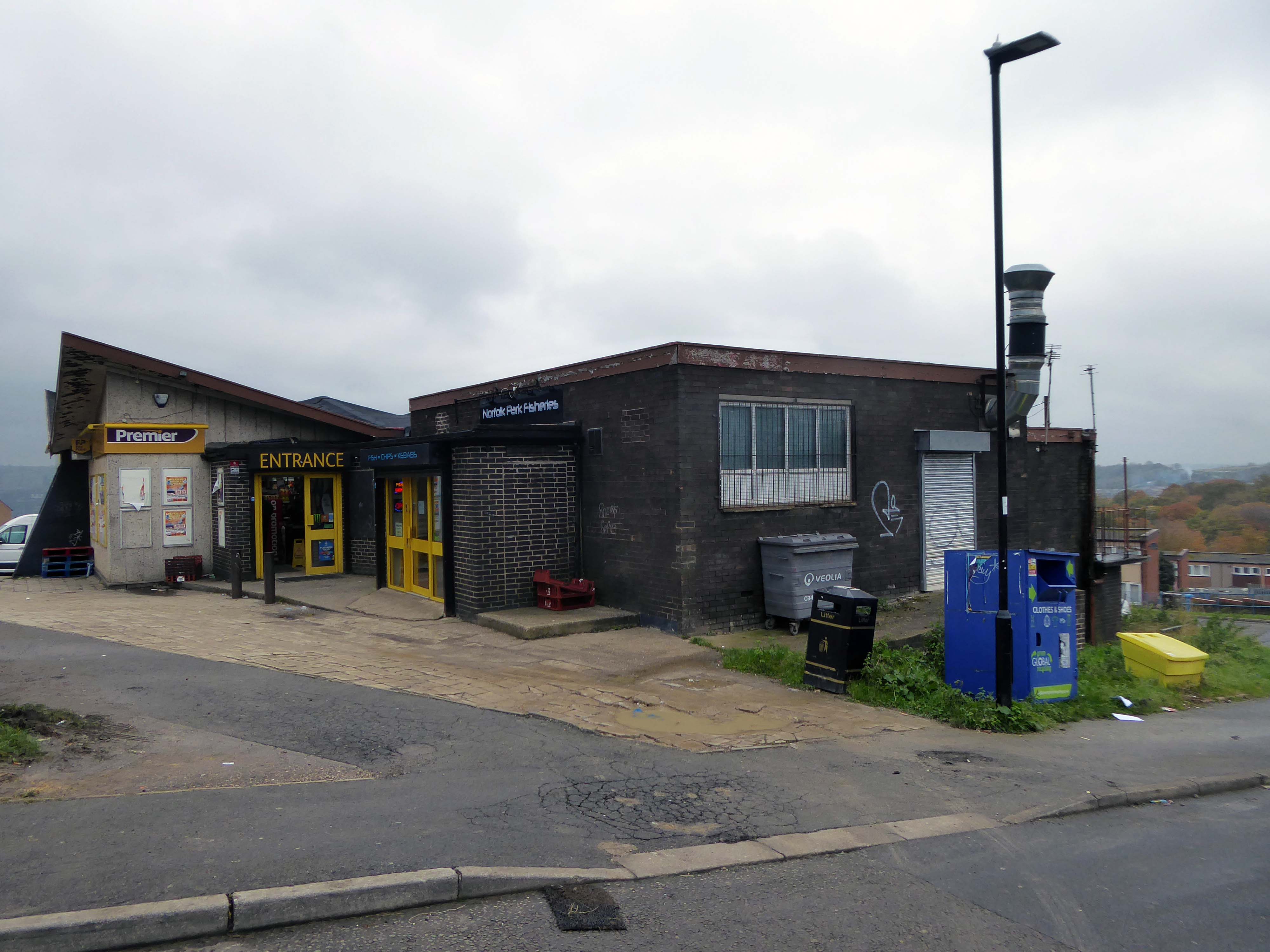
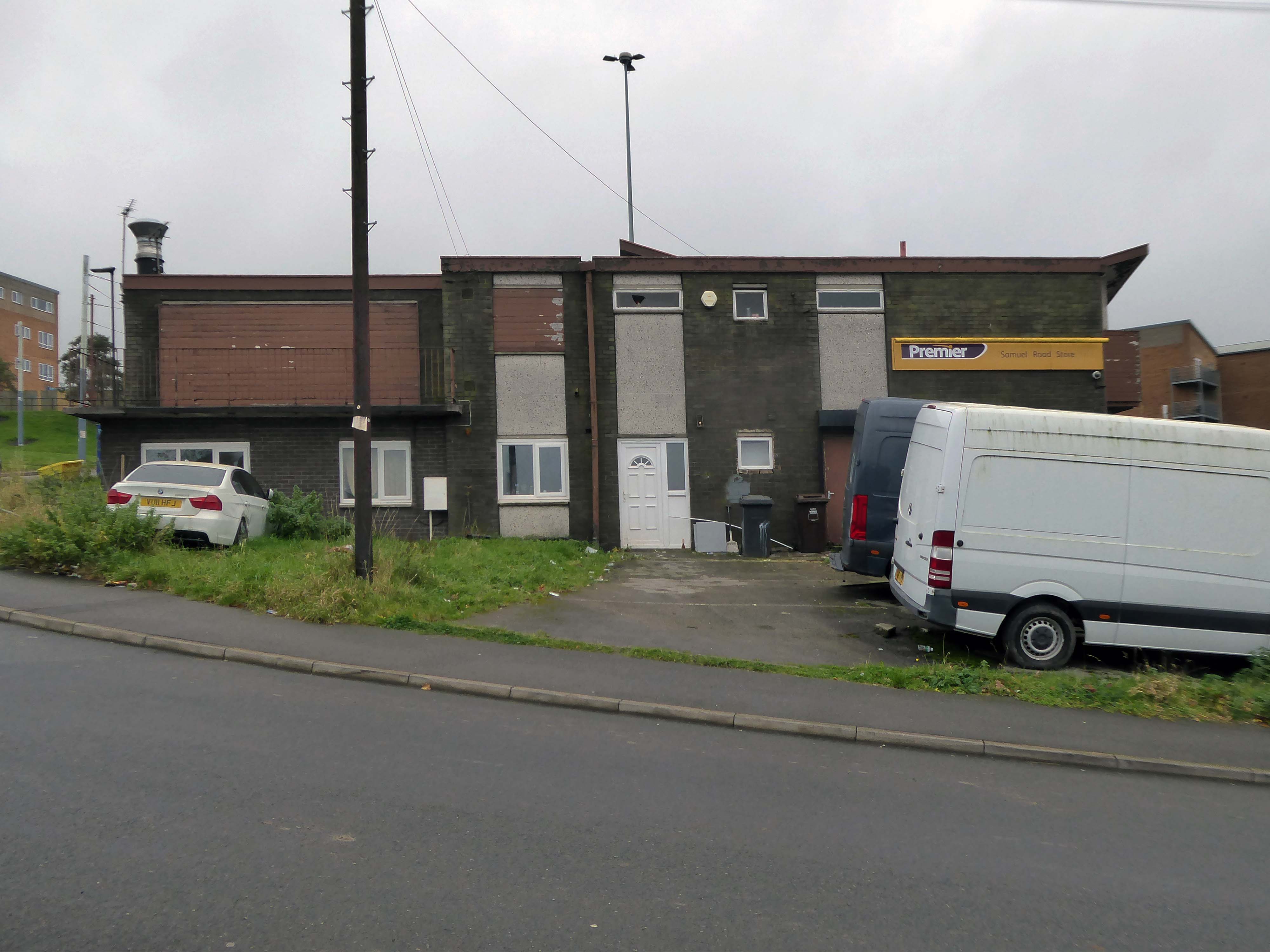
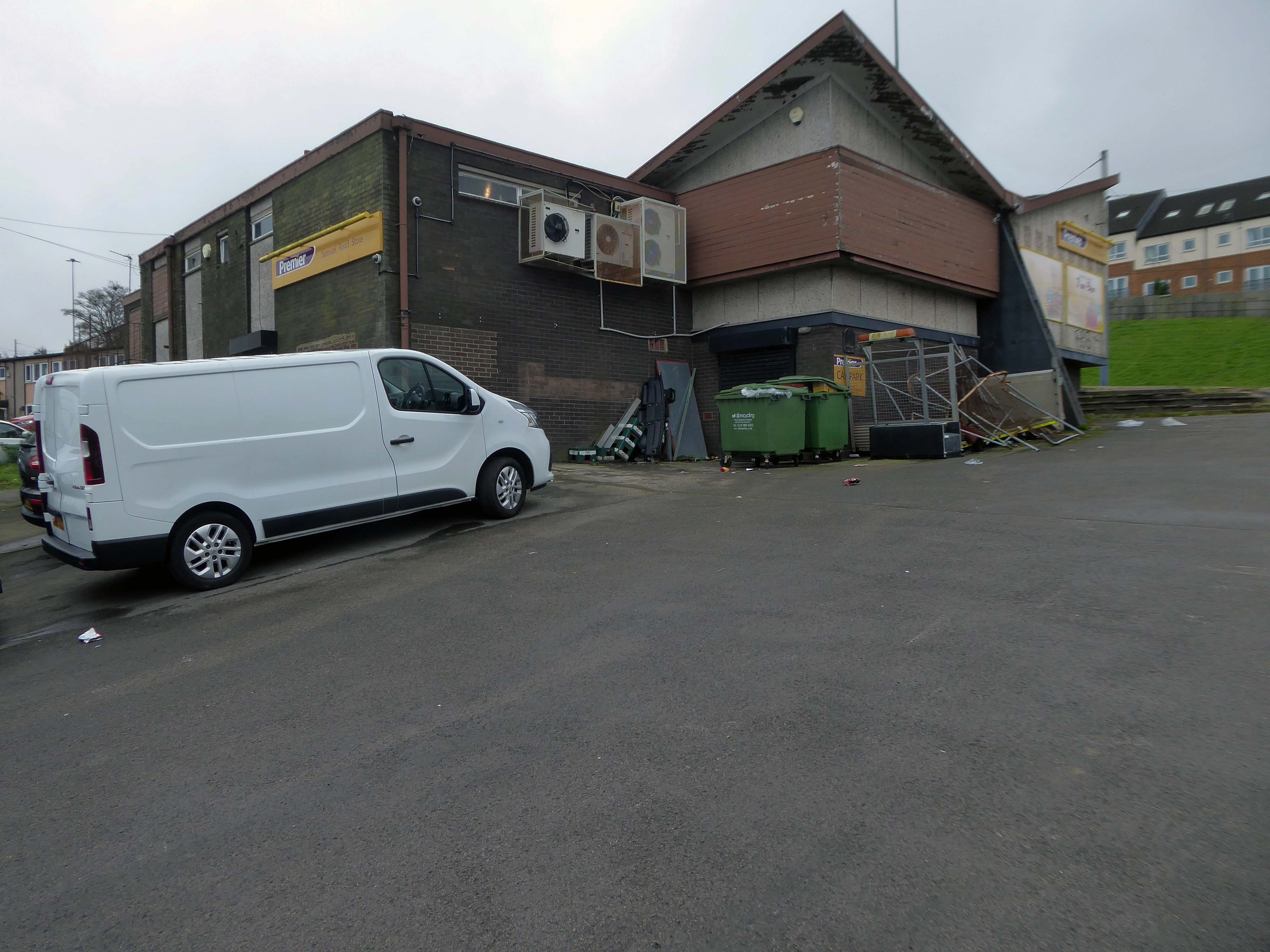
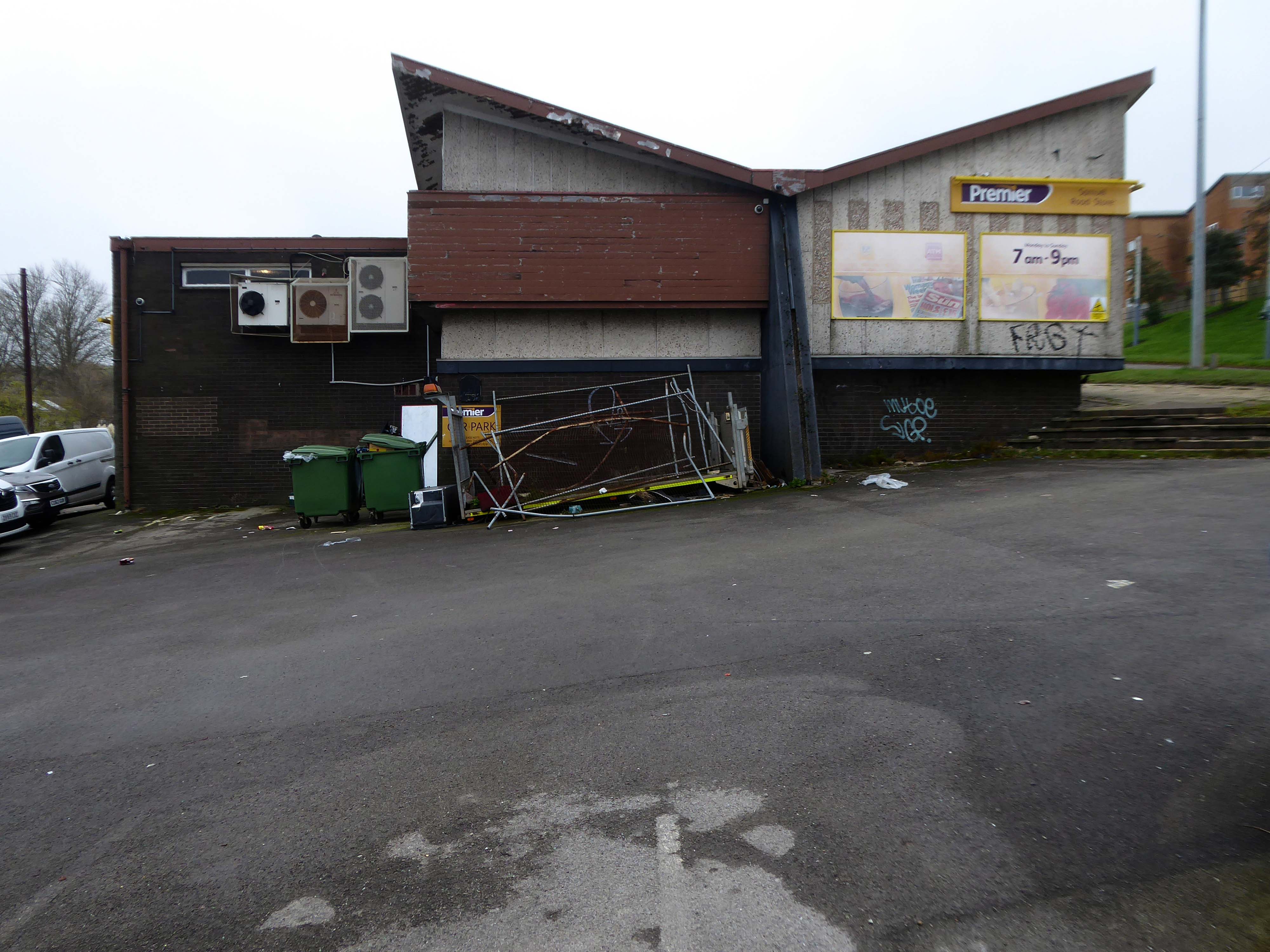
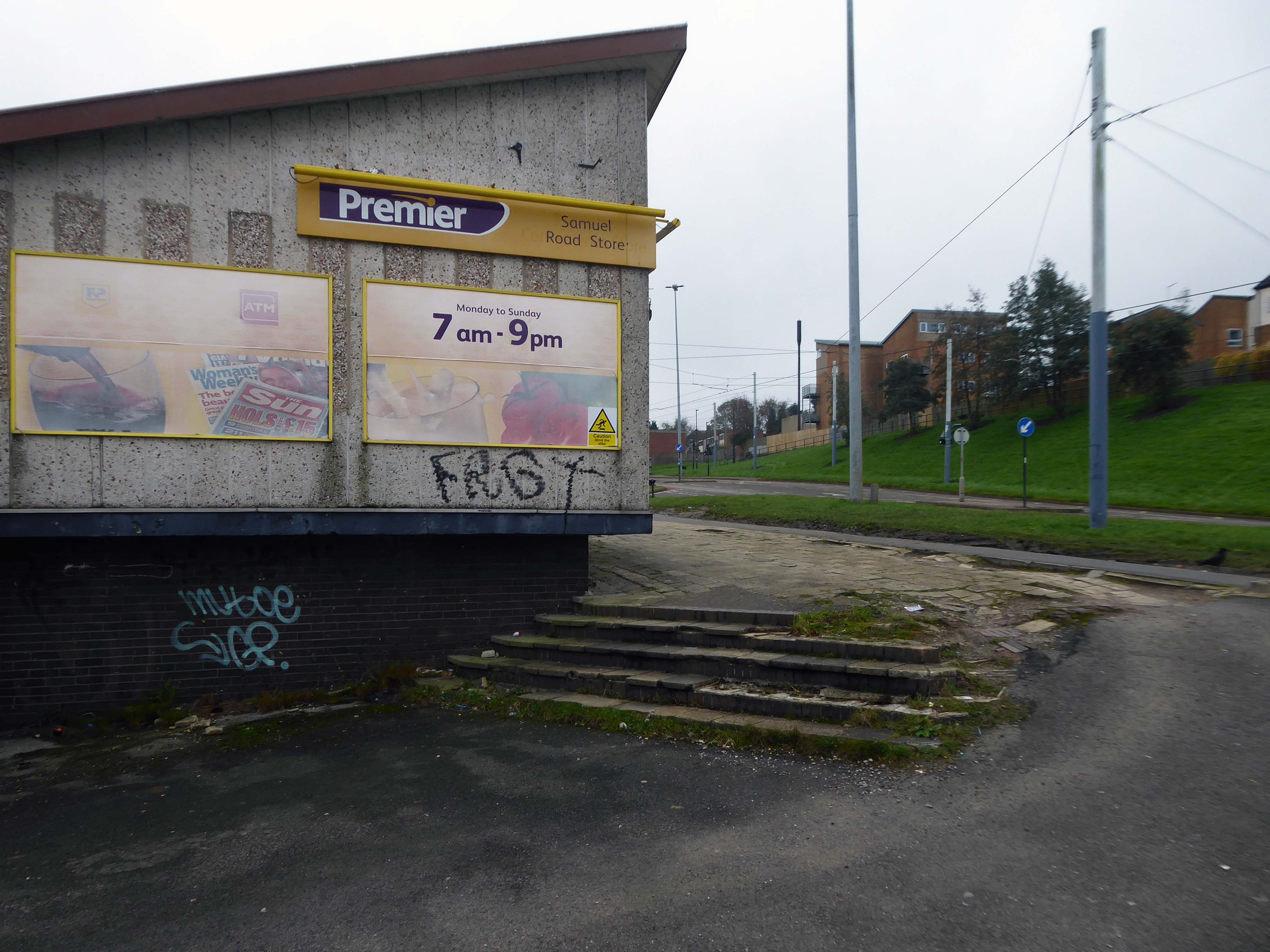
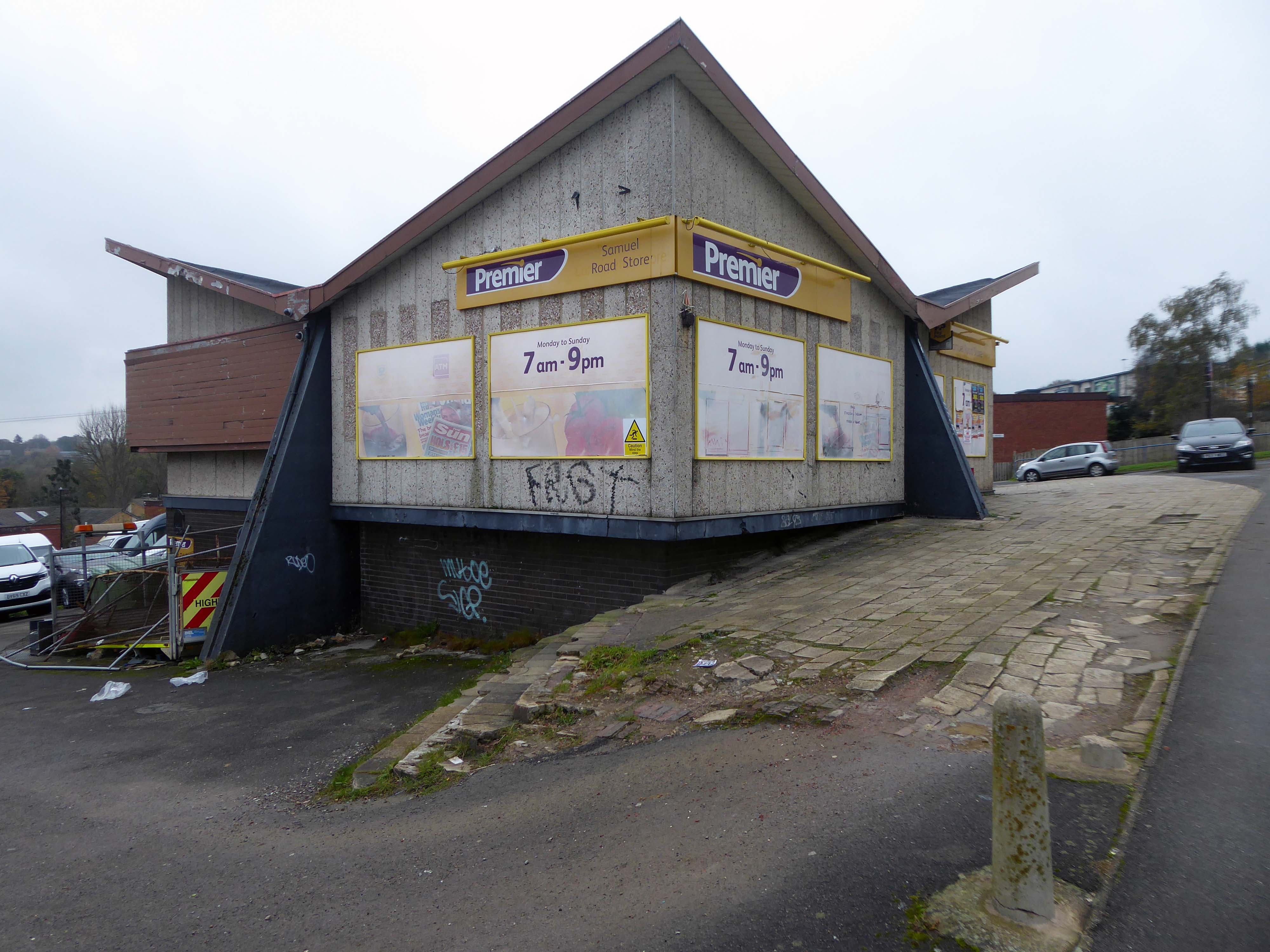
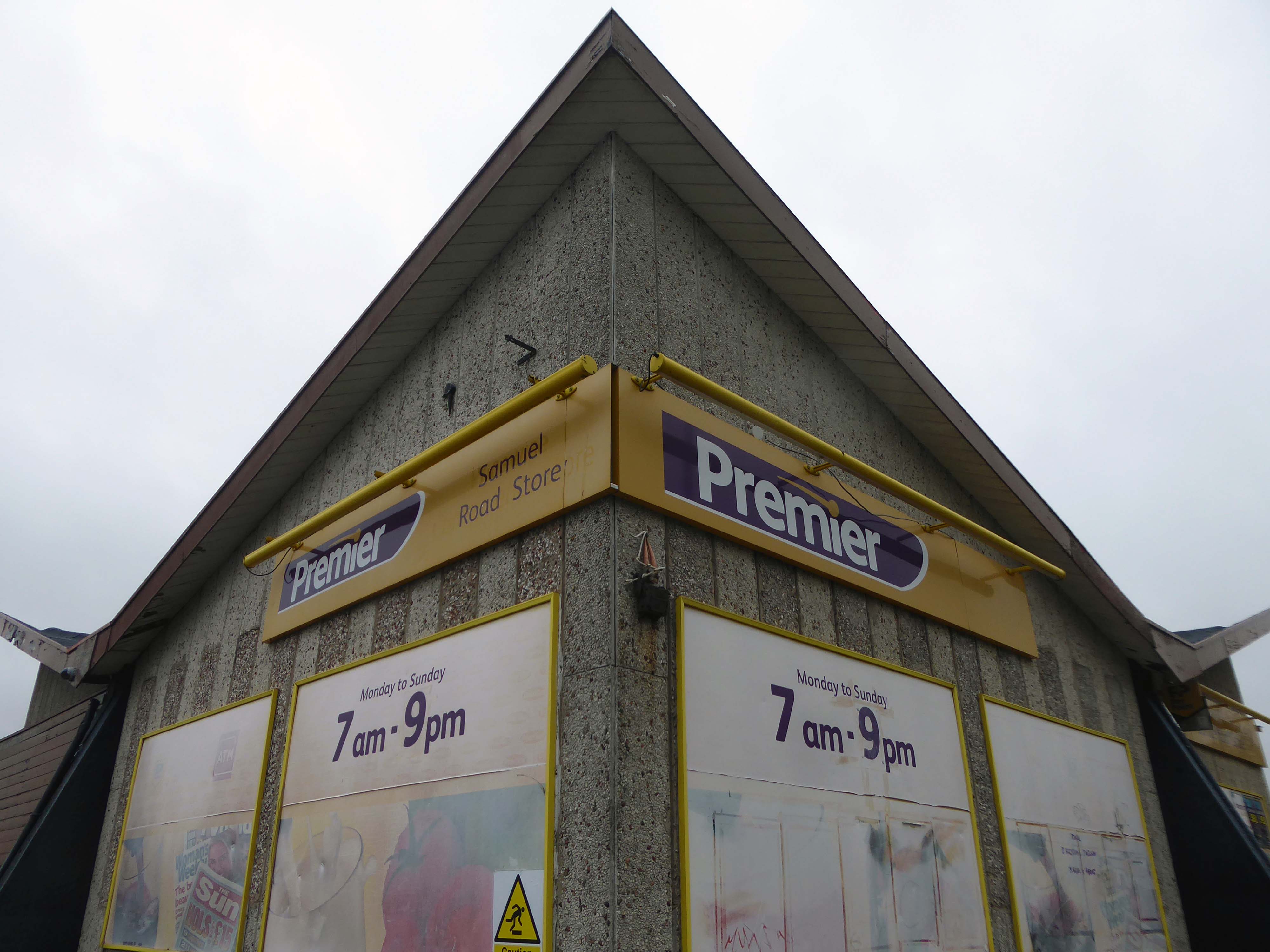
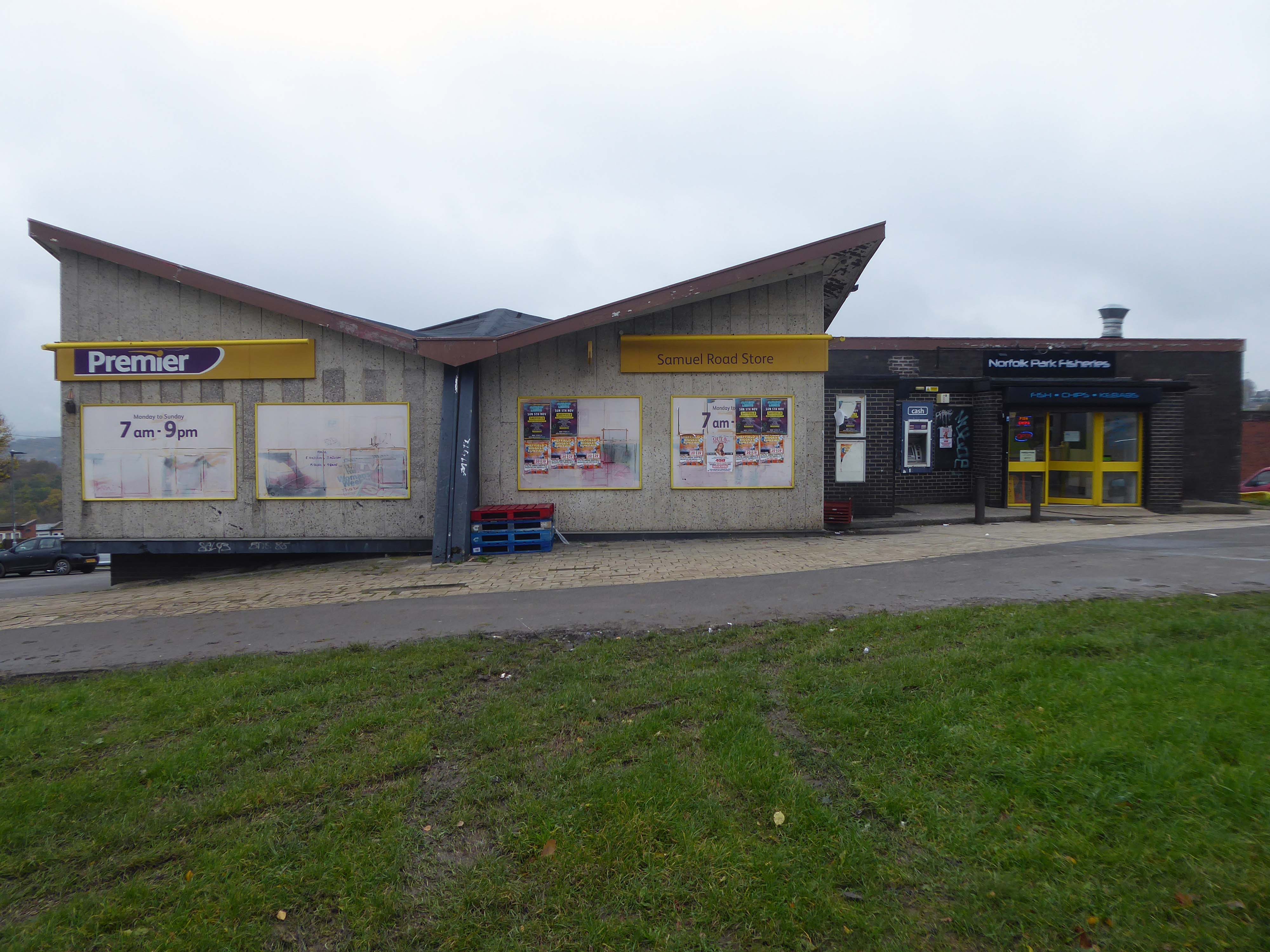
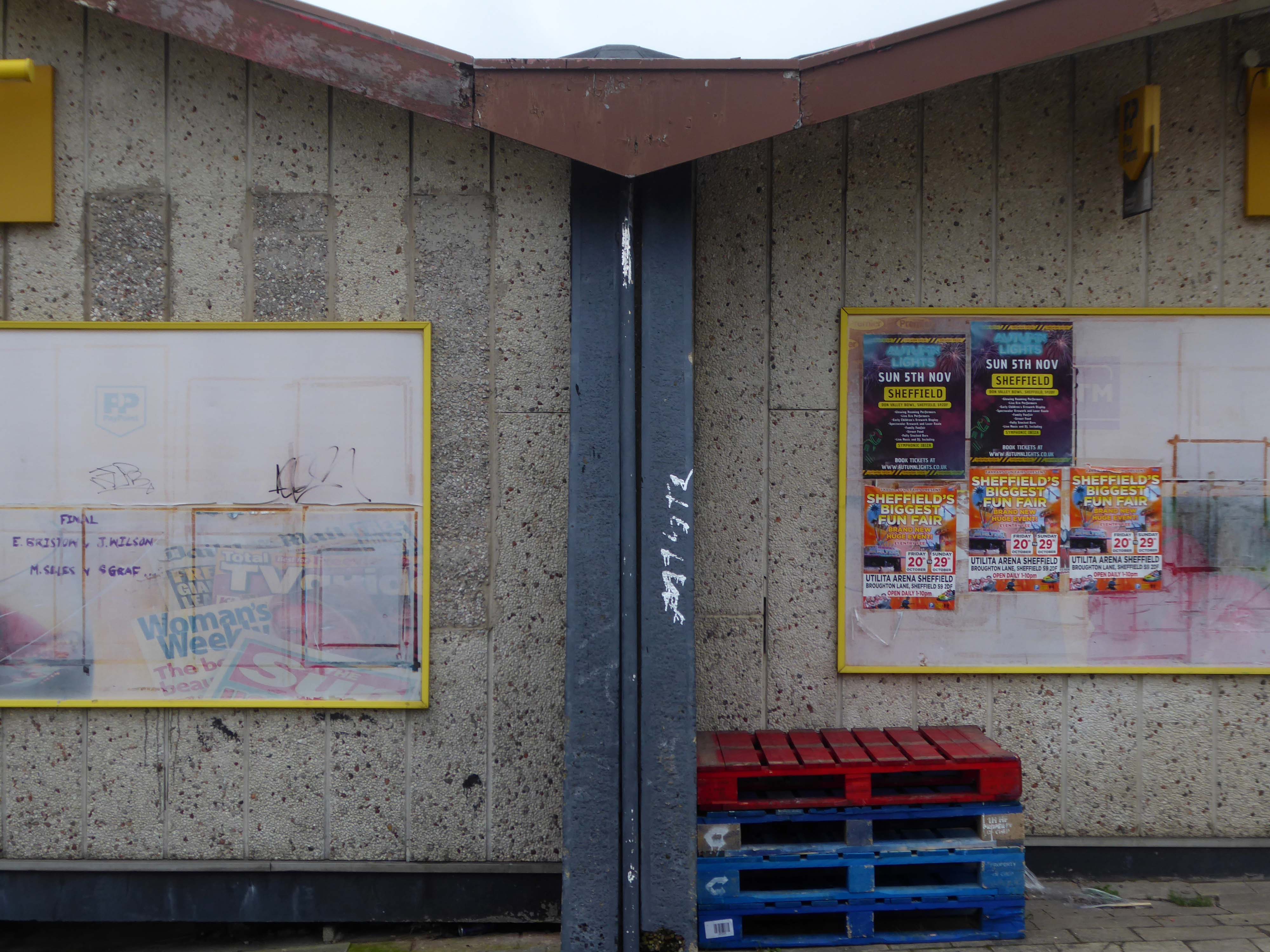
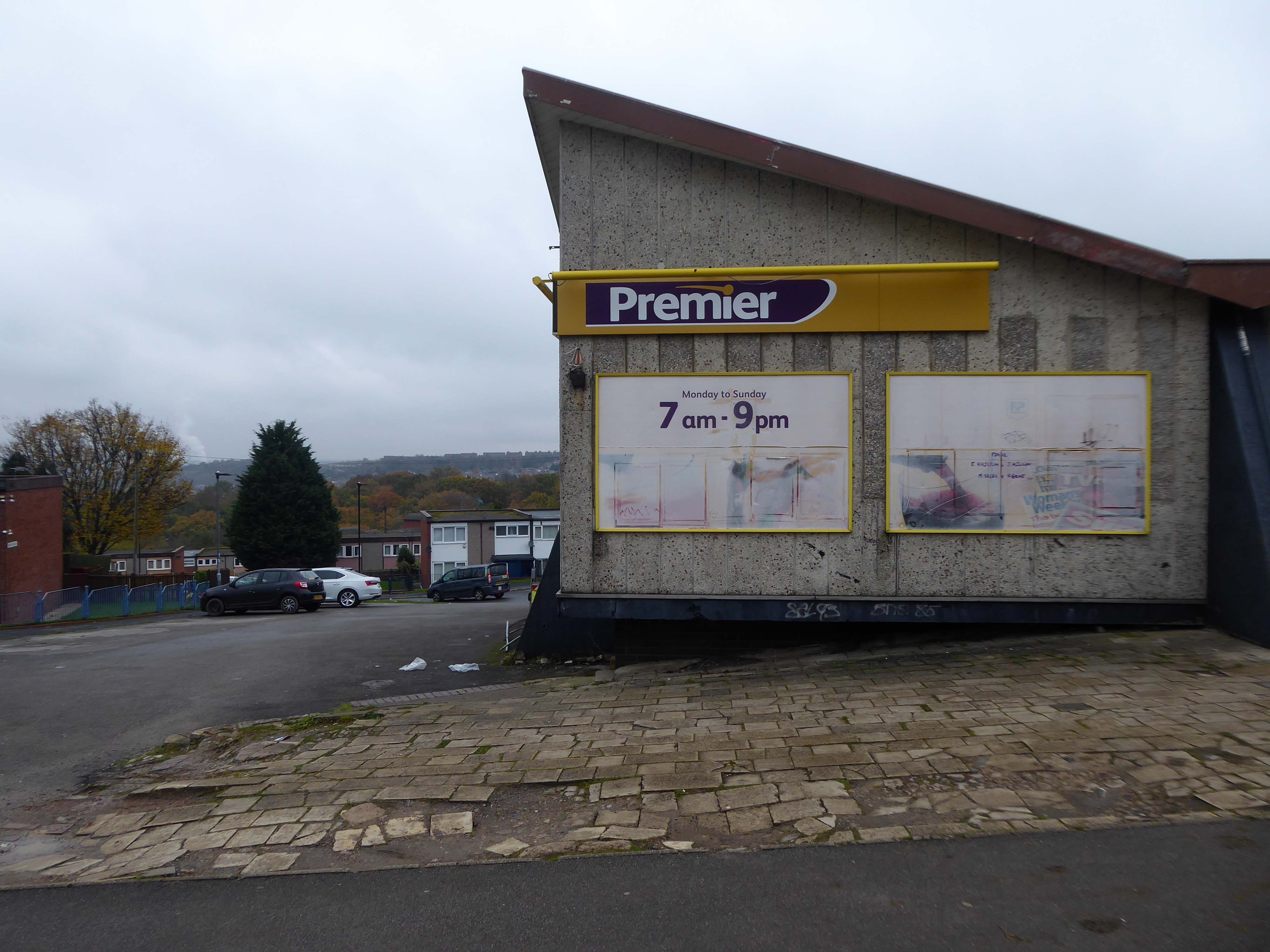
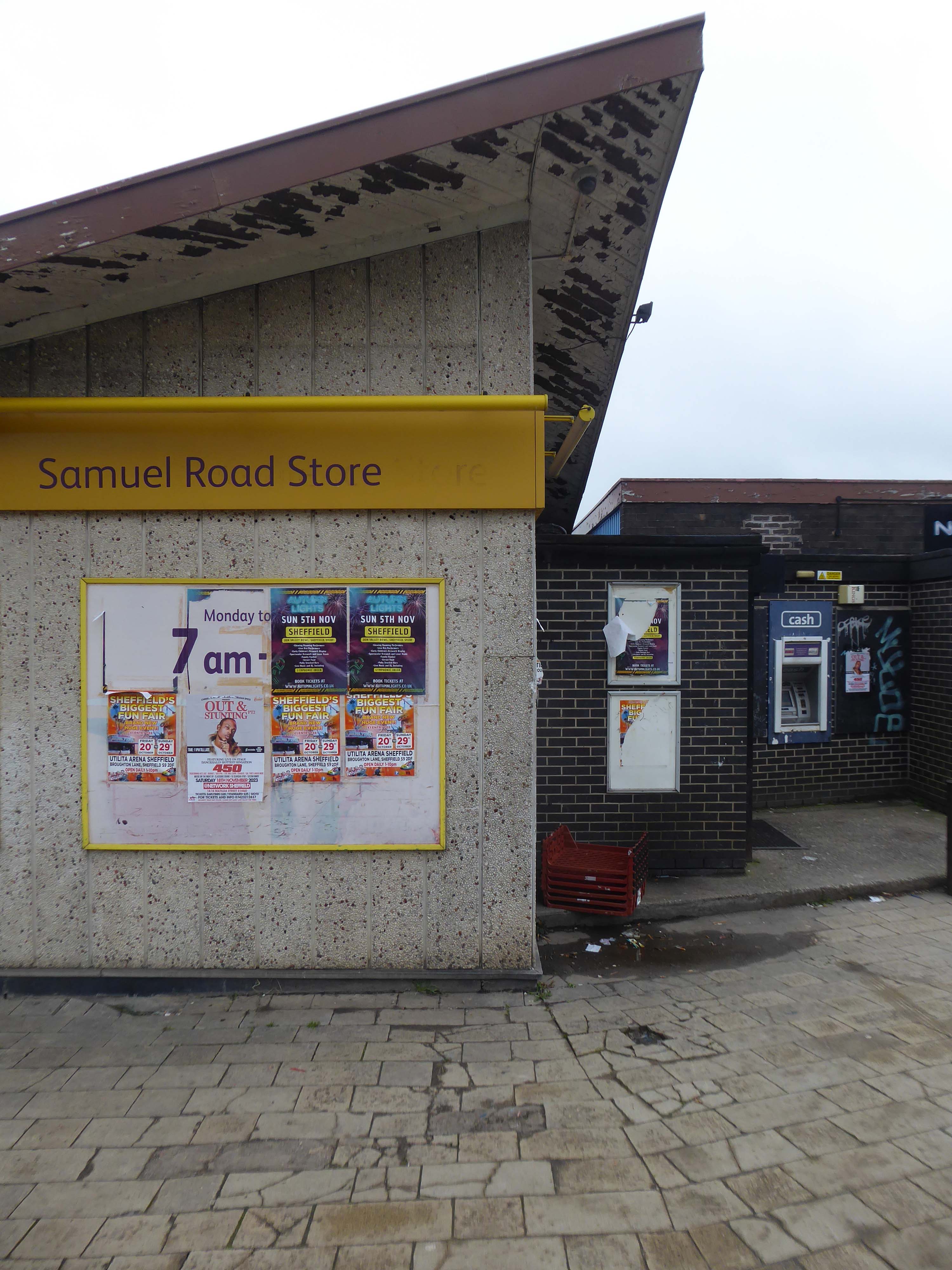
Oh how I loved this place my family drunk in here for years and years, I remember waiting outside on a weekend with a packet of crisps and a glass of coke, waiting for them to come out. I think it was the first place I had my first legal drink, loved the place hate to go past now and see it as a Premier. Anyone seen Dave and Ann lately once upon a time landlord and landlady, does anyone know how they are doing?
Sunday afternoons karaoke and everyone sat outside in the summer – oh the memories.
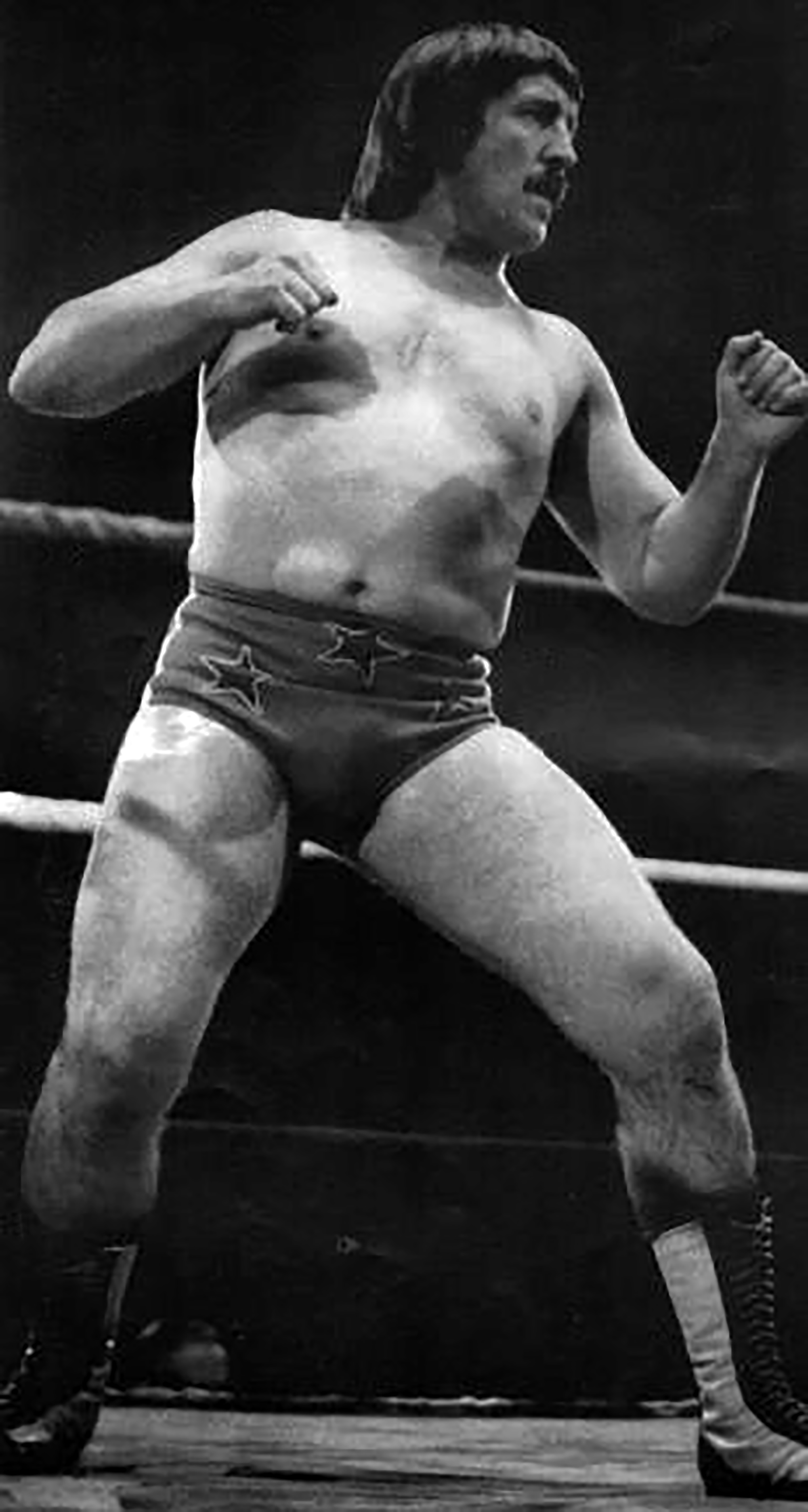
I used to Drink in there around 1975/76, it was OK in those days, a local wrestler used to drink in there, his name was Alan Kilby, I saw him fight on TV a few times.
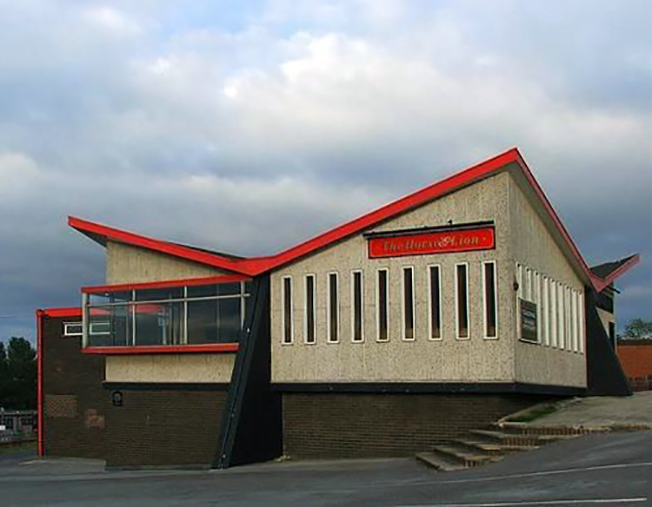
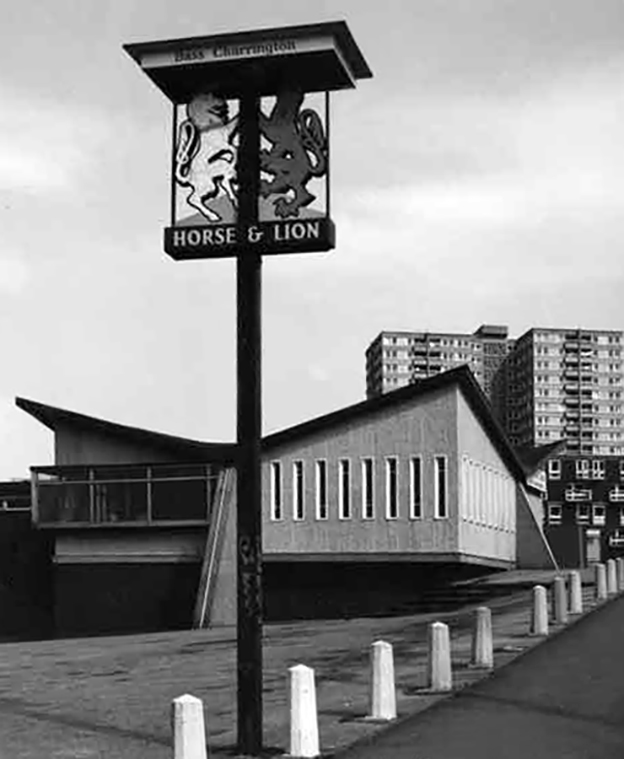
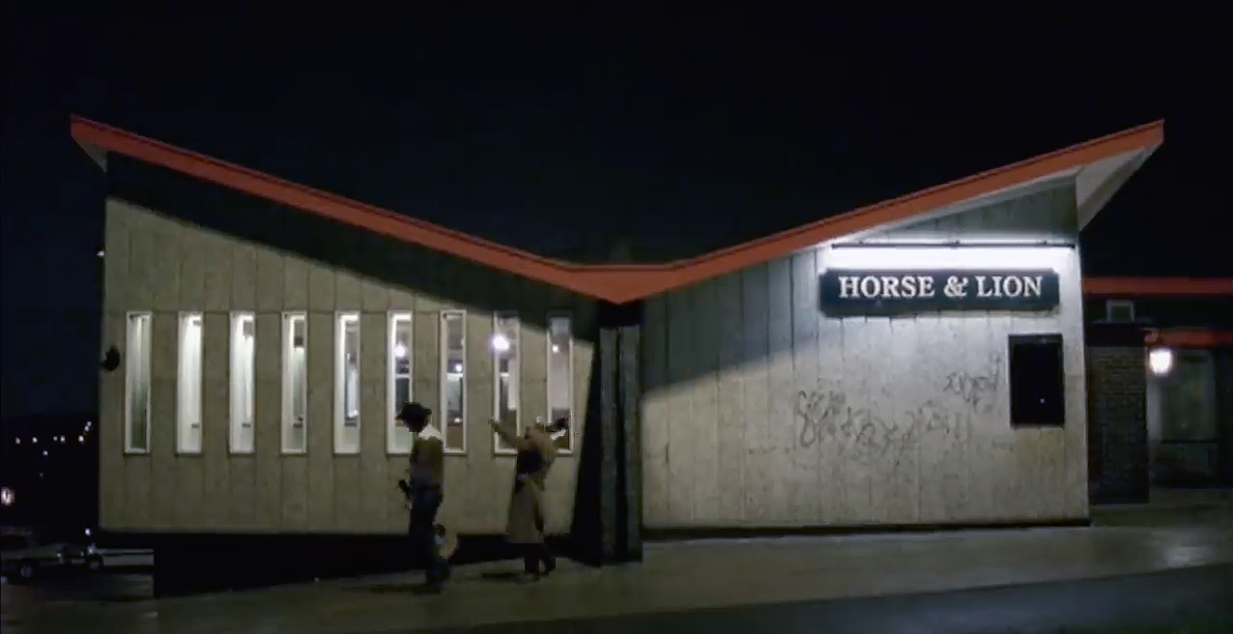
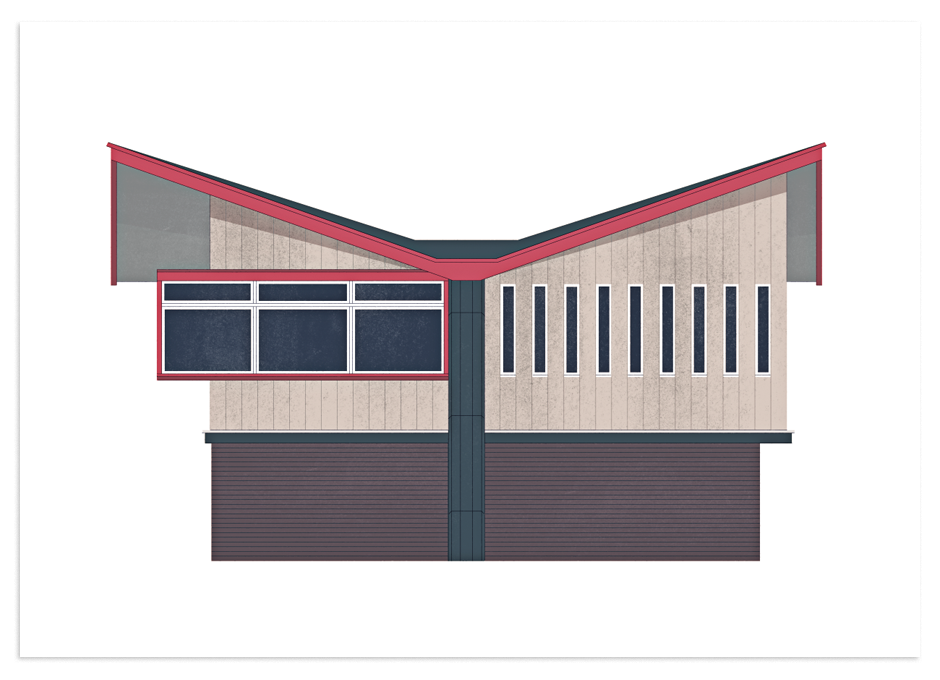
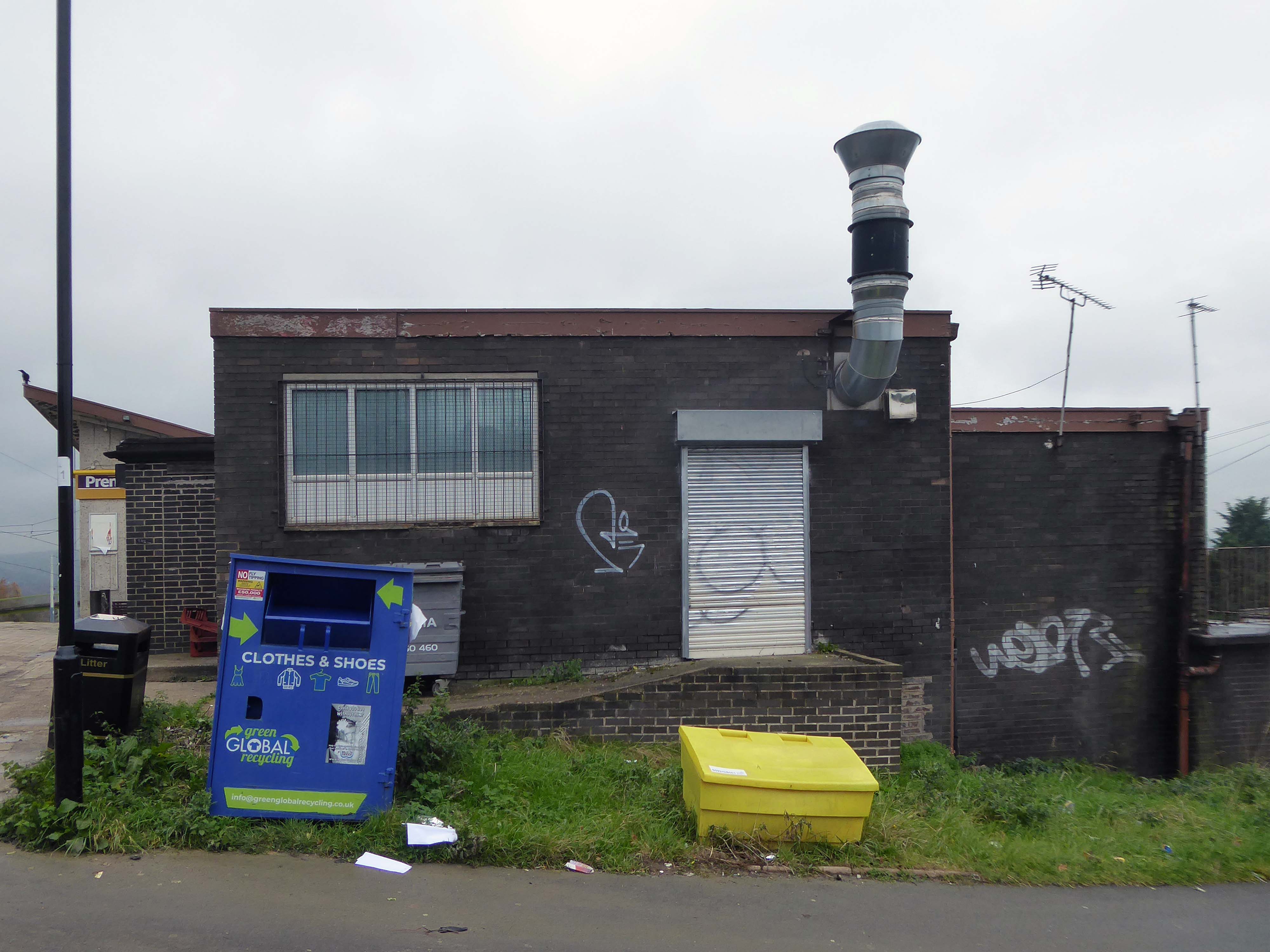
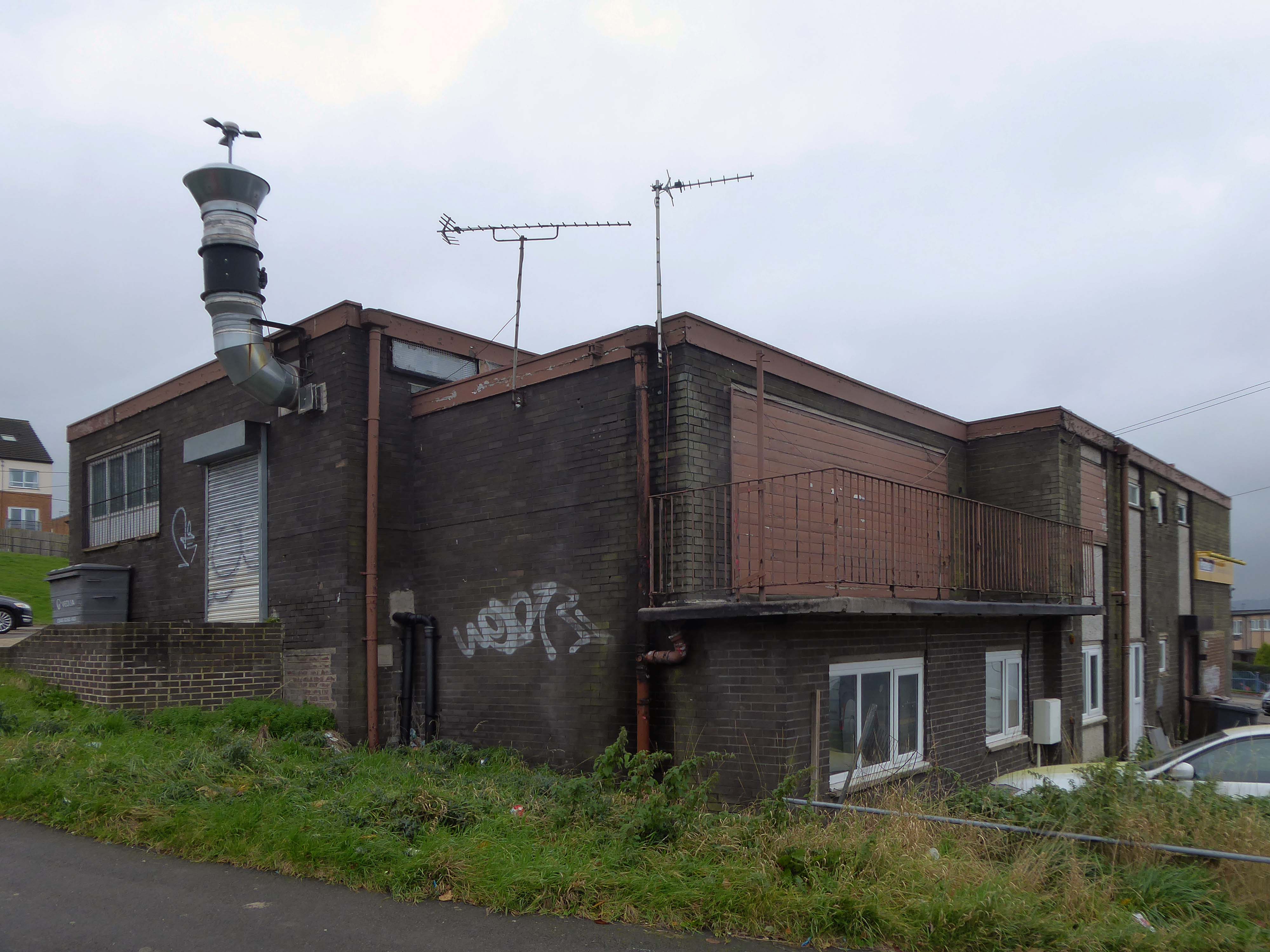
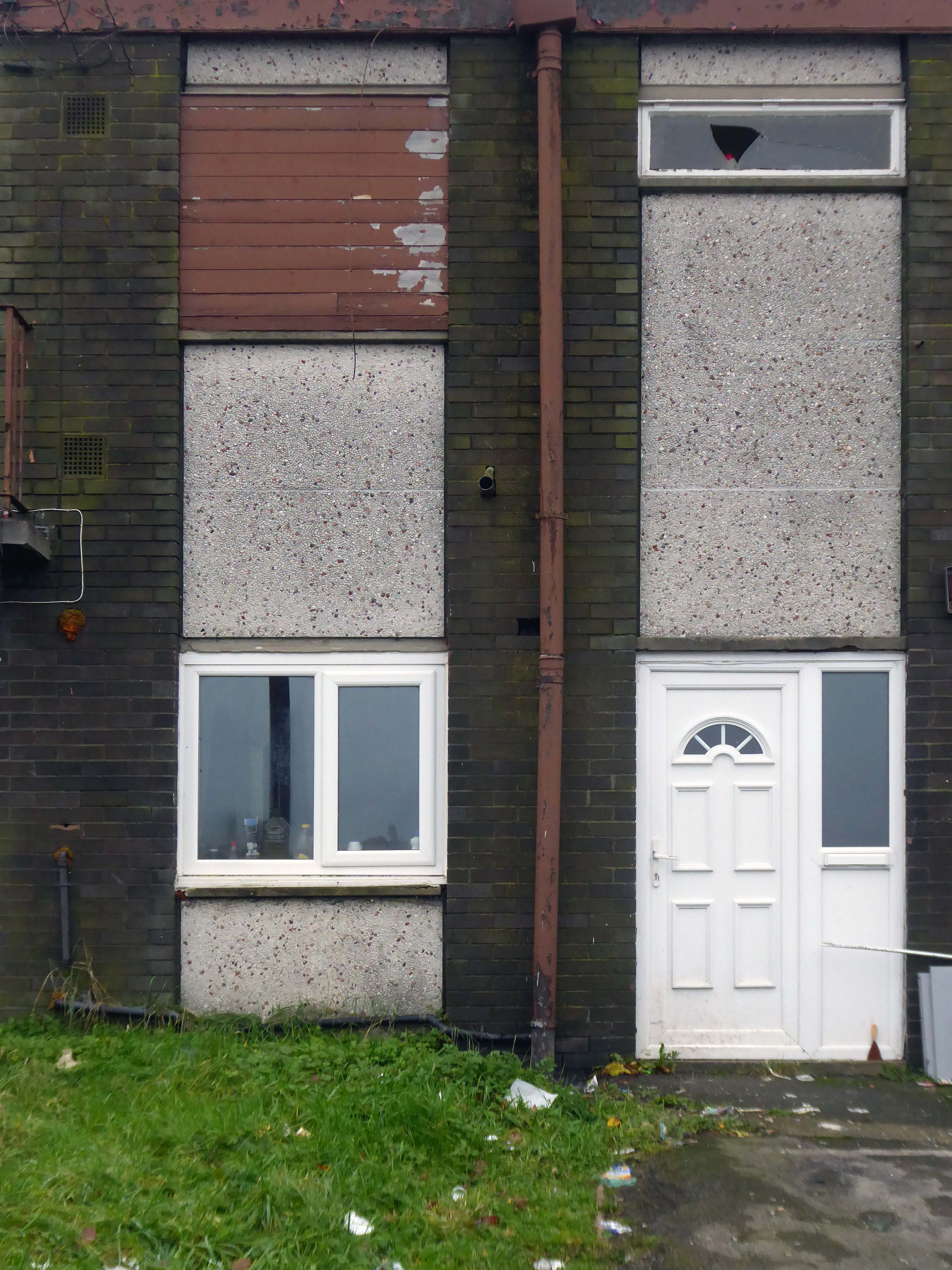
The former pub’s striking roof is still striking – sadly the last orders bell stopped striking long, long ago.
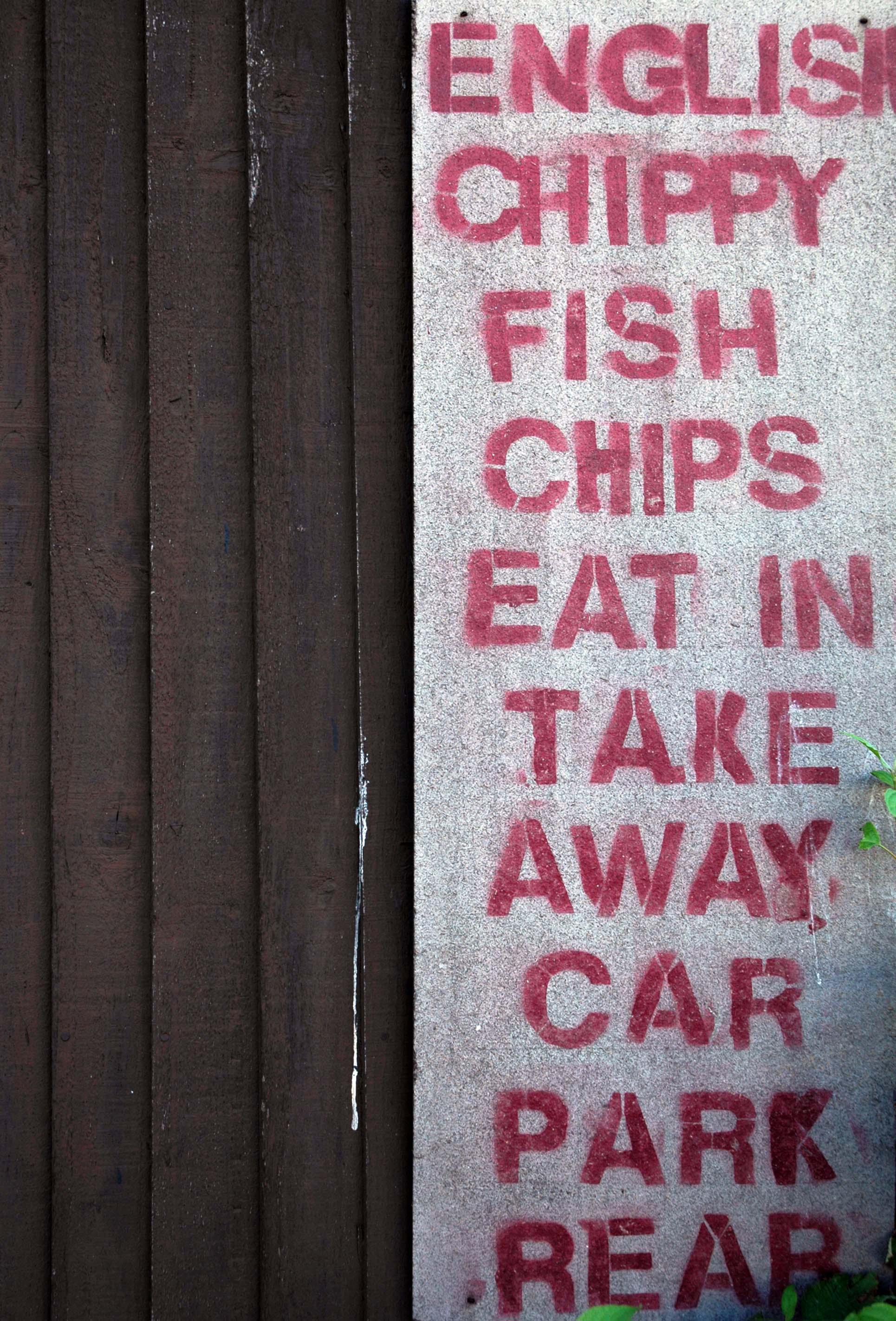
The shop was busy and the chips from the chippy were just the job on a cold damp November day.
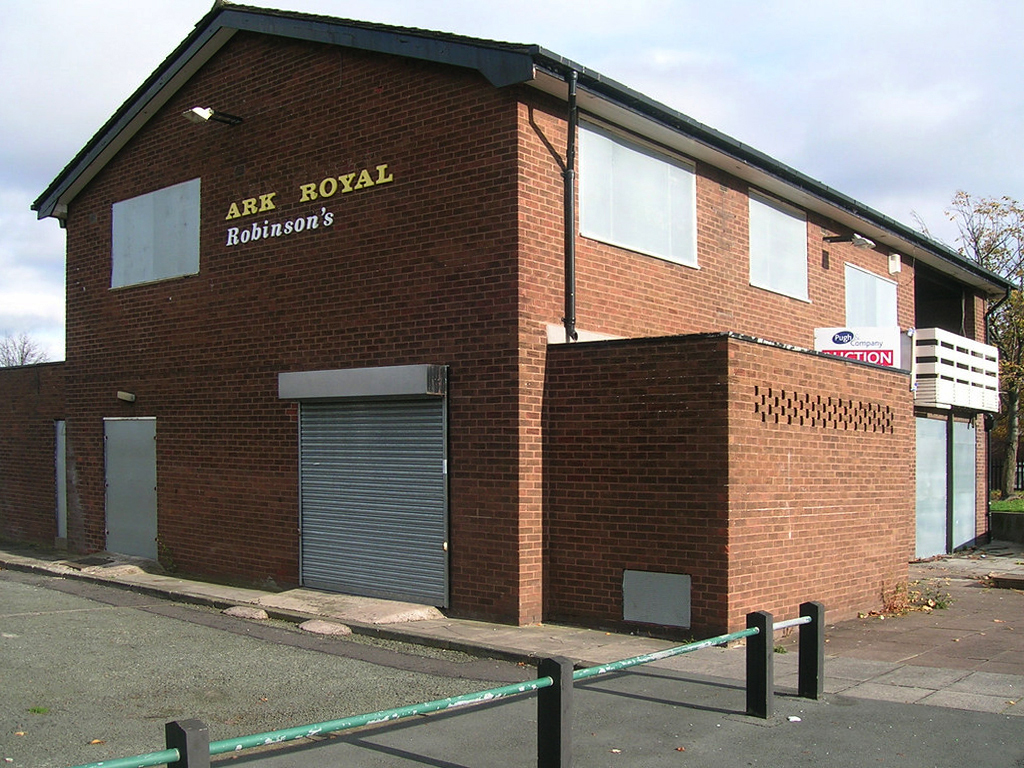
Changes in the demographics of the area, social trends and the general economic malaise, have ensured that many estate pubs are no longer able to thrive and prosper.
Another great looking estate pub that was on the same estate as the Hipp which it was also fairly close to.
There was the usual two rooms inside, I had a drink in the bar room which was quite busy on my Friday afternoon visit, there was also a more comfortable lounge.
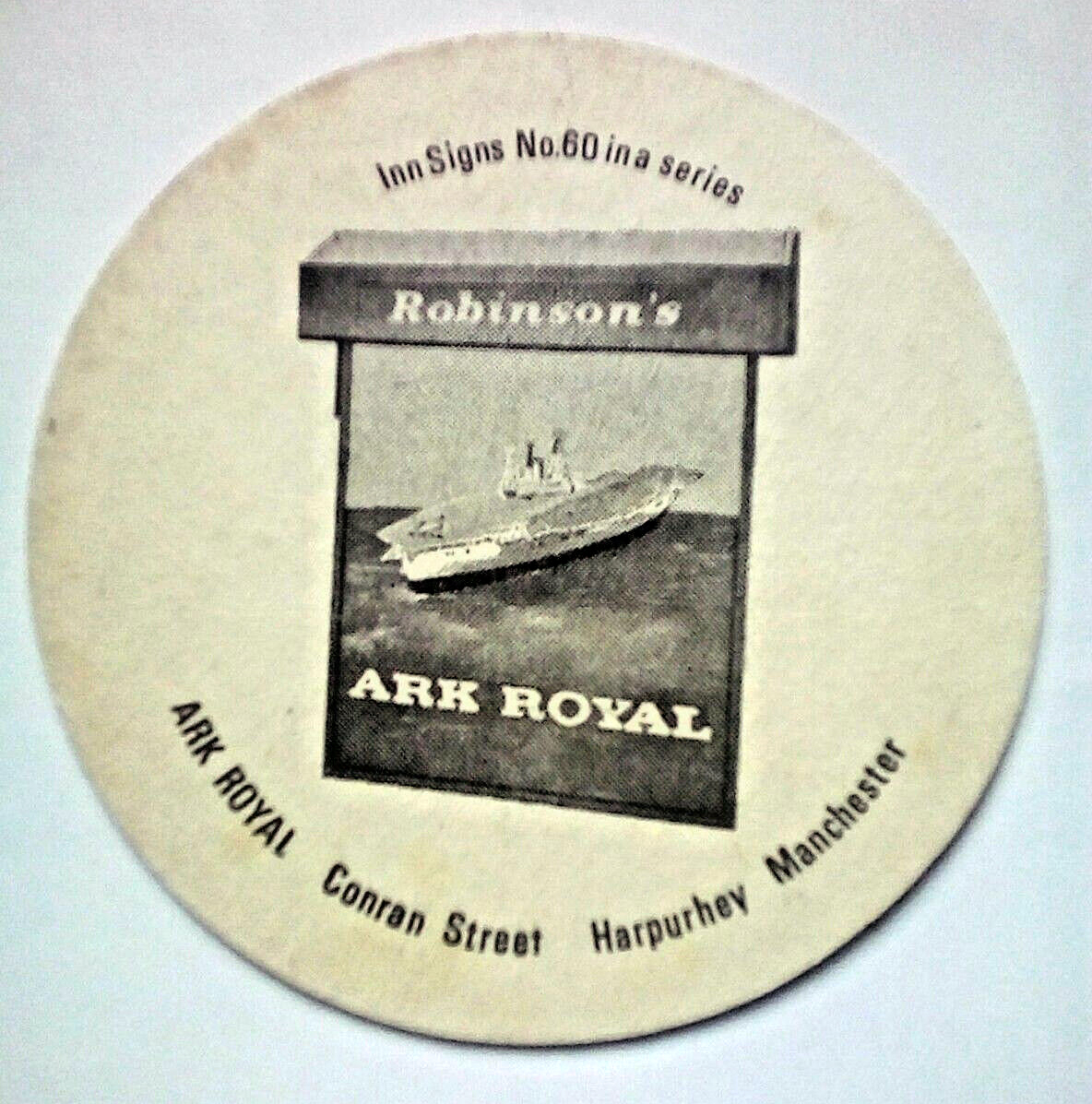
The pub was a Robinsons tied house, there were two real ales on, I had a drink of Robinsons Bitter which was a nice drink, there was also Robinsons Mild on.
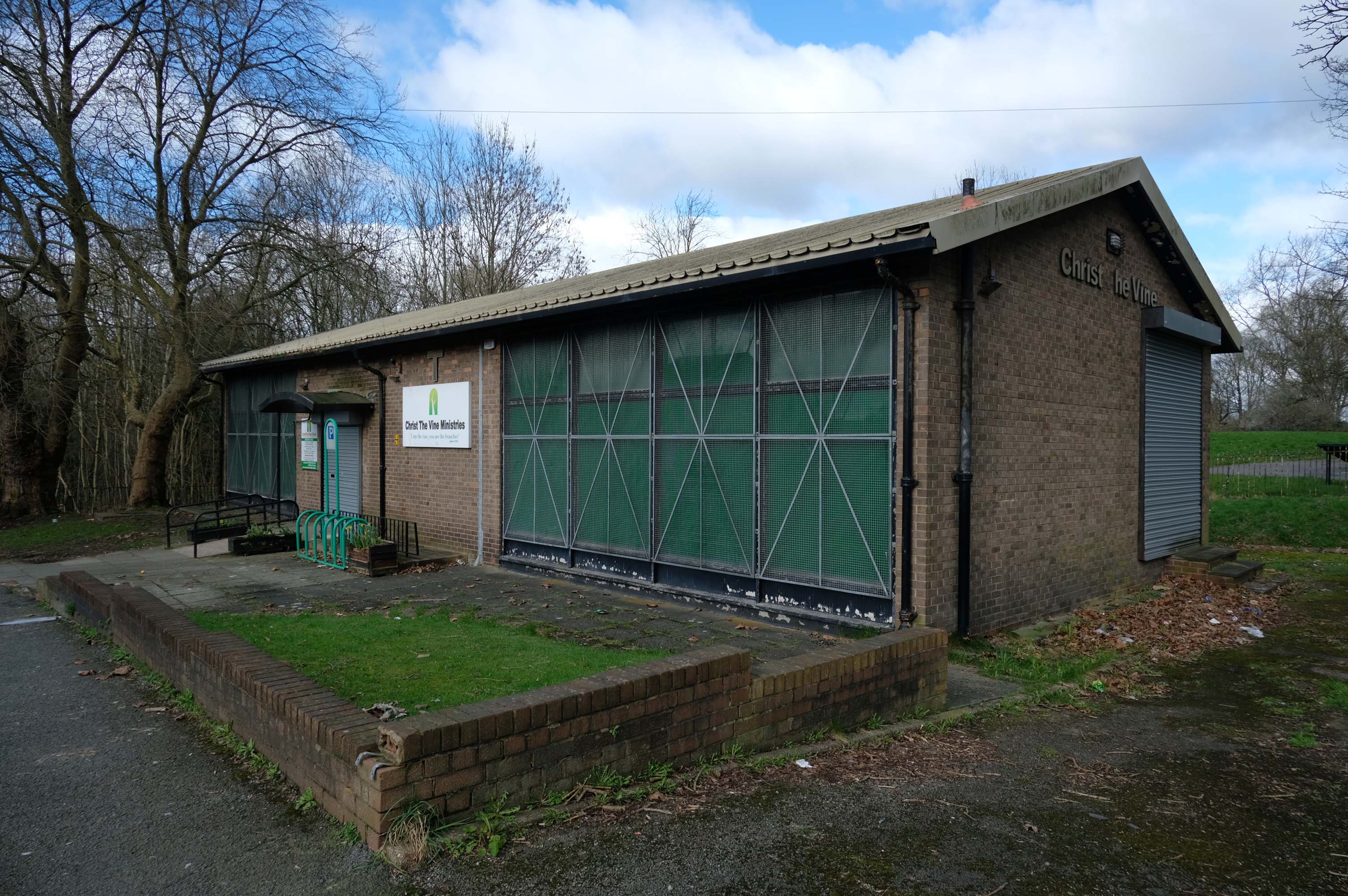
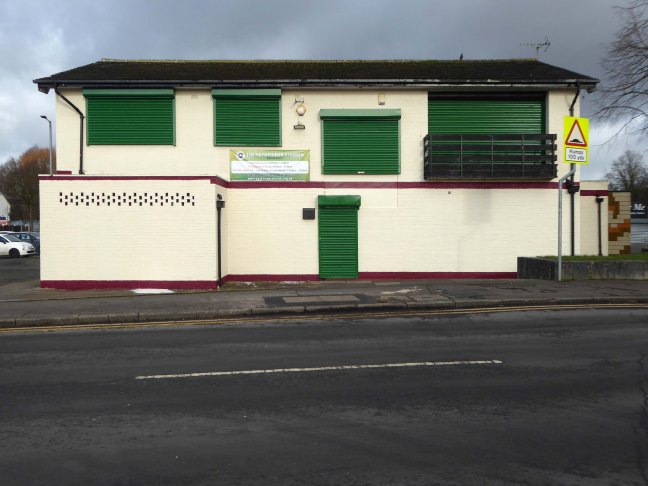
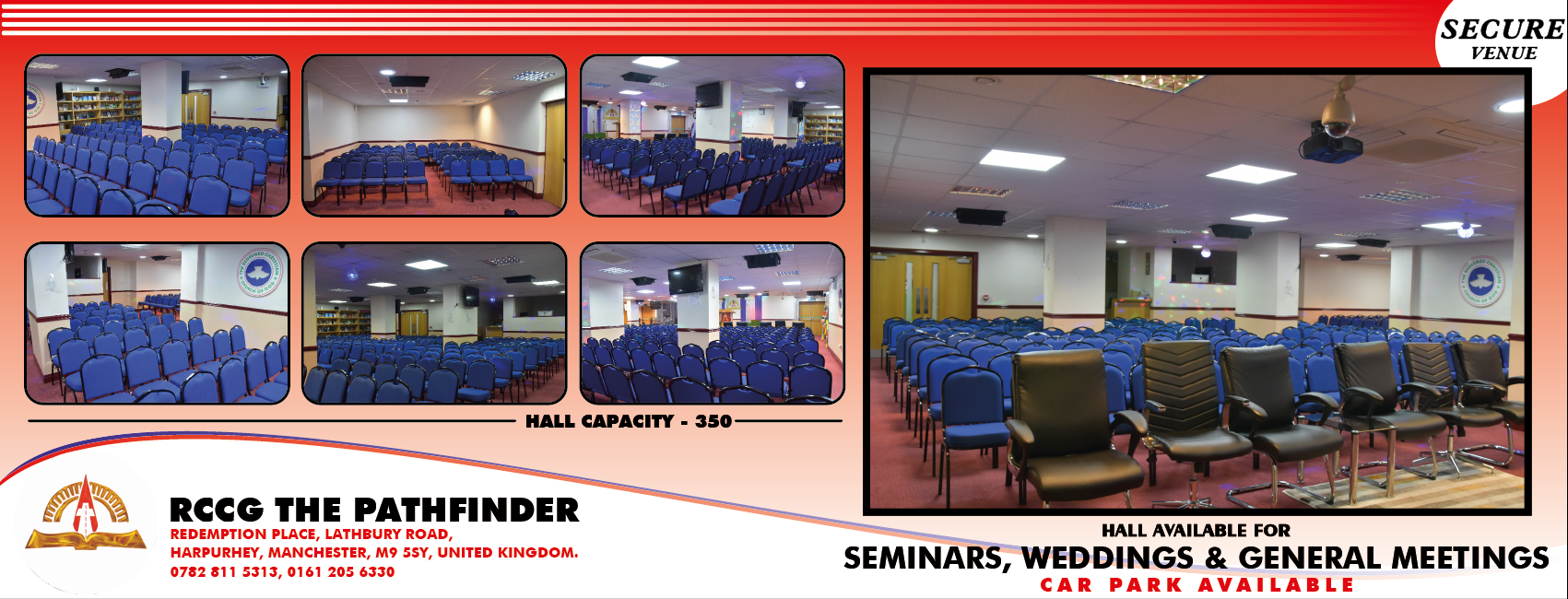
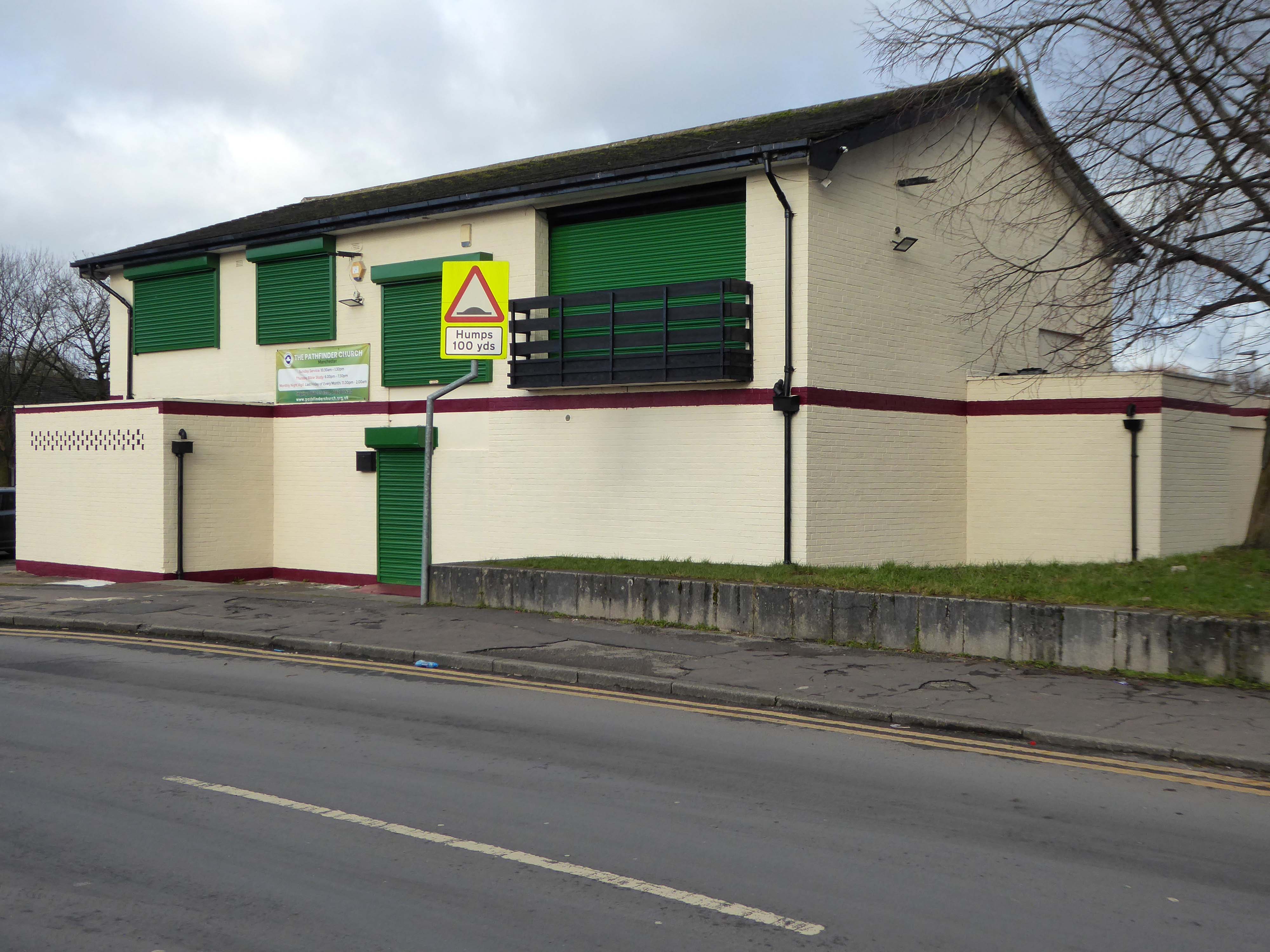
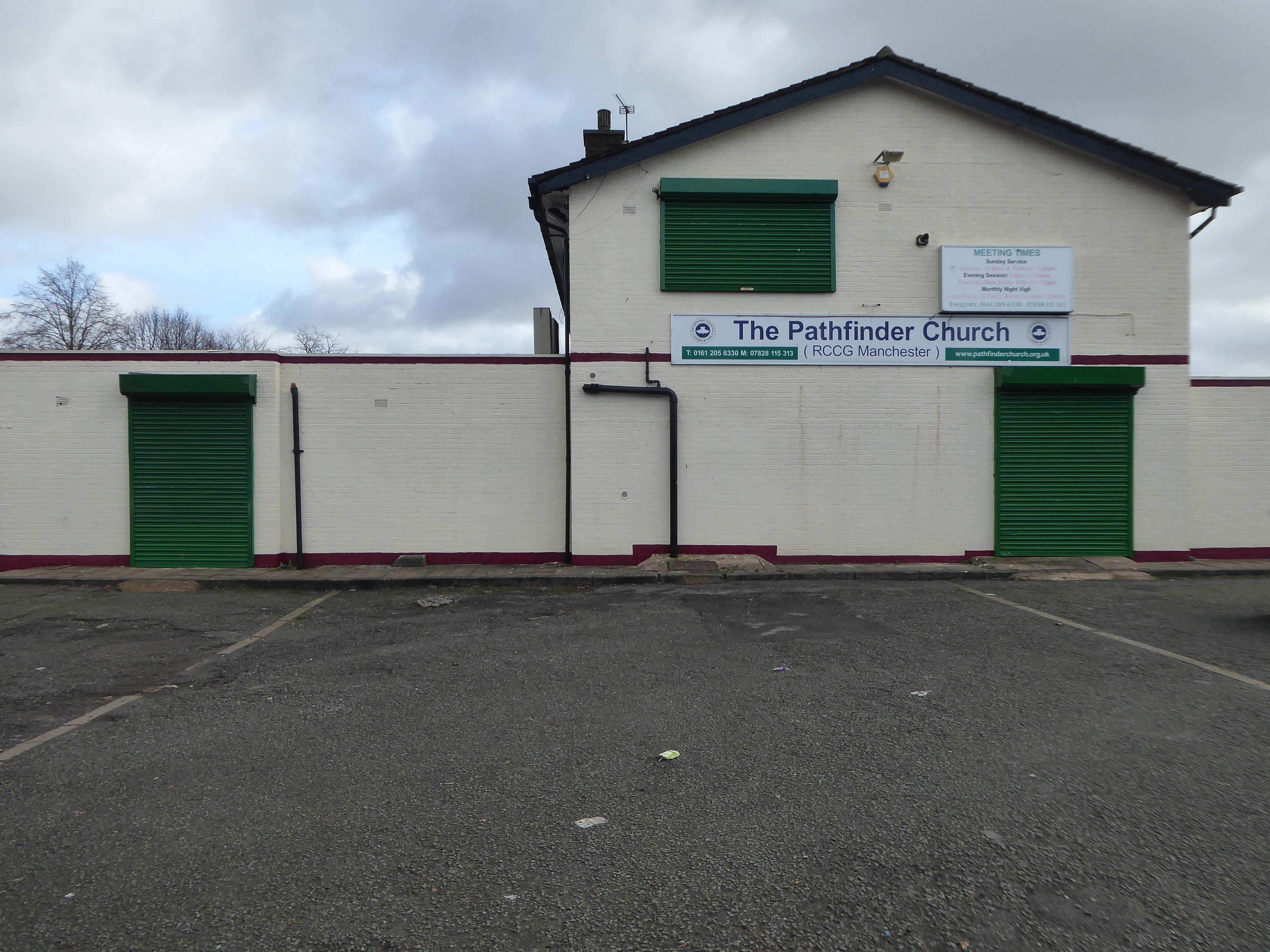
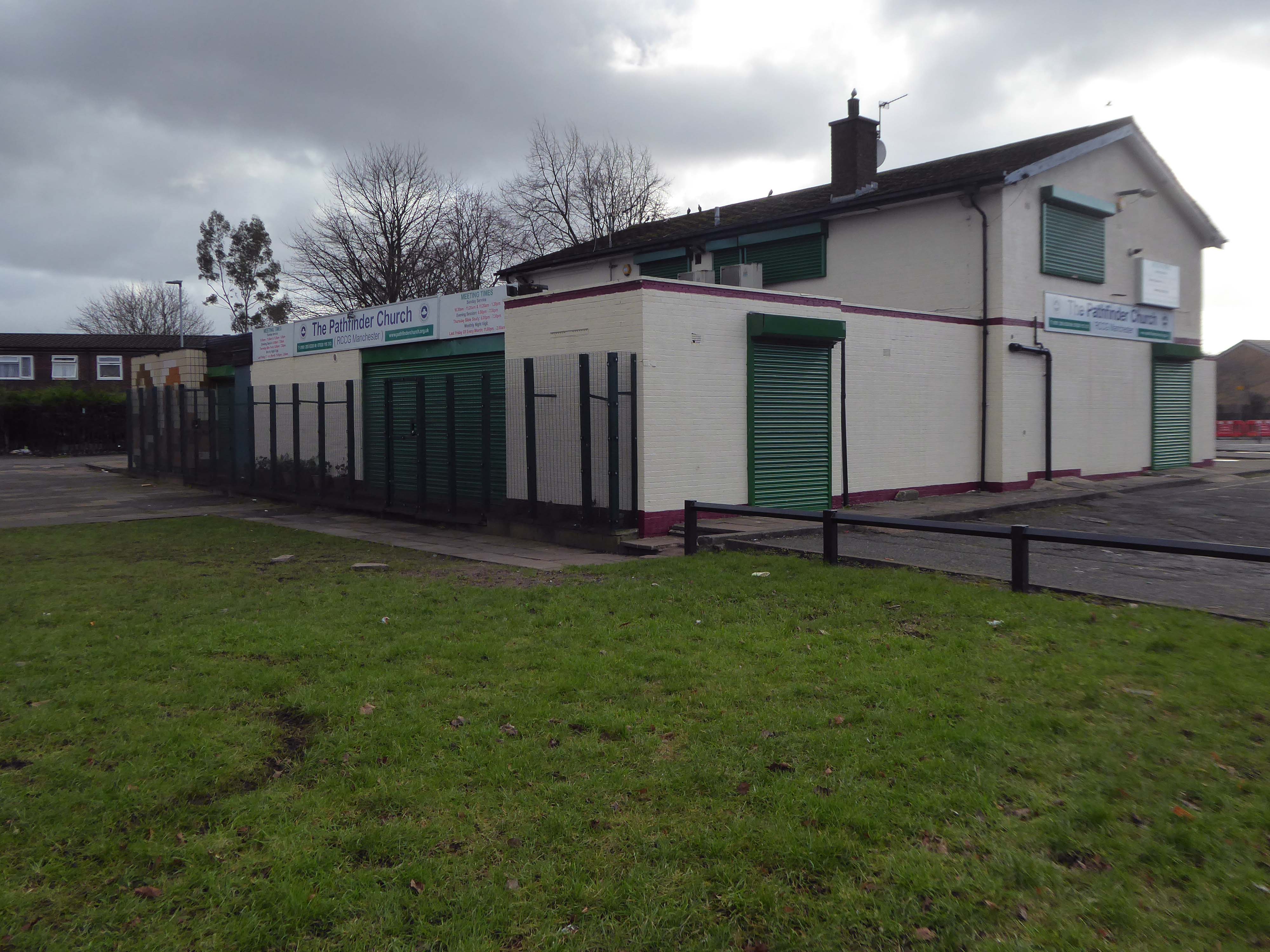
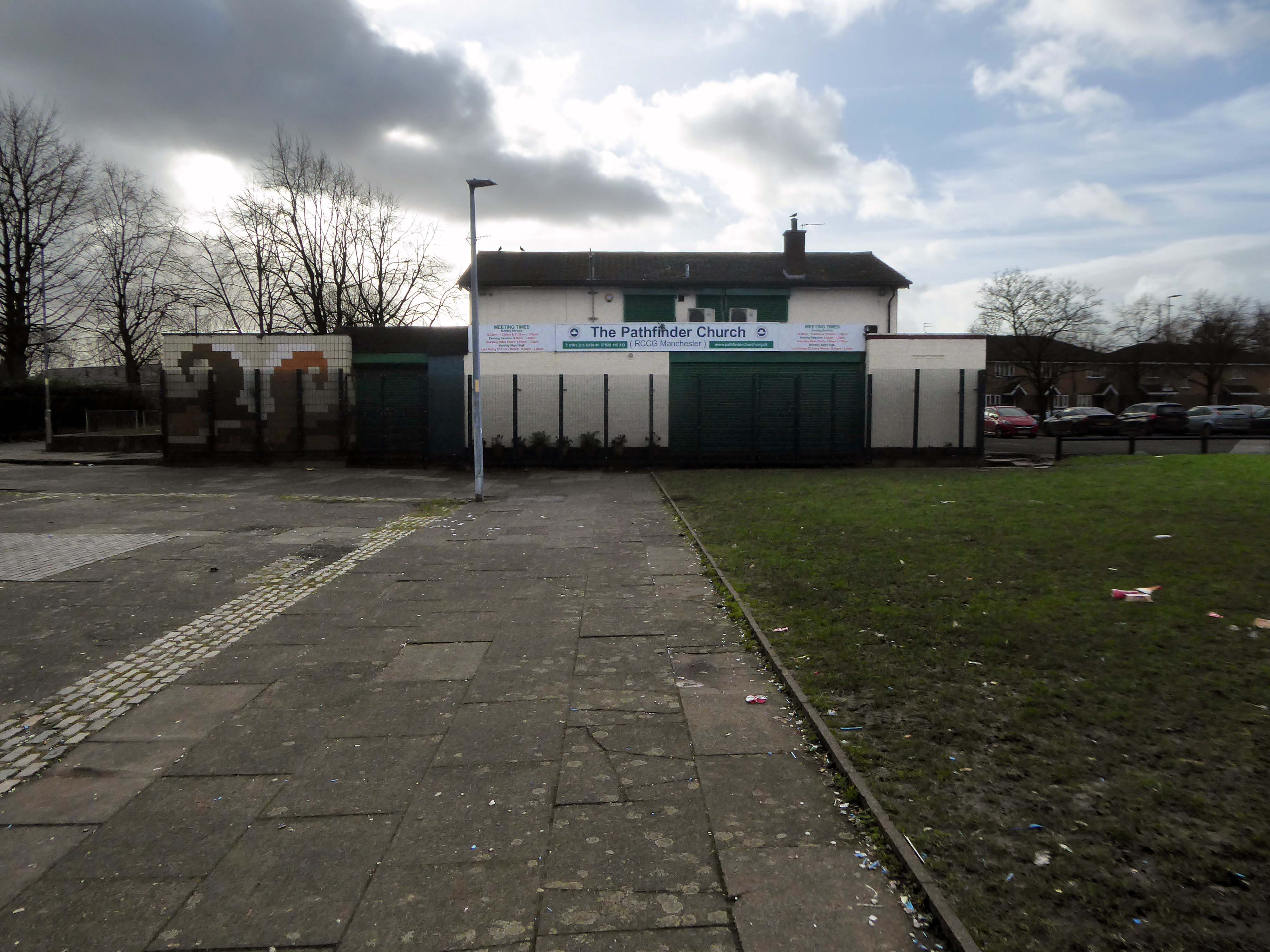
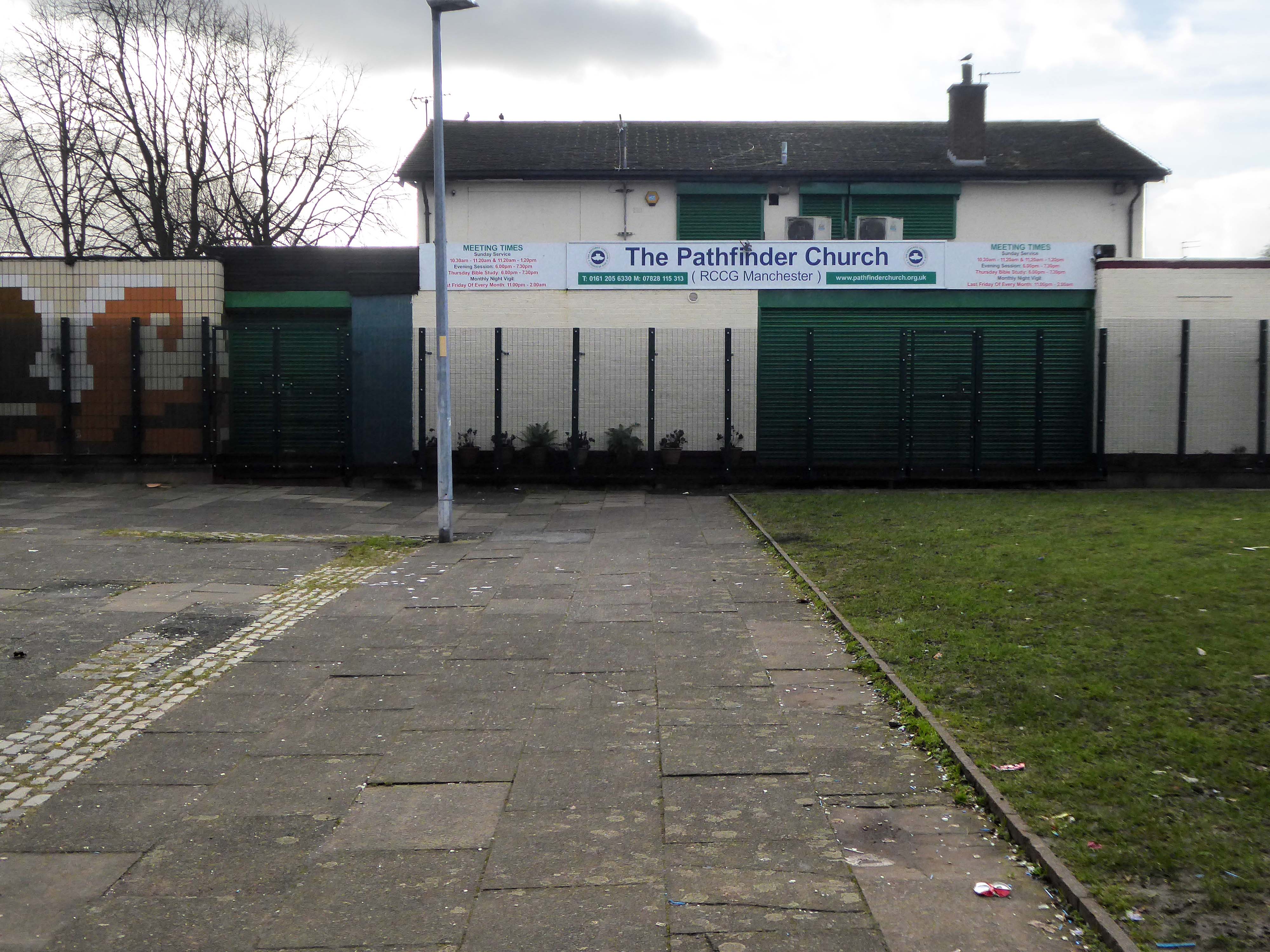
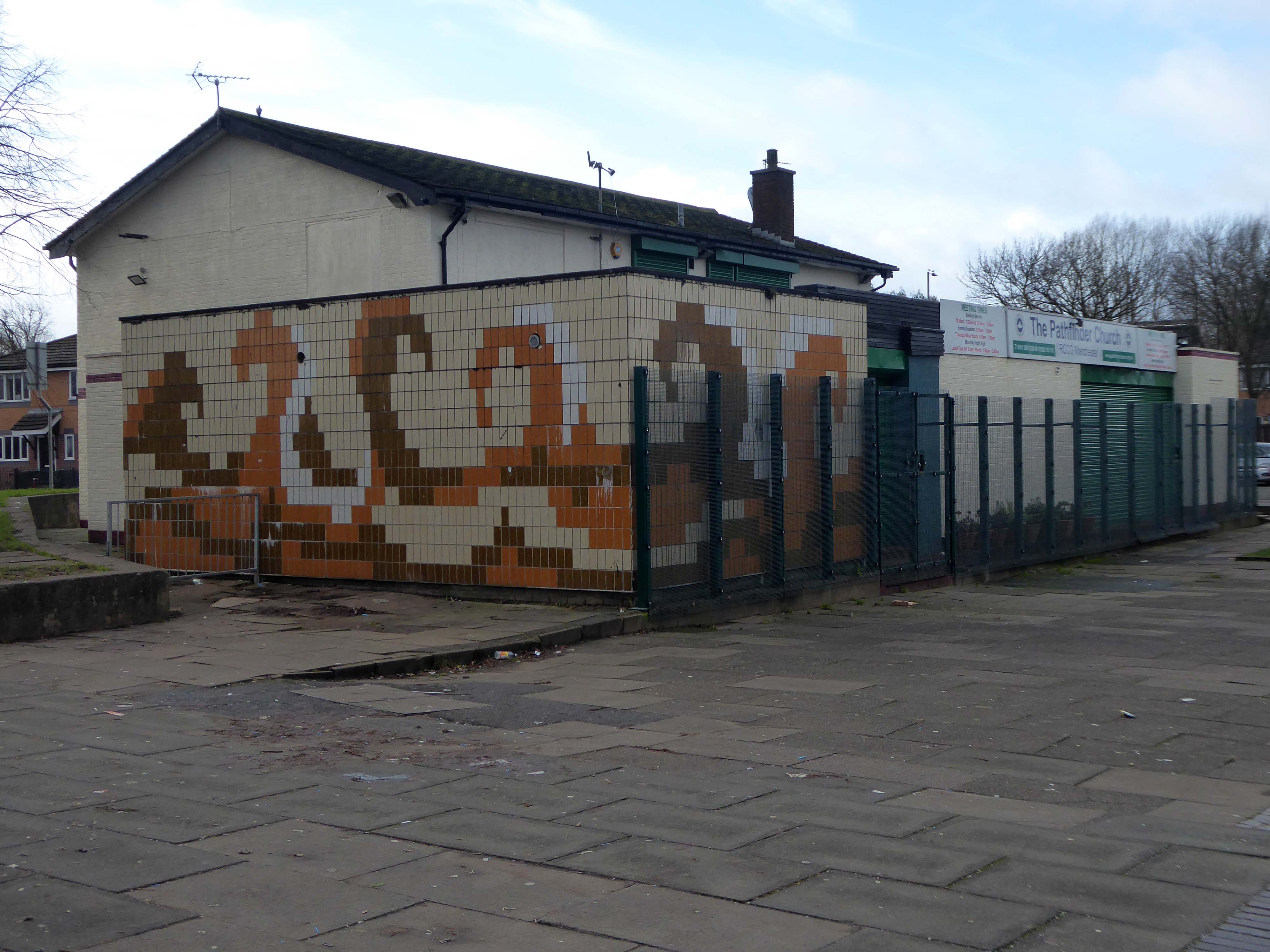
We are committed to the growth and development of individual, our local and international communities. In the interim may I use this medium to invite you to be part of the move of God in our church, the Pathfinder.
The Lord bless your richly as you navigate through in Jesus name.
Take in all the best that Manchester’s creative scene has to offer and let your imagination go wild.
In 1807 you really had to use your imagination to discover the creative scene.
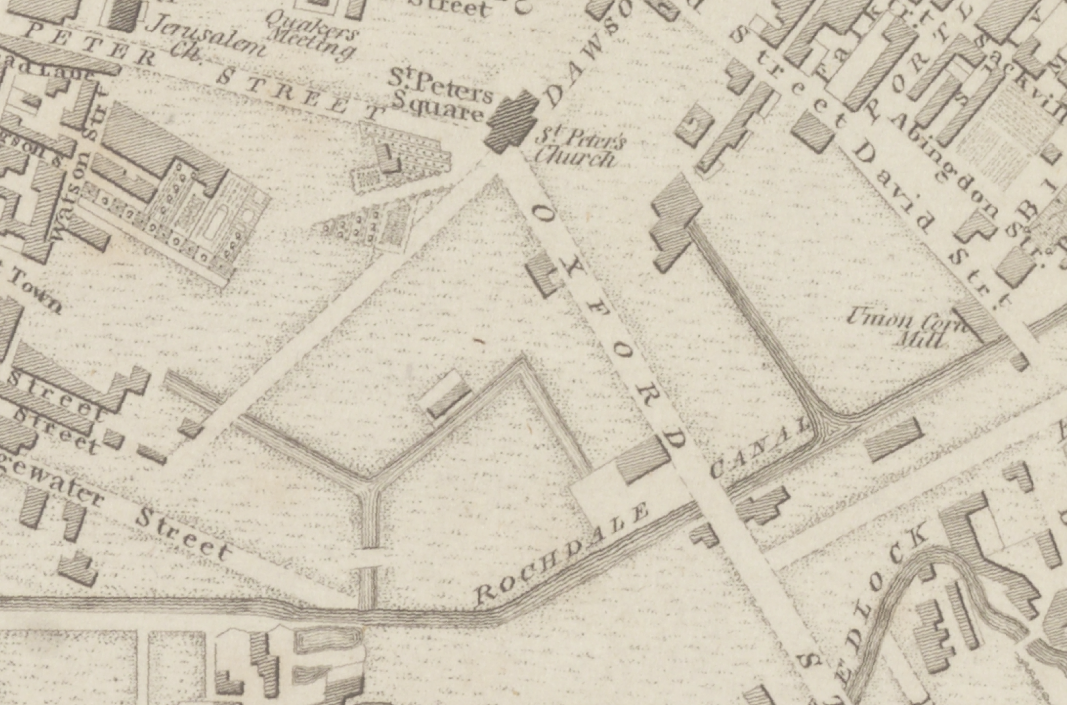
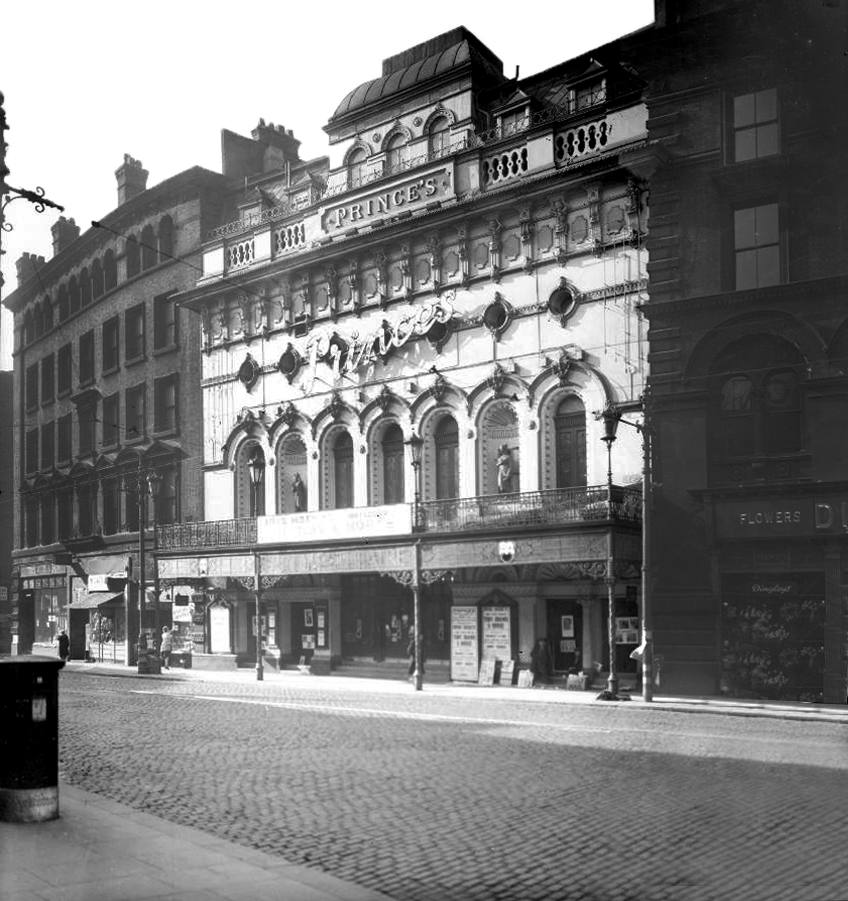
The site was home to the Prince’s Theatre:
Constructed by Metcalf and Waterson at a cost of £20,000, and designed by the architect Edward Salomons. The Theatre, which had seating for 1,590, opened with a production of Shakespeare’s ‘The Tempest’ on Saturday, October the 15th 1864, under the management of Charles Calvert.
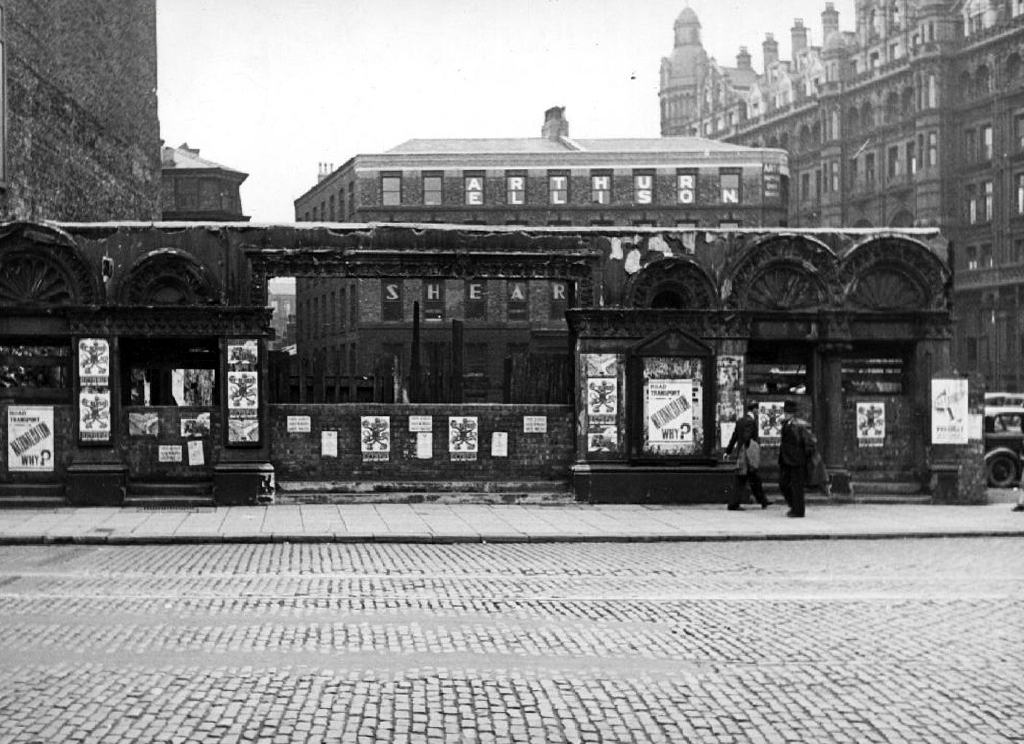
Sadly the Prince’s Theatre was closed in April 1940 when it was sold to ABC Cinemas who planned to build a new Cinema complex on the site, the Theatre was subsequently demolished but because of the war – the new Cinema was never built
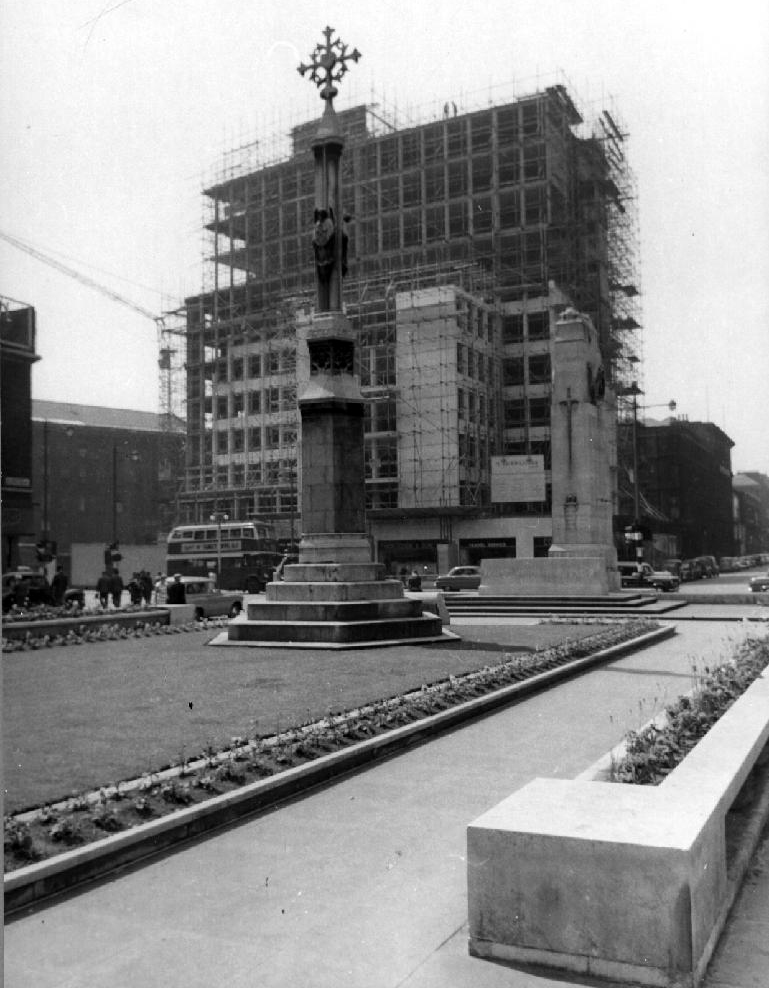
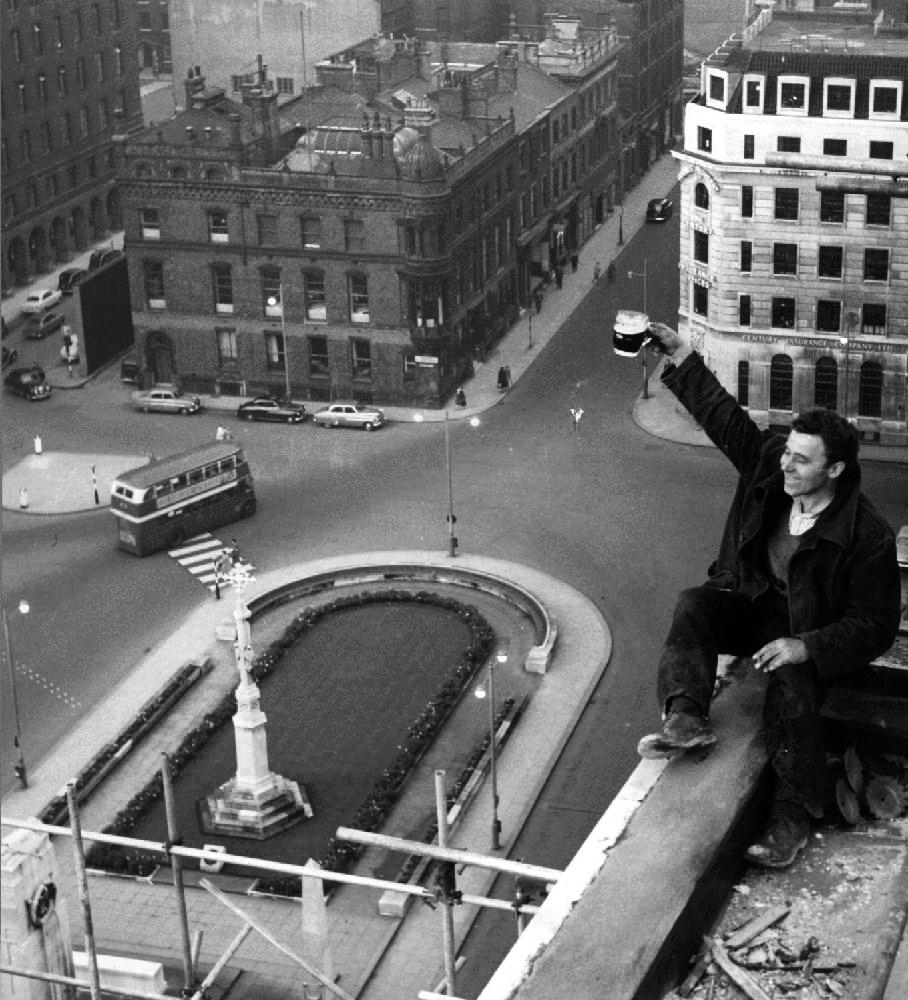
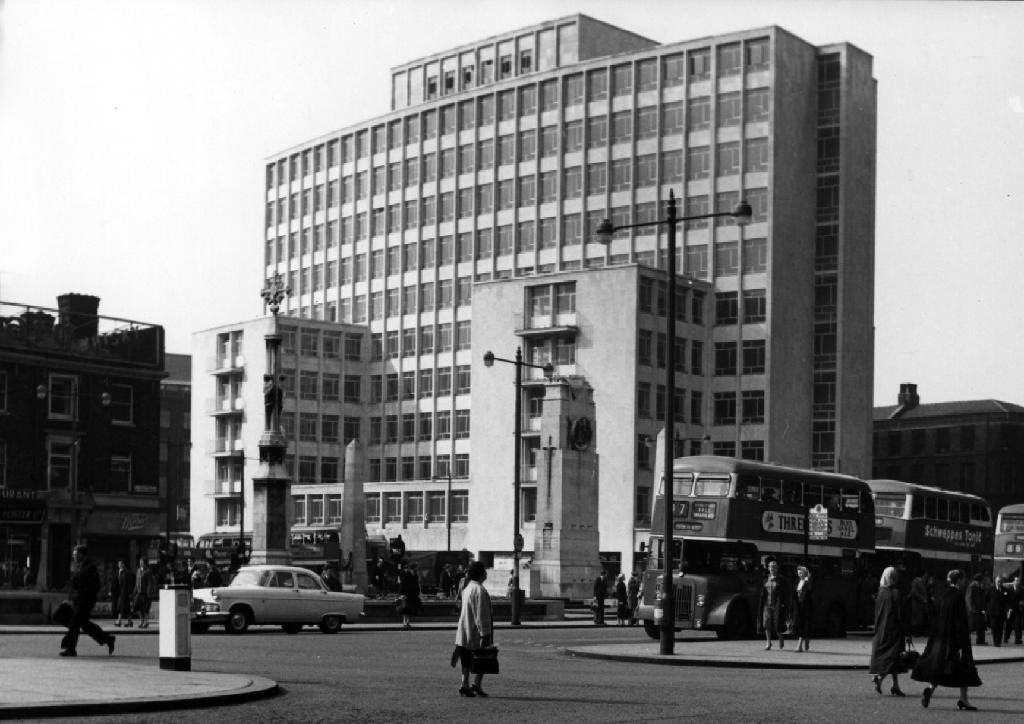
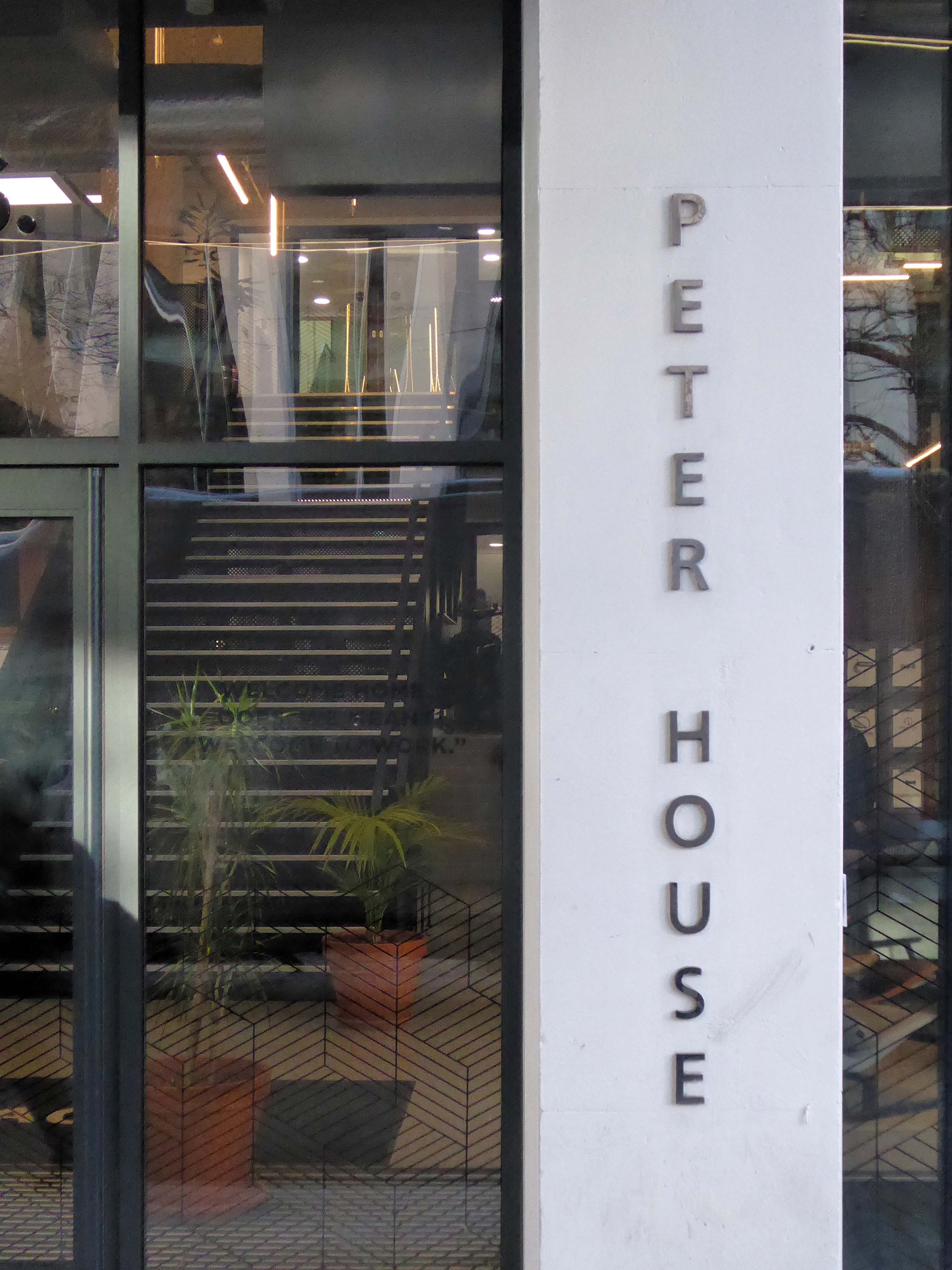
It was replaced by Rediffusion House – later Peter House architects Ansell & Bailey.
Topped out in 1957 with a pint of Chester’s Mild.
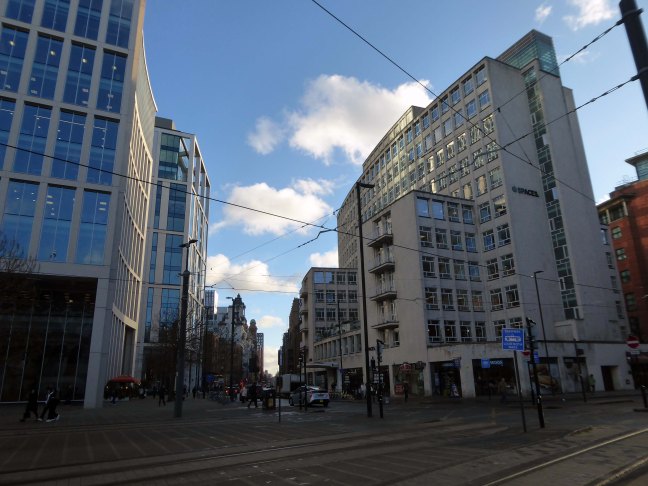
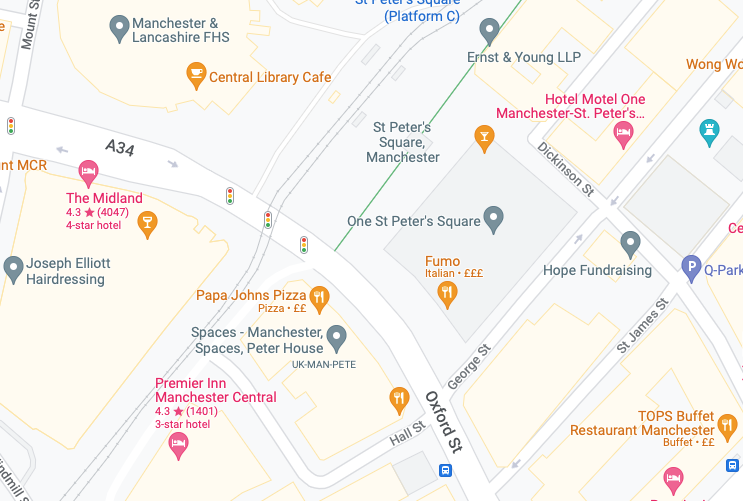
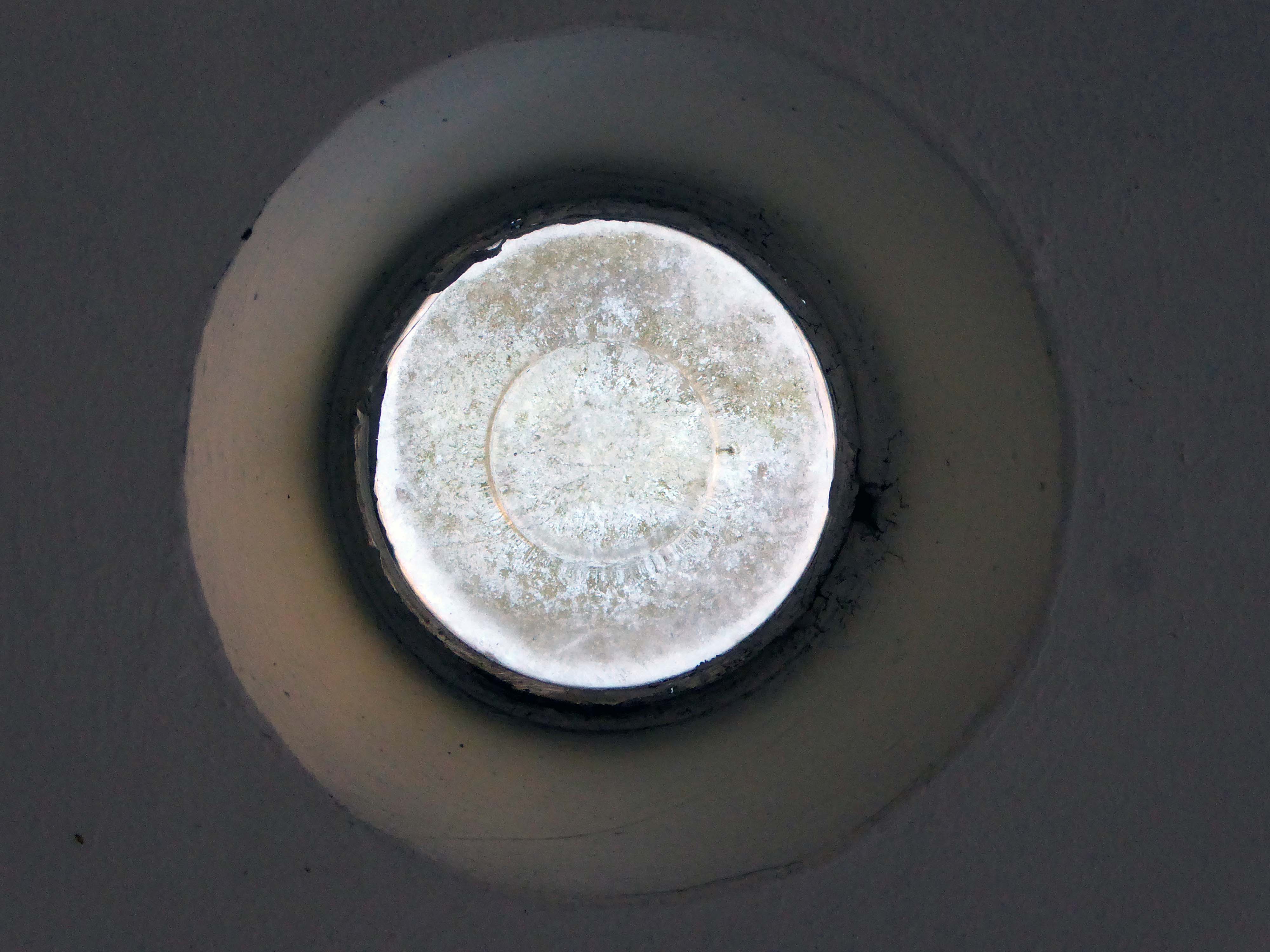
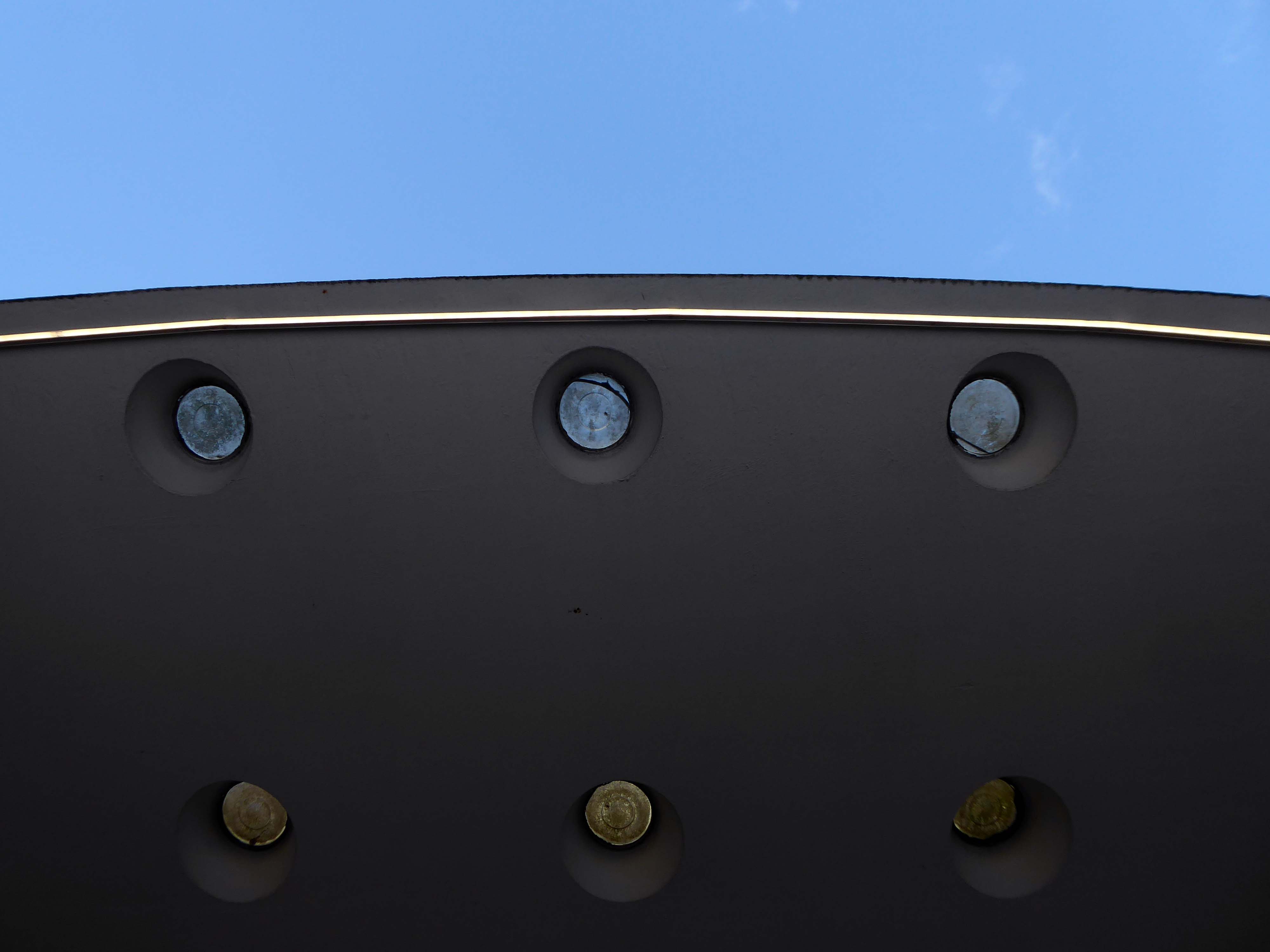
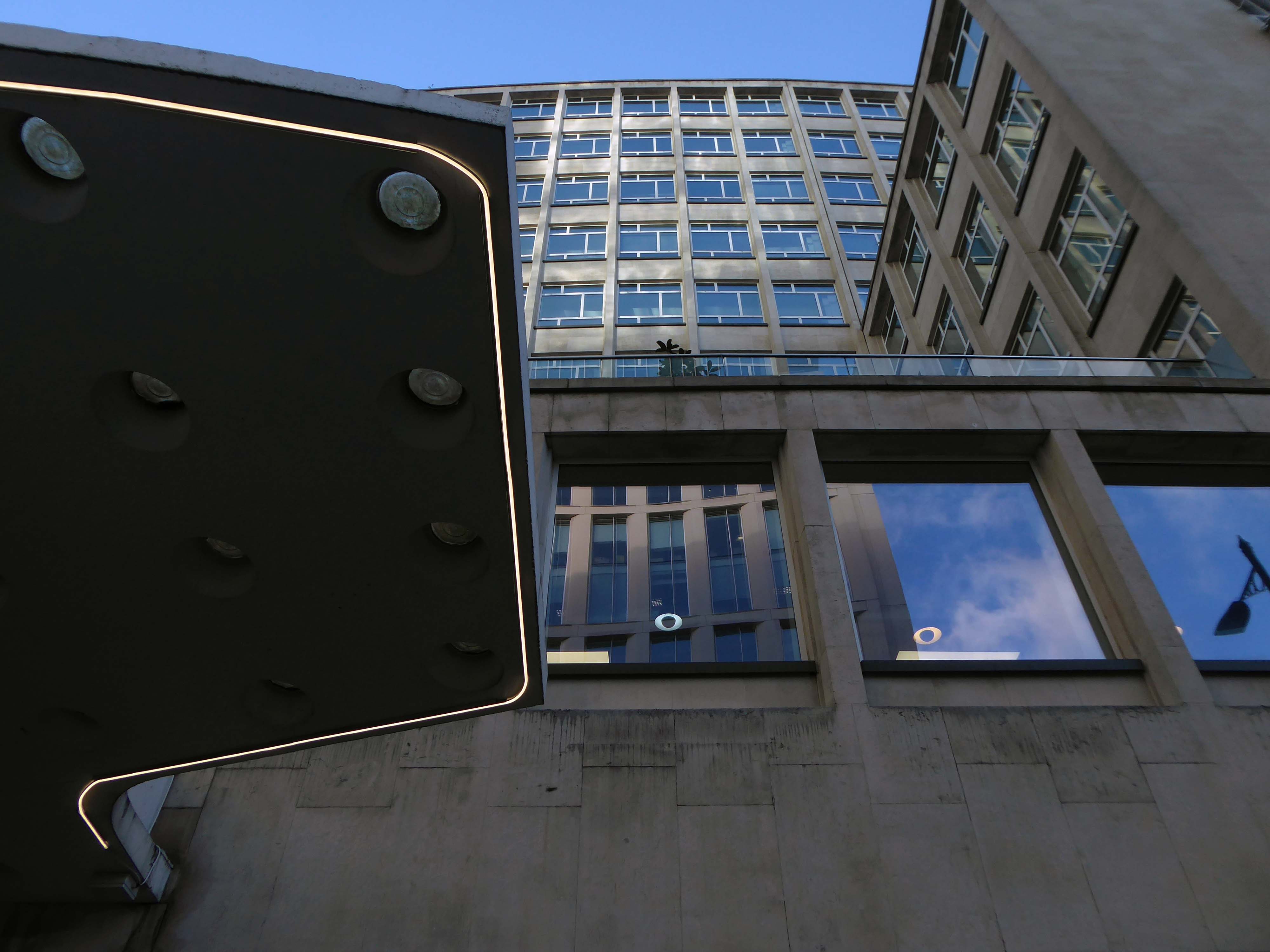
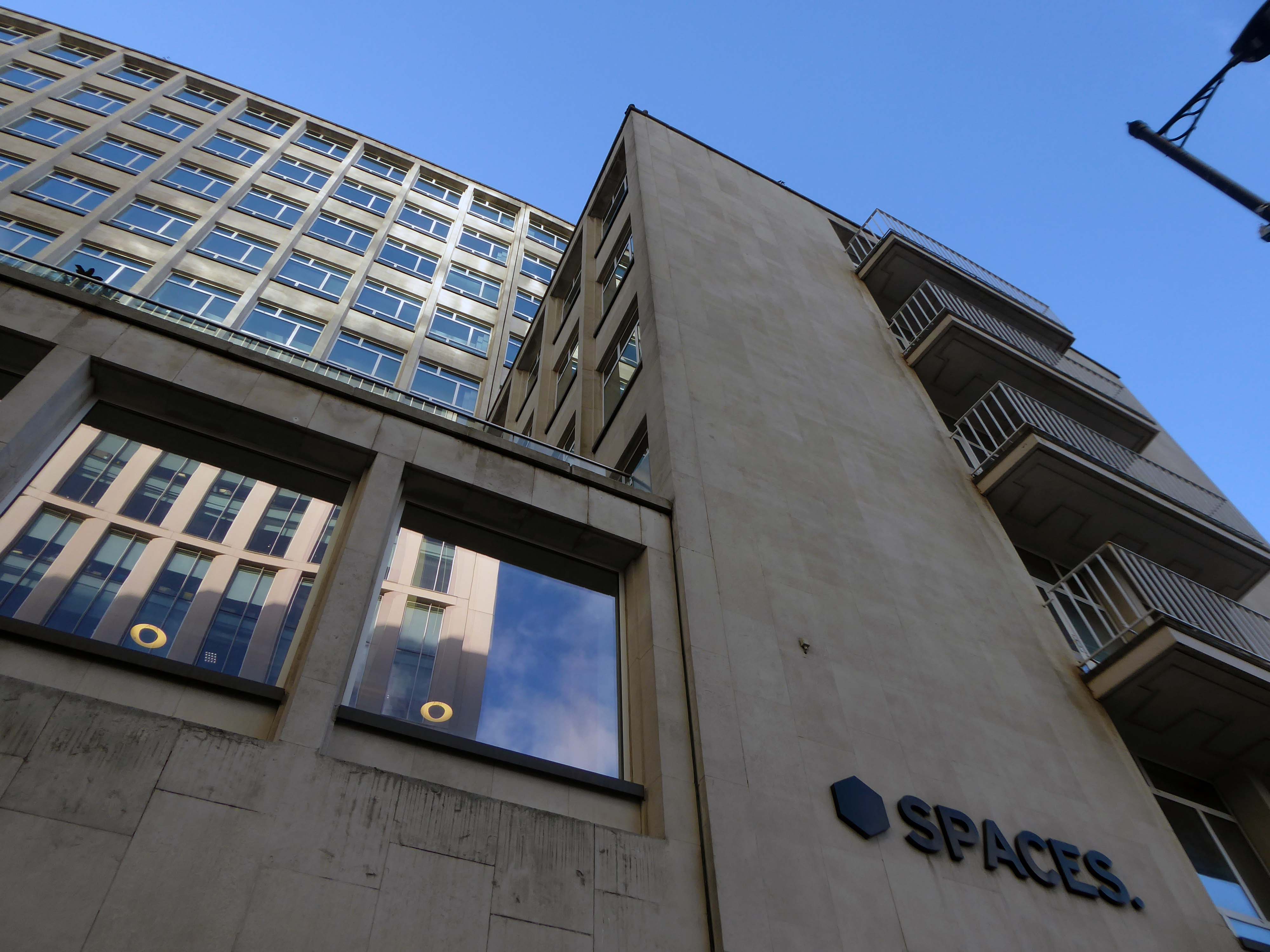
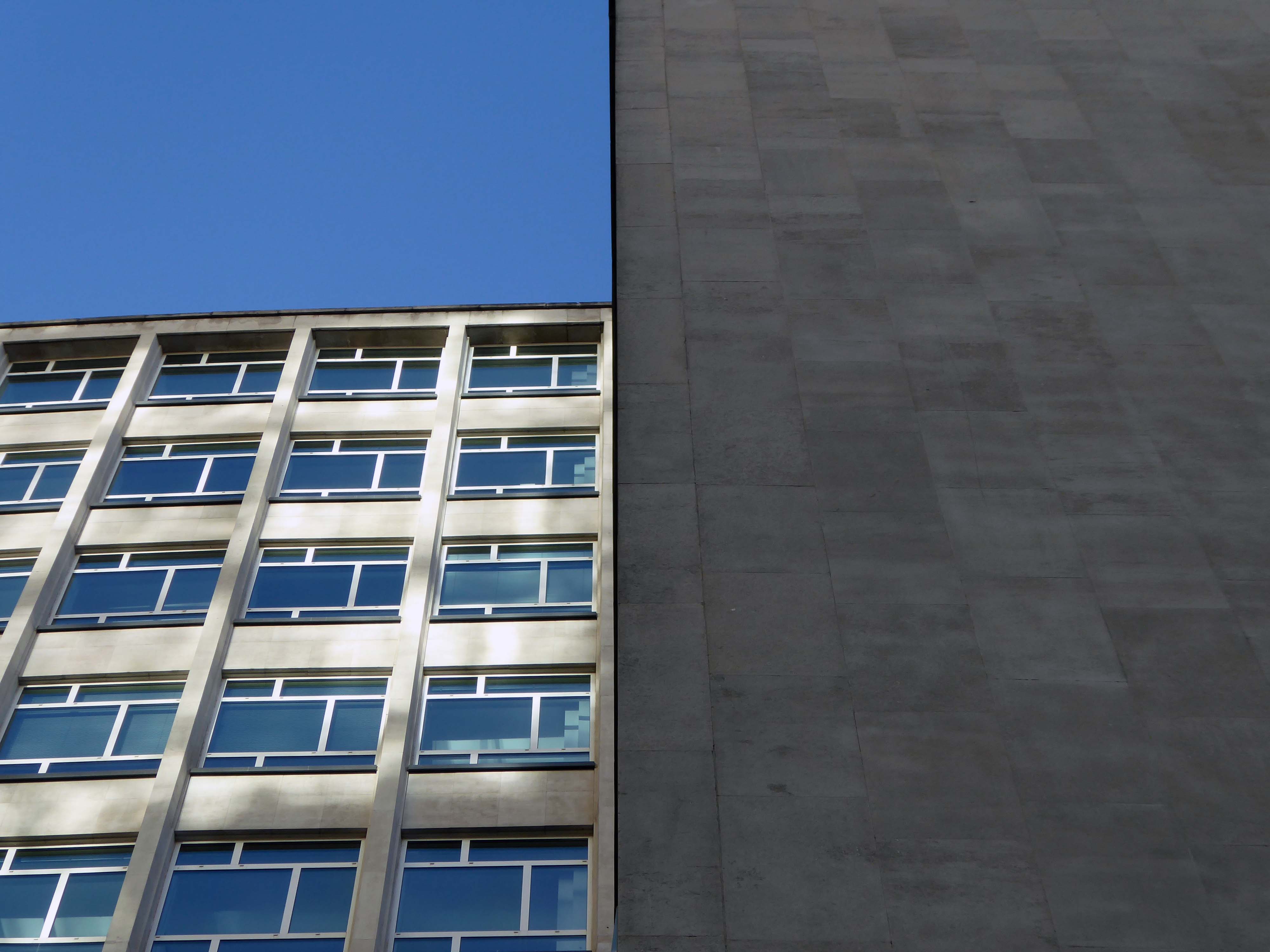
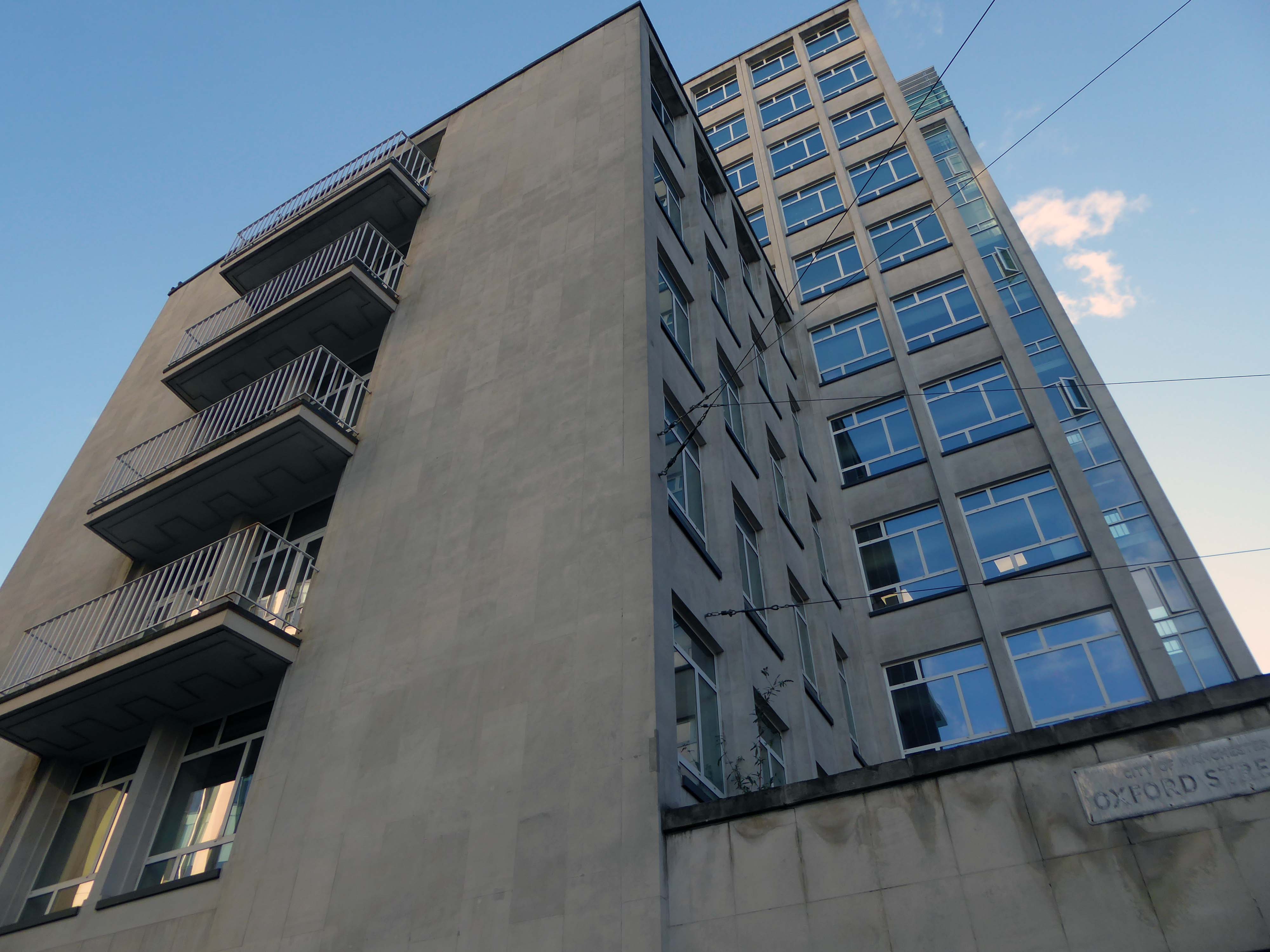
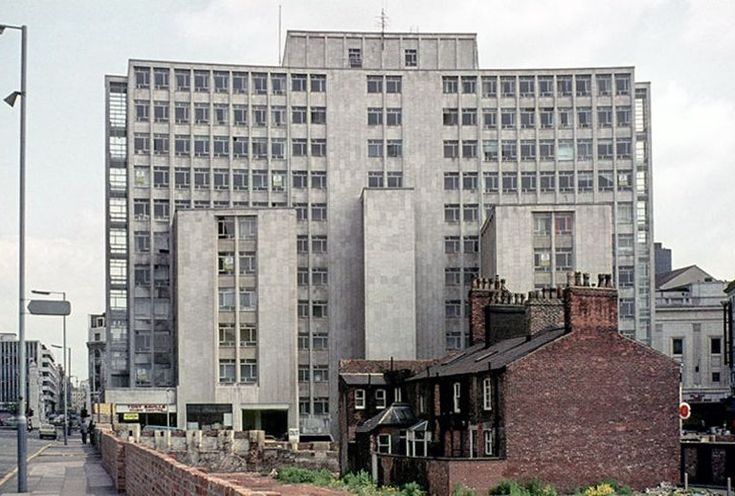
Peter House gracefully hugs the curve of Oxford Street as it leads into St. Peter’s Square. This was one of the earliest commercial buildings to be completed post-war, which demonstrates the slow economic recovery of the region. Built on a site that had been bombed, the Portland stone seemed to marry with the material narrative established by JW Beaumont and LC Howitt in their buildings of the 1950’s and following earlier interwar commercial buildings. This scheme has more panache than the rather serious facades of the Student Union building or the Law Courts though.
The stepped massing and the articulation of the wings of the building preclude the accepted commercial norm of developing to the edge of the site and instead promote a satisfying formal interplay between the six and eleven storey elements. The building has been sensitively modified despite a lack of any listed status and remains commercially viable as offices and as retail. The continued success may be attributed to the air of quality afforded by the stone, certainly it has ensured the longevity, particularly when one considers the fate that befell the easement hugging concrete of Elizabeth House – Cruickshank & Seward, 1971 across the road; it was demolished in 2012.
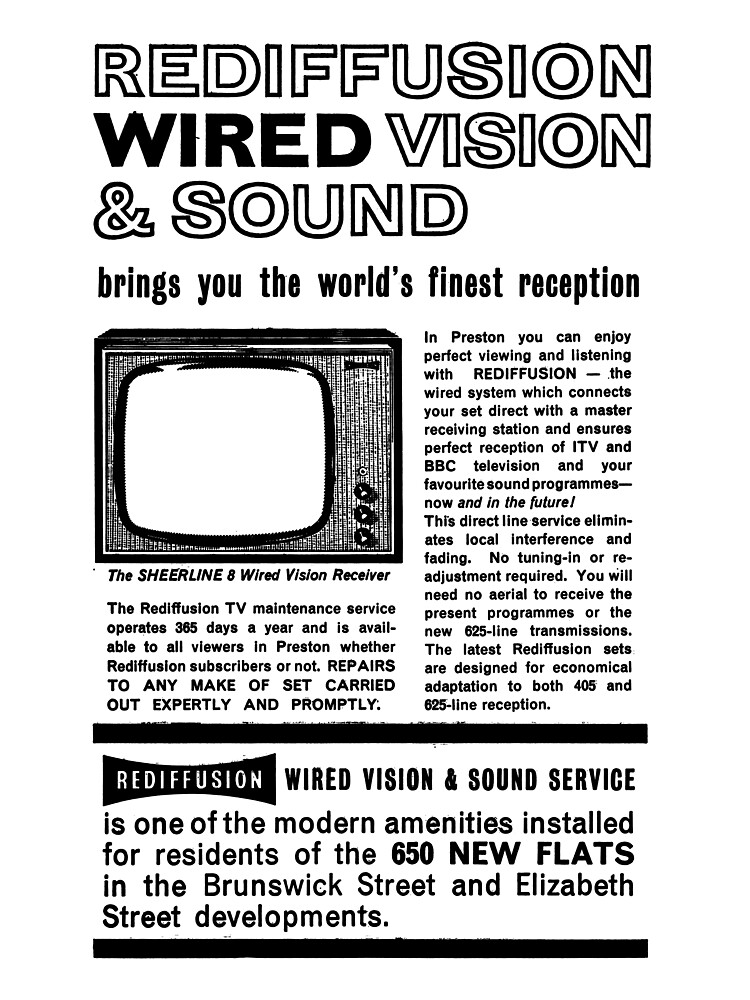
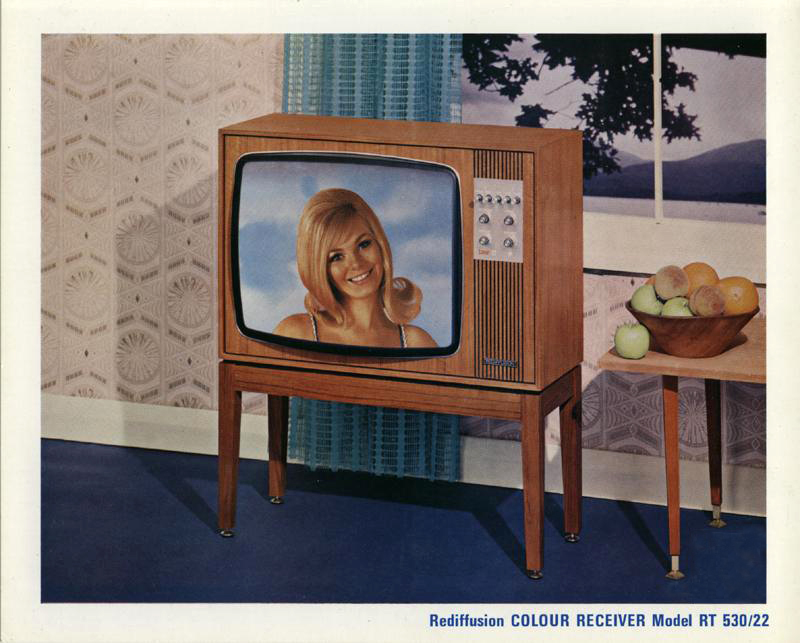
Rediffusion was the first independent commercial TV franchisee, in 1956 Associated-Rediffusion struck a very lucrative deal with Granada Television, the franchise holder for weekday broadcasts in the North of England.
The company offered a low-bandwidth cable TV and radio distribution system, provided in most United Kingdom towns. Selection of TV or radio station was by means of a rotary switch, usually mounted on a wall or window frame close to the point of entry of the cable into the home.
The Rediffusion retail chain, renting and servicing TVs, radios, VCRs and hi-fi systems, was common on high streets until it was bought by Granada Rentals in 1984.
The days of the monolithic mono-culture of the sole occupant are in decline – we live in the age of the co-working space and homes of multi-use creative scene.
Peter House prevails a pale white Portland Stone embodiment of different days and different ways.
Let’s take a walk around.
As a footnote – once in the shadow of Peter House, Tommy Ducks was demolished overnight.
Apparently, its supporters managed to arrange a preservation order for the building but, according to the excellent Pubs of Manchester website, that order expired at midnight on February 12, 1993, and the pub was literally reduced to rubble before anyone could seek a renewal on February 13th.
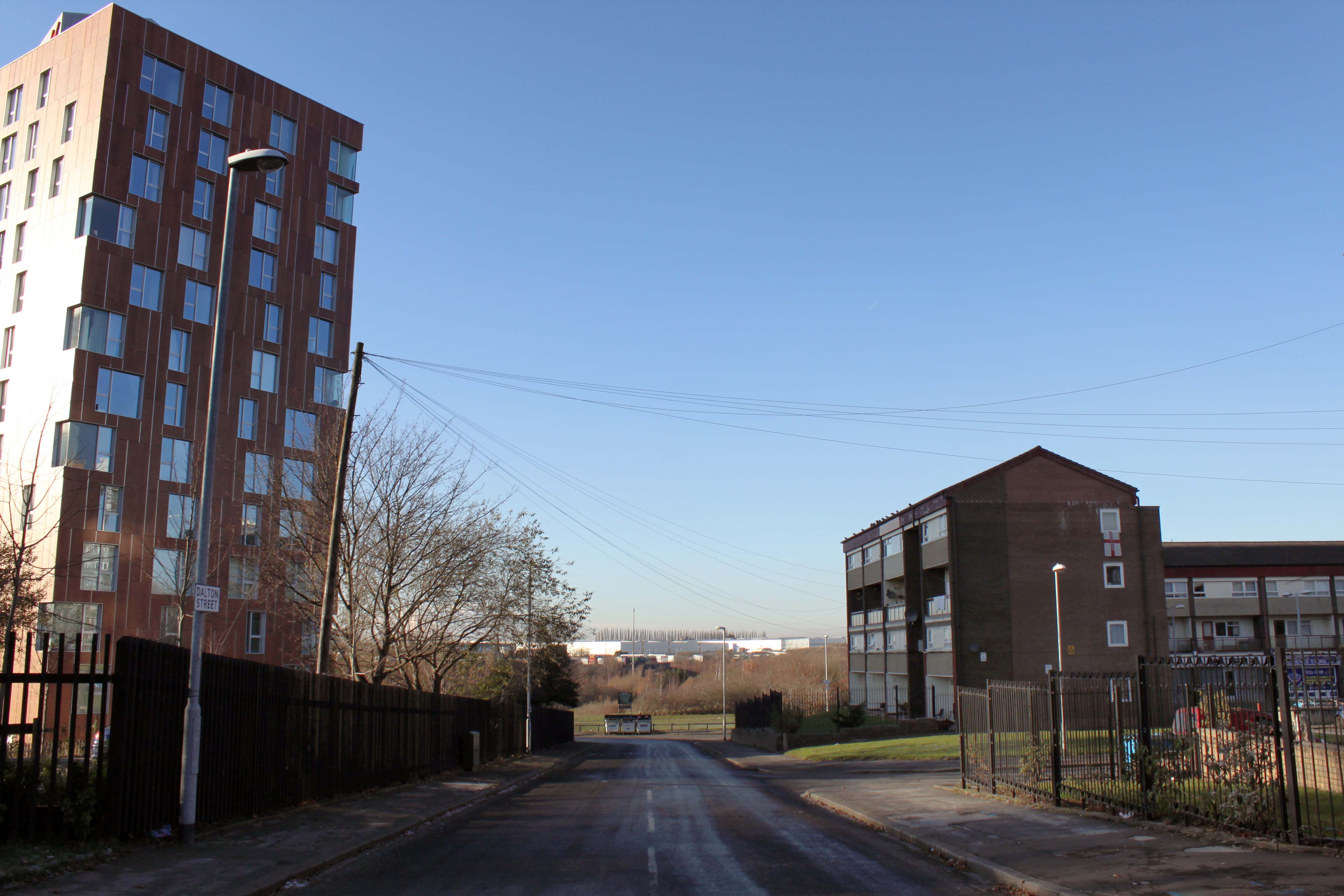
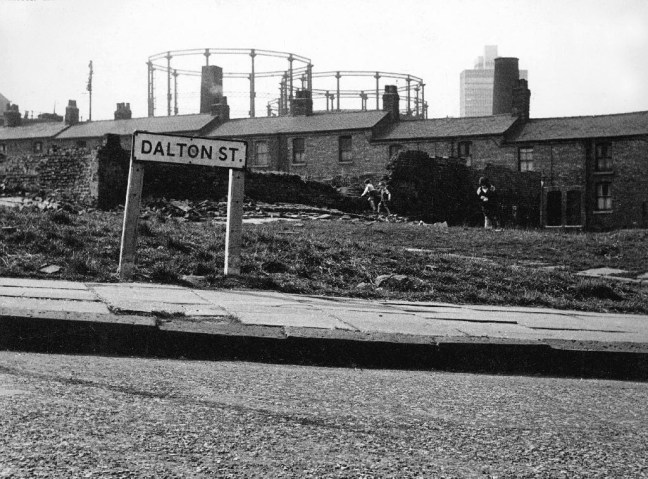
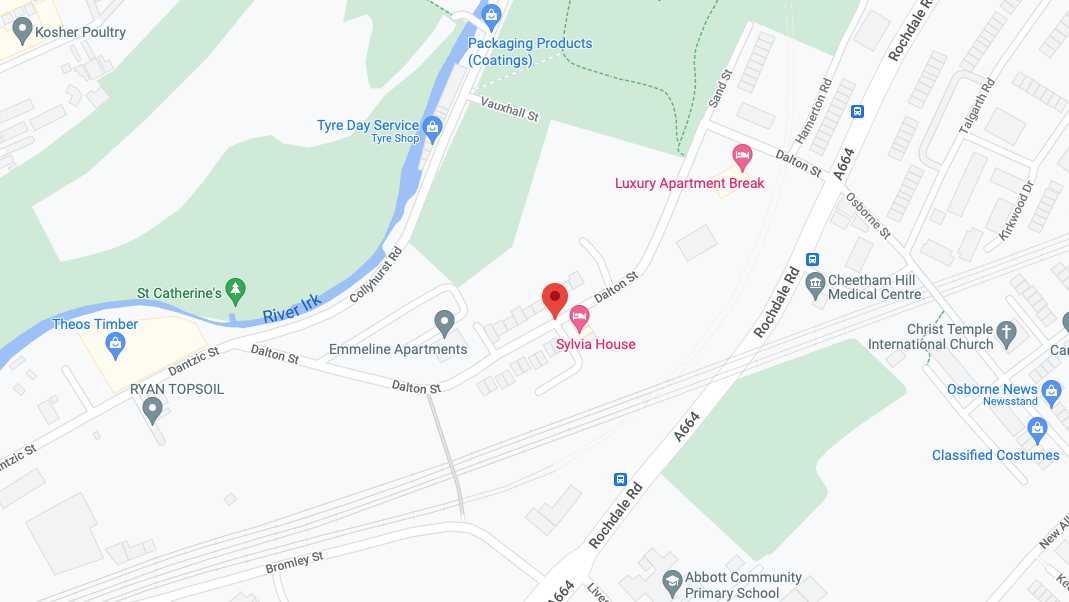
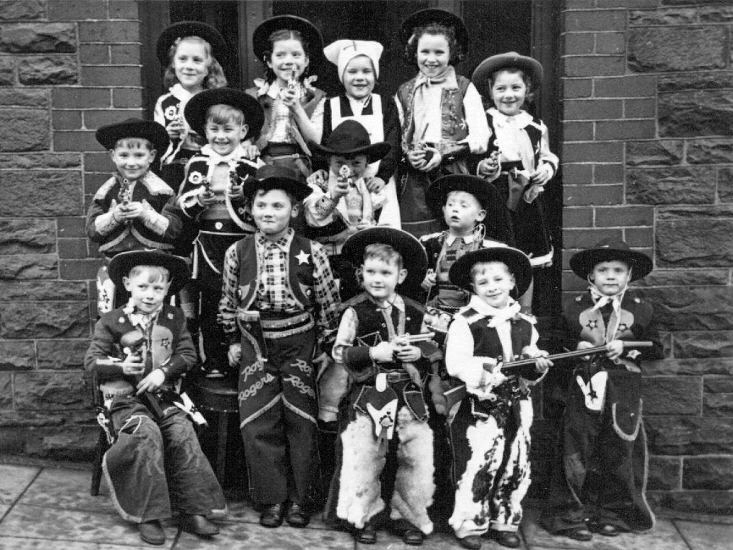
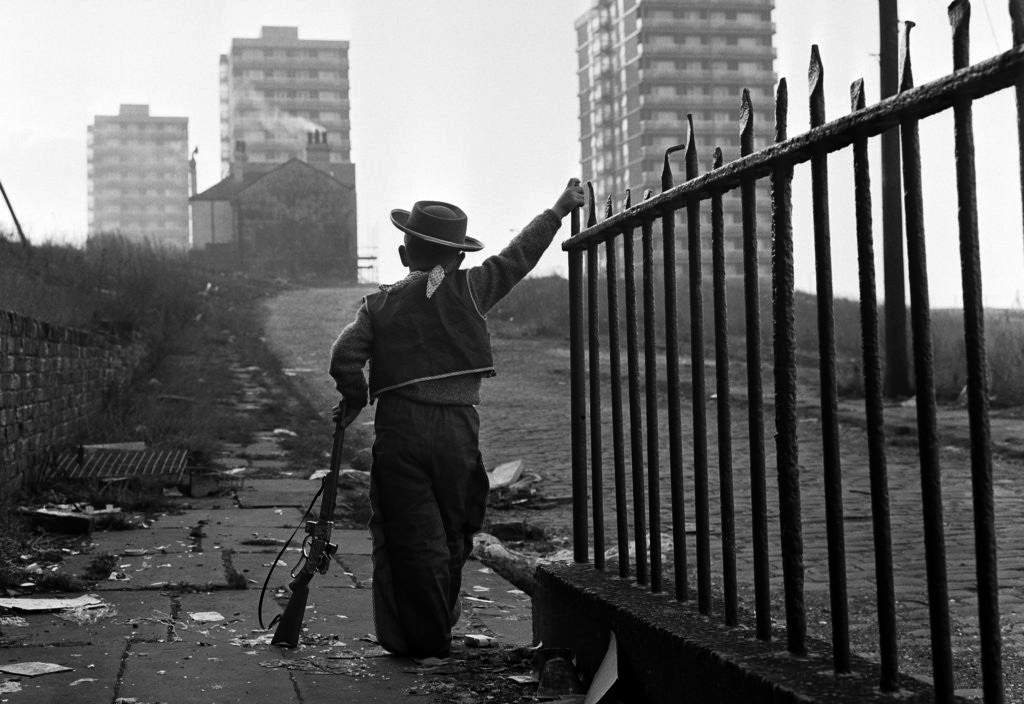
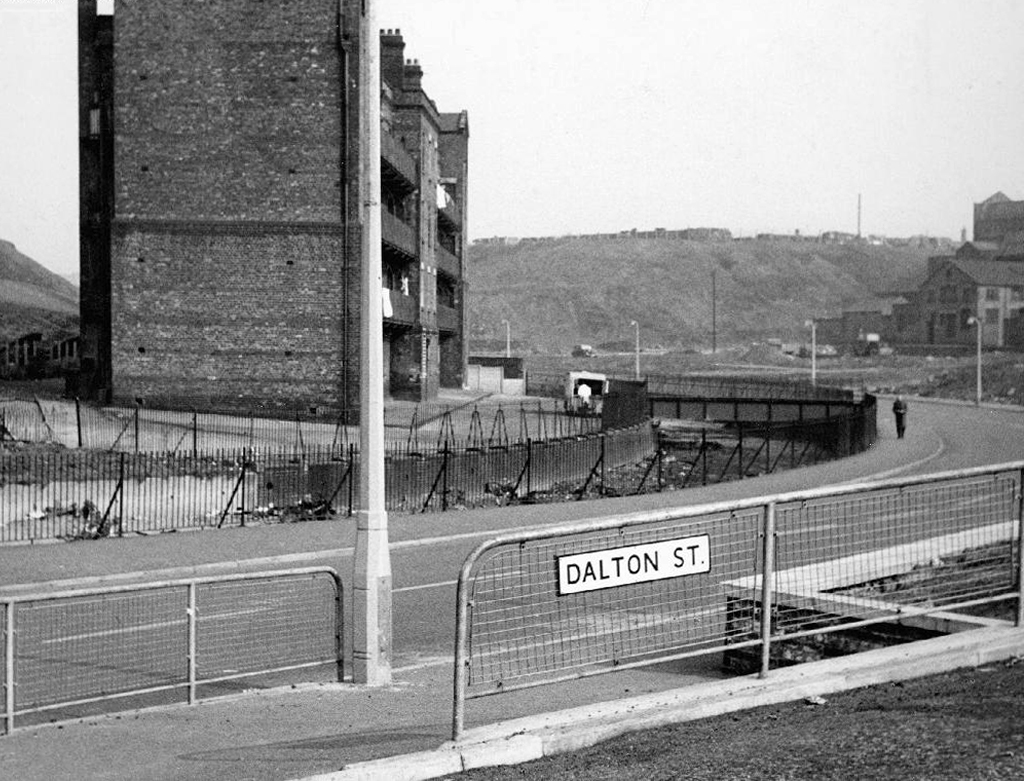
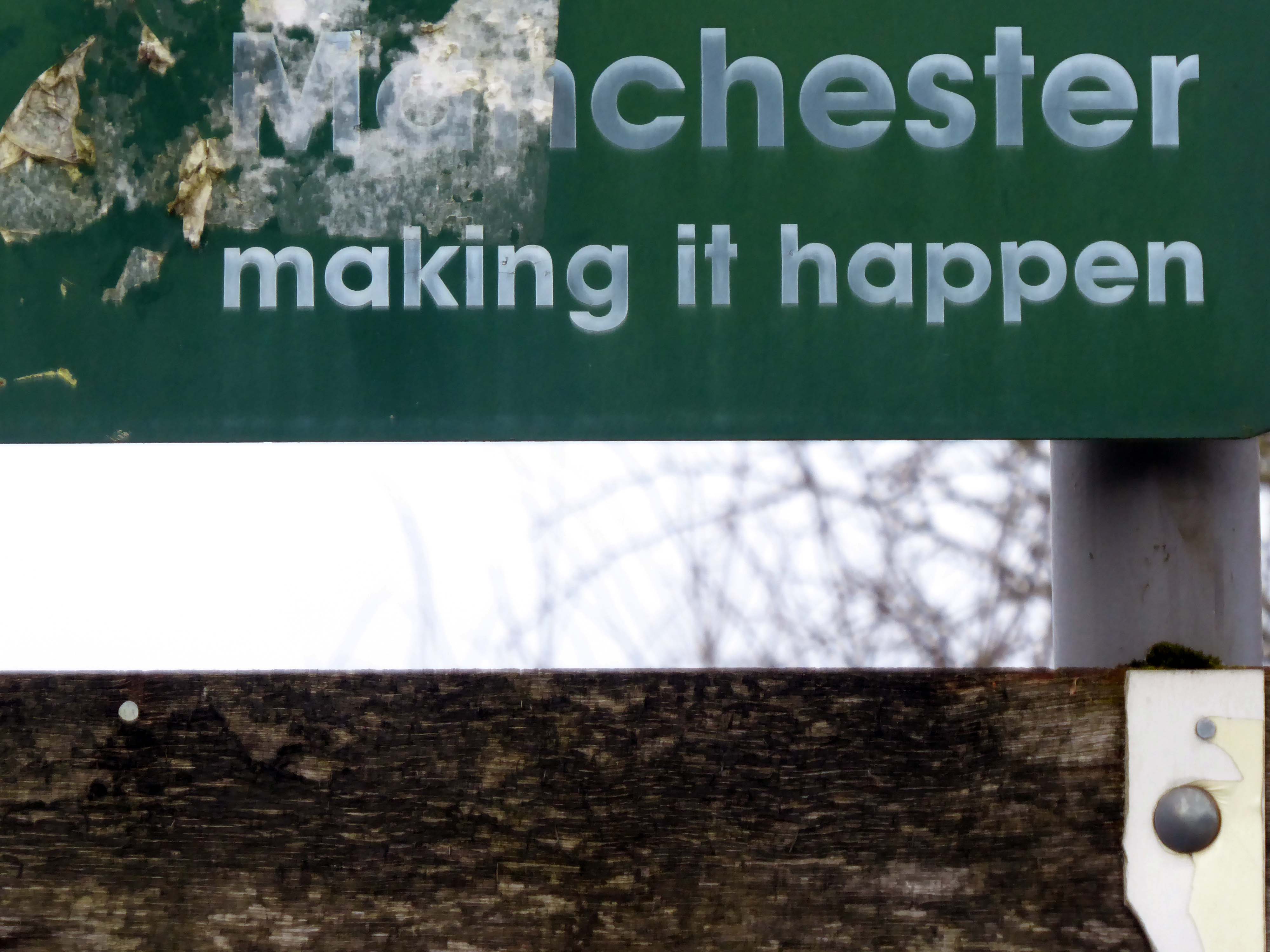
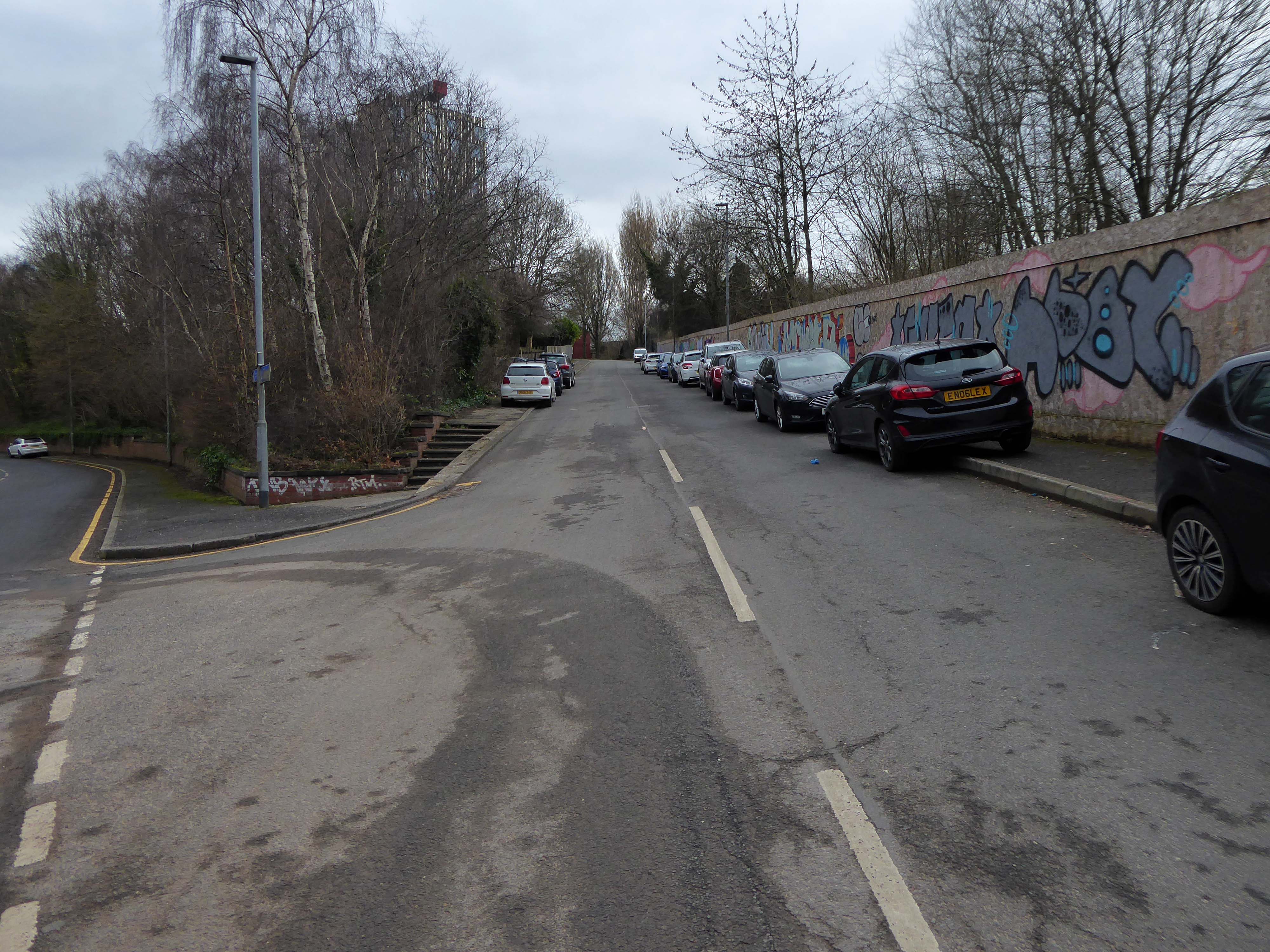
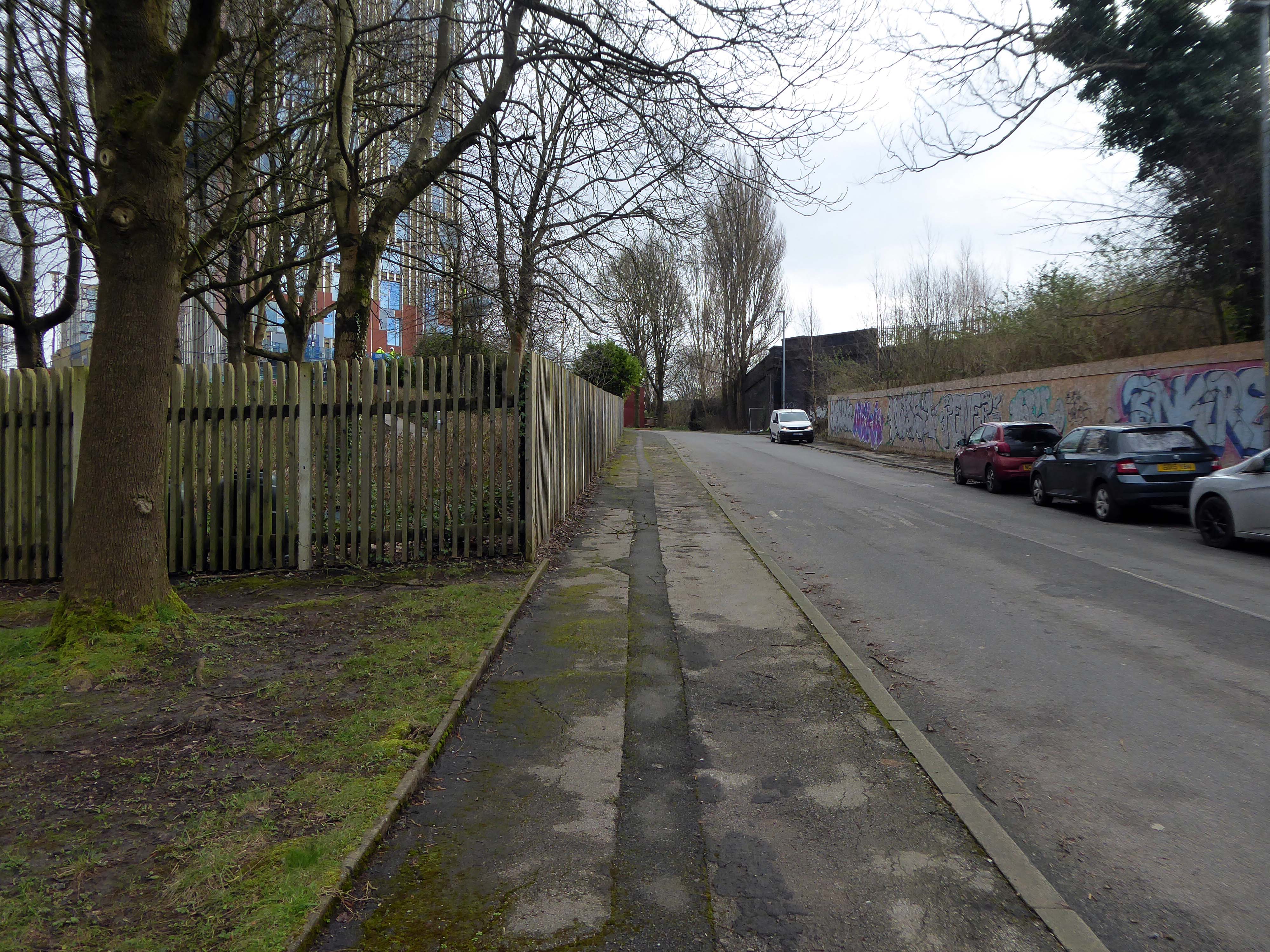
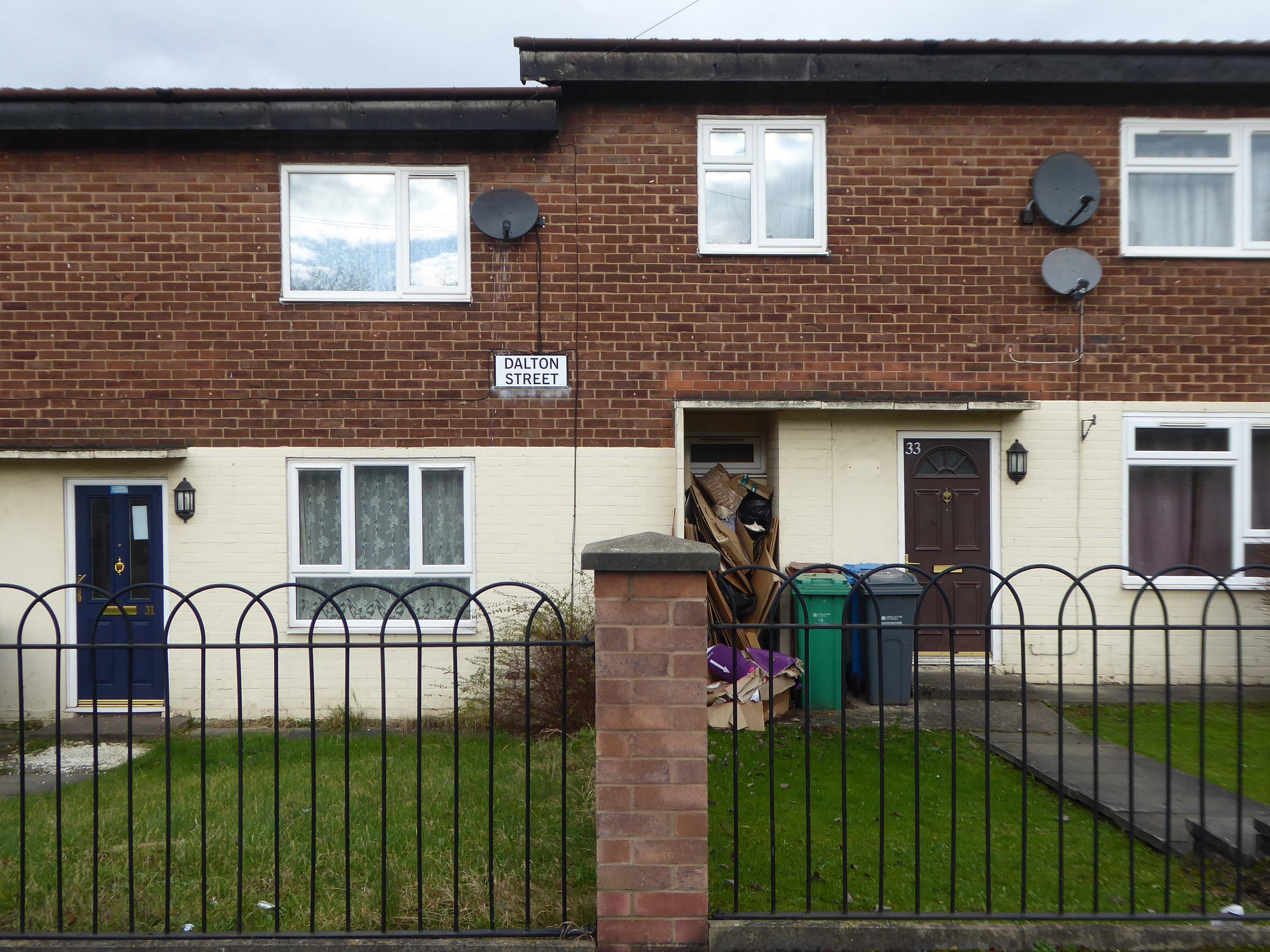
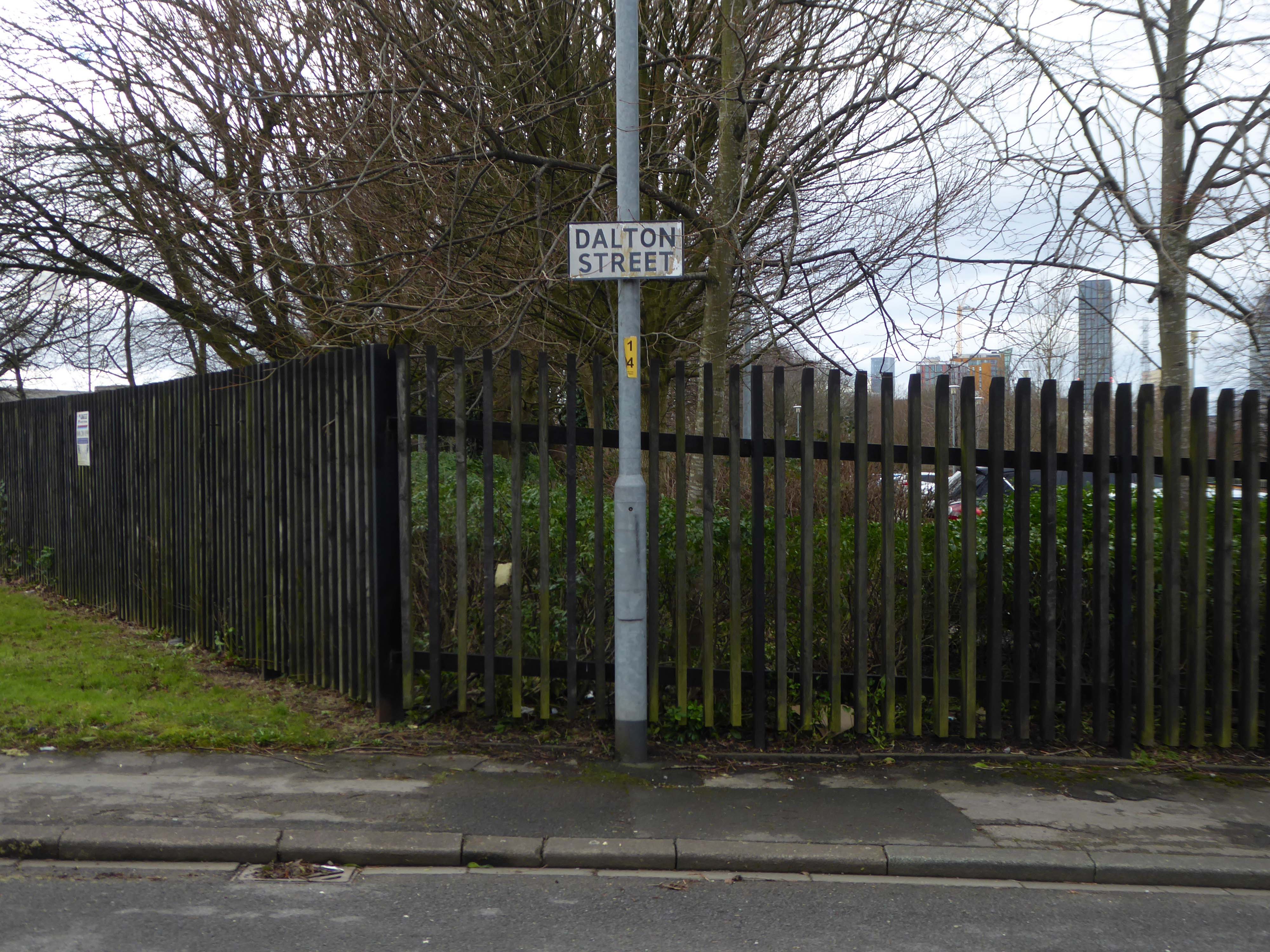
Now I’m going east to Dalton Street, home to the Collyhurst cowboy.
Photograph: Dennis Hussey
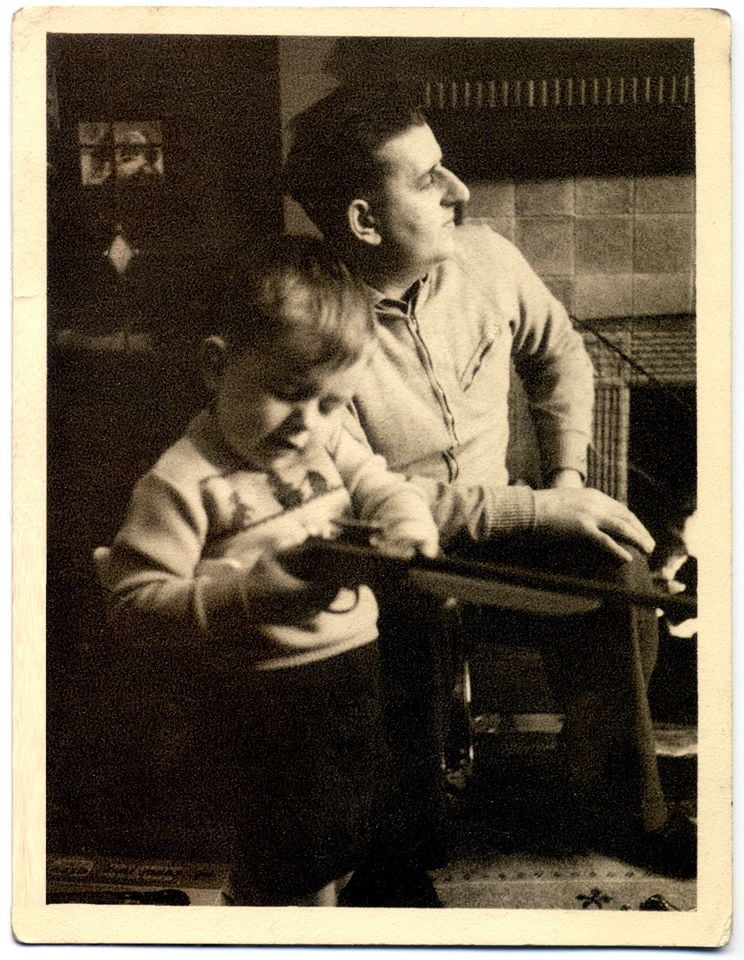
This is an illusion within an illusion, twice removed.
The Hollywood recreation, recreated on the rough ground of post war Britain.
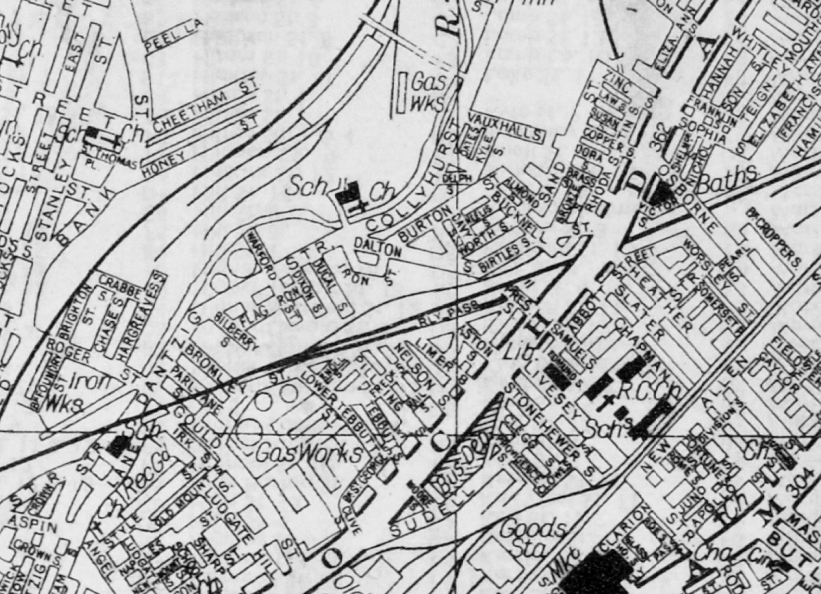
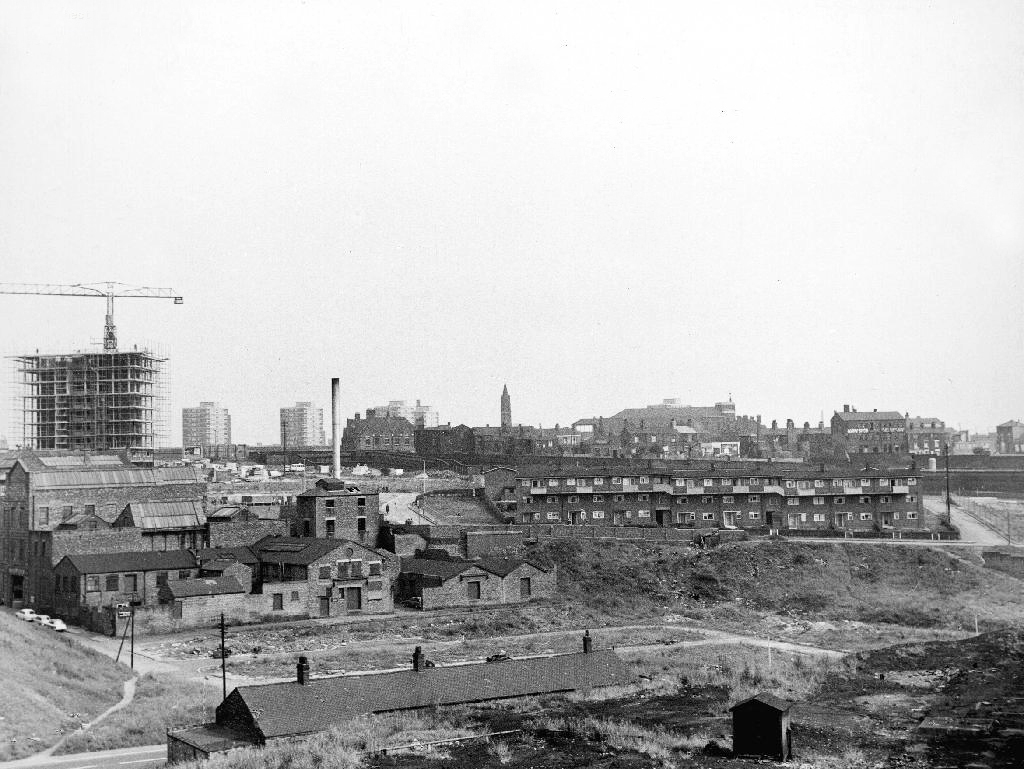
In 1960 the area was a dense network of streets, industry and homes – demolished during the period of slum clearance.
Escaping the dark, dank Irk Valley onwards and upwards to Rochdale Road.
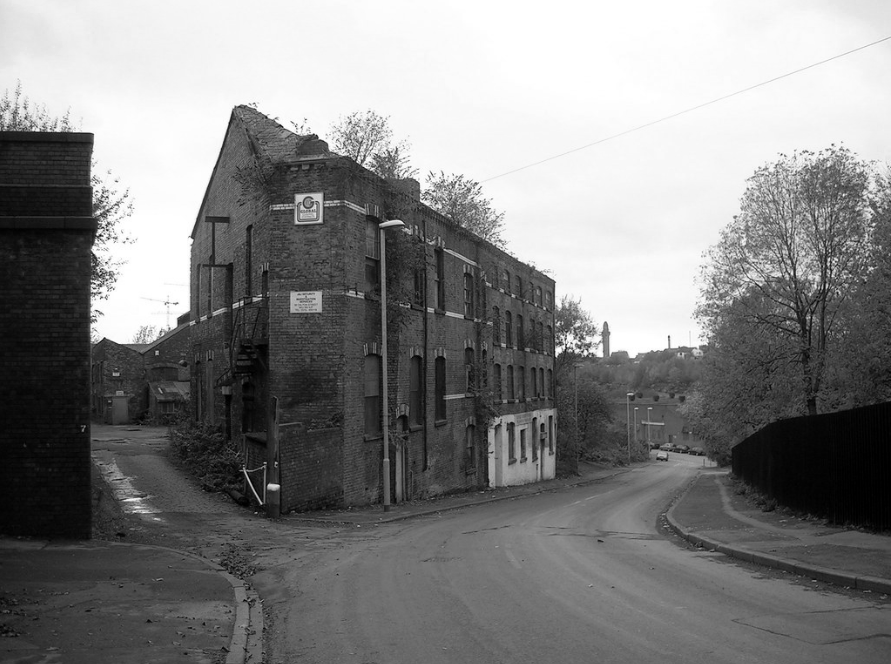
The Dalton Works Arnac factory survived until 2008
Photograph: Mikey
The tight maze of Burton Street and beyond, reduced to rubble.
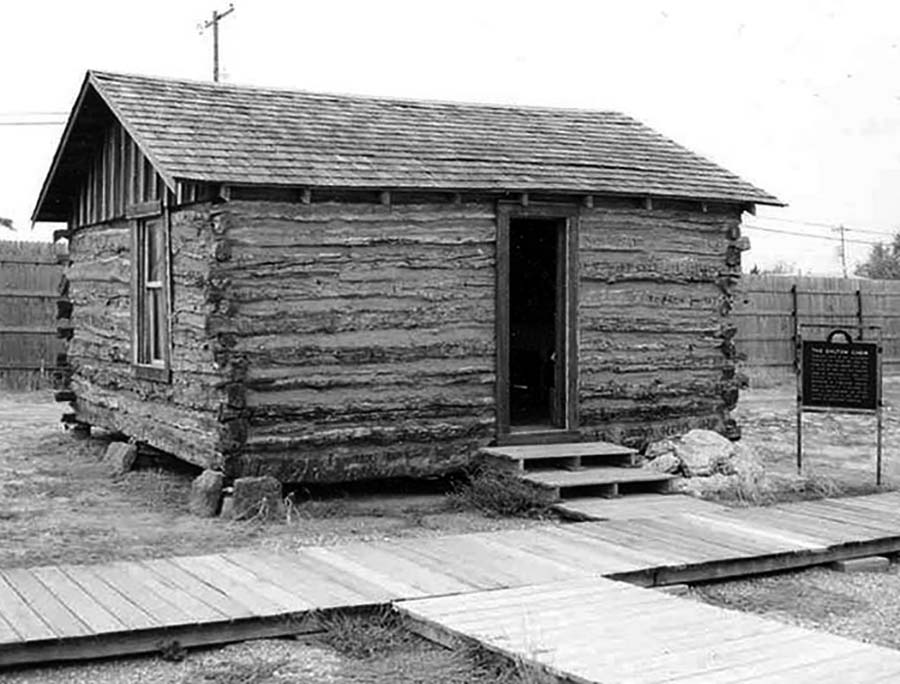
Dalton Street was not home to the Dalton Gang, they lived here in Oklahoma
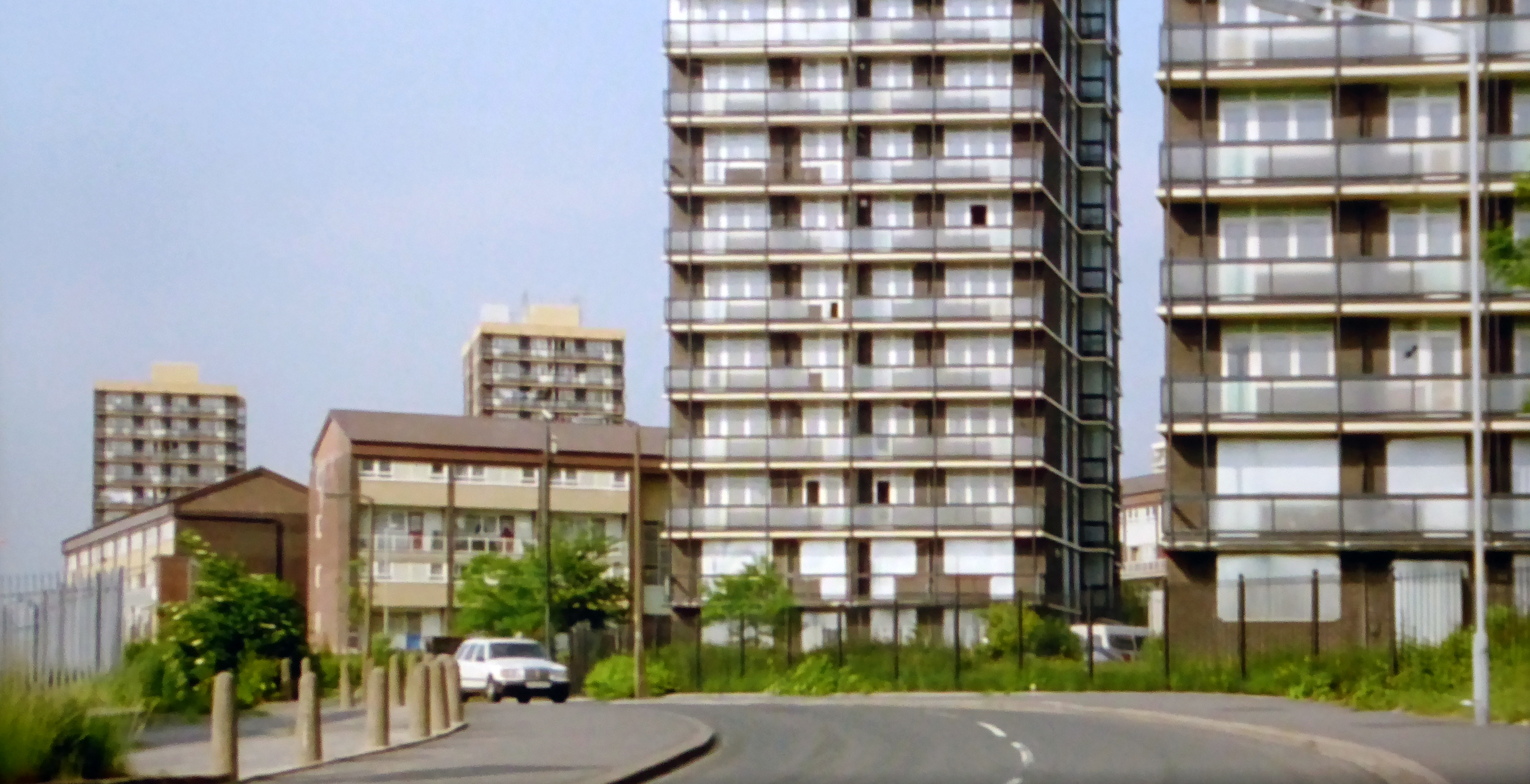
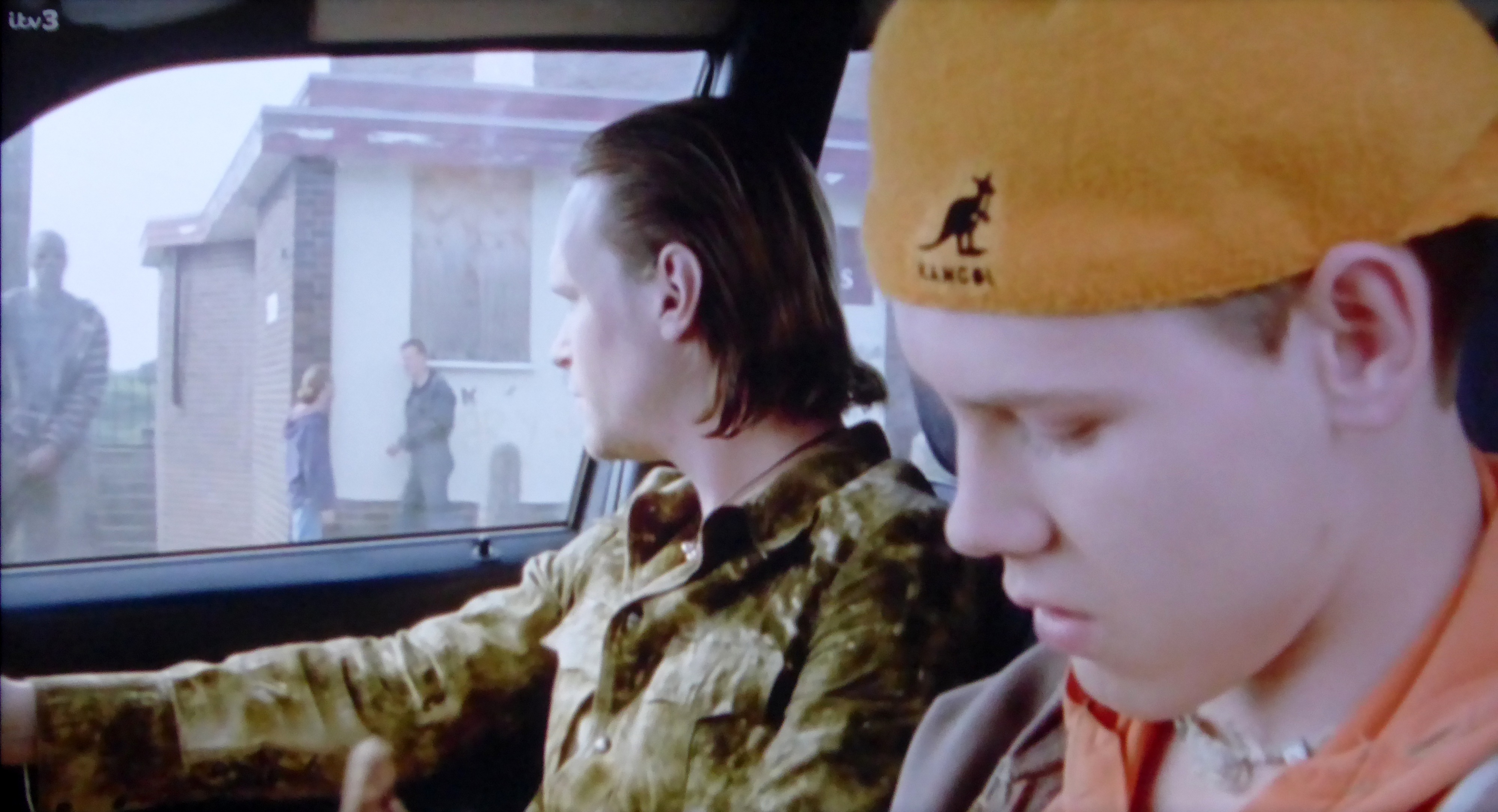
It was home to imaginary gangs, committing imaginary crimes, in an imaginary Manchester, in ITV’s Prime Suspect Five.
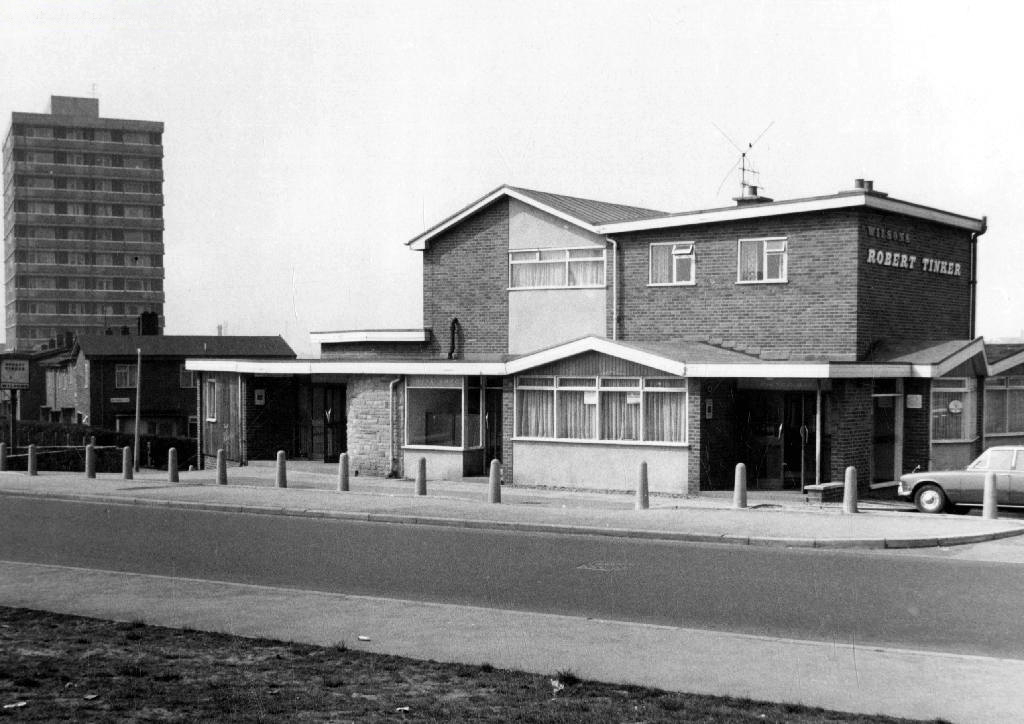
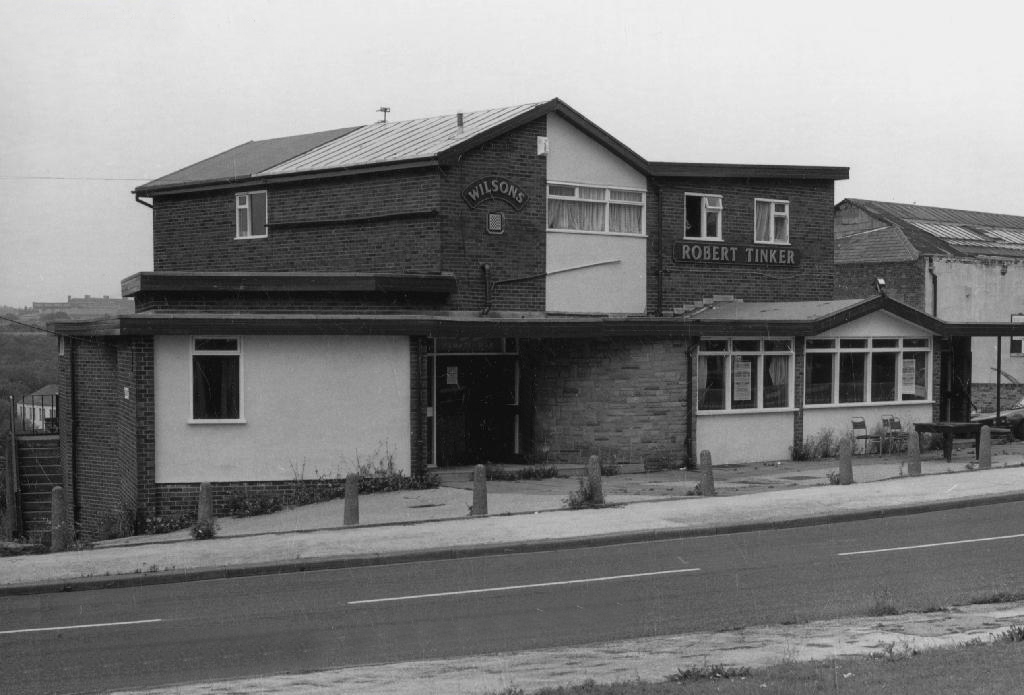
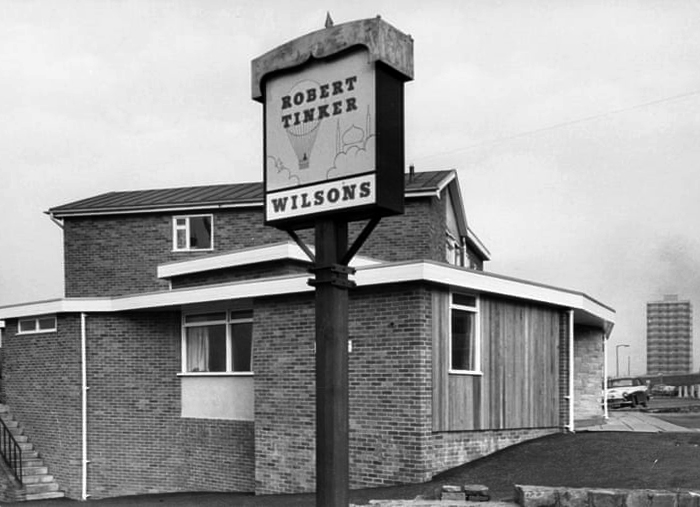
Kangol capped criminals doing business outside the Robert Tinker on the corner of the very real Dalton and Almond Streets.
The Robert Tinker was an estate pub in a run down area of Collyhurst. The pub looked pretty grim from the outside, but it was smarter than I expected inside, I had a drink in the lounge which was carpeted and comfortable. This was a Banks’s tied house and there were two real ales on the bar, I had a drink of Banks’s bitter and this was a decent drink, the other beer was Banks’s mild. This pub closed about two years after my visit and looked derelict, it has now been demolished.
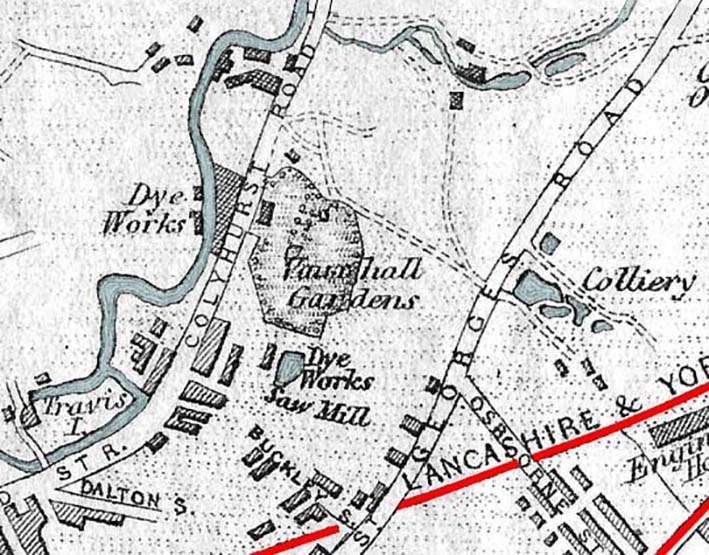
Robert Tinker was the owner of the Vauxhall Gardens, a Victorian pleasure venue.
At the openingthere was a special attraction, a giant cucumber which had been grown in the gardens reaching a length of seven feet and eight inches and a large and beautiful balloon was to be liberated at 9pm
Much of the red sandstone used for building in Manchester and the surrounding area, including stone for the Roman fort at Castlefield, St Ann’s Church in the city centre, Manchester Cathedral and the original buildings of Chetham’s Hospital, came from Collyhurst Quarry. Geologists use the term Collyhurst Sandstone for this type of soft red sandstone, which occurs in North West England
Tinker died in 1836 and gradually his gardens were whittled away, the subsoil was sold to iron moulders who cherished its certain properties and before long the trees were chopped down and houses were being built on the former site.
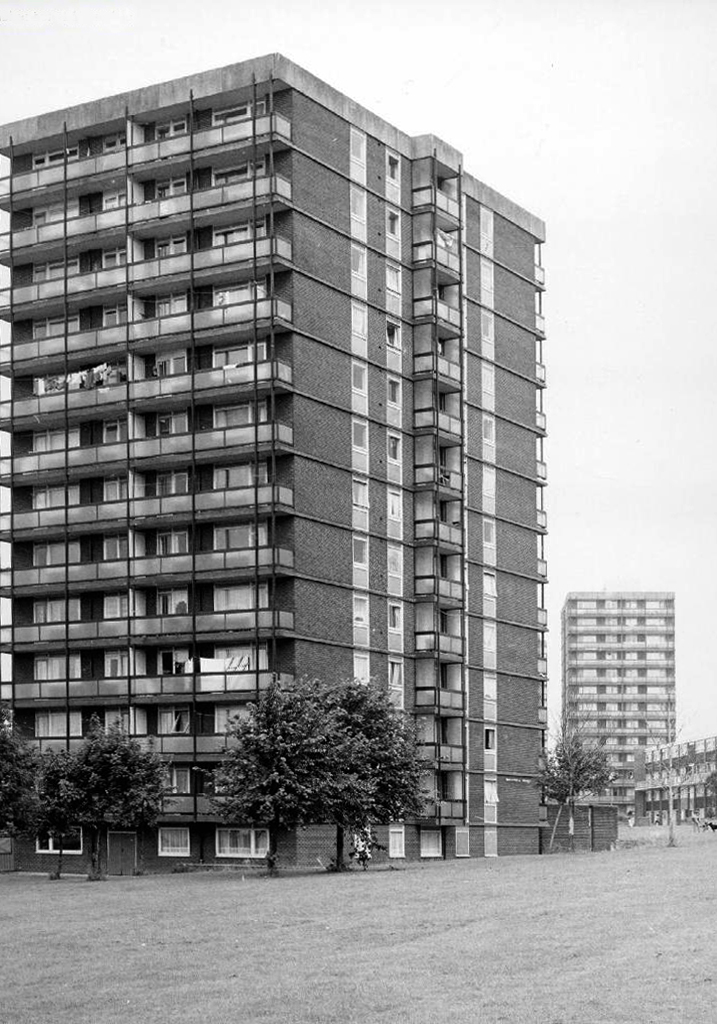
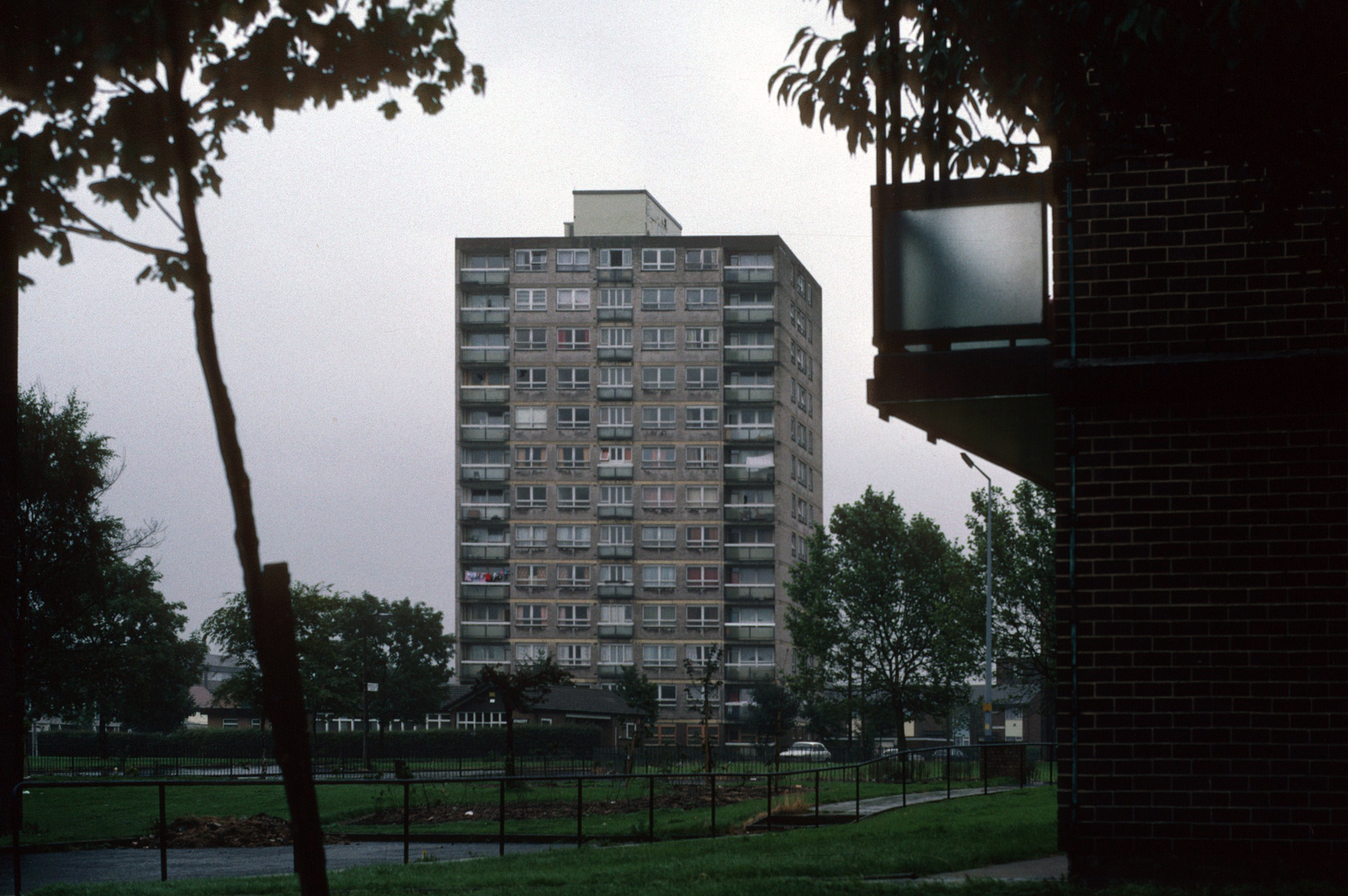
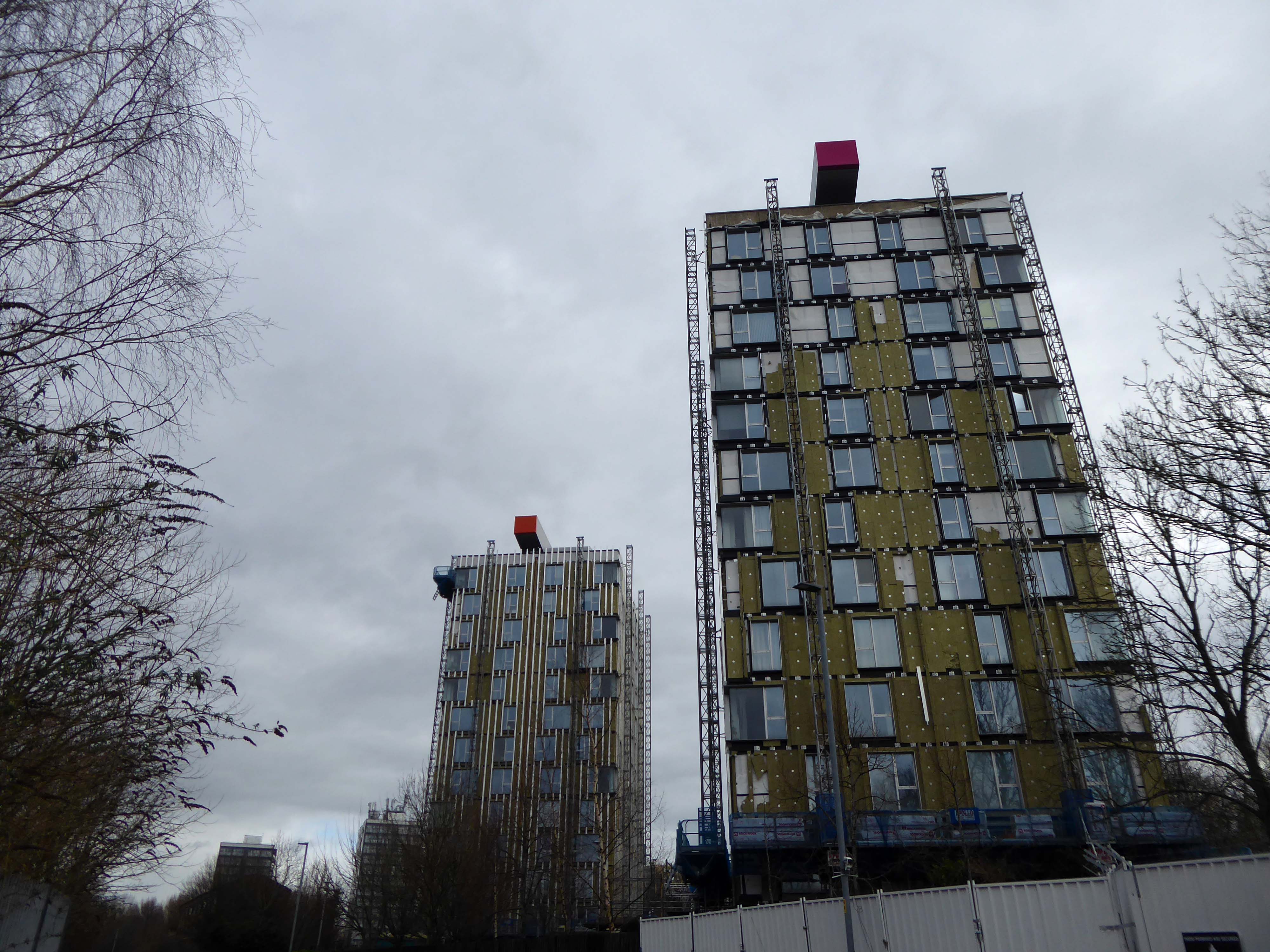
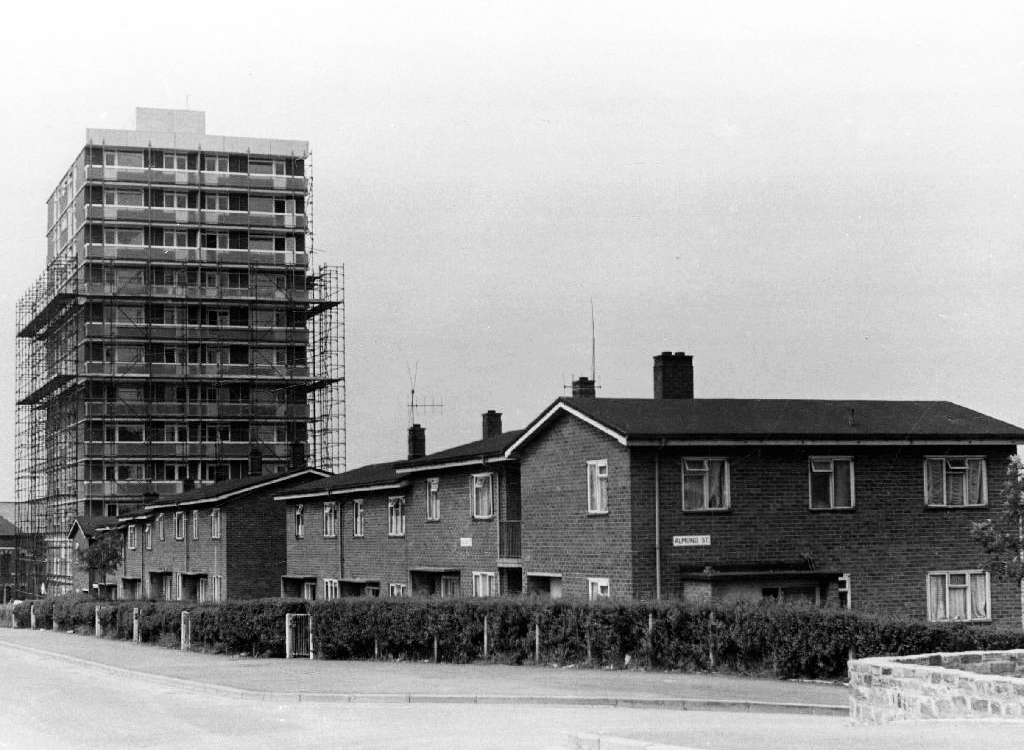
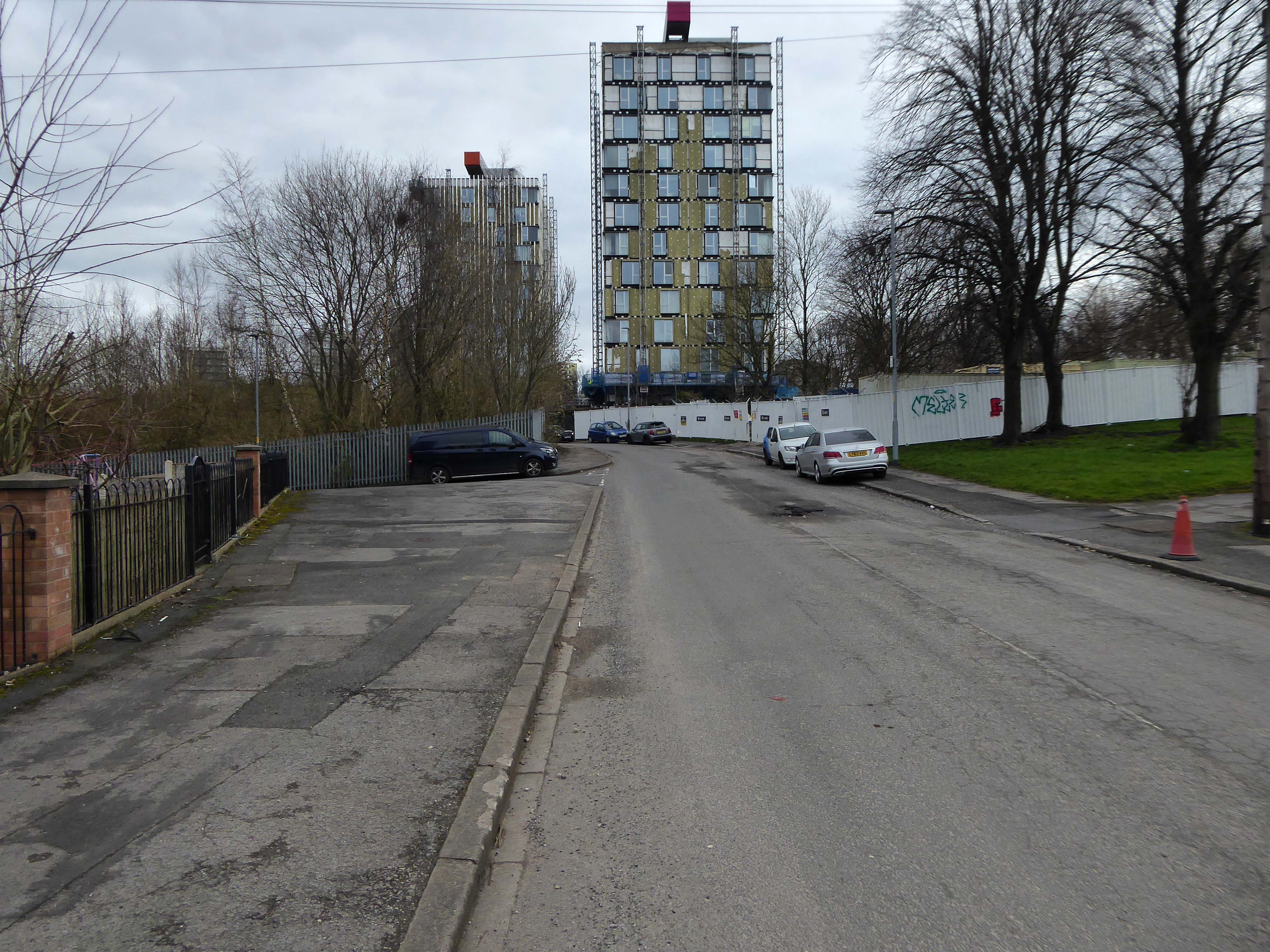
Those houses are in their turn whittled away, replaced in the 1960’s with fashionable tower blocks.
Architects: J Austen Bent 1965
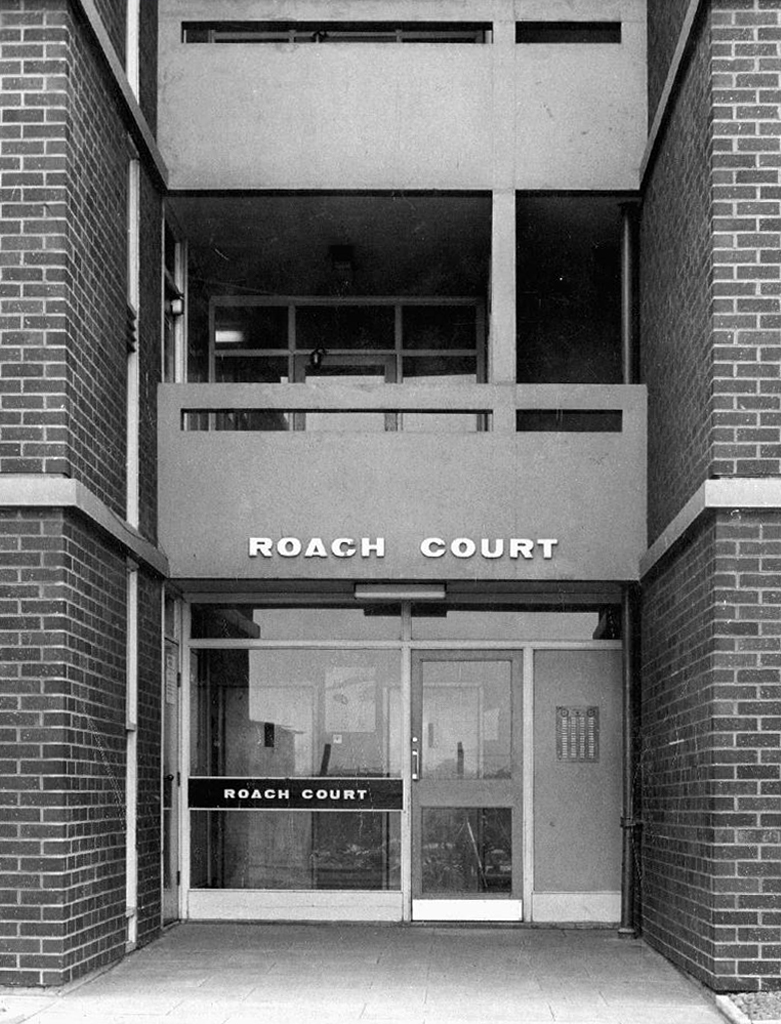
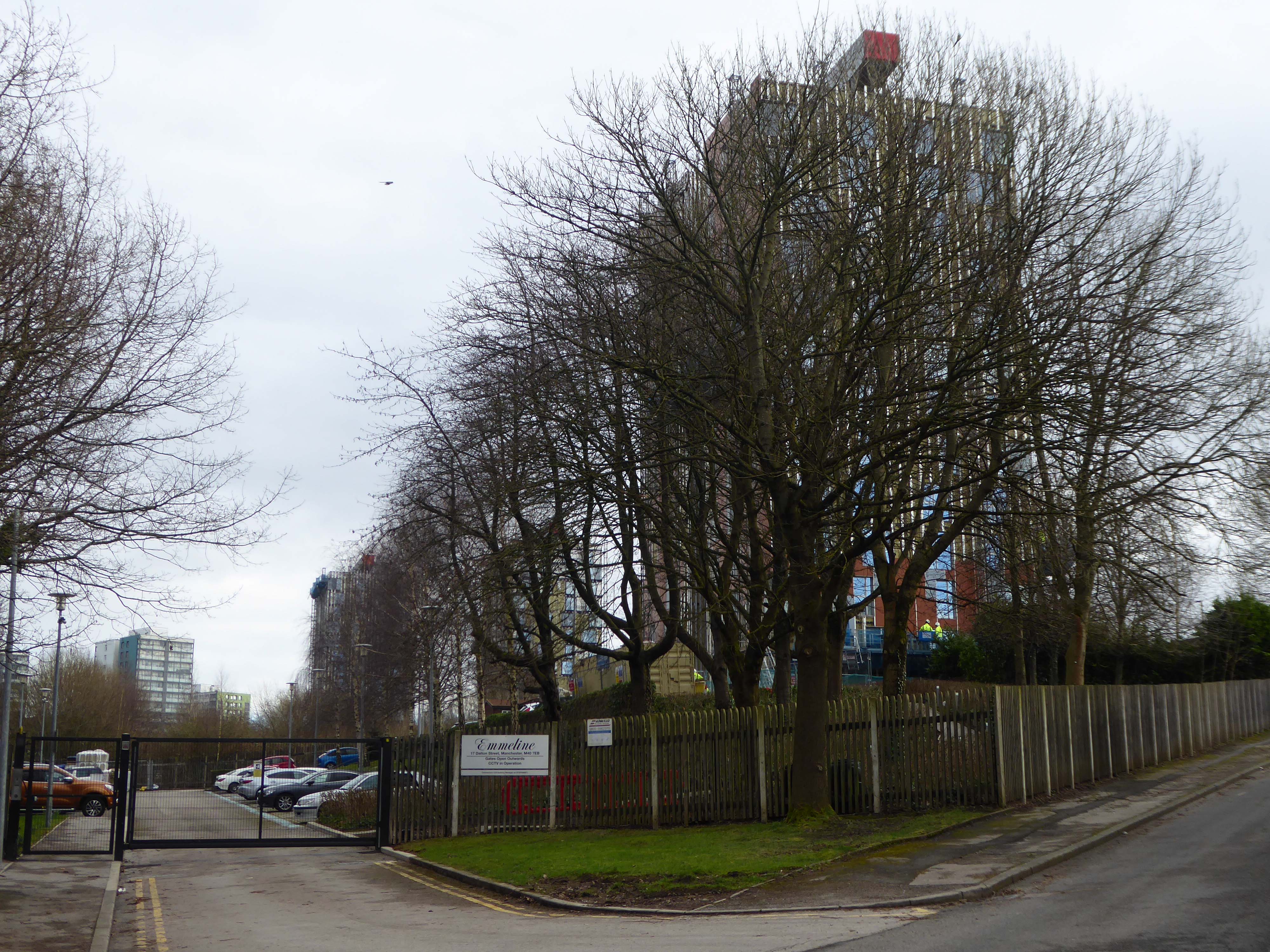
In total five thirteen storey blocks – Humphries, Dalton, Roach, Vauxhall and Moss Brook Courts
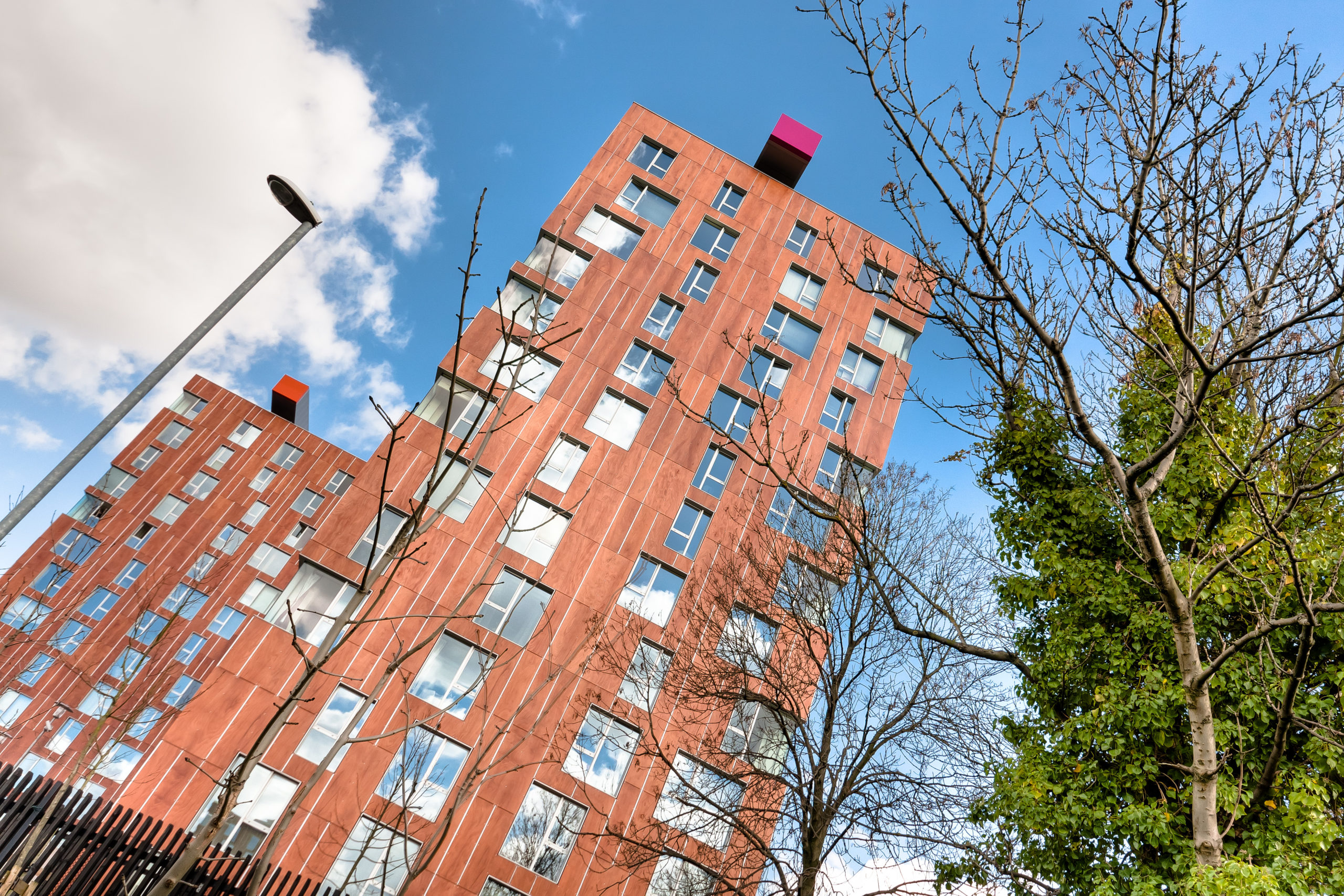
Subsequently purchased by Urban Splash and refurbished:
Designed by Union North Architects, the names for the Three Towers were decided in a public competition and the winning names were Emmeline, Christabel and Sylvia – naming the towers after the Pankhurst sisters and their mother.
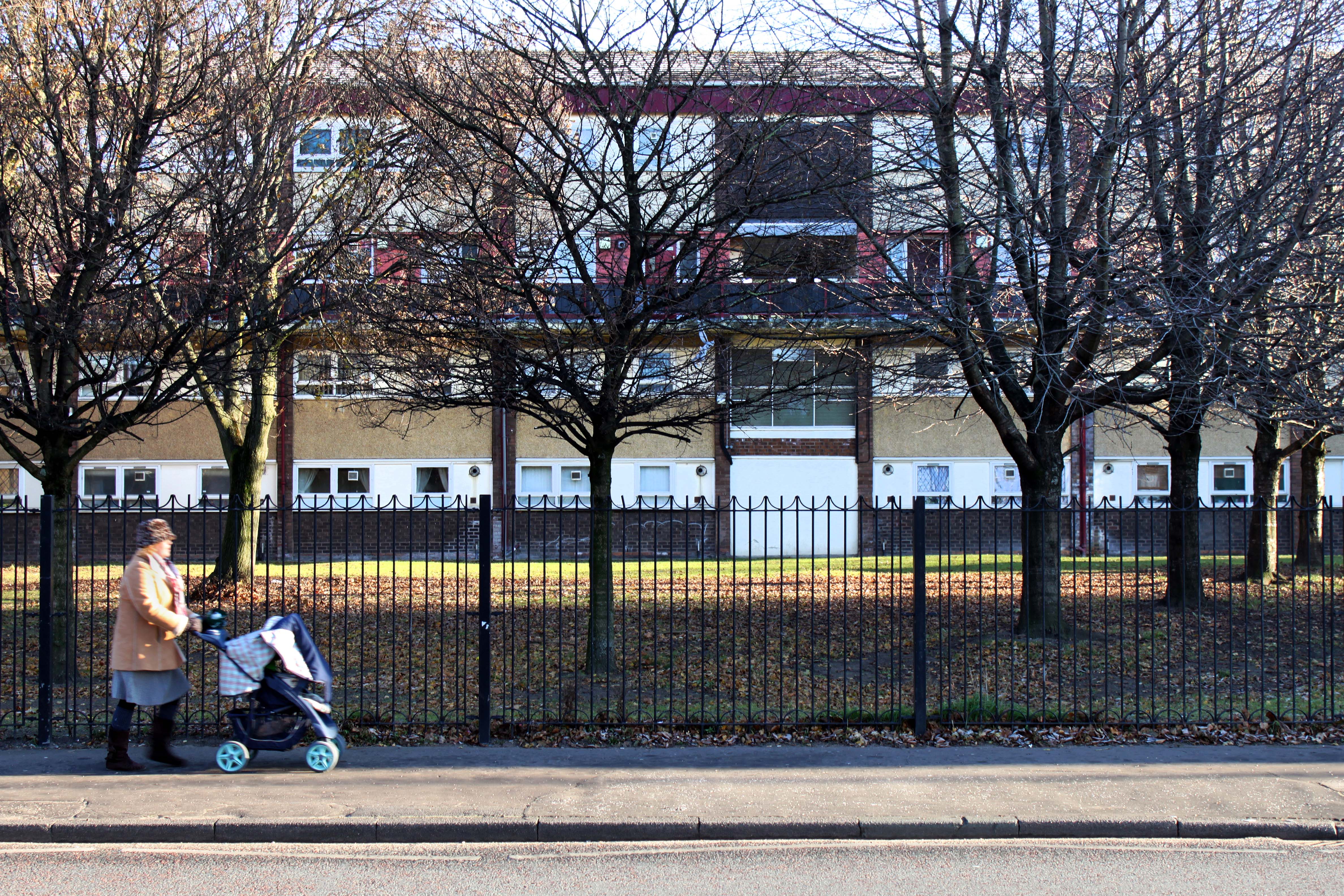
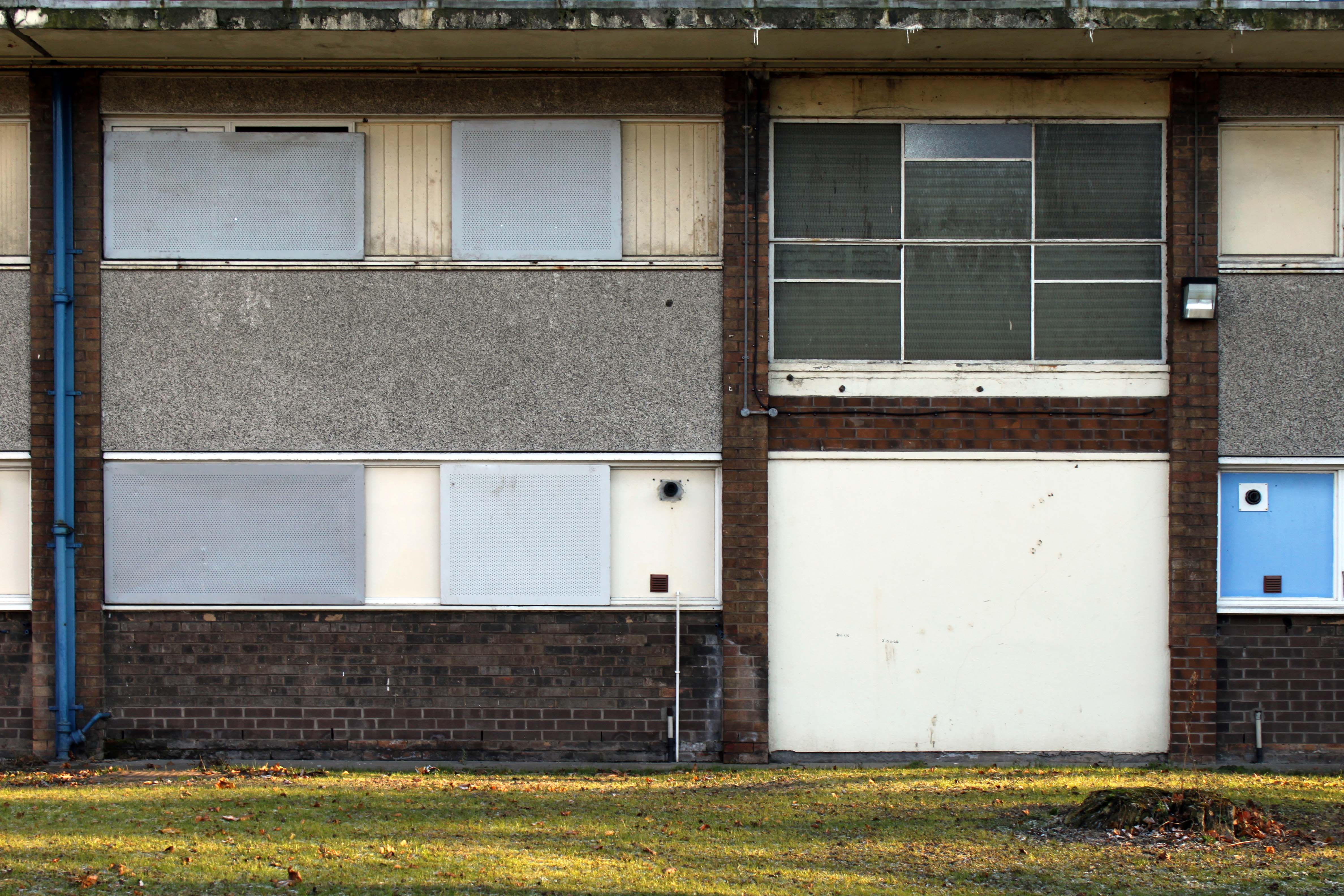
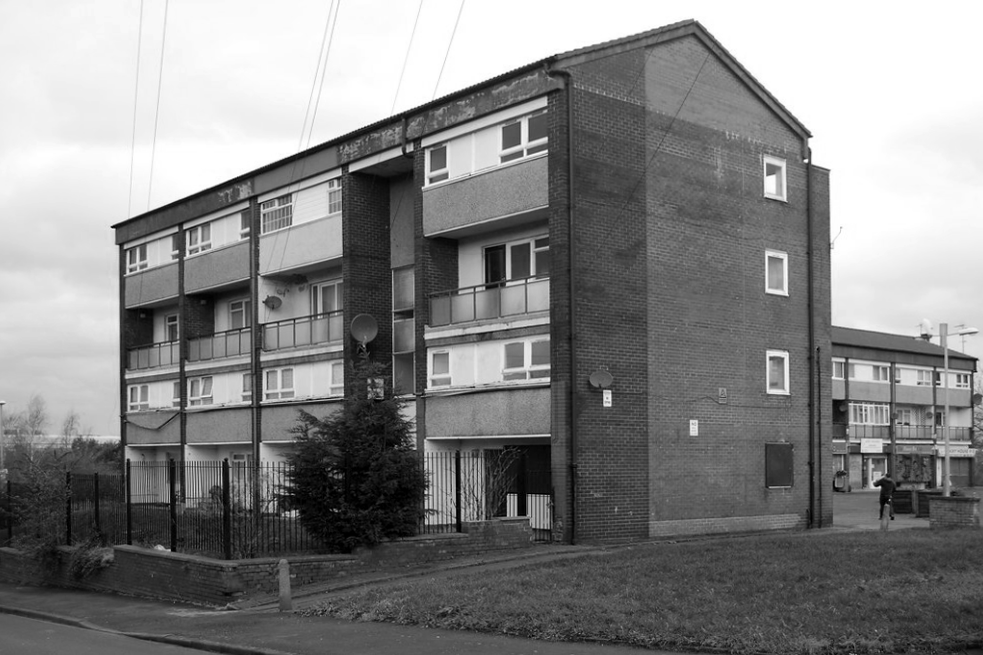
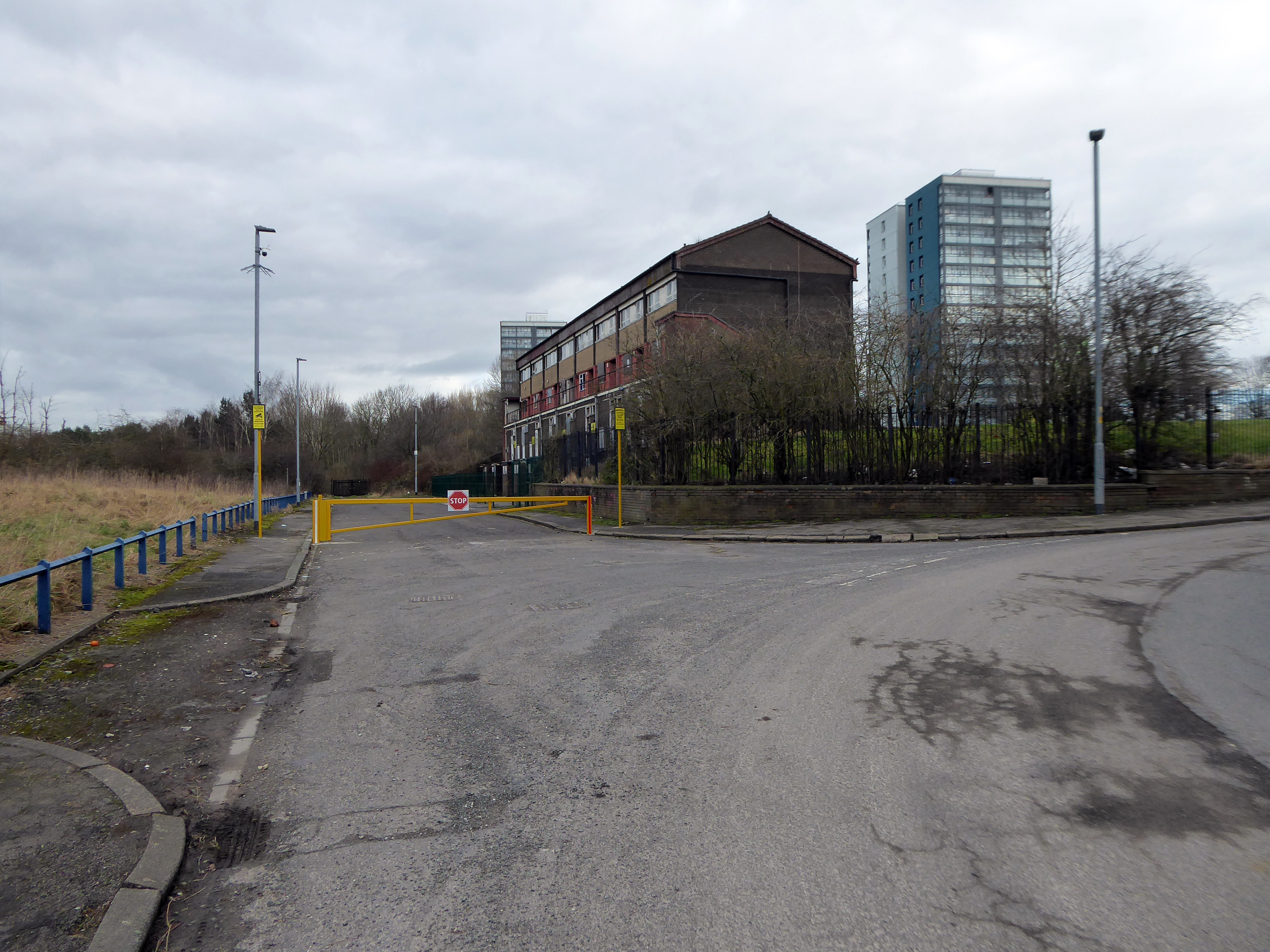
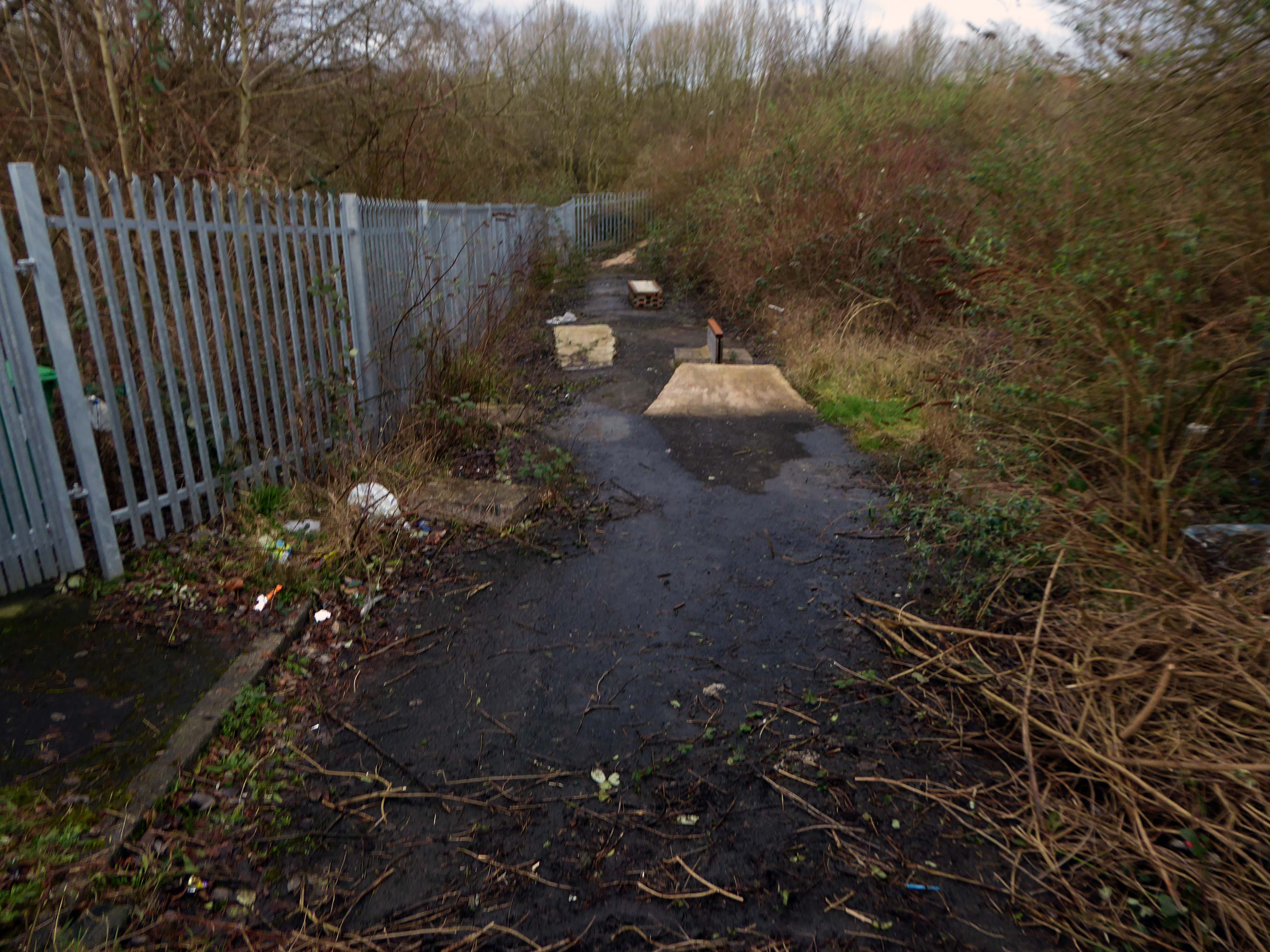
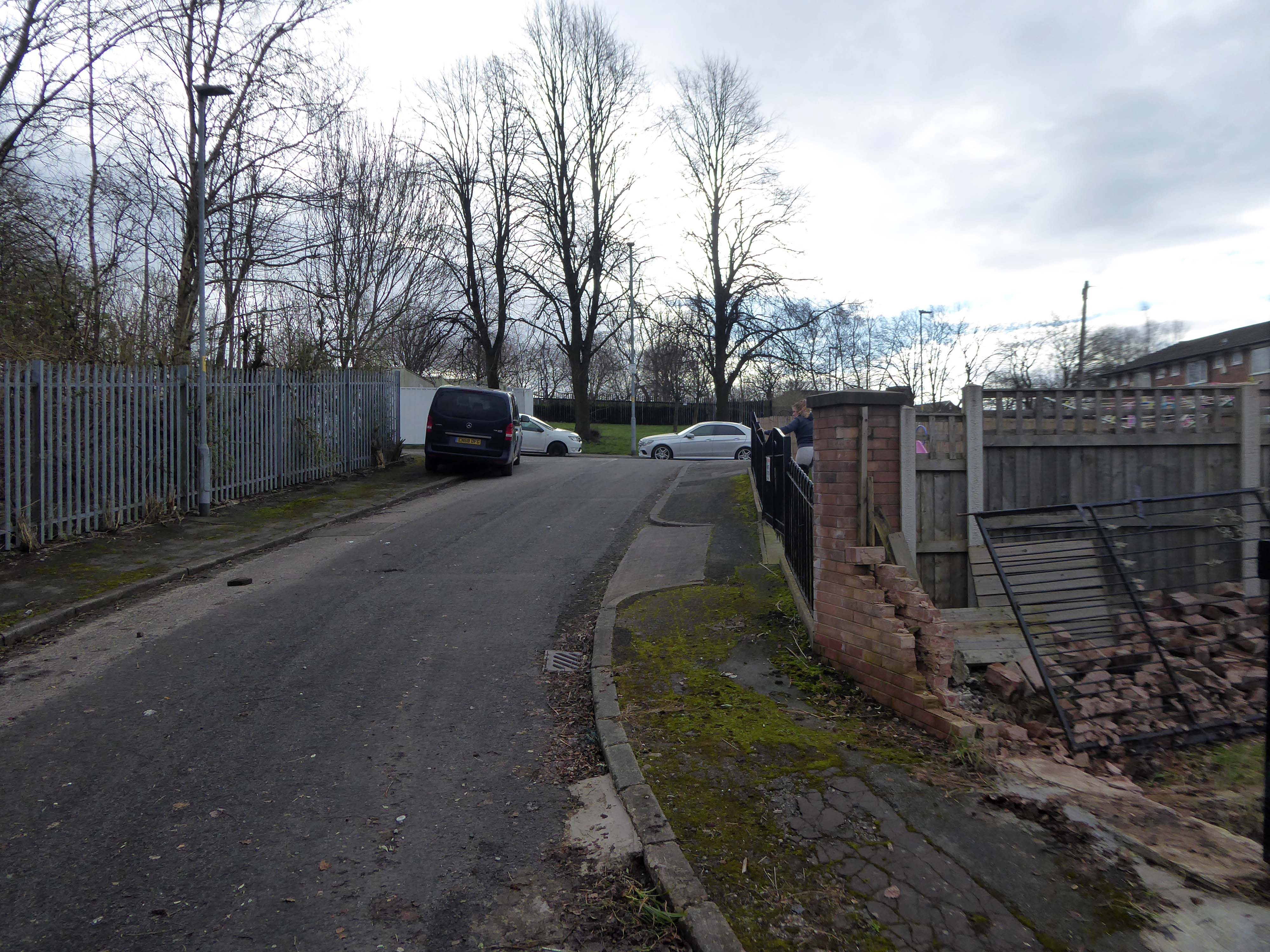
The remains of the remaining Eastford Square homes tinned up and secured awaiting who knows what.
So let’s take a short walk, see how things stand.
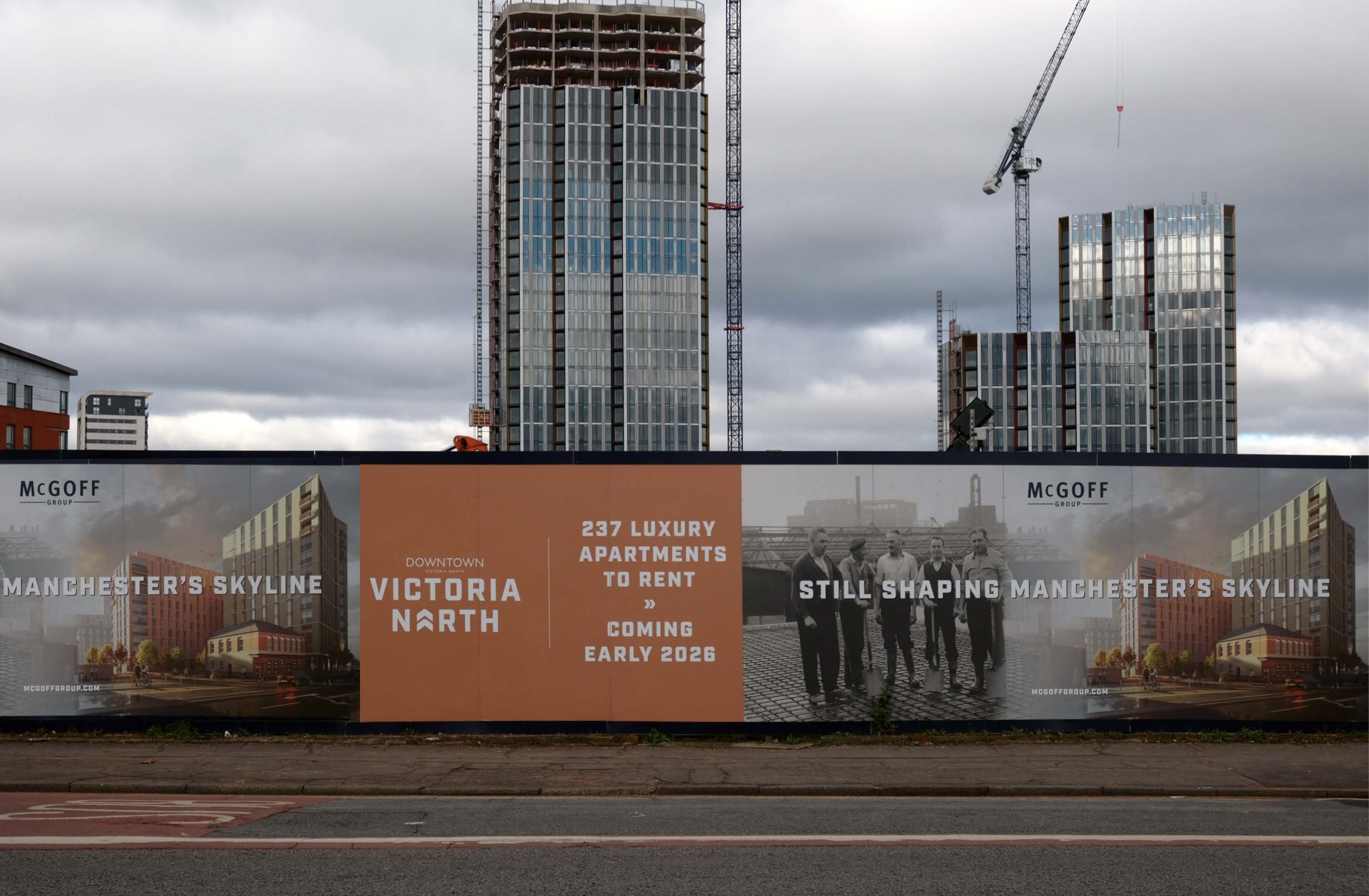
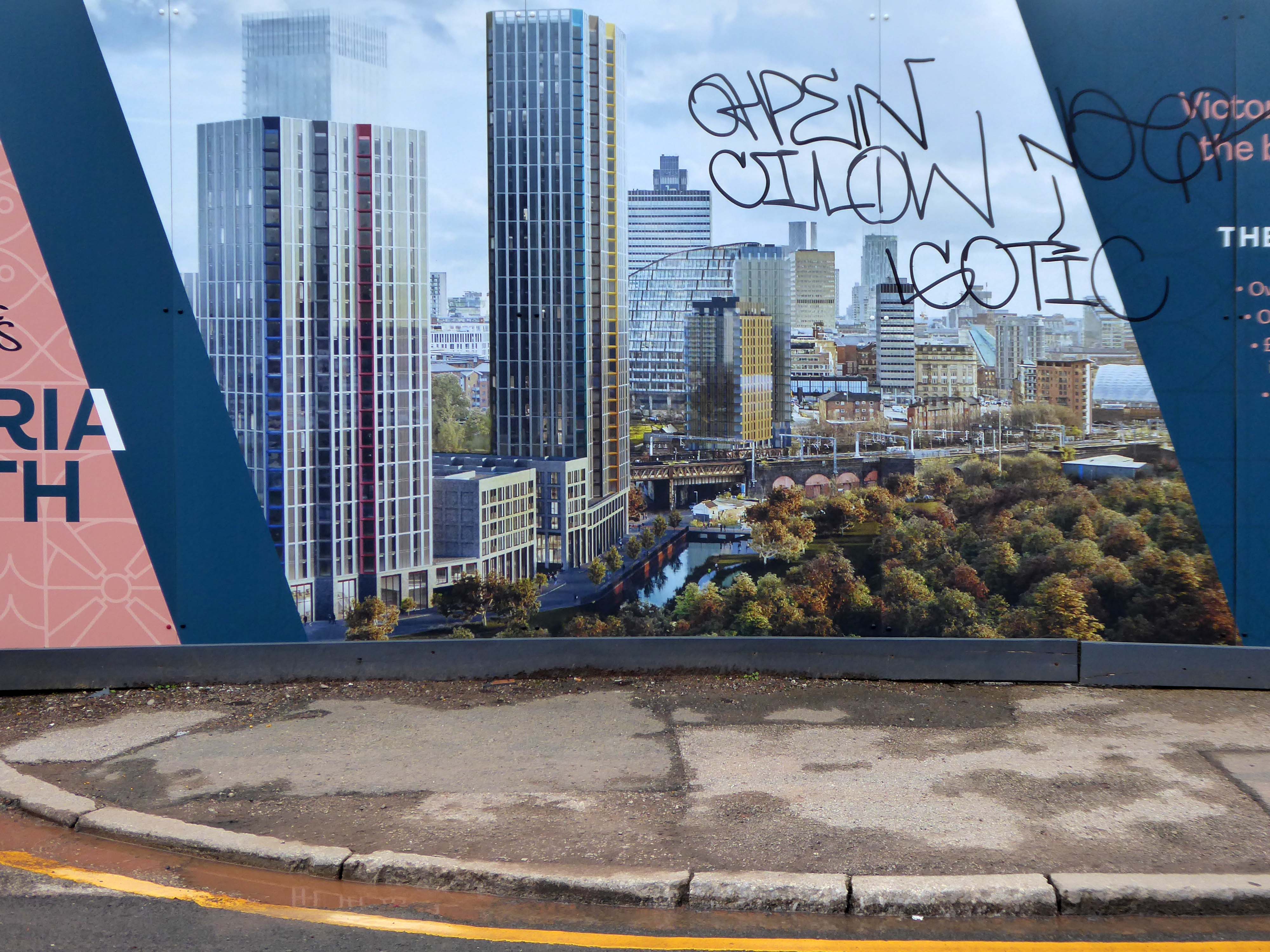
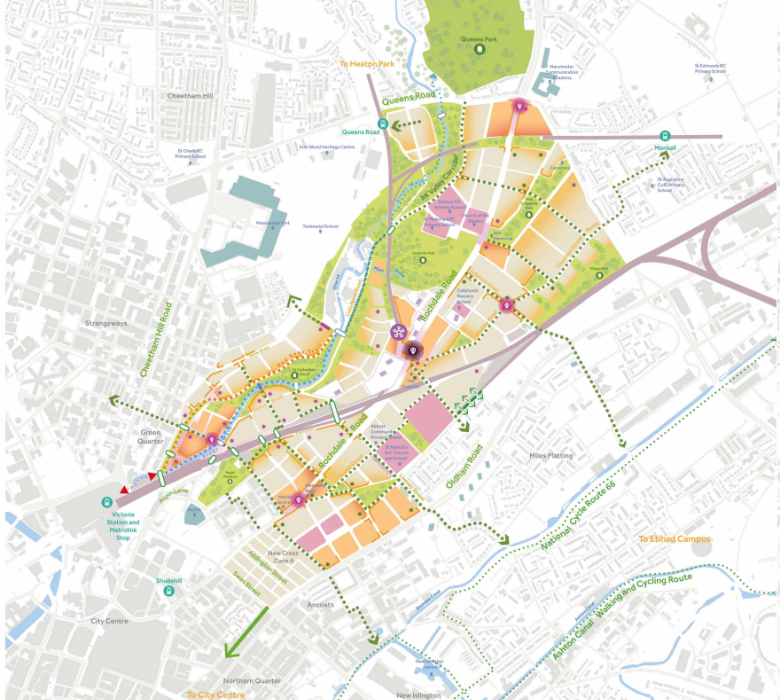
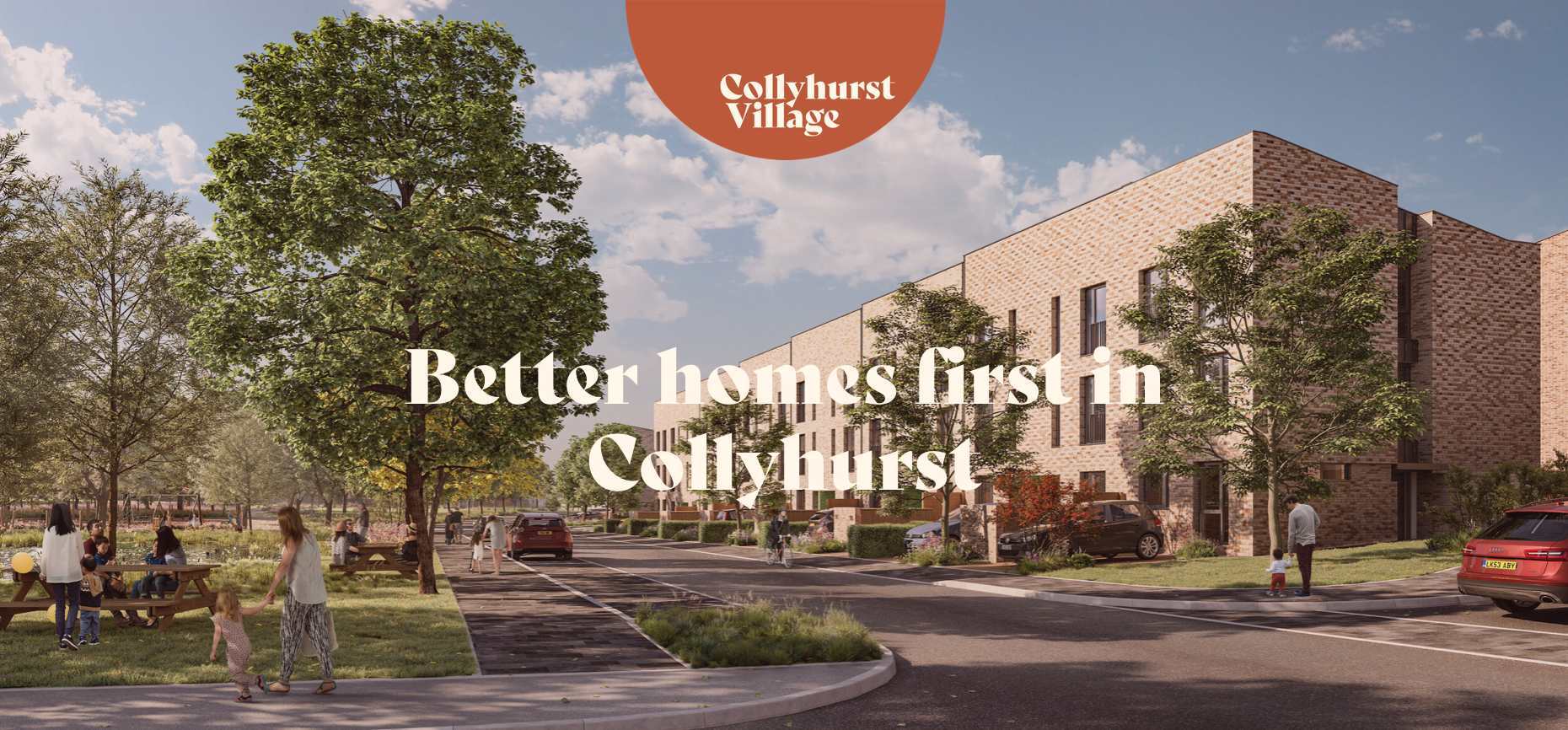
The area now forms the core of the latest municipal Masterplan – Victoria North.
Victoria North is a joint venture programme between Manchester City Council and developer Far East Consortium.
An internationally recognised developer, FEC specialises in residential led mixed-use developments and hotels, along with its casino and car park operations throughout mainland Europe.
The cowboys are now long gone – or are they?
When I was a cowboy out on the Western Plain Well, I made a half a million Working hard on the bridle reins
Come a cow-cow yicky come a cow-cow yicky, Harpurhey
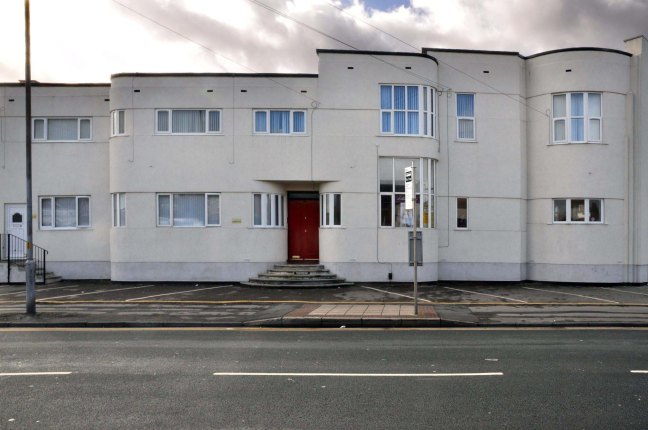
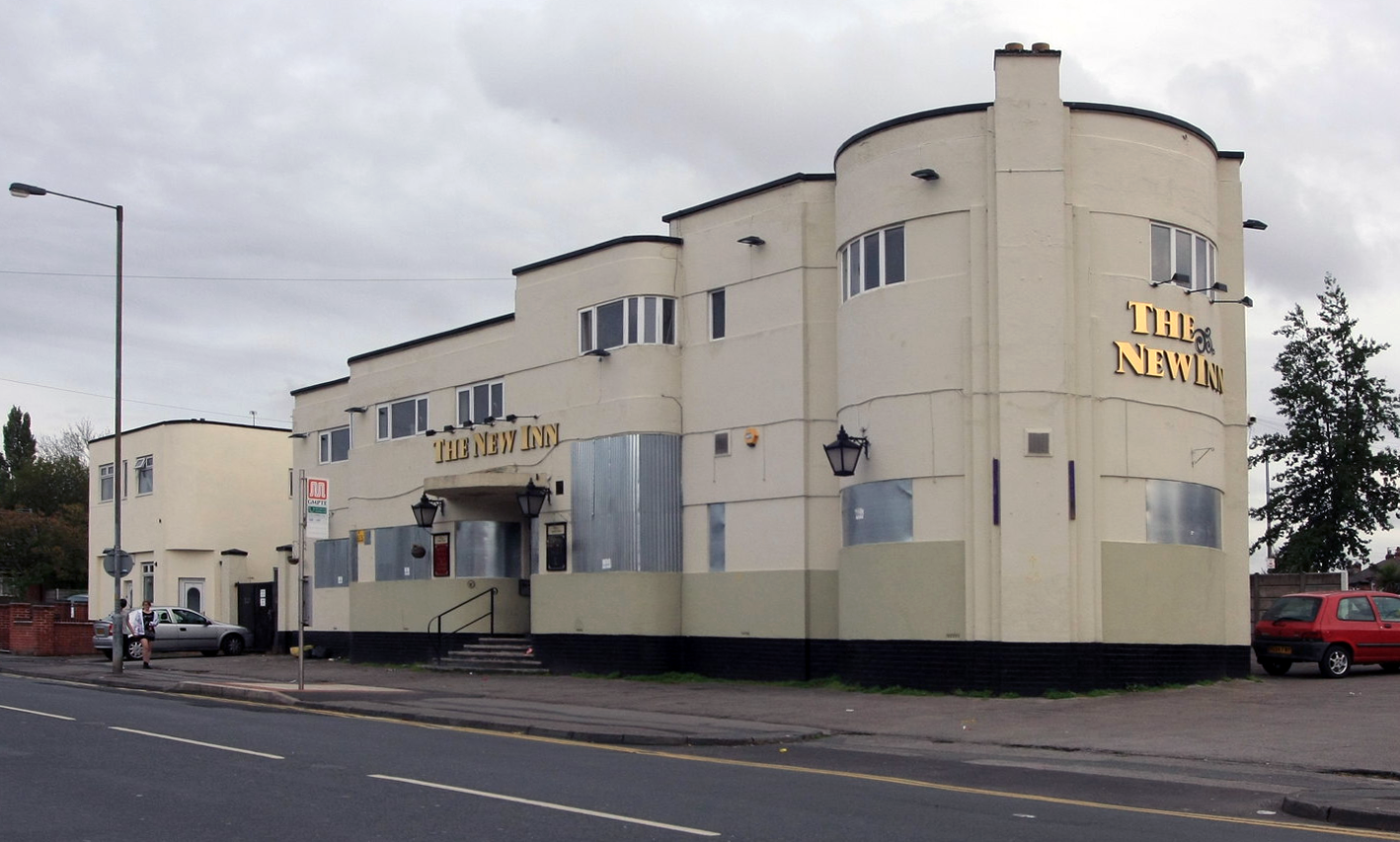
New Inn 121-137 Greenside Lane Droylsden Manchester M43 7UT
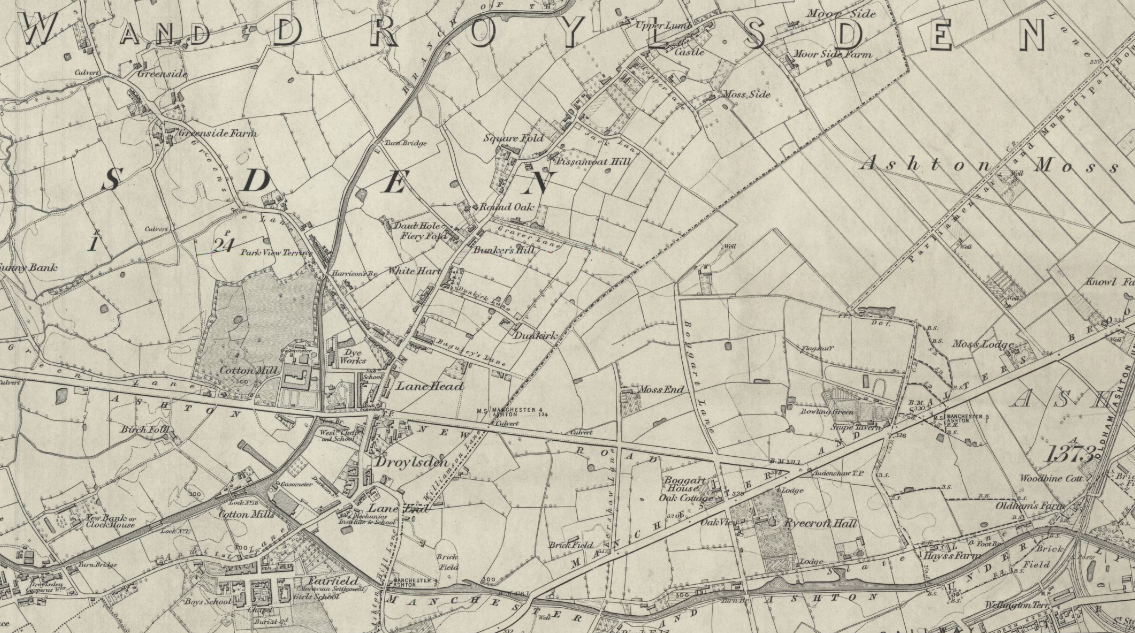
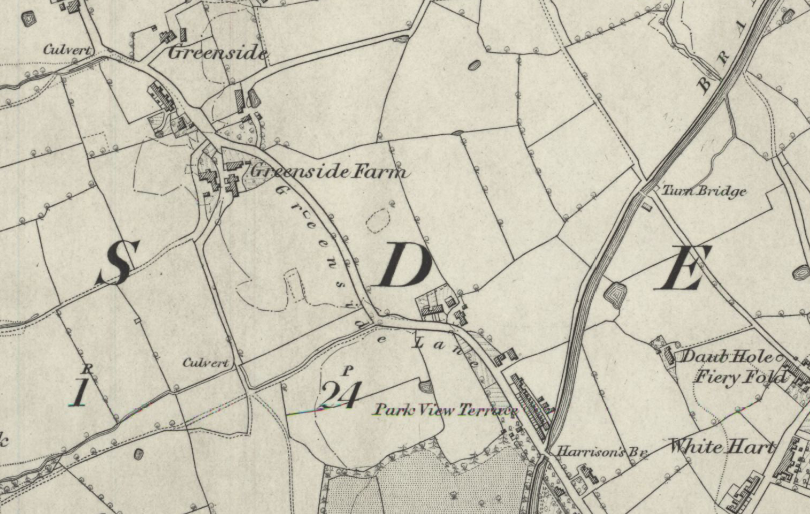
It’s the 1830’s and Droylsden consist of farms, a smattering of industry and little else.
Greenside Lane has a farm, appropriately named Greenside Farm.
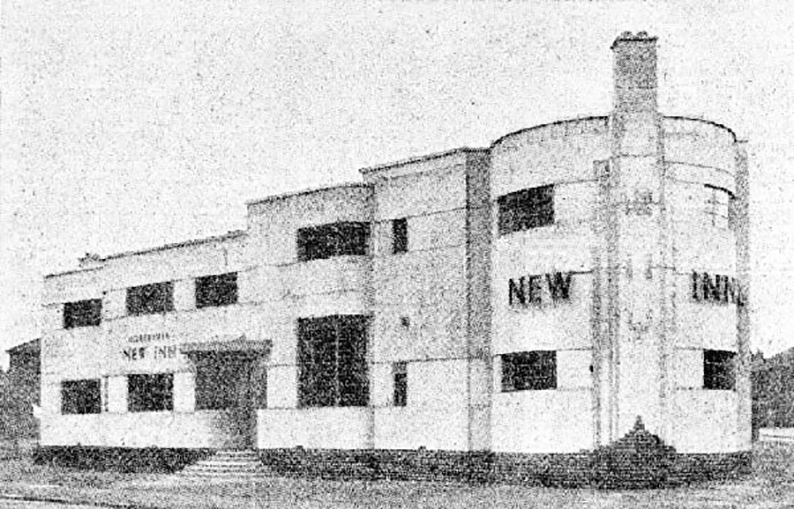
Where at some point in the 1930’s a pub appears – the appropriately named New Inn.
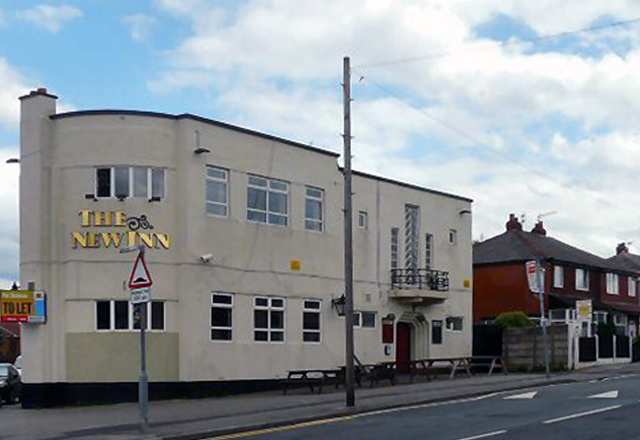
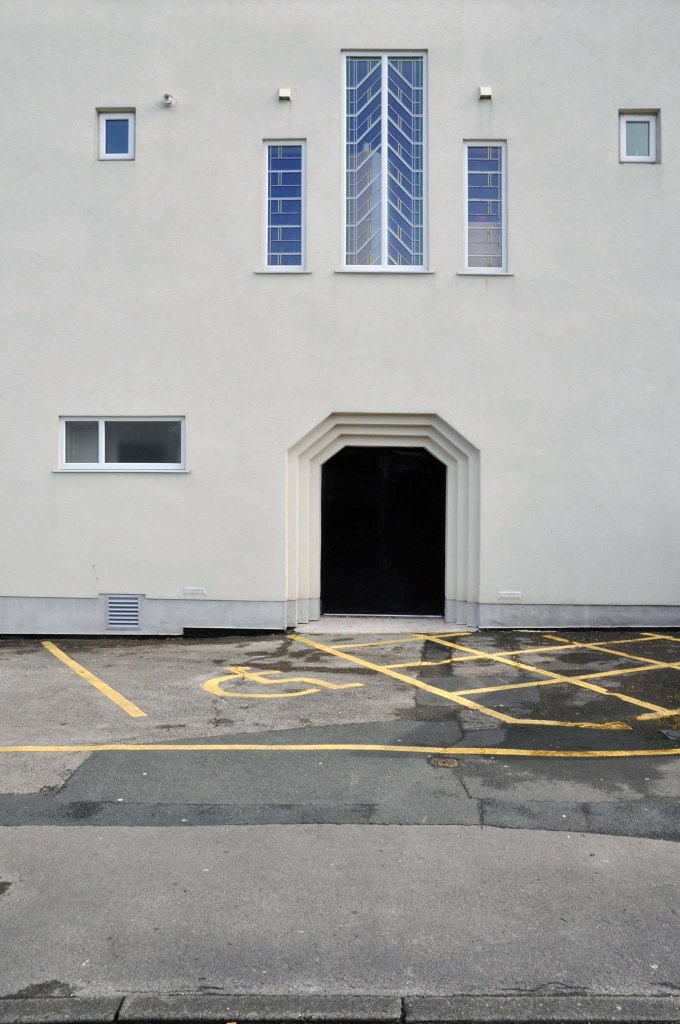
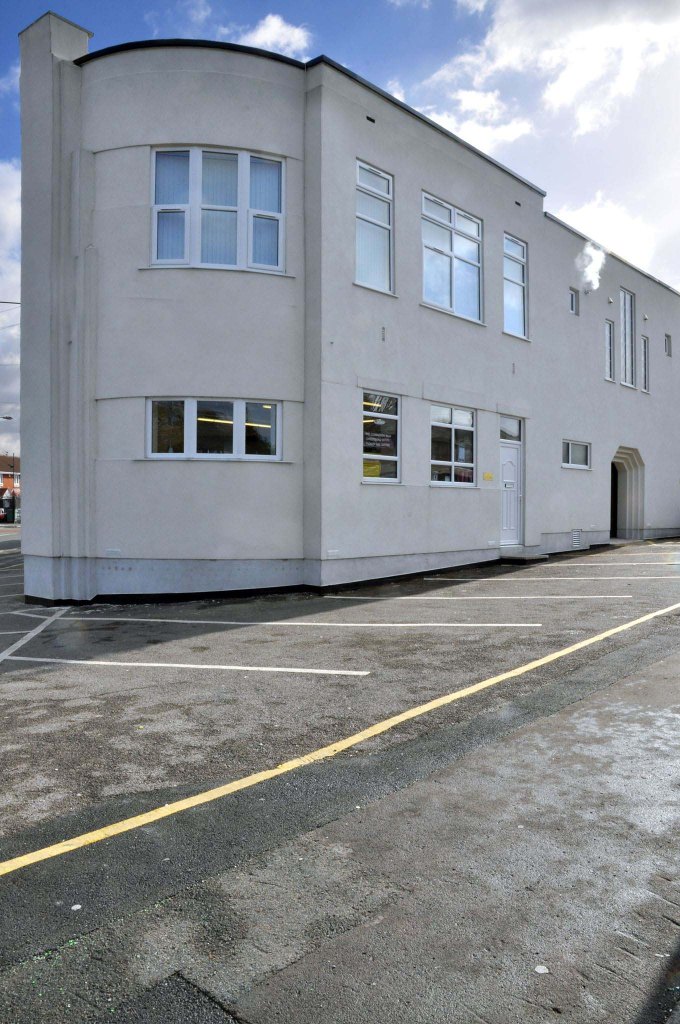
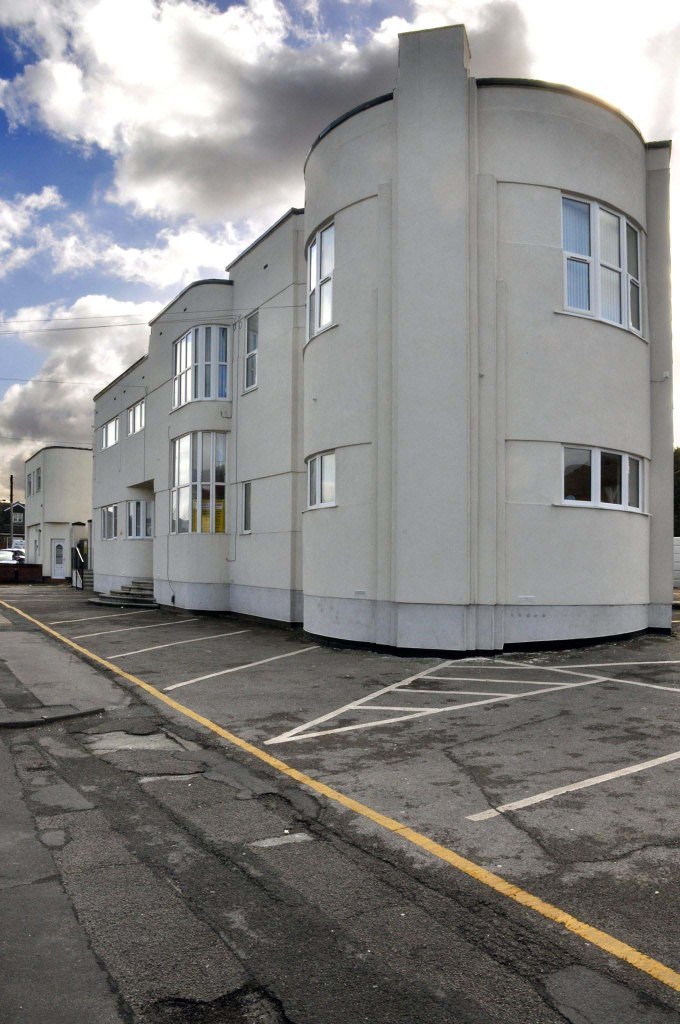
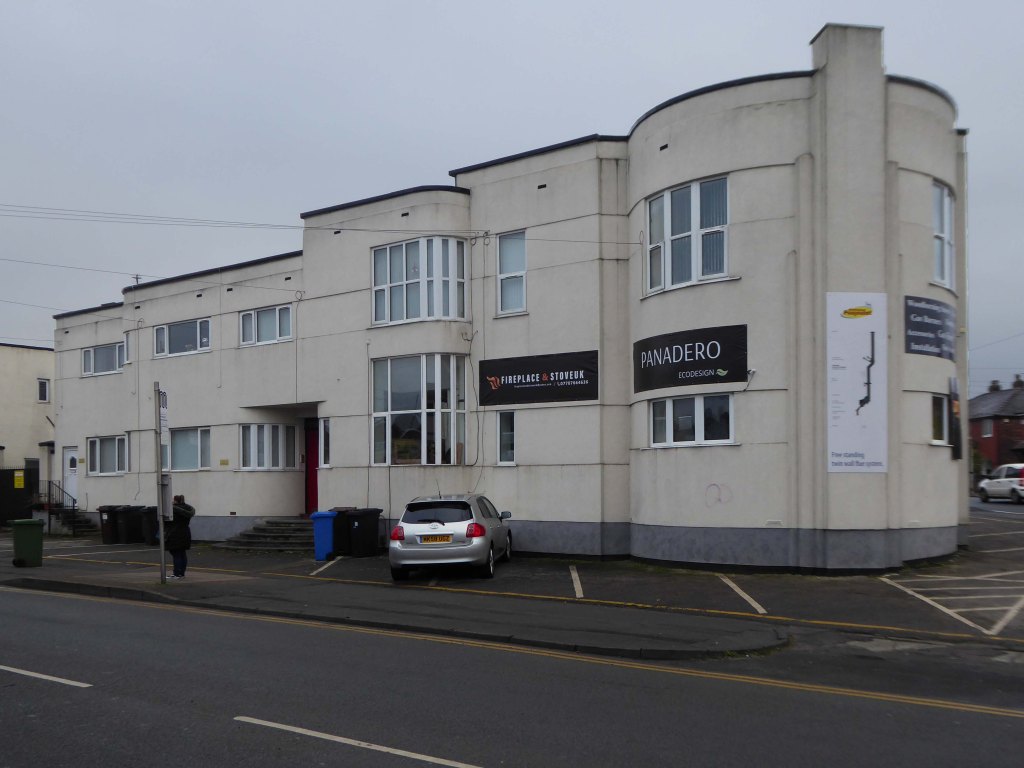
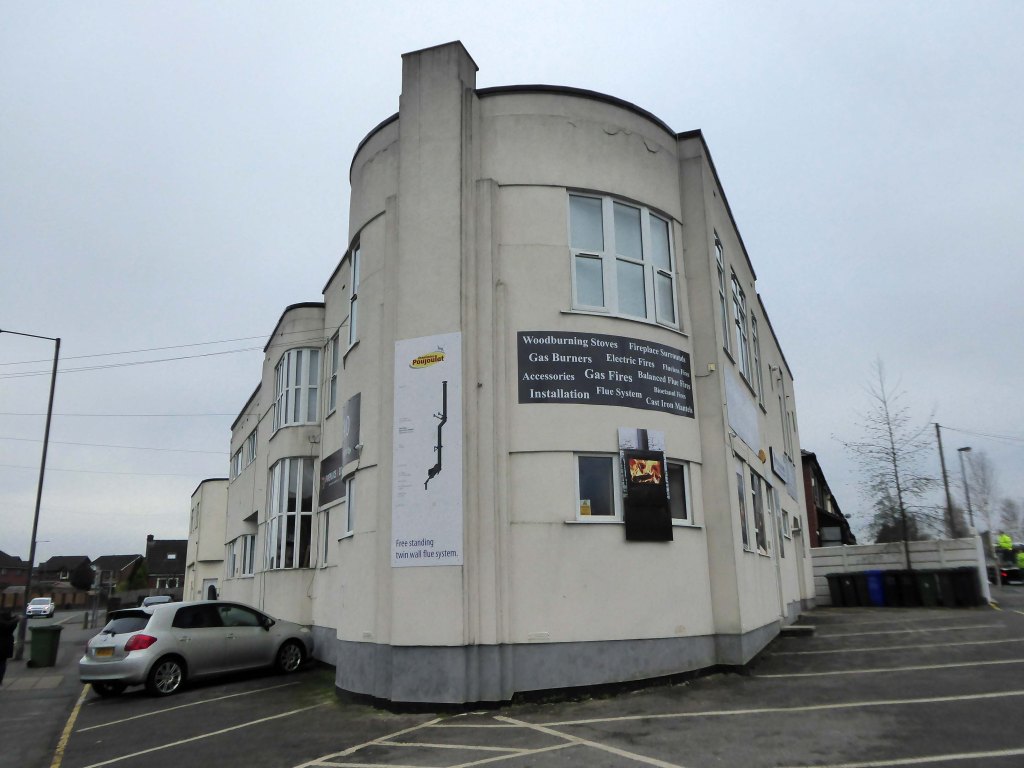
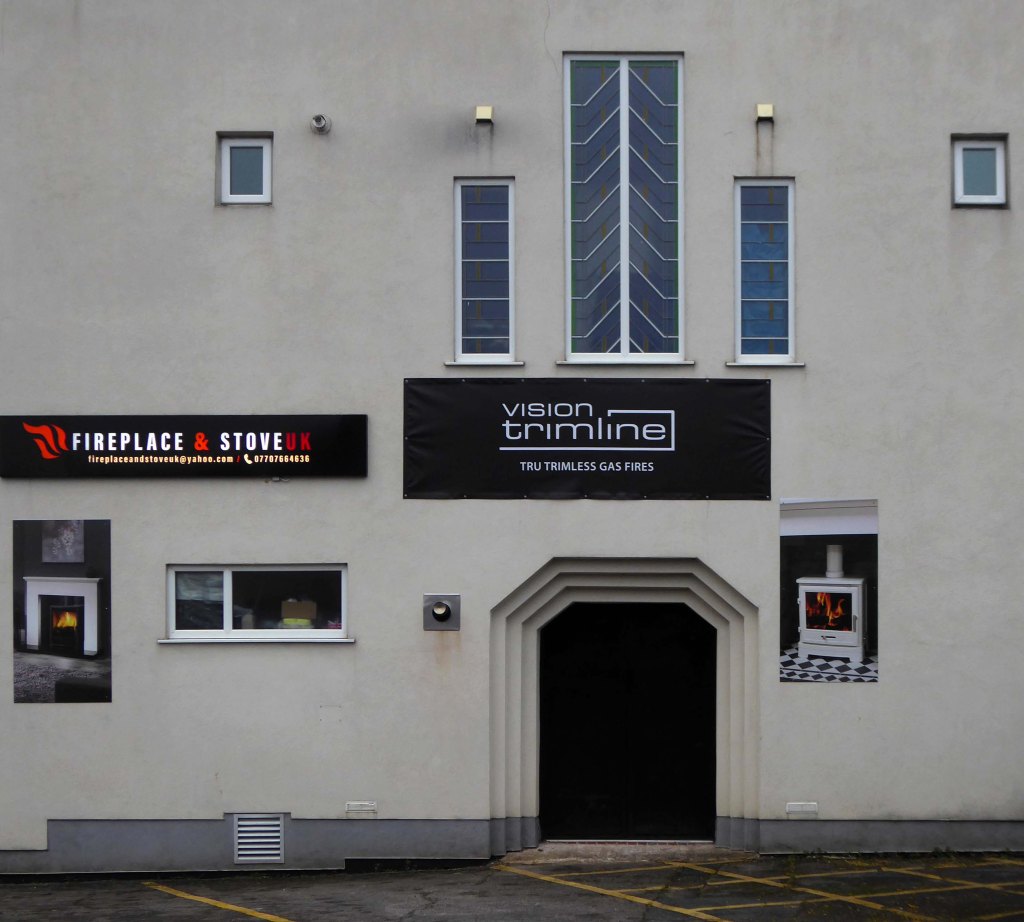
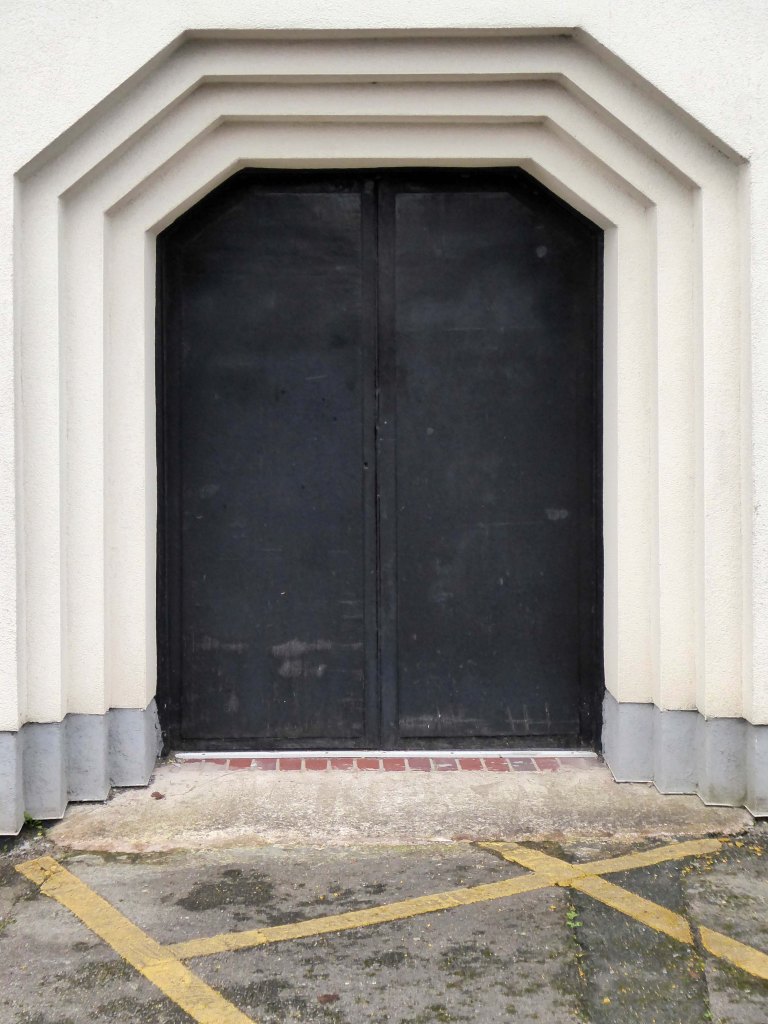
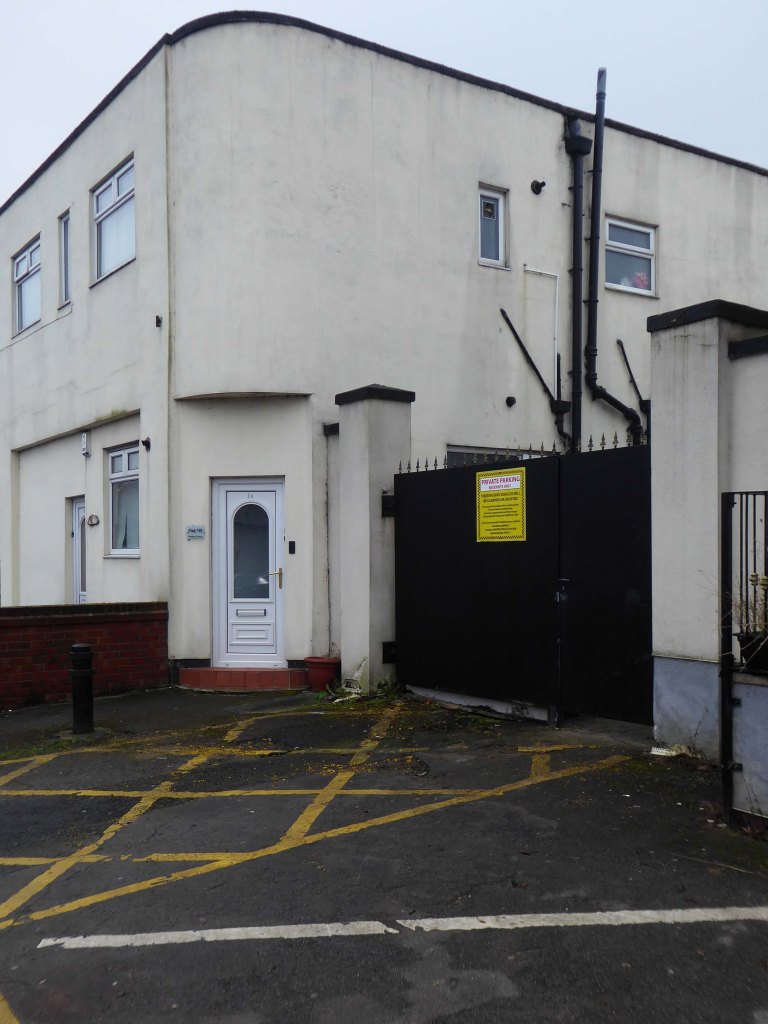
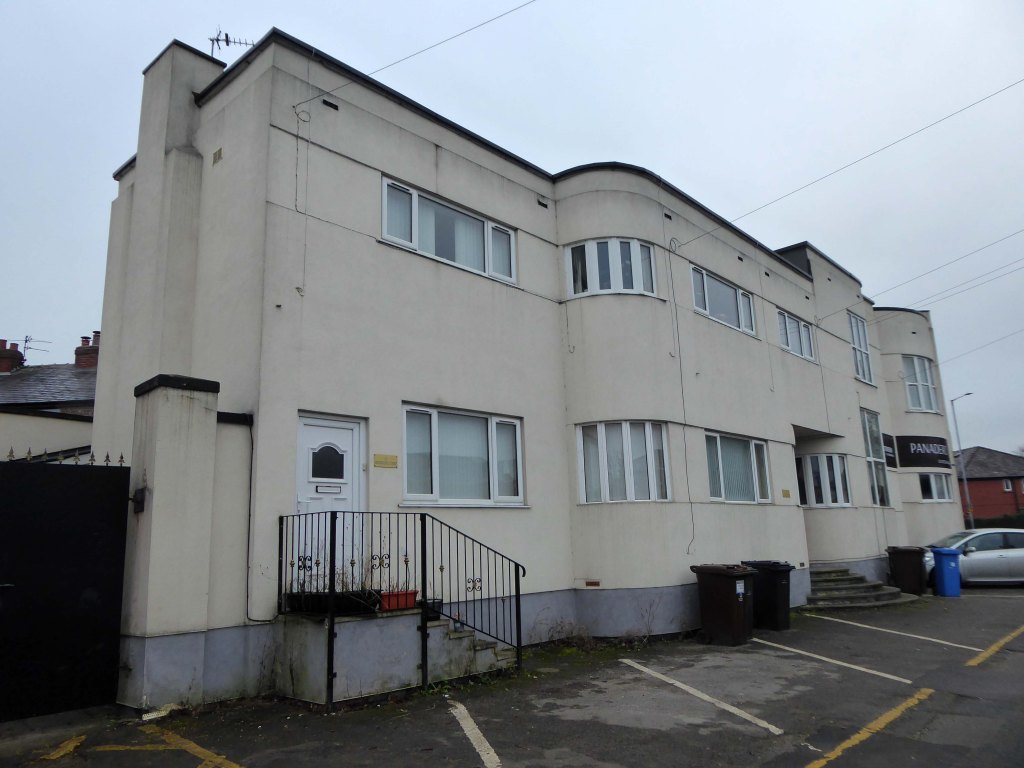
This such an anomaly in this setting, an architectural style more commonly found on the coast, the Seaside Moderne of Morecambe’s Midland Hotel, or Bexhill’s De la Warr Pavilion.
A streamlined ocean liner of a boozer, truly Tameside Moderne.
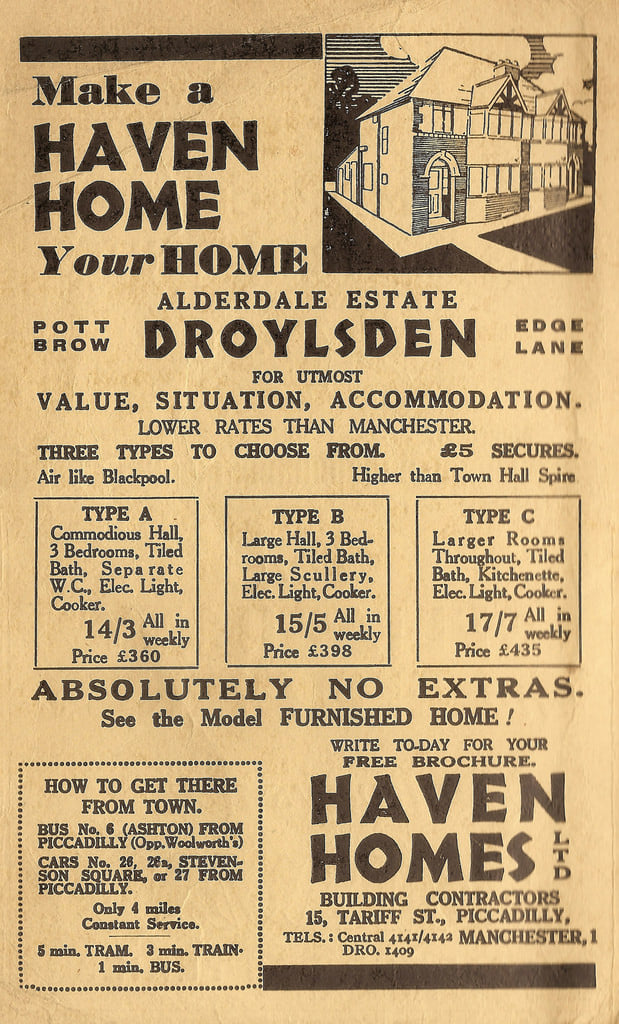
For the new housing in the area.
Air like Blackpool – and pub architecture to match!
I discovered on Carl Flaherty’s Flickr post some of the pub’s deep history.
My parents were the first licensees of the New Inn, I was six months old when we moved in, that was in 1936. It was always very busy even more so during WW2, the Home Guard put an old Lewis Gun on the roof which bought down the ceiling when they fired, crazy.
The roof used to have heaps of shrapnel after the bombing raids, the cellar was used as an air-raid shelter until the government built one for each home. We had a German fighter pilot housed in the cellar till the regular army came and took him away, he’d been shot down over Daisy Nook. We moved to Gatley in late 1949 and came to Australia in 1956. I remember the New Inn and Droylsden with fondness,the people were so friendly all the time.
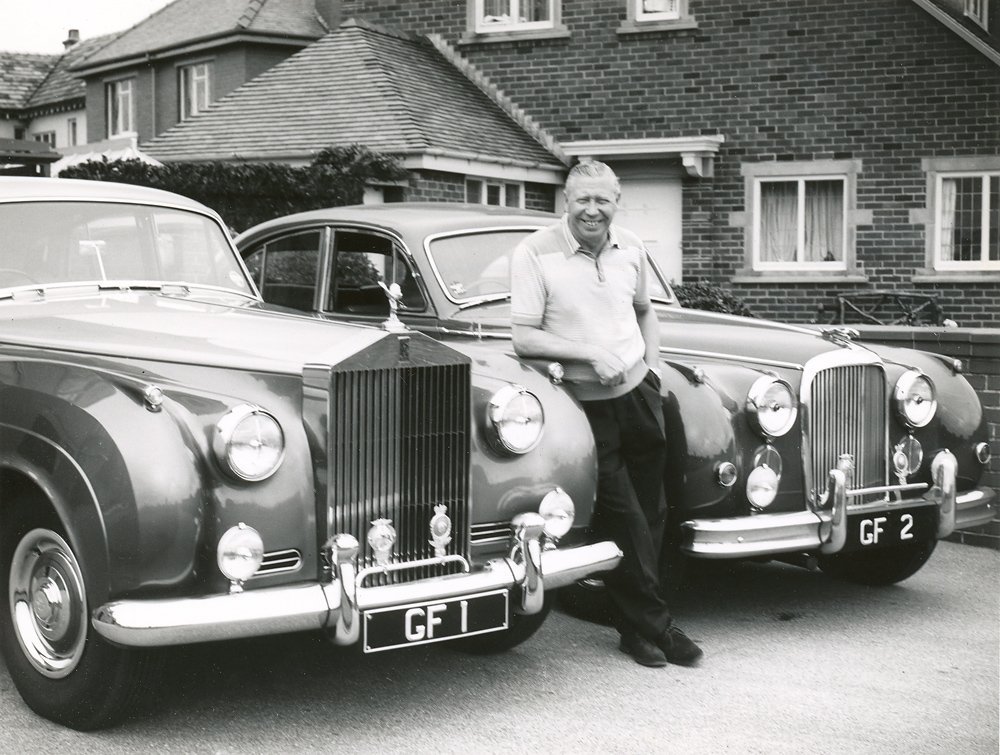
I had a stack of those old photographs of the inside as it was then the Lewis gun and Karl -the pilot, plus ones of George Formby who was a mate of Dads he had a pinky red coloured Bentley which he used to park in the yard on the left of the pub. When I was in the army I was for a while in Germany I visited the pilot Karl Lehmann he lived in Hamburg, strange days mate.
John Leigh.
Copyright Gerald England – Geograph UK
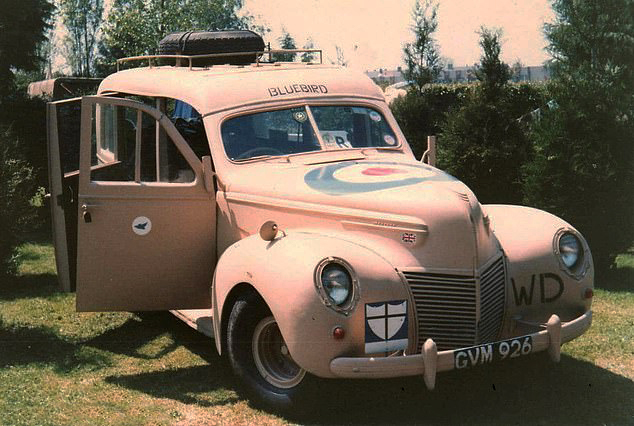
George had a passion for the Rolls and Jag – but it seems he also had a pinkish 1939 Mercury Eight Series 99A Estate during the war years.
Commissioned by Sir Malcolm Campbell and later owned by George Formby.
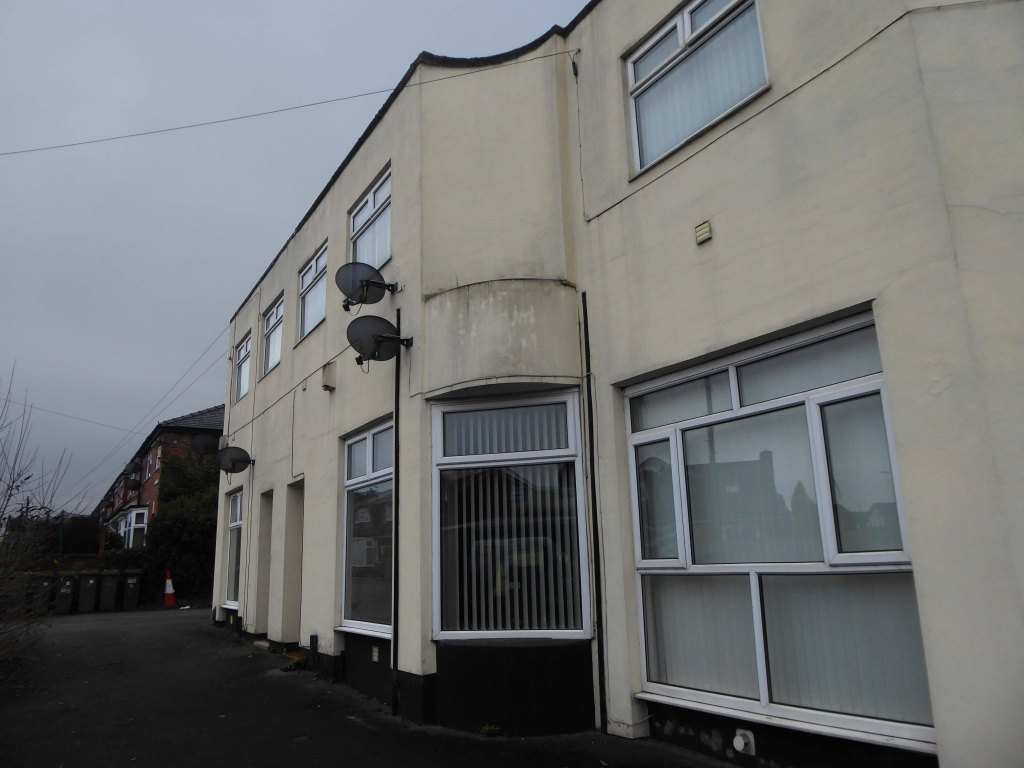
The pub now closed is currently mixed use – apartments and retail, some detail has survived though as with many other examples, the victim of replacement uPVC and re-rendering.
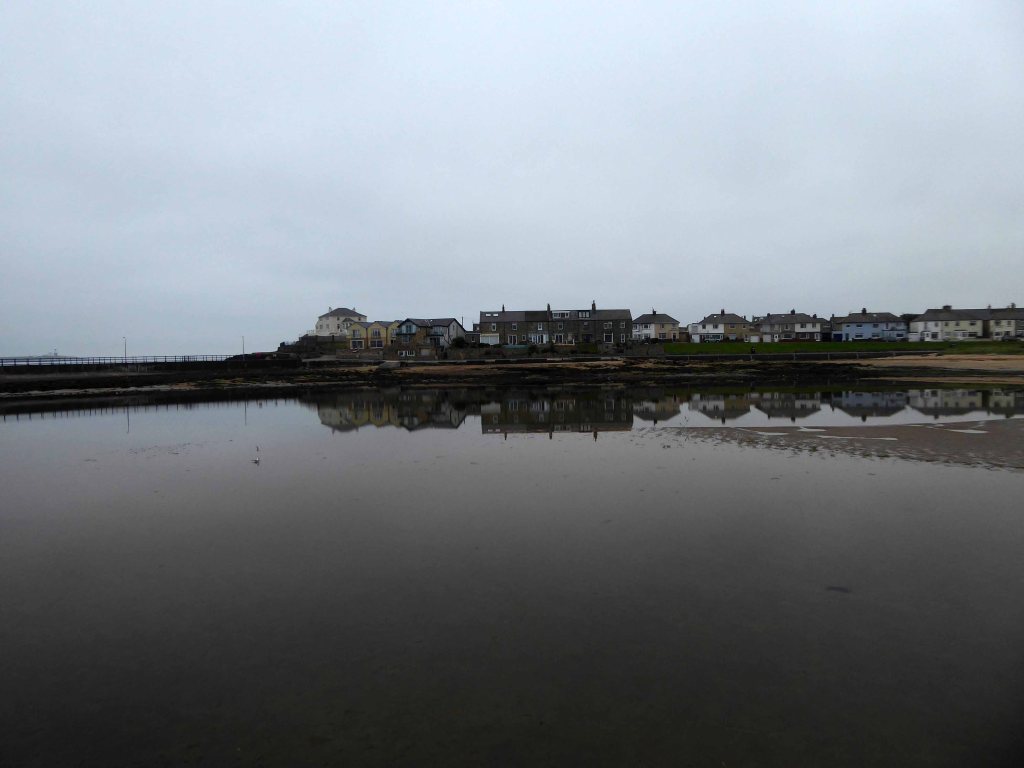
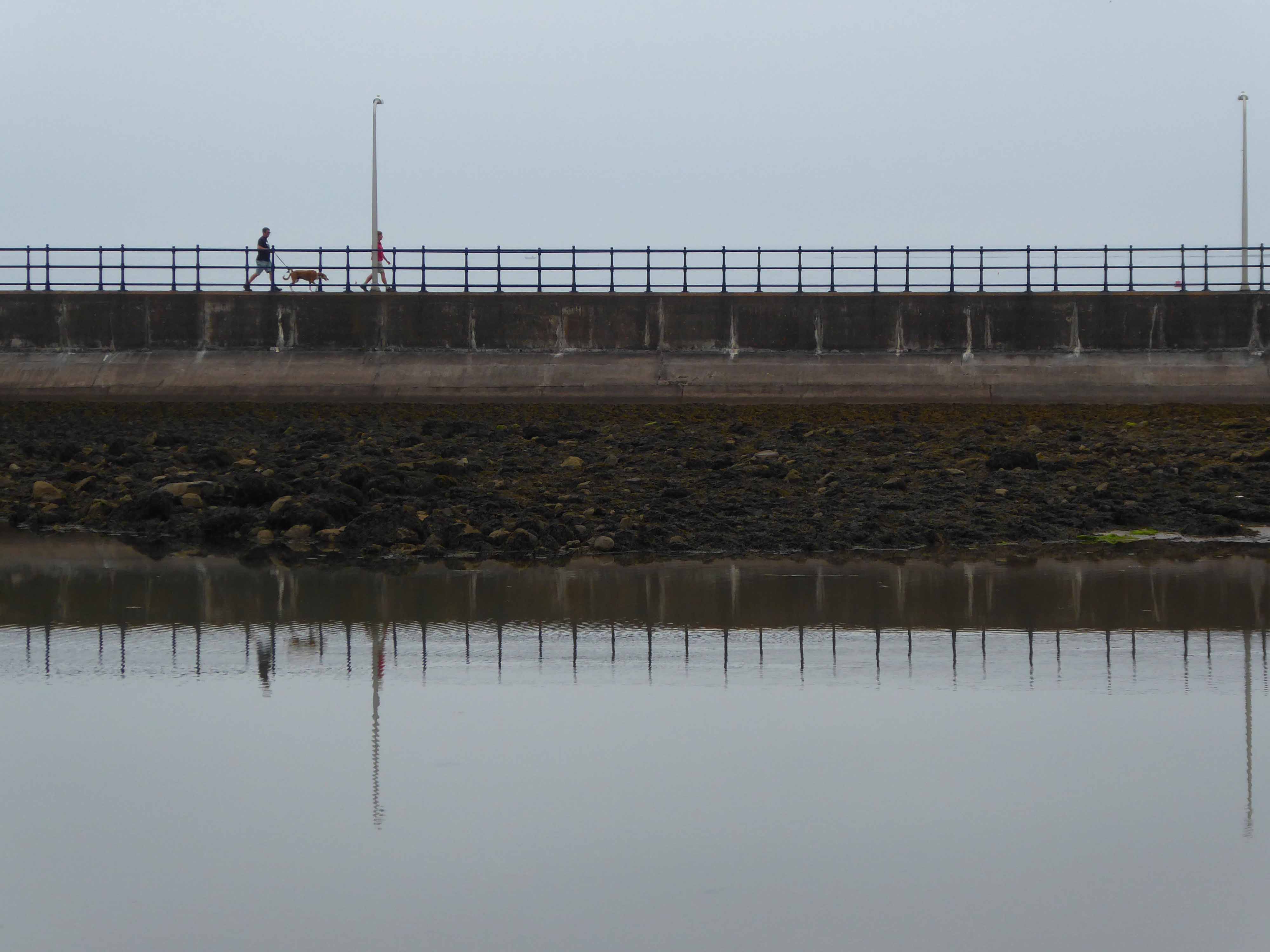
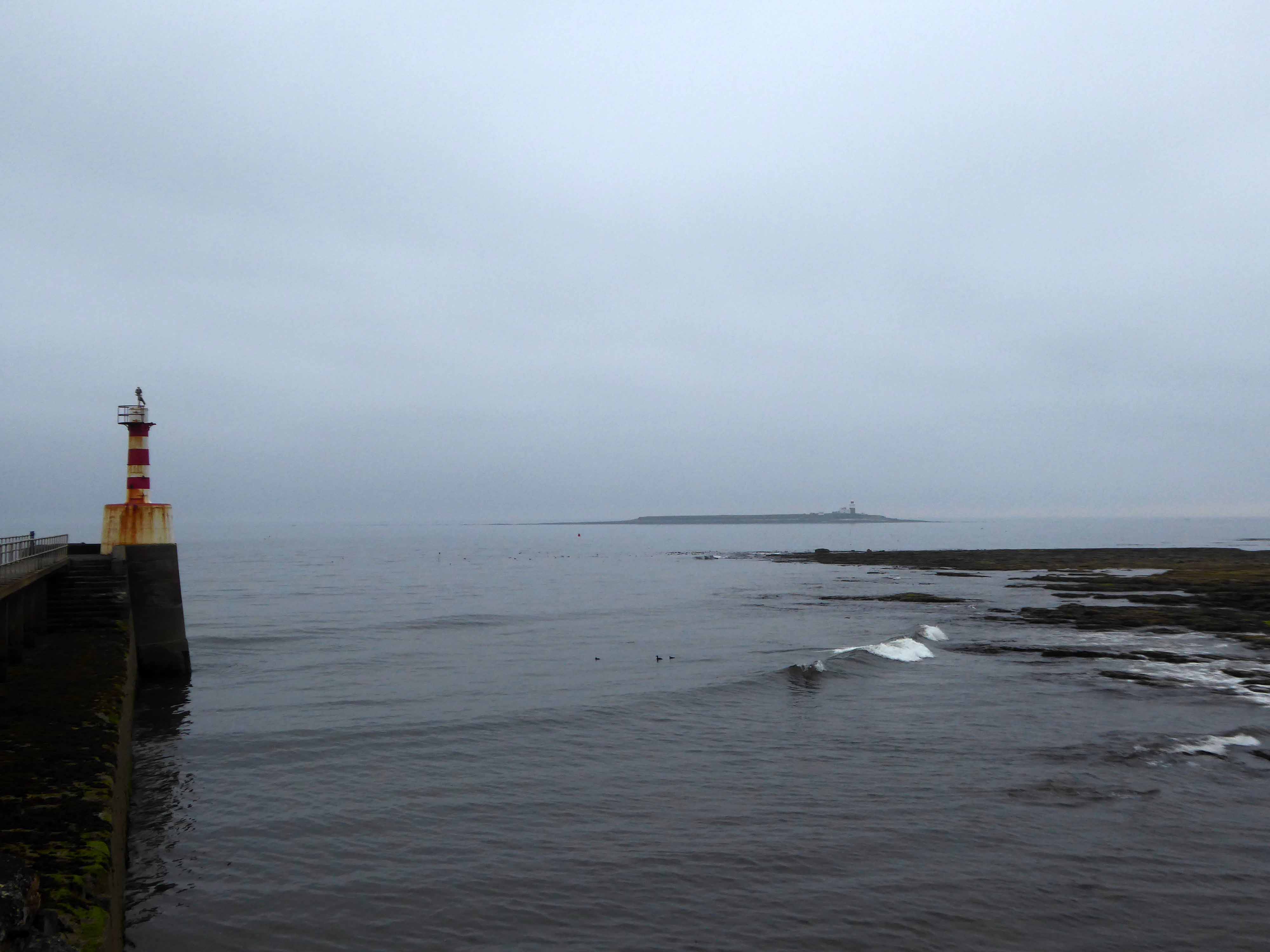
The final day the first sight of cloud and sea mist.
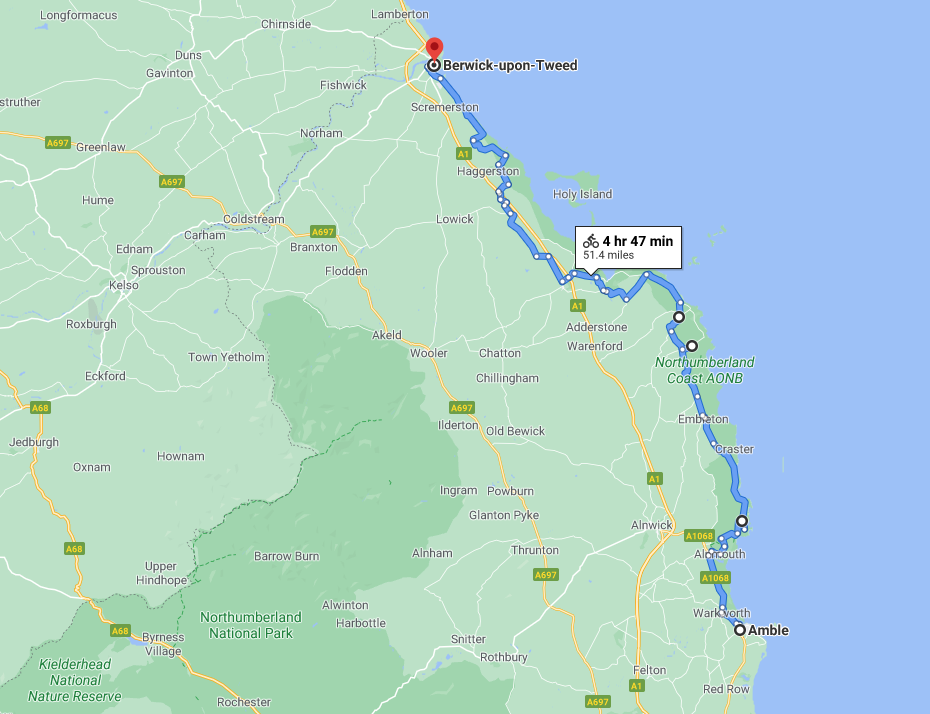
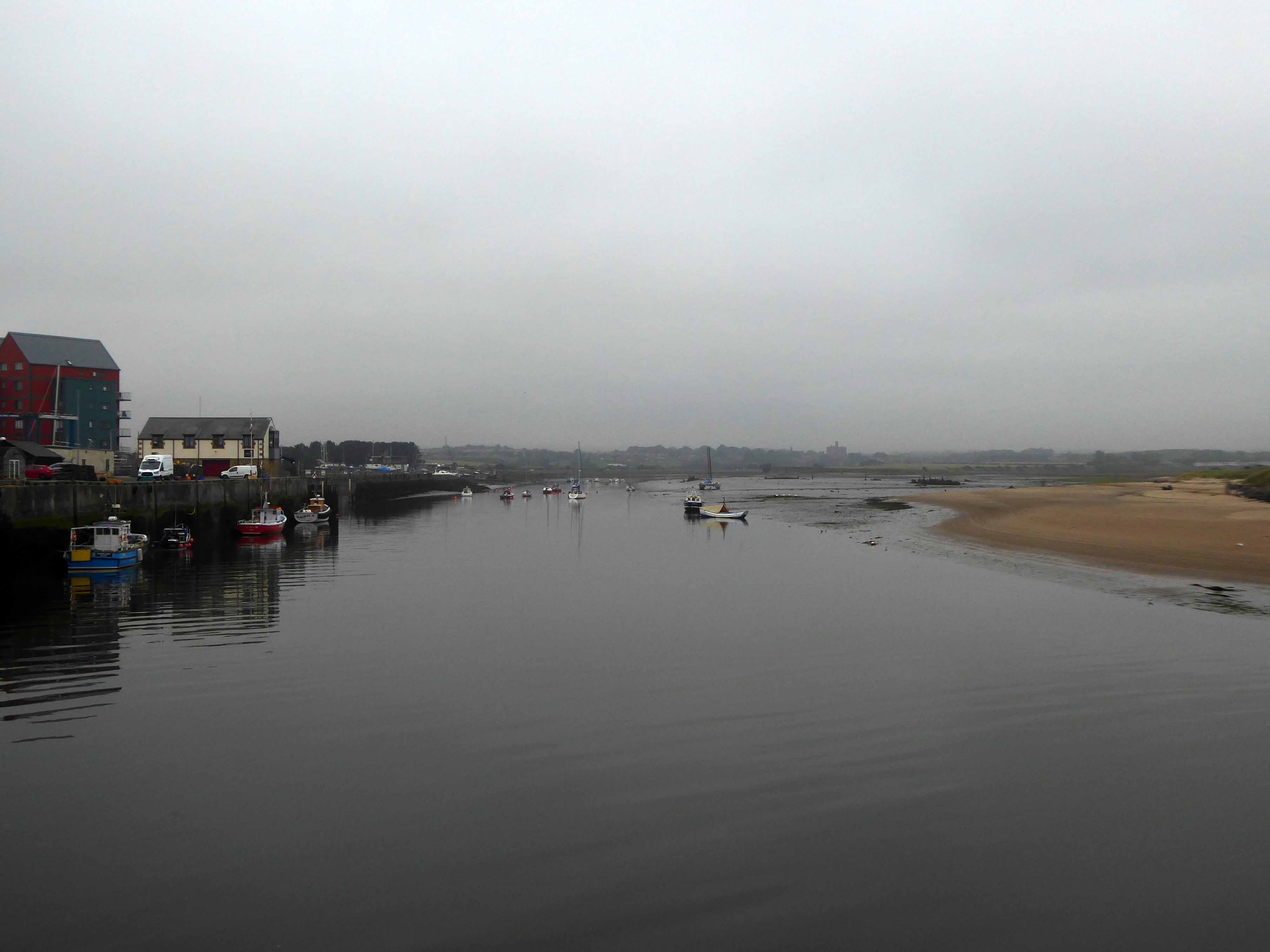
I awoke early and took an amble around Amble.
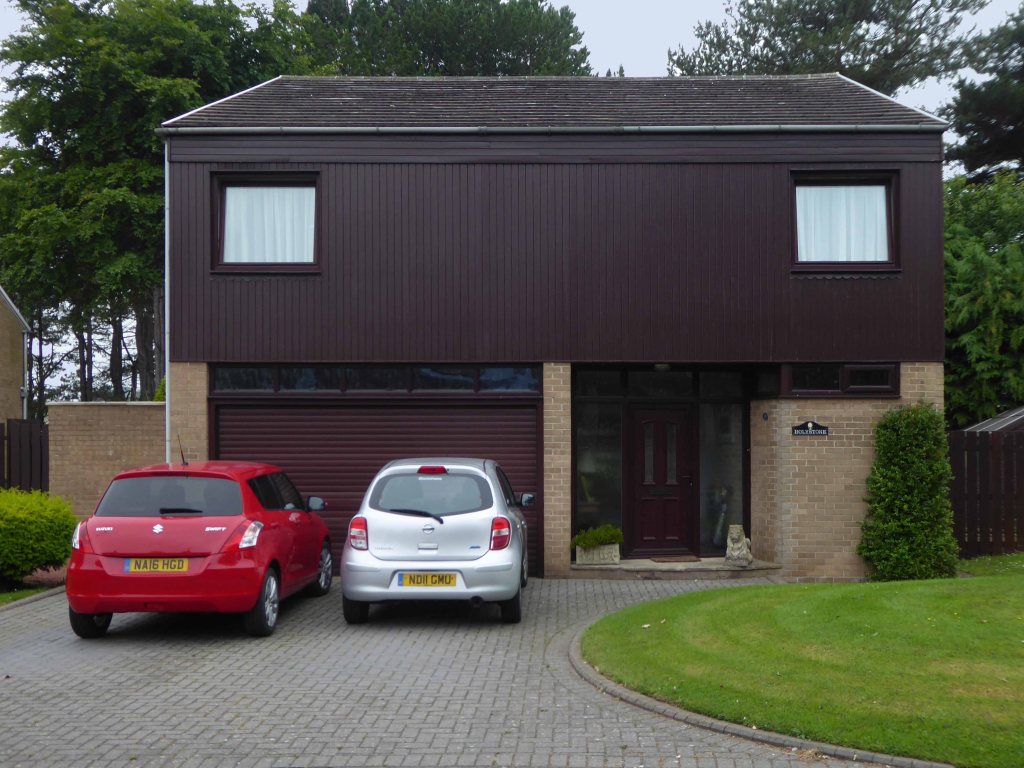
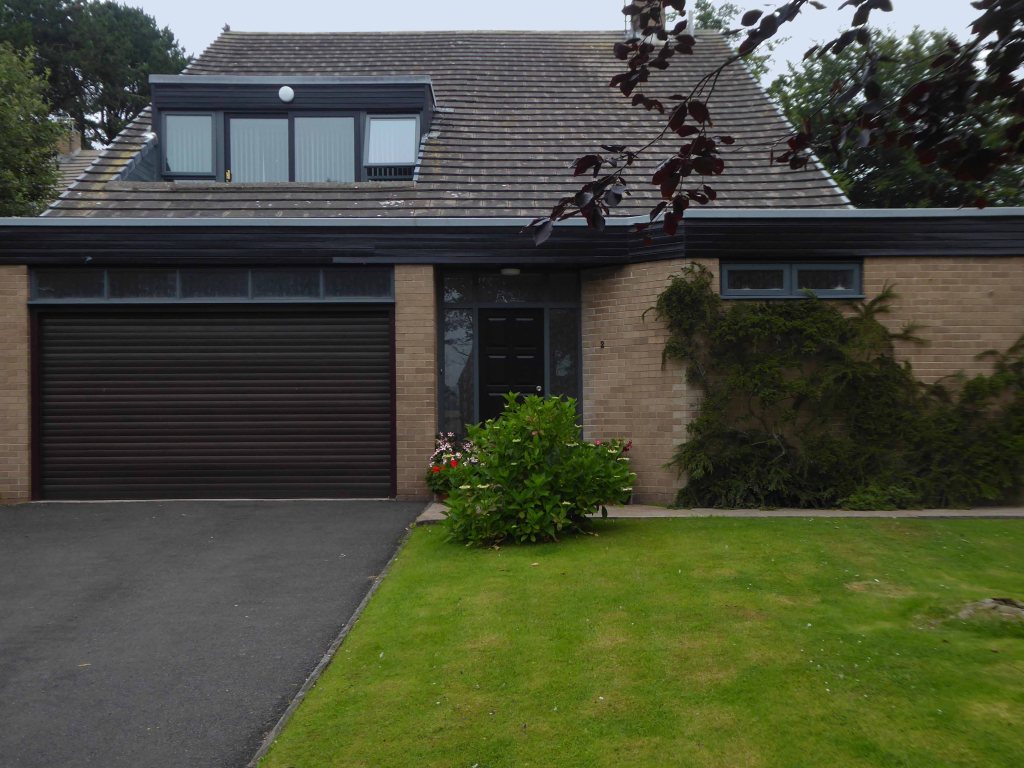
Then off on the road to Warkworth and beyond to Alnmouth – where I revisited a small group of asymmetric post-war dormer bungalows.
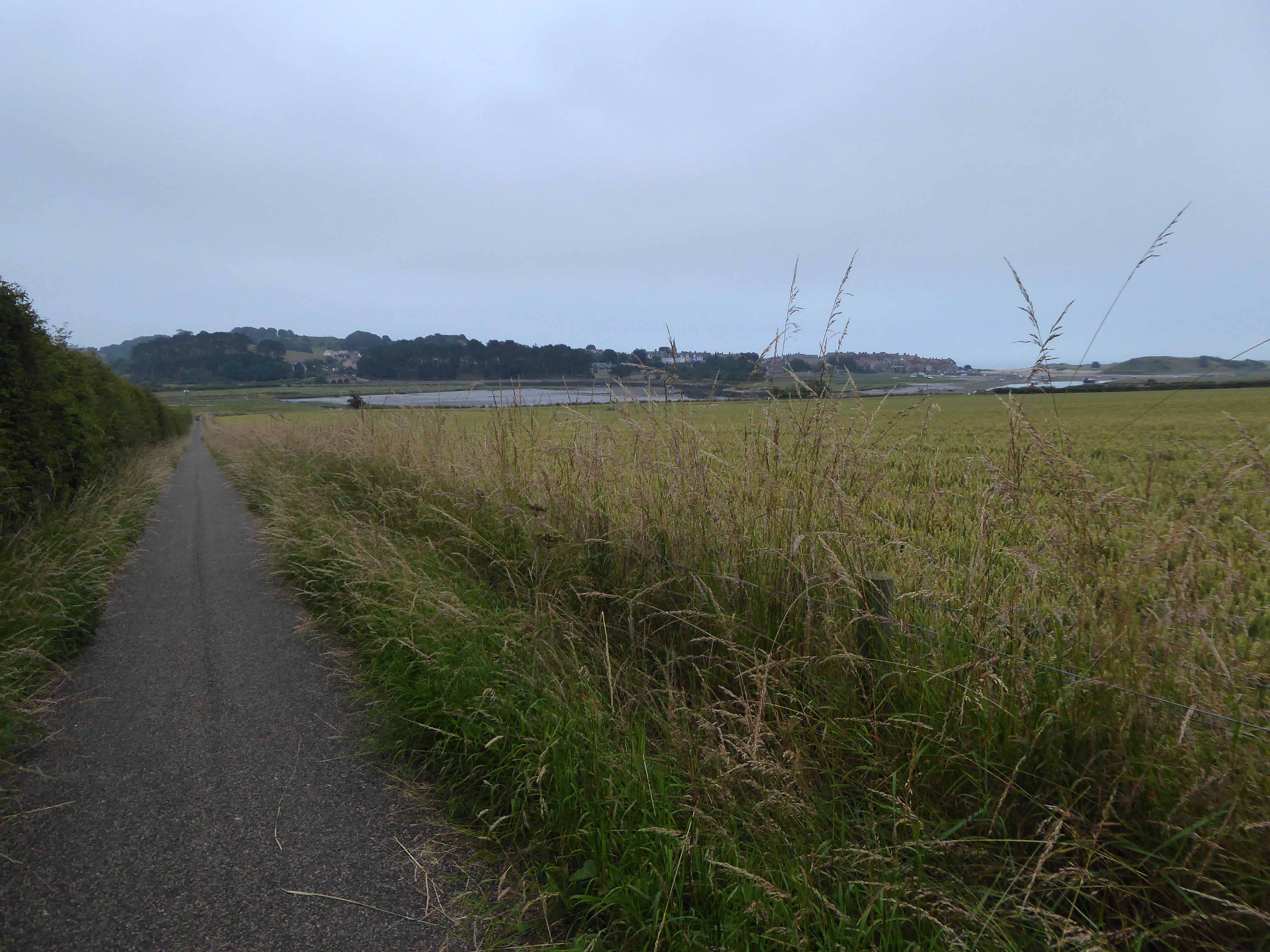
Stopping to view the flood plain of the River Aln, chatting perchance with the local environmental officer.
Who explained how the flood defences had been removed, as this encouraged the natural process of flooding and receding to proceed unhindered, thus preventing property from being interminably sodden.
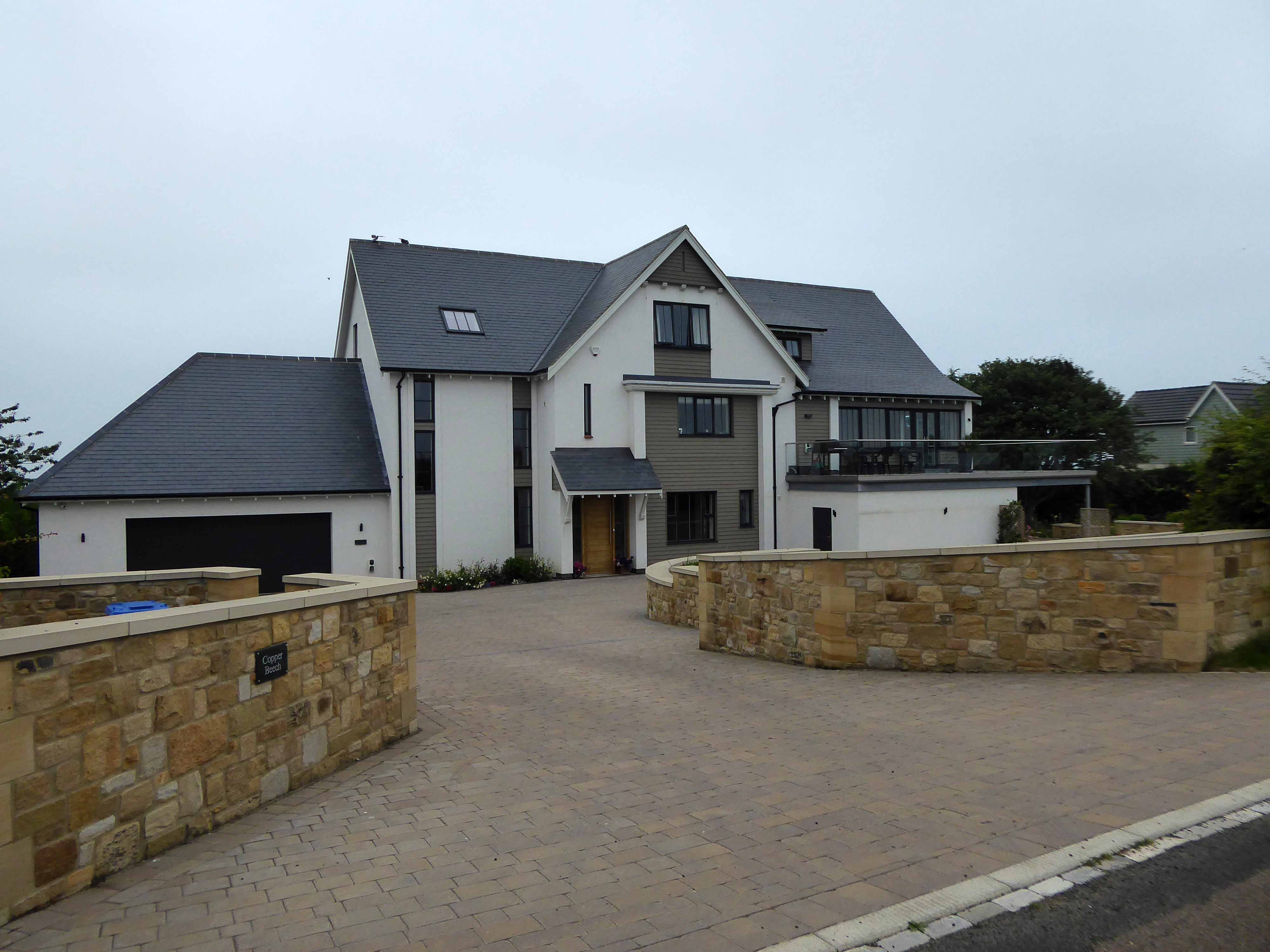
We also discussed the decline in vernacular architecture and the fashion for all that is New England, much to the detriment of New Northumberland.
One day everywhere will look like a someone else’s vision of somewhere else.
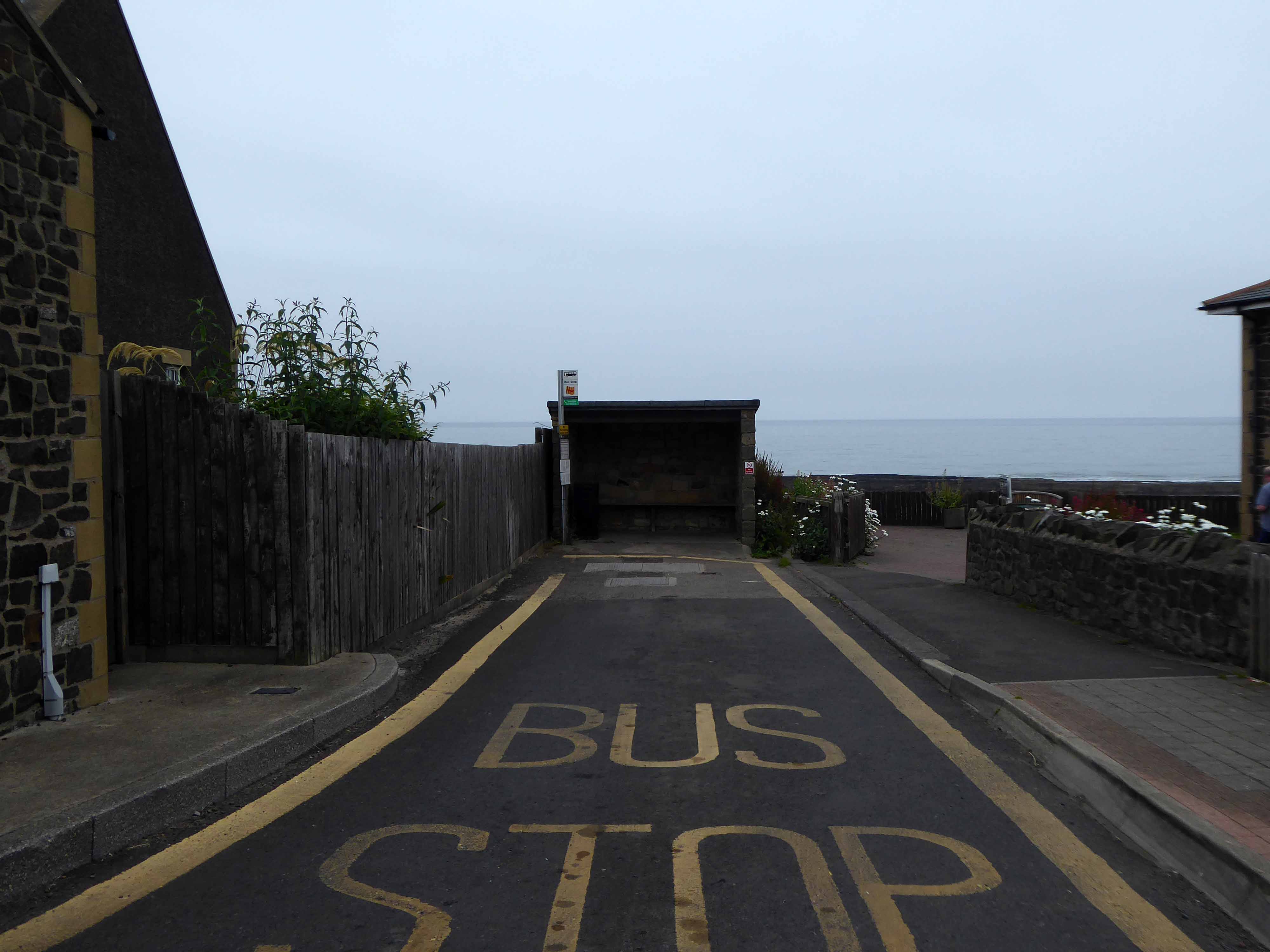
The good folk of Craster have wisely prevented the local bus from entering the North Sea.
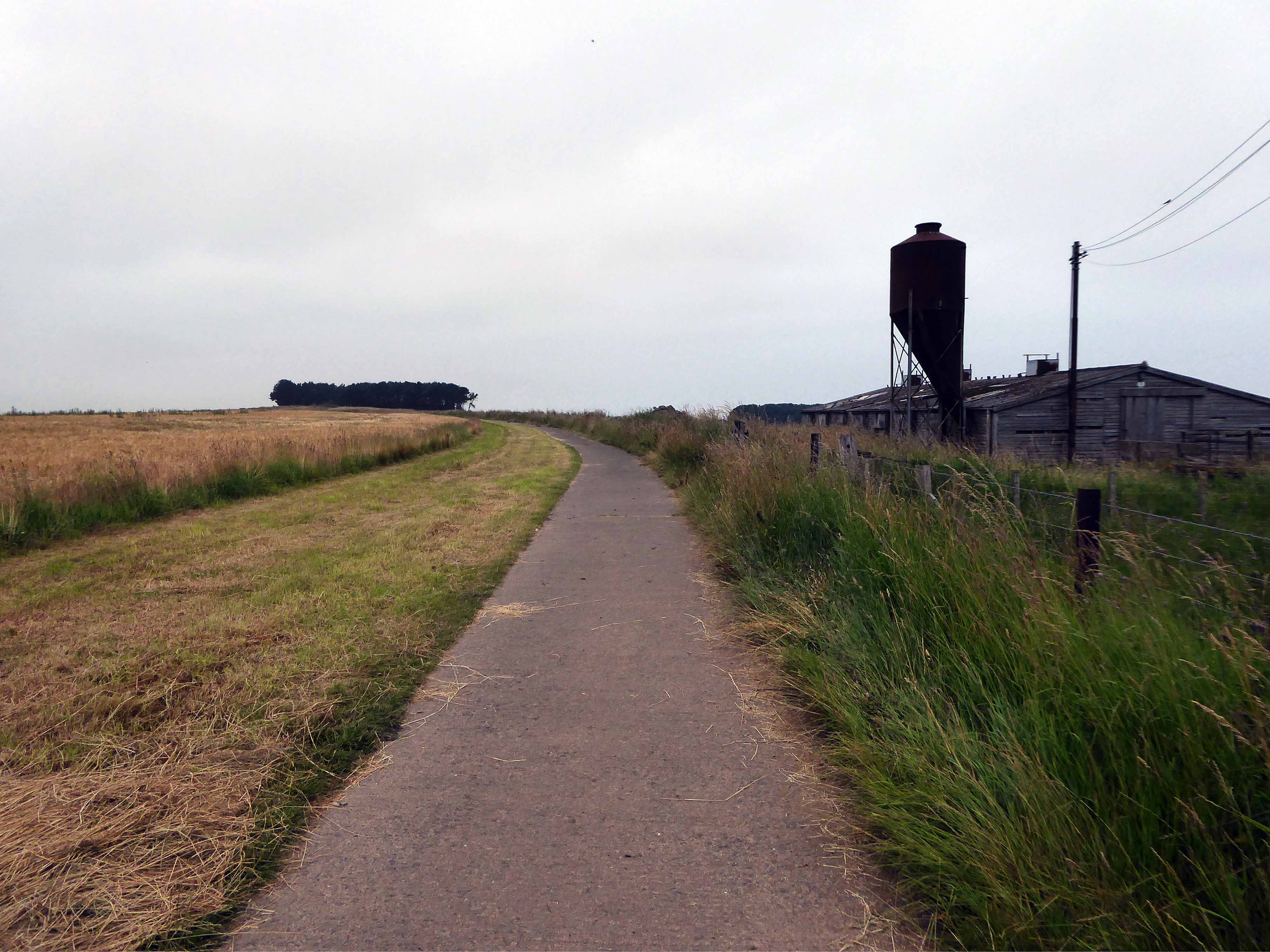
The way north took me over a well laid concrete track.
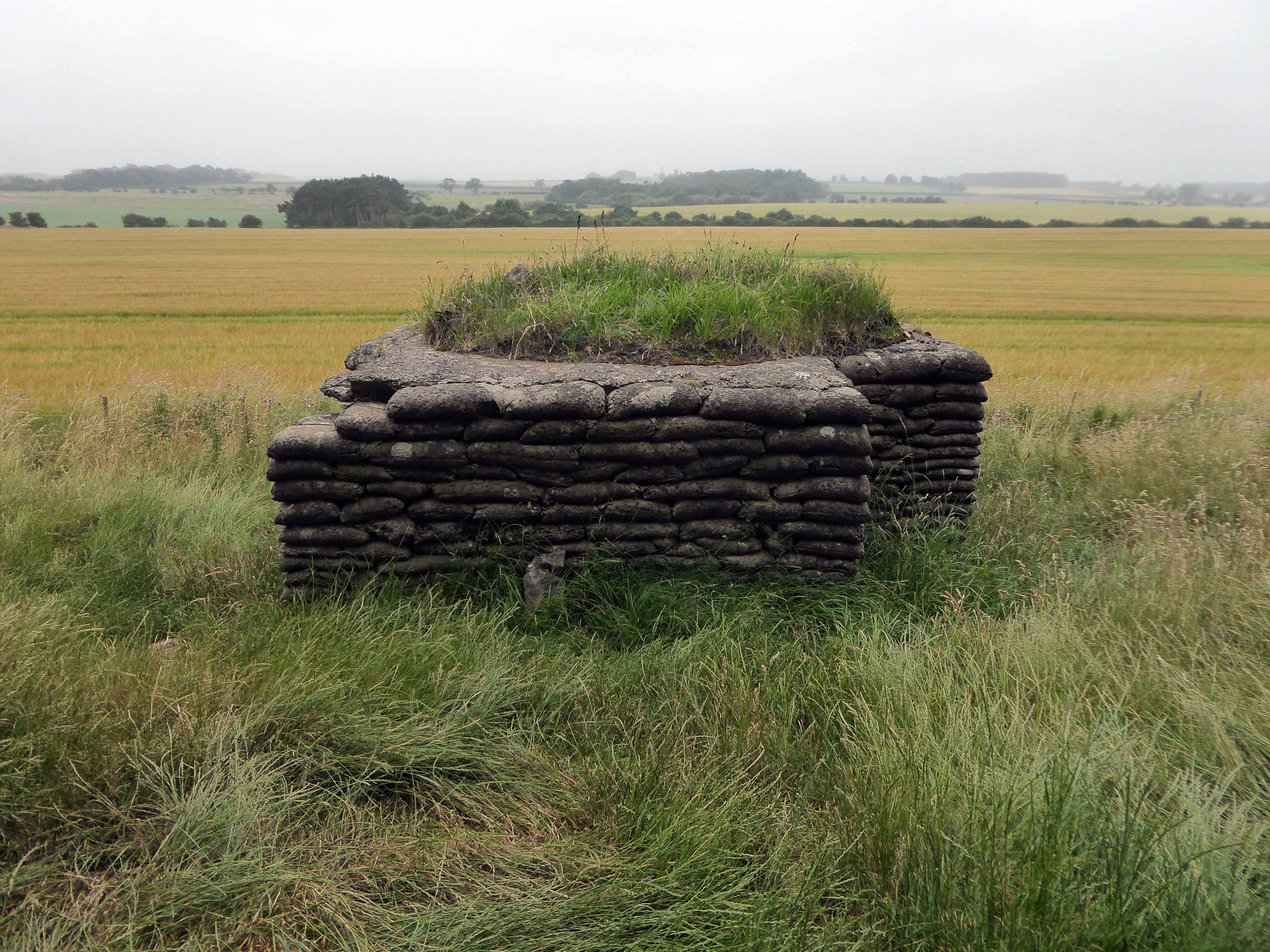
I came upon three wise men from Durham, Rochdale and Doncaster, gathered around a concrete-bag bunker.
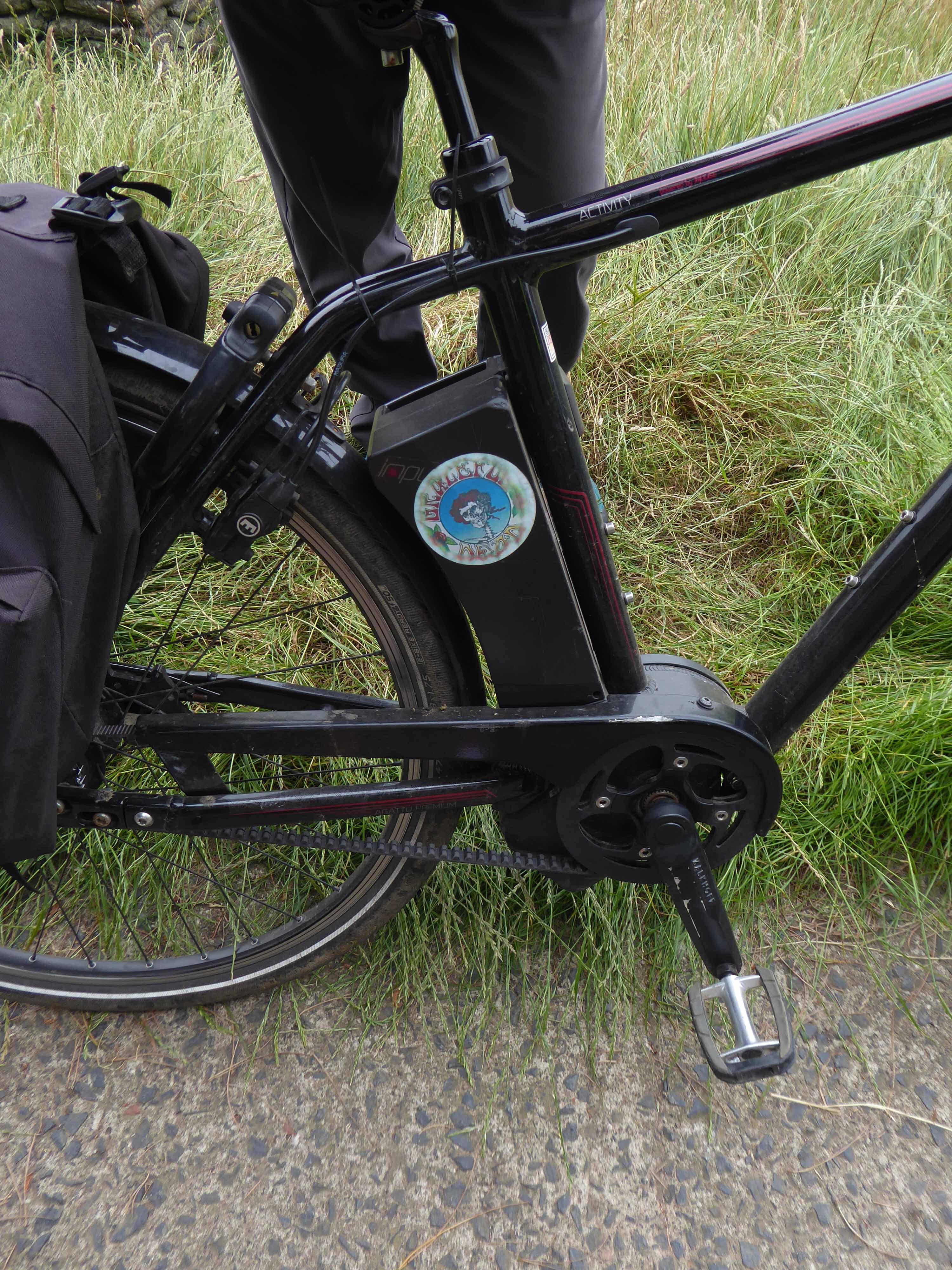
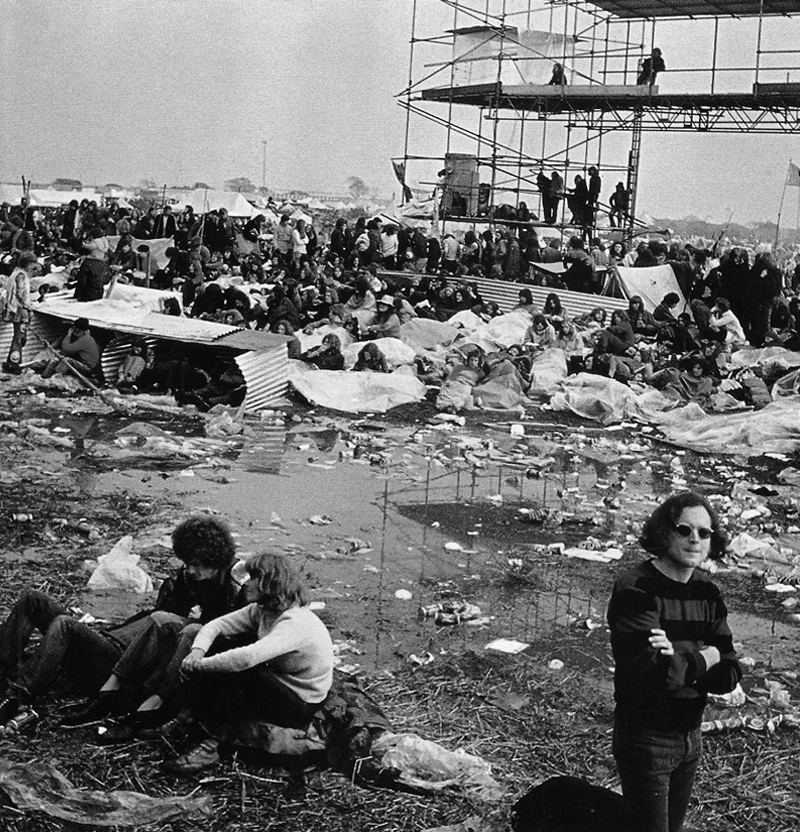
They were all Grateful Dead fans who like me had attended the Bickershaw Festival in 1972.
The first and last outdoor festival I ever done attended, unforgettable.
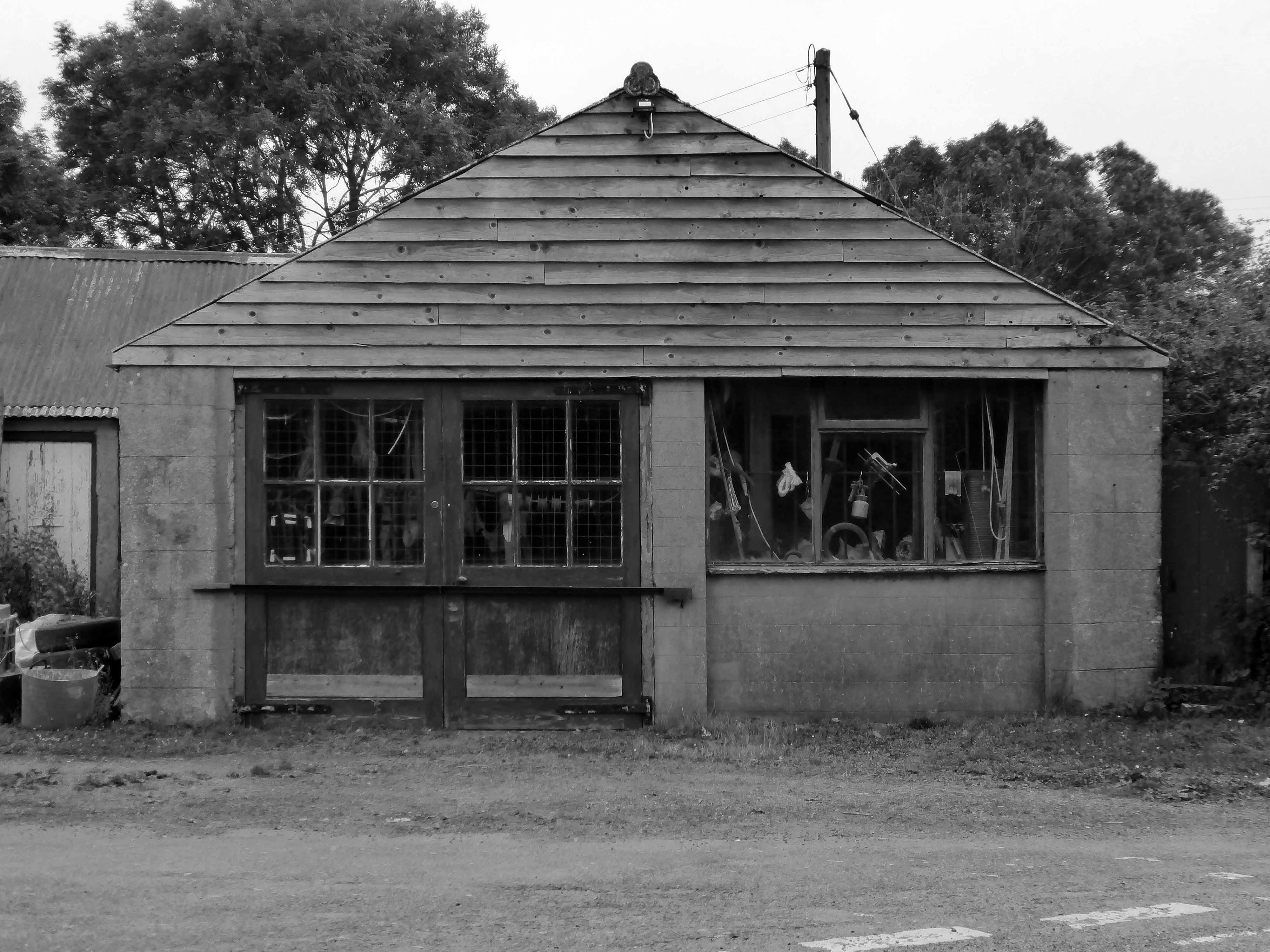
Weaving down and around quiet lanes I encountered this Walker Evans workshop.
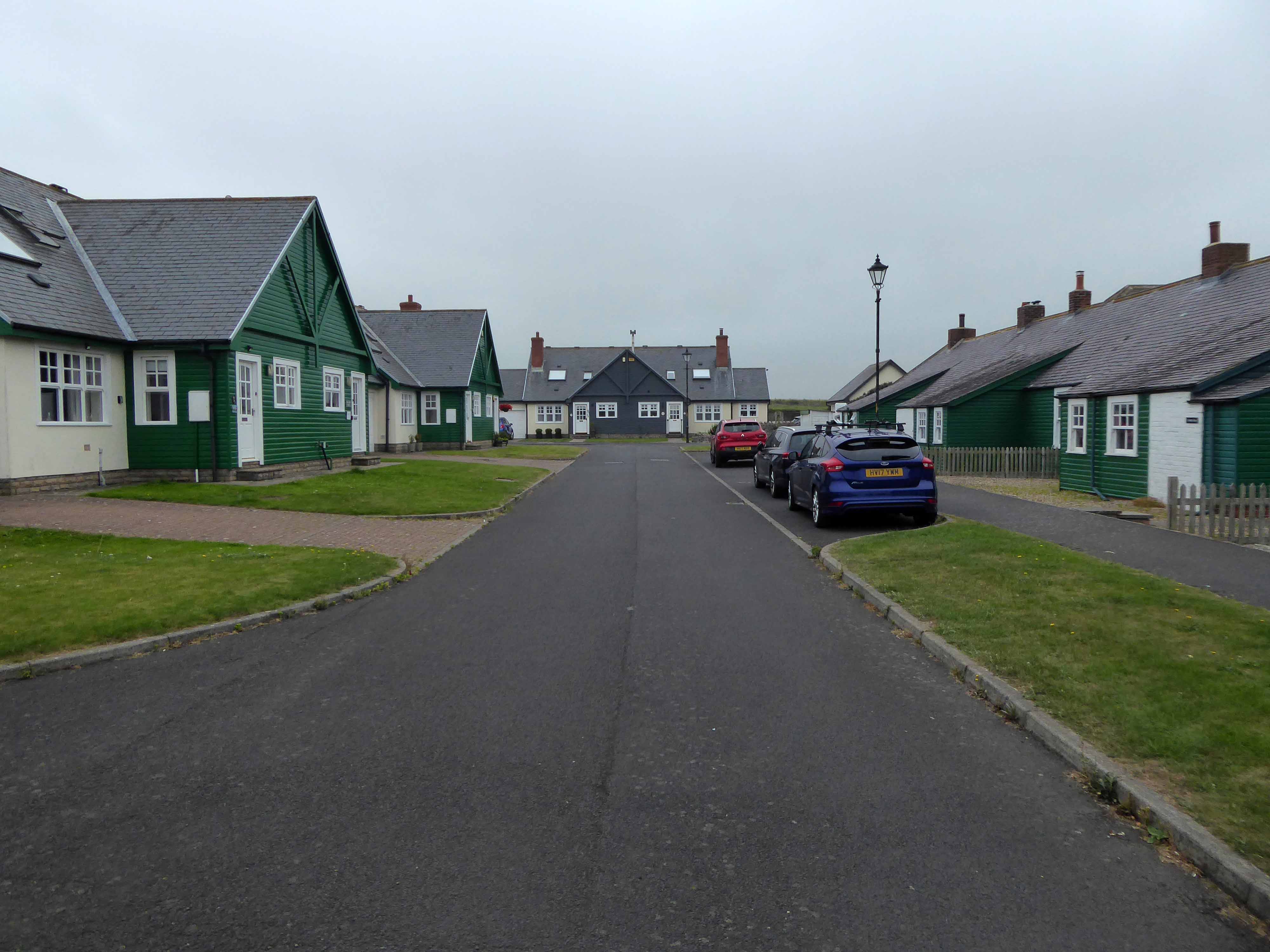
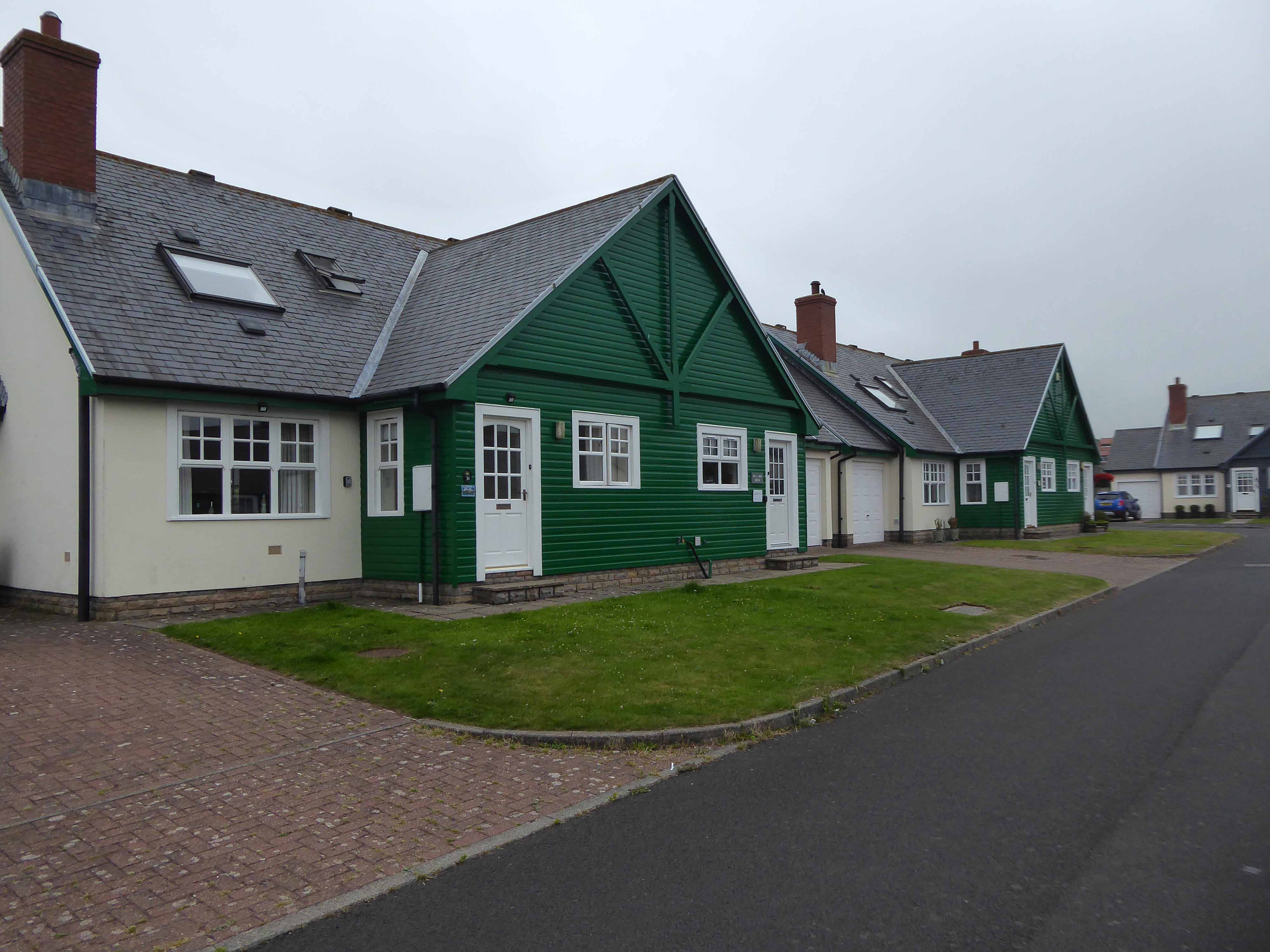
Armstrong Cottages is an estate originally built by Lord Armstrong for the workmen restoring Bamburgh Castle.
The 1901 Census lists the current inhabitants with their provenance and professions.
114 residents are listed for the 19 cottages, of whom 53 are working men employed in the building trade: their professions include stonemasons, joiners, plumbers, rope & pole scaffolders, blacksmiths, and plasterers.
Many come from Northumberland or Scotland, but a significant proportion are from further afield: Cumberland, Westmorland, Lancashire, Durham, Yorkshire, Derbyshire – and one from the Channel Islands.
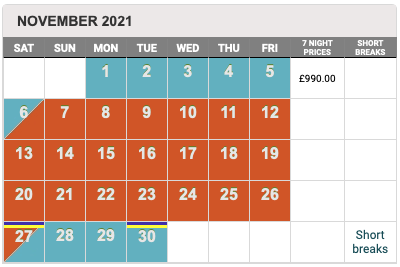
Seven nights in November will now cost you the best part of a thousand pounds.
The Armstrong family the former owners, made millions from the sale of armaments.
If I thought that war would be fomented, or the interests of humanity suffer, by what I have done, I would greatly regret it. I have no such apprehension.
He also said:
It is our province, as engineers to make the forces of matter obedient to the will of man; those who use the means we supply must be responsible for their legitimate application.
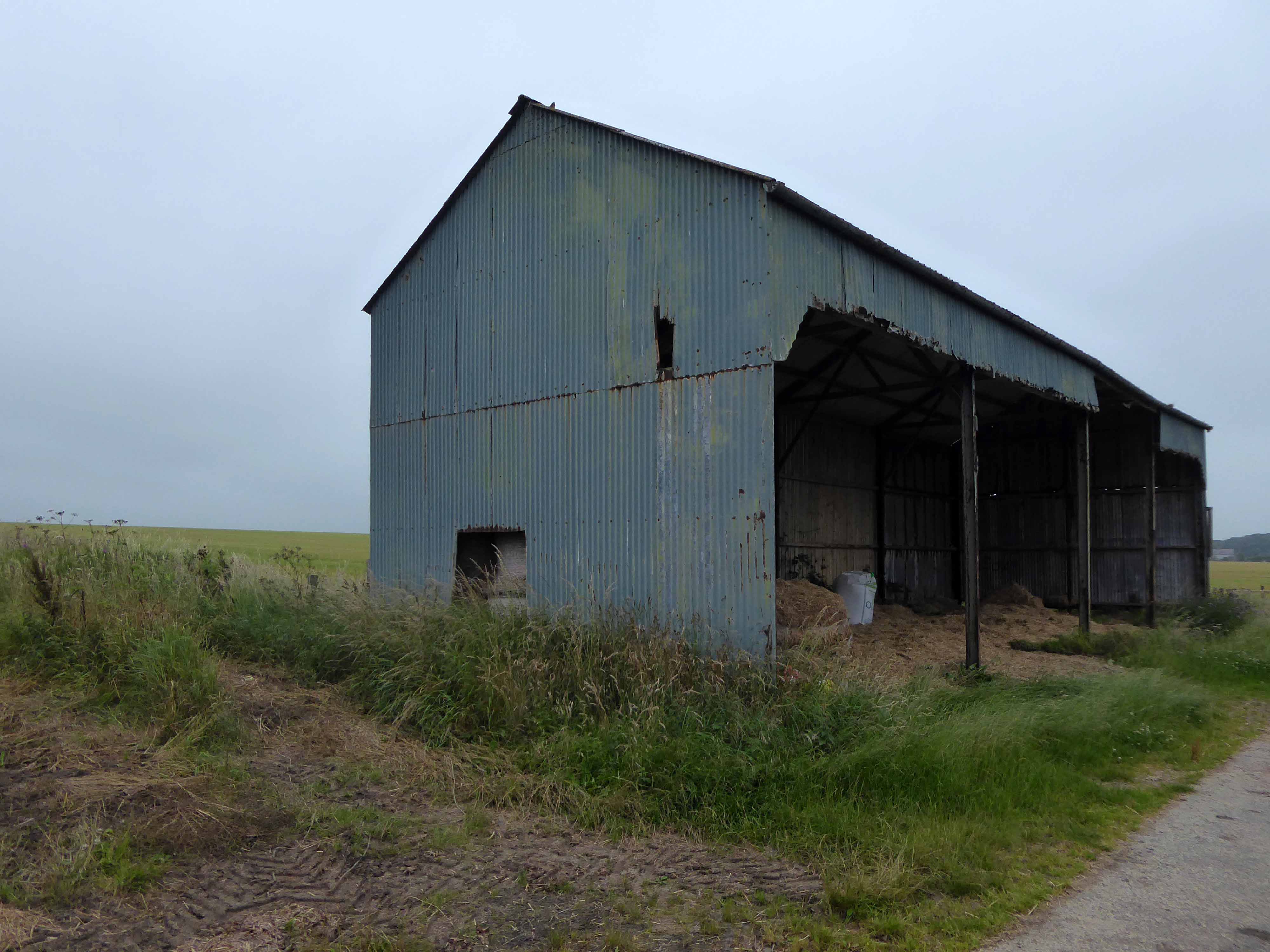
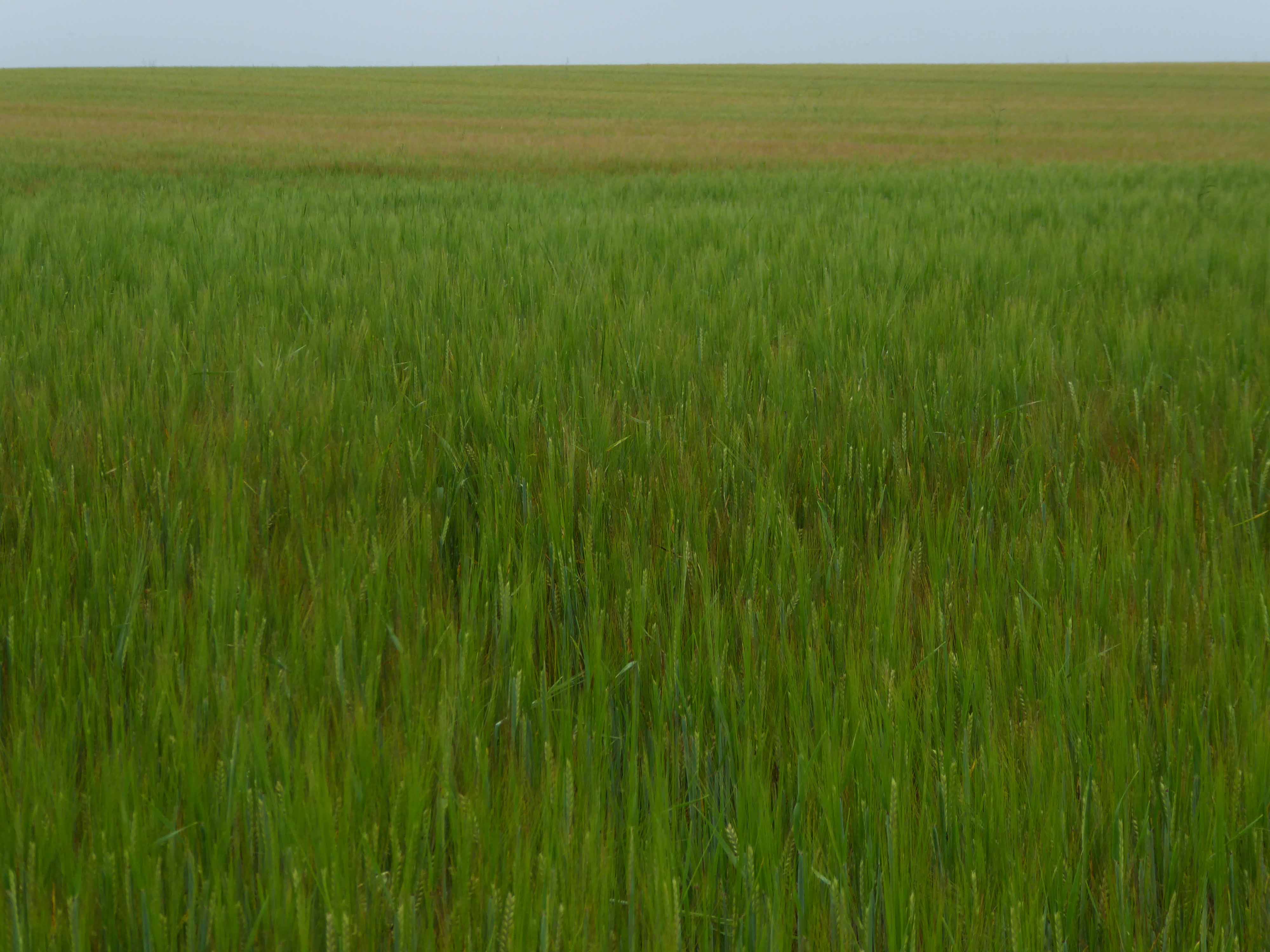
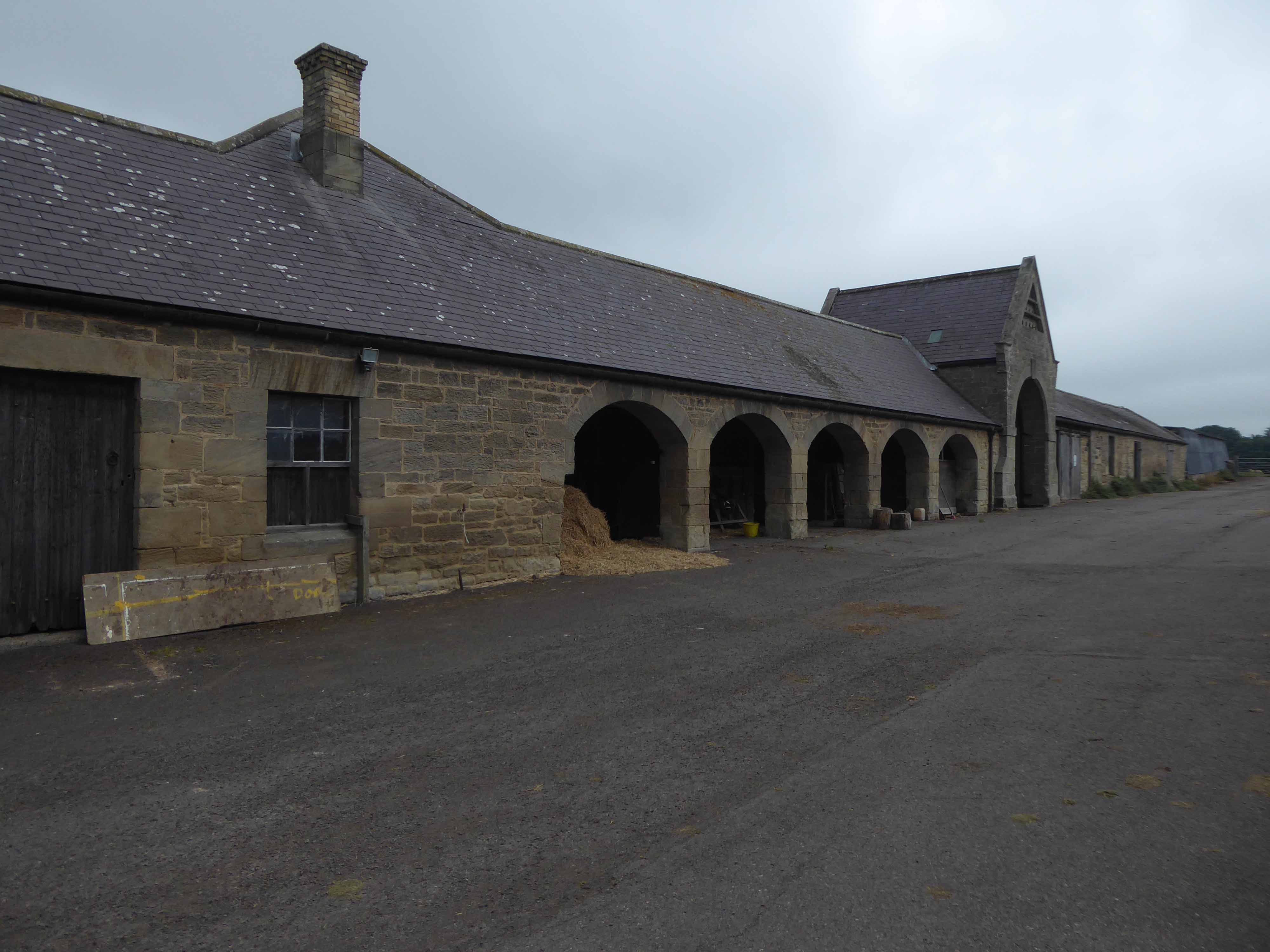
I paused a wee while to take a sip of water and admire the agrarian architecture.
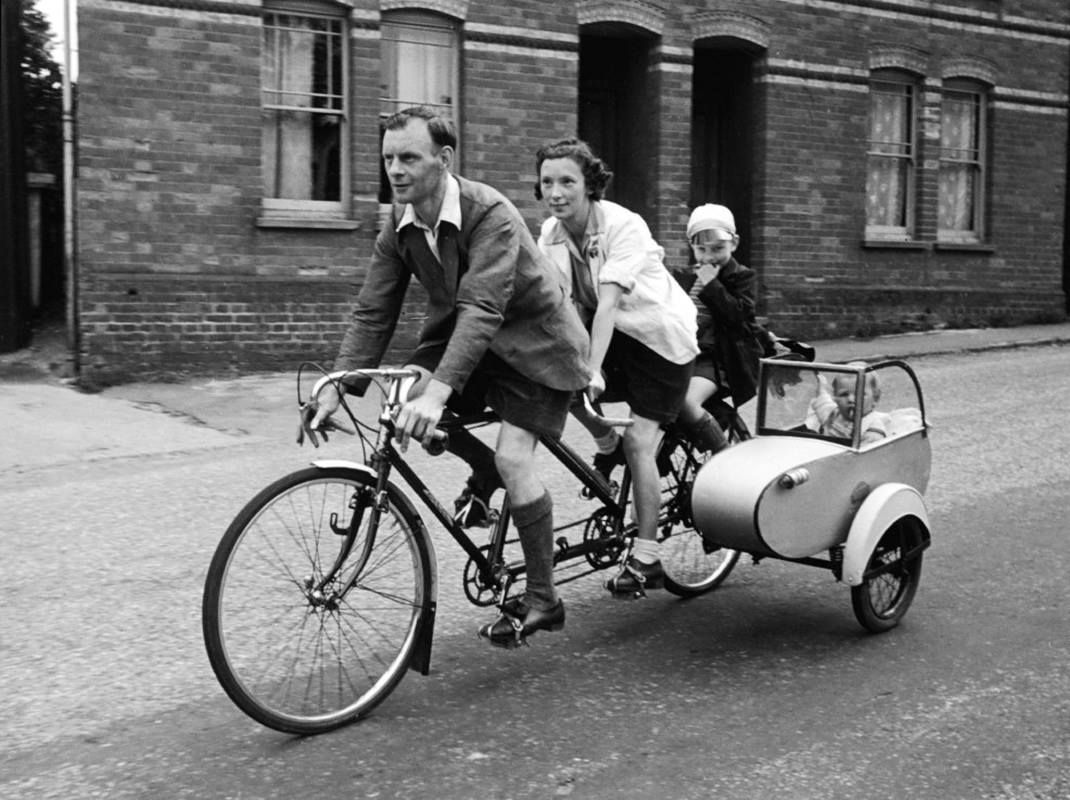
A couple on their bikes stopped to chat, as a babe in arms the lad had been transported by mam and dad, in a sidecar with tandem attached.
Such a delightful and poignant recollection – we wished each other well and went on our way.
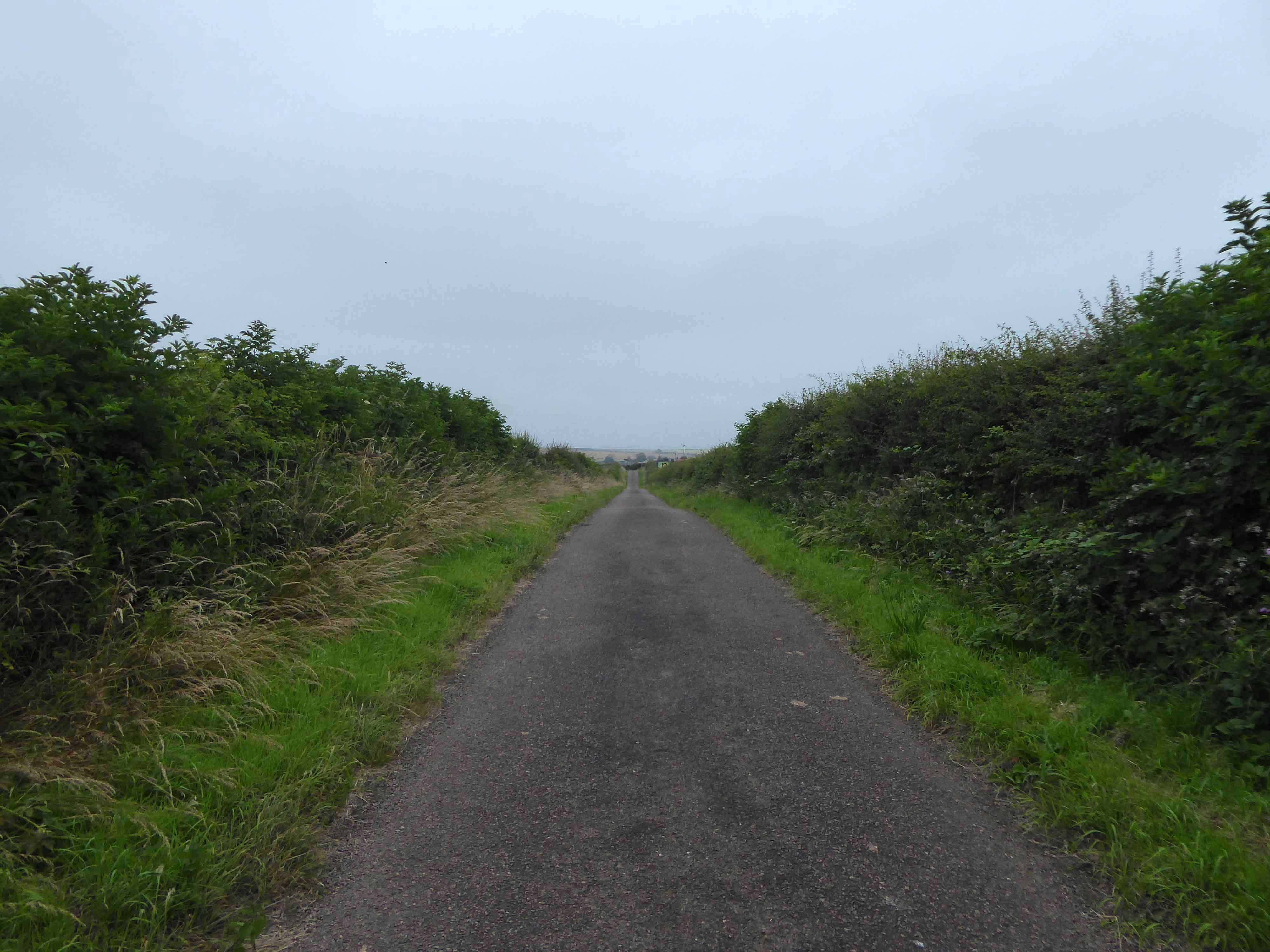
I made my way from the rolling hills back down toward the coast.
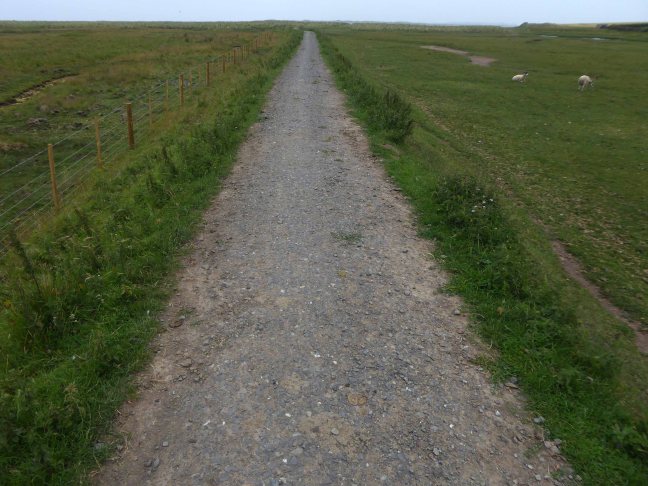
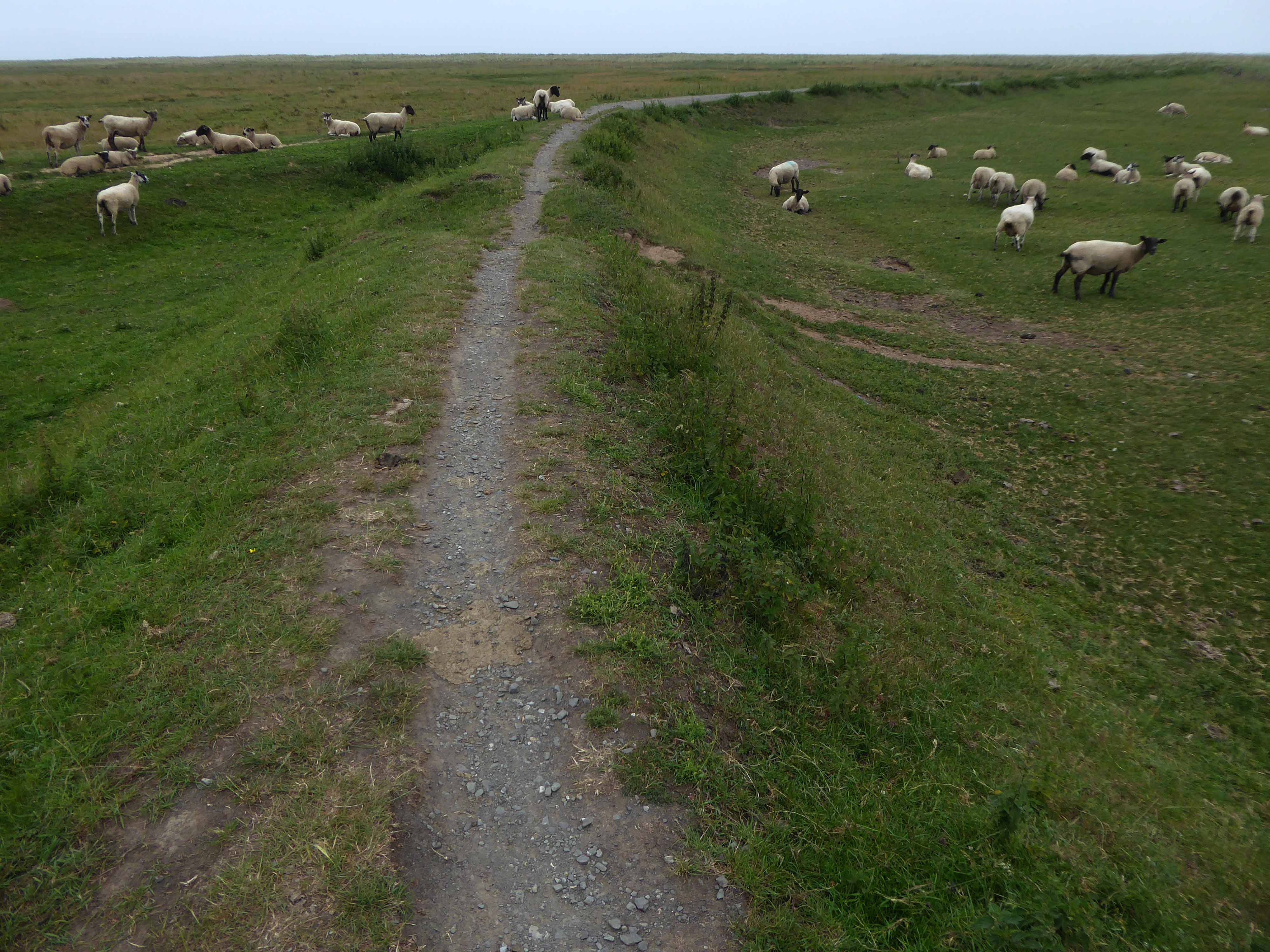
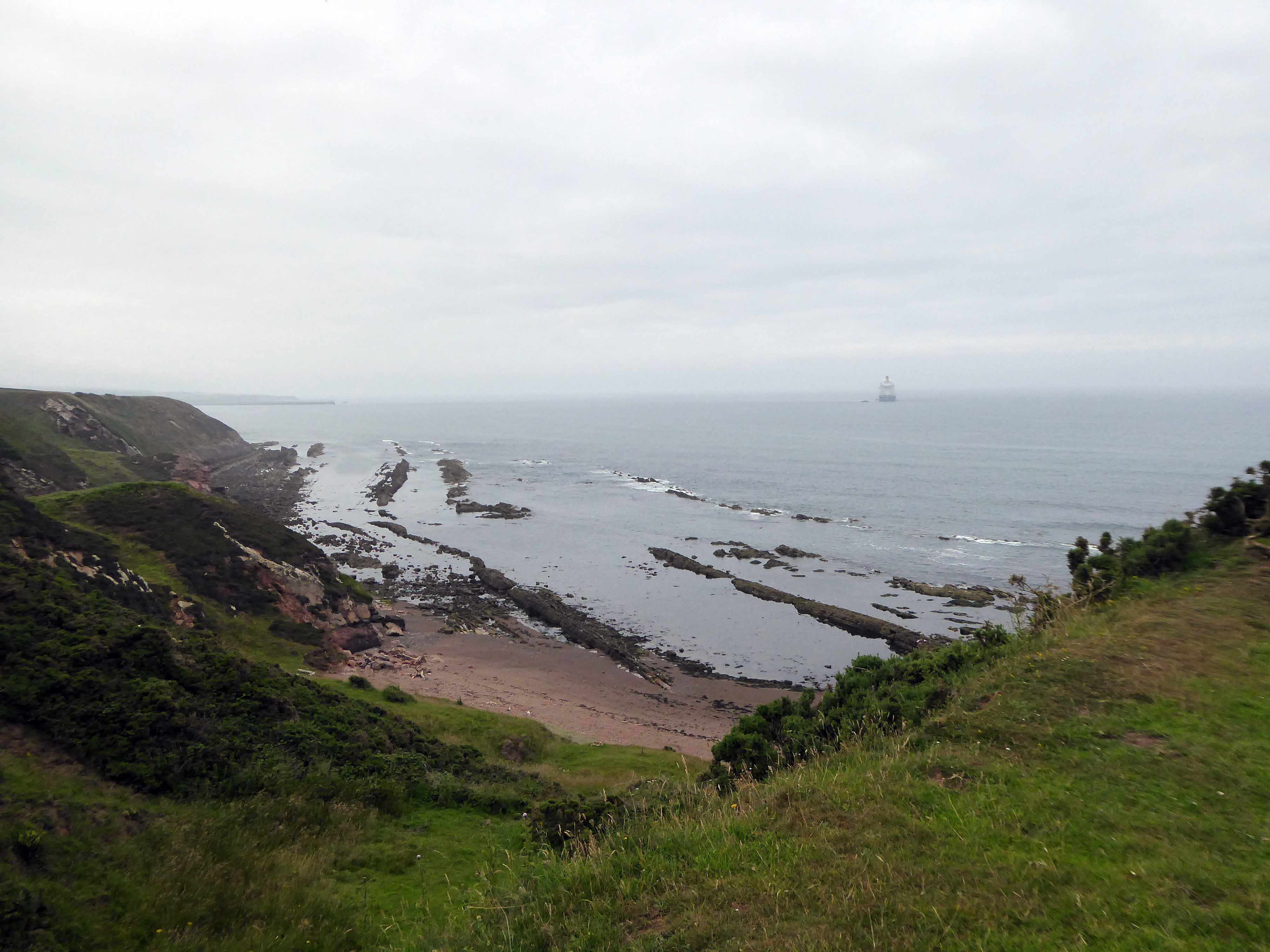
Where a permissive path hugged the shore, which I cautiously shared with some equally cautious sheep.
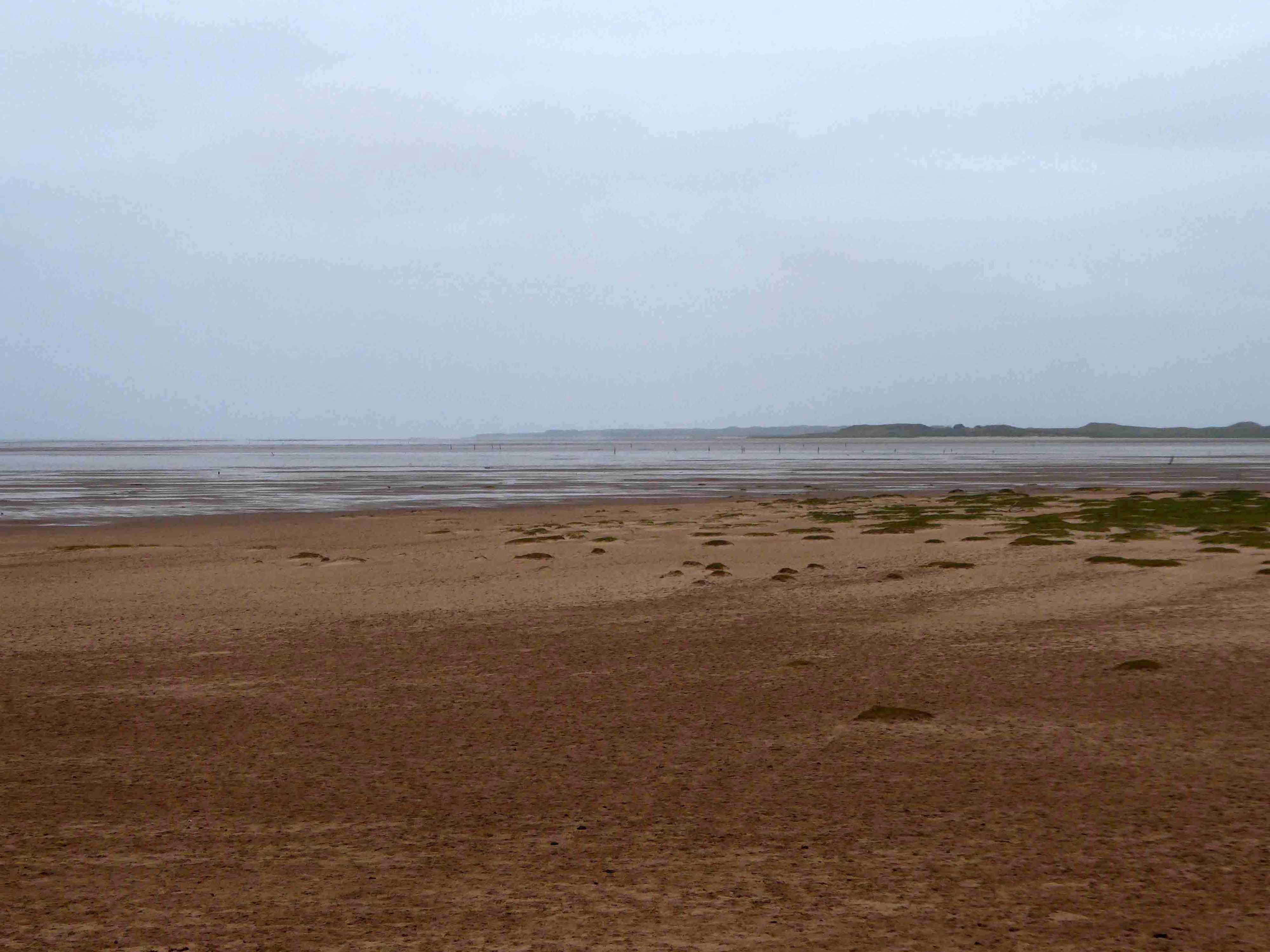
Looking back toward Lindisfarne.
Looking forward to the past.
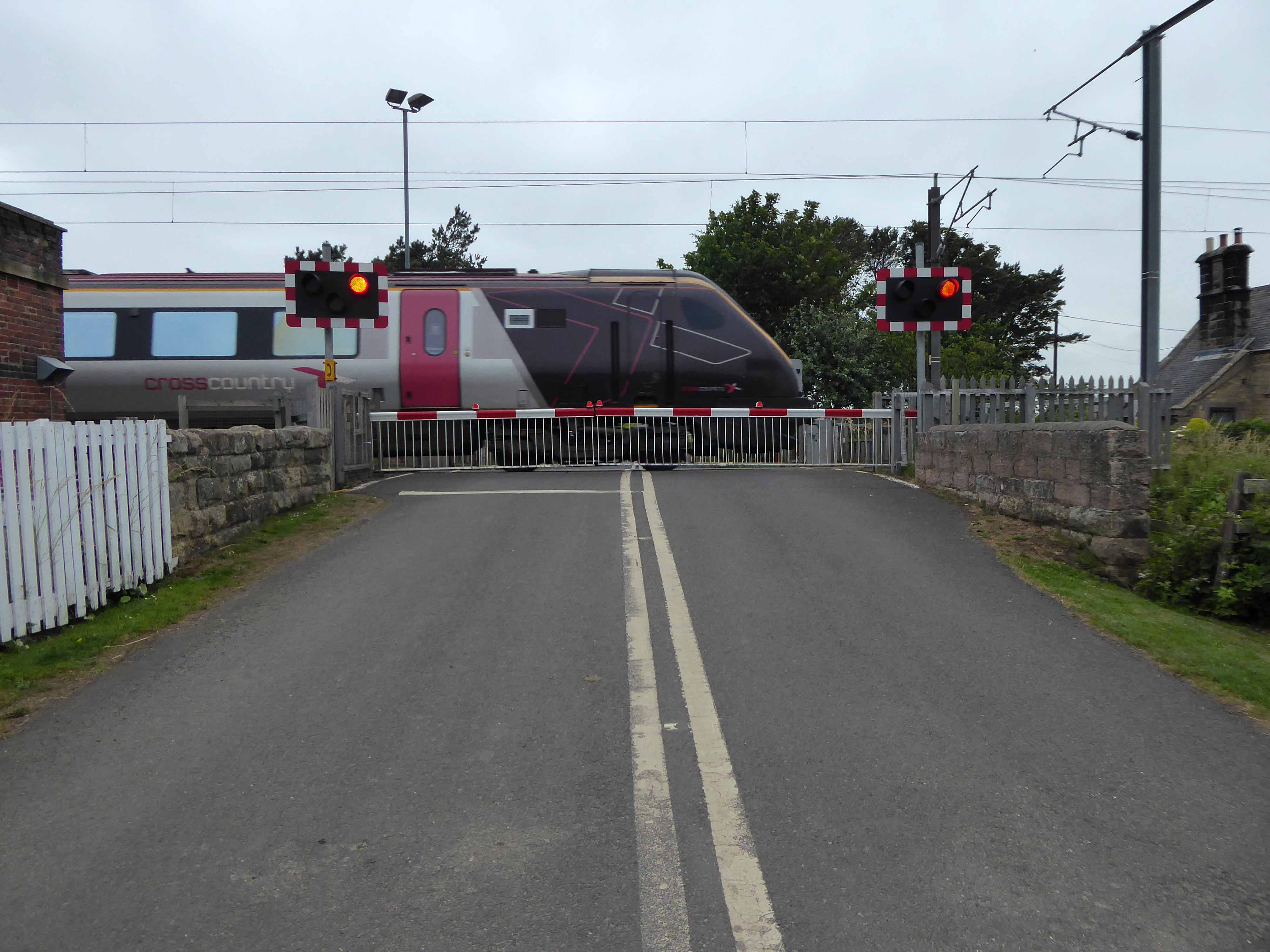
Pausing for the passing of a mainline train.
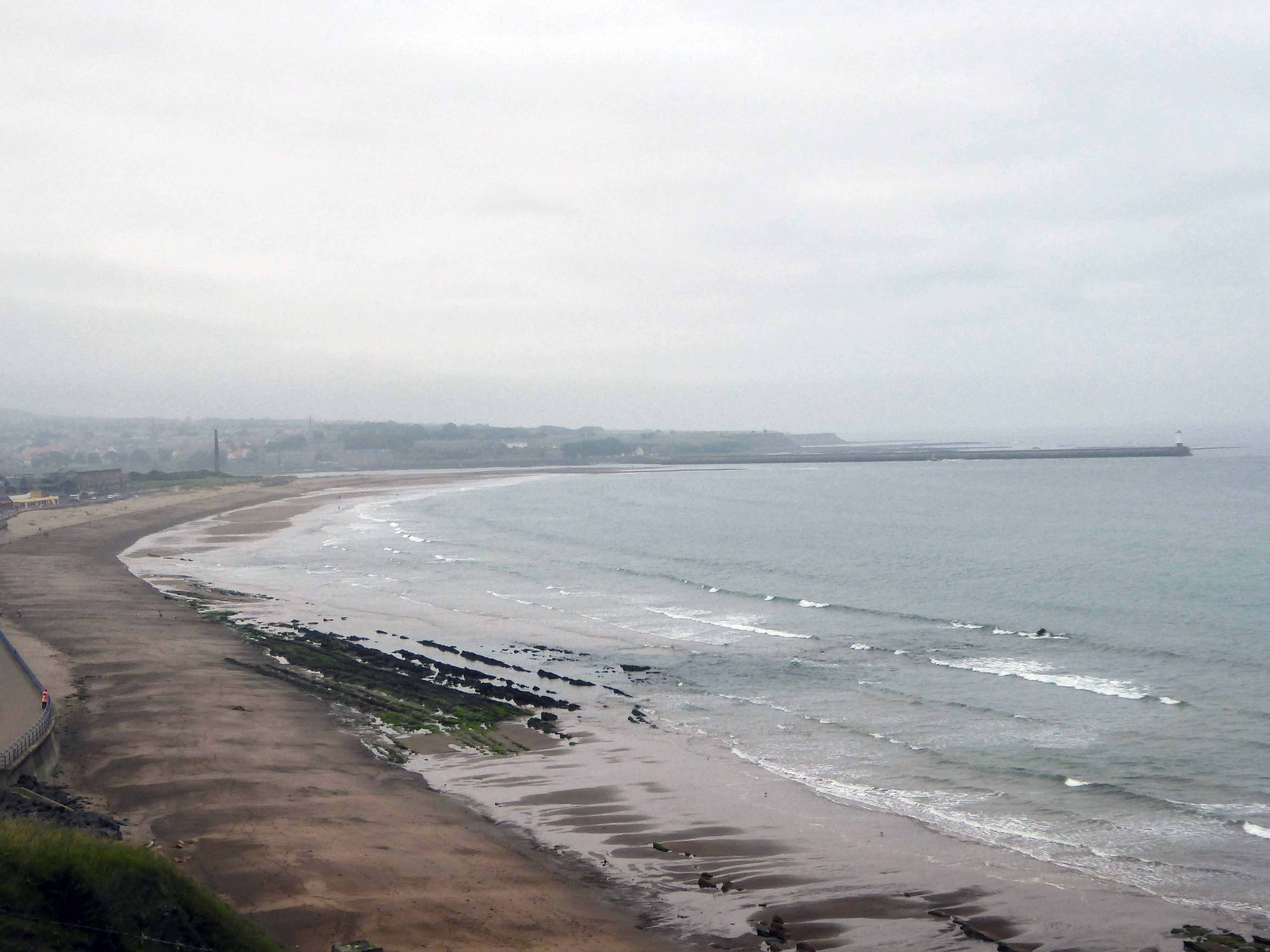
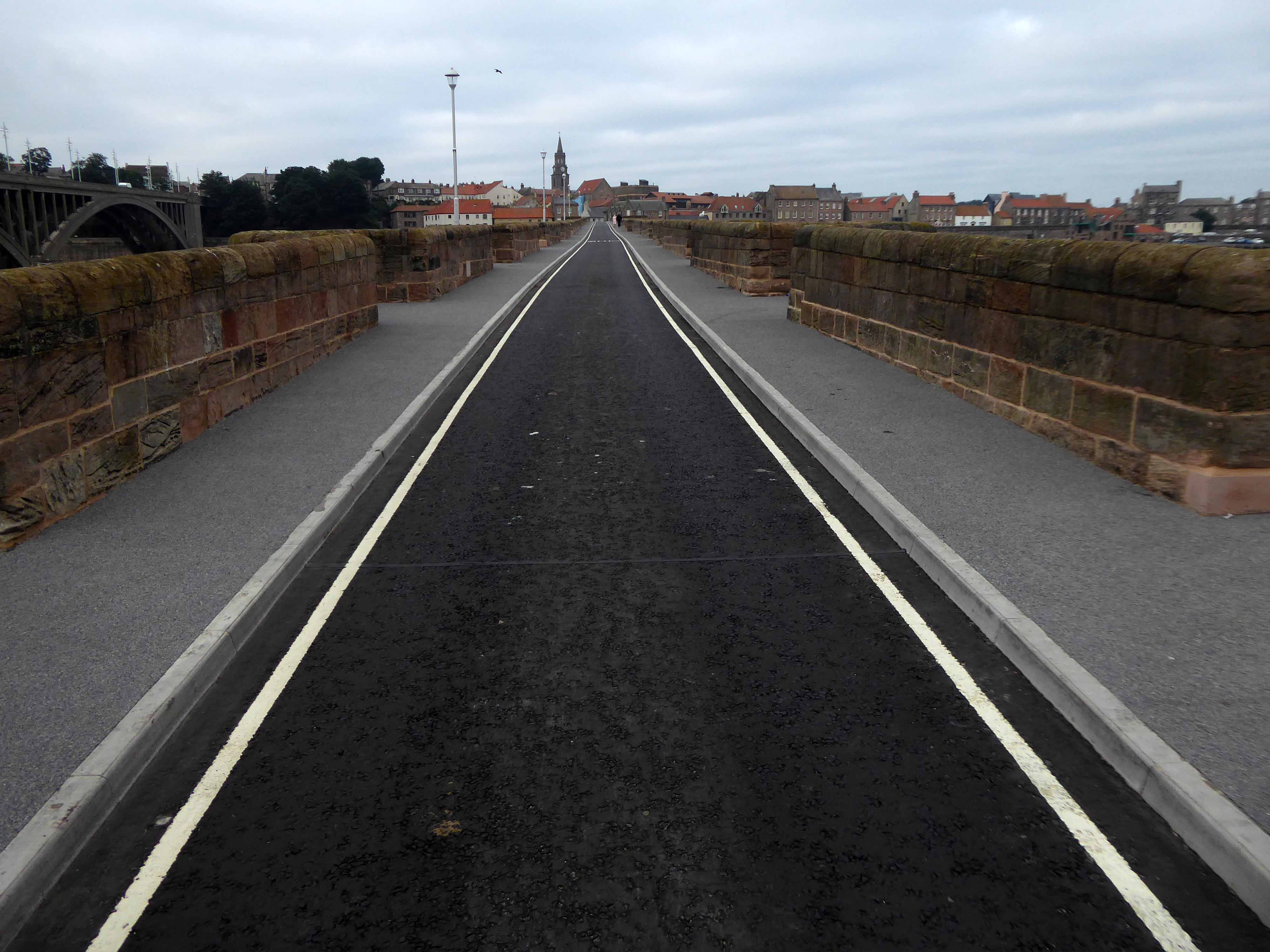
Berwick upon Tweed in view.
Come the evening I spent an hour or two in The Curfew, feasting on fine beer, company, haggis scotch egg and game pie.
Finishing with this well deserved and wonderful, bottle of Oude Geuze.
The final day – so many marvellous miles covered, forever stopping to chat, snap, look and learn.
No finer way to see the world, though so condensed and intense even at touring speed – apologies to all the things that I failed to see.
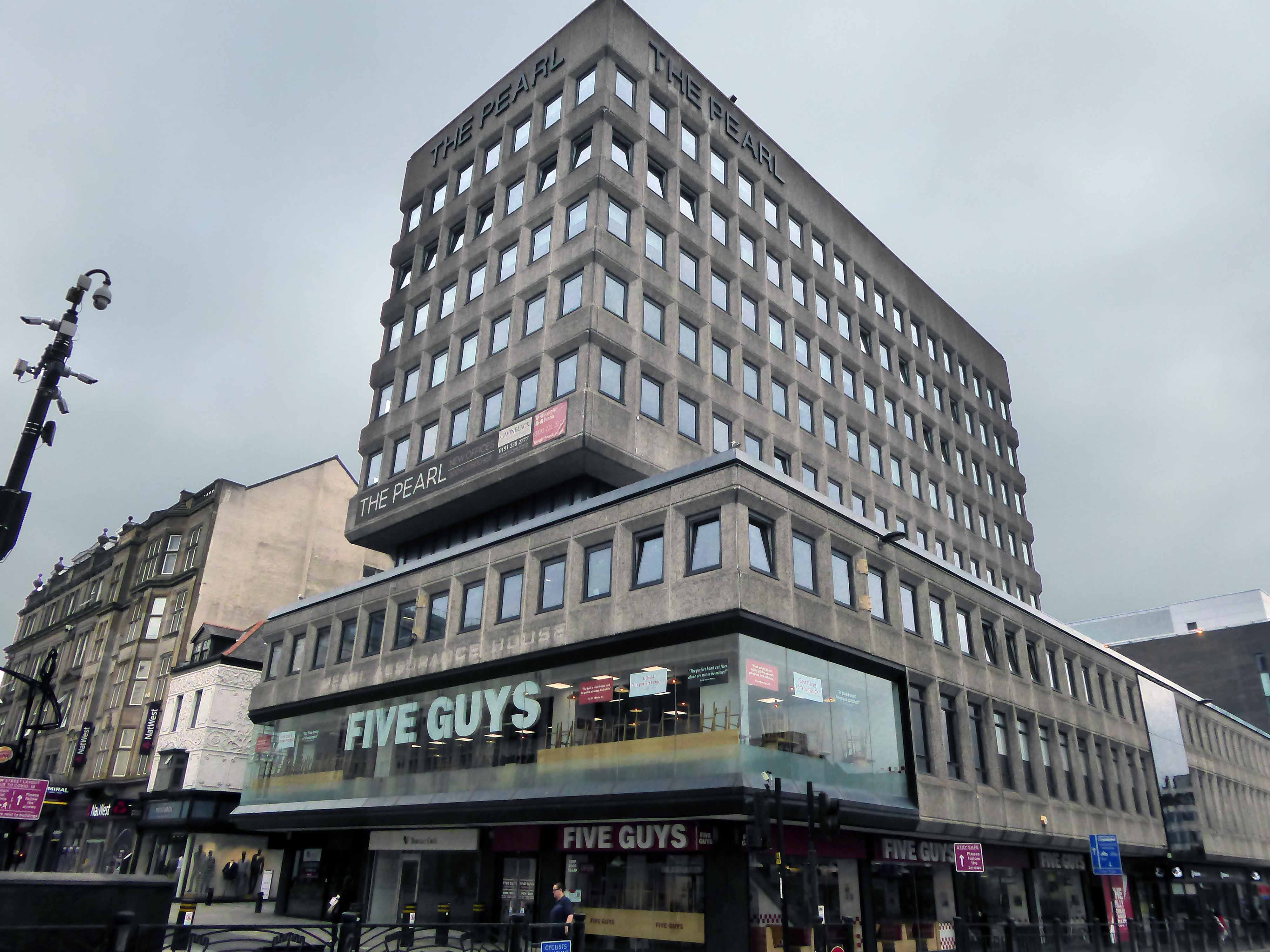
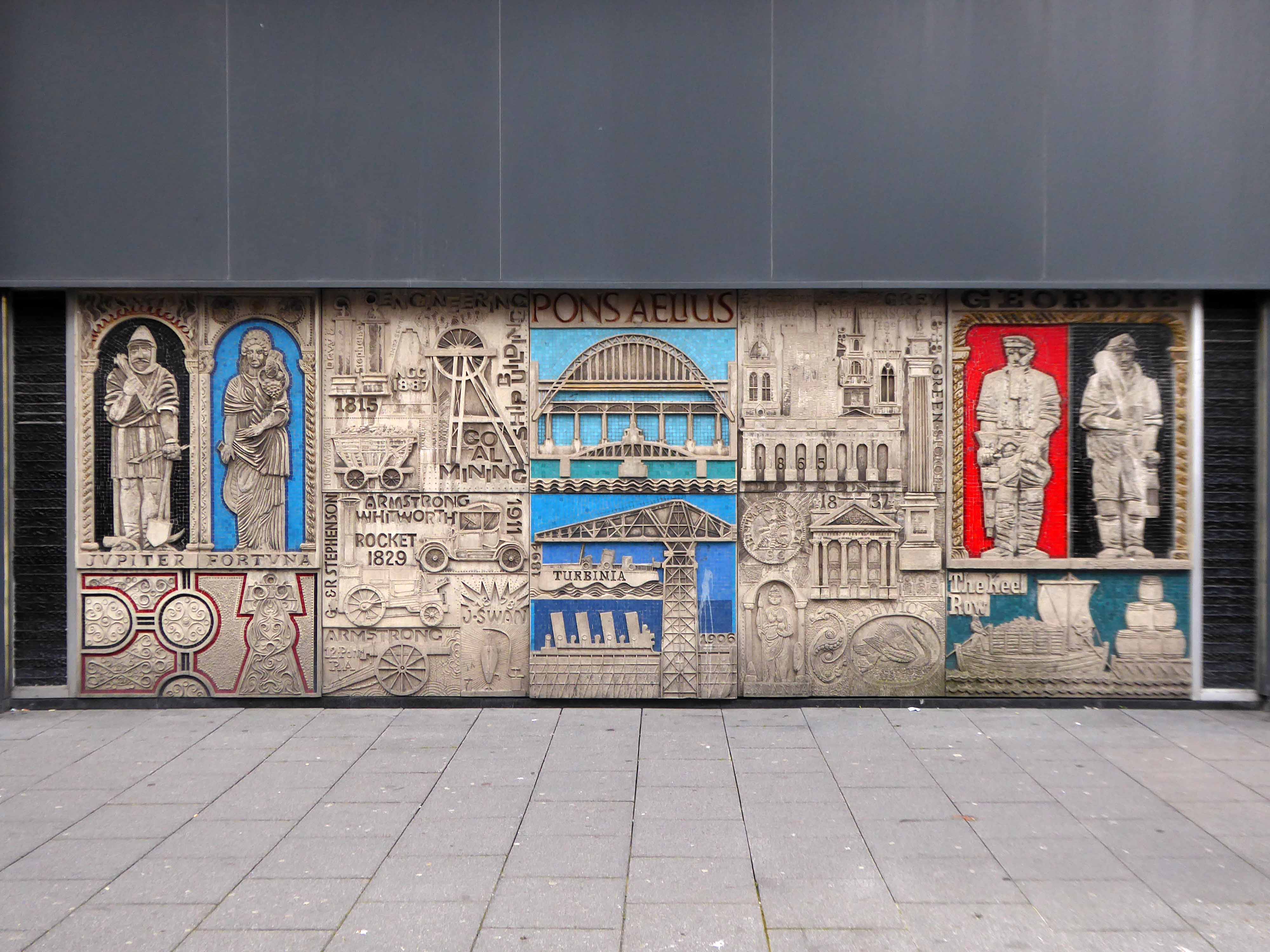
The building was originally developed by C&A and it is thought that funding for the reliefs might have been provided by the store and/or Northern Arts. It became BHS which subsequently closed, the building is now occupied by Primark, C&A estates still own the site.
Taking a bold leap into the unknown I left the city centre, unwisely following unfamiliar roads, predictably becoming very lost.
I sought assistance from a passing fellow cyclist, very kindly he guided me to Tynemouth, following a mysterious and circuitous course across the undulating terrain – thanks.
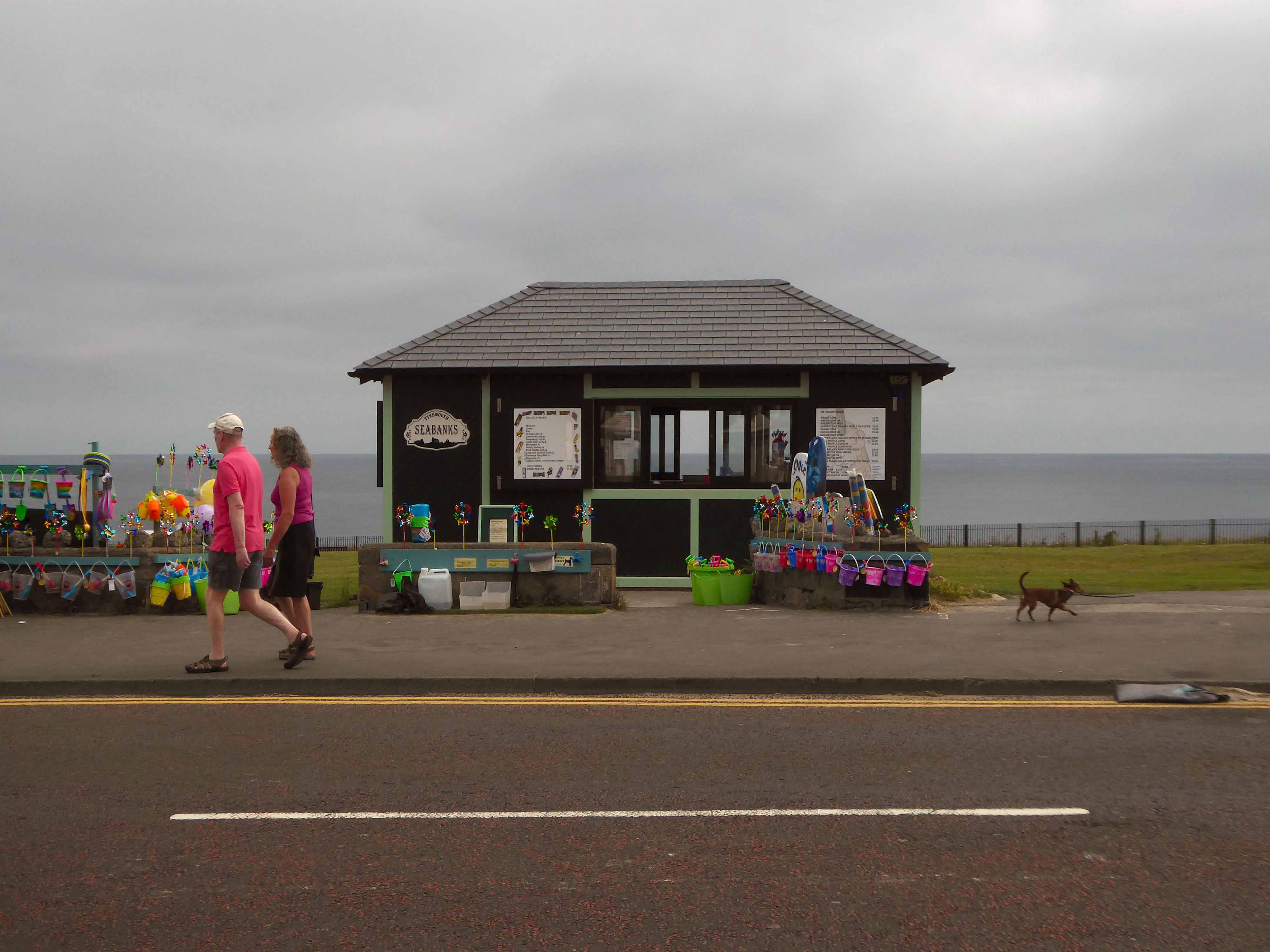
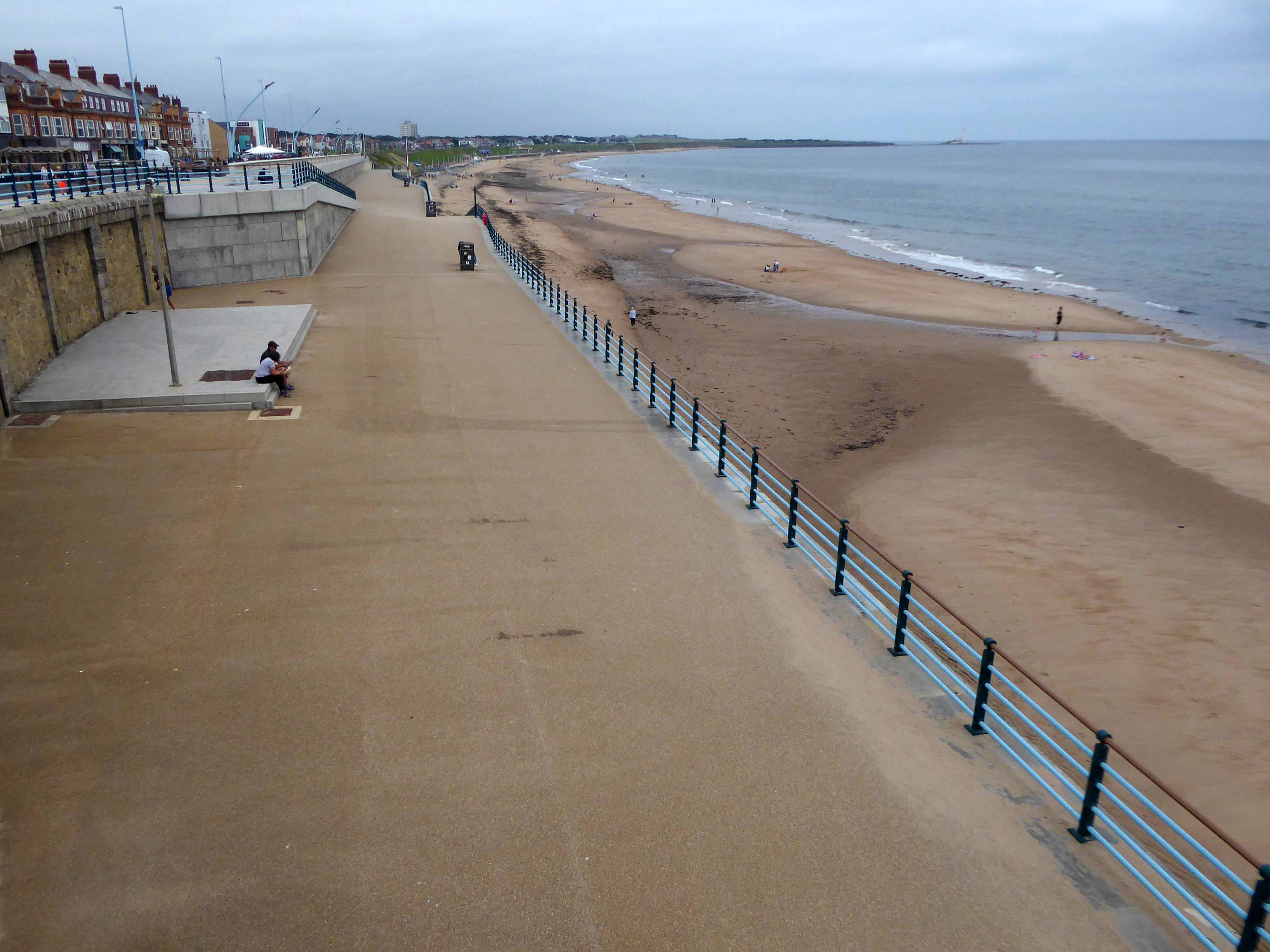
The city quickly becomes the seaside with its attendant retail bricolage.
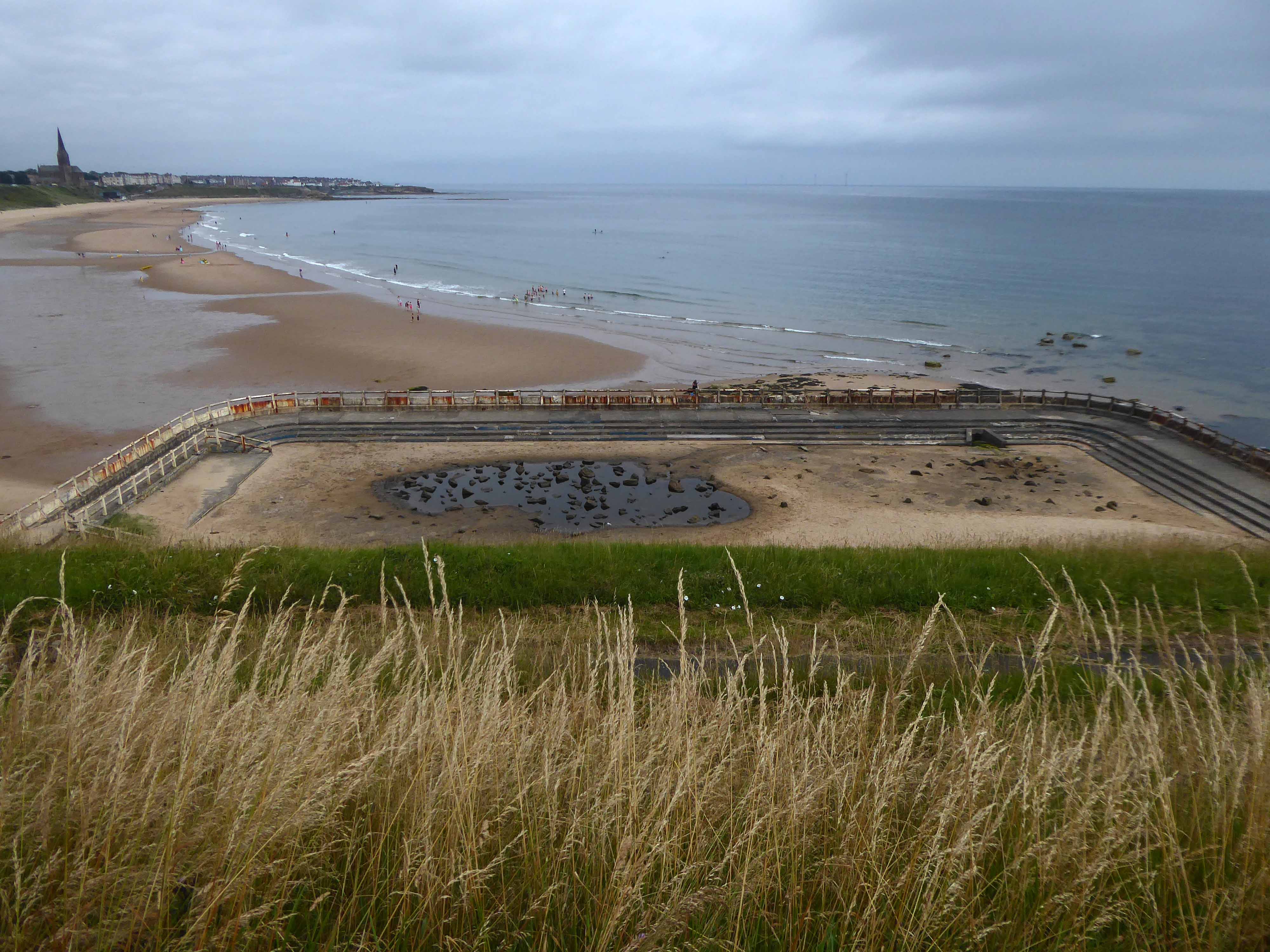
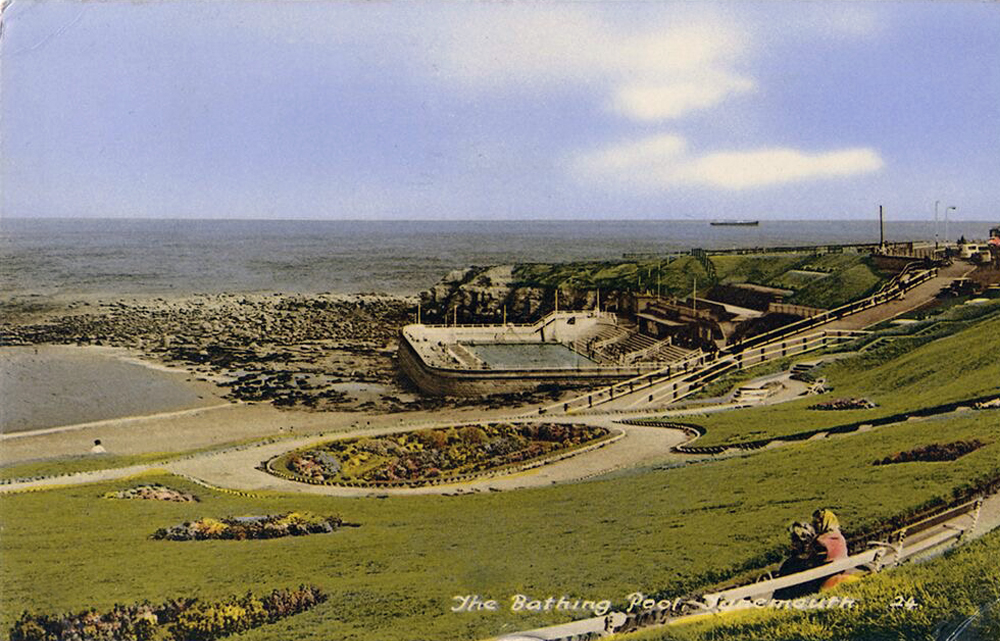
An all too familiar redundant Lido – opened in 1925 and closed in the mid 90’s – but a Friends Group aims to breathe new life into the site.
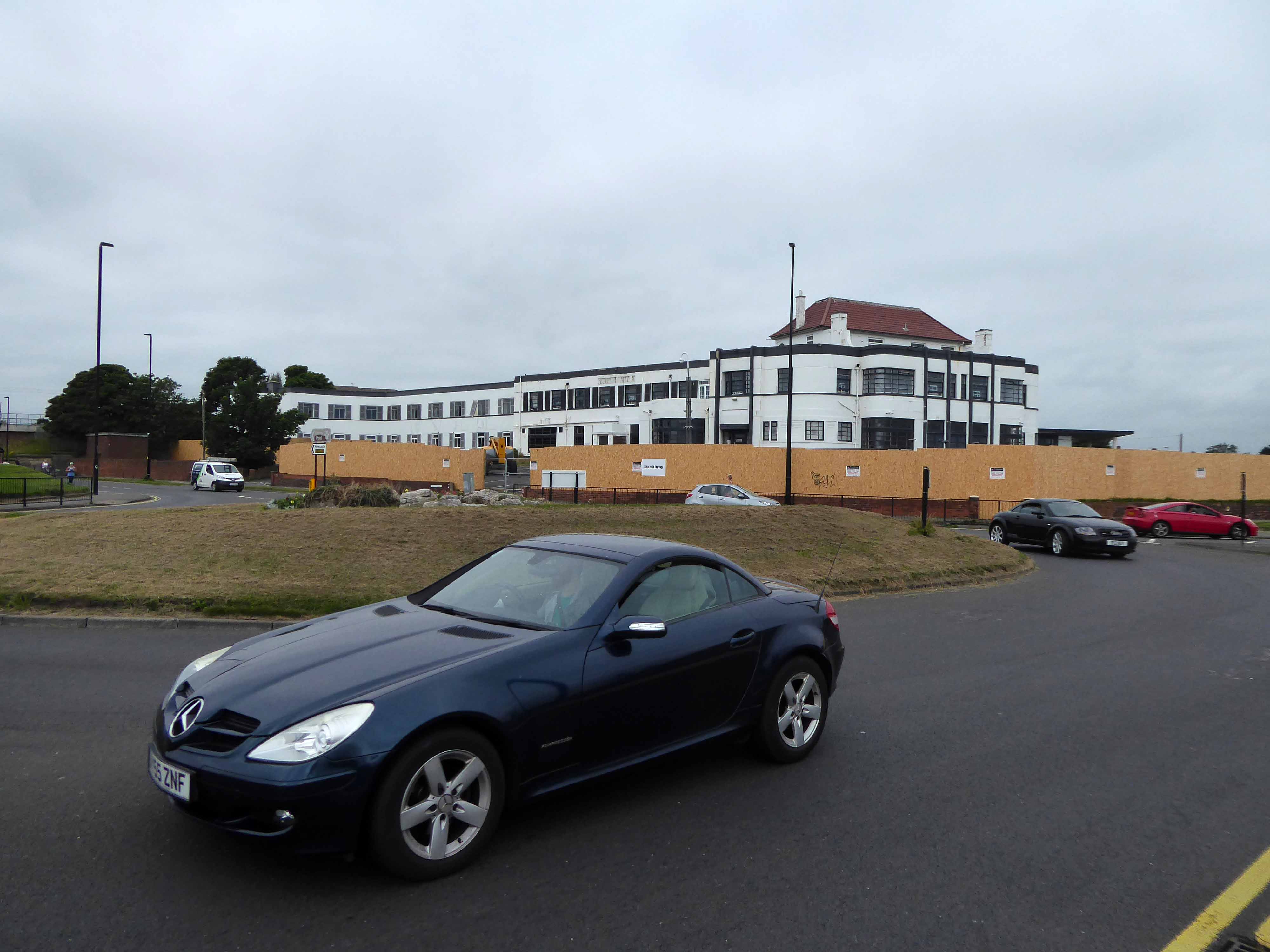
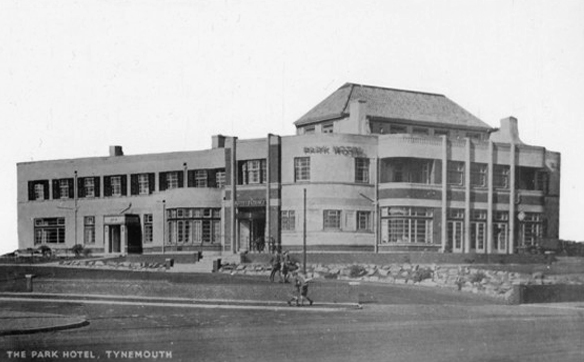
The Park Hotel built in the 1930’s and recently refurbished has been bought by The Inn Collection Group.
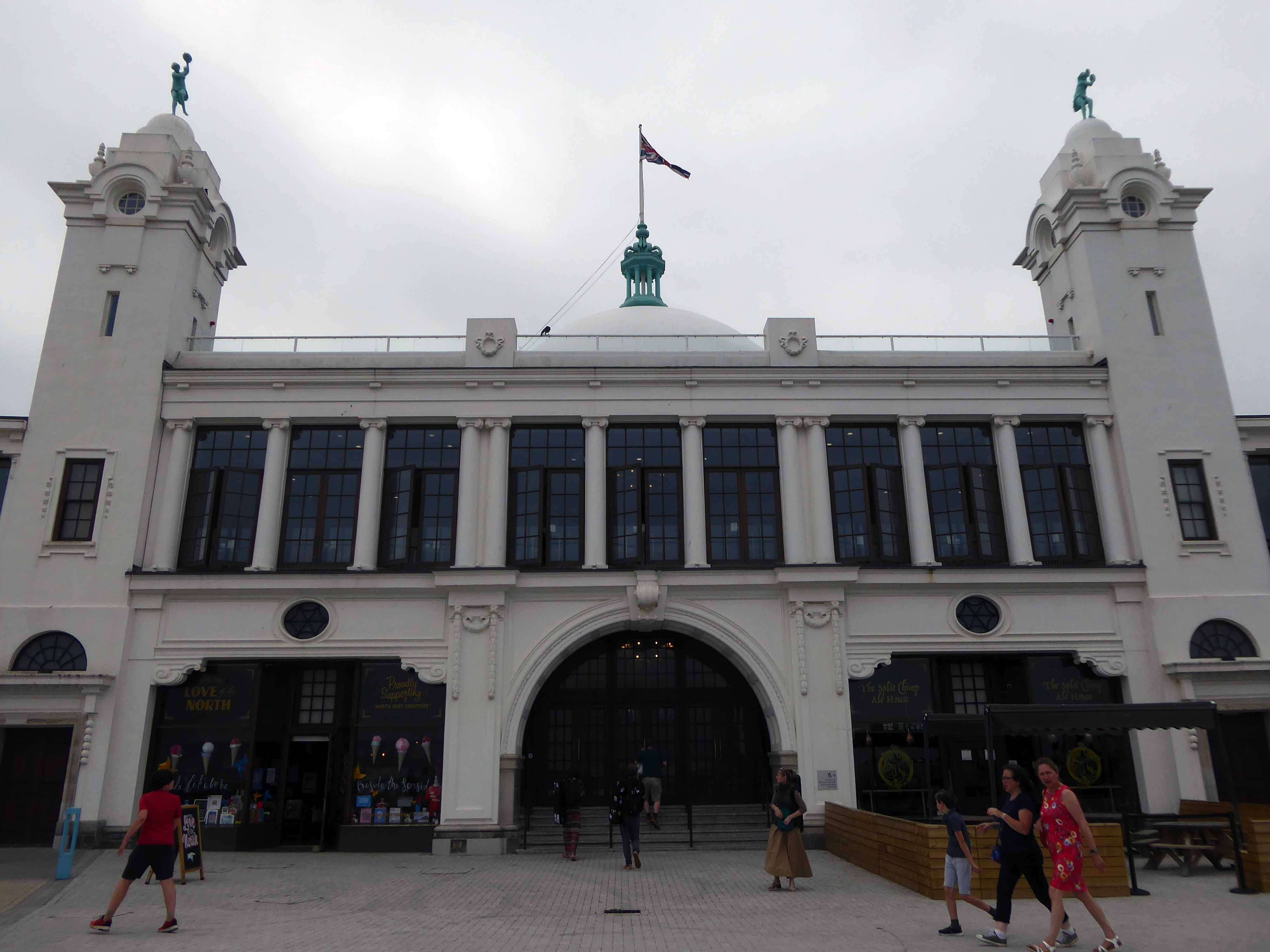
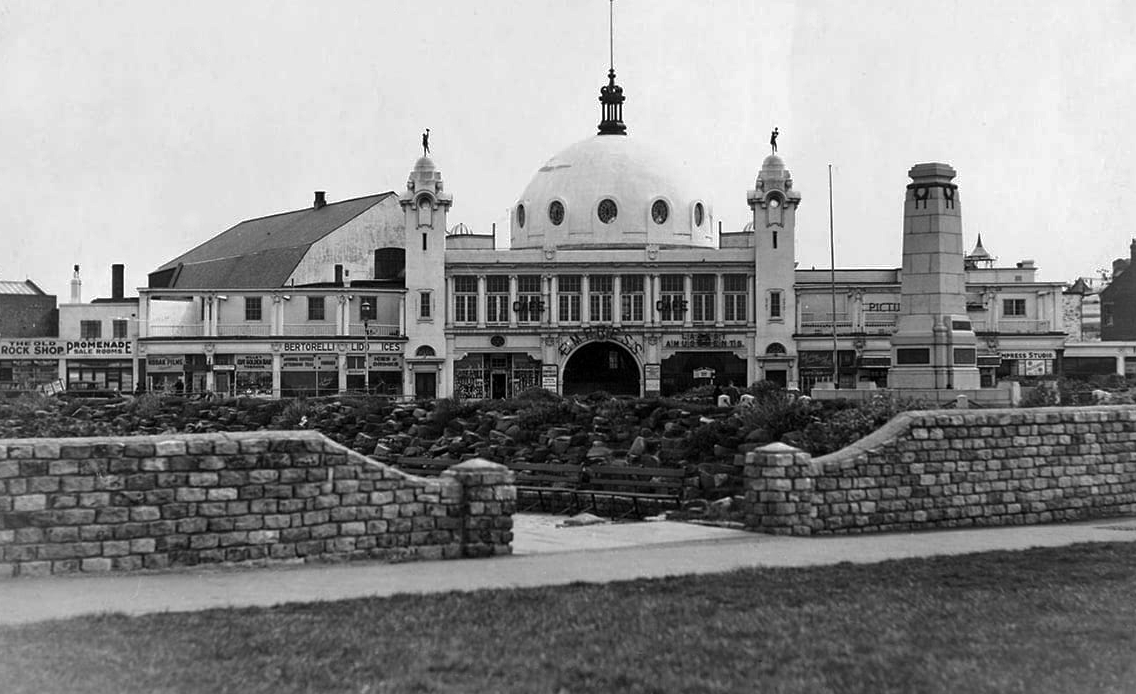
A simple three-arched entrance had been built facing the seafront and the area was now completely enclosed within a boundary. In 1909, large rides appeared, including a Figure Eight rollercoaster and a Water Chute. Elderton and Fail wanted to make a statement and create a new, grand entrance to the fairground. They hired the Newcastle architects Cackett& Burns Dick to survey the site and begin drawing up plans for new Pleasure Buildings.
Building began in February 1910 and the construction was completed by builders Davidson and Miller 60 days later. The use of the revolutionary reinforced concrete technique pioneered by Francois Hennebique was perfect for the job, being cheap and fast. The Dome and surrounding buildings – a theatre and two wings of shop units – opened on 14 May 1910 to great fanfare. Visitors marvelled at the great Spanish City Dome, the second largest in the country at the time after St. Paul’s Cathedral in London, which provided a spectacular meeting place with uninterrupted views from ground level to its ceiling, 75 feet above.
Telegraph-wire cyclists, acrobatic comedians, singing jockeys, mermaids, they all appeared at the Spanish City during its first decade. One of the wings hosted the menagerie, where visitors could see hyenas, antelopes and tigers! This was converted into the Picture House cinema in 1916.
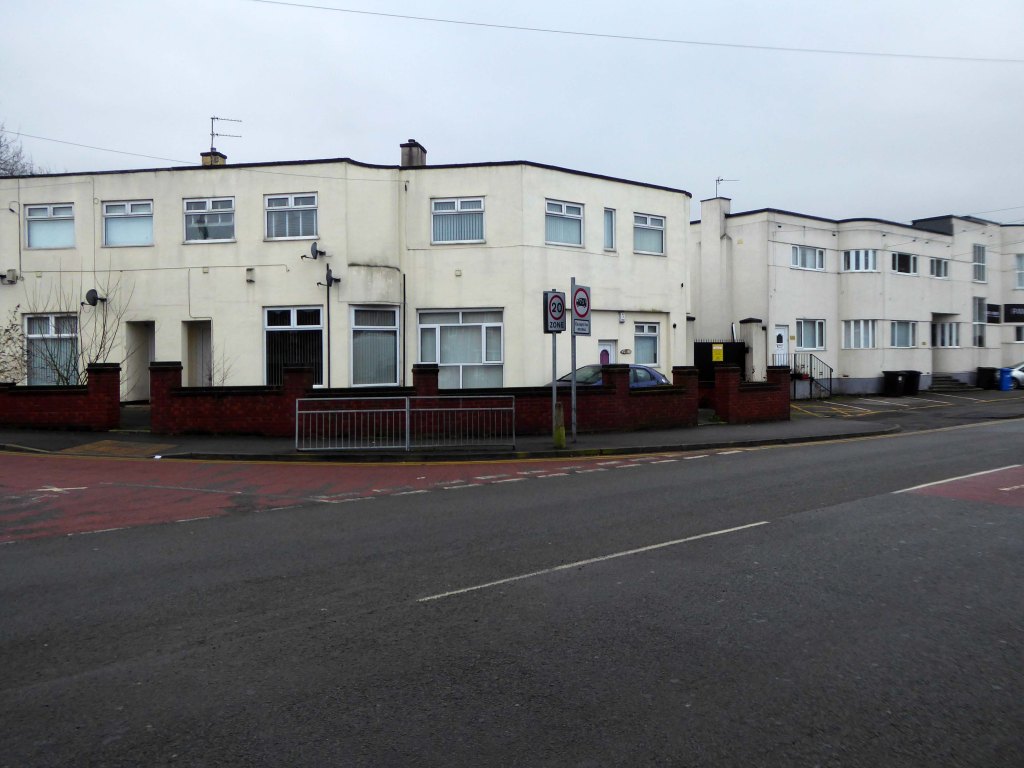
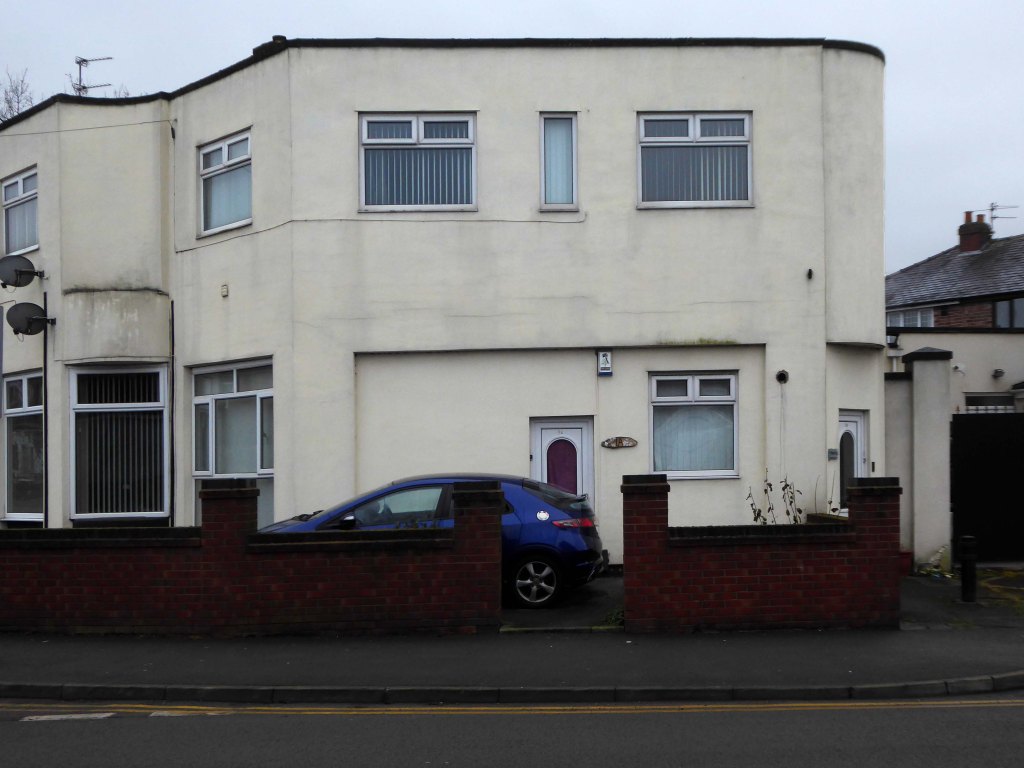
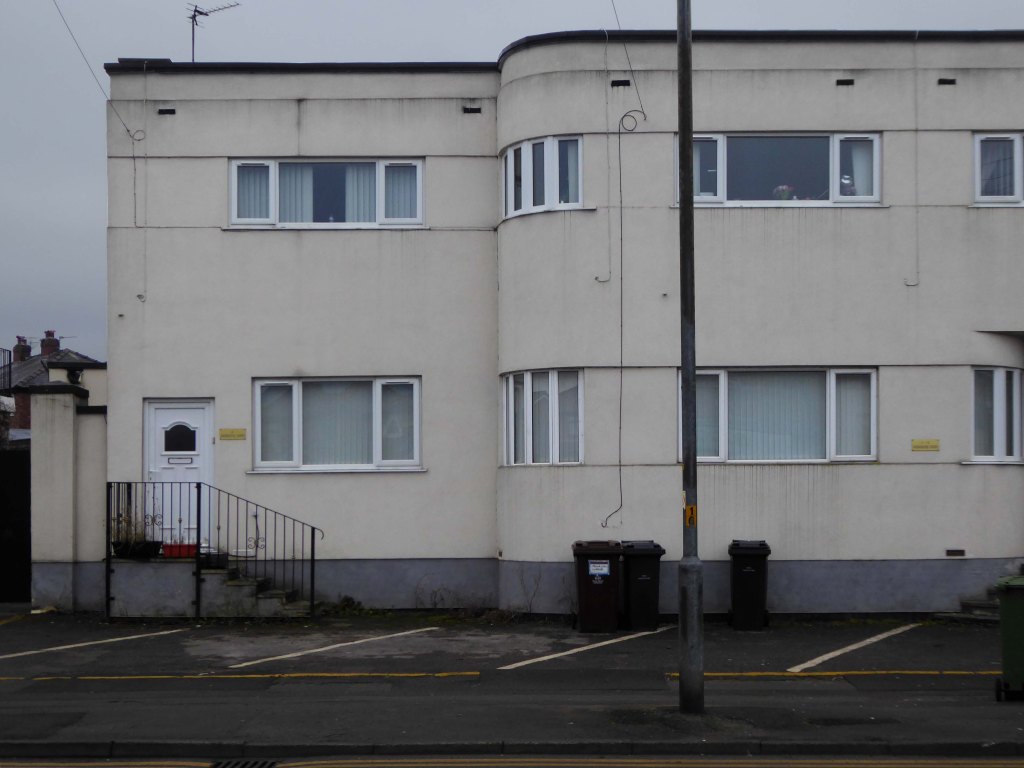
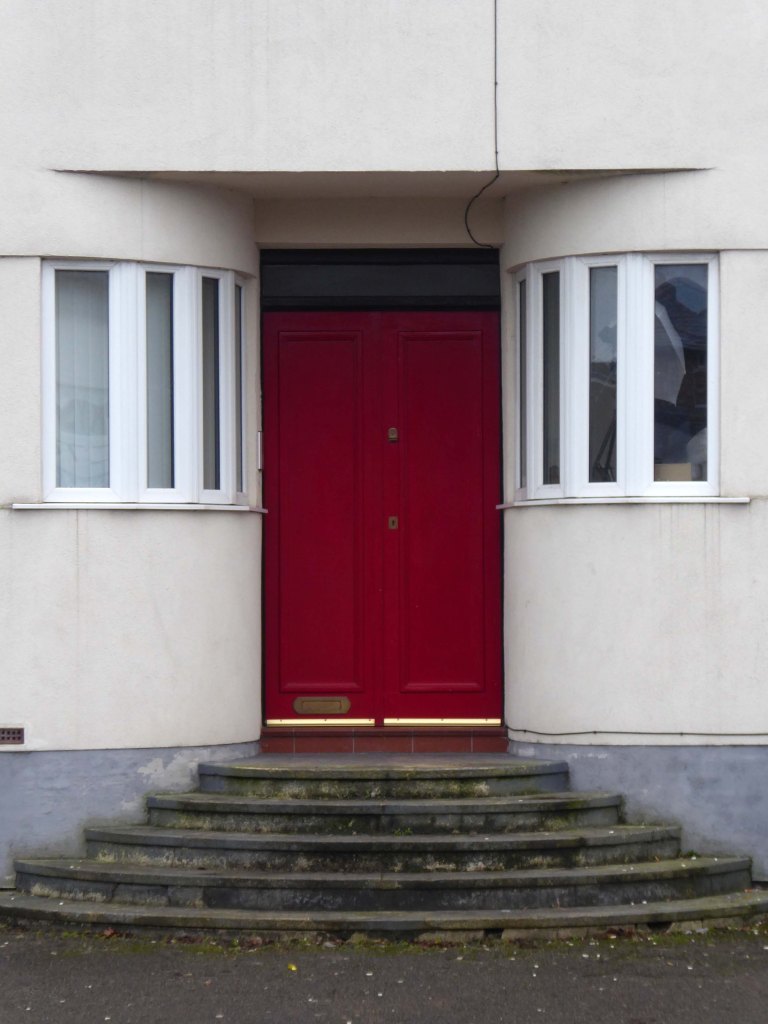
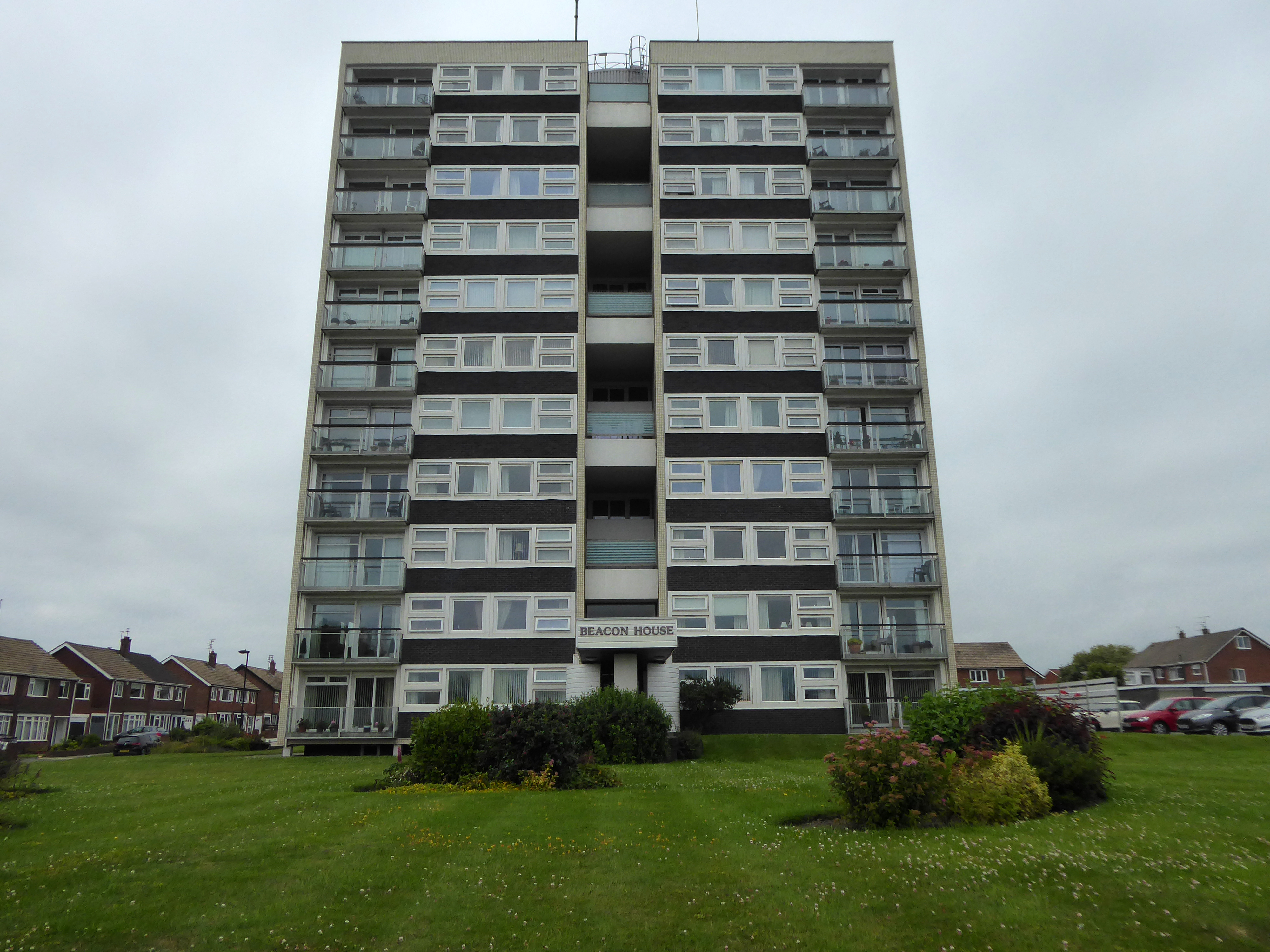
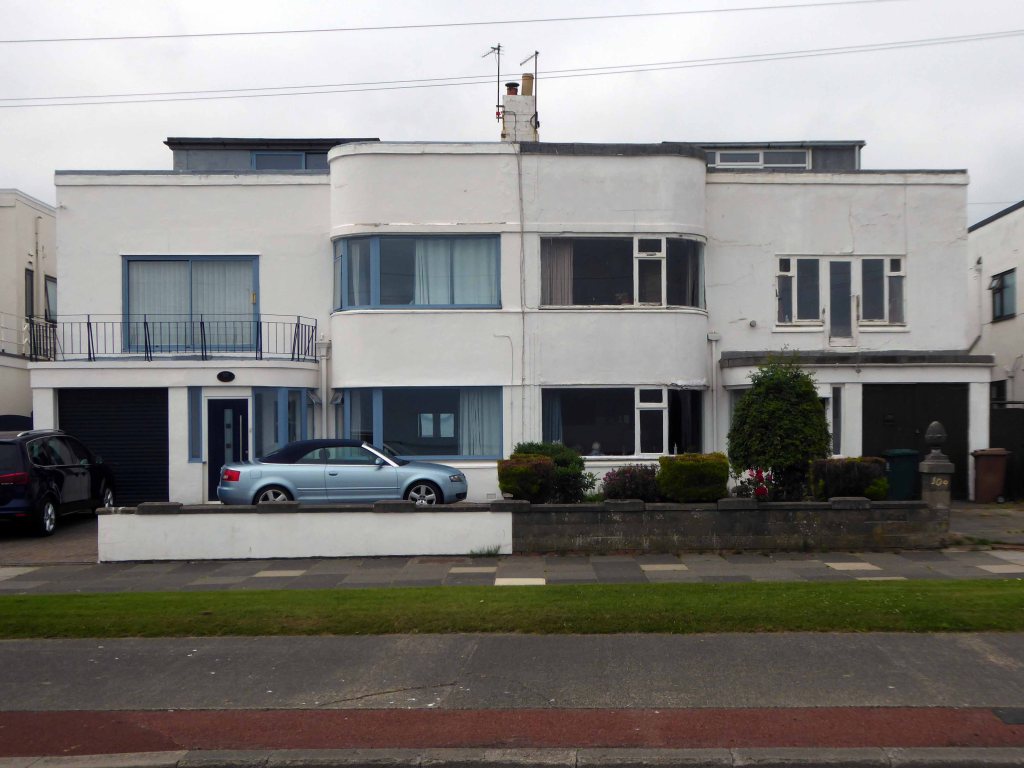
A little further along, a selection of Seaside Moderne semis in various states of amendment and alteration.
Before I knew it I was in Blyth.
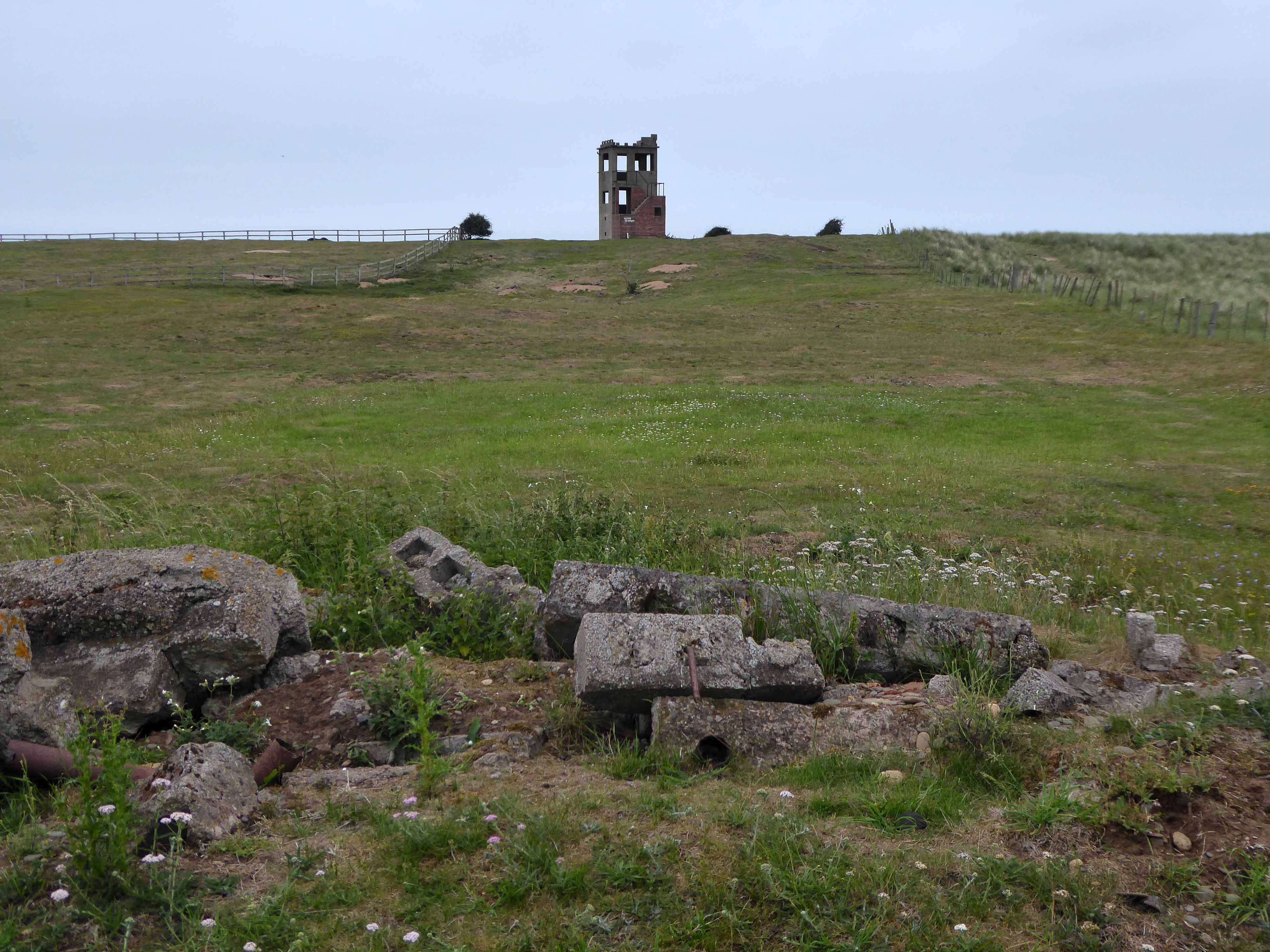
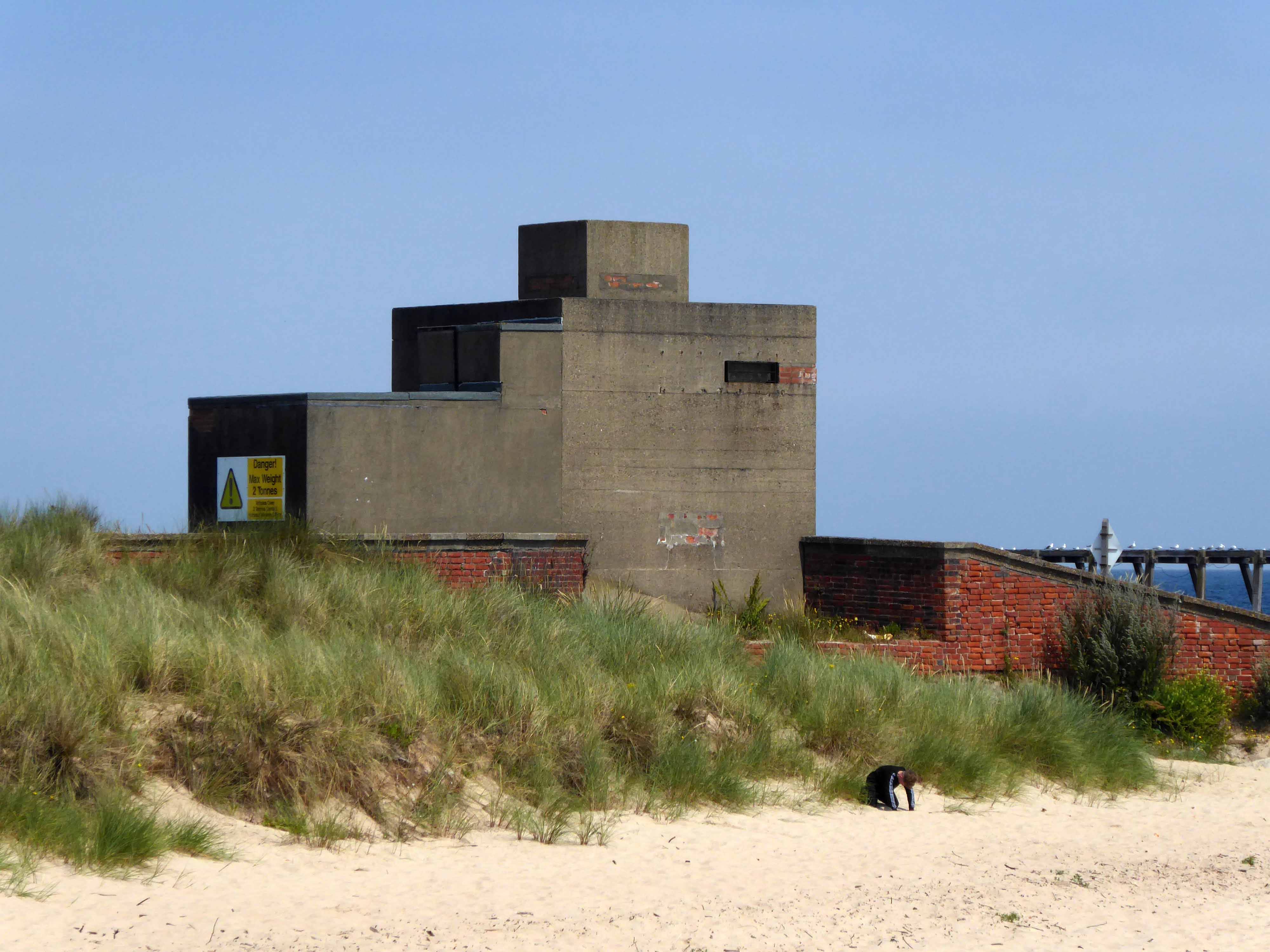
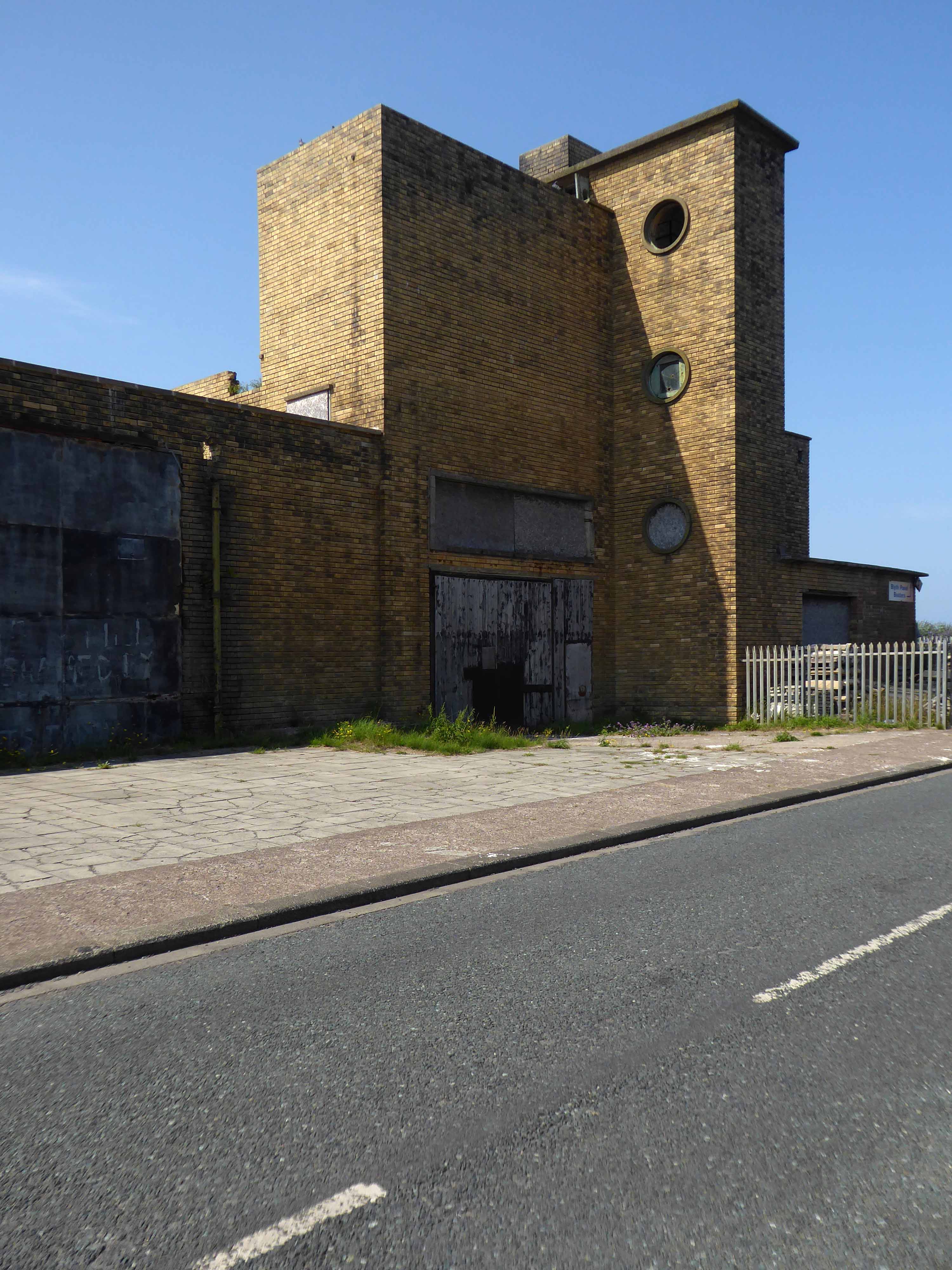
The town edged with military installations
Gloucester Lodge Battery includes the buried, earthwork and standing remains of a multi-phase Second World War heavy anti-aircraft gun battery and radar site, as well as a Cold War heavy anti-aircraft gun and radar site. The battery occupies a level pasture field retaining extensive rig and furrow cultivation.
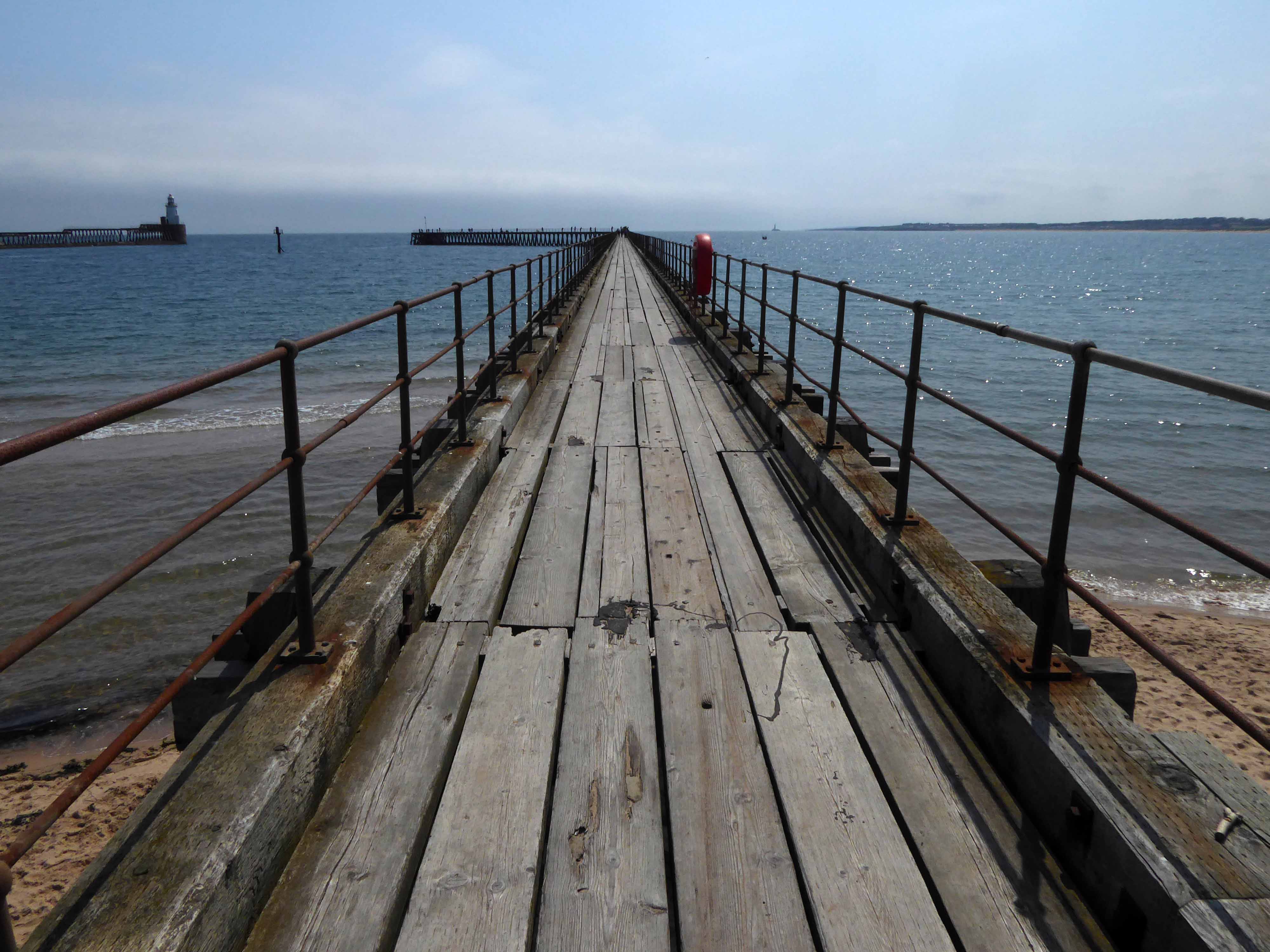
During WW2 Blyth Harbour was used as a major submarine base and that combined with the heavy industry in the area it made a very good target for the Luftwaffe.
827 men of the 225th Antiaircraft Artillery Searchlight Battalion of the U.S. Army, arrived at this location in early March 1944 and were attached to the 30th British AAA Brigade. Here they sharpened their skills in the high-altitude tracking of aircraft.
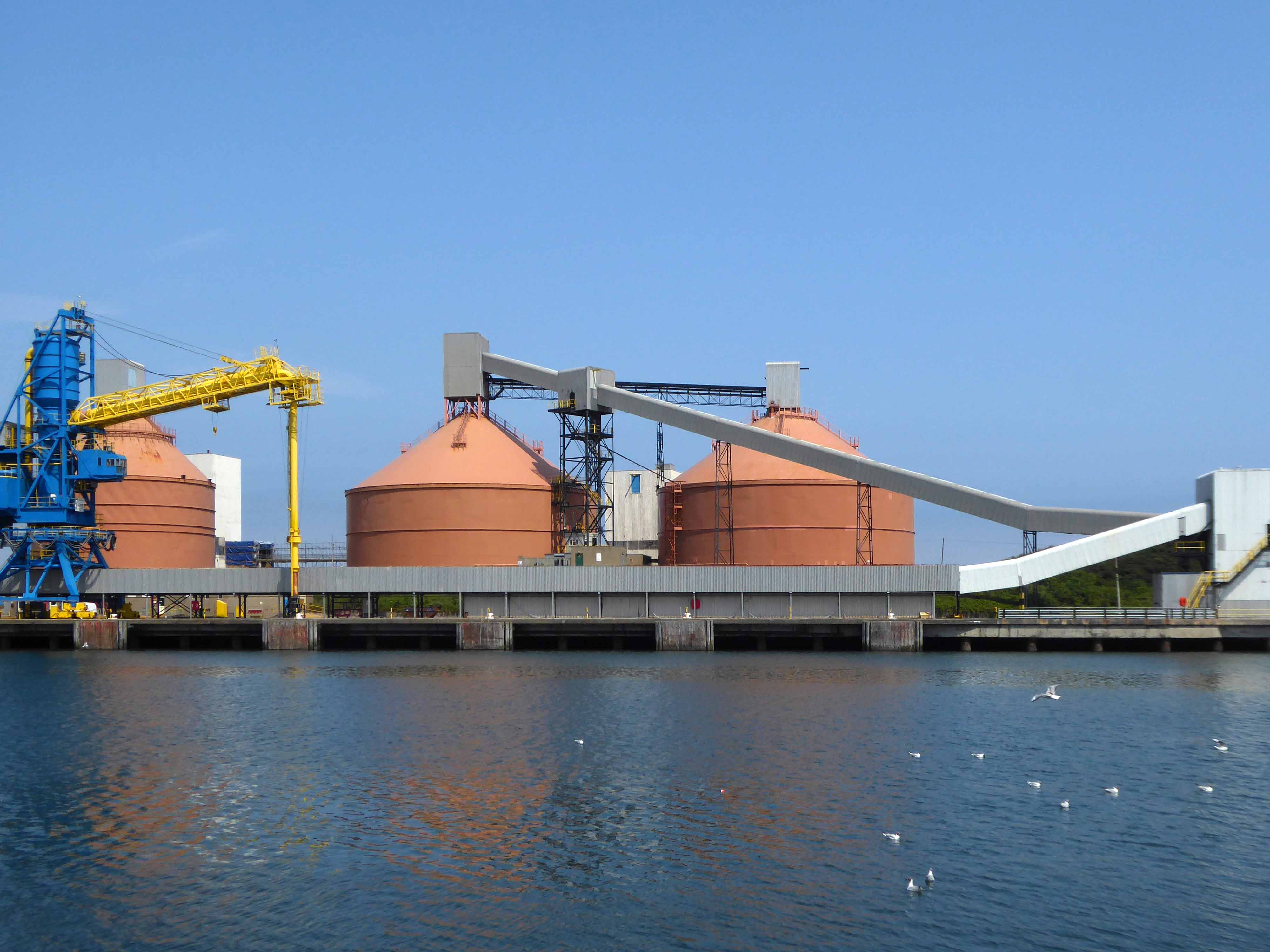
The cycle route took me off road along the estuary and under the flyover.
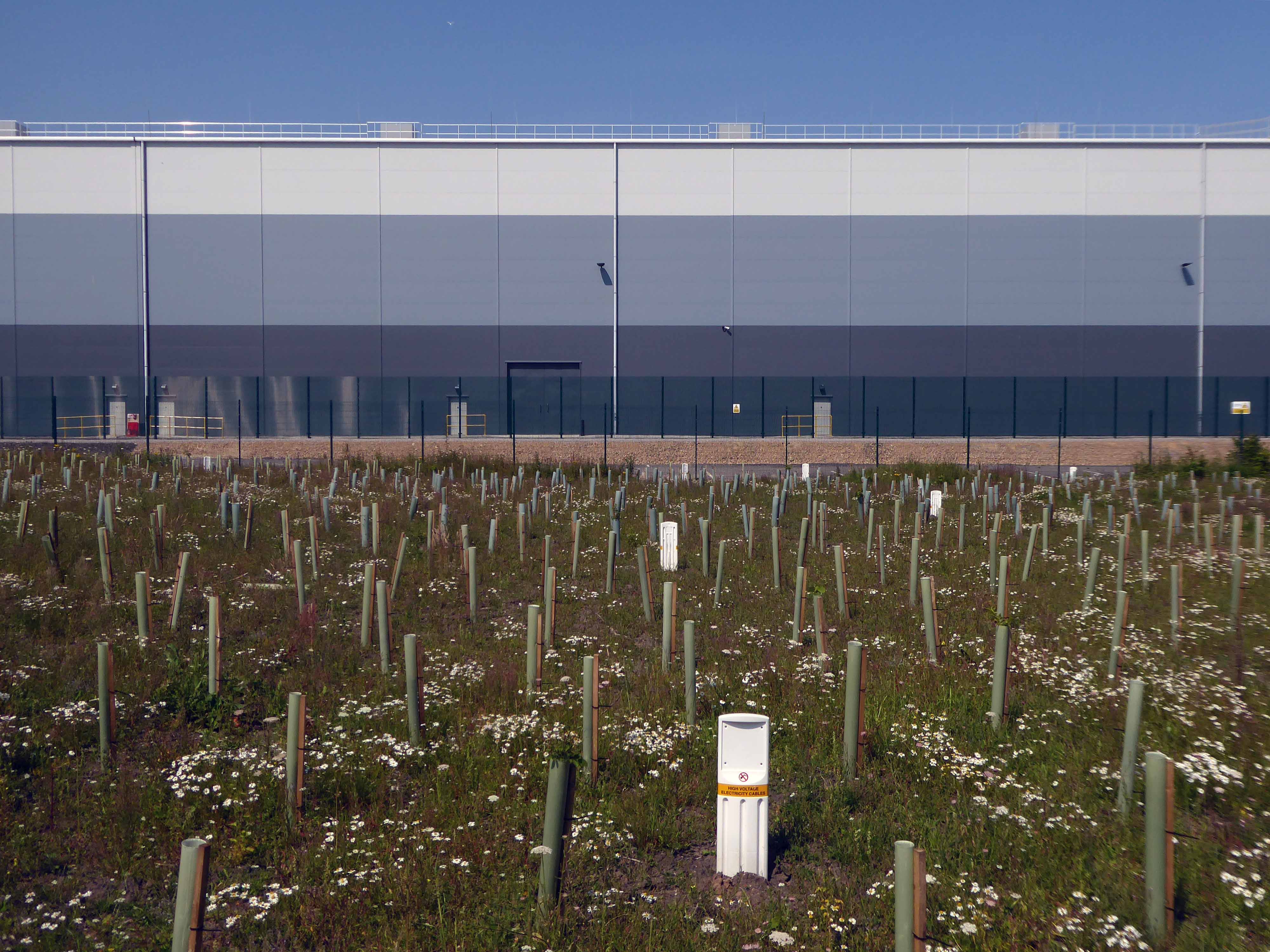
Encountering a brand new factory.
And the remnants of the old power station.
Blyth Power Station – also known as Cambois Power Station, refers to a pair of now demolished coal-fired power stationsThe two stations were built alongside each other on a site near Cambois in Northumberland, on the northern bank of the River Blyth, between its tidal estuary and the North Sea. The stations took their name from the town of Blyth on the opposite bank of the estuary. The power stations’ four large chimneys were a landmark of the Northumberland skyline for over 40 years.
After their closure in 2001, the stations were demolished over the course of two years, ending with the demolition of the stations’ chimneys on 7 December 2003.
UK battery tech investor Britishvolt has unveiled plans to build what is claimed to be Britain’s first gigaplant at the former coal-fired power station in Blyth in Northumberland.
The £2.6 billion project at the 95-hectare Blyth Power Station site will use renewable energy from the UK and possibly hydro-electric power generated in Norway and transmitted 447 miles under the North Sea through the ‘world’s longest inter-connector’ from the North Sea Link project.
By 2027, the firm estimates the gigaplant will be producing around 300,000 lithium-ion batteries a year.
The project is predicted to create 3,000 new jobs in the North East and another 5,000 in the wider supply chain.































































































































 Modern Mooch